
Laser-Therapy.US
Start New Query

Can near-infrared energy reach the brain for treatment of TBI? - Video abstract [78182]

Larry D. Morries, Theodore A. Henderson MD, PhD - 2015 (Video) 4323
This research was done under the supervision of NASA and seems to be some of the most independent research comparing therapy laser parameters.
View Resource

This video was created to support their published research. The authors did research using several lasers and slices of a sheep’s brain to try and determine the best parameter for treating TBI (Traumatic Brain Injury) with a desired fluency of 0.9 to 15 joules/cm2 at a depth of 2 cm. They state that getting the energy through the skull is especially difficult so they test multiple options so test the transfer rate. They started out using a continuous output split 980/810nm system (the only company that makes that type of split system, 80% of the power at 980nm and 20% of the power at 810nm, is LiteCure with their LightForce series). The result was less than 1/2% of the energy reached a depth of 2cm. Then they switched to pulsing and got an increase in the energy transfer. When they switched to a 810nm-only 15 watt system with pulsing the transfer rate increased to 16% of the output energy reached the target depth.

 Here are some rough numbers to review the feasibility of using this system for treatment. If the duty cycle is 70%, the system will deliver 1.68 joules per second at a depth 2cm (15wattS*70%*16%). To get 5 joules/cm2 over 15 x 15 cm treatment area would require a total of 1125 joules at depth. This would take 23 minutes.

This research shows that only class 4 systems can delivery the level of power needed for this kind of therapy in a typical rushed doctor's office. A class 3b system with 1 watt would take 4 - 5 hours per treatment to get the same dosage.

The original research publication is titled " Treatments for traumatic brain injury with emphasis on transcranial near-infrared laser phototherapy"


video length: (9:18)


Original Source: https://www.youtube.com/watch?v=iZbP2IVekh0

Review of transcranial photobiomodulation for major depressive disorder: targeting brain metabolism, inflammation, oxidative stress, and neurogenesis

Paolo Cassano; Samuel R. Petrie; Michael R. Hamblin; Theodore A. Henderson; Dan V. Iosifescu; - Neurophotonics, 3(3), 031404 (2016). doi:10.1117/1.NPh.3.3.031404 March 4, 2016 (Publication) 4471
This study shows some of the most detailed parameters (power, wavelenght, dosage) for working with the brain and seems to be unbiased because of the diverse background of authors..
View Resource

Abstract
We examined the use of near-infrared and red radiation (photobiomodulation, PBM) for treating major depressive disorder (MDD). While still experimental, preliminary data on the use of PBM for brain disorders are promising. PBM is low-cost with potential for wide dissemination; further research on PBM is sorely needed. We found clinical and preclinical studies via PubMed search (2015), using the following keywords: “near-infrared radiation,” “NIR,” “low-level light therapy,” “low-level laser therapy,” or “LLLT” plus “depression.” We chose clinically focused studies and excluded studies involving near-infrared spectroscopy. In addition, we used PubMed to find articles that examine the link between PBM and relevant biological processes including metabolism, inflammation, oxidative stress, and neurogenesis. Studies suggest the processes aforementioned are potentially effective targets for PBM to treat depression. There is also clinical preliminary evidence suggesting the efficacy of PBM in treating MDD, and comorbid anxiety disorders, suicidal ideation, and traumatic brain injury. Based on the data collected to date, PBM appears to be a promising treatment for depression that is safe and well-tolerated. However, large randomized controlled trials are still needed to establish the safety and effectiveness of this new treatment for MDD.

1.

Introduction

Infrared (IR) light is ubiquitously present to most life on the earth. Of the total amount of solar energy reaching the human skin, 54% is IR and 30% is IR type A—near-infrared—(NIR; with a wavelength range of 760 to 1440 nm),1 which penetrates through the human skin and reaches deeply into tissue, depending on wavelength and energy.2

NIR is used to treat a variety of conditions such as muscle pain,3 wounds,4 neuropathic pain,5 and headache.6 NIR is also used for wellness and lifestyle purposes such as for cosmetic improvement in peri-orbital wrinkles.7,8 The clinical use of NIR light applied in NIR-spectroscopy dates from the mid-1980s, when it was used for monitoring of the brain in the neonate and the fetus.9

The use of transcranial phototherapy for treating brain disorders started with its application to acute stroke. Numerous preclinical animal studies1011.12 suggested that the application of NIR laser (810 nm) to the head at various times (hours) after induction of an acute stroke had beneficial effects on subsequent neurological performance and reduced lesion size. Evidence was obtained for the anti-inflammatory, anti-apoptotic, and proneurogenesis effects in the brain stimulated by this approach.13,14 These promising animal studies led to the conduction of a series of clinical trials called NeuroThera Effectiveness and Safety Trials (NEST). All together there were three large studies conducted in 1410 stroke patients [NEST-1 (n=120" role="presentation">n=120

), NEST-2 (n=660" role="presentation">n=660), NEST-3 (n=630" role="presentation">n=630

)] that demonstrated that NIR light delivered transcranially with a class-IV laser is safe, with no significant differences in rates of adverse events with NIR, when compared to sham exposure.1516.17 Other preclinical studies and clinical trials have suggested that transcranial photobiomodulation (PBM: laser or light emitting diodes—LED) is safe and effective for acute1819.20.21.22 and chronic2324.25 traumatic brain injury (TBI) and has beneficial effects on neurodegenerative diseases (Alzheimer’s and Parkinson’s).26,27

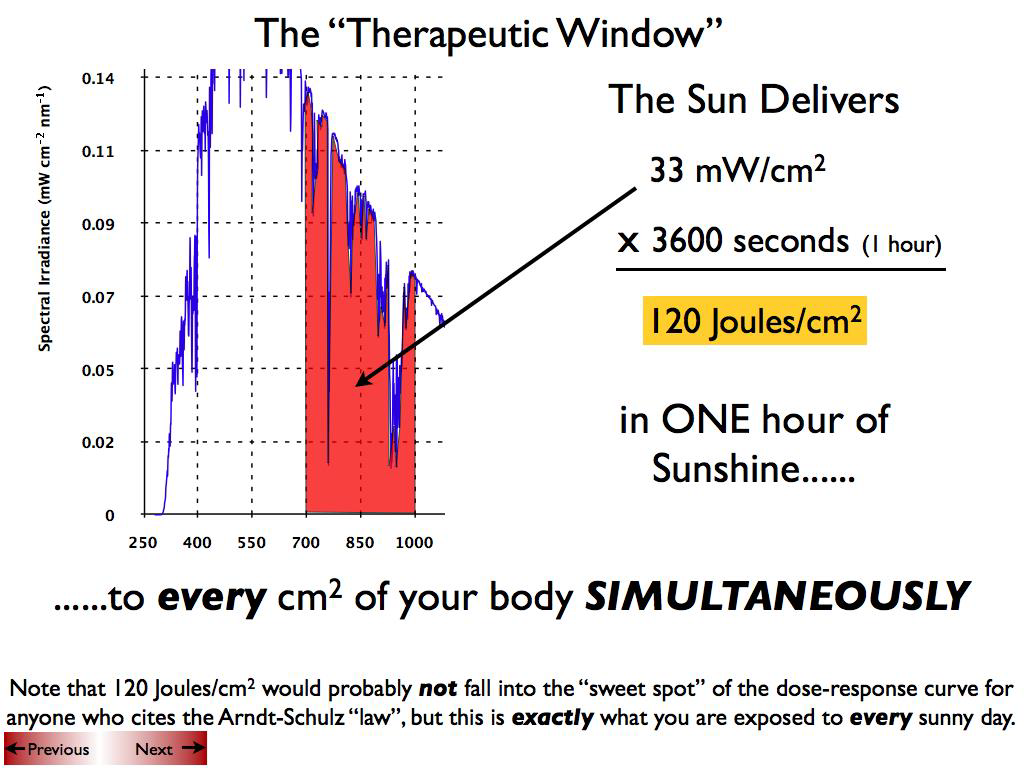
For the transcranial treatment of major depressive disorder (MDD), both PBM LEDs and lasers have been experimentally tested, although PBM is not FDA-approved for the treatment of MDD. Certain forms of PBM treatment are also referred to as low-level light therapy (LLLT), since it utilizes light at a low power (0.1 to 0.5 W output at the source) to avoid any heating of tissue. The irradiance of the PBM medical devices (or power density) typically ranges from 1 to 10 times the NIR irradiance from sunlight on the skin (33.6  mW/cm2" role="presentation">33.6mW/cm2

at the zenith). However, most PBM medical devices only deliver light energy at one or two selected wavelengths, as opposed to the whole spectrum of IR that is contained in sunlight. To our knowledge and to this date, transcranial PBM treatment has not caused any retinal injury—one of the most likely postulated adverse events, although care is taken routinely in such studies to protect the eyes with goggles or eye covers.28

In this review, we will first discuss the mechanisms of action by which NIR and red light (PBM) might improve symptoms of depression, and then present the clinical evidence for their use as a treatment for MDD and other comorbid psychiatric syndromes.

2.

Methods

We found clinical and preclinical studies via PubMed search (December 15, 2015), using the following keywords: “near-infrared radiation,” “NIR,” “low-level light therapy,” “low-level laser therapy,” or “LLLT” plus “depression.” We chose studies that had a clinical focus, and we excluded studies involving NIR spectroscopy. We also located studies using the references from the articles found in the PubMed search. As the searched literature encompassed different conditions and disorders frequently comorbid with depression, a specific section of this review was devoted to the effect of PBM on psychiatric comorbidity. In the latter section, the following conditions were included, based on available literature: TBI, anxiety and post-traumatic stress syndromes, insomnia, and suicidal ideation. The literature search for the use of PBM to treat comorbid conditions was neither systematic nor extensive, but rather a secondary focus of this review. The information is presented in an organized fashion to allow the reader to easily grasp the potential applications of PBM for the treatment of depression and of its comorbid conditions. To attain this goal, the authors have allowed a margin of redundancy, by distributing different information derived from any given publication in separate sections of this review. To avoid an artificial inflation of the extant literature on the chosen topic, we referenced the main authors—and when appropriate their affiliation—when referring to the same articles more than once. The reader will find a table summarizing the six key clinical articles reviewed, also to avoid unintended inflation of the literature. The six clinical reports included in this review where extracted from a pool of 58 articles, that were originally identified with the literature search.

In addition, we used PubMed to find articles that examined the link between PBM and each of the various biological processes including metabolism, inflammation, oxidative stress, and neurogenesis.

3.

Targeting Brain Metabolism

Multiple studies have reported regional and global hypometabolism in MDD, which could be related (either causally or consequentially) to the neurobiology of mood disorders.2930.31.32 Positron emission tomography studies have shown abnormalities in glucose consumption rates and in blood flow in several brain regions of subjects with major depression.33 Moreover, metabolic abnormalities in the anterior cingulate, the amygdala-hippocampus complex, the dorsolateral prefrontal cortex (DLPFC), and inferior parietal cortex seem to improve after antidepressant treatment or after recovery.3435.36

With phosphorus magnetic resonance spectroscopy (P31-MRS" role="presentation">31P-MRS

), the baseline pool of nucleotide triphosphate (NTP)—a product of the cellular utilization of glucose and a marker of the cellular energy availability—was low in subjects who subsequently responded to antidepressant treatment.32 Iosifescu et al.32 also demonstrated for the first time with P31-MRS" role="presentation">31P-MRS a correlation between treatment response (to a regimen that combined antidepressants and triiodothyronine) and restoration of a higher NTP pool (with compensatory decrease in phosphocreatine) in the anterior cingulate cortex. This study suggests a pathway to antidepressant response based on restoration of a high cellular energy state. In fact, phosphocreatine represents a long-term storage depot of energy, while NTP and ATP are energy-rich molecules that are readily available to the cell. The same authors replicated the aforementioned findings in MDD subjects treated with standard antidepressants (Iosifescu et al., unpublished). In this cohort, P31-MRS" role="presentation">31P-MRS

metabolite changes were noted in brain-only voxels of responders, but not in nonresponders to antidepressants.

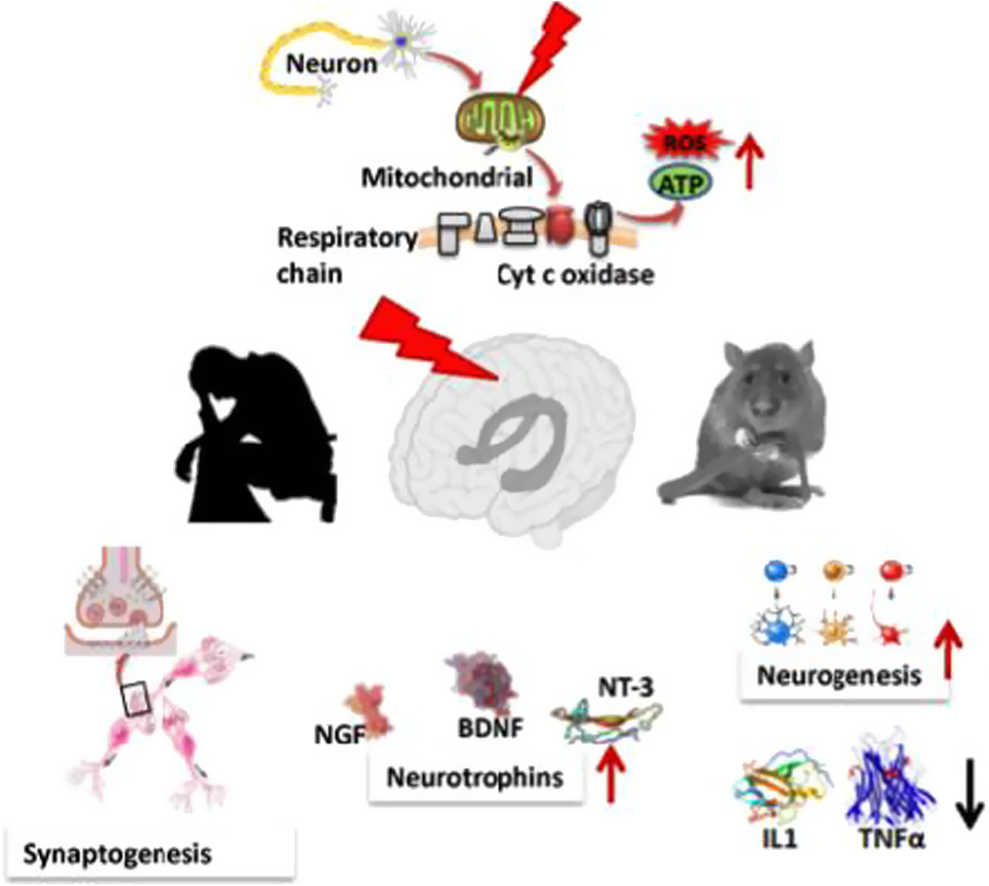
In experimental and animal models, PBM (NIR and red light) noninvasively delivers energy to the cytochrome c oxidase and by stimulating the mitochondrial respiratory chain leads to increased ATP production (see Fig. 1).3738.39 A study of the effects of NIR on patients with MDD found that a single session of NIR led to a marginally significant increase in regional cerebral blood flow.40 Whether the observed changes in cerebral blood flow resulted from fundamental changes in neuronal metabolism or changes in vascular tone remain to be clarified. Given the correlation of both hypometabolism and abnormal cerebral blood flow with MDD, the beneficial effect of NIR on brain metabolism is one potential mechanism for its antidepressant effect.

Fig. 1

Cellular targets of NIR radiation mechanisms of transcranial NIR for psychiatric disease. The NIR photons are absorbed by cytochrome c oxidase in the mitochondrial respiratory chain. This mitochondrial stimulation increases production of ATP but also activates signaling pathways by a brief burst of ROS. This signaling activates antioxidant defenses reducing overall oxidative stress. Proinflammatory cytokines and neuroinflammation are reduced. Neurotrophins such as brain-derived neurotrophic factor are upregulated, which in turn activate synaptogenesis (formation of new connections between existing neurons) and neurogenesis (formation of new neurons from neural stem cells).

NPH_3_3_031404_f001.png

4.

Targeting Inflammation

Animal and clinical research suggests that the inflammatory arm of the immune system contributes to MDD. Post-mortem gene expression profiling on tissue samples from Brodmann area 10 (BA10—prefrontal cortex) have shown that MDD is characterized by increased inflammation and apoptosis.41 In a case-control study, Simon et al.42 found that antidepressant-naive MDD subjects had significant elevations in the following cytokines and chemokines when compared to healthy controls: MIP-1α" role="presentation">MIP-1α

, IL-1α" role="presentation">IL-1α, IL-1β" role="presentation">IL-1β, IL-6, IL-8, IL-10, Eotaxin, GM-CSF, and IFNγ" role="presentation">IFNγ

. Although IL-10 is an anti-inflammatory cytokine, the results suggested that the elevated levels of this IL-10 were likely induced in response to the overall elevation of proinflammatory cytokine levels. In a review of the research on inflammation in MDD, Raison et al.43 proposed that proinflammatory cytokines might cause brain abnormalities that are characteristic of MDD. Indeed, animal research has shown that IL-1 mediates chronic depression in mice by suppressing hippocampal neurogenesis.44

One proinflammatory cytokine that may be of particular relevance to depression is CSF IL-6 (IL6 measured in cerebrospinal fluid). In a recent report, patients with MDD had significantly higher CSF IL-6 levels compared to healthy controls; CSF IL-6 levels were significantly higher than in the serum, and there was no significant correlation between CSF and serum IL-6 levels.45 These findings are consistent with a prior report showing a positive correlation between CSF IL-6 levels and the severity of depression and suicide attempts, with the strongest correlation found in violent suicide attempters.46 One report in a smaller sample of depressed patients has shown that CSF IL-647 was lower or comparable to healthy controls.

NIR light and red light (600 to 1600 nm) decreased synovial IL-6 gene expression (decreased mRNA levels) in a rat model of rheumatoid arthritis.48 In another study, NIR (810 nm) used as a treatment for pain in patients with rheumatoid arthritis decreased production of the following proinflammatory cytokines: TNF-α" role="presentation">TNF-α

, IL-1β" role="presentation">IL-1β

, and IL-8.49 Khuman et al.50 showed that transcranial NIR improved cognitive function and reduced neuroinflammation as measured by Iba1+ activated microglia in brain sections from mice that had suffered a TBI. Finally, NIR (970 nm) has been found to be an effective treatment for inflammatory-type acne.51 In summary, it is reasonable to predict that transcranial NIR treatment would likewise have an anti-inflammatory effect in patients suffering from MDD.

5.

Targeting Oxidative Stress

Research has demonstrated a correlation between MDD and vulnerability to oxidative stress.52 For example, depression-induced rats show a significant decrease in glutathione peroxidase (GSH-Px) activity in the cortex.53 Glutathione (GSH) is the most abundant and one of the important antioxidants in the brain; GSH-Px enzymes protect against oxidative stress via reducing hydroperoxides and scavenging free radicals.54 GSH also appears reduced in the brains of MDD subjects.55 Additionally, a study by Sarandol et al.52 demonstrated that MDD patients have higher levels of malondialdehyde, a toxic molecule and a biomarker of oxidative stress.56 Moreover, depressed patients have more red blood cell (RBC) oxidation compared to healthy controls.52 In the same study, the authors found a significant positive correlation between RBC superoxide dismutase (SOD) activity and depression severity. SOD serves to catalyze the removal of the toxic superoxide radical.57 Thus, elevated SOD activity in depressed patients might indicate higher levels of oxidative stress. Finally, catalase activity and nitric oxide (NO) levels have also been shown to be lower in depressed patients than in healthy controls.58 Catalase is an enzyme that protects cells against damaging reactive oxygen species (ROS) via degradation of hydrogen peroxide to water and oxygen.59 NO has protective effects against cell damage, which are likely due to its pleiotropic functions in regulating antioxidant enzymes and many other aspects of cell metabolism.60,61

Oxidative stress may be an effective target for antidepressant treatments. However, successful treatments for MDD vary in regard to their protective effects against oxidative stress.52,53,62 Animal research suggests that PBM may have beneficial effects on oxidative stress. In a rat model of traumatized muscle, NIR (904 nm) blocked the release of harmful ROS and the activation of the transcription factor, nuclear factor κB (NF-κB), both induced by muscle trauma. Trauma activates NF-κB by destroying a specific protein inhibitor of NF-κB called IκB, and this destruction was inhibited by NIR light. Furthermore, NIR reduced the associated overexpression of the inducible form of nitric oxide synthase (iNOS) and reduced the production of collagen.63 This regulation of iNOS is important because excessive levels of iNOS can lead to formation of large amounts of NO that combine with superoxide radicals to form the damaging species peroxynitrite, and can interfere with the protective benefits of other forms of NO synthase.64 These findings suggest that NIR protects against oxidative stress induced by trauma. Finally, an in vitro study of the effects of red light and NIR (700 to 2000 nm) on human RBCs found that NIR significantly protected RBCs against oxidation.65


Original Source: https://www.spiedigitallibrary.org/journals/Neurophotonics/volume-3/issue-03/031404/Review-of-transcranial-photobiomodulation-for-major-depressive-disorder--targeting/10.1117/1.NPh.3.3.031404.full?SSO=1

Treatments for Traumatic Brain Injury With Emphasis on Transcranial Near-Infrared Laser Phototherapy

Larry D Morries, Paolo Cassano, Theodore A Henderson, - This article was published in Neuropsychiatric Disease and Treatment, 20 August 2015 (Publication) 4406
This exceptional research indicated prefered wavelenghts and dosages for treating patients with traumatic brain injuries. The found some surprising results.
View Resource

Abstract:

Traumatic brain injury (TBI) is a growing health concern affecting civilians and military personnel. In this review, treatments for the chronic TBI patient are discussed, including pharmaceuticals, nutraceuticals, cognitive therapy, and hyperbaric oxygen therapy. All available literature suggests a marginal benefit with prolonged treatment courses. An emerging modality of treatment is near-infrared (NIR) light, which has benefit in animal models of stroke, spinal cord injury, optic nerve injury, and TBI, and in human trials for stroke and TBI. The extant literature is confounded by variable degrees of efficacy and a bewildering array of treatment parameters. Some data indicate that diodes emitting low-level NIR energy often have failed to demonstrate therapeutic efficacy, perhaps due to failing to deliver sufficient radiant energy to the necessary depth. As part of this review, we present a retrospective case series using high-power NIR laser phototherapy with a Class IV laser to treat TBI. We demonstrate greater clinical efficacy with higher fluence, in contrast to the bimodal model of efficacy previously proposed. In ten patients with chronic TBI (average time since injury 9.3 years) given ten treatments over the course of 2 months using a high-power NIR laser (13.2 W/0.89 cm2 at 810 nm or 9 W/0.89 cm2 at 810 nm and 980 nm), symptoms of headache, sleep disturbance, cognition, mood dysregulation, anxiety, and irritability improved. Symptoms were monitored by depression scales and a novel patient diary system specifically designed for this study. NIR light in the power range of 10-15 W at 810 nm and 980 nm can safely and effectively treat chronic symptoms of TBI. The clinical benefit and effects of infrared phototherapy on mitochondrial function and secondary molecular events are discussed in the context of adequate radiant energy penetration. Keywords: infrared, traumatic brain injury, TBI, transcranial infrared light therapy, transcranial laser therapy 

INTRODUCTION

Traumatic brain injury (TBI) has recently moved into the limelight due to the recognition of its impact on professional athletes and military personnel. Yet, TBI is neither a new problem nor limited to those two populations. The Centers for Disease Control and Prevention estimated that 1.5 million Americans sustained TBI annually in 2000.1 As of 2006, the estimates had risen to 1.7 million brain injuries annually.2,3 Undoubtedly, these point prevalence proportions will increase as military personnel return home,4 and the problem of repeated mild TBI (mTBI) becomes more recognized in sports.5 Current estimates of the prevalence of TBI among veterans range from 9.6%6 to 20%,7 with an estimated total of more than 300,000 cases of TBI among military personnel since 2000.4 The current estimates of the combined number of sportsrelated concussions and brain injuries in the US are 1.6-3.8 million annually.8-10 TBI results in a wide spectrum of neurological, psychiatric, cognitive, and emotional consequences. In part, the variation is related to the severity of the injury (mild, moderate, severe TBI), which is stratified based on Glasgow Coma score, periods of unconsciousness, and degrees of amnesia. Furthermore, the diversity of sequalae can be related to the areas of the brain that are injured, the severity of the injury (highly variable within the classification of “mild” and “moderate”), and the evolution of the injury over time due to neuroinflammatory processes.11,12 Additional mechanisms thought to underlie the damage of TBI include decreased mitochondrial function, calcium and magnesium dysregulation, excitotoxicity, disruption of neural networks, free radicalinduced damage, excessive nitric oxide, ischemia, and damage to the blood-brain barrier. Together, these can contribute to a progression of the damage over time. Patients with TBI can experience headache, visual disturbances, dizziness, cognitive impairment, loss of  executive skills, memory impairment, fatigue, impulsivity, impaired judgment, emotional outbursts, anxiety, and depression.3,13-23 The situation can be further clouded by secondary and/ or comorbid posttraumatic stress disorder (PTSD), depression, and anxiety,17-25 which can have symptoms that overlap with those described above and appear to be increasingly likely with repetitive concussive or subconcussive brain injury.5,24,26

TREATMENTS FOR TBI

Pharmacological treatments Pharmacological treatment largely targets the neuropsychiatric sequalae of TBI, rather than providing any means of healing or repairing injury. In general, pharmacological treatment is focused on the modulation of major neurotransmitter systems – dopaminergic, serotonergic, noradrenergic, acetylcholinergic, and glutaminergic.20 Disruption of the major neurotransmitter pathways may result from direct injury or excitotoxicity and other cytotoxic mechanisms. The treatment of depression secondary to TBI is often approached with serotonin reuptake inhibitors. Several studies have examined the benefit of sertraline in post- TBI depression.27-29 Other serotonin reuptake inhibitors also have been examined. Tricyclic antidepressants appear to have some use in the treatment of post-TBI depression, although cautious dose titration is required. Patients with TBI are at greater vulnerability to sedation and cholinergic side effects of confusion and memory impairment. With serotonergic agents other than sertraline, cognitive effects also have been reported.30 Similarly, lithium may be a less desirable agent in this  population due to sedation and cognitive impairment. Patients with TBI may respond at lower doses and lower blood levels than expected. Modulation of the dopaminergic system may improve alertness, attention, and cognitive processing speed. The stimulants are most commonly used for this purpose. Methylphenidate facilitates the release of dopamine and slows its reuptake. Dextroamphetamine strongly inhibits reuptake of dopamine, slows down the breakdown of dopamine by monoamine oxidase, and somewhat increases the release of dopamine. These subtle differences are sometimes imperceptible to the patient, but at other times, a patient will do best on one or the other stimulant. Increasing dopamine in the reticular activating system leads to enhanced arousal. Increasing dopamine within the frontal cortex and the striatum leads to enhanced processing speed and attention. Some evidence suggests that the stimulants may enhance neuronal recovery after injury.31-33 There are numerous potential side effects with stimulants, including abnormal heart rhythms, decreased seizure threshold, and death, but these severe side effects are extremely rare. The most common side effects with stimulants are decreased appetite, stomach upset, and headache. These are most severe at the beginning of treatment and improve over time for most patients. Insomnia is another common side effect, which may be more frequent in those with a TBI. Amantadine and bromocriptine may also increase dopamine. Studies of these agents have shown reduced abulia, anergia, and anhedonia in those with TBI.34,35 Amantadine may cause confusion, hallucinations, and hypotension. Small studies have suggested some benefits of bromocriptine in cognitive function.36,37 Arousal-enhancing agents also have found a use in the treatment of the neurocognitive sequalae of TBI. Modafinil is the oldest form of these medications, and armodafinil is an isomer of modafinil with longer activity and less side effects. These medications help to increase alertness and wakefulness. The precise mechanism of action of odafinil is unclear. It appears to increase histamine in parts of the brain involved in controlling the sleep-wake cycle; however, knock-out mice that lack histamine receptors still show increased wakefulness with modafinil.38,39 The picture is also murky  for modafinil’s effect on orexins, which are wakefulness molecules in the hypothalamus.40 Modafinil has been shown to weakly bind to the dopamine transporter – like the stimulants,41 and dopamine transporter knock-out mice show no response to modafinil.42 A number of research studies have examined the benefit of these agents in fatigue associated with multiple sclerosis, TBI, cancer, and other conditions. Cognitive and memory impairments after TBI may reflect disruption of cholinergic function. The impact of anticholinergic agents on cognitive function of those with TBI supports this contention. Donepezil is the safest and most widely used of the cholinesterase inhibitors. Several easonably large studies have shown improved memory and cognitive function.43-45 Donepezil has benefits in memory and cognition even several years after injury.45,46  Anticonvulsants are often prescribed initially after a TBI due to heightened risk for seizures. Post-TBI mania or mood lability may respond well to anticonvulsants, such as carbamazepine or sodium valproate. They are also often used to treat aggression after TBI. The anticonvulsant agent, topiramate, has been shown to adversely affect cognitive function in the TBI patients.47 While insomnia is a significant issue for patients with TBI, affecting between 15% and 84% (mean of 40%),3,13,19,21,23,48,49 little has been published on the treatment of this aspect of TBI. Benzodiazepines may  be effective but carry a risk of disinhibition. Kemp et al48 found that commonly used sleep aid, melatonin, was not effective. Antidepressants, including serotonin reuptake inhibitors and tricyclic antidepressants, are not effective in resolving insomnia in this population.49 No single agent has emerged as a good solution for this symptom. Cognitive rehabilitation Cognitive rehabilitation now takes many forms and is often individualized to the particular needs of the patients. Protocols have been devised to remediate cognitive difficulties often encountered in those with TBI, such as impaired concentration, executive dysfunction,  inattention, visual disturbances, memory dysfunction, and impaired language function. They range from simple strategies (using a planner to aid memory and organization) to specific protocols targeting particular cognitive functions (eg, short-term memory) that can be monitored with sequential neuropsychological testing. These interventions have been extensively reviewed elsewhere.50,51 Comprehensive programs which include psychotherapy and social skills components have been shown to have greater efficacy.50,52,53 Overall, reports of benefits have been mixed.54,55 Behavioral therapies Behavioral remediation strategies to eliminate problematic  behaviors following TBI have met with mixed success, most often in terms of the poor generalization of specific skills to the outside world. Behavioral deficits that create difficulties for those with TBI and their families include poor hygiene, decline in tidying/cleaning habits, social withdrawal, reduced social comprehension, impaired memory, and poor organization. Behavioral excesses that create difficulties for those with TBI and their families include aggression, sleep disruption, and perseverations. These have been reviewed elsewhere.56 Nutritional supplements Nutritional supplements, herbs, and nootropics have been utilized for many years and are increasingly popular among the patient populations. There remains little clinical research on many of these agents, perhaps reflecting a lack of funding more than a lack of efficacy. Acetyl-l-carnitine is an ester of l-carnitine and is thought to protect brain cells after injury when glucose metabolic pathways are compromised. During this period, acetyll- carnitine supports alternative ketogenic pathways for metabolism.57 It is also believed to enhance cholinergic function. While there are several clinical studies on patients with Alzheimer’s disease and preclinical data on animal models of TBI, the clinical literature on TBI remains sparse. Ginkgo biloba is a natural product of the tree by the same name. It has been shown to improve membrane fluidity and increase resistance to free-radical damage. It provides some subtle benefits to cognitive function in clinical studies of stroke, dementia, aging, and hypoxia damage.58 It has not been systematically studied in TBI but is used extensively in clinic, often in combination with meclofenoxate which is an avid scavenger of free radicals.59 S-Adenosylmethionine (SAMe) is a nutritional supplement which improves cell membrane fluidity and promotes the production of glutathione, an antioxidant. The benefit of SAMe has been assessed in a single clinical study of TBI.60 Patients receiving SAMe had a 77% improvement in clinical scores of post-concussive symptoms. Citicholine provides a source of choline which can cross the bloodbrain barrier. It has been used extensively in Europe and Japan as a treatment for TBI, stroke, and dementia. However, two large US studies failed to demonstrate significant benefit.61,62 Piracetam and the related oxiracetam and phenylpiracetam have shown some promise as nootropic agents. In one double-blind, placebo-controlled study, piracetam improved several symptoms of postconcussive syndrome, including headache and vertigo.63 More recent clinical studies have shown marginal benefit.64 Huperzine-A, an extract of Japanese club moss, is a natural acetylcholinesterase inhibitor. It may serve as a natural alternative to donepezil, rivastigmine, or galantamine. Galantamine warrants special mention as it appears to also modulate nicotinic  eceptors and appears to have more persistent benefit in the treatment of Alzheimer’s disease. It appears to modulate neuroimmune responses, in addition to its effects on acetylcholinesterase.65 Cerebrolysin is a polypeptide that purportedly mimics the actions of neurotrophic factors.66,67 Studies have shown that it can reduce beta amyloid and phosphorylated tau protein accumulation. It may promote neurogenesis, synapse formation, and functional recovery.66 In animal models of acute TBI, cerebrolysin-treated rats had more surviving neurons in the area of impact and showed greater functional recovery.67 In a clinical trial of acute TBI, patients were recruited within 24 hours of injury and treated for 3 months with daily intravenous infusion of cerebrolysin. At 3 months, those receiving cerebrolysin performed significantly better on the Cognitive Abilities Screening Instrument.68 It remains unclear if cerebrolysin provides long-term nootropic benefit. The elevation of free radicals in TBI suggests that antioxidants should be beneficial. Clinical trials of pharmacological antioxidants over the past 30 years have not yielded a useful agent in acute TBI.69 Agents, such as tirilazad70 and polyethylene glycol- onjugated superoxide dismutase, have failed to show benefit in acute TBI. Omega-3 fatty acids may enhance brain repair and recovery, based on animal and clinical studies.71 Similarly, vitamin D may offer neuroprotective and restorative benefits72 in the acute TBI setting. In chronic TBI, vitamin D and omega-3 fatty acids may work synergistically, as they both may reduce neuroinflammation, apoptosis, and oxidative stress.73 Other nutritional supplements have been recommended, but prolonged therapy is necessary to possibly see benefits in TBI. A 6-month trial of ginkgo, vinpocetine, acetyl-lcarnitine, huperzine, alpha-lipoic acid, n-acetyl-cysteine, multivitamins, and over 5 g of omega-3 fatty acids daily yielded improved performance in cognitive testing and increased perfusion (function) in single-photon emission computed tomography (SPECT) scan.74 Long-term use of dietary flavanols may improve cognition in mTBI.75 Transcranial magnetic stimulation Transcranial magnetic stimulation (TMS) has shown some promise in animal models of TBI.76 However, a Cochrane review of the clinical application of TMS for depression noted no difference between repetitive TMS (rTMS) and sham rTMS using the Beck Depression Inventory (BDI) or the Hamilton Depression Rating Scale, except during the initial 2-week period.77 The application of TMS in the post-TBI patients is limited by the risk of seizure induction.78 Hyperbaric oxygen Hyperbaric oxygen treatment has been explored as a treatment for TBI.79-91 Hyperbaric oxygen therapy is neither a benign treatment, given the concerns of oxygen toxicity,79 nor a clear treatment in that the placebo condition of moderate hyperbaric room air also effectively improves cognitive function.80,81 The most carefully performed study compared a group in a cross-over design with an interval of both null treatment and hyperbaric oxygen at 100% oxygen and 1.5 atm.82 The study described improvement in many of the symptoms associated with persistent TBI including headache, tinnitus, vision disturbance, memory dysfunction, and impaired cognitive function. Cognitive testing also showed improvement in attention, information processing speed, and a battery of cognitive tests. In an uncontrolled case series of 16 subjects, Harch et al83 demonstrated that an abbreviated series of hyperbaric treatments using 100% oxygen at 1.5 atm could mitigate subjective symptoms of TBI (eg, headache, sleep disruption, irritability), improve cognitive testing scores, and improve cortical function based on SPECT imaging.83 A study of a higher dose (2.4 atm) did not reveal any significant benefit of hyperbaric oxygen therapy compared to a sham-control group treated with 1.3 atm,84 and this result has been extended and confirmed by a related group.85 However, this may reflect an inverse dose- esponse curve, rather than an absence of benefit, in that the low-dose sham group demonstrated significant changes in cognitive testing and symptom frequency.86 Hyperbaric oxygen remains a controversial area in both acute TBI86-89 and chronic TBI.82,83,85,86,90,91 Physical exercise High-energy activities and exercise programs completed through a health club facility or comprehensive rehabilitation program should focus on the same parameters of an age-adjusted and diagnosis-specific program for aerobic conditioning – flexibility, stabilization, and strength. Though it appears safe and is an accepted intervention for TBI, there is a need for further welldesigned studies.92 Exercise was a part of a 6-month study of lifestyle changes described above which yielded improved function based on cognitive testing and perfusion SPECT scans.74

A NEW TREATMENT FOR TBI

Unfortunately, little has been found to reverse the damage of TBI or repetitive concussion which is the root cause of residual cognitive and psychological impairment following TBI.20,93 One potential avenue of treatment for TBI is infrared light, which has shown promising data in a number of applications. Near-infrared (NIR) light has been investigated for its ability to modulate intracellular mechanisms related to healing. The application of NIR light by low-power laser or by light-emitting diode (LED) is also known as laser phototherapy94 or near-infrared photobiomodulation.92 NIR irradiation can facilitate wound healing,95,96 promote muscle repair,95 and stimulate angiogenesis.95,96 NIR phototherapy has been studied and applied clinically in a wide array of ailments, including skin ulcers,97 osteoarthritis,98 peripheral nerve injury,95,96 low back pain,99 myocardial infarction,100 and stem cell induction.101 The finding that NIR light passes relatively efficiently through bone has spurred interest in its application to treating disorders of the brain. Over the past decade, transcranial near-infrared light therapy (NILT)102 has been studied in animal models to understand its ability to repair damaged or dysfunctional brain tissue resulting from stroke and TBI. The first published study of NILT for TBI in humans described two cases of chronic mTBI with significant disability.103 Each patient was treated with an LED device delivering low-level low-level light therapy (LLLT) in the red and NIR range for 6-10 minutes per area daily for several months. Both patients had marked neuropsychological improvement after a minimum of 7-9 months of LLLT treatment. The precise mechanisms underlying photobiomodulation and its therapeutic benefits are not fully understood. The purported effects of NIR are illustrated in Figure 1. Light in the wavelength range of 600-1,200 nm has significant photobiomodulation capability.104 Current data most strongly support that absorption of NIR photons by cytochrome c oxidase in the mitochondrial respiratory chain is the key initiating event in photobiomodulation.95,96,104,105 This induces an increase in cytochrome c oxidase activity which in turn increases adenosine triphosphate (ATP) production. Such an increase in ATP in wounded or underperfused cells may be sufficient to activate cells in areas of injury or metabolic derangement.106 Data from numerous tissue culture and animal studies point to the importance of several secondary molecular and cellular events. For example, NIR photonic energy can modulate reactive oxygen species,95,96,102 activate mitochondrial DNA replication,95,96 increase early-response genes,95 increase growth factor expression, induce cell proliferation, and alter nitric oxide levels.95,96,102 These mechanisms are more fully described in the companion paper.105 When examined in the specific model of neural tissue injury, NIR phototherapy can lead to demonstrable neural repair and recovery. For example, LLLT of a power density of 0.9-36 J/cm2 applied at 24 hours poststroke in a rodent model yielded a 32% reduction in neurological deficits, as well as histochemical evidence of neuron proliferation and migration.106-108 LLLT had similar benefits in a rodent model of TBI.96,109-111 Interestingly, these cellular changes evolved over a period of days after light exposure and persisted for considerably longer than the interval of actual NIR exposure. These findings are consistent with a progressive regeneration cascade set in motion by the NIR light exposure. NILT in stroke NILT, predominately in the form of LLLT, has been investigated in laboratory models of stroke. LLLT applied in a single dose to an ischemic stroke model appeared to induce expression of the growth factor transforming growth factor – beta 1 and suppress the production of peroxynitrite.112 In a rat model of middle cerebral artery occlusion, LLLT at a dose of 0.5-7.5 mW/ cm2 using continuous wavelength light at 808 nm was administered at 24 hours after the acute stroke.108,113 This single application was estimated to deliver 1.8 J/cm2 in total to the cortex surface and resulted in demonstrable neurological improvement. Functional changes were not manifested until approximately 2 weeks after the single treatment. While there was no significant change in the size of the stroke lesion, histochemical evidence of neurogenesis and migrating neurons108 indicate that a cascade of secondary processes was initiated by NILT. A rabbit model of stroke utilizing injection of a blood clot embolus also demonstrated benefit from LLLT.102,114,115 Herein, 808 nm light was applied with an LED delivering 7.5 mW/cm2 and an estimated 0.9-2.6 J/cm2 to the cortical surface. Cortical ATP levels were increased, indicative of increased mitochondrial activity.114 Significant behavioral recovery was also noted; however, neither ATP increased nor neurological function changed at doses less than 0.3-0.7 J/cm2.114,115 At higher doses of 0.9-15 J/cm2, neurological improvement was seen.114,115 The clinical trials of NILT in acute stroke, the Neuro- Thera Effectiveness and Safety Trials 1, 2, and 3 (NEST- 1,-2, -3), were conducted between 2006 and 2009. The Phase II clinical trial (NEST-1) involved 120 patients in a double-blind, placebo- ontrolled study of the effects of NILT within 24 hours of ischemic stroke.116,117 Approximately 60% of the patients experienced clinical benefit, and the safety profile was very good. Thus, NEST-2, a Phase III clinical trial, was undertaken in 2007. A total of 660 patients were enrolled.118 Somewhat surprisingly, the study did not demonstrate statistical clinical improvement using a different outcome measure.119 Post hoc analysis revealed that a portion of the patients who were moderately affected and/or had strokes limited to the cerebral cortex did realize clinically and statistically significant improvement.102 The NEST-3 trial was halted midpoint when it failed to demonstrate statistical benefit on futility analysis.120 A key factor in the interpretation of the results of NEST-3 is that, different from NEST-1, all types of stroke were included as opposed to just cortical strokes. Continuous laser light has a limited depth of penetration (#1 cm into brain tissue) which likely prevents an effect on deeper brain matter. Therefore, the lack of significant benefits from NIR phototherapy in NEST-3 could be related to the fact that ischemic penumbra was not reached by the light (Luis DeTaboada, personal communication, January 2015). While pulsed NIR was not used in the NEST-3 study, it is estimated that pulsed NIR could penetrate up to 3 cm in depth from the cortical surface, therefore possibly extending the therapeutic target to deeper strokes (Luis DeTaboada, personal communication, January 2015). Figure 1 Hypothesized mechanism of action of NiR light therapy. Notes: NiR light (600-980 nm) penetrates tissue to variable depths depending on wavelength, the tissue involved, coherence, and time. A fraction of the photonic energy reaches the mitochondria and is absorbed by cytochrome c oxidase. This activates increased ATP production, increases production of ROS and RNS, and possibly increases NO. Downstream events include increased early-response genes (c-fos and c-jun) and activation of NF-?B, which in turn induces increased transcription of gene products leading to synaptogenesis, neurogenesis, and increased production of inflammatory mediators and growth factors. Abbreviations: NiR, near-infrared; ATP, adenosine triphosphate; ROS, reactive oxygen species; RNS, reactive nitrogen species; NO, nitric oxide; NF-?B, nuclear factor kappa B. NILT in TBi Oron et al109 conducted the first animal studies of NILT for TBI. They found that a single application of NIR light at 808 nm from a 200 mW emitter at 4 hours post-injury resulted in a significant reduction in lesion size by 5 days.109 To date, several groups have studied NILT in animal models, and this material has previously been reviewed.95,121-123 Single applications of 800-810 nm NIR light within 4 hours of injury have been shown to improve neurological function significantly.110,124-126 The same dose of NIR light at 6 hours was less effective125 and at 8 hours had no appreciable benefit.125 NIR photonic energy at other wavelengths was less effective. Wu et al110 examined red light (670 nm) at 4 hours and found a similar improvement in neurological function; however, 730 nm and 980 nm had no neurological benefit. Similar data for lesion volume have been reported. A single dose of 800-810 nm NIR light (fluence of 36 J/cm2) yielded an approximate 50% reduction in the volume of the lesion at 3-4 weeks110,111,124-126 and a possible reduction in the initial spread of neurological injury, based on the marked reduction in lesion volume found at 5 days post-injury.109 Repeated NIR phototherapy treatments appear to have some benefit, but the frequency and number of treatments are critical factors. While a single NIR light application had benefit, daily applications for 3 days yielded much greater neurological benefit126,127 with smaller lesion size,126 fewer degenerating neurons,126 more proliferating cells,126 and greater levels of brain-derived neurotrophic factor (BDNF)127 compared to a single treatment in a mouse model. In contrast, daily treatment for 7 days128 or 14 days126 showed no difference from controls. NIR energy densities in the range of 0.9-36 J/cm2 resulted in significant biochemical and behavioral changes.109-111,124-127 Pulsing of NIR light appears to yield a greater neurological response but only within certain parameters. Pulsing at 10 Hz yielded greater neurological improvement and a significant reduction in lesion size compared to either continuous-wave or pulsed NIR at 100 Hz.111 In the mouse model of moderate TBI, NILT (800-810 nm) improved learning and memory (Morris water maze performance),128 as well as behaviors associated with depression and anxiety (immobility during tail suspension).111,124 The finding that NILT brought about a smaller lesion in the rodent model of TBI compared to untreated mice suggests that decreased apoptosis, reduced spreading lesion penumbra, and/or neurogenesis are induced by NILT. Indeed, NILT can decrease BAX expression, a pro-apoptosis gene,129 increase expression of BCL-2, an anti-apoptosis gene,129 increase nerve growth factor,95 increase BDNF,127 decrease inflammatory markers,130 and decrease numbers of degenerating neurons.126 Together, these mechanisms may reduce the enlargement of the initial lesion during the first day following the lesion.109 Moreover, increased BDNF and nerve growth factor may contribute to synaptogenesis as shown by increased levels of synapsin-1,127 and neurogenesis, as shown by increased numbers of proliferating cells.127 In a double-blind study in healthy volunteers, NILT was beneficial – compared to sham – in memory and attention.131 In this study, the authors shed only one application of NIR light to the right forehead, targeting the right frontal pole of the cerebral cortex (Brodmann’s area 9 and 10). The device was a Class IV laser CG-5000 (Cell Gen Therapeutics, Dallas, TX, USA), and the parameters were as follows: wavelength 1,064 nm, irradiance 250 mW/cm2, fluence 60 J/cm2, and time 4 minutes per site (two sites).131 The subjects who received the NIR treatment had better attention after 2 weeks, measured by the psychomotor vigilance test. They also had better delayed visual memory at the Delayed Match-to-Sample test. This is the only published controlled trial assessing the impact of NILT on cognition; however, other reports have shown the therapeutic effects of NILT in small numbers of TBI patients. In a two-case report in TBI patients,103 NILT (870 nm) improved sustained attention, memory, and executive functions. Both patients were treated with an instrument with three separate LED cluster heads. The parameters used for the treatment were the following: NIR wavelength 870 nm and 633 nm (red light), irradiance 2.2-25.8 mW/cm2, fluence 13.3 J/cm2, and time 10 minutes per site.103 The same group reported on a cohort of eleven subjects with persistent cognitive dysfunction and treated with a similar NILT protocol for chronic mTBI.132 The eleven subjects received NILT with a device with three LED cluster heads (Model 1100; MedX Health, Toronto, ON, Canada). The parameters used for the treatment were the following: NIR wavelength 870 nm and 633 nm (red light), irradiance 22.2 mW/cm2, fluence 13 J/cm2, and approximate time 10 minutes per site. The NIR light was applied three times per week for 6 weeks (18 sessions), on eleven sites for 10 minutes per site (the total duration of each session was 20 minutes).132 The sites on the skull were chosen on the midline, and bilaterally on frontal, parietal, and temporal areas. At the follow-up neuropsychological testing, NILT had a powerful effect on attention, inhibition, and inhibition switching in the Stroop task, and similarly improved verbal learning and memory, as well as enhanced long-delay free recall on the California Verbal Learning Test. Eight subjects, from the same cohort, were identified as having mild, moderate, or severe depression based on the BDI-II total score (range: 15-34).132 The three cases, who entered the study with only mild depression, remained the same after NILT treatment. Results for the five cases with moderate-severe depression were as follows: two moderate cases improved to mild/minimal depression 8 weeks after the end of NILT series, and one severe case improved to moderate depression. Two moderate or severe depression cases remained the same after 8 weeks of follow-up from the last NILT session.132 Dose response and photonic penetration A prevailing theory in photobiomodulation postulates that a bimodal response curve exists for the biological effects of NIR light.95 The so-called Arndt-Schulz curve (a fundamental principle in homeopathic medicine) is frequently used to describe this biphasic dose response. Some data indicate that low levels of light have a much better effect on stimulating and repairing tissues than higher levels of light. Laboratory studies of cells in culture have demonstrated a bimodal dose response to light exposure in lymphocytes133 and fibroblasts.134,135 For example, Chen et al135 found that a range of 0.03-0.3 J/cm2 was beneficial in activating transcription factors in culture, while 3-30 J/cm2 inhibited the activation of these factors. In contrast, an order-of-magnitude greater dose (2 J/cm2) was best at activating fibroblasts in a superficial wound model.136 Furthermore, an order-ofmagnitude greater dose (30 J/cm2) proved to be best in a rodent joint inflammation model.137 Thus, a dosedependent effect for many biological responses to NIR light has been demonstrated,95,137-139 but the critical parameter is dose at the level of the target tissue, rather than at the surface.137,140 The amount of energy that reaches a volume of tissue at depth is determined by the attenuation of the photonic energy as it passes through the overlying tissue. For example, only 2.45% of the energy from a 980 nm laser emitter penetrates to the level of the peroneal nerve.140 Nevertheless, the biphasic dose response does not appear to be universally true. In primary microglial cell culture, a dose-dependent response to NIR was demonstrated with no detrimental effects at doses as high as 30 J/cm2.141 So a critical question in the use of NILT is that of radiant energy penetration. In particular, some authors have challenged the efficacy of low-power LEDs used in LLLT.142-144 In laboratory studies, LLLT radiant energy is almost entirely absorbed in the first 1 mm of skin.145,146 In two unrelated studies, LLLT diode devices proved to be ineffective in the treatment of diabetic neuropathy,142,144 in contrast with prior reports.147 Similarly, laboratory studies of NILT using LLLT transcranially have not consistently yielded positive results. For example, in a rat model of TBI, Giacci et al148 found no benefit from daily 30-minute irradiation with either 670 nm or 830 nm 0.5 W LED emitters for a period of 7 days. Doses at the skin surface were 28.4 J/cm2 and 22.6 J/cm2, respectively.148 Similarly, treatment of a rat model of contusive spinal cord injury with LLLT (830 nm at 22.6 J/cm2 or 670 nm at 28.4 J/cm2) for 30 minutes per day for 5 days resulted in no significant functional improvement and no reduction in lesion size, despite delivering 2.6 J/cm2 to the spinal cord.148 Lapchak102 reported that the physical parameters of NILT in the clinical trials for the treatment of stroke utilized in the NEST-1 and NEST-2 trials116-120 may have delivered insufficient energy to cortical tissues to be effective. Therein, NIR light of 808 nm wavelength with infrared energy densities of 0.9 J/cm2 was applied to the human scalp for a total of 40 minutes with applications at multiple sites during that time.116,118 Recall that animal models of both stroke and TBI suggest that NIR energy densities in the range of 0.9-36 J/cm2 resulted in significant biochemical and behavioral changes.96,106-115,125-127 The concern raised from the NEST studies102 is that current clinical trials testing the effectiveness of lowenergy NIR diodes to treat TBI may yield negative or inaccurate efficacy data, not because of a failure of infrared light to invoke a change but due to a dose error. Doses that are effective when directly applied to cells in a Petri dish149,150 or to 3-5 mm thick rodent brains96,109-111,125,126,128 may be insufficient to penetrate 2-4 cm into the human brain. In a companion paper, our own studies of photonic energy penetration are detailed.105 To summarize, the laboratory tissue studies showed that 0.5 W LED emitters did not penetrate the 2 mm thickness of human skin. No detectable energy from 0.5 W LED NIR light emitters could be detected penetrating a similar thickness (1-2 mm) of sheep skin or 3 cm thick section containing sheep skin, skull, and brain. In contrast, 11% of the photonic energy from a 10 W 810/980 nm coherent NIR laser penetrated 2 mm of human skin. Similarly, 17% of the photonic energy from a 15 W 810 nm coherent NIR laser penetrated the same distance.105 Energy from these more powerful NIR emitters could be detected penetrating 3 cm of sheep skin, skull, and brain with 0.4% of the 10 W 810/980 nm NIR laser’s energy reaching the depth of 3 cm and 2.9% of the 15 W 810 nm NIR laser’s energy traversing the same distance.105 Anders also has demonstrated penetration of 808 nm light to 40 mm in the brain using a 5 W laser emitter (JJ Anders, personal communication, January 2015). Prompted by the mixed results in the literature and the observations by Lapchak,102 Franzen-Korzendorfer et al,144 Wan et al151 and Lavery et al142 we have been utilizing relatively high-power (10- 5 W) lasers at the wavelengths of 810 nm and 980 nm in the clinic to treat patients with TBI. Clinically, the patients have shown excellent responses with resolution of many of their long-standing symptoms of TBI or post-concussive syndrome. Below is a retrospective series of such patients to illustrate the extent and character of response to this modality. Methods Patients in the case series were sequentially treated patients at a clinic which is engaged in ongoing NILT for a number of clinical conditions. The risks, benefits, and current state of research on the use of NILT were explained to each patient. Each patient consented to treatment. Institutional Review Board approval was obtained in a post hoc review, noting that the risk-benefit ratio was acceptable. Between March 16, 2011 and February 20, 2013, sequential new referrals for chronic mild-to-moderate TBI were evaluated for treatment and selected for NILT using Class IV lasers, either the LT1000 (LiteCure, Newark, DE, USA), a 10 W adjustable NIR laser emitter with wavelengths of 810/980 nm capable of delivering continuous or pulsed NIR light, or the Diowave 810 (Diowave, Riviera Beach, FL, USA), an adjustable NIR emitter up to 15 W with a wavelength of 810 nm capable of delivering continuous or pulsed NIR energy. Demographics and laser treatment settings are detailed in Table 1. The fluence delivered to the skin of patients ranged from 55 J/cm2 to 81 J/cm2. No other treatment modalities (medications, exercise regimen, supplements) were added, discontinued, or changed while receiving NILT. Symptoms were monitored clinically. A baseline Quick Inventory of Depressive Symptomatology Self-Report (QIDS-SR)152 was completed for all patients, and the BDI153 was administered to seven of the ten patients before and after the course of treatment. In addition, each patient was instructed on how to create and maintain a patient and spousal diary of symptoms and subjective progress. Each of six patients received a single series of ten treatments with the LT1000 Class IV laser. Three additional patients each received a single series of 20 treatments with the LT1000 Class IV laser. One patient was treated with the Diowave 810 nm Class IV laser device in a series of 20 treatments. The patients and treating clinician wore protective eyewear. There were no incidents of burns or thermal discomfort (Figure 2). The impact of high-watt NILT While the patient group represented a diverse mix (Table 1 presents demographics), some notable commonalities of symptoms emerged. Over 90% of the patients had complaints of anxiety, depression, irritability, and insomnia. Other symptoms included headache (60%), suicidal ideation (50%), cognitive difficulties (50%), attention problems (50%), short-term memory problems (40%), loss of libido (30%), substance abuse (20%), fatigue (20%), and panic attacks (20%). Six of the patients were unemployed prior to treatment. Three of the patients were experiencing severe marital difficulties. All carried or had a confirmed diagnosis of TBI, but other comorbid diagnoses included PTSD, major depressive disorder, generalized anxiety disorder, bipolar disorder, and attention deficit/hyperactivity disorder. The patients’ baseline scores on the BDI were 25.3±12.1 (moderate depression range), and baseline scores on the QIDS-SR were 12.9±4.6 (moderate depression range). During NILT treatments, skin temperature increased no more than 3°C with rapid cooling after removal of the NIR light. A continuous sweeping motion was utilized to minimize skin heating and cover a larger area. After a course of ten treatments of NILT (20 treatments in four patients), each patient experienced significant clinical improvement with resolution of many of their symptoms (Table 2). In addition, the BDI scores dropped to 12±6.5 (nondepressed range). This represented a significant decrease (P,0.01, Student’s t-test, one-tailed, Microsoft Excel). The QIDS-SR scores after treatment were 2.2±2.3 (nondepressed range), and the difference from baseline was highly significant (P,0.00001, Student’s t-test, one-tailed). Patients noted improvement in cognitive function, mood, anxiety, and sleep. None of the patients continued to have suicidal thoughts (50% at baseline). Other symptoms, such as anxiety and irritability, were markedly improved. Most notable were the nonquantifiable changes in patients’ lives. Patients reported improved cognitive ability and a desire to return to meaningful work. Five of the six unemployed patients have returned to work. The two patients who were Iraq/ Afghanistan veterans have found new careers in highly skilled trades. The patients with marital difficulties have reconciled and were purchasing homes or otherwise solidifying their marriages. The clinical change can be attributed to NILT because no changes in medications, supplements, or exercise regimen were permitted during the course of NILT treatment. All patients in the case series experienced significant clinical improvement which supports the conjecture that high-power NIR laser delivers sufficient energy to the human brain for photobiomodulation to occur. Insomnia and suicidal ideation, common symptoms in those with TBI or post-concussive syndromes,3,17-20,24,25 resolved in 100% of cases. Headache, another common symptom for patients following a TBI,6,14,15,23 was reduced or resolved in the six patients so afflicted. Symptoms such as anxiety,14,15,21,24 depression,21,24,25,27-29 and irritability resolved or were dramatically reduced in all patients. Cognitive function appeared to improve based on return to work or improved work performance, although cognitive tests were not performed. The quality of life dramatically improved in all cases, based on the observations of the patients, their family members, and the treating clinician. At follow-up intervals of 6-7 months post-treatment, patients have reported continued improvements in symptoms. The precise areas of brain injury were not elucidated in Figure 2 Treatment parameters per individual, based on area of the skull treated. Notes: Dimensions varied per head/skull size and hair line. Treatment was warm and comfortable for each patient. There were no incidences of discomfort. Areas treated were (A) temporal- ilateral, (B) frontal, and in patients 1-3, 5, and 6 (B) frontal only. Table 1: Infrared light treatment parameters for each of the ten patients in the case series Patient Area treated Sex Mechanism of TBI Interval since TBI Wavelength of Dosage per area Duration before treatment NIR-PT dual wave Scanning technique per area pulsed 10 Hz 1 B, bilateral frontal Male Concussive blast 2 years 810 and 980 nm 2,700 J 10 minutes Fluence – 20.45 J/cm2 2 areas Area – 132 cm2 10 visits 2 B, bilateral frontal Female MVA 18 years 810 and 980 nm 2,400 J 9 minutes Fluence – 18 J/cm2 2 areas Area – 133 cm2 10 visits 3 B, bilateral frontal Female MVA 5 years 810 and 980 nm 2,400 J 8 minutes Abuse Fluence – 18.3 J/ cm2 2 areas Area – 131 cm2 10 visits 4 A–B, bilateral frontal, left temporal Female MVA x2 8 years and 13 years 810 and 980 nm 2,400 J 8 minutes Fluence – 18.3 J/cm2 3 areas Area – 131 cm2 10 visits 5 B, bilateral frontal Male Vietnam Veteran 20+ years 810 and 980 nm 3,000 J 10 minutes Concussion Fluence – 28.3 J/cm2 2 areas Child abuse Area – 106 cm2 10 visits 6 B, bilateral frontal Male Concussion 5+ years 810 and 980 nm 2,400 J 12 minutes Fluence – 14.8 J/cm2 2 areas Area – 162 cm2 10 visits 7 B–A, bilateral frontal, left temporal Male Afghanistan, Iraqi Disability 810 and 980 nm 3,000 J 10 minutes Disability due to TBI 2 years Fluence – 22.7 J/cm2 3 areas Area – 132 cm2 20 visits  B–A, bilateral frontal, bilateral temporal Female Hypoxic encephalopathy Childbirth-related 810 and 980 nm 2,700 J 9 minutes injury, 8 years Fluence – 27.8 J/cm2 3 areas Area – 97 cm2 20 visits 9 B–A, bilateral frontal, bilateral temporal Male MVA-TBI Numerous episodes 810 and 980 nm 3,000 J 10 minutes Concussions Fluence – 22.72 J/cm2 3 areas Area – 132 cm2 20 visits 10 B–A, bilateral frontal, left temporal Female Bicycle vs car >30 days 810 nm single 2,700 J 9 minutes Concussion, amnesia, LOC wavelength – Fluence – 17.1 J/cm2 3 areas different device Area – 158 cm2 20 visits Note: All safety precautions were followed, including metal protective eyewear (laser eye protection). Abbreviation: LOC, loss of consciousness; MvA, motor vehicle accident; TBi, traumatic brain injury. the majority of these cases, so a correlation of symptoms changes and cortical function changes cannot be made; however, perfusion SPECT imaging in other patients has shown significant increases in perfusion in injured areas of the brain and overall improved cortical function following similar courses of high-watt NILT.154 One concern that has been expressed about high-watt NIR lasers is the risk of tissue heating.155 We explored this issue in our companion paper on NIR penetration.105 Temperature change was 1°C-3°C at the skin surface using continuous-wave NIR lasers in the range of 10-15 W. Using pulsed settings, the high-powered lasers showed no significant temperature change in tissue samples. The temperature change on human skin was 1°C or less in the in vivo penetration studies while maintaining continuous movement of the laser probe head.105 Clinically, patients in this case series reported only slight warming of the skin, but no discomfort, using the continuous motion technique. Laboratory studies have largely focused on treatment of acute brain injury. The processes involved in the benefits of NIR light in chronic TBI as seen in this clinical case series may be quite distinct. Nevertheless, Schiffer et al156 found that a single application of LLLT at 810 nm and 250 mW to the forehead over 8 minutes reduced depression and anxiety symptoms in ten patients for approximately 2 weeks. Similarly, the small case series by Naeser et al103 demonstrated some benefit using NIR light, albeit at very low power levels over a prolonged course of several months with only transient benefit. Together with our clinical data, these findings suggest that at least some of the photobiomodulatory effects of NIR energy likely do occur in chronic neurological conditions. Prior presentations on NILT for the treatment of TBI or stroke in humans have focused on getting photonic energy through the skull to the cortex surface which traverses a distance of about 6-10 mm; however, this model is flawed in that the distance to the areas of damage may be far greater. In other words, the cortex immediately subjacent to a portion of the skull may be 10 mm from the surface, but the NIR light energy may need to penetrate 3-7 cm to reach areas of damage. Much of the cortical surface is actually lining the walls and floors of sulci, rather than immediately subjacent to the skull. Analysis of NIR spectroscopy reveals that light propagation through varying media with irregular boundaries is subject to high levels of scatter.157 In addition, review of the neuroimaging literature on TBI has revealed that the most common areas injured in TBI are the orbitofrontal cortex (at the ventral surface of the frontal lobe) and the anterior and medial temporal lobes.158 It is not anatomically possible to position an NIR light emitter immediately exterior to the skull overlying these areas. Indeed, the orbitofrontal cortex positioned immediately above the eyes can only be reached from the forehead by angling the light emitter. Similarly, the temporal lobes are separated from the surface by epidermis, dermis, subcutaneous fat, subcutaneous blood vessels, accessory head of the temporalis muscle, connective tissue, temporalis muscle, skull, and dura mater.159 Each of these structures has different absorption and refraction properties, and each interface between different materials also creates a barrier to transmission of photonic energy.157 Blood flowing in the subcutaneous vessels is believed to create a unique barrier to transmission.160 In summary, effectively targeting the areas most commonly injured in TBI with sufficient photonic energy to initiate reparative processes represents a significant challenge in NILT. This appears to have been overcome with the high-power laser protocol presented here and in a related paper.154 As yet, the mechanism of action of NILT in treating TBI is not entirely clear. Moreover, the neurological benefits are not immediately apparent. Rather, a delay of 1-4 weeks was noted, consistent with a progressive regeneration cascade set in motion by the NILT.96,103,105 ,107,109,121,122,124,127,135 Similarly, most of the patients in the present case series did not notice benefits immediately or within the first few treatments. Instead, they reported benefits emerging over an interval of weeks, and in some cases, continuing after completion of the course of NILT. In addition, the clinical improvement reported by the patients in the above case series is more profound than that reported by patients treated with LLLT or low-powered lasers.103 In fact, we observed that among seven subjects with documented moderate depression, per BDI scores, four had an antidepressant response (≥50% decrease of depression severity). In contrast, Naeser et al132 reported that out of eight subjects with TBI and comorbid depression, only three had a significant improvement in their depressive symptoms (37.5%). Our results may be due to the greater penetration of more powerful, coherent, and pulsed NIR light from a laser source. A unique outcome measure was developed for this protocol (Morries and Henderson, unpublished data, 2015). A patient diary and separate spousal diary provided a weekly update of patient’s response in his or her home environment. This novel approach to capturing the patient treatment experience provided the patient and family with tangible and pertinent documentation of the clinical response. While time consuming, the experiences recorded in these diaries proved to be valuable clinical tools to the treating clinicians.

CONCLUSION

To date, there has been little progress in developing effective treatments for chronic mild-to-moderate TBI or repetitive concussions. This area of need has become even more pressing with the return of veterans from military conflicts in Iraq and Afghanistan4,6,7,16,17,19,161 and the recognition of the magnitude of sport-related TBI.5,8-10 In addition, the dramatic growth in the geriatric population with attendant proprioceptive dysfunction has resulted in a rising incidence of fall-related TBI.162 NILT has shown promise as a tool for the treatment of TBI. A critical issue is to assure that adequate photonic energy reaches the injured areas of the brain. The use of high-wattage lasers, as we have demonstrated, results in marked clinical improvement in patients with chronic TBI. Moreover, symptoms consistent with PTSD, anxiety, and/or depression also improved considerably or resolved in this group of patients. Further work in the use of highwattage NILT in the treatment of TBI, depression, and other neurological disorders is encouraged.

ACKNOWLEDGMENTS

The authors would like to acknowledge the technical assistance of Mr Charles Vorwaller (Aspen Lasers) and Lite Cure Corporation. The authors also acknowledge the contribution of Ms. Taylor Tuteur in the artistic creation of Figure 1.

DISCLOSURE

Dr. Larry D Morries is the CEO of Neuro-Laser Foundation, a nonprofit foundation. He has a private practice in Lakewood, CO. Theodore A Henderson is the president of The Synaptic Space, a medical consulting firm. He is Table 2 NiLT case series with demographics, symptoms, and treatment response

PRETREATMENT POSTTREATMENT

Patient # Sex Occupation Mechanism of TBI Diagnoses Sleep Symptoms Suicidal BDI Sleep Symptoms Suicidal BDI 1 M Veteran, Blast – 5 years; TBI, PTSD, MDD Primary and H, S, I, D, X, L, A, M, + – Resolved None, back No – unemployed Iraqi middle C, SL with spouse, insomnia working 2 F Nurse, MVA – 8 years TBI, PTSD Middle and H, F, I, X, C, A, STM, L, + 18 Resolved A and HA – No 15 unemployed terminal HA, SL but mild, insomnia return to work 3 F Unemployed Assault and TBI, PTSD, MDD, Primary and D, X, P, M, L, HA, S, + 23 Resolved HA – mild, No – MVA, 5 years GAD, ADHD middle insomnia, SA, C, N, STM back with Prior nightmares spouse, no SA, working 4 F Unemployed MVA – 3 years, TBI, PTSD, MDD Primary and D, X, HA, I, M, SA, S, N + 23 Resolved None, marriage No 17 assault middle insomnia, improved, numerous violent nightmares no SA, working 5 M Veteran, Blast – 20+ years TBI, MDD, GAD Primary and D, X, I, S, SL + 18 Resolved None No 1 unemployed 1960s; Vietnam middle insomnia 6 M executive Trauma – TBI, GAD, MDD Primary D, X, I, P, HA, A, S – – Resolved HA, X, and P – No – chronic insomnia but improved 7 M Veteran, Multiple blasts TBI, MDD, GAD Primary and S, D, I, X, C, A, S, STM, – 22 Resolved HA and C – No 16 disability (>12); Afghan middle HA mild, new and Iraqi wars insomnia career 8 F Student Childbirth TBI, learning Primary D, I, X, C, A, SL, F, STM – 16 Resolved, STM improved, No 7 disorder insomnia no bads reading .20% dream more animated 9 F Sales MVA and TBI, LOC Primary and HA, SL, N, D, I, X, H, A – 29 Resolved Mild HA, No 9 sports TBI middle insomnia, job nightmares promotion 10 F Physicist Recent car– TBI, LOC, amnesia Primary and D, I, X, neck, knee pain – 51 Resolved No loss No 19 bicycle middle of skills, accident insomnia maintain intellectual job Notes: Demographics for each of the ten patients in this case study is presented. Also presented is their history of mechanism of injury, diagnosis, and related symptoms. Changes in anxiety levels, sleep patterns, depression, and suicidal ideation were important symptoms and outcomes to track. Patients were instructed for no medication changes, with their primary treatment provider’s approval. Cognitive difficulties, attention problems, and short-term memory difficulties were by patient interpretation of their symptomatic improvement and patient diary changes. Symptom occurrence % was as follows: Anxiety – 100%, Depression – 90%, Irritability – 90%, Primary And Middle Insomnia – 90%, Headache – 60%, Sadness – 60%, Suicidal Ideation – 50%, Cognitive Difficulties – 50%, Attention Problems – 50%, Short-Term Memory Problems – 40%, Marital Difficulties – 30%, Loss Of Libido – 30%, Substance Abuse – 20%, Fatigue – 20%, Panic Attacks – 20%. Abbreviations: NILT: Near-Infrared Light Therapy, TBI: Traumatic Brain Injury, PTSD: Post-traumatic Stress Disorder, MDD: Major Depressive Disorder, GAD: General Anxiety Disorder, ADHD: Attention Deficit/Hyperactivity Disorder, H: Hyperarousal, S: Sadness, I: Irritability, D: Depression, X: Anxiety, L: Loss Of Libido, A: Attention Problems, M: Marital Difficulties, C: Cognitive Problems, SL: Sleep Issues, F: Fatigue, STM: Short- erm Memory Problems, HA: Headache, P: Panic Attacks, SA: Substance Abuse, N: Nightmares, BDI: Beck Depression Inventory, LOC: Loss of Consciousness, MVA: Motor Vehicle Accident. the president of Dr. Theodore Henderson, Inc., a clinical service firm. He is the co-owner of Neuro-Luminance, a clinical service organization. He is the president of the International Society of Applied Neuroimaging. He is the CFO of the Neuro-Laser Foundation, a nonprofit foundation. Dr. Paolo Cassano received funding from the Brain and Behavior Research Foundation; Photothera Inc and from the Dupont Warren Fellowship (Harvard Medical School) to conduct research on NIR light for the treatment of major depressive disorder.

ABOUT THE AUTHORS:

Larry D. Morries, DC brings a distinguished 30-year career studying and treating the brain and body through his private practice based in Lakewood, Colorado. As Neuro-Laser Foundation’s co-founder, his chiropractic expertise is complemented with extensive study of near infrared-light therapy applications, clinical radiology, clinical neurology and sports injury and rehabilitation. In practice since 1973, Dr. Morries has contributed extensively to both chiropractic and medical professions throughout his career. He is a recognized expert often called upon for review services, treatment utilizations, and documentation presentations. In recent years, he has guided the Colorado State of Colorado Workers Compensation Board with a review of treatment guidelines for Chronic Pain, and Complex Regional Pain Syndrome, Shoulder Pain, Low Back Pain, Traumatic Brain Injury, and was asked to present in 2016 on Thoracic Outlet Syndrome.

Other professional involvement include:

• Colorado Chiropractic Association, Board member, President in 1982, Chairman in 1984

• Colorado Chiropractic Society, Vice President and Secretary in 1995-2004

• Colorado Chiropractic Journal Club, Chairman,since 2008

Dr. Morries has continued his study of the human body and brain with postgraduate work in Neurodiagnostic testing at the American Academy of Neurology, and Harvard Medical School-Massachusetts General Hospital. He is also educated on Spinal Mechanics at Chicago Rehabilitation Institute. He earned his Doctorate in Chiropractic from Logan Chiropractic College, with recognition as Student Clinical Director, Teaching Assistant in Radiology. Dr. Morries is most proud of his research papers and awards, in America Academy of Pain Medicine, Sciatic and Suprascapular Nerve Blocks with Dr. Steve Gulevich, MD. He was asked to share two Poster presentations at the North American Laser Foundation in 2011on Low Back Pain, plus Polyneuropathy treatment with Laser (NIR) therapy. His Podium Presentation and publication on Hip dysplasia, in American Board of Chiropractic Sports Physicians®. Additionally, he has given presentations abroad at State of Chiropractic Research, Foundation of Chiropractic Education and Research, in Bournemouth England and Vancouver, BC, Canada. Dr. Theodore Henderson has extensive training and experience to the practice of Psychiatry. He trained in Psychiatry at the prestigious Barnes/Jewish Hospitals at Washington University in St. Louis. Dr. Henderson completed a fellowship in Child & Adolescent Psychiatry at the University of Colorado. He also has training in Radiology, Nuclear Medicine, and the genetics of psychiatry. He established his private practice in Centennial Colorado in July of 2000. Dr. Henderson brings a unique blend of expertise in psychopharmacology, neurobiology, and an understanding of human nature to the practice of psychiatry. Dr. Henderson attended medical school at Saint Louis University School of Medicine. While in medical school, he began studying heart pathology under Dr. Vernon Fischer. He earned an American Heart Association Medical Student Research Fellowship. With this fellowship, he spent one year at the University of Washington studying the pathology of atherosclerosis. In 1991, Dr. Henderson founded the Child Abuse Prevention Task Force at Saint Louis University. This program taught children, parents, and teachers about child sexual abuse and how to prevent it. Each year, this program reached over 8,000 children throughout the metro St. Louis area, primarily in the poor inner-city schools. The program was awarded numerous awards, including a Saint Louis University Community Service Award, Commendations from the school districts, and an award from the American Medical Student Association. Dr. Henderson was nominated for a Student Life Leadership Award and earned a Departmental Award from the Department of Community and Family Medicine. He also received a Weis Humanitarian Award recognizing outstanding humanitarian care as a medical student. Dr. Henderson wrote a training manual on this program that was implemented at other medical schools and he cowrote a book chapter in the book, A Parent’s & Teacher’s Handbook on Identifying and Preventing Child Abuse (1998). During graduate school and medical school, Dr. Henderson published numerous research studies. He published 9 articles and 27 abstracts about his research in brain development. He also published a book chapter on brain development in collaboration with his research professor, Dr. Mark Jacquin. His research focused on the role of neural growth factors and impulse activity on the development of brain organization. He collaborated with leading researchers, including Drs. Thomas Woolsey, Eugene Johnson, and Thomas Rhoades. While a medical student, Dr. Henderson wrote two research grants (as part of program project grants). Both were funded. He continued conducting research at Saint Louis University and Washington University throughout his residencies. Dr. Henderson trained for one year in Radiology, focusing on neuroimaging and pediatrics. With this strong base, he then undertook a residency in Psychiatry at Washington University’s program at Barnes/Jewish Hospitals in St. Louis. His residency included extended training in general pediatrics at St. Louis Children’s Hospital. In 1997, He was awarded the National Institute of Mental Health Outstanding Resident Award for his ongoing work in child abuse prevention and his neurobiological research while a resident. Dr. Henderson completed a residency in Adult (or General) Psychiatry and then undertook a fellowship in Child Psychiatry at the University of Colorado. This included additional specialization in Autism and Autism Spectrum Disorders. He compl


Effect of autologous mesenchymal stem cells induced by low level laser therapy on cardiogenesis in the infarcted area following myocardial infarction in rats

Hana Tuby1, Tali Yaakobi1, Lidya Maltz1, Yaakov Delarea2, Orit Sagi-Assif2, Uri Oron1* - (Publication) 4467
This study showed rats that were give a heart attack and then treated with the laser on their shins saw a 55% reduction in infarction size in the heart showing that the stem cells released from the bone migrated to the heart.
View Resource

 1Department of Zoology, The George S. Wise Faculty of Life Sciences, Tel-Aviv University, Tel-Aviv, Israel

2Department of Cell Biology and Immunology, The George S. Wise Faculty of Life Sciences, Tel-Aviv University, Tel-Aviv, Israel

Email: *oronu@post.tau.ac.il

Received 27 May 2013; revised 29 June 2013; accepted 16 July 2013

ABSTRACT

In this study, we investigated the hypothesis that photo- biostimulation by low-energy laser therapy (LLLT) applied to the bone marrow (BM) of myocardial in- farcted rats may attenuate the scarring processes that follow myocardial infarction (MI). Wistar rats under- went experimental MI. LLLT (Ga-Al-As diode laser) was applied to the BM of the exposed tibia at differ- ent time intervals post-MI (4 hrs, 48 hrs and 5 days). Sham-operated infarcted rats served as control. In- farct size was significantly reduced (55%) in the la- ser-treated rats as compared to the control non-treat- ed rats, at 2 weeks post-MI. A significant 3-fold in- crease was observed in the density of desmin immu- nopositive stained cells 14 days post-MI in the infarc- ted area of the laser-treated rats as compared to the non-laser-treated controls. The electron microscopy from the control infarcted rat hearts revealed a typi- cal interphase area between the intact myocardium and the infarcted area, with conspicuous fibroblasts with collagen deposition dispersed among them. In rats that were laser treated (to BM), the interphase zone demonstrated cells with different intracellular struc- tures. There was also a significant increase in the per- centage of c-kit positive cells and macrophages in the circulating blood of the laser treated rats as compar- ed to control non treated ones. In the majority of the cells clusters of myofibrils anchored to well-developed Z-lines and structures resembling the morphological characteristics of mature intact cardiomyocytes were evident. In conclusion, LLLT to the BM of rats post- MI induces cardiogenesis mainly at the borders of the infarcted area in the heart.

Keywords: Low-Level Laser Therapy; Myocardial Infarction; Macrophage; Desmin; Ultrastructure; c-Kit Positive Cells

1. INTRODUCTION

Regenerative capacity and mitotic activity in the heart are confined mainly to the lower vertebrates [1]. Amputation of ~20% of the zebrafish’s ventricular myocardium re- sulted in full regeneration without scarring [2]. In am- phibians, heart injury was associated with increased cell proliferation of myocytes and enhanced regeneration [3]. The adult mammalian heart was traditionally considered to be a post-mitotic organ with terminally differentiated cardiac myocytes. However, this dogma has recently been challenged by several studies and reviews [4-8]. These studies have suggested that cardiac myocytes are replaced throughout the lifespan even in the human heart, and that myocytes can regenerate from resident cardiac progenitor cells (CPC) as well as from bone marrow (BM). Studies in human infarcted hearts have shown evidence of cytoki- nesis of cells in the heart and evidence of cardiac stem cells that are activated in response to ischemic injury. This growth response is attenuated in chronic heart fail- ure [9]. Some studies have reported that cardiac myocyt- es can be derived from BM; specifically, side population precursor cells following induction of myocardial infarc- tion (MI) by left anterior descending artery (LAD) liga- tion [10-12]. Contradicting these findings, other laborato- ries using genetic markers have reported that lineage ne- gative, c-kit+ BM cells did not differentiate into cardio- myocytes [13]. It was also suggested that BM-derived stem cells may stimulate the small population of stem cells in the ischemic heart to proliferate and differentiate to enhance cardiac repair post-MI [14]. In a recent study transient regenerative potential in the mouse heart was demonstrated during the neonatal period [15].

Low-level laser therapy (LLLT) has been found to modulate various biological processes [16,17], such as increasing mitochondrial respiration and ATP synthesis [18], facilitating wound healing and promoting the proc- ess of skeletal muscle regeneration and angiogenesis [19- 21]. In an experimental model of the infarcted heart in rats and dogs, it was demonstrated that LLLT application directly to the infarcted area in the heart at optimal power parameters significantly reduced scar tissue formation [22-24]. This phenomenon was partially attributed to a significant elevation in ATP content, heat shock proteins, vascular endothelial growth factor (VEGF), inducible ni- tric oxide (NO) synthase, and angiogenesis in the ischemic zone of the laser-irradiated rats, as compared to non- irradiated rats [25].

The effect of photobiostimulation on stem cells or pro- genitor cells has not been extensively studied. LLLT ap- plication to normal human neural progenitor cells signi- ficantly increases ATP production in these cells [26]. LLLT delivery to MSCs and cardiac stem cells in vitro caused a significant enhancement in their proliferation rate [27,28]. LLLT has also been shown to increase the proliferation rate of adipose-derived stem cells in vitro [29]. Recently, we demonstrated that LLLT application to autologous BM could induce mesenchymal stem cells (MSCs) in the BM to proliferate and cause their recruit- ment and specific homing in on the infarcted rat heart and not on other organs [30,31]. The laser treatment to the BM also caused a marked and statistically significant reduction of 79% in the scarring and ventricular dilata- tion followed MI as compared to infarcted non-laser- treated rats. The aim of the present study was to investi- gate the possibility that induction of stem cells in the BM of rats by LLLT could also affect cardiogenesis in the in- farcted rat heart.

2. MATERIALS AND METHODS

2.1. Experimental Procedures

A total of 21 Wistar male rats, weighing 200 - 250 gr, that underwent ligation of the LAD artery to induce MI, were used as described by us previously [23]. All the ex- perimental procedures were approved by the animal care committee of Tel-Aviv University. Briefly, rats were anes- thetized with Avertin (1 ml/100 g body weight I.P.) and the lungs were ventilated. Thoractomy was performed by invasion of the intercostals muscles between the 5th and 6th rib to expose the heart. The LAD artery was occluded 2 mm from the origin with 5-0 polypropylene thread (Ethicon Inc., Cincinnati, OH). Following LAD artery occlusion the chest muscles and skin were sutured and the rats were ventilated until they woke up. The infarcted rats were divided randomly into two groups. In one group LLLT was applied directly to the BM 4 hrs, 48 hrs and 5 days post-MI (see below). The second group was non-laser-treated (the rat’s bone was exposed for the same duration as the laser-treated group but the laser was not turned on). Food and water were supplied ad libitum. Rats were sacrificed 14 days post-MI.

2.2. Laser Application

After induction of MI rats were randomly assigned to a laser-treated or control non-laser-treated group. A diode (Ga-Al-As) laser, wavelength 804 nm with a tunable po- wer output of maximum of 400 mW (Lasotronic Inc., Zug, Switzerland) for application to the BM was used. The laser device was equipped with a metal-backed glass fiber optic (1.5 mm diameter). An infrared viewer (Laso- tronic Inc. Zug, Switzerland) and infrared-sensitive de-tecting card (Newport, Inc., Irvine, CA) were used to de- termine the infrared irradiation area. Laser application was done by a 10 mm longitudinal cut in the skin above the medial aspect, and further delicate cleaning of the bone surface was carried out. The tip of the fiber optic (1.5 mm diameter) was placed perpendicularly to the center of the exposed medial aspect of the tibia and power den- sity of 10 mW/cm2 was applied to the BM. The laser was applied for a duration of 100 sec (energy density 1.0 J/cm2). Left or right exposed tibias were chosen at random for LLLT application. In sham-operated infarcted rats that served as control the tibias were exposed and the fi- ber optic was placed as described above but the laser beam was not turned on.

2.3. Histology and Electron Microscopy

A defined cross-section sample (2 mm thick) from the central part of the infarcted area was taken from all hearts for histology. Eight micron paraffin sections were pre- pared from the tissue samples of each heart. Infarct size was determined using Masson’s trichrome staining as described by us previously [23]. Three observers, blinded to control or laser-treated rats, analyzed infarct size. Six microscopic slides from the infarcted area of each heart were chosen at random for determination of infarct size. Infarct size was expressed as the percentage of the total infarcted area relative to the total area of the left ventri- cle (LV) in each section, using image analysis software Sigma Scan Pro (Sigma, St. Louis, MO).

For electron microscopy three tissue samples from each of the control and laser-irradiated rat hearts were taken from the interphase zone between the infarcted and non-infarcted tissue by macroscopic examination. Fixa- tion was performed in 3.5% glutaraldehyde in 0.1 M ca- codylate buffer for 24 hrs followed by embedment in Epon-812. Semi-thin sections (1 micron) were prepared in order to localize the interphase zone. Thin sections were then prepared and stained with uranyl acetate and lead citrate followed by examination with a Jeol electron microscope.

2.4. Immunohistochemistry

The total number of cells immunostained for desmin (bone marrow cells or newly formed) in the infarcted area were determined using a desmin kit (Zytomed Laboratory, Ber- lin, Germany). The procedure was performed at room temperature with anti-mouse (dilution 1:25 - 1:50) primary antibody for 60 min. Following washing, slides were in- cubated with HRP secondary antibody for mouse for 30 min followed by DAB Chromogen system (Covance Inc., Dedham). Slides were rinsed again in wash buffer, stain- ed in Hematoxylin for nuclei detection, mounted and viewed using a Zeiss microscope equipped with a camera and video screen. The total number of desmin immuno- stained cells within the infarcted area was counted and their density expressed as the percentage of the total area of the infarct using SigmaPro software.

2.5. Flow Cytometry Analysis

Blood samples were taken 2 and 7 days post-IR injury for fluorescence-activated cell sorting (FACS) analysis. 100 μl of blood were mixed with different antibodies: anti-mouse CD117 (c-kit) PE (eBioscience San Diego, USA) and rat IgG2b isotype control PE (eBioscience San Diego, USA) and anti-rat macrophage marker PE (eBio- science San Diego, USA) and mouse IgG2a K isotype control PE (eBioscience San Diego, USA), were used for the FACS analysis according to the manufacturer’s guide- lines. Forty five min post incubation of the whole fresh blood with the relevant antibodies, 2 ml of Fix/Lyse so- lution (eBioscience, San Diego, USA) was added. After mixture the suspended cells were left for 60 min in the dark at room temperature. Centrifugation was performed for 10 min, supernatant was removed and washing of the pellet was performed with 2 ml of Flow Cytometry Stain- ing Buffer Solution (eBioscience, San Diego, California, USA). After another centrifugation for 10 minutes the supernatant was decanted. The pellet containing mono- nucleated cells was resuspended in 200 μl of flow stain buffer for FACS analysis.

2.6. Statistical Analysis

The SigmaStat 2.0 (Sigma, St. Luis, USA) software was used for statistical analysis. Tests were performed first for normality distribution, followed by parametric (stu- dent’s t-test) test.

3. RESULTS

Application of LLLT to the infarcted heart caused a sig- nificant (p = 0.049) reduction of 55% in infarct size as compared to control. The present of macrophages and c- kit positive cells in the blood was determined by FACS analysis (Figure 1). It was found that at 5 days post MI there was a statistical significant 2-fold higher concentra- tion of macrophages and significant 1.4-fold higher c-kit positive cells (mesenchymal cells) in the laser treated rats as compared to the infarcted non laser treated rats. Des- min immunostaining of histological sections of the in- farcted zone from laser-treated rats demonstrated a higher density of positively stained cells than in the non laser-treated ones (Figures 2-4). In the interphase zone, cells extending from the myocardium towards the in 

Figure 1. Percent (out of total mononucleated cells) of macro- phages and c-kit positive cells in blood of control and laser treated rats (to the bone marrow) 5 days post MI as revealed by FACS analysis. The results are mean ± S.E.M of 15 rats at each group. Statistical significance *p < 0.05; **p < 0.01.

Figure 2. Representative desmin immunostained light micro- graphs of the infarcted zone of non-laser-treated rats (a, c) and laser-treated rats (to the bone marrow at 4 and 48 hrs and 5 days) (b, d) taken 2 weeks post-MI. Note that the zone in the control non-laser-treated rats contains mainly collageneous mate- rial with a few desmin immunopositive cells in the infarcted area (a, c); while in the laser-treated rats the zone displays posi- tive desmin staining in extended outgrowths (arrow) from the myocardium (MC) in (b), and in the cytoplasm of many cells in the infarcted area in (d). IF, Infarcted area. Bar = 50 μm.

farcted area showed higher immunostaining for desmin in the laser-treated rat hearts as compared to the control non-treated ones (Figure 2). The cell density of desmin immune-positive cells was also determined quantitatively in histological sections of both the infarcted laser-treated rats and infarcted non-laser-treated rats. The cell density was significantly (p < 0.01) 3-fold higher in the infarcted area of the laser-treated rats as compared to the non-la- ser-treated controls (Figure 4).

The electron micrographs of all samples taken from the control non-laser-treated infarcted rat hearts revealed a typical interphase area between intact and infarcted heart (Figure 5(a)). Adjacent to the non-ischemic intact myocardium there were conspicuous fibroblasts with col- lagen deposition dispersed among them (Figure 5(a)). In all samples taken from the laser-irradiated hearts the in- terphase zone between intact and infarcted area demon- strated different characteristics to those of the non-laser- treated infarcted rat hearts. Cells with newly-formed or- ganized contractile myofilaments dispersed in the cyto- plasm were detected in groups of several cells (Figure 5(b)). In these cells numerous mitochondria, clusters of ribosomes, and conspicuous clusters of contractile pro- teins were evident in the cytoplasm (Figures 6-8). Some cells contained dispersed contractile myofilaments in the cytoplasm that were still in an early stage of organization (Figure 6). The organization of newly-formed contractile myofilaments in the cytoplasm was observed in various

Figure 3. Representative desmin immunostained light micro- graphs of the interphase of the infarcted zone of laser-treated rats. Note that desmin positively stained cross-sections of myo- fibers (arrows) intermingled in the infarcted zone in (a). In (b) immunopositively stained cross-sections of myofibers (arrow) are visible in the infarcted area (IF). In (c) newly-formed car- diomyocytes (NC) are seen, with the desmin immunostaining mainly confined to the Z-line. Bar = 50 μm.

Figure 4. Density of desmin positively stained area (relative to total area) in the infarcted areas of control (non-laser-treated) and laser-treated (to the bone marrow) rats at 14 days post-MI. Results are mean+ S.E.M from 6 - 8 rats in each group. **p < 0.01.

Figure 5. Electron micrographs of typical interphase zone be- tween myocardium and infarcted area of control non-laser- treated (a) and laser-treated (b) to bone marrow rats. Note intact myocardium (MY) and adjacent fibroblast (FB) in the infarcted area surrounded by collagen (CL) deposition in (a). In (b) sev- eral newly-formed cardiomyocytes (marked with asterix) with conspicuous well-organized myofilaments (MF) in their cyto- plasm are evident adjacent to blood capillaries (CA). EN, En- dothelial cell.

degrees of maturation in those cells. In some cells the myofilaments were dispersed in the cytoplasm and in others they were organized in clusters anchored to well- developed Z-lines (Figure 7(a)). In certain cells the myo- filaments were organized parallel to the longitudinal di- rection of the cells, resembling the morphological char- acteristics of mature intact cardiomyocytes (Figure 7(b)). Some of the cells were also seen in a process of forma- tion of typical intercalated disc between them (Figure 9).

4. DISCUSSION AND CONCLUSION

The most significant outcome of this study was the ap- pearance of newly-formed cardiomyocytes following laser treatment to the BM, as indicated by light and electron microscopy. There was a 3-fold increase in the density of

Figure 6. Electron micrographs of most probably newly-formed cardiomyocytes at an early stage of organization of contractile myofilaments. Note myofilaments (MF) in the cytoplasm. M, Mitochondrion. Bar = 1 μm.

Figure 7. Electron micrographs of most probably newly-formed cardiomyocytes with early (a) and late (b) stages of the organi- zation of the contractile myofilaments in the cytoplasm. Note contractile myofilaments that are dispersed (DMF) in the cyto- plasm with a few organized in clusters anchored to Z-lines (Z) in (a). In (b) myofilaments (MF) are organized in parallel to the longitudinal axis of the cardiomyocyte, resembling their orga- nization in mature cardiomyocyte. N, Nucleus. Bar = 1 μm.

desmin immunostained cells in the infarcted rat hearts that had been laser treated. Desmin is a protein found in the cytoplasm of developing myocytes and cardiomyo- cytes [32]. The significantly higher occurrence of des- min-positive cells in the infarcted area of the laser- treated hearts may indicate the synthesis of new contrac- tile proteins in the developing new cardiomyocytes, re- sembling the process that takes place during embryonic development. The ultrastructural features of the cells in the interphase between the intact myocardium and the

Figure 8. Electron micrographs of typical interphase zone be- tween myocardium and infarcted area of laser-treated infarcted rat heart. Note numerous mitochondria (M) in the cytoplasm of the cardiomyocytes in (a) and (b). Also note organized contrac- tile myofilament with well-developed Z-lines (Z), some dis- persed myofilaments and clusters of ribosomes (R). Bar = 1 μm.

Figure 9. Electron micrographs of typical intercalated disk formation in the interphase region of the infarcted heart of la- ser-treated rats. Formation of intercalated disks (ID) between cells (marked with asterix) is evident. Note that the most proba- bly newly-formed cardiomyocytes contain clusters of myofila- ments (MF) in the cytoplasm that are conspicuous in their obli- que or cross-sections (arrows). Bar = 1 μm.

infarcted myocardium of the laser-treated rats, as shown in this study, clearly resemble the characteristics of car- diomyocytes during embryonic development of the heart [33]. Furthermore, the clusters of ribosomes and the nu- merous clusters of mitochondria in the cytoplasm of these cells may characterize cells that are active in the synthe- sis of proteins. It was previously demonstrated that direct LLLT to the infarcted hearts of rats, dogs and pigs caus- ed a significant reduction of scarring post-MI [23,24]. It was suggested that part of this reduction could be ex- plained by the regenerative response that takes place in the interphase zone [24].

The results of the present study indicate that the LLLT

applied to autologous BM attenuates the concentration of macrophages and MSC in the circulating blood. We have previously shown that LLLT application to the BM of infarcted rats caused a 2 fold enhancement in the rate of proliferation of MSC in the BM [30]. Those cells that most probably leave the BM to the circulating blood in- deed show a significant elevation of their concentration (as reveled by the FACS analysis in the present paper) at 5 days post MI. Consequently these cells probably home in on the infarcted heart, and even migrate specifically to the infarcted area [30]. These cells may induce cardiac stem cells to differentiate to newly-formed cardiomyo- cytes, as suggested previously by Hatzistergos et al. [14]. Indeed, it was found that endogenous c-kit+ cardiac stem cells were increased by 20-fold in the rat infarcted heart compared to control, following transcardial injection of BM-derived MSCs [14]. Such induction may be enabled due to paracrine secretion of various growth factors by the laser-stimulated MSC that originated from the BM. The possibility that paracrine secretion occurs in im- planted stem cells during cell therapy to the heart post- MI has been suggested previously [34]. Another mecha- nism that may take place after homing of stem cells to the infarcted heart of the laser-stimulated rats is that these cells continue to proliferate in the appropriate mi-lieu of the interphase zone in the infarcted heart and then differentiate to cardiomyocytes [30].

Another possible mechanism that maybe associates with the reduction of infarct size is the significant increase in the concentration of macrophages in the circulation fol- lowing LLLT to the BM as revealed from the FACS analysis in the present study. These findings corroborate with studies indicating that macrophages activity in the infarcted area at early stages post MI cause reduction of scarring post MI [35,36]. Thus, it could be postulated that more macrophages that will eventually home in the infarcted area from the circulating blood in the laser treated rats will also contribute to the reduction of scar- ring.

Although the findings of the present study do not in- dicate the extent of regenerative capacity of the rat in- farcted heart post-laser-irradiation, they do reveal a shift from practically no cardiomyocytes in the tissue samples taken from the non-laser-treated hearts, to the presence of newly-formed cardiomyocytes in all the electron mi- croscope sections taken from the hearts of rats that are laser-treated to the BM.

In conclusion, to the best of our knowledge, this is the first study to demonstrate the appearance of newly-form- ed cardiomyocytes in the infarcted area following LLLT to autologous BM in the infarcted rat heart. The mecha- nisms associated with this phenomenon remain to be elu- cidated in further studies.

5. ACKNOWLEDGEMENTS

This study was partially supported by the Elizabeth and Nicholas Shle- zak Super-center for Cardiac Research and Medical Engineering. The authors wish to acknowledge N. Paz for editing the manuscript and V. Wexler for helping with preparation of the figures.

REFERENCES

[1]

Rumyantsev, P.P. (1977) Interrelations of the prolifera- tion and differentiation processes during cardiac myoge- nesis and regeneration. International Review of Cytology, 51, 186-273. doi:10.1016/S0074-7696(08)60228-4

[2]

Poss, K.D., Wilson, L.G. and Keating, M.T. (2002) Heart regeneration in zebrafish. Science, 298, 2188-2190. doi:10.1126/science.1077857

[3]

Rumyantsev, P.P. (1973) Post-injury DNA synthesis, mi- tosis and ultrastructural reorganization of adult frog car- diac myocytes. An electron microscopic-autoradiographic study. Z Zellforsch Mikrosk Anat, 139, 431-50. doi:10.1007/BF00306596

[4]

Barnett, P. and van den Hoff, M.J.B. (2011) Cardiac re- generation: Different cells same goal. Medical & Biologi- cal Engineering & Computing, 49, 723-732. doi:10.1007/s11517-011-0776-5

[5]

Bollini, S., Smart. N. and Riley, P.R. (2011) Resident car- diac progenitor cells: At the heart of regeneration. Jour- nal of Molecular and Cellular Cardiology, 50, 296-303. doi:10.1016/j.yjmcc.2010.07.006

[6]

Choi, W.Y. and Poss, K.D. (2012) Cardiac regeneration. Current Topics in Developmental Biology, 100, 319-343. doi:10.1016/B978-0-12-387786-4.00010-5

[7]

Laflamme, M.A. and Murry, C.E. (2011) Heart regenera- tion. Nature, 473, 326-335. doi:10.1038/nature10147

[8]

Steinhauser, M.L. and Lee, R.T. (2011) Regeneration of the heart. EMBO Molecular Medicine, 3, 701-712. doi:10.1002/emmm.201100175

[9]

Urbanek, K., Torella, D., Sheikh, F., De Angelis, A., Nur- zynska, D., Silvestri, F., Beltrami, C.A., Bussani, R., Bel- trami, A.P., Quaini, F., Bolli, R., Leri, A., Kajstura. J. and Anversa, P. (2005) Myocardial regeneration by activation of multipotent cardiac stem cells in ischemic heart failure. Proceedings of the National Academy of Sciences of the USA, 102, 8692-8697. doi:10.1073/pnas.0500169102

[10]

Bittner, R.E., Schofer, C., Weipoltshammer, K., Ivanova, S., Streubel, B., Hauser, E., Freilinger, M., Höger, H., Elbe- Bürger, A. and Wachtler, F. (1999) Recruitment of bone- marrow-derived cells by skeletal and cardiac muscle in adult dystrophic mdx mice. Anatomy and Embryology, 199, 391-396. doi:10.1007/s004290050237

[11]

Jackson, K.A., Majka, S.M., Wand, H., Pocius, J., Hart- ley, C.J., Majesky, M.W., Entman, M.L., Michael, L.H., Hirschi, K.K. and Goodell, M.A. (2001) Regeneration of ischemic cardiac muscle and vascular endothelium by adult stem cells. The Journal of Clinical Investigation, 107, 1395-1402. doi:10.1172/JCI12150

[12]

Pfister, O., Mouquet, F., Jain, M., Summer, R., Helmes, M., Fine, A., Colucci, W.S. and Liao, R. (2005) CD3- but not CD31+ cardiac side population cells exhibit functio- nal cardiomyogenic differentiation. Circulation Research, 97, 52-61. doi:10.1161/01.RES.0000173297.53793.fa

[13]

Balsam, L.B., Wagers, A.J., Christensen, J.L., Kofidis, T., Weissman, I.L. and Robbins, R.C. (2004) Haematopoietic stem cells adopt mature haematopoietic fates in ischaemic myocardium. Nature, 428, 668-673. doi:10.1038/nature02460

[14]

Hatzistergos, K.E., Quevedo, H., Oskouei. B.N., Hu, Q., Feigenbaum, G.S., Margitich, I.S., Mazhari, R., Boyle, A.J., Zambrano, J.P., Rodriguez, J.E., Dulce, R., Pattany, P.M., Valdes, D., Revilla, C., Heldman, A.W., McNiece, I. and Hare, J.M. (2010) Bone marrow mesenchymal stem cells stimulate cardiac stem cell proliferation and differ- entiation. Circulation Research, 107, 913-922. doi:10.1161/CIRCRESAHA.110.222703

[15]

Porrello, E.R., Mahmoud, A.I., Simpson, E., Hill, J.A., Richardson, J.A., Olson, E.N. and Sadek, H.A. (2011) Transient regenerative potential of the neonatal mouse heart. Science, 331, 1078-1080. doi:10.1126/science.1200708

[16]

Conlan, M.J., Rapley, J.W. and Cobb, C.M. (1996) Bio- stimulation of wound healing by low energy laser irradia- tion. Journal of Clinical Periodontology, 23, 492-496. doi:10.1111/j.1600-051X.1996.tb00580.x

[17]

Karu, T. (2007) Ten lectures on basic science of laser photherapy. Prima Books, Gragesberg.

[18]

Karu, T. (2010) Mitochondrial mechanisms of photobio- modulation in context of new data about multiple roles of ATP. Photomedicine and Laser Surgery, 28, 159-160. doi:10.1089/pho.2010.2789

[19]

Bibikova, A. and Oron, U. (1993) Promotion of muscle regeneration in the toad (Bufo viridis) gastrocnemius mu- scle by low energy laser irradiation. Anatomical Record, 235, 374-380. doi:10.1002/ar.1092350306

[20]

Bibikova, A., Belkin, A. and Oron, U. (1994) Enhancement of angiogenesis in regenerating gastrocnemius muscle of the toad (Bufo viridis) by low energy laser irradiation. Anatomy and Embryology, 190, 597-602. doi:10.1007/BF00190110

[21]

Oron, U. (2006) Photoengineering of tissue repair in ske- letal and cardiac muscles. Photomedicine and Laser Sur- gery, 24, 111-120. doi:10.1089/pho.2006.24.111

[22]

Yaakobi, T., Shoshani, Y., Levkovitz, S., Rubin, O., Ben- Haim, S.A. and Oron, U. (2001) Long term effect of low energy laser irradiation on infarction and reperfusion in- jury in the rat heart. Journal of Applied Physiology, 90, 2411-2441.

[23]

Oron, U., Yaakobi, T., Oron, A., Hayam, G., Gepstein, L., Wolf, T., Rubin, O. and Ben Haim, S.A. (2001a) Attenu- ation of the formation of scar tissue in rats and dogs post myocardial infarction by low energy laser irradiation. La- sers in Surgery and Medicine, 28, 204-211. doi:10.1002/lsm.1039

[24]

Oron, U., Yaakobi, T., Oron, A., Mordechovitz, D., Shof- ti, R., Hayam, G., Dror, U., Gepstein, L., Wolf, T., Hau- denschild, C. and Ben Haim, S.A. (2001b) Low energy la- ser irradiation reduces formation of scar tissue following myocardial infarction in dogs. Circulation, 103, 296-301.doi:10.1161/01.CIR.103.2.296

[25]

Tuby, H., Maltz, L. and Oron, U. (2006) Modulations of VEGF and iNOS in the rat heart by low energy laser irra- diation are associated with cardioprotection and enhanced angiogenesis. Lasers in Surgery and Medicine, 38, 682- 688. doi:10.1002/lsm.20377

[26]

Oron, U., Ilic, S., De Taboada, L. and Streeter, J. (2007) Ga-As (808 nm) laser irradiation enhance ATP produc- tion in human neuronal cells in culture. Photomedicine and Laser Surgery, 25, 180-182. doi:10.1089/pho.2007.2064

[27]

Tuby, H., Maltz, L. and Oron, U. (2007) Low-level laser irradiation (LLLI) promotes proliferation of mesenchy- mal and cardiac stem cells in culture. Lasers in Surgery and Medicine, 39, 373-378. doi:10.1002/lsm.20492

[28]

Li, W.T., Leu, Y.C. and Wu, J.L. (2010) Red-light light- emitting diode irradiation increases the proliferation and osteogenic differentiation of rat bone marrow mesenchy- mal stem cells. Photomedicine and Laser Surgery, 28, S-157-S-165. doi:10.1089/pho.2009.2540

[29]

Mvula, B., Moore, T.J. and Abrahamse, H. (2010) Effect of low-level laser irradiation and epidermal growth factor on adult human adipose-derived stem cells. Lasers in Medical Science, 25, 33-39. doi:10.1007/s10103-008-0636-1

[30]

Tuby, H., Maltz, L. and Oron, U. (2011) Induction of au- tologous mesenchymal stem cells in the bone marrow by low-level laser therapy has profound beneficial effects on the infarcted rat heart. Lasers in Surgery and Medicine, 43, 401-409. doi:10.1002/lsm.21063

[31]

Oron, U. (2011) Light therapy and stem cells: A thera- peutic intervention of the future. Journal of Interventio- nal Cardiology, 3, 627-629.

[32]

Toma, C., Pittenger, M.F., Cahill, K.S., Byrne, B.J. and Kessler, P.D. (2002) Human mesenchymal stem cells dif- ferentiate to a cardiomyocyte phenotype in the adult mu- rine heart. Circulation, 105, 93-98. doi:10.1161/hc0102.101442

[33]

Oron, U. and Mandelberg, M. (1985) Focal regeneration in the rat myocardium following cold injury. Cell Tissue Research, 241, 459-463. doi:10.1007/BF00217194

[34]

Mummery, C.L., Davis, R.P. and Krieger, J.E. (2010) Challenges in using stem cells for cardiac repair. Science Translational Medicine, 14, 1-5.

[35]

van Amerongen, M.J., Harmsen, M.C., van Rooijen, N., Petersen, A.H. and van Luyn, M.J. (2007) Macrophage dep- letion impairs wound healing and increases left ventricu- lar remodeling after myocardial injury in mice. American Journal of Pathology, 170, 1093-1103. doi:10.2353/ajpath.2007.060547

[36]

Okazaki, T., Ebihara, S., Asada, M., Yamanda, S., Saijo, Y., Shiraishi, Y., Ebihara, T., Niu, K., Mei, H., Arai, H. and Yambe, T. (2007) Macrophage colony-stimulating factor improves cardiac function after ischemic injury by induc- ing vascular endothelial growth factor production and sur- vival of cardiomyocytes. American Journal of Pathology, 171, 1093-1103. doi:10.2353/ajpath.2007.061191


Original Source: http://www.scirp.org/journal/jbise

Influence of Low Level Laser Radiation on Migration of Stem Cells

Levon Gasparyan, Grigory Brill, Anu Makela - (Publication) 4468
This study showed a 26% increase in stem cell when they uses red and IR lasers continuous wave.
View Resource

 Abstract: The long term effects of low level laser therapy can involve treatment mechanisms connected with activation of stem cells.

In the current study migration of stem cells was tested under the influence of laser light alone as well as in case of combined influence of light and stromal cell-derived factor-1α (SDF-1α). This cytokine plays a role in lymphocyte trafficking, hematopoietic progenitor cell and stem cell homing.

To investigate the light influence on stem cells, we analyzed factor-dependent cell-Patersen (FDCP)-mix multipotent progenitor cells.

Migration of the stem cell line was tested using Transwell system (Corning, NY) under influence of red diode laser (λ=659.6 nm, 19.5 mW) or infrared diode laser (λ=958 nm, 36 mW) during 15 min at continuous wave, as well as in case of applying 150 ng/ml SDF-1α.

Group 1 cells were a group of control, group 2 cells received only red light irradiation, while group 3 cells had IR light irradiation. Group 4 cells were treated with 150 ng/ml SDF-1α. Group 5 cells were irradiated with red laser light in addition to 150 ng/ml SDF-1α, and group 6 cells by IR light and 150 ng/ml SDF-1α.

The count of migrated cells was 1496,5±409 (100%) in case of control. Red and IR laser light increased migration activity of stem cells up to 1892±283 (126%) and 2255,5±510 (151%) accordingly. Influence of SDF-1α was more significant, than effects of light irradiation alone 3365,5±489 (225%). Combined effects of light irradiation and SDF-1α were significantly stronger 5813±1199 (388%) for SDF-1α and red laser light, and 6391,5±540 (427%) for SDF-1α and IR laser light irradiation.

Preliminary study results showed that laser light irradiation can activate stem cell migration in vitro. The results are more reliable in the case of combined application of light and SDF-1α. These results are giving ground to consider that stem cell reactions to light irradiation can be one of the factors of light therapy.

Key words: low level laser irradiation, low level laser therapy, stem cells, SDF-1, stromal cell-derived factor-1

INTRODUCTION

More than 30 years ago first reports about biological effects of low doses of laser light were presented. Currently low level laser therapy (LLLT) is successfully applied in the treatment of numerous diseases and pathological conditions. LLLT exhibits positive effects for the treatment of disorders, having in common failure of blood supply with development of acute or chronic tissue hypoxia, different level of destruction of tissues, following decreased regenerative abilities of tissues and organs, defects in immune system, and altered cell metabolism. At the same time some important mechanisms of influence of laser light on the body are still far to be fully understood [1 - 8].

Recent studies discovered important role of bone marrow hematopoetic stem cell (HSCs) for naturally occurred recovery and regeneration processes, following tissue hypoxia and injury. The three clinically important steps in this natural process are mobilization of stem cells from the bone marrow, homing of these cells to the site of injury, and differentiation of the stem cell into a functional cell of the injured tissue [9]. Different methods of stem cell therapy, the treatment method, based on mobilization and transplantation of stem cells, proves to be effective method of therapy for different disorders.

We proposed a hypothesis that wide range of positive effects following laser therapy can be connected to increased activity of stem cells in damaged tissues. To test that, we examined in vitro the influence of laser light on migration of stem cells in absence and in presence of stromal cell-derived factor-1 (SDF-1), a potent chemoattractor for lymphocytes, monocytes, HSCs, which plays a critical role in the stem cell migration towards areas of tissue injury and hypoxia.

MATERIALS AND METHODS

To investigate the light influence on stem cells, we analyzed factor-dependent cell-Patersen (FDCP)-mix multipotent progenitor cells. The FDCP-mix stem cell line was maintained in ISCOVE’S medium supplemented with 20% horse serum and penicillin/streptomycin in the presence of 20 ng/ml IL-3. The cells were supplied with fresh medium each 5 days. Migration of the stem cell line was tested using Transwell system (Corning, NY). The cells were washed with PBS once and re-suspended in the medium containing 0.1% BSA (2x10⁶/ml). Then, 600 μl of the mixture was irradiated by red diode laser (λ=659.6 nm, 19.5 mW) or infrared diode laser (λ=958 nm, 36 mW) during 15 min at continuous wave. Next, 100 μl of the mixture (2x10⁵ cells) was seeded into upper chambers of the Transwell system, and the filters were placed into the wells containing 600? μl of the medium with or without 150 ng/ml SDF-1α. The plate was incubated for 4 h (37°C, 5% CO2, humidified atmosphere), after which the cells were collected and counted by a FACS sorter (Beckton Dickinson) during 1 min. All samples were performed in duplicate.

Group 1 cells are control group, group 2 cells received only red light irradiation, while group 3 cells – only IR light irradiation. Group 4 cells were treated with 150 ng/ml SDF-1α. Group 5 cells were irradiated with red laser light in addition to 150 ng/ml SDF-1α, and group 6 cells – IR light and 150 ng/ml SDF-1α.

RESULTS

Small amount of stem cells can migrate without SDF-1α or laser light influence. The count of migrated cells in control group was 1496,5±409 (Fig). This amount was considered as 100%. Red and IR laser light at the above mentioned dosage and methods of irradiation increased migration activity of stem cells up to 1892±283 (126%) and 2255,5±510 (151%) accordingly. Influence of SDF-1α was more noticeable, than effects of red or IR laser light irradiation alone - 3365,5±489 (225%). It is important to stress attention on the finding, that rate of stem cell migration towards the filter and SDF-1α containing medium was much higher after laser irradiation of cells - 5813±1199 (388%) for red laser light, and 6391,5±540 (427%) for IR laser light irradiation.

DISCUSSION

The main scientific result of this study is the fact, that red and infrared laser light irradiation can activate migration of stem cells in vitro. Moreover, red and IR laser radiation can up-regulate the rate of stem cell migration towards higher SDF-1α gradient.

How to explain the direct effects of mobility of stem cells in vitro under red and IR laser light irradiation, and use this fact for better understanding the wide range of therapeutic effects of laser therapy?

Modern medical science has accepted that every pathologic condition or disease should be treated according to its clinical stage and symptoms, considering its pathogenesis and etiology. Similar treatment methods can be applied only for the treatment of different diseases, having common pathogenesis.

Not very many examples of successful application of the similar or close therapy method for the treatment of different pathologies are known in modern medicine. Steroid hormone therapy is one of such cases.

Another illustration of successful application of the similar treatment techniques for treatment of different disorders is stem cell therapy, a novel treatment method, which is still under development. Growing data suggests, that transplanted stem cell can successfully and for long period of time improve heart myocardial contractility and other heart functions after myocardial infarction, can support neoangiogenesis in areas of tissue infarction and damage, can replace several cell types in tissues, including β-cells in diabetes models, neurons, cardiomyocytes, hematopoetic cells of different lineages and so on, as well as be useful in the treatment of atherosclerosis [9].

The main principle of stem cell therapy is the idea of replacement of damaged and dead cells in injured tissues and organs with new healthy ones. It is known, that severe stress, tissue hypoxia and damage mobilizes some hematopoetic stem cells (HSCs) from bone marrow to peripheral bloodstream. After that HSCs can migrate towards hypoxic tissues and reach them. Finally they can start to proliferate to the cells types, typical for that damaged tissues. HSCs in the tissues are also able to produce several cytokines, chemokines, growthfactors, improve survival of damaged cells and limit apoptosis. As a result of some tissue regeneration, improvement in the function of a damaged organ can be achieved. Similar and even stronger regeneration and treatment effects can be displayed after transplantation of fetal or adult HSCs to recipient [10-12].

Low laser light irradiation is one other example of application of the same factor for the treatment of number of disorders, which, at first glance, have nothing or very little in common in their pathogenesis. Laser light can accelerate wound and burn healing, improve condition of patients after myocardial infarction and stroke, can support hematopoiesis of bone marrow after X-ray radiation or during cancer chemotherapy, can help for the treatment of diabetic angiopathy and neuropathy, as well as reduce atherosclerotic plaque formation. In cellular and tissue level LLLT exhibits positive effects for the treatment of disorders, having in common failure of blood supply with development of acute or chronic tissue hypoxia, different level of destruction of tissues, following with decreased regenerative abilities of cells, as well as altered cell metabolism [6, 7, 13, 14].

One can see that the therapeutic applications of LLLT and stem cell therapy are very close. So, earlier we proposed the hypotheses that one of the mechanisms of light therapy includes acceleration of tissue repair due to better mobilization of stem cells to the spot of injury after laser light irradiation [15]. That process should include several phases, including activation of stem cell migration towards area of tissue damage and hypoxia.

Stem cells are being investigated for their potential use in regenerative medicine. Stem cells share the following two defining characteristics: the capacity to differentiate into a spectrum of different cell types and the capacity to renew themselves [16]. The biological principle that underlies stem cell therapy is tissue-directed differentiation. For example, adult stem cells isolated from liver tissue and re-injected into liver become hepatocytes, whereas the same cells injected into myocardium become myocytes. [17] Stem cells have been engrafted into a broad spectrum of tissues, including regenerating bone, neural tissue, dystrophic skeletal muscle, and injured skeletal muscle. [18]. Myocardial regeneration is perhaps the most widely studied and debated example of stem cell plasticity. The most promising results have been obtained after transplantation and mobilization of bone marrow cells to the area of infarction.

The three clinically important steps in this natural process are mobilization of stem cells from the bone marrow, homing of these cells to the site of injury, and differentiation of the stem cell into a functional cell of the injured tissue [19].

Stem cell repair of cardiac and vascular tissue is a naturally occurring process after injury [20, 21] Circulating CD34+ mononuclear cell counts and plasma levels of endothelial growth factor are significantly increased in patients with acute myocardial infarction, peaking on day 7 after onset [22]. Due to limitations of the naturally occurring repair process after myocardium infarction and other injuries or pathologies several stem cell transplantation strategies were proposed and tested.

At present, however, enthusiasm for the therapeutic potential of strategies of stem cell transplantation is limited by certain practical considerations. For example, the number of stem cells, required for injection for the treatment of myocardial infarction, can be harvested approximately from 6 l of donor blood [23].

Other important limitation for autologous bone marrow stem/progenitor cell mobilization is a recent finding, that circulating endothelial progenitor cells in patients with coronary heart disease are impaired with respect to number and functional activity. Moreover, Heeschen et al [24] reported that regeneration and functional ability of bone marrow-derived mononuclear cells (BM-MNCs) in patients with chronic ischemic cardiomyopathy (ICMP) are also limited. In spite of the fact that, the number of BM-MNCs isolated from bone marrow aspirates of 18 patients with ICMP and 8 healthy subjects s did not differ, the colony-forming capacity of BM-MNCs from patients with ICMP was significantly lower compared with BM-MNCs from healthy controls. Likewise, the migratory response to SDF-1 and vascular endothelial growth factor (VEGF) was significantly reduced in BM-MNCs derived from patients with ICMP compared with BM-MNCs from healthy controls. The reduced neovascularization capacity in vivo of BM-MNCs derived from patients with ICMP closely correlated with the in vitro assessment of SDF-1-induced migration and colony-forming capacity.

The need for development of new methods for mobilization, as well as for homing of stem cells to the site of injury is therefore evident.

Several growth factors, chemokines and cytokines are involved in the regulation of stem cell mobilization, homing and differentiation. Stromal cell-derived factor-1 (SDF-1) is one of them. SDF-1 is a chemokine playing an important role in the trafficking of hematopoietic stem cells. SDF-1 is expressed on stromal cells of various tissues. CXCR4 is the only known receptor for SDF-1 [25]. SDF-1/CXCR4 interaction is reported to play an important physiological role during embryogenesis in hematopoiesis, vascular development, cardiogenesis, and cerebellar development [26-28].

Recently, several investigators have reported that CD34+ cells, classically considered to be hematopoietic stem cells, expressed CXCR4, and that SDF-1 could induce CD34+ cell migration in vitro [29]. Accordingly, SDF-1 is considered as one of the key regulators of hematopoietic stem cell trafficking between the peripheral circulation and bone marrow. SDF-1 has also been shown to effect CD34+ cell proliferation and mobilization and to induce angiogenesis in vivo [30 -32].

Hattori et al [31] reported that plasma elevation of SDF-1 induced mobilization of mature and immature hematopoietic progenitors and stem cells, including endothelial progenitor cells (EPCs). However, application of granulocyte colony-stimulating factor (G-CSF) for stem cell mobilization is widely accepted nowadays.

Yamaguchi et al [23] studied the effects of SDF-1 on migration and accumulation of EPCs. SDF-1 induced EPCs migration in a dose dependent manner in vitro. The magnitude of migration was similar to that induced by VEGF. Authors also reported that locally (in hind-limb ischemic muscle of experimental animals) administered SDF-1 could augment the local accumulation of transplanted EPCs from peripheral blood, thereby resulting in enhanced neovascularization. As a result, cell transplantation not only improved neovascularization but also reduced adverse biological consequences such as limb necrosis and auto-amputation in the mouse ischemic hind-limb model. These studies also disclosed that systemic EPCs transplantation improved myocardial neovascularization and cardiac function corresponding to reduced left ventricular scarring. Authors concluded that, at least under the experimental conditions used in the study, the effect of SDF-1 on neovascularization appears to result primarily from its ability to enhance the recruitment and incorporation of transplanted EPCs.

Damas at al. [33] reported that SDF-1α, at least in high concentrations, may mediate anti-inflammatory and matrix-stabilizing effects in unstable angina. These effects may promote plaque stabilization, and therapeutic intervention that enhances SDF-1 α activity could potentially be beneficial in acute coronary syndromes. Authors demonstrated significantly altered SDF-1/CXCR4 expression in patients with angina, with particularly marked changes in those with unstable disease, with low SDF-1 levels in plasma and altered expression of its corresponding receptor on peripheral blood mononuclear cells (PBMC). In contrast to the raised plasma levels of inflammatory chemokines in patients with angina plasma levels of SDF-1 and the surface expression of its corresponding receptor (CXCR4) on PBMC appear to be down-regulated in these patients. Thus, although persistent inflammation may involve up-regulation of inflammatory chemokines, recent studies suggest that inflammatory cytokines (eg, TNF-α and IL-1) may decrease the expression of SDF-1 and CXCR4.

Future progress of stem therapy techniques probably will include development of incubation methods for enhancement stem cell mobility and homing ability, as well as for faster proliferation into desire tissue cells. Increasing migration abilities will help to achieve better and faster results.

The ability of laser light to activate migration and mobility of different cells is well known. It was noticed, that irradiation of sperm cells in vitro can increase their mobility and fertility [34]. Moreover, this effect is more pronounced in case of damaged cells with low mobility rate. This gives a ground to assume that laser light irradiation in certain dosage and condition can improve functional abilities of cells. Future experiments are required to ascertain if stem cells respond to the laser light the same way.

The main finding on this study is that red and IR laser light can stimulate stem cell migration in vitro, and especially increase migration towards SDF-1α gradient. Stem cell ability to migrate towards tissues with higher SDF-1 concentration is one of the key mechanisms of stem cell homing. These results are giving ground to speculate that activation of stem cell migration can be one of the mechanisms of low level laser therapy. Taking into consideration that the combined of SDF-1 and laser irradiation had the strongest effect on stem cell homing, it would be reasonable to assume that this combination could be used in not only increasing the activity of stem cells but also in determining the main area of stem cell mobilization and homing. The current study did not aim to study the mechanisms of increased migration ability, which will be study in the future. But it is possible to suggest following explanation: laser irradiation can change the metabolism of stem cells, increase ATP production and so increase the migration, as well as up-regulate CXCR4 receptor expression or syntheses de novo. More studies are required to test if the laser light irradiation in vivo is able to make homing of transplanted stem cells to the area of damage more efficient, to check the influence of laser light on the mobilization rate of stem cells from bone marrow, to investigate if laser light can enhance functional abilities of stem cells. These studies would be desirable for better understanding of the mechanisms of laser therapy and for development of more effective methods of stem cell therapy.

References

1. Tuner J. and Hode L. Low Level Laser Therapy: Clinical Practice and Scientific Background, Prima Books, Grängesberg, Sweden, 1999.

2. Karu T. The Science of Low Power Laser Therapy, Gordon & Breach, London, 1998.

3. Baxter G.D. Therapeutic Lasers: Theory and Practice, Churchill Livingstone, London, 1994.

4. Simunovic Z., Ed. Lasers in Medicine and Dentistry, Vitgraf, Rijeka (Croatia), 2000.

5. Zhukov B.N. and Lysov N.A. Laser irradiation in experimental and clinical angiology (in Russian), Samara (Russia), 1996.

6. Kozlov V.I., et al. Bases of laser physio- and reflexo-therapy (in Russian), Zdorovje, Samara (Russia), 1993.

7. Paleev N.R. Ed. Phototherapy (in Russian), Meditsina, Moscow (Russia), 2001.

8. Skobelkin O. K. Ed. Application of low-intensive lasers in clinical practice (in Russian). Moscow, 1997.

9. Forrester J, Price M, Makkar R. Stem Cell Repair of Infarcted Myocardium. An Overview for Clinicians. Circulation. 2003;108:1139–1145.

10. Orlic D., Hill J., Arai A. Stem Cells for Myocardial Regeneration Circulation Research. 2002;91:1092.

11. Hodgson D., Behfar A., Zingman L.V., Kane G.C., Perez-Terzic C., Alekseev A.E., Puceat M., and Terzic A. Stable benefit of embryonic stem cell therapy in myocardial infarction. Am J Physiol Heart Circ Physiol, August 1, 2004; 287(2): H471 - H479.

12. Ozbaran M., Omay S. B., Nalbantgil S., Kultursay H., Kumanlioglu K., Nart D., and Pektok E. Autologous peripheral stem cell transplantation in patients with congestive heart failure due to ischemic heart disease. Eur. J. Cardiothorac. Surg., March 1, 2004; 25(3): 342 - 350.

13. Brill A.G., Shenkman B., Brill G.E. et al. Blood irradiation by He-Ne laser induces a decrease in platelet responses to physiological agonists and an increase in platelet cyclic GMP. Platelets. 2000. Vol. 11. P. 87-93.

14. Mester A. Biostimulative effect in wound healing by continuous wave 820 nm laser diode. Lasers in Med Science, abstract issue July 1988, No. 289.

15. Gasparyan L.V. Stem cells and therapeutic effect of light irradiation (in Russian). Collection of abstracts of the 10th International Conference of Quantum Medicine, Moscow, 2003, pp. 43-44.

16. Graf T. Differentiation plasticity of hematopoietic cells. Blood. 2002;99:3089–3101.

17. Malouf NN, Coleman WB, Girsham JW, et al. Adult-derived stem cells from the liver become myocytes in the heart in vivo. Am J Pathol. 2001;158:1929–1935.

18. Donovan PJ, Gearhart J. The end of the beginning for pluripotent stem cells. Nature. 2001;414:92–97.

19. Forrester J, Price M, Makkar R. Stem Cell Repair of Infarcted Myocardium. An Overview for Clinicians. Circulation. 2003;108:1139–1145.

20. Beltrami AP, Urbanek K, Kajstura J, et al. Evidence that human cardiac myocytes divide after myocardial infarction. N Engl J Med. 2001;344:1750–1757.

21. Gill M, Dias S, Hattori K, et al. Vascular trauma induces rapid but transient mobilization of VEGFR2(+)AC133(+) endothelial precursor cells. Circ Res. 2001;88:167–174.

22. Shintani S, Murohara T, Ikeda H, et al. Mobilization of endothelial progenitor cells in patients with acute myocardial infarction. Circulation. 2001;103:2776–2779.

23. Yamaguchi J, Kusano K, Masuo O, at al. Stromal Cell–Derived Factor-1 Effects on Ex Vivo Expanded Endothelial Progenitor Cell Recruitment for Ischemic Neovascularization. Circulation. 2003;107: 1322–1328.

24. Heeschen C, Lehmann R, Honold J, Assmus B, Aicher A, Walter DH, Martin H, Zeiher AM, Dimmeler S. Profoundly reduced neovascularization capacity of bone marrow mononuclear cells derived from patients with chronic ischemic heart disease. Circulation. 2004;109(13):1615-22.

25. Bleul CC, Farzan M, Choe H, et al. The lymphocyte chemoattractant SDF-1 is a ligand for LESTR/fusin and blocks HIV-1 entry. Nature. 1996;382:829–833.

26. Nagasawa T, Hirota S, Tachibana K, et al. Defects of B-cell lymphopoiesis and bone-marrow myelopoiesis in mice lacking the CXC chemokine PBSF/SDF-1. Nature. 1996;382:635–638.

27. Tachibana K, Hirota S, Iizasa H, et al. The chemokine receptor CXCR4 is essential for vascularization of the gastrointestinal tract. Nature. 1998; 393:591–594.

28. Zou YR, Kottmann AH, Kuroda M, et al. Function of the chemokine receptor CXCR4 in haematopoiesis and in cerebellar development. Nature. 1998;393:595–599.

29. Mohle R, Bautz F, Rafii S, et al. The chemokine receptor CXCR-4 is expressed on CD34+ hematopoietic progenitors and leukemic cells and mediates transendothelial migration induced by stromal cell-derived factor-1. Blood. 1998;91:4523–4530.

30. Lataillade JJ, Clay D, Dupuy C, et al. Chemokine SDF-1 enhances circulating CD34+ cell proliferation in synergy with cytokines: possible role in progenitor survival. Blood. 2000;95:756–768.

31. Hattori K, Heissig B, Tashiro K, et al. Plasma elevation of stromal cell-derived factor-1 induces mobilization of mature and immature hematopoietic progenitor and stem cells. Blood. 2001;97:3354–3360.

32. Salcedo R, Wasserman K, Young HA, et al. Vascular endothelial growth factor and basic fibroblast growth factor induce expression of CXCR4 on human endothelial cells: in vivo neovascularization induced by stromal derived factor-1α. Am J Pathol. 1999;154:1125–1135.

33. Damas J, Wæhre T, Yndestad A, et al. Stromal Cell–Derived Factor-1a in Unstable Angina. Circulation. 2002;106:36-42.

34. Pyrikova S.I et al. Effect of laser exposure on human seminal fluid (in Russian). Clinical and laboratory diagnosis. 1998;5:15-16.


Photobiomodulation for Traumatic Brain Injury and Stroke

Michael R Hamblin - J Neurosci Res. Author manuscript; available in PMC 2018 Oct 1. (Publication) 4533
This study compare wavelength and pulsing frequencies to find the highest efficacy. It shows how much better 810nm (fig 3)and 10Hz (fig 4) are superior for TBI.
View Resource

There is a notable lack of therapeutic alternatives for what is fast becoming a global epidemic of traumatic brain injury (TBI). Photobiomodulation (PBM) employs red or near-infrared (NIR) light (600-1100nm) to stimulate healing, protect tissue from dying, increase mitochondrial function, improve blood flow and tissue oxygenation. PBM can also act to reduce swelling, increase antioxidants, decrease inflammation, protect against apoptosis, and modulate microglial activation state. All these mechanisms of action strongly suggest that PBM delivered to the head should be beneficial in cases of both acute and chronic TBI. Most reports have used NIR light either from lasers or from light-emitting diodes (LEDs). Many studies in small animal models of acute TBI have found positive effects on neurological function, learning and memory, and reduced inflammation and cell death, in the brain. There is evidence that PBM can help the brain to repair itself by stimulating neurogenesis, upregulating BDNF synthesis, and encouraging synaptogenesis. In healthy human volunteers (including students and healthy elderly women) PBM has been shown to increase regional cerebral blood flow, tissue oxygenation and improve memory, mood and cognitive function. Clinical studies have been conducted in patients suffering from the chronic effects of TBI. There have been reports of improvements in executive function, working memory, and improved sleep. Functional magnetic resonance imaging has shown modulation of activation in intrinsic brain networks likely to be damaged in TBI (default mode network and salience network).

Keywords: photobiomodulation, low-level laser therapy, traumatic brain injury, stroke, chromophores, animal studies, clinical trials, human studies

Go to:

1. Introduction

Photobiomodulation (PBM) formerly known as low-level laser (light) therapy (LLLT) is approaching its 50th anniversary, after being discovered by Endre Mester working in Hungary in 1967 (Hamblin et al. 2016). Originally thought to be a property of red lasers (600-700 nm), PBM has broadened to include near-infrared (NIR) wavelengths 760-1200 nm, and even blue and green wavelengths. Moreover the advent of inexpensive and safe light emitting diodes (LEDs) has supplanted the use of expensive lasers in many indications. The better tissue penetration properties of NIR light, together with its good efficacy, has made it the most popular wavelength range overall. The best-known medical applications of PBM have been for indications such as stimulation of wound healing (Hopkins et al. 2004; Kovacs et al. 1974), reduction of pain and inflammation in orthopedic and musculoskeletal conditions (Aimbire et al. 2006; Gam et al. 1993), and mitigation of cancer therapy side-effects (Zecha et al. 2016a; Zecha et al. 2016b). However in recent years there has been growing interest in the use of PBM in various brain disorders (Hamblin 2016b; Hennessy and Hamblin 2016; Naeser and Hamblin 2011; Naeser and Hamblin 2015). The almost complete lack of any adverse side-effects of PBM, coupled with growing disillusion with pharmaceutical drugs that affect brain function, have combined together to suggest an alternative physical therapy approach to improving brain function.

Traumatic brain injury (TBI) is caused by some type of trauma to the head, often resulting from road traffic accidents, assaults, falls, sports injuries, or blast injuries suffered in military conflict. TBI is classified as mild (loss of consciousness 0-30 minutes; altered mental state <24 hours; post-trauma amnesia <1 day); moderate (loss of consciousness 30 minutes to 24 hours; altered mental state >24 hours; post-trauma amnesia >1-7 days), or severe (loss of consciousness >24 hours; altered mental state >24 hours; post-trauma amnesia >7 days) (Blennow et al. 2016). There are three cases of TBI sustained each minute in the US (Faul et al. 2010). Repeated mild episodes of TBI (also known as concussions) even without loss of consciousness, may have devastating cumulative effects (Kamins and Giza 2016). Chronic traumatic encephalopathy is a recently recognized condition resulting from repeated head trauma, found in boxers, football players, and military personnel (McKee et al. 2016; Safinia et al. 2016). There is presently no accepted treatment for TBI, although some investigational approaches are being tested in both the acute (neuroprotection) and chronic (neurorehabilitation) settings (Loane and Faden 2010). One of these novel approaches is PBM or LLLT (Hamblin 2016a; Hamblin 2016b; Huang et al. 2012; Thunshelle and Hamblin 2016).

Go to:

2. Mechanisms of action

Uncertainties about the mechanism of action of PBM at the molecular and cellular levels, have undoubtedly held back its acceptance in the wider biomedical community. However in recent years substantial progress has been made in this regard (de Freitas and Hamblin 2016). In the following section the state-of-the-art knowledge about the mechanisms of PBM is summarized. Figure 1 shows a graphical representation of the cellular and molecular mechanisms of PBM.

An external file that holds a picture, illustration, etc.
Object name is nihms911264f1.jpg

Figure 1

Molecular mechanisms of tPBM

Light passes through the scalp and skull, where depending on the wavelength it is absorbed by two different chromophores. Red and NIR (up to 940nm) is primarily absorbed by cytochrome c oxidase in the mitochondrial respiratory chain of the cortical neurons. Longer wavelength NIR light (980nm, 1064nm) is primarily absorbed by heat and light-sensitive transient receptor potential ion channels. In both cases cell signaling and messenger molecules are upregulated as a result of stimulated mitochondrial activity, including reactive oxygen species (ROS), and adenosine triphosphate (ATP). hv is light, TRPV is transient receptor potential vanilloid (ion channels).

2.1 Chromophores

The first law of photobiology states that a photon must be absorbed by some molecule within the tissue to have any biological effect. The identity of these chromophores has been the subject of much scientific investigation and speculation. Largely due to the efforts of Tiina Karu in Russia, the enzyme cytochrome c oxidase (CCO) has been identified as a major chromophore of red/NIR light (Karu 1999; Karu and Kolyakov 2005; Karu et al. 2004a; Karu et al. 2004b). CCO is unit IV in the mitochondrial respiratory chain and has absorption peaks reaching well into the NIR spectral region (up to 900 nm) as well as in the red and blue regions. The most discussed hypothesis to explain exactly how photon absorption can stimulate the activity of CCO involves the photodissociation of inhibitory nitric oxide (NO) that can bind to the copper and heme centers in the enzyme and prevent oxygen from gaining access to the active sites (Lane 2006). In experimental models (such as isolated mitochondria) oxygen consumption and ATP production are increased, and the mitochondrial membrane potential is raised (Passarella et al. 1984).

A less well-appreciated mechanism involves light and heat-gated ion channels. These cation ion channels are thought to be members of the transient receptor potential (TRP) superfamily consisting of over 28 distinct members organized into six subfamilies, based on their primary amino acid structures (Caterina and Pang 2016). TRPV (vanilloid sub-family) members including TRPV1 (capsaicin receptor) have been shown to be activated by various wavelengths of light including green, red and NIR.

2.2 Cellular mechanisms

After the primary photon absorption event occurs, whether that the photons are absorbed by CCO, or by TRP ion channels a series of secondary events occurs. One of these events is the generation of reactive oxygen species (ROS), which are thought to be produced inside the mitochondria due to an increase in electron transport, and a rise in the mitochondrial membrane potential above the baseline levels (Suski et al. 2012). It should be noted that mitochondrial ROS can be produced when MMP is raised above normal, and also when ROS is reduced below normal. It is thought that the ROS produced when MMP is lowered (mitochondrial dysfunction) are more damaging than ROS produced when MMP is raised (mitochondrial stimulation). Nitric oxide is produced after PBM (Hamblin 2008), possibly by photodissociation from CCO where it inhibits oxygen consumption and electron transport (Lane 2006). Cyclic adenosine monophosphate (cAMP) (Gao and Xing 2009) and intracellular calcium are increased (Alexandratou et al. 2002). Many of these secondary mediators in the signaling pathways triggered by PBM, can induce activation of transcription factors, that go on to upregulate or downregulate expression levels of a large number of genes. One of the best-known transcription factors is NF-kB that can regulate expression of over one hundred genes including proteins with antioxidant, anti-apoptotic, pro-proliferation, and pro-migration functions. PBM (810 nm 3J/cm2) was shown to activate NF-kB in mouse embryonic fibroblasts via ROS production (Chen et al. 2011a). Since NF-kB is known to be a pro-inflammatory transcription factor, it might be thought that PBM would be pro-inflammatory. However it was shown that NF-KB was decreased in already activated (treated with Toll-like receptor ligands) inflammatory dendritic cells by PBM (810 nm 3J/cm2) (Chen et al. 2011b).

2.3 Tissue mechanisms

The changes in expression levels of proteins involved in antioxidant and redox-regulation, anti-apoptotic and pro-survival, cellular proliferation, etc mean that distinct changes in tissue homeostasis, healing and regeneration can be expected after PBM. For instance, structural proteins such as collagen are newly synthesized in order to repair tissue damage (Tatmatsu-Rocha et al. 2016). Cells at risk of dying in tissue that has been subjected to ischemic or other insults are protected (Sussai et al. 2010). Stem cells are activated to leave their niche, proliferate and differentiate (Oron and Oron 2016; Zhang et al. 2016). Pain and inflammation are reduced (Chow et al. 2009). Blood flow is increased (Samoilova et al. 2008) (possibly as a result of the release of NO (Mitchell and Mack 2013)), which also stimulates lymphatic drainage thereby reducing edema (Dirican et al. 2011).

2.4 Brain specific mechanisms

In addition to the foregoing, there are some PBM tissue mechanisms that are specific to the brain. One of the most important is an increase in cerebral blood flow often reported after transcranial photobiomodualtion (tPBM) (Salgado et al. 2015), leading to increased tissue oxygenation, and more oxidized CCO as measured by NIR spectroscopy (Rojas and Gonzalez-Lima 2013). tPBM has been shown to reduce activated microglia in the brains of TBI mice as measured by IBA1 (ionized calcium-binding adapter molecule-1) expression thus demonstrating reduced neuroinflammation (Khuman et al. 2012). tPBM has been shown to increase neurogenesis (formation of new brain cells derived from neuroprogenitor cells) (Xuan et al. 2014), and synaptogenesis (formation of new connections between existing brain cells) (Xuan et al. 2015) both in TBI mice. Figure 2 shows a graphical representation of a variety of these brain-specific tissue mechanisms.

An external file that holds a picture, illustration, etc.
Object name is nihms911264f2.jpg

Figure 2

Brain-specific mechanisms of tPBM

The gene transcription process described in Figure 1 can lead to decreases in neuronal apoptosis and excitotoxicity and lessening of inflammation and reduction of edema due to increased lymphatic flow, which together with protective factors such as antioxidants, will all help to reduce progressive brain damage. Increases in angiogenesis, expression of neurotrophins leading to activation of neural progenitor cells and more cell migration, and increased synaptogenesis may all contribute to the brain repairing itself from damage sustained in the trauma. AUC is area under the curve.

Go to:

3. Transcranial photobiomodulation

Transcranial PBM is a growing approach to many different brain disorders that may be classified as sudden onset (stroke, TBI, global ischemia), neurodegenerative (Alzheimer's, Parkinson's, dementia), or psychiatric (depression, anxiety, posttraumatic stress disorder)(Hamblin 2016b; Hennessy and Hamblin 2016; Thunshelle and Hamblin 2016). In the following section some issues concerning where the light should be delivered, and the effects of PBM on uninjured mice and humans are addressed.

3.1 Light penetration

Several laboratories working in the field of tissue optics, have investigated the penetration of light of different wavelengths though the scalp and the skull, and to what depths into the parenchyma of the brain this light can penetrate. Answering the question “can light shone on the head sufficiently penetrate to reach the brain?” is difficult. The main reason is that at present it is unclear exactly what threshold of power density is necessary (expressed in mW/cm2) at some depth inside the brain to have a biological effect. There clearly must be a minimum value below which, the light can be delivered for an infinite time without having any effect, but whether this threshold is in the region of μW/cm2 or mW/cm2 is unknown at present.

Haeussinger et al. estimated that the mean penetration depth (5% remaining intensity) of NIR light through the scalp and skull was 23.6 + 0:7 mm (Haeussinger et al. 2011). Other studies have found comparable results with some variations depending on the precise location on the head and the precise wavelength studied (Okada and Delpy 2003; Strangman et al. 2014).

Jagdeo et al. (Jagdeo et al. 2012) used human cadaver heads (skull with intact soft tissue) to measure penetration of 830 nm light, and found that penetration depended on the anatomical region of the skull (0.9% at the temporal region, 2.1% at the frontal region, and 11.7% at the occipital region). Tedord et al. (Tedford et al. 2015) also used human cadaver heads to compare penetration of 660 nm, 808 nm, and 940 nm light. They found that 808 nm light penetrated best, and could reach a depth in the brain of 40–50 mm. Lapchak et al. compared the transmission of 810 nm light through the skulls (no soft tissue) of four different species, and found the mouse skull transmitted 40%, while for rat it was 21%, for rabbit it was 11.3 and for the human skull it was only 4.2% (Lapchak et al. 2015). Pitzschke and colleagues compared penetration of 670 nm and 810 nm light into the brain when delivered by a transcranial or a transphenoidal approach, and found that the best combination was 810 nm delivered transphenoidally (Pitzschke et al. 2015). Yaroslavsky et al. examined light penetration of different wavelengths through different parts of the brain tissue (white brain matter, gray brain matter, cerebellum, and brainstem tissues, pons, thalamus). Best penetration was found with wavelengths between 1000 and 1100 nm (Yaroslavsky et al. 2002). Henderson and Morries found that between 0.45% and 2.90% of 810 nm or 980 nm light penetrated through 3 cm of scalp, skull and brain tissue in ex vivo lamb heads (Henderson and Morries 2015a).

3.2 Local vs systemic effects of light

It is possible that the beneficial effects of PBM on the brain cannot be entirely explained by penetration of light through the scalp and skull into the brain itself, at a sufficient intensity to have an effect on the brain cells. The surface power density that can be safely applied to the head, is limited by heating of the skin. Perceptible heating of the skin starts to be felt when the power density is over about 500 mW/cm2, and can become severe at 1 W/cm2.

There has been one study that explicitly addressed whether direct transcranial PBM or indirect PBM is best for the brain. In a study of PBM for Parkinson's disease in a mouse model, Mitrofanis and colleagues compared the direct delivery of light to the mouse head, and they also covered up the head with aluminum foil so that the light was delivered to the remainder of the mouse body. They found that there was a highly beneficial effect on brain histology with light delivered to the head, but nevertheless there was also a statistically significant although less pronounced benefit (referred to as an “abscopal effect”) when the head was shielded from light. Moreover Oron and co-workers (Farfara et al. 2015) have shown that delivering NIR light to the mouse tibia (using either surface illumination or a fiber optic) resulted in improvements in memory and spatial learning in a transgenic mouse model of Alzheimer's disease. They proposed the mechanism involved PBM stimulating c-kit-positive mesenchymal stem cells (MSCs) that were normally resident in autologous bone marrow. These MSCs were proposed to be able to infiltrate the brain, and clear β-amyloid plaques (Oron and Oron 2016). It should be noted in general that the calvarial bone marrow of the skull contains substantial numbers of stem cells (Iwashita et al. 2003).

3.3 PBM for brain in uninjured animals

Several laboratories have reported that shining light onto the head of uninjured healthy mice or rats can improve various cognitive and emotional parameters. The first study reported that exposure of the middle aged (12 months) CD1 female mice to 1072 nm LED arrays (Michalikova et al. 2008) produced improved performance in a 3D maze compared to sham treated age-matched controls. Gonzalez-Lima and coworkers (Gonzalez-Lima and Barrett 2014) showed that transcranial PBM (9 mW/cm2 with a 660 nm LED array) delivered to rats induced dose-dependent increases in oxygen consumption (5% after 1 J/cm2 and 16% after 5 J/cm2) [113]. They also found that tPBM reduced fear renewal and prevented the reemergence of the extinguished conditioned fear-responses (Rojas et al. 2012).

3.4 PBM for enhancement of brain function in uninjured human volunteers

Gonzalez-Lima et al delivered transcranial PBM (1064 nm laser, 60 J/cm2 at 250 mW/cm2) to the forehead in uninjured human volunteers in a placebo-controlled, randomized study. The goal was to improve performance of cognitive tasks related to the prefrontal cortex, including a psychomotor vigilance task (PVT), a delayed match-to-sample (DMS) memory task, and improved mood as measured by the positive and negative affect schedule (PANAS-X) (Barrett and Gonzalez-Lima 2013). Subsequent studies in uninjured humans showed that tPBM with 1064 nm laser could improve performance in the Wisconsin Card Sorting Task (considered the gold standard test for executive function) (Blanco et al. 2015). They also showed that tPBM to the right forehead (but not the left forehead) could improve attention bias modification (ABM) in humans with depression (Disner et al. 2016).

Salgado et al. applied transcranial LED to enhance cerebral blood flow in healthy elderly women, as measured by transcranial Doppler ultrasound (TCD) of the right and left middle cerebral artery and basilar artery. Twenty-five non-institutionalized elderly women (mean age 72 years), with cognitive status > 24, were assessed using TCD before and after transcranial LED therapy. tPBM (627 nm, 70 mW/cm2, 10 J/cm2) was performed at four points of the frontal and parietal region for 30 s each twice a week for 4 weeks. There was a significant increase in the systolic and diastolic velocity of the left middle cerebral artery (25 and 30%, respectively) and the basilar artery (up to 17 and 25%), as well as a decrease in the pulsatility index and resistance index values of the three cerebral arteries analyzed (Salgado et al. 2015).

3.5 PBM for acute stroke

Transcranial PBM delivered to the head, has been investigated as a possible treatment for acute stroke (Lapchak 2010). Animal models such as rats and rabbits, were first used as laboratory models, and these animals had experimental strokes induced by a variety of methods and were then treated with light (usually 810 nm laser) within 24 h of stroke onset (Lampl 2007). In these studies intervention by tLLLT within 24 h had meaningful beneficial effects.

Treatment of acute stroke in human patients was then addressed in a series of three clinical trials called “Neurothera Effectiveness and Safety Trials” (NEST-1 (Lampl et al. 2007), NEST-2 (Huisa et al. 2013), and NEST-3 (Zivin et al. 2014)). The protocol used an 810 nm laser applied to the shaved head (20 separate points in the 10/20 EEG system) within 24 h of patients suffering an ischemic stroke. The first study, NEST-1, enrolled 120 patients between the ages of 40 to 85 years of age and found a significantly improved outcome (p < 0.05 real vs sham, NIH Stroke Severity Scale) 5 days after a single laser treatment had been administered (Lampl et al. 2007). This significantly improved status was still present 90 days post-stroke in 70% of the PBM patients (but only 51% of the sham patients). The second clinical trial, NEST-2, enrolled 660 patients, aged 40 to 90, who were randomly assigned to one of two groups (331 to PBM, 327 to sham) (Zivin et al. 2009). Significant improvements (p < 0.04) were found in the moderate and moderate-severe (but not for the severe) stroke patients. The last clinical trial, NEST-3, was planned for 1000 patients enrolled, but the study was prematurely terminated by the DSMB for futility (an expected lack of statistical significance) (Lapchak and Boitano 2016). Many commentators have asked how tPBM could work so well in the first trial, yet fail in the third trial. Insufficient light penetration, too long an interval between stroke onset and PBM, inappropriate stroke severity measurement scale, use of only one single tPBM treatment, and failure to illuminate different specific areas of the brain for individual patients, have all been suggested as contributory reasons (Hamblin 2016b). It is undoubtedly the case that the failure of NEST-3 has cast a cloud over the whole application of PBMT for TBI as well as for stroke. Many commentators have asked “Why are you testing PBMT for TBI, if it has been shown not to work for stroke?” The failure of the investigators not to take into account the anatomical location of the stroke (and also whether it was deep or superficial) was also likely to have played a role in the failure of NEST-3. It is logical that light should be applied to the same side of the head where the lesion was located, not both sides of the head (Naeser et al. 2012). In my opinion the use of a single application of PBMT also bore some of the responsibility. Although a single application of PBM to the head works very well for experimental animals (mice, rats, rabbits) who have suffered a stroke or a TBI, the same may not apply to humans.

Go to:

4. Animal studies of PBM in acute TBI models

4.1 Studies from the Oron laboratory

Oron's group was the first (Oron et al. 2007) to demonstrate that a single exposure of the head of a mouse a few hours after creation of a TBI lesion using a NIR laser (808 nm) could improve neurological performance and reduce the size of the brain lesion. A weight-drop device was used to induce a closed-head TBI in the mice. An 808 nm diode laser with two energy densities calculated at the surface of the brain (1.2-2.4 J/cm2 delivered by 2 minutes of irradiation with 200mW laser power to the scalp) was delivered to the head 4 hours after TBI was induced. Neurobehavioral function was assessed by the neurological severity score (NSS). There was no significant difference between the control and laser-treated group in NSS between the power densities (10 vs 20 mW/cm2), and no significant difference at early time points (24 and 48 hours) post TBI. However, there was a significant improvement (27% lower NSS score) in the PBM group at times between 5 days and 4 weeks. The laser treated group also showed a smaller loss of cortical tissue than the sham group (Oron et al.). In another study (Oron et al. 2012) they varied the pulse parameters (CW, 100Hz, or 600Hz) and tested whether the tPBM was equally effective when delivered at 4, 6, or 8 hours post-TBI. They first established that a calculated dose to the cortical surface of 1.2 J/cm2 of 808nm laser at 200mW applied to the head, was more effective when delivered at 6 hours post TBI than at 8 hours. They then selected an even shorter time post-TBI (4 hours) and compared CW with 100Hz and 600Hz. At 56 days, more mice in the 100Hz group (compared to the CW and 600 Hz groups) had fully recovered. The 600Hz group had lower NSS scores than the CW and 100Hz groups up to 20 days. Magnetic resonance imaging (MRI) analysis demonstrated significantly smaller lesion volumes in PBM-treated mice compared to controls.

4.2 Studies from the Hamblin laboratory

Wu et al. (Wu et al. 2012) first explored the effect of varying the laser wavelengths of PBM had on closed-head TBI in mice. Mice were randomly assigned to a PBM treatment group with a particular wavelength, or to a sham treatment group as a control. Closed-head injury (CHI) was induced via a weight- drop apparatus. To analyze the severity of the TBI, the neurological severity score (NSS) was measured and recorded. The injured mice were then treated with varying wavelengths of laser light (665, 730, 810 or 980 nm) at an energy density of 36 J/cm2 directed onto the scalp at 4 hours post-TBI. The 665 nm and 810 nm laser groups showed significant improvement in NSS when compared to the control group between days 5 to 28. By contrast, the 730 nm and 980 nm laser groups did not show any significant improvement in NSS (Wu et al. 2012) (Figure 3). The tissue chromophore cytochrome c oxidase (CCO) is proposed to be responsible for the underlying photon absorption process that underlies many PBM effects. CCO has absorption bands around 665 nm and 810 nm while it has a low absorption region at the wavelength of 730 nm (Karu et al.). It should be noted that this particular study (Wu et al. 2012) found that the 980 nm did not produce the same positive effects as the 665 nm and 810 nm wavelengths did; nevertheless previous studies did find that the 980 nm wavelength was an active one for PBM (Anders et al. 2014). Wu et al. suggested that these dissimilar results may be due to differences in the energy density, irradiance etc. between the other studies and the Wu study (Wu et al. 2012). In particular a much lower dose of 980 nm might have been effective had it been tested (Wang et al. 2016). Ando et al. (Ando et al. 2011) next used the 810 nm wavelength produced by a Ga-Al-As diode laser delivered at parameters used in the Wu study, and varied the pulse modes of the laser. These modes consisted of either pulsed wave at 10 Hz or at 100 Hz (50% duty cycle) or continuous wave laser. They used a different mouse model of TBI induced with a controlled cortical impact device directly inflicting a lesion on the cortex via an open craniotomy. A single treatment with a power density of 50 mW/m2 and an energy density of 36 J/cm2 (duration of 12 minutes) was given via tLLLT to the closed head in mice at 4 hours post CCI. At 48 hours to 28 days post TBI, all laser treated groups had significant decreases in the measured neurological severity score (NSS) when compared to the controls. Although all laser treated groups had similar NSS improvement rates up to day 7, the PW 10 Hz group began to show even greater improvement beyond this point as seen in Figure 4. At day 28, the forced swim test for depression and anxiety was used and showed a significant decrease in the immobility time for the PW 10 Hz group. In the tail suspension test, which measures depression and anxiety, there was also a significant decrease in the immobility time at day 28, and also at day 1, in the PW 10 Hz group.

An external file that holds a picture, illustration, etc.
Object name is nihms911264f3.jpg

Figure 3

Effect of different laser wavelengths of tPBM in closed-head TBI in mice

(A) Sham-treated control versus 665 nm laser. (B) Sham-treated control versus 730 nm laser. (C) Sham-treated control versus 810 nm laser. (D) Sham-treated control versus 980 nm laser. Points are means of 8–12 mice and bars are SD. *P < 0.05; **P < 0.01; ***P < 0.001 (one-way ANOVA). Reprinted with permission from (Wu et al. 2012)

An external file that holds a picture, illustration, etc.
Object name is nihms911264f4.jpg

Figure 4

Effects of pulsing in tPBM for CCI-TBI in mice

(A) Time course of neurological severity score (NSS) of mice with TBI receiving either control (no laser-treatment), or 810 nm laser (36 J/cm2 delivered at 50 mW/cm2 with a spot size of 0.78 cm2 in either CW, PW 10 Hz or PW 100 Hz modes. Results are expressed as mean +/- S.E.M ***P < 0.001 vs. the other conditions. (B) Mean areas under the NSS-time curves in the two-dimensional coordinate system over the 28-day study for the 4 groups of mice. Results are means +/- SD (n = 10). Reprinted from (Ando et al. 2011) (open access).

Studies using immunofluorescence staining of sections cut from mouse brains showed that tPBM increased neuroprogenitor cells (incorporating BrdU) in the dentate gyrus (DG) of the hippocampus and the subventricular zone (SVZ) at 7 days after the treatment (Xuan et al. 2014). The neurotrophin known as brain derived neurotrophic factor (BDNF) was also increased in the DG and SVZ at 7 days, while the protein marker (synapsin-1) for synaptogenesis and neuroplasticity was increased in the cortex at 28 days but not in the DG, SVZ or in any location at 7 days (Xuan et al. 2015). Learning and memory as measured by the Morris water maze was also improved by tPBM (Xuan et al. 2014).

4.3 Studies from the Wu laboratory

Zhang et al. (Zhang et al. 2014) first showed that secondary brain injury occurred to a worse degree in mice that had been genetically engineered to lack “Immediate Early Response” gene X-1 (IEX-1). When these mice were exposed to a gentle head impact (thought to closely resemble mild TBI in humans) they had a worse NSS than uninjured mice with the same TBI. Exposure of IEX-1 knockout mice to PBM (150 mW/cm2, 4 min, and 36 J/cm2) delivered at 4 hours post injury, restored the NSS to almost baseline levels, suppressed proinflammatory cytokine expression of interleukin (IL)-Iβ and IL-6, but upregulated TNF-α. The original lack of IEX-1 decreased ATP production, but exposing the injured brain to LLLT elevated ATP production back to near normal levels.

Dong et al. (Dong et al. 2015) asked whether the beneficial effects of PBM on TBI in mice could be enhanced by combining PBM with administration of metabolic substrates such as pyruvate and/or lactate. The goal was to even further improve mitochondrial function in the brain. This combinatorial treatment was able to reverse memory and learning deficits in TBI injured mice back to normal levels as well as leaving the hippocampal region completely protected from tissue loss; a stark contrast to control TBI mice that exhibited severe tissue loss from secondary brain injury.

4.4 Studies from the Whalen laboratory

Khuman et al (Khuman et al. 2012) delivered PBM (800nm) either directly to the injured brain tissue (through the craniotomy) or transcranially in mice beginning 60-80 min after CCI TBI. At a dose of 60J/cm2 (500mW/cm2) the mice showed increased performance in the Morris water maze (latency to the hidden platform, p<0.05, and probe trial, p<0.01) compared to non-treated controls. When PBM was delivered via open craniotomy there was reduced microgliosis at 48h (IbA-1+ cells, p<0.05). Little or no effect of tPBM on post-injury cognitive function was observed using lower or higher doses, a 4-h administration time point or 60J/cm2 at 7-days post-TBI.

4.5 Studies from the Whelan laboratory

Quirk et al (Quirk et al. 2012) studied Sprague-Dawley rats who had received a severe CCI TBI and were divided into three groups: real TBI, sham surgery, and anesthetization only. Each group received either real or sham PBM consisting of 670nm LED treatments of 15J/cm2, 50mW/cm2, 5min, given two times per day for 3 days (chemical analysis) or 10 days (behavioral analysis using a TruScan nose-poke device). Significant differences in task entries, repeat entries, and task errors were seen in the TBI rats treated with PBM vs untreated TBI mice, and in sham surgery mice treated with PBM vs untreated sham surgery mice. A statistically significant decrease was found in the pro-apoptotic marker Bax, and increases in the anti-apoptotic marker Bcl-2 and reduced glutathione (GSH) levels in tPBM TBI mice.

4.6 Studies from the Marques laboratory

Moreira et al used a different model of TBI (Moreira et al. 2009). Wistar rats received a craniotomy and a copper probe cooled in liquid nitrogen was applied to the surface of the brain to create a standardized cryogenic injury. They treated the rats with either a 780nm or 660nm laser at one of two different doses (3J/cm2 or 5J/cm2) twice (once immediately after the injury and again 3 hours later). Rats were sacrificed 6h and 24h after the injury. The 780nm laser was better at reducing levels of pro-inflammatory cytokines (TNFα, IL1β, IL6) particularly at early timepoints (Moreira et al. 2009). In a follow-up study using 3 J/cm2 (Moreira et al. 2011) these workers reported on the healing of the injuries in these rats at timepoints 6h, 1, 7 and 14 days after the last irradiation. Cryogenic injury created focal lesions in the cortex characterized by necrosis, edema, hemorrhage and inflammatory infiltrate. The most striking findings were: PBM-treated lesions showed less tissue loss than control lesions at 6h. During the first 24h the amount of viable neurons was significantly higher in the PBM groups. PBM reduced the amount of GFAP (glial fibrillary acidic protein, a marker of astrogliosis) and the numbers of leukocytes and lymphocytes, thus demonstrating its anti-inflammatory effect.

Go to:

5. Patients with chronic TBI

The majority of studies of PBM for TBI in laboratory animals have been conducted in the acute setting, while the majority of human studies of PBM for TBI have been conducted in patients who have suffered head injuries at various times in the past (sometimes quite a long time ago).

5.1 Naeser case reports

In 2011 Naeser, Saltmarche et al., published the first report describing two chronic, TBI cases treated with tPBM (Naeser et al. 2011). A 500 mW CW LED source (mixture of 660 nm red and 870 nm NIR LEDs) with a power density of 22.2 mW/cm2 (area of 22.48 cm2), was applied all over the head, for 10 minutes at each placement location (13.3 J/cm2). In the first case study the patient reported that she could concentrate on tasks for a longer period of time (the time able to work at a computer increased from 20 minutes to 3 hours). She had a better ability to remember what she read, decreased sensitivity when receiving haircuts in the spots where PBM was applied, and improved mathematical skills after undergoing PBM. The second patient had statistically significant improvements compared to prior neuropsychological tests after 9 months of treatment. The patient had a 2 standard deviation (SD) increase on tests of inhibition and inhibition accuracy (9th percentile to 63rd percentile on the Stroop test for executive function and a 1 SD increase on the Wechsler Memory scale test for the logical memory test (83rd percentile to 99th percentile) (Naeser et al. 2011).

5.2 Naeser case series

Naeser et al then went on to report a case series containing a further eleven patients (Naeser et al. 2014). This was an open protocol study that examined whether scalp application of red and NIR LED could improve cognition in patients with chronic, mild TBI (mTBI). This study enrolled 11 participants ranging in age from 26 to 62 years (6 males, 5 females) who suffered from persistent cognitive dysfunction after mTBI. The injuries in the participants had been caused by motor vehicle accidents, sports related events and for one participant, an improvised explosive device (IED) blast. tPBM consisted of 18 sessions (Monday, Wednesday, and Friday for 6 weeks) and was started anywhere from 10 months to 8 years post-TBI. A total of 11 LED cluster heads (5.25 cm in diameter, 500 mW, 22.2 mW/cm2, 13 J/cm2) were applied for 10 minutes per set (5 or 6 LED placements per set, Set A and then Set B, in each session). Neuropsychological testing was performed pre-LED application and 1 week, 1 month and 2 months after the final treatment. They found that there was a significant positive linear trend for the Stroop Test for executive function, in trial 3 inhibition (p = 0.004); Stroop, trial 4 inhibition switching (p = 0.003); California Verbal Learning Test (CVLT)-II, total trials 1-5 (p = 0.003); CVLT-II, long delay free recall (p = 0.006). Improved sleep and fewer post-traumatic stress disorder (PTSD) symptoms, if present beforehand, were observed after treatment. Participants and family members also reported better social function and a better ability to perform interpersonal and occupational activities. Although these results were significant, the authors suggested that further placebo-controlled studies would be needed to ensure the reliability of this approach (Naeser et al. 2014).

Naeser has proposed (Naeser et al. 2016; Naeser et al. 2014) that specific scalp placements of the LED cluster heads may affect specific cortical nodes in the intrinsic networks of the brain, such as the default mode network (DMN), the salience network (SN), and the central executive network (CEN). These intrinsic networks are often dysregulated after TBI (Sharp et al. 2014). Naeser proposed that the specific areas of the head to receive light, to target cortical nodes in these networks were as follows:

  1. For the DMN, placement of the LED cluster head on the midline of face, centered on the upper forehead and the front hairline, targeted the left and right mesial prefrontal cortex; and on a midline, scalp location half-way between the occipital protuberance and the vertex of the head, targeted the precuneus; and on left and right LED placements superior to the tip of each ear and posterior to each ear, targeted the inferior parietal cortex/angular gyrus areas.

  2. For the SN, placement of LED cluster heads on the left and right temple areas, to target the anterior insula (but due to depth of insula, unknown if the photons reached the target); midline of the vertex of the head, to target the left and right presupplementary motor areas; and the LED cluster head placed on the midline of face, centered on the upper forehead and the front hairline, also targeted the left and right dorsal anterior cingulate cortex.

  3. For the CEN, left and right scalp LED placements immediately posterior to the front hairline (on a line directly superior from the pupils of the eyes), targeted the dorso-lateral prefrontal cortex areas; and the left and right LED placements superior to the tip of each ear and posterior to each ear, also targeted the posterolateral inferior parietal cortex/angular gyrus areas (also treated as part of the DMN).


Further studies from Naeser and colleagues (Naeser et al. 2016) tested an intranasal LED (iLED) device. Two small iLEDs (one red and the other NIR) were clipped into each nostril and used at the same time for 25 min. The parameters were as follows: red, 633nm, 8mW CW, 1 cm2, energy density 12 J/cm2 (25 min); NIR 810nm, 14.2mW, pulsed 10Hz, 1cm2, 21.3J/cm2. The first mTBI participant (24-year old female) who had sustained four sports-related concussions (two during snowboarding and two during field hockey), received iLED PBM three times per week for 6 weeks. Significant improvements were observed in tasks measuring executive function and verbal memory as well as attention and verbal fluency. At 1 week after the 18th iLED treatment, the average total time asleep had increased by 61 min per night and her sleep efficiency (total sleep time divided by total time in bed) had increased by 11%. At 12 weeks after the last iLED treatment, she was able to discontinue all sleep medications that she had previously been using. The second, mTBI participant who received the intranasal only, LED treatment series is a 49 Yr. M (non-Veteran) who sustained mTBI in a MVA, 30 years prior to receiving the intranasal LED treatment series. He showed significant improvement on the Controlled Oral Word Association-FAS Test post- the iLED treatment series, improving by +1.3 SD and +1.5 SD at 1 and 2 months post- the 18th iLED treatment. His sleep data indicated he was already a good sleeper, at entry.

5.3 Bogdanova and Naeser studies

Bogdanova reported (Bogdanova et al. 2014) a case report of two patients (1 female) with moderate TBI (medical records and clinical evaluation) and persistent cognitive dysfunction (as measured by neuropsychological tests of executive function and memory). Patients received 18 sessions of transcranial LED therapy (3×/week for 6 weeks) using the mixed red/NIR cluster described above (Naeser et al. 2011).

Standardized neuropsychological tests for executive function, memory, depression, PTSD and sleep measures (PSQI, actigraphy) were administered to participants pre-(T1), mid-(T2), and one week (T3) post-PBM treatment. Both PBM treated cases (P1 and P2) showed marked improvement in sleep (actigraphy total sleep) 1 week post-LED treatment (T3), as compared to pre-treatment (T1). P1 also improved in executive function, verbal memory, and sleep efficiency; while P2 significantly improved on measures of PTSD (PCL-M) and depression. No adverse events were reported.

5.4 Studies from Henderson and Morries

Henderson and Morries (Henderson and Morries 2015b) used a high-power NIR laser (10-15 W at 810 and 980 nm) and applied it to the head to treat a patient with moderate TBI. The patient received 20 NIR applications over a 2-month period. They carried out anatomical magnetic resonance imaging (MRI) and perfusion single-photon emission computed tomography (SPECT). The patient showed decreased depression, anxiety, headache, and insomnia, whereas cognition and quality of life improved, accompanied by changes in the SPECT imaging.

They next reported (Morries et al. 2015) a series of ten patients with chronic TBI (average time since injury 9.3 years) where each patient received ten treatments over the course of 2 months using a high-power NIR laser (13.2 W/0.89 cm2 equivalent to 14.6 W/cm2 at 810nm; or 9 W/0.89 cm2 equivalent to 10.11 W/cm2 at 980nm). A continuous sweeping motion over the forehead was utilized to minimize skin heating and cover a larger area. Skin temperature increased no more than 3°C. Overall symptoms of headache, sleep disturbance, cognition, mood dysregulation, anxiety, and irritability improved. Symptoms were monitored by depression scales and a novel patient diary system specifically designed for this study. These authors have proposed that high power lasers are preferable for tPBM treatments because the photons can better reach the brain (Henderson and Morries 2015a).

5.5 Case study from Nawashiro

Nawashiro et al (Nawashiro et al. 2012) treated a single patient who had suffered a severe TBI. The patient survived but was left in a persistent vegetative state for 8 months after the accident. He showed no spontaneous movement of limbs and a CT scan of the head 8 months after the accident showed a focal low-density area in the right frontal lobe. The device had 23 individual 850nm LEDs (13mW each; total power 299mW, total area 57cm2). A treatment time of 30 min per session delivered 20.5 J/cm2 over the left and right forehead areas repeated twice daily (6h apart), for 73 days. Five days after beginning the PBM (after 10 treatments), the patient began to spontaneously move his left arm and hand, which had not occurred during the previous 8 months. Single-photon emission computed tomography with N-isopropyl-[123I]p-iodoamphetamine (IMP-SPECT) was performed twice. The IMP-SPECT scans showed a focal increase (20% higher) in cerebral blood flow in the uninjured left anterior frontal lobe 30 min after the last (146th) PBM treatment, compared to before PBM began.

Go to:

6. Conclusion and future prospects

As was mentioned above, one of the most important questions to be answered when contemplating clinical treatment of TBI patients with tPBM, is what is the best time to administer the treatment? All the available reports of studies using PBM in laboratory animal models of TBI and stroke, and also in patients treated for stroke, have been in the acute phase where the overall goal of the intervention can be best described as neuroprotection. Not only that but there are several reports (Lapchak et al. 2007; Oron et al. 2012) that PBM for both TBI and stroke is most effective when it is delivered as soon as possible after the actual event (head impact or ischemic stroke). The protocols for the series of NEST clinical trials specified that patients should be treated with PBM within 24 hours of the stroke occurring. By contrast, all the clinical trials of PBM for patients with TBI, that have so far been carried out, have been with chronic TBI, after varying periods of time having elapsed after the original head injury, sometimes as long as 8 years. Although it would be generally supposed that tPBM would be effective when delivered to acute TBI patients, this has not yet been actually tested. If tPBM were to be used for acute TBI patients, then presumably the PBM should be delivered perhaps beginning at 4 to 6 hours post-TBI, for a limited number of times after the injury; perhaps once a day for 7 days?

The dosimetry and optimum delivery apparatus of tPBM is still uncertain. Although there is some consensus that wavelengths in the region of 800-900nm will penetrate the scalp and skull, other workers have used longer NIR wavelengths, 980nm, 1064nm, or 1072nm. Pulsing or CW is another unresolved question. The exact locations on the head that should receive the light are still unknown. Naeser has proposed (Naeser et al. 2016) some interesting considerations regarding the scalp placements of the tLEDS, and their effect on various intrinsic cortical networks of the brain. Targeted LED placements could promote better neuromodulation (activation/deactivation) in specific cortical nodes. It is possible that communication between nodes within one single network, and/or across networks could be improved. Moreover preliminary data indicate that intranasal, red plus near-infrared LEDs can also benefit TBI patients, although the degree to which light incident on the nasal mucosa, and possibly delivered transsphenoidally (Pitzschke et al. 2015) can penetrate directly into the brain, remains to be determined.

An advantage of intranasal and/or transcranial LED PBM therapy is that it can be performed in the home, for long-term use (Naeser et al. 2011). Also, 5 chronic, mild to moderately-severe dementia cases recently showed significant improvement on the Mini-Mental State Examination (p<0.003), and on the Alzheimer's Disease Assessment Scale-Cognitive subscale (p<0.023) after 12 weeks of daily, at-home, intranasal, near-infrared LED PBM treatments (810nm, pulsed at 10 Hz), and once-a-week in-office, tLED treatments applied to the cortical nodes of the Default Mode Network (Saltmarche et al. 2017). Anecdotally, there was also improved sleep, fewer angry outbursts, and less wandering. When all LED treatments were withdrawn after 12 weeks of active LED PBM treatment, there was precipitous decline in cognition and behavior. Thus, at-home, long-term use of iLED plus tLED PBM offers a potential therapy to mitigate the sequelae of Alzheimer's disease and possibly other neurodegenerative disorders, as well as TBI and stroke.

One highly distressing aspect of TBI symptomatology that has not so far been addressed by PBM, is that of post-traumatic epilepsy (PTE). TBI is the most significant cause of symptomatic epilepsy in people from 15 to 24 years of age. The frontal and temporal lobes are the most frequently affected regions, but imaging (MRI) often fails to show the precise cause. During PTE seizures there is an abnormal electrical discharge in the brain, with staring and unresponsiveness, stiffening or shaking of the body, legs, arms or head; strange sounds, tastes, visual images, feelings or smells; inability to speak or understand, etc (Cotter et al. 2017). Epilepsy has traditionally been considered to be a contra-indication for PBMT (Navratil and Kymplova 2002). However the knowledge that has recently been gained concerning the beneficial effects of PBMT on the damaged brain, suggests that this view may need to be critically revisited.

Moreover there is also potential of tPBM to treat a wide range of brain disorders only loosely associated with TBI, including Parkinson's disease (Purushothuman et al. 2013), depression, anxiety, post-traumatic stress disorder, autism spectrum disorder and so on (Hamblin 2016b).

The ongoing and accelerating clinical research efforts in testing PBM for TBI, are expected to lead to the answering of many of these questions in the coming years.


Original Source: https://www.ncbi.nlm.nih.gov/pmc/articles/PMC5803455/

Effect of pulsing in low-level light therapy.

Hashmi JT1, Huang YY, Sharma SK, Kurup DB, De Taboada L, Carroll JD, Hamblin MR. - Lasers Surg Med. 2010 Aug;42(6):450-66. doi: 10.1002/lsm.20950. (Publication) 2004
This is one of the most complete review of pulsed lasers versus continuous wave lasers. They also try to determine if there is a best pulsing frequency.
View Resource

INTRODUCTION

Since the introduction of low-level laser (light) therapy in 1967, over two hundred randomized, double-blinded, and placebo-controlled phase III clinical trials have been published from over a dozen countries. Whereas there is some degree of consensus as to the best wavelengths of light and acceptable dosages to be used, there is no agreement on whether continuous wave (CW) or pulsed wave (PW) light is more suitable for the various applications of LLLT. This review will raise (but not necessarily answer) several questions. How does pulsed light differ from CW on the cellular and molecular level, and how is the outcome of LLLT affected? If pulsing is more efficacious, then at what pulse parameters is the optimal outcome achieved? In particular, what is the ideal pulse repetition rate or frequency to use?

PULSE PARAMETERS AND LIGHT SOURCES

There are five parameters that could be specified for pulsed light sources. The pulse width or duration or ON time (PD) and the pulse Interval or OFF time (PI) are measured in seconds. Pulse repetition rate or frequency (F) is measured in Hz. The duty cycle (DC) is a unitless fractional number or %. The peak power and average power are measured in Watts.

Pulse duration, pulse repetition rate, and duty cycle are related by the simple equation:

DC=F×PD


Peak power is a measure of light intensity during the pulse duration, and related to the average power (measured in Watts) by:

Average power=Peak power×F×PD


Alternatively,

Peak power=Average powerDC


In all cases, it is necessary to specify any two out of three of: PD, F, and DC, and either the peak or average power for the pulse parameters to be fully defined.

Figure 1 graphically shows the relationship between peak power and pulse duration.

Fig. 1

Fig. 1

Conceptual diagram comparing the structure of CW with pulsed light of various pulse durations.

Go to:

TYPES OF PULSED LIGHT SOURCES

Five major types of pulsed lasers (or other light sources) are commonly utilized: (1) Q-switched, (2) Gain-switched, (3) Mode-locked, (4) Superpulsed, and (5) Chopped or gated. Each utilizes a different mechanism to generate light in a pulsed as opposed to continuous manner, and vary in terms of pulse repetition rates, energies, and durations. However the first three classes of “truly” pulsed lasers mentioned above are in general not used for LLLT; instead superpulsed or gated lasers are mainly used. The concept of super-pulsing was originally developed for the carbon dioxide laser used in high power tissue ablative procedures. The idea was that by generating relatively short pulses (µsecond) the laser media could be excited to higher levels than those normally allowed in CW mode where heat dissipation constraints limit the maximum amounts of energy that can be used to excite the lasing media. With the original carbon dioxide superpulsed lasers, the short pulses would confine the thermal energy in the tissue (by making the pulse duration less than the thermal diffusion time) reducing collateral thermal damage to normal tissue.

Another type of laser that particularly benefited from super-pulsing is the gallium-arsenide (GaAs) diode laser. This laser has a wavelength in the region of 904-nm and pulse duration usually in the range of 100–200 nanoseconds. Another semiconductor laser amenable to superpulsing is the indium-gallium-arsenide (In-Ga-As) diode laser. It emits light at a similar wavelength (904–905-nm) as the GaAs diode laser, producing very brief pulses (200 nanoseconds) of high frequencies (in the range of kilohertz). These pulses are of very high peak powers (1–50 W) and an average power of 60 mW. Theoretically, the super-pulsed GaAs and In-Ga-As lasers allow for deep penetration without the unwelcome effects of CW (such as thermal damage), as well as allowing for shorter treatment times.

The other major class of pulsed light sources used in LLLT are simply CW lasers (usually diode lasers) that have a pulsed power supply generated by a laser driver containing a pulse generator. This technology is described as “chopped” or “gated.” It is also equally feasible to use pulse generator technology to pulse LEDs or LED arrays [1].

WHY COULD PULSING BE IMPORTANT IN LLLT?

Pulsed light offers numerous potential benefits. Because there are “quench periods” (pulse OFF times) following the pulse ON times, pulsed lasers can generate less tissue heating. In instances where it is desirable to deliver light to deeper tissues increased powers are needed to provide adequate energy at the target tissue. This increased power can cause tissue heating at the surface layers and in this instance pulsed light could be very useful. Whereas CW causes an increase in temperature of the intervening and target tissues or organ, pulsed light has been shown to cause no measurable change in the temperature of the irradiated area for the same delivered energy density. Anders et al. administered pulsed light to pig craniums, and found no significant change in temperature of the scalp or skull tissue (J.J. Anders, personal communication). Ilic et al. [2] found that pulsed light (peak power densities of 750 mW/cm2) administered for 120 seconds produced no neurological or tissue damage, whereas an equal power density delivered by CW (for the same number of seconds) caused marked neurological deficits.

Aside from safety advantages, pulsed light might simply be more effective than CW. The “quench period” (pulse OFF times) reduces tissue heating, thereby allowing the use of potentially much higher peak power densities than those that could be safely used in CW. For example, when CW power densities at the skin of ≥2 W/cm2 are used, doubling the CW power density would only marginally increase the treatment depth while potentially significantly increasing the risk of thermal damage; in contrast, peak powers of ≥5 W/cm2 pulsed using appropriate ON and OFF times might produce little, or no tissue heating. The higher peak powers that can be safely used by pulsing light can overcome tissue heating problems and improve the ability of the laser to penetrate deep tissues achieving greater treatment depths.

There may be other biological reasons for the improved efficacy of pulsed light (PW) over CW. The majority of the pulsed light sources used for LLLT have frequencies in the 2.5–10,000 Hz range and pulse durations are commonly in the range of a few millisecond. This observation suggests that if there is a biological explanation of the improved effects of pulsed light it is either due to some fundamental frequency that exists in biological systems in the range of tens to hundreds of Hz, or alternatively due to some biological process that has a time scale of a few milliseconds. Two possibilities for what these biological processes could actually be occur to us. Firstly, it is known that mammalian brains have waves that have specific frequencies [3]. Electroencephalography studies have identified four distinct classes of brain waves [4,5]. Alpha waves (8–13 Hz) occur in adults who have their eyes closed or who are relaxed [6]. Beta waves (14–40 Hz) mainly occur in adults who are awake, alert or focused [7]. Delta waves (1–3 Hz) occur mainly in infants, adults in deep sleep, or adults with brain tumors [8]. Theta waves (4–7 Hz) occur mainly in children ages 2–5 years old and in adults in the twilight state between sleeping and waking or in meditation [9]. The possibility of resonance occurring between the frequency of the light pulses and the frequency of the brain waves may explain some of the results with transcranial LLLT using pulsed light.

Secondly, there are several lines of evidence that ion channels are involved in the subcellular effects of LLLT. Some channels permit the passage of ions based solely on their charge of positive (cationic) or negative (anionic) while others are selective for specific species of ion, such as sodium or potassium. These ions move through the channel pore single file nearly as quickly as the ions move through free fluid. In some ion channels, passage through the pore is governed by a “gate,” which may be opened or closed by chemical or electrical signals, temperature, or mechanical force, depending on the variety of channel. Ion channels are especially prominent components of the nervous system. Voltage-activated ion channels underlie the nerve impulse and while transmitter-activated or ligand-gated channels mediate conduction across the synapses.

There is a lot of literature on the kinetics of various classes of ion channels but in broad summary it can be claimed that the time scale or kinetics for opening and closing of ion channels is of the order of a few milliseconds. For instance Gilboa et al. [10] used pulses having a width 10 milliseconds and a period of 40 milliseconds (25 Hz). Other reports on diverse types of ion channels have given kinetics with timescales of 160 milliseconds [11], 3 milliseconds [12] and one paper giving three values of 0.1, 4 and 100 milliseconds [13]. Potassium and calcium ion channels in the mitochondria and the sarcolemma may be involved in the cellular response to LLLT [1416].

Thirdly there is the possibility that one mechanism of action of LLLT on a cellular level is the photodissociation of nitric oxide from a protein binding site (heme or copper center) such as those found in cyctochrome c oxidase [17]. If this process occurs it is likely that the NO would rebind to the same site even in the presence of continuous light. Therefore if the light was pulsed multiple photodissociation events could occur, while in CW mode the number of dissociations may be much smaller.

PENETRATION DEPTH

The most important parameter that governs the depth of penetration of laser light into tissue is wavelength. Both the absorption and scattering coefficients of living tissues are higher at lower wavelength so near-infrared light penetrates more deeply that red and so on. It is often claimed that pulsed lasers penetrate more deeply into tissue than CW lasers with the same average power. Why exactly should this be so? Let us suppose that at a certain wavelength (for instance 810-nm) the depth of tissue at which the intensity of a laser is reduced to 10% of its value at the surface of the skin is 1-cm. Therefore if we are using a laser with a power density (irradiance) of 100 mW/cm2 at the skin, the power density remaining at 1 cm below the skin is 10 mW/cm2 and at 2-cm deep is 1 mW/cm2. Now let us suppose that a certain threshold power density (minimum number of photons per unit area per unit time) at the target tissue is necessary to have a biological effect and that this value is 10 mW/cm2. The effective penetration depth at CW may be said to be 1-cm. Now let us suppose that the laser is instead pulsed with a 10-milliseconds pulse duration at a frequency of 1 Hz (DC = 1 Hz×0.010 seconds = 0.010) and the same average power. The peak power and peak power densities are now 100 times higher (peak power = average power/DC = average power×100). With a peak power density of 10 W/cm2 at the skin, the tissue depth—at which this peak power density is attenuated to the threshold level of 10 mW/cm2—is now 3-cm rather than 1-cm in CW mode. But what we have to consider is that the laser is only on for 1% of the time so the total fluence delivered to the 3-cm depth in pulsed mode is 100 times less than that delivered to 1-cm depth in CW mode. However it would be possible to increase the illumination time by a factor of 100 to reach the supposed threshold of fluence as well as the threshold of power at the 3-cm depth. In reality the increase in effective penetration depth obtained with pulsed lasers is more modest than simple calculations might suggest. Many applications of LLLT do not require deep penetration such as tendinopathies and joint pain.

Similarly, deep penetration is often not required to alleviate joint pain. The target tissue in such cases is the synovia; with the exception of back, neck, and hip, most joints have readily accessible synovia. Bjordal et al. [19] conducted a review of literature and concluded that “superpulsed” lasers (904 nm) were not significantly more effective than CW lasers (810–830 nm); both types of laser achieved similar results, but half the energy was needed to be used for superpulsed lasers. On the other hand, deeper penetrance is needed to reach back, neck, and hip joints. If power densities greater than a few mW/cm2 are to be safely delivered to target tissues >5 cm below the skin, it appears likely that this can only be done by using pulsed lasers. It is postulated that successful LLLT treatments in such joints bring benefit not by reaching the deep target tissue but by inhibiting superficial nociceptors. In other words, they bring relief primarily by attenuating pain perception, as opposed to decreasing inflammation. Does deeper penetration via pulsed lasers offer any significant benefit over CW? It is quite possible that a relatively higher fluence is necessary to attenuate pain, whereas a lower fluence decreases inflammation. If this is indeed the case, for musculo-skeletal applications achieving higher doses at the level of the target tissue may not be ideal. Further studies must be done to confirm this hypothesis, as well as to determine if there is any real benefit to the deeper penetration attained by pulsed lasers. Muscles such as the biceps and rectus femoris are not small organs, and have quite deep target tissue. Yet, various studies have shown significant improvement with CW lasers and CW LED. It remains to be seen whether or not pulsed lasers offer any additional advantage. Similarly, depression [20] and stroke studies [21] using LLLT have demonstrated that CW LED’s and CW lasers (respectively) produce a beneficial therapeutic effect. There are reports from Anders’ laboratory that fluences as low as 0.1–0.2 J/cm2 may be optimal for cells in the brain [22]. However, further studies must be done to determine whether pulsed light, with higher peak power densities deeper into the brain tissues, might increase the effectiveness of these therapies.

STUDIES COMPARING CW AND PW

In this review thirty-three studies involving pulsed LLLT were examined. Of these studies, nine of them directly compared continuous wave (CW) with pulsed wave (PW) light, as recorded in Table 1. Six of these nine studies found PW to be more effective than CW. One study comparing CW and PW found both modes of operation to be equally effective, with no statistically significant difference between the two. Only two of the nine articles reported better results with CW than PW, although in both of these studies PW treated subjects were found to have better outcomes than placebo groups. One of the recurring limitations of the papers in this review was that like for like irradiation parameters were not used. For instance, Gigo-Benato et al. [23] found CW superior to PW in nerve regeneration, but is this because of the mode of operation (CW or PW) or because the CW laser used 808 nm and the pulsed laser used 905 nm?

TABLE 1

TABLE 1

Studies Comparing CW and PW

Of the six studies that found PW to be more effective than CW, four of them involved the use of LLLT to cure the following pathologies in vivo: wound healing, pain, and ischemic stroke. The two remaining studies reported pulsing to be beneficial in vitro; in the first such study, PW promoted bone stimulation more so than CW. The other in vitro study comparing CW and PW found the latter mode of operation better able to penetrate through melanin filters, indicating that pulsing may be beneficial in reaching deep target tissue in dark-skinned patients.

In the wound healing study, Kymplova et al. [24] used a large sample size of women to study the effects of phototherapy on wound repair following surgical episiotomies (one of the most common surgical procedures in women). A pulsed laser emitted light (wavelength of 670 nm) at various frequencies (10, 25, and 50 Hz). The pulsed laser promoted wound repair and healing more so than the CW light source.

In the pain study, Sushko et al. [25] investigated the role of pulsed LLLT to attenuate pain in white male mice. The same wavelength of light was used as in Kymplova et al.’s study (670 nm), with the frequencies of 10, 600, and 8,000 Hz. Both modes of delivery (CW and PW) reduced the behavioral manifestations of somatic pain as compared to controls, but pulsed light (10 and 8,000 Hz in particular) was more effective.

The two studies involving pulsed LLLT and stroke were both done by Lapchak et al. [26]. Ischemic strokes were induced in rabbits, and a pulsed laser with a wavelength of 808 nm was used. In the first study, two frequencies of pulsed light were used (100 and 1,000 Hz), both of which reduced neurological deficits more so than CW. Accordingly, pulsed LLLT may play a major role in the management of stroke patients. Lapchak et al.’s second study attempted to prove the hypothesis that LLLT’s neuroprotective effect following stroke was a result of enhanced mitochondrial energy production (increased ATP synthesis) [27]. As with the previous study, LLLT was administered following stroke induction. CW radiation raised cortical ATP levels but was unable to bring them back to baseline. PW radiation, on the other hand, not only mitigated the effects of stroke on cortical ATP levels, but was able to raise cortical ATP levels to higher than those found in healthy rabbits (those in which stroke was not induced). This study provides valuable insight into one of the potential cellular and molecular mechanisms behind the enhanced neurogenesis (and improved clinical outcomes) observed in subjects receiving transcranial LLLT following stroke.

One of the nine studies reviewed found CW and PW to be equally effective in the promotion of wound healing. This study compared the effects of a CW laser (632.8 nm) and a PW laser (904 nm) on the promotion of wound healing in rabbits. Both lasers improved tensile strength during wound healing, but did not significantly improve wound-healing rates. A combined laser (CW+PW) was also tested. All three of the laser regimens improved tensile strength to a similar extent.

As mentioned earlier, there were nine studies that compared CW and PW, only two of which found CW to be more effective. These two studies involved wound healing and nerve regeneration respectively. Al-Watban and Zhang [28] study involved rats that were inflicted with aseptic wounds. The rats were divided into three groups: a control group, those irradiated with continuous wave light, and those irradiated with pulsed light at various repetition rates (100, 200, 300, 400, and 500 Hz). Of the pulse repetition rates administered, 100 Hz was the most efficacious and 500 Hz the least. Both CW and PW (635 nm) promoted wound healing, but CW was more efficacious. These results conflict with earlier studies that found pulsed light to be more beneficial in the promotion of wound healing. However, it should be noted that the difference between CW and PW treated subjects was small (a relative wound healing rate of 4.81 as compared to 4.32).

The second study that found CW to be more effective than PW involved nerve regeneration. There were three articles involving nerve regeneration, all of which found pulsed LLLT to be ineffective, as discussed in the section below entitled “Studies Involving Nerve Conduction and Regeneration.” Of these three, only Gigo-Benato et al. [23] compared CW (808 nm) and PW (905 nm). This study involved rats in which the left median nerve was completely transected and then repaired by end-to-end neurorrhaphy. The CW laser (808 nm) promoted faster nerve and muscle recovery than the pulsed laser (905 nm). However, Gigo-Benato also tested a combination of the CW and pulsed lasers, finding this to be the most effective of all. In other words, seven of the nine studies comparing CW and PW found pulsing to play a beneficial role. Only one of the nine studies found no role of PW, and even in this study the benefit of CW over PW was minimal.

STUDIES INVOLVING THE USE OF COMBINED LASERS (CW+PW)

We reviewed three studies, as recorded in Table 2, which investigated the role of a combined laser (using both CW and PW). Of these, only Gigo-Benato’s study compared the combined laser to stand alone CW or PW. This study has been discussed in the above section: the combined laser was found to be effective in stimulating nerve regeneration, more so than CW or PW alone.

TABLE 2

TABLE 2

Studies Involving the Use of Combined Lasers (CW + PW)

The two other studies used a combined laser (CW and PW) to administer laser acupuncture, along with Transcutaneous Electrical Nerve Stimulation (TENS), to patients with symptoms of pain. Naeser et al. [29] administered this “triple therapy” to patients suffering from carpal tunnel syndrome (CTS). Eleven patients with mild-to-moderate symptoms of CTS were selected, all of who had failed to respond to standard medical or surgical treatment regimens. Subjects were divided into two groups, one of which received sham irradiation and the other that received a combined treatment of LLLT (CW and pulsed) and TENS. As compared to controls, the treated group experienced statistically significant improvement and remained stable for 1–3 years. The results of this study are promising, and indicate a possible role of LLLT and TENS in the conservative management of CTS.

Ceccherelli et al. [30] administered laser acupuncture to patients suffering from myofascial pain. In this double-blinded placebo controlled trial, patients received either the same “triple therapy” as in the Naeser et al. study (CW, PW, and TENS) or sham irradiation, every other day over the course of 24 days. Results were encouraging, with the treatment group experiencing a significant improvement in symptoms, both immediately after the treatment regimen and at a 3-month follow up visit.

In both preceding studies, the combined regimen of CW, PW, and TENS was compared to untreated controls, and found to be effective. However, neither study compared CW and PW or administered CW, PW, or TENS individually. As such, it is difficult to determine whether standalone CW or PW would have produced similar results, or if the combined regimen (along with TENS) was necessary.

STUDIES EVALUATING THE USE OF PULSED LASERS

Of the 33 studies reviewed, 21 of them compared PW treated subjects with untreated controls, as reported in Table 3. Of these, fourteen studies found pulsed LLLT to be effective, whereas seven of them found PW treated subjects to have no benefit over untreated controls. Only one study found PW to have a worse outcome than controls. Of the fourteen studies that found pulsed LLLT to be effective, seven involved the promotion of wound healing, four involved the attenuation of pain, two involved the promotion of bone and cartilage growth respectively, and one involved the treatment of a very rare condition (hyperphagic syndrome caused by traumatic brain injury). Of the seven studies that found no benefit to pulsed light, three involved the promotion of nerve conduction, two involved the promotion of nerve regeneration, and the remaining two involved the attenuation of pain.

TABLE 3

TABLE 3

Studies Evaluating the Use of Pulsed Lasers

Studies Comparing Various Pulse Repetition Rates

If pulsed LLLT is effective (or ineffective), then what pulse repetition rates are to be used (or avoided)? Ten of the 33 articles reviewed tested and compared various repetition rates, as reported in Table 4. Four of these studies involved the use of pulsed LLLT to promote wound healing. Longo et al. [31] used the pulse repetition rates of 1,500 and 3,000 Hz, and found only the latter setting to promote wound healing. Korolev et al. [32] similarly used two pulse repetition rates, 500 and 3,000 Hz. In this case, both were found to be effective but 500 Hz was more so. Al-Watban and Zhang [28] compared five different pulse repetition rates (100, 200, 300, 400 and 500 Hz), finding 100 Hz to be the most effective and 500 Hz the least. el Sayed and Dyson [33] compared four different pulse repetition rates (2.5, 20, 292, and 20,000 Hz), and found only the two middle values (20 and 292 Hz) beneficial. The more effective pulse repetition rates in these four studies were very disparate, including 20, 100, 292, 500, and 3,000 Hz (a range of 20–3,000 Hz).

TABLE 4

TABLE 4

Studies Comparing Various Pulse Repetition Rates

Two studies compared the role of various pulse repetition rates in the attenuation of pain. Ponnudurai et al. [34] used laser photobiostimulation to decrease pain levels in rats, and investigated the effect of using various pulsing frequencies (4, 60, and 200 Hz). The rat tail-flick test was utilized, and tail-flick latencies were measured at five intervals between 30 minutes and 7 days following irradiation. The pulsing frequency of 4 Hz increased pain threshold rapidly but very transiently, whereas 60 Hz produced a delayed but longer lasting effect. On the other hand, 200 Hz failed to produce any hypoalgesic effect whatsoever. Sushko et al. [25] conducted a similar experiment, using mice instead of rats. The center of pain was irradiated (610–910 nm) for 10 minutes with either CW or pulsed light (10, 600, and 8,000 Hz). Both modes of delivery (CW and pulsed) reduced the behavioral manifestations of somatic pain as compared to controls, but pulsed light was more effective. In particular, 10 and 8,000 Hz produced the best effect. The more effective pulse repetition rates from these two studies (involving pain attenuation) included 4, 10, 60, and 8,000 Hz (a range of 4–8,000 Hz), and the less effective pulse repetition rates included 200 and 600 Hz.

Lapchak et al. [26] not only compared CW and PW, but also pulsed light at two different repetition rates, P1 (1,000 Hz) and P2 (100 Hz). Ischemic strokes were induced in rabbits, and the neuroprotective effects of LLLT were assessed via behavioral analysis 48 hours post-stroke. Both P1 (1,000 Hz) and P2 (100 Hz) produced a similar effect (superior to CW).

Rezvani et al. [35] studied the use of low level light therapy to prevent X-ray induced late dermal necrosis. An X-ray dose of 23.4 Gy is known to invariably cause dermal necrosis after 10–16 weeks. This dose was delivered to pigs, which were then treated with LLLT for several weeks using various wavelengths (660, 820, 880, and 950 nm) pulsed at either 2.5 or 5,000 Hz. Light pulsed at 2.5 Hz did not reduce the incidence of dermal necrosis. On the other hand, light pulsed at 5,000 Hz significantly reduced (P = 0.001) the incidence to 52% when given 6–16 weeks after irradiation.

Of the 10 articles reviewed that compared various pulse repetition rates, two of them involved in vitro experiments. Brondon et al. [36] undertook a study to determine if pulsing light would overcome the filtering effects of melanin. Melanin filters were placed in front of human HEP-2 cells, which were then irradiated for 72 hours (670 nm wavelength) with either CW or pulsed light at various repetition rates (6, 18, 36, 100, and 600 Hz). Both cell proliferation and oxidative burst activity, were increased in the group treated with pulsed light, indicating that pulsed light is indeed better able to penetrate melanin rich skin. Specifically, cell proliferation was maximal at 100 Hz at 48 and 72 hours (n = 4, P≤0.05), and oxidative burst was maximal at 600 Hz (n = 4, P≤0.05).

Ueda and Shimizu [37] studied the effects of pulsed low-level light on bone formation in vitro. Osteoblast-like cells were isolated from fetal rat calvariae; one group was not irradiated at all, another was irradiated with continuous wave light, and the third group with pulsed light at three repetition rates (1, 2, and 8 Hz). As compared to the control group, both CW and PW light resulted in increased cellular proliferation, bone nodule formation, alkaline phosphatase (ALP) gene expression, and ALP activity. Pulsed light at 2 Hz stimulated these factors the most.

Out of all 10 articles that compared various pulse repetition rates, the following pulse repetition rates were found to be beneficial: 2, 10, 20, 100, 292, 500, 600, 1,000, 3,000, 5,000, and 8,000 Hz. In this wide range of frequencies (2–8,000 Hz), no particular frequencies stood out as being particularly more or less useful than others.

STUDIED INVOLVING WOUND HEALING

Ten studies out of the 33 involved LLLT’s role in the promotion of wound healing, as recorded in Table 5. Only two of these studies compared CW and PW. Kymplova et al. [24] found pulsed LLLT to promote wound healing over CW, whereas Al-Watban and Zhang [28] found CW to be slightly more effective than PW. Both studies used light of a similar wavelength (670 vs. 635 nm), although the pulse repetition rates used by Kymplova et al. were lower (10–50 Hz vs. 100–500 Hz in Al-Watban et al.’s study). The energy densities applied were also different (2 J/cm2 vs. 1 J/cm2).

TABLE 5

TABLE 5

Studied Involving Wound Healing

Every study reviewed found pulsed LLLT effective in promoting wound healing (as compared to untreated controls), including the Al-Watban et al. study. Six of these studies used light in the wavelength range of 820–956 nm, and four in the range of 632.8–670 nm. Once again, a wide range of frequencies were used (2.5–20,000 Hz), most of which were found to promote wound healing. (Tested frequencies included 2.5, 5, 8.58, 10, 15.6, 20, 25, 31.2, 50, 78, 80, 287, 292, 500, 700, 3,000, 4,672, 9,000, and 20,000 Hz). Most of these articles also reported energy densities, usually in the range of 1–2 J/cm2.

STUDIES INVOLVING NERVE CONDUCTION AND REGENERATION

We reviewed three articles evaluating the role of pulsed LLLT in the promotion of nerve conduction, and another three involving nerve regeneration, as reported in Table 6. Unlike the studies involving wound healing where positive outcomes were reported, all six of these studies reported negative outcomes with pulsed light. Five of these studies found PW to have no statistically significant effect on outcome, whereas one of them found PW to have a deleterious effect. There was no study that directly compared CW and PW in regards to nerve conduction. Walsh et al. [38] conducted a study with 32 human volunteers to determine if pulsed LLLT would influence nerve conduction in the superficial radial nerve. Action potentials were measured pre- and post-irradiation (at 5, 10, and 15 minutes). No significant difference was appreciated between control and treatment groups, indicating that LLLT with those particular pulsing parameters and dosimetry had no specific neurophysiologic effects on nerve conduction. Bagis et al. [39] and Comelekoglu et al. [40] obtained similar negative results using frog nerves. Walsh et al. used a wavelength of 820 nm, whereas Bagis et al. used a 904 nm laser. All three studies tested pulse repetition rates within the range of 1–128 Hz.

TABLE 6

TABLE 6

Studies Involving Nerve Conduction and Regeneration

Similarly, the nerve regeneration studies reviewed reported negative outcomes. Chen et al. [41] found PW to have a counterproductive effect, reducing nerve regeneration as compared to untreated controls. Only one study compared CW with PW, and found the former to be superior to the latter. However, the combined laser (CW+PW) was superior to CW alone, indicating that there might in fact be a role of pulsing in nerve regeneration.

STUDIES INVOLVING PAIN ATTENUATION

Nine of the thirty-three studies involved pulsed LLLT’s role in the attenuation of pain, as reported in Table 7. Of these, only one of them directly compared CW and PW. This study was conducted by Sushko et al. [25] and found that although both CW and PW decreased pain levels, PW was more effective. This study also determined that pulse repetition rates of 10 and 8,000 Hz were more effective than 600 Hz. Ponnudurai et al. [34] similarly compared various pulse repetition rates (4, 60, and 200 Hz). A rapid but transient analgesic effect was exhibited with 4 Hz, whereas a delayed but longer lasting effect was achieved with 60 Hz. On the other hand, 200 Hz failed to produce any analgesic effect whatsoever.

TABLE 7

TABLE 7

Studies Involving Pain Attenuation

Two of the studies used a combined laser (CW+PW) along with TENS; both found the combined regimen to be effective. The five remaining studies compared pulsed LLLT with untreated controls. Three of these studies found pulsed LLLT to be effective, whereas two did not. Of the nine total studies on pain attenuation, seven found pulsed LLLT to be effective in its role of attenuating pain. Only two studies found no statistically significant effect. However, it should be noted that both of these involved pain of a different nature than commonly tested in pulsed LLLT studies. The first of these was by Craig et al. [42] and involved the use of pulsed LLLT to relieve the symptoms of delayed-onset muscle soreness (DOMS). DOMS refers to the feeling of pain and muscle stiffness that can result 1–3 days after intense sporting activity such as weightlifting. This pain is duller in quality than that tested in the other studies. The second study that showed no benefit to pulsed LLLT, published by de Bie et al. [43], involved the treatment of lateral ankle sprains.

STUDIES INVOLVING ISCHEMIC STROKE

Table 8 records the two studies that involved pulsed LLLT and stroke. In the first study, PW but not CW decreased neurological deficits when delivered six hours post-stroke. Two pulse repetition rates were tested (100 and 1,000 Hz) and found to be equally effective. On the other hand, both CW and PW produced no benefit if delivered 12 hours post-stroke, indicating that timely administration of LLLT is essential.

TABLE 8

TABLE 8

Studies Involving Stroke

The second study investigated the possible mechanisms behind the neuroprotective effect of LLLT. It was postulated that LLLT enhances mitochondrial energy production (and ATP synthesis), which allows for enhanced neurogenesis. This hypothesis was tested using the rabbit small clot embolic stroke model (RSCEM). Four groups of rabbits were used: (1) a naïve control group which was neither embolized or irradiated, (2) a placebo group which was embolized and sham irradiated, (3) an embolized group which was irradiated with CW (808 nm), and (4) an embolized group which was irradiated with pulsed light (808 nm) at two different frequencies. Forty-five percent less cortical ATP was measured in the second group (placebo) as compared to the first (naïve), confirming the hypothesis that ischemic strokes decrease cortical mitochondrial energy. All laser irradiated groups were able to mitigate this effect. CW radiation managed to raise the cortical ATP levels by 41%, whereas PW administration raised these levels by over 150%. Surprisingly, this was even higher than the cortical ATP content measured in naïve rabbits that had never suffered stroke.

OTHER APPLICATIONS OF PULSED MODALITIES IN BIOMEDICINE

Many of the modalities of treatment employed in biomedicine and physical therapy are used in pulsed format [44]. Electricity, electromagnetic fields and ultrasound are applied with particular pulse structures. It may be possible to gain some insight into the effect of pulsing structures in LLLT by a brief review of the other pulsed modalities. Transcutaneous electrical neural stimulation (TENS) is the application of pulses of electric current to the skin [45]. This application stimulates the brain and has been used for the treatment of various psychological and neurological conditions, including Parkinson’s, epilepsy, chronic pain, depression, and neuromuscular rehabilitation. Frequencies usually fall between 5 and 25 Hz, but may range from 2 to 80 Hz [46]. Deep brain stimulation (DBS) is a surgical treatment involving the implantation of a brain pacemaker, a medical device that sends electrical impulses to specific parts of the brain. DBS has the potential to provide substantial benefit to patients suffering from a variety of neurological conditions, including epilepsy, Parkinson’s disease, dystonia, Tourette’s syndrome, and depression [47]. The Food and Drug Administration (FDA) approved DBS at 130 Hz as a treatment for essential tremor in 1997, for Parkinson’s disease in 2002, and dystonia in 2003. Pulsed electromagnetic field (PEMF) therapy has been used for a wide range of conditions, including bone healing and regeneration [48], osteoporosis [49], arthritis [50] wound healing and pain [51], carpal tunnel syndrome [52], spinal cord injury [53], nerve regeneration [54], soft tissue injuries [55], and cancer [56]. Frequencies used for these conditions range from 1 Hz (“low”) to 200 Hz (“high”). Transcranial magnetic stimulation (TMS) is a noninvasive method used to excite neurons in the brain. Weak electric currents are induced by butterfly coils positioned above the head. TMS has been approved for the treatment of resistant depression in several countries and is under investigation for migraine [57], aphasia [58], and tinnitus [59]. Low-intensity pulsed ultrasound (LIPUS) utilizes a non-thermal mechanism of action, which can be used to promote bone healing by inducing the expression of growth factors and prostaglandins, which stimulate osteoblasts, chondrocytes and fibroblasts [60].

CONCLUSION

There has been remarkably little information available in the peer-reviewed literature on the rationale for using pulsed lasers or pulsed light in LLLT rather than CW. Moreover there is no consensus on the effects of different frequencies and pulse parameters on the physiology and therapeutic response of the various disease states that are often treated with laser therapy. This has allowed manufacturers to claim advantages of pulsing without hard evidence to back up their claims.

CW light is the gold standard and has been used for all LLLT applications. However, this review of the literature indicates that overall pulsed light may be superior to CW light with everything else being equal. This seemed to be particularly true for wound healing and post-stroke management. On the other hand, PW as a solo treatment may be less beneficial than CW in patients requiring nerve regeneration. This could possibly be explained by the mechanism of action LLLT that can either cause cell stimulation or cell inhibition or both stimulation and inhibition at the same time on different cell types. It is possible that stimulation in neurons is desired to promote neurogenesis following stroke (increased mitochondrial synthesis of ATP results in more energy for neurons to regenerate themselves), whereas inhibition of inflammatory cells, inhibition of immune response or inhibition of the glial scar may also occur at the same time. The logic in favor of PW is that cells may need periods of rest, without which they can no longer be stimulated further.

Considering that the biology of LLLT is known to be complex, it is likely that there may several optimal sets of pulse parameters and that these may relate to the specific wavelengths and chromophores and may well also be affected by other optical properties of tissues.

It was impossible to draw any meaningful correlations between pulse frequency and pathological condition, due to the wide-ranging and disparate data. As for other pulse parameters, these were in general poorly and inconsistentl


Intro: Low level light (or laser) therapy (LLLT) is a rapidly growing modality used in physical therapy, chiropractic, sports medicine and increasingly in mainstream medicine. LLLT is used to increase wound healing and tissue regeneration, to relieve pain and inflammation, to prevent tissue death, to mitigate degeneration in many neurological indications. While some agreement has emerged on the best wavelengths of light and a range of acceptable dosages to be used (irradiance and fluence), there is no agreement on whether continuous wave or pulsed light is best and on what factors govern the pulse parameters to be chosen.

Background: Low level light (or laser) therapy (LLLT) is a rapidly growing modality used in physical therapy, chiropractic, sports medicine and increasingly in mainstream medicine. LLLT is used to increase wound healing and tissue regeneration, to relieve pain and inflammation, to prevent tissue death, to mitigate degeneration in many neurological indications. While some agreement has emerged on the best wavelengths of light and a range of acceptable dosages to be used (irradiance and fluence), there is no agreement on whether continuous wave or pulsed light is best and on what factors govern the pulse parameters to be chosen.

Abstract: Abstract BACKGROUND AND OBJECTIVE: Low level light (or laser) therapy (LLLT) is a rapidly growing modality used in physical therapy, chiropractic, sports medicine and increasingly in mainstream medicine. LLLT is used to increase wound healing and tissue regeneration, to relieve pain and inflammation, to prevent tissue death, to mitigate degeneration in many neurological indications. While some agreement has emerged on the best wavelengths of light and a range of acceptable dosages to be used (irradiance and fluence), there is no agreement on whether continuous wave or pulsed light is best and on what factors govern the pulse parameters to be chosen. STUDY DESIGN/MATERIALS AND METHODS: The published peer-reviewed literature was reviewed between 1970 and 2010. RESULTS: The basic molecular and cellular mechanisms of LLLT are discussed. The type of pulsed light sources available and the parameters that govern their pulse structure are outlined. Studies that have compared continuous wave and pulsed light in both animals and patients are reviewed. Frequencies used in other pulsed modalities used in physical therapy and biomedicine are compared to those used in LLLT. CONCLUSION: There is some evidence that pulsed light does have effects that are different from those of continuous wave light. However further work is needed to define these effects for different disease conditions and pulse structures. (c) 2010 Wiley-Liss, Inc.

Methods: The published peer-reviewed literature was reviewed between 1970 and 2010.

Results: The basic molecular and cellular mechanisms of LLLT are discussed. The type of pulsed light sources available and the parameters that govern their pulse structure are outlined. Studies that have compared continuous wave and pulsed light in both animals and patients are reviewed. Frequencies used in other pulsed modalities used in physical therapy and biomedicine are compared to those used in LLLT.

Conclusions: There is some evidence that pulsed light does have effects that are different from those of continuous wave light. However further work is needed to define these effects for different disease conditions and pulse structures.

Original Source: http://www.ncbi.nlm.nih.gov/pubmed/20662021

Effect of low level laser therapy (830 nm) with different therapy regimes on the process of tissue repair in partial lesion calcaneous tendon.

Oliveira FS1, Pinfildi CE, Parizoto NA, Liebano RE, Bossini PS, Garcia EB, Ferreira LM. - Lasers Surg Med. 2009 Apr;41(4):271-6. doi: 10.1002/lsm.20760. (Publication) 2534
Double blind study shows that laser group had 99% recovery to pre-injured levels and the non-laser group showed extensive cellular damage under a microscope.
View Resource

There were 5 groups of rats in the study. Groups 2 through 5 were injured in a controlled operation. Groups 3 through 5 were given different dosage of laser therapy.

Group 1: No damage
Group 2: Damaged and then area treated with placebo
Group 3: Damaged and given non-optimal therapy
Group 4: Damaged and optimal dosage
Group 5: Damaged and non-optimal therapy

Any laser therapy showed a significant improvement over no laser and the optimal laser (Group 4 with a total dosage of 4 j/cm^2) showed no difference from the uninjured tissue. The image below show the group 2 and group 4 tissue under a polarization microscope.

study results


Intro: Calcaneous tendon is one of the most damaged tendons, and its healing may last from weeks to months to be completed. In the search after speeding tendon repair, low intensity laser therapy has shown favorable effect. To assess the effect of low intensity laser therapy on the process of tissue repair in calcaneous tendon after undergoing a partial lesion.

Background: Calcaneous tendon is one of the most damaged tendons, and its healing may last from weeks to months to be completed. In the search after speeding tendon repair, low intensity laser therapy has shown favorable effect. To assess the effect of low intensity laser therapy on the process of tissue repair in calcaneous tendon after undergoing a partial lesion.

Abstract: Abstract BACKGROUND AND OBJECTIVE: Calcaneous tendon is one of the most damaged tendons, and its healing may last from weeks to months to be completed. In the search after speeding tendon repair, low intensity laser therapy has shown favorable effect. To assess the effect of low intensity laser therapy on the process of tissue repair in calcaneous tendon after undergoing a partial lesion. STUDY DESIGN/MATERIALS AND METHODS: Experimentally controlled randomized single blind study. Sixty male rats were used randomly and were assigned to five groups containing 12 animals each one; 42 out of 60 underwent lesion caused by dropping a 186 g weight over their Achilles tendon from a 20 cm height. In Group 1 (standard control), animals did not suffer the lesion nor underwent laser therapy; in Group 2 (control), animals suffered the lesion but did not undergo laser therapy; in Groups 3, 4, and 5, animals suffered lesion and underwent laser therapy for 3, 5, and 7 days, respectively. Animals which suffered lesion were sacrificed on the 8th day after the lesion and assessed by polarization microscopy to analyze the degree of collagen fibers organization. RESULTS: Both experimental and standard control Groups presented significant values when compared with the control Groups, and there was no significant difference when Groups 1 and 4 were compared; the same occurred between Groups 3 and 5. CONCLUSION: Low intensity laser therapy was effective in the improvement of collagen fibers organization of the calcaneous tendon after undergoing a partial lesion.

Methods: Experimentally controlled randomized single blind study. Sixty male rats were used randomly and were assigned to five groups containing 12 animals each one; 42 out of 60 underwent lesion caused by dropping a 186 g weight over their Achilles tendon from a 20 cm height. In Group 1 (standard control), animals did not suffer the lesion nor underwent laser therapy; in Group 2 (control), animals suffered the lesion but did not undergo laser therapy; in Groups 3, 4, and 5, animals suffered lesion and underwent laser therapy for 3, 5, and 7 days, respectively. Animals which suffered lesion were sacrificed on the 8th day after the lesion and assessed by polarization microscopy to analyze the degree of collagen fibers organization.

Results: Both experimental and standard control Groups presented significant values when compared with the control Groups, and there was no significant difference when Groups 1 and 4 were compared; the same occurred between Groups 3 and 5.

Conclusions: Low intensity laser therapy was effective in the improvement of collagen fibers organization of the calcaneous tendon after undergoing a partial lesion.

Original Source: http://www.ncbi.nlm.nih.gov/pubmed/19347936

Shining light on the head: Photobiomodulation for brain disorders

Michael R. Hamblin - 10.1016/j.bbacli.2016.09.002 (Publication) 4466
This is 27 pages of independent analysis of how photobiomodulation effects the brain. Covers wavelengths, dosage, pulsing, depths and underlying reactions. Amazing.
View Resource

Photobiomodulation (PBM) describes the use of red or near-infrared light to stimulate, heal, regenerate, and protect tissue that has either been injured, is degenerating, or else is at risk of dying. One of the organ systems of the human body that is most necessary to life, and whose optimum functioning is most worried about by humankind in general, is the brain. The brain suffers from many different disorders that can be classified into three broad groupings: traumatic events (stroke, traumatic brain injury, and global ischemia), degenerative diseases (dementia, Alzheimer's and Parkinson's), and psychiatric disorders (depression, anxiety, post traumatic stress disorder). There is some evidence that all these seemingly diverse conditions can be beneficially affected by applying light to the head. There is even the possibility that PBM could be used for cognitive enhancement in normal healthy people. In this transcranial PBM (tPBM) application, near-infrared (NIR) light is often applied to the forehead because of the better penetration (no hair, longer wavelength). Some workers have used lasers, but recently the introduction of inexpensive light emitting diode (LED) arrays has allowed the development of light emitting helmets or “brain caps”. This review will cover the mechanisms of action of photobiomodulation to the brain, and summarize some of the key pre-clinical studies and clinical trials that have been undertaken for diverse brain disorders.

Keywords: Photobiomodulation, Low level laser (light) therapy, Ischemic stroke, Traumatic brain injury, Alzheimer's disease, Parkinson's disease, Major depression, Cognitive enhancement

Go to:

Graphical abstract

Image 2

Go to:

1. Introduction

Photobiomodulation (PBM) as it is known today (the beneficial health benefits of light therapy had been known for some time before), was accidently discovered in 1967, when Endre Mester from Hungary attempted to repeat an experiment recently published by McGuff in Boston, USA [1]. McGuff had used a beam from the recently discovered ruby laser [2], to destroy a cancerous tumor that had been experimentally implanted into a laboratory rat. However (unbeknownst to Mester) the ruby laser that had been built for him, was only a tiny fraction of the power of the laser that had previously been used by McGuff. However, instead of curing the experimental tumors with his low-powered laser, Mester succeeded in stimulating hair regrowth and wound healing in the rats, in the sites where the tumors had been implanted [3], [4]. This discovery led to a series of papers describing what Mester called “laser biostimulation”, and soon became known as “low level laser therapy” (LLLT) [5], [6], [7].

LLLT was initially primarily studied for stimulation of wound healing, and reduction of pain and inflammation in various orthopedic conditions such as tendonitis, neck pain, and carpal tunnel syndrome [8]. The advent of light emitting diodes (LED) led to LLLT being renamed as “low level light therapy”, as it became more accepted that the use of coherent lasers was not absolutely necessary, and a second renaming occurred recently [9] when the term PBM was adopted due to uncertainties in the exact meaning of “low level”.

Go to:

2. Mechanisms of action of photobiomodulation

2.1. Mitochondria and cytochrome c oxidase

The most well studied mechanism of action of PBM centers around cytochrome c oxidase (CCO), which is unit four of the mitochondrial respiratory chain, responsible for the final reduction of oxygen to water using the electrons generated from glucose metabolism [10]. The theory is that CCO enzyme activity may be inhibited by nitric oxide (NO) (especially in hypoxic or damaged cells). This inhibitory NO can be dissociated by photons of light that are absorbed by CCO (which contains two heme and two copper centers with different absorption spectra) [11]. These absorption peaks are mainly in the red (600–700 nm) and near-infrared (760–940 nm) spectral regions. When NO is dissociated, the mitochondrial membrane potential is increased, more oxygen is consumed, more glucose is metabolized and more ATP is produced by the mitochondria.

2.2. Reactive oxygen species, nitric oxide, blood flow

It has been shown that there is a brief increase in reactive oxygen species (ROS) produced in the mitochondria when they absorb the photons delivered during PBM. The idea is that this burst of ROS may trigger some mitochondrial signaling pathways leading to cytoprotective, anti-oxidant and anti-apoptotic effects in the cells [12]. The NO that is released by photodissociation acts as a vasodilator as well as a dilator of lymphatic flow. Moreover NO is also a potent signaling molecule and can activate a number of beneficial cellular pathways [13]. Fig. 2 illustrates these mechanisms.

Fig. 2

Fig. 2

Tissue specific processes that occur after PBM and benefit a range of brain disorders. BDNF, brain-derived neurotrophic factor; LLLT, low level light therapy; NGF, nerve growth factor; NT-3, neurotrophin 3; PBM, photobiomodulation; SOD, superoxide dismutase. ...

2.3. Light sensitive ion channels and calcium

It is quite clear that there must be some other type of photoacceptor, in addition to CCO, as is clearly demonstrated by the fact that wavelengths substantially longer than the red/NIR wavelengths discussed above, can also produce beneficial effects is some biological scenarios. Wavelengths such as 980 nm [14], [15], 1064 nm laser [16], and 1072 nm LED [17], and even broad band IR light [18] have all been reported to carry out PBM type effects. Although the photoacceptor for these wavelengths has by no means been conclusively identified, the leading hypothesis is that it is primarily water (perhaps nanostructured water) located in heat or light sensitive ion channels. Clear changes in intracellular calcium can be observed, that could be explained by light-mediated opening of calcium ion channels, such as members of the transient receptor potential (TRP) super-family [19]. TRP describes a large family of ion channels typified by TRPV1, recently identified as the biological receptor for capsaicin (the active ingredient in hot chili peppers) [20]. The biological roles of TRP channels are multifarious, but many TRP channels are involved in heat sensing and thermoregulation [21].

2.4. Signaling mediators and activation of transcription factors

Most authors suggest that the beneficial effects of tPBM on the brain can be explained by increases in cerebral blood flow, greater oxygen availability and oxygen consumption, improved ATP production and mitochondrial activity [22], [23], [24]. However there are many reports that a brief exposure to light (especially in the case of experimental animals that have suffered some kind of acute injury or traumatic insult) can have effects lasting days, weeks or even months [25]. This long-lasting effect of light can only be explained by activation of signaling pathways and transcription factors that cause changes in protein expression that last for some considerable time. The effects of PBM on stimulating mitochondrial activity and blood flow is of itself, unlikely to explain long-lasting effects. A recent review listed no less than fourteen different transcription factors and signaling mediators, that have been reported to be activated after light exposure [10].

Fig. 1 illustrates two of the most important molecular photoreceptors or chromophores (cytochrome c oxidase and heat-gated ion channels) inside neuronal cells that absorb photons that penetrate into the brain. The signaling pathways and activation of transcription factors lead to the eventual effects of PBM in the brain.

Fig. 1

Fig. 1

Molecular and intracellular mechanisms of transcranial low level laser (light) or photobiomodulation. AP1, activator protein 1; ATP, adenosine triphosphate; Ca2 +, calcium ions; cAMP, cyclic adenosine monophosphate; NF-kB, nuclear factor kappa ...

Fig. 2 illustrates some more tissue specific mechanisms that lead on from the initial photon absorption effects explained in Fig. 1. A wide variety of processes can occur that can benefit a correspondingly wide range of brain disorders. These processes can be divided into short-term stimulation (ATP, blood flow, lymphatic flow, cerebral oxygenation, less edema). Another group of processes center around neuroprotection (upregulation of anti-apoptotic proteins, less excitotoxity, more antioxidants, less inflammation). Finally a group of processes that can be grouped under “help the brain to repair itself” (neurotrophins, neurogenesis and synaptogenesis).

2.5. Biphasic dose response and effect of coherence

The biphasic dose response (otherwise known as hormesis, and reviewed extensively by Calabrese et al. [26]) is a fundamental biological law describing how different biological systems can be activated or stimulated by low doses of any physical insult or chemical substance, no matter how toxic or damaging this insult may be in large doses. The most well studied example of hormesis is that of ionizing radiation, where protective mechanisms are induced by very low exposures, that can not only protect against subsequent large doses of ionizing radiation, but can even have beneficial effects against diseases such as cancer using whole body irradiation [27].

There are many reports of PBM following a biphasic dose response (sometimes called obeying the Arndt-Schulz curve [28], [29]. A low dose of light is beneficial, but raising the dose produces progressively less benefit until eventually a damaging effect can be produced at very high light [30]. It is often said in this context that “more does not mean more”.

Another question that arises in the field of PBM is whether the coherent monochromatic lasers that were used in the original discovery of the effect, and whose use continued for many years, are superior to the rather recent introduction of LEDs, that are non-coherent and have a wider band-spread (generally 30 nm full-width half-maximum). Although there are one or two authors who continue to believe that coherent lasers are superior [31], most commentators feel that other parameters such as wavelength, power density, energy density and total energy are the most important determinants of efficacy [8].

Go to:

3. Tissue optics, direct versus systemic effects, light sources

3.1. Light penetration into the brain

Due to the growing interest in PBM of the brain, several tissue optics laboratories have investigated the penetration of light of different wavelengths through the scalp and the skull, and to what depths into the brain this light can penetrate. This is an intriguing question to consider, because at present it is unclear exactly what threshold of power density in mW/cm2 is required in the b5rain to have a biological effect. There clearly must be a minimum value below which the light can be delivered for an infinite time without doing anything, but whether this is in the region of μW/cm2 or mW/cm2 is unknown at present.

Functional near-infrared spectroscopy (fNIRS) using 700–900 nm light has been established as a brain imaging technique that can be compared to functional magnetic resonance imaging (fMRI) [32]. Haeussinger et al. estimated that the mean penetration depth (5% remaining intensity) of NIR light through the scalp and skull was 23:6 + 0:7 mm [33]. Other studies have found comparable results with variations depending on the precise location on the head and wavelength [34], [35].

Jagdeo et al. [36] used human cadaver heads (skull with intact soft tissue) to measure penetration of 830 nm light, and found that penetration depended on the anatomical region of the skull (0.9% at the temporal region, 2.1% at the frontal region, and 11.7% at the occipital region). Red light (633 nm) hardly penetrated at all. Tedord et al. [37] also used human cadaver heads to compare penetration of 660 nm, 808 nm, and 940 nm light. They found that 808 nm light was best and could reach a depth in the brain of 40–50 mm. Lapchak et al. compared the transmission of 810 nm light through the skulls of four different species, and found mouse transmitted 40%, while for rat it was 21%, rabbit it was 11.3 and for human skulls it was only 4.2% [38]. Pitzschke and colleagues compared penetration of 670 nm and 810 nm light into the brain when delivered by a transcranial or a transphenoidal approach, and found that the best combination was 810 nm delivered transphenoidally [39]. In a subsequent study these authors compared the effects of storage and processing (frozen or formalin-fixed) on the tissue optical properties of rabbit heads [40]. Yaroslavsky et al. examined light penetration of different wavelengths through different parts of the brain tissue (white brain matter, gray brain matter, cerebellum, and brainstem tissues, pons, thalamus). Best penetration was found with wavelengths between 1000 and 1100 nm [41].

Henderson and Morries found that between 0.45% and 2.90% of 810 nm or 980 nm light penetrated through 3 cm of scalp, skull and brain tissue in ex vivo lamb heads [42].

3.2. Systemic effects

It is in fact very likely that the beneficial effects of PBM on the brain cannot be entirely explained by penetration of photons through the scalp and skull into the brain itself. There have been some studies that have explicitly addressed this exact issue. In a study of PBM for Parkinson's disease in a mouse model [43]. Mitrofanis and colleagues compared delivering light to the mouse head, and also covered up the head with aluminum foil so that they delivered light to the remainder of the mouse body. They found that there was a highly beneficial effect on neurocognitive behavior with irradiation to the head, but nevertheless there was also a statistically significant (although less pronounced benefit, referred to by these authors as an ‘abscopal effect”) when the head was shielded from light [44]. Moreover Oron and co-workers [45] have shown that delivering NIR light to the mouse tibia (using either surface illumination or a fiber optic) resulted in improvement in a transgenic mouse model of Alzheimer's disease (AD). Light was delivered weekly for 2 months, starting at 4 months of age (progressive stage of AD). They showed improved cognitive capacity and spatial learning, as compared to sham-treated AD mice. They proposed that the mechanism of this effect was to stimulate c-kit-positive mesenchymal stem cells (MSCs) in autologous bone marrow (BM) to enhance the capacity of MSCs to infiltrate the brain, and clear β-amyloid plaques [46]. It should be noted that the calvarial bone marrow of the skull contains substantial numbers of stem cells [47].

3.3. Laser acupuncture

Laser acupuncture is often used as an alternative or as an addition to traditional Chinese acupuncture using needles [48]. Many of the applications of laser acupuncture have been for conditions that affect the brain [49] such as Alzheimer's disease [50] and autism [51] that have all been investigated in animal models. Moreover laser acupuncture has been tested clinically [52].

3.4. Light sources

A wide array of different light sources (lasers and LEDs) have been employed for tPBM. One of the most controversial questions which remains to be conclusively settled, is whether a coherent monochromatic laser is superior to non-coherent LEDs typically having a 30 nm band-pass (full width half maximum). Although wavelengths in the NIR region (800–1100 nm) have been the most often used, red wavelengths have sometimes been used either alone, or in combination with NIR. Power levels have also varied markedly from Class IV lasers with total power outputs in the region of 10 W [53], to lasers with more modest power levels (circa 1 W). LEDs can also have widely varying total power levels depending on the size of the array and the number and power of the individual diodes. Power densities can also vary quite substantially from the Photothera laser [54] and other class IV lasers , which required active cooling (~ 700 mW/cm2) to LEDs in the region of 10–30 mW/cm2.

3.5. Usefulness of animal models when testing tPBM for brain disorders

One question that is always asked in biomedical research, is how closely do the laboratory models of disease (which are usually mice or rats) mimic the human disease for which new treatments are being sought? This is no less critical a question when the areas being studied include brain disorders and neurology. There now exist a plethora of transgenic mouse models of neurological disease [55], [56]. However in the present case, where the proposed treatment is almost completely free of any safety concerns, or any reported adverse side effects, it can be validly questioned as to why the use of laboratory animal models should be encouraged. Animal models undoubtedly have disadvantages such as failure to replicate all the biological pathways found in human disease, difficulty in accurately measuring varied forms of cognitive performance, small size of mice and rats compared to humans, short lifespan affecting the development of age related diseases, and lack of lifestyle factors that adversely affect human diseases. Nevertheless, small animal models are less expensive, and require much less time and effort to obtain results than human clinical trials, so it is likely they will continue to be used to test tPBM for the foreseeable future.

Go to:

4. PBM for stroke

4.1. Animal models

Perhaps the most well-investigated application of PBM to the brain, lies in its possible use as a treatment for acute stroke [57]. Animal models such as rats and rabbits, were first used as laboratory models, and these animals had experimental strokes induced by a variety of methods and were then treated with light (usually 810 nm laser) within 24 h of stroke onset [58]. In these studies intervention by tLLLT within 24 h had meaningful beneficial effects. For the rat models, stroke was induced by middle cerebral artery occlusion (MCAO) via an insertion of a filament into the carotid artery or via craniotomy [59], [60]. Stroke induction in the “rabbit small clot embolic model” (RSCEM) was by injection of a preparation of small blood clots (made from blood taken from a second donor rabbit) into a catheter placed in the right internal carotid artery [61]. These studies and the treatments and results are listed in Table 1.

Table 1

Table 1

Reports of transcranial LLLT used for stroke in animal models.

CW, continuous wave; LLLT, low level light therapy; MCAO, middle cerebral artery occlusion; NOS, nitric oxide synthase; RSCEM, rabbit small clot embolic model; TGFβ1, transforming growth factor β1.

4.2. Clinical trials for acute stroke

Treatment of acute stroke was addressed in a series of three clinical trials called “Neurothera Effectiveness and Safety Trials” (NEST-1 [65], NEST-2 [66], and NEST-3 [67]) using an 810 nm laser applied to the shaved head within 24 h of patients suffering an ischemic stroke. The first study, NEST-1, enrolled 120 patients between the ages of 40 to 85 years of age with a diagnosis of ischemic stroke involving a neurological deficit that could be measured. The purpose of this first clinical trial was to demonstrate the safety and effectiveness of laser therapy for stroke within 24 h [65]. tPBM significantly improved outcome in human stroke patients, when applied at ~ 18 h post-stroke, over the entire surface of the head (20 points in the 10/20 EEG system) regardless of stroke [65]. Only one laser treatment was administered, and 5 days later, there was significantly greater improvement in the Real- but not in the Sham-treated group (p < 0.05, NIH Stroke Severity Scale). This significantly greater improvement was still present at 90 days post-stroke, where 70% of the patients treated with Real-LLLT had a successful outcome, while only 51% of Sham-controls did. The second clinical trial, NEST-2, enrolled 660 patients, aged 40 to 90, who were randomly assigned to one of two groups (331 to LLLT, 327 to sham) [68]. Beneficial results (p < 0.04) were found for the moderate and moderate-severe (but not for the severe) stroke patients, who received the Real laser protocol [68]. These results suggested that the overall severity of the individual stroke should be taken into consideration in future studies, and very severe patients are unlikely to recover with any kind of treatment. The last clinical trial, NEST-3, was planned for 1000 patients enrolled. Patients in this study were not to receive tissue plasminogen activator, but the study was prematurely terminated by the DSMB for futility (an expected lack of statistical significance) [67]. NEST-1 was considered successful, even though as a phase 1 trial, it was not designed to show efficacy. NEST-2 was partially successful when the patients were stratified, to exclude very severe strokes or strokes deep within the brain [66]. There has been considerable discussion in the scientific literature on precisely why the NEST-3 trial failed [69]. Many commentators have wondered how could tPBM work so well in the first trial, in a sub-group in the second trial, and fail in the third trial. Lapchak's opinion is that the much thicker skull of humans compared to that of the other animals discussed above (mouse, rat and rabbit), meant that therapeutically effective amounts of light were unlikely to reach the brain [69]. Moreover the time between the occurrence of a stroke and initiation of the PBMT may be an important factor. There are reports in the literature that neuroprotection must be administered as soon as possible after a stroke [70], [71]. Furthermore, stroke trials in particular should adhere to the RIGOR (rigorous research) guidelines and STAIR (stroke therapy academic industry roundtable) criteria [72]. Other contributory causes to the failure of NEST-3 may have been included the decision to use only one single tPBM treatment, instead of a series of treatments. Moreover, the optimum brain areas to be treated in acute stroke remain to be determined. It is possible that certain areas of the brain that have sustained ischemic damage should be preferentially illuminated and not others.

4.3. Chronic stroke

Somewhat surprisingly, there have not as yet been many trials of PBM for rehabilitation of stroke patients with only the occasional report to date. Naeser reported in an abstract the use of tPBM to treat chronic aphasia in post-stroke patients [73]. Boonswang et al. [74] reported a single patient case in which PBM was used in conjunction with physical therapy to rehabilitate chronic stroke damage. However the findings that PBM can stimulate synaptogenesis in mice with TBI, does suggest that tPBM may have particular benefits in rehabilitation of stroke patients. Norman Doidge, in Toronto, Canada has described the use of PBM as a component of a neuroplasticity approach to rehabilitate chronic stroke patients [75].

Go to:

5. PBM for traumatic brain injury (TBI)

5.1. Mouse and rat models

There have been a number of studies looking at the effects of PBM in animal models of TBI. Oron's group was the first [76] to demonstrate that a single exposure of the mouse head to a NIR laser (808 nm) a few hours after creation of a TBI lesion could improve neurological performance and reduce the size of the brain lesion. A weight-drop device was used to induce a closed-head injury in the mice. An 808 nm diode laser with two energy densities (1.2–2.4 J/cm2 over 2 min of irradiation with 10 and 20 mW/cm2) was delivered to the head 4 h after TBI was induced. Neurobehavioral function was assessed by the neurological severity score (NSS). There were no significant difference in NSS between the power densities (10 vs 20 mW/cm2) or significant differentiation between the control and laser treated group at early time points (24 and 48 h) post TBI. However, there was a significant improvement (27% lower NSS score) in the PBM group at times of 5 days to 4 weeks. The laser treated group also showed a smaller loss of cortical tissue than the sham group [76].

Hamblin's laboratory then went on (in a series of papers [76]) to show that 810 nm laser (and 660 nm laser) could benefit experimental TBI both in a closed head weight drop model [77], and also in controlled cortical impact model in mice [25]. Wu et al. [77] explored the effect that varying the laser wavelengths of LLLT had on closed-head TBI in mice. Mice were randomly assigned to LLLT treated group or to sham group as a control. Closed-head injury (CHI) was induced via a weight drop apparatus. To analyze the severity of the TBI, the neurological severity score (NSS) was measured and recorded. The injured mice were then treated with varying wavelengths of laser (665, 730, 810 or 980 nm) at an energy level of 36 J/cm2 at 4 h directed onto the scalp. The 665 nm and 810 nm groups showed significant improvement in NSS when compared to the control group at day 5 to day 28. Results are shown in Fig. 3. Conversely, the 730 and 980 nm groups did not show a significant improvement in NSS and these wavelengths did not produce similar beneficial effects as in the 665 nm and 810 nm LLLT groups [77]. The tissue chromophore cytochrome c oxidase (CCO) is proposed to be responsible for the underlying mechanism that produces the many PBM effects that are the byproduct of LLLT. COO has absorption bands around 665 nm and 810 nm while it has low absorption bands at the wavelength of 730 nm [78]. It should be noted that this particular study found that the 980 nm did not produce the same positive effects as the 665 nm and 810 nm wavelengths did; nevertheless previous studies did find that the 980 nm wavelength was an active one for LLLT. Wu et al. proposed that these dissimilar results may be due to the variance in the energy level, irradiance, etc. between the other studies and this particular study [77].

Fig. 3

Fig. 3

tPBM for TBI in a mouse model. Mice received a closed head injury and 4 hours later a single exposure of the head to one of four different lasers (36 J/cm2 delivered at 150 mW/cm2 over 4 min with spot size 1-cm diameter) ...

Ando et al. [25] used the 810 nm wavelength laser parameters from the previous study and varied the pulse modes of the laser in a mouse model of TBI. These modes consisted of either pulsed wave at 10 Hz or at 100 Hz (50% duty cycle) or continuous wave laser. For the mice, TBI was induced with a controlled cortical impact device via open craniotomy. A single treatment with an 810 nm Ga-Al-As diode laser with a power density of 50 mW/m2 and an energy density of 36 J/cm2 was given via tLLLT to the closed head in mice for a duration of 12 min at 4 h post CCI. At 48 h to 28 days post TBI, all laser treated groups had significant decreases in the measured neurological severity score (NSS) when compared to the control (Fig. 4A). Although all laser treated groups had similar NSS improvement rates up to day 7, the PW 10 Hz group began to show greater improvement beyond this point as seen in Fig. 4. At day 28, the forced swim test for depression and anxiety was used and showed a significant decrease in the immobility time for the PW 10 Hz group. In the tail suspension test which measures depression and anxiety, there was also a significant decrease in the immobility time at day 28, and this time also at day 1, in the PW 10 Hz group.

Fig. 4

Fig. 4

tPBM for controlled cortical impact TBI in a mouse model. (A) Mice received a single exposure (810 nm laser, 36 J/cm2 delivered at 50 mW/cm2 over 12 min) [121]. (B) Mice received 3 daily exposures starting 4 h post-TBI ...

Studies using immunofluorescence of mouse brains showed that tPBM increased neuroprogenitor cells in the dentate gyrus (DG) and subventricular zone at 7 days after the treatment [79]. The neurotrophin called brain derived neurotrophic factor (BDNF) was also increased in the DG and SVZ at 7 days , while the marker (synapsin-1) for synaptogenesis and neuroplasticity was increased in the cortex at 28 days but not in the DG, SVZ or at 7 days [80] (Fig. 4B). Learning and memory as measured by the Morris water maze was also improved by tPBM [81]. Whalen's laboratory [82] and Whelan's laboratory [83] also successfully demonstrated therapeutic benefits of tPBM for TBI in mice and rats respectively.

Zhang et al. [84] showed that secondary brain injury occurred to a worse degree in mice that had been genetically engineered to lack “Immediate Early Response” gene X-1 (IEX-1) when exposed to a gentle head impact (this injury is thought to closely resemble mild TBI in humans). Exposing IEX-1 knockout mice to LLLT 4 h post injury, suppressed proinflammatory cytokine expression of interleukin (IL)-Iβ and IL-6, but upregulated TNF-α. The lack of IEX-1 decreased ATP production, but exposing the injured brain to LLLT elevated ATP production back to near normal levels.

Dong et al. [85] even further improved the beneficial effects of PBM on TBI in mice, by combining the treatment with metabolic substrates such as pyruvate and/or lactate. The goal was to even further improve mitochondrial function. This combinatorial treatment was able to reverse memory and learning deficits in TBI mice back to normal levels, as well as leaving the hippocampal region completely protected from tissue loss; a stark contrast to that found in control TBI mice that exhibited severe tissue loss from secondary brain injury.

5.2. TBI in humans

Margaret Naeser and collaborators have tested PBM in human subjects who had suffered TBI in the past [86]. Many sufferers from severe or even moderate TBI, have very long lasting and even life-changing sequelae (headaches, cognitive impairment, and difficulty sleeping) that prevent them working or living any kind or normal life. These individuals may have been high achievers before the accident that caused damage to their brain [87]. Initially Naeser published a report [88] describing two cases she treated with PBM applied to the forehead twice a week. A 500 mW continuous wave LED source (mixture of 660 nm red and 830 nm NIR LEDs) with a power density of 22.2 mW/cm2 (area of 22.48 cm2), was applied to the forehead for a typical duration of 10 min (13.3 J/cm2). In the first case study the patient reported that she could concentrate on tasks for a longer period of time (the time able to work at a computer increased from 30 min to 3 h). She had a better ability to remember what she read, decreased sensitivity when receiving haircuts in the spots where LLLT was applied, and improved mathematical skills after undergoing LLLT. The second patient had statistically significant improvements compared to prior neuropsychological tests after 9 months of treatment. The patient had a 2 standard deviation (SD) increase on tests of inhibition and inhibition accuracy (9th percentile to 63rd percentile on the Stroop test for executive function and a 1 SD increase on the Wechsler Memory scale test for the logical memory test (83rd percentile to 99th percentile) [89].

Naeser et al. then went on to report a case series of a further eleven patients [90]. This was an open protocol study that examined whether scalp application of red and near infrared (NIR) light could improve cognition in patients with chronic, mild traumatic brain injury (mTBI). This study had 11 participants ranging in age from 26 to 62 (6 males, 5 females) who suffered from persistent cognitive dysfunction after mTBI. The participants' injuries were caused by motor vehicle accidents, sports related events and for one participant, an improvised explosive device (IED) blast. tLLLT consisted of 18 sessions (Monday, Wednesday, and Friday for 6 weeks) and commenced anywhere from 10 months to 8 years post-TBI. A total of 11 LED clusters (5.25 cm in diameter, 500 mW, 22.2 mW/cm2, 13 J/cm2) were applied for about 10 min per session (5 or 6 LED placements per set, Set A and then Set B, in each session). Neuropsychological testing was performed pre-LED application and 1 week, 1 month and 2 months after the final treatment. Naeser and colleagues found that there was a significant positive linear trend observed for the Stroop Test for executive function, in trial 2 inhibition (p = 0.004); Stroop, trial 4 inhibition switching (p = 0.003); California Verbal Learning Test (CVLT)-II, total trials 1–5 (p = 0.003); CVLT-II, long delay free recall (p = 0.006). Improved sleep and fewer post-traumatic stress disorder (PTSD) symptoms, if present beforehand, were observed after treatment. Participants and family members also reported better social function and a better ability to perform interpersonal and occupational activities. Although these results were significant, further placebo-controlled studies will be needed to ensure the reliability of this these data [90].

Henderson and Morries [91] used a high-power NIR laser (10–15 W at 810 and 980 nm) applied to the head to treat a patient with moderate TBI. The patient received 20 NIR applications over a 2-month period. They carried out anatomical magnetic resonance imaging (MRI) and perfusion single-photon emission computed tomography (SPECT). The patient showed decreased depression, anxiety, headache, and insomnia, whereas cognition and quality of life improved, accompanied by changes in the SPECT imaging.

Go to:

6. PBM for Alzheimer's disease (AD)

6.1. Animal models

There was a convincing study [92] carried out in an AβPP transgenic mouse of AD. tPBM (810 nm laser) was administered at different doses 3 times/week for 6 months starting at 3 months of age. The numbers of Aβ plaques were significantly reduced in the brain with administration of tPBM in a dose-dependent fashion. tPBM mitigated the behavioral effects seen with advanced amyloid deposition and reduced the expression of inflammatory markers in the transgenic mice. In addition, TLT showed an increase in ATP levels, mitochondrial function, and c-fos expression suggesting that there was an overall improvement in neurological function.

6.2. Humans

There has been a group of investigators in Northern England who have used a helmet built with 1072 nm LEDs to treat AD, but somewhat surprisingly no peer-reviewed publications have described this approach [93]. However a small pilot study (19 patients) that took the form of a randomized placebo-controlled trial investigated the effect of the Vielight Neuro system (see Fig. 5A) (a combination of tPBM and intranasal PBM) on patients with dementia and mild cognitive impairment [94]. This was a controlled single blind pilot study in humans to investigate the effects of PBM on memory and cognition. 19 participants with impaired memory/cognition were randomized into active and sham treatments over 12 weeks with a 4-week no-treatment follow-up period. They were assessed with MMSE and ADAS-cog scales. The protocol involved in-clinic use of a combined transcranial-intranasal PBM device; and at-home use of an intranasal-only PBM device and participants/ caregivers noted daily experiences in a journal. Active participants with moderate to severe impairment (MMSE scores 5–24) showed significant improvements (5-points MMSE score) after 12 weeks. There was also a significant improvement in ADAS-cog scores (see Fig. 5B). They also reported better sleep, fewer angry outbursts and decreased anxiety and wandering. Declines were noted during the 4-week no-treatment follow-up period. Participants with mild impairment to normal (MMSE scores of 25 to 30) in both the active and sham sub-groups showed improvements. No related adverse events were reported.

Fig. 5

Fig. 5

tPBM for Alzheimer's disease. (A) Nineteen patients were randomized to receive real or sham tPBM (810 nm LED, 24.6 J/cm2 at 41 mW/cm2). (B) Significant decline in ADAS-cog (improved cognitive performance) in real but not sham (unpublished ...

An interesting paper from Russia [95] described the use of intravascular PBM to treat 89 patients with AD who received PBM (46 patients) or standard treatment with memantine and rivastigmine (43 patients). The PBM consisted of threading a fiber-optic through a cathéter in the fémoral artery and advancing it to the distal site of the anterior and middle cerebral arteries and delivering 20 mW of red laser for 20–40 min. The PBM group had improvement in cerebral microcirculation leading to permanent (from 1 to 7 years) reduction in dementia and cognitive recovery.

Go to:

7. Parkinson's disease

The majority of studies on PBM for Parkinson's disease have been in animal models and have come from the laboratory of John Mitrofanis in Australia [96]. Two basic models of Parkinson's disease were used. The first employed administration of the small molecule (MPTP or 1-methyl-4-phenyl-1,2,3,6-tetrahydropyridine) to mice [97]. MPTP was discovered as an impurity in an illegal recreational drug to cause Parkinson's like symptoms (loss of substantia nigra cells) in young people who had taken this drug [98]. Mice were treated with tPBM (670-nm LED, 40 mW/cm2, 3.6 J/cm2) 15 min after each MPTP injection repeated 4 times over 30 h. There were significantly more (35%–45%) dopaminergic cells in the brains of the tPBM treated mice [97]. A subsequent study showed similar results in a chronic mouse model of MPTP-induced Parkinson's disease [99]. They repeated their studies in another mouse model of Parkinson's disease, the tau transgenic mouse strain (K3) that has a progressive degeneration of dopaminergic cells in the substantia nigra pars compacta (SNc) [100]. They went on to test a surgically implanted intracranial fiber designed to deliver either 670 nm LED (0.16 mW) or 670 nm laser (67 mW) into the lateral ventricle of the brain in MPTP-treated mice [101]. Both low power LED and high power laser were effective in preserving SNc cells, but the laser was considered to be unsuitable for long-term use (6 days) due to excessive heat production. As mentioned above, these authors also reported a protective effect of abscopal light exposure (head shielded) in this mouse model [43]. Recently this group has tested their implanted fiber approach in a model of Parkinson's disease in adult Macaque monkeys treated with MPTP [102]. Clinical evaluation of Parkinson's symptoms (posture, general activity, bradykinesia, and facial expression) in the monkeys were improved at low doses of light (24 J or 35 J) compared to high doses (125 J) [103].

The only clinical report of PBM for Parkinson's disease in humans was an abstract presented in 2010 [104]


Original Source: https://www.ncbi.nlm.nih.gov/pmc/articles/PMC5066074/

Laser-induced regeneration of cartilage

Emil N. Sobol, Olga I. Baum, Anatoliy B. Shekhter, Anna Guller, Andrey V. Baskov - J. of Biomedical Optics, 16(8), 080902 (2011) (Publication) 4501
This article shows results in laser regeneration of joints and spine disks cartilages and discuss some future applications of lasers in regenerative medicine
View Resource

 Abstract

Laser radiation provides a means to control the fields of temperature and thermo mechanical stress, mass transfer, and modification of fine structure of the cartilage matrix. The aim of this outlook paper is to review physical and biological aspects of laser-induced regeneration of cartilage and to discuss the possibilities and prospects of its clinical applications. The problems and the pathways of tissue regeneration, the types and features of cartilage will be introduced first. Then we will review various actual and prospective approaches for cartilage repair; consider possible mechanisms of laser-induced regeneration. Finally, we present the results in laser regeneration of joints and spine disks cartilages and discuss some future applications of lasers in regenerative medicine.

1.

Introduction

Cartilage is a kind of highly specialized connective tissue. The structural variety of the cartilage provides its unique biomechanical capacity to bear different kinds of static and dynamic loads over a wide range of intensity. Biological role of cartilage structures stems from their critical significance for growth and development as well as for all kinds of body movements. The exceptional importance of cartilage elements for individual survival is, probably, due to mechanisms of natural selection, resulting in limited reparative potential of this tissue. Scanty cellular sources and low metabolic rate along with avascularity of cartilage contribute to its decreased regeneration ability. As a result of these strong limitations, the injuries of cartilage caused by inflammation, traumas, degeneration, and aging usually become chronic and recalcitrant to any kind of medical treatment. In the USA, according to tentative estimations, the prevalence of all forms of arthritis has been calculated in order of 40 million people; and the annual medical care costs were about 65 billion USD.1Degenerative spine diseases are a major cause of back pain that deteriorates the quality of life of patients and often leads to disability. Direct and indirect medical expenses are estimated as more than 90 billion per year.2

High prevalence and incidence, as well as the social and economic significance of cartilage pathology, attract great interest to this problem. Considerable efforts have been devoted to study various approaches to restore cartilage structures and to stimulate intrinsic capabilities of the tissue to regeneration. There are several treatment modalities of cartilage restoration suggested for clinical use (see Ref. 3 and referred literature): 1. surgical techniques; 2. controllable cell delivery to the lesion; and 3. tissue engineering applications of biodegradable materials (scaffolds) with cell-seeding and modification of cartilage reparative response by different growth factors and cytokines. Although there is a wealth of information regarding the substitution of lost cartilage by the mentioned approaches, the problem of cartilage repair is still unsolved. The long term results show no completed cartilage regeneration; in many cases, the new growing tissue materially differs from the well organized original cartilage. The reasons of insufficient cartilage reparation are connected with its structural and functional organization and with the difficulties of the precise control of the external physical and chemical effects.45 Regeneration of cartilage may be realized in accordance with the natural genetic program of the cells. The efficacy of any approach aimed to control the regeneration process depends on the solution of three tasks: 1. the ability to reproduce the normal cell differentiation sequence from the progenitor cells to mature chondrocytes, 2. stimulation of the specific subpopulations of the resident cells to proliferation and/or new matrix production, and (c) achievement of adequate spatial organization of the new growing tissue. Probably, the most important feature of the laser-based treatment is the involvement and activation of the intrinsic mechanisms of cartilage repair. Many papers are devoted to the effect of low-intensive lasers on cartilage functional state and reparative ability. However, the effectiveness, as well as the placebo-versus-treatment ratio for low level laser therapy, is still under considerable dispute. A more detailed discussion of this issue may be found elsewhere.6 This paper is mainly limited with a consideration of the effect of nonablative laser radiation on the cartilaginous cells through their matrix microenvironment to provide natural and optimal conditions for regeneration. Wide ranges of wavelengths, precise localization of the irradiated area, and temporal and spatial modulation of laser radiation are the main advantages of the laser technologies, which may result in specific tissue response. In particular, the laser-induced modification of the cartilage extracellular matrix (ECM) seems to be of great significance in view of some new data on the developmental roles of the matrix molecules and mechanical loads. Although the evidence of laser irradiation morphogenetic effects is still largely circumstantial, we consider the available observations to address some possible perspectives of the controlled regeneration of cartilage using nonablative laser treatment. So, the aim of this paper is to review physical and biological aspects of laser-induced regeneration of cartilage, to discuss the possibilities and prospects of its clinical applications. The problems and the ways of tissue regeneration and the types and features of cartilage will be introduced first. Then we will review various actual and prospective approaches to cartilage repair, consider possible mechanisms of laser-induced regeneration, present the results in laser regeneration of joints and spine disks cartilages, and finally, discuss some future medical applications of laser regeneration.

2.

Cartilage as a Subject of Regeneration

There are a number of detailed reviews describing the structure and vital functions of cartilages.378 The main components of cartilage are cells (chondrocytes) and ECM consisting of water (70 to 80%), collagens, proteoglycans (PGs), hyaluronic acid (HA), and glycoproteins (GP). The PGs consist of glycosaminoglycanes (chondroitin sulphate and keratan sulphate) linked to the core-protein, which, in turn, is bound with HA threads interweaving between collagen fibrils (Fig. 1). PGs have a lot of negative charged groups; and the electrical neutrality of cartilage is due to the presence of positive ions (K+, Na+, H+, Ca2+, Mg2+). There are three types of cartilage tissue: hyaline cartilage (costal, nasal septum, articular cartilage of the joints), fibrous cartilage (annulus fibrosis of the spine disks, Eustachian tube), and elastic cartilage (auricle, epiglottis). Hyaline cartilage first forms in embryos and later transforms into other types of cartilage and bone tissues. The distinguishing features of the ECM of hyaline cartilage are having a very high content of glycosaminoglycanes and the prevalence of collagen type II fibrils.910111213 Fibrous cartilage is characterized by predominance of collagen type I.141516 Matrix of the elastic cartilage possesses elastic fibers. Nasal and some other cartilages are covered with a perichondrium playing an important role in nutrition and growth of the avascular tissue. Articular cartilage has no perichondrium; it gets nutrition from synovial liquid and subchondral bone. An articular cartilage surface is covered by a cell-free lamina splendens (LS) consisting mainly of the HA and phospholipids.17 An important structural and metabolic unit of articular cartilage is a chondron.11 It includes a chondrocyte and its pericellular matrix (PM) bordered with a pericellular capsule (PC). The chondron is surrounded by territorial and interterritorial matrices. The chondrons and their matrix environment have different mechanical properties.311 The PM is enriched with HA, sulphated PGs, biglycan, and GPs, including link protein and laminin. The PC is predominantly composed of compact thin fibrils of collagen type VI and fibronectin. It is suggested that the PM and PC provide hydrodynamic protection for the chondrocyte against pressure loading and take a part in control of spatial and temporal distribution of newly synthesized macromolecules as well as in the cell-matrix interaction.11 Territorial and interterritorial matrices are characterized by different degrees of the PGs maturity and with a different proportion of the chondroitin sulphate and keratan sulphate. The heteropolymeric fibrils of collagen types II, IX, and XI (HCF) emerging in the territorial matrice become the major load-bearing element in the interterritorial matrice.16 These fibrils are in charge of the tissue protection against multidirectional tensions.

Fig. 1

Cartilage components and structure. PG –proteolycanes; HA – hyaluronic acid, GP – glycoproteins; M – morphogenes; R -molecular receptors of chondrocyte's membrane; (+) ions (K+, Na+, H+, Ca2+, Mg2+).

080902_1_1.jpg

A number of molecules that possess signal roles in morphogenetic processes, including chondrogenesis from embryonic development to regeneration, may interact with the receptors of the cellular membrane of chondrocyte. Binding of such morphogenes to the membrane receptors triggers various intracellular signaling cascades to result in regulation of the expression of genes. Hydrostatic pressures and fluid flows as well as multidirectional tensions contribute to tissue water displacement leading to changes of local concentrations of ions and morphogens. The GP molecules (integrins, fibronectin, laminin, etc.) distributing over the ECM serve as important mediators of the signaling molecules. They play an important role in the cell-matrix interactions and operate on the growth of cartilage tissue.

Hyaline cartilage has a zonal structure:111819 the superficial layer contains fibroblast-like chondrocytes of type I. It is characterized by a decreased level of the PG aggregates (aggrecanes) and by a high content of small leucine-rich PGs (decorin and biglycan). The cells in the middle layer are chondrocytes of type II. They form multicellular clones and keep a certain ability of proliferation. A smaller subpopulation of the middle layer cells is presented by the chondrocytes type III covered with lacunas. These nonproliferating cells are also presented in the deep layer of cartilage. Type IV cells belong to a degrading cell group. Chondrocytes synthesize and degrade all components of cartilage matrix through specialized enzymes (prolyl hydroxylase, lysil oxidase, collagenases, aggrecanases etc.).1620 Metabolic activity of the chondrocytes in cartilage is controlled by hormones, various cytokines, growth factors, and vitamins (A, C, and D).21222324 Ultimately, the biosynthetic and catabolic activities of cartilage cells, as well as the kinetics of the cellular population are governed by the local concentrations of the humoral and insoluble morphogens near the external membranes of chondrocytes.

The main mechanism of cartilage nutrition is diffusion of water carrying low-molecular substances (ions, glucose, amino acids, etc.). As the chondrocytes kinetics are under conditions of hypoxia, their metabolism is generally realized by the anaerobic glycolysis pathway. That, in combination with the chondrocytes paucity, determines a low level of cartilage metabolism. Half life period is three or four years for aggrecans, and about 10 years for collagen.25 All types of cartilage, especially articular cartage and intervertebral disks, have low repair potential. There is a lot of literature on this topic. 262728293031323334353637 Extra-articular cartilage is usually repaired by the means of proliferation and chondrogenic differentiation of the perichondrial cells. The defects of hyaline cartilage and the extensive defects of costal and auricular cartilages are usually filled up with fibrous connective tissue or fibrous cartilage, which both do not have adequate functional properties; that determines persistent attempts to find new possibilities for cartilage regeneration. The healing of cartilage defects can be improved with mechanical stimulation, intra-articular application of HA, hormone therapy,38394041 and also with the use of osteochondral or cartilaginous implants, in particular together with cultivated chondrocytes.4243 One of the current leading approaches is in vitro growth of the tissue engineering constructs followed with their implantation into cartilage lesion. Autologous chondrocyte implantation (ACI) resulted in the formation of hyaline-like tissue with a quite stable clinical outcome.4445 But according to the histological data, only 39% of the defects treated with ACI were filled with hyaline cartilage, while 43% were filled with fibrocartilage, and 18% did not show any healing response at all.46

Regeneration process is associated with embryonic chondrogenesis mechanisms and partial dedifferentiation of mature cells. Figure 2 shows possible pathways of regeneration-related dedifferentiation of the cells in cartilage. Mesenchymal stem cells (MSC) can differentiate into cartilage cells of various types, including immature and mature chondrocytes, and notochordal and chondrocyte-like cells of the intervertebral disks. These processes are under multilevel control of signaling molecules and mechanical factors. Our main hypothesis is that differentiation and dedifferentiation of cartilage cells, as well as their metabolic activity, may be controlled by direct action of laser radiation on the cells and through laser-induced modification of the ECM.

Fig. 2

Differentiation of cartilage cells and possible pathways of their regeneration-related dedifferentiation. 1 – MSC, 2 – pre-chondrocytes, 3 – early chondrocytes (chondroblasts), 4 – columnar chondrocytes, 5 – hypertrophic chondrocytes, 6 – chondrocytes of fibrous cartilage, 7 – chondrocytes of hyaline cartilage, 8 – differentiation pathways, 9 – pathways of limited dedifferentiation, 10 – additional pathways of cellular differentiation (following the enchondral osteogenesis differentiation mechanism).

080902_1_2.jpg

3.

Targets for Laser Effect. Possible Types of Cartilage Response on Laser Radiation

To discuss possible ways of using lasers for cartilage regeneration, it is important to know what effect laser parameters have on (a) different types of the cells; (b) different components of the ECM; (c) signaling molecules produced by the cells and accumulated in the ECM; (d) intercellular and cell-matrix interactions; (e) differentiation and dedifferentiation of the cells, their migration and biosynthesis activity. Feasible pathways promoting cartilage regeneration include: 1. additional cellular supply from bone marrow and blood; 2. biosynthesis amplification of the ECM components, 3. stimulation of the motility of mature chondrocytes, and 4. activation of resident adult stem cells toward their proliferation, differentiation, and ECM production. The main reasons of the low regeneration potential of cartilage are advanced differentiation of the resident chondrocytes and relatively slow metabolism of the tissue. The nonablative laser radiation may provide controllable thermal and mechanical effects (as on the cells, as on the matrix) resulting in activation of the cellular biosynthesis. In particular, nonuniform laser heating of cartilage induces heterogeneous thermal expansion, stress, and also the movement of the interstitial water and ions (see Fig. 3 and Sec. 4).

Fig. 3

Targets and mechanisms of the laser-induced regeneration of cartilage. Thin straight arrows show the direct laser influence on the components of cartilage. White thick arrows represent the most important biological responses to laser action. Dark thick arrows show the processes leading directly to regeneration.

080902_1_3.jpg

One of the major obstacles for regeneration of cartilage, including partial-thickness defect of articular cartilage, is its avascularity, which hampers the progenitor cell movement from the blood and marrow to the damaged areas of the tissue. Preventing an entry of unspecialized cells and diminishing the rate of cartilage repair that slow regeneration, nevertheless, may have its good point, as it may potentially result in the growth of well organized tissue of the hyaline cartilage. Rapid repair of the full-thickness cartilage defects usually leads to undesirable growth of fibrous connective tissue or fibrous cartilage due to the impact of blood and bone-marrow-derived cells. It can be better understood by the following analogy. It is known that skin wound healing resulting in a fibrous scar is going through emergency regeneration due to swift proliferation of unspecialized fibroblasts. Their sources are the precursor cells coming into the wound via blood. These cells have nonspecific genetic program and form scar.47 In a similar manner, the bone-marrow cells coming to the full-thickness defect of articular cartilage differentiate into the fibroblasts of nonspecific connective tissue or into the chondrocytes of the fibrous cartilage. This provides quick filling of the defect, but fails in functionality of the novel tissue. One of the possible ways to promote growth of the hyaline cartilage in the full-thickness defects of articular cartilage plates can be laser-induced coagulation of the bottom of the defect. This may prevent access of unspecialized precursor cells from the blood or bone-marrow in order to develop more specific, i.e., hyaline cartilage.

It is known that in the course of embryogenesis, the hyaline cartilage forms in the zones undergoing compression load (articular cartilage), whereas, the fibrous cartilage (meniscus, annulus fibrosis of the intervertebral disk) usually develops in the stretched or torsioned zones. Spatial and temporal modulation of laser radiation allows controlling the actual distribution of stretched and compressed zones in cartilage. The mechanical loads are important factors governing an orchestra of chondrogenesis, including the processes of cellular differentiation. Therefore, the nonablative laser treatment may play a triggering role in the differentiation of immature cartilage cells. Laser radiation may probably be responsible for the reverse process of dedifferentiation of the mature chondrocytes leading to the recovery of their ability to divide. Existing natural pathways of cells dedifferentiation (see Fig. 2) open possibilities for tissue correction, in particular, replacement of abnormally grown fibrous tissue by hyaline cartilage possessing adequate mechanical and functional properties (Fig. 3).

Laser radiation can also be used to stimulate proliferation and acquiring the specialized phenotype by resident stem cells or MSC coming through synovial liquid in order to promote their transformation into mature hyaline-like chondrocytes. This approach is critically significant for healing of the partial-thickness defects of articular cartilage. At the same time, as the cellular population in full-thickness cartilage defect is highly heterogenic, laser irradiation may effect the proliferation of different kinds of cells. Thereafter, the additional controlling factor of the ECM architecture should be taken into account. Laser modification of the fine structure of ECM does not change its general organization. This provides natural environments for chondrocytes and promotes restoration of the hyaline type cartilage. One of the important factors is cell movement velocity, which correlates with the alignment of the matrix fibrillar components.4849 Nonablative laser irradiation allows structure modification and diffusion properties of ECM. This may support cell movement and favor tissue regeneration.

Laser-induced growth of hyaline cartilage in elastic cartilage was established in the course of in vivoexperiments on laser reshaping of porcine ears.50 The effects of laser irradiation on gene expression of chondrocytes and collagen of ECM have been studied for rabbit septal cartilage using laser settings typical for laser reshaping procedure.51 It was shown that laser irradiation of cartilage does not result in the detection of collagen type I. Only collagen type II was observed after laser irradiation in the corresponding cell culture in vitro. This fact indicates that cartilage cellular response to nonablative laser irradiation differs from the reaction of conventional wound healing. Laser irradiation of cartilage can leave intact collagen and preserve general matrix architecture, which favors chondrocyte survival and promotes new tissue growth. Evidence of hyaline cartilage development in laser-irradiated intervertebral disks was revealed in the animal experiments (see Sec. 5.2). The advantage of the laser effect on chondrocytes proliferation compared to other thermal, mechanical, and chemical effects was demonstrated in Ref. 52. No evidence of chondrocyte DNA replication was observed in tissues heated using nonlaser methods, grown in TGF-β-contained media, or mechanically traumatized. In contrast, for laser irradiated chondrocytes, flow cytometry provided evidence that laser irradiation causes a proliferative response in cho...


Original Source: https://www.spiedigitallibrary.org/journals/journal-of-biomedical-optics/volume-16/issue-08/080902/Laser-induced-regeneration-of-cartilage/10.1117/1.3614565.full?SSO=1

Photobiomodulation: Lasers vs Light Emitting Diodes?

Vladimir Heiskanen and Michael R. Hamblin - Photochem Photobiol Sci. Author manuscript; available in PMC 2019 Aug 8. (Publication) 4522
This is one of the most detailed summary articles discusses the LEDs versus Laser for therapy.
View Resource
Distinct wavelengths of light have been known to have various biological effects on humans. Ultraviolet-B radiation promotes vitamin D synthesis and visible light has important effects on circadian rhythm entrainment and alertness. For more than three thousand years, sunlight has been used as a medical treatment for a variety of diseases by the ancient Egyptians, Indian Ayurveda and traditional Chinese medicine, but it is only since the invention of the electric light in the latter part of the 19th century, that an alternative has emerged. Since the beginning of the 21st century, over 2000 PubMed-indexed scientific articles have also been published focusing on the various physiological effects of red light and near-infrared radiation. These wavelengths of light have been shown to penetrate through human tissues and to locally (and possibly systemically) affect cellular metabolism, cellular signaling, inflammatory processes and growth factor production. This treatment is nowadays called “photobiomodulation therapy” (PBM), but it has also had more than 60 other names in the scientific literature; “low-level laser therapy” (LLLT) has been the most commonly used term. The reasons to prefer the use of “PBM” over “LLLT” are twofold [1]. Firstly PBM does not imply that a laser is necessary for the therapeutic benefits to occur. Secondly PBM implies that the therapeutic effects could in some circumstances be due to inhibition effects, as well as to the more usual stimulation effects. Table 1 illustrates various medical conditions (or their animal models), for which PBM has already been investigated, in animals and/or clinical human studies. These indications include a multitude of diseases of brain, bone, eyes, internal organs, connective tissue, skin and muscles. Most of the published results have been positive. More than 40 clinical studies are currently underway based on information currently available in the ClinicalTrials.gov database. Photobiomodulation (PBM) is a treatment method based on research findings showing that irradiation with certain wavelengths of red or near-infrared light has been shown to produce a range of physiological effects in cells, tissues, animals and humans. Scientific research into PBM was initially started in the late 1960s by utilizing the newly invented (1960) lasers, and the therapy rapidly became known as ‘low-level laser therapy”. It was mainly used for wound healing and reduction of pain and inflammation. Despite other light sources being available during the first 40 years of PBM research, lasers remained by far the most commonly employed device, and in fact, some authors insisted that lasers were essential to the therapeutic benefit. Collimated, coherent, highly monochromatic beams with the possibility of high power densities were considered preferable. However in recent years, non-coherent light sources such as light-emitting diodes (LEDs) and broad-band lamps have become common. Advantages of LEDs include no laser safety considerations, ease of home use, ability to irradiate a large area of tissue at once, possibility of wearable devices, and much lower cost per mW. LED photobiomodulation is here to stay. Keywords: photobiomodulation therapy, low-level laser (light) therapy, light emitting diodes, mechanisms: medical indications.
Original Source: https://www.ncbi.nlm.nih.gov/pmc/articles/PMC6091542/

Low-level laser (light) therapy (LLLT) in skin: stimulating, healing, restoring

Pinar Avci, MD, Asheesh Gupta, PhD, Magesh Sadasivam, MTech, Daniela Vecchio, PhD, Zeev Pam, MD, Nadav Pam, MD, and Michael R Hamblin, PhD - 2014 (Publication) 4403
This study covers LLLT use on skin rejuvenation, Acne, Protoprotection, Herpes Lesions, Vitilago, Burns, Depigmentation, scars and Psoraisis
View Resource

Low-level laser (light) therapy (LLLT) is a fast-growing technology used to treat a multitude of conditions that require stimulation of healing, relief of pain and inflammation, and restoration of function. Although the skin is the organ that is naturally exposed to light more than any other organ, it still responds well to red and near-infrared wavelengths. The photons are absorbed by mitochondrial chromophores in skin cells. Consequently electron transport, adenosine triphosphate (ATP) nitric oxide release, blood flow, reactive oxygen species increase and diverse signaling pathways get activated. Stem cells can be activated allowing increased tissue repair and healing. In dermatology, LLLT has beneficial effects on wrinkles, acne scars, hypertrophic scars, and healing of burns. LLLT can reduce UV damage both as a treatment and as a prophylaxis. In pigmentary disorders such as vitiligo, LLLT can increase pigmentation by stimulating melanocyte proliferation and reduce depigmentation by inhibiting autoimmunity. Inflammatory diseases such as psoriasis and acne can also benefit. The non-invasive nature and almost complete absence of side-effects encourages further testing in dermatology.

Keywords: Acne, Dermatology, Herpes, Laser, LLLT, Low level laser therapy, Phototherapy, Skin disease, Skin Rejuvenation, Pigmentation, Vitiligo

Increasingly, non-invasive therapies for skin disease and skin rejuvenation are used, especially in Western countries where relatively high disposable incomes are combined with the desire for an ideal appearance fostered by societal pressures. Although the skin is the organ that is naturally most exposed to light, it still responds well to red and near-infrared wavelengths delivered at the correct parameters with therapeutic intent. Low-level laser therapy (LLLT) was discovered in the late 1960s, but only in recent times has it been widely applied in dermatology. The introduction of light emitting diode (LED) devices has reduced many of the concerns formerly associated with lasers, such as expense, safety concerns and the need for trained personnel to operate them. In fact, many LED devices are designed for home use and are widely sold on the internet. This review will cover the use of LLLT as possibly the ultimate non-invasive approach to treating the skin.

Low-Level Laser (Light) Therapy and Its Mechanism of Action

LLLT, phototherapy or photobiomodulation refers to the use of photons at a non-thermal irradiance to alter biological activity. LLLT uses either coherent light sources (lasers) or non-coherent light sources consisting of filtered lamps or light-emitting diodes (LED) or, on occasion, a combination of both. The main medical applications of LLLT are reducing pain and inflammation, augmenting tissue repair and promoting regeneration of different tissues and nerves, and preventing tissue damage in situations where it is likely to occur.1,2 In the last few decades, non-ablative laser therapies have been used increasingly for the aesthetic treatment of fine wrinkles, photoaged skin and scars, a process known as photorejuvenation (Table 1). More recently, this approach has also been used for inflammatory acne (Table 1).3 LLLT involves exposing cells or tissue to low-levels of red and near infrared (NIR) light. This process is referred to as ‘low-level’ because the energy or power densities employed are low compared to other forms of laser therapy such as ablation, cutting, and thermally coagulating tissue. Recently, medical treatment with LLLT at various intensities has been found to stimulate or inhibit an assortment of cellular processes.4

Table 1
Examples of LLLT Devices for Dermatological Applications

The mechanism associated with the cellular photobiostimulation by LLLT is not yet fully understood. From observation, it appears that LLLT has a wide range of effects at the molecular, cellular, and tissue levels. The basic biological mechanism behind the effects of LLLT is thought to be through absorption of red and NIR light by mitochondrial chromophores, in particular cytochrome c oxidase (CCO) which is contained in the respiratory chain located within the mitochondria,57 and perhaps also by photoacceptors in the plasma membrane of cells. Consequently a cascade of events occur in the mitochondria, leading to biostimulation of various processes (Figure 1).8 Absorption spectra obtained for CCO in different oxidation states were recorded and found to be very similar to the action spectra for biological responses to the light.5 It is hypothesized that this absorption of light energy may cause photodissociation of inhibitory nitric oxide from CCO9 leading to enhancement of enzyme activity,10 electron transport,11 mitochondrial respiration and adenosine triphosphate (ATP) production (Figure 1).1214 In turn, LLLT alters the cellular redox state which induces the activation of numerous intracellular signaling pathways, and alters the affinity of transcription factors concerned with cell proliferation, survival, tissue repair and regeneration (Figure 1).2,5,6,15,16

Figure 1
Mechanism of action of LLLT.

Although LLLT is now used to treat a wide variety of ailments, it remains somewhat controversial as a therapy for 2 principle reasons. First, there are uncertainties about the fundamental molecular and cellular mechanisms responsible for transducing signals from the photons incident on the cells to the biological effects that take place in the irradiated tissue. Second, there are significant variations in terms of dosimetry parameters: wavelength, irradiance or power density, pulse structure, coherence, polarization, energy, fluence, irradiation time, contact vs non-contact application, and repetition regimen. Lower dosimetric parameters can result in reduced effectiveness of the treatment and higher ones can lead to tissue damage.1 This illustrates the concept of the biphasic dose response that has been reported to operate in LLLT 1,18,19. Many of the published studies on LLLT include negative results. It is possibly because of an inappropriate choice of light source and dosage. It may also be due to inappropriate preparation of the patient’s skin before application of LLLT, such as: lack of removal of makeup and oily debris, which can interfere with the penetration of the light source, and failure to account for skin pigmentation.17 Inappropriate maintenance of the LLLT equipment can reduce its performance and interfere with clinical results as well. It is important to consider that there is an optimal dose of light for any particular application.

Laser radiation or non-coherent light has a wavelength and radiant exposure dependent capability to alter cellular behavior in the absence of significant heating.20 Phototherapy employs light with wavelengths between 390–1,100 nm and can be continuous wave or pulsed. In normal circumstances, it uses relatively low fluences (0.04–50 J/cm2) and power densities (< 100 mW/cm2).21 Wavelengths in the range of 390 nm to 600 nm are used to treat superficial tissue, and longer wavelengths in the range of 600nm to 1,100nm, which penetrate further, are used to treat deeper-seated tissues (Figure 2).4 Wavelengths in the range 700 nm to 750 nm have been found to have limited biochemical activity and are therefore not often used.1 Various light sources used in LLLT include inert gas lasers and semiconductor laser diodes such as helium neon (HeNe; 633 nm), ruby (694 nm), argon (488 and 514 nm), krypton (521, 530, 568, 647 nm), gallium arsenide (GaAs; > 760 nm, with a common example of 904 nm), and gallium aluminum arsenide (GaAlAs; 612–870 nm).17 A wide range of LED semiconductors are available at lower wavelengths, whose medium contains the elements indium, phosphide and nitride. One question that has not yet been conclusively answered is whether there is any advantage to using coherent laser light over non-coherent LED light.22 While some medical practitioners treat deep tissue lesions using focused lasers in “points”, in dermatology the use of LEDs is becoming increasingly common due to the relatively large areas of tissue that require irradiation.

Figure 2
Tissue penetration depths of various wavelengths.

LLLT for Skin Rejuvenation

Skin starts showing its first signs of aging in the late 20s to early 30s and it usually presents with wrinkles, dyspigmentation, telangiectasia, and loss of elasticity. Common histologic and molecular-level features are reduction in the amount of collagen, fragmentation of collagen fibers, elastotic degeneration of elastic fibers, upregulation of matrix metalloproteinases (MMPs), especially MMP-1 and MMP-2, dilated and tortuous dermal vessels, and atrophy and disorientation of the epidermis.23,24 Both chronological and environmental influences are responsible for the aging process of skin; however photodamage seems to be one of the most important causes of these changes.

Several modalities have been developed in order to reverse the dermal and epidermal signs of photo- and chronological aging. The main concept of most of these modalities is removing the epidermis and inducing a controlled form of skin wounding in order to promote collagen biosynthesis and dermal matrix remodeling. The most commonly used interventions as of today are retinoic acid (a vitamin A derivative), dermabrasion, chemical peels, and ablative laser resurfacing with carbon dioxide (CO2) or erbium: yttrium-aluminum-garnet (Er:YAG) lasers or a combination of these wavelengths.2527 However, these procedures require intensive post-treatment care, prolonged downtime and may lead to complications such as long-lasting erythema, pain, infection, bleedings, oozing, burns, hyper- or hypopigmentation and scarring.28,29 These limitations created a need for the development of alternative rejuvenation procedures that were safer, more effective, had fewer side effects and minimum postoperative care and downtime, which in turn led to the emergence of non-ablative rejuvenation technologies.3032 Non-ablative skin rejuvenation aims to improve photoaged and aging skin without destroying the epidermis.31,32 Irregular pigmentation and telangiectasia can be treated with intense pulsed light sources (IPL), 532 nm potassium-titanyl-phosphate lasers (KTP), and high-dose 585/595 nm pulsed dye lasers (PDL)33. Wrinkle reduction and skin tightening through thermal injury to the dermis (photothermolysis) can be achieved by other IPL sources (ie, low-dose 589/595 nm PDLs, 1064 & 1320 nm neodymium:yttrium-aluminum-garnet lasers, (Nd:YAG) 1450 nm diode lasers, and 1540 nm erbium fiber lasers).33

LED which is a novel light source for non-thermal, non-ablative skin rejuvenation has been shown to be effective for improving wrinkles and skin laxity (Figure 3).3440 It is not a new phenomenon since the first reports of LLLT effects on increased collagen go back to 1987. Studies by Abergel et al. and Yu et al. reported an increase in production of pro-collagen, collagen, basic fibroblast growth factors (bFGF) and proliferation of fibroblasts after exposure to low-energy laser irradiation in vitro and in vivo animal models (Figure 4).41,42 Furthermore, LLLT was already known to increase microcirculation, vascular perfusion in the skin, alter platelet-derived growth factor (PDGF), transforming growth factor (TGF-β1) and inhibit apoptosis (Figure 4).1,43,44 Lee et al. investigated the histologic and ultrastructural changes following a combination of 830 nm, 55 mW/cm2, 66 J/cm2 and 633 nm, 105 mW/cm2, 126 J/cm2 LED phototherapy and observed alteration in the status of MMPs and their tissue inhibitors (TIMPs).33 Furthermore, mRNA levels of IL-1β, TNF-α, ICAM-1, and connexin 43 (Cx43) were increased following LED phototherapy whereas IL-6 levels were decreased (Figure 4) 33. Finally, an increase in the amount of collagen was demonstrated in the post-treatment specimens 33. Pro-inflammatory cytokines IL-1β and TNF-α are thought to be recruited to heal the intentionally formed photothermally-mediated wounds associated with laser treatments, and this cascade of wound healing consequently contributes to new collagen synthesis.33 LED therapy may induce this wound healing process through non-thermal and atraumatic induction of a subclinical ‘quasi-wound’, even without any actual thermal damage which could cause complications as in some other laser treatments.33 TIMPs inhibit MMP activities, so another possible mechanism for the increased collagen could be through the induction of TIMPs (Figure 4). When these observations are put together, it is possible that increased production of IL-1β and TNF-α might have induced MMPs in the early response to LED therapy. This may clear the photodamaged collagen fragments to enable biosynthesis of new collagen fibers. Later on, an increase in the amount of TIMPs might protect the newly synthesized collagen from proteolytic degradation by MMPs.33 Furthermore, increased expression of Cx43 may possibly enhance cell-to-cell communication between dermal components, especially the fibroblasts, and enhance the cellular responses to the photobiostimulation effects from LED treatment, in order to produce new collagen in a larger area which even includes the non-irradiated regions.33 In a clinical study performed by Weiss et al., 300 patients received LED therapy (590 nm, 0.10 J/cm2) alone, and 600 patients received LED therapy in combination with a thermal-based photorejuvenation procedure. Among patients who received LED photorejuvenation alone, 90% reported that they observed a softening of skin texture and a reduction in roughness and fine lines ranging from a significant reduction to sometimes subtle changes.36 Moreover, patients receiving a thermal photorejuvenation laser with or without additional LED photomodulation (n = 152) reported a prominent reduction in post-treatment erythema and an overall impression of increased efficacy with the additional LED treatment.36,45 This reduction in post-treatment erythema could be attributed to anti-inflammatory effects of LLLT.40 Using different pulse sequence parameters, a multicenter clinical trial was conducted, with 90 patients receiving 8 LED treatments over 4 weeks.37,4648 The outcome of this study showed very favorable results, with over 90% of patients improving by at least one Fitzpatrick photoaging category and 65% of patients demonstrating global improvement in facial texture, fine lines, background erythema, and pigmentation. The results peaked at 4 to 6 months following completion of 8 treatments. Markedly increased collagen in the papillary dermis and reduced MMP-1 were common findings. Barolet et al.’s study is also consistent with the previously mentioned studies. They used a 3-D model of tissue-engineered human reconstructed skin to investigate the potential of 660 nm, 50 mW/cm, 4 J/cm2 LED in modulating collagen and MMP-1 and results showed upregulation of collagen and down-regulation MMP-1 in vitro.40 A split-face, single-blinded clinical study was then carried out to assess the results of this light treatment on skin texture and appearance of individuals with aged/photoaged skin.40 Following 12 LED treatments, profilometry quantification demonstrated that while more than 90% of individuals had a reduction in rhytid depth and surface roughness, 87% of the individuals reported that they have experienced a reduction in the Fitzpatrick wrinkling severity score.40

Figure 3
Examples of LLLT devices in dermatology for home and clinical use.
Figure 4
Possible mechanism of actions for LLLT’s effects on skin rejuvenation.

LLLT for Acne

Pathogenesis of acne vulgaris has not yet been clarified, however current consensus is that it involves four main events: follicular hyperconification, increased sebum secretion effected by the androgenic hormone secretions, colonization of Propionibacterium acnes and inflammation.49 P. acnes plays a key role by acting on triglycerides and releasing its cytokines which in turn trigger inflammatory reactions and alter infundibular keratinization.49 Current treatments for acne vulgaris include topical and oral medications such as topical antibiotics, topical retinoids, benzoyl peroxide, alpha hydroxy acids, salicylic acid, or azaleic acid. In severe cases, systemic antibiotics such as tetracycline and doxycycline, oral retinoids, and some hormones are indicated.50 Medications work by counteracting microcomedone formation, sebum production, P. acnes, and inflammation.50 Despite many options that are available for treatment of acne vulgaris, many patients still respond inadequately to treatment or experience some adverse effects.

Phototherapy (light, lasers, and photodynamic therapy) has been proposed as an alternative therapeutic modality to treat acne vulgaris and was proposed to have less side effects compared to other treatment options.51 Exposure of sunlight was reported to be highly effective for treatment of acne with efficacy up to 70%.52 The sunlight decreases the androgenic hormones in the sebaceous gland, but the unwanted effect of exposure to UVA and UVB limits sunlight for the treatment of acne. Recently, phototherapy with visible light (mainly blue light, red light or combination of both) started being used in the treatment of acne (Figure 3).52 One mechanism of action of phototherapy for acne is through the absorption of light (specifically blue light) by porphyrins that have been produced by P. acnes as a part of its normal metabolism, and that act as endogenous photosensitizers. 49,53 This process causes a photochemical reaction and forms reactive free radicals and Singlet oxygen species which in turn lead to bacterial destruction (Figure 5).49,53 Red light is known to penetrate deeper in tissues when compared to blue light.50 It has been demonstrated that red light can affect the sebum secretion of sebaceous glands and change keratinocyte behavior.54 Furthermore, red light might also exert its effects by modulating cytokines from macrophages and other cells, which in turn could reduce inflammation.51,54

Figure 5
Illustration of acne treatment with red and blue light.

Several studies reported that LLLT in the red to near infrared spectral range (630–1000 nm) and nonthermal power (less than 200 mW) alone or in combination with other treatment modalities (mainly blue light), is effective for treatment of acne vulgaris.17,49,52,54,55 One of these studies demonstrated significant reduction in active acne lesions after 12 sessions of treatment using 630-nm red spectrum LLLT with a fluence of 12 J/cm2 twice a week for 12 sessions in conjunction with 2% topical clindamycin; however the same study showed no significant effects when a 890 nm laser was used.50 A few studies also showed that the combination of blue light and red light have synergistic effects in acne treatment.49,5456 It is proposed that synergistic effects of mixed light is due to synergy between the anti-bacterial and anti-inflammatory effect of blue and red light respectively (Figure 5).49,56 It is also worth mentioning that in most studies improvement in inflammatory lesions were higher than the improvement in comedones.49,56

LLLT for Photoprotection

It is widely accepted that the UV range (< 400 nm) exposure is responsible for almost all damaging photo-induced effects on human skin.5759 Some proposed mechanisms for UV induced skin damage are collagen breakdown, formation of free radicals, inhibition of DNA repair, and inhibition of the immune system.5759 Existing solutions to prevent UV induced damaging effects are based on minimizing the amount of UV irradiation that reaches the skin, which is achieved by either avoidance of sun exposure or by use of sunscreens. However sometimes sun avoidance might be hard to implement, especially for the people involved in outdoor occupations or leisure activities. On the other hand, the photoprotective efficacy of topical sunscreens have their own limitations as well, which include decreased efficacy following water exposure or perspiration, spectral limitations, possible toxic effects of nanoparticles that are contained by most sunscreens,60 user allergies, and compliance.

It has recently been suggested that infrared (IR) exposure might have protective effects against UV-induced skin damage mainly by triggering protective/repair responses to UV irradiation. In the natural environment, visible and IR solar wavelengths predominate in the morning and UVB and UVA are maximal around noon which suggest that mammalians already possess a natural mechanism which, in reaction to morning IR radiation, prepares the skin for upcoming potentially damaging UV radiation at noon.61 However, opposing views also exist, such as Krutmann’s study demonstrating IR-induced disturbance of the electron flow of the mitochondrial electron transport chain which leads to inadequate energy production in dermal fibroblasts.62 Schroeder’s report is another example stating that IR alters the collagen equilibrium of the dermal extracellular matrix by leading to an increased expression of the collagen-degrading enzyme MMP-1, and by decreasing the de novo synthesis of the collagen itself.59 As previously mentioned, the same light source may have opposite effects on the same tissue depending on the parameters used and these conflicting views are probably due to the biphasic effects of light.18,19

Menezes et al. demonstrated that non-coherent near infrared radiation (NIR) (700–2,000 nm) generated a strong cellular defense against solar UV cytotoxicity in the absence of rising skin temperature and it was assumed to be a long-lasting (at least 24 hours) and cumulative phenomenon.63 Following this study, Frank et al. proposed that IR irradiation prepares cells to resist UVB-induced damage by affecting the mitochondrial apoptotic pathway.64 IR pre-irradiation of human fibroblasts was shown to inhibit UVB activation of caspase-9 and -3, partially release of cytochrome c and Smac/Diablo, decrease pro-apoptotic (ie, Bax) and increase anti-apoptotic proteins (ie, Bcl-2 or Bcl-xL).64 The results suggested that IR inhibited UVB-induced apoptosis by modulating the Bcl2/Bax balance, pointing to a role of p53, a sensor of gene integrity involved in cell apoptosis and repair mechanisms. In a further study, Frank et al. studied more specifically the role of the p53 cell signaling pathway in the prevention of UVB toxicity.64 The response to IR irradiation was shown to be p53 dependent which further suggests that IR irradiation prepares cells to resist and/or to repair further UVB-induced DNA damage. Finally, the IR induction of defense mechanisms was supported by Applegate et al. who reported that the protective protein, ferritin, normally involved in skin repair (scavenger of Fe2+ otherwise available for oxidative reactions) was induced by IR radiation.65

In an in vitro study, it was reported that an increase dermal fibroblast procollagen secretion reduces metalloproteinases (MMP) or collagenase production following non-thermal non-coherent deep red visible LED exposures (660 nm, sequential pulsing mode).40 These results correlated with significant clinical improvement of rhytids in vivo.40 In a subsequent in vivo pilot study, effect of this wavelength in 3 healthy subjects using a minimal erythemal dose (MED) method adapted from sunscreen SPF determination has been investigated.61 The results showed that LED therapy was effective, achieving a significant response in the reduction of the erythema induced by UVB.61 Following this pilot study a further investigation has been performed to find out in vivo aspects of this phenomenon. Effects of non-thermal, non-coherent 660 nm LED pulsed treatments in providing enhanced skin resistance prior to upcoming UV damage was investigated in a group of subjects with normal fair skin and patients presenting polymorphous light eruption (PLE). Results suggested that LED based therapy prior to UV exposure provided significant dose-related protection against UVB induced erythema. A significant reduction in UVB induced erythema reaction was observed in at least one occasion in 85% of subjects as well as in the patients suffering from PLE. Furthermore, a sun protection factor SPF-15-like effect and a reduction in post-inflammatory hyperpigmentation were observed. An in vitro study by Yu et al. revealed that HeNe laser irradiation stimulated an increase in nerve growth factor (NGF) release from cultured keratinocytes and its gene expression.66 NGF is a major paracrine maintenance factor for melanocyte survival in skin.67 It was shown that NGF can protect melanocytes from UV-induced apoptosis by upregulating BCL-2 levels in the cells.68 Therefore, an increase in NGF production induced by HeNe laser treatment may provide another explanation for the photoprotective effects of LLLT.

LLLT for Herpes Virus Lesions

One of the most common virus infections is caused by herpes simplex virus (HSV). HSV is chronic and lasts one’s entire life. The exposure of the host to several kinds of physical or emotional stresses such as fever, exposure to UV light, and immune suppression causes virus reactivation and migration through sensory nerves to skin and mucosa, localizing particularly on the basal epithelium of the lips and the perioral area.69 Up to 60% of sufferers will experience a prodromic stage, after which the lesions develop through stages of erythema, papule, vesicle, ulcer and crust, until healing is achieved. It is accompanied by pain, burning, itching, or tingling at the site where the blisters form. Immune responses to HSV infection involve: macrophages, Langerhans cells, natural killer cells, lymphocyte-mediated delayed-type hypersensitivity, and cytotoxicity.70

While several anti-viral drugs such as acyclovir and valacyclovir are used to control recurrent herpes outbreaks, only limited reduction in the lesions’ healing time has been observed.69 Furthermore, development of drug-resistant HSV strains is of increasing significance especially in immunocompromised patients.70 Therefore, new therapy modalities that can shorten the recurrent episodes and cause prominent reduction of related pain and inflammation are necessary.

LLLT has been suggested as an alternative to current medications for accelerated healing, reducing symptoms and influencing the length of the recurrence period.69,71,72 Among 50 patients with recurrent perioral herpes simplex infection (at least once per month for more than 6 months), when LLLT (690 nm, 80 mW/cm2, 48 J/cm2) was applied daily for 2 weeks during recurrence-free periods it was shown to decrease the frequency of herpes labialis episodes.73 In another study with similar irradiation parameters (647 nm, 50 mW/cm2, 4.5 J/cm2), investigators achieved a significant prolongation of remission intervals from 30 to 73 days in patients with recurrent herpes simplex infection.74 Interestingly, patients with labial herpes infection showed better results than those with genital infection. However, irradiation did not effect established HSV latency in a murine model.75

Even though mechanism of action is still not clear, an indirect effect of LLLT on cellular and humoral components of the immune system involved in antiviral responses rather than a direct virus-inactivating effect was proposed.76 Inoue et al. investigated tuberculin reactions at the bilateral sites of the backs of sensitized guinea pigs. They applied a single low-power laser irradiation dose at a fluence of 3.6 J per cm2on one side and compared it to contralateral non-irradiated sites.77 Interestingly, following irradiation, tuberculin reaction was suppressed not only at the irradiated site but also at the contralateral nonirradiated site. It is worth to note that this phenomenon was observed when mononuclear cells were dominant in the perivascular cellular infiltration. Based on their results, they have suggested a possible systemic inhibitory effect of LLLT on delayed hypersensitivity reactions.77 Activation and proliferation of lymphocytes7881 and macrophages82 as well as the synthesis and expression of cytokines83,84 following low intensities of red and NIR light have been reported by several investigators. The question of whether these effects of LLLT have any influence on HSV infection remains to be determined.

LLLT for Vitiligo

Vitiligo is an acquired pigmentary disorder characterized by depigmentation of the skin and hair. The underlying mechanism of how the functional melanocytes disappear from the involved skin is still under investigation. However, findings suggest that regardless of the pathogenetic mechanism involved, keratinocytes, fibroblasts, melanoblasts and melanocytes may all be involved in both the depigmentation and also the repigmentation processes of vitiligo.66,8589 Therefore, stimulation of these epidermal and dermal cells may be a possible treatment option. Due to the obscure pathogenesis of the disease, treatment of vitiligo has generally been unsatisfactory. Current existing therapies that induce varying degrees of repigmentation in patients with vitiligo are topical corticosteroids, phototherapy, and photochemotherapy (PUVA).89 In 1982, a group of investigators found that low energy laser irradiation had effects on defective biosynthesis of catecholamine in certain dermatological conditions including scleroderma and vitiligo.90,91 Later on, one of the investigators from the same group reported that after 6–8 months of treating 18 vitiglio patients with low-energy HeNe laser (632 nm, 25 mW/cm2 ) therapy, marked repigmentation was observed in 64% of the patients and some follicular repigmentation was observed in the remaining 34%.91 Since then, LLLT has been suggested as an alternative effective treatment option for patients with vitiligo.66,88,89

Segmental-type vitiligo is associated with a dysfunction of the sympathetic nerves in the affected skin and it is relatively resistant to conventional therapies.66 Based on the previous reports stating that HeNe laser irradiation leads to improvement in nerve injury9294 and LLLT induces repigmentation responses,95,96 it was proposed that the HeNe laser might be a potential treatment modality for treatment of segmental type vitiligo. 66 When the HeNe laser light was administered locally (3 J/cm2, 1.0 mW, 632.8 nm), marked perilesional and perifollicular repigmentation (> 50%) was observed in 60% of patients with successive treatments. Both NGF and bFGF stimulate melanocyte migration and deficiencies of these mediators may participate in the development of vitiligo.86,97,98 In the same study, when cultured keratinocytes and fibroblasts were irradiated with 0.5–1.5 J per cm2 HeNe laser, significant increase in bFGF release both from keratinocytes and fibroblasts as well as a significant increase in NGF release from keratinocytes was reported. 66 Additionally, the medium from HeNe laser irradiated keratinocytes stimulated [3H]thymidine uptake and proliferation of cultured melanocytes. Another study by Lan et al. demonstrated that the HeNe laser (632.8 nm, 1 J/cm2 and 10 mW) stimulates melanocyte proliferation through enhanced α2β1 integrin expression88 and induces melanocyte growth through upregulation of the expression of phosphorylated cyclic-AMP response element binding protein (CREB) which is an important regulator of melanocyte growth.88 ECM molecules are also important elements of the pigmentation process due to their regulatory roles for physiological functions of pigment cells including morphology, migration, tyrosinase activity and proliferation.

LLLT for Producing Depigmentation

Most studies carried out for vitiligo show the stimulatory effects of LLLT on pigmentation; however in a previously mentioned study, while testing effects of blue and red laser for acne treatment, an interesting and unexpected result was found for the first time.49 Combining both blue (415 +−5 nm, irradiance 40 mW/cm2, 48 J/cm2 ) and red (633 +- 6 nm, 80 mW/cm2, 96 J/cm2 ) light produced an overall decrease in the melanin level. Instrumental measurement results showed that melanin level increased by 6.7 (the median of differences between the melanin level before and after one treatment session) after blue light irradiation without a statistical significance (P > .1), whereas it decreased by 15.5 with statistical significance (P < .005) after red light irradiation. This finding may have some relationship with the laser’s brightening effect of the skin tone, which 14 out of 24 patients spontaneously reported after the treatment period. However as of today, no other studies investigated or reported similar decrease in melanin levels following red light irradiation. Considering that different parameters are used for vitiligo and acne treatment, different effects of red light on the same tissue might be due to the biphasic effects of LLLT.18,19

LLLT for Hypertrophic Scars and Keloids

Hypertrophic scars and keloids are benign skin tumors that usually form following surgery, trauma, or acne and are difficult to eradicate. Fibroblastic proliferation and excess collagen deposits are the 2 main characteristics105 and imbalance between rates of collagen biosynthesis and degradation superimposed on the individual’s genetic predisposition have been implicated in their pathogenesis. A wide range of surgical (eg, cryotherapy, excision), non-surgical (e.g., pharmacological, mechanical pressure, silicone gel dressings), and laser therapies (CO2, pulsed dye, fractional ablative, and non-ablative lasers) have been tested with variable success, however until now, an optimal treatment of these lesions remains to be found.106108 It has recently been proposed that poor regulation of interleukin (IL)-6 signaling pathways and transforming growth factor beta-I (TGF-βI) expression have a significant role in this process and thus inhibition of the IL-6 pathway and/or TGF-βI could be a potential therapeutic target.106,107,109111 Based on the reports demonstrating the effects of LLLT on decreasing IL-6 mRNA levels,33 modulation of PDGF, TGF-β, interleukins such as IL-13 and IL- 15, MMPs, which are all also associated with abnormal wound healing,112,113 it was proposed to be an alternative therapy to existing treatment options. The use of LLLT as a prophylactic method to alter the wound healing process to avoid or attenuate the formation of hypertrophic scars or keloids has been investigated by Barolet and Boucher in 3 cases studies, where following scar revision by surgery or CO2 laser ablation on bilateral areas, a single scar was treated daily by the patient at home with NIR - LED 805 nm at 30 mW/cm2 and 27 J/cm2.112 The first patient had pre-auricular linear keloids bilaterally post-face lift procedure and surgical scar revision/excision had been performed. The second patient had hypertrophic scars on the chest bilaterally post-acne when the CO2 laser was used for resurfacing. The third patient had hypertrophic scars on the back bilaterally post-excision and again the CO2 laser was used for resurfacing. As a result, significant improvements on the NIR-LED treated vs the control scar were seen in all efficacy measures and moreover no significant treatment-related adverse effects were reported.112

LLLT for Burns

In a clinical study by Weiss et al. 10 patients received LED treatment (590 nm) for acute sunburn using a once-or twice-daily treatment regimen for 3 days, treating only half of the affected anatomic area.36 Decreased symptoms of burning, redness, swelling, and peeling were reported. One patient received LED treatment twice daily for 3 days only on half of his back, and other half was left untreated.36 When compared with the untreated side, decreased MMP-1 was demonstrated on the LED-treated side through immunofluorescence staining. Moreover, RT-PCR gene expression analysis showed a significant decrease in MMP-1 gene expression on the LED-treated side at both 4 and 24 hours post–UV injury compared with the untreated side. Other significant changes were also noted with LED treatment related to inflammation and dermal matrix composition 4 days post–ultraviolet (UV) exposure.36

One of the main complications of receiving laser treatment is burns which may be devastating for the patient. LED was suggested as a treatment modality for facilitating faster healing. A group of 9 patients who had a variety of second-degree burns from nonablative laser devices were given LED therapy once a day for 1 week and according to both the patient and the physician, healing occurred 50% faster.36 Also the same investigators conducted a pilot study, where one forearm was injured by a CO2 laser using a computer pattern generator to deliver the identical treatment to both test sites. Both sites received daily dressing changes using a non-stick dressing and Polysporin ointment, but one site also received additional LED treatment.36 As a result, when compared to the untreated control site, accelerated reepithelialization was observed in the LED-treated site 36.

LLLT for Psoriasis

More recently LLLT has been considered for treatment of plaque psoriasis. A recent preliminary study investigated the efficacy of a combination of 830 nm (near infrared) and 630 nm (visible red light) to treat recalcitrant psoriasis using LED irradiation. All patients with psoriasis resistant to conventional therapy were enrolled and were treated sequentially with 830 nm and 630 nm wavelengths in 2 20-min sessions with 48 hours between session for 4 or 5 weeks. The results showed no adverse side effects and a resolution of psoriasis.114 The limitation of this study was the small number of patients enrolled, however the results observed encourage future investigations for use of LLLT in treating psoriasis.

Conclusion

LLLT appears to have a wide range of applications of use in dermatology, especially in indications where stimulation of healing, reduction of inflammation, reduction of cell death and skin rejuvenation are required. The application of LLLT to disorders of pigmentation may work both ways by producing both repigmentation of vitiligo, and depigmentation of hyperpigmented lesions depending on the dosimetric parameters. The introduction of LED array-based devices has simplified the application to large areas of skin. There is no agreement as yet on several important parameters particularly whether red, NIR, or a combination of both wavelengths is optimal for any particular application. There is a credibility gap that needs to be overcome before LLLT is routinely applied in every dermatologist’s office.


Original Source: https://www.ncbi.nlm.nih.gov/pmc/articles/PMC4126803/

Role of low-level laser therapy in neurorehabilitation.

Hashmi JT1, Huang YY, Osmani BZ, Sharma SK, Naeser MA, Hamblin MR. - PM R. 2010 Dec;2(12 Suppl 2):S292-305. doi: 10.1016/j.pmrj.2010.10.013. (Publication) 1764
This summary publication goes into depth the mechanisms involved in LLLT with detailed sections on stroke, TBI and degenerative nervous system disease.
View Resource

Abstract

This year marks the 50th anniversary of the discovery of the laser. The development of lasers for medical use, which became known as low-level laser therapy (LLLT) or photobiomodulation, followed in 1967. In recent years, LLLT has become an increasingly mainstream modality, especially in the areas of physical medicine and rehabilitation. At first used mainly for wound healing and pain relief, the medical applications of LLLT have broadened to include diseases such as stroke, myocardial infarction, and degenerative or traumatic brain disorders. This review will cover the mechanisms of LLLT that operate both on a cellular and a tissue level. Mitochondria are thought to be the principal photoreceptors, and increased adenosine triphosphate, reactive oxygen species, intracellular calcium, and release of nitric oxide are the initial events. Activation of transcription factors then leads to expression of many protective, anti-apoptotic, anti-oxidant, and pro-proliferation gene products. Animal studies and human clinical trials of LLLT for indications with relevance to neurology, such as stroke, traumatic brain injury, degenerative brain disease, spinal cord injury, and peripheral nerve regeneration, will be covered.

INTRODUCTION

It was not long after the discovery of the first lasers (the ruby laser in 1960 and the helium-neon [HeNe] laser in 1961) that they began to be used in medical applications. In 1967, Endre Mester in Hungary noticed the ability of the HeNe laser to increase hair growth [1] and stimulate wound healing in mice [2], and, shortly afterward, he began to use lasers to treat patients with nonhealing skin ulcers [3]. Since those early days, the use of low-power lasers (as opposed to high-power lasers that can destroy tissue by a photothermal effect) has steadily increased in diverse areas of medical practice that require healing, prevention of tissue death, pain relief, reduction of inflammation, and regenerative medicine. Some of the different organ systems, diseases, and injuries that have been effectively treated with low-level laser therapy (LLLT) are schematically shown in Figure 1.

Figure 1
Diagram of the various medical applications of low-level light therapy.

Nevertheless, this modality, which is variously known as LLLT or photobiomodulation, remains controversial. The reasons for this lack of general acceptance among both the medical community and the general public at large are 2-fold. First, widespread uncertainty and confusion exists about the mechanisms of action of LLLT at the molecular, cellular, and tissue levels. Second, a large number of parameters (eg, wavelength, fluence, irradiance, treatment timing and repetition, pulsing, and polarization) can be chosen in designing LLLT protocols. Furthermore, a biphasic dose response exists in laser therapy [4], which describes the observation that increasing the overall “dose” of the laser either by increasing the power density or by increasing the illumination time may have a counter-productive effect compared with the benefit obtained with lower doses. Taken together, these considerations may explain why a number of negative studies have been published; however, this should not be taken to imply that LLLT in general does not work but rather that the laser parameters used in those particular studies were ineffective.

In recent years, the development of light-emitting diodes (LEDs) as alternative light sources for LLLT has added to the confusion. These devices produce light with wavelengths similar to those of lasers, but they have broader output peaks (ie, they are less monochromatic) and lack the coherence that is a particular feature of laser light. LEDs have the advantage of being significantly less expensive than laser diodes (by a factor of approximately 100 on a milliwatt basis), and the LLLT community is engaged in a vigorous ongoing debate about their respective benefits.

This review covers the mechanisms that are thought to operate at molecular and cellular levels in LLLT. Many of the most compelling applications of LLLT are in the field of neurology (both central and peripheral). Many serious brain diseases and injuries can be successfully treated with noninvasive transcranial laser therapy. Furthermore, in the peripheral nervous system, LLLT can be used effectively for nerve regeneration and pain relief.

CELLULAR AND MOLECULAR MECHANISMS OF LLLT

LLLT uses low-powered laser light in the range of 1-1000 mW, at wavelengths from 632-1064 nm, to stimulate a biological response. These lasers emit no heat, sound, or vibration. Instead of generating a thermal effect, LLLT acts by inducing a photochemical reaction in the cell, a process referred to as biostimulation or photobiomodulation. Photo-biology works on the principle that, when light hits certain molecules called chromophores, the photon energy causes electrons to be excited and jump from low-energy orbits to higher-energy orbits. In nature, this stored energy can be used by the system to perform various cellular tasks, such as photosynthesis and photomorphogenesis. Numerous examples of chromophores exist in nature, such as chlorophyll in plants, bacteriochlorophyll in blue-green algae, flavoproteins, and hemoglobin found in red blood cells. The respective colors of chromophores are determined by the part of the spectrum of light they absorb: chlorophyll is green, flavoprotein is yellow, and hemoglobin is red [5].

Mitochondria are considered the power generators of the eukaryotic cell, converting oxygen and nutrients through the oxidative phosphorylation process and electron transport chain into adenosine triphosphate (ATP), as shown in Figure 2. The basic idea behind cellular respiration is that high-energy electrons are passed from electron carriers, such as reduced nicotinamide adenine dinucleotide (NADH) and the reduced form of flavin adenine dinucleotide (FADH2), through a series of transmembrane complexes (including cytochrome c oxidase [CCO]) to the final electron acceptor, generating a proton gradient. The gradient is used by FOF1 ATP synthase to produce ATP. Various in vitro experiments, such as those that use rat liver isolates, found that cellular respiration was upregulated when mitochondria were exposed to an HeNe laser or other forms of illumination. Laser irradiation caused an increase in mitochondrial products (such as ATP [6], NADH, protein, ribonucleic acid [RNA] [7]) and a reciprocal augmentation in oxygen consumption. A similar effect is produced when tissue that contains mitochondria is exposed to low-level radiation. Visible and near-infrared (NIR) light is absorbed by the organelle, and an upregulation of cellular respiration is observed [8].

Figure 2
Illustration of mitochondrion, as well as of the electron transport chain and oxidative metabolism.

Once it was observed that LLLT's mechanism of action is at the level of the mitochondria, it remained to be determined what specific structure within the mitochondria acted as the chromophore. Four membrane-bound complexes have been identified in mitochondria, each constituting an extremely complex transmembrane structure embedded in the inner membrane. Complex IV, also known as CCO, is a large transmembrane protein complex found in mitochondria, which is a component of the respiratory electron transport chain (Figure 3). CCO appears to absorb the same spectrum of light as that observed for the action spectra for the biological response to light in the NIR range. Thus it is reasonable to assume that CCO acts as an important chromophore in LLLT [9]. CCO consists of 2 copper centers and 2 heme-iron centers that are capable of absorbing light over a wide range, including NIR.

Figure 3
Complex IV (cytochrome c oxidase) is the principal chromophore involved in low-level light therapy. It has 2 copper centers and 2 heme prosthetic groups. Cytochrome c is oxidized and oxygen is reduced to water during respiration.

The next reasonable question to consider is: What action does CCO modulate once it absorbs the energy from light? On the cellular level, LLLT may cause photodissociation of nitric oxide (NO) from CCO. In a stressed cell, NO produced by mitochondrial NO synthase displaces oxygen from CCO, which results in a downregulation of cellular respiration and a subsequent decrease in the production of energy-storing compounds, such as ATP. By dissociating NO from CCO, LLLT prevents the displacement of oxygen from CCO and thereby promotes unhindered cellular respiration [10] (see Figure 4). Increased CCO enzyme activity can be measured [11]; increased ATP production [12] and increased electron transport [13] also have been reported. The basic idea behind cellular respiration is that high-energy electrons are passed from electron carriers, such as NADH and FADH2, through a series of transmembrane complexes (including CCO) to the final electron acceptor. Increased cellular ATP produced by LLLT may contribute to the positive effects, both by raising cellular energy levels and by upregulating the cyclic AMP molecule (biochemically formed from ATP) that is involved in many signaling pathways.

Figure 4
Nitric oxide can bind to copper (or heme) centers in cytochrome c oxidase and inhibit respiration. The nitric oxide may be photodissociated by absorption of red or near infrared light, allowing oxygen to return and sharply increasing respiration and adenosine ...

Oxygen acts as the final electron acceptor and is, in the process, converted to water. Part of the oxygen that is metabolized produces reactive oxygen species (ROS) as a natural by-product. ROS (eg, superoxide and hydrogen peroxide) are chemically active molecules that play an important role in cell signaling, regulation of cell cycle progression, enzyme activation, and nucleic acid and protein synthesis [14]. Because LLLT promotes the metabolism of oxygen, it also acts to increase ROS production. In turn, ROS activates certain redox-sensitive transcription factors such as nuclear factor-κB [NF-κB] and activator protein 1, which leads to the upregulation of various stimulatory and protective genes. The ultimate effect of LLLT is likely to be produced by transcription factor activation, which modulates the host's downstream cellular and tissue responses (see Figure 5).

Figure 5
Diagram that illustrates the mechanism of low-level light therapy (LLLT) on the cellular and molecular level. Near infrared light, absorbed by the mitochondria, causes upregulation of the cellular respiratory chain. A host of downstream cellular responses ...

Almost certainly, other mechanisms through which LLLT produces its effects are at play in addition to the one just described. For example, NO is a potent vasodilator via its effect on cyclic guanine monophosphate production. Cyclic guanine monophosphate is also involved in many other signaling pathways. LLLT may cause the photodissociation of NO from intracellular stores (ie, nitrosylated forms of both hemoglobin and myoglobin, in addition to CCO) [15]. LLLT promotes the synthesis of deoxyribonucleic acid (DNA) and RNA [16] and increases the production of proteins [17]. It also modulates enzymatic activity [18], affects intracellular and extracellular pH [17,18], and accelerates cell metabolism [18,19]. The expression of multiple genes related to cellular proliferation, migration, and the production of cytokines and growth factors also have been shown to be stimulated by low-level light [20].

Light is a powerful force and has a myriad of effects. The specific mechanisms of action may vary among various clinical applications of LLL and will be discussed in the respective sections below. Furthermore, in spite of a great number of studies that explored how LLLT works, the exact mechanism of action remains to be fully elucidated.

STROKE

Transcranial LLLT (808 nm) has significantly improved recovery after ischemic stroke in rats when they received one treatment 24 hours after sustaining a stroke [21,22]. Stroke was induced in rats by 2 different methods: (1) permanent occlusion of the middle cerebral artery through a craniotomy or (2) insertion of a filament. The laser was used transcranially on the exposed (shaved skin) skull by placing the tip of the 4-mm diameter fiber optic onto the skin at 2 locations on the head (3 mm dorsal to the eye and 2 mm anterior to the ear) on the contralateral hemisphere to the stroke. These locations had been determined from prior measurements to be sufficient to illuminate 1 brain hemisphere as a result of dispersion of the laser beam by the skin and the skull. Results of previous studies had shown that LLLT of the contralateral, or both hemispheres, demonstrated no difference in functional outcome [23]. An NIR gallium arsenic diode laser was used transcranially to illuminate the hemisphere contralateral to the stroke at a power density of 7.5 mW/cm2 to the brain tissue [22]. In both models of stroke, the neurologic deficits at 3 weeks after stroke were significantly reduced (by 32%) (P < .01) in the laser-treated rats compared with control subjects.

In this study, the number of newly formed neuronal cells, assessed by double immunoreactivity to bromodeoxyuridine and tubulin isotype III, as well as migrating cells (double Cortin immunoreactivity), was significantly elevated in the subventricular zone of the hemisphere ipsilateral to the induction of stroke when treated by LLLT [21,22]. No significant difference in the stroke lesion area was found between control and laser-irradiated rats. The researchers suggested that an underlying mechanism for the functional benefit after LLLT in this study was possible induction of neurogenesis. Results of other studies also suggested that, because improvement in neurologic outcome may not be evident for 2-4 weeks in the poststroke rat model, delayed benefits may in part be due to induction of neurogenesis and migration of neurons [24,25]. In addition, transcranial LLLT may prevent apoptosis and improve outcomes by exerting a neuroprotective effect, although these exact mechanisms are poorly understood [26].

Other studies in rat and rabbit models also have observed that transcranial LLLT improves functional outcome after stroke [25,27,28]. A recent rabbit study combined transcranial LLLT with thrombolytic therapy by using tissue plasminogen activator, with no increase in bleeding and good safety [29].

In the aforementioned studies, it has long been hypothesized that increased mitochondrial function (ie, increased ATP production) in brain cells irradiated with NIR LLLT was one of the major mechanisms involved with the beneficial behavioral effects observed after LLLT treatment. A recent animal study with rabbits has shown a direct relationship between the level of cortical fluence (energy density) delivered (in J/cm2) and cortical ATP content in embolized rabbits [30]. Five minutes after embolization (right carotid), the rabbits were exposed to 2 minutes of NIR transcranial LLLT with use of an 808-nm laser source (continuous wave [CW] or pulsed wave [PW] at 100 Hz or at 1000 Hz on the skin surface, posterior to bregma at midline). Three hours after embolization, the cerebral cortex was excised and processed for measurement of ATP content. Embolization decreased cortical ATP content in ischemic cortex by 45% compared with naive rabbits.A linear relationship up to 4.5 J/cm2 in fluence delivered, was observed for the relationship between cortical fluence (in J/cm2) verus percent increase in cortical ATP content (over sham-treated embolized rabbits). This linear relationship was observed with a power density of 7.5 mW/cm2 CW (0.9 J/cm2), where an increase of 41% in cortical ATP was observed; and with a power density of 37.5 mW/cm2 PW (100 Hz, 4.5 J/cm2), where an increase of 157% in cortical ATP was observed. An increase in cortical ATP of 221% was observed with fluence of 31.5 J/cm2, delivered with a power density of 262.5 mW/cm2 PW, 1000 Hz. This suggests that a near-plateau effect was present regarding the fluence level delivered above 4.5 J/cm2. It was surprising, however, that the increased cortical ATP levels of 157% and 221%, were higher than those measured in naive rabbits that had never suffered stroke. Because the authors observed that the PW modes (100 Hz and 1000 Hz) were more effective than the CW mode to increase cortical ATP, they hypothesized that in future stroke studies in animals and in humans, even greater improvement in clinical rating scores might be achieved by optimizing the method of NIR transcranial LLLT delivery, including the length of treatment and the mode of treatment (PW).

Transcranial LLLT has been shown to significantly improve outcome in acute human stroke patients when applied approximately 18 hours after the stroke occurs over the entire surface of the head (20 points in the 10/20 electroencephalographic system), regardless of the stroke location [31]. Only one LLLT treatment was administered, and, 5 days later, significantly greater improvement was found in the real-treated group but not in the sham-treated group (P < .05, National Institutes of Health Stroke Severity Scale). This significantly greater improvement was still present 90 days after –the stroke occurred, at which time 70% of the patients treated with real LLLT had a successful outcome compared with only 51% of control subjects. An NIR (808 nm) laser was used, which delivered a fluence of 0.9 J/cm2 over the entire surface (2 minutes per each of the 20 points; power density of 7.5 mW/cm2).

In a second, similar study with the same transcranial LLLT protocol, an additional 658 acute stroke patients were randomly assigned to receive real or sham treatments of transcranial LLLT. Similar significant beneficial results (P < .04) were observed for the patients who had a moderate or moderate to severe stroke (n = 434) and received the real laser protocol but not for the patients who had a severe stroke [32]. When all 656 cases were included in the data analysis (including the severe stroke cases), no significant real versus sham LLLT effect was seen. When data for both stroke studies were pooled (n = 778 [120 plus 658]) [31,32], a highly significant beneficial effect was seen for the real transcranial LLLT group (P = .003) compared with those who received the sham laser treatment [33].

Lampl et al [31] wrote that “Although the mechanism of action of infrared laser therapy for stroke is not completely understood . . . infrared laser therapy is a physical process that can produce biochemical changes at the tissue level. The putative mechanism . . . involves stimulation of ATP formation by mitochondria and may also involve prevention of apoptosis in the ischemic penumbra and enhancement of neurorecovery mechanisms.”

To date, no studies have been conducted to examine transcranial LLLT treatment of chronic stroke patients. Naeser et al [34] studied the application of LLLT-laser acupuncture (instead of needles) to stimulate acupuncture points on the body in chronic stroke patients with paralysis. Seven stroke patients (range, 48-71 years; 5 men) were treated, 5 of whom had single left hemisphere stroke, and 2 of whom had single right hemisphere stroke. Five patients were treated for hemiplegia, including severely reduced or no voluntary isolated finger movement, and 2 patients had hand paresis only. Six of the 7 patients received laser acupuncture during the chronic phase after the stroke had occurred (10 months to 6.5 years after stroke onset), clearly beyond the spontaneous recovery phase, which is considered to be up to 6 months after the stroke occurs [35,36]. The patients served as their own controls; no sham LLLT was administered. One patient (who had hand paresis) received LLLT during the acute phase after the stroke occurred (1 month after the stroke occurred). The patients did not receive any physical therapy or occupational therapy treatments while participating in this study.

A 20-mW gallium aluminum arsenide (780 nm) NIR CW laser with a 1-mm-diameter aperture was used (Unilaser, Copenhagen, Denmark). (At the time of this study, more powerful red or NIR lasers were not yet available.) Treatment consisted of stimulation of shallow acupuncture points (located on the hands and face) for 20 seconds per point (51 J/cm2). Deeper acupuncture points (located on the arms and legs) were treated for 40 seconds per point (103 J/cm2). Acupuncture points were treated on both the paralyzed side (arm, leg, and/or face) and on the nonparalyzed side by using primarily acupuncture meridians of the large intestine, triple warmer, gall bladder, liver, small intestine, and stomach [34]. The patients were treated 2-3 times per week for 3-4 months. They received a total of 20, 40, or 60 treatments (based on patient availability and transportation). Within a few days before the first treatment and a few days after the last treatment, physical therapy and/or occupational therapy testing was performed by therapists blinded to the acupuncture treatment program to which the patient had been assigned: LLLT, real or sham needle, or no acupuncture. Overall, 5 of 7 of the patients (71.4%) showed improvement.

The 2 patients who showed no improvement had severe paralysis. We have observed that severity of paralysis and potential for improvement after LLLT-laser acupuncture (or needle acupuncture) is related to lesion location on chronic computed tomography (CT) scan acquired at least 3 months poststroke onset. Patients with lesion in more than half of the “periventricular white matter area” (PVWM) (adjacent to the body of the lateral ventricle, superior to the posterior limb, internal capsule), an area containing multiple efferent and afferent pathways (eg, thalamocortical, occipitofrontal, pathways from SMA/cingulate gyrus to the body of caudate, medial subcallosal fasciculus, and others), had severe paralysis which did not improve following LLLT-laser acupuncture (or needle) acupuncture treatments [34,37,38]. This area is diagrammed in Figure 6. The CT scan for a chronic stroke patient who had good response after LLLT-laser acupuncture treatments [34,37,38]. This area is diagrammed in Figure 7.

Figure 6
Location of periventricular white matter (PVWM) area (black arrow), adjacent to the body of the lateral ventricle, located immediately superior to the posterior limb, internal capsule (computed tomography slice angulation, coronal and axial views). An ...
Figure 7
(a.) Computed tomography (CT) scan of a 65-year-old woman obtained 5 months after stroke onset shows sparing of the most posterior portion of the periventricular white matter (PVWM) (white arrow), that is, likely sparing of some of the leg fibers. This ...

The 3 chronic stroke patients with hemiplegia who showed improvement after LLLT had an increase of 11%-28% in isolated, active range of motion for shoulder abduction, knee flexion, and/or knee extension (mean, 15.8%; SD, 7.1). This percentage increase after LLLT-laser acupuncture was similar to that observed after a series of 20 or 40 needle acupuncture treatments [37,38]. The person with hand paresis who was treated with LLLT at 33 months after stroke onset showed an increase of 2-6 lb in grip strength, 3-jaw chuck, tip pinch, and lateral pinch in the affected hand. These results are similar to those obtained with needle acupuncture [39]. These findings are intriguing and suggest that some recovery of motor function can occur with needle acupuncture or LLLT acupuncture applied to body acupuncture points in chronic stroke patients.

A reduction in hand spasticity also has been observed when chronic stroke patients are treated with a combination of red-beam laser applied to hand acupuncture points plus microamps transcutaneous electrical nerve stimulation (TENS). Figure 8 shows an immediate reduction in hand spasticity after the first hand treatment when LLLT-laser acupuncture and microamps TENS were used with 2 chronic stroke patients. This LLLT and microamps TENS hand treatment program also may be used with patients who have hand spasticity related to other etiologies, including, for example, traumatic brain injury (TBI), “stiff man syndrome,” and spinal cord injury (SCI) (personal observation, M.A.N., 2001). Similar to red and NIR LLLT, microamps TENS increases ATP levels when applied to the skin [40]. However, Cheng et al [40] observed that when stronger milliamps TENS was used (eg, similar to conventional TENS), the ATP levels were decreased. Hence when microamps TENS is used (as shown in Figure 8) [41], it is advisable to keep the sensation below threshold for the patient to increase ATP (not decrease ATP).

Figure 8
(a.) Before the first low-level laser therapy (LLLT) and microamps transcutaneous electrical nerve stimulation (TENS) acupuncture treatment. It was 1.5 years after stroke onset and the patient still had right hand spasticity and was unable to extend her ...

TRAUMATIC BRAIN INJURY

Each year in the United States, more than 1.4 million new cases of TBI occur, and more than 80,000 persons are left with permanent disability [42]. Mild TBI (mTBI) from single and multiple events is the most frequent type of head injury experienced by military personnel deployed to Iraq and Afghanistan [43]. TBI is known to cause damage that ranges from observable to microscopic throughout the gray and white matter of the brain. Diffuse axonal injury [44] is often observed in the anterior corona radiata and frontotemporal regions [45]. Two regions highly susceptible to damage within the frontal lobes are the prefrontal cortex and the anterior cingulate gyrus. Cognitive processing problems result from tissue damage and inefficient cellular function in these brain regions. The prefrontal cortex is involved with maintaining, monitoring, and manipulating information in working memory [46] and particularly in sustained attention [47,48].

In the first reported study of the use of transcranial LLLT to treat traumatic brain injury, an animal model was used [49]. Mice were subjected to closed-head injury (CHI) by using a weight-drop procedure, and 4 hours after CHI, either sham or real NIR LLLT (808 nm) was administered transcranially. The control group received no laser therapy (n = 8); the laser-treated group (n = 16) received 1 transcranial LLLT treatment by using a 200-mW, 808-nm NIR laser with a 3-mm-diameter probe tip (Photothera Inc, Carlsbad, CA). Either 10 or 20 mW/cm2 was administered. A single point was treated on the skull (a skin incision was made) that was located 4 mm caudal to the coronal suture line on the midline. The point was treated for 2 minutes (1.2-2.4 J/cm2). At 24 and 48 hours after CHI, no significant difference in motor behavior was seen between mice in the laser-treated and control groups. After 5 days, the motor behavior was significantly better (P < .05) in the laser-treated group; in addition, the neurobehavioral scores were 26%-27% better (lower scores indicated better motor behavior). At 28 days after CHI, the brain-tissue volume was examined for mice in each group. The mean lesion size of 1.4% in the laser-treated group (SD 0.1) was significantly smaller (P < .001) than in the control group (12.1%, SD 1.3). No difference in lesion size or behavior was observed in the mice treated with 10 mW/cm2 and those treated with 20 mW/cm2. The researchers suggested various possible mechanisms, including an increase in ATP, total antioxidants, angiogenesis, neurogenesis, heat shock proteins content, and an antiapoptotic effect, similar to observations reported after LLLT treatment of ischemic heart skeletal muscles [50-54].

Moreira et al [55] conducted a study in 2009 using phototherapy with low-intensity lasers and observed the effect on local and systemic immunomodulation after cryogenic brain injury in rats. Brain and blood samples were analyzed by enzyme-linked immunosorbent assay for the production of cytokines interleukin (IL)-6 , IL-10, IL-1b, and tumor necrosis factor (TNF)-α. The study concluded that laser phototherapy could positively affect the balance of IL-1b, TNF-α, and IL-6 in rats and thereby prevent cell death after TBI.

Wu et al [56] reported another mouse study of LLLT mediated by transcranial laser therapy. A nonfocal (diffuse) TBI was produced by a CHI caused by a calibrated weight-drop device. A neurologic severity score for each mouse was determined based on 10 standardized performance tests (involving beam balancing and maze exiting) administered at specified times. Mice with a neurologic severity score of 7-8 (moderately severe brain injury) were used in the study. Mice were given a single treatment to the top of the head with 36 J/cm2 of a 665-nm, 810-nm, or 980-nm laser 4 hours after the closed head TBI. Both 665-nm and 810-nm lasers were highly effective in improving the neurologic performance of the mice during the succeeding 4 weeks. The 980-nm wavelength was ineffective (negative control). We believe that this difference in results can be explained by the absorption spectrum of the different chromophores; CCO has peaks at 660 nm and 810 nm, whereas water has a peak at 980 nm.

In humans, 2 persons with chronic mTBI recently have been reported to have improved cognition after a series of treatments with transcranial, red, and NIR LEDs [57,58]. The LED cluster heads were applied to the forehead and scalp areas (the hair was not shaved off but was parted underneath each 2-inch-diameter LED cluster head). Each cluster head had 61 diodes (9 red 633-nm diodes and 52 NIR 870-nm diodes). Each diode was 12-15 mW, and the total power output was 500 mW. The LED cluster heads were applied to bilateral frontal, parietal, and temporal areas and to the mid-sagittal suture line.

Each LED cluster head was applied for 10 minutes per placement. With the device used here (parameters described above), 1 joule per cm2 (J/cm2) energy density was produced during every 45 seconds of exposure time. The energy density dose at the forehead-scalp was 13.3 J/ cm2; the power density was 22.2 mW/cm2 (±20%). The power density refers to the mW of power applied per cm2. The ± refers to the range of fluctuation (plus or minus 20%) on the power density per cm2. This power density is well below that used in other transcranial laser or LED studies to treat acute stroke cases or severe depression cases (225 mW/cm2) [59]. It is estimated that only approximately 3% of the photons delivered to the forehead-scalp surface will reach 1 cm, to the cortex [60]. The dose of 13.3 J/cm2 per placement area was estimated to deliver only 0.4 J/cm2 to the brain cortex. No sensation of heat or pain was reported during the LED application to the skin or scalp. These LED cluster heads (MedX Health Corp, Mississauga, Ontario, Canada) are approved by the U.S. Food and Drug Administration for treatment of musculoskeletal pain; they were used off-label for treatment of cognition in the mTBI cases. No potential existed for ocular damage because the LEDs produce noncoherent light. These LED cluster heads also have been approved by the Food and Drug Administration for home treatment.

A 66-year-old woman (case 1) began transcranial LED treatments 7 years after a motor vehicle–related TBI. Before LED treatment, she could focus on her computer for only 20 minutes. After 8 weekly LED treatments, her focused computer time increased to 3 hours. She has treated herself nightly at home for 5.5 years, with transcranial LED. She maintains her improved cognition at age 72 years.

Case 2 involved a 52-year-old retired, high-ranking female military officer who had a history of multiple TBIs. Her brain MRI showed frontoparietal atrophy. She was medically disabled for 5 months before beginning nightly transcranial LED treatments at home (see Figure 9, A and B). After 4 months of nightly LED treatments, she returned to work full time as an executive consultant for an international technology consulting firm and discontinued medical disability. Neuropsychological tests performed after 9 months of transcranial LED showed significant improvement in cognition (see Figure 9, C). After LED treatments, she improved on tests of executive function (inhibition and inhibition accuracy, +2 SD) and on memory (immediate and delayed recall +1, +2 SD). The improvement of +1 or +2 standard deviations on her scores refers to the degree of improvement on her scores after 9 months of LED treatments (versus before LED treatments). The SDs are provided with the test materials, and they are based on the published norms for each test.

Figure 9
(a.) Red and near-infrared (NIR) light-emitting diode (LED) cluster head (2-inch diameter) for transcranial LED treatments. (b.) Sample placement location on right forehead for one of the LED cluster heads during transcranial LED treatment. (c.) Graph ...

Both patients with TBI reported that they needed to continue with home treatments. If they stop treatment for 1 or 2 weeks, then their cognitive problems started to return. Both patients with TBI reported improved sleep. The second patient with TBI reported a decrease in her posttraumatic stress disorder symptoms after a few months of using the transcranial LEDs, and Schiffer et al [59] also reported a reduction in posttraumatic stress disorder symptoms in 3 of 10 patients with major depression who were treated with transcranial LED.

Several possible mechanisms may be associated with the improved cognition in the mTBI cases treated with transcranial LEDs [58]. Mitochondria display a significant amount of dysfunction after TBI [61-63]. The primary mechanism for improvement posited in one study with human acute stroke patients was an increase in ATP, with photons being used by CCO in the mitochondria to increase ATP, especially in the cortex [64].

An increase in ATP after red and/or NIR LED treatments in patients with chronic TBI would have beneficial effects, including an increase in cellular respiration and oxygenation. Oxidative stress plays a role in the damage present after TBI [65]. One hypothesis is that LLLT produces low levels of ROS in mitochondria of illuminated cells and that these ROS cause NF-κB activation via the redox sensitive sensor enzyme protein kinase D1, which results in upregulation of the mitochondrial superoxide dismutase [66]. A single exposure of LLLT-LED in vitro with fibroblasts has been observed to increase NF-κB in the short term [67]. In stimulated dendritic cells in the longer term, however, NF-κB and pro-inflammatory cytokines were reduced [68]. Thus, in the long term, repeated LED treatments are hypothesized to decrease inflammation (less NF-κB) and upregulate gene products that are cytoprotective, such as superoxide dismutase, glutathione peroxidase, and heat shock protein 70 [54,69]. It is hypothesized that an overall protective response occurs with repeated LED treatments and that major ROS-mediated damage and chronic inflammation that occur in the brain after TBI may actually be reduced.

Acupuncture points located on the scalp were treated with the red-NIR LEDs [57]. This includes points along the Governing Vessel (GV) acupuncture meridian, located on the midline of the skull (including, in part, the mid-sagittal suture line). Some acupuncture points located on the GV meridian have been used historically to help treat patients in coma [70] and stroke [71], for example, GV 16 (inferior to occipital protuberance), GV 20 (vertex), and GV 24 (near center-front hairline); these points were treated in both patients with TBI reported in this study.

Transcranial red-NIR LED may have irradiated the blood via the valveless, emissary veins located on the scalp surface but interconnecting with veins in the superior sagittal sinus (M. Dyson, oral personal communication, June 2009). If red-NIR photons penetrate deeply enough to reach the cortex, then it also is possible they are entering small vessels located between the arachnoid and the pia mater, including those that supply arterial blood to superficial areas of the cortex. Direct in vitro blood irradiation with a red-beam laser has been observed to improve erythrocyte deformability (flexibility) and rheology [72,73]. A beneficial effect from direct-laser blood irradiation in vivo has been observed during stenting procedures where a low-level, red-beam laser (10 mW, 650 nm) was used, with the beam placed directly into a coronary artery [74]. The restenosis rate was reduced and no adverse effects or complications were noted. Thus blood irradiation at the scalp may have affected local intracerebral blood and circulation; however; whether this effect occurred is unknown and would require further study.

An increase in regional cerebral blood flow may have occurred, specifically to the frontal lobes. The second TBI case showed significant improvement on objective, neuro-psychological testing for executive function (inhibition) after administration of LED. These results suggest improved function in the prefrontal cortex and anterior cingulate gyrus regions. Significant improvement on “inhibition” on the Stroop test particularly suggests improved function of the medial prefrontal cortex, anterior cingulate gyrus area [75]. It is possible that this medial prefrontal cortex area could have been treated with NIR photons, especially when the LED cluster head was placed over the midline, front hairline area. The dorsolateral prefrontal cortex also was likely irradiated when the LEDs were placed on the left and right high-frontal areas of the scalp. Increased regional cerebral blood flow also could have occurred in frontal pole areas with the TBI cases, as was observed in the recent transcranial LED study to treat major depression [59]. Additional controlled studies with real and sham transcranial LLLT and LED are recommended to investigate whether these methods can be applied to improve cognition and reduce symptom severity in persons with acute and chronic TBI. The LED technology is not expensive ($1400 for a single LED cluster head and approximately $4000 to $5000 for a unit with 3 LED cluster heads). The transcranial LED treatment protocol can be used in the home.

DEGENERATIVE CENTRAL NERVOUS SYSTEM DISEASE

The positive effects of transcranial laser therapy on stroke and TBI have led to early investigations into whether LLLT may have benefits for persons with degenerative brain disorders, which are a rapidly growing affliction of the world's aging population. Moges et al [76] tested whether LLLT had a role to play in treating familial amyotrophic lateral sclerosis (FALS), which is a neurodegenerative disease characterized by progressive loss of motor neurons and death. Mitochondrial dysfunction and oxidative stress play an important role in motor neuron loss in ALS. The study combined LLLT (with use of an 810-nm diode laser with 140-mW output power targeting a 1.4-cm2 spot area for 120 seconds using 12 J/cm2 energy density) and riboflavin to test the survival of motor neurons in a mouse model of FALS. Motor function (determined with use of the Rota rod test) was significantly improved in the LLLT group in the early stage of the disease. Immunohistochemical expression of the astrocyte marker glial fibrillary acidic protein was significantly reduced in the cervical and lumbar enlargements of the spinal cord as a result of LLLT.

Trimmer et al [77] carried out preliminary studies that may have relevance to Parkinson disease (PD). Mitochondria supply the ATP needed to support axonal transport, which contributes to many other cellular functions essential for the survival of neuronal cells. Furthermore, mitochondria in PD tissues are metabolically and functi


Original Source: http://www.ncbi.nlm.nih.gov/pubmed/21172691

TheraLazr Cold Laser Treatment of Parkinson Tremor

Dr. Stephen Riner D.C. - YouTube 2012 (Video) 4321
Dr. Riner uses LLLT to treat a patient with Parkinsons, the video shows the progression of the treatment
View Resource

This video shows before and after treatment footage of a patients with advanced Parkinsons. Treatment lasts about 2 weeks. Dr Riner is using the brain and neurostim setting on the brain, C5 Nerve Root and the Ulnar nerve in the elbow.

The TheraLazr is the prototype for the Avant LZ30 series of lasers.


video length: (2:03)


Original Source: https://www.youtube.com/watch?v=yOoV1AJ83-M

A Practical Handbook: Laser Acupuncture

Volkmar Kreisel and Michael Weber - (Book) 4319
View Resource

This book is like a bible for laser acupuncture. It is the most detailed book on the subject that we have been able to find. It can be a little hard to get out because the publisher is in Germany. Dr. Weber operates a large clinic in Germany where he treat a wide variety of conditions. He also does training classes for acupuncturist and is a leader in the field of laser acupuncture. In addition to having a detailed explanation of how lasers stimulate the body, her provide some great general guidelines on the use of lasers and his book includes beautifully detailed protocols. Chapters in the book include 3 major sections: High-Tech Acupuncture with Laser Light, Practical Guidelines and Treatment Concepts. Within the treatment concepts are group of protocols for Orthopedics, Neurology, Psychosomatic disorders, Throat, Nose and Ear, Internal Medicine, Dermatology, Pediatrics, Gynecology ,Dental Medicine and Ophthalmology.


Original Source: http://www.coldlasers.org/lllt-books/

Light and Laser Therapy: CLINICAL PROCEDURES

Curtis Turchin, MA, DC - 2011 (Book) 4326
View Resource

This book introduces you to the science of Laser Therapy, starting with the history and basic physics of laser radiation, including things like:

  • Lasers vs. LED's
  • Measuring Wavelength
  • The Electromagnetic Spectrum
  • Depth of Laser Penetration
  • Types of Laser Diodes
  • Classification of Diodes
  • Light Energy in Joules
  • Pulsing or Frequency
  • Treatment Parameters
  • Light Absorbed
  • Laser Safety
  • Contraindications of Light Therapy
  • Optimal Dose
  • Calculating Output
  • Dose and Time for Different Physical Qualities

You will find suggested treatments, and accompanying diagrams for the syndromes listed below:

Head and Face:

  • Bell's Palsy
  • Migraine Headache
  • Sinusitis
  • Temporomandibular Joint Syndrome (TMJ)
  • Tension Headache
  • Trigeminal Neuralgia
  • Wrinkles

Spine and Pelvis:

  • Cervicall Disc Herniation
  • Cervical Stenosis
  • Cervical, Thoracic, Lumbar Sprain/Strain and Neuritis
  • Coccydynia
  • Costochondritis
  • Herniated Lumbar Disc or Annular Tear
  • Lumbar Stenosis
  • Pubic Symphysis Sprain
  • Sacroiliac Sprain or Strain
  • Spinal Hypermobility Syndrome

Systemic:

  • Addiction to Cigarettes or Other Substances
  • Ankylosing Spondylitis
  • Arthritis
  • Complex Regional Pain Syndrome or Reflex Sympathetic Dystrophy
  • Fibromyalgia Syndrome (FMS)
  • Herpes Zoster/Shingles and Post Herpetic Neuralgia
  • Post Surgical Pain
  • Wounds (Slow or Non-Healing)

Upper Body:

  • Acromioclavicular (AC) Sprain or Laxity
  • Biceps Tendinitis
  • Biceps Tendon Strain
  • Carpal Tunnel Syndrome
  • DeQuervain's Tendinitis
  • Dislocated Finger or Thumb
  • Fractured Carpal, Metacarpal, or Phalange
  • Fractured Clavicle
  • Fractured Distal Radius or Casted Forearm or Hand
  • Frozen Shoulder
  • Ganglion Cyst of the Wrist
  • Olecranon Bursitis
  • Radial or Ulnar Neuritis
  • Rotator Cuff Strain
  • Shoulder Rheumatoid and Oseoarthritis
  •  Subacromial Bursitis
  • Tennis and Golfer's Elbow
  • Thumb or Finger Sprain
  • Triceps Strain
  • Wrist Flexor or Extensor Tendinitis

Lower Body:

  • Achilles Tendinitis and Rupture
  • Adductor Strain
  • Anterior (ACP) and Posterior Compartment Pain (PCP)
  • Anterior and Posterior Cruciate Ligament Injury
  • Calcaneal Bursitis
  • Calf Strain
  • Dislocated Patella
  • Hallux Valgus and Rigidus
  • Hamstring or Ischiogluteal Bursitis and tendinitis
  • Hamstring Strain
  • Hip Sprain
  • Interdigital Neuritis - Metatarsalgia - Morton's Neuroma
  • Knee Contusion, Housemaid's Knee, Prepatellar Bursitis
  • March or Stress Fracture
  • Medial and Lateral Collateral Ligament Injury
  • Meniscus Sprain/Strain
  • Metatarsalgia - Thinning of the Fat Pad
  • Osgood Schlatter Syndrome
  • Osteochrondritis Dissecans
  • Patellar Teninitis and Quadriceps Insertion Strain
  • Patellofemoral Syndrome
  • Peripheral Neuropathy (PN)
  • Piriformis Syndrome
  • Plantar Fasciitis
  • Posterior Knee Swelling - Baker's Cyst
  • Quadriceps Strain
  • Restless Leg Syndrome or Leg Cramps
  • Sesamoiditis
  • Shin Splints
  • Sprained Ankle
  • Tarsal Tunnel Syndrome
  • Tensor Fascia Lata and Iliotibial Band Syndrome
  • Tibial or Fiula Stress Ftacture
  • Trochanteric Bursitis

Original Source: http://www.coldlasers.org/lllt-books/

Quantum Acupuncture: The Next Level

Ronald Henery DC, ND, FIAMA - 2011 (Book) 4331
View Resource

This book consists mostly of diagrams and charts explaining the different points and meridians on the human body.

Five Elements and the Chakras

  • five elements
  • the nurturing cycle
  • the control cycle
  • beyond the five elements
  • 24-hour horary cycle
  • chakra system in meridian therapy

The Meridians

  • the meridian network
  • the relation between meridians and their organs
  • chapter 2 overview
    • heart
    • small intestine
    • bladder
    • kidney
    • pericardium
    • triple heater
    • gallbladder
    • liver
    • lung
    • large intestine
    • stomach
    • spleen
    • governor vessel
    • conception vessel

Point Group Use in Diagnosis and Treatment

  • tonification and sedation points
  • master points
  • source points
  • luo points
  • accumulation points
  • command points
  • alarm points
  • bladder association points
  • ifluential points
  • transporting points
    • the jing-well points
    • the spring points
    • the stream points
    • the river points
    • the sea points
    • lower he-sea points
  • meeting points
  • ma dan-yang points
  • vitality collapse points
  • entry-exit points
  • gohst points
  • pulse points
  • mensturation points
  • pregnancy points
  • musculo-tendendo points

Key Points on the Meridians

  • heart meridian
  • small intestine meridian
  • bladder meridian
  • kidney meridian
  • pericardium meridian
  • triple heater meridian
  • gallbladder meridian
  • liver meridian
  • lung meridian
  • large intestine meridian
  • stomach meridian
  • spleen meridian
  • governor vessel
  • conception vessel

Point Location

  • heart
  • small intestine
  • bladder
  • kidney
  • pericadium
  • triple heater
  • gallbladder
  • liver
  • lung
  • large intestine
  • stomach
  • spleen
  • governor vessel
  • conception vessel

Original Source: http://www.coldlasers.org/lllt-books/

Laser Phototherapy Clinical Practice and Scientific Background

Lars Hode and Jan Tunér - 2014 (Book) 4328
This book is one of the most comprehensive resources for European style laser therapy.
View Resource

 This book covers an astonishing amount of information in its near thousand pages, everthing from basic laser physics to dental, and veteranary useage. Here are some of its contents:

  • Basic Laser Physics
    • physics
    • energy
    • radiation
    • wavelength and frequency
    • photon energy
    • the elecromagnetic spectrum
    • the optical reigon
    • radiation risks
    • can electromagnetic radiation cause cancer
    • protective mechanisms
    • light
    • the optical spectrum
    • light sources
    • various sources of radiation
    • natural sources of radiation
    • man-made light sources
    • the light emmiting diode (LED)
    • flash lamps
    • the laser
    • laser design
    • practical lasers
    • the properties of laser light coherence
    • interference
    • laser beam characteristics
    • polarisation
    • output power
    • continuous and pulsed lasers
    • the peak power value
    • average power output
    • power density
    • light distribution
    • beam divergence
    • collimation
    • risk of eye injury
    • decisive factors in the risk of eye injury
    • the laser instrument
    • properties of some laser types
    • description of common surgical laser types
    • the CO2 laser (carbon dioxide laser)
    • carbon dioxide lasers in surgery
    • carbon dioxide lasers in dental applications
    • the Nd:YAG laser
    • Nd:YAG lasers in surgery
    • Nd:YAG lasers in dentistry
    • erbium lasers in dentistry
    • "strong" diode lasers in dentistry
    • the KTP laser
    • Q-switching
  • Theraputic Lasers
    • the first generation 1975-85
    • the second generation 1985-95
    • the third generation 1995-2005
    • the fourth generation 2005 and onwards
    • what is a good laser therapy instrument
    • the basic instrument
    • sales tricks
    • high power-low power
    • laser or LED
    • high or low price
    • penetration of light into tissue
    • "a story of a young scientist"
    • the wavelength
    • how deep does light penetrate into tissue?
  • Biostimulation
    • history
    • a few words on mechanisms
    • photoreceptors
    • what parameters to use
    • laser parameters
    • whitch wavelength?
    • output power
    • average output power
    • power density
    • energy density
    • the dose
    • treatment dose
    • calculation of doses
    • dose ranges
    • calculation of treatment time for a desired dose
    • "reay reckoner"
    • dose per point
    • pulsed or continuous light
    • pulse repetition rate (PRP)
    • patient parameters
    • treatment area
    • treatment intervals
    • pre- or postoperative treatment
    • treatment method parameters
    • local treatment
    • shallow problems
    • deeper problems
    • treating inside the body
    • systemic treatments
    • acccupuncture
    • trigger points
    • spinal processes
    • dermatome
    • blood irradiation
    • irradiation of lymph nodes
    • irradiation of ganglions
    • combo treatment
    • interaction with medication
    • other considerations
    • what about collimation?
    • depth of penetration, greatest active depth
    • factors that reduce penetration
    • tissue compression
    • how deep does the light penetrate?
    • laser light irradiation through clothes
    • the importance of tissue and cell condition
    • the importance of ambient light
    • in vitro/ in vivo
    • laser therapy with high output lasers
    • laser therapy with carbon dioxide lasers
    • laser therapy with Nd:YAG lasers
    • laser therapy with ruby lasers
    • laser therapy with Er:YAG lasers
    • laser therapy with surgical diode lasers
    • risks and side effects
    • the importance of correct diagnose
    • cancer
    • cytogentic effects?
    • a false picture of health
    • tiredness
    • pain reaction
    • do high doses of laser therapy damage tissue?
    • is it only an effect of temperature?
    • protection against radiation injury
    • how to measure effects of laser therapy
    • thermography
    • magnetic resonance imaging
    • high resolution digitized ultrasound B-scan
    • tensile strength
    • other objective methods
    • does it have to be a laser?
    • FDA (Food and Drug Administration)
    • how well documented?
    • confused?
    • the funding research
    • as time goes by
  • Medical indications
    • who and what can be treated?
    • acne
    • allergy
    • antibiotic resistance
    • arteriosclerosis
    • arthritis
    • asthma
    • blood preservation
    • blood pressure
    • bone regeneration
    • burning mouth syndrome
    • cancer
    • cardiac conditions
    • carpal tunnel syndrome
    • cerebral palsy
    • crural and venous ulcers
    • delayed onset muscular soreness (DOMS)
    • depression, psychosomatic problems
    • diabetes
    • duodenal/gastric ulcer
    • epicondylitis
    • erythema multiform major
    • fibrositis/fribomyalgia
    • headache/migraine
    • heamorrhoids
    • herpes simplex
    • immune system modulation
    • inflammation
    • inner ear conditions
    • laryngitis
    • lichen
    • low back pain
    • mastitis
    • microcirculation
    • morbus sluder
    • mucositis
    • muscle regeneration
    • mycosis
    • nerve conduction
    • nerve regeneration and function
    • oedema
    • ophthalmic problems
    • pain
    • periostitis
    • plantar fasciitis
    • salivary glands
    • sinuitis
    • spinal cord injuries
    • snake bites
    • sports injuries
    • stem cells
    • stroke, irradiation of the brain
    • tendinopathies
    • tinnitus, vertigo, meniere's disease
    • tonsillitis
    • trigeminal neuralgia
    • thrombophlebitis
    • tuberculosis
    • urology
    • warts
    • wiplash-assosiated dissorders
    • vitiligo
    • womens' health
    • wound healing
    • zoster
    • idications in the pipeline
    • alzheimer's disease
    • botox failures
    • cellulites
    • cholesterol reduction
    • complex reigonal pain syndrom (CRPS)
    • eczema
    • erectile dysfunction
    • familiar amyotrophic lateral sclerosis (FALS)
    • glomerulonephritis
    • obesity
    • orofacial granulomatosis
    • Parkinson's disease
    • post-mestrual stress
    • pemphigus vulgaris
    • sleeping disorders
    • withdrawal periods
    • wrinkles
    • consumer lasers
  • Dental LPT
    • the dental laser literature
    • on which patients can LPT be used?
    • dental indications
    • alveolitis
    • anaesthetics
    • aphthae
    • bleeding
    • bisphosphonate related osteonecrosis of the jaw
    • caries
    • dentitio dificilis (pericoronitis)
    • endodontics
    • extraction
    • gingivitus
    • herpes zoster
    • hypersensitive dentine
    • implantology
    • leukoplakia
    • lingua geographica (glossitis)
    • lip wounds
    • nausea
    • nerve injury
    • orthodontics
    • mild dental pain
    • paediatric dental treatment
    • periodontics
    • prosthetics
    • root fractures
    • secondary dentine formations
    • temperature caveats
    • toemporo-mandibular disorders (TMD)
    • TMD and endodontics
    • other dental laser applications
    • dental pohoto dynamic therapy
    • composite curing
    • deminerallisation
    • tooth bleaching
    • caries detection
    • lasers as a diagnostic tool
    • case reports
  • Non Coherent Light Sources
  • Veterinary Use
    • case reports
  • Contra Idications
    • pacemakers
    • pregnancy
    • epilepsy
    • thyroid gland
    • children
    • cancer
    • haemophilia
    • irradiation of the brain
    • radiation therapy patients
    • diabetes
    • tatoos
    • light sensitivity
  • Coherence
    • the role of coherence in laser phototherapy
    • itroduction
    • summary
  • Dose and Intensity
    • basics about energy
    • output power
    • power density
    • the laser beam
    • the laser probe
    • pulsed lasers
    • energy density
    • treatment dose
    • the dose does not demend on the intensity
    • dose per point
    • more about treatment technique
  • The Mechanisms
    • are biostimulative effects laser specific?
    • is it possible to prove that laser therapy doesn't work?
    • comparisons between coherent and non-coherent light
    • what is the importance of the length of coherence
    • hode's hamburger
    • hode's big burger
    • abrahamson's apple
    • moonlight
    • how deep does light penetrate tissue?
    • bright light phototherapy
    • similarities and differences
    • possible primary mechanisms
    • polarisation effects
    • what characterises the light in a laser speckle
    • porphyrins and polarised light
    • cell cultures and tissue have different optical properties
    • tthe effect of heat development in the tissue
    • macroscopic heating
    • the microscopic heat effect
    • mechanical forces
    • excitation effects
    • primary reactions due to excitation
    • secondary reactions due to cell signaling
    • flourescence-luminescence
    • multi-photon effects
    • llasting effects in tissue
    • non-linear optical effects
    • opto-acoustic waves
    • secondary mechanisms
    • effects on pain
    • effects on blood circulation
    • stimulatory and regulatory mechanisms
    • effects on the immune system
    • other interesting possibilities
    • summary of mechanisms
    • diagnostics with therapeutic lasers
    • photodynamic therapy - PDT
    • other medical uses of lasers
  • A Guide for Scientific Work
    • methodology of a trial
    • parameters
    • technical parameters
    • treatment parameters
    • medical parameters
    • closer description of the technical parameters
    • name of instrument (producer)
    • laser type and wavelength
    • laser beam characteristics
    • number of sources
    • beam delivery system
    • output power
    • power density at probe aperture
    • calibration of the instrument
    • closer description of the treatment parameters
    • treatment area
    • dose: energy density
    • dose per treatment and total dose
    • intensity: power density
    • treatment method
    • treatment distance (spot size), type of movement, scanning
    • sites of treatment
    • number of treatment sessions
    • frequency of treatment sessions
    • closer description of the medical parameters
    • description of the problem to be treated
    • patients (number, age, sex)
    • exclusion criteria
    • inclusion criteria
    • condition of patient
    • pre-, parallel-, or post-medication
    • treated with other methods before
    • drop-out rates
    • follow up
    • outcome measures
    • statistical analysis
    • economy
    • gallium-alluminium and all that
    • recommendations of WALT - the world assosiation for laser therapy
  • The Laser Phototherapy Literature
    • the importance of reporting all laser parameters - even in the abstract
    • diclofenac, dexamethasone or laser phototherapy?
    • another pithole in LPT research
    • database of abstracts of reviews of effects (DARE)
    • the wound healing contradiction
    • wikipedia
    • poor documentation - compared to what?
    • LPT equipment and the future
    • english language books od LPT:
    • books in other languages, with ISBN
    • laser phototherapy journals
    • information for your patient

Original Source: http://www.coldlasers.org/lllt-books/

A Practical Handbook Laser Acupuncture Successful Treatment Concepts

Volkmar Kreisel and Michael Weber - 2012 (Book) 4330
This book is our top recommendation for any acupuncture style cold laser treatment protocols. It is beautifully written and illustrated.
View Resource

High-Tech Acupuncture with Laser Light

  • an equisite light therapy
  • biostimulation
    • light can heal
    • primary stimulation effects
    • secondary simulation effects
    • is ther optimum stimulation
  • laser acupuncture
    • high-tech and tradition
    • laser ear acupuncture
    • is there an optimum dose
  • resonance therapy
    • what is resonance therapy
    • explanatory models
    • laser frequencies and those who discovered them
    • resonance theapy on the ear
  • additional methods and synergisms
    • suplementary acupuncture methods
    • special applications
    • synergisms
  • laser types
    • laser types by wavelength
    • laser types by type of signal
    • laser types by form of application
    • laser classes

Practical Guidelines

  • point localization
  • selecting the frequency
  • recommended doses
    • laser acupuncture: doses and treatment time with laser pen and laser needle
    • area therapy: dose and treatment time with laser shower and dermaspot
  • important information regarding therapy plans
  • containdications and side effects

Treatment Concepts

  • orthopedics
    • achillodynia
    • arthitis, idiopathic juvenile (pediatric rheumatism)
    • arthritis, rheumatoid (chronic polyarthritis)
    • arthritis urica (gouty arthritis)
    • aseptic osteonecrosis
    • bakers cyst (popliteal cyst)
    • slipped disk (spinal disk herniation)
    • bursitis
    • chrondophathia patellae
    • coxarthosis (arthosis of th hip)
    • CRPS (complex regional pain syndrome, Sudeck's disease, reflex dystrophy)
    • epicondylitis humeri
    • exostosis (bony outgrowth)
    • heel spur (calcaneal spur)
    • fibromyalgia
    • gonarthosis (arthosis of the knee joint)
    • hallux valgus (hallux rigidus, bunion)
    • cervical spine syndrome
    • sacroiliac joint blockage (SIJ blockage)
    • capsular ligament injury
    • lumbosciatica (sciatica syndrome, irritation of the nerve root)
    • lymphatic edema, postoperative
    • metataralgia
    • muscle fiber rupture (traumatic myopathy)
    • Myofascial pain syndrome
    • shoulder-arm syndrome
    • spinal canal stenosis
    • wound healing disorder
  • neurology
    • carple tunnel syndrome CTS (median nerve compression syndrome)
    • cephalgia
    • facial paresis
    • migraine
    • multiple sclerosis MS (encephalomyelitis disseminata)
    • paresis (incomplete paralysis)
    • Parkinson's syndrome (Parkinson's disease)
    • phantom pain
    • polyneuropathy
    • restless leg syndrome RLS
    • transient ischemic attack TIA (stroke)
  • psychosomatic disorders
    • anorexia nervosa
    • burnout syndrome
    • depression
    • jet lag (dysrhythmia)
    • concentration disorders
    • addictions - alcohol abuse
    • addictions - nicotine abuse
  • throat, nose and ear
    • otitis media (inflammation of the middle ear)
    • parotitis
    • acute sinusitis
    • chronic sinusitis
    • tinnitus
    • tonsillitus (angina tonsillaris)
  • internal medicine
    • allergic disorders - basic laser desensitization
    • allergic disorders - allergic exanthema
    • allergic disorders - hay fever
    • allergic disorders - food allergies
    • angiopathies - chronic venous insufficiency CVI
    • angiopathies - hemorrhoids
    • angiopathies - raynaud's disease
    • angiopathies - thrombophlebitis
    • gastrointestinal disorders - ulcerative colitis
    • gastrointestinal disorders - gastritis
    • gastrointestinal disorders - hepatitis
    • gastrointestinal disorders - crohn's disease
    • lung disorders - bronchial asthma
    • lung disorders - acute bronchitis
    • lung disorders - chronic bronchitis
    • lung disorders - COPD (chronic obstructive pulmonary disease)
    • metabolic disorders - diabetes mellitus
  • dematology
    • acne (acne simplex)
    • atopic eczema / neurodermatitis
    • hyperhidrosis
    • psoriasis
    • seborrjeic eczema
  • pediatrics
    • adenoids (adenoid vegetations, polps, palatine tonsil)
    • attention deficit hyperactivity syndrome ADHS
    • attention deficit syndrome (concentration disorder)
    • abdominal pain, functional
    • chronic bronchitits
    • three months' colic (regulation disorder / infant crying)
    • enuresis nocturna (bedwetting)
    • whooping cough (petussis)
    • tympanic effusion (tubal catarrh)
    • obesity (adipositas)
    • underweight (growth disorder)
    • cerebral paresis (cerbral palsy)
  • gynaecology
    • mastitis (inflammation of the mammary glands)
    • PMS (postmenstral syndrome)
    • morning sickness (hyperemesis gravidarium)
  • dental medicine
    • stomatitis/gingivitis/aphtea
    • tooth extractions
    • bleeding gums
    • toothache
  • ophthalmology
    • age-related macular degeneration AMD
    • central serous chorioretinopathy (central serous retinitis)
    • glaucoma
    • conjuctivitis
    • retinitis pigmentosa
    • dry eyes (sicca syndrome)

Original Source: http://www.coldlasers.org/lllt-books/

Handbook of Photomedicine

Michael R. Hamblin, PhD and Ying-Ying Huang, MD - 2014 (Book) 4333
The Handbook of Photomedicine includes info on all types of medical lasers used in medicine including LLLT, surgical usage and photodynamic therapy (PDT).
View Resource

History and Fundamentals

  • introduction: historical vignettes from the feild of photomedicine
  • history and fundamentals of lasers and light sources in photomedicine
  • light-tissue interactions
  • history and fundamentals of photodynamic therapy
  • history and fundamentals of low-level laser therapy

Diseases Caused by Light

  • uv effects on the skin
  • photocarcinogenesis nonmelenoma skin cancer
  • autoimmune photodermatoses
  • photoaging
  • uvr-induced immunosurpression
  • the porphyrias
  • photoprotection
  • botanical antioxidants for photochemoprevention
  • reversal of DNA damage to the skin with DNA repair liposomes
  • climate change and ultraviolet radiation exposure
  • photochemistry and photobiology of vitamin D

Ultraviolet Phototherapy

  • phototherapy for psoriasis
  • PUVA therapy
  • extracorporeal photopheresis
  • ultraviolet C therapy for infections

Photodynamic Therapy (PDT)

  • recent advances in developing improved agents for photodynamic therapy
  • 5-aminolevulinic acid and its derivatives
  • genetically encoded photosensitizers: structure, photosensitization mechanisms, and potential application to photodynamic therapy
  • light dosimetry for photodynamic therapy: basic concepts
  • multimodality dosimetry
  • cell death and PDT-based photooxidative (phox) stress
  • vascular and cellular targeted PDT
  • photodynamic therapy for increased delivery of anticancer drugs
  • targeting strategies in photodynamic therapy for cancer treatment
  • enhancing photodynamic treatment of cancer with mechanism-based combination stratagies
  • nanoparticles for photodynamic cancer therapy
  • drug delivery stratagies for photodynamic therapy
  • antimicrobial PDT fo clinical infectious diseases
  • PDT and the immune system
  • detection of bladder cancer by fluorescence cystocopy: from bench to bedside the hexvix story
  • photochemical internalization: from bench to bedside with a novel technology for targeted macromolecule therapy
  • the story of tookad: from bench to bedside
  • photodynamic therapy in ophthalmology
  • photodynamic therapy in dermatology
  • photodynamic therapy in the gastrointestinal tract
  • photodynamic application in brain tumors
  • photodynamic therapy for malignant pleural disease
  • clinical photodynamic therapy in the Chinese region
  • photodynamic therapy and fluorescent diagnostics in the Russian federation

Low-Level Laser (Light) Therapy (LLLT)

  • chromophores (photoacceptors) for low-level laser therapy
  • low-level laser therapy signaling pathways
  • irradiation parameters, dose response, and devices
  • low-level laser therapy: clearly a new paradigm in the management of cancer therapy- induced mucositis
  • low-level laser therapy for wound healing
  • low-level laser therapy in the treatment of pain
  • low-level laser therapy in arthritis and tendinopathies
  • low-level laser therapy and LED therapy on muscle tissue: preformance, fatigue, and repair
  • low-level laser therapy for stroke and brain disease
  • low-level light therapy for nerve and spinal cord regeneration
  • low-level laser therapy in dentistry
  • low-level laser therapy and stem cells
  • low-level light therapy for cosmetics and dermatology

Surgical Laser Therapy

  • laser and intense pulsed light treatment of skin
  • therapeutic uses of lasers in eye care
  • lasers used in dentistry
  • lasers used in urology
  • lasers used in otolaryngology
  • laser treatment to nanoparticles for theranostic applications
  • laser imminutherapy
  • tissue repair by photochemical cross-linking

Other Phototherapies an Future Outlook

  • optical guidance for cance interventions
  • phototherapy for newborn jaundice
  • biological evidence of the efficacy of light therapy in psychiatric disorders
  • future developments in photomedicine and photodynamic therapy

Original Source: http://www.coldlasers.org/lllt-books/

How Not To Promote Laser Therapy

Jan Tunér, DDS Lars Hode, DrSci (Swedish Laser Medical Society) Peter A Jenkins, MBA (Australia n Medical Laser Association) - (Publication) 4365
The following publication is from the WALT website where they debunk some of questionable marketing of lasers. Click on the link to see the original article.
View Resource

We can talk to the cells, but  we must learn their language.”
Tiina Karu

This challenging statement has been met with enthusiasm as well as with incredulity. Taking command of the cells by the use of light is still
not part of mainstream medicine, in spite of strong scientific evidence. It is now obvious that we can indeed talk to the cells even though we are still rather poor in understanding their language The skepticism about this method has many explanations. In this article, we will focus on one of them – marketing tricks.

The collected evidence about the many advantages of laser phototherapy is rapidly increasing. The knowledge about the basic mechanisms as well as about the optimal dosage intervals has improved dramatically in recent years. It should be easy to sell laser equipment to all kinds of therapists just using the available scientific knowledge – which is truly amazing in and of itself. But this is not always the case. Too many manufacturers deliver poor equipment and training, and too many of them use sales gimmicks in order to make their equipment look unique. It is not that the devices they’re selling are incapable of producing therapeutic effects. They are; even a $10 lecture pointer has some therapeutic potential. It is that they are simply NOT capable of delivering upon many (in some cases, most) of the claims that are made about them, whether those claims be about the range of treatable indications, therapeutic outcomes, depth of penetration, speed of treatment, method of application, or patented waveforms, etc.. Such sales techniques and outright dishonesty are confusing for consumers and risk draining the therapy of the credibility it deserves. Let us look at some examples!

“An extraordinary claim requires extraordinary proof.”
Marcello Truzzi


Sales trick 1: Soliton waves
One laser manufacturer in the USA claims that their lasers produce “soliton waves” by “piggy-backing one wavelength upon another”, and that these “penetrate deeper into the body than is possible with any other type of laser”. This sounds impressive and unique, but it is a sales trick, no more, no less. No therapeutic laser on the market produces solitons. And, even if it were possible and financially viable to do so, what evidence is there to support this manufacturer’s claims of therapeutic benefit?

Sales trick 2: Scalar waves
The husband-and-wife “inventors” of the Scalar Wave Laser claim to have developed the “most advanced low level laser technology with state of the art quantum scalar waves” that supposedly employs a “unique approach to accessing the quantum neutral unified field state” to “dissolve cellular memory, normalize body systems, optimize anti-aging capabilities, and activate the glands and higher dimensional subtle body that yogis and mystics have tapped into throughout the ages”.
This is, of course, a complete fabrication, a crackpot theory. No laser equipment designed for laser phototherapy is producing scalar waves and again, even if such waves existed, there is no evidence whatsoever that they should have a positive or negative effect of cell functions.

Penetration
For many indications, some degree of light penetration through tissue is an advantage. The penetration of laser light into different types of tissue is surprisingly poorly investigated, but enough is certainly known to refute the claims of some manufacturers. There are two extremes oft found in the marketing claims, one that photons can penetrate clothes and even the entire body at very low powers, the other that very high power output is needed to reach very deep-lying targets. Both claims are characterized by gross exaggeration, demonstrating either complete ignorance or deliberate misapplication of the science of optics.

Sales trick 3: Treating through clothes
One particular manufacturer claims that their device, emitting a very low intensity thin line of red laser light, can be used to treat patients effectively through their clothing. Yet it is obvious to anyone who wears a shirt in the sun that clothes are a very effective blocker of light. And the skin barrier in itself reduces the amount of light going below the dermis. A simple experiment on the penetration of 650 nm 20 mW red laser light through different types of textiles can be watched on the following Youtube presentation:

http://www.youtube.com/watch?v=MkGJvvWD1vw

Representatives of this company also claim that these photons go right through our bodies. Whilst it is possible for very high-energy particles such as neutrinos and for x-rays, being very different waves, to penetrate through our bodies, the low energy photons produced by therapeutic lasers are physically incapable of penetrating through that much tissue.
Recent research is hinting that low power and long exposure is better than high power and short time for tissue regeneration, and, seemingly underlining this statement, this same company has presented research papers showing success using their lasers in the clinical setting (without clothes).
Serious users of this approach report treatment times in excess of 15-20 minutes, which may produce a systemic effect by irradiating blood through superficial blood vessels. Well enough, but this does not involve photons penetrating the body, and certainly will not work through clothes. Mixing science with pseudoscience is pseudoscience.

Sales trick 4
: Class IV laser therapy
The international system of laser classification is concerned only with the risk for eye injury and, at higher powers, skin damage. It has nothing at all to do with suitability for laser treatment, nor does it mean a generational change nor ensure any improvement in efficacy. Many different parameters are considered in eye risk evaluation (laser wavelength, beam diameter, beam divergence, exposure time, pulsing vs continuous emission, type of pulsing and more). Actually there are Class I lasers that are higher powered than many Class IV instruments! So, there is no sense in or reason for, other than deception, the term “Class IV laser therapy”.
For example, some manufacturers claim that their Class IV lasers (e.g. 10-60 W, 980 nm laser) offer superb penetration through tissue (from 6-to-9 inches according to one manufacturer), and that the so-called “weak” class IIIB lasers (e.g. 500 mW, 808 nm laser) hardly penetrate the surface skin barrier at all. However, in the chosen example below, the very opposite is the truth! Due primarily to its absorption by water in the tissue, 980 nm penetrates less than 808 nm, and this is not compensated by the higher power. At around 808 nm we actually have the best penetration into tissue, and increasing power only increases the depth of penetration marginally. With the higher superficial absorbance of the 980 nm laser there will be considerable heating, and, while heat is fine for many conditions, it is not of what photomedicine is constituted. The picture to the left supposedly illustrates the superiority of a Class IV laser. Although the illustrations and explanations vary, there is more than one laser company using the same flawed argument to promote high-powered lasers.
It is also interesting to note the use of the term “Class IV technology”. There is no specific “technology” that enables a manufacturer to choose a laser emitter that produces more than 500 mW, thus the term “Class IV technology” is simply used to infer a differential benefit that does not exist. Apart from power, the only differences between Class IIIB and IV lasers are the potential hazards and, usually, the price.
For more detailed information about the penetration of laser light, we recommend that you read our article “Penetration of light” in Laser World (www.laser.nu).


Sales trick 5: Claimed output vs. actual output
Two recent papers have considered the same thing:
The power of therapeutic lasers in use. Both studies are from Brazil and the outcome is alarming, although don't think that this is a problem only in Brazil! Certainly, many laser manufacturers are responsible and are producing equipment of a high standard. But too many are not! Read the abstracts below, and take heed!
Photomed Laser Surg. 2009;27(4):633-639. Radiant power determination of low-level laser therapy equipment and characterization of its clinical use procedures.
Guirro RR, Weis LC.
Department of Biomechanics, Medicine and Rehabilitation of the Locomotor System, School of Medicine of Ribeirão Preto, University São Paulo, Ribeirão Preto, SP, Brazil. rguirro@fmrp.usp.br


The main objectives of this study were to characterize low-level laser therapy (LLLT) and the physical therapy clinical procedures for its use. There are few scientific studies that characterize the calibration of LLLT equipment. Forty lasers at 36 physical therapy clinics were selected. The equipment was characterized through data collected from the owner manuals, direct consultation with the manufacturers, and a questionnaire answered by the users.
A digital potency analyzer was used to calibrate released mean potency. Qualitative data were presented throughout the descriptive statistics and quantitative data were analyzedby the Wilcoxon/Kruskal-Wallis and Fisher tests (significance, p < 0.05).

RESULTS: The laser equipment was either GaAs (70.5%) or HeNe (23.5%), and 60% was analog and acquired over 5 years ago. The majority of the equipment was used 10-15 times per week and the most frequent density level used was 2 to 4 J/cm(2). Protective goggles were available in only 19.4% of the clinics evaluated. The association between the analyzed categories demonstrated that a lower mean potency was correlated both with equipment acquired over 5 years ago and analog technology. The determined mean potency was lower than the one
claimed by the manufacturer (p < 0.05). In 30 cases, the analyzed equipment presented a potency between 3 microW and 5.6 mW; in three cases, the potency was >25 mW; and in seven cases, potency was nonexistent. CONCLUSION: The analyzed equipment was out-dated and periodical maintenance was not conducted, which was reflected in the low irradiated potency.

Other laser Our laser
Rev Bras Fisioter. 2010;14(4):303-308. Calibration of low-level laser therapy equipment.Fukuda TY, Jesus JF, Santos MG, Cazarini Junior C, Tanji MM, Plapler H. Physical Therapy Sector, Irmandade Santa Casa de Misericórdia de São Paulo (ISCMSP), São Paulo (SP), Brazil. tfukuda10@yahoo.com.br


Despite the increase in the use of low-level laser therapy (LLLT), there is still a lack of consensus in the literature regarding how often the equipment must be calibrated. For the evaluation, a LaserCheck power meter designed to calibrate continuous equipment was used. The power meter was programmed with data related to the laser's wavelength to gauge the real average power being emitted. The LLLT devices were evaluated in two ways: first with the device cooled down and then with the device warmed up for 10 minutes. For each condition, three tests were performed. The laser probe was aligned with the power meter, which provided the real average power being emitted by the LLLT device. All of the data and information related to the laser application were collected with the use of a questionnaire filled in by the supervising therapists. RESULTS: The 60 devices evaluated showed deficit in real average power in the cooled-down and warmed-up condition. The statistical analysis (ANOVA) showed a significant decrease (p<0.05) in the real average power measured in relation to the manufacturer's average power. On average, the most common dose in  the clinics was 4 J/cm², and the most desired effects were healing and anti-inflammatory effects.
According to the World Association for Laser Therapy (WALT), 1 to 4 J of final energy are necessary to achieve these effects, however only one device was able to reach the recommended therapeutic window.

CONCLUSION: The LLLT devices showed a deficit in real average power that emphasized a lack of order in the application of this tool. The present study also showed the need for periodical calibration of LLLT equipment and a better technical knowledge of the therapists involved.

Pulsing
There are principally two types of pulsing in laser phototherapy – chopped (switched) or super pulsed. A chopped beam is a continuous beam that is electronically (or mechanically) switched between on and off. During the moments when it is on it has typically the same output power as in continuous mode, but as it is not on all the time, the average output power is less than when it is continuous. The average power is a function of the continuous wave power and the duty cycle (the ratio of the “on” time of the beam to the total emission (“on” + “off”) time, usually expressed as a percentage). Typical laser types are most of the gas lasers (such as the HeNe laser) and all semiconductor (diode) lasers (except the GaAs laser).
The GaAs laser was the first semiconductor laser in the world. In order to generate laser light, the current density in the GaAs semiconductor crystal had to be extremely high. As a consequence of the high electric current the output power of this semiconductor laser is very high. Typical peak power is in the order of many watts. However, when an electric current is conducted through a material heat is generated, and with the necessary high current in this laser the crystal will burn up immediately unless the time of current conduction is extremely short, i.e., super-pulsed GaAs lasers cannot work continuously. The maximal pulse time for this laser is in the order of 100 to 200 nanoseconds and, after each such pulse, a long cooling time is needed, usually about a thousand times longer than said pulse time. This form of pulsing is called super pulsing and, although the peak power is very high, the average output of super-pulsed lasers is comparatively low. Typically
the GaAs laser produces its maximum emission at 904 nm.


Sales trick 6: The 904 nm trick
Restating the above, even though the peak power of the super-pulsed GaAs laser may be very high, it lasts for an extremely short time compared to the pulse cycle, resulting in an average output power that is usually a thousand times lower than the peak power. For clinical use, it is the average Power that counts. The energy (dose) delivered from pulsed lasers is always the average output power multiplied by the exposure time. The average power is the important output of the laser.
Some manufacturers preferto label these lasers as “very strong” and state only the peak power which then can be in the order of 100 watts. This sounds impressive, but typically these lasers emit 10-100 mW average power, and this is what counts for the treatment. The GaAs lasers are quite useful in physiotherapy, but care has to be taken.
In some super-pulsed lasers the average output changes with the set pulse frequency, so that low pulse repetition rates deliver very low average outputs. This means that with such lasers, with low frequency settings, the treatment time may be impractically long in order to deliver a reasonable dose. One manufacturer, for example, promotes its super-pulsed lasers as having 25,000 mW or 50,000 mW of power, and offers the user a small number of preset ‘programs’ which, essentially, only adjust the pulse frequency and, therefore, the average output power. One of these ‘programs’ sets a frequency of 5 Hz. To calculate the average power one must only know the Peak Power, the Pulse Frequency and the Pulse Duration. As mentioned previously, the pulse duration (i.e., the ‘width’ of each pulse of energy) of most GaAs devices is 100-200 nanoseconds (0.0000001 – 0.0000002 sec). If we use the manufacturer’s ‘highest’ power option (50,000 mW), select their 5 Hz program, and assume the longest possible pulse duration (0.0000002 sec) for our calculation, we arrive at an Average Output Power of only 0.050 mW, or fifty millionths of one Watt. With this very low average power it will take twenty thousand seconds (5.6 hours) for this manufacturer’s laser to deliver one Joule. Impractically long, perhaps? Other super-pulsed lasers employ “pulse trains”, which enable the average output to be maintained at a constant level over all frequencies. The importance of checking upon this is obvious when it comes to acquiring a GaAs laser.

Sales trick 7: False super pulsing
One manufacturer claims that its dual-wavelength (800 nm and 970 nm) high-powered Class IV laser has better penetration due touts ‘Intense Super Pulse’ emission. However, these diode lasers are not super pulsed, they are “chopped”, and chopping does not offer increased penetration. In this case chopping the output simply reduces the tissue-heating effect of the high power laser by both reducing the average power and also allowing time for the tissue to thermally relax (i.e., dissipate heat) between each pulse of light.

Frequencies
The biological differences between super-pulsed and chopped emissions are likely to be fundamental. Is pulsing then of interest? The in vitro studies by e.g. Tiina Karu clearly show that the type of pulsing is of importance. However, in these situations one type of cell and one type of reaction is studied. In the clinical situation, many types of cells are irradiated and a multitude of events happen. So is pulsing then of any clinical importance? The answer is that we do not know.
This is well presented in the recent literature review by Hashmi et al, http://www.ncbi.nlm.nih.gov/pubmed/20662021
Some lasers are pulsed to allow for heat dissipation, but that has nothing to do with biostimulation. Chopping is an option in some continuous lasers and users should be aware of the fact that suggested pulse repetition rates are only setting options; we do not know if the different pulse repetition rates provide different biological results. Many “recommended” frequencies employed in therapeutic lasers are, in fact, carried over from other fields and modalities, especially electrical stimulation. Nogier’s frequencies, for example, are often incorporated into laser therapy protocols for both humans and animals; yet their original application was in humans only, specifically auricular therapy delivered by electrical stimulation. Due largely to the impact of pulse frequency upon the average power of the first
therapeutic diode laser, the GaAs, Nogier’s original frequencies (there are seven, ranging from 1.14
Hz to 146 Hz) are even presented at a higher “harmonic” so as to achieve a higher average output power, further increasing the disparity between their original intended application and their current use. Despite this, and the fact that there have been no studies undertaken to compare or confirm the efficacy of the original or higher-harmonic laser-delivered frequencies in humans or animals, these and other frequencies are provided as an integral part of many different therapeutic laser devices and their pre-programmed protocols.

Sales trick 8: Pre-programmed machines
There are many variations of so called pre-programmed lasers on the market. Some offer ‘starter’ protocols that employ simple variations of power, frequency and time, making these parameters known to the user and even affording them the option of changing them as their knowledge and
experience improves. Others, however, provide the user with nothing more than a choice of letters or numbers that represent different “proprietary programs”, ensuring that the user is kept completely in the dark as to what they’re actually doing. Such programs may consist of various frequencies and exposure times, often in automatically-changing combinations of such; for instance, 20 seconds of 500 Hz + 40 second of 120 Hz + 10 second of 1500 Hz. The user is informed only that that “program” is supposed to be the best for e.g. headache, and that another program and time/frequency combination is the best for arthritis, etc. The buyer of such an instrument trusts that the constructor of the instrument knows that this is a fact. However, there are no such optimal time/frequency combinations scientifically proved to be better than others. Also - how can a setting for “arthritis”, for example, be the same for a finger joint as well as for a knee? Who can verify the pulse repetition rates recommended? Such preset protocols will generate nothing more than vaguely satisfactory outcomes, at best; neither what your patients expect of you, nor what you should expect of a clinical tool that has, most likely, cost you thousands of dollars.
One particular manufacturer has corrupted the use of the terms ‘Optical Window’ and ‘Therapeutic Window’, well-known to many within the phototherapy field, to label their preset programs as so-called ‘Therapeutic Optical Windows’ that, supposedly, deliver optimal combinations of the many different parameters that influence clinical outcomes. As an exercise, let’s consider the various device and treatment parameters and patient characteristics that affect variations in phototherapy outcomes, and determine how many iterations of these must be clinically tested and validated before one could claim, with even a hint of honesty, to have determined the optimal “Therapeutic Optical Windows” for even a handful of indications.
First we take the various parameters of, say, a switched continuous wave device (e.g., output power, spot size, wavelength, pulse frequency, duty cycle). Then we add the irradiation duration, treatment technique, number of points to be treated or the area of affected tissue, and the target tissue depth. Next, toss in a handful of such patient characteristics as skin colour and tissue type and whether their condition is acute, sub-acute and chronic. Finally, consider some desirable clinical outcomes such as analgesia, reduction of inflammation, enhanced tissue repair and/or nerve tissue regeneration. Although this gives us a very simplified set of factors, we are still left with potentially billions of combinations of variables that must be subjected to clinical testing in order to support this manufacturer’s claims. In forty-something years of research into phototherapy, by hundreds of researchers, we have barely even scratched the surface in terms of determining upper and lower activity thresholds of irradiation duration and intensity, and yet we’re now supposed to believe that one company only has considered and tested every possible iteration and distilled them into nine optimal “Optical Therapeutic Windows”? Even the most credulous among us must baulk at that ...
We recommend, instead, availing yourself of high-quality research published peer-reviewed journals, informative manuals and qualified seminars, rather than automatic settings. Use palpation, your own physiologic knowledge, your patients’ feedback and your experience to guide you in your choice of parameters.

High power – low power
There are two extremes on the market – those promoting very low power output and those promoting very high power output. Which is best?
The answer is: none of them. There is no “one size fits all” laser. Each one has its limitation. There is an increased awareness about the necessity to deliver fairly low doses over longer time to optimize anti-inflammatory results (Castano et al 2007, http://www.ncbi.nlm.nih.gov/pubmed/17659584as one example). This means that, at least for healing processes, low power over long time is more effective than high power over short time, even if the total energy is the same. The same goes for stimulation of cell proliferation. For temporary analgesia of painful conditions, high power over short time can give a better momentary effect, subject to certain minimum-time and maximum-power thresholds. The optimal dose windows for musculo-skeletal indications, based upon the current scientific evidence, can be found at www.walt.nu
Conclusion: very high powered lasers are useful for treating large areas in short time and to obtain pain inhibition, but seemingly less effective for basic cell stimulation. And they do not penetrate much deeper due to the high output– in fact, the very act of making a high power laser ‘safe’ for long-duration exposures may make it less capable of penetrating as deeply as a lower-powered laser that can e.g. be applied in contact and with slight pressure to the skin. All types of medical lasers are useful within their own limitations, but the very high powered lasers are still lacking scientific documentation in spite of their increasing popularity with salesmen and their less-informed customers.
And – N.B. – high power does not mean that a laser instrument has to be in laser class IV. Let us assume that the probe has 10 laser diodes, placed at
some distance from each other, each having an output of 450 mW, i.e. class III. This instrument is then a less-hazardous (by definition) class III instrument with an output of 4.5 W (4,500 mW).

Laser or LED
You will find many different configurations of phototherapy instruments in the market, some offering laser output only, some offering only LEDs , and – excluding LEDs that are provided for indication only – other devices combining both lasers and LEDs as active therapeutic components.  The two latter types are sometimes deceptively called “laser” with no reference made to other emitter types; this is inaccurate, at best. Often the buyer is unaware of the distinction, thinking they have bought a true laser device. The primary reason for replacing laser sources with LED sources,
or to add such, is not that LEDs are better or more efficient, but simply that they are cheaper to buy and to drive electrically. Although LED instruments can also elicit good clinical results, they are not lasers and it is technically and ethically incorrect to call them such; doing so serves only to benefit the manufacturer and/or marketer of the device, not the purchaser.

High or low price
If you are in the process of buying a laser instrument without experience of the market, you are vulnerable to the sweet arguments of the salesmen.
One aspect is the price. Is high price indicating high quality and good treatment results? No. Not necessarily the opposite either. We can recommend that you acquire a power meter (separate or built-in). Also find out the service level of the company – what happens when it breaks?

Bottom line
Laser phototherapy is a wonderful tool in medicine and useful for just about any medical practitioner. The scientific evidence is considerable but differs from one indication to the other.
What is already known is sufficient for piquing the interest of anyone with an open mind. So why use sales tricks when the plain truth is good enough?


Original Source: http://www.laser.nu/lllt/pdf/Confounders.pdf

Performance Chiropractic and Wellness: The Complete A-Z Manual for Low Level Laser Therapy 5th edition

Jerome Rerucha B.S., C.S.C.S., D.C. - 2015 (Book) 4332
Dr Rerucha is on the cutting edge at documenting how different pulsing frequencies can be used for different stilulatory effects. He works mainly with Erchonia.
View Resource

The Biological Basics of Low Level Laser Light Therapy

  • summary
  • introduction
  • Alexander Gurwitsch: cells emit light
  • non-linear dynamics
  • introducing quantum physics
  • itroduction to quantum biology
  • quantum coherence in biology
  • biological coherence and the sensitivity of living systems
  • Fritz Albert Popp: biophotons
  • Guenther Albreecht-Buehler: cells respont to light
  • Mae-Wan Ho: visualizing coherence
  • conclusions

Therapeutic Laser Applications

  • how does low level laser therapy work?
  • what are the advantages over other modes of therapy?
  • cliniclal use of low level laser therapy
  • abstract submitted to laser and surgury medicine
    • background and objective
    • methods
    • results
    • conclusion
    • safety considerations
    • eye considerations
    • pace makers and other implanted devices
    • pregnancy
    • excessive toxicity
    • preface to treatment section

Nerver Roots

  • flexion and extension
  • lateral flexion
  • rotation
  • MRT (muscle response testing) through ROM of cervical spine
  • shoulder
  • neurological level
    • C5
    • C6
    • C7
    • C8
    • T1
    • S1
    • L5
    • L4
    • L3
    • L3-L5
    • L2-L4
    • L1-L3
  • low back

Top Ten Laser Protocols

  • organ / glands / tissue
  • acute injury (shock)
  • pain
  • lymphatic protocol
  • detox protocol
  • immune protocol
  • hormone protocol
  • basic cranial nerve
  • tissue memory
  • trauma preparation protocol

A-Z Laser Protocols

  • abdominal cramping
  • abdominal inflammation/pain
  • abrasions
  • abscess
  • achilles tear / strain (partial only; not rupture)
  • acidosis (hyperacidity
  • acid reflux
  • acne
  • acute injury
  • adenoids
  • (ADD) atention deficit disorder and hyperactivity disorder (ADHD)
  • Addiction
  • addison's disease
  • adhesions
  • adhesive capsulitis
  • adrenal
  • aids
  • allergies
  • alopecia
  • alpha waves
  • alzheimer's
  • amenorrhea
  • amoebas
  • amyotrophic lateral sclerosis / lou gehrig's disease / motor neuron
  • amnesia
  • anemia
  • anger
  • angina
  • anosmia (loss of smell)
  • anxiety appendicitis
  • arrhythmias
  • arteries / arteriosclerosis
  • arthritis
  • asthma
  • ataxia
  • athlete's foot
  • atrophy
  • backache / back pain
  • bacteria
  • bed sores
  • bedwetting
  • bell's palsy
  • beta waves
  • bites
  • bladder
  • bleeding gums
  • bloating
  • blood pressure (high)
  • blood pressure (low)
  • blood sugar balance
  • boils
  • bone
  • bowel
  • bradycardia
  • brain
  • breast augmentation
  • bronchitis
  • bruises
  • buerger's disease
  • bunions
  • burns
  • burns (second degree)
  • bursitis
  • calcium deposits or formations
  • candida
  • canker sores
  • capsulitis
  • carpal tunnel syndrome
  • cartilage
  • cataracts
  • chemical peels / resurfacing
  • chest pain
  • chicken pox (herpes zoster / varicella)
  • cholecystitis
  • cholelithiasis
  • chronic fatigue
  • chronic pain
  • circulation
  • cirrhosis
  • cold sores (herpes simplex 1)
  • colds and flu
  • colitis
  • concussion
  • confusion
  • congestion
  • congestive heart falure (CHF)
  • conjunctivitis (pink eye)
  • costipation
  • cramps (muscle)
  • cranial nerves (general)
  • cranial nerves VIII
  • crepitus
  • crohn's disease
  • cuts
  • cushing's syndrome
  • cytomegalovirus (herpes syndrome V)
  • deer tick
  • delta waves
  • depression
  • dermatitis
  • detoxification
  •  diabetes
  • diabetic neuropathy
  • diabetic ulcers
  • digestion
  • dim vision
  • disc herniation
  • dizziness
  • dupuytren's contracture
  • dyslexia
  • ear ache
  • ear infection
  • eczema
  • edema
  • emotional stress
  • emphysema
  • emulsification of fat
  • endometriosis
  • epistaxis
  • epstein - barr virus
  • esophagitis
  • exercise recovery
  • eye conditions
  • facet syndrome
  • facial paralysis
  • fever
  • fever blisters
  • fibromyalgia
  • flu
  • food intolerance
  • food poisoning
  • foot fungus
  • fracture
  • fungus
  • gait
  • gallbladder (general)
  • gallbladder (stones)
  • ganglion cyst
  • general musculoskeletal
  • gerd
  • gingivitis
  • glaucoma
  • goiter
  • gout
  • gums
  • headache
  • heart
  • heartburn
  • hearing difficulty
  • hemorrhoids
  • hepatitis A
  • hepatitis B
  • hepatitis C
  • hernia
  • herpes simplex
  • herpes zoster (chickenpox / varicella)
  • HIV
  • hives
  • hoarseness
  • hormone balance
  • hot flashes
  • human papilloma virus (HPV)
  • hyperactivity
  • hyper/hypo-tension
  • hyper/hypo-thyroid
  • hyper/hypo-gycemia
  • impotence
  • immune enhancement
  • incontinence
  • indigestion
  • infection
  • inflammatory bowel disease
  • inflammation
  • influenza
  • injuries
  • insect bites
  • irritable bowel syndrome
  • ischemia
  • jaundice
  • joints
  • keloid
  • kidney
  • kidey stones
  • large intestine
  • laryngitis
  • ligament
  • liposuction
  • liver (balace and support)
  • loss of smell (anosmia)
  • loss of taste
  • low back pain
  • lungs
  • lyme disease
  • lymphadentis
  • lymphatic
  • macular degeneration
  • memory problems
  • meniere's disease
  • meniscus sprain (grade 1)
  • menopause
  • mensturation
  • mental fatigue
  • meridian balance 15
  • migraine
  • motion sickness
  • multiple sclerosis
  • muscle
  • muscle spasm
  • myocardial inrarction
  • nerve root
  • neurogenic inflammation
  • neuropathy
  • nervousness
  • nose bleed
  • numbness
  • nystagmus
  • ocular motility disorders
  • ocular nerve
  • olfactory nerve
  • osgood-schlatter disease
  • otitis
  • pain
  • pain (chronic)
  • pain (general)
  • injury related pain (localized)
  • pain (acute injury)
  • pancreas
  • parasite
  • parasympathetic facilitazation
  • paresthesia (numbness)
  • periodontal disease
  • pink eye (conjunctivitis)
  • plantar fasciitis
  • pneumonia
  • polycystic kidney diseases
  • polycystic ovary
  • post operative scar revision
  • post operative wound healing / pain
  • post traumatic stress disorder (PTSD)
  • postnasal drip
  • premenstral syndrome (PMS)
  • pre set head PL-touch
  • pre-op
  • prostate
  • psoriasis
  • punctures
  • rash
  • reflex sympathetic dystrophy (RSD)
  • renal problems
  • respiratory problems
  • restless leg syndrome
  • retinitis pigmentosa
  • rheumatism
  • ringworm
  • road rash
  • scar tissue
  • sciatica
  • sedation
  • seizures
  • shingles
  • sinusitis
  • skin
  • sleep apnea
  • small intesine
  • smell - lack of
  • sore throat
  • soreness
  • spasm
  • spider veins
  • spleen
  • sprains
  • spurs
  • standars (neurological) setting
  • stanard (up-regulation) setting
  • staph infection
  • stings
  • stomach ulcer
  • strep infections
  • stress
  • stroke
  • sty
  • subluxation
  • sunburns
  • swimmer's ear
  • swollen ankles
  • sympathetic calming
  • tachycardia
  • taste - lack of
  • teeth
  • tendonmyopathy (tendonitis)
  • tension headaches
  • theta waves
  • thoratic outlet syndrome
  • throat
  • thrush
  • thyroid (hyper)
  • thyroid (hypo)
  • tinnitus
  • TMJ
  • toenail fungus
  • tonsilitis
  • toothache
  • ulcer
  • ulcerative colotis
  • up-regulation
  • urinary tract infection
  • varicose veins
  • veins
  • venereal warts
  • viral infections
  • voice
  • vomiting
  • water retention
  • watery discharge from eye
  • warts
  • wounds
  • yeast

Original Source: http://www.coldlasers.org/lllt-books/

When is the best moment to apply photobiomodulation therapy (PBMT) when associated to a treatmill endurance-training program? A randomized, triple-blinded, placebo-controlled clinical trial.

Eduardo Foschini MirandaShaiane Silva TomazoniPaulo Roberto Vicente de PaivaHenrique Dantas PintoDenis SmithLarissa Aline SantosPaulo de Tarso Camillo de CarvalhoErnesto Cesar Pinto Leal-Junior - Lasers in Medical Science May 2018 (Publication) 4483
A studying showing the benefits of using LEDT before and after a cardio workout.
View Resource


Abstract

Photobiomodulation therapy (PBMT) employing low-level laser therapy (LLLT) and/or light emitting diode therapy (LEDT) has emerged as an electrophysical intervention that could be associated with aerobic training to enhance beneficial effects of aerobic exercise. However, the best moment to perform irradiation with PBMT in aerobic training has not been elucidated. The aim of this study was to assess the effects of PBMT applied before and/or after each training session and to evaluate outcomes of the endurance-training program associated with PBMT. Seventy-seven healthy volunteers completed the treadmill-training protocol performed for 12 weeks, with 3 sessions per week. PBMT was performed before and/or after each training session (17 sites on each lower limb, using a cluster of 12 diodes: 4 × 905 nm super-pulsed laser diodes, 4 × 875 nm infrared LEDs, and 4 × 640 nm red LEDs, dose of 30 J per site). Volunteers were randomized in four groups according to the treatment they would receive before and after each training session: PBMT before + PBMT after, PBMT before + placebo after, placebo before + PBMT after, and placebo before + placebo after. Assessments were performed before the start of the protocol and after 4, 8, and 12 weeks of training. Primary outcome was time until exhaustion; secondary outcome measures were oxygen uptake and body fat. PBMT applied before and after aerobic exercise training sessions (PBMT before + PBMT after group) significantly increased (p < 0.05) the percentage of change of time until exhaustion and oxygen uptake compared to the group treated with placebo before and after aerobic exercise training sessions (placebo before + placebo after group) at 4th, 8th, and 12th week. PBMT applied before and after aerobic exercise training sessions (PBMT before + PBMT after group) also significantly improved (p < 0.05) the percentage of change of body fat compared to the group treated with placebo before and after aerobic exercise training sessions (placebo before + placebo after group) at 8th and 12th week. PBMT applied before and after sessions of aerobic training during 12 weeks can increase the time-to-exhaustion and oxygen uptake and also decrease the body fat in healthy volunteers when compared to placebo irradiation before and after exercise sessions. Our outcomes show that PBMT applied before and after endurance-training exercise sessions lead to improvement of endurance three times faster than exercise only.

Introduction

Physical activity is recommended and beneficial for both asymptomatic persons and individuals with chronic diseases [1, 2]. Aerobic endurance is considered a useful tool for the assessment of physical fitness and the detection of changes in aerobic fitness resulting from systematic training [3].

Regular aerobic exercise has various beneficial metabolic, vascular, and cardiorespiratory effects [4]. Additionally, it decreases body fat and increases muscle mass, muscle strength, and bone density [5]. Moreover, it improves self-esteem and physical and mental health and reduces the incidence of anxiety and depression [4, 6].

Various ergogenic agents, such as whey protein [7], caffeine [8], creatine [9], and neuromuscular electrical stimulation [10], are currently used to increase the benefits of aerobic training. Photobiomodulation therapy (PBMT) has emerged as an electrophysical intervention that could be associated with aerobic training to enhance beneficial effects of aerobic exercise, since several studies used PBMT to improve physical performance when associated with different kinds of exercise [11, 12, 13, 14].

Several studies have recently used PBMT to improve muscle performance during aerobic activities in healthy adults [15, 16, 17, 18] and postmenopausal women [19, 20]. However, to the best of our knowledge, the best moment to perform irradiation with PBMT in aerobic training has not been yet elucidated.

For instance, the current literature shows that the application of PBMT before progressive aerobic exercise has ergogenic effects and acutely increases the time until exhaustion, covered distance, and pulmonary ventilation and decreases the score of dyspnea during progressive cardiopulmonary test [15]. In addition, PBMT irradiation performed prior to aerobic exercises improves the exercise performance by decreasing the exercise-induced oxidative stress and muscle damage [18] and increasing the oxygen extraction by peripheral muscles [16]. When performed during aerobic training sessions, PBMT improves the quadriceps power and reduces the peripheral fatigue in postmenopausal women [19, 20]. Additionally, when applied after the sessions of endurance-training program, PBMT leads to a greater fatigue reduction than endurance training without PBMT irradiation [17].

Therefore, the optimal moment to perform PBMT in aerobic training is still open to discussion. With this perspective in mind, we aimed to assess the effects of PBMT applied at different time points (before and/or after) of each training session and its potential effects on the outcomes of an endurance-training program (aerobic exercise).
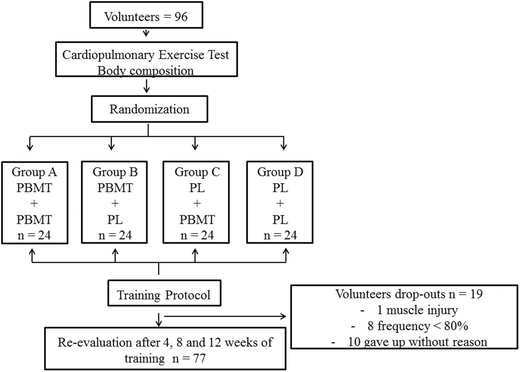
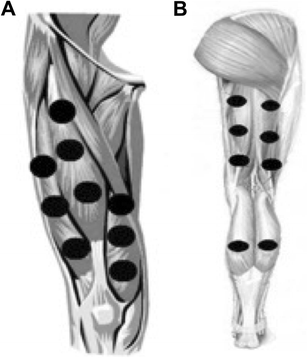
Materials and methods

Study design and protocol

We performed a triple-blind (assessors, therapists, and volunteers), placebo-controlled, randomized clinical trial. The study was conducted in the Laboratory of Phototherapy in Sports and Exercise.

Ethical aspects

All participants signed informed consent prior to enrollment and the study was approved by the research ethics committee of Nove de Julho University (process 553.831) and registered at Clinical Trials.gov (NCT02874976).

Sample

The sample size was calculated assuming a type I error of 0.05 and a type II error of 0.2, based on previous study [21], and the primary established outcome was the time until exhaustion.

Inclusion and exclusion criteria

We recruited 96 healthy volunteers (48 men and 48 women) between 18 and 35 years of age and without training or involvement in a regular exercise program (i.e., exercise more than once per week) [22, 23]. Volunteers were excluded if they had any skeletal muscle injury, used any nutritional supplement or pharmacologic agent, presented with signs or symptoms of any disease (i.e., neurologic, inflammatory, pulmonary, metabolic, oncologic), or had a history of cardiac arrest that might limit performance of high-intensity exercises. Volunteers that were unable to attend a minimum rate of 80% of the training sessions and volunteers with immune diseases that require continuous use of anti-inflammatory drugs were also excluded.

Randomization and blinding procedures

Volunteers were distributed in four experimental groups (24 volunteers in each group) through a simple drawing of lots (A, B, C, or D) that determined the moment they would receive active and/or placebo PBMT treatment:
  • PBMT + PBMT: volunteers were treated with active PBMT before and after each training session.

  • PBMT + placebo: volunteers were treated with active PBMT before and placebo PBMT after each training session.

  • Placebo + PBMT: volunteers were treated with placebo PBMT before and active PBMT after each training session.

  • Placebo + placebo: volunteers were treated with placebo PBMT before and after each training session.

Randomization labels were created by using a randomization table at a central office where a series of sealed, opaque, and numbered envelopes ensured confidentiality. The researcher who programmed the PBMT device (manufactured by Multi Radiance Medical™, Solon, OH, USA) based on the randomization results was not involved in any other procedure of the study. He was instructed not to inform the participants or other researchers of the PBMT program (active or placebo). None of the researchers involved in aerobic endurance-training assessments and data collection knew which program corresponded to active or placebo PBMT.

Identical PBMT devices were used in both programs (active or placebo) by a researcher who was not involved in any phase of the projected data collection to ensure the study blinding. All displays and sounds emitted were identical regardless of the selected program. The active PBMT treatment did not demonstrate discernable amounts of heat [24].

Therefore, volunteers were unable to differentiate between active or placebo treatments. All volunteers were required to wear opaque goggles during treatments to safety and to maintain the triple-blind design.

Procedures

The study included three sessions of aerobic endurance training per week performed over 12 weeks, and each session lasted 30 min; the load for each exercise session (treadmill speed) progressed constantly in order to keep subjects’ heart rate between 70 and 80% from maximum heart rate. The assessments were conducted before the start of the training protocol and after 4, 8, and 12 weeks of training. A summary of the study design is presented in Fig. 1.
Fig. 1

CONSORT flowchart

Cardiopulmonary exercise test

Participants performed a standardized progressive cardiopulmonary exercise test on a treadmill with a fixed inclination of 1% until exhaustion. They began the test with a 3-min warm-up at a velocity of 3 km/h. Next, the treadmill velocity was increased by 1 km/h at 1-min intervals until the velocity of 16 km/h was reached. Participants were instructed to use hand signals to request termination of the test at any time. A 3-min recovery phase at a velocity of 6 km/h was allowed after each test [18]. During testing, we monitored the rates of oxygen uptake (VO2), carbon dioxide production measured with a VO 2000 gas analyzer (Inbrasport, Indústria Brasileira de Equipamentos Médico-Desportivos LTDA, Porto Alegre, RS, Brazil), total time until exhaustion, and heart rate measured with a digital electrocardiograph (Medical Graphs Ergomet, São Paulo, SP, Brazil).

These data were used to evaluate the performance of participants during progressive cardiopulmonary exercise testing, because this test is currently the most widely used in the literature for this purpose [25]. The entire test was monitored by electrocardiogram and blood pressure measurement. If any abnormal heart rate or blood pressure changes were observed or if the test was terminated prematurely on request, the test was stopped, and the volunteer’s data were deleted.

Body composition assessment

Body composition was assessed by the same technician (blinded to volunteer’s allocation in different experimental groups) using the procedures established by ISAK [26]. Measurements of height, body mass, and skinfolds were used to establish the percentage of fat [26].

Aerobic training protocol

Aerobic treadmill training, associated or not with PBMT, was performed three times a week for 12 weeks, each session lasting 30 min, with training intensity kept between 70 and 80% of maximum heart rate [27]; changes in running speed (training load) were constantly performed to achieve the 70–80% heart rate.

Training was interrupted based on the criteria established by the guidelines of the American Heart Association. Training intensity was monitored by a heart rate monitor manufactured by Polar®.

Photobiomodulation therapy

PBMT was applied employing MR4 Laser Therapy Systems outfitted with LaserShower 50 4D emitters (both manufactured by Multi Radiance Medical, Solon, OH, USA). The cluster style emitter contains 12 diodes composing of four super-pulsed laser diodes (905 nm, 0.3125 mW average power, and 12.5 W peak power for each diode), four red LED diodes (640 nm, 15 mW average power for each diode), and four infrared LEDs diodes (875 nm, 17.5 mW average power for each diode).

The cluster probe was selected due to the available coverage area and to reduce the number of sites needing treatment. Treatment was applied in direct contact with the skin with a slight applied overpressure to nine sites on extensor muscles of the knee (Fig. 2a), six sites on knee flexors of the knee, and two sites on the calf (Fig. 2b) of both lower limbs [15, 28]. To ensure blinding, the device emitted the same sounds and regardless of the programmed mode (active or placebo). The researcher, who was blinded to randomization and the programming of PBMT device, performed the PBMT.
Fig. 2

a Treatment sites at knee extensor muscles. b Treatment sites at knee flexor and ankle plantar flexor muscles

PBMT parameters and irradiation sites were selected based upon previous positive outcomes demonstrated with the same family of device [13, 15, 28, 29]. Table 1 provides a full description of the PBMT parameters. The volunteers received PBMT or placebo from 5 to 10 min before and/or after aerobic training sessions.


Statistical analysis

The obtained results were tested for their normality through the Shapiro-Wilk test. Since the data showed a normal distribution, two-way ANOVA test with Bonferroni post hoc analysis was applied. The data were described as mean values with the respective standard deviations and both absolute and percentage values were analyzed. Graphical data are described as mean and standard errors of mean (SEM). The level of statistical significance was p < 0.05.

Results

After data collection, we analyzed the results of 77 volunteers of both genders (PBMT + PBMT: 18 volunteers; PBMT + placebo: 21 volunteers; placebo + PBMT: 18 volunteers; and placebo + placebo: 20 volunteers) that had completed the aerobic training protocol after 12 weeks (Fig. 1). None of the recruited volunteers were excluded due abnormal heart rate or blood pressure during the execution of procedures of this study. The characteristics of the volunteers are summarized in Table 2.


As shown in Table 2, no statistically significant differences (p > 0.05) were found for anthropometric variables and baseline data among the different experimental study groups.

Table 3 shows all results of cardiopulmonary progressive test in absolute values for different variables analyzed in all experimental groups of this study. We observed a statistically significant improvement in oxygen uptake when PBMT was performed before and after training sessions (PBMT + PBMT group), comparing baseline values vs 4-, 8-, and 12-week values (p < 0.001). The same was observed for pulmonary ventilation, comparing baseline values vs 8- and 12-week values (p = 0.0018 and p = 0.003, respectively), and for time until exhaustion, comparing baseline values vs 4-, 8-, and 12-week values (p < 0.001).
Table 3

Progressive endurance test variables


Baseline

4 weeks

8 weeks

12 weeks

VO2 (mL/kg/min)

PBMT + PBMT

35.8 ± 9.5

40.2 ± 10.2*

41.5 ± 10.4*

42.5 ± 11.2*

PBMT + Placebo

34.8 ± 7.0

37.6 ± 7.0

38.6 ± 8.0

38.2 ± 7.0

Placebo + PBMT

35.2 ± 8.9

36.6 ± 8.1

38.6 ± 8.3

38.5 ± 8.3

Placebo + placebo

36.2 ± 7.7

36.8 ± 8.0

37.6 ± 7.5

38.4 ± 10.1

VCO2 (mL/kg/min)

PBMT + PBMT

38.7 ± 7.0

40.4 ± 8.6

41.3 ± 7.8

41.4 ± 8.7

PBMT + placebo

38.,5 ± 7.8

39.5 ± 6.6

41.7 ± 7.9

41.9 ± 6.8

Placebo + PBMT

38.5 ± 9.5

38.2 ± 9.5

41.5 ± 8.4

40.7 ± 9.6

Placebo + placebo

38.8 ± 10.6

40.7 ± 9.4

43.1 ± 13.4

40.9 ± 10.5

VE (mL/kg/min)

PBMT + PBMT

73.6 ± 22.8

77.9 ± 21.5

83.5 ± 24.5*

85.3 ± 22.5*

PBMT + Placebo

70.6 ± 20.3

71.0 ± 23.1

78.1 ± 23.0

77.2 ± 22.1

Placebo + PBMT

66.2 ± 25.3

70.6 ± 24.2

73.9 ± 20.6

73.4 ± 20.7

Placebo + placebo

69.9 ± 17.9

70.8 ± 18.8

70.3 ± 22.4

77.1 ± 18.3

Time until exhaustion (s)

PBMT + PBMT

681.5 ± 111.9

752.1 ± 111.7*

787.7 ± 114.2*

808.5 ± 124.5*

PBMT + placebo

698.7 ± 131.1

739.3 ± 142.2

773.4 ± 165.9

792.1 ± 186.9

Placebo + PBMT

693.1 ± 106.9

738.4 ± 116.6

766.1 ± 121.0

797.0 ± 139.0

Placebo + placebo

699.5 ± 137.3

720.2 ± 150.0

741.3 ± 154.3*

766.1 ± 159.8*

Data is expressed in average and standard deviation (±)

VO 2 oxygen uptake, VCO 2 carbon dioxide production, VE pulmonary ventilation

*Statistically significant difference compared to baseline (p < 0.05)

Furthermore, PBMT applied before and after each aerobic exercise training session (PBMT + PBMT group) significantly increased (p < 0.05) the percentage change of oxygen consumption and time-to-exhaustion compared to the group treated with placebo before and after each aerobic exercise training session (placebo + placebo group) from 4th to 12th week. Similarly, PBMT applied before and after each aerobic exercise training session (PBMT + PBMT group) significantly improved (p < 0.05) the percentage change of body fat compared to group treated with placebo before and after each aerobic exercise training session (placebo + placebo group). The outcomes are summarized in Figs. 3, 4, and 5, respectively.

Fig. 3

Percentage of change in time-to-exhaustion. The data are presented in mean and SEM. Letter a indicates statistical significance between PBMT + PBMT and placebo + placebo (p < 0.05)

Fig. 4

Percentage of change in maximum oxygen uptake. The data are presented in mean and SEM. Letter a indicates statistical significance between PBMT + PBMT and placebo + placebo (p < 0.05)

Fig. 5

Percentage of change in body fat. The data are presented in mean and SEM. Letter a indicates statistical significance between PBMT + PBMT and placebo + placebo (p < 0.05)

Discussion

To the best of our knowledge, this is the first study aiming to test the optimal moment to perform PBMT in an aerobic training protocol (before, after, or before and after training). Few studies have assessed chronic effects of PBMT [17, 20, 21]; however, PBMT has been applied at different moments (before, after, or during exercise) of the aerobic training program. Briefly, we observed that the combination of super-pulsed lasers and LEDs applied before and after exercise sessions increased the oxygen uptake, time-to-exhaustion, and reduced body fat in healthy sedentary volunteers after 12 weeks of aerobic training.

Paolillo et al. [20] investigated the effects of PBMT applied during the sessions of aerobic training on the treadmill in 20 postmenopausal women. The training was performed twice a week for 3 months, with an intensity of 85–90% of maximum heart rate. The volunteers received LED therapy with 850 nm, 31 mW/cm2, 30 min irradiation, and 14,400 J applied bilaterally to the tight regions. PBMT increased the exercise tolerance time when compared to the control group. These data corroborate with the results of our study, however, we used different light sources and wavelengths simultaneously (4 × 905 nm super-pulsed lasers, 4 × 875 nm infrared LEDs, and 4 × 640 nm red LEDs) to irradiate the volunteers and we found an increase in exercise tolerance of 13.4%. The magnitude of the difference in outcomes between studies might be related to the used irradiation protocol (in our study, the volunteers were irradiated before and after the aerobic training sessions, while Paolillo et al. [20] irradiated volunteers during the training sessions).

The same authors [21] also investigated the effects of PBMT (infrared LEDs—850 nm) when applied during treadmill training in 45 postmenopausal women. The training was performed twice a week for 6 months, and each training session lasted 45 min. The authors found a significant increase in exercise tolerance, and metabolic equivalents, and a longer duration of Bruce test. In our study, the association of PBMT before and after sessions of the aerobic training program was able to increase the oxygen consumption (with 18.7%) and time-to-exhaustion (with 13.4%) and improve the percentage of change of body fat (with 13.9%) after only 12 weeks of aerobic training.

Duarte et al. [30] evaluated the effects of PBMT (808 nm) associated with aerobic and resistance training performed three times a week for 16 weeks in obese women. The authors found a significant decrease in the percentage of fat and in neck and waist circumference. It is important to highlight that in our study, we observed statistically significant improvement in the percentage of change of body fat (13.9%) after only 12 weeks of aerobic training when associated with PBMT before and after the training sessions. We believe that the association of PBMT before and after training was able to enhance the performance and the tolerance of the volunteers during the aerobic training protocol, favoring the reduction of the body fat at the end of the 12 weeks of training.

It is interesting how outcomes in the fourth week for PBMT + PBMT group were similar to those of placebo + placebo group (or exercise alone) in the 12th week. This means that PBMT with optimal irradiation protocol (before and after exercise training sessions) can increase the endurance capacity of volunteers three times faster than exercise alone.

Regarding the mechanisms of the observed effects, we strongly believe that mitochondrial activity modulation is the key mechanism, despite the fact that our study only focused on clinical and functional aspects and not on mechanisms. Hayworth et al. [31] demonstrated that the activity of cytochrome c oxidase is enhanced by PBMT with a single wavelength in skeletal muscle fibers of rats. More recently, Albuquerque-Pontes et al. [32] showed that PBMT with different wavelengths (660, 830, or 905 nm) was able to increase the expression of cytochrome c oxidase in the intact skeletal muscle tissue in different time windows (5 min to 24 h after irradiation), which means that the muscle metabolism can be improved through the action of PBMT. These findings help us to explain the increase in performance observed by the use of PBMT associated with an aerobic training protocol and provide the rationale for the concurrent use of different wavelengths at the same time, which can represent a therapeutic advantage in various clinical situations.

In fact, different studies have shown that the concurrent use of different light sources and wavelengths enhances muscular performance [13, 14, 15, 28, 29, 33] decreases pain [34


Original Source: https://link-springer-com.colorado.idm.oclc.org/article/10.1007%2Fs10103-017-2396-2

No Cure from LiteCure

Jan Tunér, Mar 22, 2014 - Annals of Laser Therapy Research (Publication) 4402
This article from Jan Tuner talks about LiteCure's horrible marketing, how 980nm is really bad and how Class 4 lasers are too powerful and often misused. They recommend 905nm for deep penetration.
View Resource

More Lies and Subterfuge from the World of Class IV Laser Therapy

By Jan Tunér

The US laser manufacturer LiteCure (a.k.a. Companion/Pegasus for veterinary version) belongs to a group of laser manufacturers that confuse customers and let consumers pay a high price for something that they do not need. LaserAnnals has previously addressed the so-called Class IV lasers for LPT in general and in a few cases mentioned this particular culprit LiteCure. In this article, we will make a closer check on the credibility and ethics of this company.

Marketing is generally a way of stretching the truth or at least highlighting potential benefits of a product without mentioning the drawbacks. Not very ethical but more or less what consumers expect. Sheer lying is a bit different, and LiteCure uses blatant lies in its marketing. Let us see the first lie:

Lie #1. LiteCure originally claimed that 980 nm has a much better penetration than 808 nm, and that the very high output of their lasers improves the penetration. The illustration below is from their early attempts at marketing the supposed benefits of their device:

pegasus_old1

Anyone with some basic knowledge about tissue optics knows that 980 nm has a poor penetration due to absorption by water and lipids, and that 808 nm (the illustration actually states 880 nm, but this is not a commonly-used laser wavelength so we assume this was another error…) actually is in an optical window where penetration through skin is optimal. Using very high power with 980 nm doesn’t increase penetration considerably, but instead causes more light to be absorbed superficially more quickly, leading to heat generation. And LPT is not based upon heat but upon stimulation!

Knowledgeable scientists, experienced clinicians and other manufacturers were quick to criticise, however, and to call LiteCure out on this lie, and over time LiteCure has responded by adding the deeper-penetrating 810 nm wavelength to their products, and by modifying the image, as follows:

pegasus_new1

Although a step in the right direction, even this illustration is still misleading and, basically, incorrect: The effective depth of laser irradiation does not increase over time.

Further to that, the “effortless” non-contact technique causes considerable energy loss by reflection and backscatter – together, remittance, which has been measured at upwards of 80% from bare skin (Al Watban, 1996) – and up to 100% energy loss due to absorption within animal hair/fur.  This is hardly “efficient”!

The truth is the opposite to what their sales claims try to tell: A 0.5 W 808-810 nm Class 3B laser actually has a superior ability to penetrate into the body, whereas a 10.0 W 980 nm Class 4 has limited ability and also causes more problems with regards to heat generation. And, as the lower-powered Class 3B device may be applied in contact with the skin directly over the pathological tissue, and held steady for the necessary time to deliver the appropriate amount of energy, it is also significantly more efficient, accurate and safe.

The problem is that their consumer group is rather ignorant about LPT basics and swallow the bait. Fortunately for LiteCure, very high energies are bio-inhibitory and have a temporary pain relieving effect. This is an impressing effect when demonstrated. The downside of the procedure is that the needed reduction of an inflammatory process in inhibited and so is the body’s ability to regenerate itself. This is what is called “a sales trick”.

Lie #2. In its advertising material the LiteCure company writes: “World renowned Laser Therapy Experts, Jan Tunér and Lars Hode have indicated the advantages of high power laser therapy. The (research) literature supports the hypothesis that higher power density yields better clinical results.”

This is similar to the way the devil reads the bible. The above conclusion follows a part of our book where the remarkably low powered lasers on the Canadian market in the ‘90s is discussed. The vast majority of the lasers used were HeNe 1-2 mW and GaAlAs 5-30 mW. So the 400 mW lasers that had just arrived on the market at that time seemed to have a new potential – and they had.

Continued reading of our book reveals that high energies probably will have a better effect on pain conditions but probably not on superficial conditions such as wound healing. In fact, the discussion following the text about “high power” strongly modulates their usefulness.

This text appeared initially in the 2002 book “Low level laser therapy – clinical practice and scientific background”. In following versions of this book, the text has been modified and becomes more critical of extreme energies. And believe me, the next one will be even more critical, to avoid any misunderstandings.

Read my lips: Tunér and Hode do not recommend 15 W Class IV lasers, not even 5 W!”  

An appropriately configured and applied Class 3B device can do all that we need, and if you want to reach deep targets the 904 nm superpulsed GaAs is the best tool!

LiteCure type of science

Recently a LiteCure research paper on fibromylaglia (FM) was published:

Panton L, Simonavice E, Williams K, Mojock C, Kim JS, Kingsley JD, McMillan V, Mathis R. Effects of Class IV laser therapy on fibromyalgia impact and function in women with fibromyalgia. J Altern Complement Med. 2013 May;19(5):445-52.

FM is a devastating condition and LPT is probably a viable option to use, especially since other therapies are rather ineffective and life-long intake of painkillers not a viable option, with the side effects in mind. The study by Panton is obviously performed by a competent team of medical experts, but it seems they have “been taken for a ride” by the LiteCure company. The overall effect of the laser treatment was modest, but had some effects.

So let us have a look on this paper…

For the laser group, treatment was rendered utilizing a LCT-1000 (LiteCure LLC, Newark, DE) solid-state GaAlAs laser delivering a continuous-wave, dual-wavelength laser with 20% 810 nm, and 80% 980nm at 10 W. Each 56.45 cm2 treatment point was treated with laser at 10.63 J/cm2 and warm air utilizing a grid scanning technique to avoid overheating tissue. Participants were instructed to expect some warmth but that the treatment should not burn and to provide verbal cues if the treatment spots became excessively warm. Each treatment point was treated for exactly 60 seconds for a total of 600 J per point, for a total daily treatment dose of 4200 J. The dual wavelength was used for two reasons: (1) this is what is commercially available and (2) two wavelengths allow for treatment in patients with different skin colours since different melanin concentrations will absorb light differently. Both wavelengths are in the accepted therapeutic window. The sham treatment consisted of 60 seconds of warm air alone over the seven tender points.

Now, let us try to make some sense about this study:

a. The cause of FM is not known, but it is manifested by painful bodily points. If pain were a separate biological unit, smashing it with a sledge hammer might be useful. But there is probably more to it, like peripheral neural sensitisation and inflammation. 600 J (!) is given to each point and this is a very high and quite inhibitive energy. And a “point” is declared to be 56.45 cm2. This is rather an area. But by spreading out the light over a large area, the dose becomes 10.63 J/cm2. Such a dose appears to be reasonable, but the energy is not.

b. The paper says: Like the IIIB lasers, recently developed Class IV therapeutic lasers use diffuse light at wavelengths in a therapeutic window that allow penetration of the light deep into the tissue. True, but these lasers do not penetrate deeper than the Class IIIB/3B lasers, so this is a deliberately misleading statement. Further, Class IV/4 therapeutic lasers are not exactly “recently developed”: The defocused beams of Class IV/4 surgical lasers have been used for therapy for equally as long as Class IIIB/3B devices. And the first commercially-available dedicated Class IV/4 therapeutic lasers came on the market in Europe during the ‘90s – which, of course, contradicts the claims by LiteCure and others that Class IV/4 laser therapy is new improvement of Class IIIB/3B. As they are now, these earlier Class IV/4 therapeutic lasers  were very expensive and inefficient, and proved no more effective than the already-available lower-powered lasers, so their use did not flourish until the marketing machine took hold in the USA.

c. The paper says: This development has led to the use of Class IV lasers to treat a variety of conditions including skin lesions(24,25), acute soft-tissue injuries (26), and chronic pain syndromes (27) such as FM. In fact, the references 24-27 are not related to the use of “Class IV” LPT lasers at all! This is a technique used often by LiteCure and other marketers of high-powered Class IV therapeutic lasers, banking on the fact that the casual reader will not follow through and actually read the referenced studies.

d. The paper says: There are only a few studies that have used laser therapy to treat pain (16,17,27,37,38). What about 125 published RCTs? If changed to “FM pain”, this is a more valid statement. And one of the most frequently quoted papers on FM and LPT (Gür et al.) used 2 J per point and with better results.

e. The paper says: Studies suggest that Class IV lasers have a beneficial analgesic and anti-inflammatory effect in humans (47-50). No, they don’t! All four papers to which they’ve referred are on Class 3B!

f. Previous studies on FM and LPT have been using considerably lower energies, so the reason for increasing these by a factor 100 seems to have but one background: To prove the superiority of the manufacturer’s product. However, the clinical outcome of this paper was not better than those where is Class 3B lasers have been used.

And let’s address another niggling falsehood: There is no such thing as “Class IV technology”!! 499 mW is Class 3B, 501 mW is Class IV. This is no “technology”. Laser classification is simply related to the relative risk posed by the power, wavelength and distribution of the laser emission!

The manufacturers of the Class IV lasers used in LPT have sponsored a small number of clinical studies. They all contain considerable flaws and even lies and are far from convincing. But they do contribute to the general confusion and are an obstacle in the general acceptance of laser phototherapy.

As mentioned previously, a typical trick of the Class IV vendor is to make reference to Class 3B papers, with proper documentation of their own products lacking. This was the old trick of LED vendors in the ’90s. The LEDs have, in the meantime, created their own scientific groundwork and do not have to use sales tricks any longer.

You can stop reading here, but if you like, here is the actual text from the book that is supposed to recommend Class IV lasers:

Stronger = better?

The power output of therapeutic lasers has increased radically during the nineties. McKibbin reports that there were about 1800 therapeutic laser units in Canada in 1990. 22% of them were HeNe lasers with an output of 1 mW or less, 35% HeNe lasers with 1-2 mW, 13% 830 nm units with an output up to 5 mW, 3% 830 nm units with an output up to 30 mW, 26% GaAs units with an output of 5 mW or less, and 1% units in the 760-780 range nm with an output up to 30 mW.

Now in 2009, the situation is quite different. HeNe units are being replaced by stronger InGaAlP lasers up to 500 mW, GaAlAs units of 7 000 mW are on the market, and GaAs units of 100 mW and more are available.

Even though it is possible to attain some effects with a 1-2 mW laser, there is no doubt that with a laser 100 times stronger, it is much easier to achieve biostimulating effects, at least if one intends to use treatment periods of the same length. Power density is also very important!

The authors used to have certain misgivings about an “inflation” with respect to the output power of therapeutic lasers. One misgiving was, and still is, the obvious risk of eye damage. The need for protective glasses has previously been exaggerated, but is now becoming more important. Another misgiving is the lack of research in the field of “high-power” therapeutic lasers. So far, insufficient data have been published on these powerful lasers. For the moment, we must rely primarily on our own clinical experience. That experience, however, is so encouraging that it cannot be ignored, even with the lack of scientific support. It would appear that “high-powered” therapeutic lasers will be able to further expand the scope of laser therapy, especially in pain therapy.

The doses previously recommended for laser therapy still hold true, in a way. However, much of what we know about dosage is based upon wound healing studies. This is the field in which both stimulating and inhibiting doses have generally been observed. But a wound is superficial, and the superficial tissue will absorb most of the laser energy. So treating a condition in the inner ear through the bone behind the ear is quite a different matter. The dense bone behind the ear absorbs some 90% of the light energy. Skin and blood absorb another 5%. Thus, 100 J in contact mode means only some 5 J or less in the inner ear. For pain and inflammation in large joints, such as the knee, quite a few joules may be required on the surface before the actual target receives the energy needed.

Using the same amount of energy but with different energy densities will not necessarily trigger the same biological response. Kim [545] used 1.2 J in plastic and aesthetic surgery. The energy was delivered either by a 1000 mW or a 60 mW 830 nm laser (1000 mW × 1.2 sec or 60 mW × 200 sec). Both were effective, but the 60 mW laser was more effective in the initial period of wound healing, while the 1000 mW laser was more effective in the late period.

Are strong lasers better than weaker ones?

YES and NO. Output power should not be too low for its purpose. If the power is too low, it causes unnecessarily long treatment time in order to achieve the required total dose (see more about the dose in the next chapter). Also, if output power is too low, it could result in the power density being too low which is an important parameter in treatment. Nor should output power be too high for its purpose. If the power is too high, the light could burn tanned, coloured skin, tattoos or skin with dark hair. Furthermore, in most countries, there is a power limit of 500 mW (= 0.5 watt), above which the laser may be a Class 4 laser. If so, it usually means that it requires oversight by an MD or DDS, more safety measures, and significantly more regulatory control. Also, if the power is too high, it can result in unintentionally high doses which can give less good treatment results than necessary (see the Arndt-Schulz curve in the next chapter). And finally, time is also an important treatment parameter. Administering a certain number of joules over a certain area using a certain laser power during a certain time, may not give the same result as using a ten times stronger laser during one tenth of the time with unchanged optical configuration. Another way to say this is that the rule of reciprocity is not valid. Some laser companies claim that a Class 4 laser ‘by default’ is better than a Class 3B laser (4 is higher than 3, so it has to be better… right?). This is simply not true. The classification of lasers is a measure of eye hazard, nothing else. While defocused Class 4 lasers may well be used successfully in laser therapy, this does not have anything to do with the laser classification.


Original Source: http://www.laserannals.com/2014/03/22/no-cure-from-litecure/

Explore Laser Acupuncture’s Role - Chapter 9

Wen-Long Hu, Yu-Chiang Hung and I-Ling Hung - (Publication) 4401
This publication is a summary of some of the most effective acupuncture studies.
View Resource
2. Laser acupuncture vs. acupuncture
Instead of using a metal acupuncture needle, LA uses red or near-infrared light with a
wavelength
between
600 and 1000 nm and power between
5 and 500 mW. It is also referred
to as low level laser therapy (LLLT), with 0.1–0.5 J/cm
2
being deposited per acupoint, or
1–4 J/cm
2
per Ashi point. Because of the low absorption of laser light by human skin in
the given wavelength
range, it has been hypothesized
that laser light can penetrate
deeply
into the tissue, where it may have a photobiostimulation effect [4].
LA combines the advantages of traditional Chinese acupuncture and modern laser
medicine. However, in some ways, laser energy may be more suitable than the tradition?
al needle for stimulating the oscillating energy field of the meridian system. The correct
frequency modulation of the monochromatic laser beam energizes the meridian and
acupuncture point and thereby improves the oscillation of the meridian’s own frequency.
In addition, some patients may avoid acupuncture because of fear of pain and LA may be
less invasive, less painful, and safer than traditional acupuncture. It may also be an
improvement
over traditional
moxibustion,
because
it uses similar energy levels but avoids
harmful effects related to smoke and heat (Table 1).
3. Review of the clinical literature
3.1. Pain
Assessment of the methods and findings of clinical trials on LA is confounded by the lack
of detail in some studies in the literature. It is also noteworthy that all studies reporting
negative results (no significant benefit of LA compared with control or sham conditions)
lacked details regarding treatment parameters, such as laser power or dose [5].
Treatment
Instrument
Invasiveness
Sensations
Pain
Traditional
acupuncture
Needle
Invasive
Soreness, numbness,
expansion, or pain
Painful
Laser acupuncture
Low-level laser
Non-invasive
None or slight
warmth (if > 10 J/cm
2
)
Painless
Table 1.
Comparison of traditional and laser acupuncture
Acupuncture in Modern Medicine
206
3.1.1. Low back pain
Glazov used multiple regression analysis to identify which baseline characteristics predicted
pain changes in the immediate, short, and intermediate terms. They found that higher pain
scores at baseline predicted greater pain relief after LA for chronic non-specific low back pain.
Adjusted analysis suggested a clinically significant effect on pain with LA compared to sham
treatment (P < 0.05), at short term follow-up only [
6]. Later, Glazov et al. performed a random?
ized controlled trial comparing the effects of laser acupuncture (LA) and sham laser treatment
in reducing pain and disability in adults with chronic non-specific low back pain. Their results
showed no effect of LA in reducing pain using infrared light at 0.2 J/point [
7]. A possible reason
for this result is dose dependency issue [8].
On the other hand, Fiore et al. [
9] examined the short-term effects of high-intensity laser
therapy versus ultrasound therapy for the treatment of low back pain in a randomized
controlled trial without placebo control group. At the end of a 3-week intervention period with
5 treatments per week, participants in the laser therapy group showed a significantly greater
decrease in pain and an improvement in related disability compared with the ultrasound
group. This study suggests that laser therapy is a promising treatment option for the rehabil?
itation of low back pain.
3.1.2. Myofascial pain
LA has been used to treat myofascial pain in the masticatory musculature and trapezius
muscles.
Some trials focusing
on the ability of LA to relieve myofascial
pain found negative
or contradictory results, which may reflect the poor methodologies used before 2001 [10].
In recent years, randomized controlled trials revealed significant decreases in pain during
both rest and activity, and an increase in pain threshold in patients treated with LA
compared to those treated with needle-acupuncture and placebo, respectively. Although
no definite conclusions can be drawn due to the low number of participants (n = 11), LA
may be a good treatment option for patients wanting a noninvasive, complementary
therapy [11]. LA appears to be an effective form of acupuncture for the management of
these conditions [12].
3.1.3. Temporomandibular dysfunction
The effectiveness of LLLT for the control of pain in patients with temporomandibular
disorder
(TMD) has been evaluated
in studies
with various
research
designs.
In one study,
LA was applied to acupuncture points in TMD patients, and the results showed signifi?
cant pain reduction and improvement in the electromyographic behavior of masseter
muscles
in maximal
habitual
occlusion
after treatment,
but no significant
improvement
was
observed in mandibular movement. This shows that LA may have an effect for control?
ling pain in TMD patients [13, 14].
Explore Laser Acupuncture’s Role
http://dx.doi.org/10.5772/55092
207
3.1.4. Lateral epicondylitis
LLLT is a conservative treatment for lateral epicondylitis (LE). A recent systemic review
evaluated therapeutic effects of LLLT in treating LE in terms of pain, grip strength, range
of motion (ROM), and weight tests. The results revealed that applying LLLT on myofas?
cial trigger points is an effective
means for pain reduction
and also led to increases
in grip
force, ROM, and weight test [15]. However, most of the reviewed studies, which were all
several
decades
old, showed
no significant
differences
between
the laser treatment
and the
placebo groups [16]. This may be related to dose or wavelength effects. LLLT at optimal
doses of 0.5–7.2 J at 904 nm and possibly
632 nm administered
directly
to the lateral elbow
tendon insertions, has been shown to offer short-term pain relief and reduce LE disabili?
ty. No serious side effects were reported in that study. This finding contradicts the
conclusions of the previously mentioned review [16], which failed to assess treatment
procedure, wavelength, or optimal dose [17].
3.1.5. Knee osteoarthritis
Laser acupuncture has been widely used in treating knee osteoarthritis. A study by the Western
Ontario and McMaster Universities (WOMAC) found a significant decrease in pain score in
knee osteoarthritis patients treated with LA compared sham treatment [
18]. Yurtkuran et al.
used a range of pain indices to investigate the effects and minimum effective dose of LA in
treating this condition. Although they found some pain reduction in the placebo group,
statistically significant reduction in knee circumference was observed only in the laser group.
They concluded that LA was effective in reducing periarticular swelling. They also noticed
different effects for different knee joint acupoints. The most common acupoints they used were
Dubi (ST35) and Neixiyan (EX-LE 4) [19].
3.1.6. Headache
Several randomized controlled trials have found LA to be an effective treatment for headache,
especially in children, including both migraine and chronic tension-type headaches [
20, 21].
LA was shown to decrease headache intensity, duration of attacks, as well as number of
headache days per month.
3.2. Other conditions
3.2.1. Obesity
LA has been reported to be effective in weight control. Wozniak (2003) compared the efficacy
of a low-calorie diet with and without concurrent LA in reducing visceral obesity in postme?
nopausal women. They observed a significantly greater drop in body weight, body mass index,
and waist-to-hip ratio with the combined treatment [
22]. More recently, Hu et al. evaluated
the therapeutic effects of LA in subjects with simple obesity using a non-restrictive diet
protocol. Significant reductions in body weight and body mass index were seen after 4 weeks
Acupuncture in Modern Medicine
208
of LA treatment. Moreover, patient compliance was high, since this is a comfortable and non-
restrictive diet protocol [23].
3.2.2. Carpal tunnel syndrome
In patients with carpal tunnel syndrome (CTS), lower-level-laser therapy plus microamperes
transcutaneous electric nerve stimulation (TENS) applied to acupuncture points has been
shown to significantly reduce pain. In this study, both subjective (McGill Pain Questionnaire
scores) and objective (sensory and motor latencies and Phalen and Tinel signs) measurements
revealed that this combined approach was effective in treating CTS [
24]. Branco examined the
effects of various conservative treatments on CTS patients, including LA, TENS, needle
acupuncture, and Chinese herbal medicine formulas, pain reductions were significantly
greater with the LA compared to the other treatments, including some patients failed to have
symptom relief after surgical release. Suggested mechanisms of pain reduction they proposed
included increased adenosine triphosphate (ATP) at the cellular level, decreased inflamma?
tion, and temporarily increased serotonin level [25].
3.2.3. Postoperative vomiting
Postoperative nausea and vomiting (PONV) are frequent side effects of general anesthesia in
children. In 1998, LA was shown to reduce PONV in children after strabismus surgery. In this
study, laser stimulation of PC6 occurred 15 min before administration anesthesia and again
15 min after arriving in the recovery room. In the laser stimulation group, the incidence of
vomiting was significantly lower (25%) than that in the placebo group (85%) [
26]. In another
study, Butkovic et al. compared the effectiveness of LA to that of metoclopramide in preventing
PONV in children after sevoflurane anesthesia. There were no statistically significant differ?
ences between the LA and metoclopramide groups in occurrence or timing of vomiting (P <
0.001). They concluded that LA is equally as effective as metoclopramide in preventing PONV
in children [27].
3.2.4. Smoking cessation
A prospective observational 2 year study showed that the Smokex-Pro method (Table 2)
is an effective
aid in smoking
cessation.
The treatment
was well tolerated
and showed
only
mild and temporary side effects. Additional advantages included lower cost and shorter
treatment duration compared to other smoking cessation programs. However, controlled
clinical
trials are still needed
to confirm
the results of this study and to refine the treatment
for maximum efficacy [28].
3.2.5. Alcohol addiction
Auricular
acupuncture
has been used in the treatment
of alcohol
addiction
for many years.
Zalewska-Kaszubska
et al. performed
a study aimed at intensifying
this method
by adding
Explore Laser Acupuncture’s Role
http://dx.doi.org/10.5772/55092
209
laser biostimulation for treatment of patients with alcohol dependence syndrome. The
patients
received
a single helium-neon
laser neck biostimulation
and 10 auricular
acupunc?
ture treatments with an argon laser. After 2 months of treatment, improvements in Beck
Depression Inventory-Fast Screen (BDI-FS) scores and increases in beta-endorphin level
were observed. These results suggest that laser therapy can be useful as an adjunct
treatment for alcoholism [29].
3.2.6. Asthmatic children
It has been shown that LA significantly decreases mean weekly PFV as a measurement of
bronchial hyper reactivity in asthmatic children. In this study there were no significant effects
on FEV1, quality of life, or additional medication [
30]. Another randomized control trial
concluded that a single LA treatment offers no protection against exercise induced broncho?
constriction in pediatric and adolescent patients [31].
3.2.7. Neurogenic pruritus
Stellon described successful LA treatment in a 6-year-old girl with neurogenic pruritus of the
abdomen, which was the first case report on LA treatment for this condition. The main
advantage of using low energy laser light to stimulate points, as opposed to using acupuncture
needles, was that it causes little or no sensation during the treatment which is particularly
useful in pediatric population [32].
3.2.8. Depression
Depression is a major public health problem, and there is some evidence supporting the
effectiveness of needle acupuncture in its treatment. Quah-Smith et al. investigated the effects
of LA in treating depression patients and found that Depression Inventory scores decrease
from baseline by 16.1 points in the intervention group and by only 6.8 points in the sham control
group (P < 0.001). However, the beneficial effect was short-lived. The LA was well tolerated,
with transient fatigue being the most common adverse effect [
33]. Additional controlled
clinical trials are needed to confirm the results of this study and to refine the treatment for
maximum efficacy.
3.2.9. Nocturnal enuresis
LA therapy has been shown to be significantly more effective in reducing bed-wetting in
primary monosymptomatic nocturnal enuresis patients compared to placebo treatment. In
this study, they found no significant
effects on maximal
voided volume
(first morning
void
excluded),
maximal
morning
voided volume,
voiding
frequency,
enuresis
frequency
before
and after treatment, or nocturnal urine production after LA treatment. However, they did
find significant increases in average daytime voided volume compared to the placebo
group. They concluded LA was a safe but inefficient treatment for these patients [34].
However, a different study showed subtle effects on bladder reservoir function after LA
Acupuncture in Modern Medicine
210
treatment [35]. In comparison with pharmacological therapy using desmopressin, another
study showed no statistically significant differences in success rates between desmopres?
sin therapy and LA. LA is an alternative, noninvasive, painless, cost-effective, and short-
term therapy for children with primary nocturnal enuresis, normal bladder function, and
high nighttime urine production [36].
3.2.10. Autonomic nervous activity of night shift workers
Many studies have demonstrated high levels of affective disorders in night-shift workers.
Wu et al. examined the impact of LA on autonomic nervous system (ANS) and heart-
rate variability (HRV) of such workers. Compared with a placebo group, the treatment
group had a statistically significant improvement in high-frequency (HF) HRV, low-
frequency (LF) HRV, and LF:HF HRV ratio. This suggests LA may increase vagal activi?
ty and suppression of cardiac sympathetic nerves and could be used to help patients who
have circadian rhythm disorders [37].
3.2.11. Whiplash injuries
Following introduction of compulsory seat belt use in cars, whiplash injuries of the cervical
spine have become commonplace. Current treatment approaches resolve symptoms within a
short time in most cases, but a small proportion of patients still develop persistent health
problems. Aigner et al. combined LA with cervical collar treatment and medication (parace?
tamol and chlormezanone) to treat whiplash patients. They did not observe significantly
greater improvements in any outcome measure at any time for LA compared to the other
treatment protocols [38].
3.2.12. Postural instability
It is well known that the risk of falling is high among elderly people. Bergamaschi compared
the effectiveness of auriculopuncture, ultralow-power LA, and placebo treatment in improv?
ing postural control in an elderly population. Balance performance was measured on a force
platform before and after treatment. Although the small sample size did not allow reliable
statistical analysis, the observed balance improvements were remarkable, and some differen?
ces were observed between the two kinds of stimulation. They found that both LA and
auriculopuncture reduced nociceptive interference, thus improving postural control [39].
3.2.13. Peripheral artery disease
Cardiovascular disease is the most common cause of death in humans. The use of acupuncture
as a complementary and alternative treatment for cardiovascular disease has been suggested
in both humans and animals. Possible advantages of using acupuncture are the low cost of
treatment and the low risk of collateral damage when used in combination with other medical
treatments. In 2010, a trial was performed to compare the effects of traditional acupuncture
and LA on arterial pressure and peripheral circulation of the inferior limbs in patients with
Explore Laser Acupuncture’s Role
http://dx.doi.org/10.5772/55092
211
circulatory deficiencies. The results showed that only those treated with LA exhibited a
significant increase in systolic pressure in their lower limbs, with a resulting improvement in
Revascularization Index. This suggests that different stimuli on acupuncture points generate
different variations of peripheral resistance in the lower limbs [40].
3.2.14. Cerebral cortical and subcortical activations
As recent studies have demonstrated, acupuncture can elicit activity in specific areas of the
brain. Siedentopf et al. investigated the cerebral effects of LA at both GB43 acupoints with
functional magnetic resonance imaging. Their results showed that LA produced significant,
predominantly ipsilateral, brain activation within the thalamus, nucleus subthalamicus,
nucleus ruber, the brainstem, and the Brodmann areas 40 and 22. No significant brain activa?
tions were observed within the placebo group. The fact that the observed effects were primarily
ipsilateral supports the assumption that LA is mediated by meridians, since they do not cross
to the other side of the body [41].
4. Discussion and conclusions
LA is a non-invasive technique involving the stimulation of traditional acupoints with low-
intensity, non-thermal laser irradiation. Its clinical application is widespread even though its
mechanisms are not well understood. LLLT can decrease inflammation by reducing the levels
of biochemical markers (prostaglandin E2, messenger ribonucleic acid cyclooxygenase-2,
IL-1β, TNF-α
), neutrophil influx, oxidative stress, edema, and hemorrhaging [
42]. Analgesia
induced by laser phototherapy is mediated by peripheral opioid receptors [
43], however LA
has both local and distant analgesic effects that may be mediated by different mechanisms.
LA combines the positive effects of traditional acupuncture with LLLT. Compared with
needle-based methods for manipulating Qi, LA has the advantages of being non-invasive and
aseptic. Moreover, it is painless and safe because no heat is generated during the procedure,
and it is more effective in some medical condition and requires less time than needle-based
acupuncture [
23]. No side effects or complications resulting from LA have been reported in
any study so far.
We have presented evidence supporting the use of LA in the treatment of various types of
acute and chronic pain, postoperative nausea and vomiting, nocturnal enuresis, alcohol
addiction, smoking cessation, obesity, and cerebral cortical activation (Table 2). Inappropriate
selection of points and frequencies, insufficient energy and therapeutic sessions will lead to a
failure in laser acupuncture therapy. Further studies are needed to better define optimal
treatment parameters, including wavelength, dose, and intensity, and to maximize the
physiological benefit and cost effectiveness of treatment (
Figure 1)
. In conclusion, LA integra?
tes traditional acupuncture with LLLT, and is effective in treating many conditions. In the
hands of an experienced physician, LA can be an effective alternative treatment method in modern medicine.
 
Study
Subjects
Design
Parameters
Acupoints
Intervention
Results
Fiore et
al, 2011
[9]
Low back
pain
n=30
RCT
1064 nm, 760
mJ/cm
2
, pw
Trigger points
5 times/ week
for 3 weeks
Greater decrease in
pain and an
improvement of
related disability
Katsoulis
et al,
2010
[11]
Myofascial
pain
n=108
NR,
blind
control
study
690 nm, 40
mW, 40–60 J,
15 min
ST6, SI18, SI3, LI4
Twice a week
for 3 weeks
Pain reduction >
50%
Hotta et
al, 2010
[13]
TMD
n=10
Case
series
GaAlAs laser,
780 nm; 70
mW, 35 J/cm
2
LI4, HT3, ST6, ST7
Once a week
for ten
sessions
Improve painful
symptoms and
electromyographic
activities of
masseter muscles
Mazzetto
et al,
2010
[14]
TMD
n=40
RCT,
double-
blind
GaAlAs laser,
830 nm, 40
mW, 5 J/cm²
Affected condyle
lateral pole:
superior,
anterior,
posterior,
posterior-inferior
Twice a week
for 4 weeks
Immediate decrease
of painful symptoms
and increased range
of mandibular
movements
Ren et al,
2010
[18]
Knee OA
n=41
RCT
Semiconductor
laser, 650 nm,
36 mW; and
CO
2
laser, 1006
nm, 200mW, 40
Hz; 2 min
ST35 and EX-LE 4
Thrice a week
for 2 weeks,
then twice a
week for
4weeks
Improve the pain,
stiffness and
functional limitation
of knee
Yurtkura
n et al,
2007
[19]
Knee OA
n=52
RCT
904 nm, 10
mW/cm
2
, 4
mW, 0.48 J, 120
s
SP 9
5 times per
week for 2
weeks
Reducing
periarticular
swelling
Gottschli
ng et al,
2008
[20]
Headache
n=43
RCT
30 mW, 830
nm, cw, 3.8
W/cm
2
, 0.9 J/
point, 30 s
Frontal: LI4, ST36;
lateral: TE5,
GB34; occipital:
SI3, BL60;
holocephalic:
GV20
Once a week
over 4 weeks
Headache
decreased
Ebnesha
hidi et al,
2005
[21]
Tension
Headache
n=50
RCT
GaAsAl laser,
830nm, 39
mW/cm
2
, 1.3 J/
point, 43s
LU7, LI4, GB14,
GB20 bilaterally
Thrice a week
for 10 sessions
Improvement for
headache intensity,
median duration of
attacks, and median
number of days
with headache per
month
Explore Laser Acupuncture’s Role
http://dx.doi.org/10.5772/55092
213
Study
Subjects
Design
Parameters
Acupoints
Intervention
Results
Wozniak
et al,
2003
[22]
Viseral
obesity after
menopause
n= 74
RCT
900 Hz, 24 mW,
0.1 J, 10–15 s/
point, 150 s
CV12, ST36, ST25,
LR3, PC6, HT7;
auriculotherapy:
55, 87
Twice a week
with low-
calorie diet for
6 weeks
Higher efficacy in
lowering body
weight, body mass
index and waist-to-
hip-ratio
Hu et al,
2010
[23]
Simple
obesity
n=95 (M/F
22/73)
Case
series
GaAlAs laser,
785 nm, 50
mW, 0.25 J/
point
Stomach,
Hunger, ST25,
ST28, ST40, SP15,
CV9
Thrice a week
with
non-restrictive
diet for 4
weeks
Reduce body weight
and body mass
index
Naeser et
al, 2002
[24]
CTS
n=11
RCT
632.8 nm, cw,
15 mW on
shallow
acupoints; 904
nm, pulsed, 9.4
W on deeper
points
PC7
35 to 45 min,
thrice a week
for 3-4wk
Significant
decreases in MPQ
score, median nerve
sensory latency, and
Phalen and Tinel
signs
Branco et
al, 1999
[25]
CTS
n=36
open
protocol
study
HeNe laser, 670
nm, cw, 5 mW,
1-7 J/point,
TENS; 904 nm,
pw, 10 W, 1 J/
point and/or
needle
acupuncture
PC7, 8, 9; LU9, 10,
11; LI1, 4; TE1, 5;
SI1
Thrice a week
for 4-5 weeks
33 of 36 hands
(91.6%) no pain, or
pain reduced by
more than 50%
Schlager
et al,
1998
[26]
PONV
n=91
RCT
670 nm, 10
mW, cw, 30 s
PC6
15 min before
induction of
anaesthesia
and 15 min
after arriving
in the recovery
room
Lower incidence of
PONV (25%)
Butkovic
et al,
2005
[27]
PONV
n=120
RCT
GaAlAs laser,
780 nm, 20
mW, cw, 1 J/
point, 60 s
PC6
15 min before
induction
of anesthesia
Equally effective as
metoclopramide in
preventing PONV
Breivogel
et al,
2011
[28]
Smoking
cessation
n=156
prospect
ive
observat
ional
study
Smokex-Pro
method
(electric
stimulation and
laser at 650 nm,
1.5 mW, 10 Hz)
Defined regions
in the ear and
nose
For 24 months
Long-term
abstinence rates
were 49.3% (1 year)
and 47.95% (2
years)
Acupuncture in Modern Medicine
214
Study
Subjects
Design
Parameters
Acupoints
Intervention
Results
Zalewska
-
Kaszubsk
a et al,
2004
[29]
Alcohol
addiction
n=53
Case
series
HeNe laser
632.8 nm, 25
mW (neck);
Argon laser,
514 nm, 100
mW, 10 s (ear)
Neck and
auricular
acupoints: 82, 83,
87, 51, 55
For 20 days
Improved BDI-FS
and increase in
beta-endorphin
level
Stockert
et al,
2007
[30]
Asthmatic
children
n=17
RCT
670 nm,10 mW,
20 s/point up to
16 points +
probiotics
LU1, 5, 7, 9, 11;
LI4, 6, 19, 20;
BL13, 17, 18, 20,
21, 23; ST13, 25,
36, 40, 44; SP3, 6,
9, 10; HT3, 5, 7;
SI3; KI3, 6, 8, 27;
PC6; TE5, 15;
GB3, 34, 40, 41;
LR2, 3, 8, 13; CV4,
6, 9, 17, 21; GV4,
13
For 10 weeks
Decreased mean
weekly Peak flow
variability and days
of acute febrile
infections
Quah-
Smith et
al, 2005
[33]
Depression
n=30
RCT
100 mW, 0.5 J,
5 s
LR14, CV15,
CV14, HT7, LR8
Twice weekly
for 4 weeks
then weekly
for a further 4
weeks
BDI scores fell from
baseline by 16.1
points in the test
group and by 6.8
points in the control
group
Karaman
et al,
2011
[34]
Nocturnal
enuresis in
childern,
n=91
RCT,
single
blind
635~670 nm, <
5 mW, 1 min/
point
CV3, 4, 6, and
bilateral SP6,
ST36
Thrice a week
for 4 weeks
Decreased the mean
number of weekly
bed-wetting
episodes
Radvansk
a et al,
2011
[35]
Monosympt
omatic
nocturnal
enuresis
n=31
RCT,
single-
blind
670 nm, 20 s
GV20, HT7, ST36,
SP6, LR3, KI3,
CV3, CV4, BL23,
GV4
Thrice a week
in the
first 2 weeks,
then Twice a
week in the
next 3 weeks
Increase in average
daytime voided
volume
Wu et al,
2009
[37]
Healthy
night shift
worker
n=45
Case
series
830 nm, 60mW,
9.7 J/cm
2
, 10
min
PC6
Single
treatment
Increase vagal
activity and
suppression of
cardiac sympathetic
nerves
Bergama
schi et al,
2011
[39]
Postural
instability
n= 34
prelimin
ary
report
0.03 mW,
100Hz, 0.3 mJ/
point
BL60, KI3,
Auriculotherapy
zones
Single
treatment
Reduce nociceptive
interference and
improve postural
control
Explore Laser Acupuncture’s Role
http://dx.doi.org/10.5772/55092
215
Study
Subjects
Design
Parameters
Acupoints
Intervention
Results
Cunha et
al, 2010
[40]
Peripheral
artery
disease
n=40
RCT
AlGaAs laser,
650 nm, 2.4
J/cm
2
10 acupoints
Single
treatment
Increase in systolic
pressure of lower
limbs, improvement
in Revascularization
Index
Siedento
pf et al,
2005
[41]
Healthy
male
n=22
RCT
10 mW, 670
nm, cw
GB43
Time series
RARARARAR
(on: A/off: R)
Significant brain
activations within
the thalamus,
nucleus
subthalamicus,
nucleus ruber,
brainstem,
Brodmann areas 40
and 22
Aigner et
al, 2006
[38]
Whiplash
injury
n=45
RCT
HeNe laser,
632.8 nm, cw, 5
mW, 0.075 J/
cm
2
, 15 s
B10, B40, G20,
G34, TE5, SI6,
LG14; ear points
29, 37, 41, 55
Thrice a week
for three
weeks
No statistically
significant
advantage in the
acute or chronic
phase
Table 2.
Summary table of clinical researches into laser acupuncture
BDI-FS: Beck Depression Inventory–Fast Screen, CTS: carpal tunnel syndrome, cw: continuous
wave, MPQ: McGill Pain Questionnaire, NR: non-randomized, OA: osteoarthritis, PONV:
Postoperative nausea and vomiting, pw: pulsed wave, RCT: randomized controlled trial, TMD:
temporomandibular disorders.
Figure 1.
Graph of the therapeutic effects of laser acupuncture divided into psychological (pink) and physiological
(dark blue) effects. The latter is determined by the shown factors
Acupuncture in Modern Medicine
216
Author details
Wen-Long Hu
1,2,3,4
, Yu-Chiang Hung
1,2
and I-Ling Hung
1
1 Department of TCM, Kaohsiung Chang Gung Memorial Hospital, Taiwan
2 Chang Gung University College of Medicine, Taiwan
3 Kaohsiung Medical University College of Medicine, Taiwan
4 Fooyin University College of Nursing, Taiwan
References
[1] Hill, S. Letter: Acupuncture research in the USSR. American Journal of Chinese Med?
icine (1976). , 4(2), 204-5.
[2] Miklánek, J, & Kriz, V. st experiences with the utilization of lasers for acupuncture.
The Akuplas device. Fysiatrický a reumatologický vestník (1978). , 56(1), 36-40.
[3] Whittaker, P. Laser acupuncture: past, present, and future. Lasers in Medical Science
(2004). , 19(2), 69-80.
[4] Cigna Medical Coverage Policy: Low-Level Laser Therapy. (2012).
http://
www.cigna.com/assets/docs/health-care-professionals/coverage_positions/
mm_0115_coveragepositioncriteria_lowlevel_laser_therapy.pdf,.
[5] Baxter, G. D, Bleakley, C, & Mcdonough, S. Clinical effectiveness of laser acupunc?
ture: a systematic review. Journal of Acupuncture and Meridian Studies (2008). , 1(2),
65-82.
[6] Glazov, G. The influence of baseline characteristics on response to a laser acupunc?
ture intervention: an exploratory analysis. Acupuncture in Medicine (2010). , 28(1),
6-11.
[7] Glazov, G, Schattner, P, Lopez, D, & Shandley, K. Laser acupuncture for chronic non-
specific low back pain: a controlled clinical trial. Acupuncture in Medicine (2009). ,
27(3), 94-100.
[8] Baxter, G. D. Laser acupuncture: effectiveness depends upon dosage. Acupuncture in
Medicine (2009).
[9] Fiore, P, Panza, F, Cassatella, G, Russo, A, Frisardi, V, Solfrizzi, V, & Ranieri, M. Di
Teo L, Santamato A. Short-term effects of high-intensity laser therapy versus ultra?
sound therapy in the treatment of low back pain: a randomized controlled trial. Eu?
ropean Journal of Physical and Rehabilitation Medicine (2011). , 47(3), 367-373.
Explore Laser Acupuncture’s Role
http://dx.doi.org/10.5772/55092
217
[10] Fargas-babjak, A. Acupuncture, transcutaneous electrical nerve stimulation, and la?
ser therapy in chronic pain. The Clinical Journal of Pain (2001). , 17(4), 105-13.
[11] Katsoulis, J, Ausfeld-hafter, B, Windecker-gétaz, I, Katsoulis, K, Blagojevic, N, &
Mericske-stern, R. Laser acupuncture for myofascial pain of the masticatory muscles.
A controlled pilot study. Schweizer Monatsschrift für Zahnmedizin (2010). , 120(3),
213-25.
[12] Baxter, G. D, Bleakley, C, & Mcdonough, S. Clinical effectiveness of laser acupunc?
ture: a systematic review. Journal of Acupuncture and Meridian Studies (2008). , 1(2),
65-82.
[13] Hotta, P. T, Hotta, T. H, Bataglion, C, & Bataglion, S. A. de Souza Coronatto EA, Siés?
sere S, Regalo SC. Emg analysis after laser acupuncture in patients with temporo?
mandibular dysfunction (TMD). Implications for practice. Complementary Therapies
in Clinical Practice (2010). , 16(3), 158-60.
[14] Mazzetto, M. O, Carrasco, T. G, & Bidinelo, E. F. de Andrade Pizzo RC, Mazzetto RG.
Low intensity laser application in temporomandibular disorders: a phase I double-
blind study. The Journal of Craniomandibular Practice (2007). , 25(3), 186-92.
[15] Chang, W. D, Wu, J. H, Yang, W. J, & Jiang, J. A. Therapeutic effects of low-level laser
on lateral epicondylitis from differential interventions of Chinese-Western medicine:
systematic review. Photomedicine and Laser Surgery (2010). , 28(3), 327-36.
[16] Haker, E, & Lundeberg, T. Laser treatment applied to acupuncture points in lateral
humeral epicondylalgia. A double-blind study. Pain. (1990). , 43(2), 243-7.
[17] Bjordal, J. M, Lopes-martins, R. A, Joensen, J, Couppe, C, Ljunggren, A. E, Stergiou?
las, A, & Johnson, M. I. A systematic review with procedural assessments and meta-
analysis of low level laser therapy in lateral elbow tendinopathy (tennis elbow). BMC
Musculoskeletal Disorders (2008).
[18] Ren, X. M, Wang, M, Shen, X. Y, Wang, L. Z, & Zhao, L. Clinical observation on acu?
point irradiation with combined laser or red light on patients with knee osteoarthritis
of yang deficiency and cold coagulation type. Zhongguo Zhen Jiu (2010). , 30(12),
977-81.
[19] Yurtkuran, M, Alp, A, Konur, S, Ozçakir, S, & Bingol, U. Laser acupuncture in knee
osteoarthritis: a double-blind, randomized controlled study. Photomedicine and La?
ser Surgery. (2007). , 25(1), 14-20.
[20] Gottschling, S, Meyer, S, Gribova, I, Distler, L, Berrang, J, Gortner, L, Graf, N, &
Shamdeen, M. G. Laser acupuncture in children with headache: a double-blind,
randomized, bicenter, placebo-controlled trial. Pain. (2008). , 137(2), 405-12.
[21] Ebneshahidi, N. S, Heshmatipour, M, Moghaddami, A, & Eghtesadi-araghi, P. The
effects of laser acupuncture on chronic tension headache--a randomized controlled
trial. Acupuncture in Medicine (2005). , 23(1), 13-8.
Acupuncture in Modern Medicine
218
[22] Wozniak, P, Stachowiak, G, Piêta-doliñska, A, & Oszukowski, P. Laser acupuncture
and low-calorie diet during visceral obesity therapy after menopause. Acta Obstetri?
cia et Gynecologica Scandinavica (2003). , 82(1), 69-73.
[23] Hu, W. L, Chang, C. H, & Hung, Y. C. Clinical observations on laser acupuncture in
simple obesity therapy. The American Journal of Chinese Medicine (2010). , 38(5),
861-7.
[24] Naeser, M. A, Hahn, K. A, Lieberman, B. E, & Branco, K. F. Carpal tunnel syndrome
pain treated with low-level laser and microamperes transcutaneous electric nerve
stimulation: A controlled study. Archives of Physical Medicine and Rehabilitation
(2002). , 83(7), 978-88.
[25] Branco, K, & Naeser, M. A. Carpal tunnel syndrome: clinical outcome after low-level
laser acupuncture, microamps transcutaneous electrical nerve stimulation, and other
alternative therapies--an open protocol study. The Journal of Alternative and Com?
plementary Medicine. (1999). , 5(1), 5-26.
[26] Schlager, A, Offer, T, & Baldissera, I. Laser stimulation of acupuncture point reduces
postoperative vomiting in children undergoing strabismus surgery. British journal of
anaesthesia (1998). , 6.
[27] Butkovic, D, Toljan, S, Matolic, M, Kralik, S, & Radesiæ, L. Comparison of laser acu?
puncture and metoclopramide in PONV prevention in children. Pediatric Anesthesia
(2005). , 15(1), 37-40.
[28] Breivogel, B, Vuthaj, B, Krumm, B, Hummel, J, Cornell, D, & Diehl, A. Photoelectric
stimulation of defined ear points (Smokex-Pro method) as an aid for smoking cessa?
tion: a prospective observational 2-year study with 156 smokers in a primary care
setting. European Addiction Research (2011). , 17(6), 292-301.
[29] Zalewska-kaszubska, J, & Obzejta, D. Use of low-energy laser as adjunct treatment of
alcohol addiction. Lasers in medical science (2004). , 19(2), 100-4.
[30] Stockert, K, Schneider, B, Porenta, G, Rath, R, Nissel, H, & Eichler, I. Laser acupunc?
ture and probiotics in school age children with asthma: a randomized, placebo-con?
trolled pilot study of therapy guided by principles of Traditional Chinese Medicine.
Pediatric Allergy and Immunology (2007). , 18(2), 160-6.
[31] Gruber, W, Eber, E, Malle-scheid, D, Pfleger, A, Weinhandl, E, Dorfer, L, & Zach, M.
S. Laser acupuncture in children and adolescents with exercise induced asthma.
Thorax. (2002). , 57(3), 222-5.
[32] Stellon, A. The use of laser acupuncture for the treatment of neurogenic pruritus in a
child--a case history. Acupuncture in Medicine (2005). , 23(1), 31-3.
[33] Quah-smith, J. I, Tang, W. M, & Russell, J. Laser acupuncture for mild to moderate
depression in a primary care setting-a randomized controlled trial. Acupuncture in
Medicine (2005). , 23(3), 103-11.
Explore Laser Acupuncture’s Role
http://dx.doi.org/10.5772/55092
219
[34] Karaman, M. I, Koca, O, Küçük, E. V, Öztürk, M, Güne, M, & Kaya, C. Laser acu?
puncture therapy for primary monosymptomatic nocturnal enuresis. The journal of
Urology (2011). , 185(5), 1852-6.
[35] Radvanska, E, Kamperis, K, Kleif, A, Kovács, L, & Rittig, S. Effect of laser acupunc?
ture for monosymptomatic nocturnal enuresis on bladder reservoir function and noc?
turnal urine output. The journal of Urology (2011). , 185(5), 1857-61.
[36] Radmayr, C, Schlager, A, Studen, M, & Bartsch, G. Prospective randomized trial us?
ing laser acupuncture versus desmopressin in the treatment of nocturnal enuresis.
European Urology (2001). , 40(2), 201-5.
[37] Wu, J. H, Chen, H. Y, Chang, Y. J, Wu, H. C, Chang, W. D, Chu, Y. J, & Jiang, J. A.
Study of autonomic nervous activity of night shift workers treated with laser acu?
puncture. Photomedicine and laser surgery (2009). , 27(2), 273-9.
[38] Aigner, N, Fialka, C, Radda, C, & Vecsei, V. Adjuvant laser acupuncture in the treat?
ment of whiplash injuries: a prospective, randomized placebo-controlled trial. Wie?
ner Klinische Wochenschrift (2006).
[39] Bergamaschi, M, Ferrari, G, Gallamini, M, & Scoppa, F. Laser acupuncture and auric?
ulotherapy in postural instability--a preliminary report. Journal of Acupuncture and
Meridian Studies (2011). , 4(1), 69-74.
[40] Cunha, R. G, Rodrigues, K. C, Salvador, M, & Zangaro, R. A. Effectiveness of Laser
treatment at acupuncture sites compared to traditional acupuncture in the treatment
of peripheral artery disease. Engineering in Medicine and Biology Society (EMBC),
2010 Annual International Conference of the IEEE (2010). , 2010, 1262-5.
[41] Siedentopf, C. M, Koppelstaetter, F, Haala, I. A, Haid, V, Rhomberg, P, Ischebeck, A,
Buchberger, W, Felber, S, Schlager, A, & Golaszewski, S. M. Laser acupuncture in?
duced specific cerebral cortical and subcortical activations in humans. Lasers in Med?
ical Sciense (2005). , 20(2), 68-73.
[42] Bjordal, J. M, Johnson, M. I, Iversen, V, Aimbire, F, & Lopes-martins, R. A. Photora?
diation in acute pain: a systematic review of possible mechanisms of action and clini?
cal effects in randomized placebo-controlled trials. Photomedicine and Laser Surgery
(2006). , 2, 158-68.
[43] Serra, A. P, & Ashmawi, H. A. Influence of Naloxone and Methysergide on the Anal?
gesic Effects of Low-Level Laser in an Experimental Pain Model. Revista Brasileira de
Anestesiologia (2010). , 60(3), 302-310.


Original Source: http://cdn.intechopen.com/pdfs-wm/43315.pdf

Secret to renewed teeth? Lasers show gleam of hope

David Mooney,Harold Slavkin, Karen Weintraub - USA Today May 28, 2014 (Publication) 4325
This article from USA Today talks about repairing tooth enamel on rats teeth and the implication of laser therapy.
View Resource

The following is an except from a USA today article. Please visit the link at the bottom so see the entire article.

What if a cavity could fill itself, a broken tooth regrow? That's the promise of work published today in the journal Science Translational Medicine.

By shining light from a low-powered laser – about the brightness of a sunlit day – researchers were able to turn on a natural healing program and regrow dentin, the material inside a tooth. So far, they can only do this in rodents, but they could receive approval to test it in people within a year.

If it succeeds, the approach might also work for regrowing heart tissue, fighting inflammation and repairing bone and wounds, the researchers say.

"There's potential for this to be broadly useful," said David Mooney, the Harvard University bioengineer, who was the paper's senior author.

The promise is fantastic, said Harold Slavkin, a molecular biologist and professor of dentistry at the Ostrow School of Dentistry at the University of Southern California in Los Angeles. By mimicking a process already found in nature, Mooney's work has the potential to eventually transform medical care, enabling people someday to regrow their own livers, hearts or kidneys, he said.

"Twenty or 30 years from now people may say, 'Isn't it ridiculous that they used to transplant organs from one person to the other,'" Slavkin said.

Co-author Praveen Arany, a dentist and pathologist, said he got interested in the potential healing power of light after hearing anecdotes about light's ability to repair wounds and regrow hair. Laser light at very low frequencies does nothing, and at higher frequencies is commonly used to cut and cauterize tissue, so the dose of light has to be carefully delivered, said Arany, who initiated the research while a student in Mooney's lab.


He spent years carefully calibrating light levels to discover an optimal dose.

At appropriate levels, the light appears to trigger a chemical reaction that releases reactive oxygen species, a potentially damaging type of molecule.

In response to the reactive oxygen, the body's natural healing process activates a protein called Transforming Growth Factor (or TGF)-beta, which plays crucial roles in embryonic development, wound healing and the immune system. The TGF-beta stimulates production of new dentin, the material at the center of the tooth.

Arany and Mooney demonstrated that they can trigger this cascade of events and produce dentin by shining a low-powered laser on a rodent's tooth.

What they can't do yet is stimulate an entire tooth to regrow – the new dentin lacks the structure of a tooth, Mooney said. But Arany, now with the National Institute of Dental and Craniofacial Research, is hopeful of finding a way to get the body to rebuild structures, too.

"If we can figure out a way of activating those (processes), that would be really cool," he said.

Anne George, an endowed professor at the University of Illinois at Chicago, College of Dentistry, praised the work as impressive and important.

"If it works in a clinical trial setting, I think it will be great," she said.


Original Source: http://www.usatoday.com/story/news/nation/2014/05/28/lasers-regrow-teeth/9608231/

Photobiomodulation (blue and green light) encourages osteoblastic-differentiation of human adipose-derived stem cells: role of intracellular calcium and light-gated ion channels.

- (Publication) 4493
View Resource

Abstract

Human adipose-derived stem cells (hASCs) have the potential to differentiate into several different cell types including osteoblasts. Photobiomodulation (PBM) or low level laser therapy (LLLT) using red or near-infrared wavelengths has been reported to have effects on both proliferation and osteogenic differentiation of stem cells. We examined the effects of delivering four different wavelengths (420 nm, 540 nm, 660 nm, 810 nm) at the same dose (3 J/cm2) five times (every two days) on hASCs cultured in osteogenic medium over three weeks. We measured expression of the following transcription factors by RT-PCR: RUNX2, osterix, and the osteoblast protein, osteocalcin. The 420 nm and 540 nm wavelengths were more effective in stimulating osteoblast differentiation compared to 660 nm and 810 nm. Intracellular calcium was higher after 420 nm and 540 nm, and could be inhibited by capsazepine and SKF96365, which also inhibited osteogenic differentiation. We hypothesize that activation of light-gated calcium ion channels by blue and green light could explain our results.

Human adipose-derived stem cells (hASCs) have emerged as a popular and versatile tool in the field of regenerative medicine1. Adipose tissue is usually isolated in the form of fat removed during liposuction procedures. This tissue represents an abundant and accessible source of adult stem cells that can be purified from the lipoaspirate, with the ability to differentiate along multiple lineage pathways2. hASCs have been shown to be very similar (in terms of markers expressed on their surface and in their differentiation potential) to bone marrow-derived mesenchymal stem cells (BMDMSC)3.

Many surgical and orthopedic procedures require the reconstruction of significant defects in bone, which are beyond the already excellent capacity of natural bone to heal, because they are too large4. Autologous bone graft which is usually harvested from the iliac crest, is considered to be the gold standard material for bone regeneration in orthopedic surgery5. However the autologous bone graft procedure has limitations including donor site morbidity, limited amounts, and a requirement for a second surgical procedure.

To overcome these limitations, researchers have proposed the use of HADSC to provide a source of cells that can differentiate and proliferate into osteogenic cells (osteoblasts) under the influence of the appropriate molecular signals6. These signals can be partly provided by an appropriate scaffold with the correct properties: a three-dimensional structure, a composition consisting of polymers (e.g. poly-lactic-co-glycolic acid), proteins (e.g. collagen) and minerals (e.g. hydroxyapatite)7. In addition to the correct scaffold exogenous growth factors are often added into the mix. These growth factors may contain bone morphogenic proteins (BMPs) which are members of the TGF-α superfamily, as well as osteopontin, fibronectin tenascin, and bone sialoprotein8.

Nevertheless, despite much information that is known about how to induce these hASCs to differentiate into osteoblasts9,10, it is always desirable to find additional inexpensive and harmless interventions that could accelerate the process, and increase the yield of the desired bone cells. Such a method which certainly qualifies as inexpensive and harmless is photobiomodulation (PBM), also known as low level laser therapy (LLLT)11. PBM has been used for several years as a specific way of stimulating various types of stem cells to proliferate and differentiate12. Several studies have examined this process in vitro13,14,15,16,17,18,19,20,21,22. There have been some in vivo studies that have for instance tried seeding spheroids made of BMDMSC onto excisional wounds in mice and irradiate them or not with light23,24. Other studies have used a laser to irradiate the tibias of mice with the aim of mobilizing stem cells from the bone marrow that could then migrate and repair a heart attack25,26, or reverse ischemic kidney injury27.

Despite many publications shining light on hASCs and BMDMSC in vitro, it is still rather unclear what are the optimum wavelengths for this process and what are the most appropriate doses of light. The wavelengths that are generally used in PBM, to some extent depend on what specific chromophores inside the cells are proposed to be targeted. For the best-established cellular chromophore within the mitochondria, namely cytochrome c oxidase, it is reasonably well accepted that either red light (630 nm–670 nm) or near-infrared light (780 nm–940 nm) will have positive effects, provided the dose employed is kept within the stimulatory range (a few J/cm2). However, evidence is emerging that ion channels within cells can also respond to light, but the optimum wavelengths for this effect are unknown. In the present study we compared four different wavelengths (blue 420 nm, green 540 nm, red 660 nm and near infrared 810 nm) all delivered at the same fluence (3 J/cm2) on the osteogenic differentiation of hASCs in vitro.

Material and Methods

Cell culture

Human adipose-derived stem cells (hASCs) were purchased from ScienCell Company (San Diego, CA, USA). All materials were purchased from Sigma-Aldrich (St. Louis, MO, USA) unless noted otherwise. Fetal bovine serum (FBS) was purchased from Atlanta Biologicals (Flowery Branch, GA, USA). Proliferation medium (PM) is composed of Dulbecco’s modified Eagle medium (DMEM, Gibco BRL, Grand Island, NJ, USA) containing 10% fetal bovine serum, 100 IU/ml penicillin/streptomycin. Osteogenic differentiation medium (OM) is composed of high glucose Dulbecco’s modified Eagle medium (DMEM) containing 10% fetal bovine serum, 100 IU/ml penicillin/streptomycin, 100 nM dexamethasone, 0.2 mM ascorbic acid, and 10 mM β-glycerophosphate.

Photobiomodulation and pharmacological compounds

The cells were irradiated by 4 different wavelengths of photobiomodulation (420, 540, 660, 810 nm) at the dose of (3 J/cm2) five times (every two days) on hASCs cultured in osteogenic medium for three weeks. The different light sources are listed in Table 1. The chemicals were added into the culture medium 10 min before photobiomodulation. Table 2 shows the time course of photobiomodulation on cells cultured in OM and gene expression measurement.

Table 1

Light sources and parameters.
Wavelength 410–430 nm 525–555 nm 660 nm 810 nm
Type LED array Filtered lamp Diode laser Diode laser
Manufacture OMNILUX, CA LumaCare™ Lamp, CA Arroyo Instruments, LLC, CA, USA Opto Power Corp., Tucson, AZ, USA
Models D35PN EL 1600 Model LC-122 Medical 5305 TECSource, 5 A/12 V, 4308 LaserSource, 8 A Model D030-MM-FCTS/B
Mode CW CW CW CW
Fluence rate (mW/cm2) 16 16 16 16
Fluence (J/cm2) 3 3 3 3
Time of irradiation (s) 188 188 188 188
Spot size (cm2) 4 4 4 4

The fluence rate was adjusted by changing the distance between the laser and the cell culture dish. The cell culture plates were covered with aluminum-foil, spot size was defined by the size of window in the aluminum-foil. CW, continuous-wave.

Table 2

Application of photobiomodulation on cells cultured in OM and gene expression time course.
Days in OM (day) Application of PBM (time) Gene expression
0 1  
2 2  
4 3  
6 4  
7   RUNX2
8 5  
14   RUNX2
21   RUNX2, OCN, and OSX

Capsazepine (CPZ) is a selective inhibitor of transient receptor potential vanilloid 1 (TRPV1) channel, and SKF96365 (SKF) is a non-selective transient receptor potential canonical (TRPC) inhibitor. CPZ and SKF were dissolved in DMSO at a concentration of 10 mM and a final concentration of 5 uM was used for the experiments.

RNA Extraction, Reverse Transcription, and Quantitative RT-PCR

In order to evaluate the effects of different wavelengths of photobiomodulation and TRP channel inhibitors on osteogenic markers, quantitative PCR was performed. Total cellular RNAs were isolated with RNeasy Mini Kit (QIAGEN, Valencia, CA) and used for High-Capacity RNA-to-cDNA™ Kit System (Applied Biosystems, Foster City, CA). Quantification of all gene transcripts was performed by real-time polymerase chain reaction (RT-PCR) using a SYBR Green kit (Roche Diagnostics Ltd, Lewes, UK). GAPDH was used as an internal control. The primers used are listed in Table 3.

Table 3

The primers for qPCR Analysis.
  Forward primer Reverse primer
ALP ATGGGATGGGTGTCTCCACA CCACGAAGGGGAACTTGTC
RUNX2 CCGCCTCAGTGATTTAGGGC GGGTCTGTAATCTGACTCTGTCC
OCN CACTCCTCGCCCTATTGGC CCCTCCTGCTTGGACACAAAG
OSX AGCAGCAGTAGCAGAAGCA CAGCAGTCCCATAGGCATC
GAPDH GGTCACCAGGGCTGCTTTTA GGATCTCGCTCCTGGAAGATG

Sulforhodamine B colorimetric assay

In order to find a suitable drug concentration of the TRP inhibitor, we measured the cell proliferation by Sulforhodamine B colorimetric assay which measures amount of cellular protein and does not rely on mitochondrial activity. Briefly, cells were seeded at 3,000 per well in a 96-well plate and culture for one day. After stimulating by drugs, cells were fixed by 10% (wt/vol) trichloroacetic acid for 30 min and stained by 0.057% SRB solution for 30 min. After washing by 1% (vol/vol) acetic acid, the samples were dissolved in 10 nM Tris base solution, and OD was measured at 510 nm.

Intracellular calcium assay

To monitor the changes in the intracellular calcium concentration, hASCs in osteogenic medium were pretreated with 1 μM Fluo-4 AM for 1 hour before photobiomodulation. Then different wavelengths of photobiomodulation were applied and confocal images were taken immediately.

Alizarin red S (AR-S) staining and mineralization assays

To detect osteogenic differentiation, the hASCs were seeded in 6-well plates and cultured with osteogenic medium (OM) for 14 or 21 days then used for mineralization testing. For qualitative testing, plates were washed three times with PBS, hASCs were fixed with 95% ethanol, then stained with 0.5% alizarin red stain for one hour. After staining, the cells were washed with distilled deionized water. Positive stained cells were then detected with an optical microscope. For quantitative detection, the stained samples were solubilized by 100 mM cetylpyridinium chloride to dissolve the calcium-bound AR-S and then the solution was transferred to 96-well plate, 100 microliters per well, and the absorbance was measured at 562 nm. The experiment was repeated three times.

Statistical analysis

All data were performed in triplicate with n = 6/8 for each sample. Software SPSS 19.0 (SPSS Inc., Chicago, IL, USA) was used to perform one-way ANOVA with Tukey’s post-hoc test to evaluate the statistical significance of all results (p < 0.05). For multiple comparisons, Bonferroni was used in all the experiments. The 2^delta delta Ct method was used in relative gene expression studies.

Results

RUNX2, OCN, OSX expression in culture after 420 nm, 540 nm, 660 nm and 810 nm photobiomodulation

An analysis for evaluating the mRNA levels of RUNX2, OCN, and OSX was performed with or without photobiomodulation (PBM). The expression of RUNX2 demonstrated that hASCs differentiate into osteoblasts in culture. For RUNX2 gene expression, we examined mRNA level at 7 days, 14 days and 21 days. PBM was used every two days, so for 7 days group PBM was used 4 times, while 14 days and 21 days groups we used PBM 5 times. We found that the RUNX2 level of the green light group at all three time points were higher than red, near infrared and OM groups. The blue light group was higher than red light, near-infrared and OM group at 7 days (Fig. 1A). For OSX gene expression, the green and blue PBM groups had better effects than the red, near infrared and OM groups at 21 days (Fig. 1B). For OSX gene expression, at 21 days, we found that the green light PBM group was better than the red and OM groups, and the blue light group was better than OM group (Fig. 1C).

An external file that holds a picture, illustration, etc.
Object name is srep33719-f1.jpg

Quantitative evaluation of mRNA levels via real-time PCR of RUNX2 (A), OSX (B) and OCN (C) after 4 different wavelengths (420, 540, 660 and 810 nm) PBM. Data are expressed as mean ± SD. Experiments were carried out using two dishes each in three experiments (n = 6). #p < 0.05, ##p < 0.01, ###p < 0.001.

The activation of 420 nm and 540 nm to promote osteogenic differentiation could be abrogated by TRPV1 and TRPC channel inhibitors

We performed Alizarin red (AR-S) staining as a mineralization assay in osteogenic medium with or without addition of TRP channel antagonists CPZ(5 μM) and SKF(5 μM) incubating for 10 minutes before photobiomodulation. There was a significant difference between OM and 420 nm, 540 nm, 810 nm groups. ***(P < 0.001) for 420 nm and 540 nm groups, and *(P < 0.05) for 810 nm group. There was no significant difference between the OM and 660 nm groups. Compared with 810 nm group, 420 nm (#P < 0.05) and 540 nm (###P < 0.001) had better effects in the ARS assay (Fig. 2A–C). The increase in the mineralization level in response to 420 nm and 540 nm groups was abrogated by the TRP channel antagonists CPZ and SKF (Fig. 2A–D). These results imply that TRP calcium channels play a role in blue and green light-enhancement of osteoblast differentiation. The AR staining after red light (660 nm) was partially abrogated by the TRP inhibitors. NIR light-mediated enhancement of osteogenic differentiation was not abrogated by TRP inhibitors, and therefore appears to occur via a different mechanism.

An external file that holds a picture, illustration, etc.
Object name is srep33719-f2.jpg

(A) Alizarin red stain was added into cell cultures in osteogenic medium after photobiomodulation at a dose of 3 J/cm2 five times (every two days) with or without CPZ or SKF pretreatment. The alizarin red staining was measured after 21 days to determine the level of mineralization. Pre-incubation with CPZ (5 μM) and SKF (5 μM) for 10 minutes before photobiomodulation reduced the effect of photobiomodulation in 420 nm and 540 nm groups, to a lesser extent in the 660 nm group, but not in the 810 nm group. (B) Images of alizarin red staining taken by microscope. A higher intensity of alizarin red after 420 nm and 540 nm groups, while the intensity of 420 nm and 540 nm +CPZ/SKF groups was similar to the control group. (C,D) Quantitative evaluation of calcium deposits using Alizarin red staining. hASCs were treated or not with the TRP channel inhibitors CPZ (5 μM) and SKF (5 μM) for 10 minutes before each application of photobiomodulation. Data are expressed as mean ± SD. Experiments have been carried out for 3 times (n = 8). *,#P < 0.05, ***,###P < 0.001.

420 nm and 540 nm photobiomodulation increase osteogenic relative gene expression through TRP/calcium signaling pathway

The expression of osteogenic genes Runx2, OCN and OSX could be regulated by intracellular calcium, which could in turn be elevated by blue and green light. In order to investigate whether intracellular calcium was elevated by blue and green light, hASCs were pretreated with CPZ (5 μM) or SKF (5 μM) 10 min before photobiomodulation. Fluo-4 was used as a fluorescent indicator to measure calcium levels immediately after light and RT-PCR was used to measure osteogenic gene expression after 21 days. We found that 540 nm laser irradiation at 3 J/cm2 gave the highest increase in intracellular calcium concentration followed by 420 nm. 660 nm and 810 nm wavelengths did not significantly increase calcium (Fig. 3A). The increase in calcium occurred within 1 min after cessation of 540 nm illumination (Fig. 3B).

An external file that holds a picture, illustration, etc.
Object name is srep33719-f3.jpg
CPZ and SKF blocked the increase of intracellular calcium in hASCs cultured in OM caused by 420 nm or 540 nm.

(A) Effects of four different wavelengths on intracellular calcium measured immediately. (B) Time course of intracellular calcium after 540 nm with or without CPZ or SKF. (C) Quantitative analysis for intracellular calcium with or without CPZ (5 μM) or SKF (5 μM) pretreated before photobiomodulation using all four wavelengths.

The increase of intracellular calcium in response to 420 nm and 540 nm groups was abrogated by TRP channel antagonists CPZ and SKF (Fig. 3B,C). SKF also reduced calcium in hASCs in OM alone (no light) but this was not significant. In 660 nm and 810 nm groups there were no significant differences between photobiomodulation group and CPZ or SKF pre-treated groups with intracellular calcium (Fig. 3C).

Incubation with CPZ (5  μM) or SKF (5 μM) before each individual application of 420 nm and 540 nm photobiomodulation delivered 5 times over 21 days, significantly decreased RUNX2, OSX, and OCN expression levels as compared to the control group (OM alone) (Fig. 4A–C). In the 660 nm and 810 nm groups the relative gene expression levels showed no differences in the CPZ or SKF pretreated groups compared to OM alone (Data not shown).

An external file that holds a picture, illustration, etc.
Object name is srep33719-f4.jpg
Effects of TRP inhibitors on osteogenic gene expression stimulated by 420 nm or 540 nm photobiomodulation.

(A) Quantitative analysis for gene expression level of RUNX2. The data of RUNX2 expression are shown at day 21; data at days 7 and 14 are not shown. (B) Quantitative analysis for gene expression level of OSX at day 21. (C) Quantitative analysis for gene expression level of OCN at day 21. Data represent means ± SD of the number of determinations (n = 4 or 6, *P <0 .05, **P < 0.01, ***P < 0.001).

Discussion

The present study has found some interesting and surprising results related to the effects of four different wavelengths in promoting osteogenic differentiation of hASCs. Other previous studies using photobiomodulation for stem cell differentiation have mainly used red light (and occasionally NIR light) to promote osteogenic differentiation of various kinds of stem cells including hASCs. Abramovitch-Gottlib et al. used a HeNe laser (632.8 nm) to promote osteogenic differentiation of a mouse MSC cell line growing on a three-dimensional (3D) coralline biomatrix13. Peng et al. used red LEDs (620 nm) to promote osteogenic differentiation of primary rat BMDMSC and measured up-regulation of various osteoblast related genes28. Li et al. performed similar studies on primary rat BMDMSC using a 630 nm LED array29. Soleimani and coworkers22 used the NIR wavelength (810 nm laser) to promote osteogenic differentiation of hASCs. All these previous reports used comparable fluences (a few J/cm2), and often repeated the light irradiation several times over the entire course of the experiment.

Since we originally expected the red (660 nm) and NIR (810 nm) wavelengths to have the most pronounced effect on stimulating the osteogenic differentiation of hASCs, we were somewhat surprised to find that the blue (420 nm) and the green (540 nm) wavelengths in fact had much better effects on this differentiation process, when compared to the red and NIR wavelengths. It is reasonably well established11 that red and NIR light activates cytochrome c oxidase (CCO, unit 4 in the mitochondrial respiratory chain). This CCO activation is proposed to occur by displacing inhibitory nitric oxide30, and the consequent increased activity of CCO increases mitochondrial membrane potential thus allowing the mitochondria to produce more ATP. The particular effect of red and NIR light in promoting stem cell differentiation, is proposed to be due to shifting the metabolic profile from glycolysis to oxidative phosphorylation due to the increased mitochondrial number and activity induced by the light exposure. It is known that this metabolic switch (glycolysis to oxidative phosphorylation) is a key factor in stem cell osteogenic differentiation31. Moreover photobiomodulation can also cause a brief production of reactive oxygen species (ROS)32, and ROS production has also been shown to be involved in stem cell differentiation33.

RUNX-2 is now recognized as one of the most important osteogenic differentiation transcription factor. Osteocalcin (OCN) is non-collagenous protein which found specific in bone, and is also considered to be a marker of osteoblast differentiation during bone metabolism process. Osterix (OSX) is an important transcription factor in the end stage of osteoblast. differentiation which determines the expression of a variety of osteoblast markers. And OSX has essential effects in bone formation which maybe a downstream transcription factor of RUNX-2.

The ability of TRP channel inhibitors such as CPZ and SKF to abrogate the response of hASCs to blue and green light suggested that light-gated ion channels (as opposed to mitochondrial stimulation) may be involved in this response.

In recent years there has been an enormous amount of interest in light-gated ion channels34. Light-gated channelrhodopsin cation channels (originally isolated from chlorophyte algae) have transformed neuroscience research through their use as membrane-depolarizing optogenetic tools for targeted photoactivation of the firing of neurons35. A recent report described the isolation of light-gated anion channels with faster kinetics than channelrhodopsin, triggered at less than one-thousandth of the light intensity36. The chromophore in channelrhodopsin relies on cis-trans isomerizarion of a retinaldehyde molecule producing reversible alteration of the tertiary protein structure. The action spectra of the family of chennelrhodopsins mainly shows peaks in the blue-green spectral region, although variants are now known with peaks ranging all the way from 436 nm to 587 nm37.

The superfamily of ion channels known as transient receptor potential (TRP) channels was originally discovered as a light-gated calcium channel in a Drosophila mutant that was defective in visual transduction38. TRPs are non-selective cation channels with six transmembrane domains, and have now expanded into a huge superfamily of seven different sub-classes based on sequence homology39, members of which are present in almost all known life forms40. The vanilloid TRP sub-class (TRPV) was identified as including the receptor (TRPV1) specific for capsaicin (active ingredient in hot chilli peppers) originally found in the dorsal root ganglia41. TRPVs have now been shown to have a multitude of biological functions, including perception of pain, pressure and heat, and are involved in several brain functions42.

Wang et al.43 studied activation of the TRPV1 channel that had been exogenously expressed in Xenopus oocytes by red (637 nm) and green (532 nm) laser light. They found (in agreement with their previous study in mast cells44) that red laser activated TRPV1, but also discovered that green laser produced an even more pronounced activation. Laser activation in mast cells was abrogated by SKF and ruthenium red (a broad-spectrum inhibitor of mammalian ion channels). Gu et45 showed that green (532 nm) light activated TRPV1 expressed in Xenopus oocytes, but this activation did not occur with blue (406 nm) or with red (637 nm) light. Although TRPV channels are not yet generally accepted to be light-gated ion channels, a recent report suggests that thermosensitive TRPV1 and TRPV4 channels are expressed in the pineal photoreceptor cells of a teleost fish, where they modulate melatonin secretion in vitro46.

Melanopsin was identified as a photoreceptor molecule expressed in intrinsically photosensitive retinal ganglion cells in mammalian organisms (including humans)47. Melanopsin is responsible for regulating circadian rhythms48, and the melanopsin chromophore also relies on isomerization of 11-cis retinal (with a peak at 479 nm) producing a rise in intracellular calcium49. Melanopsin has been targeted by various therapeutic devices that use bright white or blue light shone in the face to treat jet-lag, seasonal affective disorder, insomnia and depression50,51,52. In 1998 Campbell and Murphy53 proposed that bright light delivered to the back of the knees could have similar effects on circadian rhythms, as when shone in the eyes, but this study was later challenged54.

The fact that SKF was more effective than CPZ in abrogating the effects of green and blue light in our hASCs differentiation system, suggests that TRPV1 may not be the main (or indeed the only) light gated ion channel operating in these hASCs.

Further work is needed to investigate in more detail the mechanism of action of different wavelengths of photobiomodulation on various different types of ion channels. So far this response has only been shown to naturally occur in mast cells and now in hASCs. How many other cell types also respond in this manner to blue or green light? It will no doubt be pointed out that since the transmission of blue and green light by tissue is very limited, therapeutic applications of blue and green light will be doomed to failure. However the Philips Company has introduced a blue light patch called “BlueTouch” for relief of back pain (https://www.philips.co.uk/c-p/PR3082_00/bluetouch-bluetouch-pain-relief-patch/overview) although we cannot trace any peer-reviewed publications supporting its efficacy. Could this device be operating via activation of light-gated ion channels? Moreover many therapeutic applications of stem cells require expansion and differentiation protocols to be carried out in vitro before introduction into the site of injury or disease, and it may be possible to use different wavelengths of light for these two different purposes. In other words, use red/NIR light for expansion and proliferation of stem cells, and use blue/green light for differentiation into progenitor cells.


Original Source: https://www.ncbi.nlm.nih.gov/pubmed/27650508

Light-emitting diode therapy in exercise-trained mice increases muscle performance, cytochrome c oxidase activity, ATP and cell proliferation

Cleber Ferraresi, Nivaldo Antonio Parizotto, Marcelo Victor Pires de Sousa, Beatriz Kaippert, Ying?Ying Huang, Tomoharu Koiso, Vanderlei Salvador Bagnato, Michael R. Hamblin - Wiley Online Library/ 09-01-2015 (Publication) 4485
This research showed that the light group had significantly more ATP concentration than the control group.
View Resource

Abstract

Light-emitting diode therapy (LEDT) applied over the leg, gluteus and lower-back muscles of mice using a LED cluster (630 nm and 850 nm, 80 mW/cm2, 7.2 J/cm2) increased muscle performance (repetitive climbing of a ladder carrying a water-filled tube attached to the tail), ATP and mitochondrial metabolism; oxidative stress and proliferative myocyte markers in mice subjected to acute and progressive strength training. Six bi-daily training sessions LEDT-After and LEDT-Before-After regimens more than doubled muscle performance and increased ATP more than tenfold. The effectiveness of LEDT on improving muscle performance and recovery suggest applicability for high performance sports and in training programs.


Positioning of the mice and light-emitting diode therapy (LEDT) applied on mouse legs, gluteus and lower-back muscles without contact.

Introduction

Low-level laser (light) therapy has several applications in medicine such as treatment of pain 1, 2, tendinopathies 3 and acceleration of tissue repair 2, 4. Since the 1960s when the first laser (Light Amplification by Stimulated Emission of Radiation) devices were constructed, many applications of this therapy and its mechanisms of action have been investigated around the world 5.

Light therapy can be delivered by different light sources such as diode lasers or light emitting diodes (LEDs). These light sources differ in monochromaticity and coherence, since diode lasers are coherent with a tiny spectral bandwidth and less divergence of the light beams compared to the light emitted by LEDs 5. The spectral regions generally used for light therapy range between red (600 nm) to near infrared (1,000 nm) with total power in range of 1 mW–500 mW and power density (irradiance) in the range of range 1 mW–5 W/cm2 5. These lasers and LEDs are considered to produce equivalent effects on the tissue if the dose of light delivered/applied is in accordance with the possible biphasic dose?response previously reported 5-7. The light?tissue interaction depends on light absorption by specific structures in the cells that are known as chromophores 8-11.

Recently light therapy using lasers and LEDs has been used to increase muscle performance in exercises involving strength 12 or fatigue resistance 13-15; and light therapy may have a role to play in preparing athletes competing in high performance sports. Recent reviews have reported positive effects of light therapy on muscle performance, highlighting protection from exercise?induced muscle damage 16; an increased number of repetitions in maximum exertion tests 17; increased workload, torque and muscle fatigue resistance in training programs; as well as an overview of the main possible mechanisms of action of the light therapy on muscle tissue 18.

Several biological factors govern success or optimum performance in sports that involve high?intensity exercise, or alternatively involve endurance exercise, that both require muscle adaptation during pre?competition training programs. Among these factors are the depletion of the energy supply for muscle contraction which comprises adenosine triphosphate (ATP) and glycogen; accumulation of possibly deleterious metabolites from energy metabolism such as lactate, adenosine diphosphate (ADP), adenosine monophosphate (AMP), ions Ca2+ and H+; production of reactive oxygen species (ROS) 19-22; and the recovery process from microlesions or muscle damage 23. Light therapy seems to be able to benefit all these ”limitations” since its mechanism of action involves the improvement of mitochondrial metabolism and increased ATP synthesis 24, 25 owing to increased activity of cytochrome c oxidase (COX) in the electron transport chain (ETC) 9, 25, 26; reduction of reactive oxygen species (ROS) or improvement of oxidative stress defense 27, 28; and can stimulate faster muscle repair due to an increased proliferation and differentiation of muscle cells 29.

Experimental and clinical trials with different methodologies have reported the benefits of light therapy on muscle performance when applied before 15, 30, 31 or after exercise 12, 13, 32. However there is no consensus about the best time regimen for use of light therapy 18. The best wavelength (red or infrared) to stimulate muscle cells and increase muscle performance is also unclear.

In the current study we used an experimental model of mice exercising on a ladder similar to that reported in a previous study 33, in order to simulate a clinical strength training program that would allow us to identify which light therapy regimen would be better to increase muscle performance. Four different regimens of light therapy were applied to the mouse leg, gluteus and lower?back muscles during a training program: sham; before; before?after; and after each training session. Light therapy was delivered from LEDs (LEDT) with two simultaneous wavelengths (red and infrared). Assessment of muscle performance (load, number of repetitions, muscle work and power), markers of cellular energy and metabolism (ATP, glycogen and COX), oxidative stress markers (protein carbonyls, glutathione, catalase activity, lipid peroxidation, protein thiols) and muscle cell proliferation (BrdU – 5?bromo?2′?deoxyuridine) and adult myonuclei (DAPI – 4′,6?diamidino?2?phenylindole) were carried out.

Materials and methods

Animals

This study was performed with 8 week?old male Balb/c mice, weighing on average 22.22 g (SEM 0.24), housed at five mice per cage and kept on a 12 hour light 12 hour dark cycle. The 22 animals were provided by Charles River Inc and were provided with water and fed ad libitum at the animal facility of Massachusetts General Hospital. All procedures were approved by the IACUC of Massachusetts General Hospital (protocol #2014N000055) and met the guidelines of the National Institutes of Health.

Experimental groups

Twenty?two animals were randomly allocated into 4 exercise groups with 5 animals in each group, and 2 animals were allocated into an ”absolute” control group:

  • LEDT?Sham group: animals were treated with sham LEDT (LEDT device in placebo mode) over both legs, gluteus and lower?back muscles 5 minutes before each training session on ladder.

  • LEDT?Before: animals were treated with real LEDT over both legs, gluteus and lower?back muscles 5 minutes before each training session on ladder.

  • LEDT?Before?After: animals were treated with real LEDT over both legs, gluteus and lower?back muscles 5 minutes before and 5 minutes after each training session on ladder.

  • LEDT?After: animals were treated with real LEDT over both legs, gluteus and lower?back muscles 5 minutes after each training session on ladder.

  • Control: animals were not subjected to any LEDT or exercise or muscle performance assessment.

Ladder

An inclined ladder (80°) with dimensions of 100 cm × 9 cm (length and width, respectively) with bars spaced at 0.5 cm intervals was used in this study as reported in a previous study 33 (Figure 1).

Figure 1

Open in figure viewerPowerPoint

Ladder. Inclined ladder (80°) with 100 cm × 9 cm (length and width, respectively) used for the training program and muscle performance assessments. Falcon tube filled with water and attached to the mouse tail.

Load

A Falcon tube (50 ml) was filled with measured volumes of water and weighed using a precise scale. The target load was achieved adding or removing water from the tube and then this tube was attached to the mouse tail using adhesive tape (Figure 1). All loads were calculated in grams.

Procedures

The schedule of the various exercise procedures is described in Table 1.

Table 1. Schedule for exercise procedures

Day

Procedure

# repetitions

Load

Day 1

Familiarization

4 × 10 = 40

zero

Day 2

3RM baseline

3

Starting at 2 × BWa

Day 3

Training 1

5 × 10 = 50

0.8 × 3RMb

Day 5

Training 2

5 × 10 = 50

0.9 × 3RM

Day 7

Training 3

5 × 10 = 50

1.0 × 3RM

Day 9

Training 4

5 × 10 = 50

1.1 × 3RM

Day 11

Training 5

5 × 10 = 50

1.2 × 3RM

Day 13

Training 6

5 × 10 = 50

1.3 × 3RM

Day 14

3RM final

3

Starting at 3 × BW

  • a : body weight
  • b : average load carried during 3RM baseline measurement

Familiarization with ladder?climbing

All experimental groups, except Control group, were familiarized with climbing the ladder one day before the start of muscle performance assessment and training. The familiarization procedure was 4 sets of 10 climbs on the ladder (repetitions) with rest periods of 2 minutes between individual sets. No load was attached to the mouse tail during this procedure.

Three repetitions maximum load (3RM)

This test was the first evaluation of muscle performance and was set as the average of the maximum load carried by each animal during 3 consecutive full climbs of the inclined ladder (3RM). Slight pressure with tweezers was applied on mouse tail if the animal stopped during a climb. The test was stopped when mice were not able to climb or lost their grip on the ladder due to failure of concentric muscle contraction. The first attempt included a load corresponding to 200% of the individual mouse body weight. A maximum of 3 climb attempts was applied. If a mouse finished the climb the load was increased by 10% for the next climb, while if the mouse failed to finish a climb, the load was decreased by 10% for the next climb. The 3RM evaluation was performed twice; the first time was 24 h after familiarization procedure (baseline) and the second time was 24 h after the last training session (final).

Acute strength training protocol

After 24 h from initial 3RM baseline assessment, all experimental groups, except Control, were subjected to 6 training sessions carried out on alternate days (every 48 h). Each training session consisted of 5 sets of 10 repetitions (climbs) on the ladder with a rest period of 2 minutes between each set. If the animal could not complete a set or failed during a climb, the distance climbed (in cm) was measured and the rest period was started immediately. During some repetitions, a slight pressure on the mouse tail was performed with tweezers to stimulate the animal to climb and complete the exercise. If after three applications of gentle pressures the mouse could not resume climbing, and stopped or lost its grip on the ladder, the set of repetitions was stopped and the rest interval was started.

The number of repetitions in each set was measured as well as the time spent to complete the exercise. These data were used to calculate the muscle work and muscle power in each training session. The load of each training session was progressively increased and calculated as percentages of the 3RM (in grams) measured at baseline as follows: first training (80%), second training (90%), third training (100%), fourth training (110%), fifth training (120%) and sixth training (130%).

Light?emitting diode therapy (LEDT)

A non?commercial cluster of 40 LEDs (20 red – 630 ± 10 nm; 20 infrared – 850 ± 20 nm) with diameter of 76 mm was used in this study. A complete description of the LEDT parameters is presented in Table 2. The optical power reaching the surface of the mouse skin was measured with an optical energy meter PM100D Thorlabs® fitted with a sensor S142C (area of 1.13 cm2). All mice (except mice in Control) were shaved and fixed on a plastic plate using adhesive tapes. Afterwards, in accordance with experimental group, these animals were treated with LEDT over both legs, gluteus and lower?back muscles at a distance of 45 mm (without contact) (Figure 2). Irradiation lasted 90 s per session with fixed parameters as described in Table 1. LEDT placebo had no energy (0 J) and no power (0 mW) applied over the targeted muscles. The light dose was based on the possible biphasic dose response reported previously 5, 6. Moreover, dual wavelengths were chosen to function at the same time in this study based on specificities of the chromophores in the cells and therefore optimizing the effects of the light therapy (LEDT) by a double band of absorption 8-11.

Figure 2

Open in figure viewerPowerPoint

LEDT. Positioning of the mice and light?emitting diode therapy (LEDT) applied on mouse legs, gluteus and lower?back muscles without contact.


Muscle performance

The 3RM test was the first evaluation for muscle performance. This test measured the maximum load (in grams) carried by each animal during 3 consecutive full climbs on the inclined ladder.

During each training session the load, number of repetitions (rep), distance climbed and time spent to complete each repetition were recorded. These data were used to calculate muscle work and power.

Although the ladder had a total length of 100 cm available the maximum distance available to climb was set at 70 cm in order to avoid the load touching the floor. Thereby the muscle work was calculated as follows:

Work (J) = mgh

where ”m” is mass of the load (grams converted to kilogram) in each training session plus mouse body mass (values converted to kilogram); ”g” is acceleration due to gravity and ”h” is the distance climbed (converted to meters). Results were obtained in Joules (J) and presented as average ± standard error of mean (SEM) for each group at each training session.

Muscle power was calculated from results of muscle work (J) and time spent (s) to perform all repetitions of each set at all training sessions as follows:

Power (mW) = J/s

where ”J” is Joule and represents the muscle work performed and ”s” is time in seconds. Result were obtained in milliwatts (mW) and presented as average ± standard error of mean (SEM) per each group at each training session.

Muscular ATP

The gastrocnemius muscle from one leg of each animal was used for analysis of muscular ATP. Muscle samples were thawed in ice for 5 min, homogenized at a proportion of 3–4 mg of tissue to 500 µl of 10% perchloric acid (HClO4) following procedures previously published 34. Afterwards, an aliquot of 10 µl of the muscle homogenate plus 40 µl of CellTiter Glo Luminescent Cell Viability Assay mix (Promega), totaling 50 µl, were placed in the well microplate (CostarTM 96?Well White Clear?Bottom Plates). Luminescence signals were measured in a SpectraMax M5 Multi?Mode Microplate Reader (Molecular Devices, Sunnyvale, CA) with integration time of 5 s to increase low signals 34. A standard curve was prepared using ATP standard (Sigma) according to manufacturer's guidelines and then ATP concentration was calculated in nanomol (nmol) per milligram (mg) of protein. An aliquot of muscle homogenate was used to quantify the total protein by QuantiProTM BCA Assay kit (Sigma?Aldrich) following manufacturer's guidelines.

Muscular glycogen

Quadriceps femoris muscles were thawed in ice for 30 min and muscular glycogen was measured in 50 mg of quadriceps femoris tissue homogenized with 6 N NaOH at a proportion of 50 mg/ml. A standard curve was prepared using absolute ethanol (100%), K2SO4 (10%), phenol (4.1%) and 1 mM of glucose (2%) according to Dubois et al. 35. Optical density was read at 480 nm in spectrophotometer (EvolutionTM 300 UV?Vis, software VISPRO – Thermo Scientific). Data were normalized per mg of muscle tissue.

Oxidative stress markers

Protein carbonyl: Quadriceps femoris muscles were homogenized in deionized water (dH2O) at a proportion of 10 mg/200 µl. Protein carbonyl content was quantified using Protein Carbonyl Content Assay kit (Biovision) with the colorimetric method and following manufacturer's guidelines. All results were normalized per total protein quantified by QuantiProTM BCA Assay kit (Sigma?Aldrich) following manufacturer's guidelines.

Glutathione: Quadriceps femoris muscles were homogenized in 100 mM ice cold phosphate buffer (pH = 7.4) at a proportion of 10 mg/250 µl. Phosphate buffer was prepared with dibasic (Na2HPO4) and monobasic (NaH2PO4) sodium phosphate at equal proportions. Total and oxidized glutathione analysis was carried out with Glutathione Colorimetric Assay kit (ARBOR Assays) following manufacturer's guidelines. In addition, all results were normalized per total protein of the samples using QuantiProTM BCA Assay kit (Sigma?Aldrich) following manufacturer's guidelines.

Catalase activity: Quadriceps femoris muscles were homogenized in cold assay buffer provided in a Catalase Activity Assay kit (Biovision) at a proportion of 50 mg/100 µl. This analysis used the colorimetric method and followed manufacture's guidelines.

Lipid peroxidation using TBARS (Thiobarbituric Acid Reactive Substances): Quadriceps femoris muscles were homogenized with RIPA Buffer (Sigma?Aldrich) at a proportion of 25 mg/250 µl. Next, TBARS Colorimetric Assay kit (Cayman Chemical) was used following manufacturer's guidelines.

Protein Thiols: Quadriceps femoris muscles were homogenized in ice cold 100 mM phosphate buffer at a proportion of 10 mg/250 µl. Next, a Fluorescent Protein Thiol Detectiont kit (ARBOR Assays) was used following manufacturer's guidelines. In addition, all results were normalized per total protein quantified by QuantiProTM BCA Assay kit (Sigma?Aldrich) following manufacturer's guidelines.

Immunofluorescence analyses

5?bromo?2′?deoxyuridine (BrdU): BrdU reagent (Sigma?Aldrich) was diluted in saline solution (PBS) at a concentration of 10 mg/ml. Next, during the last 8 days of the experiment all animals (including Control group) received a single daily intra peritoneal injection (50 mg/kg) of BrdU. Mice were anesthetized and submitted to surgical procedures described previously. Gastrocnemius muscles were embedded in paraffin, cut in axial slices of 5 µm thickness from the muscle belly region by a microtome and mounted on slides for immunohistochemical procedures. Briefly, slides were deparaffinized with graded ethanol and then passed through antigen retrieval solution in a water bath pre?heated at 98 °C for 30 min. Afterwards slides were washed and incubated for 15 min at room temperature with 0.1% Triton X?100 TBS for cell membrane permeabilization, washed again and incubated for 30 min in protein blocking solution consisting of 3% BSA (Bovine Serum Albumin – Sigma) and 10% goat serum in TBS. Next, slides were immunostained with sheep anti?BrdU (Ab1893 – Abcam, Cambridge, MA) at 1 : 50 working concentration and selected anti?sheep (Alexa Fluor® 647 – Invitrogen) fluorescent secondary antibody matched to the primary antibody to stain at 1 : 200 working concentration. Finally, slides were cover?slipped with mounting media containing DAPI (4′,6?diamidino?2?phenylindole) (Invitrogen). Cells positively stained for BrdU were imaged using confocal microscope (Olympus America Inc. Center Valley, PA, USA) from three random fields. BrdU and DAPI staining were quantified using software Image J (NIH, Bethesda, MD).

Cytochrome c oxidase subunit IV (COX IV): Gastrocnemius muscles were subjected to the same procedures described for BrdU staining. Slides were immunostained with rabbit anti?COX IV (Cell Signaling Technology®) at 1 : 500 working concentration and selected anti?rabbit (Alexa Fluor® 680 – Invitrogen) secondary antibody matched with primary antibody to stain at 1 : 200 working concentration. Cells positively stained for COX IV were imaged using confocal microscopy as above and then the red channel of the exported images was changed to yellow.

Statistical analysis

Shapiro?Wilk's W test verified the normal distribution of the data. All experimental groups subjected to training protocols were compared at each training session for number of repetitions, muscle work and muscle power using one?way analysis of variance (ANOVA) and Tukey HSD post?hoc test. The load of 3RM among these same groups was compared by Two?way ANOVA with repeated measures (baseline versus final) and Tukey HSD post?hoc test. For muscular ATP, glycogen, oxidative stress markers and immunofluorescence stains, all experimental groups were compared by one?way ANOVA and Tukey's HSD post?hoc test. Significance was set at p < 0.05.


Results

Muscle performance

3RM: The final load 3RM was significantly higher (p < 0.05) in all experimental groups at the end of the experiment period compared to baseline. The final load of LEDT?After (92.28 g, SEM 0.82) was higher than LEDT?Sham (59.58 g, SEM 5.28; p < 0.001) and LEDT?Before (78.98 g, SEM 1.96; p = 0.020). In addition, LEDT?Sham had a significantly lower final load (p < 0.001) compared to LEDT?Before as well as LEDT?Before/After (83.91 g, SEM 1.49) (Figure 4A).

Figure 4

Open in figure viewerPowerPoint

Muscle performance (n = 5 animals per group). (A) Baseline and Final test of 3 repetitions maximum (3RM) measuring the total load carried by mice during this test. * statistical significance (p < 0.05) comparing the final 3RM load between groups. (B) Number of repetitions or climbs performed by each group treated with different regimens of LEDT during the progressive training program. (C) Muscle power developed by each group treated with different regimens of LEDT during the progressive training program. (D) Muscle work developed by each group treated with different regimens of LEDT during the progressive training program. * statistical significance (p < 0.05) compared to LEDT?Sham. # statistical significance (p < 0.05) compared to LEDT?After. & statistical significance (p < 0.05) compared to LEDT?Before. Abbreviations: LEDT = light?emitting diode therapy; LEDT?Sham (Sham – S) = LEDT placebo (LEDT device in placebo mode) on muscles immediately before (5 minutes) each training session on ladder; LEDT?Before (Before – B) = LEDT applied on muscles immediately before (5 minutes) each training session on ladder; LEDT?Before?After (Before?After – A?B) = LEDT applied on muscles immediately before (5 minutes) and immediately after (5 minutes) each training session on ladder; LEDT?After (After – A) = LEDT applied on muscles immediately after (5 minutes) each training session on ladder. The load of 3RM at baseline versus final was analyzed by Two?way analysis of variance (ANOVA) with repeated measures. Number of repetitions, muscle work and power were analyzed by One?way ANOVA.

Number of repetitions: There were significantly differences (p < 0.05) between all groups in each training session (Figure 4B). At 80% of 3RM (first session): animals in LEDT?Before and LEDT?Before?After groups performed more repetitions compared to animals in LEDT?Sham and LEDT?After (p < 0.01) groups. At 90% of 3RM (second session): animals in LED?Sham group performed fewer repetitions than animals in LEDT?Before, LEDT?Before?After and LEDT?After groups (p < 0.001). At 100% of 3RM (third session): animals in LEDT?Sham group performed fewer repetitions compared to animals in LEDT?Before (p = 0.014), LED?Before?After (p = 0.010) and LEDT?After (p = 0.002) groups. At 110% of 3RM (fourth session): animals in LEDT?Sham group performed fewer repetitions than animals in LEDT?Before?After (p = 0.013) and LEDT?After (p = 0.009) groups. At 120% of 3RM (fifth session): animals in LEDT?After group performed more repetitions than animals in LEDT?Before (p = 0.022) and LEDT?Sham (p < 0.001) groups. In addition, animals in LEDT?Sham performed fewer repetitions than animals in LEDT?Before (p = 0.022), LEDT?Before?After and LEDT?After (p < 0.001) groups. At 130% of 3RM (sixth session): animals in LEDT?Before?After and LEDT?After groups performed more repetitions than animals in LEDT?Sham (p < 0.001) and LEDT?Before (p < 0.01) groups.

Muscle Power: At 80% of 3RM there were no significant differences among all groups (p > 0.05). At 90% of 3RM: animals in LEDT?Sham group had lower muscle power compared to animals in LEDT?Before, LEDT?Before?After and LEDT?After (p < 0.01) groups. At 100% of 3RM: animals in LEDT?Sham group had lower muscle power than animals in LEDT?Before?After (p = 0.025) and LEDT?After (p = 0.007) groups. At 110% of 3RM: animals in LEDT?Before?After group developed more muscle power than animals in LEDT?Sham (p < 0.001) and LEDT?Before (p = 0.013) groups. In addition, animals in LEDT?After group had more muscle power than animals in LEDT?Sham (p = 0.002) group. At 120% of 3RM: animals in LEDT?Before?After and LEDT?After groups developed more muscle power than animals in LEDT?Sham and LEDT?Before (p < 0.001) groups. At 130% of 3RM: animals in LEDT?Before?After group developed more muscle power than animals in LEDT?Sham and LEDT?Before (p < 0.001) as well as LEDT?After (p = 0.001) groups. In addition, animals in LEDT?After group had more muscle power than animals in LEDT?Sham (p < 0.001) and LEDT?Before (p = 0.004) groups. Finally, animals in LEDT?Before group had major muscle power than animals in LEDT?Sham (p = 0.020) group (Figure 4C).

Muscle Work: Similar to results presented in Figure 4B, at 80% of 3RM only animals in LEDT?Before and LEDT?Before?After groups performed more muscle work compared to LEDT?Sham (p < 0.05) group (Figure 4D). At 90% of 3RM: animals in LEDT?Sham group performed less muscle work than animals in LEDT?Before, LEDT?Before?After and LEDT?After (p < 0.001) groups. These results were similar at 100% of 3RM (p < 0.001). At 110% of 3RM: animals in LEDT?Sham group had lower muscle work compared to animals in LEDT?Before?After (p = 0.015) and LEDT?After (p = 0.011) groups. At 120% of 3RM: animals in LEDT?Sham group performed lower muscle work compared to animals in LEDT?Before (p = 0.027) and LEDT?Before?After and LEDT?After (p < 0.001) groups. In addition, animals in LEDT?After group performed more muscle work than animals in LEDT?Before (p = 0.026) group. At 130% of 3RM: animals in LEDT?Before?After and LEDT?After groups performed more muscle work than animals in LEDT?Sham (p < 0.001) and LEDT?Before (p < 0.01) groups (Figure 4D).

Muscle ATP content

Animals in LEDT?After group had significantly (p < 0.001) more ATP concentration (1,367.64 nmol/ mg protein, SEM 105.30) compared to animals in LEDT?Sham (15.85 nmol/mg protein, SEM 5.14), LEDT?Before (81.00 nmol/ mg protein, SEM 10.11), LEDT?Before?After (687.62 nmol/ mg protein, SEM 11.76) and Control (17.53 nmol/mg protein, SEM 7.47) groups. In addition, animals in LEDT?Before?After group had also major contents of ATP compared to animals in LEDT?Before, LEDT?Sham and Control (p < 0.001) groups (Figure 5A).


Figure 5

Open in figure viewerPowerPoint

Muscular ATP and glycogen contents (n = 5 animals per group). (A) Adenosine triphosphate (ATP) contents in gastrocnemius muscle after the training program. (B) Glycogen contents in quadriceps femoris muscles after the training program. * statistical significance (p < 0.05). Abbreviations: LEDT = light?emitting diode therapy; LEDT?Sham (Sham – S) = LEDT placebo (LEDT device in placebo mode) on muscles immediately before (5 minutes) each training session on ladder; LEDT?Before (Before – B) = LEDT applied on muscles immediately before (5 minutes) each training session on ladder; LEDT?Before?After (Before?After – A?B) = LEDT applied on muscles immediately before (5 minutes) and immediately after (5 minutes) each training session on ladder; LEDT?After (After – A) = LEDT applied on muscles immediately after (5 minutes) each training session on ladder. Control (C) = no exercise or muscle performance assessment. Comparisons among all groups were conducted using One?way analysis of variance (ANOVA).


Muscle glycogen content

Animals in LEDT?After (137.76 nmol/mg tissue, SEM 11.40) and LEDT?Before?After (144.44 nmol/ mg tissue, SEM 16.23) groups had significantly higher concentrations of glycogen in quadriceps femoris muscles (p < 0.001) compared to animals in LEDT?Sham (31.36 nmol/mg tissue, SEM 7.45), LEDT?Before (52.76 nmol/mg tissue, SEM 6.53) and Control (58.78 nmol/ mg tissue, SEM 7.17) groups (Figure 5B).

Oxidative stress markers

Total glutathione: Animals in Control group (1.33 µM/µg protein, SEM 0.11) had a significantly higher concentration of total glutathione compared to animals in LEDT?Sham (0.097 µM/µg protein, SEM 0.046; p = 0.005) and LEDT?Before (1.00 µM/µg protein, SEM 0.02; p = 0.010) groups (Figure 6A).

Figure 6

Open in figure viewerPowerPoint

Oxidative stress markers (n = 5 animals per group) in quadriceps femoris muscles. (A) Total Glutathione (reduced glutathione – GSH). (B) Oxidized Glutathione (GSSG). (C) Protein Carbonyl. (D) Catalase activity. (E) Lipid peroxidation using TBARS (Thiobarbituric Acid Reactive Substances). (F) Protein Thiol. * statistical significance (p < 0.05). Abbreviations: LEDT = light?emitting diode therapy; LEDT?Sham (Sham – S) = LEDT placebo (LEDT device in placebo mode) on muscles immediately before (5 minutes) each training session on ladder; LEDT?Before (Before – B) = LEDT applied on muscles immediately before (5 minutes) each training session on ladder; LEDT?Before?After (Before?After – A?B) = LEDT applied on muscles immediately before (5 minutes) and immediately after (5 minutes) each training session on ladder; LEDT?After (After – A) = LEDT applied on muscles immediately after (5 minutes) each training session on ladder. Control (C) = no exercise or muscle performance assessment. Comparisons among all groups were conducted using One?way analysis of variance (ANOVA).

Oxidized glutathione: Animals in LEDT?Sham group (0.005 µM/µg protein, SEM 0.001) had significantly minor concentration of glutathione oxidized compared to animals in LEDT?Before (0.20 µM/µg protein, SEM 0.002; p = 0.015), LEDT?Before?After (0.035 µM/µg protein, SEM 0.003; p < 0.001), LEDT?After (0.041 µM/µg protein, SEM 0.003; p < 0.001) and Control (0.027 µM/µg protein, SEM 0.007; p = 0.006) groups. In addition, animals in LEDT?Before group had significantly minor concentration of oxidized glutathione compared to animals in LEDT?After (p < 0.001) and LEDT?Before?After (p = 0.024) groups (Figure 6B).

Protein carbonyl: Animals in LEDT?After group (1.40 nmol/µg protein, SEM 0.15) had significantly lower concentrations of protein carbonyls compared to animals in LEDT?Sham (6.31 nmol/µg protein, SEM 1.09; p = 0.030), LEDT?Before (6.81 nmol/µg protein, SEM 1.21; p = 0.040) and LEDT?Before?After (8.27 nmol/µg protein, SEM 2.35; p = 0.008) groups (Figure 6C).

Catalase activity: Animals in LEDT?Sham group (2.11 nmol/min/ml, SEM 0.10) had significantly lower catalase activity (p < 0.01) compared to animals in LEDT?Before?After (4.33 nmol/min/ml, SEM 0.62), LEDT?After (4.22 nmol/min/ml, SEM 0.37) and Control (4.47 nmol/min/ml, SEM 0.52) groups (Figure 6D).

Lipid peroxidation using TBARS: There were no significant differences between any of the groups (p > 0.05) assessed. Animals in Control group had a concentration of 21.29 µM (SEM 1.13); animals in LEDT?Sham had 21.12 µM (SEM 2.86); animals in LEDT?Before had 23.87 µM (SEM 1.13); animals in LEDT?Before?After had 19.19 µM (SEM 1.01) and animals in LEDT?After had 19.55 µM (SEM 1.24) (Figure 6E).

Protein Thiols: There were no sig


Original Source: https://onlinelibrary-wiley-com.colorado.idm.oclc.org/doi/full/10.1002/jbio.201400087

Low Level Laser Therapy (LLLT): An Introduction

QB Medical - 2014 (Video) 4334
This is a 12 minute introductory video to LLLT
View Resource

This video discusses the basics of Low Level Laser Therapy. You will learn a little bit about lasers and laser history, and what makes a cold laser a cold laser. It also talks about the difference between lasers and LED's and why the latter may be less effective for medical therapy.

You'll find information on the treatment parameters of LLLT which are:

  • wavelength
  • power
  • duty cycle (continueous or pulsed)
  • energy density (dosage)
  • treatment duration

It also goes over what indications the FDA has approved LLLT and infrared light for.

 video length (12:13)


Original Source: https://www.youtube.com/watch?v=vnvOKXSLK8E

Biphasic Dose Response in Low Level Light Therapy – An Update

Ying-Ying Huang, Sulbha K Sharma, Michael R Hamblin - Published online 2011 Sep 2. doi: 10.2203/dose-response.11-009.Hamblin (Publication) 4506
This research talks about the controversial bi-phasic response from light and laser therapy.
View Resource

Low-level laser (light) therapy (LLLT) has been known since 1967 but still remains controversial due to incomplete understanding of the basic mechanisms and the selection of inappropriate dosimetric parameters that led to negative studies. The biphasic dose-response or Arndt-Schulz curve in LLLT has been shown both in vitro studies and in animal experiments. This review will provide an update to our previous (Huang et al. 2009) coverage of this topic. In vitro mediators of LLLT such as adenosine triphosphate (ATP) and mitochondrial membrane potential show biphasic patterns, while others such as mitochondrial reactive oxygen species show a triphasic dose-response with two distinct peaks. The Janus nature of reactive oxygen species (ROS) that may act as a beneficial signaling molecule at low concentrations and a harmful cytotoxic agent at high concentrations, may partly explain the observed responses in vivo. Transcranial LLLT for traumatic brain injury (TBI) in mice shows a distinct biphasic pattern with peaks in beneficial neurological effects observed when the number of treatments is varied, and when the energy density of an individual treatment is varied. Further understanding of the extent to which biphasic dose responses apply in LLLT will be necessary to optimize clinical treatments.

Keywords: low level laser therapy, photobiomodulation, biphasic dose response, reactive oxygen species, nitric oxide, traumatic brain injury

Go to:

INTRODUCTION

Low level laser (light) therapy (LLLT) employs visible (generally red) or near-infrared light generated from a laser or light emitting diode (LED) system to treat diverse injuries or pathologies in humans or animals. The light is typically of narrow spectral width between 600nm – 1000nm. The fluence (energy density) used is generally between 1 and 20 J/cm2 while the irradiance (power density) can vary widely depending on the actual light source and spot size; values from 5 to 50 mW/cm2 are common for stimulation and healing, while much higher irradiances (up to W/cm2) can be used for nerve inhibition and pain relief. LLLT is typically used to promote tissue regeneration, reduce swelling and inflammation and relieve pain and is often applied to the injury for 30 seconds to a few minutes or so, a few times a week for several weeks. Unlike other medical laser procedures, LLLT is not an ablative or thermal mechanism, but rather a photochemical effect comparable to photosynthesis in plants whereby the light is absorbed and exerts a chemical change.

Within a decade of the introduction of LLLT in the 1970s it was realized that more does not necessarily mean better. The demonstration of the biphasic dose response curve in LLLT has been hampered by disagreement about exactly what constitutes a “dose”. Many practitioners concentrate on fluence as the principle metric of dose, while others prefer irradiance or illumination time. The use of very small spot sizes by some practitioners has led to the assertion that they delivered hundreds of mW/cm2 from a 50 mW laser. While this statement is mathematically correct it can give the impression that much higher doses of light were given than actually were delivered.

Two years ago we reviewed (Huang et al. 2009) the biphasic dose response in LLLT and found many reports in the literature concerning biphasic dose responses observed in cell cultures, some in animal experiments but no clinical reports. We now believe that the time is right to revisit this interesting topic for two reasons. Firstly because we have found more instances in our laboratory both in vitro with cultured cortical neurons, and in vivo with LLLT of traumatic brain injuries in mouse models. Secondly because advances have been made in mechanistic understanding of how LLLT works at a cellular level that may explain why a little light may be beneficial and at the same time a lot of light might be harmful.

Go to:

MECHANISMS OF LOW LEVEL LIGHT THERAPY

Basic photobiophysics and photochemistry

According to the First Law of Photochemistry, the photons of light must be absorbed by some molecular photoacceptors or chromophores for photochemistry to occur (Sutherland 2002).The mechanism of LLLT at the cellular level has been attributed to the absorption of monochromatic visible and near infrared (NIR) radiation by components of the cellular respiratory chain (Karu 1989). Phototherapy is characterized by its ability to induce photobiological processes in cells. The effective tissue penetration of light and the specific wavelength of light absorbed by photoacceptors are two of the major parameters to be considered in light therapy. In tissue there is an “optical window” that runs approximately from 650 nm to 1200 nm where the effective tissue penetration of light is maximized. Therefore the use of LLLT in animals and patients almost exclusively involves red and near-infrared light (600–1100-nm) (Karu and Afanas’eva 1995). The action spectrum (a plot of biological effect against wavelength) shows which specific wavelengths of light are most effectively used for biological endpoints as well as for further investigations into cellular mechanisms of phototherapy (Karu and Kolyakov 2005). Fluence (J/cm2) is often referred to as “dose”, though many authors and practitioners of LLLT also refer to energy (Joules) as dose. Not only is this confusing to the novice student of LLLT but it also assumes that the product of power and time (and more importantly power density and time) is the goal rather than the right combination of individual values. This lack of reciprocity has been shown many times before and since our first paper on biphasic dose response and several more authors have reported finding these effects since. Examples of recently published “dose-rate” effects are also reviewed later in this article.

Mitochondrial Respiration and Cytochrome c oxidase

Mitochondria play an important role in energy generation and metabolism and are involved in current research about the mechanism of LLLT effects. The absorption of monochromatic visible and NIR radiation by components of the cellular respiratory chain has been considered as the primary mechanism of LLLT at the cellular level (Karu 1989). Cytochrome c oxidase (Cco) is proposed to be the primary photoacceptor for the red-NIR light range in mammalian cells. Absorption spectra obtained for biological responses to light were found to be very similar to the absorption spectra of Cco in different oxidation states (Karu and Kolyakov 2005).LLLT on isolated mitochondria increased proton electrochemical potential, ATP synthesis (Passarella et al. 1984), increased RNA and protein synthesis (Greco et al. 1989) and increases in oxygen consumption, mitochondrial membrane potential, and enhanced synthesis of NADH and ATP.

ROS release and Redox signaling pathway

Mitochondria are an important source of reactive oxygen species (ROS) within most mammalian cells. Mitochondrial ROS may act as a modulatable redox signal, reversibly affecting the activity of a range of functions in the mitochondria, cytosol and nucleus. ROS are very small molecules that include oxygen ions such as superoxide, free radicals such as hydroxyl radical, hydrogen peroxide, and organic peroxides. ROS are highly reactive with biological molecules such as proteins, nucleic acids and unsaturated lipids. ROS are also involved in the signaling pathways from mitochondria to nuclei. It is thought that cells have ROS or redox sensors whose function is to detect potentially harmful levels of ROS that may cause cell damage, and then induce expression of anti-oxidant defenses such as superoxide dismutase and catalase.

LLLT was reported to produce a shift in overall cell redox potential in the direction of greater oxidation (Karu 1999) and increased ROS generation and cell redox activity have been demonstrated (Lubart et al. 2005). These cytosolic responses may in turn induce transcriptional changes. Several transcription factors are regulated by changes in cellular redox state, but the most important one is nuclear factor κB (NF-κB). Figure 1 graphically illustrates some of the intracellular signaling pathways that are proposed to occur after LLLT.

An external file that holds a picture, illustration, etc.
Object name is drp-09-602f1.jpg

FIG. 1.

Schematic depiction of the cellular signaling pathways triggered by LLLT. After photons are absorbed by chromophores in the mitochondria, respiration and ATP is increased but in addition signaling molecules such as reactive oxygen species (ROS) and nitric oxide (NO) are also produced.

NO release and NO signaling

There have been reports of the production and/or release of NO from cells after in vitro LLLT. It is possible that the delivery of low fluences of red/NIR light produces a small amount of NO from mitochondria by dissociation from intracellular stores (Shiva and Gladwin 2009), such as nitrosothiols (Borutaite et al. 2000), NO bound to hemoglobin or myoglobin (Lohr et al. 2009; Zhang et al. 2009) or by dissociation of NO from Cco (Lane 2006) as depicted in Figure 2. A second mechanism for NO production is by light-mediated increase of the nitrite reductase activity of cytochrome c oxidase (Lane 2006). A third possibility is that light can cause increase of the activity of an isoform of nitric oxide synthase (Poyton and Ball 2011), possibly by increasing intracellular calcium levels. This low concentration of NO produced by illumination is proposed to be beneficial through cell-signaling pathways (Ball et al. 2011).

An external file that holds a picture, illustration, etc.
Object name is drp-09-602f2.jpg

FIG. 2.

One possible theory that can explain the simultaneous increase in respiration an production of nitric oxide is the photodissociation of bound NO that is inhibiting cytochrome c oxidase by displacing oxygen.

Go to:

BIPHASIC DOSE RESPONSES IN LLLT

Many reports of biphasic dose responses in LLLT were reviewed in our previous contribution and for convenience we have assembled these reports into Tables. Table 1 lists reports on cultured cells in vitro, Table 2 lists those reports in animal models in vivo, while Table 3 contains the only report of biphasic dose response in clinical studies.

TABLE 1.

Biphasic dose response studies of LLLT in vitro.

Year Cells Laser characteristics Fluence Irradiance Reference
1978 Lymphocytes in vitro   “threshold phenomenon”   Mester et al. 1978
1990 Macrophage cell lines (U-937) 820nm Laser; 120mW/cm2; 2.4J/ cm2 to 9.6J/cm2 Cell proliferation: Maximum at 7.2J/cm2 least at 9.6J/cm2   Bolton et al. 1990
1991 Macrophage cell lines (U-937) 820nm Laser; 2.4J/cm2 or 7.2J/cm2; 400mW/ cm2 or 800mW/ cm2   cell proliferation increased at 400mW/ cm2; Cell viability reduced at 800mW/cm2 Bolton et al. 1991
1994 Human oral mucosal fibroblast cells 812nm laser; 4.5mW/cm2; Cell proliferation peak at 0.45 J/cm2; less at 1.422J/cm2   Loevschall and Arenholt-Bindslev 1994
2001 Chinese hamster ovary and human fibroblast cells He-Ne laser;1.25 mW/cm2; 0.06 to 0.6J/cm2 Cell proliferation peak at 0.18 J/cm2; less at 0.6J/cm2.   al-Watban and Andres 2001
2003 human fibroblast cells 628nm LED; 11.46 mW/cm2; 0, 0.44, 0.88, 2.00, 4.40, and 8.68 J /cm2 Cell proliferation maximum at 0.88 J/cm2; reduced at 8.68 J/cm2   Zhang et al. 2003
2005 Human HEP-2 and murine L-929 cell lines 670 nm LED; 5 J/cm2 per treatment; Total 50J/cm2/day; 1 to 4 treatments/day Cell proliferation bigger at 2 treatments/day   Brondon et al. 2005
2005 Hela cells wavelength range of 580–860 nm DNA synthesis rate maximum at 0.1 J/cm2 with 0.8 mW/cm2   Karu and Kolyakov 2005
2005 Wounded fibroblasts 632.8nm laser; 2mW/cm2; 0.5, 2.5, 5.0 or 10.0 J/cm2 Cell proliferation maximum at a single dose of 2.5J/cm2; Cellular damage at 10J/cm2   Hawkins and Abrahamse 2005
2006 Wounded fibroblasts 632.8nm laser; 5.0 J/ cm2 or 16J/ cm2 Cell proliferation and cell viability increased at 5 J/cm2; decreased at 10 and 16 J/cm2   Hawkins and Abrahamse 2006a
2006 Wounded fibroblasts 632.8nm laser; 5.0 J/cm2 or 16J/cm2 Cell migration and proliferation increased at a single dose of 5.0 J/cm2 and two or three doses of 2.5 J/cm2; inhibited at 16 J/cm2   Hawkins and Abrahamse 2006b
2007 Human Neural Progenitor Cells (NHNPCs) 810nm; 0.2J/ cm2; 50mW/cm2 and 100mW/ cm2   Neurite outgrowth greater at 50mW/cm2; less at 100mW/cm2 Anders et al. 2007
2009 Rheumatoid arthritis synoviocytes 810nm laser_1, 3, 5, 10, 20 and 50 J/cm2 Cell proliferation increased at 5 J/cm2 (16.7 mW/cm2); Lower at 50 J/cm2   Yamaura et al. 2009
2009 Mouse embryonic fibroblasts 810nm laser; 0.003,0.03,0.3,3 or 30J/cm2 NF-κB activation maximum at 0.3 J/cm2; decreased at 3 J/cm2 and 30 J/cm2   Chen et al. 2009

Open in a separate window

TABLE 2.

Biphasic dose response studies of LLLT in vivo (animal models).

Year Tissue Laser characteristics Fluence Irradiance Reference
1979 wound closure He-Ne laser4 J/cm2   Wound healing best at 45 mW/cm2; least at 12.4 mW/cm2 Ginsbach 1979
2001 Induced heart attacks in rats 810 nm laser; 2.5 to 20mW/cm2 ;   Reductions of infarct size maximum at 5mW/cm2
Lower effects both at 2.5mW/cm2 and 20mW/cm2
Oron et al. 2001
2005 Mouse pleurisy induced by Carrageenan 650nm laser; 2.5 mW in 0.08 cm2; 3 J/cm2, 7.5 J/cm2, and 15 J/cm2 Inflammatory cell migration reduction most at 7.5 J/cm2; Less at 3 and 15 J/cm2   Lopes-Martins et al. 2005
2007 Healing of pressure ulcers in mice 670nm LED; 5 J/cm2 at 0.7, 2, 8 or 40mW/cm2   Healing significant improved only at 8mW/cm2;Less at 0.7, 2, and 40 mW/cm2 Lanzafame et al. 2007
2007 Full thickness dorsal excisional wound in BALB/c mice a single exposure from 635, 670, 720 or 820nm filtered lamp; 1, 2, 10 and 50 J/cm2; 100 mW/cm2 10, 20, 100 and 500 seconds Healing effect best at 2 J/cm2 for 635nm light; worse at 50 J/cm2 for most wavelengths compared to no treatment 820nm was the best wavelength Demidova-Rice et al. 2007
2007 Inflammatory arthritis induced by zymosan in rats 810-nm laser; 3 and 30 J/cm2; 5 mW/cm2 and 50 mW/cm2 30 J/cm2 was better than 3 J/cm2 at 50mW/cm2 3 J/cm2 has effective at 5mW/cm2 but not 50mW/cm2 Castano et al. 2007

Open in a separate window

TABLE 3.

Biphasic dose response studies of LLLT in clinical studies.

Year Patients Laser characteristics Fluence Irradiance Reference
1997 Patients with post herpetic neuralgia of the facial type 830nm lasers; 60mW laser and 150mW laser; irradiance point at 4mm in diameter   Pain reduction greater at 150mW laser; less at 60mW laser when exposure to the same time. Hashimoto et al. 1997

Figure 3 shows a 3D depiction of the Arndt Schulz model to illustrate a possible dose “sweet spot” at the target tissue. This graph suggests that insufficient power density or too short a time will have no effect on the pathology, that too much power density and / or time may have inhibitory effects and that there may be an optimal balance between power density and time that produces a maximal beneficial effect. There even may be a (low) power density for which infinite irradiation time would only have positive effects and no inhibitory effect. We believe that the absolute figures will be different at different wavelengths, tissue types, redox states, and may be affected further by different pulse parameters.

An external file that holds a picture, illustration, etc.
Object name is drp-09-602f3.jpg

FIG. 3.

Three-dimensional model of the Arndt-Schulz curve illustrating how either irradiance or illumination time (fluence) can have biphasic dose response effects in LLLT.

Go to:

CURRENT BIPHASIC DOSE RESPONSE STUDIES IN LLLT

In this section we cover the new reports of biphasic dose responses in LLLT that have been published in the last two years since our previous review.

In an oral mucositis hamster model Lopes and coworkers (Lopes et al. 2009) delivered 660-nm laser at two different irradiances (55 mW/cm2 for 16 seconds per point or 155 mW/cm2 for 6 seconds per point). Both regimens delivered 0.9 J/cm2 per point. On day 7, 11 and 15 the authors reported reduced severity of clinical mucositis and lower levels of COX-2 staining in the 55 mW/cm2 group and that the 155 mW/cm2 had no significant differences when compared with controls. This data is summarized in Figure 4.

An external file that holds a picture, illustration, etc.
Object name is drp-09-602f4.jpg

FIG. 4.

Mean grading of oral mucositis (OM) in a hamster cheek pouch model treated with 0.9 J/cm2 of 660-nm laser at two different irradiances (55 mW/cm2 for 16 seconds per point or 155 mW/cm2 for 6 seconds per point). Graph redrawn from data contained in (Lopes, Plapler et al. 2009).

Gal et al (Gal et al. 2009) compared the effects of delivering 5 J/cm2 of 670-nm laser at different power densities on wound tensile strength in a rat model. They found (Figure 5) that 670 nm laser achieved a significant effect using 4mW/cm2 applied for 1,250 seconds (20 mins 50 seconds) but that this effect was lost if the same 5J/cm2 fluence was delivered at 15 mW/cm2 for 333 seconds (5 mins 33 seconds).

An external file that holds a picture, illustration, etc.
Object name is drp-09-602f5.jpg

FIG. 5.

Mean wound tensile strength obtained after delivering 5 J/cm2 of 670-nm laser at different power densities (4mW/cm2 applied for 1,250 seconds or 15 mW/cm2 for 333 seconds). Graph redrawn from data contained in (Gal, Mokry et al. 2009).

(Skopin and Molitor 2009) studied the effects of different influences of 980 nm laser on a human fibroblast in vitro model of wound healing. A small pipette was used to induce a wound in fibroblast cell cultures, which were exposed to a range of laser doses (1.5–66 J/cm2). Exposure to low- and medium-dose laser light accelerated cell growth, whereas high-intensity light negated the beneficial effects of laser exposure as shown in Figure 6.

An external file that holds a picture, illustration, etc.
Object name is drp-09-602f6.jpg

FIG. 6.

Mean percentage of healing induced in a scratch wounded culture of human fibroblasts using different fluences (constant time, increasing irradiance) of 980-nm laser. Graph redrawn from data contained in (Gal, Mokry et al. 2009).

(Prabhu et al. 2010) performed a dose response study by applying a 7 mW HeNe (632.8-nm) laser with a power density of 4 mW/cm2 to 15×15 mm excisional wounds on Swiss albino mice for a range of irradiation times from 249 seconds (4.15 mins) up to 2,290 seconds (41.46 mins). As Figure 7 shows, there was a clear biphasic response (including a possible inhibitory effect) with changes in irradiation time and therefore fluence.

An external file that holds a picture, illustration, etc.
Object name is drp-09-602f7.jpg

FIG. 7.

Mean area under the curve of wound area over time in a mouse excisional wound healing model treated with a 7 mW (power density of 4 mW/cm2) HeNe (632.8-nm) laser for times ranging from 249 to 2,290 seconds. Graph redrawn from data contained in (Prabhu, Rao et al. 2010).

Go to:

BIPHASIC LLLT DOSE RESPONSE STUDIES IN CULTURED NEURONS AND TRAUMATIC BRAIN INJURY MODELS IN MICE

LLLT studies on cultured cortical neurons

In order to elucidate the mechanism responsible for the beneficial effect reported by LLLT for brain related disorders, we carried out studies to look into effects of 810 nm laser on different cellular signaling molecules in primary cortical neurons. The primary cortical neurons were isolated from brains taken from embryonic mice. We irradiated the neurons with different fluences of 0.03, 0.3, 3, 10 or 30 J/cm2 delivered at a constant irradiance of 25 mW/cm2, and subsequently the intracellular levels of ROS, mitochondrial membrane potential (MMP) and ATP was measured. The changes in mitochondrial function were studied in terms of ATP and MMP. Low-level light was found to induce a significant increase in ATP and MMP at lower fluences and a decrease at higher fluence. ROS was induced significantly by light at all light doses but there was a distinctive pattern of a double peak with the first peak coinciding with the other peaks of ATP and MMP at 3 J/cm2 (Figure 8). However in contrast to ATP and MMP there was a second larger rise in ROS at 30 J/cm2 that coincided with the reduction in MMP below baseline. The results of the this study suggested that LLLT at lower fluences is capable of inducing mediators of cell signaling process which in turn may be responsible for the biomodulatory effects of the low level laser. Conversely at higher fluences beneficial mediators are reduced but potentially harmful mediators are increased. Thus this study offered an explanation for the biphasic dose response induced by LLLT.

An external file that holds a picture, illustration, etc.
Object name is drp-09-602f8.jpg

FIG. 8.

Mean expression levels of reactive oxygen species (ROS, measured by MitoSox red fluorescence), mitochondrial membrane potential (MMP, measured by red/green fluorescence ration of JC1 dye) and ATP (measured by firefly luciferase assay) in primary mouse cortical neurons treated with various fluences of 810-laser delivered at 25 mW/cm2 over times varying from 1.2 to 1200 seconds.

LLLT in a mouse model of traumatic brain injury

We have been studying the effect of transcranial laser (810-nm) on mouse models of traumatic brain injury. The model involves a controlled cortical impact using a pneumatic piston device through a craniotomy followed by closure of the head. This injury can be adjusted in severity to produce a neurological severity score (NSS based on a panel of standardized behavioral tests) of 7–8 on a scale of 0 (normal mice) to 10 (severe brain injury that causes death). The basic finding was that delivering a single dose of 36 J/cm2 810-nm laser delivered at 50 mW/cm2 (12 minutes illumination time) in a spot of 1-cm diameter centered on the top of the mouse head at a time point of 4 hours post-TBI was highly effective in ameliorating the neurological symptoms suffered by the mice (Figure 9A). When we delivered 10 times as much 810-nm laser (360 J/cm2 at 500 mW/cm2) also taking 12 minutes the beneficial effect totally disappeared, and at early time points (1–6 days) the high fluence appeared to be worse than no treatment (Figure 9B).

An external file that holds a picture, illustration, etc.
Object name is drp-09-602f9.jpg

Open in a separate window

FIG. 9.

Transcranial laser therapy (36 J/cm2 of 810-nm laser delivered at 50 mW/cm2 (12 minutes illumination time) in a spot of 1-cm diameter centered on the top of the mouse head) was used to treat mice with controlled cortical impact TBI four hours after injury. (A) Significant improvement in neurological severity score continuing for 4 weeks after a single treatment. (B) Delivering ten times more light by increasing irradiance tenfold (500 mW/cm2) loses all therapeutic benefit, and produces worse performance soon after laser. (C) Repeating beneficial laser treatment daily for 14 days loses benefit in performance after 5 days.

When we repeated the effective laser treatments 14 times (36 J/cm2 delivered at 50-mW/cm2 once a day for 14 days starting 4 hours post-TB) we found a very interesting result (Figure 9C). For the first 4 days the improvement in NSS in the repeated laser group was marginally better than the single treatment. However on day 5 the gradual improvement ceased and as the laser was repeated the NSS got closer to that of untreated TBI mice until at day 14 it actually crossed over. Although the differences were not statistically significant it appeared that from day 16 until day 28 the mice that received 14 laser treatments did worse than those that received no treatment at all.

Go to:

POSSIBLE EXPLANATIONS FOR BIPHASIC DOSE RESPONSE IN LLLT

The triphasic dose response we have observed for ROS production in cultured cortical neurons (see Fig 7) suggests an explanation for the biphasic dose response. The hypothesis is that there are two kinds of ROS. Good ROS are produced at fairly low fluences of light. The reason for the production of good ROS is likely to be connected with stimulation of mitochondrial electron transport as shown by increases in MMP and increases in ATP production. These good ROS can initiate beneficial cell signaling pathwas leading to activation of redox sensitive transcription factors such as NF-κB (Chandel et al. 2000; Groeger et al. 2009). NF-κB activation induces expression of a large number of gene products related to cell proliferation and survival (Karin and Lin 2002; Brea-Calvo et al. 2009). As the fluence of light is increased the beneficial ROS production in the mitochondria decreases in tandem with reductions in MMP and a drop-off in ATP production. Then when even more light is delivered there is a second peak in ROS production, which we will call bad ROS. Bad ROS can damage the mitochondria leading to a drop in MMP below baseline levels and presumably can lead to initiation of apoptosis by the mitochondrial pathway including cytochrome c release. It remains to be seen whether the good and bad ROS are identical species and just differ in amount, or whether they are chemically different species. For instance it may be hypothesized that the good ROS consists mainly of superoxide while the bad ROS consists of more damaging ROS such as hydroxyl radicals and peroxynitrite. In Figure 7 we used just one type of fluorescent ROS indicator (mitoSOX red), which is commonly supposed to be specific for superoxide but will likely also be activated by hydroxyl radicals and peroxynitrite.

There have been several studies showing that relatively high doses of light can induce apoptosis in various cell types via ROS-mediated signaling pathways (Huang et al. 2011). Meanwhile, there is an important proapoptotic signaling pathway has been identified which involv


Original Source: https://www.ncbi.nlm.nih.gov/pmc/articles/PMC3315174/

Low-level laser therapy ameliorates disesase progression in a mouse model of multiple sclerosis.

Elaine D. Goncalves, Priscila S. Souiza, Vicente Lieberknecht, Giulia S. P. Fidelis, Rafael I. Barbosa, Paulo C. L. Silveria, Ricardo A. de Pinho, Rafael C. Dutra - Taylor & Francis Online 12/2015 (Publication) 4484
View Resource

Multiple sclerosis (MS) is an autoimmune demyelinating inflammatory disease characterized by recurrent episodes of T cell-mediated immune attack on central nervous system (CNS) myelin, leading to axon damage and progressive disability. The existing therapies for MS are only partially effective and are associated with undesirable side effects. Low-level laser therapy (LLLT) has been clinically used to treat inflammation, and to induce tissue healing and repair processes. However, there are no reports about the effects and mechanisms of LLLT in experimental autoimmune encephalomyelitis (EAE), an established model of MS. Here, we report the effects and underlying mechanisms of action of LLLT (AlGaInP, 660 nm and GaAs, 904 nm) irradiated on the spinal cord during EAE development. EAE was induced in female C57BL/6 mice by immunization with MOG35–55 peptide emulsified in complete Freund’s adjuvant. Our results showed that LLLT consistently reduced the clinical score of EAE and delayed the disease onset, and also prevented weight loss induced by immunization. Furthermore, these beneficial effects of LLLT seem to be associated with the down-regulation of NO levels in the CNS, although the treatment with LLLT failed to inhibit lipid peroxidation and restore antioxidant defense during EAE. Finally, histological analysis showed that LLLT blocked neuroinflammation through a reduction of inflammatory cells in the CNS, especially lymphocytes, as well as preventing demyelination in the spinal cord after EAE induction. Together, our results suggest the use of LLLT as a therapeutic application during autoimmune neuroinflammatory responses, such as MS.

Introduction

Multiple sclerosis (MS) is an inflammatory chronic autoimmune and neurodegenerative disorder of the human central nervous system (CNS), in which encephalitogenic Th1 and Th17 lymphocytes induce a response against components of myelin [1–3 Sospedra, M., and R. Martin. 2005. Immunology of multiple sclerosis. Ann. Rev. Immunol. 23: 683747
Steinman, L. 2007. A brief history of T(H)17, the first major revision in the T(H)1/T(H)2 hypothesis of T cell-mediated tissue damage. Nat. Med. 13: 139145
Goverman, J. 2009. Autoimmune T cell responses in the central nervous system. Nat. Rev. Immunol. 9: 393407 
]. Inflammation, gliosis and axonal injury are additional prominent neuropathological characteristics, as is the clinical evolution from intermittent attacks to slow, steady progressive worsening [4 Ransohoff, R. M., D. A. Hafler, and C. F. Lucchinetti. 2015. Multiple sclerosis – a quiet revolution. Nat. Rev. Neurol. 11: 134142[Crossref], [PubMed], [Web of Science ®], [Google Scholar]]. Moreover, some evidence points to an important role for nitric oxide (NO) in the pathogenesis of MS and to its contribution to the various facets of the disorder, including inflammation, oligodendrocytes injury, changes in synaptic transmission, axonal degeneration and neuronal death [5 Smith, K. J., and H. Lassmann. 2002. The role of nitric oxide in multiple sclerosis. Lancet Neurol. 1: 232241[Crossref], [PubMed], [Web of Science ®], [Google Scholar]].

Patients with MS typically present between the ages of 20 and 40 years, with affected women outnumbering men 2:1, and the progressive phase of disease manifests at any time between 5 and 35 years after onset [4 Ransohoff, R. M., D. A. Hafler, and C. F. Lucchinetti. 2015. Multiple sclerosis – a quiet revolution. Nat. Rev. Neurol. 11: 134142[Crossref], [PubMed], [Web of Science ®], [Google Scholar]]. MS causes a multitude of symptoms, including visual disturbances, spasticity, weakness, impairment of walking, coordination difficulties, tremor/ataxia, sensory problems and bladder disturbances [1 Sospedra, M., and R. Martin. 2005. Immunology of multiple sclerosis. Ann. Rev. Immunol. 23: 683747[Crossref], [PubMed], [Web of Science ®], [Google Scholar],6 McFarland, H. F., and R. Martin. 2007. Multiple sclerosis: a complicated picture of autoimmunity. Nat. Immunol. 8: 913919[Crossref], [PubMed], [Web of Science ®], [Google Scholar]]. Moreover, “invisible” symptoms, such as fatigue, neuropathic pain and cognitive deficits, are also common [7–9 Shi, J., C. B. Zhao, T. L. Vollmer, et al. 2008. APOE epsilon 4 allele is associated with cognitive impairment in patients with multiple sclerosis. Neurology 70: 185190
Rao, S. M., G. J. Leo, L. Bernardin, and F. Unverzagt. 1991. Cognitive dysfunction in multiple sclerosis. I. Frequency, patterns, and prediction. Neurology 41: 685691
Rao, S. M. 1995. Neuropsychology of multiple sclerosis. Curr. Opin. Neurol. 8: 216220 
] and are detectable even before a definitive diagnosis of MS is made. These sensorial, cognitive and emotional symptoms related to MS strongly impact on family, social and work activities, as well as their quality of life [10 Engel, C., B. Greim, and U. K. Zettl. 2007. Diagnostics of cognitive dysfunctions in multiple sclerosis. J. Neurol. 254: II30II34[Crossref], [PubMed], [Web of Science ®], [Google Scholar]]. MS manifests in several forms, like as: (i) clinically isolated syndrome (CIS) is the first manifestation of MS-like signs and symptoms, usually followed by another attack at which a clinical diagnosis of MS is made; (ii) relapsing remitting MS (RRMS), which is characterized by sudden relapses punctuated by short- or long-term remissions; (iii) secondary progressive MS (SPMS), which has a progressive course resulting in severe, irreversible debilitation and (iv) primary progressive MS (PPMS), which is a progressive type of MS without an initial relapsing and remitting period [11 Confavreux, C., and S. Vukusic. 2006. Natural history of multiple sclerosis: a unifying concept. Brain J. Neurol. 129: 606616[Crossref], [Web of Science ®], [Google Scholar]]. The economic cost of MS associated with relapses and subsequent disability is considerable. For instance, a multicenter study initially carried out in five European countries examined the costs associated with MS, and the annual cost for those with expanded disability status scale (EDSS) ≤3 ranged from E 13.534 to E 22.561 increasing to E 28.524–E 43.984 for EDSS 4–6.5 and E 39.592–E 65.395 for EDSS ≥7 [12 Karampampa, K., A. Gustavsson, C. Miltenburger, and B. Eckert. 2012. Treatment experience, burden and unmet needs (TRIBUNE) in MS study: results from five European countries. Mult. Scler. 18: 715[Crossref], [PubMed], [Web of Science ®], [Google Scholar]], and loss of earnings was the biggest contributor to indirect costs [13 O'Connell, K., S. B. Kelly, E. Fogarty, et al. 2014. Economic costs associated with an MS relapse. Mult. Scler. Relat. Disord. 3: 678683[Crossref], [PubMed], [Web of Science ®], [Google Scholar]]. In this context, phototherapy, especially laser, has been widely used in research of different tissues, such as tendons, nerves, skin tissue, bones, muscles and CNS [14–18 Baroni, B. M., R. Rodrigues, B. B. Freire, et al. 2015. Effect of low-level laser therapy on muscle adaptation to knee extensor eccentric training. Eur. J. Appl. Physiol. 115: 639647
Barbosa, R. I., A. M. Marcolino, R. R. de Jesus Guirro, et al. 2010. Comparative effects of wavelengths of low-power laser in regeneration of sciatic nerve in rats following crushing lesion. Lasers Med. Sci. 25: 423430
Batista, J. D., S. Sargenti-Neto, P. Dechichi, et al. 2015. Low-level laser therapy on bone repair: is there any effect outside the irradiated field? Lasers Med. Sci. 30: 15691574
Allahverdi, A., D. Sharifi, M. A. Takhtfooladi, et al. 2015. Evaluation of low-level laser therapy, platelet-rich plasma, and their combination on the healing of Achilles tendon in rabbits. Lasers Med. Sci. 30: 13051313
Hartzell, T. L., R. Rubinstein, and M. Herman. 2012. Therapeutic modalities – an updated review for the hand surgeon. J. Hand Surg. 37: 597621 
].

Low-level laser therapy (LLLT) has been considered as an adjuvant clinical treatment [19 Carrasco, T. G., M. O. Mazzetto, R. G. Mazzetto, and W. MestrinerJr. 2008. Low intensity laser therapy in temporomandibular disorder: a phase II double-blind study. Cranio 26: 274281[PubMed], [Google Scholar],20 Gavish, L., L. S. Perez, P. Reissman, and S. D. Gertz. 2008. Irradiation with 780 nm diode laser attenuates inflammatory cytokines but upregulates nitric oxide in lipopolysaccharide-stimulated macrophages: implications for the prevention of aneurysm progression. Lasers Surg. Med. 40: 371378[Crossref], [PubMed], [Web of Science ®], [Google Scholar]], and its photomodulating, analgesic and direct interference effects on the neuroinflammatory process have drawn the attention of many researchers. LLLT can modulate a broad-spectrum of cellular processes, including: (i) protection from cell and tissue death; (ii) stimulation of healing and repair of injuries and (iii) reduction of pain, swelling and inflammation [21 Chung, H., T. Dai, S. K. Sharma, et al. 2012. The nuts and bolts of low-level laser (light) therapy. Ann. Biomed. Eng. 40: 516533[Crossref], [PubMed], [Web of Science ®], [Google Scholar]]. It has been reported that the effects of laser irradiation – called photobiomodulation – are related to light fluence [22 Wang, F., T. S. Chen, D. Xing, et al. 2005. Measuring dynamics of caspase-3 activity in living cells using FRET technique during apoptosis induced by high fluence low-power laser irradiation. Lasers Surg. Med. 36: 27[Crossref], [PubMed], [Web of Science ®], [Google Scholar]]. Evidence suggests that red or near-infra-red light (at wavelengths that can penetrate tissue) is absorbed by mitochondrial chromophores, especially cytochrome c oxidase, leading to increased cellular respiration and ATP formation, and modulation of oxidative stress and NO production that together lead to the activation of signaling pathways and gene transcription [23 Chen, A. C., P. R. Arany, Y. Y. Huang, et al. 2011. Low-level laser therapy activates NF-kB via generation of reactive oxygen species in mouse embryonic fibroblasts. PLoS One 6: e22453[Crossref], [PubMed], [Web of Science ®], [Google Scholar]]. The effect of LLLT on the brain has also been extensively investigated. Transcranially applied LLLT has been shown to have beneficial effects on Alzheimer’s disease (AD) mouse models, and on rats and rabbits post-stroke [24–26 Oron, A., U. Oron, J. Chen, et al. 2006. Low-level laser therapy applied transcranially to rats after induction of stroke significantly reduces long-term neurological deficits. Stroke 37: 26202624
De Taboada, L., J. Yu, S. El-Amouri, et al. 2011. Transcranial laser therapy attenuates amyloid-beta peptide neuropathology in amyloid-beta protein precursor transgenic mice. J. Alzheimers Dis. 23: 521535
Farfara, D., H. Tuby, D. Trudler, et al. 2015. Low-level laser therapy ameliorates disease progression in a mouse model of Alzheimer's disease. J. Mol. Neurosci. 55: 430436 
]. Furthermore, LLLT-regulated microglial function through Src kinase – a non-receptor tyrosine kinase that is activated by oxidative events [27 Song, S., F. Zhou, and W. R. Chen. 2012. Low-level laser therapy regulates microglial function through Src-mediated signaling pathways: implications for neurodegenerative diseases. J. Neuroinflamm. 9: 219[Crossref], [PubMed], [Web of Science ®], [Google Scholar]] – and reduced long-term neurological deficits after traumatic brain injury (TBI) [28 Xuan, W., F. Vatansever, L. Huang, et al. 2013. Transcranial low-level laser therapy improves neurological performance in traumatic brain injury in mice: effect of treatment repetition regimen. PLoS One 8: e53454[Crossref], [PubMed], [Web of Science ®], [Google Scholar],29 Oron, A., U. Oron, J. Streeter, et al. 2012. Near infrared transcranial laser therapy applied at various modes to mice following traumatic brain injury significantly reduces long-term neurological deficits. J. Neurotrauma 29: 401407[Crossref], [PubMed], [Web of Science ®], [Google Scholar]]. However, there have been no reports about the effects of irradiation on the autoimmune neuroinflammatory diseases, such as MS. Therefore, in the present study, we investigated the therapeutic potential of LLLT on experimental autoimmune encephalomyelitis (EAE) disease progression, an established model of MS. Most importantly, we attempted to elucidate some of the mechanisms through which LLLT modulates the pro-inflammatory environment of CNS.

Methods

Experimental animals

Experiments were conducted using female C57BL/6 mice (6–10 weeks of age). The mice were kept in groups of four to six animals per cage, maintained under controlled temperature (22 ± 1 °C) with a 12-h light/dark cycle (lights on at 07:00 h), and were given free access to food and water. All procedures used in the present study followed the Guide for the Care and Use of Laboratory Animals (NIH publication no. 85–23) and were approved by the Animal Ethics Committee of the Universidade Federal de Santa Catarina (CEUA-UFSC, protocol number PP00956) and Universidade do Extremo Sul Catarinense (CEUA-UNESC, protocol number 042/2014-1).

EAE induction and clinical evaluation

Active EAE was induced by subcutaneous immunization with 200 µg of myelin oligodendrocytes glycoprotein (MOG) peptide, amino acids 35–55 and 500 µg Mycobacterium tuberculosis extract H37Ra in complete Freund’s adjuvant oil, as previously described [30 Stromnes, I. M., and J. M. Goverman. 2006. Active induction of experimental allergic encephalomyelitis. Nat. Protoc. 1: 18101819[Crossref], [PubMed], [Web of Science ®], [Google Scholar]]. All animals were also injected intraperitoneally on days 0 and 2 with 300 ng of Pertussis toxin. Non-immunized (naive) and EAE non-irradiated animals were used as controls. Mice were monitored and scored daily for clinical disease severity according to the standard 0–5 EAE grading scale: 0, unaffected; 1, tail limpness; 2, failure to right upon attempt to roll over; 3, partial paralysis; 4, complete paralysis and 5, moribund. The mean of the clinical scores and body weight (a parameter of health) of all mice within a given treatment group was determined daily, thereby yielding the mean clinical score and body weight change for that treatment group.

Laser treatment

The animals were randomly divided into four groups: (I) not immunized and untreated – naïve group; (II) immunized and untreated – EAE group; (III) immunized and treated with AlGaInP LLLT (660 nm) and (IV) immunized and treated with GaAs LLLT (904 nm). A two-laser diode (Ibramed™, São Paulo, Brazil) was used with the following parameters: (i) 660-nm wavelength (AsGaInP), mean power of 30 mW, continuous regime and beam area of 0.06 cm2. The laser irradiation was delivered with a fluency of 10 J/cm2 and energy of 0.6 J, with exposure time of 20 s for each position; (ii) 904-nm wavelength (GaAs), peak power of 70 W, pulsed regime (time of pulse 60 ns) and beam area of 0.10 cm2. The laser irradiation was delivered with a fluency of 3 J/cm2. The animals were irradiated during 30 days (starting on day 0 until day 30 post-immunization), with a total of six position of irradiation per day – laser radiation was timed to contact in six points located 0.5 cm distance between the points. The laser focus was positioned on the spinal cord at an angle of 90° to the skin according to a contact-point technique, and the gauging of the laser emission was conducted before and after completion of the experiments.

Biochemical assays

Nitric oxide

NO release was quantified using the Griess assay [31 Pang, Q., X. Hu, X. Li, et al. 2015. Behavioral impairments and changes of nitric oxide and inducible nitric oxide synthase in the brains of molarless KM mice. Behav. Brain Res. 278: 411416[Crossref], [PubMed], [Web of Science ®], [Google Scholar]]. After EAE induction, the production of NO was determined by an assay for nitrite. Eight mice of each group were euthanized, and the inguinal lymph nodes, spinal cords and spleen were extracted. The lymph node, spinal cord and spleen were rapidly separated on an ice plate and weighed. The samples were incubated with Griess reagent (1% sulfanilamide in 0.1 mol/L HCl and 0.1% N-(1-naphthyl) ethylenediamine dihydrochloride) at room temperature for 10 min, and optical density of the assay samples was measured spectrophotometrically at 540 nm.

Oxidative damage to lipids

The levels of 2-thiobarbituric acid-reactive species (TBARS) are expressed as malondialdehyde (MDA) equivalents, as previously described [32 Draper, H. H., and M. Hadley. 1990. Malondialdehyde determination as index of lipid peroxidation. Methods Enzymol. 186: 421431[Crossref], [PubMed], [Web of Science ®], [Google Scholar]]. Briefly, spinal cord and inguinal lymph nodes were mixed with 1 mL of 10% trichloroacetic acid and 1 mL of 0.67% thiobarbituric acid. Subsequently, the mixture was heated in a boiling water bath for 15 min. The amount of TBARS was determined by measuring absorbance at 532 nm, and the results are given in nanomoles of TBARS per milligram of protein.

Glutathione (GSH) levels

Samples of spinal cord were collected and maintained at −80 °C for at least 48 h. The sample was homogenized with 200 μL of 0.02 M EDTA. The homogenate was mixed with 25 μL of 10% trichloroacetic acid, and was homogenized three times over 15 min, followed by centrifugation (15 min× 1500g × 4 °C). The supernatant was added to 200 μL of 0.2 M TRIS buffer, pH 7.4 and 500 μM DTNB. Color development resulting from the reaction between DTNB and thiols reached a maximum in 5 min and was stable for more than 30 min. Absorbance was read at 412 nm after 10 min. A standard GSH curve was formed. The results are expressed as GSH per mg of protein [33 Borghi, S. M., A. C. Zarpelon, F. A. Pinho-Ribeiro, et al. 2014. Role of TNF-alpha/TNFR1 in intense acute swimming-induced delayed onset muscle soreness in mice. Physiol. Behav. 128: 277287[Crossref], [PubMed], [Web of Science ®], [Google Scholar]].

Histopathological examination and assessment

For histopathological analysis, 30 days after EAE induction, animals were sacrificed and each portion of the lumbar spinal cord (L3–L5) was removed and fixed immediately in 10% neutral formalin buffer [formalin:phosphate buffer (0.01 M, pH 7.4) = 1:1] for 24 h. The spinal cord portions were subsequently processed by routine paraffin embedding, sectioned (5 -μm thickness) and mounted on glass slides. A deparaffinization protocol was carried out through a xylene-free method as previously described [34 Falkeholm, L., C. A. Grant, A. Magnusson, and E. Moller. 2001. Xylene-free method for histological preparation: a multicentre evaluation. Lab. Invest. 81: 12131221[Crossref], [PubMed], [Web of Science ®], [Google Scholar]]. Hematoxylin–eosin (H&E)- or luxol fast blue (LFB)-stained slides were observed for immune cell infiltration and demyelination area, respectively. The settings used for image acquisition were identical for both control and experimental tissues, and representative images are presented. Four ocular fields per section (six to nine mice per group) were captured and a threshold optical density that best discriminated the nuclear staining of inflammatory cells (hematoxylin-eosin) or myelin (luxol fast blue) was obtained using NIH ImageJ 1.36 b imaging software (NIH, Bethesda, MD) and applied to all experimental groups The total pixel intensity was determined, and the data are expressed as optical density (O.D.).

ELISA assay

Spinal cord segments were homogenized in phosphate buffer containing 0.05% Tween® 20, 0.1 mM phenylmethylsulphonyl fluoride, 0.1 mM benzethonium chloride, 10 mM EDTA and 20 UI aprotinin A. The homogenate was centrifuged at 3000g for 10 min, and the supernatants were stored at −70 °C until further analysis. IFN-γ, IL-17 and IL-1β levels were estimated with ELISA kits from R&D Systems (Minneapolis, MN) according to the manufacturer’s recommendations.

Drugs and reagents

Pertussis toxin, phosphate-buffered saline (PBS) and complete Freund’s adjuvant oil were all purchased from Sigma Chemical Co. (St. Louis, MO). The MOG35–55 peptide (MEVGWYRSPFSRVVHLYRNGK) was obtained from EZBiolab (Carmel, IN) and the M. tuberculosis extract H37Ra from Difco Laboratories (Detroit, MI). The anti-mouse-IL-17, IFN-γ, IL-1β DuoSet kits were obtained from R&D Systems (Minneapolis, MN). Other reagents were all of analytical grade and were obtained from different commercial sources.

Statistical analysis

Results are presented as means ± SEM of measurements made on 6–9 mice per group per experiment, and are representative of one/two independent experiments without overlapping samples by evaluating the reproducibility of these results. One-way ANOVA followed by the Newman–Keuls test was used to compare the groups at each time-point when the parameters were measured at different times after the EAE induction. p values less than 0.05 (p < 0.05) were considered significant. The statistical analyses were performed using GraphPad Prism 4 Software (GraphPad Software Inc., San Diego, CA).

Results

LLLT alleviates symptoms and delays disease onset in EAE mice

C57BL/6 mice immunized with MOG35–55 developed EAE clinical symptoms after 7 days and reached a maximum mean clinical on day 30, when the incidence of clinical EAE was 100% and the average score was around 3.5 ± 0.5 (Figure 1A and Table 1). To test the prophylactic efficacy of laser during EAE, treatment starts from day 0 of induction. Compared with the untreated EAE group, AlGaInP 10 J/cm2 or GaAs 3 J/cm2 treatment significantly delayed disease onset (p < 0.001; Table 1) and decreased disease severity as measured by the mean maximal clinical score (2.0 ± 0.2 and 2.5 ± 0.5, respectively), with inhibition of 68 ± 2% (AlGaInP 10 J/cm2, Figure 1A and B) and 54 ± 5% (GaAs 3 J/cm2) (p < 0.0001; F = 48.05), based on the area under the curve (AUC), compared with the EAE-untreated group (Figure 1A and B; Table 1).

Figure 1. Low-level laser therapy attenuates the EAE disease process in C57BL/6 mice. Active EAE was induced in C57BL/6 mice by immunization with MOG35–55 on day 0. The clinical score (A), area under the curve (AUC) (B), body weight change (C) and delta (Δ) body weight gain or loss at the peak of disease (day 30 post-induction) (D) were evaluated in the naive group, the control group (EAE), in mice pre-treated with AlGaInP 10 J/cm2 (660 nm) and in mice pre-treated with GaAs 3 J/cm2 (904 nm), 30 days after immunization. The clinical symptoms were scored every day in a blinded manner and are expressed as the mean clinical score or as the AUC. Data points are presented as the mean ± SEM. Values of ##p < 0.001 versus naive group and **p < 0.001 versus EAE group (one-way ANOVA followed by post-hoc Newman–Keuls).


As previously described, animals with EAE tend to have a reduced body weight as a result of anorexia and deficient fluid uptake, which fit well with the severity of the clinical score [35 Mix, E., H. Meyer-Rienecker, and U. K. Zettl. 2008. Animal models of multiple sclerosis for the development and validation of novel therapies – potential and limitations. J. Neurol. 255: 714[Crossref], [PubMed], [Web of Science ®], [Google Scholar]]. Next, we evaluated whether LLLT prevents the body weight change that is induced by EAE in mice. As expected, after EAE induction, a significant body weight loss was observed in the EAE mice compared with the naïve group (Figure 1C and D). Interestingly, a significant body weight gain was found in the EAE plus AlGaInP 10 J/cm2 (10 ± 2.5%; Figure 1D) group and the EAE plus GaAs 3 J/cm2 group (11 ± 3.0%; Figure 1D) (p < 0.01; F = 6.3) when compared with the EAE group.

LLLT down-regulates NO levels in the CNS and peripheral lymphoid tissue without affecting lipid peroxidation or the antioxidant defense during EAE

Excess amounts of NO are harmful for CNS function and are implicated in the pathophysiology of many neurologic diseases, such as MS, and the EAE model, in which NO is overproduced, mainly by innate immunity cells, such as macrophages and microglia [36–38 Ghasemi, M., and A. Fatemi. 2014. Pathologic role of glial nitric oxide in adult and pediatric neuroinflammatory diseases. Neurosci. Biobehav. Rev. 45: 168182
Das, U. N. 2012. Is multiple sclerosis a proresolution deficiency disorder? Nutrition 28: 951958
Miller, E. 2012. Multiple sclerosis. Adv. Exp. Med. Biol. 724: 222238 
]. Thus, we investigated the effect of LLLT on the level of NO in the CNS and secondary lymphoid tissue of EAE-treated and untreated animals. In agreement with clinical signs, the concentration of NO in the spinal cord of the EAE mice was significantly increased (52 ± 25 µmol/mg of protein) compared with the control animals (Figure 2A). In contrast, both AlGaInP 10 J/cm2 and GaAs 3 J/cm2 treatment down-regulated the NO level in the CNS of the EAE-treated animals, with a mean of 10 ± 5 and 15 ± 10 µmol/mg of protein, respectively (Figure 2A; p < 0.01; F = 7.15). Moreover, this upregulation was attenuated with LLLT (AlGaInP 10 J/cm2 and GaAs 3 J/cm2 treatment) in the spleen tissue after EAE induction (p < 0.05 and p < 0.01 versus the healthy group; Figure 2C). However, compared with the untreated EAE group, LLLT did not significantly modulate NO in the lymph node (Figure 2B). In addition, LLLT failed to inhibit lipid peroxidation (Figure 3A and B; p < 0.08; F = 2.80 and p < 0.7; F = 0.38) or to restore the antioxidant defense (Figure 3C and D; p < 0.31; F = 1.28 and p < 0.45; F = 0.91) after EAE induction in the spinal cord and lymph node, respectively.

Figure 2. Low-level laser therapy selectively inhibits NO level in the CNS and peripheral lymphoid tissue of EAE mice. Active EAE was induced in the C57BL/6 mice with MOG35–55/CFA. The spinal lumbar cords (A), inguinal lymph nodes (B) and spleen (C) were obtained from the naive group, the control group (EAE), from mice pre-treated with AlGaInP 10 J/cm2 (660 nm) and from mice pre-treated with GaAs 3 J/cm2 (904 nm), 30 days after immunization. The NO production was analyzed using the Griess assay. Data are presented as means ± SEM of 6–9 mice per group and are representative of two independent experiments. #p < 0.05 versus naïve group and **p < 0.001 versus EAE group (one-way ANOVA with Newman–Keuls post-hoc test).

Figure 3. Low-level laser therapy ameliorates EAE without affecting lipid peroxidation or the antioxidant defense. Animals were immunized with MOG35–55 peptide/CFA and pertussis toxin. Lumbar spinal cord and inguinal lymph node samples were collected from the naive group, the control group (EAE), from mice pre-treated with AlGaInP 10 J/cm2 (660 nm) and from mice pre-treated with GaAs 3 J/cm2 (904 nm), 30 days after EAE induction for the determination of TBARS (panels A and B) and GSH (panels C and D) levels, respectively. Results are presented as means ± SEM of 6–9 mice/group, and are representative of two separate experiments.

LLLT limits the infiltration of immune cells to the CNS

The hallmark of EAE disease is the infiltration of inflammatory cells into the CNS, leading to neuronal and oligodendrocyte damage [39 Bogie, J. F., P. Stinissen, and J. J. Hendriks. 2014. Macrophage subsets and microglia in multiple sclerosis. Acta Neuropathol. 128: 191213[Crossref], [PubMed], [Web of Science ®], [Google Scholar]]. Therefore, we aimed to determine the effect of LLLT on the infiltration of inflammatory cells into the CNS after EAE induction. As shown in Figure 4, no inflammatory foci were detected in the naïve lumbar spinal cord; however, the untreated EAE mice showed profound infiltration of immune cells into the CNS, particularly in the white matter region (Figure 4A and B). Interestingly, treatment with AlGaInP 10 J/cm2 significantly reduced the infiltration of these inflammatory cells into the CNS (Figure 4A and B; p < 0.02; F = 4.36). In contrast, treatment with GaAs 3 J/cm2 only resulted in a moderate inhibition (Figure 4).

Figure 4. Low-level laser therapy blocks infiltration of mononuclear cells into the CNS during EAE pathology. Active EAE was induced in the C57BL/6 mice with MOG35–55/CFA plus pertussis toxin. At the peak of disease (day 30), animals were killed and the lumbar spinal cords from the naive group, the control group (EAE), from mice pre-treated with AlGaInP 10 J/cm2 (660 nm) and from mice pre-treated with GaAs 3 J/cm2 (904 nm) were harvested for infiltration studies. Infiltration of mononuclear cells into spinal cords sections was examined by H&E staining (A), with magnification ×40, ×100 and ×400. Graphical representation of the inflammatory cells evaluated in the lumbar spinal cord (B). Specifically, four alternate 5 -µm sections (six to nine animals/group) of the white matter of the lumbar spinal cord were obtained between L4 and L6. Detail: inflammatory foci in the white matter after EAE induction. Data are presented as means ± SEM. #p < 0.05 versus naïve group and *p < 0.05 versus EAE group (one-way ANOVA with Newman–Keuls post-hoc test).

LLLT reduces the demyelination area

To investigate whether clinical improvement was accompanied by decreased neuropathology, we examined the demyelination area in longitudinal sections of the lumbar region of spinal cords by LFB staining 30 days post-immunization. Histological analysis of the spinal cord tissue sections from the healthy control mice showed an intact myelin sheath (Figure 5), whereas typical demyelination was observed in the EAE mice (Figure 5A and B). Again, AlGaInP 10 J/cm2 treatment remarkably attenuated CNS demyelination in the EAE mice (Figure 5A and B), while GaAs 3 J/cm2 failed to inhibit the demyelination area induced by EAE (Figure 5A and B). These data suggest the clinical relevance of LLLT, especially AlGaInP 10 J/cm2, in reducing EAE severity.

Figure 5. Low-level laser therapy inhibits CNS demyelination during EAE development. Active EAE was induced in the C57BL/6 mice with MOG35–55/CFA plus pertussis toxin. At the peak of disease (day 30), animals were killed and the lumbar spinal cords from the naive group, the control group (EAE), from mice pre-treated with AlGaInP 10 J/cm2 (660 nm) and from mice pre-treated with GaAs 3 J/cm2 (904 nm) were harvested for demyelination studies. Demyelination areas in spinal cord sections were examined by luxol fast blue (LFB) staining (A), with magnification ×40 and ×100. Graphical representation of the CNS demyelination in lumbar spinal cord (B). Specifically, four alternate 5 -µm sections (six to nine animals/group) of the white matter of the lumbar spinal cord were obtained between L4 and L6. Detail: CNS demyelination in the white matter after EAE induction. Data are presented as means ± SEM. #p < 0.05 versus naïve group and *p < 0.05 versus EAE group (one-way ANOVA with Newman–Keuls post-hoc test).

LLLT attenuated production of pro-inflammatory cytokines during EAE pathology

To initiate CNS inflammation, myelin-specific T cells, especially Th17 and Th1 subsets, must be activated in the periphery, gain access to the CNS and then be reactivated by central APCs presenting self-antigen, initiating a cascade of events, including the secretion of cytokines/chemokines, which recruit macrophages to the sites of T-cell activation [3 Goverman, J. 2009. Autoimmune T cell responses in the central nervous system. Nat. Rev. Immunol. 9: 393407[Crossref], [PubMed], [Web of Science ®], [Google Scholar]]. Moreover, pro-inflammatory mediators secreted by macrophages/microglia, such as IL-1β, are important for both perpetuating inflammation and contributing to CNS tissue damage in EAE [40 Kuchroo, V. K., A. C. Anderson, H. Waldner, et al. 2002. T cell response in experimental autoimmune encephalomyelitis (EAE): role of self and cross-reactive antigens in shaping, tuning, and regulating the autopathogenic T cell repertoire. Ann. Rev. Immunol. 20: 101123[Crossref], [PubMed], [Web of Science ®], [Google Scholar]]. Here, pronounced increase in IL-17, IFN-γ and IL-1β levels was observed in the spinal cord after EAE-immunization (Figure 6). AlGaInP 10 J/cm2 and GaAs 3 J/cm2 treatment markedly inhibited the upregulation of IL-17 (Figure 6A), IFN-γ (Figure 6B) and IL-1β (Figure 6C) in the CNS after EAE induction.

Figure 6. Low-level laser therapy inhibits production of pro-inflammatory cytokines during EAE pathology. The spinal cord was extracted and processed to estimate the levels of IL-17 (A), IFN-γ (B) and IL-1β (C) by ELISA in the naive group, the control group (EAE), from mice pre-treated with AlGaInP 10 J/cm2 (660 nm) and from mice pre-treated with GaAs 3 J/cm2 (904 nm). Data are presented as means ± SEM of 6–9 mice per group. #p < 0.05 and ##p < 0.01 versus naïve group; *p < 0.05 and **p < 0.001 versus EAE group (one-way ANOVA with Newman–Keuls post-hoc test).

Discussion

MS is the prototypic autoimmune inflammatory disorder of the CNS for which no cure is presently known. T cells have a pivotal role in orchestrating the complex cascade of events in MS, which include chronic inflammation, primary demyelination and axonal damage. The adverse events associated with the widely used IFN-β, glatiramer acetate, fingolimod, and, more recently, dimethyl fumarate justifying the search for alternative and less detrimental therapies.

Herein, we show that LLLT reduced the clinical score of EAE and delayed the disease onset through down-regulation of NO levels in the CNS and peripheral lymphoid tissue. Interestingly, a significant body weight gain was found in the EAE plus AlGaInP group and the EAE plus GaAs group, when compared with the EAE group, which could be due to the modulation of leptin levels. In fact, recently, Burduli demonstrated that the combined treatment by means of low-intensity laser irradiation is accompanied by the normalization of the plasma leptin level, suppression of the inflammatory process and a significant improvement of the quality of life of the patients suffering from rheumatoid arthritis [41 Burduli, N. N., and N. M. Burduli. 2015. [The influence of intravenous laser irradiation of the blood on the dynamics of leptin levels and the quality of life of the patients presenting with rheumatoid arthritis]. Vopr. Kurortol. Fizioter. Lech. Fiz. Kult. 92: 1113[PubMed], [Google Scholar]]. Therefore, further experiments are required to confirm whether or not LLLT modulates the leptin pathway during the development of EAE. In addition, these beneficial effects of LLLT seem to be associated with a block of the entry of the inflammatory cells (especially lymphocytes) into the CNS, as well as immune cell migration, the demyelinating process and production of pro-inflammatory cytokines, after EAE induction (see proposed scheme in Figure 7). These results are in accord with studies in rodent models demonstrating that LLLT: (i) improves cognitive functions in the progressive stages of a mouse model of AD [26 Farfara, D., H. Tuby, D. Trudler, et al. 2015. Low-level laser therapy ameliorates disease progression in a mouse model of Alzheimer's disease. J. Mol. Neurosci. 55: 430436[Crossref], [PubMed], [Web of Science ®], [Google Scholar]]; (ii) recovers short- and long-term (56 days) neurobehavioral functions and reduces brain lesion volume after TBI [29 Oron, A., U. Oron, J. Streeter, et al. 2012. Near infrared transcranial laser therapy applied at various modes to mice following traumatic brain injury significantly reduces long-term neurological deficits. J. Neurotrauma 29: 401407[Crossref], [PubMed], [Web of Science ®], [Google Scholar]] and (iii) reduces the delayed-type hypersensitivity reaction to ovalbumin by down-regulation of pro-inflammatory mediators [42 Oliveira, R. G., A. P. Ferreira, A. J. Cortes, et al. 2013. Low-level laser reduces the production of TNF-alpha, IFN-gamma, and IL-10 induced by OVA. Lasers Med. Sci. 28: 15191525[Crossref], [PubMed], [Web of Science ®], [Google Scholar],43 de Oliveira, R. G., F. M. Aarestrup, C. Miranda, et al. 2010. Low-level laser therapy reduces delayed hypersensitivity reaction to ovalbumin in Balb/C mice. Photomed. Laser Surg. 28: 773777[Crossref], [PubMed], [Web of Science ®], [Google Scholar]]. Taken together, these studies demonstrate the biological effects of LLLT with different parameters, confirming the ample therapeutic window of LLLT in different clinical conditions. In the literature, there are a large number of experimental studies with LLLT, although few parameters are described in detail, which results in the comparison and consequent understanding of the mechanisms involved being difficult. In the present study, we used two wavelengths – 660 and 904 nm. In agreement with our data, Enwemeka reported that only 30% of published papers using LLLT reveal consistent information to determine the dose, or even reported inaccurate data [44 Enwemeka, C. S. 2008. Standard parameters in laser phototherapy. Photomed. Laser Surg. 26: 411[Crossref], [PubMed], [Web of Science ®], [Google Scholar]]. Thus, further studies are required to verify the effectiveness of LLLT in MS.

Figure 7. Schematic representation of low-level laser therapy (LLLT) anti-inflammatory and immunosuppressive effects in an experimental model of MS. Preventive treatment with LLLT during the induction phase of EAE, an experimental model of MS, inhibits development and progression of disease, besides neuroinflammation and demyelinating process in the CNS. Together, LLLT immunomodulatory correlates to inhibition of NO and cytokines levels in the spinal cord after EAE induction. LLLT, low-level laser therapy; EAE, experimental autoimmune encephalomyelitis; MS, multiple sclerosis; BBB, blood–brain barrier; CNS, central nervous systems; MOG, myelin oligodendrocytes glycoprotein; Th cell, T helper lymphocyte.

It has been suggested that LLLT may affect the inflammatory system, although the basis for the immunosuppressive effects of LLLT is still unknown. It is possible that LLLT irradiation changes RNA expression at the level of mRNA or protein synthesis of pro-inflammatory mediators, such as IL-2, TNF-α, IFN-γ, ICAM-1 and COX-2, as well as enhancing peripheral endogenous opioid in rats [45–47 Mafra de Lima, F., M. S. Costa, R. Albertini, et al. 2009. Low level laser therapy (LLLT): attenuation of cholinergic hyperreactivity, beta(2)-adrenergic hyporesponsiveness and TNF-alpha mRNA expression in rat bronchi segments in E. coli lipopolysaccharide-induced airway inflammation by a NF-kappaB dependent mechanism. Lasers Surg. Med. 41: 6874
Hagiwara, S., H. Iwasaka, A. Hasegawa, and T. Noguchi. 2008. Pre-Irradiation of blood by gallium aluminum arsenide (830 nm) low-level laser enhances peripheral endogenous opioid analgesia in rats. Anesth. Analg. 107: 10581063
Matsumoto, M. A., R. V. Ferino, G. F. Monteleone, and D. A. Ribeiro. 2009. Low-level laser therapy modulates cyclo-oxygenase-2 expression during bone repair in rats. Lasers Med. Sci. 24: 195201 
], from immune cells. In fact, recently, Mozzati et al. demonstrated that superpulsed laser irradiation blocked down-regulation of IL-1β, IL-6, IL-10 and COX-2, and that this was associated with a reduction in the inflammatory process after tooth extraction [48 Mozzati, M., G. Martinasso, N. Cocero, et al. 2011. Influence of superpulsed laser therapy on healing processes following tooth extraction. Photomed. Laser Surg. 29: 565571[Crossref], [PubMed], [Web of Science ®], [Google Scholar]]. Specific wavelengths of light trigger different inflammatory pathways of immune cells, such as antigen-presenting cells (APCs, e.g. macrophages) [49 Dube, A., H. Bansal, and P. K. Gupta. 2003. Modulation of macrophage structure and function by low level He–Ne laser irradiation. Photochem. Photobiol. Sci. 2: 851855[Crossref], [PubMed], [Web of Science ®], [Google Scholar]], which leads to increased infiltration into the tissues. The ability of macrophages to act as phagocytes is also modulated by the application of LLLT [49 Dube, A., H. Bansal, and P. K. Gupta. 2003. Modulation of macrophage structure and function by low level He–Ne laser irradiation. Photochem. Photobiol. Sci. 2: 851855[Crossref], [PubMed], [Web of Science ®], [Google Scholar]]. The ability of LLLT to drain lymphatic cells can be explained by the direct effects of laser light on the production of cytokines, because laser light can penetrate to 50 mm below the tissue surface [50 Uebelhoer, N. S., and E. V. Ross. 2008. Introduction. Update on lasers. Semin. Cutan. Med. Surg. 27: 221226[Crossref], [PubMed], [Web of Science ®], [Google Scholar]]. Accumulated evidence now suggests that in the induction phase of EAE and MS disease (day 0–day 7), encephalitogenic T cells in the periphery become activated by a viral or another infectious antigen [1 Sospedra, M., and R. Martin. 2005. Immunology of multiple sclerosis. Ann. Rev. Immunol. 23: 683747[Crossref], [PubMed], [Web of Science ®], [Google Scholar]]. Here, we hypothesize that LLLT applied during the induction phase of EAE increased phagocytic activity, and thus reduced antigen presentation in draining lymphatic cells and consistently inhibited activation of encephalitogenic Th1 and Th17 cells during the presentation of myelin antigens in peripheral lymphoid organs. Consequently, these cells failed to differentiate, proliferate and migrate to the CNS effectively, an effect that abrogated the development of EAE. In agreement with our data, Farfara et al. showed that laser-induced CD11b-positive phagocytotic monocyte cells were associated with a significant reduction of brain amyloid load following a short period of treatment [26 Farfara, D., H. Tuby, D. Trudler, et al. 2015. Low-level laser therapy ameliorates disease progression in a mouse model of Alzheimer's disease. J. Mol. Neurosci. 55: 430436[Crossref], [PubMed], [Web of Science ®], [Google Scholar]].

After peripheral activation, CD4+ T cells effectively enter the subarachnoid space by crossing the blood-cerebrospinal fluid (CSF) barrier in either the choroid plexus or the meningeal venules [2 Steinman, L. 2007. A brief history of T(H)17, the first major revision in the T(H)1/T(H)2 hypothesis of T cell-mediated tissue damage. Nat. Med. 13: 139145[Crossref], [PubMed], [Web of Science ®], [Google Scholar],3 Goverman, J. 2009. Autoimmune T cell responses in the central nervous system. Nat. Rev. Immunol. 9: 393407[Crossref], [PubMed], [Web of Science ®], [Google Scholar]]. Moreover, inside the CNS, the T cells are re-activated by MHC class II-expressing microglia, which express myelin epitopes [3 Goverman, J. 2009. Autoimmune T cell responses in the central nervous system. Nat. Rev. Immunol. 9: 393407[Crossref], [PubMed], [Web of Science ®], [Google Scholar]]. These T cells are capable of producing pro-inflammatory mediators, such as cytokines and reactive oxygen species (ROS). The level of ROS, especially NO, is enhanced in MS [51 Koch, M., G. S. Ramsaransing, A. V. Arutjunyan, et al. 2006. Oxidative stress in serum and peripheral blood leukocytes in patients with different disease courses of multiple sclerosis. J. Neurol. 253: 483487[Crossref], [PubMed], [Web of Science ®], [Google Scholar]] and consequently causes increased permeability of the blood–brain barrier (BBB) [52 Kuhlmann, C. R., R. Tamaki, M. Gamerdinger, et al. 2007. Inhibition of the myosin light chain kinase prevents hypoxia-induced blood–brain barrier disruption. J. Neurochem. 102: 501507[Crossref], [PubMed], [Web of Science ®], [Google Scholar]]. Similarly, opening of the BBB and oxidative stress are known to be involved in the pathogenesis of EAE, the animal model of MS [53 van Horssen, J., G. Schreibelt, J. Drexhage, et al. 2008. Severe oxidative damage in multiple sclerosis lesions coincides with enhanced antioxidant enzyme expression. Free Radic. Biol. Med. 45: 17291737[Crossref], [PubMed], [Web of Science ®], [Google Scholar]]. In this study, we extended and enriched these findings by demonstrating that LLLT inhibited the NO level in the CNS and peripheral lymphoid tissue, especially, spleen after EAE induction. On the other hand, LLLT did not modulate the production of NO in the inguinal lymph nodes, which could be due to either the EAE mice having less NO-producing cells or to a decreased NO-producing capability on a per cell basis in the regional lymph nodes. Thus, future studies will need to clarify this hypothesis, as well as to investigate whether LLLT could modulate, directly, these cells in lymph nodes after EAE induction. Interestingly, the beneficial effect of LLLT can be partially explained based on the rapid elevation of ATP content, as previously demonstrated after laser irradiation in the ischemic heart [54 Oron, U., T. Yaakobi, A. Oron, et al. 2001. Low-energy laser irradiation reduces formation of scar tissue after myocardial infarction in rats and dogs. Circulation 103: 296301[Crossref], [PubMed], [Web of Science ®], [Google Scholar]]. Furthermore, increases in total antioxidants, angiogenesis, heat-shock protein content and anti-apoptotic activity following LLLT were previously found for ischemic heart and skeletal muscles [29 Oron, A., U. Oron, J. Streeter, et al. 2012. Near infrared transcranial laser therapy applied at various modes to mice following traumatic brain injury significantly reduces long-term neurological deficits. J. Neurotrauma 29: 401407[Crossref], [PubMed], [Web of Science ®], [Google Scholar],54 Oron, U., T. Yaakobi, A. Oron, et al. 2001. Low-energy laser irradiation reduces formation of scar tissue after myocardial infarction in rats and dogs. Circulation 103: 296301[Crossref], [PubMed], [Web of Science ®], [Google Scholar],55 Avni, D., S. Levkovitz, L. Maltz, and U. Oron. 2005. Protection of skeletal muscles from ischemic injury: low-level laser therapy increases antioxidant activity. Photomed. Laser Surg. 23: 273277[Crossref], [PubMed], [Web of Science ®], [Google Scholar]], and can be suggested as possible processes that are also attenuated by LLLT in the EAE model.

Additionally, much attention has been paid to therapeutic strategies aimed at controlling microglia-mediated neurotoxicity. Recently, it has been debated whether He–Ne (632.8 nm) LLLT can activate a number of signaling pathways, including MAPK/ERK, Src, Akt and RTK/PKCs signaling pathways [56 Zhang, J., D. Xing, and X. Gao. 2008. Low-power laser irradiation activates Src tyrosine kinase through reactive oxygen species-mediated signaling pathway. J. Cell. Physiol. 217: 518528[Crossref], [PubMed], [Web of Science ®], [Google Scholar],57 Zhang, L., D. Xing, X. Gao, and S. Wu. 2009. Low-power laser irradiation promotes cell proliferation by activating PI3K/Akt pathway. J. Cell. Physiol. 219: 553562[Crossref], [PubMed], [Web of Science ®], [Google Scholar]]. A study by Song et al. employed a microglial activation model (BV2 cells plus lipopolysaccharide) and evaluated the LLLT-induced neuroprotective effect. They found that LLLT prevents Toll-like receptor (TLR)-mediated pro-inflammatory responses in microglia, characterized by down-regulation of pro-inflammatory cytokine expression and NO production [27 Song, S., F. Zhou, and W. R. Chen. 2012. Low-level laser therapy regulates microglial function through Src-mediated signaling pathways: implications for neurodegenerative diseases. J. Neuroinflamm. 9: 219[Crossref], [PubMed], [Web of Science ®], [Google Scholar]]. Results reported here indicate, for the first time to our knowledge, that LLLT preventive treatment produced a marked reduction in inflammatory cell recruitment into the spinal cord and effectively prevented demyelination areas in the EAE mice. According to our data, the neuroinflammatory process results in neuronal injury that may impair function in the CNS, and these results suggest a neuroprotective effect of LLLT, which can be observed in terms of reduced EAE development and severity of clinical scores.

The present study also indicates a possible preferable mode of laser use for LLLT application after EAE immunization. The 660-nm wavelength (AsGaInP 10 J/cm2) in continuous-pulse mode demonstrated a better outcome in the percentage of mice showing complete recovery compared with the 904-nm wavelength (GaAs 3 J/cm2). In agreement with our data, Oron et al. (LLLT 808 nm, GaAlAs) described the superiority of the 100-Hz laser compared to the 600-Hz frequency after closed-head injury (CHI), and suggested that this difference may be associated with a resonance effect between pulsed light and brain waves (such as α-waves and θ-waves) [29 Oron, A., U. Oron, J. Streeter, et al. 2012. Near infrared transcranial laser therapy applied at various modes to mice following traumatic brain injury significantly reduces long-term neurological deficits. J. Neurotrauma 29: 401407[Crossref], [PubMed], [Web of Science ®], [Google Scholar]]. In addition, there is a higher elevation in ATP content in the rabbit brain when laser energy was applied in the 100-Hz mode compared with 600 Hz [58 Lapchak, P. A., and L. De Taboada. 2010. Transcranial near infrared laser treatment (NILT) increases cortical adenosine-5′-triphosphate (ATP) content following embolic strokes in rabbits. Brain Res. 1306: 100105[Crossref], [PubMed], [Web of Science ®], [Google Scholar]]. Thus, we can propose that the AsGaInP 10-J/cm2 mode is perhaps the preferable mode with which to obtain a beneficial effect after autoimmune and neurodegenerative diseases, such as MS. Finally, in agreement with our data, Hudson et al. used the LLLT at 808 and 980 nm (1 W/cm2), which was projected through bovine tissue samples ranging in thickness from 18 to 95 mm and power density measurements were taken for each wavelength at the various depths. Thus, the authors concluded that 808 nm of light penetrates as much as 54% deeper than 980 nm light in bovine tissue, although we have not found any data with another tissue, such as bone, skin, nerves or MS [59 Hudson, D. E., D. O. Hudson, J. M. Wininger, and B. D. Richardson. 2013. Penetration of laser light at 808 and 980 nm in bovine tissue samples. Photomed. Laser Surg. 31: 163168[Crossref], [PubMed], [Web of Science ®], [Google Scholar]]. Moreover, Byrnes et al. showed that LLLT at 810 nm can penetrate deep into the body and promote neuronal regeneration and functional recovery for spinal cord injury (SCI) [60 Byrnes, K. R., R. W. Waynant, I. K. Ilev, et al. 2005. Light promotes regeneration and functional recovery and alters the immune response after spinal cord injury. Lasers Surg. Med. 36: 171185[Crossref], [PubMed], [Web of Science ®], [Google Scholar]]. The noninvasive nature and almost complete absence of side effects encourage further studies in neuroscience. Usually every laser and light source has a therapeutic window, narrow or wide for a particular lesion or condition. In laser treatment side effects can be divided into: (i) immediate effects, which occur either immediately or within a few minutes or hours of laser treatment, occasionally related to improper technique and rarely related to an accident; (ii) late effects, excess fluence leads to epidermal erythema, superficial burn or deep dermal burn with incident scarring depending on the extent of injury and pigmentary changes and (iii) sequelae, which rarely occurs. Importantly, these adverse effects can be prevented or minimised by proper patient and lesion selection, proper parameter selection, test shots and stepping down on fluence [61 Patil, U. A., and L. D. Dhami. 2008. Overview of lasers. Indian J. Plastic Surg. 41: S101S113[Crossref], [PubMed], [Google Scholar]].

In summary, the present study indicates that LLLT applied daily post-EAE induction to C57BL/6 mice markedly inhibits clinical signs, neuroinflammation and oxidative damage induced by encephalitogenic T lymphocytes and microglia in the CNS. Thus, LLLT may be a promising non-pharmacological disease-modifying therapy for the treatment of autoimmune conditions, such as MS.

References

  1. Sospedra, M., and R. Martin. 2005. Immunology of multiple sclerosis. Ann. Rev. Immunol. 23: 683747 ,  OpenURL University of Colorado at Boulder Libraries
  2. Steinman, L. 2007. A brief history of T(H)17, the first major revision in the T(H)1/T(H)2 hypothesis of T cell-mediated tissue damage. Nat. Med. 13: 139145 ,  OpenURL University of Colorado at Boulder Libraries
  3. Goverman, J. 2009. Autoimmune T cell responses in the central nervous system. Nat. Rev. Immunol. 9: 393407 ,  OpenURL University of Colorado at Boulder Libraries
  4. Ransohoff, R. M., D. A. Hafler, and C. F. Lucchinetti. 2015. Multiple sclerosis – a quiet revolution. Nat. Rev. Neurol. 11: 134142 ,  OpenURL University of Colorado at Boulder Libraries
  5. Smith, K. J., and H. Lassmann. 2002. The role of nitric oxide in multiple sclerosis. Lancet Neurol. 1: 232241 ,  OpenURL University of Colorado at Boulder Libraries
  6. McFarland, H. F., and R. Martin. 2007. Multiple sclerosis: a complicated picture of autoimmunity. Nat. Immunol. 8: 913919 ,  OpenURL University of Colorado at Boulder Libraries
  7. Shi, J., C. B. Zhao, T. L. Vollmer, et al. 2008. APOE epsilon 4 allele is associated with cognitive impairment in patients with multiple sclerosis. Neurology 70: 185190 ,  OpenURL University of Colorado at Boulder Libraries
  8. Rao, S. M., G. J. Leo, L. Bernardin, and F. Unverzagt. 1991. Cognitive dysfunction in multiple sclerosis. I. Frequency, patterns, and prediction. Neurology 41: 685691 ,  OpenURL University of Colorado at Boulder Libraries
  9. Rao, S. M. 1995. Neuropsychology of multiple sclerosis. Curr. Opin. Neurol. 8: 216220 ,  OpenURL University of Colorado at Boulder Libraries
  10. Engel, C., B. Greim, and U. K. Zettl. 2007. Diagnostics of cognitive dysfunctions in multiple sclerosis. J. Neurol. 254: II30II34 ,  OpenURL University of Colorado at Boulder Libraries
  11. Confavreux, C., and S. Vukusic. 2006. Natural history of multiple sclerosis: a unifying concept. Brain J. Neurol. 129: 606616 ,  OpenURL University of Colorado at Boulder Libraries
  12. Karampampa, K., A. Gustavsson, C. Miltenburger, and B. Eckert. 2012. Treatment experience, burden and unmet needs (TRIBUNE) in MS study: results from five European countries. Mult. Scler. 18: 715 ,  OpenURL University of Colorado at Boulder Libraries
  13. O'Connell, K., S. B. Kelly, E. Fogarty, et al. 2014. Economic costs associated with an MS relapse. Mult. Scler. Relat. Disord. 3: 678683 ,  OpenURL University of Colorado at Boulder Libraries
  14. Baroni, B. M., R. Rodrigues, B. B. Freire, et al. 2015. Effect of low-level laser therapy on muscle adaptation to knee extensor eccentric training. Eur. J. Appl. Physiol. 115: 639647 ,  OpenURL University of Colorado at Boulder Libraries
  15. Barbosa, R. I., A. M. Marcolino, R. R. de Jesus Guirro, et al. 2010. Comparative effects of wavelengths of low-power laser in regeneration of sciatic nerve in rats following crushing lesion. Lasers Med. Sci. 25: 423430 ,  OpenURL University of Colorado at Boulder Libraries
  16. Batista, J. D., S. Sargenti-Neto, P. Dechichi, et al. 2015. Low-level laser therapy on bone repair: is there any effect outside the irradiated field? Lasers Med. Sci. 30: 15691574 ,  OpenURL University of Colorado at Boulder Libraries
  17. Allahverdi, A., D. Sharifi, M. A. Takhtfooladi, et al. 2015. Evaluation of low-level laser therapy, platelet-rich plasma, and their combination on the healing of Achilles tendon in rabbits. Lasers Med. Sci. 30: 13051313 ,  OpenURL University of Colorado at Boulder Libraries
  18. Hartzell, T. L., R. Rubinstein, and M. Herman. 2012. Therapeutic modalities – an updated review for the hand surgeon. J. Hand Surg. 37: 597621 ,  OpenURL University of Colorado at Boulder Libraries
  19. Carrasco, T. G., M. O. Mazzetto, R. G. Mazzetto, and W. MestrinerJr. 2008. Low intensity laser therapy in temporomandibular disorder: a phase II double-blind study. Cranio 26: 274281 ,  OpenURL University of Colorado at Boulder Libraries
  20. Gavish, L., L. S. Perez, P. Reissman, and S. D. Gertz. 2008. Irradiation with 780 nm diode laser attenuates inflammatory cytokines but upregulates nitric oxide in lipopolysaccharide-stimulated macrophages: implications for the prevention of aneurysm progression. Lasers Surg. Med. 40: 371378 ,  OpenURL University of Colorado at Boulder Libraries
  21. Chung, H., T. Dai, S. K. Sharma, et al. 2012. The nuts and bolts of low-level laser (light) therapy. Ann. Biomed. Eng. 40: 516533 ,  OpenURL University of Colorado at Boulder Libraries
  22. Wang, F., T. S. Chen, D. Xing, et al. 2005. Measuring dynamics of caspase-3 activity in living cells using FRET technique during apoptosis induced by high fluence low-power laser irradiation. Lasers Surg. Med. 36: 27 ,  OpenURL University of Colorado at Boulder Libraries
  23. Chen, A. C., P. R. Arany, Y. Y. Huang, et al. 2011. Low-level laser therapy activates NF-kB via generation of reactive oxygen species in mouse embryonic fibroblasts. PLoS One 6: e22453 ,  OpenURL University of Colorado at Boulder Libraries
  24. Oron, A., U. Oron, J. Chen, et al. 2006. Low-level laser therapy applied transcranially to rats after induction of stroke significantly reduces long-term neurological deficits. Stroke 37: 26202624 ,  OpenURL University of Colorado at Boulder Libraries
  25. De Taboada, L., J. Yu, S. El-Amouri, et al. 2011. Transcranial laser therapy attenuates amyloid-beta peptide neuropathology in amyloid-beta protein precursor transgenic mice. J. Alzheimers Dis. 23: 521535 ,  OpenURL University of Colorado at Boulder Libraries
  26. Farfara, D., H. Tuby, D. Trudler, et al. 2015. Low-level laser therapy ameliorates disease progression in a mouse model of Alzheimer's disease. J. Mol. Neurosci. 55: 430436 ,  OpenURL University of Colorado at Boulder Libraries
  27. Song, S., F. Zhou, and W. R. Chen. 2012. Low-level laser therapy regulates microglial function through Src-mediated signaling pathways: implications for neurodegenerative diseases. J. Neuroinflamm. 9: 219 ,  OpenURL University of Colorado at Boulder Libraries
  28. Xuan, W., F. Vatansever, L. Huang, et al. 2013. Transcranial low-level laser therapy improves neurological performance in traumatic brain injury in mice: effect of treatment repetition regimen. PLoS One 8: e53454 ,  OpenURL University of Colorado at Boulder Libraries
  29. Oron, A., U. Oron, J. Streeter, et al. 2012. Near infrared transcranial laser therapy applied at various modes to mice following traumatic brain injury significantly reduces long-term neurological deficits. J. Neurotrauma 29: 401407 ,  OpenURL University of Colorado at Boulder Libraries
  30. Stromnes, I. M., and J. M. Goverman. 2006. Active induction of experimental allergic encephalomyelitis. Nat. Protoc. 1: 18101819 ,  OpenURL University of Colorado at Boulder Libraries
  31. Pang, Q., X. Hu, X. Li, et al. 2015. Behavioral impairments and changes of nitric oxide and inducible nitric oxide synthase in the brains of molarless KM mice. Behav. Brain Res. 278: 411416 ,  OpenURL University of Colorado at Boulder Libraries
  32. Draper, H. H., and M. Hadley. 1990. Malondialdehyde determination as index of lipid peroxidation. Methods Enzymol. 186: 421431 ,  OpenURL University of Colorado at Boulder Libraries
  33. Borghi, S. M., A. C. Zarpelon, F. A. Pinho-Ribeiro, et al. 2014. Role of TNF-alpha/TNFR1 in intense acute swimming-induced delayed onset muscle soreness in mice. Physiol. Behav. 128: 277287 ,  OpenURL University of Colorado at Boulder Libraries
  34. Falkeholm, L., C. A. Grant, A. Magnusson, and E. Moller. 2001. Xylene-free method for histological preparation: a multicentre evaluation. Lab. Invest. 81: 12131221 ,  OpenURL University of Colorado at Boulder Libraries
  35. Mix, E., H. Meyer-Rienecker, and U. K. Zettl. 2008. Animal models of multiple sclerosis for the development and validation of novel therapies – potential and limitations. J. Neurol. 255: 714 ,  OpenURL University of Colorado at Boulder Libraries
  36. Ghasemi, M., and A. Fatemi. 2014. Pathologic role of glial nitric oxide in adult and pediatric neuroinflammatory diseases. Neurosci. Biobehav. Rev. 45: 168182 ,  OpenURL University of Colorado at Boulder Libraries
  37. Das, U. N. 2012. Is multiple sclerosis a proresolution deficiency disorder? Nutrition 28: 951958 ,  OpenURL University of Colorado at Boulder Libraries
  38. Miller, E. 2012. Multiple sclerosis. Adv. Exp. Med. Biol. 724: 222238 ,  OpenURL University of Colorado at Boulder Libraries
  39. Bogie, J. F., P. Stinissen, and J. J. Hendriks. 2014. Macrophage subsets and microglia in multiple sclerosis. Acta Neuropathol. 128: 191213 ,  OpenURL University of Colorado at Boulder Libraries
  40. Kuchroo, V. K., A. C. Anderson, H. Waldner, et al. 2002. T cell response in experimental autoimmune encephalomyelitis (EAE): role of self and cross-reactive antigens in shaping, tuning, and regulating the autopathogenic T cell repertoire. Ann. Rev. Immunol. 20: 101123 ,  OpenURL University of Colorado at Boulder Libraries
  41. Burduli, N. N., and N. M. Burduli. 2015. [The influence of intravenous laser irradiation of the blood on the dynamics of leptin levels and the quality of life of the patients presenting with rheumatoid arthritis]. Vopr. Kurortol. Fizioter. Lech. Fiz. Kult. 92: 1113 ,  OpenURL University of Colorado at Boulder Libraries
  42. Oliveira, R. G., A. P. Ferreira, A. J. Cortes, et al. 2013. Low-level laser reduces the production of TNF-alpha, IFN-gamma, and IL-10 induced by OVA. Lasers Med. Sci. 28: 15191525 ,  OpenURL University of Colorado at Boulder Libraries
  43. de Oliveira, R. G., F. M. Aarestrup, C. Miranda, et al. 2010. Low-level laser therapy reduces delayed hypersensitivity reaction to ovalbumin in Balb/C mice. Photomed. Laser Surg. 28: 773777 ,  OpenURL University of Colorado at Boulder Libraries
  44. Enwemeka, C. S. 2008. Standard parameters in laser phototherapy. Photomed. Laser Surg. 26: 411 ,  OpenURL University of Colorado at Boulder Libraries
  45. Mafra de Lima, F., M. S. Costa, R. Albertini, et al. 2009. Low level laser therapy (LLLT): attenuation of cholinergic hyperreactivity, beta(2)-adrenergic hyporesponsiveness and TNF-alpha mRNA expression in rat bronchi segments in E. coli lipopolysaccharide-induced airway inflammation by a NF-kappaB dependent mechanism. Lasers Surg. Med. 41: 6874 ,  OpenURL University of Colorado at Boulder Libraries
  46. Hagiwara, S., H. Iwasaka, A. Hasegawa, and T. Noguchi. 2008. Pre-Irradiation of blood by gallium aluminum arsenide (830 nm) low-level laser enhances peripheral endogenous opioid analgesia in rats. Anesth. Analg. 107: 10581063 ,  OpenURL University of Colorado at Boulder Libraries
  47. Matsumoto, M. A., R. V. Ferino, G. F. Monteleone, and D. A. Ribeiro. 2009. Low-level laser therapy modulates cyclo-oxygenase-2 expression during bone repair in rats. Lasers Med. Sci. 24: 195201 ,  OpenURL University of Colorado at Boulder Libraries
  48. Mozzati, M., G. Martinasso, N. Cocero, et al. 2011. Influence of superpulsed laser therapy on healing processes following tooth extraction. Photomed. Laser Surg. 29: 565571 ,  OpenURL University of Colorado at Boulder Libraries
  49. Dube, A., H. Bansal, and P. K. Gupta. 2003. Modulation of macrophage structure and function by low level He–Ne laser irradiation. Photochem. Photobiol. Sci. 2: 851855 ,  OpenURL University of Colorado at Boulder Libraries
  50. Uebelhoer, N. S., and E. V. Ross. 2008. Introduction. Update on lasers. Semin. Cutan. Med. Surg. 27: 221226 ,  OpenURL University of Colorado at Boulder Libraries
  51. Koch, M., G. S. Ramsaransing, A. V. Arutjunyan, et al. 2006. Oxidative stress in serum and peripheral blood leukocytes in patients with different disease courses of multiple sclerosis. J. Neurol. 253: 483487 ,  OpenURL University of Colorado at Boulder Libraries
  52. Kuhlmann, C. R., R. Tamaki, M. Gamerdinger, et al. 2007. Inhibition of the myosin light chain kinase prevents hypoxia-induced blood–brain barrier disruption. J. Neurochem. 102: 501507 ,  OpenURL University of Colorado at Boulder Libraries
  53. van Horssen, J., G. Schreibelt, J. Drexhage, et al. 2008. Severe oxidative damage in multiple sclerosis lesions coincides with enhanced antioxidant enzyme expression. Free Radic. Biol. Med. 45: 17291737 ,  OpenURL University of Colorado at Boulder Libraries
  54. Oron, U., T. Yaakobi, A. Oron, et al. 2001. Low-energy laser irradiation reduces formation of scar tissue after myocardial infarction in rats and dogs. Circulation 103: 296301 ,  OpenURL University of Colorado at Boulder Libraries
  55. Avni, D., S. Levkovitz, L. Maltz, and U. Oron. 2005. Protection of skeletal muscles from ischemic injury: low-level laser therapy increases antioxidant activity. Photomed. Laser Surg. 23: 273277 ,  OpenURL University of Colorado at Boulder Libraries
  56. Zhang, J., D. Xing, and X. Gao. 2008. Low-power laser irradiation activates Src tyrosine kinase through reactive oxygen species-mediated signaling pathway. J. Cell. Physiol. 217: 518528 ,  OpenURL University of Colorado at Boulder Libraries
  57. Zhang, L., D. Xing, X. Gao, and S. Wu. 2009. Low-power laser irradiation promotes cell proliferation by activating PI3K/Akt pathway. J. Cell. Physiol. 219: 553562 ,  OpenURL University of Colorado at Boulder Libraries
  58. Lapchak, P. A., and L. De Taboada. 2010. Transcranial near infrared laser treatment (NILT) increases cortical adenosine-5′-triphosphate (ATP) content following embolic strokes in rabbits. Brain Res. 1306: 100105 ,  OpenURL University of Colorado at Boulder Libraries
  59. Hudson, D. E., D. O. Hudson, J. M. Wininger, and B. D. Richardson. 2013. Penetration of laser light at 808 and 980 nm in bovine tissue samples. Photomed. Laser Surg. 31: 163168 ,  OpenURL University of Colorado at Boulder Libraries
  60. Byrnes, K. R., R. W. Waynant, I. K. Ilev, et al. 2005. Light promotes regeneration and functional recovery and alters the immune response after spinal cord injury. Lasers Surg. Med. 36: 171185 ,  OpenURL University of Colorado at Boulder Libraries
  61. Patil, U. A., and L. D. Dhami. 2008. Overview of lasers. Indian J. Plastic Surg. 41: S101S113 ,  OpenURL University of Colorado at Boulder Libraries
  62.  

Original Source: https://www-tandfonline-com.colorado.idm.oclc.org/doi/full/10.3109/08916934.2015.1124425?scroll=top&needAccess=true

Cold Laser Therapy of Knee Pain, Knee Sprains, Knee Tendinitis, and Chondromalacia Patella.

- 2013 (Video) 4382
This video talks about what LLLT is and touches on the differences between class III and IV lasers for LLLT
View Resource

Class IV K Laser is an excellent new treatment for helping muscle pulls, sprains, strains, and joint injuries. Cold Laser is a great treatment for speeding the recovery of knee pain, chondromalacia patella, patella tendonitis, and knee sprains. Lasers help increase cellular ATP, which is the cells energy source. Cells use the increased energy for healing and repair. Lasers are also excellent at increasing metabolic and repair process within the tissue. They decrease inflammation and pain around muscles, tendons, and joints. In addition, the speed recovery and healing of nerves, especially pain nerves.

video length: (1:51) 


Original Source: https://www.youtube.com/watch?v=joh2jlWErsY&nohtml5=False

Onychomycosis: 1064-nm Nd:YAG q-switch laser treatment.

Galvan Garcia HR1. - J Cosmet Dermatol. 2014 Sep;13(3):232-5. doi: 10.1111/jocd.12102. (Publication) 329
There was a 100% clinical response rate to the toe nail fungus within the 9 month follow-up period with no side effects.
View Resource
Intro: Laser Treatment of onychomycosis is a quick and easy method without complications.

Background: Laser Treatment of onychomycosis is a quick and easy method without complications.

Abstract: Abstract BACKGROUND: Laser Treatment of onychomycosis is a quick and easy method without complications. AIM: Laser therapy is efficient for the Treatment of onychomycosis. MATERIAL & METHODS: One hundred and twenty patients with a KOH (+) confirmed clinical diagnosis of onychomycosis were included in this study, all of the patients were treated in a single sesión with a 1064-nm neodymium-doped yttrium-aluminum garnet (Nd:YAG) q-switch laser. RESULTS: There was a 100% clinical response rate within the 9 month follow-up period with no side effects. CONCLUSIÓN: This method is proposed as a novel and safe method for the treatment of this ungual pathology. © 2014 Wiley Periodicals, Inc.

Methods: Laser therapy is efficient for the Treatment of onychomycosis.

Results: One hundred and twenty patients with a KOH (+) confirmed clinical diagnosis of onychomycosis were included in this study, all of the patients were treated in a single sesión with a 1064-nm neodymium-doped yttrium-aluminum garnet (Nd:YAG) q-switch laser.

Conclusions: There was a 100% clinical response rate within the 9 month follow-up period with no side effects. CONCLUSIÓN: This method is proposed as a novel and safe method for the treatment of this ungual pathology.

Original Source: http://www.ncbi.nlm.nih.gov/pubmed/25196691

Effects of increased low-level diode laser irradiation time on extraction socket healing in rats.

Park JB1, Ahn SJ, Kang YG, Kim EC, Heo JS, Kang KL. - Lasers Med Sci. 2015 Feb;30(2):719-26. doi: 10.1007/s10103-013-1402-6. Epub 2013 Aug 9. (Publication) 748
This research indicated that the highest dosage gave the best results using a 980nm to promote healing of the alveolar bone in rats.
View Resource
Intro: In our previous studies, we confirmed that low-level laser therapy (LLLT) with a 980-nm gallium-aluminum-arsenide diode laser was beneficial for the healing of the alveolar bone in rats with systemic disease. However, many factors can affect the biostimulatory effects of LLLT. Thus, we attempted to investigate the effects of irradiation time on the healing of extraction sockets by evaluating the expressions of genes and proteins related to bone healing. The left and right first maxillary molars of 24 rats were extracted. Rats were randomly divided into four groups in which extraction sockets were irradiated for 0, 1, 2, or 5 min each day for 3 or 7 days. Specimens containing the sockets were examined using quantitative real-time reverse transcription polymerase chain reaction and western blotting. LLLT increased the expressions of all tested genes, Runx2, collagen type 1, osteocalcin, platelet-derived growth factor-B, and vascular endothelial growth factor, in a time-dependent manner. The highest levels of gene expressions were in the 5-min group after 7 days. Five minutes of irradiation caused prominent increases of the expression of all tested proteins after both 3 and 7 days. The expression level of each protein in group 4 was higher by almost twofold compared with group 1 after 7 days. Laser irradiation for 5 min caused the highest expressions of genes and proteins related to bone healing. In conclusion, LLLT had positive effects on the early stages of bone healing of extraction sockets in rats, which were irradiation time-dependent.

Background: In our previous studies, we confirmed that low-level laser therapy (LLLT) with a 980-nm gallium-aluminum-arsenide diode laser was beneficial for the healing of the alveolar bone in rats with systemic disease. However, many factors can affect the biostimulatory effects of LLLT. Thus, we attempted to investigate the effects of irradiation time on the healing of extraction sockets by evaluating the expressions of genes and proteins related to bone healing. The left and right first maxillary molars of 24 rats were extracted. Rats were randomly divided into four groups in which extraction sockets were irradiated for 0, 1, 2, or 5 min each day for 3 or 7 days. Specimens containing the sockets were examined using quantitative real-time reverse transcription polymerase chain reaction and western blotting. LLLT increased the expressions of all tested genes, Runx2, collagen type 1, osteocalcin, platelet-derived growth factor-B, and vascular endothelial growth factor, in a time-dependent manner. The highest levels of gene expressions were in the 5-min group after 7 days. Five minutes of irradiation caused prominent increases of the expression of all tested proteins after both 3 and 7 days. The expression level of each protein in group 4 was higher by almost twofold compared with group 1 after 7 days. Laser irradiation for 5 min caused the highest expressions of genes and proteins related to bone healing. In conclusion, LLLT had positive effects on the early stages of bone healing of extraction sockets in rats, which were irradiation time-dependent.

Abstract: Abstract In our previous studies, we confirmed that low-level laser therapy (LLLT) with a 980-nm gallium-aluminum-arsenide diode laser was beneficial for the healing of the alveolar bone in rats with systemic disease. However, many factors can affect the biostimulatory effects of LLLT. Thus, we attempted to investigate the effects of irradiation time on the healing of extraction sockets by evaluating the expressions of genes and proteins related to bone healing. The left and right first maxillary molars of 24 rats were extracted. Rats were randomly divided into four groups in which extraction sockets were irradiated for 0, 1, 2, or 5 min each day for 3 or 7 days. Specimens containing the sockets were examined using quantitative real-time reverse transcription polymerase chain reaction and western blotting. LLLT increased the expressions of all tested genes, Runx2, collagen type 1, osteocalcin, platelet-derived growth factor-B, and vascular endothelial growth factor, in a time-dependent manner. The highest levels of gene expressions were in the 5-min group after 7 days. Five minutes of irradiation caused prominent increases of the expression of all tested proteins after both 3 and 7 days. The expression level of each protein in group 4 was higher by almost twofold compared with group 1 after 7 days. Laser irradiation for 5 min caused the highest expressions of genes and proteins related to bone healing. In conclusion, LLLT had positive effects on the early stages of bone healing of extraction sockets in rats, which were irradiation time-dependent.

Conclusions: The highest levels of gene expressions were in the 5-min group after 7 days. Five minutes of irradiation caused prominent increases of the expression of all tested proteins after both 3 and 7 days. The expression level of each protein in group 4 was higher by almost twofold compared with group 1 after 7 days. Laser irradiation for 5 min caused the highest expressions of genes and proteins related to bone healing. In conclusion, LLLT had positive effects on the early stages of bone healing of extraction sockets in rats, which were irradiation time-dependent.

Original Source: http://www.ncbi.nlm.nih.gov/pubmed/23929563

Low level laser therapy in oral mucositis: a pilot study.

Cauwels RG1, Martens LC. - Eur Arch Paediatr Dent. 2011 Apr;12(2):118-23. (Publication) 1685
2.5 laser treatments per lesion in a period of 1 week were sufficient to heal a mucositis lesion.
View Resource
Intro: The goal of this pilot study was to investigate the capacity of pain relief and wound healing of low level laser therapy (LLLT) in chemotherapy-induced oral mucositis (OM) in a paediatric oncology population group.

Background: The goal of this pilot study was to investigate the capacity of pain relief and wound healing of low level laser therapy (LLLT) in chemotherapy-induced oral mucositis (OM) in a paediatric oncology population group.

Abstract: Abstract AIM: The goal of this pilot study was to investigate the capacity of pain relief and wound healing of low level laser therapy (LLLT) in chemotherapy-induced oral mucositis (OM) in a paediatric oncology population group. STUDY DESIGN AND METHODS: 16 children (mean age 9.4 years) from the Gent University Hospital - Department Paediatric Oncology/haematology, suffering from chemotherapy-induced OM were selected. During clinical investigations, the OM grade was assessed using the WHO classification. All children were treated using a GaAlAs diode laser with 830 nm wavelength and a potency of 150 mW. The energy released was adapted according to the severity of the OM lesions. The same protocol was repeated every 48 hrs until healing of each lesion occurred. Subjective pain was monitored before and immediately after treatment by an appropriate pain scale and functional impairment was recorded. At each visit, related blood cell counts were recorded. RESULTS: After 12 mths, records were evaluated and information about treatment sequence, treatment sessions and frequencies related to the pain sensation and comfort were registered. Immediately after beaming the OM, pain relief was noticed. Depending on the severity of OM, on average, 2.5 treatments per lesion in a period of 1 week were sufficient to heal a mucositis lesion. CONCLUSIONS: LLLT, one of the most recent and promising treatment therapies, has been shown to reduce the severity and duration of mucositis and to relieve pain significantly. In the present study similar effects were obtained with the GaAlAs 830nm diode laser. It became clear that using the latter diode device, new guidelines could be developed as a function of the WHO-OM grades i.e. the lower the grade, the less energy needed. Immediate pain relief and improved wound healing resolved functional impairment that was obtained in all cases.

Methods: 16 children (mean age 9.4 years) from the Gent University Hospital - Department Paediatric Oncology/haematology, suffering from chemotherapy-induced OM were selected. During clinical investigations, the OM grade was assessed using the WHO classification. All children were treated using a GaAlAs diode laser with 830 nm wavelength and a potency of 150 mW. The energy released was adapted according to the severity of the OM lesions. The same protocol was repeated every 48 hrs until healing of each lesion occurred. Subjective pain was monitored before and immediately after treatment by an appropriate pain scale and functional impairment was recorded. At each visit, related blood cell counts were recorded.

Results: After 12 mths, records were evaluated and information about treatment sequence, treatment sessions and frequencies related to the pain sensation and comfort were registered. Immediately after beaming the OM, pain relief was noticed. Depending on the severity of OM, on average, 2.5 treatments per lesion in a period of 1 week were sufficient to heal a mucositis lesion.

Conclusions: LLLT, one of the most recent and promising treatment therapies, has been shown to reduce the severity and duration of mucositis and to relieve pain significantly. In the present study similar effects were obtained with the GaAlAs 830nm diode laser. It became clear that using the latter diode device, new guidelines could be developed as a function of the WHO-OM grades i.e. the lower the grade, the less energy needed. Immediate pain relief and improved wound healing resolved functional impairment that was obtained in all cases.

Original Source: http://www.ncbi.nlm.nih.gov/pubmed/21473845

Ron Hirschberg DVM veterinarian, interview about LLLT low level laser therapy

Ron Hirschberg - 2013 (Video) 4347
In this 13 minute video Ron Hirschberg, DMV, tells of his personal experience with LLLT, and on to his use of LLLT in his veterinary practice, the video is made by thor, so it could be biased
View Resource

Veterinarian Ron Hirschberg tells of how he first experienced laser therapy on his own arthritis, and decided to invest in lasers for his practice. Since he started using laser therapy on the pets he works with he has seen many positive results, he explains that gross profits from NSAIDs decreased from 0.71% to 0.3%, and laser profit now makes up 4% of the practice's income. He will treat between 3 and as many as 13 patients with LLLT, 95% of which he says improve noticably faster than those without LLLT.

viedo length: (13:37) 


Original Source: https://www.youtube.com/watch?v=MLmE8QE27Ew

Lasers, stem cells, and COPD

Feng Lin†, Steven F Josephs†, Doru T Alexandrescu†, Famela Ramos, Vladimir Bogin, Vincent Gammill, Constantin A Dasanu, Rosalia De Necochea-Campion, Amit N Patel, Ewa Carrier and David R Koos - 2010 (Publication) 4469
This well annotated paper looks at the biphasic response to try to find the appropriate dosage for several applications including COPD.
View Resource


Lasers, stem cells, and COPD

·         Feng Lin,

·         Steven F Josephs,

·         Doru T Alexandrescu,

·         Famela Ramos,

·         Vladimir Bogin,

·         Vincent Gammill,

·         Constantin A Dasanu,

·         Rosalia De Necochea-Campion,

·         Amit N Patel,

·         Ewa Carrier and

·         David R KoosEmail author

Contributed equally

Journal of Translational Medicine20108:16

https://doi.org/10.1186/1479-5876-8-16

Received: 7 January 2010

Accepted: 16 February 2010

Published: 16 February 2010

Abstract

The medical use of low level laser (LLL) irradiation has been occurring for decades, primarily in the area of tissue healing and inflammatory conditions. Despite little mechanistic knowledge, the concept of a non-invasive, non-thermal intervention that has the potential to modulate regenerative processes is worthy of attention when searching for novel methods of augmenting stem cell-based therapies. Here we discuss the use of LLL irradiation as a "photoceutical" for enhancing production of stem cell growth/chemoattractant factors, stimulation of angiogenesis, and directly augmenting proliferation of stem cells. The combination of LLL together with allogeneic and autologous stem cells, as well as post-mobilization directing of stem cells will be discussed.

Introduction (Personal Perspective)

We came upon the field of low level laser (LLL) therapy by accident. One of our advisors read a press release about a company using this novel technology of specific light wavelengths to treat stroke. Given the possible role of stem cells in post-stroke regeneration, we decided to cautiously investigate. As a background, it should be said that our scientific team has been focusing on the area of cord blood banking and manufacturing of disposables for processing of adipose stem cells for the past 3 years. Our board has been interested in strategically refocusing the company from services-oriented into a more research-focused model. An unbiased exploration into the various degenerative conditions that may be addressed by our existing know-how led us to explore the condition of chronic obstructive pulmonary disease (COPD), an umbrella term covering chronic bronchitis and emphysema, which is the 4th largest cause of death in the United States. As a means of increasing our probability of success in treatment of this condition, the decision was made to develop an adjuvant therapy that would augment stem cell activity. The field of LLL therapy attracted us because it appeared to be relatively unexplored scientific territory for which large amounts of clinical experience exist. Unfortunately, it was difficult to obtain the cohesive "state-of-the-art" description of the molecular/cellular mechanisms of this therapy in reviews that we have searched. Therefore we sought in this mini-review to discuss what we believe to be relevant to investigators attracted by the concept of "regenerative photoceuticals". Before presenting our synthesis of the field, we will begin by describing our rationale for approaching COPD with the autologous stem cell based approaches we are developing.

COPD as an Indication for Stem Cell Therapy

COPD possesses several features making it ideal for stem cell based interventions: a) the quality of life and lack of progress demands the ethical exploration of novel approaches. For example, bone marrow stem cells have been used in over a thousand cardiac patients with some indication of efficacy [12]. Adipose-based stem cell therapies have been successfully used in thousands of race-horses and companion animals without adverse effects [3], as well as numerous clinical trials are ongoing and published human data reports no adverse effects (reviewed in ref [4]). Unfortunately, evaluation of stem cell therapy in COPD has lagged behind other areas of regenerative investigation; b) the underlying cause of COPD appears to be inflammatory and/or immunologically mediated. The destruction of alveolar tissue is associated with T cell reactivity [56], pathological pulmonary macrophage activation [7], and auto-antibody production [8]. Mesenchymal stem cells have been demonstrated to potently suppress autoreactive T cells [910], inhibit macrophage activation [11], and autoantibody responses [12]. Additionally, mesenchymal stem cells can be purified in high concentrations from adipose stromal vascular tissue together with high concentrations of T regulatory cells [4], which in animal models are approximately 100 more potent than peripheral T cells at secreting cytokines therapeutic for COPD such as IL-10 [1314]. Additionally, use of adipose derived cells has yielded promising clinical results in autoimmune conditions such as multiple sclerosis [4]; and c) Pulmonary stem cells capable of regenerating damaged parenchymal tissue have been reported [15]. Administration of mesenchymal stem cells into neonatal oxygen-damaged lungs, which results in COPD-like alveoli dysplasia, has been demonstrated to yield improvements in two recent publications [1617].

Based on the above rationale for stem cell-based COPD treatments, we began our exploration into this area by performing several preliminary experiments and filing patents covering combination uses of stem cells with various pharmacologically available antiinflammatories, as well as methods of immune modulation. These have served as the basis for two of our pipeline candidates, ENT-111, and ENT-894. As a commercially-oriented organization, we needed to develop a therapeutic candidate that not only has a great potential for efficacy, but also can be easily implemented as part of the standard of care. Our search led us to the area of low level laser (LLL) therapy. From our initial perception as neophytes to this field, the area of LLL therapy has been somewhat of a medical mystery. A pubmed search for "low level laser therapy" yields more than 1700 results, yet before stumbling across this concept, none of us, or our advisors, have ever heard of this area of medicine.

On face value, this field appeared to be somewhat of a panacea: clinical trials claiming efficacy for conditions ranging from alcoholism [18], to sinusitis [19], to ischemic heart disease [20]. Further confusing was that many of the studies used different types of LLL-generating devices, with different parameters, in different model systems, making comparison of data almost impossible. Despite this initial impression, the possibility that a simple, non-invasive methodology could exist that augments regenerative potential in a tissue-focused manner became very enticing to us. Specific uses envisioned, for which intellectual property was filed included using light to concentrate stem cells to an area of need, to modulate effects of stem cells once they are in that specific area, or even to use light together with other agents to modulate endogenous stem cells.

The purpose of the current manuscript is to overview some of the previous work performed in this area that was of great interest to our ongoing work in regenerative medicine. We believe that greater integration of the area of LLL with current advancements in molecular and cellular biology will accelerate medical progress. Unfortunately, in our impression to date, this has been a very slow process.

What is Low Level Laser Irradiation?

Lasers (Light amplification by stimulated emission of radiation) are devices that typically generate electromagnetic radiation which is relatively uniform in wavelength, phase, and polarization, originally described by Theodore Maiman in 1960 in the form of a ruby laser [21]. These properties have allowed for numerous medical applications including uses in surgery, activation of photodynamic agents, and various ablative therapies in cosmetics that are based on heat/tissue destruction generated by the laser beam [222324]. These applications of lasers are considered "high energy" because of their intensity, which ranges from about 10-100 Watts. The subject of the current paper will be another type of laser approach called low level lasers (LLL) that elicits effects through non-thermal means. This area of investigation started with the work of Mester et al who in 1967 reported non-thermal effects of lasers on mouse hair growth [25]. In a subsequent study [26], the same group reported acceleration of wound healing and improvement in regenerative ability of muscle fibers post wounding using a 1 J/cm2 ruby laser. Since those early days, numerous in vitro and in vivo studies have been reported demonstrating a wide variety of therapeutic effects involving LLL, a selected sample of which will be discussed below. In order to narrow our focus of discussion, it is important to first begin by establishing the current definition of LLL therapy. According to Posten et al [27], there are several parameters of importance: a) Power output of laser being 10-3 to 10-1 Watts; b) Wavelength in the range of 300-10,600 nm; c) Pulse rate from 0, meaning continuous to 5000 Hertz (cycles per second); d) intensity of 10-2-10 W/cm(2) and dose of 0.01 to 100 J/cm2. Most common methods of administering LLL radiation include lasers such as ruby (694 nm), Ar (488 and 514 nm), He-Ne (632.8 nm), Krypton (521, 530, 568, and 647 nm), Ga-Al-As (805 or 650 nm), and Ga-As (904 nm). Perhaps one of the most distinguishing features of LLL therapy as compared to other photoceutical modalities is that effects are mediated not through induction of thermal effects but rather through a process that is still not clearly defined called "photobiostimulation". It appears that this effect of LLL is not depend on coherence, and therefore allows for use of non-laser light generating devices such as inexpensive Light Emitting Diode (LED) technology [28].

To date several mechanisms of biological action have been proposed, although none are clearly established. These include augmentation of cellular ATP levels [29], manipulation of inducible nitric oxide synthase (iNOS) activity [3031], suppression of inflammatory cytokines such as TNF-alpha, IL-1beta, IL-6 and IL-8 [3233343536], upregulation of growth factor production such as PDGF, IGF-1, NGF and FGF-2 [36373839], alteration of mitochondrial membrane potential [29404142] due to chromophores found in the mitochondrial respiratory chain [4344] as reviewed in [45], stimulation of protein kinase C (PKC) activation [46], manipulation of NF-κB activation [47], direct bacteriotoxic effect mediated by induction of reactive oxygen species (ROS) [48], modification of extracellular matrix components [49], inhibition of apoptosis [29], stimulation of mast cell degranulation [50], and upregulation of heat shock proteins [51]. Unfortunately these effects have been demonstrated using a variety of LLL devices in non-comparable models. To add to confusion, dose-dependency seems to be confined to such a narrow range or does not seem to exist in that numerous systems therapeutic effects disappear with increased dose.

In vitro studies of LLL

In areas of potential phenomenology, it is important to begin by assessing in vitro studies reported in the literature in which reproducibility can be attained with some degree of confidence, and mechanistic dissection is simpler as compared with in vivo systems. In 1983, one of the first studies to demonstrate in vitro effects of LLL was published. The investigators used a helium neon (He-Ne) laser to generate a visible red light at 632.8 nm for treatment of porcine granulosa cells. The paper described upregulation of metabolic and hormone-producing activity of the cells when exposed for 60 seconds to pulsating low power (2.8 mW) irradiation [52]. The possibility of modulating biologically-relevant signaling proteins by LLL was further assessed in a study using an energy dose of 1.5 J/cm2 in cultured keratinocytes. Administration of He-Ne laser emitted light resulted in upregulated gene expression of IL-1 and IL-8 [53]. Production of various growth factors in vitro suggests the possibility of enhanced cellular mitogenesis and mobility as a result of LLL treatment. Using a diode-based method to generate a similar wavelength to the He-Ne laser (363 nm), Mvula et al reported in two papers that irradiation at 5 J/cm2 of adipose derived mesenchymal stem cells resulted in enhanced proliferation, viability and expression of the adhesion molecule beta-1 integrin as compared to control [5455]. In agreement with possible regenerative activity based on activation of stem cells, other studies have used an in vitro injury model to examine possible therapeutic effects. Migration of fibroblasts was demonstrated to be enhanced in a "wound assay" in which cell monolayers are scraped with a pipette tip and amount of time needed to restore the monolayer is used as an indicator of "healing". The cells exposed to 5 J/cm2 generated by an He-Ne laser migrated rapidly across the wound margin indicating a stimulatory or positive influence of phototherapy. Higher doses (10 and 16 J/cm2) caused a decrease in cell viability and proliferation with a significant amount of damage to the cell membrane and DNA [56]. In order to examine whether LLL may positively affect healing under non-optimal conditions that mimic clinical situations treatment of fibroblasts from diabetic animals was performed. It was demonstrated that with the He-Ne laser dosage of 5 J/cm2 fibroblasts exhibited an enhanced migration activity, however at 16 J/cm2 activity was negated and cellular damage observed [57]. Thus from these studies it appears that energy doses from 1.5 J/cm2 to 5 J/cm2 are capable of eliciting "biostimulatory effects" in vitro in the He-Ne-based laser for adherent cells that may be useful in regeneration such as fibroblasts and mesenchymal stem cells.

Studies have also been performed in vitro on immunological cells. High intensity He-Ne irradiation at 28 and 112 J/cm2 of human peripheral blood mononuclear cells, a heterogeneous population of T cells, B cells, NK cells, and monocytes has been described to induce chromatin relaxation and to augment proliferative response to the T cell mitogen phytohemaglutin [58]. In human peripheral blood mononuclear cells (PBMC), another group reported in two papers that interleukin-1 alpha (IL-1 alpha), tumor necrosis factor-alpha (TNF-alpha), interleukin-2 (IL-2), and interferon-gamma (IFN-gamma) at a protein and gene level in PBMC was increased after He-Ne irradiation at 18.9 J/cm2 and decreased with 37.8 J/cm2 [5960]. Stimulation of human PBMC proliferation and murine splenic lymphocytes was also reported with He-Ne LLL [6162]. In terms of innate immune cells, enhanced phagocytic activity of murine macrophages have been reported with energy densities ranging from 100 to 600 J/cm2, with an optimal dose of 200 J/cm2 [63]. Furthermore, LLL has been demonstrated to augment human monocyte killing mycobacterial cells at similar densities, providing a functional correlation [64].

Thus from the selected in vitro studies discussed, it appears that modulation of proliferation and soluble factor production by LLL can be reliably reproduced. However the data may be to some extent contradictory. For example, the over-arching clinical rationale for use of LLL in conditions such as sinusitis [65], arthritis [6667], or wound healing [68] is that treatment is associated with anti-inflammatory effects. However the in vitro studies described above suggested LLL stimulates proinflammatory agents such as TNF-alpha or IL-1 [5960]. This suggests the in vivo effects of LLL may be very complex, which to some extent should not be surprising. Factors affecting LLL in vivo actions would include degree of energy penetration through the tissue, the various absorption ability of cells in the various tissues, and complex chemical changes that maybe occurring in paracrine/autocrine manner. Perhaps an analogy to the possible discrepancy between LLL effects in vitro versus in vivo may be made with the medical practice of extracorporeal ozonation of blood. This practice is similar to LLL therapy given that it is used in treatment of conditions such as atherosclerosis, non-healing ulcers, and various degenerative conditions, despite no clear mechanistic understanding [697071]. In vitro studies have demonstrated that ozone is a potent oxidant and inducer of cell apoptosis and inflammatory signaling [727374]. In contrast, in vivo systemic changes subsequent to administration of ozone or ozonized blood in animal models and patients are quite the opposite. Numerous investigators have published enhanced anti-oxidant enzyme activity such as elevations in Mg-SOD and glutathione-peroxidase levels, as well as diminishment of inflammation-associated pathology [75767778]. Regardless of the complexity of in vivo situations, the fact that reproducible, in vitro experiments, demonstrate a biological effect provided support for us that there is some basis for LLL and it is not strictly an area of phenomenology.

Animal Studies with LLL

As early as 1983, Surinchak et al reported in a rat skin incision healing model that wounds exposed He-Ne radiation of fluency 2.2 J/cm2 for 3 min twice daily for 14 days demonstrated a 55% increase in breaking strength over control rats. Interestingly, higher doses yielded poorer healing [79]. This application of laser light was performed directly on shaved skin. In a contradictory experiment, it was reported that rats irradiated for 12 days with four levels of laser light (0.0, 0.47, 0.93, and 1.73 J/cm2) a possible strengthening of wounds tension was observed at the highest levels of irradiation (1.73 J/cm2), however it did not reach significance when analyzed by resampling statistics [80]. In another wound-healing study Ghamsari et al reported accelerated healing in the cranial surface of teats in dairy cows by administration of He-Ne irradiation at 3.64 J/cm2 dose of low-level laser, using a helium-neon system with an output of 8.5 mW, continuous wave [81]. Collagen fibers in LLL groups were denser, thicker, better arranged and more continuous with existing collagen fibers than those in non-LLL groups. The mean tensile strength was significantly greater in LLL groups than in non-LLL groups [82]. In the random skin flap model, the use of He-Ne laser irradiation with 3 J/cm2 energy density immediately after the surgery and for the four subsequent days was evaluated in 4 experimental groups: Group 1 (control) sham irradiation with He-Ne laser; Group 2 irradiation by punctual contact technique on the skin flap surface; Group 3 laser irradiation surrounding the skin flap; and Group 4 laser irradiation both on the skin flap surface and around it. The percentage of necrotic area of the four groups was determined on day 7-post injury. The control group had an average necrotic area of 48.86%; the group irradiated on the skin flap surface alone had 38.67%; the group irradiated around the skin flap had 35.34%; and the group irradiated one the skin flap surface and around it had 22.61%. All experimental groups reached statistically significant values when compared to control [83]. Quite striking results were obtained in an alloxan-induced diabetes wound healing model in which a circular 4 cm2 excisional wound was created on the dorsum of the diabetic rats. Treatment with He-Ne irradiation at 4.8 J/cm2 was performed 5 days a week until the wound healed completely and compared to sham irradiated animals. The laser-treated group healed on average by the 18th day whereas, the control group healed on average by the 59th day [84].

In addition to mechanically-induced wounds, beneficial effects of LLL have been obtained in burn-wounds in which deep second-degree burn wounds were induced in rats and the effects of daily He-Ne irradiation at 1.2 and 2.4 J/cm2 were assessed in comparison to 0.2% nitrofurazone cream. The number of macrophages at day 16, and the depth of new epidermis at day 30, was significantly less in the laser treated groups in comparison with control and nitrofurazone treated groups. Additionally, infections with S. epidermidis and S. aureus were significantly reduced [85].

While numerous studies have examined dermatological applications of LLL, which may conceptually be easier to perform due to ability to topically apply light, extensive investigation has also been made in the area of orthopedic applications. Healing acceleration has been observed in regeneration of the rat mid-cortical diaphysis of the tibiae, which is a model of post-injury bone healing. A small hole was surgically made with a dentistry burr in the tibia and the injured area and LLL was administered over a 7 or 14 day course transcutaneously starting 24 h from surgery. Incident energy density dosages of 31.5 and 94.5 J/cm2 were applied during the period of the tibia wound healing. Increased angiogenesis was observed after 7 days irradiation at an energy density of 94.5 J/cm2, but significantly decreased the number of vessels in the 14-day irradiated tibiae, independent of the dosage [86]. In an osteoarthritis model treatment with He-Ne resulted in augmentation of heat shock proteins and pathohistological improvement of arthritic cartilage [87]. The possibility that a type of preconditioning response is occurring, which would involve induction of genes such as hemoxygenase-1 [88], remains to be investigated. Effects of LLL therapy on articular cartilage were confirmed by another group. The experiment consisted of 42 young Wistar rats whose hind limbs were operated on in order to immobilize the knee joint. One week after operation they were assigned to three groups; irradiance 3.9 W/cm2, 5.8 W/cm2, and sham treatment. After 6 times of treatment for another 2 weeks significantpreservation of articular cartilage stiffness with 3.9 and 5.8 W/cm2therapy was observed [89].

Muscle regeneration by LLL was demonstrated in a rat model of disuse atrophy in which eight-week-old rats were subjected to hindlimb suspension for 2 weeks, after which they were released and recovered. During the recovery period, rats underwent daily LLL irradiation (Ga-Al-As laser; 830 nm; 60 mW; total, 180 s) to the right gastrocnemius muscle through the skin. After 2-weeks the number of capillaries and fibroblast growth factor levels exhibited significant elevation relative to those of the LLL-untreated muscles. LLL treatment induced proliferation in satellite cells as detected by BRdU [90].

Other animal studies of LLL have demonstrated effects in areas that appear unrelated such as suppression of snake venom induced muscle death [91], decreasing histamine-induced vasospasms [92], inhibition of post-injury restenosis [93], and immune stimulation by thymic irradiation [94].

Clinical Studies Using LLL

Growth factor secretion by LLL and its apparent regenerative activities have stimulated studies in radiation-induced mucositis. A 30 patient randomized trial of carcinoma patients treated by radiotherapy alone (65 Gy at a rate of 2 Gy/fraction, 5 fractions per week) without prior surgery or concomitant chemotherapy suffering from radiation-induced mucositis was performed using a He-Ne 60 mW laser. Grade 3 mucositis occured with a frequency of 35.2% in controls and at 7.6% of treated patients. Furthermore, a decrease in "severe pain" (grade 3) was observed in that 23.8% in the control group experienced this level of pain, as compared to 1.9% in the treatment group [95]. A subsequent study reported similar effects [96].

Healing ability of lasers was also observed in a study of patients with gingival flap incisions. Fifty-eight extraction patients had one of two gingival flap incisions lased with a 1.4 mW He-Ne (670 nm) at 0.34 J/cm2. Healing rates were evaluated clinically and photographically. Sixty-nine percent of the irradiated incisions healed faster than the control incisions. No significant difference in healing was noted when patients were compared by age, gender, race, and anatomic location of the incision [97]. Another study evaluating healing effects of LLL in dental practice examined 48 patients subjected to surgical removal of their lower third molars. Treated patients were administered Ga-Al-As diode generated 808 nm at a dose of 12 J. The study demonstrated that extraoral LLL is more effective than intraoral LLL, which was more effective than control for the reduction of postoperative trismus and swelling after extraction of the lower third molar [98].

Given the predominance of data supporting fibroblast proliferative ability and animal wound healing effects of LLL therapy, a clinical trial was performed on healing of ulcers. In a double-blinded fashion 23 diabetic leg ulcers from 14 patients were divided into two groups. Phototherapy was applied (<1.0 J/cm2) twice per week, using a Dynatron Solaris 705(R) LED device that concurrently emits 660 and 890 nm energies. At days 15, 30, 45, 60, 75, and 90 mean ulcer granulation and healing rates were significantly higher for the treatment group as compared to control. By day 90, 58.3% of the ulcers in the LLL treated group were fully healed and 75% achieved 90-100% healing. In the placebo group only one ulcer healed fully [68].

As previously mentioned, LLL appears to have some angiogenic activity. One of the major problems in coronary artery disease is lack of collateralization. In a 39 patient study advanced CAD, two sessions of irradiation of low-energy laser light on skin in the chest area from helium-neon B1 lasers. The time of irradiation was 15 minutes while operations were performed 6 days a week for one month. Reduction in Canadian Cardiology Society (CCS) score, increased exercise capacity and time, less frequent angina symptoms during the treadmill test, longer distance of 6-minute walk test and a trend towards less frequent 1 mm ST depression lasting 1 min during Holter recordings was noted after therapy [99].

Perhaps one of the largest clinical trials with LLL was the NEST trial performed by Photothera. In this double blind trial 660 stroke patients were recruited and randomized: 331 received LLL and 327 received sham. No prespecified test achieved significance, but a post hoc analysis of patients with a baseline National Institutes of Health Stroke Scale score of <16 showed a favorable outcome at 90 days on the primary end point (P < 0.044) [100]. Currently Photothera is in the process of repeating this trial with modified parameters.

Relevance of LLL to COPD

A therapeutic intervention in COPD would require addressing the issues of inflammation and regeneration. Although approaches such as administration of bone marrow stem cells, or fat derived cellular components have both regenerative and anti-inflammatory activity in animal models, the need to enhance their potency for clinical applications can be seen in the recent Osiris's COPD trial interim data which reported no significant improvement in pulmonary function [101]. Accordingly, we sought to develop a possible rationale for how LLL may be useful as an adjunct to autologous stem cell therapy.

Table 1 depicts some of the properties of LLL that provide a rationale for the combined use with stem cells. One of the basic properties of LLL seems to be ability to inhibit inflammation at the level of innate immune activation. Representative studies showed that LLL was capable of suppressing inflammatory genes and/or pathology after administration of lipopolysaccharide (LPS) as a stimulator of monocytes [102] and bronchial cells [34], in vitro, and leukocyte infiltration in vivo [103104]. Inflammation induced by other stimulators such as zymosan, carrageenan, and TNF-alpha was also inhibited by LLL [32105106]. Growth factor stimulating activity of LLL was demonstrated in both in vitro and in vivo experiments in which augmentation of FGF-2, PDGF and IGF-1 was observed [3637107]. Endogenous production of these growth factors may be useful in regeneration based on activation of endogenous pulmonary stem cells [108109]. Another aspect of LLL activities of relevance is ability to stimulate angiogenesis. In COPD, the constriction of blood vessels as a result of poor oxygen uptake is results in a feedback loop culminating in pulmonary hypertension. Administration of angiogenic factors has been demonstrated to be beneficial in several animal models of pulmonary pathology [110111]. The ability of LLL to directly induce proliferation of HUVEC cells [112], as well as to augment production of angiogenic factors such as VEGF [113], supports the possibility of creation of an environment hospitable to neoangiogenesis which is optimal for stem cell growth. In fact, a study demonstrated in vivo induction of neocapillary formation subsequent to LLL administration in a hindlimb ischemia model [114]. The critical importance of angiogenesis in stem cell mediated regeneration has previously been demonstrated in the stroke model, where the major therapeutic activity of exogenous stem cells has been attributed to angiogenic as opposed to transdifferentiation effects [115].


Table 1

Examples of LLL Properties Relevant to COPD

COPD Property

LLL Experiment


Original Source: https://translational-medicine.biomedcentral.com/articles/10.1186/1479-5876-8-16

Low level laser for the stimulation of acupoints for smoking cessation: a double blind, placebo controlled randomised trial and semi structured interviews

Catherine M. Kerr, Paul B. Lowe & Neil I. Spielholz - Journal of Chinese Medicine • Number 86 • February 2008 (Publication) 4470
This study showed a significant deduction in addiction to smoking based on using laser acupuncture.
View Resource
Abstract
Aim:
to determine whether the application of laser acupoint stimulation to previously reported effective ear
and body acupuncture points was successful in reducing the physical symptoms of withdrawal, so promoting
a complete cessation of smoking.
Design:
The method used was that of a double blind, randomised controlled
trial and semi?structured interviews. Adult volunteers (n=415) were recruited following a television appeal. After
initial screening and application of inclusion/exclusion criteria the volunteers (n=387) were randomly allocated
to either of the treatment groups A or B or C.
Intervention:
Three laser therapy treatments on days 1, 3 and 7
of the programme and one sham treatment on day 14 (Group A) or 4 laser treatments carried out on days 1, 3, 7
and 14 (Group B) or Group C with four sham treatments on days 1, 3, 7 and 14. Sham treatments used an inactive
probe identical in appearance to active probe.
Findings:
Groups A and Group B participants achieved a higher
rate of non smoking than Group C. Of the two groups, four treatments (Group B) was more effective than the
three treatments (Group A). The differences in the non smoking behaviors of all three groups were statistically
significant. Subjective data reported a lessening of withdrawal symptoms after laser treatment.
Conclusions:
Laser acupoint stimulation can assist in smoking cessation by reducing the physical symptoms of withdrawal.
Introduction
F
rom July 2007 all enclosed public places and
workplaces in England became smoke free.
The Government claim that this will ensure a
healthier environment so that everyone can socialise,
relax, travel, shop and work free from secondhand
smoke (The Health Act 2006). Secondhand smoke is
the smoke that is given off by the burning end of a
cigarette, cigar or pipe and the smoke that is exhaled
by the smoker. Tobacco smoke contains at least 40
chemicals which are known to cause cancer and
the long term effects of exposure include increased
risk of heart disease, lung cancer, asthma and other
respiratory diseases. Smoking is not only harmful but
will now no longer be seen as an acceptable social
activity. As a consequence it is expected that many
people will use this opportunity to cease smoking
permanently.
Nicotine is the stimulant found in tobacco
whose physiological effects include an increase in
concentration, relief of tension and fatigue. It is these
effects that smokers desire. Consequently removal of
the drug nicotine involves physical detoxification.
During detoxification receptor sites once blocked
by nicotine become freed, but the natural substance
endorphin which occupied the cell receptor sites
prior to use of nicotine is missing. Endorphins
normally inhibit the transmission of pain and without
them physical symptoms develop that include
nausea, headache, insomnia, fatigue, drowsiness,
irritability and inability to concentrate, all of which
are recognised as signs of withdrawal (BMA 2004).
It may take some time for endorphin occupation of
the receptor sites to reach a significant level and until
then withdrawal symptoms will be felt. In order to
promote the cessation of smoking there has to be a
way of reducing and eradicating these symptoms and
that in turn means using a therapy that stimulates
endorphin production within the body (Marovino
1994, BMA 2004).
Acupuncture has been used for the treatment of
nicotine addiction for almost four decades (Wen and
Cheung 1973, Wong and Fung 1991). It involves the
excitation of specific acupoint sites on the body in
order to induce the physiological effect of imparting
a responsiveness in otherwise unresponsive tissue
thus stimulating the production of endorphins
and eliminating the condition of long term stress
experienced by deprivation from nicotine (Cheung
1986, Strauss 1987). A more recent form of acupoint
stimulation involves the use of lasers which use
low level radiation to stimulate the acupoints
using previously reported effective ear and body
acupuncture points (Kerr at al 2000).
This study aimed to determine whether the
application of low level laser radiation directed
to stimulate specific acupoints on the body can
bring about cessation of smoking by reducing the
physiological symptoms of withdrawal and tests the
hypothesis that:
Journal of Chinese Medicine • Number 86 • February 2008
47
Low level laser for the stimulation of acupoints for smoking cessation
A significantly higher proportion of subjects who receive
low level laser radiation to stimulate selected acupoints
on the ear and body will achieve smoking cessation than
do subjects who receive sham laser to the same acupoints
Method and materials
Recruitment of subjects
Subjects were recruited for this study following the
appearance of the researchers on a current affairs
programme on local television. Interested parties were
asked to contact the researchers via telephone, providing
contact details and expressing a willingness to participate
fully in the study. No financial remuneration or other
incentives were to be offered to suitable participants The
primary inclusion criterion for this study was that they
were smokers who wished to give up smoking and that
they had not received laser therapy before. Potential
participants (n=415) were invited to attend for interview
and a routine screening for possible participation in the
trial. Each participant underwent initial health screening
prior to treatment which included past medical history,
current health status, medication and smoking history.
The reasons for wanting to stop were also discussed with
each subject as well as any previous attempts at smoking
cessation. Physiological measurements of pulse, blood
pressure, peak expiratory flow rate and body weight
were recorded in order to identify any disorder that
would be contraindicated and establish a baseline for
further comparison. All this data was documented on
an especially designed data sheet. The researchers had
established a set of exclusion criteria and these were
pregnancy, uncontrolled ischaemic heart disease, asthma,
unstable diabetes mellitus and unstable epilepsy, Persons
under 16 years of age were excluded because of their
minor status.
Of the 415 subjects who initially expressed interest in
participating in the study, 28 were excluded on the basis of
the exclusion criteria set by the researchers and 47 either
withdrew part way through the study or did not attend
for any of the treatments. A total of 340 subjects therefore
completed the treatment stage of the study. The age range
of the subjects was 19 to 68 years of age. Fifty six percent
were male (n=192) and the remaining 44 percent (n=148)
female. All the subjects had been smoking from as long
as one year to a maximum of fifty two years. The number
of cigarettes smoked varied from a minimum of five per
day to a maximum of sixty. All participants were given
full information concerning the procedure of the study
and asked to sign a consent form following successful
pre?study screening. Subjects were randomly allocated to
treatment groups A, B or C. Randomisation was achieved
by firstly allocating each individual an ordinal number at
the screening visit then, using a random number table,
selecting and allocating them sequentially to each of the
study groups. The choice of two treatment groups had
emerged following a pilot study in which 23 volunteers
had participated (Kerr et al 2000). In the pilot study only a
course of three laser treatments had been administered. At
the end of this study period 48% (n=11) of the participants
had expressed the need for an additional laser treatment.
It was felt that this was worthy of inclusion in the main
study, which had a large population, so as to compare
outcomes from both treatment groups against themselves
and the control and to test for possible statistical
significance. Neither the researchers nor the participants
knew which treatment had been administered until the
end of the study. At the end of that time the persons who
had been part of the control group were informed that
they had not received the intervention and were offered
the laser treatment.
For ethical reasons the study design and protocol was
reviewed by Middlesex University ethics committee
and ethical approval to continue was granted. All the
participants signed a consent form.
Procedure
Subjects attended for four sessions of treatment followed by
follow?up sessions at three and six months post?treatment,
and replied to a questionnaire at 18 months. Prior to each
treatment physiological measurements were recorded
to detect any changes and records kept. Subjective data
concerning current smoking status and feelings of well
being or otherwise were also recorded. The treatments
were carried out in a suitable clinic room and timetabled
so that the participants never encountered each other,
thus ensuring that there was no opportunity to confer
or develop any form of support network. For the same
reason the researchers did not offer information or advice
concerning smoking cessation. The aim of the study was
to investigate whether stimulation of acupoints using
laser only could bring about a cessation in smoking
by modifying the physiological functions that support
addiction and it was felt that this would only be seen if the
lone intervention was observed.
Subjects in treatment group (Group A) received laser
treatment on days 1, 3 and 7 of the study using the active
probe, and a fourth treatment on day 14 using the sham
or inactive probe. Those in treatment group (Group B)
received treatment on days 1, 3, 7 and on day 14 using the
active probe. In Group C treatments were performed on
days 1, 3, 7 and 14 using the sham probe. All treatments
were carried out under blinded conditions.
For blinding, the researchers were given two probes
named A and B. The probes were identical in appearance
and had been preset to either active or inactive. The
inactive probe was set by an independent technician from
within the University while the company supplying the
laser equipment set the active probe. The active probe
emitted no light, did not vibrate, get hot, or give off a
sound or any other indication that it was different from
Journal of Chinese Medicine • Number 86 • February 2008
48
Low level laser for the stimulation of acupoints for smoking cessation
the inactive probe. The researchers were not present
when the probes were set nor were they aware which
probe was active. That information was retained by
Omega lasers UK.
Intervention
Treatment consisted of irradiation using a single diode
laser (Omega lasers UK) and the following irradiation
parameters: power output: 50mW; wavelength:
820nm; pulse repetition rate: 20Hz; radiant exposure:
24Jcm
?2
. The acupoints used for treatment were on the
ear (Shenmen, Lung, Adrenal, and Addiction points),
and on the wrist/hand ( Shenmen HE?7, Daling P?7
and Hegu L.I.?4).
Each point was in contact with the laser tip for the
duration of one minute. Both the right and left sides
of the body were used, making the total treatment
time 14 minutes on each visit. If the subject had any
history of heart disease (n=10), then the ear acupoint
Shenmen was omitted. All points were treated in
all three groups, using the active irradiation probe
in Groups A for three out of four treatments, for
all treatments in Group B and the inactive probe
for all treatments in Group C. Point location was
determined according to a chart supplied by the laser
company and the practitioners practised locating
the points together to ensure consistency between
treatments. White et al (2001) argue that this is not
the most accurate way of finding the exact spot but it
must be remembered that each individual is different
anatomically and exactness is not possible. Skill in
detecting the acupoints had been acquired during
the pilot study but the researchers were also aware
that acupoint stimulation using lasers delivers a more
diffuse stimulation because of what has been described
as backscattering within the skin around a superficial
point, so a little inaccuracy in point determination
would have no effect (Anderson et al 1989).
Outcome measurements
The primary outcome measure for the current study
was a complete cessation of tobacco smoking. This
included not using tobacco in any other form such
as snuff or chewing, nor using any type of nicotine
replacement therapy (NRT). The participants were
categorised as C
eased Smoking
or
Still
S
moking
. Follow
up assessments were timetabled for three and six
months and a questionnaire designed for 18 months
after completion of treatment to assess any change in
smoking behaviour in the intervening period. Changes
were established from the verbal declaration of the
participants. No attempt to check the validity of their
statements using other scientific testing was made
as this had not been written into the initial research
protocol and therefore was not consented to. This
was a study to which the subjects had volunteered
cooperation and to which concealment of the truth
brought no benefit, so their word was accepted and
formed part of the findings.
In addition, physiological measurements of heart
rate, blood pressure, peak expiratory flow rate and
body weight which had been checked prior to each
treatment session were rechecked at the end of three
months and six months in order to detect any longer
term changes to the baseline measurements. Subjective
data concerning current smoking status and feelings
of well being or otherwise were accumulated.
Data analysis
Data were compared between groups and displayed
descriptively
to
show
differences.
Statistical
significance of differences in
Ceased Smoking
and
Still
Smoking
groups at the end of each time period
was estimated. Subjective data were analysed and
arranged into themes.
Results
Objective data findings from randomised controlled
trial
Three hundred and eighty seven persons were
initially accepted on to the study. At the start of the
treatment time 6% (n=23) of persons did not attend
for the treatment which had been scheduled after
the initial screening and acceptance. A further 7%
(n=24) withdrew after receiving either one or two
treatments. The remaining 87% (n=340) went on to
complete their respective treatment schedule. The
number of participants in each group was now Group
A (3 laser and 1 sham treatments) 121, Group B (4 laser
treatments) 130, Group C (4 sham treatments) 89.
At the end of the three treatments the following
findings were seen. Twelve persons from Group C had
C
eased Smoking
compared to 50 from Group A, and
97 from Group B. On comparing the two treatment
Table 1:
Comparison of
non?smoking
behaviour
between
groups C,
A and B
immediately
post laser to 6
months.
Group C (control)
Group A (3 Treatments)
Group B (4 Treatments)
120
100
80
60
40
20
0
Comparison of non
?smoking behaviour
Post Laser
3months
6 months
Number of subjects
Journal of Chinese Medicine • Number 86 • February 2008
49
Low level laser for the stimulation of acupoints for smoking cessation
protocols A and B, those who had C
eased Smoking
in
Group B showed an increase of 47 persons over group
A. Both sets of findings show an improvement in their
C
eased Smoking
patterns when compared with those
seen in the Group C.
At the end of three months, the numbers of persons
who remained as
Ceased Smoking
was five from Group
C (a decrease of 58% on the previous reading), 30 from
Group A (a decrease of 40% [n=20]), and 83 persons
from Group B
(a decrease of 15% [n=14].
At the end of six months, , the numbers of persons
who remained as
Ceased Smoking
was five from
Group C (no change from the earlier findings at three
months), 23 from Group A (a decrease of 23% (n=7)
on the previous reading) and 72 from Group B
(
a
decrease of 13% [n=11]).
On comparing the
Ceased Smoking
behaviours of
persons in Groups A and B it was obvious that the
number who remained as ceased smoking was
greater for treatment group B (four treatments) than
for Group A (three treatments). There was a larger
number of persons of C
eased Smoking
status in both
groups when compared to Group C (control).
At the end of 18 months all the participants were sent
a questionnaire requesting information concerning
their current smoking behaviour. Of the 340 persons
originally seen and treated, only 12% (n=40) persons
replied. Eighty percent of the respondents (n=32)
remained as having
Ceased Smoking
. Ten of the 32
had belonged to Group A, 22 to Group B and the
remaining 8 to Group C. There was insufficient data
for statistical analysis.
All physiological measures remained within normal
limits during the trial.
Statistical analysis
Using Chi?squared on all the above sets of data showed
the differences in
Ceased Smoking
and
Still
Smoking
behaviours between the groups to be significant.
Forty seven subjects who had originally met the
inclusion criteria and been randomised into the 3
groups, did not complete the requisite treatment
protocols. An ITT analysis was then performed using
the 6?month follow?up data that included all the
treated population (n =340) plus those who had not
completed the full treatment protocol (
Dropouts
) and
placing them in the S
till Smoking
category (n =387).
The results were statistically significant
However the largest number of persons failing
to complete the treatment
(n = 38) occurred from
within the control Group C, reducing its participant
number to 89. This was a considerable reduction in
comparison to the remaining participant numbers in
Group A (n = 117) and Group B (n = 125) and there
was a concern that this could be having the pseudo
Time
Degrees of
freedom
Chi square
value
P
value
Post laser
2
87.2
≤0.001
3 months
2
87.2
≤0.001
6 months
2
72.8
≤0.001
18 months
2
insufficient data
Table 2:
Summary of statistical findings for Groups A, B and C over time
(the distribution is significant in all groups.)
Table 3:
Findings following first ITT analysis.
Table 4:
Findings following a second ITT analysis.
After six months with all the Dropouts replaced as
Ceased Smoking
Degrees of freedom; 2, Chi square = 34.8 p value ≤0.001
After six months with all the Dropouts replaced as
Still Smoking
Degrees of freedom; 2, Chi square = 88.6 p value ≤0.001
effect of enhancing the effectiveness of the laser
acupoint stimulation treatment. Steiner and Geddes
(2001) suggest that one way of dealing with missing
data is to assume the worst case scenario and accept
that the significant outcome that was achieved was
the result of so many persons leaving the control
group. Applied to this study, their suggestion would
be to record all the dropouts in Control Group C
as having been successful in ceasing smoking. If
the result on recalculating the ITT was then still
significant then the significance would not be due to
the dropouts in Group C but is more likely to be due
to the effectiveness of the treatment. In order to test
this reasoning for this study all the
Dropouts
from the
control Group C were replaced as
Ceased Smoking
and
the ITT recalculated. The statistical outcome remains
significant and continues to lend support to the
efficacy of the treatment.
Journal of Chinese Medicine • Number 86 • February 2008
50
Low level laser for the stimulation of acupoints for smoking cessation
Subjective data obtained from the RCT
In addition to the objective data, just over half of
participants to the study (n=184) described other
effects which only they were aware of. At the follow
up interviews many effects were identified.
The most frequently mentioned were linked
together to form the following major themes:
• the lack of cravings
• feelings of tiredness and anxiety
• irritability and lack of concentration
• headaches and increased appetite
Discussion
The results from this double blind placebo controlled
trial did support the hypothesis that low level laser
acupoint stimulation was significantly more effective
than the placebo in bringing about a cessation
in smoking behaviour and that the effectiveness
continued up to six months. These can be summarised
as follows:
First
, both three and four low?intensity laser
treatments, applied to specific ear and body acupoints
as described, resulted in significantly higher
proportions of individuals who ceased smoking for
up to six months than did those exposed to placebo
laser therapy.
Second
, four laser treatments were associated with
significantly higher proportions of individuals who
ceased smoking for up to six months than did three
laser treatments.
Third
, the relative risk for stopping smoking
for at least six months after these treatments were
3.4 for Group A versus Group C, 9.8 for Group B
versus Group C, and 2.9 for Group B versus Group
A. Thus, both laser therapy groups were associated
with higher likelihoods of smoking cessation for up
to at least six months than placebo, and four laser
treatments were associated with an almost three?fold
increase in smoking cessation compared to three laser
treatments.
Subjective data from some subjects in this study
suggested that laser acupoint stimulation took away
their cravings. The craving experienced by all addicts
is what mostly drives them to seek further doses of
the drug. Without cravings there is no need to take
the drug, hence more subjects in Groups A and B
ceased smoking; they no longer desired a cigarette.
Other participants in the study claimed that it was
the feeling of calmness and reduced anxiety that
made it possible for them to stop smoking. Smoking
is a stimulant causing the body to produce more
epinephrine and norepinephrine both of which
accelerate cellular energy utilisation and mobilise
energy reserves (Martini and Bartholomew 2003). The
sensation to the smoker is that of increased awareness
and faster heart rate and breathing. Laser therapy
appears to raise the level of endorphin, a natural
opioid (Han 1982, Strauss 1987, Karavis 1997), to the
point where a sense of warmth and well being was
experienced. Different physiological responses occur
in all persons so it is possible that this subgroup may
have produced more endorphins than others and so
had an enhanced feeling of well being which would
have promoted sleep and rest and contributed to the
sense of well being that they remarked upon. This
pleasant state encouraged abstinence from tobacco.
Some of the group claimed to feel irritable and
unable to concentrate although they experienced
no cravings. Irritability is a recognised symptom
of withdrawal and it is possible that these persons
were not building up their own endorphin levels
as quickly as others from within the groups. These
persons would most probably have benefited from
further laser treatment. If this could not be achieved
then it seems highly likely that they would revert to
smoking and this could go some way to explaining
why many subjects within both treatment groups
were not successful; they had simply not had enough
laser treatment.
Statistical analysis between the treatment groups
showed a significant difference between those who had
had either of the laser treatments and the control. This
lent further support to the theory for a physiological
rebalancing of endorphins within the body induced
by the stimulation of the acupoints. However it seems
that the speed at which this rebalancing is achieved is
different in each person and some may require more
treatments while others need fewer. The significant
difference in smoking cessation between Groups A
and B would appear to support this.
A small number of subjects (8%) referred to the
unpleasant taste of cigarettes when starting to
Physical effects
Irritability 30%
Tiredness 12%
Calmness 12%
Anxiety 9%
Lack of cravings19%
Unpleasant taste when smoking 8%
Headaches 3%
Lack of concentration 38%
Increased appetite 11%
Table 5:
Physical effects
experienced by
subjects during
the study.
Journal of Chinese Medicine • Number 86 • February 2008
51
smoke again after several weeks of non smoking. There
was also reference to headaches (3%) but these were
not well described and it was difficult make judgments
about whether they were of importance to this study or
just coincidence. Some persons referred to eating more
than usual (11%) but none of the group had increased
in weight during the six months when they were most
closely monitored. This was verified by regular weighings
undertaken at the beginning of the study and at intervals
of three and six months.
Conclusion
The results that emerged from the data indicated that
acupoint stimulation using lasers does indeed modify the
physical symptoms of withdrawal and make it possible
for motivated persons to succeed in overcoming habitual
smoking of tobacco, and this was further supported by the
subjective comments made by the participants themselves,
especially during the treatment phases and at the follow
ups at three and six months. It seems that therapy
involving acupoint stimulation is best given as a course
of several treatments on at least four and possibly more
occasions. Further studies would be needed to determine
the optimum number. With regards to the RCT we feel that
further studies such as this one are required to strengthen
our findings and our reservations are based mostly upon
the quality of the participants. Although large in number
it was that of a self?selecting sample and this casts doubt
on how generalisable the outcomes of the study may be to
the general population.
Acknowledgements
We would like to thank the following persons who gave
their time freely to assist us with the collecting of the data
throughout this study: Arthur Hing and Mario Rocha now
both BSc in Traditional Chinese Medicine and currently
working as independent practitioners, and Ruth Kerr
now BSc in Nursing who is employed within healthcare
management in the private sector. We would also like to
include the assistance given to us by Jessica Nelson, Omega
Lasers UK, who taught us how to use the equipment
provided and arranged for the laser to be made available
and in a state of readiness. We extend our thanks to Jim
Moore, our own University technician, who checked the
equipment at regular intervals to make certain it was
working satisfactorily and maintained the system that
kept the researchers and participants blinded throughout
the study. Finally to Julie Foshay of Lasertherapeutics.inc
for all the encouragement and help during the writing up
and the data sorting of last year.
Dr Catherine Kerr
, PhD, MPhil. MEd, BSc. Cert Ed. RCNT.
RGN, is programme leader for the Health Sciences at Middlesex
University, Queensway, Enfield EN3 4SF. She studied science and
worked extensively in acute clinical practice in many of the UK
teaching hospitals. She has been in education for this last 15 years
teaching and supervising nursing and Chinese medicine students.
She has researched into the learning of science for application to
clinical practice.
Dr Neil Spielholz
, Professor, Nova Southeastern University,
College of Dental Medicine, Orofacial Pain Clinic, Fort
Lauderdale, FL.
Paul Lowe
, MSc. BSc. PGCE. RSCN. RGN MIBiol. CBiol., is the
Programme leader for Complementary Medicine at Middlesex
University, Queensway, Enfield EN3 4SF. He has studied science
and has spent time in clinical practice. He teaches disordered
physiology and clinical skills to Chinese medicine students and
has been involved as clinical liaison with Beijing University
Hospital over many years.
Address where study was undertaken:
Middlesex
University, Enfield Campus. UK
Address for correspondence
:
Dr. Catherine M. Kerr, School of Health and Social Science,
Middlesex University, Enfield Campus, Queensway,
Middx. EN3 4SF UK
c.kerr@mdx.ac.uk
Low level laser for the stimulation of acupoints for smoking cessation
References
British Medical Association,. (2004).
‘ A c u p u n c t u r e ’ s p l a c e w i t h i n
mainstream medicine’, Acupuncture
in Medicine, 15, 104 ?106.
Cheung, C. (1986). ‘The treatment
o f c i g a r e t t e s m o k i n g b y
electroacupuncture, intradermal
needle and diet precautions’. British
Journal of Acupuncture,
9, 27?28.
Choy D., Lutaker I., & Meltzer L.,
(1983). ‘Effective treatment for
smoking cessation’,
American Journal
of Medicine
, 75, 1033?6
Dept. of Health (2006).
The Health Act
.
Publisher Dof H: London.UK
Han J., Terenius L. 1982 Neurochemical
basis of acupuncture analgesia.
Annual Review of Pharmacology and
Toxicology.
22, p192?220 .
Karavis M. 1997 The Neurophysiology of
acupunctre?a viewpoint.
Acupuncture
in Medicine
. Vol 15, No 1 p 33?42.
Kerr C., Lowe P., Hing A. & Rocha M.
(2000) ‘Stop smoking using laser
acupuncture’, Issues in Health and
Environment’ 1, 16?22
Maravino T. (1984). ‘Laser auriculotherapy
as part of the nicotine detoxification
process: evaluation of the 1280 subjects
and theoretical considerations of a
developing model’, American Journal
of Acupuncture,
16, 135?142
Martini F., Bartholomew E. (2003).
Essentials of Anatomy and Physiology
. 3
rd
ed. Pearson Educational International:
Prentice Hall. New Jersey
Strauss S. (1987). ‘The scientific basis
of acupuncture’, Australian Family
Physician,
16, 166?169
Streiner D, Geddes J. (2001). ‘Intention to
treat analysis in clinical trials where
there are missing data’, Evidence
Based Mental Health
.
4, 70?71
Wen H. Cheung S. (1973). ‘Treatment
of addiction by acupuncture and
electrical stimulation’, Asian Medical
Journal, 9, 138?41
White A., Filshie J. & Cummings T.
(2001). ‘Clinical trials of acupuncture:
consensus recommendations for
optimal treatment, sham controls and
blinding’, Complementary Therapies
in Medicine,
9, 237?245

Original Source: http://innovativelasertherapy.com/files/4612/8318/7176/Study%20JCM86_46.pdf

Recovery, Training and the Olympic Trials with NovoTHOR

Thor Lasers - Youtube (Video) 4472
This is a marketing video for the NovoThor staring several several Olympic athletes.
View Resource

Light as a potential treatment for pandemic coronavirus infections: A perspective

Chukuka Samuel Enwemeka, Violet Vakunseh Bumah, and Daniela Santos Masson-Meyersc - J Photochem Photobiol B. 2020 Jun; 207: 111891 (Publication) 4520
Some basic information about using PBM with Blue LEDs (400-470) for treating Covid.
View Resource

The recent outbreak of COVID-19, which continues to ravage communities with high death tolls and untold psychosocial and catastrophic economic consequences, is a vivid reminder of nature's capacity to defy contemporary healthcare. The pandemic calls for rapid mobilization of every potential clinical tool, including phototherapy—one of the most effective treatments used to reduce the impact of the 1918 “Spanish influenza” pandemic. This paper cites several studies showing that phototherapy has immense potential to reduce the impact of coronavirus diseases, and offers suggested ways that the healthcare industry can integrate modern light technologies in the fight against COVID-19 and other infections. The evidence shows that violet/blue (400–470 nm) light is antimicrobial against numerous bacteria, and that it accounts for Niels Ryberg Finsen's Nobel-winning treatment of tuberculosis. Further evidence shows that blue light inactivates several viruses, including the common flu coronavirus, and that in experimental animals, red and near infrared light reduce respiratory disorders, similar to those complications associated with coronavirus infection. Moreover, in patients, red light has been shown to alleviate chronic obstructive lung disease and bronchial asthma. These findings call for urgent efforts to further explore the clinical value of light, and not wait for another pandemic to serve as a reminder. The ubiquity of inexpensive light emitting lasers and light emitting diodes (LEDs), makes it relatively easy to develop safe low-cost light-based devices with the potential to reduce infections, sanitize equipment, hospital facilities, emergency care vehicles, homes, and the general environment as pilot studies have shown.


Original Source: https://www.ncbi.nlm.nih.gov/pmc/articles/PMC7194064/

Effects of light-emitting diode irradiation on RANKL-induced osteoclastogenesis.

Sohn H1, Ko Y1, Park M1, Kim D1, Moon YL1, Jeong YJ1, Lee H1, Moon Y2, Jeong BC3, Kim O4, Lim W1,5. - Lasers Surg Med. 2015 Sep 22. doi: 10.1002/lsm.22413. [Epub ahead of print] (Publication) 17
This study showed good results with lower powered LEDs. In most comparisons between LED and laser, laser provides far superior results.
View Resource
Intro: Bone homeostasis is maintained by a balance between osteoblastic bone formation and osteoclastic bone resorption, where intracellular reactive oxygen species (ROS) are crucial mediators of osteoclastogenesis. Recently, low-level light therapy (LLLT), a form of laser medicine used in various clinical fields, was shown to alleviate oxidative stress by scavenging intracellular ROS. The present study aimed to investigate the impact of 635 nm irradiation from a light-emitting diode (LED) on osteoclastogenesis from receptor activator of nuclear factor kappa-B (NF-κB) ligand (RANKL)-stimulated mouse bone marrow-derived macrophages (BMMs).

Background: Bone homeostasis is maintained by a balance between osteoblastic bone formation and osteoclastic bone resorption, where intracellular reactive oxygen species (ROS) are crucial mediators of osteoclastogenesis. Recently, low-level light therapy (LLLT), a form of laser medicine used in various clinical fields, was shown to alleviate oxidative stress by scavenging intracellular ROS. The present study aimed to investigate the impact of 635 nm irradiation from a light-emitting diode (LED) on osteoclastogenesis from receptor activator of nuclear factor kappa-B (NF-κB) ligand (RANKL)-stimulated mouse bone marrow-derived macrophages (BMMs).

Abstract: Abstract BACKGROUND AND OBJECTIVE: Bone homeostasis is maintained by a balance between osteoblastic bone formation and osteoclastic bone resorption, where intracellular reactive oxygen species (ROS) are crucial mediators of osteoclastogenesis. Recently, low-level light therapy (LLLT), a form of laser medicine used in various clinical fields, was shown to alleviate oxidative stress by scavenging intracellular ROS. The present study aimed to investigate the impact of 635 nm irradiation from a light-emitting diode (LED) on osteoclastogenesis from receptor activator of nuclear factor kappa-B (NF-κB) ligand (RANKL)-stimulated mouse bone marrow-derived macrophages (BMMs). STUDY DESIGN/MATERIALS AND METHODS: The effects of LED irradiation on osteoclastogenesis were assessed in tartrate-resistant acid phosphatase (TRAP), 3-(4,5-dimethylthiazol-2-yl)-2,5-diphenyltetrazolium bromide (MTT), cell viability, and resorption pit formation, respectively. Quantitative real-time polymerase chain reaction (qPCR) and Western blot analyses were also performed to assess mRNA expression of osteoclastogenesis-related genes and phosphorylation of extracellular signal-regulated kinase 1/2 (ERK 1/2), p38, and c-Jun-N-terminal kinase (JNK). NF-κB activity was assayed by luciferase reporter assay and Intracellular ROS generation was investigated by the 2',7'-dichlorodihydrofluorescein diacetate (H2 DCF-DA) detection method. RESULTS: LED irradiation significantly inhibited RANKL-mediated osteoclast differentiation from BMMs and mRNA expression of TRAP, osteoclast-associated immunoglobulin-like receptor (OSCAR), and dendrocyte-expressed seven-transmembrane protein (DC-STAMP). Exposure to LED light likewise significantly decreased RANKL-facilitated NF-κB activity, p38 and ERK phosphorylation and intracellular ROS generation, and increased gene expression of nuclear factor E2-related factor 2 (Nrf2). CONCLUSIONS: Taken together, the results presented herein show that LED irradiation downregulates osteoclastogenesis by reducing ROS production. Therefore, LED irradiation/LLLT might be useful as an alternative, conservative approach to osteoporosis management. Lasers Surg. Med. © 2015 Wiley Periodicals, Inc. © 2015 Wiley Periodicals, Inc.

Methods: The effects of LED irradiation on osteoclastogenesis were assessed in tartrate-resistant acid phosphatase (TRAP), 3-(4,5-dimethylthiazol-2-yl)-2,5-diphenyltetrazolium bromide (MTT), cell viability, and resorption pit formation, respectively. Quantitative real-time polymerase chain reaction (qPCR) and Western blot analyses were also performed to assess mRNA expression of osteoclastogenesis-related genes and phosphorylation of extracellular signal-regulated kinase 1/2 (ERK 1/2), p38, and c-Jun-N-terminal kinase (JNK). NF-κB activity was assayed by luciferase reporter assay and Intracellular ROS generation was investigated by the 2',7'-dichlorodihydrofluorescein diacetate (H2 DCF-DA) detection method.

Results: LED irradiation significantly inhibited RANKL-mediated osteoclast differentiation from BMMs and mRNA expression of TRAP, osteoclast-associated immunoglobulin-like receptor (OSCAR), and dendrocyte-expressed seven-transmembrane protein (DC-STAMP). Exposure to LED light likewise significantly decreased RANKL-facilitated NF-κB activity, p38 and ERK phosphorylation and intracellular ROS generation, and increased gene expression of nuclear factor E2-related factor 2 (Nrf2).

Conclusions: Taken together, the results presented herein show that LED irradiation downregulates osteoclastogenesis by reducing ROS production. Therefore, LED irradiation/LLLT might be useful as an alternative, conservative approach to osteoporosis management. Lasers Surg. Med. © 2015 Wiley Periodicals, Inc.

Original Source: http://www.ncbi.nlm.nih.gov/pubmed/26391894

100 positive double blind studies - enough or too little?

Jan Tunér DDS and Lars Hode - (Publication) 4398
This published editorial directs people to their book that details many of the positive double blind studies.
View Resource

Low Level Laser Therapy still has many critics and is not readily accepted as a natural treatment modality in all countries. One main point emphasized by the critics is the lack of scientific documentation. While this was a valid point in the 80s and partly in the beginning of the 90s, is it still a solid argument? There are more than 2000 published studies and the vast majority of these report positive biological effects from Low Level Laser Therapy (LLLT).

The heart of a scientific documentation is the double blind clinical studies. There are some 140 such studies in the field of LLLT and it may come as a suprise to many critics that more than 100 of these are positive. In fact, even most advocaters of LLLT are unaware of this fact. The aim of this Editorial is to disseminate this information to the LLLT community.

Some of the negative double blind studies are well designed and should be taken seriously. Certainly all indications and all parameters cannot work. However, a number of the often quoted negative double blind studies suffer from flaws of several kinds. Some of this is outlined on http://www.laser.nu/lllt/LLLT_critic_on_critics.htm which is a chapter from our recent book "Low Level Laser Therapy - clinical practice and scientific background"

A closer analysis of 100 positive double blind studies will be presented at Laser Florence '99 (October 28-31) and will also appear in the EMLA Millennium laser book.
A weakness in the list is that many double blind studies have only been identified in the abstract form. They may have been published in full at a later stage, but not found by us. 14 studies have only been found as references in reference lists and these have not been found in spite of intensive efforts. For a complete analysis of the 100 positive double blind studies we need the assistance of the visitors of LaserWorld. In the following list abstracts are marked in red and studies not found marked in green. If you have any information about the green studies please contact us. And if you know that an abstract has been published in a journal, please do likewise. The more complete the list is, the better for the LLLT community.

The studies published in journals are listed in full in the book mentioned above.

Atsumi K et al. Biostimulation effect of low-power energy diode laser for pain relief. Lasers Surg Med. 1987; 7: 77.
Barabas K et al. Controlled clinical and experimental examinations on rheumatoid arthritis patients and synovial membranes performed with neodym phosphate glas laser irradiation. Proc. 7th Congr Internat Soc for Laser Surg and Med, Munich June 1987. Abstract no 216a.
Boerner E et al. Double-blind study on the efficacy of the lasertherapy. SPIE Proc. 1996. Vol. 2929: 75-79.
Cheng R. Combined treatments of electrotherapy plus soft laser therapy has synergistic effect in pain relief and disease healing. Surgical and Medical Lasers. 1990; 3 (3): 135
Cieslar G et al. Effect of low-power laser radiation in the treatment of the motional system overloading syndromes. SPIE Proc. Vol 3198. 1997, pp. 76-82.
Emmanoulidis O et al. CW IR low-power laser application significantly accelerates chronic pain relief rehabilitation of professional athletes. A double blind study. Lasers Surg Med. 1986; 6: 173.
Haruki E, Yamaguchi S. Double blind evaluation of low energy laser treatment for painful disease. J Phys Med. 1995; 6: 60-67. (In Japanese with English abstract)
Hopkins G O et al. Double blind cross over study of laser versus placebo in the treatment of tennis elbow. Proc Internat Congr on Lasers, "Laser Bologna". 1985: 210. Monduzzi Editore S.p.A., Bologna. Hoshino H et al. The effect of low reactive level laser therapy in the field of orthopedic surgery. Chronic Pain. 1994; 13: 101-109. (In Japanese with English abstract)
Hoteya K et al. Effects of a 1 W GaAlAs diode laser in the field of orthopedics. In: Meeting Report: The first Congress of the International Association for Laser and Sports Medicine. Tokyo, 1997. Laser Therapy 1997; 9 (4): 185.
Kamikawa K et al. Double blind experiences with mid-Lasers in Japan. 1985. Proc Int Congr on Lasers, "Laser Bologna". 1985: 165-169. Monduzzi Editore S.p.A., Bologna.
Kim J W, Lee J O. Double blind cross-over clinical study of 830 nm diode laser and 5 years clinical experience of biostimulation in plastic & aesthetic surgery in Asians. Lasers Surg Med. 1998; Suppl. 10: 59.
Kinoshita F et al. Clinical evaluation of low-energy, semi-conductor laser therapy in oral surgery - a double blind study. Josai Shika Daigaku Kiyo (Bulletin of Josai Dental University). 1986; 15 (3): 735-742. (in Japanese with English abstract)
Kosaka R et al. Double blind study of low energy diode laser irradiation for chronic pain disorders. J Phys Med. 1993; 4: 156-160.
Kouno A et al. The evaluation of pain therapy with low powerlaser- Comparative study of thermography and double blind test. Biomedical Thermology. 1993; 13: 102-107.
Lonauer G: Controlled double blind study on the efficacy of HeNe-laser beams versus HeNe- plus Infrared-laser beams in the therapy of activated osteoarthritis of finger joints. Clin Experim Rheuma. 1987; 5 (suppl 2) : 39
Lucas C et al. Low level laser therapy bij decubitus statium III. Rapport Hoegschool van Amsterdam. 1994.
Mach E S et al. Helium-Neon (Red Light) Therapy of Arthritis. Rhevmatologia, 1983; 3: 36. (In Russian)
Mester A: Biostimulative effect in wound healing by continous wave 820 nm laser diode. Double-blind randomized cross-over study. Lasers in Med Science, abstract issue July 1988, No 289.
Miyagi K. Double-blind comparative study of the effect of low-energy laser irradiation to rheumatoid arthritis. In: Current awareness of Excerpts Medica. Amsterdam. Elsevier Science Publishers BV. 1989; 25: 315.
Mokhtar B et al. A double blind placebo controlled investigation of the hypoalgesic effects of low intensity laser irradiation of the cervical roots using experimental ischaemic pain. Proc. Second Meeting of the International Laser Therapy Assn., "London Laser", Sept 1992, p 61. Mokhtar B et al. The possible significance of pulse repetition rate in lasermediated analgesia: A double blind placebo controlled investigation using experimental ischaemic pain. Proc. Second Meeting of the International Laser Therapy Assn, "London Laser" Sept 1992. p 62
Neuman I et al. Low energy phototherapy in allergic rhinitis and nasal polyposis. Laser Therapy. 1996. 1: 37.
Palmgren N et al. Low Level Laser Therapy of infected abdominal wounds after surgery. Lasers Surg Med. 1991; Suppl 3:11.
Poliakova A G., Gladkova N D, Triphonova T.D. Laserpuncture in patients with rheumatoids arthritis. Abstracts of ICMART '97 International Medical Acupuncture Symposium, Nicosia, Cyrprus, March 26-29 1997.
Rochkind S et al. Double-blind Randomized Study Using Neurotube and Laser Therapy in the Treatment of Complete Sciatic Nerve Injury of Rats. Proc. 2nd Congr World Assoc. for Laser Therapy, Kansas City, 1998.
Roumeliotis D et al. 820nm 15mW 4J/cm2, laser diode application in sports injuries. A double blind study. Proc. Fifth Annual Congress British Medical Laser Ass. 1987.
Ryo E et al. Double blind test of low energy laser radiation treatment. Evaluation of effectiveness for shoulder stiffness, arthralgia etc. Pain Clinic. 1986; 7: 185-192. (In Japanese with English abstract)
Saeki N et al. Double blind test for biostimulation effects on pain releif by diode laser. 1989. Laser Surgery; 1066: 93-100.
Sasaki K et al. A double-blind controlled study on free amino acid analysis in CO2 laser burn wounds in the mouse model following doses of low incident infrared (830 nm) diode laser energy. Proc. 2nd Meeting if the Internat Laser Therapy Assn., London, 1992, p.4.
Sato K et al. A double blind assessment of low power laser therapy in the treatment of postherpetic neuralgia. Surgical and Medical Lasers. 1990; 3 (3): 134.
Scudds R A et al. A double-blind crossover study of the effects of low-power gallium arsenide laser on the symptoms of fibrositis. Physiotherapy Canada.1989; 41: (suppl 3): 2.
Taghawinejag M et al. Laser-Therapie in der Behandlung kleiner Gelenke bei chronischer Polyarthritis. Z Phys Med Baln Med Klin. 1985; 14.
Tsurko V V et al. Laser therapy of rheumatoid arthritis. A clinical and morphological study. Ter Arkh. 1983; 55 (7) 97-102. (Russian).
Umegaki S et al. Effectiveness of low-power laser therapy on low back pain. Double blind comparative study to evaluate the analgesic effect of low power laser therapy on low-back pain. The Clinical Report. 1989; 23: 2839-2846. (In Japanese with English abstract)
Vélez-Gonzalez M et al. Treatment of relapse in herpes simplex on labial and facial areas and of primary herpes simplex on genital areas and "area pudenda" with low power HeNe-laser or Acyclovir administred orally. SPIE Proc. 1995; Vol. 2630: 43-50
Willner R et al. Low power infrared laser biostimulation of chronic osteoarthritis in hand. Lasers Surg Med. 1985; 5: 149.
Wylie L et al. The hypoalgesic effects of low intensity infrared laser therapy upon mechanical pain threshold. Lasers Surg Med. 1995; Suppl 7: 9.
Yamaguchi M et al. Clinical study on the treatment of hypersensitive dentine by GaAlAs laser diode using the double blind test. Aichi Gakuin Daigaku Shigakkai Shi - Aichi-Gakuin Journal of Dental Science. 1990; 28( 2): 703-707. (in Japanese)
Yoh K et al. A clinical trial for treatment of chronic pain in orthopedic diseases by using 150 mW diode laser system. Result of double blind test. Chronic Pain; 13: 96-100.(In Japanese with English abstract)


Original Source: http://www.laser.nu/lllt/lllt_editorial3.htm

Comparison between cold water immersion therapy (CWIT) and light emitting diode therapy (LEDT) in short-term skeletal muscle recovery after high-intensity exercise in athletes--preliminary results.

Leal Junior EC1, de Godoi V, Mancalossi JL, Rossi RP, De Marchi T, Parente M, Grosselli D, Generosi RA, Basso M, Frigo L, Tomazoni SS, Bjordal JM, Lopes-Martins RA. - Lasers Med Sci. 2011 Jul;26(4):493-501. doi: 10.1007/s10103-010-0866-x. Epub 2010 Nov 19. (Publication) 1862
This research suggests that LEDT has better potential than 5 min of CWIT for improving short-term post-exercise recovery
View Resource
Intro: In the last years, phototherapy has becoming a promising tool to improve skeletal muscle recovery after exercise, however, it was not compared with other modalities commonly used with this aim. In the present study we compared the short-term effects of cold water immersion therapy (CWIT) and light emitting diode therapy (LEDT) with placebo LEDT on biochemical markers related to skeletal muscle recovery after high-intensity exercise. A randomized double-blind placebo-controlled crossover trial was performed with six male young futsal athletes. They were treated with CWIT (5°C of temperature [SD ±1°]), active LEDT (69 LEDs with wavelengths 660/850 nm, 10/30 mW of output power, 30 s of irradiation time per point, and 41.7 J of total energy irradiated per point, total of ten points irradiated) or an identical placebo LEDT 5 min after each of three Wingate cycle tests. Pre-exercise, post-exercise, and post-treatment measurements were taken of blood lactate levels, creatine kinase (CK) activity, and C-reactive protein (CRP) levels. There were no significant differences in the work performed during the three Wingate tests (p > 0.05). All biochemical parameters increased from baseline values (p < 0.05) after the three exercise tests, but only active LEDT decreased blood lactate levels (p = 0.0065) and CK activity (p = 0.0044) significantly after treatment. There were no significant differences in CRP values after treatments. We concluded that treating the leg muscles with LEDT 5 min after the Wingate cycle test seemed to inhibit the expected post-exercise increase in blood lactate levels and CK activity. This suggests that LEDT has better potential than 5 min of CWIT for improving short-term post-exercise recovery.

Background: In the last years, phototherapy has becoming a promising tool to improve skeletal muscle recovery after exercise, however, it was not compared with other modalities commonly used with this aim. In the present study we compared the short-term effects of cold water immersion therapy (CWIT) and light emitting diode therapy (LEDT) with placebo LEDT on biochemical markers related to skeletal muscle recovery after high-intensity exercise. A randomized double-blind placebo-controlled crossover trial was performed with six male young futsal athletes. They were treated with CWIT (5°C of temperature [SD ±1°]), active LEDT (69 LEDs with wavelengths 660/850 nm, 10/30 mW of output power, 30 s of irradiation time per point, and 41.7 J of total energy irradiated per point, total of ten points irradiated) or an identical placebo LEDT 5 min after each of three Wingate cycle tests. Pre-exercise, post-exercise, and post-treatment measurements were taken of blood lactate levels, creatine kinase (CK) activity, and C-reactive protein (CRP) levels. There were no significant differences in the work performed during the three Wingate tests (p > 0.05). All biochemical parameters increased from baseline values (p < 0.05) after the three exercise tests, but only active LEDT decreased blood lactate levels (p = 0.0065) and CK activity (p = 0.0044) significantly after treatment. There were no significant differences in CRP values after treatments. We concluded that treating the leg muscles with LEDT 5 min after the Wingate cycle test seemed to inhibit the expected post-exercise increase in blood lactate levels and CK activity. This suggests that LEDT has better potential than 5 min of CWIT for improving short-term post-exercise recovery.

Abstract: Abstract In the last years, phototherapy has becoming a promising tool to improve skeletal muscle recovery after exercise, however, it was not compared with other modalities commonly used with this aim. In the present study we compared the short-term effects of cold water immersion therapy (CWIT) and light emitting diode therapy (LEDT) with placebo LEDT on biochemical markers related to skeletal muscle recovery after high-intensity exercise. A randomized double-blind placebo-controlled crossover trial was performed with six male young futsal athletes. They were treated with CWIT (5°C of temperature [SD ±1°]), active LEDT (69 LEDs with wavelengths 660/850 nm, 10/30 mW of output power, 30 s of irradiation time per point, and 41.7 J of total energy irradiated per point, total of ten points irradiated) or an identical placebo LEDT 5 min after each of three Wingate cycle tests. Pre-exercise, post-exercise, and post-treatment measurements were taken of blood lactate levels, creatine kinase (CK) activity, and C-reactive protein (CRP) levels. There were no significant differences in the work performed during the three Wingate tests (p > 0.05). All biochemical parameters increased from baseline values (p < 0.05) after the three exercise tests, but only active LEDT decreased blood lactate levels (p = 0.0065) and CK activity (p = 0.0044) significantly after treatment. There were no significant differences in CRP values after treatments. We concluded that treating the leg muscles with LEDT 5 min after the Wingate cycle test seemed to inhibit the expected post-exercise increase in blood lactate levels and CK activity. This suggests that LEDT has better potential than 5 min of CWIT for improving short-term post-exercise recovery.

Original Source: http://www.ncbi.nlm.nih.gov/pubmed/21088862

The effect of LED on blood microcirculation during chronic wound healing in diabetic and non-diabetic patients-a prospective, double-blind randomized study.

Frangez I, Cankar K, Ban Frangez H, Smrke DM. - Lasers Med Sci. 2017 May (Publication) 4479
View Resource


Abstract

Chronic wounds, especially in diabetic patients, represent a challenging health issue. Since standard treatment protocols often do not provide satisfactory results, additional treatment methods—like phototherapy using low-level light therapy—are being investigated. The aim of our study was to evaluate the effect of phototherapy with light-emitting diodes on chronic wound treatment in diabetic and non-diabetic patients. Since a sufficient blood supply is mandatory for wound healing, the evaluation of microcirculation in the healthy skin at a wound’s edge was the main outcome measure. Forty non-diabetic patients and 39 diabetics with lower limb chronic wounds who were referred to the University Medical Center Ljubljana between October 2012 and June 2014 were randomized to the treated and control groups. The treated group received phototherapy with LED 2.4 J/cm2 (wavelengths 625, 660, 850 nm) three times a week for 8 weeks, and the control group received phototherapy with broadband 580–900 nm and power density 0.72 J/cm2. Microcirculation was measured using laser Doppler. A significant increase in blood flow was noted in the treated group of diabetic and non-diabetic patients (p = 0.040 and p = 0.033), while there was no difference in the control groups. Additional Falanga wound bed score evaluation showed a significant improvement in both treated groups as compared to the control group. According to our results, phototherapy with LED was shown to be an effective additional treatment method for chronic wounds in diabetic and non-diabetic patients.

Introduction

Chronic wounds—wounds that do not heal in months or even years—are one of the most persisting medical challenges because of their vast influence on public health [1, 2]. Standard treatment approaches including debridement of the necrotic tissue, maintenance of a moist wound bed, and control of the infection often do not produce the desired result. Wounds in patients with diabetes mellitus represent an even bigger problem since the healing process in these patients is known to be impaired [1].

Therefore, additional treatment options such as negative pressure dressings, hyperbaric oxygen therapy, topical application of carbon dioxide, and light therapy [3] are often employed. Light therapy has increasingly been investigated ever since Mester incidentally discovered that low-level laser therapy (LLLT) accelerated hair regrowth in laser-irradiated rats [4].

The effect of LLLT was first investigated in vitro to verify the influence of LLLT on cell proliferation [5, 6, 7]. Fibroblasts in cell cultures that were stimulated with LLLT proliferated significantly faster compared to sham-irradiated control cells [8, 9]. Other cell lines (gingival and mucosal fibroblasts, keratinocytes, osteoblasts, etc.) also showed faster proliferation if treated with LLLT [10, 11]. The next step in investigating LLLT was in vivo experiments on animals (mostly rats), which showed faster wound healing following LLLT [8, 10, 12]. The encouraging results of preclinical studies prompted the introduction of LLLT to different fields of medicine (wound healing, rheumatology, oral and sports medicine, etc.) [13, 14, 15, 16].

A recent survey critically reviewed eight clinical studies investigating the influence of LLLT on the healing of diabetic foot ulcers; all of the reviewed studies confirmed a beneficial effect of LLLT on the healing of diabetic ulcers [17].

Conversely, studies presenting data on LLLT and wound healing in general did not give such convincing conclusions. In his review in 2008, Sobanko concluded that LLLT in humans does not improve wound healing and advised better controlled studies in humans to determine the appropriate laser parameters and treatment protocol [18]. Kilik, on the other hand, confirmed that LLLT improved wound healing in normal and diabetic rats [1].

Wound healing in diabetic patients is probably impaired due to hyperglycemia, inhibition of inflammatory response, poor angiogenesis, fibroplasia and defects in collagen deposition, and differentiation of the extracellular matrix [1, 5].

The exact mechanism of low-power laser effect on tissue healing is not yet completely understood.

Studies have shown that LLLT accelerates the respiratory chain and increases reactive oxygen species (ROS), NO, and intracellular Ca2+ in stressed and hypoxic cells, but not in healthy cells [5, 19, 20]. Is it possible that the beneficial effect of LLLT on the wound-healing process in diabetic patients is more pronounced compared to non-diabetic patients because their cells are additionally hypoxic and stressed due to the diabetes itself?

The process of wound healing goes through the phases of inflammation, proliferation, and maturation [11]. A sufficient blood supply is mandatory for wound healing, but it is impaired in diabetic and non-diabetic patients with chronic wounds. This should be kept in mind when interpreting the results of published clinical studies.

The term LLLT was used for laser light only until the National Aeronautics and Space Administration (NASA) developed a new generation of light-emitting diodes (LEDs) to accelerate plant growth during space flights [21, 22]. Accelerated wound healing in astronauts treated with LED encouraged its use for medical purposes, and clinical experiences showed comparable results to LLLT [2, 21, 22, 23]. The abbreviation LLLT was later used for “low-level light therapy,” including low-level laser therapy or low-level light therapy using LED.

New generations of LED proved to be effective in wound healing if the right wavelengths, power density, and doses were used [24, 25]. In his review, Chaves compared the efficacy of low-level light therapy with laser and LED and concluded that both yielded similar biological effects, with no significant differences [2]. Light from lasers is coherent while light from LED is not; however, according to Karu, coherence is lost during the interaction of light with biological tissue and thus is not a prerequisite for the process of photostimulation or photoinhibition [26].

Results from previous studies evaluating the effect of LLLT on chronic wound healing in general are conflicting. In diabetic patients, LLLT was predominantly shown to be effective, whereas in non-diabetic patients, its benefits were not as pronounced. The aim of our study was to compare the influence of LLLT (using LED) as an additional therapy for chronic wound healing in diabetic and non-diabetic patients. Since a sufficient blood supply to the wound area is mandatory for healing, the microcirculation of the healthy skin on the wound margin was the main outcome measure of our study. Additionally, the wound bed score according to Falanga was evaluated [27].

Materials and methods

Patients

Eighty patients with chronic wound below the knee, with or without diabetes mellitus, who were referred to the University Medical Center Ljubljana between October 2012 and June 2014, were included in the study.

Patients were divided into diabetic and non-diabetic groups according to the presence of diabetes mellitus and further randomized into treated and non-treated subgroups (Fig. 1). Exclusion criteria included patients whose wound surface was too large (over 15 cm × 20 cm) or patients with wounds expanding to several planes where even distribution of the light at irradiation could not be guaranteed.


Fig. 1

Distribution and randomization of patients with below-knee chronic wounds.

One non-diabetic patient from the actively treated group failed to complete all applications of LED treatment due to personal reasons and was therefore excluded from the study.

All patients included in our study were referred to our clinic after their general practitioners failed to achieve satisfactory wound healing. The standard care provided by GPs includes taking care of the wound with wound dressings and occasionally with debridement of the necrotic tissue and antibiotic therapy. After examination, patients who met the inclusion criteria for our study immediately started with the standardized protocol.

All patients were treated according to common principles applied to the management of chronic wounds, including debridement of necrotic tissue, maintenance of a moist wound bed, and control of the infection.

Additionally, both treated groups received active therapy with LED and both control groups received therapy with light that simulated LED, but had no known biological effect (placebo). The study was double-blind.

LED therapy

The source of light therapy in our study was a LED, and not laser as in most previously mentioned studies.

The treated groups (D-LED and N-LED) received active therapy with LED (Ortholumm, Votan, Slovenia), and the control groups (D-Co and N-Co) received therapy with light that simulated LED—placebo (Table 1).

Table 1

Treatment regimes of active LED and placebo therapy


LED wavelengths (nm)

Total energy density (J/cm2) (time = 5 min)

Groups D-LED and N-LED (active)

625a, 660b, 850c

2.4 J/cm2 (24%a, 71%b, 5%c)

Groups D-Co and N-Co (placebo)

Broadband 580–900

0.72 J/cm2

a, b, cRepresent the contributing ratio of power density of corresponding wavelength

Actively LED-treated groups were irradiated with a mixture of three wavelengths. The contributing power density of each wavelength is shown in percentages in Table 1. The LED source was a square wave modulated at a frequency in the kilohertz range, with a 50% duty cycle.

Placebo groups were irradiated with broadband spectrum (automobile light bulbs were built into the same LED housing and red filters were added) with the same 5-min exposure time. In the placebo device, total energy is equally distributed between wavelengths 580 and 900 nm. This means that the energy of every wavelength is approximately 0.00225 J/cm2, which is 50 to 100 times less compared to the total energy densities in the active LED device. Therefore, we considered this to be placebo therapy.

The distance between the light source (LED or placebo) and the wound was 10 cm for all groups (Fig. 2).


Fig. 2

Ortholumm was used as a LED source (light source surface was approximately 88 cm2) at a distance of 10 cm, three times a week for 5 min. Treatment was performed for 8 weeks or, in the case of early healing, until wound closure.

Blood flow and Falanga wound bed evaluation

Blood analysis and microcirculation were evaluated using laser Doppler flow (LD flux) before the first treatment and at the end of the study.

Microcirculation was measured on the intact skin at wound border using laser Doppler (LD) flux sensors (Angled probe 401, Perimed, Järfälla, Sweden) together with laser light sources at 780 nm (PF 4001 and PF 4002 Satelite, Perimed, Järfälla, Sweden).

Patients were scheduled for wound management and LED/placebo treatment three times a week. Wound status according to Falanga wound bed score (Table 2) was evaluated before the first treatment and every 2 weeks.


Table 2

Falanga wound bed evaluation score [27]

Falanga score

Granulation

Fibrinous

Eschar

A

100%

B

50–100%

+

C

<50%

+

D

Any amount

+

+

Statistical analysis

For statistical analysis, a paired T test or chi-square test was performed to compare the variables before and after treatment and between groups. The mean differences and 95% confidence intervals (95% CI) were calculated with two-sided probability (p) values. Significance level was set at p < 0.05. Statistical analysis was performed using IBM SPSS Statistics, v. 19 (IBM Corp, Armonk, NY).

Results

Age and sex distribution as well as wound surface and wound persistence in months were comparable in all four subgroups (Table 3). There were some expected differences between diabetic and non-diabetic patients: diabetic patients had higher BMI, higher fasting glucose levels, higher levels of CRP, and lower hemoglobin values (Table 4).


Table 3

Group description—basic data


Group D-LED (n = 20)

Group D-Co (n = 20)

Group N-LED (n = 19)

Group N-Co (n = 20)

Male/female

17/3

14/6

13/6

16/4

Age (mean ± SD)

61.15 ± 8.77

65.45 ± 9.57

63.84 ± 16.34

62.8 ± 11.88

BMI (mean ± SD)

30.72 ± 5.45

29.30 ± 4.65a

28.15 ± 5.65

26.58 ± 3.67a

Wound persistence in months (mean ± SD)

8.1 ± 6.13

9.15 ± 10.72

9.58 ± 16.76

9.4 ± 16.35

Wound surface in mm2 (mean ± SD)

842 ± 74.22

978.21 ± 222.38

912.5 ± 110.89

814 ± 120.01

BMI body mass index

Only significant differences for p < 0.05 are shown: a p = 0.04


Table 4

Group description—main blood analysis results before wound treatment


Group D-LED (n = 20)

Group D-Co (n = 20)

Group N-LED (n = 19)

Group N-Co (n = 20)

p value

Fasting glucose level (mean ± SD)

7.8 ± 4.5a

8.86 ± 4.0b

5.6 ± 0.8a

5.6 ± 2.0b

a0.032

b0.003

Elevated CRP

13/20c

11/20

6/19c

9/20

c0.001

Hemoglobin (mean ± SD)

127.1 ± 13.9d

126.8 ± 14.9e

140.7 ± 16.5d

144.3 ± 14.1e

d0.008

e0.001

Fibrinogen (mean ± SD)

4.63 ± 1.04

4.67 ± 1.57

3.97 ± 1.05

4.11 ± 1.11


CRP C-reactive protein

Only significant differences for p < 0.05 are shown

a, b, c, d, eRepresent the p value of the compared corresponding values

Blood flow measured with LD flux revealed significantly increased microcirculation in LED-treated groups and no difference in control groups (Fig. 3).
Fig. 3

Mean blood flow measured with LD flux before and after 8 weeks of therapy. In LED-treated groups, a significant increase in blood flow was noted (*p = 0.040 and **p = 0.033). There was no difference in control groups.


Falanga wound bed evaluation showed significantly faster granulation and healing of the wound bed in both LED-treated groups compared to control groups (Fig. 4).
Fig. 4

ad The Falanga wound bed score in all groups evaluated every 2 weeks. Before LED therapy (week 0), there was no difference in Falanga score between D-LED and D-Co (p = ns), or between N-LED and N-Co (p = ns). After 8 weeks of treatment, a significant improvement was seen in wound bed granulation (Falanga score A) in both LED-treated groups; D-LED vs. D-Co, p = 0.0005; N-LED vs. N-Co, p = 0.0014

Blood analysis after 8 weeks of treatment showed no difference in fasting glucose levels, fibrinogen, hemoglobin, and SR in any of the groups. Figure 5 shows wounds of two patients from LED-treated groups.
Fig. 5

A 70-year-old female without diabetes that had a persisting wound for 7 months due to peripheral arterial occlusive disease (a). The wound was partially healed after 8 weeks of LED therapy (b). A 58-year-old male with diabetes and a posttraumatic wound that persisted for 3 months (c). After 5 weeks of LED therapy, the wound was completely healed (d)

Discussion

Wound healing is a complex process involving inflammation, proliferation, and maturation of the newly formed tissue [3, 28]. Wounds normally heal in 6–8 weeks or, in cases of larger or deeper wounds, they at least start healing by that time. If the process of healing is interrupted or impaired due to an infection or other causes (poor vascularization, malnutrition, diabetes, etc.), the wound does not heal and it becomes a chronic wound [28].

A standard approach to chronic wound treatment includes debridement of the necrotic tissue, use of wound dressings that maintain a moist wound bed, and control of the infection. Chronic wounds, however, are predominantly infected. In cases where a chronic wound is not infected, a surgical approach like skin grafting can successfully be applied.

Another condition that has to be fulfilled in order for a wound to start healing is sufficient blood supply to the wound area. The prognosis of chronic wounds on lower limbs of patients with peripheral angiopathy (not related to the coexistence of diabetes) is directly related to the quality of blood supply to the wound area. Therefore, in cases where healing is impaired due to insufficient blood supply, the possibility of a vascular bypass or endovascular therapy should be considered [29].

A clinical approach to the treatment of chronic wounds includes different aspects. According to our study results, low-level light therapy with LED has a beneficial effect if used with the right indications.

We evaluated the effect of LED predominantly by measuring the improvement in blood microcirculation using laser Doppler flowmetry. Wound status according to the Falanga wound bed score was also evaluated [27]. Results revealed a significant improvement in wound healing in LED-treated groups according to the Falanga score. Chronic wounds in our research differed in size and depth. Shrinkage of the wound surface during the healing process depends on wound depth; that is why we decided that wound surface would not be the main outcome measure in our study. Falanga wound bed score was also evaluated in our study, but as it is subjective and based on the morphologic appearance of the wound, we looked for a clinically important parameter that could be objectively measured.

Laser Doppler flowmetry (LD flow) provides a non-invasive method for assessing cutaneous perfusion. Skin perfusion measurements using the laser Doppler technique depend on how the light interacts with the moving blood cells and static tissue [30]. In our study, all patients had LD flow measured by the same physician. Measurements were performed before the first LED treatment and after 8 weeks of treatment with LED, on the same area of the intact skin at the wound border.

Study results have shown that microcirculation improved in both groups of patients, diabetics and non-diabetics treated with active LED, as compared to the placebo control groups. The healing process according to the Falanga wound bed score was faster in diabetics and non-diabetics treated with active LED as compared to the control groups.

According to our results, treatment of chronic wounds with LED, if used as an adjuvant therapy to all standard treatment approaches, is effective in diabetic and non-diabetic patients.

Based on previous clinical study results of LLLT in the treatment of diabetic foot ulcers, a beneficial effect was expected. Beckmann reviewed eight randomized clinical trials that all showed an improvement of the wound-healing process according to the main outcome measures that were directly or indirectly associated with wound healing [17]. In our study, the beneficial effect of LED treatment was also seen: the microcirculation and Falanga wound bed status improved after 8 weeks of LED treatment despite the fact that the LED power density used in our study was significantly lower than in most previous studies.

According to Huang and his theory, a negative impact should be expected with higher energy densities used, which is why we decided to use lower doses [31]. But according to Landau, who used 43.2 J/cm2, and some other reports, healing was importantly enhanced also with much higher energy densities [32, 33, 34]. Considering our results and previous study results, the question that arises is as follows: are low energy doses really the most effective or can ineffectiveness in some reports be explained with the use of a dose that was too low? It is known that the total irradiation dose is often impossible to calculate due to a lack of the description of LLLT parameters. Perhaps, wounds of different etiologies require different treatment regimes and leprosy ulcers that did not respond to 2–4 J/cm2 would exhibit better healing results with higher doses [35]? Or perhaps the reason for a low effect of LLLT in some reports was that only the wound bed and the edges were treated with sources that have a small surface of light beam? In our research, the entire wound area and its surroundings were treated and microcirculation in the healthy skin at wound edge was improved. This means that the blood supply to the wound improved, which is very important because a sufficient blood supply is mandatory for wound healing.

Conclusion

The use of LED as an adjuvant therapy resulted in improved microcirculation and Falanga wound bed score in chronic wound treatment.


References

1.
Kilík R, Lakyová L, Sabo J, Kruzliak P, Lacjaková K, Vasilenko T, Vidová M, Longauer F, Rado?ak J (2014) Effect of equal daily doses achieved by different power densities of low-level laser therapy at 635 nm on open skin wound healing in normal and diabetic rats. Biomed Res Int 2014:269253. doi: 10.1155/2014/269253 CrossRefPubMedPubMedCentralGoogle Scholar
2.
Chaves ME, Araújo AR, Piancastelli ACC, Pinotti M (2014) Effects of low-power light therapy on wound healing: LASER x LED. An Bras Dermatol 89:616–623CrossRefPubMedPubMedCentralGoogle Scholar
3.
Medina A, Scott PG, Ghahary A, Tredget EE (2005) Pathophysiology of chronic nonhealing wounds. J Burn Care Rehabil 26:306–319CrossRefPubMedGoogle Scholar
4.
Mester E, Juhász J, Varga P, Karika G (1968) Lasers in clinical practice. Acta Chir Acad Sci Hung 9:349–357PubMedGoogle Scholar
5.
Houreld NN, Sekhejane PR, Abrahamse H (2010) Irradiation at 830 nm stimulates nitric oxide production and inhibits pro-inflammatory cytokines in diabetic wounded fibroblast cells. Lasers Surg Med 42:494–502CrossRefPubMedGoogle Scholar
6.
Houreld NN, Ayuk SM, Abrahamse H (2014) Expression of genes in normal fibroblast cells (WS1) in response to irradiation at 660 nm. J Photochem Photobiol B Biol 130:146–152CrossRefGoogle Scholar
7.
Farivar S, Malekshahabi T, Shiari R (2014) Biological effects of low level laser therapy. J Lasers Med Sci 5:58–62PubMedPubMedCentralGoogle Scholar
8.
Vinck EM, Cagnie BJ, Cornelissen MJ, Declercq HA, Cambier DC (2005) Green light emitting diode irradiation enhances fibroblast growth impaired by high glucose level. Photomed Laser Surg 23:167–171CrossRefPubMedGoogle Scholar
9.
Núñez SC, Nogueira GEC, Ribeiro MS, Garcez AS, Large-Marques JL (2004) He-Ne laser effects on blood microcirculation during wound healing: a method of in vivo study through laser Doppler flowmetry. Lasers Surg Med 35:363–368CrossRefPubMedGoogle Scholar
10.
Hawkins D, Abrahamse H (2006) Effect of multiple exposures of low-level laser therapy on the cellular responses of wounded human skin fibroblasts. Photomed Laser Surg 24:705–714CrossRefPubMedGoogle Scholar
11.
Reddy GK (2004) Photobiological basis and clinical role of low-intensity lasers in biology and medicine.

Original Source: https://www.ncbi.nlm.nih.gov/pubmed/28342007

Prevention of abdominal adhesions and healing skin after peritoniectomy using low level laser.

Teixeira ML1, Vasconcellos LS1, Oliveira TG1, Petroianu A1, Alberti LR1. - Lasers Surg Med. 2015 Sep 28. doi: 10.1002/lsm.22423. [Epub ahead of print] (Publication) 13
This study showed that higher dosages (3.6j) of laser energy showed a significant reduction in scaring. Extremely low dosages (.2j) had no difference.
View Resource
Intro: Adhesions commonly occur after abdominal surgery and can cause bowel obstruction, chronic abdominal pain, and infertility. Their prevention remains a challenge.

Background: Adhesions commonly occur after abdominal surgery and can cause bowel obstruction, chronic abdominal pain, and infertility. Their prevention remains a challenge.

Abstract: Abstract BACKGROUND: Adhesions commonly occur after abdominal surgery and can cause bowel obstruction, chronic abdominal pain, and infertility. Their prevention remains a challenge. OBJECTIVES: To evaluate the effects of the application of low-level lasers on the prevention of adhesions and scarring of the skin after peritoniectomia. METHOD: Twenty-four New Zealand breed male rabbits, approximately 2 months of age, were randomly divided into 3 groups (n = 8): GC-control group not subjected to laser, GL1-group with laser application at a dose of 0.2 J, and GL2-group with laser application at a dose of 3.6 J. All animals received a longitudinal midline incision and a bilateral resection of the peritoneal fragment, measuring 3 × 1 cm2 . The animals received a laser treatment of one application every 24 hours, beginning at the time of surgery and lasting for a period of 4 days. After 14 days post-surgery, the animals were killed and adhesion formation was evaluated qualitatively and quantitatively by means of a laparotomy shaped inverted "U", which allowed for the verification of the broad wall of the abdominal cavity and organs. Differences were considered significant at P < 0.05. RESULTS: The adhesion formation was observed in 100% of the rabbits from groups GC and GL1, as compared to 37.5% of the rabbits from group GL2 (P < 0.01). The evaluation of the vascularization and tenacity of adhesions among the groups showed no significant difference. In groups CG and GL1, 72% and 83% of adhesions were verified between visceras, respectively whereas in GL2 occurred among abdominal wall. The tensile strength of the skin between the groups was not significant (P = 0.3106). The resistance of abdominal wall segments without skin he resistance of skin segments between groups GL2 and GC were higher than in GL1 (P = 0.01). CONCLUSION: Low-level LASER is effective in preventing intra-abdominal adhesions in rabbits without compromising strength and healing of the abdominal wall. Lasers Surg. Med. © 2015 Wiley Periodicals, Inc. © 2015 Wiley Periodicals, Inc.

Methods: To evaluate the effects of the application of low-level lasers on the prevention of adhesions and scarring of the skin after peritoniectomia.

Results: Twenty-four New Zealand breed male rabbits, approximately 2 months of age, were randomly divided into 3 groups (n = 8): GC-control group not subjected to laser, GL1-group with laser application at a dose of 0.2 J, and GL2-group with laser application at a dose of 3.6 J. All animals received a longitudinal midline incision and a bilateral resection of the peritoneal fragment, measuring 3 × 1 cm2 . The animals received a laser treatment of one application every 24 hours, beginning at the time of surgery and lasting for a period of 4 days. After 14 days post-surgery, the animals were killed and adhesion formation was evaluated qualitatively and quantitatively by means of a laparotomy shaped inverted "U", which allowed for the verification of the broad wall of the abdominal cavity and organs. Differences were considered significant at P < 0.05.

Conclusions: The adhesion formation was observed in 100% of the rabbits from groups GC and GL1, as compared to 37.5% of the rabbits from group GL2 (P < 0.01). The evaluation of the vascularization and tenacity of adhesions among the groups showed no significant difference. In groups CG and GL1, 72% and 83% of adhesions were verified between visceras, respectively whereas in GL2 occurred among abdominal wall. The tensile strength of the skin between the groups was not significant (P = 0.3106). The resistance of abdominal wall segments without skin he resistance of skin segments between groups GL2 and GC were higher than in GL1 (P = 0.01).

Original Source: http://www.ncbi.nlm.nih.gov/pubmed/26415104

Pulsed versus continuous wave low-level light therapy on osteoarticular signs and symptoms in limited scleroderma (CREST syndrome): a case report.

Barolet D1. - J Biomed Opt. 2014;19(11):118001. doi: 10.1117/1.JBO.19.11.118001. (Publication) 261
This limited study compared pulsing to continuous wave at 940nm with pulsing showing the best results.
View Resource
Intro: Limited cutaneous systemic sclerosis (lcSSc) was formerly known as CREST syndrome in reference to the associated clinical features: calcinosis, Raynaud's phenomenon, esophageal dysfunction, sclerodactyly, and telangiectasias. The transforming growth factor beta has been identified as a major player in the pathogenic process, where low-level light therapy (LLLT) has been shown to modulate this cytokine superfamily. This case study was conducted to assess the efficacy of 940 nm using millisecond pulsing and continuous wave (CW) modes on osteoarticular signs and symptoms associated with lcSSc. The patient was treated two to three times a week for 13 weeks using a sequential pulsing mode on one elbow and a CW mode on the other. Efficacy assessments included inflammation, symptoms, pain, health scales, patient satisfaction, clinical global impression, and adverse effects monitoring. Considerable functional and morphologic improvements were observed after LLLT, with the best results seen with the pulsing mode. No adverse effects were noted. Pulsed LLLT represents a treatment alternative for osteoarticular signs and symptoms in limited scleroderma (CREST syndrome).

Background: Limited cutaneous systemic sclerosis (lcSSc) was formerly known as CREST syndrome in reference to the associated clinical features: calcinosis, Raynaud's phenomenon, esophageal dysfunction, sclerodactyly, and telangiectasias. The transforming growth factor beta has been identified as a major player in the pathogenic process, where low-level light therapy (LLLT) has been shown to modulate this cytokine superfamily. This case study was conducted to assess the efficacy of 940 nm using millisecond pulsing and continuous wave (CW) modes on osteoarticular signs and symptoms associated with lcSSc. The patient was treated two to three times a week for 13 weeks using a sequential pulsing mode on one elbow and a CW mode on the other. Efficacy assessments included inflammation, symptoms, pain, health scales, patient satisfaction, clinical global impression, and adverse effects monitoring. Considerable functional and morphologic improvements were observed after LLLT, with the best results seen with the pulsing mode. No adverse effects were noted. Pulsed LLLT represents a treatment alternative for osteoarticular signs and symptoms in limited scleroderma (CREST syndrome).

Abstract: Abstract Limited cutaneous systemic sclerosis (lcSSc) was formerly known as CREST syndrome in reference to the associated clinical features: calcinosis, Raynaud's phenomenon, esophageal dysfunction, sclerodactyly, and telangiectasias. The transforming growth factor beta has been identified as a major player in the pathogenic process, where low-level light therapy (LLLT) has been shown to modulate this cytokine superfamily. This case study was conducted to assess the efficacy of 940 nm using millisecond pulsing and continuous wave (CW) modes on osteoarticular signs and symptoms associated with lcSSc. The patient was treated two to three times a week for 13 weeks using a sequential pulsing mode on one elbow and a CW mode on the other. Efficacy assessments included inflammation, symptoms, pain, health scales, patient satisfaction, clinical global impression, and adverse effects monitoring. Considerable functional and morphologic improvements were observed after LLLT, with the best results seen with the pulsing mode. No adverse effects were noted. Pulsed LLLT represents a treatment alternative for osteoarticular signs and symptoms in limited scleroderma (CREST syndrome).

Original Source: http://www.ncbi.nlm.nih.gov/pubmed/25393970

Effects of low-power light therapy on wound healing: LASER x LED.

Chaves ME1, Araújo AR2, Piancastelli AC3, Pinotti M1. - An Bras Dermatol. 2014 Jul-Aug;89(4):616-23. (Publication) 385
View Resource
Intro: Several studies demonstrate the benefits of low-power light therapy on wound healing. However, the use of LED as a therapeutic resource remains controversial. There are questions regarding the equality or not of biological effects promoted by LED and LASER. One objective of this review was to determine the biological effects that support the use of LED on wound healing. Another objective was to identify LED´s parameters for the treatment of wounds. The biological effects and parameters of LED will be compared to those of LASER. Literature was obtained from online databases such as Medline, PubMed, Science Direct and Scielo. The search was restricted to studies published in English and Portuguese from 1992 to 2012. Sixty-eight studies in vitro and in animals were analyzed. LED and LASER promote similar biological effects, such as decrease of inflammatory cells, increased fibroblast proliferation, stimulation of angiogenesis, granulation tissue formation and increased synthesis of collagen. The irradiation parameters are also similar between LED and LASER. The biological effects are dependent on irradiation parameters, mainly wavelength and dose. This review elucidates the importance of defining parameters for the use of light devices.

Background: Several studies demonstrate the benefits of low-power light therapy on wound healing. However, the use of LED as a therapeutic resource remains controversial. There are questions regarding the equality or not of biological effects promoted by LED and LASER. One objective of this review was to determine the biological effects that support the use of LED on wound healing. Another objective was to identify LED´s parameters for the treatment of wounds. The biological effects and parameters of LED will be compared to those of LASER. Literature was obtained from online databases such as Medline, PubMed, Science Direct and Scielo. The search was restricted to studies published in English and Portuguese from 1992 to 2012. Sixty-eight studies in vitro and in animals were analyzed. LED and LASER promote similar biological effects, such as decrease of inflammatory cells, increased fibroblast proliferation, stimulation of angiogenesis, granulation tissue formation and increased synthesis of collagen. The irradiation parameters are also similar between LED and LASER. The biological effects are dependent on irradiation parameters, mainly wavelength and dose. This review elucidates the importance of defining parameters for the use of light devices.

Abstract: A wound is characterized by the interruption on the continuity of a body tissue. It can be caused by any type of physical, chemical and mechanical trauma or triggered by a medical condition.1 Cutaneous wounds are relatively common in adults and their incidence seems to increase in parallel with the advances in life expectancy in the population.2 The therapeutic approach to wound healing consists of preventive measures such as health professional continuing education, family counseling and guidelines to a proper patient nutrition. The use of medicinal plants, administration of essential fatty acids, calcium alginate, antiseptics and degerming products, activated carbon, semi-permeable films, biological collagen, cell growth factors, hydropolymer, hydrogel and hydrocolloid substances, proteolytic enzymes, sulfadiazine silver, gauze dressings, bandages for skin protection and compression are also advocated.3 Physical treatments such as therapeutic ultrasound and electrotherapy are cited likewise in the literature as important adjuncts in wound management.4,5 These therapies seem to be advantageous but they have limitations and do not always achieve satisfactory results. Wounds that are difficult to heal represent a serious public health problem. The lesions severely affect the quality of life of individuals due to decreased mobility and substantial loss of productivity; they can also cause emotional damage and contribute to increase the burden of public expenditures in healthcare.6 The need to care for a population with poorly healing wounds is a growing challenge that requires innovative strategies. An approach that stands out in the treatment of these lesions is low-power light therapy, promoted by light devices such as LASER (Light Amplification by Stimulated Emission of Radiation) and LED (Light Emitting Diode). The therapeutic benefits of LASER light in the treatment of wounds have been reported since the 1960s and those of LED light only since the 1990s.7,8 However, many of the results described show inconsistency, mainly due to methodology bias or lack of standardization in the studies. Furthermore, the use of LED as a therapeutic resource remains controversial. There are questions regarding the equality or not of biological and therapeutic effects promoted by LED and LASER resources, but also regarding the appropriate parameters to each of these light sources. This study aimed to determine, through a literature review: 1 - the biological effects that support the use of light sources such as LED in the treatment of wounds and 2 - the light parameters (wavelength and dose) suitable for the treatment of wounds with LED light sources. The biological effects and light parameters of LED will be compared to those of LASER in order to verify the similarity (or not) regarding wound treatment.

Results: The reviewed studies show that phototherapy, either by LASER or LED, is an effective therapeutic modality to promote healing of skin wounds. The biological effects promoted by these therapeutic resources are similar and are related to the decrease in inflammatory cells, increased fibroblast proliferation, angiogenesis stimulation, formation of granulation tissue and increased collagen synthesis. In addition to these effects, the irradiation parameters are also similar between LED and LASER. Importantly, the biological effects are dependent on such parameters, especially wavelength and dose, highlighting the importance of determining an appropriate treatment protocol.

Conclusions: The mechanism of light action on the cellular level that supports its biological effects is based on photobiological reactions. A photobiological reaction involves the absorption of a specific wavelength of light by photoreceptor molecules.83 There is evidence that wavelengths in the spectral range from red to near infrared are absorbed by cytochrome c oxidase.83,84 In the study by Karu and Kolyakov action spectra of monochromatic light from 580 to 860 nm were analyzed.85 The authors noted four active spectral regions, two in the red range (peaks from 613.5 to 623.5 nm and 667.5 to 683.7 nm) and two infrared (peaks from 750.7 to 772, 3 nm and 812.5 to 846.0 nm). In addition, they also observed the absorption by cytochrome c oxidase in these four bands. The authors concluded that cytochrome c oxidase could absorb light in different spectral bands (red and near infrared), probably in the binuclear centers CuA and CuB (oxidized forms). Photobiological reactions can be classified into primary and secondary. Primary reactions derive from the interaction between photons and the photoreceptor, and they are observed in a few seconds or minutes after the irradiation of light. On the other hand, secondary reactions are effects that occur in response to primary reactions, in hours or even days after the irradiation procedure.84,86 The primary reactions of light action on photoreceptors are not yet clearly established, but there are some hypotheses. After the absorption of light in the irradiated wavelength, cytochrome c oxidase displays an electronically excited status, from which it alters its redox status and causes the acceleration of electron transfer in the respiratory chain.87 Another hypothesis is that a part of the electronically excited status energy is converted into heat, causing a localized and transient heating in photoreceptors.88 A third assumption would be that when enabling the flow of electrons in the respiratory chain by light irradiation, an increase in the production of superoxide anion can be expected.89 A fourth reaction formula assumes that porphyrins and flavoproteins absorb photons and generate reactive species of singlet oxygen.90 It has also been proposed that light can reverse cytochrome c oxidase inhibition through nitric oxide and thereby increase the rate of respiration.91 The mechanism of secondary photobiological reactions is determined by transduction (energy transfer from one system to another) and photosignal amplification leading to photoresponse. This means that effects derived from primary reactions are amplified and transmitted to other parts of the cell, resulting in physiological effects such as alterations in cell membrane permeability with changes in intracellular calcium levels, increased cellular metabolism, DNA and RNA syntheses, fibroblast proliferation, activation of T lymphocytes, macrophages and mast cells, increased synthesis of endorphins and decreased bradykinin.83 Secondary reactions are responsible for the connection between response to light action by photoreceptors located inside the mitochondria and the effects located in the nucleus or different phenomena in other cell components. This process makes it possible to apply a very small amount of light to produce clinically significant effects on tissues.92 In short, light absorption depending on the wavelength, causes primary reactions on the mitochondria. These are followed by a cascade of secondary reactions (photosignal transduction and amplification) that occur in the cytoplasm, membrane and nucleus as shown by the Karu model, Nevertheless, there is a hypothesis about a modification in the Karu model. It is believed that the red light is absorbed by cytochrome-c oxidase inside the mitochondria, while the infrared wavelength is absorbed by specific cell membrane proteins directly affecting membrane permeability; both pathways lead to the same photobiological end response.93 Sources like LASER differ from LED ones because of a characteristic known as coherence. This feature is related to stimulated emission mechanisms, with LASER light being formed by same frequency, direction and phase waves.94 Some authors believe that coherence plays a role in the production of light therapy derived benefits, and LED (not coherent) would be less efficient than LASER (coherent) or even unable to promote therapeutic effects.95 The reviewed studies, however, have shown that LED light can be as effective as LASER, since both have similar biological effects, with no significant difference between them. The cellular response to photostimulation is not associated with specific properties of LASER light, such as coherence.96 According to Karu, the property of coherence is lost during the interaction of light with biological tissue, not being thus a prerequisite for the process of photostimulation or photoinhibition.86 More clinical studies, especially with LEDs, must be performed in order to assess the adequacy of parameters commonly used experimental in vitro and animal studies to the clinical practice, since, in the relevant literature, there is a diversity in methodology, as well as differences in wavelength, dose and types of study.

Original Source: http://www.ncbi.nlm.nih.gov/pubmed/25054749

Low-level laser therapy to treat fibromyalgia.

Ruaro JA1, Fréz AR, Ruaro MB, Nicolau RA. - Lasers Med Sci. 2014 Nov;29(6):1815-9. doi: 10.1007/s10103-014-1566-8. Epub 2014 May 7. (Publication) 450
LLLT provided relief from fibromyalgia symptoms in patients and should be further investigated as a therapeutic tool for management in fibromyalgia.
View Resource
Intro: Several clinical treatments have been proposed to manage symptoms of fibromyalgia. Low-level laser therapy (LLLT) may be a useful tool to treat this dysfunction. The aim of this study was to evaluate the effects of LLLT in patients with fibromyalgia. A placebo-controlled, randomized clinical trial was carried out with 20 patients divided randomly into either an LLLT group (n = 10) or a placebo group (n = 10). The LLLT group was treated with a GaAlAs laser (670 nm, 4 J/cm(2) on 18 tender points) three times a week over 4 weeks. Before and after treatment, patients were evaluated with the Fibromyalgia Impact Questionnaire (FIQ), McGill Pain Questionnaire, and visual analog scale (VAS). Data from the FIQ and McGill questionnaire for the treated and control groups were analyzed by paired t tests, and Wilcoxon tests were used to analyze data from the VAS. After LLLT or sham treatment, the number of tender points was significantly reduced in both groups (LLLT, p < 0.0001; placebo, p = 0.0001). However, all other fibromyalgia symptoms showed significant improvements after LLLT compared to placebo (FIQ, p = 0.0003; McGill, p = 0.0078; and VAS, p = 0.0020). LLLT provided relief from fibromyalgia symptoms in patients and should be further investigated as a therapeutic tool for management in fibromyalgia.

Background: Several clinical treatments have been proposed to manage symptoms of fibromyalgia. Low-level laser therapy (LLLT) may be a useful tool to treat this dysfunction. The aim of this study was to evaluate the effects of LLLT in patients with fibromyalgia. A placebo-controlled, randomized clinical trial was carried out with 20 patients divided randomly into either an LLLT group (n = 10) or a placebo group (n = 10). The LLLT group was treated with a GaAlAs laser (670 nm, 4 J/cm(2) on 18 tender points) three times a week over 4 weeks. Before and after treatment, patients were evaluated with the Fibromyalgia Impact Questionnaire (FIQ), McGill Pain Questionnaire, and visual analog scale (VAS). Data from the FIQ and McGill questionnaire for the treated and control groups were analyzed by paired t tests, and Wilcoxon tests were used to analyze data from the VAS. After LLLT or sham treatment, the number of tender points was significantly reduced in both groups (LLLT, p < 0.0001; placebo, p = 0.0001). However, all other fibromyalgia symptoms showed significant improvements after LLLT compared to placebo (FIQ, p = 0.0003; McGill, p = 0.0078; and VAS, p = 0.0020). LLLT provided relief from fibromyalgia symptoms in patients and should be further investigated as a therapeutic tool for management in fibromyalgia.

Abstract: Abstract Several clinical treatments have been proposed to manage symptoms of fibromyalgia. Low-level laser therapy (LLLT) may be a useful tool to treat this dysfunction. The aim of this study was to evaluate the effects of LLLT in patients with fibromyalgia. A placebo-controlled, randomized clinical trial was carried out with 20 patients divided randomly into either an LLLT group (n = 10) or a placebo group (n = 10). The LLLT group was treated with a GaAlAs laser (670 nm, 4 J/cm(2) on 18 tender points) three times a week over 4 weeks. Before and after treatment, patients were evaluated with the Fibromyalgia Impact Questionnaire (FIQ), McGill Pain Questionnaire, and visual analog scale (VAS). Data from the FIQ and McGill questionnaire for the treated and control groups were analyzed by paired t tests, and Wilcoxon tests were used to analyze data from the VAS. After LLLT or sham treatment, the number of tender points was significantly reduced in both groups (LLLT, p < 0.0001; placebo, p = 0.0001). However, all other fibromyalgia symptoms showed significant improvements after LLLT compared to placebo (FIQ, p = 0.0003; McGill, p = 0.0078; and VAS, p = 0.0020). LLLT provided relief from fibromyalgia symptoms in patients and should be further investigated as a therapeutic tool for management in fibromyalgia.

Original Source: http://www.ncbi.nlm.nih.gov/pubmed/24801056

Effect of laser therapy on skeletal muscle repair process in diabetic rats.

França CM1, de Loura Santana C, Takahashi CB, Alves AN, De Souza Mernick AP, Fernandes KP, de Fátima Teixeira da Silva D, Bussadori SK, Mesquita-Ferrari RA. - Lasers Med Sci. 2013 Sep;28(5):1331-8. doi: 10.1007/s10103-012-1249-2. Epub 2012 Dec 22. (Publication) 1003
This study used the Microlight ML830 with just 90mW of power. Even at this extremely low power, the acheived good results in treating diabetic mice.
View Resource
Intro: Skeletal muscle myopathy is a common source of disability in diabetic patients. This study evaluated whether low-level laser therapy (LLLT) influences the healing morphology of injured skeletal muscle. Sixty-five male Wistar rats were divided as follows: (1) sham; (2) control; (3) diabetic; (4) diabetic sham; (5) nondiabetic cryoinjured submitted to LLLT (LLLT); (6) diabetic cryoinjured submitted to LLLT (D-LLLT); and (7) diabetic cryoinjured non-treated (D). Diabetes was induced with streptozotocin. Anterior tibialis muscle was cryoinjured and received LLLT daily (780 nm, 5 J/cm(2), 10 s per point; 0.2 J; total treatment, 1.6 J). Euthanasia occurred on day 1 in groups 1, 2, 3, and 4 and on days 1, 7, and 14 in groups 5, 6, and 7. Muscle samples were processed for H&E and Picrosirius Red and photographed. Leukocytes, myonecrosis, fibrosis, and immature fibers were manually quantified using the ImageJ software. On day 1, all cryoinjured groups were in the inflammatory phase. The D group exhibited more myonecrosis than LLLT group (p < 0.05). On day 14, the LLLT group was in the remodeling phase; the D group was still in the proliferative phase, with fibrosis, chronic inflammation, and granulation tissue; and the D-LLLT group was in an intermediary state in relation to the two previous groups. Under polarized light, on day 14, the LLLT and D-LLLT groups had organized collagen bundles in the perimysium, whereas the diabetic groups exhibited fibrosis. LLLT can have a positive effect on the morphology of skeletal muscle during the tissue repair process by enhancing the reorganization of myofibers and the perimysium, reducing fibrosis.

Background: Skeletal muscle myopathy is a common source of disability in diabetic patients. This study evaluated whether low-level laser therapy (LLLT) influences the healing morphology of injured skeletal muscle. Sixty-five male Wistar rats were divided as follows: (1) sham; (2) control; (3) diabetic; (4) diabetic sham; (5) nondiabetic cryoinjured submitted to LLLT (LLLT); (6) diabetic cryoinjured submitted to LLLT (D-LLLT); and (7) diabetic cryoinjured non-treated (D). Diabetes was induced with streptozotocin. Anterior tibialis muscle was cryoinjured and received LLLT daily (780 nm, 5 J/cm(2), 10 s per point; 0.2 J; total treatment, 1.6 J). Euthanasia occurred on day 1 in groups 1, 2, 3, and 4 and on days 1, 7, and 14 in groups 5, 6, and 7. Muscle samples were processed for H&E and Picrosirius Red and photographed. Leukocytes, myonecrosis, fibrosis, and immature fibers were manually quantified using the ImageJ software. On day 1, all cryoinjured groups were in the inflammatory phase. The D group exhibited more myonecrosis than LLLT group (p < 0.05). On day 14, the LLLT group was in the remodeling phase; the D group was still in the proliferative phase, with fibrosis, chronic inflammation, and granulation tissue; and the D-LLLT group was in an intermediary state in relation to the two previous groups. Under polarized light, on day 14, the LLLT and D-LLLT groups had organized collagen bundles in the perimysium, whereas the diabetic groups exhibited fibrosis. LLLT can have a positive effect on the morphology of skeletal muscle during the tissue repair process by enhancing the reorganization of myofibers and the perimysium, reducing fibrosis.

Abstract: Abstract Skeletal muscle myopathy is a common source of disability in diabetic patients. This study evaluated whether low-level laser therapy (LLLT) influences the healing morphology of injured skeletal muscle. Sixty-five male Wistar rats were divided as follows: (1) sham; (2) control; (3) diabetic; (4) diabetic sham; (5) nondiabetic cryoinjured submitted to LLLT (LLLT); (6) diabetic cryoinjured submitted to LLLT (D-LLLT); and (7) diabetic cryoinjured non-treated (D). Diabetes was induced with streptozotocin. Anterior tibialis muscle was cryoinjured and received LLLT daily (780 nm, 5 J/cm(2), 10 s per point; 0.2 J; total treatment, 1.6 J). Euthanasia occurred on day 1 in groups 1, 2, 3, and 4 and on days 1, 7, and 14 in groups 5, 6, and 7. Muscle samples were processed for H&E and Picrosirius Red and photographed. Leukocytes, myonecrosis, fibrosis, and immature fibers were manually quantified using the ImageJ software. On day 1, all cryoinjured groups were in the inflammatory phase. The D group exhibited more myonecrosis than LLLT group (p < 0.05). On day 14, the LLLT group was in the remodeling phase; the D group was still in the proliferative phase, with fibrosis, chronic inflammation, and granulation tissue; and the D-LLLT group was in an intermediary state in relation to the two previous groups. Under polarized light, on day 14, the LLLT and D-LLLT groups had organized collagen bundles in the perimysium, whereas the diabetic groups exhibited fibrosis. LLLT can have a positive effect on the morphology of skeletal muscle during the tissue repair process by enhancing the reorganization of myofibers and the perimysium, reducing fibrosis.

Original Source: http://www.ncbi.nlm.nih.gov/pubmed/23262549

Comparative study of the effects of gallium-aluminum-arsenide laser photobiomodulation and healing oil on skin wounds in wistar rats: a histomorphometric study.

Gonçalves RV1, Novaes RD, Matta SL, Benevides GP, Faria FR, Pinto MV. - Photomed Laser Surg. 2010 Oct;28(5):597-602. doi: 10.1089/pho.2009.2669. (Publication) 1907
The best results were found at the highest dosage - 60 J/cm(2)
View Resource
Intro: The present study compared the effects of gallium-aluminum-arsenide diode laser and healing oil on fibroblasts, blood vessels, and collagen maturation of skin wounds in Wistar rats.

Background: The present study compared the effects of gallium-aluminum-arsenide diode laser and healing oil on fibroblasts, blood vessels, and collagen maturation of skin wounds in Wistar rats.

Abstract: The present study compared the effects of gallium-aluminum-arsenide diode laser and healing oil on fibroblasts, blood vessels, and collagen maturation of skin wounds in Wistar rats. MATERIALS AND METHODS: Twenty-four male rats weighing 325 ± 27 g were used. Five wounds, 12 mm in diameter, were made on the animals' backs. The rats were randomly divided into four groups with six animals in each group. CONTROL GROUP: saline solution; L30 group: 30 J/cm(2) laser; L60 group: 60 J/cm(2) laser; Oil group: healing oil. Histomorphometric analysis was performed on the scar tissue removed from the different wounds every 4 d for 20 d. RESULTS: On day 4, there were significantly more fibroblasts in the wounds treated with the laser and the healing oil compared to the controls. On day 8, there were significantly more fibroblasts in the oil group compared to the L30 and L60 groups. On the same day, the quantity of vessels was significantly greater in the L60 group compared to the other groups. On day 16, there was a significant increase in the number of blood vessels in the wounds treated with the 60 J/cm(2) laser compared to the other groups. Analysis of the collagen maturation index throughout the experiment showed significantly higher values in the L60 group compared to the other groups at all time points. CONCLUSION: The healing oil exerted a greater effect on fibroblast proliferation, whereas the 60 J/cm(2) laser was more effective in stimulating angiogenesis and scar-tissue maturation.

Methods: Twenty-four male rats weighing 325 ± 27 g were used. Five wounds, 12 mm in diameter, were made on the animals' backs. The rats were randomly divided into four groups with six animals in each group.

Results: saline solution; L30 group: 30 J/cm(2) laser; L60 group: 60 J/cm(2) laser; Oil group: healing oil. Histomorphometric analysis was performed on the scar tissue removed from the different wounds every 4 d for 20 d.

Conclusions: On day 4, there were significantly more fibroblasts in the wounds treated with the laser and the healing oil compared to the controls. On day 8, there were significantly more fibroblasts in the oil group compared to the L30 and L60 groups. On the same day, the quantity of vessels was significantly greater in the L60 group compared to the other groups. On day 16, there was a significant increase in the number of blood vessels in the wounds treated with the 60 J/cm(2) laser compared to the other groups. Analysis of the collagen maturation index throughout the experiment showed significantly higher values in the L60 group compared to the other groups at all time points.

Original Source: http://www.ncbi.nlm.nih.gov/pubmed/20961227

Irradiation at 830 nm stimulates nitric oxide production and inhibits pro-inflammatory cytokines in diabetic wounded fibroblast cells.

Houreld NN1, Sekhejane PR, Abrahamse H. - Lasers Surg Med. 2010 Aug;42(6):494-502. doi: 10.1002/lsm.20812. (Publication) 2003
Even very low dosages of just 5j/cm has a positive effect on wound healing in vitro.
View Resource
Intro: Wound healing in diabetic patients remains a chief problem in the clinical setting and there is a strong need for the development of new, safe, reliable therapies. This study aimed to establish the effect of irradiating diabetic wounded fibroblast cells (WS1) in vitro on pro-inflammatory cytokines and the production of nitric oxide (NO).

Background: Wound healing in diabetic patients remains a chief problem in the clinical setting and there is a strong need for the development of new, safe, reliable therapies. This study aimed to establish the effect of irradiating diabetic wounded fibroblast cells (WS1) in vitro on pro-inflammatory cytokines and the production of nitric oxide (NO).

Abstract: Abstract BACKGROUND AND OBJECTIVE: Wound healing in diabetic patients remains a chief problem in the clinical setting and there is a strong need for the development of new, safe, reliable therapies. This study aimed to establish the effect of irradiating diabetic wounded fibroblast cells (WS1) in vitro on pro-inflammatory cytokines and the production of nitric oxide (NO). MATERIALS AND METHODS: Normal, wounded and diabetic wounded WS1 cells were exposed to an 830 nm laser with 5 J/cm(2) and incubated for a pre-determined amount of time. Changes in cellular viability, proliferation and apoptosis were evaluated by the Trypan blue assay, VisionBlue fluorescence assay and caspase 3/7 activity respectively. Changes in cytokines (interleukin--IL-6, IL-1 beta and tumour necrosis factor-alpha, TNF-alpha) were determined by ELISA. NO was determined spectrophotometrically and reactive oxygen species (ROS) was evaluated by immunofluorescent staining. RESULTS: Diabetic wounded WS1 cells showed no significant change in viability, a significant increase in proliferation at 24 and 48 hours (P<0.001 and P<0.01 respectively) and a decrease in apoptosis 24 hours post-irradiation (P<0.01). TNF-alpha levels were significantly decreased at both 1 and 24 hours (P<0.05), while IL-1 beta was only decreased at 24 hours (P<0.05). There was no significant change in IL-6. There was an increase in ROS and NO (P<0.01) 15 minutes post-irradiation. CONCLUSION: Results show that irradiation of diabetic wounded fibroblast cells at 830 nm with 5 J/cm(2) has a positive effect on wound healing in vitro. There was a decrease in pro-inflammatory cytokines (IL-1 beta and TNF-alpha) and irradiation stimulated the release of ROS and NO due to what appears to be direct photochemical processes. (c) 2010 Wiley-Liss, Inc.

Methods: Normal, wounded and diabetic wounded WS1 cells were exposed to an 830 nm laser with 5 J/cm(2) and incubated for a pre-determined amount of time. Changes in cellular viability, proliferation and apoptosis were evaluated by the Trypan blue assay, VisionBlue fluorescence assay and caspase 3/7 activity respectively. Changes in cytokines (interleukin--IL-6, IL-1 beta and tumour necrosis factor-alpha, TNF-alpha) were determined by ELISA. NO was determined spectrophotometrically and reactive oxygen species (ROS) was evaluated by immunofluorescent staining.

Results: Diabetic wounded WS1 cells showed no significant change in viability, a significant increase in proliferation at 24 and 48 hours (P<0.001 and P<0.01 respectively) and a decrease in apoptosis 24 hours post-irradiation (P<0.01). TNF-alpha levels were significantly decreased at both 1 and 24 hours (P<0.05), while IL-1 beta was only decreased at 24 hours (P<0.05). There was no significant change in IL-6. There was an increase in ROS and NO (P<0.01) 15 minutes post-irradiation.

Conclusions: Results show that irradiation of diabetic wounded fibroblast cells at 830 nm with 5 J/cm(2) has a positive effect on wound healing in vitro. There was a decrease in pro-inflammatory cytokines (IL-1 beta and TNF-alpha) and irradiation stimulated the release of ROS and NO due to what appears to be direct photochemical processes.

Original Source: http://www.ncbi.nlm.nih.gov/pubmed/20662026

Neurotransmitter release changes induced by low power 830 nm diode laser irradiation on the neuromuscular junctions of the mouse.

Nicolau RA1, Martinez MS, Rigau J, Tomàs J. - Lasers Surg Med. 2004;35(3):236-41. (Publication) 3719
12 J/cm2 at 830nm can affect the evoked neurotransmitter release in the mouse motor endplates and a significant reduction in quantal content (P = 0.01) and EPP amplitude (P = 0.04)
View Resource
Intro: Treating patients with a Gallium-Aluminum-Arsenide (GaAlAs) infrared (IR) diode laser reduces muscle spasm and increases mobility in the muscles. The effect of low intensity laser irradiation on nerve function, growth, and repair mechanisms is a contentious area of research. We have addressed one aspect of this controversy by systematically examining the influence of 830 nm laser radiation on neurotransmitter release in neuromuscular junctions (NMJ) of the mouse diaphragm.

Background: Treating patients with a Gallium-Aluminum-Arsenide (GaAlAs) infrared (IR) diode laser reduces muscle spasm and increases mobility in the muscles. The effect of low intensity laser irradiation on nerve function, growth, and repair mechanisms is a contentious area of research. We have addressed one aspect of this controversy by systematically examining the influence of 830 nm laser radiation on neurotransmitter release in neuromuscular junctions (NMJ) of the mouse diaphragm.

Abstract: Abstract BACKGROUND AND OBJECTIVE: Treating patients with a Gallium-Aluminum-Arsenide (GaAlAs) infrared (IR) diode laser reduces muscle spasm and increases mobility in the muscles. The effect of low intensity laser irradiation on nerve function, growth, and repair mechanisms is a contentious area of research. We have addressed one aspect of this controversy by systematically examining the influence of 830 nm laser radiation on neurotransmitter release in neuromuscular junctions (NMJ) of the mouse diaphragm. STUDY DESIGN/MATERIALS AND METHODS: Thirty adult mice were studied. Diode laser GaAlAs 830 nm (4 and 12 J/cm2) was used. Neurotransmitter release was studied by conventional intracellular recording techniques on curarized muscles or high magnesium media. The quantal content, amplitude, and latency of the end-plate potentials (EPPs) were analyzed. Frequency and amplitude were evaluated for the miniature end-plate potentials (MEPPs). Facilitation of the neurotransmitter release was also evaluated by paired pulse stimulation. RESULTS AND CONCLUSIONS: The irradiated (12 J/cm2) muscles showed a significant reduction in quantal content (P = 0.01) and EPP amplitude (P = 0.04), but the latency, spontaneous transmitter release (MEPPs) and paired pulse facilitation did not change. No alterations were observed in NMJ irradiated with 4 J/cm2. We conclude that 830 nm diode laser irradiation (at a dose of 12 J/cm2) can affect the evoked neurotransmitter release in the mouse motor endplates. Copyright 2004 Wiley-Liss, Inc.

Methods: Thirty adult mice were studied. Diode laser GaAlAs 830 nm (4 and 12 J/cm2) was used. Neurotransmitter release was studied by conventional intracellular recording techniques on curarized muscles or high magnesium media. The quantal content, amplitude, and latency of the end-plate potentials (EPPs) were analyzed. Frequency and amplitude were evaluated for the miniature end-plate potentials (MEPPs). Facilitation of the neurotransmitter release was also evaluated by paired pulse stimulation.

Results: The irradiated (12 J/cm2) muscles showed a significant reduction in quantal content (P = 0.01) and EPP amplitude (P = 0.04), but the latency, spontaneous transmitter release (MEPPs) and paired pulse facilitation did not change. No alterations were observed in NMJ irradiated with 4 J/cm2. We conclude that 830 nm diode laser irradiation (at a dose of 12 J/cm2) can affect the evoked neurotransmitter release in the mouse motor endplates.

Conclusions: Copyright 2004 Wiley-Liss, Inc.

Original Source: http://www.ncbi.nlm.nih.gov/pubmed/15389739

Clinical effectiveness of multi-wavelength photobiomodulation therapy as an adjunct to extracorporeal shock wave therapy in the management of plantar fasciitis:

Mary Kamal Nassif Takla and Soheir Shethata Rezk-Allah Rezk - Lasers in Medical Science, 2019 (Publication) 4531
The ESWT + PBMT group was superior to either treatment alone in reducing pain and disability.
View Resource

The goal of our study was to investigate the cumulative effect of combining medium-energy extracorporeal shock wave therapy (ESWT) and photobiomodulation therapy (PBMT), as well as to compare between their relative effectiveness in the management of plantar fasciitis (PF). One hundred twenty participants with chronic PF, more than 6 months with failure to respond to conservative treatment, were randomly assigned into four equal groups. Participants received either ESWT with PBMT, ESWT (once a week), PBMT (three times a week), or sham-PBMT (three times a week) for three consecutive weeks. A home exercise program was also included for all four groups. Outcome measures included pressure pain threshold (PPT), visual analogue scale (VAS), and functional foot index disability subscale (FFI-d) that were collected prior to the first treatment session and at the end of the 3-week treatment period, as well as at a follow-up session, 12 weeks after the final treatment session. There were statistically significant improvements in post-intervention and follow-up PPT, VAS, and FFI-d values in all treatment groups (P < 0.0001). As for the sham-PBMT, no significant difference was found between the pre-, post-intervention and follow-up values (P > 0.05). Bonferroni correction test revealed that there was a significant difference between all the four groups in PPT, VAS, and FFI-d values (P < 0.0001). All active treatment groups maintained the treatment effect at the 12-week follow-up. Both ESWT and PBMT were effective in increasing PPT values, decreasing pain and increasing functional ability. Additionally, application of PBMT after ESWT was shown to be superior over ESWT and PBMT alone, and ESWT was superior over PBMT in terms of reducing pain sensitivity and increasing function.


Original Source: https://doi.org/10.1007/s10103-018-2632-4

A NASA discovery has current applications in orthopaedics

Howard B. Cotler, MD, FACS, FAAOS - Curr Orthop Pract. 2015 Jan; 26(1): 72–74 (Publication) 4498
LLLT is an adjunct therapy for patients seeking noninvasive symptomatic treatment or accelerated wound healing
View Resource

Low-level laser therapy (LLLT) has been actively used for nearly 40 yr, during which time it has been known to reduce pain, inflammation, and edema. It also has the ability to promote healing of wounds, including deep tissues and nerves, and prevent tissue damage through cell death. Much of the landmark research was done by the National Aeronautics and Space Administration (NASA), and these studies provided a springboard for many additional basic science studies. Few current clinical studies in orthopaedics have been performed, yet only in the past few years have basic science studies outlined the mechanisms of the effect of LLLT on the cell and subsequently the organism. This article reviews the basic science of LLLT, gives a historical perspective, and explains how it works, exposes the controversies and complications, and shows the new immediately applicable information in orthopaedics.

Key Words: Laser, LED, NASA, orthopaedic, injury

BACKGROUND

The pursuit of space travel has opened new areas for study and knowledge. Space medicine has had applications in various subspecialties. Although some think there is little application in orthopaedics, it may be that there has been much discovered but little appreciated. The National Aeronautics and Space Administration (NASA) was established by the United States government in 1958 as a civilian space program for aeronautics and aerospace research.1 In 1959 the Astronaut Corps was founded. The insertion of humans into space presented many challenges from a biologic standpoint.2 Astronauts in space perform physically demanding work in a challenging environment that includes among other hazards, microgravity, which is known to have an adverse effect on bone and muscle to the extent that it places an increased risk for musculoskeletal injury. There is a threefold higher injury rate during mission periods than outside of mission periods for astronauts, and it has been observed that wounds heal more slowly in orbit.2

In 1993, Quantum Devices (Barneveld, WI) developed a light-emitting diode (LED) for NASA to use in their plant growth experiments.3 The experiments demonstrated that red LED wavelengths could boost plant growth, but coincidentally the scientist’s skin lesions began to heal faster as well. NASA subsequently began to study the use of LED to increase the metabolism of human cells and stem the loss of bone and muscle in astronauts.

Dr. Harry T. Whelan, a professor of pediatric neurology at the University of Wisconsin, began the study of LEDs and lasers, receiving grants from NASA and and the National Institutes of Health. He determined that astronauts get four problems: immune deficiency, pituitary insufficiency, delayed wound healing, and muscle and bone atrophy. He observed these results in the laboratory.47

MECHANISMS OF ACTION

From a historical perspective we now know that light has a biologic effect, but what we need to know is how energy from lasers and LEDs work on a cellular level and what the optimal light parameters are for different uses.8

The power plant of cells is located in the mitochondria that are able to produce cellular energy or adenosine triphosphate (ATP) from pyruvate and oxygen.911 When tissues are stressed or ischemic, mitochondria make their own mitochondrial nitric acid (MtNO), which competes with oxygen. The MtNO bind to cytochrome C oxidase (CcO) that displaces oxygen. This subsequently reduces ATP synthesis and increased oxidative stress, which leads to inflammation.1214 Hypoxic or stressed tissues are affected by LLLT in four stages: (1) light energy is absorbed by cytochrome C oxidase, triggering several downstream effects; (2) nitric oxide is released; (3) ATP is increased; and (4) oxidative stress is reduced.15 These biochemical intermediates affect components in the cytosol, cell membrane, and nucleus that control gene transcription, cell proliferation, migration necrosis, and inflammation.16 Cells in blood and lymph, which have been light activated, can travel a distance for systemic effects.17,18

APPLICATIONS

The four common targets for LLLT are:

LLLT is a transcutaneous procedure with no invasive portion. The physician determines the correct synchronizations of continuous or pulsed laser emission. Penetration depth is determined by wavelength and power. The U.S. Navy research determined 810 nm to be optimal for penetration.25 Treatment times are in the range of 30 s to 1 min, but there are many areas treated for comprehensible protocol, which often takes approximately 30 min to perform. For stimulating repair and decreasing inflammation, 2.5 Hz pulse is recommended, while a continuous beam is ideal for analgesia and tender points.

ADMINISTRATION

The Federal Drug Administration (FDA) approved the use of LLLT in 2003. In some states, a prescription is mandatory before treatment. Treatment can be administered by a certified therapist, radiology technologist, or a physician. European sports therapists have used LLLT for over a decade; however, they report only a 50% success rate,26,27 which may be due to inconsistent laser parameters and dose. Recent advances by researchers at Harvard Medical School have clarified the mechanism by which there is biphasic dose response.28,29

Side effects and complications can result from traditional treatments for musculoskeletal pathology. Nonsteroidal antiinflammatories can cause ulcer disease, hypertension, bleeding, and cardiac events. Steroids (oral and/or epidural) can result in infections (including epidural), bleeding, ulcers, avascular necrosis, and tissue fragility. Studies have found LLLT to have no side effects or adverse events beyond those reported for placebo.30

With over 4000 basic science research and clinical studies according to pubmed.gov, and low complication rate, LLLT should be considered as a first-line treatment option for conditions such as acute neck or back pain, tendinitis, plantar fasciitis, mild carpal tunnel sndrome, and ligamentous sprains.3033 Its safety profile provides a persuasive argument, with the added benefits of accelerated healing, tissue remodeling, pain relief, and decreased inflammation. LLLT subsequently has been accepted by both the British and Canadian health services. Although approved by the FDA, LLLT has not been recognized or accepted by Medicare or insurance companies because it is viewed as investigational treatment.

Clinical practice guidelines of the American Academy of Orthopaedic Surgeons (AAOS) in 2008 on treatment of carpal tunnel syndrome included laser treatment but carried no recommendations for or against its use because there is insufficient evidence.34 The literature on LLLT for the treatment of lymphedema, wound healing, prevention of oral mucositis, or for pain demonstrates inconsistent results and methodological weaknesses as per the Blue Cross Blue Shield of Kansas Medical Policy, March 12, 2013. More up-to-date, prospective studies, using newer treatment guidelines by clinicians, are needed to provide a complete picture of efficacy and cost-effectiveness.

CONCLUSION

LLLT will not replace orthopaedic surgery for structural pathology, but it may be useful as an adjunct therapy for patients seeking noninvasive symptomatic treatment or accelerated wound healing.

Footnotes

Financial Disclosure: Dr. Cotler is in private practice and owns Gulf Coast Spine Care Ltd., PA and Laser Health Spa, LLC. He received no financial suport for this manuscript.

Go to:

REFERENCES

1. Wikipedia. http://www.ask.com/wiki/Nasa?0=2800&qsrc=999.

2. Sheuring RA, Mathers CH, Jones RA, et al. Musculo-skeletal injuries and minor trauma in space: incidence and injury mechanism in U.S. Astronauts. Aviat Space Environ Med. 2009;80:117–124. [PubMed]

3. NASA Tech Brief. Cold laser and LED therapy provide non-invasive treatment options. Medical Design Briegs. 20091–4.

4. Sommer AP, Pinheiro ALB, Mester AR, et al. Biostimulatory window in low-intensity laser activation: lasers, scanners and NASA’s light-emitting diode array system. J Clin Laser Med Surg. 2001;19:29–33. [PubMed]

5. Whelan HT, Smits RL, Buchman EV, et al. Effect of NASA light-emitting diode irradiation wound healing. J Clin Med Surg. 2001;19:305–314. [PubMed]

6. Whelan HT, Houle JM, Donohoe DL, et al. El-Genk Mohamed S., editor. Medical applications of space light-emitting diode technology-space station and beyond. CP 458, Space Technology and Applications International. Forum. 19993–15.

7. Wong-Riley MTT, Bai X, Buchmann E, et al. Light-emitting diode treatment reverses the effect of TTX on cytochrome oxidase in neurons. Neurochemistry. 2001;12:3033–3037. [PubMed]

8. Sutherland JC. Biologic effects of polychromatic light. Photochem Photobiol. 2002;76:164–170. [PubMed]

9. Karu TI. Mitochondrial signaling in mammalian cells activated by red and near-IR radiation. Photochem Photobiol. 2008;84:1091–1099. [PubMed]

10. Ellt Jt. Wong-Riley MTT, Nerhaeve J, et al. Mitochondrial signal transduction in accelerated wound and retinal healing by near-infrared light therapy. Mitochondria. 2004;4:559–567. [PubMed]

11. Karu T. Mitochondrial mechanism of photobiomodulation in context of new data about multiple roles of DNA. Photomed Laser Surg. 2010;28:159–160. [PubMed]

12. Ehrreigh SJ, Furchatt RF. Relaxation of mammalian smooth muscles by visible and ultraviolet radiation. Nature. 1968;218:682–684. [PubMed]

13. Mitka M. 1998 Nobel Prize winners are announced: three discoveries of nitric oxide activity. J Am Med Assoc. 1998;280:1648. [PubMed]

14. Palacios-Callender M, Quintero M, Hollis VS, et al. Endogenous NO regulates superoxide production at low oxygen concentrations by modifying the redox states of cytochrome C oxidase. Proc Matl Acad Sci USA. 2004;101:7630–7365. [PMC free article] [PubMed]

15. Sharma SK, Kharkwal GB, Sajo M, et al. Dose response effects of 810 nm laser light on mouse primary cortical neurons. Laser Surg Med. 2011;43:851–859. [PMC free article] [PubMed]

16. Chung H, Dai T, Sharma SK, et al. The nuts and bolts of low-level laser (light) therapy. Ann Biomed Eng. 2012;40:516–533. [PMC free article] [PubMed]

17. Omar MTA, Shaheen AAM, Zofar H. A systematic review of the effect of low-level laser therapy on the management of breast cancer-related lymphedema. Support Care Cancer. 2012;20:2977–2984. [PubMed]

18. Stergioulas A. Low level laser treatment can reduce edema in second degree ankle sprain. J Clin Las Med Surg. 2004;22:125–128. [PubMed]

19. Aimbre F, Albertini R, Pacheco MTT, et al. Low-level laser therapy induces dose-dependent reduction in TNFa levels in acute inflammation. Photomed Laser Surg. 2006;24:33–37. [PubMed]

20. Chow RT, David MA, Armati PJ. 830 nm laser irradiation induces varicosity formation, reduces mitochondrial membrane potential and block fast axonal flow in small and medium diameter rat dorsal root ganglion neurons: implications or analgesia effects of 830 laser. J Peripher Nerv Syst. 2007;12:28–39. [PubMed]

21. Chow RT, Johnson M, Lopes-Martins RAB, et al. Efficacy of low-level laser therapy in the management of neck pain: a systematic review and meta-analysis of randomized placebo or active-treatment controlled trials. Lancet. 2009;374:1987–1908. [PubMed]

22. Konstantinovic LM, Cutovic MR, Milovanovic AN, et al. Low-level laser therapy for acute neck pain with radiculopathy; a double-blind placebo-controlled randomized study. Pain Med. 2010;11:1169–1178. [PubMed]

23. Chen K-H, Hong C-2, Kuo FC, et al. Electrophysiologic effects of a therapeutic laser on myofascial trigger spots of rabbit skeletal muscles. Am J Phys Med Rehabil. 2008;87:1006–1014. [PubMed]

24. Smith K, Heckert R, Gerst H, et al. Light promotes regeneration and functional recovery and alters the immune response after spinal cord injury. Laser Surg Med. 2005;36:171–185. [PubMed]

25. Silveira PC, Do Silva LA, Pinho CA, et al. Effects of low-level laser therapy (Ga As) in an animal model of muscular damage induced by trauma. Laser Med Sci. 2013;28:431–436. [PubMed]

26. Tumilty S, Munn J, McDonough S, et al. Low level laser treatment of tendinopathy: a systematic review with meta analysis. Photomed Laser Surg. 2010;28:3–16. [PubMed]

27. Bjordal JM, Lopes-Martins RA, Joensen J, et al. A systematic review with procedural assessments and meta-analysis of low-level laser therapy in lateral elbow tendinopathy (tennis elbow). BMC Musculoskeletal Discord. 2008;9:75. [PMC free article] [PubMed]

28. Huang YY, Chen AC, Carroll JD, et al. Biphasic dose response in low-level light therapy. Dose Response. 2009;7:358–383. [PMC free article] [PubMed]

29. Huang YY, Sharma SK, Carroll JD, et al. Biphasic dose respone in low-level light therapy – an update. Dose Response. 2011;9:607–618. [PMC free article] [PubMed]

30. Bjordal JM, Johnson MI, Iversen V, et al. Low-level laser therapy in acute pain: a systematic review of possible mechanism of action and clinical effects in randomized placebo-controlled trials. Photomed Laser Surg. 2006;2:158–168. [PubMed]

31. Stergioulas A, Stergioulas M, Aarkog R, et al. Effects of low level laser therapy and eccentric exercise in the treatment of recreational athletes with chronic Achilles tendinopathy. Am J Sports Med. 2008;36:881–887. [PubMed]

32. Hopkins JT, McLoda TA, Seegmiller JG, et al. Low-level laser therapy facilitates superficial wound healing in humans: a triple blind sham controlled study. J Athl Train. 2004;39:223–229. [PMC free article] [PubMed]

33. De Marchi T, Leal Junior E, Bartoli C, et al. Low-level therapy (LLLT) in human progressive-intensity running; effects on exercise performance, skeletal muscle status, and oxidative stress. Laser Med Sci. 2012;27:231–236. [PubMed]

34. American Academy of Othopaedic Surgeons. Clinical practice guidelines on the treatment of carpal treatment syndrome. 2008. Available online at: http//www.aaos.org/research/guidelines/CTSTreatmentGuidelines.pdf. Last accessed September 2011.


Original Source: https://www.ncbi.nlm.nih.gov/pmc/articles/PMC4272231/

Avant LZ30 Instructional videos

- 2015 (Video) 4369
(3 5ish minute videos) These videos show you how to use and be safe with the Avant LZ30 family of lasers
View Resource

This video covers the operation of the LZ30 family of lasers in Basic Mode.

video length: (3:47) 


This video covers the Advanced Features of the LZ30 family of lasers.

video length: (6:17) 


This video covers Safety and Regulatory Considerations for the use of the LZ30 family of lasers.

video length: (3:49) 


Original Source: https://www.youtube.com/watch?v=pkSYuEIxZc0&nohtml5=False

Low-level red laser therapy alters effects of ultraviolet C radiation on Escherichia coli cells.

Canuto KS1, Sergio LP2, Guimarães OR1, Geller M1, Paoli F3, Fonseca AS2. - Braz J Med Biol Res. 2015 Oct;48(10):939-44. doi: 10.1590/1414-431X20154459. Epub 2015 Jul 10. () 6
View Resource
Intro: Low-level lasers are used at low power densities and doses according to clinical protocols supplied with laser devices or based on professional practice. Although use of these lasers is increasing in many countries, the molecular mechanisms involved in effects of low-level lasers, mainly on DNA, are controversial. In this study, we evaluated the effects of low-level red lasers on survival, filamentation, and morphology of Escherichia colicells that were exposed to ultraviolet C (UVC) radiation. Exponential and stationary wild-type and uvrA-deficientE. coli cells were exposed to a low-level red laser and in sequence to UVC radiation. Bacterial survival was evaluated to determine the laser protection factor (ratio between the number of viable cells after exposure to the red laser and UVC and the number of viable cells after exposure to UVC). Bacterial filaments were counted to obtain the percentage of filamentation. Area-perimeter ratios were calculated for evaluation of cellular morphology. Experiments were carried out in duplicate and the results are reported as the means of three independent assays. Pre-exposure to a red laser protected wild-type and uvrA-deficient E. coli cells against the lethal effect of UVC radiation, and increased the percentage of filamentation and the area-perimeter ratio, depending on UVC fluence and physiological conditions in the cells. Therapeutic, low-level red laser radiation can induce DNA lesions at a sub-lethal level. Consequences to cells and tissues should be considered when clinical protocols based on this laser are carried out.

Background: Low-level lasers are used at low power densities and doses according to clinical protocols supplied with laser devices or based on professional practice. Although use of these lasers is increasing in many countries, the molecular mechanisms involved in effects of low-level lasers, mainly on DNA, are controversial. In this study, we evaluated the effects of low-level red lasers on survival, filamentation, and morphology of Escherichia colicells that were exposed to ultraviolet C (UVC) radiation. Exponential and stationary wild-type and uvrA-deficientE. coli cells were exposed to a low-level red laser and in sequence to UVC radiation. Bacterial survival was evaluated to determine the laser protection factor (ratio between the number of viable cells after exposure to the red laser and UVC and the number of viable cells after exposure to UVC). Bacterial filaments were counted to obtain the percentage of filamentation. Area-perimeter ratios were calculated for evaluation of cellular morphology. Experiments were carried out in duplicate and the results are reported as the means of three independent assays. Pre-exposure to a red laser protected wild-type and uvrA-deficient E. coli cells against the lethal effect of UVC radiation, and increased the percentage of filamentation and the area-perimeter ratio, depending on UVC fluence and physiological conditions in the cells. Therapeutic, low-level red laser radiation can induce DNA lesions at a sub-lethal level. Consequences to cells and tissues should be considered when clinical protocols based on this laser are carried out.

Abstract: Abstract Low-level lasers are used at low power densities and doses according to clinical protocols supplied with laser devices or based on professional practice. Although use of these lasers is increasing in many countries, the molecular mechanisms involved in effects of low-level lasers, mainly on DNA, are controversial. In this study, we evaluated the effects of low-level red lasers on survival, filamentation, and morphology of Escherichia colicells that were exposed to ultraviolet C (UVC) radiation. Exponential and stationary wild-type and uvrA-deficientE. coli cells were exposed to a low-level red laser and in sequence to UVC radiation. Bacterial survival was evaluated to determine the laser protection factor (ratio between the number of viable cells after exposure to the red laser and UVC and the number of viable cells after exposure to UVC). Bacterial filaments were counted to obtain the percentage of filamentation. Area-perimeter ratios were calculated for evaluation of cellular morphology. Experiments were carried out in duplicate and the results are reported as the means of three independent assays. Pre-exposure to a red laser protected wild-type and uvrA-deficient E. coli cells against the lethal effect of UVC radiation, and increased the percentage of filamentation and the area-perimeter ratio, depending on UVC fluence and physiological conditions in the cells. Therapeutic, low-level red laser radiation can induce DNA lesions at a sub-lethal level. Consequences to cells and tissues should be considered when clinical protocols based on this laser are carried out.

Original Source: http://www.ncbi.nlm.nih.gov/pubmed/26445338

Does addition of low-level laser therapy (LLLT) in conservative care of knee arthritis successfully postpone the need for joint replacement?

Ip D1. - Lasers Med Sci. 2015 Sep 29. [Epub ahead of print] () 10
View Resource
Intro: The current study evaluates whether the addition of low-level laser therapy into standard conventional physical therapy in elderly with bilateral symptomatic tri-compartmental knee arthritis can successfully postpone the need for joint replacement surgery. A prospective randomized cohort study of 100 consecutive unselected elderly patients with bilateral symptomatic knee arthritis with each knee randomized to receive either treatment protocol A consisting of conventional physical therapy or protocol B which is the same as protocol A with added low-level laser therapy. The mean follow-up was 6 years. Treatment failure was defined as breakthrough pain which necessitated joint replacement surgery. After a follow-up of 6 years, patients clearly benefited from treatment with protocol B as only one knee needed joint replacement surgery, while nine patients treated with protocol A needed surgery (p < 0.05). We conclude low-level laser therapy should be incorporated into standard conservative treatment protocol for symptomatic knee arthritis.

Background: The current study evaluates whether the addition of low-level laser therapy into standard conventional physical therapy in elderly with bilateral symptomatic tri-compartmental knee arthritis can successfully postpone the need for joint replacement surgery. A prospective randomized cohort study of 100 consecutive unselected elderly patients with bilateral symptomatic knee arthritis with each knee randomized to receive either treatment protocol A consisting of conventional physical therapy or protocol B which is the same as protocol A with added low-level laser therapy. The mean follow-up was 6 years. Treatment failure was defined as breakthrough pain which necessitated joint replacement surgery. After a follow-up of 6 years, patients clearly benefited from treatment with protocol B as only one knee needed joint replacement surgery, while nine patients treated with protocol A needed surgery (p < 0.05). We conclude low-level laser therapy should be incorporated into standard conservative treatment protocol for symptomatic knee arthritis.

Abstract: Abstract The current study evaluates whether the addition of low-level laser therapy into standard conventional physical therapy in elderly with bilateral symptomatic tri-compartmental knee arthritis can successfully postpone the need for joint replacement surgery. A prospective randomized cohort study of 100 consecutive unselected elderly patients with bilateral symptomatic knee arthritis with each knee randomized to receive either treatment protocol A consisting of conventional physical therapy or protocol B which is the same as protocol A with added low-level laser therapy. The mean follow-up was 6 years. Treatment failure was defined as breakthrough pain which necessitated joint replacement surgery. After a follow-up of 6 years, patients clearly benefited from treatment with protocol B as only one knee needed joint replacement surgery, while nine patients treated with protocol A needed surgery (p < 0.05). We conclude low-level laser therapy should be incorporated into standard conservative treatment protocol for symptomatic knee arthritis.

Original Source: http://www.ncbi.nlm.nih.gov/pubmed/26420240

Effects of low-level laser therapy on the expression of osteogenic genes during the initial stages of bone healing in rats: a microarray analysis.

Tim CR1, Bossini PS2, Kido HW3, Malavazi I4, von Zeska Kress MR5, Carazzolle MF6,7, Parizotto NA3, Rennó AC2. - Lasers Med Sci. 2015 Sep 28. [Epub ahead of print] () 11
View Resource
Intro: This study evaluated the morphological changes produced by LLLT on the initial stages of bone healing and also studied the pathways that stimulate the expression of genes related to bone cell proliferation and differentiation. One hundred Wistar rats were divided into control and treated groups. Noncritical size bone defects were surgically created at the upper third of the tibia. Laser irradiation (Ga-Al-As laser 830 nm, 30 mW, 94 s, 2.8 J) was performed for 1, 2, 3, 5, and 7 sessions. Histopathology revealed that treated animals produced increased amount of newly formed bone at the site of the injury. Moreover, microarray analysis evidenced that LLLT produced a significant increase in the expression TGF-β, BMP, FGF, and RUNX-2 that could stimulate osteoblast proliferation and differentiation, which may be related to improving the deposition of newly formed bone at the site of the injury. Thus, it is possible to conclude that LLLT improves bone healing by producing a significant increase in the expression of osteogenic genes.

Background: This study evaluated the morphological changes produced by LLLT on the initial stages of bone healing and also studied the pathways that stimulate the expression of genes related to bone cell proliferation and differentiation. One hundred Wistar rats were divided into control and treated groups. Noncritical size bone defects were surgically created at the upper third of the tibia. Laser irradiation (Ga-Al-As laser 830 nm, 30 mW, 94 s, 2.8 J) was performed for 1, 2, 3, 5, and 7 sessions. Histopathology revealed that treated animals produced increased amount of newly formed bone at the site of the injury. Moreover, microarray analysis evidenced that LLLT produced a significant increase in the expression TGF-β, BMP, FGF, and RUNX-2 that could stimulate osteoblast proliferation and differentiation, which may be related to improving the deposition of newly formed bone at the site of the injury. Thus, it is possible to conclude that LLLT improves bone healing by producing a significant increase in the expression of osteogenic genes.

Abstract: Abstract This study evaluated the morphological changes produced by LLLT on the initial stages of bone healing and also studied the pathways that stimulate the expression of genes related to bone cell proliferation and differentiation. One hundred Wistar rats were divided into control and treated groups. Noncritical size bone defects were surgically created at the upper third of the tibia. Laser irradiation (Ga-Al-As laser 830 nm, 30 mW, 94 s, 2.8 J) was performed for 1, 2, 3, 5, and 7 sessions. Histopathology revealed that treated animals produced increased amount of newly formed bone at the site of the injury. Moreover, microarray analysis evidenced that LLLT produced a significant increase in the expression TGF-β, BMP, FGF, and RUNX-2 that could stimulate osteoblast proliferation and differentiation, which may be related to improving the deposition of newly formed bone at the site of the injury. Thus, it is possible to conclude that LLLT improves bone healing by producing a significant increase in the expression of osteogenic genes.

Original Source: http://www.ncbi.nlm.nih.gov/pubmed/26415929

The relative antimicrobial effect of blue 405 nm LED and blue 405 nm laser on methicillin-resistant Staphylococcus aureus in vitro.

Masson-Meyers DS1, Bumah VV1, Biener G2, Raicu V2,3, Enwemeka CS4,5. - Lasers Med Sci. 2015 Sep 11. [Epub ahead of print] () 22
View Resource
Intro: It has long been argued that light from a laser diode is superior to light from a light-emitting diode (LED) in terms of its effect on biological tissues. In order to shed light on this ongoing debate, we compared the antimicrobial effect of light emitted from a 405-nm LED with that of a 405-nm laser on methicillin-resistant Staphylococcus aureus (MRSA) at comparable fluences. We cultured 5 × 10⁶ CFU/ml MRSA on tryptic soy agar and then irradiated culture plates once, twice, or thrice with either LED or laser light using 40, 54, 81, or 121 J/cm2 fluence at 15-, 30-, or 240-min time interval between irradiation. Cultures were incubated immediately after irradiation at 37 °C for 24 h before imaging and counting remnant bacterial colonies. Regardless of the device used, LED or laser, irradiation at each fluence resulted in statistically significant bacterial growth suppression compared to non-irradiated controls (p < 0.0001). The antimicrobial effect of both light sources, LED and laser, was not statistically different at each fluence in 35 of the 36 experimental trials. Bacterial growth suppression achieved with either source of light increased with repeated irradiation, particularly at the 15- or 30-min treatment time interval. Thus, we conclude that the antimicrobial effect of 405-nm laser and 405-nm LED on MRSA is similar; neither has a superior antimicrobial effect when compared to the other.

Background: It has long been argued that light from a laser diode is superior to light from a light-emitting diode (LED) in terms of its effect on biological tissues. In order to shed light on this ongoing debate, we compared the antimicrobial effect of light emitted from a 405-nm LED with that of a 405-nm laser on methicillin-resistant Staphylococcus aureus (MRSA) at comparable fluences. We cultured 5 × 10⁶ CFU/ml MRSA on tryptic soy agar and then irradiated culture plates once, twice, or thrice with either LED or laser light using 40, 54, 81, or 121 J/cm2 fluence at 15-, 30-, or 240-min time interval between irradiation. Cultures were incubated immediately after irradiation at 37 °C for 24 h before imaging and counting remnant bacterial colonies. Regardless of the device used, LED or laser, irradiation at each fluence resulted in statistically significant bacterial growth suppression compared to non-irradiated controls (p < 0.0001). The antimicrobial effect of both light sources, LED and laser, was not statistically different at each fluence in 35 of the 36 experimental trials. Bacterial growth suppression achieved with either source of light increased with repeated irradiation, particularly at the 15- or 30-min treatment time interval. Thus, we conclude that the antimicrobial effect of 405-nm laser and 405-nm LED on MRSA is similar; neither has a superior antimicrobial effect when compared to the other.

Abstract: Abstract It has long been argued that light from a laser diode is superior to light from a light-emitting diode (LED) in terms of its effect on biological tissues. In order to shed light on this ongoing debate, we compared the antimicrobial effect of light emitted from a 405-nm LED with that of a 405-nm laser on methicillin-resistant Staphylococcus aureus (MRSA) at comparable fluences. We cultured 5 × 10⁶ CFU/ml MRSA on tryptic soy agar and then irradiated culture plates once, twice, or thrice with either LED or laser light using 40, 54, 81, or 121 J/cm2 fluence at 15-, 30-, or 240-min time interval between irradiation. Cultures were incubated immediately after irradiation at 37 °C for 24 h before imaging and counting remnant bacterial colonies. Regardless of the device used, LED or laser, irradiation at each fluence resulted in statistically significant bacterial growth suppression compared to non-irradiated controls (p < 0.0001). The antimicrobial effect of both light sources, LED and laser, was not statistically different at each fluence in 35 of the 36 experimental trials. Bacterial growth suppression achieved with either source of light increased with repeated irradiation, particularly at the 15- or 30-min treatment time interval. Thus, we conclude that the antimicrobial effect of 405-nm laser and 405-nm LED on MRSA is similar; neither has a superior antimicrobial effect when compared to the other.

Original Source: http://www.ncbi.nlm.nih.gov/pubmed/26362142

Can combined use of low-level lasers and hyaluronic acid injections prolong the longevity of degenerative knee joints?

Ip D1, Fu NY1. - Clin Interv Aging. 2015 Aug 5;10:1255-8. doi: 10.2147/CIA.S86907. eCollection 2015. () 23
View Resource
Intro: This study evaluated whether half-yearly hyaluronic acid injection together with low-level laser therapy in addition to standard conventional physical therapy can successfully postpone the need for joint replacement surgery in elderly patients with bilateral symptomatic tricompartmental knee arthritis.

Background: This study evaluated whether half-yearly hyaluronic acid injection together with low-level laser therapy in addition to standard conventional physical therapy can successfully postpone the need for joint replacement surgery in elderly patients with bilateral symptomatic tricompartmental knee arthritis.

Abstract: Abstract BACKGROUND: This study evaluated whether half-yearly hyaluronic acid injection together with low-level laser therapy in addition to standard conventional physical therapy can successfully postpone the need for joint replacement surgery in elderly patients with bilateral symptomatic tricompartmental knee arthritis. METHODS: In this prospective, double-blind, placebo-controlled study, 70 consecutive unselected elderly patients with bilateral tricompartmental knee arthritis were assigned at random to either one of two conservative treatment protocols to either one of the painful knees. Protocol A consisted of conventional physical therapy plus a sham light source plus saline injection, and protocol B consisted of protocol A with addition of half-yearly hyaluronic acid injection as well as low-level laser treatment instead of using saline and a sham light source. Treatment failure was defined as breakthrough pain necessitating joint replacement. RESULTS: Among the 140 painful knees treated with either protocol A or protocol B, only one of the 70 painful knees treated by protocol B required joint replacement, whereas 15 of the 70 painful knees treated by protocol A needed joint replacement surgery (P<0.05). CONCLUSION: We conclude that half-yearly hyaluronic acid injections together with low-level laser therapy should be incorporated into the standard conservative treatment protocol for symptomatic knee arthritis, because it may prolong the longevity of the knee joint without the need for joint replacement.

Methods: In this prospective, double-blind, placebo-controlled study, 70 consecutive unselected elderly patients with bilateral tricompartmental knee arthritis were assigned at random to either one of two conservative treatment protocols to either one of the painful knees. Protocol A consisted of conventional physical therapy plus a sham light source plus saline injection, and protocol B consisted of protocol A with addition of half-yearly hyaluronic acid injection as well as low-level laser treatment instead of using saline and a sham light source. Treatment failure was defined as breakthrough pain necessitating joint replacement.

Results: Among the 140 painful knees treated with either protocol A or protocol B, only one of the 70 painful knees treated by protocol B required joint replacement, whereas 15 of the 70 painful knees treated by protocol A needed joint replacement surgery (P<0.05).

Conclusions: We conclude that half-yearly hyaluronic acid injections together with low-level laser therapy should be incorporated into the standard conservative treatment protocol for symptomatic knee arthritis, because it may prolong the longevity of the knee joint without the need for joint replacement.

Original Source: http://www.ncbi.nlm.nih.gov/pubmed/26346122

Effect of low-level laser irradiation on proliferation and viability of human dental pulp stem cells.

Zaccara IM1, Ginani F, Mota-Filho HG, Henriques �C, Barboza CA. - Lasers Med Sci. 2015 Sep 4. [Epub ahead of print] () 27
View Resource
Intro: A positive effect of low-level laser irradiation (LLLI) on the proliferation of some cell types has been observed, but little is known about its effect on dental pulp stem cells (DPSCs). The aim of this study was to identify the lowest energy density able to promote the proliferation of DPSCs and to maintain cell viability. Human DPSCs were isolated from two healthy third molars. In the third passage, the cells were irradiated or not (control) with an InGaAlP diode laser at 0 and 48 h using two different energy densities (0.5 and 1.0 J/cm²). Cell proliferation and viability and mitochondrial activity were evaluated at intervals of 24, 48, 72, and 96 h after the first laser application. Apoptosis- and cell cycle-related events were analyzed by flow cytometry. The group irradiated with an energy density of 1.0 J/cm² exhibited an increase of cell proliferation, with a statistically significant difference (p < 0.05) compared to the control group at 72 and 96 h. No significant changes in cell viability were observed throughout the experiment. The distribution of cells in the cell cycle phases was consistent with proliferating cells in all three groups. We concluded that LLLI, particularly a dose of 1.0 J/cm², contributed to the growth of DPSCs and maintenance of its viability. This fact indicates this therapy to be an important future tool for tissue engineering and regenerative medicine involving stem cells.

Background: A positive effect of low-level laser irradiation (LLLI) on the proliferation of some cell types has been observed, but little is known about its effect on dental pulp stem cells (DPSCs). The aim of this study was to identify the lowest energy density able to promote the proliferation of DPSCs and to maintain cell viability. Human DPSCs were isolated from two healthy third molars. In the third passage, the cells were irradiated or not (control) with an InGaAlP diode laser at 0 and 48 h using two different energy densities (0.5 and 1.0 J/cm²). Cell proliferation and viability and mitochondrial activity were evaluated at intervals of 24, 48, 72, and 96 h after the first laser application. Apoptosis- and cell cycle-related events were analyzed by flow cytometry. The group irradiated with an energy density of 1.0 J/cm² exhibited an increase of cell proliferation, with a statistically significant difference (p < 0.05) compared to the control group at 72 and 96 h. No significant changes in cell viability were observed throughout the experiment. The distribution of cells in the cell cycle phases was consistent with proliferating cells in all three groups. We concluded that LLLI, particularly a dose of 1.0 J/cm², contributed to the growth of DPSCs and maintenance of its viability. This fact indicates this therapy to be an important future tool for tissue engineering and regenerative medicine involving stem cells.

Abstract: Abstract A positive effect of low-level laser irradiation (LLLI) on the proliferation of some cell types has been observed, but little is known about its effect on dental pulp stem cells (DPSCs). The aim of this study was to identify the lowest energy density able to promote the proliferation of DPSCs and to maintain cell viability. Human DPSCs were isolated from two healthy third molars. In the third passage, the cells were irradiated or not (control) with an InGaAlP diode laser at 0 and 48 h using two different energy densities (0.5 and 1.0 J/cm²). Cell proliferation and viability and mitochondrial activity were evaluated at intervals of 24, 48, 72, and 96 h after the first laser application. Apoptosis- and cell cycle-related events were analyzed by flow cytometry. The group irradiated with an energy density of 1.0 J/cm² exhibited an increase of cell proliferation, with a statistically significant difference (p < 0.05) compared to the control group at 72 and 96 h. No significant changes in cell viability were observed throughout the experiment. The distribution of cells in the cell cycle phases was consistent with proliferating cells in all three groups. We concluded that LLLI, particularly a dose of 1.0 J/cm², contributed to the growth of DPSCs and maintenance of its viability. This fact indicates this therapy to be an important future tool for tissue engineering and regenerative medicine involving stem cells.

Original Source: http://www.ncbi.nlm.nih.gov/pubmed/26341379

LASER versus electromagnetic field in treatment of hemarthrosis in children with hemophilia.

Eid MA1,2,3, Aly SM4,5. - Lasers Med Sci. 2015 Nov;30(8):2179-87. doi: 10.1007/s10103-015-1794-6. Epub 2015 Aug 26. () 30
View Resource
Intro: Children with hemophilia usually have recurrent joint bleeding that leads to joint damage, loss of range of motion, and restriction of mobility, therefore affecting the quality of life in these children. The purpose of this study was to compare the effects of low-level laser therapy (LLLT) to that of pulsed electromagnetic field (PEMF) in treatment of hemarthrosis in children with hemophilia. Thirty boys with hemophilia A with ages ranging from 9 to 13 years were selected and assigned randomly, using sealed envelopes, into two equal intervention groups. The study group I received the traditional physical therapy program in addition to LLLT, whereas the study group II received the same physical therapy program given to the study group I in addition to PEMF. Both groups received the treatment sessions three times per week for three successive months. Pain, laboratory investigations, swelling, and range of motion (ROM) of the affected knee joint, in addition to physical fitness were evaluated before, at the end of the sixth week and at 12 weeks of the treatment program. Laser group showed significant improvement in all measured variables after the sixth week of treatment when compared with PEMF. By 12 weeks of treatment, there was a significant improvement in pain, ROM, ESR and leucocytes levels in laser group compared with PEMF, while there was no significant difference in knee circumferences and the 6-min walk test (6MWT) between both groups. Both groups showed significant improvement at 12 weeks of treatment compared with that at 6 weeks. Both LLLT and PEMF are effective modalities in reducing pain, swelling, increasing ROM and improving physical fitness. Twelve weeks of treatment of both modalities demonstrated significant improvement than 6 weeks of treatment. Laser therapy induced significant improvement than electromagnetic therapy in treatment of hemarthrosis-related problems in children with hemophilia.

Background: Children with hemophilia usually have recurrent joint bleeding that leads to joint damage, loss of range of motion, and restriction of mobility, therefore affecting the quality of life in these children. The purpose of this study was to compare the effects of low-level laser therapy (LLLT) to that of pulsed electromagnetic field (PEMF) in treatment of hemarthrosis in children with hemophilia. Thirty boys with hemophilia A with ages ranging from 9 to 13 years were selected and assigned randomly, using sealed envelopes, into two equal intervention groups. The study group I received the traditional physical therapy program in addition to LLLT, whereas the study group II received the same physical therapy program given to the study group I in addition to PEMF. Both groups received the treatment sessions three times per week for three successive months. Pain, laboratory investigations, swelling, and range of motion (ROM) of the affected knee joint, in addition to physical fitness were evaluated before, at the end of the sixth week and at 12 weeks of the treatment program. Laser group showed significant improvement in all measured variables after the sixth week of treatment when compared with PEMF. By 12 weeks of treatment, there was a significant improvement in pain, ROM, ESR and leucocytes levels in laser group compared with PEMF, while there was no significant difference in knee circumferences and the 6-min walk test (6MWT) between both groups. Both groups showed significant improvement at 12 weeks of treatment compared with that at 6 weeks. Both LLLT and PEMF are effective modalities in reducing pain, swelling, increasing ROM and improving physical fitness. Twelve weeks of treatment of both modalities demonstrated significant improvement than 6 weeks of treatment. Laser therapy induced significant improvement than electromagnetic therapy in treatment of hemarthrosis-related problems in children with hemophilia.

Abstract: Abstract Children with hemophilia usually have recurrent joint bleeding that leads to joint damage, loss of range of motion, and restriction of mobility, therefore affecting the quality of life in these children. The purpose of this study was to compare the effects of low-level laser therapy (LLLT) to that of pulsed electromagnetic field (PEMF) in treatment of hemarthrosis in children with hemophilia. Thirty boys with hemophilia A with ages ranging from 9 to 13 years were selected and assigned randomly, using sealed envelopes, into two equal intervention groups. The study group I received the traditional physical therapy program in addition to LLLT, whereas the study group II received the same physical therapy program given to the study group I in addition to PEMF. Both groups received the treatment sessions three times per week for three successive months. Pain, laboratory investigations, swelling, and range of motion (ROM) of the affected knee joint, in addition to physical fitness were evaluated before, at the end of the sixth week and at 12 weeks of the treatment program. Laser group showed significant improvement in all measured variables after the sixth week of treatment when compared with PEMF. By 12 weeks of treatment, there was a significant improvement in pain, ROM, ESR and leucocytes levels in laser group compared with PEMF, while there was no significant difference in knee circumferences and the 6-min walk test (6MWT) between both groups. Both groups showed significant improvement at 12 weeks of treatment compared with that at 6 weeks. Both LLLT and PEMF are effective modalities in reducing pain, swelling, increasing ROM and improving physical fitness. Twelve weeks of treatment of both modalities demonstrated significant improvement than 6 weeks of treatment. Laser therapy induced significant improvement than electromagnetic therapy in treatment of hemarthrosis-related problems in children with hemophilia.

Original Source: http://www.ncbi.nlm.nih.gov/pubmed/26306883

Low Reactive Level Laser Therapy for Mesenchymal Stromal Cells Therapies.

Kushibiki T1, Hirasawa T1, Okawa S1, Ishihara M1. - Stem Cells Int. 2015;2015:974864. doi: 10.1155/2015/974864. Epub 2015 Jul 26. () 37
View Resource
Intro: Low reactive level laser therapy (LLLT) is mainly focused on the activation of intracellular or extracellular chromophore and the initiation of cellular signaling by using low power lasers. Over the past forty years, it was realized that the laser therapy had the potential to improve wound healing and reduce pain and inflammation. In recent years, the term LLLT has become widely recognized in the field of regenerative medicine. In this review, we will describe the mechanisms of action of LLLT at a cellular level and introduce the application to mesenchymal stem cells and mesenchymal stromal cells (MSCs) therapies. Finally, our recent research results that LLLT enhanced the MSCs differentiation to osteoblast will also be described.

Background: Low reactive level laser therapy (LLLT) is mainly focused on the activation of intracellular or extracellular chromophore and the initiation of cellular signaling by using low power lasers. Over the past forty years, it was realized that the laser therapy had the potential to improve wound healing and reduce pain and inflammation. In recent years, the term LLLT has become widely recognized in the field of regenerative medicine. In this review, we will describe the mechanisms of action of LLLT at a cellular level and introduce the application to mesenchymal stem cells and mesenchymal stromal cells (MSCs) therapies. Finally, our recent research results that LLLT enhanced the MSCs differentiation to osteoblast will also be described.

Abstract: Abstract Low reactive level laser therapy (LLLT) is mainly focused on the activation of intracellular or extracellular chromophore and the initiation of cellular signaling by using low power lasers. Over the past forty years, it was realized that the laser therapy had the potential to improve wound healing and reduce pain and inflammation. In recent years, the term LLLT has become widely recognized in the field of regenerative medicine. In this review, we will describe the mechanisms of action of LLLT at a cellular level and introduce the application to mesenchymal stem cells and mesenchymal stromal cells (MSCs) therapies. Finally, our recent research results that LLLT enhanced the MSCs differentiation to osteoblast will also be described.

Original Source: http://www.ncbi.nlm.nih.gov/pubmed/26273309

The potential of phototherapy to reduce body fat, insulin resistance and "metabolic inflexibility" related to obesity in women undergoing weight loss treatment.

Sene-Fiorese M1, Duarte FO2, de Aquino Junior AE1,3, Campos RM4, Masquio DC4, Tock L5, de Oliveira Duarte AC6, Dâmaso AR4, Parizotto NA2,3, Bagnato VS1,3. - Lasers Surg Med. 2015 Oct;47(8):634-42. doi: 10.1002/lsm.22395. Epub 2015 Jul 29. () 44
View Resource
Intro: The metabolic flexibility is often impaired in diseases associated with obesity, and many studies are based on the hypothesis that dysfunction in peripheral tissues such as skeletal muscle, liver and adipose tissue represent the etiology of development of metabolic inflexibility. Experimental evidence shows that the use of phototherapy combined with exercise was effective in controlling the lipid profile, reducing the mass of adipose tissue, suggesting increased metabolic activity and changes in lipid metabolism. However, we found few data in the literature involving the use of phototherapy in association to physical training in the obese population. Thus, our objective was to evaluate the effects of exercise training (aerobic plus resistance exercises) plus phototherapy (laser, 808 nm) on metabolic profile and adiponectinemia in obese women.

Background: The metabolic flexibility is often impaired in diseases associated with obesity, and many studies are based on the hypothesis that dysfunction in peripheral tissues such as skeletal muscle, liver and adipose tissue represent the etiology of development of metabolic inflexibility. Experimental evidence shows that the use of phototherapy combined with exercise was effective in controlling the lipid profile, reducing the mass of adipose tissue, suggesting increased metabolic activity and changes in lipid metabolism. However, we found few data in the literature involving the use of phototherapy in association to physical training in the obese population. Thus, our objective was to evaluate the effects of exercise training (aerobic plus resistance exercises) plus phototherapy (laser, 808 nm) on metabolic profile and adiponectinemia in obese women.

Abstract: Abstract BACKGROUND AND OBJECTIVE: The metabolic flexibility is often impaired in diseases associated with obesity, and many studies are based on the hypothesis that dysfunction in peripheral tissues such as skeletal muscle, liver and adipose tissue represent the etiology of development of metabolic inflexibility. Experimental evidence shows that the use of phototherapy combined with exercise was effective in controlling the lipid profile, reducing the mass of adipose tissue, suggesting increased metabolic activity and changes in lipid metabolism. However, we found few data in the literature involving the use of phototherapy in association to physical training in the obese population. Thus, our objective was to evaluate the effects of exercise training (aerobic plus resistance exercises) plus phototherapy (laser, 808 nm) on metabolic profile and adiponectinemia in obese women. STUDY DESIGN/MATERIALS AND METHODS: Sixty-four obese women (BMI 30-40 kg/m(2) , age between 20 and 40 years old) were randomly assigned in two groups: Exercise Training plus SHAM group (ET-SHAM, n = 32) and Exercise Training plus Phototherapy group (ET-PHOTO, n = 32). The treatment consisted in physical exercise intervention and the individual application of phototherapy immediately after the end of the training session. However, in the ET-SHAM group the device was turned off simulating the phototherapy application (placebo effect). The study protocol lasted for 20 weeks and comprised of three weekly sessions of aerobic plus resistance training and application of phototherapy (when applicable). The body composition and metabolic parameters were assessed (HOMA, adiponectin, insulin, glucose). RESULTS: Comparing the magnitude of effects between groups (ET-PHOTO vs. ET-SHAM), we observed that physical training plus phototherapy was more effective than physical training in reducing the delta of percentage of fat mass (%; -5.60 ± 1.59 vs. -4.33 ± 1.5; P < 0.04); fat mass (kg; -11.26 ± 2.82 vs. -5.80 ± 2.82; P < 0.0002); HOMA-IR index (-38.08 ± 9.23 vs. -20.91 ± 14.42; P < 0.0001). In addition, we observed an increase in delta (%) of total skeletal muscle mass (kg; 0.60 ± 1.09 vs. -1.38 ± 1.70; P < 0.003), adiponectin concentration (ng/ml; 1.08 (0.04-3.62) vs. -0.42 (-3.15 to 2.26); P < 0.03) in the same comparison. CONCLUSION: Our results demonstrated for the first time that phototherapy enhances the physical exercise effects in obese women undergoing weight loss treatment promoting significant changes in inflexibility metabolic profile. Lasers Surg. Med. 47:634-642, 2015. © 2015 Wiley Periodicals, Inc. © 2015 Wiley Periodicals, Inc.

Methods: Sixty-four obese women (BMI 30-40 kg/m(2) , age between 20 and 40 years old) were randomly assigned in two groups: Exercise Training plus SHAM group (ET-SHAM, n = 32) and Exercise Training plus Phototherapy group (ET-PHOTO, n = 32). The treatment consisted in physical exercise intervention and the individual application of phototherapy immediately after the end of the training session. However, in the ET-SHAM group the device was turned off simulating the phototherapy application (placebo effect). The study protocol lasted for 20 weeks and comprised of three weekly sessions of aerobic plus resistance training and application of phototherapy (when applicable). The body composition and metabolic parameters were assessed (HOMA, adiponectin, insulin, glucose).

Results: Comparing the magnitude of effects between groups (ET-PHOTO vs. ET-SHAM), we observed that physical training plus phototherapy was more effective than physical training in reducing the delta of percentage of fat mass (%; -5.60 ± 1.59 vs. -4.33 ± 1.5; P < 0.04); fat mass (kg; -11.26 ± 2.82 vs. -5.80 ± 2.82; P < 0.0002); HOMA-IR index (-38.08 ± 9.23 vs. -20.91 ± 14.42; P < 0.0001). In addition, we observed an increase in delta (%) of total skeletal muscle mass (kg; 0.60 ± 1.09 vs. -1.38 ± 1.70; P < 0.003), adiponectin concentration (ng/ml; 1.08 (0.04-3.62) vs. -0.42 (-3.15 to 2.26); P < 0.03) in the same comparison.

Conclusions: Our results demonstrated for the first time that phototherapy enhances the physical exercise effects in obese women undergoing weight loss treatment promoting significant changes in inflexibility metabolic profile. Lasers Surg. Med. 47:634-642, 2015. © 2015 Wiley Periodicals, Inc.

Original Source: http://www.ncbi.nlm.nih.gov/pubmed/26220050

Efficacy of the long-pulsed 1064-nm neodymium:yttrium-aluminum-garnet laser (LPND) (rejuvenation mode) in the treatment of papulopustular rosacea (PPR): A pilot study of clinical outcomes and patient satisfaction in 30 cases.

Lee JH1, Kim M1, Bae JM1, Cho BK1, Park HJ2. - J Am Acad Dermatol. 2015 Aug;73(2):333-6. doi: 10.1016/j.jaad.2015.05.030. (Publication) 48
Using a 1064 nm laser showed favorable results in treating rosacea.
View Resource

o the Editor: Papulopustular rosacea (PPR) is traditionally treated with systemic and topical antibiotics or retinoids. Owing to flare-ups after discontinuation of therapy combined with frequent side effects, such as gastrointestinal discomfort, photosensitivity, and teratogenicity, alternative treatments need to be developed.1 No ideal laser treatment for PPR currently exists, and studies on the rejuvenation mode of long-pulsed 1064-nm neodymium:yttrium-aluminum-garnet laser (LPND) for PPR are lacking. This prospective case series evaluated the efficacy of the rejuvenation mode of LPND treatment for PPR. This study was approved by the ethics committee of the Catholic Medical Center Office of Human Research Protection Program (SC13RESE0196).

Thirty Korean patients with PPR were recruited in the Dermatology Department of Yeouido St Mary's Hospital from 2010 to 2013. Exclusion criteria were as follows: any previous treatment with laser or light-based devices; topical treatments with corticosteroids, metronidazole, or calcineurin inhibitors; and systemic treatments with antibiotics or retinoids during the prior 3 months. The patients were divided into 2 groups: 22 patients with mild- to moderate-grade PPR, according to Investigator Global Assessment, treated with laser only (group A); and 8 patients with severe-grade PPR treated with laser and doxycycline 100 mg twice daily (group B). All 30 patients underwent 3 treatment sessions, each with a 4-week interval. Patients used a topical anesthetic cream applied 30 minutes before laser treatment. Patients received full-face LPND (GentleMax; Candela, Wayland, MA) treatments at 40 to 50 J/cm2, with a pulse duration of 50 milliseconds, and a 10-mm spot size with a dynamic cooling device (Cryogen; Candela). Throughout this study, patients were instructed to use a moisturizer and a broad-spectrum sunscreen with an SPF of 30 or higher, and to avoid known triggering factors for rosacea.

Treatment efficacy was assessed using the 4-point severity grading system for rosacea at each visit and 4 weeks after the last treatment through blinded photographic evaluation by 3 dermatologists.2 Patients also evaluated their own rosacea symptoms at each visit (Table I).

Table IDemographic and baseline clinical characteristics of 30 subjects with papulopustular rosacea
Characteristic Group A (laser alone, n = 22) Group B (laser + doxycycline, n = 8)
Age, y, mean (range) 42.77 (23-62) 43.13 (38-51)
Gender, n (%)  
 Female 17 (77.3) 7 (87.5)
 Male 5 (22.7) 1 (12.5)
Fitzpatrick skin type, n (%)  
 IV 2 (9) 0
 V 22 (91) 8 (100)
Aggravation factor, n (%)    
 Heat 18 (81.8) 8 (100)
 Emotional change 13 (59.1) 8 (100)
 Exercise or bathing 12 (54.5) 8 (100)
 Alcohol 9 (40.9) 6 (27.3)
 Others 20 (66.6) 9 (30)
Investigator Global Assessment of baseline, n (%)   0
 Mild 4 (13.3) 0
 Moderate 18 (60) 0

Results and patient data are listed in Table I and Fig 1. Use of the rejuvenation mode of LPND significantly improved all outcome measures, including decreased papule/pustule activity and improved nontransient erythema score compared with baseline (Fig 2). In addition to these end points, LPND also had beneficial effects on clearance of symptoms such as transient erythema, pruritus, burning, and dryness. Excellent to good overall improvement was seen in 77.3% (17 of 22) of patients in group A and 87.5% (7 of 8) of patients in group B. In recent years, LPND has been widely used for photorejuvenation inducing destruction of telangiectases and reduction of wrinkles by dermal collagen remodeling.3, 4 Furthermore, through follicular ablation and selective photothermolysis, LPND has been reported to be effective for inflammatory lesions.5 We postulate multiple mechanisms of action of the rejuvenation mode of LPND to improve PPR. All treatments were well tolerated. No patients experienced purpura, hyperpigmentation, hypopigmentation, edema, or scarring. The adverse effects were minimal, and included temporary erythema and immediate mild pain, not interfering with the daily activities of the patients.

 Opens large image

Fig 1

The clinical assessments by investigators (A) and patients (B) scored on the National Rosacea Society Expert Committee 4-point rosacea severity grading system (0, absent; 1, mild; 2, moderate; 3, severe) before treatment and at 4 weeks after 3 treatment session with long-pulsed neodymium:yttrium-aluminum-garnet laser.

 Opens large image

Fig 2

Papulopustular rosacea. Clinical photographs of 2 female patients with severe (A) and moderate (B) grade demonstrating excellent clinical improvement after 3 treatment sessions with the long-pulsed neodymium:yttrium-aluminum-garnet laser.

Limitations of the study were the small number of subjects, absence of a control group, and the short follow-up period.

In conclusion, this study showed that mild to severe PPR responded favorably to the rejuvenation mode of LPND treatment. Thus, we suggest that this therapy could be a potentially effective monotherapy for patients with mild to moderate PPR, or as a combination therapy for severe PPR.


Abstract: PMID: 26183984 [PubMed - indexed for MEDLINE] Share on Facebook Share on Twitter Share on Google+

Original Source: http://www.ncbi.nlm.nih.gov/pubmed/26183984

Low-level red laser therapy alters effects of ultraviolet C radiation on Escherichia coli cells.

Canuto KS1, Sergio LP2, Guimarães OR1, Geller M1, Paoli F3, Fonseca AS2. - Braz J Med Biol Res. 2015 Jul 10:0. [Epub ahead of print] () 52
View Resource
Intro: Low-level lasers are used at low power densities and doses according to clinical protocols supplied with laser devices or based on professional practice. Although use of these lasers is increasing in many countries, the molecular mechanisms involved in effects of low-level lasers, mainly on DNA, are controversial. In this study, we evaluated the effects of low-level red lasers on survival, filamentation, and morphology of Escherichia coli cells that were exposed to ultraviolet C (UVC) radiation. Exponential and stationary wild-type and uvrA-deficient E. coli cells were exposed to a low-level red laser and in sequence to UVC radiation. Bacterial survival was evaluated to determine the laser protection factor (ratio between the number of viable cells after exposure to the red laser and UVC and the number of viable cells after exposure to UVC). Bacterial filaments were counted to obtain the percentage of filamentation. Area-perimeter ratios were calculated for evaluation of cellular morphology. Experiments were carried out in duplicate and the results are reported as the means of three independent assays. Pre-exposure to a red laser protected wild-type and uvrA-deficient E. coli cells against the lethal effect of UVC radiation, and increased the percentage of filamentation and the area-perimeter ratio, depending on UVC fluence and physiological conditions in the cells. Therapeutic, low-level red laser radiation can induce DNA lesions at a sub-lethal level. Consequences to cells and tissues should be considered when clinical protocols based on this laser are carried out.

Background: Low-level lasers are used at low power densities and doses according to clinical protocols supplied with laser devices or based on professional practice. Although use of these lasers is increasing in many countries, the molecular mechanisms involved in effects of low-level lasers, mainly on DNA, are controversial. In this study, we evaluated the effects of low-level red lasers on survival, filamentation, and morphology of Escherichia coli cells that were exposed to ultraviolet C (UVC) radiation. Exponential and stationary wild-type and uvrA-deficient E. coli cells were exposed to a low-level red laser and in sequence to UVC radiation. Bacterial survival was evaluated to determine the laser protection factor (ratio between the number of viable cells after exposure to the red laser and UVC and the number of viable cells after exposure to UVC). Bacterial filaments were counted to obtain the percentage of filamentation. Area-perimeter ratios were calculated for evaluation of cellular morphology. Experiments were carried out in duplicate and the results are reported as the means of three independent assays. Pre-exposure to a red laser protected wild-type and uvrA-deficient E. coli cells against the lethal effect of UVC radiation, and increased the percentage of filamentation and the area-perimeter ratio, depending on UVC fluence and physiological conditions in the cells. Therapeutic, low-level red laser radiation can induce DNA lesions at a sub-lethal level. Consequences to cells and tissues should be considered when clinical protocols based on this laser are carried out.

Abstract: Abstract Low-level lasers are used at low power densities and doses according to clinical protocols supplied with laser devices or based on professional practice. Although use of these lasers is increasing in many countries, the molecular mechanisms involved in effects of low-level lasers, mainly on DNA, are controversial. In this study, we evaluated the effects of low-level red lasers on survival, filamentation, and morphology of Escherichia coli cells that were exposed to ultraviolet C (UVC) radiation. Exponential and stationary wild-type and uvrA-deficient E. coli cells were exposed to a low-level red laser and in sequence to UVC radiation. Bacterial survival was evaluated to determine the laser protection factor (ratio between the number of viable cells after exposure to the red laser and UVC and the number of viable cells after exposure to UVC). Bacterial filaments were counted to obtain the percentage of filamentation. Area-perimeter ratios were calculated for evaluation of cellular morphology. Experiments were carried out in duplicate and the results are reported as the means of three independent assays. Pre-exposure to a red laser protected wild-type and uvrA-deficient E. coli cells against the lethal effect of UVC radiation, and increased the percentage of filamentation and the area-perimeter ratio, depending on UVC fluence and physiological conditions in the cells. Therapeutic, low-level red laser radiation can induce DNA lesions at a sub-lethal level. Consequences to cells and tissues should be considered when clinical protocols based on this laser are carried out.

Original Source: http://www.ncbi.nlm.nih.gov/pubmed/26176312

Effect of low-level laser therapy on lung injury induced by hindlimb ischemia/reperfusion in rats.

Ashrafzadeh Takhtfooladi M1, Ashrafzadeh Takhtfooladi H, Sedaghatfar H, Shabani S. - Lasers Med Sci. 2015 Aug;30(6):1757-62. doi: 10.1007/s10103-015-1786-6. Epub 2015 Jul 9. () 56
View Resource
Intro: To investigate the effect of low-level laser therapy (LLLT 650 nm) on the lung remote organ injury induced by hindlimb ischemia/reperfusion (I/R). The experiments were performed on 50 healthy mature male Wistar rats weighing mean 230 ± 20 g. The rats were randomly allocated into five equal groups as follows: normal group (animals nonmanipulated), sham group (operated with no ischemia), laser group (animals nonmanipulated and irradiated with laser), I/R group, and I/R + LLLT group. Rats were prepared for sterile surgery, and then, right hindlimbs were subjected to I/R induced by the femoral artery occlusion for duration of 120 min, followed by a 60-min reperfusion. The LLLT (K30 handheld probe, AZOR, Technica, Russia, 650 nm, 30 mW, surface area = 1 cm(2), 60 S/cm(2), energy density = 1.8 J/cm(2)) was carried out by irradiating the rats over a unique point on the skin over the right upper bronchus for 5 and 15 min after initiating reperfusion for 3 min. At the end of the trial, rats were euthanized under deep anesthesia and the right lung tissues were removed. Myeloperoxidase (MPO) and superoxide dismutase (SOD) activities and nitric oxide (NO), malondialdehyde (MDA), and glutathione (GSH) levels were measured in the lung tissues. The tissue samples were further examined histopathologically under light microscopy. It was found that I/R elevated MPO activity, MDA, and NO levels accompanied by a reduction in SOD activities and GSH levels (P < 0.05). LLLT restored MDA and NO levels, MPO and SOD activity, GSH levels, and lung injury scores (P < 0.05). In light of these findings, the LLLT has alleviated the lung tissue injuries after skeletal muscle I/R in this experimental model.

Background: To investigate the effect of low-level laser therapy (LLLT 650 nm) on the lung remote organ injury induced by hindlimb ischemia/reperfusion (I/R). The experiments were performed on 50 healthy mature male Wistar rats weighing mean 230 ± 20 g. The rats were randomly allocated into five equal groups as follows: normal group (animals nonmanipulated), sham group (operated with no ischemia), laser group (animals nonmanipulated and irradiated with laser), I/R group, and I/R + LLLT group. Rats were prepared for sterile surgery, and then, right hindlimbs were subjected to I/R induced by the femoral artery occlusion for duration of 120 min, followed by a 60-min reperfusion. The LLLT (K30 handheld probe, AZOR, Technica, Russia, 650 nm, 30 mW, surface area = 1 cm(2), 60 S/cm(2), energy density = 1.8 J/cm(2)) was carried out by irradiating the rats over a unique point on the skin over the right upper bronchus for 5 and 15 min after initiating reperfusion for 3 min. At the end of the trial, rats were euthanized under deep anesthesia and the right lung tissues were removed. Myeloperoxidase (MPO) and superoxide dismutase (SOD) activities and nitric oxide (NO), malondialdehyde (MDA), and glutathione (GSH) levels were measured in the lung tissues. The tissue samples were further examined histopathologically under light microscopy. It was found that I/R elevated MPO activity, MDA, and NO levels accompanied by a reduction in SOD activities and GSH levels (P < 0.05). LLLT restored MDA and NO levels, MPO and SOD activity, GSH levels, and lung injury scores (P < 0.05). In light of these findings, the LLLT has alleviated the lung tissue injuries after skeletal muscle I/R in this experimental model.

Abstract: Abstract To investigate the effect of low-level laser therapy (LLLT 650 nm) on the lung remote organ injury induced by hindlimb ischemia/reperfusion (I/R). The experiments were performed on 50 healthy mature male Wistar rats weighing mean 230 ± 20 g. The rats were randomly allocated into five equal groups as follows: normal group (animals nonmanipulated), sham group (operated with no ischemia), laser group (animals nonmanipulated and irradiated with laser), I/R group, and I/R + LLLT group. Rats were prepared for sterile surgery, and then, right hindlimbs were subjected to I/R induced by the femoral artery occlusion for duration of 120 min, followed by a 60-min reperfusion. The LLLT (K30 handheld probe, AZOR, Technica, Russia, 650 nm, 30 mW, surface area = 1 cm(2), 60 S/cm(2), energy density = 1.8 J/cm(2)) was carried out by irradiating the rats over a unique point on the skin over the right upper bronchus for 5 and 15 min after initiating reperfusion for 3 min. At the end of the trial, rats were euthanized under deep anesthesia and the right lung tissues were removed. Myeloperoxidase (MPO) and superoxide dismutase (SOD) activities and nitric oxide (NO), malondialdehyde (MDA), and glutathione (GSH) levels were measured in the lung tissues. The tissue samples were further examined histopathologically under light microscopy. It was found that I/R elevated MPO activity, MDA, and NO levels accompanied by a reduction in SOD activities and GSH levels (P < 0.05). LLLT restored MDA and NO levels, MPO and SOD activity, GSH levels, and lung injury scores (P < 0.05). In light of these findings, the LLLT has alleviated the lung tissue injuries after skeletal muscle I/R in this experimental model.

Original Source: http://www.ncbi.nlm.nih.gov/pubmed/26155904

The effect of low-level laser therapy (LLLT) applied prior to muscle injury.

Ribeiro BG1, Alves AN1, Santos LA2, Fernandes KP1,2, Cantero TM3, Gomes MT2, França CM2, Silva DF2, Bussadori SK1,2, Mesquita-Ferrari RA1,2. - Lasers Surg Med. 2015 Jul 6. doi: 10.1002/lsm.22381. [Epub ahead of print] () 59
View Resource
Intro: To evaluate the effect of LLLT (780 nm; 10 J/cm2 , 40 mW, 3.2 J) prior to injury on the morphological analysis, collagen deposition, and activity of matrix metalloproteinase-2 (MMP-2).

Background: To evaluate the effect of LLLT (780 nm; 10 J/cm2 , 40 mW, 3.2 J) prior to injury on the morphological analysis, collagen deposition, and activity of matrix metalloproteinase-2 (MMP-2).

Abstract: Abstract AIM: To evaluate the effect of LLLT (780 nm; 10 J/cm2 , 40 mW, 3.2 J) prior to injury on the morphological analysis, collagen deposition, and activity of matrix metalloproteinase-2 (MMP-2). METHODS: Wistar rats were divided into groups: control; sham; only LLLT; only muscle injury and LLLT + injury. The rats were euthanized at 1, 3, and 7 days following cryoinjury to muscle that was removed for analysis. RESULTS: LLLT applied prior to muscle injury led to a reduction in myonecrosis and inflammatory cells, an increase of blood vessels and immature muscle fibers. An increase in MMP-2 activity and a decrease in collagen deposition were also found, with a better collagen organization and distribution. CONCLUSION: LLLT applied immediately prior to injury had positive effects during the muscle regeneration process. Therefore, this resource may have considerable therapeutic value, especially for athletes who practice sports in which there is a constant risk of muscle injury. Lasers Surg. Med. © 2015 Wiley Periodicals, Inc. © 2015 Wiley Periodicals, Inc.

Methods: Wistar rats were divided into groups: control; sham; only LLLT; only muscle injury and LLLT + injury. The rats were euthanized at 1, 3, and 7 days following cryoinjury to muscle that was removed for analysis.

Results: LLLT applied prior to muscle injury led to a reduction in myonecrosis and inflammatory cells, an increase of blood vessels and immature muscle fibers. An increase in MMP-2 activity and a decrease in collagen deposition were also found, with a better collagen organization and distribution.

Conclusions: LLLT applied immediately prior to injury had positive effects during the muscle regeneration process. Therefore, this resource may have considerable therapeutic value, especially for athletes who practice sports in which there is a constant risk of muscle injury. Lasers Surg. Med. © 2015 Wiley Periodicals, Inc.

Original Source: http://www.ncbi.nlm.nih.gov/pubmed/26150082

Systematic review and meta-analysis on the nonsurgical treatment of chronic periodontitis by means of scaling and root planing with or without adjuncts.

- () 68
View Resource
Original Source: http://www.ncbi.nlm.nih.gov/pubmed/26113099

Systematic review and meta-analysis on the nonsurgical treatment of chronic periodontitis by means of scaling and root planing with or without adjuncts.

Smiley CJ, Tracy SL, Abt E, Michalowicz BS, John MT, Gunsolley J, Cobb CM, Rossmann J, Harrel SK, Forrest JL, Hujoel PP, Noraian KW, Greenwell H, Frantsve-Hawley J, Estrich C, Hanson N. - J Am Dent Assoc. 2015 Jul;146(7):508-24.e5. doi: 10.1016/j.adaj.2015.01.028. () 69
View Resource
Background: Conduct a systematic review and meta-analysis on nonsurgical treatment of patients with chronic periodontitis by means of scaling and root planing (SRP) with or without adjuncts.

Abstract: KEYWORDS: Antibiotics; MEDLINE; chlorhexidine; evidence-based dentistry; lasers; minocycline; periodontitis; root planing

Methods: A panel of experts convened by the American Dental Association Council on Scientific Affairs conducted a search of PubMed (MEDLINE) and Embase for randomized controlled trials of SRP with or without the use of adjuncts with clinical attachment level (CAL) outcomes in trials at least 6 months in duration and published in English through July 2014. The authors assessed individual study bias by using the Cochrane Risk of Bias Tool and conducted meta-analyses to obtain the summary effect estimates and their precision and to assess heterogeneity. The authors used funnel plots and Egger tests to assess publication bias when there were more than 10 studies. The authors used a modified version of the US Preventive Services Task Force methods to assess the overall level of certainty in the evidence.

Results: The panel included 72 articles on the effectiveness of SRP with or without the following: systemic antimicrobials, a systemic host modulator (subantimicrobial-dose doxycycline), locally delivered antimicrobials (chlorhexidine chips, doxycycline hyclate gel, and minocycline microspheres), and a variety of nonsurgical lasers (photodynamic therapy with a diode laser, a diode laser, neodymium:yttrium-aluminum-garnet lasers, and erbium lasers).

Conclusions: With a moderate level of certainty, the panel found approximately a 0.5-millimeter average improvement in CAL with SRP. Combinations of SRP with assorted adjuncts resulted in a range of average CAL improvements between 0.2 and 0.6 mm over SRP alone. The panel judged the following 4 adjunctive therapies as beneficial with a moderate level of certainty: systemic subantimicrobial-dose doxycycline, systemic antimicrobials, chlorhexidine chips, and photodynamic therapy with a diode laser. There was a low level of certainty in the benefits of the other included adjunctive therapies. The panel provides clinical recommendations in the associated clinical practice guideline.

Original Source: http://www.ncbi.nlm.nih.gov/pubmed/26113099

Pre-exercise low-level laser therapy improves performance and levels of oxidative stress markers in mdx mice subjected to muscle fatigue by high-intensity exercise.

Silva AA1, Leal-Junior EC, D'Avila Kde A, Serra AJ, Albertini R, França CM, Nishida JA, de Carvalho Pde T. - Lasers Med Sci. 2015 Aug;30(6):1719-27. doi: 10.1007/s10103-015-1777-7. Epub 2015 Jun 16. () 73
View Resource
Intro: This study was designed to determine if the levels of oxidative stress markers are influenced by low-level laser therapy (LLLT) in mdx mice subjected to high-intensity exercise training on an electric treadmill. We used 21 C57BL/10ScSn-Dmdmdx/J mice and 7 C57BL/10ScSn mice, all aged 4 weeks. The mice were divided into four groups: a positive control group of normal, wild-type mice (WT); a negative control group of untreated mdx mice; a group of mdx mice that underwent forced high-intensity exercise on a treadmill (mdx fatigue); and another group of mdx mice with the same characteristics that were treated with LLLT at a single point on the gastrocnemius muscle of the hind paw and underwent forced high-intensity exercise on a treadmill. The mdx mice treated with LLLT showed significantly lower levels of creatine kinase (CK) and oxidative stress than mdx mice that underwent forced high-intensity exercise on a treadmill. The activities of the antioxidant enzyme superoxide dismutase (SOD) were higher in control mdx mice than in WT mice. LLLT also significantly reduced the level of this marker. LLLT had a beneficial effect also on the skeletal muscle performance of mdx mice. However, the single application of LLLT and the dose parameters used in this study were not able to change the morphology of a dystrophic muscle.

Background: This study was designed to determine if the levels of oxidative stress markers are influenced by low-level laser therapy (LLLT) in mdx mice subjected to high-intensity exercise training on an electric treadmill. We used 21 C57BL/10ScSn-Dmdmdx/J mice and 7 C57BL/10ScSn mice, all aged 4 weeks. The mice were divided into four groups: a positive control group of normal, wild-type mice (WT); a negative control group of untreated mdx mice; a group of mdx mice that underwent forced high-intensity exercise on a treadmill (mdx fatigue); and another group of mdx mice with the same characteristics that were treated with LLLT at a single point on the gastrocnemius muscle of the hind paw and underwent forced high-intensity exercise on a treadmill. The mdx mice treated with LLLT showed significantly lower levels of creatine kinase (CK) and oxidative stress than mdx mice that underwent forced high-intensity exercise on a treadmill. The activities of the antioxidant enzyme superoxide dismutase (SOD) were higher in control mdx mice than in WT mice. LLLT also significantly reduced the level of this marker. LLLT had a beneficial effect also on the skeletal muscle performance of mdx mice. However, the single application of LLLT and the dose parameters used in this study were not able to change the morphology of a dystrophic muscle.

Abstract: Abstract This study was designed to determine if the levels of oxidative stress markers are influenced by low-level laser therapy (LLLT) in mdx mice subjected to high-intensity exercise training on an electric treadmill. We used 21 C57BL/10ScSn-Dmdmdx/J mice and 7 C57BL/10ScSn mice, all aged 4 weeks. The mice were divided into four groups: a positive control group of normal, wild-type mice (WT); a negative control group of untreated mdx mice; a group of mdx mice that underwent forced high-intensity exercise on a treadmill (mdx fatigue); and another group of mdx mice with the same characteristics that were treated with LLLT at a single point on the gastrocnemius muscle of the hind paw and underwent forced high-intensity exercise on a treadmill. The mdx mice treated with LLLT showed significantly lower levels of creatine kinase (CK) and oxidative stress than mdx mice that underwent forced high-intensity exercise on a treadmill. The activities of the antioxidant enzyme superoxide dismutase (SOD) were higher in control mdx mice than in WT mice. LLLT also significantly reduced the level of this marker. LLLT had a beneficial effect also on the skeletal muscle performance of mdx mice. However, the single application of LLLT and the dose parameters used in this study were not able to change the morphology of a dystrophic muscle.

Original Source: http://www.ncbi.nlm.nih.gov/pubmed/26076829

Evaluation of wavelength-dependent hair growth effects on low-level laser therapy: an experimental animal study.

Kim TH1, Kim NJ, Youn JI. - Lasers Med Sci. 2015 Aug;30(6):1703-9. doi: 10.1007/s10103-015-1775-9. Epub 2015 Jun 6. () 78
View Resource
Intro: In this study, we aimed to investigate the wavelength-dependent effects of hair growth on the shaven backs of Sprague-Dawley rats using laser diodes with wavelengths of 632, 670, 785, and 830 nm. Each wavelength was selected by choosing four peak wavelengths from an action spectrum in the range 580 to 860 nm. The laser treatment was performed on alternating days over a 2-week period. The energy density was set to 1.27 J/cm(2) for the first four treatments and 1.91 J/cm(2) for the last four treatments. At the end of the experiment, both photographic and histological examinations were performed to evaluate the effect of laser wavelength on hair growth. Overall, the results indicated that low-level laser therapy (LLLT) with a 830-nm wavelength resulted in greater stimulation of hair growth than the other wavelengths examined and 785 nm also showed a significant effect on hair growth.

Background: In this study, we aimed to investigate the wavelength-dependent effects of hair growth on the shaven backs of Sprague-Dawley rats using laser diodes with wavelengths of 632, 670, 785, and 830 nm. Each wavelength was selected by choosing four peak wavelengths from an action spectrum in the range 580 to 860 nm. The laser treatment was performed on alternating days over a 2-week period. The energy density was set to 1.27 J/cm(2) for the first four treatments and 1.91 J/cm(2) for the last four treatments. At the end of the experiment, both photographic and histological examinations were performed to evaluate the effect of laser wavelength on hair growth. Overall, the results indicated that low-level laser therapy (LLLT) with a 830-nm wavelength resulted in greater stimulation of hair growth than the other wavelengths examined and 785 nm also showed a significant effect on hair growth.

Abstract: Abstract In this study, we aimed to investigate the wavelength-dependent effects of hair growth on the shaven backs of Sprague-Dawley rats using laser diodes with wavelengths of 632, 670, 785, and 830 nm. Each wavelength was selected by choosing four peak wavelengths from an action spectrum in the range 580 to 860 nm. The laser treatment was performed on alternating days over a 2-week period. The energy density was set to 1.27 J/cm(2) for the first four treatments and 1.91 J/cm(2) for the last four treatments. At the end of the experiment, both photographic and histological examinations were performed to evaluate the effect of laser wavelength on hair growth. Overall, the results indicated that low-level laser therapy (LLLT) with a 830-nm wavelength resulted in greater stimulation of hair growth than the other wavelengths examined and 785 nm also showed a significant effect on hair growth.

Original Source: http://www.ncbi.nlm.nih.gov/pubmed/26048721

Low-level laser therapy improves bone formation: stereology findings for osteoporosis in rat model.

Scalize PH1, de Sousa LG, Regalo SC, Semprini M, Pitol DL, da Silva GA, de Almeida Coelho J, Coppi AA, Laad AA, Prado KF, Siessere S. - Lasers Med Sci. 2015 Jul;30(5):1599-607. doi: 10.1007/s10103-015-1773-y. Epub 2015 Jun 3. () 81
View Resource
Intro: Low-level laser therapy (LLLT) benefits bone metabolism, but its use needs to be standardized. We evaluated the effects of LLLT on bone defects in calvaria of ovariectomized rats. Stereology was used to calculate tissue repair volume (V tr ), density of trabecular bone volume (Vv t ), total volume of newly formed trabecular bone (Vtot), and the area occupied by collagen fibers (A C ). Fifty-four Wistar rats were submitted to bilateral ovariectomy, and bone defects were created in calvaria after 150 days. The animals were divided into nine groups (n = 6), and 24 h after defects, the treatment started with a 780-nm low-intensity GaAlAs laser: G1, G2, and G3 received 3 sessions of 0, 20, and 30 J/cm(2) respectively; G4, G5, and G6 received 6 sessions of 0, 20, and 30 J/cm(2), respectively; and G7, G8, and G9 received 12 sessions of 0, 20, and 30 J/cm(2), respectively. A normal distribution was found for all of the data. The test used to verify the normality was the Kolmogorov-Smirnov (KS, p > 0.05). The one-way ANOVA followed by Tukey's post hoc test was used for data processing. A difference of p < 0.05 was considered statistically significant. Groups G2 and G1 showed significance for V tr , Vv t , Vtot, and (A C ). Results were significant for (Vv t ) and (Vtot) between G3 and G1. There were no significant results between G5 and G4 as well as between G8 and G7. Groups G6 and G4 results showed statistical difference for V tr , Vv t , Vtot, and (A C ). Groups G9 and G7 showed significance for V tr , Vv t , Vtot, and (A C ). In conclusion, there was new bone formation in the groups that received 20 and 30 J/cm(2) when compared to control groups, but over time, the dose of 30 J/cm(2) showed better stereological parameters when compared to 20 J/cm(2).

Background: Low-level laser therapy (LLLT) benefits bone metabolism, but its use needs to be standardized. We evaluated the effects of LLLT on bone defects in calvaria of ovariectomized rats. Stereology was used to calculate tissue repair volume (V tr ), density of trabecular bone volume (Vv t ), total volume of newly formed trabecular bone (Vtot), and the area occupied by collagen fibers (A C ). Fifty-four Wistar rats were submitted to bilateral ovariectomy, and bone defects were created in calvaria after 150 days. The animals were divided into nine groups (n = 6), and 24 h after defects, the treatment started with a 780-nm low-intensity GaAlAs laser: G1, G2, and G3 received 3 sessions of 0, 20, and 30 J/cm(2) respectively; G4, G5, and G6 received 6 sessions of 0, 20, and 30 J/cm(2), respectively; and G7, G8, and G9 received 12 sessions of 0, 20, and 30 J/cm(2), respectively. A normal distribution was found for all of the data. The test used to verify the normality was the Kolmogorov-Smirnov (KS, p > 0.05). The one-way ANOVA followed by Tukey's post hoc test was used for data processing. A difference of p < 0.05 was considered statistically significant. Groups G2 and G1 showed significance for V tr , Vv t , Vtot, and (A C ). Results were significant for (Vv t ) and (Vtot) between G3 and G1. There were no significant results between G5 and G4 as well as between G8 and G7. Groups G6 and G4 results showed statistical difference for V tr , Vv t , Vtot, and (A C ). Groups G9 and G7 showed significance for V tr , Vv t , Vtot, and (A C ). In conclusion, there was new bone formation in the groups that received 20 and 30 J/cm(2) when compared to control groups, but over time, the dose of 30 J/cm(2) showed better stereological parameters when compared to 20 J/cm(2).

Abstract: Abstract Low-level laser therapy (LLLT) benefits bone metabolism, but its use needs to be standardized. We evaluated the effects of LLLT on bone defects in calvaria of ovariectomized rats. Stereology was used to calculate tissue repair volume (V tr ), density of trabecular bone volume (Vv t ), total volume of newly formed trabecular bone (Vtot), and the area occupied by collagen fibers (A C ). Fifty-four Wistar rats were submitted to bilateral ovariectomy, and bone defects were created in calvaria after 150 days. The animals were divided into nine groups (n = 6), and 24 h after defects, the treatment started with a 780-nm low-intensity GaAlAs laser: G1, G2, and G3 received 3 sessions of 0, 20, and 30 J/cm(2) respectively; G4, G5, and G6 received 6 sessions of 0, 20, and 30 J/cm(2), respectively; and G7, G8, and G9 received 12 sessions of 0, 20, and 30 J/cm(2), respectively. A normal distribution was found for all of the data. The test used to verify the normality was the Kolmogorov-Smirnov (KS, p > 0.05). The one-way ANOVA followed by Tukey's post hoc test was used for data processing. A difference of p < 0.05 was considered statistically significant. Groups G2 and G1 showed significance for V tr , Vv t , Vtot, and (A C ). Results were significant for (Vv t ) and (Vtot) between G3 and G1. There were no significant results between G5 and G4 as well as between G8 and G7. Groups G6 and G4 results showed statistical difference for V tr , Vv t , Vtot, and (A C ). Groups G9 and G7 showed significance for V tr , Vv t , Vtot, and (A C ). In conclusion, there was new bone formation in the groups that received 20 and 30 J/cm(2) when compared to control groups, but over time, the dose of 30 J/cm(2) showed better stereological parameters when compared to 20 J/cm(2).

Original Source: http://www.ncbi.nlm.nih.gov/pubmed/26037661

[The influence of low-intensity laser irradiation of blood on the lactoferrin level in the patients presenting with community-acquired pneumonia].

[Article in Russian] - Vopr Kurortol Fizioter Lech Fiz Kult. 2015 Mar-Apr;92(2):9-11. () 82
View Resource
Intro: The objective of the present study was to estimate the influence of low-intensity laser irradiation of blood on the levels of lactoferrin in the patients presenting with community-acquired pneumonia.

Background: The objective of the present study was to estimate the influence of low-intensity laser irradiation of blood on the levels of lactoferrin in the patients presenting with community-acquired pneumonia.

Abstract: Abstract The objective of the present study was to estimate the influence of low-intensity laser irradiation of blood on the levels of lactoferrin in the patients presenting with community-acquired pneumonia. MATERIALS AND METHODS: All the patients were divided into two groups. Those comprising the control group received only medicamental therapy. The standard treatment of the patients in the second group was supplemented by intravenous laser irradiation of blood (IVLIB-405 technique). Each irradiation session performed in a continuous mode lasted 5-7 minutes, with the total treatment course consisting of 7 daily procedures. Lactoferrin was determined before and after the treatment by the enzyme immunoassay with the use of "Lactoferrin Strip" kits ("Vektor-Best- Yug" JSC, Russia). RESULTS: Analysis of the results of the study revealed a significant decrease in the blood lactoferrin level down to the normal range in the patients treated with the use of laser therapy. CONCLUSION: The application of intravenous laser irradiation of blood for the combined treatment of the patients with community-acquired pneumonia was accompanied by normalization of the blood lactoferrin level and the improvement of the clinical course of the disease.

Methods: All the patients were divided into two groups. Those comprising the control group received only medicamental therapy. The standard treatment of the patients in the second group was supplemented by intravenous laser irradiation of blood (IVLIB-405 technique). Each irradiation session performed in a continuous mode lasted 5-7 minutes, with the total treatment course consisting of 7 daily procedures. Lactoferrin was determined before and after the treatment by the enzyme immunoassay with the use of "Lactoferrin Strip" kits ("Vektor-Best- Yug" JSC, Russia).

Results: Analysis of the results of the study revealed a significant decrease in the blood lactoferrin level down to the normal range in the patients treated with the use of laser therapy.

Conclusions: The application of intravenous laser irradiation of blood for the combined treatment of the patients with community-acquired pneumonia was accompanied by normalization of the blood lactoferrin level and the improvement of the clinical course of the disease.

Original Source: http://www.ncbi.nlm.nih.gov/pubmed/26036081

Improving executive function using transcranial infrared laser stimulation.

Blanco NJ1,2, Maddox WT1,2,3,4, Gonzalez-Lima F1,3,5. - J Neuropsychol. 2015 May 28. doi: 10.1111/jnp.12074. [Epub ahead of print] () 87
View Resource
Intro: Transcranial infrared laser stimulation is a new non-invasive form of low-level light therapy that may have a wide range of neuropsychological applications. It entails using low-power and high-energy-density infrared light from lasers to increase metabolic energy. Preclinical work showed that this intervention can increase cortical metabolic energy, thereby improving frontal cortex-based memory function in rats. Barrett and Gonzalez-Lima (2013, Neuroscience, 230, 13) discovered that transcranial laser stimulation can enhance sustained attention and short-term memory in humans. We extend this line of work to executive function. Specifically, we ask whether transcranial laser stimulation enhances performance in the Wisconsin Card Sorting Task that is considered the gold standard of executive function and is compromised in normal ageing and a number of neuropsychological disorders. We used a laser of a specific wavelength (1,064 nm) that photostimulates cytochrome oxidase - the enzyme catalysing oxygen consumption for metabolic energy production. Increased cytochrome oxidase activity is considered the primary mechanism of action of this intervention. Participants who received laser treatment made fewer errors and showed improved set-shifting ability relative to placebo controls. These results suggest that transcranial laser stimulation improves executive function and may have exciting potential for treating or preventing deficits resulting from neuropsychological disorders or normal ageing.

Background: Transcranial infrared laser stimulation is a new non-invasive form of low-level light therapy that may have a wide range of neuropsychological applications. It entails using low-power and high-energy-density infrared light from lasers to increase metabolic energy. Preclinical work showed that this intervention can increase cortical metabolic energy, thereby improving frontal cortex-based memory function in rats. Barrett and Gonzalez-Lima (2013, Neuroscience, 230, 13) discovered that transcranial laser stimulation can enhance sustained attention and short-term memory in humans. We extend this line of work to executive function. Specifically, we ask whether transcranial laser stimulation enhances performance in the Wisconsin Card Sorting Task that is considered the gold standard of executive function and is compromised in normal ageing and a number of neuropsychological disorders. We used a laser of a specific wavelength (1,064 nm) that photostimulates cytochrome oxidase - the enzyme catalysing oxygen consumption for metabolic energy production. Increased cytochrome oxidase activity is considered the primary mechanism of action of this intervention. Participants who received laser treatment made fewer errors and showed improved set-shifting ability relative to placebo controls. These results suggest that transcranial laser stimulation improves executive function and may have exciting potential for treating or preventing deficits resulting from neuropsychological disorders or normal ageing.

Abstract: Abstract Transcranial infrared laser stimulation is a new non-invasive form of low-level light therapy that may have a wide range of neuropsychological applications. It entails using low-power and high-energy-density infrared light from lasers to increase metabolic energy. Preclinical work showed that this intervention can increase cortical metabolic energy, thereby improving frontal cortex-based memory function in rats. Barrett and Gonzalez-Lima (2013, Neuroscience, 230, 13) discovered that transcranial laser stimulation can enhance sustained attention and short-term memory in humans. We extend this line of work to executive function. Specifically, we ask whether transcranial laser stimulation enhances performance in the Wisconsin Card Sorting Task that is considered the gold standard of executive function and is compromised in normal ageing and a number of neuropsychological disorders. We used a laser of a specific wavelength (1,064 nm) that photostimulates cytochrome oxidase - the enzyme catalysing oxygen consumption for metabolic energy production. Increased cytochrome oxidase activity is considered the primary mechanism of action of this intervention. Participants who received laser treatment made fewer errors and showed improved set-shifting ability relative to placebo controls. These results suggest that transcranial laser stimulation improves executive function and may have exciting potential for treating or preventing deficits resulting from neuropsychological disorders or normal ageing. © 2015 The British Psychological Society.

Methods: © 2015 The British Psychological Society.

Original Source: http://www.ncbi.nlm.nih.gov/pubmed/26017772

Evaluation of the effect of low level laser therapy toothbrush in treatment of dentin hypersensitivity.

Yaghini J1, Mogharehabed A2, Safavi N3, Mohamadi M4, Ashtiju F4. - J Lasers Med Sci. 2015 Spring;6(2):85-91. () 92
View Resource
Intro: Dentin hypersensitivity is one of the most common complications that affect patients after periodontal therapy. Recently low level laser therapy has been introduced as a new treatment modality and has produced beneficial results. The purpose of this study is to evaluate the effect of low level laser therapy toothbrushes in reduction of dentin hypersensitivity.

Background: Dentin hypersensitivity is one of the most common complications that affect patients after periodontal therapy. Recently low level laser therapy has been introduced as a new treatment modality and has produced beneficial results. The purpose of this study is to evaluate the effect of low level laser therapy toothbrushes in reduction of dentin hypersensitivity.

Abstract: Abstract INTRODUCTION: Dentin hypersensitivity is one of the most common complications that affect patients after periodontal therapy. Recently low level laser therapy has been introduced as a new treatment modality and has produced beneficial results. The purpose of this study is to evaluate the effect of low level laser therapy toothbrushes in reduction of dentin hypersensitivity. METHODS: In this pilot interventional controlled clinical trial, 40 patients suffering from dentin hypersensitivity were selected using simple randomization. Half of the patients were given laser toothbrushes and the other half was given non-laser sensodyne toothbrushes. Primary dentin hypersensitivity was recorded by visual analogue scale (VAS) score and ice spray. Then dentin hypersensitivity was measured right after the treatment as well az in the intervals of 1 month and 2 months after initiation of the study. Data were compared using Statistical Package for the Social Sciences (SPSS) software and Analysis of variance (ANOVA) paired T test. RESULTS: The results of this study showed that there was a significant difference in each of the two kinds of tooth brushes separately for all time intervals (P < 0.001). Also the effect of the type of toothbrush was investigated using before treatment VAS with covariance analyses. P values for immediately, 1 month and 2 months after treatment were calculated to be 0.078, 0.02, 0.01 respectfully. Also the effect of the toothbrush type was significant in the manner that laser toothbrushes reduce dentin hypersensitivity more than ordinary toothbrushes (P< 0.05). CONCLUSION: Both sensodyne and laser tooth brushes improve dentin hypersensitivity, although the laser toothbrush led to better results in short.

Methods: In this pilot interventional controlled clinical trial, 40 patients suffering from dentin hypersensitivity were selected using simple randomization. Half of the patients were given laser toothbrushes and the other half was given non-laser sensodyne toothbrushes. Primary dentin hypersensitivity was recorded by visual analogue scale (VAS) score and ice spray. Then dentin hypersensitivity was measured right after the treatment as well az in the intervals of 1 month and 2 months after initiation of the study. Data were compared using Statistical Package for the Social Sciences (SPSS) software and Analysis of variance (ANOVA) paired T test.

Results: The results of this study showed that there was a significant difference in each of the two kinds of tooth brushes separately for all time intervals (P < 0.001). Also the effect of the type of toothbrush was investigated using before treatment VAS with covariance analyses. P values for immediately, 1 month and 2 months after treatment were calculated to be 0.078, 0.02, 0.01 respectfully. Also the effect of the toothbrush type was significant in the manner that laser toothbrushes reduce dentin hypersensitivity more than ordinary toothbrushes (P< 0.05).

Conclusions: Both sensodyne and laser tooth brushes improve dentin hypersensitivity, although the laser toothbrush led to better results in short.

Original Source: http://www.ncbi.nlm.nih.gov/pubmed/25987974

The effect of low-level laser therapy on human leukemic cells.

Dastanpour S1, Momen Beitollahi J2, Saber K3. - J Lasers Med Sci. 2015 Spring;6(2):74-9. () 93
View Resource
Intro: Laser phototherapy is used for the treatment of chemotherapy-induced oral mucositis in patients with leukemia, although there are limited data supporting the safety of this method. This study aimed to evaluate the effect of different doses of low-level laser on proliferation of acute myeloid leukemia (AML) cell line (KG-1a) in vitro.

Background: Laser phototherapy is used for the treatment of chemotherapy-induced oral mucositis in patients with leukemia, although there are limited data supporting the safety of this method. This study aimed to evaluate the effect of different doses of low-level laser on proliferation of acute myeloid leukemia (AML) cell line (KG-1a) in vitro.

Abstract: Abstract INTRODUCTION: Laser phototherapy is used for the treatment of chemotherapy-induced oral mucositis in patients with leukemia, although there are limited data supporting the safety of this method. This study aimed to evaluate the effect of different doses of low-level laser on proliferation of acute myeloid leukemia (AML) cell line (KG-1a) in vitro. METHODS: A plastic flask containing 5,000,000 KG-1a cultured cells was provided by Iran Pasteur Institute. KG-1a cell line has been produced from the bone marrow aspirate of a 59-year-old white male with acute myelogenous leukemia. Upon completion of the proliferation steps of KG-1a cell line, 7×10(4) cells were placed in 96-well tissue culture plates. All the surrounding wells were filled with Wright-Giemsa stain in order to prevent laser from scattering to the neighboring wells. In total, 28 plates were prepared using this method. After a forty-eight hours incubation period, irradiation was performed in continuous mode with an infrared laser of 810nm wavelength. After 24 hours, cells cultures were exposed to one, two, or three applications of laser irradiation. Irradiation exposures were performed at energy densities of 5, 10, and 20 J/cm(2) . Each experiment included 18 replicates for each application of laser and 6 replicates of negative/untreated controls. For experiments with two and three repeated exposures, the irradiation applications were separated by 48 hours. All the culture plates were incubated for seven days. Cell proliferation was evaluated using the MTT (3-[4,5-dimethylthiazol-2-yl]-2,5 diphenyl tetrazolium bromide) assay after seven days. Spectroscopy (620nm) was used to determine the optical density (OD) of both irradiated and control samples. RESULTS: Significant increase in cell proliferation was seen only after two exposures at energy density of 20J/cm2 (P=0.021). CONCLUSION: Although LLLT is commonly used to treat radiotherapy- or chemotherapy- induced mucositis, as long as further studies demonstrate that different wavelengths and doses of laser phototherapy are safe and effective in treatment of mucositis, clinicians should remain cautious regarding the use of this treatment modality to treat patients with malignancies.

Methods: A plastic flask containing 5,000,000 KG-1a cultured cells was provided by Iran Pasteur Institute. KG-1a cell line has been produced from the bone marrow aspirate of a 59-year-old white male with acute myelogenous leukemia. Upon completion of the proliferation steps of KG-1a cell line, 7×10(4) cells were placed in 96-well tissue culture plates. All the surrounding wells were filled with Wright-Giemsa stain in order to prevent laser from scattering to the neighboring wells. In total, 28 plates were prepared using this method. After a forty-eight hours incubation period, irradiation was performed in continuous mode with an infrared laser of 810nm wavelength. After 24 hours, cells cultures were exposed to one, two, or three applications of laser irradiation. Irradiation exposures were performed at energy densities of 5, 10, and 20 J/cm(2) . Each experiment included 18 replicates for each application of laser and 6 replicates of negative/untreated controls. For experiments with two and three repeated exposures, the irradiation applications were separated by 48 hours. All the culture plates were incubated for seven days. Cell proliferation was evaluated using the MTT (3-[4,5-dimethylthiazol-2-yl]-2,5 diphenyl tetrazolium bromide) assay after seven days. Spectroscopy (620nm) was used to determine the optical density (OD) of both irradiated and control samples.

Results: Significant increase in cell proliferation was seen only after two exposures at energy density of 20J/cm2 (P=0.021).

Conclusions: Although LLLT is commonly used to treat radiotherapy- or chemotherapy- induced mucositis, as long as further studies demonstrate that different wavelengths and doses of laser phototherapy are safe and effective in treatment of mucositis, clinicians should remain cautious regarding the use of this treatment modality to treat patients with malignancies.

Original Source: http://www.ncbi.nlm.nih.gov/pubmed/25987972

The thermal impact of phototherapy with concurrent super-pulsed lasers and red and infrared LEDs on human skin.

Grandinétti Vdos S1, Miranda EF, Johnson DS, de Paiva PR, Tomazoni SS, Vanin AA, Albuquerque-Pontes GM, Frigo L, Marcos RL, de Carvalho Pde T, Leal-Junior EC. - Lasers Med Sci. 2015 Jul;30(5):1575-81. doi: 10.1007/s10103-015-1755-0. Epub 2015 May 19. () 94
View Resource
Intro: From the very first reports describing the method of action of phototherapy, the effects have been considered to be the result of photochemical and photophysical interactions between the absorbed photons and tissue and not related to secondary changes in tissue or skin temperature. However, thermal effects have been recently reported in dark pigmented skin when irradiated with single wavelengths of 810 and 904 nm of low-level laser therapy (LLLT) devices even with doses that do not exceed those recommended by the World Association of Laser Therapy (WALT). The aim of this study was to evaluate the thermal impact during the concurrent use of pulsed red and infrared LEDs and super-pulsed lasers when applied to light, medium, and dark pigmented human skin with doses typically seen in clinical practice. The study evaluated the skin temperature of 42 healthy volunteers (males and females 18 years or older, who presented different pigmentations, stratified according to Von Luschan's chromatic scale) via the use of a thermographic camera. Active irradiation was performed with using the multi-diode phototherapy cluster containing four 905-nm super-pulsed laser diodes (frequency set to 250 Hz), four 875-nm infrared-emitting diodes, and four 640-nm LEDs (manufactured by Multi Radiance Medicalâ„¢, Solon, OH, USA). Each of the four doses were tested on each subject: placebo, 0 J (60 s); 10 J (76 s); 30 J (228 s); and 50 J (380 s). Data were collected during the last 5 s of each dose of irradiation and continued for 1 min after the end of each irradiation. No significant skin temperature increases were observed among the different skin color groups (p > 0.05), age groups (p > 0.05), or gender groups (p > 0.05). Our results indicate that the concurrent use of super-pulsed lasers and pulsed red and infrared LEDs can be utilized in patients with all types of skin pigmentation without concern over safety or excessive tissue heating. Additionally, the doses and device utilized in present study have demonstrated positive outcomes in prior clinical trials. Therefore, it can be concluded that the effects seen by the concurrent use of multiple wavelengths and light sources were the result of desirable photobiomodulation effect and not related to thermal influence.

Background: From the very first reports describing the method of action of phototherapy, the effects have been considered to be the result of photochemical and photophysical interactions between the absorbed photons and tissue and not related to secondary changes in tissue or skin temperature. However, thermal effects have been recently reported in dark pigmented skin when irradiated with single wavelengths of 810 and 904 nm of low-level laser therapy (LLLT) devices even with doses that do not exceed those recommended by the World Association of Laser Therapy (WALT). The aim of this study was to evaluate the thermal impact during the concurrent use of pulsed red and infrared LEDs and super-pulsed lasers when applied to light, medium, and dark pigmented human skin with doses typically seen in clinical practice. The study evaluated the skin temperature of 42 healthy volunteers (males and females 18 years or older, who presented different pigmentations, stratified according to Von Luschan's chromatic scale) via the use of a thermographic camera. Active irradiation was performed with using the multi-diode phototherapy cluster containing four 905-nm super-pulsed laser diodes (frequency set to 250 Hz), four 875-nm infrared-emitting diodes, and four 640-nm LEDs (manufactured by Multi Radiance Medicalâ„¢, Solon, OH, USA). Each of the four doses were tested on each subject: placebo, 0 J (60 s); 10 J (76 s); 30 J (228 s); and 50 J (380 s). Data were collected during the last 5 s of each dose of irradiation and continued for 1 min after the end of each irradiation. No significant skin temperature increases were observed among the different skin color groups (p > 0.05), age groups (p > 0.05), or gender groups (p > 0.05). Our results indicate that the concurrent use of super-pulsed lasers and pulsed red and infrared LEDs can be utilized in patients with all types of skin pigmentation without concern over safety or excessive tissue heating. Additionally, the doses and device utilized in present study have demonstrated positive outcomes in prior clinical trials. Therefore, it can be concluded that the effects seen by the concurrent use of multiple wavelengths and light sources were the result of desirable photobiomodulation effect and not related to thermal influence.

Abstract: Abstract From the very first reports describing the method of action of phototherapy, the effects have been considered to be the result of photochemical and photophysical interactions between the absorbed photons and tissue and not related to secondary changes in tissue or skin temperature. However, thermal effects have been recently reported in dark pigmented skin when irradiated with single wavelengths of 810 and 904 nm of low-level laser therapy (LLLT) devices even with doses that do not exceed those recommended by the World Association of Laser Therapy (WALT). The aim of this study was to evaluate the thermal impact during the concurrent use of pulsed red and infrared LEDs and super-pulsed lasers when applied to light, medium, and dark pigmented human skin with doses typically seen in clinical practice. The study evaluated the skin temperature of 42 healthy volunteers (males and females 18 years or older, who presented different pigmentations, stratified according to Von Luschan's chromatic scale) via the use of a thermographic camera. Active irradiation was performed with using the multi-diode phototherapy cluster containing four 905-nm super-pulsed laser diodes (frequency set to 250 Hz), four 875-nm infrared-emitting diodes, and four 640-nm LEDs (manufactured by Multi Radiance Medicalâ„¢, Solon, OH, USA). Each of the four doses were tested on each subject: placebo, 0 J (60 s); 10 J (76 s); 30 J (228 s); and 50 J (380 s). Data were collected during the last 5 s of each dose of irradiation and continued for 1 min after the end of each irradiation. No significant skin temperature increases were observed among the different skin color groups (p > 0.05), age groups (p > 0.05), or gender groups (p > 0.05). Our results indicate that the concurrent use of super-pulsed lasers and pulsed red and infrared LEDs can be utilized in patients with all types of skin pigmentation without concern over safety or excessive tissue heating. Additionally, the doses and device utilized in present study have demonstrated positive outcomes in prior clinical trials. Therefore, it can be concluded that the effects seen by the concurrent use of multiple wavelengths and light sources were the result of desirable photobiomodulation effect and not related to thermal influence.

Original Source: http://www.ncbi.nlm.nih.gov/pubmed/25987340

The role of low-level laser in periodontal surgeries.

Sobouti F1, Khatami M2, Heydari M2, Barati M3. - J Lasers Med Sci. 2015 Spring;6(2):45-50. () 95
View Resource
Intro: Treatment protocols with low-level Laser (also called 'soft laser therapy) have been used in health care systems for more than three decades. Bearing in mind the suitable sub-cellular absorption and the cellular-vascular impacts, low-level laser may be a treatment of choice for soft tissues. Low-level lasers have played crucial and colorful roles in performing periodontal surgeries. Their anti-inflammatory and painless effects have been variously reported in in-vitro studies. In this present review article, searches have been made in Pub Med, Google Scholar, and Science Direct, focusing on the studies which included low-level lasers, flap-periodontal surgeries, gingivectomy, and periodontal graft. The present study has sought to review the cellular impacts of low-level lasers and its role on reducing pain and inflammation following soft tissue surgical treatments.

Background: Treatment protocols with low-level Laser (also called 'soft laser therapy) have been used in health care systems for more than three decades. Bearing in mind the suitable sub-cellular absorption and the cellular-vascular impacts, low-level laser may be a treatment of choice for soft tissues. Low-level lasers have played crucial and colorful roles in performing periodontal surgeries. Their anti-inflammatory and painless effects have been variously reported in in-vitro studies. In this present review article, searches have been made in Pub Med, Google Scholar, and Science Direct, focusing on the studies which included low-level lasers, flap-periodontal surgeries, gingivectomy, and periodontal graft. The present study has sought to review the cellular impacts of low-level lasers and its role on reducing pain and inflammation following soft tissue surgical treatments.

Abstract: Abstract Treatment protocols with low-level Laser (also called 'soft laser therapy) have been used in health care systems for more than three decades. Bearing in mind the suitable sub-cellular absorption and the cellular-vascular impacts, low-level laser may be a treatment of choice for soft tissues. Low-level lasers have played crucial and colorful roles in performing periodontal surgeries. Their anti-inflammatory and painless effects have been variously reported in in-vitro studies. In this present review article, searches have been made in Pub Med, Google Scholar, and Science Direct, focusing on the studies which included low-level lasers, flap-periodontal surgeries, gingivectomy, and periodontal graft. The present study has sought to review the cellular impacts of low-level lasers and its role on reducing pain and inflammation following soft tissue surgical treatments.

Original Source: http://www.ncbi.nlm.nih.gov/pubmed/25987968

The effect of red, green and blue lasers on healing of oral wounds in diabetic rats.

Fekrazad R1, Mirmoezzi A2, Kalhori KA3, Arany P4. - J Photochem Photobiol B. 2015 Jul;148:242-5. doi: 10.1016/j.jphotobiol.2015.04.018. Epub 2015 May 1. () 96
View Resource
Intro: Many studies have demonstrated that low-level laser therapy (LLLT) can improve wound healing in non-diabetic and diabetic animals. We compared the effects of red, green, and blue lasers in terms of accelerating oral wound healing in diabetic rats.

Background: Many studies have demonstrated that low-level laser therapy (LLLT) can improve wound healing in non-diabetic and diabetic animals. We compared the effects of red, green, and blue lasers in terms of accelerating oral wound healing in diabetic rats.

Abstract: Abstract BACKGROUND AND OBJECTIVE: Many studies have demonstrated that low-level laser therapy (LLLT) can improve wound healing in non-diabetic and diabetic animals. We compared the effects of red, green, and blue lasers in terms of accelerating oral wound healing in diabetic rats. MATERIAL AND METHODS: Diabetes was successfully induced in 32 male Wistar rats using intraperitoneal injection of Streptozotocin (150 mg/kg). After intraperitoneal injection of the anesthetic agent, a full-thickness oral wound (10 mm × 2 mm) was created aseptically with a scalpel on hard palate of the diabetic rats. The study was performed using red (630 nm), green (532 nm), and blue (425 nm) lasers and a control group. We used an energy density of 2J/cm2 and a treatment schedule of 3 times/week for 10 days. The area of wounds was measured and recorded on a chart for all rats. On the 10th day, the samples were then sacrificed and a full-thickness sample of wound area was prepared for pathological study. RESULTS: We observed a significant difference (p<0.001) in the mean slope values of wound healing between treatment and control groups. Moreover, the mean slope of wound healing differed significantly between red laser and two other lasers - blue and green (p<0.001). The mean slopes of wound healing were not significantly different between blue laser and green laser (p=0.777). CONCLUSION: The results of the present study provide evidence that wound healing is slower in control rats compared to the treatment groups. Moreover, the findings suggest that wound healing occurs faster with red laser compared to blue and green lasers. Copyright © 2015 Elsevier B.V. All rights reserved.

Methods: Diabetes was successfully induced in 32 male Wistar rats using intraperitoneal injection of Streptozotocin (150 mg/kg). After intraperitoneal injection of the anesthetic agent, a full-thickness oral wound (10 mm × 2 mm) was created aseptically with a scalpel on hard palate of the diabetic rats. The study was performed using red (630 nm), green (532 nm), and blue (425 nm) lasers and a control group. We used an energy density of 2J/cm2 and a treatment schedule of 3 times/week for 10 days. The area of wounds was measured and recorded on a chart for all rats. On the 10th day, the samples were then sacrificed and a full-thickness sample of wound area was prepared for pathological study.

Results: We observed a significant difference (p<0.001) in the mean slope values of wound healing between treatment and control groups. Moreover, the mean slope of wound healing differed significantly between red laser and two other lasers - blue and green (p<0.001). The mean slopes of wound healing were not significantly different between blue laser and green laser (p=0.777).

Conclusions: The results of the present study provide evidence that wound healing is slower in control rats compared to the treatment groups. Moreover, the findings suggest that wound healing occurs faster with red laser compared to blue and green lasers.

Original Source: http://www.ncbi.nlm.nih.gov/pubmed/25981185

Low-level laser therapy on bone repair: is there any effect outside the irradiated field?

Batista JD1, Sargenti-Neto S, Dechichi P, Rocha FS, Pagnoncelli RM. - Lasers Med Sci. 2015 Jul;30(5):1569-74. doi: 10.1007/s10103-015-1752-3. Epub 2015 May 15. () 99
View Resource
Intro: The biological effects of local therapy with laser on bone repair have been well demonstrated; however, this possible effect on bone repair outside the irradiated field has not been evaluated. The aim of this study was to investigate the effect of low-level laser therapy (LLLT) (λ = 830 nm) on repair of surgical bone defects outside the irradiated field, in rats. Sixty Wistar rats were submitted to osteotomy on the left femur and randomly separated into four groups (n = 15): group I, control, bone defect only; group II, laser applied on the right femur (distant dose); group III, laser applied locally on the bone defect and also on the right femur (local and distant doses); and group IV, laser applied locally on the left femur (local dose). Laser groups received applications within a 48-h interval in one point per session of density energy (DE) = 210 J/cm(2), P = 50 mW, t = 120 s, and beam diameter of 0.028 cm. Five animals of each group were euthanized 7, 15, and 21 days after surgery. Histologic analysis in all groups showed new bone formation in the region of interest (ROI) at 7 days. After 15 days, bone remodeling with a decrease of bone neoformation in the marrow area was observed in all groups. After 21 days, advanced bone remodeling with new bone mostly located in the cortical area was observed. The histomorphometric analysis showed at 7 days a significant increase of bone formation in groups III and IV compared to groups I and II. At days 15 and 21, histomorphometric analysis showed no significant differences between them. Laser therapy presented a positive local biostimulative effect in the early stage of bone healing, but the LLLT effect was not observed a long distance from the evaluated area.

Background: The biological effects of local therapy with laser on bone repair have been well demonstrated; however, this possible effect on bone repair outside the irradiated field has not been evaluated. The aim of this study was to investigate the effect of low-level laser therapy (LLLT) (λ = 830 nm) on repair of surgical bone defects outside the irradiated field, in rats. Sixty Wistar rats were submitted to osteotomy on the left femur and randomly separated into four groups (n = 15): group I, control, bone defect only; group II, laser applied on the right femur (distant dose); group III, laser applied locally on the bone defect and also on the right femur (local and distant doses); and group IV, laser applied locally on the left femur (local dose). Laser groups received applications within a 48-h interval in one point per session of density energy (DE) = 210 J/cm(2), P = 50 mW, t = 120 s, and beam diameter of 0.028 cm. Five animals of each group were euthanized 7, 15, and 21 days after surgery. Histologic analysis in all groups showed new bone formation in the region of interest (ROI) at 7 days. After 15 days, bone remodeling with a decrease of bone neoformation in the marrow area was observed in all groups. After 21 days, advanced bone remodeling with new bone mostly located in the cortical area was observed. The histomorphometric analysis showed at 7 days a significant increase of bone formation in groups III and IV compared to groups I and II. At days 15 and 21, histomorphometric analysis showed no significant differences between them. Laser therapy presented a positive local biostimulative effect in the early stage of bone healing, but the LLLT effect was not observed a long distance from the evaluated area.

Abstract: Abstract The biological effects of local therapy with laser on bone repair have been well demonstrated; however, this possible effect on bone repair outside the irradiated field has not been evaluated. The aim of this study was to investigate the effect of low-level laser therapy (LLLT) (λ = 830 nm) on repair of surgical bone defects outside the irradiated field, in rats. Sixty Wistar rats were submitted to osteotomy on the left femur and randomly separated into four groups (n = 15): group I, control, bone defect only; group II, laser applied on the right femur (distant dose); group III, laser applied locally on the bone defect and also on the right femur (local and distant doses); and group IV, laser applied locally on the left femur (local dose). Laser groups received applications within a 48-h interval in one point per session of density energy (DE) = 210 J/cm(2), P = 50 mW, t = 120 s, and beam diameter of 0.028 cm. Five animals of each group were euthanized 7, 15, and 21 days after surgery. Histologic analysis in all groups showed new bone formation in the region of interest (ROI) at 7 days. After 15 days, bone remodeling with a decrease of bone neoformation in the marrow area was observed in all groups. After 21 days, advanced bone remodeling with new bone mostly located in the cortical area was observed. The histomorphometric analysis showed at 7 days a significant increase of bone formation in groups III and IV compared to groups I and II. At days 15 and 21, histomorphometric analysis showed no significant differences between them. Laser therapy presented a positive local biostimulative effect in the early stage of bone healing, but the LLLT effect was not observed a long distance from the evaluated area.

Original Source: http://www.ncbi.nlm.nih.gov/pubmed/25975746

Low-level laser therapy (LLLT) associated with aerobic plus resistance training to improve inflammatory biomarkers in obese adults.

da Silveira Campos RM1, Dâmaso AR, Masquio DC, Aquino AE Jr, Sene-Fiorese M, Duarte FO, Tock L, Parizotto NA, Bagnato VS. - Lasers Med Sci. 2015 Jul;30(5):1553-63. doi: 10.1007/s10103-015-1759-9. Epub 2015 May 10. () 102
View Resource
Intro: Recently, investigations suggest the benefits of low-level laser (light) therapy (LLLT) in noninvasive treatment of cellulite, improvement of body countering, and control of lipid profile. However, the underlying key mechanism for such potential effects associated to aerobic plus resistance training to reduce body fat and inflammatory process, related to obesity in women still unclear. The purpose of the present investigation was to evaluate the effects of combined therapy of LLLT and aerobic plus resistance training in inflammatory profile and body composition of obese women. For this study, it involved 40 obese women with age of 20-40 years. Inclusion criteria were primary obesity and body mass index (BMI) greater than 30 kg/m(2) and less than 40 kg/m(2). The voluntaries were allocated in two different groups: phototherapy group and SHAM group. The interventions consisted on physical exercise training and application of phototherapy (808 nm), immediately after the physical exercise, with special designed device. Proinflammatory/anti-inflammatory adipokines were measured. It was showed that LLLT associated to physical exercise is more effective than physical exercise alone to increase adiponectin concentration, an anti-inflammatory adipokine. Also, it showed reduced values of neck circumference (cm), insulin concentration (μU/ml), and interleukin-6 (pg/ml) in LLLT group. In conclusion, phototherapy can be an important tool in the obesity, mostly considering its potential effects associated to exercise training in attenuating inflammation in women, being these results applicable in the clinical practices to control related risk associated to obesity.

Background: Recently, investigations suggest the benefits of low-level laser (light) therapy (LLLT) in noninvasive treatment of cellulite, improvement of body countering, and control of lipid profile. However, the underlying key mechanism for such potential effects associated to aerobic plus resistance training to reduce body fat and inflammatory process, related to obesity in women still unclear. The purpose of the present investigation was to evaluate the effects of combined therapy of LLLT and aerobic plus resistance training in inflammatory profile and body composition of obese women. For this study, it involved 40 obese women with age of 20-40 years. Inclusion criteria were primary obesity and body mass index (BMI) greater than 30 kg/m(2) and less than 40 kg/m(2). The voluntaries were allocated in two different groups: phototherapy group and SHAM group. The interventions consisted on physical exercise training and application of phototherapy (808 nm), immediately after the physical exercise, with special designed device. Proinflammatory/anti-inflammatory adipokines were measured. It was showed that LLLT associated to physical exercise is more effective than physical exercise alone to increase adiponectin concentration, an anti-inflammatory adipokine. Also, it showed reduced values of neck circumference (cm), insulin concentration (μU/ml), and interleukin-6 (pg/ml) in LLLT group. In conclusion, phototherapy can be an important tool in the obesity, mostly considering its potential effects associated to exercise training in attenuating inflammation in women, being these results applicable in the clinical practices to control related risk associated to obesity.

Abstract: Abstract Recently, investigations suggest the benefits of low-level laser (light) therapy (LLLT) in noninvasive treatment of cellulite, improvement of body countering, and control of lipid profile. However, the underlying key mechanism for such potential effects associated to aerobic plus resistance training to reduce body fat and inflammatory process, related to obesity in women still unclear. The purpose of the present investigation was to evaluate the effects of combined therapy of LLLT and aerobic plus resistance training in inflammatory profile and body composition of obese women. For this study, it involved 40 obese women with age of 20-40 years. Inclusion criteria were primary obesity and body mass index (BMI) greater than 30 kg/m(2) and less than 40 kg/m(2). The voluntaries were allocated in two different groups: phototherapy group and SHAM group. The interventions consisted on physical exercise training and application of phototherapy (808 nm), immediately after the physical exercise, with special designed device. Proinflammatory/anti-inflammatory adipokines were measured. It was showed that LLLT associated to physical exercise is more effective than physical exercise alone to increase adiponectin concentration, an anti-inflammatory adipokine. Also, it showed reduced values of neck circumference (cm), insulin concentration (μU/ml), and interleukin-6 (pg/ml) in LLLT group. In conclusion, phototherapy can be an important tool in the obesity, mostly considering its potential effects associated to exercise training in attenuating inflammation in women, being these results applicable in the clinical practices to control related risk associated to obesity.

Original Source: http://www.ncbi.nlm.nih.gov/pubmed/25958170

A comparative study of the effects of different low-level lasers on the proliferation, viability, and migration of human melanocytes in vitro.

AlGhamdi KM1, Kumar A, Ashour AE, AlGhamdi AA. - Lasers Med Sci. 2015 Jul;30(5):1541-51. doi: 10.1007/s10103-015-1758-x. Epub 2015 May 8. () 105
View Resource
Intro: The aim of this study was to investigate the effects of different low-level laser therapies (LLLTs) of various wavelengths and energies on normal cultured human melanocytes. Various studies have shown the effects of LLLs on various types of cultured cells. Presently, little is known about the biological effects of LLLTs on melanocytes. Melanocytes were exposed to LLLT at 0.5, 1.0, 1.5, 2.0, 2.5, 3.0, 3.5, 4.0, 4.5, or 5.0 J/cm(2) using a blue (457 nm), red (635 nm), or ultraviolet (UV) (355 nm) laser. Melanocyte viability, proliferation, and migration were monitored at 72 h after irradiation. The blue (P < 0.001) and red (P < 0.001 and P < 0.01) lasers significantly enhanced viability at 0.5 to 2.0 J/cm(2), whereas the UV laser (P < 0.001) could significantly enhance viability only at 0.5 and 1.0 J/cm(2) compared with controls. The blue and red lasers also significantly enhanced the proliferation of the melanocytes at 0.5 to 2.0 J/cm(2) (P < 0.001), and the UV laser significantly enhanced proliferation at 0.5 to 1.5 J/cm(2) (P < 0.001 and P < 0.01) compared with controls. The blue laser significantly enhanced melanocyte migration at 0.5 to 4.0 J/cm(2) (P < 0.001 to P < 0.05), but the red (P < 0.001 and P < 0.01) and UV (P < 0.001 to P < 0.05) lasers could significantly enhance such migration at 0.5 to 1.0 J/cm(2) and 0.5 to 2.0 J/cm(2), respectively, compared with controls. LLLT at low energy densities is able to significantly increase melanocyte viability, proliferation, and migration in vitro, and at higher energy densities, it gives non-stimulatory results. Additionally, the blue laser was the best among the three lasers. These findings might have potential application in vitiligo treatment in future.

Background: The aim of this study was to investigate the effects of different low-level laser therapies (LLLTs) of various wavelengths and energies on normal cultured human melanocytes. Various studies have shown the effects of LLLs on various types of cultured cells. Presently, little is known about the biological effects of LLLTs on melanocytes. Melanocytes were exposed to LLLT at 0.5, 1.0, 1.5, 2.0, 2.5, 3.0, 3.5, 4.0, 4.5, or 5.0 J/cm(2) using a blue (457 nm), red (635 nm), or ultraviolet (UV) (355 nm) laser. Melanocyte viability, proliferation, and migration were monitored at 72 h after irradiation. The blue (P < 0.001) and red (P < 0.001 and P < 0.01) lasers significantly enhanced viability at 0.5 to 2.0 J/cm(2), whereas the UV laser (P < 0.001) could significantly enhance viability only at 0.5 and 1.0 J/cm(2) compared with controls. The blue and red lasers also significantly enhanced the proliferation of the melanocytes at 0.5 to 2.0 J/cm(2) (P < 0.001), and the UV laser significantly enhanced proliferation at 0.5 to 1.5 J/cm(2) (P < 0.001 and P < 0.01) compared with controls. The blue laser significantly enhanced melanocyte migration at 0.5 to 4.0 J/cm(2) (P < 0.001 to P < 0.05), but the red (P < 0.001 and P < 0.01) and UV (P < 0.001 to P < 0.05) lasers could significantly enhance such migration at 0.5 to 1.0 J/cm(2) and 0.5 to 2.0 J/cm(2), respectively, compared with controls. LLLT at low energy densities is able to significantly increase melanocyte viability, proliferation, and migration in vitro, and at higher energy densities, it gives non-stimulatory results. Additionally, the blue laser was the best among the three lasers. These findings might have potential application in vitiligo treatment in future.

Abstract: Abstract The aim of this study was to investigate the effects of different low-level laser therapies (LLLTs) of various wavelengths and energies on normal cultured human melanocytes. Various studies have shown the effects of LLLs on various types of cultured cells. Presently, little is known about the biological effects of LLLTs on melanocytes. Melanocytes were exposed to LLLT at 0.5, 1.0, 1.5, 2.0, 2.5, 3.0, 3.5, 4.0, 4.5, or 5.0 J/cm(2) using a blue (457 nm), red (635 nm), or ultraviolet (UV) (355 nm) laser. Melanocyte viability, proliferation, and migration were monitored at 72 h after irradiation. The blue (P < 0.001) and red (P < 0.001 and P < 0.01) lasers significantly enhanced viability at 0.5 to 2.0 J/cm(2), whereas the UV laser (P < 0.001) could significantly enhance viability only at 0.5 and 1.0 J/cm(2) compared with controls. The blue and red lasers also significantly enhanced the proliferation of the melanocytes at 0.5 to 2.0 J/cm(2) (P < 0.001), and the UV laser significantly enhanced proliferation at 0.5 to 1.5 J/cm(2) (P < 0.001 and P < 0.01) compared with controls. The blue laser significantly enhanced melanocyte migration at 0.5 to 4.0 J/cm(2) (P < 0.001 to P < 0.05), but the red (P < 0.001 and P < 0.01) and UV (P < 0.001 to P < 0.05) lasers could significantly enhance such migration at 0.5 to 1.0 J/cm(2) and 0.5 to 2.0 J/cm(2), respectively, compared with controls. LLLT at low energy densities is able to significantly increase melanocyte viability, proliferation, and migration in vitro, and at higher energy densities, it gives non-stimulatory results. Additionally, the blue laser was the best among the three lasers. These findings might have potential application in vitiligo treatment in future.

Original Source: http://www.ncbi.nlm.nih.gov/pubmed/25953314

History of the World Federation of Societies for Laser Medicine and Surgery (WFSLMS) and its Non-Profit Organization (NPO-WFSLMS): Part 2: 2(nd) WFSLMS Meeting (2009) to the present.

Ohshiro T1. - Laser Ther. 2015 Mar 31;24(1):9-14. doi: 10.5978/islsm.15-OR-01. () 106
View Resource
Intro: The first part of this historical overview, (see Laser Therapy, 2014; 23: 89-95), took the reader from the conception of the WFSLMS to its inception at the inaugural meeting in Tokyo, 2005 and events up to the 2009 2(nd) WFSLMS in Tokyo when the author was the congress president. The previous article also dealt with the necessity for founding a non-profit organization, NPO-WFSLMS, to handle the commercial and social responsibilities of the WFSLMS. For details, please refer to that previous article. Meetings: The 2(nd) WFSLMS congress was successfully held in 2009 in Japan, under the presidency of Professor Krishna Rau. The third WFSLMS meeting was planned for Paris in 2013 together with the 20(th) ISLSM congress under the Meeting Presidency of Dr Jean Abitbol, while the 19(th) ISLSM was to be held in Korea in 2011 under the Meeting Presidency of Prof. Jin-Wang Kim. Unforseen problems beyond the control of the organizers forced the cancellation of both the 19(th) and 20(th) meetings of the ISLSM, the latter also being the location of the planned third WFSLMS congress in Paris, but with the cooperation of the organizers of the 5(th) congress of the International Phototherapy Association (IPTA) the 3(rd) WFSLMS meeting was held in Lithuania, again under the presidency of Prof Rau concurrently with the 20(th) ISLSM, at which much was debated regarding the future course of NPO-WFSLMS and WFSLMS. The venue of the 2015 21(st) ISLSM Congress was set as Indore, India, and the 4(th) WFSLMS meeting was allocated to Florence, Italy, in tandem with the 22(nd) ISLSM congress.

Background: The first part of this historical overview, (see Laser Therapy, 2014; 23: 89-95), took the reader from the conception of the WFSLMS to its inception at the inaugural meeting in Tokyo, 2005 and events up to the 2009 2(nd) WFSLMS in Tokyo when the author was the congress president. The previous article also dealt with the necessity for founding a non-profit organization, NPO-WFSLMS, to handle the commercial and social responsibilities of the WFSLMS. For details, please refer to that previous article. Meetings: The 2(nd) WFSLMS congress was successfully held in 2009 in Japan, under the presidency of Professor Krishna Rau. The third WFSLMS meeting was planned for Paris in 2013 together with the 20(th) ISLSM congress under the Meeting Presidency of Dr Jean Abitbol, while the 19(th) ISLSM was to be held in Korea in 2011 under the Meeting Presidency of Prof. Jin-Wang Kim. Unforseen problems beyond the control of the organizers forced the cancellation of both the 19(th) and 20(th) meetings of the ISLSM, the latter also being the location of the planned third WFSLMS congress in Paris, but with the cooperation of the organizers of the 5(th) congress of the International Phototherapy Association (IPTA) the 3(rd) WFSLMS meeting was held in Lithuania, again under the presidency of Prof Rau concurrently with the 20(th) ISLSM, at which much was debated regarding the future course of NPO-WFSLMS and WFSLMS. The venue of the 2015 21(st) ISLSM Congress was set as Indore, India, and the 4(th) WFSLMS meeting was allocated to Florence, Italy, in tandem with the 22(nd) ISLSM congress.

Abstract: Abstract BACKGROUND: The first part of this historical overview, (see Laser Therapy, 2014; 23: 89-95), took the reader from the conception of the WFSLMS to its inception at the inaugural meeting in Tokyo, 2005 and events up to the 2009 2(nd) WFSLMS in Tokyo when the author was the congress president. The previous article also dealt with the necessity for founding a non-profit organization, NPO-WFSLMS, to handle the commercial and social responsibilities of the WFSLMS. For details, please refer to that previous article. Meetings: The 2(nd) WFSLMS congress was successfully held in 2009 in Japan, under the presidency of Professor Krishna Rau. The third WFSLMS meeting was planned for Paris in 2013 together with the 20(th) ISLSM congress under the Meeting Presidency of Dr Jean Abitbol, while the 19(th) ISLSM was to be held in Korea in 2011 under the Meeting Presidency of Prof. Jin-Wang Kim. Unforseen problems beyond the control of the organizers forced the cancellation of both the 19(th) and 20(th) meetings of the ISLSM, the latter also being the location of the planned third WFSLMS congress in Paris, but with the cooperation of the organizers of the 5(th) congress of the International Phototherapy Association (IPTA) the 3(rd) WFSLMS meeting was held in Lithuania, again under the presidency of Prof Rau concurrently with the 20(th) ISLSM, at which much was debated regarding the future course of NPO-WFSLMS and WFSLMS. The venue of the 2015 21(st) ISLSM Congress was set as Indore, India, and the 4(th) WFSLMS meeting was allocated to Florence, Italy, in tandem with the 22(nd) ISLSM congress. PROJECTS: In the interim, NPO-WFSLMS effectively managed laser education programs in Japan for developing country doctors, and also handled the donation of laser systems to Vietnam and Thailand, the latter being under the auspices of the Greek Medical Laser Association, together with associated education programs. The laser-based Blood Saving Campaign (BSaC) has been actively promoted in Asian countries up to the present, designed to minimize the need for transfusions and prevent intraoperative blood loss through the hemostatic properties of surgical lasers, bloodless minimally-invasive treatment with photodynamic therapy (PDT) and noninvasive LLLT. THE FUTURE: The WFSLMS will make more active overtures to solidify the inter-society cooperation among as many of the major laser societies as possible, both national and international. There are problems to be faced and overcome, but in a mood of cautious optimism, NPO-WFSLMS will work with WFSLMS and ISLSM towards this very worthwhile goal.

Methods: In the interim, NPO-WFSLMS effectively managed laser education programs in Japan for developing country doctors, and also handled the donation of laser systems to Vietnam and Thailand, the latter being under the auspices of the Greek Medical Laser Association, together with associated education programs. The laser-based Blood Saving Campaign (BSaC) has been actively promoted in Asian countries up to the present, designed to minimize the need for transfusions and prevent intraoperative blood loss through the hemostatic properties of surgical lasers, bloodless minimally-invasive treatment with photodynamic therapy (PDT) and noninvasive LLLT.

Results: The WFSLMS will make more active overtures to solidify the inter-society cooperation among as many of the major laser societies as possible, both national and international. There are problems to be faced and overcome, but in a mood of cautious optimism, NPO-WFSLMS will work with WFSLMS and ISLSM towards this very worthwhile goal.

Original Source: http://www.ncbi.nlm.nih.gov/pubmed/25941420

Effect of low-level laser irradiation on the rate and short-term stability of rotational tooth movement in dogs.

Salehi P1, Heidari S2, Tanideh N3, Torkan S4. - Am J Orthod Dentofacial Orthop. 2015 May;147(5):578-86. doi: 10.1016/j.ajodo.2014.12.024. () 108
View Resource
Intro: Low-level laser therapy (LLLT) has many biostimulative effects such as acceleration of mesiodistal orthodontic tooth movement. However, its effects on the extent and short-term stability of rotational tooth movement have not been researched. The purpose of this study was to investigate the effect of low-level laser irradiation during rotational tooth movement on the rate of movement and the amount of relapse in dogs.

Background: Low-level laser therapy (LLLT) has many biostimulative effects such as acceleration of mesiodistal orthodontic tooth movement. However, its effects on the extent and short-term stability of rotational tooth movement have not been researched. The purpose of this study was to investigate the effect of low-level laser irradiation during rotational tooth movement on the rate of movement and the amount of relapse in dogs.

Abstract: Abstract INTRODUCTION: Low-level laser therapy (LLLT) has many biostimulative effects such as acceleration of mesiodistal orthodontic tooth movement. However, its effects on the extent and short-term stability of rotational tooth movement have not been researched. The purpose of this study was to investigate the effect of low-level laser irradiation during rotational tooth movement on the rate of movement and the amount of relapse in dogs. METHODS: In this interventional study, fixed orthodontic appliances were used to rotate both mandibular lateral incisors in 8 dogs. Sixteen teeth were divided into 2 groups: the experimental group with LLLT during orthodontic force application, and a control group with orthodontic couple force application only. In the first group, the gallium-aluminum-arsenide diode laser (810 nm, 200 mw, 10 seconds, 2 J/session, 32 J/cm(2)/point) was emitted on 2 points at the buccal side of the roots on days 0, 1, 2, 3, 4, 7, 14, 21, and 28 during 4 weeks of movement, and the amount of relapse was then observed for 3 months. The extent of rotational movement was measured on dental casts, and the statistical analysis was carried out with t tests. RESULTS: There was no significant difference between the LLLT group and the control group on the amount of rotational tooth movement (P = 0.66). The mean percentages of relapse after 1 week, 1 month, and 3 months were 33.02%, 53.44%, and 60.64% in the LLLT group and 54.22%, 68.74%, and 73.92% in the control group, respectively. This demonstrates significant differences between these groups at all studied times (P ≤0.05). This difference was greatest in the first week and then decreased until the end of the third month. The greatest percentage of relapse in both groups was registered in the first week after tooth movement. CONCLUSIONS: The total energy dose of the laser used in this study could not accelerate rotational tooth movement, but it did effectively reduce the relapse tendency in teeth rotated by orthodontic movements. Copyright © 2015 American Association of Orthodontists. Published by Elsevier Inc. All rights reserved.

Methods: In this interventional study, fixed orthodontic appliances were used to rotate both mandibular lateral incisors in 8 dogs. Sixteen teeth were divided into 2 groups: the experimental group with LLLT during orthodontic force application, and a control group with orthodontic couple force application only. In the first group, the gallium-aluminum-arsenide diode laser (810 nm, 200 mw, 10 seconds, 2 J/session, 32 J/cm(2)/point) was emitted on 2 points at the buccal side of the roots on days 0, 1, 2, 3, 4, 7, 14, 21, and 28 during 4 weeks of movement, and the amount of relapse was then observed for 3 months. The extent of rotational movement was measured on dental casts, and the statistical analysis was carried out with t tests.

Results: There was no significant difference between the LLLT group and the control group on the amount of rotational tooth movement (P = 0.66). The mean percentages of relapse after 1 week, 1 month, and 3 months were 33.02%, 53.44%, and 60.64% in the LLLT group and 54.22%, 68.74%, and 73.92% in the control group, respectively. This demonstrates significant differences between these groups at all studied times (P ≤0.05). This difference was greatest in the first week and then decreased until the end of the third month. The greatest percentage of relapse in both groups was registered in the first week after tooth movement.

Conclusions: The total energy dose of the laser used in this study could not accelerate rotational tooth movement, but it did effectively reduce the relapse tendency in teeth rotated by orthodontic movements.

Original Source: http://www.ncbi.nlm.nih.gov/pubmed/25919103

Low-level laser therapy and exercise for patients with shoulder disorders in physiotherapy practice (a systematic review protocol).

Awotidebe AW1, Inglis-Jassiem G2, Young T3. - Syst Rev. 2015 Apr 30;4:60. doi: 10.1186/s13643-015-0050-2. () 109
View Resource
Intro: Low-level laser therapy is one of the adjunct treatments of choice with exercise therapy for shoulder rehabilitation in physiotherapy clinical practices. Although previous reviews have found little use of low-level laser therapy, there are recent trials whose findings are yet to be systematically reviewed.

Background: Low-level laser therapy is one of the adjunct treatments of choice with exercise therapy for shoulder rehabilitation in physiotherapy clinical practices. Although previous reviews have found little use of low-level laser therapy, there are recent trials whose findings are yet to be systematically reviewed.

Abstract: Abstract BACKGROUND: Low-level laser therapy is one of the adjunct treatments of choice with exercise therapy for shoulder rehabilitation in physiotherapy clinical practices. Although previous reviews have found little use of low-level laser therapy, there are recent trials whose findings are yet to be systematically reviewed. METHODS: We plan to do a systematic review to assess the effects of low-level laser therapy with exercise and exercise alone in participants who are 18 years and above, with a clinical or radiological diagnosis of various shoulder pathologies. We will search CENTRAL, MEDLINE, CINAHL, PEDro, Science Direct, Scopus and Physiotherapy Choices regardless of publication status. We will hand search for subject-specific journals (PhotoMedicine and Laser Surgery, Lasers in Surgery and Medicine and Journals of Lasers in Medical Science) and conference proceedings of World Association for Laser Therapy. Two review authors will independently screen, select studies, extract data and assess the risk of bias based on a priori criteria. Disagreements between review authors will be resolved either through discussion or consultation with a third review author. If there are at least two clinically homogeneous studies, we will perform meta-analysis. DISCUSSION: The findings will shed more light on the benefit of low-level laser therapy as an adjunct treatment to exercise in the management of shoulder disorders. The findings may also inform decision makers in the review and development of guidelines for shoulder rehabilitation in physiotherapy practices. SYSTEMATIC REVIEW REGISTRATION: PROSPERO CRD42014013691.

Methods: We plan to do a systematic review to assess the effects of low-level laser therapy with exercise and exercise alone in participants who are 18 years and above, with a clinical or radiological diagnosis of various shoulder pathologies. We will search CENTRAL, MEDLINE, CINAHL, PEDro, Science Direct, Scopus and Physiotherapy Choices regardless of publication status. We will hand search for subject-specific journals (PhotoMedicine and Laser Surgery, Lasers in Surgery and Medicine and Journals of Lasers in Medical Science) and conference proceedings of World Association for Laser Therapy. Two review authors will independently screen, select studies, extract data and assess the risk of bias based on a priori criteria. Disagreements between review authors will be resolved either through discussion or consultation with a third review author. If there are at least two clinically homogeneous studies, we will perform meta-analysis.

Results: The findings will shed more light on the benefit of low-level laser therapy as an adjunct treatment to exercise in the management of shoulder disorders. The findings may also inform decision makers in the review and development of guidelines for shoulder rehabilitation in physiotherapy practices.

Conclusions: PROSPERO CRD42014013691.

Original Source: http://www.ncbi.nlm.nih.gov/pubmed/25925768

Little evidence for the use of diode lasers as an adjunct to non-surgical periodontal therapy.

Dederich DN1. - Evid Based Dent. 2015 Mar;16(1):16. doi: 10.1038/sj.ebd.6401078. () 114
View Resource
Intro: Medline, PubMed, the Cochrane Central Register of Controlled Trials (CENTRAL) and Embase databases.

Background: Medline, PubMed, the Cochrane Central Register of Controlled Trials (CENTRAL) and Embase databases.

Abstract: Abstract DATA SOURCES: Medline, PubMed, the Cochrane Central Register of Controlled Trials (CENTRAL) and Embase databases. STUDY SELECTION: Randomised controlled trials (RCTs) using thermal diode lasers as an adjunct to non-surgical conventional periodontal initial therapy conducted in patients ≥18 years old written in English or Dutch were considered. DATA EXTRACTION AND SYNTHESIS: Study assessment data extraction and quality assessment was carried out independently by two reviewers. The main outcome variables were probing pocket depth (PPD) and clinical attachment loss (CAL), but plaque scores (PS), bleeding scores (BS) and the Gingival Index (GI) were also considered. Meta-analysis was carried out using a random effects model. RESULTS: Nine studies involving 247 patients were included. Seven studies were of split mouth design and two were parallel group studies. The study designs showed considerable heterogeneity and follow up ranged from six weeks to six months. Meta-analysis found no significant effect on PPD, CAL and PS. There was however a significant effect for GI and BS favouring adjunctive use of the diode laser. CONCLUSIONS: The collective evidence regarding adjunctive use of the diode laser with SRP indicates that the combined treatment provides an effect comparable to that of SRP alone. With respect to BS the results showed a small but significant effect favouring the diode laser, however, the clinical relevance of this difference remains uncertainStandard . This systematic review questions the adjunctive use of diode laser with traditional mechanical modalities of periodontal therapy in patients with periodontitis. The strength of the recommendation for the adjunctive use of the diode laser is considered to be 'moderate' for changes in PPD and CAL.

Methods: Randomised controlled trials (RCTs) using thermal diode lasers as an adjunct to non-surgical conventional periodontal initial therapy conducted in patients ≥18 years old written in English or Dutch were considered.

Results: Study assessment data extraction and quality assessment was carried out independently by two reviewers. The main outcome variables were probing pocket depth (PPD) and clinical attachment loss (CAL), but plaque scores (PS), bleeding scores (BS) and the Gingival Index (GI) were also considered. Meta-analysis was carried out using a random effects model.

Conclusions: Nine studies involving 247 patients were included. Seven studies were of split mouth design and two were parallel group studies. The study designs showed considerable heterogeneity and follow up ranged from six weeks to six months. Meta-analysis found no significant effect on PPD, CAL and PS. There was however a significant effect for GI and BS favouring adjunctive use of the diode laser.

Original Source: http://www.ncbi.nlm.nih.gov/pubmed/25909934

Stellate Ganglion Block, Compared With Xenon Light Irradiation, Is a More Effective Treatment of Neurosensory Deficits Resulting From Orthognathic Surgery, as Measured by Current Perception Threshold.

Nogami K1, Taniguchi S2. - J Oral Maxillofac Surg. 2015 Jul;73(7):1267-74. doi: 10.1016/j.joms.2015.01.012. Epub 2015 Jan 24. () 116
View Resource
Intro: The aim of this study was to evaluate the relative effectiveness of stellate ganglion blockade (SGB) versus xenon light irradiation (XLI) for the treatment of neurosensory deficits resulting from orthognathic surgery as determined by a comparison of prospective measurements of electrical current perception thresholds (CPTs) and ranged CPTs (R-CPTs).

Background: The aim of this study was to evaluate the relative effectiveness of stellate ganglion blockade (SGB) versus xenon light irradiation (XLI) for the treatment of neurosensory deficits resulting from orthognathic surgery as determined by a comparison of prospective measurements of electrical current perception thresholds (CPTs) and ranged CPTs (R-CPTs).

Abstract: Abstract PURPOSE: The aim of this study was to evaluate the relative effectiveness of stellate ganglion blockade (SGB) versus xenon light irradiation (XLI) for the treatment of neurosensory deficits resulting from orthognathic surgery as determined by a comparison of prospective measurements of electrical current perception thresholds (CPTs) and ranged CPTs (R-CPTs). MATERIALS AND METHODS: CPT and R-CPT in the mental foramen area were measured during electrical stimulation at 98 different sites on the body in patients who had undergone orthognathic surgery. After surgery, patients were assigned to the SGB group or the XLI group. CPT and R-CPT of the 2 groups were measured at stimulation frequencies of 2,000, 250, and 5 Hz before surgery, 1 week after surgery, and after 10 treatment sessions. Furthermore, the influence of surgical factors, such as genioplasty and a surgically exposed inferior alveolar nerve (IAN), was examined in the 2 groups. RESULTS: Patients' CPT and R-CPT values indicated a considerable amount of sensory disturbance in most cases after surgery. The change in magnitude of all CPT and R-CPT values for the SGB group decreased considerably compared with that for the XLI group after treatment. There was no correlation between CPT or R-CPT values and surgical factors (eg, genioplasty and exposure of the IAN). CONCLUSION: SGB of the IAN could be an effective method for treating neurosensory deficits after orthognathic surgery on the IAN. Copyright © 2015 American Association of Oral and Maxillofacial Surgeons. Published by Elsevier Inc. All rights reserved.

Methods: CPT and R-CPT in the mental foramen area were measured during electrical stimulation at 98 different sites on the body in patients who had undergone orthognathic surgery. After surgery, patients were assigned to the SGB group or the XLI group. CPT and R-CPT of the 2 groups were measured at stimulation frequencies of 2,000, 250, and 5 Hz before surgery, 1 week after surgery, and after 10 treatment sessions. Furthermore, the influence of surgical factors, such as genioplasty and a surgically exposed inferior alveolar nerve (IAN), was examined in the 2 groups.

Results: Patients' CPT and R-CPT values indicated a considerable amount of sensory disturbance in most cases after surgery. The change in magnitude of all CPT and R-CPT values for the SGB group decreased considerably compared with that for the XLI group after treatment. There was no correlation between CPT or R-CPT values and surgical factors (eg, genioplasty and exposure of the IAN).

Conclusions: SGB of the IAN could be an effective method for treating neurosensory deficits after orthognathic surgery on the IAN.

Original Source: http://www.ncbi.nlm.nih.gov/pubmed/25900233

Effects of laser irradiation at different wavelengths (660, 810, 980, and 1064 nm) on transient receptor potential melastatin channels in an animal model of wound healing.

Isman E1, Aras MH, Cengiz B, Bayraktar R, Yolcu U, Topcuoglu T, Usumez A, Demir T. - Lasers Med Sci. 2015 Jul;30(5):1489-95. doi: 10.1007/s10103-015-1750-5. Epub 2015 Apr 12. (Publication) 120
This study compared 60, 810, 980, and 1064 nm responce by transient receptor potential melastatin (TRPM2 to TRPM8) gene expression with TRPM4 and TRPM7 showing best results at 980nm.
View Resource
Intro: The aim of the present study was to compare the effectiveness of four different laser wavelengths used for low-level laser therapy(LLLT) on healing of mucositis in an animal model of wound healing, by investigating expression of transient receptor potential melastatin(TRPM) ion channels. Forty-five rats were intraperitoneally injected with 100 mg/kg 5-fluorouracil on day 1 and 65 mg/kg on day 3. Superficial scratching on left cheek pouch mucosa was performed on days 3 and 5. After ulcerative mucositis was clinically detected, LLLT was started (660 nm, HELBO; 810 nm, Fotona-XD; 980 nm, ARC-Fox; and 1064 nm, Fidelis-Plus3) at 8 J/cm(2)/day from days 1 to 4. Oval excisional biopsy was performed at the wound site, and expression of TRPM2 to TRPM8 was evaluated. Student's t test was used for evaluation of significance of TRPM gene expression according to "0" value (α = 0.05). In 980-nm group, TRPM4, TRPM6, and TRPM7 were significantly higher than in the control group (p < 0.005). In 660, 810, and 1064 nm groups, only TRPM6 was significantly higher than in control group (p < 0.005). There were no significant differences between control and sham groups (p > 0.05). These findings suggest that expression of TRPM6 gene was significantly affected by irradiation with lasers at different wavelengths, whereas the TRPM4 and TRPM7 genes were only expressed in the 980-nm diode laser group. TRPM6 gene was highly expressed during LLLT, which may lead to accelerated wound healing and tissue repair. In contrast, there was some evidence that the 980-nm diode laser caused increased expression of TRPM4, TRPM6, and TRPM7 which are responsible for stimulation of Ca(2+) and Mg(2+) metabolism, as well as apoptotic pathways of controlled cell death.

Background: The aim of the present study was to compare the effectiveness of four different laser wavelengths used for low-level laser therapy(LLLT) on healing of mucositis in an animal model of wound healing, by investigating expression of transient receptor potential melastatin(TRPM) ion channels. Forty-five rats were intraperitoneally injected with 100 mg/kg 5-fluorouracil on day 1 and 65 mg/kg on day 3. Superficial scratching on left cheek pouch mucosa was performed on days 3 and 5. After ulcerative mucositis was clinically detected, LLLT was started (660 nm, HELBO; 810 nm, Fotona-XD; 980 nm, ARC-Fox; and 1064 nm, Fidelis-Plus3) at 8 J/cm(2)/day from days 1 to 4. Oval excisional biopsy was performed at the wound site, and expression of TRPM2 to TRPM8 was evaluated. Student's t test was used for evaluation of significance of TRPM gene expression according to "0" value (α = 0.05). In 980-nm group, TRPM4, TRPM6, and TRPM7 were significantly higher than in the control group (p < 0.005). In 660, 810, and 1064 nm groups, only TRPM6 was significantly higher than in control group (p < 0.005). There were no significant differences between control and sham groups (p > 0.05). These findings suggest that expression of TRPM6 gene was significantly affected by irradiation with lasers at different wavelengths, whereas the TRPM4 and TRPM7 genes were only expressed in the 980-nm diode laser group. TRPM6 gene was highly expressed during LLLT, which may lead to accelerated wound healing and tissue repair. In contrast, there was some evidence that the 980-nm diode laser caused increased expression of TRPM4, TRPM6, and TRPM7 which are responsible for stimulation of Ca(2+) and Mg(2+) metabolism, as well as apoptotic pathways of controlled cell death.

Abstract: Abstract The aim of the present study was to compare the effectiveness of four different laser wavelengths used for low-level laser therapy(LLLT) on healing of mucositis in an animal model of wound healing, by investigating expression of transient receptor potential melastatin(TRPM) ion channels. Forty-five rats were intraperitoneally injected with 100 mg/kg 5-fluorouracil on day 1 and 65 mg/kg on day 3. Superficial scratching on left cheek pouch mucosa was performed on days 3 and 5. After ulcerative mucositis was clinically detected, LLLT was started (660 nm, HELBO; 810 nm, Fotona-XD; 980 nm, ARC-Fox; and 1064 nm, Fidelis-Plus3) at 8 J/cm(2)/day from days 1 to 4. Oval excisional biopsy was performed at the wound site, and expression of TRPM2 to TRPM8 was evaluated. Student's t test was used for evaluation of significance of TRPM gene expression according to "0" value (α = 0.05). In 980-nm group, TRPM4, TRPM6, and TRPM7 were significantly higher than in the control group (p < 0.005). In 660, 810, and 1064 nm groups, only TRPM6 was significantly higher than in control group (p < 0.005). There were no significant differences between control and sham groups (p > 0.05). These findings suggest that expression of TRPM6 gene was significantly affected by irradiation with lasers at different wavelengths, whereas the TRPM4 and TRPM7 genes were only expressed in the 980-nm diode laser group. TRPM6 gene was highly expressed during LLLT, which may lead to accelerated wound healing and tissue repair. In contrast, there was some evidence that the 980-nm diode laser caused increased expression of TRPM4, TRPM6, and TRPM7 which are responsible for stimulation of Ca(2+) and Mg(2+) metabolism, as well as apoptotic pathways of controlled cell death.

Original Source: http://www.ncbi.nlm.nih.gov/pubmed/25863514

Effect of low-level laser therapy on chemoradiotherapy-induced oral mucositis and salivary inflammatory mediators in head and neck cancer patients.

Oton-Leite AF1, Silva GB, Morais MO, Silva TA, Leles CR, Valadares MC, Pinezi JC, Batista AC, Mendonça EF. - Lasers Surg Med. 2015 Apr;47(4):296-305. doi: 10.1002/lsm.22349. Epub 2015 Mar 30. () 123
View Resource
Intro: Oral mucositis (OM) is considered a painful and debilitating side effect in patients receiving head and neck cancer treatment. Low-level laser therapy (LLLT) proved to be effective to prevent and treat chemoradiotherapy-induced OM. The aim of this study was to evaluate the effect of LLLT in the severity of OM in patients with head and neck cancer and on the release of salivary inflammatory mediators. Clinical (score of OM severity) and biochemical parameters (concentration of inflammatory mediators, growth factors, and enzymes in saliva) were used.

Background: Oral mucositis (OM) is considered a painful and debilitating side effect in patients receiving head and neck cancer treatment. Low-level laser therapy (LLLT) proved to be effective to prevent and treat chemoradiotherapy-induced OM. The aim of this study was to evaluate the effect of LLLT in the severity of OM in patients with head and neck cancer and on the release of salivary inflammatory mediators. Clinical (score of OM severity) and biochemical parameters (concentration of inflammatory mediators, growth factors, and enzymes in saliva) were used.

Abstract: Abstract BACKGROUND AND OBJECTIVE: Oral mucositis (OM) is considered a painful and debilitating side effect in patients receiving head and neck cancer treatment. Low-level laser therapy (LLLT) proved to be effective to prevent and treat chemoradiotherapy-induced OM. The aim of this study was to evaluate the effect of LLLT in the severity of OM in patients with head and neck cancer and on the release of salivary inflammatory mediators. Clinical (score of OM severity) and biochemical parameters (concentration of inflammatory mediators, growth factors, and enzymes in saliva) were used. MATERIALS AND METHODS: Thirty patients were randomized into two groups: control and laser. LLLT was performed three times a week in the laser group, while control group received sham irradiation. OM severity was assessed according to the World Health Organization (WHO) and National Cancer Institute (NCI) scales. Pro-inflammatory and anti-inflammatory cytokines (TNF-α, IL-6, IL-1β, IL-10, TGF-β), growth factors (EGF, FGF, VEGF), and metalloproteinases (MMP2/TIMP2, MMP9/TIMP2) concentrations were assessed using ELISA test. Saliva samples were collected on admission, and at the 7th, 21st, and 35th sessions of radiotherapy. RESULTS: The laser group showed a reduction in the severity of OM, which coursed with significantly diminished salivary concentration of EGF and VEGF in the 7th radiotherapy session and of IL-6 and FGF in the 35th. There was a trend for reduced levels of IL-1β, TNF-α, IL-10, TGF-β, MMP2/TIMP2, MMP9/TIMP2 in the laser group compared to the control, however, no statistically significant differences were found. CONCLUSIONS: These findings demonstrated that LLLT was effective in reducing the severity of chemoradiotherapy-induced OM and was associated with the reduction of inflammation and repair. © 2015 Wiley Periodicals, Inc.

Methods: Thirty patients were randomized into two groups: control and laser. LLLT was performed three times a week in the laser group, while control group received sham irradiation. OM severity was assessed according to the World Health Organization (WHO) and National Cancer Institute (NCI) scales. Pro-inflammatory and anti-inflammatory cytokines (TNF-α, IL-6, IL-1β, IL-10, TGF-β), growth factors (EGF, FGF, VEGF), and metalloproteinases (MMP2/TIMP2, MMP9/TIMP2) concentrations were assessed using ELISA test. Saliva samples were collected on admission, and at the 7th, 21st, and 35th sessions of radiotherapy.

Results: The laser group showed a reduction in the severity of OM, which coursed with significantly diminished salivary concentration of EGF and VEGF in the 7th radiotherapy session and of IL-6 and FGF in the 35th. There was a trend for reduced levels of IL-1β, TNF-α, IL-10, TGF-β, MMP2/TIMP2, MMP9/TIMP2 in the laser group compared to the control, however, no statistically significant differences were found.

Conclusions: These findings demonstrated that LLLT was effective in reducing the severity of chemoradiotherapy-induced OM and was associated with the reduction of inflammation and repair.

Original Source: http://www.ncbi.nlm.nih.gov/pubmed/25824475

The effectiveness of low-level diode laser therapy on orthodontic pain management: a systematic review and meta-analysis.

Ren C1, McGrath C, Yang Y. - Lasers Med Sci. 2015 Sep;30(7):1881-93. doi: 10.1007/s10103-015-1743-4. Epub 2015 Mar 24. () 126
View Resource
Intro: To assess the effectiveness of diode low-level laser therapy (LLLT) for orthodontic pain control, a systematic and extensive electronic search for randomised controlled trials (RCTs) investigating the effects of diode LLLT on orthodontic pain prior to November 2014 was performed using the Cochrane Library (Issue 9, 2014), PubMed (1997), EMBASE (1947) and Web of Science (1956). The Cochrane tool for risk of bias evaluation was used to assess the bias risk in the chosen data. A meta-analysis was conducted using RevMan 5.3. Of the 186 results, 14 RCTs, with a total of 659 participants from 11 countries, were included. Except for three studies assessed as having a 'moderate risk of bias', the RCTs were rated as having a 'high risk of bias'. The methodological weaknesses were mainly due to 'blinding' and 'allocation concealment'. The meta-analysis showed that diode LLLT significantly reduced orthodontic pain by 39 % in comparison with placebo groups (P = 0.02). Diode LLLT was shown to significantly reduce the maximum pain intensity among parallel-design studies (P = 0.003 versus placebo groups; P = 0.000 versus control groups). However, no significant effects were shown for split-mouth-design studies (P = 0.38 versus placebo groups). It was concluded that the use of diode LLLT for orthodontic pain appears promising. However, due to methodological weaknesses, there was insufficient evidence to support or refute LLLT's effectiveness. RCTs with better designs and appropriate sample power are required to provide stronger evidence for diode LLLT's clinical applications.

Background: To assess the effectiveness of diode low-level laser therapy (LLLT) for orthodontic pain control, a systematic and extensive electronic search for randomised controlled trials (RCTs) investigating the effects of diode LLLT on orthodontic pain prior to November 2014 was performed using the Cochrane Library (Issue 9, 2014), PubMed (1997), EMBASE (1947) and Web of Science (1956). The Cochrane tool for risk of bias evaluation was used to assess the bias risk in the chosen data. A meta-analysis was conducted using RevMan 5.3. Of the 186 results, 14 RCTs, with a total of 659 participants from 11 countries, were included. Except for three studies assessed as having a 'moderate risk of bias', the RCTs were rated as having a 'high risk of bias'. The methodological weaknesses were mainly due to 'blinding' and 'allocation concealment'. The meta-analysis showed that diode LLLT significantly reduced orthodontic pain by 39 % in comparison with placebo groups (P = 0.02). Diode LLLT was shown to significantly reduce the maximum pain intensity among parallel-design studies (P = 0.003 versus placebo groups; P = 0.000 versus control groups). However, no significant effects were shown for split-mouth-design studies (P = 0.38 versus placebo groups). It was concluded that the use of diode LLLT for orthodontic pain appears promising. However, due to methodological weaknesses, there was insufficient evidence to support or refute LLLT's effectiveness. RCTs with better designs and appropriate sample power are required to provide stronger evidence for diode LLLT's clinical applications.

Abstract: Abstract To assess the effectiveness of diode low-level laser therapy (LLLT) for orthodontic pain control, a systematic and extensive electronic search for randomised controlled trials (RCTs) investigating the effects of diode LLLT on orthodontic pain prior to November 2014 was performed using the Cochrane Library (Issue 9, 2014), PubMed (1997), EMBASE (1947) and Web of Science (1956). The Cochrane tool for risk of bias evaluation was used to assess the bias risk in the chosen data. A meta-analysis was conducted using RevMan 5.3. Of the 186 results, 14 RCTs, with a total of 659 participants from 11 countries, were included. Except for three studies assessed as having a 'moderate risk of bias', the RCTs were rated as having a 'high risk of bias'. The methodological weaknesses were mainly due to 'blinding' and 'allocation concealment'. The meta-analysis showed that diode LLLT significantly reduced orthodontic pain by 39 % in comparison with placebo groups (P = 0.02). Diode LLLT was shown to significantly reduce the maximum pain intensity among parallel-design studies (P = 0.003 versus placebo groups; P = 0.000 versus control groups). However, no significant effects were shown for split-mouth-design studies (P = 0.38 versus placebo groups). It was concluded that the use of diode LLLT for orthodontic pain appears promising. However, due to methodological weaknesses, there was insufficient evidence to support or refute LLLT's effectiveness. RCTs with better designs and appropriate sample power are required to provide stronger evidence for diode LLLT's clinical applications.

Original Source: http://www.ncbi.nlm.nih.gov/pubmed/25800534

Reply to comments on: “Efficacy of low-level laser therapy in the management of orthodontic pain: a systematic review and meta-analysis�.

He W, Li C, Zou S. - Lasers Med Sci. 2015 Feb;30(2):941-2. () 127
View Resource
Abstract: PMID: 25806375 [PubMed - indexed for MEDLINE] Share on Facebook Share on Twitter Share on Google+

Original Source: http://www.ncbi.nlm.nih.gov/pubmed/25806375

Study on the selection of laser wavelengths in the intravascular low-level laser irradiation therapy.

Xu Y1, Lin Y, Gao S. - Lasers Med Sci. 2015 May;30(4):1373-6. doi: 10.1007/s10103-015-1732-7. Epub 2015 Mar 24. () 128
View Resource
Intro: According to the absorption spectra of blood and hemoglobin, a photon-bond energy formula is established using physical methods and the effects on hemoglobin of low-level laser at different wavelengths are analyzed. The results show that lasers with the peak wavelengths of 200∼240, 275, and 342 nm in the whole blood absorption spectra curve are easy to destroy protein molecules and then lead to hemoglobin lose biological activity. While lasers with wavelengths longer than 800 nm will reduce the oxygen carrying capacity of blood, only lasers with wavelengths between 630 and 670 nm have the best efficacy.

Background: According to the absorption spectra of blood and hemoglobin, a photon-bond energy formula is established using physical methods and the effects on hemoglobin of low-level laser at different wavelengths are analyzed. The results show that lasers with the peak wavelengths of 200∼240, 275, and 342 nm in the whole blood absorption spectra curve are easy to destroy protein molecules and then lead to hemoglobin lose biological activity. While lasers with wavelengths longer than 800 nm will reduce the oxygen carrying capacity of blood, only lasers with wavelengths between 630 and 670 nm have the best efficacy.

Abstract: Abstract According to the absorption spectra of blood and hemoglobin, a photon-bond energy formula is established using physical methods and the effects on hemoglobin of low-level laser at different wavelengths are analyzed. The results show that lasers with the peak wavelengths of 200∼240, 275, and 342 nm in the whole blood absorption spectra curve are easy to destroy protein molecules and then lead to hemoglobin lose biological activity. While lasers with wavelengths longer than 800 nm will reduce the oxygen carrying capacity of blood, only lasers with wavelengths between 630 and 670 nm have the best efficacy.

Original Source: http://www.ncbi.nlm.nih.gov/pubmed/25800533

Successful treatment of refractory Hailey-Hailey disease with a 595-nm pulsed dye laser: a series of 7 cases.

Hunt KM1, Jensen JD2, Walsh SB2, Helms ME3, Soong VY4, Jacobson ES3, Sami N2, Huang CC2, Theos A2, Northington ME2. - J Am Acad Dermatol. 2015 Apr;72(4):735-7. doi: 10.1016/j.jaad.2014.12.023. () 132
View Resource
Abstract: PMID: 25773417 [PubMed - indexed for MEDLINE] Share on Facebook Share on Twitter Share on Google+

Original Source: http://www.ncbi.nlm.nih.gov/pubmed/25773417

Treatment of vitiligo patients by excimer laser improves patients' quality of life.

Al-Shobaili HA1. - J Cutan Med Surg. 2015 Jan-Feb;19(1):50-6. doi: 10.2310/7750.2014.14002. Epub 2015 Jan 1. () 133
View Resource
Intro: Vitiligo can negatively affect patients' quality of life (QoL). Assessment of QoL provides relevant information about treatment benefits.

Background: Vitiligo can negatively affect patients' quality of life (QoL). Assessment of QoL provides relevant information about treatment benefits.

Abstract: Abstract BACKGROUND: Vitiligo can negatively affect patients' quality of life (QoL). Assessment of QoL provides relevant information about treatment benefits. OBJECTIVES: To examine the effects of excimer laser treatment on vitiligo patients' QoL and to identify overall patient satisfaction. The literature review failed to show any study concerning the same field. METHODS: A total of 134 vitiligo patients (with 386 lesions) were studied. The Dermatology Life Quality Index (DLQI) was used to assess the effect of excimer laser treatment on patients' QoL. A visual analogue scale (VAS) was used to rate patients' overall life satisfaction and disturbance. RESULTS: Excimer laser treatment significantly improved QoL in vitiligo patients, with improvement observed in five of six DLQI domains. Treatment-induced changes in the VAS score showed a significant decline in life disturbance and improvement in life satisfaction. Multivariate analysis revealed that sex and treatment duration were independent factors influencing treatment outcomes. CONCLUSIONS: Treatment of vitiligo with excimer laser can positively influence patients' QoL. Patients with multiple focal lesions should be treated by excimer laser even if some lesions may not show significant clinical improvement. © 2014 Canadian Dermatology Association.

Methods: To examine the effects of excimer laser treatment on vitiligo patients' QoL and to identify overall patient satisfaction. The literature review failed to show any study concerning the same field.

Results: A total of 134 vitiligo patients (with 386 lesions) were studied. The Dermatology Life Quality Index (DLQI) was used to assess the effect of excimer laser treatment on patients' QoL. A visual analogue scale (VAS) was used to rate patients' overall life satisfaction and disturbance.

Conclusions: Excimer laser treatment significantly improved QoL in vitiligo patients, with improvement observed in five of six DLQI domains. Treatment-induced changes in the VAS score showed a significant decline in life disturbance and improvement in life satisfaction. Multivariate analysis revealed that sex and treatment duration were independent factors influencing treatment outcomes.

Original Source: http://www.ncbi.nlm.nih.gov/pubmed/25775664

Quantitative analysis of transcranial and intraparenchymal light penetration in human cadaver brain tissue.

Tedford CE1, DeLapp S, Jacques S, Anders J. - Lasers Surg Med. 2015 Apr;47(4):312-22. doi: 10.1002/lsm.22343. Epub 2015 Mar 13. () 135
View Resource
Background: Photobiomodulation (PBM) also known as low-level light therapy has been used successfully for the treatment of injury and disease of the nervous system. The use of PBM to treat injury and diseases of the brain requires an in-depth understanding of light propagation through tissues including scalp, skull, meninges, and brain. This study investigated the light penetration gradients in the human cadaver brain using a Transcranial Laser System with a 30 mm diameter beam of 808 nm wavelength light. In addition, the wavelength-dependence of light scatter and absorbance in intraparenchymal brain tissue using 660, 808, and 940 nm wavelengths was investigated.

Abstract: Erratum in Re: "Quantitative analysis of transcranial and intraparenchymal light penetration in human cadaver brain tissue" Lasers in Surgery and Medicine, 2015;47(4):312-322. [Lasers Surg Med. 2015]

Methods: Intact human cadaver heads (n = 8) were obtained for measurement of light propagation through the scalp/skull/meninges and into brain tissue. The cadaver heads were sectioned in either the transverse or mid-sagittal. The sectioned head was mounted into a cranial fixture with an 808 nm wavelength laser system illuminating the head from beneath with either pulsed-wave (PW) or continuous-wave (CW) laser light. A linear array of nine isotropic optical fibers on a 5 mm pitch was inserted into the brain tissue along the optical axis of the beam. Light collected from each fiber was delivered to a multichannel power meter. As the array was lowered into the tissue, the power from each probe was recorded at 5 mm increments until the inner aspect of the dura mater was reached. Intraparenchymal light penetration measurements were made by delivering a series of wavelengths (660, 808, and 940 nm) through a separate optical fiber within the array, which was offset from the array line by 5 mm. Local light penetration was determined and compared across the selected wavelengths.

Results: Unfixed cadaver brains provide good anatomical localization and reliable measurements of light scatter and penetration in the CNS tissues. Transcranial application of 808 nm wavelength light penetrated the scalp, skull, meninges, and brain to a depth of approximately 40 mm with an effective attenuation coefficient for the system of 2.22 cm(-1) . No differences were observed in the results between the PW and CW laser light. The intraparenchymal studies demonstrated less absorption and scattering for the 808 nm wavelength light compared to the 660 or 940 nm wavelengths.

Conclusions: Transcranial light measurements of unfixed human cadaver brains allowed for determinations of light penetration variables. While unfixed human cadaver studies do not reflect all the conditions seen in the living condition, comparisons of light scatter and penetration and estimates of fluence levels can be used to establish further clinical dosing. The 808 nm wavelength light demonstrated superior CNS tissue penetration.

Original Source: http://www.ncbi.nlm.nih.gov/pubmed/25772014

Effect of low-level laser therapy on mesenchymal stem cell proliferation: a systematic review.

Ginani F1, Soares DM2, Barreto MP3, Barboza CA4,5. - Lasers Med Sci. 2015 Nov;30(8):2189-94. doi: 10.1007/s10103-015-1730-9. Epub 2015 Mar 13. () 137
View Resource
Intro: Low-level laser therapy (LLLT) has been used in several in vitro experiments in order to stimulate cell proliferation. Cells such as fibroblasts, keratinocytes, lymphocytes, and osteoblasts have shown increased proliferation when submitted to laser irradiation, although little is known about the effects of LLLT on stem cells. This study aims to assess, through a systematic literature review, the effects of LLLT on the in vitro proliferation of mesenchymal stem cells. Using six different terms, we conducted an electronic search in PubMed/Medline database for articles published in the last twelve years. From 463 references obtained, only 19 papers met the search criteria and were included in this review. The analysis of the papers showed a concentration of experiments using LLLT on stem cells derived from bone marrow, dental pulp, periodontal ligament, and adipose tissue. Several protocols were used to irradiate the cells, with variations on wavelength, power density, radiation time, and state of light polarization. Most studies demonstrated an increase in the proliferation rate of the irradiated cells. It can be concluded that the laser therapy positively influences the in vitro proliferation of stem cells studied, being necessary to carry out further experiments on other cell types and to uniform the methodological designs.

Background: Low-level laser therapy (LLLT) has been used in several in vitro experiments in order to stimulate cell proliferation. Cells such as fibroblasts, keratinocytes, lymphocytes, and osteoblasts have shown increased proliferation when submitted to laser irradiation, although little is known about the effects of LLLT on stem cells. This study aims to assess, through a systematic literature review, the effects of LLLT on the in vitro proliferation of mesenchymal stem cells. Using six different terms, we conducted an electronic search in PubMed/Medline database for articles published in the last twelve years. From 463 references obtained, only 19 papers met the search criteria and were included in this review. The analysis of the papers showed a concentration of experiments using LLLT on stem cells derived from bone marrow, dental pulp, periodontal ligament, and adipose tissue. Several protocols were used to irradiate the cells, with variations on wavelength, power density, radiation time, and state of light polarization. Most studies demonstrated an increase in the proliferation rate of the irradiated cells. It can be concluded that the laser therapy positively influences the in vitro proliferation of stem cells studied, being necessary to carry out further experiments on other cell types and to uniform the methodological designs.

Abstract: Abstract Low-level laser therapy (LLLT) has been used in several in vitro experiments in order to stimulate cell proliferation. Cells such as fibroblasts, keratinocytes, lymphocytes, and osteoblasts have shown increased proliferation when submitted to laser irradiation, although little is known about the effects of LLLT on stem cells. This study aims to assess, through a systematic literature review, the effects of LLLT on the in vitro proliferation of mesenchymal stem cells. Using six different terms, we conducted an electronic search in PubMed/Medline database for articles published in the last twelve years. From 463 references obtained, only 19 papers met the search criteria and were included in this review. The analysis of the papers showed a concentration of experiments using LLLT on stem cells derived from bone marrow, dental pulp, periodontal ligament, and adipose tissue. Several protocols were used to irradiate the cells, with variations on wavelength, power density, radiation time, and state of light polarization. Most studies demonstrated an increase in the proliferation rate of the irradiated cells. It can be concluded that the laser therapy positively influences the in vitro proliferation of stem cells studied, being necessary to carry out further experiments on other cell types and to uniform the methodological designs.

Original Source: http://www.ncbi.nlm.nih.gov/pubmed/25764448

Treatment of melasma in men with low-fluence Q-switched neodymium-doped yttrium-aluminum-garnet laser versus combined laser and glycolic acid peeling.

Vachiramon V1, Sahawatwong S, Sirithanabadeekul P. - Dermatol Surg. 2015 Apr;41(4):457-65. doi: 10.1097/DSS.0000000000000304. () 140
View Resource
Intro: Low-fluence Q-switched neodymium-doped yttrium-aluminum-garnet 1,064-nm laser (LFQS) and glycolic acid (GA) peeling have been reported as a treatment option for melasma. However, there are limited data on their efficacy in men.

Background: Low-fluence Q-switched neodymium-doped yttrium-aluminum-garnet 1,064-nm laser (LFQS) and glycolic acid (GA) peeling have been reported as a treatment option for melasma. However, there are limited data on their efficacy in men.

Abstract: Abstract BACKGROUND: Low-fluence Q-switched neodymium-doped yttrium-aluminum-garnet 1,064-nm laser (LFQS) and glycolic acid (GA) peeling have been reported as a treatment option for melasma. However, there are limited data on their efficacy in men. OBJECTIVE: To compare the efficacy and safety of LFQS monotherapy with combined LFQS and 30% GA peeling in male patients with melasma. MATERIALS AND METHODS: Fifteen males with mixed type melasma were randomized to receive 5 weekly sessions of LFQS on one side of the face and LFQS plus 30% GA peeling on the contralateral side and were followed for 12 weeks. Twelve patients completed the protocol. RESULTS: Mean relative lightness index (RL*I) of the combined treatment side was lowered throughout the study period, with the maximal improvement of 52.3% reduction at the fourth week follow-up (p = .023). Patient self-assessment was favorable in the combined treatment. However, the mean RL*I increased at 8 and 12 weeks of follow-up. One subject (8.3%) developed guttate hypopigmentation, which did not resolve by the 12-week follow-up. CONCLUSION: Low-fluence Q-switched neodymium-doped yttrium-aluminum-garnet 1,064-nm laser combined with GA peeling temporarily reduced melasma in men, but the incidence of side effects does not justify the short-lived benefits of this procedure. This technique requires further study.

Methods: To compare the efficacy and safety of LFQS monotherapy with combined LFQS and 30% GA peeling in male patients with melasma.

Results: Fifteen males with mixed type melasma were randomized to receive 5 weekly sessions of LFQS on one side of the face and LFQS plus 30% GA peeling on the contralateral side and were followed for 12 weeks. Twelve patients completed the protocol.

Conclusions: Mean relative lightness index (RL*I) of the combined treatment side was lowered throughout the study period, with the maximal improvement of 52.3% reduction at the fourth week follow-up (p = .023). Patient self-assessment was favorable in the combined treatment. However, the mean RL*I increased at 8 and 12 weeks of follow-up. One subject (8.3%) developed guttate hypopigmentation, which did not resolve by the 12-week follow-up.

Original Source: http://www.ncbi.nlm.nih.gov/pubmed/25760554

Evaluation of low-level laser therapy, platelet-rich plasma, and their combination on the healing of Achilles tendon in rabbits.

Allahverdi A1, Sharifi D, Takhtfooladi MA, Hesaraki S, Khansari M, Dorbeh SS. - Lasers Med Sci. 2015 May;30(4):1305-13. doi: 10.1007/s10103-015-1733-6. Epub 2015 Mar 11. () 142
View Resource
Intro: Tendon repair is still one of the challenges for rehabilitation. Various treatments for tendon injuries have been used in recent decade. This study was established to investigate the effects of low-level laser therapy (LLLT), platelet-rich plasma (PRP) treatment alone, and using combined method on the healing of Achilles tendon in rabbits. Seventy-two healthy mature male white New Zealand rabbits were divided randomly into four groups of 18 animals each: control: partial tenotomy with no treatment, only 1 mL normal saline was injected on days 1, 8, and 15 at the site of splitting; PRP: partial tenotomy with PRP treatment on days 1, 8, and 15 at the site of splitting; LLLT: partial tenotomy with LLLT (K30 hand-held probe, AZOR, Technica, Russia, 650 nm, 30 mW, surface area = 1 cm(2), 60 S/cm(2), energy density = 1.8 J/cm(2)) for 15 consecutive days; LLLT + PRP: partial tenotomy with LLLT + PRP. At the end of trial, the rabbits were euthanatized and tendon specimens were harvested and were submitted for histopathological evaluation, hydroxyproline levels, and biomechanical measurement. The Tukey post hoc test was performed. The results for these parameters showed that PRP or LLLT alone has significant advantages over untreated animals (P < 0.05). Furthermore, it was found that the combined treatment with PRP and LLLT is even more efficient. There was no significant difference (P > 0.05) between the two groups of LLLT and PRP. However, the treatments combining PRP and LLLT showed significant results in comparison of PRP or LLLT alone (P < 0.05). Our results demonstrate that the healing time of injured tendon decreases by using the two therapies combined.

Background: Tendon repair is still one of the challenges for rehabilitation. Various treatments for tendon injuries have been used in recent decade. This study was established to investigate the effects of low-level laser therapy (LLLT), platelet-rich plasma (PRP) treatment alone, and using combined method on the healing of Achilles tendon in rabbits. Seventy-two healthy mature male white New Zealand rabbits were divided randomly into four groups of 18 animals each: control: partial tenotomy with no treatment, only 1 mL normal saline was injected on days 1, 8, and 15 at the site of splitting; PRP: partial tenotomy with PRP treatment on days 1, 8, and 15 at the site of splitting; LLLT: partial tenotomy with LLLT (K30 hand-held probe, AZOR, Technica, Russia, 650 nm, 30 mW, surface area = 1 cm(2), 60 S/cm(2), energy density = 1.8 J/cm(2)) for 15 consecutive days; LLLT + PRP: partial tenotomy with LLLT + PRP. At the end of trial, the rabbits were euthanatized and tendon specimens were harvested and were submitted for histopathological evaluation, hydroxyproline levels, and biomechanical measurement. The Tukey post hoc test was performed. The results for these parameters showed that PRP or LLLT alone has significant advantages over untreated animals (P < 0.05). Furthermore, it was found that the combined treatment with PRP and LLLT is even more efficient. There was no significant difference (P > 0.05) between the two groups of LLLT and PRP. However, the treatments combining PRP and LLLT showed significant results in comparison of PRP or LLLT alone (P < 0.05). Our results demonstrate that the healing time of injured tendon decreases by using the two therapies combined.

Abstract: Abstract Tendon repair is still one of the challenges for rehabilitation. Various treatments for tendon injuries have been used in recent decade. This study was established to investigate the effects of low-level laser therapy (LLLT), platelet-rich plasma (PRP) treatment alone, and using combined method on the healing of Achilles tendon in rabbits. Seventy-two healthy mature male white New Zealand rabbits were divided randomly into four groups of 18 animals each: control: partial tenotomy with no treatment, only 1 mL normal saline was injected on days 1, 8, and 15 at the site of splitting; PRP: partial tenotomy with PRP treatment on days 1, 8, and 15 at the site of splitting; LLLT: partial tenotomy with LLLT (K30 hand-held probe, AZOR, Technica, Russia, 650 nm, 30 mW, surface area = 1 cm(2), 60 S/cm(2), energy density = 1.8 J/cm(2)) for 15 consecutive days; LLLT + PRP: partial tenotomy with LLLT + PRP. At the end of trial, the rabbits were euthanatized and tendon specimens were harvested and were submitted for histopathological evaluation, hydroxyproline levels, and biomechanical measurement. The Tukey post hoc test was performed. The results for these parameters showed that PRP or LLLT alone has significant advantages over untreated animals (P < 0.05). Furthermore, it was found that the combined treatment with PRP and LLLT is even more efficient. There was no significant difference (P > 0.05) between the two groups of LLLT and PRP. However, the treatments combining PRP and LLLT showed significant results in comparison of PRP or LLLT alone (P < 0.05). Our results demonstrate that the healing time of injured tendon decreases by using the two therapies combined.

Original Source: http://www.ncbi.nlm.nih.gov/pubmed/25759233

Can long-term alopecia occur after appropriate pulsed-dye laser therapy in hair-bearing sites? Pediatric dermatologists weigh in.

Feldstein S1, Totri CR, Friedlander SF. - Dermatol Surg. 2015 Mar;41(3):348-51. doi: 10.1097/DSS.0000000000000284. () 146
View Resource
Intro: The risk of long-term alopecia after pulsed-dye laser (PDL) therapy is unknown. To identify how many practitioners treat hair-bearing sites with PDL and how commonly long-term alopecia occurs, the authors queried pediatric dermatologists about their experiences using this modality.

Background: The risk of long-term alopecia after pulsed-dye laser (PDL) therapy is unknown. To identify how many practitioners treat hair-bearing sites with PDL and how commonly long-term alopecia occurs, the authors queried pediatric dermatologists about their experiences using this modality.

Abstract: Abstract BACKGROUND: The risk of long-term alopecia after pulsed-dye laser (PDL) therapy is unknown. To identify how many practitioners treat hair-bearing sites with PDL and how commonly long-term alopecia occurs, the authors queried pediatric dermatologists about their experiences using this modality. METHODS: A survey was designed to evaluate the frequency of and factors contributing to long-term alopecia after PDL treatment of port-wine stains (PWS). "Long-term" was defined as no sign of hair regrowth after several years of nontreatment. The survey was administered to attendees at the 2014 Society for Pediatric Dermatology biannual meeting. RESULTS: Sixty-four pediatric dermatologists completed the survey, 50 of whom had experience using PDL. Of these physicians, 86% have used PDL to treat PWS of the eyebrow and 80% have treated PWS of the scalp. Over one-quarter of respondents (25.5%) using PDL on hair-bearing areas had at least 1 of their patients develop long-term alopecia after PDL treatment. The incidence of long-term alopecia after PDL treatment in the surveyed population was 1.5% to 2.6%. CONCLUSION: The occurrence of long-term alopecia at hair-bearing sites after treatment with PDL may be greater than previously thought. Because the majority of physicians using PDL treat hair-bearing areas, prospective studies are needed to more accurately determine the risk of long-term alopecia and the factors that contribute to it.

Methods: A survey was designed to evaluate the frequency of and factors contributing to long-term alopecia after PDL treatment of port-wine stains (PWS). "Long-term" was defined as no sign of hair regrowth after several years of nontreatment. The survey was administered to attendees at the 2014 Society for Pediatric Dermatology biannual meeting.

Results: Sixty-four pediatric dermatologists completed the survey, 50 of whom had experience using PDL. Of these physicians, 86% have used PDL to treat PWS of the eyebrow and 80% have treated PWS of the scalp. Over one-quarter of respondents (25.5%) using PDL on hair-bearing areas had at least 1 of their patients develop long-term alopecia after PDL treatment. The incidence of long-term alopecia after PDL treatment in the surveyed population was 1.5% to 2.6%.

Conclusions: The occurrence of long-term alopecia at hair-bearing sites after treatment with PDL may be greater than previously thought. Because the majority of physicians using PDL treat hair-bearing areas, prospective studies are needed to more accurately determine the risk of long-term alopecia and the factors that contribute to it.

Original Source: http://www.ncbi.nlm.nih.gov/pubmed/25742556

Light-emitting diode therapy (LEDT) before matches prevents increase in creatine kinase with a light dose response in volleyball players.

Ferraresi C1, Dos Santos RV, Marques G, Zangrande M, Leonaldo R, Hamblin MR, Bagnato VS, Parizotto NA. - Lasers Med Sci. 2015 May;30(4):1281-7. doi: 10.1007/s10103-015-1728-3. Epub 2015 Feb 27. () 154
View Resource
Intro: Low-level laser (light) therapy (LLLT) has been applied over skeletal muscles before intense exercise (muscular pre-conditioning) in order to reduce fatigue and muscle damage (measured by creatine kinase, CK) in clinical trials. However, previous exercise protocols do not exactly simulate the real muscle demand required in sports. For this reason, the aim of this randomized and double-blind placebo-controlled trial was to investigate whether light-emitting diode therapy (LEDT) applied over the quadriceps femoris muscles, hamstrings, and triceps surae of volleyball players before official matches could prevent muscle damage (CK) with a dose response, establishing a therapeutic window. A professional male volleyball team (12 athletes) was enrolled in this study, and LEDT was applied before 4 matches during a national championship. LEDT used an array of 200 light-emitting diodes (LEDs) arranged in 25 clusters of 4 infrared LEDs (850 ± 20 nm; 130 mW) and 25 clusters of 4 red LEDs (630 ± 10 nm; 80 mW). Athletes were randomized to receive one of four different total doses over each muscle group in a double-blind protocol: 105 J (20 s), 210 J (40 s), 315 J (60 s), and placebo (no light for 30 s). CK in blood was assessed 1 h before and 24 h after each match. LEDT at 210 J avoided significant increases in CK (+10 %; P = 0.993) as well as 315 J (+31 %, P = 0.407). Placebo (0 J) allowed a significant increase in CK (+53 %; P = 0.012) as well as LEDT at 105 J (+59 %; P = 0.001). LEDT prevented significant increases of CK in blood in athletes when applied before official matches with a light dose response of 210-315 J, suggesting athletes might consider applying LEDT before competition.

Background: Low-level laser (light) therapy (LLLT) has been applied over skeletal muscles before intense exercise (muscular pre-conditioning) in order to reduce fatigue and muscle damage (measured by creatine kinase, CK) in clinical trials. However, previous exercise protocols do not exactly simulate the real muscle demand required in sports. For this reason, the aim of this randomized and double-blind placebo-controlled trial was to investigate whether light-emitting diode therapy (LEDT) applied over the quadriceps femoris muscles, hamstrings, and triceps surae of volleyball players before official matches could prevent muscle damage (CK) with a dose response, establishing a therapeutic window. A professional male volleyball team (12 athletes) was enrolled in this study, and LEDT was applied before 4 matches during a national championship. LEDT used an array of 200 light-emitting diodes (LEDs) arranged in 25 clusters of 4 infrared LEDs (850 ± 20 nm; 130 mW) and 25 clusters of 4 red LEDs (630 ± 10 nm; 80 mW). Athletes were randomized to receive one of four different total doses over each muscle group in a double-blind protocol: 105 J (20 s), 210 J (40 s), 315 J (60 s), and placebo (no light for 30 s). CK in blood was assessed 1 h before and 24 h after each match. LEDT at 210 J avoided significant increases in CK (+10 %; P = 0.993) as well as 315 J (+31 %, P = 0.407). Placebo (0 J) allowed a significant increase in CK (+53 %; P = 0.012) as well as LEDT at 105 J (+59 %; P = 0.001). LEDT prevented significant increases of CK in blood in athletes when applied before official matches with a light dose response of 210-315 J, suggesting athletes might consider applying LEDT before competition.

Abstract: Abstract Low-level laser (light) therapy (LLLT) has been applied over skeletal muscles before intense exercise (muscular pre-conditioning) in order to reduce fatigue and muscle damage (measured by creatine kinase, CK) in clinical trials. However, previous exercise protocols do not exactly simulate the real muscle demand required in sports. For this reason, the aim of this randomized and double-blind placebo-controlled trial was to investigate whether light-emitting diode therapy (LEDT) applied over the quadriceps femoris muscles, hamstrings, and triceps surae of volleyball players before official matches could prevent muscle damage (CK) with a dose response, establishing a therapeutic window. A professional male volleyball team (12 athletes) was enrolled in this study, and LEDT was applied before 4 matches during a national championship. LEDT used an array of 200 light-emitting diodes (LEDs) arranged in 25 clusters of 4 infrared LEDs (850 ± 20 nm; 130 mW) and 25 clusters of 4 red LEDs (630 ± 10 nm; 80 mW). Athletes were randomized to receive one of four different total doses over each muscle group in a double-blind protocol: 105 J (20 s), 210 J (40 s), 315 J (60 s), and placebo (no light for 30 s). CK in blood was assessed 1 h before and 24 h after each match. LEDT at 210 J avoided significant increases in CK (+10 %; P = 0.993) as well as 315 J (+31 %, P = 0.407). Placebo (0 J) allowed a significant increase in CK (+53 %; P = 0.012) as well as LEDT at 105 J (+59 %; P = 0.001). LEDT prevented significant increases of CK in blood in athletes when applied before official matches with a light dose response of 210-315 J, suggesting athletes might consider applying LEDT before competition.

Original Source: http://www.ncbi.nlm.nih.gov/pubmed/25722067

Time response of increases in ATP and muscle resistance to fatigue after low-level laser (light) therapy (LLLT) in mice.

Ferraresi C1, de Sousa MV, Huang YY, Bagnato VS, Parizotto NA, Hamblin MR. - Lasers Med Sci. 2015 May;30(4):1259-67. doi: 10.1007/s10103-015-1723-8. Epub 2015 Feb 21. () 164
View Resource
Intro: Recently, low-level laser (light) therapy has been used to increase muscle performance in intense exercises. However, there is a lack of understanding of the time response of muscles to light therapy. The first purpose of this study was to determine the time response for light-emitting diode therapy (LEDT)-mediated increase in adenosine triphosphate (ATP) in the soleus and gastrocnemius muscles in mice. Second purpose was to test whether LEDT can increase the resistance of muscles to fatigue during intense exercise. Fifty male Balb/c mice were randomly allocated into two equal groups: LEDT-ATP and LEDT-fatigue. Both groups were subdivided into five equal subgroups: LEDT-sham, LEDT-5 min, LEDT-3 h, LEDT-6 h, and LEDT-24 h. Each subgroup was analyzed for muscle ATP content or fatigue at specified time after LEDT. The fatigue test was performed by mice repeatedly climbing an inclined ladder bearing a load of 150 % of body weight until exhaustion. LEDT used a cluster of LEDs with 20 red (630 ± 10 nm, 25 mW) and 20 infrared (850 ± 20 nm, 50 mW) delivering 80 mW/cm(2) for 90 s (7.2 J/cm(2)) applied to legs, gluteus, and lower back muscles. LEDT-6 h was the subgroup with the highest ATP content in soleus and gastrocnemius compared to all subgroups (P < 0.001). In addition, mice in LEDT-6 h group performed more repetitions in the fatigue test (P < 0.001) compared to all subgroups: LEDT-sham and LEDT-5 min (~600 %), LEDT-3 h (~200 %), and LEDT-24 h (~300 %). A high correlation between the fatigue test repetitions and the ATP content in soleus (r = 0.84) and gastrocnemius (r = 0.94) muscles was observed. LEDT increased ATP content in muscles and fatigue resistance in mice with a peak at 6 h. Although the time response in mice and humans is not the same, athletes might consider applying LEDT at 6 h before competition.

Background: Recently, low-level laser (light) therapy has been used to increase muscle performance in intense exercises. However, there is a lack of understanding of the time response of muscles to light therapy. The first purpose of this study was to determine the time response for light-emitting diode therapy (LEDT)-mediated increase in adenosine triphosphate (ATP) in the soleus and gastrocnemius muscles in mice. Second purpose was to test whether LEDT can increase the resistance of muscles to fatigue during intense exercise. Fifty male Balb/c mice were randomly allocated into two equal groups: LEDT-ATP and LEDT-fatigue. Both groups were subdivided into five equal subgroups: LEDT-sham, LEDT-5 min, LEDT-3 h, LEDT-6 h, and LEDT-24 h. Each subgroup was analyzed for muscle ATP content or fatigue at specified time after LEDT. The fatigue test was performed by mice repeatedly climbing an inclined ladder bearing a load of 150 % of body weight until exhaustion. LEDT used a cluster of LEDs with 20 red (630 ± 10 nm, 25 mW) and 20 infrared (850 ± 20 nm, 50 mW) delivering 80 mW/cm(2) for 90 s (7.2 J/cm(2)) applied to legs, gluteus, and lower back muscles. LEDT-6 h was the subgroup with the highest ATP content in soleus and gastrocnemius compared to all subgroups (P < 0.001). In addition, mice in LEDT-6 h group performed more repetitions in the fatigue test (P < 0.001) compared to all subgroups: LEDT-sham and LEDT-5 min (~600 %), LEDT-3 h (~200 %), and LEDT-24 h (~300 %). A high correlation between the fatigue test repetitions and the ATP content in soleus (r = 0.84) and gastrocnemius (r = 0.94) muscles was observed. LEDT increased ATP content in muscles and fatigue resistance in mice with a peak at 6 h. Although the time response in mice and humans is not the same, athletes might consider applying LEDT at 6 h before competition.

Abstract: Abstract Recently, low-level laser (light) therapy has been used to increase muscle performance in intense exercises. However, there is a lack of understanding of the time response of muscles to light therapy. The first purpose of this study was to determine the time response for light-emitting diode therapy (LEDT)-mediated increase in adenosine triphosphate (ATP) in the soleus and gastrocnemius muscles in mice. Second purpose was to test whether LEDT can increase the resistance of muscles to fatigue during intense exercise. Fifty male Balb/c mice were randomly allocated into two equal groups: LEDT-ATP and LEDT-fatigue. Both groups were subdivided into five equal subgroups: LEDT-sham, LEDT-5 min, LEDT-3 h, LEDT-6 h, and LEDT-24 h. Each subgroup was analyzed for muscle ATP content or fatigue at specified time after LEDT. The fatigue test was performed by mice repeatedly climbing an inclined ladder bearing a load of 150 % of body weight until exhaustion. LEDT used a cluster of LEDs with 20 red (630 ± 10 nm, 25 mW) and 20 infrared (850 ± 20 nm, 50 mW) delivering 80 mW/cm(2) for 90 s (7.2 J/cm(2)) applied to legs, gluteus, and lower back muscles. LEDT-6 h was the subgroup with the highest ATP content in soleus and gastrocnemius compared to all subgroups (P < 0.001). In addition, mice in LEDT-6 h group performed more repetitions in the fatigue test (P < 0.001) compared to all subgroups: LEDT-sham and LEDT-5 min (~600 %), LEDT-3 h (~200 %), and LEDT-24 h (~300 %). A high correlation between the fatigue test repetitions and the ATP content in soleus (r = 0.84) and gastrocnemius (r = 0.94) muscles was observed. LEDT increased ATP content in muscles and fatigue resistance in mice with a peak at 6 h. Although the time response in mice and humans is not the same, athletes might consider applying LEDT at 6 h before competition.

Original Source: http://www.ncbi.nlm.nih.gov/pubmed/25700769

Tooth movement alterations by different low level laser protocols: a literature review.

Seifi M1, Vahid-Dastjerdi E2. - J Lasers Med Sci. 2015 Winter;6(1):1-5. () 165
View Resource
Intro: Low-Level Laser Therapy (LLLT) provides several benefits for patients receiving orthodontic treatment. According to some literatures, Orthodontic Tooth Movement (OTM) can be enhanced but some investigators have reported contradictory results. This article reviews the literature regarding the different aspects of the use of LLLT on OTM and its alterations. The general data regarding the study design, sample size, wavelength (nm), power (mW), and duration were extracted and recorded independently. Electronic databases of PubMed and ScienceDirect from January 2009 to August 2014 were searched. Also Google Scholar and grey literature was searched for relevant references. Some investigators found that the amount of tooth movement in the Low-Energy Laser Irradiation (LELI) group was significantly greater than in the nonirradiation group by the end of the experimental period. Low-level laser irradiation accelerates the bone remodeling process by stimulating osteoblastic and osteoclastic cell proliferation and function during orthodontic tooth movement. But some researchers have reported that no statistical differences in the mean rate of tooth movement were noted between low energy and high energy experimental sides and their controls. Some evidence shows that low-level laser irradiation accelerates the bone remodeling process and some evidence shows that LLLT has not effect on OTM. In some investigations no statistical differences in the mean rate of tooth movement can be seen between low energy and high energy experimental sides and their controls. It has been shown by authors that laser irradiation can reduce the amount of OTM and a clinical usage for the inhibitory role of low level laser irradiation is enforcing the anchorage unit.

Background: Low-Level Laser Therapy (LLLT) provides several benefits for patients receiving orthodontic treatment. According to some literatures, Orthodontic Tooth Movement (OTM) can be enhanced but some investigators have reported contradictory results. This article reviews the literature regarding the different aspects of the use of LLLT on OTM and its alterations. The general data regarding the study design, sample size, wavelength (nm), power (mW), and duration were extracted and recorded independently. Electronic databases of PubMed and ScienceDirect from January 2009 to August 2014 were searched. Also Google Scholar and grey literature was searched for relevant references. Some investigators found that the amount of tooth movement in the Low-Energy Laser Irradiation (LELI) group was significantly greater than in the nonirradiation group by the end of the experimental period. Low-level laser irradiation accelerates the bone remodeling process by stimulating osteoblastic and osteoclastic cell proliferation and function during orthodontic tooth movement. But some researchers have reported that no statistical differences in the mean rate of tooth movement were noted between low energy and high energy experimental sides and their controls. Some evidence shows that low-level laser irradiation accelerates the bone remodeling process and some evidence shows that LLLT has not effect on OTM. In some investigations no statistical differences in the mean rate of tooth movement can be seen between low energy and high energy experimental sides and their controls. It has been shown by authors that laser irradiation can reduce the amount of OTM and a clinical usage for the inhibitory role of low level laser irradiation is enforcing the anchorage unit.

Abstract: Abstract Low-Level Laser Therapy (LLLT) provides several benefits for patients receiving orthodontic treatment. According to some literatures, Orthodontic Tooth Movement (OTM) can be enhanced but some investigators have reported contradictory results. This article reviews the literature regarding the different aspects of the use of LLLT on OTM and its alterations. The general data regarding the study design, sample size, wavelength (nm), power (mW), and duration were extracted and recorded independently. Electronic databases of PubMed and ScienceDirect from January 2009 to August 2014 were searched. Also Google Scholar and grey literature was searched for relevant references. Some investigators found that the amount of tooth movement in the Low-Energy Laser Irradiation (LELI) group was significantly greater than in the nonirradiation group by the end of the experimental period. Low-level laser irradiation accelerates the bone remodeling process by stimulating osteoblastic and osteoclastic cell proliferation and function during orthodontic tooth movement. But some researchers have reported that no statistical differences in the mean rate of tooth movement were noted between low energy and high energy experimental sides and their controls. Some evidence shows that low-level laser irradiation accelerates the bone remodeling process and some evidence shows that LLLT has not effect on OTM. In some investigations no statistical differences in the mean rate of tooth movement can be seen between low energy and high energy experimental sides and their controls. It has been shown by authors that laser irradiation can reduce the amount of OTM and a clinical usage for the inhibitory role of low level laser irradiation is enforcing the anchorage unit.

Original Source: http://www.ncbi.nlm.nih.gov/pubmed/25699160

The influence of low-level laser therapy with alendronate irrigation on healing of bone defects in rats.

Akyol UK1, Sipal S, Demirci E, Gungormus M. - Lasers Med Sci. 2015 Apr;30(3):1141-6. doi: 10.1007/s10103-015-1720-y. Epub 2015 Feb 17. () 168
View Resource
Intro: The aim of this study was to investigate the effects of alendronate (Aln) irrigation with low-level laser therapy (LLLT) on the healing of bone defects in rats. Sixty Wistar rats weighing 250 to 300 g were randomly divided into three groups of 20 animals each: (1) control group, (2) Aln group, and (3) Aln with LLLT group. The distal epiphysis of all rats was perforated with a surgical bone drill. Twenty rats served as control. The bone defects of 40 rats received local alendronate sodium trihydrate irrigation (1 mg/ml) at the time of surgery. LLLT was applied to the bone defects of 20 rats immediately after Aln irrigation, and repeated on days 2, 4, 6, and 8 with a total dose of 10 J/cm(2) (2 J/cm(2) × 5). Continuous wave of GaAlAs laser (808 nm) was used with a power density of 0.1 W/cm(2). Laser energy was applied for 20 s (0.1 W × 20 s/1 cm(2)) per session. Control group, Aln group, and Aln with LLLT group rats were sacrificed at days 10 and 20 to compare the bone healing of each group histologically. There were significant differences between the three groups regarding union, substantia spongiosa, cortex formation, and in sum of histologic scores on days 10 and 20 (P < 0.0001). Our findings demonstrated that Aln has a more positive effect with LLLT on bone healing in rats. It was concluded that combining LLLT (808 nm laser at 10 J/cm(2)) with Aln irrigation has a beneficial effect in bone repair. It was demonstrated experimentally that Aln irrigation during the surgery had a significant effect to enhance bone formation, and LLLT significantly potentiated the osseous healing effects of Aln on bone defects. This administration method is able to minimize the dose of Aln in order to avoid both systemic and local adverse effects as well as the local injection times during the bone healing process.

Background: The aim of this study was to investigate the effects of alendronate (Aln) irrigation with low-level laser therapy (LLLT) on the healing of bone defects in rats. Sixty Wistar rats weighing 250 to 300 g were randomly divided into three groups of 20 animals each: (1) control group, (2) Aln group, and (3) Aln with LLLT group. The distal epiphysis of all rats was perforated with a surgical bone drill. Twenty rats served as control. The bone defects of 40 rats received local alendronate sodium trihydrate irrigation (1 mg/ml) at the time of surgery. LLLT was applied to the bone defects of 20 rats immediately after Aln irrigation, and repeated on days 2, 4, 6, and 8 with a total dose of 10 J/cm(2) (2 J/cm(2) × 5). Continuous wave of GaAlAs laser (808 nm) was used with a power density of 0.1 W/cm(2). Laser energy was applied for 20 s (0.1 W × 20 s/1 cm(2)) per session. Control group, Aln group, and Aln with LLLT group rats were sacrificed at days 10 and 20 to compare the bone healing of each group histologically. There were significant differences between the three groups regarding union, substantia spongiosa, cortex formation, and in sum of histologic scores on days 10 and 20 (P < 0.0001). Our findings demonstrated that Aln has a more positive effect with LLLT on bone healing in rats. It was concluded that combining LLLT (808 nm laser at 10 J/cm(2)) with Aln irrigation has a beneficial effect in bone repair. It was demonstrated experimentally that Aln irrigation during the surgery had a significant effect to enhance bone formation, and LLLT significantly potentiated the osseous healing effects of Aln on bone defects. This administration method is able to minimize the dose of Aln in order to avoid both systemic and local adverse effects as well as the local injection times during the bone healing process.

Abstract: Abstract The aim of this study was to investigate the effects of alendronate (Aln) irrigation with low-level laser therapy (LLLT) on the healing of bone defects in rats. Sixty Wistar rats weighing 250 to 300 g were randomly divided into three groups of 20 animals each: (1) control group, (2) Aln group, and (3) Aln with LLLT group. The distal epiphysis of all rats was perforated with a surgical bone drill. Twenty rats served as control. The bone defects of 40 rats received local alendronate sodium trihydrate irrigation (1 mg/ml) at the time of surgery. LLLT was applied to the bone defects of 20 rats immediately after Aln irrigation, and repeated on days 2, 4, 6, and 8 with a total dose of 10 J/cm(2) (2 J/cm(2) × 5). Continuous wave of GaAlAs laser (808 nm) was used with a power density of 0.1 W/cm(2). Laser energy was applied for 20 s (0.1 W × 20 s/1 cm(2)) per session. Control group, Aln group, and Aln with LLLT group rats were sacrificed at days 10 and 20 to compare the bone healing of each group histologically. There were significant differences between the three groups regarding union, substantia spongiosa, cortex formation, and in sum of histologic scores on days 10 and 20 (P < 0.0001). Our findings demonstrated that Aln has a more positive effect with LLLT on bone healing in rats. It was concluded that combining LLLT (808 nm laser at 10 J/cm(2)) with Aln irrigation has a beneficial effect in bone repair. It was demonstrated experimentally that Aln irrigation during the surgery had a significant effect to enhance bone formation, and LLLT significantly potentiated the osseous healing effects of Aln on bone defects. This administration method is able to minimize the dose of Aln in order to avoid both systemic and local adverse effects as well as the local injection times during the bone healing process.

Original Source: http://www.ncbi.nlm.nih.gov/pubmed/25686915

Monochromatic Infrared Photo Energy versus Low Level Laser Therapy in Patients with Knee Osteoarthritis.

Ammar TA1. - J Lasers Med Sci. 2014 Fall;5(4):176-82. () 184
View Resource
Intro: Knee osteoarthritis (KO) is the most common joint disease for which there is no optimal treatment. Monochromatic infrared photo energy (MIPE) is a relatively new light modality used to reduce pain and increase circulation. Low Level Laser Therapy (LLLT) is another light modality used to reduce pain in KO.

Background: Knee osteoarthritis (KO) is the most common joint disease for which there is no optimal treatment. Monochromatic infrared photo energy (MIPE) is a relatively new light modality used to reduce pain and increase circulation. Low Level Laser Therapy (LLLT) is another light modality used to reduce pain in KO.

Abstract: Abstract INTRODUCTION: Knee osteoarthritis (KO) is the most common joint disease for which there is no optimal treatment. Monochromatic infrared photo energy (MIPE) is a relatively new light modality used to reduce pain and increase circulation. Low Level Laser Therapy (LLLT) is another light modality used to reduce pain in KO. METHODS: The aim of this study was to compare the effects of the MIPE and LLLT in improving pain and function in KO. Sixty participants with KO completed the program and were randomly assigned into two groups. Group 1 (experimental, n=30) received MIPE and exercises. Group 2 (control, n=30) received LLLT and exercises. Both groups received two visits per week for six weeks. Outcome included pain intensity measured on a visual analogue scale and physical function measured with the lower extremity functional scale, before and after the 12 therapy sessions (6 weeks after the start of the intervention). RESULTS: There were statistically significant improvements in pain intensity and lower extremity functional scale scores (p<0.05) in each group. However, no significant differences were recorded between the groups (p>0.05). CONCLUSION: Therefore, MIPE and LLLT reduce pain and improve function in KO; however, there are no differences between the two modalities in reducing pain and increasing physical function in KO.

Methods: The aim of this study was to compare the effects of the MIPE and LLLT in improving pain and function in KO. Sixty participants with KO completed the program and were randomly assigned into two groups. Group 1 (experimental, n=30) received MIPE and exercises. Group 2 (control, n=30) received LLLT and exercises. Both groups received two visits per week for six weeks. Outcome included pain intensity measured on a visual analogue scale and physical function measured with the lower extremity functional scale, before and after the 12 therapy sessions (6 weeks after the start of the intervention).

Results: There were statistically significant improvements in pain intensity and lower extremity functional scale scores (p<0.05) in each group. However, no significant differences were recorded between the groups (p>0.05).

Conclusions: Therefore, MIPE and LLLT reduce pain and improve function in KO; however, there are no differences between the two modalities in reducing pain and increasing physical function in KO.

Original Source: http://www.ncbi.nlm.nih.gov/pubmed/25653818

Phototherapy with LED light modulates healing processes in an in vitro scratch-wound model using 3 different cell types.

Teuschl A1, Balmayor ER, Redl H, van Griensven M, Dungel P. - Dermatol Surg. 2015 Feb;41(2):261-8. doi: 10.1097/DSS.0000000000000266. () 185
View Resource
Intro: An effective way of modulating wound healing processes, including proliferation and apoptosis, is low-level light therapy. Because of several disadvantages of lasers, light-emitting diodes (LEDs) could be more feasible light sources.

Background: An effective way of modulating wound healing processes, including proliferation and apoptosis, is low-level light therapy. Because of several disadvantages of lasers, light-emitting diodes (LEDs) could be more feasible light sources.

Abstract: Abstract BACKGROUND: An effective way of modulating wound healing processes, including proliferation and apoptosis, is low-level light therapy. Because of several disadvantages of lasers, light-emitting diodes (LEDs) could be more feasible light sources. OBJECTIVE: To evaluate and compare the effects of blue and red light from LEDs on different cell types in an in vitro scratch-wound model. METHODS: Monolayers of C2C12 myoblasts, NIH/3T3 fibroblasts, and BICR10 keratinocytes were injured by mechanical scraping. Cells were illuminated on 5 consecutive days for 10 minutes by LED at 470 or 630 nm. Effects of light on in vitro wound healing were evaluated by analyzing time to closure, proliferation, apoptosis, and necrosis rates. RESULTS: Illumination substantially affected cell viability and cell growth. Blue light strongly decreased proliferation and augmented apoptosis in all 3 cell types and increased necrosis rates in C2C12 and NIH/3T3 cells. In contrast, red light did not alter apoptosis in either cell type but promoted proliferation in all 3 cell types with significant effects in C2C12 and NIH/3T3 cells and shortened time to closure in all 3 cell types. CONCLUSION: Light-emitting diode light illumination could be a therapeutic option and positively affect wound healing processes. By choosing appropriate wavelengths, variable effects can be achieved.

Methods: To evaluate and compare the effects of blue and red light from LEDs on different cell types in an in vitro scratch-wound model.

Results: Monolayers of C2C12 myoblasts, NIH/3T3 fibroblasts, and BICR10 keratinocytes were injured by mechanical scraping. Cells were illuminated on 5 consecutive days for 10 minutes by LED at 470 or 630 nm. Effects of light on in vitro wound healing were evaluated by analyzing time to closure, proliferation, apoptosis, and necrosis rates.

Conclusions: Illumination substantially affected cell viability and cell growth. Blue light strongly decreased proliferation and augmented apoptosis in all 3 cell types and increased necrosis rates in C2C12 and NIH/3T3 cells. In contrast, red light did not alter apoptosis in either cell type but promoted proliferation in all 3 cell types with significant effects in C2C12 and NIH/3T3 cells and shortened time to closure in all 3 cell types.

Original Source: http://www.ncbi.nlm.nih.gov/pubmed/25654197

Effect of low level laser therapy on proliferation and differentiation of the cells contributing in bone regeneration.

Amid R1, Kadkhodazadeh M1, Ahsaie MG2, Hakakzadeh A2. - J Lasers Med Sci. 2014 Fall;5(4):163-70. () 186
View Resource
Intro: Low level laser therapy (LLLT) also known as photobiomodulation, is a treatment that uses low-level lasers or light-emitting diodes (LEDs) to change cellular function and is a clinically well accepted tool in regenerative medicine and dentistry. Considering the variety of laser, exposure, cells and study types, the exact effects of low level laser therapy seems to be unclear. The aim of this study was to review the data published in the field of the effects of low level laser therapy on proliferation and differentiation of the cells contributing in bone regeneration.

Background: Low level laser therapy (LLLT) also known as photobiomodulation, is a treatment that uses low-level lasers or light-emitting diodes (LEDs) to change cellular function and is a clinically well accepted tool in regenerative medicine and dentistry. Considering the variety of laser, exposure, cells and study types, the exact effects of low level laser therapy seems to be unclear. The aim of this study was to review the data published in the field of the effects of low level laser therapy on proliferation and differentiation of the cells contributing in bone regeneration.

Abstract: Abstract INTRODUCTION: Low level laser therapy (LLLT) also known as photobiomodulation, is a treatment that uses low-level lasers or light-emitting diodes (LEDs) to change cellular function and is a clinically well accepted tool in regenerative medicine and dentistry. Considering the variety of laser, exposure, cells and study types, the exact effects of low level laser therapy seems to be unclear. The aim of this study was to review the data published in the field of the effects of low level laser therapy on proliferation and differentiation of the cells contributing in bone regeneration. METHODS: To access relevant articles, an electronic search in PubMed was conducted from 2001 to April 2014. English language published papers on low level laser therapy were found using the selected keywords .The full texts of potentially suitable articles were obtained for final assessment according to the exclusion and inclusion criteria. RESULTS: 240 articles were found from 2001 to April 2014. Following the initial screening of titles and abstracts as well as the final screening of full texts, 22 articles completely fulfilled the inclusion criteria of this study. Wavelength used in LLLT irradiation varied between 600 to 1000 nm with an energy density of 0.04-60J/cm(2) . Although almost all studies agreed on getting positive effects from LLLT, some had opposing results. CONCLUSION: Low level laser with low-energy density range appears to exert a biostimulatory effect on bone tissue, enhance osteoblastic proliferation and differentiation on cell lines used in in vitro studies. Despite the fact that many researches have been recently done on the effects of LLLT on different cell lines, without knowing the precise mechanism and effects, we are not able to offer a clinical treatment protocol. This paper is a beginning to help further progress and extend practical use of LLLT in future.

Methods: To access relevant articles, an electronic search in PubMed was conducted from 2001 to April 2014. English language published papers on low level laser therapy were found using the selected keywords .The full texts of potentially suitable articles were obtained for final assessment according to the exclusion and inclusion criteria.

Results: 240 articles were found from 2001 to April 2014. Following the initial screening of titles and abstracts as well as the final screening of full texts, 22 articles completely fulfilled the inclusion criteria of this study. Wavelength used in LLLT irradiation varied between 600 to 1000 nm with an energy density of 0.04-60J/cm(2) . Although almost all studies agreed on getting positive effects from LLLT, some had opposing results.

Conclusions: Low level laser with low-energy density range appears to exert a biostimulatory effect on bone tissue, enhance osteoblastic proliferation and differentiation on cell lines used in in vitro studies. Despite the fact that many researches have been recently done on the effects of LLLT on different cell lines, without knowing the precise mechanism and effects, we are not able to offer a clinical treatment protocol. This paper is a beginning to help further progress and extend practical use of LLLT in future.

Original Source: http://www.ncbi.nlm.nih.gov/pubmed/25653816

Low level laser effect in treatment of patients with intractable tinnitus due to sensorineural hearing loss.

Mirvakili A1, Mehrparvar A2, Mostaghaci M2, Mollasadeghi A2, Mirvakili M1, Baradaranfar M1, Dadgarnia M1, Davari M1. - J Lasers Med Sci. 2014 Spring;5(2):71-4. () 187
View Resource
Intro: Tinnitus is defined as a perception of sound without an external acoustic stimulus. Due to large number of causes and limited knowledge of its pathophysiology, tinnitus still remains an obscure symptom.

Background: Tinnitus is defined as a perception of sound without an external acoustic stimulus. Due to large number of causes and limited knowledge of its pathophysiology, tinnitus still remains an obscure symptom.

Abstract: Abstract INTRODUCTION: Tinnitus is defined as a perception of sound without an external acoustic stimulus. Due to large number of causes and limited knowledge of its pathophysiology, tinnitus still remains an obscure symptom. METHODS: This was a cross-sectional study on 120 patients with tinnitus and sensorineural hearing loss who were randomly divided into two groups; one group received low-level laser and the second group used the same instrument but off, for 20 sessions of 20 minutes. A tinnitus handicap inventory (THI) and Visual Analog Scale (VAS) were used to evaluate the severity of patients' symptoms. Severity and frequency of tinnitus were also determined using Audiometric tests. RESULTS: The average age of the 120 patients in the two groups of study were not statistically significantly different. The mean difference of severity of tinnitus between the two groups was statistically significant at the end of the study and 3 month after completion of treatment. The VAS and THI mean differences after the treatment were statistically significant between the two groups but not statistically significant after 3 months of completion the study. CONCLUSION: Low level laser radiation is effective for short-term treatment of Tinnitus caused by sensorineural hearing loss and its impact may be reduced over the time.

Methods: This was a cross-sectional study on 120 patients with tinnitus and sensorineural hearing loss who were randomly divided into two groups; one group received low-level laser and the second group used the same instrument but off, for 20 sessions of 20 minutes. A tinnitus handicap inventory (THI) and Visual Analog Scale (VAS) were used to evaluate the severity of patients' symptoms. Severity and frequency of tinnitus were also determined using Audiometric tests.

Results: The average age of the 120 patients in the two groups of study were not statistically significantly different. The mean difference of severity of tinnitus between the two groups was statistically significant at the end of the study and 3 month after completion of treatment. The VAS and THI mean differences after the treatment were statistically significant between the two groups but not statistically significant after 3 months of completion the study.

Conclusions: Low level laser radiation is effective for short-term treatment of Tinnitus caused by sensorineural hearing loss and its impact may be reduced over the time.

Original Source: http://www.ncbi.nlm.nih.gov/pubmed/25653802

Application of Low-Level Laser Therapy Following Coronary Artery Bypass Grafting (CABG) Surgery.

Kazemi Khoo N1, Babazadeh K2, Lajevardi M3, Dabaghian FH4, Mostafavi E5. - J Lasers Med Sci. 2014 Spring;5(2):86-91. () 188
View Resource
Intro: An attack of acute myocardial infarction (MI) poses the threat of great damage to cardiac tissue. Operative therapeutic modalities such as coronary artery bypass grafting (CABG) may enhance myocardial perfusion in high-grade coronary vasculature occlusions. It has been shown previously that Low-Level Laser Therapy (LLLT) significantly reduces infarct size following induction of myocardial infarction in rats and dogs. The aim of this study was to investigate the effects of LLLT on cardiac tissue healing markers following grafting operations for coronary vessel occlusion.

Background: An attack of acute myocardial infarction (MI) poses the threat of great damage to cardiac tissue. Operative therapeutic modalities such as coronary artery bypass grafting (CABG) may enhance myocardial perfusion in high-grade coronary vasculature occlusions. It has been shown previously that Low-Level Laser Therapy (LLLT) significantly reduces infarct size following induction of myocardial infarction in rats and dogs. The aim of this study was to investigate the effects of LLLT on cardiac tissue healing markers following grafting operations for coronary vessel occlusion.

Abstract: Abstract INTRODUCTION: An attack of acute myocardial infarction (MI) poses the threat of great damage to cardiac tissue. Operative therapeutic modalities such as coronary artery bypass grafting (CABG) may enhance myocardial perfusion in high-grade coronary vasculature occlusions. It has been shown previously that Low-Level Laser Therapy (LLLT) significantly reduces infarct size following induction of myocardial infarction in rats and dogs. The aim of this study was to investigate the effects of LLLT on cardiac tissue healing markers following grafting operations for coronary vessel occlusion. METHODS: Thirty-two cases having each two or three coronary vessel occlusions (2VD/3VD) underwent low-level laser therapy post-CABG, and 28 patients who did not undergo laser therapy were studied as a control group. Diode laser (810 nm, 500 mW) was used as LLLT protocol for 3 successive days post-CABG. Repeated measurements of blood cell count (CBC) and cardiac damage markers (CPK, CPK-MB, LDH) attained before CABG and during the 5 days of LLLT post-operatively, taken at one and 12 hours after daily laser irradiation. RESULTS: In a comparison of the mean levels of the control and laser group, the variables were statistically different on 5(th) day after intervention for WBC, Neutrophil and Lymphocyte counts and WBC and lymphocyte changes. A statistically significant difference was seen in changes of CPK, CPK-mb and LDH over time P<0.001. CONCLUSION: It is concluded that low-level laser irradiation after CABG surgery could decrease cardiac cellular damage and help accelerate the repair of cardiac tissue post-operatively. This may lower post-operative disability as well as bed rest period in these patients.

Methods: Thirty-two cases having each two or three coronary vessel occlusions (2VD/3VD) underwent low-level laser therapy post-CABG, and 28 patients who did not undergo laser therapy were studied as a control group. Diode laser (810 nm, 500 mW) was used as LLLT protocol for 3 successive days post-CABG. Repeated measurements of blood cell count (CBC) and cardiac damage markers (CPK, CPK-MB, LDH) attained before CABG and during the 5 days of LLLT post-operatively, taken at one and 12 hours after daily laser irradiation.

Results: In a comparison of the mean levels of the control and laser group, the variables were statistically different on 5(th) day after intervention for WBC, Neutrophil and Lymphocyte counts and WBC and lymphocyte changes. A statistically significant difference was seen in changes of CPK, CPK-mb and LDH over time P<0.001.

Conclusions: It is concluded that low-level laser irradiation after CABG surgery could decrease cardiac cellular damage and help accelerate the repair of cardiac tissue post-operatively. This may lower post-operative disability as well as bed rest period in these patients.

Original Source: http://www.ncbi.nlm.nih.gov/pubmed/25653805

Low-level laser therapy attenuates the myeloperoxidase activity and inflammatory mediator generation in lung inflammation induced by gut ischemia and reperfusion: a dose-response study.

de Lima FM1, Aimbire F2, Miranda H3, Vieira Rde P4, de Oliveira AP4, Albertini R4. - J Lasers Med Sci. 2014 Spring;5(2):63-70. () 189
View Resource
Intro: Intestinal ischemia and reperfusion (i-I/R) is an insult associated with acute respiratory distress syndrome (ARDS). Herein we evaluate the dose-response effect of low-level laser therapy (LLLT) on lung inflammation induced by i-I/R.

Background: Intestinal ischemia and reperfusion (i-I/R) is an insult associated with acute respiratory distress syndrome (ARDS). Herein we evaluate the dose-response effect of low-level laser therapy (LLLT) on lung inflammation induced by i-I/R.

Abstract: Abstract INTRODUCTION: Intestinal ischemia and reperfusion (i-I/R) is an insult associated with acute respiratory distress syndrome (ARDS). Herein we evaluate the dose-response effect of low-level laser therapy (LLLT) on lung inflammation induced by i-I/R. METHODS: Mice were subjected to mesenteric artery occlusion (45 min) and killed after clamp release and intestinal reperfusion (2h). Increasing doses (1, 3, 5 and 7,5 J/cm(2)) of laser irradiation (660 nm) was carried out on the mice skin over the upper bronchus for 5 min after initiating reperfusion. Neutrophils activation was determined by myeloperoxidase (MPO) activity. The mRNA expression and protein concentration of inflammatory mediators IL-1β, IL-6, TNF and IL-10 in lung were measured by RT-PCR and ELISA, respectively. RESULTS: With exception of 1J/cm(2), LLLT reduced MPO activity as well as IL-1β levels in the lungs from inflamed mice. LLLT was also markedly effective in reducing both IL-6 and TNF expression and levels in the lungs from mice submitted to i-I/R in all laser doses studied. Otherwise, LLLT significantly increased the protein levels of IL-10 in inflamed mice by i-I/R; however only in the dose of 1J/cm(2). CONCLUSION: We conclude that the LLLT is able to control the neutrophils activation and proinflammatorycytokines release into the lungs in a model of i-I/R in mice.

Methods: Mice were subjected to mesenteric artery occlusion (45 min) and killed after clamp release and intestinal reperfusion (2h). Increasing doses (1, 3, 5 and 7,5 J/cm(2)) of laser irradiation (660 nm) was carried out on the mice skin over the upper bronchus for 5 min after initiating reperfusion. Neutrophils activation was determined by myeloperoxidase (MPO) activity. The mRNA expression and protein concentration of inflammatory mediators IL-1β, IL-6, TNF and IL-10 in lung were measured by RT-PCR and ELISA, respectively.

Results: With exception of 1J/cm(2), LLLT reduced MPO activity as well as IL-1β levels in the lungs from inflamed mice. LLLT was also markedly effective in reducing both IL-6 and TNF expression and levels in the lungs from mice submitted to i-I/R in all laser doses studied. Otherwise, LLLT significantly increased the protein levels of IL-10 in inflamed mice by i-I/R; however only in the dose of 1J/cm(2).

Conclusions: We conclude that the LLLT is able to control the neutrophils activation and proinflammatorycytokines release into the lungs in a model of i-I/R in mice.

Original Source: http://www.ncbi.nlm.nih.gov/pubmed/25653801

Biological effects of low level laser therapy.

Farivar S1, Malekshahabi T1, Shiari R2. - J Lasers Med Sci. 2014 Spring;5(2):58-62. () 190
View Resource
Intro: The use of low level laser to reduce pain, inflammation and edema, to promote wound, deeper tissues and nerves healing, and to prevent tissue damage has been known for almost forty years since the invention of lasers. This review will cover some of the proposed cellular mechanisms responsible for the effect of visible light on mammalian cells, including cytochrome c oxidase (with absorption peaks in the Near Infrared (NIR)). Mitochondria are thought to be a likely site for the initial effects of light, leading to increased ATP production, modulation of reactive oxygen species, and induction of transcription factors. These effects in turn lead to increased cell proliferation and migration (particularly by fibroblasts).

Background: The use of low level laser to reduce pain, inflammation and edema, to promote wound, deeper tissues and nerves healing, and to prevent tissue damage has been known for almost forty years since the invention of lasers. This review will cover some of the proposed cellular mechanisms responsible for the effect of visible light on mammalian cells, including cytochrome c oxidase (with absorption peaks in the Near Infrared (NIR)). Mitochondria are thought to be a likely site for the initial effects of light, leading to increased ATP production, modulation of reactive oxygen species, and induction of transcription factors. These effects in turn lead to increased cell proliferation and migration (particularly by fibroblasts).

Abstract: Abstract The use of low level laser to reduce pain, inflammation and edema, to promote wound, deeper tissues and nerves healing, and to prevent tissue damage has been known for almost forty years since the invention of lasers. This review will cover some of the proposed cellular mechanisms responsible for the effect of visible light on mammalian cells, including cytochrome c oxidase (with absorption peaks in the Near Infrared (NIR)). Mitochondria are thought to be a likely site for the initial effects of light, leading to increased ATP production, modulation of reactive oxygen species, and induction of transcription factors. These effects in turn lead to increased cell proliferation and migration (particularly by fibroblasts).

Original Source: http://www.ncbi.nlm.nih.gov/pubmed/25653800

The action of pre-exercise low-level laser therapy (LLLT) on the expression of IL-6 and TNF-α proteins and on the functional fitness of elderly rats subjected to aerobic training.

Amadio EM1, Serra AJ, Guaraldo SA, Silva JA Jr, Antônio EL, Silva F, Portes LA, Tucci PJ, Leal-Junior EC, de Carvalho Pde T. - Lasers Med Sci. 2015 Apr;30(3):1127-34. doi: 10.1007/s10103-015-1713-x. Epub 2015 Feb 3. () 191
View Resource
Intro: The aim of the present study was to determine whether low-level laser therapy (LLLT), when used in conjunction with aerobic training, interferes with the expression of inflammatory markers IL-6 and TNF-α, thereby influencing the performance of old rats participating in swimming. A total of 30 Wistar rats (Rattus norvegicus albinus) were used for this study: 24 aged rats, and 6 young rats. The older animals were randomly divided into four groups designated as follows: aged-control, aged-exercise, aged-LLLT, aged-LLLT/exercise group, and young-control animals. Aerobic capacity (VO2max) was analyzed before and after training period. The aged-exercise and aged-LLLT/exercise groups were trained for 6 weeks. LLLT laser was applied before each training session with 808 nm and 4 J of energy to the indicated groups throughout training. The rats were euthanized, and muscle tissue and serum were collected for muscle cross-sectional area and IL-6 and TNF-α protein analysis. In VO2 showed statistical difference between young- and aged-control groups (used as baseline) (p < 0.05). The same difference can be observed in the young control group compared with all intervention groups (exercise, LLLT and LLLT + exercise). In comparison with the aged-control group, a difference was observed only for comparison with the exercise group (p < 0.05), and exercise associated with LLLT group (p < 0.001). Levels of IL-6 and TNF-α for the aged-exercise and the aged-LLLT/exercise groups were significantly decreased compared to the aged-control group (p < 0.05). Analysis of the transverse section of the gastrocnemius muscle showed a significant difference between the aged-exercise and aged-LLLT/exercise groups (p < 0.001). These results suggest that laser therapy in conjunction with aerobic training may provide a therapeutic approach for reducing the inflammatory markers (IL-6 and TNF-α), however, LLLT without exercise was not able to improve physical performance of aged rats.

Background: The aim of the present study was to determine whether low-level laser therapy (LLLT), when used in conjunction with aerobic training, interferes with the expression of inflammatory markers IL-6 and TNF-α, thereby influencing the performance of old rats participating in swimming. A total of 30 Wistar rats (Rattus norvegicus albinus) were used for this study: 24 aged rats, and 6 young rats. The older animals were randomly divided into four groups designated as follows: aged-control, aged-exercise, aged-LLLT, aged-LLLT/exercise group, and young-control animals. Aerobic capacity (VO2max) was analyzed before and after training period. The aged-exercise and aged-LLLT/exercise groups were trained for 6 weeks. LLLT laser was applied before each training session with 808 nm and 4 J of energy to the indicated groups throughout training. The rats were euthanized, and muscle tissue and serum were collected for muscle cross-sectional area and IL-6 and TNF-α protein analysis. In VO2 showed statistical difference between young- and aged-control groups (used as baseline) (p < 0.05). The same difference can be observed in the young control group compared with all intervention groups (exercise, LLLT and LLLT + exercise). In comparison with the aged-control group, a difference was observed only for comparison with the exercise group (p < 0.05), and exercise associated with LLLT group (p < 0.001). Levels of IL-6 and TNF-α for the aged-exercise and the aged-LLLT/exercise groups were significantly decreased compared to the aged-control group (p < 0.05). Analysis of the transverse section of the gastrocnemius muscle showed a significant difference between the aged-exercise and aged-LLLT/exercise groups (p < 0.001). These results suggest that laser therapy in conjunction with aerobic training may provide a therapeutic approach for reducing the inflammatory markers (IL-6 and TNF-α), however, LLLT without exercise was not able to improve physical performance of aged rats.

Abstract: Abstract The aim of the present study was to determine whether low-level laser therapy (LLLT), when used in conjunction with aerobic training, interferes with the expression of inflammatory markers IL-6 and TNF-α, thereby influencing the performance of old rats participating in swimming. A total of 30 Wistar rats (Rattus norvegicus albinus) were used for this study: 24 aged rats, and 6 young rats. The older animals were randomly divided into four groups designated as follows: aged-control, aged-exercise, aged-LLLT, aged-LLLT/exercise group, and young-control animals. Aerobic capacity (VO2max) was analyzed before and after training period. The aged-exercise and aged-LLLT/exercise groups were trained for 6 weeks. LLLT laser was applied before each training session with 808 nm and 4 J of energy to the indicated groups throughout training. The rats were euthanized, and muscle tissue and serum were collected for muscle cross-sectional area and IL-6 and TNF-α protein analysis. In VO2 showed statistical difference between young- and aged-control groups (used as baseline) (p < 0.05). The same difference can be observed in the young control group compared with all intervention groups (exercise, LLLT and LLLT + exercise). In comparison with the aged-control group, a difference was observed only for comparison with the exercise group (p < 0.05), and exercise associated with LLLT group (p < 0.001). Levels of IL-6 and TNF-α for the aged-exercise and the aged-LLLT/exercise groups were significantly decreased compared to the aged-control group (p < 0.05). Analysis of the transverse section of the gastrocnemius muscle showed a significant difference between the aged-exercise and aged-LLLT/exercise groups (p < 0.001). These results suggest that laser therapy in conjunction with aerobic training may provide a therapeutic approach for reducing the inflammatory markers (IL-6 and TNF-α), however, LLLT without exercise was not able to improve physical performance of aged rats.

Original Source: http://www.ncbi.nlm.nih.gov/pubmed/25647393

The effects of low-level laser therapy on orthodontically induced root resorption.

Altan AB1, Bicakci AA2, Mutaf HI3, Ozkut M4, Inan VS4. - Lasers Med Sci. 2015 Nov;30(8):2067-76. doi: 10.1007/s10103-015-1717-6. Epub 2015 Jan 30. () 193
View Resource
Intro: The aim of this study was to evaluate the preventive and/or reparative effects of low-level laser therapy (LLLT) on orthodontically induced inflammatory root resorption (OIIRR) in rats. Thirty rats were divided into four groups (short-term control (SC), short-term laser (SL), long-term control (LC), long-term laser (LL)). In all groups, the left first molar was moved mesially for 11 days. At the end of this period, the rats in groups SC and SL were killed in order to observe the resorption lacunas and to evaluate whether LLLT had any positive effect on root resorption. The groups LC and LL were remained for a healing period of 14 days in order to observe spontaneous repair of the resorption areas and investigate whether LLLT had reparative effects on root resorption. A Ga-Al-As diode laser (Doris, CTL-1106MX, Warsaw, Poland) with a wavelength of 820 nm was used. In SL group, the first molars were irradiated with the dose of 4.8 J/cm(2) (50 mW, 12 s, 0.6 J) on every other day during force application. In LL group, the irradiation period was started on the day of appliance removal and the first molars were irradiated with the dose of 4.8 J/cm(2) on every other day for the next 14 days. LLLT significantly increased the number of osteoblasts and fibroblasts, and inflammatory response in SL group in comparison with SC group (P = .001). The amount of resorption did not represent any difference between the two groups (P = .16). In LL group, LLLT significantly increased the number of fibroblasts and decreased the amount of resorption in comparison with LC group (P = .001; P = .02). Both parameters indicating the reparative and the resorptive processes were found to be increased by LLLT applied during orthodontic force load. LLLT applied after termination of the orthodontic force significantly alleyed resorption and enhanced/accelerated the healing of OIIRR. LLLT has significant reparative effects on OIIRR while it is not possible to say that it definitely has a preventive effect.

Background: The aim of this study was to evaluate the preventive and/or reparative effects of low-level laser therapy (LLLT) on orthodontically induced inflammatory root resorption (OIIRR) in rats. Thirty rats were divided into four groups (short-term control (SC), short-term laser (SL), long-term control (LC), long-term laser (LL)). In all groups, the left first molar was moved mesially for 11 days. At the end of this period, the rats in groups SC and SL were killed in order to observe the resorption lacunas and to evaluate whether LLLT had any positive effect on root resorption. The groups LC and LL were remained for a healing period of 14 days in order to observe spontaneous repair of the resorption areas and investigate whether LLLT had reparative effects on root resorption. A Ga-Al-As diode laser (Doris, CTL-1106MX, Warsaw, Poland) with a wavelength of 820 nm was used. In SL group, the first molars were irradiated with the dose of 4.8 J/cm(2) (50 mW, 12 s, 0.6 J) on every other day during force application. In LL group, the irradiation period was started on the day of appliance removal and the first molars were irradiated with the dose of 4.8 J/cm(2) on every other day for the next 14 days. LLLT significantly increased the number of osteoblasts and fibroblasts, and inflammatory response in SL group in comparison with SC group (P = .001). The amount of resorption did not represent any difference between the two groups (P = .16). In LL group, LLLT significantly increased the number of fibroblasts and decreased the amount of resorption in comparison with LC group (P = .001; P = .02). Both parameters indicating the reparative and the resorptive processes were found to be increased by LLLT applied during orthodontic force load. LLLT applied after termination of the orthodontic force significantly alleyed resorption and enhanced/accelerated the healing of OIIRR. LLLT has significant reparative effects on OIIRR while it is not possible to say that it definitely has a preventive effect.

Abstract: Abstract The aim of this study was to evaluate the preventive and/or reparative effects of low-level laser therapy (LLLT) on orthodontically induced inflammatory root resorption (OIIRR) in rats. Thirty rats were divided into four groups (short-term control (SC), short-term laser (SL), long-term control (LC), long-term laser (LL)). In all groups, the left first molar was moved mesially for 11 days. At the end of this period, the rats in groups SC and SL were killed in order to observe the resorption lacunas and to evaluate whether LLLT had any positive effect on root resorption. The groups LC and LL were remained for a healing period of 14 days in order to observe spontaneous repair of the resorption areas and investigate whether LLLT had reparative effects on root resorption. A Ga-Al-As diode laser (Doris, CTL-1106MX, Warsaw, Poland) with a wavelength of 820 nm was used. In SL group, the first molars were irradiated with the dose of 4.8 J/cm(2) (50 mW, 12 s, 0.6 J) on every other day during force application. In LL group, the irradiation period was started on the day of appliance removal and the first molars were irradiated with the dose of 4.8 J/cm(2) on every other day for the next 14 days. LLLT significantly increased the number of osteoblasts and fibroblasts, and inflammatory response in SL group in comparison with SC group (P = .001). The amount of resorption did not represent any difference between the two groups (P = .16). In LL group, LLLT significantly increased the number of fibroblasts and decreased the amount of resorption in comparison with LC group (P = .001; P = .02). Both parameters indicating the reparative and the resorptive processes were found to be increased by LLLT applied during orthodontic force load. LLLT applied after termination of the orthodontic force significantly alleyed resorption and enhanced/accelerated the healing of OIIRR. LLLT has significant reparative effects on OIIRR while it is not possible to say that it definitely has a preventive effect.

Original Source: http://www.ncbi.nlm.nih.gov/pubmed/25633918

Evaluation of the effects of LLLT on biomechanical properties of tibial diaphysis in two rat models of experimental osteoporosis by a three point bending test.

Fridoni M1, Masteri Farahani R, Nejati H, Salimi M, Gharavi SM, Bayat M, Amini A, Torkman G, Bayat S. - Lasers Med Sci. 2015 Apr;30(3):1117-25. doi: 10.1007/s10103-014-1706-1. Epub 2015 Jan 24. () 198
View Resource
Intro: Osteoporosis (OP) is a disease which causes bone loss and fractures, leading to severe pain and deformity. This study has aimed to assess the effects of pulsed wave low-level laser therapy (PW LLLT) on cortical bone in two experimental models of OP in rats. There were four ovariectomized (OVX-d) groups and four dexamethasone-treated groups. The healthy group were considered for baseline evaluations. At 14 weeks following ovariectomy, the OVX-d rats were further subdivided into the following: control rats with OP, OVX-d rats that received alendronate (1 mg/kg), OVX-d rats treated with LLLT, and OVX-d rats treated with alendronate and LLLT. The remaining rats received dexamethasone for 5 weeks and were divided into four groups: control, alendronate-treated rats (1 mg/kg), laser-treated rats, and laser-treated rats with concomitant administration of alendronate. The rats received alendronate for 30 days. LLLT (890 nm, 80 Hz, 0.972 J/cm(2)) was performed on the tibias three times per week for 8 weeks. After 8 weeks, tibias were extracted and submitted to a three-point bending test. PW LLLT did not increase the biomechanical parameters of osteoporotic bones compared to controls and healthy rats. PW LLLT associated with alendronate treatment significantly increased stress high load in OVX-d rats compared to the healthy group. PW LLLT at the current study parameters failed to cause beneficial biomechanical effects in the examined osteoporotic cortical bones. PW LLLT associated with alendronate treatment produced a more remarkable effect on bone strength in the ovariectomized induced OP rat model.

Background: Osteoporosis (OP) is a disease which causes bone loss and fractures, leading to severe pain and deformity. This study has aimed to assess the effects of pulsed wave low-level laser therapy (PW LLLT) on cortical bone in two experimental models of OP in rats. There were four ovariectomized (OVX-d) groups and four dexamethasone-treated groups. The healthy group were considered for baseline evaluations. At 14 weeks following ovariectomy, the OVX-d rats were further subdivided into the following: control rats with OP, OVX-d rats that received alendronate (1 mg/kg), OVX-d rats treated with LLLT, and OVX-d rats treated with alendronate and LLLT. The remaining rats received dexamethasone for 5 weeks and were divided into four groups: control, alendronate-treated rats (1 mg/kg), laser-treated rats, and laser-treated rats with concomitant administration of alendronate. The rats received alendronate for 30 days. LLLT (890 nm, 80 Hz, 0.972 J/cm(2)) was performed on the tibias three times per week for 8 weeks. After 8 weeks, tibias were extracted and submitted to a three-point bending test. PW LLLT did not increase the biomechanical parameters of osteoporotic bones compared to controls and healthy rats. PW LLLT associated with alendronate treatment significantly increased stress high load in OVX-d rats compared to the healthy group. PW LLLT at the current study parameters failed to cause beneficial biomechanical effects in the examined osteoporotic cortical bones. PW LLLT associated with alendronate treatment produced a more remarkable effect on bone strength in the ovariectomized induced OP rat model.

Abstract: Abstract Osteoporosis (OP) is a disease which causes bone loss and fractures, leading to severe pain and deformity. This study has aimed to assess the effects of pulsed wave low-level laser therapy (PW LLLT) on cortical bone in two experimental models of OP in rats. There were four ovariectomized (OVX-d) groups and four dexamethasone-treated groups. The healthy group were considered for baseline evaluations. At 14 weeks following ovariectomy, the OVX-d rats were further subdivided into the following: control rats with OP, OVX-d rats that received alendronate (1 mg/kg), OVX-d rats treated with LLLT, and OVX-d rats treated with alendronate and LLLT. The remaining rats received dexamethasone for 5 weeks and were divided into four groups: control, alendronate-treated rats (1 mg/kg), laser-treated rats, and laser-treated rats with concomitant administration of alendronate. The rats received alendronate for 30 days. LLLT (890 nm, 80 Hz, 0.972 J/cm(2)) was performed on the tibias three times per week for 8 weeks. After 8 weeks, tibias were extracted and submitted to a three-point bending test. PW LLLT did not increase the biomechanical parameters of osteoporotic bones compared to controls and healthy rats. PW LLLT associated with alendronate treatment significantly increased stress high load in OVX-d rats compared to the healthy group. PW LLLT at the current study parameters failed to cause beneficial biomechanical effects in the examined osteoporotic cortical bones. PW LLLT associated with alendronate treatment produced a more remarkable effect on bone strength in the ovariectomized induced OP rat model.

Original Source: http://www.ncbi.nlm.nih.gov/pubmed/25616711

Effects of tissue water content on the propagation of laser light during low-level laser therapy.

Kim S, Shin S, Jeong S. - J Biomed Opt. 2015 May;20(5):051027. doi: 10.1117/1.JBO.20.5.051027. () 200
View Resource
Background: This work reports that the laser fluence rate inside porcine skin varied notably with the change of tissue water content under the same laser irradiation conditions. The laser fluence rate inside skin tissue samples with varying water content was measured using an optical fiber sensor, while the target was irradiated either by a low-level 635 or 830 nm laser (50 mW/cm2). It was demonstrated that the distribution of laser fluence rate inside the target is strongly affected by tissue water content and its profile is determined by the water content dependency of optical properties at the laser wavelength.

Abstract: PMID: 25611979 [PubMed - indexed for MEDLINE] Share on Facebook Share on Twitter Share on Google+

Original Source: http://www.ncbi.nlm.nih.gov/pubmed/25611979

Oral mucositis prevention and management by therapeutic laser in head and neck cancers.

Fekrazad R1, Chiniforush N2. - J Lasers Med Sci. 2014 Winter;5(1):1-7. () 203
View Resource
Intro: Oral mucositis is considered a severe complication in cancer patients receiving radiotherapy or chemotherapy for head and neck cancer. The aim of this review study was to assess the effect of low level laser therapy for prevention and management of oral mucositis in cancer patients.

Background: Oral mucositis is considered a severe complication in cancer patients receiving radiotherapy or chemotherapy for head and neck cancer. The aim of this review study was to assess the effect of low level laser therapy for prevention and management of oral mucositis in cancer patients.

Abstract: Abstract INTRODUCTION: Oral mucositis is considered a severe complication in cancer patients receiving radiotherapy or chemotherapy for head and neck cancer. The aim of this review study was to assess the effect of low level laser therapy for prevention and management of oral mucositis in cancer patients. METHODS: The electronic databases searched included Pubmed, ISI Web of Knowledge and Google scholar with keywords as "oral mucositis", "low level laser therapy" from 2000 to 2013. RESULTS: The results of most studies showed that photobiomodulation (PBM) reduced the severity of mucositis. Also, it can delay the appearance of severe mucositis. CONCLUSION: Low level laser therapy is a safe approach for management and prevention of oral mucositis.

Methods: The electronic databases searched included Pubmed, ISI Web of Knowledge and Google scholar with keywords as "oral mucositis", "low level laser therapy" from 2000 to 2013.

Results: The results of most studies showed that photobiomodulation (PBM) reduced the severity of mucositis. Also, it can delay the appearance of severe mucositis.

Conclusions: Low level laser therapy is a safe approach for management and prevention of oral mucositis.

Original Source: http://www.ncbi.nlm.nih.gov/pubmed/25606332

Effect of low-level laser therapy on bone repair: a randomized controlled experimental study.

Sella VR1, do Bomfim FR, Machado PC, da Silva Morsoleto MJ, Chohfi M, Plapler H. - Lasers Med Sci. 2015 Apr;30(3):1061-8. doi: 10.1007/s10103-015-1710-0. Epub 2015 Jan 18. () 204
View Resource
Intro: The aim of this study was to investigate the effect of low-level laser therapy (LLLT) on bone repair in femoral fractures. Sixty adult Wistar rats were randomly assigned into one of two groups: group A (ostectomy + LLLT) or group B (ostectomy + sham laser). An experimental model of complete bone fracture was surgically created by removing a 2-mm fragment from the middle third of the femoral shaft. Data were analyzed on days 8, 13, and 18 after the fracture (subgroups 1, 2, and 3). Samples were assessed for changes in inflammatory infiltration; trabecular bone matrix, periosteal, and new bone formations; and changes in the expression of particular osteogenic-related proteins (osteocalcin, osteopontin, and osteonectin). Microscopic analysis revealed a significant decrease in inflammatory infiltration, intense trabecular bone matrix and periosteal formation, and an increase in newly formed bone after laser irradiation. We also found an increase in the expression of bone matrix proteins with LLLT, with a significant difference measured for osteocalcin in the LLLT group at day 8 (p = 0.007). We show that LLLT plays an important role in augmenting bone tissue formation, which is relevant to fracture healing. LLLT may therefore be indicated as an adjunct therapeutic tool in clinical practice for the treatment or recovery of nonunion injuries.

Background: The aim of this study was to investigate the effect of low-level laser therapy (LLLT) on bone repair in femoral fractures. Sixty adult Wistar rats were randomly assigned into one of two groups: group A (ostectomy + LLLT) or group B (ostectomy + sham laser). An experimental model of complete bone fracture was surgically created by removing a 2-mm fragment from the middle third of the femoral shaft. Data were analyzed on days 8, 13, and 18 after the fracture (subgroups 1, 2, and 3). Samples were assessed for changes in inflammatory infiltration; trabecular bone matrix, periosteal, and new bone formations; and changes in the expression of particular osteogenic-related proteins (osteocalcin, osteopontin, and osteonectin). Microscopic analysis revealed a significant decrease in inflammatory infiltration, intense trabecular bone matrix and periosteal formation, and an increase in newly formed bone after laser irradiation. We also found an increase in the expression of bone matrix proteins with LLLT, with a significant difference measured for osteocalcin in the LLLT group at day 8 (p = 0.007). We show that LLLT plays an important role in augmenting bone tissue formation, which is relevant to fracture healing. LLLT may therefore be indicated as an adjunct therapeutic tool in clinical practice for the treatment or recovery of nonunion injuries.

Abstract: Abstract The aim of this study was to investigate the effect of low-level laser therapy (LLLT) on bone repair in femoral fractures. Sixty adult Wistar rats were randomly assigned into one of two groups: group A (ostectomy + LLLT) or group B (ostectomy + sham laser). An experimental model of complete bone fracture was surgically created by removing a 2-mm fragment from the middle third of the femoral shaft. Data were analyzed on days 8, 13, and 18 after the fracture (subgroups 1, 2, and 3). Samples were assessed for changes in inflammatory infiltration; trabecular bone matrix, periosteal, and new bone formations; and changes in the expression of particular osteogenic-related proteins (osteocalcin, osteopontin, and osteonectin). Microscopic analysis revealed a significant decrease in inflammatory infiltration, intense trabecular bone matrix and periosteal formation, and an increase in newly formed bone after laser irradiation. We also found an increase in the expression of bone matrix proteins with LLLT, with a significant difference measured for osteocalcin in the LLLT group at day 8 (p = 0.007). We show that LLLT plays an important role in augmenting bone tissue formation, which is relevant to fracture healing. LLLT may therefore be indicated as an adjunct therapeutic tool in clinical practice for the treatment or recovery of nonunion injuries.

Original Source: http://www.ncbi.nlm.nih.gov/pubmed/25596935

Effect of low-level laser therapy (685 nm, 3 J/cm(2)) on functional recovery of the sciatic nerve in rats following crushing lesion.

Takhtfooladi MA1, Jahanbakhsh F, Takhtfooladi HA, Yousefi K, Allahverdi A. - Lasers Med Sci. 2015 Apr;30(3):1047-52. doi: 10.1007/s10103-015-1709-6. Epub 2015 Jan 17. () 207
View Resource
Intro: Previous studies have shown that low-level laser therapy (LLLT) promotes posttraumatic nerve regeneration. The objective of the present study was to assess the efficacy of 685-nm LLLT at the dosage of 3 J/cm(2) in the functional recovery of the sciatic nerve in rats following crushing injury. The left sciatic nerves of 20 male Wistar rats were subjected to controlled crush injury by a hemostatic tweezers, and the rats were randomly allocated into two experimental groups as follows: control group and laser group. Laser irradiation (685 nm wavelength; 15 mW, CW, 3 J/cm(2), spot of 0.028 cm(2)) was started on the postsurgical first day, above the site of injury, and was continued for 21 consecutive days. Functional recovery was evaluated at 3 weeks postoperatively by measuring the sciatic functional index (SFI) and sciatic static index (SSI) at weekly intervals. The treated rats showed improvement in motion pattern. The SFI and SSI results were significant when comparing two groups on the 14th and 21st postoperative days (p < 0.05). There were intra-group differences detected in laser group in different periods (p < 0.05). Low-level laser irradiation, with the parameters used in the present study, accelerated and improved sciatic nerve function in rats after crushing injury.

Background: Previous studies have shown that low-level laser therapy (LLLT) promotes posttraumatic nerve regeneration. The objective of the present study was to assess the efficacy of 685-nm LLLT at the dosage of 3 J/cm(2) in the functional recovery of the sciatic nerve in rats following crushing injury. The left sciatic nerves of 20 male Wistar rats were subjected to controlled crush injury by a hemostatic tweezers, and the rats were randomly allocated into two experimental groups as follows: control group and laser group. Laser irradiation (685 nm wavelength; 15 mW, CW, 3 J/cm(2), spot of 0.028 cm(2)) was started on the postsurgical first day, above the site of injury, and was continued for 21 consecutive days. Functional recovery was evaluated at 3 weeks postoperatively by measuring the sciatic functional index (SFI) and sciatic static index (SSI) at weekly intervals. The treated rats showed improvement in motion pattern. The SFI and SSI results were significant when comparing two groups on the 14th and 21st postoperative days (p < 0.05). There were intra-group differences detected in laser group in different periods (p < 0.05). Low-level laser irradiation, with the parameters used in the present study, accelerated and improved sciatic nerve function in rats after crushing injury.

Abstract: Abstract Previous studies have shown that low-level laser therapy (LLLT) promotes posttraumatic nerve regeneration. The objective of the present study was to assess the efficacy of 685-nm LLLT at the dosage of 3 J/cm(2) in the functional recovery of the sciatic nerve in rats following crushing injury. The left sciatic nerves of 20 male Wistar rats were subjected to controlled crush injury by a hemostatic tweezers, and the rats were randomly allocated into two experimental groups as follows: control group and laser group. Laser irradiation (685 nm wavelength; 15 mW, CW, 3 J/cm(2), spot of 0.028 cm(2)) was started on the postsurgical first day, above the site of injury, and was continued for 21 consecutive days. Functional recovery was evaluated at 3 weeks postoperatively by measuring the sciatic functional index (SFI) and sciatic static index (SSI) at weekly intervals. The treated rats showed improvement in motion pattern. The SFI and SSI results were significant when comparing two groups on the 14th and 21st postoperative days (p < 0.05). There were intra-group differences detected in laser group in different periods (p < 0.05). Low-level laser irradiation, with the parameters used in the present study, accelerated and improved sciatic nerve function in rats after crushing injury.

Original Source: http://www.ncbi.nlm.nih.gov/pubmed/25595127

Histomorphometric evaluation of the effects of various diode lasers and force levels on orthodontic mini screw stability.

Goymen M1, Isman E, Taner L, Kurkcu M. - Photomed Laser Surg. 2015 Jan;33(1):29-34. doi: 10.1089/pho.2014.3833. () 208
View Resource
Background: The purpose of this study was to evaluate the effects of different laser dose and force levels on the stability of orthodontic mini screws used for anchorage, by histomorphometric analyses.

Abstract: Erratum in Correction. [Photomed Laser Surg. 2015]

Methods: Low-level laser therapy speeds up blood flow, improves the mechanism of the revitalization processes, reduces the risk of infection, boosts metabolic activities, and accelerates the healing of the damaged tissue. Although there are many research studies about low-level laser therapy applications in a variety of areas, no investigations were found concerning mini screw stability using various laser dose levels with different force level applications.

Results: Seventeen New Zealand white rabbits were used. A total of 68 cylindrical, self-drilling orthodontic mini screws were threaded at the fibula. Experimental subjects were divided into six groups; force application was not performed in the first three groups, whereas 150 g of force was applied via nickel-titanium closed-coil springs placed between two mini screws in the other three groups. Measurements of the initial torque values (10 Ncm) were manipulated by a digital portable torque gauge. Various low-level laser doses were applied to the groups during the postoperative 10 days. After 4 weeks, bone-to-implant contact and cortical bone thickness were histomorphometrically analyzed.

Conclusions: In the 150 g force plus 20 J/cm(2) dosage group, the highest bone-to-implant contact values were observed. (p<0.05) There were no statistically significant correlations between cortical bone thickness and bone-to-implant contact values; on the other hand, no significant difference was found among the same groups in terms of cortical bone thickness values (p>0.05).

Original Source: http://www.ncbi.nlm.nih.gov/pubmed/25594769

Hormonal profile and efficacy of long pulse Nd-YAG laser in treatment of hirsutism.

Karn D1, K C S1, Timalsina M1, Gyawali P2. - J Nepal Health Res Counc. 2014 Jan;12(26):59-62. () 210
View Resource
Intro: Hormones, particularly androgens play a vital role in hair growth, differentiation and distribution. Hirsutism is a common entity among Nepalese population with skin types III, IV and V. Long pulsed lasers are commonly used for hair removal.

Background: Hormones, particularly androgens play a vital role in hair growth, differentiation and distribution. Hirsutism is a common entity among Nepalese population with skin types III, IV and V. Long pulsed lasers are commonly used for hair removal.

Abstract: Abstract BACKGROUND: Hormones, particularly androgens play a vital role in hair growth, differentiation and distribution. Hirsutism is a common entity among Nepalese population with skin types III, IV and V. Long pulsed lasers are commonly used for hair removal. METHODS: This is a prospective analytical study done in Dhulikhel Hospital Kathmandu University Hospital, Kavre, Nepal from November 2010 to November 2011. Patients were first subjected to hormonal evaluation. Androgens, their tropic hormones, insulin resistance markers and endocrine components were measured and compared. Subjects were then categorized into two groups according to androgen levels: group A (n=30) with significantly high androgen (total testosterone and dehydroepiandrosterone sulfate) or elevated luteinizing hormone: follicle stimulating hormone ratio, consistent with Polycystic Ovarian Syndrome (PCOS) and group B (n=30). Adrenal tumour was ruled out in all patients. All patients received long pulse Nd-YAG laser (50J/cm²; 50 msec pulse duration) therapy at four weeks interval to achieve at least 50% hair reduction. RESULTS: Among group A patients, average 8.1 treatment sessions were required for substantial hair reduction, whereas, average 5.7 sessions produced similar results in group B patients (p-value <0.05). CONCLUSIONS: Patients with high androgen level and elevated LH: FSH ratio requires more treatment sessions for hair removal with long pulsed ND-YAG laser than patients with normal or low hormone level.

Methods: This is a prospective analytical study done in Dhulikhel Hospital Kathmandu University Hospital, Kavre, Nepal from November 2010 to November 2011. Patients were first subjected to hormonal evaluation. Androgens, their tropic hormones, insulin resistance markers and endocrine components were measured and compared. Subjects were then categorized into two groups according to androgen levels: group A (n=30) with significantly high androgen (total testosterone and dehydroepiandrosterone sulfate) or elevated luteinizing hormone: follicle stimulating hormone ratio, consistent with Polycystic Ovarian Syndrome (PCOS) and group B (n=30). Adrenal tumour was ruled out in all patients. All patients received long pulse Nd-YAG laser (50J/cm²; 50 msec pulse duration) therapy at four weeks interval to achieve at least 50% hair reduction.

Results: Among group A patients, average 8.1 treatment sessions were required for substantial hair reduction, whereas, average 5.7 sessions produced similar results in group B patients (p-value <0.05).

Conclusions: Patients with high androgen level and elevated LH: FSH ratio requires more treatment sessions for hair removal with long pulsed ND-YAG laser than patients with normal or low hormone level.

Original Source: http://www.ncbi.nlm.nih.gov/pubmed/25574987

Vascular regeneration effect of adipose-derived stem cells with light-emitting diode phototherapy in ischemic tissue.

Park IS1, Mondal A, Chung PS, Ahn JC. - Lasers Med Sci. 2015 Feb;30(2):533-41. doi: 10.1007/s10103-014-1699-9. Epub 2015 Jan 8. () 213
View Resource
Intro: The objective of this study was to investigate the effects on the vascular regeneration of adipose-derived stem cells (ASCs) by using red light-emitting diode (LED) irradiation in ischemic hind limbs. Low-level light therapy (LLLT) has been shown to enhance proliferation and cytokine secretion of a number of cells. ASCs are an attractive cell source for vascular tissue engineering. This approach is hindered because transplanted ASCs decline rapidly in the recipient tissue. Ischemic hind limbs were treated with LLLT from an LED array (660 nm) at an irradiance of 50 mW/cm(2) and a radiant exposure of 30 J/cm(2). LLLT, ASC transplantation, and ASC transplantation with LLLT (ASC + LLLT) were applied to ischemic limbs, and cell survival and differentiation, and secretion of vascular endothelial growth factor and basic fibroblast growth factor of the ASCs were evaluated by immunostaining and Western blot analyses. Vascular regeneration was assessed by immunostaining and hematoxylin and eosin staining. In the ASC + LLLT group, the survival of ASCs was increased due to the decreased apoptosis of ASCs. The secretion of growth factors was stimulated in this group compared with ASCs alone. The ASC + LLLT group displayed improved treatment efficacy including neovascularization and tissue regeneration compared with ASCs alone. In particular, quantitative analysis of laser Doppler blood perfusion image ratio showed that blood perfusion was enhanced significantly (p < 0.05) by ASC + LLLT treatment. These data suggest that LLLT is an effective biostimulator of ASCs in vascular regeneration, which enhances the survival of ASCs and stimulates the secretion of growth factors in ischemic limbs.

Background: The objective of this study was to investigate the effects on the vascular regeneration of adipose-derived stem cells (ASCs) by using red light-emitting diode (LED) irradiation in ischemic hind limbs. Low-level light therapy (LLLT) has been shown to enhance proliferation and cytokine secretion of a number of cells. ASCs are an attractive cell source for vascular tissue engineering. This approach is hindered because transplanted ASCs decline rapidly in the recipient tissue. Ischemic hind limbs were treated with LLLT from an LED array (660 nm) at an irradiance of 50 mW/cm(2) and a radiant exposure of 30 J/cm(2). LLLT, ASC transplantation, and ASC transplantation with LLLT (ASC + LLLT) were applied to ischemic limbs, and cell survival and differentiation, and secretion of vascular endothelial growth factor and basic fibroblast growth factor of the ASCs were evaluated by immunostaining and Western blot analyses. Vascular regeneration was assessed by immunostaining and hematoxylin and eosin staining. In the ASC + LLLT group, the survival of ASCs was increased due to the decreased apoptosis of ASCs. The secretion of growth factors was stimulated in this group compared with ASCs alone. The ASC + LLLT group displayed improved treatment efficacy including neovascularization and tissue regeneration compared with ASCs alone. In particular, quantitative analysis of laser Doppler blood perfusion image ratio showed that blood perfusion was enhanced significantly (p < 0.05) by ASC + LLLT treatment. These data suggest that LLLT is an effective biostimulator of ASCs in vascular regeneration, which enhances the survival of ASCs and stimulates the secretion of growth factors in ischemic limbs.

Abstract: Abstract The objective of this study was to investigate the effects on the vascular regeneration of adipose-derived stem cells (ASCs) by using red light-emitting diode (LED) irradiation in ischemic hind limbs. Low-level light therapy (LLLT) has been shown to enhance proliferation and cytokine secretion of a number of cells. ASCs are an attractive cell source for vascular tissue engineering. This approach is hindered because transplanted ASCs decline rapidly in the recipient tissue. Ischemic hind limbs were treated with LLLT from an LED array (660 nm) at an irradiance of 50 mW/cm(2) and a radiant exposure of 30 J/cm(2). LLLT, ASC transplantation, and ASC transplantation with LLLT (ASC + LLLT) were applied to ischemic limbs, and cell survival and differentiation, and secretion of vascular endothelial growth factor and basic fibroblast growth factor of the ASCs were evaluated by immunostaining and Western blot analyses. Vascular regeneration was assessed by immunostaining and hematoxylin and eosin staining. In the ASC + LLLT group, the survival of ASCs was increased due to the decreased apoptosis of ASCs. The secretion of growth factors was stimulated in this group compared with ASCs alone. The ASC + LLLT group displayed improved treatment efficacy including neovascularization and tissue regeneration compared with ASCs alone. In particular, quantitative analysis of laser Doppler blood perfusion image ratio showed that blood perfusion was enhanced significantly (p < 0.05) by ASC + LLLT treatment. These data suggest that LLLT is an effective biostimulator of ASCs in vascular regeneration, which enhances the survival of ASCs and stimulates the secretion of growth factors in ischemic limbs.

Original Source: http://www.ncbi.nlm.nih.gov/pubmed/25567209

Laser treatment and its implications for photodamaged skin and actinic keratosis.

de Vries K1, Prens EP. - Curr Probl Dermatol. 2015;46:129-35. doi: 10.1159/000367958. Epub 2014 Dec 18. () 214
View Resource
Intro: Treatment of widespread actinic keratoses (AKs) and extensive photodamage is a challenge. One of the treatment options is laser therapy, whereby physicians have the option of using ablative lasers (CO2 and Erbium Yttrium Aluminium Garnet) or nonablative fractional laser systems. With ablative laser systems, the superficial layers of the skin are ablated, including epidermal and superficial dermal actinic damage. Re-epithelialization occurs from uninvolved skin and keratinocytes from follicles. When using a CO2 laser, additional cosmetic improvements are a result of removal and tightening of the photodamaged collagen in the superficial dermis. The most important risks of this treatment are scarring and dyspigmentation. These risks are lessened when using fractional lasers, which produce small columns of ablation or coagulation in the skin, leaving the surrounding skin intact. This treatment may be combined with topical agents. Existing evidence suggests that both ablative laser resurfacing and fractional laser treatments are effective in reducing AKs and photodamage. Although these treatment modalities are widely used and clinical experiences are positive, large comparative studies are remarkably scarce. Still, laser resurfacing has a place in the (field) treatment of widespread AKs and extensive photodamage.

Background: Treatment of widespread actinic keratoses (AKs) and extensive photodamage is a challenge. One of the treatment options is laser therapy, whereby physicians have the option of using ablative lasers (CO2 and Erbium Yttrium Aluminium Garnet) or nonablative fractional laser systems. With ablative laser systems, the superficial layers of the skin are ablated, including epidermal and superficial dermal actinic damage. Re-epithelialization occurs from uninvolved skin and keratinocytes from follicles. When using a CO2 laser, additional cosmetic improvements are a result of removal and tightening of the photodamaged collagen in the superficial dermis. The most important risks of this treatment are scarring and dyspigmentation. These risks are lessened when using fractional lasers, which produce small columns of ablation or coagulation in the skin, leaving the surrounding skin intact. This treatment may be combined with topical agents. Existing evidence suggests that both ablative laser resurfacing and fractional laser treatments are effective in reducing AKs and photodamage. Although these treatment modalities are widely used and clinical experiences are positive, large comparative studies are remarkably scarce. Still, laser resurfacing has a place in the (field) treatment of widespread AKs and extensive photodamage.

Abstract: Abstract Treatment of widespread actinic keratoses (AKs) and extensive photodamage is a challenge. One of the treatment options is laser therapy, whereby physicians have the option of using ablative lasers (CO2 and Erbium Yttrium Aluminium Garnet) or nonablative fractional laser systems. With ablative laser systems, the superficial layers of the skin are ablated, including epidermal and superficial dermal actinic damage. Re-epithelialization occurs from uninvolved skin and keratinocytes from follicles. When using a CO2 laser, additional cosmetic improvements are a result of removal and tightening of the photodamaged collagen in the superficial dermis. The most important risks of this treatment are scarring and dyspigmentation. These risks are lessened when using fractional lasers, which produce small columns of ablation or coagulation in the skin, leaving the surrounding skin intact. This treatment may be combined with topical agents. Existing evidence suggests that both ablative laser resurfacing and fractional laser treatments are effective in reducing AKs and photodamage. Although these treatment modalities are widely used and clinical experiences are positive, large comparative studies are remarkably scarce. Still, laser resurfacing has a place in the (field) treatment of widespread AKs and extensive photodamage. © 2015 S. Karger AG, Basel.

Methods: © 2015 S. Karger AG, Basel.

Original Source: http://www.ncbi.nlm.nih.gov/pubmed/25561217

[Acupuncture with needles or lasers without clinically relevant effect on knee osteoarthritis].

[Article in German] - Praxis (Bern 1994). 2015 Jan 2;104(1):51-2. doi: 10.1024/1661-8157/a001875. () 218
View Resource
Abstract: Author information 1Horten-Zentrum für praxisorientierte Forschung und Wissenstransfer, Universitätsspital Zürich.

Original Source: http://www.ncbi.nlm.nih.gov/pubmed/25552449

Effect of low-level laser therapy in reducing dentinal hypersensitivity and pain following periodontal flap surgery.

Doshi S1, Jain S, Hegde R. - Photomed Laser Surg. 2014 Dec;32(12):700-6. doi: 10.1089/pho.2014.3802. () 232
View Resource
Intro: This randomized controlled double-blinded split mouth study sought to compare the levels of dentinal hypersensitivity (DH) and pain after 660 nm laser irradiation in test and control sites following periodontal flap surgery.

Background: This randomized controlled double-blinded split mouth study sought to compare the levels of dentinal hypersensitivity (DH) and pain after 660 nm laser irradiation in test and control sites following periodontal flap surgery.

Abstract: Abstract OBJECTIVE: This randomized controlled double-blinded split mouth study sought to compare the levels of dentinal hypersensitivity (DH) and pain after 660 nm laser irradiation in test and control sites following periodontal flap surgery. BACKGROUND DATA: Dentinal hypersensitivity and pain are the two main causes of discomfort after periodontal flap surgery. The analgesic and desensitising property of low-level lasers can be used to reduce postoperative complications following periodontal flap surgery. MATERIALS AND METHODS: Thirty patients were enrolled in this study. Periodontal flap surgery was performed on 60 sites. The test site was randomly determined for laser irradiation, and was irradiated by a sweeping motion of 660 nm laser (25 mW, 4.5 J) for 3 min for 3 consecutive days. The control site served as a placebo. Although the laser was used in a similar motion in the control sites, it was not activated postoperatively. A visual analogue scale (VAS) and verbal rating scale (VRS) for pain and DH were recorded for both sites in each patient, on the 1st, 3rd, 5th, and 7th days following flap surgery. RESULTS: There was statistically significant decrease in both DH and pain in the laser-irradiated site on the 7th day following periodontal flap surgery, as compared with the control site (p<0.05). CONCLUSIONS: Postoperative DH and pain following periodontal surgery can be reduced by using low-level laser therapy.

Methods: Dentinal hypersensitivity and pain are the two main causes of discomfort after periodontal flap surgery. The analgesic and desensitising property of low-level lasers can be used to reduce postoperative complications following periodontal flap surgery.

Results: Thirty patients were enrolled in this study. Periodontal flap surgery was performed on 60 sites. The test site was randomly determined for laser irradiation, and was irradiated by a sweeping motion of 660 nm laser (25 mW, 4.5 J) for 3 min for 3 consecutive days. The control site served as a placebo. Although the laser was used in a similar motion in the control sites, it was not activated postoperatively. A visual analogue scale (VAS) and verbal rating scale (VRS) for pain and DH were recorded for both sites in each patient, on the 1st, 3rd, 5th, and 7th days following flap surgery.

Conclusions: There was statistically significant decrease in both DH and pain in the laser-irradiated site on the 7th day following periodontal flap surgery, as compared with the control site (p<0.05).

Original Source: http://www.ncbi.nlm.nih.gov/pubmed/25496085

The Use of Low-Level Energy Laser Radiation in Basic and Clinical Research.

Rola P1, Doroszko A1, Derkacz A1. - Adv Clin Exp Med. 2014 September-October;23(5):835-842. () 233
View Resource
Intro: Laser radiation has specific attributes: monochromaticity, high coherence and polarization. These properties result in the extensive use of lasers in medicine. Laser devices can be assigned into three basic groups by means of their level of energy: high, medium and low energy. All of these types of radiation are used in medicine. However, the most commonly used, in basic science and clinical studies, is low-energy radiation. Molecular effects of low energy laser irradiation on cells are generally described as "fotobiostimulation" and "fotobiomodulation". These phenomena consequently lead to attempts to exploit this kind of radiation as a treatment method (low-level laser therapy-LLLT). Areas in which LLLT is used are: regenerative medicine (for healing wounds and ulcers); aesthetic medicine (to improve appearance of scars); dentistry (to accelerate healing of implants); physiotherapy (to reduce chronic pain syndromes), orthopedics (in bone healing) and cardiology (as a prevention of restenosis after percutaneous coronary intervention). This paper discusses the medical applications of LLLT which are used in daily clinical practice as well as those used in basic science.

Background: Laser radiation has specific attributes: monochromaticity, high coherence and polarization. These properties result in the extensive use of lasers in medicine. Laser devices can be assigned into three basic groups by means of their level of energy: high, medium and low energy. All of these types of radiation are used in medicine. However, the most commonly used, in basic science and clinical studies, is low-energy radiation. Molecular effects of low energy laser irradiation on cells are generally described as "fotobiostimulation" and "fotobiomodulation". These phenomena consequently lead to attempts to exploit this kind of radiation as a treatment method (low-level laser therapy-LLLT). Areas in which LLLT is used are: regenerative medicine (for healing wounds and ulcers); aesthetic medicine (to improve appearance of scars); dentistry (to accelerate healing of implants); physiotherapy (to reduce chronic pain syndromes), orthopedics (in bone healing) and cardiology (as a prevention of restenosis after percutaneous coronary intervention). This paper discusses the medical applications of LLLT which are used in daily clinical practice as well as those used in basic science.

Abstract: Abstract Laser radiation has specific attributes: monochromaticity, high coherence and polarization. These properties result in the extensive use of lasers in medicine. Laser devices can be assigned into three basic groups by means of their level of energy: high, medium and low energy. All of these types of radiation are used in medicine. However, the most commonly used, in basic science and clinical studies, is low-energy radiation. Molecular effects of low energy laser irradiation on cells are generally described as "fotobiostimulation" and "fotobiomodulation". These phenomena consequently lead to attempts to exploit this kind of radiation as a treatment method (low-level laser therapy-LLLT). Areas in which LLLT is used are: regenerative medicine (for healing wounds and ulcers); aesthetic medicine (to improve appearance of scars); dentistry (to accelerate healing of implants); physiotherapy (to reduce chronic pain syndromes), orthopedics (in bone healing) and cardiology (as a prevention of restenosis after percutaneous coronary intervention). This paper discusses the medical applications of LLLT which are used in daily clinical practice as well as those used in basic science.

Original Source: http://www.ncbi.nlm.nih.gov/pubmed/25491701

Effectiveness of Er:YAG laser-aided fiberotomy and low-level laser therapy in alleviating relapse of rotated incisors.

Jahanbin A1, Ramazanzadeh B2, Ahrari F3, Forouzanfar A4, Beidokhti M5. - Am J Orthod Dentofacial Orthop. 2014 Nov;146(5):565-72. doi: 10.1016/j.ajodo.2014.07.006. Epub 2014 Oct 28. () 244
View Resource
Intro: In this study, we compared the effectiveness of laser-aided circumferential supracrestal fiberotomy (CSF) and low-level laser therapy (LLLT) with conventional CSF in reducing relapse of corrected rotations.

Background: In this study, we compared the effectiveness of laser-aided circumferential supracrestal fiberotomy (CSF) and low-level laser therapy (LLLT) with conventional CSF in reducing relapse of corrected rotations.

Abstract: Abstract INTRODUCTION: In this study, we compared the effectiveness of laser-aided circumferential supracrestal fiberotomy (CSF) and low-level laser therapy (LLLT) with conventional CSF in reducing relapse of corrected rotations. METHODS: The study included 24 patients who were at the finishing stage of orthodontic treatment and had at least 1 maxillary incisor with 30° to 70° of rotation before starting therapy. The subjects were divided into 4 groups by treatment: conventional CSF, Er:YAG laser-aided CSF, LLLT, and control. After alginate impressions were taken, the archwire was sectioned from the experimental incisors, and they were allowed to relapse. The second impression was taken 1 month later, and the degree and percentage of relapse were calculated in photographs taken from the dental models. Gingival recession, pocket depth, and pain were also measured in the CSF groups. RESULTS: The mean percentages of relapse were 9.7% in the conventional CSF, 12.7% in the Er:YAG laser-aided CSF, 11.7% in the LLLT, and 27.8% in the control groups. Relapse was significantly greater in the control than the experimental groups (P <0.05), which were not statistically different from each other. The changes in sulcus depth and gingival recession were small and not significantly different among the CSF groups (P >0.05), but pain intensity was greater in subjects who underwent conventional CSF (P = 0.003). CONCLUSIONS: Er:YAG laser-aided CSF proved to be an effective alternative to conventional CSF in reducing rotational relapse. LLLT with excessively high energy density was also as effective as the CSF procedures in alleviating relapse, at least in the short term. Copyright © 2014 American Association of Orthodontists. Published by Elsevier Inc. All rights reserved.

Methods: The study included 24 patients who were at the finishing stage of orthodontic treatment and had at least 1 maxillary incisor with 30° to 70° of rotation before starting therapy. The subjects were divided into 4 groups by treatment: conventional CSF, Er:YAG laser-aided CSF, LLLT, and control. After alginate impressions were taken, the archwire was sectioned from the experimental incisors, and they were allowed to relapse. The second impression was taken 1 month later, and the degree and percentage of relapse were calculated in photographs taken from the dental models. Gingival recession, pocket depth, and pain were also measured in the CSF groups.

Results: The mean percentages of relapse were 9.7% in the conventional CSF, 12.7% in the Er:YAG laser-aided CSF, 11.7% in the LLLT, and 27.8% in the control groups. Relapse was significantly greater in the control than the experimental groups (P <0.05), which were not statistically different from each other. The changes in sulcus depth and gingival recession were small and not significantly different among the CSF groups (P >0.05), but pain intensity was greater in subjects who underwent conventional CSF (P = 0.003).

Conclusions: Er:YAG laser-aided CSF proved to be an effective alternative to conventional CSF in reducing rotational relapse. LLLT with excessively high energy density was also as effective as the CSF procedures in alleviating relapse, at least in the short term.

Original Source: http://www.ncbi.nlm.nih.gov/pubmed/25439206

Increased cell proliferation and differential protein expression induced by low-level Er:YAG laser irradiation in human gingival fibroblasts: proteomic analysis.

Ogita M1, Tsuchida S, Aoki A, Satoh M, Kado S, Sawabe M, Nanbara H, Kobayashi H, Takeuchi Y, Mizutani K, Sasaki Y, Nomura F, Izumi Y. - Lasers Med Sci. 2015 Sep;30(7):1855-66. doi: 10.1007/s10103-014-1691-4. Epub 2014 Nov 28. () 245
View Resource
Intro: Erbium-doped yttrium aluminum garnet (Er:YAG) laser treatment has demonstrated favorable wound healing effect after periodontal therapy. One of the reasons may be the positive biological effect of the low-level laser on the irradiated tissues, although the mechanism remains unclear. The aim of this study was to investigate the effect of low-level Er:YAG laser irradiation on cell proliferation and laser-induced differential expression of proteins in human gingival fibroblasts (HGFs) by proteomic analysis. In the first experiment, HGFs were exposed to low-level Er:YAG laser irradiation and the laser-induced cell proliferation and damage were evaluated on day 3. In the second experiment, proteomic analysis was performed on day 1 after irradiation. The peptides prepared from HGFs were analyzed by a hybrid ion trap-Fourier transform mass spectrometer, Mascot search engine, and UniProtKB database. A significant increase in cell proliferation without cell damage after irradiation was observed. Among the total identified 377 proteins, 59 proteins, including galectin-7, which was associated with the process of wound healing, were upregulated and 15 proteins were downregulated in laser-treated HGFs. In the third experiment, the increase in messenger RNA (mRNA) and protein expression of galectin-7 in the irradiated HGFs was validated by various analytical techniques. In addition, the effect of recombinant human galectin-7 on the modulation of HGFs proliferation was confirmed. The results indicate that low-level Er:YAG laser irradiation can promote HGF proliferation and induce a significant change in protein expression and the upregulation of galectin-7 expression may partly contribute to the increase in cell proliferation.

Background: Erbium-doped yttrium aluminum garnet (Er:YAG) laser treatment has demonstrated favorable wound healing effect after periodontal therapy. One of the reasons may be the positive biological effect of the low-level laser on the irradiated tissues, although the mechanism remains unclear. The aim of this study was to investigate the effect of low-level Er:YAG laser irradiation on cell proliferation and laser-induced differential expression of proteins in human gingival fibroblasts (HGFs) by proteomic analysis. In the first experiment, HGFs were exposed to low-level Er:YAG laser irradiation and the laser-induced cell proliferation and damage were evaluated on day 3. In the second experiment, proteomic analysis was performed on day 1 after irradiation. The peptides prepared from HGFs were analyzed by a hybrid ion trap-Fourier transform mass spectrometer, Mascot search engine, and UniProtKB database. A significant increase in cell proliferation without cell damage after irradiation was observed. Among the total identified 377 proteins, 59 proteins, including galectin-7, which was associated with the process of wound healing, were upregulated and 15 proteins were downregulated in laser-treated HGFs. In the third experiment, the increase in messenger RNA (mRNA) and protein expression of galectin-7 in the irradiated HGFs was validated by various analytical techniques. In addition, the effect of recombinant human galectin-7 on the modulation of HGFs proliferation was confirmed. The results indicate that low-level Er:YAG laser irradiation can promote HGF proliferation and induce a significant change in protein expression and the upregulation of galectin-7 expression may partly contribute to the increase in cell proliferation.

Abstract: Abstract Erbium-doped yttrium aluminum garnet (Er:YAG) laser treatment has demonstrated favorable wound healing effect after periodontal therapy. One of the reasons may be the positive biological effect of the low-level laser on the irradiated tissues, although the mechanism remains unclear. The aim of this study was to investigate the effect of low-level Er:YAG laser irradiation on cell proliferation and laser-induced differential expression of proteins in human gingival fibroblasts (HGFs) by proteomic analysis. In the first experiment, HGFs were exposed to low-level Er:YAG laser irradiation and the laser-induced cell proliferation and damage were evaluated on day 3. In the second experiment, proteomic analysis was performed on day 1 after irradiation. The peptides prepared from HGFs were analyzed by a hybrid ion trap-Fourier transform mass spectrometer, Mascot search engine, and UniProtKB database. A significant increase in cell proliferation without cell damage after irradiation was observed. Among the total identified 377 proteins, 59 proteins, including galectin-7, which was associated with the process of wound healing, were upregulated and 15 proteins were downregulated in laser-treated HGFs. In the third experiment, the increase in messenger RNA (mRNA) and protein expression of galectin-7 in the irradiated HGFs was validated by various analytical techniques. In addition, the effect of recombinant human galectin-7 on the modulation of HGFs proliferation was confirmed. The results indicate that low-level Er:YAG laser irradiation can promote HGF proliferation and induce a significant change in protein expression and the upregulation of galectin-7 expression may partly contribute to the increase in cell proliferation.

Original Source: http://www.ncbi.nlm.nih.gov/pubmed/25429773

Laser vaccine adjuvants. History, progress, and potential.

Kashiwagi S1, Brauns T, Gelfand J, Poznansky MC. - Hum Vaccin Immunother. 2014;10(7):1892-907. doi: 10.4161/hv.28840. () 248
View Resource
Intro: Immunologic adjuvants are essential for current vaccines to maximize their efficacy. Unfortunately, few have been found to be sufficiently effective and safe for regulatory authorities to permit their use in vaccines for humans and none have been approved for use with intradermal vaccines. The development of new adjuvants with the potential to be both efficacious and safe constitutes a significant need in modern vaccine practice. The use of non-damaging laser light represents a markedly different approach to enhancing immune responses to a vaccine antigen, particularly with intradermal vaccination. This approach, which was initially explored in Russia and further developed in the US, appears to significantly improve responses to both prophylactic and therapeutic vaccines administered to the laser-exposed tissue, particularly the skin. Although different types of lasers have been used for this purpose and the precise molecular mechanism(s) of action remain unknown, several approaches appear to modulate dendritic cell trafficking and/or activation at the irradiation site via the release of specific signaling molecules from epithelial cells. The most recent study, performed by the authors of this review, utilized a continuous wave near-infrared laser that may open the path for the development of a safe, effective, low-cost, simple-to-use laser vaccine adjuvant that could be used in lieu of conventional adjuvants, particularly with intradermal vaccines. In this review, we summarize the initial Russian studies that have given rise to this approach and comment upon recent advances in the use of non-tissue damaging lasers as novel physical adjuvants for vaccines.

Background: Immunologic adjuvants are essential for current vaccines to maximize their efficacy. Unfortunately, few have been found to be sufficiently effective and safe for regulatory authorities to permit their use in vaccines for humans and none have been approved for use with intradermal vaccines. The development of new adjuvants with the potential to be both efficacious and safe constitutes a significant need in modern vaccine practice. The use of non-damaging laser light represents a markedly different approach to enhancing immune responses to a vaccine antigen, particularly with intradermal vaccination. This approach, which was initially explored in Russia and further developed in the US, appears to significantly improve responses to both prophylactic and therapeutic vaccines administered to the laser-exposed tissue, particularly the skin. Although different types of lasers have been used for this purpose and the precise molecular mechanism(s) of action remain unknown, several approaches appear to modulate dendritic cell trafficking and/or activation at the irradiation site via the release of specific signaling molecules from epithelial cells. The most recent study, performed by the authors of this review, utilized a continuous wave near-infrared laser that may open the path for the development of a safe, effective, low-cost, simple-to-use laser vaccine adjuvant that could be used in lieu of conventional adjuvants, particularly with intradermal vaccines. In this review, we summarize the initial Russian studies that have given rise to this approach and comment upon recent advances in the use of non-tissue damaging lasers as novel physical adjuvants for vaccines.

Abstract: Abstract Immunologic adjuvants are essential for current vaccines to maximize their efficacy. Unfortunately, few have been found to be sufficiently effective and safe for regulatory authorities to permit their use in vaccines for humans and none have been approved for use with intradermal vaccines. The development of new adjuvants with the potential to be both efficacious and safe constitutes a significant need in modern vaccine practice. The use of non-damaging laser light represents a markedly different approach to enhancing immune responses to a vaccine antigen, particularly with intradermal vaccination. This approach, which was initially explored in Russia and further developed in the US, appears to significantly improve responses to both prophylactic and therapeutic vaccines administered to the laser-exposed tissue, particularly the skin. Although different types of lasers have been used for this purpose and the precise molecular mechanism(s) of action remain unknown, several approaches appear to modulate dendritic cell trafficking and/or activation at the irradiation site via the release of specific signaling molecules from epithelial cells. The most recent study, performed by the authors of this review, utilized a continuous wave near-infrared laser that may open the path for the development of a safe, effective, low-cost, simple-to-use laser vaccine adjuvant that could be used in lieu of conventional adjuvants, particularly with intradermal vaccines. In this review, we summarize the initial Russian studies that have given rise to this approach and comment upon recent advances in the use of non-tissue damaging lasers as novel physical adjuvants for vaccines.

Original Source: http://www.ncbi.nlm.nih.gov/pubmed/25424797

Arrest of progression of pre-induced abdominal aortic aneurysm in apolipoprotein E-deficient mice by low level laser phototherapy.

Gavish L1, Beeri R, Gilon D, Rubinstein C, Berlatzky Y, Bulut A, Reissman P, Gavish LY, Gertz SD. - Lasers Surg Med. 2014 Dec;46(10):781-90. doi: 10.1002/lsm.22306. Epub 2014 Nov 19. () 253
View Resource
Intro: Using non-invasive, high-frequency ultrasonography (HF-u/s), we showed that low-level laser phototherapy (LLL) inhibits de-novo formation of abdominal aortic aneurysms (AAA) in apolipoprotein-E-deficient (Apo-E(-/-)) mice. The current study tests the effect of LLL on the progression of pre-induced AAA.

Background: Using non-invasive, high-frequency ultrasonography (HF-u/s), we showed that low-level laser phototherapy (LLL) inhibits de-novo formation of abdominal aortic aneurysms (AAA) in apolipoprotein-E-deficient (Apo-E(-/-)) mice. The current study tests the effect of LLL on the progression of pre-induced AAA.

Abstract: Abstract BACKGROUND AND OBJECTIVES: Using non-invasive, high-frequency ultrasonography (HF-u/s), we showed that low-level laser phototherapy (LLL) inhibits de-novo formation of abdominal aortic aneurysms (AAA) in apolipoprotein-E-deficient (Apo-E(-/-)) mice. The current study tests the effect of LLL on the progression of pre-induced AAA. STUDY DESIGN/MATERIAL AND METHODS: AAA was induced in Apo-E(-/-) mice (age 16-20 weeks) by subcutaneous infusion of angiotensin-II using osmotic minipumps (1000 ng/kg/minutes, 4 weeks). HF-u/s (40 MHz, 0.01 mm resolution, Vevo-770, VisualSonics) was used to measure the maximum cross-sectional-diameter (MCD) of the suprarenal abdominal aorta, the anterior wall displacement (AWD), and radial wall velocity (RWV). The aortas of mice that developed >35% dilatation at 2 weeks over baseline were exposed retroperitoneally and treated with LLL (780 nm, 2.2 J/cm(2), 9 minutes) or sham-operated. HF-u/s was repeated at 4 weeks, the mice sacrificed by perfusion fixation, and the aortas excised for histopathology. RESULTS: Of all mice with >35% MCD expansion of the suprarenal aorta at 2 weeks, 7(58%) of 12 non-treated, but only 1(7%) of 14 LLL, had increased MCD(> 1 SD) at 4 weeks (P < 0.009 by Fisher's Exact Test [FET]). The mean change in MCD from 2-4 weeks was also markedly reduced in the LLL-treated mice (control vs. LLL, 0.24 ± 0.25 vs. -0.06 ± 0.39 mm, P = 0.029 by unpaired t-test). Similar results were obtained when limiting the analysis to animals with ≥ 50% expansion at 2 weeks. The deterioration in AWD from 2-4 weeks in non-treated controls was not observed in LLL-treated animals (ΔAWD: control, 0.03 ± 0.05 mm, P < 0.036 vs. LLL, 0.00 ± 0.05, P = 0.91 by paired t-test). By the modified Daugherty classification, we found significantly fewer severe aneurysms at 4 weeks in the LLL-treated animals versus control (3 of 10 vs. 9 of 11, P = 0.03 by FET). CONCLUSIONS: LLL not only prevents de novo development of AAA, but, from this study, also arrests further progression of pre-induced AAA and its associated deterioration in the biomechanical integrity of the aortic wall in Apo-E(-/-) mice. © 2014 Wiley Periodicals, Inc.

Methods: AAA was induced in Apo-E(-/-) mice (age 16-20 weeks) by subcutaneous infusion of angiotensin-II using osmotic minipumps (1000 ng/kg/minutes, 4 weeks). HF-u/s (40 MHz, 0.01 mm resolution, Vevo-770, VisualSonics) was used to measure the maximum cross-sectional-diameter (MCD) of the suprarenal abdominal aorta, the anterior wall displacement (AWD), and radial wall velocity (RWV). The aortas of mice that developed >35% dilatation at 2 weeks over baseline were exposed retroperitoneally and treated with LLL (780 nm, 2.2 J/cm(2), 9 minutes) or sham-operated. HF-u/s was repeated at 4 weeks, the mice sacrificed by perfusion fixation, and the aortas excised for histopathology.

Results: Of all mice with >35% MCD expansion of the suprarenal aorta at 2 weeks, 7(58%) of 12 non-treated, but only 1(7%) of 14 LLL, had increased MCD(> 1 SD) at 4 weeks (P < 0.009 by Fisher's Exact Test [FET]). The mean change in MCD from 2-4 weeks was also markedly reduced in the LLL-treated mice (control vs. LLL, 0.24 ± 0.25 vs. -0.06 ± 0.39 mm, P = 0.029 by unpaired t-test). Similar results were obtained when limiting the analysis to animals with ≥ 50% expansion at 2 weeks. The deterioration in AWD from 2-4 weeks in non-treated controls was not observed in LLL-treated animals (ΔAWD: control, 0.03 ± 0.05 mm, P < 0.036 vs. LLL, 0.00 ± 0.05, P = 0.91 by paired t-test). By the modified Daugherty classification, we found significantly fewer severe aneurysms at 4 weeks in the LLL-treated animals versus control (3 of 10 vs. 9 of 11, P = 0.03 by FET).

Conclusions: LLL not only prevents de novo development of AAA, but, from this study, also arrests further progression of pre-induced AAA and its associated deterioration in the biomechanical integrity of the aortic wall in Apo-E(-/-) mice.

Original Source: http://www.ncbi.nlm.nih.gov/pubmed/25409657

This month's edition of the Journal begins with four fascinating studies.

Goldberg DJ1. - J Cosmet Laser Ther. 2014 Dec;16(6):263. doi: 10.3109/14764172.2014.980096. () 256
View Resource
Abstract: PMID: 25402725 [PubMed - indexed for MEDLINE] Share on Facebook Share on Twitter Share on Google+

Original Source: http://www.ncbi.nlm.nih.gov/pubmed/25402725

Healing effects and superoxide dismutase activity of diode/Ga-As lasers in a rabbit model of osteoarthritis.

Lee JY1, Lee SU1, Lim T1, Choi SH2. - In Vivo. 2014 Nov-Dec;28(6):1101-6. () 257
View Resource
Intro: Osteoarthritis is a major cause of pain and disability in joints. The present study investigated the effects of differences of wavelengths and continuous versus pulsed delivery modes of low-level laser therapy (LLT) in a rabbit model of osteoarthritis. Comparison of the healing effects and superoxide dismutase (SOD) activity between therapy using diode and Ga-As lasers was our primary interest.

Background: Osteoarthritis is a major cause of pain and disability in joints. The present study investigated the effects of differences of wavelengths and continuous versus pulsed delivery modes of low-level laser therapy (LLT) in a rabbit model of osteoarthritis. Comparison of the healing effects and superoxide dismutase (SOD) activity between therapy using diode and Ga-As lasers was our primary interest.

Abstract: Abstract BACKGROUND/AIM: Osteoarthritis is a major cause of pain and disability in joints. The present study investigated the effects of differences of wavelengths and continuous versus pulsed delivery modes of low-level laser therapy (LLT) in a rabbit model of osteoarthritis. Comparison of the healing effects and superoxide dismutase (SOD) activity between therapy using diode and Ga-As lasers was our primary interest. MATERIALS AND METHODS: Simple continuous wave (808-nm diode) and super-pulsed wave (904-nm Ga-As) lasers were used. Osteoarthritis was induced by injecting hydrogen peroxide into the articular spaces of the right stifle in rabbits. The rabbits were randomly assigned to four groups: normal control without osteoarthritis induction (G1), osteoarthritis-induction group without treatment (G2), osteoarthritis induction with diode irradiation (G3), and osteoarthritis induction with Ga-As irradiation (G4). Laser irradiation was applied transcutaneously for 5 min every day for over four weeks, starting the first day after confirmation of induction of osteoarthritis. The induction of osteoarthritis and effects of LLT were evaluated by biochemistry, computed tomography, and histological analyses. RESULTS: The SOD activity in G3 and G4 rabbits at two and four weeks after laser irradiation was significantly higher than that of G1 animals (p<0.05). However, there was no significant difference between G3 and G4 animals. Moreover, there were significant differences at two and four weeks between the control and osteoarthritis-induction groups, but no significant difference between G3 and G4 in the computed tomographic analyses and histological findings. CONCLUSION: These results indicate that diode and Ga-As lasers are similarly effective in healing and inducing SOD activity for LLT applications in a rabbit model of OA. Copyright © 2014 International Institute of Anticancer Research (Dr. John G. Delinassios), All rights reserved.

Methods: Simple continuous wave (808-nm diode) and super-pulsed wave (904-nm Ga-As) lasers were used. Osteoarthritis was induced by injecting hydrogen peroxide into the articular spaces of the right stifle in rabbits. The rabbits were randomly assigned to four groups: normal control without osteoarthritis induction (G1), osteoarthritis-induction group without treatment (G2), osteoarthritis induction with diode irradiation (G3), and osteoarthritis induction with Ga-As irradiation (G4). Laser irradiation was applied transcutaneously for 5 min every day for over four weeks, starting the first day after confirmation of induction of osteoarthritis. The induction of osteoarthritis and effects of LLT were evaluated by biochemistry, computed tomography, and histological analyses.

Results: The SOD activity in G3 and G4 rabbits at two and four weeks after laser irradiation was significantly higher than that of G1 animals (p<0.05). However, there was no significant difference between G3 and G4 animals. Moreover, there were significant differences at two and four weeks between the control and osteoarthritis-induction groups, but no significant difference between G3 and G4 in the computed tomographic analyses and histological findings.

Conclusions: These results indicate that diode and Ga-As lasers are similarly effective in healing and inducing SOD activity for LLT applications in a rabbit model of OA.

Original Source: http://www.ncbi.nlm.nih.gov/pubmed/25398806

Phototherapy promotes healing of cutaneous wounds in undernourished rats.

Leite SN1, Andrade TA1, Masson-Meyers Ddos S2, Leite MN1, Enwemeka CS2, Frade MA1. - An Bras Dermatol. 2014 Nov-Dec;89(6):899-904. () 262
View Resource
Intro: Various studies have shown that phototherapy promotes the healing of cutaneous wounds.

Background: Various studies have shown that phototherapy promotes the healing of cutaneous wounds.

Abstract: Abstract BACKGROUND: Various studies have shown that phototherapy promotes the healing of cutaneous wounds. OBJECTIVE: To investigate the effect of phototherapy on healing of cutaneous wounds in nourished and undernourished rats. METHODS: Forty rats, 20 nourished plus 20 others rendered marasmus with undernourishment, were assigned to four equal groups: nourished sham, nourished Light Emitting Diode treated, undernourished sham and undernourished Light Emitting Diode treated. In the two treated groups, two 8-mm punch wounds made on the dorsum of each rat were irradiated three times per week with 3 J/cm2 sq cm of combined 660 and 890 nm light; wounds in the other groups were not irradiated. Wounds were evaluated with digital photography and image analysis, either on day 7 or day 14, with biopsies obtained on day 14 for histological studies. RESULTS: Undernourishment retarded the mean healing rate of the undernourished sham wounds (p < 0.01), but not the undernourished Light emission diode treated wounds, which healed significantly faster (p < 0.001) and as fast as the two nourished groups. Histological analysis showed a smaller percentage of collagen in the undernourished sham group compared with the three other groups, thus confirming our photographic image analysis data. CONCLUSION: Phototherapy reverses the adverse healing effects of undernourishment. Similar beneficial effects may be achieved in patients with poor nutritional status.

Methods: To investigate the effect of phototherapy on healing of cutaneous wounds in nourished and undernourished rats.

Results: Forty rats, 20 nourished plus 20 others rendered marasmus with undernourishment, were assigned to four equal groups: nourished sham, nourished Light Emitting Diode treated, undernourished sham and undernourished Light Emitting Diode treated. In the two treated groups, two 8-mm punch wounds made on the dorsum of each rat were irradiated three times per week with 3 J/cm2 sq cm of combined 660 and 890 nm light; wounds in the other groups were not irradiated. Wounds were evaluated with digital photography and image analysis, either on day 7 or day 14, with biopsies obtained on day 14 for histological studies.

Conclusions: Undernourishment retarded the mean healing rate of the undernourished sham wounds (p < 0.01), but not the undernourished Light emission diode treated wounds, which healed significantly faster (p < 0.001) and as fast as the two nourished groups. Histological analysis showed a smaller percentage of collagen in the undernourished sham group compared with the three other groups, thus confirming our photographic image analysis data.

Original Source: http://www.ncbi.nlm.nih.gov/pubmed/25387494

The effects of CO2 laser with or without nanohydroxyapatite paste in the occlusion of dentinal tubules.

Al-Maliky MA1, Mahmood AS2, Al-Karadaghi TS2, Kurzmann C1, Laky M3, Franz A4, Moritz A5. - ScientificWorldJournal. 2014;2014:798732. doi: 10.1155/2014/798732. Epub 2014 Oct 20. () 265
View Resource
Intro: The aim of this study was to evaluate a new treatment modality for the occlusion of dentinal tubules (DTs) via the combination of 10.6 µm carbon dioxide (CO2) laser and nanoparticle hydroxyapatite paste (n-HAp). Forty-six sound human molars were used in the current experiment. Ten of the molars were used to assess the temperature elevation during lasing. Thirty were evaluated for dentinal permeability test, subdivided into 3 groups: the control group (C), laser only (L-), and laser plus n-HAp (L+). Six samples, two per group, were used for surface and cross section morphology, evaluated through scanning electron microscope (SEM). The temperature measurement results showed that the maximum temperature increase was 3.2 °C. Morphologically groups (L-) and (L+) presented narrower DTs, and almost a complete occlusion of the dentinal tubules for group (L+) was found. The Kruskal-Wallis nonparametric test for permeability test data showed statistical differences between the groups (P < 0.05). For intergroup comparison all groups were statistically different from each other, with group (L+) showing significant less dye penetration than the control group. We concluded that CO2 laser in moderate power density combined with n-HAp seems to be a good treatment modality for reducing the permeability of dentin.

Background: The aim of this study was to evaluate a new treatment modality for the occlusion of dentinal tubules (DTs) via the combination of 10.6 µm carbon dioxide (CO2) laser and nanoparticle hydroxyapatite paste (n-HAp). Forty-six sound human molars were used in the current experiment. Ten of the molars were used to assess the temperature elevation during lasing. Thirty were evaluated for dentinal permeability test, subdivided into 3 groups: the control group (C), laser only (L-), and laser plus n-HAp (L+). Six samples, two per group, were used for surface and cross section morphology, evaluated through scanning electron microscope (SEM). The temperature measurement results showed that the maximum temperature increase was 3.2 °C. Morphologically groups (L-) and (L+) presented narrower DTs, and almost a complete occlusion of the dentinal tubules for group (L+) was found. The Kruskal-Wallis nonparametric test for permeability test data showed statistical differences between the groups (P < 0.05). For intergroup comparison all groups were statistically different from each other, with group (L+) showing significant less dye penetration than the control group. We concluded that CO2 laser in moderate power density combined with n-HAp seems to be a good treatment modality for reducing the permeability of dentin.

Abstract: Abstract The aim of this study was to evaluate a new treatment modality for the occlusion of dentinal tubules (DTs) via the combination of 10.6 µm carbon dioxide (CO2) laser and nanoparticle hydroxyapatite paste (n-HAp). Forty-six sound human molars were used in the current experiment. Ten of the molars were used to assess the temperature elevation during lasing. Thirty were evaluated for dentinal permeability test, subdivided into 3 groups: the control group (C), laser only (L-), and laser plus n-HAp (L+). Six samples, two per group, were used for surface and cross section morphology, evaluated through scanning electron microscope (SEM). The temperature measurement results showed that the maximum temperature increase was 3.2 °C. Morphologically groups (L-) and (L+) presented narrower DTs, and almost a complete occlusion of the dentinal tubules for group (L+) was found. The Kruskal-Wallis nonparametric test for permeability test data showed statistical differences between the groups (P < 0.05). For intergroup comparison all groups were statistically different from each other, with group (L+) showing significant less dye penetration than the control group. We concluded that CO2 laser in moderate power density combined with n-HAp seems to be a good treatment modality for reducing the permeability of dentin.

Original Source: http://www.ncbi.nlm.nih.gov/pubmed/25386616

The low level laser therapy (LLLT) operating in 660 nm reduce gene expression of inflammatory mediators in the experimental model of collagenase-induced rat tendinitis.

Torres-Silva R1, Lopes-Martins RA, Bjordal JM, Frigo L, Rahouadj R, Arnold G, Leal-Junior EC, Magdalou J, Pallotta R, Marcos RL. - Lasers Med Sci. 2015 Sep;30(7):1985-90. doi: 10.1007/s10103-014-1676-3. Epub 2014 Nov 8. () 266
View Resource
Intro: Tendinopathy is a common disease with a variety of treatments and therapies. Laser therapy appears as an alternative treatment. Here, we investigate the effects of laser irradiation in an experimental model of tendinitis induced by collagenase injection on rats' Achilles tendon, verifying its action in important inflammatory markers. Male Wistar rats were used and divided into five groups: control saline (C), non-treated tendinitis (NT) and tendinitis treated with sodium diclofenac (D) or laser (1 J) and (3 J). The tendinitis was induced by collagenase (100 μg/tendon) on the Achilles tendon, which was removed for further analyses. The gene expression for COX-2; TNF-α; IL-6; and IL-10 (RT-PCR) was measured. The laser irradiation (660 nm, 100 mW, 3 J) used in the treatment of the tendinitis induced by collagenase in Achilles tendon in rats was effective in the reduction of important pro-inflammatory markers such as IL-6 and TNF-α, becoming a promising tool for the treatment of tendon diseases.

Background: Tendinopathy is a common disease with a variety of treatments and therapies. Laser therapy appears as an alternative treatment. Here, we investigate the effects of laser irradiation in an experimental model of tendinitis induced by collagenase injection on rats' Achilles tendon, verifying its action in important inflammatory markers. Male Wistar rats were used and divided into five groups: control saline (C), non-treated tendinitis (NT) and tendinitis treated with sodium diclofenac (D) or laser (1 J) and (3 J). The tendinitis was induced by collagenase (100 μg/tendon) on the Achilles tendon, which was removed for further analyses. The gene expression for COX-2; TNF-α; IL-6; and IL-10 (RT-PCR) was measured. The laser irradiation (660 nm, 100 mW, 3 J) used in the treatment of the tendinitis induced by collagenase in Achilles tendon in rats was effective in the reduction of important pro-inflammatory markers such as IL-6 and TNF-α, becoming a promising tool for the treatment of tendon diseases.

Abstract: Abstract Tendinopathy is a common disease with a variety of treatments and therapies. Laser therapy appears as an alternative treatment. Here, we investigate the effects of laser irradiation in an experimental model of tendinitis induced by collagenase injection on rats' Achilles tendon, verifying its action in important inflammatory markers. Male Wistar rats were used and divided into five groups: control saline (C), non-treated tendinitis (NT) and tendinitis treated with sodium diclofenac (D) or laser (1 J) and (3 J). The tendinitis was induced by collagenase (100 μg/tendon) on the Achilles tendon, which was removed for further analyses. The gene expression for COX-2; TNF-α; IL-6; and IL-10 (RT-PCR) was measured. The laser irradiation (660 nm, 100 mW, 3 J) used in the treatment of the tendinitis induced by collagenase in Achilles tendon in rats was effective in the reduction of important pro-inflammatory markers such as IL-6 and TNF-α, becoming a promising tool for the treatment of tendon diseases.

Original Source: http://www.ncbi.nlm.nih.gov/pubmed/25380666

Effect of GaAIAs low-level laser therapy on the healing of human palate mucosa after connective tissue graft harvesting: randomized clinical trial.

Dias SB1, Fonseca MV, Dos Santos NC, Mathias IF, Martinho FC, Junior MS, Jardini MA, Santamaria MP. - Lasers Med Sci. 2015 Aug;30(6):1695-702. doi: 10.1007/s10103-014-1685-2. Epub 2014 Nov 6. () 269
View Resource
Intro: Among the available techniques to treat gingival recession, connective tissue graft (CTG) presents more foreseeability and better results in the long term. However, this technique causes morbidity and discomfort in the palatine region due to graft removal at that site. The aim of this clinical trial was to evaluate the influence of low-level laser therapy (LLLT) on the healing of the donor palatine area after CTG. Thirty-two patients presenting buccal gingival recession were selected and randomly assigned to receive LLLT irradiation (test group) or LLLT sham (control group) in the palatine area after connective graft removal. A diode laser (AsGaAl, 660 nm) was applied to test the sites immediately after surgery and every other day for 7 days. The evaluated parameters were wound remaining area (WRA), scar and tissue colorimetry (TC), tissue thickness (TT), and postoperative discomfort (D). These parameters were evaluated at baseline and 7, 14, 45, 60, and 90 days after surgery. Two-way repeated measures ANOVA was used for analysis. The test group presented statistically significant smaller wounds at days 14 and 45. None of the patients presented a scar at the operated area, and colorimetry analysis revealed that there was no statistically significant difference between groups (p > 0.05). Patients reported mild to moderate discomfort, with low consumption of analgesic pills. We concluded that LLLT irradiation can accelerate wound healing on palatine mucosa after connective tissue removal for root coverage techniques (ClinicalTrial.org NCT02239042).

Abstract: Abstract Among the available techniques to treat gingival recession, connective tissue graft (CTG) presents more foreseeability and better results in the long term. However, this technique causes morbidity and discomfort in the palatine region due to graft removal at that site. The aim of this clinical trial was to evaluate the influence of low-level laser therapy (LLLT) on the healing of the donor palatine area after CTG. Thirty-two patients presenting buccal gingival recession were selected and randomly assigned to receive LLLT irradiation (test group) or LLLT sham (control group) in the palatine area after connective graft removal. A diode laser (AsGaAl, 660 nm) was applied to test the sites immediately after surgery and every other day for 7 days. The evaluated parameters were wound remaining area (WRA), scar and tissue colorimetry (TC), tissue thickness (TT), and postoperative discomfort (D). These parameters were evaluated at baseline and 7, 14, 45, 60, and 90 days after surgery. Two-way repeated measures ANOVA was used for analysis. The test group presented statistically significant smaller wounds at days 14 and 45. None of the patients presented a scar at the operated area, and colorimetry analysis revealed that there was no statistically significant difference between groups (p > 0.05). Patients reported mild to moderate discomfort, with low consumption of analgesic pills. We concluded that LLLT irradiation can accelerate wound healing on palatine mucosa after connective tissue removal for root coverage techniques (ClinicalTrial.org NCT02239042).

Original Source: http://www.ncbi.nlm.nih.gov/pubmed/25373688

Treatment of keratosis pilaris with 810-nm diode laser: a randomized clinical trial.

Ibrahim O1, Khan M2, Bolotin D3, Dubina M2, Nodzenski M2, Disphanurat W2, Kakar R4, Yoo S2, Whiting D2, West DP2, Poon E2, Veledar E5, Alam M6. - JAMA Dermatol. 2015 Feb;151(2):187-91. doi: 10.1001/jamadermatol.2014.2211. () 270
View Resource
Intro: Keratosis pilaris (KP) is a common skin disorder of follicular prominence and erythema that typically affects the proximal extremities, can be disfiguring, and is often resistant to treatment. Shorter-wavelength vascular lasers have been used to reduce the associated erythema but not the textural irregularity.

Background: Keratosis pilaris (KP) is a common skin disorder of follicular prominence and erythema that typically affects the proximal extremities, can be disfiguring, and is often resistant to treatment. Shorter-wavelength vascular lasers have been used to reduce the associated erythema but not the textural irregularity.

Abstract: Abstract IMPORTANCE: Keratosis pilaris (KP) is a common skin disorder of follicular prominence and erythema that typically affects the proximal extremities, can be disfiguring, and is often resistant to treatment. Shorter-wavelength vascular lasers have been used to reduce the associated erythema but not the textural irregularity. OBJECTIVE: To determine whether the longer-wavelength 810-nm diode laser may be effective for treatment of KP, particularly the associated skin roughness/bumpiness and textural irregularity. DESIGN, SETTING, AND PARTICIPANTS: We performed a split-body, rater-blinded, parallel-group, balanced (1:1), placebo-controlled randomized clinical trial at a dermatology outpatient practice of an urban academic medical center from March 1 to October 1, 2011. We included all patients diagnosed as having KP on both arms and Fitzpatrick skin types I through III. Of the 26 patients who underwent screening, 23 met our enrollment criteria. Of these, 18 patients completed the study, 3 were lost to or unavailable for follow-up, and 2 withdrew owing to inflammatory hyperpigmentation after the laser treatment. INTERVENTIONS: Patients were randomized to receive laser treatment on the right or left arm. Each patient received treatment with the 810-nm pulsed diode laser to the arm randomized to be the treatment site. Treatments were repeated twice, for a total of 3 treatment visits spaced 4 to 5 weeks apart. MAIN OUTCOMES AND MEASURES: The primary outcome measure was the difference in disease severity score, including redness and roughness/bumpiness, with each graded on a scale of 0 (least severe) to 3 (most severe), between the treated and control sites. Two blinded dermatologists rated the sites at 12 weeks after the initial visit. RESULTS: At follow-up, the median redness score reported by the 2 blinded raters for the treatment and control sides was 2.0 (interquartile range [IQR], 1-2; P = .11). The median roughness/bumpiness score was 1.0 (IQR, 1-2) for the treatment sides and 2.0 (IQR, 1-2) for the control sides, a difference of 1 (P = .004). The median overall score combining erythema and roughness/bumpiness was 3.0 (IQR, 2-4) for the treatment sides and 4.0 (IQR, 3-5) for the control sides, a difference of 1 (P = .005). CONCLUSIONS AND RELEVANCE: Three treatments with the 810-nm diode laser may induce significant improvements in skin texture and roughness/bumpiness in KP patients with Fitzpatrick skin types I through III, but baseline erythema is not improved. Complete treatment of erythema and texture in KP may require diode laser treatment combined with other laser or medical modalities that address redness. TRIAL REGISTRATION: clinicaltrials.gov Identifier: NCT01281644.

Methods: To determine whether the longer-wavelength 810-nm diode laser may be effective for treatment of KP, particularly the associated skin roughness/bumpiness and textural irregularity.

Results: We performed a split-body, rater-blinded, parallel-group, balanced (1:1), placebo-controlled randomized clinical trial at a dermatology outpatient practice of an urban academic medical center from March 1 to October 1, 2011. We included all patients diagnosed as having KP on both arms and Fitzpatrick skin types I through III. Of the 26 patients who underwent screening, 23 met our enrollment criteria. Of these, 18 patients completed the study, 3 were lost to or unavailable for follow-up, and 2 withdrew owing to inflammatory hyperpigmentation after the laser treatment.

Conclusions: Patients were randomized to receive laser treatment on the right or left arm. Each patient received treatment with the 810-nm pulsed diode laser to the arm randomized to be the treatment site. Treatments were repeated twice, for a total of 3 treatment visits spaced 4 to 5 weeks apart.

Original Source: http://www.ncbi.nlm.nih.gov/pubmed/25372313

Low level light therapy by LED of different wavelength induces angiogenesis and improves ischemic wound healing.

Dungel P1, Hartinger J, Chaudary S, Slezak P, Hofmann A, Hausner T, Strassl M, Wintner E, Redl H, Mittermayr R. - Lasers Surg Med. 2014 Dec;46(10):773-80. doi: 10.1002/lsm.22299. Epub 2014 Oct 31. () 275
View Resource
Intro: Low-level light therapy (LLLT) has been revealed as a potential means to improve wound healing. So far, most studies are being performed with irradiation in the red to near-infrared spectra. Recently, we showed that blue light (470 nm) can significantly influence biological systems such as nitric oxide (NO) metabolism and is able to release NO from nitrosyl-hemoglobin or mitochondrial protein complexes. Therefore, the aim of this study was to evaluate and compare the therapeutic value of blue or red light emitting diodes (LEDs) on wound healing in an ischemia disturbed rodent flap model.

Background: Low-level light therapy (LLLT) has been revealed as a potential means to improve wound healing. So far, most studies are being performed with irradiation in the red to near-infrared spectra. Recently, we showed that blue light (470 nm) can significantly influence biological systems such as nitric oxide (NO) metabolism and is able to release NO from nitrosyl-hemoglobin or mitochondrial protein complexes. Therefore, the aim of this study was to evaluate and compare the therapeutic value of blue or red light emitting diodes (LEDs) on wound healing in an ischemia disturbed rodent flap model.

Abstract: Abstract BACKGROUND AND OBJECTIVE: Low-level light therapy (LLLT) has been revealed as a potential means to improve wound healing. So far, most studies are being performed with irradiation in the red to near-infrared spectra. Recently, we showed that blue light (470 nm) can significantly influence biological systems such as nitric oxide (NO) metabolism and is able to release NO from nitrosyl-hemoglobin or mitochondrial protein complexes. Therefore, the aim of this study was to evaluate and compare the therapeutic value of blue or red light emitting diodes (LEDs) on wound healing in an ischemia disturbed rodent flap model. STUDY DESIGN/MATERIALS AND METHODS: An abdominal flap was rendered ischemic by ligation of one epigastric bundle and subjected to LED illumination with a wavelength of 470 nm (blue, n = 8) or 629 nm (red, n = 8) each at 50 mW/cm(2) and compared to a non-treated control group (n = 8). Illumination was performed for 10 minutes on five consecutive days. RESULTS: LED therapy with both wavelengths significantly increased angiogenesis in the sub-epidermal layer and intramuscularly (panniculus carnosus muscle) which was associated with significantly improved tissue perfusion 7 days after the ischemic insult. Accordingly, tissue necrosis was significantly reduced and shrinkage significantly less pronounced in the LED-treated groups of both wavelengths. CONCLUSIONS: LED treatment of ischemia challenged tissue improved early wound healing by enhancing angiogenesis irrespective of the wavelength thus delineating this noninvasive means as a potential, cost effective tool in complicated wounds. © 2014 Wiley Periodicals, Inc.

Methods: An abdominal flap was rendered ischemic by ligation of one epigastric bundle and subjected to LED illumination with a wavelength of 470 nm (blue, n = 8) or 629 nm (red, n = 8) each at 50 mW/cm(2) and compared to a non-treated control group (n = 8). Illumination was performed for 10 minutes on five consecutive days.

Results: LED therapy with both wavelengths significantly increased angiogenesis in the sub-epidermal layer and intramuscularly (panniculus carnosus muscle) which was associated with significantly improved tissue perfusion 7 days after the ischemic insult. Accordingly, tissue necrosis was significantly reduced and shrinkage significantly less pronounced in the LED-treated groups of both wavelengths.

Conclusions: LED treatment of ischemia challenged tissue improved early wound healing by enhancing angiogenesis irrespective of the wavelength thus delineating this noninvasive means as a potential, cost effective tool in complicated wounds.

Original Source: http://www.ncbi.nlm.nih.gov/pubmed/25363448

Low-level laser therapy associated with high intensity resistance training on cardiac autonomic control of heart rate and skeletal muscle remodeling in wistar rats.

Paolillo FR1, Arena R, Dutra DB, de Cassia Marqueti Durigan R, de Araujo HS, de Souza HC, Parizotto NA, Cipriano G Jr, Chiappa G, Borghi-Silva A. - Lasers Surg Med. 2014 Dec;46(10):796-803. doi: 10.1002/lsm.22298. Epub 2014 Nov 1. () 276
View Resource
Intro: Phototherapy plus dynamic exercise can enhance physical performance and improve health. The aim of our study was to evaluate the effect of low-level laser therapy (LLLT) associated with high intensity resistance training (HIT) on cardiac autonomic and muscle metabolic responses in rats.

Background: Phototherapy plus dynamic exercise can enhance physical performance and improve health. The aim of our study was to evaluate the effect of low-level laser therapy (LLLT) associated with high intensity resistance training (HIT) on cardiac autonomic and muscle metabolic responses in rats.

Abstract: Abstract BACKGROUND AND OBJECTIVE: Phototherapy plus dynamic exercise can enhance physical performance and improve health. The aim of our study was to evaluate the effect of low-level laser therapy (LLLT) associated with high intensity resistance training (HIT) on cardiac autonomic and muscle metabolic responses in rats. STUDY DESIGN/MATERIALS AND METHODS: Forty Wistar rats were randomized into 4 groups: sedentary control (CG), HIT, LLLT and HIT + LLLT. HIT was performed 3 times/week for 8 weeks with loads attached to the tail of the animal. The load was gradually increased by 10% of body mass until reaching a maximal overload. For LLLT, irradiation parameters applied to the tibialis anterior (TA) muscle were as follows: infrared laser (780 nm), power of 15 mW for 10 seconds, leading to an irradiance of 37.5 mW/cm(2), energy of 0.15 J per point and fluency of 3.8 J/cm(2). Blood lactate (BL), matrix metalloproteinase gelatinase A (MMP(-2)) gene expression and heart rate variability (HRV) indices were performed. RESULTS: BL significantly increased after 8-weeks for HIT, LLLT and HIT + LLLT groups. However, peak lactate when normalized by maximal load was significantly reduced for both HIT and HIT + LLLT groups (P<0.05). MMP-2 in the active form was significantly increased after HIT, LLLT and HIT + LLLT compared tom the CG (P<0.05). There was a significant reduction in low frequency [LF (ms(2))] and increase in high frequency [HF (un)] and HF (ms(2))] for the HIT, LLLT and HIT + LLLT groups compared with the CG (P < 0.05). However, the LF/HF ratio was further reduced in the LLLT and HIT + LLLT groups compared to the CG and HIT group (P < 0.05). CONCLUSION: These results provide evidence for the positive benefits of LLLT and HIT with respect to enhanced muscle metabolic and cardiac autonomic function in Wistar rats. © 2014 Wiley Periodicals, Inc.

Methods: Forty Wistar rats were randomized into 4 groups: sedentary control (CG), HIT, LLLT and HIT + LLLT. HIT was performed 3 times/week for 8 weeks with loads attached to the tail of the animal. The load was gradually increased by 10% of body mass until reaching a maximal overload. For LLLT, irradiation parameters applied to the tibialis anterior (TA) muscle were as follows: infrared laser (780 nm), power of 15 mW for 10 seconds, leading to an irradiance of 37.5 mW/cm(2), energy of 0.15 J per point and fluency of 3.8 J/cm(2). Blood lactate (BL), matrix metalloproteinase gelatinase A (MMP(-2)) gene expression and heart rate variability (HRV) indices were performed.

Results: BL significantly increased after 8-weeks for HIT, LLLT and HIT + LLLT groups. However, peak lactate when normalized by maximal load was significantly reduced for both HIT and HIT + LLLT groups (P<0.05). MMP-2 in the active form was significantly increased after HIT, LLLT and HIT + LLLT compared tom the CG (P<0.05). There was a significant reduction in low frequency [LF (ms(2))] and increase in high frequency [HF (un)] and HF (ms(2))] for the HIT, LLLT and HIT + LLLT groups compared with the CG (P < 0.05). However, the LF/HF ratio was further reduced in the LLLT and HIT + LLLT groups compared to the CG and HIT group (P < 0.05).

Conclusions: These results provide evidence for the positive benefits of LLLT and HIT with respect to enhanced muscle metabolic and cardiac autonomic function in Wistar rats.

Original Source: http://www.ncbi.nlm.nih.gov/pubmed/25363390

The safe delivery of fractional ablative carbon dioxide laser treatment for acne scars in Asian patients receiving oral isotretinoin.

Kim HW1, Chang SE, Kim JE, Ko JY, Ro YS. - Dermatol Surg. 2014 Dec;40(12):1361-6. doi: 10.1097/DSS.0000000000000185. () 279
View Resource
Intro: Because acne scarring is associated with substantially reduced quality of life, early initiation of effective treatment is desirable. In previous reports, isotretinoin treatment was associated with increased scarring after cosmetic procedures, such as laser treatment, dermabrasion, and chemical peeling.

Background: Because acne scarring is associated with substantially reduced quality of life, early initiation of effective treatment is desirable. In previous reports, isotretinoin treatment was associated with increased scarring after cosmetic procedures, such as laser treatment, dermabrasion, and chemical peeling.

Abstract: Abstract BACKGROUND: Because acne scarring is associated with substantially reduced quality of life, early initiation of effective treatment is desirable. In previous reports, isotretinoin treatment was associated with increased scarring after cosmetic procedures, such as laser treatment, dermabrasion, and chemical peeling. OBJECTIVE: To evaluate wound healing after ablative carbon dioxide (CO2) fractional resurfacing for acne scarring conducted during and/or within 1 to 3 months of oral isotretinoin treatment. MATERIALS AND METHODS: The records of 20 patients with facial acne scars were included in this retrospective study. All patients were receiving isotretinoin treatment or had completed it within the previous 1 to 3 months. All patients received full-face fractional ablative CO2 laser treatment. Follow-up was for at least 6 months to evaluate side effects. RESULTS: All patients showed normal reepithelialization and were satisfied with the results of the laser treatments. All adverse events were minor, and there were no hypertrophic scars or keloids. CONCLUSION: Ablative CO2 fractional laser treatment for acne scarring seems to be safe regardless of isotretinoin use (10-60 mg/d). The authors' findings contribute to the discussion of whether oral isotretinoin treatment impairs wound healing after ablative laser treatment.

Methods: To evaluate wound healing after ablative carbon dioxide (CO2) fractional resurfacing for acne scarring conducted during and/or within 1 to 3 months of oral isotretinoin treatment.

Results: The records of 20 patients with facial acne scars were included in this retrospective study. All patients were receiving isotretinoin treatment or had completed it within the previous 1 to 3 months. All patients received full-face fractional ablative CO2 laser treatment. Follow-up was for at least 6 months to evaluate side effects.

Conclusions: All patients showed normal reepithelialization and were satisfied with the results of the laser treatments. All adverse events were minor, and there were no hypertrophic scars or keloids.

Original Source: http://www.ncbi.nlm.nih.gov/pubmed/25361201

Effects of 915 nm GaAs diode laser on mitochondria of human dermal fibroblasts: analysis with confocal microscopy.

Belletti S1, Uggeri J, Mergoni G, Vescovi P, Merigo E, Fornaini C, Nammour S, Manfredi M, Gatti R. - Lasers Med Sci. 2015 Jan;30(1):375-81. doi: 10.1007/s10103-014-1651-z. Epub 2014 Oct 29. () 282
View Resource
Intro: Low-level laser therapy (LLLT) is widely used in tissue regeneration and pain therapy. Mitochondria are supposed to be one of the main cellular targets, due to the presence of cytochrome C oxidase as photo-acceptor. Laser stimulation could influence mitochondria metabolism affecting mainly transmembrane mitochondrial potential (Δψm). The aim of our study is to evaluate "in vitro" the early mitochondrial response after irradiation with a 915 GaAs laser. Since some evidences suggest that cellular response to LLLT can be differently modulated by the mode of irradiation, we would like to evaluate whether there are changes in the mitochondrial potential linked to the use of the laser treatments applied with continuous wave (CW) in respect to those applied with pulsed wave (PW). In this study, we analyzed effects of irradiation with a 915-nm GaAs diode laser on human dermal fibroblast. We compared effects of irradiation applied with either CW or PW at different fluences 45-15-5 J/cm(2) on Δψm. Laser scanning microscopy (LSM) was used in living cells to detect ROS (reactive oxygen species) using calcein AM and real-time changes of and Δψm following distribution of the potentiometric probe tetramethylrhodamine methyl ester (TMRM). At higher doses (45-15 J/cm(2)), fibroblasts showed a dose-dependent decrement of Δψm in either the modalities employed, with higher amplitudes in CW-treated cells. This behavior is transient and not followed by any sign of toxicity, even if reactive oxygen species generation was observed. At 5 J/cm(2), CW irradiation determined a little decrease (5%) of the baseline level of Δψm, while opposite behavior was shown when cells were irradiated with PW, with a 10% increment. Our results suggest that different responses observed at cellular level with low doses of irradiation, could be at the basis of efficacy of LLLT in clinical application, performed with PW rather than CW modalities.

Background: Low-level laser therapy (LLLT) is widely used in tissue regeneration and pain therapy. Mitochondria are supposed to be one of the main cellular targets, due to the presence of cytochrome C oxidase as photo-acceptor. Laser stimulation could influence mitochondria metabolism affecting mainly transmembrane mitochondrial potential (Δψm). The aim of our study is to evaluate "in vitro" the early mitochondrial response after irradiation with a 915 GaAs laser. Since some evidences suggest that cellular response to LLLT can be differently modulated by the mode of irradiation, we would like to evaluate whether there are changes in the mitochondrial potential linked to the use of the laser treatments applied with continuous wave (CW) in respect to those applied with pulsed wave (PW). In this study, we analyzed effects of irradiation with a 915-nm GaAs diode laser on human dermal fibroblast. We compared effects of irradiation applied with either CW or PW at different fluences 45-15-5 J/cm(2) on Δψm. Laser scanning microscopy (LSM) was used in living cells to detect ROS (reactive oxygen species) using calcein AM and real-time changes of and Δψm following distribution of the potentiometric probe tetramethylrhodamine methyl ester (TMRM). At higher doses (45-15 J/cm(2)), fibroblasts showed a dose-dependent decrement of Δψm in either the modalities employed, with higher amplitudes in CW-treated cells. This behavior is transient and not followed by any sign of toxicity, even if reactive oxygen species generation was observed. At 5 J/cm(2), CW irradiation determined a little decrease (5%) of the baseline level of Δψm, while opposite behavior was shown when cells were irradiated with PW, with a 10% increment. Our results suggest that different responses observed at cellular level with low doses of irradiation, could be at the basis of efficacy of LLLT in clinical application, performed with PW rather than CW modalities.

Abstract: Abstract Low-level laser therapy (LLLT) is widely used in tissue regeneration and pain therapy. Mitochondria are supposed to be one of the main cellular targets, due to the presence of cytochrome C oxidase as photo-acceptor. Laser stimulation could influence mitochondria metabolism affecting mainly transmembrane mitochondrial potential (Δψm). The aim of our study is to evaluate "in vitro" the early mitochondrial response after irradiation with a 915 GaAs laser. Since some evidences suggest that cellular response to LLLT can be differently modulated by the mode of irradiation, we would like to evaluate whether there are changes in the mitochondrial potential linked to the use of the laser treatments applied with continuous wave (CW) in respect to those applied with pulsed wave (PW). In this study, we analyzed effects of irradiation with a 915-nm GaAs diode laser on human dermal fibroblast. We compared effects of irradiation applied with either CW or PW at different fluences 45-15-5 J/cm(2) on Δψm. Laser scanning microscopy (LSM) was used in living cells to detect ROS (reactive oxygen species) using calcein AM and real-time changes of and Δψm following distribution of the potentiometric probe tetramethylrhodamine methyl ester (TMRM). At higher doses (45-15 J/cm(2)), fibroblasts showed a dose-dependent decrement of Δψm in either the modalities employed, with higher amplitudes in CW-treated cells. This behavior is transient and not followed by any sign of toxicity, even if reactive oxygen species generation was observed. At 5 J/cm(2), CW irradiation determined a little decrease (5%) of the baseline level of Δψm, while opposite behavior was shown when cells were irradiated with PW, with a 10% increment. Our results suggest that different responses observed at cellular level with low doses of irradiation, could be at the basis of efficacy of LLLT in clinical application, performed with PW rather than CW modalities.

Original Source: http://www.ncbi.nlm.nih.gov/pubmed/25351448

Randomized split-face controlled study to evaluate 1550-nm fractionated erbium glass laser for treatment of acne vulgaris--an image analysis evaluation.

Moneib H1, Tawfik AA, Youssef SS, Fawzy MM. - Dermatol Surg. 2014 Nov;40(11):1191-200. doi: 10.1097/DSS.0000000000000167. () 289
View Resource
Intro: Novel and promising results in acne treatment with infrared lasers have been reported. The 1,550-nm erbium glass laser is one of the infrared lasers that may be useful in the treatment of acne.

Background: Novel and promising results in acne treatment with infrared lasers have been reported. The 1,550-nm erbium glass laser is one of the infrared lasers that may be useful in the treatment of acne.

Abstract: Abstract BACKGROUND: Novel and promising results in acne treatment with infrared lasers have been reported. The 1,550-nm erbium glass laser is one of the infrared lasers that may be useful in the treatment of acne. OBJECTIVE: The aim of this study was to evaluate the efficacy of an erbium glass laser in treatment of active acne and to study the effect of this type of laser on sebaceous glands. PATIENTS AND METHODS: Twenty-four patients with active acne lesions were treated using 1,550-nm (30-40 mJ) fractional erbium glass laser. Every patient received 4 sessions with a 2-week interval. Follow-up was done every 3 months for 1 year. The image analyzer computer system was used to measure the sebaceous gland size. RESULTS: A significant reduction (p < .0001) in the mean count of lesions was observed after treatment and in the follow-up period. A significant reduction in the size of sebaceous glands was also evident after laser treatment. CONCLUSION: Treatment of active acne with the 1,550-nm erbium glass laser is effective. Papules, pustules, and nodules all respond well to therapy. The sebaceous gland size decreased significantly, which accounts for the long remission period.

Methods: The aim of this study was to evaluate the efficacy of an erbium glass laser in treatment of active acne and to study the effect of this type of laser on sebaceous glands.

Results: Twenty-four patients with active acne lesions were treated using 1,550-nm (30-40 mJ) fractional erbium glass laser. Every patient received 4 sessions with a 2-week interval. Follow-up was done every 3 months for 1 year. The image analyzer computer system was used to measure the sebaceous gland size.

Conclusions: A significant reduction (p < .0001) in the mean count of lesions was observed after treatment and in the follow-up period. A significant reduction in the size of sebaceous glands was also evident after laser treatment.

Original Source: http://www.ncbi.nlm.nih.gov/pubmed/25310750

Thermographic monitoring of wound healing and oral health-related quality of life in patients treated with laser (aPDT) after impacted mandibular third molar removal.

Batinjan G1, Zore Z2, Čelebić A3, Papić M4, Gabrić Pandurić D5, Filipović Zore I5. - Int J Oral Maxillofac Surg. 2014 Dec;43(12):1503-8. doi: 10.1016/j.ijom.2014.09.003. Epub 2014 Sep 29. () 300
View Resource
Intro: The objective of this study was to assess the impact of low-level laser therapy on wound swelling, wound temperature changes, and oral health-related quality of life (OHRQoL) after surgical removal of impacted lower third molars. Forty patients with impacted lower third molars requiring surgical removal participated in this study; all were Pell-Gregory class IIB or IIC. The patients were divided randomly into two groups for post-extraction therapy. One group received antimicrobial photodynamic therapy (aPDT) and the other received no additional therapy (placebo group). Temperature measurements were done using an infrared thermographic camera on days 3 and 7 postoperative. OHRQoL was assessed in both groups on day 7 using the Oral Health Impact Profile questionnaire translated into Croatian (OHIP-14-CRO). Prior to surgical treatment, there was no difference in patient characteristics between the two groups. A significantly lower temperature and less wound swelling were recorded on day 3 postoperative in the aPDT group compared to the control group (P<0.001). Participants in the aPDT group also had significantly lower OHIP-14-CRO summary scores (P<0.01). The present study showed beneficial effects of the aPDT modality of low-level laser therapy: postoperative wound swelling was reduced and wound temperature decreased, and OHRQoL was better through the 7-day postoperative period in comparison to the placebo group.

Background: The objective of this study was to assess the impact of low-level laser therapy on wound swelling, wound temperature changes, and oral health-related quality of life (OHRQoL) after surgical removal of impacted lower third molars. Forty patients with impacted lower third molars requiring surgical removal participated in this study; all were Pell-Gregory class IIB or IIC. The patients were divided randomly into two groups for post-extraction therapy. One group received antimicrobial photodynamic therapy (aPDT) and the other received no additional therapy (placebo group). Temperature measurements were done using an infrared thermographic camera on days 3 and 7 postoperative. OHRQoL was assessed in both groups on day 7 using the Oral Health Impact Profile questionnaire translated into Croatian (OHIP-14-CRO). Prior to surgical treatment, there was no difference in patient characteristics between the two groups. A significantly lower temperature and less wound swelling were recorded on day 3 postoperative in the aPDT group compared to the control group (P<0.001). Participants in the aPDT group also had significantly lower OHIP-14-CRO summary scores (P<0.01). The present study showed beneficial effects of the aPDT modality of low-level laser therapy: postoperative wound swelling was reduced and wound temperature decreased, and OHRQoL was better through the 7-day postoperative period in comparison to the placebo group.

Abstract: Abstract The objective of this study was to assess the impact of low-level laser therapy on wound swelling, wound temperature changes, and oral health-related quality of life (OHRQoL) after surgical removal of impacted lower third molars. Forty patients with impacted lower third molars requiring surgical removal participated in this study; all were Pell-Gregory class IIB or IIC. The patients were divided randomly into two groups for post-extraction therapy. One group received antimicrobial photodynamic therapy (aPDT) and the other received no additional therapy (placebo group). Temperature measurements were done using an infrared thermographic camera on days 3 and 7 postoperative. OHRQoL was assessed in both groups on day 7 using the Oral Health Impact Profile questionnaire translated into Croatian (OHIP-14-CRO). Prior to surgical treatment, there was no difference in patient characteristics between the two groups. A significantly lower temperature and less wound swelling were recorded on day 3 postoperative in the aPDT group compared to the control group (P<0.001). Participants in the aPDT group also had significantly lower OHIP-14-CRO summary scores (P<0.01). The present study showed beneficial effects of the aPDT modality of low-level laser therapy: postoperative wound swelling was reduced and wound temperature decreased, and OHRQoL was better through the 7-day postoperative period in comparison to the placebo group. Copyright © 2014 International Association of Oral and Maxillofacial Surgeons. Published by Elsevier Ltd. All rights reserved.

Methods: Copyright © 2014 International Association of Oral and Maxillofacial Surgeons. Published by Elsevier Ltd. All rights reserved.

Original Source: http://www.ncbi.nlm.nih.gov/pubmed/25277807

Effects of light-emitting diode (LED) therapy on skeletal muscle ischemia reperfusion in rats.

Takhtfooladi MA1, Shahzamani M, Takhtfooladi HA, Moayer F, Allahverdi A. - Lasers Med Sci. 2015 Jan;30(1):311-6. doi: 10.1007/s10103-014-1670-9. Epub 2014 Oct 2. () 301
View Resource
Intro: Low-level laser therapy has been shown to decrease ischemia-reperfusion injuries in the skeletal muscle by induction of synthesis of antioxidants and other cytoprotective proteins. Recently, the light-emitting diode (LED) has been used instead of laser for the treatment of various diseases because of its low operational cost compared to the use of a laser. The objective of this work was to analyze the effects of LED therapy at 904 nm on skeletal muscle ischemia-reperfusion injury in rats. Thirty healthy male Wistar rats were allocated into three groups of ten rats each as follows: normal (N), ischemia-reperfusion (IR), and ischemia-reperfusion + LED (IR + LED) therapy. Ischemia was induced by right femoral artery clipping for 2 h followed by 2 h of reperfusion. The IR + LED group received LED irradiation on the right gastrocnemius muscle (4 J/cm(2)) immediately and 1 h following blood supply occlusion for 10 min. At the end of trial, the animals were euthanized and the right gastrocnemius muscles were submitted to histological and histochemical analysis. The extent of muscle damage in the IR + LED group was significantly lower than that in the IR group (P < 0.05). In comparison with other groups, tissue malondialdehyde (MDA) levels in the IR group were significantly increased (P < 0.05). The muscle tissue glutathione (GSH), superoxide dismutases (SOD), and catalase (CAT) levels in the IR group were significantly lower than those in the subjects in other groups. From the histological and histochemical perspective, the LED therapy has alleviated the metabolic injuries in the skeletal muscle ischemia reperfusion in this experimental model.

Background: Low-level laser therapy has been shown to decrease ischemia-reperfusion injuries in the skeletal muscle by induction of synthesis of antioxidants and other cytoprotective proteins. Recently, the light-emitting diode (LED) has been used instead of laser for the treatment of various diseases because of its low operational cost compared to the use of a laser. The objective of this work was to analyze the effects of LED therapy at 904 nm on skeletal muscle ischemia-reperfusion injury in rats. Thirty healthy male Wistar rats were allocated into three groups of ten rats each as follows: normal (N), ischemia-reperfusion (IR), and ischemia-reperfusion + LED (IR + LED) therapy. Ischemia was induced by right femoral artery clipping for 2 h followed by 2 h of reperfusion. The IR + LED group received LED irradiation on the right gastrocnemius muscle (4 J/cm(2)) immediately and 1 h following blood supply occlusion for 10 min. At the end of trial, the animals were euthanized and the right gastrocnemius muscles were submitted to histological and histochemical analysis. The extent of muscle damage in the IR + LED group was significantly lower than that in the IR group (P < 0.05). In comparison with other groups, tissue malondialdehyde (MDA) levels in the IR group were significantly increased (P < 0.05). The muscle tissue glutathione (GSH), superoxide dismutases (SOD), and catalase (CAT) levels in the IR group were significantly lower than those in the subjects in other groups. From the histological and histochemical perspective, the LED therapy has alleviated the metabolic injuries in the skeletal muscle ischemia reperfusion in this experimental model.

Abstract: Abstract Low-level laser therapy has been shown to decrease ischemia-reperfusion injuries in the skeletal muscle by induction of synthesis of antioxidants and other cytoprotective proteins. Recently, the light-emitting diode (LED) has been used instead of laser for the treatment of various diseases because of its low operational cost compared to the use of a laser. The objective of this work was to analyze the effects of LED therapy at 904 nm on skeletal muscle ischemia-reperfusion injury in rats. Thirty healthy male Wistar rats were allocated into three groups of ten rats each as follows: normal (N), ischemia-reperfusion (IR), and ischemia-reperfusion + LED (IR + LED) therapy. Ischemia was induced by right femoral artery clipping for 2 h followed by 2 h of reperfusion. The IR + LED group received LED irradiation on the right gastrocnemius muscle (4 J/cm(2)) immediately and 1 h following blood supply occlusion for 10 min. At the end of trial, the animals were euthanized and the right gastrocnemius muscles were submitted to histological and histochemical analysis. The extent of muscle damage in the IR + LED group was significantly lower than that in the IR group (P < 0.05). In comparison with other groups, tissue malondialdehyde (MDA) levels in the IR group were significantly increased (P < 0.05). The muscle tissue glutathione (GSH), superoxide dismutases (SOD), and catalase (CAT) levels in the IR group were significantly lower than those in the subjects in other groups. From the histological and histochemical perspective, the LED therapy has alleviated the metabolic injuries in the skeletal muscle ischemia reperfusion in this experimental model.

Original Source: http://www.ncbi.nlm.nih.gov/pubmed/25274196

Antihyperglycaemic effect of laser acupuncture treatment at BL20 in diabetic rats.

Cornejo-Garrido J1, Becerril-Chávez F2, Carlín-Vargas G2, Ordoñez-Rodríguez JM2, Abrajan-González Mdel C2, de la Cruz-Ramírez R2, Ordaz-Pichardo C1. - Acupunct Med. 2014 Dec;32(6):486-94. doi: 10.1136/acupmed-2014-010573. Epub 2014 Sep 29. () 306
View Resource
Background: To investigate the antihyperglycaemic activity of laser acupuncture stimulation at 650 and 980 nm at BL20 in streptozotocin (STZ)-induced diabetic rats.

Abstract: Erratum in Correction. [Acupunct Med. 2015]

Methods: Seventy healthy adult male albino Wistar rats weighing 250±50 g were divided into seven groups of 10 animals each. Groups I-III comprised healthy control rats which were untreated (I) or stimulated with laser acupuncture at 650 nm (II) and 980 nm (III), respectively. Groups IV-VII underwent induction of diabetes with a single intraperitoneal administration of STZ at 50 mg/kg. Animals with blood glucose levels of ≥200 mg/dL on the fifth day were used for the experiments and were left untreated (group IV), treated with glibenclamide (group V) or stimulated with laser acupuncture at 650 nm (group VI) and 980 nm (group VII), respectively. Laser acupuncture was applied at BL20 on alternate days for a total of 12 sessions over a 28-day period.

Results: After 28 days of treatment, STZ-induced diabetic rats stimulated with laser acupuncture at 650 and 980 nm had significantly lower glucose levels compared with untreated diabetic rats (242.0±65.0 and 129.8±33.2 vs 376.5±10.0 mg/dL, both p≤0.05). Treatment at 980 nm also attenuated the increase in glucose between day 1 and day 28 compared with the glibenclamide-treated diabetic group (41.5±19.6 mg/dL vs 164.1±13.7 g/dL, p<0.05). Laser acupuncture treatment did not affect the blood count or biochemical profile and was not associated with any morphological changes in the pancreas, liver, kidney or spleen.

Conclusions: Stimulation with laser acupuncture at 650 and 980 nm at BL20 in STZ-induced diabetic rats has antihyperglycaemic activity. The results support further evaluation of laser acupuncture as an alternative or complementary treatment for the control of hyperglycaemia.

Original Source: http://www.ncbi.nlm.nih.gov/pubmed/25267728

Low-level laser therapy for orthodontic pain: a systematic review.

Li FJ1, Zhang JY, Zeng XT, Guo Y. - Lasers Med Sci. 2015 Aug;30(6):1789-803. doi: 10.1007/s10103-014-1661-x. Epub 2014 Sep 26. () 309
View Resource
Intro: This review aimed to evaluate the clinical outcome of different lasers management on orthodontic pain. Cochrane Library (Issue 7, 2014) and MEDLINE (1966-2014.7) were searched to collect randomized controlled trials on lasers for orthodontic pain. Studies meeting the inclusion criteria were systematically evaluated. The Cochrane Collaboration tools RevMan5.1.7 and GRADEpro 3.6 were used in this systematic review and meta-analysis. As a result, 11 randomized controlled trials (RCTs) studying on low-level laser therapy (LLLT) for orthodontic pain control were included. Meta-analysis and risk of bias assessment were implemented using RevMan5.1.7, and level of evidence assessments was measured by GRADEpro 3.6. In the outcome of the score of the most painful day, the comparison of laser versus placebo (pain associated with tooth movement) demonstrated that LLLT reduced the pain score significantly compared with placebo groups (MD = -4.39, 95 % CI range -5.9--2.88, P < 0.00001). In the same way, the most painful day was significantly brought forward in laser versus control group (MD = -0.42, 95 % CI range -0.74--0.10, P = 0.009). Furthermore, the outcome of the end of pain day showed a trend of pain termination earlier in laser versus control and placebo groups, but without statistical significance (MD = -1.37, 95 % CI range -3.37-0.64, P = 0.18 and MD = -1.04, 95 % CI range -4.22-2.15, P = 0.52). However, for the reason of downgrade factors, all the GRADE level of evidences of eight comparisons for three outcomes showed a very low quality. Therefore, for the methodological shortcomings and risk of bias of RCTs included, insufficient evidence was submitted to judge whether LLLT was effective in relieving orthodontic pain. Further and more perfect researches should be done in order to recommend LLLT as a routine method for orthodontic pain.

Background: This review aimed to evaluate the clinical outcome of different lasers management on orthodontic pain. Cochrane Library (Issue 7, 2014) and MEDLINE (1966-2014.7) were searched to collect randomized controlled trials on lasers for orthodontic pain. Studies meeting the inclusion criteria were systematically evaluated. The Cochrane Collaboration tools RevMan5.1.7 and GRADEpro 3.6 were used in this systematic review and meta-analysis. As a result, 11 randomized controlled trials (RCTs) studying on low-level laser therapy (LLLT) for orthodontic pain control were included. Meta-analysis and risk of bias assessment were implemented using RevMan5.1.7, and level of evidence assessments was measured by GRADEpro 3.6. In the outcome of the score of the most painful day, the comparison of laser versus placebo (pain associated with tooth movement) demonstrated that LLLT reduced the pain score significantly compared with placebo groups (MD = -4.39, 95 % CI range -5.9--2.88, P < 0.00001). In the same way, the most painful day was significantly brought forward in laser versus control group (MD = -0.42, 95 % CI range -0.74--0.10, P = 0.009). Furthermore, the outcome of the end of pain day showed a trend of pain termination earlier in laser versus control and placebo groups, but without statistical significance (MD = -1.37, 95 % CI range -3.37-0.64, P = 0.18 and MD = -1.04, 95 % CI range -4.22-2.15, P = 0.52). However, for the reason of downgrade factors, all the GRADE level of evidences of eight comparisons for three outcomes showed a very low quality. Therefore, for the methodological shortcomings and risk of bias of RCTs included, insufficient evidence was submitted to judge whether LLLT was effective in relieving orthodontic pain. Further and more perfect researches should be done in order to recommend LLLT as a routine method for orthodontic pain.

Abstract: Abstract This review aimed to evaluate the clinical outcome of different lasers management on orthodontic pain. Cochrane Library (Issue 7, 2014) and MEDLINE (1966-2014.7) were searched to collect randomized controlled trials on lasers for orthodontic pain. Studies meeting the inclusion criteria were systematically evaluated. The Cochrane Collaboration tools RevMan5.1.7 and GRADEpro 3.6 were used in this systematic review and meta-analysis. As a result, 11 randomized controlled trials (RCTs) studying on low-level laser therapy (LLLT) for orthodontic pain control were included. Meta-analysis and risk of bias assessment were implemented using RevMan5.1.7, and level of evidence assessments was measured by GRADEpro 3.6. In the outcome of the score of the most painful day, the comparison of laser versus placebo (pain associated with tooth movement) demonstrated that LLLT reduced the pain score significantly compared with placebo groups (MD = -4.39, 95 % CI range -5.9--2.88, P < 0.00001). In the same way, the most painful day was significantly brought forward in laser versus control group (MD = -0.42, 95 % CI range -0.74--0.10, P = 0.009). Furthermore, the outcome of the end of pain day showed a trend of pain termination earlier in laser versus control and placebo groups, but without statistical significance (MD = -1.37, 95 % CI range -3.37-0.64, P = 0.18 and MD = -1.04, 95 % CI range -4.22-2.15, P = 0.52). However, for the reason of downgrade factors, all the GRADE level of evidences of eight comparisons for three outcomes showed a very low quality. Therefore, for the methodological shortcomings and risk of bias of RCTs included, insufficient evidence was submitted to judge whether LLLT was effective in relieving orthodontic pain. Further and more perfect researches should be done in order to recommend LLLT as a routine method for orthodontic pain.

Original Source: http://www.ncbi.nlm.nih.gov/pubmed/25258106

Low-level laser therapy as an alternative for pulpotomy in human primary teeth.

Marques NC1, Neto NL, Rodini Cde O, Fernandes AP, Sakai VT, Machado MA, Oliveira TM. - Lasers Med Sci. 2015 Sep;30(7):1815-22. doi: 10.1007/s10103-014-1656-7. Epub 2014 Sep 21. () 310
View Resource
Intro: This study aimed to evaluate the effects of low-level laser therapy (LLLT) on pulpal response of primary teeth. Twenty mandibular primary molars were randomly divided into the following groups: group I Buckley's formocresol (diluted at 1:5), group II calcium hydroxide, group III LLLT + zinc oxide/eugenol, and group IV LLLT + calcium hydroxide. LLLT parameters were set at 660-nm wavelength, 10-mW power output, and 2.5 J/cm(2) energy density for 10 s in continuous mode (InGaAlP laser, Twin Laser®, MMOptics, Sao Carlos, Sao Paulo, Brazil). The teeth were extracted at the regular exfoliation period. The dentin-pulp complex was graded by an established histopathological score system. Statistical analysis was performed by Kruskal-Wallis and chi-square test. The histopathological assessment revealed statistically significant differences among groups (P < 0.05). The lowest degree of pulpal inflammation was present in LLLT + calcium hydroxide (P = 0.0296). Calcium hydroxide showed the highest rate of hard tissue barrier (P = 0.0033), odontoblastic layer (P = 0.0033), and dense collagen fibers (P = 0.0095). On the other hand, formocresol showed the highest incidence of internal resorption (P = 0.0142). Based on this study, low-level laser therapy preceding the use of calcium hydroxide exhibited satisfactory results on pulp tissue healing. However, further clinical studies on human teeth with long-term follow-up are needed to test the low-level laser therapy efficacy.

Background: This study aimed to evaluate the effects of low-level laser therapy (LLLT) on pulpal response of primary teeth. Twenty mandibular primary molars were randomly divided into the following groups: group I Buckley's formocresol (diluted at 1:5), group II calcium hydroxide, group III LLLT + zinc oxide/eugenol, and group IV LLLT + calcium hydroxide. LLLT parameters were set at 660-nm wavelength, 10-mW power output, and 2.5 J/cm(2) energy density for 10 s in continuous mode (InGaAlP laser, Twin Laser®, MMOptics, Sao Carlos, Sao Paulo, Brazil). The teeth were extracted at the regular exfoliation period. The dentin-pulp complex was graded by an established histopathological score system. Statistical analysis was performed by Kruskal-Wallis and chi-square test. The histopathological assessment revealed statistically significant differences among groups (P < 0.05). The lowest degree of pulpal inflammation was present in LLLT + calcium hydroxide (P = 0.0296). Calcium hydroxide showed the highest rate of hard tissue barrier (P = 0.0033), odontoblastic layer (P = 0.0033), and dense collagen fibers (P = 0.0095). On the other hand, formocresol showed the highest incidence of internal resorption (P = 0.0142). Based on this study, low-level laser therapy preceding the use of calcium hydroxide exhibited satisfactory results on pulp tissue healing. However, further clinical studies on human teeth with long-term follow-up are needed to test the low-level laser therapy efficacy.

Abstract: Abstract This study aimed to evaluate the effects of low-level laser therapy (LLLT) on pulpal response of primary teeth. Twenty mandibular primary molars were randomly divided into the following groups: group I Buckley's formocresol (diluted at 1:5), group II calcium hydroxide, group III LLLT + zinc oxide/eugenol, and group IV LLLT + calcium hydroxide. LLLT parameters were set at 660-nm wavelength, 10-mW power output, and 2.5 J/cm(2) energy density for 10 s in continuous mode (InGaAlP laser, Twin Laser®, MMOptics, Sao Carlos, Sao Paulo, Brazil). The teeth were extracted at the regular exfoliation period. The dentin-pulp complex was graded by an established histopathological score system. Statistical analysis was performed by Kruskal-Wallis and chi-square test. The histopathological assessment revealed statistically significant differences among groups (P < 0.05). The lowest degree of pulpal inflammation was present in LLLT + calcium hydroxide (P = 0.0296). Calcium hydroxide showed the highest rate of hard tissue barrier (P = 0.0033), odontoblastic layer (P = 0.0033), and dense collagen fibers (P = 0.0095). On the other hand, formocresol showed the highest incidence of internal resorption (P = 0.0142). Based on this study, low-level laser therapy preceding the use of calcium hydroxide exhibited satisfactory results on pulp tissue healing. However, further clinical studies on human teeth with long-term follow-up are needed to test the low-level laser therapy efficacy.

Original Source: http://www.ncbi.nlm.nih.gov/pubmed/25240388

Synergic effects of ultrasound and laser on the pain relief in women with hand osteoarthritis.

Paolillo AR1, Paolillo FR, João JP, João HA, Bagnato VS. - Lasers Med Sci. 2015 Jan;30(1):279-86. doi: 10.1007/s10103-014-1659-4. Epub 2014 Sep 20. () 311
View Resource
Intro: Patients with pain avoid movements, leading to a gradual impairment of their physical condition and functionality. In this context, the use of ultrasound (US) and low-level laser therapy (LLLT) show promising results for nonpharmacological and noninvasive treatment. The aim of this study was evaluated the synergistic effects of the US and the LLLT (new prototype) with or without therapeutic exercises (TE) on pain and grip strength in women with hand osteoarthritis. Forty-five women with hand osteoarthritis, aged 60 to 80 years, were randomly assigned to one of three groups, but 43 women successfully completed the full study. The three groups were as follows: (i) the placebo group which did not perform TE, but the prototype without emitting electromagnetic or mechanical waves was applied (n = 11); (ii) the US + LLLT group which carried out only the prototype (n = 13); and (iii) the TE + US + LLLT group which performed TE before the prototype is applied (n = 13). The parameters of US were frequency 1 MHz; 1.0 W/cm(2) intensity, pulsed mode 1:1 (duty cycle 50%). Regarding laser, the output power of the each laser was fixed at 100 mW leading to an energy value of 18 J per laser. Five points were irradiated per hand, during 3 min per point and 15 min per session. The prototype was applied after therapeutic exercises. The treatments are done once a week for 3 months. Grip strength and pressure pain thresholds (PPT) were measured. Grip strength did not differ significantly for any of the groups (p ≥ 0.05). The average PPT between baseline and 3 months shows significant decrease of the pain sensitivity for both the US + LLLT group (∆ = 30 ± 19 N, p˂0.001) and the TE + US + LLLT group (∆ = 32 ± 13 N, p < 0.001). However, there were no significant differences in average PPT for placebo group (∆ = -0.3 ± 9 N). There was no placebo effect. The new prototype that combines US and LLLT reduced pain in women with hand osteoarthritis.

Background: Patients with pain avoid movements, leading to a gradual impairment of their physical condition and functionality. In this context, the use of ultrasound (US) and low-level laser therapy (LLLT) show promising results for nonpharmacological and noninvasive treatment. The aim of this study was evaluated the synergistic effects of the US and the LLLT (new prototype) with or without therapeutic exercises (TE) on pain and grip strength in women with hand osteoarthritis. Forty-five women with hand osteoarthritis, aged 60 to 80 years, were randomly assigned to one of three groups, but 43 women successfully completed the full study. The three groups were as follows: (i) the placebo group which did not perform TE, but the prototype without emitting electromagnetic or mechanical waves was applied (n = 11); (ii) the US + LLLT group which carried out only the prototype (n = 13); and (iii) the TE + US + LLLT group which performed TE before the prototype is applied (n = 13). The parameters of US were frequency 1 MHz; 1.0 W/cm(2) intensity, pulsed mode 1:1 (duty cycle 50%). Regarding laser, the output power of the each laser was fixed at 100 mW leading to an energy value of 18 J per laser. Five points were irradiated per hand, during 3 min per point and 15 min per session. The prototype was applied after therapeutic exercises. The treatments are done once a week for 3 months. Grip strength and pressure pain thresholds (PPT) were measured. Grip strength did not differ significantly for any of the groups (p ≥ 0.05). The average PPT between baseline and 3 months shows significant decrease of the pain sensitivity for both the US + LLLT group (∆ = 30 ± 19 N, p˂0.001) and the TE + US + LLLT group (∆ = 32 ± 13 N, p < 0.001). However, there were no significant differences in average PPT for placebo group (∆ = -0.3 ± 9 N). There was no placebo effect. The new prototype that combines US and LLLT reduced pain in women with hand osteoarthritis.

Abstract: Abstract Patients with pain avoid movements, leading to a gradual impairment of their physical condition and functionality. In this context, the use of ultrasound (US) and low-level laser therapy (LLLT) show promising results for nonpharmacological and noninvasive treatment. The aim of this study was evaluated the synergistic effects of the US and the LLLT (new prototype) with or without therapeutic exercises (TE) on pain and grip strength in women with hand osteoarthritis. Forty-five women with hand osteoarthritis, aged 60 to 80 years, were randomly assigned to one of three groups, but 43 women successfully completed the full study. The three groups were as follows: (i) the placebo group which did not perform TE, but the prototype without emitting electromagnetic or mechanical waves was applied (n = 11); (ii) the US + LLLT group which carried out only the prototype (n = 13); and (iii) the TE + US + LLLT group which performed TE before the prototype is applied (n = 13). The parameters of US were frequency 1 MHz; 1.0 W/cm(2) intensity, pulsed mode 1:1 (duty cycle 50%). Regarding laser, the output power of the each laser was fixed at 100 mW leading to an energy value of 18 J per laser. Five points were irradiated per hand, during 3 min per point and 15 min per session. The prototype was applied after therapeutic exercises. The treatments are done once a week for 3 months. Grip strength and pressure pain thresholds (PPT) were measured. Grip strength did not differ significantly for any of the groups (p ≥ 0.05). The average PPT between baseline and 3 months shows significant decrease of the pain sensitivity for both the US + LLLT group (∆ = 30 ± 19 N, p˂0.001) and the TE + US + LLLT group (∆ = 32 ± 13 N, p < 0.001). However, there were no significant differences in average PPT for placebo group (∆ = -0.3 ± 9 N). There was no placebo effect. The new prototype that combines US and LLLT reduced pain in women with hand osteoarthritis.

Original Source: http://www.ncbi.nlm.nih.gov/pubmed/25239030

The effect of low-level laser on postoperative pain after tibial fracture surgery: a double-blind controlled randomized clinical trial.

Nesioonpour S1, Mokmeli S2, Vojdani S1, Mohtadi A1, Akhondzadeh R1, Behaeen K1, Moosavi S3, Hojjati S4. - Anesth Pain Med. 2014 Jun 21;4(3):e17350. doi: 10.5812/aapm.17350. eCollection 2014. () 312
View Resource
Intro: Postoperative pain is a common complication that can lead to serious morbidities and delayed recovery.

Background: Postoperative pain is a common complication that can lead to serious morbidities and delayed recovery.

Abstract: Abstract BACKGROUND: Postoperative pain is a common complication that can lead to serious morbidities and delayed recovery. OBJECTIVES: The aim of this study was to investigate the effect of low-level laser therapy on acute pain after tibial fracture surgery. PATIENTS AND METHODS: In this randomized clinical trial, 54 patients who were candidate for tibial fracture surgery were allocated randomly to two groups, namely, control and laser therapy. Both groups had the same type of surgery and technique of spinal anesthesia. Patients in laser group were treated with the combination of two lasers (GaALAs, 808 nm; and GaALInP, 650 nm) at the end of the surgery while control group received laser in turn-off mode with the same duration as laser group. Patients were evaluated for pain intensity according to the visual analogue scale (VAS) and the amount of analgesic use during 24 hours after surgery. RESULTS: Laser group experienced less pain intensity in comparison with control group at second, fourth, eighth, 12(th), and 24(th) hours after surgery (P Value < 0.05). In addition, the amount of consumed opioid in laser group was significantly less than the control group (51.62 ± 29.52 and 89.28 ± 35.54 mg, respectively; P Value, 0.008). CONCLUSIONS: Low Level Laser Therapy is a proper method to reduce postoperative pain because it is painless, safe, and noninvasive and is easily accepted by patients.

Methods: The aim of this study was to investigate the effect of low-level laser therapy on acute pain after tibial fracture surgery.

Results: In this randomized clinical trial, 54 patients who were candidate for tibial fracture surgery were allocated randomly to two groups, namely, control and laser therapy. Both groups had the same type of surgery and technique of spinal anesthesia. Patients in laser group were treated with the combination of two lasers (GaALAs, 808 nm; and GaALInP, 650 nm) at the end of the surgery while control group received laser in turn-off mode with the same duration as laser group. Patients were evaluated for pain intensity according to the visual analogue scale (VAS) and the amount of analgesic use during 24 hours after surgery.

Conclusions: Laser group experienced less pain intensity in comparison with control group at second, fourth, eighth, 12(th), and 24(th) hours after surgery (P Value < 0.05). In addition, the amount of consumed opioid in laser group was significantly less than the control group (51.62 ± 29.52 and 89.28 ± 35.54 mg, respectively; P Value, 0.008).

Original Source: http://www.ncbi.nlm.nih.gov/pubmed/25237637

Effect of LLLT on endothelial cells culture.

Góralczyk K1, Szymańska J, �ukowicz M, Drela E, Kotzbach R, Dubiel M, Michalska M, Góralczyk B, Zając A, Rość D. - Lasers Med Sci. 2015 Jan;30(1):273-8. doi: 10.1007/s10103-014-1650-0. Epub 2014 Sep 18. () 314
View Resource
Intro: Growth factors as vascular endothelial growth factor (VEGF), produced by the endothelial cells, take an essential part in pathological and physiological angiogenesis. The possibility of angiogenesis modulation by application of laser radiation may contribute to the improvement of its use in this process. Thus, the aim of the study was to investigate the influence of low-level laser therapy (LLLT) on the proliferation of endothelial cells, secretion of VEGF-A and presence of soluble VEGF receptors (sVEGFR-1 and sVEGFR-2) in the medium after in vitro culture. Isolated human umbilical vein endothelial cells (HUVECs) were irradiated using a diode laser at a wavelength of 635 nm and power density of 1,875 mW/cm(2). Depending on radiation energy density, the experiment was conducted in four groups: I 0 J/cm(2) (control group), II 2 J/cm(2), III 4 J/cm(2), and IV 8 J/cm(2). The use of laser radiation wavelength of 635 nm, was associated with a statistically significant increase in proliferation of endothelial cells (p = 0.0041). Moreover, at 635-nm wavelength, all doses of radiation significantly reduced the concentration of sVEGFR-1 (p = 0.0197).

Background: Growth factors as vascular endothelial growth factor (VEGF), produced by the endothelial cells, take an essential part in pathological and physiological angiogenesis. The possibility of angiogenesis modulation by application of laser radiation may contribute to the improvement of its use in this process. Thus, the aim of the study was to investigate the influence of low-level laser therapy (LLLT) on the proliferation of endothelial cells, secretion of VEGF-A and presence of soluble VEGF receptors (sVEGFR-1 and sVEGFR-2) in the medium after in vitro culture. Isolated human umbilical vein endothelial cells (HUVECs) were irradiated using a diode laser at a wavelength of 635 nm and power density of 1,875 mW/cm(2). Depending on radiation energy density, the experiment was conducted in four groups: I 0 J/cm(2) (control group), II 2 J/cm(2), III 4 J/cm(2), and IV 8 J/cm(2). The use of laser radiation wavelength of 635 nm, was associated with a statistically significant increase in proliferation of endothelial cells (p = 0.0041). Moreover, at 635-nm wavelength, all doses of radiation significantly reduced the concentration of sVEGFR-1 (p = 0.0197).

Abstract: Abstract Growth factors as vascular endothelial growth factor (VEGF), produced by the endothelial cells, take an essential part in pathological and physiological angiogenesis. The possibility of angiogenesis modulation by application of laser radiation may contribute to the improvement of its use in this process. Thus, the aim of the study was to investigate the influence of low-level laser therapy (LLLT) on the proliferation of endothelial cells, secretion of VEGF-A and presence of soluble VEGF receptors (sVEGFR-1 and sVEGFR-2) in the medium after in vitro culture. Isolated human umbilical vein endothelial cells (HUVECs) were irradiated using a diode laser at a wavelength of 635 nm and power density of 1,875 mW/cm(2). Depending on radiation energy density, the experiment was conducted in four groups: I 0 J/cm(2) (control group), II 2 J/cm(2), III 4 J/cm(2), and IV 8 J/cm(2). The use of laser radiation wavelength of 635 nm, was associated with a statistically significant increase in proliferation of endothelial cells (p = 0.0041). Moreover, at 635-nm wavelength, all doses of radiation significantly reduced the concentration of sVEGFR-1 (p = 0.0197).

Original Source: http://www.ncbi.nlm.nih.gov/pubmed/25231826

Second messengers mediating the proliferation and collagen synthesis of tenocytes induced by low-level laser irradiation.

Chen MH1, Huang YC, Sun JS, Chao YH, Chen MH. - Lasers Med Sci. 2015 Jan;30(1):263-72. doi: 10.1007/s10103-014-1658-5. Epub 2014 Sep 18. () 315
View Resource
Intro: For decades, low-level laser therapy (LLLT) has widespread applications in tendon-related injuries. Although the therapeutic effect of LLLT could be explained by photostimulation of target tissue and cells, how tenocytes sense photonic energy and convert them into cascades of cellular and molecular events is still not well understood. This study was designed to elucidate the effects of LLLT on cell proliferation and collagen synthesis by examining the associated second messengers including ATP, Ca(2+), and nitric oxide using rat Achilles tenocytes. Moreover, proliferating cell nuclear antigen (PCNA) and transforming growth factor-β1 (TGF-β1) related to cell proliferation and matrix metabolism were also studied. The results showed that 904 nm GaAs laser of 1 J/cm(2) could significantly increase the MTT activity and collagen synthesis of tenocytes. Second messengers including ATP and intracellular Ca2+ were increased after laser treatment. Quantitative PCR analysis of tenocytes treated with laser revealed up-regulated expression of PCNA, type I collagen, and TGF-β1. Besides, laser-induced TGF-β1 expression was significantly inhibited by extracellular signal-regulated kinase (ERK) specific inhibitor (PD98059). The findings suggested that LLLT stimulated ATP production and increased intracellular calcium concentration. Directly or indirectly via production of TGF-β1, these second messengers mediated the proliferation of tenocytes and synthesis of collagen.

Background: For decades, low-level laser therapy (LLLT) has widespread applications in tendon-related injuries. Although the therapeutic effect of LLLT could be explained by photostimulation of target tissue and cells, how tenocytes sense photonic energy and convert them into cascades of cellular and molecular events is still not well understood. This study was designed to elucidate the effects of LLLT on cell proliferation and collagen synthesis by examining the associated second messengers including ATP, Ca(2+), and nitric oxide using rat Achilles tenocytes. Moreover, proliferating cell nuclear antigen (PCNA) and transforming growth factor-β1 (TGF-β1) related to cell proliferation and matrix metabolism were also studied. The results showed that 904 nm GaAs laser of 1 J/cm(2) could significantly increase the MTT activity and collagen synthesis of tenocytes. Second messengers including ATP and intracellular Ca2+ were increased after laser treatment. Quantitative PCR analysis of tenocytes treated with laser revealed up-regulated expression of PCNA, type I collagen, and TGF-β1. Besides, laser-induced TGF-β1 expression was significantly inhibited by extracellular signal-regulated kinase (ERK) specific inhibitor (PD98059). The findings suggested that LLLT stimulated ATP production and increased intracellular calcium concentration. Directly or indirectly via production of TGF-β1, these second messengers mediated the proliferation of tenocytes and synthesis of collagen.

Abstract: Abstract For decades, low-level laser therapy (LLLT) has widespread applications in tendon-related injuries. Although the therapeutic effect of LLLT could be explained by photostimulation of target tissue and cells, how tenocytes sense photonic energy and convert them into cascades of cellular and molecular events is still not well understood. This study was designed to elucidate the effects of LLLT on cell proliferation and collagen synthesis by examining the associated second messengers including ATP, Ca(2+), and nitric oxide using rat Achilles tenocytes. Moreover, proliferating cell nuclear antigen (PCNA) and transforming growth factor-β1 (TGF-β1) related to cell proliferation and matrix metabolism were also studied. The results showed that 904 nm GaAs laser of 1 J/cm(2) could significantly increase the MTT activity and collagen synthesis of tenocytes. Second messengers including ATP and intracellular Ca2+ were increased after laser treatment. Quantitative PCR analysis of tenocytes treated with laser revealed up-regulated expression of PCNA, type I collagen, and TGF-β1. Besides, laser-induced TGF-β1 expression was significantly inhibited by extracellular signal-regulated kinase (ERK) specific inhibitor (PD98059). The findings suggested that LLLT stimulated ATP production and increased intracellular calcium concentration. Directly or indirectly via production of TGF-β1, these second messengers mediated the proliferation of tenocytes and synthesis of collagen.

Original Source: http://www.ncbi.nlm.nih.gov/pubmed/25231827

The effect of dosage on the efficiency of LLLT in new bone formation at the expanded suture in rats.

Altan AB1, Bicakci AA, Avunduk MC, Esen H. - Lasers Med Sci. 2015 Jan;30(1):255-62. doi: 10.1007/s10103-014-1645-x. Epub 2014 Sep 17. () 316
View Resource
Intro: The aim of this study was to investigate the effect that dosage has on the efficiency of low-level laser therapy (LLLT) in bone formation in a rat study model. Twenty-eight rats were divided into four groups as only expansion (OE), expansion + low dose (0.15 J) (LD), expansion + medium dose (0.65 J) (MD), and expansion + high dose (198 J) (HD) laser therapy groups. The midpalatal suture was expanded during 5 days. Afterwards, irradiations were started and performed with an 820 nm, continuous wave, Ga-Al-As diode laser (Doris, CTL-1106MX, Warsaw, Poland). At the end of experiment, the premaxillae of the animals were dissected. The sections were transferred into PC environment and analyzed by using Image Analysis program. Number of osteoblasts, osteoclasts, fibroblasts, vessels, transforming growth factor beta (TGF-β) expression, and new bone formation were evaluated with this program. Amount of expansion did not show any difference among the groups. All parameters except the number of osteoclasts were increased in all lased groups while that parameter was significantly decreased. Vessels, TGF-β expression, and new bone formation were mostly increased in LD group followed by HD group. Among the lased groups, a significant difference was observed only for the amount of new bone formation, which was between the LD and the MD groups. On the other hand, the difference in this parameter was insignificant between OE and MD groups. Low-level laser therapy with both 5 and 6,300 J/cm(2) doses was found to be significantly effective, while the 20 J/cm(2) dose did not show a significant effect in increasing new bone formation. This finding reveals that the efficiency of the therapy is affected by the dosage.

Background: The aim of this study was to investigate the effect that dosage has on the efficiency of low-level laser therapy (LLLT) in bone formation in a rat study model. Twenty-eight rats were divided into four groups as only expansion (OE), expansion + low dose (0.15 J) (LD), expansion + medium dose (0.65 J) (MD), and expansion + high dose (198 J) (HD) laser therapy groups. The midpalatal suture was expanded during 5 days. Afterwards, irradiations were started and performed with an 820 nm, continuous wave, Ga-Al-As diode laser (Doris, CTL-1106MX, Warsaw, Poland). At the end of experiment, the premaxillae of the animals were dissected. The sections were transferred into PC environment and analyzed by using Image Analysis program. Number of osteoblasts, osteoclasts, fibroblasts, vessels, transforming growth factor beta (TGF-β) expression, and new bone formation were evaluated with this program. Amount of expansion did not show any difference among the groups. All parameters except the number of osteoclasts were increased in all lased groups while that parameter was significantly decreased. Vessels, TGF-β expression, and new bone formation were mostly increased in LD group followed by HD group. Among the lased groups, a significant difference was observed only for the amount of new bone formation, which was between the LD and the MD groups. On the other hand, the difference in this parameter was insignificant between OE and MD groups. Low-level laser therapy with both 5 and 6,300 J/cm(2) doses was found to be significantly effective, while the 20 J/cm(2) dose did not show a significant effect in increasing new bone formation. This finding reveals that the efficiency of the therapy is affected by the dosage.

Abstract: Abstract The aim of this study was to investigate the effect that dosage has on the efficiency of low-level laser therapy (LLLT) in bone formation in a rat study model. Twenty-eight rats were divided into four groups as only expansion (OE), expansion + low dose (0.15 J) (LD), expansion + medium dose (0.65 J) (MD), and expansion + high dose (198 J) (HD) laser therapy groups. The midpalatal suture was expanded during 5 days. Afterwards, irradiations were started and performed with an 820 nm, continuous wave, Ga-Al-As diode laser (Doris, CTL-1106MX, Warsaw, Poland). At the end of experiment, the premaxillae of the animals were dissected. The sections were transferred into PC environment and analyzed by using Image Analysis program. Number of osteoblasts, osteoclasts, fibroblasts, vessels, transforming growth factor beta (TGF-β) expression, and new bone formation were evaluated with this program. Amount of expansion did not show any difference among the groups. All parameters except the number of osteoclasts were increased in all lased groups while that parameter was significantly decreased. Vessels, TGF-β expression, and new bone formation were mostly increased in LD group followed by HD group. Among the lased groups, a significant difference was observed only for the amount of new bone formation, which was between the LD and the MD groups. On the other hand, the difference in this parameter was insignificant between OE and MD groups. Low-level laser therapy with both 5 and 6,300 J/cm(2) doses was found to be significantly effective, while the 20 J/cm(2) dose did not show a significant effect in increasing new bone formation. This finding reveals that the efficiency of the therapy is affected by the dosage.

Original Source: http://www.ncbi.nlm.nih.gov/pubmed/25228094

The sensitivity of cancer cells to pheophorbide a-based photodynamic therapy is enhanced by Nrf2 silencing.

Choi BH1, Ryoo IG1, Kang HC1, Kwak MK1. - PLoS One. 2014 Sep 16;9(9):e107158. doi: 10.1371/journal.pone.0107158. eCollection 2014. () 318
View Resource
Intro: Photodynamic therapy (PDT) has emerged as an effective treatment for various solid tumors. The transcription factor NRF2 is known to protect against oxidative and electrophilic stress; however, its constitutive activity in cancer confers resistance to anti-cancer drugs. In the present study, we investigated NRF2 signaling as a potential molecular determinant of pheophorbide a (Pba)-based PDT by using NRF2-knockdown breast carcinoma MDA-MB-231 cells. Cells with stable NRF2 knockdown showed enhanced cytotoxicity and apoptotic/necrotic cell death following PDT along with increased levels of singlet oxygen and reactive oxygen species (ROS). A confocal microscopic visualization of fluorogenic Pba demonstrated that NRF2-knockdown cells accumulate more Pba than control cells. A subsequent analysis of the expression of membrane drug transporters showed that the basal expression of BCRP is NRF2-dependent. Among measured drug transporters, the basal expression of breast cancer resistance protein (BCRP; ABCG2) was only diminished by NRF2-knockdown. Furthermore, after incubation with the BCRP specific inhibitor, differential cellular Pba accumulation and ROS in two cell lines were abolished. In addition, NRF2-knockdown cells express low level of peroxiredoxin 3 compared to the control, which implies that diminished mitochondrial ROS defense system can be contributing to PDT sensitization. The role of the NRF2-BCRP pathway in Pba-PDT response was further confirmed in colon carcinoma HT29 cells. Specifically, NRF2 knockdown resulted in enhanced cell death and increased singlet oxygen and ROS levels following PDT through the diminished expression of BCRP. Similarly, PDT-induced ROS generation was substantially increased by treatment with NRF2 shRNA in breast carcinoma MCF-7 cells, colon carcinoma HCT116 cells, renal carcinoma A498 cells, and glioblastoma A172 cells. Taken together, these results indicate that the manipulation of NRF2 can enhance Pba-PDT sensitivity in multiple cancer cells.

Background: Photodynamic therapy (PDT) has emerged as an effective treatment for various solid tumors. The transcription factor NRF2 is known to protect against oxidative and electrophilic stress; however, its constitutive activity in cancer confers resistance to anti-cancer drugs. In the present study, we investigated NRF2 signaling as a potential molecular determinant of pheophorbide a (Pba)-based PDT by using NRF2-knockdown breast carcinoma MDA-MB-231 cells. Cells with stable NRF2 knockdown showed enhanced cytotoxicity and apoptotic/necrotic cell death following PDT along with increased levels of singlet oxygen and reactive oxygen species (ROS). A confocal microscopic visualization of fluorogenic Pba demonstrated that NRF2-knockdown cells accumulate more Pba than control cells. A subsequent analysis of the expression of membrane drug transporters showed that the basal expression of BCRP is NRF2-dependent. Among measured drug transporters, the basal expression of breast cancer resistance protein (BCRP; ABCG2) was only diminished by NRF2-knockdown. Furthermore, after incubation with the BCRP specific inhibitor, differential cellular Pba accumulation and ROS in two cell lines were abolished. In addition, NRF2-knockdown cells express low level of peroxiredoxin 3 compared to the control, which implies that diminished mitochondrial ROS defense system can be contributing to PDT sensitization. The role of the NRF2-BCRP pathway in Pba-PDT response was further confirmed in colon carcinoma HT29 cells. Specifically, NRF2 knockdown resulted in enhanced cell death and increased singlet oxygen and ROS levels following PDT through the diminished expression of BCRP. Similarly, PDT-induced ROS generation was substantially increased by treatment with NRF2 shRNA in breast carcinoma MCF-7 cells, colon carcinoma HCT116 cells, renal carcinoma A498 cells, and glioblastoma A172 cells. Taken together, these results indicate that the manipulation of NRF2 can enhance Pba-PDT sensitivity in multiple cancer cells.

Abstract: Abstract Photodynamic therapy (PDT) has emerged as an effective treatment for various solid tumors. The transcription factor NRF2 is known to protect against oxidative and electrophilic stress; however, its constitutive activity in cancer confers resistance to anti-cancer drugs. In the present study, we investigated NRF2 signaling as a potential molecular determinant of pheophorbide a (Pba)-based PDT by using NRF2-knockdown breast carcinoma MDA-MB-231 cells. Cells with stable NRF2 knockdown showed enhanced cytotoxicity and apoptotic/necrotic cell death following PDT along with increased levels of singlet oxygen and reactive oxygen species (ROS). A confocal microscopic visualization of fluorogenic Pba demonstrated that NRF2-knockdown cells accumulate more Pba than control cells. A subsequent analysis of the expression of membrane drug transporters showed that the basal expression of BCRP is NRF2-dependent. Among measured drug transporters, the basal expression of breast cancer resistance protein (BCRP; ABCG2) was only diminished by NRF2-knockdown. Furthermore, after incubation with the BCRP specific inhibitor, differential cellular Pba accumulation and ROS in two cell lines were abolished. In addition, NRF2-knockdown cells express low level of peroxiredoxin 3 compared to the control, which implies that diminished mitochondrial ROS defense system can be contributing to PDT sensitization. The role of the NRF2-BCRP pathway in Pba-PDT response was further confirmed in colon carcinoma HT29 cells. Specifically, NRF2 knockdown resulted in enhanced cell death and increased singlet oxygen and ROS levels following PDT through the diminished expression of BCRP. Similarly, PDT-induced ROS generation was substantially increased by treatment with NRF2 shRNA in breast carcinoma MCF-7 cells, colon carcinoma HCT116 cells, renal carcinoma A498 cells, and glioblastoma A172 cells. Taken together, these results indicate that the manipulation of NRF2 can enhance Pba-PDT sensitivity in multiple cancer cells.

Original Source: http://www.ncbi.nlm.nih.gov/pubmed/25226504

Hemodynamic effect of laser therapy in spontaneously hypertensive rats.

[Article in English, Portuguese] - Arq Bras Cardiol. 2014 Aug;103(2):161-4. () 322
View Resource
Background: Systemic arterial hypertension (SAH) is considered to be the greatest risk factor for the development of neuro-cardiovascular pathologies, thus constituting a severe Public Health issue in the world. The Low-Level Laser Therapy (LLLT), or laser therapy, activates components of the cellular structure, therefore converting luminous energy into photochemical energy and leading to biophysical and biochemical reactions in the mitochondrial respiratory chain. The LLLT promotes cellular and tissue photobiomodulation by means of changes in metabolism, leading to molecular, cellular and systemic changes. The objective of this study was to analyze the action of low-level laser in the hemodynamic modulation of spontaneously hypertensive rats, in the long term. Animals (n = 16) were randomly divided into the Laser Group (n = 8), which received three weekly LLLT irradiations for seven weeks, and into the Sham Group (n = 8), which received three weekly simulations of laser for seven weeks, accounting for 21 applications in each group. After seven weeks, animals were cannulated by the implantation of a catheter in the left carotid artery. On the following day, the systemic arterial pressure was recorded. The Laser Group showed reduced levels of mean blood pressure, with statistically significant reduction (169 ± 4 mmHg* vs. 182 ± 4 mmHg from the Sham Group) and reduced levels of diastolic pressure (143 ± 4 mmHg* vs. 157 ± 3 mmHg from the Sham Group), revealing a 13 and 14 mmHg decrease, respectively. Besides, there was a concomitant important decline in heart rate (312 ± 14 bpm vs. 361 ± 13 bpm from the Sham Group). Therefore, laser therapy was able to produce hemodynamic changes, thus reducing pressure levels in spontaneously hypertensive rats.

Abstract: Author information 1Programa de Pós-Graduação em Biofotônica em Ciências da Saúde, Universidade Nove de Julho. 2Programa de Graduação e Pós-Graduação, UNINOVE. 3Laboratório de Fisiologia Translacional, UNINOVE.

Original Source: http://www.ncbi.nlm.nih.gov/pubmed/25211315

Is there a place for lasers in periodontal therapy?

Wadia R. - Prim Dent J. 2014 Aug;3(3):57-61. () 328
View Resource
Background: This article aims to provide an overview on the clinical applications of lasers in periodontics.

Abstract: PMID: 25198641 [PubMed - indexed for MEDLINE] Share on Facebook Share on Twitter Share on Google+

Original Source: http://www.ncbi.nlm.nih.gov/pubmed/25198641

Evaluation of the effect of fractional CO2 laser on histopathological picture and TGF-β1 expression in hypertrophic scar.

Makboul M1, Makboul R, Abdelhafez AH, Hassan SS, Youssif SM. - J Cosmet Dermatol. 2014 Sep;13(3):169-79. doi: 10.1111/jocd.12099. () 331
View Resource
Intro: Hypertrophic scar is a form of abnormal wound healing process in which tissue repair regulating mechanism is disrupted. Transforming growth factor β1 has a particular importance in the fibrotic scarring response. Treatment of hypertrophic scar included many chemical, physical, and surgical options. Fractional CO2 laser devices have gained acceptance as a way for managing hypertrophic scar. Aims of this study are: (a) to determine the clinical and histopathological effects of fractional CO2 laser on hypertrophic scar, (b) to evaluate the expression pattern of transforming growth factor-β1 (TGF-β1) as an important fibrogenic factor before and 6 months after fractional CO2 laser treatment.

Background: Hypertrophic scar is a form of abnormal wound healing process in which tissue repair regulating mechanism is disrupted. Transforming growth factor β1 has a particular importance in the fibrotic scarring response. Treatment of hypertrophic scar included many chemical, physical, and surgical options. Fractional CO2 laser devices have gained acceptance as a way for managing hypertrophic scar. Aims of this study are: (a) to determine the clinical and histopathological effects of fractional CO2 laser on hypertrophic scar, (b) to evaluate the expression pattern of transforming growth factor-β1 (TGF-β1) as an important fibrogenic factor before and 6 months after fractional CO2 laser treatment.

Abstract: Abstract BACKGROUND AND AIMS: Hypertrophic scar is a form of abnormal wound healing process in which tissue repair regulating mechanism is disrupted. Transforming growth factor β1 has a particular importance in the fibrotic scarring response. Treatment of hypertrophic scar included many chemical, physical, and surgical options. Fractional CO2 laser devices have gained acceptance as a way for managing hypertrophic scar. Aims of this study are: (a) to determine the clinical and histopathological effects of fractional CO2 laser on hypertrophic scar, (b) to evaluate the expression pattern of transforming growth factor-β1 (TGF-β1) as an important fibrogenic factor before and 6 months after fractional CO2 laser treatment. PATIENTS AND METHODS: Forty patients of hypertrophic scar were selected, each patient was treated by four sessions with 1 month apart with fractional CO2 laser. Vancouver Scar Scale (VSS) was used to assess the patients before and after laser treatment. Skin biopsy was taken from eight cases before and 3 months after four fractional CO2 laser sessions and four normal skin control biopsies. All were assessed by hematoxylin-eosin (H&E), Masson's trichrome, Van Gieson and immunohistochemical (IHC) staining with TGF-β1. The epidermal thickness was assessed before and after treatment by image analyzing system software. RESULTS: There was statistically significant difference in VSS before and after fractional CO2 laser (P > 0.001). The epidermal thickness showed significant increase after laser treatment (P > 0.001), and there was also thinning in stratum corneum and replacement of the irregular collagen bands with organized new collagen fibrils as demonstrated by H&E and the other special stains. The study also showed significant decrease in TGF-β1 expression after laser therapy (P = 0.008). CONCLUSION: Fractional CO2 laser could be considered as a good way for hypertrophic scar management. It normalizes dermal collagen as imaged by histopathological picture and the change in TGF-β1 expression. © 2014 Wiley Periodicals, Inc.

Methods: Forty patients of hypertrophic scar were selected, each patient was treated by four sessions with 1 month apart with fractional CO2 laser. Vancouver Scar Scale (VSS) was used to assess the patients before and after laser treatment. Skin biopsy was taken from eight cases before and 3 months after four fractional CO2 laser sessions and four normal skin control biopsies. All were assessed by hematoxylin-eosin (H&E), Masson's trichrome, Van Gieson and immunohistochemical (IHC) staining with TGF-β1. The epidermal thickness was assessed before and after treatment by image analyzing system software.

Results: There was statistically significant difference in VSS before and after fractional CO2 laser (P > 0.001). The epidermal thickness showed significant increase after laser treatment (P > 0.001), and there was also thinning in stratum corneum and replacement of the irregular collagen bands with organized new collagen fibrils as demonstrated by H&E and the other special stains. The study also showed significant decrease in TGF-β1 expression after laser therapy (P = 0.008).

Conclusions: Fractional CO2 laser could be considered as a good way for hypertrophic scar management. It normalizes dermal collagen as imaged by histopathological picture and the change in TGF-β1 expression.

Original Source: http://www.ncbi.nlm.nih.gov/pubmed/25196683

Effects of low level laser therapy on attachment, proliferation, and gene expression of VEGF and VEGF receptor 2 of adipocyte-derived mesenchymal stem cells cultivated under nutritional deficiency.

de Oliveira TS1, Serra AJ, Manchini MT, Bassaneze V, Krieger JE, de Tarso Camillo de Carvalho P, Antunes DE, Bocalini DS, Ferreira Tucci PJ, Silva JA Jr. - Lasers Med Sci. 2015 Jan;30(1):217-23. doi: 10.1007/s10103-014-1646-9. Epub 2014 Sep 6. () 333
View Resource
Intro: Low-level laser therapy (LLLT) has been shown to increase the proliferation of several cell types. We evaluated the effects of LLLT on adhesion, proliferation, and gene expression of vascular endothelial growth factor (VEGF) and type 2 receptor of VEGF (VEGFR2) at mesenchymal stem cells (MSCs) from human (hMSCs) and rat (rMSCs) adipose tissues on nutritional deficiencies. A dose-response curve was performed with cells treated with laser Ga-Al-As (660 nm, 30 mW) at energy of 0.7 to 9 J. Cell adhesion and proliferation were quantified 20, 40, and 60 min after LLLT and 24, 72, and 120 h after cultivation. Gene expression was verified by RT-PCR after 2 h of LLLT. A minor nutritional support caused a significant decrease in proliferation and adhesion of hMSCs and rMSCs. However, at the lowest LLLT dose (0.7 J), we observed a higher proliferation in hMSCs at standard condition shortly after irradiation (24 h). Adhesion was higher in hMSCs cultivated in controlled conditions at higher LLLT doses (3 and 9 J), and rMSCs show a reduction in the adhesion on 1.5 to 9 J. On nutritional deprivation, a 9 J dose was shown to reduce proliferation with 24 h and adhesion to all culture times in rMSCs. VEGF and VEGFR2 were increased after LLLT in both cell types. However, hMSCs under nutritional deprivation showed higher expression of VEGF and its receptor after irradiation with other laser doses. In conclusion, LLLT on human and rat MSCs might upregulate VEGF messenger RNA (mRNA) expression and modulate cell adhesion and proliferation distinctively.

Background: Low-level laser therapy (LLLT) has been shown to increase the proliferation of several cell types. We evaluated the effects of LLLT on adhesion, proliferation, and gene expression of vascular endothelial growth factor (VEGF) and type 2 receptor of VEGF (VEGFR2) at mesenchymal stem cells (MSCs) from human (hMSCs) and rat (rMSCs) adipose tissues on nutritional deficiencies. A dose-response curve was performed with cells treated with laser Ga-Al-As (660 nm, 30 mW) at energy of 0.7 to 9 J. Cell adhesion and proliferation were quantified 20, 40, and 60 min after LLLT and 24, 72, and 120 h after cultivation. Gene expression was verified by RT-PCR after 2 h of LLLT. A minor nutritional support caused a significant decrease in proliferation and adhesion of hMSCs and rMSCs. However, at the lowest LLLT dose (0.7 J), we observed a higher proliferation in hMSCs at standard condition shortly after irradiation (24 h). Adhesion was higher in hMSCs cultivated in controlled conditions at higher LLLT doses (3 and 9 J), and rMSCs show a reduction in the adhesion on 1.5 to 9 J. On nutritional deprivation, a 9 J dose was shown to reduce proliferation with 24 h and adhesion to all culture times in rMSCs. VEGF and VEGFR2 were increased after LLLT in both cell types. However, hMSCs under nutritional deprivation showed higher expression of VEGF and its receptor after irradiation with other laser doses. In conclusion, LLLT on human and rat MSCs might upregulate VEGF messenger RNA (mRNA) expression and modulate cell adhesion and proliferation distinctively.

Abstract: Abstract Low-level laser therapy (LLLT) has been shown to increase the proliferation of several cell types. We evaluated the effects of LLLT on adhesion, proliferation, and gene expression of vascular endothelial growth factor (VEGF) and type 2 receptor of VEGF (VEGFR2) at mesenchymal stem cells (MSCs) from human (hMSCs) and rat (rMSCs) adipose tissues on nutritional deficiencies. A dose-response curve was performed with cells treated with laser Ga-Al-As (660 nm, 30 mW) at energy of 0.7 to 9 J. Cell adhesion and proliferation were quantified 20, 40, and 60 min after LLLT and 24, 72, and 120 h after cultivation. Gene expression was verified by RT-PCR after 2 h of LLLT. A minor nutritional support caused a significant decrease in proliferation and adhesion of hMSCs and rMSCs. However, at the lowest LLLT dose (0.7 J), we observed a higher proliferation in hMSCs at standard condition shortly after irradiation (24 h). Adhesion was higher in hMSCs cultivated in controlled conditions at higher LLLT doses (3 and 9 J), and rMSCs show a reduction in the adhesion on 1.5 to 9 J. On nutritional deprivation, a 9 J dose was shown to reduce proliferation with 24 h and adhesion to all culture times in rMSCs. VEGF and VEGFR2 were increased after LLLT in both cell types. However, hMSCs under nutritional deprivation showed higher expression of VEGF and its receptor after irradiation with other laser doses. In conclusion, LLLT on human and rat MSCs might upregulate VEGF messenger RNA (mRNA) expression and modulate cell adhesion and proliferation distinctively.

Original Source: http://www.ncbi.nlm.nih.gov/pubmed/25192841

Fluence-dependent effects of low-level laser therapy in myofascial trigger spots on modulation of biochemicals associated with pain in a rabbit model.

Hsieh YL1, Hong CZ, Chou LW, Yang SA, Yang CC. - Lasers Med Sci. 2015 Jan;30(1):209-16. doi: 10.1007/s10103-014-1654-9. Epub 2014 Sep 5. () 335
View Resource
Intro: Evidence strongly supports that low-level laser therapy (LLLT) is an effective physical modality for the treatment of pain associated with myofascial trigger points (MTrP). However, the effect of laser fluence (energy intensity in J/cm(2)) on biochemical regulation related to pain is unclear. To better understand the biochemical mechanisms modulated by high- and low-fluence LLLT at myofascial trigger spots (MTrSs; similar to human MTrPs) in skeletal muscles of rabbits, the levels of β-endorphin (β-ep), substance P (SP), tumor necrosis factor-α (TNF-α), and cyclooxygenase-2 (COX-2) were investigated in this study. New Zealand rabbits (2.5-3.0 kg in weight) were used in this study. High-fluence LLLT (27 J/cm(2)), low-fluence LLLT (4.5 J/cm(2)), or sham operations were applied on MTrSs of biceps femoris of rabbits for five sessions (one session per day). Effects of LLLT at two different fluences on biceps femoris, dorsal root ganglion (DRG), and serum were determined by β-ep, SP, TNF-α, and COX-2 immunoassays. LLLT irradiation with fluences of 4.5 and 27 J/cm(2) at MTrSs can significantly reduce SP level in DRG. LLLT with lower fluence of 4.5 J/cm(2) exerted lower levels of TNF-α and COX-2 expression in laser-treated muscle, but LLLT with higher fluence of 27 J/cm(2) elevated the levels of β-ep in serum, DRG, and muscle. This study demonstrated fluence-dependent biochemical effects of LLLT in an animal model on management of myofascial pain. The findings can contribute to the development of dosage guideline for LLLT for treating MTrP-induced pain.

Background: Evidence strongly supports that low-level laser therapy (LLLT) is an effective physical modality for the treatment of pain associated with myofascial trigger points (MTrP). However, the effect of laser fluence (energy intensity in J/cm(2)) on biochemical regulation related to pain is unclear. To better understand the biochemical mechanisms modulated by high- and low-fluence LLLT at myofascial trigger spots (MTrSs; similar to human MTrPs) in skeletal muscles of rabbits, the levels of β-endorphin (β-ep), substance P (SP), tumor necrosis factor-α (TNF-α), and cyclooxygenase-2 (COX-2) were investigated in this study. New Zealand rabbits (2.5-3.0 kg in weight) were used in this study. High-fluence LLLT (27 J/cm(2)), low-fluence LLLT (4.5 J/cm(2)), or sham operations were applied on MTrSs of biceps femoris of rabbits for five sessions (one session per day). Effects of LLLT at two different fluences on biceps femoris, dorsal root ganglion (DRG), and serum were determined by β-ep, SP, TNF-α, and COX-2 immunoassays. LLLT irradiation with fluences of 4.5 and 27 J/cm(2) at MTrSs can significantly reduce SP level in DRG. LLLT with lower fluence of 4.5 J/cm(2) exerted lower levels of TNF-α and COX-2 expression in laser-treated muscle, but LLLT with higher fluence of 27 J/cm(2) elevated the levels of β-ep in serum, DRG, and muscle. This study demonstrated fluence-dependent biochemical effects of LLLT in an animal model on management of myofascial pain. The findings can contribute to the development of dosage guideline for LLLT for treating MTrP-induced pain.

Abstract: Abstract Evidence strongly supports that low-level laser therapy (LLLT) is an effective physical modality for the treatment of pain associated with myofascial trigger points (MTrP). However, the effect of laser fluence (energy intensity in J/cm(2)) on biochemical regulation related to pain is unclear. To better understand the biochemical mechanisms modulated by high- and low-fluence LLLT at myofascial trigger spots (MTrSs; similar to human MTrPs) in skeletal muscles of rabbits, the levels of β-endorphin (β-ep), substance P (SP), tumor necrosis factor-α (TNF-α), and cyclooxygenase-2 (COX-2) were investigated in this study. New Zealand rabbits (2.5-3.0 kg in weight) were used in this study. High-fluence LLLT (27 J/cm(2)), low-fluence LLLT (4.5 J/cm(2)), or sham operations were applied on MTrSs of biceps femoris of rabbits for five sessions (one session per day). Effects of LLLT at two different fluences on biceps femoris, dorsal root ganglion (DRG), and serum were determined by β-ep, SP, TNF-α, and COX-2 immunoassays. LLLT irradiation with fluences of 4.5 and 27 J/cm(2) at MTrSs can significantly reduce SP level in DRG. LLLT with lower fluence of 4.5 J/cm(2) exerted lower levels of TNF-α and COX-2 expression in laser-treated muscle, but LLLT with higher fluence of 27 J/cm(2) elevated the levels of β-ep in serum, DRG, and muscle. This study demonstrated fluence-dependent biochemical effects of LLLT in an animal model on management of myofascial pain. The findings can contribute to the development of dosage guideline for LLLT for treating MTrP-induced pain.

Original Source: http://www.ncbi.nlm.nih.gov/pubmed/25190639

Linear scarring following treatment with a 595-nm pulsed dye laser.

Ezra N, Behroozan D1. - Cutis. 2014 Aug;94(2):83-5. () 336
View Resource
Intro: Pulsed dye laser (PDL) treatment is well established and has been reported to be safe and effective in the management of superficial hemangiomas, port-wine stains, and other vascular lesions. Although hyperpigmentation is quite common, other side effects such as hypopigmentation, ulceration, hemorrhaging, atrophic scarring, and hypertrophic scarring are rare. We report the case of a 42-year-old woman who developed atrophic scarring of the nasal alae following cosmetic PDL treatment. Patients receiving PDL treatment should be warned about the risk for the development of scarring.

Background: Pulsed dye laser (PDL) treatment is well established and has been reported to be safe and effective in the management of superficial hemangiomas, port-wine stains, and other vascular lesions. Although hyperpigmentation is quite common, other side effects such as hypopigmentation, ulceration, hemorrhaging, atrophic scarring, and hypertrophic scarring are rare. We report the case of a 42-year-old woman who developed atrophic scarring of the nasal alae following cosmetic PDL treatment. Patients receiving PDL treatment should be warned about the risk for the development of scarring.

Abstract: Abstract Pulsed dye laser (PDL) treatment is well established and has been reported to be safe and effective in the management of superficial hemangiomas, port-wine stains, and other vascular lesions. Although hyperpigmentation is quite common, other side effects such as hypopigmentation, ulceration, hemorrhaging, atrophic scarring, and hypertrophic scarring are rare. We report the case of a 42-year-old woman who developed atrophic scarring of the nasal alae following cosmetic PDL treatment. Patients receiving PDL treatment should be warned about the risk for the development of scarring.

Original Source: http://www.ncbi.nlm.nih.gov/pubmed/25184643

Effect of low-level laser therapy on the gene expression of collagen and vascular endothelial growth factor in a culture of fibroblast cells in mice.

Martignago CC1, Oliveira RF, Pires-Oliveira DA, Oliveira PD, Pacheco Soares C, Monzani PS, Poli-Frederico RC. - Lasers Med Sci. 2015 Jan;30(1):203-8. doi: 10.1007/s10103-014-1644-y. Epub 2014 Aug 30. () 339
View Resource
Intro: Low-level laser therapy treatment (LLLT) is widely used in rehabilitation clinics with the aim of accelerating the process of tissue repair; however, the molecular bases of the effect of LLLT have not been fully established. The aim of the present study was to evaluate the influence of the exposure of different doses of LLLT on the expression of collagen genes type I alpha 1 (COL1α1) and vascular endothelial growth factor (VEGF) in the fibroblast cells of mice (L929) cultivated in vitro. Fibroblast cells were irradiated with a Gallium-Arsenide laser (904 nm) every 24 h for 2 consecutive days, stored in an oven at 37 °C, with 5% CO2 and divided into 3 groups: G1-control group, G2-irradiated at 2 J/cm(2), and G3-irradiated at 3 J/cm(2). After irradiation, the total RNA was extracted and used in the complementary DNA (cDNA) synthesis. The gene expression was analyzed by real-time polymerase chain reaction. The cells irradiated in G2 exhibited a statistically significant growth of 1.78 in the expression of the messenger RNA (mRNA) of the COL1α1 gene (p = 0.036) in comparison with G1 and G3. As for the VEGF gene, an increase in expression was observed in the two irradiated groups in comparison with the control group. There was an increase in expression in G2 of 2.054 and G3 of 2.562 (p = 0.037) for this gene. LLLT (904 nm) had an influence on the expression of the genes COL1α1 (2 J/cm(2)) and VEGF (2 e 3 J/cm(2)) in a culture of the fibroblast cells of mice.

Background: Low-level laser therapy treatment (LLLT) is widely used in rehabilitation clinics with the aim of accelerating the process of tissue repair; however, the molecular bases of the effect of LLLT have not been fully established. The aim of the present study was to evaluate the influence of the exposure of different doses of LLLT on the expression of collagen genes type I alpha 1 (COL1α1) and vascular endothelial growth factor (VEGF) in the fibroblast cells of mice (L929) cultivated in vitro. Fibroblast cells were irradiated with a Gallium-Arsenide laser (904 nm) every 24 h for 2 consecutive days, stored in an oven at 37 °C, with 5% CO2 and divided into 3 groups: G1-control group, G2-irradiated at 2 J/cm(2), and G3-irradiated at 3 J/cm(2). After irradiation, the total RNA was extracted and used in the complementary DNA (cDNA) synthesis. The gene expression was analyzed by real-time polymerase chain reaction. The cells irradiated in G2 exhibited a statistically significant growth of 1.78 in the expression of the messenger RNA (mRNA) of the COL1α1 gene (p = 0.036) in comparison with G1 and G3. As for the VEGF gene, an increase in expression was observed in the two irradiated groups in comparison with the control group. There was an increase in expression in G2 of 2.054 and G3 of 2.562 (p = 0.037) for this gene. LLLT (904 nm) had an influence on the expression of the genes COL1α1 (2 J/cm(2)) and VEGF (2 e 3 J/cm(2)) in a culture of the fibroblast cells of mice.

Abstract: Abstract Low-level laser therapy treatment (LLLT) is widely used in rehabilitation clinics with the aim of accelerating the process of tissue repair; however, the molecular bases of the effect of LLLT have not been fully established. The aim of the present study was to evaluate the influence of the exposure of different doses of LLLT on the expression of collagen genes type I alpha 1 (COL1α1) and vascular endothelial growth factor (VEGF) in the fibroblast cells of mice (L929) cultivated in vitro. Fibroblast cells were irradiated with a Gallium-Arsenide laser (904 nm) every 24 h for 2 consecutive days, stored in an oven at 37 °C, with 5% CO2 and divided into 3 groups: G1-control group, G2-irradiated at 2 J/cm(2), and G3-irradiated at 3 J/cm(2). After irradiation, the total RNA was extracted and used in the complementary DNA (cDNA) synthesis. The gene expression was analyzed by real-time polymerase chain reaction. The cells irradiated in G2 exhibited a statistically significant growth of 1.78 in the expression of the messenger RNA (mRNA) of the COL1α1 gene (p = 0.036) in comparison with G1 and G3. As for the VEGF gene, an increase in expression was observed in the two irradiated groups in comparison with the control group. There was an increase in expression in G2 of 2.054 and G3 of 2.562 (p = 0.037) for this gene. LLLT (904 nm) had an influence on the expression of the genes COL1α1 (2 J/cm(2)) and VEGF (2 e 3 J/cm(2)) in a culture of the fibroblast cells of mice.

Original Source: http://www.ncbi.nlm.nih.gov/pubmed/25171833

Doxycycline fluorescence-guided Er:YAG laser ablation combined with Nd:YAG/diode laser biostimulation for treating bisphosphonate-related osteonecrosis of the jaw.

Porcaro G1, Amosso E2, Scarpella R3, Carini F4. - Oral Surg Oral Med Oral Pathol Oral Radiol. 2015 Jan;119(1):e6-e12. doi: 10.1016/j.oooo.2014.04.014. Epub 2014 May 10. () 340
View Resource
Intro: Laser therapy and fluorescence-guided surgery are highly reliable and predictable methods, but their combination has not been found to yield useful outcomes. We present a new therapeutic approach combining fluorescence-guided Er:YAG laser ablation with Nd:YAG/diode laser biostimulation for bisphosphonate-related osteonecrosis of the jaw (BRONJ). A woman was treated with zoledronic acid for bone metastasis from clear cell renal cell carcinoma and subsequently developed BRONJ in the left jaw. The management protocol included perioperative medical therapy (1% chlorhexidine gel, rifamycin, and doxycycline for 10 preoperative and 7 postoperative days), Er:YAG laser ablation guided by doxycycline fluorescence in vital bone under UV light, and Nd:YAG/diode laser biostimulation. The lesion regressed from stage 3 to stage 1 and showed nearly complete healing after laser therapy (3 and 23 cycles of ablation and biostimulation, respectively). These preliminary findings suggest the feasibility of the new approach, which is minimally invasive and biostimulative and causes very low morbidity.

Background: Laser therapy and fluorescence-guided surgery are highly reliable and predictable methods, but their combination has not been found to yield useful outcomes. We present a new therapeutic approach combining fluorescence-guided Er:YAG laser ablation with Nd:YAG/diode laser biostimulation for bisphosphonate-related osteonecrosis of the jaw (BRONJ). A woman was treated with zoledronic acid for bone metastasis from clear cell renal cell carcinoma and subsequently developed BRONJ in the left jaw. The management protocol included perioperative medical therapy (1% chlorhexidine gel, rifamycin, and doxycycline for 10 preoperative and 7 postoperative days), Er:YAG laser ablation guided by doxycycline fluorescence in vital bone under UV light, and Nd:YAG/diode laser biostimulation. The lesion regressed from stage 3 to stage 1 and showed nearly complete healing after laser therapy (3 and 23 cycles of ablation and biostimulation, respectively). These preliminary findings suggest the feasibility of the new approach, which is minimally invasive and biostimulative and causes very low morbidity.

Abstract: Abstract Laser therapy and fluorescence-guided surgery are highly reliable and predictable methods, but their combination has not been found to yield useful outcomes. We present a new therapeutic approach combining fluorescence-guided Er:YAG laser ablation with Nd:YAG/diode laser biostimulation for bisphosphonate-related osteonecrosis of the jaw (BRONJ). A woman was treated with zoledronic acid for bone metastasis from clear cell renal cell carcinoma and subsequently developed BRONJ in the left jaw. The management protocol included perioperative medical therapy (1% chlorhexidine gel, rifamycin, and doxycycline for 10 preoperative and 7 postoperative days), Er:YAG laser ablation guided by doxycycline fluorescence in vital bone under UV light, and Nd:YAG/diode laser biostimulation. The lesion regressed from stage 3 to stage 1 and showed nearly complete healing after laser therapy (3 and 23 cycles of ablation and biostimulation, respectively). These preliminary findings suggest the feasibility of the new approach, which is minimally invasive and biostimulative and causes very low morbidity. Copyright © 2015 Elsevier Inc. All rights reserved.

Methods: Copyright © 2015 Elsevier Inc. All rights reserved.

Original Source: http://www.ncbi.nlm.nih.gov/pubmed/25174873

Analysis of Potassium Titanyl Phosphate Laser Settings and Voice Outcomes in the Treatment of Reinke's Edema.

Young VN1, Mallur PS2, Wong AW3, Mandal R3, Staltari GV3, Gartner-Schmidt J3, Rosen CA3. - Ann Otol Rhinol Laryngol. 2015 Mar;124(3):216-20. doi: 10.1177/0003489414549155. Epub 2014 Aug 28. () 341
View Resource
Intro: Despite increased clinical utility of the 532-nm potassium titanyl phosphate (KTP) laser, no studies have examined outcomes for Reinke's edema (RE) as a function of laser parameters and initial treatment effects. Variability in delivery parameters, fiber-to-tissue distance, and immediate end-tissue effects limits universal application of existing study outcomes. We examine voice outcomes using standardized treatment classification, providing justification for laser parameter selection and immediate tissue effect in clinical use.

Background: Despite increased clinical utility of the 532-nm potassium titanyl phosphate (KTP) laser, no studies have examined outcomes for Reinke's edema (RE) as a function of laser parameters and initial treatment effects. Variability in delivery parameters, fiber-to-tissue distance, and immediate end-tissue effects limits universal application of existing study outcomes. We examine voice outcomes using standardized treatment classification, providing justification for laser parameter selection and immediate tissue effect in clinical use.

Abstract: Abstract OBJECTIVE: Despite increased clinical utility of the 532-nm potassium titanyl phosphate (KTP) laser, no studies have examined outcomes for Reinke's edema (RE) as a function of laser parameters and initial treatment effects. Variability in delivery parameters, fiber-to-tissue distance, and immediate end-tissue effects limits universal application of existing study outcomes. We examine voice outcomes using standardized treatment classification, providing justification for laser parameter selection and immediate tissue effect in clinical use. METHODS: Retrospective review of 9 patients who underwent KTP laser treatment for RE. Demographics, RE severity, laser settings, total laser energy, and immediate tissue effects were correlated with quantified voice outcomes. RESULTS: An average of 157 joules (6-640 J) was delivered over a 0.369-second exposure time (0.1-0.9 seconds). Immediate tissue effects varied from nonablative treatment (type I and type II) to ablation without tissue removal (type III). Overall, Voice Handicap Index-10 (VHI-10) decreased by 8.23; improvement was most pronounced with type II treatments (delta VHI-10=12). No complications were encountered. CONCLUSION: Potassium titanyl phosphate laser can be safely and effectively used to improve voice in RE patients regardless of severity. This is the first study to provide detailed information on laser settings, energy delivery, and treatment effect in RE management; these results may guide clinical use of this modality, especially for novice laser surgeons. © The Author(s) 2014.

Methods: Retrospective review of 9 patients who underwent KTP laser treatment for RE. Demographics, RE severity, laser settings, total laser energy, and immediate tissue effects were correlated with quantified voice outcomes.

Results: An average of 157 joules (6-640 J) was delivered over a 0.369-second exposure time (0.1-0.9 seconds). Immediate tissue effects varied from nonablative treatment (type I and type II) to ablation without tissue removal (type III). Overall, Voice Handicap Index-10 (VHI-10) decreased by 8.23; improvement was most pronounced with type II treatments (delta VHI-10=12). No complications were encountered.

Conclusions: Potassium titanyl phosphate laser can be safely and effectively used to improve voice in RE patients regardless of severity. This is the first study to provide detailed information on laser settings, energy delivery, and treatment effect in RE management; these results may guide clinical use of this modality, especially for novice laser surgeons.

Original Source: http://www.ncbi.nlm.nih.gov/pubmed/25169585

The 1,470-nm bare-fiber diode laser ablation of the great saphenous vein and small saphenous vein at 1-year follow-up using 8-12 W and a mean linear endovenous energy density of 72 J/cm.

Park JA1, Park SW2, Chang IS1, Hwang JJ3, Lee SA3, Kim JS3, Chee HK3, Yun IJ4. - J Vasc Interv Radiol. 2014 Nov;25(11):1795-800. doi: 10.1016/j.jvir.2014.07.009. Epub 2014 Aug 22. () 343
View Resource
Intro: To demonstrate 1-year outcomes after low-energy endovenous laser ablation (EVLA) of incompetent saphenous veins with linear endovenous energy density (LEED) of 80 J/cm or lower with the use of a 1,470-nm diode laser.

Background: To demonstrate 1-year outcomes after low-energy endovenous laser ablation (EVLA) of incompetent saphenous veins with linear endovenous energy density (LEED) of 80 J/cm or lower with the use of a 1,470-nm diode laser.

Abstract: Abstract PURPOSE: To demonstrate 1-year outcomes after low-energy endovenous laser ablation (EVLA) of incompetent saphenous veins with linear endovenous energy density (LEED) of 80 J/cm or lower with the use of a 1,470-nm diode laser. MATERIALS AND METHODS: Incompetent saphenous veins in 236 patients (355 limbs; Clinical/Etiology/Anatomy/Pathophysiology classifications of C2-C4) were treated by EVLA with a bare-tipped 1,470-nm laser with LEED no greater than 80 J/cm (mean, 72.4 J/cm) and laser power of 8-12 W. Patients were evaluated clinically and with duplex ultrasonography at 1 week and 1, 3, 6, and 12 months after EVLA to assess the technical and clinical success and complication rates. RESULTS: In the 355 limbs, the technical success rate was 100%. The great saphenous vein (GSV) remained occluded in all 229 limbs (100%) after 1 week, 202 of 203 limbs (99.5%) after 1 month, 157 of 158 limbs after 3 months (99.3%), all 99 limbs after 6 months (100%), and all 41 limbs after 1 year (100%). The small saphenous vein (SSV) remained occluded in all 103 limbs (100%) after 1 week, all 94 limbs (100%) after 1 month, 68 of 69 limbs (98.5%) after 3 months, 40 of 41 limbs (97.5%) after 6 months, and all 14 limbs after 1 year (100%). Two GSVs and two SSVs were recanalized and underwent repeated EVLA. No major complications occurred, although bruising (21% of cases), pain (15%), and paresthesia (4%) were observed. CONCLUSIONS: Low-energy EVLA with the use of a 1,470-nm laser with LEED of 80 J/cm or lower is an effective, safe, and technically successful option for the treatment of incompetent saphenous veins. Copyright © 2014 SIR. Published by Elsevier Inc. All rights reserved.

Methods: Incompetent saphenous veins in 236 patients (355 limbs; Clinical/Etiology/Anatomy/Pathophysiology classifications of C2-C4) were treated by EVLA with a bare-tipped 1,470-nm laser with LEED no greater than 80 J/cm (mean, 72.4 J/cm) and laser power of 8-12 W. Patients were evaluated clinically and with duplex ultrasonography at 1 week and 1, 3, 6, and 12 months after EVLA to assess the technical and clinical success and complication rates.

Results: In the 355 limbs, the technical success rate was 100%. The great saphenous vein (GSV) remained occluded in all 229 limbs (100%) after 1 week, 202 of 203 limbs (99.5%) after 1 month, 157 of 158 limbs after 3 months (99.3%), all 99 limbs after 6 months (100%), and all 41 limbs after 1 year (100%). The small saphenous vein (SSV) remained occluded in all 103 limbs (100%) after 1 week, all 94 limbs (100%) after 1 month, 68 of 69 limbs (98.5%) after 3 months, 40 of 41 limbs (97.5%) after 6 months, and all 14 limbs after 1 year (100%). Two GSVs and two SSVs were recanalized and underwent repeated EVLA. No major complications occurred, although bruising (21% of cases), pain (15%), and paresthesia (4%) were observed.

Conclusions: Low-energy EVLA with the use of a 1,470-nm laser with LEED of 80 J/cm or lower is an effective, safe, and technically successful option for the treatment of incompetent saphenous veins.

Original Source: http://www.ncbi.nlm.nih.gov/pubmed/25156646

Fractional CO2 laser is as effective as Q-switched ruby laser for the initial treatment of a traumatic tattoo.

Seitz AT1, Grunewald S, Wagner JA, Simon JC, Paasch U. - J Cosmet Laser Ther. 2014 Dec;16(6):303-5. doi: 10.3109/14764172.2014.956669. Epub 2014 Sep 25. () 346
View Resource
Intro: Q-switched laser treatments are considered the standard method for removing both regular and traumatic tattoos. Recently, the removal of tattoo ink using ablative fractional lasers has been reported. Ablative fractional CO2 laser and q-switched ruby laser treatments were used in a split-face mode to compare the safety and efficacy of the two types of laser in removing a traumatic tattoo caused by the explosion of a firework.

Background: Q-switched laser treatments are considered the standard method for removing both regular and traumatic tattoos. Recently, the removal of tattoo ink using ablative fractional lasers has been reported. Ablative fractional CO2 laser and q-switched ruby laser treatments were used in a split-face mode to compare the safety and efficacy of the two types of laser in removing a traumatic tattoo caused by the explosion of a firework.

Abstract: Abstract BACKGROUND AND OBJECTIVE: Q-switched laser treatments are considered the standard method for removing both regular and traumatic tattoos. Recently, the removal of tattoo ink using ablative fractional lasers has been reported. Ablative fractional CO2 laser and q-switched ruby laser treatments were used in a split-face mode to compare the safety and efficacy of the two types of laser in removing a traumatic tattoo caused by the explosion of a firework. STUDY DESIGN/PATIENTS AND METHODS: A male patient suffering from a traumatic tattoo due to explosive deposits in his entire face was subjected to therapy. A series of eleven treatments were performed. The right side of the face was always treated using an ablative fractional CO2 laser, whereas the left side was treated only using a q-switched ruby laser. RESULTS: After a series of eleven treatments, the patient demonstrated a significant lightening on both sides of his traumatic tattoo, with no clinical difference. After the first six treatments, the patient displayed greater lightening on the right side of his face, whereas after another five treatments, the left side of the patient's face appeared lighter. No side effects were reported. CONCLUSIONS: In the initial stage of removing the traumatic tattoo, the ablative fractional laser treatment appeared to be as effective as the standard ruby laser therapy. However, from the 6th treatment onward, the ruby laser therapy was more effective. Although ablative fractional CO2 lasers have the potential to remove traumatic tattoos, they remain a second-line treatment option.

Methods: A male patient suffering from a traumatic tattoo due to explosive deposits in his entire face was subjected to therapy. A series of eleven treatments were performed. The right side of the face was always treated using an ablative fractional CO2 laser, whereas the left side was treated only using a q-switched ruby laser.

Results: After a series of eleven treatments, the patient demonstrated a significant lightening on both sides of his traumatic tattoo, with no clinical difference. After the first six treatments, the patient displayed greater lightening on the right side of his face, whereas after another five treatments, the left side of the patient's face appeared lighter. No side effects were reported.

Conclusions: In the initial stage of removing the traumatic tattoo, the ablative fractional laser treatment appeared to be as effective as the standard ruby laser therapy. However, from the 6th treatment onward, the ruby laser therapy was more effective. Although ablative fractional CO2 lasers have the potential to remove traumatic tattoos, they remain a second-line treatment option.

Original Source: http://www.ncbi.nlm.nih.gov/pubmed/25148407

The growth of human scalp hair in females using visible red light laser and LED sources.

Lanzafame RJ1, Blanche RR, Chiacchierini RP, Kazmirek ER, Sklar JA. - Lasers Surg Med. 2014 Oct;46(8):601-7. doi: 10.1002/lsm.22277. Epub 2014 Aug 13. () 353
View Resource
Intro: Low level laser (light) therapy (LLLT) has been demonstrated to promote hair growth in males. A double-blind randomized controlled trial was undertaken to define the safety and physiologic effects of LLLT on females with androgenic alopecia.

Background: Low level laser (light) therapy (LLLT) has been demonstrated to promote hair growth in males. A double-blind randomized controlled trial was undertaken to define the safety and physiologic effects of LLLT on females with androgenic alopecia.

Abstract: Abstract BACKGROUND AND OBJECTIVES: Low level laser (light) therapy (LLLT) has been demonstrated to promote hair growth in males. A double-blind randomized controlled trial was undertaken to define the safety and physiologic effects of LLLT on females with androgenic alopecia. METHODS: Forty-seven females (18-60 years old, Fitzpatrick I-IV, and Ludwig-Savin Baldness Scale I-2, I-3, I-4, II-1, II-2 baldness patterns) were recruited. A transition zone scalp site was selected; hairs were trimmed to 3 mm height; the area was tattooed and photographed. The active group received a "TOPHAT655" unit containing 21, 5 mW diode lasers (655 ± 5 nm) and 30 LEDS (655 ± 20 nm), in a bicycle-helmet like apparatus. The placebo group unit appeared identical, containing incandescent red lights. Patients treated at home every other day × 16 weeks (60 treatments, 67 J/cm(2) irradiance/25 minute treatment, 2.9 J dose), with follow up and photography at 16 weeks. A masked 2.85 cm(2) photographic area was evaluated by another blinded investigator. The primary endpoint was the percent increase in hair counts from baseline. RESULTS: Forty-two patients completed the study (24 active, 18 sham). No adverse events or side effects were reported. Baseline hair counts were 228.2 ± 133.4 (N = 18) in the sham and 209.6 ± 118.5 (N = 24) in the active group (P = 0.642). Post Treatment hair counts were 252.1 ± 143.3 (N = 18) in the sham group and 309.9 ± 166.6 (N = 24) in the active group (P = 0.235). The change in hair counts over baseline was 23.9 ± 30.1 (N = 18) in the sham group and 100.3 ± 53.4 (N = 24) in the active group (P < 0.0001). The percent hair increase over the duration of the study was 11.05 ± 48.30 (N = 18) for the sham group and 48.07 ± 17.61 (N = 24) for the active group (P < 0.001). This demonstrates a 37% increase in hair growth in the active treatment group as compared to the placebo group. CONCLUSIONS: LLLT of the scalp at 655 nm significantly improved hair counts in women with androgenetic alopecia at a rate similar to that observed in males using the same parameters. © 2014 The Authors. Lasers in Surgery and Medicine Published by Wiley Periodicals, Inc.

Methods: Forty-seven females (18-60 years old, Fitzpatrick I-IV, and Ludwig-Savin Baldness Scale I-2, I-3, I-4, II-1, II-2 baldness patterns) were recruited. A transition zone scalp site was selected; hairs were trimmed to 3 mm height; the area was tattooed and photographed. The active group received a "TOPHAT655" unit containing 21, 5 mW diode lasers (655 ± 5 nm) and 30 LEDS (655 ± 20 nm), in a bicycle-helmet like apparatus. The placebo group unit appeared identical, containing incandescent red lights. Patients treated at home every other day × 16 weeks (60 treatments, 67 J/cm(2) irradiance/25 minute treatment, 2.9 J dose), with follow up and photography at 16 weeks. A masked 2.85 cm(2) photographic area was evaluated by another blinded investigator. The primary endpoint was the percent increase in hair counts from baseline.

Results: Forty-two patients completed the study (24 active, 18 sham). No adverse events or side effects were reported. Baseline hair counts were 228.2 ± 133.4 (N = 18) in the sham and 209.6 ± 118.5 (N = 24) in the active group (P = 0.642). Post Treatment hair counts were 252.1 ± 143.3 (N = 18) in the sham group and 309.9 ± 166.6 (N = 24) in the active group (P = 0.235). The change in hair counts over baseline was 23.9 ± 30.1 (N = 18) in the sham group and 100.3 ± 53.4 (N = 24) in the active group (P < 0.0001). The percent hair increase over the duration of the study was 11.05 ± 48.30 (N = 18) for the sham group and 48.07 ± 17.61 (N = 24) for the active group (P < 0.001). This demonstrates a 37% increase in hair growth in the active treatment group as compared to the placebo group.

Conclusions: LLLT of the scalp at 655 nm significantly improved hair counts in women with androgenetic alopecia at a rate similar to that observed in males using the same parameters.

Original Source: http://www.ncbi.nlm.nih.gov/pubmed/25124964

Effects of low-level laser therapy on skeletal muscle repair: a systematic review.

Alves AN1, Fernandes KP, Deana AM, Bussadori SK, Mesquita-Ferrari RA. - Am J Phys Med Rehabil. 2014 Dec;93(12):1073-85. doi: 10.1097/PHM.0000000000000158. () 354
View Resource
Intro: A review of the literature was performed to demonstrate the most current applicability of low-level laser therapy (LLLT) for the treatment of skeletal muscle injuries, addressing different lasers, irradiation parameters, and treatment results in animal models. Searches were performed in the PubMed/MEDLINE, SCOPUS, and SPIE Digital Library databases for studies published from January 2006 to August 2013 on the use of LLLT for the repair of skeletal muscle in any animal model. All selected articles were critically appraised by two independent raters. Seventeen of the 36 original articles on LLLT and muscle injuries met the inclusion criteria and were critically evaluated. The main effects of LLLT were a reduction in the inflammatory process, the modulation of growth factors and myogenic regulatory factors, and increased angiogenesis. The studies analyzed demonstrate the positive effects of LLLT on the muscle repair process, which are dependent on irradiation and treatment parameters. The findings suggest that LLLT is an excellent therapeutic resource for the treatment of skeletal muscle injuries in the short-term.

Background: A review of the literature was performed to demonstrate the most current applicability of low-level laser therapy (LLLT) for the treatment of skeletal muscle injuries, addressing different lasers, irradiation parameters, and treatment results in animal models. Searches were performed in the PubMed/MEDLINE, SCOPUS, and SPIE Digital Library databases for studies published from January 2006 to August 2013 on the use of LLLT for the repair of skeletal muscle in any animal model. All selected articles were critically appraised by two independent raters. Seventeen of the 36 original articles on LLLT and muscle injuries met the inclusion criteria and were critically evaluated. The main effects of LLLT were a reduction in the inflammatory process, the modulation of growth factors and myogenic regulatory factors, and increased angiogenesis. The studies analyzed demonstrate the positive effects of LLLT on the muscle repair process, which are dependent on irradiation and treatment parameters. The findings suggest that LLLT is an excellent therapeutic resource for the treatment of skeletal muscle injuries in the short-term.

Abstract: Abstract A review of the literature was performed to demonstrate the most current applicability of low-level laser therapy (LLLT) for the treatment of skeletal muscle injuries, addressing different lasers, irradiation parameters, and treatment results in animal models. Searches were performed in the PubMed/MEDLINE, SCOPUS, and SPIE Digital Library databases for studies published from January 2006 to August 2013 on the use of LLLT for the repair of skeletal muscle in any animal model. All selected articles were critically appraised by two independent raters. Seventeen of the 36 original articles on LLLT and muscle injuries met the inclusion criteria and were critically evaluated. The main effects of LLLT were a reduction in the inflammatory process, the modulation of growth factors and myogenic regulatory factors, and increased angiogenesis. The studies analyzed demonstrate the positive effects of LLLT on the muscle repair process, which are dependent on irradiation and treatment parameters. The findings suggest that LLLT is an excellent therapeutic resource for the treatment of skeletal muscle injuries in the short-term.

Original Source: http://www.ncbi.nlm.nih.gov/pubmed/25122099

The effectiveness of lasers in the treatment of onychomycosis: a systematic review.

Bristow IR1. - J Foot Ankle Res. 2014 Jul 27;7:34. doi: 10.1186/1757-1146-7-34. eCollection 2014. () 357
View Resource
Intro: Onychomycosis is a common nail pathology which has proven to be a treatment challenge to healthcare professionals. Antifungal drugs have been the mainstay of therapy for many years. Recently, laser technologies have been introduced as a treatment for onychomycosis avoiding the disadvantages of systemic and topical drug therapies, offering a rapid treatment for an often persistent nail condition. The purpose of this study was to review published evidence regarding the effectiveness of laser technologies in the treatment of onychomycosis.

Background: Onychomycosis is a common nail pathology which has proven to be a treatment challenge to healthcare professionals. Antifungal drugs have been the mainstay of therapy for many years. Recently, laser technologies have been introduced as a treatment for onychomycosis avoiding the disadvantages of systemic and topical drug therapies, offering a rapid treatment for an often persistent nail condition. The purpose of this study was to review published evidence regarding the effectiveness of laser technologies in the treatment of onychomycosis.

Abstract: Abstract BACKGROUND: Onychomycosis is a common nail pathology which has proven to be a treatment challenge to healthcare professionals. Antifungal drugs have been the mainstay of therapy for many years. Recently, laser technologies have been introduced as a treatment for onychomycosis avoiding the disadvantages of systemic and topical drug therapies, offering a rapid treatment for an often persistent nail condition. The purpose of this study was to review published evidence regarding the effectiveness of laser technologies in the treatment of onychomycosis. METHODS: The primary question for this review was "what evidence is there for the use of lasers in the treatment of onychomycosis"? A systematic literature search of published papers indexed on Pubmed and Web of Science® was undertaken in June 2014 for original, published research. The primary outcome measures for efficacy were mycological cure and clearance of the affected nail (clinical cure). RESULTS: This review returned a total of twelve eligible published studies evaluating the use of lasers in the treatment of onychomycosis. Two were randomised controlled trials, four were comparative design studies (with no placebo/control groups) and the remainder were case series. The level of evidence was generally low level reflecting predominantly small sample size and lack of control groups. The results from studies were conflicting and follow up periods for patients in studies were generally short. Many studies excluded patients with severe or dystrophic onychomycosis. CONCLUSIONS: The evidence pertaining to the effectiveness of laser treatment of onychomycosis is limited and of poor methodological quality. Future studies using a randomised controlled trial designs with larger study populations and clear procedures are required to permit a full evaluation of this emerging technology.

Methods: The primary question for this review was "what evidence is there for the use of lasers in the treatment of onychomycosis"? A systematic literature search of published papers indexed on Pubmed and Web of Science® was undertaken in June 2014 for original, published research. The primary outcome measures for efficacy were mycological cure and clearance of the affected nail (clinical cure).

Results: This review returned a total of twelve eligible published studies evaluating the use of lasers in the treatment of onychomycosis. Two were randomised controlled trials, four were comparative design studies (with no placebo/control groups) and the remainder were case series. The level of evidence was generally low level reflecting predominantly small sample size and lack of control groups. The results from studies were conflicting and follow up periods for patients in studies were generally short. Many studies excluded patients with severe or dystrophic onychomycosis.

Conclusions: The evidence pertaining to the effectiveness of laser treatment of onychomycosis is limited and of poor methodological quality. Future studies using a randomised controlled trial designs with larger study populations and clear procedures are required to permit a full evaluation of this emerging technology.

Original Source: http://www.ncbi.nlm.nih.gov/pubmed/25104974

Laser treatment for onychomycosis: a review.

Bhatta AK1, Huang X, Keyal U, Zhao JJ. - Mycoses. 2014 Dec;57(12):734-40. doi: 10.1111/myc.12225. Epub 2014 Aug 6. () 362
View Resource
Intro: It has always been difficult to treat onychomycosis due to decrease ability of topical agents to penetrate the nail and reach the affected nail bed. Oral antifungal have shown good response but due to longer duration course it has potential to cause systemic side effects, leading to patient non-adherence and adverse events. Lasers, therefore, have been suggested for the treatment of onychomycosis due to their minimally invasive nature and the potential for requiring fewer treatment sessions. The aim of writing this article is to review a literature regarding treatment of onychomycosis by laser. This article will discuss about all the available laser treatment options for onychomycosis as well as their currently published, peer-reviewed literature.

Background: It has always been difficult to treat onychomycosis due to decrease ability of topical agents to penetrate the nail and reach the affected nail bed. Oral antifungal have shown good response but due to longer duration course it has potential to cause systemic side effects, leading to patient non-adherence and adverse events. Lasers, therefore, have been suggested for the treatment of onychomycosis due to their minimally invasive nature and the potential for requiring fewer treatment sessions. The aim of writing this article is to review a literature regarding treatment of onychomycosis by laser. This article will discuss about all the available laser treatment options for onychomycosis as well as their currently published, peer-reviewed literature.

Abstract: Abstract It has always been difficult to treat onychomycosis due to decrease ability of topical agents to penetrate the nail and reach the affected nail bed. Oral antifungal have shown good response but due to longer duration course it has potential to cause systemic side effects, leading to patient non-adherence and adverse events. Lasers, therefore, have been suggested for the treatment of onychomycosis due to their minimally invasive nature and the potential for requiring fewer treatment sessions. The aim of writing this article is to review a literature regarding treatment of onychomycosis by laser. This article will discuss about all the available laser treatment options for onychomycosis as well as their currently published, peer-reviewed literature. © 2014 Blackwell Verlag GmbH.

Methods: © 2014 Blackwell Verlag GmbH.

Original Source: http://www.ncbi.nlm.nih.gov/pubmed/25100500

A systematic review and meta-analysis on the efficacy of low-level laser therapy in the management of complication after mandibular third molar surgery.

He WL1, Yu FY, Li CJ, Pan J, Zhuang R, Duan PJ. - Lasers Med Sci. 2015 Aug;30(6):1779-88. doi: 10.1007/s10103-014-1634-0. Epub 2014 Aug 7. () 363
View Resource
Intro: The successful reduction of postoperative discomfort is of great significance. This review aims to evaluate the efficacy of low-level laser therapy (LLLT) for the reduction of complication caused by impacted mandibular third molars extraction. An extensive literature search up to October 2013 for randomized controlled trials (RCTs) was performed through CENTRAL, PubMed, Embase, Medline, and CNKI. Six RCTs in which involves 193 participants are included in the meta-analysis. Among them, three RCTs exhibit a moderate risk of bias, while the other three show a high bias risk. Compared with placebo laser/control group, pain is significantly reduced with LLLT on the first day (mean difference [MD] = -2.63, 95 % confidence interval [CI] -4.46 to -0.79, P = 0.005). The superiority of LLLT in pain control persists on the second day (MD = -2.34, 95 % CI -4.61 to -0.06, P = 0.04) and the third day (MD = -3.40, 95 % CI -4.12 to -2.68, P < 0.00001). Moreover, LLLT reduces an average of 4.94 mm (MD = 4.94, 95 % CI 1.53 to 8.34, P = 0.004) of trismus compared with placebo laser irradiation in the first 3 days. On the seventh day, the superiority of LLLT also persists (MD = 3.24, 95 % CI 0.37 to 6.12, P = 0.03). In the first 3 days after surgery, extraoral irradiation (MD = -0.69, 95 % CI -1.30 to -0.08, P = 0.03) and intraoral combined with extraoral irradiation (MD = -0.65, 95 % CI -1.15 to -0.15, P = 0.01) reduced facial swelling significantly. On the seventh day, the intraoral combined with extraoral irradiation group (MD = -0.32, 95 % CI -0.59 to -0.06, P = 0.02) still showed benefit in relieving facial swelling. However, because of the heterogeneity of intervention and outcomes assessment and risk of bias of included trials, the efficacy is proved with limited evidence. In the future, well-designed RCTs with larger sample size will be required to provide clearer recommendations.

Background: The successful reduction of postoperative discomfort is of great significance. This review aims to evaluate the efficacy of low-level laser therapy (LLLT) for the reduction of complication caused by impacted mandibular third molars extraction. An extensive literature search up to October 2013 for randomized controlled trials (RCTs) was performed through CENTRAL, PubMed, Embase, Medline, and CNKI. Six RCTs in which involves 193 participants are included in the meta-analysis. Among them, three RCTs exhibit a moderate risk of bias, while the other three show a high bias risk. Compared with placebo laser/control group, pain is significantly reduced with LLLT on the first day (mean difference [MD] = -2.63, 95 % confidence interval [CI] -4.46 to -0.79, P = 0.005). The superiority of LLLT in pain control persists on the second day (MD = -2.34, 95 % CI -4.61 to -0.06, P = 0.04) and the third day (MD = -3.40, 95 % CI -4.12 to -2.68, P < 0.00001). Moreover, LLLT reduces an average of 4.94 mm (MD = 4.94, 95 % CI 1.53 to 8.34, P = 0.004) of trismus compared with placebo laser irradiation in the first 3 days. On the seventh day, the superiority of LLLT also persists (MD = 3.24, 95 % CI 0.37 to 6.12, P = 0.03). In the first 3 days after surgery, extraoral irradiation (MD = -0.69, 95 % CI -1.30 to -0.08, P = 0.03) and intraoral combined with extraoral irradiation (MD = -0.65, 95 % CI -1.15 to -0.15, P = 0.01) reduced facial swelling significantly. On the seventh day, the intraoral combined with extraoral irradiation group (MD = -0.32, 95 % CI -0.59 to -0.06, P = 0.02) still showed benefit in relieving facial swelling. However, because of the heterogeneity of intervention and outcomes assessment and risk of bias of included trials, the efficacy is proved with limited evidence. In the future, well-designed RCTs with larger sample size will be required to provide clearer recommendations.

Abstract: Abstract The successful reduction of postoperative discomfort is of great significance. This review aims to evaluate the efficacy of low-level laser therapy (LLLT) for the reduction of complication caused by impacted mandibular third molars extraction. An extensive literature search up to October 2013 for randomized controlled trials (RCTs) was performed through CENTRAL, PubMed, Embase, Medline, and CNKI. Six RCTs in which involves 193 participants are included in the meta-analysis. Among them, three RCTs exhibit a moderate risk of bias, while the other three show a high bias risk. Compared with placebo laser/control group, pain is significantly reduced with LLLT on the first day (mean difference [MD] = -2.63, 95 % confidence interval [CI] -4.46 to -0.79, P = 0.005). The superiority of LLLT in pain control persists on the second day (MD = -2.34, 95 % CI -4.61 to -0.06, P = 0.04) and the third day (MD = -3.40, 95 % CI -4.12 to -2.68, P < 0.00001). Moreover, LLLT reduces an average of 4.94 mm (MD = 4.94, 95 % CI 1.53 to 8.34, P = 0.004) of trismus compared with placebo laser irradiation in the first 3 days. On the seventh day, the superiority of LLLT also persists (MD = 3.24, 95 % CI 0.37 to 6.12, P = 0.03). In the first 3 days after surgery, extraoral irradiation (MD = -0.69, 95 % CI -1.30 to -0.08, P = 0.03) and intraoral combined with extraoral irradiation (MD = -0.65, 95 % CI -1.15 to -0.15, P = 0.01) reduced facial swelling significantly. On the seventh day, the intraoral combined with extraoral irradiation group (MD = -0.32, 95 % CI -0.59 to -0.06, P = 0.02) still showed benefit in relieving facial swelling. However, because of the heterogeneity of intervention and outcomes assessment and risk of bias of included trials, the efficacy is proved with limited evidence. In the future, well-designed RCTs with larger sample size will be required to provide clearer recommendations.

Original Source: http://www.ncbi.nlm.nih.gov/pubmed/25098769

[Light irradiator for various chronic pain].

[Article in Japanese] - Masui. 2014 Jul;63(7):759-65. () 364
View Resource
Intro: Effects of light upon human tissue are divided into irreversible effects and reversible effects. Irreversible effects can be called as high level laser therapy (HLLT), and reversible effects can be called as low level light therapy (LLLT). Light irradiators for chronic pain act under principle of LLLT. Laser diode, halogen lamp and xenon lamp are used as light sources for light irradiator for various chronic pain. These days, light emitting diode (LED) is used as light source for light irradiator for various kinds of pain. Light irradiators are now divided into portable light weight low power machine and heavy weight, high power machine. In the dental area Nd : YAG laser is using as HLLT tool. But, now there are many reports about Nd : YAG laser used as anesthetic machine. In these reports, topical anesthetic effects of Nd : YAG laser are immediate and with fewer side effects compared with topical anesthetic agents. These effects are explained as LLLT. Halogen lamp and xenon lamp type irradiators were also introduced. MEDILASER SOFT PULSE10, an laser diode type irradiator was withdrawn from the market.

Background: Effects of light upon human tissue are divided into irreversible effects and reversible effects. Irreversible effects can be called as high level laser therapy (HLLT), and reversible effects can be called as low level light therapy (LLLT). Light irradiators for chronic pain act under principle of LLLT. Laser diode, halogen lamp and xenon lamp are used as light sources for light irradiator for various chronic pain. These days, light emitting diode (LED) is used as light source for light irradiator for various kinds of pain. Light irradiators are now divided into portable light weight low power machine and heavy weight, high power machine. In the dental area Nd : YAG laser is using as HLLT tool. But, now there are many reports about Nd : YAG laser used as anesthetic machine. In these reports, topical anesthetic effects of Nd : YAG laser are immediate and with fewer side effects compared with topical anesthetic agents. These effects are explained as LLLT. Halogen lamp and xenon lamp type irradiators were also introduced. MEDILASER SOFT PULSE10, an laser diode type irradiator was withdrawn from the market.

Abstract: Abstract Effects of light upon human tissue are divided into irreversible effects and reversible effects. Irreversible effects can be called as high level laser therapy (HLLT), and reversible effects can be called as low level light therapy (LLLT). Light irradiators for chronic pain act under principle of LLLT. Laser diode, halogen lamp and xenon lamp are used as light sources for light irradiator for various chronic pain. These days, light emitting diode (LED) is used as light source for light irradiator for various kinds of pain. Light irradiators are now divided into portable light weight low power machine and heavy weight, high power machine. In the dental area Nd : YAG laser is using as HLLT tool. But, now there are many reports about Nd : YAG laser used as anesthetic machine. In these reports, topical anesthetic effects of Nd : YAG laser are immediate and with fewer side effects compared with topical anesthetic agents. These effects are explained as LLLT. Halogen lamp and xenon lamp type irradiators were also introduced. MEDILASER SOFT PULSE10, an laser diode type irradiator was withdrawn from the market.

Original Source: http://www.ncbi.nlm.nih.gov/pubmed/25098134

Evaluation of the photobiomodulation in L929 cell culture.

Marques JM1, Pacheco-Soares C2, Da Silva NS3. - Exp Biol Med (Maywood). 2014 Dec;239(12):1638-43. doi: 10.1177/1535370214542070. Epub 2014 Aug 4. () 368
View Resource
Intro: Low-level laser therapy has become an important tool for bio-modulation process. It can induce stimulatory or inhibitory effects according to cell behavior at specific irradiation. Our objective was to determine L929 cell line response to irradiation at λ 685 and 830 nm, concentrations of 5 and 10% fetal bovine serum and different energy densities of 0.1, 0.5, 1, 2, 3, 5, 7, 10, 20, and 30 J/cm(2). Thus, cells were plated at 1 × 10(5) cells/mL and irradiated with semiconductor laser As-Ga-Al. Twenty-four hours after irradiation, cells were subjected to MTT, neutral red, crystal violet tests, and cell staining was performed using the kit Alexa Fluor 488 Annexin V-FITC and propidium iodide. Our results showed that low-level laser therapy stimulates effect when the energy density is 5 to 3030 J/cm(2) and inhibits effects on energy density 0.1 to 3 J/cm(2). This inhibitory effect was evidenced by the absence of dead cells labeled, decreased cell density, and by the absorption of neutral red in intact cells. The study also demonstrated that fetal bovine serum, at different concentrations, did not affect response of the cells after irradiation.

Background: Low-level laser therapy has become an important tool for bio-modulation process. It can induce stimulatory or inhibitory effects according to cell behavior at specific irradiation. Our objective was to determine L929 cell line response to irradiation at λ 685 and 830 nm, concentrations of 5 and 10% fetal bovine serum and different energy densities of 0.1, 0.5, 1, 2, 3, 5, 7, 10, 20, and 30 J/cm(2). Thus, cells were plated at 1 × 10(5) cells/mL and irradiated with semiconductor laser As-Ga-Al. Twenty-four hours after irradiation, cells were subjected to MTT, neutral red, crystal violet tests, and cell staining was performed using the kit Alexa Fluor 488 Annexin V-FITC and propidium iodide. Our results showed that low-level laser therapy stimulates effect when the energy density is 5 to 3030 J/cm(2) and inhibits effects on energy density 0.1 to 3 J/cm(2). This inhibitory effect was evidenced by the absence of dead cells labeled, decreased cell density, and by the absorption of neutral red in intact cells. The study also demonstrated that fetal bovine serum, at different concentrations, did not affect response of the cells after irradiation.

Abstract: Abstract Low-level laser therapy has become an important tool for bio-modulation process. It can induce stimulatory or inhibitory effects according to cell behavior at specific irradiation. Our objective was to determine L929 cell line response to irradiation at λ 685 and 830 nm, concentrations of 5 and 10% fetal bovine serum and different energy densities of 0.1, 0.5, 1, 2, 3, 5, 7, 10, 20, and 30 J/cm(2). Thus, cells were plated at 1 × 10(5) cells/mL and irradiated with semiconductor laser As-Ga-Al. Twenty-four hours after irradiation, cells were subjected to MTT, neutral red, crystal violet tests, and cell staining was performed using the kit Alexa Fluor 488 Annexin V-FITC and propidium iodide. Our results showed that low-level laser therapy stimulates effect when the energy density is 5 to 3030 J/cm(2) and inhibits effects on energy density 0.1 to 3 J/cm(2). This inhibitory effect was evidenced by the absence of dead cells labeled, decreased cell density, and by the absorption of neutral red in intact cells. The study also demonstrated that fetal bovine serum, at different concentrations, did not affect response of the cells after irradiation. © 2014 by the Society for Experimental Biology and Medicine.

Methods: © 2014 by the Society for Experimental Biology and Medicine.

Original Source: http://www.ncbi.nlm.nih.gov/pubmed/25092826

Low-level laser therapy in IL-1β, COX-2, and PGE2 modulation in partially injured Achilles tendon.

de Jesus JF1, Spadacci-Morena DD, dos Anjos Rabelo ND, Pinfildi CE, Fukuda TY, Plapler H. - Lasers Med Sci. 2015 Jan;30(1):153-8. doi: 10.1007/s10103-014-1636-y. Epub 2014 Jul 29. () 376
View Resource
Intro: This study evaluated IL-1β, COX-2, and PGE2 modulation in partially injured Achilles tendons treated with low-level laser therapy (LLLT). Sixty-five male Wistar rats were used. Sixty were submitted to a direct injury on Achilles tendon and then distributed into six groups: LASER 1 (a single LLLT application), LASER 3 (three LLLT applications), and LASER 7 (seven LLLT applications) and Sham 1, 3, and 7 (the same injury but LLLT applications were simulated). The five remaining animals were allocated at control group (no procedure performed). LLLT (780 nm) was applied with 70 mW of mean power and 17.5 J/cm(2) of fluency for 10 s, once a day. The tendons were surgically removed and assessed immunohistochemically for IL-1β, COX-2, and PGE2. In comparisons with control (IL-1β: 100.5 ± 92.5 / COX-2: 180.1 ± 97.1 / PGE2: 187.8 ± 128.8) IL-1β exhibited (mean ± SD) near-normal level (p > 0.05) at LASER 3 (142.0 ± 162.4). COX-2 and PGE2 exhibited near-normal levels (p > 0.05) at LASER 3 (COX-2: 176.9 ± 75.4 / PGE2: 297.2 ± 259.6) and LASER 7 (COX-2: 259.2 ± 190.4 / PGE2: 587.1 ± 409.7). LLLT decreased Achilles tendon's inflammatory process.

Background: This study evaluated IL-1β, COX-2, and PGE2 modulation in partially injured Achilles tendons treated with low-level laser therapy (LLLT). Sixty-five male Wistar rats were used. Sixty were submitted to a direct injury on Achilles tendon and then distributed into six groups: LASER 1 (a single LLLT application), LASER 3 (three LLLT applications), and LASER 7 (seven LLLT applications) and Sham 1, 3, and 7 (the same injury but LLLT applications were simulated). The five remaining animals were allocated at control group (no procedure performed). LLLT (780 nm) was applied with 70 mW of mean power and 17.5 J/cm(2) of fluency for 10 s, once a day. The tendons were surgically removed and assessed immunohistochemically for IL-1β, COX-2, and PGE2. In comparisons with control (IL-1β: 100.5 ± 92.5 / COX-2: 180.1 ± 97.1 / PGE2: 187.8 ± 128.8) IL-1β exhibited (mean ± SD) near-normal level (p > 0.05) at LASER 3 (142.0 ± 162.4). COX-2 and PGE2 exhibited near-normal levels (p > 0.05) at LASER 3 (COX-2: 176.9 ± 75.4 / PGE2: 297.2 ± 259.6) and LASER 7 (COX-2: 259.2 ± 190.4 / PGE2: 587.1 ± 409.7). LLLT decreased Achilles tendon's inflammatory process.

Abstract: Abstract This study evaluated IL-1β, COX-2, and PGE2 modulation in partially injured Achilles tendons treated with low-level laser therapy (LLLT). Sixty-five male Wistar rats were used. Sixty were submitted to a direct injury on Achilles tendon and then distributed into six groups: LASER 1 (a single LLLT application), LASER 3 (three LLLT applications), and LASER 7 (seven LLLT applications) and Sham 1, 3, and 7 (the same injury but LLLT applications were simulated). The five remaining animals were allocated at control group (no procedure performed). LLLT (780 nm) was applied with 70 mW of mean power and 17.5 J/cm(2) of fluency for 10 s, once a day. The tendons were surgically removed and assessed immunohistochemically for IL-1β, COX-2, and PGE2. In comparisons with control (IL-1β: 100.5 ± 92.5 / COX-2: 180.1 ± 97.1 / PGE2: 187.8 ± 128.8) IL-1β exhibited (mean ± SD) near-normal level (p > 0.05) at LASER 3 (142.0 ± 162.4). COX-2 and PGE2 exhibited near-normal levels (p > 0.05) at LASER 3 (COX-2: 176.9 ± 75.4 / PGE2: 297.2 ± 259.6) and LASER 7 (COX-2: 259.2 ± 190.4 / PGE2: 587.1 ± 409.7). LLLT decreased Achilles tendon's inflammatory process.

Original Source: http://www.ncbi.nlm.nih.gov/pubmed/25070591

A gender-based comparison of pain tolerance during pulsed dye laser therapy.

Orringer JS1, Kovarik HY, Chubb H, Sachs DL. - J Cosmet Laser Ther. 2014 Oct;16(5):253-7. doi: 10.3109/14764172.2014.949275. Epub 2014 Sep 2. () 378
View Resource
Intro: Cosmetic laser treatments are frequently performed without anesthesia in the clinic setting and there is a need to better understand the factors that may impact patient pain levels during these procedures. There has been prior research suggesting that there are significant gender-based differences in pain experiences with a variety of interventions.

Background: Cosmetic laser treatments are frequently performed without anesthesia in the clinic setting and there is a need to better understand the factors that may impact patient pain levels during these procedures. There has been prior research suggesting that there are significant gender-based differences in pain experiences with a variety of interventions.

Abstract: Abstract BACKGROUND: Cosmetic laser treatments are frequently performed without anesthesia in the clinic setting and there is a need to better understand the factors that may impact patient pain levels during these procedures. There has been prior research suggesting that there are significant gender-based differences in pain experiences with a variety of interventions. AIMS: We sought to examine the influence of gender and specific emotional factors on pain perception during pulsed dye laser treatments. PATIENTS/METHODS: We conducted a questionnaire-based study of 84 adult patients (42 males and 42 females) who underwent facial pulsed dye laser treatments in our clinic for cosmetic purposes. Questionnaires were completed by each patient after his or her initial laser treatment and patients were queried as to their perceived levels of pain during the procedure. Additional information regarding quality of life measures and patient motivation was also collected. RESULTS: Contrary to prior research suggesting lower pain thresholds for women in other clinical or experimental settings, we found no statistically significant differences in mean pain levels reported between patients of each gender. There was a trend toward females being somewhat more likely than males to see the pain of the treatment as justified for an improvement in appearance. CONCLUSIONS: Patient motivation and pain tolerance levels may be similar between genders among patients undergoing non-invasive cosmetic procedures. Clinicians may, therefore, expect patients of either gender to tolerate such treatments equally well.

Methods: We sought to examine the influence of gender and specific emotional factors on pain perception during pulsed dye laser treatments.

Results: We conducted a questionnaire-based study of 84 adult patients (42 males and 42 females) who underwent facial pulsed dye laser treatments in our clinic for cosmetic purposes. Questionnaires were completed by each patient after his or her initial laser treatment and patients were queried as to their perceived levels of pain during the procedure. Additional information regarding quality of life measures and patient motivation was also collected.

Conclusions: Contrary to prior research suggesting lower pain thresholds for women in other clinical or experimental settings, we found no statistically significant differences in mean pain levels reported between patients of each gender. There was a trend toward females being somewhat more likely than males to see the pain of the treatment as justified for an improvement in appearance.

Original Source: http://www.ncbi.nlm.nih.gov/pubmed/25065379

Clinical analysis of port-wine stain in 130 Chinese patients treated by long-pulsed 1064-nm Nd: YAG laser.

Zhong SX1, Liu YY, Yao L, Song Y, Zhou JF, Zu JJ, Li SS. - J Cosmet Laser Ther. 2014 Dec;16(6):279-83. doi: 10.3109/14764172.2014.946052. Epub 2014 Aug 8. () 380
View Resource
Intro: The long-pulsed 1064-nm Nd: YAG laser is effective for treating port-wine stain (PWS). This study evaluated the efficacy and safety of Nd: YAG laser in treating PWS in Chinese patients.

Background: The long-pulsed 1064-nm Nd: YAG laser is effective for treating port-wine stain (PWS). This study evaluated the efficacy and safety of Nd: YAG laser in treating PWS in Chinese patients.

Abstract: Abstract BACKGROUND: The long-pulsed 1064-nm Nd: YAG laser is effective for treating port-wine stain (PWS). This study evaluated the efficacy and safety of Nd: YAG laser in treating PWS in Chinese patients. METHODS: A retrospective study of 130 PWS patients treated with long-pulsed 1064-nm Nd: YAG laser from 2009 to 2011. RESULTS: After treatment, 2, 15, 64, and 19 percent of patients experienced < 25%, 25-49%, 50-75%, and > 75% lesion clearance, respectively. Purple lesions showed more significant improvement than pink lesions. The initial response was blistering, dark gray coloration, or light gray coloration, the best improvement occurred in 100% (27/27), 82.5% (52/63), and 72.5% (29/40), respectively. Patients older than 20 years showed the best improvement (37/38, 97.4%), followed by those 10-20 years old (20/24, 83.3%), 1-9 years old (23/29, 79.3%) and less than 1 year old (28/39, 71.8%). Patients with neck lesions had the best outcome (47/48, 97.9%), followed by those with lesions on the face (43/53, 81.2%), extremities (13/18, 72.2%), and trunk (5/11, 45.5%). The common adverse side effects were blistering and pigment changes. CONCLUSIONS: 1064-nm Nd: YAG laser is effective and safe for the treatment of PWS. The efficacy is affected by the age of the patient, the color and location of the lesions, and immediate responses to the laser.

Methods: A retrospective study of 130 PWS patients treated with long-pulsed 1064-nm Nd: YAG laser from 2009 to 2011.

Results: After treatment, 2, 15, 64, and 19 percent of patients experienced < 25%, 25-49%, 50-75%, and > 75% lesion clearance, respectively. Purple lesions showed more significant improvement than pink lesions. The initial response was blistering, dark gray coloration, or light gray coloration, the best improvement occurred in 100% (27/27), 82.5% (52/63), and 72.5% (29/40), respectively. Patients older than 20 years showed the best improvement (37/38, 97.4%), followed by those 10-20 years old (20/24, 83.3%), 1-9 years old (23/29, 79.3%) and less than 1 year old (28/39, 71.8%). Patients with neck lesions had the best outcome (47/48, 97.9%), followed by those with lesions on the face (43/53, 81.2%), extremities (13/18, 72.2%), and trunk (5/11, 45.5%). The common adverse side effects were blistering and pigment changes.

Conclusions: 1064-nm Nd: YAG laser is effective and safe for the treatment of PWS. The efficacy is affected by the age of the patient, the color and location of the lesions, and immediate responses to the laser.

Original Source: http://www.ncbi.nlm.nih.gov/pubmed/25060356

A pilot study of a novel dual--pulsed 1064 nm Q-switched Nd: YAG laser to treat Riehl's melanosis.

Chung BY1, Kim JE, Ko JY, Chang SE. - J Cosmet Laser Ther. 2014 Dec;16(6):290-2. doi: 10.3109/14764172.2014.946054. Epub 2014 Aug 13. () 387
View Resource
Intro: The treatment of Riehl's melanosis is difficult and challenging. Recently, a low-fluence 1064-nm quality (Q)-switched neodymium: yttrium-aluminum-garnet (Nd: YAG) laser method, referred to as 'laser toning', has been used in the treatment of melasma in Asian countries. We present here a series of cases of Riehl's melanosis that were treated effectively with a novel Q-switched Nd: YAG laser that was operated as a dual-pulse at half-fluence and 140-μs intervals.

Background: The treatment of Riehl's melanosis is difficult and challenging. Recently, a low-fluence 1064-nm quality (Q)-switched neodymium: yttrium-aluminum-garnet (Nd: YAG) laser method, referred to as 'laser toning', has been used in the treatment of melasma in Asian countries. We present here a series of cases of Riehl's melanosis that were treated effectively with a novel Q-switched Nd: YAG laser that was operated as a dual-pulse at half-fluence and 140-μs intervals.

Abstract: Abstract The treatment of Riehl's melanosis is difficult and challenging. Recently, a low-fluence 1064-nm quality (Q)-switched neodymium: yttrium-aluminum-garnet (Nd: YAG) laser method, referred to as 'laser toning', has been used in the treatment of melasma in Asian countries. We present here a series of cases of Riehl's melanosis that were treated effectively with a novel Q-switched Nd: YAG laser that was operated as a dual-pulse at half-fluence and 140-μs intervals.

Original Source: http://www.ncbi.nlm.nih.gov/pubmed/25046351

Effect of low-level laser therapy on inflammatory mediator release during chemotherapy-induced oral mucositis: a randomized preliminary study.

Silva GB1, Sacono NT, Othon-Leite AF, Mendonça EF, Arantes AM, Bariani C, Duarte LG, Abreu MH, Queiroz-Júnior CM, Silva TA, Batista AC. - Lasers Med Sci. 2015 Jan;30(1):117-26. doi: 10.1007/s10103-014-1624-2. Epub 2014 Jul 19. () 393
View Resource
Intro: Patients undergoing hematopoietic stem cell transplantation (HSCT) are submitted to a conditioning regimen of high-dose chemotherapy, with or without radiation therapy, which usually results in oral ulcerations and mucosal barrier breakdown. Oral mucositis (OM) is a common and debilitating toxicity side effect of autologous and allogeneic HSCT. The aim of this study was to evaluate the effect of low-level laser therapy (LLLT) on the severity of OM and inflammatory mediator (TNF-α, IL-6, IL-1β, IL-10, TGF-β, metalloproteinases, and growth factors) levels in saliva and blood of HSCT patients. Thirty patients were randomly assigned to two groups: control (n = 15) and laser (n = 15). LLLT was applied from the first day of the conditioning regimen until day 7 post-HSCT (D + 7). Saliva and blood were collected from patients on admission (AD), D-1, D + 3, D + 7, and on marrow engraftment day (ME). Clinical results showed less severe OM in the laser group (p < 0.05). The LLLT group showed increased matrix metalloproteinase 2 (MMP-2) levels in saliva on D + 7 (p = 0.04). Significant differences were also observed for IL-10 on D + 7 and on ME in blood plasma, when compared to the control group (p < 0.05). No significant differences were seen in saliva or blood for the other inflammatory mediators investigated. LLLT was clinically effective in reducing the severity of chemotherapy-induced OM in HSCT patients, and its mechanism of action does not seem to be completely linked to the modulation of pro- or anti-inflammatory cytokines, growth factors or matrix metalloproteinases.

Background: Patients undergoing hematopoietic stem cell transplantation (HSCT) are submitted to a conditioning regimen of high-dose chemotherapy, with or without radiation therapy, which usually results in oral ulcerations and mucosal barrier breakdown. Oral mucositis (OM) is a common and debilitating toxicity side effect of autologous and allogeneic HSCT. The aim of this study was to evaluate the effect of low-level laser therapy (LLLT) on the severity of OM and inflammatory mediator (TNF-α, IL-6, IL-1β, IL-10, TGF-β, metalloproteinases, and growth factors) levels in saliva and blood of HSCT patients. Thirty patients were randomly assigned to two groups: control (n = 15) and laser (n = 15). LLLT was applied from the first day of the conditioning regimen until day 7 post-HSCT (D + 7). Saliva and blood were collected from patients on admission (AD), D-1, D + 3, D + 7, and on marrow engraftment day (ME). Clinical results showed less severe OM in the laser group (p < 0.05). The LLLT group showed increased matrix metalloproteinase 2 (MMP-2) levels in saliva on D + 7 (p = 0.04). Significant differences were also observed for IL-10 on D + 7 and on ME in blood plasma, when compared to the control group (p < 0.05). No significant differences were seen in saliva or blood for the other inflammatory mediators investigated. LLLT was clinically effective in reducing the severity of chemotherapy-induced OM in HSCT patients, and its mechanism of action does not seem to be completely linked to the modulation of pro- or anti-inflammatory cytokines, growth factors or matrix metalloproteinases.

Abstract: Abstract Patients undergoing hematopoietic stem cell transplantation (HSCT) are submitted to a conditioning regimen of high-dose chemotherapy, with or without radiation therapy, which usually results in oral ulcerations and mucosal barrier breakdown. Oral mucositis (OM) is a common and debilitating toxicity side effect of autologous and allogeneic HSCT. The aim of this study was to evaluate the effect of low-level laser therapy (LLLT) on the severity of OM and inflammatory mediator (TNF-α, IL-6, IL-1β, IL-10, TGF-β, metalloproteinases, and growth factors) levels in saliva and blood of HSCT patients. Thirty patients were randomly assigned to two groups: control (n = 15) and laser (n = 15). LLLT was applied from the first day of the conditioning regimen until day 7 post-HSCT (D + 7). Saliva and blood were collected from patients on admission (AD), D-1, D + 3, D + 7, and on marrow engraftment day (ME). Clinical results showed less severe OM in the laser group (p < 0.05). The LLLT group showed increased matrix metalloproteinase 2 (MMP-2) levels in saliva on D + 7 (p = 0.04). Significant differences were also observed for IL-10 on D + 7 and on ME in blood plasma, when compared to the control group (p < 0.05). No significant differences were seen in saliva or blood for the other inflammatory mediators investigated. LLLT was clinically effective in reducing the severity of chemotherapy-induced OM in HSCT patients, and its mechanism of action does not seem to be completely linked to the modulation of pro- or anti-inflammatory cytokines, growth factors or matrix metalloproteinases.

Original Source: http://www.ncbi.nlm.nih.gov/pubmed/25037968

The Effect of Low-level Laser Therapy on Trigeminal Neuralgia: A Review of Literature.

Falaki F1, Nejat AH2, Dalirsani Z3. - J Dent Res Dent Clin Dent Prospects. 2014 Winter;8(1):1-5. doi: 10.5681/joddd.2014.001. Epub 2014 Mar 5. () 395
View Resource
Intro: The effect of low intensity laser radiation in the treatment of acute and chronic pain is now established in many studies. Tri-geminal neuralgia is a pain passes through nerve's branches and its trigger is located in skin or mucosa that could lead to pain with a trigger stimulus. The pain involved branches of trigeminal nerve that sometimes has patients to seek the treatment for several years. Nowadays different treatments are used for relief of pain that most of them cause tolerance and various side effects. This paper reviews and summarizes scientific papers available in English literature publishedin PubMed, Scopus, Science Direct, Inter science, and Iran Medex from 1986 until July 2011 about the effect of these types of lasers on trigeminal neuralgia which is one of the most painful afflictions known. In different studies, the effect of laser therapy has been compared with placebo irradiation or medicinal and surgical treatment modalities. Low-level laser therapy (LLLT) is a treatment strategy which uses a single wavelength light source. Laser radiation and monochromatic light may alter cell and tissue function. However, in most studies laser therapy was associated with significant reduction in the intensity and frequency of pain compared with other treatment strategies, a few studies revealed that between laser and placebo group there was not any significant difference according to the analgesic effect. Low-level laser therapy could be considered in treatment of trigeminal neuralgia without any side effects.

Background: The effect of low intensity laser radiation in the treatment of acute and chronic pain is now established in many studies. Tri-geminal neuralgia is a pain passes through nerve's branches and its trigger is located in skin or mucosa that could lead to pain with a trigger stimulus. The pain involved branches of trigeminal nerve that sometimes has patients to seek the treatment for several years. Nowadays different treatments are used for relief of pain that most of them cause tolerance and various side effects. This paper reviews and summarizes scientific papers available in English literature publishedin PubMed, Scopus, Science Direct, Inter science, and Iran Medex from 1986 until July 2011 about the effect of these types of lasers on trigeminal neuralgia which is one of the most painful afflictions known. In different studies, the effect of laser therapy has been compared with placebo irradiation or medicinal and surgical treatment modalities. Low-level laser therapy (LLLT) is a treatment strategy which uses a single wavelength light source. Laser radiation and monochromatic light may alter cell and tissue function. However, in most studies laser therapy was associated with significant reduction in the intensity and frequency of pain compared with other treatment strategies, a few studies revealed that between laser and placebo group there was not any significant difference according to the analgesic effect. Low-level laser therapy could be considered in treatment of trigeminal neuralgia without any side effects.

Abstract: Abstract The effect of low intensity laser radiation in the treatment of acute and chronic pain is now established in many studies. Tri-geminal neuralgia is a pain passes through nerve's branches and its trigger is located in skin or mucosa that could lead to pain with a trigger stimulus. The pain involved branches of trigeminal nerve that sometimes has patients to seek the treatment for several years. Nowadays different treatments are used for relief of pain that most of them cause tolerance and various side effects. This paper reviews and summarizes scientific papers available in English literature publishedin PubMed, Scopus, Science Direct, Inter science, and Iran Medex from 1986 until July 2011 about the effect of these types of lasers on trigeminal neuralgia which is one of the most painful afflictions known. In different studies, the effect of laser therapy has been compared with placebo irradiation or medicinal and surgical treatment modalities. Low-level laser therapy (LLLT) is a treatment strategy which uses a single wavelength light source. Laser radiation and monochromatic light may alter cell and tissue function. However, in most studies laser therapy was associated with significant reduction in the intensity and frequency of pain compared with other treatment strategies, a few studies revealed that between laser and placebo group there was not any significant difference according to the analgesic effect. Low-level laser therapy could be considered in treatment of trigeminal neuralgia without any side effects.

Original Source: http://www.ncbi.nlm.nih.gov/pubmed/25024832

Excimer UV radiation in dermatology.

Specchio F1, Carboni I1, Cannarozzo G2, Tamburi F3, Dattola E4, Nisticò S4. - Int J Immunopathol Pharmacol. 2014 Apr-Jun;27(2):287-9. () 399
View Resource
Intro: Ultraviolet B (UVB 290-320 nm) radiation has been used in the treatment of different skin diseases. Light sources with narrowband UVB output spectrum have been developed with the aim of increasing the rates of “beneficial to side effect” profile of the treatment. Narrowband UVB phototherapy using fluorescent lamps (TL01, 311∓2nm) has been widely adopted over the past 10 years. Monochromatic Excimer Light (MEL) represents a new source of narrow-band UVB emitting at 308 nm and guarantees a safe and effective approach to different chronic and recurrent skin diseases thanks to its potent and selective immunosuppressant action.

Background: Ultraviolet B (UVB 290-320 nm) radiation has been used in the treatment of different skin diseases. Light sources with narrowband UVB output spectrum have been developed with the aim of increasing the rates of “beneficial to side effect” profile of the treatment. Narrowband UVB phototherapy using fluorescent lamps (TL01, 311∓2nm) has been widely adopted over the past 10 years. Monochromatic Excimer Light (MEL) represents a new source of narrow-band UVB emitting at 308 nm and guarantees a safe and effective approach to different chronic and recurrent skin diseases thanks to its potent and selective immunosuppressant action.

Abstract: Abstract Ultraviolet B (UVB 290-320 nm) radiation has been used in the treatment of different skin diseases. Light sources with narrowband UVB output spectrum have been developed with the aim of increasing the rates of “beneficial to side effect” profile of the treatment. Narrowband UVB phototherapy using fluorescent lamps (TL01, 311∓2nm) has been widely adopted over the past 10 years. Monochromatic Excimer Light (MEL) represents a new source of narrow-band UVB emitting at 308 nm and guarantees a safe and effective approach to different chronic and recurrent skin diseases thanks to its potent and selective immunosuppressant action.

Original Source: http://www.ncbi.nlm.nih.gov/pubmed/25004841

Simulation of laser propagation through a three-layer human skin model in the spectral range from 1000 to 1900 nm.

Nasouri B, Murphy TE, Berberoglu H. - J Biomed Opt. 2014;19(7):075003. doi: 10.1117/1.JBO.19.7.075003. () 400
View Resource
Background: For understanding the mechanisms of low-level laser/light therapy (LLLT), accurate knowledge of light interaction with tissue is necessary. We present a three-dimensional, multilayer reduced-variance Monte Carlo simulation tool for studying light penetration and absorption in human skin. Local profiles of light penetration and volumetric absorption were calculated for uniform as well as Gaussian profile beams with different spreads over the spectral range from 1000 to 1900 nm. The results showed that lasers within this wavelength range could be used to effectively and safely deliver energy to specific skin layers as well as achieve large penetration depths for treating deep tissues, without causing skin damage. In addition, by changing the beam profile from uniform to Gaussian, the local volumetric dosage could increase as much as three times for otherwise similar lasers. We expect that this tool along with the results presented will aid researchers in selecting wavelength and laser power in LLLT.

Abstract: PMID: 25003752 [PubMed - indexed for MEDLINE] Share on Facebook Share on Twitter Share on Google+

Original Source: http://www.ncbi.nlm.nih.gov/pubmed/25003752

Expression of mPGES-1 and IP mRNA is reduced by LLLT in both subplantar and brain tissues in the model of peripheral inflammation induced by carrageenan.

Chagas LR1, Silva JA Jr, de Almeida Pires J, Costa MS. - Lasers Med Sci. 2015 Jan;30(1):83-8. doi: 10.1007/s10103-014-1622-4. Epub 2014 Jun 29. () 407
View Resource
Intro: The increase in PGE2 production by microsomal PGE synthase-1 (mPGES-1) in CNS contributes to the severity of the inflammatory and pain responses in the model of edema formation and hyperalgesia induced by carrageenan. PGI2, alike to PGE2, plays an important role in the inflammation. Low-level laser therapy (LLLT) has been used in the treatment of inflammatory pathologies, reducing both pain and the acute inflammatory process. In this work, we studied the effect of LLLT on the expression of both mPGES-1 and IP messenger RNA (mRNA), in either subplantar or total brain tissues obtained from rats submitted to model of edema formation and hyperalgesia induced by carrageenan administration. The test sample consisted of 30 rats divided into five groups: A1 (control-saline), A2 (carrageenan-0.5 mg/paw), A3 (carrageenan-0.5 mg/paw + LLLT), A4 (carrageenan-1.0 mg/paw), and A5 (carrageenan-1.0 mg/paw + LLLT). The animals from groups A3 and A5 were irradiated 1 h after induction of inflammation by carrageenan injection. Continuous-wave red laser with wavelengths of 660 nm and dose of 7.5 J/cm(2) was used. Six hours after carrageenan-induced inflammation, mPGES-1 and prostacyclin receptor (IP) mRNA expression were significantly increased both in subplantar and brain tissues. LLLT was able to reduce both mPGES-1 and IP mRNA expression in subplantar and brain tissues. We suggest that LLLT is able to reduce both inflammation and hyperalgesia observed in the model of edema formation and hyperalgesia induced by carrageenan, by a mechanism involving the decrease in the expression of both mPGES-1 and IP.

Background: The increase in PGE2 production by microsomal PGE synthase-1 (mPGES-1) in CNS contributes to the severity of the inflammatory and pain responses in the model of edema formation and hyperalgesia induced by carrageenan. PGI2, alike to PGE2, plays an important role in the inflammation. Low-level laser therapy (LLLT) has been used in the treatment of inflammatory pathologies, reducing both pain and the acute inflammatory process. In this work, we studied the effect of LLLT on the expression of both mPGES-1 and IP messenger RNA (mRNA), in either subplantar or total brain tissues obtained from rats submitted to model of edema formation and hyperalgesia induced by carrageenan administration. The test sample consisted of 30 rats divided into five groups: A1 (control-saline), A2 (carrageenan-0.5 mg/paw), A3 (carrageenan-0.5 mg/paw + LLLT), A4 (carrageenan-1.0 mg/paw), and A5 (carrageenan-1.0 mg/paw + LLLT). The animals from groups A3 and A5 were irradiated 1 h after induction of inflammation by carrageenan injection. Continuous-wave red laser with wavelengths of 660 nm and dose of 7.5 J/cm(2) was used. Six hours after carrageenan-induced inflammation, mPGES-1 and prostacyclin receptor (IP) mRNA expression were significantly increased both in subplantar and brain tissues. LLLT was able to reduce both mPGES-1 and IP mRNA expression in subplantar and brain tissues. We suggest that LLLT is able to reduce both inflammation and hyperalgesia observed in the model of edema formation and hyperalgesia induced by carrageenan, by a mechanism involving the decrease in the expression of both mPGES-1 and IP.

Abstract: Abstract The increase in PGE2 production by microsomal PGE synthase-1 (mPGES-1) in CNS contributes to the severity of the inflammatory and pain responses in the model of edema formation and hyperalgesia induced by carrageenan. PGI2, alike to PGE2, plays an important role in the inflammation. Low-level laser therapy (LLLT) has been used in the treatment of inflammatory pathologies, reducing both pain and the acute inflammatory process. In this work, we studied the effect of LLLT on the expression of both mPGES-1 and IP messenger RNA (mRNA), in either subplantar or total brain tissues obtained from rats submitted to model of edema formation and hyperalgesia induced by carrageenan administration. The test sample consisted of 30 rats divided into five groups: A1 (control-saline), A2 (carrageenan-0.5 mg/paw), A3 (carrageenan-0.5 mg/paw + LLLT), A4 (carrageenan-1.0 mg/paw), and A5 (carrageenan-1.0 mg/paw + LLLT). The animals from groups A3 and A5 were irradiated 1 h after induction of inflammation by carrageenan injection. Continuous-wave red laser with wavelengths of 660 nm and dose of 7.5 J/cm(2) was used. Six hours after carrageenan-induced inflammation, mPGES-1 and prostacyclin receptor (IP) mRNA expression were significantly increased both in subplantar and brain tissues. LLLT was able to reduce both mPGES-1 and IP mRNA expression in subplantar and brain tissues. We suggest that LLLT is able to reduce both inflammation and hyperalgesia observed in the model of edema formation and hyperalgesia induced by carrageenan, by a mechanism involving the decrease in the expression of both mPGES-1 and IP.

Original Source: http://www.ncbi.nlm.nih.gov/pubmed/24974175

Comparison of pulsed dye laser (PDL) and photodynamic therapy (PDT) for treatment of facial port-wine stain (PWS) birthmarks in pediatric patients.

Zhang B1, Zhang TH2, Huang Z3, Li Q1, Yuan KH4, Hu ZQ5. - Photodiagnosis Photodyn Ther. 2014 Dec;11(4):491-7. doi: 10.1016/j.pdpdt.2014.06.004. Epub 2014 Jun 25. () 409
View Resource
Intro: Vascular-acting photodynamic therapy (PDT) might be an alternative approach for treating port wine stain (PWS) birthmarks, but the usefulness of PDT for pediatric patients has not been fully investigated.

Background: Vascular-acting photodynamic therapy (PDT) might be an alternative approach for treating port wine stain (PWS) birthmarks, but the usefulness of PDT for pediatric patients has not been fully investigated.

Abstract: Abstract BACKGROUND: Vascular-acting photodynamic therapy (PDT) might be an alternative approach for treating port wine stain (PWS) birthmarks, but the usefulness of PDT for pediatric patients has not been fully investigated. STUDY DESIGN: Medical records of pediatric patients (3-10 years old) with red and purple facial PWS were analyzed. Clinical outcomes after one session of PDL (585 nm, 4.8-6.5 J/cm(2)) and PDT (Hemoporfin - 3.5mg/kg, copper vapour laser - 120 J/cm(2)) were compared. RESULTS: The rate of excellent response in PDT group was significantly higher than that in PDL group (25.0% vs 10.9%). For red lesions there was no significant difference in overall response between PDL and PDT group, but for purple lesions the overall response rate of PDT group was significantly higher than that of PDL group (93.0% vs 75.6%). Lesions located at the forehead, cheek and jaw regions showed better responses to PDT. Incidences of pigmentation and scar formation in PDT group were significantly lower than PDL group (8.3% vs 21.1%). CONCLUSION: This study suggests that PDT is safe and effective for treating facial PWS of childhood patients. Copyright © 2014. Published by Elsevier B.V.

Methods: Medical records of pediatric patients (3-10 years old) with red and purple facial PWS were analyzed. Clinical outcomes after one session of PDL (585 nm, 4.8-6.5 J/cm(2)) and PDT (Hemoporfin - 3.5mg/kg, copper vapour laser - 120 J/cm(2)) were compared.

Results: The rate of excellent response in PDT group was significantly higher than that in PDL group (25.0% vs 10.9%). For red lesions there was no significant difference in overall response between PDL and PDT group, but for purple lesions the overall response rate of PDT group was significantly higher than that of PDL group (93.0% vs 75.6%). Lesions located at the forehead, cheek and jaw regions showed better responses to PDT. Incidences of pigmentation and scar formation in PDT group were significantly lower than PDL group (8.3% vs 21.1%).

Conclusions: This study suggests that PDT is safe and effective for treating facial PWS of childhood patients.

Original Source: http://www.ncbi.nlm.nih.gov/pubmed/24973576

Effect of pre-irradiation with different doses, wavelengths, and application intervals of low-level laser therapy on cytochrome c oxidase activity in intact skeletal muscle of rats.

Albuquerque-Pontes GM1, Vieira Rde P, Tomazoni SS, Caires CO, Nemeth V, Vanin AA, Santos LA, Pinto HD, Marcos RL, Bjordal JM, de Carvalho Pde T, Leal-Junior EC. - Lasers Med Sci. 2015 Jan;30(1):59-66. doi: 10.1007/s10103-014-1616-2. Epub 2014 Jun 24. () 413
View Resource
Intro: Modulation of cytochrome c oxidase activity has been pointed as a possible key mechanism for low-level laser therapy (LLLT) in unhealthy biological tissues. But recent studies by our research group with LLLT in healthy muscles before exercise found delayed skeletal muscle fatigue development and improved biochemical status in muscle tissue. Therefore, the aim of this study was to evaluate effects of different LLLT doses and wavelengths in cytochrome c oxidase activity in intact skeletal muscle. In this animal experiment, we irradiated the tibialis anterior muscle of rats with three different LLLT doses (1, 3, and 10 J) and wavelengths (660, 830, and 905 nm) with 50 mW power output. After irradiation, the analyses of cytochrome c oxidase expression by immunohistochemistry were analyzed at 5, 10, 30 min and at 1, 2, 12, and 24 h. Our results show that LLLT increased (p < 0.05) cytochrome c oxidase expression mainly with the following wavelengths and doses: 660 nm with 1 J, 830 nm with 3 J, and 905 nm with 1 J at all time points. We conclude that LLLT can increase cytochrome c oxidase activity in intact skeletal muscle and that it contributes to our understanding of how LLLT can enhance performance and protect skeletal muscles against fatigue development and tissue damage. Our findings also lead us to think that the combined use of different wavelengths at the same time can enhance LLLT effects in skeletal muscle performance and other conditions, and it can represent a therapeutic advantage in clinical settings.

Background: Modulation of cytochrome c oxidase activity has been pointed as a possible key mechanism for low-level laser therapy (LLLT) in unhealthy biological tissues. But recent studies by our research group with LLLT in healthy muscles before exercise found delayed skeletal muscle fatigue development and improved biochemical status in muscle tissue. Therefore, the aim of this study was to evaluate effects of different LLLT doses and wavelengths in cytochrome c oxidase activity in intact skeletal muscle. In this animal experiment, we irradiated the tibialis anterior muscle of rats with three different LLLT doses (1, 3, and 10 J) and wavelengths (660, 830, and 905 nm) with 50 mW power output. After irradiation, the analyses of cytochrome c oxidase expression by immunohistochemistry were analyzed at 5, 10, 30 min and at 1, 2, 12, and 24 h. Our results show that LLLT increased (p < 0.05) cytochrome c oxidase expression mainly with the following wavelengths and doses: 660 nm with 1 J, 830 nm with 3 J, and 905 nm with 1 J at all time points. We conclude that LLLT can increase cytochrome c oxidase activity in intact skeletal muscle and that it contributes to our understanding of how LLLT can enhance performance and protect skeletal muscles against fatigue development and tissue damage. Our findings also lead us to think that the combined use of different wavelengths at the same time can enhance LLLT effects in skeletal muscle performance and other conditions, and it can represent a therapeutic advantage in clinical settings.

Abstract: Abstract Modulation of cytochrome c oxidase activity has been pointed as a possible key mechanism for low-level laser therapy (LLLT) in unhealthy biological tissues. But recent studies by our research group with LLLT in healthy muscles before exercise found delayed skeletal muscle fatigue development and improved biochemical status in muscle tissue. Therefore, the aim of this study was to evaluate effects of different LLLT doses and wavelengths in cytochrome c oxidase activity in intact skeletal muscle. In this animal experiment, we irradiated the tibialis anterior muscle of rats with three different LLLT doses (1, 3, and 10 J) and wavelengths (660, 830, and 905 nm) with 50 mW power output. After irradiation, the analyses of cytochrome c oxidase expression by immunohistochemistry were analyzed at 5, 10, 30 min and at 1, 2, 12, and 24 h. Our results show that LLLT increased (p < 0.05) cytochrome c oxidase expression mainly with the following wavelengths and doses: 660 nm with 1 J, 830 nm with 3 J, and 905 nm with 1 J at all time points. We conclude that LLLT can increase cytochrome c oxidase activity in intact skeletal muscle and that it contributes to our understanding of how LLLT can enhance performance and protect skeletal muscles against fatigue development and tissue damage. Our findings also lead us to think that the combined use of different wavelengths at the same time can enhance LLLT effects in skeletal muscle performance and other conditions, and it can represent a therapeutic advantage in clinical settings.

Original Source: http://www.ncbi.nlm.nih.gov/pubmed/24957189

Can persistent toenail fungus be successfully treated with a laser?

Suga Y1, Kimura U, Hiruma M. - Med Mycol J. 2014;55(2):J65-71. () 414
View Resource
Intro: Onychomycosis is a common disease seen in dermatology practice. Most patients with onychomycosis opt for treatment due to the social stigma attached to the unsightly appearance, as well as the pain that can at times make walking difficult. However, in many cases, onychomycosis is resistant to oral antifungal medication, which is the first-line therapy for this disease. In recent years, we have attempted a new treatment method using a long-pulsed 1,064nm Nd :YAG laser (Cutera Inc., Brisbane, CA, USA) in refractory cases with onychomycosis. Using 1) a laser beam with a spot size of 5.0 mm and 2) sequential irradiation at low fluence, we 3) applied the laser to the infected lesions in a motion similar to showering, while maintaining a distance of several centimeters from the skin (Laser Genesis(TM)). Treatment efficacy was assessed using nail turbidity scores on a five-point scale. Improvement in onychomycosis was noted in more than 68.8% of all cases, thus demonstrating the high efficacy of this method. No major adverse reactions were observed during the treatment period. Since its mechanism of action clearly differs from that of antifungal agents, it can be considered a useful treatment option for cases with onychomycosis resistant to antifungal therapy. Future studies should examine "combined therapy" with oral / topical antifungal agents and this laser treatment, which may provide a significant improvement in the level of satisfaction among patients with onychomycosis.

Background: Onychomycosis is a common disease seen in dermatology practice. Most patients with onychomycosis opt for treatment due to the social stigma attached to the unsightly appearance, as well as the pain that can at times make walking difficult. However, in many cases, onychomycosis is resistant to oral antifungal medication, which is the first-line therapy for this disease. In recent years, we have attempted a new treatment method using a long-pulsed 1,064nm Nd :YAG laser (Cutera Inc., Brisbane, CA, USA) in refractory cases with onychomycosis. Using 1) a laser beam with a spot size of 5.0 mm and 2) sequential irradiation at low fluence, we 3) applied the laser to the infected lesions in a motion similar to showering, while maintaining a distance of several centimeters from the skin (Laser Genesis(TM)). Treatment efficacy was assessed using nail turbidity scores on a five-point scale. Improvement in onychomycosis was noted in more than 68.8% of all cases, thus demonstrating the high efficacy of this method. No major adverse reactions were observed during the treatment period. Since its mechanism of action clearly differs from that of antifungal agents, it can be considered a useful treatment option for cases with onychomycosis resistant to antifungal therapy. Future studies should examine "combined therapy" with oral / topical antifungal agents and this laser treatment, which may provide a significant improvement in the level of satisfaction among patients with onychomycosis.

Abstract: Abstract Onychomycosis is a common disease seen in dermatology practice. Most patients with onychomycosis opt for treatment due to the social stigma attached to the unsightly appearance, as well as the pain that can at times make walking difficult. However, in many cases, onychomycosis is resistant to oral antifungal medication, which is the first-line therapy for this disease. In recent years, we have attempted a new treatment method using a long-pulsed 1,064nm Nd :YAG laser (Cutera Inc., Brisbane, CA, USA) in refractory cases with onychomycosis. Using 1) a laser beam with a spot size of 5.0 mm and 2) sequential irradiation at low fluence, we 3) applied the laser to the infected lesions in a motion similar to showering, while maintaining a distance of several centimeters from the skin (Laser Genesis(TM)). Treatment efficacy was assessed using nail turbidity scores on a five-point scale. Improvement in onychomycosis was noted in more than 68.8% of all cases, thus demonstrating the high efficacy of this method. No major adverse reactions were observed during the treatment period. Since its mechanism of action clearly differs from that of antifungal agents, it can be considered a useful treatment option for cases with onychomycosis resistant to antifungal therapy. Future studies should examine "combined therapy" with oral / topical antifungal agents and this laser treatment, which may provide a significant improvement in the level of satisfaction among patients with onychomycosis.

Original Source: http://www.ncbi.nlm.nih.gov/pubmed/24943210

Laser technology to manage periodontal disease: a valid concept?

Low SB1, Mott A2. - J Evid Based Dent Pract. 2014 Jun;14 Suppl:154-9. doi: 10.1016/j.jebdp.2014.03.010. Epub 2014 Mar 27. () 418
View Resource
Intro: Present day dental lasers can create oral environments conducive for periodontal repair.

Background: Present day dental lasers can create oral environments conducive for periodontal repair.

Abstract: Abstract Present day dental lasers can create oral environments conducive for periodontal repair. BACKGROUND AND PURPOSE: With the bacterial etiology of periodontitis and the resulting host inflammatory reaction, clinicians continue to search for therapeutic modalities to assist in the non-surgical management of periodontal disease. Traditional chairside therapies consist of mechanical debridement with manual and/or ultrasonic instrumentation with the objective of removing calculus, biofilm, and endotoxin from tooth root surfaces. Decreasing the microbial stimuli and associated end products decreases the inflammatory reaction and allows the host an opportunity to regenerate tissue through wound healing. The purpose of this article is to examine whether dental lasers, which have been in use for the past 3 decades, may augment traditional non-surgical periodontal therapy. METHODS: Review of research publications related to lasers and non-surgical periodontics with attention focused on systematic studies. CONCLUSIONS: Studies utilizing laser technology may demonstrate positive effects on 1) selectively decreasing the biofilm environment, 2) removing calculus deposits and neutralizing endotoxin, 3) removing sulcular epithelium to assist in reattachment and decreased pocket depth, and 4) biostimulation for enhanced wound healing. Comparisons of studies to determine the difference between lasers and their respective effects on the periodontium are difficult to assess due to a wide variation of laser protocols. Copyright © 2014 Elsevier Inc. All rights reserved.

Methods: With the bacterial etiology of periodontitis and the resulting host inflammatory reaction, clinicians continue to search for therapeutic modalities to assist in the non-surgical management of periodontal disease. Traditional chairside therapies consist of mechanical debridement with manual and/or ultrasonic instrumentation with the objective of removing calculus, biofilm, and endotoxin from tooth root surfaces. Decreasing the microbial stimuli and associated end products decreases the inflammatory reaction and allows the host an opportunity to regenerate tissue through wound healing. The purpose of this article is to examine whether dental lasers, which have been in use for the past 3 decades, may augment traditional non-surgical periodontal therapy.

Results: Review of research publications related to lasers and non-surgical periodontics with attention focused on systematic studies.

Conclusions: Studies utilizing laser technology may demonstrate positive effects on 1) selectively decreasing the biofilm environment, 2) removing calculus deposits and neutralizing endotoxin, 3) removing sulcular epithelium to assist in reattachment and decreased pocket depth, and 4) biostimulation for enhanced wound healing. Comparisons of studies to determine the difference between lasers and their respective effects on the periodontium are difficult to assess due to a wide variation of laser protocols.

Original Source: http://www.ncbi.nlm.nih.gov/pubmed/24929600

Acute effects of low-level laser therapy on physiologic and electromyographic responses to the cardiopulmonary exercise testing in healthy untrained adults.

da Silva Alves MA1, Pinfildi CE, Neto LN, Lourenço RP, de Azevedo PH, Dourado VZ. - Lasers Med Sci. 2014 Nov;29(6):1945-51. doi: 10.1007/s10103-014-1595-3. Epub 2014 Jun 13. () 419
View Resource
Intro: Despite the positive effects of low-level laser therapy (LLLT) on muscle fatigue before exercises using a single muscle group, the acute effects of LLLT on performance in cardiopulmonary exercise testing (CPET) are poorly understood. We aimed to assess the acute effects of LLLT on physiologic and electromyographic responses to the CPET in healthy adults. A randomized, double-blind, placebo-controlled crossover trial was performed with 18 untrained participants (nine males, 22 ± 2 years). We applied LLLT or placebo on quadriceps and gastrocnemius 10 min before two rapidly incremental CPETs randomly performed in alternate days on a cycle ergometer. Participants received LLLT using a multidiode cluster, 20 s/site (850 nm, 100 mW/diode, 14 J/site). Physiological responses to the CPET were continuously monitored using a gas analyzer. The electromyographic fatigue threshold (EMGth) was assessed through surface electrodes on vastus lateralis. The root mean square (RMS) was plotted every 5 s against the exercise intensity, and its breakpoint values throughout the CPET was identified as EMGth. Compared to placebo, the LLLT significantly increased peak O2 uptake (V'O2 33 ± 10 vs. 31 ± 9 mL/min/kg). We observed a shallower slope of the Δheart rate/ΔV'O2 during the CPET after LLLT compared to placebo, i.e., increased cardiovascular efficiency (56 ± 24 vs. 66 ± 30 bpm/L/min). There were no LLLT-related changes in EMGth. The LLLT acutely increases exercise performance in healthy untrained adults probably due to increased O2 extraction by peripheral muscles without causing a significant impact on muscle fatigue.

Background: Despite the positive effects of low-level laser therapy (LLLT) on muscle fatigue before exercises using a single muscle group, the acute effects of LLLT on performance in cardiopulmonary exercise testing (CPET) are poorly understood. We aimed to assess the acute effects of LLLT on physiologic and electromyographic responses to the CPET in healthy adults. A randomized, double-blind, placebo-controlled crossover trial was performed with 18 untrained participants (nine males, 22 ± 2 years). We applied LLLT or placebo on quadriceps and gastrocnemius 10 min before two rapidly incremental CPETs randomly performed in alternate days on a cycle ergometer. Participants received LLLT using a multidiode cluster, 20 s/site (850 nm, 100 mW/diode, 14 J/site). Physiological responses to the CPET were continuously monitored using a gas analyzer. The electromyographic fatigue threshold (EMGth) was assessed through surface electrodes on vastus lateralis. The root mean square (RMS) was plotted every 5 s against the exercise intensity, and its breakpoint values throughout the CPET was identified as EMGth. Compared to placebo, the LLLT significantly increased peak O2 uptake (V'O2 33 ± 10 vs. 31 ± 9 mL/min/kg). We observed a shallower slope of the Δheart rate/ΔV'O2 during the CPET after LLLT compared to placebo, i.e., increased cardiovascular efficiency (56 ± 24 vs. 66 ± 30 bpm/L/min). There were no LLLT-related changes in EMGth. The LLLT acutely increases exercise performance in healthy untrained adults probably due to increased O2 extraction by peripheral muscles without causing a significant impact on muscle fatigue.

Abstract: Abstract Despite the positive effects of low-level laser therapy (LLLT) on muscle fatigue before exercises using a single muscle group, the acute effects of LLLT on performance in cardiopulmonary exercise testing (CPET) are poorly understood. We aimed to assess the acute effects of LLLT on physiologic and electromyographic responses to the CPET in healthy adults. A randomized, double-blind, placebo-controlled crossover trial was performed with 18 untrained participants (nine males, 22 ± 2 years). We applied LLLT or placebo on quadriceps and gastrocnemius 10 min before two rapidly incremental CPETs randomly performed in alternate days on a cycle ergometer. Participants received LLLT using a multidiode cluster, 20 s/site (850 nm, 100 mW/diode, 14 J/site). Physiological responses to the CPET were continuously monitored using a gas analyzer. The electromyographic fatigue threshold (EMGth) was assessed through surface electrodes on vastus lateralis. The root mean square (RMS) was plotted every 5 s against the exercise intensity, and its breakpoint values throughout the CPET was identified as EMGth. Compared to placebo, the LLLT significantly increased peak O2 uptake (V'O2 33 ± 10 vs. 31 ± 9 mL/min/kg). We observed a shallower slope of the Δheart rate/ΔV'O2 during the CPET after LLLT compared to placebo, i.e., increased cardiovascular efficiency (56 ± 24 vs. 66 ± 30 bpm/L/min). There were no LLLT-related changes in EMGth. The LLLT acutely increases exercise performance in healthy untrained adults probably due to increased O2 extraction by peripheral muscles without causing a significant impact on muscle fatigue.

Original Source: http://www.ncbi.nlm.nih.gov/pubmed/24925070

Effect of low-level laser therapy on repair of the bone compromised by radiotherapy.

Batista JD1, Zanetta-Barbosa D, Cardoso SV, Dechichi P, Rocha FS, Pagnoncelli RM. - Lasers Med Sci. 2014 Nov;29(6):1913-8. doi: 10.1007/s10103-014-1602-8. Epub 2014 Jun 10. () 422
View Resource
Intro: Radiotherapy (RDT) is commonly used for cancer treatment, but high doses of ionizing radiation can directly affect healthy tissues. Positive biological effects of low-level laser therapy (LLLT) on bone repair have been demonstrated; however, this effect on surgical defects of bone previously compromised by radiotherapy has not been evaluated. The aim of this study was to investigate the influence of LLLT (λ = 830 nm) in femur repair after ionizing radiation. Twenty Wistar rats were divided into four groups: control group (GC, n = 5) creation of bone defects (BDs) only; laser group (GL), with BD and LLLT (n = 5); radiotherapy group (GR), submitted to RDT and BD (n = 5); and radiotherapy and laser group (GRL), submitted to RDT, BD, and LLLT (n = 5). GL and GRL received punctual laser application (DE = 210 J/cm(2), P = 50 mW, t = 120 s, and beam diameter of 0.04 cm(2)) immediately after surgery, with 48-h interval during 7 days. Animals were euthanized at 7 days after surgery, and bone sections were evaluated morphometrically with conventional microscopy. Bone repair was only observed in nonirradiated bone, with significant improvement in GL in comparison to GC. GR and GRL did not present any bone neoformation. The result demonstrated a positive local biostimulative effect of LLLT in normal bone. However, LLLT was not able to revert the bone metabolic damage due to ionizing radiation.

Background: Radiotherapy (RDT) is commonly used for cancer treatment, but high doses of ionizing radiation can directly affect healthy tissues. Positive biological effects of low-level laser therapy (LLLT) on bone repair have been demonstrated; however, this effect on surgical defects of bone previously compromised by radiotherapy has not been evaluated. The aim of this study was to investigate the influence of LLLT (λ = 830 nm) in femur repair after ionizing radiation. Twenty Wistar rats were divided into four groups: control group (GC, n = 5) creation of bone defects (BDs) only; laser group (GL), with BD and LLLT (n = 5); radiotherapy group (GR), submitted to RDT and BD (n = 5); and radiotherapy and laser group (GRL), submitted to RDT, BD, and LLLT (n = 5). GL and GRL received punctual laser application (DE = 210 J/cm(2), P = 50 mW, t = 120 s, and beam diameter of 0.04 cm(2)) immediately after surgery, with 48-h interval during 7 days. Animals were euthanized at 7 days after surgery, and bone sections were evaluated morphometrically with conventional microscopy. Bone repair was only observed in nonirradiated bone, with significant improvement in GL in comparison to GC. GR and GRL did not present any bone neoformation. The result demonstrated a positive local biostimulative effect of LLLT in normal bone. However, LLLT was not able to revert the bone metabolic damage due to ionizing radiation.

Abstract: Abstract Radiotherapy (RDT) is commonly used for cancer treatment, but high doses of ionizing radiation can directly affect healthy tissues. Positive biological effects of low-level laser therapy (LLLT) on bone repair have been demonstrated; however, this effect on surgical defects of bone previously compromised by radiotherapy has not been evaluated. The aim of this study was to investigate the influence of LLLT (λ = 830 nm) in femur repair after ionizing radiation. Twenty Wistar rats were divided into four groups: control group (GC, n = 5) creation of bone defects (BDs) only; laser group (GL), with BD and LLLT (n = 5); radiotherapy group (GR), submitted to RDT and BD (n = 5); and radiotherapy and laser group (GRL), submitted to RDT, BD, and LLLT (n = 5). GL and GRL received punctual laser application (DE = 210 J/cm(2), P = 50 mW, t = 120 s, and beam diameter of 0.04 cm(2)) immediately after surgery, with 48-h interval during 7 days. Animals were euthanized at 7 days after surgery, and bone sections were evaluated morphometrically with conventional microscopy. Bone repair was only observed in nonirradiated bone, with significant improvement in GL in comparison to GC. GR and GRL did not present any bone neoformation. The result demonstrated a positive local biostimulative effect of LLLT in normal bone. However, LLLT was not able to revert the bone metabolic damage due to ionizing radiation.

Original Source: http://www.ncbi.nlm.nih.gov/pubmed/24913422

Effects of laser treatment on the expression of cytosolic proteins in the synovium of patients with osteoarthritis.

Barabás K1, Bakos J, Zeitler Z, Bálint G, Nagy E, Lakatos T, Kékesi AK, Gáspár L, Szekanecz Z. - Lasers Surg Med. 2014 Oct;46(8):644-9. doi: 10.1002/lsm.22268. Epub 2014 Jun 7. () 423
View Resource
Intro: Low level laser therapy (LLLT) has been developed for non-invasive treatment of joint diseases. We have previously shown that LLLT influenced synovial protein expression in rheumatoid arthritis (RA). The aim of this study was to assess the effects of laser irradiation on osteoarthritic (OA) synovial protein expression.

Background: Low level laser therapy (LLLT) has been developed for non-invasive treatment of joint diseases. We have previously shown that LLLT influenced synovial protein expression in rheumatoid arthritis (RA). The aim of this study was to assess the effects of laser irradiation on osteoarthritic (OA) synovial protein expression.

Abstract: Abstract BACKGROUND AND OBJECTIVE: Low level laser therapy (LLLT) has been developed for non-invasive treatment of joint diseases. We have previously shown that LLLT influenced synovial protein expression in rheumatoid arthritis (RA). The aim of this study was to assess the effects of laser irradiation on osteoarthritic (OA) synovial protein expression. STUDY DESIGN/MATERIALS AND METHODS: The synovial membrane samples removed from the knees of 6 OA patients were irradiated ex vivo using near infrared diode laser (807-811 nm; 25 J/cm(2) ). An untreated sample taken from the same patient served as control. Synovial protein separation and identification were performed by two-dimensional differential gel electrophoresis and mass spectrometry, respectively. RESULTS: Eleven proteins showing altered expression due to laser irradiation were identified. There were three patients whose tissue samples demonstrated a significant increase (P < 0.05) in mitochondrial heat shock 60 kD protein 1 variant 1. The expression of the other proteins (calpain small subunit 1, tubulin alpha-1C and beta 2, vimentin variant 3, annexin A1, annexin A5, cofilin 1, transgelin, and collagen type VI alpha 2 chain precursor) significantly decreased (P < 0.05) compared to the control samples. CONCLUSIONS: A single diode laser irradiation of the synovial samples of patients with osteoarthritis can statistically significantly alter the expression of some proteins in vitro. These findings provide some more evidence for biological efficacy of LLLT treatment, used for osteoarthritis. © 2014 Wiley Periodicals, Inc.

Methods: The synovial membrane samples removed from the knees of 6 OA patients were irradiated ex vivo using near infrared diode laser (807-811 nm; 25 J/cm(2) ). An untreated sample taken from the same patient served as control. Synovial protein separation and identification were performed by two-dimensional differential gel electrophoresis and mass spectrometry, respectively.

Results: Eleven proteins showing altered expression due to laser irradiation were identified. There were three patients whose tissue samples demonstrated a significant increase (P < 0.05) in mitochondrial heat shock 60 kD protein 1 variant 1. The expression of the other proteins (calpain small subunit 1, tubulin alpha-1C and beta 2, vimentin variant 3, annexin A1, annexin A5, cofilin 1, transgelin, and collagen type VI alpha 2 chain precursor) significantly decreased (P < 0.05) compared to the control samples.

Conclusions: A single diode laser irradiation of the synovial samples of patients with osteoarthritis can statistically significantly alter the expression of some proteins in vitro. These findings provide some more evidence for biological efficacy of LLLT treatment, used for osteoarthritis.

Original Source: http://www.ncbi.nlm.nih.gov/pubmed/24909318

Treatment of angiokeratoma of Mibelli alone or in combination with pulsed dye laser and long-pulsed Nd: YAG laser.

Zeng Y1, Li XQ, Lin QZ, Zhan K. - Dermatol Ther. 2014 Nov-Dec;27(6):348-51. doi: 10.1111/dth.12138. Epub 2014 Jun 9. () 424
View Resource
Intro: Treatment of angiokeratoma of Mibelli is usually challenging because of the location, the pathogenetic condition and the cosmetic requirements. We present our characteristic treatment with the application of pulsed dye laser PDL and lpNd:YAG laser. All of these lesions were treated by topical anesthesia with Emla. Combined dual PDL-lpNd:YAG (PDL: 595 nm, 5 mm/7 mm, 0.5 ms, 8-10 J/cm(2) ; lpNd:YAG: 3 mm/5 mm, 15 ms, 90-120 J/cm(2) ) treatment was used to treat lesions which with moderate to severe hyperkeratosis and hyperplasia. To the maculopapule ones, the energy density of lpNd:YAG might upgrade to 150 J/cm(2) . Singular PDL (595 nm, 5 mm/7 mm, 0.5 ms, 9-12 J/cm(2) ) treatment was used to treat lesions which with slight hyperkeratosis and hyperplasia. Continuous airflow cooling was always applied during the laser treatment. The treatment interval was 6-12 weeks. Of the 5 patients, 3 of them were cured and 2 of them were improved. All of them were satisfied with the cosmetic results. We recommended the combined dual PDL-lpNd:YAG laser in treating severe hyperkeratotic and hyperplastic angiokeratoma of Mibelli. It can aid in achieving a desirable outcome whilst also reducing the required treatment sessions. However, most patients felt painful during the operation and experienced a severe long term recovery time after operation.

Background: Treatment of angiokeratoma of Mibelli is usually challenging because of the location, the pathogenetic condition and the cosmetic requirements. We present our characteristic treatment with the application of pulsed dye laser PDL and lpNd:YAG laser. All of these lesions were treated by topical anesthesia with Emla. Combined dual PDL-lpNd:YAG (PDL: 595 nm, 5 mm/7 mm, 0.5 ms, 8-10 J/cm(2) ; lpNd:YAG: 3 mm/5 mm, 15 ms, 90-120 J/cm(2) ) treatment was used to treat lesions which with moderate to severe hyperkeratosis and hyperplasia. To the maculopapule ones, the energy density of lpNd:YAG might upgrade to 150 J/cm(2) . Singular PDL (595 nm, 5 mm/7 mm, 0.5 ms, 9-12 J/cm(2) ) treatment was used to treat lesions which with slight hyperkeratosis and hyperplasia. Continuous airflow cooling was always applied during the laser treatment. The treatment interval was 6-12 weeks. Of the 5 patients, 3 of them were cured and 2 of them were improved. All of them were satisfied with the cosmetic results. We recommended the combined dual PDL-lpNd:YAG laser in treating severe hyperkeratotic and hyperplastic angiokeratoma of Mibelli. It can aid in achieving a desirable outcome whilst also reducing the required treatment sessions. However, most patients felt painful during the operation and experienced a severe long term recovery time after operation.

Abstract: Abstract Treatment of angiokeratoma of Mibelli is usually challenging because of the location, the pathogenetic condition and the cosmetic requirements. We present our characteristic treatment with the application of pulsed dye laser PDL and lpNd:YAG laser. All of these lesions were treated by topical anesthesia with Emla. Combined dual PDL-lpNd:YAG (PDL: 595 nm, 5 mm/7 mm, 0.5 ms, 8-10 J/cm(2) ; lpNd:YAG: 3 mm/5 mm, 15 ms, 90-120 J/cm(2) ) treatment was used to treat lesions which with moderate to severe hyperkeratosis and hyperplasia. To the maculopapule ones, the energy density of lpNd:YAG might upgrade to 150 J/cm(2) . Singular PDL (595 nm, 5 mm/7 mm, 0.5 ms, 9-12 J/cm(2) ) treatment was used to treat lesions which with slight hyperkeratosis and hyperplasia. Continuous airflow cooling was always applied during the laser treatment. The treatment interval was 6-12 weeks. Of the 5 patients, 3 of them were cured and 2 of them were improved. All of them were satisfied with the cosmetic results. We recommended the combined dual PDL-lpNd:YAG laser in treating severe hyperkeratotic and hyperplastic angiokeratoma of Mibelli. It can aid in achieving a desirable outcome whilst also reducing the required treatment sessions. However, most patients felt painful during the operation and experienced a severe long term recovery time after operation. © 2014 Wiley Periodicals, Inc.

Methods: © 2014 Wiley Periodicals, Inc.

Original Source: http://www.ncbi.nlm.nih.gov/pubmed/24911941

Cellular effect of low-level laser therapy on the rate and quality of bone formation in mandibular distraction osteogenesis.

Fazilat F1, Ghoreishian M, Fekrazad R, Kalhori KA, Khalili SD, Pinheiro AL. - Photomed Laser Surg. 2014 Jun;32(6):315-21. doi: 10.1089/pho.2013.3559. () 427
View Resource
Intro: Therapeutic lasers have been shown to influence bone physiology and repair. The aim of the present investigation was to evaluate the use of a GaAlAs (λ:810 nm) laser in distraction osteogenesis.

Background: Therapeutic lasers have been shown to influence bone physiology and repair. The aim of the present investigation was to evaluate the use of a GaAlAs (λ:810 nm) laser in distraction osteogenesis.

Abstract: Abstract OBJECTIVE: Therapeutic lasers have been shown to influence bone physiology and repair. The aim of the present investigation was to evaluate the use of a GaAlAs (λ:810 nm) laser in distraction osteogenesis. BACKGROUND DATA: To reduce problems associated with distraction osteogenesis and shorten the time required for treatment, it is desirable to accelerate the process of bone formation. MATERIALS AND METHODS: Eighteen male rabbits underwent corticotomy of mandibular body, and customized distraction devices were inserted. After a 5-day latency period, the mandibles were lengthened by 0.5 mm/day for 10 days. The rabbits were divided into two groups. A GaAlAs (λ: 810 nm) laser beam with the parameters power (P), 200 mW; energy density (ED), 3 J/cm(2); time (T), 7.5 sec; power density (PD) 400 mW/cm(2); energy (E) 1.5 J and spot diameter, 0.8 mm was directed medially and laterally in the study group; the control group received no laser treatment. The exposure continued with six more doses every other day. Three rabbits from each of the two groups were euthanized on the 10th, 20th, and 40th days post-distraction (consolidation) period. RESULTS: Both light microscopy and scanning electron microscopic (SEM) analysis showed significant improvement in new bone formation in the study group at the 10th and 20th days compared with the control group, but the difference was more prominent on the 10th day. By the 40th day, there were no significant differences between the two groups. CONCLUSIONS: This study shows that a low-level GaAlAs (λ:810 nm; P, 200 mW) laser hastens new bone formation only in the early stages of the consolidation period in distraction osteogenesis, and has no significant effect in later stages.

Methods: To reduce problems associated with distraction osteogenesis and shorten the time required for treatment, it is desirable to accelerate the process of bone formation.

Results: Eighteen male rabbits underwent corticotomy of mandibular body, and customized distraction devices were inserted. After a 5-day latency period, the mandibles were lengthened by 0.5 mm/day for 10 days. The rabbits were divided into two groups. A GaAlAs (λ: 810 nm) laser beam with the parameters power (P), 200 mW; energy density (ED), 3 J/cm(2); time (T), 7.5 sec; power density (PD) 400 mW/cm(2); energy (E) 1.5 J and spot diameter, 0.8 mm was directed medially and laterally in the study group; the control group received no laser treatment. The exposure continued with six more doses every other day. Three rabbits from each of the two groups were euthanized on the 10th, 20th, and 40th days post-distraction (consolidation) period.

Conclusions: Both light microscopy and scanning electron microscopic (SEM) analysis showed significant improvement in new bone formation in the study group at the 10th and 20th days compared with the control group, but the difference was more prominent on the 10th day. By the 40th day, there were no significant differences between the two groups.

Original Source: http://www.ncbi.nlm.nih.gov/pubmed/24905927

Effects of low-level laser therapy on joint pain, synovitis, anabolic, and catabolic factors in a progressive osteoarthritis rabbit model.

Wang P1, Liu C, Yang X, Zhou Y, Wei X, Ji Q, Yang L, He C. - Lasers Med Sci. 2014 Nov;29(6):1875-85. doi: 10.1007/s10103-014-1600-x. Epub 2014 Jun 3. () 428
View Resource
Intro: The aim of this study was to investigate the effect of low-level laser therapy (LLLT) on short-term and long-term joint pain, synovitis, anabolic, and catabolic factors in the cartilage of a rabbit model with progressive osteoarthritis (OA) induced by anterior cruciate ligament transection (ACLT). A total of 160 New Zealand white rabbits were randomly assigned into two groups (ACLT group and LLLT group). All rabbits received ACLT surgery, and 2-, 4-, 6-, and 8-week treatment after the surgery, with 20 rabbits being tested biweekly over every study period. The LLLT group received LLLT with a helium-neon (He-Ne) laser (830 nm) of 1.5 J/cm(2) three times per week, and the ACLT group received placebo LLLT with the equipment switched off. Long-term and short-term pain was tested via weight-bearing asymmetry; synovitis was assessed histologically; and knee joint cartilage was evaluated by gross morphology, histology, and gene expression analysis of anabolic and catabolic factors. The histological assessment of pain and synovitis showed that at least 6-week intermittent irradiation of LLLT could relief knee pain and control synovium inflammation. Gross morphologic inspection and histological evaluation showed that 6 weeks of LLLT could decrease cartilage damage of medical femoral condyle and 8 weeks of LLLT could decrease cartilage damage of medical and lateral femoral condyles and medical tibial plateau. Gene expression analysis revealed two results: At least 6 weeks of LLLT could decrease production of catabolic factors, for example, interleukin 1β (IL-1β), inducible nitric oxide synthase (iNOS), and MMP-3, and slow down the loss of anabolic factors, mainly TIMP-1. Eight weeks of LLLT treatment could slow down the loss of collagen II, aggrecan, and anabolic factors, mainly transforming growth factor beta (TGF-β). The study suggests that LLLT plays a protective role against cartilage degradation and synovitis in rabbits with progressive OA by virtue of the regulation of catabolic and anabolic factors in the cartilage.

Background: The aim of this study was to investigate the effect of low-level laser therapy (LLLT) on short-term and long-term joint pain, synovitis, anabolic, and catabolic factors in the cartilage of a rabbit model with progressive osteoarthritis (OA) induced by anterior cruciate ligament transection (ACLT). A total of 160 New Zealand white rabbits were randomly assigned into two groups (ACLT group and LLLT group). All rabbits received ACLT surgery, and 2-, 4-, 6-, and 8-week treatment after the surgery, with 20 rabbits being tested biweekly over every study period. The LLLT group received LLLT with a helium-neon (He-Ne) laser (830 nm) of 1.5 J/cm(2) three times per week, and the ACLT group received placebo LLLT with the equipment switched off. Long-term and short-term pain was tested via weight-bearing asymmetry; synovitis was assessed histologically; and knee joint cartilage was evaluated by gross morphology, histology, and gene expression analysis of anabolic and catabolic factors. The histological assessment of pain and synovitis showed that at least 6-week intermittent irradiation of LLLT could relief knee pain and control synovium inflammation. Gross morphologic inspection and histological evaluation showed that 6 weeks of LLLT could decrease cartilage damage of medical femoral condyle and 8 weeks of LLLT could decrease cartilage damage of medical and lateral femoral condyles and medical tibial plateau. Gene expression analysis revealed two results: At least 6 weeks of LLLT could decrease production of catabolic factors, for example, interleukin 1β (IL-1β), inducible nitric oxide synthase (iNOS), and MMP-3, and slow down the loss of anabolic factors, mainly TIMP-1. Eight weeks of LLLT treatment could slow down the loss of collagen II, aggrecan, and anabolic factors, mainly transforming growth factor beta (TGF-β). The study suggests that LLLT plays a protective role against cartilage degradation and synovitis in rabbits with progressive OA by virtue of the regulation of catabolic and anabolic factors in the cartilage.

Abstract: Abstract The aim of this study was to investigate the effect of low-level laser therapy (LLLT) on short-term and long-term joint pain, synovitis, anabolic, and catabolic factors in the cartilage of a rabbit model with progressive osteoarthritis (OA) induced by anterior cruciate ligament transection (ACLT). A total of 160 New Zealand white rabbits were randomly assigned into two groups (ACLT group and LLLT group). All rabbits received ACLT surgery, and 2-, 4-, 6-, and 8-week treatment after the surgery, with 20 rabbits being tested biweekly over every study period. The LLLT group received LLLT with a helium-neon (He-Ne) laser (830 nm) of 1.5 J/cm(2) three times per week, and the ACLT group received placebo LLLT with the equipment switched off. Long-term and short-term pain was tested via weight-bearing asymmetry; synovitis was assessed histologically; and knee joint cartilage was evaluated by gross morphology, histology, and gene expression analysis of anabolic and catabolic factors. The histological assessment of pain and synovitis showed that at least 6-week intermittent irradiation of LLLT could relief knee pain and control synovium inflammation. Gross morphologic inspection and histological evaluation showed that 6 weeks of LLLT could decrease cartilage damage of medical femoral condyle and 8 weeks of LLLT could decrease cartilage damage of medical and lateral femoral condyles and medical tibial plateau. Gene expression analysis revealed two results: At least 6 weeks of LLLT could decrease production of catabolic factors, for example, interleukin 1β (IL-1β), inducible nitric oxide synthase (iNOS), and MMP-3, and slow down the loss of anabolic factors, mainly TIMP-1. Eight weeks of LLLT treatment could slow down the loss of collagen II, aggrecan, and anabolic factors, mainly transforming growth factor beta (TGF-β). The study suggests that LLLT plays a protective role against cartilage degradation and synovitis in rabbits with progressive OA by virtue of the regulation of catabolic and anabolic factors in the cartilage.

Original Source: http://www.ncbi.nlm.nih.gov/pubmed/24890034

The influence of low-level laser therapy on parameters of oxidative stress and DNA damage on muscle and plasma in rats with heart failure.

Biasibetti M1, Rojas DB, Hentschke VS, Moura DJ, Karsten M, Wannmacher CM, Saffi J, Dal Lago P. - Lasers Med Sci. 2014 Nov;29(6):1895-906. doi: 10.1007/s10103-014-1597-1. Epub 2014 Jun 7. () 429
View Resource
Intro: In heart failure (HF), there is an imbalance between the production of reactive oxygen species and the synthesis of antioxidant enzymes, causing damage to the cardiovascular function and increased susceptibility to DNA damage. The aim of this study was to evaluate the influence of low-level laser therapy (LLLT) on parameters of oxidative stress and DNA damage in skeletal muscle and plasma of rats with HF. Wistar rats were allocated into six groups: "placebo" HF rats (P-HF, n = 9), "placebo" Sham rats (P-sham, n = 8), HF rats at a dose 3 J/cm(2) of LLLT (3 J/cm(2)-HF, n = 8), sham rats at a dose 3 J/cm(2) of LLLT (3 J/cm(2)-sham, n = 8), HF rats at a dose 21 J/cm(2) of LLLT (21 J/cm(2)-HF, n = 8) and sham rats at a dose 21 J/cm(2) of LLLT (21 J/cm(2)-sham, n = 8). Animals were submitted to a LLLT protocol for 10 days at the right gastrocnemius muscle. Comparison between groups showed a significant reduction in superoxide dismutase (SOD) activity in the 3 J/cm(2)-HF group (p = 0.03) and the 21 J/cm(2)-HF group (p = 0.01) compared to the P-HF group. 2',7'-Dihydrodichlorofluorescein (DCFH) oxidation levels showed a decrease when comparing 3 J/cm(2)-sham to P-sham (p = 0.02). The DNA damage index had a significant increase either in 21 J/cm(2)-HF or 21 J/cm(2)-sham in comparison to P-HF (p = 0.004) and P-sham (p = 0.001) and to 3 J/cm(2)-HF (p = 0.007) and 3 J/cm(2)-sham (p = 0.037), respectively. Based on this, laser therapy appears to reduce SOD activity and DCFH oxidation levels, changing the oxidative balance in the skeletal muscle of HF rats. Otherwise, high doses of LLLT seem to increase DNA damage.

Background: In heart failure (HF), there is an imbalance between the production of reactive oxygen species and the synthesis of antioxidant enzymes, causing damage to the cardiovascular function and increased susceptibility to DNA damage. The aim of this study was to evaluate the influence of low-level laser therapy (LLLT) on parameters of oxidative stress and DNA damage in skeletal muscle and plasma of rats with HF. Wistar rats were allocated into six groups: "placebo" HF rats (P-HF, n = 9), "placebo" Sham rats (P-sham, n = 8), HF rats at a dose 3 J/cm(2) of LLLT (3 J/cm(2)-HF, n = 8), sham rats at a dose 3 J/cm(2) of LLLT (3 J/cm(2)-sham, n = 8), HF rats at a dose 21 J/cm(2) of LLLT (21 J/cm(2)-HF, n = 8) and sham rats at a dose 21 J/cm(2) of LLLT (21 J/cm(2)-sham, n = 8). Animals were submitted to a LLLT protocol for 10 days at the right gastrocnemius muscle. Comparison between groups showed a significant reduction in superoxide dismutase (SOD) activity in the 3 J/cm(2)-HF group (p = 0.03) and the 21 J/cm(2)-HF group (p = 0.01) compared to the P-HF group. 2',7'-Dihydrodichlorofluorescein (DCFH) oxidation levels showed a decrease when comparing 3 J/cm(2)-sham to P-sham (p = 0.02). The DNA damage index had a significant increase either in 21 J/cm(2)-HF or 21 J/cm(2)-sham in comparison to P-HF (p = 0.004) and P-sham (p = 0.001) and to 3 J/cm(2)-HF (p = 0.007) and 3 J/cm(2)-sham (p = 0.037), respectively. Based on this, laser therapy appears to reduce SOD activity and DCFH oxidation levels, changing the oxidative balance in the skeletal muscle of HF rats. Otherwise, high doses of LLLT seem to increase DNA damage.

Abstract: Abstract In heart failure (HF), there is an imbalance between the production of reactive oxygen species and the synthesis of antioxidant enzymes, causing damage to the cardiovascular function and increased susceptibility to DNA damage. The aim of this study was to evaluate the influence of low-level laser therapy (LLLT) on parameters of oxidative stress and DNA damage in skeletal muscle and plasma of rats with HF. Wistar rats were allocated into six groups: "placebo" HF rats (P-HF, n = 9), "placebo" Sham rats (P-sham, n = 8), HF rats at a dose 3 J/cm(2) of LLLT (3 J/cm(2)-HF, n = 8), sham rats at a dose 3 J/cm(2) of LLLT (3 J/cm(2)-sham, n = 8), HF rats at a dose 21 J/cm(2) of LLLT (21 J/cm(2)-HF, n = 8) and sham rats at a dose 21 J/cm(2) of LLLT (21 J/cm(2)-sham, n = 8). Animals were submitted to a LLLT protocol for 10 days at the right gastrocnemius muscle. Comparison between groups showed a significant reduction in superoxide dismutase (SOD) activity in the 3 J/cm(2)-HF group (p = 0.03) and the 21 J/cm(2)-HF group (p = 0.01) compared to the P-HF group. 2',7'-Dihydrodichlorofluorescein (DCFH) oxidation levels showed a decrease when comparing 3 J/cm(2)-sham to P-sham (p = 0.02). The DNA damage index had a significant increase either in 21 J/cm(2)-HF or 21 J/cm(2)-sham in comparison to P-HF (p = 0.004) and P-sham (p = 0.001) and to 3 J/cm(2)-HF (p = 0.007) and 3 J/cm(2)-sham (p = 0.037), respectively. Based on this, laser therapy appears to reduce SOD activity and DCFH oxidation levels, changing the oxidative balance in the skeletal muscle of HF rats. Otherwise, high doses of LLLT seem to increase DNA damage.

Original Source: http://www.ncbi.nlm.nih.gov/pubmed/24906481

Near-infrared low-level laser stimulation of telocytes from human myometrium.

Campeanu RA1, Radu BM, Cretoiu SM, Banciu DD, Banciu A, Cretoiu D, Popescu LM. - Lasers Med Sci. 2014 Nov;29(6):1867-74. doi: 10.1007/s10103-014-1589-1. Epub 2014 May 29. () 431
View Resource
Intro: Telocytes (TCs) are a brand-new cell type frequently observed in the interstitial space of many organs (see www.telocytes.com ). TCs are defined by very long (tens of micrometers) and slender prolongations named telopodes. At their level, dilations-called podoms (~300 nm), alternate with podomers (80-100 nm). TCs were identified in a myometrial interstitial cell culture based on morphological criteria and by CD34 and PDGF receptor alpha (PDGFRα) immunopositivity. However, the mechanism(s) of telopodes formation and/or elongation and ramification is not known. We report here the low-level laser stimulation (LLLS) using a 1,064-nm neodymium-doped yttrium aluminum garnet (Nd:YAG) laser (with an output power of 60 mW) of the telopodal lateral extension (TLE) growth in cell culture. LLLS of TCs determines a higher growth rate of TLE in pregnant myometrium primary cultures (10.3 ± 1.0 μm/min) compared to nonpregnant ones (6.6 ± 0.9 μm/min). Acute exposure (30 min) of TCs from pregnant myometrium to 1 μM mibefradil, a selective inhibitor of T-type calcium channels, determines a significant reduction in the LLLS TLE growth rate (5.7 ± 0.8 μm/min) compared to LLLS per se in same type of samples. Meanwhile, chronic exposure (24 h) completely abolishes the LLLS TLE growth in both nonpregnant and pregnant myometria. The initial direction of TLE growth was modified by LLLS, the angle of deviation being more accentuated in TCs from human pregnant myometrium than in TCs from nonpregnant myometrium. In conclusion, TCs from pregnant myometrium are more susceptible of reacting to LLLS than those from nonpregnant myometrium. Therefore, some implications are emerging for low-level laser therapy (LLLT) in uterine regenerative medicine.

Background: Telocytes (TCs) are a brand-new cell type frequently observed in the interstitial space of many organs (see www.telocytes.com ). TCs are defined by very long (tens of micrometers) and slender prolongations named telopodes. At their level, dilations-called podoms (~300 nm), alternate with podomers (80-100 nm). TCs were identified in a myometrial interstitial cell culture based on morphological criteria and by CD34 and PDGF receptor alpha (PDGFRα) immunopositivity. However, the mechanism(s) of telopodes formation and/or elongation and ramification is not known. We report here the low-level laser stimulation (LLLS) using a 1,064-nm neodymium-doped yttrium aluminum garnet (Nd:YAG) laser (with an output power of 60 mW) of the telopodal lateral extension (TLE) growth in cell culture. LLLS of TCs determines a higher growth rate of TLE in pregnant myometrium primary cultures (10.3 ± 1.0 μm/min) compared to nonpregnant ones (6.6 ± 0.9 μm/min). Acute exposure (30 min) of TCs from pregnant myometrium to 1 μM mibefradil, a selective inhibitor of T-type calcium channels, determines a significant reduction in the LLLS TLE growth rate (5.7 ± 0.8 μm/min) compared to LLLS per se in same type of samples. Meanwhile, chronic exposure (24 h) completely abolishes the LLLS TLE growth in both nonpregnant and pregnant myometria. The initial direction of TLE growth was modified by LLLS, the angle of deviation being more accentuated in TCs from human pregnant myometrium than in TCs from nonpregnant myometrium. In conclusion, TCs from pregnant myometrium are more susceptible of reacting to LLLS than those from nonpregnant myometrium. Therefore, some implications are emerging for low-level laser therapy (LLLT) in uterine regenerative medicine.

Abstract: Abstract Telocytes (TCs) are a brand-new cell type frequently observed in the interstitial space of many organs (see www.telocytes.com ). TCs are defined by very long (tens of micrometers) and slender prolongations named telopodes. At their level, dilations-called podoms (~300 nm), alternate with podomers (80-100 nm). TCs were identified in a myometrial interstitial cell culture based on morphological criteria and by CD34 and PDGF receptor alpha (PDGFRα) immunopositivity. However, the mechanism(s) of telopodes formation and/or elongation and ramification is not known. We report here the low-level laser stimulation (LLLS) using a 1,064-nm neodymium-doped yttrium aluminum garnet (Nd:YAG) laser (with an output power of 60 mW) of the telopodal lateral extension (TLE) growth in cell culture. LLLS of TCs determines a higher growth rate of TLE in pregnant myometrium primary cultures (10.3 ± 1.0 μm/min) compared to nonpregnant ones (6.6 ± 0.9 μm/min). Acute exposure (30 min) of TCs from pregnant myometrium to 1 μM mibefradil, a selective inhibitor of T-type calcium channels, determines a significant reduction in the LLLS TLE growth rate (5.7 ± 0.8 μm/min) compared to LLLS per se in same type of samples. Meanwhile, chronic exposure (24 h) completely abolishes the LLLS TLE growth in both nonpregnant and pregnant myometria. The initial direction of TLE growth was modified by LLLS, the angle of deviation being more accentuated in TCs from human pregnant myometrium than in TCs from nonpregnant myometrium. In conclusion, TCs from pregnant myometrium are more susceptible of reacting to LLLS than those from nonpregnant myometrium. Therefore, some implications are emerging for low-level laser therapy (LLLT) in uterine regenerative medicine.

Original Source: http://www.ncbi.nlm.nih.gov/pubmed/24870411

Low-power fractional COâ‚‚ laser versus low-fluence Q-switch 1,064 nm Nd:YAG laser for treatment of melasma: a randomized, controlled, split-face study.

Jalaly NY1, Valizadeh N, Barikbin B, Yousefi M. - Am J Clin Dermatol. 2014 Aug;15(4):357-63. doi: 10.1007/s40257-014-0080-x. () 435
View Resource
Intro: Various laser treatments are currently available for melasma but their use remains challenging because of potential side effects.

Background: Various laser treatments are currently available for melasma but their use remains challenging because of potential side effects.

Abstract: Abstract BACKGROUND: Various laser treatments are currently available for melasma but their use remains challenging because of potential side effects. OBJECTIVE: The aim of this randomized controlled study was to compare the efficacy and safety of low-fluence Q-switch 1,064 nm Nd:YAG and low-power fractional CO2 laser using a split-face design. MATERIALS AND METHODS: A total of 40 female patients with symmetric melasma were enrolled to the study and each side of their face was randomly allocated to either low-fluence Q-switch 1,064 nm Nd:YAG or low-power fractional CO2 laser. They were treated every 3 weeks for five consecutive sessions and followed for 2 months after the last treatment session. Response to treatment was assessed using the Melanin Index (MI) score, modified Melasma Area and Severity Index (mMASI) score, and a subjective self-assessment method. RESULTS: At the 2-month follow-up visit, both sides of the face had statistically significant reductions in the MI and mMASI scores compared with the first visit (p < 0.001). The differences between the mean MI and mMASI scores at baseline and at 2-month follow-up were compared between the two treatments and results showed that the reduction of MI and mMASI score in the fractional CO2 laser-treated side was significantly more than on the Q-switch 1,064 nm Nd:YAG laser-treated side (p < 0.001). There were no significant adverse effects with either of the laser treatments. CONCLUSION: The present study shows that low-power fractional CO2 laser is safe and effective and can be considered as a valuable approach in the treatment of melasma.

Methods: The aim of this randomized controlled study was to compare the efficacy and safety of low-fluence Q-switch 1,064 nm Nd:YAG and low-power fractional CO2 laser using a split-face design.

Results: A total of 40 female patients with symmetric melasma were enrolled to the study and each side of their face was randomly allocated to either low-fluence Q-switch 1,064 nm Nd:YAG or low-power fractional CO2 laser. They were treated every 3 weeks for five consecutive sessions and followed for 2 months after the last treatment session. Response to treatment was assessed using the Melanin Index (MI) score, modified Melasma Area and Severity Index (mMASI) score, and a subjective self-assessment method.

Conclusions: At the 2-month follow-up visit, both sides of the face had statistically significant reductions in the MI and mMASI scores compared with the first visit (p < 0.001). The differences between the mean MI and mMASI scores at baseline and at 2-month follow-up were compared between the two treatments and results showed that the reduction of MI and mMASI score in the fractional CO2 laser-treated side was significantly more than on the Q-switch 1,064 nm Nd:YAG laser-treated side (p < 0.001). There were no significant adverse effects with either of the laser treatments.

Original Source: http://www.ncbi.nlm.nih.gov/pubmed/24858737

Ultra-low power laser stimulation impairs the adhesion of Staphylococcus aureus to primary human cells, and interferes with the expression of staphylococcal pathogenic factors.

Petruzzelli S1, Congiu A, Gallamini M, Pompei R. - New Microbiol. 2014 Apr;37(2):193-9. Epub 2014 Apr 1. () 437
View Resource
Intro: Lasers are commonly used in several fields of medicine as a complementary therapy for internal medicine, surgery and also diagnostics. The efficacy of ultra-low level laser therapy (ULLLT) at power levels around 0.15 mW/cm(2) has been demonstrated both in in vitro experiments and in the clinical environment. This work used an ULLLT laser source to analyze its efficacy on Staphylococcus aureus adhesion to cells and on its ability to produce pathogenic factors. Laser stimulation succeeded in impairing the binding of S. aureus to primary human cells in culture and in inhibiting the expression of coagulase, one of the main staphylococcal pathogenic factors. The importance of the extracellular matrix (ECM) and the modification of the ECM redox potential in these activities were also evidenced.

Background: Lasers are commonly used in several fields of medicine as a complementary therapy for internal medicine, surgery and also diagnostics. The efficacy of ultra-low level laser therapy (ULLLT) at power levels around 0.15 mW/cm(2) has been demonstrated both in in vitro experiments and in the clinical environment. This work used an ULLLT laser source to analyze its efficacy on Staphylococcus aureus adhesion to cells and on its ability to produce pathogenic factors. Laser stimulation succeeded in impairing the binding of S. aureus to primary human cells in culture and in inhibiting the expression of coagulase, one of the main staphylococcal pathogenic factors. The importance of the extracellular matrix (ECM) and the modification of the ECM redox potential in these activities were also evidenced.

Abstract: Abstract Lasers are commonly used in several fields of medicine as a complementary therapy for internal medicine, surgery and also diagnostics. The efficacy of ultra-low level laser therapy (ULLLT) at power levels around 0.15 mW/cm(2) has been demonstrated both in in vitro experiments and in the clinical environment. This work used an ULLLT laser source to analyze its efficacy on Staphylococcus aureus adhesion to cells and on its ability to produce pathogenic factors. Laser stimulation succeeded in impairing the binding of S. aureus to primary human cells in culture and in inhibiting the expression of coagulase, one of the main staphylococcal pathogenic factors. The importance of the extracellular matrix (ECM) and the modification of the ECM redox potential in these activities were also evidenced.

Original Source: http://www.ncbi.nlm.nih.gov/pubmed/24858646

Effects of low-level laser therapy on mitochondrial respiration and nitrosyl complex content.

Buravlev EA1, Zhidkova TV, Vladimirov YA, Osipov AN. - Lasers Med Sci. 2014 Nov;29(6):1861-6. doi: 10.1007/s10103-014-1593-5. Epub 2014 May 24. () 438
View Resource
Intro: Among the photochemical reactions responsible for therapeutic effects of low-power laser radiation, the photolysis of nitrosyl iron complexes of iron-containing proteins is of primary importance. The purpose of the present study was to compare the effects of blue laser radiation on the respiration rate and photolysis of nitrosyl complexes of iron-sulfur clusters (NO-FeS) in mitochondria, subjected to NO as well as the possibility of NO transfer from NO-FeS to hemoglobin. It was shown that mitochondrial respiration in State 3 (V3) and State 4 (V4), according to Chance, dramatically decreased in the presence of 3 mM NO, but laser radiation (λ = 442 nm, 30 J/cm(2)) restored the respiration rates virtually to the initial level. At the same time, electron paramagnetic resonance (EPR) spectra showed that laser irradiation decomposed nitrosyl complexes produced by the addition of NO to mitochondria. EPR signal of nitrosyl complexes of FeS-clusters, formed in the presence of 3 mM NO, was maximal in hypoxic mitochondria, and disappeared in a dose-dependent manner, almost completely at the irradiation dose 120 J/cm(2). EPR measurements showed that the addition of lysed erythrocytes to mitochondria decreased the amount of nitrosyl complexes in iron-sulfur clusters and produced the accumulation of NO-hemoglobin. On the other hand, the addition of lysed erythrocytes to mitochondria, preincubated with nitric oxide, restored mitochondrial respiration rates V3 and V4 to initial levels. We may conclude that there are two possible ways to destroy FeS nitrosyl complexes in mitochondria and recover mitochondrial respiration inhibited by NO: laser irradiation and ample supply of the compounds with high affinity to nitric oxide, including hemoglobin.

Background: Among the photochemical reactions responsible for therapeutic effects of low-power laser radiation, the photolysis of nitrosyl iron complexes of iron-containing proteins is of primary importance. The purpose of the present study was to compare the effects of blue laser radiation on the respiration rate and photolysis of nitrosyl complexes of iron-sulfur clusters (NO-FeS) in mitochondria, subjected to NO as well as the possibility of NO transfer from NO-FeS to hemoglobin. It was shown that mitochondrial respiration in State 3 (V3) and State 4 (V4), according to Chance, dramatically decreased in the presence of 3 mM NO, but laser radiation (λ = 442 nm, 30 J/cm(2)) restored the respiration rates virtually to the initial level. At the same time, electron paramagnetic resonance (EPR) spectra showed that laser irradiation decomposed nitrosyl complexes produced by the addition of NO to mitochondria. EPR signal of nitrosyl complexes of FeS-clusters, formed in the presence of 3 mM NO, was maximal in hypoxic mitochondria, and disappeared in a dose-dependent manner, almost completely at the irradiation dose 120 J/cm(2). EPR measurements showed that the addition of lysed erythrocytes to mitochondria decreased the amount of nitrosyl complexes in iron-sulfur clusters and produced the accumulation of NO-hemoglobin. On the other hand, the addition of lysed erythrocytes to mitochondria, preincubated with nitric oxide, restored mitochondrial respiration rates V3 and V4 to initial levels. We may conclude that there are two possible ways to destroy FeS nitrosyl complexes in mitochondria and recover mitochondrial respiration inhibited by NO: laser irradiation and ample supply of the compounds with high affinity to nitric oxide, including hemoglobin.

Abstract: Abstract Among the photochemical reactions responsible for therapeutic effects of low-power laser radiation, the photolysis of nitrosyl iron complexes of iron-containing proteins is of primary importance. The purpose of the present study was to compare the effects of blue laser radiation on the respiration rate and photolysis of nitrosyl complexes of iron-sulfur clusters (NO-FeS) in mitochondria, subjected to NO as well as the possibility of NO transfer from NO-FeS to hemoglobin. It was shown that mitochondrial respiration in State 3 (V3) and State 4 (V4), according to Chance, dramatically decreased in the presence of 3 mM NO, but laser radiation (λ = 442 nm, 30 J/cm(2)) restored the respiration rates virtually to the initial level. At the same time, electron paramagnetic resonance (EPR) spectra showed that laser irradiation decomposed nitrosyl complexes produced by the addition of NO to mitochondria. EPR signal of nitrosyl complexes of FeS-clusters, formed in the presence of 3 mM NO, was maximal in hypoxic mitochondria, and disappeared in a dose-dependent manner, almost completely at the irradiation dose 120 J/cm(2). EPR measurements showed that the addition of lysed erythrocytes to mitochondria decreased the amount of nitrosyl complexes in iron-sulfur clusters and produced the accumulation of NO-hemoglobin. On the other hand, the addition of lysed erythrocytes to mitochondria, preincubated with nitric oxide, restored mitochondrial respiration rates V3 and V4 to initial levels. We may conclude that there are two possible ways to destroy FeS nitrosyl complexes in mitochondria and recover mitochondrial respiration inhibited by NO: laser irradiation and ample supply of the compounds with high affinity to nitric oxide, including hemoglobin.

Original Source: http://www.ncbi.nlm.nih.gov/pubmed/24858235

The effect of low-level laser therapy (810 nm) on root development of immature permanent teeth in dogs.

Fekrazad R1, Seraj B, Ghadimi S, Tamiz P, Mottahary P, Dehghan MM. - Lasers Med Sci. 2015 May;30(4):1251-7. doi: 10.1007/s10103-014-1588-2. Epub 2014 May 24. () 440
View Resource
Intro: Traumatic injuries and dental caries can be a big challenge to immature teeth. In these cases, the main purpose of treatment is to maintain the pulp vitality. The purpose of this study was to investigate the effect of low-level laser therapy on accelerating the rate of dentinogenesis in pulpotomy of immature permanent teeth (apexogenesis). Three dogs, 4-6 months old, were used in this study. One jaw in each dog was randomly assigned to laser irradiation group. All selected teeth were pulpotomized with mineral trioxide aggregate (MTA) and restored with amalgam. In the laser group, the Ga-Al-As laser (810 nm, 0.3 W, 4 J/cm(2), 9 s) was used on buccal and lingual gingiva of each tooth in 48 h intervals for 2 weeks. In order to observe the newly formed dentine, tetracycline was injected on the 1st, 3rd, 7th, and 14th day after the operation. Then, ground sections of teeth were observed under a fluorescence microscope. The data was analyzed with Generalized Estimating Equations (GEE) test. The mean distance between the lines of tetracycline formed on the 1st and 14th day was significantly higher in the laser group (P = 0.005). Within the limitation of this study, irradiation of Ga-Al-As laser (810 nm) can accelerate the rate of dentinogenesis in apexogenesis of immature permanent teeth with MTA in dogs.

Background: Traumatic injuries and dental caries can be a big challenge to immature teeth. In these cases, the main purpose of treatment is to maintain the pulp vitality. The purpose of this study was to investigate the effect of low-level laser therapy on accelerating the rate of dentinogenesis in pulpotomy of immature permanent teeth (apexogenesis). Three dogs, 4-6 months old, were used in this study. One jaw in each dog was randomly assigned to laser irradiation group. All selected teeth were pulpotomized with mineral trioxide aggregate (MTA) and restored with amalgam. In the laser group, the Ga-Al-As laser (810 nm, 0.3 W, 4 J/cm(2), 9 s) was used on buccal and lingual gingiva of each tooth in 48 h intervals for 2 weeks. In order to observe the newly formed dentine, tetracycline was injected on the 1st, 3rd, 7th, and 14th day after the operation. Then, ground sections of teeth were observed under a fluorescence microscope. The data was analyzed with Generalized Estimating Equations (GEE) test. The mean distance between the lines of tetracycline formed on the 1st and 14th day was significantly higher in the laser group (P = 0.005). Within the limitation of this study, irradiation of Ga-Al-As laser (810 nm) can accelerate the rate of dentinogenesis in apexogenesis of immature permanent teeth with MTA in dogs.

Abstract: Abstract Traumatic injuries and dental caries can be a big challenge to immature teeth. In these cases, the main purpose of treatment is to maintain the pulp vitality. The purpose of this study was to investigate the effect of low-level laser therapy on accelerating the rate of dentinogenesis in pulpotomy of immature permanent teeth (apexogenesis). Three dogs, 4-6 months old, were used in this study. One jaw in each dog was randomly assigned to laser irradiation group. All selected teeth were pulpotomized with mineral trioxide aggregate (MTA) and restored with amalgam. In the laser group, the Ga-Al-As laser (810 nm, 0.3 W, 4 J/cm(2), 9 s) was used on buccal and lingual gingiva of each tooth in 48 h intervals for 2 weeks. In order to observe the newly formed dentine, tetracycline was injected on the 1st, 3rd, 7th, and 14th day after the operation. Then, ground sections of teeth were observed under a fluorescence microscope. The data was analyzed with Generalized Estimating Equations (GEE) test. The mean distance between the lines of tetracycline formed on the 1st and 14th day was significantly higher in the laser group (P = 0.005). Within the limitation of this study, irradiation of Ga-Al-As laser (810 nm) can accelerate the rate of dentinogenesis in apexogenesis of immature permanent teeth with MTA in dogs.

Original Source: http://www.ncbi.nlm.nih.gov/pubmed/24858234

Adjunctive use of combination of super-pulsed laser and light-emitting diodes phototherapy on nonspecific knee pain: double-blinded randomized placebo-controlled trial.

Leal-Junior EC1, Johnson DS, Saltmarche A, Demchak T. - Lasers Med Sci. 2014 Nov;29(6):1839-47. doi: 10.1007/s10103-014-1592-6. Epub 2014 May 21. () 442
View Resource
Intro: Phototherapy with low-level laser therapy (LLLT) and light-emitting diode therapy (LEDT) has arisen as an interesting alternative to drugs in treatments of musculoskeletal disorders. However, there is a lack of studies investigating the effects of combined use of different wavelengths from different light sources like lasers and light-emitting diodes (LEDs) in skeletal muscle disorders. With this perspective in mind, this study aimed to investigate the effects of phototherapy with combination of different light sources on nonspecific knee pain. It was performed a randomized, placebo-controlled, double-blinded clinical trial. Eighty-six patients rated 30 or greater on the pain visual analogue scale (VAS) were recruited and included in study. Patients of LLLT group received 12 treatments with active phototherapy (with 905 nm super-pulsed laser and 875 and 640 nm LEDs, Manufactured by Multi Radiance Medical, Solon, OH, USA) and conventional treatment (physical therapy or chiropractic care), and patients of placebo group were treated at same way but with placebo phototherapy device. Pain assessments (VAS) were performed at baseline, 4th, 7th, and 10th treatments, after the completion of treatments and at 1-month follow-up visit. Quality of life assessments (SF-36®) were performed at baseline, after the completion of treatments and at 1-month follow-up visit. Our results demonstrate that phototherapy significantly decreased pain (p < 0.05) from 10th treatment to follow-up assessments and significantly improved (p < 0.05) SF-36® physical component summary at posttreatments and follow-up assessments compared to placebo. We conclude that combination of super-pulsed laser, red and infrared LEDs is effective to decrease pain and improve quality of life in patients with knee pain.

Background: Phototherapy with low-level laser therapy (LLLT) and light-emitting diode therapy (LEDT) has arisen as an interesting alternative to drugs in treatments of musculoskeletal disorders. However, there is a lack of studies investigating the effects of combined use of different wavelengths from different light sources like lasers and light-emitting diodes (LEDs) in skeletal muscle disorders. With this perspective in mind, this study aimed to investigate the effects of phototherapy with combination of different light sources on nonspecific knee pain. It was performed a randomized, placebo-controlled, double-blinded clinical trial. Eighty-six patients rated 30 or greater on the pain visual analogue scale (VAS) were recruited and included in study. Patients of LLLT group received 12 treatments with active phototherapy (with 905 nm super-pulsed laser and 875 and 640 nm LEDs, Manufactured by Multi Radiance Medical, Solon, OH, USA) and conventional treatment (physical therapy or chiropractic care), and patients of placebo group were treated at same way but with placebo phototherapy device. Pain assessments (VAS) were performed at baseline, 4th, 7th, and 10th treatments, after the completion of treatments and at 1-month follow-up visit. Quality of life assessments (SF-36®) were performed at baseline, after the completion of treatments and at 1-month follow-up visit. Our results demonstrate that phototherapy significantly decreased pain (p < 0.05) from 10th treatment to follow-up assessments and significantly improved (p < 0.05) SF-36® physical component summary at posttreatments and follow-up assessments compared to placebo. We conclude that combination of super-pulsed laser, red and infrared LEDs is effective to decrease pain and improve quality of life in patients with knee pain.

Abstract: Abstract Phototherapy with low-level laser therapy (LLLT) and light-emitting diode therapy (LEDT) has arisen as an interesting alternative to drugs in treatments of musculoskeletal disorders. However, there is a lack of studies investigating the effects of combined use of different wavelengths from different light sources like lasers and light-emitting diodes (LEDs) in skeletal muscle disorders. With this perspective in mind, this study aimed to investigate the effects of phototherapy with combination of different light sources on nonspecific knee pain. It was performed a randomized, placebo-controlled, double-blinded clinical trial. Eighty-six patients rated 30 or greater on the pain visual analogue scale (VAS) were recruited and included in study. Patients of LLLT group received 12 treatments with active phototherapy (with 905 nm super-pulsed laser and 875 and 640 nm LEDs, Manufactured by Multi Radiance Medical, Solon, OH, USA) and conventional treatment (physical therapy or chiropractic care), and patients of placebo group were treated at same way but with placebo phototherapy device. Pain assessments (VAS) were performed at baseline, 4th, 7th, and 10th treatments, after the completion of treatments and at 1-month follow-up visit. Quality of life assessments (SF-36®) were performed at baseline, after the completion of treatments and at 1-month follow-up visit. Our results demonstrate that phototherapy significantly decreased pain (p < 0.05) from 10th treatment to follow-up assessments and significantly improved (p < 0.05) SF-36® physical component summary at posttreatments and follow-up assessments compared to placebo. We conclude that combination of super-pulsed laser, red and infrared LEDs is effective to decrease pain and improve quality of life in patients with knee pain.

Original Source: http://www.ncbi.nlm.nih.gov/pubmed/24844921

Safety of transfoveal subthreshold diode micropulse laser for fovea-involving diabetic macular edema in eyes with good visual acuity.

Luttrull JK1, Sinclair SH. - Retina. 2014 Oct;34(10):2010-20. doi: 10.1097/IAE.0000000000000177. () 443
View Resource
Intro: To determine the safety of transfoveal subthreshold diode micropulse laser for fovea-involving diabetic macular edema.

Background: To determine the safety of transfoveal subthreshold diode micropulse laser for fovea-involving diabetic macular edema.

Abstract: Abstract PURPOSE: To determine the safety of transfoveal subthreshold diode micropulse laser for fovea-involving diabetic macular edema. METHODS: The records of all patients treated with transfoveal subthreshold diode micropulse laser for fovea-involving diabetic macular edema in two retina clinics were reviewed. The eligibility included fovea-involving diabetic macular edema by spectral domain optical coherence tomography and pretreatment visual acuity of 20/40 or better. RESULTS: Thirty-nine eyes of 27 patients aged 50 years to 87 years (mean, 69 years) were included. Postoperative follow-up ranged from 3 months to 36 months (mean, 11 months). Fourteen patients were insulin dependent, and 19 had nonproliferative retinopathy. The preoperative visual acuity was 20/20 (10 eyes), 20/25 (10 eyes), 20/30 (8 eyes), and 20/40 (11 eyes). No eye had evidence of laser-induced macular damage by any imaging means postoperatively. There were no adverse treatment effects. Logarithm of the minimum angle of resolution visual acuity was improved on average of 0.03 units at 4 months to 7 months of follow-up (P = 0.0449, paired t-test) and otherwise stable. The central foveal thickness was improved at 4 months to 7 months (P = 0.05, paired t-test) and 8 months to 12 months, postoperatively (P = 0.04, mixed model accounting). Maximum macular thickness was improved at 4 months to 7 months postoperatively (P = 0.01, paired t-test and mixed model accounting). CONCLUSION: In a small retrospective series, transfoveal subthreshold diode micropulse laser was safe and effective for the treatment of fovea-involving diabetic macular edema in eyes with good preoperative visual acuity that were not the candidates for conventional photocoagulation or intravitreal injection. Further study is warranted.

Methods: The records of all patients treated with transfoveal subthreshold diode micropulse laser for fovea-involving diabetic macular edema in two retina clinics were reviewed. The eligibility included fovea-involving diabetic macular edema by spectral domain optical coherence tomography and pretreatment visual acuity of 20/40 or better.

Results: Thirty-nine eyes of 27 patients aged 50 years to 87 years (mean, 69 years) were included. Postoperative follow-up ranged from 3 months to 36 months (mean, 11 months). Fourteen patients were insulin dependent, and 19 had nonproliferative retinopathy. The preoperative visual acuity was 20/20 (10 eyes), 20/25 (10 eyes), 20/30 (8 eyes), and 20/40 (11 eyes). No eye had evidence of laser-induced macular damage by any imaging means postoperatively. There were no adverse treatment effects. Logarithm of the minimum angle of resolution visual acuity was improved on average of 0.03 units at 4 months to 7 months of follow-up (P = 0.0449, paired t-test) and otherwise stable. The central foveal thickness was improved at 4 months to 7 months (P = 0.05, paired t-test) and 8 months to 12 months, postoperatively (P = 0.04, mixed model accounting). Maximum macular thickness was improved at 4 months to 7 months postoperatively (P = 0.01, paired t-test and mixed model accounting).

Conclusions: In a small retrospective series, transfoveal subthreshold diode micropulse laser was safe and effective for the treatment of fovea-involving diabetic macular edema in eyes with good preoperative visual acuity that were not the candidates for conventional photocoagulation or intravitreal injection. Further study is warranted.

Original Source: http://www.ncbi.nlm.nih.gov/pubmed/24837050

In vitro Therapeutic Effects of Low Level Laser at mRNA Level on the Release of Skin Growth Factors from Fibroblasts in Diabetic Mice.

Khoo NK1, Shokrgozar MA2, Kashani IR3, Amanzadeh A2, Mostafavi E4, Sanati H2, Habibi L1, Talebi S1, Abouzaripour M3, Akrami SM1. - Avicenna J Med Biotechnol. 2014 Apr;6(2):113-8. () 444
View Resource
Intro: Numerous in vitro reports suggest that Low Level Laser Therapy (LLLT) affects cellular processes by biostimulation, however most of them emphasize on using visible light lasers which have low penetration. The aim of this study was to determine the effect of infrared laser light (which is more useful in clinic because of its higher penetration) on secretion of Fibroblast Growth Factor (FGF), Platelet Derived Growth Factor (PDGF) and Vascular Endothelial Growth Factor (VEGF), as important growth factors in wound healing.

Background: Numerous in vitro reports suggest that Low Level Laser Therapy (LLLT) affects cellular processes by biostimulation, however most of them emphasize on using visible light lasers which have low penetration. The aim of this study was to determine the effect of infrared laser light (which is more useful in clinic because of its higher penetration) on secretion of Fibroblast Growth Factor (FGF), Platelet Derived Growth Factor (PDGF) and Vascular Endothelial Growth Factor (VEGF), as important growth factors in wound healing.

Abstract: Abstract BACKGROUND: Numerous in vitro reports suggest that Low Level Laser Therapy (LLLT) affects cellular processes by biostimulation, however most of them emphasize on using visible light lasers which have low penetration. The aim of this study was to determine the effect of infrared laser light (which is more useful in clinic because of its higher penetration) on secretion of Fibroblast Growth Factor (FGF), Platelet Derived Growth Factor (PDGF) and Vascular Endothelial Growth Factor (VEGF), as important growth factors in wound healing. METHODS: Fibroblasts were extracted from the skin of 7 diabetic and 7 nondiabetic mice and cultured. Cell cultures of experimental group were irradiated with single dose of LLLT (energy density of 1 J/cm (2)) using an 810 nm continuous wave laser and the control group was not irradiated. Secretion of growth factors by skin fibroblasts were quantified through real time poly-merase chain reaction. RESULTS: Diabetic irradiated group showed significant increase in FGF (p = 0.017) expression, although PDGF increased and VEGF decreased in both diabetic and nondiabetic irradiated groups, but these variations were not statistically significant. CONCLUSION: These results suggest that LLLT may play an important role in wound healing by stimulating the fibroblasts.

Methods: Fibroblasts were extracted from the skin of 7 diabetic and 7 nondiabetic mice and cultured. Cell cultures of experimental group were irradiated with single dose of LLLT (energy density of 1 J/cm (2)) using an 810 nm continuous wave laser and the control group was not irradiated. Secretion of growth factors by skin fibroblasts were quantified through real time poly-merase chain reaction.

Results: Diabetic irradiated group showed significant increase in FGF (p = 0.017) expression, although PDGF increased and VEGF decreased in both diabetic and nondiabetic irradiated groups, but these variations were not statistically significant.

Conclusions: These results suggest that LLLT may play an important role in wound healing by stimulating the fibroblasts.

Original Source: http://www.ncbi.nlm.nih.gov/pubmed/24834313

A review of laser applications in orthodontics.

Kang Y, Rabie AB, Wong RW. - Int J Orthod Milwaukee. 2014 Spring;25(1):47-56. () 446
View Resource
Background: Laser technique now is widely applied in orthodontic treatment and proved to have many benefits. Soft tissue lasers can be used to perform gingivectomy, frenectomy and surgical exposure of tooth with less bleeding and swelling, improved precision, reduced pain and less wound contraction. Other laser applications include enamel etching and bonding and bracket debonding. Lower level lasers have the potential effects of pain control and accelerating tooth movement. Clinicians must be aware of the safety issues and risks associated with laser and receive proper training before the laser treatment is started.

Abstract: PMID: 24812743 [PubMed - indexed for MEDLINE] Share on Facebook Share on Twitter Share on Google+

Original Source: http://www.ncbi.nlm.nih.gov/pubmed/24812743

A randomized clinical trial of the effect of low-level laser therapy before composite placement on postoperative sensitivity in class V restorations.

Moosavi H1, Maleknejad F, Sharifi M, Ahrari F. - Lasers Med Sci. 2015 May;30(4):1245-9. doi: 10.1007/s10103-014-1565-9. Epub 2014 May 9. () 449
View Resource
Intro: This study aimed to investigate the efficacy of low-level laser irradiation when applied just before placement of resin composite on reducing postoperative sensitivity of class V lesions. In this randomized clinical trial, 31 patients with 62 class V cavities were included (two teeth in each participant). The teeth were randomly assigned into laser and placebo groups. After cavity preparation, the teeth in the experimental group were subjected to irradiation from a low-power red laser (630 nm, 28 mW, continuous wave, 60 s, 1.68 J), which was applied for 1 min on the axial wall of the cavity. In the control group, the same procedure was performed but with laser simulation. Then, a self-etch adhesive was applied and the cavities were restored with a microhybrid resin composite. Before treatment and on days 1, 14, and 30 after treatment, tooth sensitivity to a cold stimulus was recorded using a visual analogue scale. Data were analyzed by Friedman and Wilcoxon signed-rank tests (p < 0.05). Pain scores after restorative procedures were significantly lower in the laser group compared to the placebo application (p < 0.05). Although both groups experienced a significant improvement in pain and discomfort throughout the follow-up periods (p < 0.001), the changes in visual analogue scale (VAS) scores between baseline and each follow-up examination were significantly greater in the laser than the placebo group (p < 0.05). Low-level laser therapy (LLLT) before placement of resin composite could be suggested as a suitable approach to reduce postoperative sensitivity in class V restorations.

Background: This study aimed to investigate the efficacy of low-level laser irradiation when applied just before placement of resin composite on reducing postoperative sensitivity of class V lesions. In this randomized clinical trial, 31 patients with 62 class V cavities were included (two teeth in each participant). The teeth were randomly assigned into laser and placebo groups. After cavity preparation, the teeth in the experimental group were subjected to irradiation from a low-power red laser (630 nm, 28 mW, continuous wave, 60 s, 1.68 J), which was applied for 1 min on the axial wall of the cavity. In the control group, the same procedure was performed but with laser simulation. Then, a self-etch adhesive was applied and the cavities were restored with a microhybrid resin composite. Before treatment and on days 1, 14, and 30 after treatment, tooth sensitivity to a cold stimulus was recorded using a visual analogue scale. Data were analyzed by Friedman and Wilcoxon signed-rank tests (p < 0.05). Pain scores after restorative procedures were significantly lower in the laser group compared to the placebo application (p < 0.05). Although both groups experienced a significant improvement in pain and discomfort throughout the follow-up periods (p < 0.001), the changes in visual analogue scale (VAS) scores between baseline and each follow-up examination were significantly greater in the laser than the placebo group (p < 0.05). Low-level laser therapy (LLLT) before placement of resin composite could be suggested as a suitable approach to reduce postoperative sensitivity in class V restorations.

Abstract: Abstract This study aimed to investigate the efficacy of low-level laser irradiation when applied just before placement of resin composite on reducing postoperative sensitivity of class V lesions. In this randomized clinical trial, 31 patients with 62 class V cavities were included (two teeth in each participant). The teeth were randomly assigned into laser and placebo groups. After cavity preparation, the teeth in the experimental group were subjected to irradiation from a low-power red laser (630 nm, 28 mW, continuous wave, 60 s, 1.68 J), which was applied for 1 min on the axial wall of the cavity. In the control group, the same procedure was performed but with laser simulation. Then, a self-etch adhesive was applied and the cavities were restored with a microhybrid resin composite. Before treatment and on days 1, 14, and 30 after treatment, tooth sensitivity to a cold stimulus was recorded using a visual analogue scale. Data were analyzed by Friedman and Wilcoxon signed-rank tests (p < 0.05). Pain scores after restorative procedures were significantly lower in the laser group compared to the placebo application (p < 0.05). Although both groups experienced a significant improvement in pain and discomfort throughout the follow-up periods (p < 0.001), the changes in visual analogue scale (VAS) scores between baseline and each follow-up examination were significantly greater in the laser than the placebo group (p < 0.05). Low-level laser therapy (LLLT) before placement of resin composite could be suggested as a suitable approach to reduce postoperative sensitivity in class V restorations.

Original Source: http://www.ncbi.nlm.nih.gov/pubmed/24811085

Comparative analysis of low-level laser therapy (660 nm) on inflammatory biomarker expression during the skin wound-repair process in young and aged rats.

de Melo Rambo CS1, Silva JA Jr, Serra AJ, Ligeiro AP, de Paula Vieira R, Albertini R, Leal-Junior EC, de Tarso Camillo de Carvalho P. - Lasers Med Sci. 2014 Sep;29(5):1723-33. doi: 10.1007/s10103-014-1582-8. Epub 2014 May 7. () 451
View Resource
Intro: The wound-healing process plays an essential role in the protective response to epidermal injury by tissue regeneration. In the elderly, skin functions deteriorate as a consequence of morphological and structural changes. This study aimed to evaluate and compare the effect of low-level laser therapy (LLLT) in cutaneous wound healing in young and aged rats. A total of 60 male rats comprising 30 young (± 30 days) and 30 aged (± 500 days) was used. The animals were divided into four experimental groups and underwent skin wound and/or treatment with LLLT (660 nm, 30 mW, 1.07 W/cm(2), 0.028 cm(2), 72 J/cm(2), and 2 J). Analyses were conducted to verify the effects of LLLT in the tissue repair process, in the gene expression, and protein expression of TNF-α, IL-1β, and IL-10, obtained in skin wound model. Results showed that there were significant differences between the young control group and the aged control group and their respective treated groups (LLLT young and LLLT aged). We conclude that LLLT has shown to be effective in the treatment of skin wounds in young and aged animals at different stages of the tissue repair process, which suggests that different LLLT dosimetry should be considered in treatment of subjects of different ages. Further clinical trials are needed to confirm these findings in clinical settings.

Background: The wound-healing process plays an essential role in the protective response to epidermal injury by tissue regeneration. In the elderly, skin functions deteriorate as a consequence of morphological and structural changes. This study aimed to evaluate and compare the effect of low-level laser therapy (LLLT) in cutaneous wound healing in young and aged rats. A total of 60 male rats comprising 30 young (± 30 days) and 30 aged (± 500 days) was used. The animals were divided into four experimental groups and underwent skin wound and/or treatment with LLLT (660 nm, 30 mW, 1.07 W/cm(2), 0.028 cm(2), 72 J/cm(2), and 2 J). Analyses were conducted to verify the effects of LLLT in the tissue repair process, in the gene expression, and protein expression of TNF-α, IL-1β, and IL-10, obtained in skin wound model. Results showed that there were significant differences between the young control group and the aged control group and their respective treated groups (LLLT young and LLLT aged). We conclude that LLLT has shown to be effective in the treatment of skin wounds in young and aged animals at different stages of the tissue repair process, which suggests that different LLLT dosimetry should be considered in treatment of subjects of different ages. Further clinical trials are needed to confirm these findings in clinical settings.

Abstract: Abstract The wound-healing process plays an essential role in the protective response to epidermal injury by tissue regeneration. In the elderly, skin functions deteriorate as a consequence of morphological and structural changes. This study aimed to evaluate and compare the effect of low-level laser therapy (LLLT) in cutaneous wound healing in young and aged rats. A total of 60 male rats comprising 30 young (± 30 days) and 30 aged (± 500 days) was used. The animals were divided into four experimental groups and underwent skin wound and/or treatment with LLLT (660 nm, 30 mW, 1.07 W/cm(2), 0.028 cm(2), 72 J/cm(2), and 2 J). Analyses were conducted to verify the effects of LLLT in the tissue repair process, in the gene expression, and protein expression of TNF-α, IL-1β, and IL-10, obtained in skin wound model. Results showed that there were significant differences between the young control group and the aged control group and their respective treated groups (LLLT young and LLLT aged). We conclude that LLLT has shown to be effective in the treatment of skin wounds in young and aged animals at different stages of the tissue repair process, which suggests that different LLLT dosimetry should be considered in treatment of subjects of different ages. Further clinical trials are needed to confirm these findings in clinical settings.

Original Source: http://www.ncbi.nlm.nih.gov/pubmed/24801057

A case of lichen planus pigmentosus that was recalcitrant to topical treatment responding to pigment laser treatment.

Han XD1, Goh CL. - Dermatol Ther. 2014 Sep-Oct;27(5):264-7. doi: 10.1111/dth.12134. Epub 2014 May 2. () 452
View Resource
Intro: Lichen planus pigmentosus is a rare variant of lichen planus for which no effective treatment is currently available. Patients usually present with hyperpigmented, dark brown macules on sun-exposed areas or flexural folds. Here we describe a 50-year-old Chinese woman who had biopsy-confirmed lichen planus pigmentosus that was recalcitrant to a variety of topical treatments, but responded to treatment with a pigment laser.

Background: Lichen planus pigmentosus is a rare variant of lichen planus for which no effective treatment is currently available. Patients usually present with hyperpigmented, dark brown macules on sun-exposed areas or flexural folds. Here we describe a 50-year-old Chinese woman who had biopsy-confirmed lichen planus pigmentosus that was recalcitrant to a variety of topical treatments, but responded to treatment with a pigment laser.

Abstract: Abstract Lichen planus pigmentosus is a rare variant of lichen planus for which no effective treatment is currently available. Patients usually present with hyperpigmented, dark brown macules on sun-exposed areas or flexural folds. Here we describe a 50-year-old Chinese woman who had biopsy-confirmed lichen planus pigmentosus that was recalcitrant to a variety of topical treatments, but responded to treatment with a pigment laser. © 2014 Wiley Periodicals, Inc.

Methods: © 2014 Wiley Periodicals, Inc.

Original Source: http://www.ncbi.nlm.nih.gov/pubmed/24796489

Effects of low intensity laser in in vitro bacterial culture and in vivo infected wounds.

Pereira PR1, de Paula JB2, Cielinski J3, Pilonetto M3, Von Bahten LC2. - Rev Col Bras Cir. 2014 Jan-Feb;41(1):49-55. () 457
View Resource
Intro: to compare the effects of low intensity laser therapy on in vitro bacterial growth and in vivo in infected wounds, and to analyze the effectiveness of the AsGa Laser technology in in vivo wound infections.

Background: to compare the effects of low intensity laser therapy on in vitro bacterial growth and in vivo in infected wounds, and to analyze the effectiveness of the AsGa Laser technology in in vivo wound infections.

Abstract: Abstract OBJECTIVE: to compare the effects of low intensity laser therapy on in vitro bacterial growth and in vivo in infected wounds, and to analyze the effectiveness of the AsGa Laser technology in in vivo wound infections. METHODS: in vitro: Staphylococcus aureus were incubated on blood agar plates, half of them being irradiated with 904 nm wavelength laser and dose of 3J/cm² daily for seven days. In vivo: 32 male Wistar rats were divided into control group (uninfected) and Experimental Group (Infected). Half of the animals had their wounds irradiated. RESULTS: in vitro: there was no statistically significant variation between the experimental groups as for the source plates and the derived ones (p>0.05). In vivo: there was a significant increase in the deposition of type I and III collagen in the wounds of the infected and irradiated animals when assessed on the fourth day of the experiment (p=0.034). CONCLUSION: low-intensity Laser Therapy applied with a wavelength of 904 nm and dose 3J/cm² did not alter the in vitro growth of S. aureus in experimental groups; in vivo, however, it showed significant increase in the deposition of type I and III collagen in the wound of infected and irradiated animals on the fourth day of the experiment.

Methods: in vitro: Staphylococcus aureus were incubated on blood agar plates, half of them being irradiated with 904 nm wavelength laser and dose of 3J/cm² daily for seven days. In vivo: 32 male Wistar rats were divided into control group (uninfected) and Experimental Group (Infected). Half of the animals had their wounds irradiated.

Results: in vitro: there was no statistically significant variation between the experimental groups as for the source plates and the derived ones (p>0.05). In vivo: there was a significant increase in the deposition of type I and III collagen in the wounds of the infected and irradiated animals when assessed on the fourth day of the experiment (p=0.034).

Conclusions: low-intensity Laser Therapy applied with a wavelength of 904 nm and dose 3J/cm² did not alter the in vitro growth of S. aureus in experimental groups; in vivo, however, it showed significant increase in the deposition of type I and III collagen in the wound of infected and irradiated animals on the fourth day of the experiment.

Original Source: http://www.ncbi.nlm.nih.gov/pubmed/24770774

Up-to-date approach to manage keloids and hypertrophic scars: a useful guide.

Arno AI1, Gauglitz GG2, Barret JP3, Jeschke MG4. - Burns. 2014 Nov;40(7):1255-66. doi: 10.1016/j.burns.2014.02.011. Epub 2014 Apr 24. () 458
View Resource
Intro: Keloids and hypertrophic scars occur anywhere from 30 to 90% of patients, and are characterized by pathologically excessive dermal fibrosis and aberrant wound healing. Both entities have different clinical and histochemical characteristics, and unfortunately still represent a great challenge for clinicians due to lack of efficacious treatments. Current advances in molecular biology and genetics reveal new preventive and therapeutical options which represent a hope to manage this highly prevalent, chronic and disabling problem, with long-term beneficial outcomes and improvement of quality of life. While we wait for these translational clinical products to be marketed, however, it is imperative to know the basics of the currently existing wide array of strategies to deal with excessive scars: from the classical corticotherapy, to the most recent botulinum toxin and lasers. The main aim of this review paper is to offer a useful up-to-date guideline to prevent and treat keloids and hypertrophic scars.

Background: Keloids and hypertrophic scars occur anywhere from 30 to 90% of patients, and are characterized by pathologically excessive dermal fibrosis and aberrant wound healing. Both entities have different clinical and histochemical characteristics, and unfortunately still represent a great challenge for clinicians due to lack of efficacious treatments. Current advances in molecular biology and genetics reveal new preventive and therapeutical options which represent a hope to manage this highly prevalent, chronic and disabling problem, with long-term beneficial outcomes and improvement of quality of life. While we wait for these translational clinical products to be marketed, however, it is imperative to know the basics of the currently existing wide array of strategies to deal with excessive scars: from the classical corticotherapy, to the most recent botulinum toxin and lasers. The main aim of this review paper is to offer a useful up-to-date guideline to prevent and treat keloids and hypertrophic scars.

Abstract: Abstract Keloids and hypertrophic scars occur anywhere from 30 to 90% of patients, and are characterized by pathologically excessive dermal fibrosis and aberrant wound healing. Both entities have different clinical and histochemical characteristics, and unfortunately still represent a great challenge for clinicians due to lack of efficacious treatments. Current advances in molecular biology and genetics reveal new preventive and therapeutical options which represent a hope to manage this highly prevalent, chronic and disabling problem, with long-term beneficial outcomes and improvement of quality of life. While we wait for these translational clinical products to be marketed, however, it is imperative to know the basics of the currently existing wide array of strategies to deal with excessive scars: from the classical corticotherapy, to the most recent botulinum toxin and lasers. The main aim of this review paper is to offer a useful up-to-date guideline to prevent and treat keloids and hypertrophic scars. Copyright © 2014 Elsevier Ltd and ISBI. All rights reserved.

Methods: Copyright © 2014 Elsevier Ltd and ISBI. All rights reserved.

Original Source: http://www.ncbi.nlm.nih.gov/pubmed/24767715

New LLLT protocol to speed up the bone healing process-histometric and immunohistochemical analysis in rat calvarial bone defect.

Marques L1, Holgado LA, Francischone LA, Ximenez JP, Okamoto R, Kinoshita A. - Lasers Med Sci. 2015 May;30(4):1225-30. doi: 10.1007/s10103-014-1580-x. Epub 2014 Apr 23. () 460
View Resource
Intro: A new low-level laser therapy (LLLT) protocol is proposed and compared to another previously studied, in animal models, aiming to establish a more practical LLLT protocol. Protocol 1, the same used in other works and based on the clinical LLLT protocol for bone regeneration, consists of punctual transcutaneous applications in the defect region with fluence of 16 J/cm(2) every 48 h for 15 days. Protocol 2, proposed in this work, consists of three sessions: the first application directly on the defect site with fluency of 3.7 J/cm(2), during the surgical procedure, followed by two transcutaneous applications, 48 and 120 h postoperatively. The Thera Lase® (λ = 830 nm) was used, and the dosimetry of the first application of protocol 2 was calculated based on in vitro studies. Forty-five male rats were used, in which critical-size bone defects with 8 mm of diameter were surgically created in calvaria. The animals were randomly divided into three groups of 15 animals, named group 1 (protocol 1), group 2 (protocol 2), and control, which was not submitted to laser treatment. After 7, 15, and 45 days, five animals of each group were euthanized, and the pieces of calvarial bone were collected for microscopic and immunohistochemistry for vascular endothelial growth factor (VEGF), osteocalcin (OC), and osteopontin (OP) analysis. Histomorphometry showed that newly formed bone of 15-day samples from group 2 is higher than the control group (p < 0.05, ANOVA, Tukey). At 7 days, in the central part of the defect, VEGF expression was the same for all groups, OC was higher for protocol 2, and OP for protocol 1. The results suggest LLLT using the protocol 2 hastened the bone healing process in the early periods after surgery.

Background: A new low-level laser therapy (LLLT) protocol is proposed and compared to another previously studied, in animal models, aiming to establish a more practical LLLT protocol. Protocol 1, the same used in other works and based on the clinical LLLT protocol for bone regeneration, consists of punctual transcutaneous applications in the defect region with fluence of 16 J/cm(2) every 48 h for 15 days. Protocol 2, proposed in this work, consists of three sessions: the first application directly on the defect site with fluency of 3.7 J/cm(2), during the surgical procedure, followed by two transcutaneous applications, 48 and 120 h postoperatively. The Thera Lase® (λ = 830 nm) was used, and the dosimetry of the first application of protocol 2 was calculated based on in vitro studies. Forty-five male rats were used, in which critical-size bone defects with 8 mm of diameter were surgically created in calvaria. The animals were randomly divided into three groups of 15 animals, named group 1 (protocol 1), group 2 (protocol 2), and control, which was not submitted to laser treatment. After 7, 15, and 45 days, five animals of each group were euthanized, and the pieces of calvarial bone were collected for microscopic and immunohistochemistry for vascular endothelial growth factor (VEGF), osteocalcin (OC), and osteopontin (OP) analysis. Histomorphometry showed that newly formed bone of 15-day samples from group 2 is higher than the control group (p < 0.05, ANOVA, Tukey). At 7 days, in the central part of the defect, VEGF expression was the same for all groups, OC was higher for protocol 2, and OP for protocol 1. The results suggest LLLT using the protocol 2 hastened the bone healing process in the early periods after surgery.

Abstract: Abstract A new low-level laser therapy (LLLT) protocol is proposed and compared to another previously studied, in animal models, aiming to establish a more practical LLLT protocol. Protocol 1, the same used in other works and based on the clinical LLLT protocol for bone regeneration, consists of punctual transcutaneous applications in the defect region with fluence of 16 J/cm(2) every 48 h for 15 days. Protocol 2, proposed in this work, consists of three sessions: the first application directly on the defect site with fluency of 3.7 J/cm(2), during the surgical procedure, followed by two transcutaneous applications, 48 and 120 h postoperatively. The Thera Lase® (λ = 830 nm) was used, and the dosimetry of the first application of protocol 2 was calculated based on in vitro studies. Forty-five male rats were used, in which critical-size bone defects with 8 mm of diameter were surgically created in calvaria. The animals were randomly divided into three groups of 15 animals, named group 1 (protocol 1), group 2 (protocol 2), and control, which was not submitted to laser treatment. After 7, 15, and 45 days, five animals of each group were euthanized, and the pieces of calvarial bone were collected for microscopic and immunohistochemistry for vascular endothelial growth factor (VEGF), osteocalcin (OC), and osteopontin (OP) analysis. Histomorphometry showed that newly formed bone of 15-day samples from group 2 is higher than the control group (p < 0.05, ANOVA, Tukey). At 7 days, in the central part of the defect, VEGF expression was the same for all groups, OC was higher for protocol 2, and OP for protocol 1. The results suggest LLLT using the protocol 2 hastened the bone healing process in the early periods after surgery.

Original Source: http://www.ncbi.nlm.nih.gov/pubmed/24756326

The effect of low-level laser therapy on knee osteoarthritis: prospective, descriptive study.

Soleimanpour H1, Gahramani K, Taheri R, Golzari SE, Safari S, Esfanjani RM, Iranpour A. - Lasers Med Sci. 2014 Sep;29(5):1695-700. doi: 10.1007/s10103-014-1576-6. Epub 2014 Apr 15. () 463
View Resource
Intro: Osteoarthritis (OA) is one of the most common joint disorders in the elderly which could be associated with considerable physical disability.

Background: Osteoarthritis (OA) is one of the most common joint disorders in the elderly which could be associated with considerable physical disability.

Abstract: Abstract BACKGROUND: Osteoarthritis (OA) is one of the most common joint disorders in the elderly which could be associated with considerable physical disability. PATIENTS AND METHODS: In a descriptive, prospective study, 33 patients enrolled in the study from which 15 people were excluded due to incomplete course of treatment, leaving the total number of 18 patients with knee osteoarthritis. Gal-Al-As diode laser device was used as a source of low-power laser. Patients were performed laser therapy with a probe of LO7 with a wavelength of 810 nm and 50 mW output power in pulse radiation mode (F = 3,000, peak power = 80 W, Δt = 200 ns, density = 0.05 W/cm(2), dose = 6 J/cm(2), area = 1 cm(2)) and also a probe of MLO1K with a power output of 30 mW and a wavelength of 890 nm in pulse radiation mode (F = 3,000 Hz, peak power = 50 W, Δt = 200 ns, density = 0.017 W/cm(2), total dose = 10 J/cm(2)), and were given low-level laser therapy (LLLT) three times a week with a total number of 12 sessions. Data were analyzed using SPSS ver. 15, and the obtained data were reported as mean ± SD and frequency (%). To analyze the data, repeated measurement and marginal homogeneity approaches were used. RESULTS: In the current study, a significant reduction was observed regarding the nocturnal pain, pain on walking and ascending the steps, knee circumference, distance between the hip and heel, and knee to horizontal hip to heel distance at the end of the treatment course. CONCLUSIONS: In brief, the current study focuses on the fact that LLLT is effective in reducing pain in knee osteoarthritis.

Methods: In a descriptive, prospective study, 33 patients enrolled in the study from which 15 people were excluded due to incomplete course of treatment, leaving the total number of 18 patients with knee osteoarthritis. Gal-Al-As diode laser device was used as a source of low-power laser. Patients were performed laser therapy with a probe of LO7 with a wavelength of 810 nm and 50 mW output power in pulse radiation mode (F = 3,000, peak power = 80 W, Δt = 200 ns, density = 0.05 W/cm(2), dose = 6 J/cm(2), area = 1 cm(2)) and also a probe of MLO1K with a power output of 30 mW and a wavelength of 890 nm in pulse radiation mode (F = 3,000 Hz, peak power = 50 W, Δt = 200 ns, density = 0.017 W/cm(2), total dose = 10 J/cm(2)), and were given low-level laser therapy (LLLT) three times a week with a total number of 12 sessions. Data were analyzed using SPSS ver. 15, and the obtained data were reported as mean ± SD and frequency (%). To analyze the data, repeated measurement and marginal homogeneity approaches were used.

Results: In the current study, a significant reduction was observed regarding the nocturnal pain, pain on walking and ascending the steps, knee circumference, distance between the hip and heel, and knee to horizontal hip to heel distance at the end of the treatment course.

Conclusions: In brief, the current study focuses on the fact that LLLT is effective in reducing pain in knee osteoarthritis.

Original Source: http://www.ncbi.nlm.nih.gov/pubmed/24733283

Low-level laser irradiation induces in vitro proliferation of mesenchymal stem cells.

Barboza CA1, Ginani F1, Soares DM2, Henriques AC1, Freitas Rde A1. - Einstein (Sao Paulo). 2014 Jan-Mar;12(1):75-81. () 464
View Resource
Intro: To evaluate the effect of low-level laser irradiation on the proliferation and possible nuclear morphological changes of mouse mesenchymal stem cells.

Background: To evaluate the effect of low-level laser irradiation on the proliferation and possible nuclear morphological changes of mouse mesenchymal stem cells.

Abstract: Abstract OBJECTIVE: To evaluate the effect of low-level laser irradiation on the proliferation and possible nuclear morphological changes of mouse mesenchymal stem cells. METHODS: Mesenchymal stem cells derived from bone marrow and adipose tissue were submitted to two applications (T0 and T48 hours) of low-level laser irradiation (660 nm; doses of 0.5 and 1.0 J/cm2). The trypan blue assay was used to evaluate cell viability, and growth curves were used to analyze proliferation at zero, 24, 48, and 72 hours. Nuclear alterations were evaluated by staining with DAPI (4'-6-diamidino-2-phenylindole) at 72 hours. RESULTS: Bone marrow-derived mesenchymal stem cells responded to laser therapy in a dose-dependent manner. Higher cell growth was observed when the cells were irradiated with a dose of 1.0 J/cm2, especially after 24 hours (p<0.01). Adipose-derived mesenchymal stem cells responded better to a dose of 1.0 J/cm2, but higher cell proliferation was observed after 48 hours (p<0.05) and 72 hours (p<0.01). Neither nuclear alterations nor a significant change in cell viability was detected in the studied groups. CONCLUSION: Low-level laser irradiation stimulated the proliferation of mouse mesenchymal stem cells without causing nuclear alterations. The biostimulation of mesenchymal stem cells using laser therapy might be an important tool for regenerative therapy and tissue engineering.

Methods: Mesenchymal stem cells derived from bone marrow and adipose tissue were submitted to two applications (T0 and T48 hours) of low-level laser irradiation (660 nm; doses of 0.5 and 1.0 J/cm2). The trypan blue assay was used to evaluate cell viability, and growth curves were used to analyze proliferation at zero, 24, 48, and 72 hours. Nuclear alterations were evaluated by staining with DAPI (4'-6-diamidino-2-phenylindole) at 72 hours.

Results: Bone marrow-derived mesenchymal stem cells responded to laser therapy in a dose-dependent manner. Higher cell growth was observed when the cells were irradiated with a dose of 1.0 J/cm2, especially after 24 hours (p<0.01). Adipose-derived mesenchymal stem cells responded better to a dose of 1.0 J/cm2, but higher cell proliferation was observed after 48 hours (p<0.05) and 72 hours (p<0.01). Neither nuclear alterations nor a significant change in cell viability was detected in the studied groups.

Conclusions: Low-level laser irradiation stimulated the proliferation of mouse mesenchymal stem cells without causing nuclear alterations. The biostimulation of mesenchymal stem cells using laser therapy might be an important tool for regenerative therapy and tissue engineering.

Original Source: http://www.ncbi.nlm.nih.gov/pubmed/24728250

Low-level laser therapy prevents degenerative morphological changes in an experimental model of anterior cruciate ligament transection in rats.

Bublitz C1, Medalha C, Oliveira P, Assis L, Milares LP, Fernandes KR, Tim CR, Vasilceac FA, Mattiello SM, Renno AC. - Lasers Med Sci. 2014 Sep;29(5):1669-78. doi: 10.1007/s10103-014-1546-z. Epub 2014 Apr 11. () 467
View Resource
Intro: The aim of this study was to analyze the effects of low-level laser therapy (LLLT) on the prevention of cartilage damage after the anterior cruciate ligament transection (ACLT) in knees of rats. Thirty male rats (Wistar) were distributed into three groups (n = 10 each): injured control group (CG); injured laser-treated group at 10 J/cm(2) (L10), and injured laser-treated group at 50 J/cm(2) (L50). Laser treatment started immediately after the surgery and it was performed for 15 sessions. An 808 nm laser, at 10 and 50 J/cm(2), was used. To evaluate the effects of LLLT, the qualitative and semi-quantitative histological, morphometric, and immunohistochemistry analysis were performed. Initial signs of tissue degradation were observed in CG. Interestingly, laser-treated animals presented a better tissue organization, especially at the fluence of 10 J/cm(2). Furthermore, laser phototherapy was able of modulating some of the aspects related to the degenerative process, such as the prevention of proteoglycans loss and the increase in cartilage area. However, LLLT was not able of modulating chondrocytes proliferation and the immunoexpression of markers related to inflammatory process (IL-1 and MMP-13). This study showed that 808 nm laser, at both fluences, prevented features related to the articular degenerative process in the knees of rats after ACLT.

Background: The aim of this study was to analyze the effects of low-level laser therapy (LLLT) on the prevention of cartilage damage after the anterior cruciate ligament transection (ACLT) in knees of rats. Thirty male rats (Wistar) were distributed into three groups (n = 10 each): injured control group (CG); injured laser-treated group at 10 J/cm(2) (L10), and injured laser-treated group at 50 J/cm(2) (L50). Laser treatment started immediately after the surgery and it was performed for 15 sessions. An 808 nm laser, at 10 and 50 J/cm(2), was used. To evaluate the effects of LLLT, the qualitative and semi-quantitative histological, morphometric, and immunohistochemistry analysis were performed. Initial signs of tissue degradation were observed in CG. Interestingly, laser-treated animals presented a better tissue organization, especially at the fluence of 10 J/cm(2). Furthermore, laser phototherapy was able of modulating some of the aspects related to the degenerative process, such as the prevention of proteoglycans loss and the increase in cartilage area. However, LLLT was not able of modulating chondrocytes proliferation and the immunoexpression of markers related to inflammatory process (IL-1 and MMP-13). This study showed that 808 nm laser, at both fluences, prevented features related to the articular degenerative process in the knees of rats after ACLT.

Abstract: Abstract The aim of this study was to analyze the effects of low-level laser therapy (LLLT) on the prevention of cartilage damage after the anterior cruciate ligament transection (ACLT) in knees of rats. Thirty male rats (Wistar) were distributed into three groups (n = 10 each): injured control group (CG); injured laser-treated group at 10 J/cm(2) (L10), and injured laser-treated group at 50 J/cm(2) (L50). Laser treatment started immediately after the surgery and it was performed for 15 sessions. An 808 nm laser, at 10 and 50 J/cm(2), was used. To evaluate the effects of LLLT, the qualitative and semi-quantitative histological, morphometric, and immunohistochemistry analysis were performed. Initial signs of tissue degradation were observed in CG. Interestingly, laser-treated animals presented a better tissue organization, especially at the fluence of 10 J/cm(2). Furthermore, laser phototherapy was able of modulating some of the aspects related to the degenerative process, such as the prevention of proteoglycans loss and the increase in cartilage area. However, LLLT was not able of modulating chondrocytes proliferation and the immunoexpression of markers related to inflammatory process (IL-1 and MMP-13). This study showed that 808 nm laser, at both fluences, prevented features related to the articular degenerative process in the knees of rats after ACLT.

Original Source: http://www.ncbi.nlm.nih.gov/pubmed/24722775

Effect of frequent application of low-level laser therapy on corticotomized tooth movement in dogs: a pilot study.

Han KH1, Park JH2, Bayome M3, Jeon IS4, Lee W5, Kook YA6. - J Oral Maxillofac Surg. 2014 Jun;72(6):1182.e1-12. doi: 10.1016/j.joms.2014.02.028. Epub 2014 Feb 25. () 470
View Resource
Intro: The purposes of the present study were to evaluate the effects of frequent applications of low-level laser therapy (LLLT) on corticotomy-assisted tooth movement in a beagle dog model and to compare the effects in the mandible and maxilla.

Background: The purposes of the present study were to evaluate the effects of frequent applications of low-level laser therapy (LLLT) on corticotomy-assisted tooth movement in a beagle dog model and to compare the effects in the mandible and maxilla.

Abstract: Abstract PURPOSE: The purposes of the present study were to evaluate the effects of frequent applications of low-level laser therapy (LLLT) on corticotomy-assisted tooth movement in a beagle dog model and to compare the effects in the mandible and maxilla. MATERIALS AND METHODS: In 4 male beagles, the maxillary and mandibular second premolars were extracted. The third premolars were corticotomized and then protracted from the canines with a continuous force of 200 g. Daily LLLT (using an aluminum gallium indium phosphide [AlGaInP] diode) was applied at the buccal mucosa of the corticotomized premolars on 1 side only. The tooth movement was measured for 8 weeks. Fluorochromes were injected intravenously at the start of the experiment (T0) and after 2 (T2), 4 (T4), and 8 (T8) weeks to evaluate new bone formation on the tension sides. Histomorphometric and immunohistologic evaluations were performed. RESULTS: In the mandible, the movement of the corticotomized premolars in the LLLT plus corticotomy group was less than that in the corticotomy-only group, although the difference was not statistically significant. In the maxilla, no significant differences between the 2 groups were found. Osteoclastic and proliferating cell activities and the amount of new bone formation were greater in the mandibular LLLT plus corticotomy group than in the corticotomy-only group. CONCLUSIONS: The frequent application of LLLT showed no significant effect on the corticotomized tooth movement. Copyright © 2014 American Association of Oral and Maxillofacial Surgeons. Published by Elsevier Inc. All rights reserved.

Methods: In 4 male beagles, the maxillary and mandibular second premolars were extracted. The third premolars were corticotomized and then protracted from the canines with a continuous force of 200 g. Daily LLLT (using an aluminum gallium indium phosphide [AlGaInP] diode) was applied at the buccal mucosa of the corticotomized premolars on 1 side only. The tooth movement was measured for 8 weeks. Fluorochromes were injected intravenously at the start of the experiment (T0) and after 2 (T2), 4 (T4), and 8 (T8) weeks to evaluate new bone formation on the tension sides. Histomorphometric and immunohistologic evaluations were performed.

Results: In the mandible, the movement of the corticotomized premolars in the LLLT plus corticotomy group was less than that in the corticotomy-only group, although the difference was not statistically significant. In the maxilla, no significant differences between the 2 groups were found. Osteoclastic and proliferating cell activities and the amount of new bone formation were greater in the mandibular LLLT plus corticotomy group than in the corticotomy-only group.

Conclusions: The frequent application of LLLT showed no significant effect on the corticotomized tooth movement.

Original Source: http://www.ncbi.nlm.nih.gov/pubmed/24704036

Re: The effect of increased maximum power output on perioperative and early postoperative outcome in photoselective vaporization of the prostate.

Kaplan SA. - J Urol. 2014 Apr;191(4):1058. doi: 10.1016/j.juro.2014.01.021. Epub 2014 Jan 15. () 472
View Resource
Abstract: PMID: 24703139 [PubMed - indexed for MEDLINE] Share on Facebook Share on Twitter Share on Google+

Original Source: http://www.ncbi.nlm.nih.gov/pubmed/24703139

Combined treatment with 578-/511-nm copper bromide laser and light-emitting diodes for post-laser pigmentation: a report of two cases.

Park KY1, Choi SY, Mun SK, Kim BJ, Kim MN. - Dermatol Ther. 2014 Mar-Apr;27(2):121-5. doi: 10.1111/dth.12080. Epub 2013 Jul 16. () 473
View Resource
Intro: Postinflammatory hyperpigmentation (PIH) developing after cosmetic procedures such as lasers and chemical peels is always a concern, especially in darker skin types. We report two cases of laser-related PIH of the face successfully treated by combined therapy with 578-/511-nm copper bromide laser and light-emitting diodes (LED). Good cosmetic results were achieved in both patients. The side effects during and after treatment included a mild stinging and redness, but these were resolved within several days without any treatment. Combined 578-/511-nm copper bromide laser with LED provided safe and effective treatment for post-laser pigmentation in Korean patients.

Background: Postinflammatory hyperpigmentation (PIH) developing after cosmetic procedures such as lasers and chemical peels is always a concern, especially in darker skin types. We report two cases of laser-related PIH of the face successfully treated by combined therapy with 578-/511-nm copper bromide laser and light-emitting diodes (LED). Good cosmetic results were achieved in both patients. The side effects during and after treatment included a mild stinging and redness, but these were resolved within several days without any treatment. Combined 578-/511-nm copper bromide laser with LED provided safe and effective treatment for post-laser pigmentation in Korean patients.

Abstract: Abstract Postinflammatory hyperpigmentation (PIH) developing after cosmetic procedures such as lasers and chemical peels is always a concern, especially in darker skin types. We report two cases of laser-related PIH of the face successfully treated by combined therapy with 578-/511-nm copper bromide laser and light-emitting diodes (LED). Good cosmetic results were achieved in both patients. The side effects during and after treatment included a mild stinging and redness, but these were resolved within several days without any treatment. Combined 578-/511-nm copper bromide laser with LED provided safe and effective treatment for post-laser pigmentation in Korean patients. © 2013 Wiley Periodicals, Inc.

Methods: © 2013 Wiley Periodicals, Inc.

Original Source: http://www.ncbi.nlm.nih.gov/pubmed/24703271

Treatment of onychomycosis with a 1,064-nm long-pulsed Nd:YAG laser.

Moon SH1, Hur H, Oh YJ, Choi KH, Kim JE, Ko JY, Ro YS. - J Cosmet Laser Ther. 2014 Aug;16(4):165-70. doi: 10.3109/14764172.2014.910082. Epub 2014 Apr 29. () 476
View Resource
Intro: There are various treatment modalities of onychomycosis. Of these, however, oral antifungal therapies are complicated by potential drug interactions and systemic effects, and the surgical treatment can result in prolonged pain. Therefore, a new, safe and effective therapy is needed that can improve the aesthetic appearance of the nails.

Background: There are various treatment modalities of onychomycosis. Of these, however, oral antifungal therapies are complicated by potential drug interactions and systemic effects, and the surgical treatment can result in prolonged pain. Therefore, a new, safe and effective therapy is needed that can improve the aesthetic appearance of the nails.

Abstract: Abstract BACKGROUND: There are various treatment modalities of onychomycosis. Of these, however, oral antifungal therapies are complicated by potential drug interactions and systemic effects, and the surgical treatment can result in prolonged pain. Therefore, a new, safe and effective therapy is needed that can improve the aesthetic appearance of the nails. OBJECTIVE: The purpose of this study was to evaluate the effect of treatment of onychomycosis with a 1,064-nm long-pulsed Nd:YAG laser. METHODS: 13 patients (31 toenails, 12 fingernails) received five treatment sessions at 4-week intervals with a 1,064-nm long-pulsed Nd:YAG laser. Parameters for each treatment were 6 mm spot size, 5 J/cm(2) fluence, 0.3 ms pulse duration and 5 Hz pulse rate. RESULTS: Of the 13 patients, 8 (61.5%) were women and 5 were men. The mean age of the patients was 62. Of the 43 nails, 4 (9.3%) achieved a complete cure (9.3%), 8 had excellent treatment outcomes (18.6%) and 31 had good treatment outcomes (72%). None of the 13 patients experienced any discomfort except for a mild burning sensation and there were no adverse effects. CONCLUSIONS: Our results demonstrate that the 1,064-nm long-pulsed Nd:YAG laser could be a safe and effective treatment modality in the management of patients with onychomycosis.

Methods: The purpose of this study was to evaluate the effect of treatment of onychomycosis with a 1,064-nm long-pulsed Nd:YAG laser.

Results: 13 patients (31 toenails, 12 fingernails) received five treatment sessions at 4-week intervals with a 1,064-nm long-pulsed Nd:YAG laser. Parameters for each treatment were 6 mm spot size, 5 J/cm(2) fluence, 0.3 ms pulse duration and 5 Hz pulse rate.

Conclusions: Of the 13 patients, 8 (61.5%) were women and 5 were men. The mean age of the patients was 62. Of the 43 nails, 4 (9.3%) achieved a complete cure (9.3%), 8 had excellent treatment outcomes (18.6%) and 31 had good treatment outcomes (72%). None of the 13 patients experienced any discomfort except for a mild burning sensation and there were no adverse effects.

Original Source: http://www.ncbi.nlm.nih.gov/pubmed/24693870

Effects of low-level laser therapy on M1-related cytokine expression in monocytes via histone modification.

Chen CH1, Wang CZ2, Wang YH3, Liao WT4, Chen YJ5, Kuo CH6, Kuo HF7, Hung CH8. - Mediators Inflamm. 2014;2014:625048. doi: 10.1155/2014/625048. Epub 2014 Feb 19. () 477
View Resource
Intro: Low-level laser therapy (LLLT) has been used in the treatment of radiotherapy-induced oral mucositis and allergic rhinitis. However, the effects of LLLT on human monocyte polarization into M1 macrophages are unknown. To evaluate the effects of LLLT on M1-related cytokine and chemokine production and elucidate the mechanism, the human monocyte cell line THP-1 was treated with different doses of LLLT. The expression of M1-related cytokines and chemokines (CCL2, CXCL10, and TNF-α) was determined by ELISA and real-time PCR. LLLT-associated histone modifications were examined by chromatin immunoprecipitation (ChIP) assays. Mitochondrial involvement in the LLLT-induced M1-related cytokine expression was evaluated by quantitative real-time PCR. Flow cytometry was used to detect the cell surface markers for monocyte polarization. The results showed that LLLT (660 nm) significantly enhanced M1-related cytokine and chemokine expression in mRNA and protein levels. Mitochondrial copy number and mRNA levels of complex I-V protein were increased by LLLT (1 J/cm(2)). Activation of M1 polarization was concomitant with histone modification at TNF-α gene locus and IP-10 gene promoter area. This study indicates that LLLT (660 nm) enhanced M1-related cytokine and chemokine expression via mitochondrial biogenesis and histone modification, which may be a potent immune-enhancing agent for the treatment of allergic diseases.

Background: Low-level laser therapy (LLLT) has been used in the treatment of radiotherapy-induced oral mucositis and allergic rhinitis. However, the effects of LLLT on human monocyte polarization into M1 macrophages are unknown. To evaluate the effects of LLLT on M1-related cytokine and chemokine production and elucidate the mechanism, the human monocyte cell line THP-1 was treated with different doses of LLLT. The expression of M1-related cytokines and chemokines (CCL2, CXCL10, and TNF-α) was determined by ELISA and real-time PCR. LLLT-associated histone modifications were examined by chromatin immunoprecipitation (ChIP) assays. Mitochondrial involvement in the LLLT-induced M1-related cytokine expression was evaluated by quantitative real-time PCR. Flow cytometry was used to detect the cell surface markers for monocyte polarization. The results showed that LLLT (660 nm) significantly enhanced M1-related cytokine and chemokine expression in mRNA and protein levels. Mitochondrial copy number and mRNA levels of complex I-V protein were increased by LLLT (1 J/cm(2)). Activation of M1 polarization was concomitant with histone modification at TNF-α gene locus and IP-10 gene promoter area. This study indicates that LLLT (660 nm) enhanced M1-related cytokine and chemokine expression via mitochondrial biogenesis and histone modification, which may be a potent immune-enhancing agent for the treatment of allergic diseases.

Abstract: Abstract Low-level laser therapy (LLLT) has been used in the treatment of radiotherapy-induced oral mucositis and allergic rhinitis. However, the effects of LLLT on human monocyte polarization into M1 macrophages are unknown. To evaluate the effects of LLLT on M1-related cytokine and chemokine production and elucidate the mechanism, the human monocyte cell line THP-1 was treated with different doses of LLLT. The expression of M1-related cytokines and chemokines (CCL2, CXCL10, and TNF-α) was determined by ELISA and real-time PCR. LLLT-associated histone modifications were examined by chromatin immunoprecipitation (ChIP) assays. Mitochondrial involvement in the LLLT-induced M1-related cytokine expression was evaluated by quantitative real-time PCR. Flow cytometry was used to detect the cell surface markers for monocyte polarization. The results showed that LLLT (660 nm) significantly enhanced M1-related cytokine and chemokine expression in mRNA and protein levels. Mitochondrial copy number and mRNA levels of complex I-V protein were increased by LLLT (1 J/cm(2)). Activation of M1 polarization was concomitant with histone modification at TNF-α gene locus and IP-10 gene promoter area. This study indicates that LLLT (660 nm) enhanced M1-related cytokine and chemokine expression via mitochondrial biogenesis and histone modification, which may be a potent immune-enhancing agent for the treatment of allergic diseases.

Original Source: http://www.ncbi.nlm.nih.gov/pubmed/24692853

Lasers may reduce pain arising from dentin hypersensitivity.

Bader J1, Balevi B, Farsai P, Flores-Mir C, Gunsolley J, Matthews D, Vig K, Zahrowski J. - J Am Dent Assoc. 2014 Apr;145(4):e1-2. doi: 10.14219/jada.2013.56. () 479
View Resource
Abstract: Comment on Lasers for the treatment of dentin hypersensitivity: a meta-analysis. [J Dent Res. 2013]

Original Source: http://www.ncbi.nlm.nih.gov/pubmed/24686978

Does low-level laser therapy decrease swelling and pain resulting from orthognathic surgery?

Gasperini G1, Rodrigues de Siqueira IC2, Rezende Costa L3. - Int J Oral Maxillofac Surg. 2014 Jul;43(7):868-73. doi: 10.1016/j.ijom.2014.02.015. Epub 2014 Mar 25. () 481
View Resource
Intro: Low-level laser therapy (LLLT) could be an alternative for the treatment of swelling and pain after orthognathic surgery, but there is a paucity of data in the literature on the effects of its use. This study verified the efficacy of an LLLT protocol to reduce swelling and pain after orthognathic surgery. Ten healthy patients who underwent a bilateral sagittal split with Le Fort I osteotomy were randomly selected for this study. The LLLT protocol consisted of intraoral and extraoral application to one side of the face after surgery (irradiated side); application to the other side was simulated (non-irradiated side). The irradiated and non-irradiated sides were compared regarding the swelling coefficient and were assessed for pain using a visual analogue scale. There were no significant differences between the irradiated and non-irradiated sides regarding swelling and pain in the immediate postoperative assessment. Swelling decreased significantly on the irradiated side in the postoperative assessments on days 3, 7, 15, and 30. Self-reported pain was less intense on the irradiated side at the 24-h (1.2 vs. 3.4) and 3-day (0.6 vs. 2.1) assessments, but at 7 days after surgery neither side showed pain. This LLLT protocol can improve the tissue response and reduce the pain and swelling resulting from orthognathic surgery.

Background: Low-level laser therapy (LLLT) could be an alternative for the treatment of swelling and pain after orthognathic surgery, but there is a paucity of data in the literature on the effects of its use. This study verified the efficacy of an LLLT protocol to reduce swelling and pain after orthognathic surgery. Ten healthy patients who underwent a bilateral sagittal split with Le Fort I osteotomy were randomly selected for this study. The LLLT protocol consisted of intraoral and extraoral application to one side of the face after surgery (irradiated side); application to the other side was simulated (non-irradiated side). The irradiated and non-irradiated sides were compared regarding the swelling coefficient and were assessed for pain using a visual analogue scale. There were no significant differences between the irradiated and non-irradiated sides regarding swelling and pain in the immediate postoperative assessment. Swelling decreased significantly on the irradiated side in the postoperative assessments on days 3, 7, 15, and 30. Self-reported pain was less intense on the irradiated side at the 24-h (1.2 vs. 3.4) and 3-day (0.6 vs. 2.1) assessments, but at 7 days after surgery neither side showed pain. This LLLT protocol can improve the tissue response and reduce the pain and swelling resulting from orthognathic surgery.

Abstract: Abstract Low-level laser therapy (LLLT) could be an alternative for the treatment of swelling and pain after orthognathic surgery, but there is a paucity of data in the literature on the effects of its use. This study verified the efficacy of an LLLT protocol to reduce swelling and pain after orthognathic surgery. Ten healthy patients who underwent a bilateral sagittal split with Le Fort I osteotomy were randomly selected for this study. The LLLT protocol consisted of intraoral and extraoral application to one side of the face after surgery (irradiated side); application to the other side was simulated (non-irradiated side). The irradiated and non-irradiated sides were compared regarding the swelling coefficient and were assessed for pain using a visual analogue scale. There were no significant differences between the irradiated and non-irradiated sides regarding swelling and pain in the immediate postoperative assessment. Swelling decreased significantly on the irradiated side in the postoperative assessments on days 3, 7, 15, and 30. Self-reported pain was less intense on the irradiated side at the 24-h (1.2 vs. 3.4) and 3-day (0.6 vs. 2.1) assessments, but at 7 days after surgery neither side showed pain. This LLLT protocol can improve the tissue response and reduce the pain and swelling resulting from orthognathic surgery. Copyright © 2014 International Association of Oral and Maxillofacial Surgeons. Published by Elsevier Ltd. All rights reserved.

Methods: Copyright © 2014 International Association of Oral and Maxillofacial Surgeons. Published by Elsevier Ltd. All rights reserved.

Original Source: http://www.ncbi.nlm.nih.gov/pubmed/24679851

Efficacy of red and infrared lasers in treatment of temporomandibular disorders--a double-blind, randomized, parallel clinical trial.

Pereira TS, Flecha OD, Guimarães RC, de Oliveira D, Botelho AM, Ramos Glória JC, Aguiar Tavano KT. - Cranio. 2014 Jan;32(1):51-6. () 486
View Resource
Background: Low-level laser therapy has still not been well established, and it is important to define a standardized protocol for the treatment of temporomandibular disorders (TMDs) using low level laser. There is no consensus on controlled clinical trials concerning the best option for laser therapy with regard to wavelength. The aim of this study was to evaluate the efficacy of red and infrared laser therapy in patients with TMD, using a randomized parallel-group double-blind trial.

Abstract: PMID: 24660647 [PubMed - indexed for MEDLINE] Share on Facebook Share on Twitter Share on Google+

Methods: Each hemiface of 19 subjects was randomized to receive intervention, in a total of 116 sensitive points. Pain was measured at baseline and time intervals of 24 hours, 30 days, 90 days, and 180 days after treatment. Irradiation of 4 J/cm2 in the temporomandibular joints and 8 J/cm(2) in the muscles was used in three sessions.

Results: Both treatments had statistically significant results (P<0.001); there was statistical difference between them at 180 days in favor of the infrared laser (P=0.039). There was improvement in 24 hours, which extended up to 180 days in both groups.

Conclusions: Both lasers are effective in the treatment and remission of TMD symptoms.

Original Source: http://www.ncbi.nlm.nih.gov/pubmed/24660647

Effects of pre-irradiation of low-level laser therapy with different doses and wavelengths in skeletal muscle performance, fatigue, and skeletal muscle damage induced by tetanic contractions in rats.

Santos LA1, Marcos RL, Tomazoni SS, Vanin AA, Antonialli FC, Grandinetti Vdos S, Albuquerque-Pontes GM, de Paiva PR, Lopes-Martins R�, de Carvalho Pde T, Bjordal JM, Leal-Junior EC. - Lasers Med Sci. 2014 Sep;29(5):1617-26. doi: 10.1007/s10103-014-1560-1. Epub 2014 Mar 21. () 492
View Resource
Intro: This study aimed to evaluate the effects of low-level laser therapy (LLLT) immediately before tetanic contractions in skeletal muscle fatigue development and possible tissue damage. Male Wistar rats were divided into two control groups and nine active LLLT groups receiving one of three different laser doses (1, 3, and 10 J) with three different wavelengths (660, 830, and 905 nm) before six tetanic contractions induced by electrical stimulation. Skeletal muscle fatigue development was defined by the percentage (%) of the initial force of each contraction and time until 50 % decay of initial force, while total work was calculated for all six contractions combined. Blood and muscle samples were taken immediately after the sixth contraction. Several LLLT doses showed some positive effects on peak force and time to decay for one or more contractions, but in terms of total work, only 3 J/660 nm and 1 J/905 nm wavelengths prevented significantly (p < 0.05) the development of skeletal muscle fatigue. All doses with wavelengths of 905 nm but only the dose of 1 J with 660 nm wavelength decreased creatine kinase (CK) activity (p < 0.05). Qualitative assessment of morphology revealed lesser tissue damage in most LLLT-treated groups, with doses of 1-3 J/660 nm and 1, 3, and 10 J/905 nm providing the best results. Optimal doses of LLLT significantly delayed the development skeletal muscle performance and protected skeletal muscle tissue against damage. Our findings also demonstrate that optimal doses are partly wavelength specific and, consequently, must be differentiated to obtain optimal effects on development of skeletal muscle fatigue and tissue preservation. Our findings also lead us to think that the combined use of wavelengths at the same time can represent a therapeutic advantage in clinical settings.

Background: This study aimed to evaluate the effects of low-level laser therapy (LLLT) immediately before tetanic contractions in skeletal muscle fatigue development and possible tissue damage. Male Wistar rats were divided into two control groups and nine active LLLT groups receiving one of three different laser doses (1, 3, and 10 J) with three different wavelengths (660, 830, and 905 nm) before six tetanic contractions induced by electrical stimulation. Skeletal muscle fatigue development was defined by the percentage (%) of the initial force of each contraction and time until 50 % decay of initial force, while total work was calculated for all six contractions combined. Blood and muscle samples were taken immediately after the sixth contraction. Several LLLT doses showed some positive effects on peak force and time to decay for one or more contractions, but in terms of total work, only 3 J/660 nm and 1 J/905 nm wavelengths prevented significantly (p < 0.05) the development of skeletal muscle fatigue. All doses with wavelengths of 905 nm but only the dose of 1 J with 660 nm wavelength decreased creatine kinase (CK) activity (p < 0.05). Qualitative assessment of morphology revealed lesser tissue damage in most LLLT-treated groups, with doses of 1-3 J/660 nm and 1, 3, and 10 J/905 nm providing the best results. Optimal doses of LLLT significantly delayed the development skeletal muscle performance and protected skeletal muscle tissue against damage. Our findings also demonstrate that optimal doses are partly wavelength specific and, consequently, must be differentiated to obtain optimal effects on development of skeletal muscle fatigue and tissue preservation. Our findings also lead us to think that the combined use of wavelengths at the same time can represent a therapeutic advantage in clinical settings.

Abstract: Abstract This study aimed to evaluate the effects of low-level laser therapy (LLLT) immediately before tetanic contractions in skeletal muscle fatigue development and possible tissue damage. Male Wistar rats were divided into two control groups and nine active LLLT groups receiving one of three different laser doses (1, 3, and 10 J) with three different wavelengths (660, 830, and 905 nm) before six tetanic contractions induced by electrical stimulation. Skeletal muscle fatigue development was defined by the percentage (%) of the initial force of each contraction and time until 50 % decay of initial force, while total work was calculated for all six contractions combined. Blood and muscle samples were taken immediately after the sixth contraction. Several LLLT doses showed some positive effects on peak force and time to decay for one or more contractions, but in terms of total work, only 3 J/660 nm and 1 J/905 nm wavelengths prevented significantly (p < 0.05) the development of skeletal muscle fatigue. All doses with wavelengths of 905 nm but only the dose of 1 J with 660 nm wavelength decreased creatine kinase (CK) activity (p < 0.05). Qualitative assessment of morphology revealed lesser tissue damage in most LLLT-treated groups, with doses of 1-3 J/660 nm and 1, 3, and 10 J/905 nm providing the best results. Optimal doses of LLLT significantly delayed the development skeletal muscle performance and protected skeletal muscle tissue against damage. Our findings also demonstrate that optimal doses are partly wavelength specific and, consequently, must be differentiated to obtain optimal effects on development of skeletal muscle fatigue and tissue preservation. Our findings also lead us to think that the combined use of wavelengths at the same time can represent a therapeutic advantage in clinical settings.

Original Source: http://www.ncbi.nlm.nih.gov/pubmed/24651950

The effects of a minimally invasive laser needle system on complete Freund's adjuvant-induced arthritis.

Kang H1, Son T, Lee A, Youn I, Seo DH, Kim HS, Jung B. - Lasers Med Sci. 2014 Sep;29(5):1599-606. doi: 10.1007/s10103-014-1555-y. Epub 2014 Mar 18. () 498
View Resource
Intro: The present study aimed to investigate the effects of a minimally invasive laser needle system (MILNS) on the acute progression of arthritis. Previous studies showed controversial clinical results regarding the effects of low-level laser therapy on arthritis, with the outcomes depending upon stimulation parameters such as laser wavelength and dosage. Based on the positive effects of MILNS on osteoporotic mice, we hypothesized that MILNS could potentially suppress the progression of arthritis owing to its biostimulation effects. Eight C57BL/6 mice with complete Freund's adjuvant (CFA)-induced arthritis were used as acute progression arthritis models and divided into the laser and control groups (n = 4 each). In the laser group, after minimally invasive laser stimulation, laser speckle contrast images (LSCIs) were obtained every 6 h for a total of 108 h. The LSCIs in the control group were obtained without laser stimulation. The effects of MILNS on the acute progression of arthritis were indirectly evaluated by calculating the paw area and the average laser speckle index (LSI) at the arthritis-induced area. Moreover, the macrophage population was estimated in the arthritis-induced area. Compared to the control group, the laser group showed (1) lower relative variations of the paw area, (2) lower average LSI in the arthritis-induced area, and (3) lower macrophage population in the arthritis-induced area. These results indicate that MILNS may suppress the acute progression of CFA-induced arthritis in mice and may thus be used as a potential treatment modality of arthritis in clinics.

Background: The present study aimed to investigate the effects of a minimally invasive laser needle system (MILNS) on the acute progression of arthritis. Previous studies showed controversial clinical results regarding the effects of low-level laser therapy on arthritis, with the outcomes depending upon stimulation parameters such as laser wavelength and dosage. Based on the positive effects of MILNS on osteoporotic mice, we hypothesized that MILNS could potentially suppress the progression of arthritis owing to its biostimulation effects. Eight C57BL/6 mice with complete Freund's adjuvant (CFA)-induced arthritis were used as acute progression arthritis models and divided into the laser and control groups (n = 4 each). In the laser group, after minimally invasive laser stimulation, laser speckle contrast images (LSCIs) were obtained every 6 h for a total of 108 h. The LSCIs in the control group were obtained without laser stimulation. The effects of MILNS on the acute progression of arthritis were indirectly evaluated by calculating the paw area and the average laser speckle index (LSI) at the arthritis-induced area. Moreover, the macrophage population was estimated in the arthritis-induced area. Compared to the control group, the laser group showed (1) lower relative variations of the paw area, (2) lower average LSI in the arthritis-induced area, and (3) lower macrophage population in the arthritis-induced area. These results indicate that MILNS may suppress the acute progression of CFA-induced arthritis in mice and may thus be used as a potential treatment modality of arthritis in clinics.

Abstract: Abstract The present study aimed to investigate the effects of a minimally invasive laser needle system (MILNS) on the acute progression of arthritis. Previous studies showed controversial clinical results regarding the effects of low-level laser therapy on arthritis, with the outcomes depending upon stimulation parameters such as laser wavelength and dosage. Based on the positive effects of MILNS on osteoporotic mice, we hypothesized that MILNS could potentially suppress the progression of arthritis owing to its biostimulation effects. Eight C57BL/6 mice with complete Freund's adjuvant (CFA)-induced arthritis were used as acute progression arthritis models and divided into the laser and control groups (n = 4 each). In the laser group, after minimally invasive laser stimulation, laser speckle contrast images (LSCIs) were obtained every 6 h for a total of 108 h. The LSCIs in the control group were obtained without laser stimulation. The effects of MILNS on the acute progression of arthritis were indirectly evaluated by calculating the paw area and the average laser speckle index (LSI) at the arthritis-induced area. Moreover, the macrophage population was estimated in the arthritis-induced area. Compared to the control group, the laser group showed (1) lower relative variations of the paw area, (2) lower average LSI in the arthritis-induced area, and (3) lower macrophage population in the arthritis-induced area. These results indicate that MILNS may suppress the acute progression of CFA-induced arthritis in mice and may thus be used as a potential treatment modality of arthritis in clinics.

Original Source: http://www.ncbi.nlm.nih.gov/pubmed/24638943

Therapeutic outcome of melasma treatment by dual-wavelength (511 and 578 nm) laser in patients with skin phototypes III-V.

Eimpunth S1, Wanitphakdeedecha R, Triwongwaranat D, Varothai S, Manuskiatti W. - Clin Exp Dermatol. 2014 Apr;39(3):292-7. doi: 10.1111/ced.12267. () 500
View Resource
Intro: Recent evidence suggests that vascular abnormalities are involved in the pathogenesis of melasma. Copper bromide (CuBr) laser, which emits dual wavelengths (511 and 578 nm), enabling simultaneous and selective destruction of melanin-containing cells and blood vessels, may be of benefit in the treatment of melasma.

Background: Recent evidence suggests that vascular abnormalities are involved in the pathogenesis of melasma. Copper bromide (CuBr) laser, which emits dual wavelengths (511 and 578 nm), enabling simultaneous and selective destruction of melanin-containing cells and blood vessels, may be of benefit in the treatment of melasma.

Abstract: Abstract BACKGROUND: Recent evidence suggests that vascular abnormalities are involved in the pathogenesis of melasma. Copper bromide (CuBr) laser, which emits dual wavelengths (511 and 578 nm), enabling simultaneous and selective destruction of melanin-containing cells and blood vessels, may be of benefit in the treatment of melasma. AIM: To investigate the efficacy and adverse effects (AEs) of CuBr laser for melasma treatment in patients with skin phototypes III-V. METHODS: We enrolled 24 Thai women with melasma to receive six CuBr laser treatments, 2 weeks apart. Objective (colour measurement) and subjective (clinical evaluation of photographs by three dermatologists blinded to the order of the photographs) assessments were obtained at baseline, after three and six treatments, and at the 3-month follow-up visit. A visual analogue scale (VAS) was used for patient assessment of change at baseline, after six treatments and at the 3-month follow-up. AEs were recorded at every follow-up visit. RESULTS: Of the 24 patients, 20 completed the study. Mean melanin index (MI) showed no statistically significant improvement compared with baseline measurements at any of the follow-up visits. There were significant improvements in clinical evaluation after three treatments (P = 0.00); however, this difference was no longer visible after six treatments. At follow-up 1 week after the end of the full course of six treatments, there was an improvement in VAS (P = 0.02). However, there was no improvement as measured by clinical evaluation or MI. Mild, transient AEs including erythema, burning sensation, scaling, hyperpigmentation and crusting were noted. CONCLUSIONS: CuBr laser did not show effectiveness in improving melasma in patients with skin phototypes III-V. © 2014 British Association of Dermatologists.

Methods: To investigate the efficacy and adverse effects (AEs) of CuBr laser for melasma treatment in patients with skin phototypes III-V.

Results: We enrolled 24 Thai women with melasma to receive six CuBr laser treatments, 2 weeks apart. Objective (colour measurement) and subjective (clinical evaluation of photographs by three dermatologists blinded to the order of the photographs) assessments were obtained at baseline, after three and six treatments, and at the 3-month follow-up visit. A visual analogue scale (VAS) was used for patient assessment of change at baseline, after six treatments and at the 3-month follow-up. AEs were recorded at every follow-up visit.

Conclusions: Of the 24 patients, 20 completed the study. Mean melanin index (MI) showed no statistically significant improvement compared with baseline measurements at any of the follow-up visits. There were significant improvements in clinical evaluation after three treatments (P = 0.00); however, this difference was no longer visible after six treatments. At follow-up 1 week after the end of the full course of six treatments, there was an improvement in VAS (P = 0.02). However, there was no improvement as measured by clinical evaluation or MI. Mild, transient AEs including erythema, burning sensation, scaling, hyperpigmentation and crusting were noted.

Original Source: http://www.ncbi.nlm.nih.gov/pubmed/24635063

Effects of 660- and 980-nm low-level laser therapy on neuropathic pain relief following chronic constriction injury in rat sciatic nerve.

Masoumipoor M1, Jameie SB, Janzadeh A, Nasirinezhad F, Soleimani M, Kerdary M. - Lasers Med Sci. 2014 Sep;29(5):1593-8. doi: 10.1007/s10103-014-1552-1. Epub 2014 Mar 16. () 501
View Resource
Intro: Neuropathic pain (NP) is one of the most suffered conditions in medical disciplines. The role of reactive oxygen species (ROS) and oxidative stress in the induction of NP was studied by many researchers. Neuropathies lead to medical, social, and economic isolation of the patient, so various therapies were used to treat or reduce it. During the recent years, low-level laser therapy (LLLT) has been used in certain areas of medicine and rehabilitation. Chronic constriction injury (CCI) is a well-known model for neuropathic pain studies. In order to find the effects of different wavelengths of LLLT on the injured sciatic nerve, the present research was done. Thirty Wistar adult male rats (230-320 g) were used in this study. The animals were randomly divided into three groups (n = 10). To induce neuropathic pain for the sciatic nerve, the CCI technique was used. Low-level laser of 660 and 980 nm was used for two consecutive weeks. Thermal and mechanical hyperalgesia was done before and after surgery on days 7 and 14, respectively. Paw withdrawal thresholds were also evaluated. CCI decreased the pain threshold, whereas both wavelengths of LLLT for 2 weeks increased mechanical and thermal threshold significantly. A comparison of the mechanical and thermal threshold showed a significant difference between the therapeutic effects of the two groups that received LLLT. Based on our findings, the laser with a 660-nm wavelength had better therapeutic effects than the laser with a 980-nm wavelength, so the former one may be used for clinical application in neuropathic cases; however, it needs more future studies.

Background: Neuropathic pain (NP) is one of the most suffered conditions in medical disciplines. The role of reactive oxygen species (ROS) and oxidative stress in the induction of NP was studied by many researchers. Neuropathies lead to medical, social, and economic isolation of the patient, so various therapies were used to treat or reduce it. During the recent years, low-level laser therapy (LLLT) has been used in certain areas of medicine and rehabilitation. Chronic constriction injury (CCI) is a well-known model for neuropathic pain studies. In order to find the effects of different wavelengths of LLLT on the injured sciatic nerve, the present research was done. Thirty Wistar adult male rats (230-320 g) were used in this study. The animals were randomly divided into three groups (n = 10). To induce neuropathic pain for the sciatic nerve, the CCI technique was used. Low-level laser of 660 and 980 nm was used for two consecutive weeks. Thermal and mechanical hyperalgesia was done before and after surgery on days 7 and 14, respectively. Paw withdrawal thresholds were also evaluated. CCI decreased the pain threshold, whereas both wavelengths of LLLT for 2 weeks increased mechanical and thermal threshold significantly. A comparison of the mechanical and thermal threshold showed a significant difference between the therapeutic effects of the two groups that received LLLT. Based on our findings, the laser with a 660-nm wavelength had better therapeutic effects than the laser with a 980-nm wavelength, so the former one may be used for clinical application in neuropathic cases; however, it needs more future studies.

Abstract: Abstract Neuropathic pain (NP) is one of the most suffered conditions in medical disciplines. The role of reactive oxygen species (ROS) and oxidative stress in the induction of NP was studied by many researchers. Neuropathies lead to medical, social, and economic isolation of the patient, so various therapies were used to treat or reduce it. During the recent years, low-level laser therapy (LLLT) has been used in certain areas of medicine and rehabilitation. Chronic constriction injury (CCI) is a well-known model for neuropathic pain studies. In order to find the effects of different wavelengths of LLLT on the injured sciatic nerve, the present research was done. Thirty Wistar adult male rats (230-320 g) were used in this study. The animals were randomly divided into three groups (n = 10). To induce neuropathic pain for the sciatic nerve, the CCI technique was used. Low-level laser of 660 and 980 nm was used for two consecutive weeks. Thermal and mechanical hyperalgesia was done before and after surgery on days 7 and 14, respectively. Paw withdrawal thresholds were also evaluated. CCI decreased the pain threshold, whereas both wavelengths of LLLT for 2 weeks increased mechanical and thermal threshold significantly. A comparison of the mechanical and thermal threshold showed a significant difference between the therapeutic effects of the two groups that received LLLT. Based on our findings, the laser with a 660-nm wavelength had better therapeutic effects than the laser with a 980-nm wavelength, so the former one may be used for clinical application in neuropathic cases; however, it needs more future studies.

Original Source: http://www.ncbi.nlm.nih.gov/pubmed/24634001

Evaluating the safety and efficacy of the 1,440-nm laser in the treatment of photodamage in Asian skin.

Marmon S1, Shek SY, Yeung CK, Chan NP, Chan JC, Chan HH. - Lasers Surg Med. 2014 Jul;46(5):375-9. doi: 10.1002/lsm.22242. Epub 2014 Mar 14. () 502
View Resource
Intro: As the demand for diminished procedure-associated downtime continues to increase, nonablative fractional laser resurfacing is becoming a more popular intervention in the progression of photoaging. Patients with pigmented skin and a mild degree of photodamage may be particularly suited for a less intensive laser treatment. In this study, we have evaluated the safety and efficacy of a low energy, low density 1,440-nm fractional laser in the treatment of multiple signs of photoaging including dyspigmentation, wrinkling, tissue laxity, enlarged pores, and skin roughness in Asians.

Background: As the demand for diminished procedure-associated downtime continues to increase, nonablative fractional laser resurfacing is becoming a more popular intervention in the progression of photoaging. Patients with pigmented skin and a mild degree of photodamage may be particularly suited for a less intensive laser treatment. In this study, we have evaluated the safety and efficacy of a low energy, low density 1,440-nm fractional laser in the treatment of multiple signs of photoaging including dyspigmentation, wrinkling, tissue laxity, enlarged pores, and skin roughness in Asians.

Abstract: Abstract BACKGROUND AND OBJECTIVE: As the demand for diminished procedure-associated downtime continues to increase, nonablative fractional laser resurfacing is becoming a more popular intervention in the progression of photoaging. Patients with pigmented skin and a mild degree of photodamage may be particularly suited for a less intensive laser treatment. In this study, we have evaluated the safety and efficacy of a low energy, low density 1,440-nm fractional laser in the treatment of multiple signs of photoaging including dyspigmentation, wrinkling, tissue laxity, enlarged pores, and skin roughness in Asians. STUDY DESIGN/MATERIALS AND METHODS: Ten Chinese subjects with Fitzpatrick skin types III-V and visible signs of photodamage participated in this study. Patients received four treatments at 2-week intervals with a 1,440-nm diode-based fractional laser. Photographs were taken at baseline, 2 weeks after each of the first three treatments and 4 weeks after the final treatment. Images were evaluated independently by two physicians. Clinical improvement and adverse events were analyzed. Discomfort, heat sensation and overall patient satisfaction associated with the procedure were also quantified. RESULTS: In this prospective single-arm study, signs of photoaging were examined after treatment with the 1,440-nm laser. Here we show that a series of four treatments with this device produced a mild improvement in skin texture, pigmentation, and wrinkling. Changes in pore size and skin laxity failed to reach statistical significance. Immediate after-effects of the procedure included erythema and edema which were transient and left no permanent sequela. A significant proportion of patients reported some degree of discomfort during the procedure despite use of a topical anesthetic. One patient developed a discrete, localized area of post-inflammatory hyperpigmentation which completely resolved by the final follow up visit. CONCLUSION: The low energy, low density nonablative 1,440-nm fractional laser produces a mild improvement in select signs of photodamage after four treatments without any long-term adverse effects. © 2014 Wiley Periodicals, Inc.

Methods: Ten Chinese subjects with Fitzpatrick skin types III-V and visible signs of photodamage participated in this study. Patients received four treatments at 2-week intervals with a 1,440-nm diode-based fractional laser. Photographs were taken at baseline, 2 weeks after each of the first three treatments and 4 weeks after the final treatment. Images were evaluated independently by two physicians. Clinical improvement and adverse events were analyzed. Discomfort, heat sensation and overall patient satisfaction associated with the procedure were also quantified.

Results: In this prospective single-arm study, signs of photoaging were examined after treatment with the 1,440-nm laser. Here we show that a series of four treatments with this device produced a mild improvement in skin texture, pigmentation, and wrinkling. Changes in pore size and skin laxity failed to reach statistical significance. Immediate after-effects of the procedure included erythema and edema which were transient and left no permanent sequela. A significant proportion of patients reported some degree of discomfort during the procedure despite use of a topical anesthetic. One patient developed a discrete, localized area of post-inflammatory hyperpigmentation which completely resolved by the final follow up visit.

Conclusions: The low energy, low density nonablative 1,440-nm fractional laser produces a mild improvement in select signs of photodamage after four treatments without any long-term adverse effects.

Original Source: http://www.ncbi.nlm.nih.gov/pubmed/24634348

Treatment of onychomycosis using the 1 064 nm Nd:YAG laser: a clinical pilot study.

Hees H1, Jäger MW, Raulin C. - J Dtsch Dermatol Ges. 2014 Apr;12(4):322-9. doi: 10.1111/ddg.12292. Epub 2014 Mar 14. () 503
View Resource
Intro: Nd:YAG lasers could be a safe and effective treatment modality for onychomycosis, without the side effects of drugs. Long and short-pulsed Nd:YAG lasers were used in this clinical study in a side-comparison manner without removal of onychomycotic nail material before treatment.

Background: Nd:YAG lasers could be a safe and effective treatment modality for onychomycosis, without the side effects of drugs. Long and short-pulsed Nd:YAG lasers were used in this clinical study in a side-comparison manner without removal of onychomycotic nail material before treatment.

Abstract: Abstract BACKGROUND: Nd:YAG lasers could be a safe and effective treatment modality for onychomycosis, without the side effects of drugs. Long and short-pulsed Nd:YAG lasers were used in this clinical study in a side-comparison manner without removal of onychomycotic nail material before treatment. PATIENTS AND METHODS: Big toenails of 10 patients were treated twice in a side-comparison manner with the short-pulsed Nd:YAG laser. Fungal cultures were taken and a histological examination was performed before treatment and after 9 months. Two independent investigators rated clearance using the "Onychomycosis Severity Index (OSI)" and standardized photographs at 3-month intervals. RESULTS: OSI-Scores decreased for 3.8 (15 %; p = 0.006), 4.8 (19 %; p = 0.0002) and 2.9 points (12 %; p = 0.04) within 3, 6 and 9 months. The positive culture rate at 9 months was significantly reduced to 35 % (p = 0.0003). Classification of severity of onychomycosis showed no change. The difference between the treatment regimens was not significant. CONCLUSIONS: These results suggest that treatment of onychomycosis with the Nd:YAG laser without removing mycotic nail material can lead to a temporary clinical improvement, a reduction of positive fungal cultures and an improvement of the Onychomycosis Severity Index. The treatment regimen should be optimized to be used as an effective antimycotic monotherapy. © 2014 Deutsche Dermatologische Gesellschaft (DDG). Published by John Wiley & Sons Ltd.

Methods: Big toenails of 10 patients were treated twice in a side-comparison manner with the short-pulsed Nd:YAG laser. Fungal cultures were taken and a histological examination was performed before treatment and after 9 months. Two independent investigators rated clearance using the "Onychomycosis Severity Index (OSI)" and standardized photographs at 3-month intervals.

Results: OSI-Scores decreased for 3.8 (15 %; p = 0.006), 4.8 (19 %; p = 0.0002) and 2.9 points (12 %; p = 0.04) within 3, 6 and 9 months. The positive culture rate at 9 months was significantly reduced to 35 % (p = 0.0003). Classification of severity of onychomycosis showed no change. The difference between the treatment regimens was not significant.

Conclusions: These results suggest that treatment of onychomycosis with the Nd:YAG laser without removing mycotic nail material can lead to a temporary clinical improvement, a reduction of positive fungal cultures and an improvement of the Onychomycosis Severity Index. The treatment regimen should be optimized to be used as an effective antimycotic monotherapy.

Original Source: http://www.ncbi.nlm.nih.gov/pubmed/24628827

Studies related to energy based devices.

Goldberg DJ1. - J Cosmet Laser Ther. 2014 Apr;16(2):47. doi: 10.3109/14764172.2014.889500. () 506
View Resource
Abstract: PMID: 24625134 [PubMed - indexed for MEDLINE] Share on Facebook Share on Twitter Share on Google+

Original Source: http://www.ncbi.nlm.nih.gov/pubmed/24625134

Evaluating the effect of low-level laser therapy on healing of tentomized Achilles tendon in streptozotocin-induced diabetic rats by light microscopical and gene expression examinations.

Aliodoust M1, Bayat M, Jalili MR, Sharifian Z, Dadpay M, Akbari M, Bayat M, Khoshvaghti A, Bayat H. - Lasers Med Sci. 2014 Jul;29(4):1495-503. doi: 10.1007/s10103-014-1561-0. Epub 2014 Mar 13. () 508
View Resource
Intro: Tendon healing is impaired in individuals diagnosed with diabetes mellitus (DM). According to research, there is considerable improvement in the healing of surgically tenotomized Achilles tendons following low-level laser therapy (LLLT) in non-diabetic, healthy animals. This study uses light microscopic (LM) and semi-quantitative reverse transcription PCR (RT-PCR) analyses to evaluate the ability of LLLT in healing Achilles tendons from streptozotocin-induced diabetic (STZ-D) rats. A total of 88 rats were randomly divided into two groups, non-diabetic and diabetic. DM was induced in the rats by injections of STZ. The right Achilles tendons of all rats were tenotomized 1 month after administration of STZ. Laser-treated rats were treated with a helium-neon (He-Ne) laser that had a 632.8-nm wavelength and 7.2-mW average power. Experimental group rats received a daily dose of 0.014 J (energy density, 2.9 J/cm(2)). Control rats did not receive LLLT. Animals were sacrificed on days 5, 10, and 15 post-operatively for semi-quantitative LM and semi-quantitative RT-PCR examinations of transforming growth factor-beta1 (TGF-β1) gene expression. The chi-square test showed that LLLT significantly reduced inflammation in non-diabetic rats compared with their non-diabetic controls (p = 0.02). LLLT significantly decreased inflammation in diabetic rats on days 5 (p = 0.03) and 10 (p = 0.02) compared to the corresponding control diabetic rats. According to the student's t test, LLLT significantly increased TGF-β1 gene expression in healthy (p = 0.000) and diabetic (p = 0.000) rats compared to their relevant controls. The He-Ne laser was effective in altering the inflammatory reaction and increasing TGF-β1 gene production.

Background: Tendon healing is impaired in individuals diagnosed with diabetes mellitus (DM). According to research, there is considerable improvement in the healing of surgically tenotomized Achilles tendons following low-level laser therapy (LLLT) in non-diabetic, healthy animals. This study uses light microscopic (LM) and semi-quantitative reverse transcription PCR (RT-PCR) analyses to evaluate the ability of LLLT in healing Achilles tendons from streptozotocin-induced diabetic (STZ-D) rats. A total of 88 rats were randomly divided into two groups, non-diabetic and diabetic. DM was induced in the rats by injections of STZ. The right Achilles tendons of all rats were tenotomized 1 month after administration of STZ. Laser-treated rats were treated with a helium-neon (He-Ne) laser that had a 632.8-nm wavelength and 7.2-mW average power. Experimental group rats received a daily dose of 0.014 J (energy density, 2.9 J/cm(2)). Control rats did not receive LLLT. Animals were sacrificed on days 5, 10, and 15 post-operatively for semi-quantitative LM and semi-quantitative RT-PCR examinations of transforming growth factor-beta1 (TGF-β1) gene expression. The chi-square test showed that LLLT significantly reduced inflammation in non-diabetic rats compared with their non-diabetic controls (p = 0.02). LLLT significantly decreased inflammation in diabetic rats on days 5 (p = 0.03) and 10 (p = 0.02) compared to the corresponding control diabetic rats. According to the student's t test, LLLT significantly increased TGF-β1 gene expression in healthy (p = 0.000) and diabetic (p = 0.000) rats compared to their relevant controls. The He-Ne laser was effective in altering the inflammatory reaction and increasing TGF-β1 gene production.

Abstract: Abstract Tendon healing is impaired in individuals diagnosed with diabetes mellitus (DM). According to research, there is considerable improvement in the healing of surgically tenotomized Achilles tendons following low-level laser therapy (LLLT) in non-diabetic, healthy animals. This study uses light microscopic (LM) and semi-quantitative reverse transcription PCR (RT-PCR) analyses to evaluate the ability of LLLT in healing Achilles tendons from streptozotocin-induced diabetic (STZ-D) rats. A total of 88 rats were randomly divided into two groups, non-diabetic and diabetic. DM was induced in the rats by injections of STZ. The right Achilles tendons of all rats were tenotomized 1 month after administration of STZ. Laser-treated rats were treated with a helium-neon (He-Ne) laser that had a 632.8-nm wavelength and 7.2-mW average power. Experimental group rats received a daily dose of 0.014 J (energy density, 2.9 J/cm(2)). Control rats did not receive LLLT. Animals were sacrificed on days 5, 10, and 15 post-operatively for semi-quantitative LM and semi-quantitative RT-PCR examinations of transforming growth factor-beta1 (TGF-β1) gene expression. The chi-square test showed that LLLT significantly reduced inflammation in non-diabetic rats compared with their non-diabetic controls (p = 0.02). LLLT significantly decreased inflammation in diabetic rats on days 5 (p = 0.03) and 10 (p = 0.02) compared to the corresponding control diabetic rats. According to the student's t test, LLLT significantly increased TGF-β1 gene expression in healthy (p = 0.000) and diabetic (p = 0.000) rats compared to their relevant controls. The He-Ne laser was effective in altering the inflammatory reaction and increasing TGF-β1 gene production.

Original Source: http://www.ncbi.nlm.nih.gov/pubmed/24622817

Five-day, low-level laser therapy for sports-related lower extremity periostitis in adult men: a randomized, controlled trial.

Chang CC1, Ku CH, Hsu WC, Hu YA, Shyu JF, Chang ST. - Lasers Med Sci. 2014 Jul;29(4):1485-94. doi: 10.1007/s10103-014-1554-z. Epub 2014 Mar 13. () 509
View Resource
Intro: Periostitis in the lower leg caused by overexercise is a universal problem in athletes and runners. The purpose of this study was to observe the functional improvement of the lower limbs upon rehabilitation low-level laser therapy (LLLT). All medical data were gathered from enrolled adults with sports-related lower leg pain. A total of 54 patients underwent triple-phase bone scans using skeletal nuclear scintigraphy, which confirmed periostitis in their lower limbs. The patients were then randomly divided into two groups: one group received laser therapy (N = 29) and the other group (N = 25) received an equivalent placebo treatment (a drug or physical therapy). Treatment protocol commenced with rehabilitation intervention and LLLT was performed three times daily for 5 days at a dosage of 1.4 J/cm(2). A Likert-type pain scale was used to evaluate the severity of pain. Balance function, including postural stability testing (PST) and limits of stability (LOS), was also performed to evaluate the function outcome. Patients experienced a significant improvement in pain by day 2 or day 5 after starting LLLT, but here was no significant difference in pain scale between the measurements before (baseline) and after LLLT. Comparing the PST, the group differences of dynamic vs. static testings ranged from -18.54 to -50.22 (compared 12, 8, 4, 3, 2, 1 to 0, all p < 0.0001), and the PST after LLLT were 3.73 units (p = 0.0258) lower than those of before LLLT. Comparing the LOS, the group differences of dynamic vs. static testing were similar to those in PST, and the relationship between LOS and groups only varied with the direction control during dynamic testing in direction at backward/right vs. right (p < 0.0001). LLLT had a positive effect on proprioception in patients with lower limb periostitis. Larger, better controlled studies are needed to determine what specific effects LLLT has on the function of proprioception.

Background: Periostitis in the lower leg caused by overexercise is a universal problem in athletes and runners. The purpose of this study was to observe the functional improvement of the lower limbs upon rehabilitation low-level laser therapy (LLLT). All medical data were gathered from enrolled adults with sports-related lower leg pain. A total of 54 patients underwent triple-phase bone scans using skeletal nuclear scintigraphy, which confirmed periostitis in their lower limbs. The patients were then randomly divided into two groups: one group received laser therapy (N = 29) and the other group (N = 25) received an equivalent placebo treatment (a drug or physical therapy). Treatment protocol commenced with rehabilitation intervention and LLLT was performed three times daily for 5 days at a dosage of 1.4 J/cm(2). A Likert-type pain scale was used to evaluate the severity of pain. Balance function, including postural stability testing (PST) and limits of stability (LOS), was also performed to evaluate the function outcome. Patients experienced a significant improvement in pain by day 2 or day 5 after starting LLLT, but here was no significant difference in pain scale between the measurements before (baseline) and after LLLT. Comparing the PST, the group differences of dynamic vs. static testings ranged from -18.54 to -50.22 (compared 12, 8, 4, 3, 2, 1 to 0, all p < 0.0001), and the PST after LLLT were 3.73 units (p = 0.0258) lower than those of before LLLT. Comparing the LOS, the group differences of dynamic vs. static testing were similar to those in PST, and the relationship between LOS and groups only varied with the direction control during dynamic testing in direction at backward/right vs. right (p < 0.0001). LLLT had a positive effect on proprioception in patients with lower limb periostitis. Larger, better controlled studies are needed to determine what specific effects LLLT has on the function of proprioception.

Abstract: Abstract Periostitis in the lower leg caused by overexercise is a universal problem in athletes and runners. The purpose of this study was to observe the functional improvement of the lower limbs upon rehabilitation low-level laser therapy (LLLT). All medical data were gathered from enrolled adults with sports-related lower leg pain. A total of 54 patients underwent triple-phase bone scans using skeletal nuclear scintigraphy, which confirmed periostitis in their lower limbs. The patients were then randomly divided into two groups: one group received laser therapy (N = 29) and the other group (N = 25) received an equivalent placebo treatment (a drug or physical therapy). Treatment protocol commenced with rehabilitation intervention and LLLT was performed three times daily for 5 days at a dosage of 1.4 J/cm(2). A Likert-type pain scale was used to evaluate the severity of pain. Balance function, including postural stability testing (PST) and limits of stability (LOS), was also performed to evaluate the function outcome. Patients experienced a significant improvement in pain by day 2 or day 5 after starting LLLT, but here was no significant difference in pain scale between the measurements before (baseline) and after LLLT. Comparing the PST, the group differences of dynamic vs. static testings ranged from -18.54 to -50.22 (compared 12, 8, 4, 3, 2, 1 to 0, all p < 0.0001), and the PST after LLLT were 3.73 units (p = 0.0258) lower than those of before LLLT. Comparing the LOS, the group differences of dynamic vs. static testing were similar to those in PST, and the relationship between LOS and groups only varied with the direction control during dynamic testing in direction at backward/right vs. right (p < 0.0001). LLLT had a positive effect on proprioception in patients with lower limb periostitis. Larger, better controlled studies are needed to determine what specific effects LLLT has on the function of proprioception.

Original Source: http://www.ncbi.nlm.nih.gov/pubmed/24622816

The effects of low-level diode laser irradiation on differentiation, antigenic profile, and phagocytic capacity of osteoblast-like cells (MG-63).

Medina-Huertas R1, Manzano-Moreno FJ, De Luna-Bertos E, Ramos-Torrecillas J, García-Martínez O, Ruiz C. - Lasers Med Sci. 2014 Jul;29(4):1479-84. doi: 10.1007/s10103-014-1557-9. Epub 2014 Mar 12. () 511
View Resource
Intro: Previous in vivo and in vitro studies have reported that low-level diode laser therapy induces a biostimulatory effect, such as cell proliferation. The aim of the present study was to evaluate whether the laser irradiation of osteoblast-like cells (MG-63) can modify alkaline phosphatase activity (ALP), antigenic profile, and phagocytic capacity. The MG-63 cell line was exposed to diode laser (ezLase) of 940 nm at 1-1.5 W/cm(2) and 3-4 J. ALP was evaluated by a spectrophotometric technique and antigenic expression analysis (CD 54, CD80, CD86, HLA-DR), and phagocytic activity was analyzed by flow cytometry. At 24 h, the treated groups showed an increased ALP, and the highest increase versus controls (P = 0.002) was at the dose of 1 W/cm(2) and 3 J; this modulation of the antigenic profile translated into a reduced expression of CD54, CD86, and HLA-DR and a slightly decreased phagocytic capacity with respect to the nonirradiated control group at the different intensities and fluencies assayed. These results demonstrate that laser therapy can exert a biostimulatory effect on osteoblastic cells at different levels, which may be clinically useful in the regeneration of bone tissue.

Background: Previous in vivo and in vitro studies have reported that low-level diode laser therapy induces a biostimulatory effect, such as cell proliferation. The aim of the present study was to evaluate whether the laser irradiation of osteoblast-like cells (MG-63) can modify alkaline phosphatase activity (ALP), antigenic profile, and phagocytic capacity. The MG-63 cell line was exposed to diode laser (ezLase) of 940 nm at 1-1.5 W/cm(2) and 3-4 J. ALP was evaluated by a spectrophotometric technique and antigenic expression analysis (CD 54, CD80, CD86, HLA-DR), and phagocytic activity was analyzed by flow cytometry. At 24 h, the treated groups showed an increased ALP, and the highest increase versus controls (P = 0.002) was at the dose of 1 W/cm(2) and 3 J; this modulation of the antigenic profile translated into a reduced expression of CD54, CD86, and HLA-DR and a slightly decreased phagocytic capacity with respect to the nonirradiated control group at the different intensities and fluencies assayed. These results demonstrate that laser therapy can exert a biostimulatory effect on osteoblastic cells at different levels, which may be clinically useful in the regeneration of bone tissue.

Abstract: Abstract Previous in vivo and in vitro studies have reported that low-level diode laser therapy induces a biostimulatory effect, such as cell proliferation. The aim of the present study was to evaluate whether the laser irradiation of osteoblast-like cells (MG-63) can modify alkaline phosphatase activity (ALP), antigenic profile, and phagocytic capacity. The MG-63 cell line was exposed to diode laser (ezLase) of 940 nm at 1-1.5 W/cm(2) and 3-4 J. ALP was evaluated by a spectrophotometric technique and antigenic expression analysis (CD 54, CD80, CD86, HLA-DR), and phagocytic activity was analyzed by flow cytometry. At 24 h, the treated groups showed an increased ALP, and the highest increase versus controls (P = 0.002) was at the dose of 1 W/cm(2) and 3 J; this modulation of the antigenic profile translated into a reduced expression of CD54, CD86, and HLA-DR and a slightly decreased phagocytic capacity with respect to the nonirradiated control group at the different intensities and fluencies assayed. These results demonstrate that laser therapy can exert a biostimulatory effect on osteoblastic cells at different levels, which may be clinically useful in the regeneration of bone tissue.

Original Source: http://www.ncbi.nlm.nih.gov/pubmed/24619140

A 12-week treatment with fractional CO2 laser for vulvovaginal atrophy: a pilot study.

Salvatore S1, Nappi RE, Zerbinati N, Calligaro A, Ferrero S, Origoni M, Candiani M, Leone Roberti Maggiore U. - Climacteric. 2014 Aug;17(4):363-9. doi: 10.3109/13697137.2014.899347. Epub 2014 Jun 5. () 514
View Resource
Intro: This pilot study aimed to assess the efficacy and feasibility of fractional CO2 laser in the treatment of vulvovaginal atrophy (VVA) in postmenopausal women.

Background: This pilot study aimed to assess the efficacy and feasibility of fractional CO2 laser in the treatment of vulvovaginal atrophy (VVA) in postmenopausal women.

Abstract: Abstract OBJECTIVE: This pilot study aimed to assess the efficacy and feasibility of fractional CO2 laser in the treatment of vulvovaginal atrophy (VVA) in postmenopausal women. METHODS: VVA symptoms were assessed before and after three applications of laser over 12 weeks in 50 women (age 59.6 ± 5.8 years) dissatisfied with previous local estrogen therapies. Subjective (visual analog scale) and objective (Vaginal Health Index Score, VHIS) measures were used during the study period to assess VVA. Quality of life was measured by using the SF-12. A subjective scale to evaluate the degree of pain related to the laser application and the degree of difficulty to perform the laser procedure was used. RESULTS: Fractional CO2 laser treatment was effective to improve VVA symptoms (vaginal dryness, vaginal burning, vaginal itching, dyspareunia, dysuria; p < 0.001) at 12-week follow-up, as well as the VHIS (13.1 ± 2.5 at baseline vs. 23.1 ± 1.9; p < 0.001). Both physical and mental scores of quality of life were significantly improved in comparison with baseline (p < 0.001). Satisfaction with the laser procedure was reported by 42 women (84%) and a minimal discomfort was experienced at the first laser application, mainly because of the insertion and the movements of the probe. Finally, the technique was very easy to perform in all women starting from the second application at week 4 and no adverse events were recorded during the study period. CONCLUSIONS: A 12-week treatment with the fractional CO2 laser was feasible and induced a significant improvement of VVA symptoms by ameliorating vaginal health in postmenopausal women. Further controlled studies should be performed to confirm the present data and to assess the long-term effects of the laser procedure on vaginal tissues.

Methods: VVA symptoms were assessed before and after three applications of laser over 12 weeks in 50 women (age 59.6 ± 5.8 years) dissatisfied with previous local estrogen therapies. Subjective (visual analog scale) and objective (Vaginal Health Index Score, VHIS) measures were used during the study period to assess VVA. Quality of life was measured by using the SF-12. A subjective scale to evaluate the degree of pain related to the laser application and the degree of difficulty to perform the laser procedure was used.

Results: Fractional CO2 laser treatment was effective to improve VVA symptoms (vaginal dryness, vaginal burning, vaginal itching, dyspareunia, dysuria; p < 0.001) at 12-week follow-up, as well as the VHIS (13.1 ± 2.5 at baseline vs. 23.1 ± 1.9; p < 0.001). Both physical and mental scores of quality of life were significantly improved in comparison with baseline (p < 0.001). Satisfaction with the laser procedure was reported by 42 women (84%) and a minimal discomfort was experienced at the first laser application, mainly because of the insertion and the movements of the probe. Finally, the technique was very easy to perform in all women starting from the second application at week 4 and no adverse events were recorded during the study period.

Conclusions: A 12-week treatment with the fractional CO2 laser was feasible and induced a significant improvement of VVA symptoms by ameliorating vaginal health in postmenopausal women. Further controlled studies should be performed to confirm the present data and to assess the long-term effects of the laser procedure on vaginal tissues.

Original Source: http://www.ncbi.nlm.nih.gov/pubmed/24605832

Consensus recommendations from the American acne & rosacea society on the management of rosacea, part 4: a status report on physical modalities and devices.

Tanghetti E, Del Rosso JQ1, Thiboutot D, Gallo R, Webster G, Eichenfield LF, Stein-Gold L, Berson D, Zaenglein A; American Acne & Rosacea Society. - Cutis. 2014 Feb;93(2):71-6. () 515
View Resource
Intro: The fourth article in this 5-part series reviews physical modalities and devices used to treat cutaneous rosacea based on consensus recommendations from the American Acne & Rosacea Society (AARS) on the management of the common presentations of cutaneous rosacea. The major therapeutic uses of physical modalities and devices, especially laser and light-based systems, are for treatment of telangiectases and persistent facial erythema (background erythema). Phymas, especially rhinophyma, also are treated with physical modalities such as ablative lasers or surgical devices (eg, electrosurgical loop). Appropriately selected and properly used lasers and intense pulsed light (IPL) devices can successfully address specific clinical manifestations of rosacea that exhibit limited or no response to available medical therapies, such as telangiectases and background centrofacial erythema. Rosacea-associated symptoms also may improve. In most cases, treatment will need to be repeated intermittently to sustain improvement.

Background: The fourth article in this 5-part series reviews physical modalities and devices used to treat cutaneous rosacea based on consensus recommendations from the American Acne & Rosacea Society (AARS) on the management of the common presentations of cutaneous rosacea. The major therapeutic uses of physical modalities and devices, especially laser and light-based systems, are for treatment of telangiectases and persistent facial erythema (background erythema). Phymas, especially rhinophyma, also are treated with physical modalities such as ablative lasers or surgical devices (eg, electrosurgical loop). Appropriately selected and properly used lasers and intense pulsed light (IPL) devices can successfully address specific clinical manifestations of rosacea that exhibit limited or no response to available medical therapies, such as telangiectases and background centrofacial erythema. Rosacea-associated symptoms also may improve. In most cases, treatment will need to be repeated intermittently to sustain improvement.

Abstract: Abstract The fourth article in this 5-part series reviews physical modalities and devices used to treat cutaneous rosacea based on consensus recommendations from the American Acne & Rosacea Society (AARS) on the management of the common presentations of cutaneous rosacea. The major therapeutic uses of physical modalities and devices, especially laser and light-based systems, are for treatment of telangiectases and persistent facial erythema (background erythema). Phymas, especially rhinophyma, also are treated with physical modalities such as ablative lasers or surgical devices (eg, electrosurgical loop). Appropriately selected and properly used lasers and intense pulsed light (IPL) devices can successfully address specific clinical manifestations of rosacea that exhibit limited or no response to available medical therapies, such as telangiectases and background centrofacial erythema. Rosacea-associated symptoms also may improve. In most cases, treatment will need to be repeated intermittently to sustain improvement.

Original Source: http://www.ncbi.nlm.nih.gov/pubmed/24605343

Clinical and scanning electron microscopy evaluation of the Er,Cr:YSGG laser therapy for treating dentine hypersensitivity: short-term, randomised, controlled study.

Yilmaz HG1, Bayindir H. - J Oral Rehabil. 2014 May;41(5):392-8. doi: 10.1111/joor.12156. Epub 2014 Mar 7. () 517
View Resource
Intro: Er,Cr:YSGG laser is a rising treatment option for dentine hypersensitivity (DH). However, there is no data available concerning the scanning electron microscope (SEM) evaluation of the clinical application of Er,Cr:YSGG laser in the treatment of DH. The aim of this study was to evaluate and compare the desensitising and tubule occlusion effects of Er,Cr:YSGG laser with different power settings. Twenty patients (60 teeth) participated in this study. For each patient, teeth were randomised to 3 groups. In groups 1 and 2, patients were treated with Er,Cr:YSGG laser at 0.25 and 0.5 W, respectively. In control group, same laser was applied without laser emission. DH was assessed for all groups with a visual analogue scale (VAS). When compared with the baseline data and control group, in both active treatment groups laser irradiation provided a desensitising effect immediately after treatment (P < 0.001). In group 2, VAS scores were significantly lower than group 1. The tubule diameters in the both laser groups were significantly smaller than the control group (P < 0.01). When group 1 compared with group 2, group 2 showed significantly smaller tubule diameters (P < 0.001). Both 0.25 and 0.5 W laser irradiation were effective for the treatment of DH; however, 0.5 W laser irradiation showed best results for the decrease in VAS scores. The SEM findings of the reduction in number/patency of dentine tubules seem to be related to the clinical findings, which were associated with improvement in treatment efficacy.

Background: Er,Cr:YSGG laser is a rising treatment option for dentine hypersensitivity (DH). However, there is no data available concerning the scanning electron microscope (SEM) evaluation of the clinical application of Er,Cr:YSGG laser in the treatment of DH. The aim of this study was to evaluate and compare the desensitising and tubule occlusion effects of Er,Cr:YSGG laser with different power settings. Twenty patients (60 teeth) participated in this study. For each patient, teeth were randomised to 3 groups. In groups 1 and 2, patients were treated with Er,Cr:YSGG laser at 0.25 and 0.5 W, respectively. In control group, same laser was applied without laser emission. DH was assessed for all groups with a visual analogue scale (VAS). When compared with the baseline data and control group, in both active treatment groups laser irradiation provided a desensitising effect immediately after treatment (P < 0.001). In group 2, VAS scores were significantly lower than group 1. The tubule diameters in the both laser groups were significantly smaller than the control group (P < 0.01). When group 1 compared with group 2, group 2 showed significantly smaller tubule diameters (P < 0.001). Both 0.25 and 0.5 W laser irradiation were effective for the treatment of DH; however, 0.5 W laser irradiation showed best results for the decrease in VAS scores. The SEM findings of the reduction in number/patency of dentine tubules seem to be related to the clinical findings, which were associated with improvement in treatment efficacy.

Abstract: Abstract Er,Cr:YSGG laser is a rising treatment option for dentine hypersensitivity (DH). However, there is no data available concerning the scanning electron microscope (SEM) evaluation of the clinical application of Er,Cr:YSGG laser in the treatment of DH. The aim of this study was to evaluate and compare the desensitising and tubule occlusion effects of Er,Cr:YSGG laser with different power settings. Twenty patients (60 teeth) participated in this study. For each patient, teeth were randomised to 3 groups. In groups 1 and 2, patients were treated with Er,Cr:YSGG laser at 0.25 and 0.5 W, respectively. In control group, same laser was applied without laser emission. DH was assessed for all groups with a visual analogue scale (VAS). When compared with the baseline data and control group, in both active treatment groups laser irradiation provided a desensitising effect immediately after treatment (P < 0.001). In group 2, VAS scores were significantly lower than group 1. The tubule diameters in the both laser groups were significantly smaller than the control group (P < 0.01). When group 1 compared with group 2, group 2 showed significantly smaller tubule diameters (P < 0.001). Both 0.25 and 0.5 W laser irradiation were effective for the treatment of DH; however, 0.5 W laser irradiation showed best results for the decrease in VAS scores. The SEM findings of the reduction in number/patency of dentine tubules seem to be related to the clinical findings, which were associated with improvement in treatment efficacy. © 2014 John Wiley & Sons Ltd.

Methods: © 2014 John Wiley & Sons Ltd.

Original Source: http://www.ncbi.nlm.nih.gov/pubmed/24602082

Laser-induced osteoblast proliferation is mediated by ROS production.

Migliario M1, Pittarella P, Fanuli M, Rizzi M, Renò F. - Lasers Med Sci. 2014 Jul;29(4):1463-7. doi: 10.1007/s10103-014-1556-x. Epub 2014 Mar 5. () 520
View Resource
Intro: Low-level laser therapy (LLLT) is widely used in regenerative medicine and in dental therapy by virtue of its beneficial effects in a plethora of pathological conditions. In this study, the effect of a 980 nm diode laser on pre-osteoblasts proliferation has been evaluated, along with reactive oxygen species (ROS) production. We hypothesized that ROS were a key factor in LLLT-induced pre-osteoblasts proliferation, as it is known that ROS can induce the activation of many biological pathways, leading to cell proliferation, differentiation or apoptosis. Murine pre-osteoblasts MC3T3 cells were irradiated with different energy outputs (1-50 J) in the absence or presence of the antioxidant N-Acetyl-L-cysteine (NAC). Laser treatment, in the absence of NAC, was able to induce a fluence-dependent statistically significant increase in ROS generation, while the presence of NAC strongly inhibited it. Cell proliferation, measured after laser stimulation, was significantly increased both at low and higher energy, with a peak at 10 J in the absence of the antioxidant. On the contrary, in the presence of NAC, laser irradiation was not able to induce any cell proliferation, suggesting a crucial role of ROS in this laser-induced cell effect. These results suggest that LLLT may be a useful tool for bone regeneration therapy and an effective range of fluences to be used is indicated.

Background: Low-level laser therapy (LLLT) is widely used in regenerative medicine and in dental therapy by virtue of its beneficial effects in a plethora of pathological conditions. In this study, the effect of a 980 nm diode laser on pre-osteoblasts proliferation has been evaluated, along with reactive oxygen species (ROS) production. We hypothesized that ROS were a key factor in LLLT-induced pre-osteoblasts proliferation, as it is known that ROS can induce the activation of many biological pathways, leading to cell proliferation, differentiation or apoptosis. Murine pre-osteoblasts MC3T3 cells were irradiated with different energy outputs (1-50 J) in the absence or presence of the antioxidant N-Acetyl-L-cysteine (NAC). Laser treatment, in the absence of NAC, was able to induce a fluence-dependent statistically significant increase in ROS generation, while the presence of NAC strongly inhibited it. Cell proliferation, measured after laser stimulation, was significantly increased both at low and higher energy, with a peak at 10 J in the absence of the antioxidant. On the contrary, in the presence of NAC, laser irradiation was not able to induce any cell proliferation, suggesting a crucial role of ROS in this laser-induced cell effect. These results suggest that LLLT may be a useful tool for bone regeneration therapy and an effective range of fluences to be used is indicated.

Abstract: Abstract Low-level laser therapy (LLLT) is widely used in regenerative medicine and in dental therapy by virtue of its beneficial effects in a plethora of pathological conditions. In this study, the effect of a 980 nm diode laser on pre-osteoblasts proliferation has been evaluated, along with reactive oxygen species (ROS) production. We hypothesized that ROS were a key factor in LLLT-induced pre-osteoblasts proliferation, as it is known that ROS can induce the activation of many biological pathways, leading to cell proliferation, differentiation or apoptosis. Murine pre-osteoblasts MC3T3 cells were irradiated with different energy outputs (1-50 J) in the absence or presence of the antioxidant N-Acetyl-L-cysteine (NAC). Laser treatment, in the absence of NAC, was able to induce a fluence-dependent statistically significant increase in ROS generation, while the presence of NAC strongly inhibited it. Cell proliferation, measured after laser stimulation, was significantly increased both at low and higher energy, with a peak at 10 J in the absence of the antioxidant. On the contrary, in the presence of NAC, laser irradiation was not able to induce any cell proliferation, suggesting a crucial role of ROS in this laser-induced cell effect. These results suggest that LLLT may be a useful tool for bone regeneration therapy and an effective range of fluences to be used is indicated.

Original Source: http://www.ncbi.nlm.nih.gov/pubmed/24595962

Riehl melanosis treated successfully with Q-switch Nd:YAG laser.

Smucker JE, Kirby JS. - J Drugs Dermatol. 2014 Mar;13(3):356-8. () 521
View Resource
Background: Riehl melanosis is a rare cause of skin hyperpigmentation that typically occurs on the face and neck and is characterized by the rapid onset of gray-brown reticular pigmentation. It is theorized to be a pigmented contact dermatitis or a lichenoid immune reaction that may be caused by intrinsic as well as extrinsic factors. Treatment is challenging; laser and intense pulsed light (IPL) therapy is a common treatment for other pigmented skin conditions. IPL has been reported twice for the treatment of Riehl melanosis and we report a case of Riehl melanosis successfully treated with q-switched Nd:YAG after proving recalcitrant to IPL treatment.

Abstract: PMID: 24595582 [PubMed - indexed for MEDLINE] Share on Facebook Share on Twitter Share on Google+

Original Source: http://www.ncbi.nlm.nih.gov/pubmed/24595582

Au@Pt nanostructures: a novel photothermal conversion agent for cancer therapy.

Tang J1, Jiang X, Wang L, Zhang H, Hu Z, Liu Y, Wu X, Chen C. - Nanoscale. 2014 Apr 7;6(7):3670-8. doi: 10.1039/c3nr06841b. () 524
View Resource
Intro: Due to aspect ratio dependent localized surface plasmon resonance (SPR), gold nanorods (Au NRs) can be tuned to have a strong absorption in the near infrared region (NIR) and convert light to heat energy, which shows promises in cancer photothermal therapy. In this study, we introduced another more efficient NIR photothermal agent, Au nanorods coated with a shell of Pt nanodots (Au@Pt nanostructures). After surface modification with Pt dots, the Au@Pt nanostructure became a more efficient photothermal therapy agent as verified both in vitro and in vivo. To clarify the mechanism, we assessed the interaction between the MDA-MB-231 cells with Au@Pt or Au NRs. Results showed that the slightly higher uptake and the reduced sensitivity of the longitudinal SPR band on the intracellular aggregate state may contribute to the better photothermal efficiency for Au@Pt NRs. The theoretical studies further confirmed that the Au@Pt nanostructure itself exhibited better photothermal efficiency compared to Au NRs. These advantages make the Au@Pt nanostructure a more attractive and effective agent for cancer photothermal therapy than general Au NRs.

Background: Due to aspect ratio dependent localized surface plasmon resonance (SPR), gold nanorods (Au NRs) can be tuned to have a strong absorption in the near infrared region (NIR) and convert light to heat energy, which shows promises in cancer photothermal therapy. In this study, we introduced another more efficient NIR photothermal agent, Au nanorods coated with a shell of Pt nanodots (Au@Pt nanostructures). After surface modification with Pt dots, the Au@Pt nanostructure became a more efficient photothermal therapy agent as verified both in vitro and in vivo. To clarify the mechanism, we assessed the interaction between the MDA-MB-231 cells with Au@Pt or Au NRs. Results showed that the slightly higher uptake and the reduced sensitivity of the longitudinal SPR band on the intracellular aggregate state may contribute to the better photothermal efficiency for Au@Pt NRs. The theoretical studies further confirmed that the Au@Pt nanostructure itself exhibited better photothermal efficiency compared to Au NRs. These advantages make the Au@Pt nanostructure a more attractive and effective agent for cancer photothermal therapy than general Au NRs.

Abstract: Abstract Due to aspect ratio dependent localized surface plasmon resonance (SPR), gold nanorods (Au NRs) can be tuned to have a strong absorption in the near infrared region (NIR) and convert light to heat energy, which shows promises in cancer photothermal therapy. In this study, we introduced another more efficient NIR photothermal agent, Au nanorods coated with a shell of Pt nanodots (Au@Pt nanostructures). After surface modification with Pt dots, the Au@Pt nanostructure became a more efficient photothermal therapy agent as verified both in vitro and in vivo. To clarify the mechanism, we assessed the interaction between the MDA-MB-231 cells with Au@Pt or Au NRs. Results showed that the slightly higher uptake and the reduced sensitivity of the longitudinal SPR band on the intracellular aggregate state may contribute to the better photothermal efficiency for Au@Pt NRs. The theoretical studies further confirmed that the Au@Pt nanostructure itself exhibited better photothermal efficiency compared to Au NRs. These advantages make the Au@Pt nanostructure a more attractive and effective agent for cancer photothermal therapy than general Au NRs.

Original Source: http://www.ncbi.nlm.nih.gov/pubmed/24566522

Efficacy of low-level laser therapy for accelerating tooth movement during orthodontic treatment: a systematic review and meta-analysis.

Ge MK1, He WL, Chen J, Wen C, Yin X, Hu ZA, Liu ZP, Zou SJ. - Lasers Med Sci. 2015 Jul;30(5):1609-18. doi: 10.1007/s10103-014-1538-z. Epub 2014 Feb 20. () 526
View Resource
Intro: This review aimed to evaluate the efficacy of low-level laser therapy (LLLT) for accelerating tooth movement during orthodontic treatment. An extensive electronic search was conducted by two reviewers. Randomized controlled trials (RCTs) and quasi-RCTs concerning the efficacy of LLLT for accelerating tooth movement during orthodontic treatment were searched in CENTRAL, Medline, PubMed, Embase, China Biology Medicine Disc (CBM), China National Knowledge Infrastructure (CNKI), and Google Scholar. Six RCTs and three quasi-RCTs, involving 211 patients from six countries, were selected from 173 relevant studies. All nine articles were feasible for the systematic review and meta-analysis, five of which were assessed as moderate risk of bias, while the rest were assessed as high risk of bias. The mean difference and the 95 % confidence interval (95 % CI) of accumulative moved distance of teeth were observed among all the researches. The results showed that the LLLT could accelerate orthodontic tooth movement (OTM) in 7 days (mean difference 0.19, 95 % CI [0.02, 0.37], p = 0.03) and 2 months (mean difference 1.08, 95 % CI [0.16, 2.01], p = 0.02). Moreover, a relatively lower energy density (5 and 8 J/cm(2)) was seemingly more effective than 20 and 25 J/cm(2) and even higher ones.

Background: This review aimed to evaluate the efficacy of low-level laser therapy (LLLT) for accelerating tooth movement during orthodontic treatment. An extensive electronic search was conducted by two reviewers. Randomized controlled trials (RCTs) and quasi-RCTs concerning the efficacy of LLLT for accelerating tooth movement during orthodontic treatment were searched in CENTRAL, Medline, PubMed, Embase, China Biology Medicine Disc (CBM), China National Knowledge Infrastructure (CNKI), and Google Scholar. Six RCTs and three quasi-RCTs, involving 211 patients from six countries, were selected from 173 relevant studies. All nine articles were feasible for the systematic review and meta-analysis, five of which were assessed as moderate risk of bias, while the rest were assessed as high risk of bias. The mean difference and the 95 % confidence interval (95 % CI) of accumulative moved distance of teeth were observed among all the researches. The results showed that the LLLT could accelerate orthodontic tooth movement (OTM) in 7 days (mean difference 0.19, 95 % CI [0.02, 0.37], p = 0.03) and 2 months (mean difference 1.08, 95 % CI [0.16, 2.01], p = 0.02). Moreover, a relatively lower energy density (5 and 8 J/cm(2)) was seemingly more effective than 20 and 25 J/cm(2) and even higher ones.

Abstract: Abstract This review aimed to evaluate the efficacy of low-level laser therapy (LLLT) for accelerating tooth movement during orthodontic treatment. An extensive electronic search was conducted by two reviewers. Randomized controlled trials (RCTs) and quasi-RCTs concerning the efficacy of LLLT for accelerating tooth movement during orthodontic treatment were searched in CENTRAL, Medline, PubMed, Embase, China Biology Medicine Disc (CBM), China National Knowledge Infrastructure (CNKI), and Google Scholar. Six RCTs and three quasi-RCTs, involving 211 patients from six countries, were selected from 173 relevant studies. All nine articles were feasible for the systematic review and meta-analysis, five of which were assessed as moderate risk of bias, while the rest were assessed as high risk of bias. The mean difference and the 95 % confidence interval (95 % CI) of accumulative moved distance of teeth were observed among all the researches. The results showed that the LLLT could accelerate orthodontic tooth movement (OTM) in 7 days (mean difference 0.19, 95 % CI [0.02, 0.37], p = 0.03) and 2 months (mean difference 1.08, 95 % CI [0.16, 2.01], p = 0.02). Moreover, a relatively lower energy density (5 and 8 J/cm(2)) was seemingly more effective than 20 and 25 J/cm(2) and even higher ones.

Original Source: http://www.ncbi.nlm.nih.gov/pubmed/24554452

Do laser and led phototherapies influence mast cells and myofibroblasts to produce collagen?

De Castro IC1, Rocha CA, Gomes Henriques AC, Cavalcanti de Sousa AP, Lisboa MV, Sotero Dda R, Pinheiro AL, Cury PR, Santos JN. - Lasers Med Sci. 2014 Jul;29(4):1405-10. doi: 10.1007/s10103-014-1537-0. Epub 2014 Feb 20. () 527
View Resource
Intro: Laser and LED phototherapies accelerate tissue repair. Mast cells induce the proliferation of fibroblasts and the development of local fibrosis. Increased numbers of myofibroblasts and mast cells are frequently found together in a normal wound repair, suggesting that mediators produced by the mast cells could play a role in the regulation of myofibroblast differentiation and function. The aim of this study was to analyze the involvement of mast cells on the synthesis of collagen and their influence on myofibroblast differentiation in the late phase of tissue repair on wounds treated with LLLT (λ 660 nm, 10 J/cm(2), 40 mW, 252 s) or LED (λ 630 ± 10 nm, 10 J/cm(2), 115 mW, 87 s). A 1 × 1-cm surgical wound was created on the dorsum of 30 rats divided into three groups of ten animals each: control, laser, and LED. The animals of each group were irradiated and sacrificed 7 and 14 days after injury. The statistical analysis was performed using the Mann-Whitney and Spearman correlation tests. Laser light improved the collagen deposition rate along the time points (p = 0.22), but when compared to the control groups during the periods studied, the number of mast cells decreased significantly (p ≤ 0.05). With respect to myofibroblasts, the results showed a trend to their reduction. No statistical significances were observed for LED light according to the parameters used in this study. It is concluded that the mast cell and myofibroblast population might participate in the collagen formation of irradiated wounds particularly in relation to laser phototherapy.

Background: Laser and LED phototherapies accelerate tissue repair. Mast cells induce the proliferation of fibroblasts and the development of local fibrosis. Increased numbers of myofibroblasts and mast cells are frequently found together in a normal wound repair, suggesting that mediators produced by the mast cells could play a role in the regulation of myofibroblast differentiation and function. The aim of this study was to analyze the involvement of mast cells on the synthesis of collagen and their influence on myofibroblast differentiation in the late phase of tissue repair on wounds treated with LLLT (λ 660 nm, 10 J/cm(2), 40 mW, 252 s) or LED (λ 630 ± 10 nm, 10 J/cm(2), 115 mW, 87 s). A 1 × 1-cm surgical wound was created on the dorsum of 30 rats divided into three groups of ten animals each: control, laser, and LED. The animals of each group were irradiated and sacrificed 7 and 14 days after injury. The statistical analysis was performed using the Mann-Whitney and Spearman correlation tests. Laser light improved the collagen deposition rate along the time points (p = 0.22), but when compared to the control groups during the periods studied, the number of mast cells decreased significantly (p ≤ 0.05). With respect to myofibroblasts, the results showed a trend to their reduction. No statistical significances were observed for LED light according to the parameters used in this study. It is concluded that the mast cell and myofibroblast population might participate in the collagen formation of irradiated wounds particularly in relation to laser phototherapy.

Abstract: Abstract Laser and LED phototherapies accelerate tissue repair. Mast cells induce the proliferation of fibroblasts and the development of local fibrosis. Increased numbers of myofibroblasts and mast cells are frequently found together in a normal wound repair, suggesting that mediators produced by the mast cells could play a role in the regulation of myofibroblast differentiation and function. The aim of this study was to analyze the involvement of mast cells on the synthesis of collagen and their influence on myofibroblast differentiation in the late phase of tissue repair on wounds treated with LLLT (λ 660 nm, 10 J/cm(2), 40 mW, 252 s) or LED (λ 630 ± 10 nm, 10 J/cm(2), 115 mW, 87 s). A 1 × 1-cm surgical wound was created on the dorsum of 30 rats divided into three groups of ten animals each: control, laser, and LED. The animals of each group were irradiated and sacrificed 7 and 14 days after injury. The statistical analysis was performed using the Mann-Whitney and Spearman correlation tests. Laser light improved the collagen deposition rate along the time points (p = 0.22), but when compared to the control groups during the periods studied, the number of mast cells decreased significantly (p ≤ 0.05). With respect to myofibroblasts, the results showed a trend to their reduction. No statistical significances were observed for LED light according to the parameters used in this study. It is concluded that the mast cell and myofibroblast population might participate in the collagen formation of irradiated wounds particularly in relation to laser phototherapy.

Original Source: http://www.ncbi.nlm.nih.gov/pubmed/24554451

Low-level laser therapy (LLLT) reduces the COX-2 mRNA expression in both subplantar and total brain tissues in the model of peripheral inflammation induced by administration of carrageenan.

Prianti AC Jr1, Silva JA Jr, Dos Santos RF, Rosseti IB, Costa MS. - Lasers Med Sci. 2014 Jul;29(4):1397-403. doi: 10.1007/s10103-014-1543-2. Epub 2014 Feb 16. () 530
View Resource
Intro: In the classical model of edema formation and hyperalgesia induced by carrageenan administration in rat paw, the increase in prostaglandin E2 (PGE2) production in the central nervous system (CNS) contributes to the severity of the inflammatory and pain responses. Prostaglandins are generated by the cyclooxygenase (COX). There are two distinct COX isoforms, COX-1 and COX-2. In inflammatory tissues, COX-2 is greatly expressed producing proinflammatory prostaglandins (PGs). Low-level laser therapy (LLLT) has been used in the treatment of inflammatory pathologies, reducing both pain and acute inflammatory process. Herein we studied the effect of LLLT on both COX-2 and COX-1 messenger RNA (mRNA) expression in either subplantar or brain tissues taken from rats treated with carrageenan. The experiment was designed as follows: A1 (saline), A2 (carrageenan-0.5 mg/paw), A3 (carrageenan-0.5 mg/paw + LLLT), A4 (carrageenan-1.0 mg/paw), and A5 (carrageenan-1.0 mg/paw + LLLT). Animals from the A3 and A5 groups were irradiated at 1 h after carrageenan administration, using a diode laser with an output power of 30 mW and a wavelength of 660 nm. The laser beam covered an area of 0.785 cm(2), resulting in an energy dosage of 7.5 J/cm(2). Both COX-2 and COX-1 mRNAs were measured by RT-PCR. Six hours after carrageenan administration, COX-2 mRNA expression was significantly increased both in the subplantar (2.2-4.1-fold) and total brain (8.65-13.79-fold) tissues. COX-1 mRNA expression was not changed. LLLT (7.5 J/cm(2)) reduced significantly the COX-2 mRNA expression both in the subplantar (~2.5-fold) and brain (4.84-9.67-fold) tissues. The results show that LLLT is able to reduce COX-2 mRNA expression. It is possible that the mechanism of LLLT decreasing hyperalgesia is also related to its effect in reducing the COX-2 expression in the CNS.

Background: In the classical model of edema formation and hyperalgesia induced by carrageenan administration in rat paw, the increase in prostaglandin E2 (PGE2) production in the central nervous system (CNS) contributes to the severity of the inflammatory and pain responses. Prostaglandins are generated by the cyclooxygenase (COX). There are two distinct COX isoforms, COX-1 and COX-2. In inflammatory tissues, COX-2 is greatly expressed producing proinflammatory prostaglandins (PGs). Low-level laser therapy (LLLT) has been used in the treatment of inflammatory pathologies, reducing both pain and acute inflammatory process. Herein we studied the effect of LLLT on both COX-2 and COX-1 messenger RNA (mRNA) expression in either subplantar or brain tissues taken from rats treated with carrageenan. The experiment was designed as follows: A1 (saline), A2 (carrageenan-0.5 mg/paw), A3 (carrageenan-0.5 mg/paw + LLLT), A4 (carrageenan-1.0 mg/paw), and A5 (carrageenan-1.0 mg/paw + LLLT). Animals from the A3 and A5 groups were irradiated at 1 h after carrageenan administration, using a diode laser with an output power of 30 mW and a wavelength of 660 nm. The laser beam covered an area of 0.785 cm(2), resulting in an energy dosage of 7.5 J/cm(2). Both COX-2 and COX-1 mRNAs were measured by RT-PCR. Six hours after carrageenan administration, COX-2 mRNA expression was significantly increased both in the subplantar (2.2-4.1-fold) and total brain (8.65-13.79-fold) tissues. COX-1 mRNA expression was not changed. LLLT (7.5 J/cm(2)) reduced significantly the COX-2 mRNA expression both in the subplantar (~2.5-fold) and brain (4.84-9.67-fold) tissues. The results show that LLLT is able to reduce COX-2 mRNA expression. It is possible that the mechanism of LLLT decreasing hyperalgesia is also related to its effect in reducing the COX-2 expression in the CNS.

Abstract: Abstract In the classical model of edema formation and hyperalgesia induced by carrageenan administration in rat paw, the increase in prostaglandin E2 (PGE2) production in the central nervous system (CNS) contributes to the severity of the inflammatory and pain responses. Prostaglandins are generated by the cyclooxygenase (COX). There are two distinct COX isoforms, COX-1 and COX-2. In inflammatory tissues, COX-2 is greatly expressed producing proinflammatory prostaglandins (PGs). Low-level laser therapy (LLLT) has been used in the treatment of inflammatory pathologies, reducing both pain and acute inflammatory process. Herein we studied the effect of LLLT on both COX-2 and COX-1 messenger RNA (mRNA) expression in either subplantar or brain tissues taken from rats treated with carrageenan. The experiment was designed as follows: A1 (saline), A2 (carrageenan-0.5 mg/paw), A3 (carrageenan-0.5 mg/paw + LLLT), A4 (carrageenan-1.0 mg/paw), and A5 (carrageenan-1.0 mg/paw + LLLT). Animals from the A3 and A5 groups were irradiated at 1 h after carrageenan administration, using a diode laser with an output power of 30 mW and a wavelength of 660 nm. The laser beam covered an area of 0.785 cm(2), resulting in an energy dosage of 7.5 J/cm(2). Both COX-2 and COX-1 mRNAs were measured by RT-PCR. Six hours after carrageenan administration, COX-2 mRNA expression was significantly increased both in the subplantar (2.2-4.1-fold) and total brain (8.65-13.79-fold) tissues. COX-1 mRNA expression was not changed. LLLT (7.5 J/cm(2)) reduced significantly the COX-2 mRNA expression both in the subplantar (~2.5-fold) and brain (4.84-9.67-fold) tissues. The results show that LLLT is able to reduce COX-2 mRNA expression. It is possible that the mechanism of LLLT decreasing hyperalgesia is also related to its effect in reducing the COX-2 expression in the CNS.

Original Source: http://www.ncbi.nlm.nih.gov/pubmed/24532118

Establishment of a small animal tumour model for in vivo studies with low energy laser accelerated particles.

Brüchner K1, Beyreuther E, Baumann M, Krause M, Oppelt M, Pawelke J. - Radiat Oncol. 2014 Feb 18;9:57. doi: 10.1186/1748-717X-9-57. () 531
View Resource
Intro: The long-term aim of developing a laser based acceleration of protons and ions towards clinical application requires not only substantial technological progress, but also the radiobiological characterization of the resulting ultra-short pulsed particle beams. Recent in vitro data showed similar effects of laser-accelerated versus "conventional" protons on clonogenic cell survival. As the proton energies currently achieved by laser driven acceleration are too low to penetrate standard tumour models on mouse legs, the aim of the present work was to establish a tumour model allowing for the penetration of low energy protons (~ 20 MeV) to further verify their effects in vivo.

Background: The long-term aim of developing a laser based acceleration of protons and ions towards clinical application requires not only substantial technological progress, but also the radiobiological characterization of the resulting ultra-short pulsed particle beams. Recent in vitro data showed similar effects of laser-accelerated versus "conventional" protons on clonogenic cell survival. As the proton energies currently achieved by laser driven acceleration are too low to penetrate standard tumour models on mouse legs, the aim of the present work was to establish a tumour model allowing for the penetration of low energy protons (~ 20 MeV) to further verify their effects in vivo.

Abstract: Abstract BACKGROUND: The long-term aim of developing a laser based acceleration of protons and ions towards clinical application requires not only substantial technological progress, but also the radiobiological characterization of the resulting ultra-short pulsed particle beams. Recent in vitro data showed similar effects of laser-accelerated versus "conventional" protons on clonogenic cell survival. As the proton energies currently achieved by laser driven acceleration are too low to penetrate standard tumour models on mouse legs, the aim of the present work was to establish a tumour model allowing for the penetration of low energy protons (~ 20 MeV) to further verify their effects in vivo. METHODS: KHT mouse sarcoma cells were injected subcutaneously in the right ear of NMRI (nu/nu) mice and the growing tumours were characterized with respect to growth parameters, histology and radiation response. In parallel, the laser system JETI was prepared for animal experimentation, i.e. a new irradiation setup was implemented and the laser parameters were carefully adjusted. Finally, a proof-of-principle experiment with laser accelerated electrons was performed to validate the tumour model under realistic conditions, i.e. altered environment and horizontal beam delivery. RESULTS: KHT sarcoma on mice ears showed a high take rate and continuous tumour growth after reaching a volume of ~ 5 mm(3). The first irradiation experiment using laser accelerated electrons versus 200 kV X-rays was successfully performed and tumour growth delay was evaluated. Comparable tumour growth delay was found between X-ray and laser accelerated electron irradiation. Moreover, experimental influences, like anaesthesia and positioning at JETI, were found to be negligible. CONCLUSION: A small animal tumour model suitable for the irradiation with low energy particles was established and validated at a laser based particle accelerator. Thus, the translation from in vitro to in vivo experimentation was for the first time realized allowing a broader preclinical validation of radiobiological characteristics and efficacy of laser driven particle accelerators in the future.

Methods: KHT mouse sarcoma cells were injected subcutaneously in the right ear of NMRI (nu/nu) mice and the growing tumours were characterized with respect to growth parameters, histology and radiation response. In parallel, the laser system JETI was prepared for animal experimentation, i.e. a new irradiation setup was implemented and the laser parameters were carefully adjusted. Finally, a proof-of-principle experiment with laser accelerated electrons was performed to validate the tumour model under realistic conditions, i.e. altered environment and horizontal beam delivery.

Results: KHT sarcoma on mice ears showed a high take rate and continuous tumour growth after reaching a volume of ~ 5 mm(3). The first irradiation experiment using laser accelerated electrons versus 200 kV X-rays was successfully performed and tumour growth delay was evaluated. Comparable tumour growth delay was found between X-ray and laser accelerated electron irradiation. Moreover, experimental influences, like anaesthesia and positioning at JETI, were found to be negligible.

Conclusions: A small animal tumour model suitable for the irradiation with low energy particles was established and validated at a laser based particle accelerator. Thus, the translation from in vitro to in vivo experimentation was for the first time realized allowing a broader preclinical validation of radiobiological characteristics and efficacy of laser driven particle accelerators in the future.

Original Source: http://www.ncbi.nlm.nih.gov/pubmed/24533586

Ultraviolet Radiation in Wound Care: Sterilization and Stimulation.

Gupta A1, Avci P2, Dai T3, Huang YY4, Hamblin MR5. - Adv Wound Care (New Rochelle). 2013 Oct;2(8):422-437. () 537
View Resource
Intro: Wound care is an important area of medicine considering the increasing age of the population who may have diverse comorbidities. Light-based technology comprises a varied set of modalities of increasing relevance to wound care. While low-level laser (or light) therapy and photodynamic therapy both have wide applications in wound care, this review will concentrate on the use of ultraviolet (UV) radiation.

Background: Wound care is an important area of medicine considering the increasing age of the population who may have diverse comorbidities. Light-based technology comprises a varied set of modalities of increasing relevance to wound care. While low-level laser (or light) therapy and photodynamic therapy both have wide applications in wound care, this review will concentrate on the use of ultraviolet (UV) radiation.

Abstract: Abstract SIGNIFICANCE: Wound care is an important area of medicine considering the increasing age of the population who may have diverse comorbidities. Light-based technology comprises a varied set of modalities of increasing relevance to wound care. While low-level laser (or light) therapy and photodynamic therapy both have wide applications in wound care, this review will concentrate on the use of ultraviolet (UV) radiation. RECENT ADVANCES: UVC (200-280 nm) is highly antimicrobial and can be directly applied to acute wound infections to kill pathogens without unacceptable damage to host tissue. UVC is already widely applied for sterilization of inanimate objects. UVB (280-315 nm) has been directly applied to the wounded tissue to stimulate wound healing, and has been widely used as extracorporeal UV radiation of blood to stimulate the immune system. UVA (315-400 nm) has distinct effects on cell signaling, but has not yet been widely applied to wound care. CRITICAL ISSUES: Penetration of UV light into tissue is limited and optical technology may be employed to extend this limit. UVC and UVB can damage DNA in host cells and this risk must be balanced against beneficial effects. Chronic exposure to UV can be carcinogenic and this must be considered in planning treatments. FUTURE DIRECTIONS: New high-technology UV sources, such as light-emitting diodes, lasers, and microwave-generated UV plasma are becoming available for biomedical applications. Further study of cellular signaling that occurs after UV exposure of tissue will allow the benefits in wound healing to be better defined.

Methods: UVC (200-280 nm) is highly antimicrobial and can be directly applied to acute wound infections to kill pathogens without unacceptable damage to host tissue. UVC is already widely applied for sterilization of inanimate objects. UVB (280-315 nm) has been directly applied to the wounded tissue to stimulate wound healing, and has been widely used as extracorporeal UV radiation of blood to stimulate the immune system. UVA (315-400 nm) has distinct effects on cell signaling, but has not yet been widely applied to wound care.

Results: Penetration of UV light into tissue is limited and optical technology may be employed to extend this limit. UVC and UVB can damage DNA in host cells and this risk must be balanced against beneficial effects. Chronic exposure to UV can be carcinogenic and this must be considered in planning treatments.

Conclusions: New high-technology UV sources, such as light-emitting diodes, lasers, and microwave-generated UV plasma are becoming available for biomedical applications. Further study of cellular signaling that occurs after UV exposure of tissue will allow the benefits in wound healing to be better defined.

Original Source: http://www.ncbi.nlm.nih.gov/pubmed/24527357

Low-level laser therapy promotes proliferation and invasion of oral squamous cell carcinoma cells.

Gomes Henriques �C1, Ginani F, Oliveira RM, Keesen TS, Galvão Barboza CA, Oliveira Rocha HA, de Castro JF, Della Coletta R, de Almeida Freitas R. - Lasers Med Sci. 2014 Jul;29(4):1385-95. doi: 10.1007/s10103-014-1535-2. Epub 2014 Feb 14. () 538
View Resource
Intro: Low-level laser therapy (LLLT) has been shown to be effective in promoting cell proliferation. There is speculation that the biostimulatory effect of LLLT causes undesirable enhancement of tumor growth in neoplastic diseases since malignant cells are more susceptible to proliferative stimuli. This study evaluated the effects of LLLT on proliferation, invasion, and expression of cyclin D1, E-cadherin, β-catenin, and MMP-9 in a tongue squamous carcinoma cell line (SCC25). Cells were irradiated with a diode laser (660 nm) using two energy densities (0.5 and 1.0 J/cm(2)). The proliferative potential was assessed by cell growth curves and cell cycle analysis, whereas the invasion of cells was evaluated using a Matrigel cell invasion assay. Expression of cyclin D1, E-cadherin, β-catenin, and MMP-9 was analyzed by immunofluorescence and flow cytometry and associated with the biological activities studied. LLLT induced significantly the proliferation of SCC25 cells at 1.0 J/cm(2), which was accomplished by an increase in the expression of cyclin D1 and nuclear β-catenin. At 1.0 J/cm(2), LLLT significantly reduced E-cadherin and induced MMP-9 expression, promoting SCC25 invasion. The results of this study demonstrated that LLLT exerts a stimulatory effect on proliferation and invasion of SCC25 cells, which was associated with alterations on expression of proteins studied.

Background: Low-level laser therapy (LLLT) has been shown to be effective in promoting cell proliferation. There is speculation that the biostimulatory effect of LLLT causes undesirable enhancement of tumor growth in neoplastic diseases since malignant cells are more susceptible to proliferative stimuli. This study evaluated the effects of LLLT on proliferation, invasion, and expression of cyclin D1, E-cadherin, β-catenin, and MMP-9 in a tongue squamous carcinoma cell line (SCC25). Cells were irradiated with a diode laser (660 nm) using two energy densities (0.5 and 1.0 J/cm(2)). The proliferative potential was assessed by cell growth curves and cell cycle analysis, whereas the invasion of cells was evaluated using a Matrigel cell invasion assay. Expression of cyclin D1, E-cadherin, β-catenin, and MMP-9 was analyzed by immunofluorescence and flow cytometry and associated with the biological activities studied. LLLT induced significantly the proliferation of SCC25 cells at 1.0 J/cm(2), which was accomplished by an increase in the expression of cyclin D1 and nuclear β-catenin. At 1.0 J/cm(2), LLLT significantly reduced E-cadherin and induced MMP-9 expression, promoting SCC25 invasion. The results of this study demonstrated that LLLT exerts a stimulatory effect on proliferation and invasion of SCC25 cells, which was associated with alterations on expression of proteins studied.

Abstract: Abstract Low-level laser therapy (LLLT) has been shown to be effective in promoting cell proliferation. There is speculation that the biostimulatory effect of LLLT causes undesirable enhancement of tumor growth in neoplastic diseases since malignant cells are more susceptible to proliferative stimuli. This study evaluated the effects of LLLT on proliferation, invasion, and expression of cyclin D1, E-cadherin, β-catenin, and MMP-9 in a tongue squamous carcinoma cell line (SCC25). Cells were irradiated with a diode laser (660 nm) using two energy densities (0.5 and 1.0 J/cm(2)). The proliferative potential was assessed by cell growth curves and cell cycle analysis, whereas the invasion of cells was evaluated using a Matrigel cell invasion assay. Expression of cyclin D1, E-cadherin, β-catenin, and MMP-9 was analyzed by immunofluorescence and flow cytometry and associated with the biological activities studied. LLLT induced significantly the proliferation of SCC25 cells at 1.0 J/cm(2), which was accomplished by an increase in the expression of cyclin D1 and nuclear β-catenin. At 1.0 J/cm(2), LLLT significantly reduced E-cadherin and induced MMP-9 expression, promoting SCC25 invasion. The results of this study demonstrated that LLLT exerts a stimulatory effect on proliferation and invasion of SCC25 cells, which was associated with alterations on expression of proteins studied.

Original Source: http://www.ncbi.nlm.nih.gov/pubmed/24526326

Low-level laser irradiation stimulates tenocyte proliferation in association with increased NO synthesis and upregulation of PCNA and cyclins.

Tsai WC1, Cheng JW, Chen JL, Chen CY, Chang HN, Liao YH, Lin MS, Pang JH. - Lasers Med Sci. 2014 Jul;29(4):1377-84. doi: 10.1007/s10103-014-1528-1. Epub 2014 Feb 9. () 541
View Resource
Intro: Low-level laser therapy is commonly used to treat tendinopathy or tendon injury. Tendon healing requires tenocyte migration to the repair site, followed by proliferation and synthesis of the extracellular matrix. There are few evidence to elucidate that low-level laser promote tenocyte proliferation. This study was designed to determine the effect of laser on tenocyte proliferation. Furthermore, the association of this effect with secretion of nitric oxide (NO) and the expressions of proliferating cell nuclear antigen (PCNA) and cyclins D1, E, A, and B1 was investigated. Tenocytes intrinsic to rat Achilles tendon were treated with low-level laser (660 nm). Tenocyte proliferation was evaluated by MTT assay and immunocytochemistry with Ki-67 stain. NO in the conditioned medium was measured by ELISA. Western blot analysis was used to evaluate the protein expressions of PCNA and cyclins D1, E, A, and B1. The results revealed that tenocytes proliferation was enhanced dose dependently by laser. NO secretion was increased after laser treatment. PCNA and cyclins E, A, and B1 were upregulated by laser. In conclusion, low-level laser irradiation stimulates tenocyte proliferation in a process that is mediated by upregulation of NO, PCNA, and cyclins E, A, and B1.

Background: Low-level laser therapy is commonly used to treat tendinopathy or tendon injury. Tendon healing requires tenocyte migration to the repair site, followed by proliferation and synthesis of the extracellular matrix. There are few evidence to elucidate that low-level laser promote tenocyte proliferation. This study was designed to determine the effect of laser on tenocyte proliferation. Furthermore, the association of this effect with secretion of nitric oxide (NO) and the expressions of proliferating cell nuclear antigen (PCNA) and cyclins D1, E, A, and B1 was investigated. Tenocytes intrinsic to rat Achilles tendon were treated with low-level laser (660 nm). Tenocyte proliferation was evaluated by MTT assay and immunocytochemistry with Ki-67 stain. NO in the conditioned medium was measured by ELISA. Western blot analysis was used to evaluate the protein expressions of PCNA and cyclins D1, E, A, and B1. The results revealed that tenocytes proliferation was enhanced dose dependently by laser. NO secretion was increased after laser treatment. PCNA and cyclins E, A, and B1 were upregulated by laser. In conclusion, low-level laser irradiation stimulates tenocyte proliferation in a process that is mediated by upregulation of NO, PCNA, and cyclins E, A, and B1.

Abstract: Abstract Low-level laser therapy is commonly used to treat tendinopathy or tendon injury. Tendon healing requires tenocyte migration to the repair site, followed by proliferation and synthesis of the extracellular matrix. There are few evidence to elucidate that low-level laser promote tenocyte proliferation. This study was designed to determine the effect of laser on tenocyte proliferation. Furthermore, the association of this effect with secretion of nitric oxide (NO) and the expressions of proliferating cell nuclear antigen (PCNA) and cyclins D1, E, A, and B1 was investigated. Tenocytes intrinsic to rat Achilles tendon were treated with low-level laser (660 nm). Tenocyte proliferation was evaluated by MTT assay and immunocytochemistry with Ki-67 stain. NO in the conditioned medium was measured by ELISA. Western blot analysis was used to evaluate the protein expressions of PCNA and cyclins D1, E, A, and B1. The results revealed that tenocytes proliferation was enhanced dose dependently by laser. NO secretion was increased after laser treatment. PCNA and cyclins E, A, and B1 were upregulated by laser. In conclusion, low-level laser irradiation stimulates tenocyte proliferation in a process that is mediated by upregulation of NO, PCNA, and cyclins E, A, and B1.

Original Source: http://www.ncbi.nlm.nih.gov/pubmed/24510281

Effectiveness of occlusal splints and low-level laser therapy on myofascial pain.

Demirkol N1, Sari F, Bulbul M, Demirkol M, Simsek I, Usumez A. - Lasers Med Sci. 2015 Apr;30(3):1007-12. doi: 10.1007/s10103-014-1522-7. Epub 2014 Feb 7. () 543
View Resource
Intro: The present study was designed to evaluate the effects of low-level laser (Nd:YAG) therapy and occlusal splints in patients with signs and symptoms of temporomandibular disorders (TMD) characterized with myofascial pain (MP). A total of 30 patients were selected after being diagnosed with MP according to the Research Diagnostic Criteria for Temporomandibular Disorders (RDC/TDM). The patients were divided into three groups. The first group was occlusal splint (OS) group A (n = 10), the second was low-level laser therapy (LLLT) group B (n = 10), and the last group C was placebo (n = 10). LLLT (1,064 nm, 8 j/cm(2), 250 mW, Fotona) was applied to the patients in the study group once a day for 10 days, for a total of ten sessions. The same parameters and application times were used for placebo group, but the patients were not irradiated. The application was on the trigger points. The patients in the OS group were instructed to wear occlusal splints 12 h/day for 3 weeks. Functional examination was based on RDC/TDM, and pressure pain values were obtained with the Visual Analog Scale. Comparisons were made between the groups before and after the treatment according to Wilcoxon, Mann-Whitney U, and Kruskal-Wallis tests. The pain score values decreased significantly after both LLLT (p < 0.05) and occlusal splint therapy (p < 0.05) compared to placebo group (p < 0.05). There was no significant difference between LLLT and OS groups after treatment (p > 0.05). OS and LLLT are effective for decreasing MP. In addition, this particular type of LLLT is as effective as occlusal splint for pain relief.

Background: The present study was designed to evaluate the effects of low-level laser (Nd:YAG) therapy and occlusal splints in patients with signs and symptoms of temporomandibular disorders (TMD) characterized with myofascial pain (MP). A total of 30 patients were selected after being diagnosed with MP according to the Research Diagnostic Criteria for Temporomandibular Disorders (RDC/TDM). The patients were divided into three groups. The first group was occlusal splint (OS) group A (n = 10), the second was low-level laser therapy (LLLT) group B (n = 10), and the last group C was placebo (n = 10). LLLT (1,064 nm, 8 j/cm(2), 250 mW, Fotona) was applied to the patients in the study group once a day for 10 days, for a total of ten sessions. The same parameters and application times were used for placebo group, but the patients were not irradiated. The application was on the trigger points. The patients in the OS group were instructed to wear occlusal splints 12 h/day for 3 weeks. Functional examination was based on RDC/TDM, and pressure pain values were obtained with the Visual Analog Scale. Comparisons were made between the groups before and after the treatment according to Wilcoxon, Mann-Whitney U, and Kruskal-Wallis tests. The pain score values decreased significantly after both LLLT (p < 0.05) and occlusal splint therapy (p < 0.05) compared to placebo group (p < 0.05). There was no significant difference between LLLT and OS groups after treatment (p > 0.05). OS and LLLT are effective for decreasing MP. In addition, this particular type of LLLT is as effective as occlusal splint for pain relief.

Abstract: Abstract The present study was designed to evaluate the effects of low-level laser (Nd:YAG) therapy and occlusal splints in patients with signs and symptoms of temporomandibular disorders (TMD) characterized with myofascial pain (MP). A total of 30 patients were selected after being diagnosed with MP according to the Research Diagnostic Criteria for Temporomandibular Disorders (RDC/TDM). The patients were divided into three groups. The first group was occlusal splint (OS) group A (n = 10), the second was low-level laser therapy (LLLT) group B (n = 10), and the last group C was placebo (n = 10). LLLT (1,064 nm, 8 j/cm(2), 250 mW, Fotona) was applied to the patients in the study group once a day for 10 days, for a total of ten sessions. The same parameters and application times were used for placebo group, but the patients were not irradiated. The application was on the trigger points. The patients in the OS group were instructed to wear occlusal splints 12 h/day for 3 weeks. Functional examination was based on RDC/TDM, and pressure pain values were obtained with the Visual Analog Scale. Comparisons were made between the groups before and after the treatment according to Wilcoxon, Mann-Whitney U, and Kruskal-Wallis tests. The pain score values decreased significantly after both LLLT (p < 0.05) and occlusal splint therapy (p < 0.05) compared to placebo group (p < 0.05). There was no significant difference between LLLT and OS groups after treatment (p > 0.05). OS and LLLT are effective for decreasing MP. In addition, this particular type of LLLT is as effective as occlusal splint for pain relief.

Original Source: http://www.ncbi.nlm.nih.gov/pubmed/24504660

High-intensity versus low-level laser therapy in the treatment of patients with knee osteoarthritis: a randomized controlled trial.

Kheshie AR1, Alayat MS, Ali MM. - Lasers Med Sci. 2014 Jul;29(4):1371-6. doi: 10.1007/s10103-014-1529-0. Epub 2014 Feb 1. () 547
View Resource
Intro: The aim of this randomized controlled study was to compare the effects of low-level laser therapy (LLLT) and high-intensity laser therapy (HILT) on pain relief and functional improvement in patients with knee osteoarthritis (KOA). A total of 53 male patients participated in this study, with a mean (SD) age of 54.6 (8.49) years. Patients were randomly assigned into three groups and treated with HILT and exercise (HILT + EX), LLLT and exercise (LLLT + EX), and placebo laser plus exercise (PL + EX) in groups 1, 2, and 3, respectively. The outcomes measured were pain level measured by visual analog scale (VAS) and knee function measured by Western Ontario and McMaster Universities Osteoarthritis Index (WOMAC). Statistical analyses were performed to compare the differences between baseline and posttreatment measurements. The level of statistical significance was set as P < 0.05. The result showed that HILT and LLLT combined with exercise were effective treatment modalities in decreasing the VAS and WOMAC scores after 6 weeks of treatment. HILT combined with exercises was more effective than LLLT combined with exercises, and both treatment modalities were better than exercises alone in the treatment of patients with KOA.

Background: The aim of this randomized controlled study was to compare the effects of low-level laser therapy (LLLT) and high-intensity laser therapy (HILT) on pain relief and functional improvement in patients with knee osteoarthritis (KOA). A total of 53 male patients participated in this study, with a mean (SD) age of 54.6 (8.49) years. Patients were randomly assigned into three groups and treated with HILT and exercise (HILT + EX), LLLT and exercise (LLLT + EX), and placebo laser plus exercise (PL + EX) in groups 1, 2, and 3, respectively. The outcomes measured were pain level measured by visual analog scale (VAS) and knee function measured by Western Ontario and McMaster Universities Osteoarthritis Index (WOMAC). Statistical analyses were performed to compare the differences between baseline and posttreatment measurements. The level of statistical significance was set as P < 0.05. The result showed that HILT and LLLT combined with exercise were effective treatment modalities in decreasing the VAS and WOMAC scores after 6 weeks of treatment. HILT combined with exercises was more effective than LLLT combined with exercises, and both treatment modalities were better than exercises alone in the treatment of patients with KOA.

Abstract: Abstract The aim of this randomized controlled study was to compare the effects of low-level laser therapy (LLLT) and high-intensity laser therapy (HILT) on pain relief and functional improvement in patients with knee osteoarthritis (KOA). A total of 53 male patients participated in this study, with a mean (SD) age of 54.6 (8.49) years. Patients were randomly assigned into three groups and treated with HILT and exercise (HILT + EX), LLLT and exercise (LLLT + EX), and placebo laser plus exercise (PL + EX) in groups 1, 2, and 3, respectively. The outcomes measured were pain level measured by visual analog scale (VAS) and knee function measured by Western Ontario and McMaster Universities Osteoarthritis Index (WOMAC). Statistical analyses were performed to compare the differences between baseline and posttreatment measurements. The level of statistical significance was set as P < 0.05. The result showed that HILT and LLLT combined with exercise were effective treatment modalities in decreasing the VAS and WOMAC scores after 6 weeks of treatment. HILT combined with exercises was more effective than LLLT combined with exercises, and both treatment modalities were better than exercises alone in the treatment of patients with KOA.

Original Source: http://www.ncbi.nlm.nih.gov/pubmed/24487957

Low-level laser therapy with a wrist splint to treat carpal tunnel syndrome: a double-blinded randomized controlled trial.

Fusakul Y1, Aranyavalai T, Saensri P, Thiengwittayaporn S. - Lasers Med Sci. 2014 May;29(3):1279-87. doi: 10.1007/s10103-014-1527-2. Epub 2014 Jan 30. () 550
View Resource
Intro: The efficacy of low-level laser therapy (LLLT) was evaluated in a total of 66 patients with mild to moderate carpal tunnel syndrome (CTS) with a double-blinded randomized controlled study. The patients were randomly assigned into two groups. Group I received 15 sessions of a gallium-aluminum-arsenide laser treatment at a dosage of 18 J per session over the carpal tunnel area with neutral wrist splint. Group II received placebo laser therapy with neutral wrist splint. The patients were evaluated with the following parameters: (1) clinical parameters which consisted of visual analog scale, symptom severity scale, functional status scale, and pinch strength and grip strength before the treatment and at 5- and 12-week follow-ups and (2) electroneurophysiological parameters from nerve conduction study which were evaluated before the treatment and at 12-week follow-up. Fifty nine patients (112 hands: unilateral CTS = 6 hands and bilateral CTS = 106 hands) completed the study. Both groups I and II had n = 56 hands. Improvements were significantly more pronounced in the LLLT-treated group than the placebo group especially for grip strength at 5- and 12-week follow-ups. At 12-week follow-up, distal motor latency of the median nerve was significantly improved in the LLLT group than the placebo group (p < 0.05). LLLT therapy, as an alternative for a conservative treatment, is effective for treating mild to moderate CTS patients. It can improve hand grip strength and electroneurophysiological parameter with a carry-over effect up to 3 months after treatment for grip strength of the affected hands.

Background: The efficacy of low-level laser therapy (LLLT) was evaluated in a total of 66 patients with mild to moderate carpal tunnel syndrome (CTS) with a double-blinded randomized controlled study. The patients were randomly assigned into two groups. Group I received 15 sessions of a gallium-aluminum-arsenide laser treatment at a dosage of 18 J per session over the carpal tunnel area with neutral wrist splint. Group II received placebo laser therapy with neutral wrist splint. The patients were evaluated with the following parameters: (1) clinical parameters which consisted of visual analog scale, symptom severity scale, functional status scale, and pinch strength and grip strength before the treatment and at 5- and 12-week follow-ups and (2) electroneurophysiological parameters from nerve conduction study which were evaluated before the treatment and at 12-week follow-up. Fifty nine patients (112 hands: unilateral CTS = 6 hands and bilateral CTS = 106 hands) completed the study. Both groups I and II had n = 56 hands. Improvements were significantly more pronounced in the LLLT-treated group than the placebo group especially for grip strength at 5- and 12-week follow-ups. At 12-week follow-up, distal motor latency of the median nerve was significantly improved in the LLLT group than the placebo group (p < 0.05). LLLT therapy, as an alternative for a conservative treatment, is effective for treating mild to moderate CTS patients. It can improve hand grip strength and electroneurophysiological parameter with a carry-over effect up to 3 months after treatment for grip strength of the affected hands.

Abstract: Abstract The efficacy of low-level laser therapy (LLLT) was evaluated in a total of 66 patients with mild to moderate carpal tunnel syndrome (CTS) with a double-blinded randomized controlled study. The patients were randomly assigned into two groups. Group I received 15 sessions of a gallium-aluminum-arsenide laser treatment at a dosage of 18 J per session over the carpal tunnel area with neutral wrist splint. Group II received placebo laser therapy with neutral wrist splint. The patients were evaluated with the following parameters: (1) clinical parameters which consisted of visual analog scale, symptom severity scale, functional status scale, and pinch strength and grip strength before the treatment and at 5- and 12-week follow-ups and (2) electroneurophysiological parameters from nerve conduction study which were evaluated before the treatment and at 12-week follow-up. Fifty nine patients (112 hands: unilateral CTS = 6 hands and bilateral CTS = 106 hands) completed the study. Both groups I and II had n = 56 hands. Improvements were significantly more pronounced in the LLLT-treated group than the placebo group especially for grip strength at 5- and 12-week follow-ups. At 12-week follow-up, distal motor latency of the median nerve was significantly improved in the LLLT group than the placebo group (p < 0.05). LLLT therapy, as an alternative for a conservative treatment, is effective for treating mild to moderate CTS patients. It can improve hand grip strength and electroneurophysiological parameter with a carry-over effect up to 3 months after treatment for grip strength of the affected hands.

Original Source: http://www.ncbi.nlm.nih.gov/pubmed/24477392

The effect of the thermal diode laser (wavelength 808-980 nm) in non-surgical periodontal therapy: a systematic review and meta-analysis.

Slot DE1, Jorritsma KH, Cobb CM, Van der Weijden FA. - J Clin Periodontol. 2014 Jul;41(7):681-92. doi: 10.1111/jcpe.12233. Epub 2014 Jun 2. () 557
View Resource
Intro: What is the adjunctive effect of a diode laser (DL) following non-surgical periodontal debridement (SRP) during the initial phase of periodontal therapy on the clinical parameters of periodontal inflammation.

Background: What is the adjunctive effect of a diode laser (DL) following non-surgical periodontal debridement (SRP) during the initial phase of periodontal therapy on the clinical parameters of periodontal inflammation.

Abstract: Abstract FOCUSED QUESTION: What is the adjunctive effect of a diode laser (DL) following non-surgical periodontal debridement (SRP) during the initial phase of periodontal therapy on the clinical parameters of periodontal inflammation. MATERIAL AND METHODS: The MEDLINE-PubMed, Cochrane-Central Register of Controlled Trials and EMBASE databases were searched up to September 2013. Probing pocket depth (PPD) and clinical attachment loss (CAL) were selected as outcome variables. Also plaque scores (PS), bleeding scores (BS) and the Gingival Index (GI) were considered outcome measures. Data were extracted and a meta-analysis (MA) was performed where appropriate. RESULTS: Independent screening of 416 unique papers resulted in nine eligible publications. The MA evaluating PPD, CAL and PS showed no significant effect. The only significance favouring adjunctive use of the DL was observed for the outcome parameters GI and BS. CONCLUSION: The collective evidence regarding adjunctive use of the DL with SRP indicates that the combined treatment provides an effect comparable to that of SRP alone. That is for PPD and CAL. The body of evidence considering the adjunctive use of the DL is judged to be "moderate" for changes in PPD and CAL. With respect to BS, the results showed a small but significant effect favouring the DL, however, the clinical relevance of this difference remains a question. This systematic review questions the adjunctive use of DL with traditional mechanical modalities of periodontal therapy in patients with periodontitis. © 2014 John Wiley & Sons A/S. Published by John Wiley & Sons Ltd.

Methods: The MEDLINE-PubMed, Cochrane-Central Register of Controlled Trials and EMBASE databases were searched up to September 2013. Probing pocket depth (PPD) and clinical attachment loss (CAL) were selected as outcome variables. Also plaque scores (PS), bleeding scores (BS) and the Gingival Index (GI) were considered outcome measures. Data were extracted and a meta-analysis (MA) was performed where appropriate.

Results: Independent screening of 416 unique papers resulted in nine eligible publications. The MA evaluating PPD, CAL and PS showed no significant effect. The only significance favouring adjunctive use of the DL was observed for the outcome parameters GI and BS.

Conclusions: The collective evidence regarding adjunctive use of the DL with SRP indicates that the combined treatment provides an effect comparable to that of SRP alone. That is for PPD and CAL. The body of evidence considering the adjunctive use of the DL is judged to be "moderate" for changes in PPD and CAL. With respect to BS, the results showed a small but significant effect favouring the DL, however, the clinical relevance of this difference remains a question. This systematic review questions the adjunctive use of DL with traditional mechanical modalities of periodontal therapy in patients with periodontitis.

Original Source: http://www.ncbi.nlm.nih.gov/pubmed/24460795

Prevention or treatment of hypertrophic burn scarring: a review of when and how to treat with the pulsed dye laser.

Brewin MP1, Lister TS2. - Burns. 2014 Aug;40(5):797-804. doi: 10.1016/j.burns.2013.12.017. Epub 2014 Jan 15. () 561
View Resource
Intro: The purpose of this review is to investigate the use of Pulsed Dye Laser (PDL) as a therapeutic tool for hypertrophic burns scarring. The difference between keloids and hypertrophic scars is first described. The review then outlines the progress and assessment of hypertrophic scars for burns patients and the problem of their clinical management. The assessment using both objective and subjective measurements for complete account of hypertrophic scars is explained. The efficacy of PDL for both prevention and treatment is summarised for all hypertrophic scarring and the various laser treatment protocols in previous research is studied. The differentiation between prevention and treatment is discussed in relation to scar duration and the need for prevention rather than treatment is then proposed for intervention using PDL. The paper concludes with recommendations for future research through a prospective randomised, controlled study using 595 nm PDL in the prevention of scars with less than 6 month duration.

Background: The purpose of this review is to investigate the use of Pulsed Dye Laser (PDL) as a therapeutic tool for hypertrophic burns scarring. The difference between keloids and hypertrophic scars is first described. The review then outlines the progress and assessment of hypertrophic scars for burns patients and the problem of their clinical management. The assessment using both objective and subjective measurements for complete account of hypertrophic scars is explained. The efficacy of PDL for both prevention and treatment is summarised for all hypertrophic scarring and the various laser treatment protocols in previous research is studied. The differentiation between prevention and treatment is discussed in relation to scar duration and the need for prevention rather than treatment is then proposed for intervention using PDL. The paper concludes with recommendations for future research through a prospective randomised, controlled study using 595 nm PDL in the prevention of scars with less than 6 month duration.

Abstract: Abstract The purpose of this review is to investigate the use of Pulsed Dye Laser (PDL) as a therapeutic tool for hypertrophic burns scarring. The difference between keloids and hypertrophic scars is first described. The review then outlines the progress and assessment of hypertrophic scars for burns patients and the problem of their clinical management. The assessment using both objective and subjective measurements for complete account of hypertrophic scars is explained. The efficacy of PDL for both prevention and treatment is summarised for all hypertrophic scarring and the various laser treatment protocols in previous research is studied. The differentiation between prevention and treatment is discussed in relation to scar duration and the need for prevention rather than treatment is then proposed for intervention using PDL. The paper concludes with recommendations for future research through a prospective randomised, controlled study using 595 nm PDL in the prevention of scars with less than 6 month duration. Copyright © 2014 Elsevier Ltd and ISBI. All rights reserved.

Methods: Copyright © 2014 Elsevier Ltd and ISBI. All rights reserved.

Original Source: http://www.ncbi.nlm.nih.gov/pubmed/24439925

Efficacy of low-level laser therapy applied at acupuncture points in knee osteoarthritis: a randomised double-blind comparative trial.

Al Rashoud AS1, Abboud RJ1, Wang W1, Wigderowitz C2. - Physiotherapy. 2014 Sep;100(3):242-8. doi: 10.1016/j.physio.2013.09.007. Epub 2013 Nov 15. () 567
View Resource
Intro: To evaluate the efficacy of low-level laser therapy (LLLT) applied to acupuncture points on the knee joint in combination with exercise and advice in patients with knee osteoarthritis.

Background: To evaluate the efficacy of low-level laser therapy (LLLT) applied to acupuncture points on the knee joint in combination with exercise and advice in patients with knee osteoarthritis.

Abstract: Abstract OBJECTIVE: To evaluate the efficacy of low-level laser therapy (LLLT) applied to acupuncture points on the knee joint in combination with exercise and advice in patients with knee osteoarthritis. DESIGN: Randomised, double-blind, comparative clinical trial. PARTICIPANTS: Forty-nine patients with knee osteoarthritis were assigned at random into two groups: active laser group (n=26) and placebo laser group (n=23). INTERVENTION: Using a gallium aluminium arsenide laser device, patients received either active or placebo LLLT at five acupuncture points on the affected knee during nine sessions. OUTCOME MEASURES: Patients were assessed using a visual analogue scale (VAS) and the Saudi Knee Function Scale (SKFS) at baseline, the fifth treatment session, the last treatment session, 6 weeks post intervention and 6 months post intervention. RESULTS: VAS scores showed a significant improvement in the active laser group compared with the placebo laser group at 6 weeks post intervention [mean difference -1.3, 95% confidence interval (CI) of the difference -2.4 to -0.3; P=0.014] and 6 months post intervention (mean difference -1.8, 95% CI of the difference -3.0 to -0.7; P=0.003) using the independent samples test. SKFS scores also showed a significant improvement in the active laser group compared with the placebo laser group at the last treatment session (median difference -15, 95% CI of the difference -27 to -2; P=0.035) and 6 months post intervention (median difference -21, 95% CI of the difference -34 to -7; P=0.006) using the Mann-Whitney U test. CONCLUSIONS: The results demonstrate that short-term application of LLLT to specific acupuncture points in association with exercise and advice is effective in reducing pain and improving quality of life in patients with knee osteoarthritis. Crown Copyright © 2013. Published by Elsevier Ltd. All rights reserved.

Methods: Randomised, double-blind, comparative clinical trial.

Results: Forty-nine patients with knee osteoarthritis were assigned at random into two groups: active laser group (n=26) and placebo laser group (n=23).

Conclusions: Using a gallium aluminium arsenide laser device, patients received either active or placebo LLLT at five acupuncture points on the affected knee during nine sessions.

Original Source: http://www.ncbi.nlm.nih.gov/pubmed/24418801

An uncommon cause of laser burns: the problem may be the use of gel.

Kacar SD1, Ozuguz P, Demir M, Karaca S. - J Cosmet Laser Ther. 2014 Apr;16(2):104-5. doi: 10.3109/14764172.2013.877748. Epub 2014 Feb 10. () 568
View Resource
Intro: Laser hair removal is the most common procedure which is usually performed on patient's demands. Even though they are usually safe and well tolerated, with the widespread use both expected and unexpected side effects can be seen. Recognizing the source of side effects is an important issue for the laser operator. In recent years, a new laser technology has been introduced to aid in pain and other side effects in laser applications. Diode laser systems are produced for this technology. The major disadvantage with this laser is the gel application during procedure. We herein report a women while on her second session for laser hair-removal procedure with a 808-nm diode laser, complicated with an epidermal burn reaction due to accumulated debris on the guide.

Background: Laser hair removal is the most common procedure which is usually performed on patient's demands. Even though they are usually safe and well tolerated, with the widespread use both expected and unexpected side effects can be seen. Recognizing the source of side effects is an important issue for the laser operator. In recent years, a new laser technology has been introduced to aid in pain and other side effects in laser applications. Diode laser systems are produced for this technology. The major disadvantage with this laser is the gel application during procedure. We herein report a women while on her second session for laser hair-removal procedure with a 808-nm diode laser, complicated with an epidermal burn reaction due to accumulated debris on the guide.

Abstract: Abstract Laser hair removal is the most common procedure which is usually performed on patient's demands. Even though they are usually safe and well tolerated, with the widespread use both expected and unexpected side effects can be seen. Recognizing the source of side effects is an important issue for the laser operator. In recent years, a new laser technology has been introduced to aid in pain and other side effects in laser applications. Diode laser systems are produced for this technology. The major disadvantage with this laser is the gel application during procedure. We herein report a women while on her second session for laser hair-removal procedure with a 808-nm diode laser, complicated with an epidermal burn reaction due to accumulated debris on the guide.

Original Source: http://www.ncbi.nlm.nih.gov/pubmed/24410656

Effect of the clinical application of the diode laser (810 nm) in the treatment of dentine hypersensitivity.

Hashim NT1, Gasmalla BG, Sabahelkheir AH, Awooda AM. - BMC Res Notes. 2014 Jan 13;7:31. doi: 10.1186/1756-0500-7-31. () 569
View Resource
Intro: Dentine hypersensitivity is a common clinical finding with a wide variation in prevalence values. The aim of this study was to evaluate the use of diode laser (810 nm) in the treatment of cervical dentine hypersensitivity.

Background: Dentine hypersensitivity is a common clinical finding with a wide variation in prevalence values. The aim of this study was to evaluate the use of diode laser (810 nm) in the treatment of cervical dentine hypersensitivity.

Abstract: Abstract BACKGROUND: Dentine hypersensitivity is a common clinical finding with a wide variation in prevalence values. The aim of this study was to evaluate the use of diode laser (810 nm) in the treatment of cervical dentine hypersensitivity. METHODS: Five patients, with at least two sensitive teeth were selected. A total of 14 teeth were included in this trial. By using Visual Analogous Scale the pain of dentine hyper sensitivity was detected and the pre- treatment readings were recorded.The Diode laser (810 nm), was irradiated on (non contact) mode at the cervical region.The samples were divided into two groups according to exposure duration: For Group 1 exposure duration was 30 seconds and for group 2 exposure duration was one minute.The efficiency of the treatment was assessed at two examination period :15 minutes after first application and 7 days after first application, the degree of sensitivity was determined by using Visual Analogous Scale. RESULTS: The results show significant reduction of pain after 15 minutes of laser application in the group with 30 seconds exposure duration (P = .001), and the pain completely fade away after one week in the same group, while in the group with 1 minute exposure duration the pain completely disappeared (visual analogous scale = (0)) after 15 minutes and one week of laser application (P = 0.001). CONCLUSION: The study concluded that application of diode laser (810 nm) was effective for the reduction of dentine hypersensitivity.

Methods: Five patients, with at least two sensitive teeth were selected. A total of 14 teeth were included in this trial. By using Visual Analogous Scale the pain of dentine hyper sensitivity was detected and the pre- treatment readings were recorded.The Diode laser (810 nm), was irradiated on (non contact) mode at the cervical region.The samples were divided into two groups according to exposure duration: For Group 1 exposure duration was 30 seconds and for group 2 exposure duration was one minute.The efficiency of the treatment was assessed at two examination period :15 minutes after first application and 7 days after first application, the degree of sensitivity was determined by using Visual Analogous Scale.

Results: The results show significant reduction of pain after 15 minutes of laser application in the group with 30 seconds exposure duration (P = .001), and the pain completely fade away after one week in the same group, while in the group with 1 minute exposure duration the pain completely disappeared (visual analogous scale = (0)) after 15 minutes and one week of laser application (P = 0.001).

Conclusions: The study concluded that application of diode laser (810 nm) was effective for the reduction of dentine hypersensitivity.

Original Source: http://www.ncbi.nlm.nih.gov/pubmed/24411005

A split-face, evaluator-blind randomized study on the early effects of Q-switched Nd:YAG laser versus Er:YAG micropeel in light solar lentigines in Asians.

Jun HJ1, Kim SM, Choi WJ, Cho SH, Lee JD, Kim HS. - J Cosmet Laser Ther. 2014 Apr;16(2):83-8. doi: 10.3109/14764172.2013.877749. Epub 2014 Feb 10. () 570
View Resource
Intro: Asians are prone to develop epidermal pigmentary lesions as a result of photoaging. Solar lentigines, especially those which are light in color, show somewhat limited response to pigment lasers and intense pulsed light sources.

Background: Asians are prone to develop epidermal pigmentary lesions as a result of photoaging. Solar lentigines, especially those which are light in color, show somewhat limited response to pigment lasers and intense pulsed light sources.

Abstract: Abstract BACKGROUND: Asians are prone to develop epidermal pigmentary lesions as a result of photoaging. Solar lentigines, especially those which are light in color, show somewhat limited response to pigment lasers and intense pulsed light sources. OBJECTIVES: We sought to compare the early effects as well as side effects of Q-switched Nd:YAG and Er:YAG micropeel in treating light solar lentigines in Asians. PATIENT AND METHODS: This was a split-face, evaluator-blind, randomized controlled study. A single session of treatment was performed on Asian patients with light facial lentigines. Q-switched Nd:YAG laser was allocated to one half of the face, and Er:YAG micropeel to the other half. The response to therapy was evaluated by two independent dermatologists with standardized photographs taken 2 weeks and 1 month after the laser treatment. Patients' satisfaction and preference in treatment were also assessed. RESULTS: Fifteen patients completed the study and were analyzed. A reduction in pigment was observed with both lasers during the study period. The degree of pigment reduction in the Q-switched Nd:YAG treated side of the face was significantly higher than that of the Er:YAG micropeel treated side at 2-week follow-up (p < 0.001). The degree of pigment reduction between the Q-switched Nd:YAG-treated side and the Er:YAG micropeel-treated side was similar at 1-month follow-up (p = 0.110). CONCLUSION: While there is no perfect therapy for light solar lentigines, a single session of Q-switched Nd:YAG laser and Er:YAG micropeel was shown to reduce pigmentation. The immediate effects (2-week follow-up) were better with the Q-switched Nd:YAG laser but there was no great difference between the two laser types at 1-month follow-up due to the greater degree of post-inflammatory hyperpigmentation following Q-switched Nd:YAG. Both laser types could be applied either singly in turns, or in combination for maximal efficacy in future.

Methods: We sought to compare the early effects as well as side effects of Q-switched Nd:YAG and Er:YAG micropeel in treating light solar lentigines in Asians.

Results: This was a split-face, evaluator-blind, randomized controlled study. A single session of treatment was performed on Asian patients with light facial lentigines. Q-switched Nd:YAG laser was allocated to one half of the face, and Er:YAG micropeel to the other half. The response to therapy was evaluated by two independent dermatologists with standardized photographs taken 2 weeks and 1 month after the laser treatment. Patients' satisfaction and preference in treatment were also assessed.

Conclusions: Fifteen patients completed the study and were analyzed. A reduction in pigment was observed with both lasers during the study period. The degree of pigment reduction in the Q-switched Nd:YAG treated side of the face was significantly higher than that of the Er:YAG micropeel treated side at 2-week follow-up (p < 0.001). The degree of pigment reduction between the Q-switched Nd:YAG-treated side and the Er:YAG micropeel-treated side was similar at 1-month follow-up (p = 0.110).

Original Source: http://www.ncbi.nlm.nih.gov/pubmed/24409833

Laser fractional photothermolysis of the skin: numerical simulation of microthermal zones.

Marqa MF1, Mordon S. - J Cosmet Laser Ther. 2014 Apr;16(2):57-65. doi: 10.3109/14764172.2013.854642. Epub 2014 Jan 10. () 571
View Resource
Intro: Laser Fractional Photothermolysis (FP) is one of the innovative techniques for skin remodeling and resurfacing. During treatment, the control of the Microscopic Thermal Zones' (MTZs) dimensions versus pulse energy requires detailed knowledge of the various parameters governing the heat transfer process. In this study, a mathematical model is devised to simulate the effect of pulse energy variations on the dimensions of MTZs.

Background: Laser Fractional Photothermolysis (FP) is one of the innovative techniques for skin remodeling and resurfacing. During treatment, the control of the Microscopic Thermal Zones' (MTZs) dimensions versus pulse energy requires detailed knowledge of the various parameters governing the heat transfer process. In this study, a mathematical model is devised to simulate the effect of pulse energy variations on the dimensions of MTZs.

Abstract: Abstract BACKGROUND: Laser Fractional Photothermolysis (FP) is one of the innovative techniques for skin remodeling and resurfacing. During treatment, the control of the Microscopic Thermal Zones' (MTZs) dimensions versus pulse energy requires detailed knowledge of the various parameters governing the heat transfer process. In this study, a mathematical model is devised to simulate the effect of pulse energy variations on the dimensions of MTZs. METHODS: Two series of simulations for ablative (10.6 μm CO2) and non-ablative (1.550 μm Er:Glass) lasers systems were performed. In each series, simulations were carried for the following pulses energies: 5, 10, 15, 20, 25, 30, 35, and 40 mJ. Results of simulations are validated by histological analysis images of MTZs sections reported in works by Hantash et al. and Bedi et al. RESULTS: MTZs dimensions were compared between histology and those achieved using our simulation model using fusion data technique for both ablative FP and non-ablative FP treatment methods. Depths and widths from simulations are usually deeper (21 ± 2%) and wider (12 ± 2%) when compared with histological analysis data. CONCLUSION: When accounting for the shrinkage effect of excision of cutaneous tissues, a good correlation can be established between the simulation and the histological analysis results.

Methods: Two series of simulations for ablative (10.6 μm CO2) and non-ablative (1.550 μm Er:Glass) lasers systems were performed. In each series, simulations were carried for the following pulses energies: 5, 10, 15, 20, 25, 30, 35, and 40 mJ. Results of simulations are validated by histological analysis images of MTZs sections reported in works by Hantash et al. and Bedi et al.

Results: MTZs dimensions were compared between histology and those achieved using our simulation model using fusion data technique for both ablative FP and non-ablative FP treatment methods. Depths and widths from simulations are usually deeper (21 ± 2%) and wider (12 ± 2%) when compared with histological analysis data.

Conclusions: When accounting for the shrinkage effect of excision of cutaneous tissues, a good correlation can be established between the simulation and the histological analysis results.

Original Source: http://www.ncbi.nlm.nih.gov/pubmed/24410612

Topical Cyperus rotundus oil: a new therapeutic modality with comparable efficacy to Alexandrite laser photo-epilation.

Mohammed GF. - Aesthet Surg J. 2014 Feb;34(2):298-305. doi: 10.1177/1090820X13518801. Epub 2014 Jan 9. () 572
View Resource
Background: Topical Cyperus rotundus oil is an effective and safe method to decrease hair growth. The oil's flavonoids have antiandrogenic activity on androgenic hair. To date, there have been no randomized controlled trials comparing topical C rotundus oil to the available allopathic modalities, such as laser-assisted hair removal.

Abstract: Erratum in Aesthet Surg J. 2014 Jul;34(5):790. Abd El-Kaream Mohammed, Ghada Farouk [corrected to Mohammed, Ghada Farouk].

Methods: In an open-label pilot study, the author prospectively evaluated the efficacy of C rotundus essential oil, compared with the Alexandrite laser (GentleLase; Candela Laser Corp, Wayland, Massachusetts) and saline, for reducing unwanted axillary hair.

Results: Eligible participants (n=65) with unwanted axillary hair were assigned randomly to 1 of 3 study groups: topical C rotundus oil (group 1), saline (group 2), and Alexandrite laser (group 3). Sixty patients completed the entire study. Three methods were used to evaluate the results: hair counts, observations of independent professionals, and patient self-assessments.

Conclusions: Overall results did not differ significantly between C rotundus oil and the Alexandrite laser (P>.05). However, statistically significant differences were noted with respect to decreased growth of white hair (P<.05), favoring the oil. This finding was evident by all 3 methods of assessment. No side effects were detected.

Original Source: http://www.ncbi.nlm.nih.gov/pubmed/24408514

Dystrophic calcification and accentuated localized Argyria after fractionated carbon dioxide laser therapy of hypertrophic scars.

Shaub AR1, Brown PJ2, Kobayashi TT2, Lewin-Smith MR3, Lupton GP3, Hivnor CM2. - JAMA Dermatol. 2014 Mar;150(3):312-6. doi: 10.1001/jamadermatol.2013.8044. () 574
View Resource
Intro: Fractionated, ultrapulsed carbon dioxide (CO2) laser therapy is a powerful tool for the treatment of scars. Common adverse effects of this therapeutic modality have been previously documented. We describe 2 unreported adverse effects of ultrapulsed CO2 laser treatment of mature scars in a patient previously treated with silver-impregnated dressings.

Background: Fractionated, ultrapulsed carbon dioxide (CO2) laser therapy is a powerful tool for the treatment of scars. Common adverse effects of this therapeutic modality have been previously documented. We describe 2 unreported adverse effects of ultrapulsed CO2 laser treatment of mature scars in a patient previously treated with silver-impregnated dressings.

Abstract: Abstract IMPORTANCE: Fractionated, ultrapulsed carbon dioxide (CO2) laser therapy is a powerful tool for the treatment of scars. Common adverse effects of this therapeutic modality have been previously documented. We describe 2 unreported adverse effects of ultrapulsed CO2 laser treatment of mature scars in a patient previously treated with silver-impregnated dressings. OBSERVATIONS: A teenage survivor of toxic epidermal necrolysis presented with faint but diffuse dyschromia clinically and histologically consistent with localized argyria secondary to silver-impregnated dressings used years earlier. The patient was subsequently treated with fractionated CO2 for her scarring, but her hyperpigmentation worsened with each treatment. A subsequent biopsy specimen revealed a zone of dystrophic calcification with adjacent pseudo-ochronotic fibers that were not appreciated on biopsy specimens taken before CO2 laser treatment, suggesting unique complications not previously reported. CONCLUSIONS AND RELEVANCE: We present 2 unique complications secondary to ultrapulsed, fractionated CO2 laser treatment in a patient previously treated with silver-impregnated dressings: (1) the appearance of pseudo-ochronotic fibers in areas of worsening pigmentation and (2) evidence of dystrophic calcification limited to columns of fractionated laser ablation. Therefore, a history of argyria or treatment with silver-impregnated dressings should be considered before treatment with fractionated CO2 lasers.

Methods: A teenage survivor of toxic epidermal necrolysis presented with faint but diffuse dyschromia clinically and histologically consistent with localized argyria secondary to silver-impregnated dressings used years earlier. The patient was subsequently treated with fractionated CO2 for her scarring, but her hyperpigmentation worsened with each treatment. A subsequent biopsy specimen revealed a zone of dystrophic calcification with adjacent pseudo-ochronotic fibers that were not appreciated on biopsy specimens taken before CO2 laser treatment, suggesting unique complications not previously reported.

Results: We present 2 unique complications secondary to ultrapulsed, fractionated CO2 laser treatment in a patient previously treated with silver-impregnated dressings: (1) the appearance of pseudo-ochronotic fibers in areas of worsening pigmentation and (2) evidence of dystrophic calcification limited to columns of fractionated laser ablation. Therefore, a history of argyria or treatment with silver-impregnated dressings should be considered before treatment with fractionated CO2 lasers.

Original Source: http://www.ncbi.nlm.nih.gov/pubmed/24402614

The synergy between lasers and adipose tissues surgery in cervicofacial rejuvenation: histopathological aspects.

Niţă AC1, Jianu DM, Florescu IP, Filipescu M, Cobani O, Jianu SA, Chiriţă DA, Bold A. - Rom J Morphol Embryol. 2013;54(4):1039-43. () 575
View Resource
Intro: Nowadays patients want a long-lasting youthful appearance but through a less invasive approach. Our unique approach, "AdipoLASER reJuvenation (ALJ)", involves a variety of less invasive techniques based on simultaneous laser resurfacing, and lipolysis together with adipose tissue graft and redistribution. Recently, we added to this platelet-rich plasma therapy. We conducted a study aiming to emphasize the histopathological changes occurred following these procedures.

Background: Nowadays patients want a long-lasting youthful appearance but through a less invasive approach. Our unique approach, "AdipoLASER reJuvenation (ALJ)", involves a variety of less invasive techniques based on simultaneous laser resurfacing, and lipolysis together with adipose tissue graft and redistribution. Recently, we added to this platelet-rich plasma therapy. We conducted a study aiming to emphasize the histopathological changes occurred following these procedures.

Abstract: Abstract BACKGROUND AND AIMS: Nowadays patients want a long-lasting youthful appearance but through a less invasive approach. Our unique approach, "AdipoLASER reJuvenation (ALJ)", involves a variety of less invasive techniques based on simultaneous laser resurfacing, and lipolysis together with adipose tissue graft and redistribution. Recently, we added to this platelet-rich plasma therapy. We conducted a study aiming to emphasize the histopathological changes occurred following these procedures. PATIENTS AND METHODS: Between 2011-2012, we included 50 patients that were preparing for abdominoplasty (tummy tuck) in which we applied ALJ procedures, in two comparative zones of inferior abdomen. Histological examination varied from 10 days to four months, according to the time of the abdominoplasty. RESULTS: There was a notable histological difference between stimulated and non-stimulated fat graft regarding adipose cells structure and number, neocollagenesis, and dermal matrix remodeling. CONCLUSIONS: The low level laser therapy effect (LLLT) of the fractional CO2 laser combined with the effect of the growth factors derived from activated platelets (PRP) prolonged the life and improved the take of the facial fat graft, increase collagen formation and lead to a better remodeling of the dermal matrix. This unique surgical combination of all four approaches in our ALJ with additional PRP offers a real less invasive but strongly visible - yet natural result - as an alternative to the classic facelift.

Methods: Between 2011-2012, we included 50 patients that were preparing for abdominoplasty (tummy tuck) in which we applied ALJ procedures, in two comparative zones of inferior abdomen. Histological examination varied from 10 days to four months, according to the time of the abdominoplasty.

Results: There was a notable histological difference between stimulated and non-stimulated fat graft regarding adipose cells structure and number, neocollagenesis, and dermal matrix remodeling.

Conclusions: The low level laser therapy effect (LLLT) of the fractional CO2 laser combined with the effect of the growth factors derived from activated platelets (PRP) prolonged the life and improved the take of the facial fat graft, increase collagen formation and lead to a better remodeling of the dermal matrix. This unique surgical combination of all four approaches in our ALJ with additional PRP offers a real less invasive but strongly visible - yet natural result - as an alternative to the classic facelift.

Original Source: http://www.ncbi.nlm.nih.gov/pubmed/24398999

Treatment of surgical scars using a 595-nm pulsed dye laser using purpuric and nonpurpuric parameters: a comparative study.

Gladsjo JA1, Jiang SI. - Dermatol Surg. 2014 Feb;40(2):118-26. doi: 10.1111/dsu.12406. Epub 2013 Dec 28. () 580
View Resource
Intro: Many studies have examined laser treatment of scars, but cosmetic results have been variable. Although no studies have examined the effect of purpura on scar improvement using the pulsed dye laser (PDL), many clinicians believe inducing purpura results in better and quicker improvement.

Background: Many studies have examined laser treatment of scars, but cosmetic results have been variable. Although no studies have examined the effect of purpura on scar improvement using the pulsed dye laser (PDL), many clinicians believe inducing purpura results in better and quicker improvement.

Abstract: Abstract BACKGROUND: Many studies have examined laser treatment of scars, but cosmetic results have been variable. Although no studies have examined the effect of purpura on scar improvement using the pulsed dye laser (PDL), many clinicians believe inducing purpura results in better and quicker improvement. OBJECTIVE: To determine whether PDL treatment of fresh surgical scars with purpura-inducing settings improves clinical appearance more than non-purpura-inducing settings or no treatment. METHODS: Twenty-six subjects with surgical scars enrolled in this prospective study. Scars were divided into three equal segments; treatment was randomized: 595-nm PDL with purpuric (1.5 ms) or nonpurpuric (10 ms) settings or no treatment. Fluences were adjusted to Fitzpatrick skin type. Scars were treated three times, 1 month apart, beginning at suture removal. Outcome measures included Vancouver Scar Scale (VSS) and blind clinical ratings. RESULTS: The nonpurpuric condition showed significant improvement on the VSS total score, vascularity, and pliability ratings. The purpuric condition demonstrated a trend for improvement on the VSS total. According to blind observer ratings, all conditions improved, without differences between groups. CONCLUSION: Nonpurpuric settings on the PDL resulted in significant improvements in the appearance of fresh surgical scars for vascularity, pliability, and VSS total scores, although all scar segments improved over time. © 2013 by the American Society for Dermatologic Surgery, Inc. Published by Wiley Periodicals, Inc.

Methods: To determine whether PDL treatment of fresh surgical scars with purpura-inducing settings improves clinical appearance more than non-purpura-inducing settings or no treatment.

Results: Twenty-six subjects with surgical scars enrolled in this prospective study. Scars were divided into three equal segments; treatment was randomized: 595-nm PDL with purpuric (1.5 ms) or nonpurpuric (10 ms) settings or no treatment. Fluences were adjusted to Fitzpatrick skin type. Scars were treated three times, 1 month apart, beginning at suture removal. Outcome measures included Vancouver Scar Scale (VSS) and blind clinical ratings.

Conclusions: The nonpurpuric condition showed significant improvement on the VSS total score, vascularity, and pliability ratings. The purpuric condition demonstrated a trend for improvement on the VSS total. According to blind observer ratings, all conditions improved, without differences between groups.

Original Source: http://www.ncbi.nlm.nih.gov/pubmed/24373006

Fractionated carbon dioxide laser as a novel, noninvasive treatment approach to burn scar-related nail dystrophy.

Krakowski AC1, Admani S, Shumaker PR, Uebelhoer NS. - Dermatol Surg. 2014 Mar;40(3):351-4. doi: 10.1111/dsu.12418. Epub 2013 Dec 26. () 581
View Resource
Abstract: PMID: 24372626 [PubMed - indexed for MEDLINE] Share on Facebook Share on Twitter Share on Google+

Original Source: http://www.ncbi.nlm.nih.gov/pubmed/24372626

Histological and gene expression analysis of the effects of pulsed low-level laser therapy on wound healing of streptozotocin-induced diabetic rats.

Sharifian Z1, Bayat M, Alidoust M, Farahani RM, Bayat M, Rezaie F, Bayat H. - Lasers Med Sci. 2014 May;29(3):1227-35. doi: 10.1007/s10103-013-1500-5. Epub 2013 Dec 21. () 588
View Resource
Intro: Diabetes mellitus (DM) is associated with poor wound healing. Studies have shown accelerated wound healing following pulsed low-level laser therapy (LLLT) in non-diabetic animals. The present study aims to evaluate the effect of pulsed LLLT on wound healing in streptozotocin-induced diabetic (STZ-D) rats. We divided 48 rats into two groups of non-diabetic and diabetic. Type 1 DM was induced in the diabetic rat group by injections of STZ. Two, full-thickness skin incisions were made on the dorsal region of each rat. One month after the STZ injection, wounds of the non-diabetic and diabetic rats were submitted to a pulsed, infrared 890-nm laser with an 80-Hz frequency and 0.2 J/cm(2) for each wound point. Control wounds did not receive LLLT. Animals were sacrificed on days 4, 7, and 15 post-injury for histomorphometry and reverse transcription polymerase chain reaction (RT-PCR) analyses of basic fibroblast growth factor (bFGF) gene expression. Pulsed LLLT significantly increased the numbers of macrophages, fibroblasts, and blood vessel sections compared to the corresponding control groups. Semi-quantitative analysis of bFGF gene expression at 48 h post-injury revealed a significant increase in gene expression in both non-diabetic and diabetic rats following LLLT (the ANOVA test). Pulsed LLLT at 0.2 J/cm(2) accelerated the wound healing process in both non-diabetic and diabetic rats as measured by histological characteristics and semi-quantitative bFGF gene expression.

Background: Diabetes mellitus (DM) is associated with poor wound healing. Studies have shown accelerated wound healing following pulsed low-level laser therapy (LLLT) in non-diabetic animals. The present study aims to evaluate the effect of pulsed LLLT on wound healing in streptozotocin-induced diabetic (STZ-D) rats. We divided 48 rats into two groups of non-diabetic and diabetic. Type 1 DM was induced in the diabetic rat group by injections of STZ. Two, full-thickness skin incisions were made on the dorsal region of each rat. One month after the STZ injection, wounds of the non-diabetic and diabetic rats were submitted to a pulsed, infrared 890-nm laser with an 80-Hz frequency and 0.2 J/cm(2) for each wound point. Control wounds did not receive LLLT. Animals were sacrificed on days 4, 7, and 15 post-injury for histomorphometry and reverse transcription polymerase chain reaction (RT-PCR) analyses of basic fibroblast growth factor (bFGF) gene expression. Pulsed LLLT significantly increased the numbers of macrophages, fibroblasts, and blood vessel sections compared to the corresponding control groups. Semi-quantitative analysis of bFGF gene expression at 48 h post-injury revealed a significant increase in gene expression in both non-diabetic and diabetic rats following LLLT (the ANOVA test). Pulsed LLLT at 0.2 J/cm(2) accelerated the wound healing process in both non-diabetic and diabetic rats as measured by histological characteristics and semi-quantitative bFGF gene expression.

Abstract: Abstract Diabetes mellitus (DM) is associated with poor wound healing. Studies have shown accelerated wound healing following pulsed low-level laser therapy (LLLT) in non-diabetic animals. The present study aims to evaluate the effect of pulsed LLLT on wound healing in streptozotocin-induced diabetic (STZ-D) rats. We divided 48 rats into two groups of non-diabetic and diabetic. Type 1 DM was induced in the diabetic rat group by injections of STZ. Two, full-thickness skin incisions were made on the dorsal region of each rat. One month after the STZ injection, wounds of the non-diabetic and diabetic rats were submitted to a pulsed, infrared 890-nm laser with an 80-Hz frequency and 0.2 J/cm(2) for each wound point. Control wounds did not receive LLLT. Animals were sacrificed on days 4, 7, and 15 post-injury for histomorphometry and reverse transcription polymerase chain reaction (RT-PCR) analyses of basic fibroblast growth factor (bFGF) gene expression. Pulsed LLLT significantly increased the numbers of macrophages, fibroblasts, and blood vessel sections compared to the corresponding control groups. Semi-quantitative analysis of bFGF gene expression at 48 h post-injury revealed a significant increase in gene expression in both non-diabetic and diabetic rats following LLLT (the ANOVA test). Pulsed LLLT at 0.2 J/cm(2) accelerated the wound healing process in both non-diabetic and diabetic rats as measured by histological characteristics and semi-quantitative bFGF gene expression.

Original Source: http://www.ncbi.nlm.nih.gov/pubmed/24362922

[Potential and limitations of dye laser therapy for capillary malformations].

[Article in German] - HNO. 2014 Jan;62(1):25-9. doi: 10.1007/s00106-013-2804-2. () 590
View Resource
Background: Capillary malformations (port-wine stains) are observed in less than 1 % of neonates and may occur coincidentally with other vascular and nonvascular malformations. Two thirds of lesions occur in the head and neck area and may have important cosmetic and psychological implications for the patients. Treatment with flashlamp-pumped pulsed dye lasers is still the therapy of choice for capillary malformations and can be applied to infants. If the laser device is used appropriately, the rate of persistent side effects is low. Although laser treatment achieves good clearance in the majority of patients with capillary malformations, complete clearance is rare. New therapeutic options are thus urgently required.

Abstract: Author information 1Klinik und Poliklinik für Dermatologie, Universitätsklinikum Regensburg, 93042, Regensburg, Deutschland.

Original Source: http://www.ncbi.nlm.nih.gov/pubmed/24357234

Autologous platelet rich plasma: topical versus intradermal after fractional ablative carbon dioxide laser treatment of atrophic acne scars.

Gawdat HI1, Hegazy RA, Fawzy MM, Fathy M. - Dermatol Surg. 2014 Feb;40(2):152-61. doi: 10.1111/dsu.12392. Epub 2013 Dec 19. () 591
View Resource
Background: A proposal has recently been made regarding the potential adjuvant use of platelet-rich plasma (PRP) with fractional carbon dioxide laser (FCL) for the correction of acne scars.

Abstract: Erratum in Dermatol Surg. 2014 May;40(5):601.

Methods: To compare the efficacy and safety of two administration modes of autologous PRP (intradermal injection (ID) and topical application) after FCL with that of FCL alone in the treatment of atrophic acne scars.

Results: Thirty patients were randomly divided into two groups. Both underwent split-face therapy. Group 1 was administered FCL followed by ID PRP on one side and FCL followed by ID saline on the other. In group 2, one cheek was treated with FCL followed by ID PRP, and the other received FCL followed by topical PRP. Each patient received 3 monthly sessions. The final assessment took place at 6 months.

Conclusions: Combined PRP- and FCL-treated areas had a significantly better response (p = .03), fewer side effects, and shorter downtime (p = .02) than FCL-treated areas, but there were no significant differences in ID- and topical PRP-treated areas in degree of response and downtime (p = .10); topically treated areas had significantly lower pain scores.

Original Source: http://www.ncbi.nlm.nih.gov/pubmed/24354616

The energy density of laser light differentially modulates the skin morphological reorganization in a murine model of healing by secondary intention.

Novaes RD1, Gonçalves RV, Cupertino MC, Araújo BM, Rezende RM, Santos EC, Leite JP, Matta SL. - Int J Exp Pathol. 2014 Apr;95(2):138-46. doi: 10.1111/iep.12063. Epub 2013 Dec 20. (Publication) 593
This study on scar tissue found that higher energy density investigated was more effective in modifying the morphology of the parenchyma and stroma of the scar tissue and led to a faster healing. The max tested and best dosage was found to be 30 J/cm(2).
View Resource

Abstract

This study investigates the influence of gallium–arsenide (GaAs) laser photobiostimulation applied with different energy densities on skin wound healing by secondary intention in rats. Three circular wounds, 10 mm in diameter, were made on the dorsolateral region of 21 Wistar rats weighting 282.12 ± 36.08 g. The animals were equally randomized into three groups: Group SAL, saline solution 0.9%; Group L3, laser GaAs 3 J/cm2; Group L30, laser GaAs 30 J/cm2. Analyses of cells, blood vessels, collagen and elastic fibres, glycosaminoglycans and wound contraction were performed on the scar tissue from different wounds every 7 days for 21 days. On day 7, 14 and 21, L3 and L30 showed higher collagen and glycosaminoglycan levels compared to SAL (P < 0.05). At day 21, elastic fibres were predominant in L3 and L30 compared to SAL (P  < 0.05). Type-III collagen fibres were predominant at day 7 in both groups. There was gradual reduction in these fibres and accumulation of type-I collagen over time, especially in L3 and L30 compared with SAL. Elevated density of blood vessels was seen in L30 on days 7 and 14 compared to the other groups (P < 0.05). On these same days, there was higher tissue cellularity in L3 compared with SAL (P < 0.05). The progression of wound closure during all time points investigated was higher in the L30 group (P  < 0.05). Both energy densities investigated increased the tissue cellularity, vascular density, collagen and elastic fibres, and glycosaminoglycan synthesis, with the greater benefits for wound closure being found at the density of 30 J/cm2.

Keywords: laser photobiostimulation, morphology, pathology, skin repair, wound healing, collagen

Laser photobiostimulation has been used as a non-invasive alternative to treat muscle injuries and skin wounds, and to control inflammatory processes and pain (Enwemeka et al. 2004; Reddy 2004). Although the use of laser light to accelerate the healing process was documented in the literature for the first time in 1971 (Mester et al. 1971; Shields & O'Kane 1994), and the efficacy of this therapeutic modality is proven, parameters about how it is used are still controversial (Tuner & Hode 1998; Moore et al. 2005). Parameters such as the type and source of laser light emission, number of applications, duration of treatment and mechanisms of action through which the laser light exerts its effects remain the focus of investigation in the ongoing search for efficient methodologies that justify and encourage the use of laser light in clinical practice. Several mechanisms have been proposed to explain the effects of laser light on biological tissues, including the absorption of light by the enzymes of the electron transport chain in the inner mitochondrial membrane, stimulation of the production of oxygen, and cell proliferation induced by photoactivation of the calcium channels (Shields & O'Kane 1994; Breitbart et al. 1996). Recent studies show that the main cells stimulated by laser light are macrophages and fibroblasts (Gonçalves et al. 2010a; Xavier et al. 2010). Macrophages are important cells responsible for releasing growth factors that stimulate proliferation, differentiation and synthesis of extracellular matrix components (Shields & O'Kane 1994; Reddy 2004; Gonçalves et al. 2010b). In in vitro experimental models examination of a wide range of wavelengths showed that wavelengths between 524 nm and 904 nm were related to decreased time of wound healing by stimulating fibroblast and keratinocyte differentiation, collagen production and skin neovascularization (Pogrel et al. 1997; Demidova-Rice et al. 2007).

Previous studies have shown that the gallium–arsenide laser (GaAs λ 660 nm) is able to stimulate skin wound healing in humans and laboratory animals with energy densities between 1 and 4 J/cm2 (Medrado et al. 2003; Pugliese et al. 2003; Reddy 2004). However, most of the work is restricted to investigating the effect of energy densities below 4 J/cm2, and reports on the effects of high energy densities in tissue repair are scarce and inconclusive. Thus, this study was designed to investigate the influence of laser photobiostimulation applied with different energy densities in a rat model of skin wound healing by secondary intention.

Materials and methods

Animals

Twenty-one male Wistar rats (Rattus norvegicus), 10 week old and weighing 282.12 ± 36.08 g, obtained from the Biological Sciences Center, Federal University of Viçosa, Minas Gerais, Brazil, were used in this study. During the experiment, the animals were allocated to individual cages that were cleaned daily and maintained in an environment with controlled temperature (22 ± 2 °C), light (12 h light/dark cycles) and humidity (60–70%).

Ethical approval

The experiment was conducted in accordance with International Ethical Standards for the Care and Use of Laboratory Animals and approved by the Ethics Committee for the Care and Use of Laboratory Animals of the Federal University of Viçosa (UFV; registration 005/2008).

Experimental protocol

Before the surgical wounds were made, the animals were anaesthetized using intramuscular ketamine (50 mg/kg) and xylazine (20 mg/kg). Then, trichotomy was performed on the dorsolateral region of the animals, and the area was defatted using ethyl ether (Merck®, Rio de Janeiro, Brazil) followed by the use of 70% ethanol and 10% povidone–iodine for anti-sepsis (Johnson Diversey®, Rio de Janeiro, Brazil). Three circular secondary intention wounds 10 mm in diameter were made in the dorsolateral region of the animals by removing the skin with a scalpel until the exposure of the muscle fascia. The standardized wound area was marked with a dermographic pencil and checked using an analogical pachymeter (Kingtools®, São Paulo, Brazil) (Gonçalves et al. 2013). After completion of the wounds, the animals were randomly divided into three groups with seven animals in each. Group saline (SAL, control): saline solution 0.9%; Group L3: GaAs laser (λ 660 nm, 3 J/cm2); Group L30: GaAs laser (λ 660 nm, 30 J/cm2). The laser device (Endophoton®, KLD, São Paulo, Brazil), which was previously calibrated by the manufacturer, presented an output of 20 mW, power density of 25.47 mW/cm2, visible radiation and a 0.79 cm2 circular beam. Laser light was applied transcutaneously at six equidistant points around the wound margin. The wounds were irradiated for 118.5 s in L3 to release 3 J/cm2 and 1185 s in L30 to release 30 J/cm2. The wounds were cleaned daily with 0.9% saline solution immediately before the laser application. The treatments were started immediately after the wound was made once a day for 21 days corresponding to the experiment duration.

Analysis of wound contraction

The progress of wound closure was evaluated by measuring the wound area every 7 days in digitized images with the dimensions of 320 × 240 pixels (24 bits/pixel) obtained using a digital video camera (W320, Sony, Tokyo, Japan). The wound areas were calculated by computerized planimetry using the Image Pro-Plus image analysis software program, version 4.5, (Media Cybernetics®, Silver Spring, MA, USA), previously calibrated. Wound contraction index (WCI) was calculated using the following ratio: initial area of the wound (Ao) − area on the day of measurement (Ai)/initial area of the wound (Ao) × 100 (Gonçalves et al. 2013). The third wound was selected for this analysis because the tissue from this wound was collected on the final day of the experiment (21st).

Analysis of total collagen and glycosaminoglycans

For each group, 35 histological sections 8 μm thick stained with Fast green and Sirius red were used to quantify the levels of collagen and total protein in scar tissue using a previously described spectrophotometric method (López-De León & Rojkind 1985). In this method, the maximal absorbance to the Sirius red (540 nm) and Fast green (605 nm) dyes, correspond to the amount of collagen and non-collagen proteins respectively. For each section used in the collagen analysis, a corresponding serial section was obtained, which was used in the analysis of glycosaminoglycans. The tissue content of glycosaminoglycans was determined according to a modified procedure described by Corne et al. (1974). Sections were transferred immediately to 10 ml of 0.1% (w/v) Alcian blue 8GX solution (0.16 M sucrose solution buffered with 0.05 ml sodium acetate at pH 5). After successive rinses in 10 ml of 0.25 M sucrose solution, dye adhered to the tissue was extracted with 10 ml of 0.5 M magnesium chloride, and the absorbance of the resultant solution was analysed in a spectrophotometer at 580 nm.

Stereological analysis

Tissue fragments were collected from the different wounds every 7 days. Each fragment contained tissue removed from the centre of the wound and part of the uninjured adjacent tissue that had not received laser radiation. The fragments were put into Karnovsky's solution for 24 h and processed for paraffin embedding. Semiserial 4-μm-thick vertical uniform random (VUR) sections were obtained using a rotating microtome (Leica Multicut 2045®, Reichert-Jung Products, Jena, Germany). One of every 20 sections was used to avoid repeating analysis of the same histological area. Sections mounted on histology slides were stained with haematoxylin and eosin for visualization of cells and blood vessels (Karu 2003), Verhoeff's method for elastic fibres (Verhoeff 1908) and Sirius red dye (Sirius red F3B, Mobay Chemical Co., Union, NJ, USA) for marking collagen fibres observed under polarizing microscopy (Junqueira et al. 1979). Analysis of collagen was based on the birefringence properties of the collagen fibres, because under polarization, the thick collagen fibres (type I) appear in shades of bright colour ranging from red to yellow, whereas thin reticular fibres (type III) are shown in bright green (Gonçalves et al. 2010a).

The slides were visualized, and the images captured using a BX-60® light microscope (Olympus, São Paulo, Brazil) connected with a digital camera (QColor-3®, Olympus, São Paulo, Brazil). For each wound and staining method, 10 histological sections were analysed. For each section, five images were obtained randomly with a 20× objective lens, and the cells and blood vessels were quantified in the histological area. Under each image was applied an unbiased two-dimensional test area (At) of 69 × 103 μm2 at tissue level, so that the total histological area investigated was 24 × 106 μm2. The proportion of the histological area occupied by type-I and type-III collagen fibres was determined using the Quantum® software program (Department of Soil Science, Federal University of Viçosa, Viçosa, Brazil) (Gonçalves et al. 2010a).

The volume density of cells (Vv [cells], %), blood vessels (Vv [bvs], %) and elastic fibres (Vv [elf], %) was estimated as:

equation image
(1)

where ΣPp [cells; bvs; elf] denotes the total number of points on the cells, blood vessels or elastic fibres, and ΣPt is the total points of the test system (ΣPt = 200).

The length density of blood vessels (Lv [bvs], mm/mm3) and elastic fibres (Lv [elf], mm/mm3) was estimated as:

equation image
(2)

where ΣQ[bvs] denotes the total number of blood vessel or elastic fibre profiles counted in the At, and ΣP [tissue] is the total number of points on the tissue (Brüel et al., 2005).

The surface area density of blood vessels (Sv [bvs], mm2/mm3) was estimated as:

equation image
(3)

where ΣI [bvs] denotes the total number of intersections between the cycloid arcs (here 44) and the blood vessel surface area, and l is the length of the cycloid arcs. The Image Pro-Plus 4.5® image analysis software (Media Cybernetics) was used in the stereological analysis.

Data analysis

The data were expressed as mean and standard deviation (mean ± SD). The normalcy of the data distribution was verified using the Shapiro–Wilk test. All variables investigated were subjected to the Kruskal–Wallis test for multiple comparisons. Statistical significance was established at P < 0.05. The analysis was performed using the software Sigma Stat 3.0® (Systat Software Inc., Chicago, IL, USA).

Results

There were no significant differences in total collagen and glycosaminoglycan content in the uninjured tissues from the different groups (Table 1). At all investigated time points, the groups exposed to laser photobiostimulation had higher collagen content in the scar tissue compared with SAL (P < 0.05). At day 7, the content of glycosaminoglycans was higher in both groups exposed to laser irradiation in relation to SAL group. A similar result was observed at day 14, but only the group L30 was significantly different compared with SAL. At the end of the experiment, the content of glycosaminoglycans was significantly higher in L3 compared with the other groups.

Table 1
Levels of collagen and glycosaminoglycans in scar tissue of rats receiving laser light applied with different energy densities

The analysis of collagen fibres in the uninjured tissue showed no difference in the proportion of type-I and type-III fibres between the groups. On days 14 and 21, the groups receiving laser irradiation had higher proportion of type-I collagen fibres compared with SAL, with the best results in L30 (P < 0.05). At day 21, this variable was similar in L3 and L30. Animals in L3 and L30 had a higher proportion of type-III fibres compared with SAL on days 7 and 14, with the best results in L3 (P < 0.05). At day 21, the content of type-III fibres was similar in all groups (Figure 1).

Figure 1
Proportion of type-I and type-III collagen fibres in the scar tissue of rats receiving laser light applied with different energy densities. In B are shown representative photomicrographs of the scar tissue at the end of the experiment (day 21; Sirius ...

The analysis of elastic fibres in the uninjured tissue showed no difference in the proportion of volume and length of elastic fibres between the groups. On day 21, the groups receiving laser irradiation had a higher proportion of volume (Vv) and length (Lv) of elastic fibres (elf) compared with SAL (P < 0.05) (Figure 2).

Figure 2
Density of volume (Vv) and length (Lv) of elastic fibres (elf) in scar tissue of rats receiving laser light applied with different energy densities. The top panels are representative photomicrographs of the scar tissue at the end of the experiment (day ...

The extent of scar tissue occupied by blood vessels is shown in Table 2. There were no significant differences in volume, length or surface densities of blood vessels in the unharmed tissues (day 0). At day 7, all these parameters were significantly higher in both groups that received laser light compared with SAL, with better results in L30 (P < 0.05). On days 14 and 21, similar results were observed in L30 compared with other groups (P < 0.05).

Table 2
Density of length (Lv) and area (Sv) of blood vessels (bvs) in scar tissue of rats receiving laser light applied with different energy densities

The results of tissue cellularity are shown in Table 3. The unharmed tissue presented similar cellularity in all groups. On days 7 and 21, the groups L3 and L30 had higher cellularity in the granulation tissue compared with SAL (P < 0.05). At day 14, there was a higher volume density of cells in L3 compared with the other groups (P < 0.05).

Table 3
Volume density (Vv [cells], %) of cells in the histological area of the scar tissue of rats receiving laser light applied with different energy densities

Figure 3 colour shows photomicrographs of skin histological sections collected in both groups investigated. The uninjured skin showed similar cellularity and blood vessel density in all groups. On days 7, 14 and 21, there was increased cell distribution in all groups, with higher cellularity in L3 and L30 compared with the SAL (Figure 3 and Table 2). On days 7 and 14, increased density of blood vessels was observed mainly in the group L30 compared with the other groups. At day 21, there was a higher density of cells and blood vessels in both groups that received laser light compared with SAL.

Figure 3
Representative photomicrographs showing the distribution of cells and blood vessels in scar tissue of rats receiving laser light applied with different energy densities (H&E staining, bar = 30 μm). Tissue fragments ...

At all times investigated, the group L30 showed a significant reduction in the wound area compared with other groups (P < 0.05). At day 7, the rate of wound closure was higher in the groups receiving laser irradiation compared with SAL (P  < 0.05). A high rate of wound closure was identified in SAL at the end of the experiment (day 21). Total closure of the wound was achieved in L30 by day 21, a feature not found in the other groups (Table 4 and Figure 4).

Figure 4
Representative photomicrographs showing the progression of the closure of wound skin in rats receiving laser light applied with different energy densities. Tissue fragments were collected every 7 days during 21 days of treatment. SAL, 0.9% saline solution;L3, ...
Table 4
Progression of the closure of skin wounds in rats receiving laser light applied with different energy densities

Discussion

The present study investigated the effect of different energy densities of the GaAs laser on skin wound healing. Using design-based stereology and spectrophotometric methods, the results indicated that the laser photobiostimulation was able to modify the morphology of the scar tissue in a time-dependent way leading to more efficient healing.

It is widely recognized that for healing to occur properly, synthesis of extracellular matrix is required, especially collagen, a protein that provides structural support for cell proliferation and neoangiogenesis (Liu et al. 2008; Gonçalves et al. 2010a,b2010b). The results of this study showed that both groups that received laser irradiation had a higher total collagen content at all time points analysed. These findings corroborate the results found by Medrado et al. (2003) and Gonçalves et al. (2010a,b2010b), which observed a significant increase in the collagen content in scar tissue 7 days after laser irradiation of skin wounds in rats. Collagen synthesis is an event directly related to the biomechanical properties of the scar tissue. In this context, the greatest collagen content gives the scar tissue greater resistance to mechanical stresses, a characteristic essential to the maintenance of tissue integrity and to reduced susceptibility to further injury (Karu 2003; Gonçalves et al. 2010a,b2010b).

Considering the different collagen types, both irradiated groups had a higher proportion of type-I and type-III collagen fibres than the control group. Both energy densities investigated were effective in stimulating the maturation of collagen in scar tissue, and the best results were found in group L30. Although laser irradiation has influenced the total levels of collagen, it is essential to identify the types of collagen produced in scar tissue. Traditionally, the assessment of type-I and type-III fibrillar collagens has provided an important indicator of the progression of the healing process (Karu 2003; Gonçalves et al. 2010a,b2010b). In the earlier stages of cutaneous wound healing the synthesis of type-III collagen predominates and is then gradually replaced by type-I collagen fibres, thicker, resilient and the type of collagen that predominate in normal tissue (unharmed). Thus, determining the proportion of type-I collagen fibres in relation to type-III fibres allows us to evaluate the level of remodelling and maturation of scar tissue, which in turn indicates how much this tissue approximates to the tissue when it is unharmed (Reddy 2004; Mendez et al. 2004; Gonçalves et al. 2010b). Considering these characteristics, it is widely recognized that therapeutic approaches that stimulate the synthesis of type-I collagen, leading to increased collagen maturation, are potentially useful strategies in the treatment of skin injuries (Medrado et al. 2003; Pugliese et al. 2003; Gonçalves et al. 2010a,b2010b).

An additional result shown in the present study was the influence of the laser photobiostimulation on the glycosaminoglycan content in irradiated tissue. This finding indicates a transient modification of some structural polysaccharides of the extracellular matrix during the healing of skin wounds. It is believed that this event is possibly related to the development of a structural and functional support able to stimulate the cell migration and differentiation (Pierce et al. 1991; Hodde 2002; Lai et al. 2006). It is known that the content and distribution of polysaccharides molecules are important to the hydration (attraction of water molecules – solvation water) and nutrition of the granulation tissue during the development of a vascular network that would allow the progression of tissue repair (Pierce et al. 1991; Hodde 2002; Lai et al. 2006). Although the quantity and quality of non-protein and protein components of the stromal tissue are important in tissue repair, currently there is not sufficient evidence as to how the laser irradiation modulates the synthesis and secretion of polysaccharide molecules to stimulate the healing of skin wounds. As the analysis of these molecules performed in this study is not as sensitive and specific as some molecular biology techniques, we cannot yet establish how much the induction of synthesis of polysaccharides contributes to the mechanism through which the laser photobiostimulation improves the healing process. Thus, further studies are needed in this area.

In addition to the increased collagen and glycosaminoglycan content, the laser-treated groups also had a higher tissue area occupied by capillaries, with the best results in the group that received the highest energy density. Furthermore, this study confirmed previous findings (Moore et al. 2005; Houreld et al. 2010) that the laser radiation, in both low and high doses, stimulates the tissue cellularity and increases the synthesis of granulation tissue, which are aspects involved in tissue repair. These data are similar to those described by Corazza et al. (2007) and Gonçalves et al. (2010a). These authors showed the efficiency of high-energy dosages in the induction of fibroblast proliferation and neoangiogenesis. However, these findings are in contrast to previous studies that show better results in these variables with the use of low doses of energy, especially 1–4 J/cm2 (Tuner & Hode 1998; Medrado et al. 2003; Reddy 2004). A complex mechanism has been described through which the laser light stimulates the tissue repair. Studies with models of soft-tissue injuries have provided evidence that the photobiostimulation laser induces the synthesis and secretion of mitogens (Posten et al. 2005; Houreld et al. 2010; Xavier et al. 2010) such as vascular endothelial growth factor (VEGF), platelet-derived growth factor (PDGF), fibroblast growth factor (FGF) and tumour necrosis factor alpha (TNF-α) by macrophages, neutrophils, endothelial cells and fibroblasts, which stimulate the reorganization and repair of damaged tissue through the induction of proliferation, cell differentiation and neoangiogenesis (Posten et al. 2005; Houreld et al. 2010; Xavier et al. 2010).

There is sufficient evidence that the synthesis and differentiation of parenchymal and stromal components of the tissue determine the progression of the reorganization of injured tissue and the quality of the neoformed tissue (Karu 2003; Posten et al. 2005; Corazza et al. 2007; Liu et al. 2008). Thus, therapeutic interventions that stimulate the production of cellular and molecular components of the granulation tissue have been effective in promoting faster closure of wounds in soft tissues (Gonçalves et al. 2010a,b2010b; Xavier et al. 2010). In the present study, the group that received a higher dose of laser radiation (L30) showed more rapid progression of wound closure compared with other groups. These data are similar to those found by Enwemeka et al. (2004) and Moore et al. (2005), which showed the influence of various parameters of laser photobiostimulation on the tissue repair, including reduction in the wound area mainly with moderate energy densities between 19 and 24 J/cm2. In contrast, in these same studies, densities below 8.25 J/cm2 did not improve the injuries' closing time, findings that are contrary to the results of Medrado et al. (2003), Pugliese et al. (2003) and Mendez et al. (2004) that demonstrated a higher closing speed of the injured tissue at low energy densities (2–4 J/cm2), while high doses led to a delay in tissue recovery.

The findings of the present study suggest that laser photobiostimulation can modulate the process of skin wound healing in a time-dependent way. The higher energy density investigated was more effective in modifying the morphology of the parenchyma and stroma of the scar tissue and led to a faster healing. Considering the findings of this study in relation to the contradictory results of previous investigations, it is evident that additional studies are required to investigate the effects of photobiostimulation lasers with different energy densities on biological tissues, especially in relation to ultrastructural and metabolic changes of injured tissues.


Intro: This study investigates the influence of gallium-arsenide (GaAs) laser photobiostimulation applied with different energy densities on skin wound healing by secondary intention in rats. Three circular wounds, 10 mm in diameter, were made on the dorsolateral region of 21 Wistar rats weighting 282.12 ± 36.08 g. The animals were equally randomized into three groups: Group SAL, saline solution 0.9%; Group L3, laser GaAs 3 J/cm(2); Group L30, laser GaAs 30 J/cm(2). Analyses of cells, blood vessels, collagen and elastic fibres, glycosaminoglycans and wound contraction were performed on the scar tissue from different wounds every 7 days for 21 days. On day 7, 14 and 21, L3 and L30 showed higher collagen and glycosaminoglycan levels compared to SAL (P < 0.05). At day 21, elastic fibres were predominant in L3 and L30 compared to SAL (P < 0.05). Type-III collagen fibres were predominant at day 7 in both groups. There was gradual reduction in these fibres and accumulation of type-I collagen over time, especially in L3 and L30 compared with SAL. Elevated density of blood vessels was seen in L30 on days 7 and 14 compared to the other groups (P < 0.05). On these same days, there was higher tissue cellularity in L3 compared with SAL (P < 0.05). The progression of wound closure during all time points investigated was higher in the L30 group (P < 0.05). Both energy densities investigated increased the tissue cellularity, vascular density, collagen and elastic fibres, and glycosaminoglycan synthesis, with the greater benefits for wound closure being found at the density of 30 J/cm(2).

Background: This study investigates the influence of gallium-arsenide (GaAs) laser photobiostimulation applied with different energy densities on skin wound healing by secondary intention in rats. Three circular wounds, 10 mm in diameter, were made on the dorsolateral region of 21 Wistar rats weighting 282.12 ± 36.08 g. The animals were equally randomized into three groups: Group SAL, saline solution 0.9%; Group L3, laser GaAs 3 J/cm(2); Group L30, laser GaAs 30 J/cm(2). Analyses of cells, blood vessels, collagen and elastic fibres, glycosaminoglycans and wound contraction were performed on the scar tissue from different wounds every 7 days for 21 days. On day 7, 14 and 21, L3 and L30 showed higher collagen and glycosaminoglycan levels compared to SAL (P < 0.05). At day 21, elastic fibres were predominant in L3 and L30 compared to SAL (P < 0.05). Type-III collagen fibres were predominant at day 7 in both groups. There was gradual reduction in these fibres and accumulation of type-I collagen over time, especially in L3 and L30 compared with SAL. Elevated density of blood vessels was seen in L30 on days 7 and 14 compared to the other groups (P < 0.05). On these same days, there was higher tissue cellularity in L3 compared with SAL (P < 0.05). The progression of wound closure during all time points investigated was higher in the L30 group (P < 0.05). Both energy densities investigated increased the tissue cellularity, vascular density, collagen and elastic fibres, and glycosaminoglycan synthesis, with the greater benefits for wound closure being found at the density of 30 J/cm(2).

Abstract: Abstract This study investigates the influence of gallium-arsenide (GaAs) laser photobiostimulation applied with different energy densities on skin wound healing by secondary intention in rats. Three circular wounds, 10 mm in diameter, were made on the dorsolateral region of 21 Wistar rats weighting 282.12 ± 36.08 g. The animals were equally randomized into three groups: Group SAL, saline solution 0.9%; Group L3, laser GaAs 3 J/cm(2); Group L30, laser GaAs 30 J/cm(2). Analyses of cells, blood vessels, collagen and elastic fibres, glycosaminoglycans and wound contraction were performed on the scar tissue from different wounds every 7 days for 21 days. On day 7, 14 and 21, L3 and L30 showed higher collagen and glycosaminoglycan levels compared to SAL (P < 0.05). At day 21, elastic fibres were predominant in L3 and L30 compared to SAL (P < 0.05). Type-III collagen fibres were predominant at day 7 in both groups. There was gradual reduction in these fibres and accumulation of type-I collagen over time, especially in L3 and L30 compared with SAL. Elevated density of blood vessels was seen in L30 on days 7 and 14 compared to the other groups (P < 0.05). On these same days, there was higher tissue cellularity in L3 compared with SAL (P < 0.05). The progression of wound closure during all time points investigated was higher in the L30 group (P < 0.05). Both energy densities investigated increased the tissue cellularity, vascular density, collagen and elastic fibres, and glycosaminoglycan synthesis, with the greater benefits for wound closure being found at the density of 30 J/cm(2).

Methods: 2013 The Authors. International Journal of Experimental Pathology © 2013 International Journal of Experimental Pathology.

Conclusions: The present study investigated the effect of different energy densities of the GaAs laser on skin wound healing. Using design-based stereology and spectrophotometric methods, the results indicated that the laser photobiostimulation was able to modify the morphology of the scar tissue in a time-dependent way leading to more efficient healing. It is widely recognized that for healing to occur properly, synthesis of extracellular matrix is required, especially collagen, a protein that provides structural support for cell proliferation and neoangiogenesis (Liu et?al. 2008; Gonçalves et?al. 2010a,b2010b). The results of this study showed that both groups that received laser irradiation had a higher total collagen content at all time points analysed. These findings corroborate the results found by Medrado et?al. (2003) and Gonçalves et?al. (2010a,b2010b), which observed a significant increase in the collagen content in scar tissue 7?days after laser irradiation of skin wounds in rats. Collagen synthesis is an event directly related to the biomechanical properties of the scar tissue. In this context, the greatest collagen content gives the scar tissue greater resistance to mechanical stresses, a characteristic essential to the maintenance of tissue integrity and to reduced susceptibility to further injury (Karu 2003; Gonçalves et?al. 2010a,b2010b). Considering the different collagen types, both irradiated groups had a higher proportion of type-I and type-III collagen fibres than the control group. Both energy densities investigated were effective in stimulating the maturation of collagen in scar tissue, and the best results were found in group L30. Although laser irradiation has influenced the total levels of collagen, it is essential to identify the types of collagen produced in scar tissue. Traditionally, the assessment of type-I and type-III fibrillar collagens has provided an important indicator of the progression of the healing process (Karu 2003; Gonçalves et?al. 2010a,b2010b). In the earlier stages of cutaneous wound healing the synthesis of type-III collagen predominates and is then gradually replaced by type-I collagen fibres, thicker, resilient and the type of collagen that predominate in normal tissue (unharmed). Thus, determining the proportion of type-I collagen fibres in relation to type-III fibres allows us to evaluate the level of remodelling and maturation of scar tissue, which in turn indicates how much this tissue approximates to the tissue when it is unharmed (Reddy 2004; Mendez et?al. 2004; Gonçalves et?al. 2010b). Considering these characteristics, it is widely recognized that therapeutic approaches that stimulate the synthesis of type-I collagen, leading to increased collagen maturation, are potentially useful strategies in the treatment of skin injuries (Medrado et?al. 2003; Pugliese et?al. 2003; Gonçalves et?al. 2010a,b2010b). An additional result shown in the present study was the influence of the laser photobiostimulation on the glycosaminoglycan content in irradiated tissue. This finding indicates a transient modification of some structural polysaccharides of the extracellular matrix during the healing of skin wounds. It is believed that this event is possibly related to the development of a structural and functional support able to stimulate the cell migration and differentiation (Pierce et?al. 1991; Hodde 2002; Lai et?al. 2006). It is known that the content and distribution of polysaccharides molecules are important to the hydration (attraction of water molecules – solvation water) and nutrition of the granulation tissue during the development of a vascular network that would allow the progression of tissue repair (Pierce et?al. 1991; Hodde 2002; Lai et?al. 2006). Although the quantity and quality of non-protein and protein components of the stromal tissue are important in tissue repair, currently there is not sufficient evidence as to how the laser irradiation modulates the synthesis and secretion of polysaccharide molecules to stimulate the healing of skin wounds. As the analysis of these molecules performed in this study is not as sensitive and specific as some molecular biology techniques, we cannot yet establish how much the induction of synthesis of polysaccharides contributes to the mechanism through which the laser photobiostimulation improves the healing process. Thus, further studies are needed in this area. In addition to the increased collagen and glycosaminoglycan content, the laser-treated groups also had a higher tissue area occupied by capillaries, with the best results in the group that received the highest energy density. Furthermore, this study confirmed previous findings (Moore et?al. 2005; Houreld et?al. 2010) that the laser radiation, in both low and high doses, stimulates the tissue cellularity and increases the synthesis of granulation tissue, which are aspects involved in tissue repair. These data are similar to those described by Corazza et?al. (2007) and Gonçalves et?al. (2010a). These authors showed the efficiency of high-energy dosages in the induction of fibroblast proliferation and neoangiogenesis. However, these findings are in contrast to previous studies that show better results in these variables with the use of low doses of energy, especially 1–4?J/cm2 (Tuner & Hode 1998; Medrado et?al. 2003; Reddy 2004). A complex mechanism has been described through which the laser light stimulates the tissue repair. Studies with models of soft-tissue injuries have provided evidence that the photobiostimulation laser induces the synthesis and secretion of mitogens (Posten et?al. 2005; Houreld et?al. 2010; Xavier et?al. 2010) such as vascular endothelial growth factor (VEGF), platelet-derived growth factor (PDGF), fibroblast growth factor (FGF) and tumour necrosis factor alpha (TNF-?) by macrophages, neutrophils, endothelial cells and fibroblasts, which stimulate the reorganization and repair of damaged tissue through the induction of proliferation, cell differentiation and neoangiogenesis (Posten et?al. 2005; Houreld et?al. 2010; Xavier et?al. 2010). There is sufficient evidence that the synthesis and differentiation of parenchymal and stromal components of the tissue determine the progression of the reorganization of injured tissue and the quality of the neoformed tissue (Karu 2003; Posten et?al. 2005; Corazza et?al. 2007; Liu et?al. 2008). Thus, therapeutic interventions that stimulate the production of cellular and molecular components of the granulation tissue have been effective in promoting faster closure of wounds in soft tissues (Gonçalves et?al. 2010a,b2010b; Xavier et?al. 2010). In the present study, the group that received a higher dose of laser radiation (L30) showed more rapid progression of wound closure compared with other groups. These data are similar to those found by Enwemeka et?al. (2004) and Moore et?al. (2005), which showed the influence of various parameters of laser photobiostimulation on the tissue repair, including reduction in the wound area mainly with moderate energy densities between 19 and 24?J/cm2. In contrast, in these same studies, densities below 8.25?J/cm2 did not improve the injuries' closing time, findings that are contrary to the results of Medrado et?al. (2003), Pugliese et?al. (2003) and Mendez et?al. (2004) that demonstrated a higher closing speed of the injured tissue at low energy densities (2–4?J/cm2), while high doses led to a delay in tissue recovery. The findings of the present study suggest that laser photobiostimulation can modulate the process of skin wound healing in a time-dependent way. The higher energy density investigated was more effective in modifying the morphology of the parenchyma and stroma of the scar tissue and led to a faster healing. Considering the findings of this study in relation to the contradictory results of previous investigations, it is evident that additional studies are required to investigate the effects of photobiostimulation lasers with different energy densities on biological tissues, especially in relation to ultrastructural and metabolic changes of injured tissues.

Original Source: http://www.ncbi.nlm.nih.gov/pubmed/24354418

Effects of low-level laser therapy on orthodontics: rate of tooth movement, pain, and release of RANKL and OPG in GCF.

Domínguez A1, Gómez C, Palma JC. - Lasers Med Sci. 2015 Feb;30(2):915-23. doi: 10.1007/s10103-013-1508-x. Epub 2013 Dec 18. () 599
View Resource
Intro: The aim of the study was evaluate tooth movement, receptor activator of nuclear factor KB ligand (RANKL), osteoprotegerin (OPG), and RANKL/OPG ratio in gingival crevicular fluid (GCF) in compression side and pain level during initial orthodontic tooth treatment to determine the efficacy of low-level laser therapy (LLLT). Ten volunteers who required fixed appliance positioned from the upper first premolars to upper first molars were selected. For each patient, the upper first premolar of the quadrant 1 was chosen to be irradiated with a laser diode at 670 nm, 200 mW, and 6.37 W/cm(2), applied on the distal, buccal, and lingual sides during 9 min on days 0, 1, 2, 3, 4, and 7. The same procedure was applied in the first premolar of the contralateral quadrant inserting the tip but without laser emission. Samples of GCF from the compression side of the upper first premolars to distalize were collected at baseline and after 2, 7, 30, and 45 days posttreatment for determination of RANKL and OPG by enzyme-linked immunosorbent assay. In addition, tooth movement was assessed by scanning models and pain intensity was assessed using a visual analog scale. There was improvement in the parameters studied (pain, tooth movement, levels of RANKL in GCF, and RANKL/OPG ratio) in the laser group when compared to the control group, although differences were not statistically significant. The accumulated retraction of the upper premolar at 30 days was higher in the laser group, and this difference was statistically significant between groups. LLLT delivered in repeated doses (six times in the initial 2 weeks) leads in some extent to a slight orthodontical improvement.

Background: The aim of the study was evaluate tooth movement, receptor activator of nuclear factor KB ligand (RANKL), osteoprotegerin (OPG), and RANKL/OPG ratio in gingival crevicular fluid (GCF) in compression side and pain level during initial orthodontic tooth treatment to determine the efficacy of low-level laser therapy (LLLT). Ten volunteers who required fixed appliance positioned from the upper first premolars to upper first molars were selected. For each patient, the upper first premolar of the quadrant 1 was chosen to be irradiated with a laser diode at 670 nm, 200 mW, and 6.37 W/cm(2), applied on the distal, buccal, and lingual sides during 9 min on days 0, 1, 2, 3, 4, and 7. The same procedure was applied in the first premolar of the contralateral quadrant inserting the tip but without laser emission. Samples of GCF from the compression side of the upper first premolars to distalize were collected at baseline and after 2, 7, 30, and 45 days posttreatment for determination of RANKL and OPG by enzyme-linked immunosorbent assay. In addition, tooth movement was assessed by scanning models and pain intensity was assessed using a visual analog scale. There was improvement in the parameters studied (pain, tooth movement, levels of RANKL in GCF, and RANKL/OPG ratio) in the laser group when compared to the control group, although differences were not statistically significant. The accumulated retraction of the upper premolar at 30 days was higher in the laser group, and this difference was statistically significant between groups. LLLT delivered in repeated doses (six times in the initial 2 weeks) leads in some extent to a slight orthodontical improvement.

Abstract: Abstract The aim of the study was evaluate tooth movement, receptor activator of nuclear factor KB ligand (RANKL), osteoprotegerin (OPG), and RANKL/OPG ratio in gingival crevicular fluid (GCF) in compression side and pain level during initial orthodontic tooth treatment to determine the efficacy of low-level laser therapy (LLLT). Ten volunteers who required fixed appliance positioned from the upper first premolars to upper first molars were selected. For each patient, the upper first premolar of the quadrant 1 was chosen to be irradiated with a laser diode at 670 nm, 200 mW, and 6.37 W/cm(2), applied on the distal, buccal, and lingual sides during 9 min on days 0, 1, 2, 3, 4, and 7. The same procedure was applied in the first premolar of the contralateral quadrant inserting the tip but without laser emission. Samples of GCF from the compression side of the upper first premolars to distalize were collected at baseline and after 2, 7, 30, and 45 days posttreatment for determination of RANKL and OPG by enzyme-linked immunosorbent assay. In addition, tooth movement was assessed by scanning models and pain intensity was assessed using a visual analog scale. There was improvement in the parameters studied (pain, tooth movement, levels of RANKL in GCF, and RANKL/OPG ratio) in the laser group when compared to the control group, although differences were not statistically significant. The accumulated retraction of the upper premolar at 30 days was higher in the laser group, and this difference was statistically significant between groups. LLLT delivered in repeated doses (six times in the initial 2 weeks) leads in some extent to a slight orthodontical improvement.

Original Source: http://www.ncbi.nlm.nih.gov/pubmed/24346335

Effect of low-level laser treatment on cochlea hair-cell recovery after ototoxic hearing loss.

Rhee CK1, He P2, Jung JY3, Ahn JC4, Chung PS1, Lee MY5, Suh MW5. - J Biomed Opt. 2013 Dec;18(12):128003. doi: 10.1117/1.JBO.18.12.128003. () 600
View Resource
Intro: The primary cause of hearing loss includes damage to cochlear hair cells. Low-level laser therapy (LLLT) has become a popular treatment for damaged nervous systems. Based on the idea that cochlea hair cells and neural cells are from same developmental origin, the effect of LLLT on hearing loss in animal models is evaluated. Hearing loss animal models were established, and the animals were irradiated by 830-nm diode laser once a day for 10 days. Power density of the laser treatment was 900 mW/cm(2), and the fluence was 162 to 194 J. The tympanic membrane was evaluated after LLLT. Thresholds of auditory brainstem responses were evaluated before treatment, after gentamicin, and after 10 days of LLLT. Quantitative scanning electron microscopic (SEM) observations were done by counting remaining hair cells. Tympanic membranes were intact at the end of the experiment. No adverse tissue reaction was found. On SEM images, LLLT significantly increased the number of hair cells in middle and basal turns. Hearing was significantly improved by laser irradiation. After LLLT treatment, both the hearing threshold and hair-cell count significantly improved.

Background: The primary cause of hearing loss includes damage to cochlear hair cells. Low-level laser therapy (LLLT) has become a popular treatment for damaged nervous systems. Based on the idea that cochlea hair cells and neural cells are from same developmental origin, the effect of LLLT on hearing loss in animal models is evaluated. Hearing loss animal models were established, and the animals were irradiated by 830-nm diode laser once a day for 10 days. Power density of the laser treatment was 900 mW/cm(2), and the fluence was 162 to 194 J. The tympanic membrane was evaluated after LLLT. Thresholds of auditory brainstem responses were evaluated before treatment, after gentamicin, and after 10 days of LLLT. Quantitative scanning electron microscopic (SEM) observations were done by counting remaining hair cells. Tympanic membranes were intact at the end of the experiment. No adverse tissue reaction was found. On SEM images, LLLT significantly increased the number of hair cells in middle and basal turns. Hearing was significantly improved by laser irradiation. After LLLT treatment, both the hearing threshold and hair-cell count significantly improved.

Abstract: Abstract The primary cause of hearing loss includes damage to cochlear hair cells. Low-level laser therapy (LLLT) has become a popular treatment for damaged nervous systems. Based on the idea that cochlea hair cells and neural cells are from same developmental origin, the effect of LLLT on hearing loss in animal models is evaluated. Hearing loss animal models were established, and the animals were irradiated by 830-nm diode laser once a day for 10 days. Power density of the laser treatment was 900 mW/cm(2), and the fluence was 162 to 194 J. The tympanic membrane was evaluated after LLLT. Thresholds of auditory brainstem responses were evaluated before treatment, after gentamicin, and after 10 days of LLLT. Quantitative scanning electron microscopic (SEM) observations were done by counting remaining hair cells. Tympanic membranes were intact at the end of the experiment. No adverse tissue reaction was found. On SEM images, LLLT significantly increased the number of hair cells in middle and basal turns. Hearing was significantly improved by laser irradiation. After LLLT treatment, both the hearing threshold and hair-cell count significantly improved.

Original Source: http://www.ncbi.nlm.nih.gov/pubmed/24343446

Near-infrared stimulation on globus pallidus and subthalamus.

Yoo M1, Koo H2, Kim M2, Kim HI3, Kim S4. - J Biomed Opt. 2013 Dec;18(12):128005. doi: 10.1117/1.JBO.18.12.128005. () 601
View Resource
Intro: Near-infrared stimulation (NIS) is an emerging technique used to evoke action potentials in nervous systems. Its efficacy of evoking action potentials has been demonstrated in different nerve tissues. However, few studies have been performed using NIS to stimulate the deep brain structures, such as globus pallidus (GP) and subthalamic nucleus (STN). Male Sprague-Dawley rats were randomly divided into GP stimulation group (n=11) and STN stimulation group (n=6). After introducing optrodes stereotaxically into the GP or STN, we stimulated neural tissue for 2 min with continuous near-infrared light of 808 nm while varying the radiant exposure from 40 to 10 mW. The effects were investigated with extracellular recordings and the temperature rises at the stimulation site were also measured. NIS was found to elicit excitatory responses in eight out of 11 cases (73%) and inhibitory responses in three cases in the GP stimulation group, whereas it predominantly evoked inhibitory responses in seven out of eight cases (87.5%) and an excitatory response in one case in STN stimulation group. Only radiation above 20 mW, accompanying temperature increases of more than 2°C, elicited a statistically significant neural response (p<0.05). The responsiveness to NIS was linearly dependent on the power of radiation exposure.

Background: Near-infrared stimulation (NIS) is an emerging technique used to evoke action potentials in nervous systems. Its efficacy of evoking action potentials has been demonstrated in different nerve tissues. However, few studies have been performed using NIS to stimulate the deep brain structures, such as globus pallidus (GP) and subthalamic nucleus (STN). Male Sprague-Dawley rats were randomly divided into GP stimulation group (n=11) and STN stimulation group (n=6). After introducing optrodes stereotaxically into the GP or STN, we stimulated neural tissue for 2 min with continuous near-infrared light of 808 nm while varying the radiant exposure from 40 to 10 mW. The effects were investigated with extracellular recordings and the temperature rises at the stimulation site were also measured. NIS was found to elicit excitatory responses in eight out of 11 cases (73%) and inhibitory responses in three cases in the GP stimulation group, whereas it predominantly evoked inhibitory responses in seven out of eight cases (87.5%) and an excitatory response in one case in STN stimulation group. Only radiation above 20 mW, accompanying temperature increases of more than 2°C, elicited a statistically significant neural response (p<0.05). The responsiveness to NIS was linearly dependent on the power of radiation exposure.

Abstract: Abstract Near-infrared stimulation (NIS) is an emerging technique used to evoke action potentials in nervous systems. Its efficacy of evoking action potentials has been demonstrated in different nerve tissues. However, few studies have been performed using NIS to stimulate the deep brain structures, such as globus pallidus (GP) and subthalamic nucleus (STN). Male Sprague-Dawley rats were randomly divided into GP stimulation group (n=11) and STN stimulation group (n=6). After introducing optrodes stereotaxically into the GP or STN, we stimulated neural tissue for 2 min with continuous near-infrared light of 808 nm while varying the radiant exposure from 40 to 10 mW. The effects were investigated with extracellular recordings and the temperature rises at the stimulation site were also measured. NIS was found to elicit excitatory responses in eight out of 11 cases (73%) and inhibitory responses in three cases in the GP stimulation group, whereas it predominantly evoked inhibitory responses in seven out of eight cases (87.5%) and an excitatory response in one case in STN stimulation group. Only radiation above 20 mW, accompanying temperature increases of more than 2°C, elicited a statistically significant neural response (p<0.05). The responsiveness to NIS was linearly dependent on the power of radiation exposure.

Original Source: http://www.ncbi.nlm.nih.gov/pubmed/24343448

In vitro and in vivo optimization of infrared laser treatment for injured peripheral nerves.

Anders JJ1, Moges H, Wu X, Erbele ID, Alberico SL, Saidu EK, Smith JT, Pryor BA. - Lasers Surg Med. 2014 Jan;46(1):34-45. doi: 10.1002/lsm.22212. Epub 2013 Dec 11. () 605
View Resource
Intro: Repair of peripheral nerve injuries remains a major challenge in restorative medicine. Effective therapies that can be used in conjunction with surgical nerve repair to improve nerve regeneration and functional recovery are being actively investigated. It has been demonstrated by a number of peer reviewed publications that photobiomodulation (PBM) supports nerve regeneration, reinnervation of the denervated muscle, and functional recovery after peripheral nerve injury. However, a key issue in the use of PBM as a treatment for peripheral nerve injury is the lack of parameter optimization for any given wavelength. The objective of this study was to demonstrate that for a selected wavelength effective in vitro dosing parameters could be translated to effective in vivo parameters.

Background: Repair of peripheral nerve injuries remains a major challenge in restorative medicine. Effective therapies that can be used in conjunction with surgical nerve repair to improve nerve regeneration and functional recovery are being actively investigated. It has been demonstrated by a number of peer reviewed publications that photobiomodulation (PBM) supports nerve regeneration, reinnervation of the denervated muscle, and functional recovery after peripheral nerve injury. However, a key issue in the use of PBM as a treatment for peripheral nerve injury is the lack of parameter optimization for any given wavelength. The objective of this study was to demonstrate that for a selected wavelength effective in vitro dosing parameters could be translated to effective in vivo parameters.

Abstract: Abstract BACKGROUND AND OBJECTIVE: Repair of peripheral nerve injuries remains a major challenge in restorative medicine. Effective therapies that can be used in conjunction with surgical nerve repair to improve nerve regeneration and functional recovery are being actively investigated. It has been demonstrated by a number of peer reviewed publications that photobiomodulation (PBM) supports nerve regeneration, reinnervation of the denervated muscle, and functional recovery after peripheral nerve injury. However, a key issue in the use of PBM as a treatment for peripheral nerve injury is the lack of parameter optimization for any given wavelength. The objective of this study was to demonstrate that for a selected wavelength effective in vitro dosing parameters could be translated to effective in vivo parameters. MATERIALS AND METHODS: Comparison of infra-red (810 and 980 nm wavelengths) laser treatment parameters for injured peripheral nerves was done beginning with a series of in vitro experiments using primary human fibroblasts and primary rat cortical neurons. The primary rat cortical neurons were used for further optimization of energy density for 980 nm wavelength light using measurement of total neurite length as the bioassay. For these experiments, the parameters included a 1 W output power, power density of 10 mW/cm(2) , and energy densities of 0.01, 0.1, 0.5, 2, 10, 50, 200, 1,000, and 5,000 mJ/cm(2) . For translation of the in vitro data for use in vivo it was necessary to determine the transcutaneous penetration of 980 nm wavelength light to the level of the peroneal nerve. Two anesthetized, male White New Zealand rabbits were used for these experiments. The output power of the laser was set at 1.0 or 4.0 W. Power density measurements were taken at the surface of the skin, sub-dermally, and at the level of the nerve. Laser parameters used in the in vivo studies were calculated based on data from the in vitro studies and the light penetration measurements. For the in vivo experiments, a total of 22 White New Zealand rabbits (2.34-2.89 kg) were used. Translated dosing parameters were refined in a pilot study using a transection model of the peroneal nerve in rabbits. Output powers of 2 and 4 W were tested. For the final set of in vivo experiments, the same transection nerve injury model was used. An energy density of 10 mW/cm(2) at the level of the peroneal nerve was selected and the laser parameters were further refined. The dosing parameters used were: 1.5 W output power, 43 seconds exposure, 8 cm(2) area and a total energy of 65 J. RESULTS: In vitro, 980 nm wavelength light at 10 mW/cm(2) significantly improved neurite elongation at energy densities between 2 and 200 mJ/cm(2) . In vivo penetration of the infrared light measured in anesthetized rabbits showed that on average, 2.45% of the light applied to the skin reached the depth of the peroneal nerve. The in vivo pilot study data revealed that the 4 W parameters inhibited nerve regeneration while the 2 W parameters significantly improved axonal regrowth. For the final set of experiments, the irradiated group performed significantly better in the toe spread reflex test compared to the control group from week 7 post-injury, and the average length of motor endplates returned to uninjured levels. CONCLUSION: The results of this study demonstrate that treatment parameters can be determined initially using in vitro models and then translated to in vivo research and clinical practice. Furthermore, this study establishes that infrared light with optimized parameters promotes accelerated nerve regeneration and improved functional recovery in a surgically repaired peripheral nerve. © 2013 Wiley Periodicals, Inc.

Methods: Comparison of infra-red (810 and 980 nm wavelengths) laser treatment parameters for injured peripheral nerves was done beginning with a series of in vitro experiments using primary human fibroblasts and primary rat cortical neurons. The primary rat cortical neurons were used for further optimization of energy density for 980 nm wavelength light using measurement of total neurite length as the bioassay. For these experiments, the parameters included a 1 W output power, power density of 10 mW/cm(2) , and energy densities of 0.01, 0.1, 0.5, 2, 10, 50, 200, 1,000, and 5,000 mJ/cm(2) . For translation of the in vitro data for use in vivo it was necessary to determine the transcutaneous penetration of 980 nm wavelength light to the level of the peroneal nerve. Two anesthetized, male White New Zealand rabbits were used for these experiments. The output power of the laser was set at 1.0 or 4.0 W. Power density measurements were taken at the surface of the skin, sub-dermally, and at the level of the nerve. Laser parameters used in the in vivo studies were calculated based on data from the in vitro studies and the light penetration measurements. For the in vivo experiments, a total of 22 White New Zealand rabbits (2.34-2.89 kg) were used. Translated dosing parameters were refined in a pilot study using a transection model of the peroneal nerve in rabbits. Output powers of 2 and 4 W were tested. For the final set of in vivo experiments, the same transection nerve injury model was used. An energy density of 10 mW/cm(2) at the level of the peroneal nerve was selected and the laser parameters were further refined. The dosing parameters used were: 1.5 W output power, 43 seconds exposure, 8 cm(2) area and a total energy of 65 J.

Results: In vitro, 980 nm wavelength light at 10 mW/cm(2) significantly improved neurite elongation at energy densities between 2 and 200 mJ/cm(2) . In vivo penetration of the infrared light measured in anesthetized rabbits showed that on average, 2.45% of the light applied to the skin reached the depth of the peroneal nerve. The in vivo pilot study data revealed that the 4 W parameters inhibited nerve regeneration while the 2 W parameters significantly improved axonal regrowth. For the final set of experiments, the irradiated group performed significantly better in the toe spread reflex test compared to the control group from week 7 post-injury, and the average length of motor endplates returned to uninjured levels.

Conclusions: The results of this study demonstrate that treatment parameters can be determined initially using in vitro models and then translated to in vivo research and clinical practice. Furthermore, this study establishes that infrared light with optimized parameters promotes accelerated nerve regeneration and improved functional recovery in a surgically repaired peripheral nerve.

Original Source: http://www.ncbi.nlm.nih.gov/pubmed/24338500

Low-level laser therapy and light-emitting diode effects in the secretion of neuropeptides SP and CGRP in rat skin.

Hochman B1, Pinfildi CE, Nishioka MA, Furtado F, Bonatti S, Monteiro PK, Antunes AS, Quieregatto PR, Liebano RE, Chadi G, Ferreira LM. - Lasers Med Sci. 2014 May;29(3):1203-8. doi: 10.1007/s10103-013-1494-z. Epub 2013 Dec 15. () 606
View Resource
Intro: The phototherapy effects in the skin are related to biomodulation, usually to accelerate wound healing. However, there is no direct proof of the interrelation between the effects of low-level laser therapy (LLLT) and light-emitting diode (LED) in neuropeptide secretion, these substances being prematurely involved in the neurogenic inflammation phase of wound healing. This study therefore focused on investigating LLLT and LED in Calcitonin gene-related peptide (CGRP) and substance P (SP) secretion in healthy rat skin. Forty rats were randomly distributed into five groups with eight rats each: Control Group, Blue LED Group (470 nm, 350 mW power), Red LED Group (660 nm, 350 mW power), Red Laser Group (660 nm, 100 mW power), and Infrared Laser Group (808 nm, 100 mW power) (DMC® Equipamentos Ltda., São Carlos, São Paulo, Brazil). The skin of the animals in the experimental groups was irradiated using the punctual contact technique, with a total energy of 40 J, single dose, standardized at one point in the dorsal region. After 14 min of irradiation, the skin samples were collected for CGRP and SP quantification using western blot analysis. SP was released in Infrared Laser Group (p = 0.01); there was no difference in the CGRP secretion among groups. Infrared (808 nm) LLLT enhances neuropeptide SP secretion in healthy rat skin.

Background: The phototherapy effects in the skin are related to biomodulation, usually to accelerate wound healing. However, there is no direct proof of the interrelation between the effects of low-level laser therapy (LLLT) and light-emitting diode (LED) in neuropeptide secretion, these substances being prematurely involved in the neurogenic inflammation phase of wound healing. This study therefore focused on investigating LLLT and LED in Calcitonin gene-related peptide (CGRP) and substance P (SP) secretion in healthy rat skin. Forty rats were randomly distributed into five groups with eight rats each: Control Group, Blue LED Group (470 nm, 350 mW power), Red LED Group (660 nm, 350 mW power), Red Laser Group (660 nm, 100 mW power), and Infrared Laser Group (808 nm, 100 mW power) (DMC® Equipamentos Ltda., São Carlos, São Paulo, Brazil). The skin of the animals in the experimental groups was irradiated using the punctual contact technique, with a total energy of 40 J, single dose, standardized at one point in the dorsal region. After 14 min of irradiation, the skin samples were collected for CGRP and SP quantification using western blot analysis. SP was released in Infrared Laser Group (p = 0.01); there was no difference in the CGRP secretion among groups. Infrared (808 nm) LLLT enhances neuropeptide SP secretion in healthy rat skin.

Abstract: Abstract The phototherapy effects in the skin are related to biomodulation, usually to accelerate wound healing. However, there is no direct proof of the interrelation between the effects of low-level laser therapy (LLLT) and light-emitting diode (LED) in neuropeptide secretion, these substances being prematurely involved in the neurogenic inflammation phase of wound healing. This study therefore focused on investigating LLLT and LED in Calcitonin gene-related peptide (CGRP) and substance P (SP) secretion in healthy rat skin. Forty rats were randomly distributed into five groups with eight rats each: Control Group, Blue LED Group (470 nm, 350 mW power), Red LED Group (660 nm, 350 mW power), Red Laser Group (660 nm, 100 mW power), and Infrared Laser Group (808 nm, 100 mW power) (DMC® Equipamentos Ltda., São Carlos, São Paulo, Brazil). The skin of the animals in the experimental groups was irradiated using the punctual contact technique, with a total energy of 40 J, single dose, standardized at one point in the dorsal region. After 14 min of irradiation, the skin samples were collected for CGRP and SP quantification using western blot analysis. SP was released in Infrared Laser Group (p = 0.01); there was no difference in the CGRP secretion among groups. Infrared (808 nm) LLLT enhances neuropeptide SP secretion in healthy rat skin.

Original Source: http://www.ncbi.nlm.nih.gov/pubmed/24337394

The effectiveness of low-level laser therapy in accelerating orthodontic tooth movement: a meta-analysis.

Long H1, Zhou Y, Xue J, Liao L, Ye N, Jian F, Wang Y, Lai W. - Lasers Med Sci. 2015 Apr;30(3):1161-70. doi: 10.1007/s10103-013-1507-y. Epub 2013 Dec 11. () 609
View Resource
Intro: Low-level laser therapy is claimed to accelerate bone remodeling. The aim of this meta-analysis was to critically appraise current evidence and to determine the effectiveness of low-level laser therapy in accelerating orthodontic tooth movement. PubMed, Web of Knowledge, Embase, CENTRAL, ProQuest Dissertations &Theses, and SIGLE were electronically searched from Jan 1990 to Jun 2013. Article screening, data extraction, assessment of risk of bias and evaluation of evidence quality through GRADE were conducted independently and in duplicate by two reviewer authors. Outcome of interest in this meta-analysis was accumulative moved distance (AMD). Meta-analyses were performed in Comprehensive Meta-Analysis Version 2.2.064 (Biostat, Englewood, NJ, USA). Finally, five studies were included in this meta-analysis. The meta-analysis revealed that the pooled difference in mean (DM) was 0.33 [95 % CI: (0.03-0.64)], 0.76 [95 % CI: (-0.14, 1.65)] and 0.43 [95 % CI: (-0.05, 0.91)] for AMD within 1 month, AMD within 2 months and AMD within 3 months, respectively. However, significant heterogeneities and instability of the pooled results were detected. Moreover, publication bias was found for AMD within 3 months. The subgroup analysis on the wavelength of 780 nm revealed that the pooled DM of AMD were 0.54 (95 % CI = 0.18-0.91), 1.11 (95 % CI = 0.91-1.31) and 1.25 (95 % CI = 0.68-1.82) for 1, 2, and 3 months, respectively. For the output power of 20 mW, the subgroup analysis showed that the pooled DM of AMD was 0.45 (95 % CI = 0.26-0.64), 1.11 (95 % CI = 0.91-1.31), and 1.25 (95 % CI = 0.68-1.82) for 1, 2, and 3 months, respectively. Weak evidence suggests that low-level laser irradiations at the wavelength of 780 nm, at the fluence of 5 J/cm(2) and/or the output power of 20 mW could accelerate orthodontic tooth movement within 2 months and 3 months. However, we cannot determine its effectiveness within 1 month due to potential measurement errors.

Background: Low-level laser therapy is claimed to accelerate bone remodeling. The aim of this meta-analysis was to critically appraise current evidence and to determine the effectiveness of low-level laser therapy in accelerating orthodontic tooth movement. PubMed, Web of Knowledge, Embase, CENTRAL, ProQuest Dissertations &Theses, and SIGLE were electronically searched from Jan 1990 to Jun 2013. Article screening, data extraction, assessment of risk of bias and evaluation of evidence quality through GRADE were conducted independently and in duplicate by two reviewer authors. Outcome of interest in this meta-analysis was accumulative moved distance (AMD). Meta-analyses were performed in Comprehensive Meta-Analysis Version 2.2.064 (Biostat, Englewood, NJ, USA). Finally, five studies were included in this meta-analysis. The meta-analysis revealed that the pooled difference in mean (DM) was 0.33 [95 % CI: (0.03-0.64)], 0.76 [95 % CI: (-0.14, 1.65)] and 0.43 [95 % CI: (-0.05, 0.91)] for AMD within 1 month, AMD within 2 months and AMD within 3 months, respectively. However, significant heterogeneities and instability of the pooled results were detected. Moreover, publication bias was found for AMD within 3 months. The subgroup analysis on the wavelength of 780 nm revealed that the pooled DM of AMD were 0.54 (95 % CI = 0.18-0.91), 1.11 (95 % CI = 0.91-1.31) and 1.25 (95 % CI = 0.68-1.82) for 1, 2, and 3 months, respectively. For the output power of 20 mW, the subgroup analysis showed that the pooled DM of AMD was 0.45 (95 % CI = 0.26-0.64), 1.11 (95 % CI = 0.91-1.31), and 1.25 (95 % CI = 0.68-1.82) for 1, 2, and 3 months, respectively. Weak evidence suggests that low-level laser irradiations at the wavelength of 780 nm, at the fluence of 5 J/cm(2) and/or the output power of 20 mW could accelerate orthodontic tooth movement within 2 months and 3 months. However, we cannot determine its effectiveness within 1 month due to potential measurement errors.

Abstract: Abstract Low-level laser therapy is claimed to accelerate bone remodeling. The aim of this meta-analysis was to critically appraise current evidence and to determine the effectiveness of low-level laser therapy in accelerating orthodontic tooth movement. PubMed, Web of Knowledge, Embase, CENTRAL, ProQuest Dissertations &Theses, and SIGLE were electronically searched from Jan 1990 to Jun 2013. Article screening, data extraction, assessment of risk of bias and evaluation of evidence quality through GRADE were conducted independently and in duplicate by two reviewer authors. Outcome of interest in this meta-analysis was accumulative moved distance (AMD). Meta-analyses were performed in Comprehensive Meta-Analysis Version 2.2.064 (Biostat, Englewood, NJ, USA). Finally, five studies were included in this meta-analysis. The meta-analysis revealed that the pooled difference in mean (DM) was 0.33 [95 % CI: (0.03-0.64)], 0.76 [95 % CI: (-0.14, 1.65)] and 0.43 [95 % CI: (-0.05, 0.91)] for AMD within 1 month, AMD within 2 months and AMD within 3 months, respectively. However, significant heterogeneities and instability of the pooled results were detected. Moreover, publication bias was found for AMD within 3 months. The subgroup analysis on the wavelength of 780 nm revealed that the pooled DM of AMD were 0.54 (95 % CI = 0.18-0.91), 1.11 (95 % CI = 0.91-1.31) and 1.25 (95 % CI = 0.68-1.82) for 1, 2, and 3 months, respectively. For the output power of 20 mW, the subgroup analysis showed that the pooled DM of AMD was 0.45 (95 % CI = 0.26-0.64), 1.11 (95 % CI = 0.91-1.31), and 1.25 (95 % CI = 0.68-1.82) for 1, 2, and 3 months, respectively. Weak evidence suggests that low-level laser irradiations at the wavelength of 780 nm, at the fluence of 5 J/cm(2) and/or the output power of 20 mW could accelerate orthodontic tooth movement within 2 months and 3 months. However, we cannot determine its effectiveness within 1 month due to potential measurement errors.

Original Source: http://www.ncbi.nlm.nih.gov/pubmed/24326745

Effects of 660 nm low-level laser therapy on muscle healing process after cryolesion.

Rodrigues NC1, Assis L, Fernandes KR, Magri A, Ribeiro DA, Brunelli R, Abreu DC, Renno AC. - J Rehabil Res Dev. 2013;50(7):985-96. doi: 10.1682/JRRD.2012.08.0147. () 613
View Resource
Intro: The aim of this study was to evaluate the effects of 660 nm low-level laser therapy (LLLT) on muscle regeneration after cryolesion in rat tibialis anterior muscle. Sixty-three Wistar rats were divided into a control group, 10 J/cm(2) laser-treated group, and 50 J/cm(2) laser-treated group. Each group formed three subgroups (n = 7 per group), and the animals were sacrificed 7, 14, or 21 d after lesion. Histopathological findings revealed a lower inflammatory process in the laser-treated groups after 7 d. After 14 d, irradiated animals at both fluences showed higher granulation tissue, new muscle fibers, and organized muscle structure. After 21 d, full tissue repair was observed in all groups. Moreover, irradiated animals at both fluences showed smaller necrosis area in the first experimental period evaluated. MyoD immunoexpression was observed in both treated groups 7 d postinjury. Myogenin immunoexpression was detected after 7 and 14 d. The higher fluence increased the number of blood vessels after 14 and 21 d. These results suggest that LLLT, at both fluences, positively affects injured skeletal muscle in rats, accelerating the muscle-regeneration process.

Background: The aim of this study was to evaluate the effects of 660 nm low-level laser therapy (LLLT) on muscle regeneration after cryolesion in rat tibialis anterior muscle. Sixty-three Wistar rats were divided into a control group, 10 J/cm(2) laser-treated group, and 50 J/cm(2) laser-treated group. Each group formed three subgroups (n = 7 per group), and the animals were sacrificed 7, 14, or 21 d after lesion. Histopathological findings revealed a lower inflammatory process in the laser-treated groups after 7 d. After 14 d, irradiated animals at both fluences showed higher granulation tissue, new muscle fibers, and organized muscle structure. After 21 d, full tissue repair was observed in all groups. Moreover, irradiated animals at both fluences showed smaller necrosis area in the first experimental period evaluated. MyoD immunoexpression was observed in both treated groups 7 d postinjury. Myogenin immunoexpression was detected after 7 and 14 d. The higher fluence increased the number of blood vessels after 14 and 21 d. These results suggest that LLLT, at both fluences, positively affects injured skeletal muscle in rats, accelerating the muscle-regeneration process.

Abstract: Abstract The aim of this study was to evaluate the effects of 660 nm low-level laser therapy (LLLT) on muscle regeneration after cryolesion in rat tibialis anterior muscle. Sixty-three Wistar rats were divided into a control group, 10 J/cm(2) laser-treated group, and 50 J/cm(2) laser-treated group. Each group formed three subgroups (n = 7 per group), and the animals were sacrificed 7, 14, or 21 d after lesion. Histopathological findings revealed a lower inflammatory process in the laser-treated groups after 7 d. After 14 d, irradiated animals at both fluences showed higher granulation tissue, new muscle fibers, and organized muscle structure. After 21 d, full tissue repair was observed in all groups. Moreover, irradiated animals at both fluences showed smaller necrosis area in the first experimental period evaluated. MyoD immunoexpression was observed in both treated groups 7 d postinjury. Myogenin immunoexpression was detected after 7 and 14 d. The higher fluence increased the number of blood vessels after 14 and 21 d. These results suggest that LLLT, at both fluences, positively affects injured skeletal muscle in rats, accelerating the muscle-regeneration process.

Original Source: http://www.ncbi.nlm.nih.gov/pubmed/24301435

A comparative study of low-fluence 1064-nm Q-switched Nd:YAG laser with or without chemical peeling using Jessner's solution in melasma patients.

Lee DB1, Suh HS, Choi YS. - J Dermatolog Treat. 2014 Dec;25(6):523-8. doi: 10.3109/09546634.2013.848261. Epub 2013 Dec 2. () 616
View Resource
Intro: Although low-fluence 1064-nm Q-switched Nd:YAG laser (QSNYL) is widely used for the treatment of melasma, multiple treatments are necessary for clinical improvement. Superficial chemical peeling using Jessner's solution has been used for treatment of melasma conventionally.

Background: Although low-fluence 1064-nm Q-switched Nd:YAG laser (QSNYL) is widely used for the treatment of melasma, multiple treatments are necessary for clinical improvement. Superficial chemical peeling using Jessner's solution has been used for treatment of melasma conventionally.

Abstract: Abstract BACKGROUND: Although low-fluence 1064-nm Q-switched Nd:YAG laser (QSNYL) is widely used for the treatment of melasma, multiple treatments are necessary for clinical improvement. Superficial chemical peeling using Jessner's solution has been used for treatment of melasma conventionally. OBJECTIVES: To evaluate the additional therapeutic effect and adverse effects of Jessner's peel when combined with 1064-nm QSNYL for melasma patients in a double-blind, placebo-controlled design. METHODS: Total of 52 patients were included. Patients who received 10 sessions of 1064-nm QSNYL plus chemical peeling with placebo (group A) in a two-week interval and those who received 10 sessions of 1064-nm QSNYL plus chemical peeling with Jessner's solution (group B) in a two-week interval were analyzed. Responses were evaluated using the Melasma Area and Severity Index (MASI) score, physician's global assessment (PGA) and subjective self-assessment. RESULTS: At 8 weeks, the mean MASI score decreased from 8.68 ± 4.06 to 8.60 ± 3.88 in group A and from 8.98 ± 3.72 to 7.13 ± 2.57 in group B, showing a significant difference (p < 0.001). But at 20 weeks, there was no significant difference on reduction of MASI, self-assessment and PGA between the two groups. No serious adverse effects were reported with the additional Jessner's peeling. CONCLUSION: This study suggests Jessner's peel is a safe and effective method in the early course of treatment for melasma when combined with low-fluence 1064-nm Q-switched Nd:YAG laser.

Methods: To evaluate the additional therapeutic effect and adverse effects of Jessner's peel when combined with 1064-nm QSNYL for melasma patients in a double-blind, placebo-controlled design.

Results: Total of 52 patients were included. Patients who received 10 sessions of 1064-nm QSNYL plus chemical peeling with placebo (group A) in a two-week interval and those who received 10 sessions of 1064-nm QSNYL plus chemical peeling with Jessner's solution (group B) in a two-week interval were analyzed. Responses were evaluated using the Melasma Area and Severity Index (MASI) score, physician's global assessment (PGA) and subjective self-assessment.

Conclusions: At 8 weeks, the mean MASI score decreased from 8.68 ± 4.06 to 8.60 ± 3.88 in group A and from 8.98 ± 3.72 to 7.13 ± 2.57 in group B, showing a significant difference (p < 0.001). But at 20 weeks, there was no significant difference on reduction of MASI, self-assessment and PGA between the two groups. No serious adverse effects were reported with the additional Jessner's peeling.

Original Source: http://www.ncbi.nlm.nih.gov/pubmed/24289244

Phototherapy effect on the muscular activity of regular physical activity practitioners.

dos Santos Maciel T1, Muñoz IS, Nicolau RA, Nogueira DV, Hauck LA, Osório RA, de Paula Júnior AR. - Lasers Med Sci. 2014 May;29(3):1145-52. doi: 10.1007/s10103-013-1481-4. Epub 2013 Nov 28. () 618
View Resource
Intro: Clinical investigations have demonstrated the effectiveness of phototherapy on the muscle activity. The aim of this study was to investigate the effect of low-level laser therapy (LLLT) on the tibialis anterior muscle of regular physical activity practitioners by electromyographic, biomechanical, and biochemical (lactate) analysis. Double-blind controlled clinical trials were conducted with 12 healthy females, regular physical activity practitioners, between 18 and 30 years. The LLLT application (780 nm, 30 mW, 0.81 J/point, beam area of 0.2 cm(2), 27 s, ≈ 29 points) in the tibialis anterior muscle occurred after the delimitation of the points on every 4 cm(2) was held. It was observed that (a) a significant torque increase (p < 0.05) post-LLLT compared to the values after placebo therapy at the beginning of resistance exercise, (b) both muscle torque (isokinetic) and median frequency (EMG) showed a faster decay of the signals collected after placebo and laser treatment when compared to control values, (c) no significant change in torque in the strength test of five repetitions, (d) a significant muscle activity decrease (p < 0.05) after laser therapy compared to control values, and (e) an increase in lactate levels post-LLLT (p < 0.05) after 30 min of exercise. It is concluded that the LLLT increased the muscle torque at the beginning of the exercise and maintained the levels of lactate after resistance exercise. Therefore, the LLLT with the parameters used in this study can be utilized in rehabilitation to improve muscle performance in elite athletes.

Background: Clinical investigations have demonstrated the effectiveness of phototherapy on the muscle activity. The aim of this study was to investigate the effect of low-level laser therapy (LLLT) on the tibialis anterior muscle of regular physical activity practitioners by electromyographic, biomechanical, and biochemical (lactate) analysis. Double-blind controlled clinical trials were conducted with 12 healthy females, regular physical activity practitioners, between 18 and 30 years. The LLLT application (780 nm, 30 mW, 0.81 J/point, beam area of 0.2 cm(2), 27 s, ≈ 29 points) in the tibialis anterior muscle occurred after the delimitation of the points on every 4 cm(2) was held. It was observed that (a) a significant torque increase (p < 0.05) post-LLLT compared to the values after placebo therapy at the beginning of resistance exercise, (b) both muscle torque (isokinetic) and median frequency (EMG) showed a faster decay of the signals collected after placebo and laser treatment when compared to control values, (c) no significant change in torque in the strength test of five repetitions, (d) a significant muscle activity decrease (p < 0.05) after laser therapy compared to control values, and (e) an increase in lactate levels post-LLLT (p < 0.05) after 30 min of exercise. It is concluded that the LLLT increased the muscle torque at the beginning of the exercise and maintained the levels of lactate after resistance exercise. Therefore, the LLLT with the parameters used in this study can be utilized in rehabilitation to improve muscle performance in elite athletes.

Abstract: Abstract Clinical investigations have demonstrated the effectiveness of phototherapy on the muscle activity. The aim of this study was to investigate the effect of low-level laser therapy (LLLT) on the tibialis anterior muscle of regular physical activity practitioners by electromyographic, biomechanical, and biochemical (lactate) analysis. Double-blind controlled clinical trials were conducted with 12 healthy females, regular physical activity practitioners, between 18 and 30 years. The LLLT application (780 nm, 30 mW, 0.81 J/point, beam area of 0.2 cm(2), 27 s, ≈ 29 points) in the tibialis anterior muscle occurred after the delimitation of the points on every 4 cm(2) was held. It was observed that (a) a significant torque increase (p < 0.05) post-LLLT compared to the values after placebo therapy at the beginning of resistance exercise, (b) both muscle torque (isokinetic) and median frequency (EMG) showed a faster decay of the signals collected after placebo and laser treatment when compared to control values, (c) no significant change in torque in the strength test of five repetitions, (d) a significant muscle activity decrease (p < 0.05) after laser therapy compared to control values, and (e) an increase in lactate levels post-LLLT (p < 0.05) after 30 min of exercise. It is concluded that the LLLT increased the muscle torque at the beginning of the exercise and maintained the levels of lactate after resistance exercise. Therefore, the LLLT with the parameters used in this study can be utilized in rehabilitation to improve muscle performance in elite athletes.

Original Source: http://www.ncbi.nlm.nih.gov/pubmed/24288083

Scarring of lupus miliaris disseminatus faciei: treatment with a combination of trichloroacetic acid and carbon dioxide laser.

Kang BK1, Shin MK. - Dermatol Ther. 2014 May-Jun;27(3):168-70. doi: 10.1111/dth.12110. Epub 2013 Nov 27. () 621
View Resource
Intro: We present a case of a 35-year-old man having a 12-month history of multiple reddish-brown papules on the chin, forehead, cheeks, and eyelids. Histopathologic findings revealed epithelioid cell granulomas with central necrosis consistent with a diagnosis of lupus miliaris disseminatus faciei. After 9 months of combined treatment with ethambutol, rifampin, and pyrazinamide, most lesions gradually resolved but remained as severe disfiguring scars. After 10 sessions of treatments with 100% trichloroacetic acid and CO2 laser, the lupus miliaris disseminatus faciei scars have been much improved and the patient has never experienced a recurrence of disease during subsequent years of follow-up.

Background: We present a case of a 35-year-old man having a 12-month history of multiple reddish-brown papules on the chin, forehead, cheeks, and eyelids. Histopathologic findings revealed epithelioid cell granulomas with central necrosis consistent with a diagnosis of lupus miliaris disseminatus faciei. After 9 months of combined treatment with ethambutol, rifampin, and pyrazinamide, most lesions gradually resolved but remained as severe disfiguring scars. After 10 sessions of treatments with 100% trichloroacetic acid and CO2 laser, the lupus miliaris disseminatus faciei scars have been much improved and the patient has never experienced a recurrence of disease during subsequent years of follow-up.

Abstract: Abstract We present a case of a 35-year-old man having a 12-month history of multiple reddish-brown papules on the chin, forehead, cheeks, and eyelids. Histopathologic findings revealed epithelioid cell granulomas with central necrosis consistent with a diagnosis of lupus miliaris disseminatus faciei. After 9 months of combined treatment with ethambutol, rifampin, and pyrazinamide, most lesions gradually resolved but remained as severe disfiguring scars. After 10 sessions of treatments with 100% trichloroacetic acid and CO2 laser, the lupus miliaris disseminatus faciei scars have been much improved and the patient has never experienced a recurrence of disease during subsequent years of follow-up. © 2013 Wiley Periodicals, Inc.

Methods: © 2013 Wiley Periodicals, Inc.

Original Source: http://www.ncbi.nlm.nih.gov/pubmed/24283357

New tattoo approaches in dermatology.

Luebberding S1, Alexiades-Armenakas M. - Dermatol Clin. 2014 Jan;32(1):91-6. doi: 10.1016/j.det.2013.09.002. () 624
View Resource
Intro: Tattoos have fascinated mankind for centuries. Although these body marks were once considered to be permanent, technical and scientific progress in recent years has made it possible to remove tattoos by various treatment modalities. Contemporary technology involves the use of nonablative quality-switched lasers, which are considered to be the gold-standard treatment option for the removal of unwanted tattoo ink. Current research in the field of tattoo removal is focused on faster lasers and more effective targeting of tattoo pigment particles including picosecond laser devices, multi-pass treatments, dermal scatter reduction, application of imiquimod, and the use of microencapsulated tattoo ink.

Background: Tattoos have fascinated mankind for centuries. Although these body marks were once considered to be permanent, technical and scientific progress in recent years has made it possible to remove tattoos by various treatment modalities. Contemporary technology involves the use of nonablative quality-switched lasers, which are considered to be the gold-standard treatment option for the removal of unwanted tattoo ink. Current research in the field of tattoo removal is focused on faster lasers and more effective targeting of tattoo pigment particles including picosecond laser devices, multi-pass treatments, dermal scatter reduction, application of imiquimod, and the use of microencapsulated tattoo ink.

Abstract: Abstract Tattoos have fascinated mankind for centuries. Although these body marks were once considered to be permanent, technical and scientific progress in recent years has made it possible to remove tattoos by various treatment modalities. Contemporary technology involves the use of nonablative quality-switched lasers, which are considered to be the gold-standard treatment option for the removal of unwanted tattoo ink. Current research in the field of tattoo removal is focused on faster lasers and more effective targeting of tattoo pigment particles including picosecond laser devices, multi-pass treatments, dermal scatter reduction, application of imiquimod, and the use of microencapsulated tattoo ink. Copyright © 2014 Elsevier Inc. All rights reserved.

Methods: Copyright © 2014 Elsevier Inc. All rights reserved.

Original Source: http://www.ncbi.nlm.nih.gov/pubmed/24267425

Future directions in cutaneous laser surgery.

Fabi SG1, Metelitsa AI. - Dermatol Clin. 2014 Jan;32(1):61-9. doi: 10.1016/j.det.2013.09.004. () 625
View Resource
Intro: This article presents an overview of future trends in cutaneous laser therapy and technology. To enhance efficacy and specificity of treatment, new wavelengths directed at both old and new targets are on the horizon. New applications, including the use of lasers to aid in the detection of skin cancers and to enhance drug delivery, are being used and investigated. A trend toward combining different lasers and light sources to optimize results continues. Advancements in at-home devices have been made. Future applications will include waveforms beyond those in the visible light and infrared spectrum, such as microwaves, ultrasound waves, and radiofrequency.

Background: This article presents an overview of future trends in cutaneous laser therapy and technology. To enhance efficacy and specificity of treatment, new wavelengths directed at both old and new targets are on the horizon. New applications, including the use of lasers to aid in the detection of skin cancers and to enhance drug delivery, are being used and investigated. A trend toward combining different lasers and light sources to optimize results continues. Advancements in at-home devices have been made. Future applications will include waveforms beyond those in the visible light and infrared spectrum, such as microwaves, ultrasound waves, and radiofrequency.

Abstract: Abstract This article presents an overview of future trends in cutaneous laser therapy and technology. To enhance efficacy and specificity of treatment, new wavelengths directed at both old and new targets are on the horizon. New applications, including the use of lasers to aid in the detection of skin cancers and to enhance drug delivery, are being used and investigated. A trend toward combining different lasers and light sources to optimize results continues. Advancements in at-home devices have been made. Future applications will include waveforms beyond those in the visible light and infrared spectrum, such as microwaves, ultrasound waves, and radiofrequency. Copyright © 2014 Elsevier Inc. All rights reserved.

Methods: Copyright © 2014 Elsevier Inc. All rights reserved.

Original Source: http://www.ncbi.nlm.nih.gov/pubmed/24267422

Comparison of a fractional bipolar radiofrequency device and a fractional erbium-doped glass 1,550-nm device for the treatment of atrophic acne scars: a randomized split-face clinical study.

Rongsaard N1, Rummaneethorn P. - Dermatol Surg. 2014 Jan;40(1):14-21. doi: 10.1111/dsu.12372. Epub 2013 Nov 25. () 626
View Resource
Intro: A fractional erbium-doped glass 1,550-nm and a fractional bipolar radiofrequency (RF) device are effective in the treatment of atrophic acne scars.

Background: A fractional erbium-doped glass 1,550-nm and a fractional bipolar radiofrequency (RF) device are effective in the treatment of atrophic acne scars.

Abstract: Abstract BACKGROUND: A fractional erbium-doped glass 1,550-nm and a fractional bipolar radiofrequency (RF) device are effective in the treatment of atrophic acne scars. OBJECTIVE: To compare the clinical effectiveness and side effects of fractional bipolar RF with those of fractional erbium-doped glass in atrophic acne scars treatment. MATERIALS AND METHODS: Twenty Thai subjects with atrophic acne scars received three split-face monthly treatments, one side with fractional bipolar RF and the other with fractional erbium-doped glass. Three independent physicians and patients evaluated improvement in acne scars 4 weeks after the last treatment. Side effects were also recorded after each treatment. RESULTS: The study found significant improvement in acne scars after treatment with fractional bipolar RF and with a fractional erbium-doped glass device without a statistically significant difference between the two devices. The side effects of both devices were pain, transient facial erythema, and scab formation. The pain score with fractional erbium-doped glass was higher than that with fractional bipolar RF, but duration of scab shedding was shorter. One case had postinflammatory hyperpigmentation on only the side treated with fractional erbium-doped glass. CONCLUSION: Fractional bipolar RF and fractional erbium-doped glass have similar effectiveness for the treatment of atrophic acne scars. © 2013 by the American Society for Dermatologic Surgery, Inc. Published by Wiley Periodicals, Inc.

Methods: To compare the clinical effectiveness and side effects of fractional bipolar RF with those of fractional erbium-doped glass in atrophic acne scars treatment.

Results: Twenty Thai subjects with atrophic acne scars received three split-face monthly treatments, one side with fractional bipolar RF and the other with fractional erbium-doped glass. Three independent physicians and patients evaluated improvement in acne scars 4 weeks after the last treatment. Side effects were also recorded after each treatment.

Conclusions: The study found significant improvement in acne scars after treatment with fractional bipolar RF and with a fractional erbium-doped glass device without a statistically significant difference between the two devices. The side effects of both devices were pain, transient facial erythema, and scab formation. The pain score with fractional erbium-doped glass was higher than that with fractional bipolar RF, but duration of scab shedding was shorter. One case had postinflammatory hyperpigmentation on only the side treated with fractional erbium-doped glass.

Original Source: http://www.ncbi.nlm.nih.gov/pubmed/24267397

Fox-Fordyce disease treatment with fractional CO2 laser.

Ahmed Al-Qarqaz F1, Al-Shannag R. - Int J Dermatol. 2013 Dec;52(12):1571-2. doi: 10.1111/j.1365-4632.2011.05294.x. () 628
View Resource
Abstract: PMID: 24261728 [PubMed - indexed for MEDLINE] Share on Facebook Share on Twitter Share on Google+

Original Source: http://www.ncbi.nlm.nih.gov/pubmed/24261728

Effect of phototherapy (low-level laser therapy and light-emitting diode therapy) on exercise performance and markers of exercise recovery: a systematic review with meta-analysis.

Leal-Junior EC1, Vanin AA, Miranda EF, de Carvalho Pde T, Dal Corso S, Bjordal JM. - Lasers Med Sci. 2015 Feb;30(2):925-39. doi: 10.1007/s10103-013-1465-4. Epub 2013 Nov 19. () 631
View Resource
Intro: Recent studies have explored if phototherapy with low-level laser therapy (LLLT) or narrow-band light-emitting diode therapy (LEDT) can modulate activity-induced skeletal muscle fatigue or subsequently protect against muscle injury. We performed a systematic review with meta-analysis to investigate the effects of phototherapy applied before, during and after exercises. A literature search was performed in Pubmed/Medline database for randomized controlled trials (RCTs) published from 2000 through 2012. Trial quality was assessed with the ten-item PEDro scale. Main outcome measures were selected as: number of repetitions and time until exhaustion for muscle performance, and creatine kinase (CK) activity to evaluate risk for exercise-induced muscle damage. The literature search resulted in 16 RCTs, and three articles were excluded due to poor quality assessment scores. From 13 RCTs with acceptable methodological quality (≥6 of 10 items), 12 RCTs irradiated phototherapy before exercise, and 10 RCTs reported significant improvement for the main outcome measures related to performance. The time until exhaustion increased significantly compared to placebo by 4.12 s (95% CI 1.21-7.02, p < 0.005) and the number of repetitions increased by 5.47 (95% CI 2.35-8.59, p < 0.0006) after phototherapy. Heterogeneity in trial design and results precluded meta-analyses for biochemical markers, but a quantitative analysis showed positive results in 13 out of 16 comparisons. The most significant and consistent results were found with red or infrared wavelengths and phototherapy application before exercises, power outputs between 50 and 200 mW and doses of 5 and 6 J per point (spot). We conclude that phototherapy (with lasers and LEDs) improves muscular performance and accelerate recovery mainly when applied before exercise.

Background: Recent studies have explored if phototherapy with low-level laser therapy (LLLT) or narrow-band light-emitting diode therapy (LEDT) can modulate activity-induced skeletal muscle fatigue or subsequently protect against muscle injury. We performed a systematic review with meta-analysis to investigate the effects of phototherapy applied before, during and after exercises. A literature search was performed in Pubmed/Medline database for randomized controlled trials (RCTs) published from 2000 through 2012. Trial quality was assessed with the ten-item PEDro scale. Main outcome measures were selected as: number of repetitions and time until exhaustion for muscle performance, and creatine kinase (CK) activity to evaluate risk for exercise-induced muscle damage. The literature search resulted in 16 RCTs, and three articles were excluded due to poor quality assessment scores. From 13 RCTs with acceptable methodological quality (≥6 of 10 items), 12 RCTs irradiated phototherapy before exercise, and 10 RCTs reported significant improvement for the main outcome measures related to performance. The time until exhaustion increased significantly compared to placebo by 4.12 s (95% CI 1.21-7.02, p < 0.005) and the number of repetitions increased by 5.47 (95% CI 2.35-8.59, p < 0.0006) after phototherapy. Heterogeneity in trial design and results precluded meta-analyses for biochemical markers, but a quantitative analysis showed positive results in 13 out of 16 comparisons. The most significant and consistent results were found with red or infrared wavelengths and phototherapy application before exercises, power outputs between 50 and 200 mW and doses of 5 and 6 J per point (spot). We conclude that phototherapy (with lasers and LEDs) improves muscular performance and accelerate recovery mainly when applied before exercise.

Abstract: Abstract Recent studies have explored if phototherapy with low-level laser therapy (LLLT) or narrow-band light-emitting diode therapy (LEDT) can modulate activity-induced skeletal muscle fatigue or subsequently protect against muscle injury. We performed a systematic review with meta-analysis to investigate the effects of phototherapy applied before, during and after exercises. A literature search was performed in Pubmed/Medline database for randomized controlled trials (RCTs) published from 2000 through 2012. Trial quality was assessed with the ten-item PEDro scale. Main outcome measures were selected as: number of repetitions and time until exhaustion for muscle performance, and creatine kinase (CK) activity to evaluate risk for exercise-induced muscle damage. The literature search resulted in 16 RCTs, and three articles were excluded due to poor quality assessment scores. From 13 RCTs with acceptable methodological quality (≥6 of 10 items), 12 RCTs irradiated phototherapy before exercise, and 10 RCTs reported significant improvement for the main outcome measures related to performance. The time until exhaustion increased significantly compared to placebo by 4.12 s (95% CI 1.21-7.02, p < 0.005) and the number of repetitions increased by 5.47 (95% CI 2.35-8.59, p < 0.0006) after phototherapy. Heterogeneity in trial design and results precluded meta-analyses for biochemical markers, but a quantitative analysis showed positive results in 13 out of 16 comparisons. The most significant and consistent results were found with red or infrared wavelengths and phototherapy application before exercises, power outputs between 50 and 200 mW and doses of 5 and 6 J per point (spot). We conclude that phototherapy (with lasers and LEDs) improves muscular performance and accelerate recovery mainly when applied before exercise.

Original Source: http://www.ncbi.nlm.nih.gov/pubmed/24249354

A comparative study of low-fluence 1,064 nm Q-Switched Nd:YAG laser with or without chemical peeling using Jessner's solution in melasma patients.

Lee DB1, Suh HS, Choi YS. - J Cosmet Laser Ther. 2014 Dec;16(6):264-70. doi: 10.3109/14764172.2013.864201. Epub 2014 Sep 19. () 632
View Resource
Background: Although low-fluence 1,064-nm Q-switched Nd:YAG laser (QSNYL) is widely used for the treatment of melasma, multiple treatments are necessary for clinical improvement. Superficial chemical peeling using Jessner's solution has been used for treatment of melasma conventionally.

Abstract: Retraction in Statement of Retraction: Dan Bi Lee, Ho Seok Suh & Yu Sung Choi. "A comparative study of low-fluence 1,064nm Q-Switched Nd:YAG laser with or without chemical peeling using Jessner's solution in melasma patients". [J Cosmet Laser Ther. 2015]

Methods: To evaluate the additional therapeutic effect and adverse effects of Jessner's peel when combined with 1,064 nm QSNYL for melasma patients in a double-blind, placebo-controlled design.

Results: Total of 52 patients were included. Patients who received 10 sessions of 1,064 nm QSNYL plus chemical peeling with placebo (Group A) in a two-week intervals and those who received 10 sessions of 1,064 nm QSNYL plus chemical peeling with Jessner's solution (Group B) in a 2-week intervals were analyzed. Responses were evaluated using the Melasma Area and Severity Index (MASI) score, physician's global assessment (PGA) and subjective self-assessment.

Conclusions: At 8 weeks, the mean MASI score decreased from 8.68 ± 4.06 to 8.60 ± 3.88 in Group A and from 8.98 ± 3.72 to 7.13 ± 2.57 in Group B, showing a significant difference (p < 0.001). But at 20 weeks, there was no significant difference on reduction of MASI, self-assessment, and PGA between the two groups. No serious adverse effects were reported with the additional Jessner's peeling.

Original Source: http://www.ncbi.nlm.nih.gov/pubmed/24245978

Improvement in lupus pernio with the successive use of pulsed dye laser and nonablative fractional resurfacing.

Emer J1, Uslu U, Waldorf H. - Dermatol Surg. 2014 Feb;40(2):201-2. doi: 10.1111/dsu.12376. Epub 2013 Nov 14. () 633
View Resource
Abstract: PMID: 24237486 [PubMed - indexed for MEDLINE] Share on Facebook Share on Twitter Share on Google+

Original Source: http://www.ncbi.nlm.nih.gov/pubmed/24237486

Pulsed dye laser for the treatment of acquired progressive lymphangioma.

Flores S1, Baum C, Tollefson M, Davis D. - Dermatol Surg. 2014 Feb;40(2):218-21. doi: 10.1111/dsu.12383. Epub 2013 Nov 14. () 634
View Resource
Abstract: PMID: 24237619 [PubMed - indexed for MEDLINE] Share on Facebook Share on Twitter Share on Google+

Original Source: http://www.ncbi.nlm.nih.gov/pubmed/24237619

Reply to comments on: "Efficacy of low-level laser therapy in the management of orthodontic pain: a systematic review and meta-analysis"

He W1, Li C, Zou S. - Lasers Med Sci. 2013 Nov 14. [Epub ahead of print] () 635
View Resource
Abstract: PMID: 24232862 [PubMed - as supplied by publisher] Share on Facebook Share on Twitter Share on Google+

Original Source: http://www.ncbi.nlm.nih.gov/pubmed/24232862

Pediatric cutaneous lupus erythematosus treated with pulsed dye laser.

Yélamos O1, Roé E, Baselga E, Puig L. - Pediatr Dermatol. 2014 Jan-Feb;31(1):113-5. doi: 10.1111/pde.12248. Epub 2013 Nov 14. () 637
View Resource
Intro: Pulsed dye laser (PDL) has been used in adults to treat refractory cutaneous lupus erythematosus (CLE). We report the first case of CLE in a child successfully treated with PDL.

Background: Pulsed dye laser (PDL) has been used in adults to treat refractory cutaneous lupus erythematosus (CLE). We report the first case of CLE in a child successfully treated with PDL.

Abstract: Abstract Pulsed dye laser (PDL) has been used in adults to treat refractory cutaneous lupus erythematosus (CLE). We report the first case of CLE in a child successfully treated with PDL. © 2011 Wiley Periodicals, Inc.

Methods: © 2011 Wiley Periodicals, Inc.

Original Source: http://www.ncbi.nlm.nih.gov/pubmed/24224569

[Use of laser for the prevention and treatment of oral mucositis induced by radiotherapy and chemotherapy for head and neck cancer].

[Article in Spanish] - Med Clin (Barc). 2014 Aug 19;143(4):170-5. doi: 10.1016/j.medcli.2013.09.017. Epub 2013 Nov 9. () 639
View Resource
Background: One of the complications of radiotherapy and chemotherapy is oral mucositis. Since the low energy laser is one of the most frequently recommended interventions by authors and international societies, the aim of this study is to review the scientific evidence on the use of lasers as a preventive and therapeutic in oral mucositis associated with treatment of cancer. We performed a literature search in PubMed and The Cochrane Collaboration Library, limiting the search to the last 20 years. We finally included 29 articles that contained 30 studies. Low energy laser phototherapy seems a promising intervention in both the prevention and treatment of oral mucositis associated with cancer treatment. Virtually all studies reviewed showed good results with no adverse effects and reductions in both incidence and severity of mucositis in all types of cancer treatments.

Abstract: Author information 1Departamento de Medicina y Cirugía Bucofacial, Facultad de Odontología, Universidad Complutense de Madrid, Madrid, España. Electronic address: martamcorcuera@gmail.com. 2Departamento de Medicina y Cirugía Bucofacial, Facultad de Odontología, Universidad Complutense de Madrid, Madrid, España.

Methods: Copyright © 2013 Elsevier España, S.L. All rights reserved.

Original Source: http://www.ncbi.nlm.nih.gov/pubmed/24216016

Fractional Q-switched 1,064-nm laser for the treatment of photoaged-photodamaged skin.

Gold MH1, Sensing W, Biron J. - J Cosmet Laser Ther. 2014 Apr;16(2):69-76. doi: 10.3109/14764172.2013.864197. Epub 2013 Dec 14. () 642
View Resource
Intro: The Q-switched 1064-nm laser is associated with rapid vaporization and thermal expansion stresses leading to skin mechanical damage and is typically used for correction of exogenous and endogenous deep pigmentation. Giving the common place of fractional, infrared-domain milliseconds non-ablative lasers in aesthetic dermatology, a novel non-ablative fractional Q-switched 1,064-nm laser was studied for photoaged skin concerns.

Background: The Q-switched 1064-nm laser is associated with rapid vaporization and thermal expansion stresses leading to skin mechanical damage and is typically used for correction of exogenous and endogenous deep pigmentation. Giving the common place of fractional, infrared-domain milliseconds non-ablative lasers in aesthetic dermatology, a novel non-ablative fractional Q-switched 1,064-nm laser was studied for photoaged skin concerns.

Abstract: Abstract INTRODUCTION: The Q-switched 1064-nm laser is associated with rapid vaporization and thermal expansion stresses leading to skin mechanical damage and is typically used for correction of exogenous and endogenous deep pigmentation. Giving the common place of fractional, infrared-domain milliseconds non-ablative lasers in aesthetic dermatology, a novel non-ablative fractional Q-switched 1,064-nm laser was studied for photoaged skin concerns. MATERIALS AND METHODS: Ten healthy female subjects (Age range: 35-53 years, mean: 44.3) and skin types I-IV were diagnosed with mild-to-moderate facial photo-damage, hyper-pigmentation, telangiectasia, laxity, skin roughness, and actinic keratosis. Subjects were treated with a new non-ablative fractional Q-Switched 1,064-nm Nd: YAG laser (Harmony XL, Alma Lasers Ltd.). Treatments consisted of four sessions at 2-4 week intervals. Follow-up (FU) visits were 1 and 3 months following the final treatment. RESULTS: Utilizing the Glogau scale, six Subjects were graded Type II (means wrinkles in motion), and four Subjects were graded Type III (means wrinkles at rest) at Baseline. At the FU2, 3-month post final treatment, 60% of the subjects were graded with at least a one-point improvement in the overall Glogau global assessment. Between baseline and FU2, Investigator assessments showed the following improvements: Hyperpigmentation 70%, Telangiectasias 80%, Laxity 80%, Tactile Roughness 60%, and actinic keratoses 60%. Pain assessment was reported between 0 and 2 in all treatments (scale 0-10). Of expected side effects, erythema was most common, occasionally being reported as high as a 2(scale 0-10). No unexpected adverse effects were reported. CONCLUSION: The non-ablative fractional Q-Switched 1,064-nm Nd: YAG laser is safe and effective in improving signs of mild-to-moderate photodamage skin irregularities with no downtime, no pain to only minimal pain, and without any adverse side effects.

Methods: Ten healthy female subjects (Age range: 35-53 years, mean: 44.3) and skin types I-IV were diagnosed with mild-to-moderate facial photo-damage, hyper-pigmentation, telangiectasia, laxity, skin roughness, and actinic keratosis. Subjects were treated with a new non-ablative fractional Q-Switched 1,064-nm Nd: YAG laser (Harmony XL, Alma Lasers Ltd.). Treatments consisted of four sessions at 2-4 week intervals. Follow-up (FU) visits were 1 and 3 months following the final treatment.

Results: Utilizing the Glogau scale, six Subjects were graded Type II (means wrinkles in motion), and four Subjects were graded Type III (means wrinkles at rest) at Baseline. At the FU2, 3-month post final treatment, 60% of the subjects were graded with at least a one-point improvement in the overall Glogau global assessment. Between baseline and FU2, Investigator assessments showed the following improvements: Hyperpigmentation 70%, Telangiectasias 80%, Laxity 80%, Tactile Roughness 60%, and actinic keratoses 60%. Pain assessment was reported between 0 and 2 in all treatments (scale 0-10). Of expected side effects, erythema was most common, occasionally being reported as high as a 2(scale 0-10). No unexpected adverse effects were reported.

Conclusions: The non-ablative fractional Q-Switched 1,064-nm Nd: YAG laser is safe and effective in improving signs of mild-to-moderate photodamage skin irregularities with no downtime, no pain to only minimal pain, and without any adverse side effects.

Original Source: http://www.ncbi.nlm.nih.gov/pubmed/24215422

Clinical evaluation of photodynamic therapy efficacy in the treatment of oral leukoplakia.

Pietruska M1, Sobaniec S2, Bernaczyk P3, Cholewa M2, Pietruski JK3, Dolińska E2, Skurska A4, Duraj E2, Tokajuk G2. - Photodiagnosis Photodyn Ther. 2014 Mar;11(1):34-40. doi: 10.1016/j.pdpdt.2013.10.003. Epub 2013 Nov 7. () 643
View Resource
Intro: The aim of the study was clinical evaluation of photodynamic therapy efficacy in the treatment of oral leukoplakia lesions.

Background: The aim of the study was clinical evaluation of photodynamic therapy efficacy in the treatment of oral leukoplakia lesions.

Abstract: Abstract BACKGROUND: The aim of the study was clinical evaluation of photodynamic therapy efficacy in the treatment of oral leukoplakia lesions. METHODS: Twenty-three consecutive patients aged 21-79 were included to the study. In all patients 44 homogeneous, flat leukoplakia lesions were clinically diagnosed and confirmed histopathologically. Photodynamic therapy was performed with the use of Photolon(®) photosensitizer, containing 20% Chlorine-e6 and 10% dimethyl sulfoxide and a semiconductor laser, with power up to 300mW and a wavelength of 660nm. Ten illumination sessions were conducted with the use of superficial light energy density of 90J/cm(2). RESULTS: At baseline the mean size of leukoplakia lesion was 6.5±5.10cm(2) while after photodynamic therapy 3±2.99cm(2). Significant reduction (on average by 53.8%) of leukoplakia lesions sizes was observed after therapy. Twelve (27.27%) lesions had been completely cured, 22 (50%) partially cured, although 10 (22.73%) lasted unchanged. The efficacy of PTD was comparable in women and men irrespective of age. There have been no adverse site effects during therapy noted. CONCLUSIONS: Within the limits of the study it can be concluded that photodynamic therapy with the use of Chlorine-e6 can lead to considerable reduction of oral leukoplakia lesions size thus may be useful in clinical practice. However there is a need of further studies on larger number of cases and longer follow-up time. Copyright © 2013 Elsevier B.V. All rights reserved.

Methods: Twenty-three consecutive patients aged 21-79 were included to the study. In all patients 44 homogeneous, flat leukoplakia lesions were clinically diagnosed and confirmed histopathologically. Photodynamic therapy was performed with the use of Photolon(®) photosensitizer, containing 20% Chlorine-e6 and 10% dimethyl sulfoxide and a semiconductor laser, with power up to 300mW and a wavelength of 660nm. Ten illumination sessions were conducted with the use of superficial light energy density of 90J/cm(2).

Results: At baseline the mean size of leukoplakia lesion was 6.5±5.10cm(2) while after photodynamic therapy 3±2.99cm(2). Significant reduction (on average by 53.8%) of leukoplakia lesions sizes was observed after therapy. Twelve (27.27%) lesions had been completely cured, 22 (50%) partially cured, although 10 (22.73%) lasted unchanged. The efficacy of PTD was comparable in women and men irrespective of age. There have been no adverse site effects during therapy noted.

Conclusions: Within the limits of the study it can be concluded that photodynamic therapy with the use of Chlorine-e6 can lead to considerable reduction of oral leukoplakia lesions size thus may be useful in clinical practice. However there is a need of further studies on larger number of cases and longer follow-up time.

Original Source: http://www.ncbi.nlm.nih.gov/pubmed/24211597

Comparative clinical study of light analgesic effect on temporomandibular disorder (TMD) using red and infrared led therapy.

Panhoca VH1, Lizarelli Rde F, Nunez SC, Pizzo RC, Grecco C, Paolillo FR, Bagnato VS. - Lasers Med Sci. 2015 Feb;30(2):815-22. doi: 10.1007/s10103-013-1444-9. Epub 2013 Oct 3. () 646
View Resource
Intro: Low-level laser therapy (LLLT) has been widely applied in pain relief in several clinical situations, including temporomandibular disorders (TMD). However, the effects of LED therapy on TMD has not been investigated. This study aims to evaluate the effects of red and infrared LEDs on: (1) tissue temperature in ex vivo and (2) pain relief and mandibular range of motion in patients with TMD. Thirty patients between 18 and 40 years old were included and randomly assigned to three groups. The two experimental groups were: the red LED (630 ± 10 nm) group and the infrared LED (850 ± 10 nm) group. The irradiation parameters were 150 mW, 300 mW/cm(2), 18 J/cm(2), and 9 J/point. The positive control group received an infrared laser (780 nm) with 70 mW, 1.7 W/cm(2), 105 J/cm(2), and 4.2 J/point. LED and laser therapies were applied bilaterally to the face for 60 s/point. Five points were irradiated: three points around the temporomandibular joint (TMJ), one point for the temporalis, and one near the masseter. Eight sessions of phototherapy were performed, twice a week for 4 weeks. Pain induced by palpating the masseter muscle and mandibular range of motion (maximum oral aperture) were measured at baseline, immediately after treatment, 7 days after treatment, and 30 days after treatment. There was an increase in tissue temperature during both the red and the infrared LED irradiation in ex vivo. There was a significant reduction of pain and increase of the maximum oral aperture for all groups (p ≥ 0.05). There was no significant difference in pain scores and maximum oral aperture between groups at baseline or any periods after treatment (p ≥ 0.05). The current study showed that red and infrared LED therapy can be useful in improving outcomes related to pain relief and orofacial function for TMD patients. We conclude that LED devices constitute an attractive alternative for LLLT.

Background: Low-level laser therapy (LLLT) has been widely applied in pain relief in several clinical situations, including temporomandibular disorders (TMD). However, the effects of LED therapy on TMD has not been investigated. This study aims to evaluate the effects of red and infrared LEDs on: (1) tissue temperature in ex vivo and (2) pain relief and mandibular range of motion in patients with TMD. Thirty patients between 18 and 40 years old were included and randomly assigned to three groups. The two experimental groups were: the red LED (630 ± 10 nm) group and the infrared LED (850 ± 10 nm) group. The irradiation parameters were 150 mW, 300 mW/cm(2), 18 J/cm(2), and 9 J/point. The positive control group received an infrared laser (780 nm) with 70 mW, 1.7 W/cm(2), 105 J/cm(2), and 4.2 J/point. LED and laser therapies were applied bilaterally to the face for 60 s/point. Five points were irradiated: three points around the temporomandibular joint (TMJ), one point for the temporalis, and one near the masseter. Eight sessions of phototherapy were performed, twice a week for 4 weeks. Pain induced by palpating the masseter muscle and mandibular range of motion (maximum oral aperture) were measured at baseline, immediately after treatment, 7 days after treatment, and 30 days after treatment. There was an increase in tissue temperature during both the red and the infrared LED irradiation in ex vivo. There was a significant reduction of pain and increase of the maximum oral aperture for all groups (p ≥ 0.05). There was no significant difference in pain scores and maximum oral aperture between groups at baseline or any periods after treatment (p ≥ 0.05). The current study showed that red and infrared LED therapy can be useful in improving outcomes related to pain relief and orofacial function for TMD patients. We conclude that LED devices constitute an attractive alternative for LLLT.

Abstract: Abstract Low-level laser therapy (LLLT) has been widely applied in pain relief in several clinical situations, including temporomandibular disorders (TMD). However, the effects of LED therapy on TMD has not been investigated. This study aims to evaluate the effects of red and infrared LEDs on: (1) tissue temperature in ex vivo and (2) pain relief and mandibular range of motion in patients with TMD. Thirty patients between 18 and 40 years old were included and randomly assigned to three groups. The two experimental groups were: the red LED (630 ± 10 nm) group and the infrared LED (850 ± 10 nm) group. The irradiation parameters were 150 mW, 300 mW/cm(2), 18 J/cm(2), and 9 J/point. The positive control group received an infrared laser (780 nm) with 70 mW, 1.7 W/cm(2), 105 J/cm(2), and 4.2 J/point. LED and laser therapies were applied bilaterally to the face for 60 s/point. Five points were irradiated: three points around the temporomandibular joint (TMJ), one point for the temporalis, and one near the masseter. Eight sessions of phototherapy were performed, twice a week for 4 weeks. Pain induced by palpating the masseter muscle and mandibular range of motion (maximum oral aperture) were measured at baseline, immediately after treatment, 7 days after treatment, and 30 days after treatment. There was an increase in tissue temperature during both the red and the infrared LED irradiation in ex vivo. There was a significant reduction of pain and increase of the maximum oral aperture for all groups (p ≥ 0.05). There was no significant difference in pain scores and maximum oral aperture between groups at baseline or any periods after treatment (p ≥ 0.05). The current study showed that red and infrared LED therapy can be useful in improving outcomes related to pain relief and orofacial function for TMD patients. We conclude that LED devices constitute an attractive alternative for LLLT.

Original Source: http://www.ncbi.nlm.nih.gov/pubmed/24197518

Irradiation with a low-level diode laser induces the developmental endothelial locus-1 gene and reduces proinflammatory cytokines in epithelial cells.

Fujimura T1, Mitani A, Fukuda M, Mogi M, Osawa K, Takahashi S, Aino M, Iwamura Y, Miyajima S, Yamamoto H, Noguchi T. - Lasers Med Sci. 2014 May;29(3):987-94. doi: 10.1007/s10103-013-1439-6. Epub 2013 Oct 3. () 647
View Resource
Intro: We demonstrated previously that low-level diode laser irradiation with an indocyanine green-loaded nanosphere coated with chitosan (ICG-Nano/c) had an antimicrobial effect, and thus could be used for periodontal antimicrobial photodynamic therapy (aPDT). Since little is known about the effects of aPDT on periodontal tissue, we here investigated the effect of low-level laser irradiation, with and without ICG-Nano/c, on cultured epithelial cells. Human oral epithelial cells were irradiated in a repeated pulse mode (duty cycle, 10 %; pulse width, 100 ms; peak power output, 5 W). The expression of the developmental endothelial locus 1 (Del-1), interleukin-6 (IL-6), IL-8, and the intercellular adhesion molecule-1 (ICAM-1) were evaluated in Ca9-22 cells stimulated by laser irradiation and Escherichia coli-derived lipopolysaccharide (LPS). A wound healing assay was carried out on SCC-25 cells irradiated by diode laser with or without ICG-Nano/c. The mRNA expression of Del-1, which is known to have anti-inflammatory activity, was significantly upregulated by laser irradiation (p < 0.01). Concurrently, LPS-induced IL-6 and IL-8 expression was significantly suppressed in the LPS + laser group (p < 0.01). ICAM-1 expression was significantly higher in the LPS + laser group than in the LPS only or control groups. Finally, compared with the control, the migration of epithelial cells was significantly increased by diode laser irradiation with or without ICG-Nano/c. These results suggest that, in addition to its antimicrobial effect, low-level diode laser irradiation, with or without ICG-Nano/c, can suppress excessive inflammatory responses via a mechanism involving Del-1, and assists in wound healing.

Background: We demonstrated previously that low-level diode laser irradiation with an indocyanine green-loaded nanosphere coated with chitosan (ICG-Nano/c) had an antimicrobial effect, and thus could be used for periodontal antimicrobial photodynamic therapy (aPDT). Since little is known about the effects of aPDT on periodontal tissue, we here investigated the effect of low-level laser irradiation, with and without ICG-Nano/c, on cultured epithelial cells. Human oral epithelial cells were irradiated in a repeated pulse mode (duty cycle, 10 %; pulse width, 100 ms; peak power output, 5 W). The expression of the developmental endothelial locus 1 (Del-1), interleukin-6 (IL-6), IL-8, and the intercellular adhesion molecule-1 (ICAM-1) were evaluated in Ca9-22 cells stimulated by laser irradiation and Escherichia coli-derived lipopolysaccharide (LPS). A wound healing assay was carried out on SCC-25 cells irradiated by diode laser with or without ICG-Nano/c. The mRNA expression of Del-1, which is known to have anti-inflammatory activity, was significantly upregulated by laser irradiation (p < 0.01). Concurrently, LPS-induced IL-6 and IL-8 expression was significantly suppressed in the LPS + laser group (p < 0.01). ICAM-1 expression was significantly higher in the LPS + laser group than in the LPS only or control groups. Finally, compared with the control, the migration of epithelial cells was significantly increased by diode laser irradiation with or without ICG-Nano/c. These results suggest that, in addition to its antimicrobial effect, low-level diode laser irradiation, with or without ICG-Nano/c, can suppress excessive inflammatory responses via a mechanism involving Del-1, and assists in wound healing.

Abstract: Abstract We demonstrated previously that low-level diode laser irradiation with an indocyanine green-loaded nanosphere coated with chitosan (ICG-Nano/c) had an antimicrobial effect, and thus could be used for periodontal antimicrobial photodynamic therapy (aPDT). Since little is known about the effects of aPDT on periodontal tissue, we here investigated the effect of low-level laser irradiation, with and without ICG-Nano/c, on cultured epithelial cells. Human oral epithelial cells were irradiated in a repeated pulse mode (duty cycle, 10 %; pulse width, 100 ms; peak power output, 5 W). The expression of the developmental endothelial locus 1 (Del-1), interleukin-6 (IL-6), IL-8, and the intercellular adhesion molecule-1 (ICAM-1) were evaluated in Ca9-22 cells stimulated by laser irradiation and Escherichia coli-derived lipopolysaccharide (LPS). A wound healing assay was carried out on SCC-25 cells irradiated by diode laser with or without ICG-Nano/c. The mRNA expression of Del-1, which is known to have anti-inflammatory activity, was significantly upregulated by laser irradiation (p < 0.01). Concurrently, LPS-induced IL-6 and IL-8 expression was significantly suppressed in the LPS + laser group (p < 0.01). ICAM-1 expression was significantly higher in the LPS + laser group than in the LPS only or control groups. Finally, compared with the control, the migration of epithelial cells was significantly increased by diode laser irradiation with or without ICG-Nano/c. These results suggest that, in addition to its antimicrobial effect, low-level diode laser irradiation, with or without ICG-Nano/c, can suppress excessive inflammatory responses via a mechanism involving Del-1, and assists in wound healing.

Original Source: http://www.ncbi.nlm.nih.gov/pubmed/24197516

The use of infrared radiation in the treatment of skin laxity.

Felici M1, Gentile P, De Angelis B, Puccio L, Puglisi A, Felici A, Delogu P, Cervelli V. - J Cosmet Laser Ther. 2014 Apr;16(2):89-95. doi: 10.3109/14764172.2013.864199. Epub 2013 Dec 14. () 648
View Resource
Intro: Cosmetic surgery and medicine are extremely interesting fields for a plastic surgeon. Lasers and lights determine ablation, contraction and regenerating stimulus in skin tissues. The aim of this study is to examine the use of infrared lights in treating facial and body skin laxity.

Background: Cosmetic surgery and medicine are extremely interesting fields for a plastic surgeon. Lasers and lights determine ablation, contraction and regenerating stimulus in skin tissues. The aim of this study is to examine the use of infrared lights in treating facial and body skin laxity.

Abstract: Abstract BACKGROUND: Cosmetic surgery and medicine are extremely interesting fields for a plastic surgeon. Lasers and lights determine ablation, contraction and regenerating stimulus in skin tissues. The aim of this study is to examine the use of infrared lights in treating facial and body skin laxity. METHODS: Between 2007 and 2011, in the Department of Plastic and Reconstructive Surgery at the Hospital San Camillo-Forlanini, 303 patients were enrolled in the study and underwent laser therapy. The laser operates in wavelength from 1100 to 1800 nm. The treated areas are: face, neck, eyebrows, abdomen, legs and buttocks. RESULTS: We have noticed no systemic complications. A case of a patient with a three days lasting erythema on both lower eyelids caused by laser therapy healed without any pharmacological therapy. Neither hyper- nor hypopigmentation of the skin was found. The satisfaction degree of patients has been: facial, neck and eyebrow lifting "very satisfactory" for 70% of the patients, "satisfactory" for 10%, "unsatisfactory" for 20%; for the other areas it was "very satisfactory" for 40%, "satisfactory" for 20% and "unsatisfactory" for 40%. CONCLUSION: The use of infrared radiation represents a valid alternative to surgical lifting, but cannot replace it. The infrared light technique used has turned out to be useful in contrasting skin laxity of the face and other parts of the body. The absence of scars and surgical risk makes this technique useable for a large number of patients.

Methods: Between 2007 and 2011, in the Department of Plastic and Reconstructive Surgery at the Hospital San Camillo-Forlanini, 303 patients were enrolled in the study and underwent laser therapy. The laser operates in wavelength from 1100 to 1800 nm. The treated areas are: face, neck, eyebrows, abdomen, legs and buttocks.

Results: We have noticed no systemic complications. A case of a patient with a three days lasting erythema on both lower eyelids caused by laser therapy healed without any pharmacological therapy. Neither hyper- nor hypopigmentation of the skin was found. The satisfaction degree of patients has been: facial, neck and eyebrow lifting "very satisfactory" for 70% of the patients, "satisfactory" for 10%, "unsatisfactory" for 20%; for the other areas it was "very satisfactory" for 40%, "satisfactory" for 20% and "unsatisfactory" for 40%.

Conclusions: The use of infrared radiation represents a valid alternative to surgical lifting, but cannot replace it. The infrared light technique used has turned out to be useful in contrasting skin laxity of the face and other parts of the body. The absence of scars and surgical risk makes this technique useable for a large number of patients.

Original Source: http://www.ncbi.nlm.nih.gov/pubmed/24215421

Comparative analysis of two low-level laser doses on the expression of inflammatory mediators and on neutrophils and macrophages in acute joint inflammation.

dos Santos SA1, Alves AC, Leal-Junior EC, Albertini R, Vieira Rde P, Ligeiro AP, Junior JA, de Carvalho Pde T. - Lasers Med Sci. 2014 May;29(3):1051-8. doi: 10.1007/s10103-013-1467-2. Epub 2013 Oct 31. () 651
View Resource
Intro: Synovial membrane inflammation plays an important role in osteoarthritis (OA) pathophysiology. The synovial tissue of patients with initial OA is characterized by mononuclear cell infiltration and the production of pro-inflammatory cytokines and other mediators of joint injury. The study aims to evaluate the effect of low-level laser therapy (LLLT) at doses of 2 and 4 J on joint inflammation in rats induced by papain through histopathological analysis, differential counts of inflammatory cells; gene expression of IL-1β, IL-6, and IL-10; and TNF-α protein expression. Male Wistar rats (20) were randomly divided (5 animals each) into a negative control group, an inflammation injury positive control group, a 2-J LLLT group subjected to injury and treated with 2 J of LLLT, and a 4-J LLLT group subjected to injury and treated with 4 J of LLLT. The animals were subjected to joint inflammation (4 % papain solution) and treated with LLLT. On the day of euthanasia, articular lavage was collected and centrifuged. The supernatant was analyzed for TNF-α protein expression by ELISA and IL-1β, IL-6, and IL-10 mRNA by RT-PCR. The joint tissue was also examined histologically. ANOVA with Tukey's post hoc test was used for comparisons. All data were expressed as means ± S.D. (p < 0.05). Both laser modalities were efficient in reducing cellular inflammation and decreasing the expression of IL-1β and IL-6. However, the 2-J treatment led to more reduction in TNF-α than the 4-J treatment. A single application of LLLT with 2 J was more efficient in modulating inflammatory mediators and inflammatory cells.

Background: Synovial membrane inflammation plays an important role in osteoarthritis (OA) pathophysiology. The synovial tissue of patients with initial OA is characterized by mononuclear cell infiltration and the production of pro-inflammatory cytokines and other mediators of joint injury. The study aims to evaluate the effect of low-level laser therapy (LLLT) at doses of 2 and 4 J on joint inflammation in rats induced by papain through histopathological analysis, differential counts of inflammatory cells; gene expression of IL-1β, IL-6, and IL-10; and TNF-α protein expression. Male Wistar rats (20) were randomly divided (5 animals each) into a negative control group, an inflammation injury positive control group, a 2-J LLLT group subjected to injury and treated with 2 J of LLLT, and a 4-J LLLT group subjected to injury and treated with 4 J of LLLT. The animals were subjected to joint inflammation (4 % papain solution) and treated with LLLT. On the day of euthanasia, articular lavage was collected and centrifuged. The supernatant was analyzed for TNF-α protein expression by ELISA and IL-1β, IL-6, and IL-10 mRNA by RT-PCR. The joint tissue was also examined histologically. ANOVA with Tukey's post hoc test was used for comparisons. All data were expressed as means ± S.D. (p < 0.05). Both laser modalities were efficient in reducing cellular inflammation and decreasing the expression of IL-1β and IL-6. However, the 2-J treatment led to more reduction in TNF-α than the 4-J treatment. A single application of LLLT with 2 J was more efficient in modulating inflammatory mediators and inflammatory cells.

Abstract: Abstract Synovial membrane inflammation plays an important role in osteoarthritis (OA) pathophysiology. The synovial tissue of patients with initial OA is characterized by mononuclear cell infiltration and the production of pro-inflammatory cytokines and other mediators of joint injury. The study aims to evaluate the effect of low-level laser therapy (LLLT) at doses of 2 and 4 J on joint inflammation in rats induced by papain through histopathological analysis, differential counts of inflammatory cells; gene expression of IL-1β, IL-6, and IL-10; and TNF-α protein expression. Male Wistar rats (20) were randomly divided (5 animals each) into a negative control group, an inflammation injury positive control group, a 2-J LLLT group subjected to injury and treated with 2 J of LLLT, and a 4-J LLLT group subjected to injury and treated with 4 J of LLLT. The animals were subjected to joint inflammation (4 % papain solution) and treated with LLLT. On the day of euthanasia, articular lavage was collected and centrifuged. The supernatant was analyzed for TNF-α protein expression by ELISA and IL-1β, IL-6, and IL-10 mRNA by RT-PCR. The joint tissue was also examined histologically. ANOVA with Tukey's post hoc test was used for comparisons. All data were expressed as means ± S.D. (p < 0.05). Both laser modalities were efficient in reducing cellular inflammation and decreasing the expression of IL-1β and IL-6. However, the 2-J treatment led to more reduction in TNF-α than the 4-J treatment. A single application of LLLT with 2 J was more efficient in modulating inflammatory mediators and inflammatory cells.

Original Source: http://www.ncbi.nlm.nih.gov/pubmed/24173911

Effect of low-level laser therapy on allergic asthma in rats.

Wang XY1, Ma WJ, Liu CS, Li YX. - Lasers Med Sci. 2014 May;29(3):1043-50. doi: 10.1007/s10103-013-1456-5. Epub 2013 Oct 26. () 657
View Resource
Intro: Asthma is a complex chronic inflammatory disease of the airways that involves the activation of many inflammatory and other types of cells. We investigated the effect of low-level laser therapy (LLLT) on allergic asthma in rats and compared its effect with that of the glucocorticoid budesonide. Asthma was induced by challenge and repeated exposure to ovalbumin. Asthmatic rats were then treated with LLLT or budesonide suspension. LLLT at 8 J/cm(2) once daily for 21 days could relieve pathological damage and airway inflammation in asthmatic rats. LLLT could decrease the total numbers of cells and eosinophils in bronchoalveolar lavage fluid. LLLT could reduce levels of IL-4 and increase IFN-γ levels in bronchoalveolar lavage fluid and serum, meanwhile reduce serum IgE levels. Flow cytometry assay showed that LLLT can regulate the Th1/Th2 imbalance of asthmatic rats. LLLT had a similar effect to that of budesonide. These findings suggest that the mechanism of LLLT treatment of asthma is by adjustment of Th1/Th2 imbalance. Thus, LLLT could take over some of the effects of budesonide for the treatment of asthma, thereby reducing some of the side effects of budesonide.

Background: Asthma is a complex chronic inflammatory disease of the airways that involves the activation of many inflammatory and other types of cells. We investigated the effect of low-level laser therapy (LLLT) on allergic asthma in rats and compared its effect with that of the glucocorticoid budesonide. Asthma was induced by challenge and repeated exposure to ovalbumin. Asthmatic rats were then treated with LLLT or budesonide suspension. LLLT at 8 J/cm(2) once daily for 21 days could relieve pathological damage and airway inflammation in asthmatic rats. LLLT could decrease the total numbers of cells and eosinophils in bronchoalveolar lavage fluid. LLLT could reduce levels of IL-4 and increase IFN-γ levels in bronchoalveolar lavage fluid and serum, meanwhile reduce serum IgE levels. Flow cytometry assay showed that LLLT can regulate the Th1/Th2 imbalance of asthmatic rats. LLLT had a similar effect to that of budesonide. These findings suggest that the mechanism of LLLT treatment of asthma is by adjustment of Th1/Th2 imbalance. Thus, LLLT could take over some of the effects of budesonide for the treatment of asthma, thereby reducing some of the side effects of budesonide.

Abstract: Abstract Asthma is a complex chronic inflammatory disease of the airways that involves the activation of many inflammatory and other types of cells. We investigated the effect of low-level laser therapy (LLLT) on allergic asthma in rats and compared its effect with that of the glucocorticoid budesonide. Asthma was induced by challenge and repeated exposure to ovalbumin. Asthmatic rats were then treated with LLLT or budesonide suspension. LLLT at 8 J/cm(2) once daily for 21 days could relieve pathological damage and airway inflammation in asthmatic rats. LLLT could decrease the total numbers of cells and eosinophils in bronchoalveolar lavage fluid. LLLT could reduce levels of IL-4 and increase IFN-γ levels in bronchoalveolar lavage fluid and serum, meanwhile reduce serum IgE levels. Flow cytometry assay showed that LLLT can regulate the Th1/Th2 imbalance of asthmatic rats. LLLT had a similar effect to that of budesonide. These findings suggest that the mechanism of LLLT treatment of asthma is by adjustment of Th1/Th2 imbalance. Thus, LLLT could take over some of the effects of budesonide for the treatment of asthma, thereby reducing some of the side effects of budesonide.

Original Source: http://www.ncbi.nlm.nih.gov/pubmed/24158722

Transcranial application of near-infrared low-level laser can modulate cortical excitability.

Konstantinović LM1, Jelić MB, Jeremić A, Stevanović VB, Milanović SD, Filipović SR. - Lasers Surg Med. 2013 Dec;45(10):648-53. doi: 10.1002/lsm.22190. Epub 2013 Oct 17. () 668
View Resource
Intro: Near-infrared low-level laser (NIR-LLL) irradiation penetrates scalp and skull and can reach superficial layers of the cerebral cortex. It was shown to improve the outcome of acute stroke in both animal and human studies. In this study we evaluated whether transcranial laser stimulation (TLS) with NIR-LLL can modulate the excitability of the motor cortex (M1) as measured by transcranial magnetic stimulation (TMS).

Background: Near-infrared low-level laser (NIR-LLL) irradiation penetrates scalp and skull and can reach superficial layers of the cerebral cortex. It was shown to improve the outcome of acute stroke in both animal and human studies. In this study we evaluated whether transcranial laser stimulation (TLS) with NIR-LLL can modulate the excitability of the motor cortex (M1) as measured by transcranial magnetic stimulation (TMS).

Abstract: Abstract BACKGROUND AND OBJECTIVE: Near-infrared low-level laser (NIR-LLL) irradiation penetrates scalp and skull and can reach superficial layers of the cerebral cortex. It was shown to improve the outcome of acute stroke in both animal and human studies. In this study we evaluated whether transcranial laser stimulation (TLS) with NIR-LLL can modulate the excitability of the motor cortex (M1) as measured by transcranial magnetic stimulation (TMS). METHODS: TLS was applied for 5 minutes over the representation of the right first dorsal interosseal muscle (FDI) in left primary motor cortex (M1), in 14 healthy subjects. Motor evoked potentials (MEPs) from the FDI, elicited by single-pulse TMS, were measured at baseline and up to 30 minutes after the TLS. RESULTS: The average MEP size was significantly reduced during the first 20 minutes following the TLS. The pattern was present in 10 (71.5%) of the participants. The MEP size reduction correlated negatively with the motor threshold at rest. CONCLUSIONS: TLS with NIR-LLL induced transitory reduction of the excitability of the stimulated cortex. These findings give further insights into the mechanisms of TLS effects in the human cerebral cortex, paving the way for potential applications of TLS in treatment of stroke and in other clinical settings. © 2013 Wiley Periodicals, Inc.

Methods: TLS was applied for 5 minutes over the representation of the right first dorsal interosseal muscle (FDI) in left primary motor cortex (M1), in 14 healthy subjects. Motor evoked potentials (MEPs) from the FDI, elicited by single-pulse TMS, were measured at baseline and up to 30 minutes after the TLS.

Results: The average MEP size was significantly reduced during the first 20 minutes following the TLS. The pattern was present in 10 (71.5%) of the participants. The MEP size reduction correlated negatively with the motor threshold at rest.

Conclusions: TLS with NIR-LLL induced transitory reduction of the excitability of the stimulated cortex. These findings give further insights into the mechanisms of TLS effects in the human cerebral cortex, paving the way for potential applications of TLS in treatment of stroke and in other clinical settings.

Original Source: http://www.ncbi.nlm.nih.gov/pubmed/24136303

Fox Fordyce disease as a secondary effect of laser hair removal.

Bernad I1, Gil P, Lera JM, Giménez de Azcárate A, Irarrazaval I, Idoate M�. - J Cosmet Laser Ther. 2014 Jun;16(3):141-3. doi: 10.3109/14764172.2013.854630. Epub 2013 Nov 18. () 669
View Resource
Intro: Fox Fordyce disease (FFD) has been recently described as an adverse effect of laser hair removal. It is an apocrine gland disorder characterized by pruritus and a folliculocentric papular eruption in apocrine sweat gland areas. Different etiologies have been proposed to be the cause of this entity. It has been suggested that a fisical factor could contribute to FFD phatogenesis. We report a new case of FFD after laser hair removal.

Background: Fox Fordyce disease (FFD) has been recently described as an adverse effect of laser hair removal. It is an apocrine gland disorder characterized by pruritus and a folliculocentric papular eruption in apocrine sweat gland areas. Different etiologies have been proposed to be the cause of this entity. It has been suggested that a fisical factor could contribute to FFD phatogenesis. We report a new case of FFD after laser hair removal.

Abstract: Abstract Fox Fordyce disease (FFD) has been recently described as an adverse effect of laser hair removal. It is an apocrine gland disorder characterized by pruritus and a folliculocentric papular eruption in apocrine sweat gland areas. Different etiologies have been proposed to be the cause of this entity. It has been suggested that a fisical factor could contribute to FFD phatogenesis. We report a new case of FFD after laser hair removal.

Original Source: http://www.ncbi.nlm.nih.gov/pubmed/24131099

Dermatosis Papulosa Nigra and 10,600-nm CO2 laser, a good choice.

Bruscino N1, Conti R, Campolmi P, Bonan P, Cannarozzo G, Lazzeri L, Moretti S. - J Cosmet Laser Ther. 2014 Jun;16(3):114-6. doi: 10.3109/14764172.2013.854640. Epub 2013 Nov 18. () 670
View Resource
Intro: Dermatosis Papulosa Nigra (DPN) is a common skin condition observed in black people and considered a benign epithelial tumor, and more specifically, a particular topographic form of seborrheic keratosis. We treated five female patients affected by DPN with 10,600-nm CO2 laser. We propose the 10,600-nm CO2 laser as a valid therapeutic option in patients affected by DPN, since the treatment is well tolerated, causes no major side effects, and is effective and long lasting.

Background: Dermatosis Papulosa Nigra (DPN) is a common skin condition observed in black people and considered a benign epithelial tumor, and more specifically, a particular topographic form of seborrheic keratosis. We treated five female patients affected by DPN with 10,600-nm CO2 laser. We propose the 10,600-nm CO2 laser as a valid therapeutic option in patients affected by DPN, since the treatment is well tolerated, causes no major side effects, and is effective and long lasting.

Abstract: Abstract Dermatosis Papulosa Nigra (DPN) is a common skin condition observed in black people and considered a benign epithelial tumor, and more specifically, a particular topographic form of seborrheic keratosis. We treated five female patients affected by DPN with 10,600-nm CO2 laser. We propose the 10,600-nm CO2 laser as a valid therapeutic option in patients affected by DPN, since the treatment is well tolerated, causes no major side effects, and is effective and long lasting.

Original Source: http://www.ncbi.nlm.nih.gov/pubmed/24131098

Fractional CO2 lasers for the treatment of atrophic acne scars: a review of the literature.

Magnani LR1, Schweiger ES. - J Cosmet Laser Ther. 2014 Apr;16(2):48-56. doi: 10.3109/14764172.2013.854639. Epub 2013 Dec 5. () 671
View Resource
Intro: This review examines the efficacy and safety of fractional CO2 lasers for the treatment of atrophic scarring secondary to acne vulgaris. We reviewed 20 papers published between 2008 and 2013 that conducted clinical studies using fractional CO2 lasers to treat atrophic scarring. We discuss the prevalence and pathogenesis of acne scarring, as well as the laser mechanism. The histologic findings are included to highlight the ability of these lasers to induce the collagen reorganization and formation that improves scar appearance. We considered the number of treatments and different laser settings to determine which methods achieve optimal outcomes. We noted unique treatment regimens that yielded superior results. An overview of adverse effects is included to identify the most common ones. We concluded that more studies need to be done using uniform treatment parameters and reporting in order to establish which fractional CO2 laser treatment approaches allow for the greatest scar improvement.

Background: This review examines the efficacy and safety of fractional CO2 lasers for the treatment of atrophic scarring secondary to acne vulgaris. We reviewed 20 papers published between 2008 and 2013 that conducted clinical studies using fractional CO2 lasers to treat atrophic scarring. We discuss the prevalence and pathogenesis of acne scarring, as well as the laser mechanism. The histologic findings are included to highlight the ability of these lasers to induce the collagen reorganization and formation that improves scar appearance. We considered the number of treatments and different laser settings to determine which methods achieve optimal outcomes. We noted unique treatment regimens that yielded superior results. An overview of adverse effects is included to identify the most common ones. We concluded that more studies need to be done using uniform treatment parameters and reporting in order to establish which fractional CO2 laser treatment approaches allow for the greatest scar improvement.

Abstract: Abstract This review examines the efficacy and safety of fractional CO2 lasers for the treatment of atrophic scarring secondary to acne vulgaris. We reviewed 20 papers published between 2008 and 2013 that conducted clinical studies using fractional CO2 lasers to treat atrophic scarring. We discuss the prevalence and pathogenesis of acne scarring, as well as the laser mechanism. The histologic findings are included to highlight the ability of these lasers to induce the collagen reorganization and formation that improves scar appearance. We considered the number of treatments and different laser settings to determine which methods achieve optimal outcomes. We noted unique treatment regimens that yielded superior results. An overview of adverse effects is included to identify the most common ones. We concluded that more studies need to be done using uniform treatment parameters and reporting in order to establish which fractional CO2 laser treatment approaches allow for the greatest scar improvement.

Original Source: http://www.ncbi.nlm.nih.gov/pubmed/24131097

Comparison of fractional, nonablative, 1550-nm laser and 595-nm pulsed dye laser for the treatment of facial erythema resulting from acne: a split-face, evaluator-blinded, randomized pilot study.

Park KY1, Ko EJ, Seo SJ, Hong CK. - J Cosmet Laser Ther. 2014 Jun;16(3):120-3. doi: 10.3109/14764172.2013.854626. Epub 2014 Feb 11. () 673
View Resource
Intro: Postinflammatory erythema is commonly seen in patients with inflammatory acne. There are no reliable treatment guidelines for acne erythema.

Background: Postinflammatory erythema is commonly seen in patients with inflammatory acne. There are no reliable treatment guidelines for acne erythema.

Abstract: Abstract BACKGROUND: Postinflammatory erythema is commonly seen in patients with inflammatory acne. There are no reliable treatment guidelines for acne erythema. OBJECTIVE: We compared the effect and safety of a nonablative, 1550-nm fractional laser and a 595-nm pulsed dye laser (PDL) for the treatment of acne erythema. MATERIALS AND METHODS: Twelve Korean patients with acne erythema were enrolled. Sides of the face were randomized to receive treatment with a fractional laser or a PDL for a total of three treatments at 4-week intervals. The assessment of effectiveness was mean change in mexameter scores, investigator's and patients' clinical assessments. RESULTS: Statistically significant improvements in baseline acne erythema were observed through an improved erythema index on both treated sides. But, the improvements from each laser treatment were not significantly different. Mean scores of investigator assessments were 3.42 ± 0.67 in fractional laser-treated sites and 3.33 ± 0.65 in PDL-treated sites. Patients assessed their improvement as good or excellent in 91.7% of fractional laser-treated sites and 75% of PDL-treated sites. CONCLUSION: Both lasers are effective and safe modalities for the treatment of acne erythema; however, these data suggest better clinical efficacy with the use of a 1550-nm, erbium-glass fractional laser.

Methods: We compared the effect and safety of a nonablative, 1550-nm fractional laser and a 595-nm pulsed dye laser (PDL) for the treatment of acne erythema.

Results: Twelve Korean patients with acne erythema were enrolled. Sides of the face were randomized to receive treatment with a fractional laser or a PDL for a total of three treatments at 4-week intervals. The assessment of effectiveness was mean change in mexameter scores, investigator's and patients' clinical assessments.

Conclusions: Statistically significant improvements in baseline acne erythema were observed through an improved erythema index on both treated sides. But, the improvements from each laser treatment were not significantly different. Mean scores of investigator assessments were 3.42 ± 0.67 in fractional laser-treated sites and 3.33 ± 0.65 in PDL-treated sites. Patients assessed their improvement as good or excellent in 91.7% of fractional laser-treated sites and 75% of PDL-treated sites.

Original Source: http://www.ncbi.nlm.nih.gov/pubmed/24131072

Dystrophic calcifications after autologous fat injection on face.

Kim DH1, Jang HW, Kim HJ, Son SW. - J Cosmet Laser Ther. 2014 Jun;16(3):138-40. doi: 10.3109/14764172.2013.854628. Epub 2013 Nov 18. () 674
View Resource
Intro: Autologous fat injection is widely used procedure for various functional and aesthetic purposes. However, it could result in many immediate or delayed complications including dystrophic calcifications. Almost all of the case reports about dystrophic calcification after autologous fat injection were result from the iatrogenic tissue trauma of breast augmentation. This is a report of a 30-year-old patient who developed pathologically proven multiple dystrophic calcifications on the face after autologous fat injection.

Background: Autologous fat injection is widely used procedure for various functional and aesthetic purposes. However, it could result in many immediate or delayed complications including dystrophic calcifications. Almost all of the case reports about dystrophic calcification after autologous fat injection were result from the iatrogenic tissue trauma of breast augmentation. This is a report of a 30-year-old patient who developed pathologically proven multiple dystrophic calcifications on the face after autologous fat injection.

Abstract: Abstract Autologous fat injection is widely used procedure for various functional and aesthetic purposes. However, it could result in many immediate or delayed complications including dystrophic calcifications. Almost all of the case reports about dystrophic calcification after autologous fat injection were result from the iatrogenic tissue trauma of breast augmentation. This is a report of a 30-year-old patient who developed pathologically proven multiple dystrophic calcifications on the face after autologous fat injection.

Original Source: http://www.ncbi.nlm.nih.gov/pubmed/24131074

Novel post-treatment care after ablative and fractional CO2 laser resurfacing.

Duplechain JK1, Rubin MG, Kim K. - J Cosmet Laser Ther. 2014 Apr;16(2):77-82. doi: 10.3109/14764172.2013.854625. Epub 2013 Nov 18. () 675
View Resource
Intro: This study evaluates a topical oxygen emulsion (TOE) to reduce adverse effects after skin rejuvenation with a fully ablative CO2 laser alone and in combination with a fractional ablative CO2 laser.

Background: This study evaluates a topical oxygen emulsion (TOE) to reduce adverse effects after skin rejuvenation with a fully ablative CO2 laser alone and in combination with a fractional ablative CO2 laser.

Abstract: Abstract OBJECTIVE: This study evaluates a topical oxygen emulsion (TOE) to reduce adverse effects after skin rejuvenation with a fully ablative CO2 laser alone and in combination with a fractional ablative CO2 laser. MATERIALS AND METHODS: Patients (n = 100) seeking skin rejuvenation underwent CO2 laser resurfacing. Group A patients (n = 34) received a single deep fractional laser treatment followed by application of Aquaphor immediately after treatment for 24 h and TOE every 6 h for the next 6 days. Group B patients (n = 66) underwent both deep fractional and fully ablative laser resurfacing followed by application of TOE every 6 h for 7 consecutive days. RESULTS: Patients in both groups showed clinical improvement and a 7.1% overall incidence of adverse effects which included milia (5.1% overall) and hyperpigmentation (3.1% overall). For milia, Group A and Group B individual adverse effect rates were 11.8% and 1.5%, respectively; for hyperpigmentation, individual rates were 0.0% and 3.1%, respectively. CONCLUSION: The elimination of petrolatum products in the post-skin care regimen has significantly reduced the incidence of post-procedure complications when compared with the use of TOE, resulting in the lowest incidence of complications in fully ablative or fractional resurfacing published thus far.

Methods: Patients (n = 100) seeking skin rejuvenation underwent CO2 laser resurfacing. Group A patients (n = 34) received a single deep fractional laser treatment followed by application of Aquaphor immediately after treatment for 24 h and TOE every 6 h for the next 6 days. Group B patients (n = 66) underwent both deep fractional and fully ablative laser resurfacing followed by application of TOE every 6 h for 7 consecutive days.

Results: Patients in both groups showed clinical improvement and a 7.1% overall incidence of adverse effects which included milia (5.1% overall) and hyperpigmentation (3.1% overall). For milia, Group A and Group B individual adverse effect rates were 11.8% and 1.5%, respectively; for hyperpigmentation, individual rates were 0.0% and 3.1%, respectively.

Conclusions: The elimination of petrolatum products in the post-skin care regimen has significantly reduced the incidence of post-procedure complications when compared with the use of TOE, resulting in the lowest incidence of complications in fully ablative or fractional resurfacing published thus far.

Original Source: http://www.ncbi.nlm.nih.gov/pubmed/24131071

Erythema ab igne successfully treated with low fluenced 1,064-nm Q-switched Neodymium-Doped Yttrium Aluminum Garnet laser.

Kim HW1, Kim EJ, Park HC, Ko JY, Ro YS, Kim JE. - J Cosmet Laser Ther. 2014 Jun;16(3):147-8. doi: 10.3109/14764172.2013.854623. Epub 2013 Nov 18. () 676
View Resource
Abstract: PMID: 24131068 [PubMed - indexed for MEDLINE] Share on Facebook Share on Twitter Share on Google+

Original Source: http://www.ncbi.nlm.nih.gov/pubmed/24131068

Treatment of striae distensae using an ablative Erbium: YAG fractional laser versus a 585-nm pulsed-dye laser.

Gauglitz GG1, Reinholz M, Kaudewitz P, Schauber J, Ruzicka T. - J Cosmet Laser Ther. 2014 Jun;16(3):117-9. doi: 10.3109/14764172.2013.854621. Epub 2013 Nov 18. () 677
View Resource
Intro: Abstract Striae distensae (SD) represent a common disfiguring cutaneous condition characterized by linear reddish smooth bands of atrophic-appearing skin. Most often SD develop in areas of dermal damage produced by stretching. Numerous treatment modalities have been applied with varying success. Novel approaches include treatments with various types of lasers with the flashlamp-pumped pulsed dye laser (PDL; 585 nm) being the most commonly reported. Very recently, fractional photothermolysis has been suggested as an effective method for the treatment of SD. Here, we report on the effect of an ablative Erbium:YAG fractional laser in two cases of axillary SD in comparison with a 585-nm PDL.

Background: Abstract Striae distensae (SD) represent a common disfiguring cutaneous condition characterized by linear reddish smooth bands of atrophic-appearing skin. Most often SD develop in areas of dermal damage produced by stretching. Numerous treatment modalities have been applied with varying success. Novel approaches include treatments with various types of lasers with the flashlamp-pumped pulsed dye laser (PDL; 585 nm) being the most commonly reported. Very recently, fractional photothermolysis has been suggested as an effective method for the treatment of SD. Here, we report on the effect of an ablative Erbium:YAG fractional laser in two cases of axillary SD in comparison with a 585-nm PDL.

Abstract: Abstract Abstract Striae distensae (SD) represent a common disfiguring cutaneous condition characterized by linear reddish smooth bands of atrophic-appearing skin. Most often SD develop in areas of dermal damage produced by stretching. Numerous treatment modalities have been applied with varying success. Novel approaches include treatments with various types of lasers with the flashlamp-pumped pulsed dye laser (PDL; 585 nm) being the most commonly reported. Very recently, fractional photothermolysis has been suggested as an effective method for the treatment of SD. Here, we report on the effect of an ablative Erbium:YAG fractional laser in two cases of axillary SD in comparison with a 585-nm PDL.

Original Source: http://www.ncbi.nlm.nih.gov/pubmed/24131065

A dystrophic calcinosis cutis case treated with CO2 laser.

Kutlubay Z1, Yardimci G, Gokler G, Engin B. - J Cosmet Laser Ther. 2014 Jun;16(3):144-6. doi: 10.3109/14764172.2013.854622. Epub 2013 Nov 18. () 678
View Resource
Intro: Calcinosis cutis is the deposition of insoluble calcium salts within cutaneous tissue. It may be divided into four major subtypes: dystrophic, metastatic, idiopathic, and iatrogenic. The most common subtype is dystrophic calcinosis cutis. It can occur as a result of local tissue injury. We herein present a child with dystrophic calcinosis cutis developed following trauma and successfully treated with CO2 laser.

Background: Calcinosis cutis is the deposition of insoluble calcium salts within cutaneous tissue. It may be divided into four major subtypes: dystrophic, metastatic, idiopathic, and iatrogenic. The most common subtype is dystrophic calcinosis cutis. It can occur as a result of local tissue injury. We herein present a child with dystrophic calcinosis cutis developed following trauma and successfully treated with CO2 laser.

Abstract: Abstract Calcinosis cutis is the deposition of insoluble calcium salts within cutaneous tissue. It may be divided into four major subtypes: dystrophic, metastatic, idiopathic, and iatrogenic. The most common subtype is dystrophic calcinosis cutis. It can occur as a result of local tissue injury. We herein present a child with dystrophic calcinosis cutis developed following trauma and successfully treated with CO2 laser.

Original Source: http://www.ncbi.nlm.nih.gov/pubmed/24131067

An update on the use of laser technology in skin vaccination.

Chen X1, Wang J, Shah D, Wu MX. - Expert Rev Vaccines. 2013 Nov;12(11):1313-23. doi: 10.1586/14760584.2013.844070. Epub 2013 Oct 16. () 679
View Resource
Intro: Vaccination via skin often induces stronger immune responses than via muscle. This, in line with potential needle-free, painless delivery, makes skin a very attractive site for immunization. Yet, despite decades of effort, effective skin delivery is still in its infant stage and safe and potent adjuvants for skin vaccination remain largely undefined. We have shown that laser technologies including both fractional and non-fractional lasers can greatly augment vaccine-induced immune response without incurring any significant local and systemic side effects. Laser illumination at specific settings can accelerate the motility of antigen-presenting cells or trigger release of 'danger' signals stimulating the immune system. Moreover, several other groups including the authors explore laser technologies for needle-free transcutaneous vaccine delivery. As these laser-mediated resurfacing technologies are convenient, safe and cost-effective, their new applications in vaccination warrant clinical studies in the very near future.

Background: Vaccination via skin often induces stronger immune responses than via muscle. This, in line with potential needle-free, painless delivery, makes skin a very attractive site for immunization. Yet, despite decades of effort, effective skin delivery is still in its infant stage and safe and potent adjuvants for skin vaccination remain largely undefined. We have shown that laser technologies including both fractional and non-fractional lasers can greatly augment vaccine-induced immune response without incurring any significant local and systemic side effects. Laser illumination at specific settings can accelerate the motility of antigen-presenting cells or trigger release of 'danger' signals stimulating the immune system. Moreover, several other groups including the authors explore laser technologies for needle-free transcutaneous vaccine delivery. As these laser-mediated resurfacing technologies are convenient, safe and cost-effective, their new applications in vaccination warrant clinical studies in the very near future.

Abstract: Abstract Vaccination via skin often induces stronger immune responses than via muscle. This, in line with potential needle-free, painless delivery, makes skin a very attractive site for immunization. Yet, despite decades of effort, effective skin delivery is still in its infant stage and safe and potent adjuvants for skin vaccination remain largely undefined. We have shown that laser technologies including both fractional and non-fractional lasers can greatly augment vaccine-induced immune response without incurring any significant local and systemic side effects. Laser illumination at specific settings can accelerate the motility of antigen-presenting cells or trigger release of 'danger' signals stimulating the immune system. Moreover, several other groups including the authors explore laser technologies for needle-free transcutaneous vaccine delivery. As these laser-mediated resurfacing technologies are convenient, safe and cost-effective, their new applications in vaccination warrant clinical studies in the very near future.

Original Source: http://www.ncbi.nlm.nih.gov/pubmed/24127871

[CO2 laser supraglottoplasty for infantile laryngomalacia].

[Article in Chinese] - Zhonghua Er Bi Yan Hou Tou Jing Wai Ke Za Zhi. 2013 Jun;48(6):475-80. () 685
View Resource
Background: To evaluate the feasibility and safety of CO2 laser supraglottoplasty for severe laryngomalacia in infants.

Abstract: Author information 1Department of Otorhinolaryngology, Shenzhen Children's Hospital, Shenzhen 518026, China (Email: drlil@163.com).

Methods: From January 2009 to December 2011, 32 infants with severe laryngomalacia were confirmed by electronic laryngoscope and clinical assessment in Shenzhen Children's Hospital. According to the choice made by the parents, 16 children accepted CO2 laser supraglottoplasty (group 1), the others were treated conservatively (group 2). The beginning observation point T0 was defined as the age on the first medicine taking day or the age of surgery. T1, T3, T6 were defined as 1, 3, 6 months following T0. Clinical symptoms included stridor, dyspnea, aspiration, and respiratory infections. The body weight, PSG reports, laryngoscope findings, cure rates of the two groups were compared.

Results: The anatomical abnormalities were corrected surgically, and the symptoms ,such as stridor, dyspnea, and aspiration improved rapidly after the operation. The cure rates was higher in group 1 than in group 2 on T1, T3, T6 stage. There were statistically significant differences(χ(2) were 13.9, 28.1, 24.6 respectively; all P < 0.01). Children in group 1 gained weight better than in group 2. There was a statistically significant difference in Z scores median on T1, T3, T6 stage (z score were -0.848, -2.940, -4.110; P < 0.05, or P < 0.01 respectively). The lowest oxygen saturation in group 1 improved one month after the surgery (from average 0.686 ± 0.106 to 0.901 ± 0.041). There was a statistically significant difference (t = -7.876, P = 0.001). Complications included adhesion (1 case) and temporary new-onset aspiration (1 case).
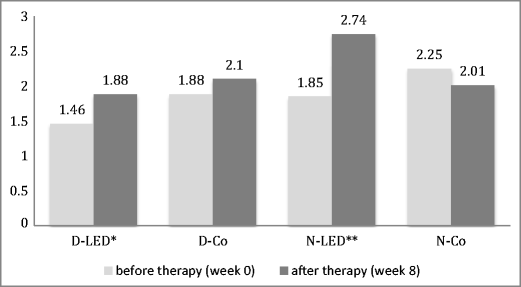
Conclusions: The CO2 laser supraglottoplasty can resolve severe laryngomalacia symptoms including stridor, dyspnea and aspiration. It can reduce the frequency of respiratory infections, and contribute to weight gaining. The CO2 laser supraglottoplasty is effective, of high security and with rare complications.

Original Source: http://www.ncbi.nlm.nih.gov/pubmed/24103170

The adjunct therapeutic effect of lasers with medication in the management of orofacial pain: double blind randomized controlled trial.

- () 687
View Resource

The adjunct therapeutic effect of lasers with medication in the management of orofacial pain: double blind randomized controlled trial.

Amanat D1, Ebrahimi H, Lavaee F, Alipour A. - Photomed Laser Surg. 2013 Oct;31(10):474-9. doi: 10.1089/pho.2013.3555. () 692
View Resource
Intro: This study aimed to evaluate the efficacy of laser therapy in conjunction with a pharmaceutical approach to alleviate myofascial pain dysfunction syndrome.

Background: This study aimed to evaluate the efficacy of laser therapy in conjunction with a pharmaceutical approach to alleviate myofascial pain dysfunction syndrome.

Abstract: Abstract OBJECTIVE: This study aimed to evaluate the efficacy of laser therapy in conjunction with a pharmaceutical approach to alleviate myofascial pain dysfunction syndrome. BACKGROUND DATA: A few clinical studies have evaluated the analgesic effect of laser therapy on orofacial pain, most of which reported controversial results. Myofascial pain dysfunction syndrome (MPDS), trigeminal neuralgia, and atypical facial pain are the most common facial pain. METHODS: A double-blind randomized controlled trial was designed to evaluate the therapeutic effect of GaAs laser (peak power 10 W; pulse frequency 3000 Hz; average power 0.012 W; wavelength 980 nm; irradiation duration 300 sec; and dose 12.73 J/cm(2)) on the management of common orofacial pain. The laser group (n=30) received 10 sessions of treatment with GaAs laser. The control group (n=30) was treated identically with sham laser. All patients received the appropriate pharmaceutical treatment as well. Visual analog scale (VAS) was recorded for all patients at baseline, and immediately, 2, and 4 months after the final treatment session. The qualitative variables among the groups were compared using the χ(2) test. RESULTS: Both groups demonstrated a significant reduction in pain with the progression of time (p<0.05). The difference between the two groups was not significant (p>0.05). Whereas laser therapy in the present study failed to show any significance over the control group, the role of covariates such as radiation parameters (wave length, dose) should not be overlooked. CONCLUSIONS: We found no significant level of efficacy for the GaAs laser in the management of common orofacial pain. Further studies are suggested to evaluate the efficacy of other types of lasers with different parameters in the management of orofacial pains.

Methods: A few clinical studies have evaluated the analgesic effect of laser therapy on orofacial pain, most of which reported controversial results. Myofascial pain dysfunction syndrome (MPDS), trigeminal neuralgia, and atypical facial pain are the most common facial pain.

Results: A double-blind randomized controlled trial was designed to evaluate the therapeutic effect of GaAs laser (peak power 10 W; pulse frequency 3000 Hz; average power 0.012 W; wavelength 980 nm; irradiation duration 300 sec; and dose 12.73 J/cm(2)) on the management of common orofacial pain. The laser group (n=30) received 10 sessions of treatment with GaAs laser. The control group (n=30) was treated identically with sham laser. All patients received the appropriate pharmaceutical treatment as well. Visual analog scale (VAS) was recorded for all patients at baseline, and immediately, 2, and 4 months after the final treatment session. The qualitative variables among the groups were compared using the χ(2) test.

Conclusions: Both groups demonstrated a significant reduction in pain with the progression of time (p<0.05). The difference between the two groups was not significant (p>0.05). Whereas laser therapy in the present study failed to show any significance over the control group, the role of covariates such as radiation parameters (wave length, dose) should not be overlooked.

Original Source: http://www.ncbi.nlm.nih.gov/pubmed/24102165

A novel 785-nm laser diode-based system for standardization of cell culture irradiation.

Lins EC1, Oliveira CF, Guimarães OC, Costa CA, Kurachi C, Bagnato VS. - Photomed Laser Surg. 2013 Oct;31(10):466-73. doi: 10.1089/pho.2012.3310. () 695
View Resource
Intro: The purpose of this study was to develop a novel device that concatenates alignment of infrared lasers and parallel procedure of irradiation. The purpose of this is to seek standardization of in vitro cell irradiation, which allows analysis and credible comparisons between outcomes of different experiments.

Background: The purpose of this study was to develop a novel device that concatenates alignment of infrared lasers and parallel procedure of irradiation. The purpose of this is to seek standardization of in vitro cell irradiation, which allows analysis and credible comparisons between outcomes of different experiments.

Abstract: Abstract OBJECTIVE: The purpose of this study was to develop a novel device that concatenates alignment of infrared lasers and parallel procedure of irradiation. The purpose of this is to seek standardization of in vitro cell irradiation, which allows analysis and credible comparisons between outcomes of different experiments. BACKGROUND DATA: Experimental data obtained from infrared laser therapies have been strongly dependent upon the irradiation setup. Although further optical alignment is difficult to achieve, in contact irradiation it usually occurs. Moreover, these methods eventually use laser in a serial procedure, extending the time to irradiate experimental samples. METHODS: A LASERTable (LT) device was designed to provide similar infrared laser irradiation in 12 wells of a 24 well test plate. It irradiated each well by expanding the laser beam until it covers the well bottom, as occurs with unexpanded irradiation. To evaluate the effectiveness of this device, the spatial distribution of radiation was measured, and the heating of plain culture medium was monitored during the LT operation. The irradiation of LT (up to 25 J/cm(2) - 20 mW/cm(2); 1.250 sec) was assessed on odontoblast-like cells adhered to the bottom of wells containing 1 mL of plain culture medium. Cell morphology and metabolism were also evaluated. RESULTS: Irradiation with LT presented a Gaussian-like profile when the culture medium was not heated >1°C. It was also observed that the LT made it 10 times faster to perform the experiment than did serial laser irradiation. In addition, the data of this study revealed that the odontoblast-like cells exposed to low-level laser therapy (LLLT) using the LT presented higher metabolism and normal morphology. CONCLUSIONS: The experimental LASERTable assessed in this study provided parameters for standardization of infrared cell irradiation, minimizing the time spent to irradiate all samples. Therefore, this device is a helpful tool that can be effectively used to evaluate experimental LLLT protocols.

Methods: Experimental data obtained from infrared laser therapies have been strongly dependent upon the irradiation setup. Although further optical alignment is difficult to achieve, in contact irradiation it usually occurs. Moreover, these methods eventually use laser in a serial procedure, extending the time to irradiate experimental samples.

Results: A LASERTable (LT) device was designed to provide similar infrared laser irradiation in 12 wells of a 24 well test plate. It irradiated each well by expanding the laser beam until it covers the well bottom, as occurs with unexpanded irradiation. To evaluate the effectiveness of this device, the spatial distribution of radiation was measured, and the heating of plain culture medium was monitored during the LT operation. The irradiation of LT (up to 25 J/cm(2) - 20 mW/cm(2); 1.250 sec) was assessed on odontoblast-like cells adhered to the bottom of wells containing 1 mL of plain culture medium. Cell morphology and metabolism were also evaluated.

Conclusions: Irradiation with LT presented a Gaussian-like profile when the culture medium was not heated >1°C. It was also observed that the LT made it 10 times faster to perform the experiment than did serial laser irradiation. In addition, the data of this study revealed that the odontoblast-like cells exposed to low-level laser therapy (LLLT) using the LT presented higher metabolism and normal morphology.

Original Source: http://www.ncbi.nlm.nih.gov/pubmed/24102164

The effects of low intensity laser on clinical and electrophysiological parameters of carpal tunnel syndrome.

Rayegani SM1, Bahrami MH1, Eliaspour D1, Raeissadat SA2, Shafi Tabar Samakoosh M1, Sedihgipour L3, Kargozar E1. - J Lasers Med Sci. 2013 Fall;4(4):182-9. () 698
View Resource
Intro: Carpal Tunnel Syndrome (CTS) is the most common type of entrapment neuropathy. Conservative therapy is usually considered as the first step in the management of CTS. Low Level Laser Therapy (LLLT) is among the new physical modalities, which has shown therapeutic effects in CTS. The aim of the present study was to compare the effects of applying LASER and splinting together with splinting alone in patients with CTS.

Background: Carpal Tunnel Syndrome (CTS) is the most common type of entrapment neuropathy. Conservative therapy is usually considered as the first step in the management of CTS. Low Level Laser Therapy (LLLT) is among the new physical modalities, which has shown therapeutic effects in CTS. The aim of the present study was to compare the effects of applying LASER and splinting together with splinting alone in patients with CTS.

Abstract: Abstract INTRODUCTION: Carpal Tunnel Syndrome (CTS) is the most common type of entrapment neuropathy. Conservative therapy is usually considered as the first step in the management of CTS. Low Level Laser Therapy (LLLT) is among the new physical modalities, which has shown therapeutic effects in CTS. The aim of the present study was to compare the effects of applying LASER and splinting together with splinting alone in patients with CTS. METHODS: Fifty patients with mild and moderate CTS who met inclusion criteria were included in this study. The disease was confirmed by electrodiagnostic study (EDx) and clinical findings. Patients were randomly divided into 3 groups. Group A received LLLT and splinting. Group B received sham LLLT+ splinting and group C received only splints. Group A received LLLT (50 mw and 880nm with total dose of 6 joule/cm(2)). Clinical and EDx parameters were evaluated before and after treatment (3 weeks and 2 months later). RESULTS: Electrophysiologic parameters and clinical findings including CTS provocative tests, Symptoms severity score (SSS), Functional Severity Score (FSS) and Visual Analogue Score (VAS) were improved in all three groups at 3 weeks and 2 months after treatment. No significant changes were noticed between the three groups regarding clinical and EDX parameters. CONCLUSION: We found no superiority in applying Low Intensity Laser accompanying splinting to traditional treatment which means splinting alone in patients with CTS. However, future studies investigating LLLT with parameters other than the one used in this study may reveal different results in favor of LLLT.

Methods: Fifty patients with mild and moderate CTS who met inclusion criteria were included in this study. The disease was confirmed by electrodiagnostic study (EDx) and clinical findings. Patients were randomly divided into 3 groups. Group A received LLLT and splinting. Group B received sham LLLT+ splinting and group C received only splints. Group A received LLLT (50 mw and 880nm with total dose of 6 joule/cm(2)). Clinical and EDx parameters were evaluated before and after treatment (3 weeks and 2 months later).

Results: Electrophysiologic parameters and clinical findings including CTS provocative tests, Symptoms severity score (SSS), Functional Severity Score (FSS) and Visual Analogue Score (VAS) were improved in all three groups at 3 weeks and 2 months after treatment. No significant changes were noticed between the three groups regarding clinical and EDX parameters.

Conclusions: We found no superiority in applying Low Intensity Laser accompanying splinting to traditional treatment which means splinting alone in patients with CTS. However, future studies investigating LLLT with parameters other than the one used in this study may reveal different results in favor of LLLT.

Original Source: http://www.ncbi.nlm.nih.gov/pubmed/25606328

The growth of human scalp hair mediated by visible red light laser and LED sources in males.

Lanzafame RJ1, Blanche RR, Bodian AB, Chiacchierini RP, Fernandez-Obregon A, Kazmirek ER. - Lasers Surg Med. 2013 Oct;45(8):487-95. doi: 10.1002/lsm.22173. () 699
View Resource
Background: Low level laser therapy (LLLT) has been used to promote hair growth. A double-blind randomized controlled trial was undertaken to define the safety and physiologic effects of LLLT on males with androgenic alopecia.

Abstract: Erratum in Lasers Surg Med. 2014 Apr;46(4):373.

Methods: Forty-four males (18-48 yo, Fitzpatrick I-IV, Hamilton-Norwood IIa-V) were recruited. A transition zone scalp site was selected; hairs were trimmed to 3 mm height; the area was tattooed and photographed. The active group received a "TOPHAT655" unit containing 21, 5 mW lasers (655 ± 5 nm), and 30 LEDS (655 ± 20 nm), in a bicycle-helmet like apparatus. The placebo group unit appeared identical, containing incandescent red lights. Patients treated at home every other day × 16 weeks (60 treatments, 67.3 J/cm(2) irradiance/25 minute treatment), with follow up and photography at 16 weeks. A masked 2.85 cm(2) photographic area was evaluated by another blinded investigator. The primary endpoint was the percent increase in hair counts from baseline.

Results: Forty-one patients completed the study (22 active, 19 placebo). No adverse events or side effects were reported. Baseline hair counts were 162.7 ± 95.9 (N = 22) in placebo and 142.0 ± 73.0 (N = 22) and active groups respectively (P = 0.426). Post Treatment hair counts were 162.4 ± 62.5 (N = 19) and 228.7 ± 102.8 (N = 22), respectively (P = 0.0161). A 39% percent hair increase was demonstrated (28.4 ± 46.2 placebo, N = 19; 67.2 ± 33.4, active, N = 22) (P = 0.001) Deleting one placebo group subject with a very high baseline count and a very large decrease, resulted in baseline hair counts of 151.1 ± 81.0 (N = 21) and 142.0 ± 73.0 (N = 22), respectively (P = 0.680). Post treatment hair counts were 158.2 ± 61.5 (N = 18) and 228.7 ± 102.8 (N = 22) (P = 0.011), resulting in a 35% percent increase in hair growth (32.3 ± 44.2, placebo, N = 18; 67.2 ± 33.4, active, N = 22) (P = 0.003).

Conclusions: LLLT of the scalp at 655 nm significantly improved hair counts in males with androgenetic alopecia.

Original Source: http://www.ncbi.nlm.nih.gov/pubmed/24078483

Lasers and photodynamic therapy in the treatment of onychomycosis: a review of the literature.

Becker C1, Bershow A. - Dermatol Online J. 2013 Sep 14;19(9):19611. () 701
View Resource
Intro: Onychomycosis is a widespread problem. Oral antifungal medications are currently the gold standard of care, but treatment failure is common and oral therapy is contraindicated in many cases. There is a need for effective treatment without the systemic complications posed by oral therapy. Laser and photodynamic therapy may have the potential to treat onychomycosis locally without adverse systemic effects; some small studies have even reported achieving clinical and mycologic cure. However, there is reason for restraint; these therapies are expensive and time-consuming. Furthermore, they may not be covered by insurance and have not been proven effective with randomized, controlled clinical trials. This paper will review current literature regarding the use of laser and photodynamic therapy as potential treatments for onychomycosis.

Background: Onychomycosis is a widespread problem. Oral antifungal medications are currently the gold standard of care, but treatment failure is common and oral therapy is contraindicated in many cases. There is a need for effective treatment without the systemic complications posed by oral therapy. Laser and photodynamic therapy may have the potential to treat onychomycosis locally without adverse systemic effects; some small studies have even reported achieving clinical and mycologic cure. However, there is reason for restraint; these therapies are expensive and time-consuming. Furthermore, they may not be covered by insurance and have not been proven effective with randomized, controlled clinical trials. This paper will review current literature regarding the use of laser and photodynamic therapy as potential treatments for onychomycosis.

Abstract: Abstract Onychomycosis is a widespread problem. Oral antifungal medications are currently the gold standard of care, but treatment failure is common and oral therapy is contraindicated in many cases. There is a need for effective treatment without the systemic complications posed by oral therapy. Laser and photodynamic therapy may have the potential to treat onychomycosis locally without adverse systemic effects; some small studies have even reported achieving clinical and mycologic cure. However, there is reason for restraint; these therapies are expensive and time-consuming. Furthermore, they may not be covered by insurance and have not been proven effective with randomized, controlled clinical trials. This paper will review current literature regarding the use of laser and photodynamic therapy as potential treatments for onychomycosis.

Original Source: http://www.ncbi.nlm.nih.gov/pubmed/24050286

Body contouring using 635-nm low level laser therapy.

Nestor MS1, Newburger J, Zarraga MB. - Semin Cutan Med Surg. 2013 Mar;32(1):35-40. () 703
View Resource
Intro: Noninvasive body contouring has become one of the fastest-growing areas of esthetic medicine. Many patients appear to prefer nonsurgical less-invasive procedures owing to the benefits of fewer side effects and shorter recovery times. Increasingly, 635-nm low-level laser therapy (LLLT) has been used in the treatment of a variety of medical conditions and has been shown to improve wound healing, reduce edema, and relieve acute pain. Within the past decade, LLLT has also emerged as a new modality for noninvasive body contouring. Research has shown that LLLT is effective in reducing overall body circumference measurements of specifically treated regions, including the hips, waist, thighs, and upper arms, with recent studies demonstrating the long-term effectiveness of results. The treatment is painless, and there appears to be no adverse events associated with LLLT. The mechanism of action of LLLT in body contouring is believed to stem from photoactivation of cytochrome c oxidase within hypertrophic adipocytes, which, in turn, affects intracellular secondary cascades, resulting in the formation of transitory pores within the adipocytes' membrane. The secondary cascades involved may include, but are not limited to, activation of cytosolic lipase and nitric oxide. Newly formed pores release intracellular lipids, which are further metabolized. Future studies need to fully outline the cellular and systemic effects of LLLT as well as determine optimal treatment protocols.

Background: Noninvasive body contouring has become one of the fastest-growing areas of esthetic medicine. Many patients appear to prefer nonsurgical less-invasive procedures owing to the benefits of fewer side effects and shorter recovery times. Increasingly, 635-nm low-level laser therapy (LLLT) has been used in the treatment of a variety of medical conditions and has been shown to improve wound healing, reduce edema, and relieve acute pain. Within the past decade, LLLT has also emerged as a new modality for noninvasive body contouring. Research has shown that LLLT is effective in reducing overall body circumference measurements of specifically treated regions, including the hips, waist, thighs, and upper arms, with recent studies demonstrating the long-term effectiveness of results. The treatment is painless, and there appears to be no adverse events associated with LLLT. The mechanism of action of LLLT in body contouring is believed to stem from photoactivation of cytochrome c oxidase within hypertrophic adipocytes, which, in turn, affects intracellular secondary cascades, resulting in the formation of transitory pores within the adipocytes' membrane. The secondary cascades involved may include, but are not limited to, activation of cytosolic lipase and nitric oxide. Newly formed pores release intracellular lipids, which are further metabolized. Future studies need to fully outline the cellular and systemic effects of LLLT as well as determine optimal treatment protocols.

Abstract: Abstract Noninvasive body contouring has become one of the fastest-growing areas of esthetic medicine. Many patients appear to prefer nonsurgical less-invasive procedures owing to the benefits of fewer side effects and shorter recovery times. Increasingly, 635-nm low-level laser therapy (LLLT) has been used in the treatment of a variety of medical conditions and has been shown to improve wound healing, reduce edema, and relieve acute pain. Within the past decade, LLLT has also emerged as a new modality for noninvasive body contouring. Research has shown that LLLT is effective in reducing overall body circumference measurements of specifically treated regions, including the hips, waist, thighs, and upper arms, with recent studies demonstrating the long-term effectiveness of results. The treatment is painless, and there appears to be no adverse events associated with LLLT. The mechanism of action of LLLT in body contouring is believed to stem from photoactivation of cytochrome c oxidase within hypertrophic adipocytes, which, in turn, affects intracellular secondary cascades, resulting in the formation of transitory pores within the adipocytes' membrane. The secondary cascades involved may include, but are not limited to, activation of cytosolic lipase and nitric oxide. Newly formed pores release intracellular lipids, which are further metabolized. Future studies need to fully outline the cellular and systemic effects of LLLT as well as determine optimal treatment protocols.

Original Source: http://www.ncbi.nlm.nih.gov/pubmed/24049928

Laser and light-based treatment of Keloids--a review.

Mamalis AD1, Lev-Tov H, Nguyen DH, Jagdeo JR. - J Eur Acad Dermatol Venereol. 2014 Jun;28(6):689-99. doi: 10.1111/jdv.12253. Epub 2013 Aug 27. () 706
View Resource
Intro: Keloids are an overgrowth of fibrotic tissue outside the original boundaries of an injury and occur secondary to defective wound healing. Keloids often have a functional, aesthetic, or psychosocial impact on patients as highlighted by quality-of-life studies.

Background: Keloids are an overgrowth of fibrotic tissue outside the original boundaries of an injury and occur secondary to defective wound healing. Keloids often have a functional, aesthetic, or psychosocial impact on patients as highlighted by quality-of-life studies.

Abstract: Abstract BACKGROUND: Keloids are an overgrowth of fibrotic tissue outside the original boundaries of an injury and occur secondary to defective wound healing. Keloids often have a functional, aesthetic, or psychosocial impact on patients as highlighted by quality-of-life studies. OBJECTIVES: Our goal is to provide clinicians and scientists an overview of the data available on laser and light-based therapies for treatment of keloids, and highlight emerging light-based therapeutic technologies and the evidence available to support their use. METHODS: We employed the following search strategy to identify the clinical evidence reported in the biomedical literature: in November 2012, we searched PubMed.gov, Ovid MEDLINE, Embase and Cochrane Reviews (1980-present) for published randomized clinical trials, clinical studies, case series and case reports related to the treatment of keloids. The search terms we utilized were 'keloid(s)' AND 'laser' OR 'light-emitting diode' (LED) OR 'photodynamic therapy' (PDT) OR 'intense pulsed light' OR 'low level light' OR 'phototherapy.' RESULTS: Our search yielded 347 unique articles. Of these, 33 articles met our inclusion and exclusion criteria. CONCLUSION: We qualitatively conclude that laser and light-based treatment modalities may achieve favourable patient outcomes. Clinical studies using CO2 laser are more prevalent in current literature and a combination regimen may be an adequate ablative approach. Adding light-based treatments, such as LED phototherapy or PDT, to laser treatment regimens may enhance patient outcomes. Lasers and other light-based technology have introduced new ways to manage keloids that may result in improved aesthetic and symptomatic outcomes and decreased keloid recurrence. © 2013 European Academy of Dermatology and Venereology.

Methods: Our goal is to provide clinicians and scientists an overview of the data available on laser and light-based therapies for treatment of keloids, and highlight emerging light-based therapeutic technologies and the evidence available to support their use.

Results: We employed the following search strategy to identify the clinical evidence reported in the biomedical literature: in November 2012, we searched PubMed.gov, Ovid MEDLINE, Embase and Cochrane Reviews (1980-present) for published randomized clinical trials, clinical studies, case series and case reports related to the treatment of keloids. The search terms we utilized were 'keloid(s)' AND 'laser' OR 'light-emitting diode' (LED) OR 'photodynamic therapy' (PDT) OR 'intense pulsed light' OR 'low level light' OR 'phototherapy.'

Conclusions: Our search yielded 347 unique articles. Of these, 33 articles met our inclusion and exclusion criteria.

Original Source: http://www.ncbi.nlm.nih.gov/pubmed/24033440

Evaluation of low level laser therapy in reducing diabetic polyneuropathy related pain and sensorimotor disorders.

Bashiri H1. - Acta Med Iran. 2013 Sep 9;51(8):543-7. () 711
View Resource
Intro: Over the past three decades physicians have used light level laser therapy (LLLT) for the management and the treatment of diabetic peripheral neuropathy and have obtained results that calls for further investigations. This study aimed to investigate the effectiveness of LLLT in treatment of pain symptoms in patients with diabetic polyneuropathy. In this study 60 patients with diabetic peripheral neuropathy were matched based on their sex, age, BMI, type of diabetes, duration of diabetes, and duration of pain, and randomized to case and control groups based on their established scores on the visual analog scale (VAS) and the Toronto clinical scoring system (TCSS). Cases received laser therapy with wavelength of 78 nm and 2.5 j/cm2 two times a week, each time for 5 min, for one month. During the same period, controls received sham laser therapy. Comparing the differences between the two groups' VAS and TCSS mean scores before the intervention with that of the 2 weeks and 4 weeks after the intervention we were able to see a statistically significant difference between the two groups (P<0.05). On the other hand, when we compared their VAS and TCSS mean scores 4 weeks and 2 weeks after the intervention we did not find any statistically significant difference between the two groups. We achieved the same results when we examined cases' and controls' pre and post VAS and TCSS scores independent from each other; no improvement in the assessment based on their 2 and 4 weeks comparisons tests. Laser therapy resulted in improved neuropathy outcomes in diabetic patients who received it relative to the group that received sham therapy, evaluating before and after LLLT assessments. Further studies are needed to test types of lasers, as well as different dosage and exposure levels required in different phase of neuropathic care, so as to obtain reproducible results.

Background: Over the past three decades physicians have used light level laser therapy (LLLT) for the management and the treatment of diabetic peripheral neuropathy and have obtained results that calls for further investigations. This study aimed to investigate the effectiveness of LLLT in treatment of pain symptoms in patients with diabetic polyneuropathy. In this study 60 patients with diabetic peripheral neuropathy were matched based on their sex, age, BMI, type of diabetes, duration of diabetes, and duration of pain, and randomized to case and control groups based on their established scores on the visual analog scale (VAS) and the Toronto clinical scoring system (TCSS). Cases received laser therapy with wavelength of 78 nm and 2.5 j/cm2 two times a week, each time for 5 min, for one month. During the same period, controls received sham laser therapy. Comparing the differences between the two groups' VAS and TCSS mean scores before the intervention with that of the 2 weeks and 4 weeks after the intervention we were able to see a statistically significant difference between the two groups (P<0.05). On the other hand, when we compared their VAS and TCSS mean scores 4 weeks and 2 weeks after the intervention we did not find any statistically significant difference between the two groups. We achieved the same results when we examined cases' and controls' pre and post VAS and TCSS scores independent from each other; no improvement in the assessment based on their 2 and 4 weeks comparisons tests. Laser therapy resulted in improved neuropathy outcomes in diabetic patients who received it relative to the group that received sham therapy, evaluating before and after LLLT assessments. Further studies are needed to test types of lasers, as well as different dosage and exposure levels required in different phase of neuropathic care, so as to obtain reproducible results.

Abstract: Abstract Over the past three decades physicians have used light level laser therapy (LLLT) for the management and the treatment of diabetic peripheral neuropathy and have obtained results that calls for further investigations. This study aimed to investigate the effectiveness of LLLT in treatment of pain symptoms in patients with diabetic polyneuropathy. In this study 60 patients with diabetic peripheral neuropathy were matched based on their sex, age, BMI, type of diabetes, duration of diabetes, and duration of pain, and randomized to case and control groups based on their established scores on the visual analog scale (VAS) and the Toronto clinical scoring system (TCSS). Cases received laser therapy with wavelength of 78 nm and 2.5 j/cm2 two times a week, each time for 5 min, for one month. During the same period, controls received sham laser therapy. Comparing the differences between the two groups' VAS and TCSS mean scores before the intervention with that of the 2 weeks and 4 weeks after the intervention we were able to see a statistically significant difference between the two groups (P<0.05). On the other hand, when we compared their VAS and TCSS mean scores 4 weeks and 2 weeks after the intervention we did not find any statistically significant difference between the two groups. We achieved the same results when we examined cases' and controls' pre and post VAS and TCSS scores independent from each other; no improvement in the assessment based on their 2 and 4 weeks comparisons tests. Laser therapy resulted in improved neuropathy outcomes in diabetic patients who received it relative to the group that received sham therapy, evaluating before and after LLLT assessments. Further studies are needed to test types of lasers, as well as different dosage and exposure levels required in different phase of neuropathic care, so as to obtain reproducible results.

Original Source: http://www.ncbi.nlm.nih.gov/pubmed/24026991

The effect of low-level laser therapy on hearing.

Goodman SS1, Bentler RA, Dittberner A, Mertes IB. - ISRN Otolaryngol. 2013 Apr 23;2013:916370. doi: 10.1155/2013/916370. eCollection 2013. () 712
View Resource
Intro: One purported use of low-level laser therapy (LLLT) is to promote healing in damaged cells. The effects of LLLT on hearing loss and tinnitus have received some study, but results have been equivocal. The purpose of this study was to determine if LLLT improved hearing, speech understanding, and/or cochlear function in adults with hearing loss. Using a randomized, double-blind, placebo-controlled design, subjects were assigned to a treatment, placebo, or control group. The treatment group was given LLLT, which consisted of shining low-level lasers onto the outer ear, head, and neck. Each laser treatment lasted approximately five minutes. Three treatments were applied within the course of one week. A battery of auditory tests was administered immediately before the first treatment and immediately after the third treatment. The battery consisted of pure-tone audiometry, the Connected Speech Test, and transient-evoked otoacoustic emissions. Data were analyzed by comparing pre- and posttest results. No statistically significant differences were found between groups for any of the auditory tests. Additionally, no clinically significant differences were found in any individual subjects. This trial is registered with ClinicalTrials.gov (NCT01820416).

Abstract: Abstract One purported use of low-level laser therapy (LLLT) is to promote healing in damaged cells. The effects of LLLT on hearing loss and tinnitus have received some study, but results have been equivocal. The purpose of this study was to determine if LLLT improved hearing, speech understanding, and/or cochlear function in adults with hearing loss. Using a randomized, double-blind, placebo-controlled design, subjects were assigned to a treatment, placebo, or control group. The treatment group was given LLLT, which consisted of shining low-level lasers onto the outer ear, head, and neck. Each laser treatment lasted approximately five minutes. Three treatments were applied within the course of one week. A battery of auditory tests was administered immediately before the first treatment and immediately after the third treatment. The battery consisted of pure-tone audiometry, the Connected Speech Test, and transient-evoked otoacoustic emissions. Data were analyzed by comparing pre- and posttest results. No statistically significant differences were found between groups for any of the auditory tests. Additionally, no clinically significant differences were found in any individual subjects. This trial is registered with ClinicalTrials.gov (NCT01820416).

Original Source: http://www.ncbi.nlm.nih.gov/pubmed/24024040

Effects of laser therapy on the proliferation of human periodontal ligament stem cells.

Soares DM1, Ginani F, Henriques �G, Barboza CA. - Lasers Med Sci. 2015 Apr;30(3):1171-4. doi: 10.1007/s10103-013-1436-9. Epub 2013 Sep 7. () 713
View Resource
Intro: Low-level laser irradiation (LLLI) stimulates the proliferation of a variety of cell types. However, very little is known about the effect of laser therapy on dental stem cells. The aim of the present study was to evaluate the effect of LLLI (660 nm, 30 mW) on the proliferation rate of human periodontal ligament stem cells (hPDLSC), obtained from two healthy permanent third molars extracted due to surgical indication. Culture cells were either irradiated or not (control) with an InGaAIP diode laser at 0 and 48 h, using two different energy densities (0.5 J/cm², 16 s and 1.0 J/cm², 33 s). Cell proliferation was evaluated by the Trypan blue exclusion method and by measuring mitochondrial activity using the MTT-based cytotoxicity assay at intervals of 0, 24, 48, and 72 h after the first laser application. An energy density of 1.0 J/cm² improved the cell proliferation in comparison to the other groups (control and laser 0.5 J/cm²) at 48 and 72 h. The group irradiated with 1.0 J/cm² presented significantly higher MTT activity at 48 and 72 h when compared to the energy density of 0.5 J/cm². It can be concluded that LLLI using infrared light and an energy density of 1.0 J/cm² has a positive stimulatory effect on the proliferation of hPDLSC.

Background: Low-level laser irradiation (LLLI) stimulates the proliferation of a variety of cell types. However, very little is known about the effect of laser therapy on dental stem cells. The aim of the present study was to evaluate the effect of LLLI (660 nm, 30 mW) on the proliferation rate of human periodontal ligament stem cells (hPDLSC), obtained from two healthy permanent third molars extracted due to surgical indication. Culture cells were either irradiated or not (control) with an InGaAIP diode laser at 0 and 48 h, using two different energy densities (0.5 J/cm², 16 s and 1.0 J/cm², 33 s). Cell proliferation was evaluated by the Trypan blue exclusion method and by measuring mitochondrial activity using the MTT-based cytotoxicity assay at intervals of 0, 24, 48, and 72 h after the first laser application. An energy density of 1.0 J/cm² improved the cell proliferation in comparison to the other groups (control and laser 0.5 J/cm²) at 48 and 72 h. The group irradiated with 1.0 J/cm² presented significantly higher MTT activity at 48 and 72 h when compared to the energy density of 0.5 J/cm². It can be concluded that LLLI using infrared light and an energy density of 1.0 J/cm² has a positive stimulatory effect on the proliferation of hPDLSC.

Abstract: Abstract Low-level laser irradiation (LLLI) stimulates the proliferation of a variety of cell types. However, very little is known about the effect of laser therapy on dental stem cells. The aim of the present study was to evaluate the effect of LLLI (660 nm, 30 mW) on the proliferation rate of human periodontal ligament stem cells (hPDLSC), obtained from two healthy permanent third molars extracted due to surgical indication. Culture cells were either irradiated or not (control) with an InGaAIP diode laser at 0 and 48 h, using two different energy densities (0.5 J/cm², 16 s and 1.0 J/cm², 33 s). Cell proliferation was evaluated by the Trypan blue exclusion method and by measuring mitochondrial activity using the MTT-based cytotoxicity assay at intervals of 0, 24, 48, and 72 h after the first laser application. An energy density of 1.0 J/cm² improved the cell proliferation in comparison to the other groups (control and laser 0.5 J/cm²) at 48 and 72 h. The group irradiated with 1.0 J/cm² presented significantly higher MTT activity at 48 and 72 h when compared to the energy density of 0.5 J/cm². It can be concluded that LLLI using infrared light and an energy density of 1.0 J/cm² has a positive stimulatory effect on the proliferation of hPDLSC.

Original Source: http://www.ncbi.nlm.nih.gov/pubmed/24013624

Lower-level laser therapy improves neurosensory disorders resulting from bilateral mandibular sagittal split osteotomy: a randomized crossover clinical trial.

Gasperini G1, de Siqueira IC2, Costa LR2. - J Craniomaxillofac Surg. 2014 Jul;42(5):e130-3. doi: 10.1016/j.jcms.2013.07.009. Epub 2013 Sep 4. () 715
View Resource
Intro: Bilateral sagittal split osteotomy (BSSO) is a technique commonly used to correct mandibular disproportion but many patients experience hypoaesthesia of the inferior alveolar nerve (IAN). The purpose of this study was to verify the effectiveness of using a low-level laser therapy protocol after BSSO. The 10 patients in our study, who underwent BSSO with Le Fort I osteotomy and had low-level laser therapy on one side of the jaw, were evaluated over a period of 60 days. The data for the treated and non-treated sides were compared post-operatively. At 15, 30 and 60 days after surgery, when sensitivity was recovered on both sides. On the treated side, recovery was faster and was almost complete at the time of the last evaluation. We suggest that this lower-level laser therapy protocol can improve tissue response and accelerate the recovery of neurosensory disorders following BSSO. (NCT01530100).

Abstract: Abstract Bilateral sagittal split osteotomy (BSSO) is a technique commonly used to correct mandibular disproportion but many patients experience hypoaesthesia of the inferior alveolar nerve (IAN). The purpose of this study was to verify the effectiveness of using a low-level laser therapy protocol after BSSO. The 10 patients in our study, who underwent BSSO with Le Fort I osteotomy and had low-level laser therapy on one side of the jaw, were evaluated over a period of 60 days. The data for the treated and non-treated sides were compared post-operatively. At 15, 30 and 60 days after surgery, when sensitivity was recovered on both sides. On the treated side, recovery was faster and was almost complete at the time of the last evaluation. We suggest that this lower-level laser therapy protocol can improve tissue response and accelerate the recovery of neurosensory disorders following BSSO. (NCT01530100). Copyright © 2013 European Association for Cranio-Maxillo-Facial Surgery. Published by Elsevier Ltd. All rights reserved.

Methods: Copyright © 2013 European Association for Cranio-Maxillo-Facial Surgery. Published by Elsevier Ltd. All rights reserved.

Original Source: http://www.ncbi.nlm.nih.gov/pubmed/24011464

Additive effect of propranolol and pulsed dye laser for infantile hemangioma.

Herschthal J1, Wulkan A, George M, Waibel J. - Dermatol Online J. 2013 Jun 15;19(6):18570. () 717
View Resource
Intro: The combination of propranolol and pulsed dye laser for the treatment of infantile hemangiomas may be superior to either alone. This case report illustrates the additive effect of propranolol and pulsed dye laser for an infantile hemangioma in a high-risk location. Although thorough clinical trials are needed, combination therapy for infantile hemangiomas may prove to be optimal for efficacy.

Background: The combination of propranolol and pulsed dye laser for the treatment of infantile hemangiomas may be superior to either alone. This case report illustrates the additive effect of propranolol and pulsed dye laser for an infantile hemangioma in a high-risk location. Although thorough clinical trials are needed, combination therapy for infantile hemangiomas may prove to be optimal for efficacy.

Abstract: Abstract The combination of propranolol and pulsed dye laser for the treatment of infantile hemangiomas may be superior to either alone. This case report illustrates the additive effect of propranolol and pulsed dye laser for an infantile hemangioma in a high-risk location. Although thorough clinical trials are needed, combination therapy for infantile hemangiomas may prove to be optimal for efficacy.

Original Source: http://www.ncbi.nlm.nih.gov/pubmed/24011319

Effect of low-level laser therapy (808 nm) on markers of muscle damage: a randomized double-blind placebo-controlled trial.

Felismino AS1, Costa EC, Aoki MS, Ferraresi C, de Araújo Moura Lemos TM, de Brito Vieira WH. - Lasers Med Sci. 2014 May;29(3):933-8. doi: 10.1007/s10103-013-1430-2. Epub 2013 Sep 5. () 719
View Resource
Intro: The aim of this randomized double-blind placebo-controlled study was to investigate the effect of low-level laser therapy (LLLT) on markers of muscle damage (creatine kinase (CK) and strength performance) in the biceps brachii. Twenty-two physically active men were randomized into two groups: placebo and laser. All volunteers were submitted to an exercise-induced muscle damage protocol for biceps brachii (biceps curl, 10 sets of 10 repetitions with load of 50% of one-repetition maximum test (1RM)). Active LLLT (808 nm; 100 mW; 35.7 W/cm(2), 357.14 J/cm(2) per point, energy of 1 J per point applied for 10 s on four points of the biceps brachii belly of each arm) or placebo was applied between the sets of the biceps curl exercise. CK activity and maximum strength performance (1RM) were measured before, immediately after, 24, 48, and 72 h after the exercise-induced muscle damage protocol. There was an increase in CK activity after the muscle damage protocol in both groups; however, this increase was attenuated in the laser group compared to the placebo group at 72 h (placebo = 841 vs. laser = 357%; p < 0.05). Maximum strength performance was decreased immediately after the muscle damage protocol in both groups (p < 0.05), but at 24, 48, and 72 h, and it returned to the baseline level in both groups. In conclusion, the LLLT attenuated CK activity 72 h after the muscle damage protocol but did not have a positive effect on the recovery of strength performance.

Background: The aim of this randomized double-blind placebo-controlled study was to investigate the effect of low-level laser therapy (LLLT) on markers of muscle damage (creatine kinase (CK) and strength performance) in the biceps brachii. Twenty-two physically active men were randomized into two groups: placebo and laser. All volunteers were submitted to an exercise-induced muscle damage protocol for biceps brachii (biceps curl, 10 sets of 10 repetitions with load of 50% of one-repetition maximum test (1RM)). Active LLLT (808 nm; 100 mW; 35.7 W/cm(2), 357.14 J/cm(2) per point, energy of 1 J per point applied for 10 s on four points of the biceps brachii belly of each arm) or placebo was applied between the sets of the biceps curl exercise. CK activity and maximum strength performance (1RM) were measured before, immediately after, 24, 48, and 72 h after the exercise-induced muscle damage protocol. There was an increase in CK activity after the muscle damage protocol in both groups; however, this increase was attenuated in the laser group compared to the placebo group at 72 h (placebo = 841 vs. laser = 357%; p < 0.05). Maximum strength performance was decreased immediately after the muscle damage protocol in both groups (p < 0.05), but at 24, 48, and 72 h, and it returned to the baseline level in both groups. In conclusion, the LLLT attenuated CK activity 72 h after the muscle damage protocol but did not have a positive effect on the recovery of strength performance.

Abstract: Abstract The aim of this randomized double-blind placebo-controlled study was to investigate the effect of low-level laser therapy (LLLT) on markers of muscle damage (creatine kinase (CK) and strength performance) in the biceps brachii. Twenty-two physically active men were randomized into two groups: placebo and laser. All volunteers were submitted to an exercise-induced muscle damage protocol for biceps brachii (biceps curl, 10 sets of 10 repetitions with load of 50% of one-repetition maximum test (1RM)). Active LLLT (808 nm; 100 mW; 35.7 W/cm(2), 357.14 J/cm(2) per point, energy of 1 J per point applied for 10 s on four points of the biceps brachii belly of each arm) or placebo was applied between the sets of the biceps curl exercise. CK activity and maximum strength performance (1RM) were measured before, immediately after, 24, 48, and 72 h after the exercise-induced muscle damage protocol. There was an increase in CK activity after the muscle damage protocol in both groups; however, this increase was attenuated in the laser group compared to the placebo group at 72 h (placebo = 841 vs. laser = 357%; p < 0.05). Maximum strength performance was decreased immediately after the muscle damage protocol in both groups (p < 0.05), but at 24, 48, and 72 h, and it returned to the baseline level in both groups. In conclusion, the LLLT attenuated CK activity 72 h after the muscle damage protocol but did not have a positive effect on the recovery of strength performance.

Original Source: http://www.ncbi.nlm.nih.gov/pubmed/24005882

Influence of long-term water storage and thermocycling on shear bond strength of glass-ionomer cement to Er:YAG laser-prepared dentin.

Colucci V, de Araújo Loiola AB, da Motta DS, do Amaral FL, Pécora JD, Corona SA. - J Adhes Dent. 2014 Feb;16(1):35-9. doi: 10.3290/j.jad.a30539. () 720
View Resource
Background: To evaluate the influence of long-term water storage and thermocycling on the shear bond strength of a glass-ionomer cement to Er:YAG-irradiated and bur-prepared dentin.

Abstract: PMID: 24000332 [PubMed - indexed for MEDLINE] Share on Facebook Share on Twitter Share on Google+

Methods: Fifteen bovine incisors were selected and the roots removed. Crowns were sectioned into four pieces, resulting in 60 samples that were individually embedded in polyester resin (n = 15) and ground to plane the enamel and expose the dentin. The bonding site was delimited and samples were randomly assigned according to the method of cavity preparation: Er:YAG laser (250 mJ/4 Hz) or high-speed handpiece (diamond bur #2096). Samples were fixed to a metallic device, where glass-ionomer cement (GIC) cylinders were prepared. Subsequently, they were subdivided according to the duration of water storage (WS) and number of thermocycles (TCs) - 24 h WS/no TCs and 6 months WS/12,000 TCs - and subjected to a shear bond strength test (500 N at 0.5 mm/min).

Results: The duration of water storage and number of thermocycles tested had no statistically significant effect on the shear bond strength to laser-irradiated dentin (p > 0.05). For bur-prepared substrate, the long-term degradation process promoted a decrease in shear bond strength values (p < 0.05).

Conclusions: Long-term water storage and thermocycling did not affect shear bond strength of glass-ionomer cement bonded to Er:YAG laser-prepared dentin.

Original Source: http://www.ncbi.nlm.nih.gov/pubmed/24000332

Effect of low-level laser therapy irradiation and Bio-Oss graft material on the osteogenesis process in rabbit calvarium defects: a double blind experimental study.

Rasouli Ghahroudi AA1, Rokn AR, Kalhori KA, Khorsand A, Pournabi A, Pinheiro AL, Fekrazad R. - Lasers Med Sci. 2014 May;29(3):925-32. doi: 10.1007/s10103-013-1403-5. Epub 2013 Aug 31. () 722
View Resource
Intro: This study aims to assess the effect of low-level laser therapy (LLLT) irradiation and Bio-Oss graft material on the osteogenesis process in the rabbit calvarium defects. Twelve white male New Zealand rabbits were included in this study. Four 8-mm diameter identical defects were prepared on each rabbit's calvarium. One site was left as an untreated control (C), the second site was filled with Bio-Oss (B), the third site was treated with laser irradiation (L), and the fourth site treated with Bio-Oss and laser irradiation (B + L). In the laser group, a diode laser (wavelength 810 nm, output power 300 mW, irradiation mode CW, energy density 4 J/cm2) was applied immediately after surgery and then one other day for the next 20 days. After 4 and 8 weeks, the animals were sacrificed and histological and histomorphometric examinations were performed and the data were subjected to Friedman and repeated measurements ANOVA tests. Significant differences were not found regarding inflammation severity, foreign body reactions, and vitality of newly formed bone on 4th and 8th week after operation. The mean amount of new bone was 15.83 and 18.5% in the controls on the 4th and 8th week; 27.66 and 25.16% in the laser-irradiated group; 35.0 and 41.83% in Bio-Oss and 41.83 and 47.0% in the laser + Bio-Oss treated specimens with significant statistical differences (p <0.05). Application of LLLT in combination with Bio-Oss® can promote bone healing. Therefore, LLLT may be clinically beneficial in promoting bone formation in skeletal defects.

Background: This study aims to assess the effect of low-level laser therapy (LLLT) irradiation and Bio-Oss graft material on the osteogenesis process in the rabbit calvarium defects. Twelve white male New Zealand rabbits were included in this study. Four 8-mm diameter identical defects were prepared on each rabbit's calvarium. One site was left as an untreated control (C), the second site was filled with Bio-Oss (B), the third site was treated with laser irradiation (L), and the fourth site treated with Bio-Oss and laser irradiation (B + L). In the laser group, a diode laser (wavelength 810 nm, output power 300 mW, irradiation mode CW, energy density 4 J/cm2) was applied immediately after surgery and then one other day for the next 20 days. After 4 and 8 weeks, the animals were sacrificed and histological and histomorphometric examinations were performed and the data were subjected to Friedman and repeated measurements ANOVA tests. Significant differences were not found regarding inflammation severity, foreign body reactions, and vitality of newly formed bone on 4th and 8th week after operation. The mean amount of new bone was 15.83 and 18.5% in the controls on the 4th and 8th week; 27.66 and 25.16% in the laser-irradiated group; 35.0 and 41.83% in Bio-Oss and 41.83 and 47.0% in the laser + Bio-Oss treated specimens with significant statistical differences (p <0.05). Application of LLLT in combination with Bio-Oss® can promote bone healing. Therefore, LLLT may be clinically beneficial in promoting bone formation in skeletal defects.

Abstract: Abstract This study aims to assess the effect of low-level laser therapy (LLLT) irradiation and Bio-Oss graft material on the osteogenesis process in the rabbit calvarium defects. Twelve white male New Zealand rabbits were included in this study. Four 8-mm diameter identical defects were prepared on each rabbit's calvarium. One site was left as an untreated control (C), the second site was filled with Bio-Oss (B), the third site was treated with laser irradiation (L), and the fourth site treated with Bio-Oss and laser irradiation (B + L). In the laser group, a diode laser (wavelength 810 nm, output power 300 mW, irradiation mode CW, energy density 4 J/cm2) was applied immediately after surgery and then one other day for the next 20 days. After 4 and 8 weeks, the animals were sacrificed and histological and histomorphometric examinations were performed and the data were subjected to Friedman and repeated measurements ANOVA tests. Significant differences were not found regarding inflammation severity, foreign body reactions, and vitality of newly formed bone on 4th and 8th week after operation. The mean amount of new bone was 15.83 and 18.5% in the controls on the 4th and 8th week; 27.66 and 25.16% in the laser-irradiated group; 35.0 and 41.83% in Bio-Oss and 41.83 and 47.0% in the laser + Bio-Oss treated specimens with significant statistical differences (p <0.05). Application of LLLT in combination with Bio-Oss® can promote bone healing. Therefore, LLLT may be clinically beneficial in promoting bone formation in skeletal defects.

Original Source: http://www.ncbi.nlm.nih.gov/pubmed/23996072

Effects of a low-level semiconductor gallium arsenide laser on local pathological alterations induced by Bothrops moojeni snake venom.

Aranha de Sousa E1, Bittencourt JA, Seabra de Oliveira NK, Correia Henriques SV, dos Santos Picanço LC, Lobato CP, Ribeiro JR, Pereira WL, Carvalho JC, da Silva JO. - Photochem Photobiol Sci. 2013 Oct;12(10):1895-902. doi: 10.1039/c3pp50036e. () 724
View Resource
Intro: Antivenom therapy has been ineffective in neutralizing the tissue damage caused by snakebites. Among therapeutic strategies to minimize effects after envenoming, it was hypothesized that a low level laser would reduce complications and reduce the severity of local snake venom effects. In the current study, the effect of a low-level semiconductor gallium arsenide (GaAs) laser on the local pathological alterations induced by B. moojeni snake venom was investigated. The experimental groups consisted of five male mice, each administered either B. moojeni venom (VB), B. moojeni venom + antivenom (VAV), B. moojeni venom + laser (VL), B. moojeni venom + antivenom + laser (VAVL), or sterile saline solution (SSS) alone. Paw oedema was induced by intradermal administration of 0.05 mg kg(-1) of B. moojeni venom and was expressed in mm of directly induced oedema. Mice received by subcutaneous route 0.20 mg kg(-1) of venom for evaluating nociceptive activity and the time (in seconds) spent in licking and biting the injected paw was taken as an indicator of pain response. Inflammatory infiltration was determined by counting the number of leukocytes present in the gastrocnemius muscle after venom injection (0.10 mg kg(-1)). For histological examination of myonecrosis, venom (0.10 mg kg(-1)) was administered intramuscularly. The site of venom injection was irradiated by the GaAs laser and some animals received antivenom intraperitoneally. The results indicated that GaAs laser irradiation can help in reducing some local effects produced by the B. moojeni venom in mice, stimulating phagocytosis, proliferation of myoblasts and the regeneration of muscle fibers.

Background: Antivenom therapy has been ineffective in neutralizing the tissue damage caused by snakebites. Among therapeutic strategies to minimize effects after envenoming, it was hypothesized that a low level laser would reduce complications and reduce the severity of local snake venom effects. In the current study, the effect of a low-level semiconductor gallium arsenide (GaAs) laser on the local pathological alterations induced by B. moojeni snake venom was investigated. The experimental groups consisted of five male mice, each administered either B. moojeni venom (VB), B. moojeni venom + antivenom (VAV), B. moojeni venom + laser (VL), B. moojeni venom + antivenom + laser (VAVL), or sterile saline solution (SSS) alone. Paw oedema was induced by intradermal administration of 0.05 mg kg(-1) of B. moojeni venom and was expressed in mm of directly induced oedema. Mice received by subcutaneous route 0.20 mg kg(-1) of venom for evaluating nociceptive activity and the time (in seconds) spent in licking and biting the injected paw was taken as an indicator of pain response. Inflammatory infiltration was determined by counting the number of leukocytes present in the gastrocnemius muscle after venom injection (0.10 mg kg(-1)). For histological examination of myonecrosis, venom (0.10 mg kg(-1)) was administered intramuscularly. The site of venom injection was irradiated by the GaAs laser and some animals received antivenom intraperitoneally. The results indicated that GaAs laser irradiation can help in reducing some local effects produced by the B. moojeni venom in mice, stimulating phagocytosis, proliferation of myoblasts and the regeneration of muscle fibers.

Abstract: Abstract Antivenom therapy has been ineffective in neutralizing the tissue damage caused by snakebites. Among therapeutic strategies to minimize effects after envenoming, it was hypothesized that a low level laser would reduce complications and reduce the severity of local snake venom effects. In the current study, the effect of a low-level semiconductor gallium arsenide (GaAs) laser on the local pathological alterations induced by B. moojeni snake venom was investigated. The experimental groups consisted of five male mice, each administered either B. moojeni venom (VB), B. moojeni venom + antivenom (VAV), B. moojeni venom + laser (VL), B. moojeni venom + antivenom + laser (VAVL), or sterile saline solution (SSS) alone. Paw oedema was induced by intradermal administration of 0.05 mg kg(-1) of B. moojeni venom and was expressed in mm of directly induced oedema. Mice received by subcutaneous route 0.20 mg kg(-1) of venom for evaluating nociceptive activity and the time (in seconds) spent in licking and biting the injected paw was taken as an indicator of pain response. Inflammatory infiltration was determined by counting the number of leukocytes present in the gastrocnemius muscle after venom injection (0.10 mg kg(-1)). For histological examination of myonecrosis, venom (0.10 mg kg(-1)) was administered intramuscularly. The site of venom injection was irradiated by the GaAs laser and some animals received antivenom intraperitoneally. The results indicated that GaAs laser irradiation can help in reducing some local effects produced by the B. moojeni venom in mice, stimulating phagocytosis, proliferation of myoblasts and the regeneration of muscle fibers.

Original Source: http://www.ncbi.nlm.nih.gov/pubmed/23995306

Effect of low-level laser therapy on metalloproteinase MMP-2 and MMP-9 production and percentage of collagen types I and III in a papain cartilage injury model.

Alves AC1, Albertini R, dos Santos SA, Leal-Junior EC, Santana E, Serra AJ, Silva JA Jr, de Carvalho Pde T. - Lasers Med Sci. 2014 May;29(3):911-9. doi: 10.1007/s10103-013-1427-x. Epub 2013 Aug 29. () 725
View Resource
Intro: Osteoarthritis (OA) resulting from injury or disease is associated with increased levels of several matrix metalloproteinases (MMPs), which degrade all components of the complex extracellular matrix in the cartilage. The objective of this study is to investigate the effect of low-level laser therapy (LLLT) on papain-induced joint damage in rats by histopathology and analysis of metalloproteinase 2 and 9 production. Sixty male Wistar rats were randomly distributed into four groups of 15 animals: (1) non-injury negative control, (2) injury positive control, (3) treated with LLLT at 50 mW, and (4) treated with LLLT at 100 mW. OA was induced in animals using papain (4 % solution) followed by treatment with LLLT. After 7, 14, and 21 days, the animals were euthanized. The articular lavage was collected and centrifuged; then, the supernatant was stored prior to protein analysis by western blot. The material was stained with hematoxylin and eosin for histopathological analysis, and Picrosirius Red was used to estimate the percentage of collagen fibers. To determine normal distribution, ANOVA and Tukey's post hoc test were used for comparison between and within each group at each time period. All data are expressed as mean and standard deviation values, with the null hypothesis considered as p < 0.05. Both laser groups (50 and 100 mW) were effective in tissue repair, decreasing collagen type III expression and increasing type I expression in all experimental periods; however, LLLT at 50 mW reduced metalloproteinase 9 more than at 100 mW in 21 days. LLLT at 50 mW was more efficient in the modulation of matrix MMPs and tissue repair.

Background: Osteoarthritis (OA) resulting from injury or disease is associated with increased levels of several matrix metalloproteinases (MMPs), which degrade all components of the complex extracellular matrix in the cartilage. The objective of this study is to investigate the effect of low-level laser therapy (LLLT) on papain-induced joint damage in rats by histopathology and analysis of metalloproteinase 2 and 9 production. Sixty male Wistar rats were randomly distributed into four groups of 15 animals: (1) non-injury negative control, (2) injury positive control, (3) treated with LLLT at 50 mW, and (4) treated with LLLT at 100 mW. OA was induced in animals using papain (4 % solution) followed by treatment with LLLT. After 7, 14, and 21 days, the animals were euthanized. The articular lavage was collected and centrifuged; then, the supernatant was stored prior to protein analysis by western blot. The material was stained with hematoxylin and eosin for histopathological analysis, and Picrosirius Red was used to estimate the percentage of collagen fibers. To determine normal distribution, ANOVA and Tukey's post hoc test were used for comparison between and within each group at each time period. All data are expressed as mean and standard deviation values, with the null hypothesis considered as p < 0.05. Both laser groups (50 and 100 mW) were effective in tissue repair, decreasing collagen type III expression and increasing type I expression in all experimental periods; however, LLLT at 50 mW reduced metalloproteinase 9 more than at 100 mW in 21 days. LLLT at 50 mW was more efficient in the modulation of matrix MMPs and tissue repair.

Abstract: Abstract Osteoarthritis (OA) resulting from injury or disease is associated with increased levels of several matrix metalloproteinases (MMPs), which degrade all components of the complex extracellular matrix in the cartilage. The objective of this study is to investigate the effect of low-level laser therapy (LLLT) on papain-induced joint damage in rats by histopathology and analysis of metalloproteinase 2 and 9 production. Sixty male Wistar rats were randomly distributed into four groups of 15 animals: (1) non-injury negative control, (2) injury positive control, (3) treated with LLLT at 50 mW, and (4) treated with LLLT at 100 mW. OA was induced in animals using papain (4 % solution) followed by treatment with LLLT. After 7, 14, and 21 days, the animals were euthanized. The articular lavage was collected and centrifuged; then, the supernatant was stored prior to protein analysis by western blot. The material was stained with hematoxylin and eosin for histopathological analysis, and Picrosirius Red was used to estimate the percentage of collagen fibers. To determine normal distribution, ANOVA and Tukey's post hoc test were used for comparison between and within each group at each time period. All data are expressed as mean and standard deviation values, with the null hypothesis considered as p < 0.05. Both laser groups (50 and 100 mW) were effective in tissue repair, decreasing collagen type III expression and increasing type I expression in all experimental periods; however, LLLT at 50 mW reduced metalloproteinase 9 more than at 100 mW in 21 days. LLLT at 50 mW was more efficient in the modulation of matrix MMPs and tissue repair.

Original Source: http://www.ncbi.nlm.nih.gov/pubmed/23990219

The effects of low-level laser irradiation on bone tissue in diabetic rats.

Patrocínio-Silva TL1, de Souza AM, Goulart RL, Pegorari CF, Oliveira JR, Fernandes K, Magri A, Pereira RM, Araki DR, Nagaoka MR, Parizotto NA, Rennó AC. - Lasers Med Sci. 2014 Jul;29(4):1357-64. doi: 10.1007/s10103-013-1418-y. Epub 2013 Aug 29. () 728
View Resource
Intro: Diabetes mellitus (DM) leads to a decrease in bone mass and increase the risk of osteoporosis and in this context, many treatments have shown to accelerate bone metabolism. It seems that low-level laser therapy (LLLT) is able of stimulating osteoblast activity and produced increased biomechanical properties. However, its effects on bone in diabetic rats are not fully elucidated. The aim of this study was to evaluate the effects of LLLT on bone formation, immunoexpression of osteogenic factors, biomechanical properties and densitometric parameters in diabetic rats. Thirty male Wistar rats were randomly distributed into three experimental groups: control group, diabetic group, and laser-treated diabetic group. DM was induced by streptozotocin (STZ) and after 1 week laser treatment started. An 830-nm laser was used, performed for 18 sessions, during 6 weeks. At the end of the experiment, animals were euthanized and tibias and femurs were defleshed for analysis. Extensive resorptive areas as a result of osteoclasts activity were noticed in DG when compared to control. Laser-treated animals showed an increased cortical area. The immunohistochemical analysis revealed that LLLT produced an increased RUNX-2 expression compared to other groups. Similar RANK-L immunoexpression was observed for all experimental groups. In addition, laser irradiation produced a statistically increase in fracture force, bone mineral content (BMC) and bone mineral density compared to DG. The results of this study indicate that the STZ model was efficient in inducing DM 1 and producing a decrease in cortical diameter, biomechanical properties and in densitometric variables. In addition, it seems that LLLT stimulated bone metabolism, decreased resorptive areas, increased RUNX-2 expression, cortical area, fracture force, BMD, and BMC. Further studies should be developed to provide additional information concerning the mechanisms of action of laser therapy in diabetic bone in experimental and clinical trials.

Background: Diabetes mellitus (DM) leads to a decrease in bone mass and increase the risk of osteoporosis and in this context, many treatments have shown to accelerate bone metabolism. It seems that low-level laser therapy (LLLT) is able of stimulating osteoblast activity and produced increased biomechanical properties. However, its effects on bone in diabetic rats are not fully elucidated. The aim of this study was to evaluate the effects of LLLT on bone formation, immunoexpression of osteogenic factors, biomechanical properties and densitometric parameters in diabetic rats. Thirty male Wistar rats were randomly distributed into three experimental groups: control group, diabetic group, and laser-treated diabetic group. DM was induced by streptozotocin (STZ) and after 1 week laser treatment started. An 830-nm laser was used, performed for 18 sessions, during 6 weeks. At the end of the experiment, animals were euthanized and tibias and femurs were defleshed for analysis. Extensive resorptive areas as a result of osteoclasts activity were noticed in DG when compared to control. Laser-treated animals showed an increased cortical area. The immunohistochemical analysis revealed that LLLT produced an increased RUNX-2 expression compared to other groups. Similar RANK-L immunoexpression was observed for all experimental groups. In addition, laser irradiation produced a statistically increase in fracture force, bone mineral content (BMC) and bone mineral density compared to DG. The results of this study indicate that the STZ model was efficient in inducing DM 1 and producing a decrease in cortical diameter, biomechanical properties and in densitometric variables. In addition, it seems that LLLT stimulated bone metabolism, decreased resorptive areas, increased RUNX-2 expression, cortical area, fracture force, BMD, and BMC. Further studies should be developed to provide additional information concerning the mechanisms of action of laser therapy in diabetic bone in experimental and clinical trials.

Abstract: Abstract Diabetes mellitus (DM) leads to a decrease in bone mass and increase the risk of osteoporosis and in this context, many treatments have shown to accelerate bone metabolism. It seems that low-level laser therapy (LLLT) is able of stimulating osteoblast activity and produced increased biomechanical properties. However, its effects on bone in diabetic rats are not fully elucidated. The aim of this study was to evaluate the effects of LLLT on bone formation, immunoexpression of osteogenic factors, biomechanical properties and densitometric parameters in diabetic rats. Thirty male Wistar rats were randomly distributed into three experimental groups: control group, diabetic group, and laser-treated diabetic group. DM was induced by streptozotocin (STZ) and after 1 week laser treatment started. An 830-nm laser was used, performed for 18 sessions, during 6 weeks. At the end of the experiment, animals were euthanized and tibias and femurs were defleshed for analysis. Extensive resorptive areas as a result of osteoclasts activity were noticed in DG when compared to control. Laser-treated animals showed an increased cortical area. The immunohistochemical analysis revealed that LLLT produced an increased RUNX-2 expression compared to other groups. Similar RANK-L immunoexpression was observed for all experimental groups. In addition, laser irradiation produced a statistically increase in fracture force, bone mineral content (BMC) and bone mineral density compared to DG. The results of this study indicate that the STZ model was efficient in inducing DM 1 and producing a decrease in cortical diameter, biomechanical properties and in densitometric variables. In addition, it seems that LLLT stimulated bone metabolism, decreased resorptive areas, increased RUNX-2 expression, cortical area, fracture force, BMD, and BMC. Further studies should be developed to provide additional information concerning the mechanisms of action of laser therapy in diabetic bone in experimental and clinical trials.

Original Source: http://www.ncbi.nlm.nih.gov/pubmed/23990218

Modulating effect of low level-laser therapy on fibrosis in the repair process of the tibialis anterior muscle in rats.

Alves AN1, Fernandes KP, Melo CA, Yamaguchi RY, França CM, Teixeira DF, Bussadori SK, Nunes FD, Mesquita-Ferrari RA. - Lasers Med Sci. 2014 Mar;29(2):813-21. doi: 10.1007/s10103-013-1428-9. Epub 2013 Aug 28. () 732
View Resource
Intro: The treatment of muscle injuries is a common practice at rehabilitation centers. Low-level laser therapy (LLLT) has demonstrated positive effects regarding the modulation of the inflammatory response, the enhancement of the tissue repair process and the prevention of fibrosis. The aim of the present study was to evaluate the effects of LLLT on morphological aspects of muscle tissue, collagen remodeling and activity of matrix metalloproteinase 2 (MMP-2) in rat skeletal muscle following acute injury. Wistar rats were divided into five groups: (1) control group (n = 10), (2) sham group (n = 10), (3) LLLT group (n = 30), (4) non-treated injury group (n = 30) and (5) injury + LLLT group (n = 30). Cryoinjury was performed on the belly of the tibialis anterior (TA) muscle. LLLT was performed daily with an AlGaAs laser (780 nm; beam spot of 0.04 cm(2), output power of 40 mW, power density of 1 W/cm(2), energy density of 10 J/cm(2) and 10-s exposure time). Animals were euthanized at 1, 3 and 7 days. The TA muscles were removed and weighed. Morphological aspects were evaluated using H & E staining. The amount and distribution of collagen fibers were evaluated by picrosirius staining. Characterization and activity of MMP-2 were evaluated by zymography and Western blot techniques, respectively. The results revealed that LLLT induced a reduction in inflammatory infiltrate and myonecrosis after 1 day, an increase in the number of blood vessels after 3 and 7 days as well as an increase in the number of immature muscle fibers and MMP-2 gelatinase activity after 7 days. In conclusion, LLLT has a positive effect on the inflammatory process, MMP2 activity and collagen organization and distribution in the repair process of rat skeletal muscle.

Background: The treatment of muscle injuries is a common practice at rehabilitation centers. Low-level laser therapy (LLLT) has demonstrated positive effects regarding the modulation of the inflammatory response, the enhancement of the tissue repair process and the prevention of fibrosis. The aim of the present study was to evaluate the effects of LLLT on morphological aspects of muscle tissue, collagen remodeling and activity of matrix metalloproteinase 2 (MMP-2) in rat skeletal muscle following acute injury. Wistar rats were divided into five groups: (1) control group (n = 10), (2) sham group (n = 10), (3) LLLT group (n = 30), (4) non-treated injury group (n = 30) and (5) injury + LLLT group (n = 30). Cryoinjury was performed on the belly of the tibialis anterior (TA) muscle. LLLT was performed daily with an AlGaAs laser (780 nm; beam spot of 0.04 cm(2), output power of 40 mW, power density of 1 W/cm(2), energy density of 10 J/cm(2) and 10-s exposure time). Animals were euthanized at 1, 3 and 7 days. The TA muscles were removed and weighed. Morphological aspects were evaluated using H & E staining. The amount and distribution of collagen fibers were evaluated by picrosirius staining. Characterization and activity of MMP-2 were evaluated by zymography and Western blot techniques, respectively. The results revealed that LLLT induced a reduction in inflammatory infiltrate and myonecrosis after 1 day, an increase in the number of blood vessels after 3 and 7 days as well as an increase in the number of immature muscle fibers and MMP-2 gelatinase activity after 7 days. In conclusion, LLLT has a positive effect on the inflammatory process, MMP2 activity and collagen organization and distribution in the repair process of rat skeletal muscle.
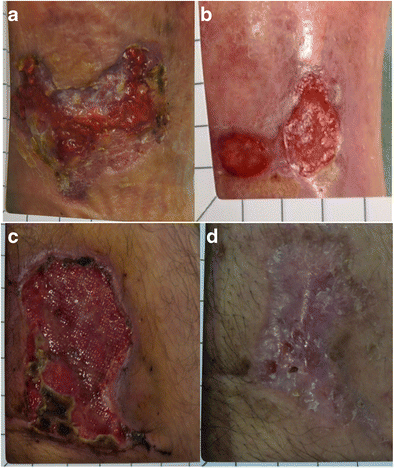
Abstract: Abstract The treatment of muscle injuries is a common practice at rehabilitation centers. Low-level laser therapy (LLLT) has demonstrated positive effects regarding the modulation of the inflammatory response, the enhancement of the tissue repair process and the prevention of fibrosis. The aim of the present study was to evaluate the effects of LLLT on morphological aspects of muscle tissue, collagen remodeling and activity of matrix metalloproteinase 2 (MMP-2) in rat skeletal muscle following acute injury. Wistar rats were divided into five groups: (1) control group (n = 10), (2) sham group (n = 10), (3) LLLT group (n = 30), (4) non-treated injury group (n = 30) and (5) injury + LLLT group (n = 30). Cryoinjury was performed on the belly of the tibialis anterior (TA) muscle. LLLT was performed daily with an AlGaAs laser (780 nm; beam spot of 0.04 cm(2), output power of 40 mW, power density of 1 W/cm(2), energy density of 10 J/cm(2) and 10-s exposure time). Animals were euthanized at 1, 3 and 7 days. The TA muscles were removed and weighed. Morphological aspects were evaluated using H & E staining. The amount and distribution of collagen fibers were evaluated by picrosirius staining. Characterization and activity of MMP-2 were evaluated by zymography and Western blot techniques, respectively. The results revealed that LLLT induced a reduction in inflammatory infiltrate and myonecrosis after 1 day, an increase in the number of blood vessels after 3 and 7 days as well as an increase in the number of immature muscle fibers and MMP-2 gelatinase activity after 7 days. In conclusion, LLLT has a positive effect on the inflammatory process, MMP2 activity and collagen organization and distribution in the repair process of rat skeletal muscle.

Original Source: http://www.ncbi.nlm.nih.gov/pubmed/23982721

Pulsed LLLT improves tendon healing in rats: a biochemical, organizational, and functional evaluation.

Guerra Fda R1, Vieira CP, dos Santos de Almeida M, Oliveira LP, Claro AC, Simões GF, de Oliveira AL, Pimentel ER. - Lasers Med Sci. 2014 Mar;29(2):805-11. doi: 10.1007/s10103-013-1406-2. Epub 2013 Aug 28. () 733
View Resource
Intro: In the last decades, the tendon injuries have increased substantially. Previous results suggested that low-level laser treatment (LLLT) promotes synthesis of extracellular matrix and improves the functional properties of the tendon. The aim of this study was to evaluate the effects of different protocols of LLLT on partially tenotomized tendons. Adult male rats were divided into the following: G1-intact, G2-injured, G3-injured + LLLT (4 J/cm(2) continuous), G4-injured + LLLT (4 J/cm(2) at 20 Hz). G2, G3, and G4 were euthanized 8 days after injury. G5-injured, G6-injured + LLLT (4 J/cm(2) continuous), and G7-injured + LLL (4 J/cm(2) at 20 Hz until the seventh day and 2 kHz from 8 to 14 days). G5, G6, and G7 were euthanized on the 15th day. Glycosaminoglycan (GAG) level was quantified by dimethylmethylene blue method and analyzed on agarose gel. Toluidine blue (TB) stain was used to observe metachromasy. CatWalk system was used to evaluate gait recovery. Collagen organization was analyzed by polarization microscopy. The GAG level increased in all transected groups, except G5. In G6 and G7, there was a significant increase in GAG in relation to G5. In G3 and G4, the presence of dermatan sulfate band was more prominent than G2. TB stains showed intense metachromasy in the treated groups. Birefringence analysis showed improvement in collagen organization in G7. The gait was significantly improved in G7. In conclusion, pulsed LLLT leads to increased organization of collagen bundles and improved gait recovery.

Background: In the last decades, the tendon injuries have increased substantially. Previous results suggested that low-level laser treatment (LLLT) promotes synthesis of extracellular matrix and improves the functional properties of the tendon. The aim of this study was to evaluate the effects of different protocols of LLLT on partially tenotomized tendons. Adult male rats were divided into the following: G1-intact, G2-injured, G3-injured + LLLT (4 J/cm(2) continuous), G4-injured + LLLT (4 J/cm(2) at 20 Hz). G2, G3, and G4 were euthanized 8 days after injury. G5-injured, G6-injured + LLLT (4 J/cm(2) continuous), and G7-injured + LLL (4 J/cm(2) at 20 Hz until the seventh day and 2 kHz from 8 to 14 days). G5, G6, and G7 were euthanized on the 15th day. Glycosaminoglycan (GAG) level was quantified by dimethylmethylene blue method and analyzed on agarose gel. Toluidine blue (TB) stain was used to observe metachromasy. CatWalk system was used to evaluate gait recovery. Collagen organization was analyzed by polarization microscopy. The GAG level increased in all transected groups, except G5. In G6 and G7, there was a significant increase in GAG in relation to G5. In G3 and G4, the presence of dermatan sulfate band was more prominent than G2. TB stains showed intense metachromasy in the treated groups. Birefringence analysis showed improvement in collagen organization in G7. The gait was significantly improved in G7. In conclusion, pulsed LLLT leads to increased organization of collagen bundles and improved gait recovery.

Abstract: Abstract In the last decades, the tendon injuries have increased substantially. Previous results suggested that low-level laser treatment (LLLT) promotes synthesis of extracellular matrix and improves the functional properties of the tendon. The aim of this study was to evaluate the effects of different protocols of LLLT on partially tenotomized tendons. Adult male rats were divided into the following: G1-intact, G2-injured, G3-injured + LLLT (4 J/cm(2) continuous), G4-injured + LLLT (4 J/cm(2) at 20 Hz). G2, G3, and G4 were euthanized 8 days after injury. G5-injured, G6-injured + LLLT (4 J/cm(2) continuous), and G7-injured + LLL (4 J/cm(2) at 20 Hz until the seventh day and 2 kHz from 8 to 14 days). G5, G6, and G7 were euthanized on the 15th day. Glycosaminoglycan (GAG) level was quantified by dimethylmethylene blue method and analyzed on agarose gel. Toluidine blue (TB) stain was used to observe metachromasy. CatWalk system was used to evaluate gait recovery. Collagen organization was analyzed by polarization microscopy. The GAG level increased in all transected groups, except G5. In G6 and G7, there was a significant increase in GAG in relation to G5. In G3 and G4, the presence of dermatan sulfate band was more prominent than G2. TB stains showed intense metachromasy in the treated groups. Birefringence analysis showed improvement in collagen organization in G7. The gait was significantly improved in G7. In conclusion, pulsed LLLT leads to increased organization of collagen bundles and improved gait recovery.

Original Source: http://www.ncbi.nlm.nih.gov/pubmed/23982719

Low-level laser (light) therapy (LLLT) for treatment of hair loss.

Avci P1, Gupta GK, Clark J, Wikonkal N, Hamblin MR. - Lasers Surg Med. 2014 Feb;46(2):144-51. doi: 10.1002/lsm.22170. Epub 2013 Aug 23. () 734
View Resource
Intro: Alopecia is a common disorder affecting more than half of the population worldwide. Androgenetic alopecia, the most common type, affects 50% of males over the age of 40 and 75% of females over 65. Only two drugs have been approved so far (minoxidil and finasteride) and hair transplant is the other treatment alternative. This review surveys the evidence for low-level laser therapy (LLLT) applied to the scalp as a treatment for hair loss and discusses possible mechanisms of actions.

Background: Alopecia is a common disorder affecting more than half of the population worldwide. Androgenetic alopecia, the most common type, affects 50% of males over the age of 40 and 75% of females over 65. Only two drugs have been approved so far (minoxidil and finasteride) and hair transplant is the other treatment alternative. This review surveys the evidence for low-level laser therapy (LLLT) applied to the scalp as a treatment for hair loss and discusses possible mechanisms of actions.

Abstract: Abstract OBJECTIVE: Alopecia is a common disorder affecting more than half of the population worldwide. Androgenetic alopecia, the most common type, affects 50% of males over the age of 40 and 75% of females over 65. Only two drugs have been approved so far (minoxidil and finasteride) and hair transplant is the other treatment alternative. This review surveys the evidence for low-level laser therapy (LLLT) applied to the scalp as a treatment for hair loss and discusses possible mechanisms of actions. METHODS AND MATERIALS: Searches of PubMed and Google Scholar were carried out using keywords alopecia, hair loss, LLLT, photobiomodulation. RESULTS: Studies have shown that LLLT stimulated hair growth in mice subjected to chemotherapy-induced alopecia and also in alopecia areata. Controlled clinical trials demonstrated that LLLT stimulated hair growth in both men and women. Among various mechanisms, the main mechanism is hypothesized to be stimulation of epidermal stem cells in the hair follicle bulge and shifting the follicles into anagen phase. CONCLUSION: LLLT for hair growth in both men and women appears to be both safe and effective. The optimum wavelength, coherence and dosimetric parameters remain to be determined. © 2013 Wiley Periodicals, Inc.

Methods: Searches of PubMed and Google Scholar were carried out using keywords alopecia, hair loss, LLLT, photobiomodulation.

Results: Studies have shown that LLLT stimulated hair growth in mice subjected to chemotherapy-induced alopecia and also in alopecia areata. Controlled clinical trials demonstrated that LLLT stimulated hair growth in both men and women. Among various mechanisms, the main mechanism is hypothesized to be stimulation of epidermal stem cells in the hair follicle bulge and shifting the follicles into anagen phase.

Conclusions: LLLT for hair growth in both men and women appears to be both safe and effective. The optimum wavelength, coherence and dosimetric parameters remain to be determined.

Original Source: http://www.ncbi.nlm.nih.gov/pubmed/23970445

The use of diffuse laser photonic energy and indocyanine green photosensitiser as an adjunct to periodontal therapy.

Parker S1. - Br Dent J. 2013 Aug;215(4):167-71. doi: 10.1038/sj.bdj.2013.790. () 736
View Resource
Background: Light-activated chemical therapy - generally known as photodynamic therapy (PDT) - has been developed within medicine, to allow the use of an applied agent (photosensitiser) that could be activated using laser photonic energy, leading to the destruction of target cellular structures. In clinical dentistry, PDT has been utilised within a wide scope of topical application in endodontic, periodontal and oral epithelial pathology where specifically, anti-bacterial action may prove useful. Underlying the complex and multi-factorial aetiology, periodontal disease remains of essentially-bacterial origin and anti-bacterial PDT (aPDT) has been investigated as an adjunctive to other periodontal treatment therapies. Of several topically-applied photosensitisers, one agent, indocyanine green, may be activated using a diode laser wavelength (810 nm) that is commonly-available in clinical dental practice, to provide generalised bacteriocidal effect. Unlike antibiotics and antibacterial mouthwashes, the mode of action appears to be nonspecific to bacterial species and is linked to cell death through a process of oxidative stress. Additionally, indocyanine green has otherwise low toxicity to non-target host tissue and dental restorative materials. This paper explores the background to this therapy, its position within the broader delivery of periodontal treatment and the specific application of indocyanine green in clinical dental practice.

Abstract: Erratum in Br Dent J. 2013 Sep;215(5):223.

Original Source: http://www.ncbi.nlm.nih.gov/pubmed/23969654

Laser vaporization of extravasation type of mucocele of the lower lip with 940-nm diode laser.

Agarwal G1, Mehra A, Agarwal A. - Indian J Dent Res. 2013 Mar-Apr;24(2):278. doi: 10.4103/0970-9290.116684. () 737
View Resource
Intro: A 43-year-old male presented with an asymptomatic swelling of the lower labial mucosa. Examination revealed that the tip of maxillary canine was causing trauma on the affected side. A diagnosis of extravasation type of mucocele was established clinically. Vaporization of the mucocele was done with a 940-nm diode laser in contact mode. The lesion healed uneventfully and there has been no recurrence for 3 months.

Background: A 43-year-old male presented with an asymptomatic swelling of the lower labial mucosa. Examination revealed that the tip of maxillary canine was causing trauma on the affected side. A diagnosis of extravasation type of mucocele was established clinically. Vaporization of the mucocele was done with a 940-nm diode laser in contact mode. The lesion healed uneventfully and there has been no recurrence for 3 months.

Abstract: Abstract A 43-year-old male presented with an asymptomatic swelling of the lower labial mucosa. Examination revealed that the tip of maxillary canine was causing trauma on the affected side. A diagnosis of extravasation type of mucocele was established clinically. Vaporization of the mucocele was done with a 940-nm diode laser in contact mode. The lesion healed uneventfully and there has been no recurrence for 3 months.

Original Source: http://www.ncbi.nlm.nih.gov/pubmed/23965466

Low level laser therapy in the treatment of aphthous ulcer.

Anand V1, Gulati M, Govila V, Anand B. - Indian J Dent Res. 2013 Mar-Apr;24(2):267-70. doi: 10.4103/0970-9290.116691. () 738
View Resource
Intro: Recurrent aphthous stomatitis (RAS) is one of the most common and painful ulcerative lesions of the oral cavity, but until now no cure has been recognized for it. Two patients diagnosed with minor RAS were treated in a single sitting with low level laser therapy using 940-nm diode laser. The lesions healed completely within 3-4 days and a follow-up for 1 showed no recurrence in these patients. According to the results of this study, low level laser therapy can decrease the healing time, pain intensity, size, and recurrence of the lesion in patients with minor RAS, and hence can be considered the most appropriate treatment modality for minor RAS, with greatest clinical effectiveness.

Background: Recurrent aphthous stomatitis (RAS) is one of the most common and painful ulcerative lesions of the oral cavity, but until now no cure has been recognized for it. Two patients diagnosed with minor RAS were treated in a single sitting with low level laser therapy using 940-nm diode laser. The lesions healed completely within 3-4 days and a follow-up for 1 showed no recurrence in these patients. According to the results of this study, low level laser therapy can decrease the healing time, pain intensity, size, and recurrence of the lesion in patients with minor RAS, and hence can be considered the most appropriate treatment modality for minor RAS, with greatest clinical effectiveness.

Abstract: Abstract Recurrent aphthous stomatitis (RAS) is one of the most common and painful ulcerative lesions of the oral cavity, but until now no cure has been recognized for it. Two patients diagnosed with minor RAS were treated in a single sitting with low level laser therapy using 940-nm diode laser. The lesions healed completely within 3-4 days and a follow-up for 1 showed no recurrence in these patients. According to the results of this study, low level laser therapy can decrease the healing time, pain intensity, size, and recurrence of the lesion in patients with minor RAS, and hence can be considered the most appropriate treatment modality for minor RAS, with greatest clinical effectiveness.

Original Source: http://www.ncbi.nlm.nih.gov/pubmed/23965460

Low-dose transscleral diode laser cyclophotocoagulation (TSCPC) as a potential single treatment for primary open-angle glaucoma (POAG) in Malawi?

Schulze Schwering M1, Kayange P, Klauss V, Kalua K, Spitzer MS. - Graefes Arch Clin Exp Ophthalmol. 2013 Oct;251(10):2389-93. doi: 10.1007/s00417-013-2441-1. Epub 2013 Aug 21. () 739
View Resource
Intro: To investigate if low-dose 810 nm transscleral cyclophotocoagulation (TSCPC) can be used as single treatment in Malawian glaucoma patients.

Background: To investigate if low-dose 810 nm transscleral cyclophotocoagulation (TSCPC) can be used as single treatment in Malawian glaucoma patients.

Abstract: Abstract PURPOSE: To investigate if low-dose 810 nm transscleral cyclophotocoagulation (TSCPC) can be used as single treatment in Malawian glaucoma patients. METHODS: Forty-seven eyes of 28 patients with primary open-angle and pseudoexfoliation glaucoma were treated with TSCPC using 12 spots with 900 mW, 2,000 ms (1.8 J per spot); six spots in the upper half, six in the lower by sparing the 3 and 9 o'clock positions ±20°. Intraocular pressure (IOP) and uncorrected visual acuity (UVA) were measured by an independent examiner preoperatively, on the first postoperative day, after 2 weeks, and after 3 months. RESULTS: Twenty-four (86%) and 18 (64%) of 28 patients (31 of 47 eyes; 66%) completed follow-up at 2 weeks and at 3 months respectively. After a single treatment session, IOP decreased by at least 25 % in 88% (21 of 24) after 2 weeks, and in 50% (nine of 18) of patients after 3 months. Mean IOP was 38.5 mmHg before TSCPC, 23.5 mmHg (p < 0.001) after 1 day, 24.5 mmHg (p < 0.001) after 2 weeks, and 35.6 mmHg (p = 0.37) after 3 months. In three patients, however, IOP increased after 3 months to levels significantly higher than before TSCPC. CONCLUSION: Low-dose TSCPC caused a significant IOP lowering for up to 2 weeks (15 mmHg less from baseline) in most patients. After 3 months, this effect was stable in 50% of patients; in the other half, IOP nearly returned back to baseline.

Methods: Forty-seven eyes of 28 patients with primary open-angle and pseudoexfoliation glaucoma were treated with TSCPC using 12 spots with 900 mW, 2,000 ms (1.8 J per spot); six spots in the upper half, six in the lower by sparing the 3 and 9 o'clock positions ±20°. Intraocular pressure (IOP) and uncorrected visual acuity (UVA) were measured by an independent examiner preoperatively, on the first postoperative day, after 2 weeks, and after 3 months.

Results: Twenty-four (86%) and 18 (64%) of 28 patients (31 of 47 eyes; 66%) completed follow-up at 2 weeks and at 3 months respectively. After a single treatment session, IOP decreased by at least 25 % in 88% (21 of 24) after 2 weeks, and in 50% (nine of 18) of patients after 3 months. Mean IOP was 38.5 mmHg before TSCPC, 23.5 mmHg (p < 0.001) after 1 day, 24.5 mmHg (p < 0.001) after 2 weeks, and 35.6 mmHg (p = 0.37) after 3 months. In three patients, however, IOP increased after 3 months to levels significantly higher than before TSCPC.

Conclusions: Low-dose TSCPC caused a significant IOP lowering for up to 2 weeks (15 mmHg less from baseline) in most patients. After 3 months, this effect was stable in 50% of patients; in the other half, IOP nearly returned back to baseline.

Original Source: http://www.ncbi.nlm.nih.gov/pubmed/23963489

The effect of low-level laser therapy on the healing of hard palate mucosa and the oxidative stress status of rats.

Firat ET1, Dağ A, Günay A, Kaya B, Karadede Mİ, Ersöz Kanay B, Ketani A, Evliyaoğlu O, Uysal E. - J Oral Pathol Med. 2014 Feb;43(2):103-10. doi: 10.1111/jop.12106. Epub 2013 Aug 19. () 741
View Resource
Intro: The biostimulation effects of low-level laser therapy (LLLT) have been demonstrated recently. This study investigated the effects of LLLT on palatal mucoperiosteal wound healing and oxidative stress status in rats.

Background: The biostimulation effects of low-level laser therapy (LLLT) have been demonstrated recently. This study investigated the effects of LLLT on palatal mucoperiosteal wound healing and oxidative stress status in rats.

Abstract: Abstract OBJECTIVE: The biostimulation effects of low-level laser therapy (LLLT) have been demonstrated recently. This study investigated the effects of LLLT on palatal mucoperiosteal wound healing and oxidative stress status in rats. MATERIAL AND METHOD: Forty-two male Wistar rats weighing 250-300 g were used in this study. A standardized full-thickness wound was created in the mucoperiosteum of the hard palates of the rats using a 3-mm-diameter biopsy punch. Treatment using a GaAlAs laser at a wavelength of 940 nm and a dose of 10 J/cm(2) was initiated after surgery and repeated on the 2nd, 4th, and 6th days post-surgery. Seven animals from each group were sacrificed on the 7th, 14th, and 21st days after surgery. Total antioxidant status and total oxidative status were measured in serum. RESULTS: The histopathological findings revealed reduced numbers of inflammatory cells on the 7th day, increased mitotic activity of fibroblasts on the 14th and 21st day, and the same degree of collagen synthesis and vascularization on the days 7, 14, and 21 in the LLLT group compared with the control group. No significant differences in total oxidative status and total antioxidant status were observed between the groups. CONCLUSION: LLLT using a GaAlAs laser at a wavelength of 940 nm and a dose of 10 J/cm(2) elicited a positive healing effect on palatal mucoperiosteal wounds likely via the induction of fibroblasts. The oxidative stress status was not affected by LLLT. © 2013 John Wiley & Sons A/S. Published by John Wiley & Sons Ltd.

Methods: Forty-two male Wistar rats weighing 250-300 g were used in this study. A standardized full-thickness wound was created in the mucoperiosteum of the hard palates of the rats using a 3-mm-diameter biopsy punch. Treatment using a GaAlAs laser at a wavelength of 940 nm and a dose of 10 J/cm(2) was initiated after surgery and repeated on the 2nd, 4th, and 6th days post-surgery. Seven animals from each group were sacrificed on the 7th, 14th, and 21st days after surgery. Total antioxidant status and total oxidative status were measured in serum.

Results: The histopathological findings revealed reduced numbers of inflammatory cells on the 7th day, increased mitotic activity of fibroblasts on the 14th and 21st day, and the same degree of collagen synthesis and vascularization on the days 7, 14, and 21 in the LLLT group compared with the control group. No significant differences in total oxidative status and total antioxidant status were observed between the groups.

Conclusions: LLLT using a GaAlAs laser at a wavelength of 940 nm and a dose of 10 J/cm(2) elicited a positive healing effect on palatal mucoperiosteal wounds likely via the induction of fibroblasts. The oxidative stress status was not affected by LLLT.

Original Source: http://www.ncbi.nlm.nih.gov/pubmed/23952682

Protective effect of low-level laser therapy (LLLT) on acute zymosan-induced arthritis.

Carlos FP1, de Paula Alves da Silva M, de Lemos Vasconcelos Silva Melo E, Costa MS, Zamuner SR. - Lasers Med Sci. 2014 Mar;29(2):757-63. doi: 10.1007/s10103-013-1413-3. Epub 2013 Aug 10. () 746
View Resource
Intro: The aim of this study was to evaluate the effect of low-level laser therapy on acute zymosan-induced arthritis, with respect to the laser action on inflammatory cells influx, release of pro-inflammatory mediators, metalloproteinases activity into the joint cavity and the cartilage repair process. Arthritis was induced in male Wistar rats (250-280 g) by intra-articular injection of zymosan (1 mg dissolved in 50 μl of a sterile saline solution) into one rear knee joint. Animals were irradiated immediately, 1 and 2 h after zymosan administration with a semiconductor laser InGaAIP (660 nm, 10 mW, 2.5 J/cm(2), 10 s). In the positive control group, animals were injected with the anti-inflammatory drug dexamethasone 1 h prior to the zymosan administration. Treatment with laser significantly inhibited leukocytes influx, the release of IL-1 and IL-6 and also the activity of metalloproteinase-2 and 9, into the joint cavity. In conclusion, laser therapy was effective in reducing inflammation to sites of injury and inhibit activation of proteases (gelatinase) suggesting less degradation of collagen tissue in experimental model of acute arthritis.

Background: The aim of this study was to evaluate the effect of low-level laser therapy on acute zymosan-induced arthritis, with respect to the laser action on inflammatory cells influx, release of pro-inflammatory mediators, metalloproteinases activity into the joint cavity and the cartilage repair process. Arthritis was induced in male Wistar rats (250-280 g) by intra-articular injection of zymosan (1 mg dissolved in 50 μl of a sterile saline solution) into one rear knee joint. Animals were irradiated immediately, 1 and 2 h after zymosan administration with a semiconductor laser InGaAIP (660 nm, 10 mW, 2.5 J/cm(2), 10 s). In the positive control group, animals were injected with the anti-inflammatory drug dexamethasone 1 h prior to the zymosan administration. Treatment with laser significantly inhibited leukocytes influx, the release of IL-1 and IL-6 and also the activity of metalloproteinase-2 and 9, into the joint cavity. In conclusion, laser therapy was effective in reducing inflammation to sites of injury and inhibit activation of proteases (gelatinase) suggesting less degradation of collagen tissue in experimental model of acute arthritis.

Abstract: Abstract The aim of this study was to evaluate the effect of low-level laser therapy on acute zymosan-induced arthritis, with respect to the laser action on inflammatory cells influx, release of pro-inflammatory mediators, metalloproteinases activity into the joint cavity and the cartilage repair process. Arthritis was induced in male Wistar rats (250-280 g) by intra-articular injection of zymosan (1 mg dissolved in 50 μl of a sterile saline solution) into one rear knee joint. Animals were irradiated immediately, 1 and 2 h after zymosan administration with a semiconductor laser InGaAIP (660 nm, 10 mW, 2.5 J/cm(2), 10 s). In the positive control group, animals were injected with the anti-inflammatory drug dexamethasone 1 h prior to the zymosan administration. Treatment with laser significantly inhibited leukocytes influx, the release of IL-1 and IL-6 and also the activity of metalloproteinase-2 and 9, into the joint cavity. In conclusion, laser therapy was effective in reducing inflammation to sites of injury and inhibit activation of proteases (gelatinase) suggesting less degradation of collagen tissue in experimental model of acute arthritis.

Original Source: http://www.ncbi.nlm.nih.gov/pubmed/23933663

Tissue laser biostimulation promotes post-extraction neoangiogenesis in HIV-infected patients.

Halon A1, Donizy P, Dziegala M, Dobrakowski R, Simon K. - Lasers Med Sci. 2015 Feb;30(2):701-6. doi: 10.1007/s10103-013-1411-5. Epub 2013 Aug 6. () 750
View Resource
Intro: The aim of the study was to assess the rate of neoangiogenesis in extraction wound healing following exposure to biostimulating laser therapy and to analyze the correlation between parameters of neoangiogenesis as reflected by the number and surface area of newly formed blood vessels and clinical parameters such as gender, position of a tooth in the oral cavity, and CD4 lymphocyte count. Twenty-seven patients with confirmed HIV infection were enrolled in the study (6 women, 21 men). Eighty-nine teeth were extracted; 45 sockets were exposed to 6 J laser radiation (laser parameters were set as follows: wavelength, 820 nm; output, 200 mW; dose, 6 J/cm(2); spot size, 38 mm(2); continuous radiation) for five consecutive days following tooth extraction, and the remaining extraction wounds were left to heal spontaneously without laser irradiation. Antigen CD34 was assessed by immunohistochemistry as a marker of angiogenesis, and its expression was examined by computer-assisted histomorphometric image analysis. As a result, we report that biostimulating laser therapy in HIV-infected patients of varying degrees of immunodeficiency greatly accelerated post-extraction neoangiogenesis, regardless of the patient's gender, tooth position, number of roots, or number of CD4 lymphocytes in the blood. Application of low-level laser therapy for the treatment of tooth extraction wounds in HIV(+) patients greatly enhanced the formation of new blood vessels, which in turn promoted wound healing.

Background: The aim of the study was to assess the rate of neoangiogenesis in extraction wound healing following exposure to biostimulating laser therapy and to analyze the correlation between parameters of neoangiogenesis as reflected by the number and surface area of newly formed blood vessels and clinical parameters such as gender, position of a tooth in the oral cavity, and CD4 lymphocyte count. Twenty-seven patients with confirmed HIV infection were enrolled in the study (6 women, 21 men). Eighty-nine teeth were extracted; 45 sockets were exposed to 6 J laser radiation (laser parameters were set as follows: wavelength, 820 nm; output, 200 mW; dose, 6 J/cm(2); spot size, 38 mm(2); continuous radiation) for five consecutive days following tooth extraction, and the remaining extraction wounds were left to heal spontaneously without laser irradiation. Antigen CD34 was assessed by immunohistochemistry as a marker of angiogenesis, and its expression was examined by computer-assisted histomorphometric image analysis. As a result, we report that biostimulating laser therapy in HIV-infected patients of varying degrees of immunodeficiency greatly accelerated post-extraction neoangiogenesis, regardless of the patient's gender, tooth position, number of roots, or number of CD4 lymphocytes in the blood. Application of low-level laser therapy for the treatment of tooth extraction wounds in HIV(+) patients greatly enhanced the formation of new blood vessels, which in turn promoted wound healing.

Abstract: Abstract The aim of the study was to assess the rate of neoangiogenesis in extraction wound healing following exposure to biostimulating laser therapy and to analyze the correlation between parameters of neoangiogenesis as reflected by the number and surface area of newly formed blood vessels and clinical parameters such as gender, position of a tooth in the oral cavity, and CD4 lymphocyte count. Twenty-seven patients with confirmed HIV infection were enrolled in the study (6 women, 21 men). Eighty-nine teeth were extracted; 45 sockets were exposed to 6 J laser radiation (laser parameters were set as follows: wavelength, 820 nm; output, 200 mW; dose, 6 J/cm(2); spot size, 38 mm(2); continuous radiation) for five consecutive days following tooth extraction, and the remaining extraction wounds were left to heal spontaneously without laser irradiation. Antigen CD34 was assessed by immunohistochemistry as a marker of angiogenesis, and its expression was examined by computer-assisted histomorphometric image analysis. As a result, we report that biostimulating laser therapy in HIV-infected patients of varying degrees of immunodeficiency greatly accelerated post-extraction neoangiogenesis, regardless of the patient's gender, tooth position, number of roots, or number of CD4 lymphocytes in the blood. Application of low-level laser therapy for the treatment of tooth extraction wounds in HIV(+) patients greatly enhanced the formation of new blood vessels, which in turn promoted wound healing.

Original Source: http://www.ncbi.nlm.nih.gov/pubmed/23917415

Effect of low-level laser therapy in patients with chronic knee osteoarthritis: a single-blinded randomized clinical study.

Alghadir A1, Omar MT, Al-Askar AB, Al-Muteri NK. - Lasers Med Sci. 2014 Mar;29(2):749-55. doi: 10.1007/s10103-013-1393-3. Epub 2013 Aug 3. () 751
View Resource
Intro: The aim of this study was to investigate the effect of low-level laser therapy (LLLT) on pain relief and functional performance in patients with chronic knee osteoarthritis (OA). Forty patients with knee OA were randomly assigned into active laser group (n = 20) and placebo laser group (n = 20). The LLLT device used was a Ga-As diode laser with a power output of 50 mW, a wavelength of 850 nm, and a diameter beam of 1 mm. Eight points were irradiated and received dosage of 6 J/point for 60 s, with a total dosage of 48 J/cm(2) in each session. The placebo group was identical but treated without emission of energy. LLLT was applied two times per week over the period of 4 weeks. Outcome measurements included pain intensity at rest and at movement on visual analog scale, knee function using Western Ontario McMaster Universities Osteoarthritis Index scale, and ambulation duration. These measurements were collected at baseline and post-intervention. The results showed significant improvements in all assessment parameters in both groups compared to baseline. Active laser group showed significant differences in pain intensity at rest and movement, knee function, and ambulation duration when compared with the placebo group. Therefore, LLLT seemed to be an effective modality for short-term pain relief and function improvement in patients with chronic knee OA.

Background: The aim of this study was to investigate the effect of low-level laser therapy (LLLT) on pain relief and functional performance in patients with chronic knee osteoarthritis (OA). Forty patients with knee OA were randomly assigned into active laser group (n = 20) and placebo laser group (n = 20). The LLLT device used was a Ga-As diode laser with a power output of 50 mW, a wavelength of 850 nm, and a diameter beam of 1 mm. Eight points were irradiated and received dosage of 6 J/point for 60 s, with a total dosage of 48 J/cm(2) in each session. The placebo group was identical but treated without emission of energy. LLLT was applied two times per week over the period of 4 weeks. Outcome measurements included pain intensity at rest and at movement on visual analog scale, knee function using Western Ontario McMaster Universities Osteoarthritis Index scale, and ambulation duration. These measurements were collected at baseline and post-intervention. The results showed significant improvements in all assessment parameters in both groups compared to baseline. Active laser group showed significant differences in pain intensity at rest and movement, knee function, and ambulation duration when compared with the placebo group. Therefore, LLLT seemed to be an effective modality for short-term pain relief and function improvement in patients with chronic knee OA.

Abstract: Abstract The aim of this study was to investigate the effect of low-level laser therapy (LLLT) on pain relief and functional performance in patients with chronic knee osteoarthritis (OA). Forty patients with knee OA were randomly assigned into active laser group (n = 20) and placebo laser group (n = 20). The LLLT device used was a Ga-As diode laser with a power output of 50 mW, a wavelength of 850 nm, and a diameter beam of 1 mm. Eight points were irradiated and received dosage of 6 J/point for 60 s, with a total dosage of 48 J/cm(2) in each session. The placebo group was identical but treated without emission of energy. LLLT was applied two times per week over the period of 4 weeks. Outcome measurements included pain intensity at rest and at movement on visual analog scale, knee function using Western Ontario McMaster Universities Osteoarthritis Index scale, and ambulation duration. These measurements were collected at baseline and post-intervention. The results showed significant improvements in all assessment parameters in both groups compared to baseline. Active laser group showed significant differences in pain intensity at rest and movement, knee function, and ambulation duration when compared with the placebo group. Therefore, LLLT seemed to be an effective modality for short-term pain relief and function improvement in patients with chronic knee OA.

Original Source: http://www.ncbi.nlm.nih.gov/pubmed/23912778

The evolving paradigm for the treatment of diabetic macular edema.

Telander D1, Hunter A, Hariprasad SM. - Ophthalmic Surg Lasers Imaging Retina. 2013 Jul-Aug;44(4):324-8. doi: 10.3928/23258160-20130715-02. () 757
View Resource
Abstract: PMID: 23883266 [PubMed - indexed for MEDLINE] Share on Facebook Share on Twitter Share on Google+

Original Source: http://www.ncbi.nlm.nih.gov/pubmed/23883266

Evaluation of corticosterone and IL-1β, IL-6, IL-10 and TNF-α expression after 670-nm laser photobiomodulation in rats.

Lima AA1, Spínola LG, Baccan G, Correia K, Oliva M, Vasconcelos JF, Soares MB, Reis SR, Medrado AP. - Lasers Med Sci. 2014 Mar;29(2):709-15. doi: 10.1007/s10103-013-1356-8. Epub 2013 Jul 20. () 762
View Resource
Intro: The literature has shown that low-level laser therapy accelerates the repair of cutaneous wounds. However, there is a scarcity of scientific studies that characterise the possible systemic interference of laser photobiomodulation. The aim of this research was to quantitatively evaluate blood corticosterone levels and tissue cytokine expression in cutaneous wounds of rats treated with low-level laser therapy (semiconductor diode AsGaAl, continuous emission, 9 mW, 670 nm, 0.031 W/cm(2), beam with an output area of 0.28 cm(2)) and normal controls. A total of 36 male Wistar rats were used and randomly divided into two groups of 18 rats each. A standardised circular 6-mm-diameter wound was made in the dorsal skin region of each rat, and they were euthanised at 1, 6 and 12 h after cutaneous surgery. The blood was collected, and portions of cutaneous tissue and subcutaneous muscle were removed and cryopreserved. Corticosterone levels in the blood were measured by a radioimmunoassay technique; histological sections were submitted to the ELISA technique for analysis of tissue cytokine expression levels. At 6 h after surgery, a significant increase in corticosterone and a significant reduction in the levels of IL-1β and IL-6 in tissues of irradiated wounds were observed when compared to controls (p < 0.05). The levels of TNF-α and IL-10 expression were not significantly different between the groups at different time intervals. Thus, this study strongly suggests a systemic and local biomodulation of low-level laser therapy as indicated by the blood levels of corticosterone and the tissue expression of IL-1β and IL-6, respectively.

Background: The literature has shown that low-level laser therapy accelerates the repair of cutaneous wounds. However, there is a scarcity of scientific studies that characterise the possible systemic interference of laser photobiomodulation. The aim of this research was to quantitatively evaluate blood corticosterone levels and tissue cytokine expression in cutaneous wounds of rats treated with low-level laser therapy (semiconductor diode AsGaAl, continuous emission, 9 mW, 670 nm, 0.031 W/cm(2), beam with an output area of 0.28 cm(2)) and normal controls. A total of 36 male Wistar rats were used and randomly divided into two groups of 18 rats each. A standardised circular 6-mm-diameter wound was made in the dorsal skin region of each rat, and they were euthanised at 1, 6 and 12 h after cutaneous surgery. The blood was collected, and portions of cutaneous tissue and subcutaneous muscle were removed and cryopreserved. Corticosterone levels in the blood were measured by a radioimmunoassay technique; histological sections were submitted to the ELISA technique for analysis of tissue cytokine expression levels. At 6 h after surgery, a significant increase in corticosterone and a significant reduction in the levels of IL-1β and IL-6 in tissues of irradiated wounds were observed when compared to controls (p < 0.05). The levels of TNF-α and IL-10 expression were not significantly different between the groups at different time intervals. Thus, this study strongly suggests a systemic and local biomodulation of low-level laser therapy as indicated by the blood levels of corticosterone and the tissue expression of IL-1β and IL-6, respectively.

Abstract: Abstract The literature has shown that low-level laser therapy accelerates the repair of cutaneous wounds. However, there is a scarcity of scientific studies that characterise the possible systemic interference of laser photobiomodulation. The aim of this research was to quantitatively evaluate blood corticosterone levels and tissue cytokine expression in cutaneous wounds of rats treated with low-level laser therapy (semiconductor diode AsGaAl, continuous emission, 9 mW, 670 nm, 0.031 W/cm(2), beam with an output area of 0.28 cm(2)) and normal controls. A total of 36 male Wistar rats were used and randomly divided into two groups of 18 rats each. A standardised circular 6-mm-diameter wound was made in the dorsal skin region of each rat, and they were euthanised at 1, 6 and 12 h after cutaneous surgery. The blood was collected, and portions of cutaneous tissue and subcutaneous muscle were removed and cryopreserved. Corticosterone levels in the blood were measured by a radioimmunoassay technique; histological sections were submitted to the ELISA technique for analysis of tissue cytokine expression levels. At 6 h after surgery, a significant increase in corticosterone and a significant reduction in the levels of IL-1β and IL-6 in tissues of irradiated wounds were observed when compared to controls (p < 0.05). The levels of TNF-α and IL-10 expression were not significantly different between the groups at different time intervals. Thus, this study strongly suggests a systemic and local biomodulation of low-level laser therapy as indicated by the blood levels of corticosterone and the tissue expression of IL-1β and IL-6, respectively.

Original Source: http://www.ncbi.nlm.nih.gov/pubmed/23873594

Morphological analysis of the resin-dentin interface in cavities prepared with Er,Cr:YSGG laser or bur in primary teeth.

Oznurhan F1, Olmez A. - Photomed Laser Surg. 2013 Aug;31(8):386-91. doi: 10.1089/pho.2013.3498. Epub 2013 Jul 16. () 765
View Resource
Intro: The purpose of this study was to analyze the resin-dentin interface in cavities prepared with laser or bur in primary teeth.

Background: The purpose of this study was to analyze the resin-dentin interface in cavities prepared with laser or bur in primary teeth.

Abstract: Abstract OBJECTIVE: The purpose of this study was to analyze the resin-dentin interface in cavities prepared with laser or bur in primary teeth. BACKGROUND DATA: Erbium, chromium:yttrium-scandium-gallium-garnet (Er,Cr:YSGG) laser was expected to be an alternative cavity preparation method, enhancing surface alterations and producing morphological changes. METHODS: Twenty extracted primary molar teeth were divided to four groups according to one of four cavity preparation and pretreatment regimens: Er,Cr:YSGG laser (G1), Er,Cr:YSGG laser+acid-etching (G2), bur (G3), and bur+acid-etching (G4). After applying composite resin to the cavities, the teeth were sectioned. The resin-dentin interface was analyzed under scanning electron microscopy (SEM) and ion analysis was performed with SEM-energy-dispersive X-ray spectroscopy (EDX) after immersion in ammoniacal silver nitrate solution. RESULTS: In G1 and 2, the surfaces were wavy, and in G3 and 4, the surfaces were smooth. Microcracks were seen in some of the lased cavities. In G1 and 2, dentin tubules were exposed and there was lack of a smear layer. In G3, there were gaps and a smear layer in the resin-dentin interface, but no gaps or smear layer were observed in G4. In G2, the resin tags were increased, and some resin tags were broken in cavities, which were prepared with laser (G1 and 2). CONCLUSIONS: According to the results of this study, acid-etching was recommended after laser preparations, to have a better adhesion.

Methods: Erbium, chromium:yttrium-scandium-gallium-garnet (Er,Cr:YSGG) laser was expected to be an alternative cavity preparation method, enhancing surface alterations and producing morphological changes.

Results: Twenty extracted primary molar teeth were divided to four groups according to one of four cavity preparation and pretreatment regimens: Er,Cr:YSGG laser (G1), Er,Cr:YSGG laser+acid-etching (G2), bur (G3), and bur+acid-etching (G4). After applying composite resin to the cavities, the teeth were sectioned. The resin-dentin interface was analyzed under scanning electron microscopy (SEM) and ion analysis was performed with SEM-energy-dispersive X-ray spectroscopy (EDX) after immersion in ammoniacal silver nitrate solution.

Conclusions: In G1 and 2, the surfaces were wavy, and in G3 and 4, the surfaces were smooth. Microcracks were seen in some of the lased cavities. In G1 and 2, dentin tubules were exposed and there was lack of a smear layer. In G3, there were gaps and a smear layer in the resin-dentin interface, but no gaps or smear layer were observed in G4. In G2, the resin tags were increased, and some resin tags were broken in cavities, which were prepared with laser (G1 and 2).

Original Source: http://www.ncbi.nlm.nih.gov/pubmed/23859751

Treatment of onychomycosis using a submillisecond 1064-nm neodymium:yttrium-aluminum-garnet laser.

Carney C1, Cantrell W, Warner J, Elewski B. - J Am Acad Dermatol. 2013 Oct;69(4):578-82. doi: 10.1016/j.jaad.2013.04.054. Epub 2013 Jul 13. () 766
View Resource
Intro: Laser treatment has emerged as a novel treatment modality for onychomycosis.

Background: Laser treatment has emerged as a novel treatment modality for onychomycosis.

Abstract: Abstract BACKGROUND: Laser treatment has emerged as a novel treatment modality for onychomycosis. OBJECTIVE: We sought to determine thermal response and optical effects of a submillisecond neodymium:yttrium-aluminum-garnet (Nd:YAG) 1064-nm laser on common fungal nail pathogens, and the clinical efficacy and safety of the Nd:YAG 1064-nm laser on onychomycotic toenails. METHODS: A 4-part in vitro and in vivo study was conducted using a Nd:YAG 1064-nm laser. The first portion evaluated 3 different nail pathogens in suspension at 7 heat and time exposures. The second and third parts of the study irradiated pure fungal colonies. The final portion involved an in vivo treatment of toenails over 5 treatment sessions. RESULTS: A fungicidal effect for Trichophyton rubrum was seen at 50°C after 15 minutes, and for Epidermophyton floccosum at 50°C after 10 minutes. Limited growth of Scytalidium was seen at 55°C after 5 minutes. No inhibition was observed after laser treatment of fungal colonies or suspensions. In vivo treatment of toenails showed no improvement in Onychomycosis Severity Index score. LIMITATIONS: The Nd:YAG 1064-nm laser was the only laser tested. CONCLUSIONS: Laser treatment of onychomycosis was not related to thermal damage or direct laser effects. In vivo treatment did not result in onychomycosis cure. Copyright © 2013 American Academy of Dermatology, Inc. Published by Mosby, Inc. All rights reserved.

Methods: We sought to determine thermal response and optical effects of a submillisecond neodymium:yttrium-aluminum-garnet (Nd:YAG) 1064-nm laser on common fungal nail pathogens, and the clinical efficacy and safety of the Nd:YAG 1064-nm laser on onychomycotic toenails.

Results: A 4-part in vitro and in vivo study was conducted using a Nd:YAG 1064-nm laser. The first portion evaluated 3 different nail pathogens in suspension at 7 heat and time exposures. The second and third parts of the study irradiated pure fungal colonies. The final portion involved an in vivo treatment of toenails over 5 treatment sessions.

Conclusions: A fungicidal effect for Trichophyton rubrum was seen at 50°C after 15 minutes, and for Epidermophyton floccosum at 50°C after 10 minutes. Limited growth of Scytalidium was seen at 55°C after 5 minutes. No inhibition was observed after laser treatment of fungal colonies or suspensions. In vivo treatment of toenails showed no improvement in Onychomycosis Severity Index score.

Original Source: http://www.ncbi.nlm.nih.gov/pubmed/23856649

In vitro responses of neurofibroma fibroblasts, mast cells and Schwann cells obtained from patients with neurofibromatosis 1 to 308-nm excimer light and/or vitamin D3.

Nakayama J1, Sato C, Imafuku S. - J Dermatol. 2013 Sep;40(9):743-5. doi: 10.1111/1346-8138.12242. Epub 2013 Jul 16. () 767
View Resource
Intro: Fibroblasts, mast cells and Schwann cells were isolated from neurofibromas of patients with neurofibromatosis 1, and their responses to 308-nm excimer light irradiation and/or vitamin D3 or an analog (tacalcitol; 1,24-dihydroxyvitamin D3 ) were examined in vitro. Excimer light irradiation (300 mJ/cm(2) ) suppressed the growth of all three cell types. Exposure to 10(-7) mol/L of 1α,25(OH)2 D3 (VD3 ) or tacalcitol suppressed the growth of fibroblasts and mast cells, but not Schwann cells. These results suggest that the different neurofibroma cell types show different responses to VD3 . A combination of excimer light irradiation and VD3 is necessary to suppress the growth of neurofibroma cells in vivo.

Background: Fibroblasts, mast cells and Schwann cells were isolated from neurofibromas of patients with neurofibromatosis 1, and their responses to 308-nm excimer light irradiation and/or vitamin D3 or an analog (tacalcitol; 1,24-dihydroxyvitamin D3 ) were examined in vitro. Excimer light irradiation (300 mJ/cm(2) ) suppressed the growth of all three cell types. Exposure to 10(-7) mol/L of 1α,25(OH)2 D3 (VD3 ) or tacalcitol suppressed the growth of fibroblasts and mast cells, but not Schwann cells. These results suggest that the different neurofibroma cell types show different responses to VD3 . A combination of excimer light irradiation and VD3 is necessary to suppress the growth of neurofibroma cells in vivo.

Abstract: Abstract Fibroblasts, mast cells and Schwann cells were isolated from neurofibromas of patients with neurofibromatosis 1, and their responses to 308-nm excimer light irradiation and/or vitamin D3 or an analog (tacalcitol; 1,24-dihydroxyvitamin D3 ) were examined in vitro. Excimer light irradiation (300 mJ/cm(2) ) suppressed the growth of all three cell types. Exposure to 10(-7) mol/L of 1α,25(OH)2 D3 (VD3 ) or tacalcitol suppressed the growth of fibroblasts and mast cells, but not Schwann cells. These results suggest that the different neurofibroma cell types show different responses to VD3 . A combination of excimer light irradiation and VD3 is necessary to suppress the growth of neurofibroma cells in vivo. © 2013 Japanese Dermatological Association.

Methods: © 2013 Japanese Dermatological Association.

Original Source: http://www.ncbi.nlm.nih.gov/pubmed/23855960

The efficiency of root canal disinfection using a diode laser: in vitro study.

Kaiwar A1, Usha HL, Meena N, Ashwini P, Murthy CS. - Indian J Dent Res. 2013 Jan-Feb;24(1):14-8. doi: 10.4103/0970-9290.114916. () 768
View Resource
Intro: The aim of this study is to verify the disinfection of diode laser, following chemo-mechanical procedures against Enterococcus fecalis.

Background: The aim of this study is to verify the disinfection of diode laser, following chemo-mechanical procedures against Enterococcus fecalis.

Abstract: Abstract AIMS: The aim of this study is to verify the disinfection of diode laser, following chemo-mechanical procedures against Enterococcus fecalis. MATERIALS AND METHODS: Crowns of 30 extracted premolar teeth were sectioned at the cemento- enamel junction. The canals were shaped using step-back technique to K-file #40. The teeth were randomly assigned to three groups and placed into nutrient broth containing bacterial suspension of Enterococcus fecalis. Group A received no laser radiation. Specimens of group B and C were treated with diode laser (Sirona) with energy set at 1.5 and 3 W, respectively. After laser irradiation, the teeth were placed in vials, which contained 2 mL of the nutrient broth. The vials were incubated at 37°C for 24 h. Grown colonies were identified by standard methods. STATISTICAL ANALYSIS USED: Statistical analysis used was the nonparametric Kruskal-Wallis test, with comparison using the Bonferroni methods of means. RESULTS: Higher mean CFU/mL is recorded in Group A (without laser disinfection) followed by Group B (with 1.5 W laser disinfection) and Group C (with 3 W laser disinfection), respectively. The difference in CFU/mL between the three groups is found to be statistically significant ( P < 0.001). CONCLUSIONS: The results of this research show that the 980 nm diode laser can eliminate bacteria that has immigrated into dentin, thus being able to increase the success rate in endodontic therapy.

Methods: Crowns of 30 extracted premolar teeth were sectioned at the cemento- enamel junction. The canals were shaped using step-back technique to K-file #40. The teeth were randomly assigned to three groups and placed into nutrient broth containing bacterial suspension of Enterococcus fecalis. Group A received no laser radiation. Specimens of group B and C were treated with diode laser (Sirona) with energy set at 1.5 and 3 W, respectively. After laser irradiation, the teeth were placed in vials, which contained 2 mL of the nutrient broth. The vials were incubated at 37°C for 24 h. Grown colonies were identified by standard methods.

Results: Statistical analysis used was the nonparametric Kruskal-Wallis test, with comparison using the Bonferroni methods of means.

Conclusions: Higher mean CFU/mL is recorded in Group A (without laser disinfection) followed by Group B (with 1.5 W laser disinfection) and Group C (with 3 W laser disinfection), respectively. The difference in CFU/mL between the three groups is found to be statistically significant ( P < 0.001).

Original Source: http://www.ncbi.nlm.nih.gov/pubmed/23852227

Effect of laser and air abrasion pretreatment on the microleakage of a fissure sealant applied with conventional and self etch adhesives.

Tirali RE1, Celik C, Arhun N, Berk G, Cehreli SB. - J Clin Pediatr Dent. 2013 Spring;37(3):281-8. () 769
View Resource
Intro: The purpose of this study was to investigate the effects of different pretreatment protocols along with different bonding agents on the microleakage of a fissure sealant material.

Background: The purpose of this study was to investigate the effects of different pretreatment protocols along with different bonding agents on the microleakage of a fissure sealant material.

Abstract: Abstract AIM: The purpose of this study was to investigate the effects of different pretreatment protocols along with different bonding agents on the microleakage of a fissure sealant material. METHOD: A total of 144 freshly extracted noncarious human third molars were used The teeth were randomly assigned into three groups with respect to the pretreatment protocol employed: A. Air Abrasion B. Er,Cr:YSGG laser C. No pretreatment (Control). In each group specimens were further subjected to one of the following procedures before application of the sealant: 1. %36 Phosphoric acid-etch (AE) (DeTrey Conditioner 36/Denstply, UK) 2.AE+Prime&Bond NT (Dentsply, UK) 3. Clearfil S3 Bond (Kuraray, Japan) 4. Clearfil SE Bond (Kuraray, Japan). All teeth were sealed with the same fissure sealant material (Conseal F/SDI, Australia). Sealed teeth were further subjected to thermocycling, dye penetration test, sectioning and quantitative image analysis. Statistical evaluation of the microleakage data was performed with two way independent ANOVA and multiple comparisons test at p = 0.05. For qualitative evaluation 2 samples from each group were examined under Scanning Electron Microscopy. RESULTS: Microleakage was affected by both the type of pretreatment and the subsequent bonding protocols employed (p < 0.05). Overall, the highest (Mean = 0.36 mm) and lowest (Mean = 0.06 mm) microleakage values were observed in samples with unpretreated enamel sealed by S3+Conseal F and samples with laser pretreated enamel sealed by Acid Etch+Prime&-Bond+Conseal F protocols, respectively (p < 0.05). In the acid-etch group samples pretreated with laser yielded in slightly lower microleakage scores when compared with unpretreated samples and samples pretreated with air abrasion but the statistical significance was not important (p = 0,179). Similarly, when bonding agent is applied following acid-etching procedure, microleakage scores were not affected from pretreatment protocol (p = 0,615) (intact enamel/laser or air-abrasion). For both all-in one and two step self etch adhesive systems, unpretreated samples demonstrated the highest microleakage scores. CONCLUSIONS: For the groups in which bonding agent was utilized, pretreatments did not effected microleakage. Both the tested pretreatment protocols and adhesive procedures had different effects on the sealing properties of Conseal F in permanent tooth enamel.

Methods: A total of 144 freshly extracted noncarious human third molars were used The teeth were randomly assigned into three groups with respect to the pretreatment protocol employed: A. Air Abrasion B. Er,Cr:YSGG laser C. No pretreatment (Control). In each group specimens were further subjected to one of the following procedures before application of the sealant: 1. %36 Phosphoric acid-etch (AE) (DeTrey Conditioner 36/Denstply, UK) 2.AE+Prime&Bond NT (Dentsply, UK) 3. Clearfil S3 Bond (Kuraray, Japan) 4. Clearfil SE Bond (Kuraray, Japan). All teeth were sealed with the same fissure sealant material (Conseal F/SDI, Australia). Sealed teeth were further subjected to thermocycling, dye penetration test, sectioning and quantitative image analysis. Statistical evaluation of the microleakage data was performed with two way independent ANOVA and multiple comparisons test at p = 0.05. For qualitative evaluation 2 samples from each group were examined under Scanning Electron Microscopy.

Results: Microleakage was affected by both the type of pretreatment and the subsequent bonding protocols employed (p < 0.05). Overall, the highest (Mean = 0.36 mm) and lowest (Mean = 0.06 mm) microleakage values were observed in samples with unpretreated enamel sealed by S3+Conseal F and samples with laser pretreated enamel sealed by Acid Etch+Prime&-Bond+Conseal F protocols, respectively (p < 0.05). In the acid-etch group samples pretreated with laser yielded in slightly lower microleakage scores when compared with unpretreated samples and samples pretreated with air abrasion but the statistical significance was not important (p = 0,179). Similarly, when bonding agent is applied following acid-etching procedure, microleakage scores were not affected from pretreatment protocol (p = 0,615) (intact enamel/laser or air-abrasion). For both all-in one and two step self etch adhesive systems, unpretreated samples demonstrated the highest microleakage scores.

Conclusions: For the groups in which bonding agent was utilized, pretreatments did not effected microleakage. Both the tested pretreatment protocols and adhesive procedures had different effects on the sealing properties of Conseal F in permanent tooth enamel.

Original Source: http://www.ncbi.nlm.nih.gov/pubmed/23855173

Time-expanding options in laser corneal refractive surgery.

Güell JL. - Br J Ophthalmol. 2013 Aug;97(8):951-2. doi: 10.1136/bjophthalmol-2012-302929. () 771
View Resource
Abstract: Comment on Comparison of visual acuity, higher-order aberrations and corneal asphericity after refractive lenticule extraction and wavefront-guided laser-assisted in situ keratomileusis for myopia. [Br J Ophthalmol. 2013]

Original Source: http://www.ncbi.nlm.nih.gov/pubmed/23843477

Photoacoustic effect measurement in aqueous suspensions of gold nanorods caused by low-frequency and low-power near-infrared pulsing laser irradiation.

López de Pablo CS1, Ramos �vila JA, Fernández Cabada T, del Pozo Guerrero F, Serrano Olmedo JJ. - Appl Opt. 2013 Jul 1;52(19):4698-705. doi: 10.1364/AO.52.004698. () 773
View Resource
Intro: When aqueous suspensions of gold nanorods are irradiated with a pulsing laser (808 nm), pressure waves appear even at low frequencies (pulse repetition rate of 25 kHz). We found that the pressure wave amplitude depends on the dynamics of the phenomenon. For fixed concentration and average laser current intensity, the amplitude of the pressure waves shows a trend of increasing with the pulse slope and the pulse maximum amplitude. We postulate that the detected ultrasonic pressure waves are a sort of shock waves that would be generated at the beginning of each pulse, because the pressure wave amplitude would be the result of the positive interference of all the individual shock waves.

Background: When aqueous suspensions of gold nanorods are irradiated with a pulsing laser (808 nm), pressure waves appear even at low frequencies (pulse repetition rate of 25 kHz). We found that the pressure wave amplitude depends on the dynamics of the phenomenon. For fixed concentration and average laser current intensity, the amplitude of the pressure waves shows a trend of increasing with the pulse slope and the pulse maximum amplitude. We postulate that the detected ultrasonic pressure waves are a sort of shock waves that would be generated at the beginning of each pulse, because the pressure wave amplitude would be the result of the positive interference of all the individual shock waves.

Abstract: Abstract When aqueous suspensions of gold nanorods are irradiated with a pulsing laser (808 nm), pressure waves appear even at low frequencies (pulse repetition rate of 25 kHz). We found that the pressure wave amplitude depends on the dynamics of the phenomenon. For fixed concentration and average laser current intensity, the amplitude of the pressure waves shows a trend of increasing with the pulse slope and the pulse maximum amplitude. We postulate that the detected ultrasonic pressure waves are a sort of shock waves that would be generated at the beginning of each pulse, because the pressure wave amplitude would be the result of the positive interference of all the individual shock waves.

Original Source: http://www.ncbi.nlm.nih.gov/pubmed/23842268

Effect of low-level laser therapy on oral keratinocytes exposed to bisphosphonate.

Lee JY1, Kim IR, Park BS, Kim YD, Chung IK, Song JM, Shin SH. - Lasers Med Sci. 2015 Feb;30(2):635-43. doi: 10.1007/s10103-013-1382-6. Epub 2013 Jul 9. () 774
View Resource
Intro: Bisphosphonate-related osteonecrosis of the jaw (BRONJ) is a side effect of bisphosphonate therapy. However, its pathophysiology is not yet fully elucidated, and effective treatment of BRONJ remains unclear. The aim of this study is to investigate the effects of alendronate on oral keratinocytes and of low-level laser therapy (LLLT) on alendronate-treated keratinocytes, specifically by evaluating their viability, apoptosis, and wound healing function after irradiation. Oral keratinocyte cells (HaCaT) were exposed to 25 μM alendronate. Then, laser irradiation was performed with a low-level Ga-Al-As laser (λ = 808 ± 3 nm, 80 mW, and 80 mA; NDLux, Seoul, Korea) using 1.2 J/cm(2) energy dose. Viability was analyzed using MTT assay. Apoptosis was measured by Hoechst staining, caspase assay. Changes in secretion of IL-8, VEGF, and collagen type I were studied by ELISA and immunofluorescence microscopy. Scratch wound assays were also performed to measure cellular migration. Our results show that alendronate inhibits keratinocyte viability, expression of IL-8, VEGF, and collagen type I which are intimately related to healing events and cell migration while promoting apoptosis. Our results serve to demonstrate the utility of LLLT in partially overcoming the inhibitory effects of this bisphosphonate. From these results, the authors believe that the present study will provide an experimental basis for a fuller explanation of the clinical effects of LLLT as a BRONJ treatment modality.

Background: Bisphosphonate-related osteonecrosis of the jaw (BRONJ) is a side effect of bisphosphonate therapy. However, its pathophysiology is not yet fully elucidated, and effective treatment of BRONJ remains unclear. The aim of this study is to investigate the effects of alendronate on oral keratinocytes and of low-level laser therapy (LLLT) on alendronate-treated keratinocytes, specifically by evaluating their viability, apoptosis, and wound healing function after irradiation. Oral keratinocyte cells (HaCaT) were exposed to 25 μM alendronate. Then, laser irradiation was performed with a low-level Ga-Al-As laser (λ = 808 ± 3 nm, 80 mW, and 80 mA; NDLux, Seoul, Korea) using 1.2 J/cm(2) energy dose. Viability was analyzed using MTT assay. Apoptosis was measured by Hoechst staining, caspase assay. Changes in secretion of IL-8, VEGF, and collagen type I were studied by ELISA and immunofluorescence microscopy. Scratch wound assays were also performed to measure cellular migration. Our results show that alendronate inhibits keratinocyte viability, expression of IL-8, VEGF, and collagen type I which are intimately related to healing events and cell migration while promoting apoptosis. Our results serve to demonstrate the utility of LLLT in partially overcoming the inhibitory effects of this bisphosphonate. From these results, the authors believe that the present study will provide an experimental basis for a fuller explanation of the clinical effects of LLLT as a BRONJ treatment modality.

Abstract: Abstract Bisphosphonate-related osteonecrosis of the jaw (BRONJ) is a side effect of bisphosphonate therapy. However, its pathophysiology is not yet fully elucidated, and effective treatment of BRONJ remains unclear. The aim of this study is to investigate the effects of alendronate on oral keratinocytes and of low-level laser therapy (LLLT) on alendronate-treated keratinocytes, specifically by evaluating their viability, apoptosis, and wound healing function after irradiation. Oral keratinocyte cells (HaCaT) were exposed to 25 μM alendronate. Then, laser irradiation was performed with a low-level Ga-Al-As laser (λ = 808 ± 3 nm, 80 mW, and 80 mA; NDLux, Seoul, Korea) using 1.2 J/cm(2) energy dose. Viability was analyzed using MTT assay. Apoptosis was measured by Hoechst staining, caspase assay. Changes in secretion of IL-8, VEGF, and collagen type I were studied by ELISA and immunofluorescence microscopy. Scratch wound assays were also performed to measure cellular migration. Our results show that alendronate inhibits keratinocyte viability, expression of IL-8, VEGF, and collagen type I which are intimately related to healing events and cell migration while promoting apoptosis. Our results serve to demonstrate the utility of LLLT in partially overcoming the inhibitory effects of this bisphosphonate. From these results, the authors believe that the present study will provide an experimental basis for a fuller explanation of the clinical effects of LLLT as a BRONJ treatment modality.

Original Source: http://www.ncbi.nlm.nih.gov/pubmed/23835780

Treatment of nevus of Ota using low fluence Q-switched Nd:YAG laser.

Choi CW1, Kim HJ, Lee HJ, Kim YH, Kim WS. - Int J Dermatol. 2014 Jul;53(7):861-5. doi: 10.1111/ijd.12085. Epub 2013 Jul 8. () 775
View Resource
Intro: Nevus of Ota, caused by dermal melanocytosis, is cosmetically troublesome in Asian patients. The destruction of dermal melanocytosis using Q-switched laser systems carries a high risk of postinflammatory hyperpigmentation/hypopigmentation.

Background: Nevus of Ota, caused by dermal melanocytosis, is cosmetically troublesome in Asian patients. The destruction of dermal melanocytosis using Q-switched laser systems carries a high risk of postinflammatory hyperpigmentation/hypopigmentation.

Abstract: Abstract BACKGROUND: Nevus of Ota, caused by dermal melanocytosis, is cosmetically troublesome in Asian patients. The destruction of dermal melanocytosis using Q-switched laser systems carries a high risk of postinflammatory hyperpigmentation/hypopigmentation. METHODS: To determine the usefulness, safety, and adverse problems of low fluence 1064 nm Q-switched Nd:YAG laser in the treatment of nevus of Ota, 19 Korean patients (five male and 14 female; Fitzpatrick skin type IV) who were clinically diagnosed as having nevus of Ota were enrolled in the present study. Low fluence laser treatments were performed with a collimated Q-switched Nd:YAG laser at intervals of two weeks. The fluence of laser treatments was set at 2.5 J/cm(2) and adjusted based on patient response to the previous treatment session and sensitivity to pain. Treatment was applied until the lesions showed mild erythema. RESULTS: The mean number of total treatment sessions was 17.1 (range 6-32). Among the 19 patients, 18 reached near total improvement, while one patient failed to reach near total improvement after 11 treatment sessions. The mean fluence of treatment was 2.5 J/cm(2) (range 2.0-5.0 J/cm(2) ). Five patients complained of delayed eyelid response. Post-therapy hyperpigmentation was observed in one patient. CONCLUSION: Low fluence 1064 nm Q-switched Nd:YAG laser is an effective modality for the treatment of nevus of Ota with a low incidence of side effects. It is an easy to perform treatment with low downtime. © 2013 The International Society of Dermatology.

Methods: To determine the usefulness, safety, and adverse problems of low fluence 1064 nm Q-switched Nd:YAG laser in the treatment of nevus of Ota, 19 Korean patients (five male and 14 female; Fitzpatrick skin type IV) who were clinically diagnosed as having nevus of Ota were enrolled in the present study. Low fluence laser treatments were performed with a collimated Q-switched Nd:YAG laser at intervals of two weeks. The fluence of laser treatments was set at 2.5 J/cm(2) and adjusted based on patient response to the previous treatment session and sensitivity to pain. Treatment was applied until the lesions showed mild erythema.

Results: The mean number of total treatment sessions was 17.1 (range 6-32). Among the 19 patients, 18 reached near total improvement, while one patient failed to reach near total improvement after 11 treatment sessions. The mean fluence of treatment was 2.5 J/cm(2) (range 2.0-5.0 J/cm(2) ). Five patients complained of delayed eyelid response. Post-therapy hyperpigmentation was observed in one patient.

Conclusions: Low fluence 1064 nm Q-switched Nd:YAG laser is an effective modality for the treatment of nevus of Ota with a low incidence of side effects. It is an easy to perform treatment with low downtime.

Original Source: http://www.ncbi.nlm.nih.gov/pubmed/23834371

Light-emitting diode therapy induces analgesia in a mouse model of postoperative pain through activation of peripheral opioid receptors and the L-arginine/nitric oxide pathway.

Cidral-Filho FJ1, Mazzardo-Martins L, Martins DF, Santos AR. - Lasers Med Sci. 2014 Mar;29(2):695-702. doi: 10.1007/s10103-013-1385-3. Epub 2013 Jul 6. () 776
View Resource
Intro: Light-emitting diode therapy (LEDT) has been clinically used as an alternative to low-level laser therapy; nevertheless, the molecular basis for LEDT effects remains unclear. The objective of this study was to evaluate the analgesic effect of LEDT in the mouse plantar incision (PI) model of postoperative pain, as well as to investigate some of the possible mechanisms involved in this effect, i.e., peripheral and central opioid receptors; migration of opioid-containing leukocytes to PI site and the L-arginine/nitric oxide (NO) pathway. To that end, mice were subjected to PI and treated with LEDT (950 nm, 80 mW/cm(2), 1 through 13 J/cm(2)). Mechanical hypersensitivity was assessed as withdrawal frequency percentage to 10 presentations of a 0.4-g von Frey filament. In addition, the animals were pretreated with systemic (i.p.), intra-plantar (i.pl.), or intrathecal injection (i.t) of naloxone (a nonselective opioid receptor antagonist; 1 mg/kg, i.p.; 5 μg/right paw or 5 μg/site, respectively) or a systemic injection of fucoidin (100 μg/mouse, i.p., an inhibitor of leukocyte rolling through binding to L- and P-selectins). Our results demonstrate, for the first time, that LEDT induced a dose-response analgesic effect in the model of PI in mice. At the dose of 9 J/cm(2) LEDT presented the most significant results through (1) activation of peripheral opioid receptors which involve, at least partially, the recruitment of opioid-containing leukocytes to the PI site and; (2) activation of the L-arginine/NO pathway. These results extend previous literature data and suggest that LEDT might be useful in the treatment of postoperative pain.

Background: Light-emitting diode therapy (LEDT) has been clinically used as an alternative to low-level laser therapy; nevertheless, the molecular basis for LEDT effects remains unclear. The objective of this study was to evaluate the analgesic effect of LEDT in the mouse plantar incision (PI) model of postoperative pain, as well as to investigate some of the possible mechanisms involved in this effect, i.e., peripheral and central opioid receptors; migration of opioid-containing leukocytes to PI site and the L-arginine/nitric oxide (NO) pathway. To that end, mice were subjected to PI and treated with LEDT (950 nm, 80 mW/cm(2), 1 through 13 J/cm(2)). Mechanical hypersensitivity was assessed as withdrawal frequency percentage to 10 presentations of a 0.4-g von Frey filament. In addition, the animals were pretreated with systemic (i.p.), intra-plantar (i.pl.), or intrathecal injection (i.t) of naloxone (a nonselective opioid receptor antagonist; 1 mg/kg, i.p.; 5 μg/right paw or 5 μg/site, respectively) or a systemic injection of fucoidin (100 μg/mouse, i.p., an inhibitor of leukocyte rolling through binding to L- and P-selectins). Our results demonstrate, for the first time, that LEDT induced a dose-response analgesic effect in the model of PI in mice. At the dose of 9 J/cm(2) LEDT presented the most significant results through (1) activation of peripheral opioid receptors which involve, at least partially, the recruitment of opioid-containing leukocytes to the PI site and; (2) activation of the L-arginine/NO pathway. These results extend previous literature data and suggest that LEDT might be useful in the treatment of postoperative pain.

Abstract: Abstract Light-emitting diode therapy (LEDT) has been clinically used as an alternative to low-level laser therapy; nevertheless, the molecular basis for LEDT effects remains unclear. The objective of this study was to evaluate the analgesic effect of LEDT in the mouse plantar incision (PI) model of postoperative pain, as well as to investigate some of the possible mechanisms involved in this effect, i.e., peripheral and central opioid receptors; migration of opioid-containing leukocytes to PI site and the L-arginine/nitric oxide (NO) pathway. To that end, mice were subjected to PI and treated with LEDT (950 nm, 80 mW/cm(2), 1 through 13 J/cm(2)). Mechanical hypersensitivity was assessed as withdrawal frequency percentage to 10 presentations of a 0.4-g von Frey filament. In addition, the animals were pretreated with systemic (i.p.), intra-plantar (i.pl.), or intrathecal injection (i.t) of naloxone (a nonselective opioid receptor antagonist; 1 mg/kg, i.p.; 5 μg/right paw or 5 μg/site, respectively) or a systemic injection of fucoidin (100 μg/mouse, i.p., an inhibitor of leukocyte rolling through binding to L- and P-selectins). Our results demonstrate, for the first time, that LEDT induced a dose-response analgesic effect in the model of PI in mice. At the dose of 9 J/cm(2) LEDT presented the most significant results through (1) activation of peripheral opioid receptors which involve, at least partially, the recruitment of opioid-containing leukocytes to the PI site and; (2) activation of the L-arginine/NO pathway. These results extend previous literature data and suggest that LEDT might be useful in the treatment of postoperative pain.

Original Source: http://www.ncbi.nlm.nih.gov/pubmed/23832179

Systemic effects of LLLT on bone repair around PLLA-PGA screws in the rabbit tibia.

Coelho RC1, Zerbinati LP, de Oliveira MG, Weber JB. - Lasers Med Sci. 2014 Mar;29(2):703-8. doi: 10.1007/s10103-013-1384-4. Epub 2013 Jul 6. () 778
View Resource
Intro: To evaluate the systemic effects of low level laser therapy (LLLT) on the early stages of bone repair after implantation of poly-L-lactic/polyglycolic acid (PLLA-PGA) screws 24 rabbits were randomly allocated to one of two groups, experiment or control. Each animal underwent implantation of one 5 × 1.5 mm PLLA-PGA screw in each tibia (right and left). The experiment group received infrared laser irradiation (830 nm, 4 J, 100 mW, 10.1 s) over the right paw immediately after implantation and every 48 h thereafter, for a maximum of seven sessions. The control group was not irradiated. Both groups were divided into three subgroups according to the observation period (5, 15, or 30 days), after which animals were euthanized. The results observed in the left paw of experimental animals were compared with the left paws of control animals. We also compared the right and left paws of experimental animals so as to compare local and potential systemic effects. Bone specimens were analyzed to assess the extent of peri-implant bone formation, quantitative analysis revealed greater bone formation in the left tibia of experimental animals as compared to controls on 5-day follow-up. Descriptive analysis revealed slightly larger and thicker trabeculae in the irradiated animals at 5 days post-procedure. There were no significant differences at any other point in time. As used in this study, LLLT had a positive systemic effect on the early stages of bone formation.

Background: To evaluate the systemic effects of low level laser therapy (LLLT) on the early stages of bone repair after implantation of poly-L-lactic/polyglycolic acid (PLLA-PGA) screws 24 rabbits were randomly allocated to one of two groups, experiment or control. Each animal underwent implantation of one 5 × 1.5 mm PLLA-PGA screw in each tibia (right and left). The experiment group received infrared laser irradiation (830 nm, 4 J, 100 mW, 10.1 s) over the right paw immediately after implantation and every 48 h thereafter, for a maximum of seven sessions. The control group was not irradiated. Both groups were divided into three subgroups according to the observation period (5, 15, or 30 days), after which animals were euthanized. The results observed in the left paw of experimental animals were compared with the left paws of control animals. We also compared the right and left paws of experimental animals so as to compare local and potential systemic effects. Bone specimens were analyzed to assess the extent of peri-implant bone formation, quantitative analysis revealed greater bone formation in the left tibia of experimental animals as compared to controls on 5-day follow-up. Descriptive analysis revealed slightly larger and thicker trabeculae in the irradiated animals at 5 days post-procedure. There were no significant differences at any other point in time. As used in this study, LLLT had a positive systemic effect on the early stages of bone formation.

Abstract: Abstract To evaluate the systemic effects of low level laser therapy (LLLT) on the early stages of bone repair after implantation of poly-L-lactic/polyglycolic acid (PLLA-PGA) screws 24 rabbits were randomly allocated to one of two groups, experiment or control. Each animal underwent implantation of one 5 × 1.5 mm PLLA-PGA screw in each tibia (right and left). The experiment group received infrared laser irradiation (830 nm, 4 J, 100 mW, 10.1 s) over the right paw immediately after implantation and every 48 h thereafter, for a maximum of seven sessions. The control group was not irradiated. Both groups were divided into three subgroups according to the observation period (5, 15, or 30 days), after which animals were euthanized. The results observed in the left paw of experimental animals were compared with the left paws of control animals. We also compared the right and left paws of experimental animals so as to compare local and potential systemic effects. Bone specimens were analyzed to assess the extent of peri-implant bone formation, quantitative analysis revealed greater bone formation in the left tibia of experimental animals as compared to controls on 5-day follow-up. Descriptive analysis revealed slightly larger and thicker trabeculae in the irradiated animals at 5 days post-procedure. There were no significant differences at any other point in time. As used in this study, LLLT had a positive systemic effect on the early stages of bone formation.

Original Source: http://www.ncbi.nlm.nih.gov/pubmed/23832178

Low level laser therapy increases angiogenesis in a model of ischemic skin flap in rats mediated by VEGF, HIF-1α and MMP-2.

Cury V1, Moretti AI, Assis L, Bossini P, Crusca Jde S, Neto CB, Fangel R, de Souza HP, Hamblin MR, Parizotto NA. - J Photochem Photobiol B. 2013 Aug 5;125:164-70. doi: 10.1016/j.jphotobiol.2013.06.004. Epub 2013 Jun 19. () 779
View Resource
Intro: It is known that low level laser therapy is able to improve skin flap viability by increasing angiogenesis. However, the mechanism for new blood vessel formation is not completely understood. Here, we investigated the effects of 660 nm and 780 nm lasers at fluences of 30 and 40 J/cm(2) on three important mediators activated during angiogenesis. Sixty male Wistar rats were used and randomly divided into five groups with twelve animals each. Groups were distributed as follows: skin flap surgery non-irradiated group as a control; skin flap surgery irradiated with 660 nm laser at a fluence of 30 or 40 J/cm(2) and skin flap surgery irradiated with 780 nm laser at a fluence of 30 or 40 J/cm(2). The random skin flap was performed measuring 10×4 cm, with a plastic sheet interposed between the flap and the donor site. Laser irradiation was performed on 24 points covering the flap and surrounding skin immediately after the surgery and for 7 consecutive days thereafter. Tissues were collected, and the number of vessels, angiogenesis markers (vascular endothelial growth factor, VEGF and hypoxia inducible factor, HIF-1α) and a tissue remodeling marker (matrix metalloproteinase, MMP-2) were analyzed. LLLT increased an angiogenesis, HIF-1α and VEGF expression and decrease MMP-2 activity. These phenomena were dependent on the fluences, and wavelengths used. In this study we showed that LLLT may improve the healing of skin flaps by enhancing the amount of new vessels formed in the tissue. Both 660 nm and 780 nm lasers were able to modulate VEGF secretion, MMP-2 activity and HIF-1α expression in a dose dependent manner.

Background: It is known that low level laser therapy is able to improve skin flap viability by increasing angiogenesis. However, the mechanism for new blood vessel formation is not completely understood. Here, we investigated the effects of 660 nm and 780 nm lasers at fluences of 30 and 40 J/cm(2) on three important mediators activated during angiogenesis. Sixty male Wistar rats were used and randomly divided into five groups with twelve animals each. Groups were distributed as follows: skin flap surgery non-irradiated group as a control; skin flap surgery irradiated with 660 nm laser at a fluence of 30 or 40 J/cm(2) and skin flap surgery irradiated with 780 nm laser at a fluence of 30 or 40 J/cm(2). The random skin flap was performed measuring 10×4 cm, with a plastic sheet interposed between the flap and the donor site. Laser irradiation was performed on 24 points covering the flap and surrounding skin immediately after the surgery and for 7 consecutive days thereafter. Tissues were collected, and the number of vessels, angiogenesis markers (vascular endothelial growth factor, VEGF and hypoxia inducible factor, HIF-1α) and a tissue remodeling marker (matrix metalloproteinase, MMP-2) were analyzed. LLLT increased an angiogenesis, HIF-1α and VEGF expression and decrease MMP-2 activity. These phenomena were dependent on the fluences, and wavelengths used. In this study we showed that LLLT may improve the healing of skin flaps by enhancing the amount of new vessels formed in the tissue. Both 660 nm and 780 nm lasers were able to modulate VEGF secretion, MMP-2 activity and HIF-1α expression in a dose dependent manner.

Abstract: Abstract It is known that low level laser therapy is able to improve skin flap viability by increasing angiogenesis. However, the mechanism for new blood vessel formation is not completely understood. Here, we investigated the effects of 660 nm and 780 nm lasers at fluences of 30 and 40 J/cm(2) on three important mediators activated during angiogenesis. Sixty male Wistar rats were used and randomly divided into five groups with twelve animals each. Groups were distributed as follows: skin flap surgery non-irradiated group as a control; skin flap surgery irradiated with 660 nm laser at a fluence of 30 or 40 J/cm(2) and skin flap surgery irradiated with 780 nm laser at a fluence of 30 or 40 J/cm(2). The random skin flap was performed measuring 10×4 cm, with a plastic sheet interposed between the flap and the donor site. Laser irradiation was performed on 24 points covering the flap and surrounding skin immediately after the surgery and for 7 consecutive days thereafter. Tissues were collected, and the number of vessels, angiogenesis markers (vascular endothelial growth factor, VEGF and hypoxia inducible factor, HIF-1α) and a tissue remodeling marker (matrix metalloproteinase, MMP-2) were analyzed. LLLT increased an angiogenesis, HIF-1α and VEGF expression and decrease MMP-2 activity. These phenomena were dependent on the fluences, and wavelengths used. In this study we showed that LLLT may improve the healing of skin flaps by enhancing the amount of new vessels formed in the tissue. Both 660 nm and 780 nm lasers were able to modulate VEGF secretion, MMP-2 activity and HIF-1α expression in a dose dependent manner. Copyright © 2013 The Authors. Published by Elsevier B.V. All rights reserved.

Methods: Copyright © 2013 The Authors. Published by Elsevier B.V. All rights reserved.

Original Source: http://www.ncbi.nlm.nih.gov/pubmed/23831843

Cutaneous lasers and skin camouflage make-up: a useful alternative intervention for periorbital hairy congenital melanocytic naevus.

Townley WA1, Bragg TW, Wright PA, Cole RP. - J Plast Surg Hand Surg. 2013 Dec;47(6):535-7. doi: 10.3109/2000656X.2012.738607. Epub 2013 Jul 8. () 780
View Resource
Intro: Periorbital congenital melanocytic naevi can be very disfiguring and difficult to treat effectively. Although surgical excision and reconstruction is the most widely accepted treatment strategy, we describe a case in which cutaneous lasers treatment followed by the application of cosmetic skin camouflage make-up provided an alternative solution delivering a good cosmetic improvement.

Background: Periorbital congenital melanocytic naevi can be very disfiguring and difficult to treat effectively. Although surgical excision and reconstruction is the most widely accepted treatment strategy, we describe a case in which cutaneous lasers treatment followed by the application of cosmetic skin camouflage make-up provided an alternative solution delivering a good cosmetic improvement.

Abstract: Abstract Periorbital congenital melanocytic naevi can be very disfiguring and difficult to treat effectively. Although surgical excision and reconstruction is the most widely accepted treatment strategy, we describe a case in which cutaneous lasers treatment followed by the application of cosmetic skin camouflage make-up provided an alternative solution delivering a good cosmetic improvement.

Original Source: http://www.ncbi.nlm.nih.gov/pubmed/23829502

The utility of the potassium titanyl phosphate laser in modulating vocal fold scar in a rat model.

Sheu M1, Sridharan S, Paul B, Mallur P, Gandonu S, Bing R, Zhou H, Branski RC, Amin MR. - Laryngoscope. 2013 Sep;123(9):2189-94. doi: 10.1002/lary.23745. Epub 2013 Jul 2. () 781
View Resource
Intro: We hypothesize that the KTP laser has the potential to augment wound healing in a rat model, and this modality may serve as a therapeutic tool for the management of vocal fold fibrosis.

Background: We hypothesize that the KTP laser has the potential to augment wound healing in a rat model, and this modality may serve as a therapeutic tool for the management of vocal fold fibrosis.

Abstract: Abstract OBJECTIVES/HYPOTHESIS: We hypothesize that the KTP laser has the potential to augment wound healing in a rat model, and this modality may serve as a therapeutic tool for the management of vocal fold fibrosis. STUDY DESIGN: Prospective, laboratory animal study. METHODS: Rats were subjected to either vocal fold injury ± KTP laser treatment at low energy to simulate clinically relevant endpoints. In addition, cohorts were subjected to therapeutic KTP laser alone. Endpoints included the analyses of gene expression data related to the acute inflammatory response and extracellular matrix deposition and organization. RESULTS: Therapeutic KTP treatment was associated with an additive effect on inflammatory gene expression in the context of the injured rat vocal fold mucosa. A similar additive effect was observed for matrix metalloproteinase gene expression, similar to data previously reported in the dermatology literature. However, histologically, the KTP had little effect on established vocal fold fibrosis. CONCLUSIONS: These data are the first to attempt to provide mechanistic insight into the clinical utility of angiolytic lasers for vocal fold scar. Similar to previous data obtained in the skin, it appears that these effects are mediated by MMPs. Copyright © 2013 The American Laryngological, Rhinological and Otological Society, Inc.

Methods: Prospective, laboratory animal study.

Results: Rats were subjected to either vocal fold injury ± KTP laser treatment at low energy to simulate clinically relevant endpoints. In addition, cohorts were subjected to therapeutic KTP laser alone. Endpoints included the analyses of gene expression data related to the acute inflammatory response and extracellular matrix deposition and organization.

Conclusions: Therapeutic KTP treatment was associated with an additive effect on inflammatory gene expression in the context of the injured rat vocal fold mucosa. A similar additive effect was observed for matrix metalloproteinase gene expression, similar to data previously reported in the dermatology literature. However, histologically, the KTP had little effect on established vocal fold fibrosis.

Original Source: http://www.ncbi.nlm.nih.gov/pubmed/23821526

What is the best treatment to decrease pro-inflammatory cytokine release in acute skeletal muscle injury induced by trauma in rats: low-level laser therapy, diclofenac, or cryotherapy?

de Almeida P1, Tomazoni SS, Frigo L, de Carvalho Pde T, Vanin AA, Santos LA, Albuquerque-Pontes GM, De Marchi T, Tairova O, Marcos RL, Lopes-Martins R�, Leal-Junior EC. - Lasers Med Sci. 2014 Mar;29(2):653-8. doi: 10.1007/s10103-013-1377-3. Epub 2013 Jun 30. () 782
View Resource
Intro: Currently, treatment of muscle injuries represents a challenge in clinical practice. In acute phase, the most employed therapies are cryotherapy and nonsteroidal anti-inflammatory drugs. In the last years, low-level laser therapy (LLLT) has becoming a promising therapeutic agent; however, its effects are not fully known. The aim of this study was to analyze the effects of sodium diclofenac (topical application), cryotherapy, and LLLT on pro-inflammatory cytokine levels after a controlled model of muscle injury. For such, we performed a single trauma in tibialis anterior muscle of rats. After 1 h, animals were treated with sodium diclofenac (11.6 mg/g of solution), cryotherapy (20 min), or LLLT (904 nm; superpulsed; 700 Hz; 60 mW mean output power; 1.67 W/cm(2); 1, 3, 6 or 9 J; 17, 50, 100 or 150 s). Assessment of interleukin-1β and interleukin-6 (IL-1β and IL-6) and tumor necrosis factor-alpha (TNF-α) levels was performed at 6 h after trauma employing enzyme-linked immunosorbent assay method. LLLT with 1 J dose significantly decreased (p < 0.05) IL-1β, IL-6, and TNF-α levels compared to non-treated injured group as well as diclofenac and cryotherapy groups. On the other hand, treatment with diclofenac and cryotherapy does not decrease pro-inflammatory cytokine levels compared to the non-treated injured group. Therefore, we can conclude that 904 nm LLLT with 1 J dose has better effects than topical application of diclofenac or cryotherapy in acute inflammatory phase after muscle trauma.

Background: Currently, treatment of muscle injuries represents a challenge in clinical practice. In acute phase, the most employed therapies are cryotherapy and nonsteroidal anti-inflammatory drugs. In the last years, low-level laser therapy (LLLT) has becoming a promising therapeutic agent; however, its effects are not fully known. The aim of this study was to analyze the effects of sodium diclofenac (topical application), cryotherapy, and LLLT on pro-inflammatory cytokine levels after a controlled model of muscle injury. For such, we performed a single trauma in tibialis anterior muscle of rats. After 1 h, animals were treated with sodium diclofenac (11.6 mg/g of solution), cryotherapy (20 min), or LLLT (904 nm; superpulsed; 700 Hz; 60 mW mean output power; 1.67 W/cm(2); 1, 3, 6 or 9 J; 17, 50, 100 or 150 s). Assessment of interleukin-1β and interleukin-6 (IL-1β and IL-6) and tumor necrosis factor-alpha (TNF-α) levels was performed at 6 h after trauma employing enzyme-linked immunosorbent assay method. LLLT with 1 J dose significantly decreased (p < 0.05) IL-1β, IL-6, and TNF-α levels compared to non-treated injured group as well as diclofenac and cryotherapy groups. On the other hand, treatment with diclofenac and cryotherapy does not decrease pro-inflammatory cytokine levels compared to the non-treated injured group. Therefore, we can conclude that 904 nm LLLT with 1 J dose has better effects than topical application of diclofenac or cryotherapy in acute inflammatory phase after muscle trauma.

Abstract: Abstract Currently, treatment of muscle injuries represents a challenge in clinical practice. In acute phase, the most employed therapies are cryotherapy and nonsteroidal anti-inflammatory drugs. In the last years, low-level laser therapy (LLLT) has becoming a promising therapeutic agent; however, its effects are not fully known. The aim of this study was to analyze the effects of sodium diclofenac (topical application), cryotherapy, and LLLT on pro-inflammatory cytokine levels after a controlled model of muscle injury. For such, we performed a single trauma in tibialis anterior muscle of rats. After 1 h, animals were treated with sodium diclofenac (11.6 mg/g of solution), cryotherapy (20 min), or LLLT (904 nm; superpulsed; 700 Hz; 60 mW mean output power; 1.67 W/cm(2); 1, 3, 6 or 9 J; 17, 50, 100 or 150 s). Assessment of interleukin-1β and interleukin-6 (IL-1β and IL-6) and tumor necrosis factor-alpha (TNF-α) levels was performed at 6 h after trauma employing enzyme-linked immunosorbent assay method. LLLT with 1 J dose significantly decreased (p < 0.05) IL-1β, IL-6, and TNF-α levels compared to non-treated injured group as well as diclofenac and cryotherapy groups. On the other hand, treatment with diclofenac and cryotherapy does not decrease pro-inflammatory cytokine levels compared to the non-treated injured group. Therefore, we can conclude that 904 nm LLLT with 1 J dose has better effects than topical application of diclofenac or cryotherapy in acute inflammatory phase after muscle trauma.

Original Source: http://www.ncbi.nlm.nih.gov/pubmed/23812849

The role of transforming growth factor β1 in fractional laser resurfacing with a carbon dioxide laser.

Jiang X1, Ge H, Zhou C, Chai X, Deng H. - Lasers Med Sci. 2014 Mar;29(2):681-7. doi: 10.1007/s10103-013-1383-5. Epub 2013 Jul 3. () 783
View Resource
Intro: The aim of this study was to investigate the role of transforming growth factor β1 in mechanisms of cutaneous remodeling induced by fractional carbon dioxide laser treatment. The dorsal skin of Kunming mice was exposed to a single-pass fractional CO2 laser treatment. Biopsies were taken at 1 h and at 1, 3, 7, 14, 21, 28, and 56 days after treatment. Transforming growth factor (TGF) β1 expression in skin samples was evaluated by ELISA, dermal thickness by hematoxylin-eosin staining, collagen and elastic fibers by Ponceau S and Victoria blue double staining, and types I and III collagens by ELISA. The level of TGF β1 in the laser-treated areas of skin was significantly increased compared with that in the control areas on days 1 (p < 0.05), 3 (p < 0.01), and 7 (p < 0.05) and then decreased by day 14 after treatment, at which time it had returned to the baseline level. Dermal thickness and the amount of type I collagen of the skin of the laser-treated areas had increased significantly (p < 0.05) compared with that in control areas on days 28 and 56. Fibroblast proliferation showed a positive correlation with TGF β1 expression during the early stages (r = 0.789, p < 0.01), and there was a negative correlation between the level of TGF β1 and type I collagen in the late stages, after laser treatment (r = -0.546, p < 0.05). TGF β1 appears to be an important factor in fractional laser resurfacing.

Background: The aim of this study was to investigate the role of transforming growth factor β1 in mechanisms of cutaneous remodeling induced by fractional carbon dioxide laser treatment. The dorsal skin of Kunming mice was exposed to a single-pass fractional CO2 laser treatment. Biopsies were taken at 1 h and at 1, 3, 7, 14, 21, 28, and 56 days after treatment. Transforming growth factor (TGF) β1 expression in skin samples was evaluated by ELISA, dermal thickness by hematoxylin-eosin staining, collagen and elastic fibers by Ponceau S and Victoria blue double staining, and types I and III collagens by ELISA. The level of TGF β1 in the laser-treated areas of skin was significantly increased compared with that in the control areas on days 1 (p < 0.05), 3 (p < 0.01), and 7 (p < 0.05) and then decreased by day 14 after treatment, at which time it had returned to the baseline level. Dermal thickness and the amount of type I collagen of the skin of the laser-treated areas had increased significantly (p < 0.05) compared with that in control areas on days 28 and 56. Fibroblast proliferation showed a positive correlation with TGF β1 expression during the early stages (r = 0.789, p < 0.01), and there was a negative correlation between the level of TGF β1 and type I collagen in the late stages, after laser treatment (r = -0.546, p < 0.05). TGF β1 appears to be an important factor in fractional laser resurfacing.

Abstract: Abstract The aim of this study was to investigate the role of transforming growth factor β1 in mechanisms of cutaneous remodeling induced by fractional carbon dioxide laser treatment. The dorsal skin of Kunming mice was exposed to a single-pass fractional CO2 laser treatment. Biopsies were taken at 1 h and at 1, 3, 7, 14, 21, 28, and 56 days after treatment. Transforming growth factor (TGF) β1 expression in skin samples was evaluated by ELISA, dermal thickness by hematoxylin-eosin staining, collagen and elastic fibers by Ponceau S and Victoria blue double staining, and types I and III collagens by ELISA. The level of TGF β1 in the laser-treated areas of skin was significantly increased compared with that in the control areas on days 1 (p < 0.05), 3 (p < 0.01), and 7 (p < 0.05) and then decreased by day 14 after treatment, at which time it had returned to the baseline level. Dermal thickness and the amount of type I collagen of the skin of the laser-treated areas had increased significantly (p < 0.05) compared with that in control areas on days 28 and 56. Fibroblast proliferation showed a positive correlation with TGF β1 expression during the early stages (r = 0.789, p < 0.01), and there was a negative correlation between the level of TGF β1 and type I collagen in the late stages, after laser treatment (r = -0.546, p < 0.05). TGF β1 appears to be an important factor in fractional laser resurfacing.

Original Source: http://www.ncbi.nlm.nih.gov/pubmed/23820975

Assessing Health-Related Quality of Life with Antimicrobial Photodynamic Therapy (APDT) and Low Level Laser Therapy (LLLT) after Third Molar Removal.

Batinjan G1, Filipović Zore I1, Rupić I1, Bago Juri� I2, Zore Z3, Gabrić Pandurić D1. - J Lasers Med Sci. 2013 Summer;4(3):120-6. () 784
View Resource
Intro: The purpose of this study was to evaluate the antimicrobial photodynamic therapy (APDT) and low level laser therapy (LLLT) on wound healing, pain intensity, swelling problems, halitosis and the postoperative usage of analgesics after surgical removal of lower third molars.

Background: The purpose of this study was to evaluate the antimicrobial photodynamic therapy (APDT) and low level laser therapy (LLLT) on wound healing, pain intensity, swelling problems, halitosis and the postoperative usage of analgesics after surgical removal of lower third molars.

Abstract: Abstract INTRODUCTION: The purpose of this study was to evaluate the antimicrobial photodynamic therapy (APDT) and low level laser therapy (LLLT) on wound healing, pain intensity, swelling problems, halitosis and the postoperative usage of analgesics after surgical removal of lower third molars. METHODS: One hundred and fifty patients, randomly divided into three groups were selected (50 per each group). The P1 group received the APDT after a third molar surgery, the P2 group received the LLLT and the C group (control group) was without any additional therapy after surgery. A photoactive substance was applied in the APDT study group before suturing. After 60 seconds the photosensitive substance was thoroughly washed with saline water and the laser light was applied in two intervals (30 seconds each). The irradiation power was 50 mW while the wavelength was 660 nm. The laser therapy in P2 group was performed before suturing and the laser light was applied also in two intervals (90 seconds each), the irradiation power was 90 mW while the wavelength was the same as in the first group - 660 nm. Postoperative follow-ups were scheduled on the third and the seventh day in patients who received laser therapy. RESULTS: The results of the postoperative evaluation showed that there was a statistically significant difference in the postoperative wound healing, pain intensity, swelling problems, halitosis and analgesics intake between patients in all three groups (p<0.001). The patients that were subjected to APDT (P1) had the least postoperative problems. After the laser therapy (P1 and P2) wound healing was without any complications, opposite from the patients from the C group (p<0.001). Postoperative application of a laser therapy significantly reduced patient's use of analgesics over the observed period of time (p<0.001). CONCLUSION: Both modalities of laser therapy significantly reduced postoperative problems after surgical removal of third lower molars with the best results in both laser groups.

Methods: One hundred and fifty patients, randomly divided into three groups were selected (50 per each group). The P1 group received the APDT after a third molar surgery, the P2 group received the LLLT and the C group (control group) was without any additional therapy after surgery. A photoactive substance was applied in the APDT study group before suturing. After 60 seconds the photosensitive substance was thoroughly washed with saline water and the laser light was applied in two intervals (30 seconds each). The irradiation power was 50 mW while the wavelength was 660 nm. The laser therapy in P2 group was performed before suturing and the laser light was applied also in two intervals (90 seconds each), the irradiation power was 90 mW while the wavelength was the same as in the first group - 660 nm. Postoperative follow-ups were scheduled on the third and the seventh day in patients who received laser therapy.

Results: The results of the postoperative evaluation showed that there was a statistically significant difference in the postoperative wound healing, pain intensity, swelling problems, halitosis and analgesics intake between patients in all three groups (p<0.001). The patients that were subjected to APDT (P1) had the least postoperative problems. After the laser therapy (P1 and P2) wound healing was without any complications, opposite from the patients from the C group (p<0.001). Postoperative application of a laser therapy significantly reduced patient's use of analgesics over the observed period of time (p<0.001).

Conclusions: Both modalities of laser therapy significantly reduced postoperative problems after surgical removal of third lower molars with the best results in both laser groups.

Original Source: http://www.ncbi.nlm.nih.gov/pubmed/25606319

Regulation of miRNA expression by low-level laser therapy (LLLT) and photodynamic therapy (PDT).

Kushibiki T1, Hirasawa T, Okawa S, Ishihara M. - Int J Mol Sci. 2013 Jun 27;14(7):13542-58. doi: 10.3390/ijms140713542. () 785
View Resource
Intro: Applications of laser therapy, including low-level laser therapy (LLLT), phototherapy and photodynamic therapy (PDT), have been proven to be beneficial and relatively less invasive therapeutic modalities for numerous diseases and disease conditions. Using specific types of laser irradiation, specific cellular activities can be induced. Because multiple cellular signaling cascades are simultaneously activated in cells exposed to lasers, understanding the molecular responses within cells will aid in the development of laser therapies. In order to understand in detail the molecular mechanisms of LLLT and PDT-related responses, it will be useful to characterize the specific expression of miRNAs and proteins. Such analyses will provide an important source for new applications of laser therapy, as well as for the development of individualized treatments. Although several miRNAs should be up- or down-regulated upon stimulation by LLLT, phototherapy and PDT, very few published studies address the effect of laser therapy on miRNA expression. In this review, we focus on LLLT, phototherapy and PDT as representative laser therapies and discuss the effects of these therapies on miRNA expression.

Background: Applications of laser therapy, including low-level laser therapy (LLLT), phototherapy and photodynamic therapy (PDT), have been proven to be beneficial and relatively less invasive therapeutic modalities for numerous diseases and disease conditions. Using specific types of laser irradiation, specific cellular activities can be induced. Because multiple cellular signaling cascades are simultaneously activated in cells exposed to lasers, understanding the molecular responses within cells will aid in the development of laser therapies. In order to understand in detail the molecular mechanisms of LLLT and PDT-related responses, it will be useful to characterize the specific expression of miRNAs and proteins. Such analyses will provide an important source for new applications of laser therapy, as well as for the development of individualized treatments. Although several miRNAs should be up- or down-regulated upon stimulation by LLLT, phototherapy and PDT, very few published studies address the effect of laser therapy on miRNA expression. In this review, we focus on LLLT, phototherapy and PDT as representative laser therapies and discuss the effects of these therapies on miRNA expression.

Abstract: Abstract Applications of laser therapy, including low-level laser therapy (LLLT), phototherapy and photodynamic therapy (PDT), have been proven to be beneficial and relatively less invasive therapeutic modalities for numerous diseases and disease conditions. Using specific types of laser irradiation, specific cellular activities can be induced. Because multiple cellular signaling cascades are simultaneously activated in cells exposed to lasers, understanding the molecular responses within cells will aid in the development of laser therapies. In order to understand in detail the molecular mechanisms of LLLT and PDT-related responses, it will be useful to characterize the specific expression of miRNAs and proteins. Such analyses will provide an important source for new applications of laser therapy, as well as for the development of individualized treatments. Although several miRNAs should be up- or down-regulated upon stimulation by LLLT, phototherapy and PDT, very few published studies address the effect of laser therapy on miRNA expression. In this review, we focus on LLLT, phototherapy and PDT as representative laser therapies and discuss the effects of these therapies on miRNA expression.

Original Source: http://www.ncbi.nlm.nih.gov/pubmed/23807510

"Oxygen with love" and diode laser treatment decreases comorbidity and avoidable blindness due to retinopathy of prematurity: results achieved in the past 12 years.

Garcia-Serrano JL1, Uberos Fernández J, Anaya-Alaminos R, Jerez-Calero A, Padilla-Torres JF, Ramírez-Garcia MC, Piñar-Molina R. - Pediatr Neonatol. 2013 Dec;54(6):397-401. doi: 10.1016/j.pedneo.2013.05.003. Epub 2013 Jun 27. () 786
View Resource
Intro: To determine whether the "Oxygen with Love" (OWL) and diode laser treatment provided in a neonatal intensive care unit has reduced the risk of avoidable blindness caused by retinopathy of prematurity (ROP) over the past decade.

Background: To determine whether the "Oxygen with Love" (OWL) and diode laser treatment provided in a neonatal intensive care unit has reduced the risk of avoidable blindness caused by retinopathy of prematurity (ROP) over the past decade.

Abstract: Abstract AIM: To determine whether the "Oxygen with Love" (OWL) and diode laser treatment provided in a neonatal intensive care unit has reduced the risk of avoidable blindness caused by retinopathy of prematurity (ROP) over the past decade. MATERIALS AND METHODS: A prospective observational cohort study was performed, in which 351 infants were examined for ROP. The inclusion conditions were as follows: preterm infants, birthweight <1500 g or <32 weeks' gestational age, and birth between 1 Jan 2000 to 31 August 2012. From mid-2009, the OWL program was implemented and the ventilation protocols for such infants were amended. We tested whether the incidence of unfavorable structural outcomes of ROP had decreased following these changes. RESULTS: From 2004 to 2012, the survival rates of younger children increased (p < 0.003). From 2005 to 2012, laser treatment rather than cryotherapy was applied, and the incidence of unfavorable structural outcomes of ROP fell from 13% to 5.6% (not significant). From 2009 to 2012, the incidence of ROP decreased from 55% to 29% (p < 0.002). From 1 August 2009 to 31 August 2012, there was less need for ablative treatment for premature infants, with the rate falling from 11.81% to 3.9% (p < 0.03). This improvement was significantly associated with a reduction in the number of days of intubation (p < 0.0017), lower rates of sepsis (p < 0.003), and improvements in postnatal weight gain (p < 0.0002). CONCLUSION: The introduction of the OWL program, together with lower rates of sepsis, improvements in postnatal weight gain, and the use of diode laser treatment, has reduced the incidence of unfavorable structural outcomes of ROP. Copyright © 2013. Published by Elsevier B.V.

Methods: A prospective observational cohort study was performed, in which 351 infants were examined for ROP. The inclusion conditions were as follows: preterm infants, birthweight <1500 g or <32 weeks' gestational age, and birth between 1 Jan 2000 to 31 August 2012. From mid-2009, the OWL program was implemented and the ventilation protocols for such infants were amended. We tested whether the incidence of unfavorable structural outcomes of ROP had decreased following these changes.

Results: From 2004 to 2012, the survival rates of younger children increased (p < 0.003). From 2005 to 2012, laser treatment rather than cryotherapy was applied, and the incidence of unfavorable structural outcomes of ROP fell from 13% to 5.6% (not significant). From 2009 to 2012, the incidence of ROP decreased from 55% to 29% (p < 0.002). From 1 August 2009 to 31 August 2012, there was less need for ablative treatment for premature infants, with the rate falling from 11.81% to 3.9% (p < 0.03). This improvement was significantly associated with a reduction in the number of days of intubation (p < 0.0017), lower rates of sepsis (p < 0.003), and improvements in postnatal weight gain (p < 0.0002).

Conclusions: The introduction of the OWL program, together with lower rates of sepsis, improvements in postnatal weight gain, and the use of diode laser treatment, has reduced the incidence of unfavorable structural outcomes of ROP.

Original Source: http://www.ncbi.nlm.nih.gov/pubmed/23810719

Neurological and psychological applications of transcranial lasers and LEDs.

Rojas JC1, Gonzalez-Lima F. - Biochem Pharmacol. 2013 Aug 15;86(4):447-57. doi: 10.1016/j.bcp.2013.06.012. Epub 2013 Jun 24. () 787
View Resource
Intro: Transcranial brain stimulation with low-level light/laser therapy (LLLT) is the use of directional low-power and high-fluency monochromatic or quasimonochromatic light from lasers or LEDs in the red-to-near-infrared wavelengths to modulate a neurobiological function or induce a neurotherapeutic effect in a nondestructive and non-thermal manner. The mechanism of action of LLLT is based on photon energy absorption by cytochrome oxidase, the terminal enzyme in the mitochondrial respiratory chain. Cytochrome oxidase has a key role in neuronal physiology, as it serves as an interface between oxidative energy metabolism and cell survival signaling pathways. Cytochrome oxidase is an ideal target for cognitive enhancement, as its expression reflects the changes in metabolic capacity underlying higher-order brain functions. This review provides an update on new findings on the neurotherapeutic applications of LLLT. The photochemical mechanisms supporting its cognitive-enhancing and brain-stimulatory effects in animal models and humans are discussed. LLLT is a potential non-invasive treatment for cognitive impairment and other deficits associated with chronic neurological conditions, such as large vessel and lacunar hypoperfusion or neurodegeneration. Brain photobiomodulation with LLLT is paralleled by pharmacological effects of low-dose USP methylene blue, a non-photic electron donor with the ability to stimulate cytochrome oxidase activity, redox and free radical processes. Both interventions provide neuroprotection and cognitive enhancement by facilitating mitochondrial respiration, with hormetic dose-response effects and brain region activational specificity. This evidence supports enhancement of mitochondrial respiratory function as a generalizable therapeutic principle relevant to highly adaptable systems that are exquisitely sensitive to energy availability such as the nervous system.

Background: Transcranial brain stimulation with low-level light/laser therapy (LLLT) is the use of directional low-power and high-fluency monochromatic or quasimonochromatic light from lasers or LEDs in the red-to-near-infrared wavelengths to modulate a neurobiological function or induce a neurotherapeutic effect in a nondestructive and non-thermal manner. The mechanism of action of LLLT is based on photon energy absorption by cytochrome oxidase, the terminal enzyme in the mitochondrial respiratory chain. Cytochrome oxidase has a key role in neuronal physiology, as it serves as an interface between oxidative energy metabolism and cell survival signaling pathways. Cytochrome oxidase is an ideal target for cognitive enhancement, as its expression reflects the changes in metabolic capacity underlying higher-order brain functions. This review provides an update on new findings on the neurotherapeutic applications of LLLT. The photochemical mechanisms supporting its cognitive-enhancing and brain-stimulatory effects in animal models and humans are discussed. LLLT is a potential non-invasive treatment for cognitive impairment and other deficits associated with chronic neurological conditions, such as large vessel and lacunar hypoperfusion or neurodegeneration. Brain photobiomodulation with LLLT is paralleled by pharmacological effects of low-dose USP methylene blue, a non-photic electron donor with the ability to stimulate cytochrome oxidase activity, redox and free radical processes. Both interventions provide neuroprotection and cognitive enhancement by facilitating mitochondrial respiration, with hormetic dose-response effects and brain region activational specificity. This evidence supports enhancement of mitochondrial respiratory function as a generalizable therapeutic principle relevant to highly adaptable systems that are exquisitely sensitive to energy availability such as the nervous system.

Abstract: Abstract Transcranial brain stimulation with low-level light/laser therapy (LLLT) is the use of directional low-power and high-fluency monochromatic or quasimonochromatic light from lasers or LEDs in the red-to-near-infrared wavelengths to modulate a neurobiological function or induce a neurotherapeutic effect in a nondestructive and non-thermal manner. The mechanism of action of LLLT is based on photon energy absorption by cytochrome oxidase, the terminal enzyme in the mitochondrial respiratory chain. Cytochrome oxidase has a key role in neuronal physiology, as it serves as an interface between oxidative energy metabolism and cell survival signaling pathways. Cytochrome oxidase is an ideal target for cognitive enhancement, as its expression reflects the changes in metabolic capacity underlying higher-order brain functions. This review provides an update on new findings on the neurotherapeutic applications of LLLT. The photochemical mechanisms supporting its cognitive-enhancing and brain-stimulatory effects in animal models and humans are discussed. LLLT is a potential non-invasive treatment for cognitive impairment and other deficits associated with chronic neurological conditions, such as large vessel and lacunar hypoperfusion or neurodegeneration. Brain photobiomodulation with LLLT is paralleled by pharmacological effects of low-dose USP methylene blue, a non-photic electron donor with the ability to stimulate cytochrome oxidase activity, redox and free radical processes. Both interventions provide neuroprotection and cognitive enhancement by facilitating mitochondrial respiration, with hormetic dose-response effects and brain region activational specificity. This evidence supports enhancement of mitochondrial respiratory function as a generalizable therapeutic principle relevant to highly adaptable systems that are exquisitely sensitive to energy availability such as the nervous system. Copyright © 2013 Elsevier Inc. All rights reserved.

Methods: Copyright © 2013 Elsevier Inc. All rights reserved.

Original Source: http://www.ncbi.nlm.nih.gov/pubmed/23806754

Effects of temperature-dependent optical properties on the fluence rate and temperature of biological tissue during low-level laser therapy.

Kim S1, Jeong S. - Lasers Med Sci. 2014 Mar;29(2):637-44. doi: 10.1007/s10103-013-1376-4. Epub 2013 Jun 27. () 788
View Resource
Intro: The effects of temperature-dependent optical properties on the change of fluence rate and temperature distribution within biological tissues during low-level laser therapy (LLLT) were investigated by experimental and numerical methods. The fluence rate and temperature within a porcine skin were measured in vitro using an optical fiber sensor and a thermocouple, respectively, while irradiating the sample with a continuous wave laser (IPG Laser GmbH, Burbach, Germany, 1,064 nm, 3.14 W/cm(2)). The absorption and reduced scattering coefficients of porcine skin were estimated using an inverse adding-doubling algorithm from the total reflectance and transmittance measured with a double-integrating sphere. It was shown that the reduced scattering coefficient of porcine skin decreased significantly as the skin temperature increased within the range of 26-40 °C. To incorporate the temperature dependency of tissue optical properties in the simulation, a mathematical model that adopted coupled equations for fluence rate and bioheat transfer was developed. It was shown that the predicted fluence rate and temperature by the proposed mathematical model agreed closely with the measured values of porcine skin. The calculation of human skin temperature using the developed model revealed that the skin temperature could be significantly underestimated if the temperature dependency of optical properties of human skin were ignored during LLLT simulation.

Background: The effects of temperature-dependent optical properties on the change of fluence rate and temperature distribution within biological tissues during low-level laser therapy (LLLT) were investigated by experimental and numerical methods. The fluence rate and temperature within a porcine skin were measured in vitro using an optical fiber sensor and a thermocouple, respectively, while irradiating the sample with a continuous wave laser (IPG Laser GmbH, Burbach, Germany, 1,064 nm, 3.14 W/cm(2)). The absorption and reduced scattering coefficients of porcine skin were estimated using an inverse adding-doubling algorithm from the total reflectance and transmittance measured with a double-integrating sphere. It was shown that the reduced scattering coefficient of porcine skin decreased significantly as the skin temperature increased within the range of 26-40 °C. To incorporate the temperature dependency of tissue optical properties in the simulation, a mathematical model that adopted coupled equations for fluence rate and bioheat transfer was developed. It was shown that the predicted fluence rate and temperature by the proposed mathematical model agreed closely with the measured values of porcine skin. The calculation of human skin temperature using the developed model revealed that the skin temperature could be significantly underestimated if the temperature dependency of optical properties of human skin were ignored during LLLT simulation.

Abstract: Abstract The effects of temperature-dependent optical properties on the change of fluence rate and temperature distribution within biological tissues during low-level laser therapy (LLLT) were investigated by experimental and numerical methods. The fluence rate and temperature within a porcine skin were measured in vitro using an optical fiber sensor and a thermocouple, respectively, while irradiating the sample with a continuous wave laser (IPG Laser GmbH, Burbach, Germany, 1,064 nm, 3.14 W/cm(2)). The absorption and reduced scattering coefficients of porcine skin were estimated using an inverse adding-doubling algorithm from the total reflectance and transmittance measured with a double-integrating sphere. It was shown that the reduced scattering coefficient of porcine skin decreased significantly as the skin temperature increased within the range of 26-40 °C. To incorporate the temperature dependency of tissue optical properties in the simulation, a mathematical model that adopted coupled equations for fluence rate and bioheat transfer was developed. It was shown that the predicted fluence rate and temperature by the proposed mathematical model agreed closely with the measured values of porcine skin. The calculation of human skin temperature using the developed model revealed that the skin temperature could be significantly underestimated if the temperature dependency of optical properties of human skin were ignored during LLLT simulation.

Original Source: http://www.ncbi.nlm.nih.gov/pubmed/23807181

Antimicrobial action of minocycline microspheres versus 810-nm diode laser on human dental plaque microcosm biofilms.

Song X1, Yaskell T, Klepac-Ceraj V, Lynch MC, Soukos NS. - J Periodontol. 2014 Feb;85(2):335-42. doi: 10.1902/jop.2013.130007. Epub 2013 Jun 27. () 789
View Resource
Intro: The purpose of this study is to investigate the antimicrobial effects of minocycline hydrochloride microspheres versus infrared light at 810 nm from a diode laser on multispecies oral biofilms in vitro. These biofilms were grown from dental plaque inoculum (oral microcosms) and were obtained from six systemically healthy individuals with generalized chronic periodontitis.

Background: The purpose of this study is to investigate the antimicrobial effects of minocycline hydrochloride microspheres versus infrared light at 810 nm from a diode laser on multispecies oral biofilms in vitro. These biofilms were grown from dental plaque inoculum (oral microcosms) and were obtained from six systemically healthy individuals with generalized chronic periodontitis.

Abstract: Abstract BACKGROUND: The purpose of this study is to investigate the antimicrobial effects of minocycline hydrochloride microspheres versus infrared light at 810 nm from a diode laser on multispecies oral biofilms in vitro. These biofilms were grown from dental plaque inoculum (oral microcosms) and were obtained from six systemically healthy individuals with generalized chronic periodontitis. METHODS: Multispecies biofilms were derived using supra- and subgingival plaque samples from mesio-buccal aspects of premolars and molars exhibiting probing depths in the 4- to 5-mm range and 1- to 2-mm attachment loss. Biofilms were developed anaerobically on blood agar surfaces in 96-well plates using a growth medium of prereduced, anaerobically sterilized brain-heart infusion with 2% horse serum. Minocycline HCl 1 mg microspheres were applied on biofilms on days 2 and 5 of their development. Biofilms were also exposed on days 2 and 5 of their growth to 810-nm light for 30 seconds using a power of 0.8 W in a continuous-wave mode. The susceptibility of microorganisms to minocycline or infrared light was evaluated by a colony-forming assay and DNA probe analysis at different time points. RESULTS: At all time points of survival assessment, minocycline was more effective (>2 log10 colony-forming unit reduction) than light treatment (P <0.002). Microbial analysis did not reveal susceptibility of certain dental plaque pathogens to light, and it was not possible after treatment with minocycline due to lack of bacterial growth. CONCLUSION: The cumulative action of minocycline microspheres on multispecies oral biofilms in vitro led to enhanced killing of microorganisms, whereas a single exposure of light at 810 nm exhibited minimal and non-selective antimicrobial effects.

Methods: Multispecies biofilms were derived using supra- and subgingival plaque samples from mesio-buccal aspects of premolars and molars exhibiting probing depths in the 4- to 5-mm range and 1- to 2-mm attachment loss. Biofilms were developed anaerobically on blood agar surfaces in 96-well plates using a growth medium of prereduced, anaerobically sterilized brain-heart infusion with 2% horse serum. Minocycline HCl 1 mg microspheres were applied on biofilms on days 2 and 5 of their development. Biofilms were also exposed on days 2 and 5 of their growth to 810-nm light for 30 seconds using a power of 0.8 W in a continuous-wave mode. The susceptibility of microorganisms to minocycline or infrared light was evaluated by a colony-forming assay and DNA probe analysis at different time points.

Results: At all time points of survival assessment, minocycline was more effective (>2 log10 colony-forming unit reduction) than light treatment (P <0.002). Microbial analysis did not reveal susceptibility of certain dental plaque pathogens to light, and it was not possible after treatment with minocycline due to lack of bacterial growth.

Conclusions: The cumulative action of minocycline microspheres on multispecies oral biofilms in vitro led to enhanced killing of microorganisms, whereas a single exposure of light at 810 nm exhibited minimal and non-selective antimicrobial effects.

Original Source: http://www.ncbi.nlm.nih.gov/pubmed/23805814

A pilot randomized trial evaluating low-level laser therapy as an alternative treatment to manual lymphatic drainage for breast cancer-related lymphedema.

Ridner SH1, Poage-Hooper E, Kanar C, Doersam JK, Bond SM, Dietrich MS. - Oncol Nurs Forum. 2013 Jul;40(4):383-93. doi: 10.1188/13.ONF.383-393. () 791
View Resource
Intro: To examine the impact of advanced practice nurse (APN)-administered low-level laser therapy (LLLT) as both a stand-alone and complementary treatment for arm volume, symptoms, and quality of life (QOL) in women with breast cancer-related lymphedema.

Background: To examine the impact of advanced practice nurse (APN)-administered low-level laser therapy (LLLT) as both a stand-alone and complementary treatment for arm volume, symptoms, and quality of life (QOL) in women with breast cancer-related lymphedema.

Abstract: Abstract PURPOSE/OBJECTIVES: To examine the impact of advanced practice nurse (APN)-administered low-level laser therapy (LLLT) as both a stand-alone and complementary treatment for arm volume, symptoms, and quality of life (QOL) in women with breast cancer-related lymphedema. DESIGN: A three-group, pilot, randomized clinical trial. SETTING: A private rehabilitation practice in the southeastern United States. SAMPLE: 46 breast cancer survivors with treatment-related lymphedema. METHODS: Patients were screened for eligibility and then randomized to either manual lymphatic drainage (MLD) for 40 minutes, LLLT for 20 minutes, or 20 minutes of MLD followed by 20 minutes of LLLT. Compression bandaging was applied after each treatment. Data were collected pretreatment, daily, weekly, and at the end of treatment. MAIN RESEARCH VARIABLES: Independent variables consisted of three types of APN-administered lymphedema treatment. Outcome variables included limb volume, extracellular fluid, psychological and physical symptoms, and QOL. FINDINGS: No statistically significant between-group differences were found in volume reduction; however, all groups had clinically and statistically significant reduction in volume. No group differences were noted in psychological and physical symptoms or QOL; however, treatment-related improvements were noted in symptom burden within all groups. Skin improvement was noted in each group that received LLLT. CONCLUSIONS: LLLT with bandaging may offer a time-saving therapeutic option to conventional MLD. Alternatively, compression bandaging alone could account for the demonstrated volume reduction. IMPLICATIONS FOR NURSING: APNs can effectively treat lymphedema. APNs in private healthcare practices can serve as valuable research collaborators. KNOWLEDGE TRANSLATION: Lasers may provide effective, less burdensome treatment for lymphedema. APNs with lymphedema certification can effectively treat this patient population with the use of LLLT. In addition, bioelectrical impedance and tape measurements can be used to assess lymphedema.

Methods: A three-group, pilot, randomized clinical trial.

Results: A private rehabilitation practice in the southeastern United States.

Conclusions: 46 breast cancer survivors with treatment-related lymphedema.

Original Source: http://www.ncbi.nlm.nih.gov/pubmed/23803270

Does low intensity laser therapy reduce pain and change orofacial myofunctional conditions?

Melchior Mde O1, Venezian GC, Machado BC, Borges RF, Mazzetto MO. - Cranio. 2013 Apr;31(2):133-9. () 792
View Resource
Intro: Due to its multifactorial pain aspects, combined therapies are required for the the comprehensive management of temporomandibular joint disorders (TMD). Interdisciplinary forms of therapies, such as laser therapy, and health care or medical professionals, such as speech therapists, have been proposed for this comprehensive management. The aims of this study were the following: 1. verify whether low-intensity laser therapy would promote significant pain remission; 2. evaluate whether this changes orofacial myofunctional conditions in the sample, as tested, using the Orofacial Myofunctional Evaluation with Scores (OMES); and 3. evaluate whether or not the pain improvement would remain stable after a 30-day follow-up for pain conditions. The study included 12 female volunteers diagnosed with myofascial pain and ages ranging from 18 to 60 years old, with or without intra-articular TMD, according to axis I of the Research Diagnostic Criteria for Temporomandibular Disorders (RDC/TMD). Participants were assessed for pain on palpation, using a visual analogue scale (VAS), before treatment (A1), immediately after 30 days of intervention, i.e, after eight sessions of Low Intensity Laser Therapy (LILT) (A2), and 30 days after the end of the treatment with LILT (A3) (follow-up). Comparing the three evaluation times, it was observed that there was a significant decrease in the values of subjective pain to palpation (p < 0.05). The initial pain (A1) differed significantly from the A2, but did not differ significantly from A3.

Background: Due to its multifactorial pain aspects, combined therapies are required for the the comprehensive management of temporomandibular joint disorders (TMD). Interdisciplinary forms of therapies, such as laser therapy, and health care or medical professionals, such as speech therapists, have been proposed for this comprehensive management. The aims of this study were the following: 1. verify whether low-intensity laser therapy would promote significant pain remission; 2. evaluate whether this changes orofacial myofunctional conditions in the sample, as tested, using the Orofacial Myofunctional Evaluation with Scores (OMES); and 3. evaluate whether or not the pain improvement would remain stable after a 30-day follow-up for pain conditions. The study included 12 female volunteers diagnosed with myofascial pain and ages ranging from 18 to 60 years old, with or without intra-articular TMD, according to axis I of the Research Diagnostic Criteria for Temporomandibular Disorders (RDC/TMD). Participants were assessed for pain on palpation, using a visual analogue scale (VAS), before treatment (A1), immediately after 30 days of intervention, i.e, after eight sessions of Low Intensity Laser Therapy (LILT) (A2), and 30 days after the end of the treatment with LILT (A3) (follow-up). Comparing the three evaluation times, it was observed that there was a significant decrease in the values of subjective pain to palpation (p < 0.05). The initial pain (A1) differed significantly from the A2, but did not differ significantly from A3.

Abstract: Abstract Due to its multifactorial pain aspects, combined therapies are required for the the comprehensive management of temporomandibular joint disorders (TMD). Interdisciplinary forms of therapies, such as laser therapy, and health care or medical professionals, such as speech therapists, have been proposed for this comprehensive management. The aims of this study were the following: 1. verify whether low-intensity laser therapy would promote significant pain remission; 2. evaluate whether this changes orofacial myofunctional conditions in the sample, as tested, using the Orofacial Myofunctional Evaluation with Scores (OMES); and 3. evaluate whether or not the pain improvement would remain stable after a 30-day follow-up for pain conditions. The study included 12 female volunteers diagnosed with myofascial pain and ages ranging from 18 to 60 years old, with or without intra-articular TMD, according to axis I of the Research Diagnostic Criteria for Temporomandibular Disorders (RDC/TMD). Participants were assessed for pain on palpation, using a visual analogue scale (VAS), before treatment (A1), immediately after 30 days of intervention, i.e, after eight sessions of Low Intensity Laser Therapy (LILT) (A2), and 30 days after the end of the treatment with LILT (A3) (follow-up). Comparing the three evaluation times, it was observed that there was a significant decrease in the values of subjective pain to palpation (p < 0.05). The initial pain (A1) differed significantly from the A2, but did not differ significantly from A3.

Original Source: http://www.ncbi.nlm.nih.gov/pubmed/23795403

Confocal laser scanning microscopy and optical coherence tomography for the evaluation of the kinetics and quantification of wound healing after fractional laser therapy.

Sattler EC1, Poloczek K, Kästle R, Welzel J. - J Am Acad Dermatol. 2013 Oct;69(4):e165-73. doi: 10.1016/j.jaad.2013.04.052. Epub 2013 Jun 19. () 794
View Resource
Intro: Information on the course of wound healing after fractional carbon-dioxide laser therapy has so far been gathered by histopathology. Confocal laser scanning microscopy (CLSM) and optical coherence tomography (OCT) allow the visualization of the upper layers of the skin in vivo over time.

Background: Information on the course of wound healing after fractional carbon-dioxide laser therapy has so far been gathered by histopathology. Confocal laser scanning microscopy (CLSM) and optical coherence tomography (OCT) allow the visualization of the upper layers of the skin in vivo over time.

Abstract: Abstract BACKGROUND: Information on the course of wound healing after fractional carbon-dioxide laser therapy has so far been gathered by histopathology. Confocal laser scanning microscopy (CLSM) and optical coherence tomography (OCT) allow the visualization of the upper layers of the skin in vivo over time. OBJECTIVE: The aim of this study was to determine whether CLSM and OCT can be used to quantify the kinetics of the dynamic wound-healing process. METHODS: Twenty healthy probands were treated with fractional carbon-dioxide laser with 8- and 16-W laser power, respectively. Optical follow-ups using CLSM and OCT were performed right after laser application and during the next 3 weeks. RESULTS: Although wound healing seems to be completed after day 7 to 14 clinically, on day 21 in 89.5% of the 8 W-treated areas and in 100% of the 16 W-treated areas subepidermal skin damage was still visible using CLSM and OCT imaging. LIMITATIONS: The maximal penetration depth of CLSM is limited to the papillary dermis, whereas OCT can visualize deeper but with lower resolution. CONCLUSION: In vivo CLSM and OCT are able to visualize changes after fractional laser treatment noninvasively. They allow especially the detection and quantification of substance defects and thereby help to elucidate the therapeutic effects. Copyright © 2013 American Academy of Dermatology, Inc. Published by Mosby, Inc. All rights reserved.

Methods: The aim of this study was to determine whether CLSM and OCT can be used to quantify the kinetics of the dynamic wound-healing process.

Results: Twenty healthy probands were treated with fractional carbon-dioxide laser with 8- and 16-W laser power, respectively. Optical follow-ups using CLSM and OCT were performed right after laser application and during the next 3 weeks.

Conclusions: Although wound healing seems to be completed after day 7 to 14 clinically, on day 21 in 89.5% of the 8 W-treated areas and in 100% of the 16 W-treated areas subepidermal skin damage was still visible using CLSM and OCT imaging.

Original Source: http://www.ncbi.nlm.nih.gov/pubmed/23790496

Clinical efficacy of the dual-pulsed Q-switched neodymium:yttrium-aluminum-garnet laser: Comparison with conservative mode.

Kim BW1, Lee MH, Chang SE, Yun WJ, Won CH, Lee MW, Choi JH, Moon KC. - J Cosmet Laser Ther. 2013 Dec;15(6):340-1. doi: 10.3109/14764172.2013.814463. Epub 2013 Jul 16. () 795
View Resource
Intro: The quality (Q)-switched neodymium:yttrium-aluminum-garnet (Nd:YAG) laser is one of the first non-ablative lasers to be used for facial resurfacing and photorejuvenation. Recently, the method of low-fluence Q-switched Nd:YAG lasers known as 'laser toning' has been used for non-ablative skin rejuvenation and for the treatment of melasma in Asian countries. We report our experience of using a novel Q-switched Nd:YAG laser that was operated as a dual pulse at half fluence and 140-μs intervals compared with conservative mode laser.

Background: The quality (Q)-switched neodymium:yttrium-aluminum-garnet (Nd:YAG) laser is one of the first non-ablative lasers to be used for facial resurfacing and photorejuvenation. Recently, the method of low-fluence Q-switched Nd:YAG lasers known as 'laser toning' has been used for non-ablative skin rejuvenation and for the treatment of melasma in Asian countries. We report our experience of using a novel Q-switched Nd:YAG laser that was operated as a dual pulse at half fluence and 140-μs intervals compared with conservative mode laser.

Abstract: Abstract The quality (Q)-switched neodymium:yttrium-aluminum-garnet (Nd:YAG) laser is one of the first non-ablative lasers to be used for facial resurfacing and photorejuvenation. Recently, the method of low-fluence Q-switched Nd:YAG lasers known as 'laser toning' has been used for non-ablative skin rejuvenation and for the treatment of melasma in Asian countries. We report our experience of using a novel Q-switched Nd:YAG laser that was operated as a dual pulse at half fluence and 140-μs intervals compared with conservative mode laser.

Original Source: http://www.ncbi.nlm.nih.gov/pubmed/23789827

The combination treatment using COâ‚‚ laser and photodynamic therapy for HIV seropositive men with intraanal warts.

Xu J1, Xiang L, Chen J, He Q, Li Q, Li J, Wang J. - Photodiagnosis Photodyn Ther. 2013 May;10(2):186-93. doi: 10.1016/j.pdpdt.2012.11.005. Epub 2012 Dec 5. () 799
View Resource
Intro: We evaluate the effectiveness of combination treatment using photodynamic therapy after carbon dioxide laser in preventing the recurrence of condylomata acuminata for intraanal warts in HIV positive homosexual men. A retrospective survey of 41 patients referred to the STD clinic of the Fourth People's Hospital of Shenzhen for the treatment of intraanal warts among HIV positive homosexual men between Janurary 2009 and September 2011.

Background: We evaluate the effectiveness of combination treatment using photodynamic therapy after carbon dioxide laser in preventing the recurrence of condylomata acuminata for intraanal warts in HIV positive homosexual men. A retrospective survey of 41 patients referred to the STD clinic of the Fourth People's Hospital of Shenzhen for the treatment of intraanal warts among HIV positive homosexual men between Janurary 2009 and September 2011.

Abstract: Abstract BACKGROUND: We evaluate the effectiveness of combination treatment using photodynamic therapy after carbon dioxide laser in preventing the recurrence of condylomata acuminata for intraanal warts in HIV positive homosexual men. A retrospective survey of 41 patients referred to the STD clinic of the Fourth People's Hospital of Shenzhen for the treatment of intraanal warts among HIV positive homosexual men between Janurary 2009 and September 2011. METHODS: The patients who accepted CO₂ laser monotherapy for the same diagnosis were used as the comparison group. After the confirmation of the diagnosis of HIV infection and intraanal warts, the patients were treated with the combination treatment using PDT with 5-ALA thermal gel immediately after CO₂ laser ablation of the warts. PDT was performed with irradiation of 100 J/cm² at an irradiance of 100-150 mW/cm² with a semiconductor laser, wavelength 635 nm. PDT therapy was repeated twice with 2 weekly intervals. Follow up examinations including an anoscopy every 4 weeks after the latest PDT. RESULTS: After 3 cycles of PDT treatments, 39 cases of anoscopy examination showed no new or recurrent lesions. At the end of the sixth months, recurrence occurred in 12(29%) cases. HPV 11 was present in 6 (50%) of these recurrences. HPV 6/11 or 16/18 remains positive in 19 cases (46.3%) and HPV negative in 22 cases. CONCLUSIONS: The combination treatment with CO₂ laser and PDT is much more effective in reducing the treatment cycles and the time intervals of the whole treatment for intraanal warts in HIV infected people. Copyright © 2012 Elsevier B.V. All rights reserved.

Methods: The patients who accepted CO₂ laser monotherapy for the same diagnosis were used as the comparison group. After the confirmation of the diagnosis of HIV infection and intraanal warts, the patients were treated with the combination treatment using PDT with 5-ALA thermal gel immediately after CO₂ laser ablation of the warts. PDT was performed with irradiation of 100 J/cm² at an irradiance of 100-150 mW/cm² with a semiconductor laser, wavelength 635 nm. PDT therapy was repeated twice with 2 weekly intervals. Follow up examinations including an anoscopy every 4 weeks after the latest PDT.

Results: After 3 cycles of PDT treatments, 39 cases of anoscopy examination showed no new or recurrent lesions. At the end of the sixth months, recurrence occurred in 12(29%) cases. HPV 11 was present in 6 (50%) of these recurrences. HPV 6/11 or 16/18 remains positive in 19 cases (46.3%) and HPV negative in 22 cases.

Conclusions: The combination treatment with COâ‚‚ laser and PDT is much more effective in reducing the treatment cycles and the time intervals of the whole treatment for intraanal warts in HIV infected people.

Original Source: http://www.ncbi.nlm.nih.gov/pubmed/23769285

Temperature changes in the pulpal chamber and the sealing performance of various methods of direct pulp capping of primary teeth.

Yilmaz Y1, Keles S, Mete A. - Eur J Paediatr Dent. 2013 Jun;14(2):95-100. () 801
View Resource
Intro: To compare changes in pulpal chamber temperature during the visible-light curing of direct pulp capping compounds and various modes of diode laser irradiation without prior placement of a pulp capping compound and the resultant seals.

Background: To compare changes in pulpal chamber temperature during the visible-light curing of direct pulp capping compounds and various modes of diode laser irradiation without prior placement of a pulp capping compound and the resultant seals.

Abstract: Abstract AIM: To compare changes in pulpal chamber temperature during the visible-light curing of direct pulp capping compounds and various modes of diode laser irradiation without prior placement of a pulp capping compound and the resultant seals. MATERIALS AND METHODS: Pulp exposure holes were made in 100 extracted human primary first molars, which were randomly assigned to ten equal groups. The holes were sealed by (a= Group 1, 2, 3, 4, 5, 6 and 7) different pulp capping compounds which were cured using various types of visible-light curing units or (b=Group 8, 9 and 10) diode laser irradiation without prior application of a pulp capping compound. Pulpal chamber temperatures were recorded during the procedure, and the resultant seals were examined under a scanning electron microscope. RESULTS: Visible-light curing of the pulp capping compounds and diode laser irradiation at a 0.7 W output power can cause non-injurious temperature rises in the pulpal chamber. At higher output powers of the diode laser, the temperature rises are sufficient to cause thermal injury. The seals were complete when pulp capping compounds were used for direct pulp capping, but were incomplete when laser irradiation without prior placement of a pulp capping compound was used for the identical purpose. CONCLUSION: The visible-light curing of pulp capping compounds is not harmful to vital pulp, and provides an effective seal of the pulp exposure hole. Laser irradiation is not an effective sealant, and can cause thermal injury to vital pulp at high output powers.

Methods: Pulp exposure holes were made in 100 extracted human primary first molars, which were randomly assigned to ten equal groups. The holes were sealed by (a= Group 1, 2, 3, 4, 5, 6 and 7) different pulp capping compounds which were cured using various types of visible-light curing units or (b=Group 8, 9 and 10) diode laser irradiation without prior application of a pulp capping compound. Pulpal chamber temperatures were recorded during the procedure, and the resultant seals were examined under a scanning electron microscope.

Results: Visible-light curing of the pulp capping compounds and diode laser irradiation at a 0.7 W output power can cause non-injurious temperature rises in the pulpal chamber. At higher output powers of the diode laser, the temperature rises are sufficient to cause thermal injury. The seals were complete when pulp capping compounds were used for direct pulp capping, but were incomplete when laser irradiation without prior placement of a pulp capping compound was used for the identical purpose.

Conclusions: The visible-light curing of pulp capping compounds is not harmful to vital pulp, and provides an effective seal of the pulp exposure hole. Laser irradiation is not an effective sealant, and can cause thermal injury to vital pulp at high output powers.

Original Source: http://www.ncbi.nlm.nih.gov/pubmed/23758456

Low-level laser therapy for fat layer reduction: a comprehensive review.

Avci P1, Nyame TT, Gupta GK, Sadasivam M, Hamblin MR. - Lasers Surg Med. 2013 Aug;45(6):349-57. doi: 10.1002/lsm.22153. Epub 2013 Jun 7. () 803
View Resource
Intro: Low-level laser (light) therapy (LLLT) is a noninvasive, nonthermal approach to disorders requiring reduction of pain and inflammation and stimulation of healing and tissue regeneration. Within the last decade, LLLT started being investigated as an adjuvant to liposuction, for noninvasive body contouring, reduction of cellulite, and improvement of blood lipid profile. LLLT may also aid autologous fat transfer procedures by enhancing the viability of adipocytes. However the underlying mechanism of actions for such effects still seems to be unclear. It is important, therefore, to understand the potential efficacy and proposed mechanism of actions of this new procedure for fat reduction.

Background: Low-level laser (light) therapy (LLLT) is a noninvasive, nonthermal approach to disorders requiring reduction of pain and inflammation and stimulation of healing and tissue regeneration. Within the last decade, LLLT started being investigated as an adjuvant to liposuction, for noninvasive body contouring, reduction of cellulite, and improvement of blood lipid profile. LLLT may also aid autologous fat transfer procedures by enhancing the viability of adipocytes. However the underlying mechanism of actions for such effects still seems to be unclear. It is important, therefore, to understand the potential efficacy and proposed mechanism of actions of this new procedure for fat reduction.

Abstract: Abstract BACKGROUND AND OBJECTIVE: Low-level laser (light) therapy (LLLT) is a noninvasive, nonthermal approach to disorders requiring reduction of pain and inflammation and stimulation of healing and tissue regeneration. Within the last decade, LLLT started being investigated as an adjuvant to liposuction, for noninvasive body contouring, reduction of cellulite, and improvement of blood lipid profile. LLLT may also aid autologous fat transfer procedures by enhancing the viability of adipocytes. However the underlying mechanism of actions for such effects still seems to be unclear. It is important, therefore, to understand the potential efficacy and proposed mechanism of actions of this new procedure for fat reduction. MATERIALS AND METHODS: A review of the literature associated with applications of LLLT related to fat layer reduction was performed to evaluate the findings from pre-clinical and clinical studies with respect to the mechanism of action, efficacy, and safety. RESULTS: The studies as of today suggest that LLLT has a potential to be used in fat and cellulite reduction as well as in improvement of blood lipid profile without any significant side effects. One of the main proposed mechanism of actions is based upon production of transient pores in adipocytes, allowing lipids to leak out. Another is through activation of the complement cascade which could cause induction of adipocyte apoptosis and subsequent release of lipids. CONCLUSION: Although the present studies have demonstrated safety and efficacy of LLLT in fat layer reduction, studies demonstrating the efficacy of LLLT as a stand-alone procedure are still inadequate. Moreover, further studies are necessary to identify the mechanism of action. Copyright © 2013 Wiley Periodicals, Inc.

Methods: A review of the literature associated with applications of LLLT related to fat layer reduction was performed to evaluate the findings from pre-clinical and clinical studies with respect to the mechanism of action, efficacy, and safety.

Results: The studies as of today suggest that LLLT has a potential to be used in fat and cellulite reduction as well as in improvement of blood lipid profile without any significant side effects. One of the main proposed mechanism of actions is based upon production of transient pores in adipocytes, allowing lipids to leak out. Another is through activation of the complement cascade which could cause induction of adipocyte apoptosis and subsequent release of lipids.

Conclusions: Although the present studies have demonstrated safety and efficacy of LLLT in fat layer reduction, studies demonstrating the efficacy of LLLT as a stand-alone procedure are still inadequate. Moreover, further studies are necessary to identify the mechanism of action.

Original Source: http://www.ncbi.nlm.nih.gov/pubmed/23749426

The effects of 1064 nm Nd:YAG laser irradiation under the different treatment conditions for skin rejuvenation: quantitative and histologic analyses.

Park SR1, Lee JH, Jo JH, Seo YK, Kim SM. - Photomed Laser Surg. 2013 Jun;31(6):283-92. doi: 10.1089/pho.2013.3483. () 807
View Resource
Intro: The aim of this study was to estimate heat distributions and evaluate degrees of tissue damages histologically after transmitting therapeutic lasers to find optimum ranges for skin rejuvenation.

Background: The aim of this study was to estimate heat distributions and evaluate degrees of tissue damages histologically after transmitting therapeutic lasers to find optimum ranges for skin rejuvenation.

Abstract: Abstract OBJECTIVE: The aim of this study was to estimate heat distributions and evaluate degrees of tissue damages histologically after transmitting therapeutic lasers to find optimum ranges for skin rejuvenation. BACKGROUND DATA: To treat skin aging, many researchers attempted to evaluate treatment effects for the different approaches. The noninvasive skin rejuvenation method was mostly employed to optimize the therapeutic effects by quantifying the laser conditions. However, current approaches produced low reliability for predicting tissue damage. METHODS: We transmitted the 1064 nm Nd:YAG laser into a skin-mimicking phantom and pig skin samples according to the different fluences and spot diameters, and analyzed its internal-external temperatures. For histologic analyses, we also stained pig skin samples with hematoxylin and eosin (H&E) and compared degrees of tissue damage. The spot diameter conditions were classified into 5, 8, and 10 mm, and the fluence conditions were divided into 26, 30, and 36 J/cm(2). In addition, the pulse duration was set to 30 ms. RESULTS: In our experiments, the conditions of a spot diameter of 5 mm with a fluence of 36 J/cm(2) and a spot diameter of 10 mm with a fluence of 26 J/cm(2) yielded the maximum surface temperatures>40°C. Regarding histologic evaluations, we also found that the degrees of internal thermal injuries are worsened as spot diameters and fluences increased. CONCLUSIONS: We selected the optimum treatment conditions for skin rejuvenation as being the laser condition of a spot diameter of 5 mm with a fluence of 36 J/cm(2) and a spot diameter of 10 mm with a fluence of 26 J/cm(2).

Methods: To treat skin aging, many researchers attempted to evaluate treatment effects for the different approaches. The noninvasive skin rejuvenation method was mostly employed to optimize the therapeutic effects by quantifying the laser conditions. However, current approaches produced low reliability for predicting tissue damage.

Results: We transmitted the 1064 nm Nd:YAG laser into a skin-mimicking phantom and pig skin samples according to the different fluences and spot diameters, and analyzed its internal-external temperatures. For histologic analyses, we also stained pig skin samples with hematoxylin and eosin (H&E) and compared degrees of tissue damage. The spot diameter conditions were classified into 5, 8, and 10 mm, and the fluence conditions were divided into 26, 30, and 36 J/cm(2). In addition, the pulse duration was set to 30 ms.

Conclusions: In our experiments, the conditions of a spot diameter of 5 mm with a fluence of 36 J/cm(2) and a spot diameter of 10 mm with a fluence of 26 J/cm(2) yielded the maximum surface temperatures>40°C. Regarding histologic evaluations, we also found that the degrees of internal thermal injuries are worsened as spot diameters and fluences increased.

Original Source: http://www.ncbi.nlm.nih.gov/pubmed/23741996

Er:YAG laser activation of sodium hypochlorite for root canal soft tissue dissolution.

Kuhn K1, Rudolph H, Luthardt RG, Stock K, Diebolder R, Hibst R. - Lasers Surg Med. 2013 Jul;45(5):339-44. doi: 10.1002/lsm.22143. Epub 2013 Jun 4. () 812
View Resource
Intro: The aim of this in vitro study was to investigate the effect of Er:YAG laser irradiation on the ability of sodium hypochlorite (NaOCl) to dissolve soft tissue during endodontic procedures.

Background: The aim of this in vitro study was to investigate the effect of Er:YAG laser irradiation on the ability of sodium hypochlorite (NaOCl) to dissolve soft tissue during endodontic procedures.

Abstract: Abstract BACKGROUND AND OBJECTIVE: The aim of this in vitro study was to investigate the effect of Er:YAG laser irradiation on the ability of sodium hypochlorite (NaOCl) to dissolve soft tissue during endodontic procedures. MATERIALS AND METHODS: Two acrylic glass plates, each containing a semi-canal, were bolted together to form a complete canal. This geometry permitted one semi-canal to be filled with fine liver sausage of bovine origin dyed by methylene blue and the other with NaOCl (4.00-4.99% available chlorine; Sigma-Aldrich Corporation, St. Louis, MA), which was then activated by Er:YAG laser irradiation (KEY Laser 3; KaVo, Biberach, Germany) using a plain-ended fiber tip and a range of output energy and repetition rate. To achieve relatively low output energy from high input energy, the laser beam was attenuated by placing glass slides in the beam path. The resultant images acquired were analyzed using pixel-based analysis. Samples were statistically analyzed (two-way ANOVA, P < 0.05, univariate, bifactorial; IBM SPSS Statistics 19, SPSS Inc., Chicago, IL). RESULTS: Both output energy and repetition rate significantly influenced the tissue dissolution ability of NaOCl (P < 0.05). CONCLUSION: Within the limitations of this in vitro study, we conclude that laser activation of NaOCl at 200 mW output power leads to effective soft tissue dissolution. This finding can be of use to endodontists pursuing effective soft tissue dissolution from their irrigants. Copyright © 2013 Wiley Periodicals, Inc.

Methods: Two acrylic glass plates, each containing a semi-canal, were bolted together to form a complete canal. This geometry permitted one semi-canal to be filled with fine liver sausage of bovine origin dyed by methylene blue and the other with NaOCl (4.00-4.99% available chlorine; Sigma-Aldrich Corporation, St. Louis, MA), which was then activated by Er:YAG laser irradiation (KEY Laser 3; KaVo, Biberach, Germany) using a plain-ended fiber tip and a range of output energy and repetition rate. To achieve relatively low output energy from high input energy, the laser beam was attenuated by placing glass slides in the beam path. The resultant images acquired were analyzed using pixel-based analysis. Samples were statistically analyzed (two-way ANOVA, P < 0.05, univariate, bifactorial; IBM SPSS Statistics 19, SPSS Inc., Chicago, IL).

Results: Both output energy and repetition rate significantly influenced the tissue dissolution ability of NaOCl (P < 0.05).

Conclusions: Within the limitations of this in vitro study, we conclude that laser activation of NaOCl at 200 mW output power leads to effective soft tissue dissolution. This finding can be of use to endodontists pursuing effective soft tissue dissolution from their irrigants.

Original Source: http://www.ncbi.nlm.nih.gov/pubmed/23737101

In-vivo occlusal caries prevention by pulsed CO2 -laser and fluoride varnish treatment--a clinical pilot study.

Rechmann P1, Charland DA, Rechmann BM, Le CQ, Featherstone JD. - Lasers Surg Med. 2013 Jul;45(5):302-10. doi: 10.1002/lsm.22141. Epub 2013 Jun 4. () 813
View Resource
Intro: High caries prevalence in occlusal pits and fissures warrants novel prevention methods. An 86% reduction in dental enamel smooth surface demineralization in-vivo following short-pulsed 9.6 µm-CO(2) -laser irradiation was recently reported. The objective of this study was to conduct a blinded 12-month-pilot clinical trial of occlusal pit and fissure caries inhibition using the same CO(2) -laser irradiation conditions.

Background: High caries prevalence in occlusal pits and fissures warrants novel prevention methods. An 86% reduction in dental enamel smooth surface demineralization in-vivo following short-pulsed 9.6 µm-CO(2) -laser irradiation was recently reported. The objective of this study was to conduct a blinded 12-month-pilot clinical trial of occlusal pit and fissure caries inhibition using the same CO(2) -laser irradiation conditions.

Abstract: Abstract BACKGROUND AND OBJECTIVES: High caries prevalence in occlusal pits and fissures warrants novel prevention methods. An 86% reduction in dental enamel smooth surface demineralization in-vivo following short-pulsed 9.6 µm-CO(2) -laser irradiation was recently reported. The objective of this study was to conduct a blinded 12-month-pilot clinical trial of occlusal pit and fissure caries inhibition using the same CO(2) -laser irradiation conditions. STUDY DESIGN/MATERIALS AND METHODS: Twenty subjects, average age 14 years, were recruited. At baseline, second molars were randomized into test and control groups, assessed by International Caries Detection & Assessment System (ICDAS-II), SOPROLIFE light-induced fluorescence evaluator in daylight and blue-fluorescence mode and DIAGNOdent. An independent investigator irradiated test molars with a CO(2) -laser, wavelength 9.6 µm, pulse-duration 20 µs, pulse-repetition-rate 20 Hz, beam diameter 800 µm, average fluence 4.5 ± 0.5 J/cm(2), 20 laser pulses per spot. At 3-, 6- and 12-month recall teeth were assessed by ICDAS, SOPROLIFE and DIAGNOdent. All subjects received fluoride varnish applications at baseline and 6-month recall. RESULTS: All subjects completed the 3-month, 19 the 6-month and 16 the 12-month recall. At all recalls average ICDAS scores had decreased for the test and increased for the control fissures (laser vs. control, 3-month: -0.10 ± 0.14, 0.30 ± 0.18, P > 0.05; 6-month: -0.26 ± 0.13, 0.47 ± 0.16, P = 0.001; 12-month: -0.31 ± 0.15, 0.75 ± 0.17, P < 0.0001; mean ± SE, unpaired t-test) being statistically significantly different at 6- and 12-month recalls. SOPROLIFE daylight evaluation revealed at 6- and 12-months statistically significant differences in changes between baseline and recall for test and control molars, respectively (laser vs. control, 6-month: 0.22 ± 0.13, 0.17 ± 0.09, P = 0.02; 12-month: 0.28 ± 0.19, 0.25 ± 0.17, P = 0.03). For SOPROLIFE blue-fluorescence evaluation mean changes in comparison to baseline for the control and the laser treated teeth were also statistically significant for the 6- and 12-month recall. CONCLUSION: Specific microsecond short-pulsed 9.6 µm CO(2) -laser irradiation markedly inhibits caries progression in pits and fissures in comparison to fluoride varnish alone over 12 months. Copyright © 2013 Wiley Periodicals, Inc.

Methods: Twenty subjects, average age 14 years, were recruited. At baseline, second molars were randomized into test and control groups, assessed by International Caries Detection & Assessment System (ICDAS-II), SOPROLIFE light-induced fluorescence evaluator in daylight and blue-fluorescence mode and DIAGNOdent. An independent investigator irradiated test molars with a CO(2) -laser, wavelength 9.6 µm, pulse-duration 20 µs, pulse-repetition-rate 20 Hz, beam diameter 800 µm, average fluence 4.5 ± 0.5 J/cm(2), 20 laser pulses per spot. At 3-, 6- and 12-month recall teeth were assessed by ICDAS, SOPROLIFE and DIAGNOdent. All subjects received fluoride varnish applications at baseline and 6-month recall.

Results: All subjects completed the 3-month, 19 the 6-month and 16 the 12-month recall. At all recalls average ICDAS scores had decreased for the test and increased for the control fissures (laser vs. control, 3-month: -0.10 ± 0.14, 0.30 ± 0.18, P > 0.05; 6-month: -0.26 ± 0.13, 0.47 ± 0.16, P = 0.001; 12-month: -0.31 ± 0.15, 0.75 ± 0.17, P < 0.0001; mean ± SE, unpaired t-test) being statistically significantly different at 6- and 12-month recalls. SOPROLIFE daylight evaluation revealed at 6- and 12-months statistically significant differences in changes between baseline and recall for test and control molars, respectively (laser vs. control, 6-month: 0.22 ± 0.13, 0.17 ± 0.09, P = 0.02; 12-month: 0.28 ± 0.19, 0.25 ± 0.17, P = 0.03). For SOPROLIFE blue-fluorescence evaluation mean changes in comparison to baseline for the control and the laser treated teeth were also statistically significant for the 6- and 12-month recall.

Conclusions: Specific microsecond short-pulsed 9.6 µm CO(2) -laser irradiation markedly inhibits caries progression in pits and fissures in comparison to fluoride varnish alone over 12 months.

Original Source: http://www.ncbi.nlm.nih.gov/pubmed/23737079

The effectiveness of therapeutic class IV (10 W) laser treatment for epicondylitis.

Roberts DB1, Kruse RJ, Stoll SF. - Lasers Surg Med. 2013 Jul;45(5):311-7. doi: 10.1002/lsm.22140. Epub 2013 Jun 3. () 814
View Resource
Intro: Photobiomodulation has been shown to modulate cellular protein production and stimulate tendon healing in a dose-dependent manner. Previous studies have used class IIIb lasers with power outputs of less than 0.5 W. Here we evaluate a dual wavelength (980/810 nm) class IV laser with a power output of 10 W for the purpose of determining the efficacy of class IV laser therapy in alleviating the pain and dysfunction associated with chronic epicondylitis.

Background: Photobiomodulation has been shown to modulate cellular protein production and stimulate tendon healing in a dose-dependent manner. Previous studies have used class IIIb lasers with power outputs of less than 0.5 W. Here we evaluate a dual wavelength (980/810 nm) class IV laser with a power output of 10 W for the purpose of determining the efficacy of class IV laser therapy in alleviating the pain and dysfunction associated with chronic epicondylitis.

Abstract: Abstract BACKGROUND AND OBJECTIVE: Photobiomodulation has been shown to modulate cellular protein production and stimulate tendon healing in a dose-dependent manner. Previous studies have used class IIIb lasers with power outputs of less than 0.5 W. Here we evaluate a dual wavelength (980/810 nm) class IV laser with a power output of 10 W for the purpose of determining the efficacy of class IV laser therapy in alleviating the pain and dysfunction associated with chronic epicondylitis. METHODS: Sixteen subjects volunteered for laser therapy, or an identically appearing sham instrument in a randomized, placebo-controlled, double-blinded clinical trial. Subjects underwent clinical examination (pain, function, strength, and ultrasonic imaging) to confirm chronic tendinopathy of the extensor carpi radialis brevis tendon, followed by eight treatments of 6.6 ± 1.3 J/cm(2) (laser), or sham over 18 days. Safety precautions to protect against retinal exposure to the laser were followed. The exam protocol was repeated at 0, 3, 6 and 12 months post-treatment. RESULTS: No initial differences were seen between the two groups. In the laser treated group handgrip strength improved by 17 ± 3%, 52 ± 7%, and 66 ± 6% at 3, 6, and 12 months respectively; function improved by 44 ± 1%, 71 ± 3%, and 82 ± 2%, and pain with resistance to extension of the middle finger was reduced by 50 ± 6%, 93 ± 4%, and 100 ± 1% at 3, 6 and 12 months, respectively. In contrast, no changes were seen until 12 months following sham treatment (12 months: strength improved by 13 ± 2%, function improved by 52 ± 3%, pain with resistance to extension of the middle finger reduced by 76 ± 2%). No adverse effects were reported at any time. CONCLUSIONS: These findings suggest that laser therapy using the 10 W class IV instrument is efficacious for the long-term relief of the symptoms associated with chronic epicondylitis. The potential for a rapidly administered, safe and effective treatment warrants further investigation. Copyright © 2013 Wiley Periodicals, Inc.

Methods: Sixteen subjects volunteered for laser therapy, or an identically appearing sham instrument in a randomized, placebo-controlled, double-blinded clinical trial. Subjects underwent clinical examination (pain, function, strength, and ultrasonic imaging) to confirm chronic tendinopathy of the extensor carpi radialis brevis tendon, followed by eight treatments of 6.6 ± 1.3 J/cm(2) (laser), or sham over 18 days. Safety precautions to protect against retinal exposure to the laser were followed. The exam protocol was repeated at 0, 3, 6 and 12 months post-treatment.

Results: No initial differences were seen between the two groups. In the laser treated group handgrip strength improved by 17 ± 3%, 52 ± 7%, and 66 ± 6% at 3, 6, and 12 months respectively; function improved by 44 ± 1%, 71 ± 3%, and 82 ± 2%, and pain with resistance to extension of the middle finger was reduced by 50 ± 6%, 93 ± 4%, and 100 ± 1% at 3, 6 and 12 months, respectively. In contrast, no changes were seen until 12 months following sham treatment (12 months: strength improved by 13 ± 2%, function improved by 52 ± 3%, pain with resistance to extension of the middle finger reduced by 76 ± 2%). No adverse effects were reported at any time.

Conclusions: These findings suggest that laser therapy using the 10 W class IV instrument is efficacious for the long-term relief of the symptoms associated with chronic epicondylitis. The potential for a rapidly administered, safe and effective treatment warrants further investigation.

Original Source: http://www.ncbi.nlm.nih.gov/pubmed/23733499

Effects of early and delayed laser application on nerve regeneration.

Akgul T1, Gulsoy M, Gulcur HO. - Lasers Med Sci. 2014 Jan;29(1):351-7. doi: 10.1007/s10103-013-1355-9. Epub 2013 May 29. () 818
View Resource
Intro: The aim of this study is to analyze the differences between early and delayed use of low-level laser therapy (LLLT) in functional and morphological recovery of the peripheral nerve. Thirty male Wistar rats were divided into three groups after the sciatic nerve was crushed: (1) control group without laser treatment, (2) early group with laser treatment started immediately after surgery and lasted 14 days, and (3) delayed group with laser treatment starting on the postoperative day 7 and lasted until day 21. A 650-nm diode laser (model: DH650-24-3(5), Huanic, China) with an output power of 25 mW exposed transcutaneously at three equidistant points on the surgical mark corresponding to the crushed nerve. The length of the laser application was calculated as 57 s to satisfy approximately 10 J/cm(2). A Sciatic Functional Index (SFI) was used to evaluate functional improvement in groups at pre- and post-surgery (on days 7, 14, and 21). Compound action potential (CAP) was measured after the sacrifice and histological examination was performed for all groups. SFI results showed that there was no significant difference between groups at different days (p > 0.05). On the other hand, the latency of CAP decreased significantly (p < 0.05) in the delayed group. Histological examination confirmed that the number of mononuclear cells was lower (p < 0.05) in both early and delayed groups. In conclusion, results supported the hypothesis that LLLT could accelerate the rate of recovery of injured peripheral nerves in this animal model. Though both laser groups had positive outcomes, delayed group showed better recovery.

Background: The aim of this study is to analyze the differences between early and delayed use of low-level laser therapy (LLLT) in functional and morphological recovery of the peripheral nerve. Thirty male Wistar rats were divided into three groups after the sciatic nerve was crushed: (1) control group without laser treatment, (2) early group with laser treatment started immediately after surgery and lasted 14 days, and (3) delayed group with laser treatment starting on the postoperative day 7 and lasted until day 21. A 650-nm diode laser (model: DH650-24-3(5), Huanic, China) with an output power of 25 mW exposed transcutaneously at three equidistant points on the surgical mark corresponding to the crushed nerve. The length of the laser application was calculated as 57 s to satisfy approximately 10 J/cm(2). A Sciatic Functional Index (SFI) was used to evaluate functional improvement in groups at pre- and post-surgery (on days 7, 14, and 21). Compound action potential (CAP) was measured after the sacrifice and histological examination was performed for all groups. SFI results showed that there was no significant difference between groups at different days (p > 0.05). On the other hand, the latency of CAP decreased significantly (p < 0.05) in the delayed group. Histological examination confirmed that the number of mononuclear cells was lower (p < 0.05) in both early and delayed groups. In conclusion, results supported the hypothesis that LLLT could accelerate the rate of recovery of injured peripheral nerves in this animal model. Though both laser groups had positive outcomes, delayed group showed better recovery.

Abstract: Abstract The aim of this study is to analyze the differences between early and delayed use of low-level laser therapy (LLLT) in functional and morphological recovery of the peripheral nerve. Thirty male Wistar rats were divided into three groups after the sciatic nerve was crushed: (1) control group without laser treatment, (2) early group with laser treatment started immediately after surgery and lasted 14 days, and (3) delayed group with laser treatment starting on the postoperative day 7 and lasted until day 21. A 650-nm diode laser (model: DH650-24-3(5), Huanic, China) with an output power of 25 mW exposed transcutaneously at three equidistant points on the surgical mark corresponding to the crushed nerve. The length of the laser application was calculated as 57 s to satisfy approximately 10 J/cm(2). A Sciatic Functional Index (SFI) was used to evaluate functional improvement in groups at pre- and post-surgery (on days 7, 14, and 21). Compound action potential (CAP) was measured after the sacrifice and histological examination was performed for all groups. SFI results showed that there was no significant difference between groups at different days (p > 0.05). On the other hand, the latency of CAP decreased significantly (p < 0.05) in the delayed group. Histological examination confirmed that the number of mononuclear cells was lower (p < 0.05) in both early and delayed groups. In conclusion, results supported the hypothesis that LLLT could accelerate the rate of recovery of injured peripheral nerves in this animal model. Though both laser groups had positive outcomes, delayed group showed better recovery.

Original Source: http://www.ncbi.nlm.nih.gov/pubmed/23715785

The efficacy of pulsed dye laser treatment for inflammatory skin diseases: a systematic review.

Erceg A1, de Jong EM, van de Kerkhof PC, Seyger MM. - J Am Acad Dermatol. 2013 Oct;69(4):609-615.e8. doi: 10.1016/j.jaad.2013.03.029. Epub 2013 May 24. () 819
View Resource
Intro: The position of the pulsed dye laser (PDL) in the treatment of inflammatory skin diseases is still unclear. Evidence-based recommendations are lacking.

Background: The position of the pulsed dye laser (PDL) in the treatment of inflammatory skin diseases is still unclear. Evidence-based recommendations are lacking.

Abstract: Abstract BACKGROUND: The position of the pulsed dye laser (PDL) in the treatment of inflammatory skin diseases is still unclear. Evidence-based recommendations are lacking. OBJECTIVES: We sought to systematically review all available literature concerning PDL treatment for inflammatory skin diseases and to propose a recommendation. METHODS: We searched for publications dated between January 1992 and August 2011 in the database PubMed. All studies reporting on PDL treatment for an inflammatory skin disease were obtained and a level of evidence was determined. RESULTS: Literature search revealed 52 articles that could be included in this study. The inflammatory skin diseases treated with PDL consisted of: psoriasis, acne vulgaris, lupus erythematodes, granuloma faciale, sarcoidosis, eczematous lesions, papulopustular rosacea, lichen sclerosis, granuloma annulare, Jessner lymphocytic infiltration of the skin, and reticular erythematous mucinosis. The efficacy of PDL laser treatment for these inflammatory skin diseases was described and evaluated. LIMITATIONS: Most conclusions formulated are not based on randomized controlled trials. CONCLUSIONS: PDL treatment can be recommended as an effective and safe treatment for localized plaque psoriasis and acne vulgaris (recommendation grade B). For all other described inflammatory skin diseases, PDL seems to be promising, although the level of recommendation did not exceed level C. Copyright © 2013 American Academy of Dermatology, Inc. Published by Mosby, Inc. All rights reserved.

Methods: We sought to systematically review all available literature concerning PDL treatment for inflammatory skin diseases and to propose a recommendation.

Results: We searched for publications dated between January 1992 and August 2011 in the database PubMed. All studies reporting on PDL treatment for an inflammatory skin disease were obtained and a level of evidence was determined.

Conclusions: Literature search revealed 52 articles that could be included in this study. The inflammatory skin diseases treated with PDL consisted of: psoriasis, acne vulgaris, lupus erythematodes, granuloma faciale, sarcoidosis, eczematous lesions, papulopustular rosacea, lichen sclerosis, granuloma annulare, Jessner lymphocytic infiltration of the skin, and reticular erythematous mucinosis. The efficacy of PDL laser treatment for these inflammatory skin diseases was described and evaluated.

Original Source: http://www.ncbi.nlm.nih.gov/pubmed/23711766

Effect of infrared laser in the prevention and treatment of paresthesia in orthognathic surgery.

Prazeres LD1, Muniz YV, Barros KM, Gerbi ME, Laureano Filho JR. - J Craniofac Surg. 2013 May;24(3):708-11. doi: 10.1097/SCS.0b013e31827fec91. () 820
View Resource
Intro: Orthognathic surgery is the surgical procedure that makes correcting deformities of the bones in the region of the maxilla and mandible a reality in the Brazilian dentistry. However, this type of surgery usually involves paresthesia in the postoperative period, concerning the surgeons who perform them and generating discomfort to patients. This study aimed at evaluating the effect of infrared laser (830 nm) in the prevention and treatment of paresthesias after orthognathic surgery. Six patients underwent orthognathic surgery: the experimental group composed of 4 patients and the control group that did not receive laser therapy composed of 2 patients. The experimental group received laser applications during the transoperative and 12 postoperative sessions. Tests for mechanical (deep and shallow) and thermal (cold) sensitivity were performed in the preoperative and postoperative period (during 12 sessions) in the lip and chin areas by the same operator. The paresthesia was classified into 1, strong; 2, moderate; 3, mild; and 4, absent, through the patient's response to stimuli. The results showed that all patients had no disturbance of sensitivity in the preoperative period, but paresthesia was presented at various levels in the postoperative period. Both groups showed recovery of deep mechanical sensitivity within a shorter time interval compared with the superficial mechanical and thermal sensitivity. However, at the 12th assessment, patients who underwent the laser therapy showed better reduction in the level of paresthesia or even complete regression of this. The laser, therefore, brought benefits to the treatment of paresthesia, accelerating the return of neurosensorial sensitivity.

Background: Orthognathic surgery is the surgical procedure that makes correcting deformities of the bones in the region of the maxilla and mandible a reality in the Brazilian dentistry. However, this type of surgery usually involves paresthesia in the postoperative period, concerning the surgeons who perform them and generating discomfort to patients. This study aimed at evaluating the effect of infrared laser (830 nm) in the prevention and treatment of paresthesias after orthognathic surgery. Six patients underwent orthognathic surgery: the experimental group composed of 4 patients and the control group that did not receive laser therapy composed of 2 patients. The experimental group received laser applications during the transoperative and 12 postoperative sessions. Tests for mechanical (deep and shallow) and thermal (cold) sensitivity were performed in the preoperative and postoperative period (during 12 sessions) in the lip and chin areas by the same operator. The paresthesia was classified into 1, strong; 2, moderate; 3, mild; and 4, absent, through the patient's response to stimuli. The results showed that all patients had no disturbance of sensitivity in the preoperative period, but paresthesia was presented at various levels in the postoperative period. Both groups showed recovery of deep mechanical sensitivity within a shorter time interval compared with the superficial mechanical and thermal sensitivity. However, at the 12th assessment, patients who underwent the laser therapy showed better reduction in the level of paresthesia or even complete regression of this. The laser, therefore, brought benefits to the treatment of paresthesia, accelerating the return of neurosensorial sensitivity.

Abstract: Abstract Orthognathic surgery is the surgical procedure that makes correcting deformities of the bones in the region of the maxilla and mandible a reality in the Brazilian dentistry. However, this type of surgery usually involves paresthesia in the postoperative period, concerning the surgeons who perform them and generating discomfort to patients. This study aimed at evaluating the effect of infrared laser (830 nm) in the prevention and treatment of paresthesias after orthognathic surgery. Six patients underwent orthognathic surgery: the experimental group composed of 4 patients and the control group that did not receive laser therapy composed of 2 patients. The experimental group received laser applications during the transoperative and 12 postoperative sessions. Tests for mechanical (deep and shallow) and thermal (cold) sensitivity were performed in the preoperative and postoperative period (during 12 sessions) in the lip and chin areas by the same operator. The paresthesia was classified into 1, strong; 2, moderate; 3, mild; and 4, absent, through the patient's response to stimuli. The results showed that all patients had no disturbance of sensitivity in the preoperative period, but paresthesia was presented at various levels in the postoperative period. Both groups showed recovery of deep mechanical sensitivity within a shorter time interval compared with the superficial mechanical and thermal sensitivity. However, at the 12th assessment, patients who underwent the laser therapy showed better reduction in the level of paresthesia or even complete regression of this. The laser, therefore, brought benefits to the treatment of paresthesia, accelerating the return of neurosensorial sensitivity.

Original Source: http://www.ncbi.nlm.nih.gov/pubmed/23714864

Efficacy of high and low level laser therapy in the treatment of Bell's palsy: a randomized double blind placebo-controlled trial.

Alayat MS1, Elsodany AM, El Fiky AA. - Lasers Med Sci. 2014 Jan;29(1):335-42. doi: 10.1007/s10103-013-1352-z. Epub 2013 May 26. () 821
View Resource
Intro: The aim of the present study was to investigate and compare the effects of high intensity laser therapy (HILT) and low level laser therapy (LLLT) on the treatment of patients with Bell's palsy. Forty-eight patients participated in and completed this study. The mean age was 43 ± 9.8 years. They were randomly assigned into three groups: HILT group, LLLT group, and exercise group. All patients were treated with facial massage and exercises, but the HILT and LLLT groups received the respective laser therapy. The grade of facial recovery was assessed by the facial disability scale (FDI) and the House-Brackmann scale (HBS). Evaluation was carried out 3 and 6 weeks after treatment for all patients. Laser treatments included eight points on the affected side of the face three times a week for 6 successive weeks. FDI and HBS were used to assess the grade of recovery. The scores of both FDI and HBS were taken before as well as 3 and 6 weeks after treatment. The Friedman test and Wilcoxon signed ranks test were used to compare the FDI and HBS scores within each group. The result showed that both HILT and LLLT significantly improved the recovery of patients with Bell's palsy. Moreover, HILT was the most effective treatment modality compared to LLLT and massage with exercises. Thus, both HILT and LLLT are effective physical therapy modalities for the recovery of patients with Bell's palsy, with HILT showing a slightly greater improvement than LLLT.

Background: The aim of the present study was to investigate and compare the effects of high intensity laser therapy (HILT) and low level laser therapy (LLLT) on the treatment of patients with Bell's palsy. Forty-eight patients participated in and completed this study. The mean age was 43 ± 9.8 years. They were randomly assigned into three groups: HILT group, LLLT group, and exercise group. All patients were treated with facial massage and exercises, but the HILT and LLLT groups received the respective laser therapy. The grade of facial recovery was assessed by the facial disability scale (FDI) and the House-Brackmann scale (HBS). Evaluation was carried out 3 and 6 weeks after treatment for all patients. Laser treatments included eight points on the affected side of the face three times a week for 6 successive weeks. FDI and HBS were used to assess the grade of recovery. The scores of both FDI and HBS were taken before as well as 3 and 6 weeks after treatment. The Friedman test and Wilcoxon signed ranks test were used to compare the FDI and HBS scores within each group. The result showed that both HILT and LLLT significantly improved the recovery of patients with Bell's palsy. Moreover, HILT was the most effective treatment modality compared to LLLT and massage with exercises. Thus, both HILT and LLLT are effective physical therapy modalities for the recovery of patients with Bell's palsy, with HILT showing a slightly greater improvement than LLLT.

Abstract: Abstract The aim of the present study was to investigate and compare the effects of high intensity laser therapy (HILT) and low level laser therapy (LLLT) on the treatment of patients with Bell's palsy. Forty-eight patients participated in and completed this study. The mean age was 43 ± 9.8 years. They were randomly assigned into three groups: HILT group, LLLT group, and exercise group. All patients were treated with facial massage and exercises, but the HILT and LLLT groups received the respective laser therapy. The grade of facial recovery was assessed by the facial disability scale (FDI) and the House-Brackmann scale (HBS). Evaluation was carried out 3 and 6 weeks after treatment for all patients. Laser treatments included eight points on the affected side of the face three times a week for 6 successive weeks. FDI and HBS were used to assess the grade of recovery. The scores of both FDI and HBS were taken before as well as 3 and 6 weeks after treatment. The Friedman test and Wilcoxon signed ranks test were used to compare the FDI and HBS scores within each group. The result showed that both HILT and LLLT significantly improved the recovery of patients with Bell's palsy. Moreover, HILT was the most effective treatment modality compared to LLLT and massage with exercises. Thus, both HILT and LLLT are effective physical therapy modalities for the recovery of patients with Bell's palsy, with HILT showing a slightly greater improvement than LLLT.

Original Source: http://www.ncbi.nlm.nih.gov/pubmed/23709010

Effect of low-level laser therapy on types I and III collagen and inflammatory cells in rats with induced third-degree burns.

Fiório FB1, Albertini R, Leal-Junior EC, de Carvalho Pde T. - Lasers Med Sci. 2014 Jan;29(1):313-9. doi: 10.1007/s10103-013-1341-2. Epub 2013 May 16. () 825
View Resource
Intro: Low-level laser therapy (LLLT) has been increasingly used to accelerate wound healing in third-degree burns. This study investigated the effects of lasers on the tissue repair process of third-degree burns. Burns were produced on the backs of male Wistar rats. The animals were divided into four groups (n = 12): control, injury, LLLT 3 J/cm(2), and LLLT 4 J/cm(2). Each group was further divided into two subgroups; the rats in one subgroup were killed on day 8 and those in the other, on day 16 after injury. The animals in LLLT 3 J/cm(2) and LLLT 4 J/cm(2) were irradiated 1 h after injury, and irradiation was repeated every 48 h. Laser (660 nm, 35 mW) treatment at fluences of 3 and 4 J/cm(2) were used. After killing the rats, tissue fragments from the burnt area were removed for histological analysis. The LLLT-treated groups showed a significant decrease (p <0.05) in the number of inflammatory cells and increased collagen deposition compared to the injury group. Laser irradiation (both 3 and 4 J/cm(2)) resulted in reduction in the inflammatory process and improved collagen deposition, thereby ameliorating the healing of third-degree burns.

Background: Low-level laser therapy (LLLT) has been increasingly used to accelerate wound healing in third-degree burns. This study investigated the effects of lasers on the tissue repair process of third-degree burns. Burns were produced on the backs of male Wistar rats. The animals were divided into four groups (n = 12): control, injury, LLLT 3 J/cm(2), and LLLT 4 J/cm(2). Each group was further divided into two subgroups; the rats in one subgroup were killed on day 8 and those in the other, on day 16 after injury. The animals in LLLT 3 J/cm(2) and LLLT 4 J/cm(2) were irradiated 1 h after injury, and irradiation was repeated every 48 h. Laser (660 nm, 35 mW) treatment at fluences of 3 and 4 J/cm(2) were used. After killing the rats, tissue fragments from the burnt area were removed for histological analysis. The LLLT-treated groups showed a significant decrease (p <0.05) in the number of inflammatory cells and increased collagen deposition compared to the injury group. Laser irradiation (both 3 and 4 J/cm(2)) resulted in reduction in the inflammatory process and improved collagen deposition, thereby ameliorating the healing of third-degree burns.

Abstract: Abstract Low-level laser therapy (LLLT) has been increasingly used to accelerate wound healing in third-degree burns. This study investigated the effects of lasers on the tissue repair process of third-degree burns. Burns were produced on the backs of male Wistar rats. The animals were divided into four groups (n = 12): control, injury, LLLT 3 J/cm(2), and LLLT 4 J/cm(2). Each group was further divided into two subgroups; the rats in one subgroup were killed on day 8 and those in the other, on day 16 after injury. The animals in LLLT 3 J/cm(2) and LLLT 4 J/cm(2) were irradiated 1 h after injury, and irradiation was repeated every 48 h. Laser (660 nm, 35 mW) treatment at fluences of 3 and 4 J/cm(2) were used. After killing the rats, tissue fragments from the burnt area were removed for histological analysis. The LLLT-treated groups showed a significant decrease (p <0.05) in the number of inflammatory cells and increased collagen deposition compared to the injury group. Laser irradiation (both 3 and 4 J/cm(2)) resulted in reduction in the inflammatory process and improved collagen deposition, thereby ameliorating the healing of third-degree burns.

Original Source: http://www.ncbi.nlm.nih.gov/pubmed/23677436

Influence of low-level laser on bone remodeling during induced tooth movement in rats.

Cossetin E1, Janson G, de Carvalho MG, de Carvalho RA, Henriques JF, Garib D. - Angle Orthod. 2013 Nov;83(6):1015-21. doi: 10.2319/100812-789.1. Epub 2013 May 14. () 826
View Resource
Intro: To analyze the effect of low-level laser on bone remodeling during induced tooth movement in rats.

Background: To analyze the effect of low-level laser on bone remodeling during induced tooth movement in rats.

Abstract: Abstract OBJECTIVE: To analyze the effect of low-level laser on bone remodeling during induced tooth movement in rats. MATERIALS AND METHODS: A diode laser (808 nm, 100 mW, 54 J on an area of 0.0028 cm(2)) was used. The application was continuous, punctual, and with contact. Forty-two 70-day-old Wistar rats had the maxillary left first molar moved using a force level of 25 g. In two experimental subgroups the movement was performed over 7 days and in three subgroups the movement occurred over 14 days. In the 7-day movement subgroups, one subgroup received laser irradiation on day 1 only; the other subgroup received laser irradiation on days 1, 3, and 5. In the 14-day movement subgroups, one subgroup received laser irradiation on day 1 only; the second on days 1, 3, and 5; and the third on days 1, 3, 5, 7, 9, 11, and 13. The control group was also divided into two subgroups, and movement occurred over two different periods of treatment (7 days and 14 days) without laser application; these were used as controls for the respective experimental subgroups. Inter-subgroup comparison was performed with Kruskal-Wallis, followed by Mann-Whitney and analysis of variance, followed by Tukey tests within the 7- and 14-day subgroups. RESULTS: The subgroup with three laser applications showed significantly greater osteoclastic activity and bone resorption than the other subgroups in the 7-day movement subgroups. CONCLUSIONS: Low-level laser application significantly increased the osteoclastic but not the osteoblastic activity during the initial phases of tooth movement. In addition, the osteoclastic activity was dose-dependent.

Methods: A diode laser (808 nm, 100 mW, 54 J on an area of 0.0028 cm(2)) was used. The application was continuous, punctual, and with contact. Forty-two 70-day-old Wistar rats had the maxillary left first molar moved using a force level of 25 g. In two experimental subgroups the movement was performed over 7 days and in three subgroups the movement occurred over 14 days. In the 7-day movement subgroups, one subgroup received laser irradiation on day 1 only; the other subgroup received laser irradiation on days 1, 3, and 5. In the 14-day movement subgroups, one subgroup received laser irradiation on day 1 only; the second on days 1, 3, and 5; and the third on days 1, 3, 5, 7, 9, 11, and 13. The control group was also divided into two subgroups, and movement occurred over two different periods of treatment (7 days and 14 days) without laser application; these were used as controls for the respective experimental subgroups. Inter-subgroup comparison was performed with Kruskal-Wallis, followed by Mann-Whitney and analysis of variance, followed by Tukey tests within the 7- and 14-day subgroups.

Results: The subgroup with three laser applications showed significantly greater osteoclastic activity and bone resorption than the other subgroups in the 7-day movement subgroups.

Conclusions: Low-level laser application significantly increased the osteoclastic but not the osteoblastic activity during the initial phases of tooth movement. In addition, the osteoclastic activity was dose-dependent.

Original Source: http://www.ncbi.nlm.nih.gov/pubmed/23672280

The effect of diode superpulsed low-level laser therapy on experimental orthodontic pain caused by elastomeric separators: a randomized controlled clinical trial.

Marini I1, Bartolucci ML, Bortolotti F, Innocenti G, Gatto MR, Alessandri Bonetti G. - Lasers Med Sci. 2015 Jan;30(1):35-41. doi: 10.1007/s10103-013-1345-y. Epub 2013 May 11. () 829
View Resource
Intro: The aim of this study was to evaluate the efficacy of diode superpulsed low-level laser therapy (SLLLT) in reducing experimentally induced orthodontic pain. Overall, 120 subjects (23.01 ± 1.39 years) were enrolled for a clinical trial. Subjects were randomly assigned to upper (U, N = 60) or lower (L, N = 60) jaw groups. All subjects received 4 elastomeric separators mesial and distal to the upper (U group) or lower (L group) right first molar and bicuspids. Each subject of the U and L groups was randomly assigned to laser (Ul, N = 20 and Ll, N = 20), placebo (Up, N = 20 and Lp, N = 20) or control (Uc, N = 20 and Lc, N = 20) sub-groups. Subjects in laser groups received a single GaAs diode SLLLT application (910 nm, 160 mW, beam diameter of 8 mm, applied for 340 s) immediately after placing orthodontic separators. Placebo groups received a simulated SLLLT and controls did not receive any therapy. All participants compiled a survey on pain duration and a 100-mm visual analogue scale immediately after the separators placement and after 12, 24, 36, 48, 72, and 96 h. Pain intensity of laser groups was significantly lower compared to placebo and control groups (p = 0.0001). In the laser group, 70% of subjects felt pain, while in the placebo and control groups all subjects felt pain (p = 0.0001). The end of pain occurred earlier in laser compared to placebo and control groups (p = 0.021). A single-diode SLLLT application appeared to be effective in reducing the intensity and duration of experimentally induced orthodontic pain and could be used in daily orthodontic practice.

Background: The aim of this study was to evaluate the efficacy of diode superpulsed low-level laser therapy (SLLLT) in reducing experimentally induced orthodontic pain. Overall, 120 subjects (23.01 ± 1.39 years) were enrolled for a clinical trial. Subjects were randomly assigned to upper (U, N = 60) or lower (L, N = 60) jaw groups. All subjects received 4 elastomeric separators mesial and distal to the upper (U group) or lower (L group) right first molar and bicuspids. Each subject of the U and L groups was randomly assigned to laser (Ul, N = 20 and Ll, N = 20), placebo (Up, N = 20 and Lp, N = 20) or control (Uc, N = 20 and Lc, N = 20) sub-groups. Subjects in laser groups received a single GaAs diode SLLLT application (910 nm, 160 mW, beam diameter of 8 mm, applied for 340 s) immediately after placing orthodontic separators. Placebo groups received a simulated SLLLT and controls did not receive any therapy. All participants compiled a survey on pain duration and a 100-mm visual analogue scale immediately after the separators placement and after 12, 24, 36, 48, 72, and 96 h. Pain intensity of laser groups was significantly lower compared to placebo and control groups (p = 0.0001). In the laser group, 70% of subjects felt pain, while in the placebo and control groups all subjects felt pain (p = 0.0001). The end of pain occurred earlier in laser compared to placebo and control groups (p = 0.021). A single-diode SLLLT application appeared to be effective in reducing the intensity and duration of experimentally induced orthodontic pain and could be used in daily orthodontic practice.

Abstract: Abstract The aim of this study was to evaluate the efficacy of diode superpulsed low-level laser therapy (SLLLT) in reducing experimentally induced orthodontic pain. Overall, 120 subjects (23.01 ± 1.39 years) were enrolled for a clinical trial. Subjects were randomly assigned to upper (U, N = 60) or lower (L, N = 60) jaw groups. All subjects received 4 elastomeric separators mesial and distal to the upper (U group) or lower (L group) right first molar and bicuspids. Each subject of the U and L groups was randomly assigned to laser (Ul, N = 20 and Ll, N = 20), placebo (Up, N = 20 and Lp, N = 20) or control (Uc, N = 20 and Lc, N = 20) sub-groups. Subjects in laser groups received a single GaAs diode SLLLT application (910 nm, 160 mW, beam diameter of 8 mm, applied for 340 s) immediately after placing orthodontic separators. Placebo groups received a simulated SLLLT and controls did not receive any therapy. All participants compiled a survey on pain duration and a 100-mm visual analogue scale immediately after the separators placement and after 12, 24, 36, 48, 72, and 96 h. Pain intensity of laser groups was significantly lower compared to placebo and control groups (p = 0.0001). In the laser group, 70% of subjects felt pain, while in the placebo and control groups all subjects felt pain (p = 0.0001). The end of pain occurred earlier in laser compared to placebo and control groups (p = 0.021). A single-diode SLLLT application appeared to be effective in reducing the intensity and duration of experimentally induced orthodontic pain and could be used in daily orthodontic practice.

Original Source: http://www.ncbi.nlm.nih.gov/pubmed/23666533

Formation of new melasma lesions in the periorbital area following high-fluence, 1064-nm, Q-switched Nd/YAG laser.

Lee WJ1, Kim YJ, Noh TK, Chang SE. - J Cosmet Laser Ther. 2013 Jun;15(3):163-5. doi: 10.3109/14764172.2013.793585. Epub 2013 May 8. () 830
View Resource
Intro: Although ultraviolet (UV) light or exogenous hormones have been associated with the development or exacerbation of melasma, the use of laser as a treatment modality has not been cited as a factor linked to the development of melasma lesions. It is unclear whether epidermal trauma caused by laser or other treatment can lead to the formation of a new melasma lesion. We report on the formation of new melasma lesions in a patient who was treated for acquired bilateral nevus of Ota-like macules (ABNOM) with a high-fluence 1064 nm Q-switched (QS) neodymium-doped yttrium aluminum garnet (Nd/YAG) laser.

Background: Although ultraviolet (UV) light or exogenous hormones have been associated with the development or exacerbation of melasma, the use of laser as a treatment modality has not been cited as a factor linked to the development of melasma lesions. It is unclear whether epidermal trauma caused by laser or other treatment can lead to the formation of a new melasma lesion. We report on the formation of new melasma lesions in a patient who was treated for acquired bilateral nevus of Ota-like macules (ABNOM) with a high-fluence 1064 nm Q-switched (QS) neodymium-doped yttrium aluminum garnet (Nd/YAG) laser.

Abstract: Abstract Although ultraviolet (UV) light or exogenous hormones have been associated with the development or exacerbation of melasma, the use of laser as a treatment modality has not been cited as a factor linked to the development of melasma lesions. It is unclear whether epidermal trauma caused by laser or other treatment can lead to the formation of a new melasma lesion. We report on the formation of new melasma lesions in a patient who was treated for acquired bilateral nevus of Ota-like macules (ABNOM) with a high-fluence 1064 nm Q-switched (QS) neodymium-doped yttrium aluminum garnet (Nd/YAG) laser.

Original Source: http://www.ncbi.nlm.nih.gov/pubmed/23656545

The efficacy of the use of IR laser phototherapy associated to biphasic ceramic graft and guided bone regeneration on surgical fractures treated with miniplates: a histological and histomorphometric study on rabbits.

Pinheiro AL1, Aciole GT, Ramos TA, Gonzalez TA, da Silva LN, Soares LG, Aciole JM, dos Santos JN. - Lasers Med Sci. 2014 Jan;29(1):279-88. doi: 10.1007/s10103-013-1339-9. Epub 2013 May 7. () 833
View Resource
Intro: The aim of the present study was to assess, by light microscopy and histomorphometry, the repair of surgical fractures fixed with internal rigid fixation (IRF) treated or not with IR laser (λ780 nm, 50 mW, 4 × 4 J/cm(2) = 16 J/cm(2), ϕ = 0.5 cm(2), CW) associated or not to the use of hydroxyapatite and guided bone regeneration. Surgical tibial fractures were created under general anesthesia on 15 rabbits that were divided into 5 groups, maintained on individual cages, at day/night cycle, fed with solid laboratory pelted diet, and had water ad libidum. The fractures in groups II, III, IV, and V were fixed with miniplates. Animals in groups III and V were grafted with hydroxyapatite and GBR technique used. Animals in groups IV and V were irradiated at every other day during two weeks (4 × 4 J/cm(2), 16 J/cm(2) = 112 J/cm(2)). Observation time was that of 30 days. After animal death, specimens were taken, routinely processed to wax, cut and stained with HA and Sirius red, and used for histological assessment. The results of both analyses showed a better bone repair on all irradiated subjects especially when the biomaterial and GBR were used. In conclusion, the results of the present investigation are important clinically as they are suggestive that the association of hydroxyapatite, and laser light resulted in a positive and significant repair of complete tibial fractures treated with miniplates.

Background: The aim of the present study was to assess, by light microscopy and histomorphometry, the repair of surgical fractures fixed with internal rigid fixation (IRF) treated or not with IR laser (λ780 nm, 50 mW, 4 × 4 J/cm(2) = 16 J/cm(2), ϕ = 0.5 cm(2), CW) associated or not to the use of hydroxyapatite and guided bone regeneration. Surgical tibial fractures were created under general anesthesia on 15 rabbits that were divided into 5 groups, maintained on individual cages, at day/night cycle, fed with solid laboratory pelted diet, and had water ad libidum. The fractures in groups II, III, IV, and V were fixed with miniplates. Animals in groups III and V were grafted with hydroxyapatite and GBR technique used. Animals in groups IV and V were irradiated at every other day during two weeks (4 × 4 J/cm(2), 16 J/cm(2) = 112 J/cm(2)). Observation time was that of 30 days. After animal death, specimens were taken, routinely processed to wax, cut and stained with HA and Sirius red, and used for histological assessment. The results of both analyses showed a better bone repair on all irradiated subjects especially when the biomaterial and GBR were used. In conclusion, the results of the present investigation are important clinically as they are suggestive that the association of hydroxyapatite, and laser light resulted in a positive and significant repair of complete tibial fractures treated with miniplates.

Abstract: Abstract The aim of the present study was to assess, by light microscopy and histomorphometry, the repair of surgical fractures fixed with internal rigid fixation (IRF) treated or not with IR laser (λ780 nm, 50 mW, 4 × 4 J/cm(2) = 16 J/cm(2), ϕ = 0.5 cm(2), CW) associated or not to the use of hydroxyapatite and guided bone regeneration. Surgical tibial fractures were created under general anesthesia on 15 rabbits that were divided into 5 groups, maintained on individual cages, at day/night cycle, fed with solid laboratory pelted diet, and had water ad libidum. The fractures in groups II, III, IV, and V were fixed with miniplates. Animals in groups III and V were grafted with hydroxyapatite and GBR technique used. Animals in groups IV and V were irradiated at every other day during two weeks (4 × 4 J/cm(2), 16 J/cm(2) = 112 J/cm(2)). Observation time was that of 30 days. After animal death, specimens were taken, routinely processed to wax, cut and stained with HA and Sirius red, and used for histological assessment. The results of both analyses showed a better bone repair on all irradiated subjects especially when the biomaterial and GBR were used. In conclusion, the results of the present investigation are important clinically as they are suggestive that the association of hydroxyapatite, and laser light resulted in a positive and significant repair of complete tibial fractures treated with miniplates.

Original Source: http://www.ncbi.nlm.nih.gov/pubmed/23649614

Topical laser application enhances enamel fluoride uptake and tribological properties.

Jeng YR1, Lin TT, Huang JS, Peng SR, Shieh DB. - J Dent Res. 2013 Jul;92(7):655-60. doi: 10.1177/0022034513488392. Epub 2013 May 6. () 834
View Resource
Intro: Topical fluoride treatment prevents dental caries. However, the resulting calcium-fluoride-like deposits are soft and have poor wear resistance; therefore, frequent treatment is required. Lasers quickly heat surfaces and can be made portable and suitable for oral remedies. We examined the morphology, nanohardness, elastic modulus, nanowear, and fluoride uptake of fluoride-treated enamel followed by CO2 laser irradiation for 5 and 10 sec, respectively. We found that laser treatments significantly increased the mechanical properties of the calcium-fluoride-like deposits. The wear resistance of the calcium-fluoride-like deposits improved about 34% after laser irradiation for 5 sec and about 40% following irradiation for 10 sec. We also found that laser treatments increased fluoride uptake by at least 23%. Overall, laser treatment significantly improved fluoride incorporation into dental tissue and the wear resistance of the protective calcium-fluoride layer.

Background: Topical fluoride treatment prevents dental caries. However, the resulting calcium-fluoride-like deposits are soft and have poor wear resistance; therefore, frequent treatment is required. Lasers quickly heat surfaces and can be made portable and suitable for oral remedies. We examined the morphology, nanohardness, elastic modulus, nanowear, and fluoride uptake of fluoride-treated enamel followed by CO2 laser irradiation for 5 and 10 sec, respectively. We found that laser treatments significantly increased the mechanical properties of the calcium-fluoride-like deposits. The wear resistance of the calcium-fluoride-like deposits improved about 34% after laser irradiation for 5 sec and about 40% following irradiation for 10 sec. We also found that laser treatments increased fluoride uptake by at least 23%. Overall, laser treatment significantly improved fluoride incorporation into dental tissue and the wear resistance of the protective calcium-fluoride layer.

Abstract: Abstract Topical fluoride treatment prevents dental caries. However, the resulting calcium-fluoride-like deposits are soft and have poor wear resistance; therefore, frequent treatment is required. Lasers quickly heat surfaces and can be made portable and suitable for oral remedies. We examined the morphology, nanohardness, elastic modulus, nanowear, and fluoride uptake of fluoride-treated enamel followed by CO2 laser irradiation for 5 and 10 sec, respectively. We found that laser treatments significantly increased the mechanical properties of the calcium-fluoride-like deposits. The wear resistance of the calcium-fluoride-like deposits improved about 34% after laser irradiation for 5 sec and about 40% following irradiation for 10 sec. We also found that laser treatments increased fluoride uptake by at least 23%. Overall, laser treatment significantly improved fluoride incorporation into dental tissue and the wear resistance of the protective calcium-fluoride layer.

Original Source: http://www.ncbi.nlm.nih.gov/pubmed/23648741

Comparative evaluation of diode laser, stannous fluoride gel, and potassium nitrate gel in the treatment of dentinal hypersensitivity.

Raichur PS1, Setty SB, Thakur SL. - Gen Dent. 2013 May-Jun;61(3):66-71. () 835
View Resource
Intro: The aim of the present study was to compare the efficacy of diode laser (DL) with stannous fluoride and potassium nitrate gels in the treatment of dentinal hypersensitivity (DH). Fifty-four subjects, ages 25-45, having 2 adjacent teeth sensitive to air blast stimulation were included. The subjects were divided randomly into 3 groups (n= 18): Group A, subjects treated with DL; Group B, subjects treated with 0.4% stannous fluoride gel; and Group C, subjects treated with 5% potassium nitrate gel. Each group was evaluated at baseline; at weekly intervals for 2 consecutive weeks; and at 1, 3, and 6 months. All 3 groups showed decreases in the DH scores between baseline and 6 months This was more pronounced in Group A at all time intervals. When the 3 groups were compared between baseline and Week 1, there was a statistically significant decrease across all 3 groups between (P = 0.0020). The greatest difference in the DH scores between baseline and Week 1 was in Group A, compared to Groups B and C. The 940 nm DL was not only efficacious, but also brought about improved immediate relief as compared to stannous fluoride and potassium nitrate gels in the reduction of DH.

Background: The aim of the present study was to compare the efficacy of diode laser (DL) with stannous fluoride and potassium nitrate gels in the treatment of dentinal hypersensitivity (DH). Fifty-four subjects, ages 25-45, having 2 adjacent teeth sensitive to air blast stimulation were included. The subjects were divided randomly into 3 groups (n= 18): Group A, subjects treated with DL; Group B, subjects treated with 0.4% stannous fluoride gel; and Group C, subjects treated with 5% potassium nitrate gel. Each group was evaluated at baseline; at weekly intervals for 2 consecutive weeks; and at 1, 3, and 6 months. All 3 groups showed decreases in the DH scores between baseline and 6 months This was more pronounced in Group A at all time intervals. When the 3 groups were compared between baseline and Week 1, there was a statistically significant decrease across all 3 groups between (P = 0.0020). The greatest difference in the DH scores between baseline and Week 1 was in Group A, compared to Groups B and C. The 940 nm DL was not only efficacious, but also brought about improved immediate relief as compared to stannous fluoride and potassium nitrate gels in the reduction of DH.

Abstract: Abstract The aim of the present study was to compare the efficacy of diode laser (DL) with stannous fluoride and potassium nitrate gels in the treatment of dentinal hypersensitivity (DH). Fifty-four subjects, ages 25-45, having 2 adjacent teeth sensitive to air blast stimulation were included. The subjects were divided randomly into 3 groups (n= 18): Group A, subjects treated with DL; Group B, subjects treated with 0.4% stannous fluoride gel; and Group C, subjects treated with 5% potassium nitrate gel. Each group was evaluated at baseline; at weekly intervals for 2 consecutive weeks; and at 1, 3, and 6 months. All 3 groups showed decreases in the DH scores between baseline and 6 months This was more pronounced in Group A at all time intervals. When the 3 groups were compared between baseline and Week 1, there was a statistically significant decrease across all 3 groups between (P = 0.0020). The greatest difference in the DH scores between baseline and Week 1 was in Group A, compared to Groups B and C. The 940 nm DL was not only efficacious, but also brought about improved immediate relief as compared to stannous fluoride and potassium nitrate gels in the reduction of DH.

Original Source: http://www.ncbi.nlm.nih.gov/pubmed/23649578

Laser and radiosurgery in veterinary dentistry.

Bellows J1. - Vet Clin North Am Small Anim Pract. 2013 May;43(3):651-68. doi: 10.1016/j.cvsm.2013.02.012. () 836
View Resource
Intro: Lasers and radiosurgery frequently used in human dentistry are rapidly entering veterinary dental use. The carbon dioxide, diode, and low-level therapy lasers have features including hemostasis control, access to difficult to reach areas, and decreased pain, that make them useful for oral surgery. Periodontal pocket surgery, gingivectomy, gingivoplasty, gingival hyperplasia, operculectomy, tongue surgery, oropharyngeal inflammation therapy, oral mass surgery, crown, and frenectomy laser surgeries are described, including images.

Background: Lasers and radiosurgery frequently used in human dentistry are rapidly entering veterinary dental use. The carbon dioxide, diode, and low-level therapy lasers have features including hemostasis control, access to difficult to reach areas, and decreased pain, that make them useful for oral surgery. Periodontal pocket surgery, gingivectomy, gingivoplasty, gingival hyperplasia, operculectomy, tongue surgery, oropharyngeal inflammation therapy, oral mass surgery, crown, and frenectomy laser surgeries are described, including images.

Abstract: Abstract Lasers and radiosurgery frequently used in human dentistry are rapidly entering veterinary dental use. The carbon dioxide, diode, and low-level therapy lasers have features including hemostasis control, access to difficult to reach areas, and decreased pain, that make them useful for oral surgery. Periodontal pocket surgery, gingivectomy, gingivoplasty, gingival hyperplasia, operculectomy, tongue surgery, oropharyngeal inflammation therapy, oral mass surgery, crown, and frenectomy laser surgeries are described, including images. Copyright © 2013 Elsevier Inc. All rights reserved.

Methods: Copyright © 2013 Elsevier Inc. All rights reserved.

Original Source: http://www.ncbi.nlm.nih.gov/pubmed/23643025

Laser phototherapy at high energy densities do not stimulate pre-osteoblast growth and differentiation.

Pacheco PS1, de Oliveira FA, Oliveira RC, Sant'ana AC, de Rezende ML, Greghi SL, Damante CA. - Photomed Laser Surg. 2013 May;31(5):225-9. doi: 10.1089/pho.2012.3434. () 839
View Resource
Background: The aim of this study is to evaluate the effects of red and infrared lasers at high energy densities on pre-osteoblast MC3T3 proliferation and differentiation.

Abstract: Erratum in Photomed Laser Surg. 2013 May;31(5):225-9.

Methods: The acceleration of bone regeneration by low intensity laser irradiation may hold potential benefits in clinical therapy in orthopedics and dentistry.

Results: Cells were irradiated with red (660 nm) and infrared (780 nm) lasers (90 and 150 J/cm2, 40 mW). The control group did not receive irradiation. Cell growth was assessed by a colorimetric test (MTT) (24, 48, 72, 96 h) and cell differentiation was evaluated by alkaline phosphatase (ALP) quantification after growth in osteogenic medium (72, 96 h; 7, 14 days).

Conclusions: None of the irradiation groups had an enhancement in cell growth (p<0.05). The production of ALP was not influenced by irradiation at any period of time (p>0.05).

Original Source: http://www.ncbi.nlm.nih.gov/pubmed/23639292

Adverse events of non-ablative fractional laser photothermolysis: a retrospective study of 856 treatments in 362 patients.

Lee SM1, Kim MS, Kim YJ, Won CH, Lee MW, Choi JH, Moon KC, Chang SE. - J Dermatolog Treat. 2014 Aug;25(4):304-7. doi: 10.3109/09546634.2013.777151. Epub 2013 Jul 11. () 840
View Resource
Intro: Non-ablative fractional laser photothermolysis (NAFP) has been used effectively in the treatment of photodamaged skin and scars, with short post-operative recovery times; but, studies evaluating its adverse events and complication rates in Asian population have been limited.

Background: Non-ablative fractional laser photothermolysis (NAFP) has been used effectively in the treatment of photodamaged skin and scars, with short post-operative recovery times; but, studies evaluating its adverse events and complication rates in Asian population have been limited.

Abstract: Abstract BACKGROUND: Non-ablative fractional laser photothermolysis (NAFP) has been used effectively in the treatment of photodamaged skin and scars, with short post-operative recovery times; but, studies evaluating its adverse events and complication rates in Asian population have been limited. OBJECTIVE: To determine the frequency and range of adverse events associated with NAFP treatment in Korean patients. MATERIALS AND METHODS: We retrospectively evaluated the outcomes of 754 1550-nm erbium-doped and 102 1927-nm thulium fiber fractional laser treatments in patients with skin phototypes III-IV treated at a single center. Adverse events were identified and tabulated, as were patient demographics and laser parameters. RESULTS: From 856 treatments, there were 43 adverse events (5.0%), the most frequent being prolonged erythema (1.8%), post-inflammatory hyperpigmentation (1.1%) and aggravation of melasma (0.9%). Less frequently observed adverse events included herpes simplex outbreak (0.6%) and acneiform eruption (0.2%). There were no reports of long-term adverse events. CONCLUSION: Non-ablative fractional laser skin treatment has a relatively low complication rate. The adverse events found were temporary and did not result in long-term or severe sequelae such as hypertrophic scarring, atrophic scarring or permanent pigmentary alteration.

Methods: To determine the frequency and range of adverse events associated with NAFP treatment in Korean patients.

Results: We retrospectively evaluated the outcomes of 754 1550-nm erbium-doped and 102 1927-nm thulium fiber fractional laser treatments in patients with skin phototypes III-IV treated at a single center. Adverse events were identified and tabulated, as were patient demographics and laser parameters.

Conclusions: From 856 treatments, there were 43 adverse events (5.0%), the most frequent being prolonged erythema (1.8%), post-inflammatory hyperpigmentation (1.1%) and aggravation of melasma (0.9%). Less frequently observed adverse events included herpes simplex outbreak (0.6%) and acneiform eruption (0.2%). There were no reports of long-term adverse events.

Original Source: http://www.ncbi.nlm.nih.gov/pubmed/23639051

Effects of laser irradiation at different wavelengths (660, 810, 980, and 1,064 nm) on mucositis in an animal model of wound healing.

Usumez A1, Cengiz B, Oztuzcu S, Demir T, Aras MH, Gutknecht N. - Lasers Med Sci. 2014 Nov;29(6):1807-13. doi: 10.1007/s10103-013-1336-z. Epub 2013 May 1. () 841
View Resource
Intro: The aim of the present study was to compare the effectiveness of four different laser wavelengths (660, 810, 980, and 1,064 nm) used for low-level laser therapy (LLLT) on the healing of mucositis in an animal model of wound healing by investigating the expression of platelet-derived growth factor (PDGF), transforming growth factor beta (TGF-β), and blood-derived fibroblast growth factor (bFGF). Thirty-five male Wistar albino rats with a weight of 250-300 g body mass and 5 months old were used in the study. All animals were intraperitoneally injected with 100 mg/kg of 5-fluorouracil (5-FU) on the first day and 65 mg/kg of 5-FU on the third day. The tip of an 18-gauge needle was used in order to develop a superficial scratching on the left cheek pouch mucosa by dragging twice in a linear movement on third and fifth days. After ulcerative mucositis were clinically detected on the animals' left cheek pouch mucosa, the laser therapy was started. Four different laser wavelengths (660 nm, HELBO, Bredent; 810 nm, Fotona XD, Fotona; 980 nm, ARC Fox; and 1,064 nm, Fidelis Plus 3, Fotona) used for LLLT at ED 8 J/cm(2) daily from the first to the fourth days. Oval excisional biopsy was taken from the site of the wound, and the expression of PDGF, TGF-β, and bFGF was evaluated. The obtained data were analyzed by one2-way ANOVA, and then Tukey HSD tests were used for pairwise comparisons among groups (α = 0.05). The one-way ANOVA test indicated that expression values of the growth factors, PDGF and bFGF, were significantly affected by irradiation of different wavelengths of lasers (p < 0.001). However, expression value of the TGF-β was not affected by irradiation of different wavelengths of lasers (p > 0.05). The highest PDGF expression was detected in neodymium-doped yttrium aluminum garnet (Nd:YAG) laser group (p < 0.05), and there were no statistically significant differences among the other groups (p > 0.05). The highest bFGF expression was detected in 980-nm diode and Nd:YAG laser groups (p < 0.05), and there were no statistically significant differences among the other groups (p > 0.05). These findings suggest that low-level Nd:YAG and 980-nm diode laser therapy accelerate the wound healing process by changing the expression of PDGF and bFGF genes responsible for the stimulation of the cell proliferation and fibroblast growth.

Background: The aim of the present study was to compare the effectiveness of four different laser wavelengths (660, 810, 980, and 1,064 nm) used for low-level laser therapy (LLLT) on the healing of mucositis in an animal model of wound healing by investigating the expression of platelet-derived growth factor (PDGF), transforming growth factor beta (TGF-β), and blood-derived fibroblast growth factor (bFGF). Thirty-five male Wistar albino rats with a weight of 250-300 g body mass and 5 months old were used in the study. All animals were intraperitoneally injected with 100 mg/kg of 5-fluorouracil (5-FU) on the first day and 65 mg/kg of 5-FU on the third day. The tip of an 18-gauge needle was used in order to develop a superficial scratching on the left cheek pouch mucosa by dragging twice in a linear movement on third and fifth days. After ulcerative mucositis were clinically detected on the animals' left cheek pouch mucosa, the laser therapy was started. Four different laser wavelengths (660 nm, HELBO, Bredent; 810 nm, Fotona XD, Fotona; 980 nm, ARC Fox; and 1,064 nm, Fidelis Plus 3, Fotona) used for LLLT at ED 8 J/cm(2) daily from the first to the fourth days. Oval excisional biopsy was taken from the site of the wound, and the expression of PDGF, TGF-β, and bFGF was evaluated. The obtained data were analyzed by one2-way ANOVA, and then Tukey HSD tests were used for pairwise comparisons among groups (α = 0.05). The one-way ANOVA test indicated that expression values of the growth factors, PDGF and bFGF, were significantly affected by irradiation of different wavelengths of lasers (p < 0.001). However, expression value of the TGF-β was not affected by irradiation of different wavelengths of lasers (p > 0.05). The highest PDGF expression was detected in neodymium-doped yttrium aluminum garnet (Nd:YAG) laser group (p < 0.05), and there were no statistically significant differences among the other groups (p > 0.05). The highest bFGF expression was detected in 980-nm diode and Nd:YAG laser groups (p < 0.05), and there were no statistically significant differences among the other groups (p > 0.05). These findings suggest that low-level Nd:YAG and 980-nm diode laser therapy accelerate the wound healing process by changing the expression of PDGF and bFGF genes responsible for the stimulation of the cell proliferation and fibroblast growth.

Abstract: Abstract The aim of the present study was to compare the effectiveness of four different laser wavelengths (660, 810, 980, and 1,064 nm) used for low-level laser therapy (LLLT) on the healing of mucositis in an animal model of wound healing by investigating the expression of platelet-derived growth factor (PDGF), transforming growth factor beta (TGF-β), and blood-derived fibroblast growth factor (bFGF). Thirty-five male Wistar albino rats with a weight of 250-300 g body mass and 5 months old were used in the study. All animals were intraperitoneally injected with 100 mg/kg of 5-fluorouracil (5-FU) on the first day and 65 mg/kg of 5-FU on the third day. The tip of an 18-gauge needle was used in order to develop a superficial scratching on the left cheek pouch mucosa by dragging twice in a linear movement on third and fifth days. After ulcerative mucositis were clinically detected on the animals' left cheek pouch mucosa, the laser therapy was started. Four different laser wavelengths (660 nm, HELBO, Bredent; 810 nm, Fotona XD, Fotona; 980 nm, ARC Fox; and 1,064 nm, Fidelis Plus 3, Fotona) used for LLLT at ED 8 J/cm(2) daily from the first to the fourth days. Oval excisional biopsy was taken from the site of the wound, and the expression of PDGF, TGF-β, and bFGF was evaluated. The obtained data were analyzed by one2-way ANOVA, and then Tukey HSD tests were used for pairwise comparisons among groups (α = 0.05). The one-way ANOVA test indicated that expression values of the growth factors, PDGF and bFGF, were significantly affected by irradiation of different wavelengths of lasers (p < 0.001). However, expression value of the TGF-β was not affected by irradiation of different wavelengths of lasers (p > 0.05). The highest PDGF expression was detected in neodymium-doped yttrium aluminum garnet (Nd:YAG) laser group (p < 0.05), and there were no statistically significant differences among the other groups (p > 0.05). The highest bFGF expression was detected in 980-nm diode and Nd:YAG laser groups (p < 0.05), and there were no statistically significant differences among the other groups (p > 0.05). These findings suggest that low-level Nd:YAG and 980-nm diode laser therapy accelerate the wound healing process by changing the expression of PDGF and bFGF genes responsible for the stimulation of the cell proliferation and fibroblast growth.

Original Source: http://www.ncbi.nlm.nih.gov/pubmed/23636299

Comments on: "efficacy of low-level laser therapy in the management of orthodontic pain: a systematic review and meta-analysis".

Yan B1. - Lasers Med Sci. 2014 Jul;29(4):1531. doi: 10.1007/s10103-013-1335-0. Epub 2013 May 1. () 843
View Resource
Abstract: Comment in Reply to comments on: “Efficacy of low-level laser therapy in the management of orthodontic pain: a systematic review and meta-analysis�. [Lasers Med Sci. 2015]

Original Source: http://www.ncbi.nlm.nih.gov/pubmed/23636298

Diode laser offers minimal benefit for periodontal therapy.

Cobb CM1, Blue MS, Beaini NE, Umaki MR, Satheesh KM. - Compend Contin Educ Dent. 2012 Apr;33(4):e67-73. () 844
View Resource
Intro: Current evidence indicates that use of diode lasers in the treatment of periodontitis--either as a monotherapy or adjunctive to traditional therapy--offers minimal benefit. Further, subgingival application of the diode laser during nonsurgical periodontal therapy can result in undesired outcomes, even when using manufacturer-recommended parameters.

Background: Current evidence indicates that use of diode lasers in the treatment of periodontitis--either as a monotherapy or adjunctive to traditional therapy--offers minimal benefit. Further, subgingival application of the diode laser during nonsurgical periodontal therapy can result in undesired outcomes, even when using manufacturer-recommended parameters.

Abstract: Abstract Current evidence indicates that use of diode lasers in the treatment of periodontitis--either as a monotherapy or adjunctive to traditional therapy--offers minimal benefit. Further, subgingival application of the diode laser during nonsurgical periodontal therapy can result in undesired outcomes, even when using manufacturer-recommended parameters.

Original Source: http://www.ncbi.nlm.nih.gov/pubmed/23627355

Low-level laser (light) therapy (LLLT) on muscle tissue: performance, fatigue and repair benefited by the power of light.

Ferraresi C1, Hamblin MR, Parizotto NA. - Photonics Lasers Med. 2012 Nov 1;1(4):267-286. () 847
View Resource
Intro: The use of low level laser (light) therapy (LLLT) has recently expanded to cover areas of medicine that were not previously thought of as the usual applications such as wound healing and inflammatory orthopedic conditions. One of these novel application areas is LLLT for muscle fatigue and muscle injury. Since it is becoming agreed that mitochondria are the principal photoacceptors present inside cells, and it is known that muscle cells are exceptionally rich in mitochondria, this suggests that LLLT should be highly beneficial in muscle injuries. The ability of LLLT to stimulate stem cells and progenitor cells means that muscle satellite cells may respond well to LLLT and help muscle repair. Furthermore the ability of LLLT to reduce inflammation and lessen oxidative stress is also beneficial in cases of muscle fatigue and injury. This review covers the literature relating to LLLT and muscles in both preclinical animal experiments and human clinical studies. Athletes, people with injured muscles, and patients with Duchenne muscular dystrophy may all benefit.

Background: The use of low level laser (light) therapy (LLLT) has recently expanded to cover areas of medicine that were not previously thought of as the usual applications such as wound healing and inflammatory orthopedic conditions. One of these novel application areas is LLLT for muscle fatigue and muscle injury. Since it is becoming agreed that mitochondria are the principal photoacceptors present inside cells, and it is known that muscle cells are exceptionally rich in mitochondria, this suggests that LLLT should be highly beneficial in muscle injuries. The ability of LLLT to stimulate stem cells and progenitor cells means that muscle satellite cells may respond well to LLLT and help muscle repair. Furthermore the ability of LLLT to reduce inflammation and lessen oxidative stress is also beneficial in cases of muscle fatigue and injury. This review covers the literature relating to LLLT and muscles in both preclinical animal experiments and human clinical studies. Athletes, people with injured muscles, and patients with Duchenne muscular dystrophy may all benefit.

Abstract: Abstract The use of low level laser (light) therapy (LLLT) has recently expanded to cover areas of medicine that were not previously thought of as the usual applications such as wound healing and inflammatory orthopedic conditions. One of these novel application areas is LLLT for muscle fatigue and muscle injury. Since it is becoming agreed that mitochondria are the principal photoacceptors present inside cells, and it is known that muscle cells are exceptionally rich in mitochondria, this suggests that LLLT should be highly beneficial in muscle injuries. The ability of LLLT to stimulate stem cells and progenitor cells means that muscle satellite cells may respond well to LLLT and help muscle repair. Furthermore the ability of LLLT to reduce inflammation and lessen oxidative stress is also beneficial in cases of muscle fatigue and injury. This review covers the literature relating to LLLT and muscles in both preclinical animal experiments and human clinical studies. Athletes, people with injured muscles, and patients with Duchenne muscular dystrophy may all benefit.

Original Source: http://www.ncbi.nlm.nih.gov/pubmed/23626925

Healing of normal and osteopenic bone with titanium implant and low-level laser therapy (GaAlAs): a histomorphometric study in rats.

de Vasconcellos LM1, Barbara MA, Deco CP, Junqueira JC, do Prado RF, Anbinder AL, de Vasconcellos LG, Cairo CA, Carvalho YR. - Lasers Med Sci. 2014 Mar;29(2):575-80. doi: 10.1007/s10103-013-1326-1. Epub 2013 Apr 28. () 848
View Resource
Intro: The study investigates the influence of low-level laser therapy (LLLT) on bone healing in the femur of osteopenic and normal rats with titanium implants. Ovariectomy and control group were randomly submitted to LLLT, which was applied by gallium-aluminum-arsenium (GaAlAs) laser at the surgical site before and after placing the implant, for seven times. Histomorphometric and statistical analysis were performed. Most irradiated groups showed higher values than the nonirradiated groups. The GaAlAs infrared diode laser may improve the osseointegration process in osteopenic and normal bone, particularly based on its effects in the initial phase of bone formation.

Background: The study investigates the influence of low-level laser therapy (LLLT) on bone healing in the femur of osteopenic and normal rats with titanium implants. Ovariectomy and control group were randomly submitted to LLLT, which was applied by gallium-aluminum-arsenium (GaAlAs) laser at the surgical site before and after placing the implant, for seven times. Histomorphometric and statistical analysis were performed. Most irradiated groups showed higher values than the nonirradiated groups. The GaAlAs infrared diode laser may improve the osseointegration process in osteopenic and normal bone, particularly based on its effects in the initial phase of bone formation.

Abstract: Abstract The study investigates the influence of low-level laser therapy (LLLT) on bone healing in the femur of osteopenic and normal rats with titanium implants. Ovariectomy and control group were randomly submitted to LLLT, which was applied by gallium-aluminum-arsenium (GaAlAs) laser at the surgical site before and after placing the implant, for seven times. Histomorphometric and statistical analysis were performed. Most irradiated groups showed higher values than the nonirradiated groups. The GaAlAs infrared diode laser may improve the osseointegration process in osteopenic and normal bone, particularly based on its effects in the initial phase of bone formation.

Original Source: http://www.ncbi.nlm.nih.gov/pubmed/23624654

Assessment of immediate pain relief with laser treatment in recurrent aphthous stomatitis.

Prasad R S1, Pai A. - Oral Surg Oral Med Oral Pathol Oral Radiol. 2013 Aug;116(2):189-93. doi: 10.1016/j.oooo.2013.02.011. Epub 2013 Apr 23. () 851
View Resource
Intro: To compare immediate pain relief, healing time between minor recurrent aphthous ulcers treated with a single session of carbon dioxide (CO2) laser and a placebo.

Background: To compare immediate pain relief, healing time between minor recurrent aphthous ulcers treated with a single session of carbon dioxide (CO2) laser and a placebo.

Abstract: Abstract OBJECTIVES: To compare immediate pain relief, healing time between minor recurrent aphthous ulcers treated with a single session of carbon dioxide (CO2) laser and a placebo. STUDY DESIGN: A prospective clinical study was performed on 25 patients with minor recurrent aphthous stomatitis. Pretreatment pain levels were recorded using a numerical rating scale. Ulcers were randomized to either receive treatment or placebo. Pain levels were assessed immediately after treatment and after 24 h. Healing was assessed on days 3 and 4, and once every 2 days thereafter for 2 weeks. RESULTS: Mean pain scores in the laser group were significantly reduced immediately after treatment (0.68 ± 0.6) compared with pretreatment (8.48 ± 0.71; P < .001). In contrast, the placebo group showed little difference in pain scores between pretreatment (8.08 ± 0.70) and immediately after treatment (7.96 ± 0.84). In the laser group, significant improvements in healing times were observed (4.08 ± 0.81 vs. 7.84 ± 0.90 days; P < .001). CONCLUSION: CO2 laser therapy in recurrent aphthous stomatitis (RAS) provides immediate pain relief sustained over 24 h, along with accelerated healing time. Copyright © 2013 Elsevier Inc. All rights reserved.

Methods: A prospective clinical study was performed on 25 patients with minor recurrent aphthous stomatitis. Pretreatment pain levels were recorded using a numerical rating scale. Ulcers were randomized to either receive treatment or placebo. Pain levels were assessed immediately after treatment and after 24 h. Healing was assessed on days 3 and 4, and once every 2 days thereafter for 2 weeks.

Results: Mean pain scores in the laser group were significantly reduced immediately after treatment (0.68 ± 0.6) compared with pretreatment (8.48 ± 0.71; P < .001). In contrast, the placebo group showed little difference in pain scores between pretreatment (8.08 ± 0.70) and immediately after treatment (7.96 ± 0.84). In the laser group, significant improvements in healing times were observed (4.08 ± 0.81 vs. 7.84 ± 0.90 days; P < .001).

Conclusions: CO2 laser therapy in recurrent aphthous stomatitis (RAS) provides immediate pain relief sustained over 24 h, along with accelerated healing time.

Original Source: http://www.ncbi.nlm.nih.gov/pubmed/23622766

808 nm wavelength light induces a dose-dependent alteration in microglial polarization and resultant microglial induced neurite growth.

von Leden RE1, Cooney SJ, Ferrara TM, Zhao Y, Dalgard CL, Anders JJ, Byrnes KR. - Lasers Surg Med. 2013 Apr;45(4):253-63. doi: 10.1002/lsm.22133. () 852
View Resource
Intro: Despite the success of using photobiomodulation (PBM), also known as low level light therapy, in promoting recovery after central nervous system (CNS) injury, the effect of PBM on microglia, the primary mediators of immune and inflammatory response in the CNS, remains unclear. Microglia exhibit a spectrum of responses to injury, with partial or full polarization into pro- and anti-inflammatory phenotypes. Pro-inflammatory (M1 or classically activated) microglia contribute to chronic inflammation and neuronal toxicity, while anti-inflammatory (M2 or alternatively activated) microglia play a role in wound healing and tissue repair; microglia can fall anywhere along this spectrum in response to stimulation.

Background: Despite the success of using photobiomodulation (PBM), also known as low level light therapy, in promoting recovery after central nervous system (CNS) injury, the effect of PBM on microglia, the primary mediators of immune and inflammatory response in the CNS, remains unclear. Microglia exhibit a spectrum of responses to injury, with partial or full polarization into pro- and anti-inflammatory phenotypes. Pro-inflammatory (M1 or classically activated) microglia contribute to chronic inflammation and neuronal toxicity, while anti-inflammatory (M2 or alternatively activated) microglia play a role in wound healing and tissue repair; microglia can fall anywhere along this spectrum in response to stimulation.

Abstract: Abstract BACKGROUND AND OBJECTIVE: Despite the success of using photobiomodulation (PBM), also known as low level light therapy, in promoting recovery after central nervous system (CNS) injury, the effect of PBM on microglia, the primary mediators of immune and inflammatory response in the CNS, remains unclear. Microglia exhibit a spectrum of responses to injury, with partial or full polarization into pro- and anti-inflammatory phenotypes. Pro-inflammatory (M1 or classically activated) microglia contribute to chronic inflammation and neuronal toxicity, while anti-inflammatory (M2 or alternatively activated) microglia play a role in wound healing and tissue repair; microglia can fall anywhere along this spectrum in response to stimulation. MATERIALS AND METHODS: The effect of PBM on microglial polarization therefore was investigated using colorimetric assays, immunocytochemistry, proteomic profiling and RT-PCR in vitro after exposure of primary microglia or BV2 microglial cell line to PBM of differing energy densities (0.2, 4, 10, and 30 J/cm(2) , 808 nm wavelength, 50 mW output power). RESULTS: PBM has a dose-dependent effect on the spectrum of microglial M1 and M2 polarization. Specifically, PBM with energy densities between 4 and 30 J/cm(2) induced expression of M1 markers in microglia. Markers of the M2 phenotype, including CD206 and TIMP1, were observed at lower energy densities of 0.2-10 J/cm(2) . In addition, co-culture of PBM or control-treated microglia with primary neuronal cultures demonstrated a dose-dependent effect of PBM on microglial-induced neuronal growth and neurite extension. CONCLUSION: These data suggest that the Arndt-Schulz law as applied to PBM for a specific bioassay does not hold true in cells with a spectrum of responses, and that PBM can alter microglial phenotype across this spectrum in a dose-dependent manner. These data are therefore of important relevance to not only therapies in the CNS but also to understanding of PBM effects and mechanisms. Copyright © 2013 Wiley Periodicals, Inc.

Methods: The effect of PBM on microglial polarization therefore was investigated using colorimetric assays, immunocytochemistry, proteomic profiling and RT-PCR in vitro after exposure of primary microglia or BV2 microglial cell line to PBM of differing energy densities (0.2, 4, 10, and 30 J/cm(2) , 808 nm wavelength, 50 mW output power).

Results: PBM has a dose-dependent effect on the spectrum of microglial M1 and M2 polarization. Specifically, PBM with energy densities between 4 and 30 J/cm(2) induced expression of M1 markers in microglia. Markers of the M2 phenotype, including CD206 and TIMP1, were observed at lower energy densities of 0.2-10 J/cm(2) . In addition, co-culture of PBM or control-treated microglia with primary neuronal cultures demonstrated a dose-dependent effect of PBM on microglial-induced neuronal growth and neurite extension.

Conclusions: These data suggest that the Arndt-Schulz law as applied to PBM for a specific bioassay does not hold true in cells with a spectrum of responses, and that PBM can alter microglial phenotype across this spectrum in a dose-dependent manner. These data are therefore of important relevance to not only therapies in the CNS but also to understanding of PBM effects and mechanisms.

Original Source: http://www.ncbi.nlm.nih.gov/pubmed/23619903

Which therapy works for melasma in pigmented skin: lasers, peels, or triple combination creams?

Sardana K, Chugh S, Garg VK. - Indian J Dermatol Venereol Leprol. 2013 May-Jun;79(3):420-2. doi: 10.4103/0378-6323.110771. () 853
View Resource
Abstract: PMID: 23619448 [PubMed - indexed for MEDLINE] Free full text Share on Facebook Share on Twitter Share on Google+

Original Source: http://www.ncbi.nlm.nih.gov/pubmed/23619448

Effect of red and near-infrared wavelengths on low-level laser (light) therapy-induced healing of partial-thickness dermal abrasion in mice.

Gupta A1, Dai T, Hamblin MR. - Lasers Med Sci. 2014 Jan;29(1):257-65. doi: 10.1007/s10103-013-1319-0. Epub 2013 Apr 26. () 854
View Resource
Intro: Low-level laser (light) therapy (LLLT) promotes wound healing, reduces pain and inflammation, and prevents tissue death. Studies have explored the effects of various radiant exposures on the effect of LLLT; however, studies of wavelength dependency in in vivo models are less common. In the present study, the healing effects of LLLT mediated by different wavelengths of light in the red and near-infrared (NIR) wavelength regions (635, 730, 810, and 980 nm) delivered at constant fluence (4 J/cm(2)) and fluence rate (10 mW/cm(2)) were evaluated in a mouse model of partial-thickness dermal abrasion. Wavelengths of 635 and 810 nm were found to be effective in promoting the healing of dermal abrasions. However, treatment using 730- and 980-nm wavelengths showed no sign of stimulated healing. Healing was maximally augmented in mice treated with an 810-nm wavelength, as evidenced by significant wound area reduction (p < 0.05), enhanced collagen accumulation, and complete re-epithelialization as compared to other wavelengths and non-illuminated controls. Significant acceleration of re-epithelialization and cellular proliferation revealed by immunofluorescence staining for cytokeratin-14 and proliferating cell nuclear antigen (p < 0.05) was evident in the 810-nm wavelength compared with other groups. Photobiomodulation mediated by red (635 nm) and NIR (810 nm) light suggests that the biological response of the wound tissue depends on the wavelength employed. The effectiveness of 810-nm wavelength agrees with previous publications and, together with the partial effectiveness of 635 nm and the ineffectiveness of 730 and 980 nm wavelengths, can be explained by the absorption spectrum of cytochrome c oxidase, the candidate mitochondrial chromophore in LLLT.

Background: Low-level laser (light) therapy (LLLT) promotes wound healing, reduces pain and inflammation, and prevents tissue death. Studies have explored the effects of various radiant exposures on the effect of LLLT; however, studies of wavelength dependency in in vivo models are less common. In the present study, the healing effects of LLLT mediated by different wavelengths of light in the red and near-infrared (NIR) wavelength regions (635, 730, 810, and 980 nm) delivered at constant fluence (4 J/cm(2)) and fluence rate (10 mW/cm(2)) were evaluated in a mouse model of partial-thickness dermal abrasion. Wavelengths of 635 and 810 nm were found to be effective in promoting the healing of dermal abrasions. However, treatment using 730- and 980-nm wavelengths showed no sign of stimulated healing. Healing was maximally augmented in mice treated with an 810-nm wavelength, as evidenced by significant wound area reduction (p < 0.05), enhanced collagen accumulation, and complete re-epithelialization as compared to other wavelengths and non-illuminated controls. Significant acceleration of re-epithelialization and cellular proliferation revealed by immunofluorescence staining for cytokeratin-14 and proliferating cell nuclear antigen (p < 0.05) was evident in the 810-nm wavelength compared with other groups. Photobiomodulation mediated by red (635 nm) and NIR (810 nm) light suggests that the biological response of the wound tissue depends on the wavelength employed. The effectiveness of 810-nm wavelength agrees with previous publications and, together with the partial effectiveness of 635 nm and the ineffectiveness of 730 and 980 nm wavelengths, can be explained by the absorption spectrum of cytochrome c oxidase, the candidate mitochondrial chromophore in LLLT.

Abstract: Abstract Low-level laser (light) therapy (LLLT) promotes wound healing, reduces pain and inflammation, and prevents tissue death. Studies have explored the effects of various radiant exposures on the effect of LLLT; however, studies of wavelength dependency in in vivo models are less common. In the present study, the healing effects of LLLT mediated by different wavelengths of light in the red and near-infrared (NIR) wavelength regions (635, 730, 810, and 980 nm) delivered at constant fluence (4 J/cm(2)) and fluence rate (10 mW/cm(2)) were evaluated in a mouse model of partial-thickness dermal abrasion. Wavelengths of 635 and 810 nm were found to be effective in promoting the healing of dermal abrasions. However, treatment using 730- and 980-nm wavelengths showed no sign of stimulated healing. Healing was maximally augmented in mice treated with an 810-nm wavelength, as evidenced by significant wound area reduction (p < 0.05), enhanced collagen accumulation, and complete re-epithelialization as compared to other wavelengths and non-illuminated controls. Significant acceleration of re-epithelialization and cellular proliferation revealed by immunofluorescence staining for cytokeratin-14 and proliferating cell nuclear antigen (p < 0.05) was evident in the 810-nm wavelength compared with other groups. Photobiomodulation mediated by red (635 nm) and NIR (810 nm) light suggests that the biological response of the wound tissue depends on the wavelength employed. The effectiveness of 810-nm wavelength agrees with previous publications and, together with the partial effectiveness of 635 nm and the ineffectiveness of 730 and 980 nm wavelengths, can be explained by the absorption spectrum of cytochrome c oxidase, the candidate mitochondrial chromophore in LLLT.

Original Source: http://www.ncbi.nlm.nih.gov/pubmed/23619627

Potential anti-inflammatory effect of low-level laser therapy on the experimental reflux laryngitis: a preliminary study.

Marinho RR1, Matos RM, Santos JS, Ribeiro MA, Ribeiro RA, Lima RC Jr, Albuquerque RL Jr, Thomazzi SM. - Lasers Med Sci. 2014 Jan;29(1):239-43. doi: 10.1007/s10103-013-1323-4. Epub 2013 Apr 24. () 855
View Resource
Intro: The most common cause of laryngitis is the laryngopharyngeal reflux disease. The symptoms of laryngitis can be hoarseness, globus, chronic cough, voice fatigue, throat pain, and dysphagia. Low-level laser therapy (LLLT) is beneficial to reduce the pain and inflammatory response without side effects. Therefore, LLLT may be a useful tool for the treatment of laryngitis. This study proposes to analyze the effect of laser therapy in a model of reflux-induced laryngitis. The animals were randomly put into three groups: control--non-intubated; nasogastric intubation--intubated; and nasogastric intubation with laser therapy-intubated treated with 105-J/cm(2) laser irradiation. For the induction of laryngitis, the animals were anesthetized and a nasogastric tube was inserted through the nasopharynx until it reached the stomach, for 1 week. Thereafter, measurement of myeloperoxidase activity and the histopathological procedures were performed. In conclusion, we observed in this study that 105-J/cm(2) infrared laser reduced the influx of neutrophils in rats, and it improved the reparative collagenization of the laryngeal tissues.

Background: The most common cause of laryngitis is the laryngopharyngeal reflux disease. The symptoms of laryngitis can be hoarseness, globus, chronic cough, voice fatigue, throat pain, and dysphagia. Low-level laser therapy (LLLT) is beneficial to reduce the pain and inflammatory response without side effects. Therefore, LLLT may be a useful tool for the treatment of laryngitis. This study proposes to analyze the effect of laser therapy in a model of reflux-induced laryngitis. The animals were randomly put into three groups: control--non-intubated; nasogastric intubation--intubated; and nasogastric intubation with laser therapy-intubated treated with 105-J/cm(2) laser irradiation. For the induction of laryngitis, the animals were anesthetized and a nasogastric tube was inserted through the nasopharynx until it reached the stomach, for 1 week. Thereafter, measurement of myeloperoxidase activity and the histopathological procedures were performed. In conclusion, we observed in this study that 105-J/cm(2) infrared laser reduced the influx of neutrophils in rats, and it improved the reparative collagenization of the laryngeal tissues.

Abstract: Abstract The most common cause of laryngitis is the laryngopharyngeal reflux disease. The symptoms of laryngitis can be hoarseness, globus, chronic cough, voice fatigue, throat pain, and dysphagia. Low-level laser therapy (LLLT) is beneficial to reduce the pain and inflammatory response without side effects. Therefore, LLLT may be a useful tool for the treatment of laryngitis. This study proposes to analyze the effect of laser therapy in a model of reflux-induced laryngitis. The animals were randomly put into three groups: control--non-intubated; nasogastric intubation--intubated; and nasogastric intubation with laser therapy-intubated treated with 105-J/cm(2) laser irradiation. For the induction of laryngitis, the animals were anesthetized and a nasogastric tube was inserted through the nasopharynx until it reached the stomach, for 1 week. Thereafter, measurement of myeloperoxidase activity and the histopathological procedures were performed. In conclusion, we observed in this study that 105-J/cm(2) infrared laser reduced the influx of neutrophils in rats, and it improved the reparative collagenization of the laryngeal tissues.

Original Source: http://www.ncbi.nlm.nih.gov/pubmed/23613090

Lasers for the treatment of dentin hypersensitivity: a meta-analysis.

Sgolastra F1, Petrucci A, Severino M, Gatto R, Monaco A. - J Dent Res. 2013 Jun;92(6):492-9. doi: 10.1177/0022034513487212. Epub 2013 Apr 22. () 856
View Resource
Intro: This systematic review and meta-analysis assessed the efficacy of lasers in reducing dentin hypersensitivity (DH) as compared with placebo or no treatment. Seven electronic databases and a manual search resulted in 2,538 unique publications. After selection, 13 studies were included in the meta-analysis. A CONSORT-based quality assessment revealed that 3 and 10 studies were at low and high risk of bias, respectively. A random-effects model with the generic inverse variance standardized mean difference (SMD) was used because of expected heterogeneity. Meta-analyses of the baseline-end of follow-up changes in pain revealed no differences for Er,Cr:YSSG vs. placebo (SMD = 2.49; 95% CI, -0.25 to 5.22; p = .07) but did reveal differences in favor of lasers for Er:YAG vs. placebo (SMD, 2.65; 95% CI, 1.25 to 4.05; p = .0002), Nd:YAG vs. placebo (SMD, 3.59; 95% CI, 0.49 to 6.69; p = .02), and GaAlAs vs. placebo (SMD, 3.40; 95% CI, 1.93 to 4.87; p < .00001). High and significant heterogeneity was found for all comparisons. In conclusion, Er:YAG, Nd:YAG, and GaAlAs lasers appear to be efficacious in reducing DH. However, given the high heterogeneity of the included studies, future randomized controlled clinical trials are needed to confirm these results.

Background: This systematic review and meta-analysis assessed the efficacy of lasers in reducing dentin hypersensitivity (DH) as compared with placebo or no treatment. Seven electronic databases and a manual search resulted in 2,538 unique publications. After selection, 13 studies were included in the meta-analysis. A CONSORT-based quality assessment revealed that 3 and 10 studies were at low and high risk of bias, respectively. A random-effects model with the generic inverse variance standardized mean difference (SMD) was used because of expected heterogeneity. Meta-analyses of the baseline-end of follow-up changes in pain revealed no differences for Er,Cr:YSSG vs. placebo (SMD = 2.49; 95% CI, -0.25 to 5.22; p = .07) but did reveal differences in favor of lasers for Er:YAG vs. placebo (SMD, 2.65; 95% CI, 1.25 to 4.05; p = .0002), Nd:YAG vs. placebo (SMD, 3.59; 95% CI, 0.49 to 6.69; p = .02), and GaAlAs vs. placebo (SMD, 3.40; 95% CI, 1.93 to 4.87; p < .00001). High and significant heterogeneity was found for all comparisons. In conclusion, Er:YAG, Nd:YAG, and GaAlAs lasers appear to be efficacious in reducing DH. However, given the high heterogeneity of the included studies, future randomized controlled clinical trials are needed to confirm these results.

Abstract: Abstract This systematic review and meta-analysis assessed the efficacy of lasers in reducing dentin hypersensitivity (DH) as compared with placebo or no treatment. Seven electronic databases and a manual search resulted in 2,538 unique publications. After selection, 13 studies were included in the meta-analysis. A CONSORT-based quality assessment revealed that 3 and 10 studies were at low and high risk of bias, respectively. A random-effects model with the generic inverse variance standardized mean difference (SMD) was used because of expected heterogeneity. Meta-analyses of the baseline-end of follow-up changes in pain revealed no differences for Er,Cr:YSSG vs. placebo (SMD = 2.49; 95% CI, -0.25 to 5.22; p = .07) but did reveal differences in favor of lasers for Er:YAG vs. placebo (SMD, 2.65; 95% CI, 1.25 to 4.05; p = .0002), Nd:YAG vs. placebo (SMD, 3.59; 95% CI, 0.49 to 6.69; p = .02), and GaAlAs vs. placebo (SMD, 3.40; 95% CI, 1.93 to 4.87; p < .00001). High and significant heterogeneity was found for all comparisons. In conclusion, Er:YAG, Nd:YAG, and GaAlAs lasers appear to be efficacious in reducing DH. However, given the high heterogeneity of the included studies, future randomized controlled clinical trials are needed to confirm these results.

Original Source: http://www.ncbi.nlm.nih.gov/pubmed/23609160

Laser therapy for refractory discoid lupus erythematosus when everything else has failed.

Ekbäck MP1, Troilius A. - J Cosmet Laser Ther. 2013 Oct;15(5):260-5. doi: 10.3109/14764172.2013.787802. Epub 2013 May 29. () 859
View Resource
Intro: Discoid lupus erythematosus (DLE) is restricted to the skin, mostly the face, often chronic and disfiguring. Standard medical therapies include topical corticosteroids and antimalarials. This is a retrospective long-term follow-up of refractory DLE treated with different lasers and intense pulsed light (IPL).

Background: Discoid lupus erythematosus (DLE) is restricted to the skin, mostly the face, often chronic and disfiguring. Standard medical therapies include topical corticosteroids and antimalarials. This is a retrospective long-term follow-up of refractory DLE treated with different lasers and intense pulsed light (IPL).

Abstract: Abstract BACKGROUND: Discoid lupus erythematosus (DLE) is restricted to the skin, mostly the face, often chronic and disfiguring. Standard medical therapies include topical corticosteroids and antimalarials. This is a retrospective long-term follow-up of refractory DLE treated with different lasers and intense pulsed light (IPL). METHODS AND MATERIALS: Sixteen patients with histologically confirmed DLE participated in this study. Two men and fourteen women, aged 28-69 years, mean age 54 years, were treated at the laser units of the Departments of Dermatology at the University Hospital of Örebro from 2001 and at Skåne University Hospital in Malmö, Sweden from 1999. Several therapies, including first- and second-line treatments and even cryotherapy, had been used without response. Many patients had marked scarring. Pulsed dye laser (PDL) and IPL were used with low fluencies. RESULTS: Of 16 patients, 14 were improved regarding itching, erythema, scaling, scarring and pain. There was no scarring as a side effect of laser therapy or IPL. Two patients were not satisfied: one because of long healing time, and the other because of post inflammatory hyper pigmentation. CONCLUSION: IPL and PDL is a safe adjunctive therapy to conventional treatment of DLE. In the effort to prevent severe scarring and disfigurement it should be used as early as possible.

Methods: Sixteen patients with histologically confirmed DLE participated in this study. Two men and fourteen women, aged 28-69 years, mean age 54 years, were treated at the laser units of the Departments of Dermatology at the University Hospital of Örebro from 2001 and at Skåne University Hospital in Malmö, Sweden from 1999. Several therapies, including first- and second-line treatments and even cryotherapy, had been used without response. Many patients had marked scarring. Pulsed dye laser (PDL) and IPL were used with low fluencies.

Results: Of 16 patients, 14 were improved regarding itching, erythema, scaling, scarring and pain. There was no scarring as a side effect of laser therapy or IPL. Two patients were not satisfied: one because of long healing time, and the other because of post inflammatory hyper pigmentation.

Conclusions: IPL and PDL is a safe adjunctive therapy to conventional treatment of DLE. In the effort to prevent severe scarring and disfigurement it should be used as early as possible.

Original Source: http://www.ncbi.nlm.nih.gov/pubmed/23607738

A split-face comparison of low-fluence Q-switched Nd: YAG laser plus 1550 nm fractional photothermolysis vs. Q-switched Nd: YAG monotherapy for facial melasma in Asian skin.

Kim HS1, Kim EK, Jung KE, Park YM, Kim HO, Lee JY. - J Cosmet Laser Ther. 2013 Jun;15(3):143-9. doi: 10.3109/14764172.2013.769274. Epub 2013 Apr 22. () 861
View Resource
Intro: Melasma is a common pigmentary disorder which poses substantial therapeutic challenge. Combined therapy may be beneficial in Asians, where mixed type melasma is dominant.

Background: Melasma is a common pigmentary disorder which poses substantial therapeutic challenge. Combined therapy may be beneficial in Asians, where mixed type melasma is dominant.

Abstract: Abstract BACKGROUND: Melasma is a common pigmentary disorder which poses substantial therapeutic challenge. Combined therapy may be beneficial in Asians, where mixed type melasma is dominant. OBJECTIVE: We sought to assess the efficacy and safety of a 1064 nm Q-switched Nd: YAG (1064 QSNY) and a nonablative 1550 nm erbium-doped fractional photothermolysis (NFP) treatment in Asian melasma. METHODS: This was a split face study, in which 26 patients were treated with the 1064 QSNY (6 mm spot size, 1.2-1.4 J/cm(2) fluence) for 10 sessions at 2-week intervals to the entire face, and with the NFP (dynamic mode, pulse energy 6-8 mJ/microthermal zone (MTZ); total density 300 MTZs/cm(2)) for five sessions at 4-week intervals to the experimental side of the face. Efficacy variables were modified Melasma Area and Severity Index (mMASI), the physician's global assessment (PhGA), and patient's subjective global assessment (PGA). Safety was evaluated through the reporting of adverse events. RESULTS: The percentage of subjective improvement was virtually identical on both sides. The mMASI corroborated the patients' subjective estimate, both in terms of the degree of improvement and the lack of difference between the 1064 QSNY + NFP and the 1064 QSNY treated sides. No serious side effects were reported in either side. CONCLUSIONS: Our findings do not support the hypothesis of NFP providing a substantial benefit in treating the melasma when compared with the lone treatment of the 1064 QSNY.

Methods: We sought to assess the efficacy and safety of a 1064 nm Q-switched Nd: YAG (1064 QSNY) and a nonablative 1550 nm erbium-doped fractional photothermolysis (NFP) treatment in Asian melasma.

Results: This was a split face study, in which 26 patients were treated with the 1064 QSNY (6 mm spot size, 1.2-1.4 J/cm(2) fluence) for 10 sessions at 2-week intervals to the entire face, and with the NFP (dynamic mode, pulse energy 6-8 mJ/microthermal zone (MTZ); total density 300 MTZs/cm(2)) for five sessions at 4-week intervals to the experimental side of the face. Efficacy variables were modified Melasma Area and Severity Index (mMASI), the physician's global assessment (PhGA), and patient's subjective global assessment (PGA). Safety was evaluated through the reporting of adverse events.

Conclusions: The percentage of subjective improvement was virtually identical on both sides. The mMASI corroborated the patients' subjective estimate, both in terms of the degree of improvement and the lack of difference between the 1064 QSNY + NFP and the 1064 QSNY treated sides. No serious side effects were reported in either side.

Original Source: http://www.ncbi.nlm.nih.gov/pubmed/23607714

In vitro cell tests of pancreatic malignant tumor cells by photothermotherapy based on DMSO porous silicon colloids.

Hong C1, Lee C. - Lasers Med Sci. 2014 Jan;29(1):221-3. doi: 10.1007/s10103-013-1316-3. Epub 2013 Apr 20. () 863
View Resource
Intro: Dimethyl sulfoxide porous silicon (DMSO-PSi) colloid in which DMSO was used as a surfactant suitable for inhibiting the agglomeration of PSi nanoparticles was prepared for use in cancer photothermotherapy. The photothermal effect of the DMSO-PSi colloid was found to be high enough to destroy cancer cells (T = ∼52 °C). The mean particle size of the PSi nanoparticles in the DMSO-PSi colloid was 67 nm, which is low enough to flow through blood vessels without causing a blockage. The DMSO-PSi colloid in combination with an NIR laser resulted in a cell viability of 5.70%, which is a sufficiently high cytotoxic effect.

Background: Dimethyl sulfoxide porous silicon (DMSO-PSi) colloid in which DMSO was used as a surfactant suitable for inhibiting the agglomeration of PSi nanoparticles was prepared for use in cancer photothermotherapy. The photothermal effect of the DMSO-PSi colloid was found to be high enough to destroy cancer cells (T = ∼52 °C). The mean particle size of the PSi nanoparticles in the DMSO-PSi colloid was 67 nm, which is low enough to flow through blood vessels without causing a blockage. The DMSO-PSi colloid in combination with an NIR laser resulted in a cell viability of 5.70%, which is a sufficiently high cytotoxic effect.

Abstract: Abstract Dimethyl sulfoxide porous silicon (DMSO-PSi) colloid in which DMSO was used as a surfactant suitable for inhibiting the agglomeration of PSi nanoparticles was prepared for use in cancer photothermotherapy. The photothermal effect of the DMSO-PSi colloid was found to be high enough to destroy cancer cells (T = ∼52 °C). The mean particle size of the PSi nanoparticles in the DMSO-PSi colloid was 67 nm, which is low enough to flow through blood vessels without causing a blockage. The DMSO-PSi colloid in combination with an NIR laser resulted in a cell viability of 5.70%, which is a sufficiently high cytotoxic effect.

Original Source: http://www.ncbi.nlm.nih.gov/pubmed/23604846

Histomorphometrical and radiological comparison of low-level laser therapy effects on distraction osteogenesis: experimental study.

Kan B1, Tasar F, Korkusuz P, Ersoy O, Cetinkaya A, Gur CZ, Celik H, Meral G. - Lasers Med Sci. 2014 Jan;29(1):213-20. doi: 10.1007/s10103-013-1308-3. Epub 2013 Apr 19. () 864
View Resource
Intro: Distraction osteogenesis (DO) is the application of traction to the callus formed between bone segments and stimulation of bone formation by creating stress on the callus with this traction. Shorten the duration of DO and increasing the capacity of bone formation is important to prevent the possible complications of DO. For this reason, it was considered that low-level laser therapy (LLLT) may affect positively DO and it can decrease the complication range by shortening the period. Unilateral mandibular distractors were applied on 16 female white New Zealand rabbit to prove this hypothesis with micro CT, plain radiograph and histomorphometric analyses. Eight rabbits were applied LLLT with GaAlAs laser on the distraction area during the distraction period. On the post-distraction 28th day, four rabbits from study group and four rabbits from control groups were sacrificed. The rest of the rabbits were sacrificed on post-distraction 56th day. As a result of this study, significant positive effects of LLLT on post-distraction 28th day were revealed with all analyses. In histomorphometrical analyses, new bone formation was significantly higher in short-term laser applied group comparing to that of short-term control group (p = 0.029). In both microCT and plain radiograph, the highest radioopacity values were observed in short-term laser group when compared with that of the controls (p = 0.043 and p = 0.025, respectively). Even though LLLT increased the healing capacity on short-term, it was not sufficient on long-term (post-distraction 56th day) healing. LLLT application on distraction period, activate healing on bone so it may decrease DO period. The result of this study should be supported with clinical studies and the most effective laser source, dose and application time should be revealed with experimental and clinical studies.

Background: Distraction osteogenesis (DO) is the application of traction to the callus formed between bone segments and stimulation of bone formation by creating stress on the callus with this traction. Shorten the duration of DO and increasing the capacity of bone formation is important to prevent the possible complications of DO. For this reason, it was considered that low-level laser therapy (LLLT) may affect positively DO and it can decrease the complication range by shortening the period. Unilateral mandibular distractors were applied on 16 female white New Zealand rabbit to prove this hypothesis with micro CT, plain radiograph and histomorphometric analyses. Eight rabbits were applied LLLT with GaAlAs laser on the distraction area during the distraction period. On the post-distraction 28th day, four rabbits from study group and four rabbits from control groups were sacrificed. The rest of the rabbits were sacrificed on post-distraction 56th day. As a result of this study, significant positive effects of LLLT on post-distraction 28th day were revealed with all analyses. In histomorphometrical analyses, new bone formation was significantly higher in short-term laser applied group comparing to that of short-term control group (p = 0.029). In both microCT and plain radiograph, the highest radioopacity values were observed in short-term laser group when compared with that of the controls (p = 0.043 and p = 0.025, respectively). Even though LLLT increased the healing capacity on short-term, it was not sufficient on long-term (post-distraction 56th day) healing. LLLT application on distraction period, activate healing on bone so it may decrease DO period. The result of this study should be supported with clinical studies and the most effective laser source, dose and application time should be revealed with experimental and clinical studies.

Abstract: Abstract Distraction osteogenesis (DO) is the application of traction to the callus formed between bone segments and stimulation of bone formation by creating stress on the callus with this traction. Shorten the duration of DO and increasing the capacity of bone formation is important to prevent the possible complications of DO. For this reason, it was considered that low-level laser therapy (LLLT) may affect positively DO and it can decrease the complication range by shortening the period. Unilateral mandibular distractors were applied on 16 female white New Zealand rabbit to prove this hypothesis with micro CT, plain radiograph and histomorphometric analyses. Eight rabbits were applied LLLT with GaAlAs laser on the distraction area during the distraction period. On the post-distraction 28th day, four rabbits from study group and four rabbits from control groups were sacrificed. The rest of the rabbits were sacrificed on post-distraction 56th day. As a result of this study, significant positive effects of LLLT on post-distraction 28th day were revealed with all analyses. In histomorphometrical analyses, new bone formation was significantly higher in short-term laser applied group comparing to that of short-term control group (p = 0.029). In both microCT and plain radiograph, the highest radioopacity values were observed in short-term laser group when compared with that of the controls (p = 0.043 and p = 0.025, respectively). Even though LLLT increased the healing capacity on short-term, it was not sufficient on long-term (post-distraction 56th day) healing. LLLT application on distraction period, activate healing on bone so it may decrease DO period. The result of this study should be supported with clinical studies and the most effective laser source, dose and application time should be revealed with experimental and clinical studies.

Original Source: http://www.ncbi.nlm.nih.gov/pubmed/23604845

The value of Q-switched Nd:YAG laser after patent blue-enhanced lymphaticovenular anastomosis.

Ayestaray B, Attalah L. - J Plast Reconstr Aesthet Surg. 2013 Aug;66(8):1157-8. doi: 10.1016/j.bjps.2013.03.022. Epub 2013 Apr 17. () 866
View Resource
Abstract: Publication Types, MeSH Terms, Substances Publication Types Letter MeSH Terms Anastomosis, Surgical Coloring Agents/adverse effects* Female Humans Hyperpigmentation/etiology Hyperpigmentation/radiotherapy* Laser Therapy, Low-Level* Lasers, Solid-State/therapeutic use* Lymphatic Vessels/surgery Lymphedema/surgery Middle Aged Rosaniline Dyes/adverse effects* Veins/surgery Substances Coloring Agents Rosaniline Dyes patent blue violet

Original Source: http://www.ncbi.nlm.nih.gov/pubmed/23601586

Effect of Er:YAG laser pulse duration on shear bond strength of metal brackets bonded to a porcelain surface.

Topcuoglu T1, Oksayan R, Topcuoglu S, Coskun ME, Isman NE. - Photomed Laser Surg. 2013 Jun;31(6):240-6. doi: 10.1089/pho.2012.3463. Epub 2013 Apr 15. () 869
View Resource
Intro: The aim of this study was to compare the effect of different Er:YAG laser pulse durations on the shear bond strength (SBS) of metal brackets bonded to porcelain with two different adhesive systems.

Background: The aim of this study was to compare the effect of different Er:YAG laser pulse durations on the shear bond strength (SBS) of metal brackets bonded to porcelain with two different adhesive systems.

Abstract: Abstract OBJECTIVE: The aim of this study was to compare the effect of different Er:YAG laser pulse durations on the shear bond strength (SBS) of metal brackets bonded to porcelain with two different adhesive systems. BACKGROUND DATA: Orthodontic brackets do not bond well to feldspathic porcelain surfaces, using resin cement. Various treatment methods have been suggested for the porcelain surface to improve bond strength. Thus far, no orthodontic study has evaluated the effect of different Er-YAG laser pulse durations on porcelain surfaces with or without sandblasting. METHODS: In the present study, 150 porcelain crowns were assigned to 10 groups differing in adhesive system and surface treatment. In five groups, the adhesive system was RelyX(â„¢) U 200 and in the other five, Transbond XT was used. For each adhesive system, the porcelain surfaces were treated in one of five different ways: sandblasted, Er:YAG laser short pulse (SP), Er:YAG laser super short pulse (SSP), sandblasted+SP, or sandblasted+SSP. The sandblasted group with Transbond XT served as the control. SBS test was conducted for each group. Samples were examined by scanning electron microscopy. ANOVA and independent t test were used for statistical analysis. RESULTS: The control group had increased roughness and the highest SBS. Er:YAG laser application to the sandblasted porcelain flattened the roughness, and the effects of SP and SSP were similar. CONCLUSIONS: Er:YAG laser application did not allow for elimination of the hydrofluoric acid step. RelyX U 200 is a viable alternative to Transbond XT on sandblasted porcelain.

Methods: Orthodontic brackets do not bond well to feldspathic porcelain surfaces, using resin cement. Various treatment methods have been suggested for the porcelain surface to improve bond strength. Thus far, no orthodontic study has evaluated the effect of different Er-YAG laser pulse durations on porcelain surfaces with or without sandblasting.

Results: In the present study, 150 porcelain crowns were assigned to 10 groups differing in adhesive system and surface treatment. In five groups, the adhesive system was RelyX(â„¢) U 200 and in the other five, Transbond XT was used. For each adhesive system, the porcelain surfaces were treated in one of five different ways: sandblasted, Er:YAG laser short pulse (SP), Er:YAG laser super short pulse (SSP), sandblasted+SP, or sandblasted+SSP. The sandblasted group with Transbond XT served as the control. SBS test was conducted for each group. Samples were examined by scanning electron microscopy. ANOVA and independent t test were used for statistical analysis.

Conclusions: The control group had increased roughness and the highest SBS. Er:YAG laser application to the sandblasted porcelain flattened the roughness, and the effects of SP and SSP were similar.

Original Source: http://www.ncbi.nlm.nih.gov/pubmed/23586977

Randomized clinical trial of CO2 laser pinpoint irradiation technique with/without needling for ice pick acne scars.

Mohammed G1. - J Cosmet Laser Ther. 2013 Jun;15(3):177-82. doi: 10.3109/14764172.2013.793584. Epub 2013 May 8. () 872
View Resource
Intro: Pinpoint irradiation technique accompanying by needling is an effective treatment for atrophic acne scars as fractional photothermolysis. It often induces microscopic thermal wounds to achieve skin rejuvenation treatment for ice pick acne scars.

Background: Pinpoint irradiation technique accompanying by needling is an effective treatment for atrophic acne scars as fractional photothermolysis. It often induces microscopic thermal wounds to achieve skin rejuvenation treatment for ice pick acne scars.

Abstract: Abstract BACKGROUND: Pinpoint irradiation technique accompanying by needling is an effective treatment for atrophic acne scars as fractional photothermolysis. It often induces microscopic thermal wounds to achieve skin rejuvenation treatment for ice pick acne scars. OBJECTIVE: This study was designed to prospectively evaluate the use of a pinpoint irradiation technique without needling in the treatment of ice pick acne scars. METHODS: Sixty patients with ice pick acne scars were included in this open label pilot study. Pinpoint irradiation technique by CO2 laser without and with needling applied for study and control groups, respectively. RESULTS: There was a statistically insignificant difference in the improvement results between the study and control groups (p > 0.05). But there were statistically significant differences in acne scar severity index and qualitative scarring grading system between before and after treatment of both groups (p < 0.05). CONCLUSION: Pinpoint irradiation technique by CO2 laser without needling is safe and effective as pinpoint irradiation technique with needling. Clinical improvement was achieved in all 30 patients without adverse effects.

Methods: This study was designed to prospectively evaluate the use of a pinpoint irradiation technique without needling in the treatment of ice pick acne scars.

Results: Sixty patients with ice pick acne scars were included in this open label pilot study. Pinpoint irradiation technique by CO2 laser without and with needling applied for study and control groups, respectively.

Conclusions: There was a statistically insignificant difference in the improvement results between the study and control groups (p > 0.05). But there were statistically significant differences in acne scar severity index and qualitative scarring grading system between before and after treatment of both groups (p < 0.05).

Original Source: http://www.ncbi.nlm.nih.gov/pubmed/23581798

[Tattoo removal with laser (interview by Dr. Beate Schumacher)].

[Article in German] - MMW Fortschr Med. 2013 Jan 21;155(1):22-3. () 873
View Resource
Abstract: PMID: 23573711 [PubMed - indexed for MEDLINE] Share on Facebook Share on Twitter Share on Google+

Original Source: http://www.ncbi.nlm.nih.gov/pubmed/23573711

Testing infrared laser phototherapy (810 nm) to ameliorate diabetes: irradiation on body parts of diabetic mice.

Peplow PV1, Baxter GD. - Lasers Surg Med. 2013 Apr;45(4):240-5. doi: 10.1002/lsm.22130. Epub 2013 Apr 8. () 874
View Resource
Intro: Irradiation of left flank of genetic diabetic mice with 660 nm wavelength laser, 100 mW, 20 seconds/day for 7 days did not significantly alter blood plasma glucose compared to nonirradiated controls. Infrared light would provide for a greater amount of photoenergy penetrating the skin and muscle. Genetic diabetic mice were irradiated with 810 nm wavelength laser to test for antidiabetic effect.

Background: Irradiation of left flank of genetic diabetic mice with 660 nm wavelength laser, 100 mW, 20 seconds/day for 7 days did not significantly alter blood plasma glucose compared to nonirradiated controls. Infrared light would provide for a greater amount of photoenergy penetrating the skin and muscle. Genetic diabetic mice were irradiated with 810 nm wavelength laser to test for antidiabetic effect.

Abstract: Abstract BACKGROUND AND OBJECTIVES: Irradiation of left flank of genetic diabetic mice with 660 nm wavelength laser, 100 mW, 20 seconds/day for 7 days did not significantly alter blood plasma glucose compared to nonirradiated controls. Infrared light would provide for a greater amount of photoenergy penetrating the skin and muscle. Genetic diabetic mice were irradiated with 810 nm wavelength laser to test for antidiabetic effect. MATERIALS AND METHODS: Sixty-five diabetic mice were used. Body weight and water intake of mice were measured daily for 7 days prior to start of treatment (Day 0). Mice were irradiated with 810 nm wavelength laser, 50 mW, 40 seconds/day, 7 days on left flank (n = 11), mid-upper abdomen (n = 14), or left inguinal region (n = 14); some mice were not irradiated (control, n = 26). Body weight and water intake of mice were measured to Day 7. On Day 7, mice were fasted for 4 hours, anesthetized with sodium pentobarbitone (s.c.) and blood collected by cardiac puncture into EDTA-treated tubes. Blood plasma was assayed for glucose and fructosamine. Blood was collected and assayed from nonirradiated nondiabetic mice (n = 12). RESULTS: On Day 7 body weight was significantly lower and water intake significantly higher compared to Day 0 for diabetic mice irradiated on left flank (40.7 ± 0.5 vs. 42.2 ± 0.4 g, 28.2 ± 1.5 vs. 23.4 ± 1.5 g, respectively); there was no significant change for diabetic mice irradiated on mid-upper abdomen or left inguinal region and also for nonirradiated diabetic mice. On Day 7 blood plasma glucose levels for irradiated diabetic mice were not significantly different to nonirradiated diabetic mice. Blood plasma fructosamine level of diabetic mice irradiated on left inguinal region was significantly lower than for nonirradiated diabetic mice (312 ± 6 vs. 377 ± 15 µmol/L); for diabetic mice irradiated on left flank or mid-upper abdomen (362 ± 22, 357 ± 19 µmol/L) it was not significantly different to nonirradiated diabetic mice. CONCLUSION: Irradiation of left inguinal region in diabetic mice with 810 nm laser has potential to ameliorate diabetes as shown by decreased blood plasma fructosamine. Copyright © 2013 Wiley Periodicals, Inc.

Methods: Sixty-five diabetic mice were used. Body weight and water intake of mice were measured daily for 7 days prior to start of treatment (Day 0). Mice were irradiated with 810 nm wavelength laser, 50 mW, 40 seconds/day, 7 days on left flank (n = 11), mid-upper abdomen (n = 14), or left inguinal region (n = 14); some mice were not irradiated (control, n = 26). Body weight and water intake of mice were measured to Day 7. On Day 7, mice were fasted for 4 hours, anesthetized with sodium pentobarbitone (s.c.) and blood collected by cardiac puncture into EDTA-treated tubes. Blood plasma was assayed for glucose and fructosamine. Blood was collected and assayed from nonirradiated nondiabetic mice (n = 12).

Results: On Day 7 body weight was significantly lower and water intake significantly higher compared to Day 0 for diabetic mice irradiated on left flank (40.7 ± 0.5 vs. 42.2 ± 0.4 g, 28.2 ± 1.5 vs. 23.4 ± 1.5 g, respectively); there was no significant change for diabetic mice irradiated on mid-upper abdomen or left inguinal region and also for nonirradiated diabetic mice. On Day 7 blood plasma glucose levels for irradiated diabetic mice were not significantly different to nonirradiated diabetic mice. Blood plasma fructosamine level of diabetic mice irradiated on left inguinal region was significantly lower than for nonirradiated diabetic mice (312 ± 6 vs. 377 ± 15 µmol/L); for diabetic mice irradiated on left flank or mid-upper abdomen (362 ± 22, 357 ± 19 µmol/L) it was not significantly different to nonirradiated diabetic mice.

Conclusions: Irradiation of left inguinal region in diabetic mice with 810 nm laser has potential to ameliorate diabetes as shown by decreased blood plasma fructosamine.

Original Source: http://www.ncbi.nlm.nih.gov/pubmed/23568826

Effect of low-level laser therapy (LLLT) on acute neural recovery and inflammation-related gene expression after crush injury in rat sciatic nerve.

Alcântara CC1, Gigo-Benato D, Salvini TF, Oliveira AL, Anders JJ, Russo TL. - Lasers Surg Med. 2013 Apr;45(4):246-52. doi: 10.1002/lsm.22129. Epub 2013 Apr 8. () 875
View Resource
Intro: Peripheral nerve function can be debilitated by different kinds of injury. Low-level laser therapy (LLLT) has been used successfully during rehabilitation to stimulate recovery. The aim of this study was to evaluate the effects of LLLT (660 nm, 60 J/cm(2) , 40 mW/cm(2) ) on acute sciatic nerve injury.

Background: Peripheral nerve function can be debilitated by different kinds of injury. Low-level laser therapy (LLLT) has been used successfully during rehabilitation to stimulate recovery. The aim of this study was to evaluate the effects of LLLT (660 nm, 60 J/cm(2) , 40 mW/cm(2) ) on acute sciatic nerve injury.

Abstract: Abstract BACKGROUND AND OBJECTIVES: Peripheral nerve function can be debilitated by different kinds of injury. Low-level laser therapy (LLLT) has been used successfully during rehabilitation to stimulate recovery. The aim of this study was to evaluate the effects of LLLT (660 nm, 60 J/cm(2) , 40 mW/cm(2) ) on acute sciatic nerve injury. MATERIALS AND METHODS: Thirty Wistar male rats were divided into three groups: (1) Normal, intact nerves; (2) I3d, crushed nerves evaluated on Day-3 post-injury; (3) I + L3d, crushed nerves submitted to two sessions of LLLT and investigated at 3 days post-injury. Sciatic nerves were removed and processed for gene expression analysis (real-time PCR) of the pro-inflammatory factors TWEAK, Fn14 and TNF-α and extracellular matrix remodeling and axonal growth markers, such as TIMP-1, MMP-2, and MMP-9. Zymography was used to determine levels of MMP-2 and MMP-9 activity and Western blotting was used to evaluate TNF-α protein content. Shapiro-Wilk and Levene's tests were applied to evaluate data normality and homogeneity, respectively. One-way ANOVA followed by Tukey test was used for statistical analysis with a significance level set at 5%. RESULTS: An increase in TNF-α protein level was found in I + L3 compared to Normal and I3d (P < 0.05). Zymography showed an increase in proMMP-9 activity, in both I3d and I + L3d groups (P < 0.05). The increase was more evident in I + L3d (P = 0.02 compared to I3d). Active-MMP-9 isoform activity was increased in I + L3d compared to Normal and I3d groups (P < 0.05). Furthermore, the activity of active-MMP-2 isoform was increased in I3d and I + L3 (P < 0.05). An increase in TIMP-1 expression was observed in both I3d and I + L3d groups (P < 0.05). CONCLUSIONS: The current study showed that LLLT increased MMPs activity, mainly MMP-9, and TNF-α protein level during the acute phase of nerve injury, modulating inflammation. Based on these results, it is recommended that LLLT should be started as soon as possible after peripheral nerve injury. Copyright © 2013 Wiley Periodicals, Inc.

Methods: Thirty Wistar male rats were divided into three groups: (1) Normal, intact nerves; (2) I3d, crushed nerves evaluated on Day-3 post-injury; (3) I + L3d, crushed nerves submitted to two sessions of LLLT and investigated at 3 days post-injury. Sciatic nerves were removed and processed for gene expression analysis (real-time PCR) of the pro-inflammatory factors TWEAK, Fn14 and TNF-α and extracellular matrix remodeling and axonal growth markers, such as TIMP-1, MMP-2, and MMP-9. Zymography was used to determine levels of MMP-2 and MMP-9 activity and Western blotting was used to evaluate TNF-α protein content. Shapiro-Wilk and Levene's tests were applied to evaluate data normality and homogeneity, respectively. One-way ANOVA followed by Tukey test was used for statistical analysis with a significance level set at 5%.

Results: An increase in TNF-α protein level was found in I + L3 compared to Normal and I3d (P < 0.05). Zymography showed an increase in proMMP-9 activity, in both I3d and I + L3d groups (P < 0.05). The increase was more evident in I + L3d (P = 0.02 compared to I3d). Active-MMP-9 isoform activity was increased in I + L3d compared to Normal and I3d groups (P < 0.05). Furthermore, the activity of active-MMP-2 isoform was increased in I3d and I + L3 (P < 0.05). An increase in TIMP-1 expression was observed in both I3d and I + L3d groups (P < 0.05).

Conclusions: The current study showed that LLLT increased MMPs activity, mainly MMP-9, and TNF-α protein level during the acute phase of nerve injury, modulating inflammation. Based on these results, it is recommended that LLLT should be started as soon as possible after peripheral nerve injury.

Original Source: http://www.ncbi.nlm.nih.gov/pubmed/23568823

Hypertrichosis in Becker's nevus: effective low-fluence laser hair removal.

Lapidoth M1, Adatto M, Cohen S, Ben-Amitai D, Halachmi S. - Lasers Med Sci. 2014 Jan;29(1):191-3. doi: 10.1007/s10103-013-1314-5. Epub 2013 Apr 5. () 877
View Resource
Intro: Becker's nevus is cosmetically bothersome both due to the hyperpigmentation and due to the hypertrichosis which can accompany it, particularly in males. Laser hair removal can be considered, but the pigmented background of the Becker's nevus makes the treatment more challenging. Fifteen patients with Becker's nevus underwent eight sessions of hair removal with low-fluence high-repetition-rate diode lasers (808-810 nm). All participants experienced significant hair reduction at 6 and 12 months. No adverse events were reported. The study supports the use of low fluence with high-repetition-rate diode laser hair removal as a safe and effective method for the management of hypertrichosis in Becker's nevus.

Background: Becker's nevus is cosmetically bothersome both due to the hyperpigmentation and due to the hypertrichosis which can accompany it, particularly in males. Laser hair removal can be considered, but the pigmented background of the Becker's nevus makes the treatment more challenging. Fifteen patients with Becker's nevus underwent eight sessions of hair removal with low-fluence high-repetition-rate diode lasers (808-810 nm). All participants experienced significant hair reduction at 6 and 12 months. No adverse events were reported. The study supports the use of low fluence with high-repetition-rate diode laser hair removal as a safe and effective method for the management of hypertrichosis in Becker's nevus.

Abstract: Abstract Becker's nevus is cosmetically bothersome both due to the hyperpigmentation and due to the hypertrichosis which can accompany it, particularly in males. Laser hair removal can be considered, but the pigmented background of the Becker's nevus makes the treatment more challenging. Fifteen patients with Becker's nevus underwent eight sessions of hair removal with low-fluence high-repetition-rate diode lasers (808-810 nm). All participants experienced significant hair reduction at 6 and 12 months. No adverse events were reported. The study supports the use of low fluence with high-repetition-rate diode laser hair removal as a safe and effective method for the management of hypertrichosis in Becker's nevus.

Original Source: http://www.ncbi.nlm.nih.gov/pubmed/23558435

Effect of post-space treatments on the push-out bond strength and failure modes of glass fibre posts.

Arisu HD1, Kivanç BH, Sağlam BC, Şimşek E, Görgül G. - Aust Endod J. 2013 Apr;39(1):19-24. doi: 10.1111/j.1747-4477.2010.00275.x. Epub 2010 Oct 24. () 880
View Resource
Intro: The aim of this study was to evaluate the effect of different post-space treatments on the push-out bond strength and failure modes of glass fibre posts. Forty mandibular premolar roots were cut and endodontically treated. Post spaces were prepared and roots were divided into four groups. In group 1 distilled water irrigation (control), in group 2 2.25% NaOCl irrigation, in group 3 2.25% NaOCl + 17% EDTA irrigation were done and in group 4 diode laser was applied to the prepared post spaces. Scanning electron microscope (SEM) analysis was made for each group. Fibre posts were then luted with resin cement. Each root was prepared for push-out test. Data were statistically analysed with anova (P = 0.05). After push-out test, the failure modes were observed but not statistically analysed. There were statistically significant differences between Group 3 and Group 2 in both regions (P < 0.05), also in the middle region of Group 4 and Group 2 (P < 0.05). Cervical root segments showed higher bond strengths than middle ones in all groups (P < 0.05). The highest bond strength values were obtained from NaOCl/EDTA and the lowest bond strength values were obtained from NaOCl for both regions.

Background: The aim of this study was to evaluate the effect of different post-space treatments on the push-out bond strength and failure modes of glass fibre posts. Forty mandibular premolar roots were cut and endodontically treated. Post spaces were prepared and roots were divided into four groups. In group 1 distilled water irrigation (control), in group 2 2.25% NaOCl irrigation, in group 3 2.25% NaOCl + 17% EDTA irrigation were done and in group 4 diode laser was applied to the prepared post spaces. Scanning electron microscope (SEM) analysis was made for each group. Fibre posts were then luted with resin cement. Each root was prepared for push-out test. Data were statistically analysed with anova (P = 0.05). After push-out test, the failure modes were observed but not statistically analysed. There were statistically significant differences between Group 3 and Group 2 in both regions (P < 0.05), also in the middle region of Group 4 and Group 2 (P < 0.05). Cervical root segments showed higher bond strengths than middle ones in all groups (P < 0.05). The highest bond strength values were obtained from NaOCl/EDTA and the lowest bond strength values were obtained from NaOCl for both regions.

Abstract: Abstract The aim of this study was to evaluate the effect of different post-space treatments on the push-out bond strength and failure modes of glass fibre posts. Forty mandibular premolar roots were cut and endodontically treated. Post spaces were prepared and roots were divided into four groups. In group 1 distilled water irrigation (control), in group 2 2.25% NaOCl irrigation, in group 3 2.25% NaOCl + 17% EDTA irrigation were done and in group 4 diode laser was applied to the prepared post spaces. Scanning electron microscope (SEM) analysis was made for each group. Fibre posts were then luted with resin cement. Each root was prepared for push-out test. Data were statistically analysed with anova (P = 0.05). After push-out test, the failure modes were observed but not statistically analysed. There were statistically significant differences between Group 3 and Group 2 in both regions (P < 0.05), also in the middle region of Group 4 and Group 2 (P < 0.05). Cervical root segments showed higher bond strengths than middle ones in all groups (P < 0.05). The highest bond strength values were obtained from NaOCl/EDTA and the lowest bond strength values were obtained from NaOCl for both regions. © 2010 The Authors. Australian Endodontic Journal © 2010 Australian Society of Endodontology.

Methods: © 2010 The Authors. Australian Endodontic Journal © 2010 Australian Society of Endodontology.

Original Source: http://www.ncbi.nlm.nih.gov/pubmed/23551509

Combination of intense pulsed light and fractional CO(2) laser treatments for patients with acne with inflammatory and scarring lesions.

Wang B1, Wu Y, Luo YJ, Xu XG, Xu TH, Chen JZ, Gao XH, Chen HD, Li YH. - Clin Exp Dermatol. 2013 Jun;38(4):344-51. doi: 10.1111/ced.12010. Epub 2013 Apr 3. () 881
View Resource
Intro: Various laser and light sources are been used increasingly in cosmetic dermatology.

Background: Various laser and light sources are been used increasingly in cosmetic dermatology.

Abstract: Abstract BACKGROUND: Various laser and light sources are been used increasingly in cosmetic dermatology. AIM: To evaluate the efficacy and safety of combination intense pulsed light (IPL) and fractional CO2 laser in treating patients with acne with both inflammatory and scarring lesions. METHODS: In total, 37 Chinese patients with acne with facial inflammatory and scar lesions were treated. Successive sessions of 4-6 IPL treatments followed by 2 sessions of fractional CO2 laser treatments were applied. Effectiveness was determined by the dermatologist's evaluation, patient self-assessment, and devices that measure skin colour, sebum secretion and skin hydration. RESULTS: IPL treatments significantly reduced the inflammatory lesion score and the atrophic scar score compared with baseline. Subsequent fractional CO2 laser treatments further decreased the atrophic scar score. Both scores remained low when patients were followed up at 6 months. Around 90% of the patients experienced significant or moderate overall improvement, and almost 80% patients rated their results as 'excellent' or 'good'. The melanin index (MI), erythema index (EI) and skin sebum level all significantly decreased after IPL treatments, and the EI and sebum level were still low when assessed at the 3-month follow-up, although the MI had increased again. The adverse effects (AEs) of both treatments were transient and bearable. CONCLUSIONS: IPL in combination with fractional CO2 laser was effective in treating patients with acne with both inflammatory lesions and atrophic scars, and the AEs were acceptable. © The Author(s) CED © 2013 British Association of Dermatologists.

Methods: To evaluate the efficacy and safety of combination intense pulsed light (IPL) and fractional CO2 laser in treating patients with acne with both inflammatory and scarring lesions.

Results: In total, 37 Chinese patients with acne with facial inflammatory and scar lesions were treated. Successive sessions of 4-6 IPL treatments followed by 2 sessions of fractional CO2 laser treatments were applied. Effectiveness was determined by the dermatologist's evaluation, patient self-assessment, and devices that measure skin colour, sebum secretion and skin hydration.

Conclusions: IPL treatments significantly reduced the inflammatory lesion score and the atrophic scar score compared with baseline. Subsequent fractional CO2 laser treatments further decreased the atrophic scar score. Both scores remained low when patients were followed up at 6 months. Around 90% of the patients experienced significant or moderate overall improvement, and almost 80% patients rated their results as 'excellent' or 'good'. The melanin index (MI), erythema index (EI) and skin sebum level all significantly decreased after IPL treatments, and the EI and sebum level were still low when assessed at the 3-month follow-up, although the MI had increased again. The adverse effects (AEs) of both treatments were transient and bearable.

Original Source: http://www.ncbi.nlm.nih.gov/pubmed/23551214

Evaluation of microleakage of root canal fillings irradiated with different output powers of erbium, chromium:yttrium-scandium-gallium-garnet laser.

Özer SY1, Basaran E. - Aust Endod J. 2013 Apr;39(1):8-14. doi: 10.1111/j.1747-4477.2009.00218.x. Epub 2010 May 11. () 882
View Resource
Intro: This study evaluated the root canal seal achieved by irradiation with an erbium, chromium:yttrium-scandium-gallium-garnet laser, and the optimal output power to remove debris and the smear layer were determined. One hundred mandibular premolar teeth were prepared and divided into four groups. Group 1 was not lased but was irrigated with 5 mL of 5.25% NaOCl and 5 mL of 17% ethylenediaminetetraacetic acid. Group 2 was irradiated at a panel setting of 1 W, group 3 at 2 W and group 4 at 2.5 W, with a 50% water level and 48% air-cooling level. Root canals were obturated by cold lateral compaction, and apical microleakage was measured using a fluid filtration model. The remaining debris and smear layer were evaluated via scanning electron microscopy. Statistically significant differences were detected between groups. Irradiation at 1 and 2 W using an erbium, chromium:yttrium-scandium-gallium-garnet laser produced a seal superior to that of the other treatments.

Background: This study evaluated the root canal seal achieved by irradiation with an erbium, chromium:yttrium-scandium-gallium-garnet laser, and the optimal output power to remove debris and the smear layer were determined. One hundred mandibular premolar teeth were prepared and divided into four groups. Group 1 was not lased but was irrigated with 5 mL of 5.25% NaOCl and 5 mL of 17% ethylenediaminetetraacetic acid. Group 2 was irradiated at a panel setting of 1 W, group 3 at 2 W and group 4 at 2.5 W, with a 50% water level and 48% air-cooling level. Root canals were obturated by cold lateral compaction, and apical microleakage was measured using a fluid filtration model. The remaining debris and smear layer were evaluated via scanning electron microscopy. Statistically significant differences were detected between groups. Irradiation at 1 and 2 W using an erbium, chromium:yttrium-scandium-gallium-garnet laser produced a seal superior to that of the other treatments.

Abstract: Abstract This study evaluated the root canal seal achieved by irradiation with an erbium, chromium:yttrium-scandium-gallium-garnet laser, and the optimal output power to remove debris and the smear layer were determined. One hundred mandibular premolar teeth were prepared and divided into four groups. Group 1 was not lased but was irrigated with 5 mL of 5.25% NaOCl and 5 mL of 17% ethylenediaminetetraacetic acid. Group 2 was irradiated at a panel setting of 1 W, group 3 at 2 W and group 4 at 2.5 W, with a 50% water level and 48% air-cooling level. Root canals were obturated by cold lateral compaction, and apical microleakage was measured using a fluid filtration model. The remaining debris and smear layer were evaluated via scanning electron microscopy. Statistically significant differences were detected between groups. Irradiation at 1 and 2 W using an erbium, chromium:yttrium-scandium-gallium-garnet laser produced a seal superior to that of the other treatments. © 2010 The Authors. Australian Endodontic Journal © 2010 Australian Society of Endodontology.

Methods: © 2010 The Authors. Australian Endodontic Journal © 2010 Australian Society of Endodontology.

Original Source: http://www.ncbi.nlm.nih.gov/pubmed/23551507

Clinical evaluation of the efficiency of low-level laser therapy for oral lichen planus: a prospective case series.

Cafaro A1, Arduino PG, Massolini G, Romagnoli E, Broccoletti R. - Lasers Med Sci. 2014 Jan;29(1):185-90. doi: 10.1007/s10103-013-1313-6. Epub 2013 Apr 3. () 884
View Resource
Intro: Oral lichen planus (OLP) is an inflammatory disease that can be painful, mainly in the atrophic and erosive forms. Numerous drugs have been used with dissimilar results, but most treatments are empirical. However, to date, the most commonly employed and useful agents for the treatment of OLP are topical corticosteroids. The study objective was to detail the clinical effectiveness of low-level laser therapy (LLLT) for the management of OLP unresponsive to standard topical therapy. The authors studied a prospective cohort of 30 patients affected by OLP, who received biostimulation with a 980-nm gallium-aluminum-arsenide (GaAIAs) diode laser (DM980, distributed by DMT S.r.l., Via Nobel 33, 20035, Lissone, Italy). Outcome variables, statistically evaluated, were: the size of lesions; visual analogue score of pain and stability of the therapeutic results in the follow-up period. Eighty-two lesions were treated. We reported significant reduction in clinical scores of the treated lesions and in reported pain. No detailed complications or therapy side effects were observed during the study. As previously reported by our group with a preliminary report, this study suggests that LLLT could be a possible treatment choice for patients with unresponsive symptomatic OLP, also reducing the possible invasiveness correlated with other therapies.

Background: Oral lichen planus (OLP) is an inflammatory disease that can be painful, mainly in the atrophic and erosive forms. Numerous drugs have been used with dissimilar results, but most treatments are empirical. However, to date, the most commonly employed and useful agents for the treatment of OLP are topical corticosteroids. The study objective was to detail the clinical effectiveness of low-level laser therapy (LLLT) for the management of OLP unresponsive to standard topical therapy. The authors studied a prospective cohort of 30 patients affected by OLP, who received biostimulation with a 980-nm gallium-aluminum-arsenide (GaAIAs) diode laser (DM980, distributed by DMT S.r.l., Via Nobel 33, 20035, Lissone, Italy). Outcome variables, statistically evaluated, were: the size of lesions; visual analogue score of pain and stability of the therapeutic results in the follow-up period. Eighty-two lesions were treated. We reported significant reduction in clinical scores of the treated lesions and in reported pain. No detailed complications or therapy side effects were observed during the study. As previously reported by our group with a preliminary report, this study suggests that LLLT could be a possible treatment choice for patients with unresponsive symptomatic OLP, also reducing the possible invasiveness correlated with other therapies.

Abstract: Abstract Oral lichen planus (OLP) is an inflammatory disease that can be painful, mainly in the atrophic and erosive forms. Numerous drugs have been used with dissimilar results, but most treatments are empirical. However, to date, the most commonly employed and useful agents for the treatment of OLP are topical corticosteroids. The study objective was to detail the clinical effectiveness of low-level laser therapy (LLLT) for the management of OLP unresponsive to standard topical therapy. The authors studied a prospective cohort of 30 patients affected by OLP, who received biostimulation with a 980-nm gallium-aluminum-arsenide (GaAIAs) diode laser (DM980, distributed by DMT S.r.l., Via Nobel 33, 20035, Lissone, Italy). Outcome variables, statistically evaluated, were: the size of lesions; visual analogue score of pain and stability of the therapeutic results in the follow-up period. Eighty-two lesions were treated. We reported significant reduction in clinical scores of the treated lesions and in reported pain. No detailed complications or therapy side effects were observed during the study. As previously reported by our group with a preliminary report, this study suggests that LLLT could be a possible treatment choice for patients with unresponsive symptomatic OLP, also reducing the possible invasiveness correlated with other therapies.

Original Source: http://www.ncbi.nlm.nih.gov/pubmed/23549680

[Scars and lasers].

[Article in French] - Soins. 2013 Jan-Feb;(772):44-5. () 885
View Resource
Background: Different lasers are used to improve scars in combination with other therapies. The pulsed dye laser is considered to be the gold standard for hypertrophic scars and keloids. Ablative laser treatments are used with atrophic scars. Ablative or non-ablative fractional laser treatments are developing rapidly due to the lower risk of infection and easier follow-up care.

Abstract: Author information 1Centre Laser de L'Arche Jacques Coeur, France. Rbousquet-rouaud@wanadoo.fr

Original Source: http://www.ncbi.nlm.nih.gov/pubmed/23539851

Low level laser therapy for painful joints.

Momenzadeh S1. - J Lasers Med Sci. 2013 Spring;4(2):67-9. () 887
View Resource
Intro: Low Level Laser Therapy (LLLT) uses a light source that generates extremely pure light, of a single wavelength(1). The effect is not thermal, but rather related to photochemical reactions in the cells. LLLT was introduced as an alternative non-invasive treatment for OA about 10 years ago, but its effectiveness is still controversial(2). A Cochrane review of LLLT in osteoarthritis included five trials, and concluded that despite some positive findings, the meta-analysis lacked data on how LLLT effectiveness was affected by the important factors of wavelength, treatment duration of LLLT, dosage, and site of application over nerves instead of joints(1,3,4,5,6,7). A different review(2) addresses some of these issues in a wider range of trials, and is broadly positive, if limited by numbers.

Background: Low Level Laser Therapy (LLLT) uses a light source that generates extremely pure light, of a single wavelength(1). The effect is not thermal, but rather related to photochemical reactions in the cells. LLLT was introduced as an alternative non-invasive treatment for OA about 10 years ago, but its effectiveness is still controversial(2). A Cochrane review of LLLT in osteoarthritis included five trials, and concluded that despite some positive findings, the meta-analysis lacked data on how LLLT effectiveness was affected by the important factors of wavelength, treatment duration of LLLT, dosage, and site of application over nerves instead of joints(1,3,4,5,6,7). A different review(2) addresses some of these issues in a wider range of trials, and is broadly positive, if limited by numbers.

Abstract: Abstract Low Level Laser Therapy (LLLT) uses a light source that generates extremely pure light, of a single wavelength(1). The effect is not thermal, but rather related to photochemical reactions in the cells. LLLT was introduced as an alternative non-invasive treatment for OA about 10 years ago, but its effectiveness is still controversial(2). A Cochrane review of LLLT in osteoarthritis included five trials, and concluded that despite some positive findings, the meta-analysis lacked data on how LLLT effectiveness was affected by the important factors of wavelength, treatment duration of LLLT, dosage, and site of application over nerves instead of joints(1,3,4,5,6,7). A different review(2) addresses some of these issues in a wider range of trials, and is broadly positive, if limited by numbers.

Original Source: http://www.ncbi.nlm.nih.gov/pubmed/25606309

Effect of low level laser application at the end of surgery to reduce pain after tonsillectomy in adults.

Aghamohammadi D1, Eidi M1, Lotfi A2, Hosseinzadeh H1, Movasaghi R1, Motighini N1, Ayoub Bouraima S3. - J Lasers Med Sci. 2013 Spring;4(2):79-85. () 888
View Resource
Intro: Tonsillectomy is among commonest otorhinolaryngologic surgeries. Many methods have been used to control post surgical pain, but despite it, pain is still one of the problems related to this operation. Recently, due to the non invasiveness of low level lasers, this modality has attracted attention. The purpose of this study is to evaluate the effects of low level laser irradiation at the end of surgery on reduction of pain after tonsillectomy in adults.

Background: Tonsillectomy is among commonest otorhinolaryngologic surgeries. Many methods have been used to control post surgical pain, but despite it, pain is still one of the problems related to this operation. Recently, due to the non invasiveness of low level lasers, this modality has attracted attention. The purpose of this study is to evaluate the effects of low level laser irradiation at the end of surgery on reduction of pain after tonsillectomy in adults.

Abstract: Abstract INTRODUCTION: Tonsillectomy is among commonest otorhinolaryngologic surgeries. Many methods have been used to control post surgical pain, but despite it, pain is still one of the problems related to this operation. Recently, due to the non invasiveness of low level lasers, this modality has attracted attention. The purpose of this study is to evaluate the effects of low level laser irradiation at the end of surgery on reduction of pain after tonsillectomy in adults. METHODS: In a clinical trial, 60 adult patients, candidates for tonsillectomy were randomly assigned to two groups, A and B, and both groups were anesthetized similarly by the same technique. At the end of surgery, in the case group, the tonsils' bed were irradiated by infrared laser with 980nm wavelength, 100Hz, 4J/cm(2) from the infra mandibular angle. In the control group, the tonsils' bed had laser therapy with a turned off probe. Following laser treatment, the patients were reversed and extubated and consciousness achieved, pain and odynophagia were assessed at 2, 4, 6, 8, 12 and 24h post surgery based on visual analog scale for pain (VAS) and analgesic consumption. RESULTS: In the laser group frequency of patients with pain sensation in each evaluated hour was lower than in the control group. The amount of pain decrease and analgesic consumption reduction was significantly higher in patients who received laser (P=0.01). CONCLUSION: Based on the results of this study, use of low level lasers is effective in reducing tonsillectomy post surgical pain in adults.

Methods: In a clinical trial, 60 adult patients, candidates for tonsillectomy were randomly assigned to two groups, A and B, and both groups were anesthetized similarly by the same technique. At the end of surgery, in the case group, the tonsils' bed were irradiated by infrared laser with 980nm wavelength, 100Hz, 4J/cm(2) from the infra mandibular angle. In the control group, the tonsils' bed had laser therapy with a turned off probe. Following laser treatment, the patients were reversed and extubated and consciousness achieved, pain and odynophagia were assessed at 2, 4, 6, 8, 12 and 24h post surgery based on visual analog scale for pain (VAS) and analgesic consumption.

Results: In the laser group frequency of patients with pain sensation in each evaluated hour was lower than in the control group. The amount of pain decrease and analgesic consumption reduction was significantly higher in patients who received laser (P=0.01).

Conclusions: Based on the results of this study, use of low level lasers is effective in reducing tonsillectomy post surgical pain in adults.

Original Source: http://www.ncbi.nlm.nih.gov/pubmed/25606312

Application of Low level Lasers in Dentistry (Endodontic).

Asnaashari M1, Safavi N2. - J Lasers Med Sci. 2013 Spring;4(2):57-66. () 889
View Resource
Intro: Low level lasers, cold or soft lasers: These lasers do not produce thermal effects on tissues and induce photoreactions in cells through light stimulation which is called photobiostimulation. Power of these lasers is usually under 250mW. The main point differentiating low level lasers and high power ones is the activation of photochemical reactions without heat formation. The most important factor to achieve this light characteristic in lasers is not their power, but their power density for each surfa ceunit (i.e cm(2)). Density lower than 670mW/cm(2), can induce the stimulatory effects of low level lasers without thermal effects. Low level lasers (therapeutic) used today as treatment adjunctive devices in medicine and dentistry. Numerous studies have been performed on the applications of low level lasers in patient pain reduction. Mechanisms of pain reduction with therapeutic lasers and their application are expressed, and the studies realized in this field are presented.

Background: Low level lasers, cold or soft lasers: These lasers do not produce thermal effects on tissues and induce photoreactions in cells through light stimulation which is called photobiostimulation. Power of these lasers is usually under 250mW. The main point differentiating low level lasers and high power ones is the activation of photochemical reactions without heat formation. The most important factor to achieve this light characteristic in lasers is not their power, but their power density for each surfa ceunit (i.e cm(2)). Density lower than 670mW/cm(2), can induce the stimulatory effects of low level lasers without thermal effects. Low level lasers (therapeutic) used today as treatment adjunctive devices in medicine and dentistry. Numerous studies have been performed on the applications of low level lasers in patient pain reduction. Mechanisms of pain reduction with therapeutic lasers and their application are expressed, and the studies realized in this field are presented.

Abstract: Abstract Low level lasers, cold or soft lasers: These lasers do not produce thermal effects on tissues and induce photoreactions in cells through light stimulation which is called photobiostimulation. Power of these lasers is usually under 250mW. The main point differentiating low level lasers and high power ones is the activation of photochemical reactions without heat formation. The most important factor to achieve this light characteristic in lasers is not their power, but their power density for each surfa ceunit (i.e cm(2)). Density lower than 670mW/cm(2), can induce the stimulatory effects of low level lasers without thermal effects. Low level lasers (therapeutic) used today as treatment adjunctive devices in medicine and dentistry. Numerous studies have been performed on the applications of low level lasers in patient pain reduction. Mechanisms of pain reduction with therapeutic lasers and their application are expressed, and the studies realized in this field are presented.

Original Source: http://www.ncbi.nlm.nih.gov/pubmed/25606308

A multicenter study for a single, three-step laser treatment for cellulite using a 1440-nm Nd:YAG laser, a novel side-firing fiber, and a temperature-sensing cannula.

DiBernardo B1, Sasaki G, Katz BE, Hunstad JP, Petti C, Burns AJ. - Aesthet Surg J. 2013 May;33(4):576-84. doi: 10.1177/1090820X13480858. Epub 2013 Mar 27. () 891
View Resource
Intro: Historically, treatments for cellulite have not been able to address all of its physiological components and require multiple sessions.

Background: Historically, treatments for cellulite have not been able to address all of its physiological components and require multiple sessions.

Abstract: Abstract BACKGROUND: Historically, treatments for cellulite have not been able to address all of its physiological components and require multiple sessions. OBJECTIVE: The authors evaluate the safety and efficacy of a single, subdermal procedure to treat the underlying structure of cellulite. METHODS: Fifty-seven patients underwent a 3-step cellulite treatment with a 1440-nm Nd:YAG laser with a side-firing fiber and temperature-sensing cannula. Efficacy was measured by the ability of blinded evaluators to distinguish baseline photos from those taken at 3 and 6 months posttreatment, as well as their rating of the results on a 5-point, 2-category ordinal photonumeric scale when comparing baseline photos to those taken at 2, 3, and 6 months posttreatment. Patient and physician satisfaction was assessed based on completion of a satisfaction survey at 2, 3, and 6 months posttreatment. Adverse events (AE) were recorded throughout the study. RESULTS: At 6 months posttreatment, blinded evaluators rated at least a 1-point improvement in the appearance of cellulite in 96% of treated sites. Blinded evaluators were also able to correctly identify baseline versus posttreatment photos in 95% of cases. At least 90% of patients and physicians reported satisfaction with the results of treatment throughout 6 months. AE were mild in intensity and transient to treatment. CONCLUSIONS: A single, 3-step, minimally invasive laser treatment using a 1440-nm Nd:YAG laser, side-firing fiber, and temperature-sensing cannula to treat the underlying structure of cellulite proved to be safe and maintained effectiveness at least 6 months posttreatment. LEVEL OF EVIDENCE: 2.

Methods: The authors evaluate the safety and efficacy of a single, subdermal procedure to treat the underlying structure of cellulite.

Results: Fifty-seven patients underwent a 3-step cellulite treatment with a 1440-nm Nd:YAG laser with a side-firing fiber and temperature-sensing cannula. Efficacy was measured by the ability of blinded evaluators to distinguish baseline photos from those taken at 3 and 6 months posttreatment, as well as their rating of the results on a 5-point, 2-category ordinal photonumeric scale when comparing baseline photos to those taken at 2, 3, and 6 months posttreatment. Patient and physician satisfaction was assessed based on completion of a satisfaction survey at 2, 3, and 6 months posttreatment. Adverse events (AE) were recorded throughout the study.

Conclusions: At 6 months posttreatment, blinded evaluators rated at least a 1-point improvement in the appearance of cellulite in 96% of treated sites. Blinded evaluators were also able to correctly identify baseline versus posttreatment photos in 95% of cases. At least 90% of patients and physicians reported satisfaction with the results of treatment throughout 6 months. AE were mild in intensity and transient to treatment.

Original Source: http://www.ncbi.nlm.nih.gov/pubmed/23536056

[Possibilities of magnetic-laser therapy in comprehensive treatment of patients with brain concussion in acute period].

[Article in Ukrainian] - Lik Sprava. 2012 Jul-Sep;(5):106-11. () 893
View Resource
Intro: The efficacy of magnetic-laser therapy used according to the method developed by us was studied in patients having the brain concussion (BC) in an acute period. The study was based on the dynamics of values of the evoked vestibular potentials and the disease clinical course. It was shown that following the magnetic-laser therapy in combination with traditional pharmacotherapy in BC acute period, the statistically significant positive changes were registered in the quantitative characteristics of the evoked vestibular brain potentials that correlated with the dynamics of the disease clinical course. The data obtained substantiate the possibility of using the magnetic-laser therapy in patients with a mild craniocereblal injury in an acute period.

Background: The efficacy of magnetic-laser therapy used according to the method developed by us was studied in patients having the brain concussion (BC) in an acute period. The study was based on the dynamics of values of the evoked vestibular potentials and the disease clinical course. It was shown that following the magnetic-laser therapy in combination with traditional pharmacotherapy in BC acute period, the statistically significant positive changes were registered in the quantitative characteristics of the evoked vestibular brain potentials that correlated with the dynamics of the disease clinical course. The data obtained substantiate the possibility of using the magnetic-laser therapy in patients with a mild craniocereblal injury in an acute period.

Abstract: Abstract The efficacy of magnetic-laser therapy used according to the method developed by us was studied in patients having the brain concussion (BC) in an acute period. The study was based on the dynamics of values of the evoked vestibular potentials and the disease clinical course. It was shown that following the magnetic-laser therapy in combination with traditional pharmacotherapy in BC acute period, the statistically significant positive changes were registered in the quantitative characteristics of the evoked vestibular brain potentials that correlated with the dynamics of the disease clinical course. The data obtained substantiate the possibility of using the magnetic-laser therapy in patients with a mild craniocereblal injury in an acute period.

Original Source: http://www.ncbi.nlm.nih.gov/pubmed/23534278

Effect of low-level laser therapy on odontoblast-like cells exposed to bleaching agent.

Lima AF1, Ribeiro AP, Basso FG, Bagnato VS, Hebling J, Marchi GM, de Souza Costa CA. - Lasers Med Sci. 2014 Sep;29(5):1533-8. doi: 10.1007/s10103-013-1309-2. Epub 2013 Mar 23. () 897
View Resource
Intro: The aim of the present study was to evaluate the effect of low-level laser therapy (LLLT) on odontoblast-like MDPC-23 cells exposed to carbamide peroxide (CP 0.01%-2.21 μg/mL of H2O2). The cells were seeded in sterile 24-well plates for 72 h. Eight groups were established according to the exposure or not to the bleaching agents and the laser energy doses tested (0, 4, 10, and 15 J/cm(2)). After exposing the cells to 0.01% CP for 1 h, this bleaching solution was replaced by fresh culture medium. The cells were then irradiated (three sections) with a near-infrared diode laser (InGaAsP-780 ± 3 nm, 40 mW), with intervals of 24 h. The 0.01% CP solution caused statistically significant reductions in cell metabolism and alkaline phosphate (ALP) activity when compared with those of the groups not exposed to the bleaching agent. The LLLT did not modulate cell metabolism; however, the dose of 4 J/cm(2) increased the ALP activity. It was concluded that 0.01% CP reduces the MDPC-23 cell metabolism and ALP activity. The LLLT in the parameters tested did not influence the cell metabolism of the cultured cells; nevertheless, the laser dose of 4 J/cm(2) increases the ALP activity in groups both with and without exposure to the bleaching agent.

Background: The aim of the present study was to evaluate the effect of low-level laser therapy (LLLT) on odontoblast-like MDPC-23 cells exposed to carbamide peroxide (CP 0.01%-2.21 μg/mL of H2O2). The cells were seeded in sterile 24-well plates for 72 h. Eight groups were established according to the exposure or not to the bleaching agents and the laser energy doses tested (0, 4, 10, and 15 J/cm(2)). After exposing the cells to 0.01% CP for 1 h, this bleaching solution was replaced by fresh culture medium. The cells were then irradiated (three sections) with a near-infrared diode laser (InGaAsP-780 ± 3 nm, 40 mW), with intervals of 24 h. The 0.01% CP solution caused statistically significant reductions in cell metabolism and alkaline phosphate (ALP) activity when compared with those of the groups not exposed to the bleaching agent. The LLLT did not modulate cell metabolism; however, the dose of 4 J/cm(2) increased the ALP activity. It was concluded that 0.01% CP reduces the MDPC-23 cell metabolism and ALP activity. The LLLT in the parameters tested did not influence the cell metabolism of the cultured cells; nevertheless, the laser dose of 4 J/cm(2) increases the ALP activity in groups both with and without exposure to the bleaching agent.

Abstract: Abstract The aim of the present study was to evaluate the effect of low-level laser therapy (LLLT) on odontoblast-like MDPC-23 cells exposed to carbamide peroxide (CP 0.01%-2.21 μg/mL of H2O2). The cells were seeded in sterile 24-well plates for 72 h. Eight groups were established according to the exposure or not to the bleaching agents and the laser energy doses tested (0, 4, 10, and 15 J/cm(2)). After exposing the cells to 0.01% CP for 1 h, this bleaching solution was replaced by fresh culture medium. The cells were then irradiated (three sections) with a near-infrared diode laser (InGaAsP-780 ± 3 nm, 40 mW), with intervals of 24 h. The 0.01% CP solution caused statistically significant reductions in cell metabolism and alkaline phosphate (ALP) activity when compared with those of the groups not exposed to the bleaching agent. The LLLT did not modulate cell metabolism; however, the dose of 4 J/cm(2) increased the ALP activity. It was concluded that 0.01% CP reduces the MDPC-23 cell metabolism and ALP activity. The LLLT in the parameters tested did not influence the cell metabolism of the cultured cells; nevertheless, the laser dose of 4 J/cm(2) increases the ALP activity in groups both with and without exposure to the bleaching agent.

Original Source: http://www.ncbi.nlm.nih.gov/pubmed/23525831

Case series of 589 tooth extractions in patients under bisphosphonates therapy. Proposal of a clinical protocol supported by Nd:YAG low-level laser therapy.

Vescovi P1, Meleti M, Merigo E, Manfredi M, Fornaini C, Guidotti R, Nammour S. - Med Oral Patol Oral Cir Bucal. 2013 Jul 1;18(4):e680-5. () 899
View Resource
Intro: Trauma during dental surgery is a predisposing factor for bisphosphonates (BP)-related osteonecrosis of the jaws (BRONJ). However, about 40% of cases of BRONJ are not related to dental invasive procedures, being probably associated to endodontic or periodontal infections. Extraction of non-treatable teeth is considered a reliable choice, to improve symptoms and to reduce the risk of BRONJ. Here we report our experience of tooth extractions in patients under oral or intravenous BP therapy.

Background: Trauma during dental surgery is a predisposing factor for bisphosphonates (BP)-related osteonecrosis of the jaws (BRONJ). However, about 40% of cases of BRONJ are not related to dental invasive procedures, being probably associated to endodontic or periodontal infections. Extraction of non-treatable teeth is considered a reliable choice, to improve symptoms and to reduce the risk of BRONJ. Here we report our experience of tooth extractions in patients under oral or intravenous BP therapy.

Abstract: Abstract OBJECTIVE: Trauma during dental surgery is a predisposing factor for bisphosphonates (BP)-related osteonecrosis of the jaws (BRONJ). However, about 40% of cases of BRONJ are not related to dental invasive procedures, being probably associated to endodontic or periodontal infections. Extraction of non-treatable teeth is considered a reliable choice, to improve symptoms and to reduce the risk of BRONJ. Here we report our experience of tooth extractions in patients under oral or intravenous BP therapy. STUDY DESIGN: Two-hundred and seventeen patients (38 males, 179 females; mean age 68.72 ± 11.26 years, range 30 to 83 years) under BP therapy received 589 tooth extractions at the Unit of Oral Medicine, Pathology and Laser-assisted Surgery of the University of Parma, Italy, between June 2006 and December 2010. Ninety five patients were under BP therapy for oncological disease (multiple myeloma (MM): 23; bone metastases (BM): 72) and 122 patients for non oncological diseases: 119 osteoporosis (OP), 2 rheumatoid arthritis (RA) and 1 Paget's disease (PD). The mean duration of BP was of 35 months. Antibiotic treatment was administered three days before and 2 weeks after tooth extractions. Patients were additionally treated with low level laser therapy (LLLT) through Nd:YAG laser (1064 nm--power 1.25 W; frequency 15 Hz; fibre diameter: 320 μm), 5 application of 1 minute each. Patients were evaluated 3 days and once a week for 2 months after the extractions and every time they received LLLT. Mean follow-up was 15 months (ranging from 4 to 31 months). RESULTS: In a total of 589 extractions (285 mandibular, 304 maxillary) performed, a minimal bone exposure was observed in 5 cases, treated with Er:YAG laser vaporization and than healed. CONCLUSIONS: Our experience supports the hypothesis that the association of antibiotic treatment and LLLT can be effective in preventing ONJ after tooth extractions in patients under BPT.

Methods: Two-hundred and seventeen patients (38 males, 179 females; mean age 68.72 ± 11.26 years, range 30 to 83 years) under BP therapy received 589 tooth extractions at the Unit of Oral Medicine, Pathology and Laser-assisted Surgery of the University of Parma, Italy, between June 2006 and December 2010. Ninety five patients were under BP therapy for oncological disease (multiple myeloma (MM): 23; bone metastases (BM): 72) and 122 patients for non oncological diseases: 119 osteoporosis (OP), 2 rheumatoid arthritis (RA) and 1 Paget's disease (PD). The mean duration of BP was of 35 months. Antibiotic treatment was administered three days before and 2 weeks after tooth extractions. Patients were additionally treated with low level laser therapy (LLLT) through Nd:YAG laser (1064 nm--power 1.25 W; frequency 15 Hz; fibre diameter: 320 μm), 5 application of 1 minute each. Patients were evaluated 3 days and once a week for 2 months after the extractions and every time they received LLLT. Mean follow-up was 15 months (ranging from 4 to 31 months).

Results: In a total of 589 extractions (285 mandibular, 304 maxillary) performed, a minimal bone exposure was observed in 5 cases, treated with Er:YAG laser vaporization and than healed.

Conclusions: Our experience supports the hypothesis that the association of antibiotic treatment and LLLT can be effective in preventing ONJ after tooth extractions in patients under BPT.

Original Source: http://www.ncbi.nlm.nih.gov/pubmed/23524436

A pilot study into the effect of low-level laser therapy in patients with chronic rhinosinusitis.

Naghdi S1, Ansari NN, Fathali M, Bartley J, Varedi M, Honarpishe R. - Physiother Theory Pract. 2013 Nov;29(8):596-603. doi: 10.3109/09593985.2013.775204. Epub 2013 Mar 22. () 900
View Resource
Intro: Chronic rhinosinusitis (CRS) is a common inflammatory disease of the nose and paranasal sinuses that has a significant impact on patients' quality of life. No study has examined the effectiveness of applying low-level laser therapy (LLLT) locally over the sinuses in patients with CRS. The aim of this study was to evaluate the effect of LLLT in patients with CRS. Fifteen adult patients with CRS participated in this pilot pretest-posttest clinical study. Patients were treated with a 830-nm Ga-Al-As laser in continuous-wave mode at a power output of 30 mW and energy dose of 1 J. Laser irradiation was delivered on six points over each maxillary or frontal sinus with 33 sec irradiation for each point and a total treatment duration of 198 sec for each sinus. Patients were given LLLT three times per week for ten treatment sessions. Patients were asked to score their symptoms in accordance with a four-point scale (0-3), and a total symptom score (TSS) for each patient was calculated. Percentage improvement of TSS was considered as the primary outcome measure. TSS was calculated at baseline (T0), at 2 weeks (T1) and at 4 weeks (T2). The TSS was improved significantly at T1 (39%) and at T2 (46.34%). A large effect size for LLLT was found (ηp(2) ηp(2) = 0.63). The therapeutic effect was sustained for a mean of 5 months. This pilot study indicates that LLLT applied for 4 weeks improves symptoms in patients with CRS.

Background: Chronic rhinosinusitis (CRS) is a common inflammatory disease of the nose and paranasal sinuses that has a significant impact on patients' quality of life. No study has examined the effectiveness of applying low-level laser therapy (LLLT) locally over the sinuses in patients with CRS. The aim of this study was to evaluate the effect of LLLT in patients with CRS. Fifteen adult patients with CRS participated in this pilot pretest-posttest clinical study. Patients were treated with a 830-nm Ga-Al-As laser in continuous-wave mode at a power output of 30 mW and energy dose of 1 J. Laser irradiation was delivered on six points over each maxillary or frontal sinus with 33 sec irradiation for each point and a total treatment duration of 198 sec for each sinus. Patients were given LLLT three times per week for ten treatment sessions. Patients were asked to score their symptoms in accordance with a four-point scale (0-3), and a total symptom score (TSS) for each patient was calculated. Percentage improvement of TSS was considered as the primary outcome measure. TSS was calculated at baseline (T0), at 2 weeks (T1) and at 4 weeks (T2). The TSS was improved significantly at T1 (39%) and at T2 (46.34%). A large effect size for LLLT was found (ηp(2) ηp(2) = 0.63). The therapeutic effect was sustained for a mean of 5 months. This pilot study indicates that LLLT applied for 4 weeks improves symptoms in patients with CRS.

Abstract: Abstract Chronic rhinosinusitis (CRS) is a common inflammatory disease of the nose and paranasal sinuses that has a significant impact on patients' quality of life. No study has examined the effectiveness of applying low-level laser therapy (LLLT) locally over the sinuses in patients with CRS. The aim of this study was to evaluate the effect of LLLT in patients with CRS. Fifteen adult patients with CRS participated in this pilot pretest-posttest clinical study. Patients were treated with a 830-nm Ga-Al-As laser in continuous-wave mode at a power output of 30 mW and energy dose of 1 J. Laser irradiation was delivered on six points over each maxillary or frontal sinus with 33 sec irradiation for each point and a total treatment duration of 198 sec for each sinus. Patients were given LLLT three times per week for ten treatment sessions. Patients were asked to score their symptoms in accordance with a four-point scale (0-3), and a total symptom score (TSS) for each patient was calculated. Percentage improvement of TSS was considered as the primary outcome measure. TSS was calculated at baseline (T0), at 2 weeks (T1) and at 4 weeks (T2). The TSS was improved significantly at T1 (39%) and at T2 (46.34%). A large effect size for LLLT was found (ηp(2) ηp(2) = 0.63). The therapeutic effect was sustained for a mean of 5 months. This pilot study indicates that LLLT applied for 4 weeks improves symptoms in patients with CRS.

Original Source: http://www.ncbi.nlm.nih.gov/pubmed/23521568

Low-level laser therapy enhances the expression of osteogenic factors during bone repair in rats.

Tim CR1, Pinto KN, Rossi BR, Fernandes K, Matsumoto MA, Parizotto NA, Rennó AC. - Lasers Med Sci. 2014 Jan;29(1):147-56. doi: 10.1007/s10103-013-1302-9. Epub 2013 Mar 21. () 903
View Resource
Intro: The aim of this study was to evaluate the effects of low-level laser therapy (LLLT) on bone formation, immunoexpression of osteogenic factors, and biomechanical properties in a tibial bone defect model in rats. Sixty male Wistar rats were distributed into bone defect control group (CG) and laser irradiated group (LG). Animals were euthanized on days 15, 30, and 45 post-injury. The histological and morphometric analysis showed that the treated animals presented no inflammatory infiltrate and a better tissue organization at 15 and 30 days postsurgery. Also, a higher amount of newly formed bone was observed at 15 days postsurgery. No statistically significant difference was observed in cyclooxygenase-2 immunoexpression among the groups at 15, 30, and 45 days in the immunohistochemical analysis. Considering RUNX-2, the immunoexpression was statistically higher in the LG compared to the CG at 45 days. BMP-9 immunoexpression was significantly higher in the LG in comparison to CG at day 30. However, there was no expressivity for this immunomarker, both in the CG and LG, at the day 45 postsurgery. No statistically significant difference was observed in the receptor activator of nuclear factor kappa-B ligand immunoexpression among the groups in all periods evaluated. No statistically significant difference among the groups was observed in the maximal load in any period of time. Our findings indicate that laser therapy improved bone healing by accelerating the development of newly formed bone and activating the osteogenic factors on tibial defects, but the biomechanical properties in LG were not improved.

Background: The aim of this study was to evaluate the effects of low-level laser therapy (LLLT) on bone formation, immunoexpression of osteogenic factors, and biomechanical properties in a tibial bone defect model in rats. Sixty male Wistar rats were distributed into bone defect control group (CG) and laser irradiated group (LG). Animals were euthanized on days 15, 30, and 45 post-injury. The histological and morphometric analysis showed that the treated animals presented no inflammatory infiltrate and a better tissue organization at 15 and 30 days postsurgery. Also, a higher amount of newly formed bone was observed at 15 days postsurgery. No statistically significant difference was observed in cyclooxygenase-2 immunoexpression among the groups at 15, 30, and 45 days in the immunohistochemical analysis. Considering RUNX-2, the immunoexpression was statistically higher in the LG compared to the CG at 45 days. BMP-9 immunoexpression was significantly higher in the LG in comparison to CG at day 30. However, there was no expressivity for this immunomarker, both in the CG and LG, at the day 45 postsurgery. No statistically significant difference was observed in the receptor activator of nuclear factor kappa-B ligand immunoexpression among the groups in all periods evaluated. No statistically significant difference among the groups was observed in the maximal load in any period of time. Our findings indicate that laser therapy improved bone healing by accelerating the development of newly formed bone and activating the osteogenic factors on tibial defects, but the biomechanical properties in LG were not improved.

Abstract: Abstract The aim of this study was to evaluate the effects of low-level laser therapy (LLLT) on bone formation, immunoexpression of osteogenic factors, and biomechanical properties in a tibial bone defect model in rats. Sixty male Wistar rats were distributed into bone defect control group (CG) and laser irradiated group (LG). Animals were euthanized on days 15, 30, and 45 post-injury. The histological and morphometric analysis showed that the treated animals presented no inflammatory infiltrate and a better tissue organization at 15 and 30 days postsurgery. Also, a higher amount of newly formed bone was observed at 15 days postsurgery. No statistically significant difference was observed in cyclooxygenase-2 immunoexpression among the groups at 15, 30, and 45 days in the immunohistochemical analysis. Considering RUNX-2, the immunoexpression was statistically higher in the LG compared to the CG at 45 days. BMP-9 immunoexpression was significantly higher in the LG in comparison to CG at day 30. However, there was no expressivity for this immunomarker, both in the CG and LG, at the day 45 postsurgery. No statistically significant difference was observed in the receptor activator of nuclear factor kappa-B ligand immunoexpression among the groups in all periods evaluated. No statistically significant difference among the groups was observed in the maximal load in any period of time. Our findings indicate that laser therapy improved bone healing by accelerating the development of newly formed bone and activating the osteogenic factors on tibial defects, but the biomechanical properties in LG were not improved.

Original Source: http://www.ncbi.nlm.nih.gov/pubmed/23515631

A double-blind, placebo-controlled randomized trial evaluating the ability of low-level laser therapy to improve the appearance of cellulite.

Jackson RF1, Roche GC, Shanks SC. - Lasers Surg Med. 2013 Mar;45(3):141-7. doi: 10.1002/lsm.22119. () 904
View Resource
Intro: Cellulite is present in 90% of post-adolescent women. Several technologies have been developed for treating cellulite; however, they all involve some degree of massage or mechanical manipulation. The purpose of this study was to assess the effectiveness of a low-level laser light device employing green 532 nm diodes as a stand-alone procedure without massage or mechanical manipulation for improving the appearance of cellulite in the thighs and buttocks.

Background: Cellulite is present in 90% of post-adolescent women. Several technologies have been developed for treating cellulite; however, they all involve some degree of massage or mechanical manipulation. The purpose of this study was to assess the effectiveness of a low-level laser light device employing green 532 nm diodes as a stand-alone procedure without massage or mechanical manipulation for improving the appearance of cellulite in the thighs and buttocks.

Abstract: Abstract BACKGROUND AND OBJECTIVE: Cellulite is present in 90% of post-adolescent women. Several technologies have been developed for treating cellulite; however, they all involve some degree of massage or mechanical manipulation. The purpose of this study was to assess the effectiveness of a low-level laser light device employing green 532 nm diodes as a stand-alone procedure without massage or mechanical manipulation for improving the appearance of cellulite in the thighs and buttocks. STUDY DESIGN/MATERIALS AND METHODS: This double-blind study randomized subjects to undergo treatment with the LLLT device (N = 34) or sham treatment (N = 34). During a 2-week treatment phase, each subject received three weekly treatment sessions 2-3 days apart. During each session, the front and back of the hips, thighs, and waist were exposed for 15 minutes (30 minutes total). RESULTS: Nineteen subjects in the LLLT group achieved a decrease of one or more stages on the Nurnberger-Muller grading scale (55.88%) versus three subjects (8.82%) in the sham-treated group (P < 0.0001). Two LLLT-treated subjects achieved 2-stage improvements on the Nurnberger-Muller Scale at the 2-week study endpoint and four did at the 6-week follow-up evaluation versus none of the sham-treated subjects at either time point. Subjects treated with LLLT achieved a significant decrease in combined baseline thigh circumference at the 2-week study endpoint and 6-week follow-up evaluation (for each, p < 0.0001 vs. baseline) versus no change for sham-treated subjects. LLLT-treated subjects also showed significant decreases in mean baseline body weight (P < 0.0005), BMI (P < 0.001), and percent BSA affected by cellulite (P < 0.0005) versus no change for any parameter among sham-treated subjects. Most LLLT-treated subjects (62.1%) were Very Satisfied or Somewhat Satisfied with the improvement in cellulite they received versus 25.8% of sham-treated subjects. There were no reports of adverse events. CONCLUSIONS: Low-level laser therapy using green 532 nm diodes is safe and effective for improving the appearance of cellulite in the thighs and buttocks. In contrast with other technologies, LLLT is effective as a stand-alone procedure without requiring massage or mechanical manipulation. Future studies will assess the long-term benefits of LLLT for the treatment of cellulite. Copyright © 2013 Wiley Periodicals, Inc.

Methods: This double-blind study randomized subjects to undergo treatment with the LLLT device (N = 34) or sham treatment (N = 34). During a 2-week treatment phase, each subject received three weekly treatment sessions 2-3 days apart. During each session, the front and back of the hips, thighs, and waist were exposed for 15 minutes (30 minutes total).

Results: Nineteen subjects in the LLLT group achieved a decrease of one or more stages on the Nurnberger-Muller grading scale (55.88%) versus three subjects (8.82%) in the sham-treated group (P < 0.0001). Two LLLT-treated subjects achieved 2-stage improvements on the Nurnberger-Muller Scale at the 2-week study endpoint and four did at the 6-week follow-up evaluation versus none of the sham-treated subjects at either time point. Subjects treated with LLLT achieved a significant decrease in combined baseline thigh circumference at the 2-week study endpoint and 6-week follow-up evaluation (for each, p < 0.0001 vs. baseline) versus no change for sham-treated subjects. LLLT-treated subjects also showed significant decreases in mean baseline body weight (P < 0.0005), BMI (P < 0.001), and percent BSA affected by cellulite (P < 0.0005) versus no change for any parameter among sham-treated subjects. Most LLLT-treated subjects (62.1%) were Very Satisfied or Somewhat Satisfied with the improvement in cellulite they received versus 25.8% of sham-treated subjects. There were no reports of adverse events.

Conclusions: Low-level laser therapy using green 532 nm diodes is safe and effective for improving the appearance of cellulite in the thighs and buttocks. In contrast with other technologies, LLLT is effective as a stand-alone procedure without requiring massage or mechanical manipulation. Future studies will assess the long-term benefits of LLLT for the treatment of cellulite.

Original Source: http://www.ncbi.nlm.nih.gov/pubmed/23508376

High-frequency low-level diode laser irradiation promotes proliferation and migration of primary cultured human gingival epithelial cells.

Ejiri K1, Aoki A, Yamaguchi Y, Ohshima M, Izumi Y. - Lasers Med Sci. 2014 Jul;29(4):1339-47. doi: 10.1007/s10103-013-1292-7. Epub 2013 Mar 21. () 905
View Resource
Intro: In periodontal therapy, the use of low-level diode lasers has recently been considered to improve wound healing of the gingival tissue. However, its effects on human gingival epithelial cells (HGECs) remain unknown. The aim of the present study was to examine whether high-frequency low-level diode laser irradiation stimulates key cell responses in wound healing, proliferation and migration, in primary cultured HGECs in vitro. HGECs were derived from seven independent gingival tissue specimens. Cultured HGECs were exposed to a single session of high-frequency (30 kHz) low-level diode laser irradiation with various irradiation time periods (fluence 5.7-56.7 J/cm(2)). After 20-24 h, cell proliferation was evaluated by WST-8 assay and [(3)H]thymidine incorporation assay, and cell migration was monitored by in vitro wound healing assay. Further, phosphorylation of the mitogen-activated protein kinase (MAPK) pathways after irradiation was investigated by Western blotting. The high-frequency low-level irradiation significantly increased cell proliferation and [(3)H]thymidine incorporation at various irradiation time periods. Migration of the irradiated cells was significantly accelerated compared with the nonirradiated control. Further, the low-level diode laser irradiation induced phosphorylation of MAPK/extracellular signal-regulated protein kinase (ERK) at 5, 15, 60, and 120 min after irradiation. Stress-activated protein kinases/c-Jun N-terminal kinase and p38 MAPK remained un-phosphorylated. The results show that high-frequency low-level diode laser irradiation promotes HGEC proliferation and migration in association with the activation of MAPK/ERK, suggesting that laser irradiation may accelerate gingival wound healing.

Background: In periodontal therapy, the use of low-level diode lasers has recently been considered to improve wound healing of the gingival tissue. However, its effects on human gingival epithelial cells (HGECs) remain unknown. The aim of the present study was to examine whether high-frequency low-level diode laser irradiation stimulates key cell responses in wound healing, proliferation and migration, in primary cultured HGECs in vitro. HGECs were derived from seven independent gingival tissue specimens. Cultured HGECs were exposed to a single session of high-frequency (30 kHz) low-level diode laser irradiation with various irradiation time periods (fluence 5.7-56.7 J/cm(2)). After 20-24 h, cell proliferation was evaluated by WST-8 assay and [(3)H]thymidine incorporation assay, and cell migration was monitored by in vitro wound healing assay. Further, phosphorylation of the mitogen-activated protein kinase (MAPK) pathways after irradiation was investigated by Western blotting. The high-frequency low-level irradiation significantly increased cell proliferation and [(3)H]thymidine incorporation at various irradiation time periods. Migration of the irradiated cells was significantly accelerated compared with the nonirradiated control. Further, the low-level diode laser irradiation induced phosphorylation of MAPK/extracellular signal-regulated protein kinase (ERK) at 5, 15, 60, and 120 min after irradiation. Stress-activated protein kinases/c-Jun N-terminal kinase and p38 MAPK remained un-phosphorylated. The results show that high-frequency low-level diode laser irradiation promotes HGEC proliferation and migration in association with the activation of MAPK/ERK, suggesting that laser irradiation may accelerate gingival wound healing.

Abstract: Abstract In periodontal therapy, the use of low-level diode lasers has recently been considered to improve wound healing of the gingival tissue. However, its effects on human gingival epithelial cells (HGECs) remain unknown. The aim of the present study was to examine whether high-frequency low-level diode laser irradiation stimulates key cell responses in wound healing, proliferation and migration, in primary cultured HGECs in vitro. HGECs were derived from seven independent gingival tissue specimens. Cultured HGECs were exposed to a single session of high-frequency (30 kHz) low-level diode laser irradiation with various irradiation time periods (fluence 5.7-56.7 J/cm(2)). After 20-24 h, cell proliferation was evaluated by WST-8 assay and [(3)H]thymidine incorporation assay, and cell migration was monitored by in vitro wound healing assay. Further, phosphorylation of the mitogen-activated protein kinase (MAPK) pathways after irradiation was investigated by Western blotting. The high-frequency low-level irradiation significantly increased cell proliferation and [(3)H]thymidine incorporation at various irradiation time periods. Migration of the irradiated cells was significantly accelerated compared with the nonirradiated control. Further, the low-level diode laser irradiation induced phosphorylation of MAPK/extracellular signal-regulated protein kinase (ERK) at 5, 15, 60, and 120 min after irradiation. Stress-activated protein kinases/c-Jun N-terminal kinase and p38 MAPK remained un-phosphorylated. The results show that high-frequency low-level diode laser irradiation promotes HGEC proliferation and migration in association with the activation of MAPK/ERK, suggesting that laser irradiation may accelerate gingival wound healing.

Original Source: http://www.ncbi.nlm.nih.gov/pubmed/23515630

Comparison of the influence of ozone and laser therapies on pain, swelling, and trismus following impacted third-molar surgery.

Kazancioglu HO1, Ezirganli S, Demirtas N. - Lasers Med Sci. 2014 Jul;29(4):1313-9. doi: 10.1007/s10103-013-1300-y. Epub 2013 Mar 14. () 906
View Resource
Intro: This study aims to evaluate the efficacy of the ozone and laser application in the management of pain, swelling, and trismus after third-molar surgery. Sixty consecutive patients with asymptomatic impacted mandibular third molars were recruited into the study. Patients were randomized into three treatment groups of 20 patients each: two study groups (group 1 = low-level laser therapy (LLLT), group 2 = ozone therapy) and a control group (no-LLLT or ozone therapy). Twenty teeth extractions were performed in each group. Evaluations of postoperative pain, the number of analgesics tablets taken, trismus, swelling, and quality of life (Oral Health Impact Profile-14 questionnaire) were made. The sample consisted of 28 female and 32 male patients, whose total mean age was 23.5 ± 3.4 (range, 18-25) years. The pain level and the number of analgesics tablets taken were lower in the ozonated and LLLT applied groups than in the control group. This study showed that ozone and low power laser therapies had a positive effect on the patients' quality of life. Trismus in the LLLT group was significantly less than in the ozonated and control groups (p = 0.033). Ozone application showed no superiority in regards of postoperative swelling; however, LLLT group had significantly lower postoperative swelling. This study demonstrates that ozone and laser therapies are useful for the reduction of postoperative pain and they increase quality of life after third-molar surgery. Although the ozone therapy had no effect on postoperative swelling and trismus after surgical removal of impacted lower third molars, LLLT had a positive effect.

Background: This study aims to evaluate the efficacy of the ozone and laser application in the management of pain, swelling, and trismus after third-molar surgery. Sixty consecutive patients with asymptomatic impacted mandibular third molars were recruited into the study. Patients were randomized into three treatment groups of 20 patients each: two study groups (group 1 = low-level laser therapy (LLLT), group 2 = ozone therapy) and a control group (no-LLLT or ozone therapy). Twenty teeth extractions were performed in each group. Evaluations of postoperative pain, the number of analgesics tablets taken, trismus, swelling, and quality of life (Oral Health Impact Profile-14 questionnaire) were made. The sample consisted of 28 female and 32 male patients, whose total mean age was 23.5 ± 3.4 (range, 18-25) years. The pain level and the number of analgesics tablets taken were lower in the ozonated and LLLT applied groups than in the control group. This study showed that ozone and low power laser therapies had a positive effect on the patients' quality of life. Trismus in the LLLT group was significantly less than in the ozonated and control groups (p = 0.033). Ozone application showed no superiority in regards of postoperative swelling; however, LLLT group had significantly lower postoperative swelling. This study demonstrates that ozone and laser therapies are useful for the reduction of postoperative pain and they increase quality of life after third-molar surgery. Although the ozone therapy had no effect on postoperative swelling and trismus after surgical removal of impacted lower third molars, LLLT had a positive effect.

Abstract: Abstract This study aims to evaluate the efficacy of the ozone and laser application in the management of pain, swelling, and trismus after third-molar surgery. Sixty consecutive patients with asymptomatic impacted mandibular third molars were recruited into the study. Patients were randomized into three treatment groups of 20 patients each: two study groups (group 1 = low-level laser therapy (LLLT), group 2 = ozone therapy) and a control group (no-LLLT or ozone therapy). Twenty teeth extractions were performed in each group. Evaluations of postoperative pain, the number of analgesics tablets taken, trismus, swelling, and quality of life (Oral Health Impact Profile-14 questionnaire) were made. The sample consisted of 28 female and 32 male patients, whose total mean age was 23.5 ± 3.4 (range, 18-25) years. The pain level and the number of analgesics tablets taken were lower in the ozonated and LLLT applied groups than in the control group. This study showed that ozone and low power laser therapies had a positive effect on the patients' quality of life. Trismus in the LLLT group was significantly less than in the ozonated and control groups (p = 0.033). Ozone application showed no superiority in regards of postoperative swelling; however, LLLT group had significantly lower postoperative swelling. This study demonstrates that ozone and laser therapies are useful for the reduction of postoperative pain and they increase quality of life after third-molar surgery. Although the ozone therapy had no effect on postoperative swelling and trismus after surgical removal of impacted lower third molars, LLLT had a positive effect.

Original Source: http://www.ncbi.nlm.nih.gov/pubmed/23494104

Noninvasive treatment of cellulite utilizing an expedited treatment protocol with a dual wavelength laser-suction and massage device.

Hexsel D1, Siega C, Schilling-Souza J, De Oliveira DH. - J Cosmet Laser Ther. 2013 Apr;15(2):65-9. doi: 10.3109/14764172.2012.759237. Epub 2013 Mar 6. () 908
View Resource
Intro: Over the past few years, noninvasive devices based on radiofrequency and/or lasers and light sources technologies are being used for the treatment of cellulite.

Background: Over the past few years, noninvasive devices based on radiofrequency and/or lasers and light sources technologies are being used for the treatment of cellulite.

Abstract: Abstract BACKGROUND: Over the past few years, noninvasive devices based on radiofrequency and/or lasers and light sources technologies are being used for the treatment of cellulite. OBJECTIVES: To evaluate the effects of an expedited treatment for cellulite and body measures. METHODS: Fifteen female subjects aged from 20 to 42 years were enrolled. All the subjects underwent three treatment sessions of 30 minutes for each area in three consecutive days. Subjects were evaluated at 7, 30, and 60 post treatment. Outcome measurements included Cellulite Severity Scale (CSS) grading, body mass index (BMI), and thigh circumferences were recorded. Celluqol(®) and a satisfaction questionnaire were also applied. RESULTS: At 2 months, improvements in at least one of the four CSS categories were found in 14 of the 15 subjects (93%) while 60% of patients showed improvement in both the number and depth of depressions at follow-up visits. Most of patients (93%) reported that they would get the treatment again. DISCUSSION: This was the first study to examine the effects of this device on cellulite performed over a shortened treatment period. The treatment proved to be safe and effective, representing a new treatment modality that is also time and cost-effective for physicians and patients.

Methods: To evaluate the effects of an expedited treatment for cellulite and body measures.

Results: Fifteen female subjects aged from 20 to 42 years were enrolled. All the subjects underwent three treatment sessions of 30 minutes for each area in three consecutive days. Subjects were evaluated at 7, 30, and 60 post treatment. Outcome measurements included Cellulite Severity Scale (CSS) grading, body mass index (BMI), and thigh circumferences were recorded. Celluqol(®) and a satisfaction questionnaire were also applied.

Conclusions: At 2 months, improvements in at least one of the four CSS categories were found in 14 of the 15 subjects (93%) while 60% of patients showed improvement in both the number and depth of depressions at follow-up visits. Most of patients (93%) reported that they would get the treatment again.

Original Source: http://www.ncbi.nlm.nih.gov/pubmed/23465032

A split-face comparison of ablative fractional lasers (CO(2) and Er:YAG) in Asian patients; postprocedure erythema, pain and patient's satisfaction.

Jung KE, Jung KH, Park YM, Lee JY, Kim TY, Kim HO, Kim HS. - J Cosmet Laser Ther. 2013 Apr;15(2):70-3. doi: 10.3109/14764172.2012.759053. Epub 2013 Mar 6. () 910
View Resource
Background: Fractional photothermolysis has become popular in the recent years and is currently widely used for the treatment of scars and for photo-rejuvenation purposes. The fractional photothermolysis is to thermally alter a 'fraction' of the skin, leaving intervening areas of normal skin untouched, which rapidly repopulate the altered columns of tissue. Fractional photothermolysis is subdivided into non-ablative and ablative fractional resurfacing. Ablative fractional resurfacing uses fractional CO(2) or Er:YAG lasers to create deeper columns of thermal damage.Few studies have compared fractional CO(2) and Er:YAG lasers on scars and cutaneous photodamages by a split trial. In this pilot study, we have compared the effects, down time, postprocedure erythema, pain of CO(2) and Er:YAG fractional lasers using analysis of clinical photographs, dermoscopic findings and patient's rate of satisfaction.

Abstract: PMID: 23464882 [PubMed - indexed for MEDLINE] Share on Facebook Share on Twitter Share on Google+

Original Source: http://www.ncbi.nlm.nih.gov/pubmed/23464882

Treatment of infraorbital dark circles in atopic dermatitis with a 2790-nm erbium: yttrium scandium gallium garnet laser: a pilot study.

Park KY1, Oh IY, Moon NJ, Seo SJ. - J Cosmet Laser Ther. 2013 Apr;15(2):102-6. doi: 10.3109/14764172.2012.759236. Epub 2013 Mar 6. () 911
View Resource
Intro: Although many Asian atopic patients have orbital darkening symptom and the demand to treat this condition is increasing, little has been reported in the literature on the treatment of infraorbital dark circles in atopic dermatitis.

Background: Although many Asian atopic patients have orbital darkening symptom and the demand to treat this condition is increasing, little has been reported in the literature on the treatment of infraorbital dark circles in atopic dermatitis.

Abstract: Abstract BACKGROUND: Although many Asian atopic patients have orbital darkening symptom and the demand to treat this condition is increasing, little has been reported in the literature on the treatment of infraorbital dark circles in atopic dermatitis. OBJECTIVE: To evaluate the clinical efficacy and safety of 2790-nm erbium:yttrium scandium gallium garnet (Er:YSGG) laser therapy for reducing infraorbital dark circles in atopic dermatitis patients. MATERIALS AND METHODS: Ten Korean patients over 21 year with mild atopic dermatitis and infraorbital dark circles were enrolled in this study. Patients who need active atopic dermatitis treatments are excluded because of the possibility of aggravation after laser treatment. They were treated for dark circles using a 2790-nm Er:YSGG laser. The treatment parameters were 1.8-2.2 J/cm² fluence, 6-mm spot size, and 0.3-ms pulse width with 10% overlap over the infraorbital areas once with a 4-week interval between treatments. Efficacy was assessed with a quartile grading score ranging from 0 to 5 by a blinded investigator, and the patients also documented their degree of satisfaction with the same grading score. All possible side effects were evaluated. RESULTS: The clinical assessment showed 74.5% (2.7) and 72.5% (2.5) improvements, and the patient satisfaction scale scores improved an average of 74% (2.4) and 71.5% (2.3) at 2 months and 4 months after treatment, respectively. There were no severe side effects or aggravation of atopic dermatitis. CONCLUSION: Our study suggests that 2790-nm Er:YSGG laser therapy can be effectively and safely used in the treatment of infraorbital dark circles in atopic dermatitis patients.

Methods: To evaluate the clinical efficacy and safety of 2790-nm erbium:yttrium scandium gallium garnet (Er:YSGG) laser therapy for reducing infraorbital dark circles in atopic dermatitis patients.

Results: Ten Korean patients over 21 year with mild atopic dermatitis and infraorbital dark circles were enrolled in this study. Patients who need active atopic dermatitis treatments are excluded because of the possibility of aggravation after laser treatment. They were treated for dark circles using a 2790-nm Er:YSGG laser. The treatment parameters were 1.8-2.2 J/cm² fluence, 6-mm spot size, and 0.3-ms pulse width with 10% overlap over the infraorbital areas once with a 4-week interval between treatments. Efficacy was assessed with a quartile grading score ranging from 0 to 5 by a blinded investigator, and the patients also documented their degree of satisfaction with the same grading score. All possible side effects were evaluated.

Conclusions: The clinical assessment showed 74.5% (2.7) and 72.5% (2.5) improvements, and the patient satisfaction scale scores improved an average of 74% (2.4) and 71.5% (2.3) at 2 months and 4 months after treatment, respectively. There were no severe side effects or aggravation of atopic dermatitis.

Original Source: http://www.ncbi.nlm.nih.gov/pubmed/23464975

Exogenous ochronosis - successful outcome after treatment with Q-switched Nd:YAG laser.

Tan SK1. - J Cosmet Laser Ther. 2013 Oct;15(5):274-8. doi: 10.3109/14764172.2012.758379. Epub 2013 Mar 6. () 912
View Resource
Intro: Exogenous ochronosis (EO), a disfiguring cutaneous complication of topical hydroquinone use, is difficult to treat. There are few reports of successful outcomes following treatment with different modalities.

Background: Exogenous ochronosis (EO), a disfiguring cutaneous complication of topical hydroquinone use, is difficult to treat. There are few reports of successful outcomes following treatment with different modalities.

Abstract: Abstract BACKGROUND: Exogenous ochronosis (EO), a disfiguring cutaneous complication of topical hydroquinone use, is difficult to treat. There are few reports of successful outcomes following treatment with different modalities. OBJECTIVE: We assessed the results of treatment of EO with the Q-switched Nd:YAG laser. MATERIAL AND METHODS: Patients with histologically-confirmed EO were treated with the Q-switched Nd:YAG laser. RESULTS AND CONCLUSION: Q-switched Nd:YAG laser treatment appears to be effective in reducing the dyschromia of EO.

Methods: We assessed the results of treatment of EO with the Q-switched Nd:YAG laser.

Results: Patients with histologically-confirmed EO were treated with the Q-switched Nd:YAG laser.

Conclusions: Q-switched Nd:YAG laser treatment appears to be effective in reducing the dyschromia of EO.

Original Source: http://www.ncbi.nlm.nih.gov/pubmed/23464825

A case of mottled hypopigmentation after low-fluence 1,064-nm Q-switched neodymium-doped yttrium aluminum garnet laser therapy.

Ryu HJ1, Kim J. - J Cosmet Laser Ther. 2013 Oct;15(5):290-2. doi: 10.3109/14764172.2013.769762. Epub 2013 Mar 6. () 913
View Resource
Intro: Melasma is a very difficult pigmented disease to treat with high recurrence rate. Using low-fluence 1,064-nm Q-switched neodymium-doped yttrium aluminum garnet (QSNY) lasers repeatedly for the treatment of melasma is now a common practice in East Asia. However, one of the significant side effects is mottled hypopigmentation that appears as scattered white macules in the middle of melasma lesion. The pathophysiology of these hypopigmentation is yet unknown. The biopsy of the hypopigmented lesion showed decreased melanosome with intact melanocytes, and topical tretinoin may be the effective solution for these types of condition.

Background: Melasma is a very difficult pigmented disease to treat with high recurrence rate. Using low-fluence 1,064-nm Q-switched neodymium-doped yttrium aluminum garnet (QSNY) lasers repeatedly for the treatment of melasma is now a common practice in East Asia. However, one of the significant side effects is mottled hypopigmentation that appears as scattered white macules in the middle of melasma lesion. The pathophysiology of these hypopigmentation is yet unknown. The biopsy of the hypopigmented lesion showed decreased melanosome with intact melanocytes, and topical tretinoin may be the effective solution for these types of condition.

Abstract: Abstract Melasma is a very difficult pigmented disease to treat with high recurrence rate. Using low-fluence 1,064-nm Q-switched neodymium-doped yttrium aluminum garnet (QSNY) lasers repeatedly for the treatment of melasma is now a common practice in East Asia. However, one of the significant side effects is mottled hypopigmentation that appears as scattered white macules in the middle of melasma lesion. The pathophysiology of these hypopigmentation is yet unknown. The biopsy of the hypopigmented lesion showed decreased melanosome with intact melanocytes, and topical tretinoin may be the effective solution for these types of condition.

Original Source: http://www.ncbi.nlm.nih.gov/pubmed/23464754

Treatment of neck port-wine stain with intense pulsed light in Chinese population.

Wang B1, Wu Y, Zhu X, Xu XG, Xu TH, Chen HD, Li YH. - J Cosmet Laser Ther. 2013 Apr;15(2):85-90. doi: 10.3109/14764172.2012.748204. Epub 2013 Mar 6. () 914
View Resource
Intro: Studies of lasers or intense pulsed light (IPL) on facial port wine stain (PWS) were frequently reported. Neck PWS was seldom concerned.

Background: Studies of lasers or intense pulsed light (IPL) on facial port wine stain (PWS) were frequently reported. Neck PWS was seldom concerned.

Abstract: Abstract BACKGROUND: Studies of lasers or intense pulsed light (IPL) on facial port wine stain (PWS) were frequently reported. Neck PWS was seldom concerned. OBJECTIVE: This paper was aimed to identify the efficacy and safety of IPL in the treatment of neck PWS in Chinese patients. METHODS: Twenty-nine Chinese patients with neck PWS were enrolled to receive IPL therapy for five sessions at an interval of 4- to 5 weeks. The parameters were set as cut-off filters of 560 nm, single pulse with pulse width of 6 ms and fluence of 20-24 J/cm(2) or double pulse with pulse width of 4.5-5.0 ms, pulse delay of 15-30 ms, and fluence of 18-25 J/cm(2). The efficacy was evaluated using subjective assessment and non-invasive measurement. The adverse effects were recorded. RESULTS: Over 60% patients achieved more than 50% improvement and over 50% participants were very satisfied or satisfied with the treatment. The participants less than 18 years old achieved better efficacy than the participants over 18 years old. The red or purple lesions gained better response to IPL treatment than the pink lesions. Adverse effects were limited. CONCLUSION: IPL is effective in neck PWS of Chinese population. Adverse effects were minimal and acceptable.

Methods: This paper was aimed to identify the efficacy and safety of IPL in the treatment of neck PWS in Chinese patients.

Results: Twenty-nine Chinese patients with neck PWS were enrolled to receive IPL therapy for five sessions at an interval of 4- to 5 weeks. The parameters were set as cut-off filters of 560 nm, single pulse with pulse width of 6 ms and fluence of 20-24 J/cm(2) or double pulse with pulse width of 4.5-5.0 ms, pulse delay of 15-30 ms, and fluence of 18-25 J/cm(2). The efficacy was evaluated using subjective assessment and non-invasive measurement. The adverse effects were recorded.

Conclusions: Over 60% patients achieved more than 50% improvement and over 50% participants were very satisfied or satisfied with the treatment. The participants less than 18 years old achieved better efficacy than the participants over 18 years old. The red or purple lesions gained better response to IPL treatment than the pink lesions. Adverse effects were limited.

Original Source: http://www.ncbi.nlm.nih.gov/pubmed/23464706

Combination of 595-nm pulsed dye laser, long-pulsed 755-nm alexandrite laser, and microdermabrasion treatment for keratosis pilaris: retrospective analysis of 26 Korean patients.

Lee SJ1, Choi MJ, Zheng Z, Chung WS, Kim YK, Cho SB. - J Cosmet Laser Ther. 2013 Jun;15(3):150-4. doi: 10.3109/14764172.2013.769276. Epub 2013 Mar 6. () 915
View Resource
Intro: Keratosis pilaris (KP) has beenpresented as small keratotic follicular papules with or without surrounding erythema. Various treatments with laser or light therapy have been used for the management of KP with various clinical outcomes. In the present study, we investigated the efficacy and safety of a combination therapy for KP. A total of 29 anatomical sites with KP in 26 patients were treated using a 595-nm pulsed dye laser (PDL) with nonpurpuragenic fluences, a long-pulsed 755-nm alexandrite laser, and microdermabrasion. Clinical improvement was assessed by comparing preand posttreatment clinical photographs and patient satisfaction rates. Evaluation of the clinical results three months after the treatments showed that 12 of the 29 anatomical sites (41.4%) demonstrated Grade 3 clinical improvement, ten (34.5%) had Grade 2 clinical improvement, four (13.8%) showed Grade 1 improvement, and three (10.3%) showed Grade 4 improvement. We observed that KP lesions improved not only in erythema and skin texture, but also in brownish dyschromias. Potential adverse events were not observed, except prolonged posttherapy scaling. Our observations demonstrate that combination therapy using a 595-nm PDL, a long-pulsed 755-nm alexandrite laser, and microdermabrasion can have a positive therapeutic effect on KP.

Background: Keratosis pilaris (KP) has beenpresented as small keratotic follicular papules with or without surrounding erythema. Various treatments with laser or light therapy have been used for the management of KP with various clinical outcomes. In the present study, we investigated the efficacy and safety of a combination therapy for KP. A total of 29 anatomical sites with KP in 26 patients were treated using a 595-nm pulsed dye laser (PDL) with nonpurpuragenic fluences, a long-pulsed 755-nm alexandrite laser, and microdermabrasion. Clinical improvement was assessed by comparing preand posttreatment clinical photographs and patient satisfaction rates. Evaluation of the clinical results three months after the treatments showed that 12 of the 29 anatomical sites (41.4%) demonstrated Grade 3 clinical improvement, ten (34.5%) had Grade 2 clinical improvement, four (13.8%) showed Grade 1 improvement, and three (10.3%) showed Grade 4 improvement. We observed that KP lesions improved not only in erythema and skin texture, but also in brownish dyschromias. Potential adverse events were not observed, except prolonged posttherapy scaling. Our observations demonstrate that combination therapy using a 595-nm PDL, a long-pulsed 755-nm alexandrite laser, and microdermabrasion can have a positive therapeutic effect on KP.

Abstract: Abstract Keratosis pilaris (KP) has beenpresented as small keratotic follicular papules with or without surrounding erythema. Various treatments with laser or light therapy have been used for the management of KP with various clinical outcomes. In the present study, we investigated the efficacy and safety of a combination therapy for KP. A total of 29 anatomical sites with KP in 26 patients were treated using a 595-nm pulsed dye laser (PDL) with nonpurpuragenic fluences, a long-pulsed 755-nm alexandrite laser, and microdermabrasion. Clinical improvement was assessed by comparing preand posttreatment clinical photographs and patient satisfaction rates. Evaluation of the clinical results three months after the treatments showed that 12 of the 29 anatomical sites (41.4%) demonstrated Grade 3 clinical improvement, ten (34.5%) had Grade 2 clinical improvement, four (13.8%) showed Grade 1 improvement, and three (10.3%) showed Grade 4 improvement. We observed that KP lesions improved not only in erythema and skin texture, but also in brownish dyschromias. Potential adverse events were not observed, except prolonged posttherapy scaling. Our observations demonstrate that combination therapy using a 595-nm PDL, a long-pulsed 755-nm alexandrite laser, and microdermabrasion can have a positive therapeutic effect on KP.

Original Source: http://www.ncbi.nlm.nih.gov/pubmed/23464682

Clinical effects of non-ablative and ablative fractional lasers on various hair disorders: a case series of 17 patients.

Cho S1, Choi MJ, Zheng Z, Goo B, Kim DY, Cho SB. - J Cosmet Laser Ther. 2013 Apr;15(2):74-9. doi: 10.3109/14764172.2013.764436. Epub 2013 Mar 6. () 917
View Resource
Intro: Both ablative and non-ablative fractional lasers have been applied to various uncommon hair disorders. The purpose of this study was to demonstrate the clinical effects of fractional laser therapy on the course of primary follicular and perifollicular pathologies and subsequent hair regrowth.

Background: Both ablative and non-ablative fractional lasers have been applied to various uncommon hair disorders. The purpose of this study was to demonstrate the clinical effects of fractional laser therapy on the course of primary follicular and perifollicular pathologies and subsequent hair regrowth.

Abstract: Abstract BACKGROUND AND OBJECTIVES: Both ablative and non-ablative fractional lasers have been applied to various uncommon hair disorders. The purpose of this study was to demonstrate the clinical effects of fractional laser therapy on the course of primary follicular and perifollicular pathologies and subsequent hair regrowth. MATERIALS AND METHODS: A retrospective review of 17 patients with uncommon hair disorders - including ophiasis, autosomal recessive woolly hair/hypotrichosis, various secondary cicatricial alopecias, pubic hypotrichosis, frontal fibrosing alopecia, and perifolliculitis abscedens et suffodiens - was conducted. All patients had been treated with non-ablative and/or ablative fractional laser therapies. RESULTS: The mean clinical improvement score in these 17 patients was 2.2, while the mean patient satisfaction score was 2.5. Of the 17 subjects, 12 (70.6%) demonstrated a clinical response to non-ablative and/or ablative fractional laser treatments, including individuals with ophiasis, autosomal recessive woolly hair/hypotrichosis, secondary cicatricial alopecia (scleroderma and pressure-induced alopecia), frontal fibrosing alopecia, and perifolliculitis abscedens et suffodiens. Conversely, patients with long-standing ophiasis, surgical scar-induced secondary cicatricial alopecia, and pubic hypotrichosis did not respond to fractional laser therapy. CONCLUSION: Our findings demonstrate that the use of non-ablative and/or ablative fractional lasers promoted hair growth in certain cases of uncommon hair disorders without any remarkable side effects.

Methods: A retrospective review of 17 patients with uncommon hair disorders - including ophiasis, autosomal recessive woolly hair/hypotrichosis, various secondary cicatricial alopecias, pubic hypotrichosis, frontal fibrosing alopecia, and perifolliculitis abscedens et suffodiens - was conducted. All patients had been treated with non-ablative and/or ablative fractional laser therapies.

Results: The mean clinical improvement score in these 17 patients was 2.2, while the mean patient satisfaction score was 2.5. Of the 17 subjects, 12 (70.6%) demonstrated a clinical response to non-ablative and/or ablative fractional laser treatments, including individuals with ophiasis, autosomal recessive woolly hair/hypotrichosis, secondary cicatricial alopecia (scleroderma and pressure-induced alopecia), frontal fibrosing alopecia, and perifolliculitis abscedens et suffodiens. Conversely, patients with long-standing ophiasis, surgical scar-induced secondary cicatricial alopecia, and pubic hypotrichosis did not respond to fractional laser therapy.

Conclusions: Our findings demonstrate that the use of non-ablative and/or ablative fractional lasers promoted hair growth in certain cases of uncommon hair disorders without any remarkable side effects.

Original Source: http://www.ncbi.nlm.nih.gov/pubmed/23464363

Wound-healing effects of low-level laser therapy in diabetic rats involve the modulation of MMP-2 and MMP-9 and the redistribution of collagen types I and III.

Aparecida Da Silva A1, Leal-Junior EC, Alves AC, Rambo CS, Dos Santos SA, Vieira RP, De Carvalho Pde T. - J Cosmet Laser Ther. 2013 Aug;15(4):210-6. doi: 10.3109/14764172.2012.761345. Epub 2013 Mar 6. () 919
View Resource
Intro: The present study aimed to determine if LLLT restores the balance between mRNA expression of matrix metalloproteinases (MMP-2 and MMP-9) and also the balance between collagen types I and III during the healing process of diabetic wounds. One hundred and twenty male Wistar rats were distributed in Control (untreated non-diabetic rats: UND); Laser (laser treated in non-diabetic rats: LTND); Diabetic (diabetic rats non-laser treated rats: UD); and Diabetic+ Laser (diabetic rats laser treated: DLT) groups. The diabetes model using streptozotocin efficiently induced diabetes, as demonstrated through increased levels of blood glucose. Diode laser (50 mW, 660 nm, 4 J/cm(2), 80 s) was applied a single time after scare induction. Twenty-four hours after LLLT application, rats were euthanized, the scarred areas were collected for MMP-2 and MMP-9 mRNA analysis and also for histological analysis (inflammation and types I and III collagen). The results demonstrated that scare in untreated diabetic rats significantly increased the MMP-2 and MMP-9 expression compared with that in non-diabetic rats (p < 0.05), while LLLT significantly reduced MMP-2 and MMP-9 expression compared with that in untreated diabetic rats (p < 0.05). To conclude, the results also showed that LLLT was able to alter the expression of MMP-9 as well as accelerate the production of collagen and increase the total percentage of collagen type III in diabetic animals.

Background: The present study aimed to determine if LLLT restores the balance between mRNA expression of matrix metalloproteinases (MMP-2 and MMP-9) and also the balance between collagen types I and III during the healing process of diabetic wounds. One hundred and twenty male Wistar rats were distributed in Control (untreated non-diabetic rats: UND); Laser (laser treated in non-diabetic rats: LTND); Diabetic (diabetic rats non-laser treated rats: UD); and Diabetic+ Laser (diabetic rats laser treated: DLT) groups. The diabetes model using streptozotocin efficiently induced diabetes, as demonstrated through increased levels of blood glucose. Diode laser (50 mW, 660 nm, 4 J/cm(2), 80 s) was applied a single time after scare induction. Twenty-four hours after LLLT application, rats were euthanized, the scarred areas were collected for MMP-2 and MMP-9 mRNA analysis and also for histological analysis (inflammation and types I and III collagen). The results demonstrated that scare in untreated diabetic rats significantly increased the MMP-2 and MMP-9 expression compared with that in non-diabetic rats (p < 0.05), while LLLT significantly reduced MMP-2 and MMP-9 expression compared with that in untreated diabetic rats (p < 0.05). To conclude, the results also showed that LLLT was able to alter the expression of MMP-9 as well as accelerate the production of collagen and increase the total percentage of collagen type III in diabetic animals.

Abstract: Abstract The present study aimed to determine if LLLT restores the balance between mRNA expression of matrix metalloproteinases (MMP-2 and MMP-9) and also the balance between collagen types I and III during the healing process of diabetic wounds. One hundred and twenty male Wistar rats were distributed in Control (untreated non-diabetic rats: UND); Laser (laser treated in non-diabetic rats: LTND); Diabetic (diabetic rats non-laser treated rats: UD); and Diabetic+ Laser (diabetic rats laser treated: DLT) groups. The diabetes model using streptozotocin efficiently induced diabetes, as demonstrated through increased levels of blood glucose. Diode laser (50 mW, 660 nm, 4 J/cm(2), 80 s) was applied a single time after scare induction. Twenty-four hours after LLLT application, rats were euthanized, the scarred areas were collected for MMP-2 and MMP-9 mRNA analysis and also for histological analysis (inflammation and types I and III collagen). The results demonstrated that scare in untreated diabetic rats significantly increased the MMP-2 and MMP-9 expression compared with that in non-diabetic rats (p < 0.05), while LLLT significantly reduced MMP-2 and MMP-9 expression compared with that in untreated diabetic rats (p < 0.05). To conclude, the results also showed that LLLT was able to alter the expression of MMP-9 as well as accelerate the production of collagen and increase the total percentage of collagen type III in diabetic animals.

Original Source: http://www.ncbi.nlm.nih.gov/pubmed/23463906

The effects of low-level laser irradiation on cellular viability and proliferation of human skin fibroblasts cultured in high glucose mediums.

Esmaeelinejad M1, Bayat M, Darbandi H, Bayat M, Mosaffa N. - Lasers Med Sci. 2014 Jan;29(1):121-9. doi: 10.1007/s10103-013-1289-2. Epub 2013 Mar 2. () 920
View Resource
Intro: Delayed wound healing is one of the most challenging complications of diabetes mellitus (DM) in clinical medicine. This study has aimed to evaluate the effects of low-level laser therapy (LLLT) on human skin fibroblasts (HSFs) cultured in a high glucose concentration. HSFs were cultured either in a concentration of physiologic glucose (5.5 mM/l) or high glucose media (11.1 and 15 mM/l) for either 1 or 2 weeks after which they were subsequently cultured in either the physiologic glucose or high concentration glucose media during laser irradiation. LLLT was carried out with a helium-neon (He-Ne) laser unit at energy densities of 0.5, 1, and 2 J/cm(2), and power density of 0.66 mW/cm(2) on 3 consecutive days. HSFs' viability and proliferation rate were evaluated with the dimethylthiazol-diphenyltetrazolium bromide (MTT) assay. The LLLT at densities of 0.5 and 1 J/cm(2) had stimulatory effects on the viability and proliferation rate of HSFs cultured in physiologic glucose (5.5 mM/l) medium compared to their control cultures (p = 0.002 and p = 0.046, respectively). All three doses of 0.5, 1, and 2 J/cm(2) had stimulatory effects on the proliferation rate of HSFs cultured in high glucose concentrations when compared to their control cultures (p = 0.042, p = 0.000, and p = 0.000, respectively). This study showed that HSFs originally cultured for 2 weeks in high glucose concentration followed by culture in physiologic glucose during laser irradiation showed enhanced cell viability and proliferation. Thus, LLLT had a stimulatory effect on these HSFs.

Background: Delayed wound healing is one of the most challenging complications of diabetes mellitus (DM) in clinical medicine. This study has aimed to evaluate the effects of low-level laser therapy (LLLT) on human skin fibroblasts (HSFs) cultured in a high glucose concentration. HSFs were cultured either in a concentration of physiologic glucose (5.5 mM/l) or high glucose media (11.1 and 15 mM/l) for either 1 or 2 weeks after which they were subsequently cultured in either the physiologic glucose or high concentration glucose media during laser irradiation. LLLT was carried out with a helium-neon (He-Ne) laser unit at energy densities of 0.5, 1, and 2 J/cm(2), and power density of 0.66 mW/cm(2) on 3 consecutive days. HSFs' viability and proliferation rate were evaluated with the dimethylthiazol-diphenyltetrazolium bromide (MTT) assay. The LLLT at densities of 0.5 and 1 J/cm(2) had stimulatory effects on the viability and proliferation rate of HSFs cultured in physiologic glucose (5.5 mM/l) medium compared to their control cultures (p = 0.002 and p = 0.046, respectively). All three doses of 0.5, 1, and 2 J/cm(2) had stimulatory effects on the proliferation rate of HSFs cultured in high glucose concentrations when compared to their control cultures (p = 0.042, p = 0.000, and p = 0.000, respectively). This study showed that HSFs originally cultured for 2 weeks in high glucose concentration followed by culture in physiologic glucose during laser irradiation showed enhanced cell viability and proliferation. Thus, LLLT had a stimulatory effect on these HSFs.

Abstract: Abstract Delayed wound healing is one of the most challenging complications of diabetes mellitus (DM) in clinical medicine. This study has aimed to evaluate the effects of low-level laser therapy (LLLT) on human skin fibroblasts (HSFs) cultured in a high glucose concentration. HSFs were cultured either in a concentration of physiologic glucose (5.5 mM/l) or high glucose media (11.1 and 15 mM/l) for either 1 or 2 weeks after which they were subsequently cultured in either the physiologic glucose or high concentration glucose media during laser irradiation. LLLT was carried out with a helium-neon (He-Ne) laser unit at energy densities of 0.5, 1, and 2 J/cm(2), and power density of 0.66 mW/cm(2) on 3 consecutive days. HSFs' viability and proliferation rate were evaluated with the dimethylthiazol-diphenyltetrazolium bromide (MTT) assay. The LLLT at densities of 0.5 and 1 J/cm(2) had stimulatory effects on the viability and proliferation rate of HSFs cultured in physiologic glucose (5.5 mM/l) medium compared to their control cultures (p = 0.002 and p = 0.046, respectively). All three doses of 0.5, 1, and 2 J/cm(2) had stimulatory effects on the proliferation rate of HSFs cultured in high glucose concentrations when compared to their control cultures (p = 0.042, p = 0.000, and p = 0.000, respectively). This study showed that HSFs originally cultured for 2 weeks in high glucose concentration followed by culture in physiologic glucose during laser irradiation showed enhanced cell viability and proliferation. Thus, LLLT had a stimulatory effect on these HSFs.

Original Source: http://www.ncbi.nlm.nih.gov/pubmed/23455657

In reply to Olson.

de Castro G Jr, Snitcovsky IM. - Int J Radiat Oncol Biol Phys. 2013 Mar 15;85(4):895-6. doi: 10.1016/j.ijrobp.2012.08.029. () 922
View Resource
Abstract: PMID: 23452447 [PubMed - indexed for MEDLINE] Share on Facebook Share on Twitter Share on Google+

Original Source: http://www.ncbi.nlm.nih.gov/pubmed/23452447

In regard to de Lima et al.

Olson RA. - Int J Radiat Oncol Biol Phys. 2013 Mar 15;85(4):895. doi: 10.1016/j.ijrobp.2012.08.028. () 923
View Resource
Abstract: Comment on Oral mucositis prevention by low-level laser therapy in head-and-neck cancer patients undergoing concurrent chemoradiotherapy: a phase III randomized study. [Int J Radiat Oncol Biol Phys. 2012]

Original Source: http://www.ncbi.nlm.nih.gov/pubmed/23452448

Combination treatment of CO2 fractional laser, pulsed dye laser, and triamcinolone acetonide injection for refractory keloid scars on the upper back.

Martin MS1, Collawn SS. - J Cosmet Laser Ther. 2013 Jun;15(3):166-70. doi: 10.3109/14764172.2013.780448. Epub 2013 Apr 29. () 924
View Resource
Intro: Keloids and hypertrophic scars are common lesions, which typically present as a cosmetic concern; however, they also can cause significant pruritus and pain. These lesions pose as a particular therapeutic challenge among clinicians due to a lack of complete knowledge of the formation of keloids and hypertrophic scars. Multiple treatments are widely accepted, yet all have shown limited benefit. In this case, we describe the treatment combination of the Affirm CO2 fractional laser (10 600 nm, Cynosure), Cynergy Pulsed dye laser (585 nm, Cynosure), and triamcinolone acetonide injection for keloids refractory to solitary treatments of triamcinolone acetonide injection and other laser modalities.

Background: Keloids and hypertrophic scars are common lesions, which typically present as a cosmetic concern; however, they also can cause significant pruritus and pain. These lesions pose as a particular therapeutic challenge among clinicians due to a lack of complete knowledge of the formation of keloids and hypertrophic scars. Multiple treatments are widely accepted, yet all have shown limited benefit. In this case, we describe the treatment combination of the Affirm CO2 fractional laser (10 600 nm, Cynosure), Cynergy Pulsed dye laser (585 nm, Cynosure), and triamcinolone acetonide injection for keloids refractory to solitary treatments of triamcinolone acetonide injection and other laser modalities.

Abstract: Abstract Keloids and hypertrophic scars are common lesions, which typically present as a cosmetic concern; however, they also can cause significant pruritus and pain. These lesions pose as a particular therapeutic challenge among clinicians due to a lack of complete knowledge of the formation of keloids and hypertrophic scars. Multiple treatments are widely accepted, yet all have shown limited benefit. In this case, we describe the treatment combination of the Affirm CO2 fractional laser (10 600 nm, Cynosure), Cynergy Pulsed dye laser (585 nm, Cynosure), and triamcinolone acetonide injection for keloids refractory to solitary treatments of triamcinolone acetonide injection and other laser modalities.

Original Source: http://www.ncbi.nlm.nih.gov/pubmed/23452175

Effect of local irradiation with 630 and 860 nm low-level lasers on tympanic membrane perforation repair in guinea pigs.

Maleki Sh1, Kamrava SK, Sharifi D, Jalessi M, Asghari A, Ghalehbaghi S, Yazdanifard P. - J Laryngol Otol. 2013 Mar;127(3):260-4. doi: 10.1017/S002221511300008X. Epub 2013 Feb 21. () 933
View Resource
Intro: In this study, we evaluated the effect of low-level lasers on the healing of tympanic membrane perforation, one of the most common otological pathologies.

Background: In this study, we evaluated the effect of low-level lasers on the healing of tympanic membrane perforation, one of the most common otological pathologies.

Abstract: Abstract OBJECTIVE: In this study, we evaluated the effect of low-level lasers on the healing of tympanic membrane perforation, one of the most common otological pathologies. METHODS AND MATERIALS: Twenty-four guinea pigs were randomly assigned to either the experimental or control group. One day after the induction of a 2 mm diameter, centred myringotomy in all animals, the tympanic membranes in the experimental group were irradiated with 630 and 860 nm lasers for 10 days. Two weeks later, histological changes in the membranes were evaluated. RESULTS: Tympanic membrane thickening and inflammatory cell infiltration in the tympanic membranes and surrounding tissues were significantly less in the experimental group (p < 0.001). The distance from the external auditory canal wall to the malleus tip did not differ significantly between the two groups (p = 0.42). CONCLUSION: The results show that the combined application of 630 and 860 nm lasers had a significant effect on the healing of tympanic membrane perforation, and on the prevention of thick fibrotic or atelectatic neomembrane formation.

Methods: Twenty-four guinea pigs were randomly assigned to either the experimental or control group. One day after the induction of a 2 mm diameter, centred myringotomy in all animals, the tympanic membranes in the experimental group were irradiated with 630 and 860 nm lasers for 10 days. Two weeks later, histological changes in the membranes were evaluated.

Results: Tympanic membrane thickening and inflammatory cell infiltration in the tympanic membranes and surrounding tissues were significantly less in the experimental group (p < 0.001). The distance from the external auditory canal wall to the malleus tip did not differ significantly between the two groups (p = 0.42).

Conclusions: The results show that the combined application of 630 and 860 nm lasers had a significant effect on the healing of tympanic membrane perforation, and on the prevention of thick fibrotic or atelectatic neomembrane formation.

Original Source: http://www.ncbi.nlm.nih.gov/pubmed/23425439

The effects of 780-nm low-level laser therapy on muscle healing process after cryolesion.

Brunelli RM1, Rodrigues NC, Ribeiro DA, Fernandes K, Magri A, Assis L, Parizotto NA, Cliquet A Jr, Renno AC, Abreu DC. - Lasers Med Sci. 2014 Jan;29(1):91-6. doi: 10.1007/s10103-013-1277-6. Epub 2013 Feb 14. () 935
View Resource
Intro: The objective of this study was to assess the effects of 780-nm low-level laser therapy at different periods of 7, 14 and 21 days after cryolesion, including the dose (10 or 50 J/cm(2)), to promote a better muscle repair evidenced by histopathological and immunohistochemical analyses. Fifty-four male rats were divided into three groups: injured control group (CG)-injured animals without any treatment; injured 780-nm laser-treated group, at 10 J/cm(2) (G10); and injured 780-nm laser-treated group, at 50 J/cm(2) (G50). Each group was divided into three subgroups (n = 6): 7, 14 and 21 days post-injury. Histopathological findings revealed better organised muscle fibres in the G10 and G50 during the periods of 7 and 14 days compared to the CG. The G10 and G50 during the 7 days showed a significant reduction (p < 0.05) of lesion area compared to the CG, without differences between groups treated for 14 and 21 days. The G10 showed an increase of the amount of vessels after 14 days compared to the G50, but not in relation to controls. With regard to the immunohistochemical analyses of the MyoD factor, the G10 and G50 during the 7 days showed higher concentrations of immunomarkers than controls. Myogenin immunomarkers were similarly observed at days 7 and 14 in all the three groups analysed, whereas immunomarkers were found in none of the groups after 21 days of laser therapy. The results showed that laser, regardless the applied dose, has positive effects on muscle repair.

Background: The objective of this study was to assess the effects of 780-nm low-level laser therapy at different periods of 7, 14 and 21 days after cryolesion, including the dose (10 or 50 J/cm(2)), to promote a better muscle repair evidenced by histopathological and immunohistochemical analyses. Fifty-four male rats were divided into three groups: injured control group (CG)-injured animals without any treatment; injured 780-nm laser-treated group, at 10 J/cm(2) (G10); and injured 780-nm laser-treated group, at 50 J/cm(2) (G50). Each group was divided into three subgroups (n = 6): 7, 14 and 21 days post-injury. Histopathological findings revealed better organised muscle fibres in the G10 and G50 during the periods of 7 and 14 days compared to the CG. The G10 and G50 during the 7 days showed a significant reduction (p < 0.05) of lesion area compared to the CG, without differences between groups treated for 14 and 21 days. The G10 showed an increase of the amount of vessels after 14 days compared to the G50, but not in relation to controls. With regard to the immunohistochemical analyses of the MyoD factor, the G10 and G50 during the 7 days showed higher concentrations of immunomarkers than controls. Myogenin immunomarkers were similarly observed at days 7 and 14 in all the three groups analysed, whereas immunomarkers were found in none of the groups after 21 days of laser therapy. The results showed that laser, regardless the applied dose, has positive effects on muscle repair.

Abstract: Abstract The objective of this study was to assess the effects of 780-nm low-level laser therapy at different periods of 7, 14 and 21 days after cryolesion, including the dose (10 or 50 J/cm(2)), to promote a better muscle repair evidenced by histopathological and immunohistochemical analyses. Fifty-four male rats were divided into three groups: injured control group (CG)-injured animals without any treatment; injured 780-nm laser-treated group, at 10 J/cm(2) (G10); and injured 780-nm laser-treated group, at 50 J/cm(2) (G50). Each group was divided into three subgroups (n = 6): 7, 14 and 21 days post-injury. Histopathological findings revealed better organised muscle fibres in the G10 and G50 during the periods of 7 and 14 days compared to the CG. The G10 and G50 during the 7 days showed a significant reduction (p < 0.05) of lesion area compared to the CG, without differences between groups treated for 14 and 21 days. The G10 showed an increase of the amount of vessels after 14 days compared to the G50, but not in relation to controls. With regard to the immunohistochemical analyses of the MyoD factor, the G10 and G50 during the 7 days showed higher concentrations of immunomarkers than controls. Myogenin immunomarkers were similarly observed at days 7 and 14 in all the three groups analysed, whereas immunomarkers were found in none of the groups after 21 days of laser therapy. The results showed that laser, regardless the applied dose, has positive effects on muscle repair.

Original Source: http://www.ncbi.nlm.nih.gov/pubmed/23407900

In vivo and in vitro analysis of low level light therapy: a useful therapeutic approach for sensitive skin.

Choi M1, Kim JE, Cho KH, Lee JH. - Lasers Med Sci. 2013 Nov;28(6):1573-9. doi: 10.1007/s10103-013-1281-x. Epub 2013 Feb 10. () 937
View Resource
Intro: Sensitive skin is a relatively common dermatologic condition and no optimal treatments have been established so far. Low-level laser/light therapy (LLLT) has been used for its biostimulative effect in various clinical settings. The purpose of this study was to investigate whether low-level laser/light therapy can improve sensitive skin clinically and to evaluate the effects of LLLT on skin in vitro. Twenty-eight patients complaining of sensitive skin were treated with low-level polarized light, and clinical results were evaluated using subjective and objective method. To investigate possible working mechanism of LLLT on skin, cultured human keratinocytes pretreated with nontoxic concentration of sodium lauryl sulfate (SLS) were used. Cytokines released from irritated keratinocytes after LLLT were analyzed. All patients showed subjective and objective improvement after treatment. No adverse effects were reported. The average number of LLLT sessions required to achieve clinical improvement was 9.9, and cumulative dose of LLLT was 71.3 J/cm(2) on the average. Erythema index decreased significantly after LLLT treatment (p = 0.017). In vitro assay showed that LLLT significantly reduced the release of VEGF from SLS-pretreated keratinocytes (p = 0.021). Our results suggest that LLLT could be a useful and safe treatment modality for sensitive skin, and modification of inflammatory cytokines released from irritated keratinocytes may be considered as one of plausible mechanisms in sensitive skin treated with LLLT.

Background: Sensitive skin is a relatively common dermatologic condition and no optimal treatments have been established so far. Low-level laser/light therapy (LLLT) has been used for its biostimulative effect in various clinical settings. The purpose of this study was to investigate whether low-level laser/light therapy can improve sensitive skin clinically and to evaluate the effects of LLLT on skin in vitro. Twenty-eight patients complaining of sensitive skin were treated with low-level polarized light, and clinical results were evaluated using subjective and objective method. To investigate possible working mechanism of LLLT on skin, cultured human keratinocytes pretreated with nontoxic concentration of sodium lauryl sulfate (SLS) were used. Cytokines released from irritated keratinocytes after LLLT were analyzed. All patients showed subjective and objective improvement after treatment. No adverse effects were reported. The average number of LLLT sessions required to achieve clinical improvement was 9.9, and cumulative dose of LLLT was 71.3 J/cm(2) on the average. Erythema index decreased significantly after LLLT treatment (p = 0.017). In vitro assay showed that LLLT significantly reduced the release of VEGF from SLS-pretreated keratinocytes (p = 0.021). Our results suggest that LLLT could be a useful and safe treatment modality for sensitive skin, and modification of inflammatory cytokines released from irritated keratinocytes may be considered as one of plausible mechanisms in sensitive skin treated with LLLT.

Abstract: Abstract Sensitive skin is a relatively common dermatologic condition and no optimal treatments have been established so far. Low-level laser/light therapy (LLLT) has been used for its biostimulative effect in various clinical settings. The purpose of this study was to investigate whether low-level laser/light therapy can improve sensitive skin clinically and to evaluate the effects of LLLT on skin in vitro. Twenty-eight patients complaining of sensitive skin were treated with low-level polarized light, and clinical results were evaluated using subjective and objective method. To investigate possible working mechanism of LLLT on skin, cultured human keratinocytes pretreated with nontoxic concentration of sodium lauryl sulfate (SLS) were used. Cytokines released from irritated keratinocytes after LLLT were analyzed. All patients showed subjective and objective improvement after treatment. No adverse effects were reported. The average number of LLLT sessions required to achieve clinical improvement was 9.9, and cumulative dose of LLLT was 71.3 J/cm(2) on the average. Erythema index decreased significantly after LLLT treatment (p = 0.017). In vitro assay showed that LLLT significantly reduced the release of VEGF from SLS-pretreated keratinocytes (p = 0.021). Our results suggest that LLLT could be a useful and safe treatment modality for sensitive skin, and modification of inflammatory cytokines released from irritated keratinocytes may be considered as one of plausible mechanisms in sensitive skin treated with LLLT.

Original Source: http://www.ncbi.nlm.nih.gov/pubmed/23397274

Blue laser irradiation generates intracellular reactive oxygen species in various types of cells.

Kushibiki T1, Hirasawa T, Okawa S, Ishihara M. - Photomed Laser Surg. 2013 Mar;31(3):95-104. doi: 10.1089/pho.2012.3361. Epub 2013 Feb 7. () 938
View Resource
Intro: Abstract Objective: The purpose of this study was to measure intracellular reactive oxygen species (ROS) production after laser irradiation in various types of cells.

Background: Abstract Objective: The purpose of this study was to measure intracellular reactive oxygen species (ROS) production after laser irradiation in various types of cells.

Abstract: Abstract Abstract Objective: The purpose of this study was to measure intracellular reactive oxygen species (ROS) production after laser irradiation in various types of cells. BACKGROUND DATA: ROS are considered to be the key secondary messengers produced by low-level laser therapy (LLLT). Although various mechanisms for the effects of LLLT have been proposed, and intracellular ROS were indicated as the one of the key factors, direct measurement of intracellular ROS of several types of cells after different wavelength lasers irradiation has not been reported. MATERIALS AND METHODS: Various types of cells were used in this study: mouse preadipocytes (3T3-L1), prechondrocytes (ATDC5), myoblasts (C2C12), mesenchymal stromal cells (KUSA-A1), lung cancer cells (LLC), insulinoma cells (MIN6), fibroblasts (NIH-3T3), human cervix adenocarcinoma cells (HeLa), macrophages differentiated from lymphocytes (THP-1) after treatment with phorbol ester, and rat basophilic leukemia cells (RBL-2H3). Cells were irradiated with a blue laser (wavelength: 405 nm), a red laser (wavelength: 664 nm) or a near infrared laser (wavelength: 808 nm) at 100 mW/cm(2) for 60 or 120 sec. Intracellular ROS levels were measured by fluorometric assay using the intracellular ROS probe, CM-H2DCFDA in a flow cytometer. RESULTS: After a blue laser irradiation, intracellular ROS levels were increased in all types of cells. In contrast, intracellular ROS generation was not observed after irradiation with a red laser or near-infrared laser. CONCLUSIONS: Potential sources of intracellular ROS were excited by blue laser irradiation, resulting in ROS production within cells. Although the low-level intracellular ROS should be generated after a red or a near-infrared laser irradiation, the only high level intracellular ROS were detected by the ROS probe used in this study. As ROS are considered to be key secondary messengers, the specific functional regulation of cells by laser irradiation will be studied in a future study.

Methods: ROS are considered to be the key secondary messengers produced by low-level laser therapy (LLLT). Although various mechanisms for the effects of LLLT have been proposed, and intracellular ROS were indicated as the one of the key factors, direct measurement of intracellular ROS of several types of cells after different wavelength lasers irradiation has not been reported.

Results: Various types of cells were used in this study: mouse preadipocytes (3T3-L1), prechondrocytes (ATDC5), myoblasts (C2C12), mesenchymal stromal cells (KUSA-A1), lung cancer cells (LLC), insulinoma cells (MIN6), fibroblasts (NIH-3T3), human cervix adenocarcinoma cells (HeLa), macrophages differentiated from lymphocytes (THP-1) after treatment with phorbol ester, and rat basophilic leukemia cells (RBL-2H3). Cells were irradiated with a blue laser (wavelength: 405 nm), a red laser (wavelength: 664 nm) or a near infrared laser (wavelength: 808 nm) at 100 mW/cm(2) for 60 or 120 sec. Intracellular ROS levels were measured by fluorometric assay using the intracellular ROS probe, CM-H2DCFDA in a flow cytometer.

Conclusions: After a blue laser irradiation, intracellular ROS levels were increased in all types of cells. In contrast, intracellular ROS generation was not observed after irradiation with a red laser or near-infrared laser.

Original Source: http://www.ncbi.nlm.nih.gov/pubmed/23390956

Dermoscopic changes in melanocytic nevi after depilation techniques.

Garrido-Ríos AA1, Muñoz-Repeto I, Huerta-Brogeras M, Martínez-Morán C, �lvarez-Garrido H, Espinosa-Lara P, Borbujo J. - J Cosmet Laser Ther. 2013 Apr;15(2):98-101. doi: 10.3109/14764172.2012.748203. Epub 2013 Feb 5. () 939
View Resource
Intro: Depilation techniques have gain popularity in the last few decades. Nowadays there are available a wide variety of lasers as well as intense pulsed light for depilation. However, little is known about the long-term effects of these procedures when melanocytic nevi are affected by them. We report the cases of three patients where we observed clinical, dermoscopic and histopathological changes secondary to laser therapy and intense pulsed light depilation, respectively. We believe that it is necessary to perform further studies to prove the absence of malignant transformation so that we will be able to set up recommendations in those patients with a personal or family history of malignant melanoma and/or dysplastic nevi.

Background: Depilation techniques have gain popularity in the last few decades. Nowadays there are available a wide variety of lasers as well as intense pulsed light for depilation. However, little is known about the long-term effects of these procedures when melanocytic nevi are affected by them. We report the cases of three patients where we observed clinical, dermoscopic and histopathological changes secondary to laser therapy and intense pulsed light depilation, respectively. We believe that it is necessary to perform further studies to prove the absence of malignant transformation so that we will be able to set up recommendations in those patients with a personal or family history of malignant melanoma and/or dysplastic nevi.

Abstract: Abstract Depilation techniques have gain popularity in the last few decades. Nowadays there are available a wide variety of lasers as well as intense pulsed light for depilation. However, little is known about the long-term effects of these procedures when melanocytic nevi are affected by them. We report the cases of three patients where we observed clinical, dermoscopic and histopathological changes secondary to laser therapy and intense pulsed light depilation, respectively. We believe that it is necessary to perform further studies to prove the absence of malignant transformation so that we will be able to set up recommendations in those patients with a personal or family history of malignant melanoma and/or dysplastic nevi.

Original Source: http://www.ncbi.nlm.nih.gov/pubmed/23383859

Evaluation of low-level laser therapy in rabbit oral mucosa after soft tissue graft application: A pilot study.

Kara C1, Demir T, Ozbek E. - J Cosmet Laser Ther. 2013 Dec;15(6):326-9. doi: 10.3109/14764172.2012.748197. Epub 2013 Feb 5. () 942
View Resource
Intro: The aim of the present study was to assess the histopathological effects of low-level laser therapy (LLLT) on healing of the oral mucosa after soft tissue graft operations. The alterations at the end of healing in normal and LLLT-applied oral mucosa were studied in two healthy adult New Zealand white rabbits by taking specimens for light microscopic inspection. There was no adverse event reported in the study and no post-operative complications, such as swelling, bleeding, or edema, were observed in the rabbits. Complete wound healing was faster in the LLLT-applied rabbit. Compared to the normal rabbit oral mucosa, thickening of the stratum corneum (hyperkeratosis) was found in the epithelia of the rabbits. A significant increase in the epithelial thickness was found in the samples of rabbits, suggesting increased scar tissue following the wound repair. Additionally, many mitotic figures were present in the epithelia of the LLLT-applied rabbit, indicating epithelial cell hyperplasia. Long and irregular connective tissue protrusions projecting into the undersurface of the epithelium and mononuclear cell infiltrations were noted in the rabbits. The results suggest that LLLT used for soft tissue operations provides better and faster wound healing and that LLLT enhances epithelization.

Background: The aim of the present study was to assess the histopathological effects of low-level laser therapy (LLLT) on healing of the oral mucosa after soft tissue graft operations. The alterations at the end of healing in normal and LLLT-applied oral mucosa were studied in two healthy adult New Zealand white rabbits by taking specimens for light microscopic inspection. There was no adverse event reported in the study and no post-operative complications, such as swelling, bleeding, or edema, were observed in the rabbits. Complete wound healing was faster in the LLLT-applied rabbit. Compared to the normal rabbit oral mucosa, thickening of the stratum corneum (hyperkeratosis) was found in the epithelia of the rabbits. A significant increase in the epithelial thickness was found in the samples of rabbits, suggesting increased scar tissue following the wound repair. Additionally, many mitotic figures were present in the epithelia of the LLLT-applied rabbit, indicating epithelial cell hyperplasia. Long and irregular connective tissue protrusions projecting into the undersurface of the epithelium and mononuclear cell infiltrations were noted in the rabbits. The results suggest that LLLT used for soft tissue operations provides better and faster wound healing and that LLLT enhances epithelization.

Abstract: Abstract The aim of the present study was to assess the histopathological effects of low-level laser therapy (LLLT) on healing of the oral mucosa after soft tissue graft operations. The alterations at the end of healing in normal and LLLT-applied oral mucosa were studied in two healthy adult New Zealand white rabbits by taking specimens for light microscopic inspection. There was no adverse event reported in the study and no post-operative complications, such as swelling, bleeding, or edema, were observed in the rabbits. Complete wound healing was faster in the LLLT-applied rabbit. Compared to the normal rabbit oral mucosa, thickening of the stratum corneum (hyperkeratosis) was found in the epithelia of the rabbits. A significant increase in the epithelial thickness was found in the samples of rabbits, suggesting increased scar tissue following the wound repair. Additionally, many mitotic figures were present in the epithelia of the LLLT-applied rabbit, indicating epithelial cell hyperplasia. Long and irregular connective tissue protrusions projecting into the undersurface of the epithelium and mononuclear cell infiltrations were noted in the rabbits. The results suggest that LLLT used for soft tissue operations provides better and faster wound healing and that LLLT enhances epithelization.

Original Source: http://www.ncbi.nlm.nih.gov/pubmed/23383715

Comparison of a fractional microplasma radio frequency technology and carbon dioxide fractional laser for the treatment of atrophic acne scars: a randomized split-face clinical study.

Zhang Z1, Fei Y, Chen X, Lu W, Chen J. - Dermatol Surg. 2013 Apr;39(4):559-66. doi: 10.1111/dsu.12103. Epub 2013 Feb 4. () 943
View Resource
Intro: No studies have compared fractional microplasma radio frequency (RF) technology with the carbon dioxide fractional laser system (CO2 FS) in the treatment of atrophic acne scars in the same patient.

Background: No studies have compared fractional microplasma radio frequency (RF) technology with the carbon dioxide fractional laser system (CO2 FS) in the treatment of atrophic acne scars in the same patient.

Abstract: Abstract BACKGROUND: No studies have compared fractional microplasma radio frequency (RF) technology with the carbon dioxide fractional laser system (CO2 FS) in the treatment of atrophic acne scars in the same patient. OBJECTIVE: To compare the efficacy and safety of fractional microplasma RF with CO2 FS in the treatment of atrophic acne scars. METHODS AND MATERIALS: Thirty-three Asian patients received three sessions of a randomized split-face treatment of fractional microplasma RF or CO2 FS. RESULTS: Both modalities had a roughly equivalent effect. Échelle d'Évaluation Clinique Des Cicatrices d'Acné scores were significantly lower after fractional microplasma RF (from 51.1 ± 14.2 to 22.3 ± 8.6, 56.4% improvement) and CO2 FS (from 48.8 ± 15.1 to 19.9 ± 7.9, 59.2% improvement) treatments. There was no statistically significant difference between the two therapies. Twelve subjects (36.4%) experienced postinflammatory hyperpigmentation (PIH) after 30 of 99 treatment sessions (30.3%) on the CO2 FS side and no PIH was observed on the fractional microplasma RF sides. CONCLUSION: Both modalities have good effects on treating atrophic scars. PIH was not seen with the fractional microplasma RF, which might make it a better choice for patients with darker skin. © 2013 by the American Society for Dermatologic Surgery, Inc. Published by Wiley Periodicals, Inc.

Methods: To compare the efficacy and safety of fractional microplasma RF with CO2 FS in the treatment of atrophic acne scars.

Results: Thirty-three Asian patients received three sessions of a randomized split-face treatment of fractional microplasma RF or CO2 FS.

Conclusions: Both modalities had a roughly equivalent effect. Échelle d'Évaluation Clinique Des Cicatrices d'Acné scores were significantly lower after fractional microplasma RF (from 51.1 ± 14.2 to 22.3 ± 8.6, 56.4% improvement) and CO2 FS (from 48.8 ± 15.1 to 19.9 ± 7.9, 59.2% improvement) treatments. There was no statistically significant difference between the two therapies. Twelve subjects (36.4%) experienced postinflammatory hyperpigmentation (PIH) after 30 of 99 treatment sessions (30.3%) on the CO2 FS side and no PIH was observed on the fractional microplasma RF sides.

Original Source: http://www.ncbi.nlm.nih.gov/pubmed/23379344

Laser acupuncture in patients with temporomandibular dysfunction: a randomized controlled trial.

Ferreira LA1, de Oliveira RG, Guimarães JP, Carvalho AC, De Paula MV. - Lasers Med Sci. 2013 Nov;28(6):1549-58. doi: 10.1007/s10103-013-1273-x. Epub 2013 Feb 5. () 944
View Resource
Intro: A prospective, double-blind, randomized, and placebo-controlled trial was conducted in patients with chronic temporomandibular disorder (TMD) to check the analgesic efficacy of infrared low-power GaAlAs diode laser applied to acupuncture points. Forty female subjects, ranging in age from 20 to 40 years, with diagnoses of chronic myofascial pain and arthralgia were randomly allocated to two groups: an experimental group (EG) who received the laser acupuncture as adjunct to reversible occlusal splint therapy and a control group (CG) who received a placebo laser associated with occlusal splint therapy. Both approaches were applied once a week for 3 months. Laser acupuncture was defined by the following parameters: 50-mW continuous radiation for 90 s to acupoints ST6, SI19, GB20, GB43, LI4, LR3, NT3, and EX-HN3; defining 4.5-J energy; 1250-W/cm(2) density point; and 112.5-J/cm(2) total density. The outcome measurements included a symptom evolution assessment carried out by checking spontaneous and palpation pain intensity, which was indicated on a visual analog scale (VAS). All evaluations were made by an assessor who was blind to the treatment. The symptom reduction was significant in both groups (EG: VAS = 0, n = 20; CG: VAS between 2 and 4, n = 18). The measurements showed significantly faster and lower pain intensity values in the EG (p ≤ 0.002), where there was a higher proportion of patients with remission of symptoms related to the action of laser acupuncture. For patients in whom conservative treatment was adopted, the laser acupuncture is a secure, noninvasive, and effective treatment modality because it improves the chronic pain associated with TMD and has no side effects.

Background: A prospective, double-blind, randomized, and placebo-controlled trial was conducted in patients with chronic temporomandibular disorder (TMD) to check the analgesic efficacy of infrared low-power GaAlAs diode laser applied to acupuncture points. Forty female subjects, ranging in age from 20 to 40 years, with diagnoses of chronic myofascial pain and arthralgia were randomly allocated to two groups: an experimental group (EG) who received the laser acupuncture as adjunct to reversible occlusal splint therapy and a control group (CG) who received a placebo laser associated with occlusal splint therapy. Both approaches were applied once a week for 3 months. Laser acupuncture was defined by the following parameters: 50-mW continuous radiation for 90 s to acupoints ST6, SI19, GB20, GB43, LI4, LR3, NT3, and EX-HN3; defining 4.5-J energy; 1250-W/cm(2) density point; and 112.5-J/cm(2) total density. The outcome measurements included a symptom evolution assessment carried out by checking spontaneous and palpation pain intensity, which was indicated on a visual analog scale (VAS). All evaluations were made by an assessor who was blind to the treatment. The symptom reduction was significant in both groups (EG: VAS = 0, n = 20; CG: VAS between 2 and 4, n = 18). The measurements showed significantly faster and lower pain intensity values in the EG (p ≤ 0.002), where there was a higher proportion of patients with remission of symptoms related to the action of laser acupuncture. For patients in whom conservative treatment was adopted, the laser acupuncture is a secure, noninvasive, and effective treatment modality because it improves the chronic pain associated with TMD and has no side effects.

Abstract: Abstract A prospective, double-blind, randomized, and placebo-controlled trial was conducted in patients with chronic temporomandibular disorder (TMD) to check the analgesic efficacy of infrared low-power GaAlAs diode laser applied to acupuncture points. Forty female subjects, ranging in age from 20 to 40 years, with diagnoses of chronic myofascial pain and arthralgia were randomly allocated to two groups: an experimental group (EG) who received the laser acupuncture as adjunct to reversible occlusal splint therapy and a control group (CG) who received a placebo laser associated with occlusal splint therapy. Both approaches were applied once a week for 3 months. Laser acupuncture was defined by the following parameters: 50-mW continuous radiation for 90 s to acupoints ST6, SI19, GB20, GB43, LI4, LR3, NT3, and EX-HN3; defining 4.5-J energy; 1250-W/cm(2) density point; and 112.5-J/cm(2) total density. The outcome measurements included a symptom evolution assessment carried out by checking spontaneous and palpation pain intensity, which was indicated on a visual analog scale (VAS). All evaluations were made by an assessor who was blind to the treatment. The symptom reduction was significant in both groups (EG: VAS = 0, n = 20; CG: VAS between 2 and 4, n = 18). The measurements showed significantly faster and lower pain intensity values in the EG (p ≤ 0.002), where there was a higher proportion of patients with remission of symptoms related to the action of laser acupuncture. For patients in whom conservative treatment was adopted, the laser acupuncture is a secure, noninvasive, and effective treatment modality because it improves the chronic pain associated with TMD and has no side effects.

Original Source: http://www.ncbi.nlm.nih.gov/pubmed/23380907

Effect of combination of 1064 nm Q-switched Nd:YAG and fractional carbon dioxide lasers for treating exogenous ochronosis.

Kanechorn-Na-Ayuthaya P1, Niumphradit N, Aunhachoke K, Nakakes A, Sittiwangkul R, Srisuttiyakorn C. - J Cosmet Laser Ther. 2013 Feb;15(1):42-5. doi: 10.3109/14764172.2012.748198. () 948
View Resource
Intro: We describe three cases of exogenous ochronosis of the malar areas due to long-term application of skin-lightening agents for melasma, effectively treated by combination of Q-switched Nd:YAG and the fractional carbon dioxide lasers. None of these lasers has been reported to be used to effectively treat ochronosis before. The Q-switched Nd:YAG laser is capable of disintegrating dermal ochronotic fibers, thereby facilitating their phagocytosis and elimination via lymphatics. The fractional carbon dioxide laser is believed to assist transepidermal elimination of the onchronotic material. We believe successful treatment of ochronosis is possible when both mechanisms are applied.

Background: We describe three cases of exogenous ochronosis of the malar areas due to long-term application of skin-lightening agents for melasma, effectively treated by combination of Q-switched Nd:YAG and the fractional carbon dioxide lasers. None of these lasers has been reported to be used to effectively treat ochronosis before. The Q-switched Nd:YAG laser is capable of disintegrating dermal ochronotic fibers, thereby facilitating their phagocytosis and elimination via lymphatics. The fractional carbon dioxide laser is believed to assist transepidermal elimination of the onchronotic material. We believe successful treatment of ochronosis is possible when both mechanisms are applied.

Abstract: Abstract We describe three cases of exogenous ochronosis of the malar areas due to long-term application of skin-lightening agents for melasma, effectively treated by combination of Q-switched Nd:YAG and the fractional carbon dioxide lasers. None of these lasers has been reported to be used to effectively treat ochronosis before. The Q-switched Nd:YAG laser is capable of disintegrating dermal ochronotic fibers, thereby facilitating their phagocytosis and elimination via lymphatics. The fractional carbon dioxide laser is believed to assist transepidermal elimination of the onchronotic material. We believe successful treatment of ochronosis is possible when both mechanisms are applied.

Original Source: http://www.ncbi.nlm.nih.gov/pubmed/23368689

Treatment of facial recalcitrant verruca vulgaris with holmium: YAG laser: an update.

Yang C1, Liu S, Yang S. - J Cosmet Laser Ther. 2013 Feb;15(1):39-41. doi: 10.3109/14764172.2012.759233. () 950
View Resource
Intro: To evaluate the effect and safety of the holmium: YAG laser in the treatment of facial recalcitrant verruca vulgaris.

Background: To evaluate the effect and safety of the holmium: YAG laser in the treatment of facial recalcitrant verruca vulgaris.

Abstract: Abstract OBJECTIVES: To evaluate the effect and safety of the holmium: YAG laser in the treatment of facial recalcitrant verruca vulgaris. METHODS: 42 patients with recalcitrant facial verruca vulgaris (64 warts in all) were enrolled in the study. Warts were treated with holmium: YAG pulsed dye laser with a top energy of 1.2-1.5 J, pulse frequency 10-12 Hertz, average power 10 Watt. Adverse reaction, complication, recurrence and clinical assessment of the lesion were documented with follow-up 6 months. RESULTS: Ages of patients ranged from 16 to 73 years. 62 warts in 42 patients were eliminated by only one treatment session. The average time for wound-healing is 10.3 days. No severe discomfort, bleeding, edema, ulceration and secondary infection developed. No obvious complications were found. Only 4 warts in 3 patients remained mild atrophy scar and 7 warts in 6 patients remained pigment change. These defects became slighter after 6-month follow-up and left no bad effect on aesthetic. Two of the patients encountered recurrence in the treated site follow-up 6 months. CONCLUSIONS: Holmium laser is an effective and safe therapy for recalcitrant verruca vulgaris. It is the choice of treatment for those lesions in cosmetically sensitive areas.

Methods: 42 patients with recalcitrant facial verruca vulgaris (64 warts in all) were enrolled in the study. Warts were treated with holmium: YAG pulsed dye laser with a top energy of 1.2-1.5 J, pulse frequency 10-12 Hertz, average power 10 Watt. Adverse reaction, complication, recurrence and clinical assessment of the lesion were documented with follow-up 6 months.

Results: Ages of patients ranged from 16 to 73 years. 62 warts in 42 patients were eliminated by only one treatment session. The average time for wound-healing is 10.3 days. No severe discomfort, bleeding, edema, ulceration and secondary infection developed. No obvious complications were found. Only 4 warts in 3 patients remained mild atrophy scar and 7 warts in 6 patients remained pigment change. These defects became slighter after 6-month follow-up and left no bad effect on aesthetic. Two of the patients encountered recurrence in the treated site follow-up 6 months.

Conclusions: Holmium laser is an effective and safe therapy for recalcitrant verruca vulgaris. It is the choice of treatment for those lesions in cosmetically sensitive areas.

Original Source: http://www.ncbi.nlm.nih.gov/pubmed/23368688

[Morphological features of corneal exposure to experimental near infrared emission laser].

[Article in Russian] - Vestn Oftalmol. 2012 Nov-Dec;128(6):41-4. () 951
View Resource
Intro: Effect of laser radiation with wave length 1,4 microm on exposed cornea of isolated bull eye (in vitro) is studied. Experimental laser coagulator with wave length 1,4 microm based on the semiconductor laser with a fiber radiation output was used in the study. Cornea was exposed at the standardized distance to radiation with different energy settings. Coagulates were morphologically studied, photoregistration and morphometric analysis of obtained images were performed. The depth of radiation absorbtion, type and degree of corneal damage were estimated in the focus and marginal area. The analysis of results shows potential of this laser coagulator to be used for selective effects at different corneal layers. This laser may be applied both for coagulation and therapueutic purposes.

Background: Effect of laser radiation with wave length 1,4 microm on exposed cornea of isolated bull eye (in vitro) is studied. Experimental laser coagulator with wave length 1,4 microm based on the semiconductor laser with a fiber radiation output was used in the study. Cornea was exposed at the standardized distance to radiation with different energy settings. Coagulates were morphologically studied, photoregistration and morphometric analysis of obtained images were performed. The depth of radiation absorbtion, type and degree of corneal damage were estimated in the focus and marginal area. The analysis of results shows potential of this laser coagulator to be used for selective effects at different corneal layers. This laser may be applied both for coagulation and therapueutic purposes.

Abstract: Abstract Effect of laser radiation with wave length 1,4 microm on exposed cornea of isolated bull eye (in vitro) is studied. Experimental laser coagulator with wave length 1,4 microm based on the semiconductor laser with a fiber radiation output was used in the study. Cornea was exposed at the standardized distance to radiation with different energy settings. Coagulates were morphologically studied, photoregistration and morphometric analysis of obtained images were performed. The depth of radiation absorbtion, type and degree of corneal damage were estimated in the focus and marginal area. The analysis of results shows potential of this laser coagulator to be used for selective effects at different corneal layers. This laser may be applied both for coagulation and therapueutic purposes.

Original Source: http://www.ncbi.nlm.nih.gov/pubmed/23367761

A metabolomic study on the effect of intravascular laser blood irradiation on type 2 diabetic patients.

Kazemi Khoo N1, Iravani A, Arjmand M, Vahabi F, Lajevardi M, Akrami SM, Zamani Z. - Lasers Med Sci. 2013 Nov;28(6):1527-32. doi: 10.1007/s10103-012-1247-4. Epub 2013 Jan 29. () 953
View Resource
Intro: Intravenous laser blood irradiation (ILBI) is widely applied in the treatment of different pathologies including diabetes mellitus. The aim of this study is to evaluate the effects of ILBI on the metabolites of blood in diabetic type 2 patients using metabolomics. We compared blood samples of nine diabetic type 2 patients, using metabolomics, before and after ILBI with blue light laser. The results showed significant decrease in glucose, glucose 6 phosphate, dehydroascorbic acid, R-3-hydroxybutyric acid, L-histidine, and L-alanine and significant increase in L-arginine level in blood and blood sugar in the patients have reduced significantly (p < 0.05). This study clearly demonstrated a significant positive effect of ILBI on metabolites of blood in diabetic type 2 patients. These findings support the therapeutic potential of ILBI in diabetic patients.

Background: Intravenous laser blood irradiation (ILBI) is widely applied in the treatment of different pathologies including diabetes mellitus. The aim of this study is to evaluate the effects of ILBI on the metabolites of blood in diabetic type 2 patients using metabolomics. We compared blood samples of nine diabetic type 2 patients, using metabolomics, before and after ILBI with blue light laser. The results showed significant decrease in glucose, glucose 6 phosphate, dehydroascorbic acid, R-3-hydroxybutyric acid, L-histidine, and L-alanine and significant increase in L-arginine level in blood and blood sugar in the patients have reduced significantly (p < 0.05). This study clearly demonstrated a significant positive effect of ILBI on metabolites of blood in diabetic type 2 patients. These findings support the therapeutic potential of ILBI in diabetic patients.

Abstract: Abstract Intravenous laser blood irradiation (ILBI) is widely applied in the treatment of different pathologies including diabetes mellitus. The aim of this study is to evaluate the effects of ILBI on the metabolites of blood in diabetic type 2 patients using metabolomics. We compared blood samples of nine diabetic type 2 patients, using metabolomics, before and after ILBI with blue light laser. The results showed significant decrease in glucose, glucose 6 phosphate, dehydroascorbic acid, R-3-hydroxybutyric acid, L-histidine, and L-alanine and significant increase in L-arginine level in blood and blood sugar in the patients have reduced significantly (p < 0.05). This study clearly demonstrated a significant positive effect of ILBI on metabolites of blood in diabetic type 2 patients. These findings support the therapeutic potential of ILBI in diabetic patients.

Original Source: http://www.ncbi.nlm.nih.gov/pubmed/23358875

Independent evaluation of low-level laser therapy at 635 nm for non-invasive body contouring of the waist, hips, and thighs.

McRae E1, Boris J. - Lasers Surg Med. 2013 Jan;45(1):1-7. doi: 10.1002/lsm.22113. () 958
View Resource
Intro: The non-invasive body-contouring segment continues to exhibit uninhibited growth, a trend that has provoked the emergence of numerous body-contouring devices. One particular device, low-level laser therapy at 635 nm (LLLT-635), has exhibited promising clinical results. We performed an independent, physician-led trial to evaluate the utility of LLLT-635 nm for non-invasive body contouring of the waist, hips, and thighs.

Background: The non-invasive body-contouring segment continues to exhibit uninhibited growth, a trend that has provoked the emergence of numerous body-contouring devices. One particular device, low-level laser therapy at 635 nm (LLLT-635), has exhibited promising clinical results. We performed an independent, physician-led trial to evaluate the utility of LLLT-635 nm for non-invasive body contouring of the waist, hips, and thighs.

Abstract: Abstract INTRODUCTION: The non-invasive body-contouring segment continues to exhibit uninhibited growth, a trend that has provoked the emergence of numerous body-contouring devices. One particular device, low-level laser therapy at 635 nm (LLLT-635), has exhibited promising clinical results. We performed an independent, physician-led trial to evaluate the utility of LLLT-635 nm for non-invasive body contouring of the waist, hips, and thighs. METHODS: Eighty-six participants were retrospectively assessed at an individual clinic in the United States. A multi-head laser device was administered every-other-day for 2 weeks. Each treatment consisted of 20 minutes of anterior and posterior treatment. Patients received concurrent treatment of the waist, hips, and bilateral thighs. Circumferential measurements were evaluated at baseline and one week following the 2-week treatment administration phase. RESULTS: Compared with baseline, a statistically significant 2.99 in. (7.59 cm) mean loss was observed at the post-procedure evaluation point (P < 0.0001). When analyzed individually, the waist, hips, and thighs each reported a statistically significant reduction of -1.12, -0.769, and -1.17, respectively. Furthermore, linear regression analysis revealed a weak linear dependence (r = 0.179) between the reported weight and circumference change. CONCLUSION: These data further validate the clinical efficacy and safety of LLLT at 635 nm. Copyright © 2013 Wiley Periodicals, Inc.

Methods: Eighty-six participants were retrospectively assessed at an individual clinic in the United States. A multi-head laser device was administered every-other-day for 2 weeks. Each treatment consisted of 20 minutes of anterior and posterior treatment. Patients received concurrent treatment of the waist, hips, and bilateral thighs. Circumferential measurements were evaluated at baseline and one week following the 2-week treatment administration phase.

Results: Compared with baseline, a statistically significant 2.99 in. (7.59 cm) mean loss was observed at the post-procedure evaluation point (P < 0.0001). When analyzed individually, the waist, hips, and thighs each reported a statistically significant reduction of -1.12, -0.769, and -1.17, respectively. Furthermore, linear regression analysis revealed a weak linear dependence (r = 0.179) between the reported weight and circumference change.

Conclusions: These data further validate the clinical efficacy and safety of LLLT at 635 nm.

Original Source: http://www.ncbi.nlm.nih.gov/pubmed/23355338

Low-level laser reduces the production of TNF-α, IFN-γ, and IL-10 induced by OVA.

Oliveira RG1, Ferreira AP, Côrtes AJ, Aarestrup BJ, Andrade LC, Aarestrup FM. - Lasers Med Sci. 2013 Nov;28(6):1519-25. doi: 10.1007/s10103-012-1262-5. Epub 2013 Jan 22. () 963
View Resource
Intro: Delayed, or type IV, hypersensitivity reactions are a useful model to study the effects of new substances on the immune system. In this study, the experimental model of the delayed type hypersensitivity (DTH) reaction to ovalbumin (OVA) was used to evaluate the immunomodulating effects of low-level laser therapy (LLLT), which is used as an adjuvant therapy in medicine, dentistry, and physical therapy because of its potential anti-inflammatory and analgesic effects observed in several studies. The effects of LLLT (λ 780 nm, 0.06 W/cm(2) of radiation, and fluency of 3.8 J/cm(2)) in reaction to ovalbumin in Balb/C mice were examined after the induction phase of the hypersensitivity reaction. The animals treated with azathioprine (AZA), the animals that received a vehicle instead of ovalbumin, and those not immunized served as controls (n = 6 for each group). Footpad thickness measurements and hematoxylin-eosin histopathological exams were performed. Proliferation tests were also performed (spontaneous, in the presence of concanavalin A and ovalbumin) to determine the production in mononuclear cells cultures of tumor necrosis factor-alpha (TNF-α), INF-γ, and IL-10. In the group of animals irradiated with lasers and in the group treated with AZA, footpad thickness measurements were significantly reduced in comparison to the control group (p < 0.05). This reduction was accompanied by a very significant reduction in the density of the inflammatory infiltrate and by a significant reduction in the levels of TNF-α, INF-γ, and IL-10. LLLT radiation was shown to have an immunomodulating effect on DTH to OVA in Balb/C mice.

Background: Delayed, or type IV, hypersensitivity reactions are a useful model to study the effects of new substances on the immune system. In this study, the experimental model of the delayed type hypersensitivity (DTH) reaction to ovalbumin (OVA) was used to evaluate the immunomodulating effects of low-level laser therapy (LLLT), which is used as an adjuvant therapy in medicine, dentistry, and physical therapy because of its potential anti-inflammatory and analgesic effects observed in several studies. The effects of LLLT (λ 780 nm, 0.06 W/cm(2) of radiation, and fluency of 3.8 J/cm(2)) in reaction to ovalbumin in Balb/C mice were examined after the induction phase of the hypersensitivity reaction. The animals treated with azathioprine (AZA), the animals that received a vehicle instead of ovalbumin, and those not immunized served as controls (n = 6 for each group). Footpad thickness measurements and hematoxylin-eosin histopathological exams were performed. Proliferation tests were also performed (spontaneous, in the presence of concanavalin A and ovalbumin) to determine the production in mononuclear cells cultures of tumor necrosis factor-alpha (TNF-α), INF-γ, and IL-10. In the group of animals irradiated with lasers and in the group treated with AZA, footpad thickness measurements were significantly reduced in comparison to the control group (p < 0.05). This reduction was accompanied by a very significant reduction in the density of the inflammatory infiltrate and by a significant reduction in the levels of TNF-α, INF-γ, and IL-10. LLLT radiation was shown to have an immunomodulating effect on DTH to OVA in Balb/C mice.

Abstract: Abstract Delayed, or type IV, hypersensitivity reactions are a useful model to study the effects of new substances on the immune system. In this study, the experimental model of the delayed type hypersensitivity (DTH) reaction to ovalbumin (OVA) was used to evaluate the immunomodulating effects of low-level laser therapy (LLLT), which is used as an adjuvant therapy in medicine, dentistry, and physical therapy because of its potential anti-inflammatory and analgesic effects observed in several studies. The effects of LLLT (λ 780 nm, 0.06 W/cm(2) of radiation, and fluency of 3.8 J/cm(2)) in reaction to ovalbumin in Balb/C mice were examined after the induction phase of the hypersensitivity reaction. The animals treated with azathioprine (AZA), the animals that received a vehicle instead of ovalbumin, and those not immunized served as controls (n = 6 for each group). Footpad thickness measurements and hematoxylin-eosin histopathological exams were performed. Proliferation tests were also performed (spontaneous, in the presence of concanavalin A and ovalbumin) to determine the production in mononuclear cells cultures of tumor necrosis factor-alpha (TNF-α), INF-γ, and IL-10. In the group of animals irradiated with lasers and in the group treated with AZA, footpad thickness measurements were significantly reduced in comparison to the control group (p < 0.05). This reduction was accompanied by a very significant reduction in the density of the inflammatory infiltrate and by a significant reduction in the levels of TNF-α, INF-γ, and IL-10. LLLT radiation was shown to have an immunomodulating effect on DTH to OVA in Balb/C mice.

Original Source: http://www.ncbi.nlm.nih.gov/pubmed/23337926

Liver regeneration following partial hepatectomy is improved by enhancing the HGF/Met axis and Akt and Erk pathways after low-power laser irradiation in rats.

Araújo TG1, de Oliveira AG, Tobar N, Saad MJ, Moreira LR, Reis ER, Nicola EM, de Jorge GL, dos Tártaro RR, Boin IF, Teixeira AR. - Lasers Med Sci. 2013 Nov;28(6):1511-7. doi: 10.1007/s10103-013-1264-y. Epub 2013 Jan 20. () 965
View Resource
Intro: A simple, easy, and safe procedure aiming to improve liver regeneration could be of great clinical benefit in critical situations such as major hepatectomy, trauma, or hemorrhage. Low-power laser irradiation (LPLI) has come into a wide range of use in clinical practice by inducing regeneration in healthy and injured tissues. However, the effect of LPLI on the process of liver regeneration, especially those related to the molecular mechanisms, is not fully understood. Thus, the aim of the present study was to investigate the main molecular mechanisms involved in liver regeneration of partially hepatectomized rats exposed to LPLI. We used Wistar male rats, which had their remaining liver irradiated or not with LPLI (wavelength of 632.8 nm and fluence of 65 mW/cm(2)) for 15 min after a 70% hepatectomy. We subsequently investigated hepatocyte growth factor (HGF), Met, Akt, and Erk 1/2 signaling pathways through protein expression and phosphorylation analyses along with cell proliferation (proliferating cell nuclear antigen (PCNA) and Ki-67) using immunoblotting and histological studies. Our results show that LPLI can improve liver regeneration as shown by increased HGF protein expression and the phosphorylation levels of Met, Akt, and Erk 1/2 accompanied by higher levels of the PCNA and Ki-67 protein in the remnant livers. In summary, our results suggest that LPLI may play a clinical role as a simple, fast, and easy-to-perform strategy in order to enhance the liver regenerative capacity of a small liver remnant after hepatectomy.

Background: A simple, easy, and safe procedure aiming to improve liver regeneration could be of great clinical benefit in critical situations such as major hepatectomy, trauma, or hemorrhage. Low-power laser irradiation (LPLI) has come into a wide range of use in clinical practice by inducing regeneration in healthy and injured tissues. However, the effect of LPLI on the process of liver regeneration, especially those related to the molecular mechanisms, is not fully understood. Thus, the aim of the present study was to investigate the main molecular mechanisms involved in liver regeneration of partially hepatectomized rats exposed to LPLI. We used Wistar male rats, which had their remaining liver irradiated or not with LPLI (wavelength of 632.8 nm and fluence of 65 mW/cm(2)) for 15 min after a 70% hepatectomy. We subsequently investigated hepatocyte growth factor (HGF), Met, Akt, and Erk 1/2 signaling pathways through protein expression and phosphorylation analyses along with cell proliferation (proliferating cell nuclear antigen (PCNA) and Ki-67) using immunoblotting and histological studies. Our results show that LPLI can improve liver regeneration as shown by increased HGF protein expression and the phosphorylation levels of Met, Akt, and Erk 1/2 accompanied by higher levels of the PCNA and Ki-67 protein in the remnant livers. In summary, our results suggest that LPLI may play a clinical role as a simple, fast, and easy-to-perform strategy in order to enhance the liver regenerative capacity of a small liver remnant after hepatectomy.

Abstract: Abstract A simple, easy, and safe procedure aiming to improve liver regeneration could be of great clinical benefit in critical situations such as major hepatectomy, trauma, or hemorrhage. Low-power laser irradiation (LPLI) has come into a wide range of use in clinical practice by inducing regeneration in healthy and injured tissues. However, the effect of LPLI on the process of liver regeneration, especially those related to the molecular mechanisms, is not fully understood. Thus, the aim of the present study was to investigate the main molecular mechanisms involved in liver regeneration of partially hepatectomized rats exposed to LPLI. We used Wistar male rats, which had their remaining liver irradiated or not with LPLI (wavelength of 632.8 nm and fluence of 65 mW/cm(2)) for 15 min after a 70% hepatectomy. We subsequently investigated hepatocyte growth factor (HGF), Met, Akt, and Erk 1/2 signaling pathways through protein expression and phosphorylation analyses along with cell proliferation (proliferating cell nuclear antigen (PCNA) and Ki-67) using immunoblotting and histological studies. Our results show that LPLI can improve liver regeneration as shown by increased HGF protein expression and the phosphorylation levels of Met, Akt, and Erk 1/2 accompanied by higher levels of the PCNA and Ki-67 protein in the remnant livers. In summary, our results suggest that LPLI may play a clinical role as a simple, fast, and easy-to-perform strategy in order to enhance the liver regenerative capacity of a small liver remnant after hepatectomy.

Original Source: http://www.ncbi.nlm.nih.gov/pubmed/23334786

Concomitant use of an infrared fractional laser with low-dose isotretinoin for the treatment of acne and acne scars.

Yoon JH1, Park EJ, Kwon IH, Kim CW, Lee GS, Hann SK, Kim KH, Kim KJ. - J Dermatolog Treat. 2014 Apr;25(2):142-6. doi: 10.3109/09546634.2013.768758. Epub 2013 May 6. () 966
View Resource
Intro: Acne scarring has lifelong sequelae. Fractional photothermolysis (FP) has been shown to provide fast recovery from acne within a short period, thereby aiding skin rejuvenation. Isotretinoin is a well-known, effective drug for the treatment of severe recalcitrant acne. This study investigated the safety and the efficacy of infrared fractional laser treatment in conjunction with low-dose isotretinoin for the treatment of acne and acne scars.

Background: Acne scarring has lifelong sequelae. Fractional photothermolysis (FP) has been shown to provide fast recovery from acne within a short period, thereby aiding skin rejuvenation. Isotretinoin is a well-known, effective drug for the treatment of severe recalcitrant acne. This study investigated the safety and the efficacy of infrared fractional laser treatment in conjunction with low-dose isotretinoin for the treatment of acne and acne scars.

Abstract: Abstract BACKGROUND: Acne scarring has lifelong sequelae. Fractional photothermolysis (FP) has been shown to provide fast recovery from acne within a short period, thereby aiding skin rejuvenation. Isotretinoin is a well-known, effective drug for the treatment of severe recalcitrant acne. This study investigated the safety and the efficacy of infrared fractional laser treatment in conjunction with low-dose isotretinoin for the treatment of acne and acne scars. MATERIALS: A 1550 nm Erbium-doped fiber laser was used to treat 35 patients with acne scarring. All the patients had taken isotretinoin (10 mg/day) for more than one month prior to the commencement of the fractional laser treatment. RESULTS: There was no aggravation of acne scars, hypertrophic scars, or keloids. Most of the patients (33 patients) received reduced microthermal damage zone (MTZ) treatment. Eighty percent of the treated patients (28 patients) demonstrated more than a fair improvement. The total average score on the global acne scarring classification before treatment was 13.5, and the score after treatment was 11.2. CONCLUSION: Acne and acne scars can be treated more effectively by concomitant use of an infrared fractional laser with low-dose isotretinoin with reduced MTZ densities. Most patients showed more than a fair improvement, and there was no aggravation of the scars.

Methods: A 1550 nm Erbium-doped fiber laser was used to treat 35 patients with acne scarring. All the patients had taken isotretinoin (10 mg/day) for more than one month prior to the commencement of the fractional laser treatment.

Results: There was no aggravation of acne scars, hypertrophic scars, or keloids. Most of the patients (33 patients) received reduced microthermal damage zone (MTZ) treatment. Eighty percent of the treated patients (28 patients) demonstrated more than a fair improvement. The total average score on the global acne scarring classification before treatment was 13.5, and the score after treatment was 11.2.

Conclusions: Acne and acne scars can be treated more effectively by concomitant use of an infrared fractional laser with low-dose isotretinoin with reduced MTZ densities. Most patients showed more than a fair improvement, and there was no aggravation of the scars.

Original Source: http://www.ncbi.nlm.nih.gov/pubmed/23336106

The effect of 810-nm low-level laser therapy on pain caused by orthodontic elastomeric separators.

Eslamian L1, Borzabadi-Farahani A, Hassanzadeh-Azhiri A, Badiee MR, Fekrazad R. - Lasers Med Sci. 2014 Mar;29(2):559-64. doi: 10.1007/s10103-012-1258-1. Epub 2013 Jan 20. () 967
View Resource
Intro: The purpose of this study was to assess the effect of 810-nm (DMC Equipamentos, Sao Carlos, Brazil) continuous wave low-level laser therapy (LLLT) on the pain caused by orthodontic elastomeric separators. Thirty-seven orthodontic patients (12 male and 25 female, aged 11-32 years, mean age = 24.97 years) participated in the study, including 20 subjects aged 18 years or more, and 17 under 18 years of age. Four elastomeric separators (Dentarum, Springen, Germany) were placed for the first permanent molars (distal and mesial), either for maxillary (22 patients) or mandibular (15 patients) arches; one quadrant was randomly selected and used as a placebo group (received no laser irradiation). After separator placement for each quadrant, patients received 10 doses (2 J/cm(2), 100 mW, 20 s) of laser irradiation on the buccal side (at the cervical third of the roots), for distal and mesial of the second premolars and first permanent molars, as well as distal of second permanent molars (five doses). The same procedure was repeated for the lingual or palatal side (five doses). After 24 h, patients returned to the clinic and received another 10 doses of laser irradiation on the same quadrant. Postseparation pain level recorded on a 10-cm visual analog scale for both jaws immediately (hour 0), and after 6, 24, 30 h, as well as on days 3, 4, 5, 6, and 7. Significant differences in the pain perception (PP) were found between the laser and placebo groups at 6, 24, 30 h, and day 3 of the experiment (P < 0.05). Friedman's test of multiple comparisons revealed significant differences in the PP among various time intervals for laser (chi-square = 173.407, P = 0.000) and placebo (chi-square = 184.712, P = 0.000) groups. In both groups, pain was highest at 6 and 30 h after placing elastomeric separators. No gender differences were observed in both groups. More pain was recorded in the mandible (P < 0.05) at 24 (laser group) and 30 h (both groups) after starting the experiment. The PP was significantly higher (P < 0.05) for the group aged 18 years or more, only at days 3 [both groups] and 4 [laser group only] of the experiment. The 810-nm continuous wave LLLT significantly reduced the PP in the first 3 days after orthodontic separation. However, the mean postseparation PP in both groups was low and wide ranges of PP scores were observed.

Background: The purpose of this study was to assess the effect of 810-nm (DMC Equipamentos, Sao Carlos, Brazil) continuous wave low-level laser therapy (LLLT) on the pain caused by orthodontic elastomeric separators. Thirty-seven orthodontic patients (12 male and 25 female, aged 11-32 years, mean age = 24.97 years) participated in the study, including 20 subjects aged 18 years or more, and 17 under 18 years of age. Four elastomeric separators (Dentarum, Springen, Germany) were placed for the first permanent molars (distal and mesial), either for maxillary (22 patients) or mandibular (15 patients) arches; one quadrant was randomly selected and used as a placebo group (received no laser irradiation). After separator placement for each quadrant, patients received 10 doses (2 J/cm(2), 100 mW, 20 s) of laser irradiation on the buccal side (at the cervical third of the roots), for distal and mesial of the second premolars and first permanent molars, as well as distal of second permanent molars (five doses). The same procedure was repeated for the lingual or palatal side (five doses). After 24 h, patients returned to the clinic and received another 10 doses of laser irradiation on the same quadrant. Postseparation pain level recorded on a 10-cm visual analog scale for both jaws immediately (hour 0), and after 6, 24, 30 h, as well as on days 3, 4, 5, 6, and 7. Significant differences in the pain perception (PP) were found between the laser and placebo groups at 6, 24, 30 h, and day 3 of the experiment (P < 0.05). Friedman's test of multiple comparisons revealed significant differences in the PP among various time intervals for laser (chi-square = 173.407, P = 0.000) and placebo (chi-square = 184.712, P = 0.000) groups. In both groups, pain was highest at 6 and 30 h after placing elastomeric separators. No gender differences were observed in both groups. More pain was recorded in the mandible (P < 0.05) at 24 (laser group) and 30 h (both groups) after starting the experiment. The PP was significantly higher (P < 0.05) for the group aged 18 years or more, only at days 3 [both groups] and 4 [laser group only] of the experiment. The 810-nm continuous wave LLLT significantly reduced the PP in the first 3 days after orthodontic separation. However, the mean postseparation PP in both groups was low and wide ranges of PP scores were observed.

Abstract: Abstract The purpose of this study was to assess the effect of 810-nm (DMC Equipamentos, Sao Carlos, Brazil) continuous wave low-level laser therapy (LLLT) on the pain caused by orthodontic elastomeric separators. Thirty-seven orthodontic patients (12 male and 25 female, aged 11-32 years, mean age = 24.97 years) participated in the study, including 20 subjects aged 18 years or more, and 17 under 18 years of age. Four elastomeric separators (Dentarum, Springen, Germany) were placed for the first permanent molars (distal and mesial), either for maxillary (22 patients) or mandibular (15 patients) arches; one quadrant was randomly selected and used as a placebo group (received no laser irradiation). After separator placement for each quadrant, patients received 10 doses (2 J/cm(2), 100 mW, 20 s) of laser irradiation on the buccal side (at the cervical third of the roots), for distal and mesial of the second premolars and first permanent molars, as well as distal of second permanent molars (five doses). The same procedure was repeated for the lingual or palatal side (five doses). After 24 h, patients returned to the clinic and received another 10 doses of laser irradiation on the same quadrant. Postseparation pain level recorded on a 10-cm visual analog scale for both jaws immediately (hour 0), and after 6, 24, 30 h, as well as on days 3, 4, 5, 6, and 7. Significant differences in the pain perception (PP) were found between the laser and placebo groups at 6, 24, 30 h, and day 3 of the experiment (P < 0.05). Friedman's test of multiple comparisons revealed significant differences in the PP among various time intervals for laser (chi-square = 173.407, P = 0.000) and placebo (chi-square = 184.712, P = 0.000) groups. In both groups, pain was highest at 6 and 30 h after placing elastomeric separators. No gender differences were observed in both groups. More pain was recorded in the mandible (P < 0.05) at 24 (laser group) and 30 h (both groups) after starting the experiment. The PP was significantly higher (P < 0.05) for the group aged 18 years or more, only at days 3 [both groups] and 4 [laser group only] of the experiment. The 810-nm continuous wave LLLT significantly reduced the PP in the first 3 days after orthodontic separation. However, the mean postseparation PP in both groups was low and wide ranges of PP scores were observed.

Original Source: http://www.ncbi.nlm.nih.gov/pubmed/23334785

Laser power loss through polystyrene plates for cell culture.

Damante CA1, Marques MM. - Lasers Med Sci. 2014 Jan;29(1):373. doi: 10.1007/s10103-013-1271-z. Epub 2013 Jan 19. () 968
View Resource
Abstract: Comment on Effect of laser phototherapy on the release of fibroblast growth factors by human gingival fibroblasts. [Lasers Med Sci. 2009]

Original Source: http://www.ncbi.nlm.nih.gov/pubmed/23334731

Low-level laser effects on simulated orthodontic tension side periodontal ligament cells.

Huang TH1, Liu SL, Chen CL, Shie MY, Kao CT. - Photomed Laser Surg. 2013 Feb;31(2):72-7. doi: 10.1089/pho.2012.3359. Epub 2013 Jan 17. () 971
View Resource
Intro: The purpose of this study was to analyze proliferation, inflammation, and osteogenic effects on periodontal ligament (PDL) cells after low-level laser therapy (LLLT) under simulated orthodontic tension conditions.

Background: The purpose of this study was to analyze proliferation, inflammation, and osteogenic effects on periodontal ligament (PDL) cells after low-level laser therapy (LLLT) under simulated orthodontic tension conditions.

Abstract: Abstract OBJECTIVE: The purpose of this study was to analyze proliferation, inflammation, and osteogenic effects on periodontal ligament (PDL) cells after low-level laser therapy (LLLT) under simulated orthodontic tension conditions. BACKGROUND DATA: Low-level lasers affect fibroblast proliferation and collagen synthesis and reduce inflammation. Few studies have focused on the LLLT changes in the PDL caused by moving teeth. MATERIALS AND METHODS: A human PDL cell line was cultured in a -100 kPa tension incubator. The PDL cells were treated with a 670 nm low-level diode laser, output power of 500 mW (continuous wave modus) for 2.5 or 5 sec, spot area 0.25 cm(2), corresponding to 1.25 and 2.5 J at an energy density of 5 or 10 J/cm(2), respectively. PDL cell viability was assayed by detecting the ability of the cells to cleave tetrazolium salt to formazan dye. Inflammation and osteogenic markers were analyzed by Western blot analysis. RESULTS: PDL cell viablity increased in the experimental group, based on the ability of the cells to cleave tetrazolium salt at day 7 (p<0.05). The experimental group showed no difference in PDL cellular morphology compared with the control group. The inflammation markers inducible NO synthase (iNOS), cyclooxygenase (COX)-2 and interleukin (IL)-1 showed stronger expression in 5 and 10 J/cm(2) therapy at days 1 and 5, but decreased in expression at day 7. The osteogenic marker osteocalcin (OC) expression level was significantly higher at day 7 (p<0.05) than in the control cells. CONCLUSIONS: LLLT significantly increased PDL cell proliferation, decreased PDL cell inflammation, and increased PDL OC activity under the tension conditions used in this study.

Methods: Low-level lasers affect fibroblast proliferation and collagen synthesis and reduce inflammation. Few studies have focused on the LLLT changes in the PDL caused by moving teeth.

Results: A human PDL cell line was cultured in a -100 kPa tension incubator. The PDL cells were treated with a 670 nm low-level diode laser, output power of 500 mW (continuous wave modus) for 2.5 or 5 sec, spot area 0.25 cm(2), corresponding to 1.25 and 2.5 J at an energy density of 5 or 10 J/cm(2), respectively. PDL cell viability was assayed by detecting the ability of the cells to cleave tetrazolium salt to formazan dye. Inflammation and osteogenic markers were analyzed by Western blot analysis.

Conclusions: PDL cell viablity increased in the experimental group, based on the ability of the cells to cleave tetrazolium salt at day 7 (p<0.05). The experimental group showed no difference in PDL cellular morphology compared with the control group. The inflammation markers inducible NO synthase (iNOS), cyclooxygenase (COX)-2 and interleukin (IL)-1 showed stronger expression in 5 and 10 J/cm(2) therapy at days 1 and 5, but decreased in expression at day 7. The osteogenic marker osteocalcin (OC) expression level was significantly higher at day 7 (p<0.05) than in the control cells.

Original Source: http://www.ncbi.nlm.nih.gov/pubmed/23327633

The effects of minimally invasive laser needle system on suppression of trabecular bone loss induced by skeletal unloading.

Ko CY1, Kang H, Ryu Y, Jung B, Kim H, Jeong D, Shin HI, Lim D, Kim HS. - Lasers Med Sci. 2013 Nov;28(6):1495-502. doi: 10.1007/s10103-013-1265-x. Epub 2013 Jan 17. () 974
View Resource
Background: This study was aimed to evaluate the effects of low-level laser therapy (LLLT) in the treatment of trabecular bone loss induced by skeletal unloading. Twelve mice have taken denervation operation. At 2 weeks after denervation, LLLT (wavelength, 660 nm; energy, 3 J) was applied to the right tibiae of 6 mice (LASER) for 5 days/week over 2 weeks by using a minimally invasive laser needle system (MILNS) which consists of a 100 μm optical fiber in a fine needle (diameter, 130 μm) [corrected]. Structural parameters and histograms of bone mineralization density distribution (BMDD) were obtained before LLLT and at 2 weeks after LLLT. In addition, osteocyte, osteoblast, and osteoclast populations were counted. Two weeks after LLLT, bone volume fraction, trabeculae number, and trabeculae thickness were significantly increased and trabecular separations, trabecular bone pattern factor, and structure model index were significantly decreased in LASER than SHAM (p < 0.05). BMDD in LASER was maintained while that in SHAM was shifted to lower mineralization. Osteocyte and osteoblast populations were significantly increased but osteoclast population was significantly decreased in LASER when compared with those in SHAM (p < 0.05). The results indicate that LLLT with the MILNS may enhance bone quality and bone homeostasis associated with enhancement of bone formation and suppression of bone resorption.

Abstract: Erratum in Lasers Med Sci. 2013 Nov;28(6):1503.

Original Source: http://www.ncbi.nlm.nih.gov/pubmed/23324954

Antimicrobial photodynamic therapy using a diode laser with a potential new photosensitizer, indocyanine green-loaded nanospheres, may be effective for the clearance of Porphyromonas gingivalis.

Nagahara A1, Mitani A, Fukuda M, Yamamoto H, Tahara K, Morita I, Ting CC, Watanabe T, Fujimura T, Osawa K, Sato S, Takahashi S, Iwamura Y, Kuroyanagi T, Kawashima Y, Noguchi T. - J Periodontal Res. 2013 Oct;48(5):591-9. doi: 10.1111/jre.12042. Epub 2013 Jan 14. () 975
View Resource
Intro: Antimicrobial photodynamic therapy (aPDT) is a new treatment method for the removal of infectious pathogens using a photosensitizer and light of a specific wavelength, e.g., toluidine blue with a wavelength of about 600 nm. We explored a new photosensitizer and focused on indocyanine green (ICG), which has high absorption at a wavelength of 800-805 nm. We investigated the bactericidal effect of PDT on Porphyromonas gingivalis using a new photosensitizer, ICG-loaded nanospheres with an 805 nm wavelength low-level diode laser irradiation.

Background: Antimicrobial photodynamic therapy (aPDT) is a new treatment method for the removal of infectious pathogens using a photosensitizer and light of a specific wavelength, e.g., toluidine blue with a wavelength of about 600 nm. We explored a new photosensitizer and focused on indocyanine green (ICG), which has high absorption at a wavelength of 800-805 nm. We investigated the bactericidal effect of PDT on Porphyromonas gingivalis using a new photosensitizer, ICG-loaded nanospheres with an 805 nm wavelength low-level diode laser irradiation.

Abstract: Abstract BACKGROUND: Antimicrobial photodynamic therapy (aPDT) is a new treatment method for the removal of infectious pathogens using a photosensitizer and light of a specific wavelength, e.g., toluidine blue with a wavelength of about 600 nm. We explored a new photosensitizer and focused on indocyanine green (ICG), which has high absorption at a wavelength of 800-805 nm. We investigated the bactericidal effect of PDT on Porphyromonas gingivalis using a new photosensitizer, ICG-loaded nanospheres with an 805 nm wavelength low-level diode laser irradiation. METHODS: We designed ICG-loaded nanospheres coated with chitosan (ICG-Nano/c) as a photosensitizer. A solution containing Porphyromonas gingivalis (10(8) CFU/mL) with or without ICG-Nano/c (or ICG) was prepared and irradiated with a diode laser or without laser irradiation as a negative control. The irradiation settings were 0.5 W with a duty ratio of 10%, for 3-100 ms in repeated pulse (RPT) or continuous wave mode. CFU were counted after 7 d of anaerobic culture. RESULTS: We observed that ICG-Nano/c could adhere to the surface of P. gingivalis. When ICG-Nano/c was used for aPDT, irradiation with RPT 100 ms mode gave the lowest increase in temperature. Laser irradiation with ICG-Nano/c significantly reduced the number of P. gingivalis (i.e., approximately 2-log10 bacterial killing). The greatest bactericidal effect was found in the RPT 100 ms group. However, laser irradiation (RPT 100 ms) with ICG, as well as without photosensitizer, had no effect on the number of bacteria. CONCLUSIONS: Within the limits of this study, ICG-Nano/c with low-level diode laser (0.5 W; 805 nm) irradiation showed an aPDT-like effect, which might be useful for a potential photodynamic periodontal therapy. © 2013 John Wiley & Sons A/S. Published by John Wiley & Sons Ltd.

Methods: We designed ICG-loaded nanospheres coated with chitosan (ICG-Nano/c) as a photosensitizer. A solution containing Porphyromonas gingivalis (10(8) CFU/mL) with or without ICG-Nano/c (or ICG) was prepared and irradiated with a diode laser or without laser irradiation as a negative control. The irradiation settings were 0.5 W with a duty ratio of 10%, for 3-100 ms in repeated pulse (RPT) or continuous wave mode. CFU were counted after 7 d of anaerobic culture.

Results: We observed that ICG-Nano/c could adhere to the surface of P. gingivalis. When ICG-Nano/c was used for aPDT, irradiation with RPT 100 ms mode gave the lowest increase in temperature. Laser irradiation with ICG-Nano/c significantly reduced the number of P. gingivalis (i.e., approximately 2-log10 bacterial killing). The greatest bactericidal effect was found in the RPT 100 ms group. However, laser irradiation (RPT 100 ms) with ICG, as well as without photosensitizer, had no effect on the number of bacteria.

Conclusions: Within the limits of this study, ICG-Nano/c with low-level diode laser (0.5 W; 805 nm) irradiation showed an aPDT-like effect, which might be useful for a potential photodynamic periodontal therapy.

Original Source: http://www.ncbi.nlm.nih.gov/pubmed/23317284

The efficacy of low-level laser therapy for the treatment of myogenous temporomandibular joint disorder.

Ahrari F1, Madani AS, Ghafouri ZS, Tunér J. - Lasers Med Sci. 2014 Mar;29(2):551-7. doi: 10.1007/s10103-012-1253-6. Epub 2013 Jan 15. () 976
View Resource
Intro: Low-level laser therapy (LLLT) has been commonly used for the treatment of painful musculoskeletal conditions, but the results of previous studies on this subject are controversial. The aim of this study was to evaluate the efficacy of LLLT in the management of patients with myogenic temporomandibular joint disorders (TMDs). In this randomized, double-blind clinical trial, 20 patients with myogenic TMD were randomly divided into laser and placebo groups. In the laser group, a pulsed 810-nm low-level laser (average power 50 mW, peak power 80 W, 1,500 Hz, 120 s, 6 J, and 3.4 J/cm(2) per point) was used on painful muscles three times a week for 4 weeks. In the placebo group, the treatment was the same as that in the laser group, but without energy output. The patients were evaluated before laser therapy (T1), after six sessions of laser application (T2), at the end of treatment (T3), and 1 month after the last application (T4), and the level of pain and the amount of mouth opening were measured. There was a significant increase in mouth opening and a significant reduction of pain symptoms in the laser group (p < 0.05). A similar improvement was not observed in the placebo group (p > 0.05). Between-group comparisons revealed no significant difference in pain intensity and mouth opening measurement at any of the evaluation time points (p > 0.05). LLLT can produce a significant improvement in pain level and mouth opening in patients affected with myogenic TMD.

Background: Low-level laser therapy (LLLT) has been commonly used for the treatment of painful musculoskeletal conditions, but the results of previous studies on this subject are controversial. The aim of this study was to evaluate the efficacy of LLLT in the management of patients with myogenic temporomandibular joint disorders (TMDs). In this randomized, double-blind clinical trial, 20 patients with myogenic TMD were randomly divided into laser and placebo groups. In the laser group, a pulsed 810-nm low-level laser (average power 50 mW, peak power 80 W, 1,500 Hz, 120 s, 6 J, and 3.4 J/cm(2) per point) was used on painful muscles three times a week for 4 weeks. In the placebo group, the treatment was the same as that in the laser group, but without energy output. The patients were evaluated before laser therapy (T1), after six sessions of laser application (T2), at the end of treatment (T3), and 1 month after the last application (T4), and the level of pain and the amount of mouth opening were measured. There was a significant increase in mouth opening and a significant reduction of pain symptoms in the laser group (p < 0.05). A similar improvement was not observed in the placebo group (p > 0.05). Between-group comparisons revealed no significant difference in pain intensity and mouth opening measurement at any of the evaluation time points (p > 0.05). LLLT can produce a significant improvement in pain level and mouth opening in patients affected with myogenic TMD.

Abstract: Abstract Low-level laser therapy (LLLT) has been commonly used for the treatment of painful musculoskeletal conditions, but the results of previous studies on this subject are controversial. The aim of this study was to evaluate the efficacy of LLLT in the management of patients with myogenic temporomandibular joint disorders (TMDs). In this randomized, double-blind clinical trial, 20 patients with myogenic TMD were randomly divided into laser and placebo groups. In the laser group, a pulsed 810-nm low-level laser (average power 50 mW, peak power 80 W, 1,500 Hz, 120 s, 6 J, and 3.4 J/cm(2) per point) was used on painful muscles three times a week for 4 weeks. In the placebo group, the treatment was the same as that in the laser group, but without energy output. The patients were evaluated before laser therapy (T1), after six sessions of laser application (T2), at the end of treatment (T3), and 1 month after the last application (T4), and the level of pain and the amount of mouth opening were measured. There was a significant increase in mouth opening and a significant reduction of pain symptoms in the laser group (p < 0.05). A similar improvement was not observed in the placebo group (p > 0.05). Between-group comparisons revealed no significant difference in pain intensity and mouth opening measurement at any of the evaluation time points (p > 0.05). LLLT can produce a significant improvement in pain level and mouth opening in patients affected with myogenic TMD.

Original Source: http://www.ncbi.nlm.nih.gov/pubmed/23318917

Re: thulium:YAG VapoEnucleation of the prostate in large glands: a prospective comparison using 70- and 120-W 2-μm lasers.

Kaplan SA. - J Urol. 2013 Feb;189(2):614-5. doi: 10.1016/j.juro.2012.10.083. Epub 2012 Oct 29. () 981
View Resource
Abstract: PMID: 23312183 [PubMed - indexed for MEDLINE] Share on Facebook Share on Twitter Share on Google+

Original Source: http://www.ncbi.nlm.nih.gov/pubmed/23312183

Phototherapy and resistance training prevent sarcopenia in ovariectomized rats.

Corazza AV1, Paolillo FR, Groppo FC, Bagnato VS, Caria PH. - Lasers Med Sci. 2013 Nov;28(6):1467-74. doi: 10.1007/s10103-012-1251-8. Epub 2013 Jan 10. () 983
View Resource
Intro: The aim of this study was to histologically and biochemically analyze the effects of light-emitting diode therapy (LEDT) associated with resistance training to prevent sarcopenia in ovariectomized rats. Forty female Wistar rats (12 months old, 295-330 g) were bilaterally ovariectomized and divided into four groups (n = 10 per group): control-sedentary (C), resistance training (T), LEDT-sedentary (L), and LEDT plus resistance training (LT). Trained rats performed a 12-week water-jumping program (3 days per week) carrying a load equivalent to 50-80% of their body mass strapped to their back. Depending on the group protocol, the LED device (850 nm, 100 mW, 120 J/cm(2), spot size 0.5 cm(2)) was used either as the only method or after the resistance training had been performed. The device was used in the single point contact mode (for 10 min). The irradiated region was the center of the greater trochanter of the right femur and the middle third of the rectus femoris muscle was subsequently analyzed histomorphometrically. Significant increases (p < 0.05) were noted for the muscle volume of the T (68.1 ± 19.7%), the L (74.1 ± 5.1%), and the LT (68.2 ± 11.5%) groups compared to the C group (60.4 ± 5.5%). There were also significant increases in the concentrations of IGF-1, IL-1, and TNF-α in the muscles of the treated groups (p < 0.05). Animals in the LT group showed a significant increase in IL-6 compared to T, L, and C groups (p < 0.05). These findings suggest that resistance training and LEDT can prevent sarcopenia in ovariectomized rats.

Background: The aim of this study was to histologically and biochemically analyze the effects of light-emitting diode therapy (LEDT) associated with resistance training to prevent sarcopenia in ovariectomized rats. Forty female Wistar rats (12 months old, 295-330 g) were bilaterally ovariectomized and divided into four groups (n = 10 per group): control-sedentary (C), resistance training (T), LEDT-sedentary (L), and LEDT plus resistance training (LT). Trained rats performed a 12-week water-jumping program (3 days per week) carrying a load equivalent to 50-80% of their body mass strapped to their back. Depending on the group protocol, the LED device (850 nm, 100 mW, 120 J/cm(2), spot size 0.5 cm(2)) was used either as the only method or after the resistance training had been performed. The device was used in the single point contact mode (for 10 min). The irradiated region was the center of the greater trochanter of the right femur and the middle third of the rectus femoris muscle was subsequently analyzed histomorphometrically. Significant increases (p < 0.05) were noted for the muscle volume of the T (68.1 ± 19.7%), the L (74.1 ± 5.1%), and the LT (68.2 ± 11.5%) groups compared to the C group (60.4 ± 5.5%). There were also significant increases in the concentrations of IGF-1, IL-1, and TNF-α in the muscles of the treated groups (p < 0.05). Animals in the LT group showed a significant increase in IL-6 compared to T, L, and C groups (p < 0.05). These findings suggest that resistance training and LEDT can prevent sarcopenia in ovariectomized rats.

Abstract: Abstract The aim of this study was to histologically and biochemically analyze the effects of light-emitting diode therapy (LEDT) associated with resistance training to prevent sarcopenia in ovariectomized rats. Forty female Wistar rats (12 months old, 295-330 g) were bilaterally ovariectomized and divided into four groups (n = 10 per group): control-sedentary (C), resistance training (T), LEDT-sedentary (L), and LEDT plus resistance training (LT). Trained rats performed a 12-week water-jumping program (3 days per week) carrying a load equivalent to 50-80% of their body mass strapped to their back. Depending on the group protocol, the LED device (850 nm, 100 mW, 120 J/cm(2), spot size 0.5 cm(2)) was used either as the only method or after the resistance training had been performed. The device was used in the single point contact mode (for 10 min). The irradiated region was the center of the greater trochanter of the right femur and the middle third of the rectus femoris muscle was subsequently analyzed histomorphometrically. Significant increases (p < 0.05) were noted for the muscle volume of the T (68.1 ± 19.7%), the L (74.1 ± 5.1%), and the LT (68.2 ± 11.5%) groups compared to the C group (60.4 ± 5.5%). There were also significant increases in the concentrations of IGF-1, IL-1, and TNF-α in the muscles of the treated groups (p < 0.05). Animals in the LT group showed a significant increase in IL-6 compared to T, L, and C groups (p < 0.05). These findings suggest that resistance training and LEDT can prevent sarcopenia in ovariectomized rats.

Original Source: http://www.ncbi.nlm.nih.gov/pubmed/23307440

Low-level laser therapy combined with platelet-rich plasma on the healing calcaneal tendon: a histological study in a rat model.

Barbosa D1, de Souza RA, de Carvalho WR, Xavier M, de Carvalho PK, Cunha TC, Arisawa EÂ, Silveira L Jr, Villaverde AB. - Lasers Med Sci. 2013 Nov;28(6):1489-94. doi: 10.1007/s10103-012-1241-x. Epub 2013 Jan 10. () 984
View Resource
Intro: The objective of this study was to investigate the effects of low-level laser therapy (LLLT) treatment alone (λ = 660 nm and λ = 830 nm) or associated with platelet-rich plasma (PRP). We used 54 male rats divided into six groups, with nine animals each: group 1, partial tenotomy; group 2 (GII), PRP; group 3 (GIII): λ660 nm; group 4 (GIV), λ830 nm; group 5 (GV), PRP + λ660 nm; and group 6 (GVI), PRP + λ830 nm. The protocol used was power density 0.35 W/cm(2), energy 0.2 J, energy density 7.0 J/cm(2), time 20 s per irradiated point, and number of points 3. Animals in groups GII, GV, and GVI received treatment with PRP, consisting of a single dose of 0.2 mL directly into the surgical site, on top of the tenotomy. Animals were killed on the 13th day post-tenotomy and their tendons were surgically removed for a quantitative analysis using polarization microscopy. The percentages of collagen fibers of types I and III were expressed as mean ± SD. Higher values of collagen fibers type I were obtained for groups GV and GVI when compared with all other groups (p < 0.05), whereas groups GIII and GIV showed no significant difference between them (p > 0.05). For collagen type III, a significant difference was observed between GII and all other groups (p < 0.5), but no significant difference was found between GIII and GIV and between GV and GVI. Results showed that the deposition of collagen type I was higher when treatment with PRP and LLLT was combined, suggesting a faster regeneration of the tendon.

Background: The objective of this study was to investigate the effects of low-level laser therapy (LLLT) treatment alone (λ = 660 nm and λ = 830 nm) or associated with platelet-rich plasma (PRP). We used 54 male rats divided into six groups, with nine animals each: group 1, partial tenotomy; group 2 (GII), PRP; group 3 (GIII): λ660 nm; group 4 (GIV), λ830 nm; group 5 (GV), PRP + λ660 nm; and group 6 (GVI), PRP + λ830 nm. The protocol used was power density 0.35 W/cm(2), energy 0.2 J, energy density 7.0 J/cm(2), time 20 s per irradiated point, and number of points 3. Animals in groups GII, GV, and GVI received treatment with PRP, consisting of a single dose of 0.2 mL directly into the surgical site, on top of the tenotomy. Animals were killed on the 13th day post-tenotomy and their tendons were surgically removed for a quantitative analysis using polarization microscopy. The percentages of collagen fibers of types I and III were expressed as mean ± SD. Higher values of collagen fibers type I were obtained for groups GV and GVI when compared with all other groups (p < 0.05), whereas groups GIII and GIV showed no significant difference between them (p > 0.05). For collagen type III, a significant difference was observed between GII and all other groups (p < 0.5), but no significant difference was found between GIII and GIV and between GV and GVI. Results showed that the deposition of collagen type I was higher when treatment with PRP and LLLT was combined, suggesting a faster regeneration of the tendon.

Abstract: Abstract The objective of this study was to investigate the effects of low-level laser therapy (LLLT) treatment alone (λ = 660 nm and λ = 830 nm) or associated with platelet-rich plasma (PRP). We used 54 male rats divided into six groups, with nine animals each: group 1, partial tenotomy; group 2 (GII), PRP; group 3 (GIII): λ660 nm; group 4 (GIV), λ830 nm; group 5 (GV), PRP + λ660 nm; and group 6 (GVI), PRP + λ830 nm. The protocol used was power density 0.35 W/cm(2), energy 0.2 J, energy density 7.0 J/cm(2), time 20 s per irradiated point, and number of points 3. Animals in groups GII, GV, and GVI received treatment with PRP, consisting of a single dose of 0.2 mL directly into the surgical site, on top of the tenotomy. Animals were killed on the 13th day post-tenotomy and their tendons were surgically removed for a quantitative analysis using polarization microscopy. The percentages of collagen fibers of types I and III were expressed as mean ± SD. Higher values of collagen fibers type I were obtained for groups GV and GVI when compared with all other groups (p < 0.05), whereas groups GIII and GIV showed no significant difference between them (p > 0.05). For collagen type III, a significant difference was observed between GII and all other groups (p < 0.5), but no significant difference was found between GIII and GIV and between GV and GVI. Results showed that the deposition of collagen type I was higher when treatment with PRP and LLLT was combined, suggesting a faster regeneration of the tendon.

Original Source: http://www.ncbi.nlm.nih.gov/pubmed/23307438

Effect of 808 nm low-level laser therapy in exercise-induced skeletal muscle fatigue in elderly women.

Toma RL1, Tucci HT, Antunes HK, Pedroni CR, de Oliveira AS, Buck I, Ferreira PD, Vassão PG, Renno AC. - Lasers Med Sci. 2013 Sep;28(5):1375-82. doi: 10.1007/s10103-012-1246-5. Epub 2013 Jan 8. () 985
View Resource
Intro: Aging process involves several structural changes in muscle tissue which lead to decrease in musculoskeletal function. One of the most common physiological modifications is the increase in fatigability in elderly people, which leads to inability to maintain strength and motor control. In this context, low-level laser therapy (LLLT) has demonstrated positive results in reducing fatigue during physical exercise. Thus, this study aimed to investigate the effects of LLLT on skeletal muscle fatigue in elderly women. Twenty-four subjects divided in two groups entered a crossover randomized triple-blinded placebo-controlled trial. Active LLLT (808 nm wavelength, 100 mW, energy 7 J) or an identical placebo LLLT was delivered on the rectus femoris muscle immediately before a fatigue protocol. Subjects performed a fatigue protocol which consisted of voluntary isotonic contractions of knee flexion-extension performed with a load corresponding to 75 % of 1-MR (Maximum Repetition) during 60 s. Surface electromyography (SEMG) signals were recorded from rectus femoris muscle of dominant lower limb to evaluate peripheral fatigability using median frequency analysis of SEMG signal. The number of repetitions of flexion-extension during fatigue protocol was also compared between groups. The values of median frequency were used to calculate the slope coefficient. The results showed no difference in the slope comparing placebo LLLT and active LLLT groups (p = 0.293). However, a significant difference was observed in the number of repetitions between groups, after active LLLT, subjects demonstrated significantly higher number of repetitions (p = 0.047). In this study, LLLT was efficient in increasing the mean number of repetitions during knee flexion-extension exercise, although results have not shown delay electromyographic fatigue.

Background: Aging process involves several structural changes in muscle tissue which lead to decrease in musculoskeletal function. One of the most common physiological modifications is the increase in fatigability in elderly people, which leads to inability to maintain strength and motor control. In this context, low-level laser therapy (LLLT) has demonstrated positive results in reducing fatigue during physical exercise. Thus, this study aimed to investigate the effects of LLLT on skeletal muscle fatigue in elderly women. Twenty-four subjects divided in two groups entered a crossover randomized triple-blinded placebo-controlled trial. Active LLLT (808 nm wavelength, 100 mW, energy 7 J) or an identical placebo LLLT was delivered on the rectus femoris muscle immediately before a fatigue protocol. Subjects performed a fatigue protocol which consisted of voluntary isotonic contractions of knee flexion-extension performed with a load corresponding to 75 % of 1-MR (Maximum Repetition) during 60 s. Surface electromyography (SEMG) signals were recorded from rectus femoris muscle of dominant lower limb to evaluate peripheral fatigability using median frequency analysis of SEMG signal. The number of repetitions of flexion-extension during fatigue protocol was also compared between groups. The values of median frequency were used to calculate the slope coefficient. The results showed no difference in the slope comparing placebo LLLT and active LLLT groups (p = 0.293). However, a significant difference was observed in the number of repetitions between groups, after active LLLT, subjects demonstrated significantly higher number of repetitions (p = 0.047). In this study, LLLT was efficient in increasing the mean number of repetitions during knee flexion-extension exercise, although results have not shown delay electromyographic fatigue.

Abstract: Abstract Aging process involves several structural changes in muscle tissue which lead to decrease in musculoskeletal function. One of the most common physiological modifications is the increase in fatigability in elderly people, which leads to inability to maintain strength and motor control. In this context, low-level laser therapy (LLLT) has demonstrated positive results in reducing fatigue during physical exercise. Thus, this study aimed to investigate the effects of LLLT on skeletal muscle fatigue in elderly women. Twenty-four subjects divided in two groups entered a crossover randomized triple-blinded placebo-controlled trial. Active LLLT (808 nm wavelength, 100 mW, energy 7 J) or an identical placebo LLLT was delivered on the rectus femoris muscle immediately before a fatigue protocol. Subjects performed a fatigue protocol which consisted of voluntary isotonic contractions of knee flexion-extension performed with a load corresponding to 75 % of 1-MR (Maximum Repetition) during 60 s. Surface electromyography (SEMG) signals were recorded from rectus femoris muscle of dominant lower limb to evaluate peripheral fatigability using median frequency analysis of SEMG signal. The number of repetitions of flexion-extension during fatigue protocol was also compared between groups. The values of median frequency were used to calculate the slope coefficient. The results showed no difference in the slope comparing placebo LLLT and active LLLT groups (p = 0.293). However, a significant difference was observed in the number of repetitions between groups, after active LLLT, subjects demonstrated significantly higher number of repetitions (p = 0.047). In this study, LLLT was efficient in increasing the mean number of repetitions during knee flexion-extension exercise, although results have not shown delay electromyographic fatigue.

Original Source: http://www.ncbi.nlm.nih.gov/pubmed/23296713

ST36 laser acupuncture reduces pain-related behavior in rats: involvement of the opioidergic and serotonergic systems.

Erthal V1, da Silva MD, Cidral-Filho FJ, Santos AR, Nohama P. - Lasers Med Sci. 2013 Sep;28(5):1345-51. doi: 10.1007/s10103-012-1260-7. Epub 2013 Jan 5. () 987
View Resource
Intro: Laser acupuncture is a modality of low-level light therapy used as an alternative to needling for the past three decades. Although it has proved effective for the treatment of various conditions, the mechanisms underlying its effects are not fully understood. To contribute to this understanding, this study was designed to (1) evaluate the antinociceptive effect of ST36 laser acupuncture (830 nm, 3 J/cm(2)) in rat models of acute nociception and (2) to investigate the opioidergic and serotonergic systems involvement in this effect. Our results demonstrate that ST36 laser acupuncture inhibited (36 ± 2 %) acetic acid-induced abdominal constrictions and both neurogenic (48 ± 7 %) and inflammatory (phase IIA 42 ± 8 % and phase IIB 83 ± 6 %) phases of formalin-induced nociceptive behavior. Moreover, the antinociceptive activity of laser irradiation in the acetic acid test was significantly reversed by preadministration of naloxone (1 mg/kg, nonselective opioid receptor antagonist), pindolol (1 mg/kg, subcutaneous; nonselective 5-HT 1A/B receptor antagonist), and ketanserin (1 mg/kg; selective 5-HT2A receptor antagonist) but not by ondansetron (1 mg/kg, selective 5-HT3 receptor antagonist). Taken together, our data demonstrate, for the first time, that (1) ST36 laser acupuncture elicited significant antinociceptive effect against acetic acid- and formalin-induced behavior in rats and that (2) this effect is mediated by activation of the opioidergic and serotonergic (5-HT1 and 5-HT2A receptors) systems.

Background: Laser acupuncture is a modality of low-level light therapy used as an alternative to needling for the past three decades. Although it has proved effective for the treatment of various conditions, the mechanisms underlying its effects are not fully understood. To contribute to this understanding, this study was designed to (1) evaluate the antinociceptive effect of ST36 laser acupuncture (830 nm, 3 J/cm(2)) in rat models of acute nociception and (2) to investigate the opioidergic and serotonergic systems involvement in this effect. Our results demonstrate that ST36 laser acupuncture inhibited (36 ± 2 %) acetic acid-induced abdominal constrictions and both neurogenic (48 ± 7 %) and inflammatory (phase IIA 42 ± 8 % and phase IIB 83 ± 6 %) phases of formalin-induced nociceptive behavior. Moreover, the antinociceptive activity of laser irradiation in the acetic acid test was significantly reversed by preadministration of naloxone (1 mg/kg, nonselective opioid receptor antagonist), pindolol (1 mg/kg, subcutaneous; nonselective 5-HT 1A/B receptor antagonist), and ketanserin (1 mg/kg; selective 5-HT2A receptor antagonist) but not by ondansetron (1 mg/kg, selective 5-HT3 receptor antagonist). Taken together, our data demonstrate, for the first time, that (1) ST36 laser acupuncture elicited significant antinociceptive effect against acetic acid- and formalin-induced behavior in rats and that (2) this effect is mediated by activation of the opioidergic and serotonergic (5-HT1 and 5-HT2A receptors) systems.

Abstract: Abstract Laser acupuncture is a modality of low-level light therapy used as an alternative to needling for the past three decades. Although it has proved effective for the treatment of various conditions, the mechanisms underlying its effects are not fully understood. To contribute to this understanding, this study was designed to (1) evaluate the antinociceptive effect of ST36 laser acupuncture (830 nm, 3 J/cm(2)) in rat models of acute nociception and (2) to investigate the opioidergic and serotonergic systems involvement in this effect. Our results demonstrate that ST36 laser acupuncture inhibited (36 ± 2 %) acetic acid-induced abdominal constrictions and both neurogenic (48 ± 7 %) and inflammatory (phase IIA 42 ± 8 % and phase IIB 83 ± 6 %) phases of formalin-induced nociceptive behavior. Moreover, the antinociceptive activity of laser irradiation in the acetic acid test was significantly reversed by preadministration of naloxone (1 mg/kg, nonselective opioid receptor antagonist), pindolol (1 mg/kg, subcutaneous; nonselective 5-HT 1A/B receptor antagonist), and ketanserin (1 mg/kg; selective 5-HT2A receptor antagonist) but not by ondansetron (1 mg/kg, selective 5-HT3 receptor antagonist). Taken together, our data demonstrate, for the first time, that (1) ST36 laser acupuncture elicited significant antinociceptive effect against acetic acid- and formalin-induced behavior in rats and that (2) this effect is mediated by activation of the opioidergic and serotonergic (5-HT1 and 5-HT2A receptors) systems.

Original Source: http://www.ncbi.nlm.nih.gov/pubmed/23291880

Treatment of cosmetic tattoos using carbon dioxide ablative fractional resurfacing in an animal model: a novel method confirmed histopathologically.

Wang CC1, Huang CL, Sue YM, Lee SC, Leu FJ. - Dermatol Surg. 2013 Apr;39(4):571-7. doi: 10.1111/dsu.12104. Epub 2013 Jan 7. () 988
View Resource
Intro: Treating cosmetic tattoos using quality-switched lasers is difficult.

Background: Treating cosmetic tattoos using quality-switched lasers is difficult.

Abstract: Abstract BACKGROUND: Treating cosmetic tattoos using quality-switched lasers is difficult. OBJECTIVE: We used carbon dioxide ablative fractional resurfacing (CO2 AFR) to remove cosmetic tattoos and examined the pathophysiologic mechanisms involved in this technique in an animal model. METHODS AND MATERIALS: Twelve rats were tattooed on their backs with white and flesh-colored pigments. Half of each tattoo was treated with CO2 AFR (5 sessions at 1-month intervals), and the other half was the untreated control. An independent observer reviewed photographic documentation of clinical response. Serial skin samples obtained at baseline and at various times after laser treatment were evaluated using histologic and immunohistochemical methods. RESULTS: Four rats had excellent responses to laser treatment and eight had good responses. White and flesh-colored tattoos had similar clearance rates and tissue reactions. Histologic analysis showed immediate ablation of tattoo pigments in the microscopic ablation zones. Tattoo pigments in the microscopic coagulation zones migrated to the epidermis and became part of the microscopic exudative necrotic debris appearing on day 2 that was exfoliated after 5 days. Increased fibronectin expression around the microscopic treatment zones during the extrusion of tattoo pigments indicated that wound healing facilitates this action. CONCLUSION: CO2 AFR successfully removes cosmetic tattoos. © 2012 by the American Society for Dermatologic Surgery, Inc. Published by Wiley Periodicals, Inc.

Methods: We used carbon dioxide ablative fractional resurfacing (CO2 AFR) to remove cosmetic tattoos and examined the pathophysiologic mechanisms involved in this technique in an animal model.

Results: Twelve rats were tattooed on their backs with white and flesh-colored pigments. Half of each tattoo was treated with CO2 AFR (5 sessions at 1-month intervals), and the other half was the untreated control. An independent observer reviewed photographic documentation of clinical response. Serial skin samples obtained at baseline and at various times after laser treatment were evaluated using histologic and immunohistochemical methods.

Conclusions: Four rats had excellent responses to laser treatment and eight had good responses. White and flesh-colored tattoos had similar clearance rates and tissue reactions. Histologic analysis showed immediate ablation of tattoo pigments in the microscopic ablation zones. Tattoo pigments in the microscopic coagulation zones migrated to the epidermis and became part of the microscopic exudative necrotic debris appearing on day 2 that was exfoliated after 5 days. Increased fibronectin expression around the microscopic treatment zones during the extrusion of tattoo pigments indicated that wound healing facilitates this action.

Original Source: http://www.ncbi.nlm.nih.gov/pubmed/23294007

Pulsed dye laser-resistant port-wine stains: mechanisms of resistance and implications for treatment.

Savas JA1, Ledon JA, Franca K, Chacon A, Nouri K. - Br J Dermatol. 2013 May;168(5):941-53. doi: 10.1111/bjd.12204. () 990
View Resource
Intro: Port-wine stains (PWS) are among the most common congenital vascular malformations. Unlike capillary haemangiomas, these lesions do not involute spontaneously but rather become progressively more disfiguring as the patient ages. While benign in nature, the cosmetic deformity and attendant psychological and emotional distress prompt the majority of those afflicted to seek treatment. The pulsed dye laser (PDL) has long been considered the treatment of choice for these vascular lesions; however, very few patients achieve total clearance with PDL therapy and a significant number of lesions fail to respond at all. In order to address these recalcitrant cases, the mechanisms that contribute to treatment resistance must be understood and novel laser and light therapies must be employed. This review will address what is currently known about lesion-specific characteristics of PDL-resistant PWS as well as discuss current and future treatment options.

Background: Port-wine stains (PWS) are among the most common congenital vascular malformations. Unlike capillary haemangiomas, these lesions do not involute spontaneously but rather become progressively more disfiguring as the patient ages. While benign in nature, the cosmetic deformity and attendant psychological and emotional distress prompt the majority of those afflicted to seek treatment. The pulsed dye laser (PDL) has long been considered the treatment of choice for these vascular lesions; however, very few patients achieve total clearance with PDL therapy and a significant number of lesions fail to respond at all. In order to address these recalcitrant cases, the mechanisms that contribute to treatment resistance must be understood and novel laser and light therapies must be employed. This review will address what is currently known about lesion-specific characteristics of PDL-resistant PWS as well as discuss current and future treatment options.

Abstract: Abstract Port-wine stains (PWS) are among the most common congenital vascular malformations. Unlike capillary haemangiomas, these lesions do not involute spontaneously but rather become progressively more disfiguring as the patient ages. While benign in nature, the cosmetic deformity and attendant psychological and emotional distress prompt the majority of those afflicted to seek treatment. The pulsed dye laser (PDL) has long been considered the treatment of choice for these vascular lesions; however, very few patients achieve total clearance with PDL therapy and a significant number of lesions fail to respond at all. In order to address these recalcitrant cases, the mechanisms that contribute to treatment resistance must be understood and novel laser and light therapies must be employed. This review will address what is currently known about lesion-specific characteristics of PDL-resistant PWS as well as discuss current and future treatment options. © 2013 The Authors. BJD © 2013 British Association of Dermatologists.

Methods: © 2013 The Authors. BJD © 2013 British Association of Dermatologists.

Original Source: http://www.ncbi.nlm.nih.gov/pubmed/23290045

The effect of increased maximum power output on perioperative and early postoperative outcome in photoselective vaporization of the prostate.

Rieken M1, Bonkat G, Müller G, Wyler S, Mundorff NE, Püschel H, Gasser T, Bachmann A. - Lasers Surg Med. 2013 Jan;45(1):28-33. doi: 10.1002/lsm.22108. Epub 2012 Dec 31. () 992
View Resource
Intro: Preclinical studies suggest an increased vaporization rate and speed of the 532 nm 180-W XPS GreenLight laser (180-W) compared with the 120-W HPS GreenLight laser (120-W) and the 80-W PV GreenLight laser (80-W). To test the clinical relevance of this observation we analyzed intraoperative data and early postoperative results after photoselective vaporization of the prostate (PVP) with the 180-W, 120-W, and 80-W laser.

Background: Preclinical studies suggest an increased vaporization rate and speed of the 532 nm 180-W XPS GreenLight laser (180-W) compared with the 120-W HPS GreenLight laser (120-W) and the 80-W PV GreenLight laser (80-W). To test the clinical relevance of this observation we analyzed intraoperative data and early postoperative results after photoselective vaporization of the prostate (PVP) with the 180-W, 120-W, and 80-W laser.

Abstract: Abstract BACKGROUND AND OBJECTIVE: Preclinical studies suggest an increased vaporization rate and speed of the 532 nm 180-W XPS GreenLight laser (180-W) compared with the 120-W HPS GreenLight laser (120-W) and the 80-W PV GreenLight laser (80-W). To test the clinical relevance of this observation we analyzed intraoperative data and early postoperative results after photoselective vaporization of the prostate (PVP) with the 180-W, 120-W, and 80-W laser. STUDY DESIGN/MATERIALS AND METHODS: A retrospective pair-to-pair comparison was performed including 80 consecutive patients who underwent PVP for the treatment of benign prostate enlargement with the 180-W, 120-W, and 80-W laser. The groups matched concerning age, prostate volume, PSA-value, and preoperative catheterization. Primary study outcome measurement was PSA-value reduction at 3 months; intraoperative data, perioperative complications, and early postoperative functional course were secondary study outcome measurements. RESULTS: Energy application per case (kJ), preoperative prostate volume (kJ/ml) operating time (kJ/minute), and lasing time (kJ/minute) was significantly higher with the 180-W laser. Prevalence of impaired visibility due to bleeding was comparable between the 180-W and the 120-W laser but significantly lower with 80-W. Duration of hospitalization was shorter with the 180-W laser compared to the former laser systems. During the postoperative course of 3 months voiding parameters and micturition symptoms significantly improved in all groups, the incidence of postoperative dysuria was comparable. Postoperative PSA-value reduction was significantly higher after treatment with the 180-W laser. CONCLUSIONS: With the 180-W laser, higher energy application and higher speed of tissue vaporization leads to increased tissue vaporization compared to the former 120-W and 80-W laser systems. Clinical efficacy and perioperative safety are maintained with the higher powered laser. Copyright © 2012 Wiley Periodicals, Inc.

Methods: A retrospective pair-to-pair comparison was performed including 80 consecutive patients who underwent PVP for the treatment of benign prostate enlargement with the 180-W, 120-W, and 80-W laser. The groups matched concerning age, prostate volume, PSA-value, and preoperative catheterization. Primary study outcome measurement was PSA-value reduction at 3 months; intraoperative data, perioperative complications, and early postoperative functional course were secondary study outcome measurements.

Results: Energy application per case (kJ), preoperative prostate volume (kJ/ml) operating time (kJ/minute), and lasing time (kJ/minute) was significantly higher with the 180-W laser. Prevalence of impaired visibility due to bleeding was comparable between the 180-W and the 120-W laser but significantly lower with 80-W. Duration of hospitalization was shorter with the 180-W laser compared to the former laser systems. During the postoperative course of 3 months voiding parameters and micturition symptoms significantly improved in all groups, the incidence of postoperative dysuria was comparable. Postoperative PSA-value reduction was significantly higher after treatment with the 180-W laser.

Conclusions: With the 180-W laser, higher energy application and higher speed of tissue vaporization leads to increased tissue vaporization compared to the former 120-W and 80-W laser systems. Clinical efficacy and perioperative safety are maintained with the higher powered laser.

Original Source: http://www.ncbi.nlm.nih.gov/pubmed/23280439

Transepidermal retinoic acid delivery using ablative fractional radiofrequency associated with acoustic pressure ultrasound for stretch marks treatment.

Issa MC1, de Britto Pereira Kassuga LE, Chevrand NS, do Nascimento Barbosa L, Luiz RR, Pantaleão L, Vilar EG, Rochael MC. - Lasers Surg Med. 2013 Feb;45(2):81-8. doi: 10.1002/lsm.22105. Epub 2012 Dec 31. () 994
View Resource
Intro: Striae distensae (SD) treatment still remains a therapeutic challenge to dermatologists. Ablative fractional laser and radiofrequency (RF) enhance skin-drug permeability for SD treatment.

Background: Striae distensae (SD) treatment still remains a therapeutic challenge to dermatologists. Ablative fractional laser and radiofrequency (RF) enhance skin-drug permeability for SD treatment.

Abstract: Abstract BACKGROUND: Striae distensae (SD) treatment still remains a therapeutic challenge to dermatologists. Ablative fractional laser and radiofrequency (RF) enhance skin-drug permeability for SD treatment. OBJECTIVE: To clinically evaluate the efficacy and safety as well as patient's satisfaction in relation to a method using ablative fractional RF associated with retinoic acid 0.05% cream and an acoustic pressure wave ultrasound (US) in patients with alba-type SD on the breast. METHODS AND MATERIALS: Eight patients with alba-type SD on the breast were treated with three step procedure: (1) fractional ablative RF for skin perforation; (2) topical application of retinoic acid 0.05% on the perforated skin; and (3) US was applied to enhance the retinoic acid penetration into the skin. Other eight patients with alba-type SD on the abdominal area were submitted to RF treatment isolated without retinoic acid or US. Three of them were submitted to skin biopsies. RESULTS: Three patients with SD on the breast area improved from "severe" to "moderate;" two patients improved from "severe" to "mild;" two patients from "moderate" to "mild;" one patient from "marked" to "mild." Clinical assessment demonstrated significant improvement in the appearance of SD in all patients treated with RF associated with retinoic acid 0.05% cream and US (P = 0.008), with low incidence of side effects and high level of patient's satisfaction. Among the patients treated only with RF, two patients improved from "severe" to "marked;" one patient from "marked" to "moderate;" and one patient improved from "marked" to "mild." Four patients did not show any sort of improvement. Clinical assessment demonstrated no significant improvement in the appearance of SD treated with RF isolated with low incidence of side effects, but low-level of patient's satisfaction. CONCLUSION: Ablative fractional RF and acoustic pressure US associated with retinoic acid 0.05% cream is safe and effective for alba-type SD treatment. Copyright © 2012 Wiley Periodicals, Inc.

Methods: To clinically evaluate the efficacy and safety as well as patient's satisfaction in relation to a method using ablative fractional RF associated with retinoic acid 0.05% cream and an acoustic pressure wave ultrasound (US) in patients with alba-type SD on the breast.

Results: Eight patients with alba-type SD on the breast were treated with three step procedure: (1) fractional ablative RF for skin perforation; (2) topical application of retinoic acid 0.05% on the perforated skin; and (3) US was applied to enhance the retinoic acid penetration into the skin. Other eight patients with alba-type SD on the abdominal area were submitted to RF treatment isolated without retinoic acid or US. Three of them were submitted to skin biopsies.

Conclusions: Three patients with SD on the breast area improved from "severe" to "moderate;" two patients improved from "severe" to "mild;" two patients from "moderate" to "mild;" one patient from "marked" to "mild." Clinical assessment demonstrated significant improvement in the appearance of SD in all patients treated with RF associated with retinoic acid 0.05% cream and US (P = 0.008), with low incidence of side effects and high level of patient's satisfaction. Among the patients treated only with RF, two patients improved from "severe" to "marked;" one patient from "marked" to "moderate;" and one patient improved from "marked" to "mild." Four patients did not show any sort of improvement. Clinical assessment demonstrated no significant improvement in the appearance of SD treated with RF isolated with low incidence of side effects, but low-level of patient's satisfaction.

Original Source: http://www.ncbi.nlm.nih.gov/pubmed/23280369

[The application of helium-neon laser radiation for the combined treatment of the patients with atrophic rhinitis].

[Article in Russian] - Vestn Otorinolaringol. 2012;(6):48-50. () 999
View Resource
Intro: The objective of the present study was to improve the efficacy of the treatment of the patients presenting with atrophic rhinitis (ozena) of the upper respiratory tract by the application of helium-neon laser radiation. A total of 120 patients aged from 15 to 53 years were treated based at the Department of Otorhinolaryngology, G.G. Kuvatov Republican Clinical Hospital, Ufa. All these patients underwent routine clinical, roentgenological, microbiological, and rheographic examination. The method for the treatment of atrophic rhinitis is described; it includes the application of helium-neon laser radiation in combination with the administration of the purified preparation of liquid polyvalent Klebsiella bacteriophage. The positive results of the treatment by the proposed method were documented in 90% of the patients.

Background: The objective of the present study was to improve the efficacy of the treatment of the patients presenting with atrophic rhinitis (ozena) of the upper respiratory tract by the application of helium-neon laser radiation. A total of 120 patients aged from 15 to 53 years were treated based at the Department of Otorhinolaryngology, G.G. Kuvatov Republican Clinical Hospital, Ufa. All these patients underwent routine clinical, roentgenological, microbiological, and rheographic examination. The method for the treatment of atrophic rhinitis is described; it includes the application of helium-neon laser radiation in combination with the administration of the purified preparation of liquid polyvalent Klebsiella bacteriophage. The positive results of the treatment by the proposed method were documented in 90% of the patients.

Abstract: Abstract The objective of the present study was to improve the efficacy of the treatment of the patients presenting with atrophic rhinitis (ozena) of the upper respiratory tract by the application of helium-neon laser radiation. A total of 120 patients aged from 15 to 53 years were treated based at the Department of Otorhinolaryngology, G.G. Kuvatov Republican Clinical Hospital, Ufa. All these patients underwent routine clinical, roentgenological, microbiological, and rheographic examination. The method for the treatment of atrophic rhinitis is described; it includes the application of helium-neon laser radiation in combination with the administration of the purified preparation of liquid polyvalent Klebsiella bacteriophage. The positive results of the treatment by the proposed method were documented in 90% of the patients.

Original Source: http://www.ncbi.nlm.nih.gov/pubmed/23268248

Comparison of visual acuity, higher-order aberrations and corneal asphericity after refractive lenticule extraction and wavefront-guided laser-assisted in situ keratomileusis for myopia.

Kamiya K1, Shimizu K, Igarashi A, Kobashi H, Komatsu M. - Br J Ophthalmol. 2013 Aug;97(8):968-75. doi: 10.1136/bjophthalmol-2012-302047. Epub 2012 Dec 25. () 1000
View Resource
Intro: To compare postoperative visual acuity, higher-order aberrations (HOAs) and corneal asphericity after femtosecond lenticule extraction (FLEx) and after wavefront-guided laser-assisted in situ keratomileusis (wfg-LASIK) in myopic eyes.

Background: To compare postoperative visual acuity, higher-order aberrations (HOAs) and corneal asphericity after femtosecond lenticule extraction (FLEx) and after wavefront-guided laser-assisted in situ keratomileusis (wfg-LASIK) in myopic eyes.

Abstract: Abstract AIM: To compare postoperative visual acuity, higher-order aberrations (HOAs) and corneal asphericity after femtosecond lenticule extraction (FLEx) and after wavefront-guided laser-assisted in situ keratomileusis (wfg-LASIK) in myopic eyes. METHODS: We examined 43 eyes of 23 patients undergoing FLEx and 34 eyes of 19 patients undergoing wfg-LASIK to correct myopia. Ocular HOAs were measured by Hartmann-Shack aberrometry and corneal asphericity was measured by a rotating Scheimpflug imaging system before and 3 months after surgery. RESULTS: There was no statistically significant difference in uncorrected (p=0.66 Mann-Whitney U-test) or corrected distance visual acuity (p=0.14) after two surgical procedures. For a 6-mm pupil, the changes in fourth-order aberrations after FLEx were statistically significantly less than those after wfg-LASIK (p<0.001). On the other hand, there were no statistically significant differences in the changes in third-order aberrations (p=0.24) and total HOAs (p=0.13). Similar results were obtained for a 4-mm pupil. The positive changes in the Q value after FLEx were statistically significantly less than those after wfg-LASIK (p=0.001). CONCLUSIONS: In myopic eyes, FLEx induces significantly fewer ocular fourth-order aberrations than wfg-LASIK, possibly because it causes less oblation in the corneal shape, but there was no statistically significant difference in visual acuity or in the induction of third-order aberrations and total HOAs. It is suggested that FLEx is essentially equivalent to wfg-LASIK in terms of visual acuity and total HOA induction, although the characteristics of HOA induction are different.

Methods: We examined 43 eyes of 23 patients undergoing FLEx and 34 eyes of 19 patients undergoing wfg-LASIK to correct myopia. Ocular HOAs were measured by Hartmann-Shack aberrometry and corneal asphericity was measured by a rotating Scheimpflug imaging system before and 3 months after surgery.

Results: There was no statistically significant difference in uncorrected (p=0.66 Mann-Whitney U-test) or corrected distance visual acuity (p=0.14) after two surgical procedures. For a 6-mm pupil, the changes in fourth-order aberrations after FLEx were statistically significantly less than those after wfg-LASIK (p<0.001). On the other hand, there were no statistically significant differences in the changes in third-order aberrations (p=0.24) and total HOAs (p=0.13). Similar results were obtained for a 4-mm pupil. The positive changes in the Q value after FLEx were statistically significantly less than those after wfg-LASIK (p=0.001).

Conclusions: In myopic eyes, FLEx induces significantly fewer ocular fourth-order aberrations than wfg-LASIK, possibly because it causes less oblation in the corneal shape, but there was no statistically significant difference in visual acuity or in the induction of third-order aberrations and total HOAs. It is suggested that FLEx is essentially equivalent to wfg-LASIK in terms of visual acuity and total HOA induction, although the characteristics of HOA induction are different.

Original Source: http://www.ncbi.nlm.nih.gov/pubmed/23269682

The Proximal Priority Theory: An Updated Technique in Low Level Laser Therapy with an 830 nm GaAlAs Laser.

Ohshiro T1. - Laser Ther. 2012 Dec 26;21(4):275-85. doi: 10.5978/islsm.12-OR-16. (Publication) 1001
The PPLT is based on treating the neck to fix problem all over the body. The dosage are very low efficacy is over 80%.
View Resource

Background and Aims: The 830 nm GaAlAs diode laser has played an extremely active role in low level laser therapy (LLLT) since the early 1980's. Recently, the author modified his original proximal priority laser technique (PPLT), and the current article set out to explain the improved approach and show scientific evidence for its efficacy.

Laser Therapy System: The laser therapy system used was based on the GaAlAs diode (OhLase-3D1, JMLL, Japan), delivering 60 mW in continuous wave at a wavelength of 830 nm in the near infrared with a power density at the tip of the probe head of approximately 1.2 W/cm2.

Proximal Priority Laser Technique: Under the author's PPLT concept, the brain is the control center for the body so every other part of the body is distal to the head. The main blood supply to the head is through the carotid arteries, and the deep penetration of the 830 nm beam applied to the side of the neck can involve and photoactivate the external and internal carotids, increasing the blood supply to the brain and creating a systemic parasympathetic system-mediated whole-body effect. The author has added gentle neck-stretching, trunk-stretching and his distal tissue softening approaches concomitant with the irradiation which enhance treatment efficacy.

Results: Real-time fine-plate thermography has revealed whole-body warming as a result of the PPLT, with applications including chronic pain attenuation, female infertility and functional training of paraplegic cerebral palsy patients. The warming effect had a latency from hours to days, increasing in intensity and latency with subsequent PPLT sessions. Both Doppler flowmetry and SPECT have shown increased cerebral and systemic blood flow following PPLT.

Conclusions: PPLT is easy to deliver and offers tangible results in a large range of conditions, enhancing the efficacy of diode laser LLLT.

Keywords: Whole body warming, parasympathetic system, SPECT, thermography, Doppler flowmetry, chronic pain, female infertility

Introduction

The author started working on developing the first 830 nm GaAlAs diode therapeutic laser in collaboration with Matsushita Electronic Company, Ltd, in 1980, and the efficacy of a 15 mW prototype battery-operated system was first reported for pain attenuation in 1981 during the 4th meeting of the International Society for Laser Surgery and Medicine, “Laser Tokyo 81”. 1) The first commercial system from Matsushita appeared in 1982. Between 1982 and 1988, the author worked on developing his own improved version of the system which was finally available in 1988 as the first generation of the OhLase-3D1, and associated with the birth of the term “Low Level Laser Therapy” (LLLT) from Ohshiro and Calderhead in the same year in the publication of “Low Level Laser Therapy: A Practical Introduction” published by John Wiley and Sons, Chichester UK, 2) and the launching of the journal Laser Therapy's Pilot Issue in the same year, also from Wiley, UK.

In the early days of the use of LLLT at the Ohshiro Clinic weekly Pain Clinic, many different methods and doses were tried empirically for a large range of pain-related conditions to try and elucidate the ideal treatment technique, and the ideal dosimetry for all different pain types. In the course of this treatment evolution period, one particular patient had a great influence on the establishment of the first iteration of the Proximal Priority Technique. An elderly male presented with chronic knee pain, but he was ambulatory. As was the technique at the time, the author concentrated point-by-point treatment in contact mode around the knees. The pain was at first alleviated, but after a few days the pain returned and then was exacerbated to the point where the patient could no longer walk, and he additionally developed severe pain of the lower back. He was admitted to hospital, and X-ray evaluation reveled severe stenosis of the spinal cord at the L4/L5 level. The author therefore started his next LLLT session from above the stenotic area, and worked down towards the knees. All pain was relieved after 6 weeks' treatment, and the patient remained pain free over a long follow-up. From this, the author worked out his orginal proximal priority technique, particularly for chronic pain, and started all treatment for any entity, no matter where the painful site was, from the neck, working around the base of the skull to irradiate the C1/C2 area. The efficacy of this approach was shown in a retrospective study on recalcitrant chronic lumbar pain of various aetiologies in a patient population of 542, achieving an immediate average overall efficacy of 81.6%, which was 82% at the end of an 8-week follow-up period. 3)

Over the recent decade, the author has further refined the technique, and the second generation PPLT has been developed and tested. This has been reported in a number of articles from the author's group on several topics including lower limb lymphangioma, hypertrophic scars and keloids, and therapy-resistant female infertility 4-7). The author's pain clinic has treated a total of 8,889 patients (as of December 4th, 2012), and the results of the present study are based on the experiences of treating this large number of patients, even though they are for the most part without unirradiated controls. The improved technique still involved irradiation of the neck, but on any area on the skin surface of the neck rather than along the base of the skull as before, and began to be combined with some gentle stretching during the irradiation period. This was found not only to loosen up the musculature in the involved area, but to treat the target condition and accentuate the whole body systemic effect, from irradiation of only the neck. The present article explains the proximal priority laser technique in detail and examines some objective assessments of the effect and efficacy of the new generation of PPTL.

Laser Therapy System

The system used in the author's clinic is the latest and a highly sophisticated generation of the OhLase-3DI (JMLL, Tokyo, Japan, Fig. 1), engineered to full Japanese Ministry of Health, Labour and Welfare (Japanese equivalent of the FDA) compliance, and registered with the Ministry as a therapeutic laser device. This is a standard mains-powered console-based system, with parameters being set by the user from the console which also contains the power supply and the microprocessor-based monitoring circuitry. The console is connected to the ergonomically-designed hand-held probe by a flexible cable. Laser energy is generated by 3 confocal GaAlAs diodes precisely mounted in the probe head, delivering 20 mW each to give a total of 60 mW at the focal point. The diodes are under-pumped (rated output 40 mW each) to avoid overheating which would alter the wavelength, and to prolong diode life. Output from each diode is constantly monitored by the onboard processor control circuitry, and in the extremely unlikely event of the output falling below a certain level an audible warning alerts the user, and a visible indicator on the console display panel indicates to the user which of the three diodes is at fault.

Fig 1:
OhLase-3D1 system as used in the present study.

The system delivers the 60 mW output at the deep-penetrating near-infrared wavelength of 830 nm in continuous wave, with an irradiated area in contact mode at the tissue of 0.05 cm2, giving an irradiance at tissue of 1.2 W/cm2. Laser energy is delivered through an antireflective window mounted flush on the replaceable probe tip which both protects the laser diode optics from ingress of any contaminating debris, helps to eliminate loss of laser energy from the stratum corneum through reflection (as high as 14% at 830 nm) and also allows gentle compression of the target tissue in the contact mode. When contact mode is selected, (the system default), skin sensors in the probe tip detect the presence of the target tissue, so that from a safety viewpoint laser emission can only occur with the probe in contact with tissue.

Proximal Priority Laser Technique (PPLT)

The author's PPLT can be classified under three main procedures: the first, second and third procedures. In the first two irradiation is applied on to any area around the neck in contact laser therapy, and the third procedure involves a combination of neck irradiation and distal side irradiation with a number of application techniques. These are described and illustrated with a case report.

1. The 1st Procedure of PPLT (Neck Stretching Approach)

The 1st Procedure of PPLT can be called the “Neck Stretching Approach”

A careful patient work-up is conducted to preclude the presence of any pre-existing pathology (any malignant tumor, pregnancy, existence of implanted pacemaker, etc.,) or medical condition which might contraindicate this technique, and which excess motion of the neck, spine, lower torso or hips might exacerbate. Before treatment, the resting state of the head and neck is measured at rest on a specially-constructed goniometer (Fig. 2a). The open left and right neck angles are both 90° (Fig. 2b). The patient is asked to stretch his head to one side and the other, and the open left and right angles of the neck are measured, respectively, to ascertain which side has the greater freedom of movement. The patient is then asked to lift his leg straight up, and the angle between the leg (i.e., longitudinal axis of the femur) and the horizontal is measured for alternate legs.

Fig 2:

Patient with his head and shoulders on the specially-ted range of motion (ROM) goniometer prior to PPLT session with the he e relaxed central position.

In this patient's case, the pre-treatment open left neck angle (Fig. 3a: 128°) is larger than the pre-treatment open right neck angle (Fig.3c: 120°). The leg angle of the 1st procedure shows the angle between the horizontal line of the lateral condyle of the femur and the leg position after the 1st procedure.

Fig 3:

Bending the head (a, c): Bending to the left and right at the pretreatment baseline. (b, d): Result after PPLT session. Increased angles are evident for both the right and left. See the text for details.

From these findings, the right side of the neck is stiffer and in a more severe condition than the left side of the neck. In this case, we should treat the left side of the neck first which is the less stiff and less-severe side of the neck.

In the 1st PPLT Procedure, the laser should be applied to any area of the skin surface around the neck in contact therapy. After the 1st procedure to the left neck, the left neck muscle could be softened and stretched. The open left neck angle (Fig.3b: 143°) could be expanded compared with the pre-treatment angle (Fig.3a: 128°). The left leg angle after the 1st procedure (Fig.4a: 38°) was also be expanded compared with the pre-treatment angle (Fig.4b: 55°).

Fig 4:

Straight leg lifting. (a,c): Result for both legs at baseline, and (b, d) after the PPLT for the neck-stretching approach. Even though no other point that the neck was irradiated, the patient's leg lifting ahd improved. See the text for details.

After treatment of the left side, the right side of the neck should be treated, followed by softening and stretching of the right neck muscles. The open right neck angle after the 1st procedure (Fig.3d: 135°) could be expanded compared with the pre-treatment angle (Fig.3c: 120°). As with the left leg, the right leg angle after the 1st procedure (Fig. 4d: 62°) was expanded compared with the pre-treatment angle (Fig.4c: 48°).

2. The 2nd Procedure of PPLT (Trunk-Stretching Approach)

The 2nd Procedure of PPLT can be called the “Trunk Stretching Approach”. In the 2nd Procedure of PPLT, the laser probe should be applied to any area of the skin surface around the neck in contact therapy. The patient twists one leg across the body as far as possible (Fig. 5a), and the angle between the leg and the body is measured, repeated on the other side to obtain the baseline values. The laser is then applied to the neck for 8-15 sec, while the ipsilateral leg is gently stretched, and the angle measured again. This then repeated for the other leg. Finally, straight leg lifts are performed again as in the neck-stretching approach.

Fig 5:

Trunk stretching approach. (a, c): Baseline results. (b, d) After a single PPLT session. The angle has improved for both legs. See the text for details.

In the same patient as in Fig. 5, the cross-body angles were 70° and 65° for the left and right legs, respectively (Fig. 5 a, c), and after treatment the angles were 85° and 80°, an increase of 15° for both legs (Fig. 5 b, d). The angles of lift for straight legs for left and right legs were 70° for both legs, respective increases of 15° and 8° for the left and right legs compared with the previous measurement at the end of the neck stretching approach (Fig. 6 a, b).

Fig 6:

Straight leg lifting performed after the trunk-stretching PPLT approach. The angle of lift is greater for both legs. See the text for details.

3. The 3rd Procedure of PPLT (Distal Tissue Softening Approach)

The 3rd Procedure of PPLT can be called the “Distal Tissue Softening Approach”. For conditions which fail to respond to the previous approaches, the author has developed a series of protocols which involve the distal tissue targets directly, with application of the laser to these distal areas, or with a manual manipulation of the area of interest with the laser applied to the neck as discussed above. In applying the PPLT, the laser system is usually used in pressure contact with the tissue, but users should be aware that a variety of techniques can be employed to vary the depth and volume of the penetration of LLLT energy.

Laser therapy can be applied to target tissue in two basic methods: the contact mode, and the noncontact mode. In the contact mode, as the name suggests, the laser is placed with the probe head in contact with the target tissue. Contact mode can be further subdivided into three different application types depending on the depth of the specific targets for the therapy. In noncontact mode, the laser is aimed and held at some distance from the target tissue. In both contact and noncontact modes it is important to keep the probe head at right angles to the plane of the target tissue to optimize penetration. And so, the 3rd Procedure of PPLT is subdivided into 3-1. Contact Mode and 3-2. Noncontact Mode.

3-1. Contact Mode:

With a laser system held in contact with the target tissue, the air gap is nonexistent and the reflection loss from the skin surface is minimized: this is enhanced in the current system by the nonreflective probe tip window. A higher incident photon density and more useful penetration depth are thus achieved, especially with the design of the OhLase-3D1 probe tip. The author has subdivided the contact mode into three different techniques: Probe Control, Clinician Digital Control and Patient Auto-control.

3-1-a. Probe Control

This method is controlled by the probe head of the laser machine.

3-1-a-1. Sweeping Method (Fig. 7a, Fig. 8a)
Fig 7:

Techniques for probe control in the PPLT approach. (a): Noncontact method. (b): Contact sweeping method. (c): The author's “Woodpecker” technique. (d): Pressure contact mode. This is the mode usually recommended during PPLT sessions.

Fig 8:

Sweeping, Woodpecker and contact pressure methods illustrated in practice.

In the sweeping method, the laser is swept lightly backwards and forwards over the target tissue: this gives the most superficial penetration for targeting cells or organelles in the epidermal basal layer and the superficial dermis, and is useful for covering larger treated areas, but in a superficial manner. When the patient has some abnormal feeling over a large area of the skin surface, the clinician can sweep the skin surface with the probe head. In the probe control method, the local pathological area should be irradiated with the laser energy, in contact therapy.

3-1-a-2. Pressure Method (Fig.7b, Fig.8b)

This is the method recommended for the PPLT, and involves holding the probe head against the target point and applying firm but gentle pressure. The design of the probe head of the currently described system allows movement of the probe into the target tissue, blanching out blood vessels, gently moving muscle tissue aside and bringing the probe tip (and hence the laser energy) nearer to the main targets which in the case of PPTL are the carotid arteries. Penetration of 830 nm laser energy for some centimeters into tissue can be achieved with this method (Fig.7b). Fig. 8b illustrates probe control in action, with the exception of the noncontact mode. The probe head can be pressed onto any kind of pressure point (tender point, acupuncture point, trigger point, sympathetic ganglion etc.).

3-1-a-3. Percussive Technique (Fig. 7c, Fig. 8c and ?and8d8d)

In this method the laser is gently struck against the target tissue in a series of gentle percussive “Woodpecker” motions. It has the effect of mechanically moving the laser probe head intermittently nearer the deeper tissue by pure pressure, and at the same time it mechanically compresses and releases the blood microvasculature and lymphatic vessels in the target tissue. In the case of venules, veins and lymphatics, this has the effect of increasing flow rate and volume. This method enables penetration of the 830 nm beam to targets in the deeper dermis and fascia layer (Fig. 7c).

When the patient has some abnormal feeling in the deep layer and over a large area of the skin, the clinician can hit the skin with the probe head in the woodpecker manner.

3-1-b. Clinician Digital Control:

Clinician digital control, as the name suggests, is practiced by the clinician in addition to the laser therapy aspect, and has two subsets.

3-1-b-1. Two-point Finger Pressure (Fig. 9 a, c)
Fig 9

Clinician digital control illustrated in practice and schematically. (Left panel): Two-point finger pressure, observing proximal priority. (Right panel): Pinch pressure technique with (e, f) tendons or bone being pinched by finger and thumb (e, f).

This is used for a painful condition which is located over a larger or longer area. The laser is held against the lateral aspect of the neck using the pressure contact method on the side corresponding to the pain, but this is not essential. While this is done with the usual 8-15 s exposure time, the doctor then locates the patient's painful or tender zone, identifying it in a linear pattern, running from the proximal starting point to the distal ending point (Fig. 9a, c). This line may be along the anatomical pathway of an artery, nerve or muscle, or a combination of these. The clinician then applies alternating pressure to the proximal and distal points. This is repeated till the pain or discomfort is controlled. This method is controlled by the doctor's fingertips. In the case of this method, any area of the skin around the neck should be irradiated in the contact method. The clinician then places his or her fingertips along the line corresponding to the patient's abnormal tender feeling. These lines are usually identified along the pathway of the nerve, artery, vein, lymph duct and others. Any kind of the tenderness should be taken from the proximal to distal point of the line. (Proximal Priority Technique: PPT)

3-1-b-2. Pinch Pressure (Fig. 9b, d)

This can be used when treating pain in a bony structure or tendon. In this case, as for the previous two-point method, the laser is held against the lateral aspect of the neck using the pressure contact method. With his or her finger or thumb, the clinician then firmly pinches and holds the target tendon or bone between finger and thumb (Fig. 9b, d). This is repeated until the pain has been controlled.

In this method, the skin surface on any area around the neck is irradiated with the laser in the contact method. The clinician pinches the space between the bones C and D or the space behind the D tendon, with his or her thumb and finger.

3-1-c. Patient auto-control (Fig.10a, b)
Fig 10:

Patient auto-control approach, showing two calisthenic exercises with the patient in the supine position and the laser probe being applied to the neck. (Left panel) the hands pushing against each other with as much force as possible and (right panel) ...

This method is controlled by the bilateral hands of the patient. The patient him- or herself then performs a set of calisthenic exercises by either pushing their hands against flat each other, or trying to pull their clasped hands apart.

3-3-1. Hands Pressure Method (Fig. 10a)

In this method, the skin surface on any area around the neck is irradiated with the laser in the contact method. The patient should press his or her bilateral palms together strongly, with as much force as they can for the duration of the laser irradiation (Fig. 10a). This is repeated till the desired result is achieved.

3-3-2. Hands Pull-out Method (Fig. 10b)

In this method, the skin surface on any area around the neck is irradiated with the laser in the contact method. At the same time, the patient should grasp his or her bilateral hands strongly and try to pull them apart (Fig.10), with as much force as they can for the duration of the laser irradiation (Fig. 10b). This is repeated till the desired result is achieved.

3-2. Noncontact Mode: (Fig.7d)

Noncontact mode is usually only applied for conditions which prohibit the contact mode, such as infected lesions including examples such as vasculogenic or other ulcers, or burn wounds. There are several important considerations when using an LLLT system in noncontact mode.

3-2-a. Highly Devergent

The diode laser beam is usually highly divergent, so the incident power density will dramatically drop with the increase in spot size, which in turn decreases the useful penetration depth.

3-2-b. Air Gap

The air gap between the laser head and the target tissue will weaken the incident power of the beam by scattering, again limiting the penetration depth. The beam will be more prone to penetration loss by reflection from the surface of the target tissue.

From the foregoing, it is clear that noncontact mode is useful only for extremely superficial targets, but in the therapy of long-term vasculogenic ulcers and burn wounds the target cells are actually very often located in the superficial zones, and noncontact therapy can be accompanied by contact treatment around the periphery of the target wound to increase the efficacy, which can be enhanced in combination with PPLT.

Results and Discussion

The results from the PPLT studies referenced above in the past few years have borne out the efficacy of LLLT plus PPLT, including one trial which compared the efficacy of LLLT on its own with the combination of the two in the treatment of hypertrophic scars and keloids. 6) The efficacy of laser therapy applied via the PPLT to induce fertility in females who have not responded to conventional infertility therapy has been well-covered in the journal, especially in the review by the author of his own personal experience. 8)

There many theories as to why this approach works. However the literature has pointed to the efficacy of irradiation of the stellate ganglion for a number of entities, where the main mechanism was shown to be related to activation of the parasympathetic system. 9-11) In addition to irradiating the carotids, there is no doubt that the laser energy delivered by PPLT may also involve the stellate ganglions, thereby activating the descending inhibitory pathway and further enhancing whole-body messaging.

Fig. 11 shows the whole body warming phenomenon in a female patient being treated with PPLT for serious infertility. This system, the ‘rest and digest' system, ensures whole body relaxation and removes any sympathetic hypertension caused by the other component of the autonomous nervous system, the sympathetic ‘fight or flight' system. With the relaxation of the muscles which is part of parasympathetic dominance, the arterial walls will also relax promoting increased blood flow and oxygenation of the tissues being fed by the vessels. At the same time, hypertensive patients may experience a drop in blood pressure towards normal.

Fig 11:
Sequence of whole body warming illustrated with fine-plate thermography for a female patient with severe infertility undergoing the PPLT approach, comparing base-line pretreatment with the findings after the first treatment and prior to the 5th treatment. ...

A study demonstrated increased flow in the carotid arteries following a session of PPLT. 12) Following PPLT on one side of the neck in 12 human subjects, increased blood flow was seen in the irradiated side (63%), and the cross-sectional diameter of the external carotid increased (69%) as assessed objectively with color Doppler flowmetry. Interestingly, on the unirradiated side, increased blood flow and cross-sectional volume were also seen (71% and 52%, respectively), so the blood flow on the unirradiated side actually increased to a greater extent than on the irradiated side. These changes persisted for more than an hour before they started to decrease back to the normal baseline readings.

Single photon emission tomography (SPECT) is a diagnostic technique whereby a radioactive isotope tracer, the radionuclide, is injected into the subject. A scanner based on a i-camera then captures real-time 3-dimensional images of the tracer in the cerebral arteries, and a computer image is then able to depict changes in the cerebral blood flow in 3-D or in 2-D in any plane. Fig. 12 shows SPECT imaging compared between baseline and after a PPLT session in the same patient. Increased cerebral blood flow was clearly visible throughout the brain after the PPLT in both the transverse (Fig. 12 a-d) and sagittal planes (Fig. 12 c, d, top left images only,). Table 1 shows the computer-calculated rate of increased blood flow at two selected regions of interest (ROIs) of the brain compared between the baseline and post-PPLT images.

Fig 12:
SP{ECT images showing increased cerebral blood flow comparing post-PPLT images with unirradiated baseline findings. (a, b) Transverse SPECT mages used to calculate increased blood flow in selected regions of interest (ROIs — see also Table 1) ...
Table 1:
Rate of increase of cerebral blood flow in selected regions of interest (ROI) at baseline and post PPLT as monitored by SPECT.

Conclusions

From both subjective assessment and objective assays, there is clearly apparent increased local, cerebral and systemic blood flow following PPLT procedures, with pain relief and feelings of general well-being in treated patients. Increased parasympathetic control is one of the major suggested reasons and would tend to be proved by the objective thermography, Doppler flowmeter and SPECT assessments. The results of this article would strongly suggest that the author's revised proximal priority laser technique is a viable manner in which to increase the efficacy of LLLT with the 830 nm GaAlAs laser as used in the parameters reported in the present study.

References

1: Calderhead RG, Ohshiro T, Itoh E, Okada T, Kato Y: The Nd:YAG and GaAlAs lasers; a comparative analysis in pain therapy. In Atsumi K, Nimsakul N, editors. , (eds). “Laser Tokyo 81”, Section 21 (Laser Acupuncture). Japan Society for Laser Medicine, Tokyo, Japan: 1981. pp 1-4
2: Ohshiro T, Calderhead RG. Low Level Laser Therapy: A Practical Introduction. 1988, John Wiley & Sons, Chichester, UK
3: Ohshiro T, Shirono Y: Retroactive study in 524 patients on the application of the 830 nm GaAlAs diode laser in low reactive-level laser therapy (LLLT) for lumbago. Laser Therapy, 1992: 4: 121-126
4: Ohshiro T: The proximal priority technique: how to maximize the efficacy of laser therapy. Laser Therapy, 2005, 14: 121-128
5: Fujii S, Ohshiro T, Ohshiro T, Sasaki K, Taniguchi Y: Proximal priority treatment using the neck irradiator for adjunctive treatment of female infertility. Laser Therapy, 2007; 16: 133-136
6: Sasaki T, Ohshiro T, Ohshiro T, FujiiSand Taniguchi Y: A prospective comparison between original LLLT and proximal priority theory (PPT) approaches for the treatment of hypertrophic scars and keloids. Laser Therapy, 2008; 17: 209-216
7: Taniguchi Y, Ohshiro T, Ohshiro T , Sasaki K, Fujii S: Proximal priority treatment for lower extremity lymphangioma. Laser Therapy, 2009, 18:1 45-49
8: Ohshiro T: Personal overview of the application of LLLT in severely infertile Japanese females. Laser Therapy, 2012; 21: 97-103 [PMC free article] [PubMed]
9: Asagai Y, Sujaritpong T, Tranvan L, Ohshiro T: Assessment of changes in carotid blood flow following LLLT of the neck: Laser Therapy, 2007;16: 127-132
10: Otsuka H, Okubo K, Imai M, Kaseno S, Kemmotsu O: Polarized light irradiation near the stellate ganglion in a patient with Raynaud's sign. Masui, 1992. November; 41: 1814-1817 (Japanese: abstract in English) [PubMed]
11: Lee CH, Chen GS, Yu HS: Effect of linear polarized light irradiation near the stellate ganglion in skin blood flow of fingers in patients with progressive systemic sclerosis. Photomed Laser Surg, 2006; 24: 17-21 [PubMed]

12: Monobe H, Miyano K, Kagoya R, Tojima H: Case of progressive facial hemiatrophy with cervical sympathetic hyperactivity as underlying aetiology. J Laryngol Otol, 2012; 126: 725-728


Intro: The 830 nm GaAlAs diode laser has played an extremely active role in low level laser therapy (LLLT) since the early 1980's. Recently, the author modified his original proximal priority laser technique (PPLT), and the current article set out to explain the improved approach and show scientific evidence for its efficacy. Laser Therapy System: The laser therapy system used was based on the GaAlAs diode (OhLase-3D1, JMLL, Japan), delivering 60 mW in continuous wave at a wavelength of 830 nm in the near infrared with a power density at the tip of the probe head of approximately 1.2 W/cm(2). Proximal Priority Laser Technique: Under the author's PPLT concept, the brain is the control center for the body so every other part of the body is distal to the head. The main blood supply to the head is through the carotid arteries, and the deep penetration of the 830 nm beam applied to the side of the neck can involve and photoactivate the external and internal carotids, increasing the blood supply to the brain and creating a systemic parasympathetic system-mediated whole-body effect. The author has added gentle neck-stretching, trunk-stretching and his distal tissue softening approaches concomitant with the irradiation which enhance treatment efficacy.

Background: The 830 nm GaAlAs diode laser has played an extremely active role in low level laser therapy (LLLT) since the early 1980's. Recently, the author modified his original proximal priority laser technique (PPLT), and the current article set out to explain the improved approach and show scientific evidence for its efficacy. Laser Therapy System: The laser therapy system used was based on the GaAlAs diode (OhLase-3D1, JMLL, Japan), delivering 60 mW in continuous wave at a wavelength of 830 nm in the near infrared with a power density at the tip of the probe head of approximately 1.2 W/cm(2). Proximal Priority Laser Technique: Under the author's PPLT concept, the brain is the control center for the body so every other part of the body is distal to the head. The main blood supply to the head is through the carotid arteries, and the deep penetration of the 830 nm beam applied to the side of the neck can involve and photoactivate the external and internal carotids, increasing the blood supply to the brain and creating a systemic parasympathetic system-mediated whole-body effect. The author has added gentle neck-stretching, trunk-stretching and his distal tissue softening approaches concomitant with the irradiation which enhance treatment efficacy.

Abstract: Abstract BACKGROUND AND AIMS: The 830 nm GaAlAs diode laser has played an extremely active role in low level laser therapy (LLLT) since the early 1980's. Recently, the author modified his original proximal priority laser technique (PPLT), and the current article set out to explain the improved approach and show scientific evidence for its efficacy. Laser Therapy System: The laser therapy system used was based on the GaAlAs diode (OhLase-3D1, JMLL, Japan), delivering 60 mW in continuous wave at a wavelength of 830 nm in the near infrared with a power density at the tip of the probe head of approximately 1.2 W/cm(2). Proximal Priority Laser Technique: Under the author's PPLT concept, the brain is the control center for the body so every other part of the body is distal to the head. The main blood supply to the head is through the carotid arteries, and the deep penetration of the 830 nm beam applied to the side of the neck can involve and photoactivate the external and internal carotids, increasing the blood supply to the brain and creating a systemic parasympathetic system-mediated whole-body effect. The author has added gentle neck-stretching, trunk-stretching and his distal tissue softening approaches concomitant with the irradiation which enhance treatment efficacy. RESULTS: Real-time fine-plate thermography has revealed whole-body warming as a result of the PPLT, with applications including chronic pain attenuation, female infertility and functional training of paraplegic cerebral palsy patients. The warming effect had a latency from hours to days, increasing in intensity and latency with subsequent PPLT sessions. Both Doppler flowmetry and SPECT have shown increased cerebral and systemic blood flow following PPLT. CONCLUSIONS: PPLT is easy to deliver and offers tangible results in a large range of conditions, enhancing the efficacy of diode laser LLLT.

Methods: Real-time fine-plate thermography has revealed whole-body warming as a result of the PPLT, with applications including chronic pain attenuation, female infertility and functional training of paraplegic cerebral palsy patients. The warming effect had a latency from hours to days, increasing in intensity and latency with subsequent PPLT sessions. Both Doppler flowmetry and SPECT have shown increased cerebral and systemic blood flow following PPLT.

Results: PPLT is easy to deliver and offers tangible results in a large range of conditions, enhancing the efficacy of diode laser LLLT.

Original Source: http://www.ncbi.nlm.nih.gov/pubmed/24511197

Low-level laser therapy: a standard of supportive care for cancer therapy-induced oral mucositis in head and neck cancer patients?

Jadaud E1, Bensadoun R2. - Laser Ther. 2012 Dec 26;21(4):297-303. doi: 10.5978/islsm.12-RE-01. () 1002
View Resource
Intro: Oral mucositis (OM) is still a common and severe acute side-effect of many oncologic treatments, especially in patients treated for head and neck cancer. It may affect quality of life, require supportive care and impact treatment planning and its efficacy. Low-level laser therapy (LLLT) seems to promote pain relief and reduces OM incidence and its severity. It has been recommended for these patients as a treatment option but without any consensus in the LLLT procedure. New recommendations and perspectives for clinical trials will be discussed. Materials (Subjects) and Methods: Step by step, the efficacy of soft laser in the management of iatrogenic oral mucositis has been evaluated during the last two decades. Its effectiveness and level of recommendation got stronger with time. We will report and discuss some major results and the latest recommendations published on this topic.

Background: Oral mucositis (OM) is still a common and severe acute side-effect of many oncologic treatments, especially in patients treated for head and neck cancer. It may affect quality of life, require supportive care and impact treatment planning and its efficacy. Low-level laser therapy (LLLT) seems to promote pain relief and reduces OM incidence and its severity. It has been recommended for these patients as a treatment option but without any consensus in the LLLT procedure. New recommendations and perspectives for clinical trials will be discussed. Materials (Subjects) and Methods: Step by step, the efficacy of soft laser in the management of iatrogenic oral mucositis has been evaluated during the last two decades. Its effectiveness and level of recommendation got stronger with time. We will report and discuss some major results and the latest recommendations published on this topic.

Abstract: Abstract BACKGROUND AND AIMS: Oral mucositis (OM) is still a common and severe acute side-effect of many oncologic treatments, especially in patients treated for head and neck cancer. It may affect quality of life, require supportive care and impact treatment planning and its efficacy. Low-level laser therapy (LLLT) seems to promote pain relief and reduces OM incidence and its severity. It has been recommended for these patients as a treatment option but without any consensus in the LLLT procedure. New recommendations and perspectives for clinical trials will be discussed. Materials (Subjects) and Methods: Step by step, the efficacy of soft laser in the management of iatrogenic oral mucositis has been evaluated during the last two decades. Its effectiveness and level of recommendation got stronger with time. We will report and discuss some major results and the latest recommendations published on this topic. RESULTS: The major clinical results have been reported and analysed last year in a first meta-analysis (1)). 11 randomized placebo-controlled trials were selected with a total of 415 patients treated with chemotherapy and/or radiotherapy for head and neck cancer. The relative risk for developing OM was significantly reduced after LLLT but only for a dose between 1 to 6 Joules per point. Pain, severity and duration of OM grade ≥ 2 were also reduced without difference with placebo for possible side-effects. Nine years after the positive results published for patients treated by radiotherapy alone (2)), a new French randomized, multicentric, phase III trial for patients treated with new standard treatment, using LLLT in accordance to recent recommendations is ongoing. Seven centers are specifically established for this trial which should include a hundred patients. CONCLUSIONS: The very encouraging results of LLLT in the prevention and treatment of OM in patients treated by chemotherapy or radiotherapy for advanced head and neck cancer could soon be proposed as a new standard of care, according to the multinational Association of Supportive care in Cancer (MASCC) criteria. Modern lasers are less time consuming and extraoral applicators for a possible use by trained paramedical staff could be helpful to complete clinician practice. A preventive dose of 2 J/cm(2) and a curative dose of 4 J/cm(2) if using a red wavelength lasers are now recommended.

Methods: The major clinical results have been reported and analysed last year in a first meta-analysis (1)). 11 randomized placebo-controlled trials were selected with a total of 415 patients treated with chemotherapy and/or radiotherapy for head and neck cancer. The relative risk for developing OM was significantly reduced after LLLT but only for a dose between 1 to 6 Joules per point. Pain, severity and duration of OM grade ≥ 2 were also reduced without difference with placebo for possible side-effects. Nine years after the positive results published for patients treated by radiotherapy alone (2)), a new French randomized, multicentric, phase III trial for patients treated with new standard treatment, using LLLT in accordance to recent recommendations is ongoing. Seven centers are specifically established for this trial which should include a hundred patients.

Results: The very encouraging results of LLLT in the prevention and treatment of OM in patients treated by chemotherapy or radiotherapy for advanced head and neck cancer could soon be proposed as a new standard of care, according to the multinational Association of Supportive care in Cancer (MASCC) criteria. Modern lasers are less time consuming and extraoral applicators for a possible use by trained paramedical staff could be helpful to complete clinician practice. A preventive dose of 2 J/cm(2) and a curative dose of 4 J/cm(2) if using a red wavelength lasers are now recommended.

Original Source: http://www.ncbi.nlm.nih.gov/pubmed/24511199

[Lasers].

[Article in French] - Ann Dermatol Venereol. 2012 Nov;139 Suppl 3:S108-14. doi: 10.1016/S0151-9638(12)70120-5. () 1006
View Resource
Background: Lasers are a very effective approach for treating many hyperpigmented lesions. They are the gold standard treatment for actinic lentigos and dermal hypermelanocytosis, such as Ota nevus. Becker nevus, hyperpigmented mosaicisms, and lentigines can also be successfully treated with lasers, but they could be less effective and relapses can be observed. However, lasers cannot be proposed for all types of hyperpigmentation. Thus, freckles and café-au-lait macules should not be treated as the relapses are nearly constant. Due to its complex pathophysiology, melasma has a special place in hyperpigmented dermatoses. Q-switched lasers (using standard parameters or low fluency) should not be used because of consistent relapses and the high risk of post-inflammatory hyperpigmentation. Paradoxically, targeting the vascular component of the melasma lesion with lasers could have a beneficial effect. However, these results have yet to be confirmed. In all cases, a precise diagnosis of the type of hyperpigmentation is mandatory before any laser treatment, and the limits and the potential side effects of the treatment must be clearly explained to patients.

Abstract: Author information 1Service de Dermatologie, INSERM U1065, CHU de Nice, France. passeron@unice.fr

Methods: Copyright © 2012 Elsevier Masson SAS. All rights reserved.

Original Source: http://www.ncbi.nlm.nih.gov/pubmed/23260518

Effect of frequent laser irradiation on orthodontic pain. A single-blind randomized clinical trial.

Kim WT1, Bayome M, Park JB, Park JH, Baek SH, Kook YA. - Angle Orthod. 2013 Jul;83(4):611-6. doi: 10.2319/082012-665.1. Epub 2012 Dec 14. () 1009
View Resource
Intro: To analyze the effect of low-level laser therapy (LLLT) on perception of pain after separator placement and compare it with perceptions of control and placebo groups using a frequent irradiation protocol.

Background: To analyze the effect of low-level laser therapy (LLLT) on perception of pain after separator placement and compare it with perceptions of control and placebo groups using a frequent irradiation protocol.

Abstract: Abstract OBJECTIVE: To analyze the effect of low-level laser therapy (LLLT) on perception of pain after separator placement and compare it with perceptions of control and placebo groups using a frequent irradiation protocol. MATERIALS AND METHODS: Eighty-eight patients were randomly allocated to a laser group, a light-emitting diode (LED) placebo group, or a control group. Elastomeric separators were placed on the first molars. In the laser and LED groups, first molars were irradiated for 30 seconds every 12 hours for 1 week using a portable device. Pain was marked on a visual analog scale at predetermined intervals. Repeated measure analysis of variance was performed for statistical analysis. RESULTS: The pain scores of the laser group were significantly lower than those of the control group up to 1 day. The pain scores in the LED group were not significantly different from those of the laser group during the first 6 hours. After that point, the pain scores of the LED group were not significantly different from those of the control. CONCLUSIONS: Frequent LLLT decreased the perception of pain to a nonsignificant level throughout the week after separator placement, compared with pain perception in the placebo and control groups. Therefore, LLLT might be an effective method of reducing orthodontic pain.

Methods: Eighty-eight patients were randomly allocated to a laser group, a light-emitting diode (LED) placebo group, or a control group. Elastomeric separators were placed on the first molars. In the laser and LED groups, first molars were irradiated for 30 seconds every 12 hours for 1 week using a portable device. Pain was marked on a visual analog scale at predetermined intervals. Repeated measure analysis of variance was performed for statistical analysis.

Results: The pain scores of the laser group were significantly lower than those of the control group up to 1 day. The pain scores in the LED group were not significantly different from those of the laser group during the first 6 hours. After that point, the pain scores of the LED group were not significantly different from those of the control.

Conclusions: Frequent LLLT decreased the perception of pain to a nonsignificant level throughout the week after separator placement, compared with pain perception in the placebo and control groups. Therefore, LLLT might be an effective method of reducing orthodontic pain.

Original Source: http://www.ncbi.nlm.nih.gov/pubmed/23241006

Five-year retrospective study of laser-assisted periodontal therapy.

Kusek ER1, Kusek AJ, Kusek EA. - Gen Dent. 2012 Nov-Dec;60(6):540-3. () 1019
View Resource
Intro: This article outlines a five-year retrospective study involving a diode dental laser used on periodontally infected teeth. The present study utilized a specific protocol: scaling and root planing, light ultrasonic scaling, and the use of a diode laser. In 80% of cases, pocket depth of 3 mm or less was maintained.

Background: This article outlines a five-year retrospective study involving a diode dental laser used on periodontally infected teeth. The present study utilized a specific protocol: scaling and root planing, light ultrasonic scaling, and the use of a diode laser. In 80% of cases, pocket depth of 3 mm or less was maintained.

Abstract: Abstract This article outlines a five-year retrospective study involving a diode dental laser used on periodontally infected teeth. The present study utilized a specific protocol: scaling and root planing, light ultrasonic scaling, and the use of a diode laser. In 80% of cases, pocket depth of 3 mm or less was maintained.

Original Source: http://www.ncbi.nlm.nih.gov/pubmed/23220310

Chlorophyll derivative mediated PDT versus methotrexate: an in vitro study using MCF-7 cells.

Gomaa I1, Ali SE, El-Tayeb TA, Abdel-kader MH. - Photodiagnosis Photodyn Ther. 2012 Dec;9(4):362-8. doi: 10.1016/j.pdpdt.2012.04.001. Epub 2012 Jul 3. () 1026
View Resource
Intro: Breast cancer is the most common cause of cancer deaths among women worldwide. Although chemotherapy is a standard method for the treatment of breast cancer, the photodynamic therapy (PDT) is a recent promising modality for cancer diagnosis and treatment. Its major advantages over chemotherapy are better selectivity of tumour tissue destruction and lack of severe local and systemic complications. This work is directed towards evaluation of the efficacy of Photodynamic therapy using chlorophyll derivative (CHL) as a photosensitizer in treatment of breast cancer. It also aims at investigation of the genetic safety of chlorophyll mediated PDT in comparison to the conventional chemotherapy.

Background: Breast cancer is the most common cause of cancer deaths among women worldwide. Although chemotherapy is a standard method for the treatment of breast cancer, the photodynamic therapy (PDT) is a recent promising modality for cancer diagnosis and treatment. Its major advantages over chemotherapy are better selectivity of tumour tissue destruction and lack of severe local and systemic complications. This work is directed towards evaluation of the efficacy of Photodynamic therapy using chlorophyll derivative (CHL) as a photosensitizer in treatment of breast cancer. It also aims at investigation of the genetic safety of chlorophyll mediated PDT in comparison to the conventional chemotherapy.

Abstract: Abstract BACKGROUND: Breast cancer is the most common cause of cancer deaths among women worldwide. Although chemotherapy is a standard method for the treatment of breast cancer, the photodynamic therapy (PDT) is a recent promising modality for cancer diagnosis and treatment. Its major advantages over chemotherapy are better selectivity of tumour tissue destruction and lack of severe local and systemic complications. This work is directed towards evaluation of the efficacy of Photodynamic therapy using chlorophyll derivative (CHL) as a photosensitizer in treatment of breast cancer. It also aims at investigation of the genetic safety of chlorophyll mediated PDT in comparison to the conventional chemotherapy. METHODS: Both methotrexate (MTX) and light activated chlorophyll derivative were used to target MCF-7 breast cancer cell line. Standard karyotyping and alkaline single cell microgel electrophoresis assay (Comet assay) were applied on normal human peripheral blood lymphocytes (HPL) in order to investigate the respective possible mutagenic and genotoxic side effects that might result from application of each therapeutic modality. RESULTS: Results obtained from this study showed that 50% of MCF-7 tumour cell death (LC(50)) was reached by using a concentration of chlorophyll derivative that is 138 times lower than MTX. Moreover, chlorophyll derivative exerted no genetic side effects as compared to MTX that resulted into several types of chromosomal breakages. CONCLUSIONS: Compared to MTX, light activated chlorophyll derivative proved to be a better candidate for breast cancer cell toxicity, referring to its higher efficacy at tumour cells killing, safety to normal cells and simple method of extraction. Copyright © 2012 Elsevier B.V. All rights reserved.

Methods: Both methotrexate (MTX) and light activated chlorophyll derivative were used to target MCF-7 breast cancer cell line. Standard karyotyping and alkaline single cell microgel electrophoresis assay (Comet assay) were applied on normal human peripheral blood lymphocytes (HPL) in order to investigate the respective possible mutagenic and genotoxic side effects that might result from application of each therapeutic modality.

Results: Results obtained from this study showed that 50% of MCF-7 tumour cell death (LC(50)) was reached by using a concentration of chlorophyll derivative that is 138 times lower than MTX. Moreover, chlorophyll derivative exerted no genetic side effects as compared to MTX that resulted into several types of chromosomal breakages.

Conclusions: Compared to MTX, light activated chlorophyll derivative proved to be a better candidate for breast cancer cell toxicity, referring to its higher efficacy at tumour cells killing, safety to normal cells and simple method of extraction.

Original Source: http://www.ncbi.nlm.nih.gov/pubmed/23200019

Photodynamic inactivation of primary human fibroblasts by methylene blue and toluidine blue O.

Kashef N1, Ravaei Sharif Abadi G, Djavid GE. - Photodiagnosis Photodyn Ther. 2012 Dec;9(4):355-8. doi: 10.1016/j.pdpdt.2012.05.001. Epub 2012 Jun 26. () 1027
View Resource
Intro: An important determinant of the clinical applicability and value of antimicrobial photodynamic inactivation (PDI) is the cytotoxicity of the treatment to human cells. We evaluated the in vitro cytotoxicity of PDI to primary human fibroblasts using methylene blue (MB) and toluidine blue O (TBO) as the photosensitizers.

Background: An important determinant of the clinical applicability and value of antimicrobial photodynamic inactivation (PDI) is the cytotoxicity of the treatment to human cells. We evaluated the in vitro cytotoxicity of PDI to primary human fibroblasts using methylene blue (MB) and toluidine blue O (TBO) as the photosensitizers.

Abstract: Abstract BACKGROUND: An important determinant of the clinical applicability and value of antimicrobial photodynamic inactivation (PDI) is the cytotoxicity of the treatment to human cells. We evaluated the in vitro cytotoxicity of PDI to primary human fibroblasts using methylene blue (MB) and toluidine blue O (TBO) as the photosensitizers. METHODS: The primary human fibroblasts were exposed to PDI regimes that were used for the inactivation of methicillin-resistant Staphylococcus aureus (MRSA) and multi-drug resistant Escherichia coli (MDR E. coli). Mitochondrial activity subsequent to exposure was evaluated after 24h using the methylthiazoletetrazolium assay and compared to pretreatment values. RESULTS: Mitochondrial activity of primary human fibroblasts was reduced by 27% after exposure to light (163.8 J/cm(2)) and MB (50 μg/ml). At a TBO concentration previously demonstrated to induce 99.91% and 83.2% reduction in a viable count for MRSA and MDR E. coli, respectively, 39.6% of the fibroblasts were photo-inactivated. CONCLUSION: Our findings showed that MB/TBO-PDI did not induce significant cytotoxic effects on human fibroblasts in culture. Copyright © 2012 Elsevier B.V. All rights reserved.

Methods: The primary human fibroblasts were exposed to PDI regimes that were used for the inactivation of methicillin-resistant Staphylococcus aureus (MRSA) and multi-drug resistant Escherichia coli (MDR E. coli). Mitochondrial activity subsequent to exposure was evaluated after 24h using the methylthiazoletetrazolium assay and compared to pretreatment values.

Results: Mitochondrial activity of primary human fibroblasts was reduced by 27% after exposure to light (163.8 J/cm(2)) and MB (50 μg/ml). At a TBO concentration previously demonstrated to induce 99.91% and 83.2% reduction in a viable count for MRSA and MDR E. coli, respectively, 39.6% of the fibroblasts were photo-inactivated.

Conclusions: Our findings showed that MB/TBO-PDI did not induce significant cytotoxic effects on human fibroblasts in culture.

Original Source: http://www.ncbi.nlm.nih.gov/pubmed/23200017

Adverse effects associated with photodynamic therapy (PDT) of port-wine stain (PWS) birthmarks.

Yuan KH1, Gao JH, Huang Z. - Photodiagnosis Photodyn Ther. 2012 Dec;9(4):332-6. doi: 10.1016/j.pdpdt.2012.03.007. Epub 2012 Apr 17. () 1029
View Resource
Intro: Several Chinese studies suggest that Hemoporfin-mediated photodynamic therapy (PDT) is an alternative treatment for port-wine stain (PWS) birthmarks.

Background: Several Chinese studies suggest that Hemoporfin-mediated photodynamic therapy (PDT) is an alternative treatment for port-wine stain (PWS) birthmarks.

Abstract: Abstract BACKGROUND: Several Chinese studies suggest that Hemoporfin-mediated photodynamic therapy (PDT) is an alternative treatment for port-wine stain (PWS) birthmarks. OBJECTIVE: To evaluate treatment responses and adverse effects associated with Hemoporfin PDT for the treatment of PWS and their management. METHOD: The medical records of 700 patients who underwent PDT treatment in our center were retrospectively examined. Treatment-related reactions and adverse effects were reviewed. RESULT: Different types of PWS lesions and different individuals showed different immediate responses (e.g. swelling, color change, pain). To certain extents these reactions were a useful indicator of the treatment endpoint. Edema and scabbing were the most common post-treatment responses. Short-term (e.g. blister, eczematous dermatitis, cutaneous photosensitivity) and long-term (e.g. pigmentation change, scar formation) adverse effects were generally caused by the phototoxicity associated with the combination of photosensitizer and light exposure. CONCLUSION: Although PDT is a safe treatment alternative for PWS birthmarks, treatment parameters must be selected for each individual patient and cutaneous changes must be monitored during light irradiation to minimize the risk of adverse effects. Over estimation of required light dosage or failure to recognize cutaneous changes associated with adverse effects can increase the risk of a poor outcome. Copyright © 2012 Elsevier B.V. All rights reserved.

Methods: To evaluate treatment responses and adverse effects associated with Hemoporfin PDT for the treatment of PWS and their management.

Results: The medical records of 700 patients who underwent PDT treatment in our center were retrospectively examined. Treatment-related reactions and adverse effects were reviewed.

Conclusions: Different types of PWS lesions and different individuals showed different immediate responses (e.g. swelling, color change, pain). To certain extents these reactions were a useful indicator of the treatment endpoint. Edema and scabbing were the most common post-treatment responses. Short-term (e.g. blister, eczematous dermatitis, cutaneous photosensitivity) and long-term (e.g. pigmentation change, scar formation) adverse effects were generally caused by the phototoxicity associated with the combination of photosensitizer and light exposure.

Original Source: http://www.ncbi.nlm.nih.gov/pubmed/23200014

Low-level laser therapy in secondary lymphedema after breast cancer: systematic review.

E Lima MT1, E Lima JG, de Andrade MF, Bergmann A. - Lasers Med Sci. 2014 May;29(3):1289-95. doi: 10.1007/s10103-012-1240-y. Epub 2012 Nov 29. () 1030
View Resource
Intro: Complex physical therapy is the main treatment for the secondary lymphedema after breast cancer. The low-level laser therapy (LLLT) has been used in order to stimulate lymphangiogenesis, encourage lymphatic motility, and reduce lymphostatic fibrosis. However, these factors could also favor the development of recurrence and metastasis. The objective of this study is to discuss the use of LLLT in the treatment of lymphedema after breast cancer. This study utilized a systematic review on the use of LLLT in the treatment of lymphedema after breast cancer. Evaluating quality of articles was conducted through the PEDro scale. Of the 41 articles identified, four were considered to be of high methodological quality (score ≥ 5). The low-level laser in the axillary region was performed in all studies. The control group was not similar across studies. The results presented showed that there was a reduction in limb volume in the group subjected to low-power laser when compared with other treatments. No studies have evaluated the risk of metastasis or relapse in the irradiated areas. Because no studies have included the complex physical therapy as the comparison group, we cannot claim that laser treatment is the best efficacy or effectiveness in lymphedema treatment after breast cancer. No studies have evaluated the hypothesis that the LLLT can increase the risk of recurrence or metastasis. Therefore, the questions about the safety of this procedure in cancer patients remain.

Background: Complex physical therapy is the main treatment for the secondary lymphedema after breast cancer. The low-level laser therapy (LLLT) has been used in order to stimulate lymphangiogenesis, encourage lymphatic motility, and reduce lymphostatic fibrosis. However, these factors could also favor the development of recurrence and metastasis. The objective of this study is to discuss the use of LLLT in the treatment of lymphedema after breast cancer. This study utilized a systematic review on the use of LLLT in the treatment of lymphedema after breast cancer. Evaluating quality of articles was conducted through the PEDro scale. Of the 41 articles identified, four were considered to be of high methodological quality (score ≥ 5). The low-level laser in the axillary region was performed in all studies. The control group was not similar across studies. The results presented showed that there was a reduction in limb volume in the group subjected to low-power laser when compared with other treatments. No studies have evaluated the risk of metastasis or relapse in the irradiated areas. Because no studies have included the complex physical therapy as the comparison group, we cannot claim that laser treatment is the best efficacy or effectiveness in lymphedema treatment after breast cancer. No studies have evaluated the hypothesis that the LLLT can increase the risk of recurrence or metastasis. Therefore, the questions about the safety of this procedure in cancer patients remain.

Abstract: Abstract Complex physical therapy is the main treatment for the secondary lymphedema after breast cancer. The low-level laser therapy (LLLT) has been used in order to stimulate lymphangiogenesis, encourage lymphatic motility, and reduce lymphostatic fibrosis. However, these factors could also favor the development of recurrence and metastasis. The objective of this study is to discuss the use of LLLT in the treatment of lymphedema after breast cancer. This study utilized a systematic review on the use of LLLT in the treatment of lymphedema after breast cancer. Evaluating quality of articles was conducted through the PEDro scale. Of the 41 articles identified, four were considered to be of high methodological quality (score ≥ 5). The low-level laser in the axillary region was performed in all studies. The control group was not similar across studies. The results presented showed that there was a reduction in limb volume in the group subjected to low-power laser when compared with other treatments. No studies have evaluated the risk of metastasis or relapse in the irradiated areas. Because no studies have included the complex physical therapy as the comparison group, we cannot claim that laser treatment is the best efficacy or effectiveness in lymphedema treatment after breast cancer. No studies have evaluated the hypothesis that the LLLT can increase the risk of recurrence or metastasis. Therefore, the questions about the safety of this procedure in cancer patients remain.

Original Source: http://www.ncbi.nlm.nih.gov/pubmed/23192573

Port-wine stain laser treatments and novel approaches.

Ortiz AE1, Nelson JS. - Facial Plast Surg. 2012 Dec;28(6):611-20. doi: 10.1055/s-0032-1329936. Epub 2012 Nov 27. () 1031
View Resource
Intro: Port-wine stains (PWSs) are capillary vascular malformations that are commonly resistant to treatment. Currently, the pulsed dye laser (PDL) is the treatment of choice. Multiple treatments are required and complete blanching after laser irradiation is rarely achieved. We review current therapeutic modalities for PWSs and recent developments for enhanced clearance.

Background: Port-wine stains (PWSs) are capillary vascular malformations that are commonly resistant to treatment. Currently, the pulsed dye laser (PDL) is the treatment of choice. Multiple treatments are required and complete blanching after laser irradiation is rarely achieved. We review current therapeutic modalities for PWSs and recent developments for enhanced clearance.

Abstract: Abstract BACKGROUND AND OBJECTIVES: Port-wine stains (PWSs) are capillary vascular malformations that are commonly resistant to treatment. Currently, the pulsed dye laser (PDL) is the treatment of choice. Multiple treatments are required and complete blanching after laser irradiation is rarely achieved. We review current therapeutic modalities for PWSs and recent developments for enhanced clearance. STUDY DESIGN/MATERIALS AND METHODS: Relevant literature was reviewed including PDL modifications for improved efficacy, alternative laser devices for treatment-resistant PWSs, and the addition of agents to modulate the wound-healing response after laser irradiation. RESULTS: Although PDL is the treatment of choice for PWSs, increased understanding of interactions between PWSs and PDL has led to improvements in therapeutic outcome in terms of lesion blanching. CONCLUSIONS: Preliminary evidence of combination therapy using antiangiogenic agents after laser irradiation appears promising and could lead to the development of a new standard of care for PWSs. Thieme Medical Publishers 333 Seventh Avenue, New York, NY 10001, USA.

Methods: Relevant literature was reviewed including PDL modifications for improved efficacy, alternative laser devices for treatment-resistant PWSs, and the addition of agents to modulate the wound-healing response after laser irradiation.

Results: Although PDL is the treatment of choice for PWSs, increased understanding of interactions between PWSs and PDL has led to improvements in therapeutic outcome in terms of lesion blanching.

Conclusions: Preliminary evidence of combination therapy using antiangiogenic agents after laser irradiation appears promising and could lead to the development of a new standard of care for PWSs.

Original Source: http://www.ncbi.nlm.nih.gov/pubmed/23188689

Evaluation of potassium binoxalate gel and Nd:YAG laser in the management of dentinal hypersensitivity: a split-mouth clinical and ESEM study.

Talesara K1, Kulloli A, Shetty S, Kathariya R. - Lasers Med Sci. 2014 Jan;29(1):61-8. doi: 10.1007/s10103-012-1239-4. Epub 2012 Nov 27. () 1033
View Resource
Intro: Dentinal hypersensitivity is one of the oldest recorded complaints of discomfort to mankind and yet there appears to be no permanent treatment for this clinical condition. This study was designed to evaluate the clinical efficacy of potassium binoxalate gel and neodymium:yttrium-aluminum-garnet (Nd:YAG) laser on dentin hypersensitivity for a period of 9 months. Eighty teeth (20 subjects, 25-55 years old, M = F) were evaluated in a split-mouth design to receive potassium binoxalate (group A, 40 teeth) and Nd:YAG (group B, 40 teeth: 1 W, 10 Hz, and 60 s, irradiated twice). The diameter of output beam was about 300 μm with a distance of 2 mm between laser fiber or tip and tooth surface. The clinical efficacy was evaluated by air-blast test and cold-water test using visual analog scale. Electron microscopy photomicrographs were taken to confirm the results. Analysis was done at baseline; immediately post-treatment; and at 3, 6, 9 months post-treatment. Student's paired and unpaired T tests were used to evaluate the statistical analysis. Both treatment modalities were effective in reducing dentine hypersensitivity. However, Nd:YAG laser was better when intragroup comparison was made at 9 months post-treatment. Nd:YAG lasers is better in long-term treatment (up to 9 months) owing to the melting of dentinal tubules. However, due to depth of penetration of microcrystals, gel was better when ease of the procedure is considered. Nevertheless, both treatment modalities resulted in recurrence. Hence, further studies are needed to discover an agent, which can be considered as a "gold standard".

Background: Dentinal hypersensitivity is one of the oldest recorded complaints of discomfort to mankind and yet there appears to be no permanent treatment for this clinical condition. This study was designed to evaluate the clinical efficacy of potassium binoxalate gel and neodymium:yttrium-aluminum-garnet (Nd:YAG) laser on dentin hypersensitivity for a period of 9 months. Eighty teeth (20 subjects, 25-55 years old, M = F) were evaluated in a split-mouth design to receive potassium binoxalate (group A, 40 teeth) and Nd:YAG (group B, 40 teeth: 1 W, 10 Hz, and 60 s, irradiated twice). The diameter of output beam was about 300 μm with a distance of 2 mm between laser fiber or tip and tooth surface. The clinical efficacy was evaluated by air-blast test and cold-water test using visual analog scale. Electron microscopy photomicrographs were taken to confirm the results. Analysis was done at baseline; immediately post-treatment; and at 3, 6, 9 months post-treatment. Student's paired and unpaired T tests were used to evaluate the statistical analysis. Both treatment modalities were effective in reducing dentine hypersensitivity. However, Nd:YAG laser was better when intragroup comparison was made at 9 months post-treatment. Nd:YAG lasers is better in long-term treatment (up to 9 months) owing to the melting of dentinal tubules. However, due to depth of penetration of microcrystals, gel was better when ease of the procedure is considered. Nevertheless, both treatment modalities resulted in recurrence. Hence, further studies are needed to discover an agent, which can be considered as a "gold standard".

Abstract: Abstract Dentinal hypersensitivity is one of the oldest recorded complaints of discomfort to mankind and yet there appears to be no permanent treatment for this clinical condition. This study was designed to evaluate the clinical efficacy of potassium binoxalate gel and neodymium:yttrium-aluminum-garnet (Nd:YAG) laser on dentin hypersensitivity for a period of 9 months. Eighty teeth (20 subjects, 25-55 years old, M = F) were evaluated in a split-mouth design to receive potassium binoxalate (group A, 40 teeth) and Nd:YAG (group B, 40 teeth: 1 W, 10 Hz, and 60 s, irradiated twice). The diameter of output beam was about 300 μm with a distance of 2 mm between laser fiber or tip and tooth surface. The clinical efficacy was evaluated by air-blast test and cold-water test using visual analog scale. Electron microscopy photomicrographs were taken to confirm the results. Analysis was done at baseline; immediately post-treatment; and at 3, 6, 9 months post-treatment. Student's paired and unpaired T tests were used to evaluate the statistical analysis. Both treatment modalities were effective in reducing dentine hypersensitivity. However, Nd:YAG laser was better when intragroup comparison was made at 9 months post-treatment. Nd:YAG lasers is better in long-term treatment (up to 9 months) owing to the melting of dentinal tubules. However, due to depth of penetration of microcrystals, gel was better when ease of the procedure is considered. Nevertheless, both treatment modalities resulted in recurrence. Hence, further studies are needed to discover an agent, which can be considered as a "gold standard".

Original Source: http://www.ncbi.nlm.nih.gov/pubmed/23184419

Laser and light-emitting diode effects on pre-osteoblast growth and differentiation.

Pagin MT1, de Oliveira FA, Oliveira RC, Sant'Ana AC, de Rezende ML, Greghi SL, Damante CA. - Lasers Med Sci. 2014 Jan;29(1):55-9. doi: 10.1007/s10103-012-1238-5. Epub 2012 Nov 24. () 1034
View Resource
Background: The acceleration of bone regeneration by low-intensity laser irradiation may hold potential benefits in clinical therapy in orthopedics and dentistry. The purpose of this study is to compare the effects of light-emitting diode (LED) and laser on pre-osteoblast MC3T3 proliferation and differentiation. Cells were irradiated with red, infrared, and LED (3 and 5 J/cm(2)). Lasers had a power density of 1 W/cm(2) and irradiation time of 2 and 5 s. LED had a power density of 60 mW/cm(2) and irradiation time of 50 and 83 s. Control group did not receive irradiation. Cell growth was assessed by a colorimetric test (MTT) (24, 48, 72, and 96 h), and cell differentiation was evaluated by alkaline phosphatase (ALP) quantification after growth in osteogenic medium (72 and 96 h and 7 and 14 days). At 24 h, the cell growth was enhanced 3.6 times by LED (5 J/cm(2)), 6.8 times by red laser (3 J/cm(2)), and 10.1 times by red laser (5 J/cm(2)) in relation to control group (p < 0.05). At the other periods, there was no influence of irradiation on cell growth (p > 0.05). The production of ALP was not influenced by irradiation at any period of time (p > 0.05). Low-intensity laser and LED have similar effects on stimulation of cell growth, but no effect on cell differentiation.

Abstract: Erratum in Lasers Med Sci. 2013 May;31(5):225-9.

Original Source: http://www.ncbi.nlm.nih.gov/pubmed/23179312

LLLT improves tendon healing through increase of MMP activity and collagen synthesis.

Guerra Fda R1, Vieira CP, Almeida MS, Oliveira LP, de Aro AA, Pimentel ER. - Lasers Med Sci. 2013 Sep;28(5):1281-8. doi: 10.1007/s10103-012-1236-7. Epub 2012 Nov 21. () 1035
View Resource
Intro: The Achilles tendon has a high incidence of rupture, and the healing process leads to a disorganized extracellular matrix (ECM) with a high rate of injury recurrence. To evaluate the effects of different conditions of low-level laser (LLL) application on partially tenotomized tendons, adult male rats were divided into the following groups: G1, intact; G2, injured; G3, injured + LLL therapy (LLLT; 4 J/cm(2) continuous); G4, injured + LLLT (4 J/cm(2), 20 Hz); G5, injured; G6, injured + LLLT (4 J/cm(2) continuous); and G7, injured + LLLT (4 J/cm(2), 20 Hz until the 7th day and 2 kHz from 8 to 14 days). G2, G3, and G4 were euthanized 8 days after injury, and G5, G6, and G7 were euthanized on the 15th day. The quantification of hydroxyproline (HOPro) and non-collagenous protein (NCP), zymography for matrix metalloproteinase (MMP)-2 and MMP-9, and Western blotting (WB) for collagen types I and III were performed. HOPro levels showed a significant decrease in all groups (except G7) when compared with G1. The NCP level increased in all transected groups. WB for collagen type I showed an increase in G4 and G7. For collagen type III, G4 presented a higher value than G2. Zymography for MMP-2 indicated high values in G4 and G7. MMP-9 increased in both treatment groups euthanized at 8 days, especially in G4. Our results indicate that the pulsed LLLT improved the remodeling of the ECM during the healing process in tendons through activation of MMP-2 and stimulation of collagen synthesis.

Background: The Achilles tendon has a high incidence of rupture, and the healing process leads to a disorganized extracellular matrix (ECM) with a high rate of injury recurrence. To evaluate the effects of different conditions of low-level laser (LLL) application on partially tenotomized tendons, adult male rats were divided into the following groups: G1, intact; G2, injured; G3, injured + LLL therapy (LLLT; 4 J/cm(2) continuous); G4, injured + LLLT (4 J/cm(2), 20 Hz); G5, injured; G6, injured + LLLT (4 J/cm(2) continuous); and G7, injured + LLLT (4 J/cm(2), 20 Hz until the 7th day and 2 kHz from 8 to 14 days). G2, G3, and G4 were euthanized 8 days after injury, and G5, G6, and G7 were euthanized on the 15th day. The quantification of hydroxyproline (HOPro) and non-collagenous protein (NCP), zymography for matrix metalloproteinase (MMP)-2 and MMP-9, and Western blotting (WB) for collagen types I and III were performed. HOPro levels showed a significant decrease in all groups (except G7) when compared with G1. The NCP level increased in all transected groups. WB for collagen type I showed an increase in G4 and G7. For collagen type III, G4 presented a higher value than G2. Zymography for MMP-2 indicated high values in G4 and G7. MMP-9 increased in both treatment groups euthanized at 8 days, especially in G4. Our results indicate that the pulsed LLLT improved the remodeling of the ECM during the healing process in tendons through activation of MMP-2 and stimulation of collagen synthesis.

Abstract: Abstract The Achilles tendon has a high incidence of rupture, and the healing process leads to a disorganized extracellular matrix (ECM) with a high rate of injury recurrence. To evaluate the effects of different conditions of low-level laser (LLL) application on partially tenotomized tendons, adult male rats were divided into the following groups: G1, intact; G2, injured; G3, injured + LLL therapy (LLLT; 4 J/cm(2) continuous); G4, injured + LLLT (4 J/cm(2), 20 Hz); G5, injured; G6, injured + LLLT (4 J/cm(2) continuous); and G7, injured + LLLT (4 J/cm(2), 20 Hz until the 7th day and 2 kHz from 8 to 14 days). G2, G3, and G4 were euthanized 8 days after injury, and G5, G6, and G7 were euthanized on the 15th day. The quantification of hydroxyproline (HOPro) and non-collagenous protein (NCP), zymography for matrix metalloproteinase (MMP)-2 and MMP-9, and Western blotting (WB) for collagen types I and III were performed. HOPro levels showed a significant decrease in all groups (except G7) when compared with G1. The NCP level increased in all transected groups. WB for collagen type I showed an increase in G4 and G7. For collagen type III, G4 presented a higher value than G2. Zymography for MMP-2 indicated high values in G4 and G7. MMP-9 increased in both treatment groups euthanized at 8 days, especially in G4. Our results indicate that the pulsed LLLT improved the remodeling of the ECM during the healing process in tendons through activation of MMP-2 and stimulation of collagen synthesis.

Original Source: http://www.ncbi.nlm.nih.gov/pubmed/23179310

Effect of photobiomodulation on expression of IL-1β in skeletal muscle following acute injury.

Fernandes KP1, Alves AN, Nunes FD, Souza NH, Silva JA Jr, Bussadori SK, Ferrari RA. - Lasers Med Sci. 2013 May;28(3):1043-6. doi: 10.1007/s10103-012-1233-x. Epub 2012 Nov 23. () 1036
View Resource
Intro: Muscle repair is regulated by growth factors and cytokines. Low-level laser therapy (LLLT) seems to influence acute inflammation and accelerate skeletal muscle repair. This study verifies the effect of LLLT on the expression of IL-1β in the tibialis anterior (TA) muscle of rats following acute injury. Wistar rats (n=35) were allocated into three groups: control (without lesion and LLLT, n=5), injury group (n=15), and injury + LLLT group (n=15). The acute injury was induced by the contact with a cooled metal probe (3 mm in diameter) during 10 s, twice, in the same muscle area. LLLT was used three times a week using the InGaAlP laser (660 nm; beam spot of 0.04 cm(2), output power of 20 mW, power density of 500 mW/cm(2), and energy density of 5 J/cm(2) during 10 s). The animals were analyzed at 1, 7, and 14 days following injury. TA muscles samples were used for obtaining total RNA and performing cDNA synthesis. Real-time polymerase chain reactions were realized using IL-1β primer. There was a decrease in IL-1β expression after 7 days in LLLT group in comparison with the no treated group. In conclusion, LLLT was able to decrease IL-1β expression during the skeletal muscle repair following an acute injury.

Background: Muscle repair is regulated by growth factors and cytokines. Low-level laser therapy (LLLT) seems to influence acute inflammation and accelerate skeletal muscle repair. This study verifies the effect of LLLT on the expression of IL-1β in the tibialis anterior (TA) muscle of rats following acute injury. Wistar rats (n=35) were allocated into three groups: control (without lesion and LLLT, n=5), injury group (n=15), and injury + LLLT group (n=15). The acute injury was induced by the contact with a cooled metal probe (3 mm in diameter) during 10 s, twice, in the same muscle area. LLLT was used three times a week using the InGaAlP laser (660 nm; beam spot of 0.04 cm(2), output power of 20 mW, power density of 500 mW/cm(2), and energy density of 5 J/cm(2) during 10 s). The animals were analyzed at 1, 7, and 14 days following injury. TA muscles samples were used for obtaining total RNA and performing cDNA synthesis. Real-time polymerase chain reactions were realized using IL-1β primer. There was a decrease in IL-1β expression after 7 days in LLLT group in comparison with the no treated group. In conclusion, LLLT was able to decrease IL-1β expression during the skeletal muscle repair following an acute injury.

Abstract: Abstract Muscle repair is regulated by growth factors and cytokines. Low-level laser therapy (LLLT) seems to influence acute inflammation and accelerate skeletal muscle repair. This study verifies the effect of LLLT on the expression of IL-1β in the tibialis anterior (TA) muscle of rats following acute injury. Wistar rats (n=35) were allocated into three groups: control (without lesion and LLLT, n=5), injury group (n=15), and injury + LLLT group (n=15). The acute injury was induced by the contact with a cooled metal probe (3 mm in diameter) during 10 s, twice, in the same muscle area. LLLT was used three times a week using the InGaAlP laser (660 nm; beam spot of 0.04 cm(2), output power of 20 mW, power density of 500 mW/cm(2), and energy density of 5 J/cm(2) during 10 s). The animals were analyzed at 1, 7, and 14 days following injury. TA muscles samples were used for obtaining total RNA and performing cDNA synthesis. Real-time polymerase chain reactions were realized using IL-1β primer. There was a decrease in IL-1β expression after 7 days in LLLT group in comparison with the no treated group. In conclusion, LLLT was able to decrease IL-1β expression during the skeletal muscle repair following an acute injury.

Original Source: http://www.ncbi.nlm.nih.gov/pubmed/23179308

Infrared low-level diode laser on inflammatory process modulation in mice: pro- and anti-inflammatory cytokines.

Fukuda TY1, Tanji MM, Silva SR, Sato MN, Plapler H. - Lasers Med Sci. 2013 Sep;28(5):1305-13. doi: 10.1007/s10103-012-1231-z. Epub 2012 Nov 24. () 1038
View Resource
Intro: To evaluate the modulation of proinflammatory (interleukin-6, IL-6; tumor necrosis factor-α, TNF-α; and interferon-γ, IFN-γ) and anti-inflammatory cytokines (transforming growth factor-β1, TGF-β1) in the inflammation processes in vivo with low-level laser action, 50 isogenic mice were randomly distributed into three groups: control (no surgical procedure, n = 10), sham (surgical procedure with three standard cutaneous incisions, followed by an abdominal muscle incision and suture, n = 20), and laser (same procedure followed by laser exposure, n = 20). The sham group was divided into three subgroups: sham I (euthanasia and evaluation, 36 h after surgical procedure), sham II (euthanasia and evaluation, 60 h after surgical procedure), and sham III (euthanasia and evaluation, 84 h after surgical procedure). The laser group was also divided in three subgroups: laser I (a single laser session, 12 h after surgery), laser II (two laser sessions, 12 and 36 h after surgery), and laser III (three laser sessions, 12, 36, and 60 h after surgery). All animals in the laser groups received three points per session of continuous infrared laser (wavelength of 780 nm, power of 20 mW, fluency of 10 J/cm(2), exposure time of 20 s per point, and energy of 0.4 J). After euthanasia, spleen mononuclear cells were isolated and cultured for 48 h. Concentrations of IL-6, TNF-α, IFN-γ, and TGF-β1 were obtained by enzyme-linked immunosorbent assay method. There was a significant difference between the IL-6 and TNF-α concentrations in the 60-and 84-h evaluations when the laser and sham groups were compared to the control group (p < 0.05), except for laser II in the TNF-α analysis (p > 0.05). The IFN-γ concentration analysis showed a significant difference only in sham II when compared to the control group (p < 0.05). Thus, there was a modulatory effect of TNF-α and IFN-γ in the laser group, particularly in the 60-h postoperative evaluation. There was no significant difference between the laser, sham, and control groups for TGF-β1 analysis (p > 0.05). The low-level laser application decreased the TNF-α and IFN-γ release in vivo of spleen mononuclear cells in mice, especially after two exposure sessions. However, there was no modulation of the IL-6 and TGF-β1 release.

Background: To evaluate the modulation of proinflammatory (interleukin-6, IL-6; tumor necrosis factor-α, TNF-α; and interferon-γ, IFN-γ) and anti-inflammatory cytokines (transforming growth factor-β1, TGF-β1) in the inflammation processes in vivo with low-level laser action, 50 isogenic mice were randomly distributed into three groups: control (no surgical procedure, n = 10), sham (surgical procedure with three standard cutaneous incisions, followed by an abdominal muscle incision and suture, n = 20), and laser (same procedure followed by laser exposure, n = 20). The sham group was divided into three subgroups: sham I (euthanasia and evaluation, 36 h after surgical procedure), sham II (euthanasia and evaluation, 60 h after surgical procedure), and sham III (euthanasia and evaluation, 84 h after surgical procedure). The laser group was also divided in three subgroups: laser I (a single laser session, 12 h after surgery), laser II (two laser sessions, 12 and 36 h after surgery), and laser III (three laser sessions, 12, 36, and 60 h after surgery). All animals in the laser groups received three points per session of continuous infrared laser (wavelength of 780 nm, power of 20 mW, fluency of 10 J/cm(2), exposure time of 20 s per point, and energy of 0.4 J). After euthanasia, spleen mononuclear cells were isolated and cultured for 48 h. Concentrations of IL-6, TNF-α, IFN-γ, and TGF-β1 were obtained by enzyme-linked immunosorbent assay method. There was a significant difference between the IL-6 and TNF-α concentrations in the 60-and 84-h evaluations when the laser and sham groups were compared to the control group (p < 0.05), except for laser II in the TNF-α analysis (p > 0.05). The IFN-γ concentration analysis showed a significant difference only in sham II when compared to the control group (p < 0.05). Thus, there was a modulatory effect of TNF-α and IFN-γ in the laser group, particularly in the 60-h postoperative evaluation. There was no significant difference between the laser, sham, and control groups for TGF-β1 analysis (p > 0.05). The low-level laser application decreased the TNF-α and IFN-γ release in vivo of spleen mononuclear cells in mice, especially after two exposure sessions. However, there was no modulation of the IL-6 and TGF-β1 release.

Abstract: Abstract To evaluate the modulation of proinflammatory (interleukin-6, IL-6; tumor necrosis factor-α, TNF-α; and interferon-γ, IFN-γ) and anti-inflammatory cytokines (transforming growth factor-β1, TGF-β1) in the inflammation processes in vivo with low-level laser action, 50 isogenic mice were randomly distributed into three groups: control (no surgical procedure, n = 10), sham (surgical procedure with three standard cutaneous incisions, followed by an abdominal muscle incision and suture, n = 20), and laser (same procedure followed by laser exposure, n = 20). The sham group was divided into three subgroups: sham I (euthanasia and evaluation, 36 h after surgical procedure), sham II (euthanasia and evaluation, 60 h after surgical procedure), and sham III (euthanasia and evaluation, 84 h after surgical procedure). The laser group was also divided in three subgroups: laser I (a single laser session, 12 h after surgery), laser II (two laser sessions, 12 and 36 h after surgery), and laser III (three laser sessions, 12, 36, and 60 h after surgery). All animals in the laser groups received three points per session of continuous infrared laser (wavelength of 780 nm, power of 20 mW, fluency of 10 J/cm(2), exposure time of 20 s per point, and energy of 0.4 J). After euthanasia, spleen mononuclear cells were isolated and cultured for 48 h. Concentrations of IL-6, TNF-α, IFN-γ, and TGF-β1 were obtained by enzyme-linked immunosorbent assay method. There was a significant difference between the IL-6 and TNF-α concentrations in the 60-and 84-h evaluations when the laser and sham groups were compared to the control group (p < 0.05), except for laser II in the TNF-α analysis (p > 0.05). The IFN-γ concentration analysis showed a significant difference only in sham II when compared to the control group (p < 0.05). Thus, there was a modulatory effect of TNF-α and IFN-γ in the laser group, particularly in the 60-h postoperative evaluation. There was no significant difference between the laser, sham, and control groups for TGF-β1 analysis (p > 0.05). The low-level laser application decreased the TNF-α and IFN-γ release in vivo of spleen mononuclear cells in mice, especially after two exposure sessions. However, there was no modulation of the IL-6 and TGF-β1 release.

Original Source: http://www.ncbi.nlm.nih.gov/pubmed/23179306

Clinical and biochemical effects of diode laser as an adjunct to nonsurgical treatment of chronic periodontitis: a randomized, controlled clinical trial.

Saglam M1, Kantarci A, Dundar N, Hakki SS. - Lasers Med Sci. 2014 Jan;29(1):37-46. doi: 10.1007/s10103-012-1230-0. Epub 2012 Nov 16. () 1041
View Resource
Intro: The aim of this randomized, parallel, controlled clinical trial was to examine the clinical and biochemical efficacy of diode laser as an adjunct to scaling and root planing (SRP). Thirty chronic periodontitis patients were randomly assigned into two groups to receive SRP alone (control) or SRP followed by diode laser (test). Plaque index, gingival index, bleeding on probing, probing depth, and clinical attachment level were measured at baseline and at 1, 3, and 6 months after treatment. The gingival crevicular fluid levels of interleukin-1β (IL-1β), interleukin-6 (IL-6), interleukin-8 (IL-8), matrix metalloproteinase-1 (MMP-1), matrix metalloproteinase-8 (MMP-8) and tissue inhibitor matrix metalloproteinase-1 (TIMP-1) were analyzed by enzyme-linked immunosorbent assay. Test group showed significantly a better outcome compared to the control group in full-mouth clinical parameters. MMP-1, MMP-8, and TIMP-1 showed significant differences between groups after treatment compared to baseline (p < 0.05). The total amount of IL-1β, IL-6, MMP-1, MMP-8, and TIMP-1 decreased (p < 0.05) and IL-8 increased after treatment in both test and control groups (p < 0.05). Diode laser provided significant improvements in clinical parameters and MMP-8 was significantly impacted by the adjunctive laser treatment at first month providing an insight to how lasers can enhance the outcomes of the nonsurgical periodontal therapy.

Background: The aim of this randomized, parallel, controlled clinical trial was to examine the clinical and biochemical efficacy of diode laser as an adjunct to scaling and root planing (SRP). Thirty chronic periodontitis patients were randomly assigned into two groups to receive SRP alone (control) or SRP followed by diode laser (test). Plaque index, gingival index, bleeding on probing, probing depth, and clinical attachment level were measured at baseline and at 1, 3, and 6 months after treatment. The gingival crevicular fluid levels of interleukin-1β (IL-1β), interleukin-6 (IL-6), interleukin-8 (IL-8), matrix metalloproteinase-1 (MMP-1), matrix metalloproteinase-8 (MMP-8) and tissue inhibitor matrix metalloproteinase-1 (TIMP-1) were analyzed by enzyme-linked immunosorbent assay. Test group showed significantly a better outcome compared to the control group in full-mouth clinical parameters. MMP-1, MMP-8, and TIMP-1 showed significant differences between groups after treatment compared to baseline (p < 0.05). The total amount of IL-1β, IL-6, MMP-1, MMP-8, and TIMP-1 decreased (p < 0.05) and IL-8 increased after treatment in both test and control groups (p < 0.05). Diode laser provided significant improvements in clinical parameters and MMP-8 was significantly impacted by the adjunctive laser treatment at first month providing an insight to how lasers can enhance the outcomes of the nonsurgical periodontal therapy.

Abstract: Abstract The aim of this randomized, parallel, controlled clinical trial was to examine the clinical and biochemical efficacy of diode laser as an adjunct to scaling and root planing (SRP). Thirty chronic periodontitis patients were randomly assigned into two groups to receive SRP alone (control) or SRP followed by diode laser (test). Plaque index, gingival index, bleeding on probing, probing depth, and clinical attachment level were measured at baseline and at 1, 3, and 6 months after treatment. The gingival crevicular fluid levels of interleukin-1β (IL-1β), interleukin-6 (IL-6), interleukin-8 (IL-8), matrix metalloproteinase-1 (MMP-1), matrix metalloproteinase-8 (MMP-8) and tissue inhibitor matrix metalloproteinase-1 (TIMP-1) were analyzed by enzyme-linked immunosorbent assay. Test group showed significantly a better outcome compared to the control group in full-mouth clinical parameters. MMP-1, MMP-8, and TIMP-1 showed significant differences between groups after treatment compared to baseline (p < 0.05). The total amount of IL-1β, IL-6, MMP-1, MMP-8, and TIMP-1 decreased (p < 0.05) and IL-8 increased after treatment in both test and control groups (p < 0.05). Diode laser provided significant improvements in clinical parameters and MMP-8 was significantly impacted by the adjunctive laser treatment at first month providing an insight to how lasers can enhance the outcomes of the nonsurgical periodontal therapy.

Original Source: http://www.ncbi.nlm.nih.gov/pubmed/23161345

Single session of Nd:YAG laser intracanal irradiation neutralizes endotoxin in dental root dentin.

Archilla JR1, Moreira MS, Miyagi SP, Bombana AC, Gutknecht N, Marques MM. - J Biomed Opt. 2012 Nov;17(11):118002. doi: 10.1117/1.JBO.17.11.118002. () 1042
View Resource
Intro: Endotoxins released in the dental root by Gram-negative microorganisms can be neutralized by calcium hydroxide, when this medication is applied inside the root canal for at least seven days. However, several clinical situations demand faster root canal decontamination. Thus, for faster endotoxin neutralization, endodontists are seeking additional treatments. The in vitro study tested whether or not intracanal Nd:YAG laser irradiation would be able to neutralize endotoxin within the human dental root canal in a single session. Twenty-four human teeth with one root were mounted between two chambers. After conventional endodontic treatment, root canals were contaminated with Escherichia coli endotoxin. Then they were irradiated or not (controls) in contact mode with an Nd:YAG laser (1.5 W, 15 Hz, 100 mJ and pulse fluency of 124 J/cm2). The endotoxin activity was measured using the limulus lysate technique and data were statistically compared (p≤0.05). The concentration of active endotoxin measured in the negative control group was significantly lower than that of the positive control group (p=0.04). The concentrations of endotoxin in both irradiated groups were significantly lower than that of the positive control group (p=0.027) and similar to that of negative control group (p=0.20). A single session of intracanal Nd:YAG laser irradiation is able to neutralize endotoxin in the dental root tissues.

Background: Endotoxins released in the dental root by Gram-negative microorganisms can be neutralized by calcium hydroxide, when this medication is applied inside the root canal for at least seven days. However, several clinical situations demand faster root canal decontamination. Thus, for faster endotoxin neutralization, endodontists are seeking additional treatments. The in vitro study tested whether or not intracanal Nd:YAG laser irradiation would be able to neutralize endotoxin within the human dental root canal in a single session. Twenty-four human teeth with one root were mounted between two chambers. After conventional endodontic treatment, root canals were contaminated with Escherichia coli endotoxin. Then they were irradiated or not (controls) in contact mode with an Nd:YAG laser (1.5 W, 15 Hz, 100 mJ and pulse fluency of 124 J/cm2). The endotoxin activity was measured using the limulus lysate technique and data were statistically compared (p≤0.05). The concentration of active endotoxin measured in the negative control group was significantly lower than that of the positive control group (p=0.04). The concentrations of endotoxin in both irradiated groups were significantly lower than that of the positive control group (p=0.027) and similar to that of negative control group (p=0.20). A single session of intracanal Nd:YAG laser irradiation is able to neutralize endotoxin in the dental root tissues.

Abstract: Abstract Endotoxins released in the dental root by Gram-negative microorganisms can be neutralized by calcium hydroxide, when this medication is applied inside the root canal for at least seven days. However, several clinical situations demand faster root canal decontamination. Thus, for faster endotoxin neutralization, endodontists are seeking additional treatments. The in vitro study tested whether or not intracanal Nd:YAG laser irradiation would be able to neutralize endotoxin within the human dental root canal in a single session. Twenty-four human teeth with one root were mounted between two chambers. After conventional endodontic treatment, root canals were contaminated with Escherichia coli endotoxin. Then they were irradiated or not (controls) in contact mode with an Nd:YAG laser (1.5 W, 15 Hz, 100 mJ and pulse fluency of 124 J/cm2). The endotoxin activity was measured using the limulus lysate technique and data were statistically compared (p≤0.05). The concentration of active endotoxin measured in the negative control group was significantly lower than that of the positive control group (p=0.04). The concentrations of endotoxin in both irradiated groups were significantly lower than that of the positive control group (p=0.027) and similar to that of negative control group (p=0.20). A single session of intracanal Nd:YAG laser irradiation is able to neutralize endotoxin in the dental root tissues.

Original Source: http://www.ncbi.nlm.nih.gov/pubmed/23160777

Low-level laser therapy (LLLT) combined with swimming training improved the lipid profile in rats fed with high-fat diet.

Aquino AE Jr1, Sene-Fiorese M, Paolillo FR, Duarte FO, Oishi JC, Pena AA Jr, Duarte AC, Hamblin MR, Bagnato VS, Parizotto NA. - Lasers Med Sci. 2013 Sep;28(5):1271-80. doi: 10.1007/s10103-012-1223-z. Epub 2012 Nov 14. () 1050
View Resource
Intro: Obesity and associated dyslipidemia is the fastest growing health problem throughout the world. The combination of exercise and low-level laser therapy (LLLT) could be a new approach to the treatment of obesity and associated disease. In this work, the effects of LLLT associated with exercises on the lipid metabolism in regular and high-fat diet rats were verified. We used 64 rats divided in eight groups with eight rats each, designed: SC, sedentary chow diet; SCL, sedentary chow diet laser, TC, trained chow diet; TCL, trained chow diet laser; SH, sedentary high-fat diet; SHL, sedentary high-fat diet laser; TH, trained high-fat diet; and THL, trained high-fat diet laser. The exercise used was swimming during 8 weeks/90 min daily and LLLT (GA-Al-As, 830 nm) dose of 4.7 J/point and total energy 9.4 J per animal, applied to both gastrocnemius muscles after exercise. We analyzed biochemical parameters, percentage of fat, hepatic and muscular glycogen and relative mass of tissue, and weight percentage gain. The statistical test used was ANOVA, with post hoc Tukey-Kramer for multiple analysis between groups, and the significant level was p < 0.001, p < 0.01, and p < 0.05. LLLT decreased the total cholesterol (p < 0.05), triglycerides (p < 0.01), low-density lipoprotein cholesterol (p < 0.05), and relative mass of fat tissue (p < 0.05), suggesting increased metabolic activity and altered lipid pathways. The combination of exercise and LLLT increased the benefits of exercise alone. However, LLLT without exercise tended to increase body weight and fat content. LLLT may be a valuable addition to a regimen of diet and exercise for weight reduction and dyslipidemic control.

Background: Obesity and associated dyslipidemia is the fastest growing health problem throughout the world. The combination of exercise and low-level laser therapy (LLLT) could be a new approach to the treatment of obesity and associated disease. In this work, the effects of LLLT associated with exercises on the lipid metabolism in regular and high-fat diet rats were verified. We used 64 rats divided in eight groups with eight rats each, designed: SC, sedentary chow diet; SCL, sedentary chow diet laser, TC, trained chow diet; TCL, trained chow diet laser; SH, sedentary high-fat diet; SHL, sedentary high-fat diet laser; TH, trained high-fat diet; and THL, trained high-fat diet laser. The exercise used was swimming during 8 weeks/90 min daily and LLLT (GA-Al-As, 830 nm) dose of 4.7 J/point and total energy 9.4 J per animal, applied to both gastrocnemius muscles after exercise. We analyzed biochemical parameters, percentage of fat, hepatic and muscular glycogen and relative mass of tissue, and weight percentage gain. The statistical test used was ANOVA, with post hoc Tukey-Kramer for multiple analysis between groups, and the significant level was p < 0.001, p < 0.01, and p < 0.05. LLLT decreased the total cholesterol (p < 0.05), triglycerides (p < 0.01), low-density lipoprotein cholesterol (p < 0.05), and relative mass of fat tissue (p < 0.05), suggesting increased metabolic activity and altered lipid pathways. The combination of exercise and LLLT increased the benefits of exercise alone. However, LLLT without exercise tended to increase body weight and fat content. LLLT may be a valuable addition to a regimen of diet and exercise for weight reduction and dyslipidemic control.

Abstract: Abstract Obesity and associated dyslipidemia is the fastest growing health problem throughout the world. The combination of exercise and low-level laser therapy (LLLT) could be a new approach to the treatment of obesity and associated disease. In this work, the effects of LLLT associated with exercises on the lipid metabolism in regular and high-fat diet rats were verified. We used 64 rats divided in eight groups with eight rats each, designed: SC, sedentary chow diet; SCL, sedentary chow diet laser, TC, trained chow diet; TCL, trained chow diet laser; SH, sedentary high-fat diet; SHL, sedentary high-fat diet laser; TH, trained high-fat diet; and THL, trained high-fat diet laser. The exercise used was swimming during 8 weeks/90 min daily and LLLT (GA-Al-As, 830 nm) dose of 4.7 J/point and total energy 9.4 J per animal, applied to both gastrocnemius muscles after exercise. We analyzed biochemical parameters, percentage of fat, hepatic and muscular glycogen and relative mass of tissue, and weight percentage gain. The statistical test used was ANOVA, with post hoc Tukey-Kramer for multiple analysis between groups, and the significant level was p < 0.001, p < 0.01, and p < 0.05. LLLT decreased the total cholesterol (p < 0.05), triglycerides (p < 0.01), low-density lipoprotein cholesterol (p < 0.05), and relative mass of fat tissue (p < 0.05), suggesting increased metabolic activity and altered lipid pathways. The combination of exercise and LLLT increased the benefits of exercise alone. However, LLLT without exercise tended to increase body weight and fat content. LLLT may be a valuable addition to a regimen of diet and exercise for weight reduction and dyslipidemic control.

Original Source: http://www.ncbi.nlm.nih.gov/pubmed/23151893

Simulating light transport through skin for color prediction of port wine stain lesions: a review.

Lister T1, Wright PA, Chappell PH. - J Biomed Opt. 2012 Nov;17(11):110901. doi: 10.1117/1.JBO.17.11.110901. () 1051
View Resource
Intro: A survey of the literature is presented regarding the simulation of port wine stain (PWS) skin color. Knowledge of PWS features, such as the depths and diameters of affected vessels, is essential for informing laser treatment. These may be determined through the inverse application of a skin model. The techniques which have been applied to achieve this are analyzed in detail. Radiative transfer (RT) is found to be the preferred method of simulation. By far the most common approximations to RT are the diffusion approximations, which have been applied successfully in the past and Monte Carlo techniques, which are now the methods of choice. As the requirements for improvement of laser treatment on an individual basis continues, the needs for further work towards accurate estimations of individual optical coefficients and robust, flexible simulation techniques are identified.

Background: A survey of the literature is presented regarding the simulation of port wine stain (PWS) skin color. Knowledge of PWS features, such as the depths and diameters of affected vessels, is essential for informing laser treatment. These may be determined through the inverse application of a skin model. The techniques which have been applied to achieve this are analyzed in detail. Radiative transfer (RT) is found to be the preferred method of simulation. By far the most common approximations to RT are the diffusion approximations, which have been applied successfully in the past and Monte Carlo techniques, which are now the methods of choice. As the requirements for improvement of laser treatment on an individual basis continues, the needs for further work towards accurate estimations of individual optical coefficients and robust, flexible simulation techniques are identified.

Abstract: Abstract A survey of the literature is presented regarding the simulation of port wine stain (PWS) skin color. Knowledge of PWS features, such as the depths and diameters of affected vessels, is essential for informing laser treatment. These may be determined through the inverse application of a skin model. The techniques which have been applied to achieve this are analyzed in detail. Radiative transfer (RT) is found to be the preferred method of simulation. By far the most common approximations to RT are the diffusion approximations, which have been applied successfully in the past and Monte Carlo techniques, which are now the methods of choice. As the requirements for improvement of laser treatment on an individual basis continues, the needs for further work towards accurate estimations of individual optical coefficients and robust, flexible simulation techniques are identified.

Original Source: http://www.ncbi.nlm.nih.gov/pubmed/23151537

Evaluation of low-level laser therapy effectiveness on the pain and masticatory performance of patients with myofascial pain.

de Moraes Maia ML1, Ribeiro MA, Maia LG, Stuginski-Barbosa J, Costa YM, Porporatti AL, Conti PC, Bonjardim LR. - Lasers Med Sci. 2014 Jan;29(1):29-35. doi: 10.1007/s10103-012-1228-7. Epub 2012 Nov 10. () 1052
View Resource
Intro: This study investigated the effect of low-level laser therapy (LLLT) on the masticatory performance (MP), pressure pain threshold (PPT), and pain intensity in patients with myofascial pain. Twenty-one subjects, with myofascial pain according to Research Diagnostic Criteria/temporomandibular dysfunction, were divided into laser group (n = 12) and placebo group (n = 9) to receive laser therapy (active or placebo) two times per week for 4 weeks. The measured variables were: (1) MP by analysis of the geometric mean diameter (GMD) of the chewed particles using Optocal test material, (2) PPT by a pressure algometer, and (3) pain intensity by the visual analog scale (VAS). Measurements of MP and PPT were obtained at three time points: baseline, at the end of treatment with low-level laser and 30 days after (follow-up). VAS was measured at the same times as above and weekly throughout the laser therapy. The Friedman test was used at a significance level of 5% for data analysis. The study was approved by the Ethics Committee of the Federal University of Sergipe (CAAE: 0025.0.107.000-10). A reduction in the GMD of crushed particles (p < 0.01) and an increase in PPT (p < 0.05) were seen only in the laser group when comparing the baseline and end-of-treatment values. Both groups showed a decrease in pain intensity at the end of treatment. LLLT promoted an improvement in MP and PPT of the masticatory muscles.

Background: This study investigated the effect of low-level laser therapy (LLLT) on the masticatory performance (MP), pressure pain threshold (PPT), and pain intensity in patients with myofascial pain. Twenty-one subjects, with myofascial pain according to Research Diagnostic Criteria/temporomandibular dysfunction, were divided into laser group (n = 12) and placebo group (n = 9) to receive laser therapy (active or placebo) two times per week for 4 weeks. The measured variables were: (1) MP by analysis of the geometric mean diameter (GMD) of the chewed particles using Optocal test material, (2) PPT by a pressure algometer, and (3) pain intensity by the visual analog scale (VAS). Measurements of MP and PPT were obtained at three time points: baseline, at the end of treatment with low-level laser and 30 days after (follow-up). VAS was measured at the same times as above and weekly throughout the laser therapy. The Friedman test was used at a significance level of 5% for data analysis. The study was approved by the Ethics Committee of the Federal University of Sergipe (CAAE: 0025.0.107.000-10). A reduction in the GMD of crushed particles (p < 0.01) and an increase in PPT (p < 0.05) were seen only in the laser group when comparing the baseline and end-of-treatment values. Both groups showed a decrease in pain intensity at the end of treatment. LLLT promoted an improvement in MP and PPT of the masticatory muscles.

Abstract: Abstract This study investigated the effect of low-level laser therapy (LLLT) on the masticatory performance (MP), pressure pain threshold (PPT), and pain intensity in patients with myofascial pain. Twenty-one subjects, with myofascial pain according to Research Diagnostic Criteria/temporomandibular dysfunction, were divided into laser group (n = 12) and placebo group (n = 9) to receive laser therapy (active or placebo) two times per week for 4 weeks. The measured variables were: (1) MP by analysis of the geometric mean diameter (GMD) of the chewed particles using Optocal test material, (2) PPT by a pressure algometer, and (3) pain intensity by the visual analog scale (VAS). Measurements of MP and PPT were obtained at three time points: baseline, at the end of treatment with low-level laser and 30 days after (follow-up). VAS was measured at the same times as above and weekly throughout the laser therapy. The Friedman test was used at a significance level of 5% for data analysis. The study was approved by the Ethics Committee of the Federal University of Sergipe (CAAE: 0025.0.107.000-10). A reduction in the GMD of crushed particles (p < 0.01) and an increase in PPT (p < 0.05) were seen only in the laser group when comparing the baseline and end-of-treatment values. Both groups showed a decrease in pain intensity at the end of treatment. LLLT promoted an improvement in MP and PPT of the masticatory muscles.

Original Source: http://www.ncbi.nlm.nih.gov/pubmed/23143142

Light-emitting diode photobiomodulation: effect on bone formation in orthopedically expanded suture in rats--early bone changes.

Ekizer A1, Uysal T, Güray E, Yüksel Y. - Lasers Med Sci. 2013 Sep;28(5):1263-70. doi: 10.1007/s10103-012-1214-0. Epub 2012 Nov 9. () 1056
View Resource
Intro: The aim of this experimental study was to evaluate histomorphometrically the effects of light-emitting diode (LED) photobiomodulation therapy (LPT) on bone formation in response to expansion of the interpremaxillary suture in rats. Twenty male, 50- to 60-day-old Wistar rats were divided into two equal groups (control and experimental). Both groups were subjected to expansion for 5 days, and 50 cN of force was applied to the maxillary incisors with helical spring. An OsseoPulse® LED device, 618-nm wavelength and 20-mW/cm(2) output power irradiation, was applied to the interpremaxillary suture for 10 days. Bone formation in the sutural area was histomorphometrically evaluated, including the amount of new bone formation (in square micrometers), number of osteoblasts, number of osteoclasts, and number of vessels. Mann-Whitney U test was used for statistical evaluation at p < 0.025 level. Significant differences were found between groups for all investigated histomorphometric parameters. New bone formation area (p = 0.024, 1.48-fold), number of osteoblasts (p < 0.001, 1.59-fold), number of osteoclasts (p = 0.004, 1.43-fold), and number of vessels (p = 0.007, 1.67-fold) showed higher values in the experimental group than the control. Bone histomorphometric measurements revealed that bone architecture in the LPT group was improved. The application of LPT can stimulate bone formation in the orthopedically expanded interpremaxillary suture during expansion and the early phase of the retention periods.

Background: The aim of this experimental study was to evaluate histomorphometrically the effects of light-emitting diode (LED) photobiomodulation therapy (LPT) on bone formation in response to expansion of the interpremaxillary suture in rats. Twenty male, 50- to 60-day-old Wistar rats were divided into two equal groups (control and experimental). Both groups were subjected to expansion for 5 days, and 50 cN of force was applied to the maxillary incisors with helical spring. An OsseoPulse® LED device, 618-nm wavelength and 20-mW/cm(2) output power irradiation, was applied to the interpremaxillary suture for 10 days. Bone formation in the sutural area was histomorphometrically evaluated, including the amount of new bone formation (in square micrometers), number of osteoblasts, number of osteoclasts, and number of vessels. Mann-Whitney U test was used for statistical evaluation at p < 0.025 level. Significant differences were found between groups for all investigated histomorphometric parameters. New bone formation area (p = 0.024, 1.48-fold), number of osteoblasts (p < 0.001, 1.59-fold), number of osteoclasts (p = 0.004, 1.43-fold), and number of vessels (p = 0.007, 1.67-fold) showed higher values in the experimental group than the control. Bone histomorphometric measurements revealed that bone architecture in the LPT group was improved. The application of LPT can stimulate bone formation in the orthopedically expanded interpremaxillary suture during expansion and the early phase of the retention periods.

Abstract: Abstract The aim of this experimental study was to evaluate histomorphometrically the effects of light-emitting diode (LED) photobiomodulation therapy (LPT) on bone formation in response to expansion of the interpremaxillary suture in rats. Twenty male, 50- to 60-day-old Wistar rats were divided into two equal groups (control and experimental). Both groups were subjected to expansion for 5 days, and 50 cN of force was applied to the maxillary incisors with helical spring. An OsseoPulse® LED device, 618-nm wavelength and 20-mW/cm(2) output power irradiation, was applied to the interpremaxillary suture for 10 days. Bone formation in the sutural area was histomorphometrically evaluated, including the amount of new bone formation (in square micrometers), number of osteoblasts, number of osteoclasts, and number of vessels. Mann-Whitney U test was used for statistical evaluation at p < 0.025 level. Significant differences were found between groups for all investigated histomorphometric parameters. New bone formation area (p = 0.024, 1.48-fold), number of osteoblasts (p < 0.001, 1.59-fold), number of osteoclasts (p = 0.004, 1.43-fold), and number of vessels (p = 0.007, 1.67-fold) showed higher values in the experimental group than the control. Bone histomorphometric measurements revealed that bone architecture in the LPT group was improved. The application of LPT can stimulate bone formation in the orthopedically expanded interpremaxillary suture during expansion and the early phase of the retention periods.

Original Source: http://www.ncbi.nlm.nih.gov/pubmed/23139069

Low-level laser therapy improves crescentic glomerulonephritis in rats.

Yamato M1, Kaneda A, Kataoka Y. - Lasers Med Sci. 2013 Jul;28(4):1189-96. doi: 10.1007/s10103-012-1229-6. Epub 2012 Nov 9. () 1057
View Resource
Intro: Low-level laser therapy (LLLT) can reduce inflammation in a variety of clinical conditions, including trauma, postherpetic neuralgia, and rheumatoid arthritis. However, the effect of LLLT on internal organs has not been elucidated. The goal of the present study was to investigate the anti-inflammatory effect of daily external LLLT in an animal model of crescentic glomerulonephritis. Crescentic glomerulonephritis was induced in male Wister Kyoto rats by intravenous injection of antibody for glomerular basement membrane (GBM). The rats were irradiated with a low-reactive level diode laser with an infrared wavelength of 830 nm from the shaved skin surface once a day for 14 days (irradiation spot size on the skin surface, 2.27 cm(2); power intensity, 880 mW/cm(2); irradiation mode, continuous mode; irradiation time, 250 s; energy, 500 J; energy density, 220 J/cm(2)). After laser irradiation for 14 days, animals were killed, and the extent of inflammation was evaluated. Expression of gene for inflammatory cytokines including interleukin (IL)-1β and tumor necrosis factor alpha (TNF-α) was assessed by reverse transcription polymerase chain reaction. Crescent formation in glomeruli and infiltration of macrophages and lymphocytes were assessed by histochemical observation. Injection of anti-GBM antibody induced severe glomerulonephritis with crescent formation. Histological observations indicated that LLLT suppressed crescent formation and infiltration of ED1+ macrophages and CD8+ lymphocytes into the glomeruli. LLLT attenuated the levels of IL-1β and TNF-α messenger RNA in the renal cortex. Externally directed LLLT suppresses the activity of rat anti-GBM crescentic glomerulonephritis in rats. LLLT has the potential to be used for direct treatment of glomerulonephritis.

Background: Low-level laser therapy (LLLT) can reduce inflammation in a variety of clinical conditions, including trauma, postherpetic neuralgia, and rheumatoid arthritis. However, the effect of LLLT on internal organs has not been elucidated. The goal of the present study was to investigate the anti-inflammatory effect of daily external LLLT in an animal model of crescentic glomerulonephritis. Crescentic glomerulonephritis was induced in male Wister Kyoto rats by intravenous injection of antibody for glomerular basement membrane (GBM). The rats were irradiated with a low-reactive level diode laser with an infrared wavelength of 830 nm from the shaved skin surface once a day for 14 days (irradiation spot size on the skin surface, 2.27 cm(2); power intensity, 880 mW/cm(2); irradiation mode, continuous mode; irradiation time, 250 s; energy, 500 J; energy density, 220 J/cm(2)). After laser irradiation for 14 days, animals were killed, and the extent of inflammation was evaluated. Expression of gene for inflammatory cytokines including interleukin (IL)-1β and tumor necrosis factor alpha (TNF-α) was assessed by reverse transcription polymerase chain reaction. Crescent formation in glomeruli and infiltration of macrophages and lymphocytes were assessed by histochemical observation. Injection of anti-GBM antibody induced severe glomerulonephritis with crescent formation. Histological observations indicated that LLLT suppressed crescent formation and infiltration of ED1+ macrophages and CD8+ lymphocytes into the glomeruli. LLLT attenuated the levels of IL-1β and TNF-α messenger RNA in the renal cortex. Externally directed LLLT suppresses the activity of rat anti-GBM crescentic glomerulonephritis in rats. LLLT has the potential to be used for direct treatment of glomerulonephritis.

Abstract: Abstract Low-level laser therapy (LLLT) can reduce inflammation in a variety of clinical conditions, including trauma, postherpetic neuralgia, and rheumatoid arthritis. However, the effect of LLLT on internal organs has not been elucidated. The goal of the present study was to investigate the anti-inflammatory effect of daily external LLLT in an animal model of crescentic glomerulonephritis. Crescentic glomerulonephritis was induced in male Wister Kyoto rats by intravenous injection of antibody for glomerular basement membrane (GBM). The rats were irradiated with a low-reactive level diode laser with an infrared wavelength of 830 nm from the shaved skin surface once a day for 14 days (irradiation spot size on the skin surface, 2.27 cm(2); power intensity, 880 mW/cm(2); irradiation mode, continuous mode; irradiation time, 250 s; energy, 500 J; energy density, 220 J/cm(2)). After laser irradiation for 14 days, animals were killed, and the extent of inflammation was evaluated. Expression of gene for inflammatory cytokines including interleukin (IL)-1β and tumor necrosis factor alpha (TNF-α) was assessed by reverse transcription polymerase chain reaction. Crescent formation in glomeruli and infiltration of macrophages and lymphocytes were assessed by histochemical observation. Injection of anti-GBM antibody induced severe glomerulonephritis with crescent formation. Histological observations indicated that LLLT suppressed crescent formation and infiltration of ED1+ macrophages and CD8+ lymphocytes into the glomeruli. LLLT attenuated the levels of IL-1β and TNF-α messenger RNA in the renal cortex. Externally directed LLLT suppresses the activity of rat anti-GBM crescentic glomerulonephritis in rats. LLLT has the potential to be used for direct treatment of glomerulonephritis.

Original Source: http://www.ncbi.nlm.nih.gov/pubmed/23139073

Side-by-side comparison of photodynamic therapy and pulsed-dye laser treatment of port-wine stain birthmarks.

Gao K1, Huang Z, Yuan KH, Zhang B, Hu ZQ. - Br J Dermatol. 2013 May;168(5):1040-6. doi: 10.1111/bjd.12130. () 1060
View Resource
Intro: Pulsed-dye laser (PDL)-mediated photothermolysis is the current standard treatment for port-wine stain (PWS) birthmarks. Vascular-targeted photodynamic therapy (PDT) might be an alternative for the treatment of PWS.

Background: Pulsed-dye laser (PDL)-mediated photothermolysis is the current standard treatment for port-wine stain (PWS) birthmarks. Vascular-targeted photodynamic therapy (PDT) might be an alternative for the treatment of PWS.

Abstract: Abstract BACKGROUND: Pulsed-dye laser (PDL)-mediated photothermolysis is the current standard treatment for port-wine stain (PWS) birthmarks. Vascular-targeted photodynamic therapy (PDT) might be an alternative for the treatment of PWS. OBJECTIVES: To compare clinical outcomes of PDT and PDL treatment of PWS. METHODS: Two adjacent flat areas of PWS lesions were selected from each of 15 patients (two male and 13 female; age 11-36 years) and randomly assigned to either single-session PDL or PDT. PDL was delivered using a 585-nm pulsed laser. PDT was carried out with a combination of haematoporphyrin monomethyl ether (HMME) and a low-power copper vapour laser (510.6 and 578.2 nm). Clinical outcomes were evaluated colorimetrically and visually during follow-up. RESULTS: A total of nine red PWS lesions and six purple PWS lesions were treated. For red PWS, colorimetric assessment showed that the blanching rates of PDL and PDT at 2 months ranged from -11% to 24% and 22% to 55%, respectively. For purple PWS, blanching rates of PDL and PDT ranged from 8% to 33% and 30% to 45%, respectively. Overall, there was a significant difference between the blanching effect of single-session PDL treatment and a single-session PDT treatment. CONCLUSIONS: This side-by-side comparison demonstrates that PDT is at least as effective as PDL and, in some cases, superior. The true value of PDT for the treatment of PWS deserves further investigation. © 2012 The Authors. BJD © 2012 British Association of Dermatologists.

Methods: To compare clinical outcomes of PDT and PDL treatment of PWS.

Results: Two adjacent flat areas of PWS lesions were selected from each of 15 patients (two male and 13 female; age 11-36 years) and randomly assigned to either single-session PDL or PDT. PDL was delivered using a 585-nm pulsed laser. PDT was carried out with a combination of haematoporphyrin monomethyl ether (HMME) and a low-power copper vapour laser (510.6 and 578.2 nm). Clinical outcomes were evaluated colorimetrically and visually during follow-up.

Conclusions: A total of nine red PWS lesions and six purple PWS lesions were treated. For red PWS, colorimetric assessment showed that the blanching rates of PDL and PDT at 2 months ranged from -11% to 24% and 22% to 55%, respectively. For purple PWS, blanching rates of PDL and PDT ranged from 8% to 33% and 30% to 45%, respectively. Overall, there was a significant difference between the blanching effect of single-session PDL treatment and a single-session PDT treatment.

Original Source: http://www.ncbi.nlm.nih.gov/pubmed/23137063

Subablative Er:YAG laser effect on enamel demineralization.

Liu Y1, Hsu CY, Teo CM, Teoh SH. - Caries Res. 2013;47(1):63-8. doi: 10.1159/000343573. Epub 2012 Oct 30. () 1063
View Resource
Intro: To characterize the cariostatic potential of a low-energy Er:YAG laser treatment.

Background: To characterize the cariostatic potential of a low-energy Er:YAG laser treatment.

Abstract: Abstract OBJECTIVES: To characterize the cariostatic potential of a low-energy Er:YAG laser treatment. METHODS: Twelve sound premolars were selected. Two 2 × 1 mm windows were created on each tooth and randomly assigned to L(1) and L(2) groups. Three sites in each window were chosen with the middle site as the control and the left and right ones receiving Er:YAG laser treatment of 5.1 J/cm(2) (L(1)) or 2.0 J/cm(2) (L(2)), respectively. The teeth were further subjected to 4-day pH cycling to create caries-like lesions. After mineral quantification using a micro-computed tomography scanner, the preventive effects (ΔML = mineral loss of the control area minus that of the lased area) of L(1) and L(2) treatments were calculated based on the difference in the gray value of the control and lased sites. RESULTS: Significant inhibitory effects of L(1) and L(2) on enamel demineralization were demonstrated (both p ≤ 0.001), with the L(1) treatment having a greater effect (45.2%) than the L(2) treatment (25.2%, p = 0.004). CONCLUSIONS: Subablative low-energy Er:YAG laser irradiation can significantly prevent enamel demineralization potentially through the retardation of enamel diffusion. This study confirmed that high-energy laser treatment, which may damage the peripheral and underlying tissues, may not be needed for caries prevention. Copyright © 2012 S. Karger AG, Basel.

Methods: Twelve sound premolars were selected. Two 2 × 1 mm windows were created on each tooth and randomly assigned to L(1) and L(2) groups. Three sites in each window were chosen with the middle site as the control and the left and right ones receiving Er:YAG laser treatment of 5.1 J/cm(2) (L(1)) or 2.0 J/cm(2) (L(2)), respectively. The teeth were further subjected to 4-day pH cycling to create caries-like lesions. After mineral quantification using a micro-computed tomography scanner, the preventive effects (ΔML = mineral loss of the control area minus that of the lased area) of L(1) and L(2) treatments were calculated based on the difference in the gray value of the control and lased sites.

Results: Significant inhibitory effects of L(1) and L(2) on enamel demineralization were demonstrated (both p ≤ 0.001), with the L(1) treatment having a greater effect (45.2%) than the L(2) treatment (25.2%, p = 0.004).

Conclusions: Subablative low-energy Er:YAG laser irradiation can significantly prevent enamel demineralization potentially through the retardation of enamel diffusion. This study confirmed that high-energy laser treatment, which may damage the peripheral and underlying tissues, may not be needed for caries prevention.

Original Source: http://www.ncbi.nlm.nih.gov/pubmed/23128033

Promoting wound healing in minor recurrent aphthous stomatitis by non-thermal, non-ablative CO(2) laser therapy: a pilot study.

Zand N1, Fateh M, Ataie-Fashtami L, Djavid GE, Fatemi SM, Shirkavand A. - Photomed Laser Surg. 2012 Dec;30(12):719-23. doi: 10.1089/pho.2012.3301. Epub 2012 Oct 31. () 1066
View Resource
Intro: This randomized controlled clinical trial (RCT) was designed to evaluate the effects of non-thermal, non-ablative CO(2) laser therapy (NACLT) to promote wound healing in minor recurrent aphthous stomatitis (miRAS).

Background: This randomized controlled clinical trial (RCT) was designed to evaluate the effects of non-thermal, non-ablative CO(2) laser therapy (NACLT) to promote wound healing in minor recurrent aphthous stomatitis (miRAS).

Abstract: Abstract BACKGROUND AND OBJECTIVE: This randomized controlled clinical trial (RCT) was designed to evaluate the effects of non-thermal, non-ablative CO(2) laser therapy (NACLT) to promote wound healing in minor recurrent aphthous stomatitis (miRAS). STUDY DESIGN/MATERIALS AND METHODS: Ten patients with 20 minor aphthous ulcers completed this study. Each patient had two discrete aphthous ulcers that had developed within 72 h before enrollment. One of the ulcers was randomly allocated to be treated with NACLT and the other one served as placebo. Before laser irradiation, a layer of transparent, non-anesthetic oral gel with high water content was placed on the laser and placebo lesions both. The CO(2) laser device was operated using 1 W power in defocused continuous mode, scanning rapidly over the lesion. The placebo lesion was irradiated with the same laser, but with an inactive probe. The healing times of the lesions were recorded by a blinded physician. RESULTS: The healing period was significantly shorter in ulcers treated by NACLT than in those treated with placebo (p=0.02). The process was not painful and anesthesia was not required. There were no visible side effects after NACLT and during follow-up periods. CONCLUSIONS: The results of this RCT suggest that single session of NACLT could be used to promote wound healing in minor aphthous ulcers, with no visible side effects.

Methods: Ten patients with 20 minor aphthous ulcers completed this study. Each patient had two discrete aphthous ulcers that had developed within 72 h before enrollment. One of the ulcers was randomly allocated to be treated with NACLT and the other one served as placebo. Before laser irradiation, a layer of transparent, non-anesthetic oral gel with high water content was placed on the laser and placebo lesions both. The CO(2) laser device was operated using 1 W power in defocused continuous mode, scanning rapidly over the lesion. The placebo lesion was irradiated with the same laser, but with an inactive probe. The healing times of the lesions were recorded by a blinded physician.

Results: The healing period was significantly shorter in ulcers treated by NACLT than in those treated with placebo (p=0.02). The process was not painful and anesthesia was not required. There were no visible side effects after NACLT and during follow-up periods.

Conclusions: The results of this RCT suggest that single session of NACLT could be used to promote wound healing in minor aphthous ulcers, with no visible side effects.

Original Source: http://www.ncbi.nlm.nih.gov/pubmed/23113511

Potential mechanism for the laser-fluoride effect on enamel demineralization.

Liu Y1, Hsu CY, Teo CM, Teoh SH. - J Dent Res. 2013 Jan;92(1):71-5. doi: 10.1177/0022034512466412. Epub 2012 Oct 31. () 1067
View Resource
Intro: Laser-induced prevention of dental caries has been studied extensively. However, the cariostatic mechanisms of a combined fluoride-laser treatment are not well-understood. Using micro- computed tomography (micro-CT), we quantified the effect of fluoride and/or Er:YAG laser treatment on enamel demineralization. The mean mineral loss (%/V) for each group was 4,870 ± 1,434 (fluoride followed by laser treatment), 6,341 ± 2,204 (laser treatment), 7,669 ± 2,255 (fluoride treatment), and 10,779 ± 2,936 (control). The preventive effect of the laser (p < 0.001) and fluoride (p = 0.010) treatment was statistically significant. Characterized by micro-x-ray diffraction (XRD) analysis, the significant contraction in the a-axis after both laser and combined laser/fluoride treatment was revealed (both p < 0.05). In conclusion, subablative low-energy Er:YAG laser irradiation following fluoride treatment may instantaneously transform enamel hydroxyapatite into fluoridated hydroxyapatite to reduce enamel solubility as a preventive treatment for enamel demineralization.

Background: Laser-induced prevention of dental caries has been studied extensively. However, the cariostatic mechanisms of a combined fluoride-laser treatment are not well-understood. Using micro- computed tomography (micro-CT), we quantified the effect of fluoride and/or Er:YAG laser treatment on enamel demineralization. The mean mineral loss (%/V) for each group was 4,870 ± 1,434 (fluoride followed by laser treatment), 6,341 ± 2,204 (laser treatment), 7,669 ± 2,255 (fluoride treatment), and 10,779 ± 2,936 (control). The preventive effect of the laser (p < 0.001) and fluoride (p = 0.010) treatment was statistically significant. Characterized by micro-x-ray diffraction (XRD) analysis, the significant contraction in the a-axis after both laser and combined laser/fluoride treatment was revealed (both p < 0.05). In conclusion, subablative low-energy Er:YAG laser irradiation following fluoride treatment may instantaneously transform enamel hydroxyapatite into fluoridated hydroxyapatite to reduce enamel solubility as a preventive treatment for enamel demineralization.

Abstract: Abstract Laser-induced prevention of dental caries has been studied extensively. However, the cariostatic mechanisms of a combined fluoride-laser treatment are not well-understood. Using micro- computed tomography (micro-CT), we quantified the effect of fluoride and/or Er:YAG laser treatment on enamel demineralization. The mean mineral loss (%/V) for each group was 4,870 ± 1,434 (fluoride followed by laser treatment), 6,341 ± 2,204 (laser treatment), 7,669 ± 2,255 (fluoride treatment), and 10,779 ± 2,936 (control). The preventive effect of the laser (p < 0.001) and fluoride (p = 0.010) treatment was statistically significant. Characterized by micro-x-ray diffraction (XRD) analysis, the significant contraction in the a-axis after both laser and combined laser/fluoride treatment was revealed (both p < 0.05). In conclusion, subablative low-energy Er:YAG laser irradiation following fluoride treatment may instantaneously transform enamel hydroxyapatite into fluoridated hydroxyapatite to reduce enamel solubility as a preventive treatment for enamel demineralization.

Original Source: http://www.ncbi.nlm.nih.gov/pubmed/23114033

Commentary: Ablative fractionated CO2 laser treatment of photoaging: a clinical and histologic study.

Cartee TV1, Wasserman DI. - Dermatol Surg. 2012 Nov;38(11):1790-3. doi: 10.1111/j.1524-4725.2011.02139.x. () 1068
View Resource
Abstract: Comment on Ablative fractionated CO2 laser treatment of photoaging: a clinical and histologic study. [Dermatol Surg. 2012]

Original Source: http://www.ncbi.nlm.nih.gov/pubmed/23110482

Ablative fractionated CO2 laser treatment of photoaging: a clinical and histologic study.

Tierney EP1, Hanke CW, Petersen J. - Dermatol Surg. 2012 Nov;38(11):1777-89. doi: 10.1111/j.1524-4725.2012.02572.x. Epub 2012 Oct 4. () 1070
View Resource
Intro: Ablative fractional photothermolysis (AFP) has been reported to be effective for changes in skin pigmentation and texture associated with photoaging.

Background: Ablative fractional photothermolysis (AFP) has been reported to be effective for changes in skin pigmentation and texture associated with photoaging.

Abstract: Abstract BACKGROUND: Ablative fractional photothermolysis (AFP) has been reported to be effective for changes in skin pigmentation and texture associated with photoaging. METHODS: A prospective study for the treatment of photoaging using a fractionated ablative carbon dioxide laser in 10 subjects. Assessment of laser efficacy was made using two modalities: histologic examination of skin biopsies and blinded physician clinical photographic assessment. For the histologic portion of the study, patients were randomized to treatment with the device at settings of pulse durations of 500, 1,000, 1,500, and 1,800 μs. Depth of injury was assessed based on histologic evaluation of depth of thermal coagulation. For the clinical portion of the study, treatment was administered to the face using a carbon dioxide laser at settings of 30 W, 500-μm pitch (density of treatment equivalent to ablation of 25% of the skin), and variable pulse duration of 1,000 to 1,500 μs. RESULTS: The mean score for dyschromia had improved 47.5% (95% confidence interval (CI) = 44.1-50.9%), for skin texture 56.0% (95% CI = 51.9-60.1%), for skin laxity 56.0% (95% CI = 51.3-60.7%), for rhytides 52.5% (95% CI = 48.3-56.7%) and for overall cosmetic outcome 61.5% (95% CI = 56.4%,66.6%) 6 months after treatment. Histologic data revealed a proportional increase in depth of thermal coagulation at each pulse duration. The mean ablation depth was 283 μm for a pulse duration of 500 μs, 375 μm for 1,000 μs, 767 μm for 1,500 μs, and 1.05 mm for 1,800 μs. CONCLUSIONS: We present a histologic analysis documenting the correlation between longer pulse duration and ablation depth using an AFP device. We identified that pulse duration settings up to 1,800 μs could be used safely with an ablation depth up to 1.1 mm, correlating with injury into the deep reticular dermis. © 2012 by the American Society for Dermatologic Surgery, Inc. Published by Wiley Periodicals, Inc.

Methods: A prospective study for the treatment of photoaging using a fractionated ablative carbon dioxide laser in 10 subjects. Assessment of laser efficacy was made using two modalities: histologic examination of skin biopsies and blinded physician clinical photographic assessment. For the histologic portion of the study, patients were randomized to treatment with the device at settings of pulse durations of 500, 1,000, 1,500, and 1,800 μs. Depth of injury was assessed based on histologic evaluation of depth of thermal coagulation. For the clinical portion of the study, treatment was administered to the face using a carbon dioxide laser at settings of 30 W, 500-μm pitch (density of treatment equivalent to ablation of 25% of the skin), and variable pulse duration of 1,000 to 1,500 μs.

Results: The mean score for dyschromia had improved 47.5% (95% confidence interval (CI) = 44.1-50.9%), for skin texture 56.0% (95% CI = 51.9-60.1%), for skin laxity 56.0% (95% CI = 51.3-60.7%), for rhytides 52.5% (95% CI = 48.3-56.7%) and for overall cosmetic outcome 61.5% (95% CI = 56.4%,66.6%) 6 months after treatment. Histologic data revealed a proportional increase in depth of thermal coagulation at each pulse duration. The mean ablation depth was 283 μm for a pulse duration of 500 μs, 375 μm for 1,000 μs, 767 μm for 1,500 μs, and 1.05 mm for 1,800 μs.

Conclusions: We present a histologic analysis documenting the correlation between longer pulse duration and ablation depth using an AFP device. We identified that pulse duration settings up to 1,800 μs could be used safely with an ablation depth up to 1.1 mm, correlating with injury into the deep reticular dermis.

Original Source: http://www.ncbi.nlm.nih.gov/pubmed/23110481

Indicators of oxidative stress after ionizing and/or non-ionizing radiation: superoxid dismutase and malondialdehyde.

Freitinger Skalická Z1, Zölzer F, Beránek L, Racek J. - J Photochem Photobiol B. 2012 Dec 5;117:111-4. doi: 10.1016/j.jphotobiol.2012.08.009. Epub 2012 Sep 7. () 1072
View Resource
Intro: Several authors have suggested that low level laser light may have a positive influence on side effects caused by ionizing radiation therapy. We therefore studied indicators of oxidative stress after exposure to gamma radiation with or without pre-exposure to low level laser light. Groups of mice were exposed to light from a laser diode at a wavelength of 830 nm, delivering an energy of 20 or 100 J to 1cm(2) in the abdominal part of the animal with a power density of 300 mW/cm(2) in continuous regime. Following this treatment (or sham irradiation), mice were irradiated with graded doses of (60)Co gamma rays. Levels of superoxide dismutase and malondialdehyde were measured in murine blood cells 30 min or 3 days after exposure. For both time points, there was a clear increase of superoxide dismutase and malondialdehyde with gamma dose, but laser light (alone or in combination with gamma irradiation) did not seem to have any influence on either parameter. Because the physical parameters in our experiments were similar to those of studies showing a positive effect of laser pre-exposure, we conclude that the lack of an observed effect in our case was due to differences in biological parameters, i.e. to differences between the tissues or cell types studied. It is also possible, of course, that laser effects would be seen mainly in the skin immediately exposed, and not to the same degree in blood cells circulating through that area, which were exposed to considerably smaller laser energies.

Background: Several authors have suggested that low level laser light may have a positive influence on side effects caused by ionizing radiation therapy. We therefore studied indicators of oxidative stress after exposure to gamma radiation with or without pre-exposure to low level laser light. Groups of mice were exposed to light from a laser diode at a wavelength of 830 nm, delivering an energy of 20 or 100 J to 1cm(2) in the abdominal part of the animal with a power density of 300 mW/cm(2) in continuous regime. Following this treatment (or sham irradiation), mice were irradiated with graded doses of (60)Co gamma rays. Levels of superoxide dismutase and malondialdehyde were measured in murine blood cells 30 min or 3 days after exposure. For both time points, there was a clear increase of superoxide dismutase and malondialdehyde with gamma dose, but laser light (alone or in combination with gamma irradiation) did not seem to have any influence on either parameter. Because the physical parameters in our experiments were similar to those of studies showing a positive effect of laser pre-exposure, we conclude that the lack of an observed effect in our case was due to differences in biological parameters, i.e. to differences between the tissues or cell types studied. It is also possible, of course, that laser effects would be seen mainly in the skin immediately exposed, and not to the same degree in blood cells circulating through that area, which were exposed to considerably smaller laser energies.

Abstract: Abstract Several authors have suggested that low level laser light may have a positive influence on side effects caused by ionizing radiation therapy. We therefore studied indicators of oxidative stress after exposure to gamma radiation with or without pre-exposure to low level laser light. Groups of mice were exposed to light from a laser diode at a wavelength of 830 nm, delivering an energy of 20 or 100 J to 1cm(2) in the abdominal part of the animal with a power density of 300 mW/cm(2) in continuous regime. Following this treatment (or sham irradiation), mice were irradiated with graded doses of (60)Co gamma rays. Levels of superoxide dismutase and malondialdehyde were measured in murine blood cells 30 min or 3 days after exposure. For both time points, there was a clear increase of superoxide dismutase and malondialdehyde with gamma dose, but laser light (alone or in combination with gamma irradiation) did not seem to have any influence on either parameter. Because the physical parameters in our experiments were similar to those of studies showing a positive effect of laser pre-exposure, we conclude that the lack of an observed effect in our case was due to differences in biological parameters, i.e. to differences between the tissues or cell types studied. It is also possible, of course, that laser effects would be seen mainly in the skin immediately exposed, and not to the same degree in blood cells circulating through that area, which were exposed to considerably smaller laser energies. Copyright © 2012 Elsevier B.V. All rights reserved.

Methods: Copyright © 2012 Elsevier B.V. All rights reserved.

Original Source: http://www.ncbi.nlm.nih.gov/pubmed/23099481

Low-level laser therapy in meniscal pathology: a double-blinded placebo-controlled trial.

Malliaropoulos N1, Kiritsi O, Tsitas K, Christodoulou D, Akritidou A, Del Buono A, Maffulli N. - Lasers Med Sci. 2013 Jul;28(4):1183-8. doi: 10.1007/s10103-012-1219-8. Epub 2012 Oct 24. () 1074
View Resource
Intro: We performed a randomized, double-blinded, placebo-controlled study (ISRCTN24203769) to assess the effectiveness of low-level laser therapy (LLLT) in patients with meniscal pathology, including only symptomatic patients with tiny focus of grade 3 attenuation (seen only on 0.7 thickness sequences) or intrasubstance tears with spot of grade 3 signal intensity approaching the articular surface. None of the patients in the study group underwent arthroscopy or new magnetic resonance imaging investigation. Paired-samples t test was used to detect significant changes in subjective knee pain over the experimental period within groups, and ANOVA was used to detect any significant differences between the two groups. Pain was significantly improved for the LLLT group than for the placebo group (F = 154, p < 0.0001). Pain scores were significantly better after LLLT. Four (12.5 %) patients did not respond to LLLT. At baseline, the average Lysholm score was 77 ± 4.6 for the LLLT group and 77.2 ± 2.6 for the placebo group (p > 0.05). Four weeks after LLLT or placebo therapy, the laser group reported an average Lysholm score of 82.5 ± 4.6, and the placebo group scored 79.0 ± 1.9. At 6 months, the laser group had an average Lysholm score of 82.2 ± 5.7, and after 1 year, they scored 81.6 ± 6.6 (F = 14.82923, p = 0.002). Treatment with LLLT was associated with a significant decrease of symptoms compared to the placebo group: it should be considered in patients with meniscal tears who do not wish to undergo surgery.

Background: We performed a randomized, double-blinded, placebo-controlled study (ISRCTN24203769) to assess the effectiveness of low-level laser therapy (LLLT) in patients with meniscal pathology, including only symptomatic patients with tiny focus of grade 3 attenuation (seen only on 0.7 thickness sequences) or intrasubstance tears with spot of grade 3 signal intensity approaching the articular surface. None of the patients in the study group underwent arthroscopy or new magnetic resonance imaging investigation. Paired-samples t test was used to detect significant changes in subjective knee pain over the experimental period within groups, and ANOVA was used to detect any significant differences between the two groups. Pain was significantly improved for the LLLT group than for the placebo group (F = 154, p < 0.0001). Pain scores were significantly better after LLLT. Four (12.5 %) patients did not respond to LLLT. At baseline, the average Lysholm score was 77 ± 4.6 for the LLLT group and 77.2 ± 2.6 for the placebo group (p > 0.05). Four weeks after LLLT or placebo therapy, the laser group reported an average Lysholm score of 82.5 ± 4.6, and the placebo group scored 79.0 ± 1.9. At 6 months, the laser group had an average Lysholm score of 82.2 ± 5.7, and after 1 year, they scored 81.6 ± 6.6 (F = 14.82923, p = 0.002). Treatment with LLLT was associated with a significant decrease of symptoms compared to the placebo group: it should be considered in patients with meniscal tears who do not wish to undergo surgery.

Abstract: Abstract We performed a randomized, double-blinded, placebo-controlled study (ISRCTN24203769) to assess the effectiveness of low-level laser therapy (LLLT) in patients with meniscal pathology, including only symptomatic patients with tiny focus of grade 3 attenuation (seen only on 0.7 thickness sequences) or intrasubstance tears with spot of grade 3 signal intensity approaching the articular surface. None of the patients in the study group underwent arthroscopy or new magnetic resonance imaging investigation. Paired-samples t test was used to detect significant changes in subjective knee pain over the experimental period within groups, and ANOVA was used to detect any significant differences between the two groups. Pain was significantly improved for the LLLT group than for the placebo group (F = 154, p < 0.0001). Pain scores were significantly better after LLLT. Four (12.5 %) patients did not respond to LLLT. At baseline, the average Lysholm score was 77 ± 4.6 for the LLLT group and 77.2 ± 2.6 for the placebo group (p > 0.05). Four weeks after LLLT or placebo therapy, the laser group reported an average Lysholm score of 82.5 ± 4.6, and the placebo group scored 79.0 ± 1.9. At 6 months, the laser group had an average Lysholm score of 82.2 ± 5.7, and after 1 year, they scored 81.6 ± 6.6 (F = 14.82923, p = 0.002). Treatment with LLLT was associated with a significant decrease of symptoms compared to the placebo group: it should be considered in patients with meniscal tears who do not wish to undergo surgery.

Original Source: http://www.ncbi.nlm.nih.gov/pubmed/23093133

Clinical effectiveness of diode laser therapy as an adjunct to non-surgical periodontal treatment: a randomized clinical study.

- J Periodontol. 2013 Aug;84(8):1111-7. doi: 10.1902/jop.2012.110708. Epub 2012 Oct 17. () 1078
View Resource
Original Source: http://www.ncbi.nlm.nih.gov/pubmed/23075433

Clinical effectiveness of diode laser therapy as an adjunct to non-surgical periodontal treatment: a randomized clinical study.

Dukić W1, Bago I, Aurer A, Roguljić M. - J Periodontol. 2013 Aug;84(8):1111-7. doi: 10.1902/jop.2012.110708. Epub 2012 Oct 17. () 1079
View Resource
Intro: The aim of this randomized clinical study is to evaluate the effect of a 980-nm diode laser as an adjunct to scaling and root planing (SRP) treatment.

Background: The aim of this randomized clinical study is to evaluate the effect of a 980-nm diode laser as an adjunct to scaling and root planing (SRP) treatment.

Abstract: Abstract BACKGROUND: The aim of this randomized clinical study is to evaluate the effect of a 980-nm diode laser as an adjunct to scaling and root planing (SRP) treatment. METHODS: Thirty-five patients with chronic periodontitis were selected for the split-mouth clinical study. SRP was performed using a sonic device and hand instruments. Quadrants were equally divided between the right and left sides. Teeth were treated with SRP in two control quadrants (control groups [CG]), and the diode laser was used adjunctively with SRP in contralateral quadrants (laser groups [LG]). Diode laser therapy was applied to periodontal pockets on days 1, 3, and 7 after SRP. Baseline data, including approximal plaque index (API), bleeding on probing (BOP), probing depth (PD), and clinical attachment level (CAL), were recorded before the treatment and 6 and 18 weeks after treatment. Changes in PD and CAL were analyzed separately for initially moderate (4 to 6 mm) and deep (7 to 10 mm) pockets. RESULTS: The results were similar for both groups in terms of API, BOP, PD in deep pockets, and CAL. The laser group showed only significant PD gain in moderate pockets during the baseline to 18-week (P <0.05) and 6- to 18- week (P <0.05) periods, whereas no difference was found between LG and CG in the remaining clinical parameters (P >0.05). CONCLUSION: The present study indicates that, compared to SRP alone, multiple adjunctive applications of a 980-nm diode laser with SRP showed PD improvements only in moderate periodontal pockets (4 to 6 mm).

Methods: Thirty-five patients with chronic periodontitis were selected for the split-mouth clinical study. SRP was performed using a sonic device and hand instruments. Quadrants were equally divided between the right and left sides. Teeth were treated with SRP in two control quadrants (control groups [CG]), and the diode laser was used adjunctively with SRP in contralateral quadrants (laser groups [LG]). Diode laser therapy was applied to periodontal pockets on days 1, 3, and 7 after SRP. Baseline data, including approximal plaque index (API), bleeding on probing (BOP), probing depth (PD), and clinical attachment level (CAL), were recorded before the treatment and 6 and 18 weeks after treatment. Changes in PD and CAL were analyzed separately for initially moderate (4 to 6 mm) and deep (7 to 10 mm) pockets.

Results: The results were similar for both groups in terms of API, BOP, PD in deep pockets, and CAL. The laser group showed only significant PD gain in moderate pockets during the baseline to 18-week (P <0.05) and 6- to 18- week (P <0.05) periods, whereas no difference was found between LG and CG in the remaining clinical parameters (P >0.05).

Conclusions: The present study indicates that, compared to SRP alone, multiple adjunctive applications of a 980-nm diode laser with SRP showed PD improvements only in moderate periodontal pockets (4 to 6 mm).

Original Source: http://www.ncbi.nlm.nih.gov/pubmed/23075433

[Pilot results of prostatic adenoma treatment with diode laser Medilas D UroBeam in the Ukraine].

[Article in Russian] - Urologiia. 2012 May-Jun;(3):34, 36-7. () 1081
View Resource
Intro: Pilot results of prostatic adenoma treatment with diode laser (940 nm) in 94 patients showed high efficacy of laser vaporization of the prostate. The effect was achieved in all the patients in minimal number of complications and in satisfactory tolerance of the surgery. Laser vaporization has some advantages over standard treatment (TUR) and is a method of choice in small and middle-size adenomas. In large adenoma good results were obtained in combination of laser vaporization with bipolar TUR.

Background: Pilot results of prostatic adenoma treatment with diode laser (940 nm) in 94 patients showed high efficacy of laser vaporization of the prostate. The effect was achieved in all the patients in minimal number of complications and in satisfactory tolerance of the surgery. Laser vaporization has some advantages over standard treatment (TUR) and is a method of choice in small and middle-size adenomas. In large adenoma good results were obtained in combination of laser vaporization with bipolar TUR.

Abstract: Abstract Pilot results of prostatic adenoma treatment with diode laser (940 nm) in 94 patients showed high efficacy of laser vaporization of the prostate. The effect was achieved in all the patients in minimal number of complications and in satisfactory tolerance of the surgery. Laser vaporization has some advantages over standard treatment (TUR) and is a method of choice in small and middle-size adenomas. In large adenoma good results were obtained in combination of laser vaporization with bipolar TUR.

Original Source: http://www.ncbi.nlm.nih.gov/pubmed/23074931

Effect of Er,Cr:YSGG laser on human dentin fluid flow.

Al-Omari WM1, Palamara JE. - Lasers Med Sci. 2013 Nov;28(6):1445-51. doi: 10.1007/s10103-012-1218-9. Epub 2012 Oct 17. () 1084
View Resource
Intro: The aim of the current investigation was to assess the rate and magnitude of dentin fluid flow of dentinal surfaces irradiated with Er,Cr:YSGG laser. Twenty extracted third molars were sectioned, mounted, and irradiated with Er,Cr:YSGG laser at 3.5 and 4.5 W power settings. Specimens were connected to an automated fluid flow measurement apparatus (Flodec). The rate, magnitude, and direction of dentin fluid flow were recorded at baseline and after irradiation. Nonparametric Wilcoxon signed ranks repeated measure t test revealed a statistically significant reduction in fluid flow for all the power settings. The 4.5-W power output reduced the flow significantly more than the 3.5 W. The samples showed a baseline outward flow followed by inward flow due to irradiation then followed by decreased outward flow. It was concluded that Er,Cr:YSGG laser irradiation at 3.5 and 4.5 W significantly reduced dentinal fluid flow rate. The reduction was directly proportional to power output.

Background: The aim of the current investigation was to assess the rate and magnitude of dentin fluid flow of dentinal surfaces irradiated with Er,Cr:YSGG laser. Twenty extracted third molars were sectioned, mounted, and irradiated with Er,Cr:YSGG laser at 3.5 and 4.5 W power settings. Specimens were connected to an automated fluid flow measurement apparatus (Flodec). The rate, magnitude, and direction of dentin fluid flow were recorded at baseline and after irradiation. Nonparametric Wilcoxon signed ranks repeated measure t test revealed a statistically significant reduction in fluid flow for all the power settings. The 4.5-W power output reduced the flow significantly more than the 3.5 W. The samples showed a baseline outward flow followed by inward flow due to irradiation then followed by decreased outward flow. It was concluded that Er,Cr:YSGG laser irradiation at 3.5 and 4.5 W significantly reduced dentinal fluid flow rate. The reduction was directly proportional to power output.

Abstract: Abstract The aim of the current investigation was to assess the rate and magnitude of dentin fluid flow of dentinal surfaces irradiated with Er,Cr:YSGG laser. Twenty extracted third molars were sectioned, mounted, and irradiated with Er,Cr:YSGG laser at 3.5 and 4.5 W power settings. Specimens were connected to an automated fluid flow measurement apparatus (Flodec). The rate, magnitude, and direction of dentin fluid flow were recorded at baseline and after irradiation. Nonparametric Wilcoxon signed ranks repeated measure t test revealed a statistically significant reduction in fluid flow for all the power settings. The 4.5-W power output reduced the flow significantly more than the 3.5 W. The samples showed a baseline outward flow followed by inward flow due to irradiation then followed by decreased outward flow. It was concluded that Er,Cr:YSGG laser irradiation at 3.5 and 4.5 W significantly reduced dentinal fluid flow rate. The reduction was directly proportional to power output.

Original Source: http://www.ncbi.nlm.nih.gov/pubmed/23073836

A comparative study of temperature elevation on human teeth root surfaces during Nd:YAG laser irradiation in root canals.

Strakas D1, Franzen R, Kallis A, Vanweersch L, Gutknecht N. - Lasers Med Sci. 2013 Nov;28(6):1441-4. doi: 10.1007/s10103-012-1203-3. Epub 2012 Oct 13. () 1085
View Resource
Intro: The purpose of this study was to evaluate the temperatures on the root surfaces during Nd:YAG laser irradiation in root canals using pulse durations of 180 and 320 μs. Thirty extracted human teeth were used in this study. The teeth were enlarged up to ISO 40 (multi-rooted) or up to ISO 60 (single-rooted) by conventional technique using K-files. Then the teeth were placed into a water bath with a constant temperature of 37 °C and then irradiated with an Nd:YAG laser having an output power of 1.5 W, a frequency of 15 Hz, using an optic fiber of 200 μm diameter. The temperature on the root surface was measured by means of attaching thermocouples in three areas (coronal, mesial, and apical regions) of the root canals. The thermographic study showed that the average temperature elevation for both pulse durations on the root surfaces was less than 9 °C. There was no significant difference in the observed temperatures in coronal and mesial areas. Though a higher increase of temperature was observed in the apical region when the pulse length of the Nd:YAG laser was 320 μs. The results of the study showed that the temperature rises during Nd:YAG laser irradiation with parameters used in this study minimal to cause damage on bone and periodontal tissues. Moreover, it was suggested that in order to have lower temperature in the apical region, an Nd:YAG laser with a pulse length of 180 μs is preferred than one with a pulse length of 320 μs.

Background: The purpose of this study was to evaluate the temperatures on the root surfaces during Nd:YAG laser irradiation in root canals using pulse durations of 180 and 320 μs. Thirty extracted human teeth were used in this study. The teeth were enlarged up to ISO 40 (multi-rooted) or up to ISO 60 (single-rooted) by conventional technique using K-files. Then the teeth were placed into a water bath with a constant temperature of 37 °C and then irradiated with an Nd:YAG laser having an output power of 1.5 W, a frequency of 15 Hz, using an optic fiber of 200 μm diameter. The temperature on the root surface was measured by means of attaching thermocouples in three areas (coronal, mesial, and apical regions) of the root canals. The thermographic study showed that the average temperature elevation for both pulse durations on the root surfaces was less than 9 °C. There was no significant difference in the observed temperatures in coronal and mesial areas. Though a higher increase of temperature was observed in the apical region when the pulse length of the Nd:YAG laser was 320 μs. The results of the study showed that the temperature rises during Nd:YAG laser irradiation with parameters used in this study minimal to cause damage on bone and periodontal tissues. Moreover, it was suggested that in order to have lower temperature in the apical region, an Nd:YAG laser with a pulse length of 180 μs is preferred than one with a pulse length of 320 μs.

Abstract: Abstract The purpose of this study was to evaluate the temperatures on the root surfaces during Nd:YAG laser irradiation in root canals using pulse durations of 180 and 320 μs. Thirty extracted human teeth were used in this study. The teeth were enlarged up to ISO 40 (multi-rooted) or up to ISO 60 (single-rooted) by conventional technique using K-files. Then the teeth were placed into a water bath with a constant temperature of 37 °C and then irradiated with an Nd:YAG laser having an output power of 1.5 W, a frequency of 15 Hz, using an optic fiber of 200 μm diameter. The temperature on the root surface was measured by means of attaching thermocouples in three areas (coronal, mesial, and apical regions) of the root canals. The thermographic study showed that the average temperature elevation for both pulse durations on the root surfaces was less than 9 °C. There was no significant difference in the observed temperatures in coronal and mesial areas. Though a higher increase of temperature was observed in the apical region when the pulse length of the Nd:YAG laser was 320 μs. The results of the study showed that the temperature rises during Nd:YAG laser irradiation with parameters used in this study minimal to cause damage on bone and periodontal tissues. Moreover, it was suggested that in order to have lower temperature in the apical region, an Nd:YAG laser with a pulse length of 180 μs is preferred than one with a pulse length of 320 μs.

Original Source: http://www.ncbi.nlm.nih.gov/pubmed/23064946

Non-ablative 1540 fractional laser: how far could it help injection lipolysis and dermal fillers in lower-face rejuvenation? A randomized controlled trial.

Leheta T1, El Garem Y, Hegazy R, Abdel Hay RM, Abdel Halim D. - J Cosmet Laser Ther. 2013 Feb;15(1):13-20. doi: 10.3109/14764172.2012.738910. () 1088
View Resource
Intro: Rejuvenation of the lower face can be challenging and no single modality can accomplish all its complex events.

Background: Rejuvenation of the lower face can be challenging and no single modality can accomplish all its complex events.

Abstract: Abstract BACKGROUND: Rejuvenation of the lower face can be challenging and no single modality can accomplish all its complex events. PATIENTS AND METHODS: This 18-month study included 24 female patients with a primary complaint of lower-face aging signs. They were randomly allocated to either Group A, who received injection lipolysis and hyaluronic acid dermal filler, or Group B who in addition received non-ablative 1540 fractional laser. The improvement evaluation score used was the global aesthetic improvement scale (GAIS). Patient's satisfaction level was also recorded. Both were repeated at Months 6, 13 and 18. RESULTS: At all evaluations, laser group showed higher degree of improvement. Interestingly, at short-term evaluation (6 month), there was no significant difference between both groups (P > 0.05). However, the laser group improvement in comparison to the other group became significant in the long-term evaluations (13 and 18 months) (P < 0.05). CONCLUSION: This study further documents the importance of combination therapy in facial rejuvenation, offering a treatment protocol combining injection lipolysis and hyaluronic acid as an effective, safe, short-term therapeutic option in lower-face rejuvenation. The addition of 1540 non-ablative fractional laser to the protocol offers a higher efficacy with longer-term effects and no adverse events.

Methods: This 18-month study included 24 female patients with a primary complaint of lower-face aging signs. They were randomly allocated to either Group A, who received injection lipolysis and hyaluronic acid dermal filler, or Group B who in addition received non-ablative 1540 fractional laser. The improvement evaluation score used was the global aesthetic improvement scale (GAIS). Patient's satisfaction level was also recorded. Both were repeated at Months 6, 13 and 18.

Results: At all evaluations, laser group showed higher degree of improvement. Interestingly, at short-term evaluation (6 month), there was no significant difference between both groups (P > 0.05). However, the laser group improvement in comparison to the other group became significant in the long-term evaluations (13 and 18 months) (P < 0.05).

Conclusions: This study further documents the importance of combination therapy in facial rejuvenation, offering a treatment protocol combining injection lipolysis and hyaluronic acid as an effective, safe, short-term therapeutic option in lower-face rejuvenation. The addition of 1540 non-ablative fractional laser to the protocol offers a higher efficacy with longer-term effects and no adverse events.

Original Source: http://www.ncbi.nlm.nih.gov/pubmed/23057533

Helium-neon laser improves skin repair in rabbits.

Peccin MS1, Renno AC, de Oliveira F, Giusti PR, Ribeiro DA. - J Cosmet Laser Ther. 2012 Dec;14(6):286-9. doi: 10.3109/14764172.2012.738917. () 1089
View Resource
Intro: The purpose of this study was to evaluate the influence of helium-neon laser on skin injury in rabbits. For this purpose, 15 New Zealand rabbits underwent bilateral skin damage in leg. Helium-neon laser light, at a fluence of 6 J∕cm2 and wavelength of 632.8 nm, was applied on the left legs (laser group). The right leg lesions (control group) served as negative control. All sections were histopathologically analyzed using HE sections. The results showed little infiltration of inflammatory cells, with proliferation of fibroblasts forming a few fibrous connective tissue after 1 week post-injury. The lesion on the 3rd week was characterized by granulation tissue, which formed from proliferated fibrous connective tissue, congested blood vessels and mild mononuclear cell infiltration. On the 5th week, it was observed that debris material surrounded by a thick layer of connective tissue and dense collage, fibroblasts cells present in the dermis covered by a thick epidermal layer represented by keratinized epithelium. Taken together, our results suggest that helium-neon laser is able to improve skin repair in rabbits at early phases of recovery.

Background: The purpose of this study was to evaluate the influence of helium-neon laser on skin injury in rabbits. For this purpose, 15 New Zealand rabbits underwent bilateral skin damage in leg. Helium-neon laser light, at a fluence of 6 J∕cm2 and wavelength of 632.8 nm, was applied on the left legs (laser group). The right leg lesions (control group) served as negative control. All sections were histopathologically analyzed using HE sections. The results showed little infiltration of inflammatory cells, with proliferation of fibroblasts forming a few fibrous connective tissue after 1 week post-injury. The lesion on the 3rd week was characterized by granulation tissue, which formed from proliferated fibrous connective tissue, congested blood vessels and mild mononuclear cell infiltration. On the 5th week, it was observed that debris material surrounded by a thick layer of connective tissue and dense collage, fibroblasts cells present in the dermis covered by a thick epidermal layer represented by keratinized epithelium. Taken together, our results suggest that helium-neon laser is able to improve skin repair in rabbits at early phases of recovery.

Abstract: Abstract The purpose of this study was to evaluate the influence of helium-neon laser on skin injury in rabbits. For this purpose, 15 New Zealand rabbits underwent bilateral skin damage in leg. Helium-neon laser light, at a fluence of 6 J∕cm2 and wavelength of 632.8 nm, was applied on the left legs (laser group). The right leg lesions (control group) served as negative control. All sections were histopathologically analyzed using HE sections. The results showed little infiltration of inflammatory cells, with proliferation of fibroblasts forming a few fibrous connective tissue after 1 week post-injury. The lesion on the 3rd week was characterized by granulation tissue, which formed from proliferated fibrous connective tissue, congested blood vessels and mild mononuclear cell infiltration. On the 5th week, it was observed that debris material surrounded by a thick layer of connective tissue and dense collage, fibroblasts cells present in the dermis covered by a thick epidermal layer represented by keratinized epithelium. Taken together, our results suggest that helium-neon laser is able to improve skin repair in rabbits at early phases of recovery.

Original Source: http://www.ncbi.nlm.nih.gov/pubmed/23057697

Thermodynamic effects of laser irradiation of implants placed in bone: an in vitro study.

Leja C1, Geminiani A, Caton J, Romanos GE. - Lasers Med Sci. 2013 Nov;28(6):1435-40. doi: 10.1007/s10103-012-1215-z. Epub 2012 Oct 10. () 1090
View Resource
Intro: Lasers have been proposed for various applications involving dental implants, including uncovering implants and treating peri-implantitis. However, the effect of laser irradiation on the implant surface temperature is only partially known. The aim of this pilot study was to determine the effect of irradiation with diode, carbon dioxide, and Er:YAG lasers on the surface temperature of dental implants placed in bone, in vitro. For this study, one dental implant was placed in a bovine rib. A trephine bur was used to create a circumferential defect to simulate peri-implantitis, and thermocouples were placed at the coronal and apical aspect of the implant. The implant was irradiated for 60 s using four different lasers independently and change in temperature as well as time to reach a 10 °C increase in temperature were recorded. There was wide variability in results among the lasers and settings. Time for a 10 °C increase ranged from 0.9 to over 60 s for the coronal thermocouple and from 18 to over 60 s for the apical thermocouple. Maximum temperature ranged from 5.9 to 70.9 °C coronally and from 1.4 to 23.4 °C apically. During laser irradiation of dental implants, a surface temperature increase beyond the "critical threshold" of 10 °C can be reached after only 18 s.

Background: Lasers have been proposed for various applications involving dental implants, including uncovering implants and treating peri-implantitis. However, the effect of laser irradiation on the implant surface temperature is only partially known. The aim of this pilot study was to determine the effect of irradiation with diode, carbon dioxide, and Er:YAG lasers on the surface temperature of dental implants placed in bone, in vitro. For this study, one dental implant was placed in a bovine rib. A trephine bur was used to create a circumferential defect to simulate peri-implantitis, and thermocouples were placed at the coronal and apical aspect of the implant. The implant was irradiated for 60 s using four different lasers independently and change in temperature as well as time to reach a 10 °C increase in temperature were recorded. There was wide variability in results among the lasers and settings. Time for a 10 °C increase ranged from 0.9 to over 60 s for the coronal thermocouple and from 18 to over 60 s for the apical thermocouple. Maximum temperature ranged from 5.9 to 70.9 °C coronally and from 1.4 to 23.4 °C apically. During laser irradiation of dental implants, a surface temperature increase beyond the "critical threshold" of 10 °C can be reached after only 18 s.

Abstract: Abstract Lasers have been proposed for various applications involving dental implants, including uncovering implants and treating peri-implantitis. However, the effect of laser irradiation on the implant surface temperature is only partially known. The aim of this pilot study was to determine the effect of irradiation with diode, carbon dioxide, and Er:YAG lasers on the surface temperature of dental implants placed in bone, in vitro. For this study, one dental implant was placed in a bovine rib. A trephine bur was used to create a circumferential defect to simulate peri-implantitis, and thermocouples were placed at the coronal and apical aspect of the implant. The implant was irradiated for 60 s using four different lasers independently and change in temperature as well as time to reach a 10 °C increase in temperature were recorded. There was wide variability in results among the lasers and settings. Time for a 10 °C increase ranged from 0.9 to over 60 s for the coronal thermocouple and from 18 to over 60 s for the apical thermocouple. Maximum temperature ranged from 5.9 to 70.9 °C coronally and from 1.4 to 23.4 °C apically. During laser irradiation of dental implants, a surface temperature increase beyond the "critical threshold" of 10 °C can be reached after only 18 s.

Original Source: http://www.ncbi.nlm.nih.gov/pubmed/23053251

Onychomycosis: modern diagnostic and treatment approaches.

Tchernev G1, Penev PK, Nenoff P, Zisova LG, Cardoso JC, Taneva T, Ginter-Hanselmayer G, Ananiev J, Gulubova M, Hristova R, Nocheva D, Guarneri C, Martino G, Kanazawa N. - Wien Med Wochenschr. 2013 Jan;163(1-2):1-12. doi: 10.1007/s10354-012-0139-3. Epub 2012 Sep 30. () 1091
View Resource
Intro: The medical term onychomycosis should be understood as chronic infection of the nails caused by a fungus. The most common causative agents are the dermatophytes and Candida species. The less common are certain types of moulds (nondermatophyte moulds or NDMs). In approximately 60-80 % of the cases, onychomycosis is due to dermatophytes. Among dermatophytes, the most often isolated causative pathogen is Trichophyton (T.) rubrum. Other common species are T. interdigitale (formerly T. mentagrophytes), Epidermophyton floccosum, and T. tonsurans. The most significant yeasts causing onychomycosis are Candida albicans and Candida parapsilosis. Predisposing factors for onychomycosis include mainly diseases such as diabetes mellitus, peripheral vascular arterial disease, chronic venous insufficiency, polyneuropathies of diverse etiologies, and immunosuppression, e.g., myeloproliferative diseases (such as lymphoma and paraproteinemia), HIV/AIDS, etc. Other factors facilitating the fungal infection are frequent trauma in professional sportsmen, often accompanied by excessive perspiration. The diagnostic methods that are often applied in different dermatologic departments and ambulatory units are also different. This precludes the creation of a unified diagnostic algorithm that could be used everywhere as a possible standard. In most of the cases, the method of choice depends on the specialist's individual experience. The therapeutic approach depends mostly on the fungal organism identified by the dermatologist or mycologist. This review hereby includes the conventional as well as the newest and most reliable and modern methods used for the identification of the pathogens causing onychomycosis. Moreover, detailed information is suggested, about the choice of therapeutic scheme in case whether dermatophytes, moulds, or yeasts have been identified as causative agents. A thorough discussion of the schemes and duration of the antifungal therapy in certain groups of patients have been included.

Background: The medical term onychomycosis should be understood as chronic infection of the nails caused by a fungus. The most common causative agents are the dermatophytes and Candida species. The less common are certain types of moulds (nondermatophyte moulds or NDMs). In approximately 60-80 % of the cases, onychomycosis is due to dermatophytes. Among dermatophytes, the most often isolated causative pathogen is Trichophyton (T.) rubrum. Other common species are T. interdigitale (formerly T. mentagrophytes), Epidermophyton floccosum, and T. tonsurans. The most significant yeasts causing onychomycosis are Candida albicans and Candida parapsilosis. Predisposing factors for onychomycosis include mainly diseases such as diabetes mellitus, peripheral vascular arterial disease, chronic venous insufficiency, polyneuropathies of diverse etiologies, and immunosuppression, e.g., myeloproliferative diseases (such as lymphoma and paraproteinemia), HIV/AIDS, etc. Other factors facilitating the fungal infection are frequent trauma in professional sportsmen, often accompanied by excessive perspiration. The diagnostic methods that are often applied in different dermatologic departments and ambulatory units are also different. This precludes the creation of a unified diagnostic algorithm that could be used everywhere as a possible standard. In most of the cases, the method of choice depends on the specialist's individual experience. The therapeutic approach depends mostly on the fungal organism identified by the dermatologist or mycologist. This review hereby includes the conventional as well as the newest and most reliable and modern methods used for the identification of the pathogens causing onychomycosis. Moreover, detailed information is suggested, about the choice of therapeutic scheme in case whether dermatophytes, moulds, or yeasts have been identified as causative agents. A thorough discussion of the schemes and duration of the antifungal therapy in certain groups of patients have been included.

Abstract: Abstract The medical term onychomycosis should be understood as chronic infection of the nails caused by a fungus. The most common causative agents are the dermatophytes and Candida species. The less common are certain types of moulds (nondermatophyte moulds or NDMs). In approximately 60-80 % of the cases, onychomycosis is due to dermatophytes. Among dermatophytes, the most often isolated causative pathogen is Trichophyton (T.) rubrum. Other common species are T. interdigitale (formerly T. mentagrophytes), Epidermophyton floccosum, and T. tonsurans. The most significant yeasts causing onychomycosis are Candida albicans and Candida parapsilosis. Predisposing factors for onychomycosis include mainly diseases such as diabetes mellitus, peripheral vascular arterial disease, chronic venous insufficiency, polyneuropathies of diverse etiologies, and immunosuppression, e.g., myeloproliferative diseases (such as lymphoma and paraproteinemia), HIV/AIDS, etc. Other factors facilitating the fungal infection are frequent trauma in professional sportsmen, often accompanied by excessive perspiration. The diagnostic methods that are often applied in different dermatologic departments and ambulatory units are also different. This precludes the creation of a unified diagnostic algorithm that could be used everywhere as a possible standard. In most of the cases, the method of choice depends on the specialist's individual experience. The therapeutic approach depends mostly on the fungal organism identified by the dermatologist or mycologist. This review hereby includes the conventional as well as the newest and most reliable and modern methods used for the identification of the pathogens causing onychomycosis. Moreover, detailed information is suggested, about the choice of therapeutic scheme in case whether dermatophytes, moulds, or yeasts have been identified as causative agents. A thorough discussion of the schemes and duration of the antifungal therapy in certain groups of patients have been included.

Original Source: http://www.ncbi.nlm.nih.gov/pubmed/23053563

Targeted phototherapy using 308 nm Xecl monochromatic excimer laser for psoriasis at difficult to treat sites.

Al-Mutairi N1, Al-Haddad A. - Lasers Med Sci. 2013 Jul;28(4):1119-24. doi: 10.1007/s10103-012-1210-4. Epub 2012 Sep 28. () 1092
View Resource
Intro: Psoriasis is a chronic inflammatory multisystem disease involving skin and joints affecting 1-3 % of the world population. The 308-nm excimer laser has been recently used in the treatment of psoriasis, especially localized psoriasis of scalp and palm and soles. The objective of the study is to evaluate the therapeutic efficacy and safety of a 308-nm excimer laser for the treatment of scalp and palmoplantar psoriasis. A total of 41 adult patients (25 males and 16 females) were enrolled in this study, of which 26 patients had lesions localized to scalp, and 15 patients had involvement of palm and soles. The mean age was 44.5 years (range 18-73). And, the mean duration of psoriasis in our patients was 15 years. They were treated with a 308-nm excimer laser. The initial dose was based on multiples of a predetermined minimal erythema dose, twice weekly for a maximum 12 weeks. Twenty-two of the 23 patients with scalp psoriasis showed improvement, while one patient showed no change; none experienced worsening of symptoms. The mean minimal erythema dose (MED) was found to be 383 mJ/cm(2) (range 180-650 mJ/cm(2)). The cumulative dose of irradiation was 1,841 mJ/cm(2) (range 600-2,500). The percentage improvement from baseline in PSSI score was 78.57 %. Side effects were seen in 20 patients (86.96 %) mainly in the form of erythema. Four patients developed mild relapse at the end of 6 months after the therapy. In 15 patients with palmoplantar psoriasis, the mean MED was found to be 415 mJ/cm(2) (range 200-950 mJ/cm(2)). The cumulative dose of irradiation was 28.4-115.5 J cm(2) (mean 59.1 J cm(2)). The mean number of treatments to achieve clearance (equal to 90 % reduction of PSI score) was 16. Two patients relapsed at the end of 6 months after the therapy. The 308-nm excimer laser is an effective, safe, easy, and relatively quicker method for the treatment of psoriasis at difficult to treat sites, with good results in a somewhat short time.

Background: Psoriasis is a chronic inflammatory multisystem disease involving skin and joints affecting 1-3 % of the world population. The 308-nm excimer laser has been recently used in the treatment of psoriasis, especially localized psoriasis of scalp and palm and soles. The objective of the study is to evaluate the therapeutic efficacy and safety of a 308-nm excimer laser for the treatment of scalp and palmoplantar psoriasis. A total of 41 adult patients (25 males and 16 females) were enrolled in this study, of which 26 patients had lesions localized to scalp, and 15 patients had involvement of palm and soles. The mean age was 44.5 years (range 18-73). And, the mean duration of psoriasis in our patients was 15 years. They were treated with a 308-nm excimer laser. The initial dose was based on multiples of a predetermined minimal erythema dose, twice weekly for a maximum 12 weeks. Twenty-two of the 23 patients with scalp psoriasis showed improvement, while one patient showed no change; none experienced worsening of symptoms. The mean minimal erythema dose (MED) was found to be 383 mJ/cm(2) (range 180-650 mJ/cm(2)). The cumulative dose of irradiation was 1,841 mJ/cm(2) (range 600-2,500). The percentage improvement from baseline in PSSI score was 78.57 %. Side effects were seen in 20 patients (86.96 %) mainly in the form of erythema. Four patients developed mild relapse at the end of 6 months after the therapy. In 15 patients with palmoplantar psoriasis, the mean MED was found to be 415 mJ/cm(2) (range 200-950 mJ/cm(2)). The cumulative dose of irradiation was 28.4-115.5 J cm(2) (mean 59.1 J cm(2)). The mean number of treatments to achieve clearance (equal to 90 % reduction of PSI score) was 16. Two patients relapsed at the end of 6 months after the therapy. The 308-nm excimer laser is an effective, safe, easy, and relatively quicker method for the treatment of psoriasis at difficult to treat sites, with good results in a somewhat short time.

Abstract: Abstract Psoriasis is a chronic inflammatory multisystem disease involving skin and joints affecting 1-3 % of the world population. The 308-nm excimer laser has been recently used in the treatment of psoriasis, especially localized psoriasis of scalp and palm and soles. The objective of the study is to evaluate the therapeutic efficacy and safety of a 308-nm excimer laser for the treatment of scalp and palmoplantar psoriasis. A total of 41 adult patients (25 males and 16 females) were enrolled in this study, of which 26 patients had lesions localized to scalp, and 15 patients had involvement of palm and soles. The mean age was 44.5 years (range 18-73). And, the mean duration of psoriasis in our patients was 15 years. They were treated with a 308-nm excimer laser. The initial dose was based on multiples of a predetermined minimal erythema dose, twice weekly for a maximum 12 weeks. Twenty-two of the 23 patients with scalp psoriasis showed improvement, while one patient showed no change; none experienced worsening of symptoms. The mean minimal erythema dose (MED) was found to be 383 mJ/cm(2) (range 180-650 mJ/cm(2)). The cumulative dose of irradiation was 1,841 mJ/cm(2) (range 600-2,500). The percentage improvement from baseline in PSSI score was 78.57 %. Side effects were seen in 20 patients (86.96 %) mainly in the form of erythema. Four patients developed mild relapse at the end of 6 months after the therapy. In 15 patients with palmoplantar psoriasis, the mean MED was found to be 415 mJ/cm(2) (range 200-950 mJ/cm(2)). The cumulative dose of irradiation was 28.4-115.5 J cm(2) (mean 59.1 J cm(2)). The mean number of treatments to achieve clearance (equal to 90 % reduction of PSI score) was 16. Two patients relapsed at the end of 6 months after the therapy. The 308-nm excimer laser is an effective, safe, easy, and relatively quicker method for the treatment of psoriasis at difficult to treat sites, with good results in a somewhat short time.

Original Source: http://www.ncbi.nlm.nih.gov/pubmed/23053247

Anti-inflammatory effect of low-intensity laser on the healing of third-degree burn wounds in rats.

de Moraes JM1, Eterno de Oliveira Mendonça D, Moura VB, Oliveira MA, Afonso CL, Vinaud MC, Bachion MM, de Souza Lino R Jr. - Lasers Med Sci. 2013 Jul;28(4):1169-76. doi: 10.1007/s10103-012-1213-1. Epub 2012 Oct 9. () 1093
View Resource
Intro: Third-degree burn wounds are considered severe injuries because they destroy all the skin layers and may affect subcutaneous tissues, fasciae, muscles, and bones. To favor the healing process of the injured tissues, it is very useful to diminish the occurrence of the inflammatory process. The present study was aimed at comparing the effect of different energetic densities of AlGaInP laser on the inflammatory process and in the healing of third-degree burn wounds in Wistar rats. This study was approved by the Ethics Committee, in which 36 adult male rats were selected and suffered the induction of third-degree burn injury. These rats were divided as follows: group 1-control (treated with silver sulfadiazine), group 2-received energy density of 3 J/cm(2), and group 3-received energy density of 6 J/cm(2). All animals daily received an occlusive bandage with silver sulfadiazine and 8 % papain. The laser therapy was performed alternatively three times a week. The animals were evaluated on the 3rd, 7th, 14th, and 21st days after the initial lesion and euthanized for the macroscopic, histologic, and morphometric analysis. A higher production of collagen was observed at 7 days and a greater re-epithelialization at 21 days in group 3 (6 J/cm(2)). Furthermore, the latter when compared to the other groups presented macroscopically a better aspect of the scar at 21 days with more granulation tissue and fibrosis. We conclude that the AlGaInP laser used in dosages of 3 and 6 J/cm(2) favors the healing of third-degree burn wounds induced in rats.

Background: Third-degree burn wounds are considered severe injuries because they destroy all the skin layers and may affect subcutaneous tissues, fasciae, muscles, and bones. To favor the healing process of the injured tissues, it is very useful to diminish the occurrence of the inflammatory process. The present study was aimed at comparing the effect of different energetic densities of AlGaInP laser on the inflammatory process and in the healing of third-degree burn wounds in Wistar rats. This study was approved by the Ethics Committee, in which 36 adult male rats were selected and suffered the induction of third-degree burn injury. These rats were divided as follows: group 1-control (treated with silver sulfadiazine), group 2-received energy density of 3 J/cm(2), and group 3-received energy density of 6 J/cm(2). All animals daily received an occlusive bandage with silver sulfadiazine and 8 % papain. The laser therapy was performed alternatively three times a week. The animals were evaluated on the 3rd, 7th, 14th, and 21st days after the initial lesion and euthanized for the macroscopic, histologic, and morphometric analysis. A higher production of collagen was observed at 7 days and a greater re-epithelialization at 21 days in group 3 (6 J/cm(2)). Furthermore, the latter when compared to the other groups presented macroscopically a better aspect of the scar at 21 days with more granulation tissue and fibrosis. We conclude that the AlGaInP laser used in dosages of 3 and 6 J/cm(2) favors the healing of third-degree burn wounds induced in rats.

Abstract: Abstract Third-degree burn wounds are considered severe injuries because they destroy all the skin layers and may affect subcutaneous tissues, fasciae, muscles, and bones. To favor the healing process of the injured tissues, it is very useful to diminish the occurrence of the inflammatory process. The present study was aimed at comparing the effect of different energetic densities of AlGaInP laser on the inflammatory process and in the healing of third-degree burn wounds in Wistar rats. This study was approved by the Ethics Committee, in which 36 adult male rats were selected and suffered the induction of third-degree burn injury. These rats were divided as follows: group 1-control (treated with silver sulfadiazine), group 2-received energy density of 3 J/cm(2), and group 3-received energy density of 6 J/cm(2). All animals daily received an occlusive bandage with silver sulfadiazine and 8 % papain. The laser therapy was performed alternatively three times a week. The animals were evaluated on the 3rd, 7th, 14th, and 21st days after the initial lesion and euthanized for the macroscopic, histologic, and morphometric analysis. A higher production of collagen was observed at 7 days and a greater re-epithelialization at 21 days in group 3 (6 J/cm(2)). Furthermore, the latter when compared to the other groups presented macroscopically a better aspect of the scar at 21 days with more granulation tissue and fibrosis. We conclude that the AlGaInP laser used in dosages of 3 and 6 J/cm(2) favors the healing of third-degree burn wounds induced in rats.

Original Source: http://www.ncbi.nlm.nih.gov/pubmed/23053250

In vitro bactericidal effect of Nd:YAG laser on Actinomyces israelii.

Vescovi P1, Conti S, Merigo E, Ciociola T, Polonelli L, Manfredi M, Meleti M, Fornaini C, Rocca JP, Nammour SA. - Lasers Med Sci. 2013 Jul;28(4):1131-5. doi: 10.1007/s10103-012-1197-x. Epub 2012 Sep 29. () 1094
View Resource
Intro: A bactericidal effect has been reported by the use of near-infrared laser light on both Gram-positive and Gram-negative bacteria. The aim of this study was to evaluate the effect of Nd:YAG laser on Actinomyces israelii, filamentous bacteria causing cervicofacial actinomycosis. Experiments were realized on bacterial cells in saline suspension or streaked on Mueller-Hinton (MH) agar plates with or without India ink. Laser application was performed in Eppendorf tubes with different powers and frequencies for 40 s; bacterial suspensions were then streaked on agar plates and incubated at 35 °C in proper conditions for 5 days before colony enumeration. A reduction of colony number variable from 60.13 to 100 % for powers of 2, 4, and 6 W at 25-50 Hz of frequency was observed in comparison with growth control. For agar plates, laser application was performed with different powers at 50 Hz for 60 s. A growth inhibition was observed after 5 days of incubation on MH plates with powers of 6 W and on MH-ink plates with all applied powers. This preliminary study showed a bactericidal effect caused by Nd:YAG laser application worthy to be evaluated in further experiments in vivo.

Background: A bactericidal effect has been reported by the use of near-infrared laser light on both Gram-positive and Gram-negative bacteria. The aim of this study was to evaluate the effect of Nd:YAG laser on Actinomyces israelii, filamentous bacteria causing cervicofacial actinomycosis. Experiments were realized on bacterial cells in saline suspension or streaked on Mueller-Hinton (MH) agar plates with or without India ink. Laser application was performed in Eppendorf tubes with different powers and frequencies for 40 s; bacterial suspensions were then streaked on agar plates and incubated at 35 °C in proper conditions for 5 days before colony enumeration. A reduction of colony number variable from 60.13 to 100 % for powers of 2, 4, and 6 W at 25-50 Hz of frequency was observed in comparison with growth control. For agar plates, laser application was performed with different powers at 50 Hz for 60 s. A growth inhibition was observed after 5 days of incubation on MH plates with powers of 6 W and on MH-ink plates with all applied powers. This preliminary study showed a bactericidal effect caused by Nd:YAG laser application worthy to be evaluated in further experiments in vivo.

Abstract: Abstract A bactericidal effect has been reported by the use of near-infrared laser light on both Gram-positive and Gram-negative bacteria. The aim of this study was to evaluate the effect of Nd:YAG laser on Actinomyces israelii, filamentous bacteria causing cervicofacial actinomycosis. Experiments were realized on bacterial cells in saline suspension or streaked on Mueller-Hinton (MH) agar plates with or without India ink. Laser application was performed in Eppendorf tubes with different powers and frequencies for 40 s; bacterial suspensions were then streaked on agar plates and incubated at 35 °C in proper conditions for 5 days before colony enumeration. A reduction of colony number variable from 60.13 to 100 % for powers of 2, 4, and 6 W at 25-50 Hz of frequency was observed in comparison with growth control. For agar plates, laser application was performed with different powers at 50 Hz for 60 s. A growth inhibition was observed after 5 days of incubation on MH plates with powers of 6 W and on MH-ink plates with all applied powers. This preliminary study showed a bactericidal effect caused by Nd:YAG laser application worthy to be evaluated in further experiments in vivo.

Original Source: http://www.ncbi.nlm.nih.gov/pubmed/23053244

Helium-neon laser improves bone repair in rabbits: comparison at two anatomic sites.

Peccin MS1, de Oliveira F, Muniz Renno AC, Pacheco de Jesus GP, Pozzi R, Gomes de Moura CF, Giusti PR, Ribeiro DA. - Lasers Med Sci. 2013 Jul;28(4):1125-30. doi: 10.1007/s10103-012-1206-0. Epub 2012 Sep 29. () 1095
View Resource
Intro: The purpose of this study was to evaluate the influence of helium-neon laser on bone repair of femur and tibia in rabbits. For this purpose, 15 New Zealand rabbits underwent bilateral bone damage (tibia and femur) using a spherical bur. Helium-neon laser light, at a fluency of 6 J∕cm(2) and wavelength of 632.8 nm was applied on the left legs (laser group). The right tibia or femur lesions (control group) served as negative control. All sections were histopathologically analyzed using HE sections and the morphometric data from bone tissue and hyaline cartilage were achieved. Histopathological analysis showed regular bone trabeculae covered by osteoblastic cells after 1 week in the group exposed to laser therapy from femur and tibia indistinctly. After 3 weeks, the laser group showed new bone formation coming from the bony walls in the femur and tibia as well. On the 5th week, well-defined trabecula undergoing remodeling process was detected for the most intense pattern in tibia only. Morphometric analysis revealed significant statistical differences (p < 0.05) in the bone tissue for the laser-exposed group on 1st and 3rd weeks. After 5th week, bone formation was increased to tibia only. Taken together, such findings suggest that helium-neon laser is able to improve bone repair in rabbits being the most pronounced effect in tibia.

Background: The purpose of this study was to evaluate the influence of helium-neon laser on bone repair of femur and tibia in rabbits. For this purpose, 15 New Zealand rabbits underwent bilateral bone damage (tibia and femur) using a spherical bur. Helium-neon laser light, at a fluency of 6 J∕cm(2) and wavelength of 632.8 nm was applied on the left legs (laser group). The right tibia or femur lesions (control group) served as negative control. All sections were histopathologically analyzed using HE sections and the morphometric data from bone tissue and hyaline cartilage were achieved. Histopathological analysis showed regular bone trabeculae covered by osteoblastic cells after 1 week in the group exposed to laser therapy from femur and tibia indistinctly. After 3 weeks, the laser group showed new bone formation coming from the bony walls in the femur and tibia as well. On the 5th week, well-defined trabecula undergoing remodeling process was detected for the most intense pattern in tibia only. Morphometric analysis revealed significant statistical differences (p < 0.05) in the bone tissue for the laser-exposed group on 1st and 3rd weeks. After 5th week, bone formation was increased to tibia only. Taken together, such findings suggest that helium-neon laser is able to improve bone repair in rabbits being the most pronounced effect in tibia.

Abstract: Abstract The purpose of this study was to evaluate the influence of helium-neon laser on bone repair of femur and tibia in rabbits. For this purpose, 15 New Zealand rabbits underwent bilateral bone damage (tibia and femur) using a spherical bur. Helium-neon laser light, at a fluency of 6 J∕cm(2) and wavelength of 632.8 nm was applied on the left legs (laser group). The right tibia or femur lesions (control group) served as negative control. All sections were histopathologically analyzed using HE sections and the morphometric data from bone tissue and hyaline cartilage were achieved. Histopathological analysis showed regular bone trabeculae covered by osteoblastic cells after 1 week in the group exposed to laser therapy from femur and tibia indistinctly. After 3 weeks, the laser group showed new bone formation coming from the bony walls in the femur and tibia as well. On the 5th week, well-defined trabecula undergoing remodeling process was detected for the most intense pattern in tibia only. Morphometric analysis revealed significant statistical differences (p < 0.05) in the bone tissue for the laser-exposed group on 1st and 3rd weeks. After 5th week, bone formation was increased to tibia only. Taken together, such findings suggest that helium-neon laser is able to improve bone repair in rabbits being the most pronounced effect in tibia.

Original Source: http://www.ncbi.nlm.nih.gov/pubmed/23053246

Tissue restructuring by energy-based surgical tools.

Dobke MK1, Hitchcock T, Misell L, Sasaki GH. - Clin Plast Surg. 2012 Oct;39(4):399-408. doi: 10.1016/j.cps.2012.07.008. () 1098
View Resource
Intro: Energy-based noninvasive surgical tools can be used for ablative bio-stimulation (eg, collagen production) or tissue restructuring functions (eg, tightening or lifting) and are the subject of this review. The authors present the various methods and tools for noninvasive cosmetic surgery (ultrasound, radiofrequency, cryolipolysis, and lasers) and present the clinical outcomes of each. They summarize techniques and methods and their indications, physical parameters and tissue target, and consistency.

Background: Energy-based noninvasive surgical tools can be used for ablative bio-stimulation (eg, collagen production) or tissue restructuring functions (eg, tightening or lifting) and are the subject of this review. The authors present the various methods and tools for noninvasive cosmetic surgery (ultrasound, radiofrequency, cryolipolysis, and lasers) and present the clinical outcomes of each. They summarize techniques and methods and their indications, physical parameters and tissue target, and consistency.

Abstract: Abstract Energy-based noninvasive surgical tools can be used for ablative bio-stimulation (eg, collagen production) or tissue restructuring functions (eg, tightening or lifting) and are the subject of this review. The authors present the various methods and tools for noninvasive cosmetic surgery (ultrasound, radiofrequency, cryolipolysis, and lasers) and present the clinical outcomes of each. They summarize techniques and methods and their indications, physical parameters and tissue target, and consistency. Copyright © 2012 Elsevier Inc. All rights reserved.

Methods: Copyright © 2012 Elsevier Inc. All rights reserved.

Original Source: http://www.ncbi.nlm.nih.gov/pubmed/23036290

Treatment of melasma by low-fluence 1064 nm Q-switched Nd:YAG laser.

Sim JH1, Park YL, Lee JS, Lee SY, Choi WB, Kim HJ, Lee JH. - J Dermatolog Treat. 2014 Jun;25(3):212-7. doi: 10.3109/09546634.2012.735639. Epub 2013 Feb 24. () 1100
View Resource
Intro: Low-fluence 1064 nm Q-switched Nd:YAG laser has recently been shown to be effective for the melasma treatment.

Background: Low-fluence 1064 nm Q-switched Nd:YAG laser has recently been shown to be effective for the melasma treatment.

Abstract: Abstract BACKGROUND: Low-fluence 1064 nm Q-switched Nd:YAG laser has recently been shown to be effective for the melasma treatment. OBJECTIVE: The purpose of this study is to evaluate the clinical efficacy and safety of low-fluence 1064 nm Q-switched Nd:YAG laser treatment of melasma in Asian patients. METHODS: Fifty patients with melasma underwent 15 weeks of weekly treatments, using a Q-switched Nd:YAG laser (RevLite®; HOYA ConBio®, Freemont, CA, USA) at 1064 nm with an 8-mm spot size, and a fluence of 2.8 J/cm(2). Patients and investigators subjectively evaluated the intensity of pigmentation after completion of 15 weekly treatments. The objective assessment was also performed with digital photographs and a pigment imaging tool (Janus®, PSI Co., Ltd., KOREA). RESULTS: Both patients and investigators rated the treatment outcome as "good improvement" on average with improvement rate of 50-74%. The pigment imaging technology system also confirmed the improvement of the pigmentation level on all three locations of the face. None of the 50 patients showed any signs of severe side effects during the course of the treatment. CONCLUSION: Low-fluence 1064 nm Q-switched Nd:YAG laser is an effective method to treat melasma without serious side effects in Asian patients.

Methods: The purpose of this study is to evaluate the clinical efficacy and safety of low-fluence 1064 nm Q-switched Nd:YAG laser treatment of melasma in Asian patients.

Results: Fifty patients with melasma underwent 15 weeks of weekly treatments, using a Q-switched Nd:YAG laser (RevLite®; HOYA ConBio®, Freemont, CA, USA) at 1064 nm with an 8-mm spot size, and a fluence of 2.8 J/cm(2). Patients and investigators subjectively evaluated the intensity of pigmentation after completion of 15 weekly treatments. The objective assessment was also performed with digital photographs and a pigment imaging tool (Janus®, PSI Co., Ltd., KOREA).

Conclusions: Both patients and investigators rated the treatment outcome as "good improvement" on average with improvement rate of 50-74%. The pigment imaging technology system also confirmed the improvement of the pigmentation level on all three locations of the face. None of the 50 patients showed any signs of severe side effects during the course of the treatment.

Original Source: http://www.ncbi.nlm.nih.gov/pubmed/23030603

Skin penetration time-profiles for continuous 810 nm and Superpulsed 904 nm lasers in a rat model.

Joensen J1, Ovsthus K, Reed RK, Hummelsund S, Iversen VV, Lopes-Martins R�, Bjordal JM. - Photomed Laser Surg. 2012 Dec;30(12):688-94. doi: 10.1089/pho.2012.3306. Epub 2012 Oct 1. () 1101
View Resource
Intro: The purpose of this study was to investigate the rat skin penetration abilities of two commercially available low-level laser therapy (LLLT) devices during 150 sec of irradiation.

Background: The purpose of this study was to investigate the rat skin penetration abilities of two commercially available low-level laser therapy (LLLT) devices during 150 sec of irradiation.

Abstract: Abstract OBJECTIVE: The purpose of this study was to investigate the rat skin penetration abilities of two commercially available low-level laser therapy (LLLT) devices during 150 sec of irradiation. BACKGROUND DATA: Effective LLLT irradiation typically lasts from 20 sec up to a few minutes, but the LLLT time-profiles for skin penetration of light energy have not yet been investigated. MATERIALS AND METHODS: Sixty-two skin flaps overlaying rat's gastrocnemius muscles were harvested and immediately irradiated with LLLT devices. Irradiation was performed either with a 810 nm, 200 mW continuous wave laser, or with a 904 nm, 60 mW superpulsed laser, and the amount of penetrating light energy was measured by an optical power meter and registered at seven time points (range, 1-150 sec). RESULTS: With the continuous wave 810 nm laser probe in skin contact, the amount of penetrating light energy was stable at ∼20% (SEM±0.6) of the initial optical output during 150 sec irradiation. However, irradiation with the superpulsed 904 nm, 60 mW laser showed a linear increase in penetrating energy from 38% (SEM±1.4) to 58% (SEM±3.5) during 150 sec of exposure. The skin penetration abilities were significantly different (p<0.01) between the two lasers at all measured time points. CONCLUSIONS: LLLT irradiation through rat skin leaves sufficient subdermal light energy to influence pathological processes and tissue repair. The finding that superpulsed 904 nm LLLT light energy penetrates 2-3 easier through the rat skin barrier than 810 nm continuous wave LLLT, corresponds well with results of LLLT dose analyses in systematic reviews of LLLT in musculoskeletal disorders. This may explain why the differentiation between these laser types has been needed in the clinical dosage recommendations of World Association for Laser Therapy.

Methods: Effective LLLT irradiation typically lasts from 20 sec up to a few minutes, but the LLLT time-profiles for skin penetration of light energy have not yet been investigated.

Results: Sixty-two skin flaps overlaying rat's gastrocnemius muscles were harvested and immediately irradiated with LLLT devices. Irradiation was performed either with a 810 nm, 200 mW continuous wave laser, or with a 904 nm, 60 mW superpulsed laser, and the amount of penetrating light energy was measured by an optical power meter and registered at seven time points (range, 1-150 sec).

Conclusions: With the continuous wave 810 nm laser probe in skin contact, the amount of penetrating light energy was stable at ∼20% (SEM±0.6) of the initial optical output during 150 sec irradiation. However, irradiation with the superpulsed 904 nm, 60 mW laser showed a linear increase in penetrating energy from 38% (SEM±1.4) to 58% (SEM±3.5) during 150 sec of exposure. The skin penetration abilities were significantly different (p<0.01) between the two lasers at all measured time points.

Original Source: http://www.ncbi.nlm.nih.gov/pubmed/23025702

The sinergy between lasers and adipose surgery in face and neck rejuvenation: a new approach from personal experience.

Jianu DM1, Filipescu M1, Jianu SA1, Nita AC1, Chirita DA2. - Laser Ther. 2012 Sep 30;21(3):215-22. doi: 10.5978/islsm.12-OR-13. () 1105
View Resource
Intro: Patients now want a long-lasting youthful appearance but with a minimally-invasive approach. Our unique approach, "AdipoLASER reJuvenation (ALJ)", involves a variety of minimally-invasive laser- and lipolysis-based techniques, and the present study assessed the impact of this ALJ approach.

Background: Patients now want a long-lasting youthful appearance but with a minimally-invasive approach. Our unique approach, "AdipoLASER reJuvenation (ALJ)", involves a variety of minimally-invasive laser- and lipolysis-based techniques, and the present study assessed the impact of this ALJ approach.

Abstract: Abstract BACKGROUND AND AIMS: Patients now want a long-lasting youthful appearance but with a minimally-invasive approach. Our unique approach, "AdipoLASER reJuvenation (ALJ)", involves a variety of minimally-invasive laser- and lipolysis-based techniques, and the present study assessed the impact of this ALJ approach. SUBJECTS AND METHODS: From 2008 - 2011, we prospectively enrolled 221 patients into the study. 71 of them, underwent the ALJ approach: 2 reductive techniques via microliposuction and laser-assisted lipolysis (LAL); and 2 regenerative techniques via autologous fat graft and fractional CO2 laser resurfacing. The remaining 150 patients underwent only 1 or 2 of these techniques. Patients were monitored through 1 to 18 months, clinical photography was taken and histological assessments were performed. RESULTS: ignificantly better and long-lasting results were obtained for the complete ALJ approach regarding all aspects of the face, mandible and neck compared with controls. The combination of the regenerative and the reductive approaches delivered on excellent balance, restoring a youthful, natural appearance to the face. CONCLUSIONS: The fractional CO2 laser has both a photodestructive, or HLLT, effect and an LLLT component in the beam periphery. This LLLT effect possibly prolonged the life and improved the take of the fat grafts, with the well-documented HLLT effect inducing swift collagenesis and better remodeling of the dermal matrix. A natural look in depressed areas was thus restored with the combination of fat redistribution and the HLLT/LLLT effect. Microlipolysis and laser-assisted lipolysis (LAL) could at the same time remove those areas of redundant and prolapsed fat while countering skin laxity, and address both jowl formation and submental flaccidity. The unique combination of all four approaches in our "AdipoLASER reJuvenation" proved to be superior to any other lesser approach in both the long- and short term with very little patient downtime, but did not present much more in terms of treatment time and cost to the patient. We believe that the ALJ approach offers a real minimally-invasive alternative to the classic surgical facelift.

Methods: From 2008 - 2011, we prospectively enrolled 221 patients into the study. 71 of them, underwent the ALJ approach: 2 reductive techniques via microliposuction and laser-assisted lipolysis (LAL); and 2 regenerative techniques via autologous fat graft and fractional CO2 laser resurfacing. The remaining 150 patients underwent only 1 or 2 of these techniques. Patients were monitored through 1 to 18 months, clinical photography was taken and histological assessments were performed.

Results: ignificantly better and long-lasting results were obtained for the complete ALJ approach regarding all aspects of the face, mandible and neck compared with controls. The combination of the regenerative and the reductive approaches delivered on excellent balance, restoring a youthful, natural appearance to the face.

Conclusions: The fractional CO2 laser has both a photodestructive, or HLLT, effect and an LLLT component in the beam periphery. This LLLT effect possibly prolonged the life and improved the take of the fat grafts, with the well-documented HLLT effect inducing swift collagenesis and better remodeling of the dermal matrix. A natural look in depressed areas was thus restored with the combination of fat redistribution and the HLLT/LLLT effect. Microlipolysis and laser-assisted lipolysis (LAL) could at the same time remove those areas of redundant and prolapsed fat while countering skin laxity, and address both jowl formation and submental flaccidity. The unique combination of all four approaches in our "AdipoLASER reJuvenation" proved to be superior to any other lesser approach in both the long- and short term with very little patient downtime, but did not present much more in terms of treatment time and cost to the patient. We believe that the ALJ approach offers a real minimally-invasive alternative to the classic surgical facelift.

Original Source: http://www.ncbi.nlm.nih.gov/pubmed/24511192

Focus on: lasers.

Benjamin SD1. - Dent Today. 2012 Sep;31(9):23. () 1106
View Resource
Abstract: PMID: 23019847 [PubMed - indexed for MEDLINE] Share on Facebook Share on Twitter Share on Google+

Original Source: http://www.ncbi.nlm.nih.gov/pubmed/23019847

Treatment of atrophic facial scars of acne vulgaris by Q-Switched Nd:YAG (Neodymium: Yttrium-Aluminum-Garnet) laser 1064 nm wavelength.

Maluki AH1, Mohammad FH. - J Cosmet Laser Ther. 2012 Oct;14(5):224-33. doi: 10.3109/14764172.2012.723807. () 1107
View Resource
Intro: Q-Switched Nd:YAG laser (1064 nm) is a new modality that was reported to be effective in treatment of acne scars.

Background: Q-Switched Nd:YAG laser (1064 nm) is a new modality that was reported to be effective in treatment of acne scars.

Abstract: Abstract BACKGROUND: Q-Switched Nd:YAG laser (1064 nm) is a new modality that was reported to be effective in treatment of acne scars. OBJECTIVE: To evaluate the effectiveness and the safety of this laser in treatment of acne scars. PATIENTS AND METHODS: This case series, descriptive and comparative study was conducted in Al-Najaf Teaching Hospital of Kufa Medical College, Iraq from October 2010 to October 2011. A total of 16 patients having mild to moderate facial acne scars were enrolled; 10 of them completed the study. All patients had Fitzpatrick skin type III. They were divided into two groups A and B and were treated with two different energy fluences: 5 J/cm2 for group (A) and 15 J/cm2 for group (B). Five treatment sessions with 2-week intervals were done for all patients and were followed up for 6 months. The improvement was evaluated by objective and subjective methods. RESULTS: Changes in acne scores in both groups were statistically insignificant after 6 months follow-up. Only two patients were satisfied with the improvement after treatment- one patient from each group. No serious side effects were reported. CONCLUSION: Q-Switched Nd:YAG laser (1064 nm) can be used in treating atrophic facial scars of acne vulgaris.

Methods: To evaluate the effectiveness and the safety of this laser in treatment of acne scars.

Results: This case series, descriptive and comparative study was conducted in Al-Najaf Teaching Hospital of Kufa Medical College, Iraq from October 2010 to October 2011. A total of 16 patients having mild to moderate facial acne scars were enrolled; 10 of them completed the study. All patients had Fitzpatrick skin type III. They were divided into two groups A and B and were treated with two different energy fluences: 5 J/cm2 for group (A) and 15 J/cm2 for group (B). Five treatment sessions with 2-week intervals were done for all patients and were followed up for 6 months. The improvement was evaluated by objective and subjective methods.

Conclusions: Changes in acne scores in both groups were statistically insignificant after 6 months follow-up. Only two patients were satisfied with the improvement after treatment- one patient from each group. No serious side effects were reported.

Original Source: http://www.ncbi.nlm.nih.gov/pubmed/23016531

A split-face comparison of a fractional microneedle radiofrequency device and fractional carbon dioxide laser therapy in acne patients.

Shin JU1, Lee SH, Jung JY, Lee JH. - J Cosmet Laser Ther. 2012 Oct;14(5):212-7. doi: 10.3109/14764172.2012.720023. () 1109
View Resource
Intro: A number of lasers and light-based devices have been reported as promising treatment options for acne vulgaris.

Background: A number of lasers and light-based devices have been reported as promising treatment options for acne vulgaris.

Abstract: Abstract BACKGROUND: A number of lasers and light-based devices have been reported as promising treatment options for acne vulgaris. OBJECTIVE: To evaluate the efficacy and safety of fractional microneedle radiofrequency (MRF) device treatment compared to CO(2) fractional laser system (FS) for the treatment of acne vulgaris. METHODS: Twenty healthy subjects underwent full-face treatment for acne vulgaris with CO(2) FS and MRF device. For each subject, two passes of CO(2) FS with a pulse energy setting of 80 mJ and a density of 100 spots/cm(2) were used on one side, and two passes of MRF device with a intensity of 8, density of 25 MTZ/cm(2), and a depth of 1.5-2.5 mm were used on the other. Patients were evaluated 3 months postoperatively and were also photographed. RESULTS: Most of the patients improved based on clinical and photographic assessments 3 months after the treatment. No significant differences in physician-measured parameters, patient ratings, or intraoperative pain ratings were found, although downtime was significantly longer for the CO(2) FS treated side. CONCLUSIONS: MRF device and CO(2) FS can be used for acne vulgaris patients and MRF device is more convenient than CO(2) FS because of its short downtime.

Methods: To evaluate the efficacy and safety of fractional microneedle radiofrequency (MRF) device treatment compared to CO(2) fractional laser system (FS) for the treatment of acne vulgaris.

Results: Twenty healthy subjects underwent full-face treatment for acne vulgaris with CO(2) FS and MRF device. For each subject, two passes of CO(2) FS with a pulse energy setting of 80 mJ and a density of 100 spots/cm(2) were used on one side, and two passes of MRF device with a intensity of 8, density of 25 MTZ/cm(2), and a depth of 1.5-2.5 mm were used on the other. Patients were evaluated 3 months postoperatively and were also photographed.

Conclusions: Most of the patients improved based on clinical and photographic assessments 3 months after the treatment. No significant differences in physician-measured parameters, patient ratings, or intraoperative pain ratings were found, although downtime was significantly longer for the CO(2) FS treated side.

Original Source: http://www.ncbi.nlm.nih.gov/pubmed/23016530

Low-level-laser irradiation induces photorelaxation in coronary arteries and overcomes vasospasm of internal thoracic arteries.

Plass CA1, Wieselthaler GM, Podesser BK, Prusa AM. - Lasers Surg Med. 2012 Nov;44(9):705-11. doi: 10.1002/lsm.22075. Epub 2012 Sep 24. () 1112
View Resource
Intro: As low-level laser irradiation (LLLI) seems to induce vasodilation besides many other known biological effects, LLLI has been increasingly used in therapy of medical conditions with various irradiation parameters. The aim of this study was to investigate the effect of LLLI on photorelaxation of human coronary and internal thoracic arteries (ITA).

Background: As low-level laser irradiation (LLLI) seems to induce vasodilation besides many other known biological effects, LLLI has been increasingly used in therapy of medical conditions with various irradiation parameters. The aim of this study was to investigate the effect of LLLI on photorelaxation of human coronary and internal thoracic arteries (ITA).

Abstract: Abstract BACKGROUND AND OBJECTIVE: As low-level laser irradiation (LLLI) seems to induce vasodilation besides many other known biological effects, LLLI has been increasingly used in therapy of medical conditions with various irradiation parameters. The aim of this study was to investigate the effect of LLLI on photorelaxation of human coronary and internal thoracic arteries (ITA). MATERIALS AND METHODS: Thirty vessel segments of ITA used for routine coronary artery bypass grafting as well as left anterior descending coronary arteries (LAD) of patients undergoing cardiac transplantation were cut into 4-mm rings stored in a modified Krebs-Henseleit solution and evaluated in a myograph. Both types of vessel segments were irradiated by a semiconductor non-thermal GaAs diode laser operating at a wavelength of 680 nm. After precontraction with thromboxane agonist U44619, respective relaxation responses were evaluated and compared to pharmacological dilatation induced by substance P. RESULTS: Mean pharmacological vasodilation by substance P was 22.6 ± 3.3%, 12.8 ± 1.4%, and 20.4 ± 3.2% in macroscopic healthy LAD, LAD with atheromatous plaque, and ITA, respectively. Average photorelaxation induced by LLLI was 16.5 ± 2.0%, 1.9 ± 1.7%, and 6.8 ± 4.7%, accordingly. Vasodilatatory responses induced either by substance P or administration of LLLI were significantly decreased in LAD with atheromatous plaque (P < 0.0001). Vasospasms of ITA segments occurring during experiments could be abandoned when LLLI was administered. CONCLUSION: Macroscopic healthy LAD exposed to LLLI revealed significant photorelaxation. With the administration of LLLI, 73% of the maximal obtainable effect by an endothelium-dependent vasodilator could be reached. Furthermore, LLLI has the potential to overcome vasospasms of ITA. Copyright © 2012 Wiley Periodicals, Inc.

Methods: Thirty vessel segments of ITA used for routine coronary artery bypass grafting as well as left anterior descending coronary arteries (LAD) of patients undergoing cardiac transplantation were cut into 4-mm rings stored in a modified Krebs-Henseleit solution and evaluated in a myograph. Both types of vessel segments were irradiated by a semiconductor non-thermal GaAs diode laser operating at a wavelength of 680 nm. After precontraction with thromboxane agonist U44619, respective relaxation responses were evaluated and compared to pharmacological dilatation induced by substance P.

Results: Mean pharmacological vasodilation by substance P was 22.6 ± 3.3%, 12.8 ± 1.4%, and 20.4 ± 3.2% in macroscopic healthy LAD, LAD with atheromatous plaque, and ITA, respectively. Average photorelaxation induced by LLLI was 16.5 ± 2.0%, 1.9 ± 1.7%, and 6.8 ± 4.7%, accordingly. Vasodilatatory responses induced either by substance P or administration of LLLI were significantly decreased in LAD with atheromatous plaque (P < 0.0001). Vasospasms of ITA segments occurring during experiments could be abandoned when LLLI was administered.

Conclusions: Macroscopic healthy LAD exposed to LLLI revealed significant photorelaxation. With the administration of LLLI, 73% of the maximal obtainable effect by an endothelium-dependent vasodilator could be reached. Furthermore, LLLI has the potential to overcome vasospasms of ITA.

Original Source: http://www.ncbi.nlm.nih.gov/pubmed/23007916

Low-level laser therapy (808 nm) reduces inflammatory response and oxidative stress in rat tibialis anterior muscle after cryolesion.

Assis L1, Moretti AI, Abrahão TB, Cury V, Souza HP, Hamblin MR, Parizotto NA. - Lasers Surg Med. 2012 Nov;44(9):726-35. doi: 10.1002/lsm.22077. Epub 2012 Sep 21. () 1113
View Resource
Intro: Muscle regeneration is a complex phenomenon, involving coordinated activation of several cellular responses. During this process, oxidative stress and consequent tissue damage occur with a severity that may depend on the intensity and duration of the inflammatory response. Among the therapeutic approaches to attenuate inflammation and increase tissue repair, low-level laser therapy (LLLT) may be a safe and effective clinical procedure. The aim of this study was to evaluate the effects of LLLT on oxidative/nitrative stress and inflammatory mediators produced during a cryolesion of the tibialis anterior (TA) muscle in rats.

Background: Muscle regeneration is a complex phenomenon, involving coordinated activation of several cellular responses. During this process, oxidative stress and consequent tissue damage occur with a severity that may depend on the intensity and duration of the inflammatory response. Among the therapeutic approaches to attenuate inflammation and increase tissue repair, low-level laser therapy (LLLT) may be a safe and effective clinical procedure. The aim of this study was to evaluate the effects of LLLT on oxidative/nitrative stress and inflammatory mediators produced during a cryolesion of the tibialis anterior (TA) muscle in rats.

Abstract: Abstract BACKGROUND AND OBJECTIVE: Muscle regeneration is a complex phenomenon, involving coordinated activation of several cellular responses. During this process, oxidative stress and consequent tissue damage occur with a severity that may depend on the intensity and duration of the inflammatory response. Among the therapeutic approaches to attenuate inflammation and increase tissue repair, low-level laser therapy (LLLT) may be a safe and effective clinical procedure. The aim of this study was to evaluate the effects of LLLT on oxidative/nitrative stress and inflammatory mediators produced during a cryolesion of the tibialis anterior (TA) muscle in rats. MATERIAL AND METHODS: Sixty Wistar rats were randomly divided into three groups (n = 20): control (BC), injured TA muscle without LLLT (IC), injured TA muscle submitted to LLLT (IRI). The injured region was irradiated daily for 4 consecutive days, starting immediately after the lesion using a AlGaAs laser (continuous wave, 808 nm, tip area of 0.00785 cm(2) , power 30 mW, application time 47 seconds, fluence 180 J/cm(2) ; 3.8 mW/cm(2) ; and total energy 1.4 J). The animals were sacrificed on the fourth day after injury. RESULTS: LLLT reduced oxidative and nitrative stress in injured muscle, decreased lipid peroxidation, nitrotyrosine formation and NO production, probably due to reduction in iNOS protein expression. Moreover, LLLT increased SOD gene expression, and decreased the inflammatory response as measured by gene expression of NF-kβ and COX-2 and by TNF-α and IL-1β concentration. CONCLUSION: These results suggest that LLLT could be an effective therapeutic approach to modulate oxidative and nitrative stress and to reduce inflammation in injured muscle. Copyright © 2012 Wiley Periodicals, Inc.

Methods: Sixty Wistar rats were randomly divided into three groups (n = 20): control (BC), injured TA muscle without LLLT (IC), injured TA muscle submitted to LLLT (IRI). The injured region was irradiated daily for 4 consecutive days, starting immediately after the lesion using a AlGaAs laser (continuous wave, 808 nm, tip area of 0.00785 cm(2) , power 30 mW, application time 47 seconds, fluence 180 J/cm(2) ; 3.8 mW/cm(2) ; and total energy 1.4 J). The animals were sacrificed on the fourth day after injury.

Results: LLLT reduced oxidative and nitrative stress in injured muscle, decreased lipid peroxidation, nitrotyrosine formation and NO production, probably due to reduction in iNOS protein expression. Moreover, LLLT increased SOD gene expression, and decreased the inflammatory response as measured by gene expression of NF-kβ and COX-2 and by TNF-α and IL-1β concentration.

Conclusions: These results suggest that LLLT could be an effective therapeutic approach to modulate oxidative and nitrative stress and to reduce inflammation in injured muscle.

Original Source: http://www.ncbi.nlm.nih.gov/pubmed/23001637

The brain-derived neurotrophic factor, nerve growth factor, neurotrophin-3, and induced nitric oxide synthase expressions after low-level laser therapy in an axonotmesis experimental model.

Gomes LE1, Dalmarco EM, André ES. - Photomed Laser Surg. 2012 Nov;30(11):642-7. doi: 10.1089/pho.2012.3242. Epub 2012 Sep 24. () 1114
View Resource
Intro: A robust body of evidence has shown that low-level laser therapy (LLLT) improves peripheral nerve regeneration. However, the biochemical background triggered in this process is not yet fully understood.

Background: A robust body of evidence has shown that low-level laser therapy (LLLT) improves peripheral nerve regeneration. However, the biochemical background triggered in this process is not yet fully understood.

Abstract: Abstract BACKGROUND DATA: A robust body of evidence has shown that low-level laser therapy (LLLT) improves peripheral nerve regeneration. However, the biochemical background triggered in this process is not yet fully understood. OBJECTIVE: The purpose of this study was to evaluate the mRNA expression of neurotrophic factors (brain-derived neurotrophic factor [BDNF], nerve growth factor [NGF], and neurotrophin-3, [NT-3]) and also an inflammatory marker (induced nitric oxide synthase [iNOS]) in an axonotmesis experimental model after low-level laser therapy. METHODS: Thirty-six adult male Wistar rats (250-350 g) were subjected to right sciatic nerve crush injury, and 24 h later, the animals in the three different experimental groups (n=18) were irradiated on a daily basis with helium-neon laser (collimated HeNe laser, continuous emission, wavelength: 632.8 nm, power density: 0.5 mW/cm(2), irradiation time: 20 sec, energy density: 10 J/cm(2)) during 7, 14, and 21 consecutive days, respectively. The control group (n=18) underwent the same procedures, but with the equipment turned off. At the end of the experiments, animals were killed with an overdose of anesthesia to remove samples from the sciatic nerve lesion epicenter to determine the mRNA expression of BDNF, NGF, NT-3 and iNOS enzyme. RESULTS: Comparisons between groups showed that HeNe laser increased the mRNA expression of both BDNF and NGF factors after 14 days of LLLT, with peak expression at the 21st day. Increase in NT-3 mRNA expression was not observed. In addition, HeNe laser produced iNOS expression reduction, which played an important role in the inflammatory process. CONCLUSIONS: The reported data could have a relevant practical value because LLLT is a noninvasive procedure, and have revealed significant increase in neurotrophic factor expressions and inflammatory process reduction, opening the possibility of using LLLT as an important aid to nerve regeneration process.

Methods: The purpose of this study was to evaluate the mRNA expression of neurotrophic factors (brain-derived neurotrophic factor [BDNF], nerve growth factor [NGF], and neurotrophin-3, [NT-3]) and also an inflammatory marker (induced nitric oxide synthase [iNOS]) in an axonotmesis experimental model after low-level laser therapy.

Results: Thirty-six adult male Wistar rats (250-350 g) were subjected to right sciatic nerve crush injury, and 24 h later, the animals in the three different experimental groups (n=18) were irradiated on a daily basis with helium-neon laser (collimated HeNe laser, continuous emission, wavelength: 632.8 nm, power density: 0.5 mW/cm(2), irradiation time: 20 sec, energy density: 10 J/cm(2)) during 7, 14, and 21 consecutive days, respectively. The control group (n=18) underwent the same procedures, but with the equipment turned off. At the end of the experiments, animals were killed with an overdose of anesthesia to remove samples from the sciatic nerve lesion epicenter to determine the mRNA expression of BDNF, NGF, NT-3 and iNOS enzyme.

Conclusions: Comparisons between groups showed that HeNe laser increased the mRNA expression of both BDNF and NGF factors after 14 days of LLLT, with peak expression at the 21st day. Increase in NT-3 mRNA expression was not observed. In addition, HeNe laser produced iNOS expression reduction, which played an important role in the inflammatory process.

Original Source: http://www.ncbi.nlm.nih.gov/pubmed/23003120

Efficacy of low-level laser therapy in the management of orthodontic pain: a systematic review and meta-analysis.

He WL1, Li CJ, Liu ZP, Sun JF, Hu ZA, Yin X, Zou SJ. - Lasers Med Sci. 2013 Nov;28(6):1581-9. doi: 10.1007/s10103-012-1196-y. Epub 2012 Sep 22. () 1115
View Resource
Intro: This review aimed to identify the efficacy of low-level laser therapy (LLLT) in the management of orthodontic pain. This systematic review and meta-analysis was carried out in accordance with Cochrane Handbook and the PRISMA statement. An extensive literature search for RCTs, quasi-RCTs, and CCTs was performed through CENTRAL, PubMed, Embase, Medline, CNKI, and CBM up to October 2011. Risk of bias assessment was performed via referring to the Cochrane tool for risk of bias assessment. Meta-analysis was implemented using Review Manager 5.1. As a result, four RCTs, two quasi-RCTs, and two CCTs were selected from 152 relevant studies, including 641 patients from six countries. The meta-analysis demonstrated that 24% risk of incidence of pain was reduced by LLLT (RR = 0.76, 95% CI range 0.63-0.92, P = 0.006). In addition, compared to the control group, LLLT brought forward "the most painful day" (MD = -0.42, 95% CI range -0.74- -0.10, P = 0.009). Furthermore, the LLLT group also implied a trend of earlier end of pain compared with the control group (MD = -1.37, 95% CI range -3.37-0.64, P = 0.18) and the pseudo-laser group (MD = -1.04, 95% CI range -4.22-2.15, P = 0.52). However, because of the methodological shortcomings and risk of bias of included trials, LLLT was proved with limited evidence in delaying pain onset and reducing pain intensity. In the future, larger and better-designed RCTs will be required to provide clearer recommendations.

Background: This review aimed to identify the efficacy of low-level laser therapy (LLLT) in the management of orthodontic pain. This systematic review and meta-analysis was carried out in accordance with Cochrane Handbook and the PRISMA statement. An extensive literature search for RCTs, quasi-RCTs, and CCTs was performed through CENTRAL, PubMed, Embase, Medline, CNKI, and CBM up to October 2011. Risk of bias assessment was performed via referring to the Cochrane tool for risk of bias assessment. Meta-analysis was implemented using Review Manager 5.1. As a result, four RCTs, two quasi-RCTs, and two CCTs were selected from 152 relevant studies, including 641 patients from six countries. The meta-analysis demonstrated that 24% risk of incidence of pain was reduced by LLLT (RR = 0.76, 95% CI range 0.63-0.92, P = 0.006). In addition, compared to the control group, LLLT brought forward "the most painful day" (MD = -0.42, 95% CI range -0.74- -0.10, P = 0.009). Furthermore, the LLLT group also implied a trend of earlier end of pain compared with the control group (MD = -1.37, 95% CI range -3.37-0.64, P = 0.18) and the pseudo-laser group (MD = -1.04, 95% CI range -4.22-2.15, P = 0.52). However, because of the methodological shortcomings and risk of bias of included trials, LLLT was proved with limited evidence in delaying pain onset and reducing pain intensity. In the future, larger and better-designed RCTs will be required to provide clearer recommendations.

Abstract: Abstract This review aimed to identify the efficacy of low-level laser therapy (LLLT) in the management of orthodontic pain. This systematic review and meta-analysis was carried out in accordance with Cochrane Handbook and the PRISMA statement. An extensive literature search for RCTs, quasi-RCTs, and CCTs was performed through CENTRAL, PubMed, Embase, Medline, CNKI, and CBM up to October 2011. Risk of bias assessment was performed via referring to the Cochrane tool for risk of bias assessment. Meta-analysis was implemented using Review Manager 5.1. As a result, four RCTs, two quasi-RCTs, and two CCTs were selected from 152 relevant studies, including 641 patients from six countries. The meta-analysis demonstrated that 24% risk of incidence of pain was reduced by LLLT (RR = 0.76, 95% CI range 0.63-0.92, P = 0.006). In addition, compared to the control group, LLLT brought forward "the most painful day" (MD = -0.42, 95% CI range -0.74- -0.10, P = 0.009). Furthermore, the LLLT group also implied a trend of earlier end of pain compared with the control group (MD = -1.37, 95% CI range -3.37-0.64, P = 0.18) and the pseudo-laser group (MD = -1.04, 95% CI range -4.22-2.15, P = 0.52). However, because of the methodological shortcomings and risk of bias of included trials, LLLT was proved with limited evidence in delaying pain onset and reducing pain intensity. In the future, larger and better-designed RCTs will be required to provide clearer recommendations.

Original Source: http://www.ncbi.nlm.nih.gov/pubmed/23001570

Systematic review of laser and other light therapy for the management of oral mucositis in cancer patients.

Migliorati C1, Hewson I, Lalla RV, Antunes HS, Estilo CL, Hodgson B, Lopes NN, Schubert MM, Bowen J, Elad S; Mucositis Study Group of the Multinational Association of Supportive Care in Cancer/International Society of Oral Oncology (MASCC/ISOO). - Support Care Cancer. 2013 Jan;21(1):333-41. doi: 10.1007/s00520-012-1605-6. Epub 2012 Sep 22. () 1116
View Resource
Intro: The aim of this study was to review the available literature and define clinical practice guidelines for the use of laser and other light therapies for the prevention and treatment of oral mucositis.

Background: The aim of this study was to review the available literature and define clinical practice guidelines for the use of laser and other light therapies for the prevention and treatment of oral mucositis.

Abstract: Abstract BACKGROUND: The aim of this study was to review the available literature and define clinical practice guidelines for the use of laser and other light therapies for the prevention and treatment of oral mucositis. METHODS: A systematic review was conducted by the Mucositis Study Group of the Multinational Association of Supportive Care in Cancer/International Society of Oral Oncology. The body of evidence for each intervention, in each cancer treatment setting, was assigned an evidence level. Based on the evidence level, one of the following three guideline determinations was possible: recommendation, suggestion, and no guideline possible. RESULTS: A new recommendation was made for low-level laser (wavelength at 650 nm, power of 40 mW, and each square centimeter treated with the required time to a tissue energy dose of 2 J/cm(2) (2 s/point)) for the prevention of oral mucositis in adult patients receiving hematopoietic stem cell transplantation conditioned with high-dose chemotherapy, with or without total body irradiation. A new suggestion was made for low-level laser (wavelength around 632.8 nm) for the prevention of oral mucositis in patients undergoing radiotherapy, without concomitant chemotherapy, for head and neck cancer. No guideline was possible in other populations and for other light sources due to insufficient evidence. CONCLUSIONS: The increasing evidence in favor of low-level laser therapy allowed for the development of two new guidelines supporting this modality in the populations listed above. Evidence for other populations was also generally encouraging over a range of wavelengths and intensities. However, additional well-designed research is needed to evaluate the efficacy of laser and other light therapies in various cancer treatment settings.

Methods: A systematic review was conducted by the Mucositis Study Group of the Multinational Association of Supportive Care in Cancer/International Society of Oral Oncology. The body of evidence for each intervention, in each cancer treatment setting, was assigned an evidence level. Based on the evidence level, one of the following three guideline determinations was possible: recommendation, suggestion, and no guideline possible.

Results: A new recommendation was made for low-level laser (wavelength at 650 nm, power of 40 mW, and each square centimeter treated with the required time to a tissue energy dose of 2 J/cm(2) (2 s/point)) for the prevention of oral mucositis in adult patients receiving hematopoietic stem cell transplantation conditioned with high-dose chemotherapy, with or without total body irradiation. A new suggestion was made for low-level laser (wavelength around 632.8 nm) for the prevention of oral mucositis in patients undergoing radiotherapy, without concomitant chemotherapy, for head and neck cancer. No guideline was possible in other populations and for other light sources due to insufficient evidence.

Conclusions: The increasing evidence in favor of low-level laser therapy allowed for the development of two new guidelines supporting this modality in the populations listed above. Evidence for other populations was also generally encouraging over a range of wavelengths and intensities. However, additional well-designed research is needed to evaluate the efficacy of laser and other light therapies in various cancer treatment settings.

Original Source: http://www.ncbi.nlm.nih.gov/pubmed/23001179

Pulsed Nd: YAG laser induces pulpal analgesia: a randomized clinical trial.

Chan A1, Armati P, Moorthy AP. - J Dent Res. 2012 Jul;91(7 Suppl):79S-84S. () 1119
View Resource
Intro: This double-blind, randomized, clinical trial investigated the effectiveness and underlying mechanism of neural inhibition of pulsed Nd:YAG laser induction of pulpal analgesia compared with 5% EMLA anesthetic cream. Forty-four paired premolars from 44 orthodontic patients requiring bilateral premolar extraction from either dental arch were randomly assigned to the 'Laser plus Sham-EMLA' or 'EMLA plus Sham-Laser' treatment group. Analgesia was tested by an Electric Pulp Tester (EPT) and the cutting of a standardized cavity, which was terminated when participants reported sensitivity, and Visual Analogue Scale (VAS) and numbness were recorded. Statistical analyses were done by paired t test, McNemar's test, and a chi-squared test (p < 0.05). Sixty-eight percent of laser- and 59% of EMLA-treated teeth had completed cavities with statistically significant EPT increases above baseline. No significant within-patient differences were found for either group. No laser-treated participants reported numbness. The trial confirmed that the pulsed Nd:YAG laser effectively induced pulpal analgesia, by suppression of intradental nerve responses to electrical and mechanical stimuli. Such a laser provides an alternative for dental pain management (ANZ-Clinical Trial Registry: N12611001099910).

Background: This double-blind, randomized, clinical trial investigated the effectiveness and underlying mechanism of neural inhibition of pulsed Nd:YAG laser induction of pulpal analgesia compared with 5% EMLA anesthetic cream. Forty-four paired premolars from 44 orthodontic patients requiring bilateral premolar extraction from either dental arch were randomly assigned to the 'Laser plus Sham-EMLA' or 'EMLA plus Sham-Laser' treatment group. Analgesia was tested by an Electric Pulp Tester (EPT) and the cutting of a standardized cavity, which was terminated when participants reported sensitivity, and Visual Analogue Scale (VAS) and numbness were recorded. Statistical analyses were done by paired t test, McNemar's test, and a chi-squared test (p < 0.05). Sixty-eight percent of laser- and 59% of EMLA-treated teeth had completed cavities with statistically significant EPT increases above baseline. No significant within-patient differences were found for either group. No laser-treated participants reported numbness. The trial confirmed that the pulsed Nd:YAG laser effectively induced pulpal analgesia, by suppression of intradental nerve responses to electrical and mechanical stimuli. Such a laser provides an alternative for dental pain management (ANZ-Clinical Trial Registry: N12611001099910).

Abstract: Abstract This double-blind, randomized, clinical trial investigated the effectiveness and underlying mechanism of neural inhibition of pulsed Nd:YAG laser induction of pulpal analgesia compared with 5% EMLA anesthetic cream. Forty-four paired premolars from 44 orthodontic patients requiring bilateral premolar extraction from either dental arch were randomly assigned to the 'Laser plus Sham-EMLA' or 'EMLA plus Sham-Laser' treatment group. Analgesia was tested by an Electric Pulp Tester (EPT) and the cutting of a standardized cavity, which was terminated when participants reported sensitivity, and Visual Analogue Scale (VAS) and numbness were recorded. Statistical analyses were done by paired t test, McNemar's test, and a chi-squared test (p < 0.05). Sixty-eight percent of laser- and 59% of EMLA-treated teeth had completed cavities with statistically significant EPT increases above baseline. No significant within-patient differences were found for either group. No laser-treated participants reported numbness. The trial confirmed that the pulsed Nd:YAG laser effectively induced pulpal analgesia, by suppression of intradental nerve responses to electrical and mechanical stimuli. Such a laser provides an alternative for dental pain management (ANZ-Clinical Trial Registry: N12611001099910).

Original Source: http://www.ncbi.nlm.nih.gov/pubmed/22699673

Acne vulgarism treatment using ultra-short laser pulse generated by micro- and nano-ring resonator system.

Jalil MA1, Phelawan J, Aziz MS, Saktioto T, Ong CT, Yupapin PP. - Artif Cells Nanomed Biotechnol. 2013 Apr;41(2):92-7. doi: 10.3109/10731199.2012.700519. Epub 2012 Sep 19. () 1120
View Resource
Intro: Acne vulgaris is adebilitating dermatologic disease, and is conventionally treated by laser therapy using a microring resonator system. An evolving understanding of laser-tissue interactions involving Propioni bacterium acneproducing porphyrins, and the development of lasers to target the sebaceous glands, has led to the development of an escalating number of laser light for acne treatment. The results show that the full width at half maximum of the proposed laser pulse of 0.15 nm can be generated using a microring resonator system. The power of the laser is 200 W and the wavelength laser is 1,032 nm, which is proposed as a treatment of acne vulgaris diseases.

Background: Acne vulgaris is adebilitating dermatologic disease, and is conventionally treated by laser therapy using a microring resonator system. An evolving understanding of laser-tissue interactions involving Propioni bacterium acneproducing porphyrins, and the development of lasers to target the sebaceous glands, has led to the development of an escalating number of laser light for acne treatment. The results show that the full width at half maximum of the proposed laser pulse of 0.15 nm can be generated using a microring resonator system. The power of the laser is 200 W and the wavelength laser is 1,032 nm, which is proposed as a treatment of acne vulgaris diseases.

Abstract: Abstract Acne vulgaris is adebilitating dermatologic disease, and is conventionally treated by laser therapy using a microring resonator system. An evolving understanding of laser-tissue interactions involving Propioni bacterium acneproducing porphyrins, and the development of lasers to target the sebaceous glands, has led to the development of an escalating number of laser light for acne treatment. The results show that the full width at half maximum of the proposed laser pulse of 0.15 nm can be generated using a microring resonator system. The power of the laser is 200 W and the wavelength laser is 1,032 nm, which is proposed as a treatment of acne vulgaris diseases.

Original Source: http://www.ncbi.nlm.nih.gov/pubmed/22991968

Alexandrite laser for the treatment of port wine stains refractory to pulsed dye laser.

Tierney EP1, Hanke CW. - Dermatol Surg. 2011 Sep;37(9):1268-78. doi: 10.1111/j.1524-4725.2011.02079.x. Epub 2011 Aug 24. () 1122
View Resource
Intro: The 755-nm ms pulsed Alexandrite laser (MSPAL) has been reported to be successfully in the treatment of port wine stains (PWS) that are refractory to pulsed dye laser (PDL).

Background: The 755-nm ms pulsed Alexandrite laser (MSPAL) has been reported to be successfully in the treatment of port wine stains (PWS) that are refractory to pulsed dye laser (PDL).

Abstract: Abstract BACKGROUND: The 755-nm ms pulsed Alexandrite laser (MSPAL) has been reported to be successfully in the treatment of port wine stains (PWS) that are refractory to pulsed dye laser (PDL). MATERIALS & METHODS: This was a prospective pilot study to assess the degree of improvement after a series of treatments with a MSPAL for hypertrophic, nodular, and macular PWS refractory to PDL. Treatment was administered to the PWS using the 755-nm MSPAL at settings of 3-ms pulse duration, 8- to 12-mm spot, 40 to 60 J/cm(2), and dynamic cooling of 60/40. Patients received a series of two to four treatment session, given at 6- to 8-week intervals. RESULTS: The eight patients in this study had undergone a mean of 25.9 treatment sessions with PDL over 8.8 years. The number of MSPAL sessions required for significant improvement of PWS ranged from two to four (mean 2.6). From before treatment to 2 months after treatment, the mean score decreased from 3.2 to 1.4 for skin color (56.3% mean improvement, 95% confidence interval (CI)=53.2-59.4%), from 2.5 to 1.0 at (60.0% mean improvement, 95% CI=55.9-64.1%) for skin texture, and from 3.2 to 1.3 (59.4% mean improvement, 95% CI=56.2-62.6%) for overall cosmetic outcome (all p<.05). DISCUSSION: In this pilot study, PDL-resistant PWS responded significantly to a series of MSPAL treatments. Given the potential for adverse effects and narrow therapeutic index, treatment with conservative parameters and close observation of tissue response are essential. © 2011 by the American Society for Dermatologic Surgery, Inc.

Methods: This was a prospective pilot study to assess the degree of improvement after a series of treatments with a MSPAL for hypertrophic, nodular, and macular PWS refractory to PDL. Treatment was administered to the PWS using the 755-nm MSPAL at settings of 3-ms pulse duration, 8- to 12-mm spot, 40 to 60 J/cm(2), and dynamic cooling of 60/40. Patients received a series of two to four treatment session, given at 6- to 8-week intervals.

Results: The eight patients in this study had undergone a mean of 25.9 treatment sessions with PDL over 8.8 years. The number of MSPAL sessions required for significant improvement of PWS ranged from two to four (mean 2.6). From before treatment to 2 months after treatment, the mean score decreased from 3.2 to 1.4 for skin color (56.3% mean improvement, 95% confidence interval (CI)=53.2-59.4%), from 2.5 to 1.0 at (60.0% mean improvement, 95% CI=55.9-64.1%) for skin texture, and from 3.2 to 1.3 (59.4% mean improvement, 95% CI=56.2-62.6%) for overall cosmetic outcome (all p<.05).

Conclusions: In this pilot study, PDL-resistant PWS responded significantly to a series of MSPAL treatments. Given the potential for adverse effects and narrow therapeutic index, treatment with conservative parameters and close observation of tissue response are essential.

Original Source: http://www.ncbi.nlm.nih.gov/pubmed/22988989

Overview of non-invasive factors (low level laser and low intensity pulsed ultrasound) accelerating tooth movement during orthodontic treatment.

Jawad MM1, Husein A, Alam MK, Hassan R, Shaari R. - Lasers Med Sci. 2014 Jan;29(1):367-72. doi: 10.1007/s10103-012-1199-8. Epub 2012 Sep 18. () 1123
View Resource
Intro: The need for orthodontic treatment is increasing all the time. As the treatment is time consuming ranging from a year to several years, any method of reducing the period of treatment and increasing the quality of the tissue will be beneficial to patients. The use of non-invasive techniques such as low level laser therapy and low intensity pulsed ultasound in accelerating orthodontic tooth movement are promising. Thus, this overview study will help to generate more understanding about the background information and the possible applications of them in daily orthodontics, depending on previous literature searching for reviews and original research articles.

Background: The need for orthodontic treatment is increasing all the time. As the treatment is time consuming ranging from a year to several years, any method of reducing the period of treatment and increasing the quality of the tissue will be beneficial to patients. The use of non-invasive techniques such as low level laser therapy and low intensity pulsed ultasound in accelerating orthodontic tooth movement are promising. Thus, this overview study will help to generate more understanding about the background information and the possible applications of them in daily orthodontics, depending on previous literature searching for reviews and original research articles.

Abstract: Abstract The need for orthodontic treatment is increasing all the time. As the treatment is time consuming ranging from a year to several years, any method of reducing the period of treatment and increasing the quality of the tissue will be beneficial to patients. The use of non-invasive techniques such as low level laser therapy and low intensity pulsed ultasound in accelerating orthodontic tooth movement are promising. Thus, this overview study will help to generate more understanding about the background information and the possible applications of them in daily orthodontics, depending on previous literature searching for reviews and original research articles.

Original Source: http://www.ncbi.nlm.nih.gov/pubmed/22986701

Determination of the thermal and physical properties of black tattoo ink using compound analysis.

Humphries A1, Lister TS, Wright PA, Hughes MP. - Lasers Med Sci. 2013 Jul;28(4):1107-12. doi: 10.1007/s10103-012-1198-9. Epub 2012 Sep 15. () 1125
View Resource
Intro: Despite the widespread use of laser therapy in the removal of tattoos, comparatively little is known about its mechanism of action. There is a need for an improved understanding of the composition and thermal properties of the tattoo ink in order that simulations of laser therapy may be better informed and treatment parameters optimised. Scanning electron microscopy and time-of-flight secondary ion mass spectrometry identified that the relative proportions of the constituent compounds of the ink likely to exist in vivo are the following: carbon black pigment (89 %), carvacrol (5 %), eugenol (2 %), hexenol (3 %) and propylene glycol (1 %). Chemical compound property tables identify that changes in phase of these compounds lead to a considerable reduction in the density and thermal conductivity of the ink and an increase in its specific heat as temperature increases. These temperature-dependent values of density, thermal conductivity and specific heat are substantially different to the constant values, derived from water or graphite at a fixed temperature, which have been applied in the simulations of laser therapy as previously described in the literature. Accordingly, the thermal properties of black tattoo ink described in this study provide valuable information that may be used to improve simulations of tattoo laser therapy.

Background: Despite the widespread use of laser therapy in the removal of tattoos, comparatively little is known about its mechanism of action. There is a need for an improved understanding of the composition and thermal properties of the tattoo ink in order that simulations of laser therapy may be better informed and treatment parameters optimised. Scanning electron microscopy and time-of-flight secondary ion mass spectrometry identified that the relative proportions of the constituent compounds of the ink likely to exist in vivo are the following: carbon black pigment (89 %), carvacrol (5 %), eugenol (2 %), hexenol (3 %) and propylene glycol (1 %). Chemical compound property tables identify that changes in phase of these compounds lead to a considerable reduction in the density and thermal conductivity of the ink and an increase in its specific heat as temperature increases. These temperature-dependent values of density, thermal conductivity and specific heat are substantially different to the constant values, derived from water or graphite at a fixed temperature, which have been applied in the simulations of laser therapy as previously described in the literature. Accordingly, the thermal properties of black tattoo ink described in this study provide valuable information that may be used to improve simulations of tattoo laser therapy.

Abstract: Abstract Despite the widespread use of laser therapy in the removal of tattoos, comparatively little is known about its mechanism of action. There is a need for an improved understanding of the composition and thermal properties of the tattoo ink in order that simulations of laser therapy may be better informed and treatment parameters optimised. Scanning electron microscopy and time-of-flight secondary ion mass spectrometry identified that the relative proportions of the constituent compounds of the ink likely to exist in vivo are the following: carbon black pigment (89 %), carvacrol (5 %), eugenol (2 %), hexenol (3 %) and propylene glycol (1 %). Chemical compound property tables identify that changes in phase of these compounds lead to a considerable reduction in the density and thermal conductivity of the ink and an increase in its specific heat as temperature increases. These temperature-dependent values of density, thermal conductivity and specific heat are substantially different to the constant values, derived from water or graphite at a fixed temperature, which have been applied in the simulations of laser therapy as previously described in the literature. Accordingly, the thermal properties of black tattoo ink described in this study provide valuable information that may be used to improve simulations of tattoo laser therapy.

Original Source: http://www.ncbi.nlm.nih.gov/pubmed/22983425

Effects of low-level laser therapy as an adjunct to standard therapy in acute pericoronitis, and its impact on oral health-related quality of life.

Sezer U1, Eltas A, Ustün K, Senyurt SZ, Erciyas K, Aras MH. - Photomed Laser Surg. 2012 Oct;30(10):592-7. doi: 10.1089/pho.2012.3274. Epub 2012 Sep 13. () 1127
View Resource
Intro: The purpose of this study was to evaluate the effect of low-level laser therapy (LLLT) as an adjunct to standard therapy in acute pericoronitis.

Background: The purpose of this study was to evaluate the effect of low-level laser therapy (LLLT) as an adjunct to standard therapy in acute pericoronitis.

Abstract: Abstract OBJECTIVE: The purpose of this study was to evaluate the effect of low-level laser therapy (LLLT) as an adjunct to standard therapy in acute pericoronitis. METHODS: Eighty acute pericoronitis patients were randomly assigned to one of four LLLT groups: (neodymium:yttrium-aluminum garnet [Nd:YAG] 1064-nm: n=20, 8 J/cm2, 0.25 W, 10 Hz, 10 sec; 808-nm diode: n=20, 8 J/cm2, 0.25 W, continuous mode, 10 sec; 660-nm diode: n=20, 8 J/cm2, 0.04 W, continuous mode, 60 sec; or a placebo laser control group: n=20). After standard treatment, LLLT or a placebo laser were applied to the treatment area at a distance of 1 cm from the buccal site. Interincisal opening, pain perception, and oral health-related quality of life (OHRQoL) were evaluated at baseline, 24 h, and 7 days after laser application. The data were analyzed by the one-way ANOVA test. RESULTS: We found that the trismus and the OHRQoL in the Nd:YAG and the 808-nm diode groups were significantly improved when compared with the 660-nm diode and control groups at 24 h (p<0.05). No statistically significant differences were detected on day 7 among the groups with regard to any of the parameters evaluated. CONCLUSIONS: The results demonstrate that both the 1064-nm Nd:YAG and the 808-nm diode lasers were effective in improving trismus and OHRQoL in acute pericoronitis. Taking into account the limitations of this study, we conclude that the 1064-nm Nd:YAG laser has biostimulatory effects and improves OHRQoL, making it suitable for LLLT.

Methods: Eighty acute pericoronitis patients were randomly assigned to one of four LLLT groups: (neodymium:yttrium-aluminum garnet [Nd:YAG] 1064-nm: n=20, 8 J/cm2, 0.25 W, 10 Hz, 10 sec; 808-nm diode: n=20, 8 J/cm2, 0.25 W, continuous mode, 10 sec; 660-nm diode: n=20, 8 J/cm2, 0.04 W, continuous mode, 60 sec; or a placebo laser control group: n=20). After standard treatment, LLLT or a placebo laser were applied to the treatment area at a distance of 1 cm from the buccal site. Interincisal opening, pain perception, and oral health-related quality of life (OHRQoL) were evaluated at baseline, 24 h, and 7 days after laser application. The data were analyzed by the one-way ANOVA test.

Results: We found that the trismus and the OHRQoL in the Nd:YAG and the 808-nm diode groups were significantly improved when compared with the 660-nm diode and control groups at 24 h (p<0.05). No statistically significant differences were detected on day 7 among the groups with regard to any of the parameters evaluated.

Conclusions: The results demonstrate that both the 1064-nm Nd:YAG and the 808-nm diode lasers were effective in improving trismus and OHRQoL in acute pericoronitis. Taking into account the limitations of this study, we conclude that the 1064-nm Nd:YAG laser has biostimulatory effects and improves OHRQoL, making it suitable for LLLT.

Original Source: http://www.ncbi.nlm.nih.gov/pubmed/22974370

Investigation of the 1064 nm Q-switched Nd:YAG laser on collagen expression in an animal model.

Ye X1, Wang L, Dang Y, Liu B, Zhao D. - Photomed Laser Surg. 2012 Oct;30(10):604-9. doi: 10.1089/pho.2012.3221. Epub 2012 Sep 13. () 1128
View Resource
Intro: The objective of this study was to evaluate the changes of collagen expression and its possible molecular mechanism in the rat skin induced by 1064 nm Q-switched Nd:YAG laser treatments.

Background: The objective of this study was to evaluate the changes of collagen expression and its possible molecular mechanism in the rat skin induced by 1064 nm Q-switched Nd:YAG laser treatments.

Abstract: Abstract BACKGROUND AND PURPOSE: The objective of this study was to evaluate the changes of collagen expression and its possible molecular mechanism in the rat skin induced by 1064 nm Q-switched Nd:YAG laser treatments. METHODS: The dorsal skin of Sprague-Dawley (SD) rats was irradiated with the 1064 nm laser at fluences of 0, 0.6, 1.5, and 2.5 J/cm2, respectively. Then biochemical analysis was used to quantify hydroxyproline content in the skin. The mRNA expressions of procollagen, matrix metalloproteinases (MMPs), and tissue inhibitors of metalloproteinases (TIMPs) were analyzed by using reverse transcription-polymerase chain reaction (RT-PCR). The activities of mitogen-activated protein kinase (MAPK) family members were detected by Western blot analysis. RESULTS: The 1064 nm laser treatments led to a marked increase in collagen content in a dose-dependent manner. The expression of types I and III collagen, TIMP1 and TIMP2, in the skin was markedly upregulated, whereas the expression of MMP2 and MMP3 was significantly decreased after laser treatments. Both extracellular signal-related kinase (Erk)1/2 and JNK MAPK pathways were activated by the 1064 nm laser irradiation. CONCLUSIONS: The 1064 nm laser irradiation could markedly increase collagen synthesis and inhibit collagen degradation. The activation of Erk1/2 and JNK MAPK seems to play a role in collagen production in the rat skin, induced by the 1064 nm laser.

Methods: The dorsal skin of Sprague-Dawley (SD) rats was irradiated with the 1064 nm laser at fluences of 0, 0.6, 1.5, and 2.5 J/cm2, respectively. Then biochemical analysis was used to quantify hydroxyproline content in the skin. The mRNA expressions of procollagen, matrix metalloproteinases (MMPs), and tissue inhibitors of metalloproteinases (TIMPs) were analyzed by using reverse transcription-polymerase chain reaction (RT-PCR). The activities of mitogen-activated protein kinase (MAPK) family members were detected by Western blot analysis.

Results: The 1064 nm laser treatments led to a marked increase in collagen content in a dose-dependent manner. The expression of types I and III collagen, TIMP1 and TIMP2, in the skin was markedly upregulated, whereas the expression of MMP2 and MMP3 was significantly decreased after laser treatments. Both extracellular signal-related kinase (Erk)1/2 and JNK MAPK pathways were activated by the 1064 nm laser irradiation.

Conclusions: The 1064 nm laser irradiation could markedly increase collagen synthesis and inhibit collagen degradation. The activation of Erk1/2 and JNK MAPK seems to play a role in collagen production in the rat skin, induced by the 1064 nm laser.

Original Source: http://www.ncbi.nlm.nih.gov/pubmed/22974369

Analysis of the temporal change in biophysical parameters after fractional laser treatments using reflectance confocal microscopy.

Shin MK1, Kim MJ, Baek JH, Yoo MA, Koh JS, Lee SJ, Lee MH. - Skin Res Technol. 2013 Feb;19(1):e515-20. doi: 10.1111/srt.12003. Epub 2012 Sep 7. () 1134
View Resource
Intro: Fractional photothermolysis is a popular treatment option for photorejuvenation. Previous literature studies have demonstrated the clinical effectiveness of fractional photothermolysis on cutaneous photoaging; however, the associated changes in biophysical properties of the skin following fractional photothermolysis have not been fully elucidated. This study was conducted to investigate the temporal changes in biophysical parameters after fractional laser treatment on Asian skin.

Background: Fractional photothermolysis is a popular treatment option for photorejuvenation. Previous literature studies have demonstrated the clinical effectiveness of fractional photothermolysis on cutaneous photoaging; however, the associated changes in biophysical properties of the skin following fractional photothermolysis have not been fully elucidated. This study was conducted to investigate the temporal changes in biophysical parameters after fractional laser treatment on Asian skin.

Abstract: Abstract BACKGROUND: Fractional photothermolysis is a popular treatment option for photorejuvenation. Previous literature studies have demonstrated the clinical effectiveness of fractional photothermolysis on cutaneous photoaging; however, the associated changes in biophysical properties of the skin following fractional photothermolysis have not been fully elucidated. This study was conducted to investigate the temporal changes in biophysical parameters after fractional laser treatment on Asian skin. MATERIALS AND METHODS: Eleven female subjects underwent a single treatment with an erbium glass fractional laser. Skin roughness, elasticity, transepidermal water loss (TEWL), dermal thickness were evaluated before and immediately after treatment and 3 days, 1 week, 2 weeks, and 4 weeks after treatment. The changes in the dermal papilla were analyzed using a reflectance confocal microscopy (RCM). RESULTS: Skin roughness showed the greatest improvement at the first week and net elasticity was most improved at the second week. TEWL and the percentage of melanized and active dermal papillae (DP) were mostly increased for 3 days. At 4 weeks after treatment, the number of total dermal papillae showed a significant increase compared with pretreatment. CONCLUSION: This is the first study of the characterization and quantification of dermal papilla reflecting the dermal repair process after fractional photothermolysis through an RCM. © 2012 John Wiley & Sons A/S.

Methods: Eleven female subjects underwent a single treatment with an erbium glass fractional laser. Skin roughness, elasticity, transepidermal water loss (TEWL), dermal thickness were evaluated before and immediately after treatment and 3 days, 1 week, 2 weeks, and 4 weeks after treatment. The changes in the dermal papilla were analyzed using a reflectance confocal microscopy (RCM).

Results: Skin roughness showed the greatest improvement at the first week and net elasticity was most improved at the second week. TEWL and the percentage of melanized and active dermal papillae (DP) were mostly increased for 3 days. At 4 weeks after treatment, the number of total dermal papillae showed a significant increase compared with pretreatment.

Conclusions: This is the first study of the characterization and quantification of dermal papilla reflecting the dermal repair process after fractional photothermolysis through an RCM.

Original Source: http://www.ncbi.nlm.nih.gov/pubmed/22957992

Incremental treatments with laser therapy augments good behavioral outcome in the rabbit small clot embolic stroke model.

Huisa BN1, Chen Y, Meyer BC, Tafreshi GM, Zivin JA. - Lasers Med Sci. 2013 Jul;28(4):1085-9. doi: 10.1007/s10103-012-1193-1. Epub 2012 Sep 4. () 1137
View Resource
Intro: Transcranial near-infrared laser therapy (TLT) improves behavioral outcome in animal stroke models when applied as single treatment within the 24 h of the stroke onset. It is unknown if the multiple TLT treatments have an added beneficial effect. We aim to determine whether multiple irradiations with TLT would have further improvement in behavioral outcomes in the rabbit small clot embolic stroke model (RSCEM). Using the RSCEM, two and three TLT treatments (7.5-20 mW/cm(2)) were compared against single laser treatment alone (7.5-10.8 mW/cm(2)). Two sham irradiation groups were added for the control curves. The double treatment group received TLT at 3 and 5 h and the triple treatment group at 2, 3, and 4 h after embolization. Behavioral analysis was conducted 24 h after embolization using a dichotomized behavioral score. The determination of the effective clot amount (milligrams) that produces neurological deficits in 50 % of the rabbits (P 50) was used to compare TLT treatments with the sham. The P 50 for double treatment was 5.47 ± 0.90, with n = 39; the corresponding P 50 value for a single treatment was 3.87 ± 0.73, with n = 38; and the corresponding control curve was 3.25 ± 0.4, n = 32. The P 50 for triple treatment was 5.91 ± 0.49, with n = 23; the corresponding P 50 value for a single treatment was 3.09 ± 0.59, with n = 15, and the corresponding control curve was 1.71 ± 0.26, with n = 17. The triple treatment had 91 % improvement when compared with the single treatment and 245 % improvement when compared with the sham. The present study suggests that the additional TLT treatments provide further behavioral improvement when given during the acute ischemic stroke phase.

Background: Transcranial near-infrared laser therapy (TLT) improves behavioral outcome in animal stroke models when applied as single treatment within the 24 h of the stroke onset. It is unknown if the multiple TLT treatments have an added beneficial effect. We aim to determine whether multiple irradiations with TLT would have further improvement in behavioral outcomes in the rabbit small clot embolic stroke model (RSCEM). Using the RSCEM, two and three TLT treatments (7.5-20 mW/cm(2)) were compared against single laser treatment alone (7.5-10.8 mW/cm(2)). Two sham irradiation groups were added for the control curves. The double treatment group received TLT at 3 and 5 h and the triple treatment group at 2, 3, and 4 h after embolization. Behavioral analysis was conducted 24 h after embolization using a dichotomized behavioral score. The determination of the effective clot amount (milligrams) that produces neurological deficits in 50 % of the rabbits (P 50) was used to compare TLT treatments with the sham. The P 50 for double treatment was 5.47 ± 0.90, with n = 39; the corresponding P 50 value for a single treatment was 3.87 ± 0.73, with n = 38; and the corresponding control curve was 3.25 ± 0.4, n = 32. The P 50 for triple treatment was 5.91 ± 0.49, with n = 23; the corresponding P 50 value for a single treatment was 3.09 ± 0.59, with n = 15, and the corresponding control curve was 1.71 ± 0.26, with n = 17. The triple treatment had 91 % improvement when compared with the single treatment and 245 % improvement when compared with the sham. The present study suggests that the additional TLT treatments provide further behavioral improvement when given during the acute ischemic stroke phase.

Abstract: Abstract Transcranial near-infrared laser therapy (TLT) improves behavioral outcome in animal stroke models when applied as single treatment within the 24 h of the stroke onset. It is unknown if the multiple TLT treatments have an added beneficial effect. We aim to determine whether multiple irradiations with TLT would have further improvement in behavioral outcomes in the rabbit small clot embolic stroke model (RSCEM). Using the RSCEM, two and three TLT treatments (7.5-20 mW/cm(2)) were compared against single laser treatment alone (7.5-10.8 mW/cm(2)). Two sham irradiation groups were added for the control curves. The double treatment group received TLT at 3 and 5 h and the triple treatment group at 2, 3, and 4 h after embolization. Behavioral analysis was conducted 24 h after embolization using a dichotomized behavioral score. The determination of the effective clot amount (milligrams) that produces neurological deficits in 50 % of the rabbits (P 50) was used to compare TLT treatments with the sham. The P 50 for double treatment was 5.47 ± 0.90, with n = 39; the corresponding P 50 value for a single treatment was 3.87 ± 0.73, with n = 38; and the corresponding control curve was 3.25 ± 0.4, n = 32. The P 50 for triple treatment was 5.91 ± 0.49, with n = 23; the corresponding P 50 value for a single treatment was 3.09 ± 0.59, with n = 15, and the corresponding control curve was 1.71 ± 0.26, with n = 17. The triple treatment had 91 % improvement when compared with the single treatment and 245 % improvement when compared with the sham. The present study suggests that the additional TLT treatments provide further behavioral improvement when given during the acute ischemic stroke phase.

Original Source: http://www.ncbi.nlm.nih.gov/pubmed/22945539

DNA repair gene expression in biological tissues exposed to low-intensity infrared laser.

de Souza da Fonseca A1, Mencalha AL, Araújo de Campos VM, Ferreira Machado SC, de Freitas Peregrino AA, Geller M, de Paoli F. - Lasers Med Sci. 2013 Jul;28(4):1077-84. doi: 10.1007/s10103-012-1191-3. Epub 2012 Sep 2. () 1138
View Resource
Intro: Special properties of laser light have led to its usefulness in many applications in therapy. Excitation of endogenous chromophores in biotissues and generation of free radicals could be involved in its biological effects. DNA lesions induced by free radicals are repaired by base excision repair pathway. In this work, we evaluated the expression of APE1 and OGG1 genes related to repair of DNA lesions induced by free radicals. Skin and muscle tissues of Wistar rats were exposed to low-intensity infrared laser at different fluences and frequencies. After laser exposition of 1 and 24 h, tissue samples were withdrawn for total RNA extraction, cDNA synthesis, and evaluation of APE1 and OGG1 gene expression by quantitative polymerase chain reaction. Data obtained show that laser radiation alters the expression of APE1 and OGG1 mRNA differently in skin and muscle tissues of Wistar rats depending of the fluence, frequency, and time after exposure. Our study suggests that low-intensity infrared laser affects expression of genes involved in repair of DNA lesions by base excision repair pathway.

Background: Special properties of laser light have led to its usefulness in many applications in therapy. Excitation of endogenous chromophores in biotissues and generation of free radicals could be involved in its biological effects. DNA lesions induced by free radicals are repaired by base excision repair pathway. In this work, we evaluated the expression of APE1 and OGG1 genes related to repair of DNA lesions induced by free radicals. Skin and muscle tissues of Wistar rats were exposed to low-intensity infrared laser at different fluences and frequencies. After laser exposition of 1 and 24 h, tissue samples were withdrawn for total RNA extraction, cDNA synthesis, and evaluation of APE1 and OGG1 gene expression by quantitative polymerase chain reaction. Data obtained show that laser radiation alters the expression of APE1 and OGG1 mRNA differently in skin and muscle tissues of Wistar rats depending of the fluence, frequency, and time after exposure. Our study suggests that low-intensity infrared laser affects expression of genes involved in repair of DNA lesions by base excision repair pathway.

Abstract: Abstract Special properties of laser light have led to its usefulness in many applications in therapy. Excitation of endogenous chromophores in biotissues and generation of free radicals could be involved in its biological effects. DNA lesions induced by free radicals are repaired by base excision repair pathway. In this work, we evaluated the expression of APE1 and OGG1 genes related to repair of DNA lesions induced by free radicals. Skin and muscle tissues of Wistar rats were exposed to low-intensity infrared laser at different fluences and frequencies. After laser exposition of 1 and 24 h, tissue samples were withdrawn for total RNA extraction, cDNA synthesis, and evaluation of APE1 and OGG1 gene expression by quantitative polymerase chain reaction. Data obtained show that laser radiation alters the expression of APE1 and OGG1 mRNA differently in skin and muscle tissues of Wistar rats depending of the fluence, frequency, and time after exposure. Our study suggests that low-intensity infrared laser affects expression of genes involved in repair of DNA lesions by base excision repair pathway.

Original Source: http://www.ncbi.nlm.nih.gov/pubmed/22941447

Effects of imiquimod and low-intensity laser (λ660 nm) in chemically induced oral carcinomas in hamster buccal pouch mucosa.

de C Monteiro JS1, de Oliveira SC, Reis Júnior JA, Gurgel CA, de Souza SC, Pinheiro AL, dos Santos JN. - Lasers Med Sci. 2013 May;28(3):1017-24. doi: 10.1007/s10103-012-1192-2. Epub 2012 Sep 1. () 1139
View Resource
Intro: Squamous cell carcinoma (SCC) is the most common neoplasm of the oral cavity. It is aggressive, highly proliferative, and metastatic. This study aimed to evaluate the effect of LLLT and imiquimod on DMBA chemically induced lesions on the oral mucosa of hamsters. SCCs were induced on 25 hamsters. Animals of G1 (control 1) were killed and the presence of tumors confirmed; G2 (control 2) suffered no interventions for additional 4 weeks; animals of G3 (laser treatment) were irradiated (λ660 nm, 50 mW, CW, Ø=3 mm, 0.07 cm(2), 714.2 mW/cm(2), 133 s, 95 J/cm(2), 6.65 J) at every other day for 4 weeks; animals of G4 (imiquimod treatment) received 5 % imiquimod three times a week for 4 weeks; and animals of G5 (imiquimod and laser treatment) received both treatments for the same period. Samples were taken and underwent histological analysis by light microscopy and were investigated using immunohistochemistry for S-100(+) dendritic cells. In G1, G2, and G3, the evaluations showed malignant tumors and the absence of S-100(+) dendritic cells in the tumor stroma. In G4, 60 % of the animals had no malignant tumors, and S-100(+) dendritic cells were present in the stroma of the tumors as well as dysplasia. In G5, 40 % of the animals presented SCC, with scarce or no S-100(+) dendritic cells. The imiquimod treatment played a direct effect on SCC, demonstrated by the increased number of S-100(+) dendritic cells, which could suggest an important role of immune surveillance against neoplastic proliferation. Furthermore, its association with laser needs to be further investigated.

Background: Squamous cell carcinoma (SCC) is the most common neoplasm of the oral cavity. It is aggressive, highly proliferative, and metastatic. This study aimed to evaluate the effect of LLLT and imiquimod on DMBA chemically induced lesions on the oral mucosa of hamsters. SCCs were induced on 25 hamsters. Animals of G1 (control 1) were killed and the presence of tumors confirmed; G2 (control 2) suffered no interventions for additional 4 weeks; animals of G3 (laser treatment) were irradiated (λ660 nm, 50 mW, CW, Ø=3 mm, 0.07 cm(2), 714.2 mW/cm(2), 133 s, 95 J/cm(2), 6.65 J) at every other day for 4 weeks; animals of G4 (imiquimod treatment) received 5 % imiquimod three times a week for 4 weeks; and animals of G5 (imiquimod and laser treatment) received both treatments for the same period. Samples were taken and underwent histological analysis by light microscopy and were investigated using immunohistochemistry for S-100(+) dendritic cells. In G1, G2, and G3, the evaluations showed malignant tumors and the absence of S-100(+) dendritic cells in the tumor stroma. In G4, 60 % of the animals had no malignant tumors, and S-100(+) dendritic cells were present in the stroma of the tumors as well as dysplasia. In G5, 40 % of the animals presented SCC, with scarce or no S-100(+) dendritic cells. The imiquimod treatment played a direct effect on SCC, demonstrated by the increased number of S-100(+) dendritic cells, which could suggest an important role of immune surveillance against neoplastic proliferation. Furthermore, its association with laser needs to be further investigated.

Abstract: Abstract Squamous cell carcinoma (SCC) is the most common neoplasm of the oral cavity. It is aggressive, highly proliferative, and metastatic. This study aimed to evaluate the effect of LLLT and imiquimod on DMBA chemically induced lesions on the oral mucosa of hamsters. SCCs were induced on 25 hamsters. Animals of G1 (control 1) were killed and the presence of tumors confirmed; G2 (control 2) suffered no interventions for additional 4 weeks; animals of G3 (laser treatment) were irradiated (λ660 nm, 50 mW, CW, Ø=3 mm, 0.07 cm(2), 714.2 mW/cm(2), 133 s, 95 J/cm(2), 6.65 J) at every other day for 4 weeks; animals of G4 (imiquimod treatment) received 5 % imiquimod three times a week for 4 weeks; and animals of G5 (imiquimod and laser treatment) received both treatments for the same period. Samples were taken and underwent histological analysis by light microscopy and were investigated using immunohistochemistry for S-100(+) dendritic cells. In G1, G2, and G3, the evaluations showed malignant tumors and the absence of S-100(+) dendritic cells in the tumor stroma. In G4, 60 % of the animals had no malignant tumors, and S-100(+) dendritic cells were present in the stroma of the tumors as well as dysplasia. In G5, 40 % of the animals presented SCC, with scarce or no S-100(+) dendritic cells. The imiquimod treatment played a direct effect on SCC, demonstrated by the increased number of S-100(+) dendritic cells, which could suggest an important role of immune surveillance against neoplastic proliferation. Furthermore, its association with laser needs to be further investigated.

Original Source: http://www.ncbi.nlm.nih.gov/pubmed/22941426

Low-level lasers as an adjunct in periodontal therapy in patients with diabetes mellitus.

Obradović R1, Kesić L, Mihailović D, Jovanović G, Antić S, Brkić Z. - Diabetes Technol Ther. 2012 Sep;14(9):799-803. doi: 10.1089/dia.2012.0027. () 1141
View Resource
Intro: Diabetes mellitus (DM) increases the risk of periodontitis, and severe periodontitis often coexists with severe DM. The proposed dual pathway of tissue destruction suggests that control of chronic periodontal infection and gingival inflammation is essential for achieving long-term control of DM. The purpose this study is to evaluate the effects of low-level laser therapy (LLLT) by exfoliative cytology in patients with DM and gingival inflammation.

Background: Diabetes mellitus (DM) increases the risk of periodontitis, and severe periodontitis often coexists with severe DM. The proposed dual pathway of tissue destruction suggests that control of chronic periodontal infection and gingival inflammation is essential for achieving long-term control of DM. The purpose this study is to evaluate the effects of low-level laser therapy (LLLT) by exfoliative cytology in patients with DM and gingival inflammation.

Abstract: Abstract BACKGROUND: Diabetes mellitus (DM) increases the risk of periodontitis, and severe periodontitis often coexists with severe DM. The proposed dual pathway of tissue destruction suggests that control of chronic periodontal infection and gingival inflammation is essential for achieving long-term control of DM. The purpose this study is to evaluate the effects of low-level laser therapy (LLLT) by exfoliative cytology in patients with DM and gingival inflammation. SUBJECTS AND METHODS: Three hundred patients were divided in three equal groups: Group 1 consisted of patients with periodontitis and type 1 DM, Group 2 of patients with periodontitis and type 2 DM, and Group 3 of patients with periodontitis (control group). After oral examination, smears were taken from gingival tissue, and afterward all of the patients received oral hygiene instructions, removal of dental plaque, and full-mouth scaling and root planing. A split-mouth design was applied; on the right side of jaws GaAlAs LLLT (670 nm, 5 mW, 14 min/day) (model Mils 94; Optica Laser, Sofia, Bulgaria) was applied for five consecutive days. After the therapy was completed, smears from both sides of jaws were taken. The morphometric analysis was done using the National Institutes of Health Image software program and a model NU2 microscope (Carl Zeiss, Jena, Germany). RESULTS: Investigated parameters were significantly lower after therapy compared with values before therapy. After therapy on the side subjected to LLLT, there was no significantly difference between patients with DM and the control group. CONCLUSIONS: It can be concluded that LLLT as an adjunct in periodontal therapy reduces gingival inflammation in patients with DM and periodontitis.

Methods: Three hundred patients were divided in three equal groups: Group 1 consisted of patients with periodontitis and type 1 DM, Group 2 of patients with periodontitis and type 2 DM, and Group 3 of patients with periodontitis (control group). After oral examination, smears were taken from gingival tissue, and afterward all of the patients received oral hygiene instructions, removal of dental plaque, and full-mouth scaling and root planing. A split-mouth design was applied; on the right side of jaws GaAlAs LLLT (670 nm, 5 mW, 14 min/day) (model Mils 94; Optica Laser, Sofia, Bulgaria) was applied for five consecutive days. After the therapy was completed, smears from both sides of jaws were taken. The morphometric analysis was done using the National Institutes of Health Image software program and a model NU2 microscope (Carl Zeiss, Jena, Germany).

Results: Investigated parameters were significantly lower after therapy compared with values before therapy. After therapy on the side subjected to LLLT, there was no significantly difference between patients with DM and the control group.

Conclusions: It can be concluded that LLLT as an adjunct in periodontal therapy reduces gingival inflammation in patients with DM and periodontitis.

Original Source: http://www.ncbi.nlm.nih.gov/pubmed/22928615

Low-level laser therapy improves the inflammatory profile of rats with heart failure.

Hentschke VS1, Jaenisch RB, Schmeing LA, Cavinato PR, Xavier LL, Dal Lago P. - Lasers Med Sci. 2013 May;28(3):1007-16. doi: 10.1007/s10103-012-1190-4. Epub 2012 Aug 31. () 1142
View Resource
Intro: Following heart failure (HF), immune activation leads to an imbalance between pro-inflammatory and anti-inflammatory cytokines. Low-level laser therapy (LLLT) has been used as an anti-inflammatory treatment in several disease conditions. However, the effect of LLLT on the skeletal muscle of rats with HF remains unclear. The present report aimed to evaluate the influence of LLLT on the inflammatory profile of rats with HF. The left coronary artery was ligated to induce HF and a sham operation was performed in the control groups. Male Wistar rats (n=49) were assigned to one of six groups: placebo sham rats (P-Sham; n=8), LLLT at a dose of 3 J/cm(2) sham rats (3 J/cm(2)-Sham; n=8), LLLT at a dose of 21 J/cm(2) sham rats (21 J/cm(2)-Sham; n=8), placebo HF rats (P-HF; n=9), LLLT at a dose of 3 J/cm(2) HF rats (3 J/cm(2)-HF; n=8), and LLLT at a dose of 21 J/cm(2) HF rats (21 J/cm(2)-HF; n=8). Four weeks after myocardial infarction or sham surgery, rats were subjected to LLLT (InGaAlP 660 nm, spot size 0.035 cm(2), output power 20 mW, power density 0.571 W/cm(2), energy density 3 or 21 J/cm(2), exposure time 5.25 s and 36.75 s) on the right gastrocnemius for 10 consecutive days. LLLT reduced plasma IL-6 levels (61.3 %; P<0.01), TNF-α/IL-10 (61.0 %; P<0.01) and IL-6/IL-10 ratios (77.3 %; P<0.001) and increased IL-10 levels (103 %; P<0.05) in the 21 J/cm(2)-HF group. Moreover, LLLT reduced the TNF-α (20.1 % and 21.3 %; both P<0.05) and IL-6 levels (54.3 % and 37.8 %; P<0.01 and P<0.05, respectively) and the IL-6/IL-10 ratio (59.7 % and 42.2 %; P<0.001 and P<0.05, respectively) and increased IL-10 levels (81.0 % and 85.1 %; both P<0.05) and the IL-10/TNF-α ratio (171.5 % and 119.8 %; P<0.001 and P<0.05, respectively) in the gastrocnemius in the 3 J/cm(2)-HF and 21 J/cm(2)-HF groups. LLLT showed systemic and skeletal muscle anti-inflammatory effects in rats with HF.

Background: Following heart failure (HF), immune activation leads to an imbalance between pro-inflammatory and anti-inflammatory cytokines. Low-level laser therapy (LLLT) has been used as an anti-inflammatory treatment in several disease conditions. However, the effect of LLLT on the skeletal muscle of rats with HF remains unclear. The present report aimed to evaluate the influence of LLLT on the inflammatory profile of rats with HF. The left coronary artery was ligated to induce HF and a sham operation was performed in the control groups. Male Wistar rats (n=49) were assigned to one of six groups: placebo sham rats (P-Sham; n=8), LLLT at a dose of 3 J/cm(2) sham rats (3 J/cm(2)-Sham; n=8), LLLT at a dose of 21 J/cm(2) sham rats (21 J/cm(2)-Sham; n=8), placebo HF rats (P-HF; n=9), LLLT at a dose of 3 J/cm(2) HF rats (3 J/cm(2)-HF; n=8), and LLLT at a dose of 21 J/cm(2) HF rats (21 J/cm(2)-HF; n=8). Four weeks after myocardial infarction or sham surgery, rats were subjected to LLLT (InGaAlP 660 nm, spot size 0.035 cm(2), output power 20 mW, power density 0.571 W/cm(2), energy density 3 or 21 J/cm(2), exposure time 5.25 s and 36.75 s) on the right gastrocnemius for 10 consecutive days. LLLT reduced plasma IL-6 levels (61.3 %; P<0.01), TNF-α/IL-10 (61.0 %; P<0.01) and IL-6/IL-10 ratios (77.3 %; P<0.001) and increased IL-10 levels (103 %; P<0.05) in the 21 J/cm(2)-HF group. Moreover, LLLT reduced the TNF-α (20.1 % and 21.3 %; both P<0.05) and IL-6 levels (54.3 % and 37.8 %; P<0.01 and P<0.05, respectively) and the IL-6/IL-10 ratio (59.7 % and 42.2 %; P<0.001 and P<0.05, respectively) and increased IL-10 levels (81.0 % and 85.1 %; both P<0.05) and the IL-10/TNF-α ratio (171.5 % and 119.8 %; P<0.001 and P<0.05, respectively) in the gastrocnemius in the 3 J/cm(2)-HF and 21 J/cm(2)-HF groups. LLLT showed systemic and skeletal muscle anti-inflammatory effects in rats with HF.

Abstract: Abstract Following heart failure (HF), immune activation leads to an imbalance between pro-inflammatory and anti-inflammatory cytokines. Low-level laser therapy (LLLT) has been used as an anti-inflammatory treatment in several disease conditions. However, the effect of LLLT on the skeletal muscle of rats with HF remains unclear. The present report aimed to evaluate the influence of LLLT on the inflammatory profile of rats with HF. The left coronary artery was ligated to induce HF and a sham operation was performed in the control groups. Male Wistar rats (n=49) were assigned to one of six groups: placebo sham rats (P-Sham; n=8), LLLT at a dose of 3 J/cm(2) sham rats (3 J/cm(2)-Sham; n=8), LLLT at a dose of 21 J/cm(2) sham rats (21 J/cm(2)-Sham; n=8), placebo HF rats (P-HF; n=9), LLLT at a dose of 3 J/cm(2) HF rats (3 J/cm(2)-HF; n=8), and LLLT at a dose of 21 J/cm(2) HF rats (21 J/cm(2)-HF; n=8). Four weeks after myocardial infarction or sham surgery, rats were subjected to LLLT (InGaAlP 660 nm, spot size 0.035 cm(2), output power 20 mW, power density 0.571 W/cm(2), energy density 3 or 21 J/cm(2), exposure time 5.25 s and 36.75 s) on the right gastrocnemius for 10 consecutive days. LLLT reduced plasma IL-6 levels (61.3 %; P<0.01), TNF-α/IL-10 (61.0 %; P<0.01) and IL-6/IL-10 ratios (77.3 %; P<0.001) and increased IL-10 levels (103 %; P<0.05) in the 21 J/cm(2)-HF group. Moreover, LLLT reduced the TNF-α (20.1 % and 21.3 %; both P<0.05) and IL-6 levels (54.3 % and 37.8 %; P<0.01 and P<0.05, respectively) and the IL-6/IL-10 ratio (59.7 % and 42.2 %; P<0.001 and P<0.05, respectively) and increased IL-10 levels (81.0 % and 85.1 %; both P<0.05) and the IL-10/TNF-α ratio (171.5 % and 119.8 %; P<0.001 and P<0.05, respectively) in the gastrocnemius in the 3 J/cm(2)-HF and 21 J/cm(2)-HF groups. LLLT showed systemic and skeletal muscle anti-inflammatory effects in rats with HF.

Original Source: http://www.ncbi.nlm.nih.gov/pubmed/22936461

Low-level laser therapy in experimental model of collagenase-induced tendinitis in rats: effects in acute and chronic inflammatory phases.

Casalechi HL1, Leal-Junior EC, Xavier M, Silva JA Jr, de Carvalho Pde T, Aimbire F, Albertini R. - Lasers Med Sci. 2013 May;28(3):989-95. doi: 10.1007/s10103-012-1189-x. Epub 2012 Aug 28. () 1144
View Resource
Intro: A variety of treatments for tendinopathies is currently used or has been trialed. However, in fact, there is a remarkably little evidence that any conventional therapies are effective. In the last years, low-level laser therapy (LLLT) has been showing interesting results in inflammatory modulation in different musculoskeletal disorders, but the optimal parameters and mechanisms behind these effects are not fully understood. The aim of this study is to investigate if the LLLT modulates the acute and chronic phase of collagenase-induced tendinitis in rat by interfering in mRNA expression for matrix metalloproteinases (MMP13 and MMP1), vascular endothelial growth factor (VEGF), and anti-inflammatory mediator (interleukin (IL)-10). For such, tendinitis was induced by collagenase injection in male Wistar rats. Animals were treated with LLLT (780 nm, potency of 22 mW, 107 mW/cm(2), energy density of 7.5 J/cm(2), and energy delivered of 1.54 J) with different number of treatments in accordance with the inflammatory phase analyzed. LLLT was able to modulate mRNA gene expression of IL-10, VGEF, MMP1, and MMP13 both in acute than in chronic inflammatory phase (p<0.05). Our results suggest that LLLT with parameters employed in the present study was able to modulate IL-10, VEGF, MMP1, and MMP13 mRNA gene expression both in acute than in chronic tendon inflammation. However, further studies are needed to establish optimal parameters for LLLT.

Background: A variety of treatments for tendinopathies is currently used or has been trialed. However, in fact, there is a remarkably little evidence that any conventional therapies are effective. In the last years, low-level laser therapy (LLLT) has been showing interesting results in inflammatory modulation in different musculoskeletal disorders, but the optimal parameters and mechanisms behind these effects are not fully understood. The aim of this study is to investigate if the LLLT modulates the acute and chronic phase of collagenase-induced tendinitis in rat by interfering in mRNA expression for matrix metalloproteinases (MMP13 and MMP1), vascular endothelial growth factor (VEGF), and anti-inflammatory mediator (interleukin (IL)-10). For such, tendinitis was induced by collagenase injection in male Wistar rats. Animals were treated with LLLT (780 nm, potency of 22 mW, 107 mW/cm(2), energy density of 7.5 J/cm(2), and energy delivered of 1.54 J) with different number of treatments in accordance with the inflammatory phase analyzed. LLLT was able to modulate mRNA gene expression of IL-10, VGEF, MMP1, and MMP13 both in acute than in chronic inflammatory phase (p<0.05). Our results suggest that LLLT with parameters employed in the present study was able to modulate IL-10, VEGF, MMP1, and MMP13 mRNA gene expression both in acute than in chronic tendon inflammation. However, further studies are needed to establish optimal parameters for LLLT.

Abstract: Abstract A variety of treatments for tendinopathies is currently used or has been trialed. However, in fact, there is a remarkably little evidence that any conventional therapies are effective. In the last years, low-level laser therapy (LLLT) has been showing interesting results in inflammatory modulation in different musculoskeletal disorders, but the optimal parameters and mechanisms behind these effects are not fully understood. The aim of this study is to investigate if the LLLT modulates the acute and chronic phase of collagenase-induced tendinitis in rat by interfering in mRNA expression for matrix metalloproteinases (MMP13 and MMP1), vascular endothelial growth factor (VEGF), and anti-inflammatory mediator (interleukin (IL)-10). For such, tendinitis was induced by collagenase injection in male Wistar rats. Animals were treated with LLLT (780 nm, potency of 22 mW, 107 mW/cm(2), energy density of 7.5 J/cm(2), and energy delivered of 1.54 J) with different number of treatments in accordance with the inflammatory phase analyzed. LLLT was able to modulate mRNA gene expression of IL-10, VGEF, MMP1, and MMP13 both in acute than in chronic inflammatory phase (p<0.05). Our results suggest that LLLT with parameters employed in the present study was able to modulate IL-10, VEGF, MMP1, and MMP13 mRNA gene expression both in acute than in chronic tendon inflammation. However, further studies are needed to establish optimal parameters for LLLT.

Original Source: http://www.ncbi.nlm.nih.gov/pubmed/22926534

Laser and LED phototherapies on angiogenesis.

de Sousa AP1, Paraguassú GM, Silveira NT, de Souza J, Cangussú MC, dos Santos JN, Pinheiro AL. - Lasers Med Sci. 2013 May;28(3):981-7. doi: 10.1007/s10103-012-1187-z. Epub 2012 Aug 25. () 1146
View Resource
Intro: Angiogenesis is a key process for wound healing. There are few reports of LED phototherapy on angiogenesis, mainly in vivo. The aim of the present investigation was to evaluate histologically the angiogenesis on dorsal cutaneous wounds treated with laser (660 and 790 nm) or LEDs (700, 530, and 460 nm) in a rodent model. Twenty-four young adult male Wistar rats weighting between 200 and 250 g were used on the present study. Under general anesthesia, one excisional wound was created on the dorsum of each animal that were then randomly distributed into six groups with four animals each: G0-control; G1-laser λ660 nm (60 mW, ϕ ∼2 mm, 10 J/cm(2)); G2-laser λ790 nm (50 mW, ϕ ∼2 mm, 10 J/cm(2)); G3-LED λ700 ± 20 nm (15 mW, ϕ ∼16 mm, 10 J/cm(2)); G4-LED λ530 ± 20 nm (8 mW, ϕ ∼16 mm, 10 J/cm(2)); G5-LED λ460 ± 20 nm (22 mW, ϕ ∼16 mm, 10 J/cm(2)). Irradiation started immediately after surgery and was repeated every other day for 7 days. Animal death occurred at the eighth day after surgery. The specimens were removed, routinely processed to wax, cut and stained with HE. Angiogenesis was scored by blood vessel counting in the wounded area. Quantitative results showed that green LED (λ530 ± 20 nm), red LED (λ700 ± 20 nm), λ790 nm laser and λ660 nm laser caused significant increased angiogenesis when compared to the control group. It is concluded that both laser and LED light are capable of stimulating angiogenesis in vivo on cutaneous wounds and that coherence was not decisive on the outcome of the treatment.

Background: Angiogenesis is a key process for wound healing. There are few reports of LED phototherapy on angiogenesis, mainly in vivo. The aim of the present investigation was to evaluate histologically the angiogenesis on dorsal cutaneous wounds treated with laser (660 and 790 nm) or LEDs (700, 530, and 460 nm) in a rodent model. Twenty-four young adult male Wistar rats weighting between 200 and 250 g were used on the present study. Under general anesthesia, one excisional wound was created on the dorsum of each animal that were then randomly distributed into six groups with four animals each: G0-control; G1-laser λ660 nm (60 mW, ϕ ∼2 mm, 10 J/cm(2)); G2-laser λ790 nm (50 mW, ϕ ∼2 mm, 10 J/cm(2)); G3-LED λ700 ± 20 nm (15 mW, ϕ ∼16 mm, 10 J/cm(2)); G4-LED λ530 ± 20 nm (8 mW, ϕ ∼16 mm, 10 J/cm(2)); G5-LED λ460 ± 20 nm (22 mW, ϕ ∼16 mm, 10 J/cm(2)). Irradiation started immediately after surgery and was repeated every other day for 7 days. Animal death occurred at the eighth day after surgery. The specimens were removed, routinely processed to wax, cut and stained with HE. Angiogenesis was scored by blood vessel counting in the wounded area. Quantitative results showed that green LED (λ530 ± 20 nm), red LED (λ700 ± 20 nm), λ790 nm laser and λ660 nm laser caused significant increased angiogenesis when compared to the control group. It is concluded that both laser and LED light are capable of stimulating angiogenesis in vivo on cutaneous wounds and that coherence was not decisive on the outcome of the treatment.

Abstract: Abstract Angiogenesis is a key process for wound healing. There are few reports of LED phototherapy on angiogenesis, mainly in vivo. The aim of the present investigation was to evaluate histologically the angiogenesis on dorsal cutaneous wounds treated with laser (660 and 790 nm) or LEDs (700, 530, and 460 nm) in a rodent model. Twenty-four young adult male Wistar rats weighting between 200 and 250 g were used on the present study. Under general anesthesia, one excisional wound was created on the dorsum of each animal that were then randomly distributed into six groups with four animals each: G0-control; G1-laser λ660 nm (60 mW, ϕ ∼2 mm, 10 J/cm(2)); G2-laser λ790 nm (50 mW, ϕ ∼2 mm, 10 J/cm(2)); G3-LED λ700 ± 20 nm (15 mW, ϕ ∼16 mm, 10 J/cm(2)); G4-LED λ530 ± 20 nm (8 mW, ϕ ∼16 mm, 10 J/cm(2)); G5-LED λ460 ± 20 nm (22 mW, ϕ ∼16 mm, 10 J/cm(2)). Irradiation started immediately after surgery and was repeated every other day for 7 days. Animal death occurred at the eighth day after surgery. The specimens were removed, routinely processed to wax, cut and stained with HE. Angiogenesis was scored by blood vessel counting in the wounded area. Quantitative results showed that green LED (λ530 ± 20 nm), red LED (λ700 ± 20 nm), λ790 nm laser and λ660 nm laser caused significant increased angiogenesis when compared to the control group. It is concluded that both laser and LED light are capable of stimulating angiogenesis in vivo on cutaneous wounds and that coherence was not decisive on the outcome of the treatment.

Original Source: http://www.ncbi.nlm.nih.gov/pubmed/22923269

Prevention and treatment of mice paw edema by near-infrared low-level laser therapy on lymph nodes.

Meneguzzo DT1, Lopes LA, Pallota R, Soares-Ferreira L, Lopes-Martins R�, Ribeiro MS. - Lasers Med Sci. 2013 May;28(3):973-80. doi: 10.1007/s10103-012-1163-7. Epub 2012 Aug 23. () 1147
View Resource
Intro: Low-level laser therapy (LLLT) has been demonstrated to modulate inflammatory processes and immunological responses. The aim of this work was to investigate the hypothesis that near infrared LLLT (830 nm) over lymph nodes may reduce paw edema and contribute to the modulation of inflammation. The edema was induced by carrageenan inoculation (CGN) into the plantar surface of 100 male mice left hind paw. Animals were divided into five groups: CGN (control), no treatment; Diclo, sodium diclofenac; Paw, LLLT on the paw; Ly, LLLT on the inguinal lymph nodes; and Paw+Ly, LLLT in both paw and lymph nodes, and subdivided according to moment of irradiation: A-1 h and 2 h before CGN, B-1 h and immediately before CGN, C-1 and 2 h after CGN, and D-3.5 and 4.5 h after CGN. The parameters used were: energy=1 J, fluence=35 J/cm(2), power=100 mW during 10 s. Paw volume was measured before and 1 to 6 h after CGN, and myeloperoxidase (MPO) activity was analyzed. Edema prevention was obtained by the irradiation of Paw+Ly at moment A and at Ly at moment B, inhibition of edema formation was achieved by either Paw or Ly at moment C, and edema treatment was obtained by Paw or Ly at moment D (p<0.05). MPO activity was significantly reduced on Paw at moment A, Paw and Ly on C, and in all irradiated groups on B and D. Our results suggest that LLLT was able to produce both anti-inflammatory and pro-inflammatory effects depending on to the site and moment of irradiation.

Background: Low-level laser therapy (LLLT) has been demonstrated to modulate inflammatory processes and immunological responses. The aim of this work was to investigate the hypothesis that near infrared LLLT (830 nm) over lymph nodes may reduce paw edema and contribute to the modulation of inflammation. The edema was induced by carrageenan inoculation (CGN) into the plantar surface of 100 male mice left hind paw. Animals were divided into five groups: CGN (control), no treatment; Diclo, sodium diclofenac; Paw, LLLT on the paw; Ly, LLLT on the inguinal lymph nodes; and Paw+Ly, LLLT in both paw and lymph nodes, and subdivided according to moment of irradiation: A-1 h and 2 h before CGN, B-1 h and immediately before CGN, C-1 and 2 h after CGN, and D-3.5 and 4.5 h after CGN. The parameters used were: energy=1 J, fluence=35 J/cm(2), power=100 mW during 10 s. Paw volume was measured before and 1 to 6 h after CGN, and myeloperoxidase (MPO) activity was analyzed. Edema prevention was obtained by the irradiation of Paw+Ly at moment A and at Ly at moment B, inhibition of edema formation was achieved by either Paw or Ly at moment C, and edema treatment was obtained by Paw or Ly at moment D (p<0.05). MPO activity was significantly reduced on Paw at moment A, Paw and Ly on C, and in all irradiated groups on B and D. Our results suggest that LLLT was able to produce both anti-inflammatory and pro-inflammatory effects depending on to the site and moment of irradiation.

Abstract: Abstract Low-level laser therapy (LLLT) has been demonstrated to modulate inflammatory processes and immunological responses. The aim of this work was to investigate the hypothesis that near infrared LLLT (830 nm) over lymph nodes may reduce paw edema and contribute to the modulation of inflammation. The edema was induced by carrageenan inoculation (CGN) into the plantar surface of 100 male mice left hind paw. Animals were divided into five groups: CGN (control), no treatment; Diclo, sodium diclofenac; Paw, LLLT on the paw; Ly, LLLT on the inguinal lymph nodes; and Paw+Ly, LLLT in both paw and lymph nodes, and subdivided according to moment of irradiation: A-1 h and 2 h before CGN, B-1 h and immediately before CGN, C-1 and 2 h after CGN, and D-3.5 and 4.5 h after CGN. The parameters used were: energy=1 J, fluence=35 J/cm(2), power=100 mW during 10 s. Paw volume was measured before and 1 to 6 h after CGN, and myeloperoxidase (MPO) activity was analyzed. Edema prevention was obtained by the irradiation of Paw+Ly at moment A and at Ly at moment B, inhibition of edema formation was achieved by either Paw or Ly at moment C, and edema treatment was obtained by Paw or Ly at moment D (p<0.05). MPO activity was significantly reduced on Paw at moment A, Paw and Ly on C, and in all irradiated groups on B and D. Our results suggest that LLLT was able to produce both anti-inflammatory and pro-inflammatory effects depending on to the site and moment of irradiation.

Original Source: http://www.ncbi.nlm.nih.gov/pubmed/22915167

Low level laser arrests abdominal aortic aneurysm by collagen matrix reinforcement in apolipoprotein E-deficient mice.

Gavish L1, Rubinstein C, Berlatzky Y, Gavish LY, Beeri R, Gilon D, Bulut A, Harlev M, Reissman P, Gertz SD. - Lasers Surg Med. 2012 Oct;44(8):664-74. doi: 10.1002/lsm.22068. Epub 2012 Aug 21. () 1148
View Resource
Intro: Recent in vitro studies by our group indicated that low level laser irradiation (LLLI) modifies cellular processes essential to the progression of abdominal aortic aneurysm (AAA). Using high-frequency ultrasonography (HF-u/s) in the angiotensin-II (Ang-II)-infused, apolipoprotein-E-deficient (Apo-E(-/-) ) mouse model of AAA, we found that LLLI markedly inhibited aneurysm formation and preserved arterial wall elasticity. We now report, using quantitative histopathology, the likely mechanism underlying the preventative effect of LLLI on aneurysm formation in this model.

Background: Recent in vitro studies by our group indicated that low level laser irradiation (LLLI) modifies cellular processes essential to the progression of abdominal aortic aneurysm (AAA). Using high-frequency ultrasonography (HF-u/s) in the angiotensin-II (Ang-II)-infused, apolipoprotein-E-deficient (Apo-E(-/-) ) mouse model of AAA, we found that LLLI markedly inhibited aneurysm formation and preserved arterial wall elasticity. We now report, using quantitative histopathology, the likely mechanism underlying the preventative effect of LLLI on aneurysm formation in this model.

Abstract: Abstract BACKGROUND AND OBJECTIVES: Recent in vitro studies by our group indicated that low level laser irradiation (LLLI) modifies cellular processes essential to the progression of abdominal aortic aneurysm (AAA). Using high-frequency ultrasonography (HF-u/s) in the angiotensin-II (Ang-II)-infused, apolipoprotein-E-deficient (Apo-E(-/-) ) mouse model of AAA, we found that LLLI markedly inhibited aneurysm formation and preserved arterial wall elasticity. We now report, using quantitative histopathology, the likely mechanism underlying the preventative effect of LLLI on aneurysm formation in this model. STUDY DESIGN/MATERIALS AND METHODS: This study was performed on 32 Apo-E(-/-) mice of which 10 were Ang-II-infused and LLL-irradiated (780 nm, 2 J/cm(2) , 9-minutes), 12 were Ang-II-infused but not irradiated, and 10 were saline infused. The aortas were excised at 28d, sectioned at 250 µm intervals, and stained with H + E, Movat-pentachrome and picrosirius-red for histomorphometry, and immunostained with Mac-2 and α-actin for detection of macrophages and SMCs, respectively. RESULTS: Transmural disruptions of the aorta occurred with distinct predilection for branch orifices. In the LLLI-treated animals, the frequency of these disruptions was lower (#branches with break points: 17 of 40 vs. 32 of 48, P = 0.023 by Chi-squared), their size smaller (length [mm]: 0.48 ± 0.26 vs. 0.98 ± 1.42, P = 0.044 by ANOVA with FPLSD), and the number of Mac-2-positive macrophages in the intramural areas of these disruptions lower than in the non-treated control (#Macrophages/0.01 mm(2) at break points: 11.6 ± 7.2 vs. 26.0 ± 15.7, P = 0.016 by Kruskal-Wallis). The average size of the medial SMCs was larger reflecting a heightened synthetic state (SMC size [µm(2) ]: 463.9 ± 61.4 vs. 354.9 ± 71.7, P = 0.001 by ANOVA with FPLSD). Furthermore, at sites of transmural disruption, the %area occupied by collagen of the overall area of attempted repair (%Col/WO) was significantly greater in the LLLI-treated animals versus control (%Col/WO: 41 ± 13 vs. 32 ± 16, P = 0.009 by ANOVA with FPLSD). CONCLUSION: Enhanced matrix reinforcement and modification of the inflammatory response at sites of transmural injury are prominent mechanisms by which LLLI reduces AAA progression in this model. Copyright © 2012 Wiley Periodicals, Inc.

Methods: This study was performed on 32 Apo-E(-/-) mice of which 10 were Ang-II-infused and LLL-irradiated (780 nm, 2 J/cm(2) , 9-minutes), 12 were Ang-II-infused but not irradiated, and 10 were saline infused. The aortas were excised at 28d, sectioned at 250 µm intervals, and stained with H + E, Movat-pentachrome and picrosirius-red for histomorphometry, and immunostained with Mac-2 and α-actin for detection of macrophages and SMCs, respectively.

Results: Transmural disruptions of the aorta occurred with distinct predilection for branch orifices. In the LLLI-treated animals, the frequency of these disruptions was lower (#branches with break points: 17 of 40 vs. 32 of 48, P = 0.023 by Chi-squared), their size smaller (length [mm]: 0.48 ± 0.26 vs. 0.98 ± 1.42, P = 0.044 by ANOVA with FPLSD), and the number of Mac-2-positive macrophages in the intramural areas of these disruptions lower than in the non-treated control (#Macrophages/0.01 mm(2) at break points: 11.6 ± 7.2 vs. 26.0 ± 15.7, P = 0.016 by Kruskal-Wallis). The average size of the medial SMCs was larger reflecting a heightened synthetic state (SMC size [µm(2) ]: 463.9 ± 61.4 vs. 354.9 ± 71.7, P = 0.001 by ANOVA with FPLSD). Furthermore, at sites of transmural disruption, the %area occupied by collagen of the overall area of attempted repair (%Col/WO) was significantly greater in the LLLI-treated animals versus control (%Col/WO: 41 ± 13 vs. 32 ± 16, P = 0.009 by ANOVA with FPLSD).

Conclusions: Enhanced matrix reinforcement and modification of the inflammatory response at sites of transmural injury are prominent mechanisms by which LLLI reduces AAA progression in this model.

Original Source: http://www.ncbi.nlm.nih.gov/pubmed/22911625

Spatial frequency domain imaging of port wine stain biochemical composition in response to laser therapy: a pilot study.

Mazhar A1, Sharif SA, Cuccia JD, Nelson JS, Kelly KM, Durkin AJ. - Lasers Surg Med. 2012 Oct;44(8):611-21. doi: 10.1002/lsm.22067. Epub 2012 Aug 21. () 1151
View Resource
Intro: Objective methods to assess port wine stain (PWS) response to laser treatment have been the subject of various research efforts for several years. Herein, we present a pilot study using a newly developed, light emitting diode (LED) based spatial frequency domain imaging (SFDI) device to record quantitatively biochemical compositional changes in PWS after laser therapy.

Background: Objective methods to assess port wine stain (PWS) response to laser treatment have been the subject of various research efforts for several years. Herein, we present a pilot study using a newly developed, light emitting diode (LED) based spatial frequency domain imaging (SFDI) device to record quantitatively biochemical compositional changes in PWS after laser therapy.

Abstract: Abstract BACKGROUND AND OBJECTIVE: Objective methods to assess port wine stain (PWS) response to laser treatment have been the subject of various research efforts for several years. Herein, we present a pilot study using a newly developed, light emitting diode (LED) based spatial frequency domain imaging (SFDI) device to record quantitatively biochemical compositional changes in PWS after laser therapy. STUDY DESIGN/PATIENTS AND METHODS: A SFDI system was used to image before, and after, five PWS treatment sessions [n = 4 subjects (one subject was imaged before and after two consecutive laser treatments)]. SFDI derived wide-field optical properties (absorption and scattering) and tissue chromophore concentrations including oxy-hemoglobin (ctO(2) Hb), deoxy-hemoglobin (ctHHb), total hemoglobin (ctTHb), and tissue oxygen saturation (stO(2) ) are presented for skin imaged prior to and immediately after laser treatment. The SFDI derived images were analyzed by comparing the above measurements in PWS to those of normal skin and tracking changes immediately after laser exposure. RESULTS: Elevated oxy-hemoglobin (>20%) and tissue oxygen saturation (>5%) were measured in all PWS lesions and compared to values for normal skin prior to treatment. Laser treatment resulted in an increase in deoxy-hemoglobin (>100%), decrease in tissue oxygen saturation (>10%), and reduced scattering (>15%) in all PWS lesions. One subject was followed before and after two consecutive laser treatments and the overall improvement in PWS lesion blanching was quantitatively assessed by measuring a 45% decrease in dermal blood volume. CONCLUSION: SFDI is a rapid non-contact wide-field optical technique that shows potential as an imaging device that can be used to quantify biochemical compositional changes in PWS after laser therapy. Future work will investigate the potential of SFDI to provide intra-operative guidance for laser therapy of PWS lesions on an individual patient basis. Copyright © 2012 Wiley Periodicals, Inc.

Methods: A SFDI system was used to image before, and after, five PWS treatment sessions [n = 4 subjects (one subject was imaged before and after two consecutive laser treatments)]. SFDI derived wide-field optical properties (absorption and scattering) and tissue chromophore concentrations including oxy-hemoglobin (ctO(2) Hb), deoxy-hemoglobin (ctHHb), total hemoglobin (ctTHb), and tissue oxygen saturation (stO(2) ) are presented for skin imaged prior to and immediately after laser treatment. The SFDI derived images were analyzed by comparing the above measurements in PWS to those of normal skin and tracking changes immediately after laser exposure.

Results: Elevated oxy-hemoglobin (>20%) and tissue oxygen saturation (>5%) were measured in all PWS lesions and compared to values for normal skin prior to treatment. Laser treatment resulted in an increase in deoxy-hemoglobin (>100%), decrease in tissue oxygen saturation (>10%), and reduced scattering (>15%) in all PWS lesions. One subject was followed before and after two consecutive laser treatments and the overall improvement in PWS lesion blanching was quantitatively assessed by measuring a 45% decrease in dermal blood volume.

Conclusions: SFDI is a rapid non-contact wide-field optical technique that shows potential as an imaging device that can be used to quantify biochemical compositional changes in PWS after laser therapy. Future work will investigate the potential of SFDI to provide intra-operative guidance for laser therapy of PWS lesions on an individual patient basis.

Original Source: http://www.ncbi.nlm.nih.gov/pubmed/22911574

Light therapy: complementary antibacterial treatment of oral biofilm.

Feuerstein O1. - Adv Dent Res. 2012 Sep;24(2):103-7. doi: 10.1177/0022034512449469. () 1152
View Resource
Intro: Conventional antibacterial treatment fails to eradicate biofilms associated with common infections of the oral cavity. Unlike chemical agents, which are less effective than anticipated, owing to diffusion limitations in biofilms, light is more effective on bacteria in biofilm than in suspension. Effectiveness depends also on the type and parameters of the light. We tested the phototoxic effects of non-coherent blue light (wavelengths, 400-500 nm) and CO(2) laser (wavelength, 10.6 μm), which have different mechanisms of action on the oral bacterium Streptoccocus mutans, in biofilm and on tooth enamel. Exposure of S. mutans in biofilm to blue light had a delayed effect on bacterial viability throughout the biofilm and a sustained antibacterial effect on biofilm newly formed by previously irradiated bacteria. A synergistic antibacterial effect between blue light and H(2)O(2) may enhance the phototoxic effect, which involves a photochemical mechanism mediated by reactive oxygen species (ROS) formation. The effect of CO(2) laser irradiation on the viability of S. mutans in biofilm on enamel samples appeared to be higher in the deep layers, due to heating of the enamel surface by the absorbed energy. Biofilms do not interfere with the chemical changes resulting from irradiation, which may increase the enamel's resistance to acid attack.

Background: Conventional antibacterial treatment fails to eradicate biofilms associated with common infections of the oral cavity. Unlike chemical agents, which are less effective than anticipated, owing to diffusion limitations in biofilms, light is more effective on bacteria in biofilm than in suspension. Effectiveness depends also on the type and parameters of the light. We tested the phototoxic effects of non-coherent blue light (wavelengths, 400-500 nm) and CO(2) laser (wavelength, 10.6 μm), which have different mechanisms of action on the oral bacterium Streptoccocus mutans, in biofilm and on tooth enamel. Exposure of S. mutans in biofilm to blue light had a delayed effect on bacterial viability throughout the biofilm and a sustained antibacterial effect on biofilm newly formed by previously irradiated bacteria. A synergistic antibacterial effect between blue light and H(2)O(2) may enhance the phototoxic effect, which involves a photochemical mechanism mediated by reactive oxygen species (ROS) formation. The effect of CO(2) laser irradiation on the viability of S. mutans in biofilm on enamel samples appeared to be higher in the deep layers, due to heating of the enamel surface by the absorbed energy. Biofilms do not interfere with the chemical changes resulting from irradiation, which may increase the enamel's resistance to acid attack.

Abstract: Abstract Conventional antibacterial treatment fails to eradicate biofilms associated with common infections of the oral cavity. Unlike chemical agents, which are less effective than anticipated, owing to diffusion limitations in biofilms, light is more effective on bacteria in biofilm than in suspension. Effectiveness depends also on the type and parameters of the light. We tested the phototoxic effects of non-coherent blue light (wavelengths, 400-500 nm) and CO(2) laser (wavelength, 10.6 μm), which have different mechanisms of action on the oral bacterium Streptoccocus mutans, in biofilm and on tooth enamel. Exposure of S. mutans in biofilm to blue light had a delayed effect on bacterial viability throughout the biofilm and a sustained antibacterial effect on biofilm newly formed by previously irradiated bacteria. A synergistic antibacterial effect between blue light and H(2)O(2) may enhance the phototoxic effect, which involves a photochemical mechanism mediated by reactive oxygen species (ROS) formation. The effect of CO(2) laser irradiation on the viability of S. mutans in biofilm on enamel samples appeared to be higher in the deep layers, due to heating of the enamel surface by the absorbed energy. Biofilms do not interfere with the chemical changes resulting from irradiation, which may increase the enamel's resistance to acid attack.

Original Source: http://www.ncbi.nlm.nih.gov/pubmed/22899690

Low-level laser therapy (808 nm) contributes to muscle regeneration and prevents fibrosis in rat tibialis anterior muscle after cryolesion.

Assis L1, Moretti AI, Abrahão TB, de Souza HP, Hamblin MR, Parizotto NA. - Lasers Med Sci. 2013 May;28(3):947-55. doi: 10.1007/s10103-012-1183-3. Epub 2012 Aug 17. (Publication) 1153
These results suggest that LLLT could be an effective therapeutic approach for promoting skeletal muscle regeneration while preventing tissue fibrosis after muscle injury.
View Resource
Intro: Muscle regeneration is a complex phenomenon, involving replacement of damaged fibers by new muscle fibers. During this process, there is a tendency to form scar tissue or fibrosis by deposition of collagen that could be detrimental to muscle function. New therapies that could regulate fibrosis and favor muscle regeneration would be important for physical therapy. Low-level laser therapy (LLLT) has been studied for clinical treatment of skeletal muscle injuries and disorders, even though the molecular and cellular mechanisms have not yet been clarified. The aim of this study was to evaluate the effects of LLLT on molecular markers involved in muscle fibrosis and regeneration after cryolesion of the tibialis anterior (TA) muscle in rats. Sixty Wistar rats were randomly divided into three groups: control, injured TA muscle without LLLT, injured TA muscle treated with LLLT. The injured region was irradiated daily for four consecutive days, starting immediately after the lesion using an AlGaAs laser (808 nm, 30 mW, 180 J/cm(2); 3.8 W/cm(2), 1.4 J). The animals were sacrificed on the fourth day after injury. LLLT significantly reduced the lesion percentage area in the injured muscle (p<0.05), increased mRNA levels of the transcription factors MyoD and myogenin (p<0.01) and the pro-angiogenic vascular endothelial growth factor (p<0.01). Moreover, LLLT decreased the expression of the profibrotic transforming growth factor TGF-β mRNA (p<0.01) and reduced type I collagen deposition (p<0.01). These results suggest that LLLT could be an effective therapeutic approach for promoting skeletal muscle regeneration while preventing tissue fibrosis after muscle injury.

Background: Muscle regeneration is a complex phenomenon, involving replacement of damaged fibers by new muscle fibers. During this process, there is a tendency to form scar tissue or fibrosis by deposition of collagen that could be detrimental to muscle function. New therapies that could regulate fibrosis and favor muscle regeneration would be important for physical therapy. Low-level laser therapy (LLLT) has been studied for clinical treatment of skeletal muscle injuries and disorders, even though the molecular and cellular mechanisms have not yet been clarified. The aim of this study was to evaluate the effects of LLLT on molecular markers involved in muscle fibrosis and regeneration after cryolesion of the tibialis anterior (TA) muscle in rats. Sixty Wistar rats were randomly divided into three groups: control, injured TA muscle without LLLT, injured TA muscle treated with LLLT. The injured region was irradiated daily for four consecutive days, starting immediately after the lesion using an AlGaAs laser (808 nm, 30 mW, 180 J/cm(2); 3.8 W/cm(2), 1.4 J). The animals were sacrificed on the fourth day after injury. LLLT significantly reduced the lesion percentage area in the injured muscle (p<0.05), increased mRNA levels of the transcription factors MyoD and myogenin (p<0.01) and the pro-angiogenic vascular endothelial growth factor (p<0.01). Moreover, LLLT decreased the expression of the profibrotic transforming growth factor TGF-β mRNA (p<0.01) and reduced type I collagen deposition (p<0.01). These results suggest that LLLT could be an effective therapeutic approach for promoting skeletal muscle regeneration while preventing tissue fibrosis after muscle injury.

Abstract: Abstract Muscle regeneration is a complex phenomenon, involving replacement of damaged fibers by new muscle fibers. During this process, there is a tendency to form scar tissue or fibrosis by deposition of collagen that could be detrimental to muscle function. New therapies that could regulate fibrosis and favor muscle regeneration would be important for physical therapy. Low-level laser therapy (LLLT) has been studied for clinical treatment of skeletal muscle injuries and disorders, even though the molecular and cellular mechanisms have not yet been clarified. The aim of this study was to evaluate the effects of LLLT on molecular markers involved in muscle fibrosis and regeneration after cryolesion of the tibialis anterior (TA) muscle in rats. Sixty Wistar rats were randomly divided into three groups: control, injured TA muscle without LLLT, injured TA muscle treated with LLLT. The injured region was irradiated daily for four consecutive days, starting immediately after the lesion using an AlGaAs laser (808 nm, 30 mW, 180 J/cm(2); 3.8 W/cm(2), 1.4 J). The animals were sacrificed on the fourth day after injury. LLLT significantly reduced the lesion percentage area in the injured muscle (p<0.05), increased mRNA levels of the transcription factors MyoD and myogenin (p<0.01) and the pro-angiogenic vascular endothelial growth factor (p<0.01). Moreover, LLLT decreased the expression of the profibrotic transforming growth factor TGF-β mRNA (p<0.01) and reduced type I collagen deposition (p<0.01). These results suggest that LLLT could be an effective therapeutic approach for promoting skeletal muscle regeneration while preventing tissue fibrosis after muscle injury.

Original Source: http://www.ncbi.nlm.nih.gov/pubmed/22898787

Low level diode laser accelerates wound healing.

Dawood MS1, Salman SD. - Lasers Med Sci. 2013 May;28(3):941-5. doi: 10.1007/s10103-012-1182-4. Epub 2012 Aug 16. () 1154
View Resource
Intro: The effect of wound illumination time by pulsed diode laser on the wound healing process was studied in this paper. For this purpose, the original electronic drive circuit of a 650-nm wavelength CW diode laser was reconstructed to give pulsed output laser of 50 % duty cycle and 1 MHz pulse repetition frequency. Twenty male mice, 3 months old were used to follow up the laser photobiostimulation effect on the wound healing progress. They were subdivided into two groups and then the wounds were made on the bilateral back sides of each mouse. Two sessions of pulsed laser therapy were carried along 15 days. Each mice group wounds were illuminated by this pulsed laser for 12 or 18 min per session during these 12 days. The results of this study were compared with the results of our previous wound healing therapy study by using the same type of laser. The mice wounds in that study received only 5 min of illumination time therapy in the first and second days of healing process. In this study, we found that the wounds, which were illuminated for 12 min/session healed in about 3 days earlier than those which were illuminated for 18 min/session. Both of them were healed earlier in about 10-11 days than the control group did.

Background: The effect of wound illumination time by pulsed diode laser on the wound healing process was studied in this paper. For this purpose, the original electronic drive circuit of a 650-nm wavelength CW diode laser was reconstructed to give pulsed output laser of 50 % duty cycle and 1 MHz pulse repetition frequency. Twenty male mice, 3 months old were used to follow up the laser photobiostimulation effect on the wound healing progress. They were subdivided into two groups and then the wounds were made on the bilateral back sides of each mouse. Two sessions of pulsed laser therapy were carried along 15 days. Each mice group wounds were illuminated by this pulsed laser for 12 or 18 min per session during these 12 days. The results of this study were compared with the results of our previous wound healing therapy study by using the same type of laser. The mice wounds in that study received only 5 min of illumination time therapy in the first and second days of healing process. In this study, we found that the wounds, which were illuminated for 12 min/session healed in about 3 days earlier than those which were illuminated for 18 min/session. Both of them were healed earlier in about 10-11 days than the control group did.

Abstract: Abstract The effect of wound illumination time by pulsed diode laser on the wound healing process was studied in this paper. For this purpose, the original electronic drive circuit of a 650-nm wavelength CW diode laser was reconstructed to give pulsed output laser of 50 % duty cycle and 1 MHz pulse repetition frequency. Twenty male mice, 3 months old were used to follow up the laser photobiostimulation effect on the wound healing progress. They were subdivided into two groups and then the wounds were made on the bilateral back sides of each mouse. Two sessions of pulsed laser therapy were carried along 15 days. Each mice group wounds were illuminated by this pulsed laser for 12 or 18 min per session during these 12 days. The results of this study were compared with the results of our previous wound healing therapy study by using the same type of laser. The mice wounds in that study received only 5 min of illumination time therapy in the first and second days of healing process. In this study, we found that the wounds, which were illuminated for 12 min/session healed in about 3 days earlier than those which were illuminated for 18 min/session. Both of them were healed earlier in about 10-11 days than the control group did.

Original Source: http://www.ncbi.nlm.nih.gov/pubmed/22895577

Effectiveness of diode laser as adjunctive therapy to scaling root planning in the treatment of chronic periodontitis: a meta-analysis.

Sgolastra F1, Severino M, Gatto R, Monaco A. - Lasers Med Sci. 2013 Sep;28(5):1393-402. doi: 10.1007/s10103-012-1181-5. Epub 2012 Aug 16. () 1155
View Resource
Intro: To investigate whether the adjunctive use of diode laser provides additional benefits to scaling root planning alone in patients with chronic periodontitis, a meta-analysis was conducted according to the recommendations of the Preferred Reporting Items for Systematic Reviews and Meta-analysis statement and the Cochrane Collaboration. A literature search was performed on seven databases, followed by a manual search. Weighted mean differences and 95 % confidence intervals were calculated for the clinical attachment level, probing depth, and changes in the plaque and gingival indices. The I (2) test was used for interstudy heterogeneity. Visual asymmetry inspection of the funnel plot, Egger's regression test, and the trim-and-fill method were used to investigate publication bias. All outcomes were evaluated at 6 months. No significant differences were observed for any investigated outcome of interest. No evidence of heterogeneity or publication bias was detected. These findings suggested that the use of diode laser as an adjunctive therapy to conventional nonsurgical periodontal therapy did not provide additional clinical benefit. However, given that few studies were included in the analysis, and that three of the five included studies had a high risk of bias, the results should be interpreted with caution. Important issues that remain to be clarified include the influence of smoking on clinical outcomes, the effectiveness of adjunctive diode laser on microbiological outcomes, and the occurrence of adverse events. Future long-term well-designed parallel randomized clinical trials are required to assess the effectiveness of the adjunctive use of diode laser, as well as the appropriate dosimetry and laser settings.

Background: To investigate whether the adjunctive use of diode laser provides additional benefits to scaling root planning alone in patients with chronic periodontitis, a meta-analysis was conducted according to the recommendations of the Preferred Reporting Items for Systematic Reviews and Meta-analysis statement and the Cochrane Collaboration. A literature search was performed on seven databases, followed by a manual search. Weighted mean differences and 95 % confidence intervals were calculated for the clinical attachment level, probing depth, and changes in the plaque and gingival indices. The I (2) test was used for interstudy heterogeneity. Visual asymmetry inspection of the funnel plot, Egger's regression test, and the trim-and-fill method were used to investigate publication bias. All outcomes were evaluated at 6 months. No significant differences were observed for any investigated outcome of interest. No evidence of heterogeneity or publication bias was detected. These findings suggested that the use of diode laser as an adjunctive therapy to conventional nonsurgical periodontal therapy did not provide additional clinical benefit. However, given that few studies were included in the analysis, and that three of the five included studies had a high risk of bias, the results should be interpreted with caution. Important issues that remain to be clarified include the influence of smoking on clinical outcomes, the effectiveness of adjunctive diode laser on microbiological outcomes, and the occurrence of adverse events. Future long-term well-designed parallel randomized clinical trials are required to assess the effectiveness of the adjunctive use of diode laser, as well as the appropriate dosimetry and laser settings.

Abstract: Abstract To investigate whether the adjunctive use of diode laser provides additional benefits to scaling root planning alone in patients with chronic periodontitis, a meta-analysis was conducted according to the recommendations of the Preferred Reporting Items for Systematic Reviews and Meta-analysis statement and the Cochrane Collaboration. A literature search was performed on seven databases, followed by a manual search. Weighted mean differences and 95 % confidence intervals were calculated for the clinical attachment level, probing depth, and changes in the plaque and gingival indices. The I (2) test was used for interstudy heterogeneity. Visual asymmetry inspection of the funnel plot, Egger's regression test, and the trim-and-fill method were used to investigate publication bias. All outcomes were evaluated at 6 months. No significant differences were observed for any investigated outcome of interest. No evidence of heterogeneity or publication bias was detected. These findings suggested that the use of diode laser as an adjunctive therapy to conventional nonsurgical periodontal therapy did not provide additional clinical benefit. However, given that few studies were included in the analysis, and that three of the five included studies had a high risk of bias, the results should be interpreted with caution. Important issues that remain to be clarified include the influence of smoking on clinical outcomes, the effectiveness of adjunctive diode laser on microbiological outcomes, and the occurrence of adverse events. Future long-term well-designed parallel randomized clinical trials are required to assess the effectiveness of the adjunctive use of diode laser, as well as the appropriate dosimetry and laser settings.

Original Source: http://www.ncbi.nlm.nih.gov/pubmed/22895576

"Ultrathin" DSAEK tissue prepared with a low-pulse energy, high-frequency femtosecond laser.

Phillips PM1, Phillips LJ, Saad HA, Terry MA, Stolz DB, Stoeger C, Franks J, Davis-Boozer D. - Cornea. 2013 Jan;32(1):81-6. doi: 10.1097/ICO.0b013e31825c72dc. () 1157
View Resource
Intro: To evaluate the endothelial cell survival and stromal bed quality when creating deep stromal cuts with a low-pulse energy, high-frequency femtosecond laser to produce "ultrathin" tissue for Descemet stripping automated endothelial keratoplasty.

Background: To evaluate the endothelial cell survival and stromal bed quality when creating deep stromal cuts with a low-pulse energy, high-frequency femtosecond laser to produce "ultrathin" tissue for Descemet stripping automated endothelial keratoplasty.

Abstract: Abstract PURPOSE: To evaluate the endothelial cell survival and stromal bed quality when creating deep stromal cuts with a low-pulse energy, high-frequency femtosecond laser to produce "ultrathin" tissue for Descemet stripping automated endothelial keratoplasty. METHODS: Seventeen corneas were used for this study. Five corneas were cut with the laser at a depth of 420 to 500 μm to produce a tissue thickness of approximately ≤70 μm. Five corneas served as an uncut comparison group. Vital dye staining and computer digitized planimetry analysis were performed on these corneas. The 7 remaining corneas were cut for scanning electron microscopy evaluation. RESULTS: The mean central posterior stromal thickness of cut corneas was 60.6 μm (range, 43-72 μm). Endothelial cell damage in cut and comparison corneas was 3.92% ± 2.22% (range, 1.71%-6.51%) and 4.15% ± 2.64% (range, 1.21%-7.01%), respectively (P = 0.887). Low-magnification (×12) scanning electron microscopy revealed a somewhat irregular-appearing surface with concentric rings peripherally. Qualitative grading of higher magnification (×50) central images resulted in an average score of 2.56 (between smooth and rough). CONCLUSIONS: Ultrathin tissue for Descemet stripping automated endothelial keratoplasty can be safely prepared with minimal endothelial cell damage using a low-pulse energy, high-frequency femtosecond laser; however, the resulting stromal surface quality may not be optimal with this technique.

Methods: Seventeen corneas were used for this study. Five corneas were cut with the laser at a depth of 420 to 500 μm to produce a tissue thickness of approximately ≤70 μm. Five corneas served as an uncut comparison group. Vital dye staining and computer digitized planimetry analysis were performed on these corneas. The 7 remaining corneas were cut for scanning electron microscopy evaluation.

Results: The mean central posterior stromal thickness of cut corneas was 60.6 μm (range, 43-72 μm). Endothelial cell damage in cut and comparison corneas was 3.92% ± 2.22% (range, 1.71%-6.51%) and 4.15% ± 2.64% (range, 1.21%-7.01%), respectively (P = 0.887). Low-magnification (×12) scanning electron microscopy revealed a somewhat irregular-appearing surface with concentric rings peripherally. Qualitative grading of higher magnification (×50) central images resulted in an average score of 2.56 (between smooth and rough).

Conclusions: Ultrathin tissue for Descemet stripping automated endothelial keratoplasty can be safely prepared with minimal endothelial cell damage using a low-pulse energy, high-frequency femtosecond laser; however, the resulting stromal surface quality may not be optimal with this technique.

Original Source: http://www.ncbi.nlm.nih.gov/pubmed/22895047

Modulation of lipopolysaccharide-induced NF-κB signaling pathway by 635 nm irradiation via heat shock protein 27 in human gingival fibroblast cells.

Lim W1, Kim J, Kim S, Karna S, Won J, Jeon SM, Kim SY, Choi Y, Choi H, Kim O. - Photochem Photobiol. 2013 Jan-Feb;89(1):199-207. doi: 10.1111/j.1751-1097.2012.01225.x. Epub 2012 Sep 18. () 1158
View Resource
Intro: Heat shock protein-27 (HSP27) is a member of the small HSP family which has been linked to the nuclear factor-kappa B (NF-κB) signaling pathway regulating inflammatory responses. Clinical reports have suggested that low-level light therapy/laser irradiation (LLLT) could be an effective alternative treatment to relieve inflammation during bacterial infection associated with periodontal disease. However, it remains unclear how light irradiation can modulate the NF-κB signaling pathway. We examined whether or not 635 nm irradiation could lead to a modulation of the NF-kB signaling pathway in HSP27-silenced cells and analyzed the functional cross-talk between these factors in NF-κB activation. The results showed that 635 nm irradiation led to a decrease in the HSP27 phosphorylation, reactive oxygen species (ROS) generation, I-κB kinase (IKK)/inhibitor of κB (IκB)/NF-κB phosphorylation, NF-κB p65 translocation and a subsequent decrease in the COX-1/2 expression and prostaglandin (PGE(2) ) release in lipopolysaccharide(LPS)-induced human gingival fibroblast cells (hGFs). However, in HSP27-silenced hGFs, no obvious changes were observed in ROS generation, IKK/IκB/NF-κB phosphorylation, NF-κB p65 translocation, nor in COX-1/2 expression, or PGE(2) release. This could be a mechanism by which 635 nm irradiation modulates LPS-induced NF-κB signaling pathway via HSP27 in inflammation. Thus, HSP27 may play a role in regulating the anti-inflammatory response of LLLT.

Background: Heat shock protein-27 (HSP27) is a member of the small HSP family which has been linked to the nuclear factor-kappa B (NF-κB) signaling pathway regulating inflammatory responses. Clinical reports have suggested that low-level light therapy/laser irradiation (LLLT) could be an effective alternative treatment to relieve inflammation during bacterial infection associated with periodontal disease. However, it remains unclear how light irradiation can modulate the NF-κB signaling pathway. We examined whether or not 635 nm irradiation could lead to a modulation of the NF-kB signaling pathway in HSP27-silenced cells and analyzed the functional cross-talk between these factors in NF-κB activation. The results showed that 635 nm irradiation led to a decrease in the HSP27 phosphorylation, reactive oxygen species (ROS) generation, I-κB kinase (IKK)/inhibitor of κB (IκB)/NF-κB phosphorylation, NF-κB p65 translocation and a subsequent decrease in the COX-1/2 expression and prostaglandin (PGE(2) ) release in lipopolysaccharide(LPS)-induced human gingival fibroblast cells (hGFs). However, in HSP27-silenced hGFs, no obvious changes were observed in ROS generation, IKK/IκB/NF-κB phosphorylation, NF-κB p65 translocation, nor in COX-1/2 expression, or PGE(2) release. This could be a mechanism by which 635 nm irradiation modulates LPS-induced NF-κB signaling pathway via HSP27 in inflammation. Thus, HSP27 may play a role in regulating the anti-inflammatory response of LLLT.

Abstract: Abstract Heat shock protein-27 (HSP27) is a member of the small HSP family which has been linked to the nuclear factor-kappa B (NF-κB) signaling pathway regulating inflammatory responses. Clinical reports have suggested that low-level light therapy/laser irradiation (LLLT) could be an effective alternative treatment to relieve inflammation during bacterial infection associated with periodontal disease. However, it remains unclear how light irradiation can modulate the NF-κB signaling pathway. We examined whether or not 635 nm irradiation could lead to a modulation of the NF-kB signaling pathway in HSP27-silenced cells and analyzed the functional cross-talk between these factors in NF-κB activation. The results showed that 635 nm irradiation led to a decrease in the HSP27 phosphorylation, reactive oxygen species (ROS) generation, I-κB kinase (IKK)/inhibitor of κB (IκB)/NF-κB phosphorylation, NF-κB p65 translocation and a subsequent decrease in the COX-1/2 expression and prostaglandin (PGE(2) ) release in lipopolysaccharide(LPS)-induced human gingival fibroblast cells (hGFs). However, in HSP27-silenced hGFs, no obvious changes were observed in ROS generation, IKK/IκB/NF-κB phosphorylation, NF-κB p65 translocation, nor in COX-1/2 expression, or PGE(2) release. This could be a mechanism by which 635 nm irradiation modulates LPS-induced NF-κB signaling pathway via HSP27 in inflammation. Thus, HSP27 may play a role in regulating the anti-inflammatory response of LLLT. © 2012 Wiley Periodicals, Inc. Photochemistry and Photobiology © 2012 The American Society of Photobiology.

Methods: © 2012 Wiley Periodicals, Inc. Photochemistry and Photobiology © 2012 The American Society of Photobiology.

Original Source: http://www.ncbi.nlm.nih.gov/pubmed/22892019

In vitro assessment of the bactericidal effect of low-power arsenium-gallium (AsGa) laser treatment.

Costa AF1, Assis JC. - An Bras Dermatol. 2012 Jul-Aug;87(4):654-6. () 1159
View Resource
Intro: The objective of the present study was to perform an in vitro evaluation of the bactericidal action of a low-power arsenium-gallium (AsGa) laser at a wavelength of 904nm and energy density of 6 J/cm(2). Ten petri dishes were seeded with Pseudomonas aeruginosa and another ten with Staphylococcus aureus. The dishes were then randomly divided into four groups with five plates in each group. Two groups were treated with AsGa laser once a day for 5 days, while the other two groups received no treatment. No halo of growth inhibition was found in any of the groups. It was therefore concluded that laser treatment (AsGa, 904nm, 6J/cm(2)) had no bactericidal effect.

Background: The objective of the present study was to perform an in vitro evaluation of the bactericidal action of a low-power arsenium-gallium (AsGa) laser at a wavelength of 904nm and energy density of 6 J/cm(2). Ten petri dishes were seeded with Pseudomonas aeruginosa and another ten with Staphylococcus aureus. The dishes were then randomly divided into four groups with five plates in each group. Two groups were treated with AsGa laser once a day for 5 days, while the other two groups received no treatment. No halo of growth inhibition was found in any of the groups. It was therefore concluded that laser treatment (AsGa, 904nm, 6J/cm(2)) had no bactericidal effect.

Abstract: Abstract The objective of the present study was to perform an in vitro evaluation of the bactericidal action of a low-power arsenium-gallium (AsGa) laser at a wavelength of 904nm and energy density of 6 J/cm(2). Ten petri dishes were seeded with Pseudomonas aeruginosa and another ten with Staphylococcus aureus. The dishes were then randomly divided into four groups with five plates in each group. Two groups were treated with AsGa laser once a day for 5 days, while the other two groups received no treatment. No halo of growth inhibition was found in any of the groups. It was therefore concluded that laser treatment (AsGa, 904nm, 6J/cm(2)) had no bactericidal effect.

Original Source: http://www.ncbi.nlm.nih.gov/pubmed/22892791

Efficacy of minimally invasive nonthermal laser-induced optical breakdown technology for skin rejuvenation.

Habbema L1, Verhagen R, Van Hal R, Liu Y, Varghese B. - Lasers Med Sci. 2013 May;28(3):935-40. doi: 10.1007/s10103-012-1179-z. Epub 2012 Aug 14. () 1161
View Resource
Intro: We demonstrate the efficacy of a novel minimally invasive nonthermal skin rejuvenation technique for wrinkle and fine-line reduction based on laser-induced optical breakdown. The optical breakdown caused by tightly focused near-infrared laser pulses creates a grid of intradermal lesions without affecting the epidermis, leading to skin rejuvenation. The pilot in vivo efficacy test performed on five subjects successfully demonstrates wrinkle and fine-line reduction, and improvement of other skin features without pain or any other unpleasant sensations or any social downtime associated with the treatment. The efficacy is evaluated objectively and subjectively by assessing the improvement of wrinkles and/or fine lines or skin texture after the treatment. The treatment is safe without side effects or social downtime, and all test subjects reported that the treatment is "perceptible but not painful." Four out of the five subjects who participated in this pilot study were assessed to have "minor" to "significant" improvements of wrinkles and fine lines by the professional panels. The results of this clinical study are expected to bring a paradigm shift in the present laser- and light-based skin rejuvenation methods by introducing a safe treatment procedure without damaging the epidermis, with no or little social downtime and with an efficacy that might be comparable to ablative techniques.

Background: We demonstrate the efficacy of a novel minimally invasive nonthermal skin rejuvenation technique for wrinkle and fine-line reduction based on laser-induced optical breakdown. The optical breakdown caused by tightly focused near-infrared laser pulses creates a grid of intradermal lesions without affecting the epidermis, leading to skin rejuvenation. The pilot in vivo efficacy test performed on five subjects successfully demonstrates wrinkle and fine-line reduction, and improvement of other skin features without pain or any other unpleasant sensations or any social downtime associated with the treatment. The efficacy is evaluated objectively and subjectively by assessing the improvement of wrinkles and/or fine lines or skin texture after the treatment. The treatment is safe without side effects or social downtime, and all test subjects reported that the treatment is "perceptible but not painful." Four out of the five subjects who participated in this pilot study were assessed to have "minor" to "significant" improvements of wrinkles and fine lines by the professional panels. The results of this clinical study are expected to bring a paradigm shift in the present laser- and light-based skin rejuvenation methods by introducing a safe treatment procedure without damaging the epidermis, with no or little social downtime and with an efficacy that might be comparable to ablative techniques.

Abstract: Abstract We demonstrate the efficacy of a novel minimally invasive nonthermal skin rejuvenation technique for wrinkle and fine-line reduction based on laser-induced optical breakdown. The optical breakdown caused by tightly focused near-infrared laser pulses creates a grid of intradermal lesions without affecting the epidermis, leading to skin rejuvenation. The pilot in vivo efficacy test performed on five subjects successfully demonstrates wrinkle and fine-line reduction, and improvement of other skin features without pain or any other unpleasant sensations or any social downtime associated with the treatment. The efficacy is evaluated objectively and subjectively by assessing the improvement of wrinkles and/or fine lines or skin texture after the treatment. The treatment is safe without side effects or social downtime, and all test subjects reported that the treatment is "perceptible but not painful." Four out of the five subjects who participated in this pilot study were assessed to have "minor" to "significant" improvements of wrinkles and fine lines by the professional panels. The results of this clinical study are expected to bring a paradigm shift in the present laser- and light-based skin rejuvenation methods by introducing a safe treatment procedure without damaging the epidermis, with no or little social downtime and with an efficacy that might be comparable to ablative techniques.

Original Source: http://www.ncbi.nlm.nih.gov/pubmed/22890872

Effect of the 532nm pulsed KTP laser in the treatment of Reinke's edema.

Pitman MJ1, Lebowitz-Cooper A, Iacob C, Tan M. - Laryngoscope. 2012 Dec;122(12):2786-92. doi: 10.1002/lary.23576. Epub 2012 Aug 8. () 1163
View Resource
Intro: To evaluate the effect and safety of the 532nm Pulsed Potassium-Titanyl-Phosphate (KTP) laser in the office-based treatment of patients with Reinke's edema using objective and subjective scaled outcome measures.

Background: To evaluate the effect and safety of the 532nm Pulsed Potassium-Titanyl-Phosphate (KTP) laser in the office-based treatment of patients with Reinke's edema using objective and subjective scaled outcome measures.

Abstract: Abstract OBJECTIVES/HYPOTHESIS: To evaluate the effect and safety of the 532nm Pulsed Potassium-Titanyl-Phosphate (KTP) laser in the office-based treatment of patients with Reinke's edema using objective and subjective scaled outcome measures. STUDY DESIGN: Case Series. SETTING: Tertiary hospital center. SUBJECTS: Seven adult females undergoing in-office KTP laser treatment for Reinke's edema. METHODS: Participants were studied pre- and posttreatment. Vocal function was evaluated by objective aerodynamic and acoustic analysis. Subjective changes were evaluated using the GRBAS scale, Voice Handicap Index, and videostroboscopy. Histologic effects of the laser were investigated by comparing one patient treated with laser one year prior to excision, one treated with laser just prior to excision, and one control patient who underwent excision without prior laser treatment. RESULTS: At an average postoperative follow up of 17.8 weeks (range 5-78), maximum phonation time trended toward improvement. The median VHI score decreased from 37 to 26 (p=0.150). There was a reduction in each component of the GRBAS scoring and the median fundamental frequency increased from 162 to 186 (p=0.625). Stroboscopic findings demonstrated an intact posttreatment mucosal wave. Histologic comparison of the tissue effects of laser in three patients demonstrated changes in vocal fold vascularity but no acute or long-term damage to the overlying epithelium. CONCLUSION: Objective and subjective scaled measures suggest that treatment of Reinke's edema in the office with a 532nm KTP laser may result in improved voice. It appears safe with histologic preservation of the vocal fold vibratory epithelium and persistence of mucosal wave. Copyright © 2012 The American Laryngological, Rhinological, and Otological Society, Inc.

Methods: Case Series.

Results: Tertiary hospital center.

Conclusions: Seven adult females undergoing in-office KTP laser treatment for Reinke's edema.

Original Source: http://www.ncbi.nlm.nih.gov/pubmed/22886907

The effects of low-level laser therapy in a rat model of intestinal ischemia-reperfusion injury.

Kirkby KA1, Freeman DE, Morton AJ, Ellison GW, Alleman AR, Borsa PA, Reinhard MK, Robertson SA. - Lasers Surg Med. 2012 Sep;44(7):580-7. doi: 10.1002/lsm.22060. Epub 2012 Aug 6. () 1166
View Resource
Intro: To investigate the effects of low-level laser therapy applied to the serosal surface of the rat jejunum following ischemia and reperfusion.

Background: To investigate the effects of low-level laser therapy applied to the serosal surface of the rat jejunum following ischemia and reperfusion.

Abstract: Abstract BACKGROUND AND OBJECTIVE: To investigate the effects of low-level laser therapy applied to the serosal surface of the rat jejunum following ischemia and reperfusion. MATERIALS AND METHODS: Ninety-six male Sprague-Dawley rats were assigned to 15 groups and anesthetized. Small intestinal ischemia was induced by clamping the superior mesenteric artery for 60 minutes. A laser diode (70 mW, 650 nm) was applied to the serosal surface of the jejunum at a dose of 0.5 J/cm(2) either immediately before or following initiation of reperfusion. Animals were maintained under anesthesia and sacrificed at 0, 1, and 6 hours following reperfusion. Intestinal, lung, and liver samples were evaluated histologically. RESULTS: Intestinal injury was significantly worse (P < 0.0001) in animals treated with laser and no ischemia-reperfusion injury (IRI) compared to sham. Intestinal injury was significantly worse in animals that underwent IRI and laser treatment at all time points compared to sham (P < 0.001). In animals that underwent IRI, those treated with laser had significantly worse intestinal injury compared to those that did not have laser treatment at 0 (P = 0.0104) and 1 (P = 0.0015) hour of reperfusion. After 6 hours of reperfusion there was no significant difference in injury between these two groups. Lung injury was significantly decreased following IRI in laser-treatment groups (P < 0.001). CONCLUSIONS: At the dose and parameters used, low-level laser did not protect against intestinal IRI in the acute phase of injury. However, laser did provide protection against distant organ injury. Failure to observe a therapeutic response in the intestine may be due to inappropriate dosing parameters. Furthermore, the model was designed to detect the histologic response within the first 6 hours of injury, whereas the beneficial effects of laser, if they occur, may not be observed until the later phases of healing. The finding of secondary organ protection is important, as lung injury following IRI is a significant source of morbidity and mortality. Copyright © 2012 Wiley Periodicals, Inc.

Methods: Ninety-six male Sprague-Dawley rats were assigned to 15 groups and anesthetized. Small intestinal ischemia was induced by clamping the superior mesenteric artery for 60 minutes. A laser diode (70 mW, 650 nm) was applied to the serosal surface of the jejunum at a dose of 0.5 J/cm(2) either immediately before or following initiation of reperfusion. Animals were maintained under anesthesia and sacrificed at 0, 1, and 6 hours following reperfusion. Intestinal, lung, and liver samples were evaluated histologically.

Results: Intestinal injury was significantly worse (P < 0.0001) in animals treated with laser and no ischemia-reperfusion injury (IRI) compared to sham. Intestinal injury was significantly worse in animals that underwent IRI and laser treatment at all time points compared to sham (P < 0.001). In animals that underwent IRI, those treated with laser had significantly worse intestinal injury compared to those that did not have laser treatment at 0 (P = 0.0104) and 1 (P = 0.0015) hour of reperfusion. After 6 hours of reperfusion there was no significant difference in injury between these two groups. Lung injury was significantly decreased following IRI in laser-treatment groups (P < 0.001).

Conclusions: At the dose and parameters used, low-level laser did not protect against intestinal IRI in the acute phase of injury. However, laser did provide protection against distant organ injury. Failure to observe a therapeutic response in the intestine may be due to inappropriate dosing parameters. Furthermore, the model was designed to detect the histologic response within the first 6 hours of injury, whereas the beneficial effects of laser, if they occur, may not be observed until the later phases of healing. The finding of secondary organ protection is important, as lung injury following IRI is a significant source of morbidity and mortality.

Original Source: http://www.ncbi.nlm.nih.gov/pubmed/22886545

Therapeutic effects of low-level laser therapy after premolar extraction in adolescents: a randomized double-blind clinical trial.

Paschoal MA1, Santos-Pinto L. - Photomed Laser Surg. 2012 Sep;30(9):559-64. doi: 10.1089/pho.2012.3243. Epub 2012 Aug 7. () 1171
View Resource
Intro: The purpose of this study was to evaluate the effect of low-level laser therapy (LLLT) on wound healing process and pain levels after premolar extraction in adolescents.

Background: The purpose of this study was to evaluate the effect of low-level laser therapy (LLLT) on wound healing process and pain levels after premolar extraction in adolescents.

Abstract: Abstract OBJECTIVE: The purpose of this study was to evaluate the effect of low-level laser therapy (LLLT) on wound healing process and pain levels after premolar extraction in adolescents. BACKGROUND DATA: The advantage of using LLLT in oral surgeries is the reduction of inflammation and postoperative discomfort; however, the optimal dosing parameters and treatment effects in surgical procedures are inconclusive. METHODS: A double-blind, randomized, controlled clinical trial was conducted with 14 patients who were to undergo surgical removal of premolars. Patients were randomly allocated to the LLLT (test) group and placebo (control) group. Patients in the test group received 5.1 J (60 J/cm(2)) of energy density of a gallium-aluminum-arsenide (GaAlAs) diode laser (wavelength, 830 nm; output power, 0.1 W) at three different points intraorally, 1 cm from the target tissue immediately and at 48 and 72 h after the surgical procedure. For patients in the placebo group, the laser device was applied to the same points without activating the hand piece. The wound healing process was evaluated by an independent examiner by visual inspection with the support of digital photographs at baseline and 2, 7, and 15 days postoperatively. Patients recorded the degree of pain using the visual analogue scale (VAS). RESULTS: Compared with the placebo group, the test group showed a lower intensity of pain, but this difference was not statistically significant at any time point. The wound healing process was similar in both groups. CONCLUSIONS: Within the limitations of this study, the LLLT parameters used neither increased the wound healing process nor significantly decreased pain intensity after premolar extraction in adolescents.

Methods: The advantage of using LLLT in oral surgeries is the reduction of inflammation and postoperative discomfort; however, the optimal dosing parameters and treatment effects in surgical procedures are inconclusive.

Results: A double-blind, randomized, controlled clinical trial was conducted with 14 patients who were to undergo surgical removal of premolars. Patients were randomly allocated to the LLLT (test) group and placebo (control) group. Patients in the test group received 5.1 J (60 J/cm(2)) of energy density of a gallium-aluminum-arsenide (GaAlAs) diode laser (wavelength, 830 nm; output power, 0.1 W) at three different points intraorally, 1 cm from the target tissue immediately and at 48 and 72 h after the surgical procedure. For patients in the placebo group, the laser device was applied to the same points without activating the hand piece. The wound healing process was evaluated by an independent examiner by visual inspection with the support of digital photographs at baseline and 2, 7, and 15 days postoperatively. Patients recorded the degree of pain using the visual analogue scale (VAS).

Conclusions: Compared with the placebo group, the test group showed a lower intensity of pain, but this difference was not statistically significant at any time point. The wound healing process was similar in both groups.

Original Source: http://www.ncbi.nlm.nih.gov/pubmed/22870960

Laser irradiation affects enzymatic antioxidant system of streptozotocin-induced diabetic rats.

Ibuki FK1, Simões A, Nicolau J, Nogueira FN. - Lasers Med Sci. 2013 May;28(3):911-8. doi: 10.1007/s10103-012-1173-5. Epub 2012 Aug 7. () 1172
View Resource
Intro: The aim of the present study was to analyze the effect of low-power laser irradiation in the antioxidant enzymatic system of submandibular (SMG) and parotid (PG) salivary glands of streptozotocin-induced diabetic rats. The animals were randomly divided into six groups: three diabetic groups (D0, D5, and D20) and three non-diabetic groups (C0, C5, and C20), according to laser dose received (0, 5, and 20 J/cm(2), respectively). Areas of approximately 1 cm(2) were demarcated in the salivary glands (each parotid and both submandibular glands) and after irradiated according to Simões et.al. (Lasers Med Sci 24:202-208, 2009). A diode laser (660 nm/100 mW) was used, with laser beam spot of 0.0177 cm(2). The group treated with 5 J/cm(2) laser dose was subjected to irradiation for 1 min and 4 s (total irradiation time) and the group treated with 20 J/cm(2) laser dose was subjected to irradiation for 4 min and 16 s. Twenty-four hours after irradiation the animals were euthanized and the salivary glands were removed for biochemical analysis. The total antioxidant values (TA), the activity of superoxide dismutase (SOD), catalase (CAT) and glutathione peroxidase enzymes were determined. SOD and CAT activities, as well as TA were higher in SMG of irradiated diabetic rats. However, in SMG of non-diabetic rats, laser irradiation decreased TA values and led to an increase in the CAT activity. In addition, there was a decrease in the activity of CAT in PG of diabetic and non-diabetic animals after laser irradiation. According to the results of the present study, low-power laser irradiation can affect the enzymatic antioxidant system of salivary glands of streptozotocin-induced diabetic rats.

Background: The aim of the present study was to analyze the effect of low-power laser irradiation in the antioxidant enzymatic system of submandibular (SMG) and parotid (PG) salivary glands of streptozotocin-induced diabetic rats. The animals were randomly divided into six groups: three diabetic groups (D0, D5, and D20) and three non-diabetic groups (C0, C5, and C20), according to laser dose received (0, 5, and 20 J/cm(2), respectively). Areas of approximately 1 cm(2) were demarcated in the salivary glands (each parotid and both submandibular glands) and after irradiated according to Simões et.al. (Lasers Med Sci 24:202-208, 2009). A diode laser (660 nm/100 mW) was used, with laser beam spot of 0.0177 cm(2). The group treated with 5 J/cm(2) laser dose was subjected to irradiation for 1 min and 4 s (total irradiation time) and the group treated with 20 J/cm(2) laser dose was subjected to irradiation for 4 min and 16 s. Twenty-four hours after irradiation the animals were euthanized and the salivary glands were removed for biochemical analysis. The total antioxidant values (TA), the activity of superoxide dismutase (SOD), catalase (CAT) and glutathione peroxidase enzymes were determined. SOD and CAT activities, as well as TA were higher in SMG of irradiated diabetic rats. However, in SMG of non-diabetic rats, laser irradiation decreased TA values and led to an increase in the CAT activity. In addition, there was a decrease in the activity of CAT in PG of diabetic and non-diabetic animals after laser irradiation. According to the results of the present study, low-power laser irradiation can affect the enzymatic antioxidant system of salivary glands of streptozotocin-induced diabetic rats.

Abstract: Abstract The aim of the present study was to analyze the effect of low-power laser irradiation in the antioxidant enzymatic system of submandibular (SMG) and parotid (PG) salivary glands of streptozotocin-induced diabetic rats. The animals were randomly divided into six groups: three diabetic groups (D0, D5, and D20) and three non-diabetic groups (C0, C5, and C20), according to laser dose received (0, 5, and 20 J/cm(2), respectively). Areas of approximately 1 cm(2) were demarcated in the salivary glands (each parotid and both submandibular glands) and after irradiated according to Simões et.al. (Lasers Med Sci 24:202-208, 2009). A diode laser (660 nm/100 mW) was used, with laser beam spot of 0.0177 cm(2). The group treated with 5 J/cm(2) laser dose was subjected to irradiation for 1 min and 4 s (total irradiation time) and the group treated with 20 J/cm(2) laser dose was subjected to irradiation for 4 min and 16 s. Twenty-four hours after irradiation the animals were euthanized and the salivary glands were removed for biochemical analysis. The total antioxidant values (TA), the activity of superoxide dismutase (SOD), catalase (CAT) and glutathione peroxidase enzymes were determined. SOD and CAT activities, as well as TA were higher in SMG of irradiated diabetic rats. However, in SMG of non-diabetic rats, laser irradiation decreased TA values and led to an increase in the CAT activity. In addition, there was a decrease in the activity of CAT in PG of diabetic and non-diabetic animals after laser irradiation. According to the results of the present study, low-power laser irradiation can affect the enzymatic antioxidant system of salivary glands of streptozotocin-induced diabetic rats.

Original Source: http://www.ncbi.nlm.nih.gov/pubmed/22869159

Low-level laser therapy vs. pulsed electromagnetic field on neonatal rat calvarial osteoblast-like cells.

Emes Y1, Akça K, Aybar B, Yalçın S, Çavuşoğlu Y, Baysal U, Işsever H, Atalay B, Vural P, Ergüven M, Çehreli MC, Bilir A. - Lasers Med Sci. 2013 May;28(3):901-9. doi: 10.1007/s10103-012-1165-5. Epub 2012 Aug 5. () 1173
View Resource
Intro: To compare the effects of pulsed electromagnetic field (PEMF) and low-level laser therapy (LLLT) on osteoblast cells in a cell culture model. Fifty thousand neonatal rat calvarial osteoblast-like cells per milliliter were seeded and 0.06 mT PEMF, 0.2 mT PEMF, and LLLT at 808 nm were applied for 24 and 96 h on the cells. To evaluate cellular proliferation and differentiation, specimens were examined for DNA synthesis, alkaline phosphatase (ALP) activity, cell numbers, and viability of the cells. Morphological appearances of the cells were observed using scanning electron microcopy after 24 and 96 h of incubation. At 24 and 96 h, the control group had a higher cell proliferation than 0.06 and 0.2 mT PEMF groups (p=0.001). At 96 h, 0.2 mT PEMF group had higher cell proliferation rate than 0.06 mT PEMF and LLLT groups (p=0.001). The cell count and cell viability in 0.2 mT PEMF group were higher than the 0.06-mT PEMF and LLLT groups, although these differences were not statistically significant at 96 h (p>0.05). At 24 and 96 h, cell viability in the control group was higher than the test groups. Alkaline phosphatase levels of the groups were comparable in both time intervals (p>0.05). 0.2 mT PEMF application on osteoblast-like cells led to cell proliferation and differentiation better than 0.06 mT PEMF and LLLT at 808 nm, although a remarkable effect of both PEMF and LLLT could not be detected. The ALP activity of 0.2 and 0.06 mT PEMF and LLLT were comparable.

Background: To compare the effects of pulsed electromagnetic field (PEMF) and low-level laser therapy (LLLT) on osteoblast cells in a cell culture model. Fifty thousand neonatal rat calvarial osteoblast-like cells per milliliter were seeded and 0.06 mT PEMF, 0.2 mT PEMF, and LLLT at 808 nm were applied for 24 and 96 h on the cells. To evaluate cellular proliferation and differentiation, specimens were examined for DNA synthesis, alkaline phosphatase (ALP) activity, cell numbers, and viability of the cells. Morphological appearances of the cells were observed using scanning electron microcopy after 24 and 96 h of incubation. At 24 and 96 h, the control group had a higher cell proliferation than 0.06 and 0.2 mT PEMF groups (p=0.001). At 96 h, 0.2 mT PEMF group had higher cell proliferation rate than 0.06 mT PEMF and LLLT groups (p=0.001). The cell count and cell viability in 0.2 mT PEMF group were higher than the 0.06-mT PEMF and LLLT groups, although these differences were not statistically significant at 96 h (p>0.05). At 24 and 96 h, cell viability in the control group was higher than the test groups. Alkaline phosphatase levels of the groups were comparable in both time intervals (p>0.05). 0.2 mT PEMF application on osteoblast-like cells led to cell proliferation and differentiation better than 0.06 mT PEMF and LLLT at 808 nm, although a remarkable effect of both PEMF and LLLT could not be detected. The ALP activity of 0.2 and 0.06 mT PEMF and LLLT were comparable.

Abstract: Abstract To compare the effects of pulsed electromagnetic field (PEMF) and low-level laser therapy (LLLT) on osteoblast cells in a cell culture model. Fifty thousand neonatal rat calvarial osteoblast-like cells per milliliter were seeded and 0.06 mT PEMF, 0.2 mT PEMF, and LLLT at 808 nm were applied for 24 and 96 h on the cells. To evaluate cellular proliferation and differentiation, specimens were examined for DNA synthesis, alkaline phosphatase (ALP) activity, cell numbers, and viability of the cells. Morphological appearances of the cells were observed using scanning electron microcopy after 24 and 96 h of incubation. At 24 and 96 h, the control group had a higher cell proliferation than 0.06 and 0.2 mT PEMF groups (p=0.001). At 96 h, 0.2 mT PEMF group had higher cell proliferation rate than 0.06 mT PEMF and LLLT groups (p=0.001). The cell count and cell viability in 0.2 mT PEMF group were higher than the 0.06-mT PEMF and LLLT groups, although these differences were not statistically significant at 96 h (p>0.05). At 24 and 96 h, cell viability in the control group was higher than the test groups. Alkaline phosphatase levels of the groups were comparable in both time intervals (p>0.05). 0.2 mT PEMF application on osteoblast-like cells led to cell proliferation and differentiation better than 0.06 mT PEMF and LLLT at 808 nm, although a remarkable effect of both PEMF and LLLT could not be detected. The ALP activity of 0.2 and 0.06 mT PEMF and LLLT were comparable.

Original Source: http://www.ncbi.nlm.nih.gov/pubmed/22865122

A rare case of congenital angiokeratoma of the glans penis treated using a 595-nm pulsed dye laser.

Burnett CT1, Kouba DJ. - Dermatol Surg. 2012 Dec;38(12):2028-30. doi: 10.1111/j.1524-4725.2012.02546.x. Epub 2012 Aug 3. () 1174
View Resource
Abstract: PMID: 22861497 [PubMed - indexed for MEDLINE] Share on Facebook Share on Twitter Share on Google+

Original Source: http://www.ncbi.nlm.nih.gov/pubmed/22861497

[Present and future for LLLT in the area of orthopedics].

[Article in Japanese] - Masui. 2012 Jul;61(7):706-17. () 1176
View Resource
Background: The biological tissue is irradiated with laser light, and carbonization, incineration, evaporation, blood coagulation, protein denaturation, and photoactivation will arise in order of the strength of the reaction. LLLT is the application of those photoactivated biological effects. In this paper, effective pain relief, photoactivation effect on chondrocytes, and, PDT (photodynamic therapy) using photosensitizer are introduced.

Abstract: Author information 1Department of Orthopedics Surgery, Surugadai Hospital, Nihon University School of Medicine, Tokyo.

Original Source: http://www.ncbi.nlm.nih.gov/pubmed/22860299

[Phototherapy in rehabilitation medicine].

[Article in Japanese] - Masui. 2012 Jul;61(7):700-5. () 1178
View Resource
Background: Rehabilitation can be classified into four types: medical, vocational, educational, and social rehabilitation. The goal of medical rehabilitation is to maintain and improve a patient's physical and mental capabilities. Phototherapy is an important means of treatment in rehabilitation medicine and is usually performed with ultraviolet, infrared, or laser light. Among them, laser light has been shown to have various biological effects, such as increasing blood flow, promoting wound healing, reducing inflammation, and improving immune function. Laser therapy is as important a treatment option as exercise therapy in rehabilitation medicine, and is considered to be worth evaluating as a therapeutic means to relieve pain in musculoskeletal disorders, promote healing in peripheral neuropathy, and alleviate muscle spasticity.

Abstract: Author information 1Department of Physical Medicine and Rehabilitation, Toho University Omori Medical Center, Tokyo.

Original Source: http://www.ncbi.nlm.nih.gov/pubmed/22860298

[Low reactive laser therapy].

[Article in Japanese] - Masui. 2012 Jul;61(7):678-86. () 1180
View Resource
Background: The type, characteristics and effect of low reactive laser equipment used for pain treatment in Japan are described in this section. Currently, low reactive laser therapy equipments marketed and used in Japan include diode laser therapeutic device with semiconductor as a medium consisting of aluminum, gallium and arsenic. Low reactive laser equipment comes in three models, the first type has a capacity of generating 1,000 mW output, and the second type has a capacity of generating 10 W output. The third type has four channels of output, 60, 100, 140 and 180 mW and we can select one channel out of the four channels. This model is also used as a portable device because of its light weight, and we can carry it to wards and to the outside of the hospital. Semiconductor laser has the capacity of deepest penetration and the effect tends to increase proportionally to the increasing output. Low reactive laser therapy is less invasive and lower incidence of complications. Although low reactive laser therapy might be effective for various pain disorders, the effect is different depending on the type of pain. We should keep in mind that this therapy will not give good pain relief equally in all patients with pain.

Abstract: Author information 1Department of Anesthesiology, Nihon University School of Medicine (Surugadai Nihon University Hospital), Tokyo.

Original Source: http://www.ncbi.nlm.nih.gov/pubmed/22860295

Irradiation by light-emitting diode light as an adjunct to facilitate healing of experimental periodontitis in vivo.

Chang PC1, Chien LY, Ye Y, Kao MJ. - J Periodontal Res. 2013 Apr;48(2):135-43. doi: 10.1111/j.1600-0765.2012.01511.x. Epub 2012 Jul 29. () 1183
View Resource
Intro: This study evaluated the biostimulatory effect of 660 nm light-emitting diode (LED) as an adjunct in the treatment of experimental periodontitis.

Background: This study evaluated the biostimulatory effect of 660 nm light-emitting diode (LED) as an adjunct in the treatment of experimental periodontitis.

Abstract: Abstract BACKGROUND AND OBJECTIVE: This study evaluated the biostimulatory effect of 660 nm light-emitting diode (LED) as an adjunct in the treatment of experimental periodontitis. MATERIAL AND METHODS: Ninety-six Sprague-Dawley rats underwent experimental periodontitis by placement of a silk ligature followed with or without additive Porphyromonas gingivalis lipopolysaccharide (Pg-LPS) injection. Irradiation with LED light was performed at varying energy densities of 5, 10 and 15 J/cm2, 1 d after debridement and detoxification. Rats were killed at 3, 7 and 14 d after irradiation with LED light, and the effect of irradiation was evaluated by descriptive histology and quantitative measurements of periodontal bone loss, inflammatory infiltration and cellular proliferation. RESULTS: Reduction of inflammation, accelerated collagen deposition and realignment was noted following irradiation with LED light at densities of 10 and 15 J/cm2, and temporary reduction of periodontal bone loss, as well as bundle bone apposition, was noted at day 3 in rats treated with 10 J/cm2 light. The biomodulatory effect was stronger in sites treated with Pg-LPS injection. In sites without Pg-LPS injection, temporary reduction of inflammation was noted in all LED light-irradiated specimens at day 3. No significant change in cellular proliferation was noted in any LED light-treated group. CONCLUSIONS: LED light (660 nm) with an energy density of 10 J/cm2 appeared suitable as an adjunct modality for periodontitis by temporarily reducing inflammation, facilitating collagen realignment and bundle bone deposition. Future studies will aim to amplify the biostimulatory effect of LED light by adding a supplementary medium or repeated irradiation. © 2012 John Wiley & Sons A/S.

Methods: Ninety-six Sprague-Dawley rats underwent experimental periodontitis by placement of a silk ligature followed with or without additive Porphyromonas gingivalis lipopolysaccharide (Pg-LPS) injection. Irradiation with LED light was performed at varying energy densities of 5, 10 and 15 J/cm2, 1 d after debridement and detoxification. Rats were killed at 3, 7 and 14 d after irradiation with LED light, and the effect of irradiation was evaluated by descriptive histology and quantitative measurements of periodontal bone loss, inflammatory infiltration and cellular proliferation.

Results: Reduction of inflammation, accelerated collagen deposition and realignment was noted following irradiation with LED light at densities of 10 and 15 J/cm2, and temporary reduction of periodontal bone loss, as well as bundle bone apposition, was noted at day 3 in rats treated with 10 J/cm2 light. The biomodulatory effect was stronger in sites treated with Pg-LPS injection. In sites without Pg-LPS injection, temporary reduction of inflammation was noted in all LED light-irradiated specimens at day 3. No significant change in cellular proliferation was noted in any LED light-treated group.

Conclusions: LED light (660 nm) with an energy density of 10 J/cm2 appeared suitable as an adjunct modality for periodontitis by temporarily reducing inflammation, facilitating collagen realignment and bundle bone deposition. Future studies will aim to amplify the biostimulatory effect of LED light by adding a supplementary medium or repeated irradiation.

Original Source: http://www.ncbi.nlm.nih.gov/pubmed/22845797

Low level laser effect after micro-marsupialization technique in treating ranulas and mucoceles: a case series report.

Amaral MB1, Freitas IZ, Pretel H, Abreu MH, Mesquita RA. - Lasers Med Sci. 2012 Nov;27(6):1251-5. doi: 10.1007/s10103-012-1176-2. Epub 2012 Jul 28. () 1186
View Resource
Intro: The aim of this preliminary study was to investigate the influence of low level laser therapy (LLLT) in alleviating pain caused by micro-marsupialization and the healing of oral ranulas and selected mucoceles. Eleven patients underwent micro-marsupialization treatment associated with LLLT. The patients were irradiated with a 660-nm continuous wave from an indium-gallium-arsenide-phosphorous (InGaAsP) diode laser, at 100 mW, with a spot size on the tissue surface of 0.0283 cm(2) (irradiance = 3.53 W/cm(2)). Irradiation was carried out immediately following micro-marsupialization treatment, as well as at 24, 48, and 72 h post-micro-marsupialization. All treated oral ranulas and selected mucoceles presented clinical healing. No evidence of recurrence could be identified during a mean of 11.0-month follow-up period. The use of InGaAsP diode lasers, within the parameters tested, appears to present a good alternative treatment to reduce pain and heal oral ranulas and selected mucoceles associated with micro-marsupialization.

Background: The aim of this preliminary study was to investigate the influence of low level laser therapy (LLLT) in alleviating pain caused by micro-marsupialization and the healing of oral ranulas and selected mucoceles. Eleven patients underwent micro-marsupialization treatment associated with LLLT. The patients were irradiated with a 660-nm continuous wave from an indium-gallium-arsenide-phosphorous (InGaAsP) diode laser, at 100 mW, with a spot size on the tissue surface of 0.0283 cm(2) (irradiance = 3.53 W/cm(2)). Irradiation was carried out immediately following micro-marsupialization treatment, as well as at 24, 48, and 72 h post-micro-marsupialization. All treated oral ranulas and selected mucoceles presented clinical healing. No evidence of recurrence could be identified during a mean of 11.0-month follow-up period. The use of InGaAsP diode lasers, within the parameters tested, appears to present a good alternative treatment to reduce pain and heal oral ranulas and selected mucoceles associated with micro-marsupialization.

Abstract: Abstract The aim of this preliminary study was to investigate the influence of low level laser therapy (LLLT) in alleviating pain caused by micro-marsupialization and the healing of oral ranulas and selected mucoceles. Eleven patients underwent micro-marsupialization treatment associated with LLLT. The patients were irradiated with a 660-nm continuous wave from an indium-gallium-arsenide-phosphorous (InGaAsP) diode laser, at 100 mW, with a spot size on the tissue surface of 0.0283 cm(2) (irradiance = 3.53 W/cm(2)). Irradiation was carried out immediately following micro-marsupialization treatment, as well as at 24, 48, and 72 h post-micro-marsupialization. All treated oral ranulas and selected mucoceles presented clinical healing. No evidence of recurrence could be identified during a mean of 11.0-month follow-up period. The use of InGaAsP diode lasers, within the parameters tested, appears to present a good alternative treatment to reduce pain and heal oral ranulas and selected mucoceles associated with micro-marsupialization.

Original Source: http://www.ncbi.nlm.nih.gov/pubmed/22843311

Effect of low-level laser therapy after extraction of impacted lower third molars.

Ferrante M1, Petrini M, Trentini P, Perfetti G, Spoto G. - Lasers Med Sci. 2013 May;28(3):845-9. doi: 10.1007/s10103-012-1174-4. Epub 2012 Jul 28. () 1187
View Resource
Intro: The aim of this study is to evaluate the effectiveness of the low-level laser therapy (LLLT) in the control of pain, swelling, and trismus associated with surgical removal of impacted lower third molars. Thirty patients were randomized into two treatment groups, each with 15 patients-group test (LLLT) and a group control (no-LLLT)-and were told to avoid any analgesics 12 h before the procedure. In group test, the 980-nm diode-laser (G-Laser 25 Galbiati, Italy) was applied, using a 600-μm handpiece, intraorally (lingual and vestibular) at 1 cm from the involved area and extraoral at the insertion point of the masseter muscle immediately after surgery and at 24 h. The group control received only routine management. Parameters used for LLLT were: continuous mode, at 300 mW (0.3 W) for a total of 180 s (60 s × 3) (0.3 W × 180 s=54 J). Group test showed improvement in the interincisal opening and remarkable reduction of trismus, swelling and intensity of pain on the first and the seventh postoperative days. Although LLLT has been reported to prevent swelling and trismus following the removal of impacted third molars, some of these studies reported a positive laser effect while others did not. All references to the use of laser therapy in the postoperative management of third molar surgery employ different methodologies and, in some, explanations as to selection of their respective radiation parameters are not given. This study has demonstrated that LLLT, with these parameters, is useful for the reduction of postoperative discomfort after third-molar surgery.

Background: The aim of this study is to evaluate the effectiveness of the low-level laser therapy (LLLT) in the control of pain, swelling, and trismus associated with surgical removal of impacted lower third molars. Thirty patients were randomized into two treatment groups, each with 15 patients-group test (LLLT) and a group control (no-LLLT)-and were told to avoid any analgesics 12 h before the procedure. In group test, the 980-nm diode-laser (G-Laser 25 Galbiati, Italy) was applied, using a 600-μm handpiece, intraorally (lingual and vestibular) at 1 cm from the involved area and extraoral at the insertion point of the masseter muscle immediately after surgery and at 24 h. The group control received only routine management. Parameters used for LLLT were: continuous mode, at 300 mW (0.3 W) for a total of 180 s (60 s × 3) (0.3 W × 180 s=54 J). Group test showed improvement in the interincisal opening and remarkable reduction of trismus, swelling and intensity of pain on the first and the seventh postoperative days. Although LLLT has been reported to prevent swelling and trismus following the removal of impacted third molars, some of these studies reported a positive laser effect while others did not. All references to the use of laser therapy in the postoperative management of third molar surgery employ different methodologies and, in some, explanations as to selection of their respective radiation parameters are not given. This study has demonstrated that LLLT, with these parameters, is useful for the reduction of postoperative discomfort after third-molar surgery.

Abstract: Abstract The aim of this study is to evaluate the effectiveness of the low-level laser therapy (LLLT) in the control of pain, swelling, and trismus associated with surgical removal of impacted lower third molars. Thirty patients were randomized into two treatment groups, each with 15 patients-group test (LLLT) and a group control (no-LLLT)-and were told to avoid any analgesics 12 h before the procedure. In group test, the 980-nm diode-laser (G-Laser 25 Galbiati, Italy) was applied, using a 600-μm handpiece, intraorally (lingual and vestibular) at 1 cm from the involved area and extraoral at the insertion point of the masseter muscle immediately after surgery and at 24 h. The group control received only routine management. Parameters used for LLLT were: continuous mode, at 300 mW (0.3 W) for a total of 180 s (60 s × 3) (0.3 W × 180 s=54 J). Group test showed improvement in the interincisal opening and remarkable reduction of trismus, swelling and intensity of pain on the first and the seventh postoperative days. Although LLLT has been reported to prevent swelling and trismus following the removal of impacted third molars, some of these studies reported a positive laser effect while others did not. All references to the use of laser therapy in the postoperative management of third molar surgery employ different methodologies and, in some, explanations as to selection of their respective radiation parameters are not given. This study has demonstrated that LLLT, with these parameters, is useful for the reduction of postoperative discomfort after third-molar surgery.

Original Source: http://www.ncbi.nlm.nih.gov/pubmed/22843310

Mechanical, chemical and laser treatments of the implant surface in the presence of marginal bone loss around implants.

Meyle J1. - Eur J Oral Implantol. 2012;5 Suppl:S71-81. () 1189
View Resource
Intro: The objective of this review was to summarise current evidence with regard to the decontamination of implant surfaces by mechanical, chemical and physical methods in the presence of marginal bone loss arising from peri-implant infections.

Background: The objective of this review was to summarise current evidence with regard to the decontamination of implant surfaces by mechanical, chemical and physical methods in the presence of marginal bone loss arising from peri-implant infections.

Abstract: Abstract PURPOSE: The objective of this review was to summarise current evidence with regard to the decontamination of implant surfaces by mechanical, chemical and physical methods in the presence of marginal bone loss arising from peri-implant infections. MATERIALS AND METHODS: A PubMed search identified studies and publications dealing with 'peri-implantitis', 'treatment', 'surface decontamination', 'laser application' 'air-abrasive treatment' and 'photodynamic therapy'. Only studies in international peer-reviewed journals were selected for further evaluation; case reports were not included. RESULTS: Several therapeutic approaches were identified such as mechanical treatment, antiseptics and air-abrasive treatment, photodynamic treatment, and laser applications. Since treatment of infected surfaces with air-powder +/- citric acid, gauze soaked with saline + citric acid or gauze soaked with chlorhexidine led to similar results in experimental studies, cotton pellets with saline may be adequate for cleaning micro-rough surfaces. Antimicrobial photodynamic therapy can effectively reduce the prevalence of pathogens on implant surfaces, but the clinical benefits remain unknown. The increase in temperature of the implant surface caused by the CO2 laser poses a risk. The Er:YAG laser is considered to possess the best properties for implant surface decontamination. In vivo, no single method of surface decontamination (chemical agents, air abrasives or lasers) was found to be superior. In several animal experiments, thorough cleaning of the infected implant surfaces and implantation of these previously infected devices into freshly prepared sites resulted in re-osseointegration, while currently there are no controlled clinical trials where re-osseointegration has been demonstrated in patients. CONCLUSIONS: For decontamination of the infected implant surfaces, rinsing with saline (or cleaning with cotton pellets soaked with sterile saline) and air-abrasive treatment seem to work. Laser decontamination of the surface does not improve healing results. Non-surgical therapy of implants with peri-implantitis does not lead to successful treatment outcomes.

Methods: A PubMed search identified studies and publications dealing with 'peri-implantitis', 'treatment', 'surface decontamination', 'laser application' 'air-abrasive treatment' and 'photodynamic therapy'. Only studies in international peer-reviewed journals were selected for further evaluation; case reports were not included.

Results: Several therapeutic approaches were identified such as mechanical treatment, antiseptics and air-abrasive treatment, photodynamic treatment, and laser applications. Since treatment of infected surfaces with air-powder +/- citric acid, gauze soaked with saline + citric acid or gauze soaked with chlorhexidine led to similar results in experimental studies, cotton pellets with saline may be adequate for cleaning micro-rough surfaces. Antimicrobial photodynamic therapy can effectively reduce the prevalence of pathogens on implant surfaces, but the clinical benefits remain unknown. The increase in temperature of the implant surface caused by the CO2 laser poses a risk. The Er:YAG laser is considered to possess the best properties for implant surface decontamination. In vivo, no single method of surface decontamination (chemical agents, air abrasives or lasers) was found to be superior. In several animal experiments, thorough cleaning of the infected implant surfaces and implantation of these previously infected devices into freshly prepared sites resulted in re-osseointegration, while currently there are no controlled clinical trials where re-osseointegration has been demonstrated in patients.

Conclusions: For decontamination of the infected implant surfaces, rinsing with saline (or cleaning with cotton pellets soaked with sterile saline) and air-abrasive treatment seem to work. Laser decontamination of the surface does not improve healing results. Non-surgical therapy of implants with peri-implantitis does not lead to successful treatment outcomes.

Original Source: http://www.ncbi.nlm.nih.gov/pubmed/22834396

The efficacy of the use of IR laser phototherapy associated to biphasic ceramic graft and guided bone regeneration on surgical fractures treated with wire osteosynthesis: a comparative laser fluorescence and Raman spectral study on rabbits.

Pinheiro AL1, Santos NR, Oliveira PC, Aciole GT, Ramos TA, Gonzalez TA, da Silva LN, Barbosa AF, Silveira L Jr. - Lasers Med Sci. 2013 May;28(3):815-22. doi: 10.1007/s10103-012-1166-4. Epub 2012 Jul 26. () 1190
View Resource
Intro: The aim of the present study was to assess, by Raman spectroscopy and laser fluorescence, the repair of surgical fractures fixed with wire osteosynthesis treated or not with infrared laser (λ780 nm, 50 mW, 4 × 4 J/cm(2) =16 J/cm(2), ϕ=0.5 cm(2), CW) associated or not to the use of hydroxyapatite and guided bone regeneration. Surgical tibial fractures were created under general anesthesia on 15 rabbits that were divided into five groups, maintained on individual cages, at day/night cycle, fed with solid laboratory pelted diet, and had water ad libitum. The fractures in groups II, III, IV, and V were fixed with wires. Animals in groups III and V were grafted with hydroxyapatite (HA) and guided bone regeneration (GBR) technique used. Animals in groups IV and V were irradiated at every other day during 2 weeks (4 × 4 J/cm(2), 16 J/cm(2) =112 J/cm(2)). Observation time was that of 30 days. After animal death, specimens were taken and kept in liquid nitrogen and used for Raman spectroscopy. The Raman results showed basal readings of 1,234.38 ± 220. Groups WO+B+L showed higher readings (1,680.22 ± 822) and group WO+B the lowest (501.425 ± 328). Fluorescence data showed basal readings of 5.83333 ± 0.7. Groups WO showed higher readings (6.91667 ± 0.9) and group WO+B+L the lowest (1.66667 ± 0.5). There were significant differences between groups on both cases (p<0.05). Pearson correlation was negative and significant (R (2) = -0.60; p<0.001), and it was indicative that, when the Raman peaks of calcium hydroxyapatite (CHA) are increased, the level of fluorescence is reduced. It is concluded that the use of near-infrared lasertherapy associated to HA graft and GBR was effective in improving bone healing on fractured bones as a result of the increasing deposition of CHA measured by Raman spectroscopy and decrease of the organic components as shown by the fluorescence readings.

Background: The aim of the present study was to assess, by Raman spectroscopy and laser fluorescence, the repair of surgical fractures fixed with wire osteosynthesis treated or not with infrared laser (λ780 nm, 50 mW, 4 × 4 J/cm(2) =16 J/cm(2), ϕ=0.5 cm(2), CW) associated or not to the use of hydroxyapatite and guided bone regeneration. Surgical tibial fractures were created under general anesthesia on 15 rabbits that were divided into five groups, maintained on individual cages, at day/night cycle, fed with solid laboratory pelted diet, and had water ad libitum. The fractures in groups II, III, IV, and V were fixed with wires. Animals in groups III and V were grafted with hydroxyapatite (HA) and guided bone regeneration (GBR) technique used. Animals in groups IV and V were irradiated at every other day during 2 weeks (4 × 4 J/cm(2), 16 J/cm(2) =112 J/cm(2)). Observation time was that of 30 days. After animal death, specimens were taken and kept in liquid nitrogen and used for Raman spectroscopy. The Raman results showed basal readings of 1,234.38 ± 220. Groups WO+B+L showed higher readings (1,680.22 ± 822) and group WO+B the lowest (501.425 ± 328). Fluorescence data showed basal readings of 5.83333 ± 0.7. Groups WO showed higher readings (6.91667 ± 0.9) and group WO+B+L the lowest (1.66667 ± 0.5). There were significant differences between groups on both cases (p<0.05). Pearson correlation was negative and significant (R (2) = -0.60; p<0.001), and it was indicative that, when the Raman peaks of calcium hydroxyapatite (CHA) are increased, the level of fluorescence is reduced. It is concluded that the use of near-infrared lasertherapy associated to HA graft and GBR was effective in improving bone healing on fractured bones as a result of the increasing deposition of CHA measured by Raman spectroscopy and decrease of the organic components as shown by the fluorescence readings.

Abstract: Abstract The aim of the present study was to assess, by Raman spectroscopy and laser fluorescence, the repair of surgical fractures fixed with wire osteosynthesis treated or not with infrared laser (λ780 nm, 50 mW, 4 × 4 J/cm(2) =16 J/cm(2), ϕ=0.5 cm(2), CW) associated or not to the use of hydroxyapatite and guided bone regeneration. Surgical tibial fractures were created under general anesthesia on 15 rabbits that were divided into five groups, maintained on individual cages, at day/night cycle, fed with solid laboratory pelted diet, and had water ad libitum. The fractures in groups II, III, IV, and V were fixed with wires. Animals in groups III and V were grafted with hydroxyapatite (HA) and guided bone regeneration (GBR) technique used. Animals in groups IV and V were irradiated at every other day during 2 weeks (4 × 4 J/cm(2), 16 J/cm(2) =112 J/cm(2)). Observation time was that of 30 days. After animal death, specimens were taken and kept in liquid nitrogen and used for Raman spectroscopy. The Raman results showed basal readings of 1,234.38 ± 220. Groups WO+B+L showed higher readings (1,680.22 ± 822) and group WO+B the lowest (501.425 ± 328). Fluorescence data showed basal readings of 5.83333 ± 0.7. Groups WO showed higher readings (6.91667 ± 0.9) and group WO+B+L the lowest (1.66667 ± 0.5). There were significant differences between groups on both cases (p<0.05). Pearson correlation was negative and significant (R (2) = -0.60; p<0.001), and it was indicative that, when the Raman peaks of calcium hydroxyapatite (CHA) are increased, the level of fluorescence is reduced. It is concluded that the use of near-infrared lasertherapy associated to HA graft and GBR was effective in improving bone healing on fractured bones as a result of the increasing deposition of CHA measured by Raman spectroscopy and decrease of the organic components as shown by the fluorescence readings.

Original Source: http://www.ncbi.nlm.nih.gov/pubmed/22833288

[Application of laser therapy in the physiotherapy of patients with multiple sclerosis].

[Article in Polish] - Wiad Lek. 2012;65(1):55-61. () 1192
View Resource
Background: Multiple sclerosis is a chronic disease of the nervous system, which main manifestations are disseminated demyelinated the changes in the central nervous system. The pathogenesis of this disease is still not known, the curative treatment is not possible. In connection with the alleged autoimmune genesis of MS patients are administered immunomodulatory drugs. Patients with multiple sclerosis suffer from a number of symptoms associated with this disease. The aim of this article is to present the main clinical symptoms characteristic of MS and to present biological effects of low-energy lasers used in the treatment of multiple sclerosis.

Abstract: Author information 1Klinika Rehabilitacji i Medycyny Fizykalnej, Oddział Fizjoterapii, Uniwersytet Medyczny w �odzi. anna.kubsik@wp.pl

Original Source: http://www.ncbi.nlm.nih.gov/pubmed/22827117

Biomechanical effect of one session of low-level laser on the bone-titanium implant interface.

Boldrini C1, de Almeida JM, Fernandes LA, Ribeiro FS, Garcia VG, Theodoro LH, Pontes AE. - Lasers Med Sci. 2013 Jan;28(1):349-52. doi: 10.1007/s10103-012-1167-3. Epub 2012 Jul 24. () 1193
View Resource
Intro: Low-level laser (LLL) has been used on peri-implant tissues for accelerating bone formation. However, the effect of one session of LLL in the strength of bone-implant interface during early healing process remains unclear. The present study aims to evaluate the removal torque of titanium implants irradiated with LLL during surgical preparation of implant bed, in comparison to non-irradiation. Sixty-four Wistar rats were used. Half of the animals were included in LLL group, while the other half remained as control. All animals had the tibia prepared with a 2 mm drill, and a titanium implant (2.2 × 4 mm) was inserted. Animals from LLL group were irradiated with laser (gallium aluminum arsenide), with a wavelength of 808 nm, a measured power output of 50 mW, to emit radiation in collimated beams (0.4 cm(2)), for 1 min and 23 s, and an energy density of 11 J/cm(2). Two applications (22 J/cm(2)) were performed immediately after bed preparation for implant installation. Flaps were sutured, and animals from both groups were sacrificed 7, 15, 30, and 45 days after implant installation, when load necessary for removing implant from bone was evaluated by using a torquimeter. In both groups, torque values tended to increase overtime; and at 30 and 45 days periods, values were statistically higher for LLL group in comparison to control (ANOVA test, p < 0.0001). Thus, it could be suggested that a single session of irradiation with LLL was beneficial to improve bone-implant interface strength, contributing to the osseointegration process.

Background: Low-level laser (LLL) has been used on peri-implant tissues for accelerating bone formation. However, the effect of one session of LLL in the strength of bone-implant interface during early healing process remains unclear. The present study aims to evaluate the removal torque of titanium implants irradiated with LLL during surgical preparation of implant bed, in comparison to non-irradiation. Sixty-four Wistar rats were used. Half of the animals were included in LLL group, while the other half remained as control. All animals had the tibia prepared with a 2 mm drill, and a titanium implant (2.2 × 4 mm) was inserted. Animals from LLL group were irradiated with laser (gallium aluminum arsenide), with a wavelength of 808 nm, a measured power output of 50 mW, to emit radiation in collimated beams (0.4 cm(2)), for 1 min and 23 s, and an energy density of 11 J/cm(2). Two applications (22 J/cm(2)) were performed immediately after bed preparation for implant installation. Flaps were sutured, and animals from both groups were sacrificed 7, 15, 30, and 45 days after implant installation, when load necessary for removing implant from bone was evaluated by using a torquimeter. In both groups, torque values tended to increase overtime; and at 30 and 45 days periods, values were statistically higher for LLL group in comparison to control (ANOVA test, p < 0.0001). Thus, it could be suggested that a single session of irradiation with LLL was beneficial to improve bone-implant interface strength, contributing to the osseointegration process.

Abstract: Abstract Low-level laser (LLL) has been used on peri-implant tissues for accelerating bone formation. However, the effect of one session of LLL in the strength of bone-implant interface during early healing process remains unclear. The present study aims to evaluate the removal torque of titanium implants irradiated with LLL during surgical preparation of implant bed, in comparison to non-irradiation. Sixty-four Wistar rats were used. Half of the animals were included in LLL group, while the other half remained as control. All animals had the tibia prepared with a 2 mm drill, and a titanium implant (2.2 × 4 mm) was inserted. Animals from LLL group were irradiated with laser (gallium aluminum arsenide), with a wavelength of 808 nm, a measured power output of 50 mW, to emit radiation in collimated beams (0.4 cm(2)), for 1 min and 23 s, and an energy density of 11 J/cm(2). Two applications (22 J/cm(2)) were performed immediately after bed preparation for implant installation. Flaps were sutured, and animals from both groups were sacrificed 7, 15, 30, and 45 days after implant installation, when load necessary for removing implant from bone was evaluated by using a torquimeter. In both groups, torque values tended to increase overtime; and at 30 and 45 days periods, values were statistically higher for LLL group in comparison to control (ANOVA test, p < 0.0001). Thus, it could be suggested that a single session of irradiation with LLL was beneficial to improve bone-implant interface strength, contributing to the osseointegration process.

Original Source: http://www.ncbi.nlm.nih.gov/pubmed/22825319

Er:YAG lasers versus ultrasonic and hand instruments in periodontal therapy: clinical parameters, intracrevicular micro-organism and leukocyte counts.

Malali E1, Kadir T, Noyan U. - Photomed Laser Surg. 2012 Sep;30(9):543-50. doi: 10.1089/pho.2011.3202. Epub 2012 Jul 23. () 1195
View Resource
Intro: The aim of this study was to compare the clinical parameters and crevicular cell population, particularly leukocyte counts, changes after initial periodontal therapy with different instruments by a chairside laboratory technique, in severe periodontitis patients.

Background: The aim of this study was to compare the clinical parameters and crevicular cell population, particularly leukocyte counts, changes after initial periodontal therapy with different instruments by a chairside laboratory technique, in severe periodontitis patients.

Abstract: Abstract OBJECTIVE: The aim of this study was to compare the clinical parameters and crevicular cell population, particularly leukocyte counts, changes after initial periodontal therapy with different instruments by a chairside laboratory technique, in severe periodontitis patients. BACKGROUND DATA: Although scaling and root planing (SRP) with hand curettes or ultrasonic scalers may alter the subgingival microbial composition and improve clinical parameters, it is known that this effect decreases as the pocket depth (PD) increases. MATERIAL AND METHODS: Thirty systemically healthy subjects with severe chronic periodontitis were randomly assigned to three groups (n=10), and were treated either with hand curettes, ultrasonic scalers, or Er:YAG laser alone. Clinical measurements were made before and 90 days after treatment. A total of four subgingival plaque samples were collected from pockets with a PD 4-6 and ≥7 mm and were analyzed with a phase-contrast microscopy for microorganism proportions and leukocyte counts at baseline and 7 and 90 days after treatment. RESULTS: From day 0 to day 90, clinical parameters were significantly improved in all groups (p<0.01), but there were no significant differences among groups. Laboratory assessments revealed significant differences in all groups between baseline, day 7, and day 90. However, considering changes from day 7 to day 90, hand curettes were the most successful for maintaining the levels of micro-organisms and leukocytes. CONCLUSIONS: Although Er:YAG lasers are promising in treating periodontitis, the results of this study favor finishing SRP with hand curettes. Moreover, as there is a similar tendency between micro-organism and leukocyte count changes, leukocyte counts may be used as chairside marker to evaluate the efficacy of SRP.

Methods: Although scaling and root planing (SRP) with hand curettes or ultrasonic scalers may alter the subgingival microbial composition and improve clinical parameters, it is known that this effect decreases as the pocket depth (PD) increases.

Results: Thirty systemically healthy subjects with severe chronic periodontitis were randomly assigned to three groups (n=10), and were treated either with hand curettes, ultrasonic scalers, or Er:YAG laser alone. Clinical measurements were made before and 90 days after treatment. A total of four subgingival plaque samples were collected from pockets with a PD 4-6 and ≥7 mm and were analyzed with a phase-contrast microscopy for microorganism proportions and leukocyte counts at baseline and 7 and 90 days after treatment.

Conclusions: From day 0 to day 90, clinical parameters were significantly improved in all groups (p<0.01), but there were no significant differences among groups. Laboratory assessments revealed significant differences in all groups between baseline, day 7, and day 90. However, considering changes from day 7 to day 90, hand curettes were the most successful for maintaining the levels of micro-organisms and leukocytes.

Original Source: http://www.ncbi.nlm.nih.gov/pubmed/22824071

Assessment of the systemic effects of low-level laser therapy (LLLT) on thyroid hormone function in a rabbit model.

Fronza B1, Somacal T, Mayer L, de Moraes JF, de Oliveira MG, Weber JB. - Int J Oral Maxillofac Surg. 2013 Jan;42(1):26-30. doi: 10.1016/j.ijom.2012.06.017. Epub 2012 Jul 21. () 1197
View Resource
Intro: The aim of this study was to assess the effects of low-level laser therapy (LLLT) applied to a dental extraction socket on thyroid gland function in a rabbit model, based on serum triiodothyronine and thyroxine levels. Sixteen male New Zealand rabbits were randomly distributed into two groups: a control group (non-irradiated animals) and an experimental group (irradiated animals: one irradiation point in the extraction socket of the lower incisor). Animals in the experimental group were irradiated with an aluminium gallium arsenide diode laser (AlGaAs; wavelength 830 nm, 40 mW, CW laser), for 13 days, every 48 h, at a dose of 6 J/cm(2) per session, resulting in a total dose of 42 J/cm(2). Serum triiodothyronine and thyroxine levels were measured in both groups before extraction and on the last day of observation (day 15). There were no statistically significant differences between the groups in pre- and post-irradiation triiodothyronine and thyroxine values. With the irradiation protocol used in this study, LLLT did not affect thyroid function in rabbits as assessed by circulating serum triiodothyronine and thyroxine levels.

Background: The aim of this study was to assess the effects of low-level laser therapy (LLLT) applied to a dental extraction socket on thyroid gland function in a rabbit model, based on serum triiodothyronine and thyroxine levels. Sixteen male New Zealand rabbits were randomly distributed into two groups: a control group (non-irradiated animals) and an experimental group (irradiated animals: one irradiation point in the extraction socket of the lower incisor). Animals in the experimental group were irradiated with an aluminium gallium arsenide diode laser (AlGaAs; wavelength 830 nm, 40 mW, CW laser), for 13 days, every 48 h, at a dose of 6 J/cm(2) per session, resulting in a total dose of 42 J/cm(2). Serum triiodothyronine and thyroxine levels were measured in both groups before extraction and on the last day of observation (day 15). There were no statistically significant differences between the groups in pre- and post-irradiation triiodothyronine and thyroxine values. With the irradiation protocol used in this study, LLLT did not affect thyroid function in rabbits as assessed by circulating serum triiodothyronine and thyroxine levels.

Abstract: Abstract The aim of this study was to assess the effects of low-level laser therapy (LLLT) applied to a dental extraction socket on thyroid gland function in a rabbit model, based on serum triiodothyronine and thyroxine levels. Sixteen male New Zealand rabbits were randomly distributed into two groups: a control group (non-irradiated animals) and an experimental group (irradiated animals: one irradiation point in the extraction socket of the lower incisor). Animals in the experimental group were irradiated with an aluminium gallium arsenide diode laser (AlGaAs; wavelength 830 nm, 40 mW, CW laser), for 13 days, every 48 h, at a dose of 6 J/cm(2) per session, resulting in a total dose of 42 J/cm(2). Serum triiodothyronine and thyroxine levels were measured in both groups before extraction and on the last day of observation (day 15). There were no statistically significant differences between the groups in pre- and post-irradiation triiodothyronine and thyroxine values. With the irradiation protocol used in this study, LLLT did not affect thyroid function in rabbits as assessed by circulating serum triiodothyronine and thyroxine levels. Copyright © 2012 International Association of Oral and Maxillofacial Surgeons. Published by Elsevier Ltd. All rights reserved.

Methods: Copyright © 2012 International Association of Oral and Maxillofacial Surgeons. Published by Elsevier Ltd. All rights reserved.

Original Source: http://www.ncbi.nlm.nih.gov/pubmed/22819694

Effect of laser and LED phototherapies on the healing of cutaneous wound on healthy and iron-deficient Wistar rats and their impact on fibroblastic activity during wound healing.

Oliveira Sampaio SC1, de C Monteiro JS, Cangussú MC, Pires Santos GM, dos Santos MA, dos Santos JN, Pinheiro AL. - Lasers Med Sci. 2013 May;28(3):799-806. doi: 10.1007/s10103-012-1161-9. Epub 2012 Jul 20. () 1198
View Resource
Intro: Iron deficiency impairs the formation of hemoglobin, red blood cells, as well the transport of oxygen. The wound healing process involves numerous functions, many of which are dependent on the presence of oxygen. Laser has been shown to improve angiogenesis, increases blood supply, cell proliferation and function. We aimed to study the effect of λ660 nm laser and λ700 nm light-emitting diode (LED) on fibroblastic proliferation on cutaneous wounds on iron-deficient rodents. Induction of iron anemia was carried out by feeding 105 newborn rats with a special iron-free diet. A 1 × 1 cm wound was created on the dorsum of each animal that were randomly distributed into seven groups: I, control anemic; II, anemic no treatment; III, anemic+L; IV, anemic+LED; V, healthy no treatment; VI, healthy+laser; VII, healthy+LED (n=15 each). Phototherapy was carried out using either a diode laser (λ660 nm, 40 mW, 10 J/cm(2)) or a prototype LED device (λ700 ± 20 nm, 15 mW, 10 J/cm(2)). Treatment started immediately after surgery and was repeated at 48-h interval during 7, 14, and 21 days. After animal death, specimens were taken, routinely processed, cut, stained with hematoxylin-eosin, and underwent histological analysis and fibroblast counting. Significant difference between healthy and anemic subjects on regards the number of fibroblast between treatments was seen (p<0.008, p<0.001). On healthy animals, significant higher count was seen when laser was used (p<0.008). Anemic subjects irradiated with LED showed significantly higher count (p<0.001). It is concluded that the use of LED light caused a significant positive biomodulation of fibroblastic proliferation on anemic animals and laser was more effective on increasing proliferation on non-anemics.

Background: Iron deficiency impairs the formation of hemoglobin, red blood cells, as well the transport of oxygen. The wound healing process involves numerous functions, many of which are dependent on the presence of oxygen. Laser has been shown to improve angiogenesis, increases blood supply, cell proliferation and function. We aimed to study the effect of λ660 nm laser and λ700 nm light-emitting diode (LED) on fibroblastic proliferation on cutaneous wounds on iron-deficient rodents. Induction of iron anemia was carried out by feeding 105 newborn rats with a special iron-free diet. A 1 × 1 cm wound was created on the dorsum of each animal that were randomly distributed into seven groups: I, control anemic; II, anemic no treatment; III, anemic+L; IV, anemic+LED; V, healthy no treatment; VI, healthy+laser; VII, healthy+LED (n=15 each). Phototherapy was carried out using either a diode laser (λ660 nm, 40 mW, 10 J/cm(2)) or a prototype LED device (λ700 ± 20 nm, 15 mW, 10 J/cm(2)). Treatment started immediately after surgery and was repeated at 48-h interval during 7, 14, and 21 days. After animal death, specimens were taken, routinely processed, cut, stained with hematoxylin-eosin, and underwent histological analysis and fibroblast counting. Significant difference between healthy and anemic subjects on regards the number of fibroblast between treatments was seen (p<0.008, p<0.001). On healthy animals, significant higher count was seen when laser was used (p<0.008). Anemic subjects irradiated with LED showed significantly higher count (p<0.001). It is concluded that the use of LED light caused a significant positive biomodulation of fibroblastic proliferation on anemic animals and laser was more effective on increasing proliferation on non-anemics.

Abstract: Abstract Iron deficiency impairs the formation of hemoglobin, red blood cells, as well the transport of oxygen. The wound healing process involves numerous functions, many of which are dependent on the presence of oxygen. Laser has been shown to improve angiogenesis, increases blood supply, cell proliferation and function. We aimed to study the effect of λ660 nm laser and λ700 nm light-emitting diode (LED) on fibroblastic proliferation on cutaneous wounds on iron-deficient rodents. Induction of iron anemia was carried out by feeding 105 newborn rats with a special iron-free diet. A 1 × 1 cm wound was created on the dorsum of each animal that were randomly distributed into seven groups: I, control anemic; II, anemic no treatment; III, anemic+L; IV, anemic+LED; V, healthy no treatment; VI, healthy+laser; VII, healthy+LED (n=15 each). Phototherapy was carried out using either a diode laser (λ660 nm, 40 mW, 10 J/cm(2)) or a prototype LED device (λ700 ± 20 nm, 15 mW, 10 J/cm(2)). Treatment started immediately after surgery and was repeated at 48-h interval during 7, 14, and 21 days. After animal death, specimens were taken, routinely processed, cut, stained with hematoxylin-eosin, and underwent histological analysis and fibroblast counting. Significant difference between healthy and anemic subjects on regards the number of fibroblast between treatments was seen (p<0.008, p<0.001). On healthy animals, significant higher count was seen when laser was used (p<0.008). Anemic subjects irradiated with LED showed significantly higher count (p<0.001). It is concluded that the use of LED light caused a significant positive biomodulation of fibroblastic proliferation on anemic animals and laser was more effective on increasing proliferation on non-anemics.

Original Source: http://www.ncbi.nlm.nih.gov/pubmed/22814898

Analgesic effect of a low-level laser therapy (830 nm) in early orthodontic treatment.

Artés-Ribas M1, Arnabat-Dominguez J, Puigdollers A. - Lasers Med Sci. 2013 Jan;28(1):335-41. doi: 10.1007/s10103-012-1135-y. Epub 2012 Jul 21. () 1199
View Resource
Intro: The aim of this study was to evaluate the pain sensation that orthodontic patients experience when elastic separators are placed between molars and premolars and to determine the degree of analgesic efficacy of low-level laser therapy (LLLT) compared to a placebo treatment. The study was conducted with 20 volunteers who were fitted with elastic separators between the maxillary molars and premolars. One quadrant was randomly chosen to be irradiated with an 830-nm laser, 100 mW, beam diameter of 7 mm, 250 mW/cm(2) applied for 20 s per point (5 J/cm(2)). Three points were irradiated in the buccal face and three were irradiated in the palate. The same procedure was applied in the contralateral quadrant with a placebo light. A visual analogue scale was used to assess pain 5 min, 6 h, 24 h, 48 h, and 72 h after placement of the separators. Maximum pain occurred 6-24 h after placement of the elastic separators. Pain intensity was significantly lower in the laser-treated quadrant (mean, 7.7 mm) than in the placebo-treated quadrant (mean, 14.14 mm; p = 0.0001). LLLT at these parameters can reduce pain in patients following placement of orthodontic rubber separators.

Background: The aim of this study was to evaluate the pain sensation that orthodontic patients experience when elastic separators are placed between molars and premolars and to determine the degree of analgesic efficacy of low-level laser therapy (LLLT) compared to a placebo treatment. The study was conducted with 20 volunteers who were fitted with elastic separators between the maxillary molars and premolars. One quadrant was randomly chosen to be irradiated with an 830-nm laser, 100 mW, beam diameter of 7 mm, 250 mW/cm(2) applied for 20 s per point (5 J/cm(2)). Three points were irradiated in the buccal face and three were irradiated in the palate. The same procedure was applied in the contralateral quadrant with a placebo light. A visual analogue scale was used to assess pain 5 min, 6 h, 24 h, 48 h, and 72 h after placement of the separators. Maximum pain occurred 6-24 h after placement of the elastic separators. Pain intensity was significantly lower in the laser-treated quadrant (mean, 7.7 mm) than in the placebo-treated quadrant (mean, 14.14 mm; p = 0.0001). LLLT at these parameters can reduce pain in patients following placement of orthodontic rubber separators.

Abstract: Abstract The aim of this study was to evaluate the pain sensation that orthodontic patients experience when elastic separators are placed between molars and premolars and to determine the degree of analgesic efficacy of low-level laser therapy (LLLT) compared to a placebo treatment. The study was conducted with 20 volunteers who were fitted with elastic separators between the maxillary molars and premolars. One quadrant was randomly chosen to be irradiated with an 830-nm laser, 100 mW, beam diameter of 7 mm, 250 mW/cm(2) applied for 20 s per point (5 J/cm(2)). Three points were irradiated in the buccal face and three were irradiated in the palate. The same procedure was applied in the contralateral quadrant with a placebo light. A visual analogue scale was used to assess pain 5 min, 6 h, 24 h, 48 h, and 72 h after placement of the separators. Maximum pain occurred 6-24 h after placement of the elastic separators. Pain intensity was significantly lower in the laser-treated quadrant (mean, 7.7 mm) than in the placebo-treated quadrant (mean, 14.14 mm; p = 0.0001). LLLT at these parameters can reduce pain in patients following placement of orthodontic rubber separators.

Original Source: http://www.ncbi.nlm.nih.gov/pubmed/22814893

Effects of low-intensity laser therapy on periodontal tissue remodeling during relapse and retention of orthodontically moved teeth.

Kim SJ1, Kang YG, Park JH, Kim EC, Park YG. - Lasers Med Sci. 2013 Jan;28(1):325-33. doi: 10.1007/s10103-012-1146-8. Epub 2012 Jul 20. () 1200
View Resource
Intro: This study was designed to investigate the effects of low-intensity laser therapy (LILT) on periodontal ligament (PDL) remodeling during relapse and retention after the completion of orthodontic movement. The maxillary central incisors (n = 104) of the 52 rats were randomly divided into five groups according to the treatment modality: baseline control group without any intervention (n = 8); relapse group without retainer after tooth movement (n = 24); retention group with fixed retainer after tooth movement (n = 24); lased relapse group without retainer after tooth movement and LILT (n = 24); lased retention group with retainer after tooth movement and LILT (n = 24). LILT was daily performed using a gallium-aluminum-arsenide diode laser in a biostimulation mode: wavelength of 780 nm, continuous waves at 70 mW output power, a preset low intensity of 1.75 W/cm(2) in contact mode, resulting in energy dose of 5 J/cm(2) per irradiation for 3 s. The animals were euthanized on days 1, 3, and 7 after removal of the orthodontic appliance. Real-time RT-PCR was performed for quantitative analysis of matrix metalloproteinases mRNA expression. Immunoreactivities of collagen and tissue inhibitor of metalloproteinase were observed on the compression and tension sides. LILT significantly facilitated the expression of five tested MMP mRNAs in both relapse and retention groups. TIMP-1 immunoreactivity was inhibited by LILT in both groups, whereas Col-I immunoreactivity was increased by LILT only in the retention group. These results indicate that LILT would act differently on the stability after orthodontic treatment according to additional retainer wearing or not. LILT when combined with a retainer on the moved teeth may shorten the retention period by accelerating periodontal remodeling in the new tooth position, whereas, LILT on the moved teeth left without any retainer would rather increase the rate of relapse after treatment.

Background: This study was designed to investigate the effects of low-intensity laser therapy (LILT) on periodontal ligament (PDL) remodeling during relapse and retention after the completion of orthodontic movement. The maxillary central incisors (n = 104) of the 52 rats were randomly divided into five groups according to the treatment modality: baseline control group without any intervention (n = 8); relapse group without retainer after tooth movement (n = 24); retention group with fixed retainer after tooth movement (n = 24); lased relapse group without retainer after tooth movement and LILT (n = 24); lased retention group with retainer after tooth movement and LILT (n = 24). LILT was daily performed using a gallium-aluminum-arsenide diode laser in a biostimulation mode: wavelength of 780 nm, continuous waves at 70 mW output power, a preset low intensity of 1.75 W/cm(2) in contact mode, resulting in energy dose of 5 J/cm(2) per irradiation for 3 s. The animals were euthanized on days 1, 3, and 7 after removal of the orthodontic appliance. Real-time RT-PCR was performed for quantitative analysis of matrix metalloproteinases mRNA expression. Immunoreactivities of collagen and tissue inhibitor of metalloproteinase were observed on the compression and tension sides. LILT significantly facilitated the expression of five tested MMP mRNAs in both relapse and retention groups. TIMP-1 immunoreactivity was inhibited by LILT in both groups, whereas Col-I immunoreactivity was increased by LILT only in the retention group. These results indicate that LILT would act differently on the stability after orthodontic treatment according to additional retainer wearing or not. LILT when combined with a retainer on the moved teeth may shorten the retention period by accelerating periodontal remodeling in the new tooth position, whereas, LILT on the moved teeth left without any retainer would rather increase the rate of relapse after treatment.

Abstract: Abstract This study was designed to investigate the effects of low-intensity laser therapy (LILT) on periodontal ligament (PDL) remodeling during relapse and retention after the completion of orthodontic movement. The maxillary central incisors (n = 104) of the 52 rats were randomly divided into five groups according to the treatment modality: baseline control group without any intervention (n = 8); relapse group without retainer after tooth movement (n = 24); retention group with fixed retainer after tooth movement (n = 24); lased relapse group without retainer after tooth movement and LILT (n = 24); lased retention group with retainer after tooth movement and LILT (n = 24). LILT was daily performed using a gallium-aluminum-arsenide diode laser in a biostimulation mode: wavelength of 780 nm, continuous waves at 70 mW output power, a preset low intensity of 1.75 W/cm(2) in contact mode, resulting in energy dose of 5 J/cm(2) per irradiation for 3 s. The animals were euthanized on days 1, 3, and 7 after removal of the orthodontic appliance. Real-time RT-PCR was performed for quantitative analysis of matrix metalloproteinases mRNA expression. Immunoreactivities of collagen and tissue inhibitor of metalloproteinase were observed on the compression and tension sides. LILT significantly facilitated the expression of five tested MMP mRNAs in both relapse and retention groups. TIMP-1 immunoreactivity was inhibited by LILT in both groups, whereas Col-I immunoreactivity was increased by LILT only in the retention group. These results indicate that LILT would act differently on the stability after orthodontic treatment according to additional retainer wearing or not. LILT when combined with a retainer on the moved teeth may shorten the retention period by accelerating periodontal remodeling in the new tooth position, whereas, LILT on the moved teeth left without any retainer would rather increase the rate of relapse after treatment.

Original Source: http://www.ncbi.nlm.nih.gov/pubmed/22814894

Zymographic and ultrastructural evaluations after low-level laser irradiation on masseter muscle of HRS/J strain mice.

Iyomasa MM1, Rizzi EC, Leão JC, Issa JP, Dias FJ, Pereira YC, Fonseca MJ, Vicentini FT, Watanabe IS. - Lasers Med Sci. 2013 May;28(3):777-83. doi: 10.1007/s10103-012-1156-6. Epub 2012 Jul 14. () 1203
View Resource
Intro: Low-level laser therapy (LLLT) has been widely used in the treatment of the stomatognathic system dysfunction; however, its biological effect remains poorly understood. This study evaluated the effect of LLLT (GaAlAs, 780 nm, 20 J/cm(2), 40 mW) on masseter muscle of HRS/J mice after different numbers of laser irradiations (three, six, and ten) for 20 s in alternate days. Three experimental groups were defined according to the number of laser irradiations and three control groups (n=5) were used. On the third day after the last irradiation, all animals were killed and the masseter muscle was removed and processed for the following analysis: (a) transmission electron microscopy, (b) zymography, (c) immunohistochemistry for vascular endothelial growth factor (VEGF) and VEGFR-2. The results showed: (a) with six laser applications, a dilation of T tubules, and sarcoplasmic reticulum cistern, increased pinocytosed vesicles in the endothelium; with ten laser applications, few pinocytic vesicles in the endothelium and condensed mitochondria. (b) Under the conditions of this study, the synthesis of other matrix metalloproteinases was not observed, only the MMP-2 and -9. (c) After ten laser irradiations, immunostaining was observed only for VEGFR-2. We conclude that after six laser applications, ultrastructural changes may facilitate the Ca(+2) transfer to cytosol and increase the fluid transport from one surface to another. The ultrastructural changes and no immunostaining for VEGF with ten applications may decrease the metabolic activity as well as damage the angiogenic process, suggesting that an effective number of laser applications may be less than ten, associating to this therapy a better cost-benefit.

Background: Low-level laser therapy (LLLT) has been widely used in the treatment of the stomatognathic system dysfunction; however, its biological effect remains poorly understood. This study evaluated the effect of LLLT (GaAlAs, 780 nm, 20 J/cm(2), 40 mW) on masseter muscle of HRS/J mice after different numbers of laser irradiations (three, six, and ten) for 20 s in alternate days. Three experimental groups were defined according to the number of laser irradiations and three control groups (n=5) were used. On the third day after the last irradiation, all animals were killed and the masseter muscle was removed and processed for the following analysis: (a) transmission electron microscopy, (b) zymography, (c) immunohistochemistry for vascular endothelial growth factor (VEGF) and VEGFR-2. The results showed: (a) with six laser applications, a dilation of T tubules, and sarcoplasmic reticulum cistern, increased pinocytosed vesicles in the endothelium; with ten laser applications, few pinocytic vesicles in the endothelium and condensed mitochondria. (b) Under the conditions of this study, the synthesis of other matrix metalloproteinases was not observed, only the MMP-2 and -9. (c) After ten laser irradiations, immunostaining was observed only for VEGFR-2. We conclude that after six laser applications, ultrastructural changes may facilitate the Ca(+2) transfer to cytosol and increase the fluid transport from one surface to another. The ultrastructural changes and no immunostaining for VEGF with ten applications may decrease the metabolic activity as well as damage the angiogenic process, suggesting that an effective number of laser applications may be less than ten, associating to this therapy a better cost-benefit.

Abstract: Abstract Low-level laser therapy (LLLT) has been widely used in the treatment of the stomatognathic system dysfunction; however, its biological effect remains poorly understood. This study evaluated the effect of LLLT (GaAlAs, 780 nm, 20 J/cm(2), 40 mW) on masseter muscle of HRS/J mice after different numbers of laser irradiations (three, six, and ten) for 20 s in alternate days. Three experimental groups were defined according to the number of laser irradiations and three control groups (n=5) were used. On the third day after the last irradiation, all animals were killed and the masseter muscle was removed and processed for the following analysis: (a) transmission electron microscopy, (b) zymography, (c) immunohistochemistry for vascular endothelial growth factor (VEGF) and VEGFR-2. The results showed: (a) with six laser applications, a dilation of T tubules, and sarcoplasmic reticulum cistern, increased pinocytosed vesicles in the endothelium; with ten laser applications, few pinocytic vesicles in the endothelium and condensed mitochondria. (b) Under the conditions of this study, the synthesis of other matrix metalloproteinases was not observed, only the MMP-2 and -9. (c) After ten laser irradiations, immunostaining was observed only for VEGFR-2. We conclude that after six laser applications, ultrastructural changes may facilitate the Ca(+2) transfer to cytosol and increase the fluid transport from one surface to another. The ultrastructural changes and no immunostaining for VEGF with ten applications may decrease the metabolic activity as well as damage the angiogenic process, suggesting that an effective number of laser applications may be less than ten, associating to this therapy a better cost-benefit.

Original Source: http://www.ncbi.nlm.nih.gov/pubmed/22797825

Effects of laser and LED radiation on mitochondrial respiration in experimental endotoxic shock.

Buravlev EA1, Zhidkova TV, Vladimirov YA, Osipov AN. - Lasers Med Sci. 2013 May;28(3):785-90. doi: 10.1007/s10103-012-1155-7. Epub 2012 Jul 14. () 1205
View Resource
Intro: Effects of low-level laser therapy (442 and 532 nm) and LED radiation (650 nm) on mitochondrial respiration in experimental endotoxic shock have been studied. A model of experimental endotoxic shock in rats was obtained by intraperitoneal injection of lipopolysaccharide B. It was found that low-level laser therapy and LED radiation dramatically affected the rate of mitochondrial respiration in third and fourth states both in LPS-treated animals and in control experiments. The maximal increase of the mitochondrial respiration rate (of about 40 %) in LPS-treated animals was observed when blue laser was applied at the dose of 6 J/cm(2). Measurements of inner mitochondrial membrane surface potential with fluorescence probe JC-1 in LPS-treated rats showed in approximately 10 % decrease of potential in LPS-treated animals compared to control.

Background: Effects of low-level laser therapy (442 and 532 nm) and LED radiation (650 nm) on mitochondrial respiration in experimental endotoxic shock have been studied. A model of experimental endotoxic shock in rats was obtained by intraperitoneal injection of lipopolysaccharide B. It was found that low-level laser therapy and LED radiation dramatically affected the rate of mitochondrial respiration in third and fourth states both in LPS-treated animals and in control experiments. The maximal increase of the mitochondrial respiration rate (of about 40 %) in LPS-treated animals was observed when blue laser was applied at the dose of 6 J/cm(2). Measurements of inner mitochondrial membrane surface potential with fluorescence probe JC-1 in LPS-treated rats showed in approximately 10 % decrease of potential in LPS-treated animals compared to control.

Abstract: Abstract Effects of low-level laser therapy (442 and 532 nm) and LED radiation (650 nm) on mitochondrial respiration in experimental endotoxic shock have been studied. A model of experimental endotoxic shock in rats was obtained by intraperitoneal injection of lipopolysaccharide B. It was found that low-level laser therapy and LED radiation dramatically affected the rate of mitochondrial respiration in third and fourth states both in LPS-treated animals and in control experiments. The maximal increase of the mitochondrial respiration rate (of about 40 %) in LPS-treated animals was observed when blue laser was applied at the dose of 6 J/cm(2). Measurements of inner mitochondrial membrane surface potential with fluorescence probe JC-1 in LPS-treated rats showed in approximately 10 % decrease of potential in LPS-treated animals compared to control.

Original Source: http://www.ncbi.nlm.nih.gov/pubmed/22797824

Decontamination of dental implant surfaces by means of photodynamic therapy.

Marotti J1, Tortamano P, Cai S, Ribeiro MS, Franco JE, de Campos TT. - Lasers Med Sci. 2013 Jan;28(1):303-9. doi: 10.1007/s10103-012-1148-6. Epub 2012 Jul 12. () 1206
View Resource
Background: Several implant surface debridement methods have been reported for the treatment of peri-implantitis, however, some of them can damage the implant surface or promote bacterial resistance. Photodynamic therapy (PDT) is a new treatment option for peri-implantitis. The aim of this in vitro study was to analyze implant surface decontamination by means of PDT. Sixty implants were equally distributed (n = 10) into four groups and two subgroups. In group G1 there was no decontamination, while in G2 decontamination was performed with chlorhexidine. G3 (PDT - laser + dye) and G4 (laser, without dye) were divided into two subgroups each; with PDT performed for 3 min in G3a and G4a, and for 5 min in G3b and G4b. After 5 min in contact with methylene blue dye (G3), the implants were irradiated (G3 and G4) with a low-level laser (GaAlAs, 660 nm, 30 mW) for 3 or 5 min (7.2 and 12 J). After the dilutions, culture media were kept in an anaerobic atmosphere for 1 week, and then colony forming units were counted. There was a significant difference (p < 0.001) between G1 and the other groups, and between G4 in comparison with G2 and G3. Better decontamination was obtained in G2 and G3, with no statistically significant difference between them. The results of this study suggest that photodynamic therapy can be considered an efficient method for reducing bacteria on implant surfaces, whereas laser irradiation without dye was less efficient than PDT.

Abstract: Erratum in Lasers Med Sci. 2013 May;28(3):1047.

Original Source: http://www.ncbi.nlm.nih.gov/pubmed/22790655

Comparative evaluation of low-level laser and COâ‚‚ laser in treatment of patients with oral lichen planus.

Agha-Hosseini F1, Moslemi E, Mirzaii-Dizgah I. - Int J Oral Maxillofac Surg. 2012 Oct;41(10):1265-9. doi: 10.1016/j.ijom.2012.06.001. Epub 2012 Jul 9. () 1207
View Resource
Intro: A comparative evaluation of low-level laser and CO(2) laser therapies was performed, for the treatment of oral lichen planus (OLP). In a randomized open clinical trial, 28 patients with 57 lesions were randomly assigned to two groups. One group received CO(2) laser therapy, the other received low-level laser therapy (LLLT) for 5 sessions every other day. Participants were examined before the treatment, after 2 weeks, and at 1, 2 and 3 months, to assess the changes in sign and symptom scores. Improvements in size of lesions, in pain and clinical response scores were achieved in both groups. After 3 months, clinical response showed 100% and 85% partial to complete improvement in LLLT and CO(2) laser surgery, respectively. This demonstrates a quick and pronounced beneficial effect in controlling symptoms related to OLP. Both methods may be effective in the treatment of OLP, and can be used as alternative therapy alongside standard treatment modalities. The present study showed that LLLT displayed better results than CO(2) laser therapy as alternative or additional therapy, but further investigations in comparison with standard treatment modalities with a prolonged follow-up period will be necessary to confirm the efficacy of laser therapy in the treatment of OLP.

Background: A comparative evaluation of low-level laser and CO(2) laser therapies was performed, for the treatment of oral lichen planus (OLP). In a randomized open clinical trial, 28 patients with 57 lesions were randomly assigned to two groups. One group received CO(2) laser therapy, the other received low-level laser therapy (LLLT) for 5 sessions every other day. Participants were examined before the treatment, after 2 weeks, and at 1, 2 and 3 months, to assess the changes in sign and symptom scores. Improvements in size of lesions, in pain and clinical response scores were achieved in both groups. After 3 months, clinical response showed 100% and 85% partial to complete improvement in LLLT and CO(2) laser surgery, respectively. This demonstrates a quick and pronounced beneficial effect in controlling symptoms related to OLP. Both methods may be effective in the treatment of OLP, and can be used as alternative therapy alongside standard treatment modalities. The present study showed that LLLT displayed better results than CO(2) laser therapy as alternative or additional therapy, but further investigations in comparison with standard treatment modalities with a prolonged follow-up period will be necessary to confirm the efficacy of laser therapy in the treatment of OLP.

Abstract: Abstract A comparative evaluation of low-level laser and CO(2) laser therapies was performed, for the treatment of oral lichen planus (OLP). In a randomized open clinical trial, 28 patients with 57 lesions were randomly assigned to two groups. One group received CO(2) laser therapy, the other received low-level laser therapy (LLLT) for 5 sessions every other day. Participants were examined before the treatment, after 2 weeks, and at 1, 2 and 3 months, to assess the changes in sign and symptom scores. Improvements in size of lesions, in pain and clinical response scores were achieved in both groups. After 3 months, clinical response showed 100% and 85% partial to complete improvement in LLLT and CO(2) laser surgery, respectively. This demonstrates a quick and pronounced beneficial effect in controlling symptoms related to OLP. Both methods may be effective in the treatment of OLP, and can be used as alternative therapy alongside standard treatment modalities. The present study showed that LLLT displayed better results than CO(2) laser therapy as alternative or additional therapy, but further investigations in comparison with standard treatment modalities with a prolonged follow-up period will be necessary to confirm the efficacy of laser therapy in the treatment of OLP. Copyright © 2012 International Association of Oral and Maxillofacial Surgeons. Published by Elsevier Ltd. All rights reserved.

Methods: Copyright © 2012 International Association of Oral and Maxillofacial Surgeons. Published by Elsevier Ltd. All rights reserved.

Original Source: http://www.ncbi.nlm.nih.gov/pubmed/22784653

Fluoride plus CO2 laser against the progression of caries in root dentin.

Colucci V1, Messias DC, Serra MC, Corona SA, Turssi CP. - Am J Dent. 2012 Apr;25(2):114-7. () 1214
View Resource
Intro: To evaluate the effect of a 1.23% acidulated phosphate fluoride (APF) gel combined with CO2 laser in protecting carious root dentin against further cariogenic challenges.

Background: To evaluate the effect of a 1.23% acidulated phosphate fluoride (APF) gel combined with CO2 laser in protecting carious root dentin against further cariogenic challenges.

Abstract: Abstract PURPOSE: To evaluate the effect of a 1.23% acidulated phosphate fluoride (APF) gel combined with CO2 laser in protecting carious root dentin against further cariogenic challenges. METHODS: After a 7-day lead-in period, 12 volunteers wore an intraoral palatal device containing four carious root dentin slabs, treated with APF and APF+CO2 or placebo and placebo+CO2. After a 14-day wash-out period, volunteers were crossed-over to the other treatment arm. During both intraoral phases, specimens were submitted to cariogenic challenges and then evaluated for cross-sectional Knoop microhardness. RESULTS: Two-way ANOVA demonstrated that there was significant effect for both main factors: CO2 laser irradiation (P < 0.0001) and gel treatment (P < 0.0001), and that there was no interaction between them (P = 0.4706). Protection of carious root dentin against further cariogenic challenges may be provided by APF fluoride gel and CO2 laser, but no additive benefit was found by combining such strategies.

Methods: After a 7-day lead-in period, 12 volunteers wore an intraoral palatal device containing four carious root dentin slabs, treated with APF and APF+CO2 or placebo and placebo+CO2. After a 14-day wash-out period, volunteers were crossed-over to the other treatment arm. During both intraoral phases, specimens were submitted to cariogenic challenges and then evaluated for cross-sectional Knoop microhardness.

Results: Two-way ANOVA demonstrated that there was significant effect for both main factors: CO2 laser irradiation (P < 0.0001) and gel treatment (P < 0.0001), and that there was no interaction between them (P = 0.4706). Protection of carious root dentin against further cariogenic challenges may be provided by APF fluoride gel and CO2 laser, but no additive benefit was found by combining such strategies.

Original Source: http://www.ncbi.nlm.nih.gov/pubmed/22779286

Proinflammatory cytokine levels in saliva in patients with burning mouth syndrome before and after treatment with low-level laser therapy.

Pezelj-Ribarić S1, Kqiku L, Brumini G, Urek MM, Antonić R, Kuiš D, Glažar I, Städtler P. - Lasers Med Sci. 2013 Jan;28(1):297-301. doi: 10.1007/s10103-012-1149-5. Epub 2012 Jul 8. () 1216
View Resource
Intro: The aim of this study was to determine the levels of proinflammatory tumor necrosis factor-alpha (TNF-α) and interleukin-6 (IL-6) cytokines in whole unstimulated saliva in subjects with burning mouth syndrome (BMS) before and after treatment with low-level laser therapy (LLLT). BMS is characterized by a continuous, painful burning sensation in a clinically normal-appearing oral mucosa. A sample consisting of 40 consecutive subjects was selected on a voluntary basis from the pool of patients who presented for diagnosis and treatment of BMS at the Oral Medicine Unit of the Faculty of Medicine of the University of Rijeka. For determination of salivary levels of TNF-α and IL-6, ELISA (Sigma Immunochemicals, St. Louis, MO, USA) was performed to determine the salivary levels of TNF-α and IL-6. After 4 weeks of LLLT, the salivary levels of TNF-α and IL-6 in the experimental group decreased significantly (p < 0.001). There was no significant difference in the experimental group regarding visual analogue scale.

Background: The aim of this study was to determine the levels of proinflammatory tumor necrosis factor-alpha (TNF-α) and interleukin-6 (IL-6) cytokines in whole unstimulated saliva in subjects with burning mouth syndrome (BMS) before and after treatment with low-level laser therapy (LLLT). BMS is characterized by a continuous, painful burning sensation in a clinically normal-appearing oral mucosa. A sample consisting of 40 consecutive subjects was selected on a voluntary basis from the pool of patients who presented for diagnosis and treatment of BMS at the Oral Medicine Unit of the Faculty of Medicine of the University of Rijeka. For determination of salivary levels of TNF-α and IL-6, ELISA (Sigma Immunochemicals, St. Louis, MO, USA) was performed to determine the salivary levels of TNF-α and IL-6. After 4 weeks of LLLT, the salivary levels of TNF-α and IL-6 in the experimental group decreased significantly (p < 0.001). There was no significant difference in the experimental group regarding visual analogue scale.

Abstract: Abstract The aim of this study was to determine the levels of proinflammatory tumor necrosis factor-alpha (TNF-α) and interleukin-6 (IL-6) cytokines in whole unstimulated saliva in subjects with burning mouth syndrome (BMS) before and after treatment with low-level laser therapy (LLLT). BMS is characterized by a continuous, painful burning sensation in a clinically normal-appearing oral mucosa. A sample consisting of 40 consecutive subjects was selected on a voluntary basis from the pool of patients who presented for diagnosis and treatment of BMS at the Oral Medicine Unit of the Faculty of Medicine of the University of Rijeka. For determination of salivary levels of TNF-α and IL-6, ELISA (Sigma Immunochemicals, St. Louis, MO, USA) was performed to determine the salivary levels of TNF-α and IL-6. After 4 weeks of LLLT, the salivary levels of TNF-α and IL-6 in the experimental group decreased significantly (p < 0.001). There was no significant difference in the experimental group regarding visual analogue scale.

Original Source: http://www.ncbi.nlm.nih.gov/pubmed/22773117

Fractional CO2 laser resurfacing for atrophic acne scars: a randomized controlled trial with blinded response evaluation.

Hedelund L1, Haak CS, Togsverd-Bo K, Bogh MK, Bjerring P, Haedersdal M. - Lasers Surg Med. 2012 Aug;44(6):447-52. doi: 10.1002/lsm.22048. Epub 2012 Jul 5. () 1217
View Resource
Intro: The treatment of acne scars with fractional CO(2) lasers is gaining increasing impact, but has so far not been compared side-by-side to untreated control skin.

Background: The treatment of acne scars with fractional CO(2) lasers is gaining increasing impact, but has so far not been compared side-by-side to untreated control skin.

Abstract: Abstract BACKGROUND: The treatment of acne scars with fractional CO(2) lasers is gaining increasing impact, but has so far not been compared side-by-side to untreated control skin. OBJECTIVE: In a randomized controlled study to examine efficacy and adverse effects of fractional CO(2) laser resurfacing for atrophic acne scars compared to no treatment. METHODS: Patients (n = 13) with atrophic acne scars in two intra-individual areas of similar sizes and appearances were randomized to (i) three monthly fractional CO(2) laser treatments (MedArt 610; 12-14 W, 48-56 mJ/pulse, 13% density) and (ii) no treatment. Blinded on-site evaluations were performed by three physicians on 10-point scales. Endpoints were change in scar texture and atrophy, adverse effects, and patient satisfaction. RESULTS: Preoperatively, acne scars appeared with moderate to severe uneven texture (6.15 ± 1.23) and atrophy (5.72 ± 1.45) in both interventional and non-interventional control sites, P = 1. Postoperatively, lower scores of scar texture and atrophy were obtained at 1 month (scar texture 4.31 ± 1.33, P < 0.0001; atrophy 4.08 ± 1.38, P < 0.0001), at 3 months (scar texture 4.26 ± 1.97, P < 0.0001; atrophy 3.97 ± 2.08, P < 0.0001), and at 6 months (scar texture 3.89 ± 1.7, P < 0.0001; atrophy 3.56 ± 1.76, P < 0.0001). Patients were satisfied with treatments and evaluated scar texture to be mild or moderately improved. Adverse effects were minor. CONCLUSIONS: In this single-blinded randomized controlled trial we demonstrated that moderate to severe atrophic acne scars can be safely improved by ablative fractional CO(2) laser resurfacing. The use of higher energy levels might have improved the results and possibly also induced significant adverse effects. Copyright © 2012 Wiley Periodicals, Inc.

Methods: In a randomized controlled study to examine efficacy and adverse effects of fractional CO(2) laser resurfacing for atrophic acne scars compared to no treatment.

Results: Patients (n = 13) with atrophic acne scars in two intra-individual areas of similar sizes and appearances were randomized to (i) three monthly fractional CO(2) laser treatments (MedArt 610; 12-14 W, 48-56 mJ/pulse, 13% density) and (ii) no treatment. Blinded on-site evaluations were performed by three physicians on 10-point scales. Endpoints were change in scar texture and atrophy, adverse effects, and patient satisfaction.

Conclusions: Preoperatively, acne scars appeared with moderate to severe uneven texture (6.15 ± 1.23) and atrophy (5.72 ± 1.45) in both interventional and non-interventional control sites, P = 1. Postoperatively, lower scores of scar texture and atrophy were obtained at 1 month (scar texture 4.31 ± 1.33, P < 0.0001; atrophy 4.08 ± 1.38, P < 0.0001), at 3 months (scar texture 4.26 ± 1.97, P < 0.0001; atrophy 3.97 ± 2.08, P < 0.0001), and at 6 months (scar texture 3.89 ± 1.7, P < 0.0001; atrophy 3.56 ± 1.76, P < 0.0001). Patients were satisfied with treatments and evaluated scar texture to be mild or moderately improved. Adverse effects were minor.

Original Source: http://www.ncbi.nlm.nih.gov/pubmed/22766970

Questions regarding low-level laser therapy article.

Spielholz NI. - Am J Orthod Dentofacial Orthop. 2012 Jul;142(1):3. doi: 10.1016/j.ajodo.2012.05.007. () 1218
View Resource
Abstract: PMID: 22748981 [PubMed - indexed for MEDLINE] Share on Facebook Share on Twitter Share on Google+

Original Source: http://www.ncbi.nlm.nih.gov/pubmed/22748981

Meta-analysis of pain relief effects by laser irradiation on joint areas.

Jang H1, Lee H. - Photomed Laser Surg. 2012 Aug;30(8):405-17. doi: 10.1089/pho.2012.3240. Epub 2012 Jun 29. () 1220
View Resource
Intro: Laser therapy has been proposed as a physical therapy for musculoskeletal disorders and has attained popularity because no side effects have been reported after treatment. However, its true effectiveness is still controversial because several clinical trials have reported the ineffectiveness of lasers in treating pain.

Background: Laser therapy has been proposed as a physical therapy for musculoskeletal disorders and has attained popularity because no side effects have been reported after treatment. However, its true effectiveness is still controversial because several clinical trials have reported the ineffectiveness of lasers in treating pain.

Abstract: Abstract BACKGROUND: Laser therapy has been proposed as a physical therapy for musculoskeletal disorders and has attained popularity because no side effects have been reported after treatment. However, its true effectiveness is still controversial because several clinical trials have reported the ineffectiveness of lasers in treating pain. METHODS: In this systematic review, we investigate the clinical effectiveness of low-level laser therapy (LLLT) on joint pain. Clinical trials on joint pain satisfying the following conditions are included: the laser is irradiated on the joint area, the PEDro scale score is at least 5, and the effectiveness of the trial is measured using a visual analogue scale (VAS). To estimate the overall effectiveness of all included clinical trials, a mean weighted difference in change of pain on VAS was used. RESULTS: MEDLINE is the main source of the literature search. After the literature search, 22 trials related to joint pain were selected. The average methodological quality score of the 22 trials consisting of 1014 patients was 7.96 on the PEDro scale; 11 trials reported positive effects and 11 trials reported negative effects. The mean weighted difference in change of pain on VAS was 13.96 mm (95% CI, 7.24-20.69) in favor of the active LLLT groups. When we only considered the clinical trials in which the energy dose was within the dose range suggested in the review by Bjordal et al. in 2003 and in World Association for Laser Therapy (WALT) dose recommendation, the mean effect sizes were 19.88 and 21.05 mm in favor of the true LLLT groups, respectively. CONCLUSIONS: The review shows that laser therapy on the joint reduces pain in patients. Moreover, when we restrict the energy doses of the laser therapy into the dose window suggested in the previous study, we can expect more reliable pain relief treatments.

Methods: In this systematic review, we investigate the clinical effectiveness of low-level laser therapy (LLLT) on joint pain. Clinical trials on joint pain satisfying the following conditions are included: the laser is irradiated on the joint area, the PEDro scale score is at least 5, and the effectiveness of the trial is measured using a visual analogue scale (VAS). To estimate the overall effectiveness of all included clinical trials, a mean weighted difference in change of pain on VAS was used.

Results: MEDLINE is the main source of the literature search. After the literature search, 22 trials related to joint pain were selected. The average methodological quality score of the 22 trials consisting of 1014 patients was 7.96 on the PEDro scale; 11 trials reported positive effects and 11 trials reported negative effects. The mean weighted difference in change of pain on VAS was 13.96 mm (95% CI, 7.24-20.69) in favor of the active LLLT groups. When we only considered the clinical trials in which the energy dose was within the dose range suggested in the review by Bjordal et al. in 2003 and in World Association for Laser Therapy (WALT) dose recommendation, the mean effect sizes were 19.88 and 21.05 mm in favor of the true LLLT groups, respectively.

Conclusions: The review shows that laser therapy on the joint reduces pain in patients. Moreover, when we restrict the energy doses of the laser therapy into the dose window suggested in the previous study, we can expect more reliable pain relief treatments.

Original Source: http://www.ncbi.nlm.nih.gov/pubmed/22747309

Effect of the intravascular low energy laser illumination during percutaneous coronary intervention on the inflammatory process in vascular wall.

Derkacz A1, Protasiewicz M, Poręba R, Doroszko A, Andrzejak R. - Lasers Med Sci. 2013 May;28(3):763-8. doi: 10.1007/s10103-012-1142-z. Epub 2012 Jun 26. () 1221
View Resource
Intro: The angioplasty procedure is associated with a release of numerous factors triggering the local inflammatory reaction in vascular wall and leading thus to the restenosis. In this study, we hypothesize that the low-energy laser irradiation may exert beneficial effect by limiting this process. A group of 101 subjects (75 men and 26 women, mean age: 59.1 ± 10.3) treated with percutaneous coronary intervention (PCI), were recruited to this study. While 52 patients (40 men and 12 women) were subjected to the intravascular low-energy laser irradiation (λ=808 nm) of dilated lesion during the PCI, the remaining patients (35 men and 14 women) constituted the control group. The levels of interleukin 1β, 6 and 10 (IL 1β, IL 6 and IL 10) were measured immediately before the procedure, and then at the 6th, 12th hour as well as after 1 month following the PCI. Significantly lower levels of IL 1β and IL 6 in the irradiated group during each analysis after the procedure were observed. Moreover, significantly lower IL 10 level in irradiated group within 6 and 12 hours after PCI was observed. Irradiation of the lesion with low-energy laser radiation during the PCI procedure results in a decrease in the levels of pro-inflammatory IL 1β and IL 6 as well as in an increase in the levels of anti-inflammatory IL 10, which may result in decreased risk for restenosis.

Background: The angioplasty procedure is associated with a release of numerous factors triggering the local inflammatory reaction in vascular wall and leading thus to the restenosis. In this study, we hypothesize that the low-energy laser irradiation may exert beneficial effect by limiting this process. A group of 101 subjects (75 men and 26 women, mean age: 59.1 ± 10.3) treated with percutaneous coronary intervention (PCI), were recruited to this study. While 52 patients (40 men and 12 women) were subjected to the intravascular low-energy laser irradiation (λ=808 nm) of dilated lesion during the PCI, the remaining patients (35 men and 14 women) constituted the control group. The levels of interleukin 1β, 6 and 10 (IL 1β, IL 6 and IL 10) were measured immediately before the procedure, and then at the 6th, 12th hour as well as after 1 month following the PCI. Significantly lower levels of IL 1β and IL 6 in the irradiated group during each analysis after the procedure were observed. Moreover, significantly lower IL 10 level in irradiated group within 6 and 12 hours after PCI was observed. Irradiation of the lesion with low-energy laser radiation during the PCI procedure results in a decrease in the levels of pro-inflammatory IL 1β and IL 6 as well as in an increase in the levels of anti-inflammatory IL 10, which may result in decreased risk for restenosis.

Abstract: Abstract The angioplasty procedure is associated with a release of numerous factors triggering the local inflammatory reaction in vascular wall and leading thus to the restenosis. In this study, we hypothesize that the low-energy laser irradiation may exert beneficial effect by limiting this process. A group of 101 subjects (75 men and 26 women, mean age: 59.1 ± 10.3) treated with percutaneous coronary intervention (PCI), were recruited to this study. While 52 patients (40 men and 12 women) were subjected to the intravascular low-energy laser irradiation (λ=808 nm) of dilated lesion during the PCI, the remaining patients (35 men and 14 women) constituted the control group. The levels of interleukin 1β, 6 and 10 (IL 1β, IL 6 and IL 10) were measured immediately before the procedure, and then at the 6th, 12th hour as well as after 1 month following the PCI. Significantly lower levels of IL 1β and IL 6 in the irradiated group during each analysis after the procedure were observed. Moreover, significantly lower IL 10 level in irradiated group within 6 and 12 hours after PCI was observed. Irradiation of the lesion with low-energy laser radiation during the PCI procedure results in a decrease in the levels of pro-inflammatory IL 1β and IL 6 as well as in an increase in the levels of anti-inflammatory IL 10, which may result in decreased risk for restenosis.

Original Source: http://www.ncbi.nlm.nih.gov/pubmed/22733406

Complications in lasers, lights, and radiofrequency devices.

- () 1225
View Resource

Effects of 830 and 670 nm laser on viability of random skin flap in rats.

- Photomed Laser Surg. 2012 Aug;30(8):418-24. doi: 10.1089/pho.2011.3042. Epub 2012 Jun 25. () 1227
View Resource
Original Source: http://www.ncbi.nlm.nih.gov/pubmed/22730913

Effects of 830 and 670 nm laser on viability of random skin flap in rats.

Prado RP1, Garcia SB, Thomazini JA, Piccinato CE. - Photomed Laser Surg. 2012 Aug;30(8):418-24. doi: 10.1089/pho.2011.3042. Epub 2012 Jun 25. () 1228
View Resource
Intro: This study aimed to investigate the effect of 830 and 670 nm diode laser on the viability of random skin flaps in rats.

Background: This study aimed to investigate the effect of 830 and 670 nm diode laser on the viability of random skin flaps in rats.

Abstract: Abstract OBJECTIVE: This study aimed to investigate the effect of 830 and 670 nm diode laser on the viability of random skin flaps in rats. BACKGROUND DATA: Low-level laser therapy (LLLT) has been reported to be successful in stimulating the formation of new blood vessels and reducing the inflammatory process after injury. However, the efficiency of such treatment remains uncertain, and there is also some controversy regarding the efficacy of different wavelengths currently on the market. MATERIALS AND METHODS: Thirty Wistar rats were used and divided into three groups, with 10 rats in each. A random skin flap was raised on the dorsum of each animal. Group 1 was the control group, group 2 received 830 nm laser radiations, and group 3 was submitted to 670 nm laser radiation (power density=0.5 mW/cm(2)). The animals underwent laser therapy with 36 J/cm(2) energy density (total energy=2.52 J and 72 sec per session) immediately after surgery and on the 4 subsequent days. The application site of laser radiation was one point at 2.5 cm from the flap's cranial base. The percentage of skin flap necrosis area was calculated on the 7th postoperative day using the paper template method. A skin sample was collected immediately after to determine the vascular endothelial growth factor (VEGF) expression and the epidermal cell proliferation index (KiD67). RESULTS: Statistically significant differences were found among the percentages of necrosis, with higher values observed in group 1 compared with groups 2 and 3. No statistically significant differences were found among these groups using the paper template method. Group 3 presented the highest mean number of blood vessels expressing VEGF and of cells in the proliferative phase when compared with groups 1 and 2. CONCLUSIONS: LLLT was effective in increasing random skin flap viability in rats. The 670 nm laser presented more satisfactory results than the 830 nm laser.

Methods: Low-level laser therapy (LLLT) has been reported to be successful in stimulating the formation of new blood vessels and reducing the inflammatory process after injury. However, the efficiency of such treatment remains uncertain, and there is also some controversy regarding the efficacy of different wavelengths currently on the market.

Results: Thirty Wistar rats were used and divided into three groups, with 10 rats in each. A random skin flap was raised on the dorsum of each animal. Group 1 was the control group, group 2 received 830 nm laser radiations, and group 3 was submitted to 670 nm laser radiation (power density=0.5 mW/cm(2)). The animals underwent laser therapy with 36 J/cm(2) energy density (total energy=2.52 J and 72 sec per session) immediately after surgery and on the 4 subsequent days. The application site of laser radiation was one point at 2.5 cm from the flap's cranial base. The percentage of skin flap necrosis area was calculated on the 7th postoperative day using the paper template method. A skin sample was collected immediately after to determine the vascular endothelial growth factor (VEGF) expression and the epidermal cell proliferation index (KiD67).

Conclusions: Statistically significant differences were found among the percentages of necrosis, with higher values observed in group 1 compared with groups 2 and 3. No statistically significant differences were found among these groups using the paper template method. Group 3 presented the highest mean number of blood vessels expressing VEGF and of cells in the proliferative phase when compared with groups 1 and 2.

Original Source: http://www.ncbi.nlm.nih.gov/pubmed/22730913

Complications in lasers, lights, and radiofrequency devices.

AlNomair N1, Nazarian R, Marmur E. - Facial Plast Surg. 2012 Jun;28(3):340-6. doi: 10.1055/s-0032-1312701. Epub 2012 Jun 21. () 1231
View Resource
Intro: Lights, lasers, and radiofrequency are unique sources of energy that are increasingly utilized for therapeutic and cosmetic purposes. As the indications for these tools continue to increase and their use expands beyond physicians to aestheticians, physician-extenders, and technicians, the incidence of complications has also risen. It is imperative that operators of these tools be as familiar with the management of potential complications as they are with their usage and indications. This article serves as a review of potential complications encountered with usage of lasers, lights, and radiofrequency devices in dermatology.

Background: Lights, lasers, and radiofrequency are unique sources of energy that are increasingly utilized for therapeutic and cosmetic purposes. As the indications for these tools continue to increase and their use expands beyond physicians to aestheticians, physician-extenders, and technicians, the incidence of complications has also risen. It is imperative that operators of these tools be as familiar with the management of potential complications as they are with their usage and indications. This article serves as a review of potential complications encountered with usage of lasers, lights, and radiofrequency devices in dermatology.

Abstract: Abstract Lights, lasers, and radiofrequency are unique sources of energy that are increasingly utilized for therapeutic and cosmetic purposes. As the indications for these tools continue to increase and their use expands beyond physicians to aestheticians, physician-extenders, and technicians, the incidence of complications has also risen. It is imperative that operators of these tools be as familiar with the management of potential complications as they are with their usage and indications. This article serves as a review of potential complications encountered with usage of lasers, lights, and radiofrequency devices in dermatology. Thieme Medical Publishers 333 Seventh Avenue, New York, NY 10001, USA.

Methods: Thieme Medical Publishers 333 Seventh Avenue, New York, NY 10001, USA.

Original Source: http://www.ncbi.nlm.nih.gov/pubmed/22723236

What is better in TRAM flap survival: LLLT single or multi-irradiation?

Pinfildi CE1, Hochman BS, Nishioka MA, Sheliga TR, Neves MA, Liebano RE, Ferreira LM. - Lasers Med Sci. 2013 May;28(3):755-61. doi: 10.1007/s10103-012-1130-3. Epub 2012 Jun 22. () 1233
View Resource
Intro: Low-level laser therapy (LLLT) has been used with the aim of improving vascular perfusion of the skin and musculocutaneous flaps. This study evaluated the effect of LLLT on transverse rectus abdominis musculocutaneous flap (TRAM) viability, vascular angiogenesis, and VEGF release. Eighty-four Wistar rats were randomly divided into seven groups with 12 rats in each group. Group 1 received sham laser treatment; group 2, 3 J/cm(2) at 1 point; group 3, 3 J/cm(2) at 24 points; group 4, 72 J/cm(2) at 1 point; group 5, 6 J/cm(2) at 1 point; group 6, 6 J/cm(2) at 24 points; and group 7, 144 J/cm(2) at 1 point. All experimental groups underwent LLLT immediately after the TRAM operation and on the following 2 days; thus, animals underwent 3 days of treatment. The percentage of skin flap necrosis area was calculated on the fourth postoperative day using the paper template method, and two skin samples were collected using a 1-cm(2) punch to evaluate alpha smooth muscle actin (1A4) and VEGF levels in blood vessels. Significant differences were found in necrosis percentage, and higher values were seen in group 1 than in the other groups. Statistically significant differences were not found among groups 3 to 7 (p<0.292). Groups 5 and 7 showed significantly higher VEGF levels compared to other groups. Groups 3 and 5 had an increase in levels of blood vessels compared to other groups. LLLT at energy densities of 6 to 144 J/cm(2) was efficient to increase angiogenesis and VEGF levels and promote viability in TRAM flaps in rats.

Background: Low-level laser therapy (LLLT) has been used with the aim of improving vascular perfusion of the skin and musculocutaneous flaps. This study evaluated the effect of LLLT on transverse rectus abdominis musculocutaneous flap (TRAM) viability, vascular angiogenesis, and VEGF release. Eighty-four Wistar rats were randomly divided into seven groups with 12 rats in each group. Group 1 received sham laser treatment; group 2, 3 J/cm(2) at 1 point; group 3, 3 J/cm(2) at 24 points; group 4, 72 J/cm(2) at 1 point; group 5, 6 J/cm(2) at 1 point; group 6, 6 J/cm(2) at 24 points; and group 7, 144 J/cm(2) at 1 point. All experimental groups underwent LLLT immediately after the TRAM operation and on the following 2 days; thus, animals underwent 3 days of treatment. The percentage of skin flap necrosis area was calculated on the fourth postoperative day using the paper template method, and two skin samples were collected using a 1-cm(2) punch to evaluate alpha smooth muscle actin (1A4) and VEGF levels in blood vessels. Significant differences were found in necrosis percentage, and higher values were seen in group 1 than in the other groups. Statistically significant differences were not found among groups 3 to 7 (p<0.292). Groups 5 and 7 showed significantly higher VEGF levels compared to other groups. Groups 3 and 5 had an increase in levels of blood vessels compared to other groups. LLLT at energy densities of 6 to 144 J/cm(2) was efficient to increase angiogenesis and VEGF levels and promote viability in TRAM flaps in rats.

Abstract: Abstract Low-level laser therapy (LLLT) has been used with the aim of improving vascular perfusion of the skin and musculocutaneous flaps. This study evaluated the effect of LLLT on transverse rectus abdominis musculocutaneous flap (TRAM) viability, vascular angiogenesis, and VEGF release. Eighty-four Wistar rats were randomly divided into seven groups with 12 rats in each group. Group 1 received sham laser treatment; group 2, 3 J/cm(2) at 1 point; group 3, 3 J/cm(2) at 24 points; group 4, 72 J/cm(2) at 1 point; group 5, 6 J/cm(2) at 1 point; group 6, 6 J/cm(2) at 24 points; and group 7, 144 J/cm(2) at 1 point. All experimental groups underwent LLLT immediately after the TRAM operation and on the following 2 days; thus, animals underwent 3 days of treatment. The percentage of skin flap necrosis area was calculated on the fourth postoperative day using the paper template method, and two skin samples were collected using a 1-cm(2) punch to evaluate alpha smooth muscle actin (1A4) and VEGF levels in blood vessels. Significant differences were found in necrosis percentage, and higher values were seen in group 1 than in the other groups. Statistically significant differences were not found among groups 3 to 7 (p<0.292). Groups 5 and 7 showed significantly higher VEGF levels compared to other groups. Groups 3 and 5 had an increase in levels of blood vessels compared to other groups. LLLT at energy densities of 6 to 144 J/cm(2) was efficient to increase angiogenesis and VEGF levels and promote viability in TRAM flaps in rats.

Original Source: http://www.ncbi.nlm.nih.gov/pubmed/22722809

Low-level laser in the treatment of patients with hypothyroidism induced by chronic autoimmune thyroiditis: a randomized, placebo-controlled clinical trial.

Höfling DB1, Chavantes MC, Juliano AG, Cerri GG, Knobel M, Yoshimura EM, Chammas MC. - Lasers Med Sci. 2013 May;28(3):743-53. doi: 10.1007/s10103-012-1129-9. Epub 2012 Jun 21. (Publication) 1235
These findings suggest that LLLT was effective at improving thyroid function, promoting reduced TPOAb-mediated autoimmunity and increasing thyroid echogenicity in patients with CAT hypothyroidism.
View Resource
Intro: Chronic autoimmune thyroiditis (CAT) is the most common cause of acquired hypothyroidism, which requires lifelong levothyroxine replacement therapy. Currently, no effective therapy is available for CAT. Thus, the objective of this study was to evaluate the efficacy of low-level laser therapy (LLLT) in patients with CAT-induced hypothyroidism by testing thyroid function, thyroid peroxidase antibodies (TPOAb), thyroglobulin antibodies (TgAb), and ultrasonographic echogenicity. A randomized, placebo-controlled trial with a 9-month follow-up was conducted from 2006 to 2009. Forty-three patients with a history of levothyroxine therapy for CAT-induced hypothyroidism were randomly assigned to receive either 10 sessions of LLLT (830 nm, output power of 50 mW, and fluence of 707 J/cm(2); L group, n=23) or 10 sessions of a placebo treatment (P group, n=20). The levothyroxine was suspended 30 days after the LLLT or placebo procedures. Thyroid function was estimated by the levothyroxine dose required to achieve normal concentrations of T3, T4, free-T4 (fT4), and thyrotropin after 9 months of postlevothyroxine withdrawal. Autoimmunity was assessed by measuring the TPOAb and TgAb levels. A quantitative computerized echogenicity analysis was performed pre- and 30 days postintervention. The results showed a significant difference in the mean levothyroxine dose required to treat the hypothyroidism between the L group (38.59 ± 20.22 μg/day) and the P group (106.88 ± 22.90 μg/day, P<0.001). Lower TPOAb (P=0.043) and greater echogenicity (P<0.001) were also noted in the L group. No TgAb difference was observed. These findings suggest that LLLT was effective at improving thyroid function, promoting reduced TPOAb-mediated autoimmunity and increasing thyroid echogenicity in patients with CAT hypothyroidism.

Background: Chronic autoimmune thyroiditis (CAT) is the most common cause of acquired hypothyroidism, which requires lifelong levothyroxine replacement therapy. Currently, no effective therapy is available for CAT. Thus, the objective of this study was to evaluate the efficacy of low-level laser therapy (LLLT) in patients with CAT-induced hypothyroidism by testing thyroid function, thyroid peroxidase antibodies (TPOAb), thyroglobulin antibodies (TgAb), and ultrasonographic echogenicity. A randomized, placebo-controlled trial with a 9-month follow-up was conducted from 2006 to 2009. Forty-three patients with a history of levothyroxine therapy for CAT-induced hypothyroidism were randomly assigned to receive either 10 sessions of LLLT (830 nm, output power of 50 mW, and fluence of 707 J/cm(2); L group, n=23) or 10 sessions of a placebo treatment (P group, n=20). The levothyroxine was suspended 30 days after the LLLT or placebo procedures. Thyroid function was estimated by the levothyroxine dose required to achieve normal concentrations of T3, T4, free-T4 (fT4), and thyrotropin after 9 months of postlevothyroxine withdrawal. Autoimmunity was assessed by measuring the TPOAb and TgAb levels. A quantitative computerized echogenicity analysis was performed pre- and 30 days postintervention. The results showed a significant difference in the mean levothyroxine dose required to treat the hypothyroidism between the L group (38.59 ± 20.22 μg/day) and the P group (106.88 ± 22.90 μg/day, P<0.001). Lower TPOAb (P=0.043) and greater echogenicity (P<0.001) were also noted in the L group. No TgAb difference was observed. These findings suggest that LLLT was effective at improving thyroid function, promoting reduced TPOAb-mediated autoimmunity and increasing thyroid echogenicity in patients with CAT hypothyroidism.

Abstract: Abstract Chronic autoimmune thyroiditis (CAT) is the most common cause of acquired hypothyroidism, which requires lifelong levothyroxine replacement therapy. Currently, no effective therapy is available for CAT. Thus, the objective of this study was to evaluate the efficacy of low-level laser therapy (LLLT) in patients with CAT-induced hypothyroidism by testing thyroid function, thyroid peroxidase antibodies (TPOAb), thyroglobulin antibodies (TgAb), and ultrasonographic echogenicity. A randomized, placebo-controlled trial with a 9-month follow-up was conducted from 2006 to 2009. Forty-three patients with a history of levothyroxine therapy for CAT-induced hypothyroidism were randomly assigned to receive either 10 sessions of LLLT (830 nm, output power of 50 mW, and fluence of 707 J/cm(2); L group, n=23) or 10 sessions of a placebo treatment (P group, n=20). The levothyroxine was suspended 30 days after the LLLT or placebo procedures. Thyroid function was estimated by the levothyroxine dose required to achieve normal concentrations of T3, T4, free-T4 (fT4), and thyrotropin after 9 months of postlevothyroxine withdrawal. Autoimmunity was assessed by measuring the TPOAb and TgAb levels. A quantitative computerized echogenicity analysis was performed pre- and 30 days postintervention. The results showed a significant difference in the mean levothyroxine dose required to treat the hypothyroidism between the L group (38.59 ± 20.22 μg/day) and the P group (106.88 ± 22.90 μg/day, P<0.001). Lower TPOAb (P=0.043) and greater echogenicity (P<0.001) were also noted in the L group. No TgAb difference was observed. These findings suggest that LLLT was effective at improving thyroid function, promoting reduced TPOAb-mediated autoimmunity and increasing thyroid echogenicity in patients with CAT hypothyroidism.

Original Source: http://www.ncbi.nlm.nih.gov/pubmed/22718472

Effects of low-level laser therapy on ROS homeostasis and expression of IGF-1 and TGF-β1 in skeletal muscle during the repair process.

Luo L1, Sun Z, Zhang L, Li X, Dong Y, Liu TC. - Lasers Med Sci. 2013 May;28(3):725-34. doi: 10.1007/s10103-012-1133-0. Epub 2012 Jun 20. () 1236
View Resource
Intro: The aim of the present study was to determine the effects of low-level laser therapy (LLLT) on the homeostasis of reactive oxygen species (ROS) and expression of IGF-1 and TGF-β1 in the gastrocnemius muscles of rats following contusion. Muscle regeneration involves cell proliferation, migration, and differentiation and is regulated by growth factors. A growing body of evidence suggests that LLLT promotes skeletal muscle regeneration and accelerates tissue repair. Adult male Sprague-Dawley rats (n=96) were randomly divided into three groups: control group (no lesion, untreated, n=6), contusion group (n=48), and contusion-plus-LLLT group (n=42). Gallium aluminum arsenide (GaAlAs) laser irradiation (635 nm; beam spot, 0.4 cm(2); output power, 7 mW; power density, 17.5 mW/cm(2); 20 min) was administered to the gastrocnemius contusion for 20 min daily for 10 days. Muscle remodeling was evaluated at 0 h and 1, 2, 3, 7, 14, 21, and 28 days after injury. Hematoxylin and eosin and Van Gieson staining were used to evaluate regeneration and fibrosis; muscle superoxide dismutase (SOD) and malondialdehyde (MDA) were detected via biochemical methods; expression of transforming growth factor beta-1 (TGF-β1) and insulin-like growth factor-1 (IGF-1) were investigated via immunohistochemistry. The results showed that LLLT markedly promoted the regeneration of muscle and reduced scar formation. LLLT also significantly enhanced muscle SOD activity and significantly decreased muscle MDA levels 1, 2, and 3 days after injury. LLLT increased the expression of IGF-1 2, 3, and 7 days after injury and decreased the expression of IGF-1 21 and 28 days after injury. LLLT decreased the expression of TGF-β1 3 and 28 days after injury but increased expression at 7 and 14 days after injury. Our study showed that LLLT could modulate the homeostasis of ROS and of the growth factors IGF-1 and TGF-β1, which are known to play important roles in the repair process. This may constitute a new preventive approach to muscular fibrosis.

Background: The aim of the present study was to determine the effects of low-level laser therapy (LLLT) on the homeostasis of reactive oxygen species (ROS) and expression of IGF-1 and TGF-β1 in the gastrocnemius muscles of rats following contusion. Muscle regeneration involves cell proliferation, migration, and differentiation and is regulated by growth factors. A growing body of evidence suggests that LLLT promotes skeletal muscle regeneration and accelerates tissue repair. Adult male Sprague-Dawley rats (n=96) were randomly divided into three groups: control group (no lesion, untreated, n=6), contusion group (n=48), and contusion-plus-LLLT group (n=42). Gallium aluminum arsenide (GaAlAs) laser irradiation (635 nm; beam spot, 0.4 cm(2); output power, 7 mW; power density, 17.5 mW/cm(2); 20 min) was administered to the gastrocnemius contusion for 20 min daily for 10 days. Muscle remodeling was evaluated at 0 h and 1, 2, 3, 7, 14, 21, and 28 days after injury. Hematoxylin and eosin and Van Gieson staining were used to evaluate regeneration and fibrosis; muscle superoxide dismutase (SOD) and malondialdehyde (MDA) were detected via biochemical methods; expression of transforming growth factor beta-1 (TGF-β1) and insulin-like growth factor-1 (IGF-1) were investigated via immunohistochemistry. The results showed that LLLT markedly promoted the regeneration of muscle and reduced scar formation. LLLT also significantly enhanced muscle SOD activity and significantly decreased muscle MDA levels 1, 2, and 3 days after injury. LLLT increased the expression of IGF-1 2, 3, and 7 days after injury and decreased the expression of IGF-1 21 and 28 days after injury. LLLT decreased the expression of TGF-β1 3 and 28 days after injury but increased expression at 7 and 14 days after injury. Our study showed that LLLT could modulate the homeostasis of ROS and of the growth factors IGF-1 and TGF-β1, which are known to play important roles in the repair process. This may constitute a new preventive approach to muscular fibrosis.

Abstract: Abstract The aim of the present study was to determine the effects of low-level laser therapy (LLLT) on the homeostasis of reactive oxygen species (ROS) and expression of IGF-1 and TGF-β1 in the gastrocnemius muscles of rats following contusion. Muscle regeneration involves cell proliferation, migration, and differentiation and is regulated by growth factors. A growing body of evidence suggests that LLLT promotes skeletal muscle regeneration and accelerates tissue repair. Adult male Sprague-Dawley rats (n=96) were randomly divided into three groups: control group (no lesion, untreated, n=6), contusion group (n=48), and contusion-plus-LLLT group (n=42). Gallium aluminum arsenide (GaAlAs) laser irradiation (635 nm; beam spot, 0.4 cm(2); output power, 7 mW; power density, 17.5 mW/cm(2); 20 min) was administered to the gastrocnemius contusion for 20 min daily for 10 days. Muscle remodeling was evaluated at 0 h and 1, 2, 3, 7, 14, 21, and 28 days after injury. Hematoxylin and eosin and Van Gieson staining were used to evaluate regeneration and fibrosis; muscle superoxide dismutase (SOD) and malondialdehyde (MDA) were detected via biochemical methods; expression of transforming growth factor beta-1 (TGF-β1) and insulin-like growth factor-1 (IGF-1) were investigated via immunohistochemistry. The results showed that LLLT markedly promoted the regeneration of muscle and reduced scar formation. LLLT also significantly enhanced muscle SOD activity and significantly decreased muscle MDA levels 1, 2, and 3 days after injury. LLLT increased the expression of IGF-1 2, 3, and 7 days after injury and decreased the expression of IGF-1 21 and 28 days after injury. LLLT decreased the expression of TGF-β1 3 and 28 days after injury but increased expression at 7 and 14 days after injury. Our study showed that LLLT could modulate the homeostasis of ROS and of the growth factors IGF-1 and TGF-β1, which are known to play important roles in the repair process. This may constitute a new preventive approach to muscular fibrosis.

Original Source: http://www.ncbi.nlm.nih.gov/pubmed/22714676

Laser therapy of muscle injuries.

Dawood MS1, Al-Salihi AR, Qasim AW. - Lasers Med Sci. 2013 May;28(3):735-42. doi: 10.1007/s10103-012-1131-2. Epub 2012 Jun 20. () 1237
View Resource
Intro: Low-level lasers are used in general therapy and healing process due to their good photo-bio-stimulation effects. In this paper, the effects of diode laser and Nd:YAG laser on the healing process of practically managed skeletal muscle trauma has been successfully studied. Standard impact trauma was induced by using a specially designed mechanical device. The impacted muscle was left for 3 days for complete development of blunt trauma. After that it was irradiated by five laser sessions for 5 days. Two types of lasers were used; 785-nm diode laser and 1.064-nm Nd:YAG laser, both in continuous and pulsed modes. A special electronic circuit was designed and implemented to modulate the diode laser for this purpose. Tissue samples of crushed skeletal muscle have been dissected from the injured irradiated muscle then bio-chemically analyzed for the regeneration of contractile and collagenous proteins using Lowry assay for protein determination and Reddy and Enwemeka assay for hydroxyproline determination. The results showed that both lasers stimulate the regeneration capability of traumatized skeletal muscle. The diode laser in CW and pulsed modes showed better results than the Nd:YAG in accelerating the preservation of the normal tissue content of collagenous and contractile proteins beside controlling the regeneration of non-functional fibrous tissue. This study proved that the healing achieved by the laser treatment was faster than the control group by 15-20 days.

Background: Low-level lasers are used in general therapy and healing process due to their good photo-bio-stimulation effects. In this paper, the effects of diode laser and Nd:YAG laser on the healing process of practically managed skeletal muscle trauma has been successfully studied. Standard impact trauma was induced by using a specially designed mechanical device. The impacted muscle was left for 3 days for complete development of blunt trauma. After that it was irradiated by five laser sessions for 5 days. Two types of lasers were used; 785-nm diode laser and 1.064-nm Nd:YAG laser, both in continuous and pulsed modes. A special electronic circuit was designed and implemented to modulate the diode laser for this purpose. Tissue samples of crushed skeletal muscle have been dissected from the injured irradiated muscle then bio-chemically analyzed for the regeneration of contractile and collagenous proteins using Lowry assay for protein determination and Reddy and Enwemeka assay for hydroxyproline determination. The results showed that both lasers stimulate the regeneration capability of traumatized skeletal muscle. The diode laser in CW and pulsed modes showed better results than the Nd:YAG in accelerating the preservation of the normal tissue content of collagenous and contractile proteins beside controlling the regeneration of non-functional fibrous tissue. This study proved that the healing achieved by the laser treatment was faster than the control group by 15-20 days.

Abstract: Abstract Low-level lasers are used in general therapy and healing process due to their good photo-bio-stimulation effects. In this paper, the effects of diode laser and Nd:YAG laser on the healing process of practically managed skeletal muscle trauma has been successfully studied. Standard impact trauma was induced by using a specially designed mechanical device. The impacted muscle was left for 3 days for complete development of blunt trauma. After that it was irradiated by five laser sessions for 5 days. Two types of lasers were used; 785-nm diode laser and 1.064-nm Nd:YAG laser, both in continuous and pulsed modes. A special electronic circuit was designed and implemented to modulate the diode laser for this purpose. Tissue samples of crushed skeletal muscle have been dissected from the injured irradiated muscle then bio-chemically analyzed for the regeneration of contractile and collagenous proteins using Lowry assay for protein determination and Reddy and Enwemeka assay for hydroxyproline determination. The results showed that both lasers stimulate the regeneration capability of traumatized skeletal muscle. The diode laser in CW and pulsed modes showed better results than the Nd:YAG in accelerating the preservation of the normal tissue content of collagenous and contractile proteins beside controlling the regeneration of non-functional fibrous tissue. This study proved that the healing achieved by the laser treatment was faster than the control group by 15-20 days.

Original Source: http://www.ncbi.nlm.nih.gov/pubmed/22714675

Low-level laser therapy for oral mucous membrane pemphigoid.

Cafaro A1, Broccoletti R, Arduino PG. - Lasers Med Sci. 2012 Nov;27(6):1247-50. doi: 10.1007/s10103-012-1137-9. Epub 2012 Jun 16. () 1238
View Resource
Abstract: PMID: 22706567 [PubMed - indexed for MEDLINE] Share on Facebook Share on Twitter Share on Google+

Original Source: http://www.ncbi.nlm.nih.gov/pubmed/22706567

Closure of non-healing chronic ulcer in Klippel-Trenaunay syndrome using low-level laser therapy.

Dixit S1, Maiya AG, Umakanth S, Shastry BA. - BMJ Case Rep. 2012 Jun 14;2012. pii: bcr2012006226. doi: 10.1136/bcr-2012-006226. () 1239
View Resource
Intro: A 69-year-old man diagnosed with Klippel-Trenaunay syndrome (KTS) reported to the physiotherapy outpatient clinic with the complaint of a non-healing ulcer over the right medial malleolus, for a 6-month duration, that was non-granulating and had moderate pus discharge with foul odour at initial assessment. There was a decrease in scores of the Pressure Ulcer Scale of Healing, a significant increase in granulation tissue, a decrease in the amount of discharge and foul odour along with complete closure of the chronic wound after irradiation with a light-emitting diode (LED). This is a novel case study analysing the possible effect of a helium-neon laser and LEDs on non-healing chronic ulcers associated with KTS, where the complete closure of the chronic ulcer that was initially not responsive to standard medical care was observed.

Background: A 69-year-old man diagnosed with Klippel-Trenaunay syndrome (KTS) reported to the physiotherapy outpatient clinic with the complaint of a non-healing ulcer over the right medial malleolus, for a 6-month duration, that was non-granulating and had moderate pus discharge with foul odour at initial assessment. There was a decrease in scores of the Pressure Ulcer Scale of Healing, a significant increase in granulation tissue, a decrease in the amount of discharge and foul odour along with complete closure of the chronic wound after irradiation with a light-emitting diode (LED). This is a novel case study analysing the possible effect of a helium-neon laser and LEDs on non-healing chronic ulcers associated with KTS, where the complete closure of the chronic ulcer that was initially not responsive to standard medical care was observed.

Abstract: Abstract A 69-year-old man diagnosed with Klippel-Trenaunay syndrome (KTS) reported to the physiotherapy outpatient clinic with the complaint of a non-healing ulcer over the right medial malleolus, for a 6-month duration, that was non-granulating and had moderate pus discharge with foul odour at initial assessment. There was a decrease in scores of the Pressure Ulcer Scale of Healing, a significant increase in granulation tissue, a decrease in the amount of discharge and foul odour along with complete closure of the chronic wound after irradiation with a light-emitting diode (LED). This is a novel case study analysing the possible effect of a helium-neon laser and LEDs on non-healing chronic ulcers associated with KTS, where the complete closure of the chronic ulcer that was initially not responsive to standard medical care was observed.

Original Source: http://www.ncbi.nlm.nih.gov/pubmed/22707702

Low-level laser treatment accelerated hair regrowth in a rat model of chemotherapy-induced alopecia (CIA).

Wikramanayake TC1, Villasante AC, Mauro LM, Nouri K, Schachner LA, Perez CI, Jimenez JJ. - Lasers Med Sci. 2013 May;28(3):701-6. doi: 10.1007/s10103-012-1139-7. Epub 2012 Jun 14. () 1240
View Resource
Intro: Chemotherapy-induced alopecia (CIA) is one of the most distressing side effects of antineoplastic chemotherapy for which there is no effective interventional approach. A low-level laser (LLL) device, the HairMax LaserComb®, has been cleared by the FDA to treat androgenetic alopecia. Its effects may be extended to other settings; we have demonstrated that LaserComb treatment induced hair regrowth in a mouse model for alopecia areata. In the current study, we tested whether LLL treatment could promote hair regrowth in a rat model for CIA. Chemotherapy agents cyclophosphamide, etoposide, or a combination of cyclophosphamide and doxorubicin were administered in young rats to induce alopecia, with or without LLL treatment. As expected, 7-10 days later, all the rats developed full body alopecia. However, rats receiving laser treatment regrew hair 5 days earlier than rats receiving chemotherapy alone or sham laser treatment (with the laser turned off). The accelerated hair regrowth in laser-treated rats was confirmed by histology. In addition, LLL treatment did not provide local protection to subcutaneously injected Shay chloroleukemic cells. Taken together, our results demonstrated that LLL treatment significantly accelerated hair regrowth after CIA without compromising the efficacy of chemotherapy in our rat model. Our results suggest that LLL should be explored for the treatment of CIA in clinical trials because LLL devices for home use (such as the HairMax LaserComb®) provide a user-friendly and noninvasive approach that could be translated to increased patient compliance and improved efficacy.

Background: Chemotherapy-induced alopecia (CIA) is one of the most distressing side effects of antineoplastic chemotherapy for which there is no effective interventional approach. A low-level laser (LLL) device, the HairMax LaserComb®, has been cleared by the FDA to treat androgenetic alopecia. Its effects may be extended to other settings; we have demonstrated that LaserComb treatment induced hair regrowth in a mouse model for alopecia areata. In the current study, we tested whether LLL treatment could promote hair regrowth in a rat model for CIA. Chemotherapy agents cyclophosphamide, etoposide, or a combination of cyclophosphamide and doxorubicin were administered in young rats to induce alopecia, with or without LLL treatment. As expected, 7-10 days later, all the rats developed full body alopecia. However, rats receiving laser treatment regrew hair 5 days earlier than rats receiving chemotherapy alone or sham laser treatment (with the laser turned off). The accelerated hair regrowth in laser-treated rats was confirmed by histology. In addition, LLL treatment did not provide local protection to subcutaneously injected Shay chloroleukemic cells. Taken together, our results demonstrated that LLL treatment significantly accelerated hair regrowth after CIA without compromising the efficacy of chemotherapy in our rat model. Our results suggest that LLL should be explored for the treatment of CIA in clinical trials because LLL devices for home use (such as the HairMax LaserComb®) provide a user-friendly and noninvasive approach that could be translated to increased patient compliance and improved efficacy.

Abstract: Abstract Chemotherapy-induced alopecia (CIA) is one of the most distressing side effects of antineoplastic chemotherapy for which there is no effective interventional approach. A low-level laser (LLL) device, the HairMax LaserComb®, has been cleared by the FDA to treat androgenetic alopecia. Its effects may be extended to other settings; we have demonstrated that LaserComb treatment induced hair regrowth in a mouse model for alopecia areata. In the current study, we tested whether LLL treatment could promote hair regrowth in a rat model for CIA. Chemotherapy agents cyclophosphamide, etoposide, or a combination of cyclophosphamide and doxorubicin were administered in young rats to induce alopecia, with or without LLL treatment. As expected, 7-10 days later, all the rats developed full body alopecia. However, rats receiving laser treatment regrew hair 5 days earlier than rats receiving chemotherapy alone or sham laser treatment (with the laser turned off). The accelerated hair regrowth in laser-treated rats was confirmed by histology. In addition, LLL treatment did not provide local protection to subcutaneously injected Shay chloroleukemic cells. Taken together, our results demonstrated that LLL treatment significantly accelerated hair regrowth after CIA without compromising the efficacy of chemotherapy in our rat model. Our results suggest that LLL should be explored for the treatment of CIA in clinical trials because LLL devices for home use (such as the HairMax LaserComb®) provide a user-friendly and noninvasive approach that could be translated to increased patient compliance and improved efficacy.

Original Source: http://www.ncbi.nlm.nih.gov/pubmed/22696077

Treatment of chemical leukoderma using a 308-nm excimer laser.

Ghazi E1, Ragi J, Milgraum S. - Dermatol Surg. 2012 Aug;38(8):1407-9. doi: 10.1111/j.1524-4725.2012.02443.x. Epub 2012 Jun 8. () 1241
View Resource
Abstract: PMID: 22681785 [PubMed - indexed for MEDLINE] Share on Facebook Share on Twitter Share on Google+

Original Source: http://www.ncbi.nlm.nih.gov/pubmed/22681785

Treatment of burn scars with the 1,550 nm nonablative fractional Erbium Laser.

Waibel J1, Wulkan AJ, Lupo M, Beer K, Anderson RR. - Lasers Surg Med. 2012 Aug;44(6):441-6. doi: 10.1002/lsm.22038. Epub 2012 Jun 1. () 1244
View Resource
Intro: Scarring is a major source of morbidity in patients with burns. Burn scars are difficult to treat and are among the worst scars seen in clinical medicine. Fractional laser resurfacing is a promising treatment option because of its unique wound healing response and depth of penetration.

Background: Scarring is a major source of morbidity in patients with burns. Burn scars are difficult to treat and are among the worst scars seen in clinical medicine. Fractional laser resurfacing is a promising treatment option because of its unique wound healing response and depth of penetration.

Abstract: Abstract BACKGROUND: Scarring is a major source of morbidity in patients with burns. Burn scars are difficult to treat and are among the worst scars seen in clinical medicine. Fractional laser resurfacing is a promising treatment option because of its unique wound healing response and depth of penetration. OBJECTIVE: To evaluate the efficacy of nonablative fractional resurfacing as a therapeutic option for extensive cutaneous scarring in burn patients. METHODS: Prospective, single-arm, pilot study. Ten subjects with second and third degree burn scars were treated with five nonablative fractional resurfacing treatments given at 4-week intervals. Three independent investigators evaluated subject outcomes at 3 months post-treatment (primary outcome); patients also provided subjective assessments of improvement (secondary outcome). RESULTS: Nonablative fractional resurfacing resulted in overall improvement in 90% of subjects, as determined by independent investigators; improvements were moderate to excellent in 60%. Ninety percent of subjects had improved skin texture, 80% had improved dyschromia, and 80% had improved hypertrophy/atrophy. Patients' self-reports also revealed moderate to excellent improvements (on average) in burn scar area, and significant improvements in self-esteem at 3 months post-treatment (P = 0.03). LIMITATIONS: Small sample size and lack of control group. CONCLUSIONS: Fractional resurfacing is a promising new treatment modality for burn scars. We should continue to identify novel approaches and management strategies for the spectrum of diverse burn scars so that we can better treat this patient population. Copyright © 2012 Wiley Periodicals, Inc.

Methods: To evaluate the efficacy of nonablative fractional resurfacing as a therapeutic option for extensive cutaneous scarring in burn patients.

Results: Prospective, single-arm, pilot study. Ten subjects with second and third degree burn scars were treated with five nonablative fractional resurfacing treatments given at 4-week intervals. Three independent investigators evaluated subject outcomes at 3 months post-treatment (primary outcome); patients also provided subjective assessments of improvement (secondary outcome).

Conclusions: Nonablative fractional resurfacing resulted in overall improvement in 90% of subjects, as determined by independent investigators; improvements were moderate to excellent in 60%. Ninety percent of subjects had improved skin texture, 80% had improved dyschromia, and 80% had improved hypertrophy/atrophy. Patients' self-reports also revealed moderate to excellent improvements (on average) in burn scar area, and significant improvements in self-esteem at 3 months post-treatment (P = 0.03).

Original Source: http://www.ncbi.nlm.nih.gov/pubmed/22674649

Argon laser phototherapy in the treatment of refractory fungal keratitis.

Pellegrino F1, Carrasco MA. - Cornea. 2013 Jan;32(1):95-7. doi: 10.1097/ICO.0b013e318256140e. () 1247
View Resource
Intro: To report the beneficial properties of argon laser as an adjunctive therapy in 2 patients with refractory fungal keratitis.

Background: To report the beneficial properties of argon laser as an adjunctive therapy in 2 patients with refractory fungal keratitis.

Abstract: Abstract PURPOSE: To report the beneficial properties of argon laser as an adjunctive therapy in 2 patients with refractory fungal keratitis. METHODS: Case reports and a review of the literature. Two cases of Fusarium keratitis refractory to topical and systemic antifungals were further treated with argon laser. Before laser treatment, the eye was medicated with proparacaine 0.5%, lidocaine 4%, and a single drop of fluorescein sodium 0.25%. Argon laser irradiation of the affected cornea was performed using argon blue-green wavelength (Coherent Ultima 2000; Coherent, Inc). A spot size of 500 μm, pulse duration of 0.10 seconds, and power ranging from 500 to 900 mW were used. RESULTS: During the first week after laser treatment, both patients showed complete resolution of the infiltrates. Two signs were observed during the procedure: a blanching of the corneal stroma and small cavitations that reached the middle stroma. No adverse effects were observed. CONCLUSIONS: Argon laser phototherapy is useful as an adjunctive treatment of refractory fungal keratitis. More cases are needed to validate our findings.

Methods: Case reports and a review of the literature. Two cases of Fusarium keratitis refractory to topical and systemic antifungals were further treated with argon laser. Before laser treatment, the eye was medicated with proparacaine 0.5%, lidocaine 4%, and a single drop of fluorescein sodium 0.25%. Argon laser irradiation of the affected cornea was performed using argon blue-green wavelength (Coherent Ultima 2000; Coherent, Inc). A spot size of 500 μm, pulse duration of 0.10 seconds, and power ranging from 500 to 900 mW were used.

Results: During the first week after laser treatment, both patients showed complete resolution of the infiltrates. Two signs were observed during the procedure: a blanching of the corneal stroma and small cavitations that reached the middle stroma. No adverse effects were observed.

Conclusions: Argon laser phototherapy is useful as an adjunctive treatment of refractory fungal keratitis. More cases are needed to validate our findings.

Original Source: http://www.ncbi.nlm.nih.gov/pubmed/22673855

Treatment of acne scarring with fractional CO2 laser.

Qian H1, Lu Z, Ding H, Yan S, Xiang L, Gold MH. - J Cosmet Laser Ther. 2012 Aug;14(4):162-5. doi: 10.3109/14764172.2012.699679. () 1248
View Resource
Intro: Fractional ablative CO(2) laser therapy is based on the theory of fractional photothermolysis. It can be effective in treating acne scars in a less invasive fashion than conventional ablative CO(2) laser therapy.

Background: Fractional ablative CO(2) laser therapy is based on the theory of fractional photothermolysis. It can be effective in treating acne scars in a less invasive fashion than conventional ablative CO(2) laser therapy.

Abstract: Abstract BACKGROUND: Fractional ablative CO(2) laser therapy is based on the theory of fractional photothermolysis. It can be effective in treating acne scars in a less invasive fashion than conventional ablative CO(2) laser therapy. OBJECTIVE: In this clinical study, the safety and efficacy of a novel CO(2) fractional ablative laser was investigated for the treatment of facial atrophic acne scarring in Chinese individuals. MATERIALS AND METHODS: A total of 31 patients (11 females, 20 males, Fitzpatrick skin phototypes III-IV) with facial acne scarring received three sequential fractional treatments over a 6-month period. Outcome measurements included blinded evaluations of before and after photographs by two physicians at 3 and 12 months after the final treatment. Global improvement was noted as well as any untoward events. RESULTS: At the 12 months follow-up time period, 12.9% of the patients showed excellent improvement in their acne scars, while 38.71% noted good to fair results. The clinical response at the 12-month follow-up visit tended to be better than at the 3-month follow-up visit, but was not statistically significant. Four patients experienced post-treatment and transient PIH but three patients were noted to have prolonged erythema. There was no evidence hypopigmentation or worsening of the scarring in any of the study patients. CONCLUSION: This high-energy pulsed and cool-scanned fractional ablative CO(2) laser system is safe and effective for facial atrophic acne scarring. Improvement in scarring was noted in the majority of patients with minimal discomfort and minimal downtime. Continued improvement over time is also an important clinical finding.

Methods: In this clinical study, the safety and efficacy of a novel CO(2) fractional ablative laser was investigated for the treatment of facial atrophic acne scarring in Chinese individuals.

Results: A total of 31 patients (11 females, 20 males, Fitzpatrick skin phototypes III-IV) with facial acne scarring received three sequential fractional treatments over a 6-month period. Outcome measurements included blinded evaluations of before and after photographs by two physicians at 3 and 12 months after the final treatment. Global improvement was noted as well as any untoward events.

Conclusions: At the 12 months follow-up time period, 12.9% of the patients showed excellent improvement in their acne scars, while 38.71% noted good to fair results. The clinical response at the 12-month follow-up visit tended to be better than at the 3-month follow-up visit, but was not statistically significant. Four patients experienced post-treatment and transient PIH but three patients were noted to have prolonged erythema. There was no evidence hypopigmentation or worsening of the scarring in any of the study patients.

Original Source: http://www.ncbi.nlm.nih.gov/pubmed/22671310

Effects of low-level laser therapy (LLLT) on bone repair in rats: optical densitometry analysis.

Barbosa D1, de Souza RA, Xavier M, da Silva FF, Arisawa EA, Villaverde AG. - Lasers Med Sci. 2013 Feb;28(2):651-6. doi: 10.1007/s10103-012-1125-0. Epub 2012 Jun 6. () 1249
View Resource
Intro: The aim of this study was to evaluate the process of bone repair in rats submitted to low-level laser therapy using optical densitometry. A total of 45 rats which underwent femoral osteotomy were randomly distributed into three groups: control (group I) and laser-treated groups using wavelengths in the red (λ, 660-690 nm) and in the infrared (λ, 790-830 nm) spectra (group II and group III, respectively). The animals (five per group) were killed after 7, 14, and 21 days and the femurs were removed for optical densitometry analysis. Optical density showed a significant increase in the degree of mineralization (gray level) in both groups treated with the laser after 7 days. After 14 days, only the group treated with laser therapy in the infrared spectrum showed higher bone density. No differences were observed between groups after 21 days. Such results suggest the positive effect of low-level laser therapy in bone repair is time- and wavelength-dependent. In addition, our results have confirmed that optical densitometry technique can measure bone mineralization status.

Background: The aim of this study was to evaluate the process of bone repair in rats submitted to low-level laser therapy using optical densitometry. A total of 45 rats which underwent femoral osteotomy were randomly distributed into three groups: control (group I) and laser-treated groups using wavelengths in the red (λ, 660-690 nm) and in the infrared (λ, 790-830 nm) spectra (group II and group III, respectively). The animals (five per group) were killed after 7, 14, and 21 days and the femurs were removed for optical densitometry analysis. Optical density showed a significant increase in the degree of mineralization (gray level) in both groups treated with the laser after 7 days. After 14 days, only the group treated with laser therapy in the infrared spectrum showed higher bone density. No differences were observed between groups after 21 days. Such results suggest the positive effect of low-level laser therapy in bone repair is time- and wavelength-dependent. In addition, our results have confirmed that optical densitometry technique can measure bone mineralization status.

Abstract: Abstract The aim of this study was to evaluate the process of bone repair in rats submitted to low-level laser therapy using optical densitometry. A total of 45 rats which underwent femoral osteotomy were randomly distributed into three groups: control (group I) and laser-treated groups using wavelengths in the red (λ, 660-690 nm) and in the infrared (λ, 790-830 nm) spectra (group II and group III, respectively). The animals (five per group) were killed after 7, 14, and 21 days and the femurs were removed for optical densitometry analysis. Optical density showed a significant increase in the degree of mineralization (gray level) in both groups treated with the laser after 7 days. After 14 days, only the group treated with laser therapy in the infrared spectrum showed higher bone density. No differences were observed between groups after 21 days. Such results suggest the positive effect of low-level laser therapy in bone repair is time- and wavelength-dependent. In addition, our results have confirmed that optical densitometry technique can measure bone mineralization status.

Original Source: http://www.ncbi.nlm.nih.gov/pubmed/22669177

Orofacial granulomatosis treated with low-level laser therapy: a case report.

Merigo E1, Fornaini C, Manfredi M, Meleti M, Alberici F, Corcione L, Buzio C, Rocca JP, Ferri T, Vescovi P. - Oral Surg Oral Med Oral Pathol Oral Radiol. 2012 Jun;113(6):e25-9. doi: 10.1016/j.oooo.2011.12.005. () 1250
View Resource
Intro: We report a case of orofacial granulomatosis successfully treated with low-level laser therapy (LLLT).

Background: We report a case of orofacial granulomatosis successfully treated with low-level laser therapy (LLLT).

Abstract: Abstract OBJECTIVES: We report a case of orofacial granulomatosis successfully treated with low-level laser therapy (LLLT). STUDY DESIGN: LLLT was delivered through a diode laser device (Lasemar Eufoton, Trieste, Italy) with the use of a 4-cm defocalized lens and power of 1 W. Treatment was administered in sessions of 5 irradiations of 1 minute each, with a 1-minute interval between 2 subsequent irradiations (power density 0.08 W/cm(2); fluence/application: 4.8 J/cm(2); fluence/session: 24 J/cm(2)). Laser therapy was repeated 12 times (3 times per week). RESULTS: After 2 weeks of LLLT applications, the patient reported an improvement of symptomatology as well as a decrease of labial swelling. Complete healing was observed after 1 month. The patient was followed for 2 years. No recurrence of swelling was observed during the follow-up. CONCLUSIONS: Advantages of the LLLT approach include an absence of side effects, analgesic properties (usually reported after first application), and good patient compliance. Copyright © 2012 Elsevier Inc. All rights reserved.

Methods: LLLT was delivered through a diode laser device (Lasemar Eufoton, Trieste, Italy) with the use of a 4-cm defocalized lens and power of 1 W. Treatment was administered in sessions of 5 irradiations of 1 minute each, with a 1-minute interval between 2 subsequent irradiations (power density 0.08 W/cm(2); fluence/application: 4.8 J/cm(2); fluence/session: 24 J/cm(2)). Laser therapy was repeated 12 times (3 times per week).

Results: After 2 weeks of LLLT applications, the patient reported an improvement of symptomatology as well as a decrease of labial swelling. Complete healing was observed after 1 month. The patient was followed for 2 years. No recurrence of swelling was observed during the follow-up.

Conclusions: Advantages of the LLLT approach include an absence of side effects, analgesic properties (usually reported after first application), and good patient compliance.

Original Source: http://www.ncbi.nlm.nih.gov/pubmed/22668714

Combined use of fractional CO2 laser and radiofrequency waves to treat acne scars: a pilot study on 15 patients.

Tenna S1, Cogliandro A, Piombino L, Filoni A, Persichetti P. - J Cosmet Laser Ther. 2012 Aug;14(4):166-71. doi: 10.3109/14764172.2012.699678. () 1252
View Resource
Intro: Fractional laser resurfacing has become an important technique in the management of a number of skin conditions, such as photoaging and scars. A variety of laser wavelengths and delivery systems have been introduced to improve immediate and long-term therapeutic results. The simultaneous emission of CO(2) laser and radiofrequency waves combines epidermal coagulation for a resurfacing effect and dermal denaturization for deeper remodelling. The authors present this new machine together with a preclinical histological study and pilot study on 15 patients suffering from acne scars.

Background: Fractional laser resurfacing has become an important technique in the management of a number of skin conditions, such as photoaging and scars. A variety of laser wavelengths and delivery systems have been introduced to improve immediate and long-term therapeutic results. The simultaneous emission of CO(2) laser and radiofrequency waves combines epidermal coagulation for a resurfacing effect and dermal denaturization for deeper remodelling. The authors present this new machine together with a preclinical histological study and pilot study on 15 patients suffering from acne scars.

Abstract: Abstract Fractional laser resurfacing has become an important technique in the management of a number of skin conditions, such as photoaging and scars. A variety of laser wavelengths and delivery systems have been introduced to improve immediate and long-term therapeutic results. The simultaneous emission of CO(2) laser and radiofrequency waves combines epidermal coagulation for a resurfacing effect and dermal denaturization for deeper remodelling. The authors present this new machine together with a preclinical histological study and pilot study on 15 patients suffering from acne scars.

Original Source: http://www.ncbi.nlm.nih.gov/pubmed/22658207

Topical application of 5-aminolevulinic acid followed by 595-nm pulsed dye laser irradiation for the treatment of recalcitrant port-wine stains: a primary study.

Liu S1, Yang C, Yang S, Wang Z, Luo D, Zhang X. - J Cosmet Laser Ther. 2012 Aug;14(4):189-92. doi: 10.3109/14764172.2012.699677. () 1253
View Resource
Intro: To evaluate the effectiveness and safety of topical application of 5-aminolevulinic acid (ALA) followed by pulsed dye laser (PDL) irradiation for the treatment of recalcitrant port-wine stain (PWS).

Background: To evaluate the effectiveness and safety of topical application of 5-aminolevulinic acid (ALA) followed by pulsed dye laser (PDL) irradiation for the treatment of recalcitrant port-wine stain (PWS).

Abstract: Abstract OBJECTIVE: To evaluate the effectiveness and safety of topical application of 5-aminolevulinic acid (ALA) followed by pulsed dye laser (PDL) irradiation for the treatment of recalcitrant port-wine stain (PWS). METHODS: Thirty-five patients (19 females and 16 males) with recalcitrant PWS were treated with topical application of 20% ALA and then irradiated with a 595-nm PDL (energy density of 6.5-9.0 J/cm(2) and pulse duration of 6 or 10 ms) at 6-8 weeks intervals. Clinical improvement of lesions was evaluated by comparing photographs of lesions at baseline and 2 months after the last treatment. RESULTS: Topical ALA spreading followed by irradiation with a 595-nm PDL improved PWS in 21 out of 35 patients who were previously recalcitrant to PDL treatment alone. Side effects were limited to transient erythema, vesicle formation, edema and mild purpura with no obvious subsequent scarring or undesirable pigment changes. CONCLUSION: The topical application of ALA followed by irradiation with a 595-nm PDL is an effective and safe treatment for PWS recalcitrant to PDL therapy alone.

Methods: Thirty-five patients (19 females and 16 males) with recalcitrant PWS were treated with topical application of 20% ALA and then irradiated with a 595-nm PDL (energy density of 6.5-9.0 J/cm(2) and pulse duration of 6 or 10 ms) at 6-8 weeks intervals. Clinical improvement of lesions was evaluated by comparing photographs of lesions at baseline and 2 months after the last treatment.

Results: Topical ALA spreading followed by irradiation with a 595-nm PDL improved PWS in 21 out of 35 patients who were previously recalcitrant to PDL treatment alone. Side effects were limited to transient erythema, vesicle formation, edema and mild purpura with no obvious subsequent scarring or undesirable pigment changes.

Conclusions: The topical application of ALA followed by irradiation with a 595-nm PDL is an effective and safe treatment for PWS recalcitrant to PDL therapy alone.

Original Source: http://www.ncbi.nlm.nih.gov/pubmed/22658236

The evolution of melasma therapy: targeting melanosomes using low-fluence Q-switched neodymium-doped yttrium aluminium garnet lasers.

Kauvar AN1. - Semin Cutan Med Surg. 2012 Jun;31(2):126-32. doi: 10.1016/j.sder.2012.02.002. () 1262
View Resource
Intro: Melasma is an acquired disorder of pigmentation that commonly affects women with phototypes III-V, and it has a negative impact on the quality of life in affected individuals. It presents clinically as symmetric tan or brown patches on the face, most often involving the forehead, cheeks, perioral region, and periorbital region. On histologic examination, there is increased melanin in the epidermis and/or an increased number of melanosomes in the dermis, with a normal number of highly melanized and dendritic melanocytes. The mainstay of treatment is the use of sunscreen along with topical medications that suppress melanogenesis. Clearance is usually incomplete and recurrences or exacerbations are frequent, probably because of the poor efficacy in clearing dermal melanosomes. Treatment with high-energy pigment-specific lasers, ablative resurfacing lasers, and fractional lasers results in an unacceptably high rate of postinflammatory hyper- and hypopigmentation and rebound melasma. Recently, promising results have been achieved with low-fluence Q-switched neodymium-doped yttrium aluminium garnet laser treatment, which can selectively target dermal melanosomes without producing inflammation or epidermal damage, in all skin phototypes. This article reviews the current treatment modalities for melasma, the rationale for using and the clinical results of combination therapy with low-fluence Q-switched neodymium-doped yttrium aluminium garnet lasers.

Background: Melasma is an acquired disorder of pigmentation that commonly affects women with phototypes III-V, and it has a negative impact on the quality of life in affected individuals. It presents clinically as symmetric tan or brown patches on the face, most often involving the forehead, cheeks, perioral region, and periorbital region. On histologic examination, there is increased melanin in the epidermis and/or an increased number of melanosomes in the dermis, with a normal number of highly melanized and dendritic melanocytes. The mainstay of treatment is the use of sunscreen along with topical medications that suppress melanogenesis. Clearance is usually incomplete and recurrences or exacerbations are frequent, probably because of the poor efficacy in clearing dermal melanosomes. Treatment with high-energy pigment-specific lasers, ablative resurfacing lasers, and fractional lasers results in an unacceptably high rate of postinflammatory hyper- and hypopigmentation and rebound melasma. Recently, promising results have been achieved with low-fluence Q-switched neodymium-doped yttrium aluminium garnet laser treatment, which can selectively target dermal melanosomes without producing inflammation or epidermal damage, in all skin phototypes. This article reviews the current treatment modalities for melasma, the rationale for using and the clinical results of combination therapy with low-fluence Q-switched neodymium-doped yttrium aluminium garnet lasers.

Abstract: Abstract Melasma is an acquired disorder of pigmentation that commonly affects women with phototypes III-V, and it has a negative impact on the quality of life in affected individuals. It presents clinically as symmetric tan or brown patches on the face, most often involving the forehead, cheeks, perioral region, and periorbital region. On histologic examination, there is increased melanin in the epidermis and/or an increased number of melanosomes in the dermis, with a normal number of highly melanized and dendritic melanocytes. The mainstay of treatment is the use of sunscreen along with topical medications that suppress melanogenesis. Clearance is usually incomplete and recurrences or exacerbations are frequent, probably because of the poor efficacy in clearing dermal melanosomes. Treatment with high-energy pigment-specific lasers, ablative resurfacing lasers, and fractional lasers results in an unacceptably high rate of postinflammatory hyper- and hypopigmentation and rebound melasma. Recently, promising results have been achieved with low-fluence Q-switched neodymium-doped yttrium aluminium garnet laser treatment, which can selectively target dermal melanosomes without producing inflammation or epidermal damage, in all skin phototypes. This article reviews the current treatment modalities for melasma, the rationale for using and the clinical results of combination therapy with low-fluence Q-switched neodymium-doped yttrium aluminium garnet lasers. Copyright © 2012 Elsevier Inc. All rights reserved.

Methods: Copyright © 2012 Elsevier Inc. All rights reserved.

Original Source: http://www.ncbi.nlm.nih.gov/pubmed/22640433

Fractionation: past, present, future.

Saedi N1, Jalian HR, Petelin A, Zachary C. - Semin Cutan Med Surg. 2012 Jun;31(2):105-9. doi: 10.1016/j.sder.2012.02.003. () 1264
View Resource
Intro: The development of fractional photothermolysis is a milestone in the history of laser technology and cutaneous resurfacing. Based on the concept that skin is treated in a fractional manner, where narrow cylinders of tissue are thermally heated and normal adjacent skin is left unaffected, the fractional devices have shown effectiveness in treating a variety of conditions. Since its development, we are becoming more adept at using optimal parameters to induce near carbon dioxide laser benefits with a much more comfortable postoperative period and fewer complications. The future remains bright for fractionated laser devices and with new devices and wavelengths, the applications of this technology continue to grow.

Background: The development of fractional photothermolysis is a milestone in the history of laser technology and cutaneous resurfacing. Based on the concept that skin is treated in a fractional manner, where narrow cylinders of tissue are thermally heated and normal adjacent skin is left unaffected, the fractional devices have shown effectiveness in treating a variety of conditions. Since its development, we are becoming more adept at using optimal parameters to induce near carbon dioxide laser benefits with a much more comfortable postoperative period and fewer complications. The future remains bright for fractionated laser devices and with new devices and wavelengths, the applications of this technology continue to grow.

Abstract: Abstract The development of fractional photothermolysis is a milestone in the history of laser technology and cutaneous resurfacing. Based on the concept that skin is treated in a fractional manner, where narrow cylinders of tissue are thermally heated and normal adjacent skin is left unaffected, the fractional devices have shown effectiveness in treating a variety of conditions. Since its development, we are becoming more adept at using optimal parameters to induce near carbon dioxide laser benefits with a much more comfortable postoperative period and fewer complications. The future remains bright for fractionated laser devices and with new devices and wavelengths, the applications of this technology continue to grow. Copyright © 2012 Elsevier Inc. All rights reserved.

Methods: Copyright © 2012 Elsevier Inc. All rights reserved.

Original Source: http://www.ncbi.nlm.nih.gov/pubmed/22640430

Skin-tightening effect of fractional lasers: comparison of non-ablative and ablative fractional lasers in animal models.

Park SH1, Kim DW, Jeong T. - J Plast Reconstr Aesthet Surg. 2012 Oct;65(10):1305-11. doi: 10.1016/j.bjps.2012.04.028. Epub 2012 May 26. () 1266
View Resource
Intro: This experimental study was performed to demonstrate the effects of non-ablative fractional laser (NAFL) and ablative fractional laser (AFL). Twenty male Sprague-Dawley rats were used for the study. Three 2×2-cm-sized squares were tattooed on the abdomen of the animals. Each tattooed square was used for NAFL, AFL and control experiments. The NAFL and AFL treatment were performed with the same total energy of 12,000 mJ cm(-2). The laser treatments consisted of four sessions, with an interval of 3 weeks between sessions. The areas of tattooed skin were serially measured, and skin samples were obtained for histologic examination after 4 months of treatment. NAFL did not cause immediate skin shrinkage, but the size of the NAFL-treated skin was reduced by 4.3% after 4 months. In contrast, AFL caused immediate skin shrinkage (11.5% reduction), and the size was maintained at 9% reduction after 4 months. In histologic examination, the dermal collagen was arranged flat and parallel to the skin surface in the upper dermis, and regenerated collagen fibres were clearly noticed in both NAFL-and AFL-treated skin samples. Immunohistochemical stains showed well-regenerated type I and III collagen fibres. Western blot analysis of skin samples showed that type I/III collagen ratio was not significantly changed after fractional laser treatment. Electron microscopic studies aimed to evaluate the long-term micro-architecture of the collagen fibrils. AFL treatment reduced D-band periodicity by 5.2% and fibril diameter by 14.8%, although there was no statistically significant difference (p>0.05). Fractional laser treatment shrinks the skin surface area and regenerates collagen. The AFL treatment showed more profound skin changes than NAFL.

Background: This experimental study was performed to demonstrate the effects of non-ablative fractional laser (NAFL) and ablative fractional laser (AFL). Twenty male Sprague-Dawley rats were used for the study. Three 2×2-cm-sized squares were tattooed on the abdomen of the animals. Each tattooed square was used for NAFL, AFL and control experiments. The NAFL and AFL treatment were performed with the same total energy of 12,000 mJ cm(-2). The laser treatments consisted of four sessions, with an interval of 3 weeks between sessions. The areas of tattooed skin were serially measured, and skin samples were obtained for histologic examination after 4 months of treatment. NAFL did not cause immediate skin shrinkage, but the size of the NAFL-treated skin was reduced by 4.3% after 4 months. In contrast, AFL caused immediate skin shrinkage (11.5% reduction), and the size was maintained at 9% reduction after 4 months. In histologic examination, the dermal collagen was arranged flat and parallel to the skin surface in the upper dermis, and regenerated collagen fibres were clearly noticed in both NAFL-and AFL-treated skin samples. Immunohistochemical stains showed well-regenerated type I and III collagen fibres. Western blot analysis of skin samples showed that type I/III collagen ratio was not significantly changed after fractional laser treatment. Electron microscopic studies aimed to evaluate the long-term micro-architecture of the collagen fibrils. AFL treatment reduced D-band periodicity by 5.2% and fibril diameter by 14.8%, although there was no statistically significant difference (p>0.05). Fractional laser treatment shrinks the skin surface area and regenerates collagen. The AFL treatment showed more profound skin changes than NAFL.

Abstract: Abstract This experimental study was performed to demonstrate the effects of non-ablative fractional laser (NAFL) and ablative fractional laser (AFL). Twenty male Sprague-Dawley rats were used for the study. Three 2×2-cm-sized squares were tattooed on the abdomen of the animals. Each tattooed square was used for NAFL, AFL and control experiments. The NAFL and AFL treatment were performed with the same total energy of 12,000 mJ cm(-2). The laser treatments consisted of four sessions, with an interval of 3 weeks between sessions. The areas of tattooed skin were serially measured, and skin samples were obtained for histologic examination after 4 months of treatment. NAFL did not cause immediate skin shrinkage, but the size of the NAFL-treated skin was reduced by 4.3% after 4 months. In contrast, AFL caused immediate skin shrinkage (11.5% reduction), and the size was maintained at 9% reduction after 4 months. In histologic examination, the dermal collagen was arranged flat and parallel to the skin surface in the upper dermis, and regenerated collagen fibres were clearly noticed in both NAFL-and AFL-treated skin samples. Immunohistochemical stains showed well-regenerated type I and III collagen fibres. Western blot analysis of skin samples showed that type I/III collagen ratio was not significantly changed after fractional laser treatment. Electron microscopic studies aimed to evaluate the long-term micro-architecture of the collagen fibrils. AFL treatment reduced D-band periodicity by 5.2% and fibril diameter by 14.8%, although there was no statistically significant difference (p>0.05). Fractional laser treatment shrinks the skin surface area and regenerates collagen. The AFL treatment showed more profound skin changes than NAFL. Copyright © 2012 British Association of Plastic, Reconstructive and Aesthetic Surgeons. Published by Elsevier Ltd. All rights reserved.

Methods: Copyright © 2012 British Association of Plastic, Reconstructive and Aesthetic Surgeons. Published by Elsevier Ltd. All rights reserved.

Original Source: http://www.ncbi.nlm.nih.gov/pubmed/22633871

A new modality for fractional CO2 laser resurfacing for acne scars in Asians.

Huang L1. - Lasers Med Sci. 2013 Feb;28(2):627-32. doi: 10.1007/s10103-012-1120-5. Epub 2012 May 22. () 1270
View Resource
Intro: Since fractional photothermolysis was first introduced in 2004, it has become a very popular procedure, especially with more and more ablative fractional laser systems and treatments. Fractional ablative laser has been shown to be very effective; however, it does not reach the efficacy of conventional ablative laser treatments in most instances. In an attempt order to make the fractional CO2 laser treatment more efficacious and safe, we combined both the conventional CO2 laser and the fractional CO2 laser to treat acne scars. We report our experience with this new modality. A total of 44 Chinese patients with facial acne scars and skin type IV were included in this study. Each patient received a minimum of two treatment sessions. For each laser session, both the conventional CO2 laser treatment and the DeepFX laser treatment were focused on treating the scar areas only. Following this technique, the more superficialf ActiveFX fractional CO2 laser was performed to the entire face. The efficacy of the procedure was evaluated 3 months after the final laser treatment. The improvement in acne scars and the overall skin texture change were assessed by photographic evaluation using the following scales: ≤25 % (mild), 26-50 % (moderate), 51-75 % (marked), and >75 % (excellent). Side effects from this therapy were mild to moderate. Two cases of HSV outbreak were noted; they were treated and resolved without adverse sequelae. Post-laser erythema was resolved within 1 month in one half of the patients. Prolonged erythema (≤3 months) was noted in 12(27 %) cases. Temporary post-inflammatory hyperpigmentation (PIH; ≤1 month) was seen in approximately 50 % of the patients. PIH (≤3 months) was noted in four cases (9 %). Sixty-four percent of the patients (28/44) had an improvement of between 51 and 75 % after more than two sessions of the combination of laser treatments. The average overall improvement was 52.50 % (±12.25 %). Three patients achieved improvement of >75 %. This new modality of ablative conventional CO2 laser therapy with fractional CO2 laser resurfacing was shown to be safe and efficacious in the treatment of acne scars in Asian patients. It did not increase the risk of PIH compared to other reports of laser therapy and PIH. It is the hope that future study with combination therapy will further enhance the clinical results and thus lessen potential adverse events.

Background: Since fractional photothermolysis was first introduced in 2004, it has become a very popular procedure, especially with more and more ablative fractional laser systems and treatments. Fractional ablative laser has been shown to be very effective; however, it does not reach the efficacy of conventional ablative laser treatments in most instances. In an attempt order to make the fractional CO2 laser treatment more efficacious and safe, we combined both the conventional CO2 laser and the fractional CO2 laser to treat acne scars. We report our experience with this new modality. A total of 44 Chinese patients with facial acne scars and skin type IV were included in this study. Each patient received a minimum of two treatment sessions. For each laser session, both the conventional CO2 laser treatment and the DeepFX laser treatment were focused on treating the scar areas only. Following this technique, the more superficialf ActiveFX fractional CO2 laser was performed to the entire face. The efficacy of the procedure was evaluated 3 months after the final laser treatment. The improvement in acne scars and the overall skin texture change were assessed by photographic evaluation using the following scales: ≤25 % (mild), 26-50 % (moderate), 51-75 % (marked), and >75 % (excellent). Side effects from this therapy were mild to moderate. Two cases of HSV outbreak were noted; they were treated and resolved without adverse sequelae. Post-laser erythema was resolved within 1 month in one half of the patients. Prolonged erythema (≤3 months) was noted in 12(27 %) cases. Temporary post-inflammatory hyperpigmentation (PIH; ≤1 month) was seen in approximately 50 % of the patients. PIH (≤3 months) was noted in four cases (9 %). Sixty-four percent of the patients (28/44) had an improvement of between 51 and 75 % after more than two sessions of the combination of laser treatments. The average overall improvement was 52.50 % (±12.25 %). Three patients achieved improvement of >75 %. This new modality of ablative conventional CO2 laser therapy with fractional CO2 laser resurfacing was shown to be safe and efficacious in the treatment of acne scars in Asian patients. It did not increase the risk of PIH compared to other reports of laser therapy and PIH. It is the hope that future study with combination therapy will further enhance the clinical results and thus lessen potential adverse events.

Abstract: Abstract Since fractional photothermolysis was first introduced in 2004, it has become a very popular procedure, especially with more and more ablative fractional laser systems and treatments. Fractional ablative laser has been shown to be very effective; however, it does not reach the efficacy of conventional ablative laser treatments in most instances. In an attempt order to make the fractional CO2 laser treatment more efficacious and safe, we combined both the conventional CO2 laser and the fractional CO2 laser to treat acne scars. We report our experience with this new modality. A total of 44 Chinese patients with facial acne scars and skin type IV were included in this study. Each patient received a minimum of two treatment sessions. For each laser session, both the conventional CO2 laser treatment and the DeepFX laser treatment were focused on treating the scar areas only. Following this technique, the more superficialf ActiveFX fractional CO2 laser was performed to the entire face. The efficacy of the procedure was evaluated 3 months after the final laser treatment. The improvement in acne scars and the overall skin texture change were assessed by photographic evaluation using the following scales: ≤25 % (mild), 26-50 % (moderate), 51-75 % (marked), and >75 % (excellent). Side effects from this therapy were mild to moderate. Two cases of HSV outbreak were noted; they were treated and resolved without adverse sequelae. Post-laser erythema was resolved within 1 month in one half of the patients. Prolonged erythema (≤3 months) was noted in 12(27 %) cases. Temporary post-inflammatory hyperpigmentation (PIH; ≤1 month) was seen in approximately 50 % of the patients. PIH (≤3 months) was noted in four cases (9 %). Sixty-four percent of the patients (28/44) had an improvement of between 51 and 75 % after more than two sessions of the combination of laser treatments. The average overall improvement was 52.50 % (±12.25 %). Three patients achieved improvement of >75 %. This new modality of ablative conventional CO2 laser therapy with fractional CO2 laser resurfacing was shown to be safe and efficacious in the treatment of acne scars in Asian patients. It did not increase the risk of PIH compared to other reports of laser therapy and PIH. It is the hope that future study with combination therapy will further enhance the clinical results and thus lessen potential adverse events.

Original Source: http://www.ncbi.nlm.nih.gov/pubmed/22618157

The influence of red laser irradiation timeline on burn healing in rats.

Núñez SC1, França CM, Silva DF, Nogueira GE, Prates RA, Ribeiro MS. - Lasers Med Sci. 2013 Feb;28(2):633-41. doi: 10.1007/s10103-012-1105-4. Epub 2012 May 23. () 1271
View Resource
Intro: Low-level laser therapy (LLLT) promotes biomodulation of wound healing and literature reports that light delivery during the inflammation could play a different role compared with latter phases of the healing process. The objective of this study was to investigate whether single dose of a red laser (λ = 660 nm) is different from fractionated delivery protocol in full thickness burns. Two lesions were inflicted on the back of 36 rats. In the fractionated dose group (FG), the lesions were irradiated with 1 J/cm² on days 1, 3, 8, and 10 post-wounding. In the single dose group (SG), the lesions were irradiated with 4 J/cm² on day 1, immediately after injury. Control lesions (CG) received no light and were left to heal spontaneously. Blood flow was measured on days 1, 3, 8, 10, 15, and 21 using laser Doppler flowmetry. Animals were killed on days 3, 8, 10, 15, and 21. Skin specimens were obtained and routinely processed for hematoxylin and eosin. The specimens were evaluated according to differential leukocyte counting and angiogenesis. Statistical analysis was performed, and significance was accepted at p < 0.05. Irradiated groups showed a peak of new vessels on day 15 while, for CG, the peak was on day 21. On day 21, FG exhibited a significantly greater number of cumulative neutrophils while SG showed a higher number of mononuclear cells. Our results confirm that both protocols used accelerate angiogenesis and stimulate leukocyte chemotaxis on burn treatment. In addition, this work suggests that a single-dose LLLT accelerates the inflammatory phase of skin repair.

Background: Low-level laser therapy (LLLT) promotes biomodulation of wound healing and literature reports that light delivery during the inflammation could play a different role compared with latter phases of the healing process. The objective of this study was to investigate whether single dose of a red laser (λ = 660 nm) is different from fractionated delivery protocol in full thickness burns. Two lesions were inflicted on the back of 36 rats. In the fractionated dose group (FG), the lesions were irradiated with 1 J/cm² on days 1, 3, 8, and 10 post-wounding. In the single dose group (SG), the lesions were irradiated with 4 J/cm² on day 1, immediately after injury. Control lesions (CG) received no light and were left to heal spontaneously. Blood flow was measured on days 1, 3, 8, 10, 15, and 21 using laser Doppler flowmetry. Animals were killed on days 3, 8, 10, 15, and 21. Skin specimens were obtained and routinely processed for hematoxylin and eosin. The specimens were evaluated according to differential leukocyte counting and angiogenesis. Statistical analysis was performed, and significance was accepted at p < 0.05. Irradiated groups showed a peak of new vessels on day 15 while, for CG, the peak was on day 21. On day 21, FG exhibited a significantly greater number of cumulative neutrophils while SG showed a higher number of mononuclear cells. Our results confirm that both protocols used accelerate angiogenesis and stimulate leukocyte chemotaxis on burn treatment. In addition, this work suggests that a single-dose LLLT accelerates the inflammatory phase of skin repair.

Abstract: Abstract Low-level laser therapy (LLLT) promotes biomodulation of wound healing and literature reports that light delivery during the inflammation could play a different role compared with latter phases of the healing process. The objective of this study was to investigate whether single dose of a red laser (λ = 660 nm) is different from fractionated delivery protocol in full thickness burns. Two lesions were inflicted on the back of 36 rats. In the fractionated dose group (FG), the lesions were irradiated with 1 J/cm² on days 1, 3, 8, and 10 post-wounding. In the single dose group (SG), the lesions were irradiated with 4 J/cm² on day 1, immediately after injury. Control lesions (CG) received no light and were left to heal spontaneously. Blood flow was measured on days 1, 3, 8, 10, 15, and 21 using laser Doppler flowmetry. Animals were killed on days 3, 8, 10, 15, and 21. Skin specimens were obtained and routinely processed for hematoxylin and eosin. The specimens were evaluated according to differential leukocyte counting and angiogenesis. Statistical analysis was performed, and significance was accepted at p < 0.05. Irradiated groups showed a peak of new vessels on day 15 while, for CG, the peak was on day 21. On day 21, FG exhibited a significantly greater number of cumulative neutrophils while SG showed a higher number of mononuclear cells. Our results confirm that both protocols used accelerate angiogenesis and stimulate leukocyte chemotaxis on burn treatment. In addition, this work suggests that a single-dose LLLT accelerates the inflammatory phase of skin repair.

Original Source: http://www.ncbi.nlm.nih.gov/pubmed/22618156

Effects of neuromuscular electrical stimulation, laser therapy and LED therapy on the masticatory system and the impact on sleep variables in cerebral palsy patients: a randomized, five arms clinical trial.

Giannasi LC1, Matsui MY, de Freitas Batista SR, Hardt CT, Gomes CP, Amorim JB, de Carvalho Aguiar I, Collange L, Dos Reis Dos Santos I, Dias IS, de Oliveira CS, de Oliveira LV, Gomes MF. - BMC Musculoskelet Disord. 2012 May 15;13:71. doi: 10.1186/1471-2474-13-71. () 1272
View Resource
Intro: Few studies demonstrate effectiveness of therapies for oral rehabilitation of patients with cerebral palsy (CP), given the difficulties in chewing, swallowing and speech, besides the intellectual, sensory and social limitations. Due to upper airway obstruction, they are also vulnerable to sleep disorders. This study aims to assess the sleep variables, through polysomnography, and masticatory dynamics, using electromiography, before and after neuromuscular electrical stimulation, associated or not with low power laser (Gallium Arsenide- Aluminun, =780 nm) and LED (= 660 nm) irradiation in CP patients.

Background: Few studies demonstrate effectiveness of therapies for oral rehabilitation of patients with cerebral palsy (CP), given the difficulties in chewing, swallowing and speech, besides the intellectual, sensory and social limitations. Due to upper airway obstruction, they are also vulnerable to sleep disorders. This study aims to assess the sleep variables, through polysomnography, and masticatory dynamics, using electromiography, before and after neuromuscular electrical stimulation, associated or not with low power laser (Gallium Arsenide- Aluminun, =780 nm) and LED (= 660 nm) irradiation in CP patients.

Abstract: Abstract BACKGROUND: Few studies demonstrate effectiveness of therapies for oral rehabilitation of patients with cerebral palsy (CP), given the difficulties in chewing, swallowing and speech, besides the intellectual, sensory and social limitations. Due to upper airway obstruction, they are also vulnerable to sleep disorders. This study aims to assess the sleep variables, through polysomnography, and masticatory dynamics, using electromiography, before and after neuromuscular electrical stimulation, associated or not with low power laser (Gallium Arsenide- Aluminun, =780 nm) and LED (= 660 nm) irradiation in CP patients. METHODS/DESIGN: 50 patients with CP, both gender, aged between 19 and 60 years will be enrolled in this study. The inclusion criteria are: voluntary participation, patient with hemiparesis, quadriparesis or diparetic CP, with ability to understand and respond to verbal commands. The exclusion criteria are: patients undergoing/underwent orthodontic, functional maxillary orthopedic or botulinum toxin treatment. Polysomnographic and surface electromyographic exams on masseter, temporalis and suprahyoid will be carry out in all sample. Questionnaire assessing oral characteristics will be applied. The sample will be divided into 5 treatment groups: Group 1: neuromuscular electrical stimulation; Group 2: laser therapy; Group 3: LED therapy; Group 4: neuromuscular electrical stimulation and laser therapy and Group 5: neuromuscular electrical stimulation and LED therapy. All patients will be treated during 8 consecutive weeks. After treatment, polysomnographic and electromiographic exams will be collected again. DISCUSSION: This paper describes a five arm clinical trial assessing the examination of sleep quality and masticatory function in patients with CP under non-invasive therapies. TRIAL REGISTRATION: The protocol for this study is registered with the Brazilian Registry of Clinical Trials - ReBEC RBR-994XFS.

Methods: 50 patients with CP, both gender, aged between 19 and 60 years will be enrolled in this study. The inclusion criteria are: voluntary participation, patient with hemiparesis, quadriparesis or diparetic CP, with ability to understand and respond to verbal commands. The exclusion criteria are: patients undergoing/underwent orthodontic, functional maxillary orthopedic or botulinum toxin treatment. Polysomnographic and surface electromyographic exams on masseter, temporalis and suprahyoid will be carry out in all sample. Questionnaire assessing oral characteristics will be applied. The sample will be divided into 5 treatment groups: Group 1: neuromuscular electrical stimulation; Group 2: laser therapy; Group 3: LED therapy; Group 4: neuromuscular electrical stimulation and laser therapy and Group 5: neuromuscular electrical stimulation and LED therapy. All patients will be treated during 8 consecutive weeks. After treatment, polysomnographic and electromiographic exams will be collected again.

Results: This paper describes a five arm clinical trial assessing the examination of sleep quality and masticatory function in patients with CP under non-invasive therapies.

Conclusions: The protocol for this study is registered with the Brazilian Registry of Clinical Trials - ReBEC RBR-994XFS.

Original Source: http://www.ncbi.nlm.nih.gov/pubmed/22587485

The low level laser therapy effect on the remodeling of bone extracellular matrix.

de Souza Merli LA1, de Medeiros VP, Toma L, Reginato RD, Katchburian E, Nader HB, Faloppa F. - Photochem Photobiol. 2012 Sep-Oct;88(5):1293-301. doi: 10.1111/j.1751-1097.2012.01172.x. Epub 2012 Jul 9. () 1274
View Resource
Intro: The low level laser therapy (LLLT) has been used as an option to accelerate the regeneration of bone tissue. In this study, both femurs of male Wistar rats (30 animals) were injured with a drill and the effect of LLLT using a laser diode (100 mW at 660 nm) in the bone matrix on the left paw measured. LLLT effect on the healing bone tissue matrix was evaluated by a combination of immunohistochemical histomorphometry, confocal immunofluorescence microscopy and isolation and characterization of glycosaminoglycans. Histomorphometric analysis showed that LLLT increased bone matrix and showing more organized. Alcian Blue and PAS staining seems to suggest differential glycosaminoglycans and glycoproteins. The data showed increased expression of chondroitin sulfate and hyaluronic acid, after reduction as the LLLT and mature bone, resembling the expression of osteonectin and biglycan. The difference in expression of siblings (DMP-1, OPN and BSP) is in accordance with the repair accelerated bone formation after the application of LLLT as compared with control. The expression of osteonectin and osteocalcin supports their role in bone mineralization protein, indicating that LLLT accelerates this process. The overall data show that LLLT bone changes dynamic array, shortening the time period involved in the bone repair.

Background: The low level laser therapy (LLLT) has been used as an option to accelerate the regeneration of bone tissue. In this study, both femurs of male Wistar rats (30 animals) were injured with a drill and the effect of LLLT using a laser diode (100 mW at 660 nm) in the bone matrix on the left paw measured. LLLT effect on the healing bone tissue matrix was evaluated by a combination of immunohistochemical histomorphometry, confocal immunofluorescence microscopy and isolation and characterization of glycosaminoglycans. Histomorphometric analysis showed that LLLT increased bone matrix and showing more organized. Alcian Blue and PAS staining seems to suggest differential glycosaminoglycans and glycoproteins. The data showed increased expression of chondroitin sulfate and hyaluronic acid, after reduction as the LLLT and mature bone, resembling the expression of osteonectin and biglycan. The difference in expression of siblings (DMP-1, OPN and BSP) is in accordance with the repair accelerated bone formation after the application of LLLT as compared with control. The expression of osteonectin and osteocalcin supports their role in bone mineralization protein, indicating that LLLT accelerates this process. The overall data show that LLLT bone changes dynamic array, shortening the time period involved in the bone repair.

Abstract: Abstract The low level laser therapy (LLLT) has been used as an option to accelerate the regeneration of bone tissue. In this study, both femurs of male Wistar rats (30 animals) were injured with a drill and the effect of LLLT using a laser diode (100 mW at 660 nm) in the bone matrix on the left paw measured. LLLT effect on the healing bone tissue matrix was evaluated by a combination of immunohistochemical histomorphometry, confocal immunofluorescence microscopy and isolation and characterization of glycosaminoglycans. Histomorphometric analysis showed that LLLT increased bone matrix and showing more organized. Alcian Blue and PAS staining seems to suggest differential glycosaminoglycans and glycoproteins. The data showed increased expression of chondroitin sulfate and hyaluronic acid, after reduction as the LLLT and mature bone, resembling the expression of osteonectin and biglycan. The difference in expression of siblings (DMP-1, OPN and BSP) is in accordance with the repair accelerated bone formation after the application of LLLT as compared with control. The expression of osteonectin and osteocalcin supports their role in bone mineralization protein, indicating that LLLT accelerates this process. The overall data show that LLLT bone changes dynamic array, shortening the time period involved in the bone repair. © 2012 Wiley Periodicals, Inc. Photochemistry and Photobiology © 2012 The American Society of Photobiology.

Methods: © 2012 Wiley Periodicals, Inc. Photochemistry and Photobiology © 2012 The American Society of Photobiology.

Original Source: http://www.ncbi.nlm.nih.gov/pubmed/22582845

A novel 0.65 millisecond pulsed 1064 nm laser to treat skin of color without skin cooling or anesthetics.

Cook-Bolden F1. - J Drugs Dermatol. 2011 Dec;10(12 Suppl):s10-1. () 1275
View Resource
Abstract: PMID: 22577684 [PubMed - indexed for MEDLINE] Share on Facebook Share on Twitter Share on Google+

Original Source: http://www.ncbi.nlm.nih.gov/pubmed/22577684

Suppressive effect of low-level laser therapy on tracheal hyperresponsiveness and lung inflammation in rat subjected to intestinal ischemia and reperfusion.

de Lima FM1, Vitoretti L, Coelho F, Albertini R, Breithaupt-Faloppa AC, de Lima WT, Aimbire F. - Lasers Med Sci. 2013 Feb;28(2):551-64. doi: 10.1007/s10103-012-1088-1. Epub 2012 May 5. () 1277
View Resource
Intro: Intestinal ischemia and reperfusion (i-I/R) is an insult associated with acute respiratory distress syndrome (ARDS). It is not known if pro- and anti-inflammatory mediators in ARDS induced by i-I/R can be controlled by low-level laser therapy (LLLT). This study was designed to evaluate the effect of LLLT on tracheal cholinergic reactivity dysfunction and the release of inflammatory mediators from the lung after i-I/R. Anesthetized rats were subjected to superior mesenteric artery occlusion (45 min) and killed after clamp release and preestablished periods of intestinal reperfusion (30 min, 2 or 4 h). The LLLT (660 nm, 7.5 J/cm(2)) was carried out by irradiating the rats on the skin over the right upper bronchus for 15 and 30 min after initiating reperfusion and then euthanizing them 30 min, 2, or 4 h later. Lung edema was measured by the Evans blue extravasation technique, and pulmonary neutrophils were determined by myeloperoxidase (MPO) activity. Pulmonary tumor necrosis factor-α (TNF-α), interleukin-10 (IL-10), intercellular adhesion molecule-1 (ICAM-1), and isoform of NO synthase (iNOS) mRNA expression were analyzed by real-time PCR. TNF-α, IL-10, and iNOS proteins in the lung were measured by the enzyme-linked immunoassay technique. LLLT (660 nm, 7.5 J/cm(2)) restored the tracheal hyperresponsiveness and hyporesponsiveness in all the periods after intestinal reperfusion. Although LLLT reduced edema and MPO activity, it did not do so in all the postreperfusion periods. It was also observed with the ICAM-1 expression. In addition to reducing both TNF-α and iNOS, LLLT increased IL-10 in the lungs of animals subjected to i-I/R. The results indicate that LLLT can control the lung's inflammatory response and the airway reactivity dysfunction by simultaneously reducing both TNF-α and iNOS.

Background: Intestinal ischemia and reperfusion (i-I/R) is an insult associated with acute respiratory distress syndrome (ARDS). It is not known if pro- and anti-inflammatory mediators in ARDS induced by i-I/R can be controlled by low-level laser therapy (LLLT). This study was designed to evaluate the effect of LLLT on tracheal cholinergic reactivity dysfunction and the release of inflammatory mediators from the lung after i-I/R. Anesthetized rats were subjected to superior mesenteric artery occlusion (45 min) and killed after clamp release and preestablished periods of intestinal reperfusion (30 min, 2 or 4 h). The LLLT (660 nm, 7.5 J/cm(2)) was carried out by irradiating the rats on the skin over the right upper bronchus for 15 and 30 min after initiating reperfusion and then euthanizing them 30 min, 2, or 4 h later. Lung edema was measured by the Evans blue extravasation technique, and pulmonary neutrophils were determined by myeloperoxidase (MPO) activity. Pulmonary tumor necrosis factor-α (TNF-α), interleukin-10 (IL-10), intercellular adhesion molecule-1 (ICAM-1), and isoform of NO synthase (iNOS) mRNA expression were analyzed by real-time PCR. TNF-α, IL-10, and iNOS proteins in the lung were measured by the enzyme-linked immunoassay technique. LLLT (660 nm, 7.5 J/cm(2)) restored the tracheal hyperresponsiveness and hyporesponsiveness in all the periods after intestinal reperfusion. Although LLLT reduced edema and MPO activity, it did not do so in all the postreperfusion periods. It was also observed with the ICAM-1 expression. In addition to reducing both TNF-α and iNOS, LLLT increased IL-10 in the lungs of animals subjected to i-I/R. The results indicate that LLLT can control the lung's inflammatory response and the airway reactivity dysfunction by simultaneously reducing both TNF-α and iNOS.

Abstract: Abstract Intestinal ischemia and reperfusion (i-I/R) is an insult associated with acute respiratory distress syndrome (ARDS). It is not known if pro- and anti-inflammatory mediators in ARDS induced by i-I/R can be controlled by low-level laser therapy (LLLT). This study was designed to evaluate the effect of LLLT on tracheal cholinergic reactivity dysfunction and the release of inflammatory mediators from the lung after i-I/R. Anesthetized rats were subjected to superior mesenteric artery occlusion (45 min) and killed after clamp release and preestablished periods of intestinal reperfusion (30 min, 2 or 4 h). The LLLT (660 nm, 7.5 J/cm(2)) was carried out by irradiating the rats on the skin over the right upper bronchus for 15 and 30 min after initiating reperfusion and then euthanizing them 30 min, 2, or 4 h later. Lung edema was measured by the Evans blue extravasation technique, and pulmonary neutrophils were determined by myeloperoxidase (MPO) activity. Pulmonary tumor necrosis factor-α (TNF-α), interleukin-10 (IL-10), intercellular adhesion molecule-1 (ICAM-1), and isoform of NO synthase (iNOS) mRNA expression were analyzed by real-time PCR. TNF-α, IL-10, and iNOS proteins in the lung were measured by the enzyme-linked immunoassay technique. LLLT (660 nm, 7.5 J/cm(2)) restored the tracheal hyperresponsiveness and hyporesponsiveness in all the periods after intestinal reperfusion. Although LLLT reduced edema and MPO activity, it did not do so in all the postreperfusion periods. It was also observed with the ICAM-1 expression. In addition to reducing both TNF-α and iNOS, LLLT increased IL-10 in the lungs of animals subjected to i-I/R. The results indicate that LLLT can control the lung's inflammatory response and the airway reactivity dysfunction by simultaneously reducing both TNF-α and iNOS.

Original Source: http://www.ncbi.nlm.nih.gov/pubmed/22562449

[New developments in laser therapy].

[Article in German] - Hautarzt. 2012 Apr;63 Suppl 1:59-66. doi: 10.1007/s00105-011-2297-4. () 1278
View Resource
Background: Based on the theory of stimulated emission of radiation that was proposed by Albert Einstein in 1916, the first lasers were developed in the 1960s. The first clinical use of laser technology in a German university took place in 1978 in the Department of Dermatology of the Ludwig-Maximilian-University in Munich under the guidance of the former director, Prof. Dr. med. Dr. h.c. mult. Otto Braun-Falco. In the following years, laser technology developed rapidly. Today laser technology is a widely used interdisciplinary therapeutic procedure that has deep clinical and scientific roots in dermatology. There are many conditions in both classic and aesthetic dermatology that are routinely - and sometimes exclusively - treated with lasers. Here we review recent developments in laser medicine. There seems to be a trend to combination procedures. To enhance efficacy, different laser systems are together or lasers are combined with specific topical medications.

Abstract: Author information 1Klinik und Poliklinik für Dermatologie, Universitätsklinikum Regensburg, Franz-Josef-Strauss-Allee 11, 93053, Regensburg, Deutschland. philipp.babilas@ukr.de

Original Source: http://www.ncbi.nlm.nih.gov/pubmed/22543948

Surface roughness and morphologic changes of zirconia following different surface treatments.

Demir N1, SubaÅŸi MG, Ozturk AN. - Photomed Laser Surg. 2012 Jun;30(6):339-45. doi: 10.1089/pho.2011.3213. Epub 2012 May 3. () 1279
View Resource
Intro: The aim of this study was to evaluate the roughness and morphology of zirconia after air abrasion and erbium:yttrium-aluminum-garnet (Er:YAG) laser application of different intensities.

Background: The aim of this study was to evaluate the roughness and morphology of zirconia after air abrasion and erbium:yttrium-aluminum-garnet (Er:YAG) laser application of different intensities.

Abstract: Abstract OBJECTIVE: The aim of this study was to evaluate the roughness and morphology of zirconia after air abrasion and erbium:yttrium-aluminum-garnet (Er:YAG) laser application of different intensities. BACKGROUND DATA: Although surface roughness is important to obtain micromechanical retention, it is unclear which surface treatment is most appropriate for zirconia. METHODS: Fifty sintered zirconia specimens were divided into five groups (n=10). The following treatments were applied: control, Er:YAG laser irradiation with different energy intensities (200, 300, and 400 mJ), and air abrasion with aluminum oxide (Al(2)O(3)) particles (110 μm). Morphologic changes after surface treatments were examined in microscope analyses. Then, the surface roughness (Ra in μm) of the specimens was evaluated using a surface texture measuring instrument. Roughness data were analyzed using one-way analysis of variance (ANOVA) and Tukey's honestly significant difference (HSD) test (p=0.05). RESULTS: Results of microscope analyses revealed changes in surface morphology after surface treatments, including the formation of rare pits in the 400 mJ laser group and the formation of microretentive grooves in the air abrasion group. According to the results of the statistical analysis, the mean surface roughness value for the air abrasion group was significantly higher than that of the other groups (p<0.001). Except for the air abrasion group, there were no statistically significant differences within other groups (p>0.05). CONCLUSIONS: According to the results of the statistical and microscopic analyses, 400 mJ Er:YAG laser energy or air abrasion can be used to obtain micromechanical retention prior to luting; however, air abrasion is the most effective surface treatment method.

Methods: Although surface roughness is important to obtain micromechanical retention, it is unclear which surface treatment is most appropriate for zirconia.

Results: Fifty sintered zirconia specimens were divided into five groups (n=10). The following treatments were applied: control, Er:YAG laser irradiation with different energy intensities (200, 300, and 400 mJ), and air abrasion with aluminum oxide (Al(2)O(3)) particles (110 μm). Morphologic changes after surface treatments were examined in microscope analyses. Then, the surface roughness (Ra in μm) of the specimens was evaluated using a surface texture measuring instrument. Roughness data were analyzed using one-way analysis of variance (ANOVA) and Tukey's honestly significant difference (HSD) test (p=0.05).

Conclusions: Results of microscope analyses revealed changes in surface morphology after surface treatments, including the formation of rare pits in the 400 mJ laser group and the formation of microretentive grooves in the air abrasion group. According to the results of the statistical analysis, the mean surface roughness value for the air abrasion group was significantly higher than that of the other groups (p<0.001). Except for the air abrasion group, there were no statistically significant differences within other groups (p>0.05).

Original Source: http://www.ncbi.nlm.nih.gov/pubmed/22554050

Low-level laser therapy induces the expressions of BMP-2, osteocalcin, and TGF-β1 in hypoxic-cultured human osteoblasts.

Pyo SJ1, Song WW, Kim IR, Park BS, Kim CH, Shin SH, Chung IK, Kim YD. - Lasers Med Sci. 2013 Feb;28(2):543-50. doi: 10.1007/s10103-012-1109-0. Epub 2012 May 3. () 1280
View Resource
Intro: The aim of this study was to examine the effect of low-level laser therapy (LLLT) on the cell viability and the expression of hypoxia-inducible factor-1s (HIF-1s), bone morphogenic protein-2 (BMP-2), osteocalcin, type I collagen, transforming growth factor-β1 (TGF-β1), and Akt in hypoxic-cultured human osteoblasts. Human fetal osteoblast cells (cell line 1.19) were cultured under 1 % oxygen tension for 72 h. Cell cultures were divided into two groups. At the experimental side, low-level laser (808 nm, GaAlAs diode) was applied at 0, 24, and 48 h. After irradiation, each cell culture was incubated 24 h more under hypoxia. Total energy was 1.2, 2.4, and 3.6 J/cm(2), respectively. Non-irradiated cultures served as controls. Comparisons between the two groups were analyzed by t test; a p value <0.05 was considered statistically significant. Hypoxia resulted in a decrease in the expression of type I collagen, osteocalcin, and TGF-β1 (p < 0.001, p < 0.001, and p < 0.01, respectively). Cell viability and BMP-2 expression were not decreased by hypoxic condition. On the other hand, LLLT on hypoxic-cultured osteoblast promoted the expression of BMP-2, osteocalcin, and TGF-β1 (p < 0.05, p < 0.01, and p < 0.001, respectively). Cell proliferation was also increased time-dependently. However, hypoxia decreased in type I collagen expression (p < 0.001), and LLLT did not affect type I collagen expression in hypoxic-cultured osteoblasts. Furthermore, LLLT inhibited HIF-1 and Akt expression in hypoxic conditioned osteoblasts. We concluded that LLLT induces the expression of BMP-2, osteocalcin, and TGF- β1 in 1 % hypoxic-cultured human osteoblasts.

Background: The aim of this study was to examine the effect of low-level laser therapy (LLLT) on the cell viability and the expression of hypoxia-inducible factor-1s (HIF-1s), bone morphogenic protein-2 (BMP-2), osteocalcin, type I collagen, transforming growth factor-β1 (TGF-β1), and Akt in hypoxic-cultured human osteoblasts. Human fetal osteoblast cells (cell line 1.19) were cultured under 1 % oxygen tension for 72 h. Cell cultures were divided into two groups. At the experimental side, low-level laser (808 nm, GaAlAs diode) was applied at 0, 24, and 48 h. After irradiation, each cell culture was incubated 24 h more under hypoxia. Total energy was 1.2, 2.4, and 3.6 J/cm(2), respectively. Non-irradiated cultures served as controls. Comparisons between the two groups were analyzed by t test; a p value <0.05 was considered statistically significant. Hypoxia resulted in a decrease in the expression of type I collagen, osteocalcin, and TGF-β1 (p < 0.001, p < 0.001, and p < 0.01, respectively). Cell viability and BMP-2 expression were not decreased by hypoxic condition. On the other hand, LLLT on hypoxic-cultured osteoblast promoted the expression of BMP-2, osteocalcin, and TGF-β1 (p < 0.05, p < 0.01, and p < 0.001, respectively). Cell proliferation was also increased time-dependently. However, hypoxia decreased in type I collagen expression (p < 0.001), and LLLT did not affect type I collagen expression in hypoxic-cultured osteoblasts. Furthermore, LLLT inhibited HIF-1 and Akt expression in hypoxic conditioned osteoblasts. We concluded that LLLT induces the expression of BMP-2, osteocalcin, and TGF- β1 in 1 % hypoxic-cultured human osteoblasts.

Abstract: Abstract The aim of this study was to examine the effect of low-level laser therapy (LLLT) on the cell viability and the expression of hypoxia-inducible factor-1s (HIF-1s), bone morphogenic protein-2 (BMP-2), osteocalcin, type I collagen, transforming growth factor-β1 (TGF-β1), and Akt in hypoxic-cultured human osteoblasts. Human fetal osteoblast cells (cell line 1.19) were cultured under 1 % oxygen tension for 72 h. Cell cultures were divided into two groups. At the experimental side, low-level laser (808 nm, GaAlAs diode) was applied at 0, 24, and 48 h. After irradiation, each cell culture was incubated 24 h more under hypoxia. Total energy was 1.2, 2.4, and 3.6 J/cm(2), respectively. Non-irradiated cultures served as controls. Comparisons between the two groups were analyzed by t test; a p value <0.05 was considered statistically significant. Hypoxia resulted in a decrease in the expression of type I collagen, osteocalcin, and TGF-β1 (p < 0.001, p < 0.001, and p < 0.01, respectively). Cell viability and BMP-2 expression were not decreased by hypoxic condition. On the other hand, LLLT on hypoxic-cultured osteoblast promoted the expression of BMP-2, osteocalcin, and TGF-β1 (p < 0.05, p < 0.01, and p < 0.001, respectively). Cell proliferation was also increased time-dependently. However, hypoxia decreased in type I collagen expression (p < 0.001), and LLLT did not affect type I collagen expression in hypoxic-cultured osteoblasts. Furthermore, LLLT inhibited HIF-1 and Akt expression in hypoxic conditioned osteoblasts. We concluded that LLLT induces the expression of BMP-2, osteocalcin, and TGF- β1 in 1 % hypoxic-cultured human osteoblasts.

Original Source: http://www.ncbi.nlm.nih.gov/pubmed/22552925

Effectiveness of physiotherapy and GaAlAs laser in the management of temporomandibular joint disorders.

Dostalová T1, Hlinakova P, Kasparova M, Rehacek A, Vavrickova L, Navrátil L. - Photomed Laser Surg. 2012 May;30(5):275-80. doi: 10.1089/pho.2011.3171. () 1282
View Resource
Intro: Low-level laser therapy (LLLT) is a treatment method commonly used in physiotherapy for musculoskeletal disorders. The aim of this study was to monitor the function of temporomandibular joint (TMJ) and surrounding tissues and compare the objective measurements of the effect of LLLT.

Background: Low-level laser therapy (LLLT) is a treatment method commonly used in physiotherapy for musculoskeletal disorders. The aim of this study was to monitor the function of temporomandibular joint (TMJ) and surrounding tissues and compare the objective measurements of the effect of LLLT.

Abstract: Abstract OBJECTIVE: Low-level laser therapy (LLLT) is a treatment method commonly used in physiotherapy for musculoskeletal disorders. The aim of this study was to monitor the function of temporomandibular joint (TMJ) and surrounding tissues and compare the objective measurements of the effect of LLLT. BACKGROUND DATA: LLLT has been considered effective in reducing pain and muscular tension; thus improving the quality of patients' lives. MATERIALS AND METHODS: TMJ function was evaluated by cephalometric tracing analysis, orthopantomogram, TMJ tomogram, and computer face-bow record. Interalveolar space between central incisors before and after therapy was measured. Patients evaluated pain on the Visual Analog Scale. LLLT was performed in five treatment sessions (energy density of 15.4 J/cm(2)) by semiconductive GaAlAs laser with an output of 280 mW, emitting radiation wavelength of 830 mm. The laser supplied a spot of ~0.2 cm(2). RESULTS: Baseline comparisons between the healthy patients and patients with low-level laser application show that TMJ pain during function is based on anatomical and function changes in TMJ areas. Significant differences were seen in the posterior and anterior face height. The results comparing healthy and impaired TMJ sagittal condyle paths showed that patients with TMJ pain during function had significantly flatter nonanatomical movement during function. After therapy, the unpleasant feeling was reduced from 27.5 to 4.16 on the pain Visual Analog Scale. The pain had reduced the ability to open the mouth from 34 to 42 mm. CONCLUSIONS: The laser therapy was effective in the improvement of the range of temporomandibular disorders (TMD) and promoted a significant reduction of pain symptoms.

Methods: LLLT has been considered effective in reducing pain and muscular tension; thus improving the quality of patients' lives.

Results: TMJ function was evaluated by cephalometric tracing analysis, orthopantomogram, TMJ tomogram, and computer face-bow record. Interalveolar space between central incisors before and after therapy was measured. Patients evaluated pain on the Visual Analog Scale. LLLT was performed in five treatment sessions (energy density of 15.4 J/cm(2)) by semiconductive GaAlAs laser with an output of 280 mW, emitting radiation wavelength of 830 mm. The laser supplied a spot of ~0.2 cm(2).

Conclusions: Baseline comparisons between the healthy patients and patients with low-level laser application show that TMJ pain during function is based on anatomical and function changes in TMJ areas. Significant differences were seen in the posterior and anterior face height. The results comparing healthy and impaired TMJ sagittal condyle paths showed that patients with TMJ pain during function had significantly flatter nonanatomical movement during function. After therapy, the unpleasant feeling was reduced from 27.5 to 4.16 on the pain Visual Analog Scale. The pain had reduced the ability to open the mouth from 34 to 42 mm.

Original Source: http://www.ncbi.nlm.nih.gov/pubmed/22551049

Short-term clinical and osteoimmunological effects of scaling and root planing complemented by simple or repeated laser phototherapy in chronic periodontitis.

Calderín S1, García-Núñez JA, Gómez C. - Lasers Med Sci. 2013 Jan;28(1):157-66. doi: 10.1007/s10103-012-1104-5. Epub 2012 May 1. () 1283
View Resource
Intro: The aim of this study was to evaluate the clinical, anti-inflammatory, and osteoimmunological benefits of the single (PT) and repeated laser phototherapy (rPT) as an adjunctive treatment of inflamed periodontal tissue. Twenty-seven patients with chronic periodontitis were randomly divided into three groups of nine patients each in order to undergo scaling and root planing (SRP), SRP followed by one session of adjunctive PT (Day 1; SRP + PT), or SRP followed by adjunctive repeated PT five times in 2 weeks (Days 1, 2, 4, 7, and 11; SRP + rPT). For phototherapy session, a diode laser (λ = 670 nm, 200 mW, 60 s/tooth) was applied into the sulcus. Clinical parameters, including full-mouth plaque score, full-mouth bleeding score, probing pocket depth, and clinical attachment level were recorded. Samples of gingival crevicular fluid (GCF) were taken at baseline, 4, and 8 weeks after treatment. Interleukin 1 beta (IL-1β), tumor necrosis factor alpha (TNF-α), receptor activator of nuclear factor κΒ ligand (RANKL), and osteoprotegerin (OPG) levels in the collected GCF were measured. PT used in a single or repeated doses, does not produce a significant reduction in the clinical parameters essayed (p > 0.05). Levels of IL-1β in GCF were significantly reduced in SRP + PT and SRP + rPT groups compared with the SRP group (p < 0.05). However, the SRP + rPT group showed a significant reduction of pro-inflammatory cytokine TNF-α and RANKL/OPG ratio at 4 weeks post-treatment compared with the SRP + PT and SRP groups (p < 0.05). SRP + PT group also showed a significant reduction in TNF-α and RANKL/OPG ratio at 8 weeks post-treatment compared with the SRP group (p < 0.05). PT exerts a biostimulative effect on the periodontal tissue. Multiple sessions of PT showed a faster and greater tendency to reduce proinflammatory mediators and RANKL/OPG ratio.

Background: The aim of this study was to evaluate the clinical, anti-inflammatory, and osteoimmunological benefits of the single (PT) and repeated laser phototherapy (rPT) as an adjunctive treatment of inflamed periodontal tissue. Twenty-seven patients with chronic periodontitis were randomly divided into three groups of nine patients each in order to undergo scaling and root planing (SRP), SRP followed by one session of adjunctive PT (Day 1; SRP + PT), or SRP followed by adjunctive repeated PT five times in 2 weeks (Days 1, 2, 4, 7, and 11; SRP + rPT). For phototherapy session, a diode laser (λ = 670 nm, 200 mW, 60 s/tooth) was applied into the sulcus. Clinical parameters, including full-mouth plaque score, full-mouth bleeding score, probing pocket depth, and clinical attachment level were recorded. Samples of gingival crevicular fluid (GCF) were taken at baseline, 4, and 8 weeks after treatment. Interleukin 1 beta (IL-1β), tumor necrosis factor alpha (TNF-α), receptor activator of nuclear factor κΒ ligand (RANKL), and osteoprotegerin (OPG) levels in the collected GCF were measured. PT used in a single or repeated doses, does not produce a significant reduction in the clinical parameters essayed (p > 0.05). Levels of IL-1β in GCF were significantly reduced in SRP + PT and SRP + rPT groups compared with the SRP group (p < 0.05). However, the SRP + rPT group showed a significant reduction of pro-inflammatory cytokine TNF-α and RANKL/OPG ratio at 4 weeks post-treatment compared with the SRP + PT and SRP groups (p < 0.05). SRP + PT group also showed a significant reduction in TNF-α and RANKL/OPG ratio at 8 weeks post-treatment compared with the SRP group (p < 0.05). PT exerts a biostimulative effect on the periodontal tissue. Multiple sessions of PT showed a faster and greater tendency to reduce proinflammatory mediators and RANKL/OPG ratio.

Abstract: Abstract The aim of this study was to evaluate the clinical, anti-inflammatory, and osteoimmunological benefits of the single (PT) and repeated laser phototherapy (rPT) as an adjunctive treatment of inflamed periodontal tissue. Twenty-seven patients with chronic periodontitis were randomly divided into three groups of nine patients each in order to undergo scaling and root planing (SRP), SRP followed by one session of adjunctive PT (Day 1; SRP + PT), or SRP followed by adjunctive repeated PT five times in 2 weeks (Days 1, 2, 4, 7, and 11; SRP + rPT). For phototherapy session, a diode laser (λ = 670 nm, 200 mW, 60 s/tooth) was applied into the sulcus. Clinical parameters, including full-mouth plaque score, full-mouth bleeding score, probing pocket depth, and clinical attachment level were recorded. Samples of gingival crevicular fluid (GCF) were taken at baseline, 4, and 8 weeks after treatment. Interleukin 1 beta (IL-1β), tumor necrosis factor alpha (TNF-α), receptor activator of nuclear factor κΒ ligand (RANKL), and osteoprotegerin (OPG) levels in the collected GCF were measured. PT used in a single or repeated doses, does not produce a significant reduction in the clinical parameters essayed (p > 0.05). Levels of IL-1β in GCF were significantly reduced in SRP + PT and SRP + rPT groups compared with the SRP group (p < 0.05). However, the SRP + rPT group showed a significant reduction of pro-inflammatory cytokine TNF-α and RANKL/OPG ratio at 4 weeks post-treatment compared with the SRP + PT and SRP groups (p < 0.05). SRP + PT group also showed a significant reduction in TNF-α and RANKL/OPG ratio at 8 weeks post-treatment compared with the SRP group (p < 0.05). PT exerts a biostimulative effect on the periodontal tissue. Multiple sessions of PT showed a faster and greater tendency to reduce proinflammatory mediators and RANKL/OPG ratio.

Original Source: http://www.ncbi.nlm.nih.gov/pubmed/22546942

Low-level laser therapy on the treatment of oral and cutaneous pemphigus vulgaris: case report.

Minicucci EM1, Miot HA, Barraviera SR, Almeida-Lopes L. - Lasers Med Sci. 2012 Sep;27(5):1103-6. doi: 10.1007/s10103-012-1101-8. Epub 2012 Apr 27. () 1288
View Resource
Intro: Pemphigus vulgaris is a chronic autoimmune mucocutaneous disease that initially is manifested by painful intraoral erosions and ulcers which spread to other mucosa and the skin, generally more than 5 months after oral lesion manifestation. The treatment consists of prednisone alone or in combination with an immunosuppressive agent, and the clinical response is perceived within 2 to 4 weeks. Low-level laser therapy has been effective in accelerating the healing of injured tissue, thus inducing cell proliferation and increasing ATP, nucleic acid, and collagen synthesis. We reported two cases of pemphigus vulgaris that received systemic treatment associated with low-level laser therapy for oral and cutaneous lesions. We observed prompt analgesic effect in oral lesions and accelerated healing of oral and cutaneous wounds. Therefore, the present report suggests LLLT as a noninvasive technique that should be considered as an adjuvant therapy in oral and skin disorders in patients with PV.

Background: Pemphigus vulgaris is a chronic autoimmune mucocutaneous disease that initially is manifested by painful intraoral erosions and ulcers which spread to other mucosa and the skin, generally more than 5 months after oral lesion manifestation. The treatment consists of prednisone alone or in combination with an immunosuppressive agent, and the clinical response is perceived within 2 to 4 weeks. Low-level laser therapy has been effective in accelerating the healing of injured tissue, thus inducing cell proliferation and increasing ATP, nucleic acid, and collagen synthesis. We reported two cases of pemphigus vulgaris that received systemic treatment associated with low-level laser therapy for oral and cutaneous lesions. We observed prompt analgesic effect in oral lesions and accelerated healing of oral and cutaneous wounds. Therefore, the present report suggests LLLT as a noninvasive technique that should be considered as an adjuvant therapy in oral and skin disorders in patients with PV.

Abstract: Abstract Pemphigus vulgaris is a chronic autoimmune mucocutaneous disease that initially is manifested by painful intraoral erosions and ulcers which spread to other mucosa and the skin, generally more than 5 months after oral lesion manifestation. The treatment consists of prednisone alone or in combination with an immunosuppressive agent, and the clinical response is perceived within 2 to 4 weeks. Low-level laser therapy has been effective in accelerating the healing of injured tissue, thus inducing cell proliferation and increasing ATP, nucleic acid, and collagen synthesis. We reported two cases of pemphigus vulgaris that received systemic treatment associated with low-level laser therapy for oral and cutaneous lesions. We observed prompt analgesic effect in oral lesions and accelerated healing of oral and cutaneous wounds. Therefore, the present report suggests LLLT as a noninvasive technique that should be considered as an adjuvant therapy in oral and skin disorders in patients with PV.

Original Source: http://www.ncbi.nlm.nih.gov/pubmed/22538841

Low-level laser therapy in different stages of rheumatoid arthritis: a histological study.

Alves AC1, de Carvalho PT, Parente M, Xavier M, Frigo L, Aimbire F, Leal Junior EC, Albertini R. - Lasers Med Sci. 2013 Feb;28(2):529-36. doi: 10.1007/s10103-012-1102-7. Epub 2012 Apr 27. () 1289
View Resource
Intro: Rheumatoid arthritis (RA) is an autoimmune inflammatory disease of unknown etiology. Treatment of RA is very complex, and in the past years, some studies have investigated the use of low-level laser therapy (LLLT) in treatment of RA. However, it remains unknown if LLLT can modulate early and late stages of RA. With this perspective in mind, we evaluated histological aspects of LLLT effects in different RA progression stages in the knee. It was performed a collagen-induced RA model, and 20 male Wistar rats were divided into 4 experimental groups: a non-injured and non-treated control group, a RA non-treated group, a group treated with LLLT (780 nm, 22 mW, 0.10 W/cm(2), spot area of 0.214 cm(2), 7.7 J/cm(2), 75 s, 1.65 J per point, continuous mode) from 12th hour after collagen-induced RA, and a group treated with LLLT from 7th day after RA induction with same LLLT parameters. LLLT treatments were performed once per day. All animals were sacrificed at the 14th day from RA induction and articular tissue was collected in order to perform histological analyses related to inflammatory process. We observed that LLLT both at early and late RA progression stages significantly improved mononuclear inflammatory cells, exudate protein, medullary hemorrhage, hyperemia, necrosis, distribution of fibrocartilage, and chondroblasts and osteoblasts compared to RA group (p < 0.05). We can conclude that LLLT is able to modulate inflammatory response both in early as well as in late progression stages of RA.

Background: Rheumatoid arthritis (RA) is an autoimmune inflammatory disease of unknown etiology. Treatment of RA is very complex, and in the past years, some studies have investigated the use of low-level laser therapy (LLLT) in treatment of RA. However, it remains unknown if LLLT can modulate early and late stages of RA. With this perspective in mind, we evaluated histological aspects of LLLT effects in different RA progression stages in the knee. It was performed a collagen-induced RA model, and 20 male Wistar rats were divided into 4 experimental groups: a non-injured and non-treated control group, a RA non-treated group, a group treated with LLLT (780 nm, 22 mW, 0.10 W/cm(2), spot area of 0.214 cm(2), 7.7 J/cm(2), 75 s, 1.65 J per point, continuous mode) from 12th hour after collagen-induced RA, and a group treated with LLLT from 7th day after RA induction with same LLLT parameters. LLLT treatments were performed once per day. All animals were sacrificed at the 14th day from RA induction and articular tissue was collected in order to perform histological analyses related to inflammatory process. We observed that LLLT both at early and late RA progression stages significantly improved mononuclear inflammatory cells, exudate protein, medullary hemorrhage, hyperemia, necrosis, distribution of fibrocartilage, and chondroblasts and osteoblasts compared to RA group (p < 0.05). We can conclude that LLLT is able to modulate inflammatory response both in early as well as in late progression stages of RA.

Abstract: Abstract Rheumatoid arthritis (RA) is an autoimmune inflammatory disease of unknown etiology. Treatment of RA is very complex, and in the past years, some studies have investigated the use of low-level laser therapy (LLLT) in treatment of RA. However, it remains unknown if LLLT can modulate early and late stages of RA. With this perspective in mind, we evaluated histological aspects of LLLT effects in different RA progression stages in the knee. It was performed a collagen-induced RA model, and 20 male Wistar rats were divided into 4 experimental groups: a non-injured and non-treated control group, a RA non-treated group, a group treated with LLLT (780 nm, 22 mW, 0.10 W/cm(2), spot area of 0.214 cm(2), 7.7 J/cm(2), 75 s, 1.65 J per point, continuous mode) from 12th hour after collagen-induced RA, and a group treated with LLLT from 7th day after RA induction with same LLLT parameters. LLLT treatments were performed once per day. All animals were sacrificed at the 14th day from RA induction and articular tissue was collected in order to perform histological analyses related to inflammatory process. We observed that LLLT both at early and late RA progression stages significantly improved mononuclear inflammatory cells, exudate protein, medullary hemorrhage, hyperemia, necrosis, distribution of fibrocartilage, and chondroblasts and osteoblasts compared to RA group (p < 0.05). We can conclude that LLLT is able to modulate inflammatory response both in early as well as in late progression stages of RA.

Original Source: http://www.ncbi.nlm.nih.gov/pubmed/22538842

Combined fractionated CO2 and low-power erbium:YAG laser treatments.

Mittelman H1, Furr M, Lay PC. - Facial Plast Surg Clin North Am. 2012 May;20(2):135-43, v. doi: 10.1016/j.fsc.2012.02.002. () 1290
View Resource
Intro: This article addresses the use of fractionated CO(2) laser and erbium:YAG laser for facial rejuvenation. Outcomes and limitations of these techniques are discussed, along with a stepwise summary of techniques as they are used in clinical practice. An evaluation of patient satisfaction is presented for a group of patients who underwent combined fractional CO(2) and erbium:YAG facial resurfacing.

Background: This article addresses the use of fractionated CO(2) laser and erbium:YAG laser for facial rejuvenation. Outcomes and limitations of these techniques are discussed, along with a stepwise summary of techniques as they are used in clinical practice. An evaluation of patient satisfaction is presented for a group of patients who underwent combined fractional CO(2) and erbium:YAG facial resurfacing.

Abstract: Abstract This article addresses the use of fractionated CO(2) laser and erbium:YAG laser for facial rejuvenation. Outcomes and limitations of these techniques are discussed, along with a stepwise summary of techniques as they are used in clinical practice. An evaluation of patient satisfaction is presented for a group of patients who underwent combined fractional CO(2) and erbium:YAG facial resurfacing. Copyright © 2012 Elsevier Inc. All rights reserved.

Methods: Copyright © 2012 Elsevier Inc. All rights reserved.

Original Source: http://www.ncbi.nlm.nih.gov/pubmed/22537782

Treatment of experimental periodontitis in rats using repeated adjunctive antimicrobial photodynamic therapy.

Garcia VG1, Longo M, Fernandes LA, Gualberto EC Jr, Santinoni Cdos S, Bosco AF, Nagata MJ, Theodoro LH. - Lasers Med Sci. 2013 Jan;28(1):143-50. doi: 10.1007/s10103-012-1099-y. Epub 2012 Apr 24. () 1291
View Resource
Intro: The aim of this study was to histologically and histometrically evaluate the influence of repeated adjunctive antimicrobial photodynamic therapy (aPDT) on bone loss (BL) in furcation areas in rats. Periodontitis was induced by placing a ligature around the mandibular molar in 75 rats. The animals were divided into five groups: the SS group was treated with saline solution (SS); the SRP group received scaling and root planing (SRP); the aPDT1 group received SRP as well as toluidine blue (TBO) and low-level laser therapy (LLLT; InGaAlP, 660 nm; 4.94 J/cm(2)/point) postoperatively at 0 h; the aPDT2 group received SRP as well as TBO and LLLT postoperatively at 0, 24, 28, and 72 h; and the aPDT3 group received SRP, TBO, and LLLT postoperatively at 0, 48, 96, and 144 h. The area of BL in the furcation region of the molar was histometrically analyzed. Data were analyzed statistically (P < 0.05). Animals treated with a single episode of aPDT showed less BL at days 7 and 30 than those who received only SRP treatment. No significant differences were found among the aPDT groups (P > 0.05). Repeated aPDT did not improve BL reduction when compared to a single episode of aPDT.

Background: The aim of this study was to histologically and histometrically evaluate the influence of repeated adjunctive antimicrobial photodynamic therapy (aPDT) on bone loss (BL) in furcation areas in rats. Periodontitis was induced by placing a ligature around the mandibular molar in 75 rats. The animals were divided into five groups: the SS group was treated with saline solution (SS); the SRP group received scaling and root planing (SRP); the aPDT1 group received SRP as well as toluidine blue (TBO) and low-level laser therapy (LLLT; InGaAlP, 660 nm; 4.94 J/cm(2)/point) postoperatively at 0 h; the aPDT2 group received SRP as well as TBO and LLLT postoperatively at 0, 24, 28, and 72 h; and the aPDT3 group received SRP, TBO, and LLLT postoperatively at 0, 48, 96, and 144 h. The area of BL in the furcation region of the molar was histometrically analyzed. Data were analyzed statistically (P < 0.05). Animals treated with a single episode of aPDT showed less BL at days 7 and 30 than those who received only SRP treatment. No significant differences were found among the aPDT groups (P > 0.05). Repeated aPDT did not improve BL reduction when compared to a single episode of aPDT.

Abstract: Abstract The aim of this study was to histologically and histometrically evaluate the influence of repeated adjunctive antimicrobial photodynamic therapy (aPDT) on bone loss (BL) in furcation areas in rats. Periodontitis was induced by placing a ligature around the mandibular molar in 75 rats. The animals were divided into five groups: the SS group was treated with saline solution (SS); the SRP group received scaling and root planing (SRP); the aPDT1 group received SRP as well as toluidine blue (TBO) and low-level laser therapy (LLLT; InGaAlP, 660 nm; 4.94 J/cm(2)/point) postoperatively at 0 h; the aPDT2 group received SRP as well as TBO and LLLT postoperatively at 0, 24, 28, and 72 h; and the aPDT3 group received SRP, TBO, and LLLT postoperatively at 0, 48, 96, and 144 h. The area of BL in the furcation region of the molar was histometrically analyzed. Data were analyzed statistically (P < 0.05). Animals treated with a single episode of aPDT showed less BL at days 7 and 30 than those who received only SRP treatment. No significant differences were found among the aPDT groups (P > 0.05). Repeated aPDT did not improve BL reduction when compared to a single episode of aPDT.

Original Source: http://www.ncbi.nlm.nih.gov/pubmed/22526974

The efficacy of the use of IR laser phototherapy associated to biphasic ceramic graft and guided bone regeneration on surgical fractures treated with miniplates: a Raman spectral study on rabbits.

Pinheiro AL1, Santos NR, Oliveira PC, Aciole GT, Ramos TA, Gonzalez TA, da Silva LN, Barbosa AF, Silveira L Jr. - Lasers Med Sci. 2013 Feb;28(2):513-8. doi: 10.1007/s10103-012-1096-1. Epub 2012 Apr 24. () 1293
View Resource
Intro: The aim of the present study was to assess, by Raman spectroscopy, the repair of surgical fractures fixed with internal rigid fixation (IRF) treated or not with IR laser (λ780 nm, 50 mW, 4 × 4 J/cm(2) = 16 J/cm(2), ϕ = 0.5 cm(2), CW) associated or not to the use of hydroxyapatite and guided bone regeneration (GBR). Surgical tibial fractures were created under general anesthesia on 15 rabbits that were divided into five groups, maintained on individual cages, at day/night cycle, fed with solid laboratory pelted diet and had water ad libitum. The fractures in groups II, III, IV and V were fixed with miniplates. Animals in groups III and V were grafted with hydroxyapatite and GBR technique used. Animals in groups IV and V were irradiated at every other day during 2 weeks (4 × 4 J/cm(2), 16 J/cm(2) = 112 J/cm(2)). Observation time was that of 30 days. After animal death, specimens were taken and kept in liquid nitrogen and used for Raman spectroscopy. Raman spectroscopy showed significant differences between groups (p < 0.001). Basal readings showed mean value of 1,234 ± 220.1. Group internal rigid fixation + biomaterial + laser showed higher readings (3,521 ± 2,670) and group internal rigid fixation + biomaterial the lowest (212.2 ± 119.8). In conclusion, the results of the present investigation are important clinically as spectral analysis of bone component evidenced increased levels of CHA on fractured sites by using the association of laser light to a ceramic graft.

Background: The aim of the present study was to assess, by Raman spectroscopy, the repair of surgical fractures fixed with internal rigid fixation (IRF) treated or not with IR laser (λ780 nm, 50 mW, 4 × 4 J/cm(2) = 16 J/cm(2), ϕ = 0.5 cm(2), CW) associated or not to the use of hydroxyapatite and guided bone regeneration (GBR). Surgical tibial fractures were created under general anesthesia on 15 rabbits that were divided into five groups, maintained on individual cages, at day/night cycle, fed with solid laboratory pelted diet and had water ad libitum. The fractures in groups II, III, IV and V were fixed with miniplates. Animals in groups III and V were grafted with hydroxyapatite and GBR technique used. Animals in groups IV and V were irradiated at every other day during 2 weeks (4 × 4 J/cm(2), 16 J/cm(2) = 112 J/cm(2)). Observation time was that of 30 days. After animal death, specimens were taken and kept in liquid nitrogen and used for Raman spectroscopy. Raman spectroscopy showed significant differences between groups (p < 0.001). Basal readings showed mean value of 1,234 ± 220.1. Group internal rigid fixation + biomaterial + laser showed higher readings (3,521 ± 2,670) and group internal rigid fixation + biomaterial the lowest (212.2 ± 119.8). In conclusion, the results of the present investigation are important clinically as spectral analysis of bone component evidenced increased levels of CHA on fractured sites by using the association of laser light to a ceramic graft.

Abstract: Abstract The aim of the present study was to assess, by Raman spectroscopy, the repair of surgical fractures fixed with internal rigid fixation (IRF) treated or not with IR laser (λ780 nm, 50 mW, 4 × 4 J/cm(2) = 16 J/cm(2), ϕ = 0.5 cm(2), CW) associated or not to the use of hydroxyapatite and guided bone regeneration (GBR). Surgical tibial fractures were created under general anesthesia on 15 rabbits that were divided into five groups, maintained on individual cages, at day/night cycle, fed with solid laboratory pelted diet and had water ad libitum. The fractures in groups II, III, IV and V were fixed with miniplates. Animals in groups III and V were grafted with hydroxyapatite and GBR technique used. Animals in groups IV and V were irradiated at every other day during 2 weeks (4 × 4 J/cm(2), 16 J/cm(2) = 112 J/cm(2)). Observation time was that of 30 days. After animal death, specimens were taken and kept in liquid nitrogen and used for Raman spectroscopy. Raman spectroscopy showed significant differences between groups (p < 0.001). Basal readings showed mean value of 1,234 ± 220.1. Group internal rigid fixation + biomaterial + laser showed higher readings (3,521 ± 2,670) and group internal rigid fixation + biomaterial the lowest (212.2 ± 119.8). In conclusion, the results of the present investigation are important clinically as spectral analysis of bone component evidenced increased levels of CHA on fractured sites by using the association of laser light to a ceramic graft.

Original Source: http://www.ncbi.nlm.nih.gov/pubmed/22526972

Laser-assisted surgery with different wavelengths: a preliminary ex vivo study on thermal increase and histological evaluation.

Merigo E1, Clini F, Fornaini C, Oppici A, Paties C, Zangrandi A, Fontana M, Rocca JP, Meleti M, Manfredi M, Cella L, Vescovi P. - Lasers Med Sci. 2013 Feb;28(2):497-504. doi: 10.1007/s10103-012-1081-8. Epub 2012 Apr 14. () 1294
View Resource
Intro: Since the introduction of laser in clinical practice, different wavelengths have been used for oral surgery on the basis of the different characteristics and affinities of each one. The aim of this study was a comparison of different laser wavelengths in relation to both thermal increase and "histological quality" in a model of soft tissue surgery procedures. Thermal evaluation was realized, during laser-assisted surgery excision performed on a bovine tongue, by a thermal camera device to evaluate thermal increase on the surface of the sample and with four thermocouples to evaluate thermal increase on the depth of the specimen; temperature was recorded before starting surgical procedure and at the peak of every excision. The quality of excision, in terms of tissue damage and regularity, was realized by two blind examiners on the basis of established criteria. The highest superficial thermal increase was recorded for Superpulse 5-W CO2 laser, the lowest one for Er:YAG laser. The highest in depth thermal increase was recorded for 5 W Diode laser, the lowest one for Er:YAG laser. The best quality of incision was obtained with a 3-W CO2 laser and 3-W diode laser; epithelial, stromal, and vascular damages were evaluated with different degrees for all the used wavelengths with the best result, in terms of "tissue respect," for Er:YAG laser. In all the surgical procedures performed, thermal increase was evaluated until the end of the procedure; at remaining tissue level, thermal decrease was evaluable in the few seconds after surgery. The Er:YAG laser was the device with a lower influence on thermal increase; CO2 and diode lasers revealed a good histological quality. Further studies may be necessary to test the reliability of laser devices for the excision of all the types of specimens needing histological evaluation and diagnosis.

Background: Since the introduction of laser in clinical practice, different wavelengths have been used for oral surgery on the basis of the different characteristics and affinities of each one. The aim of this study was a comparison of different laser wavelengths in relation to both thermal increase and "histological quality" in a model of soft tissue surgery procedures. Thermal evaluation was realized, during laser-assisted surgery excision performed on a bovine tongue, by a thermal camera device to evaluate thermal increase on the surface of the sample and with four thermocouples to evaluate thermal increase on the depth of the specimen; temperature was recorded before starting surgical procedure and at the peak of every excision. The quality of excision, in terms of tissue damage and regularity, was realized by two blind examiners on the basis of established criteria. The highest superficial thermal increase was recorded for Superpulse 5-W CO2 laser, the lowest one for Er:YAG laser. The highest in depth thermal increase was recorded for 5 W Diode laser, the lowest one for Er:YAG laser. The best quality of incision was obtained with a 3-W CO2 laser and 3-W diode laser; epithelial, stromal, and vascular damages were evaluated with different degrees for all the used wavelengths with the best result, in terms of "tissue respect," for Er:YAG laser. In all the surgical procedures performed, thermal increase was evaluated until the end of the procedure; at remaining tissue level, thermal decrease was evaluable in the few seconds after surgery. The Er:YAG laser was the device with a lower influence on thermal increase; CO2 and diode lasers revealed a good histological quality. Further studies may be necessary to test the reliability of laser devices for the excision of all the types of specimens needing histological evaluation and diagnosis.

Abstract: Abstract Since the introduction of laser in clinical practice, different wavelengths have been used for oral surgery on the basis of the different characteristics and affinities of each one. The aim of this study was a comparison of different laser wavelengths in relation to both thermal increase and "histological quality" in a model of soft tissue surgery procedures. Thermal evaluation was realized, during laser-assisted surgery excision performed on a bovine tongue, by a thermal camera device to evaluate thermal increase on the surface of the sample and with four thermocouples to evaluate thermal increase on the depth of the specimen; temperature was recorded before starting surgical procedure and at the peak of every excision. The quality of excision, in terms of tissue damage and regularity, was realized by two blind examiners on the basis of established criteria. The highest superficial thermal increase was recorded for Superpulse 5-W CO2 laser, the lowest one for Er:YAG laser. The highest in depth thermal increase was recorded for 5 W Diode laser, the lowest one for Er:YAG laser. The best quality of incision was obtained with a 3-W CO2 laser and 3-W diode laser; epithelial, stromal, and vascular damages were evaluated with different degrees for all the used wavelengths with the best result, in terms of "tissue respect," for Er:YAG laser. In all the surgical procedures performed, thermal increase was evaluated until the end of the procedure; at remaining tissue level, thermal decrease was evaluable in the few seconds after surgery. The Er:YAG laser was the device with a lower influence on thermal increase; CO2 and diode lasers revealed a good histological quality. Further studies may be necessary to test the reliability of laser devices for the excision of all the types of specimens needing histological evaluation and diagnosis.

Original Source: http://www.ncbi.nlm.nih.gov/pubmed/22526970

Cyanoacrylate versus laser in the treatment of dentin hypersensitivity: a controlled, randomized, double-masked and non-inferiority clinical trial.

Flecha OD1, Azevedo CG, Matos FR, Vieira-Barbosa NM, Ramos-Jorge ML, Gonçalves PF, Koga Silva EM. - J Periodontol. 2013 Mar;84(3):287-94. doi: 10.1902/jop.2012.120165. Epub 2012 Apr 23. () 1296
View Resource
Intro: Dentin hypersensitivity (DH) is a painful, exaggerated response to normal stimuli, such as cold, sweetness, and brushing. The aim of the present controlled, randomized, double-masked, non-inferiority clinical trial is to evaluate the effectiveness of cyanoacrylate in the treatment of DH when compared to the application of low-intensity laser.

Background: Dentin hypersensitivity (DH) is a painful, exaggerated response to normal stimuli, such as cold, sweetness, and brushing. The aim of the present controlled, randomized, double-masked, non-inferiority clinical trial is to evaluate the effectiveness of cyanoacrylate in the treatment of DH when compared to the application of low-intensity laser.

Abstract: Abstract BACKGROUND: Dentin hypersensitivity (DH) is a painful, exaggerated response to normal stimuli, such as cold, sweetness, and brushing. The aim of the present controlled, randomized, double-masked, non-inferiority clinical trial is to evaluate the effectiveness of cyanoacrylate in the treatment of DH when compared to the application of low-intensity laser. METHODS: The study includes 434 sensitive teeth from 62 patients. A total of 216 teeth were treated with laser and 218 with cyanoacrylate. A numeric rating scale was used to record the parameters of pain related to the stimuli at baseline and after the treatment at intervals of 24 hours and 30, 90, and 180 days. RESULTS: Both groups had significant reductions in DH. However, there was no significant difference between the two groups ≤6 months. Intragroup analysis showed that the effect of cyanoacrylate obtained at 24 hours remained for 90 days in response to air-jet test and 30 days for cold-spray test. There was a statistically significant difference between all other intragroup comparisons at the time intervals (P <0.001). CONCLUSIONS: It was concluded that cyanoacrylate is as effective as low-intensity laser in reducing DH. In addition, it is a more accessible and low-cost procedure and can be safely used in the treatment of DH.

Methods: The study includes 434 sensitive teeth from 62 patients. A total of 216 teeth were treated with laser and 218 with cyanoacrylate. A numeric rating scale was used to record the parameters of pain related to the stimuli at baseline and after the treatment at intervals of 24 hours and 30, 90, and 180 days.

Results: Both groups had significant reductions in DH. However, there was no significant difference between the two groups ≤6 months. Intragroup analysis showed that the effect of cyanoacrylate obtained at 24 hours remained for 90 days in response to air-jet test and 30 days for cold-spray test. There was a statistically significant difference between all other intragroup comparisons at the time intervals (P <0.001).

Conclusions: It was concluded that cyanoacrylate is as effective as low-intensity laser in reducing DH. In addition, it is a more accessible and low-cost procedure and can be safely used in the treatment of DH.

Original Source: http://www.ncbi.nlm.nih.gov/pubmed/22524329

In vitro evaluation of dentin tubule occlusion by Denshield and Neodymium-doped yttrium-aluminum-garnet laser irradiation.

Farmakis ET1, Kozyrakis K, Khabbaz MG, Schoop U, Beer F, Moritz A. - J Endod. 2012 May;38(5):662-6. doi: 10.1016/j.joen.2012.01.019. Epub 2012 Mar 11. () 1297
View Resource
Intro: This in vitro study evaluated the efficacy of bioglass (Denshield; Novamin Technology, Alachua, FL) and Neodymium-doped yttrium-aluminum-garnet (Nd:YAG) laser irradiation on dentinal tubuli orifice occlusion (DOO) by comparing samples examined under environmental scanning electron microscope (ESEM) after applying each desensitizing approach separately and in combination.

Background: This in vitro study evaluated the efficacy of bioglass (Denshield; Novamin Technology, Alachua, FL) and Neodymium-doped yttrium-aluminum-garnet (Nd:YAG) laser irradiation on dentinal tubuli orifice occlusion (DOO) by comparing samples examined under environmental scanning electron microscope (ESEM) after applying each desensitizing approach separately and in combination.

Abstract: Abstract INTRODUCTION: This in vitro study evaluated the efficacy of bioglass (Denshield; Novamin Technology, Alachua, FL) and Neodymium-doped yttrium-aluminum-garnet (Nd:YAG) laser irradiation on dentinal tubuli orifice occlusion (DOO) by comparing samples examined under environmental scanning electron microscope (ESEM) after applying each desensitizing approach separately and in combination. METHODS: Forty-eight human molars were collected, randomly organized in 4 equal groups, and had their cervical dentin exposed. Additionally, in half of the specimens of each experimental group, the smear layer was removed (subgroups A1, B1, C1, and D1). Group A received NovaMin paste treatment for 5 minutes (NM) to the experimental surface. Group B received Nd:YAG laser irradiation (0.5 w, 10 Hz, and 50 mJ) (L). Group C received NM followed by L. Group D was treated with L followed by NM. All specimens were stored for 24 hours and evaluated for DOO under ESEM by 4 blinded observers. RESULTS: The presence of a smear layer significantly contributed to DOO regardless of the treatment modality (ordinal logistic regression, P < .001). Compared with group A, all other treatments delivered significantly more occluded dentin orifices (P < .001 for groups B and D and P < .05 for group C). A layer formation was observed in subgroups C2 and D2. CONCLUSIONS: Under these experimental conditions, a smear layer was essential for successful DOO. Laser irradiation alone and combined with NovaMin proved superior to NovaMin alone on DOO. This combined approach has the potential to improve the outcome of treatment for cervical dentin hypersensitivity. The biological significance of this newly formed layer needs to be elucidated. Copyright © 2012 American Association of Endodontists. Published by Elsevier Inc. All rights reserved.

Methods: Forty-eight human molars were collected, randomly organized in 4 equal groups, and had their cervical dentin exposed. Additionally, in half of the specimens of each experimental group, the smear layer was removed (subgroups A1, B1, C1, and D1). Group A received NovaMin paste treatment for 5 minutes (NM) to the experimental surface. Group B received Nd:YAG laser irradiation (0.5 w, 10 Hz, and 50 mJ) (L). Group C received NM followed by L. Group D was treated with L followed by NM. All specimens were stored for 24 hours and evaluated for DOO under ESEM by 4 blinded observers.

Results: The presence of a smear layer significantly contributed to DOO regardless of the treatment modality (ordinal logistic regression, P < .001). Compared with group A, all other treatments delivered significantly more occluded dentin orifices (P < .001 for groups B and D and P < .05 for group C). A layer formation was observed in subgroups C2 and D2.

Conclusions: Under these experimental conditions, a smear layer was essential for successful DOO. Laser irradiation alone and combined with NovaMin proved superior to NovaMin alone on DOO. This combined approach has the potential to improve the outcome of treatment for cervical dentin hypersensitivity. The biological significance of this newly formed layer needs to be elucidated.

Original Source: http://www.ncbi.nlm.nih.gov/pubmed/22515897

The effect of an 810-nm diode laser on postoperative pain and tissue response after modified Widman flap surgery: a pilot study in humans.

Sanz-Moliner JD1, Nart J, Cohen RE, Ciancio SG. - J Periodontol. 2013 Feb;84(2):152-8. doi: 10.1902/jop.2012.110660. Epub 2012 Apr 23. () 1298
View Resource
Intro: The purpose of this single-masked pilot clinical study is to compare the tissue response and postoperative pain after the use of a diode laser (810 nm) (DL) as an adjunct to modified Widman flap (MWF) surgery to that of MWF alone.

Background: The purpose of this single-masked pilot clinical study is to compare the tissue response and postoperative pain after the use of a diode laser (810 nm) (DL) as an adjunct to modified Widman flap (MWF) surgery to that of MWF alone.

Abstract: Abstract BACKGROUND: The purpose of this single-masked pilot clinical study is to compare the tissue response and postoperative pain after the use of a diode laser (810 nm) (DL) as an adjunct to modified Widman flap (MWF) surgery to that of MWF alone. METHODS: Thirteen patients with generalized severe chronic periodontitis completed the study. Control sites were randomly selected to receive an MWF and the contralateral test sites an MWF in conjunction with a DL. The study tooth/site was treated plus any additional teeth in the quadrant in which the site was located, if needed. Randomization was done using a coin flip. The DL was used to de-epithelialize the inner part of the periodontal flap and photo-biostimulate the surgical area. Pain scale assessment (PS), pain medication consumption (PM), tissue edema (TE), and tissue color (TC) were evaluated 1 week after surgery. RESULTS: Statistically significant differences were seen for TE (P = 0.041), PM (P <0.001), and PS (P <0.001) favoring test sites. TC did not show a statistically significant difference (P = 0.9766). Patients rated the first surgical treatment (test or control; random assignment to first treatment) performed as more painful than the second (P <0.002). CONCLUSION: The use of an 810-nm diode laser provided additional benefits to MWF surgery in terms of less edema and postoperative pain.

Methods: Thirteen patients with generalized severe chronic periodontitis completed the study. Control sites were randomly selected to receive an MWF and the contralateral test sites an MWF in conjunction with a DL. The study tooth/site was treated plus any additional teeth in the quadrant in which the site was located, if needed. Randomization was done using a coin flip. The DL was used to de-epithelialize the inner part of the periodontal flap and photo-biostimulate the surgical area. Pain scale assessment (PS), pain medication consumption (PM), tissue edema (TE), and tissue color (TC) were evaluated 1 week after surgery.

Results: Statistically significant differences were seen for TE (P = 0.041), PM (P <0.001), and PS (P <0.001) favoring test sites. TC did not show a statistically significant difference (P = 0.9766). Patients rated the first surgical treatment (test or control; random assignment to first treatment) performed as more painful than the second (P <0.002).

Conclusions: The use of an 810-nm diode laser provided additional benefits to MWF surgery in terms of less edema and postoperative pain.

Original Source: http://www.ncbi.nlm.nih.gov/pubmed/22524327

Single treatment of non-melanoma skin cancers using a pulsed-dye laser with stacked pulses.

Tran HT1, Lee RA, Oganesyan G, Jiang SB. - Lasers Surg Med. 2012 Aug;44(6):459-67. doi: 10.1002/lsm.22032. Epub 2012 Apr 17. () 1299
View Resource
Intro: Non-melanoma skin cancers are the most common cause of cancer worldwide. Within this grouping, the most common skin cancer is basal cell carcinoma (BCC) followed by squamous cell carcinoma (SCC). Recent evidence has shown that BCCs can be cleared by a pulsed-dye laser after multiple treatments using a single pass setting. Given the necessity for multiple treatments in the prior studies, we sought to determine whether tumor clearance could instead be achieved using a single treatment of the pulsed-dye laser in a stacked pulse setting.

Background: Non-melanoma skin cancers are the most common cause of cancer worldwide. Within this grouping, the most common skin cancer is basal cell carcinoma (BCC) followed by squamous cell carcinoma (SCC). Recent evidence has shown that BCCs can be cleared by a pulsed-dye laser after multiple treatments using a single pass setting. Given the necessity for multiple treatments in the prior studies, we sought to determine whether tumor clearance could instead be achieved using a single treatment of the pulsed-dye laser in a stacked pulse setting.

Abstract: Abstract BACKGROUND AND OBJECTIVE: Non-melanoma skin cancers are the most common cause of cancer worldwide. Within this grouping, the most common skin cancer is basal cell carcinoma (BCC) followed by squamous cell carcinoma (SCC). Recent evidence has shown that BCCs can be cleared by a pulsed-dye laser after multiple treatments using a single pass setting. Given the necessity for multiple treatments in the prior studies, we sought to determine whether tumor clearance could instead be achieved using a single treatment of the pulsed-dye laser in a stacked pulse setting. STUDY DESIGN/MATERIALS AND METHODS: Twenty patients with 23 biopsy-proven BCCs and SCCIS that measured 0.4-3 cm in size and located on the trunk and extremities were recruited for this study. The lesions were randomized into three study arms: a control group (no treatment), first treatment group (S1), and second treatment group (S2). The S1 group was treated using a 595 nM pulsed-dye laser (PDL) at pulse energy of 15 J/cm(2), 3-millisecond pulse length, with no dynamic cooling, using a 7-mm spot size with 10% overlap of pulses and two passes. The S2 group was treated using the same 595 nM PDL at 7.5 J/cm(2), 3-millisecond pulse length, with no dynamic cooling, using a 10-mm spot size with 10% overlap of pulses and double stacked pulses. All the treated lesions were treated with a 4 mm margin of clinically normal skin. The lesions were subsequently surgically excised and examined by histopathology. RESULTS: There was no significant difference in the dimensions of the tumors between the three study arms, with a mean area of 94 mm(2) [SEM ± 15.2] for the control group, 88 mm(2) [SEM ± 12.1] for the S1 treatment group, and 105 mm(2) [SEM ± 23.6] for the S2 treatment group. In the control group, there were two out seven lesions with no residual tumors, representing a background tumor clearance rate of approximately 28%. The S1 treatment group had two out of eight lesions with no residual lesion representing a clearance rate of 25%, similar to the background clearance rate. The S2 treatment group had a clearance rate of five out seven lesions, representing a clearance rate of 71%. The two lesions with residual tumors were noted to be beyond the central treatment zone by histopathology and if excluded, results in a clearance rate of 100%. By the Fisher's exact test with a Bonferroni correction, there is a trend towards significance between the S2 treatment group and the control group with a P-value of 0.028. CONCLUSIONS: The results of our pilot study suggest that BCCs and SCCIS can be cleared in a single treatment using a pulsed-laser in a stacked pulse setting. However, given the small sample size of this pilot study, further larger scale studies will be needed to determine statistical significance and long-term recurrence rate and to further validate these findings. Copyright © 2012 Wiley Periodicals, Inc.

Methods: Twenty patients with 23 biopsy-proven BCCs and SCCIS that measured 0.4-3 cm in size and located on the trunk and extremities were recruited for this study. The lesions were randomized into three study arms: a control group (no treatment), first treatment group (S1), and second treatment group (S2). The S1 group was treated using a 595 nM pulsed-dye laser (PDL) at pulse energy of 15 J/cm(2), 3-millisecond pulse length, with no dynamic cooling, using a 7-mm spot size with 10% overlap of pulses and two passes. The S2 group was treated using the same 595 nM PDL at 7.5 J/cm(2), 3-millisecond pulse length, with no dynamic cooling, using a 10-mm spot size with 10% overlap of pulses and double stacked pulses. All the treated lesions were treated with a 4 mm margin of clinically normal skin. The lesions were subsequently surgically excised and examined by histopathology.

Results: There was no significant difference in the dimensions of the tumors between the three study arms, with a mean area of 94 mm(2) [SEM ± 15.2] for the control group, 88 mm(2) [SEM ± 12.1] for the S1 treatment group, and 105 mm(2) [SEM ± 23.6] for the S2 treatment group. In the control group, there were two out seven lesions with no residual tumors, representing a background tumor clearance rate of approximately 28%. The S1 treatment group had two out of eight lesions with no residual lesion representing a clearance rate of 25%, similar to the background clearance rate. The S2 treatment group had a clearance rate of five out seven lesions, representing a clearance rate of 71%. The two lesions with residual tumors were noted to be beyond the central treatment zone by histopathology and if excluded, results in a clearance rate of 100%. By the Fisher's exact test with a Bonferroni correction, there is a trend towards significance between the S2 treatment group and the control group with a P-value of 0.028.

Conclusions: The results of our pilot study suggest that BCCs and SCCIS can be cleared in a single treatment using a pulsed-laser in a stacked pulse setting. However, given the small sample size of this pilot study, further larger scale studies will be needed to determine statistical significance and long-term recurrence rate and to further validate these findings.

Original Source: http://www.ncbi.nlm.nih.gov/pubmed/22511036

Er:YAG laser versus systemic metronidazole as an adjunct to nonsurgical periodontal therapy: a clinical and microbiological study.

Yilmaz S1, Kut B, Gursoy H, Eren-Kuru B, Noyan U, Kadir T. - Photomed Laser Surg. 2012 Jun;30(6):325-30. doi: 10.1089/pho.2010.2762. Epub 2012 Apr 17. () 1300
View Resource
Intro: The objective of this randomized clinical trial was to describe the clinical and microbiological results obtained by treatment with Er:YAG laser and systemic metronidazole used as adjuncts to mechanical subgingival debridement in chronic periodontitis.

Background: The objective of this randomized clinical trial was to describe the clinical and microbiological results obtained by treatment with Er:YAG laser and systemic metronidazole used as adjuncts to mechanical subgingival debridement in chronic periodontitis.

Abstract: Abstract OBJECTIVE: The objective of this randomized clinical trial was to describe the clinical and microbiological results obtained by treatment with Er:YAG laser and systemic metronidazole used as adjuncts to mechanical subgingival debridement in chronic periodontitis. METHODS: Twenty-seven chronic periodontitis (CP) patients were randomly divided into three parallel groups each comprising nine individuals with at least four teeth having at least one approximal site with a probing depth (PD) of ≥5 mm and gingival index (GI) of ≥2 in each quadrant. Groups of patients received: (1) Scaling and root planing (SRP)+ Er:YAG laser (10 hz, 30 mJ/pulse, 1 min per pocket, apico-coronal direction in parallel paths with 30 degree angle tips, under water irrigation), (2) SRP+ systemic metronidazole, or (3) SRP alone. In all treatment groups, SRP was performed at 1 week intervals in two sessions. The microbiological and clinical effects of the treatments were evaluated after 90 days. RESULTS: At the end of the experimental period, statistically significant improvements in plaque index, GI, PD and attachment level, as well as reductions in the number of total bacteria and proportions of obligately anaerobic microorganisms were observed within each group. Although intergroup comparisons revealed no significant microbiological differences, clinical parameters as attachment gain and PD reduction were found significantly higher in Group 1 compared with the other groups. CONCLUSIONS: Within its limits, this study demonstrated the possibility of better resolution of infection with combined SRP+Er:YAG laser treatment. However, microbiological results failed to demonstrate significant advantages of this combination in comparison with SRP alone or SRP+systemic metronidazole.

Methods: Twenty-seven chronic periodontitis (CP) patients were randomly divided into three parallel groups each comprising nine individuals with at least four teeth having at least one approximal site with a probing depth (PD) of ≥5 mm and gingival index (GI) of ≥2 in each quadrant. Groups of patients received: (1) Scaling and root planing (SRP)+ Er:YAG laser (10 hz, 30 mJ/pulse, 1 min per pocket, apico-coronal direction in parallel paths with 30 degree angle tips, under water irrigation), (2) SRP+ systemic metronidazole, or (3) SRP alone. In all treatment groups, SRP was performed at 1 week intervals in two sessions. The microbiological and clinical effects of the treatments were evaluated after 90 days.

Results: At the end of the experimental period, statistically significant improvements in plaque index, GI, PD and attachment level, as well as reductions in the number of total bacteria and proportions of obligately anaerobic microorganisms were observed within each group. Although intergroup comparisons revealed no significant microbiological differences, clinical parameters as attachment gain and PD reduction were found significantly higher in Group 1 compared with the other groups.

Conclusions: Within its limits, this study demonstrated the possibility of better resolution of infection with combined SRP+Er:YAG laser treatment. However, microbiological results failed to demonstrate significant advantages of this combination in comparison with SRP alone or SRP+systemic metronidazole.

Original Source: http://www.ncbi.nlm.nih.gov/pubmed/22509738

Laser GaAlAs (λ860 nm) photobiomodulation for the treatment of bisphosphonate-induced osteonecrosis of the jaw.

da Guarda MG1, Paraguassú GM, Cerqueira NS, Cury PR, Farias JG, Ramalho LM. - Photomed Laser Surg. 2012 May;30(5):293-7. doi: 10.1089/pho.2011.3219. Epub 2012 Apr 17. () 1301
View Resource
Intro: The aim of this article is to report a case of bisphosphonate-induced osteonecrosis (ONJ-BP) of the jaw treated by curettage of the necrotic bone, low-level laser therapy (LLLT), and antibiotic therapy.

Background: The aim of this article is to report a case of bisphosphonate-induced osteonecrosis (ONJ-BP) of the jaw treated by curettage of the necrotic bone, low-level laser therapy (LLLT), and antibiotic therapy.

Abstract: Abstract OBJECTIVE: The aim of this article is to report a case of bisphosphonate-induced osteonecrosis (ONJ-BP) of the jaw treated by curettage of the necrotic bone, low-level laser therapy (LLLT), and antibiotic therapy. BACKGROUND DATA: ONJ-BP is characterized by painful ulcerations of the oral mucosa, is prone to bone necrosis that does not heal within 8 weeks after diagnosis, and is often difficult to treat. No definitive standard of care has been established for ONJ-BP. LLLT improves wound healing, relieves pain, and appears to be a promising treatment modality for patients with ONJ-BP. MATERIALS AND METHODS: An 82-year-old man taking intravenous bisphosphonate presented with ONJ-BP after tooth extraction. The patient was treated by LLLT using a GaAlAs diode laser with the following settings: wavelength, 860 nm; 70 mW; continuous wave; and spot size 4 mm(2). An energy density of 4.2 J/cm(2) per point was applied in a punctual contact manner every 48 h for 10 days, in association with antibiotic therapy and curettage of the necrotic bone. Reduction in painful symptoms was reported after the second irradiation session, and tissue healing was complete at the end of the third week following oral curettage. The patient was followed up for 12 months and exhibited good oral healt and quality of life. CONCLUSIONS: The therapeutic protocol used in this study had a positive effect on tissue healing and remission of painful symptoms, resulting in better oral health and quality of life for the patient.

Methods: ONJ-BP is characterized by painful ulcerations of the oral mucosa, is prone to bone necrosis that does not heal within 8 weeks after diagnosis, and is often difficult to treat. No definitive standard of care has been established for ONJ-BP. LLLT improves wound healing, relieves pain, and appears to be a promising treatment modality for patients with ONJ-BP.

Results: An 82-year-old man taking intravenous bisphosphonate presented with ONJ-BP after tooth extraction. The patient was treated by LLLT using a GaAlAs diode laser with the following settings: wavelength, 860 nm; 70 mW; continuous wave; and spot size 4 mm(2). An energy density of 4.2 J/cm(2) per point was applied in a punctual contact manner every 48 h for 10 days, in association with antibiotic therapy and curettage of the necrotic bone. Reduction in painful symptoms was reported after the second irradiation session, and tissue healing was complete at the end of the third week following oral curettage. The patient was followed up for 12 months and exhibited good oral healt and quality of life.

Conclusions: The therapeutic protocol used in this study had a positive effect on tissue healing and remission of painful symptoms, resulting in better oral health and quality of life for the patient.

Original Source: http://www.ncbi.nlm.nih.gov/pubmed/22509722

Interferential laser therapy in the treatment of shoulder pain and disability from musculoskeletal pathologies: a randomised comparative study.

Montes-Molina R1, Prieto-Baquero A, Martínez-Rodríguez ME, Romojaro-Rodríguez AB, Gallego-Méndez V, Martínez-Ruiz F. - Physiotherapy. 2012 Jun;98(2):143-50. doi: 10.1016/j.physio.2011.02.007. Epub 2011 May 28. () 1304
View Resource
Intro: Interference is an important feature of the waves. When two or more in phase light waves meet, a new and reinforced wave is generated. Shoulder pain is a common clinical problem and laser is one of the treatments frequently used to relieve it.

Background: Interference is an important feature of the waves. When two or more in phase light waves meet, a new and reinforced wave is generated. Shoulder pain is a common clinical problem and laser is one of the treatments frequently used to relieve it.

Abstract: Abstract BACKGROUND: Interference is an important feature of the waves. When two or more in phase light waves meet, a new and reinforced wave is generated. Shoulder pain is a common clinical problem and laser is one of the treatments frequently used to relieve it. OBJECTIVE: To test the safety of interferential laser therapy generated by two independent low level lasers and compare its effectiveness with conventional single laser therapy in the reduction of shoulder musculoskeletal pain and associated disability. DESIGN: Randomised and single-blind controlled clinical trial. SETTING: Physiotherapy Unit and Rehabilitation Department of Ramon y Cajal University Hospital (Madrid). PARTICIPANTS: 200 patients with shoulder musculoskeletal pain were randomly assigned in two groups, 100 people each. INTERVENTIONS: Group I, experimental (n=100) received interferential laser, placing two probes opposite each other over the shoulder joint. Group II, control (n=100) received conventional laser therapy, using a single probe along with a second inactive dummy probe. Lasers used were GaAlAs diode (810 nm, 100 mW), in continuous emission. Laser was applied in contact mode through ten sessions, on 5 shoulder points (7 Joules/point) per session. MAIN OUTCOME MEASURES: visual analogue scale (VAS) score and shoulder pain disability index (SPADI), recorded before and after laser treatment. RESULTS: There were no differences between both groups in the reduction of pain, either assessed by VAS scale (median difference=0, 95% CI of the difference = -.6 to .5, p = 0.81) or SPADI index (median difference = .4, 95% CI of the difference = -2.9 to 3.8, p = 0.80), using the Mann-Whitney U-test. Comparison between the scores recorded before and after the treatment, within each group, showed significant differences for VAS during movement (median difference=3, 95% CI of the difference = 2.07 to 4, p < 0.001) and SPADI index (median difference=3.5, 95% CI of the difference = 2.67 to 3.85, Wilcoxon test, p < 0.001), for both groups. CONCLUSIONS: In this study, the application of two low level lasers in order to generate interference inside the irradiated tissue showed to be a safe therapy. Both interferential and conventional laser therapy reduced shoulder pain and disability. Nevertheless, differences between them were not detected. Future research in this field could include applying this technique with other laser parameters or application forms. Copyright © 2011 Chartered Society of Physiotherapy. All rights reserved.

Methods: To test the safety of interferential laser therapy generated by two independent low level lasers and compare its effectiveness with conventional single laser therapy in the reduction of shoulder musculoskeletal pain and associated disability.

Results: Randomised and single-blind controlled clinical trial.

Conclusions: Physiotherapy Unit and Rehabilitation Department of Ramon y Cajal University Hospital (Madrid).

Original Source: http://www.ncbi.nlm.nih.gov/pubmed/22507365

Pigmentation above the constitutive level: an indicator of excimer laser radiation-induced erythema in Koreans.

Choi JW1, Na SY, Chung MY, Na JI, Huh CH, Youn SW, Kang HY, Park KC. - J Dermatol. 2012 Jul;39(7):608-12. doi: 10.1111/j.1346-8138.2012.01557.x. Epub 2012 Apr 16. () 1305
View Resource
Intro: Ultraviolet (UV) irradiation induces skin erythema, but it is not clear which factors have the greatest effects on UV sensitivity. Six healthy Korean adult men were enrolled and their melanin index (MI) and increment of erythema index (ΔEI) were measured. In each individual, 12 different sites were selected and 36 spots were irradiated with a single shot of monochromatic excimer laser with a dose of 350 mJ/cm(2) . The sites were categorized into three groups based on the cumulative sun exposure: UZ, unexposed zones; FEZ, frequently exposed zones; and IEZ, intermittently exposed zones. The sun exposure indexes (SEI) were also calculated based on previously described methods. ΔEI, MI and SEI were measured and calculated. The ΔEI of UZ was significantly higher than that of FEZ, but lower than that of IEZ. In general, there was a significant relationship between ΔEI and MI (R(2) = 0.135). However, IEZ did not show significant results. In contrast, there was a stronger relationship between ΔEI and SEI (R(2) = 0.344). Overall, the values were significantly higher for the SEI (0.541 [UZ], 0.281 [IEZ] and 0.228 [FEZ]) than for MI (0.311 [UZ], 0.011 [IEZ] and 0.073 [FEZ]). There were significant site variations in UV sensitivity along with skin pigmentation. In addition, significant differences were observed according to the exposure frequency. The SEI was found to be strongly correlated with UV sensitivity. These results suggest that the induced level of pigmentation above the constitutive level will be a better indicator for UV sensitivity than baseline MI.

Background: Ultraviolet (UV) irradiation induces skin erythema, but it is not clear which factors have the greatest effects on UV sensitivity. Six healthy Korean adult men were enrolled and their melanin index (MI) and increment of erythema index (ΔEI) were measured. In each individual, 12 different sites were selected and 36 spots were irradiated with a single shot of monochromatic excimer laser with a dose of 350 mJ/cm(2) . The sites were categorized into three groups based on the cumulative sun exposure: UZ, unexposed zones; FEZ, frequently exposed zones; and IEZ, intermittently exposed zones. The sun exposure indexes (SEI) were also calculated based on previously described methods. ΔEI, MI and SEI were measured and calculated. The ΔEI of UZ was significantly higher than that of FEZ, but lower than that of IEZ. In general, there was a significant relationship between ΔEI and MI (R(2) = 0.135). However, IEZ did not show significant results. In contrast, there was a stronger relationship between ΔEI and SEI (R(2) = 0.344). Overall, the values were significantly higher for the SEI (0.541 [UZ], 0.281 [IEZ] and 0.228 [FEZ]) than for MI (0.311 [UZ], 0.011 [IEZ] and 0.073 [FEZ]). There were significant site variations in UV sensitivity along with skin pigmentation. In addition, significant differences were observed according to the exposure frequency. The SEI was found to be strongly correlated with UV sensitivity. These results suggest that the induced level of pigmentation above the constitutive level will be a better indicator for UV sensitivity than baseline MI.

Abstract: Abstract Ultraviolet (UV) irradiation induces skin erythema, but it is not clear which factors have the greatest effects on UV sensitivity. Six healthy Korean adult men were enrolled and their melanin index (MI) and increment of erythema index (ΔEI) were measured. In each individual, 12 different sites were selected and 36 spots were irradiated with a single shot of monochromatic excimer laser with a dose of 350 mJ/cm(2) . The sites were categorized into three groups based on the cumulative sun exposure: UZ, unexposed zones; FEZ, frequently exposed zones; and IEZ, intermittently exposed zones. The sun exposure indexes (SEI) were also calculated based on previously described methods. ΔEI, MI and SEI were measured and calculated. The ΔEI of UZ was significantly higher than that of FEZ, but lower than that of IEZ. In general, there was a significant relationship between ΔEI and MI (R(2) = 0.135). However, IEZ did not show significant results. In contrast, there was a stronger relationship between ΔEI and SEI (R(2) = 0.344). Overall, the values were significantly higher for the SEI (0.541 [UZ], 0.281 [IEZ] and 0.228 [FEZ]) than for MI (0.311 [UZ], 0.011 [IEZ] and 0.073 [FEZ]). There were significant site variations in UV sensitivity along with skin pigmentation. In addition, significant differences were observed according to the exposure frequency. The SEI was found to be strongly correlated with UV sensitivity. These results suggest that the induced level of pigmentation above the constitutive level will be a better indicator for UV sensitivity than baseline MI. © 2012 Japanese Dermatological Association.

Methods: © 2012 Japanese Dermatological Association.

Original Source: http://www.ncbi.nlm.nih.gov/pubmed/22506614

Decontamination efficacy of photon-initiated photoacoustic streaming (PIPS) of irrigants using low-energy laser settings: an ex vivo study.

Pedullà E1, Genovese C, Campagna E, Tempera G, Rapisarda E. - Int Endod J. 2012 Sep;45(9):865-70. doi: 10.1111/j.1365-2591.2012.02044.x. Epub 2012 Apr 5. () 1312
View Resource
Intro: To assess ex vivo, the antibacterial effectiveness of photon-initiated photoacoustic streaming (PIPS) of irrigants using an Er:YAG laser equipped with a newly designed, stripped and tapered tip in extracted teeth with infected root canals.

Background: To assess ex vivo, the antibacterial effectiveness of photon-initiated photoacoustic streaming (PIPS) of irrigants using an Er:YAG laser equipped with a newly designed, stripped and tapered tip in extracted teeth with infected root canals.

Abstract: Abstract AIM: To assess ex vivo, the antibacterial effectiveness of photon-initiated photoacoustic streaming (PIPS) of irrigants using an Er:YAG laser equipped with a newly designed, stripped and tapered tip in extracted teeth with infected root canals. METHODOLOGY: One hundred and forty-eight single-rooted extracted teeth were prepared to a size 25, 0.06 taper. The specimens were sterilized, and all teeth except ten (negative control group) were inoculated with Enterococcus faecalis and incubated in a CO(2) chamber at 37 °C for 15 days in Eppendorf tubes filled with trypticase soy broth medium changed every 2 days. Infected teeth were then randomly divided into four test groups (n = 32 for each): pulsed erbium/YAG laser at nonablative settings for 30 s with sterile bi-distilled water (Group A) or 5% sodium hypochlorite (NaOCl) (Group B); without laser-activated sterile bi-distilled water irrigation for 30 s (Group C) or 5% NaOCl irrigation for 30 s (Group D); the positive control group received no treatment in infected teeth (n = 10). Colony-forming units (CFUs) were counted from bacteriologic samples taken before (S1) and after treatment (S2). Data were analysed by Kruskal-Wallis and post hoc Dunn's multiple comparison tests. RESULTS: CFU counts were significantly lower in 5% NaOCl groups with or without laser activation than in sterile bi-distilled water without laser activation group (P < 0.001). Moreover, there was a significant difference between bi-distilled water groups with or without laser activation (P < 0.001). Sodium hypochlorite with laser activation group had the greatest CFU reduction, which was significantly greater than that evident in bi-distilled water groups with or without laser activation (P < 0.001). There were no significant differences between 5% NaOCl groups with or without laser activation (P > 0.05). None of the four groups generated negative samples predictably. CONCLUSIONS: Under the conditions of this ex vivo study, there were no significant differences in bacterial reduction between the laser and NaOCl or NaOCl alone groups. [Correction added after online publication, 18th April 2012: The following statement has been deleted: 'Thus, the use of a laser did not improve microbial killing over and above use of NaOCI alone.']. © 2012 International Endodontic Journal.

Methods: One hundred and forty-eight single-rooted extracted teeth were prepared to a size 25, 0.06 taper. The specimens were sterilized, and all teeth except ten (negative control group) were inoculated with Enterococcus faecalis and incubated in a CO(2) chamber at 37 °C for 15 days in Eppendorf tubes filled with trypticase soy broth medium changed every 2 days. Infected teeth were then randomly divided into four test groups (n = 32 for each): pulsed erbium/YAG laser at nonablative settings for 30 s with sterile bi-distilled water (Group A) or 5% sodium hypochlorite (NaOCl) (Group B); without laser-activated sterile bi-distilled water irrigation for 30 s (Group C) or 5% NaOCl irrigation for 30 s (Group D); the positive control group received no treatment in infected teeth (n = 10). Colony-forming units (CFUs) were counted from bacteriologic samples taken before (S1) and after treatment (S2). Data were analysed by Kruskal-Wallis and post hoc Dunn's multiple comparison tests.

Results: CFU counts were significantly lower in 5% NaOCl groups with or without laser activation than in sterile bi-distilled water without laser activation group (P < 0.001). Moreover, there was a significant difference between bi-distilled water groups with or without laser activation (P < 0.001). Sodium hypochlorite with laser activation group had the greatest CFU reduction, which was significantly greater than that evident in bi-distilled water groups with or without laser activation (P < 0.001). There were no significant differences between 5% NaOCl groups with or without laser activation (P > 0.05). None of the four groups generated negative samples predictably.

Conclusions: Under the conditions of this ex vivo study, there were no significant differences in bacterial reduction between the laser and NaOCl or NaOCl alone groups. [Correction added after online publication, 18th April 2012: The following statement has been deleted: 'Thus, the use of a laser did not improve microbial killing over and above use of NaOCI alone.'].

Original Source: http://www.ncbi.nlm.nih.gov/pubmed/22486805

Effective treatment of etanercept and phototherapy-resistant psoriasis using the excimer laser.

Park KK1, Swan J, Koo J. - Dermatol Online J. 2012 Mar 15;18(3):2. () 1315
View Resource
Intro: Treatment of moderate-to-severe plaque psoriasis often requires the use of phototherapy or systemic therapy, which includes immunosuppressants, retinoids, and biologic agents. Although biologic use is becoming increasingly popular, it is not uncommon for patients to experience treatment failure. We describe a patient who had a suboptimal response to etanercept monotherapy after twelve weeks of induction dosing (50 mg twice weekly), as well as to a combination of etanercept (50 mg once weekly-maintenance dosing) and narrowband ultraviolet B (NB-UVB) phototherapy three times weekly for an additional twelve weeks. Noticeable improvement was noted after the addition of NB-UVB and the patient's promising response to phototherapy influenced further management. Etanercept and NB-UVB were discontinued and the patient was initiated on excimer laser treatments twice weekly. After 4 weeks, the patient had a 75 percent reduction in Psoriasis Area Severity Index (PASI) score and after 7 weeks had over 95 percent clearance of psoriasis. The unique properties of the excimer laser may account for its clinical efficacy in our patient as well as in other cases of recalcitrant psoriasis. We propose that the excimer laser be considered in cases of biologic or conventional phototherapy failure in addition to being a standard treatment option or adjunct for the treatment of psoriasis.

Background: Treatment of moderate-to-severe plaque psoriasis often requires the use of phototherapy or systemic therapy, which includes immunosuppressants, retinoids, and biologic agents. Although biologic use is becoming increasingly popular, it is not uncommon for patients to experience treatment failure. We describe a patient who had a suboptimal response to etanercept monotherapy after twelve weeks of induction dosing (50 mg twice weekly), as well as to a combination of etanercept (50 mg once weekly-maintenance dosing) and narrowband ultraviolet B (NB-UVB) phototherapy three times weekly for an additional twelve weeks. Noticeable improvement was noted after the addition of NB-UVB and the patient's promising response to phototherapy influenced further management. Etanercept and NB-UVB were discontinued and the patient was initiated on excimer laser treatments twice weekly. After 4 weeks, the patient had a 75 percent reduction in Psoriasis Area Severity Index (PASI) score and after 7 weeks had over 95 percent clearance of psoriasis. The unique properties of the excimer laser may account for its clinical efficacy in our patient as well as in other cases of recalcitrant psoriasis. We propose that the excimer laser be considered in cases of biologic or conventional phototherapy failure in addition to being a standard treatment option or adjunct for the treatment of psoriasis.

Abstract: Abstract Treatment of moderate-to-severe plaque psoriasis often requires the use of phototherapy or systemic therapy, which includes immunosuppressants, retinoids, and biologic agents. Although biologic use is becoming increasingly popular, it is not uncommon for patients to experience treatment failure. We describe a patient who had a suboptimal response to etanercept monotherapy after twelve weeks of induction dosing (50 mg twice weekly), as well as to a combination of etanercept (50 mg once weekly-maintenance dosing) and narrowband ultraviolet B (NB-UVB) phototherapy three times weekly for an additional twelve weeks. Noticeable improvement was noted after the addition of NB-UVB and the patient's promising response to phototherapy influenced further management. Etanercept and NB-UVB were discontinued and the patient was initiated on excimer laser treatments twice weekly. After 4 weeks, the patient had a 75 percent reduction in Psoriasis Area Severity Index (PASI) score and after 7 weeks had over 95 percent clearance of psoriasis. The unique properties of the excimer laser may account for its clinical efficacy in our patient as well as in other cases of recalcitrant psoriasis. We propose that the excimer laser be considered in cases of biologic or conventional phototherapy failure in addition to being a standard treatment option or adjunct for the treatment of psoriasis.

Original Source: http://www.ncbi.nlm.nih.gov/pubmed/22483513

Effect of a low-level laser on bone regeneration after rapid maxillary expansion.

Cepera F1, Torres FC, Scanavini MA, Paranhos LR, Capelozza Filho L, Cardoso MA, Siqueira DC, Siqueira DF. - Am J Orthod Dentofacial Orthop. 2012 Apr;141(4):444-50. doi: 10.1016/j.ajodo.2011.10.023. () 1317
View Resource
Intro: In this study, we evaluated the effects of a low-level laser on bone regeneration in rapid maxillary expansion procedures.

Background: In this study, we evaluated the effects of a low-level laser on bone regeneration in rapid maxillary expansion procedures.

Abstract: Abstract INTRODUCTION: In this study, we evaluated the effects of a low-level laser on bone regeneration in rapid maxillary expansion procedures. METHODS: Twenty-seven children, aged 8 to 12 years, took part in the experiment, with a mean age of 10.2 years, divided into 2 groups: the laser group (n = 14), in which rapid maxillary expansion was performed in conjunction with laser use, and the no-laser group (n = 13), with rapid maxillary expansion only. The activation protocol of the expansion screw was 1 full turn on the first day and a half turn daily until achieving overcorrection. The laser type used was a laser diode (TWIN Laser; MMOptics, São Carlos, Brazil), according to the following protocol: 780 nm wavelength, 40 mW power, and 10 J/cm(2) density at 10 points located around the midpalatal suture. The application stages were 1 (days 1-5 of activation), 2 (at screw locking, on 3 consecutive days), 3, 4, and 5 (7, 14, and 21 days after stage 2). Occlusal radiographs of the maxilla were taken with the aid of an aluminum scale ruler as a densitometry reference at different times: T1 (initial), T2 (day of locking), T3 (3-5 days after T2), T4 (30 days after T3), and T5 (60 days after T4). The radiographs were digitized and submitted to imaging software (Image Tool; UTHSCSA, San Antonio, Tex) to measure the optic density of the previously selected areas. To perform the statistical test, analysis of covariance was used, with the time for the evaluated stage as the covariable. In all tests, a significance level of 5% (P <0.05) was adopted. RESULTS: From the evaluation of bone density, the results showed that the laser improved the opening of the midpalatal suture and accelerated the bone regeneration process. CONCLUSIONS: The low-level laser, associated with rapid maxillary expansion, provided efficient opening of the midpalatal suture and influenced the bone regeneration process of the suture, accelerating healing. Copyright © 2012 American Association of Orthodontists. Published by Mosby, Inc. All rights reserved.

Methods: Twenty-seven children, aged 8 to 12 years, took part in the experiment, with a mean age of 10.2 years, divided into 2 groups: the laser group (n = 14), in which rapid maxillary expansion was performed in conjunction with laser use, and the no-laser group (n = 13), with rapid maxillary expansion only. The activation protocol of the expansion screw was 1 full turn on the first day and a half turn daily until achieving overcorrection. The laser type used was a laser diode (TWIN Laser; MMOptics, São Carlos, Brazil), according to the following protocol: 780 nm wavelength, 40 mW power, and 10 J/cm(2) density at 10 points located around the midpalatal suture. The application stages were 1 (days 1-5 of activation), 2 (at screw locking, on 3 consecutive days), 3, 4, and 5 (7, 14, and 21 days after stage 2). Occlusal radiographs of the maxilla were taken with the aid of an aluminum scale ruler as a densitometry reference at different times: T1 (initial), T2 (day of locking), T3 (3-5 days after T2), T4 (30 days after T3), and T5 (60 days after T4). The radiographs were digitized and submitted to imaging software (Image Tool; UTHSCSA, San Antonio, Tex) to measure the optic density of the previously selected areas. To perform the statistical test, analysis of covariance was used, with the time for the evaluated stage as the covariable. In all tests, a significance level of 5% (P <0.05) was adopted.

Results: From the evaluation of bone density, the results showed that the laser improved the opening of the midpalatal suture and accelerated the bone regeneration process.

Conclusions: The low-level laser, associated with rapid maxillary expansion, provided efficient opening of the midpalatal suture and influenced the bone regeneration process of the suture, accelerating healing.

Original Source: http://www.ncbi.nlm.nih.gov/pubmed/22464526

Screening of CO(2) laser (10.6 μm) parameters for prevention of enamel erosion.

Esteves-Oliveira M1, Yu H, de Paula Eduardo C, Meister J, Lampert F, Attin T, Wiegand A. - Photomed Laser Surg. 2012 Jun;30(6):331-8. doi: 10.1089/pho.2011.3175. Epub 2012 Mar 30. () 1318
View Resource
Intro: The aim of this study was to screen CO(2) laser (10.6 μm) parameters to increase enamel resistance to a continuous-flow erosive challenge.

Background: The aim of this study was to screen CO(2) laser (10.6 μm) parameters to increase enamel resistance to a continuous-flow erosive challenge.

Abstract: Abstract OBJECTIVE: The aim of this study was to screen CO(2) laser (10.6 μm) parameters to increase enamel resistance to a continuous-flow erosive challenge. BACKGROUND DATA: A new clinical CO(2) laser providing pulses of hundreds of microseconds, a range known to increase tooth acid-resistance, has been introduced in the market. METHODS: Different laser parameters were tested in 12 groups (n=20) with varying fluences from 0.1 to 0.9 J/cm(2), pulse durations from 80 to 400 μs and repetition rates from 180 to 700 Hz. Non-lased samples (n=30) served as controls. All samples were eroded by exposure to hydrochloric acid (pH 2.6) under continuous acid flow (60 μL/min). Calcium and phosphate release into acid was monitored colorimetrically at 30 sec intervals up to 5 min and at 1 min intervals up to a total erosion time of 15 min. Scanning electron microscopic (SEM) analysis was performed in lased samples (n=3). Data were statistically analysed by one-way ANOVA (p<0.05) and Dunnett's post-hoc tests. RESULTS: Calcium and phosphate release were significantly reduced by a maximum of 20% over time in samples irradiated with 0.4 J/cm(2) (200μs) at 450 Hz. Short-time reduction of calcium loss (≤1.5 min) could be also achieved by irradiation with 0.7 J/cm(2) (300μs) at 200 and 300 Hz. Both parameters revealed surface modification. CONCLUSIONS: A set of CO(2) laser parameters was found that could significantly reduce enamel mineral loss (20%) under in vitro erosive conditions. However, as all parameters also caused surface cracking, they are not recommended for clinical use.

Methods: A new clinical CO(2) laser providing pulses of hundreds of microseconds, a range known to increase tooth acid-resistance, has been introduced in the market.

Results: Different laser parameters were tested in 12 groups (n=20) with varying fluences from 0.1 to 0.9 J/cm(2), pulse durations from 80 to 400 μs and repetition rates from 180 to 700 Hz. Non-lased samples (n=30) served as controls. All samples were eroded by exposure to hydrochloric acid (pH 2.6) under continuous acid flow (60 μL/min). Calcium and phosphate release into acid was monitored colorimetrically at 30 sec intervals up to 5 min and at 1 min intervals up to a total erosion time of 15 min. Scanning electron microscopic (SEM) analysis was performed in lased samples (n=3). Data were statistically analysed by one-way ANOVA (p<0.05) and Dunnett's post-hoc tests.

Conclusions: Calcium and phosphate release were significantly reduced by a maximum of 20% over time in samples irradiated with 0.4 J/cm(2) (200μs) at 450 Hz. Short-time reduction of calcium loss (≤1.5 min) could be also achieved by irradiation with 0.7 J/cm(2) (300μs) at 200 and 300 Hz. Both parameters revealed surface modification.

Original Source: http://www.ncbi.nlm.nih.gov/pubmed/22462778

Long-term clinical evaluation of a 800-nm long-pulsed diode laser with a large spot size and vacuum-assisted suction for hair removal.

Ibrahimi OA1, Kilmer SL. - Dermatol Surg. 2012 Jun;38(6):912-7. doi: 10.1111/j.1524-4725.2012.02380.x. Epub 2012 Mar 27. () 1322
View Resource
Intro: The long-pulsed diode (800-810-nm) laser is one of the most commonly used and effective lasers for hair removal. Limitations of currently available devices include a small treatment spot size, treatment-associated pain, and the need for skin cooling.

Background: The long-pulsed diode (800-810-nm) laser is one of the most commonly used and effective lasers for hair removal. Limitations of currently available devices include a small treatment spot size, treatment-associated pain, and the need for skin cooling.

Abstract: Abstract BACKGROUND: The long-pulsed diode (800-810-nm) laser is one of the most commonly used and effective lasers for hair removal. Limitations of currently available devices include a small treatment spot size, treatment-associated pain, and the need for skin cooling. OBJECTIVE: To evaluate the long-term hair reduction capabilities of a long-pulsed diode laser with a large spot size and vacuum assisted suction. METHODS: Thirty-five subjects were enrolled in a prospective, self-controlled, single-center study of axillary hair removal. The study consisted of three treatments using a long-pulsed diode laser with a large spot size and vacuum-assisted suction at 4- to 6-week intervals with follow-up visits 6 and 15 months after the last treatment. Hair clearance was quantified using macro hair-count photographs taken at baseline and at 6- and 15-month follow-up visits. Changes in hair thickness and color, levels of treatment-associated pain, and adverse events were additional study endpoints. RESULTS: There was statistically significant hair clearance at the 6 (54%) and 15-month (42%) follow-up visits. Remaining hairs were thinner and lighter at the 15-month follow-up visit, and the majority of subjects reported feeling up to mild to moderate pain during treatment without the use of pretreatment anesthesia or skin cooling. CONCLUSIONS: A long-pulsed diode laser with a large spot size and vacuum-assisted suction is safe and effective for long-term hair removal. This is the largest prospective study to evaluate long-term hair removal and the first to quantify decreases in hair thickness and darkness with treatment. © 2012 by the American Society for Dermatologic Surgery, Inc. Published by Wiley Periodicals, Inc.

Methods: To evaluate the long-term hair reduction capabilities of a long-pulsed diode laser with a large spot size and vacuum assisted suction.

Results: Thirty-five subjects were enrolled in a prospective, self-controlled, single-center study of axillary hair removal. The study consisted of three treatments using a long-pulsed diode laser with a large spot size and vacuum-assisted suction at 4- to 6-week intervals with follow-up visits 6 and 15 months after the last treatment. Hair clearance was quantified using macro hair-count photographs taken at baseline and at 6- and 15-month follow-up visits. Changes in hair thickness and color, levels of treatment-associated pain, and adverse events were additional study endpoints.

Conclusions: There was statistically significant hair clearance at the 6 (54%) and 15-month (42%) follow-up visits. Remaining hairs were thinner and lighter at the 15-month follow-up visit, and the majority of subjects reported feeling up to mild to moderate pain during treatment without the use of pretreatment anesthesia or skin cooling.

Original Source: http://www.ncbi.nlm.nih.gov/pubmed/22455549

Adaptive responses of individual tissue structures of rat gingival mucosa to exposure to low-intensity 890-nm laser irradiation.

[Article in English, Russian] - Bull Exp Biol Med. 2011 Jul;151(3):321-3. () 1323
View Resource
Background: Adaptive reactions develop in rat gingival mucosa 1 min after single exposure to low-intensity 890-nm laser: the number of mast cells, degree and index of their degranulation, the diameter of blood vessels and their total area considerably increased. These parameters returned to normal after 1 day, while on days 3-7 they were below the control.

Abstract: Author information 1Center of Specialized Medical Aid, Chelyabinsk State Institute of Laser Surgery, Chelyabinsk, Russia. main@cgilh.chel.su

Original Source: http://www.ncbi.nlm.nih.gov/pubmed/22451877

Acute Suppurative Parotitis Treatment by Diode Laser Combined with ER:YAG Laser.

Yu LL1, Ke JH2, Wang HL3. - Laser Ther. 2012 Mar 28;21(1):43-6. doi: 10.5978/islsm.12-CR-04. () 1326
View Resource
Intro: The diode laser combined with Er:YAG laser is a new treatment modality for acute sialadenitis. A 78-year-old woman with acute suppurative parotitis was treated by traditional probe to the duct orifice with oral antibiotics for 2 weeks. The symptoms and signs did not subside after treatment. The Er:YAG laser was used to reduce severe infection and inflammation and low level laser therapy (LLLT) was applied to relieve pain sensation during incision and drainage. Less scar formation and obstruction was observed after the laser treatments.

Background: The diode laser combined with Er:YAG laser is a new treatment modality for acute sialadenitis. A 78-year-old woman with acute suppurative parotitis was treated by traditional probe to the duct orifice with oral antibiotics for 2 weeks. The symptoms and signs did not subside after treatment. The Er:YAG laser was used to reduce severe infection and inflammation and low level laser therapy (LLLT) was applied to relieve pain sensation during incision and drainage. Less scar formation and obstruction was observed after the laser treatments.

Abstract: Abstract BACKGROUND AND AIM: The diode laser combined with Er:YAG laser is a new treatment modality for acute sialadenitis. A 78-year-old woman with acute suppurative parotitis was treated by traditional probe to the duct orifice with oral antibiotics for 2 weeks. The symptoms and signs did not subside after treatment. The Er:YAG laser was used to reduce severe infection and inflammation and low level laser therapy (LLLT) was applied to relieve pain sensation during incision and drainage. Less scar formation and obstruction was observed after the laser treatments. RESULTS: Purulent secretions from the Stensen duct was noted after milking the parotid gland. The symptoms and signs were significantly relieved after combined laser treatments. The patient experienced no pain during the course of treatment. No recurrence of the symptoms and signs was noted after 1-year follow-up, and the prognosis was very good. CONCLUSION: The hemostatic properties of the diode laser enable better control of the surgical field and faster healing of the wound lesions. The bactericidal effect of Er:YAG lasers has been proved by many researchers, and has been shown to reduce infection and inflammation for better wound healing. The combined laser therapy of diode and Er:YAG lasers is recommended in treating acute sialadenitis.

Methods: Purulent secretions from the Stensen duct was noted after milking the parotid gland. The symptoms and signs were significantly relieved after combined laser treatments. The patient experienced no pain during the course of treatment. No recurrence of the symptoms and signs was noted after 1-year follow-up, and the prognosis was very good.

Results: The hemostatic properties of the diode laser enable better control of the surgical field and faster healing of the wound lesions. The bactericidal effect of Er:YAG lasers has been proved by many researchers, and has been shown to reduce infection and inflammation for better wound healing. The combined laser therapy of diode and Er:YAG lasers is recommended in treating acute sialadenitis.

Original Source: http://www.ncbi.nlm.nih.gov/pubmed/24610980

Intense pulsed light therapy for lupus pernio.

Rosende L, del Pozo J, de Andrés A, Pérez Varela L. - Actas Dermosifiliogr. 2012 Jan;103(1):71-3. doi: 10.1016/j.adengl.2011.02.004. Epub 2012 Mar 21. () 1328
View Resource
Abstract: Publication Types, MeSH Terms Publication Types Case Reports Letter MeSH Terms Female Humans Laser Therapy, Low-Level* Lasers, Solid-State/therapeutic use* Middle Aged Remission Induction Sarcoidosis/pathology Sarcoidosis/radiotherapy* Skin Diseases/pathology Skin Diseases/radiotherapy*

Original Source: http://www.ncbi.nlm.nih.gov/pubmed/22444507

Experimental study of the effects of low-intensity monochromatic photodiode radiation and antitumor efficiency of cyclophosphamide injected with autoblood.

Sheiko EA1, Shikhlyarova AI, Maryanovskaya GIa, Kurkina TA, Leonteva DV. - Bull Exp Biol Med. 2011 May;151(1):58-61. () 1330
View Resource
Intro: Experimental study of extracorporeal exposure of autoblood to red monochromatic photodiode radiation for improving antitumor efficiency of cyclophosphamide injected with autoblood was carried out on the model of sarcoma 45 cells ectopically transplanted to the lungs. Co-incubation of irradiated autoblood with cyclophosphamide and reinfusion of the blood to animals increased the antitumor efficiency of chemotherapy in animals with tumors.

Background: Experimental study of extracorporeal exposure of autoblood to red monochromatic photodiode radiation for improving antitumor efficiency of cyclophosphamide injected with autoblood was carried out on the model of sarcoma 45 cells ectopically transplanted to the lungs. Co-incubation of irradiated autoblood with cyclophosphamide and reinfusion of the blood to animals increased the antitumor efficiency of chemotherapy in animals with tumors.

Abstract: Abstract Experimental study of extracorporeal exposure of autoblood to red monochromatic photodiode radiation for improving antitumor efficiency of cyclophosphamide injected with autoblood was carried out on the model of sarcoma 45 cells ectopically transplanted to the lungs. Co-incubation of irradiated autoblood with cyclophosphamide and reinfusion of the blood to animals increased the antitumor efficiency of chemotherapy in animals with tumors.

Original Source: http://www.ncbi.nlm.nih.gov/pubmed/22442803

Low fluence-high repetition rate diode laser hair removal 12-month evaluation: reducing pain and risks while keeping clinical efficacy.

Barolet D1. - Lasers Surg Med. 2012 Apr;44(4):277-81. doi: 10.1002/lsm.22021. Epub 2012 Mar 21. () 1331
View Resource
Intro: High fluence diode lasers with contact cooling have emerged as the mainstay modality for hair removal. However, the use of these devices is associated with pain and side effects, especially in patients with dark or tanned skin. A novel concept of depilation at low fluence using 810 nm diode laser has been introduced as a solution to these shortcomings. The purpose of this study was to evaluate the lasting efficacy and safety of low-level fluence 810 nm (15 J/cm(2) ) and high repetition rate (5 Hz) F1 Diode Laserâ„¢ therapy on hair reduction in patients with various skin types.

Background: High fluence diode lasers with contact cooling have emerged as the mainstay modality for hair removal. However, the use of these devices is associated with pain and side effects, especially in patients with dark or tanned skin. A novel concept of depilation at low fluence using 810 nm diode laser has been introduced as a solution to these shortcomings. The purpose of this study was to evaluate the lasting efficacy and safety of low-level fluence 810 nm (15 J/cm(2) ) and high repetition rate (5 Hz) F1 Diode Laserâ„¢ therapy on hair reduction in patients with various skin types.

Abstract: Abstract BACKGROUND AND OBJECTIVE: High fluence diode lasers with contact cooling have emerged as the mainstay modality for hair removal. However, the use of these devices is associated with pain and side effects, especially in patients with dark or tanned skin. A novel concept of depilation at low fluence using 810 nm diode laser has been introduced as a solution to these shortcomings. The purpose of this study was to evaluate the lasting efficacy and safety of low-level fluence 810 nm (15 J/cm(2) ) and high repetition rate (5 Hz) F1 Diode Laser™ therapy on hair reduction in patients with various skin types. STUDY DESIGN/MATERIALS AND METHODS: This randomised, controlled, bilaterally paired within-patient, double-blind study compared low level fluence 810 nm (15 Joules/cm(2) ) laser diode therapy to nontreated shaved control areas on long-term hair reduction. Seventeen patients with skin type II-V were treated four times at 1 month intervals. Hair count was assessed monthly over 10 months using an objective computerised method. Safety and tolerability were assessed by adverse reactions monitoring. RESULTS: Statistically significant differences in hair count between treated and control sites were observed at each follow-up visit. The majority of patients reported a slight but bearable sensation of heat during the laser treatment, and transient erythema post-treatment. CONCLUSIONS: This study showed that laser hair removal with the F1 Diode Laser™ system was generally well tolerated, safe, and efficacious in this small sample study of patients with various skin types. After just four treatments, permanent hair reduction following one complete hair cycle has been shown. Controlled studies on larger groups of patients within each skin phototype are needed to confirm these promising results. Copyright © 2012 Wiley Periodicals, Inc.

Methods: This randomised, controlled, bilaterally paired within-patient, double-blind study compared low level fluence 810 nm (15 Joules/cm(2) ) laser diode therapy to nontreated shaved control areas on long-term hair reduction. Seventeen patients with skin type II-V were treated four times at 1 month intervals. Hair count was assessed monthly over 10 months using an objective computerised method. Safety and tolerability were assessed by adverse reactions monitoring.

Results: Statistically significant differences in hair count between treated and control sites were observed at each follow-up visit. The majority of patients reported a slight but bearable sensation of heat during the laser treatment, and transient erythema post-treatment.

Conclusions: This study showed that laser hair removal with the F1 Diode Laserâ„¢ system was generally well tolerated, safe, and efficacious in this small sample study of patients with various skin types. After just four treatments, permanent hair reduction following one complete hair cycle has been shown. Controlled studies on larger groups of patients within each skin phototype are needed to confirm these promising results.

Original Source: http://www.ncbi.nlm.nih.gov/pubmed/22437967

Ablative potential of four different pulses of Er:YAG lasers and low-speed hand piece.

Baraba A1, Perhavec T, Chieffi N, Ferrari M, Anić I, Miletić I. - Photomed Laser Surg. 2012 Jun;30(6):301-7. doi: 10.1089/pho.2011.3190. Epub 2012 Mar 16. () 1332
View Resource
Intro: The aim of the study was to evaluate the ablation rate of caries in dentin with fluorescence-feedback controlled Er:YAG, Variable Square Pulse technology (VSPt) based Er:YAG working in different pulse durations, and steel bur.

Background: The aim of the study was to evaluate the ablation rate of caries in dentin with fluorescence-feedback controlled Er:YAG, Variable Square Pulse technology (VSPt) based Er:YAG working in different pulse durations, and steel bur.

Abstract: Abstract OBJECTIVE: The aim of the study was to evaluate the ablation rate of caries in dentin with fluorescence-feedback controlled Er:YAG, Variable Square Pulse technology (VSPt) based Er:YAG working in different pulse durations, and steel bur. MATERIALS AND METHODS: Sixty human molar teeth with caries in dentin, extracted for periodontal reasons, were selected for this study. All selected teeth were randomly divided into five groups, each containing twelve specimens: (1) group FFC, fluorescence feedback-controlled Er:YAG laser; (2) group SSP (super short pulse: 50 μs); (3) group MSP (medium short pulse; 100 μs); (4) group SP (short pulse; 300 μs); and (5) group SB, steel bur in a slow-speed hand piece. A profilometer was used to determine the volume of the ablated caries in dentin. The clinical and real ablation rates of caries in dentin were calculated. Two specimens from each experimental group were selected randomly and subjected to SEM examination. RESULTS: The volumes of the ablated caries in dentin in the SSP and SB groups were statistically significantly different in comparison with other experimental groups (p<0.05). The clinical and real ablation rate of caries in dentin was the highest for the SSP group (0.15±0.05 and 0.17±0.05 mm(3)/sec, respectively) and statistically significantly different in comparison with the MSP and SB groups (p<0.05). The SB and FFC groups revealed a dentin surface with a smear layer and closed dentinal tubules on SEM micrographs. In the SSP, MSP, and SP groups, an irregular surface without a smear layer was found. CONCLUSIONS: Taking into consideration the experimental conditions of the present study, SSP was the most efficient in ablation of caries in dentin, providing a smear layer-free surface with open dentinal tubules.

Methods: Sixty human molar teeth with caries in dentin, extracted for periodontal reasons, were selected for this study. All selected teeth were randomly divided into five groups, each containing twelve specimens: (1) group FFC, fluorescence feedback-controlled Er:YAG laser; (2) group SSP (super short pulse: 50 μs); (3) group MSP (medium short pulse; 100 μs); (4) group SP (short pulse; 300 μs); and (5) group SB, steel bur in a slow-speed hand piece. A profilometer was used to determine the volume of the ablated caries in dentin. The clinical and real ablation rates of caries in dentin were calculated. Two specimens from each experimental group were selected randomly and subjected to SEM examination.

Results: The volumes of the ablated caries in dentin in the SSP and SB groups were statistically significantly different in comparison with other experimental groups (p<0.05). The clinical and real ablation rate of caries in dentin was the highest for the SSP group (0.15±0.05 and 0.17±0.05 mm(3)/sec, respectively) and statistically significantly different in comparison with the MSP and SB groups (p<0.05). The SB and FFC groups revealed a dentin surface with a smear layer and closed dentinal tubules on SEM micrographs. In the SSP, MSP, and SP groups, an irregular surface without a smear layer was found.

Conclusions: Taking into consideration the experimental conditions of the present study, SSP was the most efficient in ablation of caries in dentin, providing a smear layer-free surface with open dentinal tubules.

Original Source: http://www.ncbi.nlm.nih.gov/pubmed/22424269

A comparative study on efficacy of high and low fluence Q-switched Nd:YAG laser and glycolic acid peel in melasma.

Kar HK1, Gupta L, Chauhan A. - Indian J Dermatol Venereol Leprol. 2012 Mar-Apr;78(2):165-71. doi: 10.4103/0378-6323.93633. () 1333
View Resource
Intro: Melasma is acquired symmetric hypermelanosis characterized by light-to-deep brown pigmentation over cheeks, forehead, upper lip, and nose. Treatment of this condition is difficult and associated with high recurrence rates. With the advent of newer therapies, there is interest in the use of glycolic acid peels and Q-switched Nd:YAG laser (QSNYL) in high and low fluence for this disorder.

Background: Melasma is acquired symmetric hypermelanosis characterized by light-to-deep brown pigmentation over cheeks, forehead, upper lip, and nose. Treatment of this condition is difficult and associated with high recurrence rates. With the advent of newer therapies, there is interest in the use of glycolic acid peels and Q-switched Nd:YAG laser (QSNYL) in high and low fluence for this disorder.

Abstract: Abstract BACKGROUND: Melasma is acquired symmetric hypermelanosis characterized by light-to-deep brown pigmentation over cheeks, forehead, upper lip, and nose. Treatment of this condition is difficult and associated with high recurrence rates. With the advent of newer therapies, there is interest in the use of glycolic acid peels and Q-switched Nd:YAG laser (QSNYL) in high and low fluence for this disorder. AIMS: To compare the therapeutic efficacy of low fluence QSNYL, high fluence QSNYL, and glycolic acid peel in melasma in three study groups of 25 patients each. METHODS: Seventy-five Indian patients diagnosed as melasma were included. These patients were randomly divided in three groups (Group A = 25 patients of melasma treated with low-fluence QSNYL at weekly intervals, Group B = 25 patients of melasma treated with glycolic acid peel at 2 weeks intervals, Group C = 25 patients of melasma treated with high-fluence QSNYL at 2 weeks intervals). Study period and follow-up period was of 12 weeks each. Out of the 75 patients included, 21 patients in Group A, 19 patients in Group B, and 20 patients in Group C completed the study. Response to treatment was assessed using melasma area and severity index score. RESULTS: Significant improvement was recorded in all the three groups. The improvement was statistically highly significant in Group A as compared to Group C (P<0.005), significant in Group A as compared to Group B (P<0.05), and also in Group B when compared to Group C (P<0.05). Low-fluence QSNYL was associated with least side effects. CONCLUSIONS: This study shows the efficacy of low-fluence QSNYL and glycolic acid peel in melasma. These could be an effective treatment options compared to conventional methods for the treatment of melasma.

Methods: To compare the therapeutic efficacy of low fluence QSNYL, high fluence QSNYL, and glycolic acid peel in melasma in three study groups of 25 patients each.

Results: Seventy-five Indian patients diagnosed as melasma were included. These patients were randomly divided in three groups (Group A = 25 patients of melasma treated with low-fluence QSNYL at weekly intervals, Group B = 25 patients of melasma treated with glycolic acid peel at 2 weeks intervals, Group C = 25 patients of melasma treated with high-fluence QSNYL at 2 weeks intervals). Study period and follow-up period was of 12 weeks each. Out of the 75 patients included, 21 patients in Group A, 19 patients in Group B, and 20 patients in Group C completed the study. Response to treatment was assessed using melasma area and severity index score.

Conclusions: Significant improvement was recorded in all the three groups. The improvement was statistically highly significant in Group A as compared to Group C (P<0.005), significant in Group A as compared to Group B (P<0.05), and also in Group B when compared to Group C (P<0.05). Low-fluence QSNYL was associated with least side effects.

Original Source: http://www.ncbi.nlm.nih.gov/pubmed/22421647

Infrared low-level diode laser on serum chemokine MCP-1 modulation in mice.

Fukuda TY1, Tanji MM, de Jesus JF, da Silva SR, Sato MN, Plapler H. - Lasers Med Sci. 2013 Feb;28(2):451-6. doi: 10.1007/s10103-012-1072-9. Epub 2012 Mar 14. () 1336
View Resource
Intro: The effect of the low-level laser therapy (LLLT) in the modulation of cells related to inflammatory processes has been widely studied, with different parameters. The objective was to investigate the immediate and cumulative effect of infrared LLLT on chemokine monocyte chemotactic protein-1 (MCP-1) modulation in mice. Fifty-two isogenic mice were distributed in seven groups: control (n = 10, no surgical procedure), laser I (n = 7, surgical procedure and a single LLLT exposure 12 h after the surgery), laser II (n = 7, surgery followed by two LLLT exposures, 12 and 36 h after surgery), and laser III (n = 7, surgery followed by three LLLT exposures, 12, 36, and 60 h after surgery). For each group, a sham group (n = 21) underwent surgery without laser application. The animals in the laser groups received an infrared diode continuous laser exposure (AsGaAl, 780 nm wavelength, power of 20 mW, energy density of 10 J/cm(2), spot size of 0,04 cm(2)) on three points (20 s per point), and a final energy of 0.4 J. The animals were sacrificed 36 h (laser I and sham I groups), 60 h (laser II and sham II), and 84 h (laser III and sham III groups) after surgery. The MCP-1 concentrations were measured by cytometric bead array. There was no significant difference between the three periods in the sham group (p = 0.3). There was a lower concentration of MCP-1 in the laser III group compared to the laser I group (p = 0.05). The infrared LLLT showed a cumulative effect in the modulation of chemokine MCP-1 concentration. Three LLLT exposures were necessary to achieve the MCP-1 modulation.

Background: The effect of the low-level laser therapy (LLLT) in the modulation of cells related to inflammatory processes has been widely studied, with different parameters. The objective was to investigate the immediate and cumulative effect of infrared LLLT on chemokine monocyte chemotactic protein-1 (MCP-1) modulation in mice. Fifty-two isogenic mice were distributed in seven groups: control (n = 10, no surgical procedure), laser I (n = 7, surgical procedure and a single LLLT exposure 12 h after the surgery), laser II (n = 7, surgery followed by two LLLT exposures, 12 and 36 h after surgery), and laser III (n = 7, surgery followed by three LLLT exposures, 12, 36, and 60 h after surgery). For each group, a sham group (n = 21) underwent surgery without laser application. The animals in the laser groups received an infrared diode continuous laser exposure (AsGaAl, 780 nm wavelength, power of 20 mW, energy density of 10 J/cm(2), spot size of 0,04 cm(2)) on three points (20 s per point), and a final energy of 0.4 J. The animals were sacrificed 36 h (laser I and sham I groups), 60 h (laser II and sham II), and 84 h (laser III and sham III groups) after surgery. The MCP-1 concentrations were measured by cytometric bead array. There was no significant difference between the three periods in the sham group (p = 0.3). There was a lower concentration of MCP-1 in the laser III group compared to the laser I group (p = 0.05). The infrared LLLT showed a cumulative effect in the modulation of chemokine MCP-1 concentration. Three LLLT exposures were necessary to achieve the MCP-1 modulation.

Abstract: Abstract The effect of the low-level laser therapy (LLLT) in the modulation of cells related to inflammatory processes has been widely studied, with different parameters. The objective was to investigate the immediate and cumulative effect of infrared LLLT on chemokine monocyte chemotactic protein-1 (MCP-1) modulation in mice. Fifty-two isogenic mice were distributed in seven groups: control (n = 10, no surgical procedure), laser I (n = 7, surgical procedure and a single LLLT exposure 12 h after the surgery), laser II (n = 7, surgery followed by two LLLT exposures, 12 and 36 h after surgery), and laser III (n = 7, surgery followed by three LLLT exposures, 12, 36, and 60 h after surgery). For each group, a sham group (n = 21) underwent surgery without laser application. The animals in the laser groups received an infrared diode continuous laser exposure (AsGaAl, 780 nm wavelength, power of 20 mW, energy density of 10 J/cm(2), spot size of 0,04 cm(2)) on three points (20 s per point), and a final energy of 0.4 J. The animals were sacrificed 36 h (laser I and sham I groups), 60 h (laser II and sham II), and 84 h (laser III and sham III groups) after surgery. The MCP-1 concentrations were measured by cytometric bead array. There was no significant difference between the three periods in the sham group (p = 0.3). There was a lower concentration of MCP-1 in the laser III group compared to the laser I group (p = 0.05). The infrared LLLT showed a cumulative effect in the modulation of chemokine MCP-1 concentration. Three LLLT exposures were necessary to achieve the MCP-1 modulation.

Original Source: http://www.ncbi.nlm.nih.gov/pubmed/22415574

The effect of He-Ne and Ga-Al-As laser light on the healing of hard palate mucosa of mice.

Fahimipour F1, Mahdian M, Houshmand B, Asnaashari M, Sadrabadi AN, Farashah SE, Mousavifard SM, Khojasteh A. - Lasers Med Sci. 2013 Jan;28(1):93-100. doi: 10.1007/s10103-012-1060-0. Epub 2012 Mar 14. () 1337
View Resource
Intro: Low-level laser therapy (LLLT) has been used to accelerate wound healing, yet questions remain concerning its therapeutic applications. This study aimed to compare the healing efficacy of helium-neon (He-Ne) red light (laser) and gallium aluminum arsenide (Ga-Al-As) infrared lasers at two different doses on hard palate wounds. In a randomized controlled study, 75 adult male mice were divided into five groups of 15 each, after undergoing identical surgical procedures; a control group, with no laser irradiation; HD1 and HD2 groups, treated with He-Ne laser (wavelengths 632.8 nm, power 5 mW, and spot size 0.02 cm(2)) at doses of 4 J/cm(2) and 7.5 J/cm(2) respectively; and GD1 and GD2 groups, treated with Ga-Al-As laser (wavelengths 830 nm, peak power 25 mW, and spot size 0.10 cm(2)) at the doses of 4 J/cm(2) and 7.5 J/cm(2), respectively. Five animals from each group were killed on the third, seventh, and 14 days after surgery, and biopsies were made for histological analysis. On the 3rd and 7th day after the surgery, the number of polymorphonuclear cells (PMN) in HD1, HD2, GD1, and GD2 groups was significantly lower than that of the control group. On the 7th and 14th day, the fibroblasts and new blood vessels counts and collagen density fibers in HD1, HD2, GD1, and GD2 groups were also significantly higher than that of the control groups, and the fibroblast counts and collagen density fibers in HD1 and HD2 groups were higher than that of the GD1 and GD2 groups. LLLT with He-Ne laser compared to Ga-Al-As laser has a positive healing effect on hard palate gingival wounds in mice regardless of the radiation dose.

Background: Low-level laser therapy (LLLT) has been used to accelerate wound healing, yet questions remain concerning its therapeutic applications. This study aimed to compare the healing efficacy of helium-neon (He-Ne) red light (laser) and gallium aluminum arsenide (Ga-Al-As) infrared lasers at two different doses on hard palate wounds. In a randomized controlled study, 75 adult male mice were divided into five groups of 15 each, after undergoing identical surgical procedures; a control group, with no laser irradiation; HD1 and HD2 groups, treated with He-Ne laser (wavelengths 632.8 nm, power 5 mW, and spot size 0.02 cm(2)) at doses of 4 J/cm(2) and 7.5 J/cm(2) respectively; and GD1 and GD2 groups, treated with Ga-Al-As laser (wavelengths 830 nm, peak power 25 mW, and spot size 0.10 cm(2)) at the doses of 4 J/cm(2) and 7.5 J/cm(2), respectively. Five animals from each group were killed on the third, seventh, and 14 days after surgery, and biopsies were made for histological analysis. On the 3rd and 7th day after the surgery, the number of polymorphonuclear cells (PMN) in HD1, HD2, GD1, and GD2 groups was significantly lower than that of the control group. On the 7th and 14th day, the fibroblasts and new blood vessels counts and collagen density fibers in HD1, HD2, GD1, and GD2 groups were also significantly higher than that of the control groups, and the fibroblast counts and collagen density fibers in HD1 and HD2 groups were higher than that of the GD1 and GD2 groups. LLLT with He-Ne laser compared to Ga-Al-As laser has a positive healing effect on hard palate gingival wounds in mice regardless of the radiation dose.

Abstract: Abstract Low-level laser therapy (LLLT) has been used to accelerate wound healing, yet questions remain concerning its therapeutic applications. This study aimed to compare the healing efficacy of helium-neon (He-Ne) red light (laser) and gallium aluminum arsenide (Ga-Al-As) infrared lasers at two different doses on hard palate wounds. In a randomized controlled study, 75 adult male mice were divided into five groups of 15 each, after undergoing identical surgical procedures; a control group, with no laser irradiation; HD1 and HD2 groups, treated with He-Ne laser (wavelengths 632.8 nm, power 5 mW, and spot size 0.02 cm(2)) at doses of 4 J/cm(2) and 7.5 J/cm(2) respectively; and GD1 and GD2 groups, treated with Ga-Al-As laser (wavelengths 830 nm, peak power 25 mW, and spot size 0.10 cm(2)) at the doses of 4 J/cm(2) and 7.5 J/cm(2), respectively. Five animals from each group were killed on the third, seventh, and 14 days after surgery, and biopsies were made for histological analysis. On the 3rd and 7th day after the surgery, the number of polymorphonuclear cells (PMN) in HD1, HD2, GD1, and GD2 groups was significantly lower than that of the control group. On the 7th and 14th day, the fibroblasts and new blood vessels counts and collagen density fibers in HD1, HD2, GD1, and GD2 groups were also significantly higher than that of the control groups, and the fibroblast counts and collagen density fibers in HD1 and HD2 groups were higher than that of the GD1 and GD2 groups. LLLT with He-Ne laser compared to Ga-Al-As laser has a positive healing effect on hard palate gingival wounds in mice regardless of the radiation dose.

Original Source: http://www.ncbi.nlm.nih.gov/pubmed/22415572

Comparison of the effectiveness of nonablative fractional laser versus ablative fractional laser in thyroidectomy scar prevention: A pilot study.

Kim HS1, Lee JH, Park YM, Lee JY. - J Cosmet Laser Ther. 2012 Apr;14(2):89-93. doi: 10.3109/14764172.2012.672746. () 1339
View Resource
Intro: A scar is a mark that remains after the healing of a wound or other morbid processes. In the past, treatment was mainly focused on severe scarring, such as the hypertrophic and burn scars. However, scars from relatively minor wounds can also be stressful. The site of an open thyroidectomy is the anterior neck, a prominently exposed part of the body, where postoperative scarring can cause patients distress. The cosmetic outcome of the scar after thyroidectomy is of particular importance to women, who constitute the majority of patients with thyroid disease. Active prevention is more likely to yield better cosmetic results and would require fewer treatment sessions and less expense than scar revision procedures. Many interventions have been proposed, but there is yet no universal consensus on optimal treatment. Recently, focus has been made on 'laser scar prevention', where various types of lasers have been used to improve the appearance of scars. The purpose of this study was to improve the appearance of scars, by laser intervention of the wound healing process. In this pilot study, we comparatively examined the effect of non-ablative 1550-nm fractional Er: glass laser and ablative 2940-nm fractional Er: YAG laser on fresh surgical scars of patients with Fitzpatrick skin type III-IV.

Background: A scar is a mark that remains after the healing of a wound or other morbid processes. In the past, treatment was mainly focused on severe scarring, such as the hypertrophic and burn scars. However, scars from relatively minor wounds can also be stressful. The site of an open thyroidectomy is the anterior neck, a prominently exposed part of the body, where postoperative scarring can cause patients distress. The cosmetic outcome of the scar after thyroidectomy is of particular importance to women, who constitute the majority of patients with thyroid disease. Active prevention is more likely to yield better cosmetic results and would require fewer treatment sessions and less expense than scar revision procedures. Many interventions have been proposed, but there is yet no universal consensus on optimal treatment. Recently, focus has been made on 'laser scar prevention', where various types of lasers have been used to improve the appearance of scars. The purpose of this study was to improve the appearance of scars, by laser intervention of the wound healing process. In this pilot study, we comparatively examined the effect of non-ablative 1550-nm fractional Er: glass laser and ablative 2940-nm fractional Er: YAG laser on fresh surgical scars of patients with Fitzpatrick skin type III-IV.

Abstract: Abstract A scar is a mark that remains after the healing of a wound or other morbid processes. In the past, treatment was mainly focused on severe scarring, such as the hypertrophic and burn scars. However, scars from relatively minor wounds can also be stressful. The site of an open thyroidectomy is the anterior neck, a prominently exposed part of the body, where postoperative scarring can cause patients distress. The cosmetic outcome of the scar after thyroidectomy is of particular importance to women, who constitute the majority of patients with thyroid disease. Active prevention is more likely to yield better cosmetic results and would require fewer treatment sessions and less expense than scar revision procedures. Many interventions have been proposed, but there is yet no universal consensus on optimal treatment. Recently, focus has been made on 'laser scar prevention', where various types of lasers have been used to improve the appearance of scars. The purpose of this study was to improve the appearance of scars, by laser intervention of the wound healing process. In this pilot study, we comparatively examined the effect of non-ablative 1550-nm fractional Er: glass laser and ablative 2940-nm fractional Er: YAG laser on fresh surgical scars of patients with Fitzpatrick skin type III-IV.

Original Source: http://www.ncbi.nlm.nih.gov/pubmed/22409153

Low-level laser therapy enhances the stability of orthodontic mini-implants via bone formation related to BMP-2 expression in a rat model.

Omasa S1, Motoyoshi M, Arai Y, Ejima K, Shimizu N. - Photomed Laser Surg. 2012 May;30(5):255-61. doi: 10.1089/pho.2011.3157. Epub 2012 Mar 9. () 1340
View Resource
Intro: The aim of this study was to investigate the stimulatory effects of low-level laser therapy (LLLT) on the stability of mini-implants in rat tibiae.

Background: The aim of this study was to investigate the stimulatory effects of low-level laser therapy (LLLT) on the stability of mini-implants in rat tibiae.

Abstract: Abstract OBJECTIVE: The aim of this study was to investigate the stimulatory effects of low-level laser therapy (LLLT) on the stability of mini-implants in rat tibiae. BACKGROUND DATA: In adolescent patients, loosening is a notable complication of mini-implants used to provide anchorage in orthodontic treatments. Previously, the stimulatory effects of LLLT on bone formation were reported; here, it was examined whether LLLT enhanced the stability of mini-implants via peri-implant bone formation. MATERIALS AND METHODS: Seventy-eight titanium mini-implants were placed into both tibiae of 6-week-old male rats. The mini-implants in the right tibia were subjected to LLLT of gallium-aluminium-arsenide laser (830 nm) once a day during 7 days, and the mini-implants in the left tibia served as nonirradiated controls. At 7 and 35 days after implantation, the stability of the mini-implants was investigated using the diagnostic tool (Periotest). New bone volume around the mini-implants was measured on days 3, 5, and 7 by in vivo microfocus CT. The gene expression of bone morphogenetic protein (BMP)-2 in bone around the mini-implants was also analyzed using real-time reverse-transcription polymerase chain reaction assays. The data were statistically analyzed using Student's t test. RESULTS: Periotest values were significantly lower (0.79- to 0.65-fold) and the volume of newly formed bone was significantly higher (1.53-fold) in the LLLT group. LLLT also stimulated significant BMP-2 gene expression in peri-implant bone (1.92-fold). CONCLUSIONS: LLLT enhanced the stability of mini-implants placed in rat tibiae and accelerated peri-implant bone formation by increasing the gene expression of BMP-2 in surrounding cells.

Methods: In adolescent patients, loosening is a notable complication of mini-implants used to provide anchorage in orthodontic treatments. Previously, the stimulatory effects of LLLT on bone formation were reported; here, it was examined whether LLLT enhanced the stability of mini-implants via peri-implant bone formation.

Results: Seventy-eight titanium mini-implants were placed into both tibiae of 6-week-old male rats. The mini-implants in the right tibia were subjected to LLLT of gallium-aluminium-arsenide laser (830 nm) once a day during 7 days, and the mini-implants in the left tibia served as nonirradiated controls. At 7 and 35 days after implantation, the stability of the mini-implants was investigated using the diagnostic tool (Periotest). New bone volume around the mini-implants was measured on days 3, 5, and 7 by in vivo microfocus CT. The gene expression of bone morphogenetic protein (BMP)-2 in bone around the mini-implants was also analyzed using real-time reverse-transcription polymerase chain reaction assays. The data were statistically analyzed using Student's t test.

Conclusions: Periotest values were significantly lower (0.79- to 0.65-fold) and the volume of newly formed bone was significantly higher (1.53-fold) in the LLLT group. LLLT also stimulated significant BMP-2 gene expression in peri-implant bone (1.92-fold).

Original Source: http://www.ncbi.nlm.nih.gov/pubmed/22404559

[Combined skin infection after CO2 laser treatment].

[Article in French] - Ann Dermatol Venereol. 2012 Mar;139(3):245-6. doi: 10.1016/j.annder.2011.12.022. Epub 2012 Jan 30. () 1341
View Resource
Abstract: Author information 1Service de dermatologie, Hôtel-Dieu de France, BP 16-6830, Achrafieh, Beyrouth, Liban.

Original Source: http://www.ncbi.nlm.nih.gov/pubmed/22401697

Effects of low-level laser therapy (GaAs) in an animal model of muscular damage induced by trauma.

Silveira PC1, da Silva LA, Pinho CA, De Souza PS, Ronsani MM, Scheffer Dda L, Pinho RA. - Lasers Med Sci. 2013 Feb;28(2):431-6. doi: 10.1007/s10103-012-1075-6. Epub 2012 Mar 8. () 1343
View Resource
Intro: It has been demonstrated that reactive oxygen species (ROS) formation and oxidative damage markers are increased after muscle damage. Recent studies have demonstrated that low-level laser therapy (LLLT) modulates many biochemical processes mainly those related to reduction of muscular injures, increment of mitochondrial respiration and ATP synthesis, as well as acceleration of the healing process. The objective of the present investigation was to verify the influence of LLLT in some parameters of muscular injury, oxidative damage, antioxidant activity, and synthesis of collagen after traumatic muscular injury. Adult male Wistar rats were divided randomly into three groups (n = 6), namely, sham (uninjured muscle), muscle injury without treatment, and muscle injury with LLLT (GaAs, 904 nm). Each treated point received 5 J/cm(2) or 0.5 J of energy density (12.5 s) and 2.5 J per treatment (five regions). LLLT was administered 2, 12, 24, 48, 72, 96, and 120 h after muscle trauma. The serum creatine kinase activity was used as an index of skeletal muscle injury. Superoxide anion, thiobarbituric acid reactive substance (TBARS) measurement, and superoxide dismutase (SOD) activity were used as indicators of oxidative stress. In order to assess the synthesis of collagen, levels of hydroxyproline were measured. Our results have shown that the model of traumatic injury induces a significant increase in serum creatine kinase activity, hydroxyproline content, superoxide anion production, TBARS level, and activity of SOD compared to control. LLLT accelerated the muscular healing by significantly decreasing superoxide anion production, TBARS levels, the activity of SOD, and hydroxyproline content. The data strongly indicate that increased ROS production and augmented collagen synthesis are elicited by traumatic muscular injury, effects that were significantly decreased by LLLT.

Background: It has been demonstrated that reactive oxygen species (ROS) formation and oxidative damage markers are increased after muscle damage. Recent studies have demonstrated that low-level laser therapy (LLLT) modulates many biochemical processes mainly those related to reduction of muscular injures, increment of mitochondrial respiration and ATP synthesis, as well as acceleration of the healing process. The objective of the present investigation was to verify the influence of LLLT in some parameters of muscular injury, oxidative damage, antioxidant activity, and synthesis of collagen after traumatic muscular injury. Adult male Wistar rats were divided randomly into three groups (n = 6), namely, sham (uninjured muscle), muscle injury without treatment, and muscle injury with LLLT (GaAs, 904 nm). Each treated point received 5 J/cm(2) or 0.5 J of energy density (12.5 s) and 2.5 J per treatment (five regions). LLLT was administered 2, 12, 24, 48, 72, 96, and 120 h after muscle trauma. The serum creatine kinase activity was used as an index of skeletal muscle injury. Superoxide anion, thiobarbituric acid reactive substance (TBARS) measurement, and superoxide dismutase (SOD) activity were used as indicators of oxidative stress. In order to assess the synthesis of collagen, levels of hydroxyproline were measured. Our results have shown that the model of traumatic injury induces a significant increase in serum creatine kinase activity, hydroxyproline content, superoxide anion production, TBARS level, and activity of SOD compared to control. LLLT accelerated the muscular healing by significantly decreasing superoxide anion production, TBARS levels, the activity of SOD, and hydroxyproline content. The data strongly indicate that increased ROS production and augmented collagen synthesis are elicited by traumatic muscular injury, effects that were significantly decreased by LLLT.

Abstract: Abstract It has been demonstrated that reactive oxygen species (ROS) formation and oxidative damage markers are increased after muscle damage. Recent studies have demonstrated that low-level laser therapy (LLLT) modulates many biochemical processes mainly those related to reduction of muscular injures, increment of mitochondrial respiration and ATP synthesis, as well as acceleration of the healing process. The objective of the present investigation was to verify the influence of LLLT in some parameters of muscular injury, oxidative damage, antioxidant activity, and synthesis of collagen after traumatic muscular injury. Adult male Wistar rats were divided randomly into three groups (n = 6), namely, sham (uninjured muscle), muscle injury without treatment, and muscle injury with LLLT (GaAs, 904 nm). Each treated point received 5 J/cm(2) or 0.5 J of energy density (12.5 s) and 2.5 J per treatment (five regions). LLLT was administered 2, 12, 24, 48, 72, 96, and 120 h after muscle trauma. The serum creatine kinase activity was used as an index of skeletal muscle injury. Superoxide anion, thiobarbituric acid reactive substance (TBARS) measurement, and superoxide dismutase (SOD) activity were used as indicators of oxidative stress. In order to assess the synthesis of collagen, levels of hydroxyproline were measured. Our results have shown that the model of traumatic injury induces a significant increase in serum creatine kinase activity, hydroxyproline content, superoxide anion production, TBARS level, and activity of SOD compared to control. LLLT accelerated the muscular healing by significantly decreasing superoxide anion production, TBARS levels, the activity of SOD, and hydroxyproline content. The data strongly indicate that increased ROS production and augmented collagen synthesis are elicited by traumatic muscular injury, effects that were significantly decreased by LLLT.

Original Source: http://www.ncbi.nlm.nih.gov/pubmed/22399243

Combination of fractional erbium-glass laser and topical therapy in melasma resistant to triple-combination cream.

Tourlaki A1, Galimberti MG, Pellacani G, Bencini PL. - J Dermatolog Treat. 2014 Jun;25(3):218-22. doi: 10.3109/09546634.2012.671911. Epub 2012 Apr 12. () 1348
View Resource
Intro: Melasma is a common melanosis often difficult to treat.

Background: Melasma is a common melanosis often difficult to treat.

Abstract: Abstract BACKGROUND: Melasma is a common melanosis often difficult to treat. OBJECTIVE: The aim of this paper was to report on the safety and efficacy of non-ablative fractional photothermolysis combined with the use of triple-combination cream (TCC) on a large population with melasma resistant (i.e., with no complete/near-complete clearing) to TCC alone. METHODS: Seventy-six patients with resistant melasma underwent a combined treatment protocol. The protocol consisted of a TCC (hydroquinone 4%, retinoic acid 0.03%, hydrocortisone butyrate 0.1%) applied daily for 10 days followed by four laser treatments performed in 3-week intervals with a fractional 1540-nm erbium-glass laser. During these intervals, and for 3 months after the last laser session, TCC was also applied daily following a "pulse-therapy" scheme. Improvement was assessed by the melasma-area-and-severity-index (MASI) score. RESULTS: At 1 month, marked (>75%) and moderate (51-75%) clearing of melasma were observed in 46 of 76 (67.1%) and 12 of 76 (21%) cases, respectively. At 6 months, we noticed a marked improvement in 16 of 76 (21.1%) and no improvement in 33 of 76 (43.4%) patients. CONCLUSION: Our study proposes the combination of NFP/TCC as a useful therapy for patients with melasma resistant to TCC alone, but it shows that its long-term efficacy is limited.

Methods: The aim of this paper was to report on the safety and efficacy of non-ablative fractional photothermolysis combined with the use of triple-combination cream (TCC) on a large population with melasma resistant (i.e., with no complete/near-complete clearing) to TCC alone.

Results: Seventy-six patients with resistant melasma underwent a combined treatment protocol. The protocol consisted of a TCC (hydroquinone 4%, retinoic acid 0.03%, hydrocortisone butyrate 0.1%) applied daily for 10 days followed by four laser treatments performed in 3-week intervals with a fractional 1540-nm erbium-glass laser. During these intervals, and for 3 months after the last laser session, TCC was also applied daily following a "pulse-therapy" scheme. Improvement was assessed by the melasma-area-and-severity-index (MASI) score.

Conclusions: At 1 month, marked (>75%) and moderate (51-75%) clearing of melasma were observed in 46 of 76 (67.1%) and 12 of 76 (21%) cases, respectively. At 6 months, we noticed a marked improvement in 16 of 76 (21.1%) and no improvement in 33 of 76 (43.4%) patients.

Original Source: http://www.ncbi.nlm.nih.gov/pubmed/22385073

Efficacy of low-intensity laser therapy in reducing treatment time and orthodontic pain: a clinical investigation.

Doshi-Mehta G1, Bhad-Patil WA. - Am J Orthod Dentofacial Orthop. 2012 Mar;141(3):289-97. doi: 10.1016/j.ajodo.2011.09.009. () 1351
View Resource
Intro: The long duration of orthodontic treatment is a major concern for patients. A noninvasive method of accelerating tooth movement in a physiologic manner is needed. The aim of this study was to evaluate of the efficacy of low-intensity laser therapy in reducing orthodontic treatment duration and pain.

Background: The long duration of orthodontic treatment is a major concern for patients. A noninvasive method of accelerating tooth movement in a physiologic manner is needed. The aim of this study was to evaluate of the efficacy of low-intensity laser therapy in reducing orthodontic treatment duration and pain.

Abstract: Abstract INTRODUCTION: The long duration of orthodontic treatment is a major concern for patients. A noninvasive method of accelerating tooth movement in a physiologic manner is needed. The aim of this study was to evaluate of the efficacy of low-intensity laser therapy in reducing orthodontic treatment duration and pain. METHODS: Twenty patients requiring extraction of first premolars were selected for this study. We used a randomly assigned incomplete block split-mouth design. Individual canine retraction by a nickel-titanium closed-coil spring was studied. The experimental side received infrared radiation from a semiconductor (aluminium gallium arsenide) diode laser with a wavelength of 810 nm. The laser regimen was applied on days 0, 3, 7, and 14 in the first month, and thereafter on every 15th day until complete canine retraction was achieved on the experimental side. Tooth movement was measured on progress models. Each patient's pain response was ranked according to a visual analog scale. RESULTS: An average increase of 30% in the rate of tooth movement was observed with the low-intensity laser therapy. Pain scores on the experimental sides were significantly lower compared with the control sides. CONCLUSIONS: Low-intensity laser therapy is a good option to reduce treatment duration and pain. Copyright © 2012 American Association of Orthodontists. Published by Mosby, Inc. All rights reserved.

Methods: Twenty patients requiring extraction of first premolars were selected for this study. We used a randomly assigned incomplete block split-mouth design. Individual canine retraction by a nickel-titanium closed-coil spring was studied. The experimental side received infrared radiation from a semiconductor (aluminium gallium arsenide) diode laser with a wavelength of 810 nm. The laser regimen was applied on days 0, 3, 7, and 14 in the first month, and thereafter on every 15th day until complete canine retraction was achieved on the experimental side. Tooth movement was measured on progress models. Each patient's pain response was ranked according to a visual analog scale.

Results: An average increase of 30% in the rate of tooth movement was observed with the low-intensity laser therapy. Pain scores on the experimental sides were significantly lower compared with the control sides.

Conclusions: Low-intensity laser therapy is a good option to reduce treatment duration and pain.

Original Source: http://www.ncbi.nlm.nih.gov/pubmed/22381489

Split-face comparative study of 1550 nm fractional photothermolysis and trichloroacetic acid 15% chemical peeling for facial melasma in Asian skin.

Hong SP1, Han SS, Choi SJ, Kim MS, Won CH, Lee MW, Choi JH, Moon KC, Kim YJ, Chang SE. - J Cosmet Laser Ther. 2012 Apr;14(2):81-6. doi: 10.3109/14764172.2012.655287. Epub 2012 Feb 28. () 1356
View Resource
Intro: Fractional photothermolysis (FP) therapy and chemical peels have been reported to be effective in patients with recalcitrant melasma. However, there is little information to compare the efficacy of single treatment session in Asian women. The aim of this study was to examine the efficacy, long-lasting outcomes and safety of a single session of 1550-nm erbium-doped FP in Asian patients, compared with trichloroacetic acid (TCA) peel with a medium depth. Eighteen Korean women (Fitzpatrick skin type III or IV) with moderate-to-severe bilateral melasma were randomly treated with a single session of 1550-nm FP on one cheek, and with a 15% TCA peel on the other cheek. Outcome measures included an objective melasma area severity index and subjective patient-rated overall improvement at 4 and 12 weeks after treatment. Melasma lesions were significantly improved 4 weeks after either treatment, but melasma recurred at 12 weeks. Post-inflammatory hyperpigmentation developed in 28% of patients at 4 weeks but resolved in all but one patient by 12 weeks. There was no difference between FP treatment and TCA peeling with respect to any outcome measure. FP laser and TCA peel treatments were equally effective and safe when used to treat moderate-to-severe melasma, but neither treatment was long-lasting. We suggest that multiple or periodic maintenance treatments and/or supplemental procedures may be required for the successful treatment of melasma in Asian women.

Background: Fractional photothermolysis (FP) therapy and chemical peels have been reported to be effective in patients with recalcitrant melasma. However, there is little information to compare the efficacy of single treatment session in Asian women. The aim of this study was to examine the efficacy, long-lasting outcomes and safety of a single session of 1550-nm erbium-doped FP in Asian patients, compared with trichloroacetic acid (TCA) peel with a medium depth. Eighteen Korean women (Fitzpatrick skin type III or IV) with moderate-to-severe bilateral melasma were randomly treated with a single session of 1550-nm FP on one cheek, and with a 15% TCA peel on the other cheek. Outcome measures included an objective melasma area severity index and subjective patient-rated overall improvement at 4 and 12 weeks after treatment. Melasma lesions were significantly improved 4 weeks after either treatment, but melasma recurred at 12 weeks. Post-inflammatory hyperpigmentation developed in 28% of patients at 4 weeks but resolved in all but one patient by 12 weeks. There was no difference between FP treatment and TCA peeling with respect to any outcome measure. FP laser and TCA peel treatments were equally effective and safe when used to treat moderate-to-severe melasma, but neither treatment was long-lasting. We suggest that multiple or periodic maintenance treatments and/or supplemental procedures may be required for the successful treatment of melasma in Asian women.

Abstract: Abstract Fractional photothermolysis (FP) therapy and chemical peels have been reported to be effective in patients with recalcitrant melasma. However, there is little information to compare the efficacy of single treatment session in Asian women. The aim of this study was to examine the efficacy, long-lasting outcomes and safety of a single session of 1550-nm erbium-doped FP in Asian patients, compared with trichloroacetic acid (TCA) peel with a medium depth. Eighteen Korean women (Fitzpatrick skin type III or IV) with moderate-to-severe bilateral melasma were randomly treated with a single session of 1550-nm FP on one cheek, and with a 15% TCA peel on the other cheek. Outcome measures included an objective melasma area severity index and subjective patient-rated overall improvement at 4 and 12 weeks after treatment. Melasma lesions were significantly improved 4 weeks after either treatment, but melasma recurred at 12 weeks. Post-inflammatory hyperpigmentation developed in 28% of patients at 4 weeks but resolved in all but one patient by 12 weeks. There was no difference between FP treatment and TCA peeling with respect to any outcome measure. FP laser and TCA peel treatments were equally effective and safe when used to treat moderate-to-severe melasma, but neither treatment was long-lasting. We suggest that multiple or periodic maintenance treatments and/or supplemental procedures may be required for the successful treatment of melasma in Asian women.

Original Source: http://www.ncbi.nlm.nih.gov/pubmed/22372386

Effect of low-level laser therapy on healing of tenotomized Achilles tendon in streptozotocin-induced diabetic rats.

Nouruzian M1, Alidoust M, Bayat M, Bayat M, Akbari M. - Lasers Med Sci. 2013 Feb;28(2):399-405. doi: 10.1007/s10103-012-1074-7. Epub 2012 Feb 28. () 1357
View Resource
Intro: Diabetes mellitus (DM) is associated with musculoskeletal damage. Investigations have indicated that healing of the surgically tenotomized Achilles tendon was considerably augmented following low-level laser therapy (LLLT) in non-diabetic, healthy animals. The aim of the present study was to evaluate the effect of LLLT on the Achilles tendon healing in streptozotocin-induced diabetic (STZ-D) rats via a biomechanical evaluating method. Thirty-three rats were divided into non-diabetic (n = 18) and diabetic (n = 15) groups. DM was induced in the rats by injections of STZ. The right Achilles tendons of all rats were tenotomized 1 month after STZ injections. The two experimental groups (n = 6 for each group) of non-diabetic rats were irradiated with a helium-neon (He-Ne) laser at 2.9 and 11.5 J/cm(2) for ten consecutive days. The two experimental groups of diabetic rats (n = 5 for each group) were irradiated with a He-Ne laser at 2.9 and 4.3 J/cm(2) for ten consecutive days. The tendons were submitted to a tensiometric test. Significant improvements in the maximum stress (MS) values (Newton per square millimeter) were found following LLLT at 2.9 J/cm(2) in both the non-diabetic (p = 0.031) and diabetic (p = 0.019) experimental groups when compared with their control groups. LLLT at 2.9 J/cm(2) to the tenotomized Achilles tendons in the non-diabetic and diabetic rats significantly increased the strength and MS of repairing Achilles tendons in our study.

Background: Diabetes mellitus (DM) is associated with musculoskeletal damage. Investigations have indicated that healing of the surgically tenotomized Achilles tendon was considerably augmented following low-level laser therapy (LLLT) in non-diabetic, healthy animals. The aim of the present study was to evaluate the effect of LLLT on the Achilles tendon healing in streptozotocin-induced diabetic (STZ-D) rats via a biomechanical evaluating method. Thirty-three rats were divided into non-diabetic (n = 18) and diabetic (n = 15) groups. DM was induced in the rats by injections of STZ. The right Achilles tendons of all rats were tenotomized 1 month after STZ injections. The two experimental groups (n = 6 for each group) of non-diabetic rats were irradiated with a helium-neon (He-Ne) laser at 2.9 and 11.5 J/cm(2) for ten consecutive days. The two experimental groups of diabetic rats (n = 5 for each group) were irradiated with a He-Ne laser at 2.9 and 4.3 J/cm(2) for ten consecutive days. The tendons were submitted to a tensiometric test. Significant improvements in the maximum stress (MS) values (Newton per square millimeter) were found following LLLT at 2.9 J/cm(2) in both the non-diabetic (p = 0.031) and diabetic (p = 0.019) experimental groups when compared with their control groups. LLLT at 2.9 J/cm(2) to the tenotomized Achilles tendons in the non-diabetic and diabetic rats significantly increased the strength and MS of repairing Achilles tendons in our study.

Abstract: Abstract Diabetes mellitus (DM) is associated with musculoskeletal damage. Investigations have indicated that healing of the surgically tenotomized Achilles tendon was considerably augmented following low-level laser therapy (LLLT) in non-diabetic, healthy animals. The aim of the present study was to evaluate the effect of LLLT on the Achilles tendon healing in streptozotocin-induced diabetic (STZ-D) rats via a biomechanical evaluating method. Thirty-three rats were divided into non-diabetic (n = 18) and diabetic (n = 15) groups. DM was induced in the rats by injections of STZ. The right Achilles tendons of all rats were tenotomized 1 month after STZ injections. The two experimental groups (n = 6 for each group) of non-diabetic rats were irradiated with a helium-neon (He-Ne) laser at 2.9 and 11.5 J/cm(2) for ten consecutive days. The two experimental groups of diabetic rats (n = 5 for each group) were irradiated with a He-Ne laser at 2.9 and 4.3 J/cm(2) for ten consecutive days. The tendons were submitted to a tensiometric test. Significant improvements in the maximum stress (MS) values (Newton per square millimeter) were found following LLLT at 2.9 J/cm(2) in both the non-diabetic (p = 0.031) and diabetic (p = 0.019) experimental groups when compared with their control groups. LLLT at 2.9 J/cm(2) to the tenotomized Achilles tendons in the non-diabetic and diabetic rats significantly increased the strength and MS of repairing Achilles tendons in our study.

Original Source: http://www.ncbi.nlm.nih.gov/pubmed/22370620

Effects of LLLT in combination with bisphosphonate on bone healing in critical size defects: a histological and histometric study in rat calvaria.

Garcia VG1, da Conceição JM, Fernandes LA, de Almeida JM, Nagata MJ, Bosco AF, Theodoro LH. - Lasers Med Sci. 2013 Feb;28(2):407-14. doi: 10.1007/s10103-012-1068-5. Epub 2012 Feb 28. () 1358
View Resource
Intro: The purpose of this study was to analyze histologically the effect of low-level laser therapy (LLLT) in combination with bisphosphonate on bone healing in surgically created critical size defects (CSD) in rat calvaria. One hundred Wistar female rats sham operated (sham) and ovariectomized (Ovx) were maintained untreated for 1 month to allow for the development of osteopenia in the Ovx animals. A CSD was made in the calvarium of each rat, and the animals were divided into five groups according to following treatments: (1) sham rats (control), (2) Ovx rats, (3) Ovx rats treated with LLLT, (4) Ovx rats treated with bisphosphonate, and (5) Ovx rats treated with bisphosphonate and LLLT. Groups 4 and 5 were irrigated with 1 ml of bisphosphonate, and groups 3 and 5 were submitted to LLLT (GaAlAs), 660 nm, 24 J, and 0.4285 W/cm(2) on the CSD. Ten animals of each treatment were killed at 30 and 60 days. Histomorphometric assessments, using image analysis software, and histological analyses were performed. No defect was completely regenerated with the bone. Histometrically, it can be observed that groups 3 (37.49 ± 1.94%, 43.11 ± 2.39%) and 5 (35.05 ± 1.57%, 41.07 ± 1.89%) showed a significant bone neoformation when compared to groups 1 (16.81 ± 1.57%, 27.54 ± 1.49%), 2 (11.68 ± 0.98%, 22.51 ± 1.05%), and 4 (14.62 ± 1.70%, 25.67 ± 1.41%) in all experimental periods (P < 0.05). It was possible to conclude that the LLLT associated or not with bisphosphonate treatment was effective for stimulating bone formation in CSD in the calvaria of rats submitted to ovariectomy.

Background: The purpose of this study was to analyze histologically the effect of low-level laser therapy (LLLT) in combination with bisphosphonate on bone healing in surgically created critical size defects (CSD) in rat calvaria. One hundred Wistar female rats sham operated (sham) and ovariectomized (Ovx) were maintained untreated for 1 month to allow for the development of osteopenia in the Ovx animals. A CSD was made in the calvarium of each rat, and the animals were divided into five groups according to following treatments: (1) sham rats (control), (2) Ovx rats, (3) Ovx rats treated with LLLT, (4) Ovx rats treated with bisphosphonate, and (5) Ovx rats treated with bisphosphonate and LLLT. Groups 4 and 5 were irrigated with 1 ml of bisphosphonate, and groups 3 and 5 were submitted to LLLT (GaAlAs), 660 nm, 24 J, and 0.4285 W/cm(2) on the CSD. Ten animals of each treatment were killed at 30 and 60 days. Histomorphometric assessments, using image analysis software, and histological analyses were performed. No defect was completely regenerated with the bone. Histometrically, it can be observed that groups 3 (37.49 ± 1.94%, 43.11 ± 2.39%) and 5 (35.05 ± 1.57%, 41.07 ± 1.89%) showed a significant bone neoformation when compared to groups 1 (16.81 ± 1.57%, 27.54 ± 1.49%), 2 (11.68 ± 0.98%, 22.51 ± 1.05%), and 4 (14.62 ± 1.70%, 25.67 ± 1.41%) in all experimental periods (P < 0.05). It was possible to conclude that the LLLT associated or not with bisphosphonate treatment was effective for stimulating bone formation in CSD in the calvaria of rats submitted to ovariectomy.

Abstract: Abstract The purpose of this study was to analyze histologically the effect of low-level laser therapy (LLLT) in combination with bisphosphonate on bone healing in surgically created critical size defects (CSD) in rat calvaria. One hundred Wistar female rats sham operated (sham) and ovariectomized (Ovx) were maintained untreated for 1 month to allow for the development of osteopenia in the Ovx animals. A CSD was made in the calvarium of each rat, and the animals were divided into five groups according to following treatments: (1) sham rats (control), (2) Ovx rats, (3) Ovx rats treated with LLLT, (4) Ovx rats treated with bisphosphonate, and (5) Ovx rats treated with bisphosphonate and LLLT. Groups 4 and 5 were irrigated with 1 ml of bisphosphonate, and groups 3 and 5 were submitted to LLLT (GaAlAs), 660 nm, 24 J, and 0.4285 W/cm(2) on the CSD. Ten animals of each treatment were killed at 30 and 60 days. Histomorphometric assessments, using image analysis software, and histological analyses were performed. No defect was completely regenerated with the bone. Histometrically, it can be observed that groups 3 (37.49 ± 1.94%, 43.11 ± 2.39%) and 5 (35.05 ± 1.57%, 41.07 ± 1.89%) showed a significant bone neoformation when compared to groups 1 (16.81 ± 1.57%, 27.54 ± 1.49%), 2 (11.68 ± 0.98%, 22.51 ± 1.05%), and 4 (14.62 ± 1.70%, 25.67 ± 1.41%) in all experimental periods (P < 0.05). It was possible to conclude that the LLLT associated or not with bisphosphonate treatment was effective for stimulating bone formation in CSD in the calvaria of rats submitted to ovariectomy.

Original Source: http://www.ncbi.nlm.nih.gov/pubmed/22370617

Evaluation of socket healing in irradiated rats after diode laser exposure (histological and morphometric studies).

Korany NS1, Mehanni SS, Hakam HM, El-Maghraby EM. - Arch Oral Biol. 2012 Jul;57(7):884-91. doi: 10.1016/j.archoralbio.2012.01.009. Epub 2012 Feb 25. (Publication) 1359
This study compared the left and right sides of rats with damaged hips and showed enhancing bone repair on the side treated with LLLT.
View Resource
Intro: The purpose of this study is to evaluate the effect of low-level laser therapy (LLLT) in enhancing bone repair in irradiated sockets of albino rats.

Background: The purpose of this study is to evaluate the effect of low-level laser therapy (LLLT) in enhancing bone repair in irradiated sockets of albino rats.

Abstract: Abstract OBJECTIVE: The purpose of this study is to evaluate the effect of low-level laser therapy (LLLT) in enhancing bone repair in irradiated sockets of albino rats. DESIGN: Thirty male Swiss Albino rats ranging from 120 to 150 g were used in this study. The animals were subjected 6 gray gamma radiations. Three days post irradiation, right and left mandibular first molars were extracted. The sockets of the left sides were irradiated by (GaAIAs) diode laser device immediately after extraction, while the sockets of the right side were not exposed to the laser and served as control. The rats were randomly assigned into three groups (10 rats each) according to the date of sacrifice, 3, 7 and 10 days into groups I, II and III, respectively. The two sides of each mandible were separated. Each group was further subdivided into subgroups A and B (10 specimens each), where A represents the right side of the mandible and B represents the left side. The specimens were stained with hematoxylin and eosin, and Masson's trichrome. RESULTS: LLLT accelerated bone healing, while, radiotherapy induced delay of bone healing along the three experimental groups. This acceleration was assessed histologically by the presence of mature collagen fibre bundles and early new bone formation in the lased groups. Histomorphometric analysis revealed an increase in the area percentage of bone trabeculae in the lased sockets compared to the control ones in group II. This increase was statistically significant (p = 0.0274). The increase in the area percentage of bone trabeculae between the lased and control sockets of group III was statistically insignificant (p = 0.1903). CONCLUSIONS: In a rat model application of LLLT with a GaAIAs diode laser device can enhance bone healing and mineralisation in sockets subjected to gamma radiation. Copyright © 2012 Elsevier Ltd. All rights reserved.

Methods: Thirty male Swiss Albino rats ranging from 120 to 150 g were used in this study. The animals were subjected 6 gray gamma radiations. Three days post irradiation, right and left mandibular first molars were extracted. The sockets of the left sides were irradiated by (GaAIAs) diode laser device immediately after extraction, while the sockets of the right side were not exposed to the laser and served as control. The rats were randomly assigned into three groups (10 rats each) according to the date of sacrifice, 3, 7 and 10 days into groups I, II and III, respectively. The two sides of each mandible were separated. Each group was further subdivided into subgroups A and B (10 specimens each), where A represents the right side of the mandible and B represents the left side. The specimens were stained with hematoxylin and eosin, and Masson's trichrome.

Results: LLLT accelerated bone healing, while, radiotherapy induced delay of bone healing along the three experimental groups. This acceleration was assessed histologically by the presence of mature collagen fibre bundles and early new bone formation in the lased groups. Histomorphometric analysis revealed an increase in the area percentage of bone trabeculae in the lased sockets compared to the control ones in group II. This increase was statistically significant (p = 0.0274). The increase in the area percentage of bone trabeculae between the lased and control sockets of group III was statistically insignificant (p = 0.1903).

Conclusions: In a rat model application of LLLT with a GaAIAs diode laser device can enhance bone healing and mineralisation in sockets subjected to gamma radiation.

Original Source: http://www.ncbi.nlm.nih.gov/pubmed/22365421

Application of low-level laser therapy for noninvasive body contouring.

Jackson RF1, Stern FA, Neira R, Ortiz-Neira CL, Maloney J. - Lasers Surg Med. 2012 Mar;44(3):211-7. doi: 10.1002/lsm.22007. Epub 2012 Feb 23. () 1360
View Resource
Background: Low-level laser therapy (LLLT) is a noninvasive treatment for a wide-assortment of medical ailments. A recent application is for noninvasive body slimming. A Level 1 clinical study was completed and recorded a significant reduction in circumferential measurements across waist, hips, and thighs compared to placebo subjects. Questions remain unanswered to whether the result observed was based upon simple fluid redistribution. The purpose of this retrospective study was to evaluate the efficacy of LLLT for noninvasive body slimming and determine if the loss was attributable to fluid or fat relocation.

Abstract: Erratum in Lasers Surg Med. 2012 Sep;44(7):597.

Methods: Data from 689 participants were obtained to evaluate the circumferential reduction demonstrated across the treatment site of the waist, hips, and thighs as well as nontreated systemic regions. Patient data were not pre-selected; all reports provided by clinics using LLLT for body contouring were used to evaluate the efficacy of this treatment. Participants received a total of six LLLT treatments across 2-weeks having baseline and post-procedure circumferential measurements recorded. Measurement sites included waist, hips, thighs, arms, knees, neck, and chest.

Results: The mean circumferential reduction reported for the waist, hips, and thighs 1 week after the treatment regimen was 3.27 in. (P < 0.0001). Furthermore, participants demonstrated an overall mean reduction of 5.17 in. across all measurement points 5.17 in. (P < 0.0001). Each anatomical region measured exhibited a significant circumferential reduction.

Conclusions: These data reveal that the circumferential reduction exhibited following LLLT is not attributable to fluid or fat relocation as all measurement points, including nontreated regions, reported an inch loss.

Original Source: http://www.ncbi.nlm.nih.gov/pubmed/22362380

Time-dependent effects of low-level laser therapy on the morphology and oxidative response in the skin wound healing in rats.

Gonçalves RV1, Novaes RD, Cupertino Mdo C, Moraes B, Leite JP, Peluzio Mdo C, Pinto MV, da Matta SL. - Lasers Med Sci. 2013 Feb;28(2):383-90. doi: 10.1007/s10103-012-1066-7. Epub 2012 Feb 22. () 1362
View Resource
Intro: This study aims to investigate the effect of different energy densities provided by low-level laser therapy (LLLT) on the morphology of scar tissue and the oxidative response in the healing of secondary intention skin wounds in rats. Twenty-four male adult Wistar rats were used. Skin wounds were made on the backs of the animals, which were randomized into three groups of eight animals each as follows, 0.9% saline (control); laser GaAsAl 30 J/cm(2) (L30); laser GaAsAl 90 J/cm(2) (L90). The experiment lasted 21 days. Every 7 days, the wound contraction index (WCI) was calculated and tissue from different wounds was removed to assess the proportion of cells and blood vessels, collagen maturation index (CMI), thiobarbituric acid reactive substance (TBARS) levels and catalase activity (CAT). On the 7th and 14th days, the WCI and the proportion of cells were significantly higher in groups L30 and L90 compared to the control (p < 0.05). At all the time points analyzed, there was a greater proportion of blood vessels and a higher CMI in group L90 compared to the other groups (p < 0.05). On the 7th and 14th days, lower TBARS levels and increased CAT activity were found in the L90 group compared to the control (p < 0.05). On the 7th day, a moderately negative correlation was found between TBARS levels and WCI, CMI and CAT in all the groups. LLLT may modulate the oxidative status of wounded tissue, constituting a possible mechanism through which the LLLT exerts its effects in the initial phases of tissue repair.

Background: This study aims to investigate the effect of different energy densities provided by low-level laser therapy (LLLT) on the morphology of scar tissue and the oxidative response in the healing of secondary intention skin wounds in rats. Twenty-four male adult Wistar rats were used. Skin wounds were made on the backs of the animals, which were randomized into three groups of eight animals each as follows, 0.9% saline (control); laser GaAsAl 30 J/cm(2) (L30); laser GaAsAl 90 J/cm(2) (L90). The experiment lasted 21 days. Every 7 days, the wound contraction index (WCI) was calculated and tissue from different wounds was removed to assess the proportion of cells and blood vessels, collagen maturation index (CMI), thiobarbituric acid reactive substance (TBARS) levels and catalase activity (CAT). On the 7th and 14th days, the WCI and the proportion of cells were significantly higher in groups L30 and L90 compared to the control (p < 0.05). At all the time points analyzed, there was a greater proportion of blood vessels and a higher CMI in group L90 compared to the other groups (p < 0.05). On the 7th and 14th days, lower TBARS levels and increased CAT activity were found in the L90 group compared to the control (p < 0.05). On the 7th day, a moderately negative correlation was found between TBARS levels and WCI, CMI and CAT in all the groups. LLLT may modulate the oxidative status of wounded tissue, constituting a possible mechanism through which the LLLT exerts its effects in the initial phases of tissue repair.

Abstract: Abstract This study aims to investigate the effect of different energy densities provided by low-level laser therapy (LLLT) on the morphology of scar tissue and the oxidative response in the healing of secondary intention skin wounds in rats. Twenty-four male adult Wistar rats were used. Skin wounds were made on the backs of the animals, which were randomized into three groups of eight animals each as follows, 0.9% saline (control); laser GaAsAl 30 J/cm(2) (L30); laser GaAsAl 90 J/cm(2) (L90). The experiment lasted 21 days. Every 7 days, the wound contraction index (WCI) was calculated and tissue from different wounds was removed to assess the proportion of cells and blood vessels, collagen maturation index (CMI), thiobarbituric acid reactive substance (TBARS) levels and catalase activity (CAT). On the 7th and 14th days, the WCI and the proportion of cells were significantly higher in groups L30 and L90 compared to the control (p < 0.05). At all the time points analyzed, there was a greater proportion of blood vessels and a higher CMI in group L90 compared to the other groups (p < 0.05). On the 7th and 14th days, lower TBARS levels and increased CAT activity were found in the L90 group compared to the control (p < 0.05). On the 7th day, a moderately negative correlation was found between TBARS levels and WCI, CMI and CAT in all the groups. LLLT may modulate the oxidative status of wounded tissue, constituting a possible mechanism through which the LLLT exerts its effects in the initial phases of tissue repair.

Original Source: http://www.ncbi.nlm.nih.gov/pubmed/22354548

Evaluation of low-level laser therapy in patients with acute and chronic temporomandibular disorders.

Salmos-Brito JA1, de Menezes RF, Teixeira CE, Gonzaga RK, Rodrigues BH, Braz R, Bessa-Nogueira RV, Gerbi ME. - Lasers Med Sci. 2013 Jan;28(1):57-64. doi: 10.1007/s10103-012-1065-8. Epub 2012 Feb 25. () 1364
View Resource
Intro: The purpose of this study was to address the following question: among patients with acute or chronic temporomandibular disorders (TMD), does low-level laser therapy (LLLT) reduce pain intensity and improve maximal mouth opening? The sample comprised myogenic TMD patients (according Research Diagnostic Criteria for TMD). Inclusion criteria were: male/female, no age limit, orofacial pain, tender points, limited jaw movements and chewing difficulties. Patients with other TMD subtypes or associated musculoskeletal/rheumatologic disease, missing incisors teeth, LLLT contra-indication, and previous TMD treatment were excluded. According to disease duration, patients were allocated into two groups, acute (<6 months) and chronic TMD (≥ 6 months). For each patient, 12 LLLT sessions were performed (gallium-aluminum-arsenide; λ = 830 nm, P = 40 mW, CW, ED = 8 J/cm(2)). Pain intensity was recorded using a 10-cm visual analog scale and maximal mouth opening using a digital ruler (both recorded before/after LLLT). The investigators were previously calibrated and blinded to the groups (double-blind study) and level of significance was 5% (p < 0.05). Fifty-eight patients met all criteria, 32 (acute TMD), and 26 (chronic TMD). Both groups had a significant pain intensity reduction and maximal mouth opening improvement after LLLT (Wilcoxon test, p < 0.001). Between the groups, acute TMD patient had a more significant pain intensity reduction (Mann-Whitney test, p = 0.002) and a more significant maximal mouth opening improvement (Mann-Whitney test, p = 0.011). Low-level laser therapy can be considered as an alternative physical modality or supplementary approach for management of acute and chronic myogenic temporomandibular disorder; however, patients with acute disease are likely to have a better outcome.

Background: The purpose of this study was to address the following question: among patients with acute or chronic temporomandibular disorders (TMD), does low-level laser therapy (LLLT) reduce pain intensity and improve maximal mouth opening? The sample comprised myogenic TMD patients (according Research Diagnostic Criteria for TMD). Inclusion criteria were: male/female, no age limit, orofacial pain, tender points, limited jaw movements and chewing difficulties. Patients with other TMD subtypes or associated musculoskeletal/rheumatologic disease, missing incisors teeth, LLLT contra-indication, and previous TMD treatment were excluded. According to disease duration, patients were allocated into two groups, acute (<6 months) and chronic TMD (≥ 6 months). For each patient, 12 LLLT sessions were performed (gallium-aluminum-arsenide; λ = 830 nm, P = 40 mW, CW, ED = 8 J/cm(2)). Pain intensity was recorded using a 10-cm visual analog scale and maximal mouth opening using a digital ruler (both recorded before/after LLLT). The investigators were previously calibrated and blinded to the groups (double-blind study) and level of significance was 5% (p < 0.05). Fifty-eight patients met all criteria, 32 (acute TMD), and 26 (chronic TMD). Both groups had a significant pain intensity reduction and maximal mouth opening improvement after LLLT (Wilcoxon test, p < 0.001). Between the groups, acute TMD patient had a more significant pain intensity reduction (Mann-Whitney test, p = 0.002) and a more significant maximal mouth opening improvement (Mann-Whitney test, p = 0.011). Low-level laser therapy can be considered as an alternative physical modality or supplementary approach for management of acute and chronic myogenic temporomandibular disorder; however, patients with acute disease are likely to have a better outcome.

Abstract: Abstract The purpose of this study was to address the following question: among patients with acute or chronic temporomandibular disorders (TMD), does low-level laser therapy (LLLT) reduce pain intensity and improve maximal mouth opening? The sample comprised myogenic TMD patients (according Research Diagnostic Criteria for TMD). Inclusion criteria were: male/female, no age limit, orofacial pain, tender points, limited jaw movements and chewing difficulties. Patients with other TMD subtypes or associated musculoskeletal/rheumatologic disease, missing incisors teeth, LLLT contra-indication, and previous TMD treatment were excluded. According to disease duration, patients were allocated into two groups, acute (<6 months) and chronic TMD (≥ 6 months). For each patient, 12 LLLT sessions were performed (gallium-aluminum-arsenide; λ = 830 nm, P = 40 mW, CW, ED = 8 J/cm(2)). Pain intensity was recorded using a 10-cm visual analog scale and maximal mouth opening using a digital ruler (both recorded before/after LLLT). The investigators were previously calibrated and blinded to the groups (double-blind study) and level of significance was 5% (p < 0.05). Fifty-eight patients met all criteria, 32 (acute TMD), and 26 (chronic TMD). Both groups had a significant pain intensity reduction and maximal mouth opening improvement after LLLT (Wilcoxon test, p < 0.001). Between the groups, acute TMD patient had a more significant pain intensity reduction (Mann-Whitney test, p = 0.002) and a more significant maximal mouth opening improvement (Mann-Whitney test, p = 0.011). Low-level laser therapy can be considered as an alternative physical modality or supplementary approach for management of acute and chronic myogenic temporomandibular disorder; however, patients with acute disease are likely to have a better outcome.

Original Source: http://www.ncbi.nlm.nih.gov/pubmed/22367394

Effect of low-level laser therapy (LLLT) on orthodontic tooth movement.

Genc G1, Kocadereli I, Tasar F, Kilinc K, El S, Sarkarati B. - Lasers Med Sci. 2013 Jan;28(1):41-7. doi: 10.1007/s10103-012-1059-6. Epub 2012 Feb 18. () 1365
View Resource
Intro: The aim of this study is to evaluate the effects of low-level laser therapy (LLLT) on (1) the velocity of orthodontic tooth movement and (2) the nitric oxide levels in gingival crevicular fluid (GCF) during orthodontic treatment. The sample consisted of 20 patients (14 girls, six boys) whose maxillary first premolars were extracted and canines distalized. A gallium-aluminum-arsenide (Ga-Al-As) diode laser was applied on the day 0, and the 3rd, 7th, 14th, 21st, and 28th days when the retraction of the maxillary lateral incisors was initiated. The right maxillary lateral incisors composed the study group (the laser group), whereas the left maxillary lateral incisors served as the control. The teeth in the laser group received a total of ten doses of laser application: five doses from the buccal and five doses from the palatal side (two cervical, one middle, two apical) with an output power of 20 mW and a dose of 0.71 J /cm(2). Gingival crevicular fluid samples were obtained on the above-mentioned days, and the nitric oxide levels were analyzed. Bonferroni and repeated measures variant analysis tests were used for statistical analysis with the significance level set at p ≤ 0.05. The application of low-level laser therapy accelerated orthodontic tooth movement significantly; there were no statistically significant changes in the nitric oxide levels of the gingival crevicular fluid during orthodontic treatment.

Background: The aim of this study is to evaluate the effects of low-level laser therapy (LLLT) on (1) the velocity of orthodontic tooth movement and (2) the nitric oxide levels in gingival crevicular fluid (GCF) during orthodontic treatment. The sample consisted of 20 patients (14 girls, six boys) whose maxillary first premolars were extracted and canines distalized. A gallium-aluminum-arsenide (Ga-Al-As) diode laser was applied on the day 0, and the 3rd, 7th, 14th, 21st, and 28th days when the retraction of the maxillary lateral incisors was initiated. The right maxillary lateral incisors composed the study group (the laser group), whereas the left maxillary lateral incisors served as the control. The teeth in the laser group received a total of ten doses of laser application: five doses from the buccal and five doses from the palatal side (two cervical, one middle, two apical) with an output power of 20 mW and a dose of 0.71 J /cm(2). Gingival crevicular fluid samples were obtained on the above-mentioned days, and the nitric oxide levels were analyzed. Bonferroni and repeated measures variant analysis tests were used for statistical analysis with the significance level set at p ≤ 0.05. The application of low-level laser therapy accelerated orthodontic tooth movement significantly; there were no statistically significant changes in the nitric oxide levels of the gingival crevicular fluid during orthodontic treatment.

Abstract: Abstract The aim of this study is to evaluate the effects of low-level laser therapy (LLLT) on (1) the velocity of orthodontic tooth movement and (2) the nitric oxide levels in gingival crevicular fluid (GCF) during orthodontic treatment. The sample consisted of 20 patients (14 girls, six boys) whose maxillary first premolars were extracted and canines distalized. A gallium-aluminum-arsenide (Ga-Al-As) diode laser was applied on the day 0, and the 3rd, 7th, 14th, 21st, and 28th days when the retraction of the maxillary lateral incisors was initiated. The right maxillary lateral incisors composed the study group (the laser group), whereas the left maxillary lateral incisors served as the control. The teeth in the laser group received a total of ten doses of laser application: five doses from the buccal and five doses from the palatal side (two cervical, one middle, two apical) with an output power of 20 mW and a dose of 0.71 J /cm(2). Gingival crevicular fluid samples were obtained on the above-mentioned days, and the nitric oxide levels were analyzed. Bonferroni and repeated measures variant analysis tests were used for statistical analysis with the significance level set at p ≤ 0.05. The application of low-level laser therapy accelerated orthodontic tooth movement significantly; there were no statistically significant changes in the nitric oxide levels of the gingival crevicular fluid during orthodontic treatment.

Original Source: http://www.ncbi.nlm.nih.gov/pubmed/22350425

Biostimulatory effect of low-level laser therapy on keratinocytes in vitro.

Basso FG1, Oliveira CF, Kurachi C, Hebling J, Costa CA. - Lasers Med Sci. 2013 Feb;28(2):367-74. () 1370
View Resource
Intro: Epithelial cells play an important role in reparative events. Therefore, therapies that can stimulate the proliferation and metabolism of these cells could accelerate the healing process. To evaluate the effects of low-level laser therapy (LLLT), human keratinocytes were irradiated with an InGaAsP diode laser prototype (LASERTable; 780 ± 3 nm; 40 mW) using 0.5, 1.5, 3, 5, and 7 J/cm2 energy doses. Irradiations were done every 24 h totaling three applications. Evaluation of cell metabolism (MTT assay) showed that LLLT with all energy doses promoted an increase of cell metabolism, being more effective for 0.5, 1.5, and 3 J/cm2. The highest cell counts (Trypan blue assay) were observed with 0.5, 3, and 5 J/cm2. No statistically significant difference for total protein (TP) production was observed and cell morphology analysis by scanning electron microscopy revealed that LLLT did not promote morphological alterations on the keratinocytes. Real-time polymerase chain reaction (qPCR) revealed that LLLT also promoted an increase of type I collagen (Col-I) and vascular endothelial growth factor (VEGF) gene expression, especially for 1.5 J/cm2, but no change on fibroblast growth factor-2 (FGF-2) expression was observed. LLLT at energy doses ranging from 0.5 to 3 J/cm2 promoted the most significant biostimulatory effects on cultured keratinocytes.

Background: Epithelial cells play an important role in reparative events. Therefore, therapies that can stimulate the proliferation and metabolism of these cells could accelerate the healing process. To evaluate the effects of low-level laser therapy (LLLT), human keratinocytes were irradiated with an InGaAsP diode laser prototype (LASERTable; 780 ± 3 nm; 40 mW) using 0.5, 1.5, 3, 5, and 7 J/cm2 energy doses. Irradiations were done every 24 h totaling three applications. Evaluation of cell metabolism (MTT assay) showed that LLLT with all energy doses promoted an increase of cell metabolism, being more effective for 0.5, 1.5, and 3 J/cm2. The highest cell counts (Trypan blue assay) were observed with 0.5, 3, and 5 J/cm2. No statistically significant difference for total protein (TP) production was observed and cell morphology analysis by scanning electron microscopy revealed that LLLT did not promote morphological alterations on the keratinocytes. Real-time polymerase chain reaction (qPCR) revealed that LLLT also promoted an increase of type I collagen (Col-I) and vascular endothelial growth factor (VEGF) gene expression, especially for 1.5 J/cm2, but no change on fibroblast growth factor-2 (FGF-2) expression was observed. LLLT at energy doses ranging from 0.5 to 3 J/cm2 promoted the most significant biostimulatory effects on cultured keratinocytes.

Abstract: Abstract Epithelial cells play an important role in reparative events. Therefore, therapies that can stimulate the proliferation and metabolism of these cells could accelerate the healing process. To evaluate the effects of low-level laser therapy (LLLT), human keratinocytes were irradiated with an InGaAsP diode laser prototype (LASERTable; 780 ± 3 nm; 40 mW) using 0.5, 1.5, 3, 5, and 7 J/cm2 energy doses. Irradiations were done every 24 h totaling three applications. Evaluation of cell metabolism (MTT assay) showed that LLLT with all energy doses promoted an increase of cell metabolism, being more effective for 0.5, 1.5, and 3 J/cm2. The highest cell counts (Trypan blue assay) were observed with 0.5, 3, and 5 J/cm2. No statistically significant difference for total protein (TP) production was observed and cell morphology analysis by scanning electron microscopy revealed that LLLT did not promote morphological alterations on the keratinocytes. Real-time polymerase chain reaction (qPCR) revealed that LLLT also promoted an increase of type I collagen (Col-I) and vascular endothelial growth factor (VEGF) gene expression, especially for 1.5 J/cm2, but no change on fibroblast growth factor-2 (FGF-2) expression was observed. LLLT at energy doses ranging from 0.5 to 3 J/cm2 promoted the most significant biostimulatory effects on cultured keratinocytes.

Original Source: http://www.ncbi.nlm.nih.gov/pubmed/22314560

The diode laser in treating ulcerative oral lesions.

van As G. - Dent Today. 2011 Dec;30(12):112. () 1372
View Resource
Abstract: MeSH Terms MeSH Terms Humans Laser Therapy, Low-Level/instrumentation Laser Therapy, Low-Level/methods* Lasers, Semiconductor/therapeutic use* Oral Ulcer/radiotherapy* Radiotherapy Dosage Recurrence Stomatitis, Aphthous/radiotherapy Stomatitis, Herpetic/radiotherapy Wound Healing/radiation effects

Original Source: http://www.ncbi.nlm.nih.gov/pubmed/22324112

A histological evaluation of a low-level laser therapy as an adjunct to periodontal therapy in patients with diabetes mellitus.

Obradović R1, Kesić L, Mihailović D, Antić S, Jovanović G, Petrović A, Peševska S. - Lasers Med Sci. 2013 Jan;28(1):19-24. doi: 10.1007/s10103-012-1058-7. Epub 2012 Feb 5. () 1373
View Resource
Intro: Diabetes mellitus (DM) and chronic periodontitis are common chronic diseases in adults in the world population. DM has a strong influence on the oral cavity and represents a risk factor for gingivitis and periodontitis. Low-level laser therapy (LLLT) has proven effective in the reduction of inflammation and swelling. The aim of the present study was to evaluate the efficacy of LLLT in diabetic periodontitis through histological analysis. A total of 300 diabetics with chronic periodontal disease and teeth indicated for extraction were assigned into six equal groups. In the groups 1 and 4, indicated teeth were extracted before treatment, and in the rest of the groups upon completion of the entire treatment. All patients received oral hygiene instructions and full-mouth conservative periodontal treatment. In groups 3 and 6, LLLT was applied (670 nm, 5 mW, 2 J/cm(2), 16 min, 5 days). Histologic findings of gingival tissue treated with LLLT showed expressed healing, as is evident by the absence of inflammatory cells. Tissue edema could not be seen, and the number of blood vessels was reduced. In the gingival lamina, propria pronounced collagenization and homogenization were present. It can be concluded that LLLT has shown efficacy in the treatment of periodontitis in diabetics. Because of more pronounced alterations of periodontium in diabetics, the use of LLLT is of particular importance.

Background: Diabetes mellitus (DM) and chronic periodontitis are common chronic diseases in adults in the world population. DM has a strong influence on the oral cavity and represents a risk factor for gingivitis and periodontitis. Low-level laser therapy (LLLT) has proven effective in the reduction of inflammation and swelling. The aim of the present study was to evaluate the efficacy of LLLT in diabetic periodontitis through histological analysis. A total of 300 diabetics with chronic periodontal disease and teeth indicated for extraction were assigned into six equal groups. In the groups 1 and 4, indicated teeth were extracted before treatment, and in the rest of the groups upon completion of the entire treatment. All patients received oral hygiene instructions and full-mouth conservative periodontal treatment. In groups 3 and 6, LLLT was applied (670 nm, 5 mW, 2 J/cm(2), 16 min, 5 days). Histologic findings of gingival tissue treated with LLLT showed expressed healing, as is evident by the absence of inflammatory cells. Tissue edema could not be seen, and the number of blood vessels was reduced. In the gingival lamina, propria pronounced collagenization and homogenization were present. It can be concluded that LLLT has shown efficacy in the treatment of periodontitis in diabetics. Because of more pronounced alterations of periodontium in diabetics, the use of LLLT is of particular importance.

Abstract: Abstract Diabetes mellitus (DM) and chronic periodontitis are common chronic diseases in adults in the world population. DM has a strong influence on the oral cavity and represents a risk factor for gingivitis and periodontitis. Low-level laser therapy (LLLT) has proven effective in the reduction of inflammation and swelling. The aim of the present study was to evaluate the efficacy of LLLT in diabetic periodontitis through histological analysis. A total of 300 diabetics with chronic periodontal disease and teeth indicated for extraction were assigned into six equal groups. In the groups 1 and 4, indicated teeth were extracted before treatment, and in the rest of the groups upon completion of the entire treatment. All patients received oral hygiene instructions and full-mouth conservative periodontal treatment. In groups 3 and 6, LLLT was applied (670 nm, 5 mW, 2 J/cm(2), 16 min, 5 days). Histologic findings of gingival tissue treated with LLLT showed expressed healing, as is evident by the absence of inflammatory cells. Tissue edema could not be seen, and the number of blood vessels was reduced. In the gingival lamina, propria pronounced collagenization and homogenization were present. It can be concluded that LLLT has shown efficacy in the treatment of periodontitis in diabetics. Because of more pronounced alterations of periodontium in diabetics, the use of LLLT is of particular importance.

Original Source: http://www.ncbi.nlm.nih.gov/pubmed/22311659

The state of the science of lasers in dentistry.

Romanos GE. - J Dent Hyg. 2012 Winter;86(1):9-10. Epub 2012 Feb 6. () 1374
View Resource
Abstract: MeSH Terms MeSH Terms Dental Cavity Preparation/methods Dental Implantation, Endosseous/methods Humans Laser Therapy/methods* Laser Therapy, Low-Level/methods Lasers/classification Mouth Neoplasms/surgery Oral Surgical Procedures/methods* Periodontal Diseases/surgery Root Canal Preparation/methods

Original Source: http://www.ncbi.nlm.nih.gov/pubmed/22309921

An overview of clinical and experimental treatment modalities for port wine stains.

Chen JK1, Ghasri P, Aguilar G, van Drooge AM, Wolkerstorfer A, Kelly KM, Heger M. - J Am Acad Dermatol. 2012 Aug;67(2):289-304. doi: 10.1016/j.jaad.2011.11.938. Epub 2012 Feb 3. () 1375
View Resource
Intro: Port wine stains (PWS) are the most common vascular malformation of the skin, occurring in 0.3% to 0.5% of the population. Noninvasive laser irradiation with flashlamp-pumped pulsed dye lasers (selective photothermolysis) currently comprises the gold standard treatment of PWS; however, the majority of PWS fail to clear completely after selective photothermolysis. In this review, the clinically used PWS treatment modalities (pulsed dye lasers, alexandrite lasers, neodymium:yttrium-aluminum-garnet lasers, and intense pulsed light) and techniques (combination approaches, multiple passes, and epidermal cooling) are discussed. Retrospective analysis of clinical studies published between 1990 and 2011 was performed to determine therapeutic efficacies for each clinically used modality/technique. In addition, factors that have resulted in the high degree of therapeutic recalcitrance are identified, and emerging experimental treatment strategies are addressed, including the use of photodynamic therapy, immunomodulators, angiogenesis inhibitors, hypobaric pressure, and site-specific pharmaco-laser therapy.

Background: Port wine stains (PWS) are the most common vascular malformation of the skin, occurring in 0.3% to 0.5% of the population. Noninvasive laser irradiation with flashlamp-pumped pulsed dye lasers (selective photothermolysis) currently comprises the gold standard treatment of PWS; however, the majority of PWS fail to clear completely after selective photothermolysis. In this review, the clinically used PWS treatment modalities (pulsed dye lasers, alexandrite lasers, neodymium:yttrium-aluminum-garnet lasers, and intense pulsed light) and techniques (combination approaches, multiple passes, and epidermal cooling) are discussed. Retrospective analysis of clinical studies published between 1990 and 2011 was performed to determine therapeutic efficacies for each clinically used modality/technique. In addition, factors that have resulted in the high degree of therapeutic recalcitrance are identified, and emerging experimental treatment strategies are addressed, including the use of photodynamic therapy, immunomodulators, angiogenesis inhibitors, hypobaric pressure, and site-specific pharmaco-laser therapy.

Abstract: Abstract Port wine stains (PWS) are the most common vascular malformation of the skin, occurring in 0.3% to 0.5% of the population. Noninvasive laser irradiation with flashlamp-pumped pulsed dye lasers (selective photothermolysis) currently comprises the gold standard treatment of PWS; however, the majority of PWS fail to clear completely after selective photothermolysis. In this review, the clinically used PWS treatment modalities (pulsed dye lasers, alexandrite lasers, neodymium:yttrium-aluminum-garnet lasers, and intense pulsed light) and techniques (combination approaches, multiple passes, and epidermal cooling) are discussed. Retrospective analysis of clinical studies published between 1990 and 2011 was performed to determine therapeutic efficacies for each clinically used modality/technique. In addition, factors that have resulted in the high degree of therapeutic recalcitrance are identified, and emerging experimental treatment strategies are addressed, including the use of photodynamic therapy, immunomodulators, angiogenesis inhibitors, hypobaric pressure, and site-specific pharmaco-laser therapy. Copyright © 2011 American Academy of Dermatology, Inc. Published by Mosby, Inc. All rights reserved.

Methods: Copyright © 2011 American Academy of Dermatology, Inc. Published by Mosby, Inc. All rights reserved.

Original Source: http://www.ncbi.nlm.nih.gov/pubmed/22305042

Advanced treatment modalities for vitiligo.

Patel NS1, Paghdal KV, Cohen GF. - Dermatol Surg. 2012 Mar;38(3):381-91. doi: 10.1111/j.1524-4725.2011.02234.x. Epub 2012 Jan 30. () 1377
View Resource
Intro: Vitiligo is an acquired multifocal and polygenic dyschromia that affects 1% to 3% of the world and presents as multiple depigmented macules and patches. Traditionally, the treatment of vitiligo has focused on pharmacologic interventions, but nearly half of all treated patients fail to respond successfully.

Background: Vitiligo is an acquired multifocal and polygenic dyschromia that affects 1% to 3% of the world and presents as multiple depigmented macules and patches. Traditionally, the treatment of vitiligo has focused on pharmacologic interventions, but nearly half of all treated patients fail to respond successfully.

Abstract: Abstract BACKGROUND: Vitiligo is an acquired multifocal and polygenic dyschromia that affects 1% to 3% of the world and presents as multiple depigmented macules and patches. Traditionally, the treatment of vitiligo has focused on pharmacologic interventions, but nearly half of all treated patients fail to respond successfully. OBJECTIVE: Several advanced techniques exist that can aid dermatologists in treating vitiligo in patients who do not respond favorably to traditional pharmacologic treatments. These advanced interventions include the use of the 308-nm excimer laser, total body depigmentation therapy with monobenzyl ether of hydroquinone, microdermabrasion, micropigmentation, khellin-UVA therapy, and surgical management using miniature punch grafting, suction blister grafting, and epidermal cultures. MATERIALS AND METHODS: This article reviews the current literature on these advanced treatment modalities for vitiligo and provides a practical guide for application of these techniques. RESULTS AND CONCLUSION: Our ability to treat vitiligo may be imperfect, but through appropriate patient selection and careful application of one or more of these advanced therapies, successful treatment of vitiligo, even in patients refractory to treatment, can be achieved. © 2012 by the American Society for Dermatologic Surgery, Inc. Published by Wiley Periodicals, Inc.

Methods: Several advanced techniques exist that can aid dermatologists in treating vitiligo in patients who do not respond favorably to traditional pharmacologic treatments. These advanced interventions include the use of the 308-nm excimer laser, total body depigmentation therapy with monobenzyl ether of hydroquinone, microdermabrasion, micropigmentation, khellin-UVA therapy, and surgical management using miniature punch grafting, suction blister grafting, and epidermal cultures.

Results: This article reviews the current literature on these advanced treatment modalities for vitiligo and provides a practical guide for application of these techniques.

Conclusions: Our ability to treat vitiligo may be imperfect, but through appropriate patient selection and careful application of one or more of these advanced therapies, successful treatment of vitiligo, even in patients refractory to treatment, can be achieved.

Original Source: http://www.ncbi.nlm.nih.gov/pubmed/22288899

Er:YAG laser treatment in supportive periodontal therapy.

Ratka-Krüger P1, Mahl D, Deimling D, Mönting JS, Jachmann I, Al-Machot E, Sculean A, Berakdar M, Jervøe-Storm PM, Braun A. - J Clin Periodontol. 2012 May;39(5):483-9. doi: 10.1111/j.1600-051X.2012.01857.x. Epub 2012 Feb 20. () 1381
View Resource
Intro: To assess clinical and microbiological outcomes of an Er:YAG laser in comparison with sonic debridement in the treatment of persistent periodontal pockets in a prospective randomized controlled multicentre study design.

Background: To assess clinical and microbiological outcomes of an Er:YAG laser in comparison with sonic debridement in the treatment of persistent periodontal pockets in a prospective randomized controlled multicentre study design.

Abstract: Abstract OBJECTIVE: To assess clinical and microbiological outcomes of an Er:YAG laser in comparison with sonic debridement in the treatment of persistent periodontal pockets in a prospective randomized controlled multicentre study design. MATERIAL AND METHODS: A total of 78 patients in supportive periodontal therapy with two residual pockets were included, 58 were available for the whole follow-up period. Root surfaces were instrumented either with a sonic scaler (Sonicflex(®) 2003 L) or with an Er:YAG laser (KEY Laser(®) 3). Clinical attachment levels (CAL), Probing depths (PD), Plaque control record (PCR) and Bleeding on probing (BOP) were assessed at baseline, 13 and 26 weeks after treatment. In addition, microbiological analysis was performed employing a DNA diagnostic test kit (micro-IDent(®) Plus). RESULTS: Probing depths and CAL were significantly reduced in both groups over time (p < 0.05), without significant differences between the groups (p > 0.05). BOP frequency values decreased significantly within both groups (p < 0.05), with no difference between the laser and the sonic treatment (p > 0.05). PCR frequency values did not change during the observation period (p > 0.05). Microbiological analysis failed to expose any significant difference based on treatment group or period. CONCLUSION: Employing both sonic and laser treatment procedures during supportive periodontal care, similar clinical and microbiological outcomes can be expected. © 2012 John Wiley & Sons A/S.

Methods: A total of 78 patients in supportive periodontal therapy with two residual pockets were included, 58 were available for the whole follow-up period. Root surfaces were instrumented either with a sonic scaler (Sonicflex(®) 2003 L) or with an Er:YAG laser (KEY Laser(®) 3). Clinical attachment levels (CAL), Probing depths (PD), Plaque control record (PCR) and Bleeding on probing (BOP) were assessed at baseline, 13 and 26 weeks after treatment. In addition, microbiological analysis was performed employing a DNA diagnostic test kit (micro-IDent(®) Plus).

Results: Probing depths and CAL were significantly reduced in both groups over time (p < 0.05), without significant differences between the groups (p > 0.05). BOP frequency values decreased significantly within both groups (p < 0.05), with no difference between the laser and the sonic treatment (p > 0.05). PCR frequency values did not change during the observation period (p > 0.05). Microbiological analysis failed to expose any significant difference based on treatment group or period.

Conclusions: Employing both sonic and laser treatment procedures during supportive periodontal care, similar clinical and microbiological outcomes can be expected.

Original Source: http://www.ncbi.nlm.nih.gov/pubmed/22276957

Low-level laser therapy for closed-head traumatic brain injury in mice: effect of different wavelengths.

- Lasers Surg Med. 2012 Mar;44(3):218-26. doi: 10.1002/lsm.22003. Epub 2012 Jan 24. () 1384
View Resource
Original Source: http://www.ncbi.nlm.nih.gov/pubmed/22275301

Low-level laser therapy for closed-head traumatic brain injury in mice: effect of different wavelengths.

Wu Q1, Xuan W, Ando T, Xu T, Huang L, Huang YY, Dai T, Dhital S, Sharma SK, Whalen MJ, Hamblin MR. - Lasers Surg Med. 2012 Mar;44(3):218-26. doi: 10.1002/lsm.22003. Epub 2012 Jan 24. () 1385
View Resource
Intro: Traumatic brain injury (TBI) affects millions worldwide and is without effective treatment. One area that is attracting growing interest is the use of transcranial low-level laser therapy (LLLT) to treat TBI. The fact that near-infrared light can penetrate into the brain would allow non-invasive treatment to be carried out with a low likelihood of treatment-related adverse events. LLLT may treat TBI by increasing respiration in the mitochondria, causing activation of transcription factors, reducing inflammatory mediators and oxidative stress, and inhibiting apoptosis.

Background: Traumatic brain injury (TBI) affects millions worldwide and is without effective treatment. One area that is attracting growing interest is the use of transcranial low-level laser therapy (LLLT) to treat TBI. The fact that near-infrared light can penetrate into the brain would allow non-invasive treatment to be carried out with a low likelihood of treatment-related adverse events. LLLT may treat TBI by increasing respiration in the mitochondria, causing activation of transcription factors, reducing inflammatory mediators and oxidative stress, and inhibiting apoptosis.

Abstract: Abstract BACKGROUND AND OBJECTIVES: Traumatic brain injury (TBI) affects millions worldwide and is without effective treatment. One area that is attracting growing interest is the use of transcranial low-level laser therapy (LLLT) to treat TBI. The fact that near-infrared light can penetrate into the brain would allow non-invasive treatment to be carried out with a low likelihood of treatment-related adverse events. LLLT may treat TBI by increasing respiration in the mitochondria, causing activation of transcription factors, reducing inflammatory mediators and oxidative stress, and inhibiting apoptosis. STUDY DESIGN/MATERIALS AND METHODS: We tested LLLT in a mouse model of closed-head TBI produced by a controlled weight drop onto the skull. Mice received a single treatment with continuous-wave 665, 730, 810, or 980 nm lasers (36 J/cm(2) delivered at 150 mW/cm(2)) 4-hour post-TBI and were followed up by neurological performance testing for 4 weeks. RESULTS: Mice with moderate-to-severe TBI treated with 665 and 810 nm laser (but not with 730 or 980 nm) had a significant improvement in Neurological Severity Score that increased over the course of the follow-up compared to sham-treated controls. Morphometry of brain sections showed a reduction in small deficits in 665 and 810 nm laser treated mouse brains at 28 days. CONCLUSIONS: The effectiveness of 810 nm agrees with previous publications, and together with the effectiveness of 660 nm and non-effectiveness of 730 and 980 nm can be explained by the absorption spectrum of cytochrome oxidase, the candidate mitochondrial chromophore in transcranial LLLT. Copyright © 2012 Wiley Periodicals, Inc.

Methods: We tested LLLT in a mouse model of closed-head TBI produced by a controlled weight drop onto the skull. Mice received a single treatment with continuous-wave 665, 730, 810, or 980 nm lasers (36 J/cm(2) delivered at 150 mW/cm(2)) 4-hour post-TBI and were followed up by neurological performance testing for 4 weeks.

Results: Mice with moderate-to-severe TBI treated with 665 and 810 nm laser (but not with 730 or 980 nm) had a significant improvement in Neurological Severity Score that increased over the course of the follow-up compared to sham-treated controls. Morphometry of brain sections showed a reduction in small deficits in 665 and 810 nm laser treated mouse brains at 28 days.

Conclusions: The effectiveness of 810 nm agrees with previous publications, and together with the effectiveness of 660 nm and non-effectiveness of 730 and 980 nm can be explained by the absorption spectrum of cytochrome oxidase, the candidate mitochondrial chromophore in transcranial LLLT.

Original Source: http://www.ncbi.nlm.nih.gov/pubmed/22275301

Effects of a long-pulsed 800-nm diode laser on axillary hyperhidrosis: a randomized controlled half-side comparison study.

Bechara FG1, Georgas D, Sand M, Stücker M, Othlinghaus N, Altmeyer P, Gambichler T. - Dermatol Surg. 2012 May;38(5):736-40. doi: 10.1111/j.1524-4725.2012.02339.x. Epub 2012 Jan 24. () 1386
View Resource
Intro: Generally, axillary hyperhidrosis (AH) is treated with antiperspirant agents, botulinum toxin, or local surgery. The effect of laser treatment on sweat secretion in patients with AH has not been investigated.

Background: Generally, axillary hyperhidrosis (AH) is treated with antiperspirant agents, botulinum toxin, or local surgery. The effect of laser treatment on sweat secretion in patients with AH has not been investigated.

Abstract: Abstract BACKGROUND: Generally, axillary hyperhidrosis (AH) is treated with antiperspirant agents, botulinum toxin, or local surgery. The effect of laser treatment on sweat secretion in patients with AH has not been investigated. OBJECTIVE: To evaluate the effect of diode laser epilation on the sweat rate of patients with AH. MATERIALS AND METHODS: We performed a randomized half-side controlled trial. Twenty-one patients were treated with 5 cycles of an 800-nm diode laser. Sweat rates were documented using gravimetry and a visual analogue scale. Histologic examination was performed in all patients before and after treatment. RESULTS: A significant reduction in sweat rate was observed on the laser-treated (median 89 mg/min, range 42-208 mg/min vs 48 mg/min, range 17-119 mg/min; p < .001) and the untreated contralateral (median 78 mg/min, range 25-220 mg/min vs median 65 mg/min, range 24-399 mg/min; p = .04) sides, although no significant difference was found between the treated and untreated sides (p = .10). CONCLUSION: Although we observed a significant decrease in sweat rate on laser-treated sites, laser epilation was not able to reduce the sweat rate significantly more than on the untreated contralateral side. These results probably indicate a placebo effect rather than a direct therapeutic effect of laser epilation. © 2012 by the American Society for Dermatologic Surgery, Inc. Published by Wiley Periodicals, Inc.

Methods: To evaluate the effect of diode laser epilation on the sweat rate of patients with AH.

Results: We performed a randomized half-side controlled trial. Twenty-one patients were treated with 5 cycles of an 800-nm diode laser. Sweat rates were documented using gravimetry and a visual analogue scale. Histologic examination was performed in all patients before and after treatment.

Conclusions: A significant reduction in sweat rate was observed on the laser-treated (median 89 mg/min, range 42-208 mg/min vs 48 mg/min, range 17-119 mg/min; p < .001) and the untreated contralateral (median 78 mg/min, range 25-220 mg/min vs median 65 mg/min, range 24-399 mg/min; p = .04) sides, although no significant difference was found between the treated and untreated sides (p = .10).

Original Source: http://www.ncbi.nlm.nih.gov/pubmed/22273498

Pulsed dye laser and pulsed dye laser-mediated photodynamic therapy in the treatment of dermatologic disorders.

Liu A1, Moy RL, Ross EV, Hamzavi I, Ozog DM. - Dermatol Surg. 2012 Mar;38(3):351-66. doi: 10.1111/j.1524-4725.2011.02293.x. Epub 2012 Jan 23. () 1388
View Resource
Intro: The pulsed dye laser (PDL) is used for treating cutaneous vascular disorders. Recent reports have also shown its effectiveness in conditions of other etiologies, although the precise mechanisms of action are unknown. PDL has also been used in photodynamic therapy (PDT) for many dermatologic conditions. We review the broad array of disorders that can be effectively managed using the PDL.

Background: The pulsed dye laser (PDL) is used for treating cutaneous vascular disorders. Recent reports have also shown its effectiveness in conditions of other etiologies, although the precise mechanisms of action are unknown. PDL has also been used in photodynamic therapy (PDT) for many dermatologic conditions. We review the broad array of disorders that can be effectively managed using the PDL.

Abstract: Abstract BACKGROUND: The pulsed dye laser (PDL) is used for treating cutaneous vascular disorders. Recent reports have also shown its effectiveness in conditions of other etiologies, although the precise mechanisms of action are unknown. PDL has also been used in photodynamic therapy (PDT) for many dermatologic conditions. We review the broad array of disorders that can be effectively managed using the PDL. OBJECTIVES AND METHODS: A review of the literature on the application of the PDL and PDL-mediated PDT in dermatologic disorders. A literature-based search was performed using PubMed from 1997 to 2010. Search terms included: "pulsed dye laser," "pulsed dye laser photodynamic therapy," and "pulsed dye laser indications." RESULTS: The PDL was initially designed for cutaneous vascular disorders. Recent investigations have demonstrated successful results when treating malignant, inflammatory, viral, and collagenous conditions. Side effects, including pain, purpura, edema, and postinflammatory hyperpigmentation, were mild, well tolerated, and transient. CONCLUSIONS: PDL is accepted as first-line therapy for vascular disorders including port-wine stains, telangiectasias, and hemangiomas. PDL causes selective photothermolysis of dermal vasculature. This mechanism also allows it to be applicable for disorders of other etiologies. Recent studies suggest that the PDL may induce cytokine expression and collagen formation, further increasing its applicability in dermatology. © 2012 by the American Society for Dermatologic Surgery, Inc. Published by Wiley Periodicals, Inc.

Methods: A review of the literature on the application of the PDL and PDL-mediated PDT in dermatologic disorders. A literature-based search was performed using PubMed from 1997 to 2010. Search terms included: "pulsed dye laser," "pulsed dye laser photodynamic therapy," and "pulsed dye laser indications."

Results: The PDL was initially designed for cutaneous vascular disorders. Recent investigations have demonstrated successful results when treating malignant, inflammatory, viral, and collagenous conditions. Side effects, including pain, purpura, edema, and postinflammatory hyperpigmentation, were mild, well tolerated, and transient.

Conclusions: PDL is accepted as first-line therapy for vascular disorders including port-wine stains, telangiectasias, and hemangiomas. PDL causes selective photothermolysis of dermal vasculature. This mechanism also allows it to be applicable for disorders of other etiologies. Recent studies suggest that the PDL may induce cytokine expression and collagen formation, further increasing its applicability in dermatology.

Original Source: http://www.ncbi.nlm.nih.gov/pubmed/22269028

An in vivo histopathological comparison of single and double pulsed modes of a fractionated CO(2) laser.

Oni G1, Robbins D, Bailey S, Brown SA, Kenkel JM. - Lasers Surg Med. 2012 Jan;44(1):4-10. doi: 10.1002/lsm.21150. Epub 2012 Jan 3. () 1391
View Resource
Intro: Studies examining the histopathological changes that occur in human skin following fractional laser treatment have been performed mainly in animals or abdominal tissue prior to abdominoplasty. This study looks at the effect of double pulse fractional CO(2) laser compared to single pulse treatments to assess differences in tissue injury in the face and abdomen.

Background: Studies examining the histopathological changes that occur in human skin following fractional laser treatment have been performed mainly in animals or abdominal tissue prior to abdominoplasty. This study looks at the effect of double pulse fractional CO(2) laser compared to single pulse treatments to assess differences in tissue injury in the face and abdomen.

Abstract: Abstract INTRODUCTION: Studies examining the histopathological changes that occur in human skin following fractional laser treatment have been performed mainly in animals or abdominal tissue prior to abdominoplasty. This study looks at the effect of double pulse fractional CO(2) laser compared to single pulse treatments to assess differences in tissue injury in the face and abdomen. METHODS: Twelve healthy subjects randomized into two groups, had two 1 cm(2) areas (infraumbilical and forehead) treated with the fractional CO(2) laser (Deep Fx, Lumenis). Settings used were 15 mJ double pulse, and 30 mJ single pulse, 300 Hz, 10% density and compared to the historic control of 15 patients treated at 15 mJ single pulse [Bailey et al. (2011), Lasers Surg Med 43: 99-107]. Treated sites were biopsied and analyzed with H&E and TUNEL staining to measure width and depth of the microthermal zones (MTZ) of ablation. RESULTS: When comparing 15 mJ double pulse to single pulse there were significant differences both in depth (abdominal skin, P = 0.002 and facial skin, P = 0.001) and width (facial skin, P = 0.0002) of MTZ. When comparing double pulsing at 15 mJ with single pulsing at 30 mJ there were significant differences between MTZ depths in the abdomen (P < 0.01) but not in either the MTZ depth (P = 0.69) or the width in the face (P = 0.502). DISCUSSION: This study demonstrates the differences between histopathological laser injury patterns in the face compared to the abdomen when single pulsing is used. It also demonstrates that double pulsing at 15 mJ is statistically similar to single pulsing at 30 mJ in the face. We think this could have ramifications for clinical practice where by double pulsing at lower energies may result in better clinical outcomes than increasing energies or using multiple passes at single pulse. Clinical studies needs to be performed to investigate this further. Copyright © 2012 Wiley Periodicals, Inc.

Methods: Twelve healthy subjects randomized into two groups, had two 1 cm(2) areas (infraumbilical and forehead) treated with the fractional CO(2) laser (Deep Fx, Lumenis). Settings used were 15 mJ double pulse, and 30 mJ single pulse, 300 Hz, 10% density and compared to the historic control of 15 patients treated at 15 mJ single pulse [Bailey et al. (2011), Lasers Surg Med 43: 99-107]. Treated sites were biopsied and analyzed with H&E and TUNEL staining to measure width and depth of the microthermal zones (MTZ) of ablation.

Results: When comparing 15 mJ double pulse to single pulse there were significant differences both in depth (abdominal skin, P = 0.002 and facial skin, P = 0.001) and width (facial skin, P = 0.0002) of MTZ. When comparing double pulsing at 15 mJ with single pulsing at 30 mJ there were significant differences between MTZ depths in the abdomen (P < 0.01) but not in either the MTZ depth (P = 0.69) or the width in the face (P = 0.502).

Conclusions: This study demonstrates the differences between histopathological laser injury patterns in the face compared to the abdomen when single pulsing is used. It also demonstrates that double pulsing at 15 mJ is statistically similar to single pulsing at 30 mJ in the face. We think this could have ramifications for clinical practice where by double pulsing at lower energies may result in better clinical outcomes than increasing energies or using multiple passes at single pulse. Clinical studies needs to be performed to investigate this further.

Original Source: http://www.ncbi.nlm.nih.gov/pubmed/22246982

The effect of different pulse durations in the treatment of nail psoriasis with 595-nm pulsed dye laser: a randomized, double-blind, intrapatient left-to-right study.

Treewittayapoom C1, Singvahanont P, Chanprapaph K, Haneke E. - J Am Acad Dermatol. 2012 May;66(5):807-12. doi: 10.1016/j.jaad.2011.12.015. Epub 2012 Jan 13. () 1393
View Resource
Intro: Several studies have proven the efficacy of pulsed dye laser (PDL) in the treatment of plaque type psoriasis. However, only two published studies indicate the effectiveness of PDL on nail psoriasis.

Background: Several studies have proven the efficacy of pulsed dye laser (PDL) in the treatment of plaque type psoriasis. However, only two published studies indicate the effectiveness of PDL on nail psoriasis.

Abstract: Abstract BACKGROUND: Several studies have proven the efficacy of pulsed dye laser (PDL) in the treatment of plaque type psoriasis. However, only two published studies indicate the effectiveness of PDL on nail psoriasis. OBJECTIVE: We sought to study the effect of different pulse durations in the treatment of nail psoriasis with the 595-nm PDL to determine the optimal pulse duration. METHODS: Twenty patients with bilateral fingernail psoriasis were recruited and completed a 6-month trial. PDL was applied on the proximal and lateral nailfolds based on random assignment. Forty nails were treated with 6-millisecond pulse duration and 9 J/cm(2) whereas 39 nails were treated with 0.45-millisecond pulse duration and 6 J/cm(2). Patients were blinded to pulse durations. One blinded dermatologist used the Nail Psoriasis Severity Index (NAPSI) to assess the clinical outcome from pretreatment and posttreatment photographs. Patients were monitored for adverse events. Pain was evaluated after the procedure using a visual analog scale assessed by the patient. RESULTS: After 6 months of first treatment, there was a significant reduction in overall NAPSI, nail matrix NAPSI, and nail bed NAPSI scores from baseline in both groups; however, no significant difference was found between the two pulse duration groups. Side effects were mild including transient petechiae and hyperpigmentation. LIMITATIONS: There was no placebo group. CONCLUSIONS: PDL was found to be an effective and well-tolerated option in the treatment of nail psoriasis. No significant difference in terms of efficacy was found between the longer and shorter pulse duration treatment groups. Copyright © 2011 American Academy of Dermatology, Inc. Published by Mosby, Inc. All rights reserved.

Methods: We sought to study the effect of different pulse durations in the treatment of nail psoriasis with the 595-nm PDL to determine the optimal pulse duration.

Results: Twenty patients with bilateral fingernail psoriasis were recruited and completed a 6-month trial. PDL was applied on the proximal and lateral nailfolds based on random assignment. Forty nails were treated with 6-millisecond pulse duration and 9 J/cm(2) whereas 39 nails were treated with 0.45-millisecond pulse duration and 6 J/cm(2). Patients were blinded to pulse durations. One blinded dermatologist used the Nail Psoriasis Severity Index (NAPSI) to assess the clinical outcome from pretreatment and posttreatment photographs. Patients were monitored for adverse events. Pain was evaluated after the procedure using a visual analog scale assessed by the patient.

Conclusions: After 6 months of first treatment, there was a significant reduction in overall NAPSI, nail matrix NAPSI, and nail bed NAPSI scores from baseline in both groups; however, no significant difference was found between the two pulse duration groups. Side effects were mild including transient petechiae and hyperpigmentation.

Original Source: http://www.ncbi.nlm.nih.gov/pubmed/22243768

Evaluation of Nd:YAG and Er:YAG irradiation, antibacterial photodynamic therapy and sodium hypochlorite treatment on Enterococcus faecalis biofilms.

Meire MA1, Coenye T, Nelis HJ, De Moor RJ. - Int Endod J. 2012 May;45(5):482-91. doi: 10.1111/j.1365-2591.2011.02000.x. Epub 2012 Jan 14. () 1394
View Resource
Intro: To compare the antimicrobial efficacy of two-high power lasers (Nd:YAG and Er:YAG) and two commercial antimicrobial photodynamic therapy (aPDT) systems with that of sodium hypochlorite (NaOCl) action on Enterococcus faecalis biofilms grown on dentine discs.

Background: To compare the antimicrobial efficacy of two-high power lasers (Nd:YAG and Er:YAG) and two commercial antimicrobial photodynamic therapy (aPDT) systems with that of sodium hypochlorite (NaOCl) action on Enterococcus faecalis biofilms grown on dentine discs.

Abstract: Abstract AIM: To compare the antimicrobial efficacy of two-high power lasers (Nd:YAG and Er:YAG) and two commercial antimicrobial photodynamic therapy (aPDT) systems with that of sodium hypochlorite (NaOCl) action on Enterococcus faecalis biofilms grown on dentine discs. METHODOLOGY: Enterococcus faecalis biofilms were grown on dentine discs in a microtiter plate, incubated for 24 h and subjected to the following treatments: aPDT (Denfotex and Helbo system), Er:YAG laser irradiation (2940 nm, 50 mJ or 100 mJ, 15 Hz, 40 s), Nd:YAG laser irradiation (1064 nm, 2 W, 15 Hz, 40 s) and immersion in 2.5% (w/v) NaOCl for 1, 5, 10 and 30 min. Surviving bacteria were harvested, and the number of CFU per disc was determined by plate counting. RESULTS: Significant reductions (anova, P ≤ 0.05) in viable counts were observed for aPDT (Helbo) (2 log(10) reduction), Er:YAG irradiation using 100 mJ pulses (4.3 log(10) reduction) and all NaOCl treatments (>6 log(10) reduction). NaOCl (2.5%) for 5 min effectively eliminated all bacteria. aPDT (Denfotex), Er:YAG irradiation using 50 mJ pulses and Nd:YAG treatment caused a reduction in the viable counts of <1 log(10) unit; these results were not significantly different from the untreated controls. CONCLUSION: Within the limitations of this particular laboratory set-up, NaOCl was the most effective in E. faecalis biofilm elimination, while Er:YAG laser treatment (100 mJ pulses) also resulted in high reductions in viable counts. The use of both commercial aPDT systems resulted in a weak reduction in the number of E. faecalis cells. Nd:YAG irradiation was the least effective. © 2012 International Endodontic Journal.

Methods: Enterococcus faecalis biofilms were grown on dentine discs in a microtiter plate, incubated for 24 h and subjected to the following treatments: aPDT (Denfotex and Helbo system), Er:YAG laser irradiation (2940 nm, 50 mJ or 100 mJ, 15 Hz, 40 s), Nd:YAG laser irradiation (1064 nm, 2 W, 15 Hz, 40 s) and immersion in 2.5% (w/v) NaOCl for 1, 5, 10 and 30 min. Surviving bacteria were harvested, and the number of CFU per disc was determined by plate counting.

Results: Significant reductions (anova, P ≤ 0.05) in viable counts were observed for aPDT (Helbo) (2 log(10) reduction), Er:YAG irradiation using 100 mJ pulses (4.3 log(10) reduction) and all NaOCl treatments (>6 log(10) reduction). NaOCl (2.5%) for 5 min effectively eliminated all bacteria. aPDT (Denfotex), Er:YAG irradiation using 50 mJ pulses and Nd:YAG treatment caused a reduction in the viable counts of <1 log(10) unit; these results were not significantly different from the untreated controls.

Conclusions: Within the limitations of this particular laboratory set-up, NaOCl was the most effective in E. faecalis biofilm elimination, while Er:YAG laser treatment (100 mJ pulses) also resulted in high reductions in viable counts. The use of both commercial aPDT systems resulted in a weak reduction in the number of E. faecalis cells. Nd:YAG irradiation was the least effective.

Original Source: http://www.ncbi.nlm.nih.gov/pubmed/22243483

New clinical approach for use of Er:YAG laser in the surgical treatment of oral lichen planus: a report of two cases.

Fornaini C1, Raybaud H, Augros C, Rocca JP. - Photomed Laser Surg. 2012 Apr;30(4):234-8. doi: 10.1089/pho.2011.3116. Epub 2012 Jan 11. () 1396
View Resource
Intro: The aim of this clinical report is to demonstrate the efficiency of Er:YAG laser in reducing symptoms and lymphoplasmocytic infiltrate in case of oral lichen planus (OLP). In addition to medical therapy and conventional surgery, laser has been proposed for the treatment of this disease, but currently, use of Er:YAG laser (2940 nm) has not been reported. Two clinical cases of female patients who came to our clinic with lesions in the internal portion of the cheek and in the hard palate mucosa close to the upper right molars, surgically treated by Er:YAG laser, are described. The parameters used were as follows: energy, 80-120 mJ; frequency, 6-15 Hz; non-contact hand piece; spot size diameter, 0.9 mm; pulse duration, 100 μsec (VSP) to 300 μsec (SP) ; fluences, 12.6-18.9 J/cm(2); and air/water spray (ratio: 6/5). In the two patients, the peeling of the lesions was completed with much less discomfort (<25% in visual analogue scale). A very small recurrence was observed in one case (cheeks) after 15 months, and the same protocol was applied successfully. The use of this wavelength offers several advantages including, a good and fast healing process, a very low level of discomfort during and after intervention, and a rapid disappearance of symptoms. Even if this methodology seems to be an interesting new surgical approach in the management of non-erosive OLP, this clinical report has to be considered as a preliminary one because of the limited number of cases. As a consequence, further studies and long-term follow-up will be necessary.

Background: The aim of this clinical report is to demonstrate the efficiency of Er:YAG laser in reducing symptoms and lymphoplasmocytic infiltrate in case of oral lichen planus (OLP). In addition to medical therapy and conventional surgery, laser has been proposed for the treatment of this disease, but currently, use of Er:YAG laser (2940 nm) has not been reported. Two clinical cases of female patients who came to our clinic with lesions in the internal portion of the cheek and in the hard palate mucosa close to the upper right molars, surgically treated by Er:YAG laser, are described. The parameters used were as follows: energy, 80-120 mJ; frequency, 6-15 Hz; non-contact hand piece; spot size diameter, 0.9 mm; pulse duration, 100 μsec (VSP) to 300 μsec (SP) ; fluences, 12.6-18.9 J/cm(2); and air/water spray (ratio: 6/5). In the two patients, the peeling of the lesions was completed with much less discomfort (<25% in visual analogue scale). A very small recurrence was observed in one case (cheeks) after 15 months, and the same protocol was applied successfully. The use of this wavelength offers several advantages including, a good and fast healing process, a very low level of discomfort during and after intervention, and a rapid disappearance of symptoms. Even if this methodology seems to be an interesting new surgical approach in the management of non-erosive OLP, this clinical report has to be considered as a preliminary one because of the limited number of cases. As a consequence, further studies and long-term follow-up will be necessary.

Abstract: Abstract The aim of this clinical report is to demonstrate the efficiency of Er:YAG laser in reducing symptoms and lymphoplasmocytic infiltrate in case of oral lichen planus (OLP). In addition to medical therapy and conventional surgery, laser has been proposed for the treatment of this disease, but currently, use of Er:YAG laser (2940 nm) has not been reported. Two clinical cases of female patients who came to our clinic with lesions in the internal portion of the cheek and in the hard palate mucosa close to the upper right molars, surgically treated by Er:YAG laser, are described. The parameters used were as follows: energy, 80-120 mJ; frequency, 6-15 Hz; non-contact hand piece; spot size diameter, 0.9 mm; pulse duration, 100 μsec (VSP) to 300 μsec (SP) ; fluences, 12.6-18.9 J/cm(2); and air/water spray (ratio: 6/5). In the two patients, the peeling of the lesions was completed with much less discomfort (<25% in visual analogue scale). A very small recurrence was observed in one case (cheeks) after 15 months, and the same protocol was applied successfully. The use of this wavelength offers several advantages including, a good and fast healing process, a very low level of discomfort during and after intervention, and a rapid disappearance of symptoms. Even if this methodology seems to be an interesting new surgical approach in the management of non-erosive OLP, this clinical report has to be considered as a preliminary one because of the limited number of cases. As a consequence, further studies and long-term follow-up will be necessary.

Original Source: http://www.ncbi.nlm.nih.gov/pubmed/22236018

Laser microsurgery in Caenorhabditis elegans.

Fang-Yen C1, Gabel CV, Samuel AD, Bargmann CI, Avery L. - Methods Cell Biol. 2012;107:177-206. doi: 10.1016/B978-0-12-394620-1.00006-0. () 1401
View Resource
Intro: Laser killing of cell nuclei has long been a powerful means of examining the roles of individual cells in C. elegans. Advances in genetics, laser technology, and imaging have further expanded the capabilities and usefulness of laser surgery. Here, we review the implementation and application of currently used methods for target edoptical disruption in C. elegans.

Background: Laser killing of cell nuclei has long been a powerful means of examining the roles of individual cells in C. elegans. Advances in genetics, laser technology, and imaging have further expanded the capabilities and usefulness of laser surgery. Here, we review the implementation and application of currently used methods for target edoptical disruption in C. elegans.

Abstract: Abstract Laser killing of cell nuclei has long been a powerful means of examining the roles of individual cells in C. elegans. Advances in genetics, laser technology, and imaging have further expanded the capabilities and usefulness of laser surgery. Here, we review the implementation and application of currently used methods for target edoptical disruption in C. elegans. Copyright © 2012 Elsevier Inc. All rights reserved.

Methods: Copyright © 2012 Elsevier Inc. All rights reserved.

Original Source: http://www.ncbi.nlm.nih.gov/pubmed/22226524

[Magnetic-laser influence on the system of nitric oxide and contractile activity of smooth muscles of rat aorta under hypertension].

[Article in Ukrainian] - Fiziol Zh. 2012;58(6):36-47. () 1408
View Resource
Intro: The study was conducted on three groups of rats: Group I included Wistar rats with normal blood pressure (first control group); group II - rats with genetically determined hypertension (second control group); group Ill - rats with genetically determined hypertension under the influence ofmagnetic-laser power (study group). For the low-intensively magnetic-laser influence (MLI) we have used device MIT-MT, Ukraine, which was designed for the treatment of low-frequency magnetic field using optical flow blue and red ranges of spectrum. The MLI duration was 15 minutes for the blue range, and 25 minutes for the red one. Biochemical studies included the determination of the activity of isoenzymes of NO-synthase: constitutive (cNOS) and inducible (iNOS), the content of free hemoglobin, stable metabolites of NO, namely nitrite - (NO2(-)) and nitrate - (NO3(-)) anions, resistance to acid hemolysis of red blood cells. The contractile activity of smooth muscles of the aorta was measured. We found that magnetic-laser exposure of rats with genetically determined hypertension in the red (630 nm) and blue (470 nm wavelength) optical range even after a single session leads to an increased synthesis of nitric oxide in the blood plasma. Our data sindicate that the most effective in the intensification of endogenous nitric oxide (increase of NO2(-) and reduction of NO3(-)) and endothelium-dependent responses of aorta in rats with genetically determined hypertension was a ten-day course of the magnetic-laser exposure in the optical flow of the blue spectral range. Also, after 10 sessions of magnetic-laser exposure in rats from the above specified spectrum a stabilization of erythrocyte membranes was observed.

Background: The study was conducted on three groups of rats: Group I included Wistar rats with normal blood pressure (first control group); group II - rats with genetically determined hypertension (second control group); group Ill - rats with genetically determined hypertension under the influence ofmagnetic-laser power (study group). For the low-intensively magnetic-laser influence (MLI) we have used device MIT-MT, Ukraine, which was designed for the treatment of low-frequency magnetic field using optical flow blue and red ranges of spectrum. The MLI duration was 15 minutes for the blue range, and 25 minutes for the red one. Biochemical studies included the determination of the activity of isoenzymes of NO-synthase: constitutive (cNOS) and inducible (iNOS), the content of free hemoglobin, stable metabolites of NO, namely nitrite - (NO2(-)) and nitrate - (NO3(-)) anions, resistance to acid hemolysis of red blood cells. The contractile activity of smooth muscles of the aorta was measured. We found that magnetic-laser exposure of rats with genetically determined hypertension in the red (630 nm) and blue (470 nm wavelength) optical range even after a single session leads to an increased synthesis of nitric oxide in the blood plasma. Our data sindicate that the most effective in the intensification of endogenous nitric oxide (increase of NO2(-) and reduction of NO3(-)) and endothelium-dependent responses of aorta in rats with genetically determined hypertension was a ten-day course of the magnetic-laser exposure in the optical flow of the blue spectral range. Also, after 10 sessions of magnetic-laser exposure in rats from the above specified spectrum a stabilization of erythrocyte membranes was observed.

Abstract: Abstract The study was conducted on three groups of rats: Group I included Wistar rats with normal blood pressure (first control group); group II - rats with genetically determined hypertension (second control group); group Ill - rats with genetically determined hypertension under the influence ofmagnetic-laser power (study group). For the low-intensively magnetic-laser influence (MLI) we have used device MIT-MT, Ukraine, which was designed for the treatment of low-frequency magnetic field using optical flow blue and red ranges of spectrum. The MLI duration was 15 minutes for the blue range, and 25 minutes for the red one. Biochemical studies included the determination of the activity of isoenzymes of NO-synthase: constitutive (cNOS) and inducible (iNOS), the content of free hemoglobin, stable metabolites of NO, namely nitrite - (NO2(-)) and nitrate - (NO3(-)) anions, resistance to acid hemolysis of red blood cells. The contractile activity of smooth muscles of the aorta was measured. We found that magnetic-laser exposure of rats with genetically determined hypertension in the red (630 nm) and blue (470 nm wavelength) optical range even after a single session leads to an increased synthesis of nitric oxide in the blood plasma. Our data sindicate that the most effective in the intensification of endogenous nitric oxide (increase of NO2(-) and reduction of NO3(-)) and endothelium-dependent responses of aorta in rats with genetically determined hypertension was a ten-day course of the magnetic-laser exposure in the optical flow of the blue spectral range. Also, after 10 sessions of magnetic-laser exposure in rats from the above specified spectrum a stabilization of erythrocyte membranes was observed.

Original Source: http://www.ncbi.nlm.nih.gov/pubmed/23530412

LED (660 nm) and laser (670 nm) use on skin flap viability: angiogenesis and mast cells on transition line.

Nishioka MA1, Pinfildi CE, Sheliga TR, Arias VE, Gomes HC, Ferreira LM. - Lasers Med Sci. 2012 Sep;27(5):1045-50. doi: 10.1007/s10103-011-1042-7. Epub 2011 Dec 30. () 1409
View Resource
Intro: Skin flap procedures are commonly used in plastic surgery. Failures can follow, leading to the necrosis of the flap. Therefore, many studies use LLLT to improve flap viability. Currently, the LED has been introduced as an alternative to LLLT. The objective of this study was to evaluate the effect of LLLT and LED on the viability of random skin flaps in rats. Forty-eight rats were divided into four groups, and a random skin flap (10 × 4 cm) was performed in all animals. Group 1 was the sham group; group 2 was submitted to LLLT 660 nm, 0.14 J; group 3 with LED 630 nm, 2.49 J, and group 4 with LLLT 660 nm, with 2.49 J. Irradiation was applied after surgery and repeated on the four subsequent days. On the 7th postoperative day, the percentage of flap necrosis was calculated and skin samples were collected from the viable area and from the transition line of the flap to evaluate blood vessels and mast cells. The percentage of necrosis was significantly lower in groups 3 and 4 compared to groups 1 and 2. Concerning blood vessels and mast cell numbers, only the animals in group 3 showed significant increase compared to group 1 in the skin sample of the transition line. LED and LLLT with the same total energies were effective in increasing viability of random skin flaps. LED was more effective in increasing the number of mast cells and blood vessels in the transition line of random skin flaps.

Background: Skin flap procedures are commonly used in plastic surgery. Failures can follow, leading to the necrosis of the flap. Therefore, many studies use LLLT to improve flap viability. Currently, the LED has been introduced as an alternative to LLLT. The objective of this study was to evaluate the effect of LLLT and LED on the viability of random skin flaps in rats. Forty-eight rats were divided into four groups, and a random skin flap (10 × 4 cm) was performed in all animals. Group 1 was the sham group; group 2 was submitted to LLLT 660 nm, 0.14 J; group 3 with LED 630 nm, 2.49 J, and group 4 with LLLT 660 nm, with 2.49 J. Irradiation was applied after surgery and repeated on the four subsequent days. On the 7th postoperative day, the percentage of flap necrosis was calculated and skin samples were collected from the viable area and from the transition line of the flap to evaluate blood vessels and mast cells. The percentage of necrosis was significantly lower in groups 3 and 4 compared to groups 1 and 2. Concerning blood vessels and mast cell numbers, only the animals in group 3 showed significant increase compared to group 1 in the skin sample of the transition line. LED and LLLT with the same total energies were effective in increasing viability of random skin flaps. LED was more effective in increasing the number of mast cells and blood vessels in the transition line of random skin flaps.

Abstract: Abstract Skin flap procedures are commonly used in plastic surgery. Failures can follow, leading to the necrosis of the flap. Therefore, many studies use LLLT to improve flap viability. Currently, the LED has been introduced as an alternative to LLLT. The objective of this study was to evaluate the effect of LLLT and LED on the viability of random skin flaps in rats. Forty-eight rats were divided into four groups, and a random skin flap (10 × 4 cm) was performed in all animals. Group 1 was the sham group; group 2 was submitted to LLLT 660 nm, 0.14 J; group 3 with LED 630 nm, 2.49 J, and group 4 with LLLT 660 nm, with 2.49 J. Irradiation was applied after surgery and repeated on the four subsequent days. On the 7th postoperative day, the percentage of flap necrosis was calculated and skin samples were collected from the viable area and from the transition line of the flap to evaluate blood vessels and mast cells. The percentage of necrosis was significantly lower in groups 3 and 4 compared to groups 1 and 2. Concerning blood vessels and mast cell numbers, only the animals in group 3 showed significant increase compared to group 1 in the skin sample of the transition line. LED and LLLT with the same total energies were effective in increasing viability of random skin flaps. LED was more effective in increasing the number of mast cells and blood vessels in the transition line of random skin flaps.

Original Source: http://www.ncbi.nlm.nih.gov/pubmed/22207449

Laser biomodulation of normal and neoplastic cells.

Al-Watban FA1, Andres BL. - Lasers Med Sci. 2012 Sep;27(5):1039-43. doi: 10.1007/s10103-011-1040-9. Epub 2011 Dec 29. () 1411
View Resource
Intro: This study was designed to determine the laser dose for the stimulation, zero-bioactivation, and inhibition of normal and neoplastic cells in vitro. The medical use of laser biomodulation has been occurring for decades in the area of tissue healing and inflammatory conditions. The potential to modulate the regeneration and differentiation of early cellular precursors by laser photons is a valuable endeavor searching for novel and efficient methods. A 35-mW HeNe (632.8-nm) laser and power density of 1.25 mW/cm(2) was used to irradiate tissue culture dishes seeded with 400 cells/dish of normal cells (CHO, CCL-226, 3 T3, and HSF) and neoplastic cells (EMT-6 and RIF-1). All cell lines were cultured using DMEM supplemented with 10% and 5% FBS, 2 mM glutamine and 100 U pen-strep antibiotic. Irradiation times of 16, 32, 48, 64, 80, 96, 112, 128, 144, and 160 s for three consecutive days to deliver cumulative doses of 60, 120, 180, 240, 300, 360, 420, 480, 540, and 600 mJ/cm(2) were done, respectively. Cell cultures were stained and colony-forming efficiency was determined. Data analysis was done using Student's t test, α = 0.05. A trend of stimulation, zero-bioactivation, and inhibition in all cell lines was observed except for CCL-226 which gave a pattern of inhibition, zero-bioactivation, and inhibition. The optimum biostimulatory dose was at 180 mJ/cm(2) and bioinhibitory doses were from 420-600 mJ/cm(2) cumulative doses. This study established the dose-dependency of cell growth to laser treatments, that the extent of cellular proliferation is influenced by the type of cells involved, and the risk when laser irradiation is performed on patients with undiagnosed neoplasms and during pregnancy. On the other hand, the ability of laser irradiation to regulate embryonic fibroblasts and human skin fibroblast in vitro suggests possible laser biomodulatory effects on embryonic and adult stem cells directed for tissue regeneration. Studies on the effects of light treatments exploring different laser parameters for the clonal expansion and differentiation of stem cells are recommended.

Background: This study was designed to determine the laser dose for the stimulation, zero-bioactivation, and inhibition of normal and neoplastic cells in vitro. The medical use of laser biomodulation has been occurring for decades in the area of tissue healing and inflammatory conditions. The potential to modulate the regeneration and differentiation of early cellular precursors by laser photons is a valuable endeavor searching for novel and efficient methods. A 35-mW HeNe (632.8-nm) laser and power density of 1.25 mW/cm(2) was used to irradiate tissue culture dishes seeded with 400 cells/dish of normal cells (CHO, CCL-226, 3 T3, and HSF) and neoplastic cells (EMT-6 and RIF-1). All cell lines were cultured using DMEM supplemented with 10% and 5% FBS, 2 mM glutamine and 100 U pen-strep antibiotic. Irradiation times of 16, 32, 48, 64, 80, 96, 112, 128, 144, and 160 s for three consecutive days to deliver cumulative doses of 60, 120, 180, 240, 300, 360, 420, 480, 540, and 600 mJ/cm(2) were done, respectively. Cell cultures were stained and colony-forming efficiency was determined. Data analysis was done using Student's t test, α = 0.05. A trend of stimulation, zero-bioactivation, and inhibition in all cell lines was observed except for CCL-226 which gave a pattern of inhibition, zero-bioactivation, and inhibition. The optimum biostimulatory dose was at 180 mJ/cm(2) and bioinhibitory doses were from 420-600 mJ/cm(2) cumulative doses. This study established the dose-dependency of cell growth to laser treatments, that the extent of cellular proliferation is influenced by the type of cells involved, and the risk when laser irradiation is performed on patients with undiagnosed neoplasms and during pregnancy. On the other hand, the ability of laser irradiation to regulate embryonic fibroblasts and human skin fibroblast in vitro suggests possible laser biomodulatory effects on embryonic and adult stem cells directed for tissue regeneration. Studies on the effects of light treatments exploring different laser parameters for the clonal expansion and differentiation of stem cells are recommended.

Abstract: Abstract This study was designed to determine the laser dose for the stimulation, zero-bioactivation, and inhibition of normal and neoplastic cells in vitro. The medical use of laser biomodulation has been occurring for decades in the area of tissue healing and inflammatory conditions. The potential to modulate the regeneration and differentiation of early cellular precursors by laser photons is a valuable endeavor searching for novel and efficient methods. A 35-mW HeNe (632.8-nm) laser and power density of 1.25 mW/cm(2) was used to irradiate tissue culture dishes seeded with 400 cells/dish of normal cells (CHO, CCL-226, 3 T3, and HSF) and neoplastic cells (EMT-6 and RIF-1). All cell lines were cultured using DMEM supplemented with 10% and 5% FBS, 2 mM glutamine and 100 U pen-strep antibiotic. Irradiation times of 16, 32, 48, 64, 80, 96, 112, 128, 144, and 160 s for three consecutive days to deliver cumulative doses of 60, 120, 180, 240, 300, 360, 420, 480, 540, and 600 mJ/cm(2) were done, respectively. Cell cultures were stained and colony-forming efficiency was determined. Data analysis was done using Student's t test, α = 0.05. A trend of stimulation, zero-bioactivation, and inhibition in all cell lines was observed except for CCL-226 which gave a pattern of inhibition, zero-bioactivation, and inhibition. The optimum biostimulatory dose was at 180 mJ/cm(2) and bioinhibitory doses were from 420-600 mJ/cm(2) cumulative doses. This study established the dose-dependency of cell growth to laser treatments, that the extent of cellular proliferation is influenced by the type of cells involved, and the risk when laser irradiation is performed on patients with undiagnosed neoplasms and during pregnancy. On the other hand, the ability of laser irradiation to regulate embryonic fibroblasts and human skin fibroblast in vitro suggests possible laser biomodulatory effects on embryonic and adult stem cells directed for tissue regeneration. Studies on the effects of light treatments exploring different laser parameters for the clonal expansion and differentiation of stem cells are recommended.

Original Source: http://www.ncbi.nlm.nih.gov/pubmed/22205470

Laser and intense pulsed light hair removal technologies: from professional to home use.

Haedersdal M1, Beerwerth F, Nash JF. - Br J Dermatol. 2011 Dec;165 Suppl 3:31-6. doi: 10.1111/j.1365-2133.2011.10736.x. () 1412
View Resource
Intro: Light-based hair removal (LHR) is one of the fastest growing, nonsurgical aesthetic cosmetic procedures in the United States and Europe. A variety of light sources including lasers, e.g. alexandrite laser (755 nm), pulsed diode lasers (800, 810 nm), Nd:YAG laser (1064 nm) and broad-spectrum intense pulsed light (IPL, 590-1200 nm), are available and used widely for such procedures in dermatological/clinical settings under proper supervision. Patient selection and appropriate fluence settings are managed by professionals to maximize efficacy while minimizing adverse events. In the past 5 years, LHR devices have been sold directly to consumers for treatment in the home. In this review, we outline the principles underlying laser and IPL technologies and undertake an evidence-based assessment of the short- and long-term efficacy of the different devices available to the practising dermatologist and discuss the efficacy and human safety implications of home-use devices.

Background: Light-based hair removal (LHR) is one of the fastest growing, nonsurgical aesthetic cosmetic procedures in the United States and Europe. A variety of light sources including lasers, e.g. alexandrite laser (755 nm), pulsed diode lasers (800, 810 nm), Nd:YAG laser (1064 nm) and broad-spectrum intense pulsed light (IPL, 590-1200 nm), are available and used widely for such procedures in dermatological/clinical settings under proper supervision. Patient selection and appropriate fluence settings are managed by professionals to maximize efficacy while minimizing adverse events. In the past 5 years, LHR devices have been sold directly to consumers for treatment in the home. In this review, we outline the principles underlying laser and IPL technologies and undertake an evidence-based assessment of the short- and long-term efficacy of the different devices available to the practising dermatologist and discuss the efficacy and human safety implications of home-use devices.

Abstract: Abstract Light-based hair removal (LHR) is one of the fastest growing, nonsurgical aesthetic cosmetic procedures in the United States and Europe. A variety of light sources including lasers, e.g. alexandrite laser (755 nm), pulsed diode lasers (800, 810 nm), Nd:YAG laser (1064 nm) and broad-spectrum intense pulsed light (IPL, 590-1200 nm), are available and used widely for such procedures in dermatological/clinical settings under proper supervision. Patient selection and appropriate fluence settings are managed by professionals to maximize efficacy while minimizing adverse events. In the past 5 years, LHR devices have been sold directly to consumers for treatment in the home. In this review, we outline the principles underlying laser and IPL technologies and undertake an evidence-based assessment of the short- and long-term efficacy of the different devices available to the practising dermatologist and discuss the efficacy and human safety implications of home-use devices. © 2011 The Authors. BJD © 2011 British Association of Dermatologists.

Methods: © 2011 The Authors. BJD © 2011 British Association of Dermatologists.

Original Source: http://www.ncbi.nlm.nih.gov/pubmed/22171683

Effect of low-level laser therapy on proliferation, differentiation, and adhesion of steroid-treated osteoblasts.

Nogueira GT1, Mesquita-Ferrari RA, Souza NH, Artilheiro PP, Albertini R, Bussadori SK, Fernandes KP. - Lasers Med Sci. 2012 Nov;27(6):1189-93. doi: 10.1007/s10103-011-1035-6. Epub 2011 Dec 22. () 1414
View Resource
Intro: There has recently been constant effort to evaluate therapies that may have a positive effect on bone regeneration. However, there are few studies in the literature on the effects of low-level laser therapy (LLLT) involving tissues treated with anabolic steroids. The present study evaluated the effects of LLLT (AsGaAl 780 nm, 3 J/cm(2), 10 mW, beam spot of 0.04 cm(2), total energy 0.12 J) on the proliferation, adhesion, and differentiation of osteoblasts cultured in the presence of nandrolone decanoate (ND). The MTT method was employed to evaluate cell proliferation and adhesion. Cell differentiation was evaluated by measuring alkaline phosphatase activity. There was a significant decrease in cell proliferation in the irradiated group treated with 50 μM ND when compared to the control group, after 48 h. After 72 h, cell proliferation was significantly greater in the control group than in the irradiated groups treated with the steroid at concentrations of 10, 25, and 50 μM. With regard to cell differentiation, alkaline phosphatase activity was significantly higher in the irradiated group treated with 50 μM ND than in the control group, irradiated non-treated group, and irradiated group treated with 25 μM ND. After 60 min of plating, the irradiated non-treated group and irradiated groups treated with the steroid at concentrations of 5, 10, and 25 μM exhibited a significant increase in cell adhesion compared to the control group. LLLT in combination with a high concentration of steroid inhibited cell proliferation, possibly by inducing cell differentiation, while irradiation combined with lower concentrations of the steroid induced an increase in cell adhesion.

Background: There has recently been constant effort to evaluate therapies that may have a positive effect on bone regeneration. However, there are few studies in the literature on the effects of low-level laser therapy (LLLT) involving tissues treated with anabolic steroids. The present study evaluated the effects of LLLT (AsGaAl 780 nm, 3 J/cm(2), 10 mW, beam spot of 0.04 cm(2), total energy 0.12 J) on the proliferation, adhesion, and differentiation of osteoblasts cultured in the presence of nandrolone decanoate (ND). The MTT method was employed to evaluate cell proliferation and adhesion. Cell differentiation was evaluated by measuring alkaline phosphatase activity. There was a significant decrease in cell proliferation in the irradiated group treated with 50 μM ND when compared to the control group, after 48 h. After 72 h, cell proliferation was significantly greater in the control group than in the irradiated groups treated with the steroid at concentrations of 10, 25, and 50 μM. With regard to cell differentiation, alkaline phosphatase activity was significantly higher in the irradiated group treated with 50 μM ND than in the control group, irradiated non-treated group, and irradiated group treated with 25 μM ND. After 60 min of plating, the irradiated non-treated group and irradiated groups treated with the steroid at concentrations of 5, 10, and 25 μM exhibited a significant increase in cell adhesion compared to the control group. LLLT in combination with a high concentration of steroid inhibited cell proliferation, possibly by inducing cell differentiation, while irradiation combined with lower concentrations of the steroid induced an increase in cell adhesion.

Abstract: Abstract There has recently been constant effort to evaluate therapies that may have a positive effect on bone regeneration. However, there are few studies in the literature on the effects of low-level laser therapy (LLLT) involving tissues treated with anabolic steroids. The present study evaluated the effects of LLLT (AsGaAl 780 nm, 3 J/cm(2), 10 mW, beam spot of 0.04 cm(2), total energy 0.12 J) on the proliferation, adhesion, and differentiation of osteoblasts cultured in the presence of nandrolone decanoate (ND). The MTT method was employed to evaluate cell proliferation and adhesion. Cell differentiation was evaluated by measuring alkaline phosphatase activity. There was a significant decrease in cell proliferation in the irradiated group treated with 50 μM ND when compared to the control group, after 48 h. After 72 h, cell proliferation was significantly greater in the control group than in the irradiated groups treated with the steroid at concentrations of 10, 25, and 50 μM. With regard to cell differentiation, alkaline phosphatase activity was significantly higher in the irradiated group treated with 50 μM ND than in the control group, irradiated non-treated group, and irradiated group treated with 25 μM ND. After 60 min of plating, the irradiated non-treated group and irradiated groups treated with the steroid at concentrations of 5, 10, and 25 μM exhibited a significant increase in cell adhesion compared to the control group. LLLT in combination with a high concentration of steroid inhibited cell proliferation, possibly by inducing cell differentiation, while irradiation combined with lower concentrations of the steroid induced an increase in cell adhesion.

Original Source: http://www.ncbi.nlm.nih.gov/pubmed/22190155

Laser irradiation effect on Staphylococcus aureus and Pseudomonas aeruginosa biofilms isolated from venous leg ulcer.

Baffoni M1, Bessa LJ, Grande R, Di Giulio M, Mongelli M, Ciarelli A, Cellini L. - Int Wound J. 2012 Oct;9(5):517-24. doi: 10.1111/j.1742-481X.2011.00910.x. Epub 2011 Dec 19. () 1417
View Resource
Intro: Chronic wounds, including diabetic foot ulcers, pressure ulcers and venous leg ulcers, represent a significant cause of morbidity in developed countries, predominantly in older patients. The aetiology of these wounds is probably multifactorial, but the role of bacteria in their pathogenesis is still unclear. Moreover, the presence of bacterial biofilms has been considered an important factor responsible for wounds chronicity. We aimed to investigate the laser action as a possible biofilm eradicating strategy, in order to attempt an additional treatment to antibiotic therapy to improve wound healing. In this work, the effect of near-infrared (NIR) laser was evaluated on mono and polymicrobial biofilms produced by two pathogenic bacterial strains, Staphylococcus aureus PECHA10 and Pseudomonas aeruginosa PECHA9, both isolated from a chronic venous leg ulcer. Laser effect was assessed by biomass measurement, colony forming unit count and cell viability assay. It was shown that the laser treatment has not affected the biofilms biomass neither the cell viability, although a small disruptive action was observed in the structure of all biofilms tested. A reduction on cell growth was observed in S. aureus and in polymicrobial biofilms. This work represents an initial in vitro approach to study the influence of NIR laser treatment on bacterial biofilms in order to explain its potentially advantageous effects in the healing process of chronic infected wounds.

Background: Chronic wounds, including diabetic foot ulcers, pressure ulcers and venous leg ulcers, represent a significant cause of morbidity in developed countries, predominantly in older patients. The aetiology of these wounds is probably multifactorial, but the role of bacteria in their pathogenesis is still unclear. Moreover, the presence of bacterial biofilms has been considered an important factor responsible for wounds chronicity. We aimed to investigate the laser action as a possible biofilm eradicating strategy, in order to attempt an additional treatment to antibiotic therapy to improve wound healing. In this work, the effect of near-infrared (NIR) laser was evaluated on mono and polymicrobial biofilms produced by two pathogenic bacterial strains, Staphylococcus aureus PECHA10 and Pseudomonas aeruginosa PECHA9, both isolated from a chronic venous leg ulcer. Laser effect was assessed by biomass measurement, colony forming unit count and cell viability assay. It was shown that the laser treatment has not affected the biofilms biomass neither the cell viability, although a small disruptive action was observed in the structure of all biofilms tested. A reduction on cell growth was observed in S. aureus and in polymicrobial biofilms. This work represents an initial in vitro approach to study the influence of NIR laser treatment on bacterial biofilms in order to explain its potentially advantageous effects in the healing process of chronic infected wounds.

Abstract: Abstract Chronic wounds, including diabetic foot ulcers, pressure ulcers and venous leg ulcers, represent a significant cause of morbidity in developed countries, predominantly in older patients. The aetiology of these wounds is probably multifactorial, but the role of bacteria in their pathogenesis is still unclear. Moreover, the presence of bacterial biofilms has been considered an important factor responsible for wounds chronicity. We aimed to investigate the laser action as a possible biofilm eradicating strategy, in order to attempt an additional treatment to antibiotic therapy to improve wound healing. In this work, the effect of near-infrared (NIR) laser was evaluated on mono and polymicrobial biofilms produced by two pathogenic bacterial strains, Staphylococcus aureus PECHA10 and Pseudomonas aeruginosa PECHA9, both isolated from a chronic venous leg ulcer. Laser effect was assessed by biomass measurement, colony forming unit count and cell viability assay. It was shown that the laser treatment has not affected the biofilms biomass neither the cell viability, although a small disruptive action was observed in the structure of all biofilms tested. A reduction on cell growth was observed in S. aureus and in polymicrobial biofilms. This work represents an initial in vitro approach to study the influence of NIR laser treatment on bacterial biofilms in order to explain its potentially advantageous effects in the healing process of chronic infected wounds. © 2011 The Authors. International Wound Journal © 2011 Blackwell Publishing Ltd and Medicalhelplines.com Inc.

Methods: © 2011 The Authors. International Wound Journal © 2011 Blackwell Publishing Ltd and Medicalhelplines.com Inc.

Original Source: http://www.ncbi.nlm.nih.gov/pubmed/22182280

[A short-term clinical evaluation of periodontal treatment with an Er:YAG laser for patients with chronic periodontitis: a split-mouth controlled study].

[Article in Chinese] - Beijing Da Xue Xue Bao. 2011 Dec 18;43(6):886-90. () 1418
View Resource
Background: To compare the short-term clinical effects following non-surgical periodontal treatment with Er:YAG laser or with combination of ultrasonic subgingival scaling and root planing with hand instrument (SRP) for patients with chronic periodontitis.

Abstract: Author information 1Department of Periodontology, Peking University School and Hospital of Stomatology, Beijing 100081, China.

Methods: In the study, 17 patients with chronic periodontitis were randomly treated in a split-mouth design with Er:YAG laser (test group) or a combination of ultrasonic subgingival scaling and root planing with hand instrument (control group). The degree of discomfort experienced during the treatment was graded by the patient using visual analogue scale (VAS) immediately after the completion of test and control treatment procedures. The following clinical parameters were recorded by a calibrated and blinded examiner: plaque index (PLI), bleeding index (BI), probing depth (PD) and attachment loss (AL).

Results: The mean VAS score of Er:YAG laser treatment [3 (2, 4.5)] was significantly lower than that of control treatment [5 (4, 6), P=0.013]. Both the groups showed significant reduction of PLI, PD, AL and BI values 2 months and 4 months after treatment. For sites with PD≥4 mm at baseline, the sites treated with Er:YAG laser demonstrated mean PD change from (5.6±1.1) mm to (3.6±1.1) mm and to (3.4±1.0) mm at the end of 2 months and 4 months respectively and demonstrated mean AL change from (5.1±1.5) mm to (3.9±1.6) mm and to (3.8±1.7) mm at the end of 2 months and 4 months respectively, meanwhile the BI value showed significant decrease, P=0.000; the sites treated with conventional SRP demonstrated mean PD change from (5.6±1.1) mm to (3.8±1.1) mm and (3.5± 1.0) mm at the end of 2 months and 4 months respectively and demonstrated mean AL change from (4.8±1.6) mm to (3.8±1.6) mm and (3.6±1.8) mm at the end of 2 months and 4 months respectively, and the BI value also showed significant improvement. No statistical difference for all clinical parameters were found between the two treatment groups.

Conclusions: The present results indicate that non-surgical periodontal therapy with Er:YAG laser is safe and effective, and Er:YAG laser therapy could be used for patients who was sensitive to pain.

Original Source: http://www.ncbi.nlm.nih.gov/pubmed/22178840

Femtosecond laser settings for keratoconic corneas.

Hashemi H, Mohebbi M, Mehravaran S. - J Cataract Refract Surg. 2012 Feb;38(2):373. doi: 10.1016/j.jcrs.2011.11.020. Epub 2011 Dec 15. () 1421
View Resource
Abstract: Publication Types, MeSH Terms Publication Types Letter MeSH Terms Cornea/surgery* Humans Keratoconus/surgery* Laser Therapy, Low-Level/methods* Lasers, Excimer*

Original Source: http://www.ncbi.nlm.nih.gov/pubmed/22176885

Spectroscopic and histological evaluation of wound healing progression following Low Level Laser Therapy (LLLT).

Prabhu V1, Rao SB, Chandra S, Kumar P, Rao L, Guddattu V, Satyamoorthy K, Mahato KK. - J Biophotonics. 2012 Feb;5(2):168-84. doi: 10.1002/jbio.201100089. Epub 2011 Dec 15. () 1423
View Resource
Intro: The present study focuses on the evaluation of the effect of He-Ne laser on tissue regeneration by monitoring collagen synthesis in wound granulation tissues in Swiss albino mice using analysis of laser induced fluorescence (LIF) and light microscopy techniques. The spectral analyses of the wound granulation tissues have indicated a dose dependent increase in collagen levels during the post-wounding days. The histological examinations on the other hand have also shown a significant increase in collagen deposition along with the reduced edema, leukocytes, increased granulation tissue, and fibroblast number in the optimal laser dose treated group compared to the non-illuminated controls.

Background: The present study focuses on the evaluation of the effect of He-Ne laser on tissue regeneration by monitoring collagen synthesis in wound granulation tissues in Swiss albino mice using analysis of laser induced fluorescence (LIF) and light microscopy techniques. The spectral analyses of the wound granulation tissues have indicated a dose dependent increase in collagen levels during the post-wounding days. The histological examinations on the other hand have also shown a significant increase in collagen deposition along with the reduced edema, leukocytes, increased granulation tissue, and fibroblast number in the optimal laser dose treated group compared to the non-illuminated controls.

Abstract: Abstract The present study focuses on the evaluation of the effect of He-Ne laser on tissue regeneration by monitoring collagen synthesis in wound granulation tissues in Swiss albino mice using analysis of laser induced fluorescence (LIF) and light microscopy techniques. The spectral analyses of the wound granulation tissues have indicated a dose dependent increase in collagen levels during the post-wounding days. The histological examinations on the other hand have also shown a significant increase in collagen deposition along with the reduced edema, leukocytes, increased granulation tissue, and fibroblast number in the optimal laser dose treated group compared to the non-illuminated controls. Copyright © 2012 WILEY-VCH Verlag GmbH & Co. KGaA, Weinheim.

Methods: Copyright © 2012 WILEY-VCH Verlag GmbH & Co. KGaA, Weinheim.

Original Source: http://www.ncbi.nlm.nih.gov/pubmed/22174176

[Experiences from general practice. 30 to 50% of patients have a good outcome with the laser (interview by Dr. Beate Schumacher)].

[Article in German] - MMW Fortschr Med. 2011 Nov 17;153(46):18. () 1427
View Resource
Abstract: PMID: 22145236 [PubMed - indexed for MEDLINE] Share on Facebook Share on Twitter Share on Google+

Original Source: http://www.ncbi.nlm.nih.gov/pubmed/22145236

Does LED phototherapy influence the repair of bone defects grafted with MTA, bone morphogenetic proteins, and guided bone regeneration? A description of the repair process on rodents.

Pinheiro AL1, Soares LG, Barbosa AF, Ramalho LM, dos Santos JN. - Lasers Med Sci. 2012 Sep;27(5):1013-24. doi: 10.1007/s10103-011-1033-8. Epub 2011 Dec 15. () 1428
View Resource
Intro: This work carried out a histological analysis on bone defects grafted (MTA) treated or not with LED, BMPs, and membrane (GBR). Benefits of their isolated or combined usage on bone repair were reported, but not their association. Ninety rats were divided into ten groups and each subdivided into three. Defects on G II and I were filled with the blood clot. G II was further LED irradiated. G III and IV were filled with MTA; G IV was further LED irradiated. In G V and VI, the defects were filled with MTA and covered with a membrane (GBR). G VI was further LED irradiated. In G VII and VIII, BMPs were added to the MTA and group VIII was further LED irradiated. In G IX and X, the MTA + BMP graft was covered with a membrane (GBR). G X was further LED irradiated. LED was applied over the defect at 48-h intervals and repeated for 15 days. Specimens were processed, cut, and stained with H&E and Sirius red and underwent histological analysis. The use of LED light alone dramatically reduced inflammation. However, its use on MTA associated with BMP and/or GBR increased the severity of the inflammatory reaction. Regarding bone reabsorption, the poorest result was seen when the LED light was associated with the MTA + BMP graft. In the groups Clot and MTA + GBR, no bone reabsorption was detectable. Increased collagen deposition was observed when the LED light was associated with the use of the MTA associated with BMP and/or GBR. Increased new bone formation was observed when the LED light was used alone or associated with the use of MTA + GBR, MTA + BMP, on association of MTA + BMP + GBR and when BMP was added to the MTA. Our results indicate that the use of LED light alone or in association with MTA, MTA + BMP, MTA + GBR, and MTA + BMP + GBR caused less inflammation, and an increase of both collagen deposition and bone deposition as seen on both histological and morphometric analysis.

Background: This work carried out a histological analysis on bone defects grafted (MTA) treated or not with LED, BMPs, and membrane (GBR). Benefits of their isolated or combined usage on bone repair were reported, but not their association. Ninety rats were divided into ten groups and each subdivided into three. Defects on G II and I were filled with the blood clot. G II was further LED irradiated. G III and IV were filled with MTA; G IV was further LED irradiated. In G V and VI, the defects were filled with MTA and covered with a membrane (GBR). G VI was further LED irradiated. In G VII and VIII, BMPs were added to the MTA and group VIII was further LED irradiated. In G IX and X, the MTA + BMP graft was covered with a membrane (GBR). G X was further LED irradiated. LED was applied over the defect at 48-h intervals and repeated for 15 days. Specimens were processed, cut, and stained with H&E and Sirius red and underwent histological analysis. The use of LED light alone dramatically reduced inflammation. However, its use on MTA associated with BMP and/or GBR increased the severity of the inflammatory reaction. Regarding bone reabsorption, the poorest result was seen when the LED light was associated with the MTA + BMP graft. In the groups Clot and MTA + GBR, no bone reabsorption was detectable. Increased collagen deposition was observed when the LED light was associated with the use of the MTA associated with BMP and/or GBR. Increased new bone formation was observed when the LED light was used alone or associated with the use of MTA + GBR, MTA + BMP, on association of MTA + BMP + GBR and when BMP was added to the MTA. Our results indicate that the use of LED light alone or in association with MTA, MTA + BMP, MTA + GBR, and MTA + BMP + GBR caused less inflammation, and an increase of both collagen deposition and bone deposition as seen on both histological and morphometric analysis.

Abstract: Abstract This work carried out a histological analysis on bone defects grafted (MTA) treated or not with LED, BMPs, and membrane (GBR). Benefits of their isolated or combined usage on bone repair were reported, but not their association. Ninety rats were divided into ten groups and each subdivided into three. Defects on G II and I were filled with the blood clot. G II was further LED irradiated. G III and IV were filled with MTA; G IV was further LED irradiated. In G V and VI, the defects were filled with MTA and covered with a membrane (GBR). G VI was further LED irradiated. In G VII and VIII, BMPs were added to the MTA and group VIII was further LED irradiated. In G IX and X, the MTA + BMP graft was covered with a membrane (GBR). G X was further LED irradiated. LED was applied over the defect at 48-h intervals and repeated for 15 days. Specimens were processed, cut, and stained with H&E and Sirius red and underwent histological analysis. The use of LED light alone dramatically reduced inflammation. However, its use on MTA associated with BMP and/or GBR increased the severity of the inflammatory reaction. Regarding bone reabsorption, the poorest result was seen when the LED light was associated with the MTA + BMP graft. In the groups Clot and MTA + GBR, no bone reabsorption was detectable. Increased collagen deposition was observed when the LED light was associated with the use of the MTA associated with BMP and/or GBR. Increased new bone formation was observed when the LED light was used alone or associated with the use of MTA + GBR, MTA + BMP, on association of MTA + BMP + GBR and when BMP was added to the MTA. Our results indicate that the use of LED light alone or in association with MTA, MTA + BMP, MTA + GBR, and MTA + BMP + GBR caused less inflammation, and an increase of both collagen deposition and bone deposition as seen on both histological and morphometric analysis.

Original Source: http://www.ncbi.nlm.nih.gov/pubmed/22170161

Effect of low-level laser therapy on cochlear hair cell recovery after gentamicin-induced ototoxicity.

Rhee CK1, He P, Jung JY, Ahn JC, Chung PS, Suh MW. - Lasers Med Sci. 2012 Sep;27(5):987-92. doi: 10.1007/s10103-011-1028-5. Epub 2011 Dec 4. () 1430
View Resource
Intro: Cochlear hair cells are the sensory receptors of the auditory system. It is well established that antibiotic drugs such as gentamicin can damage hair cells and cause hearing loss. Rescuing hair cells after ototoxic injury is an important issue in hearing recovery. Although many studies have indicated a positive effect of low-level laser therapy (LLLT) on neural cell survival, there has been no study on the effects of LLLT on cochlear hair cells. Therefore, the aim of this study was to elucidate the effects of LLLT on hair cell survival following gentamicin exposure in organotypic cultures of the cochlea of rats. The cochlea cultures were then divided into a control group (n = 8), a laser-only group (n = 8), a gentamicin-only group (n = 8) and a gentamicin plus laser group (n = 7). The control cultures were allowed to grow continuously for 11 days. The laser-only cultures were irradiated with a laser with a wavelength of 810 nm at 8 mW/cm(2) for 60 min per day (0.48 J/cm(2)) for 6 days. The gentamicin groups were exposed to 1 mM gentamicin for 48 h and allowed to recover (gentamicin-only group) or allowed to recover with daily irradiation (gentamicin plus laser group). The hair cells in all groups were stained with FM1-43 and counted every 3 days. The number of hair cells was significantly larger in the gentamicin plus laser group than in the gentamicin-only group. The number of hair cells was larger in the laser-only group than in the control group, but the difference did not reach statistical significance. These results suggest that LLLT may promote hair cell survival following gentamicin damage in the cochlea. This is the first study in the literature that has demonstrated the beneficial effect of LLLT on the recovery of cochlear hair cells.

Background: Cochlear hair cells are the sensory receptors of the auditory system. It is well established that antibiotic drugs such as gentamicin can damage hair cells and cause hearing loss. Rescuing hair cells after ototoxic injury is an important issue in hearing recovery. Although many studies have indicated a positive effect of low-level laser therapy (LLLT) on neural cell survival, there has been no study on the effects of LLLT on cochlear hair cells. Therefore, the aim of this study was to elucidate the effects of LLLT on hair cell survival following gentamicin exposure in organotypic cultures of the cochlea of rats. The cochlea cultures were then divided into a control group (n = 8), a laser-only group (n = 8), a gentamicin-only group (n = 8) and a gentamicin plus laser group (n = 7). The control cultures were allowed to grow continuously for 11 days. The laser-only cultures were irradiated with a laser with a wavelength of 810 nm at 8 mW/cm(2) for 60 min per day (0.48 J/cm(2)) for 6 days. The gentamicin groups were exposed to 1 mM gentamicin for 48 h and allowed to recover (gentamicin-only group) or allowed to recover with daily irradiation (gentamicin plus laser group). The hair cells in all groups were stained with FM1-43 and counted every 3 days. The number of hair cells was significantly larger in the gentamicin plus laser group than in the gentamicin-only group. The number of hair cells was larger in the laser-only group than in the control group, but the difference did not reach statistical significance. These results suggest that LLLT may promote hair cell survival following gentamicin damage in the cochlea. This is the first study in the literature that has demonstrated the beneficial effect of LLLT on the recovery of cochlear hair cells.

Abstract: Abstract Cochlear hair cells are the sensory receptors of the auditory system. It is well established that antibiotic drugs such as gentamicin can damage hair cells and cause hearing loss. Rescuing hair cells after ototoxic injury is an important issue in hearing recovery. Although many studies have indicated a positive effect of low-level laser therapy (LLLT) on neural cell survival, there has been no study on the effects of LLLT on cochlear hair cells. Therefore, the aim of this study was to elucidate the effects of LLLT on hair cell survival following gentamicin exposure in organotypic cultures of the cochlea of rats. The cochlea cultures were then divided into a control group (n = 8), a laser-only group (n = 8), a gentamicin-only group (n = 8) and a gentamicin plus laser group (n = 7). The control cultures were allowed to grow continuously for 11 days. The laser-only cultures were irradiated with a laser with a wavelength of 810 nm at 8 mW/cm(2) for 60 min per day (0.48 J/cm(2)) for 6 days. The gentamicin groups were exposed to 1 mM gentamicin for 48 h and allowed to recover (gentamicin-only group) or allowed to recover with daily irradiation (gentamicin plus laser group). The hair cells in all groups were stained with FM1-43 and counted every 3 days. The number of hair cells was significantly larger in the gentamicin plus laser group than in the gentamicin-only group. The number of hair cells was larger in the laser-only group than in the control group, but the difference did not reach statistical significance. These results suggest that LLLT may promote hair cell survival following gentamicin damage in the cochlea. This is the first study in the literature that has demonstrated the beneficial effect of LLLT on the recovery of cochlear hair cells.

Original Source: http://www.ncbi.nlm.nih.gov/pubmed/22138884

The degree of erythema in melasma lesion is associated with the severity of disease and the response to the low-fluence Q-switched 1064-nm Nd:YAG laser treatment.

Park GH, Lee JH, Choi JR, Chang SE. - J Dermatolog Treat. 2013 Aug;24(4):297-9. doi: 10.3109/09546634.2011.646938. Epub 2012 Apr 12. () 1432
View Resource
Abstract: Publication Types, MeSH Terms, Substances Publication Types Letter MeSH Terms Adult Erythema/physiopathology* Female Humans Laser Therapy, Low-Level* Lasers, Solid-State/therapeutic use* Melanins/metabolism Melanosis/metabolism Melanosis/physiopathology* Melanosis/therapy Middle Aged Severity of Illness Index Substances Melanins

Original Source: http://www.ncbi.nlm.nih.gov/pubmed/22136311

GaAs 904-nm laser irradiation improves myofiber mass recovery during regeneration of skeletal muscle previously damaged by crotoxin.

Silva LH1, Silva MT, Gutierrez RM, Conte TC, Toledo CA, Aoki MS, Liebano RE, Miyabara EH. - Lasers Med Sci. 2012 Sep;27(5):993-1000. doi: 10.1007/s10103-011-1031-x. Epub 2011 Dec 6. () 1435
View Resource
Intro: This work investigated the effect of gallium arsenide (GaAs) irradiation (power: 5 mW; intensity: 77.14 mW/cm(2), spot: 0.07 cm(2)) on regenerating skeletal muscles damaged by crotoxin (CTX). Male C57Bl6 mice were divided into six groups (n = 5 each): control, treated only with laser at doses of 1.5 J or 3 J, CTX-injured and, CTX-injured and treated with laser at doses of 1.5 J or 3 J. The injured groups received a CTX injection into the tibialis anterior (TA) muscle. After 3 days, TA muscles were submitted to GaAs irradiation at doses of 1.5 or 3 J (once a day, during 5 days) and were killed on the eighth day. Muscle histological sections were stained with hematoxylin and eosin (H&E) in order to determine the myofiber cross-sectional area (CSA), the previously injured muscle area (PIMA) and the area density of connective tissue. The gene expression of MyoD and myogenin was detected by real-time PCR. GaAs laser at a dose of 3 J, but not 1.5 J, significantly increased the CSA of regenerating myofibers and reduced the PIMA and the area density of intramuscular connective tissue of CTX-injured muscles. MyoD gene expression increased in the injured group treated with GaAs laser at a dose of 1.5 J. The CTX-injured, 3-J GaAs laser-treated, and the CTX-injured and treated with 3-J laser groups showed an increase in myogenin gene expression when compared to the control group. Our results suggest that GaAs laser treatment at a dose of 3 J improves skeletal muscle regeneration by accelerating the recovery of myofiber mass.

Background: This work investigated the effect of gallium arsenide (GaAs) irradiation (power: 5 mW; intensity: 77.14 mW/cm(2), spot: 0.07 cm(2)) on regenerating skeletal muscles damaged by crotoxin (CTX). Male C57Bl6 mice were divided into six groups (n = 5 each): control, treated only with laser at doses of 1.5 J or 3 J, CTX-injured and, CTX-injured and treated with laser at doses of 1.5 J or 3 J. The injured groups received a CTX injection into the tibialis anterior (TA) muscle. After 3 days, TA muscles were submitted to GaAs irradiation at doses of 1.5 or 3 J (once a day, during 5 days) and were killed on the eighth day. Muscle histological sections were stained with hematoxylin and eosin (H&E) in order to determine the myofiber cross-sectional area (CSA), the previously injured muscle area (PIMA) and the area density of connective tissue. The gene expression of MyoD and myogenin was detected by real-time PCR. GaAs laser at a dose of 3 J, but not 1.5 J, significantly increased the CSA of regenerating myofibers and reduced the PIMA and the area density of intramuscular connective tissue of CTX-injured muscles. MyoD gene expression increased in the injured group treated with GaAs laser at a dose of 1.5 J. The CTX-injured, 3-J GaAs laser-treated, and the CTX-injured and treated with 3-J laser groups showed an increase in myogenin gene expression when compared to the control group. Our results suggest that GaAs laser treatment at a dose of 3 J improves skeletal muscle regeneration by accelerating the recovery of myofiber mass.

Abstract: Abstract This work investigated the effect of gallium arsenide (GaAs) irradiation (power: 5 mW; intensity: 77.14 mW/cm(2), spot: 0.07 cm(2)) on regenerating skeletal muscles damaged by crotoxin (CTX). Male C57Bl6 mice were divided into six groups (n = 5 each): control, treated only with laser at doses of 1.5 J or 3 J, CTX-injured and, CTX-injured and treated with laser at doses of 1.5 J or 3 J. The injured groups received a CTX injection into the tibialis anterior (TA) muscle. After 3 days, TA muscles were submitted to GaAs irradiation at doses of 1.5 or 3 J (once a day, during 5 days) and were killed on the eighth day. Muscle histological sections were stained with hematoxylin and eosin (H&E) in order to determine the myofiber cross-sectional area (CSA), the previously injured muscle area (PIMA) and the area density of connective tissue. The gene expression of MyoD and myogenin was detected by real-time PCR. GaAs laser at a dose of 3 J, but not 1.5 J, significantly increased the CSA of regenerating myofibers and reduced the PIMA and the area density of intramuscular connective tissue of CTX-injured muscles. MyoD gene expression increased in the injured group treated with GaAs laser at a dose of 1.5 J. The CTX-injured, 3-J GaAs laser-treated, and the CTX-injured and treated with 3-J laser groups showed an increase in myogenin gene expression when compared to the control group. Our results suggest that GaAs laser treatment at a dose of 3 J improves skeletal muscle regeneration by accelerating the recovery of myofiber mass.

Original Source: http://www.ncbi.nlm.nih.gov/pubmed/22143119

Low-fluence vs. standard fluence hair removal: a contralateral control non-inferiority study.

Halachmi S1, Lapidoth M. - J Cosmet Laser Ther. 2012 Feb;14(1):2-6. doi: 10.3109/14764172.2011.634421. () 1436
View Resource
Intro: Laser hair removal at lower fluences, delivered under certain conditions, may retain the efficacy of high-fluence lasers while improving tolerability. We performed a pilot study comparing the efficacy, safety and tolerability of laser hair removal using traditional settings compared to lower fluences, delivered from a larger handpiece and under vacuum.

Background: Laser hair removal at lower fluences, delivered under certain conditions, may retain the efficacy of high-fluence lasers while improving tolerability. We performed a pilot study comparing the efficacy, safety and tolerability of laser hair removal using traditional settings compared to lower fluences, delivered from a larger handpiece and under vacuum.

Abstract: Abstract INTRODUCTION: Laser hair removal at lower fluences, delivered under certain conditions, may retain the efficacy of high-fluence lasers while improving tolerability. We performed a pilot study comparing the efficacy, safety and tolerability of laser hair removal using traditional settings compared to lower fluences, delivered from a larger handpiece and under vacuum. MATERIAL AND METHODS: Fourteen healthy participants underwent 5 axillary hair removal treatments with an 800 nm diode laser at 1-month intervals, with follow-up 1 and 3 months after the 5th treatment. In all patients, one side was treated with standard parameters using a 9×9 mm chilled tip and gel, while the contralateral side was treated using a 22×35 mm vacuum-assisted handpiece at fluences up to 12 J/cm(2). Follow-up assessments were performed after each treatment and at each follow-up visit, and included photography and questionnaires. RESULTS: Eleven participants completed the study and follow-up. All experienced significant hair removal in all treated areas. At the 3-month follow-up visit, the high-fluence and low-fluence treated axillae demonstrated comparable hair reduction. Participants found the lower fluence treatments to be more tolerable. No adverse events were reported. CONCLUSION: Lower fluence diode laser, delivered under conditions of vacuum and using larger spot sizes, can provide significant hair reduction.

Methods: Fourteen healthy participants underwent 5 axillary hair removal treatments with an 800 nm diode laser at 1-month intervals, with follow-up 1 and 3 months after the 5th treatment. In all patients, one side was treated with standard parameters using a 9×9 mm chilled tip and gel, while the contralateral side was treated using a 22×35 mm vacuum-assisted handpiece at fluences up to 12 J/cm(2). Follow-up assessments were performed after each treatment and at each follow-up visit, and included photography and questionnaires.

Results: Eleven participants completed the study and follow-up. All experienced significant hair removal in all treated areas. At the 3-month follow-up visit, the high-fluence and low-fluence treated axillae demonstrated comparable hair reduction. Participants found the lower fluence treatments to be more tolerable. No adverse events were reported.

Conclusions: Lower fluence diode laser, delivered under conditions of vacuum and using larger spot sizes, can provide significant hair reduction.

Original Source: http://www.ncbi.nlm.nih.gov/pubmed/22129205

Role of phototherapy in patients with skin of color.

Syed ZU1, Hamzavi IH. - Semin Cutan Med Surg. 2011 Dec;30(4):184-9. doi: 10.1016/j.sder.2011.08.007. () 1437
View Resource
Intro: Phototherapy has proven to be one of the most versatile and effective treatment options for a variety of inflammatory and pigmentary skin diseases. However, the use of these treatment modalities in patients of color requires some special considerations. The modality chosen, the dosing of the treatment and duration of treatment are all issues to be considered for patients of color treated with ultraviolet phototherapy. In addition, there are some diseases which are more commonly seen in patients of color. These diseases may have better treatment outcomes using newer phototherapeutic options such as the long pulsed Nd:YAG laser or UVA1. As our population in the United States becomes more diverse it would behoove all dermatologists to acquaint themselves with the special circumstances of treating ethnic patients with phototherapy.

Background: Phototherapy has proven to be one of the most versatile and effective treatment options for a variety of inflammatory and pigmentary skin diseases. However, the use of these treatment modalities in patients of color requires some special considerations. The modality chosen, the dosing of the treatment and duration of treatment are all issues to be considered for patients of color treated with ultraviolet phototherapy. In addition, there are some diseases which are more commonly seen in patients of color. These diseases may have better treatment outcomes using newer phototherapeutic options such as the long pulsed Nd:YAG laser or UVA1. As our population in the United States becomes more diverse it would behoove all dermatologists to acquaint themselves with the special circumstances of treating ethnic patients with phototherapy.

Abstract: Abstract Phototherapy has proven to be one of the most versatile and effective treatment options for a variety of inflammatory and pigmentary skin diseases. However, the use of these treatment modalities in patients of color requires some special considerations. The modality chosen, the dosing of the treatment and duration of treatment are all issues to be considered for patients of color treated with ultraviolet phototherapy. In addition, there are some diseases which are more commonly seen in patients of color. These diseases may have better treatment outcomes using newer phototherapeutic options such as the long pulsed Nd:YAG laser or UVA1. As our population in the United States becomes more diverse it would behoove all dermatologists to acquaint themselves with the special circumstances of treating ethnic patients with phototherapy. Copyright © 2011 Elsevier Inc. All rights reserved.

Methods: Copyright © 2011 Elsevier Inc. All rights reserved.

Original Source: http://www.ncbi.nlm.nih.gov/pubmed/22123415

Treatment of reticulated acropigmentation of Kitamura with Q-switched alexandrite laser.

Fahad AS1, Al Shahwan H, Bin Dayel S. - Int J Dermatol. 2011 Sep;50(9):1150-2. doi: 10.1111/j.1365-4632.2010.04865.x. () 1438
View Resource
Intro: Reticulated acropigmentation of Kitamura (RAPK) is a pigmentary disorder of autosomal dominant inheritance, occurring predominantly within the Japanese population, for which no successful treatment has been described.

Background: Reticulated acropigmentation of Kitamura (RAPK) is a pigmentary disorder of autosomal dominant inheritance, occurring predominantly within the Japanese population, for which no successful treatment has been described.

Abstract: Abstract BACKGROUND: Reticulated acropigmentation of Kitamura (RAPK) is a pigmentary disorder of autosomal dominant inheritance, occurring predominantly within the Japanese population, for which no successful treatment has been described. OBJECTIVE: The objective was to describe a 23-year-old Saudi woman with reticulated acropigmentation of Kitamura (RAPK), who was successfully treated with a 75-nm Q-switched alexandrite laser. METHOD: To report a 23-year-old Saudi woman with reticulated acropigmentation of kitamura (RAPK) who was treated with two sessions of the Q-switched alexandrite laser, six weeks apart with no recurrence after two years. RESULTS: Cutaneous pigmentation of reticulated acropigmentation of kitamura (RAPK) almost resolved completely in two laser sessions. Side effects were limited to transient post inflammatory hypopigmentation. CONCLUSION: Cutaneous pigmentation of reticulated acropigmentation of kitamura (RAPK) can be effectively treated by Q-switched alexandrite (755-nm) laser, which shows a promising result, and it can be considered as treatment option, although further studies are required to confirm the effectiveness of this treatment modality with other Q-switched laser; e.g. Q-switched ND:YAG or Q-switch Ruby. © 2011 The International Society of Dermatology.

Methods: The objective was to describe a 23-year-old Saudi woman with reticulated acropigmentation of Kitamura (RAPK), who was successfully treated with a 75-nm Q-switched alexandrite laser.

Results: To report a 23-year-old Saudi woman with reticulated acropigmentation of kitamura (RAPK) who was treated with two sessions of the Q-switched alexandrite laser, six weeks apart with no recurrence after two years.

Conclusions: Cutaneous pigmentation of reticulated acropigmentation of kitamura (RAPK) almost resolved completely in two laser sessions. Side effects were limited to transient post inflammatory hypopigmentation.

Original Source: http://www.ncbi.nlm.nih.gov/pubmed/22126882

Acneiform rash due to epidermal growth factor receptor inhibitors: high-level laser therapy as an innovative approach.

Gobbo M1, Ottaviani G, Mustacchi G, Di Lenarda R, Biasotto M. - Lasers Med Sci. 2012 Sep;27(5):1085-90. doi: 10.1007/s10103-011-1029-4. Epub 2011 Nov 26. () 1439
View Resource
Intro: Acneiform rash associated with epidermal growth factor receptor inhibitors frequently presents facial manifestations. The treatment modality for such lesions still needs to be elucidated. The aim of this original report was to evaluate the effectiveness of high-level laser therapy in reducing the severity of facial acneiform rash induced by cetuximab, an epidermal growth factor receptor inhibitors. Four patients with metastatic colorectal cancer and two patients with head and neck cancer showing cetuximab-induced facial rash were treated by high-level laser therapy in two 8-min-long consecutive sessions/day over a 4-day treatment. Patients wore protective glasses to prevent eye damage related to laser light. Subsequently, patients were seen once a week for up to 21 days and after 180 days. During each day of treatment and each follow-up recall, patients were asked to complete a questionnaire about the onset and progression of their acneiform rash (for a total of eight sessions). Cetuximab-related toxicity and general discomfort visual analogue scales were also recorded in each of these eight sessions in the treated and control areas in each patient. After the fourth session of high-level laser therapy, the patients showed a noteworthy decrease in both cetuximab-related toxicity and visual analogue scales, up to a complete regression of the lesions at the end of the follow-up in all treated areas. The high-level laser therapy was effective in the healing of acneiform rash associated with epidermal growth factor receptor inhibitors with no side effects.

Background: Acneiform rash associated with epidermal growth factor receptor inhibitors frequently presents facial manifestations. The treatment modality for such lesions still needs to be elucidated. The aim of this original report was to evaluate the effectiveness of high-level laser therapy in reducing the severity of facial acneiform rash induced by cetuximab, an epidermal growth factor receptor inhibitors. Four patients with metastatic colorectal cancer and two patients with head and neck cancer showing cetuximab-induced facial rash were treated by high-level laser therapy in two 8-min-long consecutive sessions/day over a 4-day treatment. Patients wore protective glasses to prevent eye damage related to laser light. Subsequently, patients were seen once a week for up to 21 days and after 180 days. During each day of treatment and each follow-up recall, patients were asked to complete a questionnaire about the onset and progression of their acneiform rash (for a total of eight sessions). Cetuximab-related toxicity and general discomfort visual analogue scales were also recorded in each of these eight sessions in the treated and control areas in each patient. After the fourth session of high-level laser therapy, the patients showed a noteworthy decrease in both cetuximab-related toxicity and visual analogue scales, up to a complete regression of the lesions at the end of the follow-up in all treated areas. The high-level laser therapy was effective in the healing of acneiform rash associated with epidermal growth factor receptor inhibitors with no side effects.

Abstract: Abstract Acneiform rash associated with epidermal growth factor receptor inhibitors frequently presents facial manifestations. The treatment modality for such lesions still needs to be elucidated. The aim of this original report was to evaluate the effectiveness of high-level laser therapy in reducing the severity of facial acneiform rash induced by cetuximab, an epidermal growth factor receptor inhibitors. Four patients with metastatic colorectal cancer and two patients with head and neck cancer showing cetuximab-induced facial rash were treated by high-level laser therapy in two 8-min-long consecutive sessions/day over a 4-day treatment. Patients wore protective glasses to prevent eye damage related to laser light. Subsequently, patients were seen once a week for up to 21 days and after 180 days. During each day of treatment and each follow-up recall, patients were asked to complete a questionnaire about the onset and progression of their acneiform rash (for a total of eight sessions). Cetuximab-related toxicity and general discomfort visual analogue scales were also recorded in each of these eight sessions in the treated and control areas in each patient. After the fourth session of high-level laser therapy, the patients showed a noteworthy decrease in both cetuximab-related toxicity and visual analogue scales, up to a complete regression of the lesions at the end of the follow-up in all treated areas. The high-level laser therapy was effective in the healing of acneiform rash associated with epidermal growth factor receptor inhibitors with no side effects.

Original Source: http://www.ncbi.nlm.nih.gov/pubmed/22120470

Laser photostimulation (660 nm) of wound healing in diabetic mice is not brought about by ameliorating diabetes.

Peplow PV1, Chung TY, Baxter GD. - Lasers Surg Med. 2012 Jan;44(1):26-9. doi: 10.1002/lsm.21133. Epub 2011 Nov 22. () 1441
View Resource
Intro: We have used a 660-nm laser diode in genetic diabetic mice to stimulate the healing of wounds covered with a Tegaderm HP dressing that causes a retardation of contraction (splinted wounds). It is possible that the stimulation of healing could be due to possible diabetes-modifying properties of laser light. This has been examined by using the 660 nm laser to irradiate non-wounded diabetic mice with the same dose and at same location as for wounded diabetic mice.

Background: We have used a 660-nm laser diode in genetic diabetic mice to stimulate the healing of wounds covered with a Tegaderm HP dressing that causes a retardation of contraction (splinted wounds). It is possible that the stimulation of healing could be due to possible diabetes-modifying properties of laser light. This has been examined by using the 660 nm laser to irradiate non-wounded diabetic mice with the same dose and at same location as for wounded diabetic mice.

Abstract: Abstract BACKGROUND AND OBJECTIVES: We have used a 660-nm laser diode in genetic diabetic mice to stimulate the healing of wounds covered with a Tegaderm HP dressing that causes a retardation of contraction (splinted wounds). It is possible that the stimulation of healing could be due to possible diabetes-modifying properties of laser light. This has been examined by using the 660 nm laser to irradiate non-wounded diabetic mice with the same dose and at same location as for wounded diabetic mice. MATERIALS AND METHODS: Twenty-two diabetic mice were used and divided into two equal groups. Body weight and water intake of mice were measured daily for 7 days prior to the start of treatment (Day 0). The left flank of mice in the experimental group was irradiated with 660 nm laser, 100 mW, 20 seconds/day, 7 days; for mice in the control group, the left flank was sham-treated with the laser power supply not switched on. Body weight and water intake of mice were measured to Day 14. On Day 14, the mice were fasted for 4 hours, anaesthetized with sodium pentobarbitone (i.p.) and blood collected by cardiac puncture into heparinized tubes. The plasma was assayed for glucose and glycated hemoglobin A1c. RESULTS: There were no significant differences in body weight and water intake over 22 days between mice in the experimental group and control group. On day 14, the mean blood plasma glucose level was not significantly different between the two groups; glycated hemoglobin A1c was not detected in the samples. CONCLUSION: Irradiation of the left flank in diabetic mice with 660 nm laser system does not have a significant hypoglycemic effect, and the laser-stimulated healing of wounds in diabetic mice is due to cellular and biochemical changes in the immediate wound environment. Copyright © 2011 Wiley Periodicals, Inc.

Methods: Twenty-two diabetic mice were used and divided into two equal groups. Body weight and water intake of mice were measured daily for 7 days prior to the start of treatment (Day 0). The left flank of mice in the experimental group was irradiated with 660 nm laser, 100 mW, 20 seconds/day, 7 days; for mice in the control group, the left flank was sham-treated with the laser power supply not switched on. Body weight and water intake of mice were measured to Day 14. On Day 14, the mice were fasted for 4 hours, anaesthetized with sodium pentobarbitone (i.p.) and blood collected by cardiac puncture into heparinized tubes. The plasma was assayed for glucose and glycated hemoglobin A1c.

Results: There were no significant differences in body weight and water intake over 22 days between mice in the experimental group and control group. On day 14, the mean blood plasma glucose level was not significantly different between the two groups; glycated hemoglobin A1c was not detected in the samples.

Conclusions: Irradiation of the left flank in diabetic mice with 660 nm laser system does not have a significant hypoglycemic effect, and the laser-stimulated healing of wounds in diabetic mice is due to cellular and biochemical changes in the immediate wound environment.

Original Source: http://www.ncbi.nlm.nih.gov/pubmed/22109569

Low-dose excimer 308-nm laser for treatment of lichen planopilaris.

Navarini AA, Kolios AG, Prinz-Vavricka BM, Haug S, Trüeb RM. - Arch Dermatol. 2011 Nov;147(11):1325-6. doi: 10.1001/archdermatol.2011.335. () 1446
View Resource
Abstract: Publication Types, MeSH Terms, Supplementary Concepts Publication Types Controlled Clinical Trial Letter Research Support, Non-U.S. Gov't MeSH Terms Aged Female Humans Inflammation/etiology Inflammation/radiotherapy Laser Therapy, Low-Level/adverse effects Laser Therapy, Low-Level/methods* Lasers, Excimer/adverse effects Lasers, Excimer/therapeutic use* Lichen Planus/pathology Lichen Planus/radiotherapy* Male Middle Aged Treatment Outcome Supplementary Concepts Lichen planus follicularis

Original Source: http://www.ncbi.nlm.nih.gov/pubmed/22106124

Treatment of residual pockets with photodynamic therapy, diode laser, or deep scaling. A randomized, split-mouth controlled clinical trial.

Cappuyns I1, Cionca N, Wick P, Giannopoulou C, Mombelli A. - Lasers Med Sci. 2012 Sep;27(5):979-86. doi: 10.1007/s10103-011-1027-6. Epub 2011 Nov 22. () 1447
View Resource
Intro: The objective of this work was to compare the effects of antimicrobial photodynamic therapy (PDT), diode soft laser therapy (DSL), and thorough deep scaling and root planing (SRP) for treatment of residual pockets. Thirty-two subjects with a history of non-surgical treatment for chronic periodontitis were included. Residual pockets >4 mm and bleeding upon probing were debrided with an ultrasonic device and then subjected to either PDT, DSL, or SRP. Pocket probing depth (PPD), bleeding on probing (BOP), and gingival recession were monitored over 6 months. Counts of four microorganisms were determined by direct hybridization with RNA probes. PPD decreased from 5.6 ± 1.0 to 3.8 ± 1.1 in 6 months (p < 0.001), and BOP decreased from 100% to 52% (p < 0.01). The risk for a site to remain >4 mm with BOP depended on initial PPD (p = 0.036) and was higher if treated with DSL (p = 0.034). Frequencies of three microorganisms were significantly lower in PDT- and SRP-treated than in DSL-treated quadrants (p = 0.02) after 14 days, but not at months 2 and 6. All three treatments resulted in a significant clinical improvement. PDT and SRP suppressed Porphyromonas gingivalis, Tannerella forsythia, and Treponema denticola stronger, and resulted in fewer persisting pockets after 6 months, than DSL application.

Background: The objective of this work was to compare the effects of antimicrobial photodynamic therapy (PDT), diode soft laser therapy (DSL), and thorough deep scaling and root planing (SRP) for treatment of residual pockets. Thirty-two subjects with a history of non-surgical treatment for chronic periodontitis were included. Residual pockets >4 mm and bleeding upon probing were debrided with an ultrasonic device and then subjected to either PDT, DSL, or SRP. Pocket probing depth (PPD), bleeding on probing (BOP), and gingival recession were monitored over 6 months. Counts of four microorganisms were determined by direct hybridization with RNA probes. PPD decreased from 5.6 ± 1.0 to 3.8 ± 1.1 in 6 months (p < 0.001), and BOP decreased from 100% to 52% (p < 0.01). The risk for a site to remain >4 mm with BOP depended on initial PPD (p = 0.036) and was higher if treated with DSL (p = 0.034). Frequencies of three microorganisms were significantly lower in PDT- and SRP-treated than in DSL-treated quadrants (p = 0.02) after 14 days, but not at months 2 and 6. All three treatments resulted in a significant clinical improvement. PDT and SRP suppressed Porphyromonas gingivalis, Tannerella forsythia, and Treponema denticola stronger, and resulted in fewer persisting pockets after 6 months, than DSL application.

Abstract: Abstract The objective of this work was to compare the effects of antimicrobial photodynamic therapy (PDT), diode soft laser therapy (DSL), and thorough deep scaling and root planing (SRP) for treatment of residual pockets. Thirty-two subjects with a history of non-surgical treatment for chronic periodontitis were included. Residual pockets >4 mm and bleeding upon probing were debrided with an ultrasonic device and then subjected to either PDT, DSL, or SRP. Pocket probing depth (PPD), bleeding on probing (BOP), and gingival recession were monitored over 6 months. Counts of four microorganisms were determined by direct hybridization with RNA probes. PPD decreased from 5.6 ± 1.0 to 3.8 ± 1.1 in 6 months (p < 0.001), and BOP decreased from 100% to 52% (p < 0.01). The risk for a site to remain >4 mm with BOP depended on initial PPD (p = 0.036) and was higher if treated with DSL (p = 0.034). Frequencies of three microorganisms were significantly lower in PDT- and SRP-treated than in DSL-treated quadrants (p = 0.02) after 14 days, but not at months 2 and 6. All three treatments resulted in a significant clinical improvement. PDT and SRP suppressed Porphyromonas gingivalis, Tannerella forsythia, and Treponema denticola stronger, and resulted in fewer persisting pockets after 6 months, than DSL application.

Original Source: http://www.ncbi.nlm.nih.gov/pubmed/22105837

Effects of the combination of low-level laser irradiation and recombinant human bone morphogenetic protein-2 in bone repair.

Rosa AP1, de Sousa LG, Regalo SC, Issa JP, Barbosa AP, Pitol DL, de Oliveira RH, de Vasconcelos PB, Dias FJ, Chimello DT, Siéssere S. - Lasers Med Sci. 2012 Sep;27(5):971-7. doi: 10.1007/s10103-011-1022-y. Epub 2011 Nov 18. () 1448
View Resource
Intro: Low-level laser irradiation (LLLI) and recombinant human bone morphogenetic protein type 2 (rhBMP-2) have been used to stimulate bone formation. LLLI stimulates proliferation of osteoblast precursor cells and cell differentiation and rhBMP-2 recruits osteoprogenitor cells to the bone healing area. This in vivo study evaluated the effects of LLLI and rhBMP-2 on the bone healing process in rats. Critical bone defects were created in the parietal bone in 42 animals, and the animals were divided into six treatment groups: (1) laser, (2) 7 μg of rhBMP-2, (3) laser and 7 μg of rhBMP-2, (4) 7 μg of rhBMP-2/monoolein gel, (5) laser and 7 μg rhBMP-2/monoolein gel, and (6) critical bone defect controls. A gallium-aluminum-arsenide diode laser was used (wavelength 780 nm, output power 60 mW, beam area 0.04 cm(2), irradiation time 80 s, energy density 120 J/cm(2), irradiance 1.5 W/cm(2)). After 15 days, the calvarial tissues were removed for histomorphometric analysis. Group 3 defects showed higher amounts of newly formed bone (37.89%) than the defects of all the other groups (P < 0.05). The amounts of new bone in defects of groups 1 and 4 were not significantly different from each other (24.00% and 24.75%, respectively), but were significantly different from the amounts in the other groups (P < 0.05). The amounts of new bone in the defects of groups 2 and 5 were not significantly different from each other (31.42% and 31.96%, respectively), but were significantly different from the amounts in the other groups (P < 0.05). Group 6 defects had 14.10% new bone formation, and this was significantly different from the amounts in the other groups (P < 0.05). It can be concluded that LLLI administered during surgery effectively accelerated healing of critical bone defects filled with pure rhBMP-2, achieving a better result than LLLI alone or the use of rhBMP-2 alone.

Background: Low-level laser irradiation (LLLI) and recombinant human bone morphogenetic protein type 2 (rhBMP-2) have been used to stimulate bone formation. LLLI stimulates proliferation of osteoblast precursor cells and cell differentiation and rhBMP-2 recruits osteoprogenitor cells to the bone healing area. This in vivo study evaluated the effects of LLLI and rhBMP-2 on the bone healing process in rats. Critical bone defects were created in the parietal bone in 42 animals, and the animals were divided into six treatment groups: (1) laser, (2) 7 μg of rhBMP-2, (3) laser and 7 μg of rhBMP-2, (4) 7 μg of rhBMP-2/monoolein gel, (5) laser and 7 μg rhBMP-2/monoolein gel, and (6) critical bone defect controls. A gallium-aluminum-arsenide diode laser was used (wavelength 780 nm, output power 60 mW, beam area 0.04 cm(2), irradiation time 80 s, energy density 120 J/cm(2), irradiance 1.5 W/cm(2)). After 15 days, the calvarial tissues were removed for histomorphometric analysis. Group 3 defects showed higher amounts of newly formed bone (37.89%) than the defects of all the other groups (P < 0.05). The amounts of new bone in defects of groups 1 and 4 were not significantly different from each other (24.00% and 24.75%, respectively), but were significantly different from the amounts in the other groups (P < 0.05). The amounts of new bone in the defects of groups 2 and 5 were not significantly different from each other (31.42% and 31.96%, respectively), but were significantly different from the amounts in the other groups (P < 0.05). Group 6 defects had 14.10% new bone formation, and this was significantly different from the amounts in the other groups (P < 0.05). It can be concluded that LLLI administered during surgery effectively accelerated healing of critical bone defects filled with pure rhBMP-2, achieving a better result than LLLI alone or the use of rhBMP-2 alone.

Abstract: Abstract Low-level laser irradiation (LLLI) and recombinant human bone morphogenetic protein type 2 (rhBMP-2) have been used to stimulate bone formation. LLLI stimulates proliferation of osteoblast precursor cells and cell differentiation and rhBMP-2 recruits osteoprogenitor cells to the bone healing area. This in vivo study evaluated the effects of LLLI and rhBMP-2 on the bone healing process in rats. Critical bone defects were created in the parietal bone in 42 animals, and the animals were divided into six treatment groups: (1) laser, (2) 7 μg of rhBMP-2, (3) laser and 7 μg of rhBMP-2, (4) 7 μg of rhBMP-2/monoolein gel, (5) laser and 7 μg rhBMP-2/monoolein gel, and (6) critical bone defect controls. A gallium-aluminum-arsenide diode laser was used (wavelength 780 nm, output power 60 mW, beam area 0.04 cm(2), irradiation time 80 s, energy density 120 J/cm(2), irradiance 1.5 W/cm(2)). After 15 days, the calvarial tissues were removed for histomorphometric analysis. Group 3 defects showed higher amounts of newly formed bone (37.89%) than the defects of all the other groups (P < 0.05). The amounts of new bone in defects of groups 1 and 4 were not significantly different from each other (24.00% and 24.75%, respectively), but were significantly different from the amounts in the other groups (P < 0.05). The amounts of new bone in the defects of groups 2 and 5 were not significantly different from each other (31.42% and 31.96%, respectively), but were significantly different from the amounts in the other groups (P < 0.05). Group 6 defects had 14.10% new bone formation, and this was significantly different from the amounts in the other groups (P < 0.05). It can be concluded that LLLI administered during surgery effectively accelerated healing of critical bone defects filled with pure rhBMP-2, achieving a better result than LLLI alone or the use of rhBMP-2 alone.

Original Source: http://www.ncbi.nlm.nih.gov/pubmed/22095190

Successful treatment of cosmetic mucosal tattoos via Q-switched laser.

Kirby W1, Chen C, Desai A, Desai T. - Dermatol Surg. 2011 Dec;37(12):1767-9. doi: 10.1111/j.1524-4725.2011.02135.x. Epub 2011 Aug 23. () 1449
View Resource
Intro: Tattoo removal using Q-switched lasers is well established in the medical literature, but it is not clear how tattoos on mucosal membranes should be treated because of their infrequent presentation.

Background: Tattoo removal using Q-switched lasers is well established in the medical literature, but it is not clear how tattoos on mucosal membranes should be treated because of their infrequent presentation.

Abstract: Abstract BACKGROUND: Tattoo removal using Q-switched lasers is well established in the medical literature, but it is not clear how tattoos on mucosal membranes should be treated because of their infrequent presentation. OBJECTIVE: To report successful cosmetic tattoo removal using Q-switched laser irradiation on the oral mucosal surface. MATERIALS AND METHODS: Three men with cosmetic tattoos on the orolabial mucosa of the lower lip sought permanent removal. Each patient received treatments using a Q-switched neodymium-doped yttrium aluminum garnet (Nd:YAG) laser to the desired endpoint. RESULTS: Treatment of the affected area with the Nd:YAG laser resulted in clearing of the pigment without scarring. CONCLUSION: Q-switched laser treatment is a safe and very effective means of removing cosmetic mucosal tattoos on the inner lip and should be considered the criterion standard treatment option. © 2011 by the American Society for Dermatologic Surgery, Inc. Published by Wiley Periodicals, Inc.

Methods: To report successful cosmetic tattoo removal using Q-switched laser irradiation on the oral mucosal surface.

Results: Three men with cosmetic tattoos on the orolabial mucosa of the lower lip sought permanent removal. Each patient received treatments using a Q-switched neodymium-doped yttrium aluminum garnet (Nd:YAG) laser to the desired endpoint.

Conclusions: Treatment of the affected area with the Nd:YAG laser resulted in clearing of the pigment without scarring.

Original Source: http://www.ncbi.nlm.nih.gov/pubmed/22093036

Current methods employed in the prevention and minimization of surgical scars.

Liu A1, Moy RL, Ozog DM. - Dermatol Surg. 2011 Dec;37(12):1740-6. doi: 10.1111/j.1524-4725.2011.02166.x. Epub 2011 Sep 14. () 1450
View Resource
Intro: Postsurgical scars are of significant concern to patients and surgeons. Many studies have focused on different treatment options for established surgical scars. The prevention and minimization of such aberrant healing responses is more likely to yield better outcomes and require less time and expense.

Background: Postsurgical scars are of significant concern to patients and surgeons. Many studies have focused on different treatment options for established surgical scars. The prevention and minimization of such aberrant healing responses is more likely to yield better outcomes and require less time and expense.

Abstract: Abstract BACKGROUND: Postsurgical scars are of significant concern to patients and surgeons. Many studies have focused on different treatment options for established surgical scars. The prevention and minimization of such aberrant healing responses is more likely to yield better outcomes and require less time and expense. OBJECTIVE AND METHOD: A review of the literature on various forms of prophylactic treatments intended to prevent or minimize the development of prominent postsurgical scars was performed using the Pubmed database over a period from 1987 to 2010. Search terms included "scar prevention," "scar minimization," "post-surgical scar management," and "surgical scars." RESULTS: Various over-the-counter topical products commonly used by patients have failed to demonstrate any significant benefits in improving final scar outcomes. Numerous interventions performed around the time of surgery, including botulinum toxin, lasers, and intradermal injectable products, have shown effectiveness in minimizing eventual scar appearance. CONCLUSIONS: Patient education on proper wound care is a simple method of improving the cosmetic appearance of surgical scars. At the other end of the spectrum, our knowledge of the complex mechanisms of wound healing has allowed for the development of new, effective treatment modalities, including lasers, botulinum toxin, cytokines, and stem cells. © 2011 by the American Society for Dermatologic Surgery, Inc. Published by Wiley Periodicals, Inc.

Methods: A review of the literature on various forms of prophylactic treatments intended to prevent or minimize the development of prominent postsurgical scars was performed using the Pubmed database over a period from 1987 to 2010. Search terms included "scar prevention," "scar minimization," "post-surgical scar management," and "surgical scars."

Results: Various over-the-counter topical products commonly used by patients have failed to demonstrate any significant benefits in improving final scar outcomes. Numerous interventions performed around the time of surgery, including botulinum toxin, lasers, and intradermal injectable products, have shown effectiveness in minimizing eventual scar appearance.

Conclusions: Patient education on proper wound care is a simple method of improving the cosmetic appearance of surgical scars. At the other end of the spectrum, our knowledge of the complex mechanisms of wound healing has allowed for the development of new, effective treatment modalities, including lasers, botulinum toxin, cytokines, and stem cells.

Original Source: http://www.ncbi.nlm.nih.gov/pubmed/22093099

Letter: successful treatment of multiple miliary osteomas of the face using an erbium-doped yttrium aluminum garnet laser.

Ortiz AE, Ross EV. - Dermatol Surg. 2011 Oct;37(10):1548-50. doi: 10.1111/j.1524-4725.2011.02112.x. () 1451
View Resource
Abstract: Publication Types, MeSH Terms Publication Types Case Reports Letter MeSH Terms Adult Bone Neoplasms/radiotherapy* Facial Neoplasms/radiotherapy* Female Humans Laser Therapy, Low-Level* Lasers, Solid-State/therapeutic use* Osteoma/radiotherapy*

Original Source: http://www.ncbi.nlm.nih.gov/pubmed/22092945

Targeted 307 nm UVB-phototherapy in psoriasis. A pilot study comparing a 307 nm excimer light with topical dithranol.

Wollina U1, Koch A, Scheibe A, Seme B, Streit I, Schmidt WD. - Skin Res Technol. 2012 May;18(2):212-8. doi: 10.1111/j.1600-0846.2011.00556.x. Epub 2011 Sep 4. () 1452
View Resource
Intro: Phototherapy is a cornerstone in treatment of moderate-to-severe psoriasis. Narrow-band UVB has been shown to be a potent therapeutic tool. To reduce the potential carcinogenic risk, targeted phototherapy has been developed using excimer lasers or excimer light devices (ELD).

Background: Phototherapy is a cornerstone in treatment of moderate-to-severe psoriasis. Narrow-band UVB has been shown to be a potent therapeutic tool. To reduce the potential carcinogenic risk, targeted phototherapy has been developed using excimer lasers or excimer light devices (ELD).

Abstract: Abstract BACKGROUND: Phototherapy is a cornerstone in treatment of moderate-to-severe psoriasis. Narrow-band UVB has been shown to be a potent therapeutic tool. To reduce the potential carcinogenic risk, targeted phototherapy has been developed using excimer lasers or excimer light devices (ELD). OBJECTIVE: The role of excimer light therapy in practice and modes of action are not completely understood. We wanted to investigate a 307 nm ELD for plaque psoriasis in comparison with topical dithranol therapy twice daily. METHODS: We conducted a pilot trial in 21 adult patients with moderate plaque-type psoriasis. Two target lesions of comparable size and plaque-modified Psoriasis Activity and Severity Index (PSI) scores were selected. Lesion A was treated three times using a newly developed 307 nm ELD. Lesion B was treated twice daily with dithranol ointment. The mean period of treatment was 9 days. Clinical evaluation included PSI scores, safety, time needed to treat, and patient's satisfaction. In addition, fluorescence-remission imaging technique was used for objective evaluation. RESULTS: Both treatments improved the PSI score (mean 3.0 points). The treatments were safe but ELD was more convenient for patients. The time needed to treat the target lesion was significantly shorter with ELD. Targeted UVB therapy normalized NADH fluorescence in lesional skin. CONCLUSIONS: The 307 nm excimer light therapy for plaque type psoriasis was equipotent to twice daily topical dithranol. Efficacy, safety, and convenience suggest that targeted UVB therapy with quasi monochromatic light is a new useful treatment option for patients with limited psoriatic plaques. © 2011 John Wiley & Sons A/S.

Methods: The role of excimer light therapy in practice and modes of action are not completely understood. We wanted to investigate a 307 nm ELD for plaque psoriasis in comparison with topical dithranol therapy twice daily.

Results: We conducted a pilot trial in 21 adult patients with moderate plaque-type psoriasis. Two target lesions of comparable size and plaque-modified Psoriasis Activity and Severity Index (PSI) scores were selected. Lesion A was treated three times using a newly developed 307 nm ELD. Lesion B was treated twice daily with dithranol ointment. The mean period of treatment was 9 days. Clinical evaluation included PSI scores, safety, time needed to treat, and patient's satisfaction. In addition, fluorescence-remission imaging technique was used for objective evaluation.

Conclusions: Both treatments improved the PSI score (mean 3.0 points). The treatments were safe but ELD was more convenient for patients. The time needed to treat the target lesion was significantly shorter with ELD. Targeted UVB therapy normalized NADH fluorescence in lesional skin.

Original Source: http://www.ncbi.nlm.nih.gov/pubmed/22092772

Coronally advanced flap adjunct with low intensity laser therapy: a randomized controlled clinical pilot study.

Ozturan S1, Durukan SA, Ozcelik O, Seydaoglu G, Haytac MC. - J Clin Periodontol. 2011 Nov;38(11):1055-62. doi: 10.1111/j.1600-051X.2011.01774.x. Epub 2011 Sep 15. () 1454
View Resource
Intro: Coronally advanced flap (CAF) technique and its modifications have been proposed in the literature. Low intensity laser therapy (LILT) is shown to increase wound healing. The aim of this split-mouth randomized controlled pilot study was to assess the effects of LILT with respect to root coverage after CAF procedure for the treatment of multiple-recession type defects (MRTD).

Background: Coronally advanced flap (CAF) technique and its modifications have been proposed in the literature. Low intensity laser therapy (LILT) is shown to increase wound healing. The aim of this split-mouth randomized controlled pilot study was to assess the effects of LILT with respect to root coverage after CAF procedure for the treatment of multiple-recession type defects (MRTD).

Abstract: Abstract AIM: Coronally advanced flap (CAF) technique and its modifications have been proposed in the literature. Low intensity laser therapy (LILT) is shown to increase wound healing. The aim of this split-mouth randomized controlled pilot study was to assess the effects of LILT with respect to root coverage after CAF procedure for the treatment of multiple-recession type defects (MRTD). MATERIAL AND METHODS: Ten patients with symmetrical 74 Miller I and II gingival recessions were included in this study (37 in test, 37 in control group). A diode laser (588 nm) was applied to test sites before and immediately after surgery, and for 5 min. daily 7 days post-operatively. Comparisons of the surgical sites were made with clinical measurements. RESULTS: Statistically significant differences were observed between test and control sites in the gingival recession depth (GRD), gingival recession width (GRW) and width of the keratinized tissue (WKT) and clinical attachment level (CAL) measurements after 1 year (p = 0.014, p = 0.015, p = 0.009 and p = 0.018 respectively). The test group presented greater complete root coverage (n = 7, 70%) compared with the control group (n = 3, 30%) after treatment. CONCLUSION: Within the limitations of this study, the results indicated that LILT may improve the predictability of CAF in multiple recessions. © 2011 John Wiley & Sons A/S.

Methods: Ten patients with symmetrical 74 Miller I and II gingival recessions were included in this study (37 in test, 37 in control group). A diode laser (588 nm) was applied to test sites before and immediately after surgery, and for 5 min. daily 7 days post-operatively. Comparisons of the surgical sites were made with clinical measurements.

Results: Statistically significant differences were observed between test and control sites in the gingival recession depth (GRD), gingival recession width (GRW) and width of the keratinized tissue (WKT) and clinical attachment level (CAL) measurements after 1 year (p = 0.014, p = 0.015, p = 0.009 and p = 0.018 respectively). The test group presented greater complete root coverage (n = 7, 70%) compared with the control group (n = 3, 30%) after treatment.

Conclusions: Within the limitations of this study, the results indicated that LILT may improve the predictability of CAF in multiple recessions.

Original Source: http://www.ncbi.nlm.nih.gov/pubmed/22092477

Commentary on treatment of acne scars in Asian Patients using a 2,790-nm fractional yttrium scandium gallium garnet laser.

Perez M. - Dermatol Surg. 2011 Oct;37(10):1470-2. doi: 10.1111/j.1524-4725.2011.02116.x. () 1455
View Resource
Abstract: PMID: 22092942 [PubMed - indexed for MEDLINE] Share on Facebook Share on Twitter Share on Google+

Original Source: http://www.ncbi.nlm.nih.gov/pubmed/22092942

Fractional ablative laser skin resurfacing: a review.

Tajirian AL1, Goldberg DJ. - J Cosmet Laser Ther. 2011 Dec;13(6):262-4. doi: 10.3109/14764172.2011.630083. () 1456
View Resource
Background: Ablative laser technology has been in use for many years now. The large side effect profile however has limited its use. Fractional ablative technology is a newer development which combines a lesser side effect profile along with similar efficacy. In this paper we review fractional ablative laser skin resurfacing.

Abstract: Erratum in J Cosmet Laser Ther. 2012 Apr;14(2):122. Tarijian, Ani L [corrected to Tajirian, Ani L].

Original Source: http://www.ncbi.nlm.nih.gov/pubmed/22091797

Hair removal utilizing the LightSheer Duet HS hand piece and the LightSheer ET: a comparative study of two diode laser systems in Chinese women.

Zhou ZC1, Guo LF, Gold MH. - J Cosmet Laser Ther. 2011 Dec;13(6):283-90. doi: 10.3109/14764172.2011.630085. () 1457
View Resource
Intro: To compare the clinical efficacy, safety and pain associated with the use of the LightSheer Duet HS as compared to the original LightSheer ET diode Laser for axillae hair removal in Chinese women.

Background: To compare the clinical efficacy, safety and pain associated with the use of the LightSheer Duet HS as compared to the original LightSheer ET diode Laser for axillae hair removal in Chinese women.

Abstract: Abstract OBJECTIVE: To compare the clinical efficacy, safety and pain associated with the use of the LightSheer Duet HS as compared to the original LightSheer ET diode Laser for axillae hair removal in Chinese women. METHODS: Thirty-six Chinese women received three axillae laser hair removal treatments using the LightSheer Duet HS on one side and the LightSheer ET on the other side. Subjects were evaluated for hair removal efficiency. The immediate pain associated with the treatments was noted. RESULTS: At 1 month following the final laser treatment, hair reduction on the LightSheer Duet HS side and on the LightSheer ET side was 81 ± 13% and 85 ± 9% respectively. There was no statistical difference. Immediate pain scores at the first session on the LightSheer Duet HS sites and LightSheer ET sites was 5.71 ± 1.74 and 6.86 ± 1.80 respectively, which was statistically significant (p < 0.05). Following the second and third sessions, immediate pain scores of the LightSheer Duet HS sites were both less than those of the LightSheer ET sites, but the differences were not statistically significant. CONCLUSIONS: The LightSheer Duet HS laser is a safe and effective method of hair removal in Chinese women. Treatment with the LightSheer Duet HS causes less pain.

Methods: Thirty-six Chinese women received three axillae laser hair removal treatments using the LightSheer Duet HS on one side and the LightSheer ET on the other side. Subjects were evaluated for hair removal efficiency. The immediate pain associated with the treatments was noted.

Results: At 1 month following the final laser treatment, hair reduction on the LightSheer Duet HS side and on the LightSheer ET side was 81 ± 13% and 85 ± 9% respectively. There was no statistical difference. Immediate pain scores at the first session on the LightSheer Duet HS sites and LightSheer ET sites was 5.71 ± 1.74 and 6.86 ± 1.80 respectively, which was statistically significant (p < 0.05). Following the second and third sessions, immediate pain scores of the LightSheer Duet HS sites were both less than those of the LightSheer ET sites, but the differences were not statistically significant.

Conclusions: The LightSheer Duet HS laser is a safe and effective method of hair removal in Chinese women. Treatment with the LightSheer Duet HS causes less pain.

Original Source: http://www.ncbi.nlm.nih.gov/pubmed/22091798

Prevention of recurrent herpes labialis outbreaks through low-intensity laser therapy: a clinical protocol with 3-year follow-up.

Eduardo Cde P1, Bezinelli LM, Eduardo Fde P, da Graça Lopes RM, Ramalho KM, Bello-Silva MS, Esteves-Oliveira M. - Lasers Med Sci. 2012 Sep;27(5):1077-83. doi: 10.1007/s10103-011-1019-6. Epub 2011 Nov 16. () 1459
View Resource
Abstract: PMID: 22086666 [PubMed - indexed for MEDLINE] Share on Facebook Share on Twitter Share on Google+

Original Source: http://www.ncbi.nlm.nih.gov/pubmed/22086666

Development of a minimally invasive laser needle system: effects on cortical bone of osteoporotic mice.

Kang H1, Ko CY, Ryu Y, Seo DH, Kim HS, Jung B. - Lasers Med Sci. 2012 Sep;27(5):965-9. doi: 10.1007/s10103-011-1014-y. Epub 2011 Nov 9. () 1460
View Resource
Intro: Many studies have shown the positive effects of low-level laser therapy in the treatment of bone disease. However, laser radiation is scattered in the skin surface which reduces the initial photon density for tissue penetration and consequently the therapeutic efficacy. We developed a minimally invasive laser needle system (MILNS) to avoid laser scattering in tissue and investigated its stimulatory effects in the cortical bone of osteoporotic mice. The MILNS was designed to stimulate cortical bone directly by employing fine hollow needles to guide 100 μm optical fibers. The study animals comprised 12 mice which were subjected to sciatic denervation of the right hind limb and were randomly divided into two groups, a sham group and a laser group which were treated using the MILNS for 2 weeks without and with laser irradiation, respectively. In vivo micro-CT images were taken to analyze the structural parameters and bone mineral density. After 2 weeks of treatment with the MILNS, the relative changes in mean polar moment inertia, cross-section thickness, and periosteal perimeter were significantly higher in the laser group than in the sham group. Moreover, the distribution of bone mineral density index was higher in the laser group. The MILNS was developed as a minimally invasive treatment modality for bone disease and resulted in positive therapeutic efficacy in the cortical bone of osteoporotic mice.

Background: Many studies have shown the positive effects of low-level laser therapy in the treatment of bone disease. However, laser radiation is scattered in the skin surface which reduces the initial photon density for tissue penetration and consequently the therapeutic efficacy. We developed a minimally invasive laser needle system (MILNS) to avoid laser scattering in tissue and investigated its stimulatory effects in the cortical bone of osteoporotic mice. The MILNS was designed to stimulate cortical bone directly by employing fine hollow needles to guide 100 μm optical fibers. The study animals comprised 12 mice which were subjected to sciatic denervation of the right hind limb and were randomly divided into two groups, a sham group and a laser group which were treated using the MILNS for 2 weeks without and with laser irradiation, respectively. In vivo micro-CT images were taken to analyze the structural parameters and bone mineral density. After 2 weeks of treatment with the MILNS, the relative changes in mean polar moment inertia, cross-section thickness, and periosteal perimeter were significantly higher in the laser group than in the sham group. Moreover, the distribution of bone mineral density index was higher in the laser group. The MILNS was developed as a minimally invasive treatment modality for bone disease and resulted in positive therapeutic efficacy in the cortical bone of osteoporotic mice.

Abstract: Abstract Many studies have shown the positive effects of low-level laser therapy in the treatment of bone disease. However, laser radiation is scattered in the skin surface which reduces the initial photon density for tissue penetration and consequently the therapeutic efficacy. We developed a minimally invasive laser needle system (MILNS) to avoid laser scattering in tissue and investigated its stimulatory effects in the cortical bone of osteoporotic mice. The MILNS was designed to stimulate cortical bone directly by employing fine hollow needles to guide 100 μm optical fibers. The study animals comprised 12 mice which were subjected to sciatic denervation of the right hind limb and were randomly divided into two groups, a sham group and a laser group which were treated using the MILNS for 2 weeks without and with laser irradiation, respectively. In vivo micro-CT images were taken to analyze the structural parameters and bone mineral density. After 2 weeks of treatment with the MILNS, the relative changes in mean polar moment inertia, cross-section thickness, and periosteal perimeter were significantly higher in the laser group than in the sham group. Moreover, the distribution of bone mineral density index was higher in the laser group. The MILNS was developed as a minimally invasive treatment modality for bone disease and resulted in positive therapeutic efficacy in the cortical bone of osteoporotic mice.

Original Source: http://www.ncbi.nlm.nih.gov/pubmed/22083368

[Linear porokeratosis].

[Article in French] - Ann Dermatol Venereol. 2011 Nov;138(11):800-2. doi: 10.1016/j.annder.2011.06.009. Epub 2011 Aug 23. () 1462
View Resource
Abstract: Author information 1Unité de dermatologie-cancérologie, service de dermatologie, hôpital Saint-André, 1, rue Jean-Burguet, 33075 Bordeaux cedex, France.

Original Source: http://www.ncbi.nlm.nih.gov/pubmed/22078049

Use of a diode laser in an excisional biopsy of two spoonlike neoformations on the tongue tip.

Tarullo A1, Laino L, Tarullo A, Inchingolo F, Flace P, Inchingolo AM, Inchingolo AD, Dipalma G, Podo Brunetti S, Cagiano R. - Acta Biomed. 2011 Apr;82(1):63-8. () 1464
View Resource
Intro: The 810 nm diode laser, due to its high affinity with haemoglobin (elective chromatophore) revealed, by itself, as elective instrument for surgical excision of the tongue, an organ highly vascularized and sensitive to the laser cutting action. The advantages for its use, with respect to the traditional cold blade surgery, are its haemostatic effect (which avoids to close wounds by stitches) and, not less important, the decontaminant effect of the laser ray, due to either the thermal raising created on cutting line and/or the specific selective action exerted on the bacterial membrane by its wavelength. Finally, the analgesic effect of the diode laser contributes to consider this kind of procedure more comfortable for the patient who often roundly requires its use.

Background: The 810 nm diode laser, due to its high affinity with haemoglobin (elective chromatophore) revealed, by itself, as elective instrument for surgical excision of the tongue, an organ highly vascularized and sensitive to the laser cutting action. The advantages for its use, with respect to the traditional cold blade surgery, are its haemostatic effect (which avoids to close wounds by stitches) and, not less important, the decontaminant effect of the laser ray, due to either the thermal raising created on cutting line and/or the specific selective action exerted on the bacterial membrane by its wavelength. Finally, the analgesic effect of the diode laser contributes to consider this kind of procedure more comfortable for the patient who often roundly requires its use.

Abstract: Abstract The 810 nm diode laser, due to its high affinity with haemoglobin (elective chromatophore) revealed, by itself, as elective instrument for surgical excision of the tongue, an organ highly vascularized and sensitive to the laser cutting action. The advantages for its use, with respect to the traditional cold blade surgery, are its haemostatic effect (which avoids to close wounds by stitches) and, not less important, the decontaminant effect of the laser ray, due to either the thermal raising created on cutting line and/or the specific selective action exerted on the bacterial membrane by its wavelength. Finally, the analgesic effect of the diode laser contributes to consider this kind of procedure more comfortable for the patient who often roundly requires its use.

Original Source: http://www.ncbi.nlm.nih.gov/pubmed/22069958

Early surgical laser-assisted management of bisphosphonate-related osteonecrosis of the jaws (BRONJ): a retrospective analysis of 101 treated sites with long-term follow-up.

Vescovi P1, Manfredi M, Merigo E, Guidotti R, Meleti M, Pedrazzi G, Fornaini C, Bonanini M, Ferri T, Nammour S. - Photomed Laser Surg. 2012 Jan;30(1):5-13. doi: 10.1089/pho.2010.2955. Epub 2011 Nov 4. () 1467
View Resource
Intro: The management of bisphosphonate-related osteonecrosis of the jaws (BRONJ) is still controversial.

Background: The management of bisphosphonate-related osteonecrosis of the jaws (BRONJ) is still controversial.

Abstract: Abstract BACKGROUND DATA: The management of bisphosphonate-related osteonecrosis of the jaws (BRONJ) is still controversial. OBJECTIVE: The purpose of this study was to compare surgical and nonsurgical approaches to the treatment of BRONJ and the possible usefulness of Nd:YAG and Er:YAG lasers. METHODS: One hundred and twenty-eight patients (33 males, 95 females; 52 with diagnosis of multiple myeloma, 53 with diagnosis of bone metastasis, and 23 with diagnosis of osteoporosis) affected by BRONJ were evaluated at the Unit of Oral Pathology and Medicine and Laser-Assisted Surgery of the University of Parma, Italy, between January 2004 and July 2009. Overall number of BRONJ sites was 151, and number of treated sites was 101. In order to assess the efficacy of different treatments, sites were subclassified as follows: Group 1 (G1): 12 sites treated with medical therapy; Group 2 (G2): 27 sites treated with medical therapy associated with low level laser therapy (LLLT); Group 3 (G3): 17 sites treated with a combination of medical and surgical therapy; Group 4 (G4): 45 sites treated with a combination of medical therapy, surgical (including laser-assisted) therapy, and LLLT. Outcome of treatment was assessed using the staging system proposed by Ruggiero et al. Transition from a higher stage to a lower one for at least 6 months was considered as clinical improvement and suggestive of a successful treatment. RESULTS: Clinical improvement was achieved in 3 out of 12 (25%) BRONJ sites in G1. Sites if G2 with an improvement were 18 out of 27 (66%). Nine out 17 BRONJ sites (53%) in G3 had a transition to a lower stage after treatment. For sites in G4, a clinical improvement was recorded in 40 out of 45 cases (89%). CONCLUSIONS: In our experience, the percentage of success obtained with a combined approach based on medical therapy, surgical (including laser-assisted) therapy, and LLLT (G4) is significantly higher than the percentage of improvement obtained in G1, G2, and G3.

Methods: The purpose of this study was to compare surgical and nonsurgical approaches to the treatment of BRONJ and the possible usefulness of Nd:YAG and Er:YAG lasers.

Results: One hundred and twenty-eight patients (33 males, 95 females; 52 with diagnosis of multiple myeloma, 53 with diagnosis of bone metastasis, and 23 with diagnosis of osteoporosis) affected by BRONJ were evaluated at the Unit of Oral Pathology and Medicine and Laser-Assisted Surgery of the University of Parma, Italy, between January 2004 and July 2009. Overall number of BRONJ sites was 151, and number of treated sites was 101. In order to assess the efficacy of different treatments, sites were subclassified as follows: Group 1 (G1): 12 sites treated with medical therapy; Group 2 (G2): 27 sites treated with medical therapy associated with low level laser therapy (LLLT); Group 3 (G3): 17 sites treated with a combination of medical and surgical therapy; Group 4 (G4): 45 sites treated with a combination of medical therapy, surgical (including laser-assisted) therapy, and LLLT. Outcome of treatment was assessed using the staging system proposed by Ruggiero et al. Transition from a higher stage to a lower one for at least 6 months was considered as clinical improvement and suggestive of a successful treatment.

Conclusions: Clinical improvement was achieved in 3 out of 12 (25%) BRONJ sites in G1. Sites if G2 with an improvement were 18 out of 27 (66%). Nine out 17 BRONJ sites (53%) in G3 had a transition to a lower stage after treatment. For sites in G4, a clinical improvement was recorded in 40 out of 45 cases (89%).

Original Source: http://www.ncbi.nlm.nih.gov/pubmed/22054203

Laser irradiation of the semicircular canal: occlusion of the canal or duct.

Nomura Y1, Kobayashi H. - Acta Otolaryngol. 2012 Jan;132(1):106-11. doi: 10.3109/00016489.2011.622292. Epub 2011 Nov 6. () 1471
View Resource
Intro: The aim of this study was to evaluate the effects of argon laser irradiation of the semicircular canals using computed tomography (CT) images and to examine the basis for laser treatment for benign paroxysmal positional vertigo (BPPV). CT images of the posterior canal were evaluated postoperatively in a patient with intractable BPPV, in whom the unilateral posterior and lateral semicircular canals were irradiated with an argon laser. In addition, bootstrap analysis of 20 patients with normal CT findings of the temporal bone was performed and previous experimentally obtained histologic findings were compared. Cross-sections of the posterior canals of 20 patients were found to show no difference in size between the right and left sides. The laser-irradiated posterior canal became narrower than that on the non-irradiated healthy side in our patient. There was a discrepancy between the CT images and experimentally obtained histologic findings that showed complete occlusion of the canal. CT images of a patient with severe vertigo demonstrated that argon laser irradiation to the blue-lined semicircular canals did not occlude the canal of the corresponding areas, while the canal of the guinea pig histologically showed complete obstruction with new bone after irradiation with the same energy (1.5 W, 0.5 s, spot size: around 200 μm in diameter). The patient has been free from vertigo for 16 years. Marked constriction of the semicircular duct corresponding to the irradiated area appeared to be effective in treating intractable BPPV.

Background: The aim of this study was to evaluate the effects of argon laser irradiation of the semicircular canals using computed tomography (CT) images and to examine the basis for laser treatment for benign paroxysmal positional vertigo (BPPV). CT images of the posterior canal were evaluated postoperatively in a patient with intractable BPPV, in whom the unilateral posterior and lateral semicircular canals were irradiated with an argon laser. In addition, bootstrap analysis of 20 patients with normal CT findings of the temporal bone was performed and previous experimentally obtained histologic findings were compared. Cross-sections of the posterior canals of 20 patients were found to show no difference in size between the right and left sides. The laser-irradiated posterior canal became narrower than that on the non-irradiated healthy side in our patient. There was a discrepancy between the CT images and experimentally obtained histologic findings that showed complete occlusion of the canal. CT images of a patient with severe vertigo demonstrated that argon laser irradiation to the blue-lined semicircular canals did not occlude the canal of the corresponding areas, while the canal of the guinea pig histologically showed complete obstruction with new bone after irradiation with the same energy (1.5 W, 0.5 s, spot size: around 200 μm in diameter). The patient has been free from vertigo for 16 years. Marked constriction of the semicircular duct corresponding to the irradiated area appeared to be effective in treating intractable BPPV.

Abstract: Abstract The aim of this study was to evaluate the effects of argon laser irradiation of the semicircular canals using computed tomography (CT) images and to examine the basis for laser treatment for benign paroxysmal positional vertigo (BPPV). CT images of the posterior canal were evaluated postoperatively in a patient with intractable BPPV, in whom the unilateral posterior and lateral semicircular canals were irradiated with an argon laser. In addition, bootstrap analysis of 20 patients with normal CT findings of the temporal bone was performed and previous experimentally obtained histologic findings were compared. Cross-sections of the posterior canals of 20 patients were found to show no difference in size between the right and left sides. The laser-irradiated posterior canal became narrower than that on the non-irradiated healthy side in our patient. There was a discrepancy between the CT images and experimentally obtained histologic findings that showed complete occlusion of the canal. CT images of a patient with severe vertigo demonstrated that argon laser irradiation to the blue-lined semicircular canals did not occlude the canal of the corresponding areas, while the canal of the guinea pig histologically showed complete obstruction with new bone after irradiation with the same energy (1.5 W, 0.5 s, spot size: around 200 μm in diameter). The patient has been free from vertigo for 16 years. Marked constriction of the semicircular duct corresponding to the irradiated area appeared to be effective in treating intractable BPPV.

Original Source: http://www.ncbi.nlm.nih.gov/pubmed/22053860

Effects of low-level laser therapy in combination with physiotherapy in the management of rotator cuff tendinitis.

Eslamian F1, Shakouri SK, Ghojazadeh M, Nobari OE, Eftekharsadat B. - Lasers Med Sci. 2012 Sep;27(5):951-8. doi: 10.1007/s10103-011-1001-3. Epub 2011 Nov 4. () 1472
View Resource
Intro: Rotator cuff tendinitis is one of the main causes of shoulder pain. The objective of this study was to evaluate the possible additive effects of low-power laser treatment in combination with conventional physiotherapy endeavors in these patients. A total of 50 patients who were referred to the Physical Medicine and Rehabilitation Clinic with shoulder pain and rotator cuff disorders were selected. Pain severity measured with visual analogue scale (VAS), abduction, and external rotation range of motion in shoulder joint was measured by goniometry, and evaluation of daily functional abilities of patients was measured by shoulder disability questionnaire. Twenty-five of the above patients were randomly assigned into the control group and received only routine physiotherapy. The other 25 patients were assigned into the experimental group and received conventional therapy plus low-level laser therapy (4 J/cm(2) at each point over a maximum of ten painful points of shoulder region for total 5 min duration). The above measurements were assessed at the end of the third week of therapy in each group and the results were analyzed statistically. In both groups, statistically significant improvement was detected in all outcome measures compared to baseline (p < 0.05). Comparison between two different groups revealed better results for control of pain (reduction in VAS average) and shoulder disability problems in the experimental group versus the control (3.1 ± 2.2 vs. 5 ± 2.6, p = 0.029 and 4.4 ± 3.1 vs. 8.5 ± 5.1, p = 0.031, respectively ) after intervention. Positive objective signs also had better results in the experimental group, but the mean range of active abduction (144.92 ± 31.6 vs. 132.80 ± 31.3) and external rotation (78.0 ± 19.5 vs. 76.3 ± 19.1) had no significant difference between the two groups (p = 0.20 and 0.77, respectively). As one of physical modalities, gallium-arsenide low-power laser combined with conventional physiotherapy has superiority over routine physiotherapy from the view of decreasing pain and improving the patient's function, but no additional advantages were detected in increasing shoulder joint range of motion in comparison to other physical agents.

Background: Rotator cuff tendinitis is one of the main causes of shoulder pain. The objective of this study was to evaluate the possible additive effects of low-power laser treatment in combination with conventional physiotherapy endeavors in these patients. A total of 50 patients who were referred to the Physical Medicine and Rehabilitation Clinic with shoulder pain and rotator cuff disorders were selected. Pain severity measured with visual analogue scale (VAS), abduction, and external rotation range of motion in shoulder joint was measured by goniometry, and evaluation of daily functional abilities of patients was measured by shoulder disability questionnaire. Twenty-five of the above patients were randomly assigned into the control group and received only routine physiotherapy. The other 25 patients were assigned into the experimental group and received conventional therapy plus low-level laser therapy (4 J/cm(2) at each point over a maximum of ten painful points of shoulder region for total 5 min duration). The above measurements were assessed at the end of the third week of therapy in each group and the results were analyzed statistically. In both groups, statistically significant improvement was detected in all outcome measures compared to baseline (p < 0.05). Comparison between two different groups revealed better results for control of pain (reduction in VAS average) and shoulder disability problems in the experimental group versus the control (3.1 ± 2.2 vs. 5 ± 2.6, p = 0.029 and 4.4 ± 3.1 vs. 8.5 ± 5.1, p = 0.031, respectively ) after intervention. Positive objective signs also had better results in the experimental group, but the mean range of active abduction (144.92 ± 31.6 vs. 132.80 ± 31.3) and external rotation (78.0 ± 19.5 vs. 76.3 ± 19.1) had no significant difference between the two groups (p = 0.20 and 0.77, respectively). As one of physical modalities, gallium-arsenide low-power laser combined with conventional physiotherapy has superiority over routine physiotherapy from the view of decreasing pain and improving the patient's function, but no additional advantages were detected in increasing shoulder joint range of motion in comparison to other physical agents.

Abstract: Abstract Rotator cuff tendinitis is one of the main causes of shoulder pain. The objective of this study was to evaluate the possible additive effects of low-power laser treatment in combination with conventional physiotherapy endeavors in these patients. A total of 50 patients who were referred to the Physical Medicine and Rehabilitation Clinic with shoulder pain and rotator cuff disorders were selected. Pain severity measured with visual analogue scale (VAS), abduction, and external rotation range of motion in shoulder joint was measured by goniometry, and evaluation of daily functional abilities of patients was measured by shoulder disability questionnaire. Twenty-five of the above patients were randomly assigned into the control group and received only routine physiotherapy. The other 25 patients were assigned into the experimental group and received conventional therapy plus low-level laser therapy (4 J/cm(2) at each point over a maximum of ten painful points of shoulder region for total 5 min duration). The above measurements were assessed at the end of the third week of therapy in each group and the results were analyzed statistically. In both groups, statistically significant improvement was detected in all outcome measures compared to baseline (p < 0.05). Comparison between two different groups revealed better results for control of pain (reduction in VAS average) and shoulder disability problems in the experimental group versus the control (3.1 ± 2.2 vs. 5 ± 2.6, p = 0.029 and 4.4 ± 3.1 vs. 8.5 ± 5.1, p = 0.031, respectively ) after intervention. Positive objective signs also had better results in the experimental group, but the mean range of active abduction (144.92 ± 31.6 vs. 132.80 ± 31.3) and external rotation (78.0 ± 19.5 vs. 76.3 ± 19.1) had no significant difference between the two groups (p = 0.20 and 0.77, respectively). As one of physical modalities, gallium-arsenide low-power laser combined with conventional physiotherapy has superiority over routine physiotherapy from the view of decreasing pain and improving the patient's function, but no additional advantages were detected in increasing shoulder joint range of motion in comparison to other physical agents.

Original Source: http://www.ncbi.nlm.nih.gov/pubmed/22052627

Treatment of oral submucous fibrosis with ErCr: YSGG laser.

Chaudhary Z1, Verma M, Tandon S. - Indian J Dent Res. 2011 May-Jun;22(3):472-4. doi: 10.4103/0970-9290.87073. () 1473
View Resource
Intro: Oral submucous fibrosis (OSMF) is one of the most poorly understood and unsatisfactorily treated diseases. Various medical and surgical treatments have been used but with limited benefits. However, with advent of lasers, oral surgeons are provided with new modality for treating OSMF. This case report highlights the pioneering effort in treating a moderate case of bilateral OSMF with Erbium Chromium Yttrium Scandium Gallium Garnet (ErCr:YSGG) laser showing promising result during follow-up.

Background: Oral submucous fibrosis (OSMF) is one of the most poorly understood and unsatisfactorily treated diseases. Various medical and surgical treatments have been used but with limited benefits. However, with advent of lasers, oral surgeons are provided with new modality for treating OSMF. This case report highlights the pioneering effort in treating a moderate case of bilateral OSMF with Erbium Chromium Yttrium Scandium Gallium Garnet (ErCr:YSGG) laser showing promising result during follow-up.

Abstract: Abstract Oral submucous fibrosis (OSMF) is one of the most poorly understood and unsatisfactorily treated diseases. Various medical and surgical treatments have been used but with limited benefits. However, with advent of lasers, oral surgeons are provided with new modality for treating OSMF. This case report highlights the pioneering effort in treating a moderate case of bilateral OSMF with Erbium Chromium Yttrium Scandium Gallium Garnet (ErCr:YSGG) laser showing promising result during follow-up.

Original Source: http://www.ncbi.nlm.nih.gov/pubmed/22048591

The effect of 670-nm low laser therapy on herpes simplex type 1.

Muñoz Sanchez PJ1, Capote Femenías JL, Díaz Tejeda A, Tunér J. - Photomed Laser Surg. 2012 Jan;30(1):37-40. doi: 10.1089/pho.2011.3076. Epub 2011 Nov 2. () 1474
View Resource
Intro: The purpose of this work was to study the effect of low-level laser therapy (LLLT) on the healing and relapse intervals in patients with recurrent labial herpes simplex infections.

Background: The purpose of this work was to study the effect of low-level laser therapy (LLLT) on the healing and relapse intervals in patients with recurrent labial herpes simplex infections.

Abstract: Abstract OBJECTIVE: The purpose of this work was to study the effect of low-level laser therapy (LLLT) on the healing and relapse intervals in patients with recurrent labial herpes simplex infections. BACKGROUND DATA: Several pharmaceuticals are available to reduce symptoms and improbé healing of labial herpes, but only LLLT has been reported to significantly influence the length of the recurrence period. MATERIAL AND METHODS: In an initial study, 232 patients with herpes simplex type 1 virus symptoms were consecutively selected for either LLLT or conventional therapy, including acyclovir cream or tablets. One of the dentists was responsible for the diagnosis, a second dentist for the treatment, and and a third for the evaluation, to allow for a semi-blinded procedure. Patients in the laser group received 670-nm laser irradiation, 40 mW, 1.6 J, 2.04 J/cm(2), 51 mW/cm(2) per blister in the prodromal stage and 4.8 J in the crust and secondarily infected stages, plus 1.2 J at the C2-C3 vertebrae. Patients were monitored daily during the first week to control healing, and monthly for 1 year to check on recurrence. In a consecutive study, 322 patients receiving LLLT were followed during 5 years to observe the period of ocurrences. RESULTS: An obvious effect of LLLT was found for both initial healing and for the length of the recurrence periods. CONCLUSIONS: LLLTof herpes simples virus 1 (HSV-1) appears to be an effective treatment modality without any observed side effects.

Methods: Several pharmaceuticals are available to reduce symptoms and improbé healing of labial herpes, but only LLLT has been reported to significantly influence the length of the recurrence period.

Results: In an initial study, 232 patients with herpes simplex type 1 virus symptoms were consecutively selected for either LLLT or conventional therapy, including acyclovir cream or tablets. One of the dentists was responsible for the diagnosis, a second dentist for the treatment, and and a third for the evaluation, to allow for a semi-blinded procedure. Patients in the laser group received 670-nm laser irradiation, 40 mW, 1.6 J, 2.04 J/cm(2), 51 mW/cm(2) per blister in the prodromal stage and 4.8 J in the crust and secondarily infected stages, plus 1.2 J at the C2-C3 vertebrae. Patients were monitored daily during the first week to control healing, and monthly for 1 year to check on recurrence. In a consecutive study, 322 patients receiving LLLT were followed during 5 years to observe the period of ocurrences.

Conclusions: An obvious effect of LLLT was found for both initial healing and for the length of the recurrence periods.

Original Source: http://www.ncbi.nlm.nih.gov/pubmed/22047597

The nuts and bolts of low-level laser (light) therapy.

Chung H1, Dai T, Sharma SK, Huang YY, Carroll JD, Hamblin MR. - Ann Biomed Eng. 2012 Feb;40(2):516-33. doi: 10.1007/s10439-011-0454-7. Epub 2011 Nov 2. () 1475
View Resource
Intro: Soon after the discovery of lasers in the 1960s it was realized that laser therapy had the potential to improve wound healing and reduce pain, inflammation and swelling. In recent years the field sometimes known as photobiomodulation has broadened to include light-emitting diodes and other light sources, and the range of wavelengths used now includes many in the red and near infrared. The term "low level laser therapy" or LLLT has become widely recognized and implies the existence of the biphasic dose response or the Arndt-Schulz curve. This review will cover the mechanisms of action of LLLT at a cellular and at a tissular level and will summarize the various light sources and principles of dosimetry that are employed in clinical practice. The range of diseases, injuries, and conditions that can be benefited by LLLT will be summarized with an emphasis on those that have reported randomized controlled clinical trials. Serious life-threatening diseases such as stroke, heart attack, spinal cord injury, and traumatic brain injury may soon be amenable to LLLT therapy.

Background: Soon after the discovery of lasers in the 1960s it was realized that laser therapy had the potential to improve wound healing and reduce pain, inflammation and swelling. In recent years the field sometimes known as photobiomodulation has broadened to include light-emitting diodes and other light sources, and the range of wavelengths used now includes many in the red and near infrared. The term "low level laser therapy" or LLLT has become widely recognized and implies the existence of the biphasic dose response or the Arndt-Schulz curve. This review will cover the mechanisms of action of LLLT at a cellular and at a tissular level and will summarize the various light sources and principles of dosimetry that are employed in clinical practice. The range of diseases, injuries, and conditions that can be benefited by LLLT will be summarized with an emphasis on those that have reported randomized controlled clinical trials. Serious life-threatening diseases such as stroke, heart attack, spinal cord injury, and traumatic brain injury may soon be amenable to LLLT therapy.

Abstract: Abstract Soon after the discovery of lasers in the 1960s it was realized that laser therapy had the potential to improve wound healing and reduce pain, inflammation and swelling. In recent years the field sometimes known as photobiomodulation has broadened to include light-emitting diodes and other light sources, and the range of wavelengths used now includes many in the red and near infrared. The term "low level laser therapy" or LLLT has become widely recognized and implies the existence of the biphasic dose response or the Arndt-Schulz curve. This review will cover the mechanisms of action of LLLT at a cellular and at a tissular level and will summarize the various light sources and principles of dosimetry that are employed in clinical practice. The range of diseases, injuries, and conditions that can be benefited by LLLT will be summarized with an emphasis on those that have reported randomized controlled clinical trials. Serious life-threatening diseases such as stroke, heart attack, spinal cord injury, and traumatic brain injury may soon be amenable to LLLT therapy.

Original Source: http://www.ncbi.nlm.nih.gov/pubmed/22045511

Patient responses to Er:YAG laser when used for conservative dentistry.

Fornaini C1, Riceputi D, Lupi-Pegurier L, Rocca JP. - Lasers Med Sci. 2012 Nov;27(6):1143-9. doi: 10.1007/s10103-011-1012-0. Epub 2011 Oct 26. () 1476
View Resource
Intro: The utilization of laser technology in conservative dentistry offers several advantages compared with traditional instruments, but one of the still unsolved problems is the difficulty in describing and explaining these advantages to patients. The aims of this study were to verify the efficacy of the way patients are informed and to evaluate their satisfaction with laser-assisted treatment. Before treatment, 100 patients were given a brochure that explained the relevant laser-assisted dental procedures, and after dental treatment an 11-item questionnaire was administered to the patients to evaluate their satisfaction with the treatment. Statistical analysis showed high levels of satisfaction for all the questions, especially those regarding the choice between laser therapy and traditional instruments (100%), choosing laser in the future (89%), and recommending it to family and friends (84%). This study may be relevant when determining the overall satisfaction of patients with this new technology.

Background: The utilization of laser technology in conservative dentistry offers several advantages compared with traditional instruments, but one of the still unsolved problems is the difficulty in describing and explaining these advantages to patients. The aims of this study were to verify the efficacy of the way patients are informed and to evaluate their satisfaction with laser-assisted treatment. Before treatment, 100 patients were given a brochure that explained the relevant laser-assisted dental procedures, and after dental treatment an 11-item questionnaire was administered to the patients to evaluate their satisfaction with the treatment. Statistical analysis showed high levels of satisfaction for all the questions, especially those regarding the choice between laser therapy and traditional instruments (100%), choosing laser in the future (89%), and recommending it to family and friends (84%). This study may be relevant when determining the overall satisfaction of patients with this new technology.

Abstract: Abstract The utilization of laser technology in conservative dentistry offers several advantages compared with traditional instruments, but one of the still unsolved problems is the difficulty in describing and explaining these advantages to patients. The aims of this study were to verify the efficacy of the way patients are informed and to evaluate their satisfaction with laser-assisted treatment. Before treatment, 100 patients were given a brochure that explained the relevant laser-assisted dental procedures, and after dental treatment an 11-item questionnaire was administered to the patients to evaluate their satisfaction with the treatment. Statistical analysis showed high levels of satisfaction for all the questions, especially those regarding the choice between laser therapy and traditional instruments (100%), choosing laser in the future (89%), and recommending it to family and friends (84%). This study may be relevant when determining the overall satisfaction of patients with this new technology.

Original Source: http://www.ncbi.nlm.nih.gov/pubmed/22041846

Immunocytochemical studies on the effect of 405-nm low-power laser irradiation on human-derived A-172 glioblastoma cells.

Ang FY1, Fukuzaki Y, Yamanoha B, Kogure S. - Lasers Med Sci. 2012 Sep;27(5):935-42. doi: 10.1007/s10103-011-1009-8. Epub 2011 Oct 26. () 1479
View Resource
Intro: The application of low-power laser irradiation (LLI) affects the cell cycle and cell proliferation in various kinds of cells. LLI at a wavelength of 808 nm and a power of 30 mW has been found to significantly decrease the proliferation rate of cells of the human-derived glioblastoma cell line A-172. To determine if this effect of LLI is specific to 808-nm LLI, the present study was designed to reveal the effects of 405-nm LLI under the same experimental conditions. A-172 glioblastoma cells were cultured in 96-well plates according to the conventional protocol. Two different schedules of 405-nm LLI (27 mW) were tested: longer periods of 20, 40 and 60 min and shorter periods of 1, 2, 3, 5, 10 and 15 min. Cells on a digital image displayed on a computer monitor were counted and the proliferation ratio was determined using MTT (3-(4,5-dimethylthiazol-2-yl)-2,5-diphenyl-2H-tetrazolium bromide) staining. Annexin-V-FLUOS staining and acridine-orange/ethidium-bromide staining were in an immunocytochemical assay to determine if cells were viable or dead (due to apoptosis or necrosis). Cell counting and MTT staining showed that longer 405-nm LLI significantly suppressed the proliferation of A-172 cells at 48 h after LLI (p < 0.05 or p < 0.01) and that the effect of LLI tended to be dose-dependent with morphological changes including cell death. At 90 min after LLI, shorter 405-nm LLI caused necrotic as well as apoptotic cell death, and these effects depended on irradiation time, power and energy density. Detailed analysis revealed that this lethal effect occurred after LLI and was not sustainable. It is concluded that 405-nm LLI has a lethal effect on human-derived glioblastoma A-172 cells, that is different from the suppressive effect without morphological changes induced by 808-nm LLI.

Background: The application of low-power laser irradiation (LLI) affects the cell cycle and cell proliferation in various kinds of cells. LLI at a wavelength of 808 nm and a power of 30 mW has been found to significantly decrease the proliferation rate of cells of the human-derived glioblastoma cell line A-172. To determine if this effect of LLI is specific to 808-nm LLI, the present study was designed to reveal the effects of 405-nm LLI under the same experimental conditions. A-172 glioblastoma cells were cultured in 96-well plates according to the conventional protocol. Two different schedules of 405-nm LLI (27 mW) were tested: longer periods of 20, 40 and 60 min and shorter periods of 1, 2, 3, 5, 10 and 15 min. Cells on a digital image displayed on a computer monitor were counted and the proliferation ratio was determined using MTT (3-(4,5-dimethylthiazol-2-yl)-2,5-diphenyl-2H-tetrazolium bromide) staining. Annexin-V-FLUOS staining and acridine-orange/ethidium-bromide staining were in an immunocytochemical assay to determine if cells were viable or dead (due to apoptosis or necrosis). Cell counting and MTT staining showed that longer 405-nm LLI significantly suppressed the proliferation of A-172 cells at 48 h after LLI (p < 0.05 or p < 0.01) and that the effect of LLI tended to be dose-dependent with morphological changes including cell death. At 90 min after LLI, shorter 405-nm LLI caused necrotic as well as apoptotic cell death, and these effects depended on irradiation time, power and energy density. Detailed analysis revealed that this lethal effect occurred after LLI and was not sustainable. It is concluded that 405-nm LLI has a lethal effect on human-derived glioblastoma A-172 cells, that is different from the suppressive effect without morphological changes induced by 808-nm LLI.

Abstract: Abstract The application of low-power laser irradiation (LLI) affects the cell cycle and cell proliferation in various kinds of cells. LLI at a wavelength of 808 nm and a power of 30 mW has been found to significantly decrease the proliferation rate of cells of the human-derived glioblastoma cell line A-172. To determine if this effect of LLI is specific to 808-nm LLI, the present study was designed to reveal the effects of 405-nm LLI under the same experimental conditions. A-172 glioblastoma cells were cultured in 96-well plates according to the conventional protocol. Two different schedules of 405-nm LLI (27 mW) were tested: longer periods of 20, 40 and 60 min and shorter periods of 1, 2, 3, 5, 10 and 15 min. Cells on a digital image displayed on a computer monitor were counted and the proliferation ratio was determined using MTT (3-(4,5-dimethylthiazol-2-yl)-2,5-diphenyl-2H-tetrazolium bromide) staining. Annexin-V-FLUOS staining and acridine-orange/ethidium-bromide staining were in an immunocytochemical assay to determine if cells were viable or dead (due to apoptosis or necrosis). Cell counting and MTT staining showed that longer 405-nm LLI significantly suppressed the proliferation of A-172 cells at 48 h after LLI (p < 0.05 or p < 0.01) and that the effect of LLI tended to be dose-dependent with morphological changes including cell death. At 90 min after LLI, shorter 405-nm LLI caused necrotic as well as apoptotic cell death, and these effects depended on irradiation time, power and energy density. Detailed analysis revealed that this lethal effect occurred after LLI and was not sustainable. It is concluded that 405-nm LLI has a lethal effect on human-derived glioblastoma A-172 cells, that is different from the suppressive effect without morphological changes induced by 808-nm LLI.

Original Source: http://www.ncbi.nlm.nih.gov/pubmed/22041845

Induction of primitive pigment cell differentiation by visible light (helium-neon laser): a photoacceptor-specific response not replicable by UVB irradiation.

Lan CC1, Wu SB, Wu CS, Shen YC, Chiang TY, Wei YH, Yu HS. - J Mol Med (Berl). 2012 Mar;90(3):321-30. doi: 10.1007/s00109-011-0822-7. Epub 2011 Oct 30. () 1481
View Resource
Intro: Solar lights encompass ultraviolet (UV), visible, and infrared spectrum. Most previous studies focused on the harmful UV effects, and the biologic effects of lights at other spectrums remained unclear. Recently, lights at visible region have been used for regenerative purposes. Using the process of vitiligo repigmentation as a research model, we focused on elucidating the pro-differentiation effects induced by visible light. We first showed that helium-neon (He-Ne) laser (632.8 nm) irradiation stimulated differentiation of primitive pigment cells, an effect not replicable by UVB treatment even at high and damaging doses. In addition, significant increases of mitochondrial DNA copy number and the regulatory genes for mitochondrial biogenesis were induced by He-Ne laser irradiation. Mechanistically, we demonstrated that He-Ne laser initiated mitochondrial retrograde signaling via a Ca(2+)-dependent cascade. The impact on cytochrome c oxidase within the mitochondria is responsible for the efficacy of He-Ne laser in promoting melanoblast differentiation. Taken together, we propose that visible lights from the sun provide important environmental cues for the relatively quiescent stem or primitive cells to differentiate. In addition, our results also indicate that visible light may be used for regenerative medical purposes involving stem cells.

Background: Solar lights encompass ultraviolet (UV), visible, and infrared spectrum. Most previous studies focused on the harmful UV effects, and the biologic effects of lights at other spectrums remained unclear. Recently, lights at visible region have been used for regenerative purposes. Using the process of vitiligo repigmentation as a research model, we focused on elucidating the pro-differentiation effects induced by visible light. We first showed that helium-neon (He-Ne) laser (632.8 nm) irradiation stimulated differentiation of primitive pigment cells, an effect not replicable by UVB treatment even at high and damaging doses. In addition, significant increases of mitochondrial DNA copy number and the regulatory genes for mitochondrial biogenesis were induced by He-Ne laser irradiation. Mechanistically, we demonstrated that He-Ne laser initiated mitochondrial retrograde signaling via a Ca(2+)-dependent cascade. The impact on cytochrome c oxidase within the mitochondria is responsible for the efficacy of He-Ne laser in promoting melanoblast differentiation. Taken together, we propose that visible lights from the sun provide important environmental cues for the relatively quiescent stem or primitive cells to differentiate. In addition, our results also indicate that visible light may be used for regenerative medical purposes involving stem cells.

Abstract: Abstract Solar lights encompass ultraviolet (UV), visible, and infrared spectrum. Most previous studies focused on the harmful UV effects, and the biologic effects of lights at other spectrums remained unclear. Recently, lights at visible region have been used for regenerative purposes. Using the process of vitiligo repigmentation as a research model, we focused on elucidating the pro-differentiation effects induced by visible light. We first showed that helium-neon (He-Ne) laser (632.8 nm) irradiation stimulated differentiation of primitive pigment cells, an effect not replicable by UVB treatment even at high and damaging doses. In addition, significant increases of mitochondrial DNA copy number and the regulatory genes for mitochondrial biogenesis were induced by He-Ne laser irradiation. Mechanistically, we demonstrated that He-Ne laser initiated mitochondrial retrograde signaling via a Ca(2+)-dependent cascade. The impact on cytochrome c oxidase within the mitochondria is responsible for the efficacy of He-Ne laser in promoting melanoblast differentiation. Taken together, we propose that visible lights from the sun provide important environmental cues for the relatively quiescent stem or primitive cells to differentiate. In addition, our results also indicate that visible light may be used for regenerative medical purposes involving stem cells.

Original Source: http://www.ncbi.nlm.nih.gov/pubmed/22038170

Combination of 1064-nm Q-switched neodymium: yttrium-aluminum-garnet laser with low fluence and 578-/511-nm copper bromide laser for nipple-areolar hyperpigmentation.

Lee EH, Kang JS, Kang DS, Han CS, Cho SB. - J Dermatol. 2012 Jan;39(1):110-2. doi: 10.1111/j.1346-8138.2011.01272.x. Epub 2011 Oct 31. () 1483
View Resource
Abstract: Publication Types, MeSH Terms Publication Types Case Reports Letter MeSH Terms Adult Female Humans Hyperpigmentation/radiotherapy* Laser Therapy, Low-Level* Lasers, Solid-State Nipples

Original Source: http://www.ncbi.nlm.nih.gov/pubmed/22035058

Glomuvenous Malformations (Familial generalized multiple glomangiomas).

Brauer JA1, Anolik R, Tzu J, Meehan S, Lieber CD, Geronemus RG. - Dermatol Online J. 2011 Oct 15;17(10):9. () 1484
View Resource
Intro: A 15-year-old boy with a diagnosis of generalized multiple glomangiomas was referred for evaluation and treatment of enlarging and increasingly painful lesions on his right ankle. The patient underwent a series of two treatments with long-pulsed KTP 1064 nm laser that resulted in substantial improvement in appearance and decreased pain. Generalized glomuvenous malformations, or multiple glomangiomas, are the less common presentation of proliferation of glomus cells and may have extracutaneous involvement. Whereas surgical management is often employed and definitive for solitary lesions, interventions such as laser therapy, may be beneficial for improvement of functional impairment and cosmesis as was observed in our patient.

Background: A 15-year-old boy with a diagnosis of generalized multiple glomangiomas was referred for evaluation and treatment of enlarging and increasingly painful lesions on his right ankle. The patient underwent a series of two treatments with long-pulsed KTP 1064 nm laser that resulted in substantial improvement in appearance and decreased pain. Generalized glomuvenous malformations, or multiple glomangiomas, are the less common presentation of proliferation of glomus cells and may have extracutaneous involvement. Whereas surgical management is often employed and definitive for solitary lesions, interventions such as laser therapy, may be beneficial for improvement of functional impairment and cosmesis as was observed in our patient.

Abstract: Abstract A 15-year-old boy with a diagnosis of generalized multiple glomangiomas was referred for evaluation and treatment of enlarging and increasingly painful lesions on his right ankle. The patient underwent a series of two treatments with long-pulsed KTP 1064 nm laser that resulted in substantial improvement in appearance and decreased pain. Generalized glomuvenous malformations, or multiple glomangiomas, are the less common presentation of proliferation of glomus cells and may have extracutaneous involvement. Whereas surgical management is often employed and definitive for solitary lesions, interventions such as laser therapy, may be beneficial for improvement of functional impairment and cosmesis as was observed in our patient.

Original Source: http://www.ncbi.nlm.nih.gov/pubmed/22031635

Effects of LED phototherapy on bone defects grafted with MTA, bone morphogenetic proteins and guided bone regeneration: a Raman spectroscopic study.

Pinheiro AL1, Soares LG, Cangussú MC, Santos NR, Barbosa AF, Silveira Júnior L. - Lasers Med Sci. 2012 Sep;27(5):903-16. doi: 10.1007/s10103-011-1010-2. Epub 2011 Oct 21. () 1489
View Resource
Intro: We studied peaks of calcium hydroxyapatite (CHA) and protein and lipid CH groups in defects grafted with mineral trioxide aggregate (MTA) treated or not with LED irradiation, bone morphogenetic proteins and guided bone regeneration. A total of 90 rats were divided into ten groups each of which was subdivided into three subgroups (evaluated at 15, 21 and 30 days after surgery). Defects were irradiated with LED light (wavelength 850 ± 10 nm) at 48-h intervals for 15 days. Raman readings were taken at the surface of the defects. There were no statistically significant differences in the CHA peaks among the nonirradiated defects at any of the experimental time-points. On the other hand, there were significant differences between the defects filled with blood clot and the irradiated defects at all time-points (p < 0.001, p = 0.02, p < 0.001). There were significant differences between the mean peak CHA in nonirradiated defects at all the experimental time-points (p < 0.01). The mean peak of the defects filled with blood clot was significantly different from that of the defects filled with MTA (p < 0.001). There were significant differences between the defects filled with blood clot and the irradiated defects (p < 0.001). The results of this study using Raman spectral analysis indicate that infrared LED light irradiation improves the deposition of CHA in healing bone grafted or not with MTA.

Background: We studied peaks of calcium hydroxyapatite (CHA) and protein and lipid CH groups in defects grafted with mineral trioxide aggregate (MTA) treated or not with LED irradiation, bone morphogenetic proteins and guided bone regeneration. A total of 90 rats were divided into ten groups each of which was subdivided into three subgroups (evaluated at 15, 21 and 30 days after surgery). Defects were irradiated with LED light (wavelength 850 ± 10 nm) at 48-h intervals for 15 days. Raman readings were taken at the surface of the defects. There were no statistically significant differences in the CHA peaks among the nonirradiated defects at any of the experimental time-points. On the other hand, there were significant differences between the defects filled with blood clot and the irradiated defects at all time-points (p < 0.001, p = 0.02, p < 0.001). There were significant differences between the mean peak CHA in nonirradiated defects at all the experimental time-points (p < 0.01). The mean peak of the defects filled with blood clot was significantly different from that of the defects filled with MTA (p < 0.001). There were significant differences between the defects filled with blood clot and the irradiated defects (p < 0.001). The results of this study using Raman spectral analysis indicate that infrared LED light irradiation improves the deposition of CHA in healing bone grafted or not with MTA.

Abstract: Abstract We studied peaks of calcium hydroxyapatite (CHA) and protein and lipid CH groups in defects grafted with mineral trioxide aggregate (MTA) treated or not with LED irradiation, bone morphogenetic proteins and guided bone regeneration. A total of 90 rats were divided into ten groups each of which was subdivided into three subgroups (evaluated at 15, 21 and 30 days after surgery). Defects were irradiated with LED light (wavelength 850 ± 10 nm) at 48-h intervals for 15 days. Raman readings were taken at the surface of the defects. There were no statistically significant differences in the CHA peaks among the nonirradiated defects at any of the experimental time-points. On the other hand, there were significant differences between the defects filled with blood clot and the irradiated defects at all time-points (p < 0.001, p = 0.02, p < 0.001). There were significant differences between the mean peak CHA in nonirradiated defects at all the experimental time-points (p < 0.01). The mean peak of the defects filled with blood clot was significantly different from that of the defects filled with MTA (p < 0.001). There were significant differences between the defects filled with blood clot and the irradiated defects (p < 0.001). The results of this study using Raman spectral analysis indicate that infrared LED light irradiation improves the deposition of CHA in healing bone grafted or not with MTA.

Original Source: http://www.ncbi.nlm.nih.gov/pubmed/22016039

Low-level laser irradiation, cyclooxygenase-2 (COX-2) expression and necrosis of random skin flaps in rats.

Esteves Junior I1, Masson IB, Oshima CT, Paiotti AP, Liebano RE, Plapler H. - Lasers Med Sci. 2012 May;27(3):655-60. doi: 10.1007/s10103-011-1011-1. Epub 2011 Oct 21. () 1490
View Resource
Intro: Skin flaps are still a matter of concern among surgeons, as failures can occur leading to flap necrosis. However, low-level laser irradiation has been reported as an effective tool to improve the viability of ischemic flaps, yet its mechanisms of action remain unclear. We investigated the effect of low-level laser irradiation on the viability of random skin flaps in rats and determined COX-2 expression in the flap pedicle. The study animals comprised 24 EPM-1 Wistar rats which were randomly allocated into three equal groups. A cranially based dorsal random skin flap measuring 10 × 4 cm was created in all the animals. In one group, laser irradiation was simulated (sham group), and in the other two groups the animals were irradiated at 12 points with 0.29 J at 20 mW (energy density 10.36 J/cm(2), irradiance 0.71 W/cm(2)), or with 7.3 J at 100 mW (energy density 260.7 J/cm(2), irradiance 3.57 W/cm(2)). These procedures were applied to the cranial half of the flap immediately after surgery and were repeated on days 2 and 5 after surgery. The percentage necrotic area was determined on day 7 after surgery by the paper template method. The immunohistochemical expression of COX-2 in the samples was given scores from 0 to 3. The necrotic area was smaller in group irradiated at 7.3 J compared to sham-treated group and to the group irradiated at 0.29 J (P < 0.05); there was no difference between the sham-treated group and group irradiated at 0.29 J. COX-2 expression was lower in the group irradiated at 7.3 J than in the sham-treated group and the group irradiated at 0.29 J (P < 0.001). Low-level laser therapy was effective in decreasing random skin flap necrosis in rats using a laser energy of 7.30 J per point. Laser irradiation also decreased the expression of COX-2 in the flap pedicle.

Background: Skin flaps are still a matter of concern among surgeons, as failures can occur leading to flap necrosis. However, low-level laser irradiation has been reported as an effective tool to improve the viability of ischemic flaps, yet its mechanisms of action remain unclear. We investigated the effect of low-level laser irradiation on the viability of random skin flaps in rats and determined COX-2 expression in the flap pedicle. The study animals comprised 24 EPM-1 Wistar rats which were randomly allocated into three equal groups. A cranially based dorsal random skin flap measuring 10 × 4 cm was created in all the animals. In one group, laser irradiation was simulated (sham group), and in the other two groups the animals were irradiated at 12 points with 0.29 J at 20 mW (energy density 10.36 J/cm(2), irradiance 0.71 W/cm(2)), or with 7.3 J at 100 mW (energy density 260.7 J/cm(2), irradiance 3.57 W/cm(2)). These procedures were applied to the cranial half of the flap immediately after surgery and were repeated on days 2 and 5 after surgery. The percentage necrotic area was determined on day 7 after surgery by the paper template method. The immunohistochemical expression of COX-2 in the samples was given scores from 0 to 3. The necrotic area was smaller in group irradiated at 7.3 J compared to sham-treated group and to the group irradiated at 0.29 J (P < 0.05); there was no difference between the sham-treated group and group irradiated at 0.29 J. COX-2 expression was lower in the group irradiated at 7.3 J than in the sham-treated group and the group irradiated at 0.29 J (P < 0.001). Low-level laser therapy was effective in decreasing random skin flap necrosis in rats using a laser energy of 7.30 J per point. Laser irradiation also decreased the expression of COX-2 in the flap pedicle.

Abstract: Abstract Skin flaps are still a matter of concern among surgeons, as failures can occur leading to flap necrosis. However, low-level laser irradiation has been reported as an effective tool to improve the viability of ischemic flaps, yet its mechanisms of action remain unclear. We investigated the effect of low-level laser irradiation on the viability of random skin flaps in rats and determined COX-2 expression in the flap pedicle. The study animals comprised 24 EPM-1 Wistar rats which were randomly allocated into three equal groups. A cranially based dorsal random skin flap measuring 10 × 4 cm was created in all the animals. In one group, laser irradiation was simulated (sham group), and in the other two groups the animals were irradiated at 12 points with 0.29 J at 20 mW (energy density 10.36 J/cm(2), irradiance 0.71 W/cm(2)), or with 7.3 J at 100 mW (energy density 260.7 J/cm(2), irradiance 3.57 W/cm(2)). These procedures were applied to the cranial half of the flap immediately after surgery and were repeated on days 2 and 5 after surgery. The percentage necrotic area was determined on day 7 after surgery by the paper template method. The immunohistochemical expression of COX-2 in the samples was given scores from 0 to 3. The necrotic area was smaller in group irradiated at 7.3 J compared to sham-treated group and to the group irradiated at 0.29 J (P < 0.05); there was no difference between the sham-treated group and group irradiated at 0.29 J. COX-2 expression was lower in the group irradiated at 7.3 J than in the sham-treated group and the group irradiated at 0.29 J (P < 0.001). Low-level laser therapy was effective in decreasing random skin flap necrosis in rats using a laser energy of 7.30 J per point. Laser irradiation also decreased the expression of COX-2 in the flap pedicle.

Original Source: http://www.ncbi.nlm.nih.gov/pubmed/22016040

Low-level laser therapy improves repair following complete resection of the sciatic nerve in rats.

Medalha CC1, Di Gangi GC, Barbosa CB, Fernandes M, Aguiar O, Faloppa F, Leite VM, Renno AC. - Lasers Med Sci. 2012 May;27(3):629-35. doi: 10.1007/s10103-011-1008-9. Epub 2011 Oct 19. () 1491
View Resource
Intro: The aim of this study is to analyze the effects of low-level laser therapy (LLLT) on the regeneration of the sciatic nerve in rats following a complete nerve resection. Male Wistar rats were divided into a control injury group, injury groups irradiated with a 660-nm laser at 10 or 50 J/cm(2), and injury groups irradiated with an 808-nm laser at 10 or 50 J/cm(2). Treatment began 24 h following nerve resection and continued for 15 days. Using the sciatic functional index (SFI), we show that the injured animals treated with 660 nm at 10 and 50 J/cm(2) had better SFI values compared with the control injury and the 808-nm groups. Animals irradiated with the 808-nm laser at 50 J/cm(2) show higher values for fiber density than do control animals. In addition, axon and fiber diameters were larger in animals irradiated with 660 nm at 50 J/cm(2) compared to the control group. These findings indicate that 660-nm LLLT is able to provide functional gait recovery and leads to increases in fiber diameter following sciatic nerve resection.

Background: The aim of this study is to analyze the effects of low-level laser therapy (LLLT) on the regeneration of the sciatic nerve in rats following a complete nerve resection. Male Wistar rats were divided into a control injury group, injury groups irradiated with a 660-nm laser at 10 or 50 J/cm(2), and injury groups irradiated with an 808-nm laser at 10 or 50 J/cm(2). Treatment began 24 h following nerve resection and continued for 15 days. Using the sciatic functional index (SFI), we show that the injured animals treated with 660 nm at 10 and 50 J/cm(2) had better SFI values compared with the control injury and the 808-nm groups. Animals irradiated with the 808-nm laser at 50 J/cm(2) show higher values for fiber density than do control animals. In addition, axon and fiber diameters were larger in animals irradiated with 660 nm at 50 J/cm(2) compared to the control group. These findings indicate that 660-nm LLLT is able to provide functional gait recovery and leads to increases in fiber diameter following sciatic nerve resection.

Abstract: Abstract The aim of this study is to analyze the effects of low-level laser therapy (LLLT) on the regeneration of the sciatic nerve in rats following a complete nerve resection. Male Wistar rats were divided into a control injury group, injury groups irradiated with a 660-nm laser at 10 or 50 J/cm(2), and injury groups irradiated with an 808-nm laser at 10 or 50 J/cm(2). Treatment began 24 h following nerve resection and continued for 15 days. Using the sciatic functional index (SFI), we show that the injured animals treated with 660 nm at 10 and 50 J/cm(2) had better SFI values compared with the control injury and the 808-nm groups. Animals irradiated with the 808-nm laser at 50 J/cm(2) show higher values for fiber density than do control animals. In addition, axon and fiber diameters were larger in animals irradiated with 660 nm at 50 J/cm(2) compared to the control group. These findings indicate that 660-nm LLLT is able to provide functional gait recovery and leads to increases in fiber diameter following sciatic nerve resection.

Original Source: http://www.ncbi.nlm.nih.gov/pubmed/22009383

Use of a fractional ablative 10.6-μm carbon dioxide laser in the treatment of a morphea-related contracture.

Kineston D1, Kwan JM, Uebelhoer NS, Shumaker PR. - Arch Dermatol. 2011 Oct;147(10):1148-50. doi: 10.1001/archdermatol.2011.247. () 1492
View Resource
Abstract: PMID: 22006130 [PubMed - indexed for MEDLINE] Share on Facebook Share on Twitter Share on Google+

Original Source: http://www.ncbi.nlm.nih.gov/pubmed/22006130

Low-level diode laser therapy reduces lipopolysaccharide (LPS)-induced bone cell inflammation.

Huang TH1, Lu YC, Kao CT. - Lasers Med Sci. 2012 May;27(3):621-7. doi: 10.1007/s10103-011-1006-y. Epub 2011 Oct 16. () 1493
View Resource
Intro: In this study, the aim is to investigate the cytologic effects of inflammatory bone cells after in vitro low-level laser therapy (LLLT). A human osteosarcoma cell line (MG63) was cultured, infected with lipopolysaccharide (LPS) and exposed to low-level laser treatment at 5 or 10 J/cm(2) using a 920 nm diode laser. MG63 cell attachment was observed under a microscope, and cell viability was quantified by mitochondrial colorimetric assay (MTT). LPS-treated MG63 cells were irradiated with LLLT, and the inflammatory markers iNOS, TNF-α and IL-1, were analyzed by reverse transcription polymerase chain reaction (RT-PCR) and Western blot. The data were collected and analyzed by one-way analysis of variance (ANOVA); p < 0.05 indicated a statistically significant difference. Low-level laser treatment on MG63 cells increased their ability to attach and survive. After irradiation, the expression levels of iNOS, TNF-α and IL-1 in LPS-infected MG63 cells decreased over time (p < 0.05).

Background: In this study, the aim is to investigate the cytologic effects of inflammatory bone cells after in vitro low-level laser therapy (LLLT). A human osteosarcoma cell line (MG63) was cultured, infected with lipopolysaccharide (LPS) and exposed to low-level laser treatment at 5 or 10 J/cm(2) using a 920 nm diode laser. MG63 cell attachment was observed under a microscope, and cell viability was quantified by mitochondrial colorimetric assay (MTT). LPS-treated MG63 cells were irradiated with LLLT, and the inflammatory markers iNOS, TNF-α and IL-1, were analyzed by reverse transcription polymerase chain reaction (RT-PCR) and Western blot. The data were collected and analyzed by one-way analysis of variance (ANOVA); p < 0.05 indicated a statistically significant difference. Low-level laser treatment on MG63 cells increased their ability to attach and survive. After irradiation, the expression levels of iNOS, TNF-α and IL-1 in LPS-infected MG63 cells decreased over time (p < 0.05).

Abstract: Abstract In this study, the aim is to investigate the cytologic effects of inflammatory bone cells after in vitro low-level laser therapy (LLLT). A human osteosarcoma cell line (MG63) was cultured, infected with lipopolysaccharide (LPS) and exposed to low-level laser treatment at 5 or 10 J/cm(2) using a 920 nm diode laser. MG63 cell attachment was observed under a microscope, and cell viability was quantified by mitochondrial colorimetric assay (MTT). LPS-treated MG63 cells were irradiated with LLLT, and the inflammatory markers iNOS, TNF-α and IL-1, were analyzed by reverse transcription polymerase chain reaction (RT-PCR) and Western blot. The data were collected and analyzed by one-way analysis of variance (ANOVA); p < 0.05 indicated a statistically significant difference. Low-level laser treatment on MG63 cells increased their ability to attach and survive. After irradiation, the expression levels of iNOS, TNF-α and IL-1 in LPS-infected MG63 cells decreased over time (p < 0.05). CONCLUSIONS: low-level diode laser treatment increased the MG63 cell proliferative ability and decreased the expression of inflammatory mediators in MG63 cells.

Methods: low-level diode laser treatment increased the MG63 cell proliferative ability and decreased the expression of inflammatory mediators in MG63 cells.

Original Source: http://www.ncbi.nlm.nih.gov/pubmed/22002329

High- vs low-power holmium laser lithotripsy: a prospective, randomized study in patients undergoing multitract minipercutaneous nephrolithotomy.

Chen S1, Zhu L, Yang S, Wu W, Liao L, Tan J. - Urology. 2012 Feb;79(2):293-7. doi: 10.1016/j.urology.2011.08.036. Epub 2011 Oct 15. () 1494
View Resource
Intro: To determine the efficacy and safety of high-power holmium: yttrium aluminum-garnet (Ho:YAG) laser lithotripsy for multitract modified minimally invasive percutaneous nephrolithotomy (MPCNL) in the treatment of patients with large staghorn renal calculi.

Background: To determine the efficacy and safety of high-power holmium: yttrium aluminum-garnet (Ho:YAG) laser lithotripsy for multitract modified minimally invasive percutaneous nephrolithotomy (MPCNL) in the treatment of patients with large staghorn renal calculi.

Abstract: Abstract OBJECTIVE: To determine the efficacy and safety of high-power holmium: yttrium aluminum-garnet (Ho:YAG) laser lithotripsy for multitract modified minimally invasive percutaneous nephrolithotomy (MPCNL) in the treatment of patients with large staghorn renal calculi. METHODS: A randomized, prospective study was conducted. Two-hundred seventy-three consecutive patients (291 renal units) with large staghorn renal calculi were randomized to undergo multitract MPCNL with 30-W low-power or 70-W high-power Ho:YAG laser lithotripsy. Both groups were compared in terms of perioperative findings and postoperative outcomes, including procedure time, stone-free rate, length of hospital stay, transfusion rates, renal function recovery, and other complications. RESULTS: The average patient age was 49.2 years (range 22-73) and mean stone size was 5.54±0.7 cm. The 2 groups had some comparable perioperative findings and outcome, including tracts required per operated renal unit (n), blood loss, postoperative fever, postoperative hospital stay, stone-free rate, and improvement of operated renal function. The operation time in the high-power group was significantly shorter than that in the low-power group (129.20±17.2 vs 105.18±14.2, P<.01). CONCLUSION: A combination of multitract MPCNL and high-power Ho:YAG laser lithotripsy can greatly decrease the operative time without increasing the intraoperative complications or delaying postoperative renal function recovery when compared with low-power Ho:YAG laser lithotripsy. Copyright © 2012 Elsevier Inc. All rights reserved.

Methods: A randomized, prospective study was conducted. Two-hundred seventy-three consecutive patients (291 renal units) with large staghorn renal calculi were randomized to undergo multitract MPCNL with 30-W low-power or 70-W high-power Ho:YAG laser lithotripsy. Both groups were compared in terms of perioperative findings and postoperative outcomes, including procedure time, stone-free rate, length of hospital stay, transfusion rates, renal function recovery, and other complications.

Results: The average patient age was 49.2 years (range 22-73) and mean stone size was 5.54±0.7 cm. The 2 groups had some comparable perioperative findings and outcome, including tracts required per operated renal unit (n), blood loss, postoperative fever, postoperative hospital stay, stone-free rate, and improvement of operated renal function. The operation time in the high-power group was significantly shorter than that in the low-power group (129.20±17.2 vs 105.18±14.2, P<.01).

Conclusions: A combination of multitract MPCNL and high-power Ho:YAG laser lithotripsy can greatly decrease the operative time without increasing the intraoperative complications or delaying postoperative renal function recovery when compared with low-power Ho:YAG laser lithotripsy.

Original Source: http://www.ncbi.nlm.nih.gov/pubmed/22001100

Complications in comparing lasers and LED. Comment on Esper MA, Nicolau RA, Arisawa EA (2011) The effect of two phototherapy protocols on pain control in orthodontic procedure--a preliminary clinical study. Lasers Med Sci 26:657-663.

Tunér J, Jenkins P. - Lasers Med Sci. 2012 Nov;27(6):1257-8. doi: 10.1007/s10103-011-1004-0. Epub 2011 Oct 14. () 1495
View Resource
Abstract: PMID: 21997801 [PubMed - indexed for MEDLINE] Share on Facebook Share on Twitter Share on Google+

Original Source: http://www.ncbi.nlm.nih.gov/pubmed/21997801

Treatment of melasma with low fluence, large spot size, 1064-nm Q-switched neodymium-doped yttrium aluminum garnet (Nd:YAG) laser for the treatment of melasma in Fitzpatrick skin types II-IV.

Brown AS1, Hussain M, Goldberg DJ. - J Cosmet Laser Ther. 2011 Dec;13(6):280-2. doi: 10.3109/14764172.2011.630084. () 1496
View Resource
Intro: Melasma is a common condition affecting over six million American women. Treatment of dermal or combined melasma is difficult and does not respond well to conventional topical therapies. Various light sources have been used recently in the treatment of melasma including fractionated ablative and non-ablative lasers as well as intense pulse light. We report the use of low fluence, large spot size Q-switched, Nd:Yag laser for the treatment of melasma in skin types II-IV.

Background: Melasma is a common condition affecting over six million American women. Treatment of dermal or combined melasma is difficult and does not respond well to conventional topical therapies. Various light sources have been used recently in the treatment of melasma including fractionated ablative and non-ablative lasers as well as intense pulse light. We report the use of low fluence, large spot size Q-switched, Nd:Yag laser for the treatment of melasma in skin types II-IV.

Abstract: Abstract Melasma is a common condition affecting over six million American women. Treatment of dermal or combined melasma is difficult and does not respond well to conventional topical therapies. Various light sources have been used recently in the treatment of melasma including fractionated ablative and non-ablative lasers as well as intense pulse light. We report the use of low fluence, large spot size Q-switched, Nd:Yag laser for the treatment of melasma in skin types II-IV.

Original Source: http://www.ncbi.nlm.nih.gov/pubmed/21992660

Evaluation of 532-nm KTP laser treatment efficacy on acne vulgaris with once and twice weekly applications.

Yilmaz O1, Senturk N, Yuksel EP, Aydin F, Ozden MG, Canturk T, Turanli A. - J Cosmet Laser Ther. 2011 Dec;13(6):303-7. doi: 10.3109/14764172.2011.630087. () 1505
View Resource
Intro: Light-based therapies and lasers have been proposed for the treatment of acne vulgaris but the efficacy and application periods of 532-nm KTP laser treatment are not clear.

Background: Light-based therapies and lasers have been proposed for the treatment of acne vulgaris but the efficacy and application periods of 532-nm KTP laser treatment are not clear.

Abstract: Abstract BACKGROUND: Light-based therapies and lasers have been proposed for the treatment of acne vulgaris but the efficacy and application periods of 532-nm KTP laser treatment are not clear. OBJECTIVE: To evaluate the efficacy and safety of 532-nm KTP laser and compare the effects of once and twice weekly applications in the treatment of mild to moderate acne vulgaris. METHODS: Totally 38 patients were treated once weekly and twice weekly in group I and in group II respectively. One half of the face of each patient was treated with 532-nm KTP and the other half was remained as untreated. Patients were evaluated at the beginning, one and four weeks after the last treatment session with Michaëlsson acne severity grading score (MASS). RESULTS: Statistically significant improvement was found at second control (p = 0.005) in group I, and at the first (p = 0.004), and second (p < 0.001) controls in group II for treated sides. For both groups, changes of MASS were insignificant for untreated sites. Improvement of MASS of treated sides was not statistically significant between two treatment groups for both controls. CONCLUSION: 532-nm KTP laser treatment may be an alternative method in selected acne vulgaris patients. No significant difference was noted between once and twice weekly applications.

Methods: To evaluate the efficacy and safety of 532-nm KTP laser and compare the effects of once and twice weekly applications in the treatment of mild to moderate acne vulgaris.

Results: Totally 38 patients were treated once weekly and twice weekly in group I and in group II respectively. One half of the face of each patient was treated with 532-nm KTP and the other half was remained as untreated. Patients were evaluated at the beginning, one and four weeks after the last treatment session with Michaëlsson acne severity grading score (MASS).

Conclusions: Statistically significant improvement was found at second control (p = 0.005) in group I, and at the first (p = 0.004), and second (p < 0.001) controls in group II for treated sides. For both groups, changes of MASS were insignificant for untreated sites. Improvement of MASS of treated sides was not statistically significant between two treatment groups for both controls.

Original Source: http://www.ncbi.nlm.nih.gov/pubmed/21981360

Treatment of Davener's dermatosis using a 1064-nm Q-switched Nd:YAG laser with low fluence.

Cho S, Lee SJ, Lee JH, Cho SB. - Int J Dermatol. 2012 Nov;51(11):1394-6. doi: 10.1111/j.1365-4632.2010.04787.x. Epub 2011 Oct 5. () 1507
View Resource
Abstract: Publication Types, MeSH Terms Publication Types Case Reports Letter MeSH Terms Humans Hyperpigmentation/radiotherapy* Laser Therapy, Low-Level* Lasers, Solid-State/therapeutic use* Male Young Adult

Original Source: http://www.ncbi.nlm.nih.gov/pubmed/21974770

[Port-wine stains of the limbs].

[Article in French] - Ann Dermatol Venereol. 2011 Oct;138(10):700-5; quiz 699, 706. doi: 10.1016/j.annder.2011.06.006. Epub 2011 Aug 17. () 1508
View Resource
Abstract: Author information 1Service de dermatologie, hôpital Trousseau, CHRU de Tours, université François-Rabelais, France. annabel.maruani@univ-tours.fr

Original Source: http://www.ncbi.nlm.nih.gov/pubmed/21978511

Dose response effects of 810 nm laser light on mouse primary cortical neurons.

Sharma SK1, Kharkwal GB, Sajo M, Huang YY, De Taboada L, McCarthy T, Hamblin MR. - Lasers Surg Med. 2011 Sep;43(8):851-9. doi: 10.1002/lsm.21100. () 1511
View Resource
Intro: In the past four decades numerous studies have reported the efficacy of low level light (laser) therapy (LLLT) as a treatment for diverse diseases and injuries. Recent studies have shown that LLLT can biomodulate processes in the central nervous system and has been extensively studied as a stroke treatment. However there is still a lack of knowledge on the effects of LLLT at the cellular level in neurons. The present study aimed to study the effect of 810 nm laser on several cellular processes in primary cortical neurons cultured from embryonic mouse brains.

Background: In the past four decades numerous studies have reported the efficacy of low level light (laser) therapy (LLLT) as a treatment for diverse diseases and injuries. Recent studies have shown that LLLT can biomodulate processes in the central nervous system and has been extensively studied as a stroke treatment. However there is still a lack of knowledge on the effects of LLLT at the cellular level in neurons. The present study aimed to study the effect of 810 nm laser on several cellular processes in primary cortical neurons cultured from embryonic mouse brains.

Abstract: Abstract BACKGROUND AND OBJECTIVES: In the past four decades numerous studies have reported the efficacy of low level light (laser) therapy (LLLT) as a treatment for diverse diseases and injuries. Recent studies have shown that LLLT can biomodulate processes in the central nervous system and has been extensively studied as a stroke treatment. However there is still a lack of knowledge on the effects of LLLT at the cellular level in neurons. The present study aimed to study the effect of 810 nm laser on several cellular processes in primary cortical neurons cultured from embryonic mouse brains. STUDY DESIGN/MATERIALS AND METHODS: Neurons were irradiated with fluences of 0.03, 0.3, 3, 10, or 30 J/cm(2) of 810-nm laser delivered over varying times at 25 mW/cm(2) and intracellular levels of reactive oxygen species (ROS), nitric oxide and calcium were measured using fluorescent probes within 5 minutes of the end of irradiation. The changes in mitochondrial function in response to light were studied in terms of adenosine triphosphate (ATP) and mitochondrial membrane potential (MMP). RESULTS: Light induced a significant increase in calcium, ATP and MMP at lower fluences and a decrease at higher fluences. ROS was significantly induced at low fluences, followed by a decrease and a second larger increase at 30 J/cm(2). Nitric oxide levels showed a similar pattern of a double peak but values were less significant compared to ROS. CONCLUSIONS: The results suggest that LLLT at lower fluences is capable of inducing mediators of cell signaling processes which in turn may be responsible for the beneficial stimulatory effects of the low level laser. At higher fluences beneficial mediators are reduced and high levels of Janus-type mediators such as ROS and NO (beneficial at low concentrations and harmful at high concentrations) may be responsible for the damaging effects of high-fluence light and the overall biphasic dose response. Copyright © 2011 Wiley-Liss, Inc.

Methods: Neurons were irradiated with fluences of 0.03, 0.3, 3, 10, or 30 J/cm(2) of 810-nm laser delivered over varying times at 25 mW/cm(2) and intracellular levels of reactive oxygen species (ROS), nitric oxide and calcium were measured using fluorescent probes within 5 minutes of the end of irradiation. The changes in mitochondrial function in response to light were studied in terms of adenosine triphosphate (ATP) and mitochondrial membrane potential (MMP).

Results: Light induced a significant increase in calcium, ATP and MMP at lower fluences and a decrease at higher fluences. ROS was significantly induced at low fluences, followed by a decrease and a second larger increase at 30 J/cm(2). Nitric oxide levels showed a similar pattern of a double peak but values were less significant compared to ROS.

Conclusions: The results suggest that LLLT at lower fluences is capable of inducing mediators of cell signaling processes which in turn may be responsible for the beneficial stimulatory effects of the low level laser. At higher fluences beneficial mediators are reduced and high levels of Janus-type mediators such as ROS and NO (beneficial at low concentrations and harmful at high concentrations) may be responsible for the damaging effects of high-fluence light and the overall biphasic dose response.

Original Source: http://www.ncbi.nlm.nih.gov/pubmed/21956634

The role of vascular endothelial growth factor in fractional laser resurfacing with the carbon dioxide laser.

Jiang X1, Ge H, Zhou C, Chai X, Ren QS. - Lasers Med Sci. 2012 May;27(3):599-606. doi: 10.1007/s10103-011-0996-9. Epub 2011 Oct 1. () 1512
View Resource
Intro: The aim of this study was to analyze the role of vascular endothelial growth factor (VEGF) in mechanisms of cutaneous remodeling induced by fractional CO(2) laser treatment. The dorsal skin of Kunming mice was exposed to a single-pass fractional CO(2) laser treatment. Biopsies were taken 1 h, and 1, 3, 7, 14, 28 and 56 days after treatment. Skin samples VEGF expression was evaluated by immunohistochemistry and ELISA, fibroblasts by hematoxylin-eosin staining, and types I and III collagen by ELISA. Staining for VEGF was found in many types of cell including fibroblasts. The amount of VEGF in the skin of laser-treated areas had increased significantly compared to that in the control areas on days 1 and 3 (P < 0.05, P < 0.01, respectively), then decreased by day 7 after treatment and returned to the baseline level. The number of fibroblasts in the skin of the laser-treated areas had increased significantly compared to that in control areas on days 3, 7, 14, 28 and 56 after irradiation (P < 0.05, P < 0.01, P < 0.01, P < 0.01, P < 0.01, respectively). The amount of type I collagen was significantly higher in the skin of the laser-treated areas compared to that in control areas from day 28 to day 56 (P < 0.05, respectively), and type III collagen was significantly higher from day 3 to day 56 (P < 0.05, P < 0.05, P < 0.05, P < 0.05, P < 0.01, respectively). There was a positive correlation between the level of VEGF and fibroblast proliferation early stage after laser treatment (r = 0.853, P < 0.01), but there was no correlation after the first week (r = -0.124, P > 0.05). The amounts of type I and III collagen showed no significant correlations with the expression of VEGF in the late stages after laser treatment (r = 0.417, P > 0.05 and r = 0.340, P > 0.05, respectively). The results suggest that VEGF might be mainly involved in the early stages of wound healing, including the stages of acute inflammation, fibroblast proliferation and vessel formation induced by fractional CO(2) laser resurfacing.

Background: The aim of this study was to analyze the role of vascular endothelial growth factor (VEGF) in mechanisms of cutaneous remodeling induced by fractional CO(2) laser treatment. The dorsal skin of Kunming mice was exposed to a single-pass fractional CO(2) laser treatment. Biopsies were taken 1 h, and 1, 3, 7, 14, 28 and 56 days after treatment. Skin samples VEGF expression was evaluated by immunohistochemistry and ELISA, fibroblasts by hematoxylin-eosin staining, and types I and III collagen by ELISA. Staining for VEGF was found in many types of cell including fibroblasts. The amount of VEGF in the skin of laser-treated areas had increased significantly compared to that in the control areas on days 1 and 3 (P < 0.05, P < 0.01, respectively), then decreased by day 7 after treatment and returned to the baseline level. The number of fibroblasts in the skin of the laser-treated areas had increased significantly compared to that in control areas on days 3, 7, 14, 28 and 56 after irradiation (P < 0.05, P < 0.01, P < 0.01, P < 0.01, P < 0.01, respectively). The amount of type I collagen was significantly higher in the skin of the laser-treated areas compared to that in control areas from day 28 to day 56 (P < 0.05, respectively), and type III collagen was significantly higher from day 3 to day 56 (P < 0.05, P < 0.05, P < 0.05, P < 0.05, P < 0.01, respectively). There was a positive correlation between the level of VEGF and fibroblast proliferation early stage after laser treatment (r = 0.853, P < 0.01), but there was no correlation after the first week (r = -0.124, P > 0.05). The amounts of type I and III collagen showed no significant correlations with the expression of VEGF in the late stages after laser treatment (r = 0.417, P > 0.05 and r = 0.340, P > 0.05, respectively). The results suggest that VEGF might be mainly involved in the early stages of wound healing, including the stages of acute inflammation, fibroblast proliferation and vessel formation induced by fractional CO(2) laser resurfacing.

Abstract: Abstract The aim of this study was to analyze the role of vascular endothelial growth factor (VEGF) in mechanisms of cutaneous remodeling induced by fractional CO(2) laser treatment. The dorsal skin of Kunming mice was exposed to a single-pass fractional CO(2) laser treatment. Biopsies were taken 1 h, and 1, 3, 7, 14, 28 and 56 days after treatment. Skin samples VEGF expression was evaluated by immunohistochemistry and ELISA, fibroblasts by hematoxylin-eosin staining, and types I and III collagen by ELISA. Staining for VEGF was found in many types of cell including fibroblasts. The amount of VEGF in the skin of laser-treated areas had increased significantly compared to that in the control areas on days 1 and 3 (P < 0.05, P < 0.01, respectively), then decreased by day 7 after treatment and returned to the baseline level. The number of fibroblasts in the skin of the laser-treated areas had increased significantly compared to that in control areas on days 3, 7, 14, 28 and 56 after irradiation (P < 0.05, P < 0.01, P < 0.01, P < 0.01, P < 0.01, respectively). The amount of type I collagen was significantly higher in the skin of the laser-treated areas compared to that in control areas from day 28 to day 56 (P < 0.05, respectively), and type III collagen was significantly higher from day 3 to day 56 (P < 0.05, P < 0.05, P < 0.05, P < 0.05, P < 0.01, respectively). There was a positive correlation between the level of VEGF and fibroblast proliferation early stage after laser treatment (r = 0.853, P < 0.01), but there was no correlation after the first week (r = -0.124, P > 0.05). The amounts of type I and III collagen showed no significant correlations with the expression of VEGF in the late stages after laser treatment (r = 0.417, P > 0.05 and r = 0.340, P > 0.05, respectively). The results suggest that VEGF might be mainly involved in the early stages of wound healing, including the stages of acute inflammation, fibroblast proliferation and vessel formation induced by fractional CO(2) laser resurfacing.

Original Source: http://www.ncbi.nlm.nih.gov/pubmed/21960121

Effects of low-level laser irradiation on mesenchymal stem cell proliferation: a microarray analysis.

Wu YH1, Wang J, Gong DX, Gu HY, Hu SS, Zhang H. - Lasers Med Sci. 2012 Mar;27(2):509-19. doi: 10.1007/s10103-011-0995-x. Epub 2011 Sep 29. () 1513
View Resource
Intro: Increased proliferation after low-level laser irradiation (LLLI) has been well demonstrated in many cell types including mesenchymal stem cells (MSCs), but the exact molecular mechanisms involved remain poorly understood. The aim of this study was to investigate the change in mRNA expression in rat MSCs after LLLI and to reveal the associated molecular mechanisms. MSCs were exposed to a diode laser (635 nm) as the irradiated group. Cells undergoing the same procedure without LLLI served as the control group. Proliferation was evaluated using the MTS assay. Differences in the gene expression profiles between irradiated and control MSCs at 4 days after LLLI were analyzed using a cDNA microarray. Gene ontology and pathway analysis were used to find the key regulating genes followed by real-time PCR to validate seven representative genes from the microarray assays. This procedure identified 119 differentially expressed genes. Real-time PCR confirmed that the expression levels of v-akt murine thymoma viral oncogene homolog 1 (Akt1), the cyclin D1 gene (Ccnd1) and the phosphatidylinositol 3-kinase, catalytic alpha polypeptide gene (Pik3ca) were upregulated after LLLI, whereas those of protein tyrosine phosphatase non-receptor type 6 (Ptpn6) and serine/threonine kinase 17b (Stk17b) were downregulated. cDNA microarray analysis revealed that after LLLI the expression levels of various genes involved in cell proliferation, apoptosis and the cell cycle were affected. Five genes, including Akt1, Ptpn6, Stk17b, Ccnd1 and Pik3ca, were confirmed and the PI3K/Akt/mTOR/eIF4E pathway was identified as possibly playing an important role in mediating the effects of LLLI on the proliferation of MSCs.

Background: Increased proliferation after low-level laser irradiation (LLLI) has been well demonstrated in many cell types including mesenchymal stem cells (MSCs), but the exact molecular mechanisms involved remain poorly understood. The aim of this study was to investigate the change in mRNA expression in rat MSCs after LLLI and to reveal the associated molecular mechanisms. MSCs were exposed to a diode laser (635 nm) as the irradiated group. Cells undergoing the same procedure without LLLI served as the control group. Proliferation was evaluated using the MTS assay. Differences in the gene expression profiles between irradiated and control MSCs at 4 days after LLLI were analyzed using a cDNA microarray. Gene ontology and pathway analysis were used to find the key regulating genes followed by real-time PCR to validate seven representative genes from the microarray assays. This procedure identified 119 differentially expressed genes. Real-time PCR confirmed that the expression levels of v-akt murine thymoma viral oncogene homolog 1 (Akt1), the cyclin D1 gene (Ccnd1) and the phosphatidylinositol 3-kinase, catalytic alpha polypeptide gene (Pik3ca) were upregulated after LLLI, whereas those of protein tyrosine phosphatase non-receptor type 6 (Ptpn6) and serine/threonine kinase 17b (Stk17b) were downregulated. cDNA microarray analysis revealed that after LLLI the expression levels of various genes involved in cell proliferation, apoptosis and the cell cycle were affected. Five genes, including Akt1, Ptpn6, Stk17b, Ccnd1 and Pik3ca, were confirmed and the PI3K/Akt/mTOR/eIF4E pathway was identified as possibly playing an important role in mediating the effects of LLLI on the proliferation of MSCs.

Abstract: Abstract Increased proliferation after low-level laser irradiation (LLLI) has been well demonstrated in many cell types including mesenchymal stem cells (MSCs), but the exact molecular mechanisms involved remain poorly understood. The aim of this study was to investigate the change in mRNA expression in rat MSCs after LLLI and to reveal the associated molecular mechanisms. MSCs were exposed to a diode laser (635 nm) as the irradiated group. Cells undergoing the same procedure without LLLI served as the control group. Proliferation was evaluated using the MTS assay. Differences in the gene expression profiles between irradiated and control MSCs at 4 days after LLLI were analyzed using a cDNA microarray. Gene ontology and pathway analysis were used to find the key regulating genes followed by real-time PCR to validate seven representative genes from the microarray assays. This procedure identified 119 differentially expressed genes. Real-time PCR confirmed that the expression levels of v-akt murine thymoma viral oncogene homolog 1 (Akt1), the cyclin D1 gene (Ccnd1) and the phosphatidylinositol 3-kinase, catalytic alpha polypeptide gene (Pik3ca) were upregulated after LLLI, whereas those of protein tyrosine phosphatase non-receptor type 6 (Ptpn6) and serine/threonine kinase 17b (Stk17b) were downregulated. cDNA microarray analysis revealed that after LLLI the expression levels of various genes involved in cell proliferation, apoptosis and the cell cycle were affected. Five genes, including Akt1, Ptpn6, Stk17b, Ccnd1 and Pik3ca, were confirmed and the PI3K/Akt/mTOR/eIF4E pathway was identified as possibly playing an important role in mediating the effects of LLLI on the proliferation of MSCs.

Original Source: http://www.ncbi.nlm.nih.gov/pubmed/21956279

Cytomorphometric and clinical investigation of the gingiva before and after low-level laser therapy of gingivitis in children.

Igic M1, Mihailovic D, Kesic L, Milasin J, Apostolovic M, Kostadinovic L, Janjic OT. - Lasers Med Sci. 2012 Jul;27(4):843-8. doi: 10.1007/s10103-011-0993-z. Epub 2011 Sep 29. () 1514
View Resource
Intro: Gingival epithelial cells are the first physical barrier against periodontal pathogenic microorganisms. Bacterial products may penetrate the epithelium and directly disturb its integrity. We investigated the clinical and cytomorphological status of the gingiva in children with gingivitis before and after low-level laser therapy. The study enrolled 130 children divided into three groups: group 1 comprised 50 children with chronic catarrhal gingivitis who received basic treatment, group 2 comprised 50 children with chronic catarrhal gingivitis who received low-level laser treatment in addition to basic treatment, and group 3 comprised 30 children with healthy gingiva as controls. Oral hygiene and the status of the gingiva were assessed using the appropriate indexes before and after treatment. Inflammation of the gingiva was monitored by cytomorphometric evaluation. Cytomorphometric analysis revealed a statistically significant difference (p < 0.001) in the size of the nuclei of the stratified squamous epithelial cells of the gingiva before and after treatment in chronic catarrhal gingivitis. Evaluation using clinical parameters showed that treatment of gingivitis with basic treatment was successful. Cytomorphometric analysis showed that after basic treatment the nuclei of the stratified squamous epithelial cells of the gingiva were reduced in size, although not to the size found in healthy gingiva. However, after adjuvant low-level laser therapy, the size of the nuclei of the stratified squamous epithelial cells in the gingiva matched the size of the nuclei in the cells in healthy gingiva.

Background: Gingival epithelial cells are the first physical barrier against periodontal pathogenic microorganisms. Bacterial products may penetrate the epithelium and directly disturb its integrity. We investigated the clinical and cytomorphological status of the gingiva in children with gingivitis before and after low-level laser therapy. The study enrolled 130 children divided into three groups: group 1 comprised 50 children with chronic catarrhal gingivitis who received basic treatment, group 2 comprised 50 children with chronic catarrhal gingivitis who received low-level laser treatment in addition to basic treatment, and group 3 comprised 30 children with healthy gingiva as controls. Oral hygiene and the status of the gingiva were assessed using the appropriate indexes before and after treatment. Inflammation of the gingiva was monitored by cytomorphometric evaluation. Cytomorphometric analysis revealed a statistically significant difference (p < 0.001) in the size of the nuclei of the stratified squamous epithelial cells of the gingiva before and after treatment in chronic catarrhal gingivitis. Evaluation using clinical parameters showed that treatment of gingivitis with basic treatment was successful. Cytomorphometric analysis showed that after basic treatment the nuclei of the stratified squamous epithelial cells of the gingiva were reduced in size, although not to the size found in healthy gingiva. However, after adjuvant low-level laser therapy, the size of the nuclei of the stratified squamous epithelial cells in the gingiva matched the size of the nuclei in the cells in healthy gingiva.

Abstract: Abstract Gingival epithelial cells are the first physical barrier against periodontal pathogenic microorganisms. Bacterial products may penetrate the epithelium and directly disturb its integrity. We investigated the clinical and cytomorphological status of the gingiva in children with gingivitis before and after low-level laser therapy. The study enrolled 130 children divided into three groups: group 1 comprised 50 children with chronic catarrhal gingivitis who received basic treatment, group 2 comprised 50 children with chronic catarrhal gingivitis who received low-level laser treatment in addition to basic treatment, and group 3 comprised 30 children with healthy gingiva as controls. Oral hygiene and the status of the gingiva were assessed using the appropriate indexes before and after treatment. Inflammation of the gingiva was monitored by cytomorphometric evaluation. Cytomorphometric analysis revealed a statistically significant difference (p < 0.001) in the size of the nuclei of the stratified squamous epithelial cells of the gingiva before and after treatment in chronic catarrhal gingivitis. Evaluation using clinical parameters showed that treatment of gingivitis with basic treatment was successful. Cytomorphometric analysis showed that after basic treatment the nuclei of the stratified squamous epithelial cells of the gingiva were reduced in size, although not to the size found in healthy gingiva. However, after adjuvant low-level laser therapy, the size of the nuclei of the stratified squamous epithelial cells in the gingiva matched the size of the nuclei in the cells in healthy gingiva.

Original Source: http://www.ncbi.nlm.nih.gov/pubmed/21956278

Linear lichen planus pigmentosus of the forehead treated by neodymium:yttrium-aluminum-garnet laser and topical tacrolimus.

Kim JE, Won CH, Chang S, Lee MW, Choi JH, Moon KC. - J Dermatol. 2012 Feb;39(2):189-91. doi: 10.1111/j.1346-8138.2011.01233.x. Epub 2011 Sep 27. () 1515
View Resource
Abstract: Publication Types, MeSH Terms, Substances Publication Types Case Reports Letter MeSH Terms Adrenergic beta-Antagonists/therapeutic use Angiotensin Receptor Antagonists/therapeutic use Diabetes Mellitus/drug therapy Forehead Humans Hypoglycemic Agents/therapeutic use Immunosuppressive Agents/therapeutic use* Kidney Failure, Chronic/drug therapy Laser Therapy, Low-Level* Lasers, Solid-State/therapeutic use* Lichen Planus/drug therapy* Lichen Planus/pathology Lichen Planus/radiotherapy* Male Middle Aged Sulfonylurea Compounds/therapeutic use Tacrolimus/therapeutic use* Treatment Outcome Substances Adrenergic beta-Antagonists Angiotensin Receptor Antagonists Hypoglycemic Agents Immunosuppressive Agents Sulfonylurea Compounds Tacrolimus

Original Source: http://www.ncbi.nlm.nih.gov/pubmed/21951348

Antiinflammatory effect of low-level laser therapy on Staphylococcus epidermidis endophthalmitis in rabbits.

Ma WJ1, Li XR, Li YX, Xue ZX, Yin HJ, Ma H. - Lasers Med Sci. 2012 May;27(3):585-91. doi: 10.1007/s10103-011-0991-1. Epub 2011 Sep 27. () 1516
View Resource
Intro: A rabbit model of endophthalmitis was established to evaluate the antiinflammatory effect of low-level laser therapy (LLLT) as an adjunct to treatment for Staphylococcus epidermidis endophthalmitis. Rabbits were randomly divided into three groups to receive intravitreal injections into their left eye: group A received 0.5 mg vancomycin (100 μl), group B received 0.5 mg vancomycin + 0.2 mg dexamethasone (100 μl), and group C received 0.5 mg vancomycin (100 μl) and continuous wave semiconductor laser irradiation (10 mW, λ = 632 nm) focused on the pupil. Slit lamp examination and B-mode ultrasonography were conducted to evaluate the symptoms of endophthalmitis. Polymorphonuclear cells and tumour necrosis factor alpha (TNF-α) in aqueous fluid were measured at 0 h, and 1, 2, 3, 7 and 15 days. A histology test was conducted at 15 days. B-mode ultrasonography and histology revealed that groups B and C had less inflammation than group A at 15 days. Groups B and C had fewer polymorphonuclear cells and lower levels of TNF-α in aqueous fluid than group A at 2, 3 and 7 days (P < 0.05). There was no significant difference between groups B and C (P > 0.05). There was no significant difference between groups A, B and C at 15 days (P > 0.05). As an adjunct to vancomycin therapy to treat S. epidermidis endophthalmitis, LLLT has an antiinflammatory effect similar to that of dexamethasone.

Background: A rabbit model of endophthalmitis was established to evaluate the antiinflammatory effect of low-level laser therapy (LLLT) as an adjunct to treatment for Staphylococcus epidermidis endophthalmitis. Rabbits were randomly divided into three groups to receive intravitreal injections into their left eye: group A received 0.5 mg vancomycin (100 μl), group B received 0.5 mg vancomycin + 0.2 mg dexamethasone (100 μl), and group C received 0.5 mg vancomycin (100 μl) and continuous wave semiconductor laser irradiation (10 mW, λ = 632 nm) focused on the pupil. Slit lamp examination and B-mode ultrasonography were conducted to evaluate the symptoms of endophthalmitis. Polymorphonuclear cells and tumour necrosis factor alpha (TNF-α) in aqueous fluid were measured at 0 h, and 1, 2, 3, 7 and 15 days. A histology test was conducted at 15 days. B-mode ultrasonography and histology revealed that groups B and C had less inflammation than group A at 15 days. Groups B and C had fewer polymorphonuclear cells and lower levels of TNF-α in aqueous fluid than group A at 2, 3 and 7 days (P < 0.05). There was no significant difference between groups B and C (P > 0.05). There was no significant difference between groups A, B and C at 15 days (P > 0.05). As an adjunct to vancomycin therapy to treat S. epidermidis endophthalmitis, LLLT has an antiinflammatory effect similar to that of dexamethasone.

Abstract: Abstract A rabbit model of endophthalmitis was established to evaluate the antiinflammatory effect of low-level laser therapy (LLLT) as an adjunct to treatment for Staphylococcus epidermidis endophthalmitis. Rabbits were randomly divided into three groups to receive intravitreal injections into their left eye: group A received 0.5 mg vancomycin (100 μl), group B received 0.5 mg vancomycin + 0.2 mg dexamethasone (100 μl), and group C received 0.5 mg vancomycin (100 μl) and continuous wave semiconductor laser irradiation (10 mW, λ = 632 nm) focused on the pupil. Slit lamp examination and B-mode ultrasonography were conducted to evaluate the symptoms of endophthalmitis. Polymorphonuclear cells and tumour necrosis factor alpha (TNF-α) in aqueous fluid were measured at 0 h, and 1, 2, 3, 7 and 15 days. A histology test was conducted at 15 days. B-mode ultrasonography and histology revealed that groups B and C had less inflammation than group A at 15 days. Groups B and C had fewer polymorphonuclear cells and lower levels of TNF-α in aqueous fluid than group A at 2, 3 and 7 days (P < 0.05). There was no significant difference between groups B and C (P > 0.05). There was no significant difference between groups A, B and C at 15 days (P > 0.05). As an adjunct to vancomycin therapy to treat S. epidermidis endophthalmitis, LLLT has an antiinflammatory effect similar to that of dexamethasone.

Original Source: http://www.ncbi.nlm.nih.gov/pubmed/21948400

Healing activity of laser InGaAlP (660nm) in rats.

Tacon KC1, Santos HC, Parente LM, Cunha LC, Lino-Júnior Rde S, Ribeiro-Rotta RF, Tacon FS, Amaral WN. - Acta Cir Bras. 2011 Oct;26(5):373-8. () 1517
View Resource
Intro: To evaluate the effect the healing activity of diode laser Indium Gallium Aluminum Phosphorus (InGaAlP) ë660nm on healing of surgical wounds in rats.

Background: To evaluate the effect the healing activity of diode laser Indium Gallium Aluminum Phosphorus (InGaAlP) ë660nm on healing of surgical wounds in rats.

Abstract: Abstract PURPOSE: To evaluate the effect the healing activity of diode laser Indium Gallium Aluminum Phosphorus (InGaAlP) ë660nm on healing of surgical wounds in rats. METHODS: Fifty-four female Wistar rats were used, divided into three groups (n=18) and subdivided into three subgroups (n=6) to be studied in 5, 10 and 15(th) days after surgical procedures. The wound was induced in the dorsal-cervical using punch. The lesions were irradiated on alternate days with InGaAlP laser, the energy densities of 3J/cm(2) (L3) or 6J/cm(2) (L6). The control group received no irradiation. At 5, 10 and 15(th) days after surgery the animals were euthanized and the repair area was removed and histological sections were stained with hematoxylin-eosin and picrossírius. We evaluated macroscopic and histological lesions in the times cited, as well as morphometric analysis of angiogenesis and collagen content. RESULTS: The wound healing activity InGaAlP laser was evidenced by increased angiogenesis group L3 and L6 in relation to control group (CG) at the 5(th) day (p=0.0001) and decreased polymorphonuclear infiltrate and hemorrhage (p=0.045 and p=0.07 respectively) in the groups L3 and L6 in relation to control group (GC). On the 10 and 15(th) days was also observed in groups treated with laser L3 and L6 stimulation was pronounced fibroplasia (p=0.0003 and p=0.034 respectively) when compared with the control group (CG). CONCLUSION: The InGaAlP laser acted positively on the healing of skin wounds in rats.

Methods: Fifty-four female Wistar rats were used, divided into three groups (n=18) and subdivided into three subgroups (n=6) to be studied in 5, 10 and 15(th) days after surgical procedures. The wound was induced in the dorsal-cervical using punch. The lesions were irradiated on alternate days with InGaAlP laser, the energy densities of 3J/cm(2) (L3) or 6J/cm(2) (L6). The control group received no irradiation. At 5, 10 and 15(th) days after surgery the animals were euthanized and the repair area was removed and histological sections were stained with hematoxylin-eosin and picrossírius. We evaluated macroscopic and histological lesions in the times cited, as well as morphometric analysis of angiogenesis and collagen content.

Results: The wound healing activity InGaAlP laser was evidenced by increased angiogenesis group L3 and L6 in relation to control group (CG) at the 5(th) day (p=0.0001) and decreased polymorphonuclear infiltrate and hemorrhage (p=0.045 and p=0.07 respectively) in the groups L3 and L6 in relation to control group (GC). On the 10 and 15(th) days was also observed in groups treated with laser L3 and L6 stimulation was pronounced fibroplasia (p=0.0003 and p=0.034 respectively) when compared with the control group (CG).

Conclusions: The InGaAlP laser acted positively on the healing of skin wounds in rats.

Original Source: http://www.ncbi.nlm.nih.gov/pubmed/21952660

Association of laser phototherapy with PRP improves healing of bisphosphonate-related osteonecrosis of the jaws in cancer patients: a preliminary study.

Martins MA1, Martins MD, Lascala CA, Curi MM, Migliorati CA, Tenis CA, Marques MM. - Oral Oncol. 2012 Jan;48(1):79-84. doi: 10.1016/j.oraloncology.2011.08.010. Epub 2011 Sep 21. () 1519
View Resource
Intro: The aim of this study was to compare retrospectively the effect of three different treatments on the healing outcome of bisphosphonate-related osteonecrosis of the jaws (BRONJ) in cancer patients. Twenty-two cancer patients were treated for BRONJ with one of the following protocols: clinical (pharmacological therapy), surgical (pharmacological plus surgical therapy), or PRP plus LPT (pharmacological plus surgical plus platelet rich plasma (PRP) plus laser phototherapy (LPT). The laser treatment was applied with a continuous diode laser (InGaAlP, 660 nm) using punctual and contact mode, 40 mW, spot size 0.042 cm(2), 6 J/cm(2) (6 s) and total energy of 0.24 J per point. The irradiations were performed on the exposed bone and surrounding soft tissue. The analysis of demographic data and risk factors was performed by gathering the following information: age, gender, primary tumor, bisphosphonate (BP) used, duration of BP intake, history of chemotherapy, use of steroids, and medical history of diabetes. The association between the current state of BRONJ (with or without bone exposure) and other qualitative variables was determined using the chi-square or Fisher's exact test. In all tests, the significance level adopted was 5%. Most BRONJ lesions occurred in the mandible (77%) after tooth extraction (55%) and in women (72%). A significantly higher percentage of patients reached the current state of BRONJ without bone exposure (86%) in the PPR plus LPT group than in the pharmacological (0%) and surgical (40%) groups after 1-month follow-up assessment. These results suggest that the association of pharmacological therapy and surgical therapy with PRP plus LPT significantly improves BRONJ healing in oncologic patients. Although prospective studies with larger sample sizes are still needed, this preliminary study may be used to inform a better-designed future study.

Background: The aim of this study was to compare retrospectively the effect of three different treatments on the healing outcome of bisphosphonate-related osteonecrosis of the jaws (BRONJ) in cancer patients. Twenty-two cancer patients were treated for BRONJ with one of the following protocols: clinical (pharmacological therapy), surgical (pharmacological plus surgical therapy), or PRP plus LPT (pharmacological plus surgical plus platelet rich plasma (PRP) plus laser phototherapy (LPT). The laser treatment was applied with a continuous diode laser (InGaAlP, 660 nm) using punctual and contact mode, 40 mW, spot size 0.042 cm(2), 6 J/cm(2) (6 s) and total energy of 0.24 J per point. The irradiations were performed on the exposed bone and surrounding soft tissue. The analysis of demographic data and risk factors was performed by gathering the following information: age, gender, primary tumor, bisphosphonate (BP) used, duration of BP intake, history of chemotherapy, use of steroids, and medical history of diabetes. The association between the current state of BRONJ (with or without bone exposure) and other qualitative variables was determined using the chi-square or Fisher's exact test. In all tests, the significance level adopted was 5%. Most BRONJ lesions occurred in the mandible (77%) after tooth extraction (55%) and in women (72%). A significantly higher percentage of patients reached the current state of BRONJ without bone exposure (86%) in the PPR plus LPT group than in the pharmacological (0%) and surgical (40%) groups after 1-month follow-up assessment. These results suggest that the association of pharmacological therapy and surgical therapy with PRP plus LPT significantly improves BRONJ healing in oncologic patients. Although prospective studies with larger sample sizes are still needed, this preliminary study may be used to inform a better-designed future study.

Abstract: Abstract The aim of this study was to compare retrospectively the effect of three different treatments on the healing outcome of bisphosphonate-related osteonecrosis of the jaws (BRONJ) in cancer patients. Twenty-two cancer patients were treated for BRONJ with one of the following protocols: clinical (pharmacological therapy), surgical (pharmacological plus surgical therapy), or PRP plus LPT (pharmacological plus surgical plus platelet rich plasma (PRP) plus laser phototherapy (LPT). The laser treatment was applied with a continuous diode laser (InGaAlP, 660 nm) using punctual and contact mode, 40 mW, spot size 0.042 cm(2), 6 J/cm(2) (6 s) and total energy of 0.24 J per point. The irradiations were performed on the exposed bone and surrounding soft tissue. The analysis of demographic data and risk factors was performed by gathering the following information: age, gender, primary tumor, bisphosphonate (BP) used, duration of BP intake, history of chemotherapy, use of steroids, and medical history of diabetes. The association between the current state of BRONJ (with or without bone exposure) and other qualitative variables was determined using the chi-square or Fisher's exact test. In all tests, the significance level adopted was 5%. Most BRONJ lesions occurred in the mandible (77%) after tooth extraction (55%) and in women (72%). A significantly higher percentage of patients reached the current state of BRONJ without bone exposure (86%) in the PPR plus LPT group than in the pharmacological (0%) and surgical (40%) groups after 1-month follow-up assessment. These results suggest that the association of pharmacological therapy and surgical therapy with PRP plus LPT significantly improves BRONJ healing in oncologic patients. Although prospective studies with larger sample sizes are still needed, this preliminary study may be used to inform a better-designed future study. Copyright © 2011 Elsevier Ltd. All rights reserved.

Methods: Copyright © 2011 Elsevier Ltd. All rights reserved.

Original Source: http://www.ncbi.nlm.nih.gov/pubmed/21940198

Effect of instrumentation using curettes, piezoelectric ultrasonic scaler and Er,Cr:YSGG laser on the morphology and adhesion of blood components on root surfaces: a SEM study.

Tsurumaki Jdo N1, Souto BH, Oliveira GJ, Sampaio JE, Marcantonio Júnior E, Marcantonio RA. - Braz Dent J. 2011;22(3):185-92. () 1524
View Resource
Intro: This study used scanning electron microscopy (SEM) to evaluate the morphology and adhesion of blood components on root surfaces instrumented by curettes, piezoelectric ultrasonic scaler and Er,Cr:YSGG laser. One hundred samples from 25 teeth were divided into 5 groups: 1) Curettes; 2) Piezoelectric ultrasonic scaler; 3) Curettes plus piezoelectric ultrasonic scaler; 4) Er,Cr:YSGG laser; 5) Curettes plus Er,Cr:YSGG laser. Ten samples from each group were used for analysis of root morphology and the other 10 were used for analysis of adhesion of blood components on root surface. The results were analyzed statistically by the Kruskall-Wallis and Mann-Whitney tests with a significance level of 5%. The group treated with curettes showed smoother surfaces when compared to the groups were instrumented with piezoelectric ultrasonic scaler and the Er,Cr:YSGG laser. The surfaces instrumented with piezoelectric ultrasonic scaler and Er,Cr:YSGG laser, alone or in combination with hand scaling and root planing, did not differ significantly (p>0.05) among themselves. No statistically significant differences (p>0.05) among groups were found as to the adhesion of blood components on root surface. Ultrasonic instrumentation and Er,Cr:YSGG irradiation produced rougher root surfaces than the use of curettes, but there were no differences among treatments with respect to the adhesion of blood components.

Background: This study used scanning electron microscopy (SEM) to evaluate the morphology and adhesion of blood components on root surfaces instrumented by curettes, piezoelectric ultrasonic scaler and Er,Cr:YSGG laser. One hundred samples from 25 teeth were divided into 5 groups: 1) Curettes; 2) Piezoelectric ultrasonic scaler; 3) Curettes plus piezoelectric ultrasonic scaler; 4) Er,Cr:YSGG laser; 5) Curettes plus Er,Cr:YSGG laser. Ten samples from each group were used for analysis of root morphology and the other 10 were used for analysis of adhesion of blood components on root surface. The results were analyzed statistically by the Kruskall-Wallis and Mann-Whitney tests with a significance level of 5%. The group treated with curettes showed smoother surfaces when compared to the groups were instrumented with piezoelectric ultrasonic scaler and the Er,Cr:YSGG laser. The surfaces instrumented with piezoelectric ultrasonic scaler and Er,Cr:YSGG laser, alone or in combination with hand scaling and root planing, did not differ significantly (p>0.05) among themselves. No statistically significant differences (p>0.05) among groups were found as to the adhesion of blood components on root surface. Ultrasonic instrumentation and Er,Cr:YSGG irradiation produced rougher root surfaces than the use of curettes, but there were no differences among treatments with respect to the adhesion of blood components.

Abstract: Abstract This study used scanning electron microscopy (SEM) to evaluate the morphology and adhesion of blood components on root surfaces instrumented by curettes, piezoelectric ultrasonic scaler and Er,Cr:YSGG laser. One hundred samples from 25 teeth were divided into 5 groups: 1) Curettes; 2) Piezoelectric ultrasonic scaler; 3) Curettes plus piezoelectric ultrasonic scaler; 4) Er,Cr:YSGG laser; 5) Curettes plus Er,Cr:YSGG laser. Ten samples from each group were used for analysis of root morphology and the other 10 were used for analysis of adhesion of blood components on root surface. The results were analyzed statistically by the Kruskall-Wallis and Mann-Whitney tests with a significance level of 5%. The group treated with curettes showed smoother surfaces when compared to the groups were instrumented with piezoelectric ultrasonic scaler and the Er,Cr:YSGG laser. The surfaces instrumented with piezoelectric ultrasonic scaler and Er,Cr:YSGG laser, alone or in combination with hand scaling and root planing, did not differ significantly (p>0.05) among themselves. No statistically significant differences (p>0.05) among groups were found as to the adhesion of blood components on root surface. Ultrasonic instrumentation and Er,Cr:YSGG irradiation produced rougher root surfaces than the use of curettes, but there were no differences among treatments with respect to the adhesion of blood components.

Original Source: http://www.ncbi.nlm.nih.gov/pubmed/21915514

In vitro photodynamic therapy of cervical cancer.

Wołuń-Cholewa M1, Piedel B. - Ginekol Pol. 2011 Jul;82(7):503-7. () 1525
View Resource
Intro: Photodynamic therapy is one of the modern therapeutic techniques, in which cytotoxic effects are induced by light. Currently investigators show that it can be used to eliminate cervical cancer cells.

Background: Photodynamic therapy is one of the modern therapeutic techniques, in which cytotoxic effects are induced by light. Currently investigators show that it can be used to eliminate cervical cancer cells.

Abstract: Abstract OBJECTIVES: Photodynamic therapy is one of the modern therapeutic techniques, in which cytotoxic effects are induced by light. Currently investigators show that it can be used to eliminate cervical cancer cells. AIM: In this study we decided to check whether the Low Level Lasers Therapy (LLLT) can induce the phototoxic changes in HeLa cells, after their photosesitization. MATERIAL AND METHODS: The studies were performed in vitro on HeLa cervical cancer cell line. Protoporphyrin IX (PpIX) in final concentrations: 0.5, 1.0, 5.0 and 10.0 micromol/l was used as photosensitizer. The cells were preincubated with specific concentrations for 6 and 18 hours. After these defined periods of time the cultures were illuminated for 8 minutes by laser light (635 nm and 30 mW/cm2). The cytotoxic effects were assessed by a colorimetric test XTT, 24 and 48 hours after irradiation. RESULTS: Significantly augmented cytotoxic changes were found in HeLa cells 18 hours after preincubation and 48 hours after illumination. Moreover, biostimulating laser exposure preceded by preincubation with protoporphyrin IX caused the cytotoxic changes in cervical cancer cells. CONCLUSION: The obtained results allow us to assume that photodynamic therapy of cervical cancer using biostimulating laser light should be performed 18 hours after the application of protoporphyrin IX.

Methods: In this study we decided to check whether the Low Level Lasers Therapy (LLLT) can induce the phototoxic changes in HeLa cells, after their photosesitization.

Results: The studies were performed in vitro on HeLa cervical cancer cell line. Protoporphyrin IX (PpIX) in final concentrations: 0.5, 1.0, 5.0 and 10.0 micromol/l was used as photosensitizer. The cells were preincubated with specific concentrations for 6 and 18 hours. After these defined periods of time the cultures were illuminated for 8 minutes by laser light (635 nm and 30 mW/cm2). The cytotoxic effects were assessed by a colorimetric test XTT, 24 and 48 hours after irradiation.

Conclusions: Significantly augmented cytotoxic changes were found in HeLa cells 18 hours after preincubation and 48 hours after illumination. Moreover, biostimulating laser exposure preceded by preincubation with protoporphyrin IX caused the cytotoxic changes in cervical cancer cells.

Original Source: http://www.ncbi.nlm.nih.gov/pubmed/21913427

Effects of Er:YAG and Er,Cr:YSGG lasers on dentine hypersensitivity. Short-term clinical evaluation.

Aranha AC1, Eduardo Cde P. - Lasers Med Sci. 2012 Jul;27(4):813-8. doi: 10.1007/s10103-011-0988-9. Epub 2011 Sep 13. () 1526
View Resource
Intro: Dentine hypersensitivity (DH) is a painful condition and is a clinical challenge due to the different treatment strategies available. High-intensity lasers have been studied as a possible option. The aim of this randomized, controlled, double-blind clinical study was to evaluate the effects of Er:YAG and Er,Cr:YSGG lasers on DH. The study group comprised 28 subjects who met the inclusion criteria. A visual analogue scale was used to quantify sensitivity before treatment as baseline, immediately before and immediately after treatment, and 1 week and 1 month after treatment. Teeth were assigned to four groups: group 1 control (no treatment), group 2 Er:YAG laser treatment (2 Hz/32.4 mJ/5.9 J/cm(2)), group 3 Er,Cr:YSGG laser treatment (0.25 W/4.4 J/cm(2)), and group 4 Er,Cr:YSGG laser treatment (0.50 W/ 8.9 J/cm(2)). Data were collected and submitted to statistical analysis for both evaporative (air) and mechanical (probe) stimulation. For both the air and probe stimulation no differences were observed between the pretreatment sensitivities. With the evaporative stimulus, the pain level immediately after treatment was reduced; however, after this the values remained stable. Irradiation with the Er:YAG laser was associated with the lowest level of pain. With the mechanical stimulus, group 4 showed the most pronounced decrease in pain immediately after treatment; however, by the end of the study, pain levels had increased. Groups 1, 2 and 3 showed a reduction in pain that was significantly different from that in group 4 after the 4 weeks of clinical follow up. Based on the results and within the limits of this study, it can be concluded that none of the laser treatments studied was capable of completely eliminating pain, but the Er:YAG and Er,Cr:YSGG lasers are suitable for the treatment of DH.

Background: Dentine hypersensitivity (DH) is a painful condition and is a clinical challenge due to the different treatment strategies available. High-intensity lasers have been studied as a possible option. The aim of this randomized, controlled, double-blind clinical study was to evaluate the effects of Er:YAG and Er,Cr:YSGG lasers on DH. The study group comprised 28 subjects who met the inclusion criteria. A visual analogue scale was used to quantify sensitivity before treatment as baseline, immediately before and immediately after treatment, and 1 week and 1 month after treatment. Teeth were assigned to four groups: group 1 control (no treatment), group 2 Er:YAG laser treatment (2 Hz/32.4 mJ/5.9 J/cm(2)), group 3 Er,Cr:YSGG laser treatment (0.25 W/4.4 J/cm(2)), and group 4 Er,Cr:YSGG laser treatment (0.50 W/ 8.9 J/cm(2)). Data were collected and submitted to statistical analysis for both evaporative (air) and mechanical (probe) stimulation. For both the air and probe stimulation no differences were observed between the pretreatment sensitivities. With the evaporative stimulus, the pain level immediately after treatment was reduced; however, after this the values remained stable. Irradiation with the Er:YAG laser was associated with the lowest level of pain. With the mechanical stimulus, group 4 showed the most pronounced decrease in pain immediately after treatment; however, by the end of the study, pain levels had increased. Groups 1, 2 and 3 showed a reduction in pain that was significantly different from that in group 4 after the 4 weeks of clinical follow up. Based on the results and within the limits of this study, it can be concluded that none of the laser treatments studied was capable of completely eliminating pain, but the Er:YAG and Er,Cr:YSGG lasers are suitable for the treatment of DH.

Abstract: Abstract Dentine hypersensitivity (DH) is a painful condition and is a clinical challenge due to the different treatment strategies available. High-intensity lasers have been studied as a possible option. The aim of this randomized, controlled, double-blind clinical study was to evaluate the effects of Er:YAG and Er,Cr:YSGG lasers on DH. The study group comprised 28 subjects who met the inclusion criteria. A visual analogue scale was used to quantify sensitivity before treatment as baseline, immediately before and immediately after treatment, and 1 week and 1 month after treatment. Teeth were assigned to four groups: group 1 control (no treatment), group 2 Er:YAG laser treatment (2 Hz/32.4 mJ/5.9 J/cm(2)), group 3 Er,Cr:YSGG laser treatment (0.25 W/4.4 J/cm(2)), and group 4 Er,Cr:YSGG laser treatment (0.50 W/ 8.9 J/cm(2)). Data were collected and submitted to statistical analysis for both evaporative (air) and mechanical (probe) stimulation. For both the air and probe stimulation no differences were observed between the pretreatment sensitivities. With the evaporative stimulus, the pain level immediately after treatment was reduced; however, after this the values remained stable. Irradiation with the Er:YAG laser was associated with the lowest level of pain. With the mechanical stimulus, group 4 showed the most pronounced decrease in pain immediately after treatment; however, by the end of the study, pain levels had increased. Groups 1, 2 and 3 showed a reduction in pain that was significantly different from that in group 4 after the 4 weeks of clinical follow up. Based on the results and within the limits of this study, it can be concluded that none of the laser treatments studied was capable of completely eliminating pain, but the Er:YAG and Er,Cr:YSGG lasers are suitable for the treatment of DH.

Original Source: http://www.ncbi.nlm.nih.gov/pubmed/21912983

Evaluation of low-level laser therapy in the prevention and treatment of radiation-induced mucositis: a double-blind randomized study in head and neck cancer patients.

Carvalho PA1, Jaguar GC, Pellizzon AC, Prado JD, Lopes RN, Alves FA. - Oral Oncol. 2011 Dec;47(12):1176-81. doi: 10.1016/j.oraloncology.2011.08.021. Epub 2011 Sep 10. () 1527
View Resource
Intro: The purpose of this prospective study was to determine the effect of the low-level laser in the prevention and treatment of mucositis in head and neck cancer patients. A total of 70 patients with malignant neoplasms in the oral cavity or oropharynx were evaluated. The patients were randomized into two low-level laser therapy groups: Group 1 (660nm/15mW/3.8J/cm(2)/spot size 4mm(2)) or Group 2 (660nm/5mW/1.3J/cm(2)/spot size 4mm(2)) starting on the first day of radiotherapy. Oral mucositis was assessed daily and weekly using the NCI and WHO scales. Oral pain was scored daily with a visual analogue scale before laser application. The patients in Group 1 had a mean time of 13.5days (range 6-26days) to present mucositis grade II, while the patients in Group 2 had a mean time of 9.8days (range 4-14days) (both WHO and NCI p=0.005). In addition, Group 2 also presented a higher mucositis grade than Group 1 with significant differences found in weeks 2 (p=0.019), 3 (p=0.005) and 4 (p=0.003) for WHO scale and weeks 2 (p=0.009) and 4 (p=0.013) for NCI scale. The patients in Group 1 reported lower pain levels (p=0.004). Low-level laser therapy during radiotherapy was found to be effective in controlling the intensity of mucositis and pain.

Background: The purpose of this prospective study was to determine the effect of the low-level laser in the prevention and treatment of mucositis in head and neck cancer patients. A total of 70 patients with malignant neoplasms in the oral cavity or oropharynx were evaluated. The patients were randomized into two low-level laser therapy groups: Group 1 (660nm/15mW/3.8J/cm(2)/spot size 4mm(2)) or Group 2 (660nm/5mW/1.3J/cm(2)/spot size 4mm(2)) starting on the first day of radiotherapy. Oral mucositis was assessed daily and weekly using the NCI and WHO scales. Oral pain was scored daily with a visual analogue scale before laser application. The patients in Group 1 had a mean time of 13.5days (range 6-26days) to present mucositis grade II, while the patients in Group 2 had a mean time of 9.8days (range 4-14days) (both WHO and NCI p=0.005). In addition, Group 2 also presented a higher mucositis grade than Group 1 with significant differences found in weeks 2 (p=0.019), 3 (p=0.005) and 4 (p=0.003) for WHO scale and weeks 2 (p=0.009) and 4 (p=0.013) for NCI scale. The patients in Group 1 reported lower pain levels (p=0.004). Low-level laser therapy during radiotherapy was found to be effective in controlling the intensity of mucositis and pain.

Abstract: Abstract The purpose of this prospective study was to determine the effect of the low-level laser in the prevention and treatment of mucositis in head and neck cancer patients. A total of 70 patients with malignant neoplasms in the oral cavity or oropharynx were evaluated. The patients were randomized into two low-level laser therapy groups: Group 1 (660nm/15mW/3.8J/cm(2)/spot size 4mm(2)) or Group 2 (660nm/5mW/1.3J/cm(2)/spot size 4mm(2)) starting on the first day of radiotherapy. Oral mucositis was assessed daily and weekly using the NCI and WHO scales. Oral pain was scored daily with a visual analogue scale before laser application. The patients in Group 1 had a mean time of 13.5days (range 6-26days) to present mucositis grade II, while the patients in Group 2 had a mean time of 9.8days (range 4-14days) (both WHO and NCI p=0.005). In addition, Group 2 also presented a higher mucositis grade than Group 1 with significant differences found in weeks 2 (p=0.019), 3 (p=0.005) and 4 (p=0.003) for WHO scale and weeks 2 (p=0.009) and 4 (p=0.013) for NCI scale. The patients in Group 1 reported lower pain levels (p=0.004). Low-level laser therapy during radiotherapy was found to be effective in controlling the intensity of mucositis and pain. Copyright © 2011 Elsevier Ltd. All rights reserved.

Methods: Copyright © 2011 Elsevier Ltd. All rights reserved.

Original Source: http://www.ncbi.nlm.nih.gov/pubmed/21911312

Evaluation of the clinical efficacy of the 1,450 nm laser in acne vulgaris: a randomized split-face, investigator-blinded clinical trial.

Darné S1, Hiscutt EL, Seukeran DC. - Br J Dermatol. 2011 Dec;165(6):1256-62. doi: 10.1111/j.1365-2133.2011.10614.x. () 1529
View Resource
Intro: The 1450 nm laser shrinks sebaceous glands histologically, reduces seborrhoea and has been shown in numerous small uncontrolled studies to improve inflammatory acne.

Background: The 1450 nm laser shrinks sebaceous glands histologically, reduces seborrhoea and has been shown in numerous small uncontrolled studies to improve inflammatory acne.

Abstract: Abstract BACKGROUND:   The 1450 nm laser shrinks sebaceous glands histologically, reduces seborrhoea and has been shown in numerous small uncontrolled studies to improve inflammatory acne. OBJECTIVES: To assess objectively the clinical efficacy and long-term outcome of the 1450 nm laser for inflammatory acne vulgaris. METHODS: Participants over 16 years of age with moderate to severe acne vulgaris were recruited from a secondary care dermatology department. A split-face format was used: the side of the face to be treated was randomized with the other side serving as a within-patient control. Treatment was delivered with the Candela 1450 nm Smoothbeam laser (Candela, Cwmbran, U.K.) using a double-pass technique, 6 mm spot size, 210 ms pulse duration and fluence of 8 or 9 J cm(-2) . Three treatments were performed monthly. The primary outcome was the change in inflammatory lesion count and grading (using the Leeds Revised Acne Grading Scale) between baseline and 4 weeks after the third treatment on the treated side as compared with the change in the control side. Participants were followed up every 3 months for 12 months after the last treatment. The single assessor was blinded as to the side treated. RESULTS: Thirty-eight participants entered the study and 32 completed the study at the primary outcome measure. Within participants, on average, the lesion count reduced by the same amount on both sides of the face [median 0, 95% confidence interval (CI) -4 to 2]. On average, acne grade reduced by the same amount on both sides (median 0, 95% CI -1 to 0). Twelve months after the last treatment (n = 23) the change in lesion count and grade between the treated and control sides of the face remained similar. Treatment was well tolerated. CONCLUSIONS: Treatment with the 1450 nm laser does not reduce inflammatory lesion count or acne grade when compared with a control side, using a split-face format in participants recruited from secondary care. Both sides of the face improved and a systemic effect of the laser is possible. © 2011 The Authors. BJD © 2011 British Association of Dermatologists.

Methods: To assess objectively the clinical efficacy and long-term outcome of the 1450 nm laser for inflammatory acne vulgaris.

Results: Participants over 16 years of age with moderate to severe acne vulgaris were recruited from a secondary care dermatology department. A split-face format was used: the side of the face to be treated was randomized with the other side serving as a within-patient control. Treatment was delivered with the Candela 1450 nm Smoothbeam laser (Candela, Cwmbran, U.K.) using a double-pass technique, 6 mm spot size, 210 ms pulse duration and fluence of 8 or 9 J cm(-2) . Three treatments were performed monthly. The primary outcome was the change in inflammatory lesion count and grading (using the Leeds Revised Acne Grading Scale) between baseline and 4 weeks after the third treatment on the treated side as compared with the change in the control side. Participants were followed up every 3 months for 12 months after the last treatment. The single assessor was blinded as to the side treated.

Conclusions: Thirty-eight participants entered the study and 32 completed the study at the primary outcome measure. Within participants, on average, the lesion count reduced by the same amount on both sides of the face [median 0, 95% confidence interval (CI) -4 to 2]. On average, acne grade reduced by the same amount on both sides (median 0, 95% CI -1 to 0). Twelve months after the last treatment (n = 23) the change in lesion count and grade between the treated and control sides of the face remained similar. Treatment was well tolerated.

Original Source: http://www.ncbi.nlm.nih.gov/pubmed/21910712

Treatment of persistent idiopathic facial pain (PIFP) with a low-level energy diode laser.

Yang HW1, Huang YF. - Photomed Laser Surg. 2011 Oct;29(10):707-10. doi: 10.1089/pho.2011.3030. Epub 2011 Sep 9. () 1530
View Resource
Intro: The purpose of this study was to test the therapeutic efficacy of low- level energy diode laser on persistent idiopathic facial pain (PIFP).

Background: The purpose of this study was to test the therapeutic efficacy of low- level energy diode laser on persistent idiopathic facial pain (PIFP).

Abstract: Abstract OBJECTIVE: The purpose of this study was to test the therapeutic efficacy of low- level energy diode laser on persistent idiopathic facial pain (PIFP). BACKGROUND DATA: PIFP has presented a diagnosis and management challenge to clinicians. Many patients were misdiagnosed, which resulted in unnecessary dental procedures. Low-level energy diode laser therapy has been applied to different chronic and acute pain disorders, including neck, back, and myofacial pain; degenerative osteoarthritis; and headache, and it may be an effective alternative treatment for PIFP. METHODS: A total of 16 patients, who were diagnosed with PIFP, were treated with an 800-nm wavelength diode laser. A straight handpiece having an end size of 0.8 cm in diameter, or an angled handpiece with an end size of 0.5 cm in diameter was used. When laser was applied, the handpiece directly contacted the involved symptomatic region with an energy density of 105 J/cm(2). Overall pain and discomfort was analyzed with a 10-cm visual analogue scale (VAS) before and after treatment. RESULTS: All patients received diode laser therapy between 1 and 10 times. The average pain score was 7.4 before the treatment (ranging from 2.9 to 9.8), and 4.1 after the treatment. An average pain reduction of 43.87% (ranging from 9.3% to 91.8%) was achieved. The pain remained unchanged at a lower level for up to 12 months. CONCLUSIONS: Low-level energy diode laser may be an effective treatment for PIFP.

Methods: PIFP has presented a diagnosis and management challenge to clinicians. Many patients were misdiagnosed, which resulted in unnecessary dental procedures. Low-level energy diode laser therapy has been applied to different chronic and acute pain disorders, including neck, back, and myofacial pain; degenerative osteoarthritis; and headache, and it may be an effective alternative treatment for PIFP.

Results: A total of 16 patients, who were diagnosed with PIFP, were treated with an 800-nm wavelength diode laser. A straight handpiece having an end size of 0.8 cm in diameter, or an angled handpiece with an end size of 0.5 cm in diameter was used. When laser was applied, the handpiece directly contacted the involved symptomatic region with an energy density of 105 J/cm(2). Overall pain and discomfort was analyzed with a 10-cm visual analogue scale (VAS) before and after treatment.

Conclusions: All patients received diode laser therapy between 1 and 10 times. The average pain score was 7.4 before the treatment (ranging from 2.9 to 9.8), and 4.1 after the treatment. An average pain reduction of 43.87% (ranging from 9.3% to 91.8%) was achieved. The pain remained unchanged at a lower level for up to 12 months.

Original Source: http://www.ncbi.nlm.nih.gov/pubmed/21905852

Endovenous 808-nm diode laser occlusion of perforating veins and varicose collaterals: a prospective study of 482 limbs.

Corcos L1, Pontello D, DE Anna D, Dini S, Spina T, Barucchello V, Carrer F, Elezi B, DI Benedetto F. - Dermatol Surg. 2011 Oct;37(10):1486-98. doi: 10.1111/j.1524-4725.2011.02133.x. Epub 2011 Aug 29. () 1532
View Resource
Intro: Endovenous laser ablation (EVLA) was performed in the treatment of great and small saphenous veins (GSVs, SSVs), perforating veins (PVs), and varicose collaterals (VCs). OBJECTIVE To verify the outcome in PVs and VCs.

Background: Endovenous laser ablation (EVLA) was performed in the treatment of great and small saphenous veins (GSVs, SSVs), perforating veins (PVs), and varicose collaterals (VCs). OBJECTIVE To verify the outcome in PVs and VCs.

Abstract: Abstract BACKGROUND: Endovenous laser ablation (EVLA) was performed in the treatment of great and small saphenous veins (GSVs, SSVs), perforating veins (PVs), and varicose collaterals (VCs). OBJECTIVE To verify the outcome in PVs and VCs. MATERIALS AND METHODS: Four hundred eighty-two limbs of 306 patients were studied. EVLA was performed on 167 GSVs, 52 SSVs, and 534 PVs of 303 limbs and on VCs of 467 limbs; 133 GSVs were stripped, 300 of saphenofemoral junctions (SFJs) and 45 saphenopopliteal junctions (SPJs) were interrupted. Limbs were selected using duplex ultrasound examination and photographs; PVs-VCs diameter (<4 mm) and VC length were measured. EVLA was performed using a 808-nm diode laser, 0.6-mm fibers, continuous emission, 4 to 10 W, and 10 to 20 J/cm. Follow-up on 467 limbs occurred over a mean 27.5 months (range 3 months to 6 years); 98 limbs were followed up for longer than 4 years. RESULTS: Operating time range from 10 to 30 minutes per limb. Blood vaporization, thrombosis, fibrosis, and atrophy prevailed in PVs and in the large VCs (>4 mm) and massive coagulation in the smaller (<4 mm). High rate of occlusion was seen, with different rates of patent PV-VC mainly in diameter >6 mm. Thirty-nine out of 511 patent PVs (7.6%) and 96 out of 778 VCs (12-13%) were re-treated using EVLA or foam sclerotherapy. Minor complications occurred in 88 of the 778 (11%). CONCLUSIONS: EVLA of PVs and VCs is effective and faster than surgery in 2- to 6-mm PVs and VCs using an 808-nm diode laser. © 2011 by the American Society for Dermatologic Surgery, Inc.

Methods: Four hundred eighty-two limbs of 306 patients were studied. EVLA was performed on 167 GSVs, 52 SSVs, and 534 PVs of 303 limbs and on VCs of 467 limbs; 133 GSVs were stripped, 300 of saphenofemoral junctions (SFJs) and 45 saphenopopliteal junctions (SPJs) were interrupted. Limbs were selected using duplex ultrasound examination and photographs; PVs-VCs diameter (<4 mm) and VC length were measured. EVLA was performed using a 808-nm diode laser, 0.6-mm fibers, continuous emission, 4 to 10 W, and 10 to 20 J/cm. Follow-up on 467 limbs occurred over a mean 27.5 months (range 3 months to 6 years); 98 limbs were followed up for longer than 4 years.

Results: Operating time range from 10 to 30 minutes per limb. Blood vaporization, thrombosis, fibrosis, and atrophy prevailed in PVs and in the large VCs (>4 mm) and massive coagulation in the smaller (<4 mm). High rate of occlusion was seen, with different rates of patent PV-VC mainly in diameter >6 mm. Thirty-nine out of 511 patent PVs (7.6%) and 96 out of 778 VCs (12-13%) were re-treated using EVLA or foam sclerotherapy. Minor complications occurred in 88 of the 778 (11%).

Conclusions: EVLA of PVs and VCs is effective and faster than surgery in 2- to 6-mm PVs and VCs using an 808-nm diode laser.

Original Source: http://www.ncbi.nlm.nih.gov/pubmed/21883649

The 800-nm diode laser irradiation induces skin collagen synthesis by stimulating TGF-β/Smad signaling pathway.

Dang Y1, Liu B, Liu L, Ye X, Bi X, Zhang Y, Gu J. - Lasers Med Sci. 2011 Nov;26(6):837-43. doi: 10.1007/s10103-011-0985-z. Epub 2011 Sep 4. () 1536
View Resource
Abstract: Abstract The 800-nm diode laser is used clinically for hair removal and leg vein clearance. However, the effects of the laser on skin collagen synthesis have not been established. This study aims to research whether the 800-nm laser can be used for non-ablative rejuvenation and its possible mechanism by using an animal model. Eight 2-month-old rats were irradiated with the 800-nm diode laser at 20, 40, and 60 J/cm(2), respectively. Skin samples were taken for histological study and dermal thickness measurement at day 30 after laser irradiation. The expression of procollagen type I, III, IV, transforming growth factor-β (TGF-β), Smad2, 3, 4, and phosphorylated-Smad2, 3 in the rat skin was analyzed 24 h after completing all laser treatments by using RT-PCR and Western blot. Immunohistochemistry was performed to evaluate the content of type I collagen in the skin at day 30 after laser irradiation. The 800-nm diode laser treatments markedly improved the histological structure and increased dermal thickness compared to the non-irradiated controls. Laser irradiation at 40 J/cm(2) significantly up-regulated the expression of procollagen type I and IV, TGF-β and Smad2, 3, 4. The p-Smad2 and p-Smad3 levels were also enhanced in the laser-irradiated skin. The 800-nm laser is effective in improving skin structure and inducing skin new collagen expression. New collagen synthesis induced by the 800-nm laser was mediated by TGF-β/Smad signaling pathway. Thus, it seemed that the 800-nm laser could be used for non-ablative rejuvenation in the future.

Original Source: http://www.ncbi.nlm.nih.gov/pubmed/21892789

[Comparative experimental morphological study of efficacy and safety of near-infrared and visible wave-length laser iridoplasty].

- Vestn Oftalmol. 2011 Jul-Aug;127(4):49-56. () 1537
View Resource
Original Source: http://www.ncbi.nlm.nih.gov/pubmed/21882642

The 800-nm diode laser irradiation induces skin collagen synthesis by stimulating TGF-β/Smad signaling pathway.

Dang Y1, Liu B, Liu L, Ye X, Bi X, Zhang Y, Gu J. - Lasers Med Sci. 2011 Nov;26(6):837-43. doi: 10.1007/s10103-011-0985-z. Epub 2011 Sep 4. () 1538
View Resource
Intro: The 800-nm diode laser is used clinically for hair removal and leg vein clearance. However, the effects of the laser on skin collagen synthesis have not been established. This study aims to research whether the 800-nm laser can be used for non-ablative rejuvenation and its possible mechanism by using an animal model. Eight 2-month-old rats were irradiated with the 800-nm diode laser at 20, 40, and 60 J/cm(2), respectively. Skin samples were taken for histological study and dermal thickness measurement at day 30 after laser irradiation. The expression of procollagen type I, III, IV, transforming growth factor-β (TGF-β), Smad2, 3, 4, and phosphorylated-Smad2, 3 in the rat skin was analyzed 24 h after completing all laser treatments by using RT-PCR and Western blot. Immunohistochemistry was performed to evaluate the content of type I collagen in the skin at day 30 after laser irradiation. The 800-nm diode laser treatments markedly improved the histological structure and increased dermal thickness compared to the non-irradiated controls. Laser irradiation at 40 J/cm(2) significantly up-regulated the expression of procollagen type I and IV, TGF-β and Smad2, 3, 4. The p-Smad2 and p-Smad3 levels were also enhanced in the laser-irradiated skin. The 800-nm laser is effective in improving skin structure and inducing skin new collagen expression. New collagen synthesis induced by the 800-nm laser was mediated by TGF-β/Smad signaling pathway. Thus, it seemed that the 800-nm laser could be used for non-ablative rejuvenation in the future.

Background: The 800-nm diode laser is used clinically for hair removal and leg vein clearance. However, the effects of the laser on skin collagen synthesis have not been established. This study aims to research whether the 800-nm laser can be used for non-ablative rejuvenation and its possible mechanism by using an animal model. Eight 2-month-old rats were irradiated with the 800-nm diode laser at 20, 40, and 60 J/cm(2), respectively. Skin samples were taken for histological study and dermal thickness measurement at day 30 after laser irradiation. The expression of procollagen type I, III, IV, transforming growth factor-β (TGF-β), Smad2, 3, 4, and phosphorylated-Smad2, 3 in the rat skin was analyzed 24 h after completing all laser treatments by using RT-PCR and Western blot. Immunohistochemistry was performed to evaluate the content of type I collagen in the skin at day 30 after laser irradiation. The 800-nm diode laser treatments markedly improved the histological structure and increased dermal thickness compared to the non-irradiated controls. Laser irradiation at 40 J/cm(2) significantly up-regulated the expression of procollagen type I and IV, TGF-β and Smad2, 3, 4. The p-Smad2 and p-Smad3 levels were also enhanced in the laser-irradiated skin. The 800-nm laser is effective in improving skin structure and inducing skin new collagen expression. New collagen synthesis induced by the 800-nm laser was mediated by TGF-β/Smad signaling pathway. Thus, it seemed that the 800-nm laser could be used for non-ablative rejuvenation in the future.

Abstract: Abstract The 800-nm diode laser is used clinically for hair removal and leg vein clearance. However, the effects of the laser on skin collagen synthesis have not been established. This study aims to research whether the 800-nm laser can be used for non-ablative rejuvenation and its possible mechanism by using an animal model. Eight 2-month-old rats were irradiated with the 800-nm diode laser at 20, 40, and 60 J/cm(2), respectively. Skin samples were taken for histological study and dermal thickness measurement at day 30 after laser irradiation. The expression of procollagen type I, III, IV, transforming growth factor-β (TGF-β), Smad2, 3, 4, and phosphorylated-Smad2, 3 in the rat skin was analyzed 24 h after completing all laser treatments by using RT-PCR and Western blot. Immunohistochemistry was performed to evaluate the content of type I collagen in the skin at day 30 after laser irradiation. The 800-nm diode laser treatments markedly improved the histological structure and increased dermal thickness compared to the non-irradiated controls. Laser irradiation at 40 J/cm(2) significantly up-regulated the expression of procollagen type I and IV, TGF-β and Smad2, 3, 4. The p-Smad2 and p-Smad3 levels were also enhanced in the laser-irradiated skin. The 800-nm laser is effective in improving skin structure and inducing skin new collagen expression. New collagen synthesis induced by the 800-nm laser was mediated by TGF-β/Smad signaling pathway. Thus, it seemed that the 800-nm laser could be used for non-ablative rejuvenation in the future.

Original Source: http://www.ncbi.nlm.nih.gov/pubmed/21892789

Endovenous 808-nm diode laser occlusion of perforating veins and varicose collaterals: a prospective study of 482 limbs.

Corcos L1, Pontello D, DE Anna D, Dini S, Spina T, Barucchello V, Carrer F, Elezi B, DI Benedetto F. - Dermatol Surg. 2011 Oct;37(10):1486-98. doi: 10.1111/j.1524-4725.2011.02133.x. Epub 2011 Aug 29. () 1541
View Resource
Intro: Endovenous laser ablation (EVLA) was performed in the treatment of great and small saphenous veins (GSVs, SSVs), perforating veins (PVs), and varicose collaterals (VCs). OBJECTIVE To verify the outcome in PVs and VCs.

Background: Endovenous laser ablation (EVLA) was performed in the treatment of great and small saphenous veins (GSVs, SSVs), perforating veins (PVs), and varicose collaterals (VCs). OBJECTIVE To verify the outcome in PVs and VCs.

Abstract: Abstract BACKGROUND: Endovenous laser ablation (EVLA) was performed in the treatment of great and small saphenous veins (GSVs, SSVs), perforating veins (PVs), and varicose collaterals (VCs). OBJECTIVE To verify the outcome in PVs and VCs. MATERIALS AND METHODS: Four hundred eighty-two limbs of 306 patients were studied. EVLA was performed on 167 GSVs, 52 SSVs, and 534 PVs of 303 limbs and on VCs of 467 limbs; 133 GSVs were stripped, 300 of saphenofemoral junctions (SFJs) and 45 saphenopopliteal junctions (SPJs) were interrupted. Limbs were selected using duplex ultrasound examination and photographs; PVs-VCs diameter (<4 mm) and VC length were measured. EVLA was performed using a 808-nm diode laser, 0.6-mm fibers, continuous emission, 4 to 10 W, and 10 to 20 J/cm. Follow-up on 467 limbs occurred over a mean 27.5 months (range 3 months to 6 years); 98 limbs were followed up for longer than 4 years. RESULTS: Operating time range from 10 to 30 minutes per limb. Blood vaporization, thrombosis, fibrosis, and atrophy prevailed in PVs and in the large VCs (>4 mm) and massive coagulation in the smaller (<4 mm). High rate of occlusion was seen, with different rates of patent PV-VC mainly in diameter >6 mm. Thirty-nine out of 511 patent PVs (7.6%) and 96 out of 778 VCs (12-13%) were re-treated using EVLA or foam sclerotherapy. Minor complications occurred in 88 of the 778 (11%). CONCLUSIONS: EVLA of PVs and VCs is effective and faster than surgery in 2- to 6-mm PVs and VCs using an 808-nm diode laser. © 2011 by the American Society for Dermatologic Surgery, Inc.

Methods: Four hundred eighty-two limbs of 306 patients were studied. EVLA was performed on 167 GSVs, 52 SSVs, and 534 PVs of 303 limbs and on VCs of 467 limbs; 133 GSVs were stripped, 300 of saphenofemoral junctions (SFJs) and 45 saphenopopliteal junctions (SPJs) were interrupted. Limbs were selected using duplex ultrasound examination and photographs; PVs-VCs diameter (<4 mm) and VC length were measured. EVLA was performed using a 808-nm diode laser, 0.6-mm fibers, continuous emission, 4 to 10 W, and 10 to 20 J/cm. Follow-up on 467 limbs occurred over a mean 27.5 months (range 3 months to 6 years); 98 limbs were followed up for longer than 4 years.

Results: Operating time range from 10 to 30 minutes per limb. Blood vaporization, thrombosis, fibrosis, and atrophy prevailed in PVs and in the large VCs (>4 mm) and massive coagulation in the smaller (<4 mm). High rate of occlusion was seen, with different rates of patent PV-VC mainly in diameter >6 mm. Thirty-nine out of 511 patent PVs (7.6%) and 96 out of 778 VCs (12-13%) were re-treated using EVLA or foam sclerotherapy. Minor complications occurred in 88 of the 778 (11%).

Conclusions: EVLA of PVs and VCs is effective and faster than surgery in 2- to 6-mm PVs and VCs using an 808-nm diode laser.

Original Source: http://www.ncbi.nlm.nih.gov/pubmed/21883649

[Comparative experimental morphological study of efficacy and safety of near-infrared and visible wave-length laser iridoplasty].

[Article in Russian] - Vestn Oftalmol. 2011 Jul-Aug;127(4):49-56. () 1542
View Resource
Intro: The features of interaction of laser radiation with iris tissue were determined in experimental morphological study. The potential of laser irradiation with different spectral characteristics for pupil ectopia correction is estimated. The results of morphometry showed effectiveness of near-infrared diode laser radiation, that presents as an iris contraction in coagulation region with minimal tissue trauma. This fact allows us to propose a near-infrared diode laser radiation as a treatment option for correction of pupil form and location. Alternatively visible wave-length laser showed to be less effective and more traumatic.

Background: The features of interaction of laser radiation with iris tissue were determined in experimental morphological study. The potential of laser irradiation with different spectral characteristics for pupil ectopia correction is estimated. The results of morphometry showed effectiveness of near-infrared diode laser radiation, that presents as an iris contraction in coagulation region with minimal tissue trauma. This fact allows us to propose a near-infrared diode laser radiation as a treatment option for correction of pupil form and location. Alternatively visible wave-length laser showed to be less effective and more traumatic.

Abstract: Abstract The features of interaction of laser radiation with iris tissue were determined in experimental morphological study. The potential of laser irradiation with different spectral characteristics for pupil ectopia correction is estimated. The results of morphometry showed effectiveness of near-infrared diode laser radiation, that presents as an iris contraction in coagulation region with minimal tissue trauma. This fact allows us to propose a near-infrared diode laser radiation as a treatment option for correction of pupil form and location. Alternatively visible wave-length laser showed to be less effective and more traumatic.

Original Source: http://www.ncbi.nlm.nih.gov/pubmed/21882642

Effects of low-level laser therapy (808 nm) on isokinetic muscle performance of young women submitted to endurance training: a randomized controlled clinical trial.

Vieira WH1, Ferraresi C, Perez SE, Baldissera V, Parizotto NA. - Lasers Med Sci. 2012 Mar;27(2):497-504. doi: 10.1007/s10103-011-0984-0. Epub 2011 Aug 26. () 1544
View Resource
Intro: Low-level laser therapy (LLLT) has shown efficacy in muscle bioenergetic activation and its effects could influence the mechanical performance of this tissue during physical exercise. This study tested whether endurance training associated with LLLT could increase human muscle performance in isokinetic dynamometry when compared to the same training without LLLT. The primary objective was to determine the fatigue index of the knee extensor muscles (FIext) and the secondary objective was to determine the total work of the knee extensor muscles (TWext). Included in the study were 45 clinically healthy women (21 ± 1.78 years old) who were randomly distributed into three groups: CG (control group), TG (training group) and TLG (training with LLLT group). The training for the TG and TLG groups involved cycle ergometer exercise with load applied to the ventilatory threshold (VT) for 9 consecutive weeks. Immediately after each training session, LLLT was applied to the femoral quadriceps muscle of both lower limbs of the TLG subjects using an infrared laser device (808 nm) with six 60-mW diodes with an energy of 0.6 J per diode and a total energy applied to each limb of 18 J. VT was determined by ergospirometry during an incremental exercise test and muscle performance was evaluated using an isokinetic dynamometer at 240°/s. Only the TLG showed a decrease in FIext in the nondominant lower limb (P = 0.016) and the dominant lower limb (P = 0.006). Both the TLG and the TG showed an increase in TWext in the nondominant lower limb (P < 0.001 and P = 0.011, respectively) and in the dominant lower limb (P < 0.000 and P < 0.000, respectively). The CG showed no reduction in FIext or TWext in either lower limb. The results suggest that an endurance training program combined with LLLT leads to a greater reduction in fatigue than an endurance training program without LLLT. This is relevant to everyone involved in sport and rehabilitation.

Background: Low-level laser therapy (LLLT) has shown efficacy in muscle bioenergetic activation and its effects could influence the mechanical performance of this tissue during physical exercise. This study tested whether endurance training associated with LLLT could increase human muscle performance in isokinetic dynamometry when compared to the same training without LLLT. The primary objective was to determine the fatigue index of the knee extensor muscles (FIext) and the secondary objective was to determine the total work of the knee extensor muscles (TWext). Included in the study were 45 clinically healthy women (21 ± 1.78 years old) who were randomly distributed into three groups: CG (control group), TG (training group) and TLG (training with LLLT group). The training for the TG and TLG groups involved cycle ergometer exercise with load applied to the ventilatory threshold (VT) for 9 consecutive weeks. Immediately after each training session, LLLT was applied to the femoral quadriceps muscle of both lower limbs of the TLG subjects using an infrared laser device (808 nm) with six 60-mW diodes with an energy of 0.6 J per diode and a total energy applied to each limb of 18 J. VT was determined by ergospirometry during an incremental exercise test and muscle performance was evaluated using an isokinetic dynamometer at 240°/s. Only the TLG showed a decrease in FIext in the nondominant lower limb (P = 0.016) and the dominant lower limb (P = 0.006). Both the TLG and the TG showed an increase in TWext in the nondominant lower limb (P < 0.001 and P = 0.011, respectively) and in the dominant lower limb (P < 0.000 and P < 0.000, respectively). The CG showed no reduction in FIext or TWext in either lower limb. The results suggest that an endurance training program combined with LLLT leads to a greater reduction in fatigue than an endurance training program without LLLT. This is relevant to everyone involved in sport and rehabilitation.

Abstract: Abstract Low-level laser therapy (LLLT) has shown efficacy in muscle bioenergetic activation and its effects could influence the mechanical performance of this tissue during physical exercise. This study tested whether endurance training associated with LLLT could increase human muscle performance in isokinetic dynamometry when compared to the same training without LLLT. The primary objective was to determine the fatigue index of the knee extensor muscles (FIext) and the secondary objective was to determine the total work of the knee extensor muscles (TWext). Included in the study were 45 clinically healthy women (21 ± 1.78 years old) who were randomly distributed into three groups: CG (control group), TG (training group) and TLG (training with LLLT group). The training for the TG and TLG groups involved cycle ergometer exercise with load applied to the ventilatory threshold (VT) for 9 consecutive weeks. Immediately after each training session, LLLT was applied to the femoral quadriceps muscle of both lower limbs of the TLG subjects using an infrared laser device (808 nm) with six 60-mW diodes with an energy of 0.6 J per diode and a total energy applied to each limb of 18 J. VT was determined by ergospirometry during an incremental exercise test and muscle performance was evaluated using an isokinetic dynamometer at 240°/s. Only the TLG showed a decrease in FIext in the nondominant lower limb (P = 0.016) and the dominant lower limb (P = 0.006). Both the TLG and the TG showed an increase in TWext in the nondominant lower limb (P < 0.001 and P = 0.011, respectively) and in the dominant lower limb (P < 0.000 and P < 0.000, respectively). The CG showed no reduction in FIext or TWext in either lower limb. The results suggest that an endurance training program combined with LLLT leads to a greater reduction in fatigue than an endurance training program without LLLT. This is relevant to everyone involved in sport and rehabilitation.

Original Source: http://www.ncbi.nlm.nih.gov/pubmed/21870127

At-home laser and light-based devices.

Brown AS1. - Curr Probl Dermatol. 2011;42:160-5. doi: 10.1159/000328319. Epub 2011 Aug 16. () 1545
View Resource
Intro: With the advancement in laser technology, there has been a recent trend in laser and light devices towards 'do it yourself' at-home use. There has been an exponential growth in devices aimed at the treatment of acne, hair removal, and psoriasis. With the exception of the at-home UVB box and excimer lasers, these systems do not require a prescription and patients may purchase the systems as over-the-counter products. Medical treatment still remains the standard of care for most conditions, but these at-home devices play a significant role in the treatment of various conditions. Media and marketing have driven the popularity of these devices and have encouraged patients to try them out. Patients are attracted to at-home devices because of the one-time cost, ease of use, convenience, and privacy of use. Naturally, despite these devices being for at-home use, there should be a level of caution adhered to when using any laser or light device.

Background: With the advancement in laser technology, there has been a recent trend in laser and light devices towards 'do it yourself' at-home use. There has been an exponential growth in devices aimed at the treatment of acne, hair removal, and psoriasis. With the exception of the at-home UVB box and excimer lasers, these systems do not require a prescription and patients may purchase the systems as over-the-counter products. Medical treatment still remains the standard of care for most conditions, but these at-home devices play a significant role in the treatment of various conditions. Media and marketing have driven the popularity of these devices and have encouraged patients to try them out. Patients are attracted to at-home devices because of the one-time cost, ease of use, convenience, and privacy of use. Naturally, despite these devices being for at-home use, there should be a level of caution adhered to when using any laser or light device.

Abstract: Abstract With the advancement in laser technology, there has been a recent trend in laser and light devices towards 'do it yourself' at-home use. There has been an exponential growth in devices aimed at the treatment of acne, hair removal, and psoriasis. With the exception of the at-home UVB box and excimer lasers, these systems do not require a prescription and patients may purchase the systems as over-the-counter products. Medical treatment still remains the standard of care for most conditions, but these at-home devices play a significant role in the treatment of various conditions. Media and marketing have driven the popularity of these devices and have encouraged patients to try them out. Patients are attracted to at-home devices because of the one-time cost, ease of use, convenience, and privacy of use. Naturally, despite these devices being for at-home use, there should be a level of caution adhered to when using any laser or light device. Copyright © 2011 S. Karger AG, Basel.

Methods: Copyright © 2011 S. Karger AG, Basel.

Original Source: http://www.ncbi.nlm.nih.gov/pubmed/21865809

Hair removal.

Haedersdal M1, Haak CS. - Curr Probl Dermatol. 2011;42:111-21. doi: 10.1159/000328272. Epub 2011 Aug 16. () 1546
View Resource
Intro: Hair removal with optical devices has become a popular mainstream treatment that today is considered the most efficient method for the reduction of unwanted hair. Photothermal destruction of hair follicles constitutes the fundamental concept of hair removal with red and near-infrared wavelengths suitable for targeting follicular and hair shaft melanin: normal mode ruby laser (694 nm), normal mode alexandrite laser (755 nm), pulsed diode lasers (800, 810 nm), long-pulse Nd:YAG laser (1,064 nm), and intense pulsed light (IPL) sources (590-1,200 nm). The ideal patient has thick dark terminal hair, white skin, and a normal hormonal status. Currently, no method of lifelong permanent hair eradication is available, and it is important that patients have realistic expectations. Substantial evidence has been found for short-term hair removal efficacy of up to 6 months after treatment with the available systems. Evidence has been found for long-term hair removal efficacy beyond 6 months after repetitive treatments with alexandrite, diode, and long-pulse Nd:YAG lasers, whereas the current long-term evidence is sparse for IPL devices. Treatment parameters must be adjusted to patient skin type and chromophore. Longer wavelengths and cooling are safer for patients with darker skin types. Hair removal with lasers and IPL sources are generally safe treatment procedures when performed by properly educated operators. However, safety issues must be addressed since burns and adverse events do occur. New treatment procedures are evolving. Consumer-based treatments with portable home devices are rapidly evolving, and presently include low-level diode lasers and IPL devices.

Background: Hair removal with optical devices has become a popular mainstream treatment that today is considered the most efficient method for the reduction of unwanted hair. Photothermal destruction of hair follicles constitutes the fundamental concept of hair removal with red and near-infrared wavelengths suitable for targeting follicular and hair shaft melanin: normal mode ruby laser (694 nm), normal mode alexandrite laser (755 nm), pulsed diode lasers (800, 810 nm), long-pulse Nd:YAG laser (1,064 nm), and intense pulsed light (IPL) sources (590-1,200 nm). The ideal patient has thick dark terminal hair, white skin, and a normal hormonal status. Currently, no method of lifelong permanent hair eradication is available, and it is important that patients have realistic expectations. Substantial evidence has been found for short-term hair removal efficacy of up to 6 months after treatment with the available systems. Evidence has been found for long-term hair removal efficacy beyond 6 months after repetitive treatments with alexandrite, diode, and long-pulse Nd:YAG lasers, whereas the current long-term evidence is sparse for IPL devices. Treatment parameters must be adjusted to patient skin type and chromophore. Longer wavelengths and cooling are safer for patients with darker skin types. Hair removal with lasers and IPL sources are generally safe treatment procedures when performed by properly educated operators. However, safety issues must be addressed since burns and adverse events do occur. New treatment procedures are evolving. Consumer-based treatments with portable home devices are rapidly evolving, and presently include low-level diode lasers and IPL devices.

Abstract: Abstract Hair removal with optical devices has become a popular mainstream treatment that today is considered the most efficient method for the reduction of unwanted hair. Photothermal destruction of hair follicles constitutes the fundamental concept of hair removal with red and near-infrared wavelengths suitable for targeting follicular and hair shaft melanin: normal mode ruby laser (694 nm), normal mode alexandrite laser (755 nm), pulsed diode lasers (800, 810 nm), long-pulse Nd:YAG laser (1,064 nm), and intense pulsed light (IPL) sources (590-1,200 nm). The ideal patient has thick dark terminal hair, white skin, and a normal hormonal status. Currently, no method of lifelong permanent hair eradication is available, and it is important that patients have realistic expectations. Substantial evidence has been found for short-term hair removal efficacy of up to 6 months after treatment with the available systems. Evidence has been found for long-term hair removal efficacy beyond 6 months after repetitive treatments with alexandrite, diode, and long-pulse Nd:YAG lasers, whereas the current long-term evidence is sparse for IPL devices. Treatment parameters must be adjusted to patient skin type and chromophore. Longer wavelengths and cooling are safer for patients with darker skin types. Hair removal with lasers and IPL sources are generally safe treatment procedures when performed by properly educated operators. However, safety issues must be addressed since burns and adverse events do occur. New treatment procedures are evolving. Consumer-based treatments with portable home devices are rapidly evolving, and presently include low-level diode lasers and IPL devices. Copyright © 2011 S. Karger AG, Basel.

Methods: Copyright © 2011 S. Karger AG, Basel.

Original Source: http://www.ncbi.nlm.nih.gov/pubmed/21865803

Fractional photothermolysis.

Bogdan Allemann I1, Kaufman J. - Curr Probl Dermatol. 2011;42:56-66. doi: 10.1159/000328252. Epub 2011 Aug 16. () 1547
View Resource
Intro: The novel concept of 'fractional photothermolysis' was introduced to the market in 2003, and has since gained tremendous popularity and importance for numerous clinical indications. Its development and introduction were driven by the need for an effective yet safe and low-risk resurfacing technique, in contrast to the ablative and non-ablative lasers available at the time. The first device that was introduced to the market used non-ablative wavelengths. In 2007, the technology was further developed with ablative wavelengths leading to vaporization of tissue. This new technology has revolutionized the field of laser skin resurfacing and resulted in the development of numerous non-ablative and ablative fractional devices. There is little doubt that fractional technology is here to stay, as (when used properly) it allows the operator to obtain significant clinical results with minimal post-treatment recovery and hence fewer complications.

Background: The novel concept of 'fractional photothermolysis' was introduced to the market in 2003, and has since gained tremendous popularity and importance for numerous clinical indications. Its development and introduction were driven by the need for an effective yet safe and low-risk resurfacing technique, in contrast to the ablative and non-ablative lasers available at the time. The first device that was introduced to the market used non-ablative wavelengths. In 2007, the technology was further developed with ablative wavelengths leading to vaporization of tissue. This new technology has revolutionized the field of laser skin resurfacing and resulted in the development of numerous non-ablative and ablative fractional devices. There is little doubt that fractional technology is here to stay, as (when used properly) it allows the operator to obtain significant clinical results with minimal post-treatment recovery and hence fewer complications.

Abstract: Abstract The novel concept of 'fractional photothermolysis' was introduced to the market in 2003, and has since gained tremendous popularity and importance for numerous clinical indications. Its development and introduction were driven by the need for an effective yet safe and low-risk resurfacing technique, in contrast to the ablative and non-ablative lasers available at the time. The first device that was introduced to the market used non-ablative wavelengths. In 2007, the technology was further developed with ablative wavelengths leading to vaporization of tissue. This new technology has revolutionized the field of laser skin resurfacing and resulted in the development of numerous non-ablative and ablative fractional devices. There is little doubt that fractional technology is here to stay, as (when used properly) it allows the operator to obtain significant clinical results with minimal post-treatment recovery and hence fewer complications. Copyright © 2011 S. Karger AG, Basel.

Methods: Copyright © 2011 S. Karger AG, Basel.

Original Source: http://www.ncbi.nlm.nih.gov/pubmed/21865799

Diabetic distal symmetric polyneuropathy: effect of low-intensity laser therapy.

Khamseh ME1, Kazemikho N, Aghili R, Forough B, Lajevardi M, Hashem Dabaghian F, Goushegir A, Malek M. - Lasers Med Sci. 2011 Nov;26(6):831-5. doi: 10.1007/s10103-011-0977-z. Epub 2011 Aug 19. () 1548
View Resource
Intro: Low-intensity laser therapy (LILT) has been considered as a treatment modality in diabetic distal symmetric polyneuropathy (DSP). The aim of this study is to determine the effectiveness of LILT on DSP. We examined 107 subjects with type 2 diabetes for detection of DSP using the Michigan Neuropathy Screening Instrument (MNSI). Seventeen subjects were eligible to be enrolled in the study. Nerve conduction studies (NCS) were performed in all eligible subjects as an objective method to confirm neuropathy. The participants received LILT three times a week for ten sessions. NCSs were reevaluated after completion of the treatment. The absolute changes in NCS parameters were considered to establish the effectiveness of the treatment. Baseline demographics were similar in all participants. The mean differences of NCV parameters were considered for comparison. At the end of the study, the subjects showed a significant increase in neural potential amplitudes (p < 0.05). This study clearly demonstrated a significant positive effect of LILT on improvement of nerve conduction velocity on diabetic distal symmetric polyneuropathy (DSP). This finding supports the therapeutic potential of LILT in DSP.

Background: Low-intensity laser therapy (LILT) has been considered as a treatment modality in diabetic distal symmetric polyneuropathy (DSP). The aim of this study is to determine the effectiveness of LILT on DSP. We examined 107 subjects with type 2 diabetes for detection of DSP using the Michigan Neuropathy Screening Instrument (MNSI). Seventeen subjects were eligible to be enrolled in the study. Nerve conduction studies (NCS) were performed in all eligible subjects as an objective method to confirm neuropathy. The participants received LILT three times a week for ten sessions. NCSs were reevaluated after completion of the treatment. The absolute changes in NCS parameters were considered to establish the effectiveness of the treatment. Baseline demographics were similar in all participants. The mean differences of NCV parameters were considered for comparison. At the end of the study, the subjects showed a significant increase in neural potential amplitudes (p < 0.05). This study clearly demonstrated a significant positive effect of LILT on improvement of nerve conduction velocity on diabetic distal symmetric polyneuropathy (DSP). This finding supports the therapeutic potential of LILT in DSP.

Abstract: Abstract Low-intensity laser therapy (LILT) has been considered as a treatment modality in diabetic distal symmetric polyneuropathy (DSP). The aim of this study is to determine the effectiveness of LILT on DSP. We examined 107 subjects with type 2 diabetes for detection of DSP using the Michigan Neuropathy Screening Instrument (MNSI). Seventeen subjects were eligible to be enrolled in the study. Nerve conduction studies (NCS) were performed in all eligible subjects as an objective method to confirm neuropathy. The participants received LILT three times a week for ten sessions. NCSs were reevaluated after completion of the treatment. The absolute changes in NCS parameters were considered to establish the effectiveness of the treatment. Baseline demographics were similar in all participants. The mean differences of NCV parameters were considered for comparison. At the end of the study, the subjects showed a significant increase in neural potential amplitudes (p < 0.05). This study clearly demonstrated a significant positive effect of LILT on improvement of nerve conduction velocity on diabetic distal symmetric polyneuropathy (DSP). This finding supports the therapeutic potential of LILT in DSP.

Original Source: http://www.ncbi.nlm.nih.gov/pubmed/21853320

Initial fibroblast attachment to Erbium:YAG laser-irradiated dentine.

Bolortuya G1, Ebihara A, Ichinose S, Watanabe S, Anjo T, Kokuzawa C, Saegusa H, Kawashima N, Suda H. - Int Endod J. 2011 Dec;44(12):1134-44. doi: 10.1111/j.1365-2591.2011.01934.x. Epub 2011 Aug 18. () 1550
View Resource
Intro: To evaluate the effects of Erbium (Er):YAG laser irradiation on the morphology of resected dentine surfaces, and to investigate fibroblast attachment to laser-irradiated dentine surfaces.

Background: To evaluate the effects of Erbium (Er):YAG laser irradiation on the morphology of resected dentine surfaces, and to investigate fibroblast attachment to laser-irradiated dentine surfaces.

Abstract: Abstract AIMS: To evaluate the effects of Erbium (Er):YAG laser irradiation on the morphology of resected dentine surfaces, and to investigate fibroblast attachment to laser-irradiated dentine surfaces. METHODOLOGY: Dentine blocks obtained from single-rooted human teeth were divided into the following groups after sterilization in an autoclave: (i) Laser group treated with Er:YAG laser irradiation (30 mJ per pulse, 10 pps, 60 s); (ii) L-MTAD group treated with laser irradiation as in (i) plus a mixture of doxycycline, tetracycline isomer and citric acid; (iii) RC-Prep group treated with EDTA gel or cream (RC-Prep) and (iv) Control group left untreated. After each treatment, the dentine blocks were incubated with NIH/3T3 fibroblasts cultured to subconfluency in Dulbecco's modified Eagle's medium supplemented with 10% foetal bovine serum and antibiotics. The number of attached cells amongst the groups was analysed statistically at the 5% significance level. The dentine surface morphologies and cell attachments were evaluated by counting assays, histological observations and scanning electron microscopy (SEM). RESULTS: The number of attached cells was significantly higher (P < 0.05) in the Laser group than in the RC-Prep and Control groups at 16 h. Dendritic cell extension of the fibroblasts was only observed in the Laser group at 8 h by SEM. In the histological analyses, significantly more attached cells were found on the dentine surfaces treated with laser irradiation. CONCLUSIONS: Er:YAG laser irradiation induced morphological alterations in dentine surfaces, which may improve the attachment of fibroblasts to dentine. © 2011 International Endodontic Journal.

Methods: Dentine blocks obtained from single-rooted human teeth were divided into the following groups after sterilization in an autoclave: (i) Laser group treated with Er:YAG laser irradiation (30 mJ per pulse, 10 pps, 60 s); (ii) L-MTAD group treated with laser irradiation as in (i) plus a mixture of doxycycline, tetracycline isomer and citric acid; (iii) RC-Prep group treated with EDTA gel or cream (RC-Prep) and (iv) Control group left untreated. After each treatment, the dentine blocks were incubated with NIH/3T3 fibroblasts cultured to subconfluency in Dulbecco's modified Eagle's medium supplemented with 10% foetal bovine serum and antibiotics. The number of attached cells amongst the groups was analysed statistically at the 5% significance level. The dentine surface morphologies and cell attachments were evaluated by counting assays, histological observations and scanning electron microscopy (SEM).

Results: The number of attached cells was significantly higher (P < 0.05) in the Laser group than in the RC-Prep and Control groups at 16 h. Dendritic cell extension of the fibroblasts was only observed in the Laser group at 8 h by SEM. In the histological analyses, significantly more attached cells were found on the dentine surfaces treated with laser irradiation.

Conclusions: Er:YAG laser irradiation induced morphological alterations in dentine surfaces, which may improve the attachment of fibroblasts to dentine.

Original Source: http://www.ncbi.nlm.nih.gov/pubmed/21851368

Effect of low-level laser therapy after rapid maxillary expansion on proliferation and differentiation of osteoblastic cells.

da Silva AP1, Petri AD, Crippa GE, Stuani AS, Stuani AS, Rosa AL, Stuani MB. - Lasers Med Sci. 2012 Jul;27(4):777-83. doi: 10.1007/s10103-011-0968-0. Epub 2011 Aug 13. () 1551
View Resource
Intro: The aim of this study was to investigate the osteoblastic activity of cells derived from the midpalatal suture upon treatment with low-level laser therapy (LLLT) after rapid maxillary expansion (RME). A total of 30 rats were divided into two groups: experimental I (15 rats with RME without LLLT) and experimental II (15 rats with RME + LLLT). The rats were euthanized at 24 h, 48 h, and 7 days after RME, when the osteoblastic cells derived from the rats' midpalatal suture were explanted. These cells were cultured for periods up to 17 days, and then in vitro osteogenesis parameters and gene expression markers were evaluated. The cellular doubling time in the proliferative stage (3-7 days) was decreased in cultured cells harvested from the midpalatal suture at 24 and 48 h after RME + LLLT, as indicated by the increased growth of the cells in a culture. Alkaline phosphatase activity at days 7 and 14 of the culture was increased by LLLT in cells explanted from the midpalatal suture at 24 and 48 h and 7 days after RME. The mineralization at day 17 was increased by LLLT after RME in all periods. Results from the real-time PCR demonstrated that cells harvested from the LLLT after RME group showed higher levels of ALP, Runx2, osteocalcin, type I collagen, and bone sialoprotein mRNA than control cells. More pronounced effects on ALP activity, mineralization, and gene expression of bone markers were observed at 48 h after RME and LLLT. These results indicate that the LLLT applied after RME is able to increase the proliferation and the expression of an osteoblastic phenotype in cells derived from the midpalatal suture.

Background: The aim of this study was to investigate the osteoblastic activity of cells derived from the midpalatal suture upon treatment with low-level laser therapy (LLLT) after rapid maxillary expansion (RME). A total of 30 rats were divided into two groups: experimental I (15 rats with RME without LLLT) and experimental II (15 rats with RME + LLLT). The rats were euthanized at 24 h, 48 h, and 7 days after RME, when the osteoblastic cells derived from the rats' midpalatal suture were explanted. These cells were cultured for periods up to 17 days, and then in vitro osteogenesis parameters and gene expression markers were evaluated. The cellular doubling time in the proliferative stage (3-7 days) was decreased in cultured cells harvested from the midpalatal suture at 24 and 48 h after RME + LLLT, as indicated by the increased growth of the cells in a culture. Alkaline phosphatase activity at days 7 and 14 of the culture was increased by LLLT in cells explanted from the midpalatal suture at 24 and 48 h and 7 days after RME. The mineralization at day 17 was increased by LLLT after RME in all periods. Results from the real-time PCR demonstrated that cells harvested from the LLLT after RME group showed higher levels of ALP, Runx2, osteocalcin, type I collagen, and bone sialoprotein mRNA than control cells. More pronounced effects on ALP activity, mineralization, and gene expression of bone markers were observed at 48 h after RME and LLLT. These results indicate that the LLLT applied after RME is able to increase the proliferation and the expression of an osteoblastic phenotype in cells derived from the midpalatal suture.

Abstract: Abstract The aim of this study was to investigate the osteoblastic activity of cells derived from the midpalatal suture upon treatment with low-level laser therapy (LLLT) after rapid maxillary expansion (RME). A total of 30 rats were divided into two groups: experimental I (15 rats with RME without LLLT) and experimental II (15 rats with RME + LLLT). The rats were euthanized at 24 h, 48 h, and 7 days after RME, when the osteoblastic cells derived from the rats' midpalatal suture were explanted. These cells were cultured for periods up to 17 days, and then in vitro osteogenesis parameters and gene expression markers were evaluated. The cellular doubling time in the proliferative stage (3-7 days) was decreased in cultured cells harvested from the midpalatal suture at 24 and 48 h after RME + LLLT, as indicated by the increased growth of the cells in a culture. Alkaline phosphatase activity at days 7 and 14 of the culture was increased by LLLT in cells explanted from the midpalatal suture at 24 and 48 h and 7 days after RME. The mineralization at day 17 was increased by LLLT after RME in all periods. Results from the real-time PCR demonstrated that cells harvested from the LLLT after RME group showed higher levels of ALP, Runx2, osteocalcin, type I collagen, and bone sialoprotein mRNA than control cells. More pronounced effects on ALP activity, mineralization, and gene expression of bone markers were observed at 48 h after RME and LLLT. These results indicate that the LLLT applied after RME is able to increase the proliferation and the expression of an osteoblastic phenotype in cells derived from the midpalatal suture.

Original Source: http://www.ncbi.nlm.nih.gov/pubmed/21842225

Treatment of trichostasis spinulosa with 0.5-millisecond pulsed 755-nm alexandrite laser.

Badawi A1, Kashmar M. - Lasers Med Sci. 2011 Nov;26(6):825-9. doi: 10.1007/s10103-011-0982-2. Epub 2011 Aug 13. () 1552
View Resource
Intro: Trichostasis spinulosa (TS) is a follicular disorder in which multiple hairs in a keratinous sheath project above the skin surface. Current treatments provide temporary relief and side effects are common. We report the successful treatment of TS in 20 patients using a short-pulsed 755-nm alexandrite laser. The 20 patients (skin types II-V) presented with TS lesions on the tip of their nose. All patients received a single treatment (one to three passes) with the laser with cold air cooling but without anaesthesia or analgesia. Treatment parameters were as follows: pulse duration 0.5 ms, fluence 15-17 J/cm(2), and spot size 5 mm. The entire procedure required less than 5 min to perform. The patients were followed up for 3 months for any adverse effects or recurrence. In all patients the lesions disappeared immediately after treatment with minimal or no pain. Erythema was minimal and lasted 5-20 min in all patients. Patients were very satisfied. The treated areas were still clear 4 to 5 weeks later, and a second treatment was not considered necessary. There were adverse effects other than the erythema and there was no recurrence within the follow-up period of 3 months. A single treatment with a short-pulsed 755-nm alexandrite laser appears to be a rapid, minimally painful, and effective treatment for TS in patients of skin types II to V.

Background: Trichostasis spinulosa (TS) is a follicular disorder in which multiple hairs in a keratinous sheath project above the skin surface. Current treatments provide temporary relief and side effects are common. We report the successful treatment of TS in 20 patients using a short-pulsed 755-nm alexandrite laser. The 20 patients (skin types II-V) presented with TS lesions on the tip of their nose. All patients received a single treatment (one to three passes) with the laser with cold air cooling but without anaesthesia or analgesia. Treatment parameters were as follows: pulse duration 0.5 ms, fluence 15-17 J/cm(2), and spot size 5 mm. The entire procedure required less than 5 min to perform. The patients were followed up for 3 months for any adverse effects or recurrence. In all patients the lesions disappeared immediately after treatment with minimal or no pain. Erythema was minimal and lasted 5-20 min in all patients. Patients were very satisfied. The treated areas were still clear 4 to 5 weeks later, and a second treatment was not considered necessary. There were adverse effects other than the erythema and there was no recurrence within the follow-up period of 3 months. A single treatment with a short-pulsed 755-nm alexandrite laser appears to be a rapid, minimally painful, and effective treatment for TS in patients of skin types II to V.

Abstract: Abstract Trichostasis spinulosa (TS) is a follicular disorder in which multiple hairs in a keratinous sheath project above the skin surface. Current treatments provide temporary relief and side effects are common. We report the successful treatment of TS in 20 patients using a short-pulsed 755-nm alexandrite laser. The 20 patients (skin types II-V) presented with TS lesions on the tip of their nose. All patients received a single treatment (one to three passes) with the laser with cold air cooling but without anaesthesia or analgesia. Treatment parameters were as follows: pulse duration 0.5 ms, fluence 15-17 J/cm(2), and spot size 5 mm. The entire procedure required less than 5 min to perform. The patients were followed up for 3 months for any adverse effects or recurrence. In all patients the lesions disappeared immediately after treatment with minimal or no pain. Erythema was minimal and lasted 5-20 min in all patients. Patients were very satisfied. The treated areas were still clear 4 to 5 weeks later, and a second treatment was not considered necessary. There were adverse effects other than the erythema and there was no recurrence within the follow-up period of 3 months. A single treatment with a short-pulsed 755-nm alexandrite laser appears to be a rapid, minimally painful, and effective treatment for TS in patients of skin types II to V.

Original Source: http://www.ncbi.nlm.nih.gov/pubmed/21842223

Buried alive: functional eccrine coils buried under scar tissue?

Neiner J, Whittemore D, Hivnor C. - J Am Acad Dermatol. 2011 Sep;65(3):661-3. doi: 10.1016/j.jaad.2010.05.019. () 1553
View Resource
Abstract: Publication Types, MeSH Terms Publication Types Case Reports Letter MeSH Terms Child Cicatrix, Hypertrophic/etiology Cicatrix, Hypertrophic/pathology* Cicatrix, Hypertrophic/physiopathology Cicatrix, Hypertrophic/radiotherapy Eccrine Glands/pathology* Female Humans Laser Therapy, Low-Level Lasers, Gas/therapeutic use Stevens-Johnson Syndrome/complications* Sweating

Original Source: http://www.ncbi.nlm.nih.gov/pubmed/21839328

Functional and morphometric differences between the early and delayed use of phototherapy in crushed median nerves of rats.

Santos AP1, Suaid CA, Xavier M, Yamane F. - Lasers Med Sci. 2012 Mar;27(2):479-86. doi: 10.1007/s10103-011-0972-4. Epub 2011 Aug 11. () 1554
View Resource
Intro: This study evaluated the functional and quantitative differences between the early and delayed use of phototherapy in crushed median nerves. After a crush injury, low-level laser therapy (GaAs) was applied transcutaneously at the injury site, 3 min daily, with a frequency of five treatments per week for 2 weeks. In the early group, the first laser treatment started immediately after surgery, and in the delayed group, after 7 days. The grasping test was used for functional evaluation of the median nerve, before, 10, and 21 days after surgery, when the rats were killed. Three segments of the median nerve were analyzed histomorphometrically by light microscopy and computer analysis. The following features were observed: myelinated fiber and axon diameters, myelin sheath area, g-ratio, density and number of myelinated fibers, and area and number of capillaries. In the proximal segment (site of crush), the nerves of animals submitted to early and delayed treatment showed myelinated fiber diameter and myelin sheath area significantly larger compared to the untreated group. In the distal segment, the myelin sheath area was significantly smaller in the untreated animals compared to the delayed group. The untreated, early, and delayed groups presented a 50, 57, and 81% degree of functional recovery, respectively, at 21 days after injury, with a significant difference between the untreated and delayed groups. The results suggest that the nerves irradiated with low-power laser exhibit myelinated fibers of greater diameter and a better recovery of function.

Background: This study evaluated the functional and quantitative differences between the early and delayed use of phototherapy in crushed median nerves. After a crush injury, low-level laser therapy (GaAs) was applied transcutaneously at the injury site, 3 min daily, with a frequency of five treatments per week for 2 weeks. In the early group, the first laser treatment started immediately after surgery, and in the delayed group, after 7 days. The grasping test was used for functional evaluation of the median nerve, before, 10, and 21 days after surgery, when the rats were killed. Three segments of the median nerve were analyzed histomorphometrically by light microscopy and computer analysis. The following features were observed: myelinated fiber and axon diameters, myelin sheath area, g-ratio, density and number of myelinated fibers, and area and number of capillaries. In the proximal segment (site of crush), the nerves of animals submitted to early and delayed treatment showed myelinated fiber diameter and myelin sheath area significantly larger compared to the untreated group. In the distal segment, the myelin sheath area was significantly smaller in the untreated animals compared to the delayed group. The untreated, early, and delayed groups presented a 50, 57, and 81% degree of functional recovery, respectively, at 21 days after injury, with a significant difference between the untreated and delayed groups. The results suggest that the nerves irradiated with low-power laser exhibit myelinated fibers of greater diameter and a better recovery of function.

Abstract: Abstract This study evaluated the functional and quantitative differences between the early and delayed use of phototherapy in crushed median nerves. After a crush injury, low-level laser therapy (GaAs) was applied transcutaneously at the injury site, 3 min daily, with a frequency of five treatments per week for 2 weeks. In the early group, the first laser treatment started immediately after surgery, and in the delayed group, after 7 days. The grasping test was used for functional evaluation of the median nerve, before, 10, and 21 days after surgery, when the rats were killed. Three segments of the median nerve were analyzed histomorphometrically by light microscopy and computer analysis. The following features were observed: myelinated fiber and axon diameters, myelin sheath area, g-ratio, density and number of myelinated fibers, and area and number of capillaries. In the proximal segment (site of crush), the nerves of animals submitted to early and delayed treatment showed myelinated fiber diameter and myelin sheath area significantly larger compared to the untreated group. In the distal segment, the myelin sheath area was significantly smaller in the untreated animals compared to the delayed group. The untreated, early, and delayed groups presented a 50, 57, and 81% degree of functional recovery, respectively, at 21 days after injury, with a significant difference between the untreated and delayed groups. The results suggest that the nerves irradiated with low-power laser exhibit myelinated fibers of greater diameter and a better recovery of function.

Original Source: http://www.ncbi.nlm.nih.gov/pubmed/21833555

Fractionation: a new era in laser resurfacing.

Saedi N1, Petelin A, Zachary C. - Clin Plast Surg. 2011 Jul;38(3):449-61, vii. doi: 10.1016/j.cps.2011.02.008. () 1557
View Resource
Intro: Fractional photothermolysis combines the benefits of fully ablative lasers with significantly reduced downtime and fewer complications. Skin is treated in a fractional manner, with narrow cylinders of tissue being thermally heated and normal adjacent skin left unaffected, and the fractional devices have shown effectiveness in treating a variety of conditions, especially scarring and photodamage. There are many devices that use fractional photothermolysis, and practitioners are becoming more adept at using optimal parameters to induce near CO(2) laser benefits. Fractionated lasers have become the cornerstone of a minimally invasive treatment regimen and have ushered in a new era of laser skin rejuvenation.

Background: Fractional photothermolysis combines the benefits of fully ablative lasers with significantly reduced downtime and fewer complications. Skin is treated in a fractional manner, with narrow cylinders of tissue being thermally heated and normal adjacent skin left unaffected, and the fractional devices have shown effectiveness in treating a variety of conditions, especially scarring and photodamage. There are many devices that use fractional photothermolysis, and practitioners are becoming more adept at using optimal parameters to induce near CO(2) laser benefits. Fractionated lasers have become the cornerstone of a minimally invasive treatment regimen and have ushered in a new era of laser skin rejuvenation.

Abstract: Abstract Fractional photothermolysis combines the benefits of fully ablative lasers with significantly reduced downtime and fewer complications. Skin is treated in a fractional manner, with narrow cylinders of tissue being thermally heated and normal adjacent skin left unaffected, and the fractional devices have shown effectiveness in treating a variety of conditions, especially scarring and photodamage. There are many devices that use fractional photothermolysis, and practitioners are becoming more adept at using optimal parameters to induce near CO(2) laser benefits. Fractionated lasers have become the cornerstone of a minimally invasive treatment regimen and have ushered in a new era of laser skin rejuvenation. Copyright © 2011. Published by Elsevier Inc.

Methods: Copyright © 2011. Published by Elsevier Inc.

Original Source: http://www.ncbi.nlm.nih.gov/pubmed/21824542

Red (660 nm) and infrared (830 nm) low-level laser therapy in skeletal muscle fatigue in humans: what is better?

de Almeida P1, Lopes-Martins RA, De Marchi T, Tomazoni SS, Albertini R, Corrêa JC, Rossi RP, Machado GP, da Silva DP, Bjordal JM, Leal Junior EC. - Lasers Med Sci. 2012 Mar;27(2):453-8. doi: 10.1007/s10103-011-0957-3. Epub 2011 Jul 22. () 1559
View Resource
Intro: In animal and clinical trials low-level laser therapy (LLLT) using red, infrared and mixed wavelengths has been shown to delay the development of skeletal muscle fatigue. However, the parameters employed in these studies do not allow a conclusion as to which wavelength range is better in delaying the development of skeletal muscle fatigue. With this perspective in mind, we compared the effects of red and infrared LLLT on skeletal muscle fatigue. A randomized double-blind placebo-controlled crossover trial was performed in ten healthy male volunteers. They were treated with active red LLLT, active infrared LLLT (660 or 830 nm, 50 mW, 17.85 W/cm(2), 100 s irradiation per point, 5 J, 1,785 J/cm(2) at each point irradiated, total 20 J irradiated per muscle) or an identical placebo LLLT at four points of the biceps brachii muscle for 3 min before exercise (voluntary isometric elbow flexion for 60 s). The mean peak force was significantly greater (p < 0.05) following red (12.14%) and infrared LLLT (14.49%) than following placebo LLLT, and the mean average force was also significantly greater (p < 0.05) following red (13.09%) and infrared LLLT (13.24%) than following placebo LLLT. There were no significant differences in mean average force or mean peak force between red and infrared LLLT. We conclude that both red than infrared LLLT are effective in delaying the development skeletal muscle fatigue and in enhancement of skeletal muscle performance. Further studies are needed to identify the specific mechanisms through which each wavelength acts.

Background: In animal and clinical trials low-level laser therapy (LLLT) using red, infrared and mixed wavelengths has been shown to delay the development of skeletal muscle fatigue. However, the parameters employed in these studies do not allow a conclusion as to which wavelength range is better in delaying the development of skeletal muscle fatigue. With this perspective in mind, we compared the effects of red and infrared LLLT on skeletal muscle fatigue. A randomized double-blind placebo-controlled crossover trial was performed in ten healthy male volunteers. They were treated with active red LLLT, active infrared LLLT (660 or 830 nm, 50 mW, 17.85 W/cm(2), 100 s irradiation per point, 5 J, 1,785 J/cm(2) at each point irradiated, total 20 J irradiated per muscle) or an identical placebo LLLT at four points of the biceps brachii muscle for 3 min before exercise (voluntary isometric elbow flexion for 60 s). The mean peak force was significantly greater (p < 0.05) following red (12.14%) and infrared LLLT (14.49%) than following placebo LLLT, and the mean average force was also significantly greater (p < 0.05) following red (13.09%) and infrared LLLT (13.24%) than following placebo LLLT. There were no significant differences in mean average force or mean peak force between red and infrared LLLT. We conclude that both red than infrared LLLT are effective in delaying the development skeletal muscle fatigue and in enhancement of skeletal muscle performance. Further studies are needed to identify the specific mechanisms through which each wavelength acts.

Abstract: Abstract In animal and clinical trials low-level laser therapy (LLLT) using red, infrared and mixed wavelengths has been shown to delay the development of skeletal muscle fatigue. However, the parameters employed in these studies do not allow a conclusion as to which wavelength range is better in delaying the development of skeletal muscle fatigue. With this perspective in mind, we compared the effects of red and infrared LLLT on skeletal muscle fatigue. A randomized double-blind placebo-controlled crossover trial was performed in ten healthy male volunteers. They were treated with active red LLLT, active infrared LLLT (660 or 830 nm, 50 mW, 17.85 W/cm(2), 100 s irradiation per point, 5 J, 1,785 J/cm(2) at each point irradiated, total 20 J irradiated per muscle) or an identical placebo LLLT at four points of the biceps brachii muscle for 3 min before exercise (voluntary isometric elbow flexion for 60 s). The mean peak force was significantly greater (p < 0.05) following red (12.14%) and infrared LLLT (14.49%) than following placebo LLLT, and the mean average force was also significantly greater (p < 0.05) following red (13.09%) and infrared LLLT (13.24%) than following placebo LLLT. There were no significant differences in mean average force or mean peak force between red and infrared LLLT. We conclude that both red than infrared LLLT are effective in delaying the development skeletal muscle fatigue and in enhancement of skeletal muscle performance. Further studies are needed to identify the specific mechanisms through which each wavelength acts.

Original Source: http://www.ncbi.nlm.nih.gov/pubmed/21814736

Bisphosphonate-related osteonecrosis: laser-assisted surgical treatment or conventional surgery?

Atalay B1, Yalcin S, Emes Y, Aktas I, Aybar B, Issever H, Mandel NM, Cetin O, Oncu B. - Lasers Med Sci. 2011 Nov;26(6):815-23. doi: 10.1007/s10103-011-0974-2. Epub 2011 Aug 2. () 1565
View Resource
Intro: Bisphosphonates (BSPs) are used for the treatment of multiple myeloma, metastatic breast and lung cancer, Paget's disease, osteoporosis, hypercalcemia due to malignancy, and many other skeletal diseases. BSPs reduce osteoclastic functions, which result in bone resorption. Bisphosphonates-related osteonecrosis of jaws (BRONJ) is a newly developed term that is used to describe the significant complication in patients receiving bisphosphonates. BSPs are known to exhibit an anti-angiogenetic effect that initiates tissue necrosis of the hard tissue. There is currently no consensus on the correct approach to this issue. The aim of this retrospective study is to compare the effects of laser surgery with biostimulation to conventional surgery in the treatment of BSP-induced avascular bone necrosis on 20 patients who have been treated in our clinic. BRONJ was evaluated in patients with lung, prostate, and breast cancer under intravenous BSP treatment. Twenty patients in this study developed mandibular or maxillary avascular necrosis after a minor tooth extraction surgery or spontaneously. Bone turnover rates were evaluated by serum terminal C-telopeptide levels (CTX) using the electrochemiluminescence immunoassay technique and patients were treated with laser or conventional surgical treatments and medical therapy. Ten patients were treated with laser surgery and biostimulation. An Er:YAG laser (Fotona Fidelis Plus II® Combine laser equipment, Slovenia) very long pulse (VLP) mode (200 mJ, 20 Hz) using a fiber tip 1.3 mm in diameter and 12 mm in length was used to remove the necrotic and granulation tissues from the area of avascular necrosis. Biostimulation was applied postoperatively using an Nd:YAG laser. Low-level laser therapy (LLLT) was applied to the tissues for 1 min from 4 cm distance using an Nd:YAG laser (Fotona-Slovenia) with a R24 950-µm fiber handpiece long-pulse (LP) mode, 0.25-W, 10 Hz power/cm(2) from the mentioned distance the spot size was 0.4 cm(2), and power output was 2.5 J. Energy density from the mentioned distance was calculated to be 6.25 J/cm(2). The other ten patients were treated with conventional surgery. Treatment outcomes were noted as either complete healing or incomplete healing. There were no statistically significant differences between laser surgery and conventional surgery (p > 0.05). CTX values also did not affect the prognosis of the patients. Treatment outcomes were significantly better in patients with stage II osteonecrosis than in patients with stage I osteonecrosis. Our findings suggest that dental evaluation of the patients prior to medication is an important factor in the prevention of BRONJ. Laser surgery is a beneficial alternative in the treatment of patients with this situation. Further randomized studies with larger patient numbers may also improve our understanding of treatment protocols for this situation.

Background: Bisphosphonates (BSPs) are used for the treatment of multiple myeloma, metastatic breast and lung cancer, Paget's disease, osteoporosis, hypercalcemia due to malignancy, and many other skeletal diseases. BSPs reduce osteoclastic functions, which result in bone resorption. Bisphosphonates-related osteonecrosis of jaws (BRONJ) is a newly developed term that is used to describe the significant complication in patients receiving bisphosphonates. BSPs are known to exhibit an anti-angiogenetic effect that initiates tissue necrosis of the hard tissue. There is currently no consensus on the correct approach to this issue. The aim of this retrospective study is to compare the effects of laser surgery with biostimulation to conventional surgery in the treatment of BSP-induced avascular bone necrosis on 20 patients who have been treated in our clinic. BRONJ was evaluated in patients with lung, prostate, and breast cancer under intravenous BSP treatment. Twenty patients in this study developed mandibular or maxillary avascular necrosis after a minor tooth extraction surgery or spontaneously. Bone turnover rates were evaluated by serum terminal C-telopeptide levels (CTX) using the electrochemiluminescence immunoassay technique and patients were treated with laser or conventional surgical treatments and medical therapy. Ten patients were treated with laser surgery and biostimulation. An Er:YAG laser (Fotona Fidelis Plus II® Combine laser equipment, Slovenia) very long pulse (VLP) mode (200 mJ, 20 Hz) using a fiber tip 1.3 mm in diameter and 12 mm in length was used to remove the necrotic and granulation tissues from the area of avascular necrosis. Biostimulation was applied postoperatively using an Nd:YAG laser. Low-level laser therapy (LLLT) was applied to the tissues for 1 min from 4 cm distance using an Nd:YAG laser (Fotona-Slovenia) with a R24 950-µm fiber handpiece long-pulse (LP) mode, 0.25-W, 10 Hz power/cm(2) from the mentioned distance the spot size was 0.4 cm(2), and power output was 2.5 J. Energy density from the mentioned distance was calculated to be 6.25 J/cm(2). The other ten patients were treated with conventional surgery. Treatment outcomes were noted as either complete healing or incomplete healing. There were no statistically significant differences between laser surgery and conventional surgery (p > 0.05). CTX values also did not affect the prognosis of the patients. Treatment outcomes were significantly better in patients with stage II osteonecrosis than in patients with stage I osteonecrosis. Our findings suggest that dental evaluation of the patients prior to medication is an important factor in the prevention of BRONJ. Laser surgery is a beneficial alternative in the treatment of patients with this situation. Further randomized studies with larger patient numbers may also improve our understanding of treatment protocols for this situation.

Abstract: Abstract Bisphosphonates (BSPs) are used for the treatment of multiple myeloma, metastatic breast and lung cancer, Paget's disease, osteoporosis, hypercalcemia due to malignancy, and many other skeletal diseases. BSPs reduce osteoclastic functions, which result in bone resorption. Bisphosphonates-related osteonecrosis of jaws (BRONJ) is a newly developed term that is used to describe the significant complication in patients receiving bisphosphonates. BSPs are known to exhibit an anti-angiogenetic effect that initiates tissue necrosis of the hard tissue. There is currently no consensus on the correct approach to this issue. The aim of this retrospective study is to compare the effects of laser surgery with biostimulation to conventional surgery in the treatment of BSP-induced avascular bone necrosis on 20 patients who have been treated in our clinic. BRONJ was evaluated in patients with lung, prostate, and breast cancer under intravenous BSP treatment. Twenty patients in this study developed mandibular or maxillary avascular necrosis after a minor tooth extraction surgery or spontaneously. Bone turnover rates were evaluated by serum terminal C-telopeptide levels (CTX) using the electrochemiluminescence immunoassay technique and patients were treated with laser or conventional surgical treatments and medical therapy. Ten patients were treated with laser surgery and biostimulation. An Er:YAG laser (Fotona Fidelis Plus II® Combine laser equipment, Slovenia) very long pulse (VLP) mode (200 mJ, 20 Hz) using a fiber tip 1.3 mm in diameter and 12 mm in length was used to remove the necrotic and granulation tissues from the area of avascular necrosis. Biostimulation was applied postoperatively using an Nd:YAG laser. Low-level laser therapy (LLLT) was applied to the tissues for 1 min from 4 cm distance using an Nd:YAG laser (Fotona-Slovenia) with a R24 950-µm fiber handpiece long-pulse (LP) mode, 0.25-W, 10 Hz power/cm(2) from the mentioned distance the spot size was 0.4 cm(2), and power output was 2.5 J. Energy density from the mentioned distance was calculated to be 6.25 J/cm(2). The other ten patients were treated with conventional surgery. Treatment outcomes were noted as either complete healing or incomplete healing. There were no statistically significant differences between laser surgery and conventional surgery (p > 0.05). CTX values also did not affect the prognosis of the patients. Treatment outcomes were significantly better in patients with stage II osteonecrosis than in patients with stage I osteonecrosis. Our findings suggest that dental evaluation of the patients prior to medication is an important factor in the prevention of BRONJ. Laser surgery is a beneficial alternative in the treatment of patients with this situation. Further randomized studies with larger patient numbers may also improve our understanding of treatment protocols for this situation.

Original Source: http://www.ncbi.nlm.nih.gov/pubmed/21809068

In vitro assessment of laser efficiency for caries prevention in pits and fissures.

Correa-Afonso AM1, Ciconne-Nogueira JC, Pécora JD, Palma-Dibb RG. - Microsc Res Tech. 2012 Feb;75(2):245-52. doi: 10.1002/jemt.21050. Epub 2011 Aug 1. () 1566
View Resource
Intro: This study aimed to assess the in vitro efficacy of the lasers Er:YAG, Nd:YAG, and CO(2) operating in the low energy mode for caries prevention in pits and fissures. Forty-five caries-free enamel occlusal sections were randomly divided into three groups: G1 - Er:YAG (80 mJ/2 Hz); G2 - Nd:YAG Laser (1 W and 10 Hz); and G3 - CO(2) Laser (0.4 W and 20 Hz). After surface treatment, the samples were submitted to challenge with acid consisting of a 10-day immersion in demineralizing (6 h) and remineralizing solution (18 h). Next, enamel demineralization was quantitatively evaluated by subsurface microhardness test and polarized-light microscopy (PLM, mm(2)) and qualitatively assessed by scanning electron microscopy. The Wilcoxon test was used for comparison of each group with its own control. ANOVA (α = 5%) was employed for comparison among groups, and Fisher's LSD multiple comparison test was applied, to check the difference in means. Concerning the microhardness analyses, statistical difference between control, and experimental areas was only detected for the CO(2) group. Experimental values were higher than the controls. As for PLM analyses, smaller demineralized areas were measured for G2 (Nd:YAG) and G3 (CO(2)) compared with the control areas. In conclusion, the present findings suggest that the CO(2) laser should be selected in order to increase the enamel resistance to acid in pits and fissures.

Background: This study aimed to assess the in vitro efficacy of the lasers Er:YAG, Nd:YAG, and CO(2) operating in the low energy mode for caries prevention in pits and fissures. Forty-five caries-free enamel occlusal sections were randomly divided into three groups: G1 - Er:YAG (80 mJ/2 Hz); G2 - Nd:YAG Laser (1 W and 10 Hz); and G3 - CO(2) Laser (0.4 W and 20 Hz). After surface treatment, the samples were submitted to challenge with acid consisting of a 10-day immersion in demineralizing (6 h) and remineralizing solution (18 h). Next, enamel demineralization was quantitatively evaluated by subsurface microhardness test and polarized-light microscopy (PLM, mm(2)) and qualitatively assessed by scanning electron microscopy. The Wilcoxon test was used for comparison of each group with its own control. ANOVA (α = 5%) was employed for comparison among groups, and Fisher's LSD multiple comparison test was applied, to check the difference in means. Concerning the microhardness analyses, statistical difference between control, and experimental areas was only detected for the CO(2) group. Experimental values were higher than the controls. As for PLM analyses, smaller demineralized areas were measured for G2 (Nd:YAG) and G3 (CO(2)) compared with the control areas. In conclusion, the present findings suggest that the CO(2) laser should be selected in order to increase the enamel resistance to acid in pits and fissures.

Abstract: Abstract This study aimed to assess the in vitro efficacy of the lasers Er:YAG, Nd:YAG, and CO(2) operating in the low energy mode for caries prevention in pits and fissures. Forty-five caries-free enamel occlusal sections were randomly divided into three groups: G1 - Er:YAG (80 mJ/2 Hz); G2 - Nd:YAG Laser (1 W and 10 Hz); and G3 - CO(2) Laser (0.4 W and 20 Hz). After surface treatment, the samples were submitted to challenge with acid consisting of a 10-day immersion in demineralizing (6 h) and remineralizing solution (18 h). Next, enamel demineralization was quantitatively evaluated by subsurface microhardness test and polarized-light microscopy (PLM, mm(2)) and qualitatively assessed by scanning electron microscopy. The Wilcoxon test was used for comparison of each group with its own control. ANOVA (α = 5%) was employed for comparison among groups, and Fisher's LSD multiple comparison test was applied, to check the difference in means. Concerning the microhardness analyses, statistical difference between control, and experimental areas was only detected for the CO(2) group. Experimental values were higher than the controls. As for PLM analyses, smaller demineralized areas were measured for G2 (Nd:YAG) and G3 (CO(2)) compared with the control areas. In conclusion, the present findings suggest that the CO(2) laser should be selected in order to increase the enamel resistance to acid in pits and fissures. Copyright © 2011 Wiley Periodicals, Inc.

Methods: Copyright © 2011 Wiley Periodicals, Inc.

Original Source: http://www.ncbi.nlm.nih.gov/pubmed/21809416

Caries inhibition in vital teeth using 9.6-μm CO2-laser irradiation.

Rechmann P1, Fried D, Le CQ, Nelson G, Rapozo-Hilo M, Rechmann BM, Featherstone JD. - J Biomed Opt. 2011 Jul;16(7):071405. doi: 10.1117/1.3564908. () 1569
View Resource
Intro: The aim of this study was to test the hypothesis that in a short-term clinical pilot trial short-pulsed 9.6 μm CO(2)-laser irradiation significantly inhibits demineralization in vivo. Twenty-four subjects scheduled for extraction of bicuspids for orthodontic reasons (age 14.9 ± 2.2 years) were recruited. Orthodontic brackets were placed on bicuspids (Transbond XT, 3M). An area next to the bracket was irradiated with a CO(2)-laser (Pulse System Inc, Los Alamos, New Mexico), wavelength 9.6 μm, pulse duration 20 μs, pulse repetition rate 20 Hz, beam diameter 1100 μm, average fluence 4.1 ± 0.3J∕cm(2), 20 laser pulses per spot. An adjacent nonirradiated area served as control. Bicuspids were extracted after four and twelve weeks, respectively, for a quantitative assessment of demineralization by cross-sectional microhardness testing. For the 4-week arm the mean relative mineral loss ΔZ (vol% × μm) for the laser treated enamel was 402 ± 85 (mean ± SE), while the control showed significantly higher mineral loss (ΔZ 738 ± 131; P = 0.04, t-test). The difference was even larger after twelve weeks (laser arm ΔZ 135 ± 98; control 1067 ± 254; P = 0.002). The laser treatment produced 46% demineralization inhibition for the 4-week and a marked 87% inhibition for the 12-week arm. This study shows, for the first time in vivo, that the short-pulsed 9.6 μm CO(2)-laser irradiation successfully inhibits demineralization of tooth enamel in humans.

Background: The aim of this study was to test the hypothesis that in a short-term clinical pilot trial short-pulsed 9.6 μm CO(2)-laser irradiation significantly inhibits demineralization in vivo. Twenty-four subjects scheduled for extraction of bicuspids for orthodontic reasons (age 14.9 ± 2.2 years) were recruited. Orthodontic brackets were placed on bicuspids (Transbond XT, 3M). An area next to the bracket was irradiated with a CO(2)-laser (Pulse System Inc, Los Alamos, New Mexico), wavelength 9.6 μm, pulse duration 20 μs, pulse repetition rate 20 Hz, beam diameter 1100 μm, average fluence 4.1 ± 0.3J∕cm(2), 20 laser pulses per spot. An adjacent nonirradiated area served as control. Bicuspids were extracted after four and twelve weeks, respectively, for a quantitative assessment of demineralization by cross-sectional microhardness testing. For the 4-week arm the mean relative mineral loss ΔZ (vol% × μm) for the laser treated enamel was 402 ± 85 (mean ± SE), while the control showed significantly higher mineral loss (ΔZ 738 ± 131; P = 0.04, t-test). The difference was even larger after twelve weeks (laser arm ΔZ 135 ± 98; control 1067 ± 254; P = 0.002). The laser treatment produced 46% demineralization inhibition for the 4-week and a marked 87% inhibition for the 12-week arm. This study shows, for the first time in vivo, that the short-pulsed 9.6 μm CO(2)-laser irradiation successfully inhibits demineralization of tooth enamel in humans.

Abstract: Abstract The aim of this study was to test the hypothesis that in a short-term clinical pilot trial short-pulsed 9.6 μm CO(2)-laser irradiation significantly inhibits demineralization in vivo. Twenty-four subjects scheduled for extraction of bicuspids for orthodontic reasons (age 14.9 ± 2.2 years) were recruited. Orthodontic brackets were placed on bicuspids (Transbond XT, 3M). An area next to the bracket was irradiated with a CO(2)-laser (Pulse System Inc, Los Alamos, New Mexico), wavelength 9.6 μm, pulse duration 20 μs, pulse repetition rate 20 Hz, beam diameter 1100 μm, average fluence 4.1 ± 0.3J∕cm(2), 20 laser pulses per spot. An adjacent nonirradiated area served as control. Bicuspids were extracted after four and twelve weeks, respectively, for a quantitative assessment of demineralization by cross-sectional microhardness testing. For the 4-week arm the mean relative mineral loss ΔZ (vol% × μm) for the laser treated enamel was 402 ± 85 (mean ± SE), while the control showed significantly higher mineral loss (ΔZ 738 ± 131; P = 0.04, t-test). The difference was even larger after twelve weeks (laser arm ΔZ 135 ± 98; control 1067 ± 254; P = 0.002). The laser treatment produced 46% demineralization inhibition for the 4-week and a marked 87% inhibition for the 12-week arm. This study shows, for the first time in vivo, that the short-pulsed 9.6 μm CO(2)-laser irradiation successfully inhibits demineralization of tooth enamel in humans.

Original Source: http://www.ncbi.nlm.nih.gov/pubmed/21806251

Improvement of dermal burn healing by combining sodium alginate/chitosan-based films and low level laser therapy.

Dantas MD1, Cavalcante DR, Araújo FE, Barretto SR, Aciole GT, Pinheiro AL, Ribeiro MA, Lima-Verde IB, Melo CM, Cardoso JC, Albuquerque Júnior RL. - J Photochem Photobiol B. 2011 Oct 5;105(1):51-9. doi: 10.1016/j.jphotobiol.2011.06.009. Epub 2011 Jul 6. () 1570
View Resource
Intro: This paper aimed to evaluate the improvement of burn wounds healing by sodium alginate/chitosan-based films and laser therapy. Natural polymers with different biological activities are widely used as film dressings to improve wound healing. Lasers arrays accelerate the healing repair of soft tissue injuries. Burn procedures were performed on the backs of 60 male rats assigned into six groups: untreated (CTR), dressed with cellulose films (CL), dressed with sodium alginate/chitosan-based films (SC), laser-irradiated undressed wounds (LT), laser-irradiated wounds with cellulose (CLLT) and sodium alginate/chitosan-based films (SCLT). Laser therapy was applied for 7 days. Animals of each group were euthanised 8 and 14 days after the burn procedures. The inflammatory reaction was significantly more intense in the CTR group than in the irradiated groups after 8 and 14 days. Laser therapy stimulated myofibroblastic differentiation in 8 days, with or without dressing films. Combined laser therapy and both dressings improved epithelisation, blood vessels formation and collagenization, promoted rapid replacement of type III for type I collagen and favored the better arrangement of the newly formed collagen fibres. The combination of laser therapy and sodium alginate/chitosan-based dressing improves burn healing, apparently by modulating the epithelisation, blood vessels formation and collagenization processes.

Background: This paper aimed to evaluate the improvement of burn wounds healing by sodium alginate/chitosan-based films and laser therapy. Natural polymers with different biological activities are widely used as film dressings to improve wound healing. Lasers arrays accelerate the healing repair of soft tissue injuries. Burn procedures were performed on the backs of 60 male rats assigned into six groups: untreated (CTR), dressed with cellulose films (CL), dressed with sodium alginate/chitosan-based films (SC), laser-irradiated undressed wounds (LT), laser-irradiated wounds with cellulose (CLLT) and sodium alginate/chitosan-based films (SCLT). Laser therapy was applied for 7 days. Animals of each group were euthanised 8 and 14 days after the burn procedures. The inflammatory reaction was significantly more intense in the CTR group than in the irradiated groups after 8 and 14 days. Laser therapy stimulated myofibroblastic differentiation in 8 days, with or without dressing films. Combined laser therapy and both dressings improved epithelisation, blood vessels formation and collagenization, promoted rapid replacement of type III for type I collagen and favored the better arrangement of the newly formed collagen fibres. The combination of laser therapy and sodium alginate/chitosan-based dressing improves burn healing, apparently by modulating the epithelisation, blood vessels formation and collagenization processes.

Abstract: Abstract This paper aimed to evaluate the improvement of burn wounds healing by sodium alginate/chitosan-based films and laser therapy. Natural polymers with different biological activities are widely used as film dressings to improve wound healing. Lasers arrays accelerate the healing repair of soft tissue injuries. Burn procedures were performed on the backs of 60 male rats assigned into six groups: untreated (CTR), dressed with cellulose films (CL), dressed with sodium alginate/chitosan-based films (SC), laser-irradiated undressed wounds (LT), laser-irradiated wounds with cellulose (CLLT) and sodium alginate/chitosan-based films (SCLT). Laser therapy was applied for 7 days. Animals of each group were euthanised 8 and 14 days after the burn procedures. The inflammatory reaction was significantly more intense in the CTR group than in the irradiated groups after 8 and 14 days. Laser therapy stimulated myofibroblastic differentiation in 8 days, with or without dressing films. Combined laser therapy and both dressings improved epithelisation, blood vessels formation and collagenization, promoted rapid replacement of type III for type I collagen and favored the better arrangement of the newly formed collagen fibres. The combination of laser therapy and sodium alginate/chitosan-based dressing improves burn healing, apparently by modulating the epithelisation, blood vessels formation and collagenization processes. Copyright © 2011 Elsevier B.V. All rights reserved.

Methods: Copyright © 2011 Elsevier B.V. All rights reserved.

Original Source: http://www.ncbi.nlm.nih.gov/pubmed/21803596

Scleroderma and raynaud's phenomenon improve with high-peak power laser therapy: a case report.

St Surin-Lord S1, Obagi S. - Dermatol Surg. 2011 Oct;37(10):1531-5. doi: 10.1111/j.1524-4725.2011.02093.x. Epub 2011 Jul 25. () 1574
View Resource
Abstract: PMID: 21790846 [PubMed - indexed for MEDLINE] Share on Facebook Share on Twitter Share on Google+

Original Source: http://www.ncbi.nlm.nih.gov/pubmed/21790846

A retrospective study of q-switched alexandrite laser in treating nevus of ota.

Liu J1, Ma YP, Ma XG, Chen JZ, Sun Y, Xu HH, Gao XH, Chen HD, Li YH. - Dermatol Surg. 2011 Oct;37(10):1480-5. doi: 10.1111/j.1524-4725.2011.02092.x. Epub 2011 Jul 25. () 1576
View Resource
Intro: The Q-switched alexandrite laser (QSAL) has been clinically proven to be effective in treating nevus of Ota, but a large-scale retrospective study with long-term follow-up has never been performed.

Background: The Q-switched alexandrite laser (QSAL) has been clinically proven to be effective in treating nevus of Ota, but a large-scale retrospective study with long-term follow-up has never been performed.

Abstract: Abstract BACKGROUND: The Q-switched alexandrite laser (QSAL) has been clinically proven to be effective in treating nevus of Ota, but a large-scale retrospective study with long-term follow-up has never been performed. OBJECTIVE: To evaluate the efficacy of the QSAL in treating nevus of Ota, the laser's long-term side effects, complications associated with the treatments, and the recurrence rate. MATERIALS AND METHODS: Eight hundred six patients (651 female, 155 male) with a diagnosis of nevus of Ota who had received a series of QSAL (wavelength 755 nm) treatments were recruited. The typical settings were fluences of 3.8 to 4.8 J/cm(2) and a spot size of 3 mm. Follow-ups were conducted via questionnaire with 590 patients who had completed the treatment at least 3 years earlier. RESULTS: Overall, 93.9% of patients achieved complete clearance after an average of 5.2 sessions. All recurrences (0.8%) appeared beyond the previously treated sites. No long-term adverse effects, including hypopigmentation, hyperpigmentation, textural changes, and malignant transformation, were observed. CONCLUSION: The QSAL is a safe and effective modality for treating nevus of Ota. Recurrence was rare and appeared beyond the previously treated sites. The authors have indicated no significant interest with commercial supporters. © 2011 by the American Society for Dermatologic Surgery, Inc.

Methods: To evaluate the efficacy of the QSAL in treating nevus of Ota, the laser's long-term side effects, complications associated with the treatments, and the recurrence rate.

Results: Eight hundred six patients (651 female, 155 male) with a diagnosis of nevus of Ota who had received a series of QSAL (wavelength 755 nm) treatments were recruited. The typical settings were fluences of 3.8 to 4.8 J/cm(2) and a spot size of 3 mm. Follow-ups were conducted via questionnaire with 590 patients who had completed the treatment at least 3 years earlier.

Conclusions: Overall, 93.9% of patients achieved complete clearance after an average of 5.2 sessions. All recurrences (0.8%) appeared beyond the previously treated sites. No long-term adverse effects, including hypopigmentation, hyperpigmentation, textural changes, and malignant transformation, were observed.

Original Source: http://www.ncbi.nlm.nih.gov/pubmed/21790845

In vivo ultra-fast photoacoustic flow cytometry of circulating human melanoma cells using near-infrared high-pulse rate lasers.

Nedosekin DA1, Sarimollaoglu M, Ye JH, Galanzha EI, Zharov VP. - Cytometry A. 2011 Oct;79(10):825-33. doi: 10.1002/cyto.a.21102. Epub 2011 Jul 22. () 1578
View Resource
Intro: The circulating tumor cells (CTCs) appear to be a marker of metastasis development, especially, for highly aggressive and epidemically growing melanoma malignancy that is often metastatic at early stages. Recently, we introduced in vivo photoacoustic (PA) flow cytometry (PAFC) for label-free detection of mouse B16F10 CTCs in melanoma-bearing mice using melanin as an intrinsic marker. Here, we significantly improve the speed of PAFC by using a high-pulse repetition rate laser operating at 820 and 1064 nm wavelengths. This platform was used in preclinical studies for label-free PA detection of low-pigmented human CTCs. Demonstrated label-free PAFC detection, low level of background signals, and favorable safety standards for near-infrared irradiation suggest that a fiber laser operating at 1064 nm at pulse repetition rates up to 0.5 MHz could be a promising source for portable clinical PAFC devices. The possible applications can include early diagnosis of melanoma at the parallel progression of primary tumor and CTCs, detection of cancer recurrence, residual disease and real-time monitoring of therapy efficiency by counting CTCs before, during, and after therapeutic intervention. Herewith, we also address sensitivity of label-free detection of melanoma CTCs and introduce in vivo CTC targeting by magnetic nanoparticles conjugated with specific antibody and magnetic cells enrichment.

Background: The circulating tumor cells (CTCs) appear to be a marker of metastasis development, especially, for highly aggressive and epidemically growing melanoma malignancy that is often metastatic at early stages. Recently, we introduced in vivo photoacoustic (PA) flow cytometry (PAFC) for label-free detection of mouse B16F10 CTCs in melanoma-bearing mice using melanin as an intrinsic marker. Here, we significantly improve the speed of PAFC by using a high-pulse repetition rate laser operating at 820 and 1064 nm wavelengths. This platform was used in preclinical studies for label-free PA detection of low-pigmented human CTCs. Demonstrated label-free PAFC detection, low level of background signals, and favorable safety standards for near-infrared irradiation suggest that a fiber laser operating at 1064 nm at pulse repetition rates up to 0.5 MHz could be a promising source for portable clinical PAFC devices. The possible applications can include early diagnosis of melanoma at the parallel progression of primary tumor and CTCs, detection of cancer recurrence, residual disease and real-time monitoring of therapy efficiency by counting CTCs before, during, and after therapeutic intervention. Herewith, we also address sensitivity of label-free detection of melanoma CTCs and introduce in vivo CTC targeting by magnetic nanoparticles conjugated with specific antibody and magnetic cells enrichment.

Abstract: Abstract The circulating tumor cells (CTCs) appear to be a marker of metastasis development, especially, for highly aggressive and epidemically growing melanoma malignancy that is often metastatic at early stages. Recently, we introduced in vivo photoacoustic (PA) flow cytometry (PAFC) for label-free detection of mouse B16F10 CTCs in melanoma-bearing mice using melanin as an intrinsic marker. Here, we significantly improve the speed of PAFC by using a high-pulse repetition rate laser operating at 820 and 1064 nm wavelengths. This platform was used in preclinical studies for label-free PA detection of low-pigmented human CTCs. Demonstrated label-free PAFC detection, low level of background signals, and favorable safety standards for near-infrared irradiation suggest that a fiber laser operating at 1064 nm at pulse repetition rates up to 0.5 MHz could be a promising source for portable clinical PAFC devices. The possible applications can include early diagnosis of melanoma at the parallel progression of primary tumor and CTCs, detection of cancer recurrence, residual disease and real-time monitoring of therapy efficiency by counting CTCs before, during, and after therapeutic intervention. Herewith, we also address sensitivity of label-free detection of melanoma CTCs and introduce in vivo CTC targeting by magnetic nanoparticles conjugated with specific antibody and magnetic cells enrichment. Copyright © 2011 International Society for Advancement of Cytometry.

Methods: Copyright © 2011 International Society for Advancement of Cytometry.

Original Source: http://www.ncbi.nlm.nih.gov/pubmed/21786417

Narrowband ultraviolet B phototherapy and serum folic acid level.

Wiwanitkit V. - Lasers Med Sci. 2012 May;27(3):685. doi: 10.1007/s10103-011-0966-2. Epub 2011 Jul 23. () 1579
View Resource
Abstract: PMID: 21786023 [PubMed - indexed for MEDLINE] Share on Facebook Share on Twitter Share on Google+

Original Source: http://www.ncbi.nlm.nih.gov/pubmed/21786023

Cosmetic procedures in skin of color.

Rossi A1, Alexis AF. - G Ital Dermatol Venereol. 2011 Aug;146(4):265-72. () 1580
View Resource
Intro: An increasing proportion of patients undergoing aesthetic procedures are individuals with skin of color (Fitzpatrick skin types IV-VI). Racial or ethnic differences exist in perceptions of beauty, the prevalence of specific cosmetic concerns, as well as optimal approaches to treatment. Most important, is the need to avoid treatment-associated pigmentary alterations and keloid scarring, of which there is a greater risk in patients with skin of color. Here we review leading esthetic concerns in the darker skinned patient and discuss approaches to treatment.

Background: An increasing proportion of patients undergoing aesthetic procedures are individuals with skin of color (Fitzpatrick skin types IV-VI). Racial or ethnic differences exist in perceptions of beauty, the prevalence of specific cosmetic concerns, as well as optimal approaches to treatment. Most important, is the need to avoid treatment-associated pigmentary alterations and keloid scarring, of which there is a greater risk in patients with skin of color. Here we review leading esthetic concerns in the darker skinned patient and discuss approaches to treatment.

Abstract: Abstract An increasing proportion of patients undergoing aesthetic procedures are individuals with skin of color (Fitzpatrick skin types IV-VI). Racial or ethnic differences exist in perceptions of beauty, the prevalence of specific cosmetic concerns, as well as optimal approaches to treatment. Most important, is the need to avoid treatment-associated pigmentary alterations and keloid scarring, of which there is a greater risk in patients with skin of color. Here we review leading esthetic concerns in the darker skinned patient and discuss approaches to treatment.

Original Source: http://www.ncbi.nlm.nih.gov/pubmed/21785392

Pigmentary sequelae of AIDS-related cutaneous Kaposi sarcoma: successful treatment by Q-switched 755-nm alexandrite and 532-nm Nd:YAG lasers.

Hughes R1, Lacour JP, Passeron T. - Arch Dermatol. 2011 Jul;147(7):779-81. doi: 10.1001/archdermatol.2011.153. () 1583
View Resource
Abstract: PMID: 21768476 [PubMed - indexed for MEDLINE] Share on Facebook Share on Twitter Share on Google+

Original Source: http://www.ncbi.nlm.nih.gov/pubmed/21768476

Removal of facial and labial lentigines in dyschromatosis universalis hereditaria with a Q-switched alexandrite laser.

Nogita T, Mitsuhashi Y, Takeo C, Tsuboi R. - J Am Acad Dermatol. 2011 Aug;65(2):e61-3. doi: 10.1016/j.jaad.2011.01.033. () 1585
View Resource
Abstract: Publication Types, MeSH Terms, Supplementary Concepts Publication Types Case Reports Letter MeSH Terms Esthetics Facial Dermatoses/complications Facial Dermatoses/diagnosis Facial Dermatoses/radiotherapy* Female Follow-Up Studies Humans Japan Laser Therapy, Low-Level/methods* Lasers* Lentigo/complications Lentigo/diagnosis Lentigo/radiotherapy* Middle Aged Pigmentation Disorders/complications Pigmentation Disorders/congenital* Pigmentation Disorders/diagnosis Skin Diseases, Genetic/complications Skin Diseases, Genetic/diagnosis* Treatment Outcome Supplementary Concepts Dyschromatosis universalis hereditaria

Original Source: http://www.ncbi.nlm.nih.gov/pubmed/21763558

Combination treatment of non-segmental vitiligo with a 308-nm xenon chloride excimer laser and topical high-concentration tacalcitol: a prospective, single-blinded, paired, comparative study.

Oh SH, Kim T, Jee H, Do JE, Lee JH. - J Am Acad Dermatol. 2011 Aug;65(2):428-30. doi: 10.1016/j.jaad.2010.12.007. () 1586
View Resource
Abstract: Publication Types, MeSH Terms, Substances Publication Types Letter Randomized Controlled Trial MeSH Terms Administration, Topical Adolescent Adult Anti-Inflammatory Agents/therapeutic use Combined Modality Therapy Dihydroxycholecalciferols/therapeutic use* Esthetics Female Humans Laser Therapy, Low-Level/methods* Lasers, Excimer/therapeutic use* Male Middle Aged Patient Satisfaction Prospective Studies Risk Assessment Single-Blind Method Treatment Outcome Vitiligo/pathology* Vitiligo/therapy* Young Adult Substances Anti-Inflammatory Agents Dihydroxycholecalciferols 1 alpha,24-dihydroxyvitamin D3

Original Source: http://www.ncbi.nlm.nih.gov/pubmed/21763570

Phototherapy with low-level laser affects the remodeling of types I and III collagen in skeletal muscle repair.

de Souza TO1, Mesquita DA, Ferrari RA, Dos Santos Pinto D Jr, Correa L, Bussadori SK, Fernandes KP, Martins MD. - Lasers Med Sci. 2011 Nov;26(6):803-14. doi: 10.1007/s10103-011-0951-9. Epub 2011 Jul 15. () 1588
View Resource
Intro: The purpose of this article was to analyze the photobiomodulator role of low-level laser therapy (LLLT) on the skeletal muscle remodeling following cryoinjury in rats, focusing the types I and III collagen proteins. Laser phototherapy has been employed to stimulate repair in different tissues. However, its role in skeletal muscle remodeling is not yet well clarified, especially its effect on the collagen component of the extracellular matrix. Fifty adult Wistar rats were divided into four groups: control, sham, cryoinjury, and laser-treated cryoinjury. Laser irradiation was performed three times a week on the injured region using the InGaAlP (indium-gallium-aluminum-phosphorous) laser (660 nm; beam spot of 0.04 cm(2), output power of 20 mW, power density of 0.5 mW/cm(2), energy density of 5 J/cm(2), 10-s exposure time, with a total energy dose of 0.2 J). Five animals were killed after short-term (days 1 and 7) and long-term (14 and 21) durations following injury. The muscles were processed and submitted to hematoxylin and eosin (H&E) and immunohistochemical staining. The histological slices were analyzed qualitatively, semi-quantitatively, and quantitatively. The data were submitted to statistical analysis using the Kruskal-Wallis test. The qualitative analysis of morphological aspects revealed that the muscle repair were very similar in cryoinjury and laser groups on days 1, 14 and 21. However, at 7 days, differences could be observed because there was a reduction in myonecrosis associated to formation of new vessels (angiogenesis) in the laser-treated group. The analysis of the distribution of types I and III collagen, on day 7, revealed a significant increase in the depositing of these proteins in the laser-treated group when compared to the cryoinjury group. InGaAlP diode laser within the power parameters and conditions tested had a biostimulatory effect at the regenerative and fibrotic phases of the skeletal muscle repairs, by promoting angiogenesis, reducing myonecrosis, and inducing types I and III collagen synthesis, following cryoinjury in rat.

Background: The purpose of this article was to analyze the photobiomodulator role of low-level laser therapy (LLLT) on the skeletal muscle remodeling following cryoinjury in rats, focusing the types I and III collagen proteins. Laser phototherapy has been employed to stimulate repair in different tissues. However, its role in skeletal muscle remodeling is not yet well clarified, especially its effect on the collagen component of the extracellular matrix. Fifty adult Wistar rats were divided into four groups: control, sham, cryoinjury, and laser-treated cryoinjury. Laser irradiation was performed three times a week on the injured region using the InGaAlP (indium-gallium-aluminum-phosphorous) laser (660 nm; beam spot of 0.04 cm(2), output power of 20 mW, power density of 0.5 mW/cm(2), energy density of 5 J/cm(2), 10-s exposure time, with a total energy dose of 0.2 J). Five animals were killed after short-term (days 1 and 7) and long-term (14 and 21) durations following injury. The muscles were processed and submitted to hematoxylin and eosin (H&E) and immunohistochemical staining. The histological slices were analyzed qualitatively, semi-quantitatively, and quantitatively. The data were submitted to statistical analysis using the Kruskal-Wallis test. The qualitative analysis of morphological aspects revealed that the muscle repair were very similar in cryoinjury and laser groups on days 1, 14 and 21. However, at 7 days, differences could be observed because there was a reduction in myonecrosis associated to formation of new vessels (angiogenesis) in the laser-treated group. The analysis of the distribution of types I and III collagen, on day 7, revealed a significant increase in the depositing of these proteins in the laser-treated group when compared to the cryoinjury group. InGaAlP diode laser within the power parameters and conditions tested had a biostimulatory effect at the regenerative and fibrotic phases of the skeletal muscle repairs, by promoting angiogenesis, reducing myonecrosis, and inducing types I and III collagen synthesis, following cryoinjury in rat.

Abstract: Abstract The purpose of this article was to analyze the photobiomodulator role of low-level laser therapy (LLLT) on the skeletal muscle remodeling following cryoinjury in rats, focusing the types I and III collagen proteins. Laser phototherapy has been employed to stimulate repair in different tissues. However, its role in skeletal muscle remodeling is not yet well clarified, especially its effect on the collagen component of the extracellular matrix. Fifty adult Wistar rats were divided into four groups: control, sham, cryoinjury, and laser-treated cryoinjury. Laser irradiation was performed three times a week on the injured region using the InGaAlP (indium-gallium-aluminum-phosphorous) laser (660 nm; beam spot of 0.04 cm(2), output power of 20 mW, power density of 0.5 mW/cm(2), energy density of 5 J/cm(2), 10-s exposure time, with a total energy dose of 0.2 J). Five animals were killed after short-term (days 1 and 7) and long-term (14 and 21) durations following injury. The muscles were processed and submitted to hematoxylin and eosin (H&E) and immunohistochemical staining. The histological slices were analyzed qualitatively, semi-quantitatively, and quantitatively. The data were submitted to statistical analysis using the Kruskal-Wallis test. The qualitative analysis of morphological aspects revealed that the muscle repair were very similar in cryoinjury and laser groups on days 1, 14 and 21. However, at 7 days, differences could be observed because there was a reduction in myonecrosis associated to formation of new vessels (angiogenesis) in the laser-treated group. The analysis of the distribution of types I and III collagen, on day 7, revealed a significant increase in the depositing of these proteins in the laser-treated group when compared to the cryoinjury group. InGaAlP diode laser within the power parameters and conditions tested had a biostimulatory effect at the regenerative and fibrotic phases of the skeletal muscle repairs, by promoting angiogenesis, reducing myonecrosis, and inducing types I and III collagen synthesis, following cryoinjury in rat.

Original Source: http://www.ncbi.nlm.nih.gov/pubmed/21761120

Influence of low-level laser therapy on wound healing in nicotine-treated animals.

Garcia VG1, Macarini VC, de Almeida JM, Bosco AF, Nagata MJ, Okamoto T, Longo M, Theodoro LH. - Lasers Med Sci. 2012 Mar;27(2):437-43. doi: 10.1007/s10103-011-0956-4. Epub 2011 Jul 13. () 1589
View Resource
Intro: Low-level laser therapy (LLLT) has been shown to have several biological effects that favor the healing process, and nicotine has been shown to delay the healing process. In this study we investigated the healing of open wounds created on the back of rats treated with nicotine with or without LLLT. Of 115 animals, 59 received subcutaneous injections of saline solution, and the others received subcutaneous injections of nicotine (3 mg/kg body weight), twice a day throughout the study period. After 30 days, skin wounds were created on the back of the animals. The animals receiving saline injections were divided into two groups: group 1 (G1, n = 29), in which the wounds were left untreated, and group 2 (G2, n = 30), in which the wounds were treated with LLLT (GaAlAs, 660 nm, 30 mW, 5.57 J/cm(2) per point, 0.39 J, 13 s per point, 0.42 W/cm(2)). The animals receiving nicotine injections were also divided into two groups: group 3 (G3, n = 29), in which the wounds were left untreated, and group 4 (G4, n = 27), in which the wounds were treated with LLLT. The animals were killed 3, 7 or 14 days after surgery. Wound healing was evaluated histologically both qualitatively and semiquantitatively. Wounds of G2 showed a delay in epithelial migration and connective tissue organization compared to those of G1. Wounds of G2 showed faster healing than those of G1; similarly, wounds of G4 showed more advanced healing than those of G3. LLLT acted as a biostimulatory coadjuvant agent balancing the undesirable effects of nicotine on wound tissue healing.

Background: Low-level laser therapy (LLLT) has been shown to have several biological effects that favor the healing process, and nicotine has been shown to delay the healing process. In this study we investigated the healing of open wounds created on the back of rats treated with nicotine with or without LLLT. Of 115 animals, 59 received subcutaneous injections of saline solution, and the others received subcutaneous injections of nicotine (3 mg/kg body weight), twice a day throughout the study period. After 30 days, skin wounds were created on the back of the animals. The animals receiving saline injections were divided into two groups: group 1 (G1, n = 29), in which the wounds were left untreated, and group 2 (G2, n = 30), in which the wounds were treated with LLLT (GaAlAs, 660 nm, 30 mW, 5.57 J/cm(2) per point, 0.39 J, 13 s per point, 0.42 W/cm(2)). The animals receiving nicotine injections were also divided into two groups: group 3 (G3, n = 29), in which the wounds were left untreated, and group 4 (G4, n = 27), in which the wounds were treated with LLLT. The animals were killed 3, 7 or 14 days after surgery. Wound healing was evaluated histologically both qualitatively and semiquantitatively. Wounds of G2 showed a delay in epithelial migration and connective tissue organization compared to those of G1. Wounds of G2 showed faster healing than those of G1; similarly, wounds of G4 showed more advanced healing than those of G3. LLLT acted as a biostimulatory coadjuvant agent balancing the undesirable effects of nicotine on wound tissue healing.

Abstract: Abstract Low-level laser therapy (LLLT) has been shown to have several biological effects that favor the healing process, and nicotine has been shown to delay the healing process. In this study we investigated the healing of open wounds created on the back of rats treated with nicotine with or without LLLT. Of 115 animals, 59 received subcutaneous injections of saline solution, and the others received subcutaneous injections of nicotine (3 mg/kg body weight), twice a day throughout the study period. After 30 days, skin wounds were created on the back of the animals. The animals receiving saline injections were divided into two groups: group 1 (G1, n = 29), in which the wounds were left untreated, and group 2 (G2, n = 30), in which the wounds were treated with LLLT (GaAlAs, 660 nm, 30 mW, 5.57 J/cm(2) per point, 0.39 J, 13 s per point, 0.42 W/cm(2)). The animals receiving nicotine injections were also divided into two groups: group 3 (G3, n = 29), in which the wounds were left untreated, and group 4 (G4, n = 27), in which the wounds were treated with LLLT. The animals were killed 3, 7 or 14 days after surgery. Wound healing was evaluated histologically both qualitatively and semiquantitatively. Wounds of G2 showed a delay in epithelial migration and connective tissue organization compared to those of G1. Wounds of G2 showed faster healing than those of G1; similarly, wounds of G4 showed more advanced healing than those of G3. LLLT acted as a biostimulatory coadjuvant agent balancing the undesirable effects of nicotine on wound tissue healing.

Original Source: http://www.ncbi.nlm.nih.gov/pubmed/21750957

Low-level laser therapy improves skeletal muscle performance, decreases skeletal muscle damage and modulates mRNA expression of COX-1 and COX-2 in a dose-dependent manner.

de Almeida P1, Lopes-Martins R�, Tomazoni SS, Silva JA Jr, de Carvalho Pde T, Bjordal JM, Leal Junior EC. - Photochem Photobiol. 2011 Sep-Oct;87(5):1159-63. doi: 10.1111/j.1751-1097.2011.00968.x. Epub 2011 Aug 17. () 1590
View Resource
Intro: We tested if modulation in mRNA expression of cyclooxygenase isoforms (COX-1 and COX-2) can be related to protective effects of phototherapy in skeletal muscle. Thirty male Wistar rats were divided into five groups receiving either one of four laser doses (0.1, 0.3, 1.0 and 3.0 J) or a no-treatment control group. Laser irradiation (904 nm, 15 mW average power) was performed immediately before the first contraction for treated groups. Electrical stimulation was used to induce six tetanic tibial anterior muscle contractions. Immediately after sixth contraction, blood samples were collected to evaluate creatine kinase activity and muscles were dissected and frozen in liquid nitrogen to evaluate mRNA expression of COX-1 and COX-2. The 1.0 and 3.0 J groups showed significant enhancement (P < 0.01) in total work performed in six tetanic contractions compared with control group. All laser groups, except the 3.0 J group, presented significantly lower post-exercise CK activity than control group. Additionally, 1.0 J group showed increased COX-1 and decreased COX-2 mRNA expression compared with control group and 0.1, 0.3 and 3.0 J laser groups (P < 0.01). We conclude that pre-exercise infrared laser irradiation with dose of 1.0 J enhances skeletal muscle performance and decreases post-exercise skeletal muscle damage and inflammation.

Background: We tested if modulation in mRNA expression of cyclooxygenase isoforms (COX-1 and COX-2) can be related to protective effects of phototherapy in skeletal muscle. Thirty male Wistar rats were divided into five groups receiving either one of four laser doses (0.1, 0.3, 1.0 and 3.0 J) or a no-treatment control group. Laser irradiation (904 nm, 15 mW average power) was performed immediately before the first contraction for treated groups. Electrical stimulation was used to induce six tetanic tibial anterior muscle contractions. Immediately after sixth contraction, blood samples were collected to evaluate creatine kinase activity and muscles were dissected and frozen in liquid nitrogen to evaluate mRNA expression of COX-1 and COX-2. The 1.0 and 3.0 J groups showed significant enhancement (P < 0.01) in total work performed in six tetanic contractions compared with control group. All laser groups, except the 3.0 J group, presented significantly lower post-exercise CK activity than control group. Additionally, 1.0 J group showed increased COX-1 and decreased COX-2 mRNA expression compared with control group and 0.1, 0.3 and 3.0 J laser groups (P < 0.01). We conclude that pre-exercise infrared laser irradiation with dose of 1.0 J enhances skeletal muscle performance and decreases post-exercise skeletal muscle damage and inflammation.

Abstract: Abstract We tested if modulation in mRNA expression of cyclooxygenase isoforms (COX-1 and COX-2) can be related to protective effects of phototherapy in skeletal muscle. Thirty male Wistar rats were divided into five groups receiving either one of four laser doses (0.1, 0.3, 1.0 and 3.0 J) or a no-treatment control group. Laser irradiation (904 nm, 15 mW average power) was performed immediately before the first contraction for treated groups. Electrical stimulation was used to induce six tetanic tibial anterior muscle contractions. Immediately after sixth contraction, blood samples were collected to evaluate creatine kinase activity and muscles were dissected and frozen in liquid nitrogen to evaluate mRNA expression of COX-1 and COX-2. The 1.0 and 3.0 J groups showed significant enhancement (P < 0.01) in total work performed in six tetanic contractions compared with control group. All laser groups, except the 3.0 J group, presented significantly lower post-exercise CK activity than control group. Additionally, 1.0 J group showed increased COX-1 and decreased COX-2 mRNA expression compared with control group and 0.1, 0.3 and 3.0 J laser groups (P < 0.01). We conclude that pre-exercise infrared laser irradiation with dose of 1.0 J enhances skeletal muscle performance and decreases post-exercise skeletal muscle damage and inflammation. © 2011 The Authors. Photochemistry and Photobiology © 2011 The American Society of Photobiology.

Methods: © 2011 The Authors. Photochemistry and Photobiology © 2011 The American Society of Photobiology.

Original Source: http://www.ncbi.nlm.nih.gov/pubmed/21749398

Prevention of toothbrushing abrasion of acid-softened enamel by CO(2) laser irradiation.

Esteves-Oliveira M1, Pasaporti C, Heussen N, Eduardo CP, Lampert F, Apel C. - J Dent. 2011 Sep;39(9):604-11. doi: 10.1016/j.jdent.2011.06.007. Epub 2011 Jun 30. () 1595
View Resource
Intro: The aim of the present study was to evaluate the effect of CO(2) laser irradiation (10.6μm) at 0.3J/cm(2) (0.5μs; 226Hz) on the resistance of softened enamel to toothbrushing abrasion, in vitro.

Background: The aim of the present study was to evaluate the effect of CO(2) laser irradiation (10.6μm) at 0.3J/cm(2) (0.5μs; 226Hz) on the resistance of softened enamel to toothbrushing abrasion, in vitro.

Abstract: Abstract OBJECTIVE: The aim of the present study was to evaluate the effect of CO(2) laser irradiation (10.6μm) at 0.3J/cm(2) (0.5μs; 226Hz) on the resistance of softened enamel to toothbrushing abrasion, in vitro. METHODS: Sixty human enamel samples were obtained, polished with silicon carbide papers and randomly divided into five groups (n=12), receiving 5 different surface treatments: laser irradiation (L), fluoride (AmF/NaF gel) application (F), laser prior to fluoride (LF), fluoride prior to laser (FL), non-treated control (C). After surface treatment they were submitted to a 25-day erosive-abrasive cycle in 100ml sprite light (90s) and brushed twice daily with an electric toothbrush. Between the demineralization periods samples were immersed in supersaturated mineral solution. At the end of the experiments enamel surface loss was determined using a contact profilometer and morphological analysis was performed using scanning electron microscopy (SEM). For SEM analysis of demineralization pattern, cross-sectional cuts of cycled samples were prepared. The data were statistically analysed by one-way ANOVA model with subsequent pairwise comparison of treatments. RESULTS: Abrasive surface loss was significantly lower in all laser groups compared to both control and fluoride groups (p<0.0001 in all cases). Amongst the laser groups no significant difference was observed. Softened enamel layer underneath lesions was less pronounced in laser-irradiated samples. CONCLUSION: Irradiation of dental enamel with a CO(2) laser at 0.3J/cm(2) (5μs, 226Hz) either alone or in combination with amine fluoride gel significantly decreases toothbrushing abrasion of softened-enamel, in vitro. Copyright © 2011 Elsevier Ltd. All rights reserved.

Methods: Sixty human enamel samples were obtained, polished with silicon carbide papers and randomly divided into five groups (n=12), receiving 5 different surface treatments: laser irradiation (L), fluoride (AmF/NaF gel) application (F), laser prior to fluoride (LF), fluoride prior to laser (FL), non-treated control (C). After surface treatment they were submitted to a 25-day erosive-abrasive cycle in 100ml sprite light (90s) and brushed twice daily with an electric toothbrush. Between the demineralization periods samples were immersed in supersaturated mineral solution. At the end of the experiments enamel surface loss was determined using a contact profilometer and morphological analysis was performed using scanning electron microscopy (SEM). For SEM analysis of demineralization pattern, cross-sectional cuts of cycled samples were prepared. The data were statistically analysed by one-way ANOVA model with subsequent pairwise comparison of treatments.

Results: Abrasive surface loss was significantly lower in all laser groups compared to both control and fluoride groups (p<0.0001 in all cases). Amongst the laser groups no significant difference was observed. Softened enamel layer underneath lesions was less pronounced in laser-irradiated samples.

Conclusions: Irradiation of dental enamel with a CO(2) laser at 0.3J/cm(2) (5μs, 226Hz) either alone or in combination with amine fluoride gel significantly decreases toothbrushing abrasion of softened-enamel, in vitro.

Original Source: http://www.ncbi.nlm.nih.gov/pubmed/21741428

Effects of the Lexington LaserComb on hair regrowth in the C3H/HeJ mouse model of alopecia areata.

Wikramanayake TC1, Rodriguez R, Choudhary S, Mauro LM, Nouri K, Schachner LA, Jimenez JJ. - Lasers Med Sci. 2012 Mar;27(2):431-6. doi: 10.1007/s10103-011-0953-7. Epub 2011 Jul 9. () 1596
View Resource
Intro: Alopecia areata (AA) is a common autoimmune disease that presents with non-scarring alopecia. It is characterized by intra- or peri-follicular lymphocytic infiltrates composed of CD4+ and CD8+ T-cells on histology. To this day, few treatments are effective for AA. Here we present findings of using a low-level laser comb to alleviate the symptoms of AA in a C3H/HeJ mouse model for AA. Fourteen C3H/HeJ mice with induced AA were used in this study. Two were killed to confirm AA through histology. The remaining 12 mice were randomized into two groups; group I received HairMax LaserComb (wavelength: 655 nm, beam diameter <5 mm; divergence 57 mrad; nine lasers) for 20 s daily, three times per week for a total of 6 weeks; group II was treated similarly, except that the laser was turned off (sham-treated). After 6 weeks of LaserComb treatment, hair regrowth was observed in all the mice in group I (laser-treated) but none in group II (sham-treated). On histology, increased number of anagen hair follicles was observed in laser-treated mice. On the other hand, sham-treated mice demonstrated hair follicles in the telogen phase with no hair shaft. LaserComb seems to be an effective and convenient device for the treatment of AA in the C3H/HeJ mouse model. Human studies are required to determine the efficacy and safety of this device for AA therapy.

Background: Alopecia areata (AA) is a common autoimmune disease that presents with non-scarring alopecia. It is characterized by intra- or peri-follicular lymphocytic infiltrates composed of CD4+ and CD8+ T-cells on histology. To this day, few treatments are effective for AA. Here we present findings of using a low-level laser comb to alleviate the symptoms of AA in a C3H/HeJ mouse model for AA. Fourteen C3H/HeJ mice with induced AA were used in this study. Two were killed to confirm AA through histology. The remaining 12 mice were randomized into two groups; group I received HairMax LaserComb (wavelength: 655 nm, beam diameter <5 mm; divergence 57 mrad; nine lasers) for 20 s daily, three times per week for a total of 6 weeks; group II was treated similarly, except that the laser was turned off (sham-treated). After 6 weeks of LaserComb treatment, hair regrowth was observed in all the mice in group I (laser-treated) but none in group II (sham-treated). On histology, increased number of anagen hair follicles was observed in laser-treated mice. On the other hand, sham-treated mice demonstrated hair follicles in the telogen phase with no hair shaft. LaserComb seems to be an effective and convenient device for the treatment of AA in the C3H/HeJ mouse model. Human studies are required to determine the efficacy and safety of this device for AA therapy.

Abstract: Abstract Alopecia areata (AA) is a common autoimmune disease that presents with non-scarring alopecia. It is characterized by intra- or peri-follicular lymphocytic infiltrates composed of CD4+ and CD8+ T-cells on histology. To this day, few treatments are effective for AA. Here we present findings of using a low-level laser comb to alleviate the symptoms of AA in a C3H/HeJ mouse model for AA. Fourteen C3H/HeJ mice with induced AA were used in this study. Two were killed to confirm AA through histology. The remaining 12 mice were randomized into two groups; group I received HairMax LaserComb (wavelength: 655 nm, beam diameter <5 mm; divergence 57 mrad; nine lasers) for 20 s daily, three times per week for a total of 6 weeks; group II was treated similarly, except that the laser was turned off (sham-treated). After 6 weeks of LaserComb treatment, hair regrowth was observed in all the mice in group I (laser-treated) but none in group II (sham-treated). On histology, increased number of anagen hair follicles was observed in laser-treated mice. On the other hand, sham-treated mice demonstrated hair follicles in the telogen phase with no hair shaft. LaserComb seems to be an effective and convenient device for the treatment of AA in the C3H/HeJ mouse model. Human studies are required to determine the efficacy and safety of this device for AA therapy.

Original Source: http://www.ncbi.nlm.nih.gov/pubmed/21739260

Effect of 980-nm GaAlAs diode laser irradiation on healing of extraction sockets in streptozotocin-induced diabetic rats: a pilot study.

Park JJ1, Kang KL. - Lasers Med Sci. 2012 Jan;27(1):223-30. doi: 10.1007/s10103-011-0944-8. Epub 2011 Jul 6. () 1597
View Resource
Intro: Low-level laser irradiation can promote the healing process in soft and hard tissue but the precise mechanisms are unclear. In this study, we examined the effect of LLLT (low-level laser therapy) on the healing of extraction sockets in diabetic and healthy rats. Forty-eight Sprague-Dawley rats were divided into normal (n = 24) and diabetic (n = 24) rats, and streptozotocin (STZ) injection was used to induce diabetes in the latter. The left and right maxillary first molars of all the rats were extracted. In the non-diabetic rats, the left extraction sockets were not irradiated (group 1) and the right ones were irradiated daily for 3, 5, 7, and 14 days after extraction with a galium-aluminum-arsenide (GaAlAs) diode laser (group 2), and in the diabetic rats, similarly the left ones were not irradiated (group 3) and the right ones were irradiated (group 4). Specimens acquired at these intervals were examined by hematoxylin and eosin (H&E) staining and reverse transcription polymerase chain reaction (RT-PCR). Histological observations and gene expression analyses revealed that groups 2 (normal rats with LLLT) and 4 (diabetic rats with LLLT) showed faster initial healing and more new alveolar bone formation than group 1 (normal rats without LLLT) and group 3 (diabetic rats without LLLT), respectively. We conclude that 980-nm GaAlAs low-intensity diode laser irradiation is beneficial for the initial stages of alveolar bone healing and for further calcification in both diabetic and normal rats when applied every day at a dose of 13.95 J/cm(2) for 60 s.

Background: Low-level laser irradiation can promote the healing process in soft and hard tissue but the precise mechanisms are unclear. In this study, we examined the effect of LLLT (low-level laser therapy) on the healing of extraction sockets in diabetic and healthy rats. Forty-eight Sprague-Dawley rats were divided into normal (n = 24) and diabetic (n = 24) rats, and streptozotocin (STZ) injection was used to induce diabetes in the latter. The left and right maxillary first molars of all the rats were extracted. In the non-diabetic rats, the left extraction sockets were not irradiated (group 1) and the right ones were irradiated daily for 3, 5, 7, and 14 days after extraction with a galium-aluminum-arsenide (GaAlAs) diode laser (group 2), and in the diabetic rats, similarly the left ones were not irradiated (group 3) and the right ones were irradiated (group 4). Specimens acquired at these intervals were examined by hematoxylin and eosin (H&E) staining and reverse transcription polymerase chain reaction (RT-PCR). Histological observations and gene expression analyses revealed that groups 2 (normal rats with LLLT) and 4 (diabetic rats with LLLT) showed faster initial healing and more new alveolar bone formation than group 1 (normal rats without LLLT) and group 3 (diabetic rats without LLLT), respectively. We conclude that 980-nm GaAlAs low-intensity diode laser irradiation is beneficial for the initial stages of alveolar bone healing and for further calcification in both diabetic and normal rats when applied every day at a dose of 13.95 J/cm(2) for 60 s.

Abstract: Abstract Low-level laser irradiation can promote the healing process in soft and hard tissue but the precise mechanisms are unclear. In this study, we examined the effect of LLLT (low-level laser therapy) on the healing of extraction sockets in diabetic and healthy rats. Forty-eight Sprague-Dawley rats were divided into normal (n = 24) and diabetic (n = 24) rats, and streptozotocin (STZ) injection was used to induce diabetes in the latter. The left and right maxillary first molars of all the rats were extracted. In the non-diabetic rats, the left extraction sockets were not irradiated (group 1) and the right ones were irradiated daily for 3, 5, 7, and 14 days after extraction with a galium-aluminum-arsenide (GaAlAs) diode laser (group 2), and in the diabetic rats, similarly the left ones were not irradiated (group 3) and the right ones were irradiated (group 4). Specimens acquired at these intervals were examined by hematoxylin and eosin (H&E) staining and reverse transcription polymerase chain reaction (RT-PCR). Histological observations and gene expression analyses revealed that groups 2 (normal rats with LLLT) and 4 (diabetic rats with LLLT) showed faster initial healing and more new alveolar bone formation than group 1 (normal rats without LLLT) and group 3 (diabetic rats without LLLT), respectively. We conclude that 980-nm GaAlAs low-intensity diode laser irradiation is beneficial for the initial stages of alveolar bone healing and for further calcification in both diabetic and normal rats when applied every day at a dose of 13.95 J/cm(2) for 60 s.

Original Source: http://www.ncbi.nlm.nih.gov/pubmed/21732114

Low-level laser therapy (LLLT) in human progressive-intensity running: effects on exercise performance, skeletal muscle status, and oxidative stress.

De Marchi T1, Leal Junior EC, Bortoli C, Tomazoni SS, Lopes-Martins RA, Salvador M. - Lasers Med Sci. 2012 Jan;27(1):231-6. doi: 10.1007/s10103-011-0955-5. Epub 2011 Jul 8. () 1598
View Resource
Intro: The aim of this work was to evaluate the effects of low-level laser therapy (LLLT) on exercise performance, oxidative stress, and muscle status in humans. A randomized double-blind placebo-controlled crossover trial was performed with 22 untrained male volunteers. LLLT (810 nm, 200 mW, 30 J in each site, 30 s of irradiation in each site) using a multi-diode cluster (with five spots - 6 J from each spot) at 12 sites of each lower limb (six in quadriceps, four in hamstrings, and two in gastrocnemius) was performed 5 min before a standardized progressive-intensity running protocol on a motor-drive treadmill until exhaustion. We analyzed exercise performance (VO(2 max), time to exhaustion, aerobic threshold and anaerobic threshold), levels of oxidative damage to lipids and proteins, the activities of the antioxidant enzymes superoxide dismutase (SOD) and catalase (CAT), and the markers of muscle damage creatine kinase (CK) and lactate dehydrogenase (LDH). Compared to placebo, active LLLT significantly increased exercise performance (VO(2 max) p = 0.01; time to exhaustion, p = 0.04) without changing the aerobic and anaerobic thresholds. LLLT also decreased post-exercise lipid (p = 0.0001) and protein (p = 0.0230) damages, as well as the activities of SOD (p = 0.0034), CK (p = 0.0001) and LDH (p = 0.0001) enzymes. LLLT application was not able to modulate CAT activity. The use of LLLT before progressive-intensity running exercise increases exercise performance, decreases exercise-induced oxidative stress and muscle damage, suggesting that the modulation of the redox system by LLLT could be related to the delay in skeletal muscle fatigue observed after the use of LLLT.

Background: The aim of this work was to evaluate the effects of low-level laser therapy (LLLT) on exercise performance, oxidative stress, and muscle status in humans. A randomized double-blind placebo-controlled crossover trial was performed with 22 untrained male volunteers. LLLT (810 nm, 200 mW, 30 J in each site, 30 s of irradiation in each site) using a multi-diode cluster (with five spots - 6 J from each spot) at 12 sites of each lower limb (six in quadriceps, four in hamstrings, and two in gastrocnemius) was performed 5 min before a standardized progressive-intensity running protocol on a motor-drive treadmill until exhaustion. We analyzed exercise performance (VO(2 max), time to exhaustion, aerobic threshold and anaerobic threshold), levels of oxidative damage to lipids and proteins, the activities of the antioxidant enzymes superoxide dismutase (SOD) and catalase (CAT), and the markers of muscle damage creatine kinase (CK) and lactate dehydrogenase (LDH). Compared to placebo, active LLLT significantly increased exercise performance (VO(2 max) p = 0.01; time to exhaustion, p = 0.04) without changing the aerobic and anaerobic thresholds. LLLT also decreased post-exercise lipid (p = 0.0001) and protein (p = 0.0230) damages, as well as the activities of SOD (p = 0.0034), CK (p = 0.0001) and LDH (p = 0.0001) enzymes. LLLT application was not able to modulate CAT activity. The use of LLLT before progressive-intensity running exercise increases exercise performance, decreases exercise-induced oxidative stress and muscle damage, suggesting that the modulation of the redox system by LLLT could be related to the delay in skeletal muscle fatigue observed after the use of LLLT.

Abstract: Abstract The aim of this work was to evaluate the effects of low-level laser therapy (LLLT) on exercise performance, oxidative stress, and muscle status in humans. A randomized double-blind placebo-controlled crossover trial was performed with 22 untrained male volunteers. LLLT (810 nm, 200 mW, 30 J in each site, 30 s of irradiation in each site) using a multi-diode cluster (with five spots - 6 J from each spot) at 12 sites of each lower limb (six in quadriceps, four in hamstrings, and two in gastrocnemius) was performed 5 min before a standardized progressive-intensity running protocol on a motor-drive treadmill until exhaustion. We analyzed exercise performance (VO(2 max), time to exhaustion, aerobic threshold and anaerobic threshold), levels of oxidative damage to lipids and proteins, the activities of the antioxidant enzymes superoxide dismutase (SOD) and catalase (CAT), and the markers of muscle damage creatine kinase (CK) and lactate dehydrogenase (LDH). Compared to placebo, active LLLT significantly increased exercise performance (VO(2 max) p = 0.01; time to exhaustion, p = 0.04) without changing the aerobic and anaerobic thresholds. LLLT also decreased post-exercise lipid (p = 0.0001) and protein (p = 0.0230) damages, as well as the activities of SOD (p = 0.0034), CK (p = 0.0001) and LDH (p = 0.0001) enzymes. LLLT application was not able to modulate CAT activity. The use of LLLT before progressive-intensity running exercise increases exercise performance, decreases exercise-induced oxidative stress and muscle damage, suggesting that the modulation of the redox system by LLLT could be related to the delay in skeletal muscle fatigue observed after the use of LLLT.

Original Source: http://www.ncbi.nlm.nih.gov/pubmed/21739259

Stability of dental implants after irradiation with an 830-nm low-level laser: a double-blind randomized clinical study.

García-Morales JM1, Tortamano-Neto P, Todescan FF, de Andrade JC Jr, Marotti J, Zezell DM. - Lasers Med Sci. 2012 Jul;27(4):703-11. doi: 10.1007/s10103-011-0948-4. Epub 2011 Jul 6. () 1599
View Resource
Intro: Little is known about the benefits of low-level laser therapy (LLLT) on improvement of stability of dental implants. The aim of this randomized clinical study was to assess the LLLT effect on implants stability by means of resonance frequency analysis (RFA). Thirty implants were distributed bilaterally in the posterior mandible of eight patients. At the experimental side, the implants were submitted to LLLT (830 nm, 86 mW, 92.1 J/cm(2), 0.25 J, 3 s/point, at 20 points), and on the control side, the irradiation was simulated (placebo). The first irradiation was performed in the immediate postoperative period, and it was repeated every 48 h in the first 14 days. The initial implant stability quotient (ISQ) of the implants was measured by means of RFA. New ISQ measurements were made after 10 days, 3, 6, 9, and 12 weeks. The initial ISQ values ranged from 65-84, with a mean of 76, undergoing a significant drop in stability from the 10th day to the 6th week in the irradiated group, and presenting a gradual increase from the 6th to the 12th week. The highest ISQ values were observed on the 10th day in the irradiated group, and the lowest in the 6th week in both groups. Under the conditions of this study, no evidence was found of any effect of LLLT on the stability of the implants when measured by RFA. Since high primary stability and good bone quality are of major relevancy for a rigid bone-implant interface, additional LLLT may have little impact macroscopically.

Background: Little is known about the benefits of low-level laser therapy (LLLT) on improvement of stability of dental implants. The aim of this randomized clinical study was to assess the LLLT effect on implants stability by means of resonance frequency analysis (RFA). Thirty implants were distributed bilaterally in the posterior mandible of eight patients. At the experimental side, the implants were submitted to LLLT (830 nm, 86 mW, 92.1 J/cm(2), 0.25 J, 3 s/point, at 20 points), and on the control side, the irradiation was simulated (placebo). The first irradiation was performed in the immediate postoperative period, and it was repeated every 48 h in the first 14 days. The initial implant stability quotient (ISQ) of the implants was measured by means of RFA. New ISQ measurements were made after 10 days, 3, 6, 9, and 12 weeks. The initial ISQ values ranged from 65-84, with a mean of 76, undergoing a significant drop in stability from the 10th day to the 6th week in the irradiated group, and presenting a gradual increase from the 6th to the 12th week. The highest ISQ values were observed on the 10th day in the irradiated group, and the lowest in the 6th week in both groups. Under the conditions of this study, no evidence was found of any effect of LLLT on the stability of the implants when measured by RFA. Since high primary stability and good bone quality are of major relevancy for a rigid bone-implant interface, additional LLLT may have little impact macroscopically.

Abstract: Abstract Little is known about the benefits of low-level laser therapy (LLLT) on improvement of stability of dental implants. The aim of this randomized clinical study was to assess the LLLT effect on implants stability by means of resonance frequency analysis (RFA). Thirty implants were distributed bilaterally in the posterior mandible of eight patients. At the experimental side, the implants were submitted to LLLT (830 nm, 86 mW, 92.1 J/cm(2), 0.25 J, 3 s/point, at 20 points), and on the control side, the irradiation was simulated (placebo). The first irradiation was performed in the immediate postoperative period, and it was repeated every 48 h in the first 14 days. The initial implant stability quotient (ISQ) of the implants was measured by means of RFA. New ISQ measurements were made after 10 days, 3, 6, 9, and 12 weeks. The initial ISQ values ranged from 65-84, with a mean of 76, undergoing a significant drop in stability from the 10th day to the 6th week in the irradiated group, and presenting a gradual increase from the 6th to the 12th week. The highest ISQ values were observed on the 10th day in the irradiated group, and the lowest in the 6th week in both groups. Under the conditions of this study, no evidence was found of any effect of LLLT on the stability of the implants when measured by RFA. Since high primary stability and good bone quality are of major relevancy for a rigid bone-implant interface, additional LLLT may have little impact macroscopically.

Original Source: http://www.ncbi.nlm.nih.gov/pubmed/21732113

Amelioration of oral mucositis pain by NASA near-infrared light-emitting diodes in bone marrow transplant patients.

Hodgson BD1, Margolis DM, Salzman DE, Eastwood D, Tarima S, Williams LD, Sande JE, Vaughan WP, Whelan HT. - Support Care Cancer. 2012 Jul;20(7):1405-15. doi: 10.1007/s00520-011-1223-8. Epub 2011 Jul 3. () 1602
View Resource
Intro: This study seeks to investigate the use of extra-orally applied near-infrared phototherapy for the reduction of oral pain secondary to chemotherapy- and radiation therapy-induced mucositis in adult and pediatric hematopoietic stem cell transplant (HSCT) patients.

Background: This study seeks to investigate the use of extra-orally applied near-infrared phototherapy for the reduction of oral pain secondary to chemotherapy- and radiation therapy-induced mucositis in adult and pediatric hematopoietic stem cell transplant (HSCT) patients.

Abstract: Abstract PURPOSE: This study seeks to investigate the use of extra-orally applied near-infrared phototherapy for the reduction of oral pain secondary to chemotherapy- and radiation therapy-induced mucositis in adult and pediatric hematopoietic stem cell transplant (HSCT) patients. METHODS: Eighty HSCT patients were divided into regular (R) and low (L) risk groups, then to experimental (E) and placebo (P) groups, resulting in four groups (ER, EL, PR, PL). Experimental subjects received 670 (± 10) nm gallium-aluminum-arsinide light-emitting diode device for 80 s at ~50 mW/cm(2) energy density and power exposure of 4 J/cm(2). Placebo patients received the same procedures, but with a placebo phototherapy (identical device but <5 mW/cm(2) energy density). Patients received their respective light therapy once per day starting on the day of the HSCT (day 0) and continued through day +14. Blinded evaluators examined the patients three times per week and scored their oral tissues and patient-reported pain assessments at each evaluation utilizing the WHO, NCI-CTCAE, and OMAS scales. RESULTS: Analysis of the mean scores at each observation demonstrate that the extra-oral application of phototherapy resulted in a significant reduction in patient-reported pain between the ER and PR patients (p < 0.05) at day +14 when graded via the WHO criteria. The ER and EL patients were improved in almost all other categories and assessment scales, but the differences were not statistically significant. CONCLUSION: Phototherapy demonstrated a significant reduction in patient-reported pain as measured by the WHO criteria in this patient population included in this study. Improvement trends were noted in most other assessment measurements.

Methods: Eighty HSCT patients were divided into regular (R) and low (L) risk groups, then to experimental (E) and placebo (P) groups, resulting in four groups (ER, EL, PR, PL). Experimental subjects received 670 (± 10) nm gallium-aluminum-arsinide light-emitting diode device for 80 s at ~50 mW/cm(2) energy density and power exposure of 4 J/cm(2). Placebo patients received the same procedures, but with a placebo phototherapy (identical device but <5 mW/cm(2) energy density). Patients received their respective light therapy once per day starting on the day of the HSCT (day 0) and continued through day +14. Blinded evaluators examined the patients three times per week and scored their oral tissues and patient-reported pain assessments at each evaluation utilizing the WHO, NCI-CTCAE, and OMAS scales.

Results: Analysis of the mean scores at each observation demonstrate that the extra-oral application of phototherapy resulted in a significant reduction in patient-reported pain between the ER and PR patients (p < 0.05) at day +14 when graded via the WHO criteria. The ER and EL patients were improved in almost all other categories and assessment scales, but the differences were not statistically significant.

Conclusions: Phototherapy demonstrated a significant reduction in patient-reported pain as measured by the WHO criteria in this patient population included in this study. Improvement trends were noted in most other assessment measurements.

Original Source: http://www.ncbi.nlm.nih.gov/pubmed/21725826

[Laser treatment of trophic venous leg ulcers].

[Article in Russian] - Khirurgiia (Mosk). 2011;(4):64-7. () 1603
View Resource
Abstract: PMID: 21721284 [PubMed - indexed for MEDLINE] Share on Facebook Share on Twitter Share on Google+

Original Source: http://www.ncbi.nlm.nih.gov/pubmed/21721284

Cytomorphological changes in buccal mucosa of patients treated with low-level 1,064-nm laser radiation.

Sezer U1, Aras MH, Aktan AM, Cengiz B, Ozkul N, Ay S. - Lasers Med Sci. 2012 Jan;27(1):219-22. doi: 10.1007/s10103-011-0947-5. Epub 2011 Jun 29. () 1606
View Resource
Intro: The aim of this study was to examine the cytomorphological changes occurring in the buccal mucosa in patients treated with low-level 1,064-nm laser radiation. Seventeen individuals (12 males, five females) 18-24 years of age were included in the study. Low-level 1,064-nm laser radiation was applied to the right buccal mucosa near the premolar region; this therapy was repeated for 10 days. Buccal epithelial cells were collected from the right and left premolar regions of the individuals with a brush before and after therapy. The specimens collected from the left side were measured cytomorphometrically and used for the control group. Student's t test was used for statistical comparison of the values of the buccal epithelial cells collected from individuals; a p value < 0.05 was considered statistically significant. None of the patients showed any adverse reactions to the low-level 1,064-nm laser radiation therapy during application. There was no cytogenetic damage to the therapied or non-therapied regions in the buccal mucosa cells, as determined cytomorphologically. The results suggest that low-level 1,064-nm laser radiation therapy has no genotoxic potential. Within the limitations of this study, it can be concluded that low-level 1,064-nm laser radiation therapy may be used safely in dental treatments.

Background: The aim of this study was to examine the cytomorphological changes occurring in the buccal mucosa in patients treated with low-level 1,064-nm laser radiation. Seventeen individuals (12 males, five females) 18-24 years of age were included in the study. Low-level 1,064-nm laser radiation was applied to the right buccal mucosa near the premolar region; this therapy was repeated for 10 days. Buccal epithelial cells were collected from the right and left premolar regions of the individuals with a brush before and after therapy. The specimens collected from the left side were measured cytomorphometrically and used for the control group. Student's t test was used for statistical comparison of the values of the buccal epithelial cells collected from individuals; a p value < 0.05 was considered statistically significant. None of the patients showed any adverse reactions to the low-level 1,064-nm laser radiation therapy during application. There was no cytogenetic damage to the therapied or non-therapied regions in the buccal mucosa cells, as determined cytomorphologically. The results suggest that low-level 1,064-nm laser radiation therapy has no genotoxic potential. Within the limitations of this study, it can be concluded that low-level 1,064-nm laser radiation therapy may be used safely in dental treatments.

Abstract: Abstract The aim of this study was to examine the cytomorphological changes occurring in the buccal mucosa in patients treated with low-level 1,064-nm laser radiation. Seventeen individuals (12 males, five females) 18-24 years of age were included in the study. Low-level 1,064-nm laser radiation was applied to the right buccal mucosa near the premolar region; this therapy was repeated for 10 days. Buccal epithelial cells were collected from the right and left premolar regions of the individuals with a brush before and after therapy. The specimens collected from the left side were measured cytomorphometrically and used for the control group. Student's t test was used for statistical comparison of the values of the buccal epithelial cells collected from individuals; a p value < 0.05 was considered statistically significant. None of the patients showed any adverse reactions to the low-level 1,064-nm laser radiation therapy during application. There was no cytogenetic damage to the therapied or non-therapied regions in the buccal mucosa cells, as determined cytomorphologically. The results suggest that low-level 1,064-nm laser radiation therapy has no genotoxic potential. Within the limitations of this study, it can be concluded that low-level 1,064-nm laser radiation therapy may be used safely in dental treatments.

Original Source: http://www.ncbi.nlm.nih.gov/pubmed/21713459

Granuloma faciale treated with 595-nm pulsed dye laser.

Hruza GJ, Ammirati CT. - Dermatol Surg. 2011 Jul;37(7):1060-1. doi: 10.1111/j.1524-4725.2011.02035.x. () 1607
View Resource
Abstract: PMID: 21711410 [PubMed - indexed for MEDLINE] Share on Facebook Share on Twitter Share on Google+

Original Source: http://www.ncbi.nlm.nih.gov/pubmed/21711410

Laser and intense pulsed light therapy for the treatment of hypertrophic scars: a systematic review.

Vrijman C1, van Drooge AM, Limpens J, Bos JD, van der Veen JP, Spuls PI, Wolkerstorfer A. - Br J Dermatol. 2011 Nov;165(5):934-42. doi: 10.1111/j.1365-2133.2011.10492.x. () 1608
View Resource
Intro: Hypertrophic scars are difficult to improve and remain a therapeutic challenge. Several lasers and light sources have been evaluated in the past decades and have been shown to improve hypertrophic scars. However, a systematic review is not available. To assess current evidence of efficacy of all laser and intense pulsed light therapies used in the treatment of hypertrophic scars, we performed a systematic review searching electronic databases MEDLINE, EMBASE and CENTRAL. The quality of the controlled clinical trials was evaluated according to the Cochrane Collaboration's tool for assessing risk of bias. Thirteen articles involving seven different lasers met the inclusion criteria. Most evidence was found for the pulsed dye laser (PDL) 585 nm (eight studies), followed by the PDL 595 nm (two studies), whereas limited evidence (one trial per laser) was available for the fractional nonablative laser 1540 nm, COâ‚‚ laser 10,600 nm, low-level laser therapy, Nd:YAG laser 532 nm and Erbium:YAG laser 2940 nm. Treatment recommendations should be formulated with caution as current evidence is insufficient for comparing the efficacy of different laser therapies. The PDL 585 nm showed a low efficacy for the treatment of hypertrophic scars. With moderate efficacy, the PDL 595 nm is promising, although more research is necessary. Little evidence was found for the efficacy of other lasers. Future research, with a low risk of bias, well-defined scar characteristics, validated outcome measures, standardized measurement methods, follow-up periods of at least 6 months and well-defined laser settings, is needed.

Background: Hypertrophic scars are difficult to improve and remain a therapeutic challenge. Several lasers and light sources have been evaluated in the past decades and have been shown to improve hypertrophic scars. However, a systematic review is not available. To assess current evidence of efficacy of all laser and intense pulsed light therapies used in the treatment of hypertrophic scars, we performed a systematic review searching electronic databases MEDLINE, EMBASE and CENTRAL. The quality of the controlled clinical trials was evaluated according to the Cochrane Collaboration's tool for assessing risk of bias. Thirteen articles involving seven different lasers met the inclusion criteria. Most evidence was found for the pulsed dye laser (PDL) 585 nm (eight studies), followed by the PDL 595 nm (two studies), whereas limited evidence (one trial per laser) was available for the fractional nonablative laser 1540 nm, COâ‚‚ laser 10,600 nm, low-level laser therapy, Nd:YAG laser 532 nm and Erbium:YAG laser 2940 nm. Treatment recommendations should be formulated with caution as current evidence is insufficient for comparing the efficacy of different laser therapies. The PDL 585 nm showed a low efficacy for the treatment of hypertrophic scars. With moderate efficacy, the PDL 595 nm is promising, although more research is necessary. Little evidence was found for the efficacy of other lasers. Future research, with a low risk of bias, well-defined scar characteristics, validated outcome measures, standardized measurement methods, follow-up periods of at least 6 months and well-defined laser settings, is needed.

Abstract: Abstract Hypertrophic scars are difficult to improve and remain a therapeutic challenge. Several lasers and light sources have been evaluated in the past decades and have been shown to improve hypertrophic scars. However, a systematic review is not available. To assess current evidence of efficacy of all laser and intense pulsed light therapies used in the treatment of hypertrophic scars, we performed a systematic review searching electronic databases MEDLINE, EMBASE and CENTRAL. The quality of the controlled clinical trials was evaluated according to the Cochrane Collaboration's tool for assessing risk of bias. Thirteen articles involving seven different lasers met the inclusion criteria. Most evidence was found for the pulsed dye laser (PDL) 585 nm (eight studies), followed by the PDL 595 nm (two studies), whereas limited evidence (one trial per laser) was available for the fractional nonablative laser 1540 nm, CO₂ laser 10,600 nm, low-level laser therapy, Nd:YAG laser 532 nm and Erbium:YAG laser 2940 nm. Treatment recommendations should be formulated with caution as current evidence is insufficient for comparing the efficacy of different laser therapies. The PDL 585 nm showed a low efficacy for the treatment of hypertrophic scars. With moderate efficacy, the PDL 595 nm is promising, although more research is necessary. Little evidence was found for the efficacy of other lasers. Future research, with a low risk of bias, well-defined scar characteristics, validated outcome measures, standardized measurement methods, follow-up periods of at least 6 months and well-defined laser settings, is needed. © 2011 The Authors. BJD © 2011 British Association of Dermatologists.

Methods: © 2011 The Authors. BJD © 2011 British Association of Dermatologists.

Original Source: http://www.ncbi.nlm.nih.gov/pubmed/21711337

Successful treatment of recurrent digital mucoid cysts using a 1,444-nm neodymium-doped yttrium aluminum garnet laser.

Kim JH1, Park JH, Jee H, Oh SH. - Dermatol Surg. 2011 Oct;37(10):1528-30. doi: 10.1111/j.1524-4725.2011.02085.x. Epub 2011 Jun 24. () 1611
View Resource
Abstract: PMID: 21707830 [PubMed - indexed for MEDLINE] Share on Facebook Share on Twitter Share on Google+

Original Source: http://www.ncbi.nlm.nih.gov/pubmed/21707830

Long-pulse neodymium-doped yttrium aluminum garnet laser treatment improves amiodarone-induced hyperpigmentation.

Bagheri S1, Eisen D. - Dermatol Surg. 2011 Oct;37(10):1539-41. doi: 10.1111/j.1524-4725.2011.02083.x. Epub 2011 Jun 24. () 1612
View Resource
Abstract: PMID: 21707831 [PubMed - indexed for MEDLINE] Share on Facebook Share on Twitter Share on Google+

Original Source: http://www.ncbi.nlm.nih.gov/pubmed/21707831

No effect of low-level lasers on in vitro myoblast culture.

Mesquita-Ferrari RA1, Ribeiro R, Souza NH, Silva CA, Martins MD, Bussadori SK, Fernandes KP. - Indian J Exp Biol. 2011 Jun;49(6):423-8. () 1613
View Resource
Intro: Effects of phototherapy using low-level lasers depend on irradiation parameters and the type of laser used. The aim of the present study was to evaluate the effect of phototherapy on the proliferation of cultured C2C12 myoblasts under different nutritional conditions using low-level GaAlAs and InGaAlP lasers with different parameters and incubation periods. C2C12 cells cultured in regular and nutrient-deficient medium were irradiated with low-level GaAlAs (780 nm) and InGaA1P (660 nm) lasers with energy densities of 3.8, 6.3 and 10 J/cm2, and 3.8, 10 and 17.5 J/cm2, respectively. Cell proliferation was assessed 48 and 72 h after irradiation by MTT assay. There were no significant differences in cell proliferation between laser-treated myoblasts and control cultures for any of the parameters and incubation periods. Further studies are necessary to determine the correct laser parameters for optimizing the biostirhulation of myoblasts.

Background: Effects of phototherapy using low-level lasers depend on irradiation parameters and the type of laser used. The aim of the present study was to evaluate the effect of phototherapy on the proliferation of cultured C2C12 myoblasts under different nutritional conditions using low-level GaAlAs and InGaAlP lasers with different parameters and incubation periods. C2C12 cells cultured in regular and nutrient-deficient medium were irradiated with low-level GaAlAs (780 nm) and InGaA1P (660 nm) lasers with energy densities of 3.8, 6.3 and 10 J/cm2, and 3.8, 10 and 17.5 J/cm2, respectively. Cell proliferation was assessed 48 and 72 h after irradiation by MTT assay. There were no significant differences in cell proliferation between laser-treated myoblasts and control cultures for any of the parameters and incubation periods. Further studies are necessary to determine the correct laser parameters for optimizing the biostirhulation of myoblasts.

Abstract: Abstract Effects of phototherapy using low-level lasers depend on irradiation parameters and the type of laser used. The aim of the present study was to evaluate the effect of phototherapy on the proliferation of cultured C2C12 myoblasts under different nutritional conditions using low-level GaAlAs and InGaAlP lasers with different parameters and incubation periods. C2C12 cells cultured in regular and nutrient-deficient medium were irradiated with low-level GaAlAs (780 nm) and InGaA1P (660 nm) lasers with energy densities of 3.8, 6.3 and 10 J/cm2, and 3.8, 10 and 17.5 J/cm2, respectively. Cell proliferation was assessed 48 and 72 h after irradiation by MTT assay. There were no significant differences in cell proliferation between laser-treated myoblasts and control cultures for any of the parameters and incubation periods. Further studies are necessary to determine the correct laser parameters for optimizing the biostirhulation of myoblasts.

Original Source: http://www.ncbi.nlm.nih.gov/pubmed/21702221

Effect of diode laser on proliferation and differentiation of PC12 cells.

Saito K1, Hashimoto S, Jung HS, Shimono M, Nakagawa K. - Bull Tokyo Dent Coll. 2011;52(2):95-102. () 1615
View Resource
Intro: This study investigated the effects of diode (GaAlAs) laser irradiation at an effective energy density of 5 or 20 J/cm(2) on cell growth factor-induced differentiation and proliferation in pheochromocytoma cells (PC12 cells), and whether those effects were related to activation of the p38 pathway. Laser irradiation at 20 J/cm(2) significantly decreased the number of PC12 cells, while no difference was seen between the 5 J/cm(2) group and the control group (p<0.05). Western blotting revealed marked expression of neurofilament and β-tubulin, indicating greater neurite differentiation in the irradiation groups than in the control group at 48 hr. Irradiation also enhanced expression of phospho-p38. The decrease in number of cells after laser irradiation was accelerated by p38 inhibitor, while neurite differentiation was up-regulated by laser irradiation, even when the p38 pathway was blocked. This suggests that laser irradiation up-regulated neurite differentiation in PC12 cells involving p38 and another pathway.

Background: This study investigated the effects of diode (GaAlAs) laser irradiation at an effective energy density of 5 or 20 J/cm(2) on cell growth factor-induced differentiation and proliferation in pheochromocytoma cells (PC12 cells), and whether those effects were related to activation of the p38 pathway. Laser irradiation at 20 J/cm(2) significantly decreased the number of PC12 cells, while no difference was seen between the 5 J/cm(2) group and the control group (p<0.05). Western blotting revealed marked expression of neurofilament and β-tubulin, indicating greater neurite differentiation in the irradiation groups than in the control group at 48 hr. Irradiation also enhanced expression of phospho-p38. The decrease in number of cells after laser irradiation was accelerated by p38 inhibitor, while neurite differentiation was up-regulated by laser irradiation, even when the p38 pathway was blocked. This suggests that laser irradiation up-regulated neurite differentiation in PC12 cells involving p38 and another pathway.

Abstract: Abstract This study investigated the effects of diode (GaAlAs) laser irradiation at an effective energy density of 5 or 20 J/cm(2) on cell growth factor-induced differentiation and proliferation in pheochromocytoma cells (PC12 cells), and whether those effects were related to activation of the p38 pathway. Laser irradiation at 20 J/cm(2) significantly decreased the number of PC12 cells, while no difference was seen between the 5 J/cm(2) group and the control group (p<0.05). Western blotting revealed marked expression of neurofilament and β-tubulin, indicating greater neurite differentiation in the irradiation groups than in the control group at 48 hr. Irradiation also enhanced expression of phospho-p38. The decrease in number of cells after laser irradiation was accelerated by p38 inhibitor, while neurite differentiation was up-regulated by laser irradiation, even when the p38 pathway was blocked. This suggests that laser irradiation up-regulated neurite differentiation in PC12 cells involving p38 and another pathway.

Original Source: http://www.ncbi.nlm.nih.gov/pubmed/21701122

Low-intensity infrared laser increases plasma proteins and induces oxidative stress in vitro.

da Fonseca Ade S1, Presta GA, Geller M, de Paoli F, Valença SS. - Lasers Med Sci. 2012 Jan;27(1):211-7. doi: 10.1007/s10103-011-0945-7. Epub 2011 Jun 24. () 1616
View Resource
Intro: Low-intensity laser therapy is based on the excitation of endogenous chromophores in biotissues and free-radical generation could be involved in its biological effects. In this work, the effects of the low-intensity infrared laser on plasma protein content and oxidative stress in blood from Wistar rats were studied. Blood samples from Wistar rats were exposed to low-intensity infrared laser in continuous wave and pulsed-emission modes at different fluencies. Plasma protein content and two oxidative stress markers (thiobarbituric acid-reactive species formation and myeloperoxidase activity) were carried out to assess the effects of laser irradiation on blood samples. Low-intensity infrared laser exposure increases plasma protein content, induces lipid peroxidation, and increases myeloperoxidase activity in a dose- and frequency-dependent way in blood samples. The low-intensity infrared laser increases plasma protein content and oxidative stress in blood samples, suggesting that laser therapy protocols should take into account fluencies, frequencies, and wavelengths of the laser before beginning treatment.

Background: Low-intensity laser therapy is based on the excitation of endogenous chromophores in biotissues and free-radical generation could be involved in its biological effects. In this work, the effects of the low-intensity infrared laser on plasma protein content and oxidative stress in blood from Wistar rats were studied. Blood samples from Wistar rats were exposed to low-intensity infrared laser in continuous wave and pulsed-emission modes at different fluencies. Plasma protein content and two oxidative stress markers (thiobarbituric acid-reactive species formation and myeloperoxidase activity) were carried out to assess the effects of laser irradiation on blood samples. Low-intensity infrared laser exposure increases plasma protein content, induces lipid peroxidation, and increases myeloperoxidase activity in a dose- and frequency-dependent way in blood samples. The low-intensity infrared laser increases plasma protein content and oxidative stress in blood samples, suggesting that laser therapy protocols should take into account fluencies, frequencies, and wavelengths of the laser before beginning treatment.

Abstract: Abstract Low-intensity laser therapy is based on the excitation of endogenous chromophores in biotissues and free-radical generation could be involved in its biological effects. In this work, the effects of the low-intensity infrared laser on plasma protein content and oxidative stress in blood from Wistar rats were studied. Blood samples from Wistar rats were exposed to low-intensity infrared laser in continuous wave and pulsed-emission modes at different fluencies. Plasma protein content and two oxidative stress markers (thiobarbituric acid-reactive species formation and myeloperoxidase activity) were carried out to assess the effects of laser irradiation on blood samples. Low-intensity infrared laser exposure increases plasma protein content, induces lipid peroxidation, and increases myeloperoxidase activity in a dose- and frequency-dependent way in blood samples. The low-intensity infrared laser increases plasma protein content and oxidative stress in blood samples, suggesting that laser therapy protocols should take into account fluencies, frequencies, and wavelengths of the laser before beginning treatment.

Original Source: http://www.ncbi.nlm.nih.gov/pubmed/21701880

Inhibitory effects of visible 650-nm and infrared 808-nm laser irradiation on somatosensory and compound muscle action potentials in rat sciatic nerve: implications for laser-induced analgesia.

Yan W1, Chow R, Armati PJ. - J Peripher Nerv Syst. 2011 Jun;16(2):130-5. doi: 10.1111/j.1529-8027.2011.00337.x. () 1617
View Resource
Intro: Low-level laser therapy (LLLT) has been shown in clinical trials to relieve chronic pain and the World Health Organization has added LLLT to their guidelines for treatment of chronic neck pain. The mechanisms for the pain-relieving effects of LLLT are however poorly understood. We therefore assessed the effects of laser irradiation (LI) on somatosensory-evoked potentials (SSEPs) and compound muscle action potentials (CMAPs) in a series of experiments using visible (λ = 650 nm) or infrared (λ = 808 nm) LI applied transcutaneously to points on the hind limbs of rats overlying the course of the sciatic nerve. This approximates the clinical application of LLLT. The 650-nm LI decreased SSEP amplitudes and increased latency after 20 min. CMAP proximal amplitudes and hip/ankle (H/A) ratios decreased at 10 and 20 min with increases in proximal latencies approaching significance. The 808-nm LI decreased SSEP amplitudes and increased latencies at 10 and 20 min. CMAP proximal amplitudes and H/A ratios decreased at 10 and 20 min. Latencies were not significantly increased. All LI changes for both wavelengths returned to baseline by 48 h. These results strengthen the hypothesis that a neural mechanism underlies the clinical effectiveness of LLLT for painful conditions.

Background: Low-level laser therapy (LLLT) has been shown in clinical trials to relieve chronic pain and the World Health Organization has added LLLT to their guidelines for treatment of chronic neck pain. The mechanisms for the pain-relieving effects of LLLT are however poorly understood. We therefore assessed the effects of laser irradiation (LI) on somatosensory-evoked potentials (SSEPs) and compound muscle action potentials (CMAPs) in a series of experiments using visible (λ = 650 nm) or infrared (λ = 808 nm) LI applied transcutaneously to points on the hind limbs of rats overlying the course of the sciatic nerve. This approximates the clinical application of LLLT. The 650-nm LI decreased SSEP amplitudes and increased latency after 20 min. CMAP proximal amplitudes and hip/ankle (H/A) ratios decreased at 10 and 20 min with increases in proximal latencies approaching significance. The 808-nm LI decreased SSEP amplitudes and increased latencies at 10 and 20 min. CMAP proximal amplitudes and H/A ratios decreased at 10 and 20 min. Latencies were not significantly increased. All LI changes for both wavelengths returned to baseline by 48 h. These results strengthen the hypothesis that a neural mechanism underlies the clinical effectiveness of LLLT for painful conditions.

Abstract: Abstract Low-level laser therapy (LLLT) has been shown in clinical trials to relieve chronic pain and the World Health Organization has added LLLT to their guidelines for treatment of chronic neck pain. The mechanisms for the pain-relieving effects of LLLT are however poorly understood. We therefore assessed the effects of laser irradiation (LI) on somatosensory-evoked potentials (SSEPs) and compound muscle action potentials (CMAPs) in a series of experiments using visible (λ = 650 nm) or infrared (λ = 808 nm) LI applied transcutaneously to points on the hind limbs of rats overlying the course of the sciatic nerve. This approximates the clinical application of LLLT. The 650-nm LI decreased SSEP amplitudes and increased latency after 20 min. CMAP proximal amplitudes and hip/ankle (H/A) ratios decreased at 10 and 20 min with increases in proximal latencies approaching significance. The 808-nm LI decreased SSEP amplitudes and increased latencies at 10 and 20 min. CMAP proximal amplitudes and H/A ratios decreased at 10 and 20 min. Latencies were not significantly increased. All LI changes for both wavelengths returned to baseline by 48 h. These results strengthen the hypothesis that a neural mechanism underlies the clinical effectiveness of LLLT for painful conditions. © 2011 Peripheral Nerve Society.

Methods: © 2011 Peripheral Nerve Society.

Original Source: http://www.ncbi.nlm.nih.gov/pubmed/21692912

Clinical and microbiological effects of photodynamic therapy associated with nonsurgical periodontal treatment. A 6-month follow-up.

Theodoro LH1, Silva SP, Pires JR, Soares GH, Pontes AE, Zuza EP, Spolidório DM, de Toledo BE, Garcia VG. - Lasers Med Sci. 2012 Jul;27(4):687-93. doi: 10.1007/s10103-011-0942-x. Epub 2011 Jun 18. () 1619
View Resource
Intro: Experimental studies in animals and in vitro have shown the usefulness of photodynamic therapy (PDT) as an adjunct to periodontal treatment. The aim of this study was to evaluate the long-term clinical and microbiological effects of PDT associated with nonsurgical periodontal treatment. Three sites in each of 33 patients with chronic periodontitis were randomly allocated in a split-mouth design to a treatment group: (1) scaling and root planing (SRP group); (2) SRP and irrigation with toluidine blue O (TBO group); and (3) SRP, irrigation with TBO and low-level laser irradiation (PDT group). Clinical parameters including visible plaque index, bleeding gingival index, bleeding on probing, probing depth, gingival recession and clinical attachment level were measured at baseline, and after 60, 90 and 180 days. Additionally, subgingival plaque samples were collected for microbiological analysis by PCR. Intergroup and intragroup statistical analyses were performed. All treatment groups showed an improvement in all clinical parameters, and a significant reduction in the proportion of sites positive for periodontopathogens at 60, 90 and 180 days compared to baseline (p < 0.05). None of the periodontal parameters showed a significant difference among the groups (p > 0.05). At 180 days, PDT treatment led to a significant reduction in the percentage of sites positive for all bacteria compared to SRP alone (p < 0.05). Within the limits of this study it may be concluded that PDT as an adjunct to periodontal treatment produced statistically significant reductions in some of the key periodontal pathogens but produced no statistically significant benefit in terms of clinical outcome.

Background: Experimental studies in animals and in vitro have shown the usefulness of photodynamic therapy (PDT) as an adjunct to periodontal treatment. The aim of this study was to evaluate the long-term clinical and microbiological effects of PDT associated with nonsurgical periodontal treatment. Three sites in each of 33 patients with chronic periodontitis were randomly allocated in a split-mouth design to a treatment group: (1) scaling and root planing (SRP group); (2) SRP and irrigation with toluidine blue O (TBO group); and (3) SRP, irrigation with TBO and low-level laser irradiation (PDT group). Clinical parameters including visible plaque index, bleeding gingival index, bleeding on probing, probing depth, gingival recession and clinical attachment level were measured at baseline, and after 60, 90 and 180 days. Additionally, subgingival plaque samples were collected for microbiological analysis by PCR. Intergroup and intragroup statistical analyses were performed. All treatment groups showed an improvement in all clinical parameters, and a significant reduction in the proportion of sites positive for periodontopathogens at 60, 90 and 180 days compared to baseline (p < 0.05). None of the periodontal parameters showed a significant difference among the groups (p > 0.05). At 180 days, PDT treatment led to a significant reduction in the percentage of sites positive for all bacteria compared to SRP alone (p < 0.05). Within the limits of this study it may be concluded that PDT as an adjunct to periodontal treatment produced statistically significant reductions in some of the key periodontal pathogens but produced no statistically significant benefit in terms of clinical outcome.

Abstract: Abstract Experimental studies in animals and in vitro have shown the usefulness of photodynamic therapy (PDT) as an adjunct to periodontal treatment. The aim of this study was to evaluate the long-term clinical and microbiological effects of PDT associated with nonsurgical periodontal treatment. Three sites in each of 33 patients with chronic periodontitis were randomly allocated in a split-mouth design to a treatment group: (1) scaling and root planing (SRP group); (2) SRP and irrigation with toluidine blue O (TBO group); and (3) SRP, irrigation with TBO and low-level laser irradiation (PDT group). Clinical parameters including visible plaque index, bleeding gingival index, bleeding on probing, probing depth, gingival recession and clinical attachment level were measured at baseline, and after 60, 90 and 180 days. Additionally, subgingival plaque samples were collected for microbiological analysis by PCR. Intergroup and intragroup statistical analyses were performed. All treatment groups showed an improvement in all clinical parameters, and a significant reduction in the proportion of sites positive for periodontopathogens at 60, 90 and 180 days compared to baseline (p < 0.05). None of the periodontal parameters showed a significant difference among the groups (p > 0.05). At 180 days, PDT treatment led to a significant reduction in the percentage of sites positive for all bacteria compared to SRP alone (p < 0.05). Within the limits of this study it may be concluded that PDT as an adjunct to periodontal treatment produced statistically significant reductions in some of the key periodontal pathogens but produced no statistically significant benefit in terms of clinical outcome.

Original Source: http://www.ncbi.nlm.nih.gov/pubmed/21687979

Dual Effect of low-level laser therapy (LLLT) on the acute lung inflammation induced by intestinal ischemia and reperfusion: Action on anti- and pro-inflammatory cytokines.

de Lima FM1, Villaverde AB, Albertini R, Corrêa JC, Carvalho RL, Munin E, Araújo T, Silva JA, Aimbire F. - Lasers Surg Med. 2011 Jul;43(5):410-20. doi: 10.1002/lsm.21053. () 1620
View Resource
Intro: It is unknown if pro- and anti-inflammatory mediators in acute lung inflammation induced by intestinal ischemia and reperfusion (i-I/R) can be modulated by low-level laser therapy (LLLT).

Background: It is unknown if pro- and anti-inflammatory mediators in acute lung inflammation induced by intestinal ischemia and reperfusion (i-I/R) can be modulated by low-level laser therapy (LLLT).

Abstract: Abstract BACKGROUND AND OBJECTIVE: It is unknown if pro- and anti-inflammatory mediators in acute lung inflammation induced by intestinal ischemia and reperfusion (i-I/R) can be modulated by low-level laser therapy (LLLT). STUDY DESIGN/MATERIAL AND METHODS: A controlled ex vivo study was developed in which rats were irradiated (660 nm, 30 mW, 0.08 cm² of spot size) on the skin over the right upper bronchus 1 hour post-mesenteric artery occlusion and euthanized 4 hours later. For pretreatment with anti-tumor necrosis factor (TNF) or IL-10 antibodies, the rats received either one of the agents 15 minutes before the beginning of reperfusion. METHODS: Lung edema was measured by the Evans blue extravasation and pulmonary neutrophils influx was determined by myeloperoxidase (MPO) activity. Both TNF and IL-10 expression and protein in lung were evaluated by RT-PCR and ELISA, respectively. RESULTS: LLLT reduced the edema (80.1 ± 41.8 µg g�¹ dry weight), neutrophils influx (0.83 ± 0.02 × 10� cells ml�¹), MPO activity (2.91 ± 0.60), and TNF (153.0 ± 21.0 pg mg�¹ tissue) in lung when compared with respective control groups. Surprisingly, the LLLT increased the IL-10 (0.65 ± 0.13) in lung from animals subjected to i-I/R. Moreover, LLLT (0.32 ± 0.07 pg ml�¹) reduced the TNF-α level in RPAECs when compared with i-I/R group. The presence of anti-TNF or IL-10 antibodies did not alter the LLLT effect on IL-10 (465.1 ± 21.0 pg mg�¹ tissue) or TNF (223.5 ± 21.0 pg mg�¹ tissue) in lung from animals submitted to i-I/R. CONCLUSION: The results indicate that the LLLT attenuates the i-I/R-induced acute lung inflammation which favor the IL-10 production and reduce TNF generation. Copyright © 2011 Wiley-Liss, Inc.

Methods: A controlled ex vivo study was developed in which rats were irradiated (660 nm, 30 mW, 0.08 cm² of spot size) on the skin over the right upper bronchus 1 hour post-mesenteric artery occlusion and euthanized 4 hours later. For pretreatment with anti-tumor necrosis factor (TNF) or IL-10 antibodies, the rats received either one of the agents 15 minutes before the beginning of reperfusion.

Results: Lung edema was measured by the Evans blue extravasation and pulmonary neutrophils influx was determined by myeloperoxidase (MPO) activity. Both TNF and IL-10 expression and protein in lung were evaluated by RT-PCR and ELISA, respectively.

Conclusions: LLLT reduced the edema (80.1 ± 41.8 µg g�¹ dry weight), neutrophils influx (0.83 ± 0.02 × 10� cells ml�¹), MPO activity (2.91 ± 0.60), and TNF (153.0 ± 21.0 pg mg�¹ tissue) in lung when compared with respective control groups. Surprisingly, the LLLT increased the IL-10 (0.65 ± 0.13) in lung from animals subjected to i-I/R. Moreover, LLLT (0.32 ± 0.07 pg ml�¹) reduced the TNF-α level in RPAECs when compared with i-I/R group. The presence of anti-TNF or IL-10 antibodies did not alter the LLLT effect on IL-10 (465.1 ± 21.0 pg mg�¹ tissue) or TNF (223.5 ± 21.0 pg mg�¹ tissue) in lung from animals submitted to i-I/R.

Original Source: http://www.ncbi.nlm.nih.gov/pubmed/21674546

Induction of autologous mesenchymal stem cells in the bone marrow by low-level laser therapy has profound beneficial effects on the infarcted rat heart.

Tuby H1, Maltz L, Oron U. - Lasers Surg Med. 2011 Jul;43(5):401-9. doi: 10.1002/lsm.21063. () 1621
View Resource
Intro: The adult mammalian heart is known to have a very limited regenerative capacity following acute ischemia. In this study we investigated the hypothesis that photobiostimulation of autologous bone-marrow-derived mesenchymal stem cells (MSCs) by low-level laser therapy (LLLT) applied to the bone marrow (BM), may migrate to the infarcted area and thus attenuate the scarring processes following myocardial infarction (MI).

Background: The adult mammalian heart is known to have a very limited regenerative capacity following acute ischemia. In this study we investigated the hypothesis that photobiostimulation of autologous bone-marrow-derived mesenchymal stem cells (MSCs) by low-level laser therapy (LLLT) applied to the bone marrow (BM), may migrate to the infarcted area and thus attenuate the scarring processes following myocardial infarction (MI).

Abstract: Abstract BACKGROUND AND OBJECTIVES: The adult mammalian heart is known to have a very limited regenerative capacity following acute ischemia. In this study we investigated the hypothesis that photobiostimulation of autologous bone-marrow-derived mesenchymal stem cells (MSCs) by low-level laser therapy (LLLT) applied to the bone marrow (BM), may migrate to the infarcted area and thus attenuate the scarring processes following myocardial infarction (MI). MATERIALS AND METHODS: Sprague-Dawley rats underwent experimental MI. LLLT (Ga-Al-As diode laser, power density 10 mW/cm², for 100 seconds) was then applied to the BM of the exposed tibia at different time intervals post-MI (20 minutes and 4 hours). Sham-operated infarcted rats served as control. RESULTS: Infarct size and ventricular dilatation were significantly reduced (76% and 75%, respectively) in the laser-treated rats 20 minutes post-MI as compared to the control-non-treated rats at 3 weeks post-MI. There was also a significant 25-fold increase in cell density of c-kit+ cells in the infarcted area of the laser-treated rats (20 minutes post-MI) as compared to the non-laser-treated controls. CONCLUSION: The application of LLLT to autologous BM of rats post-MI offers a novel approach to induce BM-derived MSCs, which are consequently recruited from the circulation to the infarcted heart and markedly attenuate the scarring process post-MI. Copyright © 2011 Wiley-Liss, Inc.

Methods: Sprague-Dawley rats underwent experimental MI. LLLT (Ga-Al-As diode laser, power density 10 mW/cm², for 100 seconds) was then applied to the BM of the exposed tibia at different time intervals post-MI (20 minutes and 4 hours). Sham-operated infarcted rats served as control.

Results: Infarct size and ventricular dilatation were significantly reduced (76% and 75%, respectively) in the laser-treated rats 20 minutes post-MI as compared to the control-non-treated rats at 3 weeks post-MI. There was also a significant 25-fold increase in cell density of c-kit+ cells in the infarcted area of the laser-treated rats (20 minutes post-MI) as compared to the non-laser-treated controls.

Conclusions: The application of LLLT to autologous BM of rats post-MI offers a novel approach to induce BM-derived MSCs, which are consequently recruited from the circulation to the infarcted heart and markedly attenuate the scarring process post-MI.

Original Source: http://www.ncbi.nlm.nih.gov/pubmed/21674545

Different power settings of LLLT on the repair of the calcaneal tendon.

Neves MA1, Pinfildi CE, Wood VT, Gobbato RC, da Silva FM, Parizotto NA, Hochman B, Ferreira LM. - Photomed Laser Surg. 2011 Oct;29(10):663-8. doi: 10.1089/pho.2010.2919. Epub 2011 Jun 13. () 1622
View Resource
Intro: The purpose of this study was to evaluate the effect of an 830-nm GaAlAs diode laser operating at output powers of 40, 60, 80, and 100 mW and energy density of 30 J/cm(2) on the repair of partial calcaneal tendon ruptures in rats.

Background: The purpose of this study was to evaluate the effect of an 830-nm GaAlAs diode laser operating at output powers of 40, 60, 80, and 100 mW and energy density of 30 J/cm(2) on the repair of partial calcaneal tendon ruptures in rats.

Abstract: Abstract OBJECTIVE: The purpose of this study was to evaluate the effect of an 830-nm GaAlAs diode laser operating at output powers of 40, 60, 80, and 100 mW and energy density of 30 J/cm(2) on the repair of partial calcaneal tendon ruptures in rats. METHODS: A partial tendon rupture was induced in all animals, which were treated with laser irradiation for 5 consecutive days. Six days after injury, the injured tendons were removed and examined by polarized light microscopy. Collagen fiber organization was evaluated by birefringence measurements, and collagen content was determined by Picrosirius Red staining. RESULTS: It was observed that the higher the output power (60-100 mW) the greater the amount of type III collagen (p<0.01). The amount of type I collagen was significantly greater (p=0.05) in the 80 mW group than in the control group (sham stimulation). A non-statistically significant improvement in the realignment of collagen fibers was observed in the irradiated groups. CONCLUSIONS: Low-level laser therapy resulted in significantly greater amounts of type III collagen (output powers of 60 mW or more) and type I collagen (output power of 80 mW), however, no significant differences between groups were found in the realignment of collagen fibers.

Methods: A partial tendon rupture was induced in all animals, which were treated with laser irradiation for 5 consecutive days. Six days after injury, the injured tendons were removed and examined by polarized light microscopy. Collagen fiber organization was evaluated by birefringence measurements, and collagen content was determined by Picrosirius Red staining.

Results: It was observed that the higher the output power (60-100 mW) the greater the amount of type III collagen (p<0.01). The amount of type I collagen was significantly greater (p=0.05) in the 80 mW group than in the control group (sham stimulation). A non-statistically significant improvement in the realignment of collagen fibers was observed in the irradiated groups.

Conclusions: Low-level laser therapy resulted in significantly greater amounts of type III collagen (output powers of 60 mW or more) and type I collagen (output power of 80 mW), however, no significant differences between groups were found in the realignment of collagen fibers.

Original Source: http://www.ncbi.nlm.nih.gov/pubmed/21668375

Efficacy of excimer light therapy (308 nm) for palmoplantar pustulosis with the induction of circulating regulatory T cells.

Furuhashi T1, Torii K, Kato H, Nishida E, Saito C, Morita A. - Exp Dermatol. 2011 Sep;20(9):768-70. doi: 10.1111/j.1600-0625.2011.01316.x. Epub 2011 Jun 14. () 1623
View Resource
Intro: In this open-label study, we investigated the efficacy of excimer light (308 nm) with a filter to cut off wavelengths below 297 nm for the treatment of palmoplantar pustulosis (PPP). Twenty patients with PPP were recruited and treated once a week for a total of 30 sessions. Patient response was assessed every 10 sessions based on the Palmoplantar Pustulosis Area and Severity Index (PPPASI) score. Levels of Th17 cells and regulatory T cells (Treg) in the peripheral blood in patients with PPP were also evaluated. Mean PPPASI score was 19.5 at baseline, 13.2 at 10 treatments, 10.9 at 20 treatments and 9.5 at 30 treatments. Th17 levels after excimer therapy were not significantly different from those at baseline. In contrast, Treg levels after excimer therapy were significantly higher than those at baseline.

Background: In this open-label study, we investigated the efficacy of excimer light (308 nm) with a filter to cut off wavelengths below 297 nm for the treatment of palmoplantar pustulosis (PPP). Twenty patients with PPP were recruited and treated once a week for a total of 30 sessions. Patient response was assessed every 10 sessions based on the Palmoplantar Pustulosis Area and Severity Index (PPPASI) score. Levels of Th17 cells and regulatory T cells (Treg) in the peripheral blood in patients with PPP were also evaluated. Mean PPPASI score was 19.5 at baseline, 13.2 at 10 treatments, 10.9 at 20 treatments and 9.5 at 30 treatments. Th17 levels after excimer therapy were not significantly different from those at baseline. In contrast, Treg levels after excimer therapy were significantly higher than those at baseline.

Abstract: Abstract In this open-label study, we investigated the efficacy of excimer light (308 nm) with a filter to cut off wavelengths below 297 nm for the treatment of palmoplantar pustulosis (PPP). Twenty patients with PPP were recruited and treated once a week for a total of 30 sessions. Patient response was assessed every 10 sessions based on the Palmoplantar Pustulosis Area and Severity Index (PPPASI) score. Levels of Th17 cells and regulatory T cells (Treg) in the peripheral blood in patients with PPP were also evaluated. Mean PPPASI score was 19.5 at baseline, 13.2 at 10 treatments, 10.9 at 20 treatments and 9.5 at 30 treatments. Th17 levels after excimer therapy were not significantly different from those at baseline. In contrast, Treg levels after excimer therapy were significantly higher than those at baseline. © 2011 John Wiley & Sons A/S.

Methods: © 2011 John Wiley & Sons A/S.

Original Source: http://www.ncbi.nlm.nih.gov/pubmed/21672034

Long-term effect of diode laser irradiation compared to sodium fluoride varnish in the treatment of dentine hypersensitivity in periodontal maintenance patients: a randomized controlled clinical study.

Yilmaz HG1, Kurtulmus-Yilmaz S, Cengiz E. - Photomed Laser Surg. 2011 Nov;29(11):721-5. doi: 10.1089/pho.2010.2974. Epub 2011 Jun 13. () 1625
View Resource
Intro: The aim of this clinical study was to evaluate and compare the desensitizing effects of a gallium?aluminum?arsenide (GaAlAs) laser and sodium fluoride (NaF) varnish on dentine hypersensitivity (DH) in periodontal maintenance patients.

Background: The aim of this clinical study was to evaluate and compare the desensitizing effects of a gallium?aluminum?arsenide (GaAlAs) laser and sodium fluoride (NaF) varnish on dentine hypersensitivity (DH) in periodontal maintenance patients.

Abstract: Abstract OBJECTIVE: The aim of this clinical study was to evaluate and compare the desensitizing effects of a gallium?aluminum?arsenide (GaAlAs) laser and sodium fluoride (NaF) varnish on dentine hypersensitivity (DH) in periodontal maintenance patients. BACKGROUND DATA: The use of lasers opens a new dimension in the treatment of DH. METHODS: Forty-eight patients with 244 teeth affected by DH were included in the trial. To be included in the study, the subjects had to have 4 or more hypersensitive teeth at different quadrants. Selected teeth were randomly assigned to a GaAlAs laser group, placebo laser group, NaF varnish group, or a placebo NaF varnish group. Laser therapy was performed at 8.5?J/cm(2) energy density. In the placebo laser group, the same laser without laser emission was used. In the NaF varnish group, the varnish was painted at the cervical region of the teeth. In the placebo NaF varnish group, the same treatment procedures were performed with a saline solution. DH was assessed with a visual analog scale (VAS); immediately, at 1 week, and at 1, 3, and 6 months after treatments. Intra-group time-dependent data were analyzed by Friedman's test, and Wilcoxon's rank sum test was used to evaluate the differences within groups. RESULTS: GaAlAs laser and NaF varnish treatments resulted in a significant reduction in the VAS scores immediately after treatments that were maintained throughout the study when compared to the baseline and placebo treatments. In the NaF group, there was a significant increase in the VAS scores at 3 and 6 months compared to at 1 week and 1 month. The placebo treatments showed no significant changes in VAS scores throughout the study period. CONCLUSIONS: Within the limits of the study, GaAlAs laser irradiation was effective in the treatment of DH, and it is a more comfortable and faster procedure than traditional DH treatment.

Methods: The use of lasers opens a new dimension in the treatment of DH.

Results: Forty-eight patients with 244 teeth affected by DH were included in the trial. To be included in the study, the subjects had to have 4 or more hypersensitive teeth at different quadrants. Selected teeth were randomly assigned to a GaAlAs laser group, placebo laser group, NaF varnish group, or a placebo NaF varnish group. Laser therapy was performed at 8.5?J/cm(2) energy density. In the placebo laser group, the same laser without laser emission was used. In the NaF varnish group, the varnish was painted at the cervical region of the teeth. In the placebo NaF varnish group, the same treatment procedures were performed with a saline solution. DH was assessed with a visual analog scale (VAS); immediately, at 1 week, and at 1, 3, and 6 months after treatments. Intra-group time-dependent data were analyzed by Friedman's test, and Wilcoxon's rank sum test was used to evaluate the differences within groups.

Conclusions: GaAlAs laser and NaF varnish treatments resulted in a significant reduction in the VAS scores immediately after treatments that were maintained throughout the study when compared to the baseline and placebo treatments. In the NaF group, there was a significant increase in the VAS scores at 3 and 6 months compared to at 1 week and 1 month. The placebo treatments showed no significant changes in VAS scores throughout the study period.

Original Source: http://www.ncbi.nlm.nih.gov/pubmed/21668343

Does ultra-pulse CO(2) laser reduce the risk of enamel damage during debonding of ceramic brackets?

Ahrari F1, Heravi F, Fekrazad R, Farzanegan F, Nakhaei S. - Lasers Med Sci. 2012 May;27(3):567-74. doi: 10.1007/s10103-011-0933-y. Epub 2011 Jun 11. () 1626
View Resource
Intro: This study seeks to evaluate the enamel surface characteristics of teeth after debonding of ceramic brackets with or without laser light. Eighty premolars were bonded with either of the chemically retained or the mechanically retained ceramic brackets and later debonded conventionally or through a CO(2) laser (188 W, 400 Hz). The laser was applied for 5 s with scanning movement. After debonding, the adhesive remnant index (ARI), the incidence of bracket and enamel fracture, and the lengths, frequency, and directions of enamel cracks were compared among the groups. The increase in intrapulpal temperature was measured in ten extra specimens. The data were analyzed with SPSS software. There was one case of enamel fracture in the chemical retention/conventional debonding group. When brackets were removed with pliers, incidences of bracket fracture were 45% for the chemical retention, and 15% for the mechanical retention brackets. No case of enamel or bracket fracture was seen in the laser-debonded teeth. A significant difference was observed in ARI scores among the groups. Laser debonding caused a significant decrease in the frequency of enamel cracks, compared to conventional debonding. The increase in intrapulpal temperatures was below the benchmark of 5.5 °C for all the specimens. Laser-assisted debonding of ceramic brackets could reduce the risk of enamel damage and bracket fracture, and produce the more desirable ARI scores without causing thermal damage to the pulp. However, some augmentations in the length and frequency of enamel cracks should be expected with all debonding methods.

Background: This study seeks to evaluate the enamel surface characteristics of teeth after debonding of ceramic brackets with or without laser light. Eighty premolars were bonded with either of the chemically retained or the mechanically retained ceramic brackets and later debonded conventionally or through a CO(2) laser (188 W, 400 Hz). The laser was applied for 5 s with scanning movement. After debonding, the adhesive remnant index (ARI), the incidence of bracket and enamel fracture, and the lengths, frequency, and directions of enamel cracks were compared among the groups. The increase in intrapulpal temperature was measured in ten extra specimens. The data were analyzed with SPSS software. There was one case of enamel fracture in the chemical retention/conventional debonding group. When brackets were removed with pliers, incidences of bracket fracture were 45% for the chemical retention, and 15% for the mechanical retention brackets. No case of enamel or bracket fracture was seen in the laser-debonded teeth. A significant difference was observed in ARI scores among the groups. Laser debonding caused a significant decrease in the frequency of enamel cracks, compared to conventional debonding. The increase in intrapulpal temperatures was below the benchmark of 5.5 °C for all the specimens. Laser-assisted debonding of ceramic brackets could reduce the risk of enamel damage and bracket fracture, and produce the more desirable ARI scores without causing thermal damage to the pulp. However, some augmentations in the length and frequency of enamel cracks should be expected with all debonding methods.

Abstract: Abstract This study seeks to evaluate the enamel surface characteristics of teeth after debonding of ceramic brackets with or without laser light. Eighty premolars were bonded with either of the chemically retained or the mechanically retained ceramic brackets and later debonded conventionally or through a CO(2) laser (188 W, 400 Hz). The laser was applied for 5 s with scanning movement. After debonding, the adhesive remnant index (ARI), the incidence of bracket and enamel fracture, and the lengths, frequency, and directions of enamel cracks were compared among the groups. The increase in intrapulpal temperature was measured in ten extra specimens. The data were analyzed with SPSS software. There was one case of enamel fracture in the chemical retention/conventional debonding group. When brackets were removed with pliers, incidences of bracket fracture were 45% for the chemical retention, and 15% for the mechanical retention brackets. No case of enamel or bracket fracture was seen in the laser-debonded teeth. A significant difference was observed in ARI scores among the groups. Laser debonding caused a significant decrease in the frequency of enamel cracks, compared to conventional debonding. The increase in intrapulpal temperatures was below the benchmark of 5.5 °C for all the specimens. Laser-assisted debonding of ceramic brackets could reduce the risk of enamel damage and bracket fracture, and produce the more desirable ARI scores without causing thermal damage to the pulp. However, some augmentations in the length and frequency of enamel cracks should be expected with all debonding methods.

Original Source: http://www.ncbi.nlm.nih.gov/pubmed/21667137

Laser treatment of facial scars.

Carniol PJ1, Meshkov L, Grunebaum LD. - Curr Opin Otolaryngol Head Neck Surg. 2011 Aug;19(4):283-8. doi: 10.1097/MOO.0b013e32834896b9. () 1628
View Resource
Intro: Facial scars can develop as a result of trauma, surgery, burns, acne, or other conditions. These scars are often quite distressing to patients. Lasers were first used to treat these scars in the 1990s. Recently, new laser technology has been used to prevent and treat scars. This literature review and the report of the senior author's recent experience summarize the recent advances in laser treatment of scars.

Background: Facial scars can develop as a result of trauma, surgery, burns, acne, or other conditions. These scars are often quite distressing to patients. Lasers were first used to treat these scars in the 1990s. Recently, new laser technology has been used to prevent and treat scars. This literature review and the report of the senior author's recent experience summarize the recent advances in laser treatment of scars.

Abstract: Abstract PURPOSE OF REVIEW: Facial scars can develop as a result of trauma, surgery, burns, acne, or other conditions. These scars are often quite distressing to patients. Lasers were first used to treat these scars in the 1990s. Recently, new laser technology has been used to prevent and treat scars. This literature review and the report of the senior author's recent experience summarize the recent advances in laser treatment of scars. RECENT FINDINGS: With the development of new laser technology, the treatment options for hypotrophic scars and developing scars have increased. Furthermore, there are expanded options for treatment of established hypertrophic scars. Recent studies have shown that nonablative and fractionated lasers can be effective for treating hypotrophic and developing scars. Scar improvements may be due to direct effects of the laser and/or histochemical effects, including production of heat shock proteins and tumor growth factors. Nonablative and fractionated lasers have a shorter recovery period than CO2 resurfacing lasers. This can vary from a few hours to up to 7 days. SUMMARY: Recent new laser technology has increased the options for treatment of scars. These have been shown to be beneficial for hypotrophic, incipient, and established scars. The benefits of laser therapy may be due to direct and/or histochemical effects.

Methods: With the development of new laser technology, the treatment options for hypotrophic scars and developing scars have increased. Furthermore, there are expanded options for treatment of established hypertrophic scars. Recent studies have shown that nonablative and fractionated lasers can be effective for treating hypotrophic and developing scars. Scar improvements may be due to direct effects of the laser and/or histochemical effects, including production of heat shock proteins and tumor growth factors. Nonablative and fractionated lasers have a shorter recovery period than CO2 resurfacing lasers. This can vary from a few hours to up to 7 days.

Results: Recent new laser technology has increased the options for treatment of scars. These have been shown to be beneficial for hypotrophic, incipient, and established scars. The benefits of laser therapy may be due to direct and/or histochemical effects.

Original Source: http://www.ncbi.nlm.nih.gov/pubmed/21659876

Immunohistological evaluation of skin responses after treatment using a fractional ultrapulse carbon dioxide laser on back skin.

Xu XG1, Luo YJ, Wu Y, Chen JZ, Xu TH, Gao XH, He CD, Geng L, Xiao T, Zhang YQ, Chen HD, Li YH. - Dermatol Surg. 2011 Aug;37(8):1141-9. doi: 10.1111/j.1524-4725.2011.02062.x. Epub 2011 Jun 7. () 1630
View Resource
Intro: Fractional photothermolysis (FP) lasers have been widely used in treating photo-aged skin, acne scars, and other skin conditions. Although plenty of clinical data have demonstrated the efficacy of the FP laser, only limited histologic studies have been available to observe serial short- to long-term skin responses.

Background: Fractional photothermolysis (FP) lasers have been widely used in treating photo-aged skin, acne scars, and other skin conditions. Although plenty of clinical data have demonstrated the efficacy of the FP laser, only limited histologic studies have been available to observe serial short- to long-term skin responses.

Abstract: Abstract BACKGROUND AND OBJECTIVE: Fractional photothermolysis (FP) lasers have been widely used in treating photo-aged skin, acne scars, and other skin conditions. Although plenty of clinical data have demonstrated the efficacy of the FP laser, only limited histologic studies have been available to observe serial short- to long-term skin responses. METHODS: Seven healthy Chinese women received one pass of fractional carbon dioxide laser treatment on the left upper back. Biopsies were taken at the baseline and 4 hours, 1 day, 5 days, 1 month, 3 months, 6 months, and 1 year after the procedure for hematoxylin and eosin stains, immunohistochemical evaluation (for heat shock proteins and elastin), and Verhoeff-iron-hematoxylin stains (for collagen and elastic fiber). RESULTS: Remarkably greater expression of heat shock protein (HSP)70 could be observed 4 hours after the procedure, which diminished significantly by 3 months, 6 months, and 1 year after the procedure. HSP47 reached its peak expression 1 month after the procedure, especially around microscopic thermal zones, and maintained its high level of expression 3 and 6 months after the procedure. Distinct new formation and remodeling of collagen and elastic fibers could be observed 3 and 6 months after procedure. CONCLUSION: FP-induced HSP expression and new formation of collagen and elastic fibers lasted as long as 6 months, longer than the previously acknowledged 3 months. © 2011 by the American Society for Dermatologic Surgery, Inc.

Methods: Seven healthy Chinese women received one pass of fractional carbon dioxide laser treatment on the left upper back. Biopsies were taken at the baseline and 4 hours, 1 day, 5 days, 1 month, 3 months, 6 months, and 1 year after the procedure for hematoxylin and eosin stains, immunohistochemical evaluation (for heat shock proteins and elastin), and Verhoeff-iron-hematoxylin stains (for collagen and elastic fiber).

Results: Remarkably greater expression of heat shock protein (HSP)70 could be observed 4 hours after the procedure, which diminished significantly by 3 months, 6 months, and 1 year after the procedure. HSP47 reached its peak expression 1 month after the procedure, especially around microscopic thermal zones, and maintained its high level of expression 3 and 6 months after the procedure. Distinct new formation and remodeling of collagen and elastic fibers could be observed 3 and 6 months after procedure.

Conclusions: FP-induced HSP expression and new formation of collagen and elastic fibers lasted as long as 6 months, longer than the previously acknowledged 3 months.

Original Source: http://www.ncbi.nlm.nih.gov/pubmed/21649788

Treatment of acne scars in Asian patients using a 2,790-nm fractional yttrium scandium gallium garnet laser.

Kim S1. - Dermatol Surg. 2011 Oct;37(10):1464-9. doi: 10.1111/j.1524-4725.2011.02050.x. Epub 2011 Jun 2. () 1631
View Resource
Intro: Treatment of atrophic scars using a fractional laser resurfacing technique has demonstrated favorable outcomes.

Background: Treatment of atrophic scars using a fractional laser resurfacing technique has demonstrated favorable outcomes.

Abstract: Abstract BACKGROUND: Treatment of atrophic scars using a fractional laser resurfacing technique has demonstrated favorable outcomes. OBJECTIVE: To evaluate the efficacy and safety of 2,790-nm-wavelength ablative fractional resurfacing on atrophic acne scars in Asian individuals. METHODS: Twenty participants (8 female, 12 male, mean age 26) with skin phototype IV and atrophic acne scars were treated with two sessions of 2,790-nm ablative fractional resurfacing laser at a 6-week interval. Objective and subjective (clinical evaluation by two blinded dermatologists) assessments were obtained at baseline and 1 and 3 months after the final treatment. RESULTS: At the 3-month follow-up, 70% of the participants were rated as having at least 50% to 89% improvement of scars. Mild erythema was the most common adverse effect, observed in 30% of participants, but resolved completely in an average of 5 days. CONCLUSIONS: Yttrium scandium gallium garnet ablative fractional resurfacing (2,790-nm) appears to be effective and well tolerated for the treatment of atrophic acne scars in Asians. The authors have indicated no significant interest with commercial supporters. © 2011 by the American Society for Dermatologic Surgery, Inc.

Methods: To evaluate the efficacy and safety of 2,790-nm-wavelength ablative fractional resurfacing on atrophic acne scars in Asian individuals.

Results: Twenty participants (8 female, 12 male, mean age 26) with skin phototype IV and atrophic acne scars were treated with two sessions of 2,790-nm ablative fractional resurfacing laser at a 6-week interval. Objective and subjective (clinical evaluation by two blinded dermatologists) assessments were obtained at baseline and 1 and 3 months after the final treatment.

Conclusions: At the 3-month follow-up, 70% of the participants were rated as having at least 50% to 89% improvement of scars. Mild erythema was the most common adverse effect, observed in 30% of participants, but resolved completely in an average of 5 days.

Original Source: http://www.ncbi.nlm.nih.gov/pubmed/21635627

Management of ear lobule keloids using 980-nm diode laser.

Kassab AN1, El Kharbotly A. - Eur Arch Otorhinolaryngol. 2012 Feb;269(2):419-23. doi: 10.1007/s00405-011-1632-9. Epub 2011 Jun 1. () 1633
View Resource
Intro: The objective of the study was to evaluate the 980-nm diode laser in conjunction with corticosteroids in the treatment of ear lobule keloids. Several methods have been described for the treatment of keloid scars, but none of them have been 100% successful. Advances in laser techniques have enabled surgeons to define the most appropriate lasers for use in the treatment of different scar types. The diode laser pulses are delivered interstitially in a single repeated mode in non-overlapping sites using a bare optical fiber, followed by intralesional triamcinolone acetonide injection. The number of sessions varies between two to five for the management of more than 75% of keloid size, with a total success rate of 75% and no recurrence in the follow-up of 12 months. The technique used proved to be effective in the treatment of ear lobule keloids.

Background: The objective of the study was to evaluate the 980-nm diode laser in conjunction with corticosteroids in the treatment of ear lobule keloids. Several methods have been described for the treatment of keloid scars, but none of them have been 100% successful. Advances in laser techniques have enabled surgeons to define the most appropriate lasers for use in the treatment of different scar types. The diode laser pulses are delivered interstitially in a single repeated mode in non-overlapping sites using a bare optical fiber, followed by intralesional triamcinolone acetonide injection. The number of sessions varies between two to five for the management of more than 75% of keloid size, with a total success rate of 75% and no recurrence in the follow-up of 12 months. The technique used proved to be effective in the treatment of ear lobule keloids.

Abstract: Abstract The objective of the study was to evaluate the 980-nm diode laser in conjunction with corticosteroids in the treatment of ear lobule keloids. Several methods have been described for the treatment of keloid scars, but none of them have been 100% successful. Advances in laser techniques have enabled surgeons to define the most appropriate lasers for use in the treatment of different scar types. The diode laser pulses are delivered interstitially in a single repeated mode in non-overlapping sites using a bare optical fiber, followed by intralesional triamcinolone acetonide injection. The number of sessions varies between two to five for the management of more than 75% of keloid size, with a total success rate of 75% and no recurrence in the follow-up of 12 months. The technique used proved to be effective in the treatment of ear lobule keloids.

Original Source: http://www.ncbi.nlm.nih.gov/pubmed/21630062

The effect of two phototherapy protocols on pain control in orthodontic procedure--a preliminary clinical study.

Esper MA1, Nicolau RA, Arisawa EA. - Lasers Med Sci. 2011 Sep;26(5):657-63. doi: 10.1007/s10103-011-0938-6. Epub 2011 May 31. () 1636
View Resource
Intro: Phototherapy with low-level coherent light (laser) has been reported as an analgesic and anti-inflammatory as well as having a positive effect in tissue repair in orthodontics. However, there are few clinical studies using low-level LED therapy (non-coherent light). The aim of the present study was to analyze the pain symptoms after orthodontic tooth movement associated with and not associated with coherent and non-coherent phototherapy. Fifty-five volunteers (mean age = 24.1 ± 8.1 years) were randomly divided into four groups: G1 (control), G2 (placebo), G3 (protocol 1: laser, InGaAlP, 660 nm, 4 J/cm(2), 0.03 W, 25 s), G4 (protocol 2: LED, GaAlAs, 640 nm with 40 nm full-bandwidth at half-maximum, 4 J/cm(2), 0.10 W, 70 s). Separators were used to induce orthodontic pain and the volunteers pain levels were scored with the visual analog scale (VAS) after the separator placement, after the therapy (placebo, laser, or LED), and after 2, 24, 48, 72, 96, and 120 h. The laser group did not have statistically significant results in the reduction of pain level compared to the LED group. The LED group had a significant reduction in pain levels between 2 and 120 h compared to the control and the laser groups. The LED therapy showed a significant reduction in pain sensitivity (an average of 56%), after the orthodontic tooth movement when compared to the control group.

Background: Phototherapy with low-level coherent light (laser) has been reported as an analgesic and anti-inflammatory as well as having a positive effect in tissue repair in orthodontics. However, there are few clinical studies using low-level LED therapy (non-coherent light). The aim of the present study was to analyze the pain symptoms after orthodontic tooth movement associated with and not associated with coherent and non-coherent phototherapy. Fifty-five volunteers (mean age = 24.1 ± 8.1 years) were randomly divided into four groups: G1 (control), G2 (placebo), G3 (protocol 1: laser, InGaAlP, 660 nm, 4 J/cm(2), 0.03 W, 25 s), G4 (protocol 2: LED, GaAlAs, 640 nm with 40 nm full-bandwidth at half-maximum, 4 J/cm(2), 0.10 W, 70 s). Separators were used to induce orthodontic pain and the volunteers pain levels were scored with the visual analog scale (VAS) after the separator placement, after the therapy (placebo, laser, or LED), and after 2, 24, 48, 72, 96, and 120 h. The laser group did not have statistically significant results in the reduction of pain level compared to the LED group. The LED group had a significant reduction in pain levels between 2 and 120 h compared to the control and the laser groups. The LED therapy showed a significant reduction in pain sensitivity (an average of 56%), after the orthodontic tooth movement when compared to the control group.

Abstract: Abstract Phototherapy with low-level coherent light (laser) has been reported as an analgesic and anti-inflammatory as well as having a positive effect in tissue repair in orthodontics. However, there are few clinical studies using low-level LED therapy (non-coherent light). The aim of the present study was to analyze the pain symptoms after orthodontic tooth movement associated with and not associated with coherent and non-coherent phototherapy. Fifty-five volunteers (mean age = 24.1 ± 8.1 years) were randomly divided into four groups: G1 (control), G2 (placebo), G3 (protocol 1: laser, InGaAlP, 660 nm, 4 J/cm(2), 0.03 W, 25 s), G4 (protocol 2: LED, GaAlAs, 640 nm with 40 nm full-bandwidth at half-maximum, 4 J/cm(2), 0.10 W, 70 s). Separators were used to induce orthodontic pain and the volunteers pain levels were scored with the visual analog scale (VAS) after the separator placement, after the therapy (placebo, laser, or LED), and after 2, 24, 48, 72, 96, and 120 h. The laser group did not have statistically significant results in the reduction of pain level compared to the LED group. The LED group had a significant reduction in pain levels between 2 and 120 h compared to the control and the laser groups. The LED therapy showed a significant reduction in pain sensitivity (an average of 56%), after the orthodontic tooth movement when compared to the control group.

Original Source: http://www.ncbi.nlm.nih.gov/pubmed/21626017

Nonablative fractional photothermolysis for facial actinic keratoses: 6-month follow-up with histologic evaluation.

Katz TM1, Goldberg LH, Marquez D, Kimyai-Asadi A, Polder KD, Landau JM, Friedman PM. - J Am Acad Dermatol. 2011 Aug;65(2):349-56. doi: 10.1016/j.jaad.2011.02.014. Epub 2011 May 28. () 1637
View Resource
Intro: A number of epidermal and papillary dermal skin conditions can be treated safely and effectively with fractional photothermolysis (FP).

Background: A number of epidermal and papillary dermal skin conditions can be treated safely and effectively with fractional photothermolysis (FP).

Abstract: Abstract BACKGROUND: A number of epidermal and papillary dermal skin conditions can be treated safely and effectively with fractional photothermolysis (FP). OBJECTIVE: We sought to evaluate the effectiveness of FP with a 1550-nm fractionated erbium-doped fiber laser for the treatment of facial actinic keratoses (AKs). METHODS: Fourteen men, ages 59 to 79 years, underwent 5 laser treatments (2- to 4-week intervals) at an energy fluence of 20 to 70 mJ and treatment level of 11 (8-10 passes), corresponding to 32% to 40% surface area coverage. AK counts and photographs were taken at baseline, before each treatment, and at 1-, 3-, and 6-month follow-ups after the last treatment. Biopsies were performed at baseline and at the 3-month follow-up. The clinical improvement of the actinic lesions was evaluated by a dermatologist using digital photography and lesion counts at all 3 follow-up visits. RESULTS: The AK count for each patient was reduced on average by 73.1% (67.5%-77.7%) at the 1-month, 66.2% (60.0%-71.5%) at the 3-month, and 55.6% (43.9%-64.8%) at the 6-month follow-up visit. Excluding two cases, all biopsy specimens (baseline and at the 3-month follow-up) were positive for histologic features of AK and/or squamous cell carcinoma. LIMITATIONS: This study is limited by a small number of patients; therefore further clinical studies are warranted. CONCLUSIONS: FP decreases the number of clinical AKs; however, posttreatment biopsy specimens indicate the histologic persistence of AKs (epidermal tumors). FP is not an adequate single-treatment modality for AKs. Copyright © 2011 American Academy of Dermatology, Inc. Published by Mosby, Inc. All rights reserved.

Methods: We sought to evaluate the effectiveness of FP with a 1550-nm fractionated erbium-doped fiber laser for the treatment of facial actinic keratoses (AKs).

Results: Fourteen men, ages 59 to 79 years, underwent 5 laser treatments (2- to 4-week intervals) at an energy fluence of 20 to 70 mJ and treatment level of 11 (8-10 passes), corresponding to 32% to 40% surface area coverage. AK counts and photographs were taken at baseline, before each treatment, and at 1-, 3-, and 6-month follow-ups after the last treatment. Biopsies were performed at baseline and at the 3-month follow-up. The clinical improvement of the actinic lesions was evaluated by a dermatologist using digital photography and lesion counts at all 3 follow-up visits.

Conclusions: The AK count for each patient was reduced on average by 73.1% (67.5%-77.7%) at the 1-month, 66.2% (60.0%-71.5%) at the 3-month, and 55.6% (43.9%-64.8%) at the 6-month follow-up visit. Excluding two cases, all biopsy specimens (baseline and at the 3-month follow-up) were positive for histologic features of AK and/or squamous cell carcinoma.

Original Source: http://www.ncbi.nlm.nih.gov/pubmed/21621294

Efficacy of low-level laser therapy in the management of pain, facial swelling, and postoperative trismus after a lower third molar extraction. A preliminary study.

López-Ramírez M1, Vílchez-Pérez MA, Gargallo-Albiol J, Arnabat-Domínguez J, Gay-Escoda C. - Lasers Med Sci. 2012 May;27(3):559-66. doi: 10.1007/s10103-011-0936-8. Epub 2011 May 27. () 1638
View Resource
Intro: Pain, swelling, and trismus are the most common complications after surgical removal of impacted lower third molars. The aim of this study was to evaluate the analgesic and anti-inflammatory effects of a low-level laser therapy (Laser Smile™, Biolase®, San Clemente, USA) applied to the wound appeared after the surgical removal of impacted lower third molars. A prospective, randomized, and double-blind study was undertaken in 20 healthy patients with two symmetrically impacted lower third molars. The application of a low-level laser was made randomly on one of the two sides after surgery. The experimental side received 5 J/cm(2) of energy density, a wavelength of 810 nm, and an output power of 0.5 W. On the control side, a handpiece was applied intraorally, but the laser was not activated. Evaluations of postoperative pain, trismus, and swelling were made. The sample consisted of 11 women and nine men, and mean age was 23.35 years (18-37). The pain level in the first hours after surgery was lower in the experimental side than in the placebo side, although without statistically significant differences (p = 0.258). Swelling and trismus at the 2nd and 7th postoperative days were slightly higher in the control side, although not statistically significant differences were detected (p > 0.05). The application of a low-level laser with the parameters used in this study did not show beneficial affects in reducing pain, swelling, and trismus after removal of impacted lower third molars.

Background: Pain, swelling, and trismus are the most common complications after surgical removal of impacted lower third molars. The aim of this study was to evaluate the analgesic and anti-inflammatory effects of a low-level laser therapy (Laser Smile™, Biolase®, San Clemente, USA) applied to the wound appeared after the surgical removal of impacted lower third molars. A prospective, randomized, and double-blind study was undertaken in 20 healthy patients with two symmetrically impacted lower third molars. The application of a low-level laser was made randomly on one of the two sides after surgery. The experimental side received 5 J/cm(2) of energy density, a wavelength of 810 nm, and an output power of 0.5 W. On the control side, a handpiece was applied intraorally, but the laser was not activated. Evaluations of postoperative pain, trismus, and swelling were made. The sample consisted of 11 women and nine men, and mean age was 23.35 years (18-37). The pain level in the first hours after surgery was lower in the experimental side than in the placebo side, although without statistically significant differences (p = 0.258). Swelling and trismus at the 2nd and 7th postoperative days were slightly higher in the control side, although not statistically significant differences were detected (p > 0.05). The application of a low-level laser with the parameters used in this study did not show beneficial affects in reducing pain, swelling, and trismus after removal of impacted lower third molars.

Abstract: Abstract Pain, swelling, and trismus are the most common complications after surgical removal of impacted lower third molars. The aim of this study was to evaluate the analgesic and anti-inflammatory effects of a low-level laser therapy (Laser Smile™, Biolase®, San Clemente, USA) applied to the wound appeared after the surgical removal of impacted lower third molars. A prospective, randomized, and double-blind study was undertaken in 20 healthy patients with two symmetrically impacted lower third molars. The application of a low-level laser was made randomly on one of the two sides after surgery. The experimental side received 5 J/cm(2) of energy density, a wavelength of 810 nm, and an output power of 0.5 W. On the control side, a handpiece was applied intraorally, but the laser was not activated. Evaluations of postoperative pain, trismus, and swelling were made. The sample consisted of 11 women and nine men, and mean age was 23.35 years (18-37). The pain level in the first hours after surgery was lower in the experimental side than in the placebo side, although without statistically significant differences (p = 0.258). Swelling and trismus at the 2nd and 7th postoperative days were slightly higher in the control side, although not statistically significant differences were detected (p > 0.05). The application of a low-level laser with the parameters used in this study did not show beneficial affects in reducing pain, swelling, and trismus after removal of impacted lower third molars.

Original Source: http://www.ncbi.nlm.nih.gov/pubmed/21617973

Neovascularization following facial surgery: possible cause and treatment.

Halachmi S, Adatto M, Kornowski R, Lapidoth M. - Plast Reconstr Surg. 2011 Jun;127(6):144e-6e. doi: 10.1097/PRS.0b013e3182131e60. () 1639
View Resource
Abstract: MeSH Terms MeSH Terms Adult Aged Cicatrix/pathology Face/surgery* Female Humans Laser Therapy, Low-Level Lasers, Dye Male Middle Aged Neovascularization, Pathologic/etiology* Neovascularization, Pathologic/physiopathology Telangiectasis/etiology* Telangiectasis/physiopathology Telangiectasis/therapy

Original Source: http://www.ncbi.nlm.nih.gov/pubmed/21617429

Efficacy and safety of Q-switched 1,064-nm neodymium-doped yttrium aluminum garnet laser treatment of melasma.

Zhou X1, Gold MH, Lu Z, Li Y. - Dermatol Surg. 2011 Jul;37(7):962-70. doi: 10.1111/j.1524-4725.2011.02001.x. Epub 2011 May 26. () 1640
View Resource
Intro: Melasma is a common pigmentary disorder that affects all skin types but is seen more in individuals with Fitzpatrick skin type IV to VI. Safe and effective treatment options for melasma need to be explored. Already proven effective for the treatment of pigmentary disorders, lasers have been used to treat melasma in recent years.

Background: Melasma is a common pigmentary disorder that affects all skin types but is seen more in individuals with Fitzpatrick skin type IV to VI. Safe and effective treatment options for melasma need to be explored. Already proven effective for the treatment of pigmentary disorders, lasers have been used to treat melasma in recent years.

Abstract: Abstract BACKGROUND: Melasma is a common pigmentary disorder that affects all skin types but is seen more in individuals with Fitzpatrick skin type IV to VI. Safe and effective treatment options for melasma need to be explored. Already proven effective for the treatment of pigmentary disorders, lasers have been used to treat melasma in recent years. OBJECTIVE: To evaluate the efficacy and safety profile of a 1,064-nm Q-switched neodymium-doped yttrium aluminum garnet (QS Nd:YAG) laser in the treatment of melasma. METHODS: Fifty patients were recruited for this study (47 female; 3 male). All were treated using the 1,064-nm QS Nd:YAG laser at low energy levels weekly for nine sessions. Follow-up was done 3 months after the final laser session, and recurrence rates were evaluated. Digital photographs were taken and the melanin index (MI) measured before each treatment visit and after the final treatment. Melasma Area and Severity Index (MASI) scores were evaluated for all of the patients. Patients were required to evaluate their satisfaction at the end of the nine treatments. We also used a confocal laser scanning microscope (CLSM) for several patients to investigate pathologic changes at baseline, after the treatments, and at the time of recurrence. Statistical analysis was performed to evaluate clinical response and factors related to the therapeutic outcome. RESULTS: Mean MI decreased 35.8%, from 70.0 at baseline to 44.9 after the treatment (p<.001). Mean MASI scores decreased 61.3% after therapy (from 10.6-4.1, p<.001); 70% of patients had more than a 50% decrease in their MASI values, and 10% had 100% clearance. Recurrence rate at the 3-month follow-up was 64%. CLSM findings indicated less melanin in the treated regions, although it increased at recurrence. Multiple linear regression indicated that the therapeutic outcome depended on disease severity at baseline (p=.001, R=0.494). Minimal adverse events were observed during the study. CONCLUSIONS: The 1,064-nm QS Nd:YAG laser is an effective and safe treatment for melasma, although recurrence rates remain high, and further adjunctive therapy needs to be explored to prevent this recurrence. © 2011 by the American Society for Dermatologic Surgery, Inc.

Methods: To evaluate the efficacy and safety profile of a 1,064-nm Q-switched neodymium-doped yttrium aluminum garnet (QS Nd:YAG) laser in the treatment of melasma.

Results: Fifty patients were recruited for this study (47 female; 3 male). All were treated using the 1,064-nm QS Nd:YAG laser at low energy levels weekly for nine sessions. Follow-up was done 3 months after the final laser session, and recurrence rates were evaluated. Digital photographs were taken and the melanin index (MI) measured before each treatment visit and after the final treatment. Melasma Area and Severity Index (MASI) scores were evaluated for all of the patients. Patients were required to evaluate their satisfaction at the end of the nine treatments. We also used a confocal laser scanning microscope (CLSM) for several patients to investigate pathologic changes at baseline, after the treatments, and at the time of recurrence. Statistical analysis was performed to evaluate clinical response and factors related to the therapeutic outcome.

Conclusions: Mean MI decreased 35.8%, from 70.0 at baseline to 44.9 after the treatment (p<.001). Mean MASI scores decreased 61.3% after therapy (from 10.6-4.1, p<.001); 70% of patients had more than a 50% decrease in their MASI values, and 10% had 100% clearance. Recurrence rate at the 3-month follow-up was 64%. CLSM findings indicated less melanin in the treated regions, although it increased at recurrence. Multiple linear regression indicated that the therapeutic outcome depended on disease severity at baseline (p=.001, R=0.494). Minimal adverse events were observed during the study.

Original Source: http://www.ncbi.nlm.nih.gov/pubmed/21615824

Treatment of refractory discoid lupus erythematosus using 1,064-nm long-pulse neodymium-doped yttrium aluminum garnet laser.

Park KY1, Lee JW, Li K, Seo SJ, Hong CK. - Dermatol Surg. 2011 Jul;37(7):1055-6. doi: 10.1111/j.1524-4725.2011.02019.x. Epub 2011 May 25. () 1641
View Resource
Abstract: PMID: 21615600 [PubMed - indexed for MEDLINE] Share on Facebook Share on Twitter Share on Google+

Original Source: http://www.ncbi.nlm.nih.gov/pubmed/21615600

Effect of low-level laser therapy on experimental wounds of hard palate mucosa in mice.

Fahimipour F1, Nouruzian M, Anvari M, Tafti MA, Yazdi M, Khosravi M, Dehghannayeri Z, Sabounchi SS, Bayat M. - Indian J Exp Biol. 2011 May;49(5):357-61. () 1642
View Resource
Intro: Under general anesthesia and sterile conditions, incision wound was induced in the hard palate mucosa of adult male mice. The wounds of groups 1 and 2 were irradiated daily with He-Ne laser at 3 and 7.5 J/cm2 for 120 and 300 s, respectively, while the incision wound of group 3 not exposed served as controls. On day 3 of injury, the laser-treated wounds contained significantly lower neutrophils than the wounds in the control group. By day 7 after injury, the laser-treated wounds contained significantly more fibroblasts and at the same time contained significantly fewer macrophages. In conclusion, an acceleration of the wound healing process of experimental wounds in the hard palate mucosa of mice at low-level laser therapy with a He-Ne laser at energy densities of 3 and 7.5 J/cm2 was observed.

Background: Under general anesthesia and sterile conditions, incision wound was induced in the hard palate mucosa of adult male mice. The wounds of groups 1 and 2 were irradiated daily with He-Ne laser at 3 and 7.5 J/cm2 for 120 and 300 s, respectively, while the incision wound of group 3 not exposed served as controls. On day 3 of injury, the laser-treated wounds contained significantly lower neutrophils than the wounds in the control group. By day 7 after injury, the laser-treated wounds contained significantly more fibroblasts and at the same time contained significantly fewer macrophages. In conclusion, an acceleration of the wound healing process of experimental wounds in the hard palate mucosa of mice at low-level laser therapy with a He-Ne laser at energy densities of 3 and 7.5 J/cm2 was observed.

Abstract: Abstract Under general anesthesia and sterile conditions, incision wound was induced in the hard palate mucosa of adult male mice. The wounds of groups 1 and 2 were irradiated daily with He-Ne laser at 3 and 7.5 J/cm2 for 120 and 300 s, respectively, while the incision wound of group 3 not exposed served as controls. On day 3 of injury, the laser-treated wounds contained significantly lower neutrophils than the wounds in the control group. By day 7 after injury, the laser-treated wounds contained significantly more fibroblasts and at the same time contained significantly fewer macrophages. In conclusion, an acceleration of the wound healing process of experimental wounds in the hard palate mucosa of mice at low-level laser therapy with a He-Ne laser at energy densities of 3 and 7.5 J/cm2 was observed.

Original Source: http://www.ncbi.nlm.nih.gov/pubmed/21615060

Histomorphometric analysis of inflammatory response and necrosis in re-implanted central incisor of rats treated with low-level laser therapy.

Vilela RG1, Gjerde K, Frigo L, Leal Junior EC, Lopes-Martins RA, Kleine BM, Prokopowitsch I. - Lasers Med Sci. 2012 May;27(3):551-7. doi: 10.1007/s10103-011-0937-7. Epub 2011 May 27. () 1643
View Resource
Intro: Low-level laser therapy is a tool employed in the management of post-operative inflammation process and in the enhancement of reparative process. The aim of the study was to perform histological evaluation of dental and periodontal ligament of rats central upper-left incisor teeth re-implanted and irradiated with low-level laser (InGaAl, 685 nm, 50 J/cm(2)) 15, 30, and 60 days after re-implantation. Seventy-two male rats had the central upper left incisor removed and kept for 15 min on dry gauze before replantation. Laser was irradiated over the root surface and empty alveolus prior replantation and over surrounding mucosa after the re-implantation. After histological procedures, all slices were analyzed regarding external resorption area and histological aspects. We observed an increase of root resorption (p < 0.05) in the control group compared to the laser group at 15, 30, and 60 days. These results showed that the laser groups developed less root resorption areas than the control group in all experimental periods. Additionally, histological analysis revealed less inflammatory cells and necrotic areas in laser groups.

Background: Low-level laser therapy is a tool employed in the management of post-operative inflammation process and in the enhancement of reparative process. The aim of the study was to perform histological evaluation of dental and periodontal ligament of rats central upper-left incisor teeth re-implanted and irradiated with low-level laser (InGaAl, 685 nm, 50 J/cm(2)) 15, 30, and 60 days after re-implantation. Seventy-two male rats had the central upper left incisor removed and kept for 15 min on dry gauze before replantation. Laser was irradiated over the root surface and empty alveolus prior replantation and over surrounding mucosa after the re-implantation. After histological procedures, all slices were analyzed regarding external resorption area and histological aspects. We observed an increase of root resorption (p < 0.05) in the control group compared to the laser group at 15, 30, and 60 days. These results showed that the laser groups developed less root resorption areas than the control group in all experimental periods. Additionally, histological analysis revealed less inflammatory cells and necrotic areas in laser groups.

Abstract: Abstract Low-level laser therapy is a tool employed in the management of post-operative inflammation process and in the enhancement of reparative process. The aim of the study was to perform histological evaluation of dental and periodontal ligament of rats central upper-left incisor teeth re-implanted and irradiated with low-level laser (InGaAl, 685 nm, 50 J/cm(2)) 15, 30, and 60 days after re-implantation. Seventy-two male rats had the central upper left incisor removed and kept for 15 min on dry gauze before replantation. Laser was irradiated over the root surface and empty alveolus prior replantation and over surrounding mucosa after the re-implantation. After histological procedures, all slices were analyzed regarding external resorption area and histological aspects. We observed an increase of root resorption (p < 0.05) in the control group compared to the laser group at 15, 30, and 60 days. These results showed that the laser groups developed less root resorption areas than the control group in all experimental periods. Additionally, histological analysis revealed less inflammatory cells and necrotic areas in laser groups.

Original Source: http://www.ncbi.nlm.nih.gov/pubmed/21617972

Syringomas versus sebaceous gland prominence of the eyelids.

Lee SJ, Cho S, Cho SB. - J Cosmet Laser Ther. 2011 Jun;13(3):130-1. doi: 10.3109/14764172.2011.586424. () 1644
View Resource
Abstract: Publication Types, MeSH Terms Publication Types Case Reports Letter MeSH Terms Adult Eyelids* Female Humans Laser Therapy, Low-Level/methods* Lasers, Gas/therapeutic use* Sweat Gland Neoplasms/diagnosis Sweat Gland Neoplasms/radiotherapy* Syringoma/diagnosis Syringoma/radiotherapy*

Original Source: http://www.ncbi.nlm.nih.gov/pubmed/21609217

Stimulatory effect of low-level laser therapy on root development of rat molars: a preliminary study.

Toomarian L1, Fekrazad R, Tadayon N, Ramezani J, Tunér J. - Lasers Med Sci. 2012 May;27(3):537-42. doi: 10.1007/s10103-011-0935-9. Epub 2011 May 26. () 1645
View Resource
Intro: Several studies suggest a biomodulatory influence of low-level laser irradiation in the inflammatory and reparative processes of dental tissues. The aim of this study was to investigate the stimulatory effect of 808-nm laser irradiation on root development of rat molars and also to evaluate the histological reaction of pulp and periapical tissues. Twenty-four 30-day-old Wistar male rats were randomly assigned to three-time and five-time laser therapy groups. After initial x-ray, using mammography equipment, laser energy was applied at a wavelength of 808 nm (2 J/cm(2), 100 mW, 20 s) to the midroot area of the lower molars of one side of mouth at repeated intervals of the 48 h. The animals were killed 1 day after the final treatment, and root length development of the experimental samples was compared to contra-lateral non-irradiated molars using mammography. The histological reaction of the pulp and periapical tissue was evaluated under light microscopy. Root development was more advanced in irradiated groups than in the non-irradiated controls (p < 0.001). No significant differences, however, could be found between the root development changes in the three-time and five-time laser therapy groups (p > 0.05). Histological findings showed that the occurrence of secondary cement formation was significantly higher in the irradiation groups compared to the controls (p = 0.003). However, there were no statistically significant differences for the frequencies of pulp hyperemia, periodontal ligament fiber organization, or lamina dura remodeling between the groups (p > 0.05). Under the conditions used in this study, 808-nm low-level laser accelerates the rat molar root development in the presence of favorable histological reactions.

Background: Several studies suggest a biomodulatory influence of low-level laser irradiation in the inflammatory and reparative processes of dental tissues. The aim of this study was to investigate the stimulatory effect of 808-nm laser irradiation on root development of rat molars and also to evaluate the histological reaction of pulp and periapical tissues. Twenty-four 30-day-old Wistar male rats were randomly assigned to three-time and five-time laser therapy groups. After initial x-ray, using mammography equipment, laser energy was applied at a wavelength of 808 nm (2 J/cm(2), 100 mW, 20 s) to the midroot area of the lower molars of one side of mouth at repeated intervals of the 48 h. The animals were killed 1 day after the final treatment, and root length development of the experimental samples was compared to contra-lateral non-irradiated molars using mammography. The histological reaction of the pulp and periapical tissue was evaluated under light microscopy. Root development was more advanced in irradiated groups than in the non-irradiated controls (p < 0.001). No significant differences, however, could be found between the root development changes in the three-time and five-time laser therapy groups (p > 0.05). Histological findings showed that the occurrence of secondary cement formation was significantly higher in the irradiation groups compared to the controls (p = 0.003). However, there were no statistically significant differences for the frequencies of pulp hyperemia, periodontal ligament fiber organization, or lamina dura remodeling between the groups (p > 0.05). Under the conditions used in this study, 808-nm low-level laser accelerates the rat molar root development in the presence of favorable histological reactions.

Abstract: Abstract Several studies suggest a biomodulatory influence of low-level laser irradiation in the inflammatory and reparative processes of dental tissues. The aim of this study was to investigate the stimulatory effect of 808-nm laser irradiation on root development of rat molars and also to evaluate the histological reaction of pulp and periapical tissues. Twenty-four 30-day-old Wistar male rats were randomly assigned to three-time and five-time laser therapy groups. After initial x-ray, using mammography equipment, laser energy was applied at a wavelength of 808 nm (2 J/cm(2), 100 mW, 20 s) to the midroot area of the lower molars of one side of mouth at repeated intervals of the 48 h. The animals were killed 1 day after the final treatment, and root length development of the experimental samples was compared to contra-lateral non-irradiated molars using mammography. The histological reaction of the pulp and periapical tissue was evaluated under light microscopy. Root development was more advanced in irradiated groups than in the non-irradiated controls (p < 0.001). No significant differences, however, could be found between the root development changes in the three-time and five-time laser therapy groups (p > 0.05). Histological findings showed that the occurrence of secondary cement formation was significantly higher in the irradiation groups compared to the controls (p = 0.003). However, there were no statistically significant differences for the frequencies of pulp hyperemia, periodontal ligament fiber organization, or lamina dura remodeling between the groups (p > 0.05). Under the conditions used in this study, 808-nm low-level laser accelerates the rat molar root development in the presence of favorable histological reactions.

Original Source: http://www.ncbi.nlm.nih.gov/pubmed/21614480

Reversing precancerous actinic damage by mixing wavelengths (1064 nm, 532 nm).

Demetriou C1. - J Cosmet Laser Ther. 2011 Jun;13(3):113-9. doi: 10.3109/14764172.2011.581289. () 1646
View Resource
Intro: Premalignancies resulting from photodamage, such as actinic keratosis and carcinoma in situ, can be treated with various modalities. Most of these treatments may reverse or treat these conditions although they often involve considerable skin irritation over a long period of time, are very uncomfortable for the patients or they need many office visits and sometimes are very expensive, such as photodynamic therapy (PDT).

Background: Premalignancies resulting from photodamage, such as actinic keratosis and carcinoma in situ, can be treated with various modalities. Most of these treatments may reverse or treat these conditions although they often involve considerable skin irritation over a long period of time, are very uncomfortable for the patients or they need many office visits and sometimes are very expensive, such as photodynamic therapy (PDT).

Abstract: Abstract BACKGROUND: Premalignancies resulting from photodamage, such as actinic keratosis and carcinoma in situ, can be treated with various modalities. Most of these treatments may reverse or treat these conditions although they often involve considerable skin irritation over a long period of time, are very uncomfortable for the patients or they need many office visits and sometimes are very expensive, such as photodynamic therapy (PDT). OBJECTIVE: To study the effectiveness of a mixed session of Q-switched KTP 532 nm and Nd:YAG 1064 nm laser treatment on precancerous lesions resulting from solar damage. METHODS: Ten patients with long-standing actinic damage/keratosis or carcinoma in situ were subjected to only one session of mixed Q-switched KTP 532 nm and Nd:YAG 1064 nm laser treatment. Lesions were evenly and repeatedly scanned with both wavelengths until light pain or purpura presented. RESULTS: All patients responded extremely well within a period of 20 days, with just one session, with virtually no pain, minimum irritation, no down time at all and excellent cosmetic outcome. CONCLUSION: The use of a mixed Q-switched 532 nm and Nd:YAG 1064 nm laser session seems to be ideal for treating precancerous lesions resulting from photodamage since it can be a fast, painless and simple office procedure with no down time and minimum discomfort for the patient. This method proves to be much more selective than traditional intense pulse light (IPL) photorejuvenation.

Methods: To study the effectiveness of a mixed session of Q-switched KTP 532 nm and Nd:YAG 1064 nm laser treatment on precancerous lesions resulting from solar damage.

Results: Ten patients with long-standing actinic damage/keratosis or carcinoma in situ were subjected to only one session of mixed Q-switched KTP 532 nm and Nd:YAG 1064 nm laser treatment. Lesions were evenly and repeatedly scanned with both wavelengths until light pain or purpura presented.

Conclusions: All patients responded extremely well within a period of 20 days, with just one session, with virtually no pain, minimum irritation, no down time at all and excellent cosmetic outcome.

Original Source: http://www.ncbi.nlm.nih.gov/pubmed/21609213

Treatment of pigmented keratosis pilaris in Asian patients with a novel Q-switched Nd:YAG laser.

Kim S1. - J Cosmet Laser Ther. 2011 Jun;13(3):120-2. doi: 10.3109/14764172.2011.581290. () 1647
View Resource
Intro: Treatment for most cases of keratosis pilaris requires simple reassurance and general skin care recommendations. Many Asian patients find lesions due to pigmented keratosis pilaris to be cosmetically unappealing. Treatment of post-inflammatory hyperpigmentation using a 1064-nm Q-switched Nd:YAG laser with low fluence is reported.

Background: Treatment for most cases of keratosis pilaris requires simple reassurance and general skin care recommendations. Many Asian patients find lesions due to pigmented keratosis pilaris to be cosmetically unappealing. Treatment of post-inflammatory hyperpigmentation using a 1064-nm Q-switched Nd:YAG laser with low fluence is reported.

Abstract: Abstract BACKGROUND: Treatment for most cases of keratosis pilaris requires simple reassurance and general skin care recommendations. Many Asian patients find lesions due to pigmented keratosis pilaris to be cosmetically unappealing. Treatment of post-inflammatory hyperpigmentation using a 1064-nm Q-switched Nd:YAG laser with low fluence is reported. OBJECTIVE: To investigate the efficacy of a novel Q-switched Nd:YAG laser for the treatment of pigmented keratosis pilaris in Asian patients. METHODS: Ten patients with pigmented keratosis pilaris underwent five weekly treatments using a Q-switched Nd:YAG laser (RevLite(®); HOYA ConBio(®), Freemont, CA, USA) at 1064 nm with a 6-mm spot size and a fluence of 5.9 J/cm(2). Photographic documentation was obtained at baseline and 2 months after the final treatment. RESULTS: Clinical improvement was achieved in all 10 patients with minimal adverse effects. CONCLUSION: For the treatment of keratosis pilaris, the use of a Q-switched Nd:YAG laser can be helpful for improving cosmetic appearance as it can improve pigmentation.

Methods: To investigate the efficacy of a novel Q-switched Nd:YAG laser for the treatment of pigmented keratosis pilaris in Asian patients.

Results: Ten patients with pigmented keratosis pilaris underwent five weekly treatments using a Q-switched Nd:YAG laser (RevLite(®); HOYA ConBio(®), Freemont, CA, USA) at 1064 nm with a 6-mm spot size and a fluence of 5.9 J/cm(2). Photographic documentation was obtained at baseline and 2 months after the final treatment.

Conclusions: Clinical improvement was achieved in all 10 patients with minimal adverse effects.

Original Source: http://www.ncbi.nlm.nih.gov/pubmed/21609214

Treatment of infraorbital dark circles using a low-fluence Q-switched 1,064-nm laser.

Xu TH1, Yang ZH, Li YH, Chen JZ, Guo S, Wu Y, Liu W, Gao XH, He CD, Geng L, Xiao T, Chen HD. - Dermatol Surg. 2011 Jun;37(6):797-803. doi: 10.1111/j.1524-4725.2011.01956..x. () 1648
View Resource
Intro: To evaluate the efficacy and safety of the low-fluence 1,064-nm Q-switched neodymium-doped yttrium aluminium garnet (QSNY) laser in treating infraorbital dark circles.

Background: To evaluate the efficacy and safety of the low-fluence 1,064-nm Q-switched neodymium-doped yttrium aluminium garnet (QSNY) laser in treating infraorbital dark circles.

Abstract: Abstract OBJECTIVE: To evaluate the efficacy and safety of the low-fluence 1,064-nm Q-switched neodymium-doped yttrium aluminium garnet (QSNY) laser in treating infraorbital dark circles. PARTICIPANTS AND METHODS: Thirty women with infraorbital dark circles (predominant color dark brown) participated in this open-label study. Participants underwent eight sessions of low-fluence QSNY laser treatment at 4.2 J/cm(2) at 3- to 4-day intervals. A spot size of 3.5 mm was used, with a pulse duration of 8 ns. The melanin deposition in the lesional skin was observed in vivo using reflectance confocal microscopy (RCM). Morphologic changes were evaluated using a global evaluation, an overall self-assessment, a narrow-band reflectance spectrophotometer, and a skin hydration measurement instrument. RESULTS: Twenty-six of 30 patients showed global improvement that they rated as excellent or good. Twenty-eight rated their overall satisfaction as excellent or good. The melanin index indicated a substantial decrease, from 225.84 at baseline to 182.65 (p < .05). RCM results showed a dramatic decrease of melanin deposition in the upper dermis. Adverse effects were minimal. CONCLUSIONS: The characteristic finding for dark-brown infraorbital dark circles is melanin deposition in the upper dermis. Treatment of infraorbital dark circles using low-fluence 1,064-nm QSNY laser is safe and effective. The authors have indicated no significant interest with commercial supporters. © 2011 by the American Society for Dermatologic Surgery, Inc.

Methods: Thirty women with infraorbital dark circles (predominant color dark brown) participated in this open-label study. Participants underwent eight sessions of low-fluence QSNY laser treatment at 4.2 J/cm(2) at 3- to 4-day intervals. A spot size of 3.5 mm was used, with a pulse duration of 8 ns. The melanin deposition in the lesional skin was observed in vivo using reflectance confocal microscopy (RCM). Morphologic changes were evaluated using a global evaluation, an overall self-assessment, a narrow-band reflectance spectrophotometer, and a skin hydration measurement instrument.

Results: Twenty-six of 30 patients showed global improvement that they rated as excellent or good. Twenty-eight rated their overall satisfaction as excellent or good. The melanin index indicated a substantial decrease, from 225.84 at baseline to 182.65 (p < .05). RCM results showed a dramatic decrease of melanin deposition in the upper dermis. Adverse effects were minimal.

Conclusions: The characteristic finding for dark-brown infraorbital dark circles is melanin deposition in the upper dermis. Treatment of infraorbital dark circles using low-fluence 1,064-nm QSNY laser is safe and effective. The authors have indicated no significant interest with commercial supporters.

Original Source: http://www.ncbi.nlm.nih.gov/pubmed/21605241

Effects of the Nd:YAG 1320-nm laser on skin rejuvenation: clinical and histological correlations.

El-Domyati M1, El-Ammawi TS, Medhat W, Moawad O, Mahoney MG, Uitto J. - J Cosmet Laser Ther. 2011 Jun;13(3):98-106. doi: 10.3109/14764172.2011.586423. () 1649
View Resource
Intro: The neodymium:yttrium-aluminum-garnet (Nd:YAG) laser is a popular non-ablative treatment used for skin rejuvenation. The purpose of this prospective study was to evaluate the clinical effects, coupled with a quantitative assessment, of the histological changes in response to Nd:YAG 1320-nm laser treatment of periocular wrinkles. Six volunteers with Fitzpatrick skin types III and IV and Glogau class I-II wrinkles were subjected to 3 months of Nd:YAG 1320-nm treatment in the periocular area (six sessions at 2-week intervals). Volunteers were photographed, and skin biopsies were obtained at baseline as well as 3 and 6 months after the start of treatments. Quantitative evaluation of total elastin, newly synthesized tropoelastin, collagen types I, III and VII, and newly synthesized collagen was performed using a computerized morphometric analysis. A noticeable clinical and histological improvement was observed after Nd:YAG 1320-nm treatment. Collagen types I, III and VII, as well as newly synthesized collagen, together with tropoelastin showed a statistically significant increase in response to treatment, while the mean level of total elastin was significantly decreased after treatment. Our data suggest that Nd:YAG 1320 nm is an effective treatment for skin rejuvenation as it stimulates the repair processes, and reverses the clinical, as well as the histopathological, signs of skin aging.

Background: The neodymium:yttrium-aluminum-garnet (Nd:YAG) laser is a popular non-ablative treatment used for skin rejuvenation. The purpose of this prospective study was to evaluate the clinical effects, coupled with a quantitative assessment, of the histological changes in response to Nd:YAG 1320-nm laser treatment of periocular wrinkles. Six volunteers with Fitzpatrick skin types III and IV and Glogau class I-II wrinkles were subjected to 3 months of Nd:YAG 1320-nm treatment in the periocular area (six sessions at 2-week intervals). Volunteers were photographed, and skin biopsies were obtained at baseline as well as 3 and 6 months after the start of treatments. Quantitative evaluation of total elastin, newly synthesized tropoelastin, collagen types I, III and VII, and newly synthesized collagen was performed using a computerized morphometric analysis. A noticeable clinical and histological improvement was observed after Nd:YAG 1320-nm treatment. Collagen types I, III and VII, as well as newly synthesized collagen, together with tropoelastin showed a statistically significant increase in response to treatment, while the mean level of total elastin was significantly decreased after treatment. Our data suggest that Nd:YAG 1320 nm is an effective treatment for skin rejuvenation as it stimulates the repair processes, and reverses the clinical, as well as the histopathological, signs of skin aging.

Abstract: Abstract The neodymium:yttrium-aluminum-garnet (Nd:YAG) laser is a popular non-ablative treatment used for skin rejuvenation. The purpose of this prospective study was to evaluate the clinical effects, coupled with a quantitative assessment, of the histological changes in response to Nd:YAG 1320-nm laser treatment of periocular wrinkles. Six volunteers with Fitzpatrick skin types III and IV and Glogau class I-II wrinkles were subjected to 3 months of Nd:YAG 1320-nm treatment in the periocular area (six sessions at 2-week intervals). Volunteers were photographed, and skin biopsies were obtained at baseline as well as 3 and 6 months after the start of treatments. Quantitative evaluation of total elastin, newly synthesized tropoelastin, collagen types I, III and VII, and newly synthesized collagen was performed using a computerized morphometric analysis. A noticeable clinical and histological improvement was observed after Nd:YAG 1320-nm treatment. Collagen types I, III and VII, as well as newly synthesized collagen, together with tropoelastin showed a statistically significant increase in response to treatment, while the mean level of total elastin was significantly decreased after treatment. Our data suggest that Nd:YAG 1320 nm is an effective treatment for skin rejuvenation as it stimulates the repair processes, and reverses the clinical, as well as the histopathological, signs of skin aging.

Original Source: http://www.ncbi.nlm.nih.gov/pubmed/21609211

Treatment of bisphosphonate-induced osteonecrosis of the jaws with Nd:YAG laser biostimulation.

Luomanen M1, Alaluusua S. - Lasers Med Sci. 2012 Jan;27(1):251-5. doi: 10.1007/s10103-011-0929-7. Epub 2011 May 20. () 1650
View Resource
Abstract: PMID: 21597949 [PubMed - indexed for MEDLINE] Share on Facebook Share on Twitter Share on Google+

Original Source: http://www.ncbi.nlm.nih.gov/pubmed/21597949

The effects of low-level laser irradiation on differentiation and proliferation of human bone marrow mesenchymal stem cells into neurons and osteoblasts--an in vitro study.

Soleimani M1, Abbasnia E, Fathi M, Sahraei H, Fathi Y, Kaka G. - Lasers Med Sci. 2012 Mar;27(2):423-30. doi: 10.1007/s10103-011-0930-1. Epub 2011 May 20. () 1651
View Resource
Intro: Bone marrow-derived mesenchymal stem cells (BMSCs) are promising for use in regenerative medicine. Several studies have shown that low-level laser irradiation (LLLI) could affect the differentiation and proliferation of MSCs. The aim of this study was to examine the influence of LLLI at different energy densities on BMSCs differentiation into neuron and osteoblast. Human BMSCs were cultured and induced to differentiate to either neuron or osteoblast in the absence or presence of LLLI. Gallium aluminum arsenide (GaAlAs) laser irradiation (810 nm) was applied at days 1, 3, and 5 of differentiation process at energy densities of 3 or 6 J/cm(2) for BMSCs being induced to neurons, and 2 or 4 J/cm(2) for BMSCs being induced to osteoblasts. BMSCs proliferation was evaluated by MTT assay on the seventh day of differentiation. BMSCs differentiation to neurons was assessed by immunocytochemical analysis of neuron-specific enolase on the seventh day of differentiation. BMSCs differentiation to osteoblast was tested on the second, fifth, seventh, and tenth day of differentiation via analysis of alkaline phosphatase (ALP) activity. LLLI promoted BMSCs proliferation significantly at all energy densities except for 6 J/cm(2) in comparison to control groups on the seventh day of differentiation. LLLI at energy densities of 3 and 6 J/cm(2) dramatically facilitated the differentiation of BMSCs into neurons (p < 0.001). Also, ALP activity was significantly enhanced in irradiated BMSCs differentiated to osteoblast on the second, fifth, seventh, and tenth day of differentiation (p < 0.001 except for the second day). Using LLLI at 810 nm wavelength enhances BMSCs differentiation into neuron and osteoblast in the range of 2-6 J/cm(2), and at the same time increases BMSCs proliferation (except for 6 J/cm(2)). The effect of LLLI on differentiation and proliferation of BMSCs is dose-dependent. Considering these findings, LLLI could improve current in vitro methods of differentiating BMSCs prior to transplantation.

Background: Bone marrow-derived mesenchymal stem cells (BMSCs) are promising for use in regenerative medicine. Several studies have shown that low-level laser irradiation (LLLI) could affect the differentiation and proliferation of MSCs. The aim of this study was to examine the influence of LLLI at different energy densities on BMSCs differentiation into neuron and osteoblast. Human BMSCs were cultured and induced to differentiate to either neuron or osteoblast in the absence or presence of LLLI. Gallium aluminum arsenide (GaAlAs) laser irradiation (810 nm) was applied at days 1, 3, and 5 of differentiation process at energy densities of 3 or 6 J/cm(2) for BMSCs being induced to neurons, and 2 or 4 J/cm(2) for BMSCs being induced to osteoblasts. BMSCs proliferation was evaluated by MTT assay on the seventh day of differentiation. BMSCs differentiation to neurons was assessed by immunocytochemical analysis of neuron-specific enolase on the seventh day of differentiation. BMSCs differentiation to osteoblast was tested on the second, fifth, seventh, and tenth day of differentiation via analysis of alkaline phosphatase (ALP) activity. LLLI promoted BMSCs proliferation significantly at all energy densities except for 6 J/cm(2) in comparison to control groups on the seventh day of differentiation. LLLI at energy densities of 3 and 6 J/cm(2) dramatically facilitated the differentiation of BMSCs into neurons (p < 0.001). Also, ALP activity was significantly enhanced in irradiated BMSCs differentiated to osteoblast on the second, fifth, seventh, and tenth day of differentiation (p < 0.001 except for the second day). Using LLLI at 810 nm wavelength enhances BMSCs differentiation into neuron and osteoblast in the range of 2-6 J/cm(2), and at the same time increases BMSCs proliferation (except for 6 J/cm(2)). The effect of LLLI on differentiation and proliferation of BMSCs is dose-dependent. Considering these findings, LLLI could improve current in vitro methods of differentiating BMSCs prior to transplantation.

Abstract: Abstract Bone marrow-derived mesenchymal stem cells (BMSCs) are promising for use in regenerative medicine. Several studies have shown that low-level laser irradiation (LLLI) could affect the differentiation and proliferation of MSCs. The aim of this study was to examine the influence of LLLI at different energy densities on BMSCs differentiation into neuron and osteoblast. Human BMSCs were cultured and induced to differentiate to either neuron or osteoblast in the absence or presence of LLLI. Gallium aluminum arsenide (GaAlAs) laser irradiation (810 nm) was applied at days 1, 3, and 5 of differentiation process at energy densities of 3 or 6 J/cm(2) for BMSCs being induced to neurons, and 2 or 4 J/cm(2) for BMSCs being induced to osteoblasts. BMSCs proliferation was evaluated by MTT assay on the seventh day of differentiation. BMSCs differentiation to neurons was assessed by immunocytochemical analysis of neuron-specific enolase on the seventh day of differentiation. BMSCs differentiation to osteoblast was tested on the second, fifth, seventh, and tenth day of differentiation via analysis of alkaline phosphatase (ALP) activity. LLLI promoted BMSCs proliferation significantly at all energy densities except for 6 J/cm(2) in comparison to control groups on the seventh day of differentiation. LLLI at energy densities of 3 and 6 J/cm(2) dramatically facilitated the differentiation of BMSCs into neurons (p < 0.001). Also, ALP activity was significantly enhanced in irradiated BMSCs differentiated to osteoblast on the second, fifth, seventh, and tenth day of differentiation (p < 0.001 except for the second day). Using LLLI at 810 nm wavelength enhances BMSCs differentiation into neuron and osteoblast in the range of 2-6 J/cm(2), and at the same time increases BMSCs proliferation (except for 6 J/cm(2)). The effect of LLLI on differentiation and proliferation of BMSCs is dose-dependent. Considering these findings, LLLI could improve current in vitro methods of differentiating BMSCs prior to transplantation.

Original Source: http://www.ncbi.nlm.nih.gov/pubmed/21597948

Successful treatment of argyria using a low-fluence Q-switched 1064-nm Nd:YAG laser.

Han TY1, Chang HS, Lee HK, Son SJ. - Int J Dermatol. 2011 Jun;50(6):751-3. doi: 10.1111/j.1365-4632.2010.04796.x. () 1653
View Resource
Intro: Argyria is a rare skin disease caused by cutaneous deposits of silver granules as a result of exposure to silver substrates or ingestion of silver salt. This pigmentation change causes cosmetic problems, and there was previously no recognized effective treatments for argyria.

Background: Argyria is a rare skin disease caused by cutaneous deposits of silver granules as a result of exposure to silver substrates or ingestion of silver salt. This pigmentation change causes cosmetic problems, and there was previously no recognized effective treatments for argyria.

Abstract: Abstract BACKGROUND: Argyria is a rare skin disease caused by cutaneous deposits of silver granules as a result of exposure to silver substrates or ingestion of silver salt. This pigmentation change causes cosmetic problems, and there was previously no recognized effective treatments for argyria. OBJECTIVE: To evaluate the treatment effect of a low-fluence Q-switched 1064-nm Nd:YAG laser on argyria. SUBJECTS AND METHODS: Case report of a 49-year-old with a history of ingestion of a colloidal silver solution daily for approximately one year as a traditional remedy. RESULTS: After seven sessions of treatment, the patient's skin color returned to normal. CONCLUSION: A low-fluence Q-switched 1064-nm Nd:YAG laser provided safe and effective treatment for the skin discoloration associated with argyria. © 2011 The International Society of Dermatology.

Methods: To evaluate the treatment effect of a low-fluence Q-switched 1064-nm Nd:YAG laser on argyria.

Results: Case report of a 49-year-old with a history of ingestion of a colloidal silver solution daily for approximately one year as a traditional remedy.

Conclusions: After seven sessions of treatment, the patient's skin color returned to normal.

Original Source: http://www.ncbi.nlm.nih.gov/pubmed/21595676

[Principles of development of multifunctional equipment for low level laser and magnetolaser therapy].

[Article in Russian] - Med Tekh. 2011 Mar-Apr;(2):17-25. () 1655
View Resource
Abstract: PMID: 21574478 [PubMed - indexed for MEDLINE] Share on Facebook Share on Twitter Share on Google+

Original Source: http://www.ncbi.nlm.nih.gov/pubmed/21574478

Efficacy of 694-nm Q-switched ruby fractional laser treatment of melasma in female Korean patients.

Jang WS1, Lee CK, Kim BJ, Kim MN. - Dermatol Surg. 2011 Aug;37(8):1133-40. doi: 10.1111/j.1524-4725.2011.02018.x. Epub 2011 May 17. () 1656
View Resource
Intro: Melasma is a common acquired symmetrical hypermelanosis of sun-exposed areas of the skin. Although the classical Q-switched ruby laser (QSRL) has been used successfully for the removal of tattoos and for the treatment of cutaneous pigmented lesions, its efficacy for melasma remains controversial.

Background: Melasma is a common acquired symmetrical hypermelanosis of sun-exposed areas of the skin. Although the classical Q-switched ruby laser (QSRL) has been used successfully for the removal of tattoos and for the treatment of cutaneous pigmented lesions, its efficacy for melasma remains controversial.

Abstract: Abstract BACKGROUND: Melasma is a common acquired symmetrical hypermelanosis of sun-exposed areas of the skin. Although the classical Q-switched ruby laser (QSRL) has been used successfully for the removal of tattoos and for the treatment of cutaneous pigmented lesions, its efficacy for melasma remains controversial. OBJECTIVE: We used repeat low-dose fractional QSRL treatment for melasma and analyzed the clinical results. METHODS: Fifteen Korean women with melasma were enrolled. Each patient received six low-dose fractional QSRL treatments to the face at 2-week intervals. Two investigators independently evaluated Melasma Area and Severity Index (MASI) scores before each session and 4 and 16 weeks after the final session. The intensities of pigmentation and erythema were assessed by measuring skin reflectance using a tristimulus color analyzer. RESULTS: Mean MASI score decreased from 15.1 ± 3.3 before treatment to 10.6 ± 3.9 16 weeks after the final treatment. The lightness of pigmentation (L-value) increased from 56.6 ± 3.5 before treatment to 59.9 ± 2.8 16 weeks after the final treatment. CONCLUSIONS: Multiple treatment sessions of low-dose fractional QSRL may be an effective strategy for the treatment of dermal or mixed-type melasma. © 2011 by the American Society for Dermatologic Surgery, Inc.

Methods: We used repeat low-dose fractional QSRL treatment for melasma and analyzed the clinical results.

Results: Fifteen Korean women with melasma were enrolled. Each patient received six low-dose fractional QSRL treatments to the face at 2-week intervals. Two investigators independently evaluated Melasma Area and Severity Index (MASI) scores before each session and 4 and 16 weeks after the final session. The intensities of pigmentation and erythema were assessed by measuring skin reflectance using a tristimulus color analyzer.

Conclusions: Mean MASI score decreased from 15.1 ± 3.3 before treatment to 10.6 ± 3.9 16 weeks after the final treatment. The lightness of pigmentation (L-value) increased from 56.6 ± 3.5 before treatment to 59.9 ± 2.8 16 weeks after the final treatment.

Original Source: http://www.ncbi.nlm.nih.gov/pubmed/21585597

Low-level infrared laser effect on plasmid DNA.

Fonseca AS1, Geller M, Bernardo Filho M, Valença SS, de Paoli F. - Lasers Med Sci. 2012 Jan;27(1):121-30. doi: 10.1007/s10103-011-0905-2. Epub 2011 May 10. () 1658
View Resource
Intro: Low-level laser therapy is used in the treatment of many diseases based on its biostimulative effect. However, the photobiological basis for its mechanism of action and adverse effects are not well understood. The aim of this study, using experimental models, was to evaluate the effects of laser on bacterial plasmids in alkaline agarose gel electrophoresis and Escherichia coli cultures. The electrophoretic profile of bacterial plasmids in alkaline agarose gels were used for studying lesions in DNA exposed to infrared laser. Transformation efficiency and survival of Escherichia coli AB1157 (wild-type), BH20 (fpg/mutM(-)), BW9091 (xth(-)), and DH5αF'Iq (recA(-)) cells harboring pBSK plasmids were used as experimental models to assess the effect of laser on plasmid DNA outside and inside of cells. Data indicate low-level laser: (1) altered the electrophoretic profile of plasmids in alkaline gels at 2,500-Hz pulsed-emission mode but did not alter at continuous wave, 2.5- and 250-Hz pulsed-emission mode; (2) altered the transformation efficiency of plasmids in wild-type and fpg/mutM(-) E. coli cells; (3) altered the survival fpg/mutM(-), xthA(-) and recA(-) E. coli cultures harboring pBSK plasmids. Low-level infrared laser with therapeutic fluencies at high frequency in pulsed-emission modes have effects on bacterial plasmids. Infrared laser action can differently affect the survival of plasmids in E. coli cells proficient and deficient in DNA repair mechanisms, therefore, laser therapy protocol should take into account fluencies, frequencies and wavelength of laser, as well as tissue conditions and genetic characteristics of cells before beginning treatment.

Background: Low-level laser therapy is used in the treatment of many diseases based on its biostimulative effect. However, the photobiological basis for its mechanism of action and adverse effects are not well understood. The aim of this study, using experimental models, was to evaluate the effects of laser on bacterial plasmids in alkaline agarose gel electrophoresis and Escherichia coli cultures. The electrophoretic profile of bacterial plasmids in alkaline agarose gels were used for studying lesions in DNA exposed to infrared laser. Transformation efficiency and survival of Escherichia coli AB1157 (wild-type), BH20 (fpg/mutM(-)), BW9091 (xth(-)), and DH5αF'Iq (recA(-)) cells harboring pBSK plasmids were used as experimental models to assess the effect of laser on plasmid DNA outside and inside of cells. Data indicate low-level laser: (1) altered the electrophoretic profile of plasmids in alkaline gels at 2,500-Hz pulsed-emission mode but did not alter at continuous wave, 2.5- and 250-Hz pulsed-emission mode; (2) altered the transformation efficiency of plasmids in wild-type and fpg/mutM(-) E. coli cells; (3) altered the survival fpg/mutM(-), xthA(-) and recA(-) E. coli cultures harboring pBSK plasmids. Low-level infrared laser with therapeutic fluencies at high frequency in pulsed-emission modes have effects on bacterial plasmids. Infrared laser action can differently affect the survival of plasmids in E. coli cells proficient and deficient in DNA repair mechanisms, therefore, laser therapy protocol should take into account fluencies, frequencies and wavelength of laser, as well as tissue conditions and genetic characteristics of cells before beginning treatment.

Abstract: Abstract Low-level laser therapy is used in the treatment of many diseases based on its biostimulative effect. However, the photobiological basis for its mechanism of action and adverse effects are not well understood. The aim of this study, using experimental models, was to evaluate the effects of laser on bacterial plasmids in alkaline agarose gel electrophoresis and Escherichia coli cultures. The electrophoretic profile of bacterial plasmids in alkaline agarose gels were used for studying lesions in DNA exposed to infrared laser. Transformation efficiency and survival of Escherichia coli AB1157 (wild-type), BH20 (fpg/mutM(-)), BW9091 (xth(-)), and DH5αF'Iq (recA(-)) cells harboring pBSK plasmids were used as experimental models to assess the effect of laser on plasmid DNA outside and inside of cells. Data indicate low-level laser: (1) altered the electrophoretic profile of plasmids in alkaline gels at 2,500-Hz pulsed-emission mode but did not alter at continuous wave, 2.5- and 250-Hz pulsed-emission mode; (2) altered the transformation efficiency of plasmids in wild-type and fpg/mutM(-) E. coli cells; (3) altered the survival fpg/mutM(-), xthA(-) and recA(-) E. coli cultures harboring pBSK plasmids. Low-level infrared laser with therapeutic fluencies at high frequency in pulsed-emission modes have effects on bacterial plasmids. Infrared laser action can differently affect the survival of plasmids in E. coli cells proficient and deficient in DNA repair mechanisms, therefore, laser therapy protocol should take into account fluencies, frequencies and wavelength of laser, as well as tissue conditions and genetic characteristics of cells before beginning treatment.

Original Source: http://www.ncbi.nlm.nih.gov/pubmed/21556926

Granuloma faciale of the scalp.

Leite I1, Moreira A, Guedes R, Furtado A, Ferreira EO, Baptista A. - Dermatol Online J. 2011 Apr 15;17(4):6. () 1660
View Resource
Intro: Granuloma faciale (GF) is an uncommon dermatosis with characteristic clinicopathological features. Extrafacial isolated GF is extremely rare. Pulsed dye laser (PDL) is a treatment option for GF to minimize the risk of scarring. We report a case of a 78-year-old male with an extensive GF of the scalp successfully treated with pulsed dye laser (PDL).

Background: Granuloma faciale (GF) is an uncommon dermatosis with characteristic clinicopathological features. Extrafacial isolated GF is extremely rare. Pulsed dye laser (PDL) is a treatment option for GF to minimize the risk of scarring. We report a case of a 78-year-old male with an extensive GF of the scalp successfully treated with pulsed dye laser (PDL).

Abstract: Abstract Granuloma faciale (GF) is an uncommon dermatosis with characteristic clinicopathological features. Extrafacial isolated GF is extremely rare. Pulsed dye laser (PDL) is a treatment option for GF to minimize the risk of scarring. We report a case of a 78-year-old male with an extensive GF of the scalp successfully treated with pulsed dye laser (PDL).

Original Source: http://www.ncbi.nlm.nih.gov/pubmed/21549081

An experimental study of low-level laser therapy in rat Achilles tendon injury.

Joensen J1, Gjerdet NR, Hummelsund S, Iversen V, Lopes-Martins RA, Bjordal JM. - Lasers Med Sci. 2012 Jan;27(1):103-11. doi: 10.1007/s10103-011-0925-y. Epub 2011 May 6. () 1662
View Resource
Intro: The aim of this controlled animal study was to investigate the effect of low-level laser therapy (LLLT) administered 30 min after injury to the Achilles tendon. The study animals comprised 16 Sprague Dawley male rats divided in two groups. The right Achilles tendons were injured by blunt trauma using a mini guillotine, and were treated with LLLT or placebo LLLT 30 min later. The injury and LLLT procedures were then repeated 15 hours later on the same tendon. One group received active LLLT (λ = 904 nm, 60 mW mean output power, 0.158 W/cm(2) for 50 s, energy 3 J) and the other group received placebo LLLT 23 hours after LLLT. Ultrasonographic images were taken to measure the thickness of the right and left Achilles tendons. Animals were then killed, and all Achilles tendons were tested for ultimate tensile strength (UTS). All analyses were performed by blinded observers. There was a significant increase in tendon thickness in the active LLLT group when compared with the placebo group (p < 0.05) and there were no significant differences between the placebo and uninjured left tendons. There were no significant differences in UTS between laser-treated, placebo-treated and uninjured tendons. Laser irradiation of the Achilles tendon at 0.158 W/cm(2) for 50 s (3 J) administered within the first 30 min after blunt trauma, and repeated after 15 h, appears to lead to edema of the tendon measured 23 hours after LLLT. The guillotine blunt trauma model seems suitable for inflicting tendon injury and measuring the effects of treatment on edema by ultrasonography and UTS. More studies are needed to further refine this model.

Background: The aim of this controlled animal study was to investigate the effect of low-level laser therapy (LLLT) administered 30 min after injury to the Achilles tendon. The study animals comprised 16 Sprague Dawley male rats divided in two groups. The right Achilles tendons were injured by blunt trauma using a mini guillotine, and were treated with LLLT or placebo LLLT 30 min later. The injury and LLLT procedures were then repeated 15 hours later on the same tendon. One group received active LLLT (λ = 904 nm, 60 mW mean output power, 0.158 W/cm(2) for 50 s, energy 3 J) and the other group received placebo LLLT 23 hours after LLLT. Ultrasonographic images were taken to measure the thickness of the right and left Achilles tendons. Animals were then killed, and all Achilles tendons were tested for ultimate tensile strength (UTS). All analyses were performed by blinded observers. There was a significant increase in tendon thickness in the active LLLT group when compared with the placebo group (p < 0.05) and there were no significant differences between the placebo and uninjured left tendons. There were no significant differences in UTS between laser-treated, placebo-treated and uninjured tendons. Laser irradiation of the Achilles tendon at 0.158 W/cm(2) for 50 s (3 J) administered within the first 30 min after blunt trauma, and repeated after 15 h, appears to lead to edema of the tendon measured 23 hours after LLLT. The guillotine blunt trauma model seems suitable for inflicting tendon injury and measuring the effects of treatment on edema by ultrasonography and UTS. More studies are needed to further refine this model.

Abstract: Abstract The aim of this controlled animal study was to investigate the effect of low-level laser therapy (LLLT) administered 30 min after injury to the Achilles tendon. The study animals comprised 16 Sprague Dawley male rats divided in two groups. The right Achilles tendons were injured by blunt trauma using a mini guillotine, and were treated with LLLT or placebo LLLT 30 min later. The injury and LLLT procedures were then repeated 15 hours later on the same tendon. One group received active LLLT (λ = 904 nm, 60 mW mean output power, 0.158 W/cm(2) for 50 s, energy 3 J) and the other group received placebo LLLT 23 hours after LLLT. Ultrasonographic images were taken to measure the thickness of the right and left Achilles tendons. Animals were then killed, and all Achilles tendons were tested for ultimate tensile strength (UTS). All analyses were performed by blinded observers. There was a significant increase in tendon thickness in the active LLLT group when compared with the placebo group (p < 0.05) and there were no significant differences between the placebo and uninjured left tendons. There were no significant differences in UTS between laser-treated, placebo-treated and uninjured tendons. Laser irradiation of the Achilles tendon at 0.158 W/cm(2) for 50 s (3 J) administered within the first 30 min after blunt trauma, and repeated after 15 h, appears to lead to edema of the tendon measured 23 hours after LLLT. The guillotine blunt trauma model seems suitable for inflicting tendon injury and measuring the effects of treatment on edema by ultrasonography and UTS. More studies are needed to further refine this model.

Original Source: http://www.ncbi.nlm.nih.gov/pubmed/21547473

Low-level laser irradiation treatment reduces CCL2 expression in rat rheumatoid synovia via a chemokine signaling pathway.

Zhang L1, Zhao J, Kuboyama N, Abiko Y. - Lasers Med Sci. 2011 Sep;26(5):707-17. doi: 10.1007/s10103-011-0917-y. Epub 2011 May 4. () 1664
View Resource
Intro: Rheumatoid arthritis (RA) is an inflammatory joint disorder whose progression leads to the destruction of cartilage and bone. Although low-level laser irradiation (LLLI) is currently being evaluated for the treatment of RA, the molecular mechanisms underlying its effectiveness remain unclear. To investigate possible LLLI-mediated antiinflammatory effects, we utilized a collagen-induced arthritis (CIA) rat model and analyzed gene expression profiles in the synovial membranes of the knee joint. Total RNA was isolated from the synovial membrane tissue of the joints of untreated CIA rats or CIA rats treated with LLLI (830 nm Ga-Al-As diode), and gene expression profiles were analyzed by DNA microarray (41,000 rat genes), coupled with Ingenuity pathways analysis (IPA). DNA microarray analysis showed that CCL2 gene expression was increased in CIA tissue, and that LLLI treatment significantly decreased CIA-induced CCL2 mRNA levels. IPA revealed that chemokine signal pathways were involved in the activation of CCL2 production. These microarray data were further validated using real-time PCR and reverse transcription PCR. Immunohistochemistry confirmed that CCL2 production was decreased in CIA rats treated with LLLI. These findings suggest that decreased CCL2 expression may be one of the mechanisms involved in LLLI-mediated RA inflammation reduction.

Background: Rheumatoid arthritis (RA) is an inflammatory joint disorder whose progression leads to the destruction of cartilage and bone. Although low-level laser irradiation (LLLI) is currently being evaluated for the treatment of RA, the molecular mechanisms underlying its effectiveness remain unclear. To investigate possible LLLI-mediated antiinflammatory effects, we utilized a collagen-induced arthritis (CIA) rat model and analyzed gene expression profiles in the synovial membranes of the knee joint. Total RNA was isolated from the synovial membrane tissue of the joints of untreated CIA rats or CIA rats treated with LLLI (830 nm Ga-Al-As diode), and gene expression profiles were analyzed by DNA microarray (41,000 rat genes), coupled with Ingenuity pathways analysis (IPA). DNA microarray analysis showed that CCL2 gene expression was increased in CIA tissue, and that LLLI treatment significantly decreased CIA-induced CCL2 mRNA levels. IPA revealed that chemokine signal pathways were involved in the activation of CCL2 production. These microarray data were further validated using real-time PCR and reverse transcription PCR. Immunohistochemistry confirmed that CCL2 production was decreased in CIA rats treated with LLLI. These findings suggest that decreased CCL2 expression may be one of the mechanisms involved in LLLI-mediated RA inflammation reduction.

Abstract: Abstract Rheumatoid arthritis (RA) is an inflammatory joint disorder whose progression leads to the destruction of cartilage and bone. Although low-level laser irradiation (LLLI) is currently being evaluated for the treatment of RA, the molecular mechanisms underlying its effectiveness remain unclear. To investigate possible LLLI-mediated antiinflammatory effects, we utilized a collagen-induced arthritis (CIA) rat model and analyzed gene expression profiles in the synovial membranes of the knee joint. Total RNA was isolated from the synovial membrane tissue of the joints of untreated CIA rats or CIA rats treated with LLLI (830 nm Ga-Al-As diode), and gene expression profiles were analyzed by DNA microarray (41,000 rat genes), coupled with Ingenuity pathways analysis (IPA). DNA microarray analysis showed that CCL2 gene expression was increased in CIA tissue, and that LLLI treatment significantly decreased CIA-induced CCL2 mRNA levels. IPA revealed that chemokine signal pathways were involved in the activation of CCL2 production. These microarray data were further validated using real-time PCR and reverse transcription PCR. Immunohistochemistry confirmed that CCL2 production was decreased in CIA rats treated with LLLI. These findings suggest that decreased CCL2 expression may be one of the mechanisms involved in LLLI-mediated RA inflammation reduction.

Original Source: http://www.ncbi.nlm.nih.gov/pubmed/21541773

Low-power 808-nm laser irradiation inhibits cell proliferation of a human-derived glioblastoma cell line in vitro.

Murayama H1, Sadakane K, Yamanoha B, Kogure S. - Lasers Med Sci. 2012 Jan;27(1):87-93. doi: 10.1007/s10103-011-0924-z. Epub 2011 May 3. () 1665
View Resource
Intro: It has been reported that low-power laser irradiation (LLI) can modulate various biological processes including cell proliferation. Some reports suggest that LLI interferes with the cell cycle and inhibits cell proliferation, while others suggest that LLI has a stimulatory effect. Mechanisms underlying the effects of LLI remain unclear. Since the effects of LLI on cancer cells are not well understood, with the aim of developing an LLI therapy for malignant glioblastoma, we investigated the effects of LLI on the cell proliferation of the human-derived glioblastoma cell line A-172. Glioblastoma cell cultures were irradiated with a diode laser at a wavelength of 808 nm and the effects on cell viability and proliferation were examined. Cell counting at 24 and 48 h after irradiation showed that LLI (at 18, 36 and 54 J/cm(2)) suppressed proliferation of A-172 cells in a fluence-dependent manner (irradiation for 20, 40 and 60 min). A reduction in the number of viable cells was also demonstrated by a fluorescent marker for viable cells, calcein acetoxymethylester (calcein-AM). The reduction in cell viability was not associated with morphological changes in the cells or with necrotic cell death as demonstrated by propidium iodide staining. LLI also had little effect on cell proliferation as shown by 5-bromo-2'-deoxyuridine staining. We discuss possible mechanisms underlying the suppressive effect of 808-nm LLI on the viability of human-derived glioblastoma A-172 cells.

Background: It has been reported that low-power laser irradiation (LLI) can modulate various biological processes including cell proliferation. Some reports suggest that LLI interferes with the cell cycle and inhibits cell proliferation, while others suggest that LLI has a stimulatory effect. Mechanisms underlying the effects of LLI remain unclear. Since the effects of LLI on cancer cells are not well understood, with the aim of developing an LLI therapy for malignant glioblastoma, we investigated the effects of LLI on the cell proliferation of the human-derived glioblastoma cell line A-172. Glioblastoma cell cultures were irradiated with a diode laser at a wavelength of 808 nm and the effects on cell viability and proliferation were examined. Cell counting at 24 and 48 h after irradiation showed that LLI (at 18, 36 and 54 J/cm(2)) suppressed proliferation of A-172 cells in a fluence-dependent manner (irradiation for 20, 40 and 60 min). A reduction in the number of viable cells was also demonstrated by a fluorescent marker for viable cells, calcein acetoxymethylester (calcein-AM). The reduction in cell viability was not associated with morphological changes in the cells or with necrotic cell death as demonstrated by propidium iodide staining. LLI also had little effect on cell proliferation as shown by 5-bromo-2'-deoxyuridine staining. We discuss possible mechanisms underlying the suppressive effect of 808-nm LLI on the viability of human-derived glioblastoma A-172 cells.

Abstract: Abstract It has been reported that low-power laser irradiation (LLI) can modulate various biological processes including cell proliferation. Some reports suggest that LLI interferes with the cell cycle and inhibits cell proliferation, while others suggest that LLI has a stimulatory effect. Mechanisms underlying the effects of LLI remain unclear. Since the effects of LLI on cancer cells are not well understood, with the aim of developing an LLI therapy for malignant glioblastoma, we investigated the effects of LLI on the cell proliferation of the human-derived glioblastoma cell line A-172. Glioblastoma cell cultures were irradiated with a diode laser at a wavelength of 808 nm and the effects on cell viability and proliferation were examined. Cell counting at 24 and 48 h after irradiation showed that LLI (at 18, 36 and 54 J/cm(2)) suppressed proliferation of A-172 cells in a fluence-dependent manner (irradiation for 20, 40 and 60 min). A reduction in the number of viable cells was also demonstrated by a fluorescent marker for viable cells, calcein acetoxymethylester (calcein-AM). The reduction in cell viability was not associated with morphological changes in the cells or with necrotic cell death as demonstrated by propidium iodide staining. LLI also had little effect on cell proliferation as shown by 5-bromo-2'-deoxyuridine staining. We discuss possible mechanisms underlying the suppressive effect of 808-nm LLI on the viability of human-derived glioblastoma A-172 cells.

Original Source: http://www.ncbi.nlm.nih.gov/pubmed/21538143

A comparative study on ocular damage induced by 1319nm laser radiation.

Chen H1, Yang Z, Wang J, Chen P, Qian H. - Lasers Surg Med. 2011 Apr;43(4):306-12. doi: 10.1002/lsm.21052. () 1670
View Resource
Intro: High energy loss of 1,319 nm laser due to pre-retinal water absorption makes the ocular axial length more critical, while the relative low absorbance of melanin makes retinal pigmented epithelium less contributing, to retinal damage threshold. However, both have never been illustrated experimentally. Here we determined and compared the retinal damage thresholds at this wavelength in three species with different axial lengths and retinal pigmentations. The corneal damage threshold was also determined for further comparative analysis.

Background: High energy loss of 1,319 nm laser due to pre-retinal water absorption makes the ocular axial length more critical, while the relative low absorbance of melanin makes retinal pigmented epithelium less contributing, to retinal damage threshold. However, both have never been illustrated experimentally. Here we determined and compared the retinal damage thresholds at this wavelength in three species with different axial lengths and retinal pigmentations. The corneal damage threshold was also determined for further comparative analysis.

Abstract: Abstract BACKGROUND AND OBJECTIVES: High energy loss of 1,319 nm laser due to pre-retinal water absorption makes the ocular axial length more critical, while the relative low absorbance of melanin makes retinal pigmented epithelium less contributing, to retinal damage threshold. However, both have never been illustrated experimentally. Here we determined and compared the retinal damage thresholds at this wavelength in three species with different axial lengths and retinal pigmentations. The corneal damage threshold was also determined for further comparative analysis. MATERIALS AND METHODS: The retinal damage thresholds of albino rat, non-pigmented and pigmented rabbit, and the corneal damage threshold of non-pigmented rabbit were determined for 0.2 and/or 0.4-second exposure durations. The incident beam diameter on cornea was 5 mm for rabbit retinal and 2 mm for rat retinal and rabbit corneal lesion. Minimum visible lesions were examined 1- and 24-hour post-exposure. Probit analysis was used to establish the estimated damage threshold for 50% of exposures (ED(50) ). The direct transmittance of pre-retinal eye media was used for further comparative analysis. RESULTS: The retinal ED(50) of albino rat for 0.2 seconds, non-pigmented rabbit for 0.2 seconds, 0.4 seconds, pigmented rabbit for 0.4 seconds was 8.8, 12.1, 22.5, 18.5 J/cm(2) (0.28, 2.4, 4.4, 3.6 J in total intraocular energy (TIE)). The corneal ED(50) was 86.1 J/cm(2) . Under the condition of 5 mm beam diameter and 0.4-second exposure duration, the calculated retinal ED(50) of human was higher, while that of rhesus monkey was lower than the corneal ED(50) . CONCLUSION: For 1,319 nm laser radiation, the ocular axial length has great, while the retinal pigmentation has only slight influence on retinal damage threshold. The relative lower direct transmittance of human eye media makes the retina more resistant to laser lesion, which should be considered when deriving human maximum permissible exposure (MPE). Copyright © 2011 Wiley-Liss, Inc.

Methods: The retinal damage thresholds of albino rat, non-pigmented and pigmented rabbit, and the corneal damage threshold of non-pigmented rabbit were determined for 0.2 and/or 0.4-second exposure durations. The incident beam diameter on cornea was 5 mm for rabbit retinal and 2 mm for rat retinal and rabbit corneal lesion. Minimum visible lesions were examined 1- and 24-hour post-exposure. Probit analysis was used to establish the estimated damage threshold for 50% of exposures (ED(50) ). The direct transmittance of pre-retinal eye media was used for further comparative analysis.

Results: The retinal ED(50) of albino rat for 0.2 seconds, non-pigmented rabbit for 0.2 seconds, 0.4 seconds, pigmented rabbit for 0.4 seconds was 8.8, 12.1, 22.5, 18.5 J/cm(2) (0.28, 2.4, 4.4, 3.6 J in total intraocular energy (TIE)). The corneal ED(50) was 86.1 J/cm(2) . Under the condition of 5 mm beam diameter and 0.4-second exposure duration, the calculated retinal ED(50) of human was higher, while that of rhesus monkey was lower than the corneal ED(50) .

Conclusions: For 1,319 nm laser radiation, the ocular axial length has great, while the retinal pigmentation has only slight influence on retinal damage threshold. The relative lower direct transmittance of human eye media makes the retina more resistant to laser lesion, which should be considered when deriving human maximum permissible exposure (MPE).

Original Source: http://www.ncbi.nlm.nih.gov/pubmed/21500225

Use of laser phototherapy on a delayed wound healing of oral mucosa previously submitted to radiotherapy: case report.

Ramalho KM1, Luiz AC, de Paula Eduardo C, Tunér J, Magalhães RP, Gallottini Magalhães M. - Int Wound J. 2011 Aug;8(4):413-8. doi: 10.1111/j.1742-481X.2011.00788.x. Epub 2011 Apr 15. () 1673
View Resource
Intro: Radiotherapy produces both acute and delayed effects on mucosal tissues, disturbing their healing. This report shows a successful treatment with laser phototherapy (LPT) on a delayed wound healing in oral mucosa previously submitted to radiotherapy with a follow up of 3 years. A 47-year-old patient treated 6 months earlier for tongue squamous cell carcinoma by surgery and radiotherapy presented with a mass in the operated area. Biopsy showed chronic inflammatory infiltrate around a residual polyglactin suture. After 2 months there was a painful mucosal dehiscence on the biopsy site. LPT was performed using a semiconductor laser with 660-nm wavelength (InGaAlP) and spot size of 0·04 cm(2) . The parameters applied were 40 mW, 4 Jcm(2) /point, 0·16 J/point, 2·4 J/session. The irradiation was performed punctually, through contact mode in 15 points (4 seconds/point), on top of and around the lesion, during ten sessions. The wound healed completely after ten sessions. This treatment proved to be conservative and effective, inducing healing of a chronic wound in a tissue previously submitted to radiotherapy.

Background: Radiotherapy produces both acute and delayed effects on mucosal tissues, disturbing their healing. This report shows a successful treatment with laser phototherapy (LPT) on a delayed wound healing in oral mucosa previously submitted to radiotherapy with a follow up of 3 years. A 47-year-old patient treated 6 months earlier for tongue squamous cell carcinoma by surgery and radiotherapy presented with a mass in the operated area. Biopsy showed chronic inflammatory infiltrate around a residual polyglactin suture. After 2 months there was a painful mucosal dehiscence on the biopsy site. LPT was performed using a semiconductor laser with 660-nm wavelength (InGaAlP) and spot size of 0·04 cm(2) . The parameters applied were 40 mW, 4 Jcm(2) /point, 0·16 J/point, 2·4 J/session. The irradiation was performed punctually, through contact mode in 15 points (4 seconds/point), on top of and around the lesion, during ten sessions. The wound healed completely after ten sessions. This treatment proved to be conservative and effective, inducing healing of a chronic wound in a tissue previously submitted to radiotherapy.

Abstract: Abstract Radiotherapy produces both acute and delayed effects on mucosal tissues, disturbing their healing. This report shows a successful treatment with laser phototherapy (LPT) on a delayed wound healing in oral mucosa previously submitted to radiotherapy with a follow up of 3 years. A 47-year-old patient treated 6 months earlier for tongue squamous cell carcinoma by surgery and radiotherapy presented with a mass in the operated area. Biopsy showed chronic inflammatory infiltrate around a residual polyglactin suture. After 2 months there was a painful mucosal dehiscence on the biopsy site. LPT was performed using a semiconductor laser with 660-nm wavelength (InGaAlP) and spot size of 0·04 cm(2) . The parameters applied were 40 mW, 4 Jcm(2) /point, 0·16 J/point, 2·4 J/session. The irradiation was performed punctually, through contact mode in 15 points (4 seconds/point), on top of and around the lesion, during ten sessions. The wound healed completely after ten sessions. This treatment proved to be conservative and effective, inducing healing of a chronic wound in a tissue previously submitted to radiotherapy. © 2011 The Authors. © 2011 Blackwell Publishing Ltd and Medicalhelplines.com Inc.

Methods: © 2011 The Authors. © 2011 Blackwell Publishing Ltd and Medicalhelplines.com Inc.

Original Source: http://www.ncbi.nlm.nih.gov/pubmed/21496209

Combining confluent and fractionally ablative modalities of a novel 2790nm YSGG laser for facial resurfacing.

Munavalli GS1, Turley A, Silapunt S, Biesman B. - Lasers Surg Med. 2011 Apr;43(4):273-82. doi: 10.1002/lsm.21059. () 1674
View Resource
Intro: Several laser technologies exist for improving rhytides, pigmentation, and skin texture. Recent advances in technology introduced a new wavelength, 2,790 nm, erbium:yttrium-scandium-galium-garnet (Er:YSGG) for treatment of photoaging. 2,790 nm Er:YSGG has a water absorption coefficient between CO(2) laser and Er:YAG laser and has both ablative and fractional-ablative capabilities.

Background: Several laser technologies exist for improving rhytides, pigmentation, and skin texture. Recent advances in technology introduced a new wavelength, 2,790 nm, erbium:yttrium-scandium-galium-garnet (Er:YSGG) for treatment of photoaging. 2,790 nm Er:YSGG has a water absorption coefficient between CO(2) laser and Er:YAG laser and has both ablative and fractional-ablative capabilities.

Abstract: Abstract BACKGROUND: Several laser technologies exist for improving rhytides, pigmentation, and skin texture. Recent advances in technology introduced a new wavelength, 2,790 nm, erbium:yttrium-scandium-galium-garnet (Er:YSGG) for treatment of photoaging. 2,790 nm Er:YSGG has a water absorption coefficient between CO(2) laser and Er:YAG laser and has both ablative and fractional-ablative capabilities. OBJECTIVES: To evaluate the efficacy and safety of combining the ablative (confluent) and fractional-ablative modes of 2,790 nm Er:YSGG laser for treatment of photoaging. STUDY DESIGN/MATERIALS AND METHODS: In this uncontrolled, open label, prospective study, 10 subjects were enrolled and had a single treatment of combined confluent and fractional-ablative 2,790 nm lasers for photoaging. The primary clinical end point of the study was the change in Fitzpatrick wrinkle score from baseline at different time points as determined by blinded reviewer assessments. Secondary clinical end points were the improvement in fine lines, tone/texture, and pigmentation; the subjects' self assessment; the incidence of side effects; and the tolerability of treatments. RESULTS: Based on blinded photo-assessments by two independent dermatologists, subjects showed clinically and statistically significant mean improvement of 1.9 (95% CI: 1.1-2.6), 1.6 (95% CI: 0.8-2.3), and 1.2 (95% CI: 0.5-2.0) in Fitzpatrick wrinkle scores at 6 weeks, 3 and 6 months, respectively. Of the 90% of subjects who showed improvement in Fitzpatrick wrinkle scores, 78% continued to have improvement at the 6-month follow-up visit. Mild erythema observed post-treatment was resolved by the 6-week follow-up visit in all subjects. No transient or permanent post-inflammatory hyperpigmentation (PIH); or serious adverse events were reported. CONCLUSION: A combined confluent and fractional-ablative 2,790 nm Er:YSGG laser treatment improves photodamaged skin for at least 6 months. The treatment was well-tolerated and PIH was not found in our study. Copyright © 2011 Wiley-Liss, Inc.

Methods: To evaluate the efficacy and safety of combining the ablative (confluent) and fractional-ablative modes of 2,790 nm Er:YSGG laser for treatment of photoaging.

Results: In this uncontrolled, open label, prospective study, 10 subjects were enrolled and had a single treatment of combined confluent and fractional-ablative 2,790 nm lasers for photoaging. The primary clinical end point of the study was the change in Fitzpatrick wrinkle score from baseline at different time points as determined by blinded reviewer assessments. Secondary clinical end points were the improvement in fine lines, tone/texture, and pigmentation; the subjects' self assessment; the incidence of side effects; and the tolerability of treatments.

Conclusions: Based on blinded photo-assessments by two independent dermatologists, subjects showed clinically and statistically significant mean improvement of 1.9 (95% CI: 1.1-2.6), 1.6 (95% CI: 0.8-2.3), and 1.2 (95% CI: 0.5-2.0) in Fitzpatrick wrinkle scores at 6 weeks, 3 and 6 months, respectively. Of the 90% of subjects who showed improvement in Fitzpatrick wrinkle scores, 78% continued to have improvement at the 6-month follow-up visit. Mild erythema observed post-treatment was resolved by the 6-week follow-up visit in all subjects. No transient or permanent post-inflammatory hyperpigmentation (PIH); or serious adverse events were reported.

Original Source: http://www.ncbi.nlm.nih.gov/pubmed/21500221

Medical devices; general and plastic surgery devices; classification of the low level laser system for aesthetic use. Final rule.

Food and Drug Administration, HHS. - Fed Regist. 2011 Apr 14;76(72):20840-2. () 1677
View Resource
Background: The Food and Drug Administration (FDA) is classifying the low level laser system for aesthetic use into class II (special controls). The special control(s) that will apply to the device is entitled ``Class II Special Controls Guidance Document: Low Level Laser System for Aesthetic Use.'' The Agency is classifying the device into class II (special controls) in order to provide a reasonable assurance of safety and effectiveness of the device. Elsewhere in this issue of the Federal Register, FDA is announcing the availability of a guidance document that will serve as the special control for this device type.

Abstract: PMID: 21491809 [PubMed - indexed for MEDLINE] Free full text Share on Facebook Share on Twitter Share on Google+

Original Source: http://www.ncbi.nlm.nih.gov/pubmed/21491809

Is effect of low-level laser therapy in patients with burning mouth syndrome result of a placebo?

Vukoja D, Alajbeg I, Vu�ićević Boras V, Brailo V, Alajbeg IZ, Andabak Rogulj A. - Photomed Laser Surg. 2011 Sep;29(9):647-8; discussion 648, 651. doi: 10.1089/pho.2011.3005. Epub 2011 Apr 14. () 1678
View Resource
Abstract: PMID: 21492001 [PubMed - indexed for MEDLINE] Share on Facebook Share on Twitter Share on Google+

Original Source: http://www.ncbi.nlm.nih.gov/pubmed/21492001

Effects of photobiostimulation on edema and hemorrhage induced by Bothrops moojeni venom.

Nadur-Andrade N1, Barbosa AM, Carlos FP, Lima CJ, Cogo JC, Zamuner SR. - Lasers Med Sci. 2012 Jan;27(1):65-70. doi: 10.1007/s10103-011-0914-1. Epub 2011 Apr 12. () 1679
View Resource
Intro: Antivenom (AV) treatment has been ineffective in neutralizing the severe local fast-developing tissue damage following snake-bite envenoming. We studied the effectiveness of low-level laser (LLL) and light-emitting diode (LED) irradiation alone or in combination with AV in reducing local edema formation and hemorrhage induced by Bothrops moojeni venom (BmV) in mice. Edema formation was induced by injection of 1 μg per paw of BmV into the right paw and was evaluated before and at several intervals after BmV intraplantar injection. Hemorrhagic activity was evaluated after intradermal injection of 20 μg of BmV by measuring the diameter of the hemorrhagic area on the inner side of the skin. The site of BmV injection was irradiated by LLL or LED 30 min after BmV inoculation. AV was also administered intravenously 30 min after BmV injection. Irradiation with LLL at a wavelength of 685 nm and a dose of 2.2 J/cm(2) and with a red LED and an infrared LED at wavelengths of 635 nm and 945 nm, respectively, and a dose of 4 J/cm(2) reduced edema formation and hemorrhage induced by BmV (p < 0.05). The combined AV and LLL or LED treatment showed the same reduction as LLL or LED irradiation separately. In conclusion, both LLL and LED irradiation reduced venom-induced local effects even though symptoms were already present. Thus, the effect of phototherapy in reducing local effects induced by BmV may be clinically relevant.

Background: Antivenom (AV) treatment has been ineffective in neutralizing the severe local fast-developing tissue damage following snake-bite envenoming. We studied the effectiveness of low-level laser (LLL) and light-emitting diode (LED) irradiation alone or in combination with AV in reducing local edema formation and hemorrhage induced by Bothrops moojeni venom (BmV) in mice. Edema formation was induced by injection of 1 μg per paw of BmV into the right paw and was evaluated before and at several intervals after BmV intraplantar injection. Hemorrhagic activity was evaluated after intradermal injection of 20 μg of BmV by measuring the diameter of the hemorrhagic area on the inner side of the skin. The site of BmV injection was irradiated by LLL or LED 30 min after BmV inoculation. AV was also administered intravenously 30 min after BmV injection. Irradiation with LLL at a wavelength of 685 nm and a dose of 2.2 J/cm(2) and with a red LED and an infrared LED at wavelengths of 635 nm and 945 nm, respectively, and a dose of 4 J/cm(2) reduced edema formation and hemorrhage induced by BmV (p < 0.05). The combined AV and LLL or LED treatment showed the same reduction as LLL or LED irradiation separately. In conclusion, both LLL and LED irradiation reduced venom-induced local effects even though symptoms were already present. Thus, the effect of phototherapy in reducing local effects induced by BmV may be clinically relevant.

Abstract: Abstract Antivenom (AV) treatment has been ineffective in neutralizing the severe local fast-developing tissue damage following snake-bite envenoming. We studied the effectiveness of low-level laser (LLL) and light-emitting diode (LED) irradiation alone or in combination with AV in reducing local edema formation and hemorrhage induced by Bothrops moojeni venom (BmV) in mice. Edema formation was induced by injection of 1 μg per paw of BmV into the right paw and was evaluated before and at several intervals after BmV intraplantar injection. Hemorrhagic activity was evaluated after intradermal injection of 20 μg of BmV by measuring the diameter of the hemorrhagic area on the inner side of the skin. The site of BmV injection was irradiated by LLL or LED 30 min after BmV inoculation. AV was also administered intravenously 30 min after BmV injection. Irradiation with LLL at a wavelength of 685 nm and a dose of 2.2 J/cm(2) and with a red LED and an infrared LED at wavelengths of 635 nm and 945 nm, respectively, and a dose of 4 J/cm(2) reduced edema formation and hemorrhage induced by BmV (p < 0.05). The combined AV and LLL or LED treatment showed the same reduction as LLL or LED irradiation separately. In conclusion, both LLL and LED irradiation reduced venom-induced local effects even though symptoms were already present. Thus, the effect of phototherapy in reducing local effects induced by BmV may be clinically relevant.

Original Source: http://www.ncbi.nlm.nih.gov/pubmed/21484453

Infrared (810-nm) low-level laser therapy on rat experimental knee inflammation.

Pallotta RC1, Bjordal JM, Frigo L, Leal Junior EC, Teixeira S, Marcos RL, Ramos L, Messias Fde M, Lopes-Martins RA. - Lasers Med Sci. 2012 Jan;27(1):71-8. doi: 10.1007/s10103-011-0906-1. Epub 2011 Apr 12. () 1680
View Resource
Intro: Arthritis of the knee is the most common type of joint inflammatory disorder and it is associated with pain and inflammation of the joint capsule. Few studies address the effects of the 810-nm laser in such conditions. Here we investigated the effects of low-level laser therapy (LLLT; infrared, 810-nm) in experimentally induced rat knee inflammation. Thirty male Wistar rats (230-250 g) were anesthetized and injected with carrageenan by an intra-articular route. After 6 and 12 h, all animals were killed by CO(2) inhalation and the articular cavity was washed for cellular and biochemical analysis. Articular tissue was carefully removed for real-time PCR analysis in order to evaluate COX-1 and COX-2 expression. LLLT was able to significantly inhibit the total number of leukocytes, as well as the myeloperoxidase activity with 1, 3, and 6 J (Joules) of energy. This result was corroborated by cell counting showing the reduction of polymorphonuclear cells at the inflammatory site. Vascular extravasation was significantly inhibited at the higher dose of energy of 10 J. Both COX-1 and 2 gene expression were significantly enhanced by laser irradiation while PGE(2) production was inhibited. Low-level laser therapy operating at 810 nm markedly reduced inflammatory signs of inflammation but increased COX-1 and 2 gene expression. Further studies are necessary to investigate the possible production of antiinflammatory mediators by COX enzymes induced by laser irradiation in knee inflammation.

Background: Arthritis of the knee is the most common type of joint inflammatory disorder and it is associated with pain and inflammation of the joint capsule. Few studies address the effects of the 810-nm laser in such conditions. Here we investigated the effects of low-level laser therapy (LLLT; infrared, 810-nm) in experimentally induced rat knee inflammation. Thirty male Wistar rats (230-250 g) were anesthetized and injected with carrageenan by an intra-articular route. After 6 and 12 h, all animals were killed by CO(2) inhalation and the articular cavity was washed for cellular and biochemical analysis. Articular tissue was carefully removed for real-time PCR analysis in order to evaluate COX-1 and COX-2 expression. LLLT was able to significantly inhibit the total number of leukocytes, as well as the myeloperoxidase activity with 1, 3, and 6 J (Joules) of energy. This result was corroborated by cell counting showing the reduction of polymorphonuclear cells at the inflammatory site. Vascular extravasation was significantly inhibited at the higher dose of energy of 10 J. Both COX-1 and 2 gene expression were significantly enhanced by laser irradiation while PGE(2) production was inhibited. Low-level laser therapy operating at 810 nm markedly reduced inflammatory signs of inflammation but increased COX-1 and 2 gene expression. Further studies are necessary to investigate the possible production of antiinflammatory mediators by COX enzymes induced by laser irradiation in knee inflammation.

Abstract: Abstract Arthritis of the knee is the most common type of joint inflammatory disorder and it is associated with pain and inflammation of the joint capsule. Few studies address the effects of the 810-nm laser in such conditions. Here we investigated the effects of low-level laser therapy (LLLT; infrared, 810-nm) in experimentally induced rat knee inflammation. Thirty male Wistar rats (230-250 g) were anesthetized and injected with carrageenan by an intra-articular route. After 6 and 12 h, all animals were killed by CO(2) inhalation and the articular cavity was washed for cellular and biochemical analysis. Articular tissue was carefully removed for real-time PCR analysis in order to evaluate COX-1 and COX-2 expression. LLLT was able to significantly inhibit the total number of leukocytes, as well as the myeloperoxidase activity with 1, 3, and 6 J (Joules) of energy. This result was corroborated by cell counting showing the reduction of polymorphonuclear cells at the inflammatory site. Vascular extravasation was significantly inhibited at the higher dose of energy of 10 J. Both COX-1 and 2 gene expression were significantly enhanced by laser irradiation while PGE(2) production was inhibited. Low-level laser therapy operating at 810 nm markedly reduced inflammatory signs of inflammation but increased COX-1 and 2 gene expression. Further studies are necessary to investigate the possible production of antiinflammatory mediators by COX enzymes induced by laser irradiation in knee inflammation.

Original Source: http://www.ncbi.nlm.nih.gov/pubmed/21484455

Erythema ab igne successfully treated using 1,064-nm Q-switched neodymium-doped yttrium aluminum garnet laser with low fluence.

Cho S, Jung JY, Lee JH. - Dermatol Surg. 2011 Apr;37(4):551-3. doi: 10.1111/j.1524-4725.2011.01923.x. () 1681
View Resource
Abstract: Publication Types, MeSH Terms Publication Types Case Reports Letter MeSH Terms Erythema/radiotherapy* Female Follow-Up Studies Humans Laser Therapy, Low-Level/methods* Lasers, Solid-State/therapeutic use* Leg Young Adult

Original Source: http://www.ncbi.nlm.nih.gov/pubmed/21481074

Pulsed dye laser double-pass treatment of patients with resistant capillary malformations.

Rajaratnam R1, Laughlin SA, Dudley D. - Lasers Med Sci. 2011 Jul;26(4):487-92. doi: 10.1007/s10103-011-0913-2. Epub 2011 Apr 8. () 1683
View Resource
Intro: The pulsed dye laser is an effective and established treatment for port-wine stains and has become the generally accepted standard of care. However, in many cases, complete clearance cannot be achieved as a significant proportion of lesions become resistant to treatment. Multiple passes or pulse-stacking techniques have been used to improve the extent and rate of fading, but concerns over increased adverse effects have limited this clinical approach. In this work, a double-pass technique with the pulsed dye laser has been described, which may allow for increased depth of vascular injury, greater efficacy, and an acceptable risk profile. Our aim was to determine the efficacy and the rate of side-effects for a double-pass protocol with a pulsed dye laser (PDL) to treat patients previously treated with PDL and/or other laser modalities. A retrospective chart review was conducted of 26 patients treated with a minimum of three double-pass treatments alone, or in combination, with single pass conventional PDL. Almost half of the patients (n = 12) showed either a moderate or significant improvement in fading compared to pre-treatment photographs with the double-pass technique. In a further 12 patients, there was a mild improvement. In two patients, there was no change. Sixteen patients developed mild side-effects: blisters (n = 5), dry scabs (n = 11) and transient hyperpigmentation (n = 4). This preliminary experience suggests that a double-pass technique at defined intervals between the first and second treatment with PDL can further lighten some port-wine stains, which are resistant to conventional single-pass treatments. This technique may be a useful addition to the laser treatment of PWS and deserves further scrutiny with randomized prospective studies and histological analysis to confirm the increased depth of vascular injury.

Background: The pulsed dye laser is an effective and established treatment for port-wine stains and has become the generally accepted standard of care. However, in many cases, complete clearance cannot be achieved as a significant proportion of lesions become resistant to treatment. Multiple passes or pulse-stacking techniques have been used to improve the extent and rate of fading, but concerns over increased adverse effects have limited this clinical approach. In this work, a double-pass technique with the pulsed dye laser has been described, which may allow for increased depth of vascular injury, greater efficacy, and an acceptable risk profile. Our aim was to determine the efficacy and the rate of side-effects for a double-pass protocol with a pulsed dye laser (PDL) to treat patients previously treated with PDL and/or other laser modalities. A retrospective chart review was conducted of 26 patients treated with a minimum of three double-pass treatments alone, or in combination, with single pass conventional PDL. Almost half of the patients (n = 12) showed either a moderate or significant improvement in fading compared to pre-treatment photographs with the double-pass technique. In a further 12 patients, there was a mild improvement. In two patients, there was no change. Sixteen patients developed mild side-effects: blisters (n = 5), dry scabs (n = 11) and transient hyperpigmentation (n = 4). This preliminary experience suggests that a double-pass technique at defined intervals between the first and second treatment with PDL can further lighten some port-wine stains, which are resistant to conventional single-pass treatments. This technique may be a useful addition to the laser treatment of PWS and deserves further scrutiny with randomized prospective studies and histological analysis to confirm the increased depth of vascular injury.

Abstract: Abstract The pulsed dye laser is an effective and established treatment for port-wine stains and has become the generally accepted standard of care. However, in many cases, complete clearance cannot be achieved as a significant proportion of lesions become resistant to treatment. Multiple passes or pulse-stacking techniques have been used to improve the extent and rate of fading, but concerns over increased adverse effects have limited this clinical approach. In this work, a double-pass technique with the pulsed dye laser has been described, which may allow for increased depth of vascular injury, greater efficacy, and an acceptable risk profile. Our aim was to determine the efficacy and the rate of side-effects for a double-pass protocol with a pulsed dye laser (PDL) to treat patients previously treated with PDL and/or other laser modalities. A retrospective chart review was conducted of 26 patients treated with a minimum of three double-pass treatments alone, or in combination, with single pass conventional PDL. Almost half of the patients (n = 12) showed either a moderate or significant improvement in fading compared to pre-treatment photographs with the double-pass technique. In a further 12 patients, there was a mild improvement. In two patients, there was no change. Sixteen patients developed mild side-effects: blisters (n = 5), dry scabs (n = 11) and transient hyperpigmentation (n = 4). This preliminary experience suggests that a double-pass technique at defined intervals between the first and second treatment with PDL can further lighten some port-wine stains, which are resistant to conventional single-pass treatments. This technique may be a useful addition to the laser treatment of PWS and deserves further scrutiny with randomized prospective studies and histological analysis to confirm the increased depth of vascular injury.

Original Source: http://www.ncbi.nlm.nih.gov/pubmed/21476044

Chemotherapy-induced oral mucositis in a patient with acute lymphoblastic leukaemia.

Rimulo AL1, Ferreira MC, Abreu MH, Aguirre-Neto JC, Paiva SM. - Eur Arch Paediatr Dent. 2011 Apr;12(2):124-7. () 1684
View Resource
Intro: Oral mucositis is the main complication of chemotherapy and radiotherapy used in the treatment of cancer. Phototherapy has proven effective in the treatment of mucositis, as it accelerates the tissue healing process and has both analgesic and anti-inflammatory properties.

Background: Oral mucositis is the main complication of chemotherapy and radiotherapy used in the treatment of cancer. Phototherapy has proven effective in the treatment of mucositis, as it accelerates the tissue healing process and has both analgesic and anti-inflammatory properties.

Abstract: Abstract BACKGROUND: Oral mucositis is the main complication of chemotherapy and radiotherapy used in the treatment of cancer. Phototherapy has proven effective in the treatment of mucositis, as it accelerates the tissue healing process and has both analgesic and anti-inflammatory properties. CASE REPORT: This paper reports the case of a paediatric patient with oral mucositis stemming from chemotherapy employed for the treatment of acute lymphoblastic leukaemia. TREATMENT: The lesions were treated daily with a light-emitting diode (LED). FOLLOWUP: Remission of the lesions occurred after 10 days of treatment. CONCLUSIONS: LED was effective in the treatment of mucositis, as it diminished pain symptoms and accelerated the tissue repair process.

Methods: This paper reports the case of a paediatric patient with oral mucositis stemming from chemotherapy employed for the treatment of acute lymphoblastic leukaemia.

Results: The lesions were treated daily with a light-emitting diode (LED). FOLLOWUP: Remission of the lesions occurred after 10 days of treatment.

Conclusions: LED was effective in the treatment of mucositis, as it diminished pain symptoms and accelerated the tissue repair process.

Original Source: http://www.ncbi.nlm.nih.gov/pubmed/21473846

The effect of low level laser therapy on pain during dental tooth-cavity preparation in children.

Tanboga I1, Eren F, Altinok B, Peker S, Ertugral F. - Eur Arch Paediatr Dent. 2011 Apr;12(2):93-5. () 1686
View Resource
Intro: To evaluate the effect of low level laser therapy on pain during cavity preparation with laser in paediatric dental patients.

Background: To evaluate the effect of low level laser therapy on pain during cavity preparation with laser in paediatric dental patients.

Abstract: Abstract AIM: To evaluate the effect of low level laser therapy on pain during cavity preparation with laser in paediatric dental patients. STUDY DESIGN AND METHODS: The study was carried out on 10 children aged 6 to 9 years old for a total of 20 primary molar teeth. For laser preparation an Er: YAG laser was used. Half of the preparations were treated by low level laser therapy (LLLT) before laser preparation and the remaining half without LLLT (non-LLLT) before laser preparation. All cavities were prepared by ER:YAG laser, restored with light-cured composite resin following the application of acid etching and bonding agent. Children were instructed to rate their pain on the visual analogue scale (VAS) from 0 to 5 points. Statistical analyses were performed using Mann Whitney U test. RESULTS: VAS Median (min-max) scores were 1(0-2) for LLLT and 3(1-4) for the non-LLT treated children. Between LLLT and non- LLLT groups results were statistically significant (p<0.01). CONCLUSIONS: The use of LLLT before cavity preparation with laser decreased pain in paediatric dental patients.

Methods: The study was carried out on 10 children aged 6 to 9 years old for a total of 20 primary molar teeth. For laser preparation an Er: YAG laser was used. Half of the preparations were treated by low level laser therapy (LLLT) before laser preparation and the remaining half without LLLT (non-LLLT) before laser preparation. All cavities were prepared by ER:YAG laser, restored with light-cured composite resin following the application of acid etching and bonding agent. Children were instructed to rate their pain on the visual analogue scale (VAS) from 0 to 5 points. Statistical analyses were performed using Mann Whitney U test.

Results: VAS Median (min-max) scores were 1(0-2) for LLLT and 3(1-4) for the non-LLT treated children. Between LLLT and non- LLLT groups results were statistically significant (p<0.01).

Conclusions: The use of LLLT before cavity preparation with laser decreased pain in paediatric dental patients.

Original Source: http://www.ncbi.nlm.nih.gov/pubmed/21473840

Case report: laser-assisted rebonding of a central incisor tooth due to a severe trauma - 4 years of follow-up.

Berk N1, Berk G, Uluçam S. - Eur Arch Paediatr Dent. 2011 Apr;12(2):96-9. () 1687
View Resource
Intro: The success of reattaching fractured tooth crowns fragments, as a result of trauma, has improved as a result of the introduction of lasers in dental care. This case report documents a 4 year follow-up of a re-bonded tooth fragment on a maxilary first permanent incisor.

Background: The success of reattaching fractured tooth crowns fragments, as a result of trauma, has improved as a result of the introduction of lasers in dental care. This case report documents a 4 year follow-up of a re-bonded tooth fragment on a maxilary first permanent incisor.

Abstract: Abstract BACKGROUND: The success of reattaching fractured tooth crowns fragments, as a result of trauma, has improved as a result of the introduction of lasers in dental care. This case report documents a 4 year follow-up of a re-bonded tooth fragment on a maxilary first permanent incisor. CASE REPORT: An 8-year-old girl presented with a fractured maxillary might first permanent incisor (II) as a result of a severe trauma. The child's parents had preserved the tooth fragment in a glass of milk immediately after the injury. TREATMENT: An Er,Cr:YSGG Laser with a wavelength of 2,780 nm was used with 20Hz, 5 W (250 mJ), 90 % air, 80% water for etching of the enamel and 20 Hz, 3W (150 mJ), 65% air, 55% water for dentine etching with a G6 (600 micron, sapphire, 6mm long) tip. For conditioning the enamel and dentine no additional acid etching was used. Only a 2 step self-etched adhesive system Clearfil Protect® (Kuraray Medical, Japan) was applied. Then a flowable composite resin, Grandi Flow® (Voco, Cuxhaven, Germany) was applied in order to bind the broken fragment onto the tooth. FOLLOW-UP: The re-bonded tooth fragment has been retained in place and symptom free, as assessed by clinical examination, intraoral photographs and radiographs for a period of 4 years. CONCLUSION: Laser-assisted re-bonding of a tooth fragment was found to be successful.

Methods: An 8-year-old girl presented with a fractured maxillary might first permanent incisor (II) as a result of a severe trauma. The child's parents had preserved the tooth fragment in a glass of milk immediately after the injury.

Results: An Er,Cr:YSGG Laser with a wavelength of 2,780 nm was used with 20Hz, 5 W (250 mJ), 90 % air, 80% water for etching of the enamel and 20 Hz, 3W (150 mJ), 65% air, 55% water for dentine etching with a G6 (600 micron, sapphire, 6mm long) tip. For conditioning the enamel and dentine no additional acid etching was used. Only a 2 step self-etched adhesive system Clearfil Protect® (Kuraray Medical, Japan) was applied. Then a flowable composite resin, Grandi Flow® (Voco, Cuxhaven, Germany) was applied in order to bind the broken fragment onto the tooth.

Conclusions: The re-bonded tooth fragment has been retained in place and symptom free, as assessed by clinical examination, intraoral photographs and radiographs for a period of 4 years.

Original Source: http://www.ncbi.nlm.nih.gov/pubmed/21473841

Diode laser irradiation and fluoride uptake in human teeth.

Vitale MC1, Zaffe D, Botticell AR, Caprioglio C. - Eur Arch Paediatr Dent. 2011 Apr;12(2):90-2. () 1688
View Resource
Intro: To evaluate chemically the effects of diode laser on fluoride uptake before and after laser irradiation of enamel surfaces.

Background: To evaluate chemically the effects of diode laser on fluoride uptake before and after laser irradiation of enamel surfaces.

Abstract: Abstract AIM: To evaluate chemically the effects of diode laser on fluoride uptake before and after laser irradiation of enamel surfaces. METHODS: Crowns of 20 sound human teeth were halved and a 3 x 3 mm acid-resistant varnish uncovered window left for: A) no treatment; B) fluoride (Elmex gel); C) diode (fluoride + diode laser); D) diode (diode laser + fluoride). The dental surfaces were analysed using a fluoride ion-selective electrode, in order to evaluate the fluoride treatment in combination with a diode laser. Also, to investigate laser-induced compositional changes (contents in F(-)) in enamel before/after laser irradiation and topical fluoride application. RESULTS: The mean ± SD of fluoride uptake of teeth of group A was 1.55 ± 0.89 mg/l. Mean fluoride uptake increased sevenfold after fluoride gel treatment: 10.51 ± 3.38 mg/l for group B, up to 15 times after gel and laser treatment: 23.62 ± 3.58 mg/l for group C and was 22.7 ± 4.60 mg/l for group D (diode laser before fluoride application). The Kruskal Wallis test indicated a statistically significant effect of fluoride uptake for all three treatments (p<0.001). The Student-Newman-Keuls multiple comparison test indicated a statistically significant increase of fluoride uptake before and after all treatments, and also a statistically significant difference for laser treatment versus fluoride gel. However, there was no statistically significance difference between laser groups. CONCLUSIONS: There is an enhanced capability of lasers to increase fluoride uptake of enamel and providing protection to enamel surface from acid attack.

Methods: Crowns of 20 sound human teeth were halved and a 3 x 3 mm acid-resistant varnish uncovered window left for: A) no treatment; B) fluoride (Elmex gel); C) diode (fluoride + diode laser); D) diode (diode laser + fluoride). The dental surfaces were analysed using a fluoride ion-selective electrode, in order to evaluate the fluoride treatment in combination with a diode laser. Also, to investigate laser-induced compositional changes (contents in F(-)) in enamel before/after laser irradiation and topical fluoride application.

Results: The mean ± SD of fluoride uptake of teeth of group A was 1.55 ± 0.89 mg/l. Mean fluoride uptake increased sevenfold after fluoride gel treatment: 10.51 ± 3.38 mg/l for group B, up to 15 times after gel and laser treatment: 23.62 ± 3.58 mg/l for group C and was 22.7 ± 4.60 mg/l for group D (diode laser before fluoride application). The Kruskal Wallis test indicated a statistically significant effect of fluoride uptake for all three treatments (p<0.001). The Student-Newman-Keuls multiple comparison test indicated a statistically significant increase of fluoride uptake before and after all treatments, and also a statistically significant difference for laser treatment versus fluoride gel. However, there was no statistically significance difference between laser groups.

Conclusions: There is an enhanced capability of lasers to increase fluoride uptake of enamel and providing protection to enamel surface from acid attack.

Original Source: http://www.ncbi.nlm.nih.gov/pubmed/21473839

Lasers in dental traumatology and low level laser therapy (LLLT).

Caprioglio C1, Olivi G, Genovese MD. - Eur Arch Paediatr Dent. 2011 Apr;12(2):79-84. () 1689
View Resource
Intro: Dental trauma in children is a frequent and often complex clinical event in which laser-assisted therapy, particularly using erbium lasers, can offer new treatment possibilities, improving the outcomes and reducing the associated complications.

Background: Dental trauma in children is a frequent and often complex clinical event in which laser-assisted therapy, particularly using erbium lasers, can offer new treatment possibilities, improving the outcomes and reducing the associated complications.

Abstract: Abstract BACKGROUND: Dental trauma in children is a frequent and often complex clinical event in which laser-assisted therapy, particularly using erbium lasers, can offer new treatment possibilities, improving the outcomes and reducing the associated complications. REVIEW: In particular, it is worth considering that the use of laser-assisted therapies is associated with a marked reduction in the use of analgesics and anti-inflammatory medications compared with conventional procedures. Laser anaesthesia is another interesting and challenging area. CONCLUSION: Given the paucity of data on laser-assisted dental trauma therapy in the international literature and the absence of well-structured guidelines, this is an area ripe for scientific research.

Methods: In particular, it is worth considering that the use of laser-assisted therapies is associated with a marked reduction in the use of analgesics and anti-inflammatory medications compared with conventional procedures. Laser anaesthesia is another interesting and challenging area.

Results: Given the paucity of data on laser-assisted dental trauma therapy in the international literature and the absence of well-structured guidelines, this is an area ripe for scientific research.

Original Source: http://www.ncbi.nlm.nih.gov/pubmed/21473837

Laser restorative dentistry in children and adolescents.

- Eur Arch Paediatr Dent. 2011 Apr;12(2):68-78. () 1691
View Resource
Original Source: http://www.ncbi.nlm.nih.gov/pubmed/21473836

Laser physics and a review of laser applications in dentistry for children.

- () 1692
View Resource
Original Source: http://www.ncbi.nlm.nih.gov/pubmed/21473835

Laser restorative dentistry in children and adolescents.

Olivi G1, Genovese MD. - Eur Arch Paediatr Dent. 2011 Apr;12(2):68-78. () 1693
View Resource
Intro: The idea of substituting a drill with a laser light, has led to its introduction in dentistry. Besides being more accepted to patients, in paediatric dentistry the laser has demonstrated safety compared with rotating instruments.

Background: The idea of substituting a drill with a laser light, has led to its introduction in dentistry. Besides being more accepted to patients, in paediatric dentistry the laser has demonstrated safety compared with rotating instruments.

Abstract: Abstract BACKGROUND: The idea of substituting a drill with a laser light, has led to its introduction in dentistry. Besides being more accepted to patients, in paediatric dentistry the laser has demonstrated safety compared with rotating instruments. REVIEW: A review of the past 20 years of the dental literature concerning laser use in dentistry, including paediatric dentistry was completed. The findings of that review are presented. TECHNIQUES: The various types of lasers and their uses for caries detection, tooth sealing and caries removal are described. RESULTS: Laser caries detection demonstrated a good reproducibility, reliability and predictability to monitor the caries process over time. Erbium lasers have been found to be efficient for caries removal, tooth cleaning and decontamination. CONCLUSION: The laser erbium technology represents a safe device to effectively and selectively remove carious tissues from decayed teeth. For children, all the recognized advantages of this technique play a decisive role in the successful day-to-day treatment of dental caries.

Methods: A review of the past 20 years of the dental literature concerning laser use in dentistry, including paediatric dentistry was completed. The findings of that review are presented.

Results: The various types of lasers and their uses for caries detection, tooth sealing and caries removal are described.

Conclusions: Laser caries detection demonstrated a good reproducibility, reliability and predictability to monitor the caries process over time. Erbium lasers have been found to be efficient for caries removal, tooth cleaning and decontamination.

Original Source: http://www.ncbi.nlm.nih.gov/pubmed/21473836

Laser physics and a review of laser applications in dentistry for children.

Martens LC1. - Eur Arch Paediatr Dent. 2011 Apr;12(2):61-7. () 1694
View Resource
Intro: The aim of this introduction to this special laser issue is to describe some basic laser physics and to delineate the potential of laser-assisted dentistry in children.

Background: The aim of this introduction to this special laser issue is to describe some basic laser physics and to delineate the potential of laser-assisted dentistry in children.

Abstract: Abstract AIM: The aim of this introduction to this special laser issue is to describe some basic laser physics and to delineate the potential of laser-assisted dentistry in children. REVIEW: A brief review of the available laser literature was performed within the scope of paediatric dentistry. Attention was paid to soft tissue surgery, caries prevention and diagnosis, cavity preparation, comfort of the patient, effect on bacteria, long term pulpal vitality, endodontics in primary teeth, dental traumatology and low level laser therapy. Although there is a lack of sufficient evidence taking into account the highest standards for evidence-based dentistry, it is clear that laser application in a number of different aetiologies for soft tissue surgery in children has proven to be successful. Lasers provide a refined diagnosis of caries combined with the appropriate preventive adhesive dentistry after cavity preparation. This will further lead to a new wave of micro-dentistry based on 'filling without drilling'. CONCLUSION: It has become clear from a review of the literature that specific laser applications in paediatric dentistry have gained increasing importance. It can be concluded that children should be considered as amongst the first patients for receiving laser-assisted dentistry.

Methods: A brief review of the available laser literature was performed within the scope of paediatric dentistry. Attention was paid to soft tissue surgery, caries prevention and diagnosis, cavity preparation, comfort of the patient, effect on bacteria, long term pulpal vitality, endodontics in primary teeth, dental traumatology and low level laser therapy. Although there is a lack of sufficient evidence taking into account the highest standards for evidence-based dentistry, it is clear that laser application in a number of different aetiologies for soft tissue surgery in children has proven to be successful. Lasers provide a refined diagnosis of caries combined with the appropriate preventive adhesive dentistry after cavity preparation. This will further lead to a new wave of micro-dentistry based on 'filling without drilling'.

Results: It has become clear from a review of the literature that specific laser applications in paediatric dentistry have gained increasing importance. It can be concluded that children should be considered as amongst the first patients for receiving laser-assisted dentistry.

Original Source: http://www.ncbi.nlm.nih.gov/pubmed/21473835

Noninvasive body sculpting technologies with an emphasis on high-intensity focused ultrasound.

Jewell ML1, Solish NJ, Desilets CS. - Aesthetic Plast Surg. 2011 Oct;35(5):901-12. doi: 10.1007/s00266-011-9700-5. Epub 2011 Apr 1. () 1698
View Resource
Intro: Body-sculpting procedures are becoming increasingly popular in the United States. Although surgical lipoplasty remains the most common body sculpting procedure, a demand exists for noninvasive alternatives capable of reducing focal adiposity without the risks of adverse events (AEs) associated with invasive excisional body-sculpting procedures.

Background: Body-sculpting procedures are becoming increasingly popular in the United States. Although surgical lipoplasty remains the most common body sculpting procedure, a demand exists for noninvasive alternatives capable of reducing focal adiposity without the risks of adverse events (AEs) associated with invasive excisional body-sculpting procedures.

Abstract: Abstract BACKGROUND: Body-sculpting procedures are becoming increasingly popular in the United States. Although surgical lipoplasty remains the most common body sculpting procedure, a demand exists for noninvasive alternatives capable of reducing focal adiposity without the risks of adverse events (AEs) associated with invasive excisional body-sculpting procedures. METHODS: This report describes the mechanism of action, efficacy, safety, and tolerability of cryolipolysis, radiofrequency ablation, low-level external laser therapy, injection lipolysis, low-intensity nonthermal ultrasound, and high-intensity focused ultrasound (HIFU), with an emphasis on thermal HIFU. The articles cited were identified via a PubMed search, with additional article citations identified by manual searching of the reference lists of articles identified through the literature search. RESULTS: Each of the noninvasive treatments reviewed can be administered on an outpatient basis. These treatments generally have fewer complications than lipoplasty and require little or no anesthesia or analgesia. However, HIFU is the only treatment that can produce significant results in a single treatment, and only radiofrequency, low-level laser therapy, and cryolipolysis have been approved for use in the United States. Early clinical data on HIFU support its efficacy and safety for body sculpting. In contrast, radiofrequency, laser therapy, and injection lipolysis have been associated with significant AEs. CONCLUSIONS: The published literature suggests that noninvasive body-sculpting techniques such as radiofrequency ablation, cryolipolysis, external low-level lasers, laser ablation, nonthermal ultrasound, and HIFU may be appropriate options for nonobese patients requiring modest reduction of adipose tissue.

Methods: This report describes the mechanism of action, efficacy, safety, and tolerability of cryolipolysis, radiofrequency ablation, low-level external laser therapy, injection lipolysis, low-intensity nonthermal ultrasound, and high-intensity focused ultrasound (HIFU), with an emphasis on thermal HIFU. The articles cited were identified via a PubMed search, with additional article citations identified by manual searching of the reference lists of articles identified through the literature search.

Results: Each of the noninvasive treatments reviewed can be administered on an outpatient basis. These treatments generally have fewer complications than lipoplasty and require little or no anesthesia or analgesia. However, HIFU is the only treatment that can produce significant results in a single treatment, and only radiofrequency, low-level laser therapy, and cryolipolysis have been approved for use in the United States. Early clinical data on HIFU support its efficacy and safety for body sculpting. In contrast, radiofrequency, laser therapy, and injection lipolysis have been associated with significant AEs.

Conclusions: The published literature suggests that noninvasive body-sculpting techniques such as radiofrequency ablation, cryolipolysis, external low-level lasers, laser ablation, nonthermal ultrasound, and HIFU may be appropriate options for nonobese patients requiring modest reduction of adipose tissue.

Original Source: http://www.ncbi.nlm.nih.gov/pubmed/21461627

Laser "explosion" technique for treatment of unexpanded coronary stent.

Viceconte N, Biscione C, Tarsia G, Osanna R, Polosa D, Del Prete A, Lisanti P, Gaudio C. - Int J Cardiol. 2011 Jun 16;149(3):395-7. doi: 10.1016/j.ijcard.2011.03.021. Epub 2011 Apr 2. () 1700
View Resource
Abstract: Publication Types, MeSH Terms Publication Types Case Reports Letter MeSH Terms Angioplasty, Balloon, Coronary/adverse effects* Coronary Artery Disease/radiography Coronary Artery Disease/therapy* Humans Laser Therapy, Low-Level/methods* Lasers, Excimer/therapeutic use* Male Middle Aged Stents/adverse effects*

Original Source: http://www.ncbi.nlm.nih.gov/pubmed/21459465

Potassium titanyl phosphate 532-nm laser for treatment of a chronic nonhealing exophytic wound with hypergranulation tissue.

Madden K1, Paghdal KV, Cohen G. - Dermatol Surg. 2011 May;37(5):716-9. doi: 10.1111/j.1524-4725.2011.01976.x. Epub 2011 Apr 1. () 1701
View Resource
Abstract: PMID: 21457396 [PubMed - indexed for MEDLINE] Share on Facebook Share on Twitter Share on Google+

Original Source: http://www.ncbi.nlm.nih.gov/pubmed/21457396

Effect of low-level treatment with an 80-Hz pulsed infrared diode laser on mast-cell numbers and degranulation in a rat model of third-degree burn.

Khoshvaghti A1, Zibamanzarmofrad M, Bayat M. - Photomed Laser Surg. 2011 Sep;29(9):597-604. doi: 10.1089/pho.2010.2783. Epub 2011 Apr 1. () 1702
View Resource
Intro: Low-level laser therapy (LLLT) has been reported to be capable of changing mast cell numbers and degranulation in experimental burns in rats.

Background: Low-level laser therapy (LLLT) has been reported to be capable of changing mast cell numbers and degranulation in experimental burns in rats.

Abstract: Abstract BACKGROUND DATA: Low-level laser therapy (LLLT) has been reported to be capable of changing mast cell numbers and degranulation in experimental burns in rats. OBJECTIVE: We conducted a study of the influence of LLLT on mast cells in a rat model of third-degree burn. METHODS: In this study we divided 48 rats equally into two groups of 24 rats each. Third-degree burns were inflicted at three different locations on each rat in each group. The first burn site on rats in group I was treated with 890-nm pulsed laser, 75W peak, 80 Hz, 180 ns, average power 1mW, illuminated area 1 cm(2), 1 mW/cm(2), 856 sec, 0.924 J/cm(2). The second burn site on both groups of rats was treated with 0.2% nitrofurazone cream. Mast cell numbers and degranulation at each burn site on each group of rats were then assessed at 4, 8, 13, and 20 days after the infliction of burns. RESULTS: Analysis of variance on day 4 showed that the total numbers of mast cells were significantly lower at the laser-treated burn sites than at other burn sites on both groups of rats. On day 8 the total numbers of mast cells were again significantly lower at the laser-treated burn sites than at other burn sites, and on day 13, the numbers of both types 1 and 2 mast cells were significantly lower at the laser-treated burn sites than at other burn sites. CONCLUSIONS: We conclude that LLLT can significantly decrease total numbers of mast cells during the proliferation and remodeling phases of healing in a rat model of third-degree burn.

Methods: We conducted a study of the influence of LLLT on mast cells in a rat model of third-degree burn.

Results: In this study we divided 48 rats equally into two groups of 24 rats each. Third-degree burns were inflicted at three different locations on each rat in each group. The first burn site on rats in group I was treated with 890-nm pulsed laser, 75W peak, 80 Hz, 180 ns, average power 1mW, illuminated area 1 cm(2), 1 mW/cm(2), 856 sec, 0.924 J/cm(2). The second burn site on both groups of rats was treated with 0.2% nitrofurazone cream. Mast cell numbers and degranulation at each burn site on each group of rats were then assessed at 4, 8, 13, and 20 days after the infliction of burns.

Conclusions: Analysis of variance on day 4 showed that the total numbers of mast cells were significantly lower at the laser-treated burn sites than at other burn sites on both groups of rats. On day 8 the total numbers of mast cells were again significantly lower at the laser-treated burn sites than at other burn sites, and on day 13, the numbers of both types 1 and 2 mast cells were significantly lower at the laser-treated burn sites than at other burn sites.

Original Source: http://www.ncbi.nlm.nih.gov/pubmed/21456947

Evaluation of laser phototherapy in the inflammatory process of the rat's TMJ induced by carrageenan.

Carvalho CM1, Lacerda JA, dos Santos Neto FP, de Castro IC, Ramos TA, de Lima FO, de Cerqueira Luz JG, Ramalho MJ, dos Santos JN, Pinheiro AL. - Photomed Laser Surg. 2011 Apr;29(4):245-54. doi: 10.1089/pho.2009.2685. () 1703
View Resource
Intro: The aim of this study was to evaluate, by light microscopy, the effects of laser phototherapy (LPT) at 780 nm or a combination of 660 and 790 nm, on the inflammatory process of the rat temporomandibular joint (TMJ) induced by carrageen.

Background: The aim of this study was to evaluate, by light microscopy, the effects of laser phototherapy (LPT) at 780 nm or a combination of 660 and 790 nm, on the inflammatory process of the rat temporomandibular joint (TMJ) induced by carrageen.

Abstract: Abstract AIM: The aim of this study was to evaluate, by light microscopy, the effects of laser phototherapy (LPT) at 780 nm or a combination of 660 and 790 nm, on the inflammatory process of the rat temporomandibular joint (TMJ) induced by carrageen. BACKGROUND: Temporomandibular disorders (TMDs) are frequent in the population and generally present an inflammatory component. Previous studies have evidenced positive effects of laser phototherapy on TMDs. However, its mechanism of action on the inflammation of the TMJ is not known yet. MATERIALS AND METHODS: Eighty-five Wistar rats were divided into 9 groups: G1, Saline; G2, Saline + LPT IR; G3, Saline + LPT IR + R; G4, Carrageenan; G5, Carrageenan + LPT IR; G6, Carrageenan + LPT IR + R; G7, previous LPT + Carrageenan; G8, previous LPT + carrageenan + LPT IR; and G9, previous LPT + carrageenan + LPT IR + R, and then subdivided in subgroups of 3 and 7 days. After animal death, specimens were taken, routinely cut and stained with HE, Sirius Red, and Toluidine Blue. Descriptive analysis of components of the TMJ was done. The synovial cell layers were counted. RESULTS: Injection of saline did not produced inflammatory reaction and the irradiated groups did not present differences compared to nonirradiated ones. After carrageenan injection, intense inflammatory infiltration and synovial cell layers proliferation were observed. The infrared irradiated group presented less inflammation and less synovial cell layers number compared to other groups. Previous laser irradiation did not improve the results. CONCLUSION: It was concluded that the LPT presented positive effects on inflammatory infiltration reduction and accelerated the inflammation process, mainly with IR laser irradiation. The number of synovial cell layers was reduced on irradiated group.

Methods: Temporomandibular disorders (TMDs) are frequent in the population and generally present an inflammatory component. Previous studies have evidenced positive effects of laser phototherapy on TMDs. However, its mechanism of action on the inflammation of the TMJ is not known yet.

Results: Eighty-five Wistar rats were divided into 9 groups: G1, Saline; G2, Saline + LPT IR; G3, Saline + LPT IR + R; G4, Carrageenan; G5, Carrageenan + LPT IR; G6, Carrageenan + LPT IR + R; G7, previous LPT + Carrageenan; G8, previous LPT + carrageenan + LPT IR; and G9, previous LPT + carrageenan + LPT IR + R, and then subdivided in subgroups of 3 and 7 days. After animal death, specimens were taken, routinely cut and stained with HE, Sirius Red, and Toluidine Blue. Descriptive analysis of components of the TMJ was done. The synovial cell layers were counted.

Conclusions: Injection of saline did not produced inflammatory reaction and the irradiated groups did not present differences compared to nonirradiated ones. After carrageenan injection, intense inflammatory infiltration and synovial cell layers proliferation were observed. The infrared irradiated group presented less inflammation and less synovial cell layers number compared to other groups. Previous laser irradiation did not improve the results.

Original Source: http://www.ncbi.nlm.nih.gov/pubmed/21457090

Phenomenon of laser power loss during curettage of infected periodontal pockets.

Zegaib S1, Lage-Marques JL, Vieira MM, Junior AR, Feres M, Shibli JA, Figueiredo LC. - Photomed Laser Surg. 2011 Oct;29(10):657-62. doi: 10.1089/pho.2010.2911. Epub 2011 Apr 1. () 1705
View Resource
Intro: The purpose of this study was to evaluate the reduction in laser power output (PO) at the optical fiber tip during laser curettage of infected periodontal pockets.

Background: The purpose of this study was to evaluate the reduction in laser power output (PO) at the optical fiber tip during laser curettage of infected periodontal pockets.

Abstract: Abstract OBJECTIVE: The purpose of this study was to evaluate the reduction in laser power output (PO) at the optical fiber tip during laser curettage of infected periodontal pockets. BACKGROUND DATA: The combination of mechanical debridement with laser therapy has been used successfully in the treatment of periodontitis. METHODS: The study group consisted of 28 teeth selected in 12 patients with chronic periodontitis. The teeth were treated with scaling and root planing (SRP), and infected pocket epithelium was removed with an 810-nm diode laser operating at a laser power of 1.7 W in continuous-wave mode (CW). Laser power was set to 1.0 W at the control panel before each measurement to facilitate mathematical analysis, and PO at the optical fiber tip was measured using a power meter. Four laser applications were performed per tooth (duration, 10-15 sec per application; total duration, 40-60 sec per tooth). The fiber tip was cleaved every four applications. Also, 28 irradiations (four PO measurements per irradiation) were performed in non-contact mode and used as controls. RESULTS: There were significant PO losses between applications in the study group. PO losses of 20.89%, 30.39%, and 40.26% were found between the first and second, first and third, and first and fourth applications, respectively. A low transmission loss of the optical fiber was observed in the control measurements (mean PO loss of 1.58% between the first and fourth irradiations). CONCLUSIONS: Our results indicated that optical fiber tips need to be cleaved frequently during laser curettage to minimize PO loss.

Methods: The combination of mechanical debridement with laser therapy has been used successfully in the treatment of periodontitis.

Results: The study group consisted of 28 teeth selected in 12 patients with chronic periodontitis. The teeth were treated with scaling and root planing (SRP), and infected pocket epithelium was removed with an 810-nm diode laser operating at a laser power of 1.7 W in continuous-wave mode (CW). Laser power was set to 1.0 W at the control panel before each measurement to facilitate mathematical analysis, and PO at the optical fiber tip was measured using a power meter. Four laser applications were performed per tooth (duration, 10-15 sec per application; total duration, 40-60 sec per tooth). The fiber tip was cleaved every four applications. Also, 28 irradiations (four PO measurements per irradiation) were performed in non-contact mode and used as controls.

Conclusions: There were significant PO losses between applications in the study group. PO losses of 20.89%, 30.39%, and 40.26% were found between the first and second, first and third, and first and fourth applications, respectively. A low transmission loss of the optical fiber was observed in the control measurements (mean PO loss of 1.58% between the first and fourth irradiations).

Original Source: http://www.ncbi.nlm.nih.gov/pubmed/21456945

Low-level laser therapy on the viability of skin flap in rats subjected to deleterious effect of nicotine.

das Neves LM1, Marcolino AM, Prado RP, Ribeiro Tde S, Pinfildi CE, Thomazini JA. - Photomed Laser Surg. 2011 Aug;29(8):581-7. doi: 10.1089/pho.2010.2883. Epub 2011 Apr 1. () 1707
View Resource
Intro: The purpose of this study was to evaluate the effect of 830-nm laser in blocking the action of nicotine on the viability of skin flap.

Background: The purpose of this study was to evaluate the effect of 830-nm laser in blocking the action of nicotine on the viability of skin flap.

Abstract: Abstract OBJECTIVE: The purpose of this study was to evaluate the effect of 830-nm laser in blocking the action of nicotine on the viability of skin flap. BACKGROUND DATA: The authors have analyzed the deleterious effect of cigarette smoke or nicotine on the skin flap alone with evidence of increased skin necrosis in the flap. MATERIALS AND METHODS: Twenty-four Wistar-albino rats were divided into three groups of eight animals each: Group 1 (control), subjected to a surgical technique to obtain a flap for cranial base, laser irradiation simulation, and a subcutaneous injection of saline; Group 2, similar to Group 1, with subcutaneous injection of nicotine (2 mg/kg/day) for a period of 1 week before and 1 week after surgery; and Group 3, similar to Group 2, with skin flaps subjected to a λ 830-nm laser irradiation. The laser parameters used were: power 30 mW, beam area 0.07 cm(2), irradiance 429 mW/cm(2), irradiation time 84 sec, total energy 2.52 J, and energy density 36 J/cm(2). The laser was used immediately after surgery and for 4 consecutive days, in one point at 2.5 cm of the flap cranial base. The areas of necrosis were examined by two macroscopic analyses: paper template and Mini-Mop(®). The pervious blood vessels were also counted. RESULTS: The results were statistically analyzed by ANOVA and post-test contrast orthogonal method (multiple comparisons), showing that the laser decreased the area of necrosis in flaps subjected to nicotine, and consequently, increased the number of blood vessels (p < 0.05). CONCLUSIONS: The laser proved to be an effective way to decrease the area of necrosis in rats subjected to nicotine, making them similar to the control group.

Methods: The authors have analyzed the deleterious effect of cigarette smoke or nicotine on the skin flap alone with evidence of increased skin necrosis in the flap.

Results: Twenty-four Wistar-albino rats were divided into three groups of eight animals each: Group 1 (control), subjected to a surgical technique to obtain a flap for cranial base, laser irradiation simulation, and a subcutaneous injection of saline; Group 2, similar to Group 1, with subcutaneous injection of nicotine (2 mg/kg/day) for a period of 1 week before and 1 week after surgery; and Group 3, similar to Group 2, with skin flaps subjected to a λ 830-nm laser irradiation. The laser parameters used were: power 30 mW, beam area 0.07 cm(2), irradiance 429 mW/cm(2), irradiation time 84 sec, total energy 2.52 J, and energy density 36 J/cm(2). The laser was used immediately after surgery and for 4 consecutive days, in one point at 2.5 cm of the flap cranial base. The areas of necrosis were examined by two macroscopic analyses: paper template and Mini-Mop(®). The pervious blood vessels were also counted.

Conclusions: The results were statistically analyzed by ANOVA and post-test contrast orthogonal method (multiple comparisons), showing that the laser decreased the area of necrosis in flaps subjected to nicotine, and consequently, increased the number of blood vessels (p < 0.05).

Original Source: http://www.ncbi.nlm.nih.gov/pubmed/21456941

The diabetic foot and leg: combined He-Ne and infrared low-intensity lasers improve skin blood perfusion and prevent potential complications. A prospective study on 30 Egyptian patients.

Saied GM1, Kamel RM, Labib AM, Said MT, Mohamed AZ. - Lasers Med Sci. 2011 Sep;26(5):627-32. doi: 10.1007/s10103-011-0911-4. Epub 2011 Apr 1. () 1708
View Resource
Intro: The objective of this study was to examine skin blood flow in diabetic patients having disease-related skin lesions, and to evaluate possible improvement imposed by low-intensity laser therapy (LILT) as a new treatment modality. Thirty patients (in addition to 15 controls receiving conventional treatment = group II and 15 others receiving no treatment = group III) having diabetes-related skin lesions were tested for skin blood flow by laser Doppler flowmetry. Group I patients received LILT by a specified dosimetry. This was by combined uniform He-Ne and infrared lasers delivered by a scanner over the affected area. This study used a paired t test to determine the significance of blood flow recovery after treatment within each group while Independent t test compared results between the three groups. The level of significance was p < 0.05. The most frequently detected diabetes specific skin lesions were dryness, nail changes, hair loss, infections, itching, and frank eczema-like reactions, mostly in combinations (76%). This pattern appears specific for Egyptians as it is different from data registered in foreign literature. The minimum perfusion flow improved from 16.45 before LILT to 25.94 after, while maximum flow recovered from 32.91 to 48.47 and basal perfusion changed from 24.68 to 34.84 blood perfusion units. The percentage change in perfusion values was 23.17. All these were statistically significant. The study demonstrates that diabetes-linked skin lesions have a special pattern in Egyptians and are apparently caused by deranged skin blood flow .The deficit is measurable by laser flowmetry and can be partially reversed by LILT.

Background: The objective of this study was to examine skin blood flow in diabetic patients having disease-related skin lesions, and to evaluate possible improvement imposed by low-intensity laser therapy (LILT) as a new treatment modality. Thirty patients (in addition to 15 controls receiving conventional treatment = group II and 15 others receiving no treatment = group III) having diabetes-related skin lesions were tested for skin blood flow by laser Doppler flowmetry. Group I patients received LILT by a specified dosimetry. This was by combined uniform He-Ne and infrared lasers delivered by a scanner over the affected area. This study used a paired t test to determine the significance of blood flow recovery after treatment within each group while Independent t test compared results between the three groups. The level of significance was p < 0.05. The most frequently detected diabetes specific skin lesions were dryness, nail changes, hair loss, infections, itching, and frank eczema-like reactions, mostly in combinations (76%). This pattern appears specific for Egyptians as it is different from data registered in foreign literature. The minimum perfusion flow improved from 16.45 before LILT to 25.94 after, while maximum flow recovered from 32.91 to 48.47 and basal perfusion changed from 24.68 to 34.84 blood perfusion units. The percentage change in perfusion values was 23.17. All these were statistically significant. The study demonstrates that diabetes-linked skin lesions have a special pattern in Egyptians and are apparently caused by deranged skin blood flow .The deficit is measurable by laser flowmetry and can be partially reversed by LILT.

Abstract: Abstract The objective of this study was to examine skin blood flow in diabetic patients having disease-related skin lesions, and to evaluate possible improvement imposed by low-intensity laser therapy (LILT) as a new treatment modality. Thirty patients (in addition to 15 controls receiving conventional treatment = group II and 15 others receiving no treatment = group III) having diabetes-related skin lesions were tested for skin blood flow by laser Doppler flowmetry. Group I patients received LILT by a specified dosimetry. This was by combined uniform He-Ne and infrared lasers delivered by a scanner over the affected area. This study used a paired t test to determine the significance of blood flow recovery after treatment within each group while Independent t test compared results between the three groups. The level of significance was p < 0.05. The most frequently detected diabetes specific skin lesions were dryness, nail changes, hair loss, infections, itching, and frank eczema-like reactions, mostly in combinations (76%). This pattern appears specific for Egyptians as it is different from data registered in foreign literature. The minimum perfusion flow improved from 16.45 before LILT to 25.94 after, while maximum flow recovered from 32.91 to 48.47 and basal perfusion changed from 24.68 to 34.84 blood perfusion units. The percentage change in perfusion values was 23.17. All these were statistically significant. The study demonstrates that diabetes-linked skin lesions have a special pattern in Egyptians and are apparently caused by deranged skin blood flow .The deficit is measurable by laser flowmetry and can be partially reversed by LILT.

Original Source: http://www.ncbi.nlm.nih.gov/pubmed/21455785

Effect of Ga-As (904nm) and He-Ne (632.8 nm) laser on injury potential of skin full-thickness wound.

Sanati MH1, Torkaman G, Hedayati M, Dizaji MM. - J Photochem Photobiol B. 2011 May 3;103(2):180-5. doi: 10.1016/j.jphotobiol.2011.03.003. Epub 2011 Mar 6. () 1709
View Resource
Intro: Injury potential may have a triggering biological role in wound healing. In this study, the effect of photostimulation to promote wound healing and its effect on injury potential was investigated using the Ga-As and He-Ne lasers. In this study, 30 healthy male Sprague-Dawley rats were randomly divided into a control and two laser groups, He-Ne and Ga-As laser. A 2.5 cm craniocaudal full-thickness skin incision was made on each animal's dorsal region. Differential skin surface potential was measured before and immediately after the injury and also up to the 21st day, every other day. Wound surface area was also measured. Immediately after injury, wound potential significantly increased in all three groups. Maximum positive peak of injury potential was greater in Ga-As group compared to He-Ne laser and control groups (P<0.05) and lasting period of maximum positive potential in two laser groups was longer than that in the control group. There were no significant differences between the mean potential of before wounding and after the 15th, 17th, and 19th day in Ga-As, He-Ne, and control group, respectively (P>0.05). On the other hand, Ga-As and He-Ne laser facilitated the normal distribution of skin potential after wounding. These findings demonstrate that Ga-As laser may be more effective on wound closure and on returning the injury potential to normal level than the He-Ne laser.

Background: Injury potential may have a triggering biological role in wound healing. In this study, the effect of photostimulation to promote wound healing and its effect on injury potential was investigated using the Ga-As and He-Ne lasers. In this study, 30 healthy male Sprague-Dawley rats were randomly divided into a control and two laser groups, He-Ne and Ga-As laser. A 2.5 cm craniocaudal full-thickness skin incision was made on each animal's dorsal region. Differential skin surface potential was measured before and immediately after the injury and also up to the 21st day, every other day. Wound surface area was also measured. Immediately after injury, wound potential significantly increased in all three groups. Maximum positive peak of injury potential was greater in Ga-As group compared to He-Ne laser and control groups (P<0.05) and lasting period of maximum positive potential in two laser groups was longer than that in the control group. There were no significant differences between the mean potential of before wounding and after the 15th, 17th, and 19th day in Ga-As, He-Ne, and control group, respectively (P>0.05). On the other hand, Ga-As and He-Ne laser facilitated the normal distribution of skin potential after wounding. These findings demonstrate that Ga-As laser may be more effective on wound closure and on returning the injury potential to normal level than the He-Ne laser.

Abstract: Abstract Injury potential may have a triggering biological role in wound healing. In this study, the effect of photostimulation to promote wound healing and its effect on injury potential was investigated using the Ga-As and He-Ne lasers. In this study, 30 healthy male Sprague-Dawley rats were randomly divided into a control and two laser groups, He-Ne and Ga-As laser. A 2.5 cm craniocaudal full-thickness skin incision was made on each animal's dorsal region. Differential skin surface potential was measured before and immediately after the injury and also up to the 21st day, every other day. Wound surface area was also measured. Immediately after injury, wound potential significantly increased in all three groups. Maximum positive peak of injury potential was greater in Ga-As group compared to He-Ne laser and control groups (P<0.05) and lasting period of maximum positive potential in two laser groups was longer than that in the control group. There were no significant differences between the mean potential of before wounding and after the 15th, 17th, and 19th day in Ga-As, He-Ne, and control group, respectively (P>0.05). On the other hand, Ga-As and He-Ne laser facilitated the normal distribution of skin potential after wounding. These findings demonstrate that Ga-As laser may be more effective on wound closure and on returning the injury potential to normal level than the He-Ne laser. Copyright © 2011 Elsevier B.V. All rights reserved.

Methods: Copyright © 2011 Elsevier B.V. All rights reserved.

Original Source: http://www.ncbi.nlm.nih.gov/pubmed/21450490

Rehardening of acid-softened enamel and prevention of enamel softening through CO2 laser irradiation.

Esteves-Oliveira M1, Pasaporti C, Heussen N, Eduardo CP, Lampert F, Apel C. - J Dent. 2011 Jun;39(6):414-21. doi: 10.1016/j.jdent.2011.03.006. Epub 2011 Apr 2. () 1710
View Resource
Intro: The aims of the present study were to investigate whether irradiation with a CO(2) laser could prevent surface softening (i) in sound and (ii) in already softened enamel in vitro.

Background: The aims of the present study were to investigate whether irradiation with a CO(2) laser could prevent surface softening (i) in sound and (ii) in already softened enamel in vitro.

Abstract: Abstract OBJECTIVES: The aims of the present study were to investigate whether irradiation with a CO(2) laser could prevent surface softening (i) in sound and (ii) in already softened enamel in vitro. METHODS: 130 human enamel samples were obtained and polished with silicon carbide papers. They were divided into 10 groups (n = 13) receiving 5 different surface treatments: laser irradiation (L), fluoride (AmF/NaF gel) application (F), laser prior to fluoride (LF), fluoride prior to laser (FL), non-treated control (C); and submitted to 2 different procedures: half of the groups was acid-softened before surface treatment and the other half after. Immersion in 1% citric acid was the acid challenge. Surface microhardness (SMH) was measured at baseline, after softening and after treatment. Additionally, fluoride uptake in the enamel was quantified. The data were statistically analysed by two-way repeated measurements ANOVA and post hoc comparisons at 5% significance level. RESULTS: When softening was performed either before or after laser treatment, the L group presented at the end of the experiments SMH means that were not significantly different from baseline (p = 0.8432, p = 0.4620). Treatment after softening resulted for all laser groups in statistically significant increase in SMH means as compared to values after softening (p < 0.0001). Enamel fluoride uptake was significantly higher for combined laser-fluoride treatment than in control (p<0.0001). CONCLUSION: Irradiation of dental enamel with a CO(2) laser at 0.3J/cm(2) (5 μs, 226 Hz) not only significantly decreased erosive mineral loss (97%) but also rehardened previously softened enamel in vitro. Copyright © 2011 Elsevier Ltd. All rights reserved.

Methods: 130 human enamel samples were obtained and polished with silicon carbide papers. They were divided into 10 groups (n = 13) receiving 5 different surface treatments: laser irradiation (L), fluoride (AmF/NaF gel) application (F), laser prior to fluoride (LF), fluoride prior to laser (FL), non-treated control (C); and submitted to 2 different procedures: half of the groups was acid-softened before surface treatment and the other half after. Immersion in 1% citric acid was the acid challenge. Surface microhardness (SMH) was measured at baseline, after softening and after treatment. Additionally, fluoride uptake in the enamel was quantified. The data were statistically analysed by two-way repeated measurements ANOVA and post hoc comparisons at 5% significance level.

Results: When softening was performed either before or after laser treatment, the L group presented at the end of the experiments SMH means that were not significantly different from baseline (p = 0.8432, p = 0.4620). Treatment after softening resulted for all laser groups in statistically significant increase in SMH means as compared to values after softening (p < 0.0001). Enamel fluoride uptake was significantly higher for combined laser-fluoride treatment than in control (p<0.0001).

Conclusions: Irradiation of dental enamel with a CO(2) laser at 0.3J/cm(2) (5 μs, 226 Hz) not only significantly decreased erosive mineral loss (97%) but also rehardened previously softened enamel in vitro.

Original Source: http://www.ncbi.nlm.nih.gov/pubmed/21447368

Microbiologic results after non-surgical erbium-doped:yttrium, aluminum, and garnet laser or air-abrasive treatment of peri-implantitis: a randomized clinical trial.

Persson GR1, Roos-Jansåker AM, Lindahl C, Renvert S. - J Periodontol. 2011 Sep;82(9):1267-78. doi: 10.1902/jop.2011.100660. Epub 2011 Mar 21. () 1718
View Resource
Intro: The purpose of this study is to assess clinical and microbiologic effects of the non-surgical treatment of peri-implantitis lesions using either an erbium-doped:yttrium, aluminum, and garnet (Er:YAG) laser or an air-abrasive subgingival polishing method.

Background: The purpose of this study is to assess clinical and microbiologic effects of the non-surgical treatment of peri-implantitis lesions using either an erbium-doped:yttrium, aluminum, and garnet (Er:YAG) laser or an air-abrasive subgingival polishing method.

Abstract: Abstract BACKGROUND: The purpose of this study is to assess clinical and microbiologic effects of the non-surgical treatment of peri-implantitis lesions using either an erbium-doped:yttrium, aluminum, and garnet (Er:YAG) laser or an air-abrasive subgingival polishing method. METHODS: In a 6-month clinical trial, 42 patients with peri-implantitis were treated at one time with an Er:YAG laser or an air-abrasive device. Routine clinical methods were used to monitor clinical conditions. Baseline and 6-month intraoral radiographs were assessed with a software program. The checkerboard DNA-DNA hybridization method was used to assess 74 bacterial species from the site with the deepest probing depth (PD) at the implant. Non-parametric tests were applied to microbiology data. RESULTS: PD reductions (mean ± SD) were 0.9 ± 0.8 mm and 0.8 ± 0.5 mm in the laser and air-abrasive groups, respectively (not significant). No baseline differences in bacterial counts between groups were found. In the air-abrasive group, Pseudomonas aeruginosa, Staphylococcus aureus, and Staphylococcus anaerobius were found at lower counts at 1 month after therapy (P <0.001) and with lower counts in the laser group for Fusobacterium nucleatum naviforme (P = 0.002), and Fusobacterium nucleatum nucleatum (P = 0.002). Both treatments failed to reduce bacterial counts at 6 months. Porphyromonas gingivalis counts were higher in cases with progressive peri-implantitis (P <0.001). CONCLUSIONS: At 1 month, P. aeruginosa, S. aureus, and S. anaerobius were reduced in the air-abrasive group, and Fusobacterium spp. were reduced in the laser group. Six-month data demonstrated that both methods failed to reduce bacterial counts. Clinical improvements were limited.

Methods: In a 6-month clinical trial, 42 patients with peri-implantitis were treated at one time with an Er:YAG laser or an air-abrasive device. Routine clinical methods were used to monitor clinical conditions. Baseline and 6-month intraoral radiographs were assessed with a software program. The checkerboard DNA-DNA hybridization method was used to assess 74 bacterial species from the site with the deepest probing depth (PD) at the implant. Non-parametric tests were applied to microbiology data.

Results: PD reductions (mean ± SD) were 0.9 ± 0.8 mm and 0.8 ± 0.5 mm in the laser and air-abrasive groups, respectively (not significant). No baseline differences in bacterial counts between groups were found. In the air-abrasive group, Pseudomonas aeruginosa, Staphylococcus aureus, and Staphylococcus anaerobius were found at lower counts at 1 month after therapy (P <0.001) and with lower counts in the laser group for Fusobacterium nucleatum naviforme (P = 0.002), and Fusobacterium nucleatum nucleatum (P = 0.002). Both treatments failed to reduce bacterial counts at 6 months. Porphyromonas gingivalis counts were higher in cases with progressive peri-implantitis (P <0.001).

Conclusions: At 1 month, P. aeruginosa, S. aureus, and S. anaerobius were reduced in the air-abrasive group, and Fusobacterium spp. were reduced in the laser group. Six-month data demonstrated that both methods failed to reduce bacterial counts. Clinical improvements were limited.

Original Source: http://www.ncbi.nlm.nih.gov/pubmed/21417591

About the treatment of xanthelasma palpebrarum using a 1,064 Q-switched neodymium-doped yttrium aluminum garnet laser.

Fusade T. - Dermatol Surg. 2011 Mar;37(3):403-4. doi: 10.1111/j.1524-4725.2011.01899.x. () 1720
View Resource
Abstract: PMID: 21410824 [PubMed - indexed for MEDLINE] Share on Facebook Share on Twitter Share on Google+

Original Source: http://www.ncbi.nlm.nih.gov/pubmed/21410824

Photodynamic therapy outcome for oral dysplasia.

Jerjes W1, Upile T, Hamdoon Z, Mosse CA, Akram S, Hopper C. - Lasers Surg Med. 2011 Mar;43(3):192-9. doi: 10.1002/lsm.21036. () 1721
View Resource
Intro: Photodynamic therapy (PDT) is a minimally invasive surgical intervention used in the management of tissue disorders. It can be applied before, or after, any of the conventional modalities, without compromising these treatments or being compromised itself.

Background: Photodynamic therapy (PDT) is a minimally invasive surgical intervention used in the management of tissue disorders. It can be applied before, or after, any of the conventional modalities, without compromising these treatments or being compromised itself.

Abstract: Abstract INTRODUCTION: Photodynamic therapy (PDT) is a minimally invasive surgical intervention used in the management of tissue disorders. It can be applied before, or after, any of the conventional modalities, without compromising these treatments or being compromised itself. MATERIALS AND METHODS: In this prospective study, a total of 147 consecutive patients with oral potentially malignant disorders were treated with surface illumination PDT, using 5-ALA or mTHPC as the photosensitizer. The average age was 53 ± 8.9 years. The patients' recovery was uneventful and no complications reported. Comparisons with the clinical and histopathological features and rate of recurrence as well as malignant transformation were made. The patients were followed-up for a mean of 7.3 years. ANALYSIS AND RESULTS: Homogenous leukoplakias were identified in 55 patients, non-homogenous leukoplakias in 73 patients, whereas 19 patients had erythroplakias. Ex- and current lifelong smokers formed 84.4% of the recruited patients. While people who currently smoke and drink formed 38.1% (56 patients) of the cohort. Erythroplakias were mainly identified in heavy lifelong smokers. The most common identified primary anatomical locations were the lateral border of tongue, floor of mouth and retromolar area. Moderate dysplasia was identified in 33 patients while 63 patients had severe dysplasias; and 32 patients had a histopathological diagnosis of carcinoma in situ. The rate of recurrence in laser surgery was approximately 11.6%. Malignant transformation was observed in 11 patients (7.5%), in the tongue, floor of mouth and retromolar area. Recurrence and malignant transformation was mainly identified in erythroplakias and non-homogenous leukoplakias. The final outcome of the cohort showed that 11 (7.5%) suffered from progressive disease, 5 (3.4%) had stable disease, 12 (8.2%) were considered partially responsive to the therapy. Complete response was identified in 119/147 patients (81%). CONCLUSION: 5-ALA-PDT and/or mTHPC-PDT offer an effective alternative treatment for oral potentially malignant disorders. Copyright © 2011 Wiley-Liss, Inc.

Methods: In this prospective study, a total of 147 consecutive patients with oral potentially malignant disorders were treated with surface illumination PDT, using 5-ALA or mTHPC as the photosensitizer. The average age was 53 ± 8.9 years. The patients' recovery was uneventful and no complications reported. Comparisons with the clinical and histopathological features and rate of recurrence as well as malignant transformation were made. The patients were followed-up for a mean of 7.3 years.

Results: Homogenous leukoplakias were identified in 55 patients, non-homogenous leukoplakias in 73 patients, whereas 19 patients had erythroplakias. Ex- and current lifelong smokers formed 84.4% of the recruited patients. While people who currently smoke and drink formed 38.1% (56 patients) of the cohort. Erythroplakias were mainly identified in heavy lifelong smokers. The most common identified primary anatomical locations were the lateral border of tongue, floor of mouth and retromolar area. Moderate dysplasia was identified in 33 patients while 63 patients had severe dysplasias; and 32 patients had a histopathological diagnosis of carcinoma in situ. The rate of recurrence in laser surgery was approximately 11.6%. Malignant transformation was observed in 11 patients (7.5%), in the tongue, floor of mouth and retromolar area. Recurrence and malignant transformation was mainly identified in erythroplakias and non-homogenous leukoplakias. The final outcome of the cohort showed that 11 (7.5%) suffered from progressive disease, 5 (3.4%) had stable disease, 12 (8.2%) were considered partially responsive to the therapy. Complete response was identified in 119/147 patients (81%).

Conclusions: 5-ALA-PDT and/or mTHPC-PDT offer an effective alternative treatment for oral potentially malignant disorders.

Original Source: http://www.ncbi.nlm.nih.gov/pubmed/21412802

A study of multiple full-face treatments with low-energy settings of a 2940-nm Er:YAG fractionated laser.

Goldberg DJ1, Hussain M. - J Cosmet Laser Ther. 2011 Apr;13(2):42-6. doi: 10.3109/14764172.2011.564770. () 1723
View Resource
Intro: Fractional Er:YAG 2940-nm laser resurfacing is a relatively new approach to the treatment of photodamaged skin. Typically, this approach uses fairly high delivered energies in order to create 'microscopic wounds' of tissue coagulation at various dermal depths. The purpose of this study was to evaluate the efficacy, safety and tolerability of low-energy, multiple-treatment, fractional Er:YAG laser resurfacing for the treatment of photoaged skin.

Background: Fractional Er:YAG 2940-nm laser resurfacing is a relatively new approach to the treatment of photodamaged skin. Typically, this approach uses fairly high delivered energies in order to create 'microscopic wounds' of tissue coagulation at various dermal depths. The purpose of this study was to evaluate the efficacy, safety and tolerability of low-energy, multiple-treatment, fractional Er:YAG laser resurfacing for the treatment of photoaged skin.

Abstract: Abstract BACKGROUND AND OBJECTIVE: Fractional Er:YAG 2940-nm laser resurfacing is a relatively new approach to the treatment of photodamaged skin. Typically, this approach uses fairly high delivered energies in order to create 'microscopic wounds' of tissue coagulation at various dermal depths. The purpose of this study was to evaluate the efficacy, safety and tolerability of low-energy, multiple-treatment, fractional Er:YAG laser resurfacing for the treatment of photoaged skin. METHODS: Sixteen subjects with photoaged skin received six, lower-fluence laser treatments with a 2940-nm wavelength Er:YAG laser, using a fractionated handpiece and a maximum energy of 30 mJ per micro-spot. Subject satisfaction, treatment tolerability, and subject outcome assessment were performed. RESULTS: Of the 12 subjects who completed the trial, all recorded improvement in their treated skin; half reported over 50% improvement. Most patients reported none or only mild stinging and burning during and after treatment. There was no downtime associated with the procedure. No adverse events were reported. Patient satisfaction rates were high. CONCLUSION: Low-energy, multiple treatment, 2940-nm Er:YAG laser resurfacing with this novel device is a safe and well-tolerated method for the treatment of superficial to moderate photoaged skin.

Methods: Sixteen subjects with photoaged skin received six, lower-fluence laser treatments with a 2940-nm wavelength Er:YAG laser, using a fractionated handpiece and a maximum energy of 30 mJ per micro-spot. Subject satisfaction, treatment tolerability, and subject outcome assessment were performed.

Results: Of the 12 subjects who completed the trial, all recorded improvement in their treated skin; half reported over 50% improvement. Most patients reported none or only mild stinging and burning during and after treatment. There was no downtime associated with the procedure. No adverse events were reported. Patient satisfaction rates were high.

Conclusions: Low-energy, multiple treatment, 2940-nm Er:YAG laser resurfacing with this novel device is a safe and well-tolerated method for the treatment of superficial to moderate photoaged skin.

Original Source: http://www.ncbi.nlm.nih.gov/pubmed/21401375

Laser and IPL treatment of port-wine stains: therapy options, limitations, and practical aspects.

Klein A1, Bäumler W, Landthaler M, Babilas P. - Lasers Med Sci. 2011 Nov;26(6):845-59. doi: 10.1007/s10103-011-0903-4. Epub 2011 Mar 10. () 1728
View Resource
Intro: Port-wine stains (PWS) are congenital, progressive vascular malformations of the dermis that are often disfiguring, particularly when located in a cosmetically relevant area. Thus, the successful clearance of PWS is of highest medical relevance, and laser therapy is the treatment of choice for this indication. Numerous trials have shown the effectiveness of both lasers and incoherent light sources. Laser or IPL treatments achieve good clearance in the majority of PWS, but complete clearance is rare. Thus, new therapeutic options are urgently required. Photodynamic therapy is a relatively new approach in the treatment of PWS. Our review aims to summarize therapy options of port-wine stains, depending on treatment area, patient age, and vessel architecture. Recent developments in this field and new insights into the pathogenesis of PWS are discussed. The review also highlights practical aspects, complications that can occur, and how to prevent them.

Background: Port-wine stains (PWS) are congenital, progressive vascular malformations of the dermis that are often disfiguring, particularly when located in a cosmetically relevant area. Thus, the successful clearance of PWS is of highest medical relevance, and laser therapy is the treatment of choice for this indication. Numerous trials have shown the effectiveness of both lasers and incoherent light sources. Laser or IPL treatments achieve good clearance in the majority of PWS, but complete clearance is rare. Thus, new therapeutic options are urgently required. Photodynamic therapy is a relatively new approach in the treatment of PWS. Our review aims to summarize therapy options of port-wine stains, depending on treatment area, patient age, and vessel architecture. Recent developments in this field and new insights into the pathogenesis of PWS are discussed. The review also highlights practical aspects, complications that can occur, and how to prevent them.

Abstract: Abstract Port-wine stains (PWS) are congenital, progressive vascular malformations of the dermis that are often disfiguring, particularly when located in a cosmetically relevant area. Thus, the successful clearance of PWS is of highest medical relevance, and laser therapy is the treatment of choice for this indication. Numerous trials have shown the effectiveness of both lasers and incoherent light sources. Laser or IPL treatments achieve good clearance in the majority of PWS, but complete clearance is rare. Thus, new therapeutic options are urgently required. Photodynamic therapy is a relatively new approach in the treatment of PWS. Our review aims to summarize therapy options of port-wine stains, depending on treatment area, patient age, and vessel architecture. Recent developments in this field and new insights into the pathogenesis of PWS are discussed. The review also highlights practical aspects, complications that can occur, and how to prevent them.

Original Source: http://www.ncbi.nlm.nih.gov/pubmed/21390514

Effects of low-level laser therapy (685 nm) at different doses in osteogenic cell cultures.

Schwartz-Filho HO1, Reimer AC, Marcantonio C, Marcantonio E Jr, Marcantonio RA. - Lasers Med Sci. 2011 Jul;26(4):539-43. doi: 10.1007/s10103-011-0902-5. Epub 2011 Mar 9. () 1730
View Resource
Intro: The present in vitro study evaluated parameters of osteogenesis under the influence of low-level laser therapy (LLLT) at different doses. Osteogenic cells originated from rat calvaria were cultivated in polystyrene plates and exposed to a laser irradiation using an indium-gallium-aluminum phosphide therapeutic laser (InGaAIP), at wavelength of 685 nm, power of 35 mW, 600-μm-diameter optical fiber, and continuous wave. In the attempt of observing the existence of a dose response and its effects, laser irradiation was performed at 25, 77, and 130 J/cm(2) (7, 22, and 37 s, respectively). The following parameters were assessed: growth curve (4, 7, and 11 days), cell viability (24 h), and nodular formation of mineralized matrix (14 days). The results did not show significant differences related to the growth curve (4, 7, and 11 days) and cell viability (24 h). Within 14 days, osteogenic cultures showed nodular areas with well-defined calcified matrix. The total area stained with Alizarin Red did not show any differences between doses of 25 and 130 J/cm(2). However, the percentage of stained area was significantly higher in the 25 J/cm(2) group when compared to the group of 77 J/cm(2) (Kruskal-Wallis test, p < 0.05). It was possible to conclude that the 685-nm laser irradiation (at 25, 77, and 130 J/cm(2)) did not influence cell growth and proliferation, although the extracellular mineralization process may have its pattern altered by the LLLT on osteogenic cell cultures.

Background: The present in vitro study evaluated parameters of osteogenesis under the influence of low-level laser therapy (LLLT) at different doses. Osteogenic cells originated from rat calvaria were cultivated in polystyrene plates and exposed to a laser irradiation using an indium-gallium-aluminum phosphide therapeutic laser (InGaAIP), at wavelength of 685 nm, power of 35 mW, 600-μm-diameter optical fiber, and continuous wave. In the attempt of observing the existence of a dose response and its effects, laser irradiation was performed at 25, 77, and 130 J/cm(2) (7, 22, and 37 s, respectively). The following parameters were assessed: growth curve (4, 7, and 11 days), cell viability (24 h), and nodular formation of mineralized matrix (14 days). The results did not show significant differences related to the growth curve (4, 7, and 11 days) and cell viability (24 h). Within 14 days, osteogenic cultures showed nodular areas with well-defined calcified matrix. The total area stained with Alizarin Red did not show any differences between doses of 25 and 130 J/cm(2). However, the percentage of stained area was significantly higher in the 25 J/cm(2) group when compared to the group of 77 J/cm(2) (Kruskal-Wallis test, p < 0.05). It was possible to conclude that the 685-nm laser irradiation (at 25, 77, and 130 J/cm(2)) did not influence cell growth and proliferation, although the extracellular mineralization process may have its pattern altered by the LLLT on osteogenic cell cultures.

Abstract: Abstract The present in vitro study evaluated parameters of osteogenesis under the influence of low-level laser therapy (LLLT) at different doses. Osteogenic cells originated from rat calvaria were cultivated in polystyrene plates and exposed to a laser irradiation using an indium-gallium-aluminum phosphide therapeutic laser (InGaAIP), at wavelength of 685 nm, power of 35 mW, 600-μm-diameter optical fiber, and continuous wave. In the attempt of observing the existence of a dose response and its effects, laser irradiation was performed at 25, 77, and 130 J/cm(2) (7, 22, and 37 s, respectively). The following parameters were assessed: growth curve (4, 7, and 11 days), cell viability (24 h), and nodular formation of mineralized matrix (14 days). The results did not show significant differences related to the growth curve (4, 7, and 11 days) and cell viability (24 h). Within 14 days, osteogenic cultures showed nodular areas with well-defined calcified matrix. The total area stained with Alizarin Red did not show any differences between doses of 25 and 130 J/cm(2). However, the percentage of stained area was significantly higher in the 25 J/cm(2) group when compared to the group of 77 J/cm(2) (Kruskal-Wallis test, p < 0.05). It was possible to conclude that the 685-nm laser irradiation (at 25, 77, and 130 J/cm(2)) did not influence cell growth and proliferation, although the extracellular mineralization process may have its pattern altered by the LLLT on osteogenic cell cultures.

Original Source: http://www.ncbi.nlm.nih.gov/pubmed/21387157

Efficacy of a multiple diode laser system for body contouring.

Elm CM1, Wallander ID, Endrizzi B, Zelickson BD. - Lasers Surg Med. 2011 Feb;43(2):114-21. doi: 10.1002/lsm.21016. () 1731
View Resource
Background: Low-level laser therapy (LLLT) has been shown to induce cellular reactions in nonphotosynthetic cells however skepticism remains regarding efficacy at the clinical level. The purpose of this study was to evaluate the efficacy of LLLT independent of liposuction. Additionally, a weight loss supplement (Curvaâ„¢, Santa Barbra Medical Innovations, Santa Barbra, CA) was evaluated. This clinical trial evaluates the effectiveness of the Erchonia EML Laser (Zeronaâ„¢ System, Santa Barbra Medical Innovations) for non-invasive fat reduction and body contouring in a split-body clinical evaluation.

Abstract: Erratum in Lasers Surg Med. 2011 Sep;43(7):781-2.

Methods: Five subjects were enrolled and completed the study. Subjects had a body mass index (BMI) of less than or equal to 29 kg/m(2) and satisfied the set inclusion criteria. Participants were randomly assigned to receive low-level laser treatments on one side of the body three times per week for 2 weeks. One group took the weight loss supplement and was also treated with the laser. Subject satisfaction questionnaires, physician blinded photo evaluation, circumference measurements and ultrasound measurements were utilized to evaluate efficacy.

Results: Circumference measurements revealed no statistically significant reduction at either 7 days or 1 month post-treatment. One month following treatment the greatest circumference reduction overall was 0.5 ± 0.3 inches. Ultrasound measurements also did not reveal statistically significant reduction in fat layer thickness (P > 0.5). Evaluation by three blinded dermatologists resulted in average correct photo identification of 51.1%. Results reflect little clinical difference between post-treatment and baseline images. Three subjects recording a "dissatisfied" rating on satisfaction questionnaires and all subjects reported the effects of the treatment were less than expected. Subjects who took the weight loss supplement had no greater circumference reduction or identifiable clinical outcome.

Conclusions: This small study demonstrates to the authors that there needs to be more evidence to show clinical circumferential reduction before LLLT can be recommended as an effective therapeutic option.

Original Source: http://www.ncbi.nlm.nih.gov/pubmed/21384392

Endoscopic successful management of tracheobronchomalacia with laser: apropos of a Mounier-Kuhn syndrome.

Dutau H1, Maldonado F, Breen DP, Colchen A. - Eur J Cardiothorac Surg. 2011 Jun;39(6):e186-8. doi: 10.1016/j.ejcts.2011.01.074. Epub 2011 Mar 5. () 1733
View Resource
Intro: Mounier-Kuhn syndrome is a rare condition that combines tracheobronchomegaly (TBM) and severe tracheobronchomalacia. Symptoms can be severe with recurrent bronchopulmonary infections and cough-induced syncope. Therapeutic management is non-specific and limited to chest physiotherapy and antibiotics during infectious exacerbations. We report a case of Mounier-Kuhn syndrome that was successfully managed by treating the posterior collapse of the central airway with yttrium aluminum pevroskyte laser. Endoscopic aspects, respiratory symptoms, and lung function tests all improved and remained stable with a follow-up of 8 years. Laser, at low power settings, could be a new therapeutic option in selected cases of tracheobronchomalacia.

Background: Mounier-Kuhn syndrome is a rare condition that combines tracheobronchomegaly (TBM) and severe tracheobronchomalacia. Symptoms can be severe with recurrent bronchopulmonary infections and cough-induced syncope. Therapeutic management is non-specific and limited to chest physiotherapy and antibiotics during infectious exacerbations. We report a case of Mounier-Kuhn syndrome that was successfully managed by treating the posterior collapse of the central airway with yttrium aluminum pevroskyte laser. Endoscopic aspects, respiratory symptoms, and lung function tests all improved and remained stable with a follow-up of 8 years. Laser, at low power settings, could be a new therapeutic option in selected cases of tracheobronchomalacia.

Abstract: Abstract Mounier-Kuhn syndrome is a rare condition that combines tracheobronchomegaly (TBM) and severe tracheobronchomalacia. Symptoms can be severe with recurrent bronchopulmonary infections and cough-induced syncope. Therapeutic management is non-specific and limited to chest physiotherapy and antibiotics during infectious exacerbations. We report a case of Mounier-Kuhn syndrome that was successfully managed by treating the posterior collapse of the central airway with yttrium aluminum pevroskyte laser. Endoscopic aspects, respiratory symptoms, and lung function tests all improved and remained stable with a follow-up of 8 years. Laser, at low power settings, could be a new therapeutic option in selected cases of tracheobronchomalacia. Copyright © 2011 European Association for Cardio-Thoracic Surgery. Published by Elsevier B.V. All rights reserved.

Methods: Copyright © 2011 European Association for Cardio-Thoracic Surgery. Published by Elsevier B.V. All rights reserved.

Original Source: http://www.ncbi.nlm.nih.gov/pubmed/21382725

Effect of laser on TNF-alpha expression in inflamed human gingival tissue.

Pesevska S1, Nakova M, Gjorgoski I, Angelov N, Ivanovski K, Nares S, Andreana S. - Lasers Med Sci. 2012 Mar;27(2):377-81. doi: 10.1007/s10103-011-0898-x. Epub 2011 Mar 5. () 1735
View Resource
Intro: This study sought to evaluate the effect of low-level laser treatment combined with scaling and root planing (SRP) on gingival tissue levels of TNF-alpha in subjects with periodontal disease. Eighty gingival papilla biopsy samples were obtained from 60 patients diagnosed with chronic advanced periodontitis; randomly assigned to three treatment groups (n = 20), as well as 20 subjects with no periodontal disease (group A). Group B received SRP on a single quadrant/day for four consecutive days. On day 5, all quadrants were rescaled. Groups C and D received the same treatment as group B plus laser application with the low-level diode laser (630-670 nm, 1.875 J/cm(2)) for five and ten consecutive days, respectively. Papilla biopsies were obtained from subjects and evaluated by ELISA for levels of TNF-alpha. The values in the control group were 5.2 ± 3.21 pg/mg and baseline values for the examined groups were 46.01 ± 16.69. Significantly decreased level of TNF-alpha for groups C and D was found after treatment, while group B demonstrated reduction of TNF-alpha of 31.34%. The results of this study show suppression of TNF-alpha in gingival tissue after low-level laser treatment as adjunct to SRP. Data may suggest beneficial anti-inflammatory effects of the laser treatment when used as adjunctive periodontal treatment.

Background: This study sought to evaluate the effect of low-level laser treatment combined with scaling and root planing (SRP) on gingival tissue levels of TNF-alpha in subjects with periodontal disease. Eighty gingival papilla biopsy samples were obtained from 60 patients diagnosed with chronic advanced periodontitis; randomly assigned to three treatment groups (n = 20), as well as 20 subjects with no periodontal disease (group A). Group B received SRP on a single quadrant/day for four consecutive days. On day 5, all quadrants were rescaled. Groups C and D received the same treatment as group B plus laser application with the low-level diode laser (630-670 nm, 1.875 J/cm(2)) for five and ten consecutive days, respectively. Papilla biopsies were obtained from subjects and evaluated by ELISA for levels of TNF-alpha. The values in the control group were 5.2 ± 3.21 pg/mg and baseline values for the examined groups were 46.01 ± 16.69. Significantly decreased level of TNF-alpha for groups C and D was found after treatment, while group B demonstrated reduction of TNF-alpha of 31.34%. The results of this study show suppression of TNF-alpha in gingival tissue after low-level laser treatment as adjunct to SRP. Data may suggest beneficial anti-inflammatory effects of the laser treatment when used as adjunctive periodontal treatment.

Abstract: Abstract This study sought to evaluate the effect of low-level laser treatment combined with scaling and root planing (SRP) on gingival tissue levels of TNF-alpha in subjects with periodontal disease. Eighty gingival papilla biopsy samples were obtained from 60 patients diagnosed with chronic advanced periodontitis; randomly assigned to three treatment groups (n = 20), as well as 20 subjects with no periodontal disease (group A). Group B received SRP on a single quadrant/day for four consecutive days. On day 5, all quadrants were rescaled. Groups C and D received the same treatment as group B plus laser application with the low-level diode laser (630-670 nm, 1.875 J/cm(2)) for five and ten consecutive days, respectively. Papilla biopsies were obtained from subjects and evaluated by ELISA for levels of TNF-alpha. The values in the control group were 5.2 ± 3.21 pg/mg and baseline values for the examined groups were 46.01 ± 16.69. Significantly decreased level of TNF-alpha for groups C and D was found after treatment, while group B demonstrated reduction of TNF-alpha of 31.34%. The results of this study show suppression of TNF-alpha in gingival tissue after low-level laser treatment as adjunct to SRP. Data may suggest beneficial anti-inflammatory effects of the laser treatment when used as adjunctive periodontal treatment.

Original Source: http://www.ncbi.nlm.nih.gov/pubmed/21380536

Influence of low intensity laser irradiation on isolated human adipose derived stem cells over 72 hours and their differentiation potential into smooth muscle cells using retinoic acid.

de Villiers JA1, Houreld NN, Abrahamse H. - Stem Cell Rev. 2011 Nov;7(4):869-82. doi: 10.1007/s12015-011-9244-8. () 1739
View Resource
Intro: Human adipose derived stem cells (hADSCs), with their impressive differentiation potential, may be used in autologous cell therapy or grafting to replace damaged tissues. Low intensity laser irradiation (LILI) has been shown to influence the behaviour of various cells, including stem cells.

Background: Human adipose derived stem cells (hADSCs), with their impressive differentiation potential, may be used in autologous cell therapy or grafting to replace damaged tissues. Low intensity laser irradiation (LILI) has been shown to influence the behaviour of various cells, including stem cells.

Abstract: Abstract INTRODUCTION: Human adipose derived stem cells (hADSCs), with their impressive differentiation potential, may be used in autologous cell therapy or grafting to replace damaged tissues. Low intensity laser irradiation (LILI) has been shown to influence the behaviour of various cells, including stem cells. AIMS: This study aimed to investigate the effect of LILI on hADSCs 24, 48 or 72 h post-irradiation and their differentiation potential into smooth muscle cells (SMCs). METHODOLOGY: hADSCs were exposed to a 636 nm diode laser at a fluence of 5 J/cm(2). hADSCs were differentiated into SMCs using retinoic acid (RA). Morphology was assessed by inverted light and differential interference contrast (DIC) microscopy. Proliferation and viability of hADSCs was assessed by optical density (OD), Trypan blue staining and adenosine triphosphate (ATP) luminescence. Expression of stem cell markers, β1-integrin and Thy-1, and SMC markers, smooth muscle alpha actin (SM-αa), desmin, smooth muscle myosin heavy chain (SM-MHC) and smoothelin, was assessed by immunofluorescent staining and real-time reverse transcriptase polymerase chain reaction (RT-PCR). RESULTS: Morphologically, hADSCs did not show any differences and there was an increase in viability and proliferation post-irradiation. Immunofluorescent staining showed expression of β1-integrin and Thy-1 72 h post-irradiation. RT-PCR results showed a down regulation of Thy-1 48 h post-irradiation. Differentiated SMCs were confirmed by morphology and expression of SMC markers. CONCLUSION: LILI at a wavelength of 636 nm and a fluence of 5 J/cm(2) does not induce differentiation of isolated hADSCs over a 72 h period, and increases cellular viability and proliferation. hADSCs can be differentiated into SMCs within 14 days using RA.

Methods: This study aimed to investigate the effect of LILI on hADSCs 24, 48 or 72 h post-irradiation and their differentiation potential into smooth muscle cells (SMCs).

Results: hADSCs were exposed to a 636 nm diode laser at a fluence of 5 J/cm(2). hADSCs were differentiated into SMCs using retinoic acid (RA). Morphology was assessed by inverted light and differential interference contrast (DIC) microscopy. Proliferation and viability of hADSCs was assessed by optical density (OD), Trypan blue staining and adenosine triphosphate (ATP) luminescence. Expression of stem cell markers, β1-integrin and Thy-1, and SMC markers, smooth muscle alpha actin (SM-αa), desmin, smooth muscle myosin heavy chain (SM-MHC) and smoothelin, was assessed by immunofluorescent staining and real-time reverse transcriptase polymerase chain reaction (RT-PCR).

Conclusions: Morphologically, hADSCs did not show any differences and there was an increase in viability and proliferation post-irradiation. Immunofluorescent staining showed expression of β1-integrin and Thy-1 72 h post-irradiation. RT-PCR results showed a down regulation of Thy-1 48 h post-irradiation. Differentiated SMCs were confirmed by morphology and expression of SMC markers.

Original Source: http://www.ncbi.nlm.nih.gov/pubmed/21373882

Low power argon laser-induced thermal therapy for subcutaneous Ehrlich carcinoma in mice using spherical gold nanoparticles.

Elbialy N1, Abdelhamid M, Youssef T. - J Biomed Nanotechnol. 2010 Dec;6(6):687-93. () 1741
View Resource
Intro: The present study examines the feasibility of a low power argon laser-induced thermal therapy to Ehrlich carcinoma, employing a direct administration of spherical gold nanoparticles (GNPs). This modality utilizes the advantage of strong surface plasmon resonance exhibited by spherical GNPs in the visible range. Ehrlich tumors were grown in female balb mice by subcutaneous injection of Ehrlich ascites carcinoma cells. GNPs with an average diameter 13 +/- 1.2 nm and optical density (ODlambda:518 nm = 3) were directly injected within the tumor interstitium. Tumors were then illuminated with a continuous-wave (CW) argon ion laser with irradiance 55 mW cm-2 for 45 min. All laser-GNPs treated tumors exhibited a significant suppression in tumor growth throughout 15 days. On the contrary, sham-treated group (laser treatment without GNPs injection) and control group (neither laser nor GNPs treatment) showed a progressive increase in tumor growth during the same period. Histopathological examination demonstrated extensive necrotic percentage in laser-GNPs treated group (90%) in comparison with sham (35%) or control group (3-7%). A wide-angle X-ray scattering also revealed detectable changes in tumor protein structure exposed to both laser and GNPs. It can be concluded from this study that the intense surface plasmon resonance exhibited by spherical GNPs in the visible range could be very useful as a noninvasive technique for photothermal therapy of skin or near-surface type tumors that need much less laser energy and lower concentrations of GNPs.

Background: The present study examines the feasibility of a low power argon laser-induced thermal therapy to Ehrlich carcinoma, employing a direct administration of spherical gold nanoparticles (GNPs). This modality utilizes the advantage of strong surface plasmon resonance exhibited by spherical GNPs in the visible range. Ehrlich tumors were grown in female balb mice by subcutaneous injection of Ehrlich ascites carcinoma cells. GNPs with an average diameter 13 +/- 1.2 nm and optical density (ODlambda:518 nm = 3) were directly injected within the tumor interstitium. Tumors were then illuminated with a continuous-wave (CW) argon ion laser with irradiance 55 mW cm-2 for 45 min. All laser-GNPs treated tumors exhibited a significant suppression in tumor growth throughout 15 days. On the contrary, sham-treated group (laser treatment without GNPs injection) and control group (neither laser nor GNPs treatment) showed a progressive increase in tumor growth during the same period. Histopathological examination demonstrated extensive necrotic percentage in laser-GNPs treated group (90%) in comparison with sham (35%) or control group (3-7%). A wide-angle X-ray scattering also revealed detectable changes in tumor protein structure exposed to both laser and GNPs. It can be concluded from this study that the intense surface plasmon resonance exhibited by spherical GNPs in the visible range could be very useful as a noninvasive technique for photothermal therapy of skin or near-surface type tumors that need much less laser energy and lower concentrations of GNPs.

Abstract: Abstract The present study examines the feasibility of a low power argon laser-induced thermal therapy to Ehrlich carcinoma, employing a direct administration of spherical gold nanoparticles (GNPs). This modality utilizes the advantage of strong surface plasmon resonance exhibited by spherical GNPs in the visible range. Ehrlich tumors were grown in female balb mice by subcutaneous injection of Ehrlich ascites carcinoma cells. GNPs with an average diameter 13 +/- 1.2 nm and optical density (ODlambda:518 nm = 3) were directly injected within the tumor interstitium. Tumors were then illuminated with a continuous-wave (CW) argon ion laser with irradiance 55 mW cm-2 for 45 min. All laser-GNPs treated tumors exhibited a significant suppression in tumor growth throughout 15 days. On the contrary, sham-treated group (laser treatment without GNPs injection) and control group (neither laser nor GNPs treatment) showed a progressive increase in tumor growth during the same period. Histopathological examination demonstrated extensive necrotic percentage in laser-GNPs treated group (90%) in comparison with sham (35%) or control group (3-7%). A wide-angle X-ray scattering also revealed detectable changes in tumor protein structure exposed to both laser and GNPs. It can be concluded from this study that the intense surface plasmon resonance exhibited by spherical GNPs in the visible range could be very useful as a noninvasive technique for photothermal therapy of skin or near-surface type tumors that need much less laser energy and lower concentrations of GNPs.

Original Source: http://www.ncbi.nlm.nih.gov/pubmed/21361134

Does long-pulsed neodymium:yttrium-aluminum-garnet work on acne lesions?: management of acne in Asian patients with a combinational laser treatment.

Jeon HC, Cho SY, Lee JH. - J Dermatol. 2011 Aug;38(8):802-5. doi: 10.1111/j.1346-8138.2010.01108.x. Epub 2010 Nov 26. () 1742
View Resource
Abstract: Publication Types, MeSH Terms Publication Types Evaluation Studies Letter MeSH Terms Acne Vulgaris/radiotherapy* Adult Asian Continental Ancestry Group Combined Modality Therapy Female Humans Laser Therapy, Low-Level/methods* Lasers, Solid-State/therapeutic use* Republic of Korea Young Adult

Original Source: http://www.ncbi.nlm.nih.gov/pubmed/21352336

Effect of narrowband ultraviolet B phototherapy on serum folic acid levels in patients with psoriasis.

El-Saie LT1, Rabie AR, Kamel MI, Seddeik AK, Elsaie ML. - Lasers Med Sci. 2011 Jul;26(4):481-5. doi: 10.1007/s10103-011-0895-0. Epub 2011 Feb 23. () 1744
View Resource
Intro: Narrowband ultraviolet B phototherapy (NB-UVB) is a widely used modality in the treatment of psoriasis and is generally accepted as safe in pregnancy. Previous studies have described photodegradation of serum folate after exposure to UVA radiation but the effect of UVB is not known. We studied the effect of NB-UVB phototherapy on serum folic acid levels in patients with psoriasis and the relationship between changes in serum folate levels and the total cumulative dose of NB-UVB. Included in the study were 30 psoriatic patients between 13 and 55 years of age. Serum folate levels were measured at baseline, and after exposure to 18 and 36 sessions of NB-UVB irradiation. There were significant decreases in mean serum folate levels after NB-UVB exposure. After exposure to 18 and 36 sessions the decreases were 19% and 27%, respectively. After 18 sessions, the mean serum folate level had decreased in 18 patients (60%) from 8.64 ng/ml at baseline to 7.02 ng/ml (mean NB-UVB cumulative dose 40.02 J/cm(2); P = 0.019). After 36 sessions, the mean serum folate levels had decreased in 22 patients (73%) to 6.32 ng/ml (mean NB-UVB cumulative dose 118.16 J/cm(2); P = 0.002). The present study showed that high cumulative NB-UVB doses can induce folate photodegradation and decrease serum folate levels in patients with psoriasis and that this effect is directly related to the total cumulative dose of NB-UVB.

Background: Narrowband ultraviolet B phototherapy (NB-UVB) is a widely used modality in the treatment of psoriasis and is generally accepted as safe in pregnancy. Previous studies have described photodegradation of serum folate after exposure to UVA radiation but the effect of UVB is not known. We studied the effect of NB-UVB phototherapy on serum folic acid levels in patients with psoriasis and the relationship between changes in serum folate levels and the total cumulative dose of NB-UVB. Included in the study were 30 psoriatic patients between 13 and 55 years of age. Serum folate levels were measured at baseline, and after exposure to 18 and 36 sessions of NB-UVB irradiation. There were significant decreases in mean serum folate levels after NB-UVB exposure. After exposure to 18 and 36 sessions the decreases were 19% and 27%, respectively. After 18 sessions, the mean serum folate level had decreased in 18 patients (60%) from 8.64 ng/ml at baseline to 7.02 ng/ml (mean NB-UVB cumulative dose 40.02 J/cm(2); P = 0.019). After 36 sessions, the mean serum folate levels had decreased in 22 patients (73%) to 6.32 ng/ml (mean NB-UVB cumulative dose 118.16 J/cm(2); P = 0.002). The present study showed that high cumulative NB-UVB doses can induce folate photodegradation and decrease serum folate levels in patients with psoriasis and that this effect is directly related to the total cumulative dose of NB-UVB.

Abstract: Abstract Narrowband ultraviolet B phototherapy (NB-UVB) is a widely used modality in the treatment of psoriasis and is generally accepted as safe in pregnancy. Previous studies have described photodegradation of serum folate after exposure to UVA radiation but the effect of UVB is not known. We studied the effect of NB-UVB phototherapy on serum folic acid levels in patients with psoriasis and the relationship between changes in serum folate levels and the total cumulative dose of NB-UVB. Included in the study were 30 psoriatic patients between 13 and 55 years of age. Serum folate levels were measured at baseline, and after exposure to 18 and 36 sessions of NB-UVB irradiation. There were significant decreases in mean serum folate levels after NB-UVB exposure. After exposure to 18 and 36 sessions the decreases were 19% and 27%, respectively. After 18 sessions, the mean serum folate level had decreased in 18 patients (60%) from 8.64 ng/ml at baseline to 7.02 ng/ml (mean NB-UVB cumulative dose 40.02 J/cm(2); P = 0.019). After 36 sessions, the mean serum folate levels had decreased in 22 patients (73%) to 6.32 ng/ml (mean NB-UVB cumulative dose 118.16 J/cm(2); P = 0.002). The present study showed that high cumulative NB-UVB doses can induce folate photodegradation and decrease serum folate levels in patients with psoriasis and that this effect is directly related to the total cumulative dose of NB-UVB.

Original Source: http://www.ncbi.nlm.nih.gov/pubmed/21344249

Effectiveness of laser in dentinal hypersensitivity treatment: a systematic review.

Sgolastra F1, Petrucci A, Gatto R, Monaco A. - J Endod. 2011 Mar;37(3):297-303. doi: 10.1016/j.joen.2010.11.034. () 1752
View Resource
Intro: The effectiveness of laser treatment in reducing dentinal hypersensitivity (DH) is controversial, with important concerns related to the high efficacy of placebo laser. The purpose of this systematic review was to identify and evaluate literature regarding the effectiveness of laser therapy compared with placebo laser therapy. The secondary aim was to survey the literature regarding laser treatment safety.

Background: The effectiveness of laser treatment in reducing dentinal hypersensitivity (DH) is controversial, with important concerns related to the high efficacy of placebo laser. The purpose of this systematic review was to identify and evaluate literature regarding the effectiveness of laser therapy compared with placebo laser therapy. The secondary aim was to survey the literature regarding laser treatment safety.

Abstract: Abstract INTRODUCTION: The effectiveness of laser treatment in reducing dentinal hypersensitivity (DH) is controversial, with important concerns related to the high efficacy of placebo laser. The purpose of this systematic review was to identify and evaluate literature regarding the effectiveness of laser therapy compared with placebo laser therapy. The secondary aim was to survey the literature regarding laser treatment safety. METHODS: An exhaustive literature search with strict inclusion and exclusion criteria was performed with electronic databases and by hand. The goal was to identify all randomized, placebo-controlled clinical trials that have assessed the effectiveness of DH reduction compared with placebo laser. RESULTS: Only 3 randomized clinical trials were retrieved. These studies supported that laser treatment could reduce DH, but the reduction was not significant compared with placebo laser treatment. No side effects, adverse reactions, or pulp damage were reported at the energy and power settings used. CONCLUSIONS: Laser therapy can reduce DH-related pain, but the evidence for its effectiveness is weak, and the possibility of a placebo effect must be considered. Copyright © 2011 American Association of Endodontists. Published by Elsevier Inc. All rights reserved.

Methods: An exhaustive literature search with strict inclusion and exclusion criteria was performed with electronic databases and by hand. The goal was to identify all randomized, placebo-controlled clinical trials that have assessed the effectiveness of DH reduction compared with placebo laser.

Results: Only 3 randomized clinical trials were retrieved. These studies supported that laser treatment could reduce DH, but the reduction was not significant compared with placebo laser treatment. No side effects, adverse reactions, or pulp damage were reported at the energy and power settings used.

Conclusions: Laser therapy can reduce DH-related pain, but the evidence for its effectiveness is weak, and the possibility of a placebo effect must be considered.

Original Source: http://www.ncbi.nlm.nih.gov/pubmed/21329811

Experience with non-ablative fractional photothermolysis with a dual-mode laser device (1,440/1,320 nm): no considerable clinical effect on hypertrophic/acne scars and facial wrinkles.

Babilas P1, Schreml S, Eames T, Hohenleutner U, Landthaler M, Hohenleutner S. - Lasers Med Sci. 2011 Jul;26(4):473-9. doi: 10.1007/s10103-011-0893-2. Epub 2011 Feb 12. () 1755
View Resource
Intro: In the literature, non-ablative fractionated photothermolysis (nFP) is accredited with improvement of wrinkles and scars combined with a reduced downtime. The purpose of this work was to evaluate the impact of a combination laser (1,320/1,440 nm) for nFP on hypertrophic scars, acne scars, and facial wrinkles. Thirty-six patients suffering from hypertrophic scars (n = 7), acne scars (n = 9), and wrinkles (n = 20) were treated using a combination Nd:YAG laser [λ(em) = 1,320 and 1,440 nm, pulse duration: 3-ms single pulse, fluence: 8.0-9.0 J/cm(2) (1,320 nm); 2.0-2.5 J/cm(2) (1,440 nm)]. The appearance of the treated condition was evaluated in a retrospective study by two blinded investigators based on follow-up photographs and by patient self-assessment. The frequency of side-effects was also assessed. Both patients and blinded observers rated the treatment results for hypertrophic scars and acne scars as slight improvement, and for wrinkles as equal as compared to baseline. No serious side-effects were reported. The light device used did not lead to a considerable clinical improvement of hypertrophic scars, acne scars, or wrinkles in this study.

Background: In the literature, non-ablative fractionated photothermolysis (nFP) is accredited with improvement of wrinkles and scars combined with a reduced downtime. The purpose of this work was to evaluate the impact of a combination laser (1,320/1,440 nm) for nFP on hypertrophic scars, acne scars, and facial wrinkles. Thirty-six patients suffering from hypertrophic scars (n = 7), acne scars (n = 9), and wrinkles (n = 20) were treated using a combination Nd:YAG laser [λ(em) = 1,320 and 1,440 nm, pulse duration: 3-ms single pulse, fluence: 8.0-9.0 J/cm(2) (1,320 nm); 2.0-2.5 J/cm(2) (1,440 nm)]. The appearance of the treated condition was evaluated in a retrospective study by two blinded investigators based on follow-up photographs and by patient self-assessment. The frequency of side-effects was also assessed. Both patients and blinded observers rated the treatment results for hypertrophic scars and acne scars as slight improvement, and for wrinkles as equal as compared to baseline. No serious side-effects were reported. The light device used did not lead to a considerable clinical improvement of hypertrophic scars, acne scars, or wrinkles in this study.

Abstract: Abstract In the literature, non-ablative fractionated photothermolysis (nFP) is accredited with improvement of wrinkles and scars combined with a reduced downtime. The purpose of this work was to evaluate the impact of a combination laser (1,320/1,440 nm) for nFP on hypertrophic scars, acne scars, and facial wrinkles. Thirty-six patients suffering from hypertrophic scars (n = 7), acne scars (n = 9), and wrinkles (n = 20) were treated using a combination Nd:YAG laser [λ(em) = 1,320 and 1,440 nm, pulse duration: 3-ms single pulse, fluence: 8.0-9.0 J/cm(2) (1,320 nm); 2.0-2.5 J/cm(2) (1,440 nm)]. The appearance of the treated condition was evaluated in a retrospective study by two blinded investigators based on follow-up photographs and by patient self-assessment. The frequency of side-effects was also assessed. Both patients and blinded observers rated the treatment results for hypertrophic scars and acne scars as slight improvement, and for wrinkles as equal as compared to baseline. No serious side-effects were reported. The light device used did not lead to a considerable clinical improvement of hypertrophic scars, acne scars, or wrinkles in this study.

Original Source: http://www.ncbi.nlm.nih.gov/pubmed/21318344

[Narrowband UV-B, monochromatic excimer laser, and photodynamic therapy in psoriasis: a consensus statement of the Spanish Psoriasis Group].

[Article in Spanish] - Actas Dermosifiliogr. 2011 Apr;102(3):175-86. doi: 10.1016/j.ad.2010.11.002. () 1757
View Resource
Background: Novel treatment strategies and new information concerning the management of moderate to severe psoriasis justify a reassessment of the role of the classic therapies in this setting. This consensus statement evaluates narrowband UV-B therapy, which is currently considered the phototherapy option of choice in psoriasis because of its risk-to-benefit ratio. The role of excimer laser and photodynamic therapies are also discussed. These targeted therapies are still only available in a small number of centers in Spain and are used principally in the treatment of localized and recalcitrant forms of psoriasis. We discuss the efficacy and safety of phototherapy as well as treatment regimens, combination therapy, and clinical considerations relating to the characteristics of the patient or the disease.

Abstract: Author information 1Servicio de Dermatología, Hospital Universitari Germans Trias i Pujol, Universitat Autònoma de Barcelona, España. jmcarrascosac@hotmail.com

Methods: Copyright © 2010 Elsevier España, S.L. y AEDV. All rights reserved.

Original Source: http://www.ncbi.nlm.nih.gov/pubmed/21310368

Application of low-level laser irradiation (LLLI) and rhBMP-2 in critical bone defect of ovariectomized rats: histomorphometric evaluation.

Siéssere S1, de Sousa LG, Issa JP, Iyomasa MM, Pitol DL, Barbosa AP, Semprini M, Sebald W, Bentley MV, Regalo SC. - Photomed Laser Surg. 2011 Jul;29(7):453-8. doi: 10.1089/pho.2010.2917. Epub 2011 Feb 8. () 1761
View Resource
Intro: The aim of this study was to evaluate the osteogenic potential of recombinant human bone morphogenetic protein-2 (rhBMP-2) and low-level laser irradiation (LLLI), isolated or combined in critical bone defects (5 mm) in parietal bone using ovariectomized female rats as an experimental animal model.

Background: The aim of this study was to evaluate the osteogenic potential of recombinant human bone morphogenetic protein-2 (rhBMP-2) and low-level laser irradiation (LLLI), isolated or combined in critical bone defects (5 mm) in parietal bone using ovariectomized female rats as an experimental animal model.

Abstract: Abstract OBJECTIVES: The aim of this study was to evaluate the osteogenic potential of recombinant human bone morphogenetic protein-2 (rhBMP-2) and low-level laser irradiation (LLLI), isolated or combined in critical bone defects (5 mm) in parietal bone using ovariectomized female rats as an experimental animal model. MATERIALS AND METHODS: Forty-nine female Wistar rats, bilaterally ovariectomized (OVX), were divided into seven treatment groups of seven animals each: (I) laser in a single application, (II) 7 μg of pure rhBMP-2, (III) laser and 7 μg of pure rhBMP-2, (IV) 7 μg of rhBMP-2/monoolein gel, (V) laser and 7 μg of rhBMP-2/monoolein gel, (VI) laser and pure monoolein gel, and (VII) critical bone defect controls. The low-level laser source used was a gallium aluminum arsenide semiconductor diode laser device (λ = 780 nm, D = 120 J/cm(2)). RESULTS: Groups II and III presented higher levels of newly formed bone than all other groups with levels of 40.57% and 40.39%, respectively (p < 0.05). The levels of newly formed bone of groups I, IV, V, and VI were similar with levels of 29.67%, 25.75%, 27.75%, and 30.64%, respectively (p > 0.05). The area of new bone formation in group VII was 20.96%, which is significantly lower than groups I, II, III, and VI. CONCLUSIONS: It was concluded that pure rhBMP-2 and a single dose of laser application stimulated new bone formation, but the new bone formation area was significantly increased when only rhBMP-2 was used. Additionally, the laser application in combination with other treatments did not influence the bone formation area.

Methods: Forty-nine female Wistar rats, bilaterally ovariectomized (OVX), were divided into seven treatment groups of seven animals each: (I) laser in a single application, (II) 7 μg of pure rhBMP-2, (III) laser and 7 μg of pure rhBMP-2, (IV) 7 μg of rhBMP-2/monoolein gel, (V) laser and 7 μg of rhBMP-2/monoolein gel, (VI) laser and pure monoolein gel, and (VII) critical bone defect controls. The low-level laser source used was a gallium aluminum arsenide semiconductor diode laser device (λ = 780 nm, D = 120 J/cm(2)).

Results: Groups II and III presented higher levels of newly formed bone than all other groups with levels of 40.57% and 40.39%, respectively (p < 0.05). The levels of newly formed bone of groups I, IV, V, and VI were similar with levels of 29.67%, 25.75%, 27.75%, and 30.64%, respectively (p > 0.05). The area of new bone formation in group VII was 20.96%, which is significantly lower than groups I, II, III, and VI.

Conclusions: It was concluded that pure rhBMP-2 and a single dose of laser application stimulated new bone formation, but the new bone formation area was significantly increased when only rhBMP-2 was used. Additionally, the laser application in combination with other treatments did not influence the bone formation area.

Original Source: http://www.ncbi.nlm.nih.gov/pubmed/21303263

Fractional photothermolysis for the treatment of facial wrinkle in Asians.

Rerknimitr P1, Pongprutthipan M, Sindhuphak W. - J Med Assoc Thai. 2010 Dec;93 Suppl 7:S35-40. () 1762
View Resource
Intro: Fractional photothermolysis is a novel aesthetic-laser-surgical modality for the treatment of facial wrinkle in Caucasians apart from other conventional treatments. However there are limited reports regarding the effectiveness and side effects of this treatment in Asians' skin.

Background: Fractional photothermolysis is a novel aesthetic-laser-surgical modality for the treatment of facial wrinkle in Caucasians apart from other conventional treatments. However there are limited reports regarding the effectiveness and side effects of this treatment in Asians' skin.

Abstract: Abstract BACKGROUND: Fractional photothermolysis is a novel aesthetic-laser-surgical modality for the treatment of facial wrinkle in Caucasians apart from other conventional treatments. However there are limited reports regarding the effectiveness and side effects of this treatment in Asians' skin. OBJECTIVE: To evaluate the effectiveness and side effects of 1550 nm Erbium fiber Laser as a treatment for facial wrinkle in Asians'skin (Fitzpatrick's skin type III-V). MATERIAL AND METHOD: Twenty patients with mild to moderate facial wrinkle were included in the study. Half of the forehead in each patient was randomized to receive the treatment and the other half served as control. The treatment was done with FINE SCAN 1550 (TNC SPECTRONICS, Bangkok, Thailand), 1550 nm Erbium fiber laser once a week for 8 successive treatments. Photographs had been taken by VISIA at 0, 4 weeks and 12 weeks after the treatment and were evaluated by three experienced dermatologists using a quartile grading scale. Patient satisfaction score and side effects during each treatment were also recorded. RESULTS: At 4 weeks after the treatment, mean wrinkle, dyspigmentation, irregularities and the overall improvement scores were 0.35, 0.10, 0.20 and 0.50 respectively. At 12 weeks post treatment, the score decreased to 0.20, 0.05, 0.10 and 0.20. All of the improvement scores were significantly higher (p < 0.05) in the treatment group than the control group except for the dyspigmentation improvement score. Patients' satisfaction score was graded as 2 (good) in 35% (7/20) of the patients. Side effects included transient erythema and edema which were mild and self-limited. Mean pain score using visual analog scale was 1.32. No serious side effect was observed. CONCLUSION: Fractional photothermolysis with 1550 nm Erbium fiber Laser is one of the effective treatments for facial wrinkle. However; the improvement score decreased with time. Side effects are few and tolerable, even in patients with Fitzpatrick's skin type III-V

Methods: To evaluate the effectiveness and side effects of 1550 nm Erbium fiber Laser as a treatment for facial wrinkle in Asians'skin (Fitzpatrick's skin type III-V).

Results: Twenty patients with mild to moderate facial wrinkle were included in the study. Half of the forehead in each patient was randomized to receive the treatment and the other half served as control. The treatment was done with FINE SCAN 1550 (TNC SPECTRONICS, Bangkok, Thailand), 1550 nm Erbium fiber laser once a week for 8 successive treatments. Photographs had been taken by VISIA at 0, 4 weeks and 12 weeks after the treatment and were evaluated by three experienced dermatologists using a quartile grading scale. Patient satisfaction score and side effects during each treatment were also recorded.

Conclusions: At 4 weeks after the treatment, mean wrinkle, dyspigmentation, irregularities and the overall improvement scores were 0.35, 0.10, 0.20 and 0.50 respectively. At 12 weeks post treatment, the score decreased to 0.20, 0.05, 0.10 and 0.20. All of the improvement scores were significantly higher (p < 0.05) in the treatment group than the control group except for the dyspigmentation improvement score. Patients' satisfaction score was graded as 2 (good) in 35% (7/20) of the patients. Side effects included transient erythema and edema which were mild and self-limited. Mean pain score using visual analog scale was 1.32. No serious side effect was observed.

Original Source: http://www.ncbi.nlm.nih.gov/pubmed/21298836

Phototherapy for chronic rhinosinusitis.

Krespi YP1, Kizhner V. - Lasers Surg Med. 2011 Mar;43(3):187-91. doi: 10.1002/lsm.21042. Epub 2011 Feb 2. () 1763
View Resource
Intro: Near-infrared laser illumination (NILI), with or without photo-activated (PA) agents, has bactericidal and wound healing promoting effects. NILI may have a potential role managing chronic rhinosinusitis (CRS).

Background: Near-infrared laser illumination (NILI), with or without photo-activated (PA) agents, has bactericidal and wound healing promoting effects. NILI may have a potential role managing chronic rhinosinusitis (CRS).

Abstract: Abstract OBJECTIVES: Near-infrared laser illumination (NILI), with or without photo-activated (PA) agents, has bactericidal and wound healing promoting effects. NILI may have a potential role managing chronic rhinosinusitis (CRS). METHODS: A prospective randomized study with 23 symptomatic post-surgical CRS patients with positive cultures was conducted. Two groups (GR1 and GR2) were treated with NILI. Objective nasal endoscopic scoring (NES) was elaborated. GR1 was treated with a 940 nm laser, while GR2 was treated with a topical PA agent, indocyanine-green, followed with 810 nm laser. SNOT20 scores, NES, and cultures were obtained prior to illumination. Saccharin test was performed 1 week following treatment. RESULTS: Some cultures remained positive through treatment, with Staph. aureus predominating. Both therapy arms demonstrated clinical efficacy. The SNOT20 score change was 0.9, 0.8 for GR1 and GR2, respectively (P < 0.05). Improvement (P < 0.05) was observed based on NES. No significant difference was observed between two treatment groups. All passed the saccharin test. Therapeutic effect was sustained for a minimum of 2 months. Side effects were minimal. CONCLUSIONS: NILI was objectively and subjectively beneficial in managing CRS, safe, reproducible, sustained and appeared not to interfere with ciliary motility. CRS exacerbation was avoided without using antibiotics or steroids. Copyright © 2011 Wiley-Liss, Inc.

Methods: A prospective randomized study with 23 symptomatic post-surgical CRS patients with positive cultures was conducted. Two groups (GR1 and GR2) were treated with NILI. Objective nasal endoscopic scoring (NES) was elaborated. GR1 was treated with a 940 nm laser, while GR2 was treated with a topical PA agent, indocyanine-green, followed with 810 nm laser. SNOT20 scores, NES, and cultures were obtained prior to illumination. Saccharin test was performed 1 week following treatment.

Results: Some cultures remained positive through treatment, with Staph. aureus predominating. Both therapy arms demonstrated clinical efficacy. The SNOT20 score change was 0.9, 0.8 for GR1 and GR2, respectively (P < 0.05). Improvement (P < 0.05) was observed based on NES. No significant difference was observed between two treatment groups. All passed the saccharin test. Therapeutic effect was sustained for a minimum of 2 months. Side effects were minimal.

Conclusions: NILI was objectively and subjectively beneficial in managing CRS, safe, reproducible, sustained and appeared not to interfere with ciliary motility. CRS exacerbation was avoided without using antibiotics or steroids.

Original Source: http://www.ncbi.nlm.nih.gov/pubmed/21290392

The erbium micropeel: a prospective, randomized trial of the effects of two fluence settings on facial photoaging.

Somoano B1, Hantash BM, Fincher EF, Wu P, Gladstone HB. - J Drugs Dermatol. 2011 Feb;10(2):179-85. () 1766
View Resource
Intro: Recent studies have suggested that a series of low-energy, single-pass ablative laser resurfacing micropeels can reduce photoaging with decreased downtime. This randomized, prospective single-blinded trial sought to determine the ideal settings of sequential erbium:yttrium-aluminum-garnet (Er:YAG) laser treatments that maximize efficacy and patient satisfaction.

Background: Recent studies have suggested that a series of low-energy, single-pass ablative laser resurfacing micropeels can reduce photoaging with decreased downtime. This randomized, prospective single-blinded trial sought to determine the ideal settings of sequential erbium:yttrium-aluminum-garnet (Er:YAG) laser treatments that maximize efficacy and patient satisfaction.

Abstract: Abstract BACKGROUND: Recent studies have suggested that a series of low-energy, single-pass ablative laser resurfacing micropeels can reduce photoaging with decreased downtime. This randomized, prospective single-blinded trial sought to determine the ideal settings of sequential erbium:yttrium-aluminum-garnet (Er:YAG) laser treatments that maximize efficacy and patient satisfaction. METHODS: Forty-six subjects with mild-to-moderate facial dyschromia and rhytides were evenly randomized to two Er:YAG treatment arms. Patients in the lower fluence (LF) (2.5 J/cm2) and higher fluence (HF) (3.8 J/cm2) groups each received three one-pass, full-face treatments one month apart. Patient and investigator assessments of rhytides, dyschromia and global appearance were performed at baseline and at four, eight and 20 weeks using a nominal scale from 1–4. Adverse events and patient satisfaction were also evaluated. RESULTS: Patient scores showed rhytid improvement only with HF treatments. Investigator scores at three months post-treatment showed dyschromia was significantly improved in both study arms, with a 24 and 36 percent reduction for the LF and HF groups, respectively. Global appearance scores improved by 25 and 32 percent, respectively. A trend towards greater post-procedure erythema and time-to-erythema resolution was observed in the HF group. Mild peeling was the most common adverse event. Individuals who underwent LF treatments were more likely to pursue future treatments. CONCLUSION: Both settings resulted in moderate but significant improvement in dyschromia, although only HF treatment improved rhytides. The decreased downtime of LF treatments made this the preferred choice of patients.

Methods: Forty-six subjects with mild-to-moderate facial dyschromia and rhytides were evenly randomized to two Er:YAG treatment arms. Patients in the lower fluence (LF) (2.5 J/cm2) and higher fluence (HF) (3.8 J/cm2) groups each received three one-pass, full-face treatments one month apart. Patient and investigator assessments of rhytides, dyschromia and global appearance were performed at baseline and at four, eight and 20 weeks using a nominal scale from 1–4. Adverse events and patient satisfaction were also evaluated.

Results: Patient scores showed rhytid improvement only with HF treatments. Investigator scores at three months post-treatment showed dyschromia was significantly improved in both study arms, with a 24 and 36 percent reduction for the LF and HF groups, respectively. Global appearance scores improved by 25 and 32 percent, respectively. A trend towards greater post-procedure erythema and time-to-erythema resolution was observed in the HF group. Mild peeling was the most common adverse event. Individuals who underwent LF treatments were more likely to pursue future treatments.

Conclusions: Both settings resulted in moderate but significant improvement in dyschromia, although only HF treatment improved rhytides. The decreased downtime of LF treatments made this the preferred choice of patients.

Original Source: http://www.ncbi.nlm.nih.gov/pubmed/21283923

Effect of a newly synthesized Zn sulfophthalocyanine derivative on cell morphology, viability, proliferation, and cytotoxicity in a human lung cancer cell line (A549).

Manoto SL1, Abrahamse H. - Lasers Med Sci. 2011 Jul;26(4):523-30. doi: 10.1007/s10103-011-0887-0. Epub 2011 Jan 29. () 1767
View Resource
Intro: Photodynamic therapy (PDT) is a photochemotherapeutic process that is used for the treatment of cancer. Photofrin is the most widely used photosensitizer, however, the chemical composition of Photofrin is unclear and it has a low absorption in the therapeutic wavelength (600-900 nm). This factor has stimulated research in synthesis and testing of new photosensitizers. This in vitro study evaluated the effectiveness of a Zn sulfophthalocyanine (ZnPcS(mix)) as a potential photosensitizer in the treatment of human lung cancer. Lung cancer cells (A549) were divided into four groups: group 1 was control cells receiving neither light nor drug; group 2 was light control for cells exposed to laser irradiation at a fluence of 4.98 J/cm(2); group 3 was drug control for cells incubated with 15.8 μM photosensitizer and not exposed to laser irradiation, while group 4 was cells receiving the experimental treatment with 15.8 μM photosensitizer and irradiation with 4.98 J/cm(2). Laser irradiations were performed using a 636-nm diode laser with an output power of 110 mW at 4.98 J/cm(2). Changes in cellular responses were evaluated by cell morphology, viability, proliferation, and cytotoxicity. While control groups 1, 2, and 3 showed no changes in cell morphology, viability, proliferation, or cytotoxicity, group 4 receiving both photosensitizer and irradiation showed changes in cell morphology, a decrease in cell viability and proliferation, and an increase in cytotoxicity, cell death, and cell membrane damage. Irradiation or photosensitizer alone had no effect on the lung cancer cells since the cells remained viable and showed no evidence of damage. However, irradiation in the presence of a photosensitizer induced cell death.

Background: Photodynamic therapy (PDT) is a photochemotherapeutic process that is used for the treatment of cancer. Photofrin is the most widely used photosensitizer, however, the chemical composition of Photofrin is unclear and it has a low absorption in the therapeutic wavelength (600-900 nm). This factor has stimulated research in synthesis and testing of new photosensitizers. This in vitro study evaluated the effectiveness of a Zn sulfophthalocyanine (ZnPcS(mix)) as a potential photosensitizer in the treatment of human lung cancer. Lung cancer cells (A549) were divided into four groups: group 1 was control cells receiving neither light nor drug; group 2 was light control for cells exposed to laser irradiation at a fluence of 4.98 J/cm(2); group 3 was drug control for cells incubated with 15.8 μM photosensitizer and not exposed to laser irradiation, while group 4 was cells receiving the experimental treatment with 15.8 μM photosensitizer and irradiation with 4.98 J/cm(2). Laser irradiations were performed using a 636-nm diode laser with an output power of 110 mW at 4.98 J/cm(2). Changes in cellular responses were evaluated by cell morphology, viability, proliferation, and cytotoxicity. While control groups 1, 2, and 3 showed no changes in cell morphology, viability, proliferation, or cytotoxicity, group 4 receiving both photosensitizer and irradiation showed changes in cell morphology, a decrease in cell viability and proliferation, and an increase in cytotoxicity, cell death, and cell membrane damage. Irradiation or photosensitizer alone had no effect on the lung cancer cells since the cells remained viable and showed no evidence of damage. However, irradiation in the presence of a photosensitizer induced cell death.

Abstract: Abstract Photodynamic therapy (PDT) is a photochemotherapeutic process that is used for the treatment of cancer. Photofrin is the most widely used photosensitizer, however, the chemical composition of Photofrin is unclear and it has a low absorption in the therapeutic wavelength (600-900 nm). This factor has stimulated research in synthesis and testing of new photosensitizers. This in vitro study evaluated the effectiveness of a Zn sulfophthalocyanine (ZnPcS(mix)) as a potential photosensitizer in the treatment of human lung cancer. Lung cancer cells (A549) were divided into four groups: group 1 was control cells receiving neither light nor drug; group 2 was light control for cells exposed to laser irradiation at a fluence of 4.98 J/cm(2); group 3 was drug control for cells incubated with 15.8 μM photosensitizer and not exposed to laser irradiation, while group 4 was cells receiving the experimental treatment with 15.8 μM photosensitizer and irradiation with 4.98 J/cm(2). Laser irradiations were performed using a 636-nm diode laser with an output power of 110 mW at 4.98 J/cm(2). Changes in cellular responses were evaluated by cell morphology, viability, proliferation, and cytotoxicity. While control groups 1, 2, and 3 showed no changes in cell morphology, viability, proliferation, or cytotoxicity, group 4 receiving both photosensitizer and irradiation showed changes in cell morphology, a decrease in cell viability and proliferation, and an increase in cytotoxicity, cell death, and cell membrane damage. Irradiation or photosensitizer alone had no effect on the lung cancer cells since the cells remained viable and showed no evidence of damage. However, irradiation in the presence of a photosensitizer induced cell death.

Original Source: http://www.ncbi.nlm.nih.gov/pubmed/21279402

Low-level laser therapy: a useful technique for enhancing the proliferation of various cultured cells.

AlGhamdi KM1, Kumar A, Moussa NA. - Lasers Med Sci. 2012 Jan;27(1):237-49. doi: 10.1007/s10103-011-0885-2. Epub 2011 Jan 28. () 1770
View Resource
Intro: The aim of this work is to review the available literature on the details of low-level laser therapy (LLLT) use for the enhancement of the proliferation of various cultured cell lines including stem cells. A cell culture is one of the most useful techniques in science, particularly in the production of viral vaccines and hybrid cell lines. However, the growth rate of some of the much-needed mammalian cells is slow. LLLT can enhance the proliferation rate of various cell lines. Literature review from 1923 to 2010. By investigating the outcome of LLLT on cell cultures, many articles report that it produces higher rates of ATP, RNA, and DNA synthesis in stem cells and other cell lines. Thus, LLLT improves the proliferation of the cells without causing any cytotoxic effects. Mainly, helium neon and gallium-aluminum-arsenide (Ga-Al-As) lasers are used for LLLT on cultured cells. The results of LLLT also vary according to the applied energy density and wavelengths to which the target cells are subjected. This review suggests that an energy density value of 0.5 to 4.0 J/cm(2) and a visible spectrum ranging from 600 to 700 nm of LLLT are very helpful in enhancing the proliferation rate of various cell lines. With the appropriate use of LLLT, the proliferation rate of cultured cells, including stem cells, can be increased, which would be very useful in tissue engineering and regenerative medicine.

Background: The aim of this work is to review the available literature on the details of low-level laser therapy (LLLT) use for the enhancement of the proliferation of various cultured cell lines including stem cells. A cell culture is one of the most useful techniques in science, particularly in the production of viral vaccines and hybrid cell lines. However, the growth rate of some of the much-needed mammalian cells is slow. LLLT can enhance the proliferation rate of various cell lines. Literature review from 1923 to 2010. By investigating the outcome of LLLT on cell cultures, many articles report that it produces higher rates of ATP, RNA, and DNA synthesis in stem cells and other cell lines. Thus, LLLT improves the proliferation of the cells without causing any cytotoxic effects. Mainly, helium neon and gallium-aluminum-arsenide (Ga-Al-As) lasers are used for LLLT on cultured cells. The results of LLLT also vary according to the applied energy density and wavelengths to which the target cells are subjected. This review suggests that an energy density value of 0.5 to 4.0 J/cm(2) and a visible spectrum ranging from 600 to 700 nm of LLLT are very helpful in enhancing the proliferation rate of various cell lines. With the appropriate use of LLLT, the proliferation rate of cultured cells, including stem cells, can be increased, which would be very useful in tissue engineering and regenerative medicine.

Abstract: Abstract The aim of this work is to review the available literature on the details of low-level laser therapy (LLLT) use for the enhancement of the proliferation of various cultured cell lines including stem cells. A cell culture is one of the most useful techniques in science, particularly in the production of viral vaccines and hybrid cell lines. However, the growth rate of some of the much-needed mammalian cells is slow. LLLT can enhance the proliferation rate of various cell lines. Literature review from 1923 to 2010. By investigating the outcome of LLLT on cell cultures, many articles report that it produces higher rates of ATP, RNA, and DNA synthesis in stem cells and other cell lines. Thus, LLLT improves the proliferation of the cells without causing any cytotoxic effects. Mainly, helium neon and gallium-aluminum-arsenide (Ga-Al-As) lasers are used for LLLT on cultured cells. The results of LLLT also vary according to the applied energy density and wavelengths to which the target cells are subjected. This review suggests that an energy density value of 0.5 to 4.0 J/cm(2) and a visible spectrum ranging from 600 to 700 nm of LLLT are very helpful in enhancing the proliferation rate of various cell lines. With the appropriate use of LLLT, the proliferation rate of cultured cells, including stem cells, can be increased, which would be very useful in tissue engineering and regenerative medicine.

Original Source: http://www.ncbi.nlm.nih.gov/pubmed/21274733

Long-term follow-up of a case of cheek hyperpigmentation associated with McCune-Albright syndrome treated with Q-switched ruby laser.

Ozawa T1, Tateishi C, Shirakawa M, Murakami E, Ishii M, Harada T. - Dermatol Surg. 2011 Feb;37(2):263-6. doi: 10.1111/j.1524-4725.2010.01864.x. Epub 2011 Jan 27. () 1771
View Resource
Abstract: PMID: 21272121 [PubMed - indexed for MEDLINE] Share on Facebook Share on Twitter Share on Google+

Original Source: http://www.ncbi.nlm.nih.gov/pubmed/21272121

Early postoperative treatment of thyroidectomy scars using a fractional carbon dioxide laser.

Jung JY1, Jeong JJ, Roh HJ, Cho SH, Chung KY, Lee WJ, Nam KH, Chung WY, Lee JH. - Dermatol Surg. 2011 Feb;37(2):217-23. doi: 10.1111/j.1524-4725.2010.01853.x. Epub 2011 Jan 27. () 1772
View Resource
Intro: Ablative carbon dioxide fractional laser systems (CO(2) FS) have been effectively used to improve the appearance of scarring after surgical procedures, but an optimal treatment time has not been established.

Background: Ablative carbon dioxide fractional laser systems (CO(2) FS) have been effectively used to improve the appearance of scarring after surgical procedures, but an optimal treatment time has not been established.

Abstract: Abstract BACKGROUND: Ablative carbon dioxide fractional laser systems (CO(2) FS) have been effectively used to improve the appearance of scarring after surgical procedures, but an optimal treatment time has not been established. OBJECTIVE: To evaluate the efficacy and safety of CO(2) FS in early postoperative thyroidectomy scars. METHODS: Twenty-three Korean women with thyroidectomy scars were enrolled in this study. All patients underwent a single session of two passes of a CO(2) FS with a pulse energy setting of 50 mJ and a density of 100 spots/cm(2) 2 to 3 weeks after surgery. RESULTS: Mean Vancouver Scar Scale (VSS) scores were statistically significantly lower after laser treatment. Three months after CO(2) FS treatment of thyroidectomy scarring, 12 of 23 participants showed clinical improvement of more than 51% from 2 to 3 weeks after surgery. The mean grade of clinical improvement based on independent clinical assessment was 2.6 ± 0.9. CONCLUSION: Early postoperative CO(2) FS treatment of thyroidectomy scars is effective and safe. © 2011 by the American Society for Dermatologic Surgery, Inc.

Methods: To evaluate the efficacy and safety of CO(2) FS in early postoperative thyroidectomy scars.

Results: Twenty-three Korean women with thyroidectomy scars were enrolled in this study. All patients underwent a single session of two passes of a CO(2) FS with a pulse energy setting of 50 mJ and a density of 100 spots/cm(2) 2 to 3 weeks after surgery.

Conclusions: Mean Vancouver Scar Scale (VSS) scores were statistically significantly lower after laser treatment. Three months after CO(2) FS treatment of thyroidectomy scarring, 12 of 23 participants showed clinical improvement of more than 51% from 2 to 3 weeks after surgery. The mean grade of clinical improvement based on independent clinical assessment was 2.6 ± 0.9.

Original Source: http://www.ncbi.nlm.nih.gov/pubmed/21272120

Effects of low-level laser therapy on human osteoblastic cells grown on titanium.

Petri AD1, Teixeira LN, Crippa GE, Beloti MM, de Oliveira PT, Rosa AL. - Braz Dent J. 2010;21(6):491-8. () 1774
View Resource
Intro: The aim of this study was to investigate the effects of low-level laser therapy (LLLT) by using gallium aluminum arsenide (GaAlAs) diode laser on human osteoblastic cells grown on titanium (Ti). Osteoblastic cells were obtained by enzymatic digestion of human alveolar bone and cultured on Ti discs for up to 17 days. Cells were exposed to LLLT at 3 J/cm2 (wavelength of 780 nm) at days 3 and 7 and non-irradiated cultures were used as control. LLLT treatment did not influence culture growth, ALP activity, and mineralized matrix formation. Analysis of cultures by epifluorescence microscopy revealed an area without cells in LLLT treated cultures, which was repopulated latter with proliferative and less differentiated cells. Gene expression of ALP, OC, BSP, and BMP-7 was higher in LLLT treated cultures, while Runx2, OPN, and OPG were lower. These results indicate that LLLT modulates cell responses in a complex way stimulating osteoblastic differentiation, which suggests possible benefits on implant osseointegration despite a transient deleterious effect immediately after laser irradiation.

Background: The aim of this study was to investigate the effects of low-level laser therapy (LLLT) by using gallium aluminum arsenide (GaAlAs) diode laser on human osteoblastic cells grown on titanium (Ti). Osteoblastic cells were obtained by enzymatic digestion of human alveolar bone and cultured on Ti discs for up to 17 days. Cells were exposed to LLLT at 3 J/cm2 (wavelength of 780 nm) at days 3 and 7 and non-irradiated cultures were used as control. LLLT treatment did not influence culture growth, ALP activity, and mineralized matrix formation. Analysis of cultures by epifluorescence microscopy revealed an area without cells in LLLT treated cultures, which was repopulated latter with proliferative and less differentiated cells. Gene expression of ALP, OC, BSP, and BMP-7 was higher in LLLT treated cultures, while Runx2, OPN, and OPG were lower. These results indicate that LLLT modulates cell responses in a complex way stimulating osteoblastic differentiation, which suggests possible benefits on implant osseointegration despite a transient deleterious effect immediately after laser irradiation.

Abstract: Abstract The aim of this study was to investigate the effects of low-level laser therapy (LLLT) by using gallium aluminum arsenide (GaAlAs) diode laser on human osteoblastic cells grown on titanium (Ti). Osteoblastic cells were obtained by enzymatic digestion of human alveolar bone and cultured on Ti discs for up to 17 days. Cells were exposed to LLLT at 3 J/cm2 (wavelength of 780 nm) at days 3 and 7 and non-irradiated cultures were used as control. LLLT treatment did not influence culture growth, ALP activity, and mineralized matrix formation. Analysis of cultures by epifluorescence microscopy revealed an area without cells in LLLT treated cultures, which was repopulated latter with proliferative and less differentiated cells. Gene expression of ALP, OC, BSP, and BMP-7 was higher in LLLT treated cultures, while Runx2, OPN, and OPG were lower. These results indicate that LLLT modulates cell responses in a complex way stimulating osteoblastic differentiation, which suggests possible benefits on implant osseointegration despite a transient deleterious effect immediately after laser irradiation.

Original Source: http://www.ncbi.nlm.nih.gov/pubmed/21271038

En coup de sabre presenting as a port-wine stain initially treated with a pulsed dye laser.

Kim HS, Lee JY, Kim HO, Park YM. - J Dermatol. 2011 Feb;38(2):209-10. doi: 10.1111/j.1346-8138.2010.00950.x. Epub 2010 Sep 29. () 1776
View Resource
Abstract: Publication Types, MeSH Terms Publication Types Case Reports Letter MeSH Terms Diagnostic Errors* Facial Dermatoses/pathology* Facial Dermatoses/radiotherapy Female Humans Laser Therapy, Low-Level* Lasers, Dye/therapeutic use* Port-Wine Stain/pathology* Port-Wine Stain/radiotherapy Scleroderma, Localized/pathology* Scleroderma, Localized/radiotherapy Young Adult

Original Source: http://www.ncbi.nlm.nih.gov/pubmed/21269325

Influence of low-level laser on the speed of orthodontic movement.

Sousa MV1, Scanavini MA, Sannomiya EK, Velasco LG, Angelieri F. - Photomed Laser Surg. 2011 Mar;29(3):191-6. doi: 10.1089/pho.2009.2652. Epub 2011 Jan 23. () 1777
View Resource
Intro: This study evaluated the effect of low-level laser irradiation on the speed of orthodontic tooth movement of canines submitted to initial retraction.

Background: This study evaluated the effect of low-level laser irradiation on the speed of orthodontic tooth movement of canines submitted to initial retraction.

Abstract: Abstract INTRODUCTION: This study evaluated the effect of low-level laser irradiation on the speed of orthodontic tooth movement of canines submitted to initial retraction. METHODS: Twenty-six canines were retracted by using NiTi spring (force of 150 g/side). Thirteen of those were irradiated with diode laser (780 nm, 20 mW, 10 sec, 5 J/cm(2)) for 3 days, and the other 13 were not irradiated and thus were considered the control group. Patients were followed up for 4 months, and nine laser applications were performed (three each month). The movement of the canines was evaluated through 3D casts, and the statistical analysis was performed with ANOVA and Tukey tests (p < 0.05). Periapical radiographs of the studied teeth were submitted to Levander, Malmgreen, and alveolar bone ridge analyses to evaluate tissue integrity and were compared with the Wilcoxon test (p < 0.05). RESULTS: A statistically significant increase in the movement speed of irradiated canines was observed in comparison with nonirradiated canines in all evaluation periods. No statistically significant difference was observed in bone and root resorption of canines, whether irradiated or not. CONCLUSION: The diode laser used within the protocol guidelines increased the speed of tooth movement. This might reduce orthodontic treatment time.

Methods: Twenty-six canines were retracted by using NiTi spring (force of 150 g/side). Thirteen of those were irradiated with diode laser (780 nm, 20 mW, 10 sec, 5 J/cm(2)) for 3 days, and the other 13 were not irradiated and thus were considered the control group. Patients were followed up for 4 months, and nine laser applications were performed (three each month). The movement of the canines was evaluated through 3D casts, and the statistical analysis was performed with ANOVA and Tukey tests (p < 0.05). Periapical radiographs of the studied teeth were submitted to Levander, Malmgreen, and alveolar bone ridge analyses to evaluate tissue integrity and were compared with the Wilcoxon test (p < 0.05).

Results: A statistically significant increase in the movement speed of irradiated canines was observed in comparison with nonirradiated canines in all evaluation periods. No statistically significant difference was observed in bone and root resorption of canines, whether irradiated or not.

Conclusions: The diode laser used within the protocol guidelines increased the speed of tooth movement. This might reduce orthodontic treatment time.

Original Source: http://www.ncbi.nlm.nih.gov/pubmed/21254890

Pulsed dye laser treatment of pigmented lesions: a randomized clinical pilot study comparison of 607- and 595-nm wavelength lasers.

Chern PL1, Domankevitz Y, Ross EV. - Lasers Surg Med. 2010 Dec;42(10):705-9. doi: 10.1002/lsm.20982. () 1778
View Resource
Intro: The 595-nm pulsed dye laser has been used for the treatment of benign epidermal pigmented lesions (EPLs), but there is a risk of inducing undesirable purpura with treatment.

Background: The 595-nm pulsed dye laser has been used for the treatment of benign epidermal pigmented lesions (EPLs), but there is a risk of inducing undesirable purpura with treatment.

Abstract: Abstract BACKGROUND: The 595-nm pulsed dye laser has been used for the treatment of benign epidermal pigmented lesions (EPLs), but there is a risk of inducing undesirable purpura with treatment. OBJECTIVE: To compare a 607-nm laser with a commercially-available 595-nm laser for the treatment of EPLs. MATERIALS AND METHODS: Monte-Carlo simulations were performed to characterize laser interaction with skin. Ten patients with EPLs were treated with a 607-nm study prototype laser and the 595-nm pulsed dye laser twice at 2- to 4-week intervals on the left or right side on a randomized basis. Study endpoints included clearance rate of lesions, side effects immediately after treatment and at final follow-up, and patient discomfort/pain. RESULTS: Monte-Carlo simulations show that the 607-nm is absorbed more specifically by melanin than the 595-nm wavelength. Both lasers were effective in treatment of EPLs. The average degree of improvement overall was 41.2% with the 607-nm laser and 40% with the 595-nm laser. Patients reported less discomfort/pain during treatment with the 607-nm laser. CONCLUSIONS: Our findings suggest that the 607-nm laser is safe and at least as effective as the 595-nm laser in treatment of EPLs. There was less patient discomfort/pain during treatment using the 607-nm laser. Copyright © 2010 Wiley-Liss, Inc.

Methods: To compare a 607-nm laser with a commercially-available 595-nm laser for the treatment of EPLs.

Results: Monte-Carlo simulations were performed to characterize laser interaction with skin. Ten patients with EPLs were treated with a 607-nm study prototype laser and the 595-nm pulsed dye laser twice at 2- to 4-week intervals on the left or right side on a randomized basis. Study endpoints included clearance rate of lesions, side effects immediately after treatment and at final follow-up, and patient discomfort/pain.

Conclusions: Monte-Carlo simulations show that the 607-nm is absorbed more specifically by melanin than the 595-nm wavelength. Both lasers were effective in treatment of EPLs. The average degree of improvement overall was 41.2% with the 607-nm laser and 40% with the 595-nm laser. Patients reported less discomfort/pain during treatment with the 607-nm laser.

Original Source: http://www.ncbi.nlm.nih.gov/pubmed/21246573

The use of non-ablative fractional resurfacing in Asian acne scar patients.

Chan NP1, Ho SG, Yeung CK, Shek SY, Chan HH. - Lasers Surg Med. 2010 Dec;42(10):710-5. doi: 10.1002/lsm.20976. () 1779
View Resource
Intro: Non-ablative fractional resurfacing (NA FR) has been shown to be effective for photorejuvenation and acne scarring. Previous studies indicated that density, more than pulse energy, was associated with post-inflammatory hyperpigmentation (PIH) in Asians. The objective of this retrospective study was to assess the efficacy and complications of eight passes of NA FR ('full-NA FR') with the 1,550 nm erbium-doped fibre fractional laser (Fraxel SR laser system, Solta Medical, Hayward, CA) versus four passes ('mini-NA FR') with comparable pulse energy and treatment level as 'full-NA FR', but double the number of treatment sessions in Asian acne scar patients.

Background: Non-ablative fractional resurfacing (NA FR) has been shown to be effective for photorejuvenation and acne scarring. Previous studies indicated that density, more than pulse energy, was associated with post-inflammatory hyperpigmentation (PIH) in Asians. The objective of this retrospective study was to assess the efficacy and complications of eight passes of NA FR ('full-NA FR') with the 1,550 nm erbium-doped fibre fractional laser (Fraxel SR laser system, Solta Medical, Hayward, CA) versus four passes ('mini-NA FR') with comparable pulse energy and treatment level as 'full-NA FR', but double the number of treatment sessions in Asian acne scar patients.

Abstract: Abstract BACKGROUND AND OBJECTIVES: Non-ablative fractional resurfacing (NA FR) has been shown to be effective for photorejuvenation and acne scarring. Previous studies indicated that density, more than pulse energy, was associated with post-inflammatory hyperpigmentation (PIH) in Asians. The objective of this retrospective study was to assess the efficacy and complications of eight passes of NA FR ('full-NA FR') with the 1,550 nm erbium-doped fibre fractional laser (Fraxel SR laser system, Solta Medical, Hayward, CA) versus four passes ('mini-NA FR') with comparable pulse energy and treatment level as 'full-NA FR', but double the number of treatment sessions in Asian acne scar patients. MATERIALS AND METHODS: Forty-seven Asian atrophic facial acne scar patients who received full-face full-NA FR or mini-NA FR treatments between December 2005 and February 2009 were included. All photographic images captured with the Canfield Visia CR system at baseline and follow-ups were assessed for clinical efficacy and complications by an independent, non-treating and blinded physician. RESULTS: The total treatment densities for full-NA FR and mini-NA FR were 442.5 and 210.5 MTZ/cm(2), respectively. For full-NA FR, the PIH risk was 18.2% with cross-polarized images compared to 6.0% for mini-NA FR. This difference was statistically significant (P < 0.001). Improvement in skin texture, acne scarring, enlarged pores and overall pigmentation irregularity all reached statistical significance at last follow-up compared to baseline. There was no statistically significant difference in clinical efficacy between three full-NA FR and six mini-NA FR treatments. CONCLUSIONS: NA FR was effective and safe in Asians. By reducing the number of passes and the total treatment density, the risk of PIH could be reduced. Meanwhile, clinical efficacy could be maintained by increasing the total number of treatment sessions. Copyright © 2010 Wiley-Liss, Inc.

Methods: Forty-seven Asian atrophic facial acne scar patients who received full-face full-NA FR or mini-NA FR treatments between December 2005 and February 2009 were included. All photographic images captured with the Canfield Visia CR system at baseline and follow-ups were assessed for clinical efficacy and complications by an independent, non-treating and blinded physician.

Results: The total treatment densities for full-NA FR and mini-NA FR were 442.5 and 210.5 MTZ/cm(2), respectively. For full-NA FR, the PIH risk was 18.2% with cross-polarized images compared to 6.0% for mini-NA FR. This difference was statistically significant (P < 0.001). Improvement in skin texture, acne scarring, enlarged pores and overall pigmentation irregularity all reached statistical significance at last follow-up compared to baseline. There was no statistically significant difference in clinical efficacy between three full-NA FR and six mini-NA FR treatments.

Conclusions: NA FR was effective and safe in Asians. By reducing the number of passes and the total treatment density, the risk of PIH could be reduced. Meanwhile, clinical efficacy could be maintained by increasing the total number of treatment sessions.

Original Source: http://www.ncbi.nlm.nih.gov/pubmed/21246574

Current chemical peels and other resurfacing techniques.

Mangat DS1, Tansavatdi K, Garlich P. - Facial Plast Surg. 2011 Feb;27(1):35-49. doi: 10.1055/s-0030-1270422. Epub 2011 Jan 18. () 1780
View Resource
Intro: The currently available methods for resurfacing will be addressed in this article, which has been divided into three areas of focus: chemical peels, lasers, and dermabrasion. Emphasis will be placed on chemical peels, a technique with a long history that provides a very reliable method of resurfacing and that every facial plastic surgeon should be familiar with.

Background: The currently available methods for resurfacing will be addressed in this article, which has been divided into three areas of focus: chemical peels, lasers, and dermabrasion. Emphasis will be placed on chemical peels, a technique with a long history that provides a very reliable method of resurfacing and that every facial plastic surgeon should be familiar with.

Abstract: Abstract The currently available methods for resurfacing will be addressed in this article, which has been divided into three areas of focus: chemical peels, lasers, and dermabrasion. Emphasis will be placed on chemical peels, a technique with a long history that provides a very reliable method of resurfacing and that every facial plastic surgeon should be familiar with. © Thieme Medical Publishers.

Methods: © Thieme Medical Publishers.

Original Source: http://www.ncbi.nlm.nih.gov/pubmed/21246455

Evaluation of the osteogenic effect of low-level laser therapy (808 nm and 660 nm) on bone defects induced in the femurs of female rats submitted to ovariectomy.

Ré Poppi R1, Da Silva AL, Nacer RS, Vieira RP, de Oliveira LV, Santos de Faria Júnior N, de Tarso Camilo Carvalho P. - Lasers Med Sci. 2011 Jul;26(4):515-22. doi: 10.1007/s10103-010-0867-9. Epub 2011 Jan 19. () 1782
View Resource
Intro: The present study aimed to evaluate the effects of LLLT (660- and 808-nm wavelengths) on the process of repairing bone defects induced in the femurs of female rats submitted to ovariectomy. Bilateral ovariectomies were performed on 18 female Wistar rats, which were divided into control and irradiated groups after the digital analysis of bone density showed decreased bone mass and after standardized drilling of the femurs. The irradiated groups received 133 J/cm(2) of AsGaAl (660-nm) and InGaAlP (880-nm) laser radiation. The animals were euthanized on days 14 and 21 after the bone defects were established. Detailed descriptive histological evaluations were performed, followed by semi-quantitative histomorphometry. The results from days 14 and 21 showed that the irradiated groups presented increased density of osteoblasts, fibroblasts, and immature osteocytes on the tissue surface compared with the control (non-irradiated) groups (p < 0.05). Additionally, inflammatory infiltrate evaluations showed that LLLT decreased the accumulation of leukocytes when compared to the control treatment (p < 0.05). We concluded that, in our experimental model, both wavelengths (660-nm and 880-nm) inhibited the inflammatory process and induced the proliferation of cells responsible for bone remodeling and repair.

Background: The present study aimed to evaluate the effects of LLLT (660- and 808-nm wavelengths) on the process of repairing bone defects induced in the femurs of female rats submitted to ovariectomy. Bilateral ovariectomies were performed on 18 female Wistar rats, which were divided into control and irradiated groups after the digital analysis of bone density showed decreased bone mass and after standardized drilling of the femurs. The irradiated groups received 133 J/cm(2) of AsGaAl (660-nm) and InGaAlP (880-nm) laser radiation. The animals were euthanized on days 14 and 21 after the bone defects were established. Detailed descriptive histological evaluations were performed, followed by semi-quantitative histomorphometry. The results from days 14 and 21 showed that the irradiated groups presented increased density of osteoblasts, fibroblasts, and immature osteocytes on the tissue surface compared with the control (non-irradiated) groups (p < 0.05). Additionally, inflammatory infiltrate evaluations showed that LLLT decreased the accumulation of leukocytes when compared to the control treatment (p < 0.05). We concluded that, in our experimental model, both wavelengths (660-nm and 880-nm) inhibited the inflammatory process and induced the proliferation of cells responsible for bone remodeling and repair.

Abstract: Abstract The present study aimed to evaluate the effects of LLLT (660- and 808-nm wavelengths) on the process of repairing bone defects induced in the femurs of female rats submitted to ovariectomy. Bilateral ovariectomies were performed on 18 female Wistar rats, which were divided into control and irradiated groups after the digital analysis of bone density showed decreased bone mass and after standardized drilling of the femurs. The irradiated groups received 133 J/cm(2) of AsGaAl (660-nm) and InGaAlP (880-nm) laser radiation. The animals were euthanized on days 14 and 21 after the bone defects were established. Detailed descriptive histological evaluations were performed, followed by semi-quantitative histomorphometry. The results from days 14 and 21 showed that the irradiated groups presented increased density of osteoblasts, fibroblasts, and immature osteocytes on the tissue surface compared with the control (non-irradiated) groups (p < 0.05). Additionally, inflammatory infiltrate evaluations showed that LLLT decreased the accumulation of leukocytes when compared to the control treatment (p < 0.05). We concluded that, in our experimental model, both wavelengths (660-nm and 880-nm) inhibited the inflammatory process and induced the proliferation of cells responsible for bone remodeling and repair.

Original Source: http://www.ncbi.nlm.nih.gov/pubmed/21246388

Study of short-pulse laser propagation in biological tissue by means of the boundary element method.

Ansari MA1, Massudi R. - Lasers Med Sci. 2011 Jul;26(4):503-8. doi: 10.1007/s10103-010-0872-z. Epub 2011 Jan 15. () 1783
View Resource
Intro: Propagation of short pulses of light through biological tissues can be studied by numerically solving the diffusion equation. The boundary integral method was used to convert the differential equation to integral form and the result was solved using the boundary element method. The effects of different optical parameters of the tissue, i.e. scattering, absorption coefficients and anisotropic factor, on temporal evolution of the diffusely reflected pulse were studied. The results were compared with those obtained using the finite difference time domain method and the boundary integral method was found to be more precise and faster than the last method. The method can be used to investigate reflected pulses in the study of cell morphology and tumours in different types of tissue.

Background: Propagation of short pulses of light through biological tissues can be studied by numerically solving the diffusion equation. The boundary integral method was used to convert the differential equation to integral form and the result was solved using the boundary element method. The effects of different optical parameters of the tissue, i.e. scattering, absorption coefficients and anisotropic factor, on temporal evolution of the diffusely reflected pulse were studied. The results were compared with those obtained using the finite difference time domain method and the boundary integral method was found to be more precise and faster than the last method. The method can be used to investigate reflected pulses in the study of cell morphology and tumours in different types of tissue.

Abstract: Abstract Propagation of short pulses of light through biological tissues can be studied by numerically solving the diffusion equation. The boundary integral method was used to convert the differential equation to integral form and the result was solved using the boundary element method. The effects of different optical parameters of the tissue, i.e. scattering, absorption coefficients and anisotropic factor, on temporal evolution of the diffusely reflected pulse were studied. The results were compared with those obtained using the finite difference time domain method and the boundary integral method was found to be more precise and faster than the last method. The method can be used to investigate reflected pulses in the study of cell morphology and tumours in different types of tissue.

Original Source: http://www.ncbi.nlm.nih.gov/pubmed/21240616

Clinical evaluation of Er,Cr:YSGG and GaAlAs laser therapy for treating dentine hypersensitivity: A randomized controlled clinical trial.

Yilmaz HG1, Kurtulmus-Yilmaz S, Cengiz E, Bayindir H, Aykac Y. - J Dent. 2011 Mar;39(3):249-54. doi: 10.1016/j.jdent.2011.01.003. Epub 2011 Jan 14. () 1786
View Resource
Intro: The advent of dental lasers has raised another possible treatment option for dentine hypersensitivity (DH) and has become a research interest in the last decades. The aim of this randomized, controlled, double-blind, split mouth, clinical study was to evaluate and compare the desensitizing effects of erbium, chromium-doped:yttrium, scandium, gallium and garnet (Er,Cr:YSGG) to galium-aluminium-arsenide (GaAlAs) laser on DH.

Background: The advent of dental lasers has raised another possible treatment option for dentine hypersensitivity (DH) and has become a research interest in the last decades. The aim of this randomized, controlled, double-blind, split mouth, clinical study was to evaluate and compare the desensitizing effects of erbium, chromium-doped:yttrium, scandium, gallium and garnet (Er,Cr:YSGG) to galium-aluminium-arsenide (GaAlAs) laser on DH.

Abstract: Abstract OBJECTIVE: The advent of dental lasers has raised another possible treatment option for dentine hypersensitivity (DH) and has become a research interest in the last decades. The aim of this randomized, controlled, double-blind, split mouth, clinical study was to evaluate and compare the desensitizing effects of erbium, chromium-doped:yttrium, scandium, gallium and garnet (Er,Cr:YSGG) to galium-aluminium-arsenide (GaAlAs) laser on DH. METHODS: Fifty-one patients participated in this study for a total of 174 teeth. DH was assessed for all groups with a visual analog scale. For each patient, the teeth were randomized to three groups. In the diode laser group, sensitive teeth were irradiated with the GaAlAs laser at 8.5J/cm(2) energy density. In the Er,Cr:YSGG laser group, sensitive teeth were irradiated with Er,Cr:YSGG laser in the hard tissue mode using a none-contact probe at an energy level of 0.25W and repetition rate of 20Hz, 0% water and 10% air. In the control group no treatment was performed. Treatment time was 60s for GaAlAs laser and 30s for Er,Cr:YSGG laser. RESULTS: When compared with the control group and baseline data, in both laser groups, laser irradiation provided a desensitizing effect immediately after treatment and this effect was maintained throughout the study (p<0.05). No significant differences between Er,Cr:YSGG and GaAlAs laser groups were found at any follow-up examination (p>0.05). CONCLUSION: Based on these findings, it may be concluded that both Er,Cr:YSGG and GaAlAs lasers were effective in the treatment of DH following a single application. Copyright © 2011 Elsevier Ltd. All rights reserved.

Methods: Fifty-one patients participated in this study for a total of 174 teeth. DH was assessed for all groups with a visual analog scale. For each patient, the teeth were randomized to three groups. In the diode laser group, sensitive teeth were irradiated with the GaAlAs laser at 8.5J/cm(2) energy density. In the Er,Cr:YSGG laser group, sensitive teeth were irradiated with Er,Cr:YSGG laser in the hard tissue mode using a none-contact probe at an energy level of 0.25W and repetition rate of 20Hz, 0% water and 10% air. In the control group no treatment was performed. Treatment time was 60s for GaAlAs laser and 30s for Er,Cr:YSGG laser.

Results: When compared with the control group and baseline data, in both laser groups, laser irradiation provided a desensitizing effect immediately after treatment and this effect was maintained throughout the study (p<0.05). No significant differences between Er,Cr:YSGG and GaAlAs laser groups were found at any follow-up examination (p>0.05).

Conclusions: Based on these findings, it may be concluded that both Er,Cr:YSGG and GaAlAs lasers were effective in the treatment of DH following a single application.

Original Source: http://www.ncbi.nlm.nih.gov/pubmed/21238531

The thermal effects of therapeutic lasers with 810 and 904 nm wavelengths on human skin.

Joensen J1, Demmink JH, Johnson MI, Iversen VV, Lopes-Martins R�, Bjordal JM. - Photomed Laser Surg. 2011 Mar;29(3):145-53. doi: 10.1089/pho.2010.2793. Epub 2011 Jan 10. () 1789
View Resource
Intro: To investigate the effect of therapeutic infrared class 3B laser irradiation on skin temperature in healthy participants of differing skin color, age, and gender.

Background: To investigate the effect of therapeutic infrared class 3B laser irradiation on skin temperature in healthy participants of differing skin color, age, and gender.

Abstract: Abstract OBJECTIVE: To investigate the effect of therapeutic infrared class 3B laser irradiation on skin temperature in healthy participants of differing skin color, age, and gender. BACKGROUND: Little is known about the potential thermal effects of Low Level Laser Therapy (LLLT) irradiation on human skin. METHODS: Skin temperature was measured in 40 healthy volunteers with a thermographic camera at laser irradiated and control (non-irradiated) areas on the skin. Six irradiation doses (2-12 J) were delivered from a 200 mW, 810 nm laser and a 60 mW, 904 nm laser, respectively. RESULTS: Thermal effects of therapeutic LLLT using doses recommended in the World Association for Laser Therapy (WALT) guidelines were insignificant; below 1.5°C in light, medium, and dark skin. When higher irradiation doses were used, the 60 mW, 904 nm laser produced significantly (p < 0.01) higher temperatures in dark skin (5.7, SD ± 1.8°C at 12 J) than in light skin, although no participants requested termination of LLLT. However, irradiation with a 200 mW, 810 nm laser induced three to six times more heat in dark skin than in the other skin color groups. Eight of 13 participants with dark skin asked for LLLT to be stopped because of uncomfortable heating. The maximal increase in skin temperature was 22.3°C. CONCLUSIONS: The thermal effects of LLLT at doses recommended by WALT-guidelines for musculoskeletal and inflammatory conditions are negligible (<1.5°C) in light, medium, and dark skin. However, higher LLLT doses delivered with a strong 3B laser (200 mW) are capable of increasing skin temperature significantly and these photothermal effects may exceed the thermal pain threshold for humans with dark skin color.

Methods: Little is known about the potential thermal effects of Low Level Laser Therapy (LLLT) irradiation on human skin.

Results: Skin temperature was measured in 40 healthy volunteers with a thermographic camera at laser irradiated and control (non-irradiated) areas on the skin. Six irradiation doses (2-12 J) were delivered from a 200 mW, 810 nm laser and a 60 mW, 904 nm laser, respectively.

Conclusions: Thermal effects of therapeutic LLLT using doses recommended in the World Association for Laser Therapy (WALT) guidelines were insignificant; below 1.5°C in light, medium, and dark skin. When higher irradiation doses were used, the 60 mW, 904 nm laser produced significantly (p < 0.01) higher temperatures in dark skin (5.7, SD ± 1.8°C at 12 J) than in light skin, although no participants requested termination of LLLT. However, irradiation with a 200 mW, 810 nm laser induced three to six times more heat in dark skin than in the other skin color groups. Eight of 13 participants with dark skin asked for LLLT to be stopped because of uncomfortable heating. The maximal increase in skin temperature was 22.3°C.

Original Source: http://www.ncbi.nlm.nih.gov/pubmed/21219241

660 AsGaAl laser to alleviate pain caused by cryosurgical treatment of oral leukoplakia: a preliminary study.

Ribeiro AS1, de Aguiar MC, do Carmo MA, de Abreu MH, Silva TA, Mesquita RA. - Photomed Laser Surg. 2011 May;29(5):345-50. doi: 10.1089/pho.2010.2824. Epub 2011 Jan 9. () 1791
View Resource
Intro: To investigate the ability of low-level laser therapy (LLLT) to alleviate pain caused by the cryosurgical treatment of oral leukoplakia (OL).

Background: To investigate the ability of low-level laser therapy (LLLT) to alleviate pain caused by the cryosurgical treatment of oral leukoplakia (OL).

Abstract: Abstract OBJECTIVE: To investigate the ability of low-level laser therapy (LLLT) to alleviate pain caused by the cryosurgical treatment of oral leukoplakia (OL). METHODS: Ten patients with OL were submitted to cryosurgical treatment (Non-LLLT group) and eight were submitted to cryosurgical treatment associated with LLLT (LLLT group). Laser irradiation of patients within the LLLT group was performed using a 50 mW 660 nm continuous wave Gallium Aluminum Arsenide (GaAlAs) laser with a spot size at the tissue surface of 0.0286 cm(2) (irradiance = 1.75 W/cm(2)). Three points within an area of 1 cm(2) around the cryosurgical site were irradiated in contact mode for 28 s per point (1.4 J at 49 J/cm(2) per point). Irradiation was carried out immediately following cryosurgical treatment and at 48 and 72 h post-cryosurgical treatment. A numerical rating scale was used to assess the pain. The relationship between the treated groups and pain was assessed using the Mann-Whitney test. RESULTS: Treated OL sites appeared to be clinically normal and with no evidence of recurrence during the average 9-month follow-up period. It could be observed that the LLLT group reported less pain than did the non-LLLT group. CONCLUSION: LLLT is an important strategy used to reduce post-surgical pain caused by cryosurgical treatment of OL.

Methods: Ten patients with OL were submitted to cryosurgical treatment (Non-LLLT group) and eight were submitted to cryosurgical treatment associated with LLLT (LLLT group). Laser irradiation of patients within the LLLT group was performed using a 50 mW 660 nm continuous wave Gallium Aluminum Arsenide (GaAlAs) laser with a spot size at the tissue surface of 0.0286 cm(2) (irradiance = 1.75 W/cm(2)). Three points within an area of 1 cm(2) around the cryosurgical site were irradiated in contact mode for 28 s per point (1.4 J at 49 J/cm(2) per point). Irradiation was carried out immediately following cryosurgical treatment and at 48 and 72 h post-cryosurgical treatment. A numerical rating scale was used to assess the pain. The relationship between the treated groups and pain was assessed using the Mann-Whitney test.

Results: Treated OL sites appeared to be clinically normal and with no evidence of recurrence during the average 9-month follow-up period. It could be observed that the LLLT group reported less pain than did the non-LLLT group.

Conclusions: LLLT is an important strategy used to reduce post-surgical pain caused by cryosurgical treatment of OL.

Original Source: http://www.ncbi.nlm.nih.gov/pubmed/21214392

Influence of the combination of infrared and red laser light on the healing of cutaneous wounds infected by Staphylococcus aureus.

Santos NR1, de M Sobrinho JB, Almeida PF, Ribeiro AA, Cangussú MC, dos Santos JN, Pinheiro AL. - Photomed Laser Surg. 2011 Mar;29(3):177-82. doi: 10.1089/pho.2009.2749. Epub 2011 Jan 8. () 1792
View Resource
Intro: We aimed to assess the use of two wavelengths on the healing of infected wounds.

Background: We aimed to assess the use of two wavelengths on the healing of infected wounds.

Abstract: Abstract AIM: We aimed to assess the use of two wavelengths on the healing of infected wounds. BACKGROUND: Infection is the most significant cause of impaired wound repair or healing. Several therapeutic approaches are used for improving wound healing including the use of different light sources, such as the laser. Some wavelengths yield positive photobiological effects on the healing process. MATERIAL AND METHODS: The backs of 24 young adult male Wistar rats under general anesthesia were shaved and cleaned, and a 1 by 1 cm cutaneous wound was created with a scalpel and left untreated. The wounds were infected with Staphylococcus aureus, and the rats were randomly divided into two sets of four subgroups with three animals in each subgroup: control, red laser light, infrared laser light, and red + infrared laser light. Laser phototherapy was carried out with a diode [λ680 nm/790 nm, power (P) = 30 mW/40 mW, continuous wave laser, Ø = 3 mm, power density (P) = 424 and 566 mW/cm(2), time = 11.8/8.8 sec, E = 0.35 J] and started immediately after surgery and repeated every other day for 7 d. Laser light was applied on four points around the wounded area (5 J/cm(2)). The animals were killed either 8 or 15 d after contamination. Specimens were taken, embedded in paraffin, and sectioned and stained for histological analysis. RESULTS: Histological analysis showed that control subjects had a lower amount of blood vessels when compared with irradiated subjects. Irradiated subjects had more advanced resolution of inflammation compared with controls. Irradiated subjects also showed a more intense expression of the collagen matrix. The collagen fibers were mostly mature and well organized in these subjects at the end of the experimental time especially when both wavelengths were used. CONCLUSION: The results of the present study indicate that laser phototherapy has a positive effect on the healing of infected wounds, particularly with the association of λ680 + λ790 nm.

Methods: Infection is the most significant cause of impaired wound repair or healing. Several therapeutic approaches are used for improving wound healing including the use of different light sources, such as the laser. Some wavelengths yield positive photobiological effects on the healing process.

Results: The backs of 24 young adult male Wistar rats under general anesthesia were shaved and cleaned, and a 1 by 1 cm cutaneous wound was created with a scalpel and left untreated. The wounds were infected with Staphylococcus aureus, and the rats were randomly divided into two sets of four subgroups with three animals in each subgroup: control, red laser light, infrared laser light, and red + infrared laser light. Laser phototherapy was carried out with a diode [λ680 nm/790 nm, power (P) = 30 mW/40 mW, continuous wave laser, Ø = 3 mm, power density (P) = 424 and 566 mW/cm(2), time = 11.8/8.8 sec, E = 0.35 J] and started immediately after surgery and repeated every other day for 7 d. Laser light was applied on four points around the wounded area (5 J/cm(2)). The animals were killed either 8 or 15 d after contamination. Specimens were taken, embedded in paraffin, and sectioned and stained for histological analysis.

Conclusions: Histological analysis showed that control subjects had a lower amount of blood vessels when compared with irradiated subjects. Irradiated subjects had more advanced resolution of inflammation compared with controls. Irradiated subjects also showed a more intense expression of the collagen matrix. The collagen fibers were mostly mature and well organized in these subjects at the end of the experimental time especially when both wavelengths were used.

Original Source: http://www.ncbi.nlm.nih.gov/pubmed/21214389

A comparative pilot study of low intensity laser versus topical corticosteroids in the treatment of erosive-atrophic oral lichen planus.

Jajarm HH1, Falaki F, Mahdavi O. - Photomed Laser Surg. 2011 Jun;29(6):421-5. doi: 10.1089/pho.2010.2876. Epub 2011 Jan 8. () 1793
View Resource
Intro: Treatment of oral lichen planus (OLP) remains a great challenge for clinicians. The aim of our study was to compare the effect of low intensity laser therapy (LILT) with topical corticosteroids in the treatment of oral erosive and atrophic lichen planus.

Background: Treatment of oral lichen planus (OLP) remains a great challenge for clinicians. The aim of our study was to compare the effect of low intensity laser therapy (LILT) with topical corticosteroids in the treatment of oral erosive and atrophic lichen planus.

Abstract: Abstract BACKGROUND AND OBJECTIVE: Treatment of oral lichen planus (OLP) remains a great challenge for clinicians. The aim of our study was to compare the effect of low intensity laser therapy (LILT) with topical corticosteroids in the treatment of oral erosive and atrophic lichen planus. MATERIALS AND METHODS: Thirty patients with erosive-atrophic OLP were randomly allocated into two groups. The experimental group consisted of patients treated with the 630 nm diode laser. The control group consisted of patients who used Dexamethason mouth wash. Response rate was defined based on changes in the appearance score and pain score (Visual Analogue Scale) of the lesions before and after each treatment. RESULTS: Appearance score, pain score, and lesion severity was reduced in both groups. No significant differences were found between the treatment groups regarding the response rate and relapse. CONCLUSION: Our study demonstrated that LILT was as effective as topical corticosteroid therapy without any adverse effects and it may be considered as an alternative treatment for erosive-atrophic OLP in the future.

Methods: Thirty patients with erosive-atrophic OLP were randomly allocated into two groups. The experimental group consisted of patients treated with the 630 nm diode laser. The control group consisted of patients who used Dexamethason mouth wash. Response rate was defined based on changes in the appearance score and pain score (Visual Analogue Scale) of the lesions before and after each treatment.

Results: Appearance score, pain score, and lesion severity was reduced in both groups. No significant differences were found between the treatment groups regarding the response rate and relapse.

Conclusions: Our study demonstrated that LILT was as effective as topical corticosteroid therapy without any adverse effects and it may be considered as an alternative treatment for erosive-atrophic OLP in the future.

Original Source: http://www.ncbi.nlm.nih.gov/pubmed/21214369

Effectiveness of Er,Cr:YSGG laser on dentine hypersensitivity: a controlled clinical trial.

Yilmaz HG1, Cengiz E, Kurtulmus-Yilmaz S, Leblebicioglu B. - J Clin Periodontol. 2011 Apr;38(4):341-6. doi: 10.1111/j.1600-051X.2010.01694.x. Epub 2011 Jan 6. () 1796
View Resource
Intro: Attempts have been made to treat dentine hypersensitivity (DH) with lasers. However, there is limited knowledge on the effects of erbium, chromium-doped:yttrium, scandium, gallium and garnet (Er,Cr:YSGG) laser on DH. The aim of this study was to evaluate the efficacy of Er,Cr:YSGG laser on reduction in DH.

Background: Attempts have been made to treat dentine hypersensitivity (DH) with lasers. However, there is limited knowledge on the effects of erbium, chromium-doped:yttrium, scandium, gallium and garnet (Er,Cr:YSGG) laser on DH. The aim of this study was to evaluate the efficacy of Er,Cr:YSGG laser on reduction in DH.

Abstract: Abstract AIM: Attempts have been made to treat dentine hypersensitivity (DH) with lasers. However, there is limited knowledge on the effects of erbium, chromium-doped:yttrium, scandium, gallium and garnet (Er,Cr:YSGG) laser on DH. The aim of this study was to evaluate the efficacy of Er,Cr:YSGG laser on reduction in DH. METHODS: Forty-two patients (146 teeth) were included. Teeth were assigned to an experimental group and irradiated with the Er,Cr:YSGG laser. In the control group same clinical instrument was used without laser emission. DH was assessed for both groups utilizing the visual analog scale. Plaque index (PI) scores were recorded immediately following treatment, at 1 week, 1 and 3 months. RESULTS: The results showed that Er,Cr:YSGG laser irradiation had a significantly higher desensitizing effect compared with the placebo immediately after treatment (p<0.05). Intra-group comparisons revealed no statistically significant differences within the placebo group (p>0.05). For the test group, the differences between baseline and all time points following treatment were statistically significant (p<0.05). No significant differences were observed in PI between the test and control groups at any follow-up examination (p>0.05). CONCLUSION: Within the limits of this study, it appears that Er,Cr:YSGG laser is effective in the treatment of DH compared with the placebo treatment. © 2011 John Wiley & Sons A/S.

Methods: Forty-two patients (146 teeth) were included. Teeth were assigned to an experimental group and irradiated with the Er,Cr:YSGG laser. In the control group same clinical instrument was used without laser emission. DH was assessed for both groups utilizing the visual analog scale. Plaque index (PI) scores were recorded immediately following treatment, at 1 week, 1 and 3 months.

Results: The results showed that Er,Cr:YSGG laser irradiation had a significantly higher desensitizing effect compared with the placebo immediately after treatment (p<0.05). Intra-group comparisons revealed no statistically significant differences within the placebo group (p>0.05). For the test group, the differences between baseline and all time points following treatment were statistically significant (p<0.05). No significant differences were observed in PI between the test and control groups at any follow-up examination (p>0.05).

Conclusions: Within the limits of this study, it appears that Er,Cr:YSGG laser is effective in the treatment of DH compared with the placebo treatment.

Original Source: http://www.ncbi.nlm.nih.gov/pubmed/21210833

The 308-nm excimer laser: a promising device for the treatment of childhood vitiligo.

Cho S1, Zheng Z, Park YK, Roh MR. - Photodermatol Photoimmunol Photomed. 2011 Feb;27(1):24-9. doi: 10.1111/j.1600-0781.2010.00558.x. () 1799
View Resource
Intro: Numerous modalities have been used to treat vitiligo in children. Up to now, phototherapy and topical corticosteroids are the most commonly used treatments for adult vitiligo but studies evaluating the efficacy of these treatments in the pediatric population remain insufficient.

Background: Numerous modalities have been used to treat vitiligo in children. Up to now, phototherapy and topical corticosteroids are the most commonly used treatments for adult vitiligo but studies evaluating the efficacy of these treatments in the pediatric population remain insufficient.

Abstract: Abstract BACKGROUND: Numerous modalities have been used to treat vitiligo in children. Up to now, phototherapy and topical corticosteroids are the most commonly used treatments for adult vitiligo but studies evaluating the efficacy of these treatments in the pediatric population remain insufficient. OBJECTIVE: This study was a retrospective review to evaluate the efficacy and safety of 308-nm excimer laser treatment in 30 childhood vitiligo patients. METHODS: Thirty vitiligo patients with 40 vitiligo patches were evaluated after the cessation of 308-nm excimer laser treatment. RESULTS: Seventeen patients (56.7%) with 20 patches (50%) achieved an acceptable degree (>50%) of repigmentation at the end of the treatment, with five patches (12.5%) showing >75% of repigmentation. The treatment response showed anatomical preferences, favoring the face, neck and trunk. However, the treatment response did not correlate to the cumulative dose or duration of treatment. Side effects occurred in nine patients, but were transient and minimal. CONCLUSION: The results of this study shows that the 308-nm excimer laser can be an effective and promising device for the treatment of various vitiligo types, other than generalized, in childhood. © 2011 John Wiley & Sons A/S.

Methods: This study was a retrospective review to evaluate the efficacy and safety of 308-nm excimer laser treatment in 30 childhood vitiligo patients.

Results: Thirty vitiligo patients with 40 vitiligo patches were evaluated after the cessation of 308-nm excimer laser treatment.

Conclusions: Seventeen patients (56.7%) with 20 patches (50%) achieved an acceptable degree (>50%) of repigmentation at the end of the treatment, with five patches (12.5%) showing >75% of repigmentation. The treatment response showed anatomical preferences, favoring the face, neck and trunk. However, the treatment response did not correlate to the cumulative dose or duration of treatment. Side effects occurred in nine patients, but were transient and minimal.

Original Source: http://www.ncbi.nlm.nih.gov/pubmed/21198879

Laser-induced modification of the patellar ligament tissue: comparative study of structural and optical changes.

Ignatieva NY1, Guller AE, Zakharkina OL, Sandnes B, Shekhter AB, Kamensky VA, Zvyagin AV. - Lasers Med Sci. 2011 May;26(3):401-13. doi: 10.1007/s10103-010-0871-0. Epub 2010 Dec 29. () 1817
View Resource
Intro: The effects of non-ablative infrared (IR) laser treatment of collagenous tissue have been commonly interpreted in terms of collagen denaturation spread over the laser-heated tissue area. In this work, the existing model is refined to account for the recently reported laser-treated tissue heterogeneity and complex collagen degradation pattern using comprehensive optical imaging and calorimetry toolkits. Patella ligament (PL) provided a simple model of type I collagen tissue containing its full structural content from triple-helix molecules to gross architecture. PL ex vivo was subjected to IR laser treatments (laser spot, 1.6 mm) of equal dose, where the tissue temperature reached the collagen denaturation temperature of 60 ± 2°C at the laser spot epicenterin the first regime, and was limited to 67 ± 2°C in the second regime. The collagen network was analyzed versus distance from the epicenter. Experimental characterization of the collagenous tissue at all structural levels included cross-polarization optical coherence tomography, nonlinear optical microscopy, light microscopy/histology, and differential scanning calorimetry. Regressive rearrangement of the PL collagen network was found to spread well outside the laser spot epicenter (>2 mm) and was accompanied by multilevel hierarchical reorganization of collagen. Four zones of distinct optical and morphological properties were identified, all elliptical in shape, and elongated in the direction perpendicular to the PL long axis. Although the collagen transformation into a random-coil molecular structure was occasionally observed, it was mechanical integrity of the supramolecular structures that was primarily compromised. We found that the structural rearrangement of the collagen network related primarily to the heat-induced thermo-mechanical effects rather than molecular unfolding. The current body of evidence supports the notion that the supramolecular collagen structure suffered degradation of various degrees, which gave rise to the observed zonal character of the laser-treated lesion.

Background: The effects of non-ablative infrared (IR) laser treatment of collagenous tissue have been commonly interpreted in terms of collagen denaturation spread over the laser-heated tissue area. In this work, the existing model is refined to account for the recently reported laser-treated tissue heterogeneity and complex collagen degradation pattern using comprehensive optical imaging and calorimetry toolkits. Patella ligament (PL) provided a simple model of type I collagen tissue containing its full structural content from triple-helix molecules to gross architecture. PL ex vivo was subjected to IR laser treatments (laser spot, 1.6 mm) of equal dose, where the tissue temperature reached the collagen denaturation temperature of 60 ± 2°C at the laser spot epicenterin the first regime, and was limited to 67 ± 2°C in the second regime. The collagen network was analyzed versus distance from the epicenter. Experimental characterization of the collagenous tissue at all structural levels included cross-polarization optical coherence tomography, nonlinear optical microscopy, light microscopy/histology, and differential scanning calorimetry. Regressive rearrangement of the PL collagen network was found to spread well outside the laser spot epicenter (>2 mm) and was accompanied by multilevel hierarchical reorganization of collagen. Four zones of distinct optical and morphological properties were identified, all elliptical in shape, and elongated in the direction perpendicular to the PL long axis. Although the collagen transformation into a random-coil molecular structure was occasionally observed, it was mechanical integrity of the supramolecular structures that was primarily compromised. We found that the structural rearrangement of the collagen network related primarily to the heat-induced thermo-mechanical effects rather than molecular unfolding. The current body of evidence supports the notion that the supramolecular collagen structure suffered degradation of various degrees, which gave rise to the observed zonal character of the laser-treated lesion.

Abstract: Abstract The effects of non-ablative infrared (IR) laser treatment of collagenous tissue have been commonly interpreted in terms of collagen denaturation spread over the laser-heated tissue area. In this work, the existing model is refined to account for the recently reported laser-treated tissue heterogeneity and complex collagen degradation pattern using comprehensive optical imaging and calorimetry toolkits. Patella ligament (PL) provided a simple model of type I collagen tissue containing its full structural content from triple-helix molecules to gross architecture. PL ex vivo was subjected to IR laser treatments (laser spot, 1.6 mm) of equal dose, where the tissue temperature reached the collagen denaturation temperature of 60 ± 2°C at the laser spot epicenterin the first regime, and was limited to 67 ± 2°C in the second regime. The collagen network was analyzed versus distance from the epicenter. Experimental characterization of the collagenous tissue at all structural levels included cross-polarization optical coherence tomography, nonlinear optical microscopy, light microscopy/histology, and differential scanning calorimetry. Regressive rearrangement of the PL collagen network was found to spread well outside the laser spot epicenter (>2 mm) and was accompanied by multilevel hierarchical reorganization of collagen. Four zones of distinct optical and morphological properties were identified, all elliptical in shape, and elongated in the direction perpendicular to the PL long axis. Although the collagen transformation into a random-coil molecular structure was occasionally observed, it was mechanical integrity of the supramolecular structures that was primarily compromised. We found that the structural rearrangement of the collagen network related primarily to the heat-induced thermo-mechanical effects rather than molecular unfolding. The current body of evidence supports the notion that the supramolecular collagen structure suffered degradation of various degrees, which gave rise to the observed zonal character of the laser-treated lesion.

Original Source: http://www.ncbi.nlm.nih.gov/pubmed/21190054

Low-level laser therapy (LLLT) acts as cAMP-elevating agent in acute respiratory distress syndrome.

de Lima FM1, Moreira LM, Villaverde AB, Albertini R, Castro-Faria-Neto HC, Aimbire F. - Lasers Med Sci. 2011 May;26(3):389-400. doi: 10.1007/s10103-010-0874-x. Epub 2010 Dec 24. () 1818
View Resource
Intro: The aim of this work was to investigate if the low-level laser therapy (LLLT) on acute lung inflammation (ALI) induced by lipopolysaccharide (LPS) is linked to tumor necrosis factor (TNF) in alveolar macrophages (AM) from bronchoalveolar lavage fluid (BALF) of mice. LLLT has been reported to actuate positively for relieving the late and early symptoms of airway and lung inflammation. It is not known if the increased TNF mRNA expression and dysfunction of cAMP generation observed in ALI can be influenced by LLLT. For in vivo studies, Balb/c mice (n = 5 for group) received LPS inhalation or TNF intra nasal instillation and 3 h after LPS or TNF-α, leukocytes in BALF were analyzed. LLLT administered perpendicularly to a point in the middle of the dissected bronchi with a wavelength of 660 nm and a dose of 4.5 J/cm(2). The mice were irradiated 15 min after ALI induction. In vitro AM from mice were cultured for analyses of TNF mRNA expression and protein and adenosine3':5'-cyclic monophosphate (cAMP) levels. One hour after LPS, the TNF and cAMP levels in AM were measured by ELISA. RT-PCR was used to measure TNF mRNA in AM. The LLLT was inefficient in potentiating the rolipram effect in presence of a TNF synthesis inhibitor. LLLT attenuated the neutrophil influx and TNF in BALF. In AM, the laser increased the cAMP and reduced the TNF-α mRNA. LLLT increases indirectly the cAMP in AM by a TNF-dependent mechanism.

Background: The aim of this work was to investigate if the low-level laser therapy (LLLT) on acute lung inflammation (ALI) induced by lipopolysaccharide (LPS) is linked to tumor necrosis factor (TNF) in alveolar macrophages (AM) from bronchoalveolar lavage fluid (BALF) of mice. LLLT has been reported to actuate positively for relieving the late and early symptoms of airway and lung inflammation. It is not known if the increased TNF mRNA expression and dysfunction of cAMP generation observed in ALI can be influenced by LLLT. For in vivo studies, Balb/c mice (n = 5 for group) received LPS inhalation or TNF intra nasal instillation and 3 h after LPS or TNF-α, leukocytes in BALF were analyzed. LLLT administered perpendicularly to a point in the middle of the dissected bronchi with a wavelength of 660 nm and a dose of 4.5 J/cm(2). The mice were irradiated 15 min after ALI induction. In vitro AM from mice were cultured for analyses of TNF mRNA expression and protein and adenosine3':5'-cyclic monophosphate (cAMP) levels. One hour after LPS, the TNF and cAMP levels in AM were measured by ELISA. RT-PCR was used to measure TNF mRNA in AM. The LLLT was inefficient in potentiating the rolipram effect in presence of a TNF synthesis inhibitor. LLLT attenuated the neutrophil influx and TNF in BALF. In AM, the laser increased the cAMP and reduced the TNF-α mRNA. LLLT increases indirectly the cAMP in AM by a TNF-dependent mechanism.

Abstract: Abstract The aim of this work was to investigate if the low-level laser therapy (LLLT) on acute lung inflammation (ALI) induced by lipopolysaccharide (LPS) is linked to tumor necrosis factor (TNF) in alveolar macrophages (AM) from bronchoalveolar lavage fluid (BALF) of mice. LLLT has been reported to actuate positively for relieving the late and early symptoms of airway and lung inflammation. It is not known if the increased TNF mRNA expression and dysfunction of cAMP generation observed in ALI can be influenced by LLLT. For in vivo studies, Balb/c mice (n = 5 for group) received LPS inhalation or TNF intra nasal instillation and 3 h after LPS or TNF-α, leukocytes in BALF were analyzed. LLLT administered perpendicularly to a point in the middle of the dissected bronchi with a wavelength of 660 nm and a dose of 4.5 J/cm(2). The mice were irradiated 15 min after ALI induction. In vitro AM from mice were cultured for analyses of TNF mRNA expression and protein and adenosine3':5'-cyclic monophosphate (cAMP) levels. One hour after LPS, the TNF and cAMP levels in AM were measured by ELISA. RT-PCR was used to measure TNF mRNA in AM. The LLLT was inefficient in potentiating the rolipram effect in presence of a TNF synthesis inhibitor. LLLT attenuated the neutrophil influx and TNF in BALF. In AM, the laser increased the cAMP and reduced the TNF-α mRNA. LLLT increases indirectly the cAMP in AM by a TNF-dependent mechanism.

Original Source: http://www.ncbi.nlm.nih.gov/pubmed/21184127

Low-grade endotoxemia contributes to chronic inflammation in hemodialysis patients: examination with a novel lipopolysaccharide detection method.

Terawaki H1, Yokoyama K, Yamada Y, Maruyama Y, Iida R, Hanaoka K, Yamamoto H, Obata T, Hosoya T. - Ther Apher Dial. 2010 Oct;14(5):477-82. doi: 10.1111/j.1744-9987.2010.00815.x. () 1821
View Resource
Intro: Chronic inflammation has recently been proposed to play a major role in the development of cardiovascular disease and mortality among advanced chronic kidney disease (CKD) patients; however, why advanced CKD promotes chronic inflammation is still unclear. We hypothesized that a very low level of plasma endotoxin (lipopolysaccharide [LPS]) contributes to chronic inflammation in advanced CKD patients. We measured the plasma LPS levels using a novel LPS detection method (ESP method, a method for endotoxin detection using laser scattering photometry) concurrently with serum C-reactive protein (CRP) levels and various blood tests in 17 stable hemodialysis (HD) patients. As a result, the median LPS levels measured by the ESP method was 0.23 pg/mL (range, 0.01-3.89) (inflow, start of HD), 0.22 pg/mL (<0.01-9.97) (outflow, start of HD), 0.37 pg/mL (<0.01-7.42) (inflow, end of HD), and 1.07 pg/mL (<0.01-10.66) (dialysate), respectively; statistically significant differences were not detected between them. The predialysis median CRP level was 0.19 mg/dL (0.04-3.02). The logarithm of plasma LPS independently correlated with serum CRP (R = 0.595, P = 0.0103). In multiple (forward stepwise) regression analysis, in which CRP was determined to be the criterion variable, LPS (log), albumin, and the white blood cell count were adopted as independent explanatory variables (R = 0.401, -0.397 and 0.387, respectively). In conclusion, the present study revealed a significant relationship between LPS and CRP using the novel ESP method, and suggested that very low-grade endotoxemia is contributing to systemic inflammation in HD patients.

Background: Chronic inflammation has recently been proposed to play a major role in the development of cardiovascular disease and mortality among advanced chronic kidney disease (CKD) patients; however, why advanced CKD promotes chronic inflammation is still unclear. We hypothesized that a very low level of plasma endotoxin (lipopolysaccharide [LPS]) contributes to chronic inflammation in advanced CKD patients. We measured the plasma LPS levels using a novel LPS detection method (ESP method, a method for endotoxin detection using laser scattering photometry) concurrently with serum C-reactive protein (CRP) levels and various blood tests in 17 stable hemodialysis (HD) patients. As a result, the median LPS levels measured by the ESP method was 0.23 pg/mL (range, 0.01-3.89) (inflow, start of HD), 0.22 pg/mL (<0.01-9.97) (outflow, start of HD), 0.37 pg/mL (<0.01-7.42) (inflow, end of HD), and 1.07 pg/mL (<0.01-10.66) (dialysate), respectively; statistically significant differences were not detected between them. The predialysis median CRP level was 0.19 mg/dL (0.04-3.02). The logarithm of plasma LPS independently correlated with serum CRP (R = 0.595, P = 0.0103). In multiple (forward stepwise) regression analysis, in which CRP was determined to be the criterion variable, LPS (log), albumin, and the white blood cell count were adopted as independent explanatory variables (R = 0.401, -0.397 and 0.387, respectively). In conclusion, the present study revealed a significant relationship between LPS and CRP using the novel ESP method, and suggested that very low-grade endotoxemia is contributing to systemic inflammation in HD patients.

Abstract: Abstract Chronic inflammation has recently been proposed to play a major role in the development of cardiovascular disease and mortality among advanced chronic kidney disease (CKD) patients; however, why advanced CKD promotes chronic inflammation is still unclear. We hypothesized that a very low level of plasma endotoxin (lipopolysaccharide [LPS]) contributes to chronic inflammation in advanced CKD patients. We measured the plasma LPS levels using a novel LPS detection method (ESP method, a method for endotoxin detection using laser scattering photometry) concurrently with serum C-reactive protein (CRP) levels and various blood tests in 17 stable hemodialysis (HD) patients. As a result, the median LPS levels measured by the ESP method was 0.23 pg/mL (range, 0.01-3.89) (inflow, start of HD), 0.22 pg/mL (<0.01-9.97) (outflow, start of HD), 0.37 pg/mL (<0.01-7.42) (inflow, end of HD), and 1.07 pg/mL (<0.01-10.66) (dialysate), respectively; statistically significant differences were not detected between them. The predialysis median CRP level was 0.19 mg/dL (0.04-3.02). The logarithm of plasma LPS independently correlated with serum CRP (R = 0.595, P = 0.0103). In multiple (forward stepwise) regression analysis, in which CRP was determined to be the criterion variable, LPS (log), albumin, and the white blood cell count were adopted as independent explanatory variables (R = 0.401, -0.397 and 0.387, respectively). In conclusion, the present study revealed a significant relationship between LPS and CRP using the novel ESP method, and suggested that very low-grade endotoxemia is contributing to systemic inflammation in HD patients.

Original Source: http://www.ncbi.nlm.nih.gov/pubmed/21175546

Oral mucositis prevention by low-level laser therapy in head-and-neck cancer patients undergoing concurrent chemoradiotherapy: a phase III randomized study.

Gouvêa de Lima A1, Villar RC, de Castro G Jr, Antequera R, Gil E, Rosalmeida MC, Federico MH, Snitcovsky IM. - Int J Radiat Oncol Biol Phys. 2012 Jan 1;82(1):270-5. doi: 10.1016/j.ijrobp.2010.10.012. Epub 2010 Dec 14. () 1827
View Resource
Intro: Oral mucositis is a major complication of concurrent chemoradiotherapy (CRT) in head-and-neck cancer patients. Low-level laser (LLL) therapy is a promising preventive therapy. We aimed to evaluate the efficacy of LLL therapy to decrease severe oral mucositis and its effect on RT interruptions.

Background: Oral mucositis is a major complication of concurrent chemoradiotherapy (CRT) in head-and-neck cancer patients. Low-level laser (LLL) therapy is a promising preventive therapy. We aimed to evaluate the efficacy of LLL therapy to decrease severe oral mucositis and its effect on RT interruptions.

Abstract: Abstract PURPOSE: Oral mucositis is a major complication of concurrent chemoradiotherapy (CRT) in head-and-neck cancer patients. Low-level laser (LLL) therapy is a promising preventive therapy. We aimed to evaluate the efficacy of LLL therapy to decrease severe oral mucositis and its effect on RT interruptions. METHODS AND MATERIALS: In the present randomized, double-blind, Phase III study, patients received either gallium-aluminum-arsenide LLL therapy 2.5 J/cm(2) or placebo laser, before each radiation fraction. Eligible patients had to have been diagnosed with squamous cell carcinoma or undifferentiated carcinoma of the oral cavity, pharynx, larynx, or metastases to the neck with an unknown primary site. They were treated with adjuvant or definitive CRT, consisting of conventional RT 60-70 Gy (range, 1.8-2.0 Gy/d, 5 times/wk) and concurrent cisplatin. The primary endpoints were the oral mucositis severity in Weeks 2, 4, and 6 and the number of RT interruptions because of mucositis. The secondary endpoints included patient-reported pain scores. To detect a decrease in the incidence of Grade 3 or 4 oral mucositis from 80% to 50%, we planned to enroll 74 patients. RESULTS: A total of 75 patients were included, and 37 patients received preventive LLL therapy. The mean delivered radiation dose was greater in the patients treated with LLL (69.4 vs. 67.9 Gy, p = .03). During CRT, the number of patients diagnosed with Grade 3 or 4 oral mucositis treated with LLL vs. placebo was 4 vs. 5 (Week 2, p = 1.0), 4 vs. 12 (Week 4, p = .08), and 8 vs. 9 (Week 6, p = 1.0), respectively. More of the patients treated with placebo had RT interruptions because of mucositis (6 vs. 0, p = .02). No difference was detected between the treatment arms in the incidence of severe pain. CONCLUSIONS: LLL therapy was not effective in reducing severe oral mucositis, although a marginal benefit could not be excluded. It reduced RT interruptions in these head-and-neck cancer patients, which might translate into improved CRT efficacy. Copyright © 2012 Elsevier Inc. All rights reserved.

Methods: In the present randomized, double-blind, Phase III study, patients received either gallium-aluminum-arsenide LLL therapy 2.5 J/cm(2) or placebo laser, before each radiation fraction. Eligible patients had to have been diagnosed with squamous cell carcinoma or undifferentiated carcinoma of the oral cavity, pharynx, larynx, or metastases to the neck with an unknown primary site. They were treated with adjuvant or definitive CRT, consisting of conventional RT 60-70 Gy (range, 1.8-2.0 Gy/d, 5 times/wk) and concurrent cisplatin. The primary endpoints were the oral mucositis severity in Weeks 2, 4, and 6 and the number of RT interruptions because of mucositis. The secondary endpoints included patient-reported pain scores. To detect a decrease in the incidence of Grade 3 or 4 oral mucositis from 80% to 50%, we planned to enroll 74 patients.

Results: A total of 75 patients were included, and 37 patients received preventive LLL therapy. The mean delivered radiation dose was greater in the patients treated with LLL (69.4 vs. 67.9 Gy, p = .03). During CRT, the number of patients diagnosed with Grade 3 or 4 oral mucositis treated with LLL vs. placebo was 4 vs. 5 (Week 2, p = 1.0), 4 vs. 12 (Week 4, p = .08), and 8 vs. 9 (Week 6, p = 1.0), respectively. More of the patients treated with placebo had RT interruptions because of mucositis (6 vs. 0, p = .02). No difference was detected between the treatment arms in the incidence of severe pain.

Conclusions: LLL therapy was not effective in reducing severe oral mucositis, although a marginal benefit could not be excluded. It reduced RT interruptions in these head-and-neck cancer patients, which might translate into improved CRT efficacy.

Original Source: http://www.ncbi.nlm.nih.gov/pubmed/21163585

A novel explanation for the healing effect of the Er:YAG laser during skin rejuvenation.

Lubart R1, Friedmann H, Lavie R, Baruchin AM. - J Cosmet Laser Ther. 2010 Dec;12(6):256-7. doi: 10.3109/14764172.2010.538408. () 1831
View Resource
Intro: The popularity of cutaneous laser resurfacing has soared in recent years. Ablative laser skin rejuvenation with carbon dioxide (COâ‚‚) and erbium:yttrium-aluminum-garnet (Er:YAG) lasers has been popularized and their side effects individually reported. It has been suggested that initial collagen contraction and thermal damage modulate wound healing. Progress in laser technology permits precise tissue removal and minimal thermal damage. However, mechanisms for cosmetic improvement have not yet been completely determined. In the present short communication, we would like to suggest a possible mechanism for the healing effects exerted by the Er:YAG laser.

Background: The popularity of cutaneous laser resurfacing has soared in recent years. Ablative laser skin rejuvenation with carbon dioxide (COâ‚‚) and erbium:yttrium-aluminum-garnet (Er:YAG) lasers has been popularized and their side effects individually reported. It has been suggested that initial collagen contraction and thermal damage modulate wound healing. Progress in laser technology permits precise tissue removal and minimal thermal damage. However, mechanisms for cosmetic improvement have not yet been completely determined. In the present short communication, we would like to suggest a possible mechanism for the healing effects exerted by the Er:YAG laser.

Abstract: Abstract The popularity of cutaneous laser resurfacing has soared in recent years. Ablative laser skin rejuvenation with carbon dioxide (COâ‚‚) and erbium:yttrium-aluminum-garnet (Er:YAG) lasers has been popularized and their side effects individually reported. It has been suggested that initial collagen contraction and thermal damage modulate wound healing. Progress in laser technology permits precise tissue removal and minimal thermal damage. However, mechanisms for cosmetic improvement have not yet been completely determined. In the present short communication, we would like to suggest a possible mechanism for the healing effects exerted by the Er:YAG laser.

Original Source: http://www.ncbi.nlm.nih.gov/pubmed/21142732

[Pulsed dye laser treatment for Jessner's lymphocytic infiltration of the skin].

[Article in French] - Ann Dermatol Venereol. 2010 Dec;137(12):803-7. doi: 10.1016/j.annder.2010.08.010. () 1837
View Resource
Background: Jessner's lymphocytic infiltration of the skin (LIS) is a chronic, benign T-cell infiltrative disorder, usually manifesting as erythematous papules or plaques on the face, neck and back.

Abstract: Author information 1Cabinet de Dermatologie, Avenue Résidence v, 14, Place des Grenadiers-quartier-grouchy, 42000 Saint-Étienne, France. jean.loic.michel@wanadoo.fr

Methods: five patients presented LIS with numerous skin lesions on the face and back characteristic of this disease. Histological examination showed a lymphocytic infiltrate in the dermis without any modification of the epidermis. Direct immunofluorescent study was negative in all cases. Response to dermocorticoids proved inconsistent or negative in all patients. An excellent outcome was achieved in all five patients with pulsed dye laser. In one case, further skin lesions appeared at 1 year and responded to the same treatment. Following a single treatment session with 6-8 J/cm(2), three of five patients showed normal skin. Regression occurred in the other two cases after two to three sessions. Pulsed dye laser appeared to be the best treatment for Jessner-Kanof disease for three patients at 4-8 years of follow-up.

Results: only one case of Jessner-Kanof disease treated by pulsed dye laser has been reported. Pulsed dye laser has been used in cutaneous lupus and annular granuloma. Selective photothermolysis allows photocoagulation of dilated vessels.

Conclusions: pulsed dye laser at 595nm could offer a valuable therapeutic alternative, and even a first-line treatment with no side effects.

Original Source: http://www.ncbi.nlm.nih.gov/pubmed/21134584

High-power diode laser use on Fordyce granule excision: a case report.

Baeder FM, Pelino JE, de Almeida ER, Duarte DA, Santos MT. - J Cosmet Dermatol. 2010 Dec;9(4):321-4. doi: 10.1111/j.1473-2165.2010.00531.x. () 1840
View Resource
Background: Fordyce granules are conventionally considered to be a developmental oral lesion with a higher incidence in men.

Abstract: PMID: 21122053 [PubMed - indexed for MEDLINE] Share on Facebook Share on Twitter Share on Google+

Methods: To report a clinical case of surgical lip Fordyce granule excision in a 19-year-old male.

Results: Fordyce granules were excised using a high-power diode laser (gallium arsenide [GaAs], Diode Vision®, MDL, 10 Dental Laser Unit, GmbH, Lower Saxony, Germany) with wavelength emission at 980 ± 10 nm, in a continuous wave mode, pulse width of 0.5 μs, fiber optic delivery system of 400 μm in diameter, at 2.5 W. Subsequently, low-intensity laser therapy was applied (gallium-aluminum-arsenide [GaAlAs], at 670 nm, 50 mW, at 4 J/cm(2); Dentoflex®, São Paulo, Brazil] in order to stimulate a faster wound tissue-healing process and less postoperative pain and inflammation.

Conclusions: The excellent esthetic result demonstrated the effectiveness of both high- and low-intensity laser therapy on the excision of Fordyce granules.

Original Source: http://www.ncbi.nlm.nih.gov/pubmed/21122053

New insight into the pathophysiology of tattoo reactions following laser tattoo removal.

Harper J1, Losch AE, Otto SG, Zirwas M, Delaney KO, Wakelin JK 3rd. - Plast Reconstr Surg. 2010 Dec;126(6):313e-314e. doi: 10.1097/PRS.0b013e3181f63fde. () 1841
View Resource
Abstract: PMID: 21124109 [PubMed - indexed for MEDLINE] Share on Facebook Share on Twitter Share on Google+

Original Source: http://www.ncbi.nlm.nih.gov/pubmed/21124109

Treatment of procedure-related postinflammatory hyperpigmentation using 1064-nm Q-switched Nd:YAG laser with low fluence in Asian patients: report of five cases.

- J Cosmet Dermatol. 2010 Dec;9(4):302-6. doi: 10.1111/j.1473-2165.2010.00527.x. () 1844
View Resource
Original Source: http://www.ncbi.nlm.nih.gov/pubmed/21122049

Treatment of procedure-related postinflammatory hyperpigmentation using 1064-nm Q-switched Nd:YAG laser with low fluence in Asian patients: report of five cases.

Kim S1, Cho KH. - J Cosmet Dermatol. 2010 Dec;9(4):302-6. doi: 10.1111/j.1473-2165.2010.00527.x. () 1845
View Resource
Intro: Postinflammatory hyperpigmentation (PIH) developing after cosmetic procedures, such as chemical peeling and laser therapies, are always a concern, especially in Asians. Some cases of PIH tend to be spontaneously regressed; however, certain forms of PIH need to be treated with several therapeutic attempts, including bleaching creams, several kinds of Q-switched lasers, and erbium-doped fractional photothermolysis system, with various treatment outcomes. A 1064-nm Q-switched Nd:YAG laser with low-fluence therapy is easily applicable, and the therapeutic trial in our case was revealed to have minimal downtime without post-therapy bleeding or crust formation; the post-therapy erythema spontaneously resolved within a few hours. The 1064-nm Q-switched Nd:YAG laser with low-fluence treatment should be considered in the treatment of PIH caused by procedures like laser surgery and chemical peeling in Asian patients.

Background: Postinflammatory hyperpigmentation (PIH) developing after cosmetic procedures, such as chemical peeling and laser therapies, are always a concern, especially in Asians. Some cases of PIH tend to be spontaneously regressed; however, certain forms of PIH need to be treated with several therapeutic attempts, including bleaching creams, several kinds of Q-switched lasers, and erbium-doped fractional photothermolysis system, with various treatment outcomes. A 1064-nm Q-switched Nd:YAG laser with low-fluence therapy is easily applicable, and the therapeutic trial in our case was revealed to have minimal downtime without post-therapy bleeding or crust formation; the post-therapy erythema spontaneously resolved within a few hours. The 1064-nm Q-switched Nd:YAG laser with low-fluence treatment should be considered in the treatment of PIH caused by procedures like laser surgery and chemical peeling in Asian patients.

Abstract: Abstract Postinflammatory hyperpigmentation (PIH) developing after cosmetic procedures, such as chemical peeling and laser therapies, are always a concern, especially in Asians. Some cases of PIH tend to be spontaneously regressed; however, certain forms of PIH need to be treated with several therapeutic attempts, including bleaching creams, several kinds of Q-switched lasers, and erbium-doped fractional photothermolysis system, with various treatment outcomes. A 1064-nm Q-switched Nd:YAG laser with low-fluence therapy is easily applicable, and the therapeutic trial in our case was revealed to have minimal downtime without post-therapy bleeding or crust formation; the post-therapy erythema spontaneously resolved within a few hours. The 1064-nm Q-switched Nd:YAG laser with low-fluence treatment should be considered in the treatment of PIH caused by procedures like laser surgery and chemical peeling in Asian patients. © 2010 Wiley Periodicals, Inc.

Methods: © 2010 Wiley Periodicals, Inc.

Original Source: http://www.ncbi.nlm.nih.gov/pubmed/21122049

Nonablative fractional laser resurfacing in Asian skin--a review.

Sachdeva S1. - J Cosmet Dermatol. 2010 Dec;9(4):307-12. doi: 10.1111/j.1473-2165.2010.00528.x. () 1846
View Resource
Intro: Skin resurfacing has been a part of cosmetic dermatology for more than two decades now, and most of it has been ablative with traditional aggressive lasers including the CO(2) and erbium. The last few years have seen a revolutionary change with the invention of nonablative lasers for skin tightening. Fractional resurfacing is a new concept of cutaneous remodeling whereby laser-induced zones of microthermal injury are surrounded by normal untreated tissue that helps in quicker healing. The various wavelengths used are 1320, 1440, and 2940 nm with depth of penetration ranging from 25 μ to 1.2 mm. This article reviews the history of nonablative fractional laser resurfacing, its indications, contraindications, and a review of use in Asian skin with Fitzpatrick type III-VI.

Background: Skin resurfacing has been a part of cosmetic dermatology for more than two decades now, and most of it has been ablative with traditional aggressive lasers including the CO(2) and erbium. The last few years have seen a revolutionary change with the invention of nonablative lasers for skin tightening. Fractional resurfacing is a new concept of cutaneous remodeling whereby laser-induced zones of microthermal injury are surrounded by normal untreated tissue that helps in quicker healing. The various wavelengths used are 1320, 1440, and 2940 nm with depth of penetration ranging from 25 μ to 1.2 mm. This article reviews the history of nonablative fractional laser resurfacing, its indications, contraindications, and a review of use in Asian skin with Fitzpatrick type III-VI.

Abstract: Abstract Skin resurfacing has been a part of cosmetic dermatology for more than two decades now, and most of it has been ablative with traditional aggressive lasers including the CO(2) and erbium. The last few years have seen a revolutionary change with the invention of nonablative lasers for skin tightening. Fractional resurfacing is a new concept of cutaneous remodeling whereby laser-induced zones of microthermal injury are surrounded by normal untreated tissue that helps in quicker healing. The various wavelengths used are 1320, 1440, and 2940 nm with depth of penetration ranging from 25 μ to 1.2 mm. This article reviews the history of nonablative fractional laser resurfacing, its indications, contraindications, and a review of use in Asian skin with Fitzpatrick type III-VI. © 2010 Wiley Periodicals, Inc.

Methods: © 2010 Wiley Periodicals, Inc.

Original Source: http://www.ncbi.nlm.nih.gov/pubmed/21122050

The effectiveness of low laser therapy in subacromial impingement syndrome: a randomized placebo controlled double-blind prospective study.

Dogan SK1, Ay S, Evcik D. - Clinics (Sao Paulo). 2010;65(10):1019-22. () 1848
View Resource
Intro: Conflicting results were reported about the effectiveness of Low level laser therapy on musculoskeletal disorders. The aim of this study was to investigate the effectiveness of 850-nm gallium arsenide aluminum (Ga-As-Al) laser therapy on pain, range of motion and disability in subacromial impingement syndrome.

Background: Conflicting results were reported about the effectiveness of Low level laser therapy on musculoskeletal disorders. The aim of this study was to investigate the effectiveness of 850-nm gallium arsenide aluminum (Ga-As-Al) laser therapy on pain, range of motion and disability in subacromial impingement syndrome.

Abstract: Abstract OBJECTIVES: Conflicting results were reported about the effectiveness of Low level laser therapy on musculoskeletal disorders. The aim of this study was to investigate the effectiveness of 850-nm gallium arsenide aluminum (Ga-As-Al) laser therapy on pain, range of motion and disability in subacromial impingement syndrome. METHODS: A total of 52 patients (33 females and 19 males with a mean age of 53.59 ± 11.34 years) with subacromial impingement syndrome were included. The patients were randomly assigned into two groups. Group I (n = 30, laser group) received laser therapy (5 joule/cm² at each point over maximum 5-6 painful points for 1 minute). Group II (n = 22, placebo laser group) received placebo laser therapy. Initially cold pack (10 minutes) was applied to all of the patients. Also patients were given an exercise program including range of motion, stretching and progressive resistive exercises. The therapy program was applied 5 times a week for 14 sessions. Pain severity was assessed by using visual analogue scale. Range of motion was measured by goniometer. Disability was evaluated by using Shoulder Pain and Disability Index. RESULTS: In group I, statistically significant improvements in pain severity, range of motion except internal and external rotation and SPADI scores were observed compared to baseline scores after the therapy (p < 0.05). In Group II, all parameters except range of motion of external rotation were improved (p < 0.05). However, no significant differences were recorded between the groups (p > 0.05). CONCLUSIONS: The Low level laser therapy seems to have no superiority over placebo laser therapy in reducing pain severity, range of motion and functional disability.

Methods: A total of 52 patients (33 females and 19 males with a mean age of 53.59 ± 11.34 years) with subacromial impingement syndrome were included. The patients were randomly assigned into two groups. Group I (n = 30, laser group) received laser therapy (5 joule/cm² at each point over maximum 5-6 painful points for 1 minute). Group II (n = 22, placebo laser group) received placebo laser therapy. Initially cold pack (10 minutes) was applied to all of the patients. Also patients were given an exercise program including range of motion, stretching and progressive resistive exercises. The therapy program was applied 5 times a week for 14 sessions. Pain severity was assessed by using visual analogue scale. Range of motion was measured by goniometer. Disability was evaluated by using Shoulder Pain and Disability Index.

Results: In group I, statistically significant improvements in pain severity, range of motion except internal and external rotation and SPADI scores were observed compared to baseline scores after the therapy (p < 0.05). In Group II, all parameters except range of motion of external rotation were improved (p < 0.05). However, no significant differences were recorded between the groups (p > 0.05).

Conclusions: The Low level laser therapy seems to have no superiority over placebo laser therapy in reducing pain severity, range of motion and functional disability.

Original Source: http://www.ncbi.nlm.nih.gov/pubmed/21120304

The efficacy of low-energy selective laser trabeculoplasty.

Tang M1, Fu Y, Fu MS, Fan Y, Zou HD, Sun XD, Xu X. - Ophthalmic Surg Lasers Imaging. 2011 Jan-Feb;42(1):59-63. doi: 10.3928/15428877-20101124-07. Epub 2010 Dec 1. () 1849
View Resource
Background: to analyze the efficacy of low-energy selective laser trabeculoplasty (SLT) in patients.

Abstract: Erratum in Ophthalmic Surg Lasers Imaging. 2011 Jan 1;42(1):59.

Methods: in 74 patients (74 eyes) with ocular hypertension, suspected glaucoma, or primary open-angle glaucoma, SLT was the first-choice treatment. Thirty-nine patients in the low-energy group received treatment using half of conventional laser energy over 360° of the trabecular meshwork (at 100 points). Thirty-five patients in the control group received conventional laser energy. Patients were observed for 1 year. Complications and intraocular pressure (IOP) were observed.

Results: postoperative transient IOP spike (≥ 3 mm Hg) occurred in three eyes on the day of treatment and partial peripheral anterior synechiae occurred in one eye 1 month after treatment only in the control group. Effective rates of treatment (≥ 20% IOP reduction) at week 2 and month 1, 3, 6, and 12 after treatment were 69.23%, 64.10%, 61.54%, 53.85%, and 48.72% in the low-energy group and 71.43%, 71.43%, 60%, 51.43%, and 48.57% in the control group, respectively. There was no statistically significant difference between the two groups at various time points (P = .836, .501, .892, .835, .990).

Conclusions: compared with SLT using conventional laser energy, low-energy SLT lowers IOP with fewer complications, making it a safe and effective option.

Original Source: http://www.ncbi.nlm.nih.gov/pubmed/21117578

Management of myofascial pain: low-level laser therapy versus occlusal splints.

Öz S1, Gökçen-Röhlig B, Saruhanoglu A, Tuncer EB. - J Craniofac Surg. 2010 Nov;21(6):1722-8. doi: 10.1097/SCS.0b013e3181f3c76c. () 1850
View Resource
Intro: The present study was designed to compare the effects of low-level laser with occlusal splints in patients with signs and symptoms of myofascial pain (MP) dysfunction syndrome. A total of 40 (34 women and 6 men, with a mean age of 32.84 [SD, 10.70] years) were selected after the diagnosis of MP according to the Research Diagnostic Criteria for Temporomandibular Disorder. The patients were randomly divided into 2 groups: study group (n = 20) and control group (n = 20). Low-level laser was applied to patients in the study group 2 times per week, for a total of 10 sessions. Patients in the control group were instructed to wear occlusal splints 24 h/d for 3 months. The functional examination was based on Research Diagnostic Criteria for Temporomandibular Disorder and pressure pain threshold values were obtained with the aid of an algometer in both groups. Patients' self-report of pain was evaluated with visual analog scale. Comparisons were made within and between the groups before and after treatment. Vertical movements showed statistically significant improvements after the treatments in both groups (P < 0.01), but when the groups were compared with each other, there were no significant difference between the groups. In both groups, tenderness to palpation of the muscles decreased significantly. Pressure pain threshold evaluations and visual analog scale scores revealed similar results, too. This particular type of low-level laser therapy (820 nm, 3 J/cm2, 300-mW output power) is as effective as occlusal splint in pain release and mandibular movement improvement in MP.

Background: The present study was designed to compare the effects of low-level laser with occlusal splints in patients with signs and symptoms of myofascial pain (MP) dysfunction syndrome. A total of 40 (34 women and 6 men, with a mean age of 32.84 [SD, 10.70] years) were selected after the diagnosis of MP according to the Research Diagnostic Criteria for Temporomandibular Disorder. The patients were randomly divided into 2 groups: study group (n = 20) and control group (n = 20). Low-level laser was applied to patients in the study group 2 times per week, for a total of 10 sessions. Patients in the control group were instructed to wear occlusal splints 24 h/d for 3 months. The functional examination was based on Research Diagnostic Criteria for Temporomandibular Disorder and pressure pain threshold values were obtained with the aid of an algometer in both groups. Patients' self-report of pain was evaluated with visual analog scale. Comparisons were made within and between the groups before and after treatment. Vertical movements showed statistically significant improvements after the treatments in both groups (P < 0.01), but when the groups were compared with each other, there were no significant difference between the groups. In both groups, tenderness to palpation of the muscles decreased significantly. Pressure pain threshold evaluations and visual analog scale scores revealed similar results, too. This particular type of low-level laser therapy (820 nm, 3 J/cm2, 300-mW output power) is as effective as occlusal splint in pain release and mandibular movement improvement in MP.

Abstract: Abstract The present study was designed to compare the effects of low-level laser with occlusal splints in patients with signs and symptoms of myofascial pain (MP) dysfunction syndrome. A total of 40 (34 women and 6 men, with a mean age of 32.84 [SD, 10.70] years) were selected after the diagnosis of MP according to the Research Diagnostic Criteria for Temporomandibular Disorder. The patients were randomly divided into 2 groups: study group (n = 20) and control group (n = 20). Low-level laser was applied to patients in the study group 2 times per week, for a total of 10 sessions. Patients in the control group were instructed to wear occlusal splints 24 h/d for 3 months. The functional examination was based on Research Diagnostic Criteria for Temporomandibular Disorder and pressure pain threshold values were obtained with the aid of an algometer in both groups. Patients' self-report of pain was evaluated with visual analog scale. Comparisons were made within and between the groups before and after treatment. Vertical movements showed statistically significant improvements after the treatments in both groups (P < 0.01), but when the groups were compared with each other, there were no significant difference between the groups. In both groups, tenderness to palpation of the muscles decreased significantly. Pressure pain threshold evaluations and visual analog scale scores revealed similar results, too. This particular type of low-level laser therapy (820 nm, 3 J/cm2, 300-mW output power) is as effective as occlusal splint in pain release and mandibular movement improvement in MP.

Original Source: http://www.ncbi.nlm.nih.gov/pubmed/21119408

Bisphosphonate-associated osteonecrosis of the jaws: surgical treatment with ErCrYSGG-laser. Case report.

Rugani P1, Acham S, Truschnegg A, Obermayer-Pietsch B, Jakse N. - Oral Surg Oral Med Oral Pathol Oral Radiol Endod. 2010 Dec;110(6):e1-6. doi: 10.1016/j.tripleo.2010.08.013. () 1852
View Resource
Intro: Bisphosphonates (BP) play an important role in concomitant therapy of certain types of cancer and multiple myeloma as well as in treatment of osteoporosis. The administration of BP has great therapeutic benefits, but correlates with a specific kind of osteonecrosis of the alveolar bone. The so-called bisphosphonate-related osteonecrosis of the jaws (BRONJ) is a rare, but often severe adverse side effect of high-dosage and long-term BP therapy. Thus far, no consensus for treatment of BRONJ has been achieved. All strategies have to take into account the insecure prognosis and danger of recurrence of clinically apparent necrosis and progression of disease. At the Department of Oral Surgery and Radiology, Medical University of Graz, an ErCrYSGG laser was successfully applied in surgical treatment of BRONJ. Stable mucosal coverage could be achieved in all of 5 cases. Laser surgery can be considered as a promising technique for the effective treatment of BRONJ.

Background: Bisphosphonates (BP) play an important role in concomitant therapy of certain types of cancer and multiple myeloma as well as in treatment of osteoporosis. The administration of BP has great therapeutic benefits, but correlates with a specific kind of osteonecrosis of the alveolar bone. The so-called bisphosphonate-related osteonecrosis of the jaws (BRONJ) is a rare, but often severe adverse side effect of high-dosage and long-term BP therapy. Thus far, no consensus for treatment of BRONJ has been achieved. All strategies have to take into account the insecure prognosis and danger of recurrence of clinically apparent necrosis and progression of disease. At the Department of Oral Surgery and Radiology, Medical University of Graz, an ErCrYSGG laser was successfully applied in surgical treatment of BRONJ. Stable mucosal coverage could be achieved in all of 5 cases. Laser surgery can be considered as a promising technique for the effective treatment of BRONJ.

Abstract: Abstract Bisphosphonates (BP) play an important role in concomitant therapy of certain types of cancer and multiple myeloma as well as in treatment of osteoporosis. The administration of BP has great therapeutic benefits, but correlates with a specific kind of osteonecrosis of the alveolar bone. The so-called bisphosphonate-related osteonecrosis of the jaws (BRONJ) is a rare, but often severe adverse side effect of high-dosage and long-term BP therapy. Thus far, no consensus for treatment of BRONJ has been achieved. All strategies have to take into account the insecure prognosis and danger of recurrence of clinically apparent necrosis and progression of disease. At the Department of Oral Surgery and Radiology, Medical University of Graz, an ErCrYSGG laser was successfully applied in surgical treatment of BRONJ. Stable mucosal coverage could be achieved in all of 5 cases. Laser surgery can be considered as a promising technique for the effective treatment of BRONJ. Copyright © 2010 Mosby, Inc. All rights reserved.

Methods: Copyright © 2010 Mosby, Inc. All rights reserved.

Original Source: http://www.ncbi.nlm.nih.gov/pubmed/21112522

Diode laser treatment of rhinophyma.

Tahery J, Zakaria R, Natt RS. - Clin Otolaryngol. 2010 Oct;35(5):442-4. doi: 10.1111/j.1749-4486.2010.02189.x. () 1853
View Resource
Abstract: Publication Types, MeSH Terms Publication Types Case Reports Letter MeSH Terms Aged Humans Laser Therapy, Low-Level* Lasers, Semiconductor* Male Rhinophyma/radiotherapy*

Original Source: http://www.ncbi.nlm.nih.gov/pubmed/21108762

The effect of diode laser irradiation on dentin as a preventive measure against dental erosion: an in vitro study.

de-Melo MA1, Passos VF, Alves JJ, Barros EB, Santiago SL, Rodrigues LK. - Lasers Med Sci. 2011 Sep;26(5):615-21. doi: 10.1007/s10103-010-0865-y. Epub 2010 Nov 20. () 1854
View Resource
Intro: Increasing rates of non-carious cervical lesions due to dental erosion, exposure of dentinal tubules, and hypersensitivity to environmental stimuli have led to the development of new prevention strategies. This study evaluated the effects of a low-intensity diode laser (λ = 808 nm) on the dentinal chemical composition and prevention of demineralization. In addition, the study monitored temperature changes during the course of irradiation. Forty dentin specimens were randomly allocated into four groups (n = 10): G1 - No treatment (control), G2 - irradiated with 15 J/cm(2), G3 - irradiated with 30 J/cm(2), and G4 - irradiated with 60 J/cm(2). Each specimen was partially covered with nail varnish, treated according to the group irradiation levels, and exposed to an erosive challenge (1.0 M hydrochloric acid) for 5 min. Afterwards, dentin loss was profilometrically analyzed and examined by scanning electron microscopy (SEM) combined with energy dispersive X-ray (EDX). Intrapulpal temperatures were measured during the dentin irradiation. One-way ANOVA and Tukey tests (p < 0.05) were performed to assess differences. For all irradiated groups, intrapulpal temperature changes were less than 3°C. The G2 group showed statistically significant differences when compared to the other groups, representing the lowest temperature increase. A quantitative element analysis via EDX did not significantly differ (p < 0.05) for Ca, P, F, O, or C between the four groups when measured after irradiation/erosion. The mean wear rates (± SD, μm) were 35.66 ± 7.28; 40.70 ± 5.03; 38.17 ± 10.81 and 25.25 ± 6.87 for G1-G4, respectively. The G4 group statistically differed from all other groups representing the lowest wear rate. These results suggest that dentin irradiation, using a diode laser with levels set at 60 J/cm(2), may induce inhibitory effects on root dentin demineralization without causing any harmful thermal effects. However, the exact mechanism of the action of the laser remains unclear.

Background: Increasing rates of non-carious cervical lesions due to dental erosion, exposure of dentinal tubules, and hypersensitivity to environmental stimuli have led to the development of new prevention strategies. This study evaluated the effects of a low-intensity diode laser (λ = 808 nm) on the dentinal chemical composition and prevention of demineralization. In addition, the study monitored temperature changes during the course of irradiation. Forty dentin specimens were randomly allocated into four groups (n = 10): G1 - No treatment (control), G2 - irradiated with 15 J/cm(2), G3 - irradiated with 30 J/cm(2), and G4 - irradiated with 60 J/cm(2). Each specimen was partially covered with nail varnish, treated according to the group irradiation levels, and exposed to an erosive challenge (1.0 M hydrochloric acid) for 5 min. Afterwards, dentin loss was profilometrically analyzed and examined by scanning electron microscopy (SEM) combined with energy dispersive X-ray (EDX). Intrapulpal temperatures were measured during the dentin irradiation. One-way ANOVA and Tukey tests (p < 0.05) were performed to assess differences. For all irradiated groups, intrapulpal temperature changes were less than 3°C. The G2 group showed statistically significant differences when compared to the other groups, representing the lowest temperature increase. A quantitative element analysis via EDX did not significantly differ (p < 0.05) for Ca, P, F, O, or C between the four groups when measured after irradiation/erosion. The mean wear rates (± SD, μm) were 35.66 ± 7.28; 40.70 ± 5.03; 38.17 ± 10.81 and 25.25 ± 6.87 for G1-G4, respectively. The G4 group statistically differed from all other groups representing the lowest wear rate. These results suggest that dentin irradiation, using a diode laser with levels set at 60 J/cm(2), may induce inhibitory effects on root dentin demineralization without causing any harmful thermal effects. However, the exact mechanism of the action of the laser remains unclear.

Abstract: Abstract Increasing rates of non-carious cervical lesions due to dental erosion, exposure of dentinal tubules, and hypersensitivity to environmental stimuli have led to the development of new prevention strategies. This study evaluated the effects of a low-intensity diode laser (λ = 808 nm) on the dentinal chemical composition and prevention of demineralization. In addition, the study monitored temperature changes during the course of irradiation. Forty dentin specimens were randomly allocated into four groups (n = 10): G1 - No treatment (control), G2 - irradiated with 15 J/cm(2), G3 - irradiated with 30 J/cm(2), and G4 - irradiated with 60 J/cm(2). Each specimen was partially covered with nail varnish, treated according to the group irradiation levels, and exposed to an erosive challenge (1.0 M hydrochloric acid) for 5 min. Afterwards, dentin loss was profilometrically analyzed and examined by scanning electron microscopy (SEM) combined with energy dispersive X-ray (EDX). Intrapulpal temperatures were measured during the dentin irradiation. One-way ANOVA and Tukey tests (p < 0.05) were performed to assess differences. For all irradiated groups, intrapulpal temperature changes were less than 3°C. The G2 group showed statistically significant differences when compared to the other groups, representing the lowest temperature increase. A quantitative element analysis via EDX did not significantly differ (p < 0.05) for Ca, P, F, O, or C between the four groups when measured after irradiation/erosion. The mean wear rates (± SD, μm) were 35.66 ± 7.28; 40.70 ± 5.03; 38.17 ± 10.81 and 25.25 ± 6.87 for G1-G4, respectively. The G4 group statistically differed from all other groups representing the lowest wear rate. These results suggest that dentin irradiation, using a diode laser with levels set at 60 J/cm(2), may induce inhibitory effects on root dentin demineralization without causing any harmful thermal effects. However, the exact mechanism of the action of the laser remains unclear.

Original Source: http://www.ncbi.nlm.nih.gov/pubmed/21103901

Update dermatologic laser therapy.

[Article in English, German] - J Dtsch Dermatol Ges. 2011 Feb;9(2):146-59. doi: 10.1111/j.1610-0387.2010.07569.x. Epub 2010 Nov 23. () 1855
View Resource
Background: New trends in dermatological laser therapy during the last years are based on new wavelengths, concepts and treatment combinations resulting in a variety of new dermatologic indications. Fractional laser therapy of chronic actinic damage of the skin has been introduced and already represents a standard technique. The concept of fractional non-ablative and ablative laser treatment has been shown to be safe and effective. Also pigmented and vascular skin changes can be treated by this method. New, very promising concepts for laser epilation include linear scanned as well as low fluence laser systems. The first enable very short treatment times for large areas; the latter are the basis for the growing market of laser epilation devices for home use. Nevertheless, the potential of low fluence laser devices for long-term hair reduction has not been tested so far. Furthermore, no data exist on side effects resulting from repetitive application of laser light to melanocytic lesions. Laser lipolysis has been introduced as the latest, minimally invasive way of removing small localised fat deposits. The new procedure may have a great potential for liposculpture; its further development should be thoughtfully observed. The latest innovations for precise ablation are ultra-short pulsed laser systems. Femtosecond lasers avoid thermal damage at the border areas of ablation zones.

Abstract: Author information 1Department of Dermatology, Venereology and Allergy, University of Leipzig, Germany.

Methods: © The Authors • Journal compilation © Blackwell Verlag GmbH, Berlin.

Original Source: http://www.ncbi.nlm.nih.gov/pubmed/21091869

Alternative applications of the femtosecond laser in ophthalmology.

Kullman G1, Pineda R 2nd. - Semin Ophthalmol. 2010 Sep-Nov;25(5-6):256-64. doi: 10.3109/08820538.2010.518507. () 1857
View Resource
Intro: To provide an update of novel applications for the femtosecond (FS) laser in ophthalmology.

Background: To provide an update of novel applications for the femtosecond (FS) laser in ophthalmology.

Abstract: Abstract PURPOSE: To provide an update of novel applications for the femtosecond (FS) laser in ophthalmology. DESIGN: Perspective, literature review, case report, and commentary. METHODS: Literature review. RESULTS: The many advantages of etching flaps with the FS laser for laser in situ keratomileusis (LASIK) have been well established. Alternative applications of the FS have been approved and are now used in clinical practice. In refractive ophthalmology, the FS laser can be used for lenticule extraction to correct myopia and intrastromal biochemical manipulation to correct presbyopia. This laser can be used for preparing host and donor tissue for both full thickness and lamellar keratoplasty. Research is underway, exploring ways to employ the FS laser for different stages of cataract surgery. Cosmetic procedures with FS-assisted tattooing serve to correct leukoria. CONCLUSIONS: Advancements in technology have allowed measurable improvements in the surgical safety, efficiency, speed, and versatility of FS lasers in ophthalmology.

Methods: Perspective, literature review, case report, and commentary.

Results: Literature review.

Conclusions: The many advantages of etching flaps with the FS laser for laser in situ keratomileusis (LASIK) have been well established. Alternative applications of the FS have been approved and are now used in clinical practice. In refractive ophthalmology, the FS laser can be used for lenticule extraction to correct myopia and intrastromal biochemical manipulation to correct presbyopia. This laser can be used for preparing host and donor tissue for both full thickness and lamellar keratoplasty. Research is underway, exploring ways to employ the FS laser for different stages of cataract surgery. Cosmetic procedures with FS-assisted tattooing serve to correct leukoria.

Original Source: http://www.ncbi.nlm.nih.gov/pubmed/21091009

Effects of low level laser therapy (808 nm) on physical strength training in humans.

Ferraresi C1, de Brito Oliveira T, de Oliveira Zafalon L, de Menezes Reiff RB, Baldissera V, de Andrade Perez SE, Matheucci Júnior E, Parizotto NA. - Lasers Med Sci. 2011 May;26(3):349-58. doi: 10.1007/s10103-010-0855-0. Epub 2010 Nov 18. () 1861
View Resource
Intro: Recent studies have investigated whether low level laser therapy (LLLT) can optimize human muscle performance in physical exercise. This study tested the effect of LLLT on muscle performance in physical strength training in humans compared with strength training only. The study involved 36 men (20.8±2.2 years old), clinically healthy, with a beginner and/or moderate physical activity training pattern. The subjects were randomly distributed into three groups: TLG (training with LLLT), TG (training only) and CG (control). The training for TG and TLG subjects involved the leg-press exercise with a load equal to 80% of one repetition maximum (1RM) in the leg-press test over 12 consecutive weeks. The LLLT was applied to the quadriceps muscle of both lower limbs of the TLG subjects immediately after the end of each training session. Using an infrared laser device (808 nm) with six diodes of 60 mW each a total energy of 50.4 J of LLLT was administered over 140 s. Muscle strength was assessed using the 1RM leg-press test and the isokinetic dynamometer test. The muscle volume of the thigh of the dominant limb was assessed by thigh perimetry. The TLG subjects showed an increase of 55% in the 1RM leg-press test, which was significantly higher than the increases in the TG subjects (26%, P = 0.033) and in the CG subjects (0.27%, P < 0.001). The TLG was the only group to show an increase in muscle performance in the isokinetic dynamometry test compared with baseline. The increases in thigh perimeter in the TLG subjects and TG subjects were not significantly different (4.52% and 2.75%, respectively; P = 0.775). Strength training associated with LLLT can increase muscle performance compared with strength training only.

Background: Recent studies have investigated whether low level laser therapy (LLLT) can optimize human muscle performance in physical exercise. This study tested the effect of LLLT on muscle performance in physical strength training in humans compared with strength training only. The study involved 36 men (20.8±2.2 years old), clinically healthy, with a beginner and/or moderate physical activity training pattern. The subjects were randomly distributed into three groups: TLG (training with LLLT), TG (training only) and CG (control). The training for TG and TLG subjects involved the leg-press exercise with a load equal to 80% of one repetition maximum (1RM) in the leg-press test over 12 consecutive weeks. The LLLT was applied to the quadriceps muscle of both lower limbs of the TLG subjects immediately after the end of each training session. Using an infrared laser device (808 nm) with six diodes of 60 mW each a total energy of 50.4 J of LLLT was administered over 140 s. Muscle strength was assessed using the 1RM leg-press test and the isokinetic dynamometer test. The muscle volume of the thigh of the dominant limb was assessed by thigh perimetry. The TLG subjects showed an increase of 55% in the 1RM leg-press test, which was significantly higher than the increases in the TG subjects (26%, P = 0.033) and in the CG subjects (0.27%, P < 0.001). The TLG was the only group to show an increase in muscle performance in the isokinetic dynamometry test compared with baseline. The increases in thigh perimeter in the TLG subjects and TG subjects were not significantly different (4.52% and 2.75%, respectively; P = 0.775). Strength training associated with LLLT can increase muscle performance compared with strength training only.

Abstract: Abstract Recent studies have investigated whether low level laser therapy (LLLT) can optimize human muscle performance in physical exercise. This study tested the effect of LLLT on muscle performance in physical strength training in humans compared with strength training only. The study involved 36 men (20.8±2.2 years old), clinically healthy, with a beginner and/or moderate physical activity training pattern. The subjects were randomly distributed into three groups: TLG (training with LLLT), TG (training only) and CG (control). The training for TG and TLG subjects involved the leg-press exercise with a load equal to 80% of one repetition maximum (1RM) in the leg-press test over 12 consecutive weeks. The LLLT was applied to the quadriceps muscle of both lower limbs of the TLG subjects immediately after the end of each training session. Using an infrared laser device (808 nm) with six diodes of 60 mW each a total energy of 50.4 J of LLLT was administered over 140 s. Muscle strength was assessed using the 1RM leg-press test and the isokinetic dynamometer test. The muscle volume of the thigh of the dominant limb was assessed by thigh perimetry. The TLG subjects showed an increase of 55% in the 1RM leg-press test, which was significantly higher than the increases in the TG subjects (26%, P = 0.033) and in the CG subjects (0.27%, P < 0.001). The TLG was the only group to show an increase in muscle performance in the isokinetic dynamometry test compared with baseline. The increases in thigh perimeter in the TLG subjects and TG subjects were not significantly different (4.52% and 2.75%, respectively; P = 0.775). Strength training associated with LLLT can increase muscle performance compared with strength training only.

Original Source: http://www.ncbi.nlm.nih.gov/pubmed/21086010

Treatment of alopecia areata with 308-nm excimer lamp.

Ohtsuki A1, Hasegawa T, Ikeda S. - J Dermatol. 2010 Dec;37(12):1032-5. doi: 10.1111/j.1346-8138.2010.00942.x. Epub 2010 Sep 29. () 1863
View Resource
Intro: Alopecia areata is considered to be a T-cell mediated autoimmune disorder. The 308-nm excimer lamp is thought to be capable of inducing T-cell apoptosis in vitro, suggesting that the lamp might be effective for the treatment of alopecia areata. We examined the effectiveness of the 308-nm excimer lamp for the treatment of alopecia areata. We recruited three patients with single alopecia areata lesions that were resistant to conventional treatment. The lesions were exposed to a 308-nm excimer lamp at 2-weekly intervals. Hair regrowth was observed in all three patients after approximately 10 treatment sessions. Our study showed that exposure to the 308-nm excimer lamp effectively induced hair regrowth in solitary alopecia areata lesions. Apart from erythema, there were no significant adverse effects. Therefore, we suggest that it may be considered as a treatment modality for recalcitrant alopecia areata.

Background: Alopecia areata is considered to be a T-cell mediated autoimmune disorder. The 308-nm excimer lamp is thought to be capable of inducing T-cell apoptosis in vitro, suggesting that the lamp might be effective for the treatment of alopecia areata. We examined the effectiveness of the 308-nm excimer lamp for the treatment of alopecia areata. We recruited three patients with single alopecia areata lesions that were resistant to conventional treatment. The lesions were exposed to a 308-nm excimer lamp at 2-weekly intervals. Hair regrowth was observed in all three patients after approximately 10 treatment sessions. Our study showed that exposure to the 308-nm excimer lamp effectively induced hair regrowth in solitary alopecia areata lesions. Apart from erythema, there were no significant adverse effects. Therefore, we suggest that it may be considered as a treatment modality for recalcitrant alopecia areata.

Abstract: Abstract Alopecia areata is considered to be a T-cell mediated autoimmune disorder. The 308-nm excimer lamp is thought to be capable of inducing T-cell apoptosis in vitro, suggesting that the lamp might be effective for the treatment of alopecia areata. We examined the effectiveness of the 308-nm excimer lamp for the treatment of alopecia areata. We recruited three patients with single alopecia areata lesions that were resistant to conventional treatment. The lesions were exposed to a 308-nm excimer lamp at 2-weekly intervals. Hair regrowth was observed in all three patients after approximately 10 treatment sessions. Our study showed that exposure to the 308-nm excimer lamp effectively induced hair regrowth in solitary alopecia areata lesions. Apart from erythema, there were no significant adverse effects. Therefore, we suggest that it may be considered as a treatment modality for recalcitrant alopecia areata. © 2010 Japanese Dermatological Association.

Methods: © 2010 Japanese Dermatological Association.

Original Source: http://www.ncbi.nlm.nih.gov/pubmed/21083705

Stabilization of costal cartilage graft warping using infrared laser irradiation in a porcine model.

Foulad A1, Ghasri P, Garg R, Wong B. - Arch Facial Plast Surg. 2010 Nov-Dec;12(6):405-11. doi: 10.1001/archfacial.2010.93. () 1864
View Resource
Intro: To develop a method to rapidly stabilize the shape change process in peripheral slices of costal cartilage by using infrared laser irradiation in a porcine model.

Background: To develop a method to rapidly stabilize the shape change process in peripheral slices of costal cartilage by using infrared laser irradiation in a porcine model.

Abstract: Abstract OBJECTIVE: To develop a method to rapidly stabilize the shape change process in peripheral slices of costal cartilage by using infrared laser irradiation in a porcine model. METHODS: Forty peripheral porcine costal cartilage specimens (40 × 10 × 2 mm) were harvested. Thirty of these specimens were immediately irradiated with an Nd:YAG laser (λ = 1.32 μm; spot size, 2-mm diameter) using 1 of 3 exposure treatments: 6 W, 2 seconds, and 4 spots; 8 W, 3 seconds, and 4 spots; or 6 W, 2 seconds, and 8 spots. Ten control specimens were only immersed in 0.9% saline solution. Angle of curvature was measured from photographs taken at 0 minutes, immediately after irradiation, and at 30 minutes, 1 hour, 5 hours, and 24 hours. Infrared imaging was used to measure surface temperatures during irradiation. Cell viability after irradiation was determined using a live/dead assay in conjunction with fluorescent confocal microscopy. RESULTS: Compared with the untreated controls, the irradiated grafts underwent accelerated shape change within the first 30 minutes to reach a stable geometry. Thereafter, irradiated grafts underwent little or no shape change, whereas the control group exhibited significant change in curvature from 30 minutes to 24 hours (P < .001). The average peak irradiated spot temperatures ranged from 76°C to 82°C. Cell viability measurements at the laser spot sites demonstrated a hemispherically shaped region of dead cells with a depth of 0.8 to 1.2 mm and a surface diameter of 1.9 to 2.7 mm. CONCLUSIONS: Laser irradiation of peripheral costal cartilage slices provides an effective method for rapidly stabilizing acute shape change by accelerating the warping process. The temperature elevations necessary to achieve this are spatially limited and well within the limits of tolerable tissue injury.

Methods: Forty peripheral porcine costal cartilage specimens (40 × 10 × 2 mm) were harvested. Thirty of these specimens were immediately irradiated with an Nd:YAG laser (λ = 1.32 μm; spot size, 2-mm diameter) using 1 of 3 exposure treatments: 6 W, 2 seconds, and 4 spots; 8 W, 3 seconds, and 4 spots; or 6 W, 2 seconds, and 8 spots. Ten control specimens were only immersed in 0.9% saline solution. Angle of curvature was measured from photographs taken at 0 minutes, immediately after irradiation, and at 30 minutes, 1 hour, 5 hours, and 24 hours. Infrared imaging was used to measure surface temperatures during irradiation. Cell viability after irradiation was determined using a live/dead assay in conjunction with fluorescent confocal microscopy.

Results: Compared with the untreated controls, the irradiated grafts underwent accelerated shape change within the first 30 minutes to reach a stable geometry. Thereafter, irradiated grafts underwent little or no shape change, whereas the control group exhibited significant change in curvature from 30 minutes to 24 hours (P < .001). The average peak irradiated spot temperatures ranged from 76°C to 82°C. Cell viability measurements at the laser spot sites demonstrated a hemispherically shaped region of dead cells with a depth of 0.8 to 1.2 mm and a surface diameter of 1.9 to 2.7 mm.

Conclusions: Laser irradiation of peripheral costal cartilage slices provides an effective method for rapidly stabilizing acute shape change by accelerating the warping process. The temperature elevations necessary to achieve this are spatially limited and well within the limits of tolerable tissue injury.

Original Source: http://www.ncbi.nlm.nih.gov/pubmed/21079118

Shear bond strength to enamel after power bleaching activated by different sources.

Can-Karabulut DC1, Karabulut B. - Eur J Esthet Dent. 2010 Winter;5(4):382-96. () 1870
View Resource
Intro: The purpose of the present study was to evaluate enamel bond strength of a composite resin material after hydrogen peroxide bleaching, activated by a diode laser (LaserSmile), an ozone device (HealOzone), a light-emitting diode (BT Cool whitening system), and a quartz-Plus. Fifty extracted caries-free permanent incisors were used in this study. Thirty-eight percent hydrogen peroxidegel was applied to sound, flattened labial enamel surfaces and activated by different sources. Enamel surfaces that had received no treatment were used as control samples. Bonding agent was applied according to the manufacturer's instructions and the adhesion test was performed according to ISO/TS 11405. Statistical analysis showed significant influence of the different activation technique of hydrogen peroxide on shear bond strength to enamel (ANOVA, LSD, P < 0.05). The data in this vitro explorative study suggest the activation of hydrogen peroxide by different sources may further affect the shear bond strength of subsequent composite resin restoration to enamel. Within the limitations of this in vitro study, further studies examining the structural changes of activated hydrogen peroxide-treated enamel are needed. Due to the different activation methods; duration of light irradiation effects, longer time periods may be needed before application of adhesive restorations to enamel, compared with non-activated bleaching.

Background: The purpose of the present study was to evaluate enamel bond strength of a composite resin material after hydrogen peroxide bleaching, activated by a diode laser (LaserSmile), an ozone device (HealOzone), a light-emitting diode (BT Cool whitening system), and a quartz-Plus. Fifty extracted caries-free permanent incisors were used in this study. Thirty-eight percent hydrogen peroxidegel was applied to sound, flattened labial enamel surfaces and activated by different sources. Enamel surfaces that had received no treatment were used as control samples. Bonding agent was applied according to the manufacturer's instructions and the adhesion test was performed according to ISO/TS 11405. Statistical analysis showed significant influence of the different activation technique of hydrogen peroxide on shear bond strength to enamel (ANOVA, LSD, P < 0.05). The data in this vitro explorative study suggest the activation of hydrogen peroxide by different sources may further affect the shear bond strength of subsequent composite resin restoration to enamel. Within the limitations of this in vitro study, further studies examining the structural changes of activated hydrogen peroxide-treated enamel are needed. Due to the different activation methods; duration of light irradiation effects, longer time periods may be needed before application of adhesive restorations to enamel, compared with non-activated bleaching.

Abstract: Abstract The purpose of the present study was to evaluate enamel bond strength of a composite resin material after hydrogen peroxide bleaching, activated by a diode laser (LaserSmile), an ozone device (HealOzone), a light-emitting diode (BT Cool whitening system), and a quartz-Plus. Fifty extracted caries-free permanent incisors were used in this study. Thirty-eight percent hydrogen peroxidegel was applied to sound, flattened labial enamel surfaces and activated by different sources. Enamel surfaces that had received no treatment were used as control samples. Bonding agent was applied according to the manufacturer's instructions and the adhesion test was performed according to ISO/TS 11405. Statistical analysis showed significant influence of the different activation technique of hydrogen peroxide on shear bond strength to enamel (ANOVA, LSD, P < 0.05). The data in this vitro explorative study suggest the activation of hydrogen peroxide by different sources may further affect the shear bond strength of subsequent composite resin restoration to enamel. Within the limitations of this in vitro study, further studies examining the structural changes of activated hydrogen peroxide-treated enamel are needed. Due to the different activation methods; duration of light irradiation effects, longer time periods may be needed before application of adhesive restorations to enamel, compared with non-activated bleaching.

Original Source: http://www.ncbi.nlm.nih.gov/pubmed/21069109

An in vitro and in vivo study of combination therapy with Photogem®-mediated photodynamic therapy and cisplatin on mouse cancer cells (CT-26).

Ge R1, Ahn JC, Shin JI, Bahk CW, He P, Chung PS. - Photomed Laser Surg. 2011 Mar;29(3):155-60. doi: 10.1089/pho.2009.2750. Epub 2010 Nov 6. () 1872
View Resource
Intro: This study was designed to evaluate the anticancer effect of cisplatin and photodynamic therapy (PDT) combined in vitro and in vivo.

Background: This study was designed to evaluate the anticancer effect of cisplatin and photodynamic therapy (PDT) combined in vitro and in vivo.

Abstract: Abstract OBJECTIVE: This study was designed to evaluate the anticancer effect of cisplatin and photodynamic therapy (PDT) combined in vitro and in vivo. BACKGROUND DATA: PDT, these days, is a promising modality for the treatment of cancer and infections. In order to optimize the treatment, cisplatin is often combined with other chemotherapeutic agents. METHODS: Colon cancer cells were incubated with cisplatin (0.1, 1, and 6 μg/ml), followed by photosensitization with Photogem® and irradiation with a 632 nm diode laser at an energy density of 3.2 J/cm(2). An MTT assay was then used to measure cell viability. For in vivo studies, established tumors were treated with cisplatin (3 mg/kg) alone or with PDT (5 mg/kg of Photogem®, 600 J/cm(2)). The sizes of the tumors were continuously measured to note the effects. RESULTS: The cell viability of the combined therapy group was 19.88 ± 0.41, corresponding to a 9% increase compared with that of the cisplatin- or PDT-only groups. In vivo, the tumors treated with PDT or combination therapy disappeared completely three days after each treatment, but on the 14th day, the recurrence rate was significantly lower in the combination therapy group than in the PDT group. CONCLUSIONS: Combination therapy results in an enhanced anticancer effect, presenting the possibility of minimizing the administration dosage of Photogem® and cisplatin.

Methods: PDT, these days, is a promising modality for the treatment of cancer and infections. In order to optimize the treatment, cisplatin is often combined with other chemotherapeutic agents.

Results: Colon cancer cells were incubated with cisplatin (0.1, 1, and 6 μg/ml), followed by photosensitization with Photogem® and irradiation with a 632 nm diode laser at an energy density of 3.2 J/cm(2). An MTT assay was then used to measure cell viability. For in vivo studies, established tumors were treated with cisplatin (3 mg/kg) alone or with PDT (5 mg/kg of Photogem®, 600 J/cm(2)). The sizes of the tumors were continuously measured to note the effects.

Conclusions: The cell viability of the combined therapy group was 19.88 ± 0.41, corresponding to a 9% increase compared with that of the cisplatin- or PDT-only groups. In vivo, the tumors treated with PDT or combination therapy disappeared completely three days after each treatment, but on the 14th day, the recurrence rate was significantly lower in the combination therapy group than in the PDT group.

Original Source: http://www.ncbi.nlm.nih.gov/pubmed/21054201

The effect of different preparation and etching procedures on the microleakage of direct composite veneer restorations.

Gorucu J1, Gurgan S, Cakir FY, Bicer CO, Gorucu H. - Photomed Laser Surg. 2011 Mar;29(3):205-11. doi: 10.1089/pho.2009.2752. Epub 2010 Nov 6. () 1874
View Resource
Intro: The aim of this in vitro study was to compare the microleakage of direct composite veneer restorations prepared by a conventional dental bur or Er,Cr:YSGG (erbium, chromium doped yttrium scandium gallium garnet) laser and etched with different procedures.

Background: The aim of this in vitro study was to compare the microleakage of direct composite veneer restorations prepared by a conventional dental bur or Er,Cr:YSGG (erbium, chromium doped yttrium scandium gallium garnet) laser and etched with different procedures.

Abstract: Abstract OBJECTIVES: The aim of this in vitro study was to compare the microleakage of direct composite veneer restorations prepared by a conventional dental bur or Er,Cr:YSGG (erbium, chromium doped yttrium scandium gallium garnet) laser and etched with different procedures. METHODS: Fifty maxillary incisor teeth prepared for direct veneers with gingival margins in dentin and incisal margins in enamel were randomly divided into five groups (n = 10): group 1 (control), prepared with diamond bur and etched with phosphoric acid; group 2, prepared with diamond bur and etched with Er,Cr:YSGG laser (Waterlase MD/Biolase); group 3, prepared with laser and not etched; group 4, prepared with laser and etched with phosphoric acid; and group 5, prepared and etched with laser. After the application of the etch and rinse adhesive system (Prime & Bond NT/Dentsply), teeth were restored with the nano ceramic restorative material (Ceram X Duo/Dentsply), subjected to thermocycling and immersed in 0.5% basic fuchsin dye for 24 h. The teeth were sectioned longitudinally and dye penetration was evaluated by a binocular stereomicroscope equipped with a measuring device. Data were analyzed by Kruskal-Wallis and Wilcoxon signed ranks tests. The level of significance was set at p = 0.05. RESULTS: Significant differences were observed in enamel of the five groups (p < 0.05). Minimal microleakage was observed in groups 1 and 3. The highest microleakage was evaluated in group 5 (p < 0.05). No significant differences were found among the five groups in dentin (p > 0.05). No differences were recorded between the microleakage values in enamel and dentin within each group and this was valid for all groups (p > 0.05). CONCLUSIONS: The results confirmed that enamel and dentin surfaces prepared with Er,Cr:YSGG laser for direct composite veneer restorations may provide comparable sealing.

Methods: Fifty maxillary incisor teeth prepared for direct veneers with gingival margins in dentin and incisal margins in enamel were randomly divided into five groups (n = 10): group 1 (control), prepared with diamond bur and etched with phosphoric acid; group 2, prepared with diamond bur and etched with Er,Cr:YSGG laser (Waterlase MD/Biolase); group 3, prepared with laser and not etched; group 4, prepared with laser and etched with phosphoric acid; and group 5, prepared and etched with laser. After the application of the etch and rinse adhesive system (Prime & Bond NT/Dentsply), teeth were restored with the nano ceramic restorative material (Ceram X Duo/Dentsply), subjected to thermocycling and immersed in 0.5% basic fuchsin dye for 24 h. The teeth were sectioned longitudinally and dye penetration was evaluated by a binocular stereomicroscope equipped with a measuring device. Data were analyzed by Kruskal-Wallis and Wilcoxon signed ranks tests. The level of significance was set at p = 0.05.

Results: Significant differences were observed in enamel of the five groups (p < 0.05). Minimal microleakage was observed in groups 1 and 3. The highest microleakage was evaluated in group 5 (p < 0.05). No significant differences were found among the five groups in dentin (p > 0.05). No differences were recorded between the microleakage values in enamel and dentin within each group and this was valid for all groups (p > 0.05).

Conclusions: The results confirmed that enamel and dentin surfaces prepared with Er,Cr:YSGG laser for direct composite veneer restorations may provide comparable sealing.

Original Source: http://www.ncbi.nlm.nih.gov/pubmed/21054199

[Stimulation of mucoperiostal slice epithelization by small power laser after the primary plastic of oroantral communication].

[Article in Serbian] - Med Pregl. 2010 Mar-Apr;63(3-4):188-93. () 1875
View Resource
Background: The oroantral communication is a pathologic communication between the oral cavity and maxillary sinus. It originates with extraction of the upper lateral teeth. Primary plastics communication, which is more extensive than 5 mm has been unsuccessful in 16%. Small power lasers have positive reaction on wounds healing. The aim of this work was to determine the lasers effects on slice epithelization after the plastics more extensive than 5 mm.

Abstract: Author information 1Klinika za stomatologiju, Medicinski fakultet, Nis.

Methods: The experimental research was done on dogs with extraction of the upper second premolars on both sides, and formed oroantral communication having diameter of 10 mm. After the plastics of sinus, the left side slices were exposed to radiation for 7 days, and the opposite slices healed spontaneously. Eight points (8x1J) were treated for 100s by GaAlAs laser, power 10 mW and wavelength 670 nm. Biopses of the slices connections were taken on the 14th day to be laboratory treated and examined microscopially. The study included 36 examinees with communication diameter of 10 mm and performed plastics of sinuses. In half of the examinees wounds were exposed to radiation for 7 days, and in other examinees they healed spontaneously. The results were analyzed on the fourteenth day according to the scale: (1) complete healing, without dehiscention; (2) incomplete healing, with minimal dehiscention; (3) communication did not heal, with partial dehiscention; (4) open communication, with significant dehiscention.

Results: The microscopic analysis shows that no wounds exposed to radiation were overcast with mucous membrane which had smooth sub epithelia chronic inflammation and inflammable infiltrate, and strong fibroplasias and granulations. Wounds exposed to radiation had mucous membrane without any signals of inflammation. Laser radiation causes anti-inflammatory reaction, i.e., it provokes reduction of exudation, alteration and proliferation, it blocks cyclo- and lipo-oxygenation by delaying the synthesis of prostaglandin, stimulates neutrophyll, macrophage and lissome activity and it activates the function of immune complex T and B lymphocytes, so this difference could be primary referred to the action of laser. Our clinical study shows that complete healing of oroantral communication was recorded in 88.8% of the examinees who were exposed to radiation in relation to 50%, of those who did not receive radiation therapy which is statistically much higher percentage (chi2 test < 0.05). The surgery was repeated in 5.6% of those who had received radiation therapy and in 16.7% of those who had not been exposed to radiation. Laser radiation stimulates changing of ADP in ATP and it accelerates cells metabolism, it increases microcirculation and accelerates substance exchange of cells, it increases DNK and RNK synthesis and stimulates cells division, which cause quicker regeneration of epithelia, i.e., it accelerates the process of wound healing.

Conclusions: It can be concluded that small power laser can be used successfully as additional method of treatment, after closing of oroantral communication surgically.

Original Source: http://www.ncbi.nlm.nih.gov/pubmed/21053459

Effects of low-level laser therapy on expression of TNF-α and TGF-β in skeletal muscle during the repair process.

Mesquita-Ferrari RA1, Martins MD, Silva JA Jr, da Silva TD, Piovesan RF, Pavesi VC, Bussadori SK, Fernandes KP. - Lasers Med Sci. 2011 May;26(3):335-40. doi: 10.1007/s10103-010-0850-5. Epub 2010 Nov 4. () 1876
View Resource
Intro: The aim of the present study was to determine the effect of low-level laser therapy (LLLT) on the expression of TNF-α and TGF-β in the tibialis anterior muscle of rats following cryoinjury. Muscle regeneration involves cell proliferation, migration and differentiation and is regulated by growth factors and cytokines. A growing body of evidence suggests that LLLT promotes skeletal muscle regeneration by reducing the duration of acute inflammation and accelerating tissue repair. Adult male Wistar rats (n = 35) were randomly divided into three groups: control group (no lesion, untreated, n = 5), cryoinjury without LLLT group (n = 15), and cryoinjury with LLLT group (n = 15). The injured region was irradiated three times a week using an AlGaInP laser (660 nm; beam spot 0.04 cm(2), output power 20 mW, power density 500 mW/cm(2), energy density 5 J/cm(2), exposure time 10 s). Muscle remodeling was evaluated at 1, 7 and 14 days (long-term) following injury. The muscles were removed and total RNA was isolated using TRIzol reagent and cDNA synthesis. Real-time polymerase chain reactions were performed using TNF-α and TGF-β primers; GAPDH was used to normalize the data. LLLT caused a decrease in TNF-α mRNA expression at 1 and 7 days following injury and in TGF-β mRNA expression at 7 days following cryoinjury in comparison to the control group. LLLT modulated cytokine expression during short-term muscle remodeling, inducing a decrease in TNF-α and TGF-β.

Background: The aim of the present study was to determine the effect of low-level laser therapy (LLLT) on the expression of TNF-α and TGF-β in the tibialis anterior muscle of rats following cryoinjury. Muscle regeneration involves cell proliferation, migration and differentiation and is regulated by growth factors and cytokines. A growing body of evidence suggests that LLLT promotes skeletal muscle regeneration by reducing the duration of acute inflammation and accelerating tissue repair. Adult male Wistar rats (n = 35) were randomly divided into three groups: control group (no lesion, untreated, n = 5), cryoinjury without LLLT group (n = 15), and cryoinjury with LLLT group (n = 15). The injured region was irradiated three times a week using an AlGaInP laser (660 nm; beam spot 0.04 cm(2), output power 20 mW, power density 500 mW/cm(2), energy density 5 J/cm(2), exposure time 10 s). Muscle remodeling was evaluated at 1, 7 and 14 days (long-term) following injury. The muscles were removed and total RNA was isolated using TRIzol reagent and cDNA synthesis. Real-time polymerase chain reactions were performed using TNF-α and TGF-β primers; GAPDH was used to normalize the data. LLLT caused a decrease in TNF-α mRNA expression at 1 and 7 days following injury and in TGF-β mRNA expression at 7 days following cryoinjury in comparison to the control group. LLLT modulated cytokine expression during short-term muscle remodeling, inducing a decrease in TNF-α and TGF-β.

Abstract: Abstract The aim of the present study was to determine the effect of low-level laser therapy (LLLT) on the expression of TNF-α and TGF-β in the tibialis anterior muscle of rats following cryoinjury. Muscle regeneration involves cell proliferation, migration and differentiation and is regulated by growth factors and cytokines. A growing body of evidence suggests that LLLT promotes skeletal muscle regeneration by reducing the duration of acute inflammation and accelerating tissue repair. Adult male Wistar rats (n = 35) were randomly divided into three groups: control group (no lesion, untreated, n = 5), cryoinjury without LLLT group (n = 15), and cryoinjury with LLLT group (n = 15). The injured region was irradiated three times a week using an AlGaInP laser (660 nm; beam spot 0.04 cm(2), output power 20 mW, power density 500 mW/cm(2), energy density 5 J/cm(2), exposure time 10 s). Muscle remodeling was evaluated at 1, 7 and 14 days (long-term) following injury. The muscles were removed and total RNA was isolated using TRIzol reagent and cDNA synthesis. Real-time polymerase chain reactions were performed using TNF-α and TGF-β primers; GAPDH was used to normalize the data. LLLT caused a decrease in TNF-α mRNA expression at 1 and 7 days following injury and in TGF-β mRNA expression at 7 days following cryoinjury in comparison to the control group. LLLT modulated cytokine expression during short-term muscle remodeling, inducing a decrease in TNF-α and TGF-β.

Original Source: http://www.ncbi.nlm.nih.gov/pubmed/21053039

Punchgraft testing in vitiligo; effects of UVA, NB-UVB and 632.8 nm Helium-Neon laser on the outcome.

Wind BS, Meesters AA, Kroon MW, Beek JF, van der Veen JP, Nieuweboer-Krobotová L, Bos JD, Wolkerstorfer A. - J Eur Acad Dermatol Venereol. 2011 Oct;25(10):1236-7. doi: 10.1111/j.1468-3083.2010.03874.x. Epub 2010 Oct 6. () 1878
View Resource
Abstract: Publication Types, MeSH Terms Publication Types Letter Randomized Controlled Trial MeSH Terms Biopsy, Needle Dose-Response Relationship, Radiation Humans Laser Therapy, Low-Level/methods* Lasers, Gas/therapeutic use* Phototherapy/methods* Single-Blind Method Skin/pathology Time Factors Treatment Outcome Ultraviolet Rays* Vitiligo/pathology Vitiligo/therapy*

Original Source: http://www.ncbi.nlm.nih.gov/pubmed/21039919

Metrical and histological investigation of the effects of low-level laser therapy on orthodontic tooth movement.

Altan BA1, Sokucu O, Ozkut MM, Inan S. - Lasers Med Sci. 2012 Jan;27(1):131-40. doi: 10.1007/s10103-010-0853-2. Epub 2010 Oct 31. () 1879
View Resource
Intro: The aim of this study was to evaluate the effects of 820-nm diode laser on osteoclastic and osteoblastic cell proliferation-activity and RANKL/OPG release during orthodontic tooth movement. Thirty-eight albino Wistar rats were used for this experiment. Maxillary incisors of the subjects were moved orthodontically by a helical spring with force of 20 g. An 820-nm Ga-Al-As diode laser with an output power of 100 mW and a fiber probe with spot size of 2 mm in diameter were used for laser treatment and irradiations were performed on 5 points at the distal side of the tooth root on the first, second, and 3rd days of the experiment. Total laser energy of 54 J (100 mW, 3.18 W/cm(2), 1717.2 J/cm(2)) was applied to group II and a total of 15 J (100 mW, 3.18 W/cm(2), 477 J/cm(2)) to group III. The experiment lasted for 8 days. The number of osteoclasts, osteoblasts, inflammatory cells and capillaries, and new bone formation were evaluated histologically. Besides immunohistochemical staining of PCNA, RANKL and OPG were also performed. No statistical difference was found for the amount of tooth movement in between the control and study groups (p > 0.05). The number of osteoclasts, osteoblasts, inflammatory cells, capillary vascularization, and new bone formation were found to be increased significantly in group II (p < 0.05). Immunohistochemical staining findings showed that RANKL immunoreactivity was stronger in group II than in the other groups. As to OPG immunoreactivity, no difference was found between the groups. Immunohistochemical parameters were higher in group III than in group I, while both were lower than group II. On the basis of these findings, low-level laser irradiation accelerates the bone remodeling process by stimulating osteoblastic and osteoclastic cell proliferation and function during orthodontic tooth movement.

Background: The aim of this study was to evaluate the effects of 820-nm diode laser on osteoclastic and osteoblastic cell proliferation-activity and RANKL/OPG release during orthodontic tooth movement. Thirty-eight albino Wistar rats were used for this experiment. Maxillary incisors of the subjects were moved orthodontically by a helical spring with force of 20 g. An 820-nm Ga-Al-As diode laser with an output power of 100 mW and a fiber probe with spot size of 2 mm in diameter were used for laser treatment and irradiations were performed on 5 points at the distal side of the tooth root on the first, second, and 3rd days of the experiment. Total laser energy of 54 J (100 mW, 3.18 W/cm(2), 1717.2 J/cm(2)) was applied to group II and a total of 15 J (100 mW, 3.18 W/cm(2), 477 J/cm(2)) to group III. The experiment lasted for 8 days. The number of osteoclasts, osteoblasts, inflammatory cells and capillaries, and new bone formation were evaluated histologically. Besides immunohistochemical staining of PCNA, RANKL and OPG were also performed. No statistical difference was found for the amount of tooth movement in between the control and study groups (p > 0.05). The number of osteoclasts, osteoblasts, inflammatory cells, capillary vascularization, and new bone formation were found to be increased significantly in group II (p < 0.05). Immunohistochemical staining findings showed that RANKL immunoreactivity was stronger in group II than in the other groups. As to OPG immunoreactivity, no difference was found between the groups. Immunohistochemical parameters were higher in group III than in group I, while both were lower than group II. On the basis of these findings, low-level laser irradiation accelerates the bone remodeling process by stimulating osteoblastic and osteoclastic cell proliferation and function during orthodontic tooth movement.

Abstract: Abstract The aim of this study was to evaluate the effects of 820-nm diode laser on osteoclastic and osteoblastic cell proliferation-activity and RANKL/OPG release during orthodontic tooth movement. Thirty-eight albino Wistar rats were used for this experiment. Maxillary incisors of the subjects were moved orthodontically by a helical spring with force of 20 g. An 820-nm Ga-Al-As diode laser with an output power of 100 mW and a fiber probe with spot size of 2 mm in diameter were used for laser treatment and irradiations were performed on 5 points at the distal side of the tooth root on the first, second, and 3rd days of the experiment. Total laser energy of 54 J (100 mW, 3.18 W/cm(2), 1717.2 J/cm(2)) was applied to group II and a total of 15 J (100 mW, 3.18 W/cm(2), 477 J/cm(2)) to group III. The experiment lasted for 8 days. The number of osteoclasts, osteoblasts, inflammatory cells and capillaries, and new bone formation were evaluated histologically. Besides immunohistochemical staining of PCNA, RANKL and OPG were also performed. No statistical difference was found for the amount of tooth movement in between the control and study groups (p > 0.05). The number of osteoclasts, osteoblasts, inflammatory cells, capillary vascularization, and new bone formation were found to be increased significantly in group II (p < 0.05). Immunohistochemical staining findings showed that RANKL immunoreactivity was stronger in group II than in the other groups. As to OPG immunoreactivity, no difference was found between the groups. Immunohistochemical parameters were higher in group III than in group I, while both were lower than group II. On the basis of these findings, low-level laser irradiation accelerates the bone remodeling process by stimulating osteoblastic and osteoclastic cell proliferation and function during orthodontic tooth movement.

Original Source: http://www.ncbi.nlm.nih.gov/pubmed/21038101

[Photodynamic therapy for acne: use of the pulsed dye laser and methylaminolevulinate].

[Article in Spanish] - Actas Dermosifiliogr. 2010 Nov;101(9):758-70. () 1882
View Resource
Background: Recent decades have seen the inclusion of acne vulgaris as a potential new indication for photodynamic therapy. Photodynamic therapy and light sources can be considered to be additional tools for primary or adjunctive therapy in patients with recurrent acne or those in whom it is not possible to use other treatments. We investigated the use of pulsed dye laser plus methylaminolevulinate for photodynamic therapy and have performed a comparative study of the use of this laser alone and as an element in photodynamic therapy.

Abstract: Author information 1Unidad de Dermatología del Hospital Universitario Ramón y Cajal, Madrid, España. irenegmorales@gmail.com

Original Source: http://www.ncbi.nlm.nih.gov/pubmed/21034706

Six-month follow-up multicenter prospective study of 368 patients, phototypes III to V, on epilation efficacy using an 810-nm diode laser at low fluence.

Royo J1, Urdiales F, Moreno J, Al-Zarouni M, Cornejo P, Trelles MA. - Lasers Med Sci. 2011 Mar;26(2):247-55. doi: 10.1007/s10103-010-0846-1. Epub 2010 Oct 28. () 1883
View Resource
Intro: Laser hair removal is currently a popular cosmetic procedure. Traditional high-fluence laser treatment for hair elimination is associated with discomfort and adverse events and it is restricted to low phototype skins. A multicenter study of hair epilation with low fluences and high repetition pulse rate using an 810-nm diode laser was carried out on 368 patients (phototypes III to V) to test its efficacy in a 6-month follow-up after five treatments on the face and various body areas. Objective and subjective assessment as well as histologies show a high index of patient satisfaction due to high efficacy of hair elimination, also proved histologically by the damage observed at hair structure level. Results obtained a high degree of patient satisfaction and a low index of adverse events. Laser epilation was well accepted regarding discomfort and was also complication-free for dark and tanned skins. Treatment is easy to conduct and requires adapting the movement of the hand-piece to a constant speed in order to achieve high-energy deposit on tissue avoiding risks of burning.

Background: Laser hair removal is currently a popular cosmetic procedure. Traditional high-fluence laser treatment for hair elimination is associated with discomfort and adverse events and it is restricted to low phototype skins. A multicenter study of hair epilation with low fluences and high repetition pulse rate using an 810-nm diode laser was carried out on 368 patients (phototypes III to V) to test its efficacy in a 6-month follow-up after five treatments on the face and various body areas. Objective and subjective assessment as well as histologies show a high index of patient satisfaction due to high efficacy of hair elimination, also proved histologically by the damage observed at hair structure level. Results obtained a high degree of patient satisfaction and a low index of adverse events. Laser epilation was well accepted regarding discomfort and was also complication-free for dark and tanned skins. Treatment is easy to conduct and requires adapting the movement of the hand-piece to a constant speed in order to achieve high-energy deposit on tissue avoiding risks of burning.

Abstract: Abstract Laser hair removal is currently a popular cosmetic procedure. Traditional high-fluence laser treatment for hair elimination is associated with discomfort and adverse events and it is restricted to low phototype skins. A multicenter study of hair epilation with low fluences and high repetition pulse rate using an 810-nm diode laser was carried out on 368 patients (phototypes III to V) to test its efficacy in a 6-month follow-up after five treatments on the face and various body areas. Objective and subjective assessment as well as histologies show a high index of patient satisfaction due to high efficacy of hair elimination, also proved histologically by the damage observed at hair structure level. Results obtained a high degree of patient satisfaction and a low index of adverse events. Laser epilation was well accepted regarding discomfort and was also complication-free for dark and tanned skins. Treatment is easy to conduct and requires adapting the movement of the hand-piece to a constant speed in order to achieve high-energy deposit on tissue avoiding risks of burning.

Original Source: http://www.ncbi.nlm.nih.gov/pubmed/20981465

Effects of low-level laser treatment on mouth dryness.

Vidović Juras D1, Lukac J, Cekić-Arambasin A, Vidović A, Canjuga I, Sikora M, Carek A, Ledinsky M. - Coll Antropol. 2010 Sep;34(3):1039-43. () 1885
View Resource
Intro: Mouth dryness (MD) is usually followed by inadequate mechanical cleaning of the mouth and decrease in the levels of salivary antimicrobial proteins (including secretory immunoglobulin A (sIgA)). It is accompanied by difficulties during speaking and food swallowing, with an unpleasant taste, burning sensations in the mouth and higher susceptibility to oral diseases. Low-level laser treatment (LLLT) can intensify cell metabolism and its application on salivary glands could improve salivation. The purpose of this study was to evaluate the effects of LLLT on salivation of patients suffering from MD. The study included 17 patients with MD. Their major salivary glands were treated with low intensity laser BTL2000 on 10 occasions. The whole unstimulated and stimulated saliva quantities were measured just before the 1st, after the 10th and thirty days following the last (10th) treatment. In the samples of unstimulated saliva concentrations of sIgA were estimated by using ELISA method and its quantity in the time unit was calculated. The visual analogue scale (VAS) score was used to assess burning and/or pain intensity at these three time points. Statistical tests revealed significant salivation improvement quantitatively and qualitatively, i.e. increase in the quantity of saliva and sIgA. VAS score was also significantly improved and no side effects were observed.

Background: Mouth dryness (MD) is usually followed by inadequate mechanical cleaning of the mouth and decrease in the levels of salivary antimicrobial proteins (including secretory immunoglobulin A (sIgA)). It is accompanied by difficulties during speaking and food swallowing, with an unpleasant taste, burning sensations in the mouth and higher susceptibility to oral diseases. Low-level laser treatment (LLLT) can intensify cell metabolism and its application on salivary glands could improve salivation. The purpose of this study was to evaluate the effects of LLLT on salivation of patients suffering from MD. The study included 17 patients with MD. Their major salivary glands were treated with low intensity laser BTL2000 on 10 occasions. The whole unstimulated and stimulated saliva quantities were measured just before the 1st, after the 10th and thirty days following the last (10th) treatment. In the samples of unstimulated saliva concentrations of sIgA were estimated by using ELISA method and its quantity in the time unit was calculated. The visual analogue scale (VAS) score was used to assess burning and/or pain intensity at these three time points. Statistical tests revealed significant salivation improvement quantitatively and qualitatively, i.e. increase in the quantity of saliva and sIgA. VAS score was also significantly improved and no side effects were observed.

Abstract: Abstract Mouth dryness (MD) is usually followed by inadequate mechanical cleaning of the mouth and decrease in the levels of salivary antimicrobial proteins (including secretory immunoglobulin A (sIgA)). It is accompanied by difficulties during speaking and food swallowing, with an unpleasant taste, burning sensations in the mouth and higher susceptibility to oral diseases. Low-level laser treatment (LLLT) can intensify cell metabolism and its application on salivary glands could improve salivation. The purpose of this study was to evaluate the effects of LLLT on salivation of patients suffering from MD. The study included 17 patients with MD. Their major salivary glands were treated with low intensity laser BTL2000 on 10 occasions. The whole unstimulated and stimulated saliva quantities were measured just before the 1st, after the 10th and thirty days following the last (10th) treatment. In the samples of unstimulated saliva concentrations of sIgA were estimated by using ELISA method and its quantity in the time unit was calculated. The visual analogue scale (VAS) score was used to assess burning and/or pain intensity at these three time points. Statistical tests revealed significant salivation improvement quantitatively and qualitatively, i.e. increase in the quantity of saliva and sIgA. VAS score was also significantly improved and no side effects were observed. CONCLUSIONS: According to the results of this study, application of LLLT to xerostomic patients' major salivary glands stimulates them to produce more saliva with better antimicrobial characteristics and improves the difficulties that are associated with MD. This simple non-invasive method could be used in everyday clinical practice for the treatment of MD.

Methods: According to the results of this study, application of LLLT to xerostomic patients' major salivary glands stimulates them to produce more saliva with better antimicrobial characteristics and improves the difficulties that are associated with MD. This simple non-invasive method could be used in everyday clinical practice for the treatment of MD.

Original Source: http://www.ncbi.nlm.nih.gov/pubmed/20977100

Influence of the angle of irradiation of the Er,Cr:YSGG laser on the morphology, attachment of blood components, roughness, and root wear: in vitro study.

de Oliveira GJ1, Pavone C, Sampaio JE, Marcantonio RA. - Lasers Surg Med. 2010 Nov;42(9):683-91. doi: 10.1002/lsm.20973. () 1887
View Resource
Intro: To evaluate the influence of the working tip angulation of the Er,Cr:YSGG laser on the morphology, attachment of blood components, roughness, and wear on irradiated root surfaces compared to scaling and root planing (SRP).

Background: To evaluate the influence of the working tip angulation of the Er,Cr:YSGG laser on the morphology, attachment of blood components, roughness, and wear on irradiated root surfaces compared to scaling and root planing (SRP).

Abstract: Abstract BACKGROUND AND OBJECTIVES: To evaluate the influence of the working tip angulation of the Er,Cr:YSGG laser on the morphology, attachment of blood components, roughness, and wear on irradiated root surfaces compared to scaling and root planing (SRP). STUDY DESIGN/MATERIALS AND METHODS: The present study used 45 teeth, of which 25 were used for the analysis of the morphology and the attachment of blood components and 20 were used for the analysis of the roughness and of the root wear. The teeth were randomly divided into five groups according to the treatment applied: (G1) Laser Er,Cr:YSGG-30°; (G2) Laser Er,Cr:YSGG-45°; (G3) Laser Er,Cr:YSGG-60°; (G4) Laser Er,Cr:YSGG-90°; and (G5) SRP. RESULTS: The root surfaces irradiated with the Er,Cr:YSGG laser working angulation tip of 45° and 60°, and the samples scaled with manual instruments presented greater attachment of blood components than the group where the Er,Cr:YSGG laser irradiated at working tip angulation of 30° and 90° (P<0.05). The samples irradiated with the Er,Cr:YSGG laser were rougher than the samples scaled with manual instruments (P<0.05). The group that was irradiated with the Er,Cr:YSGG laser at an angle of 30° presented the least wear in comparison to all the other treatments (P<0.01). CONCLUSIONS: The irradiated root surfaces proved to be rougher than those scaled with manual instruments; however, irradiation at working tip angulations of 45° and 60° produced results of attachment of blood components and root wear comparable with those obtained with manual instrumentation. © 2010 Wiley-Liss, Inc.

Methods: The present study used 45 teeth, of which 25 were used for the analysis of the morphology and the attachment of blood components and 20 were used for the analysis of the roughness and of the root wear. The teeth were randomly divided into five groups according to the treatment applied: (G1) Laser Er,Cr:YSGG-30°; (G2) Laser Er,Cr:YSGG-45°; (G3) Laser Er,Cr:YSGG-60°; (G4) Laser Er,Cr:YSGG-90°; and (G5) SRP.

Results: The root surfaces irradiated with the Er,Cr:YSGG laser working angulation tip of 45° and 60°, and the samples scaled with manual instruments presented greater attachment of blood components than the group where the Er,Cr:YSGG laser irradiated at working tip angulation of 30° and 90° (P<0.05). The samples irradiated with the Er,Cr:YSGG laser were rougher than the samples scaled with manual instruments (P<0.05). The group that was irradiated with the Er,Cr:YSGG laser at an angle of 30° presented the least wear in comparison to all the other treatments (P<0.01).

Conclusions: The irradiated root surfaces proved to be rougher than those scaled with manual instruments; however, irradiation at working tip angulations of 45° and 60° produced results of attachment of blood components and root wear comparable with those obtained with manual instrumentation.

Original Source: http://www.ncbi.nlm.nih.gov/pubmed/20976808

Effects of 660 and 780 nm low-level laser therapy on neuromuscular recovery after crush injury in rat sciatic nerve.

Gigo-Benato D1, Russo TL, Tanaka EH, Assis L, Salvini TF, Parizotto NA. - Lasers Surg Med. 2010 Nov;42(9):673-82. doi: 10.1002/lsm.20978. () 1888
View Resource
Intro: Post-traumatic nerve repair is still a challenge for rehabilitation. It is particularly important to develop clinical protocols to enhance nerve regeneration. The present study investigated the effects of 660 and 780 nm low-level laser therapy (LLLT) using different energy densities (10, 60, and 120 J/cm²) on neuromuscular and functional recovery as well as on matrix metalloproteinase (MMP) activity after crush injury in rat sciatic nerve.

Background: Post-traumatic nerve repair is still a challenge for rehabilitation. It is particularly important to develop clinical protocols to enhance nerve regeneration. The present study investigated the effects of 660 and 780 nm low-level laser therapy (LLLT) using different energy densities (10, 60, and 120 J/cm²) on neuromuscular and functional recovery as well as on matrix metalloproteinase (MMP) activity after crush injury in rat sciatic nerve.

Abstract: Abstract BACKGROUND AND OBJECTIVE: Post-traumatic nerve repair is still a challenge for rehabilitation. It is particularly important to develop clinical protocols to enhance nerve regeneration. The present study investigated the effects of 660 and 780 nm low-level laser therapy (LLLT) using different energy densities (10, 60, and 120 J/cm²) on neuromuscular and functional recovery as well as on matrix metalloproteinase (MMP) activity after crush injury in rat sciatic nerve. MATERIALS AND METHODS: Rats received transcutaneous LLLT irradiation at the lesion site for 10 consecutive days post-injury and were sacrificed 28 days after injury. Both the sciatic nerve and tibialis anterior muscles were analyzed. Nerve analyses consisted of histology (light microscopy) and measurements of myelin, axon, and nerve fiber cross-sectional area (CSA). S-100 labeling was used to identify myelin sheath and Schwann cells. Muscle fiber CSA and zymography were carried out to assess the degree of muscle atrophy and MMP activity, respectively. Statistical significance was set at 5% (P≤0.05). RESULTS: Six hundred sixty nanometer LLLT either using 10 or 60 J/cm² restored muscle fiber, myelin and nerve fiber CSA compared to the normal group (N). Furthermore, it increased MMP-2 activity in nerve and decreased MMP-2 activity in muscle and MMP-9 activity in nerve. In contrast, 780 nm LLLT using 10 J/cm² decreased MMP-9 activity in nerve compared to the crush group (CR) and N; it also restored normal levels of myelin and nerve fiber CSA. Both 60 and 120 J/cm² decreased MMP-2 activity in muscle compared to CR and N. 780 nm did not prevent muscle fiber atrophy. Functional recovery in the irradiated groups did not differ from the non-irradiated CR. CONCLUSION: Data suggest that 660 nm LLLT with low (10 J/cm²) or moderate (60 J/cm²) energy densities is able to accelerate neuromuscular recovery after nerve crush injury in rats. © 2010 Wiley-Liss, Inc.

Methods: Rats received transcutaneous LLLT irradiation at the lesion site for 10 consecutive days post-injury and were sacrificed 28 days after injury. Both the sciatic nerve and tibialis anterior muscles were analyzed. Nerve analyses consisted of histology (light microscopy) and measurements of myelin, axon, and nerve fiber cross-sectional area (CSA). S-100 labeling was used to identify myelin sheath and Schwann cells. Muscle fiber CSA and zymography were carried out to assess the degree of muscle atrophy and MMP activity, respectively. Statistical significance was set at 5% (P≤0.05).

Results: Six hundred sixty nanometer LLLT either using 10 or 60 J/cm² restored muscle fiber, myelin and nerve fiber CSA compared to the normal group (N). Furthermore, it increased MMP-2 activity in nerve and decreased MMP-2 activity in muscle and MMP-9 activity in nerve. In contrast, 780 nm LLLT using 10 J/cm² decreased MMP-9 activity in nerve compared to the crush group (CR) and N; it also restored normal levels of myelin and nerve fiber CSA. Both 60 and 120 J/cm² decreased MMP-2 activity in muscle compared to CR and N. 780 nm did not prevent muscle fiber atrophy. Functional recovery in the irradiated groups did not differ from the non-irradiated CR.

Conclusions: Data suggest that 660 nm LLLT with low (10 J/cm²) or moderate (60 J/cm²) energy densities is able to accelerate neuromuscular recovery after nerve crush injury in rats.

Original Source: http://www.ncbi.nlm.nih.gov/pubmed/20976807

Laser photobiostimulation of wound healing: defining a dose response for splinted wounds in diabetic mice.

Chung TY1, Peplow PV, Baxter GD. - Lasers Surg Med. 2010 Nov;42(9):656-64. doi: 10.1002/lsm.20981. () 1889
View Resource
Intro: We have used a 660 nm, 80 mW laser diode in genetic diabetic mice to stimulate the healing of wounds covered with a Tegaderm HP dressing that causes a retardation of contraction (splinted wounds). The purpose of our study was to examine the effects of irradiating the wounds for different time intervals in order to determine a dose response relationship.

Background: We have used a 660 nm, 80 mW laser diode in genetic diabetic mice to stimulate the healing of wounds covered with a Tegaderm HP dressing that causes a retardation of contraction (splinted wounds). The purpose of our study was to examine the effects of irradiating the wounds for different time intervals in order to determine a dose response relationship.

Abstract: Abstract BACKGROUND AND OBJECTIVES: We have used a 660 nm, 80 mW laser diode in genetic diabetic mice to stimulate the healing of wounds covered with a Tegaderm HP dressing that causes a retardation of contraction (splinted wounds). The purpose of our study was to examine the effects of irradiating the wounds for different time intervals in order to determine a dose response relationship. MATERIALS AND METHODS: A circular excisional wound was made on the left flank of diabetic mice using a 5-mm skin punch, and covered with a Tegaderm HP dressing. Mice were allocated to four groups in which wounds were irradiated 660 nm, 80 mW for 0, 10, 20, or 40 seconds each day for 7 days. In total, 51 mice were used. Wounds were harvested on day 14 and the healing assessed from hematoxylin-eosin stained sections examined by light microscopy. RESULTS: The wounds were splinted in 40 of the mice, and splinting caused a retardation of healing. The findings for the four treatments showed that irradiation for 20 second/day for 7 days brought about the greatest extent of healing. The wounds healed mainly by re-epithelization and granulation tissue formation. This duration of irradiation represents an energy dose of 1.6 J per irradiation and, for an estimated area of irradiation of 32-43 mm², corresponds to an energy density of 3.7-5.0 J/cm². CONCLUSION: Irradiation with 660 nm, 80 mW at an energy density of 3.7-5.0 J/cm² each day for 7 days caused the maximal stimulation of healing in splinted wounds of diabetic mice. © 2010 Wiley-Liss, Inc.

Methods: A circular excisional wound was made on the left flank of diabetic mice using a 5-mm skin punch, and covered with a Tegaderm HP dressing. Mice were allocated to four groups in which wounds were irradiated 660 nm, 80 mW for 0, 10, 20, or 40 seconds each day for 7 days. In total, 51 mice were used. Wounds were harvested on day 14 and the healing assessed from hematoxylin-eosin stained sections examined by light microscopy.

Results: The wounds were splinted in 40 of the mice, and splinting caused a retardation of healing. The findings for the four treatments showed that irradiation for 20 second/day for 7 days brought about the greatest extent of healing. The wounds healed mainly by re-epithelization and granulation tissue formation. This duration of irradiation represents an energy dose of 1.6 J per irradiation and, for an estimated area of irradiation of 32-43 mm², corresponds to an energy density of 3.7-5.0 J/cm².

Conclusions: Irradiation with 660 nm, 80 mW at an energy density of 3.7-5.0 J/cm² each day for 7 days caused the maximal stimulation of healing in splinted wounds of diabetic mice.

Original Source: http://www.ncbi.nlm.nih.gov/pubmed/20976805

Low-level laser therapy for protection against skeletal muscle damage after ischemia-reperfusion injury in rat hindlimbs.

Lakyová L1, Toporcer T, Tome�ková V, Sabo J, Radoňak J. - Lasers Surg Med. 2010 Nov;42(9):665-72. doi: 10.1002/lsm.20967. () 1890
View Resource
Intro: Despite numerous hypotheses regarding the action of laser light, the use of low-level laser therapy (LLLT) in ischemic reperfusion (I/R) injury is still being verified. The present study investigates the effects of low-level laser irradiation (LLLI) on I/R injury of the musculus gracilis in rats.

Background: Despite numerous hypotheses regarding the action of laser light, the use of low-level laser therapy (LLLT) in ischemic reperfusion (I/R) injury is still being verified. The present study investigates the effects of low-level laser irradiation (LLLI) on I/R injury of the musculus gracilis in rats.

Abstract: Abstract BACKGROUND AND OBJECTIVE: Despite numerous hypotheses regarding the action of laser light, the use of low-level laser therapy (LLLT) in ischemic reperfusion (I/R) injury is still being verified. The present study investigates the effects of low-level laser irradiation (LLLI) on I/R injury of the musculus gracilis in rats. MATERIALS AND METHODS: I/R injury of the musculus gracilis flap was induced in male adult Sprague-Dawley rats (n = 84). Rats were subdivided depending on treatment into four subgroups: (1) healthy group, (2) I/R injury without irradiation, (3) R group irradiated only during reperfusion after injury, and (4) IR group irradiated during ischemia and reperfusion injury. LLLT (AlGaInP; λ = 670 nm; 4 J/cm²; 40 mW/cm²) was applied to the injured muscle four times daily until euthanasia. RESULTS: Lactate dehydrogenase (LD) levels were significantly lower (P<0.05) in the irradiated groups during the first 12-120 hours, while the lower creatine kinase (CK) level reached statistical significance only at 24 hours in the irradiated group when compared to the control group. The number of polymorphonuclear leukocytes in the gracilis muscle was significantly lower in the treated group only on the second day (P<0.0001). The lowered percentage of necrosis in the muscle tissue was statistically significant after 6 and 10 days of treatment (P<0.0001), while lower atrophy and higher neovascularization were observed at 6-14 days of irradiation (P<0.05). There was no statistically significant difference between the group irradiated only during reperfusion and that irradiated during ischemia and reperfusion. CONCLUSION: LLLT confers a protective effect against early inflammatory tissue response, further atrophy, and necrosis of the muscle and it stimulates neovascularization after I/R injury. © 2010 Wiley-Liss, Inc.

Methods: I/R injury of the musculus gracilis flap was induced in male adult Sprague-Dawley rats (n = 84). Rats were subdivided depending on treatment into four subgroups: (1) healthy group, (2) I/R injury without irradiation, (3) R group irradiated only during reperfusion after injury, and (4) IR group irradiated during ischemia and reperfusion injury. LLLT (AlGaInP; λ = 670 nm; 4 J/cm²; 40 mW/cm²) was applied to the injured muscle four times daily until euthanasia.

Results: Lactate dehydrogenase (LD) levels were significantly lower (P<0.05) in the irradiated groups during the first 12-120 hours, while the lower creatine kinase (CK) level reached statistical significance only at 24 hours in the irradiated group when compared to the control group. The number of polymorphonuclear leukocytes in the gracilis muscle was significantly lower in the treated group only on the second day (P<0.0001). The lowered percentage of necrosis in the muscle tissue was statistically significant after 6 and 10 days of treatment (P<0.0001), while lower atrophy and higher neovascularization were observed at 6-14 days of irradiation (P<0.05). There was no statistically significant difference between the group irradiated only during reperfusion and that irradiated during ischemia and reperfusion.

Conclusions: LLLT confers a protective effect against early inflammatory tissue response, further atrophy, and necrosis of the muscle and it stimulates neovascularization after I/R injury.

Original Source: http://www.ncbi.nlm.nih.gov/pubmed/20976806

Measurements of jaw movements and TMJ pain intensity in patients treated with GaAlAs laser.

Mazzetto MO1, Hotta TH, Pizzo RC. - Braz Dent J. 2010;21(4):356-60. () 1891
View Resource
Intro: The aim of this study was to evaluate the effectiveness of low-level laser therapy (LLLT) on the improvement of the mandibular movements and painful symptoms in individuals with temporomandibular disorders (TMD). Forty patients were randomly divided into two groups (n=20): Group 1 received the effective dose (GaAlAs laser λ 830 nm, 40 mW, 5J/cm²) and Group 2 received the placebo application (0 J/cm²), in continuous mode on the affected condyle lateral pole: superior, anterior, posterior, and posterior-inferior, twice a week during 4 weeks. Four evaluations were performed: E1 (before laser application), E2 (right after the last application), E3 (one week after the last application) and E4 (30 days after the last application). The Kruskal-Wallis test showed significant more improvements (p<0.01) in painful symptoms in the treated group than in the placebo group. A significant improvement in the range of mandibular movements was observed when the results were compared between the groups at E4. Laser application can be a supportive therapy in the treatment of TMD, since it resulted in the immediate decrease of painful symptoms and increased range of mandibular movements in the treated group. The same results were not observed in the placebo group.

Background: The aim of this study was to evaluate the effectiveness of low-level laser therapy (LLLT) on the improvement of the mandibular movements and painful symptoms in individuals with temporomandibular disorders (TMD). Forty patients were randomly divided into two groups (n=20): Group 1 received the effective dose (GaAlAs laser λ 830 nm, 40 mW, 5J/cm²) and Group 2 received the placebo application (0 J/cm²), in continuous mode on the affected condyle lateral pole: superior, anterior, posterior, and posterior-inferior, twice a week during 4 weeks. Four evaluations were performed: E1 (before laser application), E2 (right after the last application), E3 (one week after the last application) and E4 (30 days after the last application). The Kruskal-Wallis test showed significant more improvements (p<0.01) in painful symptoms in the treated group than in the placebo group. A significant improvement in the range of mandibular movements was observed when the results were compared between the groups at E4. Laser application can be a supportive therapy in the treatment of TMD, since it resulted in the immediate decrease of painful symptoms and increased range of mandibular movements in the treated group. The same results were not observed in the placebo group.

Abstract: Abstract The aim of this study was to evaluate the effectiveness of low-level laser therapy (LLLT) on the improvement of the mandibular movements and painful symptoms in individuals with temporomandibular disorders (TMD). Forty patients were randomly divided into two groups (n=20): Group 1 received the effective dose (GaAlAs laser λ 830 nm, 40 mW, 5J/cm²) and Group 2 received the placebo application (0 J/cm²), in continuous mode on the affected condyle lateral pole: superior, anterior, posterior, and posterior-inferior, twice a week during 4 weeks. Four evaluations were performed: E1 (before laser application), E2 (right after the last application), E3 (one week after the last application) and E4 (30 days after the last application). The Kruskal-Wallis test showed significant more improvements (p<0.01) in painful symptoms in the treated group than in the placebo group. A significant improvement in the range of mandibular movements was observed when the results were compared between the groups at E4. Laser application can be a supportive therapy in the treatment of TMD, since it resulted in the immediate decrease of painful symptoms and increased range of mandibular movements in the treated group. The same results were not observed in the placebo group.

Original Source: http://www.ncbi.nlm.nih.gov/pubmed/20976388

Treatment of leg veins with combined pulsed dye and Nd:YAG lasers: 60 patients assessed at 6 months.

Trelles MA1, Weiss R, Moreno-Moragas J, Romero C, Vélez M, Alvarez X. - Lasers Surg Med. 2010 Nov;42(9):609-14. doi: 10.1002/lsm.20972. () 1892
View Resource
Intro: Leg telangiectasias have been reported to have been treated with a variety of lasers. This study was designed to measure response to treatment of leg telangiectasias with a unique coupled 585 nm and 1064 nm pulse.

Background: Leg telangiectasias have been reported to have been treated with a variety of lasers. This study was designed to measure response to treatment of leg telangiectasias with a unique coupled 585 nm and 1064 nm pulse.

Abstract: Abstract INTRODUCTION: Leg telangiectasias have been reported to have been treated with a variety of lasers. This study was designed to measure response to treatment of leg telangiectasias with a unique coupled 585 nm and 1064 nm pulse. METHODS: Sixty female patients (24-62 y.o., skin types II-IV) with leg vein varicosities were treated with pulses of a combined 585 nm long pulsed dye (LPDL) and 1064 nm Nd:YAG lasers, which were delivered sequentially using a novel dual laser device. Pulses were placed along the entire length of the targeted veins. A beam diameter of 7 mm with pulses of 10 ms and 9 J/cm² of fluence for LPDL, and pulses of 30 ms and 80 J/cm² for the 106 nm Nd:YAG were utilized and these remained uniform. Time delays between sequential LPDL and Nd:YAG pulses were 125 ms, 250 ms and 500 ms depending on vein diameter of 4, 3 and 2 mm respectively. One or two treatments were given at 2 month intervals, with post-treatment assessments at 6 months following the final treatment. Patients subjectively assessed the treatment and their results were used to draw up a satisfaction index (SI). Objective assessment was based on clinical photography and computer-generated data using a vein clearance detection computer program. RESULTS: The overall patient satisfaction rate was 47 of 60 patients and the objective assessments, based on blinded evaluation of clinical photography as well as computer assessment, demonstrated good to very good improvement in 47 by photograph evaluation and 49 of 60 patients by computer edge detection data. CONCLUSIONS: The combination of LPDL and Nd:YAG laser pulses offered efficient treatment of leg veins irrespective of skin type. Results were better on blue and vessels larger than 1 mm. Side effects were minimal and transient. © 2010 Wiley-Liss, Inc.

Methods: Sixty female patients (24-62 y.o., skin types II-IV) with leg vein varicosities were treated with pulses of a combined 585 nm long pulsed dye (LPDL) and 1064 nm Nd:YAG lasers, which were delivered sequentially using a novel dual laser device. Pulses were placed along the entire length of the targeted veins. A beam diameter of 7 mm with pulses of 10 ms and 9 J/cm² of fluence for LPDL, and pulses of 30 ms and 80 J/cm² for the 106 nm Nd:YAG were utilized and these remained uniform. Time delays between sequential LPDL and Nd:YAG pulses were 125 ms, 250 ms and 500 ms depending on vein diameter of 4, 3 and 2 mm respectively. One or two treatments were given at 2 month intervals, with post-treatment assessments at 6 months following the final treatment. Patients subjectively assessed the treatment and their results were used to draw up a satisfaction index (SI). Objective assessment was based on clinical photography and computer-generated data using a vein clearance detection computer program.

Results: The overall patient satisfaction rate was 47 of 60 patients and the objective assessments, based on blinded evaluation of clinical photography as well as computer assessment, demonstrated good to very good improvement in 47 by photograph evaluation and 49 of 60 patients by computer edge detection data.

Conclusions: The combination of LPDL and Nd:YAG laser pulses offered efficient treatment of leg veins irrespective of skin type. Results were better on blue and vessels larger than 1 mm. Side effects were minimal and transient.

Original Source: http://www.ncbi.nlm.nih.gov/pubmed/20976800

Treatment of burning mouth syndrome with a low-level energy diode laser.

Yang HW1, Huang YF. - Photomed Laser Surg. 2011 Feb;29(2):123-5. doi: 10.1089/pho.2010.2787. Epub 2010 Oct 22. () 1898
View Resource
Intro: To test the therapeutic efficacy of low-level energy diode laser on burning mouth syndrome.

Background: To test the therapeutic efficacy of low-level energy diode laser on burning mouth syndrome.

Abstract: Abstract OBJECTIVE: To test the therapeutic efficacy of low-level energy diode laser on burning mouth syndrome. BACKGROUND: Burning mouth syndrome is characterized by burning and painful sensations in the mouth, especially the tongue, in the absence of significant mucosal abnormalities. Although burning mouth syndrome is relatively common, little is known regarding its etiology and pathophysiology. As a result, no treatment is effective in all patients. Low-level energy diode laser therapy has been used in a variety of chronic and acute pain conditions, including neck, back and myofascial pain, degenerative osteoarthritis, and headache. METHODS: A total of 17 patients who had been diagnosed with burning mouth syndrome were treated with an 800-nm wavelength diode laser. A straight handpiece was used with an end of 1-cm diameter with the fiber end standing 4 cm away from the end of handpiece. When the laser was applied, the handpiece directly contacted or was immediately above the symptomatic lingual surface. The output used was 3 W, 50 msec intermittent pulsing, and a frequency of 10 Hz, which was equivalent to an average power of 1.5 W/cm(2) (3 W × 0.05 msec × 10 Hz = 1.5 W/cm(2)). Depending on the involved area, laser was applied to a 1-cm(2) area for 70 sec until all involved area was covered. Overall pain and discomfort were analyzed with a 10-cm visual analogue scale. RESULTS: All patients received diode laser therapy between one and seven times. The average pain score before the treatment was 6.7 (ranging from 2.9 to 9.8). The results showed an average reduction in pain of 47.6% (ranging from 9.3% to 91.8%). The burning sensation remained unchanged for up to 12 months. CONCLUSION: Low-level energy diode laser may be an effective treatment for burning mouth syndrome.

Methods: Burning mouth syndrome is characterized by burning and painful sensations in the mouth, especially the tongue, in the absence of significant mucosal abnormalities. Although burning mouth syndrome is relatively common, little is known regarding its etiology and pathophysiology. As a result, no treatment is effective in all patients. Low-level energy diode laser therapy has been used in a variety of chronic and acute pain conditions, including neck, back and myofascial pain, degenerative osteoarthritis, and headache.

Results: A total of 17 patients who had been diagnosed with burning mouth syndrome were treated with an 800-nm wavelength diode laser. A straight handpiece was used with an end of 1-cm diameter with the fiber end standing 4 cm away from the end of handpiece. When the laser was applied, the handpiece directly contacted or was immediately above the symptomatic lingual surface. The output used was 3 W, 50 msec intermittent pulsing, and a frequency of 10 Hz, which was equivalent to an average power of 1.5 W/cm(2) (3 W × 0.05 msec × 10 Hz = 1.5 W/cm(2)). Depending on the involved area, laser was applied to a 1-cm(2) area for 70 sec until all involved area was covered. Overall pain and discomfort were analyzed with a 10-cm visual analogue scale.

Conclusions: All patients received diode laser therapy between one and seven times. The average pain score before the treatment was 6.7 (ranging from 2.9 to 9.8). The results showed an average reduction in pain of 47.6% (ranging from 9.3% to 91.8%). The burning sensation remained unchanged for up to 12 months.

Original Source: http://www.ncbi.nlm.nih.gov/pubmed/20969436

[Oral venous malformation treated with pulsed-dye and neodymium:Yttrium-aluminum-garnet sequential laser].

[Article in Spanish] - Actas Dermosifiliogr. 2010 Oct;101(8):736-8. () 1900
View Resource
Abstract: PMID: 20965023 [PubMed - indexed for MEDLINE] Share on Facebook Share on Twitter Share on Google+

Original Source: http://www.ncbi.nlm.nih.gov/pubmed/20965023

Split-face comparison of long-pulse-duration neodymium-doped yttrium aluminum garnet (Nd:YAG) 1,064-nm laser alone and combination long-pulse and Q-switched Nd:YAG 1,064-nm laser with carbon photoenhancer lotion for the treatment of enlarged pores in Asia

Wattanakrai P1, Rojhirunsakool S, Pootongkam S. - Dermatol Surg. 2010 Nov;36(11):1672-80. doi: 10.1111/j.1524-4725.2010.01717.x. () 1901
View Resource
Intro: Long-pulse and Q-switched neodymium-doped yttrium aluminum garnet (Nd:YAG) 1,064-nm laser used for facial rejuvenation can improve pore size. Topical carbon has been used to enhance efficacy.

Background: Long-pulse and Q-switched neodymium-doped yttrium aluminum garnet (Nd:YAG) 1,064-nm laser used for facial rejuvenation can improve pore size. Topical carbon has been used to enhance efficacy.

Abstract: Abstract BACKGROUND: Long-pulse and Q-switched neodymium-doped yttrium aluminum garnet (Nd:YAG) 1,064-nm laser used for facial rejuvenation can improve pore size. Topical carbon has been used to enhance efficacy. OBJECTIVE: To compare the efficacy and safety of a 1,064-nm long-pulse Nd:YAG laser alone with that of a combination Q-switched Nd:YAG laser with topical carbon lotion followed by long-pulse Nd:YAG to improve enlarged pores. METHODS: Twenty Thai women randomly received five treatments with a long-pulse Nd:YAG laser on one facial half (LP side) and long-pulse Nd:YAG after carbon-assisted Q-switched Nd:YAG laser on the contralateral side (carbon QS+LP side) at 2-week intervals. Participants were evaluated using digital photography, complexion analysis, and a chromometer. RESULTS: There was significant decrease in pore counts of 35.5% and 33% from baseline on the carbon QS+LP and LP sides, respectively. Physician-evaluated pore size improvement was 67% on the carbon QS+LP sides and 60% on the LP sides. Chromometer measurement showed an increase in skin lightness index. There was no significant difference between the two treatments, although there were more adverse effects on the carbon QS+LP side. CONCLUSION: Long-pulse Nd:YAG 1,064-nm laser improves the appearance of facial pores and skin color. Adding carbon-assisted Q-switched Nd:YAG did not enhance the results but produced more side effects. © 2010 by the American Society for Dermatologic Surgery, Inc.

Methods: To compare the efficacy and safety of a 1,064-nm long-pulse Nd:YAG laser alone with that of a combination Q-switched Nd:YAG laser with topical carbon lotion followed by long-pulse Nd:YAG to improve enlarged pores.

Results: Twenty Thai women randomly received five treatments with a long-pulse Nd:YAG laser on one facial half (LP side) and long-pulse Nd:YAG after carbon-assisted Q-switched Nd:YAG laser on the contralateral side (carbon QS+LP side) at 2-week intervals. Participants were evaluated using digital photography, complexion analysis, and a chromometer.

Conclusions: There was significant decrease in pore counts of 35.5% and 33% from baseline on the carbon QS+LP and LP sides, respectively. Physician-evaluated pore size improvement was 67% on the carbon QS+LP sides and 60% on the LP sides. Chromometer measurement showed an increase in skin lightness index. There was no significant difference between the two treatments, although there were more adverse effects on the carbon QS+LP side.

Original Source: http://www.ncbi.nlm.nih.gov/pubmed/20961349

Punctate leucoderma after 1,064-nm Q-switched neodymium-doped yttrium aluminum garnet laser with low-fluence therapy: is it melanocytopenic or melanopenic?

Kim T, Cho SB, Oh SH. - Dermatol Surg. 2010 Nov;36(11):1790-1. doi: 10.1111/j.1524-4725.2010.01751.x. () 1902
View Resource
Abstract: Publication Types, MeSH Terms Publication Types Case Reports Letter MeSH Terms Adult Female Humans Hypopigmentation/etiology Hypopigmentation/pathology* Laser Therapy, Low-Level/adverse effects* Lasers, Solid-State/adverse effects* Melanocytes/radiation effects Melanosis/radiotherapy*

Original Source: http://www.ncbi.nlm.nih.gov/pubmed/20961356

Long-term safety of single and multiple infrared transcranial laser treatments in Sprague-Dawley rats.

McCarthy TJ1, De Taboada L, Hildebrandt PK, Ziemer EL, Richieri SP, Streeter J. - Photomed Laser Surg. 2010 Oct;28(5):663-7. doi: 10.1089/pho.2009.2581. () 1903
View Resource
Intro: Growing interest exists in the use of near-infrared laser therapies for the treatment of numerous neurologic conditions, including acute ischemic stroke, traumatic brain injury, Parkinson's disease, and Alzheimer's disease. In consideration of these trends, the objective of this study was to evaluate the long-term safety of transcranial laser therapy with continuous-wave (CW) near-infrared laser light (wavelength, 808 ± 10 nm, 2-mm diameter) with a nominal radiant power of 70 mW; power density, 2,230 mW/cm(2), and energy density, 268 J/cm(2) at the scalp (10 mW/cm(2) and 1.2 J/cm(2) at the cerebral cortical surface) in healthy Sprague-Dawley rats.

Background: Growing interest exists in the use of near-infrared laser therapies for the treatment of numerous neurologic conditions, including acute ischemic stroke, traumatic brain injury, Parkinson's disease, and Alzheimer's disease. In consideration of these trends, the objective of this study was to evaluate the long-term safety of transcranial laser therapy with continuous-wave (CW) near-infrared laser light (wavelength, 808 ± 10 nm, 2-mm diameter) with a nominal radiant power of 70 mW; power density, 2,230 mW/cm(2), and energy density, 268 J/cm(2) at the scalp (10 mW/cm(2) and 1.2 J/cm(2) at the cerebral cortical surface) in healthy Sprague-Dawley rats.

Abstract: Abstract BACKGROUND AND OBJECTIVE: Growing interest exists in the use of near-infrared laser therapies for the treatment of numerous neurologic conditions, including acute ischemic stroke, traumatic brain injury, Parkinson's disease, and Alzheimer's disease. In consideration of these trends, the objective of this study was to evaluate the long-term safety of transcranial laser therapy with continuous-wave (CW) near-infrared laser light (wavelength, 808 ± 10 nm, 2-mm diameter) with a nominal radiant power of 70 mW; power density, 2,230 mW/cm(2), and energy density, 268 J/cm(2) at the scalp (10 mW/cm(2) and 1.2 J/cm(2) at the cerebral cortical surface) in healthy Sprague-Dawley rats. MATERIALS AND METHODS: In this study, 120 anesthetized rats received sequential transcranial laser treatments to the right and left parietal areas of the head on the same day (minimum of 5 min between irradiation of each side), on either Day 1 or on each of Days 1, 3, and 5. Sixty anesthetized rats served as sham controls. Rats were evaluated 1 year after treatment for abnormalities in clinical hematology and brain and pituitary gland histopathology. RESULTS: No toxicologically important differences were found in the clinical hematology results between sham-control and laser-treated rats for any hematologic parameters examined. All values fell within historic control reference ranges for aged Sprague-Dawley rats. Similarly, brain and pituitary gland histopathology showed no treatment-related abnormalities or induced neoplasia. CONCLUSIONS: Single and multiple applications of transcranial laser therapy with 808-nm CW laser light at a nominal power density of 10 mW/cm(2) at the surface of the cerebral cortex appears to be safe in Sprague-Dawley rats 1 year after treatment.

Methods: In this study, 120 anesthetized rats received sequential transcranial laser treatments to the right and left parietal areas of the head on the same day (minimum of 5 min between irradiation of each side), on either Day 1 or on each of Days 1, 3, and 5. Sixty anesthetized rats served as sham controls. Rats were evaluated 1 year after treatment for abnormalities in clinical hematology and brain and pituitary gland histopathology.

Results: No toxicologically important differences were found in the clinical hematology results between sham-control and laser-treated rats for any hematologic parameters examined. All values fell within historic control reference ranges for aged Sprague-Dawley rats. Similarly, brain and pituitary gland histopathology showed no treatment-related abnormalities or induced neoplasia.

Conclusions: Single and multiple applications of transcranial laser therapy with 808-nm CW laser light at a nominal power density of 10 mW/cm(2) at the surface of the cerebral cortex appears to be safe in Sprague-Dawley rats 1 year after treatment.

Original Source: http://www.ncbi.nlm.nih.gov/pubmed/20961232

A combination of 670 nm and 810 nm diode lasers for wound healing acceleration in diabetic rats.

Jahangiri Noudeh Y1, Shabani M, Vatankhah N, Hashemian SJ, Akbari K. - Photomed Laser Surg. 2010 Oct;28(5):621-7. doi: 10.1089/pho.2009.2634. () 1905
View Resource
Intro: To study the effects of the combination of 670 nm and 810 nm diode lasers on diabetic wound healing parameters in rats.

Background: To study the effects of the combination of 670 nm and 810 nm diode lasers on diabetic wound healing parameters in rats.

Abstract: Abstract OBJECTIVES: To study the effects of the combination of 670 nm and 810 nm diode lasers on diabetic wound healing parameters in rats. BACKGROUND: An alternative to traditional treatment modalities for diabetic ulcers is low-level laser therapy (LLLT). A number of published studies demonstrate the beneficial effects of LLLT, although several other studies also exist which indicate results to the contrary. METHODS: Four groups were present in our study: Diabetic-laser (n = 5), Diabetic-control (n = 4), Nondiabetic-laser (n = 5) and Nondiabetic-control (n = 5) groups. Two intervention (laser) groups underwent low level laser therapy using 670 nm diode laser (500 mW, 10 J, 48 s) in the wound context, and 810 nm diode laser (250 mW, 12 J, 50 s) to the wound margins. The wound area was measured using computer software after digital microscopic photography on days 0, 3, 6, 9, 12, 15, 20, and 24. RESULTS: There were no statistically significant differences between the diabetic and non-diabetic groups in the wound area, percentage of open wound area, and wound healing rate throughout the repeated measurements of the study. After seven days of low level laser therapy in the non-diabetic group, urine excretion was significantly increased in comparison with the control group. CONCLUSION: Overall, our study showed results of measured wound healing parameters that were not significantly different in the LLLT group compared with the control group. The urine volume increase in non-diabetic rats after LLLT was an incidental observation that warrants future study.

Methods: An alternative to traditional treatment modalities for diabetic ulcers is low-level laser therapy (LLLT). A number of published studies demonstrate the beneficial effects of LLLT, although several other studies also exist which indicate results to the contrary.

Results: Four groups were present in our study: Diabetic-laser (n = 5), Diabetic-control (n = 4), Nondiabetic-laser (n = 5) and Nondiabetic-control (n = 5) groups. Two intervention (laser) groups underwent low level laser therapy using 670 nm diode laser (500 mW, 10 J, 48 s) in the wound context, and 810 nm diode laser (250 mW, 12 J, 50 s) to the wound margins. The wound area was measured using computer software after digital microscopic photography on days 0, 3, 6, 9, 12, 15, 20, and 24.

Conclusions: There were no statistically significant differences between the diabetic and non-diabetic groups in the wound area, percentage of open wound area, and wound healing rate throughout the repeated measurements of the study. After seven days of low level laser therapy in the non-diabetic group, urine excretion was significantly increased in comparison with the control group.

Original Source: http://www.ncbi.nlm.nih.gov/pubmed/20961229

Effect of low-power gallium-aluminum-arsenium noncoherent light (640 nm) on muscle activity: a clinical study.

Kelencz CA1, Muñoz IS, Amorim CF, Nicolau RA. - Photomed Laser Surg. 2010 Oct;28(5):647-52. doi: 10.1089/pho.2008.2467. () 1906
View Resource
Intro: Studies have shown the significant effects of electromagnetic irradiation in the visible region, with laser as an irradiation source. However, the effect of LEDs (light-emitting diodes) irradiation in similar wavelengths is not known.

Background: Studies have shown the significant effects of electromagnetic irradiation in the visible region, with laser as an irradiation source. However, the effect of LEDs (light-emitting diodes) irradiation in similar wavelengths is not known.

Abstract: Abstract BACKGROUND DATA: Studies have shown the significant effects of electromagnetic irradiation in the visible region, with laser as an irradiation source. However, the effect of LEDs (light-emitting diodes) irradiation in similar wavelengths is not known. OBJECTIVE: The purpose of this clinical study was to verify the effects of the LED (640 nm with 40 nm full bandwidth at half maximum) on muscle activity. METHODS: The study was done with 30 test subjects, of both genders, aged 23 ± 3 years, with a mean weight of 60 kg, divided into three groups (n = 10). Fatigue was induced through the maximum power of a bite, for 60 s in two overlaid occlusal platforms, coupled to a load cell and to a biologic signal-acquisition device. LED irradiation of the right masseter muscle was applied to all subjects. The left muscle received placebo treatment. Irradiation was applied in eight points on the right masseter muscle (transcutaneous), 1.044 J per point, 2.088 J per point, or 3.132 J per point, 0.116 W, 0.522 cm(2) spot size, 0.816 cm spot Ø, continuous wave, perpendicular to the skin. RESULTS: An increase in muscle activity was observed after irradiation with 1.044 J per point (p < 0.05). A significant increase (p < 0.01) in the time before fatigue was observed in the irradiated muscle with 2.088 J per point, without a change in the force of contraction (p > 0.05). This change was not observed with 1.044 J per point and 3.132 J per point. The results suggest a dose-dependent relation with this kind of noncoherent irradiation in the red region of the electromagnetic spectrum in the muscle-fatigue process. CONCLUSION: It was concluded that LED can be used as a clinical tool to increase muscle activity (1.044 J per point) and to prevent fatigue (2.088 J per point), without change in the muscle force.

Methods: The purpose of this clinical study was to verify the effects of the LED (640 nm with 40 nm full bandwidth at half maximum) on muscle activity.

Results: The study was done with 30 test subjects, of both genders, aged 23 ± 3 years, with a mean weight of 60 kg, divided into three groups (n = 10). Fatigue was induced through the maximum power of a bite, for 60 s in two overlaid occlusal platforms, coupled to a load cell and to a biologic signal-acquisition device. LED irradiation of the right masseter muscle was applied to all subjects. The left muscle received placebo treatment. Irradiation was applied in eight points on the right masseter muscle (transcutaneous), 1.044 J per point, 2.088 J per point, or 3.132 J per point, 0.116 W, 0.522 cm(2) spot size, 0.816 cm spot Ø, continuous wave, perpendicular to the skin.

Conclusions: An increase in muscle activity was observed after irradiation with 1.044 J per point (p < 0.05). A significant increase (p < 0.01) in the time before fatigue was observed in the irradiated muscle with 2.088 J per point, without a change in the force of contraction (p > 0.05). This change was not observed with 1.044 J per point and 3.132 J per point. The results suggest a dose-dependent relation with this kind of noncoherent irradiation in the red region of the electromagnetic spectrum in the muscle-fatigue process.

Original Source: http://www.ncbi.nlm.nih.gov/pubmed/20961231

Effectiveness of non-ablative three dimensional (3D) skin rejuvenation: a retrospective study involving 46 patients.

Civas E1, Aksoy B, Surucu B, Koc E, Aksoy HM. - Photomed Laser Surg. 2010 Oct;28(5):685-92. doi: 10.1089/pho.2009.2532. Epub 2010 Oct 9. () 1917
View Resource
Intro: Three dimensional (3D) skin rejuvenation is proposed to be effective for all skin layers. The aim of this concept is to treat sun spots with broad-band pulse light; large pores, fine lines and vascular lesions with a long-pulsed 1064 nm neodymium-yttrium-aluminum-garnet (Nd:YAG) laser system and skin ptosis and laxity with a 1100-1800 nm infrared light source.

Background: Three dimensional (3D) skin rejuvenation is proposed to be effective for all skin layers. The aim of this concept is to treat sun spots with broad-band pulse light; large pores, fine lines and vascular lesions with a long-pulsed 1064 nm neodymium-yttrium-aluminum-garnet (Nd:YAG) laser system and skin ptosis and laxity with a 1100-1800 nm infrared light source.

Abstract: Abstract BACKGROUND: Three dimensional (3D) skin rejuvenation is proposed to be effective for all skin layers. The aim of this concept is to treat sun spots with broad-band pulse light; large pores, fine lines and vascular lesions with a long-pulsed 1064 nm neodymium-yttrium-aluminum-garnet (Nd:YAG) laser system and skin ptosis and laxity with a 1100-1800 nm infrared light source. OBJECTIVE: In this study, 46 patients treated with the 3D skin rejuvenation procedure were retrospectively evaluated to assess the effectiveness of the 3D procedure according to both patient and doctor satisfaction. METHODS: The 3D procedure was carried out over the course of five sessions with 15 day intervals between sessions. Results were judged by an experienced laser dermatologist both by direct patient examination and by comparison of "before" and "after" photographs. Results were ranked into five categories ranging from 0 to 4. At the final control, the patients were also asked to rate their satisfaction with the procedure in five categories, ranging from 0 to 4. RESULTS: All of our patients showed improvement, with an overall patient satisfaction score of 2.65. Female patients were more satisfied than male patients. Patient and doctor satisfaction scores were generally correlated. CONCLUSIONS: Our clinical results indicate that the 3D procedure is an effective nonsurgical skin rejuvenation method.

Methods: In this study, 46 patients treated with the 3D skin rejuvenation procedure were retrospectively evaluated to assess the effectiveness of the 3D procedure according to both patient and doctor satisfaction.

Results: The 3D procedure was carried out over the course of five sessions with 15 day intervals between sessions. Results were judged by an experienced laser dermatologist both by direct patient examination and by comparison of "before" and "after" photographs. Results were ranked into five categories ranging from 0 to 4. At the final control, the patients were also asked to rate their satisfaction with the procedure in five categories, ranging from 0 to 4.

Conclusions: All of our patients showed improvement, with an overall patient satisfaction score of 2.65. Female patients were more satisfied than male patients. Patient and doctor satisfaction scores were generally correlated.

Original Source: http://www.ncbi.nlm.nih.gov/pubmed/20932184

Enhanced liver regeneration following acute hepatectomy by low-level laser therapy.

Oron U1, Maltz L, Tuby H, Sorin V, Czerniak A. - Photomed Laser Surg. 2010 Oct;28(5):675-8. doi: 10.1089/pho.2009.2756. Epub 2010 Oct 9. () 1918
View Resource
Intro: The aim of the present study was to investigate the effect of low-level laser therapy (LLLT) on liver regeneration following hepatectomy.

Background: The aim of the present study was to investigate the effect of low-level laser therapy (LLLT) on liver regeneration following hepatectomy.

Abstract: Abstract OBJECTIVE: The aim of the present study was to investigate the effect of low-level laser therapy (LLLT) on liver regeneration following hepatectomy. BACKGROUND: LLLT has been found to modulate various biological processes. MATERIALS AND METHODS: Twelve mature male rats were used. The liver was exposed, and 70% of it was excised. The rats were assigned randomly to two groups: control, non-laser treated, and experimental, laser-treated (diode [Ga-Al-As] laser 804 nm) group. For determination of newly formed blood vessels and proliferating cells, 5-Bromo-2'deoxyuridine (BrdU) was injected intraperitoneally. The rats were sacrificed 2 d post hepatectomy, and histological sections from each liver were processed for analysis of new blood-vessel formation using BrdU immunostaining kit. Mesenchymal stem cells (MSCs) were assessed using c-kit immunostaining. BrdU-labeled cells were counted as for estimation of newly formed hepatic cells. RESULTS: It was found that the number of proliferating cells (BrdU positive cells) per area in the regenerating regions of the livers were significantly (p < 0.01) 2.6-fold higher in the laser-treated rats than in the control non-laser-treated rats. The density of the newly formed blood vessels and c-kit immunopositive cells in the regenerating area of the laser-treated livers was significantly (p < 0.01) 3.3- and 2.3-fold respectively higher than the control non-laser treated livers. CONCLUSION: It is concluded that LLLT following acute hepatectomy most probably stimulates a significant enhancement of liver regeneration conducive to both the formation of new hepatocytes and MSCs and angiogenesis in the regenerating liver.

Methods: LLLT has been found to modulate various biological processes.

Results: Twelve mature male rats were used. The liver was exposed, and 70% of it was excised. The rats were assigned randomly to two groups: control, non-laser treated, and experimental, laser-treated (diode [Ga-Al-As] laser 804 nm) group. For determination of newly formed blood vessels and proliferating cells, 5-Bromo-2'deoxyuridine (BrdU) was injected intraperitoneally. The rats were sacrificed 2 d post hepatectomy, and histological sections from each liver were processed for analysis of new blood-vessel formation using BrdU immunostaining kit. Mesenchymal stem cells (MSCs) were assessed using c-kit immunostaining. BrdU-labeled cells were counted as for estimation of newly formed hepatic cells.

Conclusions: It was found that the number of proliferating cells (BrdU positive cells) per area in the regenerating regions of the livers were significantly (p < 0.01) 2.6-fold higher in the laser-treated rats than in the control non-laser-treated rats. The density of the newly formed blood vessels and c-kit immunopositive cells in the regenerating area of the laser-treated livers was significantly (p < 0.01) 3.3- and 2.3-fold respectively higher than the control non-laser treated livers.

Original Source: http://www.ncbi.nlm.nih.gov/pubmed/20932182

The use of the 308-nm excimer laser for the treatment of psoriasis.

Hadi SM1, Al-Quran H, de Sá Earp AP, Hadi AS, Lebwohl M. - Photomed Laser Surg. 2010 Oct;28(5):693-5. doi: 10.1089/pho.2009.2722. Epub 2010 Oct 9. () 1920
View Resource
Intro: The objective was to study the effectiveness of the 308-nm excimer laser for the treatment of various forms of localized stable psoriasis.

Background: The objective was to study the effectiveness of the 308-nm excimer laser for the treatment of various forms of localized stable psoriasis.

Abstract: Abstract OBJECTIVE: The objective was to study the effectiveness of the 308-nm excimer laser for the treatment of various forms of localized stable psoriasis. BACKGROUND: Recent reports show that 308-nm excimer laser may be an effective and safe method for the treatment of localized stable psoriasis. METHODS: A retrospective chart review was performed of a population-based group of 98 patients with various forms of localized stable psoriasis treated with excimer laser. Of these, 41 were male, and 57 were female patients. Ages ranged from 10 to 84 years (mean, 51.4 years). Patients who completed at least 10 sessions were included unless they had achieved >70% improvement in PASI scores before 10 treatments. The initial dose was determined by the MED (minimal erythema dose), and the dose was raised gradually in a stepwise fashion. RESULTS: Significant improvement (≥70%) was achieved by 59 (60.2%) patients; they needed an average cumulative dose of 6.46 J/cm(2), and an average of 17 sessions. Twenty-four (24.5%) patients achieved good improvement (50% to 70%); the average cumulative dose needed was 5.36 J/cm(2), and the average number of sessions required was 12. Side effects were limited to sunburn-like reaction. CONCLUSION: The 308-nm excimer laser is an effective and safe modality for the treatment of psoriasis, with good results achieved in a relatively short time.

Methods: Recent reports show that 308-nm excimer laser may be an effective and safe method for the treatment of localized stable psoriasis.

Results: A retrospective chart review was performed of a population-based group of 98 patients with various forms of localized stable psoriasis treated with excimer laser. Of these, 41 were male, and 57 were female patients. Ages ranged from 10 to 84 years (mean, 51.4 years). Patients who completed at least 10 sessions were included unless they had achieved >70% improvement in PASI scores before 10 treatments. The initial dose was determined by the MED (minimal erythema dose), and the dose was raised gradually in a stepwise fashion.

Conclusions: Significant improvement (≥70%) was achieved by 59 (60.2%) patients; they needed an average cumulative dose of 6.46 J/cm(2), and an average of 17 sessions. Twenty-four (24.5%) patients achieved good improvement (50% to 70%); the average cumulative dose needed was 5.36 J/cm(2), and the average number of sessions required was 12. Side effects were limited to sunburn-like reaction.

Original Source: http://www.ncbi.nlm.nih.gov/pubmed/20932176

The effect of low-level laser therapy as an adjunct to non-surgical periodontal treatment.

Aykol G1, Baser U, Maden I, Kazak Z, Onan U, Tanrikulu-Kucuk S, Ademoglu E, Issever H, Yalcin F. - J Periodontol. 2011 Mar;82(3):481-8. doi: 10.1902/jop.2010.100195. Epub 2010 Oct 8. () 1921
View Resource
Intro: The aim of this study is to evaluate the effect of low-level laser therapy (LLLT) as an adjunct to non-surgical periodontal therapy of smoking and non-smoking patients with moderate to advanced chronic periodontitis.

Background: The aim of this study is to evaluate the effect of low-level laser therapy (LLLT) as an adjunct to non-surgical periodontal therapy of smoking and non-smoking patients with moderate to advanced chronic periodontitis.

Abstract: Abstract BACKGROUND: The aim of this study is to evaluate the effect of low-level laser therapy (LLLT) as an adjunct to non-surgical periodontal therapy of smoking and non-smoking patients with moderate to advanced chronic periodontitis. METHODS: All 36 systemically healthy patients who were included in the study initially received non-surgical periodontal therapy. The LLLT group (n = 18) received GaAlAs diode laser therapy as an adjunct to non-surgical periodontal therapy. A diode laser with a wavelength of 808 nm was used for the LLLT. Energy density of 4 J/cm(2) was applied to the gingival surface after periodontal treatment on the first, second, and seventh days. Each of the LLLT and control groups was divided into two groups as smoking and non-smoking patients to investigate the effect of smoking on treatment. Gingival crevicular fluid samples were collected from all patients and clinical parameters were recorded on baseline, the first, third, and sixth months after treatment. Matrix metalloproteinase-1, tissue inhibitor matrix metalloproteinase-1, transforming growth factor-β1, and basic-fibroblast growth factor levels in the collected gingival crevicular fluid were measured. RESULTS: The primary outcome variable in this study was change in gingival bleeding and inflammation. At all time points, the LLLT group showed significantly more improvement in sulcus bleeding index (SBI), clinical attachment level, and probing depth (PD) levels compared to the control group (P <0.001). There were clinically significant improvements in the laser-applied smokers' PD and SBI levels compared to smokers to whom a laser was not applied, between the baseline and all time points (P <0.001) (SBI score: control group 1.12, LLLT group 1.49; PD: control group 1.21 mm, LLLT group 1.46 mm, between baseline and 6 months). Transforming growth factor-β1 levels and the ratio of matrix metalloproteinase-1 to tissue inhibitor matrix metalloproteinase-1 decreased significantly in both groups at 1, 3, and 6 months after periodontal therapy (P <0.001). Basic-fibroblast growth factor levels significantly decreased in both groups in the first month after the treatment, then increased in the third and sixth months (P <0.005). No marker level change showed significant differences between the groups (P <0.05). CONCLUSION: LLLT as an adjunctive therapy to non-surgical periodontal treatment improves periodontal healing.

Methods: All 36 systemically healthy patients who were included in the study initially received non-surgical periodontal therapy. The LLLT group (n = 18) received GaAlAs diode laser therapy as an adjunct to non-surgical periodontal therapy. A diode laser with a wavelength of 808 nm was used for the LLLT. Energy density of 4 J/cm(2) was applied to the gingival surface after periodontal treatment on the first, second, and seventh days. Each of the LLLT and control groups was divided into two groups as smoking and non-smoking patients to investigate the effect of smoking on treatment. Gingival crevicular fluid samples were collected from all patients and clinical parameters were recorded on baseline, the first, third, and sixth months after treatment. Matrix metalloproteinase-1, tissue inhibitor matrix metalloproteinase-1, transforming growth factor-β1, and basic-fibroblast growth factor levels in the collected gingival crevicular fluid were measured.

Results: The primary outcome variable in this study was change in gingival bleeding and inflammation. At all time points, the LLLT group showed significantly more improvement in sulcus bleeding index (SBI), clinical attachment level, and probing depth (PD) levels compared to the control group (P <0.001). There were clinically significant improvements in the laser-applied smokers' PD and SBI levels compared to smokers to whom a laser was not applied, between the baseline and all time points (P <0.001) (SBI score: control group 1.12, LLLT group 1.49; PD: control group 1.21 mm, LLLT group 1.46 mm, between baseline and 6 months). Transforming growth factor-β1 levels and the ratio of matrix metalloproteinase-1 to tissue inhibitor matrix metalloproteinase-1 decreased significantly in both groups at 1, 3, and 6 months after periodontal therapy (P <0.001). Basic-fibroblast growth factor levels significantly decreased in both groups in the first month after the treatment, then increased in the third and sixth months (P <0.005). No marker level change showed significant differences between the groups (P <0.05).

Conclusions: LLLT as an adjunctive therapy to non-surgical periodontal treatment improves periodontal healing.

Original Source: http://www.ncbi.nlm.nih.gov/pubmed/20932157

Histological and radiographic evaluation of the muscle tissue of rats after implantation of bone morphogenic protein (rhBMP-2) in a scaffold of inorganic bone and after stimulation with low-power laser light.

Bengtson AL1, Bengtson NG, Bengtson CR, Mendes FM, Pinheiro SR. - Indian J Dent Res. 2010 Jul-Sep;21(3):420-4. doi: 10.4103/0970-9290.70816. () 1923
View Resource
Intro: The present study histologically and radiologically evaluates the muscle tissue of rats after implantation of bone morphogenic protein (rhBMP-2) in a natural inorganic bone mineral scaffold from a bull calf femur and irradiation with low-power light laser.

Background: The present study histologically and radiologically evaluates the muscle tissue of rats after implantation of bone morphogenic protein (rhBMP-2) in a natural inorganic bone mineral scaffold from a bull calf femur and irradiation with low-power light laser.

Abstract: Abstract OBJECTIVE: The present study histologically and radiologically evaluates the muscle tissue of rats after implantation of bone morphogenic protein (rhBMP-2) in a natural inorganic bone mineral scaffold from a bull calf femur and irradiation with low-power light laser. MATERIALS AND METHODS: The right and left hind limbs of 16 rats were shaved and an incision was made in the muscle on the face corresponding to the median portion of the tibia, into which rhBMP-2 in a scaffold of inorganic bone was implanted. Two groups of limbs were formed: control (G1) and laser irradiation (G2). G2 received diode laser light applied in the direction of the implant, at a dose of 8 J/cm2 for three minutes. On the 7th, 21st, 40th and 112th days after implantation, hind limbs of 4 animals were radiographed and their implants removed together with the surrounding tissue for study under the microscope. The histological results were graded as 0=absence, 1=slight presence, 2=representative and 3=very representative, with regard to the following events: formation of osteoid structure, acute inflammation, chronic inflammation, fibrin deposition, neovascularization, foreign-body granuloma and fibrosis. RESULTS: There were no statistically significant differences in these events at each evaluation times, between the two groups (P > 0.05; Mann-Whitney test). Nevertheless, it could be concluded that the natural inorganic bone matrix with rhBMP-2, from the femur of a bull calf, is a biocompatible combination. CONCLUSIONS: Under these conditions, the inductive capacity of rhBMP-2 for cell differentiation was inhibited. There was a slight acceleration in tissue healing in the group that received irradiation with low-power laser light.

Methods: The right and left hind limbs of 16 rats were shaved and an incision was made in the muscle on the face corresponding to the median portion of the tibia, into which rhBMP-2 in a scaffold of inorganic bone was implanted. Two groups of limbs were formed: control (G1) and laser irradiation (G2). G2 received diode laser light applied in the direction of the implant, at a dose of 8 J/cm2 for three minutes. On the 7th, 21st, 40th and 112th days after implantation, hind limbs of 4 animals were radiographed and their implants removed together with the surrounding tissue for study under the microscope. The histological results were graded as 0=absence, 1=slight presence, 2=representative and 3=very representative, with regard to the following events: formation of osteoid structure, acute inflammation, chronic inflammation, fibrin deposition, neovascularization, foreign-body granuloma and fibrosis.

Results: There were no statistically significant differences in these events at each evaluation times, between the two groups (P > 0.05; Mann-Whitney test). Nevertheless, it could be concluded that the natural inorganic bone matrix with rhBMP-2, from the femur of a bull calf, is a biocompatible combination.

Conclusions: Under these conditions, the inductive capacity of rhBMP-2 for cell differentiation was inhibited. There was a slight acceleration in tissue healing in the group that received irradiation with low-power laser light.

Original Source: http://www.ncbi.nlm.nih.gov/pubmed/20930356

Usefulness of intravascular low-power laser illumination in preventing restenosis after percutaneous coronary intervention.

Derkacz A1, Protasiewicz M, Poreba R, Szuba A, Andrzejak R. - Am J Cardiol. 2010 Oct 15;106(8):1113-7. doi: 10.1016/j.amjcard.2010.06.017. () 1927
View Resource
Intro: Despite the several years of studies, no factor that could reduce the restenosis rate without significant limitations has been introduced. The aim of the present study was to evaluate the influence of low-power 808-nm laser illumination of coronary vessels after percutaneous angioplasty in preventing restenosis. The procedure of laser intravascular illumination was performed on 52 patients (laser group), and another 49 patients formed the control group. All patients were monitored for major adverse cardiac events (MACE) at the 6- and 12-month follow-up points. The MACE rate after 6 and 12 months was 7.7% in the laser group at both points. The MACE rate was 14.3% and 18.5% at 6 and 12 months of follow-up in the control group, respectively (p = NS). Follow-up coronary angiography was performed after 6 months. The difference in the restenosis rate was insignificant (15.0% vs 32.4%); however, significant differences were observed in the minimal lumen diameter (2.18 ± 0.70 vs 1.76 ± 0.74 mm; p < 0.05), late lumen loss (0.53 ± 0.68 vs 0.76 ± 0.76 mm; p < 0.01), and the late lumen loss index (0.28 ± 0.39 vs 0.46 ± 0.43; p < 0.005) in favor of the laser group. In conclusion, the new therapy seemed effective and safe. Marked differences between late loss, late loss index, and minimal lumen diameter were observed. The late lumen loss in the laser group was only slightly greater than that in studies of drug-eluting stents, and MACE rate remained within very comparable ranges. This suggests that intravascular laser illumination could bring advantages comparable to those of drug-eluting stents without the risk of late thrombosis.

Background: Despite the several years of studies, no factor that could reduce the restenosis rate without significant limitations has been introduced. The aim of the present study was to evaluate the influence of low-power 808-nm laser illumination of coronary vessels after percutaneous angioplasty in preventing restenosis. The procedure of laser intravascular illumination was performed on 52 patients (laser group), and another 49 patients formed the control group. All patients were monitored for major adverse cardiac events (MACE) at the 6- and 12-month follow-up points. The MACE rate after 6 and 12 months was 7.7% in the laser group at both points. The MACE rate was 14.3% and 18.5% at 6 and 12 months of follow-up in the control group, respectively (p = NS). Follow-up coronary angiography was performed after 6 months. The difference in the restenosis rate was insignificant (15.0% vs 32.4%); however, significant differences were observed in the minimal lumen diameter (2.18 ± 0.70 vs 1.76 ± 0.74 mm; p < 0.05), late lumen loss (0.53 ± 0.68 vs 0.76 ± 0.76 mm; p < 0.01), and the late lumen loss index (0.28 ± 0.39 vs 0.46 ± 0.43; p < 0.005) in favor of the laser group. In conclusion, the new therapy seemed effective and safe. Marked differences between late loss, late loss index, and minimal lumen diameter were observed. The late lumen loss in the laser group was only slightly greater than that in studies of drug-eluting stents, and MACE rate remained within very comparable ranges. This suggests that intravascular laser illumination could bring advantages comparable to those of drug-eluting stents without the risk of late thrombosis.

Abstract: Abstract Despite the several years of studies, no factor that could reduce the restenosis rate without significant limitations has been introduced. The aim of the present study was to evaluate the influence of low-power 808-nm laser illumination of coronary vessels after percutaneous angioplasty in preventing restenosis. The procedure of laser intravascular illumination was performed on 52 patients (laser group), and another 49 patients formed the control group. All patients were monitored for major adverse cardiac events (MACE) at the 6- and 12-month follow-up points. The MACE rate after 6 and 12 months was 7.7% in the laser group at both points. The MACE rate was 14.3% and 18.5% at 6 and 12 months of follow-up in the control group, respectively (p = NS). Follow-up coronary angiography was performed after 6 months. The difference in the restenosis rate was insignificant (15.0% vs 32.4%); however, significant differences were observed in the minimal lumen diameter (2.18 ± 0.70 vs 1.76 ± 0.74 mm; p < 0.05), late lumen loss (0.53 ± 0.68 vs 0.76 ± 0.76 mm; p < 0.01), and the late lumen loss index (0.28 ± 0.39 vs 0.46 ± 0.43; p < 0.005) in favor of the laser group. In conclusion, the new therapy seemed effective and safe. Marked differences between late loss, late loss index, and minimal lumen diameter were observed. The late lumen loss in the laser group was only slightly greater than that in studies of drug-eluting stents, and MACE rate remained within very comparable ranges. This suggests that intravascular laser illumination could bring advantages comparable to those of drug-eluting stents without the risk of late thrombosis. Copyright © 2010 Elsevier Inc. All rights reserved.

Methods: Copyright © 2010 Elsevier Inc. All rights reserved.

Original Source: http://www.ncbi.nlm.nih.gov/pubmed/20920649

Laser therapy of pigmented lesions: pro and contra.

Bukvić Mokos Z1, Lipozen�ić J, Ceović R, Stulhofer Buzina D, Kostović K. - Acta Dermatovenerol Croat. 2010;18(3):185-9. () 1928
View Resource
Intro: Although frequently performed, laser removal of pigmented lesions still contains certain controversial issues. Epidermal pigmented lesions include solar lentigines, ephelides, café au lait macules and seborrheic keratoses. Dermal lesions include melanocytic nevi, blue nevi, drug induced hyperpigmentation and nevus of Ota and Ito. Some lesions exhibit both an epidermal and dermal component like Becker's nevus, postinflammatory hyperpigmentations, melasma and nevus spilus. Due to the wide absorption spectrum of melanin (500-1100 nm), several laser systems are effective in removal of pigmented lesions. These lasers include the pigmented lesion pulsed dye laser (510 nm), the Q-switched ruby laser (694 nm), the Q-switched alexandrite laser (755 nm) and the Q-switched Nd:YAG laser (1064 nm), which can be frequency-doubled to produce visible green light with a wavelength of 532 nm. The results of laser therapy are usually successful. However, there are still many controversies regarding the use of lasers in treating certain pigmented lesions. Actually, the essential question in removing pigmented lesions with lasers is whether the lesion has atypical features or has a malignant potential. Dermoscopy, used as a routine first-level diagnostic technique, is helpful in most cases. If there is any doubt whether the lesion is benign, then a biopsy for histologic evaluation is obligatory.

Background: Although frequently performed, laser removal of pigmented lesions still contains certain controversial issues. Epidermal pigmented lesions include solar lentigines, ephelides, café au lait macules and seborrheic keratoses. Dermal lesions include melanocytic nevi, blue nevi, drug induced hyperpigmentation and nevus of Ota and Ito. Some lesions exhibit both an epidermal and dermal component like Becker's nevus, postinflammatory hyperpigmentations, melasma and nevus spilus. Due to the wide absorption spectrum of melanin (500-1100 nm), several laser systems are effective in removal of pigmented lesions. These lasers include the pigmented lesion pulsed dye laser (510 nm), the Q-switched ruby laser (694 nm), the Q-switched alexandrite laser (755 nm) and the Q-switched Nd:YAG laser (1064 nm), which can be frequency-doubled to produce visible green light with a wavelength of 532 nm. The results of laser therapy are usually successful. However, there are still many controversies regarding the use of lasers in treating certain pigmented lesions. Actually, the essential question in removing pigmented lesions with lasers is whether the lesion has atypical features or has a malignant potential. Dermoscopy, used as a routine first-level diagnostic technique, is helpful in most cases. If there is any doubt whether the lesion is benign, then a biopsy for histologic evaluation is obligatory.

Abstract: Abstract Although frequently performed, laser removal of pigmented lesions still contains certain controversial issues. Epidermal pigmented lesions include solar lentigines, ephelides, café au lait macules and seborrheic keratoses. Dermal lesions include melanocytic nevi, blue nevi, drug induced hyperpigmentation and nevus of Ota and Ito. Some lesions exhibit both an epidermal and dermal component like Becker's nevus, postinflammatory hyperpigmentations, melasma and nevus spilus. Due to the wide absorption spectrum of melanin (500-1100 nm), several laser systems are effective in removal of pigmented lesions. These lasers include the pigmented lesion pulsed dye laser (510 nm), the Q-switched ruby laser (694 nm), the Q-switched alexandrite laser (755 nm) and the Q-switched Nd:YAG laser (1064 nm), which can be frequency-doubled to produce visible green light with a wavelength of 532 nm. The results of laser therapy are usually successful. However, there are still many controversies regarding the use of lasers in treating certain pigmented lesions. Actually, the essential question in removing pigmented lesions with lasers is whether the lesion has atypical features or has a malignant potential. Dermoscopy, used as a routine first-level diagnostic technique, is helpful in most cases. If there is any doubt whether the lesion is benign, then a biopsy for histologic evaluation is obligatory.

Original Source: http://www.ncbi.nlm.nih.gov/pubmed/20887701

Dermatologic lasers in the treatment of aging skin.

Lipozen�ić J1, Bukvić Mokos Z. - Acta Dermatovenerol Croat. 2010;18(3):176-80. () 1929
View Resource
Intro: Skin aging includes intrinsic aging, a universal and inevitable process attributable to the passage of the time alone; and photoaging, changes attributable to chronic sun exposure, which are neither universal nor inevitable. The major clinical features of aging skin include xerosis, laxity, wrinkles, slackness, and the occurrence of benign neoplasms such as seborrheic keratoses and cherry angiomas. Photoaging is characterized by dryness (roughness), actinic keratoses, irregular pigmentation (freckling, lentigines, guttate hypomelanosis, persistent hyperpigmentation), wrinkling, stellate pseudoscars, elastosis (fine nodularity and/or coarseness), inelasticity, telangiectasia, venous lakes, purpura (easy bruising), comedones (maladie de Favre et Racouchot) and sebaceous hyperplasia. Current antiaging therapy consists of lasers, intense pulsed light as well as fillers, neurotoxins, radiofrequency, microdermabrasion and chemical peeling. Over the last 50 years, lasers applications in dermatology have become more specific and often irreplaceable. In this manuscript laser resurfacing and laser therapy of vascular and pigmented lesions of aging skin will be overviewed. Current trends show an increase in the number of nonablative and fractional resurfacing procedures because they are followed by less intense side effects and faster recovery rates compared to ablative laser rejuvenation, although producing mild improvement.

Background: Skin aging includes intrinsic aging, a universal and inevitable process attributable to the passage of the time alone; and photoaging, changes attributable to chronic sun exposure, which are neither universal nor inevitable. The major clinical features of aging skin include xerosis, laxity, wrinkles, slackness, and the occurrence of benign neoplasms such as seborrheic keratoses and cherry angiomas. Photoaging is characterized by dryness (roughness), actinic keratoses, irregular pigmentation (freckling, lentigines, guttate hypomelanosis, persistent hyperpigmentation), wrinkling, stellate pseudoscars, elastosis (fine nodularity and/or coarseness), inelasticity, telangiectasia, venous lakes, purpura (easy bruising), comedones (maladie de Favre et Racouchot) and sebaceous hyperplasia. Current antiaging therapy consists of lasers, intense pulsed light as well as fillers, neurotoxins, radiofrequency, microdermabrasion and chemical peeling. Over the last 50 years, lasers applications in dermatology have become more specific and often irreplaceable. In this manuscript laser resurfacing and laser therapy of vascular and pigmented lesions of aging skin will be overviewed. Current trends show an increase in the number of nonablative and fractional resurfacing procedures because they are followed by less intense side effects and faster recovery rates compared to ablative laser rejuvenation, although producing mild improvement.

Abstract: Abstract Skin aging includes intrinsic aging, a universal and inevitable process attributable to the passage of the time alone; and photoaging, changes attributable to chronic sun exposure, which are neither universal nor inevitable. The major clinical features of aging skin include xerosis, laxity, wrinkles, slackness, and the occurrence of benign neoplasms such as seborrheic keratoses and cherry angiomas. Photoaging is characterized by dryness (roughness), actinic keratoses, irregular pigmentation (freckling, lentigines, guttate hypomelanosis, persistent hyperpigmentation), wrinkling, stellate pseudoscars, elastosis (fine nodularity and/or coarseness), inelasticity, telangiectasia, venous lakes, purpura (easy bruising), comedones (maladie de Favre et Racouchot) and sebaceous hyperplasia. Current antiaging therapy consists of lasers, intense pulsed light as well as fillers, neurotoxins, radiofrequency, microdermabrasion and chemical peeling. Over the last 50 years, lasers applications in dermatology have become more specific and often irreplaceable. In this manuscript laser resurfacing and laser therapy of vascular and pigmented lesions of aging skin will be overviewed. Current trends show an increase in the number of nonablative and fractional resurfacing procedures because they are followed by less intense side effects and faster recovery rates compared to ablative laser rejuvenation, although producing mild improvement.

Original Source: http://www.ncbi.nlm.nih.gov/pubmed/20887699

Split-face comparison of intense pulsed light with short- and long-pulsed dye lasers for the treatment of port-wine stains.

Babilas P1, Schreml S, Eames T, Hohenleutner U, Szeimies RM, Landthaler M. - Lasers Surg Med. 2010 Oct;42(8):720-7. doi: 10.1002/lsm.20964. () 1930
View Resource
Intro: So far, pulsed dye lasers have been regarded as the gold standard in the treatment of port-wine stains (PWS). Recently, intense pulsed light (IPL) has been reported to achieve more pronounced fading in some patients.

Background: So far, pulsed dye lasers have been regarded as the gold standard in the treatment of port-wine stains (PWS). Recently, intense pulsed light (IPL) has been reported to achieve more pronounced fading in some patients.

Abstract: Abstract BACKGROUND: So far, pulsed dye lasers have been regarded as the gold standard in the treatment of port-wine stains (PWS). Recently, intense pulsed light (IPL) has been reported to achieve more pronounced fading in some patients. OBJECTIVES: To evaluate the efficacy and the side effects of IPL treatment of PWS in a direct comparison to the short-pulsed dye laser (SPDL) and the long-pulsed dye laser (LPDL). METHODS: Test spots (n = 158) were applied with IPL (λ(em) = 555-950 nm, pulse duration: 8-14 milliseconds (single pulse), fluence: 11-17.3 J/cm(2)), the SPDL (λ(em) = 585 nm, pulse duration: 0.45 milliseconds, fluence: 6 J/cm(2)), and the LPDL (λ(em) = 585/590/595/600 nm, pulse duration: 1.5 milliseconds, fluence: 12/14/16/18 J/cm(2)) in a side-by-side modus in untreated (n = 11) and previously treated (n = 14) patients with PWS. Lesion clearance was evaluated by three blinded investigators based on follow-up photographs 6 weeks after treatment. Incidence of side effects was assessed. RESULTS: In previously untreated PWS as well as in pretreated PWS, IPL treatments were rated significantly (P<0.05) better than treatments with the SPDL. In both groups, IPL and LPDL treatments did not differ significantly. Side effects were few in all settings. CONCLUSIONS: In PWS resistant to dye laser therapy, IPL showed additional lesion clearance. The use of IPL increases the therapeutic possibilities in PWS. © 2010 Wiley-Liss, Inc.

Methods: To evaluate the efficacy and the side effects of IPL treatment of PWS in a direct comparison to the short-pulsed dye laser (SPDL) and the long-pulsed dye laser (LPDL).

Results: Test spots (n = 158) were applied with IPL (λ(em) = 555-950 nm, pulse duration: 8-14 milliseconds (single pulse), fluence: 11-17.3 J/cm(2)), the SPDL (λ(em) = 585 nm, pulse duration: 0.45 milliseconds, fluence: 6 J/cm(2)), and the LPDL (λ(em) = 585/590/595/600 nm, pulse duration: 1.5 milliseconds, fluence: 12/14/16/18 J/cm(2)) in a side-by-side modus in untreated (n = 11) and previously treated (n = 14) patients with PWS. Lesion clearance was evaluated by three blinded investigators based on follow-up photographs 6 weeks after treatment. Incidence of side effects was assessed.

Conclusions: In previously untreated PWS as well as in pretreated PWS, IPL treatments were rated significantly (P<0.05) better than treatments with the SPDL. In both groups, IPL and LPDL treatments did not differ significantly. Side effects were few in all settings.

Original Source: http://www.ncbi.nlm.nih.gov/pubmed/20886506

Estimation of the optimal wavelengths for laser-induced wound healing.

Ankri R1, Lubart R, Taitelbaum H. - Lasers Surg Med. 2010 Oct;42(8):760-4. doi: 10.1002/lsm.20955. () 1931
View Resource
Intro: According to earlier in vitro low level laser therapy (LLLT) studies, wavelengths in the red and near infrared range, that are absorbed by cytochrome oxidase, stimulate cell growth and hence wound healing. Wavelengths in the blue region that are absorbed by flavins were found to exert a bactericidal effect that is very important for treating infected wounds. However, as far as therapeutic application of light is concerned, penetration into the tissue must be considered. For this purpose we estimated the penetration depth as a function of the relevant wavelengths, using the formulae of the photon migration model for skin tissue.

Background: According to earlier in vitro low level laser therapy (LLLT) studies, wavelengths in the red and near infrared range, that are absorbed by cytochrome oxidase, stimulate cell growth and hence wound healing. Wavelengths in the blue region that are absorbed by flavins were found to exert a bactericidal effect that is very important for treating infected wounds. However, as far as therapeutic application of light is concerned, penetration into the tissue must be considered. For this purpose we estimated the penetration depth as a function of the relevant wavelengths, using the formulae of the photon migration model for skin tissue.

Abstract: Abstract BACKGROUND AND OBJECTIVES: According to earlier in vitro low level laser therapy (LLLT) studies, wavelengths in the red and near infrared range, that are absorbed by cytochrome oxidase, stimulate cell growth and hence wound healing. Wavelengths in the blue region that are absorbed by flavins were found to exert a bactericidal effect that is very important for treating infected wounds. However, as far as therapeutic application of light is concerned, penetration into the tissue must be considered. For this purpose we estimated the penetration depth as a function of the relevant wavelengths, using the formulae of the photon migration model for skin tissue. METHODS: We use the photon diffusion model, which is an analytical model for describing light transfer in biological tissues. We refer to the most common chromophores in human tissue and evaluate their volume fraction and concentration in skin cells. These empirically estimated mean wavelength-dependent absorption coefficients are then substituted in the theoretical expressions for the optical penetration depth in the tissue. The wavelengths, for which the penetration depth is the highest, are the optimal wavelengths to be used in wound healing treatments. RESULTS: Our model suggests that the optimal wavelengths for therapeutic treatments are in the red region with a local maximum at 730 nm. As to the blue region, a local maximum at 480 nm was found. CONCLUSION: Light at 480 nm should be used for treating infected wounds followed by 730 nm light for enhancing wound closure. © 2010 Wiley-Liss, Inc.

Methods: We use the photon diffusion model, which is an analytical model for describing light transfer in biological tissues. We refer to the most common chromophores in human tissue and evaluate their volume fraction and concentration in skin cells. These empirically estimated mean wavelength-dependent absorption coefficients are then substituted in the theoretical expressions for the optical penetration depth in the tissue. The wavelengths, for which the penetration depth is the highest, are the optimal wavelengths to be used in wound healing treatments.

Results: Our model suggests that the optimal wavelengths for therapeutic treatments are in the red region with a local maximum at 730 nm. As to the blue region, a local maximum at 480 nm was found.

Conclusions: Light at 480 nm should be used for treating infected wounds followed by 730 nm light for enhancing wound closure.

Original Source: http://www.ncbi.nlm.nih.gov/pubmed/20886508

Photodamage therapy using an electro-optic Q-switched Nd:YAG laser.

Yaghmai D1, Garden JM, Bakus AD, Gold MH, Saal BM, Goldberg DJ, Massa MC. - Lasers Surg Med. 2010 Oct;42(8):699-705. doi: 10.1002/lsm.20957. () 1932
View Resource
Background: Q-Switched Nd:YAG lasers produce photoacoustic effects in addition to photothermal effects which may allow for greater tissue collagen production. The objective of the study is to determine the effectiveness and tolerability of an Electro-Optic (EO) Q-switched Nd:YAG laser with Single Pulse and novel Double Pulse (DP) options in the treatment of photodamaged skin.

Abstract: Erratum in Lasers Surg Med. 2011 Jan;43(1):59.

Methods: Sixteen subjects with photoaging were enrolled in this prospective, randomized, split-faced study. Subjects received 6 bi-weekly laser treatments. One half of the face was treated with a Single Pulse while the other half was treated with energies divided into a DP. Blinded investigators and subjects assessed improvement after the sixth treatment for wrinkles, coarseness, pigmentation, redness, laxity, comedones, pore size, and overall skin condition. Subjects also rated the tolerability of the treatments.

Results: For the Single Pulse side of the face, the investigators rated 33% of the patients as having a good to excellent (51% or greater) improvement in the overall condition of the skin while 47% of the subjects reported these levels. On the DP side, the overall improvement was good to excellent at a 27% rate by the investigators and 54% by the subjects. Distributions of improved ratings among investigators and subjects were similar for both sides of the treatment area. The majority of stinging/burning sensations during treatment were reported as mild on the DP side (62.8%) and moderate (63.8%) on the Single Pulse side. The chance of reporting none or only mild stinging/burning sensation during treatment was four times greater on the side of the face treated with the DP (P < 0.0001).

Conclusions: Results have shown that treatment with the EO QS Nd:YAG laser provides a safe and effective method of skin rejuvenation with the additional benefit of significantly lower patient discomfort during use of the DP mode.

Original Source: http://www.ncbi.nlm.nih.gov/pubmed/20886505

Infrared laser therapy after surgically assisted rapid palatal expansion to diminish pain and accelerate bone healing.

Abreu ME1, Viegas VN, Pagnoncelli RM, de Lima EM, Farret AM, Kulczynski FZ, Farret MM. - World J Orthod. 2010 Fall;11(3):273-7. () 1934
View Resource
Intro: The aim of this study was to illustrate how gallium arsenite aluminum diode laser (824 nm) irradiation can reduce postsurgical edema and discomfort and accelerate sutural osseous regeneration after surgically assisted rapid palatal expansion (SARPE). An adult patient with an 8-mm transverse maxillary discrepancy was treated with SARPE. Infrared laser therapy was started on the 7th postoperative day, with a total of eight sessions at intervals of 48 hours. The laser probe spot had a size of 0.2827 cm2 and was positioned in contact with the following (bilateral) points: infraorbital foramen, nasal alar, nasopalatine foramen, median palatal suture at the height of the molars, and transverse palatine suture distal to the second molars. The laser was run in continuous mode with a power of 100 mW and a fluency of 1.5 J/cm2 for 20 seconds at each point. Subsequently, an absence of edema and pain was observed. Further, fast bone regeneration in the median palatal suture could be demonstrated by occlusal radiographs. These findings suggest that laser therapy can accelerate bone regeneration of the median palatal suture in patients who have undergone SARPE.

Background: The aim of this study was to illustrate how gallium arsenite aluminum diode laser (824 nm) irradiation can reduce postsurgical edema and discomfort and accelerate sutural osseous regeneration after surgically assisted rapid palatal expansion (SARPE). An adult patient with an 8-mm transverse maxillary discrepancy was treated with SARPE. Infrared laser therapy was started on the 7th postoperative day, with a total of eight sessions at intervals of 48 hours. The laser probe spot had a size of 0.2827 cm2 and was positioned in contact with the following (bilateral) points: infraorbital foramen, nasal alar, nasopalatine foramen, median palatal suture at the height of the molars, and transverse palatine suture distal to the second molars. The laser was run in continuous mode with a power of 100 mW and a fluency of 1.5 J/cm2 for 20 seconds at each point. Subsequently, an absence of edema and pain was observed. Further, fast bone regeneration in the median palatal suture could be demonstrated by occlusal radiographs. These findings suggest that laser therapy can accelerate bone regeneration of the median palatal suture in patients who have undergone SARPE.

Abstract: Abstract The aim of this study was to illustrate how gallium arsenite aluminum diode laser (824 nm) irradiation can reduce postsurgical edema and discomfort and accelerate sutural osseous regeneration after surgically assisted rapid palatal expansion (SARPE). An adult patient with an 8-mm transverse maxillary discrepancy was treated with SARPE. Infrared laser therapy was started on the 7th postoperative day, with a total of eight sessions at intervals of 48 hours. The laser probe spot had a size of 0.2827 cm2 and was positioned in contact with the following (bilateral) points: infraorbital foramen, nasal alar, nasopalatine foramen, median palatal suture at the height of the molars, and transverse palatine suture distal to the second molars. The laser was run in continuous mode with a power of 100 mW and a fluency of 1.5 J/cm2 for 20 seconds at each point. Subsequently, an absence of edema and pain was observed. Further, fast bone regeneration in the median palatal suture could be demonstrated by occlusal radiographs. These findings suggest that laser therapy can accelerate bone regeneration of the median palatal suture in patients who have undergone SARPE. © 2010 BY QUINTESSENCE PUBLISHING CO, INC.

Methods: © 2010 BY QUINTESSENCE PUBLISHING CO, INC.

Original Source: http://www.ncbi.nlm.nih.gov/pubmed/20877738

Effects of low-power laser irradiation (LPLI) at different wavelengths and doses on oxidative stress and fibrogenesis parameters in an animal model of wound healing.

Silveira PC1, Silva LA, Freitas TP, Latini A, Pinho RA. - Lasers Med Sci. 2011 Jan;26(1):125-31. doi: 10.1007/s10103-010-0839-0. Epub 2010 Sep 24. () 1937
View Resource
Intro: Gallium-arsenide (GaAs) and helium-neon (HeNe) lasers are the most commonly used low-energy lasers in physiotherapy for promoting wound healing and pain modulation. The aim of this study was investigate the effect of low-power laser irradiation (LPLI) at different wavelengths and doses on oxidative stress and fibrogenesis parameters in an animal model of wound healing. The animals were randomly divided into five groups (n=6): Controls (skin injured animals without local or systemic treatment), skin injury treated with HeNe 1 J/cm(2) (two seg); skin injury treated with HeNe 3 J/cm(2) (six seg); skin injury treated with GaAs 1 J/cm(2) (three seg); skin injury treated with GaAs 3 J/cm(2) (nine seg). A single circular wound measuring 8 mm in diameter was surgically created on the back of the animal. The rats were irradiated at 2, 12, 24, 48, 72, 96, and 120 h after skin injury. The parameters, namely hydroxyproline content, activities of the antioxidant enzymes superoxide dismutase (SOD) and catalase (CAT), and lipid (TBARS) and protein oxidation (carbonyl groups) measurements were assessed. In addition, wound size regression was also analyzed. The results showed an improvement in the wound healing reflected by the reduction in wound size and increased collagen synthesis. Moreover, a significant reduction in TBARS levels, carbonyl content, and SOD and CAT activities were observed after laser irradiation, particularly with the treatments HeNe laser 1 and 3 J/cm(2) dose and GaAs 3 J/cm(2) dose. The data strongly indicate that LPLI therapy is efficient in accelerating the skin wound healing process after wounding, probably by reducing the inflammatory phase and inducing collagen synthesis.

Background: Gallium-arsenide (GaAs) and helium-neon (HeNe) lasers are the most commonly used low-energy lasers in physiotherapy for promoting wound healing and pain modulation. The aim of this study was investigate the effect of low-power laser irradiation (LPLI) at different wavelengths and doses on oxidative stress and fibrogenesis parameters in an animal model of wound healing. The animals were randomly divided into five groups (n=6): Controls (skin injured animals without local or systemic treatment), skin injury treated with HeNe 1 J/cm(2) (two seg); skin injury treated with HeNe 3 J/cm(2) (six seg); skin injury treated with GaAs 1 J/cm(2) (three seg); skin injury treated with GaAs 3 J/cm(2) (nine seg). A single circular wound measuring 8 mm in diameter was surgically created on the back of the animal. The rats were irradiated at 2, 12, 24, 48, 72, 96, and 120 h after skin injury. The parameters, namely hydroxyproline content, activities of the antioxidant enzymes superoxide dismutase (SOD) and catalase (CAT), and lipid (TBARS) and protein oxidation (carbonyl groups) measurements were assessed. In addition, wound size regression was also analyzed. The results showed an improvement in the wound healing reflected by the reduction in wound size and increased collagen synthesis. Moreover, a significant reduction in TBARS levels, carbonyl content, and SOD and CAT activities were observed after laser irradiation, particularly with the treatments HeNe laser 1 and 3 J/cm(2) dose and GaAs 3 J/cm(2) dose. The data strongly indicate that LPLI therapy is efficient in accelerating the skin wound healing process after wounding, probably by reducing the inflammatory phase and inducing collagen synthesis.

Abstract: Abstract Gallium-arsenide (GaAs) and helium-neon (HeNe) lasers are the most commonly used low-energy lasers in physiotherapy for promoting wound healing and pain modulation. The aim of this study was investigate the effect of low-power laser irradiation (LPLI) at different wavelengths and doses on oxidative stress and fibrogenesis parameters in an animal model of wound healing. The animals were randomly divided into five groups (n=6): Controls (skin injured animals without local or systemic treatment), skin injury treated with HeNe 1 J/cm(2) (two seg); skin injury treated with HeNe 3 J/cm(2) (six seg); skin injury treated with GaAs 1 J/cm(2) (three seg); skin injury treated with GaAs 3 J/cm(2) (nine seg). A single circular wound measuring 8 mm in diameter was surgically created on the back of the animal. The rats were irradiated at 2, 12, 24, 48, 72, 96, and 120 h after skin injury. The parameters, namely hydroxyproline content, activities of the antioxidant enzymes superoxide dismutase (SOD) and catalase (CAT), and lipid (TBARS) and protein oxidation (carbonyl groups) measurements were assessed. In addition, wound size regression was also analyzed. The results showed an improvement in the wound healing reflected by the reduction in wound size and increased collagen synthesis. Moreover, a significant reduction in TBARS levels, carbonyl content, and SOD and CAT activities were observed after laser irradiation, particularly with the treatments HeNe laser 1 and 3 J/cm(2) dose and GaAs 3 J/cm(2) dose. The data strongly indicate that LPLI therapy is efficient in accelerating the skin wound healing process after wounding, probably by reducing the inflammatory phase and inducing collagen synthesis.

Original Source: http://www.ncbi.nlm.nih.gov/pubmed/20865435

Pulsed dye laser-resistant capillary malformation treated using intradermal sclerotherapy with ethanolamine oleate after intense pulsed light treatment.

Hwang SW1, Lee HJ, Hong SK, Seo JK, Lee D, Sung H. - Dermatol Surg. 2010 Nov;36(11):1775-8. doi: 10.1111/j.1524-4725.2010.01748.x. Epub 2010 Sep 24. () 1938
View Resource
Abstract: PMID: 20868377 [PubMed - indexed for MEDLINE] Share on Facebook Share on Twitter Share on Google+

Original Source: http://www.ncbi.nlm.nih.gov/pubmed/20868377

Effects of the combined desensitizing dentifrice and diode laser therapy in the treatment of desensitization of teeth with gingival recession.

Dilsiz A1, Aydın T, Emrem G. - Photomed Laser Surg. 2010 Oct;28 Suppl 2:S69-74. doi: 10.1089/pho.2009.2640. Epub 2010 Sep 23. () 1940
View Resource
Intro: The purpose of this study was to evaluate and compare clinically the efficacy of desensitizer toothpaste alone and in combination with the diode laser in the management of dentin hypersensitivity (DH), as well as both the immediate and late therapeutic effects on teeth with gingival recessions.

Background: The purpose of this study was to evaluate and compare clinically the efficacy of desensitizer toothpaste alone and in combination with the diode laser in the management of dentin hypersensitivity (DH), as well as both the immediate and late therapeutic effects on teeth with gingival recessions.

Abstract: Abstract OBJECTIVES: The purpose of this study was to evaluate and compare clinically the efficacy of desensitizer toothpaste alone and in combination with the diode laser in the management of dentin hypersensitivity (DH), as well as both the immediate and late therapeutic effects on teeth with gingival recessions. MATERIALS AND METHODS: In total, 52 teeth diagnosed with DH in 13 (seven women, six men, aged 16-48 years) healthy adult patients were included in this study, and teeth were randomly divided equally into two groups: the test group, which received treatment with desensitizer toothpaste and GaAlAs (diode) laser, and the control group, treated with desensitizer toothpaste. DH was assessed by means of an air stimulus, and a visual analogue scale (VAS) was used to measure DH. The selected teeth in the test group received laser therapy for three sessions. Teeth subjected to diode-laser treatment were irradiated at 100 mW for 25 sec at 808 nm, with continuous-emission, noncontact mode, perpendicular to the surface, with scanning movements on the region of exposed root surfaces. RESULTS: Significant reduction of DH occurred at all times measured during the three treatment sessions in the test group. When compared with the means of the responses in the three treatment sessions of the two groups, the test group showed a higher degree of desensitization in teeth with gingival recession than did the control group (p < 0.001). The immediate and late therapeutic effects of the diode laser were more evident compared with those of desensitizer toothpaste. CONCLUSIONS: Within the limitations of the present study, a significant effect of combined desensitizer toothpaste and diode laser therapy occurs in the treatment of desensitization of teeth with gingival recession. Desensitizer toothpaste appears to have the therapeutic potential to alleviate DH. Conversely, diode laser can be used to reduce DH.

Methods: In total, 52 teeth diagnosed with DH in 13 (seven women, six men, aged 16-48 years) healthy adult patients were included in this study, and teeth were randomly divided equally into two groups: the test group, which received treatment with desensitizer toothpaste and GaAlAs (diode) laser, and the control group, treated with desensitizer toothpaste. DH was assessed by means of an air stimulus, and a visual analogue scale (VAS) was used to measure DH. The selected teeth in the test group received laser therapy for three sessions. Teeth subjected to diode-laser treatment were irradiated at 100 mW for 25 sec at 808 nm, with continuous-emission, noncontact mode, perpendicular to the surface, with scanning movements on the region of exposed root surfaces.

Results: Significant reduction of DH occurred at all times measured during the three treatment sessions in the test group. When compared with the means of the responses in the three treatment sessions of the two groups, the test group showed a higher degree of desensitization in teeth with gingival recession than did the control group (p < 0.001). The immediate and late therapeutic effects of the diode laser were more evident compared with those of desensitizer toothpaste.

Conclusions: Within the limitations of the present study, a significant effect of combined desensitizer toothpaste and diode laser therapy occurs in the treatment of desensitization of teeth with gingival recession. Desensitizer toothpaste appears to have the therapeutic potential to alleviate DH. Conversely, diode laser can be used to reduce DH.

Original Source: http://www.ncbi.nlm.nih.gov/pubmed/20863237

Combined photodynamic and low-level laser therapies as an adjunct to nonsurgical treatment of chronic periodontitis.

Lui J1, Corbet EF, Jin L. - J Periodontal Res. 2011 Feb;46(1):89-96. doi: 10.1111/j.1600-0765.2010.01316.x. Epub 2010 Sep 22. () 1941
View Resource
Intro: In recent years, there has been a growing interest in the use of dental lasers for treatment of periodontal diseases. The purpose of this short-term clinical trial was to evaluate the effects of a combination of photodynamic therapy with low-level laser therapy as an adjunct to nonsurgical treatment of chronic periodontitis.

Background: In recent years, there has been a growing interest in the use of dental lasers for treatment of periodontal diseases. The purpose of this short-term clinical trial was to evaluate the effects of a combination of photodynamic therapy with low-level laser therapy as an adjunct to nonsurgical treatment of chronic periodontitis.

Abstract: Abstract BACKGROUND AND OBJECTIVE: In recent years, there has been a growing interest in the use of dental lasers for treatment of periodontal diseases. The purpose of this short-term clinical trial was to evaluate the effects of a combination of photodynamic therapy with low-level laser therapy as an adjunct to nonsurgical treatment of chronic periodontitis. MATERIAL AND METHODS: Twenty-four nonsmoking adults with untreated chronic periodontitis were randomly assigned in a split-mouth design to receive scaling and root debridement with or without one course of adjunctive photodynamic therapy and low-level laser therapy within 5 d. Plaque, bleeding on probing, probing depth and gingival recession were recorded at baseline, 1 and 3 mo after the treatment. Gingival crevicular fluid was collected for assay of interleukin-1β levels at baseline, 1 wk and 1 mo. RESULTS: The test teeth achieved greater reductions in the percentage of sites with bleeding on probing and in mean probing depth at 1 mo compared with the control teeth (p < 0.05). A significant decrease in gingival crevicular fluid volume was observed in both groups at 1 wk (p < 0.001), with a further decrease at 1 mo in the test sites (p < 0.05). The test sites showed a greater reduction of interleukin-1β levels in gingival crevicular fluid at 1 wk than the control sites (p < 0.05). No significant differences in periodontal parameters were found between the test and control teeth at 3 mo. CONCLUSIONS: The present study suggests that a combined course of photodynamic therapy with low-level laser therapy could be a beneficial adjunct to nonsurgical treatment of chronic periodontitis on a short-term basis. Further studies are required to assess the long-term effectiveness of the combination of photodynamic therapy with low-level laser therapy as an adjunct in nonsurgical treatment of periodontitis. © 2010 John Wiley & Sons A/S.

Methods: Twenty-four nonsmoking adults with untreated chronic periodontitis were randomly assigned in a split-mouth design to receive scaling and root debridement with or without one course of adjunctive photodynamic therapy and low-level laser therapy within 5 d. Plaque, bleeding on probing, probing depth and gingival recession were recorded at baseline, 1 and 3 mo after the treatment. Gingival crevicular fluid was collected for assay of interleukin-1β levels at baseline, 1 wk and 1 mo.

Results: The test teeth achieved greater reductions in the percentage of sites with bleeding on probing and in mean probing depth at 1 mo compared with the control teeth (p < 0.05). A significant decrease in gingival crevicular fluid volume was observed in both groups at 1 wk (p < 0.001), with a further decrease at 1 mo in the test sites (p < 0.05). The test sites showed a greater reduction of interleukin-1β levels in gingival crevicular fluid at 1 wk than the control sites (p < 0.05). No significant differences in periodontal parameters were found between the test and control teeth at 3 mo.

Conclusions: The present study suggests that a combined course of photodynamic therapy with low-level laser therapy could be a beneficial adjunct to nonsurgical treatment of chronic periodontitis on a short-term basis. Further studies are required to assess the long-term effectiveness of the combination of photodynamic therapy with low-level laser therapy as an adjunct in nonsurgical treatment of periodontitis.

Original Source: http://www.ncbi.nlm.nih.gov/pubmed/20860592

Influence of carbon dioxide laser irradiation on the healing process of extraction sockets.

Fukuoka H1, Daigo Y, Enoki N, Taniguchi K, Sato H. - Acta Odontol Scand. 2011 Jan;69(1):33-40. doi: 10.3109/00016357.2010.517556. Epub 2010 Sep 23. () 1942
View Resource
Intro: To clarify the healing-promoting effects of carbon dioxide laser irradiation in high and low reactive-level laser therapies (HLLT and LLLT, respectively) on extraction sockets after tooth extraction.

Background: To clarify the healing-promoting effects of carbon dioxide laser irradiation in high and low reactive-level laser therapies (HLLT and LLLT, respectively) on extraction sockets after tooth extraction.

Abstract: Abstract OBJECTIVE: To clarify the healing-promoting effects of carbon dioxide laser irradiation in high and low reactive-level laser therapies (HLLT and LLLT, respectively) on extraction sockets after tooth extraction. MATERIAL AND METHODS: Forty-two 5-week-old male Wistar rats were divided into laser irradiation and non-irradiation (control) groups and compared. The laser-irradiation group underwent HLLT immediately after tooth extraction and then LLLT 1 day post-extraction. Tissue was excised 6 h and 3, 7, or 21 days after extraction and histopathologically investigated. The alveolar crest height was measured osteomorphometrically 21 days post-extraction, and granulation tissue in the extraction socket surface layer was immunohistologically investigated using anti-α-smooth muscle actin (anti-α-SMA) antibody 3 and 7 days post-extraction. RESULTS: Many osteoclasts appeared and active bone resorption was noted in the irradiation group 3 days after extraction compared to the controls. On Day 7, new bone formation started around the extraction socket in the control group, but from the superficial to over the middle layer of the socket in the irradiation group. On Day 21, a concavity existed in the alveolar crest region in the controls, whereas this region was flat, with no concavity, in the irradiation group. On osteomorphometry, the alveolar crest height was significantly higher in the irradiation (0.7791 ± 0.0122) than the control (0.6516 ± 0.0181) group (P < 0.05). On immunostaining, many α-SMA-positive cells were noted in the control group, but very few in the irradiation group. CONCLUSION: Laser-irradiated extraction wound healing showed characteristics different from those of the normal healing process, suggesting a favorable healing-promoting effect.

Methods: Forty-two 5-week-old male Wistar rats were divided into laser irradiation and non-irradiation (control) groups and compared. The laser-irradiation group underwent HLLT immediately after tooth extraction and then LLLT 1 day post-extraction. Tissue was excised 6 h and 3, 7, or 21 days after extraction and histopathologically investigated. The alveolar crest height was measured osteomorphometrically 21 days post-extraction, and granulation tissue in the extraction socket surface layer was immunohistologically investigated using anti-α-smooth muscle actin (anti-α-SMA) antibody 3 and 7 days post-extraction.

Results: Many osteoclasts appeared and active bone resorption was noted in the irradiation group 3 days after extraction compared to the controls. On Day 7, new bone formation started around the extraction socket in the control group, but from the superficial to over the middle layer of the socket in the irradiation group. On Day 21, a concavity existed in the alveolar crest region in the controls, whereas this region was flat, with no concavity, in the irradiation group. On osteomorphometry, the alveolar crest height was significantly higher in the irradiation (0.7791 ± 0.0122) than the control (0.6516 ± 0.0181) group (P < 0.05). On immunostaining, many α-SMA-positive cells were noted in the control group, but very few in the irradiation group.

Conclusions: Laser-irradiated extraction wound healing showed characteristics different from those of the normal healing process, suggesting a favorable healing-promoting effect.

Original Source: http://www.ncbi.nlm.nih.gov/pubmed/20863148

Radiographic assessment of photodynamic therapy as an adjunctive treatment on induced periodontitis in immunosuppressed rats.

Fernandes LA1, Martins TM, de Almeida JM, Theodoro LH, Garcia VG. - J Appl Oral Sci. 2010 May-Jun;18(3):237-43. () 1943
View Resource
Intro: The aim of this study was to assess radiographically the effect of photodynamic therapy (PDT) as an adjunctive treatment to scaling and root planing (SRP) on induced periodontitis in dexamethasone-induced immunosuppressed rats.

Background: The aim of this study was to assess radiographically the effect of photodynamic therapy (PDT) as an adjunctive treatment to scaling and root planing (SRP) on induced periodontitis in dexamethasone-induced immunosuppressed rats.

Abstract: Abstract OBJECTIVE: The aim of this study was to assess radiographically the effect of photodynamic therapy (PDT) as an adjunctive treatment to scaling and root planing (SRP) on induced periodontitis in dexamethasone-induced immunosuppressed rats. MATERIAL AND METHODS: The animals were divided into 2 groups: ND group (n=60): saline treatment; D group (n=60): dexamethasone treatment. In both ND and D groups, periodontal disease was induced by the placement of a ligature in the left first mandibular molar. After 7 days, ligature was removed and all animals received SRP, being divided according to the following treatments: SRP: saline and PDT: phenothiazinium dye (TBO) plus laser irradiation. Ten animals per treatment were killed at 7, 15 and 30 days. The distance between the cementoenamel junction and the height of the alveolar bone crest in the mesial surface of the mandibular left first molars was determined in millimeters in each radiograph. he radiographic values were analyzed statistically by ANOVA and Tukey's test at a p value <0.05. RESULTS: Intragroup radiographic assessment (ND and D groups) showed that there was statistically significant less bone loss in the animals treated with PDT in all experimental periods compared to those submitted to SRP. Intergroup radiographic analysis (ND and D groups) demonstrated that there was greater bone loss in the ND group treated with SRP compared to the D group treated with PDT at 7 and 30 days. CONCLUSION: PDT was an effective adjunctive treatment to SRP on induced periodontitis in dexamethasone-induced immunosuppressed rats.

Methods: The animals were divided into 2 groups: ND group (n=60): saline treatment; D group (n=60): dexamethasone treatment. In both ND and D groups, periodontal disease was induced by the placement of a ligature in the left first mandibular molar. After 7 days, ligature was removed and all animals received SRP, being divided according to the following treatments: SRP: saline and PDT: phenothiazinium dye (TBO) plus laser irradiation. Ten animals per treatment were killed at 7, 15 and 30 days. The distance between the cementoenamel junction and the height of the alveolar bone crest in the mesial surface of the mandibular left first molars was determined in millimeters in each radiograph. he radiographic values were analyzed statistically by ANOVA and Tukey's test at a p value <0.05.

Results: Intragroup radiographic assessment (ND and D groups) showed that there was statistically significant less bone loss in the animals treated with PDT in all experimental periods compared to those submitted to SRP. Intergroup radiographic analysis (ND and D groups) demonstrated that there was greater bone loss in the ND group treated with SRP compared to the D group treated with PDT at 7 and 30 days.

Conclusions: PDT was an effective adjunctive treatment to SRP on induced periodontitis in dexamethasone-induced immunosuppressed rats.

Original Source: http://www.ncbi.nlm.nih.gov/pubmed/20857000

Ultra-low-level laser therapy.

Baratto L1, Calzà L, Capra R, Gallamini M, Giardino L, Giuliani A, Lorenzini L, Traverso S. - Lasers Med Sci. 2011 Jan;26(1):103-12. doi: 10.1007/s10103-010-0837-2. Epub 2010 Sep 18. () 1944
View Resource
Intro: A growing number of laboratory and clinical studies over the past 10 years have shown that low-level laser stimulation (633 or 670 nm) at extremely low power densities (about 0.15 mW/cm(2)), when administered through a particular emission mode, is capable of eliciting significant biological effects. Studies on cell cultures and animal models as well as clinical trials give support to a novel therapeutic modality, which may be referred to as ultra low level laser therapy (ULLLT). In cultured neural cells, pulsed irradiation (670 nm, 0.45 mJ/cm(2)) has shown to stimulate NGF-induced neurite elongation and to protect cells against oxidative stress. In rats, anti-edema and anti-hyperalgesia effects following ULLL irradiation were found. Clinical studies have reported beneficial effects (also revealed through sonography) in the treatment of musculoskeletal disorders. The present paper reviews the existing experimental evidence available on ULLLT. Furthermore, the puzzling issue of the biophysical mechanisms that lie at the basis of the method is explored and some hypotheses are proposed. Besides presenting the state-of-the-art about this novel photobiostimulation therapy, the present paper aims to open up an interdisciplinary discussion and stimulate new research on this subject.

Background: A growing number of laboratory and clinical studies over the past 10 years have shown that low-level laser stimulation (633 or 670 nm) at extremely low power densities (about 0.15 mW/cm(2)), when administered through a particular emission mode, is capable of eliciting significant biological effects. Studies on cell cultures and animal models as well as clinical trials give support to a novel therapeutic modality, which may be referred to as ultra low level laser therapy (ULLLT). In cultured neural cells, pulsed irradiation (670 nm, 0.45 mJ/cm(2)) has shown to stimulate NGF-induced neurite elongation and to protect cells against oxidative stress. In rats, anti-edema and anti-hyperalgesia effects following ULLL irradiation were found. Clinical studies have reported beneficial effects (also revealed through sonography) in the treatment of musculoskeletal disorders. The present paper reviews the existing experimental evidence available on ULLLT. Furthermore, the puzzling issue of the biophysical mechanisms that lie at the basis of the method is explored and some hypotheses are proposed. Besides presenting the state-of-the-art about this novel photobiostimulation therapy, the present paper aims to open up an interdisciplinary discussion and stimulate new research on this subject.

Abstract: Abstract A growing number of laboratory and clinical studies over the past 10 years have shown that low-level laser stimulation (633 or 670 nm) at extremely low power densities (about 0.15 mW/cm(2)), when administered through a particular emission mode, is capable of eliciting significant biological effects. Studies on cell cultures and animal models as well as clinical trials give support to a novel therapeutic modality, which may be referred to as ultra low level laser therapy (ULLLT). In cultured neural cells, pulsed irradiation (670 nm, 0.45 mJ/cm(2)) has shown to stimulate NGF-induced neurite elongation and to protect cells against oxidative stress. In rats, anti-edema and anti-hyperalgesia effects following ULLL irradiation were found. Clinical studies have reported beneficial effects (also revealed through sonography) in the treatment of musculoskeletal disorders. The present paper reviews the existing experimental evidence available on ULLLT. Furthermore, the puzzling issue of the biophysical mechanisms that lie at the basis of the method is explored and some hypotheses are proposed. Besides presenting the state-of-the-art about this novel photobiostimulation therapy, the present paper aims to open up an interdisciplinary discussion and stimulate new research on this subject.

Original Source: http://www.ncbi.nlm.nih.gov/pubmed/20852910

Low-level laser therapy with a pulsed infrared laser accelerates second-degree burn healing in rat: a clinical and microbiologic study.

Ezzati A1, Bayat M, Khoshvaghti A. - Photomed Laser Surg. 2010 Oct;28(5):603-11. doi: 10.1089/pho.2009.2544. Epub 2010 Sep 23. () 1946
View Resource
Intro: This study was carried out to investigate the influence of pulsed-wave low-level laser therapy (LLLT) on the healing of a deep second-degree burn model in rat.

Background: This study was carried out to investigate the influence of pulsed-wave low-level laser therapy (LLLT) on the healing of a deep second-degree burn model in rat.

Abstract: Abstract OBJECTIVE: This study was carried out to investigate the influence of pulsed-wave low-level laser therapy (LLLT) on the healing of a deep second-degree burn model in rat. BACKGROUND DATA: Review of literature indicates that LLLT has a biostimulatory effect on wound healing; however, no clear recommendation can yet be made. METHODS: Two deep second-degree burns were made in the skin of 67 rats. Rats were divided into four groups. In the first group (control), the proximal burn were received LLLT with shot down laser; in the second and third groups, proximal burns were treated with a 3,000-Hz pulsed infrared diode laser with 2.3 and 11.7 J/cm(2) energy densities, respectively. In the fourth group, the proximal burns were treated topically with 0.2% nitrofurazone. The distal burn of all groups was considered the control burn. The response to treatment was assessed both microbiologically and macroscopically. RESULTS: The incidence of Staphylococcus aureus decreased significantly in group 3 in comparison with group 1 on day 28 (χ(2) test, p = 0.05). Analysis of variance showed that LLLT with 11.7 J/cm (2) significantly increased the wound-closure rate at 2 weeks (0.915 ± 0.310) and 3 weeks (0.677 ± 0.397) after burning compared with placebo burns (1.413 ± 0.319; 1.116 ± 0.436, respectively) ANOVA-LSD test, p = 0.045 and p = 0.046 respectively. Independent sample t tests showed that LLLT with 11.7 J/cm (2) significantly increased the wound-closure rate at 4 weeks after burning (0.211 ± 0.146) compared with the control burns (0.707 ± 0.480) p = 0.039. CONCLUSIONS: Pulsed LLLT with 11.7 J/cm(2)/890 nm of a deep second-degree burn model in rat significantly increased the rate of wound closure compared with control burns.

Methods: Review of literature indicates that LLLT has a biostimulatory effect on wound healing; however, no clear recommendation can yet be made.

Results: Two deep second-degree burns were made in the skin of 67 rats. Rats were divided into four groups. In the first group (control), the proximal burn were received LLLT with shot down laser; in the second and third groups, proximal burns were treated with a 3,000-Hz pulsed infrared diode laser with 2.3 and 11.7 J/cm(2) energy densities, respectively. In the fourth group, the proximal burns were treated topically with 0.2% nitrofurazone. The distal burn of all groups was considered the control burn. The response to treatment was assessed both microbiologically and macroscopically.

Conclusions: The incidence of Staphylococcus aureus decreased significantly in group 3 in comparison with group 1 on day 28 (χ(2) test, p = 0.05). Analysis of variance showed that LLLT with 11.7 J/cm (2) significantly increased the wound-closure rate at 2 weeks (0.915 ± 0.310) and 3 weeks (0.677 ± 0.397) after burning compared with placebo burns (1.413 ± 0.319; 1.116 ± 0.436, respectively) ANOVA-LSD test, p = 0.045 and p = 0.046 respectively. Independent sample t tests showed that LLLT with 11.7 J/cm (2) significantly increased the wound-closure rate at 4 weeks after burning (0.211 ± 0.146) compared with the control burns (0.707 ± 0.480) p = 0.039.

Original Source: http://www.ncbi.nlm.nih.gov/pubmed/20860542

Pulse dye and other laser treatments for vocal scar.

Prufer N1, Woo P, Altman KW. - Curr Opin Otolaryngol Head Neck Surg. 2010 Dec;18(6):492-7. doi: 10.1097/MOO.0b013e32833f890d. () 1947
View Resource
Intro: Vocal fold scar is a challenging clinical problem, resulting in a spectrum of voice-related complaints. While there are a variety of treatment options available, it is rare to obtain outcomes similar to the perfectly normal voice. The pulsed dye and other lasers are an emerging treatment option for cutaneous scar and have shown promise for the treatment of vocal fold scarring. The purpose of this review is to summarize the theory, and describe clinical outcomes from both cutaneous and vocal fold scarring treated with lasers.

Background: Vocal fold scar is a challenging clinical problem, resulting in a spectrum of voice-related complaints. While there are a variety of treatment options available, it is rare to obtain outcomes similar to the perfectly normal voice. The pulsed dye and other lasers are an emerging treatment option for cutaneous scar and have shown promise for the treatment of vocal fold scarring. The purpose of this review is to summarize the theory, and describe clinical outcomes from both cutaneous and vocal fold scarring treated with lasers.

Abstract: Abstract PURPOSE OF REVIEW: Vocal fold scar is a challenging clinical problem, resulting in a spectrum of voice-related complaints. While there are a variety of treatment options available, it is rare to obtain outcomes similar to the perfectly normal voice. The pulsed dye and other lasers are an emerging treatment option for cutaneous scar and have shown promise for the treatment of vocal fold scarring. The purpose of this review is to summarize the theory, and describe clinical outcomes from both cutaneous and vocal fold scarring treated with lasers. RECENT FINDINGS: There are a growing number of papers in the literature substantiating the use of pulsed dye and other lasers used to treat cutaneous scars. Some experimental models describe potential mechanisms of laser effect, which include the development of a sub-basement membrane cleavage plane, as well as up-regulation of proteins which may actively modulate continued fibrosis. One prospective pilot study of 11 patients with vocal fold scarring treated with the pulsed dye laser has also shown statistically significant improvement in subjective and objective voice measures, as well as laryngeal stroboscopy findings after treatment. SUMMARY: The pulsed dye and other lasers have shown effectiveness and potential in treating cutaneous and vocal scarring.

Methods: There are a growing number of papers in the literature substantiating the use of pulsed dye and other lasers used to treat cutaneous scars. Some experimental models describe potential mechanisms of laser effect, which include the development of a sub-basement membrane cleavage plane, as well as up-regulation of proteins which may actively modulate continued fibrosis. One prospective pilot study of 11 patients with vocal fold scarring treated with the pulsed dye laser has also shown statistically significant improvement in subjective and objective voice measures, as well as laryngeal stroboscopy findings after treatment.

Results: The pulsed dye and other lasers have shown effectiveness and potential in treating cutaneous and vocal scarring.

Original Source: http://www.ncbi.nlm.nih.gov/pubmed/20842035

A case series of facial depigmentation associated with low fluence Q-switched 1,064 nm Nd:YAG laser for skin rejuvenation and melasma.

Chan NP1, Ho SG, Shek SY, Yeung CK, Chan HH. - Lasers Surg Med. 2010 Oct;42(8):712-9. doi: 10.1002/lsm.20956. () 1949
View Resource
Intro: In recent years, "laser toning" using low fluence, large spot size, multiple passed Q-switched 1,064 nm Nd:YAG laser has gained much popularity in Asian countries for non-ablative skin rejuvenation and the treatment of melasma. This case series highlights one of the complications associated with laser toning, which is facial depigmentation.

Background: In recent years, "laser toning" using low fluence, large spot size, multiple passed Q-switched 1,064 nm Nd:YAG laser has gained much popularity in Asian countries for non-ablative skin rejuvenation and the treatment of melasma. This case series highlights one of the complications associated with laser toning, which is facial depigmentation.

Abstract: Abstract BACKGROUND AND OBJECTIVE: In recent years, "laser toning" using low fluence, large spot size, multiple passed Q-switched 1,064 nm Nd:YAG laser has gained much popularity in Asian countries for non-ablative skin rejuvenation and the treatment of melasma. This case series highlights one of the complications associated with laser toning, which is facial depigmentation. MATERIALS AND METHODS: Fourteen patients with laser toning-associated facial depigmentation were assessed with cross-polarized and ultraviolet (UV) photographic images. The laser toning regimens received by these patients, as well as the treatment given for depigmentation, were analyzed retrospectively. RESULTS: All 14 patients were Chinese females, 9 of whom received laser toning for non-ablative skin rejuvenation and the other 5 for melasma. The treatment regimens received by these patients were highly variable. The total number of treatments received ranged from 6 to 50 (mean 22.07). In all cases, UV photographic images demonstrated facial mottled depigmentation. Laser toning failed to significantly improve melasma in all five patients. Five patients received targeted narrowband UVB for depigmentation with good clinical results. CONCLUSIONS: Laser toning with low fluence Q-switched 1,064 nm Nd:YAG laser for skin rejuvenation and melasma can be associated with mottled depigmentation. With laser toning being frequently performed, this complication may become more commonly encountered in clinical practice. The depigmentation can appear after only a few treatment sessions, and can cause much disfigurement, especially in cases with background melasma. Further studies on laser toning are needed with the view to optimizing efficacy and minimizing side-effects. © 2010 Wiley-Liss, Inc.

Methods: Fourteen patients with laser toning-associated facial depigmentation were assessed with cross-polarized and ultraviolet (UV) photographic images. The laser toning regimens received by these patients, as well as the treatment given for depigmentation, were analyzed retrospectively.

Results: All 14 patients were Chinese females, 9 of whom received laser toning for non-ablative skin rejuvenation and the other 5 for melasma. The treatment regimens received by these patients were highly variable. The total number of treatments received ranged from 6 to 50 (mean 22.07). In all cases, UV photographic images demonstrated facial mottled depigmentation. Laser toning failed to significantly improve melasma in all five patients. Five patients received targeted narrowband UVB for depigmentation with good clinical results.

Conclusions: Laser toning with low fluence Q-switched 1,064 nm Nd:YAG laser for skin rejuvenation and melasma can be associated with mottled depigmentation. With laser toning being frequently performed, this complication may become more commonly encountered in clinical practice. The depigmentation can appear after only a few treatment sessions, and can cause much disfigurement, especially in cases with background melasma. Further studies on laser toning are needed with the view to optimizing efficacy and minimizing side-effects.

Original Source: http://www.ncbi.nlm.nih.gov/pubmed/20848553

Treatment of hypertrophic scars and keloids with a fractional CO2 laser: a personal experience.

Scrimali L1, Lomeo G, Nolfo C, Pompili G, Tamburino S, Catalani A, Siragò P, Perrotta RE. - J Cosmet Laser Ther. 2010 Oct;12(5):218-21. doi: 10.3109/14764172.2010.514924. () 1950
View Resource
Intro: Keloids and hypertrophic scars are both abnormal wound responses in predisposed individuals but they differ in that keloids extend beyond the original wound and almost never regress, while hypertrophic scars remain within the original wound and tend to regress. How keloids grow is not totally clear because there is no animal model; in fact, keloids affect only humans. Different injuries can result in keloids, including burns, surgery, ear piercing, lacerations, abrasions, tattooing, vaccinations, injections, insect bites and any process causing skin inflammation (chicken pox, acne, folliculitis, zoster). Skin or wound tension is considered a critical factor in the formation of keloids and hypertrophic scars. This study is based on eight consecutive patients (four females and four males, F:M = 1:1) with a total of 12 keloids. All of whom were treated monthly with a MiXto SX CO(2) laser, using 13 W of power, 8 SX of index and 40% coverage (density) in combination with Same Plast Gel(®) twice a day. Each scar required 12 treatments, and all the patients, followed up for 1 year after the last treatment, had optimum results and no recurrence.

Background: Keloids and hypertrophic scars are both abnormal wound responses in predisposed individuals but they differ in that keloids extend beyond the original wound and almost never regress, while hypertrophic scars remain within the original wound and tend to regress. How keloids grow is not totally clear because there is no animal model; in fact, keloids affect only humans. Different injuries can result in keloids, including burns, surgery, ear piercing, lacerations, abrasions, tattooing, vaccinations, injections, insect bites and any process causing skin inflammation (chicken pox, acne, folliculitis, zoster). Skin or wound tension is considered a critical factor in the formation of keloids and hypertrophic scars. This study is based on eight consecutive patients (four females and four males, F:M = 1:1) with a total of 12 keloids. All of whom were treated monthly with a MiXto SX CO(2) laser, using 13 W of power, 8 SX of index and 40% coverage (density) in combination with Same Plast Gel(®) twice a day. Each scar required 12 treatments, and all the patients, followed up for 1 year after the last treatment, had optimum results and no recurrence.

Abstract: Abstract Keloids and hypertrophic scars are both abnormal wound responses in predisposed individuals but they differ in that keloids extend beyond the original wound and almost never regress, while hypertrophic scars remain within the original wound and tend to regress. How keloids grow is not totally clear because there is no animal model; in fact, keloids affect only humans. Different injuries can result in keloids, including burns, surgery, ear piercing, lacerations, abrasions, tattooing, vaccinations, injections, insect bites and any process causing skin inflammation (chicken pox, acne, folliculitis, zoster). Skin or wound tension is considered a critical factor in the formation of keloids and hypertrophic scars. This study is based on eight consecutive patients (four females and four males, F:M = 1:1) with a total of 12 keloids. All of whom were treated monthly with a MiXto SX CO(2) laser, using 13 W of power, 8 SX of index and 40% coverage (density) in combination with Same Plast Gel(®) twice a day. Each scar required 12 treatments, and all the patients, followed up for 1 year after the last treatment, had optimum results and no recurrence.

Original Source: http://www.ncbi.nlm.nih.gov/pubmed/20825256

Twenty-five years of active laser prevention of scars: what have we learned?

Leclère FM1, Mordon SR. - J Cosmet Laser Ther. 2010 Oct;12(5):227-34. doi: 10.3109/14764172.2010.514923. () 1951
View Resource
Intro: Cosmetic results after skin surgery are essential for patient satisfaction. Since 1983, different lasers have been used to accelerate and improve the healing process in surgical scars. This article aims to review the different laser therapies available for preventive treatment of scars.

Background: Cosmetic results after skin surgery are essential for patient satisfaction. Since 1983, different lasers have been used to accelerate and improve the healing process in surgical scars. This article aims to review the different laser therapies available for preventive treatment of scars.

Abstract: Abstract BACKGROUND AND OBJECTIVES: Cosmetic results after skin surgery are essential for patient satisfaction. Since 1983, different lasers have been used to accelerate and improve the healing process in surgical scars. This article aims to review the different laser therapies available for preventive treatment of scars. METHODS: A Medline literature search was performed on laser scar prevention with cross-referencing. RESULTS: Different lasers have been used for the preventive treatment of scars. Both the pulsed dye laser (PDL) (585 and 595 nm) and laser-assisted skin healing (LASH) (810 nm) provide excellent results. The mechanism of action, side effects and clinical applications are carefully reviewed in this article. Ease of the procedure, practical application of the laser and price of the therapy are then discussed for both types of laser. CONCLUSION: Two different lasers have mostly been used for the preventive treatment of scars. It appears that the use of laser energy in the early phase of the healing process is critical in the improvement of the resulting scar. More research is still warranted to understand the mechanisms of action potentially leading to scarless healing. Finally, the widespread, routine use of this technique will largely depend on the ease of use of the system.

Methods: A Medline literature search was performed on laser scar prevention with cross-referencing.

Results: Different lasers have been used for the preventive treatment of scars. Both the pulsed dye laser (PDL) (585 and 595 nm) and laser-assisted skin healing (LASH) (810 nm) provide excellent results. The mechanism of action, side effects and clinical applications are carefully reviewed in this article. Ease of the procedure, practical application of the laser and price of the therapy are then discussed for both types of laser.

Conclusions: Two different lasers have mostly been used for the preventive treatment of scars. It appears that the use of laser energy in the early phase of the healing process is critical in the improvement of the resulting scar. More research is still warranted to understand the mechanisms of action potentially leading to scarless healing. Finally, the widespread, routine use of this technique will largely depend on the ease of use of the system.

Original Source: http://www.ncbi.nlm.nih.gov/pubmed/20825254

Bactericidal effect of a Nd:YAG laser on Enterococcus faecalis at pulse durations of 15 and 25 ms in dentine depths of 500 and 1,000 μm.

Franzen R1, Gutknecht N, Falken S, Heussen N, Meister J. - Lasers Med Sci. 2011 Jan;26(1):95-101. doi: 10.1007/s10103-010-0826-5. Epub 2010 Aug 31. () 1954
View Resource
Intro: The success of endodontic treatment depends on the effective elimination of microorganisms from the root canal, and lasers provide more effective disinfection than conventional treatment using rinsing solutions. The objective of this in vitro study was to determine the bactericidal effect of laser irradiation in dentine of various depths at a wavelength of 1,064 nm and pulse durations of 15 and 25 ms. A total of 90 dentine slices were cut from bovine incisors and divided into two groups (45 slices each) of thickness 500 and 1,000 μm. All were inoculated with a suspension of Enterococcus faecalis (5.07 × 10(9) bacteria/ml). Based on the clinically accepted dose (approximately 300 J/cm(2)), the following laser settings were chosen for this study: 1.75 W, 0.7 Hz for 4 s, three repetitions. The two groups were divided into two subgroups of 15 slices each to be irradiated with pulse durations of 15 and 25 ms. The remaining 15 slices per group were not irradiated to serve as a control. After irradiation, the colony-forming units (CFU) were counted and evaluated. To determine the bactericidal effect of irradiation with different pulse durations, the results in the different groups were compared statistically. For all irradiated subgroups a bactericidal effect was observed at pulse durations of 15 and 25 ms (p=0.0085 and p<0.0001). The corresponding average log kills were 0.29 (15 ms) and 0.52 (25 ms) for 500 μm and 0.15 and 0.3 for 1,000 μm, respectively. The results of this in vitro study showed that Nd:YAG laser irradiation with a pulse duration of 15 ms eliminated an average of 49% and 29% of E. faecalis at dentine depths of 500 μm and 1,000 μm, respectively, and irradiation with a pulse duration of 25 ms eliminated 70% (500 μm) and 50% (1,000 μm). However, these values are lower than those achieved with the established protocol using microsecond pulses.

Background: The success of endodontic treatment depends on the effective elimination of microorganisms from the root canal, and lasers provide more effective disinfection than conventional treatment using rinsing solutions. The objective of this in vitro study was to determine the bactericidal effect of laser irradiation in dentine of various depths at a wavelength of 1,064 nm and pulse durations of 15 and 25 ms. A total of 90 dentine slices were cut from bovine incisors and divided into two groups (45 slices each) of thickness 500 and 1,000 μm. All were inoculated with a suspension of Enterococcus faecalis (5.07 × 10(9) bacteria/ml). Based on the clinically accepted dose (approximately 300 J/cm(2)), the following laser settings were chosen for this study: 1.75 W, 0.7 Hz for 4 s, three repetitions. The two groups were divided into two subgroups of 15 slices each to be irradiated with pulse durations of 15 and 25 ms. The remaining 15 slices per group were not irradiated to serve as a control. After irradiation, the colony-forming units (CFU) were counted and evaluated. To determine the bactericidal effect of irradiation with different pulse durations, the results in the different groups were compared statistically. For all irradiated subgroups a bactericidal effect was observed at pulse durations of 15 and 25 ms (p=0.0085 and p<0.0001). The corresponding average log kills were 0.29 (15 ms) and 0.52 (25 ms) for 500 μm and 0.15 and 0.3 for 1,000 μm, respectively. The results of this in vitro study showed that Nd:YAG laser irradiation with a pulse duration of 15 ms eliminated an average of 49% and 29% of E. faecalis at dentine depths of 500 μm and 1,000 μm, respectively, and irradiation with a pulse duration of 25 ms eliminated 70% (500 μm) and 50% (1,000 μm). However, these values are lower than those achieved with the established protocol using microsecond pulses.

Abstract: Abstract The success of endodontic treatment depends on the effective elimination of microorganisms from the root canal, and lasers provide more effective disinfection than conventional treatment using rinsing solutions. The objective of this in vitro study was to determine the bactericidal effect of laser irradiation in dentine of various depths at a wavelength of 1,064 nm and pulse durations of 15 and 25 ms. A total of 90 dentine slices were cut from bovine incisors and divided into two groups (45 slices each) of thickness 500 and 1,000 μm. All were inoculated with a suspension of Enterococcus faecalis (5.07 × 10(9) bacteria/ml). Based on the clinically accepted dose (approximately 300 J/cm(2)), the following laser settings were chosen for this study: 1.75 W, 0.7 Hz for 4 s, three repetitions. The two groups were divided into two subgroups of 15 slices each to be irradiated with pulse durations of 15 and 25 ms. The remaining 15 slices per group were not irradiated to serve as a control. After irradiation, the colony-forming units (CFU) were counted and evaluated. To determine the bactericidal effect of irradiation with different pulse durations, the results in the different groups were compared statistically. For all irradiated subgroups a bactericidal effect was observed at pulse durations of 15 and 25 ms (p=0.0085 and p<0.0001). The corresponding average log kills were 0.29 (15 ms) and 0.52 (25 ms) for 500 μm and 0.15 and 0.3 for 1,000 μm, respectively. The results of this in vitro study showed that Nd:YAG laser irradiation with a pulse duration of 15 ms eliminated an average of 49% and 29% of E. faecalis at dentine depths of 500 μm and 1,000 μm, respectively, and irradiation with a pulse duration of 25 ms eliminated 70% (500 μm) and 50% (1,000 μm). However, these values are lower than those achieved with the established protocol using microsecond pulses.

Original Source: http://www.ncbi.nlm.nih.gov/pubmed/20809081

An efficacy comparison of hair removal utilizing a diode laser and an Nd:YAG laser system in Chinese women.

Li R1, Zhou Z, Gold MH. - J Cosmet Laser Ther. 2010 Oct;12(5):213-7. doi: 10.3109/14764172.2010.514922. () 1955
View Resource
Intro: The 800 nm diode laser and the 1064 nm Nd:YAG laser have been used successfully for hair removal for many years.

Background: The 800 nm diode laser and the 1064 nm Nd:YAG laser have been used successfully for hair removal for many years.

Abstract: Abstract BACKGROUND: The 800 nm diode laser and the 1064 nm Nd:YAG laser have been used successfully for hair removal for many years. OBJECTIVE: To compare the efficacy of a diode laser with a Nd:YAG laser regarding axillary fossa hair removal in Chinese women. METHODS: Twenty-nine Chinese women underwent three treatment sessions at 4-week intervals with a diode laser (34-38 J/cm(2)) on one side and a Nd:YAG laser (34-40 J/cm(2)) on the other side. Assessments included the reduction of hair diameter following treatment, the regrowth rate in hair length, total hair reduction and the immediate pain associated with the treatments. RESULTS: At follow-up visit number 1 (4 weeks after the first session), the average reduction in hair diameter on the diode laser side and the Nd:YAG laser side was 2.44 μm and -0.6 μm, respectively. The regrowth rates of the hair were 61.93 μm/day and 59.84 μm/day, respectively, which were not statistically significant (p > 0.05). At follow-up visit number 1, hair reduction was 60.09% and 41.44%, respectively. At follow-up visit number 2 (4 weeks after the second session), hair reduction was noted to be 78.56% and 64.50%, respectively, which were both statistically significant (p < 0.05). Immediate pain scores at the first session were 6.97 and 6.17, respectively; at the second session were 5.48 and 6.69, respectively; and at the third session were 5.76 and 7.45, respectively; all statistically significant (p < 0.05). CONCLUSIONS: The diode laser showed more efficacy and was found to be more comfortable than the Nd:YAG laser for axillary fossa hair removal in Chinese women.

Methods: To compare the efficacy of a diode laser with a Nd:YAG laser regarding axillary fossa hair removal in Chinese women.

Results: Twenty-nine Chinese women underwent three treatment sessions at 4-week intervals with a diode laser (34-38 J/cm(2)) on one side and a Nd:YAG laser (34-40 J/cm(2)) on the other side. Assessments included the reduction of hair diameter following treatment, the regrowth rate in hair length, total hair reduction and the immediate pain associated with the treatments.

Conclusions: At follow-up visit number 1 (4 weeks after the first session), the average reduction in hair diameter on the diode laser side and the Nd:YAG laser side was 2.44 μm and -0.6 μm, respectively. The regrowth rates of the hair were 61.93 μm/day and 59.84 μm/day, respectively, which were not statistically significant (p > 0.05). At follow-up visit number 1, hair reduction was 60.09% and 41.44%, respectively. At follow-up visit number 2 (4 weeks after the second session), hair reduction was noted to be 78.56% and 64.50%, respectively, which were both statistically significant (p < 0.05). Immediate pain scores at the first session were 6.97 and 6.17, respectively; at the second session were 5.48 and 6.69, respectively; and at the third session were 5.76 and 7.45, respectively; all statistically significant (p < 0.05).

Original Source: http://www.ncbi.nlm.nih.gov/pubmed/20825259

Tooth desensitization with an Er:YAG laser: in vitro microscopical observation and a case report.

Badran Z1, Boutigny H, Struillou X, Baroth S, Laboux O, Soueidan A. - Lasers Med Sci. 2011 Jan;26(1):139-42. doi: 10.1007/s10103-010-0835-4. Epub 2010 Sep 1. () 1956
View Resource
Intro: Tooth hypersensitivity is a frequent condition that causes discomfort and sometimes severe pain. It is caused by exposure of spots of dentinal tubules to the oral environment. Conventional desensitizing agents (professional pastes, toothpastes, mouthwashes) aim to obliterate the exposed dentinal tubules. Laser desensitization was introduced as an alternative efficient tool for the immediate treatment of tooth hypersensitivity. We explored in vitro the microscopical occluding effects of the Er:YAG laser on exposed dentinal tubules. The clinical application of this technique is also described.

Background: Tooth hypersensitivity is a frequent condition that causes discomfort and sometimes severe pain. It is caused by exposure of spots of dentinal tubules to the oral environment. Conventional desensitizing agents (professional pastes, toothpastes, mouthwashes) aim to obliterate the exposed dentinal tubules. Laser desensitization was introduced as an alternative efficient tool for the immediate treatment of tooth hypersensitivity. We explored in vitro the microscopical occluding effects of the Er:YAG laser on exposed dentinal tubules. The clinical application of this technique is also described.

Abstract: Abstract Tooth hypersensitivity is a frequent condition that causes discomfort and sometimes severe pain. It is caused by exposure of spots of dentinal tubules to the oral environment. Conventional desensitizing agents (professional pastes, toothpastes, mouthwashes) aim to obliterate the exposed dentinal tubules. Laser desensitization was introduced as an alternative efficient tool for the immediate treatment of tooth hypersensitivity. We explored in vitro the microscopical occluding effects of the Er:YAG laser on exposed dentinal tubules. The clinical application of this technique is also described.

Original Source: http://www.ncbi.nlm.nih.gov/pubmed/20809079

Non-ablative 1,550 nm fractional laser therapy versus triple topical therapy for the treatment of melasma: a randomized controlled split-face study.

Wind BS1, Kroon MW, Meesters AA, Beek JF, van der Veen JP, Nieuweboer-Krobotová L, Bos JD, Wolkerstorfer A. - Lasers Surg Med. 2010 Sep;42(7):607-12. doi: 10.1002/lsm.20937. () 1958
View Resource
Intro: Melasma is a uichronic, often relapsing skin disorder, with poor long-term results from all current therapies.

Background: Melasma is a uichronic, often relapsing skin disorder, with poor long-term results from all current therapies.

Abstract: Abstract BACKGROUND: Melasma is a uichronic, often relapsing skin disorder, with poor long-term results from all current therapies. OBJECTIVE: To assess efficacy and safety of non-ablative 1,550 nm fractional laser therapy (FLT) as compared to the gold standard, triple topical therapy (TTT). STUDY DESIGN: Twenty-nine patients with melasma were included in a randomized controlled observer-blinded study with split-face design. Each side of the face was randomly allocated to either 4-5 non-ablative FLT sessions (15 mJ/microbeam, 14-20% coverage) or TTT (hydroquinone 5%, tretinoin 0.05%, triamcinolone acetonide 0.1% cream). TTT was applied once daily for 15 weeks until the last FLT session. After this last treatment, patients were asked to apply TTT twice weekly on both sides of the face during follow-up. Improvement of melasma was assessed by patient's global assessment (PGA), patient's satisfaction, physician's global assessment (PhGA), melanin index, and lightness (L-value) at 3 weeks, and at 3 and 6 months after the last treatment. RESULTS: Mean PGA and satisfaction were significantly lower at the FLT side (P<0.001). PhGA, melanin index, and L-value showed a significant worsening of hyperpigmentation at the FLT side. At the TTT side, no significant change was observed. At 6 months follow-up, most patients preferred TTT. Side effects of FLT were erythema, burning sensation, edema, and pain. Nine patients (31%) developed PIH after two or more laser sessions. Side effects of TTT were erythema, burning sensation, and scaling. CONCLUSIONS: Given the high rate of postinflammatory hyperpigmentation, non-ablative 1,550 nm fractional laser at 15 mJ/microbeam is not recommendable in the treatment of melasma. TTT remains the gold standard treatment. 2010 Wiley-Liss, Inc.

Methods: To assess efficacy and safety of non-ablative 1,550 nm fractional laser therapy (FLT) as compared to the gold standard, triple topical therapy (TTT).

Results: Twenty-nine patients with melasma were included in a randomized controlled observer-blinded study with split-face design. Each side of the face was randomly allocated to either 4-5 non-ablative FLT sessions (15 mJ/microbeam, 14-20% coverage) or TTT (hydroquinone 5%, tretinoin 0.05%, triamcinolone acetonide 0.1% cream). TTT was applied once daily for 15 weeks until the last FLT session. After this last treatment, patients were asked to apply TTT twice weekly on both sides of the face during follow-up. Improvement of melasma was assessed by patient's global assessment (PGA), patient's satisfaction, physician's global assessment (PhGA), melanin index, and lightness (L-value) at 3 weeks, and at 3 and 6 months after the last treatment.

Conclusions: Mean PGA and satisfaction were significantly lower at the FLT side (P<0.001). PhGA, melanin index, and L-value showed a significant worsening of hyperpigmentation at the FLT side. At the TTT side, no significant change was observed. At 6 months follow-up, most patients preferred TTT. Side effects of FLT were erythema, burning sensation, edema, and pain. Nine patients (31%) developed PIH after two or more laser sessions. Side effects of TTT were erythema, burning sensation, and scaling.

Original Source: http://www.ncbi.nlm.nih.gov/pubmed/20806385

Bactericidal effect of Nd:YAG and Er:YAG lasers in experimentally infected curved root canals.

Yasuda Y1, Kawamorita T, Yamaguchi H, Saito T. - Photomed Laser Surg. 2010 Oct;28 Suppl 2:S75-8. doi: 10.1089/pho.2009.2554. Epub 2010 Aug 25. () 1959
View Resource
Intro: The purpose of this study was to evaluate the bactericidal efficacy of Nd:YAG and Er:YAG laser in the experimentally infected curved root canals.

Background: The purpose of this study was to evaluate the bactericidal efficacy of Nd:YAG and Er:YAG laser in the experimentally infected curved root canals.

Abstract: Abstract OBJECTIVE: The purpose of this study was to evaluate the bactericidal efficacy of Nd:YAG and Er:YAG laser in the experimentally infected curved root canals. BACKGROUND DATA: Previous studies revealed that laser systems have a significant bactericidal effect in both human and bovine infected straight root canals. MATERIALS AND METHODS: Sixty extracted single-rooted teeth with single root canals were selected and then instrumented with endodontic files to a size 60 (K-type file). The degree of root curvature was determined according to modified Schneider's method. Each of the specimens was incubated in a sterile centrifuge tube with 1 mL of the Enterococcus faecalis suspension at 37°C for 2 weeks under aerobic conditions. After laser irradiation at each of the two settings, 50 mJ, 10 pps (0.5 W) or 100 mJ, 10 pps (1.0 W), the number of E. faecalis in each root canal was examined. RESULTS: In the straight root canals, the Er:YAG laser showed higher bactericidal effects by 6.4-10.8% than did the Nd:YAG laser. Conversely, the bactericidal effect of Er:YAG laser in the curved root canals was higher by 1.5-3.1% than was that with the Nd:YAG laser. The bactericidal effect of the Er:YAG laser in the curved root canal is significantly lower than that in the straight root canal (p < 0.05). CONCLUSION: These results suggest that further development in the endodontic laser tip and technique is required to ensure its success in curved root canals sterilization.

Methods: Previous studies revealed that laser systems have a significant bactericidal effect in both human and bovine infected straight root canals.

Results: Sixty extracted single-rooted teeth with single root canals were selected and then instrumented with endodontic files to a size 60 (K-type file). The degree of root curvature was determined according to modified Schneider's method. Each of the specimens was incubated in a sterile centrifuge tube with 1 mL of the Enterococcus faecalis suspension at 37°C for 2 weeks under aerobic conditions. After laser irradiation at each of the two settings, 50 mJ, 10 pps (0.5 W) or 100 mJ, 10 pps (1.0 W), the number of E. faecalis in each root canal was examined.

Conclusions: In the straight root canals, the Er:YAG laser showed higher bactericidal effects by 6.4-10.8% than did the Nd:YAG laser. Conversely, the bactericidal effect of Er:YAG laser in the curved root canals was higher by 1.5-3.1% than was that with the Nd:YAG laser. The bactericidal effect of the Er:YAG laser in the curved root canal is significantly lower than that in the straight root canal (p < 0.05).

Original Source: http://www.ncbi.nlm.nih.gov/pubmed/20738170

Development and evaluation of fiber optic probe-based helium-neon low-level laser therapy system for tissue regeneration--an in vivo experimental study.

Prabhu V1, Rao SB, Rao NB, Aithal KB, Kumar P, Mahato KK. - Photochem Photobiol. 2010 Nov-Dec;86(6):1364-72. doi: 10.1111/j.1751-1097.2010.00791.x. () 1961
View Resource
Intro: We report the design and development of an optical fiber probe-based Helium-Neon (He-Ne) low-level laser therapy system for tissue regeneration. Full thickness excision wounds on Swiss albino mice of diameter 15 mm were exposed to various laser doses of 1, 2, 3, 4, 6, 8 and 10 J cm(-2) of the system with appropriate controls, and 2 J cm(-2) showing optimum healing was selected. The treatment schedule for applying the selected laser dose was also standardized by irradiating the wounds at different postwounding times (0, 24 and 48 h). The tissue regeneration potential was evaluated by monitoring the progression of wound contraction and mean wound healing time along with the hydroxyproline and glucosamine estimation on wound ground tissues. The wounds exposed to 2 J cm(-2) immediately after wounding showed considerable contraction on days 5, 9, 12, 14, 16 and 19 of postirradiation compared with the controls and other treatment schedules, showing significant (P < 0.001) decrease in the healing time. A significant increase in hydroxyproline and glucosamine levels was observed for the 2 J cm(-2) irradiation group compared with the controls and other treatment groups. In conclusion, the wounds treated with 2 J cm(-2) immediately after the wounding show better healing compared with the controls.

Background: We report the design and development of an optical fiber probe-based Helium-Neon (He-Ne) low-level laser therapy system for tissue regeneration. Full thickness excision wounds on Swiss albino mice of diameter 15 mm were exposed to various laser doses of 1, 2, 3, 4, 6, 8 and 10 J cm(-2) of the system with appropriate controls, and 2 J cm(-2) showing optimum healing was selected. The treatment schedule for applying the selected laser dose was also standardized by irradiating the wounds at different postwounding times (0, 24 and 48 h). The tissue regeneration potential was evaluated by monitoring the progression of wound contraction and mean wound healing time along with the hydroxyproline and glucosamine estimation on wound ground tissues. The wounds exposed to 2 J cm(-2) immediately after wounding showed considerable contraction on days 5, 9, 12, 14, 16 and 19 of postirradiation compared with the controls and other treatment schedules, showing significant (P < 0.001) decrease in the healing time. A significant increase in hydroxyproline and glucosamine levels was observed for the 2 J cm(-2) irradiation group compared with the controls and other treatment groups. In conclusion, the wounds treated with 2 J cm(-2) immediately after the wounding show better healing compared with the controls.

Abstract: Abstract We report the design and development of an optical fiber probe-based Helium-Neon (He-Ne) low-level laser therapy system for tissue regeneration. Full thickness excision wounds on Swiss albino mice of diameter 15 mm were exposed to various laser doses of 1, 2, 3, 4, 6, 8 and 10 J cm(-2) of the system with appropriate controls, and 2 J cm(-2) showing optimum healing was selected. The treatment schedule for applying the selected laser dose was also standardized by irradiating the wounds at different postwounding times (0, 24 and 48 h). The tissue regeneration potential was evaluated by monitoring the progression of wound contraction and mean wound healing time along with the hydroxyproline and glucosamine estimation on wound ground tissues. The wounds exposed to 2 J cm(-2) immediately after wounding showed considerable contraction on days 5, 9, 12, 14, 16 and 19 of postirradiation compared with the controls and other treatment schedules, showing significant (P < 0.001) decrease in the healing time. A significant increase in hydroxyproline and glucosamine levels was observed for the 2 J cm(-2) irradiation group compared with the controls and other treatment groups. In conclusion, the wounds treated with 2 J cm(-2) immediately after the wounding show better healing compared with the controls. © 2010 The Authors. Journal Compilation. The American Society of Photobiology.

Methods: © 2010 The Authors. Journal Compilation. The American Society of Photobiology.

Original Source: http://www.ncbi.nlm.nih.gov/pubmed/20735808

Low-level laser therapy (LLLT; 780 nm) acts differently on mRNA expression of anti- and pro-inflammatory mediators in an experimental model of collagenase-induced tendinitis in rat.

Pires D1, Xavier M, Araújo T, Silva JA Jr, Aimbire F, Albertini R. - Lasers Med Sci. 2011 Jan;26(1):85-94. doi: 10.1007/s10103-010-0811-z. Epub 2010 Aug 25. () 1962
View Resource
Intro: Low-level laser therapy (LLLT) has been found to produce anti-inflammatory effects in a variety of disorders. Tendinopathies are directly related to unbalance in expression of pro- and anti-inflammatory cytokines which are responsible by degeneration process of tendinocytes. In the current study, we decided to investigate if LLLT could reduce mRNA expression for TNF-α, IL-1β, IL-6, TGF-β cytokines, and COX-2 enzyme. Forty-two male Wistar rats were divided randomly in seven groups, and tendinitis was induced with a collagenase intratendinea injection. The mRNA expression was evaluated by real-time PCR in 7th and 14th days after tendinitis. LLLT irradiation with wavelength of 780 nm required for 75 s with a dose of 7.7 J/cm(2) was administered in distinct moments: 12 h and 7 days post tendinitis. At the 12 h after tendinitis, the animals were irradiated once in intercalate days until the 7th or 14th day in and them the animals were killed, respectively. In other series, 7 days after tendinitis, the animals were irradiated once in intercalated days until the 14th day and then the animals were killed. LLLT in both acute and chronic phases decreased IL-6, COX-2, and TGF-β expression after tendinitis, respectively, when compared to tendinitis groups: IL-6, COX-2, and TGF-β. The LLLT not altered IL-1β expression in any time, but reduced the TNF-α expression; however, only at chronic phase. We conclude that LLLT administered with this protocol reduces one of features of tendinopathies that is mRNA expression for pro-inflammatory mediators.

Background: Low-level laser therapy (LLLT) has been found to produce anti-inflammatory effects in a variety of disorders. Tendinopathies are directly related to unbalance in expression of pro- and anti-inflammatory cytokines which are responsible by degeneration process of tendinocytes. In the current study, we decided to investigate if LLLT could reduce mRNA expression for TNF-α, IL-1β, IL-6, TGF-β cytokines, and COX-2 enzyme. Forty-two male Wistar rats were divided randomly in seven groups, and tendinitis was induced with a collagenase intratendinea injection. The mRNA expression was evaluated by real-time PCR in 7th and 14th days after tendinitis. LLLT irradiation with wavelength of 780 nm required for 75 s with a dose of 7.7 J/cm(2) was administered in distinct moments: 12 h and 7 days post tendinitis. At the 12 h after tendinitis, the animals were irradiated once in intercalate days until the 7th or 14th day in and them the animals were killed, respectively. In other series, 7 days after tendinitis, the animals were irradiated once in intercalated days until the 14th day and then the animals were killed. LLLT in both acute and chronic phases decreased IL-6, COX-2, and TGF-β expression after tendinitis, respectively, when compared to tendinitis groups: IL-6, COX-2, and TGF-β. The LLLT not altered IL-1β expression in any time, but reduced the TNF-α expression; however, only at chronic phase. We conclude that LLLT administered with this protocol reduces one of features of tendinopathies that is mRNA expression for pro-inflammatory mediators.

Abstract: Abstract Low-level laser therapy (LLLT) has been found to produce anti-inflammatory effects in a variety of disorders. Tendinopathies are directly related to unbalance in expression of pro- and anti-inflammatory cytokines which are responsible by degeneration process of tendinocytes. In the current study, we decided to investigate if LLLT could reduce mRNA expression for TNF-α, IL-1β, IL-6, TGF-β cytokines, and COX-2 enzyme. Forty-two male Wistar rats were divided randomly in seven groups, and tendinitis was induced with a collagenase intratendinea injection. The mRNA expression was evaluated by real-time PCR in 7th and 14th days after tendinitis. LLLT irradiation with wavelength of 780 nm required for 75 s with a dose of 7.7 J/cm(2) was administered in distinct moments: 12 h and 7 days post tendinitis. At the 12 h after tendinitis, the animals were irradiated once in intercalate days until the 7th or 14th day in and them the animals were killed, respectively. In other series, 7 days after tendinitis, the animals were irradiated once in intercalated days until the 14th day and then the animals were killed. LLLT in both acute and chronic phases decreased IL-6, COX-2, and TGF-β expression after tendinitis, respectively, when compared to tendinitis groups: IL-6, COX-2, and TGF-β. The LLLT not altered IL-1β expression in any time, but reduced the TNF-α expression; however, only at chronic phase. We conclude that LLLT administered with this protocol reduces one of features of tendinopathies that is mRNA expression for pro-inflammatory mediators.

Original Source: http://www.ncbi.nlm.nih.gov/pubmed/20737183

Antimicrobial photodynamic therapy: photodynamic antimicrobial effects of malachite green on Staphylococcus, enterobacteriaceae, and Candida.

Junqueira JC1, Ribeiro MA, Rossoni RD, Barbosa JO, Querido SM, Jorge AO. - Photomed Laser Surg. 2010 Aug;28 Suppl 1:S67-72. doi: 10.1089/pho.2009.2526. () 1966
View Resource
Intro: This study investigated in vitro the photodynamic antimicrobial effects of the photosensitizer malachite green on clinical strains of Staphylococcus, Enterobacteriaceae, and Candida.

Background: This study investigated in vitro the photodynamic antimicrobial effects of the photosensitizer malachite green on clinical strains of Staphylococcus, Enterobacteriaceae, and Candida.

Abstract: Abstract OBJECTIVE: This study investigated in vitro the photodynamic antimicrobial effects of the photosensitizer malachite green on clinical strains of Staphylococcus, Enterobacteriaceae, and Candida. MATERIALS AND METHODS: Thirty-six microbial strains isolated from the oral cavity of patients undergoing prolonged antibiotic therapy, including 12 Staphylococcus, 12 Enterobacteriaceae, and 12 Candida strains, were studied. The number of cells of each microorganism was standardized to 10(6) cells/mL. Twenty-four assays were carried out for each strain according to the following experimental conditions: gallium-aluminum-arsenide laser and photosensitizer (n = 6, L+P+), laser and physiologic solution (n = 6, L+P-), photosensitizer (n = 6, L-P+), and physiologic solution (n = 6, L-P-). Next, cultures were prepared on brain-heart infusion agar for the growth of Staphylococcus and Enterobacteriaceae, and on Sabouraud dextrose agar for the growth of Candida, and incubated for 48 h at 37 degrees C. The results are reported as the number of colony-forming units (CFU/mL) and were analyzed with analysis of variance and the Tukey test. RESULTS: The Staphylococcus, enterobacterial, and Candida strains were sensitive to photodynamic therapy with malachite green (L+P+). A reduction of approximately 7 log(10) for Staphylococcus, 6 log(10) for enterobacteria, and 0.5 log(10) for the genus Candida. Significant statistical differences were observed between the L+P+ groups and the control groups (L-P-). CONCLUSION: The Staphylococcus, Enterobacteriaceae, and Candida strains studied were sensitive to photodynamic therapy with malachite green.

Methods: Thirty-six microbial strains isolated from the oral cavity of patients undergoing prolonged antibiotic therapy, including 12 Staphylococcus, 12 Enterobacteriaceae, and 12 Candida strains, were studied. The number of cells of each microorganism was standardized to 10(6) cells/mL. Twenty-four assays were carried out for each strain according to the following experimental conditions: gallium-aluminum-arsenide laser and photosensitizer (n = 6, L+P+), laser and physiologic solution (n = 6, L+P-), photosensitizer (n = 6, L-P+), and physiologic solution (n = 6, L-P-). Next, cultures were prepared on brain-heart infusion agar for the growth of Staphylococcus and Enterobacteriaceae, and on Sabouraud dextrose agar for the growth of Candida, and incubated for 48 h at 37 degrees C. The results are reported as the number of colony-forming units (CFU/mL) and were analyzed with analysis of variance and the Tukey test.

Results: The Staphylococcus, enterobacterial, and Candida strains were sensitive to photodynamic therapy with malachite green (L+P+). A reduction of approximately 7 log(10) for Staphylococcus, 6 log(10) for enterobacteria, and 0.5 log(10) for the genus Candida. Significant statistical differences were observed between the L+P+ groups and the control groups (L-P-).

Conclusions: The Staphylococcus, Enterobacteriaceae, and Candida strains studied were sensitive to photodynamic therapy with malachite green.

Original Source: http://www.ncbi.nlm.nih.gov/pubmed/20690840

Simultaneous laser depilation and perforator-based fasciocutaneous limberg flap for pilonidal sinus reconstruction.

Yeo MS, Shim TW, Cheong WK, Leong AP, Lee SJ. - J Plast Reconstr Aesthet Surg. 2010 Nov;63(11):e798-800. doi: 10.1016/j.bjps.2010.06.032. Epub 2010 Aug 13. () 1968
View Resource
Abstract: Publication Types, MeSH Terms Publication Types Case Reports Letter MeSH Terms Adult Fascia/transplantation* Hair Removal/methods* Hirsutism/therapy Humans Laser Therapy, Low-Level/methods* Lasers, Solid-State/therapeutic use* Male Pilonidal Sinus/surgery* Secondary Prevention Skin Transplantation/methods* Surgical Flaps* Young Adult

Original Source: http://www.ncbi.nlm.nih.gov/pubmed/20708989

Characterizing photothrombotic distal middle cerebral artery occlusion and YAG laser-induced reperfusion model in the Izumo strain of spontaneously hypertensive rats.

Yao H1, Nabika T. - Cell Mol Neurobiol. 2011 Jan;31(1):57-63. doi: 10.1007/s10571-010-9553-5. Epub 2010 Aug 12. () 1971
View Resource
Intro: No study has systematically studied the relevance of original Izumo strain of spontaneously hypertensive rats (SHR/Izm) as a stroke model. Furthermore, both SHR/Izm and stroke-prone SHR/Izm (SHRSP/Izm) are commercially available, and recent progress in genetic studies allowed us to use several congenic strains of rats constructed with SHR/Izm and SHRSP/Izm as the genetic background strains. A total of 166 male SHR/Izm and 17 male SHRSP/Izm were subjected to photothrombotic middle cerebral artery (MCA) occlusion with or without YAG laser-induced reperfusion. The pattern of distal MCA was recorded. Infarct volumes were determined with 2,3,5-triphenyltetrazolium chloride. At 24 or 48 h after MCA occlusion, infarct volumes in the permanent occlusion and 2-h occlusion groups (88 ± 22 [SD] and 87 ± 25 mm³, respectively) were significantly larger than that in the 1-h occlusion group (45 ± 14 mm³), indicating the presence of sizeable zone of penumbra. Infarct size in SHRSP/Izm determined at 24 h after MCA occlusion was fairly large (124.0 ± 34.8 mm³, n = 10). Infarct volume in SHR/Izm with simple distal MCA was 76 ± 19 mm³, which was significantly smaller than 95 ± 22 mm³ in the other SHR/Izm with more branching MCA. These data suggest that this stroke model in SHR/Izm is useful in the preclinical testing of stroke therapies and elucidating the pathophysiology of cerebral ischemia/reperfusion.

Background: No study has systematically studied the relevance of original Izumo strain of spontaneously hypertensive rats (SHR/Izm) as a stroke model. Furthermore, both SHR/Izm and stroke-prone SHR/Izm (SHRSP/Izm) are commercially available, and recent progress in genetic studies allowed us to use several congenic strains of rats constructed with SHR/Izm and SHRSP/Izm as the genetic background strains. A total of 166 male SHR/Izm and 17 male SHRSP/Izm were subjected to photothrombotic middle cerebral artery (MCA) occlusion with or without YAG laser-induced reperfusion. The pattern of distal MCA was recorded. Infarct volumes were determined with 2,3,5-triphenyltetrazolium chloride. At 24 or 48 h after MCA occlusion, infarct volumes in the permanent occlusion and 2-h occlusion groups (88 ± 22 [SD] and 87 ± 25 mm³, respectively) were significantly larger than that in the 1-h occlusion group (45 ± 14 mm³), indicating the presence of sizeable zone of penumbra. Infarct size in SHRSP/Izm determined at 24 h after MCA occlusion was fairly large (124.0 ± 34.8 mm³, n = 10). Infarct volume in SHR/Izm with simple distal MCA was 76 ± 19 mm³, which was significantly smaller than 95 ± 22 mm³ in the other SHR/Izm with more branching MCA. These data suggest that this stroke model in SHR/Izm is useful in the preclinical testing of stroke therapies and elucidating the pathophysiology of cerebral ischemia/reperfusion.

Abstract: Abstract No study has systematically studied the relevance of original Izumo strain of spontaneously hypertensive rats (SHR/Izm) as a stroke model. Furthermore, both SHR/Izm and stroke-prone SHR/Izm (SHRSP/Izm) are commercially available, and recent progress in genetic studies allowed us to use several congenic strains of rats constructed with SHR/Izm and SHRSP/Izm as the genetic background strains. A total of 166 male SHR/Izm and 17 male SHRSP/Izm were subjected to photothrombotic middle cerebral artery (MCA) occlusion with or without YAG laser-induced reperfusion. The pattern of distal MCA was recorded. Infarct volumes were determined with 2,3,5-triphenyltetrazolium chloride. At 24 or 48 h after MCA occlusion, infarct volumes in the permanent occlusion and 2-h occlusion groups (88 ± 22 [SD] and 87 ± 25 mm³, respectively) were significantly larger than that in the 1-h occlusion group (45 ± 14 mm³), indicating the presence of sizeable zone of penumbra. Infarct size in SHRSP/Izm determined at 24 h after MCA occlusion was fairly large (124.0 ± 34.8 mm³, n = 10). Infarct volume in SHR/Izm with simple distal MCA was 76 ± 19 mm³, which was significantly smaller than 95 ± 22 mm³ in the other SHR/Izm with more branching MCA. These data suggest that this stroke model in SHR/Izm is useful in the preclinical testing of stroke therapies and elucidating the pathophysiology of cerebral ischemia/reperfusion.

Original Source: http://www.ncbi.nlm.nih.gov/pubmed/20703797

[The antimicrobial efficacy of an erbium laser on Streptococcus mutans. In vivo study].

[Article in Romanian] - Rev Med Chir Soc Med Nat Iasi. 2010 Apr-Jun;114(2):551-4. () 1973
View Resource
Background: This study was conducted in order to demonstrate the bactericidal effect of an erbium laser (Er,Cr:YSGG) on Streptococcus mutans, in vivo, at different laser power settings, obtaining sterile enamel surfaces with minimal tissue ablation. The practicians use the laser for the cutting effect on hard tissue to eliminate all the infected and affected enamel and dentine, without collateral damage on the pulp and for its bactericidal effect on cariogenic bacteria.

Abstract: Author information 1Universitatea de Medicină şi Farmacie Gr.T. Popa Iaşi, Facultatea de Medicină Dentară, Disciplina de Dentistică Preventivă.

Methods: The study group included 132 superficial carious lesions, on 66 patients with ages between 6 and 20; a two-year study (January 2006 - November 2008) performed in a private practice. The carious lesions were ablated with an erbium laser with two types of tips. A sample of occlusal plaque was taken using a sterile swab, soaked in normal saline solution (before and after the preparation).

Results: Before the laser treatment, the percentage with high counts of Streptococcus mutans was 70% and low counts 30% (chi2 = 26.16 ; p < 0.01). At the laser power of 4,5 watts, the zirconium tip (Z6) had a higher number of sterile culture (96,3%). The numbers of sterile cultures were higher at the laser power of 5 watts, with both tips: zirconium and sapphire, the percentage being equal: 91-92%.

Original Source: http://www.ncbi.nlm.nih.gov/pubmed/20701002

Low-level laser therapy supported teeth extractions of two patients receiving IV zolendronate.

Kan B1, Altay MA, TaÅŸar F, Akova M. - Lasers Med Sci. 2011 Sep;26(5):569-75. doi: 10.1007/s10103-010-0816-7. Epub 2010 Jul 29. () 1982
View Resource
Intro: BRONJ (bisphosphonate-related osteonecrosis of jaws) is a frequently encountered disease, particularly in the maxillofacial region, and a consequence of bisphosphonate use. Treatment of BRONJ remains controversial, as efficiency of medical and surgical approaches as well as a combination of these methods with supportive treatments have not been clearly demonstrated in the literature. In recent years, laser usage alone or in combination with the main therapy methods, has become popular for the treatment of bisphosphonate-related osteo-necrosis of jaws. In this article, we present the successful management of two dental patients who had high potentials for BRONJ development as a result of chemo and radiotherapy combined with IV zoledronic acid application. Multiple consecutive teeth extractions followed with primary wound closure and LLLT applications were performed under high doses of antibiotics prophylaxis. Satisfactory wound healing in both the surrounding soft and hard tissues was achieved. LLLT application combined with atraumatic surgical interventions under antibiotics prophylaxis is a preferable approach in patients with a risk of BRONJ development. Adjunctive effect of LLLT in addition to careful infection control on preventing BRONJ was reported and concluded.

Background: BRONJ (bisphosphonate-related osteonecrosis of jaws) is a frequently encountered disease, particularly in the maxillofacial region, and a consequence of bisphosphonate use. Treatment of BRONJ remains controversial, as efficiency of medical and surgical approaches as well as a combination of these methods with supportive treatments have not been clearly demonstrated in the literature. In recent years, laser usage alone or in combination with the main therapy methods, has become popular for the treatment of bisphosphonate-related osteo-necrosis of jaws. In this article, we present the successful management of two dental patients who had high potentials for BRONJ development as a result of chemo and radiotherapy combined with IV zoledronic acid application. Multiple consecutive teeth extractions followed with primary wound closure and LLLT applications were performed under high doses of antibiotics prophylaxis. Satisfactory wound healing in both the surrounding soft and hard tissues was achieved. LLLT application combined with atraumatic surgical interventions under antibiotics prophylaxis is a preferable approach in patients with a risk of BRONJ development. Adjunctive effect of LLLT in addition to careful infection control on preventing BRONJ was reported and concluded.

Abstract: Abstract BRONJ (bisphosphonate-related osteonecrosis of jaws) is a frequently encountered disease, particularly in the maxillofacial region, and a consequence of bisphosphonate use. Treatment of BRONJ remains controversial, as efficiency of medical and surgical approaches as well as a combination of these methods with supportive treatments have not been clearly demonstrated in the literature. In recent years, laser usage alone or in combination with the main therapy methods, has become popular for the treatment of bisphosphonate-related osteo-necrosis of jaws. In this article, we present the successful management of two dental patients who had high potentials for BRONJ development as a result of chemo and radiotherapy combined with IV zoledronic acid application. Multiple consecutive teeth extractions followed with primary wound closure and LLLT applications were performed under high doses of antibiotics prophylaxis. Satisfactory wound healing in both the surrounding soft and hard tissues was achieved. LLLT application combined with atraumatic surgical interventions under antibiotics prophylaxis is a preferable approach in patients with a risk of BRONJ development. Adjunctive effect of LLLT in addition to careful infection control on preventing BRONJ was reported and concluded.

Original Source: http://www.ncbi.nlm.nih.gov/pubmed/20669038

Clinical comparison of potassium-titanyl-phosphate (KTP) versus neodymium:YAG (Nd:YAG) laser treatment for lower extremity telangiectases.

Ozden MG1, Bahçivan M, Aydin F, Şentürk N, Bek Y, Cantürk T, Turanli AY. - J Dermatolog Treat. 2011 Jun;22(3):162-6. doi: 10.3109/09546631003649679. Epub 2010 Jul 28. () 1983
View Resource
Intro: The Nd:YAG laser has been considered the gold standard of treatment for leg veins, but pain and side effects have fueled physicians to use treatment alternatives.

Background: The Nd:YAG laser has been considered the gold standard of treatment for leg veins, but pain and side effects have fueled physicians to use treatment alternatives.

Abstract: Abstract BACKGROUND: The Nd:YAG laser has been considered the gold standard of treatment for leg veins, but pain and side effects have fueled physicians to use treatment alternatives. OBJECTIVE: To compare the clinical efficacy of the long-pulsed 1064-nm Nd:YAG laser with KTP laser irradiation in the treatment of leg telangiectasia. METHODS: A series of 16 patients with size-matched superficial telangiectases of the lower extremities were randomly assigned to receive three consecutive monthly treatments with the long-pulsed 1064-nm Nd:YAG on one leg and 532-nm KTP laser irradiation on the other. RESULTS: For the 16 patients who completed the study, 64 leg vein sites were treated. Average clinical improvement scores were 1.94 and 1.25 for the KTP laser-treated leg and 3.38 and 3.50 for the Nd:YAG laser-treated leg with thin (≤ 1 mm) and large (1-3 mm) vessels, respectively. After the third treatment session, average improvement scores of 2.44, 1.31 and 3.75, 3.23 were given for the KTP and Nd:YAG laser-treated sides, respectively. CONCLUSION: Both the 1064-nm Nd:YAG and KTP lasers are effective in the treatment of lower extremity telangiectases. However, the KTP laser has very low efficacy with vessels larger than 1 mm and should not be elected when treating such vessels.

Methods: To compare the clinical efficacy of the long-pulsed 1064-nm Nd:YAG laser with KTP laser irradiation in the treatment of leg telangiectasia.

Results: A series of 16 patients with size-matched superficial telangiectases of the lower extremities were randomly assigned to receive three consecutive monthly treatments with the long-pulsed 1064-nm Nd:YAG on one leg and 532-nm KTP laser irradiation on the other.

Conclusions: For the 16 patients who completed the study, 64 leg vein sites were treated. Average clinical improvement scores were 1.94 and 1.25 for the KTP laser-treated leg and 3.38 and 3.50 for the Nd:YAG laser-treated leg with thin (≤ 1 mm) and large (1-3 mm) vessels, respectively. After the third treatment session, average improvement scores of 2.44, 1.31 and 3.75, 3.23 were given for the KTP and Nd:YAG laser-treated sides, respectively.

Original Source: http://www.ncbi.nlm.nih.gov/pubmed/20666669

Testing photobiomodulatory effects of laser irradiation on wound healing: development of an improved model for dressing wounds in mice.

Chung TY1, Peplow PV, Baxter GD. - Photomed Laser Surg. 2010 Oct;28(5):589-96. doi: 10.1089/pho.2009.2641. Epub 2010 Jul 28. () 1984
View Resource
Intro: To develop a suitable method for dressing skin wounds in BKS.Cg-m(+)/(+)Lepr(db) mice for subsequent use in laser irradiation of wounds. The healing of nonirradiated wounds (controls) was examined histologically to provide essential reference data.

Background: To develop a suitable method for dressing skin wounds in BKS.Cg-m(+)/(+)Lepr(db) mice for subsequent use in laser irradiation of wounds. The healing of nonirradiated wounds (controls) was examined histologically to provide essential reference data.

Abstract: Abstract OBJECTIVE: To develop a suitable method for dressing skin wounds in BKS.Cg-m(+)/(+)Lepr(db) mice for subsequent use in laser irradiation of wounds. The healing of nonirradiated wounds (controls) was examined histologically to provide essential reference data. BACKGROUND DATA: Dressing excisional skin wounds in mice has many advantages. However, previous studies using dressings such as Tegaderm W or OpSite, with or without adhesives, have shown that this is not easily achieved. MATERIALS AND METHODS: In a pilot study, a full-thickness wound was made on the left flank in six diabetic and six nondiabetic mice, and five different methods were tried for dressing the wounds with Tegaderm HP to develop an optimized procedure. The optimized procedure was used in subsequent studies, with a total of 23 diabetic and 13 nondiabetic mice being controls for laser-irradiated mice. Measurements of healing outcomes from histologic sections of controls were statistically analyzed. RESULTS: The optimized procedure used Tegaderm HP with Cavilon and Fixomull Stretch strips for the first dressing, and with Mastisol for subsequent dressings. Wound closure by contraction was retarded in a large proportion of diabetic mice (approximately 80%) and a small proportion of nondiabetic mice. These wounds, described as "splinted," healed mainly by epithelial regeneration and granulation tissue formation. CONCLUSION: A simple, easy-to-perform procedure was developed for dressing wounds in diabetic and nondiabetic mice. It was found to cause splinting with wound healing mimicking that in human patients. This model is suitable for examining the effects of different therapies on wound healing, including lasers.

Methods: Dressing excisional skin wounds in mice has many advantages. However, previous studies using dressings such as Tegaderm W or OpSite, with or without adhesives, have shown that this is not easily achieved.

Results: In a pilot study, a full-thickness wound was made on the left flank in six diabetic and six nondiabetic mice, and five different methods were tried for dressing the wounds with Tegaderm HP to develop an optimized procedure. The optimized procedure was used in subsequent studies, with a total of 23 diabetic and 13 nondiabetic mice being controls for laser-irradiated mice. Measurements of healing outcomes from histologic sections of controls were statistically analyzed.

Conclusions: The optimized procedure used Tegaderm HP with Cavilon and Fixomull Stretch strips for the first dressing, and with Mastisol for subsequent dressings. Wound closure by contraction was retarded in a large proportion of diabetic mice (approximately 80%) and a small proportion of nondiabetic mice. These wounds, described as "splinted," healed mainly by epithelial regeneration and granulation tissue formation.

Original Source: http://www.ncbi.nlm.nih.gov/pubmed/20666635

Effect of Er, Cr: YSGG laser irradiation on Enterococcus faecalis in infected root canals.

Yavari HR1, Rahimi S, Shahi S, Lotfi M, Barhaghi MH, Fatemi A, Abdolrahimi M. - Photomed Laser Surg. 2010 Aug;28 Suppl 1:S91-6. doi: 10.1089/pho.2009.2539. () 1989
View Resource
Intro: The purpose of this study was to investigate the eradication of Enterococcus faecalis by high-power settings of Er, Cr:YSGG laser irradiation in root canals of extracted teeth.

Background: The purpose of this study was to investigate the eradication of Enterococcus faecalis by high-power settings of Er, Cr:YSGG laser irradiation in root canals of extracted teeth.

Abstract: Abstract OBJECTIVE: The purpose of this study was to investigate the eradication of Enterococcus faecalis by high-power settings of Er, Cr:YSGG laser irradiation in root canals of extracted teeth. BACKGROUND DATA: The bacteria entering the root canal system invade dentinal tubules, resulting in persistent infections in root canals due to limited penetration of irrigation solutions into the dentinal tubules. The antibacterial effects of different lasers have been investigated in previous studies. MATERIALS AND METHODS: Sixty newly extracted maxillary central incisors were enlarged chemomechanically and sterilized after removal of the smear layer. Root canals were inoculated with E. faecalis, and bacteria were incubated in root canals for 48 h. Samples were randomly divided into four groups, each containing 15 teeth. One group was considered as control with no intervention. Two groups were irradiated with 2- and 3-W output powers of Er, Cr:YSGG laser for 16 s. In the last group, the canals were irrigated with 1% sodium hypochlorite for 20 min. RESULTS: In the laser groups at 2- and 3-W powers, the number of bacteria was reduced 2.4% and 1.53%, respectively, compared with the controls. No significant differences were found between the two laser groups (p > 0.05). The canals irrigated with 1% NaOCl solution demonstrated no bacterial growth. CONCLUSIONS: According to the results of the present study, 2- and 3-W powers of Er, Cr:YSGG laser have antibacterial effects on E. faecalis in root canals of infected teeth; however, the effect is less remarkable than that of NaOCl solution.

Methods: The bacteria entering the root canal system invade dentinal tubules, resulting in persistent infections in root canals due to limited penetration of irrigation solutions into the dentinal tubules. The antibacterial effects of different lasers have been investigated in previous studies.

Results: Sixty newly extracted maxillary central incisors were enlarged chemomechanically and sterilized after removal of the smear layer. Root canals were inoculated with E. faecalis, and bacteria were incubated in root canals for 48 h. Samples were randomly divided into four groups, each containing 15 teeth. One group was considered as control with no intervention. Two groups were irradiated with 2- and 3-W output powers of Er, Cr:YSGG laser for 16 s. In the last group, the canals were irrigated with 1% sodium hypochlorite for 20 min.

Conclusions: In the laser groups at 2- and 3-W powers, the number of bacteria was reduced 2.4% and 1.53%, respectively, compared with the controls. No significant differences were found between the two laser groups (p > 0.05). The canals irrigated with 1% NaOCl solution demonstrated no bacterial growth.

Original Source: http://www.ncbi.nlm.nih.gov/pubmed/20666572

The anti-inflammatory effect of low-level laser therapy on experimentally induced inflammation of rabbit temporomandibular joint retrodiscal tissues.

Kucuk BB1, Oral K, Selcuk NA, Toklu T, Civi OG. - J Orofac Pain. 2010 Summer;24(3):293-7. () 1990
View Resource
Intro: To investigate the effect of low-level laser therapy (LLLT) on experimentally induced inflammation in retrodiscal tissues of the rabbit temporo?mandibular joint (TMJ) using scintigraphic imaging.

Background: To investigate the effect of low-level laser therapy (LLLT) on experimentally induced inflammation in retrodiscal tissues of the rabbit temporo?mandibular joint (TMJ) using scintigraphic imaging.

Abstract: Abstract AIMS: To investigate the effect of low-level laser therapy (LLLT) on experimentally induced inflammation in retrodiscal tissues of the rabbit temporo?mandibular joint (TMJ) using scintigraphic imaging. METHODS: Eleven male New Zealand rabbits were included in this study. Six randomly selected rabbits were imaged to provide normal joint images (normal group) before the initiation of the experiment. A 5% formalin solution was locally injected into both right and left TMJs of all rabbits. Subsequently, Ga-Al-As laser (wavelength: 815 nm; energy density: 12 J/cm2; output power: 250 mW) was applied for 48 seconds. The treatment was performed six times for 2 weeks to the left TMJ of all rabbits. The right TMJs of the rabbits were used as the control (nontreated) TMJ group, while left TMJs were used as the treated TMJ group. Static images of TMJ were taken at 24 hours, 7 days, and 14 days after the beginning of the treatment. The images of all TMJs were taken in the posteroanterior direction with the rabbit under sedation and its mouth open. The Mann-Whitney U test was used to compare group differences, and intragroup differences were determined by the Friedman test and Wilcoxon sign test. RESULTS: Significant differences were found between normal and both the control and treated TMJ groups. A reduction of inflammation in both treated and control TMJ groups was obtained, but there was no statistically significant difference between the groups. CONCLUSION: Under the conditions used in this study, quantitative scintigraphic measurements of TMJ inflammation of the treated TMJ group decreased but did not differ significantly from those of the control TMJ group.

Methods: Eleven male New Zealand rabbits were included in this study. Six randomly selected rabbits were imaged to provide normal joint images (normal group) before the initiation of the experiment. A 5% formalin solution was locally injected into both right and left TMJs of all rabbits. Subsequently, Ga-Al-As laser (wavelength: 815 nm; energy density: 12 J/cm2; output power: 250 mW) was applied for 48 seconds. The treatment was performed six times for 2 weeks to the left TMJ of all rabbits. The right TMJs of the rabbits were used as the control (nontreated) TMJ group, while left TMJs were used as the treated TMJ group. Static images of TMJ were taken at 24 hours, 7 days, and 14 days after the beginning of the treatment. The images of all TMJs were taken in the posteroanterior direction with the rabbit under sedation and its mouth open. The Mann-Whitney U test was used to compare group differences, and intragroup differences were determined by the Friedman test and Wilcoxon sign test.

Results: Significant differences were found between normal and both the control and treated TMJ groups. A reduction of inflammation in both treated and control TMJ groups was obtained, but there was no statistically significant difference between the groups.

Conclusions: Under the conditions used in this study, quantitative scintigraphic measurements of TMJ inflammation of the treated TMJ group decreased but did not differ significantly from those of the control TMJ group.

Original Source: http://www.ncbi.nlm.nih.gov/pubmed/20664831

Prophylactic low-level light therapy for the treatment of hypertrophic scars and keloids: a case series.

Barolet D1, Boucher A. - Lasers Surg Med. 2010 Aug;42(6):597-601. doi: 10.1002/lsm.20952. () 1992
View Resource
Intro: Hypertrophic and keloid scars result from alterations in the wound healing process. Treating abnormal scars remains an important challenge. The aim of this case series was to investigate the effectiveness of near infrared (NIR) light emitting diode (LED) treatment as a prophylactic method to alter the wound healing process in order to avoid or attenuate the formation of hypertrophic scars or keloids.

Background: Hypertrophic and keloid scars result from alterations in the wound healing process. Treating abnormal scars remains an important challenge. The aim of this case series was to investigate the effectiveness of near infrared (NIR) light emitting diode (LED) treatment as a prophylactic method to alter the wound healing process in order to avoid or attenuate the formation of hypertrophic scars or keloids.

Abstract: Abstract BACKGROUND AND OBJECTIVES: Hypertrophic and keloid scars result from alterations in the wound healing process. Treating abnormal scars remains an important challenge. The aim of this case series was to investigate the effectiveness of near infrared (NIR) light emitting diode (LED) treatment as a prophylactic method to alter the wound healing process in order to avoid or attenuate the formation of hypertrophic scars or keloids. STUDY DESIGN/PATIENTS AND METHODS: Three patients (age 27-57) of phototypes I-III with hypertrophic scars or keloids due to acne or surgery participated in this case series. Following scar revision by surgery or CO(2) laser ablation on bilateral areas, one scar was treated daily by the patient at home with non-thermal, non-ablative NIR LED (805 nm at 30 mW/cm(2)) for 30 days. Efficacy assessments, conducted up to a year post-treatment, included the Vancouver Scar scale (VSS), clinical global assessment of digital photographs, and quantitative profilometry analysis using PRIMOS. Safety was documented by adverse effects monitoring. RESULTS: Significant improvements on the NIR-treated versus the control scar were seen in all efficacy measures. No significant treatment-related adverse effects were reported. CONCLUSION: Possible mechanisms involved are inhibition of TGF-beta I expression. Further studies in larger group of patients are needed to evaluate this promising technique. (c) 2010 Wiley-Liss, Inc.

Methods: Three patients (age 27-57) of phototypes I-III with hypertrophic scars or keloids due to acne or surgery participated in this case series. Following scar revision by surgery or CO(2) laser ablation on bilateral areas, one scar was treated daily by the patient at home with non-thermal, non-ablative NIR LED (805 nm at 30 mW/cm(2)) for 30 days. Efficacy assessments, conducted up to a year post-treatment, included the Vancouver Scar scale (VSS), clinical global assessment of digital photographs, and quantitative profilometry analysis using PRIMOS. Safety was documented by adverse effects monitoring.

Results: Significant improvements on the NIR-treated versus the control scar were seen in all efficacy measures. No significant treatment-related adverse effects were reported.

Conclusions: Possible mechanisms involved are inhibition of TGF-beta I expression. Further studies in larger group of patients are needed to evaluate this promising technique.

Original Source: http://www.ncbi.nlm.nih.gov/pubmed/20662038

Low-level laser therapy in chronic autoimmune thyroiditis: a pilot study.

Höfling DB1, Chavantes MC, Juliano AG, Cerri GG, Romão R, Yoshimura EM, Chammas MC. - Lasers Surg Med. 2010 Aug;42(6):589-96. doi: 10.1002/lsm.20941. () 1993
View Resource
Intro: Chronic autoimmune thyroiditis (CAT) remains the most common cause of acquired hypothyroidism. There is currently no therapy that is capable of regenerating CAT-damaged thyroid tissue. The objective of this study was to gauge the value of applying low-level laser therapy (LLLT) in CAT patients based on both ultrasound studies (USs) and evaluations of thyroid function and thyroid autoantibodies.

Background: Chronic autoimmune thyroiditis (CAT) remains the most common cause of acquired hypothyroidism. There is currently no therapy that is capable of regenerating CAT-damaged thyroid tissue. The objective of this study was to gauge the value of applying low-level laser therapy (LLLT) in CAT patients based on both ultrasound studies (USs) and evaluations of thyroid function and thyroid autoantibodies.

Abstract: Abstract BACKGROUND AND OBJECTIVES: Chronic autoimmune thyroiditis (CAT) remains the most common cause of acquired hypothyroidism. There is currently no therapy that is capable of regenerating CAT-damaged thyroid tissue. The objective of this study was to gauge the value of applying low-level laser therapy (LLLT) in CAT patients based on both ultrasound studies (USs) and evaluations of thyroid function and thyroid autoantibodies. STUDY DESIGN/MATERIALS AND METHODS: Fifteen patients who had hypothyroidism caused by CAT and were undergoing levothyroxine (LT4) treatment were selected to participate in the study. Patients received 10 applications of LLLT (830 nm, output power 50 mW) in continuous mode, twice a week, using either the punctual technique (8 patients) or the sweep technique (7 patients), with fluence in the range of 38-108 J/cm(2). USs were performed prior to and 30 days after LLLT. USs included a quantitative analysis of echogenicity through a gray-scale computerized histogram index (EI). Following the second ultrasound (30 days after LLLT), LT4 was discontinued in all patients and, if required, reintroduced. Triiodothyronine, thyroxine (T4), free T4, thyrotropin, thyroid peroxidase (TPOAb) and thyroglobulin (TgAb) antibodies levels were assessed before LLLT and then 1, 2, 3, 6, and 9 months after LT4 withdrawal. RESULTS: We noted all patients' reduced LT4 dosage needs, including 7 (47%) who did not require any LT4 through the 9-month follow-up. The LT4 dosage used pre-LLLT (96 +/- 22 microg/day) decreased in the 9th month of follow-up (38 +/- 23 microg/day; P < 0.0001). TPOAb levels also decreased (pre-LLLT = 982 +/- 530 U/ml, post-LLLT = 579 +/- 454 U/ml; P = 0.016). TgAb levels were not reduced, though we did observe a post-LLLT increase in the EI (pre-LLLT = 0.99 +/- 0.09, post-LLLT = 1.21 +/- 0.19; P = 0.001). CONCLUSION: The preliminary results indicate that LLLT promotes the improvement of thyroid function, as patients experienced a decreased need for LT4, a reduction in TPOAb levels, and an increase in parenchymal echogenicity. (c) 2010 Wiley-Liss, Inc.

Methods: Fifteen patients who had hypothyroidism caused by CAT and were undergoing levothyroxine (LT4) treatment were selected to participate in the study. Patients received 10 applications of LLLT (830 nm, output power 50 mW) in continuous mode, twice a week, using either the punctual technique (8 patients) or the sweep technique (7 patients), with fluence in the range of 38-108 J/cm(2). USs were performed prior to and 30 days after LLLT. USs included a quantitative analysis of echogenicity through a gray-scale computerized histogram index (EI). Following the second ultrasound (30 days after LLLT), LT4 was discontinued in all patients and, if required, reintroduced. Triiodothyronine, thyroxine (T4), free T4, thyrotropin, thyroid peroxidase (TPOAb) and thyroglobulin (TgAb) antibodies levels were assessed before LLLT and then 1, 2, 3, 6, and 9 months after LT4 withdrawal.

Results: We noted all patients' reduced LT4 dosage needs, including 7 (47%) who did not require any LT4 through the 9-month follow-up. The LT4 dosage used pre-LLLT (96 +/- 22 microg/day) decreased in the 9th month of follow-up (38 +/- 23 microg/day; P < 0.0001). TPOAb levels also decreased (pre-LLLT = 982 +/- 530 U/ml, post-LLLT = 579 +/- 454 U/ml; P = 0.016). TgAb levels were not reduced, though we did observe a post-LLLT increase in the EI (pre-LLLT = 0.99 +/- 0.09, post-LLLT = 1.21 +/- 0.19; P = 0.001).

Conclusions: The preliminary results indicate that LLLT promotes the improvement of thyroid function, as patients experienced a decreased need for LT4, a reduction in TPOAb levels, and an increase in parenchymal echogenicity.

Original Source: http://www.ncbi.nlm.nih.gov/pubmed/20662037

Evaluation of inflammatory biomarkers associated with oxidative stress and histological assessment of low-level laser therapy in experimental myopathy.

Servetto N1, Cremonezzi D, Simes JC, Moya M, Soriano F, Palma JA, Campana VR. - Lasers Surg Med. 2010 Aug;42(6):577-83. doi: 10.1002/lsm.20910. () 1994
View Resource
Intro: The objective of the present work was to study the effect of helium-neon (He-Ne) and gallium-arsenide (Ga-As) laser upon inflammatory biomarkers associated with oxidative stress: fibrinogen, nitric oxide (NO), L-citrulline, and superoxide dismutase (SOD). These were evaluated through histological assessment, in rats with experimental myopathy.

Background: The objective of the present work was to study the effect of helium-neon (He-Ne) and gallium-arsenide (Ga-As) laser upon inflammatory biomarkers associated with oxidative stress: fibrinogen, nitric oxide (NO), L-citrulline, and superoxide dismutase (SOD). These were evaluated through histological assessment, in rats with experimental myopathy.

Abstract: Abstract The objective of the present work was to study the effect of helium-neon (He-Ne) and gallium-arsenide (Ga-As) laser upon inflammatory biomarkers associated with oxidative stress: fibrinogen, nitric oxide (NO), L-citrulline, and superoxide dismutase (SOD). These were evaluated through histological assessment, in rats with experimental myopathy. MATERIALS AND METHODS: The groups studied were: (A) control, (B) injured, (C) injured and treated with He-Ne laser, (D) injured and treated with Ga-As laser, (E) irradiated with He-Ne; and (F) irradiated with Ga-As laser. Myopathy was induced by injecting 0.05 mg/rat/day of adrenaline in the left posterior limb muscle at the same point on 5 consecutive days, in groups B, C, and D. Low-level laser therapy (LLLT) was applied with 9.5 J/cm(2) daily for 7 consecutive days with each laser. The determination of the biomarkers was made by spectrophotometry. The muscles (5/8, single blinded) were stained with Gomori Trichrome and examined by optic microscopy. The quantitative variables were statistically analyzed by the Fisher's test and categorical data by the Axionvision 4.8 program. Pearson's chi-squared test was applied, setting significant difference at P < 0.05 for all cases. RESULTS: In group B, the biomarkers were significantly increased compared to the other groups (P < 0.001), except for NO which in group B decreased significantly (P < 0.001). In group B, there was a higher inflammatory infiltration level (80.67%) in relation to destroyed fibers. CONCLUSIONS: LLLT caused significant changes in inflammatory biomarkers and oxidative stress: decreased levels of fibrinogen, L-citrulline and SOD as opposed to the increase of NO in rats with experimental myopathies and significant muscle recovery. (c) 2010 Wiley-Liss, Inc.

Methods: The groups studied were: (A) control, (B) injured, (C) injured and treated with He-Ne laser, (D) injured and treated with Ga-As laser, (E) irradiated with He-Ne; and (F) irradiated with Ga-As laser. Myopathy was induced by injecting 0.05 mg/rat/day of adrenaline in the left posterior limb muscle at the same point on 5 consecutive days, in groups B, C, and D. Low-level laser therapy (LLLT) was applied with 9.5 J/cm(2) daily for 7 consecutive days with each laser. The determination of the biomarkers was made by spectrophotometry. The muscles (5/8, single blinded) were stained with Gomori Trichrome and examined by optic microscopy. The quantitative variables were statistically analyzed by the Fisher's test and categorical data by the Axionvision 4.8 program. Pearson's chi-squared test was applied, setting significant difference at P < 0.05 for all cases.

Results: In group B, the biomarkers were significantly increased compared to the other groups (P < 0.001), except for NO which in group B decreased significantly (P < 0.001). In group B, there was a higher inflammatory infiltration level (80.67%) in relation to destroyed fibers.

Conclusions: LLLT caused significant changes in inflammatory biomarkers and oxidative stress: decreased levels of fibrinogen, L-citrulline and SOD as opposed to the increase of NO in rats with experimental myopathies and significant muscle recovery.

Original Source: http://www.ncbi.nlm.nih.gov/pubmed/20662035

Effects of low-level laser therapy on collagen expression and neutrophil infiltrate in 5-fluorouracil-induced oral mucositis in hamsters.

- Lasers Surg Med. 2010 Aug;42(6):546-52. doi: 10.1002/lsm.20920. () 1996
View Resource
Original Source: http://www.ncbi.nlm.nih.gov/pubmed/20662031

Collagen changes and realignment induced by low-level laser therapy and low-intensity ultrasound in the calcaneal tendon.

- Lasers Surg Med. 2010 Aug;42(6):559-65. doi: 10.1002/lsm.20932. () 1997
View Resource
Original Source: http://www.ncbi.nlm.nih.gov/pubmed/20662033

Effects of low-level laser therapy on collagen expression and neutrophil infiltrate in 5-fluorouracil-induced oral mucositis in hamsters.

Lopes NN1, Plapler H, Lalla RV, Chavantes MC, Yoshimura EM, da Silva MA, Alves MT. - Lasers Surg Med. 2010 Aug;42(6):546-52. doi: 10.1002/lsm.20920. () 1998
View Resource
Intro: Several studies have suggested that low-level laser therapy (LLLT) can ameliorate oral mucositis; however, the mechanisms involved are not well understood. The aim of this study was to investigate the mechanisms of action of LLLT on chemotherapy-induced oral mucositis, as related to effects on collagen expression and inflammation.

Background: Several studies have suggested that low-level laser therapy (LLLT) can ameliorate oral mucositis; however, the mechanisms involved are not well understood. The aim of this study was to investigate the mechanisms of action of LLLT on chemotherapy-induced oral mucositis, as related to effects on collagen expression and inflammation.

Abstract: Abstract BACKGROUND AND OBJECTIVES: Several studies have suggested that low-level laser therapy (LLLT) can ameliorate oral mucositis; however, the mechanisms involved are not well understood. The aim of this study was to investigate the mechanisms of action of LLLT on chemotherapy-induced oral mucositis, as related to effects on collagen expression and inflammation. MATERIALS AND METHODS: A hamster cheek pouch model of oral mucositis was used with all animals receiving intraperitoneal 5-fluorouracil, followed by surface irritation. Animals were randomly allocated into three groups, and treated with an InGaAIP diode laser at a wavelength of 660 nm and output power of 35 or 100 mW laser, or no laser. Clinical severity of mucositis was assessed at four time-points by a blinded examiner. Buccal pouch tissue was harvested from a subgroup of animals in each group at four time-points. Collagen was qualitatively and quantitatively evaluated after picrosirius staining. The density of the neutrophil infiltrate was also scored. RESULTS: Peak clinical severity of mucositis was reduced in the 35 mW laser group as compared to the 100 mW and control groups. The reduced peak clinical severity of mucositis in the 35 mW laser group was accompanied by a decrease in the number of neutrophils and an increase in the proportion of mature collagen as compared to the other two groups. The total quantity of collagen was significantly higher in the control (no laser) group at the day 11 time-point, as compared to the 35 mW laser group, consistent with a more prolonged inflammatory response in the control group. CONCLUSION: This study supports two mechanisms of action for LLLT in reducing mucositis severity. The increase in collagen organization in response to the 35 mW laser indicates that LLLT promotes wound healing. In addition, LLLT also appears to have an anti-inflammatory effect, as evidenced by the reduction in neutrophil infiltrate. (c) 2010 Wiley-Liss, Inc.

Methods: A hamster cheek pouch model of oral mucositis was used with all animals receiving intraperitoneal 5-fluorouracil, followed by surface irritation. Animals were randomly allocated into three groups, and treated with an InGaAIP diode laser at a wavelength of 660 nm and output power of 35 or 100 mW laser, or no laser. Clinical severity of mucositis was assessed at four time-points by a blinded examiner. Buccal pouch tissue was harvested from a subgroup of animals in each group at four time-points. Collagen was qualitatively and quantitatively evaluated after picrosirius staining. The density of the neutrophil infiltrate was also scored.

Results: Peak clinical severity of mucositis was reduced in the 35 mW laser group as compared to the 100 mW and control groups. The reduced peak clinical severity of mucositis in the 35 mW laser group was accompanied by a decrease in the number of neutrophils and an increase in the proportion of mature collagen as compared to the other two groups. The total quantity of collagen was significantly higher in the control (no laser) group at the day 11 time-point, as compared to the 35 mW laser group, consistent with a more prolonged inflammatory response in the control group.

Conclusions: This study supports two mechanisms of action for LLLT in reducing mucositis severity. The increase in collagen organization in response to the 35 mW laser indicates that LLLT promotes wound healing. In addition, LLLT also appears to have an anti-inflammatory effect, as evidenced by the reduction in neutrophil infiltrate.

Original Source: http://www.ncbi.nlm.nih.gov/pubmed/20662031

Collagen changes and realignment induced by low-level laser therapy and low-intensity ultrasound in the calcaneal tendon.

Wood VT1, Pinfildi CE, Neves MA, Parizoto NA, Hochman B, Ferreira LM. - Lasers Surg Med. 2010 Aug;42(6):559-65. doi: 10.1002/lsm.20932. () 1999
View Resource
Intro: The treatment of calcaneal tendon injuries requires long-term rehabilitation. Ultrasound (US) and low-level laser therapy (LLLT) are the most used and studied physical agents in the treatment of tendon injuries; however, only a few studies examined the effects of the combination of US and LLLT. Therefore, the purpose of this study was to investigate which treatment (the exclusive or combined use of US and LLLT) most effectively contribute to tendon healing.

Background: The treatment of calcaneal tendon injuries requires long-term rehabilitation. Ultrasound (US) and low-level laser therapy (LLLT) are the most used and studied physical agents in the treatment of tendon injuries; however, only a few studies examined the effects of the combination of US and LLLT. Therefore, the purpose of this study was to investigate which treatment (the exclusive or combined use of US and LLLT) most effectively contribute to tendon healing.

Abstract: Abstract BACKGROUND AND OBJECTIVE: The treatment of calcaneal tendon injuries requires long-term rehabilitation. Ultrasound (US) and low-level laser therapy (LLLT) are the most used and studied physical agents in the treatment of tendon injuries; however, only a few studies examined the effects of the combination of US and LLLT. Therefore, the purpose of this study was to investigate which treatment (the exclusive or combined use of US and LLLT) most effectively contribute to tendon healing. STUDY DESIGN/MATERIALS AND METHODS: This was a controlled laboratory study with 50 rats whose Achilles tendon was injured by direct trauma. The rats were randomly divided into five groups and treated for 5 consecutive days, as follows: group 1 (control) received no treatment; group 2 was treated with US alone; group 3 was treated with LLLT alone; group 4 was treated first with US followed by LLLT; and group 5 was treated first with LLLT followed by US. On the sixth post-injury day, the tendons were removed and examined by polarized light microscopy. The organization of collagen fibers was assessed by birefringence measurements. Picrosirius-stained sections were examined for the presence of types I and III collagen. RESULTS: There was a significantly higher organization of collagen fibers in group 2 (US) than in the control group (P = 0.03). The amount of type I collagen found in groups 2 (US), 3 (LLLT), and 5 (LLLT + US) was significantly higher than that in the control group (P
Methods: This was a controlled laboratory study with 50 rats whose Achilles tendon was injured by direct trauma. The rats were randomly divided into five groups and treated for 5 consecutive days, as follows: group 1 (control) received no treatment; group 2 was treated with US alone; group 3 was treated with LLLT alone; group 4 was treated first with US followed by LLLT; and group 5 was treated first with LLLT followed by US. On the sixth post-injury day, the tendons were removed and examined by polarized light microscopy. The organization of collagen fibers was assessed by birefringence measurements. Picrosirius-stained sections were examined for the presence of types I and III collagen.

Results: There was a significantly higher organization of collagen fibers in group 2 (US) than in the control group (P = 0.03). The amount of type I collagen found in groups 2 (US), 3 (LLLT), and 5 (LLLT + US) was significantly higher than that in the control group (P
Conclusions: Ultrasound, LLLT, and the combined use of LLLT and US resulted in greater synthesis of type I collagen; US was also effective in increasing collagen organization in the early stages of the healing process.

Original Source: http://www.ncbi.nlm.nih.gov/pubmed/20662033

Low-intensity laser irradiation stimulates mineralization via increased BMPs in MC3T3-E1 cells.

Fujimoto K1, Kiyosaki T, Mitsui N, Mayahara K, Omasa S, Suzuki N, Shimizu N. - Lasers Surg Med. 2010 Aug;42(6):519-26. doi: 10.1002/lsm.20880. () 2000
View Resource
Intro: Previously, we reported that low-intensity laser irradiation accelerated bone formation, and that this mechanism deeply involved insulin-like growth factor I expression. However, as bone formation is supported by many local factors, the mechanism involved in laser irradiation remains incompletely understood. Therefore, the purpose of this study was to determine the effects of laser irradiation on the osteogenic response in vitro.

Background: Previously, we reported that low-intensity laser irradiation accelerated bone formation, and that this mechanism deeply involved insulin-like growth factor I expression. However, as bone formation is supported by many local factors, the mechanism involved in laser irradiation remains incompletely understood. Therefore, the purpose of this study was to determine the effects of laser irradiation on the osteogenic response in vitro.

Abstract: Abstract BACKGROUND: Previously, we reported that low-intensity laser irradiation accelerated bone formation, and that this mechanism deeply involved insulin-like growth factor I expression. However, as bone formation is supported by many local factors, the mechanism involved in laser irradiation remains incompletely understood. Therefore, the purpose of this study was to determine the effects of laser irradiation on the osteogenic response in vitro. METHODS: Mouse osteoblast-like cells, MC3T3-E1, were cultured and were irradiated for 5-20 minutes (0.96-3.82 J/cm(2)) at the subconfluent stage using a low-intensity Ga-Al-As diode laser apparatus. After laser irradiation, expression of bone morphogenetic proteins (BMPs), transcription factors (Runx2, Osterix, Dlx5, Msx2), and phosphorylation of Smad1 were determined, and calcium content of cell cultures was also determined. RESULTS: Irradiation at 1.91 J/cm(2) significantly increased the expression of BMPs and Runx2, Osterix, Dlx5, Msx2, and the phosphorylation of Smad1. Noggin, a BMP receptor blocker, inhibited the laser-induced Runx2 expression and phosphorylation of Smad1. Moreover, laser irradiation significantly increased the calcium content of cell cultures, and noggin inhibited this increase. CONCLUSION: These results suggest that low-intensity laser irradiation stimulates in vitro mineralization via increased expression of BMPs and transcription factors associated with osteoblast differentiation. (c) 2010 Wiley-Liss, Inc.

Methods: Mouse osteoblast-like cells, MC3T3-E1, were cultured and were irradiated for 5-20 minutes (0.96-3.82 J/cm(2)) at the subconfluent stage using a low-intensity Ga-Al-As diode laser apparatus. After laser irradiation, expression of bone morphogenetic proteins (BMPs), transcription factors (Runx2, Osterix, Dlx5, Msx2), and phosphorylation of Smad1 were determined, and calcium content of cell cultures was also determined.

Results: Irradiation at 1.91 J/cm(2) significantly increased the expression of BMPs and Runx2, Osterix, Dlx5, Msx2, and the phosphorylation of Smad1. Noggin, a BMP receptor blocker, inhibited the laser-induced Runx2 expression and phosphorylation of Smad1. Moreover, laser irradiation significantly increased the calcium content of cell cultures, and noggin inhibited this increase.

Conclusions: These results suggest that low-intensity laser irradiation stimulates in vitro mineralization via increased expression of BMPs and transcription factors associated with osteoblast differentiation.

Original Source: http://www.ncbi.nlm.nih.gov/pubmed/20662028

Low pulse energy Nd:YAG laser irradiation exerts a biostimulative effect on different cells of the oral microenvironment: "an in vitro study".

Chellini F1, Sassoli C, Nosi D, Deledda C, Tonelli P, Zecchi-Orlandini S, Formigli L, Giannelli M. - Lasers Surg Med. 2010 Aug;42(6):527-39. doi: 10.1002/lsm.20861. () 2001
View Resource
Intro: Dental lasers represent a promising therapeutic tool in the treatment of periodontal and peri-implant diseases. However, their clinical application remains still limited. Here, we investigated the potential biostimulatory effect of low pulse energy neodymium:yttrium-aluminum-garnet (Nd:YAG) laser irradiation on different cells representative of the oral microenvironment and elucidated the underlying molecular mechanisms.

Background: Dental lasers represent a promising therapeutic tool in the treatment of periodontal and peri-implant diseases. However, their clinical application remains still limited. Here, we investigated the potential biostimulatory effect of low pulse energy neodymium:yttrium-aluminum-garnet (Nd:YAG) laser irradiation on different cells representative of the oral microenvironment and elucidated the underlying molecular mechanisms.

Abstract: Abstract BACKGROUND AND OBJECTIVES: Dental lasers represent a promising therapeutic tool in the treatment of periodontal and peri-implant diseases. However, their clinical application remains still limited. Here, we investigated the potential biostimulatory effect of low pulse energy neodymium:yttrium-aluminum-garnet (Nd:YAG) laser irradiation on different cells representative of the oral microenvironment and elucidated the underlying molecular mechanisms. MATERIALS AND METHODS: Saos-2 osteoblasts, H-end endothelial cells, and NIH/3T3 fibroblasts pre-treated or not with photosensitizing dye methylene blue (MB), were irradiated with low pulse energy (20 mJ) and high repetition rate (50-70 Hz) Nd:YAG laser, and evaluated for cell viability and proliferation as well as for the expression of specific differentiation markers by confocal immunofluorescence and real-time RT-PCR. Changes in intracellular Ca(2+) levels after laser exposure were also evaluated in living osteoblasts. RESULTS: Nd:YAG laser irradiation did not affect cell viability in all the tested cell types, even when combined with pre-treatment with MB, and efficiently stimulated cell growth in the non-sensitized osteoblasts. Moreover, a significant induction in the expression of osteopontin, ALP, and Runx2 in osteoblasts, type I collagen in fibroblasts, and vinculin in endothelial cells could be observed in the irradiated cells. Pre-treatment with MB negatively affected cell differentiation in the unstimulated and laser-stimulated cells. Notably, laser irradiation also caused an increase in the intracellular Ca(2+) in osteoblasts through the activation of TRPC1 ion channels. Moreover, the pharmacologic or genetic inhibition of these channels strongly attenuated laser-induced osteopontin expression, suggesting a role for the laser-mediated Ca(2+) influx in regulating osteoblast differentiation. CONCLUSION: Low pulse energy and high repetition rate Nd:YAG laser irradiation may exert a biostimulative effect on different cells representative of the oral microenvironment, particularly osteoblasts. Pre-treatment with MB prior to irradiation hampers this effect and limits the potential clinical application of photosensitizing dyes in dental practice. (c) 2010 Wiley-Liss, Inc.

Methods: Saos-2 osteoblasts, H-end endothelial cells, and NIH/3T3 fibroblasts pre-treated or not with photosensitizing dye methylene blue (MB), were irradiated with low pulse energy (20 mJ) and high repetition rate (50-70 Hz) Nd:YAG laser, and evaluated for cell viability and proliferation as well as for the expression of specific differentiation markers by confocal immunofluorescence and real-time RT-PCR. Changes in intracellular Ca(2+) levels after laser exposure were also evaluated in living osteoblasts.

Results: Nd:YAG laser irradiation did not affect cell viability in all the tested cell types, even when combined with pre-treatment with MB, and efficiently stimulated cell growth in the non-sensitized osteoblasts. Moreover, a significant induction in the expression of osteopontin, ALP, and Runx2 in osteoblasts, type I collagen in fibroblasts, and vinculin in endothelial cells could be observed in the irradiated cells. Pre-treatment with MB negatively affected cell differentiation in the unstimulated and laser-stimulated cells. Notably, laser irradiation also caused an increase in the intracellular Ca(2+) in osteoblasts through the activation of TRPC1 ion channels. Moreover, the pharmacologic or genetic inhibition of these channels strongly attenuated laser-induced osteopontin expression, suggesting a role for the laser-mediated Ca(2+) influx in regulating osteoblast differentiation.

Conclusions: Low pulse energy and high repetition rate Nd:YAG laser irradiation may exert a biostimulative effect on different cells representative of the oral microenvironment, particularly osteoblasts. Pre-treatment with MB prior to irradiation hampers this effect and limits the potential clinical application of photosensitizing dyes in dental practice.

Original Source: http://www.ncbi.nlm.nih.gov/pubmed/20662029

Mitochondrial signaling for histamine releases in laser-irradiated RBL-2H3 mast cells.

Wu ZH1, Zhou Y, Chen JY, Zhou LW. - Lasers Surg Med. 2010 Aug;42(6):503-9. doi: 10.1002/lsm.20924. () 2002
View Resource
Intro: The low power laser irradiation (LPLI) can promote the wound healing, but the mechanism is still not fully understood. We have found in our previous work that the LPLI induces mast cells to release the histamine and thus suggested that the increased histamine release is probably one of the causes for promoting the wound healing since mast cells have been found to play positive roles in the process of wound healing. This study aims to explore the mechanism of histamine release in RBL-2H3 mast cells under laser irradiations.

Background: The low power laser irradiation (LPLI) can promote the wound healing, but the mechanism is still not fully understood. We have found in our previous work that the LPLI induces mast cells to release the histamine and thus suggested that the increased histamine release is probably one of the causes for promoting the wound healing since mast cells have been found to play positive roles in the process of wound healing. This study aims to explore the mechanism of histamine release in RBL-2H3 mast cells under laser irradiations.

Abstract: Abstract BACKGROUND: The low power laser irradiation (LPLI) can promote the wound healing, but the mechanism is still not fully understood. We have found in our previous work that the LPLI induces mast cells to release the histamine and thus suggested that the increased histamine release is probably one of the causes for promoting the wound healing since mast cells have been found to play positive roles in the process of wound healing. This study aims to explore the mechanism of histamine release in RBL-2H3 mast cells under laser irradiations. MATERIALS AND METHODS: The wavelength effect of laser irradiations, the permeability function of mitochondrial membrane, the Bcl-2 effect, the cytosolic alkalinization and the increment of intracellular Ca(2+) ([Ca(2+)](i)), on histamine release in RBL-2H3 cells were studied, respectively, with the corresponding fluorescence probes. RESULTS: The action bands of laser irradiations were consistent with the absorption bands of cytochrome c oxidase, suggesting that cytochrome c oxidase is the photoacceptor. After laser irradiation, (1) the cytochrome c releases from mitochondrial to cytosol reflecting an increased permeability of mitochondrial membrane, (2) the cytosolic alkalinization appears, (3) [Ca(2+)](i) increases, and (4) finally the enhancement of histamine release occurs. When Bcl-2 was used to inhibit the permeability of mitochondrial membrane these cellular signaling from (1) to (4) were all suppressed obviously. CONCLUSION: As a photoacceptor, cytochrome c oxidase absorbs incident photons and initiates the mitochondrial signaling. When the signals are transferred from the mitochondrial to the cytosol, the cytosolic alkalinization appears leading to the opening of a Ca(2+) channel on the membrane, the transient receptor potential vanilloid (TRPV), and an increment of [Ca(2+)](i). The increased [Ca(2+)](i) consequently mediates an enhanced histamine release. Such a responding chain is a suggested mechanism to understand the histamine release in RBL-2H3 cells under laser irradiations. (c) 2010 Wiley-Liss, Inc.

Methods: The wavelength effect of laser irradiations, the permeability function of mitochondrial membrane, the Bcl-2 effect, the cytosolic alkalinization and the increment of intracellular Ca(2+) ([Ca(2+)](i)), on histamine release in RBL-2H3 cells were studied, respectively, with the corresponding fluorescence probes.

Results: The action bands of laser irradiations were consistent with the absorption bands of cytochrome c oxidase, suggesting that cytochrome c oxidase is the photoacceptor. After laser irradiation, (1) the cytochrome c releases from mitochondrial to cytosol reflecting an increased permeability of mitochondrial membrane, (2) the cytosolic alkalinization appears, (3) [Ca(2+)](i) increases, and (4) finally the enhancement of histamine release occurs. When Bcl-2 was used to inhibit the permeability of mitochondrial membrane these cellular signaling from (1) to (4) were all suppressed obviously.

Conclusions: As a photoacceptor, cytochrome c oxidase absorbs incident photons and initiates the mitochondrial signaling. When the signals are transferred from the mitochondrial to the cytosol, the cytosolic alkalinization appears leading to the opening of a Ca(2+) channel on the membrane, the transient receptor potential vanilloid (TRPV), and an increment of [Ca(2+)](i). The increased [Ca(2+)](i) consequently mediates an enhanced histamine release. Such a responding chain is a suggested mechanism to understand the histamine release in RBL-2H3 cells under laser irradiations.

Original Source: http://www.ncbi.nlm.nih.gov/pubmed/20662027

In vivo microscopic approaches for facial melanocytic lesions after quality-switched ruby laser therapy: time-sequential imaging of melanin and melanocytes of solar lentigo in Asian skin.

Yamashita T1, Negishi K, Hariya T, Yanai M, Iikura T, Wakamatsu S. - Dermatol Surg. 2010 Jul;36(7):1138-47. doi: 10.1111/j.1524-4725.2010.01598.x. () 2005
View Resource
Intro: The quality-switched ruby laser (QSRL) has been widely used for the treatment of pigmented lesions, but clinical evaluations in most studies have been conducted on macroscopic skin color observation comparing the laser-treated skin with its nontreated surrounding area. A few investigations examined skin changes after laser therapy at a cellular level, but almost none did so noninvasively.

Background: The quality-switched ruby laser (QSRL) has been widely used for the treatment of pigmented lesions, but clinical evaluations in most studies have been conducted on macroscopic skin color observation comparing the laser-treated skin with its nontreated surrounding area. A few investigations examined skin changes after laser therapy at a cellular level, but almost none did so noninvasively.

Abstract: Abstract BACKGROUND: The quality-switched ruby laser (QSRL) has been widely used for the treatment of pigmented lesions, but clinical evaluations in most studies have been conducted on macroscopic skin color observation comparing the laser-treated skin with its nontreated surrounding area. A few investigations examined skin changes after laser therapy at a cellular level, but almost none did so noninvasively. OBJECTIVE: To elucidate the dynamic changes after QSRL irradiation of facial solar lentigo using noninvasive optical techniques. MATERIALS AND METHODS: Time-sequential imaging of Japanese female patients with a clinical diagnosis of solar lentigo was performed using ultraviolet photography, high-magnification videomicroscopy, and reflectance-mode confocal microscopy to examine pigmentary change after QSRL irradiation. RESULTS: The present study showed that remaining melanocytes were visible in the solar lentigo of all subjects when crusts peeled off, despite hardly observable skin pigmentation to the naked eye. Moreover, noninvasive confocal imaging revealed that pigmented melanocytes varied in each solar lentigo after QSRL treatment, as indicated by melanin reflection level. CONCLUSIONS: Optical techniques facilitate the evaluation of the in vivo dynamics of epidermal-melanocytic changes in solar lentigo after QSRL therapy and may be useful for monitoring outcomes after laser irradiation.

Methods: To elucidate the dynamic changes after QSRL irradiation of facial solar lentigo using noninvasive optical techniques.

Results: Time-sequential imaging of Japanese female patients with a clinical diagnosis of solar lentigo was performed using ultraviolet photography, high-magnification videomicroscopy, and reflectance-mode confocal microscopy to examine pigmentary change after QSRL irradiation.

Conclusions: The present study showed that remaining melanocytes were visible in the solar lentigo of all subjects when crusts peeled off, despite hardly observable skin pigmentation to the naked eye. Moreover, noninvasive confocal imaging revealed that pigmented melanocytes varied in each solar lentigo after QSRL treatment, as indicated by melanin reflection level.

Original Source: http://www.ncbi.nlm.nih.gov/pubmed/20653729

Laser phototherapy in the treatment of periodontal disease. A review.

de Paula Eduardo C1, de Freitas PM, Esteves-Oliveira M, Aranha AC, Ramalho KM, Simões A, Bello-Silva MS, Tunér J. - Lasers Med Sci. 2010 Nov;25(6):781-92. doi: 10.1007/s10103-010-0812-y. Epub 2010 Jul 17. () 2010
View Resource
Intro: Many studies in the literature address the effect of low-power lasers in the management of pathologies related to periodontal tissues. Due to the lack of standardized information and the absence of a consensus, this review presents the current status of laser phototherapy (LPT) in periodontics and discusses its benefits and limits in the treatment of periodontal disease. The literature was searched for reviews and original research articles relating to LPT and periodontal disease. The articles were selected using either electronic search engines or manual tracing of the references cited in key papers. The literature search retrieved references on wound and bone healing, analgesia, hypersensitivity, inflammatory process and antimicrobial photodynamic therapy. Each topic is individually addressed in this review. The current literature suggests that LPT is effective in modulating different periodontal disease aspects in vitro, in animals, and in simple clinical models. Further development of this therapy is now dependent on new clinical trials with more complex study designs.

Background: Many studies in the literature address the effect of low-power lasers in the management of pathologies related to periodontal tissues. Due to the lack of standardized information and the absence of a consensus, this review presents the current status of laser phototherapy (LPT) in periodontics and discusses its benefits and limits in the treatment of periodontal disease. The literature was searched for reviews and original research articles relating to LPT and periodontal disease. The articles were selected using either electronic search engines or manual tracing of the references cited in key papers. The literature search retrieved references on wound and bone healing, analgesia, hypersensitivity, inflammatory process and antimicrobial photodynamic therapy. Each topic is individually addressed in this review. The current literature suggests that LPT is effective in modulating different periodontal disease aspects in vitro, in animals, and in simple clinical models. Further development of this therapy is now dependent on new clinical trials with more complex study designs.

Abstract: Abstract Many studies in the literature address the effect of low-power lasers in the management of pathologies related to periodontal tissues. Due to the lack of standardized information and the absence of a consensus, this review presents the current status of laser phototherapy (LPT) in periodontics and discusses its benefits and limits in the treatment of periodontal disease. The literature was searched for reviews and original research articles relating to LPT and periodontal disease. The articles were selected using either electronic search engines or manual tracing of the references cited in key papers. The literature search retrieved references on wound and bone healing, analgesia, hypersensitivity, inflammatory process and antimicrobial photodynamic therapy. Each topic is individually addressed in this review. The current literature suggests that LPT is effective in modulating different periodontal disease aspects in vitro, in animals, and in simple clinical models. Further development of this therapy is now dependent on new clinical trials with more complex study designs.

Original Source: http://www.ncbi.nlm.nih.gov/pubmed/20640471

Lasers in dental traumatology.

Olivi G1, Caprioglio C, Genovese MD. - Eur J Paediatr Dent. 2010 Jun;11(2):71-6. () 2011
View Resource
Intro: Dental traumas are frequent in children. They can be complex events and sometimes real emergencies. Since very little attention is devoted to this topic in the international literature and there are no well-coded laser guidelines for these specific clinical events, our aim is to consider and present those situations in which laser-assisted therapy can offer new treatment possibilities. The authors' aim is to stimulate more extensive scientific research in this area, which might not only increase the use of these technologies, but also improve outcomes and reduce complications connected to dental trauma, particularly in children. Furthermore, laser-assisted therapies drastically reduce the need for analgesics and anti- inflammatory medications compared with conventional procedures.

Background: Dental traumas are frequent in children. They can be complex events and sometimes real emergencies. Since very little attention is devoted to this topic in the international literature and there are no well-coded laser guidelines for these specific clinical events, our aim is to consider and present those situations in which laser-assisted therapy can offer new treatment possibilities. The authors' aim is to stimulate more extensive scientific research in this area, which might not only increase the use of these technologies, but also improve outcomes and reduce complications connected to dental trauma, particularly in children. Furthermore, laser-assisted therapies drastically reduce the need for analgesics and anti- inflammatory medications compared with conventional procedures.

Abstract: Abstract AIM: Dental traumas are frequent in children. They can be complex events and sometimes real emergencies. Since very little attention is devoted to this topic in the international literature and there are no well-coded laser guidelines for these specific clinical events, our aim is to consider and present those situations in which laser-assisted therapy can offer new treatment possibilities. The authors' aim is to stimulate more extensive scientific research in this area, which might not only increase the use of these technologies, but also improve outcomes and reduce complications connected to dental trauma, particularly in children. Furthermore, laser-assisted therapies drastically reduce the need for analgesics and anti- inflammatory medications compared with conventional procedures. CONCLUSION: Using laser equipment to obtain anaesthesia is another challenge, while the use of low power setting for desensitising tissue and to obtain anaesthesia is also an open field.

Methods: Using laser equipment to obtain anaesthesia is another challenge, while the use of low power setting for desensitising tissue and to obtain anaesthesia is also an open field.

Original Source: http://www.ncbi.nlm.nih.gov/pubmed/20635840

Pseudodysplastic epithelial artefacts associated with oral mucosa CO2 laser excision: an assessment of margin status.

Seoane J1, Caballero TG, Urizar JM, Almagro M, Mosquera AG, Varela-Centelles P. - Int J Oral Maxillofac Surg. 2010 Aug;39(8):783-7. doi: 10.1016/j.ijom.2010.04.046. Epub 2010 Jun 2. () 2013
View Resource
Intro: Using a CO(2) laser beam for biopsy is compromised by thermal cytological artefacts that could be critical when assessing dysplastic changes, as they may simulate cytological atypia. This study examined wounds caused by CO(2) laser, evaluating their size and features, utilizing 25 Sprage rats randomly allocated to five groups: four glossectomized using a CO(2) laser at 3, 6, 9 and 12 W and a control group treated with a conventional scalpel. Samples were prepared in 4 microm sections, stained, and studied double-blind by two pathologists. The artefacts identified included cellular and nuclear polymorphism, nuclear hyperchromatism and loss of intercellular adherence; they were mainly located in the basal and suprabasal layers of the oral epithelium. Number of artefacts per specimen did not differ between experimental groups. The width of epithelial damage adjacent to the laser incisions revealed 298.7+/-150.7 microm of damaged tissue (range 100-750 microm), with no differences between low (3 W) and high wattages (6, 9 and 12 W) (X(i)-X(j)=41.6; 95% CI=-125.1 to 208.4). No changes were observed in the control group. CO(2) laser (3-12 W) generates epithelial damage that can simulate light dysplasia with atypias mainly affecting basal and suprabasal layers that may lead to erroneous therapy.

Background: Using a CO(2) laser beam for biopsy is compromised by thermal cytological artefacts that could be critical when assessing dysplastic changes, as they may simulate cytological atypia. This study examined wounds caused by CO(2) laser, evaluating their size and features, utilizing 25 Sprage rats randomly allocated to five groups: four glossectomized using a CO(2) laser at 3, 6, 9 and 12 W and a control group treated with a conventional scalpel. Samples were prepared in 4 microm sections, stained, and studied double-blind by two pathologists. The artefacts identified included cellular and nuclear polymorphism, nuclear hyperchromatism and loss of intercellular adherence; they were mainly located in the basal and suprabasal layers of the oral epithelium. Number of artefacts per specimen did not differ between experimental groups. The width of epithelial damage adjacent to the laser incisions revealed 298.7+/-150.7 microm of damaged tissue (range 100-750 microm), with no differences between low (3 W) and high wattages (6, 9 and 12 W) (X(i)-X(j)=41.6; 95% CI=-125.1 to 208.4). No changes were observed in the control group. CO(2) laser (3-12 W) generates epithelial damage that can simulate light dysplasia with atypias mainly affecting basal and suprabasal layers that may lead to erroneous therapy.

Abstract: Abstract Using a CO(2) laser beam for biopsy is compromised by thermal cytological artefacts that could be critical when assessing dysplastic changes, as they may simulate cytological atypia. This study examined wounds caused by CO(2) laser, evaluating their size and features, utilizing 25 Sprage rats randomly allocated to five groups: four glossectomized using a CO(2) laser at 3, 6, 9 and 12 W and a control group treated with a conventional scalpel. Samples were prepared in 4 microm sections, stained, and studied double-blind by two pathologists. The artefacts identified included cellular and nuclear polymorphism, nuclear hyperchromatism and loss of intercellular adherence; they were mainly located in the basal and suprabasal layers of the oral epithelium. Number of artefacts per specimen did not differ between experimental groups. The width of epithelial damage adjacent to the laser incisions revealed 298.7+/-150.7 microm of damaged tissue (range 100-750 microm), with no differences between low (3 W) and high wattages (6, 9 and 12 W) (X(i)-X(j)=41.6; 95% CI=-125.1 to 208.4). No changes were observed in the control group. CO(2) laser (3-12 W) generates epithelial damage that can simulate light dysplasia with atypias mainly affecting basal and suprabasal layers that may lead to erroneous therapy. Copyright 2010 International Association of Oral and Maxillofacial Surgeons. Published by Elsevier Ltd. All rights reserved.

Methods: Copyright 2010 International Association of Oral and Maxillofacial Surgeons. Published by Elsevier Ltd. All rights reserved.

Original Source: http://www.ncbi.nlm.nih.gov/pubmed/20627661

In vivo microscopic approaches for facial melanocytic lesions after quality-switched ruby laser therapy: time-sequential imaging of melanin and melanocytes of solar lentigo in Asian skin.

Yamashita T1, Negishi K, Hariya T, Yanai M, Iikura T, Wakamatsu S. - Dermatol Surg. 2010 Jul;36(7):1138-47. doi: 10.1111/j.1524-4725.2010.01598.x. () 2023
View Resource
Intro: The quality-switched ruby laser (QSRL) has been widely used for the treatment of pigmented lesions, but clinical evaluations in most studies have been conducted on macroscopic skin color observation comparing the laser-treated skin with its nontreated surrounding area. A few investigations examined skin changes after laser therapy at a cellular level, but almost none did so noninvasively.

Background: The quality-switched ruby laser (QSRL) has been widely used for the treatment of pigmented lesions, but clinical evaluations in most studies have been conducted on macroscopic skin color observation comparing the laser-treated skin with its nontreated surrounding area. A few investigations examined skin changes after laser therapy at a cellular level, but almost none did so noninvasively.

Abstract: Abstract BACKGROUND: The quality-switched ruby laser (QSRL) has been widely used for the treatment of pigmented lesions, but clinical evaluations in most studies have been conducted on macroscopic skin color observation comparing the laser-treated skin with its nontreated surrounding area. A few investigations examined skin changes after laser therapy at a cellular level, but almost none did so noninvasively. OBJECTIVE: To elucidate the dynamic changes after QSRL irradiation of facial solar lentigo using noninvasive optical techniques. MATERIALS AND METHODS: Time-sequential imaging of Japanese female patients with a clinical diagnosis of solar lentigo was performed using ultraviolet photography, high-magnification videomicroscopy, and reflectance-mode confocal microscopy to examine pigmentary change after QSRL irradiation. RESULTS: The present study showed that remaining melanocytes were visible in the solar lentigo of all subjects when crusts peeled off, despite hardly observable skin pigmentation to the naked eye. Moreover, noninvasive confocal imaging revealed that pigmented melanocytes varied in each solar lentigo after QSRL treatment, as indicated by melanin reflection level. CONCLUSIONS: Optical techniques facilitate the evaluation of the in vivo dynamics of epidermal-melanocytic changes in solar lentigo after QSRL therapy and may be useful for monitoring outcomes after laser irradiation.

Methods: To elucidate the dynamic changes after QSRL irradiation of facial solar lentigo using noninvasive optical techniques.

Results: Time-sequential imaging of Japanese female patients with a clinical diagnosis of solar lentigo was performed using ultraviolet photography, high-magnification videomicroscopy, and reflectance-mode confocal microscopy to examine pigmentary change after QSRL irradiation.

Conclusions: The present study showed that remaining melanocytes were visible in the solar lentigo of all subjects when crusts peeled off, despite hardly observable skin pigmentation to the naked eye. Moreover, noninvasive confocal imaging revealed that pigmented melanocytes varied in each solar lentigo after QSRL treatment, as indicated by melanin reflection level.

Original Source: http://www.ncbi.nlm.nih.gov/pubmed/20653729

Introduction to experimental and clinical studies using low-level laser (light) therapy (LLLT).

Hamblin MR. - Lasers Surg Med. 2010 Aug;42(6):447-9. doi: 10.1002/lsm.20959. () 2024
View Resource
Abstract: Publication Types, MeSH Terms, Grant Support Publication Types Introductory Journal Article MeSH Terms Animals Humans Phototherapy* Grant Support R01 AI050875/AI/NIAID NIH HHS/United States R01 AI050875-07/AI/NIAID NIH HHS/United States

Original Source: http://www.ncbi.nlm.nih.gov/pubmed/20662020

Laser phototherapy in the treatment of periodontal disease. A review.

de Paula Eduardo C1, de Freitas PM, Esteves-Oliveira M, Aranha AC, Ramalho KM, Simões A, Bello-Silva MS, Tunér J. - Lasers Med Sci. 2010 Nov;25(6):781-92. doi: 10.1007/s10103-010-0812-y. Epub 2010 Jul 17. () 2028
View Resource
Intro: Many studies in the literature address the effect of low-power lasers in the management of pathologies related to periodontal tissues. Due to the lack of standardized information and the absence of a consensus, this review presents the current status of laser phototherapy (LPT) in periodontics and discusses its benefits and limits in the treatment of periodontal disease. The literature was searched for reviews and original research articles relating to LPT and periodontal disease. The articles were selected using either electronic search engines or manual tracing of the references cited in key papers. The literature search retrieved references on wound and bone healing, analgesia, hypersensitivity, inflammatory process and antimicrobial photodynamic therapy. Each topic is individually addressed in this review. The current literature suggests that LPT is effective in modulating different periodontal disease aspects in vitro, in animals, and in simple clinical models. Further development of this therapy is now dependent on new clinical trials with more complex study designs.

Background: Many studies in the literature address the effect of low-power lasers in the management of pathologies related to periodontal tissues. Due to the lack of standardized information and the absence of a consensus, this review presents the current status of laser phototherapy (LPT) in periodontics and discusses its benefits and limits in the treatment of periodontal disease. The literature was searched for reviews and original research articles relating to LPT and periodontal disease. The articles were selected using either electronic search engines or manual tracing of the references cited in key papers. The literature search retrieved references on wound and bone healing, analgesia, hypersensitivity, inflammatory process and antimicrobial photodynamic therapy. Each topic is individually addressed in this review. The current literature suggests that LPT is effective in modulating different periodontal disease aspects in vitro, in animals, and in simple clinical models. Further development of this therapy is now dependent on new clinical trials with more complex study designs.

Abstract: Abstract Many studies in the literature address the effect of low-power lasers in the management of pathologies related to periodontal tissues. Due to the lack of standardized information and the absence of a consensus, this review presents the current status of laser phototherapy (LPT) in periodontics and discusses its benefits and limits in the treatment of periodontal disease. The literature was searched for reviews and original research articles relating to LPT and periodontal disease. The articles were selected using either electronic search engines or manual tracing of the references cited in key papers. The literature search retrieved references on wound and bone healing, analgesia, hypersensitivity, inflammatory process and antimicrobial photodynamic therapy. Each topic is individually addressed in this review. The current literature suggests that LPT is effective in modulating different periodontal disease aspects in vitro, in animals, and in simple clinical models. Further development of this therapy is now dependent on new clinical trials with more complex study designs.

Original Source: http://www.ncbi.nlm.nih.gov/pubmed/20640471

Lasers in dental traumatology.

Olivi G1, Caprioglio C, Genovese MD. - Eur J Paediatr Dent. 2010 Jun;11(2):71-6. () 2030
View Resource
Intro: Dental traumas are frequent in children. They can be complex events and sometimes real emergencies. Since very little attention is devoted to this topic in the international literature and there are no well-coded laser guidelines for these specific clinical events, our aim is to consider and present those situations in which laser-assisted therapy can offer new treatment possibilities. The authors' aim is to stimulate more extensive scientific research in this area, which might not only increase the use of these technologies, but also improve outcomes and reduce complications connected to dental trauma, particularly in children. Furthermore, laser-assisted therapies drastically reduce the need for analgesics and anti- inflammatory medications compared with conventional procedures.

Background: Dental traumas are frequent in children. They can be complex events and sometimes real emergencies. Since very little attention is devoted to this topic in the international literature and there are no well-coded laser guidelines for these specific clinical events, our aim is to consider and present those situations in which laser-assisted therapy can offer new treatment possibilities. The authors' aim is to stimulate more extensive scientific research in this area, which might not only increase the use of these technologies, but also improve outcomes and reduce complications connected to dental trauma, particularly in children. Furthermore, laser-assisted therapies drastically reduce the need for analgesics and anti- inflammatory medications compared with conventional procedures.

Abstract: Abstract AIM: Dental traumas are frequent in children. They can be complex events and sometimes real emergencies. Since very little attention is devoted to this topic in the international literature and there are no well-coded laser guidelines for these specific clinical events, our aim is to consider and present those situations in which laser-assisted therapy can offer new treatment possibilities. The authors' aim is to stimulate more extensive scientific research in this area, which might not only increase the use of these technologies, but also improve outcomes and reduce complications connected to dental trauma, particularly in children. Furthermore, laser-assisted therapies drastically reduce the need for analgesics and anti- inflammatory medications compared with conventional procedures. CONCLUSION: Using laser equipment to obtain anaesthesia is another challenge, while the use of low power setting for desensitising tissue and to obtain anaesthesia is also an open field.

Methods: Using laser equipment to obtain anaesthesia is another challenge, while the use of low power setting for desensitising tissue and to obtain anaesthesia is also an open field.

Original Source: http://www.ncbi.nlm.nih.gov/pubmed/20635840

Pseudodysplastic epithelial artefacts associated with oral mucosa CO2 laser excision: an assessment of margin status.

Seoane J1, Caballero TG, Urizar JM, Almagro M, Mosquera AG, Varela-Centelles P. - Int J Oral Maxillofac Surg. 2010 Aug;39(8):783-7. doi: 10.1016/j.ijom.2010.04.046. Epub 2010 Jun 2. () 2031
View Resource
Intro: Using a CO(2) laser beam for biopsy is compromised by thermal cytological artefacts that could be critical when assessing dysplastic changes, as they may simulate cytological atypia. This study examined wounds caused by CO(2) laser, evaluating their size and features, utilizing 25 Sprage rats randomly allocated to five groups: four glossectomized using a CO(2) laser at 3, 6, 9 and 12 W and a control group treated with a conventional scalpel. Samples were prepared in 4 microm sections, stained, and studied double-blind by two pathologists. The artefacts identified included cellular and nuclear polymorphism, nuclear hyperchromatism and loss of intercellular adherence; they were mainly located in the basal and suprabasal layers of the oral epithelium. Number of artefacts per specimen did not differ between experimental groups. The width of epithelial damage adjacent to the laser incisions revealed 298.7+/-150.7 microm of damaged tissue (range 100-750 microm), with no differences between low (3 W) and high wattages (6, 9 and 12 W) (X(i)-X(j)=41.6; 95% CI=-125.1 to 208.4). No changes were observed in the control group. CO(2) laser (3-12 W) generates epithelial damage that can simulate light dysplasia with atypias mainly affecting basal and suprabasal layers that may lead to erroneous therapy.

Background: Using a CO(2) laser beam for biopsy is compromised by thermal cytological artefacts that could be critical when assessing dysplastic changes, as they may simulate cytological atypia. This study examined wounds caused by CO(2) laser, evaluating their size and features, utilizing 25 Sprage rats randomly allocated to five groups: four glossectomized using a CO(2) laser at 3, 6, 9 and 12 W and a control group treated with a conventional scalpel. Samples were prepared in 4 microm sections, stained, and studied double-blind by two pathologists. The artefacts identified included cellular and nuclear polymorphism, nuclear hyperchromatism and loss of intercellular adherence; they were mainly located in the basal and suprabasal layers of the oral epithelium. Number of artefacts per specimen did not differ between experimental groups. The width of epithelial damage adjacent to the laser incisions revealed 298.7+/-150.7 microm of damaged tissue (range 100-750 microm), with no differences between low (3 W) and high wattages (6, 9 and 12 W) (X(i)-X(j)=41.6; 95% CI=-125.1 to 208.4). No changes were observed in the control group. CO(2) laser (3-12 W) generates epithelial damage that can simulate light dysplasia with atypias mainly affecting basal and suprabasal layers that may lead to erroneous therapy.

Abstract: Abstract Using a CO(2) laser beam for biopsy is compromised by thermal cytological artefacts that could be critical when assessing dysplastic changes, as they may simulate cytological atypia. This study examined wounds caused by CO(2) laser, evaluating their size and features, utilizing 25 Sprage rats randomly allocated to five groups: four glossectomized using a CO(2) laser at 3, 6, 9 and 12 W and a control group treated with a conventional scalpel. Samples were prepared in 4 microm sections, stained, and studied double-blind by two pathologists. The artefacts identified included cellular and nuclear polymorphism, nuclear hyperchromatism and loss of intercellular adherence; they were mainly located in the basal and suprabasal layers of the oral epithelium. Number of artefacts per specimen did not differ between experimental groups. The width of epithelial damage adjacent to the laser incisions revealed 298.7+/-150.7 microm of damaged tissue (range 100-750 microm), with no differences between low (3 W) and high wattages (6, 9 and 12 W) (X(i)-X(j)=41.6; 95% CI=-125.1 to 208.4). No changes were observed in the control group. CO(2) laser (3-12 W) generates epithelial damage that can simulate light dysplasia with atypias mainly affecting basal and suprabasal layers that may lead to erroneous therapy. Copyright 2010 International Association of Oral and Maxillofacial Surgeons. Published by Elsevier Ltd. All rights reserved.

Methods: Copyright 2010 International Association of Oral and Maxillofacial Surgeons. Published by Elsevier Ltd. All rights reserved.

Original Source: http://www.ncbi.nlm.nih.gov/pubmed/20627661

Biological effects of a semiconductor diode laser on human periodontal ligament fibroblasts.

Choi EJ1, Yim JY, Koo KT, Seol YJ, Lee YM, Ku Y, Rhyu IC, Chung CP, Kim TI. - J Periodontal Implant Sci. 2010 Jun;40(3):105-10. doi: 10.5051/jpis.2010.40.3.105. Epub 2010 Jun 25. () 2039
View Resource
Intro: It has been reported that low-level semiconductor diode lasers could enhance the wound healing process. The periodontal ligament is crucial for maintaining the tooth and surrounding tissues in periodontal wound healing. While low-level semiconductor diode lasers have been used in low-level laser therapy, there have been few reports on their effects on periodontal ligament fibroblasts (PDLFs). We performed this study to investigate the biological effects of semiconductor diode lasers on human PDLFs.

Background: It has been reported that low-level semiconductor diode lasers could enhance the wound healing process. The periodontal ligament is crucial for maintaining the tooth and surrounding tissues in periodontal wound healing. While low-level semiconductor diode lasers have been used in low-level laser therapy, there have been few reports on their effects on periodontal ligament fibroblasts (PDLFs). We performed this study to investigate the biological effects of semiconductor diode lasers on human PDLFs.

Abstract: Abstract PURPOSE: It has been reported that low-level semiconductor diode lasers could enhance the wound healing process. The periodontal ligament is crucial for maintaining the tooth and surrounding tissues in periodontal wound healing. While low-level semiconductor diode lasers have been used in low-level laser therapy, there have been few reports on their effects on periodontal ligament fibroblasts (PDLFs). We performed this study to investigate the biological effects of semiconductor diode lasers on human PDLFs. METHODS: Human PDLFs were cultured and irradiated with a gallium-aluminum-arsenate (GaAlAs) semiconductor diode laser of which the wavelength was 810 nm. The power output was fixed at 500 mW in the continuous wave mode with various energy fluencies, which were 1.97, 3.94, and 5.91 J/cm(2). A culture of PDLFs without laser irradiation was regarded as a control. Then, cells were additionally incubated in 72 hours for MTS assay and an alkaline phosphatase (ALPase) activity test. At 48 hours post-laser irradiation, western blot analysis was performed to determine extracellular signal-regulated kinase (ERK) activity. ANOVA was used to assess the significance level of the differences among groups (P<0.05). RESULTS: At all energy fluencies of laser irradiation, PDLFs proliferation gradually increased for 72 hours without any significant differences compared with the control over the entire period taken together. However, an increment of cell proliferation significantly greater than in the control occurred between 24 and 48 hours at laser irradiation settings of 1.97 and 3.94 J/cm(2) (P<0.05). The highest ALPase activity was found at 48 and 72 hours post-laser irradiation with 3.94 J/cm(2) energy fluency (P<0.05). The phosphorylated ERK level was more prominent at 3.94 J/cm(2) energy fluency than in the control. CONCLUSIONS: The present study demonstrated that the GaAlAs semiconductor diode laser promoted proliferation and differentiation of human PDLFs.

Methods: Human PDLFs were cultured and irradiated with a gallium-aluminum-arsenate (GaAlAs) semiconductor diode laser of which the wavelength was 810 nm. The power output was fixed at 500 mW in the continuous wave mode with various energy fluencies, which were 1.97, 3.94, and 5.91 J/cm(2). A culture of PDLFs without laser irradiation was regarded as a control. Then, cells were additionally incubated in 72 hours for MTS assay and an alkaline phosphatase (ALPase) activity test. At 48 hours post-laser irradiation, western blot analysis was performed to determine extracellular signal-regulated kinase (ERK) activity. ANOVA was used to assess the significance level of the differences among groups (P<0.05).

Results: At all energy fluencies of laser irradiation, PDLFs proliferation gradually increased for 72 hours without any significant differences compared with the control over the entire period taken together. However, an increment of cell proliferation significantly greater than in the control occurred between 24 and 48 hours at laser irradiation settings of 1.97 and 3.94 J/cm(2) (P<0.05). The highest ALPase activity was found at 48 and 72 hours post-laser irradiation with 3.94 J/cm(2) energy fluency (P<0.05). The phosphorylated ERK level was more prominent at 3.94 J/cm(2) energy fluency than in the control.

Conclusions: The present study demonstrated that the GaAlAs semiconductor diode laser promoted proliferation and differentiation of human PDLFs.

Original Source: http://www.ncbi.nlm.nih.gov/pubmed/20607054

Laser hair removal following reconstructive surgery.

Rodgers A, Sainsbury D, Tahir A, Pape S. - J Plast Reconstr Aesthet Surg. 2010 Nov;63(11):e796-7. doi: 10.1016/j.bjps.2010.06.007. Epub 2010 Jul 3. () 2042
View Resource
Abstract: Publication Types, MeSH Terms Publication Types Comparative Study Letter MeSH Terms Adult Female Hair Removal/methods* Humans Hypertrichosis/radiotherapy* Laser Therapy, Low-Level/methods* Lasers, Solid-State/therapeutic use* Male Treatment Outcome

Original Source: http://www.ncbi.nlm.nih.gov/pubmed/20598954

Low-level laser therapy of dentin hypersensitivity: a short-term clinical trial.

Orhan K1, Aksoy U, Can-Karabulut DC, Kalender A. - Lasers Med Sci. 2011 Sep;26(5):591-8. doi: 10.1007/s10103-010-0794-9. Epub 2010 Jun 30. () 2045
View Resource
Intro: The aim of this study was to evaluate low-level laser therapy in cervical dentin hypersensitivity. A randomized controlled clinical trial was conducted with a total of 64 teeth. Dentin desensitizer and diode laser were applied on the cervical dentin surfaces. Distilled water and placebo laser was used as the placebo groups. The irradiance used was 4 J/cm(2) per treatment site. The baseline measurement of hypersensitivity was made by using visual analog scale (VAS). Twenty-four hours and 7 days after the application of desensitizer, diode laser and placebo groups, a new VAS analysis was conducted for the patients' sensitivity level. The mean pain scores of placebo groups were significantly higher than the desensitizer's and diode laser's mean scores (ANOVA, p < 0.05). The VAS analysis revealed a significant decrease in dentin hypersensitivity in 7 days with the use of the desensitizer and low-level laser therapy and no statistically significant difference was observed between these two treatments (p > 0.05). Although low-level laser and glutaraldehyde containing desensitizer present distinct modes of action, experimental agents caused a significant reduction of dentin hypersensitivity without showing secondary effects, not irritating the pulp or causing pain, not discoloring or staining the teeth, and not irritating the soft tissues at least for a period of 1 week with no drawbacks regarding handling and/or ease of application. Low-level laser therapy and desensitizer application had displayed similar effectiveness in reducing moderate dentin hypersensitivity.

Background: The aim of this study was to evaluate low-level laser therapy in cervical dentin hypersensitivity. A randomized controlled clinical trial was conducted with a total of 64 teeth. Dentin desensitizer and diode laser were applied on the cervical dentin surfaces. Distilled water and placebo laser was used as the placebo groups. The irradiance used was 4 J/cm(2) per treatment site. The baseline measurement of hypersensitivity was made by using visual analog scale (VAS). Twenty-four hours and 7 days after the application of desensitizer, diode laser and placebo groups, a new VAS analysis was conducted for the patients' sensitivity level. The mean pain scores of placebo groups were significantly higher than the desensitizer's and diode laser's mean scores (ANOVA, p < 0.05). The VAS analysis revealed a significant decrease in dentin hypersensitivity in 7 days with the use of the desensitizer and low-level laser therapy and no statistically significant difference was observed between these two treatments (p > 0.05). Although low-level laser and glutaraldehyde containing desensitizer present distinct modes of action, experimental agents caused a significant reduction of dentin hypersensitivity without showing secondary effects, not irritating the pulp or causing pain, not discoloring or staining the teeth, and not irritating the soft tissues at least for a period of 1 week with no drawbacks regarding handling and/or ease of application. Low-level laser therapy and desensitizer application had displayed similar effectiveness in reducing moderate dentin hypersensitivity.

Abstract: Abstract The aim of this study was to evaluate low-level laser therapy in cervical dentin hypersensitivity. A randomized controlled clinical trial was conducted with a total of 64 teeth. Dentin desensitizer and diode laser were applied on the cervical dentin surfaces. Distilled water and placebo laser was used as the placebo groups. The irradiance used was 4 J/cm(2) per treatment site. The baseline measurement of hypersensitivity was made by using visual analog scale (VAS). Twenty-four hours and 7 days after the application of desensitizer, diode laser and placebo groups, a new VAS analysis was conducted for the patients' sensitivity level. The mean pain scores of placebo groups were significantly higher than the desensitizer's and diode laser's mean scores (ANOVA, p < 0.05). The VAS analysis revealed a significant decrease in dentin hypersensitivity in 7 days with the use of the desensitizer and low-level laser therapy and no statistically significant difference was observed between these two treatments (p > 0.05). Although low-level laser and glutaraldehyde containing desensitizer present distinct modes of action, experimental agents caused a significant reduction of dentin hypersensitivity without showing secondary effects, not irritating the pulp or causing pain, not discoloring or staining the teeth, and not irritating the soft tissues at least for a period of 1 week with no drawbacks regarding handling and/or ease of application. Low-level laser therapy and desensitizer application had displayed similar effectiveness in reducing moderate dentin hypersensitivity.

Original Source: http://www.ncbi.nlm.nih.gov/pubmed/20589404

Ultra-fast photoacoustic flow cytometry with a 0.5 MHz pulse repetition rate nanosecond laser.

Nedosekin DA1, Sarimollaoglu M, Shashkov EV, Galanzha EI, Zharov VP. - Opt Express. 2010 Apr 12;18(8):8605-20. doi: 10.1364/OE.18.008605. () 2046
View Resource
Intro: In vivo photoacoustic (PA) flow cytometry (PAFC) has great potential for detecting disease-associated biomarkers in blood and lymph flow, as well as real-time control of the efficacy of photothermal (PT) and other therapies through the counting of circulating abnormal objects. We report on a high speed PAFC with a Yb-doped fiber laser having a 0.5-MHz pulse repetition rate at a wavelength of 1064 nm, pulse width of 10 ns, and energy up to 100 microJ. This is the first biomedical application of PA and PT techniques operating at the highest pulse repetition rate of nanosecond lasers that provide 100-fold enhancement in detection speed of carbon nanotube clusters, as well as real-time monitoring of the flow velocity of individual targets through the width of PA signals. The laser pulse rate limits for PT and PA techniques depending on the sizes of laser beam and targets and flow velocity are discussed. We propose time-overlapping mode and generation of periodic nano- and microbubbles as PA-signal and PT-therapy amplifiers, including discrimination of small absorbing targets among large ones. Taking into account the relatively low level of background signals from most biotissues at 1064 nm, our data suggest that a nanosecond Yb-doped fiber laser operating at high pulse repetition rate could be a promising optical source for time-resolved PA and PT cytometry, imaging, microscopy, and therapy, including detection of nanoparticles and cells flowing at velocities up to 2.5 m/s.

Background: In vivo photoacoustic (PA) flow cytometry (PAFC) has great potential for detecting disease-associated biomarkers in blood and lymph flow, as well as real-time control of the efficacy of photothermal (PT) and other therapies through the counting of circulating abnormal objects. We report on a high speed PAFC with a Yb-doped fiber laser having a 0.5-MHz pulse repetition rate at a wavelength of 1064 nm, pulse width of 10 ns, and energy up to 100 microJ. This is the first biomedical application of PA and PT techniques operating at the highest pulse repetition rate of nanosecond lasers that provide 100-fold enhancement in detection speed of carbon nanotube clusters, as well as real-time monitoring of the flow velocity of individual targets through the width of PA signals. The laser pulse rate limits for PT and PA techniques depending on the sizes of laser beam and targets and flow velocity are discussed. We propose time-overlapping mode and generation of periodic nano- and microbubbles as PA-signal and PT-therapy amplifiers, including discrimination of small absorbing targets among large ones. Taking into account the relatively low level of background signals from most biotissues at 1064 nm, our data suggest that a nanosecond Yb-doped fiber laser operating at high pulse repetition rate could be a promising optical source for time-resolved PA and PT cytometry, imaging, microscopy, and therapy, including detection of nanoparticles and cells flowing at velocities up to 2.5 m/s.

Abstract: Abstract In vivo photoacoustic (PA) flow cytometry (PAFC) has great potential for detecting disease-associated biomarkers in blood and lymph flow, as well as real-time control of the efficacy of photothermal (PT) and other therapies through the counting of circulating abnormal objects. We report on a high speed PAFC with a Yb-doped fiber laser having a 0.5-MHz pulse repetition rate at a wavelength of 1064 nm, pulse width of 10 ns, and energy up to 100 microJ. This is the first biomedical application of PA and PT techniques operating at the highest pulse repetition rate of nanosecond lasers that provide 100-fold enhancement in detection speed of carbon nanotube clusters, as well as real-time monitoring of the flow velocity of individual targets through the width of PA signals. The laser pulse rate limits for PT and PA techniques depending on the sizes of laser beam and targets and flow velocity are discussed. We propose time-overlapping mode and generation of periodic nano- and microbubbles as PA-signal and PT-therapy amplifiers, including discrimination of small absorbing targets among large ones. Taking into account the relatively low level of background signals from most biotissues at 1064 nm, our data suggest that a nanosecond Yb-doped fiber laser operating at high pulse repetition rate could be a promising optical source for time-resolved PA and PT cytometry, imaging, microscopy, and therapy, including detection of nanoparticles and cells flowing at velocities up to 2.5 m/s.

Original Source: http://www.ncbi.nlm.nih.gov/pubmed/20588705

[Role of endogenous porphyrins in laser therapy of experimental skin wounds].

[Article in Russian] - Biofizika. 2010 May-Jun;55(3):532-8. () 2047
View Resource
Intro: The role of endogenous porphyrins in the effect of laser irradiation on the superoxide dismutase (SOD) activity of wound exudate and rat leukocyte activity has been studied on models of aceptic incised skin wounds. Wounds were irradiated by a He-Ne laser (632.8 nm, 1.5 J/cm2) on the 2nd, 3rd, and 4th days after the beginning of the experiment. Irradiation effects were evaluated by the SOD activity (NBT test) and the activity of leukocytes of wound exudate (as a chemiluminescent response to opsonized zymosan). It was found that in animals subjected to laser irradiation, the SOD activity sharply increased. This effect depended on endogenous porphyrin concentration and was retained throughout the experiment. The SOD activity in unirradiated animals decreased from the 2nd to the 5th day of experiment. The evaluation of the activity of wound exudate leukocytes did not reveal any distrinct dependence of the effect on the concentration of endogenous porphyrins.

Background: The role of endogenous porphyrins in the effect of laser irradiation on the superoxide dismutase (SOD) activity of wound exudate and rat leukocyte activity has been studied on models of aceptic incised skin wounds. Wounds were irradiated by a He-Ne laser (632.8 nm, 1.5 J/cm2) on the 2nd, 3rd, and 4th days after the beginning of the experiment. Irradiation effects were evaluated by the SOD activity (NBT test) and the activity of leukocytes of wound exudate (as a chemiluminescent response to opsonized zymosan). It was found that in animals subjected to laser irradiation, the SOD activity sharply increased. This effect depended on endogenous porphyrin concentration and was retained throughout the experiment. The SOD activity in unirradiated animals decreased from the 2nd to the 5th day of experiment. The evaluation of the activity of wound exudate leukocytes did not reveal any distrinct dependence of the effect on the concentration of endogenous porphyrins.

Abstract: Abstract The role of endogenous porphyrins in the effect of laser irradiation on the superoxide dismutase (SOD) activity of wound exudate and rat leukocyte activity has been studied on models of aceptic incised skin wounds. Wounds were irradiated by a He-Ne laser (632.8 nm, 1.5 J/cm2) on the 2nd, 3rd, and 4th days after the beginning of the experiment. Irradiation effects were evaluated by the SOD activity (NBT test) and the activity of leukocytes of wound exudate (as a chemiluminescent response to opsonized zymosan). It was found that in animals subjected to laser irradiation, the SOD activity sharply increased. This effect depended on endogenous porphyrin concentration and was retained throughout the experiment. The SOD activity in unirradiated animals decreased from the 2nd to the 5th day of experiment. The evaluation of the activity of wound exudate leukocytes did not reveal any distrinct dependence of the effect on the concentration of endogenous porphyrins.

Original Source: http://www.ncbi.nlm.nih.gov/pubmed/20586335

Low-level laser therapy effects in traumatized permanent teeth with extrusive luxation in an orthodontic patient.

Görür I1, Orhan K, Can-Karabulut DC, Orhan AI, Oztürk A. - Angle Orthod. 2010 Sep;80(5):968-74. doi: 10.2319/110109-612.1. () 2049
View Resource
Intro: The aim of this case report was to present and evaluate the effect of low-level laser therapy on traumatized permanent teeth with extrusive luxation in an orthodontic patient. The treatment and follow-up evaluation of two orally luxated maxillary permanent central incisors in a 19-year-old man is described. Detailed anamnesis was taken, and extraoral, intraoral, radiographic examinations and electrical and thermal pulpal tests were performed to determine the type of the luxation and the further treatment protocol. Teeth were splinted with composite resin, and antibiotic therapy was prescribed. Low-level laser therapy was applied for 25 sessions. No root canal treatment was applied to the teeth. Continuation of the orthodontic treatment was restarted after 6 months. No sign of clinical or radiographic pathology was detected after 2 years from the end of the treatment. Teeth were identified healthy and sound without any root canal intervention. Treatments with low-level laser applications may be evaluated as noninvasive alternative treatment options in comparison with endodontic treatment for teeth with extrusive luxation more than 2 mm, especially for those who have orthodontic treatment needs.

Background: The aim of this case report was to present and evaluate the effect of low-level laser therapy on traumatized permanent teeth with extrusive luxation in an orthodontic patient. The treatment and follow-up evaluation of two orally luxated maxillary permanent central incisors in a 19-year-old man is described. Detailed anamnesis was taken, and extraoral, intraoral, radiographic examinations and electrical and thermal pulpal tests were performed to determine the type of the luxation and the further treatment protocol. Teeth were splinted with composite resin, and antibiotic therapy was prescribed. Low-level laser therapy was applied for 25 sessions. No root canal treatment was applied to the teeth. Continuation of the orthodontic treatment was restarted after 6 months. No sign of clinical or radiographic pathology was detected after 2 years from the end of the treatment. Teeth were identified healthy and sound without any root canal intervention. Treatments with low-level laser applications may be evaluated as noninvasive alternative treatment options in comparison with endodontic treatment for teeth with extrusive luxation more than 2 mm, especially for those who have orthodontic treatment needs.

Abstract: Abstract The aim of this case report was to present and evaluate the effect of low-level laser therapy on traumatized permanent teeth with extrusive luxation in an orthodontic patient. The treatment and follow-up evaluation of two orally luxated maxillary permanent central incisors in a 19-year-old man is described. Detailed anamnesis was taken, and extraoral, intraoral, radiographic examinations and electrical and thermal pulpal tests were performed to determine the type of the luxation and the further treatment protocol. Teeth were splinted with composite resin, and antibiotic therapy was prescribed. Low-level laser therapy was applied for 25 sessions. No root canal treatment was applied to the teeth. Continuation of the orthodontic treatment was restarted after 6 months. No sign of clinical or radiographic pathology was detected after 2 years from the end of the treatment. Teeth were identified healthy and sound without any root canal intervention. Treatments with low-level laser applications may be evaluated as noninvasive alternative treatment options in comparison with endodontic treatment for teeth with extrusive luxation more than 2 mm, especially for those who have orthodontic treatment needs.

Original Source: http://www.ncbi.nlm.nih.gov/pubmed/20578871

Comparison of short-pulsed and long-pulsed 532 nm lasers in the removal of freckles.

Vejjabhinanta V1, Elsaie ML, Patel SS, Patel A, Caperton C, Nouri K. - Lasers Med Sci. 2010 Nov;25(6):901-6. doi: 10.1007/s10103-009-0729-5. Epub 2010 Jun 26. () 2051
View Resource
Intro: The purpose of this study was to compare the efficacy and safety of the 532 nm long-pulsed laser (10 ms) with that of the 532 nm short-pulsed laser (10 ns) for freckle removal. Currently, the gold standard for treatment is the short-pulsed laser. Recently, several long-pulsed lasers have been introduced for both hair removal and the treatment of freckles. To our investigative team's knowledge, no controlled experiments have been performed to compare the safety and efficacy of long-pulsed versus short-pulsed lasers for the treatment of freckles. This was a 4-week trial, and all patients had three freckles that were randomly allocated to be treated with short-pulse laser, long-pulse laser, or to receive no treatment (control). All patients had three freckles that were randomly selected to be treated with short-pulse 532 nm Medlite IV laser (10 n, 1 J/cm(2)), or long-pulse 532 nm Aura laser (10 ms, 1 J/cm(2)) or to remain as a control (no treatment). The laser treatment was only performed once, followed by a 1-day and a 1-month follow-up visit. Freckle size was determined by a novel surface area measurement technique that was created by our research staff. The study included 17 sets of freckles (three in each set). All of the lesions which received the short-pulsed laser treatment had immediate whitening of the lesions, which turned into dry scabs the next day. None of the freckles treated in the long-pulsed group or control group developed immediate whitening or scabs. No blisters or ulcers developed. The average pain score in the short-pulsed laser group was 2-3 out of 10, while it was 0 out of 10 in the long-pulsed laser group. All scabs that developed in the short-pulsed laser group fell off between days 6 and 12 (average 8 days). The outcome of this study verified the appropriate treatment of freckles. The study confirmed that when the same energy settings, short-pulsed laser is the more effective laser treatment regimen (when compared with the long-pulsed laser), with high tolerability and minimal side effects for patients with skin types I to IV.

Background: The purpose of this study was to compare the efficacy and safety of the 532 nm long-pulsed laser (10 ms) with that of the 532 nm short-pulsed laser (10 ns) for freckle removal. Currently, the gold standard for treatment is the short-pulsed laser. Recently, several long-pulsed lasers have been introduced for both hair removal and the treatment of freckles. To our investigative team's knowledge, no controlled experiments have been performed to compare the safety and efficacy of long-pulsed versus short-pulsed lasers for the treatment of freckles. This was a 4-week trial, and all patients had three freckles that were randomly allocated to be treated with short-pulse laser, long-pulse laser, or to receive no treatment (control). All patients had three freckles that were randomly selected to be treated with short-pulse 532 nm Medlite IV laser (10 n, 1 J/cm(2)), or long-pulse 532 nm Aura laser (10 ms, 1 J/cm(2)) or to remain as a control (no treatment). The laser treatment was only performed once, followed by a 1-day and a 1-month follow-up visit. Freckle size was determined by a novel surface area measurement technique that was created by our research staff. The study included 17 sets of freckles (three in each set). All of the lesions which received the short-pulsed laser treatment had immediate whitening of the lesions, which turned into dry scabs the next day. None of the freckles treated in the long-pulsed group or control group developed immediate whitening or scabs. No blisters or ulcers developed. The average pain score in the short-pulsed laser group was 2-3 out of 10, while it was 0 out of 10 in the long-pulsed laser group. All scabs that developed in the short-pulsed laser group fell off between days 6 and 12 (average 8 days). The outcome of this study verified the appropriate treatment of freckles. The study confirmed that when the same energy settings, short-pulsed laser is the more effective laser treatment regimen (when compared with the long-pulsed laser), with high tolerability and minimal side effects for patients with skin types I to IV.

Abstract: Abstract The purpose of this study was to compare the efficacy and safety of the 532 nm long-pulsed laser (10 ms) with that of the 532 nm short-pulsed laser (10 ns) for freckle removal. Currently, the gold standard for treatment is the short-pulsed laser. Recently, several long-pulsed lasers have been introduced for both hair removal and the treatment of freckles. To our investigative team's knowledge, no controlled experiments have been performed to compare the safety and efficacy of long-pulsed versus short-pulsed lasers for the treatment of freckles. This was a 4-week trial, and all patients had three freckles that were randomly allocated to be treated with short-pulse laser, long-pulse laser, or to receive no treatment (control). All patients had three freckles that were randomly selected to be treated with short-pulse 532 nm Medlite IV laser (10 n, 1 J/cm(2)), or long-pulse 532 nm Aura laser (10 ms, 1 J/cm(2)) or to remain as a control (no treatment). The laser treatment was only performed once, followed by a 1-day and a 1-month follow-up visit. Freckle size was determined by a novel surface area measurement technique that was created by our research staff. The study included 17 sets of freckles (three in each set). All of the lesions which received the short-pulsed laser treatment had immediate whitening of the lesions, which turned into dry scabs the next day. None of the freckles treated in the long-pulsed group or control group developed immediate whitening or scabs. No blisters or ulcers developed. The average pain score in the short-pulsed laser group was 2-3 out of 10, while it was 0 out of 10 in the long-pulsed laser group. All scabs that developed in the short-pulsed laser group fell off between days 6 and 12 (average 8 days). The outcome of this study verified the appropriate treatment of freckles. The study confirmed that when the same energy settings, short-pulsed laser is the more effective laser treatment regimen (when compared with the long-pulsed laser), with high tolerability and minimal side effects for patients with skin types I to IV.

Original Source: http://www.ncbi.nlm.nih.gov/pubmed/20577774

Long-term effects of a single application of a water-cooled pulsed Nd:YAG laser in supplement to scaling and root planing in patients with periodontal inflammation.

Qadri T1, Javed F, Poddani P, Tunér J, Gustafsson A. - Lasers Med Sci. 2011 Nov;26(6):763-6. doi: 10.1007/s10103-010-0807-8. Epub 2010 Jun 27. () 2053
View Resource
Intro: The aim of this work was to investigate the long-term effects of a single application of a water-cooled pulsed neodymium yttrium aluminium garnet (Nd:YAG) laser, in combination with scaling and root planing (SRP) for the treatment of periodontal inflammation. Twenty-two patients were included in this split-mouth single blind randomized controlled clinical trial. The parameters of the air and water-cooled Nd:YAG laser were: 4 W, 80 mJ/pulse, 50 Hz and a pulse width of 350 μs. The "test side" was treated with a single application of Nd:YAG laser and SRP; while the "control side " was treated with SRP alone. At baseline, and after a median follow-up time of 20 months (range 12-39), periodontal inflammatory parameters (plaque index [PI], gingival index [GI], probing pocket depth [PPD]), and marginal bone loss (on digital bite-wing radiographs) were measured. Gingival crevicular fluid (GCF) was collected from the teeth 35, 36, 45, and 46 at baseline and at follow-up. Pl (p < 0.01), GI (p < 0.01), and PPD (p < 0.001) were significantly lower on the test side compared to the control side at follow-up. Radiological results showed significantly less bone loss on the test side compared to the control side (p < 0.05). GCF volume was lower on the test side compared to the control side (p < 0.01). In conclusion, a single application of Nd:YAG laser in combination with SRP had a positive long-term effect on periodontal health compared to treatment by SRP alone.

Background: The aim of this work was to investigate the long-term effects of a single application of a water-cooled pulsed neodymium yttrium aluminium garnet (Nd:YAG) laser, in combination with scaling and root planing (SRP) for the treatment of periodontal inflammation. Twenty-two patients were included in this split-mouth single blind randomized controlled clinical trial. The parameters of the air and water-cooled Nd:YAG laser were: 4 W, 80 mJ/pulse, 50 Hz and a pulse width of 350 μs. The "test side" was treated with a single application of Nd:YAG laser and SRP; while the "control side " was treated with SRP alone. At baseline, and after a median follow-up time of 20 months (range 12-39), periodontal inflammatory parameters (plaque index [PI], gingival index [GI], probing pocket depth [PPD]), and marginal bone loss (on digital bite-wing radiographs) were measured. Gingival crevicular fluid (GCF) was collected from the teeth 35, 36, 45, and 46 at baseline and at follow-up. Pl (p < 0.01), GI (p < 0.01), and PPD (p < 0.001) were significantly lower on the test side compared to the control side at follow-up. Radiological results showed significantly less bone loss on the test side compared to the control side (p < 0.05). GCF volume was lower on the test side compared to the control side (p < 0.01). In conclusion, a single application of Nd:YAG laser in combination with SRP had a positive long-term effect on periodontal health compared to treatment by SRP alone.

Abstract: Abstract The aim of this work was to investigate the long-term effects of a single application of a water-cooled pulsed neodymium yttrium aluminium garnet (Nd:YAG) laser, in combination with scaling and root planing (SRP) for the treatment of periodontal inflammation. Twenty-two patients were included in this split-mouth single blind randomized controlled clinical trial. The parameters of the air and water-cooled Nd:YAG laser were: 4 W, 80 mJ/pulse, 50 Hz and a pulse width of 350 μs. The "test side" was treated with a single application of Nd:YAG laser and SRP; while the "control side " was treated with SRP alone. At baseline, and after a median follow-up time of 20 months (range 12-39), periodontal inflammatory parameters (plaque index [PI], gingival index [GI], probing pocket depth [PPD]), and marginal bone loss (on digital bite-wing radiographs) were measured. Gingival crevicular fluid (GCF) was collected from the teeth 35, 36, 45, and 46 at baseline and at follow-up. Pl (p < 0.01), GI (p < 0.01), and PPD (p < 0.001) were significantly lower on the test side compared to the control side at follow-up. Radiological results showed significantly less bone loss on the test side compared to the control side (p < 0.05). GCF volume was lower on the test side compared to the control side (p < 0.01). In conclusion, a single application of Nd:YAG laser in combination with SRP had a positive long-term effect on periodontal health compared to treatment by SRP alone.

Original Source: http://www.ncbi.nlm.nih.gov/pubmed/20582610

Fast and robust extraction of optical and morphological properties of human skin using a hybrid stochastic-deterministic algorithm: Monte-Carlo simulation study.

Choi SH1. - Lasers Med Sci. 2010 Sep;25(5):733-41. doi: 10.1007/s10103-010-0793-x. Epub 2010 Jun 12. () 2054
View Resource
Intro: A hybrid deterministic-stochastic algorithm combining the simplex method (SM) and a genetic algorithm (GA) was applied to the problem of extracting the optical and morphological properties of human skin (HSOMPs) from visual reflectance spectroscopy data. The results using the GA-SM hybrid algorithm adopting tournament selection and selecting new sets of HSOMPs were compared with those using other conventional optimization algorithms that have generally been used for the extraction of HSOMPs. Monte-Carlo simulation showed that the suggested GA-SM hybrid algorithm enhanced the stability of the inverse solutions and computational efficiency.

Background: A hybrid deterministic-stochastic algorithm combining the simplex method (SM) and a genetic algorithm (GA) was applied to the problem of extracting the optical and morphological properties of human skin (HSOMPs) from visual reflectance spectroscopy data. The results using the GA-SM hybrid algorithm adopting tournament selection and selecting new sets of HSOMPs were compared with those using other conventional optimization algorithms that have generally been used for the extraction of HSOMPs. Monte-Carlo simulation showed that the suggested GA-SM hybrid algorithm enhanced the stability of the inverse solutions and computational efficiency.

Abstract: Abstract A hybrid deterministic-stochastic algorithm combining the simplex method (SM) and a genetic algorithm (GA) was applied to the problem of extracting the optical and morphological properties of human skin (HSOMPs) from visual reflectance spectroscopy data. The results using the GA-SM hybrid algorithm adopting tournament selection and selecting new sets of HSOMPs were compared with those using other conventional optimization algorithms that have generally been used for the extraction of HSOMPs. Monte-Carlo simulation showed that the suggested GA-SM hybrid algorithm enhanced the stability of the inverse solutions and computational efficiency.

Original Source: http://www.ncbi.nlm.nih.gov/pubmed/20549282

Quantification of fibrosis and mast cells in the tissue response of endodontic sealer irradiated by low-level laser therapy.

Berbert FL1, Sivieri-Araújo G, Ramalho LT, Pereira SA, Rodrigues DB, de Araújo MS. - Lasers Med Sci. 2011 Nov;26(6):741-7. doi: 10.1007/s10103-010-0797-6. Epub 2010 Jun 12. () 2056
View Resource
Intro: Low-level laser therapy (LLLT) accelerates tissue repair. Mast cells induce the proliferation of fibroblasts and the development of local fibrosis. The objective of this study was to quantify fibrosis rate and mast cells in connective tissue after endodontic sealer zinc oxide and eugenol (ZOE) was implanted and submitted to LLLT, immediately after implant and again 24 h later. Sixty mice were distributed into three groups: GI, GII, and GIII (n = 20). In GI, the tubes filled with Endofill were implanted in the animals and were not irradiated with LLLT. In GII, the tubes containing Endofill were implanted in the animals and then irradiated with red LLLT (InGaAIP) 685-nm wavelength, D = 72 J/Cm(2), E = 2 J, T = 58 s, P = 35 mW, and in GIII, the tubes with Endofill were implanted and irradiated with infrared LLLT (AsGaAl) 830-nm wavelength, D = 70 J/Cm(2), E = 2 J, T = 40 s, P = 50 mW. After 7 days and 30 days, the animals were killed. A series of 6-µm-thick sections were obtained and stained with Toluidine Blue and Picrosirius and analyzed under a standard light microscope using a polarized light filter for the quantification of fibrosis. The statistics were qualitative and quantitative with a significance of 5%. The irradiation with LLLT did not offer improvement in the fibrosis rate, however, it provided a significant decrease in the concentration of independent mast cells for the period studied.

Background: Low-level laser therapy (LLLT) accelerates tissue repair. Mast cells induce the proliferation of fibroblasts and the development of local fibrosis. The objective of this study was to quantify fibrosis rate and mast cells in connective tissue after endodontic sealer zinc oxide and eugenol (ZOE) was implanted and submitted to LLLT, immediately after implant and again 24 h later. Sixty mice were distributed into three groups: GI, GII, and GIII (n = 20). In GI, the tubes filled with Endofill were implanted in the animals and were not irradiated with LLLT. In GII, the tubes containing Endofill were implanted in the animals and then irradiated with red LLLT (InGaAIP) 685-nm wavelength, D = 72 J/Cm(2), E = 2 J, T = 58 s, P = 35 mW, and in GIII, the tubes with Endofill were implanted and irradiated with infrared LLLT (AsGaAl) 830-nm wavelength, D = 70 J/Cm(2), E = 2 J, T = 40 s, P = 50 mW. After 7 days and 30 days, the animals were killed. A series of 6-µm-thick sections were obtained and stained with Toluidine Blue and Picrosirius and analyzed under a standard light microscope using a polarized light filter for the quantification of fibrosis. The statistics were qualitative and quantitative with a significance of 5%. The irradiation with LLLT did not offer improvement in the fibrosis rate, however, it provided a significant decrease in the concentration of independent mast cells for the period studied.

Abstract: Abstract Low-level laser therapy (LLLT) accelerates tissue repair. Mast cells induce the proliferation of fibroblasts and the development of local fibrosis. The objective of this study was to quantify fibrosis rate and mast cells in connective tissue after endodontic sealer zinc oxide and eugenol (ZOE) was implanted and submitted to LLLT, immediately after implant and again 24 h later. Sixty mice were distributed into three groups: GI, GII, and GIII (n = 20). In GI, the tubes filled with Endofill were implanted in the animals and were not irradiated with LLLT. In GII, the tubes containing Endofill were implanted in the animals and then irradiated with red LLLT (InGaAIP) 685-nm wavelength, D = 72 J/Cm(2), E = 2 J, T = 58 s, P = 35 mW, and in GIII, the tubes with Endofill were implanted and irradiated with infrared LLLT (AsGaAl) 830-nm wavelength, D = 70 J/Cm(2), E = 2 J, T = 40 s, P = 50 mW. After 7 days and 30 days, the animals were killed. A series of 6-µm-thick sections were obtained and stained with Toluidine Blue and Picrosirius and analyzed under a standard light microscope using a polarized light filter for the quantification of fibrosis. The statistics were qualitative and quantitative with a significance of 5%. The irradiation with LLLT did not offer improvement in the fibrosis rate, however, it provided a significant decrease in the concentration of independent mast cells for the period studied.

Original Source: http://www.ncbi.nlm.nih.gov/pubmed/20549281

Comparative study of the effects of low-intensity pulsed ultrasound and low-level laser therapy on bone defects in tibias of rats.

Fávaro-Pípi E1, Feitosa SM, Ribeiro DA, Bossini P, Oliveira P, Parizotto NA, Renno AC. - Lasers Med Sci. 2010 Sep;25(5):727-32. doi: 10.1007/s10103-010-0772-2. Epub 2010 Jun 3. () 2059
View Resource
Intro: The aim of this study was to investigate and to compare the effects of low intensity ultra-sound (LIPUS) and low-level laser therapy (LLLT) during the process of bone healing by means of histopathological and morphometric analysis. The animals were randomly distributed into three groups of 30 animals each: the control group (bone defect without treatment); the laser-treated group: (bone defect treated with laser), and the LIPUS-treated (bone defect treated with ultrasound). Each group was further divided into three different subgroups (n = 10) and on days 7, 13, and 25 post-injury, rats were killed with an intra-peritoneal injection of general anesthetic. The rats were treated with a 30-mW/cm(2) low-intensity pulsed ultrasound and a 830-nm laser at 50 J/cm(2). The results showed intense new bone formation surrounded by highly vascularized connective tissue presenting a slight osteogenic activity, with primary bone deposition being observed in the group exposed to laser in the intermediary (13 days) and late stages of repair (25 days). This was confirmed by morphometric analysis in which significant statistical differences (p < 0.05) were noticed when compared to the control. No remarkable differences were noticed in the specimens treated with ultrasound with regard to the amount of newly formed bone in comparison to the control group. Taken together, our results indicate that laser therapy improves bone repair in rats as depicted by histopathological and morphometric analysis, mainly at the late stages of recovery. Moreover, it seems that this therapy was more effective than US to accelerate bone healing.

Background: The aim of this study was to investigate and to compare the effects of low intensity ultra-sound (LIPUS) and low-level laser therapy (LLLT) during the process of bone healing by means of histopathological and morphometric analysis. The animals were randomly distributed into three groups of 30 animals each: the control group (bone defect without treatment); the laser-treated group: (bone defect treated with laser), and the LIPUS-treated (bone defect treated with ultrasound). Each group was further divided into three different subgroups (n = 10) and on days 7, 13, and 25 post-injury, rats were killed with an intra-peritoneal injection of general anesthetic. The rats were treated with a 30-mW/cm(2) low-intensity pulsed ultrasound and a 830-nm laser at 50 J/cm(2). The results showed intense new bone formation surrounded by highly vascularized connective tissue presenting a slight osteogenic activity, with primary bone deposition being observed in the group exposed to laser in the intermediary (13 days) and late stages of repair (25 days). This was confirmed by morphometric analysis in which significant statistical differences (p < 0.05) were noticed when compared to the control. No remarkable differences were noticed in the specimens treated with ultrasound with regard to the amount of newly formed bone in comparison to the control group. Taken together, our results indicate that laser therapy improves bone repair in rats as depicted by histopathological and morphometric analysis, mainly at the late stages of recovery. Moreover, it seems that this therapy was more effective than US to accelerate bone healing.

Abstract: Abstract The aim of this study was to investigate and to compare the effects of low intensity ultra-sound (LIPUS) and low-level laser therapy (LLLT) during the process of bone healing by means of histopathological and morphometric analysis. The animals were randomly distributed into three groups of 30 animals each: the control group (bone defect without treatment); the laser-treated group: (bone defect treated with laser), and the LIPUS-treated (bone defect treated with ultrasound). Each group was further divided into three different subgroups (n = 10) and on days 7, 13, and 25 post-injury, rats were killed with an intra-peritoneal injection of general anesthetic. The rats were treated with a 30-mW/cm(2) low-intensity pulsed ultrasound and a 830-nm laser at 50 J/cm(2). The results showed intense new bone formation surrounded by highly vascularized connective tissue presenting a slight osteogenic activity, with primary bone deposition being observed in the group exposed to laser in the intermediary (13 days) and late stages of repair (25 days). This was confirmed by morphometric analysis in which significant statistical differences (p < 0.05) were noticed when compared to the control. No remarkable differences were noticed in the specimens treated with ultrasound with regard to the amount of newly formed bone in comparison to the control group. Taken together, our results indicate that laser therapy improves bone repair in rats as depicted by histopathological and morphometric analysis, mainly at the late stages of recovery. Moreover, it seems that this therapy was more effective than US to accelerate bone healing.

Original Source: http://www.ncbi.nlm.nih.gov/pubmed/20521077

Combination of Q-switched and quasi long-pulsed 1064-nm Nd:YAG laser, non-ablative 1450-nm diode laser, and ablative 10 600-nm carbon dioxide fractional laser for enlarged pores.

Cho SB, Noh S, Lee SJ, Kang JM, Kim YK, Lee JH. - J Dermatolog Treat. 2010 Jul;21(4):258-60. doi: 10.3109/09546630903410141. () 2060
View Resource
Background: Currently, there is no gold standard for the treatment of enlarged facial pores. In this report, we describe a patient with enlarged nasal pores which were treated with a combination of a non-ablative 1450-nm diode laser, a Q-switched and quasi long-pulsed 1064-nm Nd:YAG laser, and an ablative 10 600-nm carbon dioxide fractional laser system. Four months after the final treatment, the condition of the patient's pores had markedly improved, and the patient was satisfied with the results.

Abstract: PMID: 20509817 [PubMed - indexed for MEDLINE] Share on Facebook Share on Twitter Share on Google+

Original Source: http://www.ncbi.nlm.nih.gov/pubmed/20509817

Low-dose 1064-nm Q-switched Nd:YAG laser for the treatment of melasma.

Choi M1, Choi JW, Lee SY, Choi SY, Park HJ, Park KC, Youn SW, Huh CH. - J Dermatolog Treat. 2010 Jul;21(4):224-8. doi: 10.3109/09546630903401462. () 2062
View Resource
Intro: Melasma is a common acquired pigmentary disorder which is sometimes hard to treat with conventional methods. Various kinds of modalities have been applied for the treatment of melasma but none shows constantly good results.

Background: Melasma is a common acquired pigmentary disorder which is sometimes hard to treat with conventional methods. Various kinds of modalities have been applied for the treatment of melasma but none shows constantly good results.

Abstract: Abstract BACKGROUND: Melasma is a common acquired pigmentary disorder which is sometimes hard to treat with conventional methods. Various kinds of modalities have been applied for the treatment of melasma but none shows constantly good results. OBJECTIVES: In this study, we would like to know the effect of low-dose 1064-nm Q-switched Nd:YAG laser (QSNYL) on melasma and want to evaluate the changes of skin after laser treatment. METHODS: Twenty melasma patients were enrolled. Two regions were evaluated from each patient; a total of 40 sites. The 1064-nm QSNYL at fluences of 2.0-3.5 J/cm(2) was used to treat the whole face, including the melasma lesions. The fluence was adjusted individually and increased until erythema was developed on the laser-treated area. The treatment was performed five times with a 1-week interval. Non-invasive measuring methods, including a chromatometer, mexameter, cutometer, visioscan and a corneometer, were used before and after treatment. RESULTS: The L-value from the chromatometer, which reflects the lightness of skin, was increased (0.86 +/- 1.67, p < 0.05). The melanin index from the mexameter was significantly decreased (-28.23 +/- 28.21, p < 0.001). The SEw value from the visioscan, which reflects the degree of wrinkling, decreased (-5.80 +/- 0.59, p = 0.040). None of the other measurement parameters showed significant changes. CONCLUSIONS: Low-dose 1064-nm QSNYL appears to be an effective treatment modality for melasma.

Methods: In this study, we would like to know the effect of low-dose 1064-nm Q-switched Nd:YAG laser (QSNYL) on melasma and want to evaluate the changes of skin after laser treatment.

Results: Twenty melasma patients were enrolled. Two regions were evaluated from each patient; a total of 40 sites. The 1064-nm QSNYL at fluences of 2.0-3.5 J/cm(2) was used to treat the whole face, including the melasma lesions. The fluence was adjusted individually and increased until erythema was developed on the laser-treated area. The treatment was performed five times with a 1-week interval. Non-invasive measuring methods, including a chromatometer, mexameter, cutometer, visioscan and a corneometer, were used before and after treatment.

Conclusions: The L-value from the chromatometer, which reflects the lightness of skin, was increased (0.86 +/- 1.67, p < 0.05). The melanin index from the mexameter was significantly decreased (-28.23 +/- 28.21, p < 0.001). The SEw value from the visioscan, which reflects the degree of wrinkling, decreased (-5.80 +/- 0.59, p = 0.040). None of the other measurement parameters showed significant changes.

Original Source: http://www.ncbi.nlm.nih.gov/pubmed/20509814

The 308-nm excimer laser in the darkening of the white lines of striae alba.

Ostovari N1, Saadat N, Nasiri S, Moravvej H, Toossi P. - J Dermatolog Treat. 2010 Jul;21(4):229-31. doi: 10.3109/09546631003592044. () 2063
View Resource
Intro: To evaluate the true efficacy of the 308-nm excimer laser for darkening striae alba using a modified approach.

Background: To evaluate the true efficacy of the 308-nm excimer laser for darkening striae alba using a modified approach.

Abstract: Abstract OBJECTIVE: To evaluate the true efficacy of the 308-nm excimer laser for darkening striae alba using a modified approach. METHODS: Ten subjects were treated using the excimer laser on the white lines of striae, while the normal skin near to and between the lines was covered with zinc oxide cream. Assessment of efficacy was performed by colorimetric scores based on mexameter measurement and also digital photographs showing before-after laser therapy, which were compared by two independent dermatologists. RESULTS: The mexameter-based data analysis showed that the excimer laser was weakly effective in the repigmentation of the lines of striae. The analysis using before-after photographs showed that 80% of patients had a poor or moderate result. CONCLUSIONS: The results of this study showed the weakly positive effect of the 308-nm excimer laser in the repigmentation of striae alba; the splaying of pigment was a major side effect.

Methods: Ten subjects were treated using the excimer laser on the white lines of striae, while the normal skin near to and between the lines was covered with zinc oxide cream. Assessment of efficacy was performed by colorimetric scores based on mexameter measurement and also digital photographs showing before-after laser therapy, which were compared by two independent dermatologists.

Results: The mexameter-based data analysis showed that the excimer laser was weakly effective in the repigmentation of the lines of striae. The analysis using before-after photographs showed that 80% of patients had a poor or moderate result.

Conclusions: The results of this study showed the weakly positive effect of the 308-nm excimer laser in the repigmentation of striae alba; the splaying of pigment was a major side effect.

Original Source: http://www.ncbi.nlm.nih.gov/pubmed/20509815

Lack of adjunctive benefit of Er:YAG laser in non-surgical periodontal treatment: a randomized split-mouth clinical trial.

Rotundo R1, Nieri M, Cairo F, Franceschi D, Mervelt J, Bonaccini D, Esposito M, Pini-Prato G. - J Clin Periodontol. 2010 Jun;37(6):526-33. doi: 10.1111/j.1600-051X.2010.01560.x. () 2064
View Resource
Intro: This split-mouth, randomized, clinical trial aimed to evaluate the efficacy of erbium-doped:yttrium-aluminium-garnet (Er:YAG) laser application in non-surgical periodontal treatment.

Background: This split-mouth, randomized, clinical trial aimed to evaluate the efficacy of erbium-doped:yttrium-aluminium-garnet (Er:YAG) laser application in non-surgical periodontal treatment.

Abstract: Abstract AIM: This split-mouth, randomized, clinical trial aimed to evaluate the efficacy of erbium-doped:yttrium-aluminium-garnet (Er:YAG) laser application in non-surgical periodontal treatment. MATERIALS AND METHODS: A total of 27 patients underwent four modalities of non-surgical therapy: supragingival debridement; scaling and root planing (SRP)+Er:YAG laser; Er:YAG laser; and SRP. Each strategy was randomly assigned and performed in one of the four quadrants. Clinical outcomes were evaluated at 3 and 6 months. Subjective benefits of patients have been evaluated by means of questionnaires. RESULTS: Six months after therapy, Er:YAG laser showed no statistical difference in clinical attachment gain with respect to supragingival scaling [0.15 mm (95% CI -0.16; 0.46)], while SRP showed a greater attachment gain than the supragingival scaling [0.37 mm (95% CI 0.05; 0.68)]. No difference resulted between Er:YAG laser+SRP and SRP alone [0.05 mm (95% CI -0.25; 0.36)]. CONCLUSIONS: The adjunctive use of Er:YAG laser to conventional SRP did not reveal a more effective result than SRP alone. Furthermore, the sites treated with Er:YAG laser showed similar results of the sites treated with supragingival scaling.

Methods: A total of 27 patients underwent four modalities of non-surgical therapy: supragingival debridement; scaling and root planing (SRP)+Er:YAG laser; Er:YAG laser; and SRP. Each strategy was randomly assigned and performed in one of the four quadrants. Clinical outcomes were evaluated at 3 and 6 months. Subjective benefits of patients have been evaluated by means of questionnaires.

Results: Six months after therapy, Er:YAG laser showed no statistical difference in clinical attachment gain with respect to supragingival scaling [0.15 mm (95% CI -0.16; 0.46)], while SRP showed a greater attachment gain than the supragingival scaling [0.37 mm (95% CI 0.05; 0.68)]. No difference resulted between Er:YAG laser+SRP and SRP alone [0.05 mm (95% CI -0.25; 0.36)].

Conclusions: The adjunctive use of Er:YAG laser to conventional SRP did not reveal a more effective result than SRP alone. Furthermore, the sites treated with Er:YAG laser showed similar results of the sites treated with supragingival scaling.

Original Source: http://www.ncbi.nlm.nih.gov/pubmed/20507376

[Therapy of acne scars].

[Article in German] - J Dtsch Dermatol Ges. 2010 Mar;8 Suppl 1:S81-8. doi: 10.1111/j.1610-0387.2009.07173.x. () 2065
View Resource
Background: Acne scarring is common but difficult to treat. A descriptive, universally acceptable classification system of atrophic acne scars includes three scar types: icepick, boxcar, and rolling. Erythema and, less often, pigmentary changes may be associated. Once the scar type has been defined, appropriate treatment regimens can be offered. It is important to emphasize to the patient that acne scars can be improved by a variety of medical or surgical methods but never entirely reversed.

Abstract: Author information 1Klinik und Poliklinik für Dermatologie, Venerologie und Allergologie der Universität Essen. thomas.jansen@medizin.uniessen.de

Original Source: http://www.ncbi.nlm.nih.gov/pubmed/20482696

Effects of equal daily doses delivered by different power densities of low-level laser therapy at 670 nm on open skin wound healing in normal and corticosteroid-treated rats: a brief report.

Lacjaková K1, Bobrov N, Poláková M, Slezák M, Vidová M, Vasilenko T, Novotný M, Longauer F, Lenhardt L, Bober J, Levkut M, Sabol F, Gál P. - Lasers Med Sci. 2010 Sep;25(5):761-6. doi: 10.1007/s10103-010-0791-z. Epub 2010 May 23. () 2066
View Resource
Intro: The optimal parameters for low-level laser therapy (LLLT) for wound healing are still open to discussion. Hence, our study was aimed at comparing the effects of different power densities of LLLT at 670 nm in rats. Four round full-thickness skin wounds were placed on the backs of 16 rats which were divided into two groups (non-steroid and steroid-treated). Three wounds were stimulated daily with a diode laser (daily dose 5 J/cm(2)) at different power densities (5, 15 and 40 mW/cm(2), respectively), and the fourth wound served as a control. Six days after surgery all animals were killed and samples removed for histological evaluation. Significant acceleration of fibroblast proliferation and new vessel formation was observed in wounds treated at the selected power densities. No significant differences were found in corticosteroid-treated rats. In conclusion, LLLT with the methodology used improved wound healing in non-steroid rats, but was not effective after corticosteroid-treatment.

Background: The optimal parameters for low-level laser therapy (LLLT) for wound healing are still open to discussion. Hence, our study was aimed at comparing the effects of different power densities of LLLT at 670 nm in rats. Four round full-thickness skin wounds were placed on the backs of 16 rats which were divided into two groups (non-steroid and steroid-treated). Three wounds were stimulated daily with a diode laser (daily dose 5 J/cm(2)) at different power densities (5, 15 and 40 mW/cm(2), respectively), and the fourth wound served as a control. Six days after surgery all animals were killed and samples removed for histological evaluation. Significant acceleration of fibroblast proliferation and new vessel formation was observed in wounds treated at the selected power densities. No significant differences were found in corticosteroid-treated rats. In conclusion, LLLT with the methodology used improved wound healing in non-steroid rats, but was not effective after corticosteroid-treatment.

Abstract: Abstract The optimal parameters for low-level laser therapy (LLLT) for wound healing are still open to discussion. Hence, our study was aimed at comparing the effects of different power densities of LLLT at 670 nm in rats. Four round full-thickness skin wounds were placed on the backs of 16 rats which were divided into two groups (non-steroid and steroid-treated). Three wounds were stimulated daily with a diode laser (daily dose 5 J/cm(2)) at different power densities (5, 15 and 40 mW/cm(2), respectively), and the fourth wound served as a control. Six days after surgery all animals were killed and samples removed for histological evaluation. Significant acceleration of fibroblast proliferation and new vessel formation was observed in wounds treated at the selected power densities. No significant differences were found in corticosteroid-treated rats. In conclusion, LLLT with the methodology used improved wound healing in non-steroid rats, but was not effective after corticosteroid-treatment.

Original Source: http://www.ncbi.nlm.nih.gov/pubmed/20496092

Effects of the 532-nm and 1,064-nm Q-switched Nd:YAG lasers on collagen turnover of cultured human skin fibroblasts: a comparative study.

Dang Y1, Ye X, Weng Y, Tong Z, Ren Q. - Lasers Med Sci. 2010 Sep;25(5):719-26. doi: 10.1007/s10103-009-0657-4. Epub 2010 May 20. () 2068
View Resource
Intro: Cultured human skin fibroblasts were irradiated twice successively with the 1.5 J/cm(2) of 532-nm and 1,064-nm lasers, respectively. The mRNA of procollagen, matrix metalloproteinases (MMPs), tissue inhibitors of metalloproteinases (TIMPs), heat-shock protein 70 (Hsp70), interleukin-6 (IL-6) and transforming growth factor beta (TGF-beta) were analyzed at 24 and 48 h post-irradiation by using RT-PCR. Both lasers significantly increased the expression of type I and III procollagen, TIMP1, and TIMP2, but decreased MMP1 and MMP2 expression. The 1,064-nm laser initiated TGF-beta expression while the 532-nm laser elicited the increase of Hsp70 and IL-6. The increase/decrease rates of procollagen, TIMPs and MMPs for the 1,064-nm laser were higher than that of the 532-nm laser. Thus, both lasers effectively accelerated collagen synthesis and inhibited collagen degradation. Collagen synthesis induced by the 1,064-nm laser might be partly due to the upregulation of TGF-beta expression, while the increase of Hsp70 and IL-6 might be partly responsible for collagen synthesis stimulated by the 532-nm laser. With the parameters used in this study, the 1,064-nm infrared laser is more effective in promoting the beneficial molecular activities than the 532-nm visible laser.

Background: Cultured human skin fibroblasts were irradiated twice successively with the 1.5 J/cm(2) of 532-nm and 1,064-nm lasers, respectively. The mRNA of procollagen, matrix metalloproteinases (MMPs), tissue inhibitors of metalloproteinases (TIMPs), heat-shock protein 70 (Hsp70), interleukin-6 (IL-6) and transforming growth factor beta (TGF-beta) were analyzed at 24 and 48 h post-irradiation by using RT-PCR. Both lasers significantly increased the expression of type I and III procollagen, TIMP1, and TIMP2, but decreased MMP1 and MMP2 expression. The 1,064-nm laser initiated TGF-beta expression while the 532-nm laser elicited the increase of Hsp70 and IL-6. The increase/decrease rates of procollagen, TIMPs and MMPs for the 1,064-nm laser were higher than that of the 532-nm laser. Thus, both lasers effectively accelerated collagen synthesis and inhibited collagen degradation. Collagen synthesis induced by the 1,064-nm laser might be partly due to the upregulation of TGF-beta expression, while the increase of Hsp70 and IL-6 might be partly responsible for collagen synthesis stimulated by the 532-nm laser. With the parameters used in this study, the 1,064-nm infrared laser is more effective in promoting the beneficial molecular activities than the 532-nm visible laser.

Abstract: Abstract Cultured human skin fibroblasts were irradiated twice successively with the 1.5 J/cm(2) of 532-nm and 1,064-nm lasers, respectively. The mRNA of procollagen, matrix metalloproteinases (MMPs), tissue inhibitors of metalloproteinases (TIMPs), heat-shock protein 70 (Hsp70), interleukin-6 (IL-6) and transforming growth factor beta (TGF-beta) were analyzed at 24 and 48 h post-irradiation by using RT-PCR. Both lasers significantly increased the expression of type I and III procollagen, TIMP1, and TIMP2, but decreased MMP1 and MMP2 expression. The 1,064-nm laser initiated TGF-beta expression while the 532-nm laser elicited the increase of Hsp70 and IL-6. The increase/decrease rates of procollagen, TIMPs and MMPs for the 1,064-nm laser were higher than that of the 532-nm laser. Thus, both lasers effectively accelerated collagen synthesis and inhibited collagen degradation. Collagen synthesis induced by the 1,064-nm laser might be partly due to the upregulation of TGF-beta expression, while the increase of Hsp70 and IL-6 might be partly responsible for collagen synthesis stimulated by the 532-nm laser. With the parameters used in this study, the 1,064-nm infrared laser is more effective in promoting the beneficial molecular activities than the 532-nm visible laser.

Original Source: http://www.ncbi.nlm.nih.gov/pubmed/20490593

Low level laser effects on pain to palpation and electromyographic activity in TMD patients: a double-blind, randomized, placebo-controlled study.

Venezian GC1, da Silva MA, Mazzetto RG, Mazzetto MO. - Cranio. 2010 Apr;28(2):84-91. () 2069
View Resource
Intro: The purpose of this study was to evaluate the effect of diode laser (GaAIAs - 780 nm) on pain to palpation and electromyographic (EMG) activity of the masseter and anterior temporalis muscles. The laser was applied on the temporalis and masseter muscles twice a week (four weeks). Forty-eight (48) patients with myofascial pain were randomly assigned between actual and placebo treatments and between the energetic doses of 25 J/cm2 and 60 J/cm2, and were evaluated using VAS before, immediately after the final application, and 30 days after the laser treatment. Surface electromyography was performed with maximum dental clenching before and after laser therapy. The results show there were no significant statistical differences in the EMG activity between the groups before and after laser treatment. With regard to the pain at palpation, although both groups presented a significant difference in the symptoms before and after the treatment, only the active doses showed statistically significant reductions in pain level in all the regions of the palpated muscles. However, there was no significant statistical difference between groups (experimental and placebo). In conclusion, low level laser did not promote any changes in EMG activity. The treatment did, however, lessen the pain symptoms in the experimental groups.

Background: The purpose of this study was to evaluate the effect of diode laser (GaAIAs - 780 nm) on pain to palpation and electromyographic (EMG) activity of the masseter and anterior temporalis muscles. The laser was applied on the temporalis and masseter muscles twice a week (four weeks). Forty-eight (48) patients with myofascial pain were randomly assigned between actual and placebo treatments and between the energetic doses of 25 J/cm2 and 60 J/cm2, and were evaluated using VAS before, immediately after the final application, and 30 days after the laser treatment. Surface electromyography was performed with maximum dental clenching before and after laser therapy. The results show there were no significant statistical differences in the EMG activity between the groups before and after laser treatment. With regard to the pain at palpation, although both groups presented a significant difference in the symptoms before and after the treatment, only the active doses showed statistically significant reductions in pain level in all the regions of the palpated muscles. However, there was no significant statistical difference between groups (experimental and placebo). In conclusion, low level laser did not promote any changes in EMG activity. The treatment did, however, lessen the pain symptoms in the experimental groups.

Abstract: Abstract The purpose of this study was to evaluate the effect of diode laser (GaAIAs - 780 nm) on pain to palpation and electromyographic (EMG) activity of the masseter and anterior temporalis muscles. The laser was applied on the temporalis and masseter muscles twice a week (four weeks). Forty-eight (48) patients with myofascial pain were randomly assigned between actual and placebo treatments and between the energetic doses of 25 J/cm2 and 60 J/cm2, and were evaluated using VAS before, immediately after the final application, and 30 days after the laser treatment. Surface electromyography was performed with maximum dental clenching before and after laser therapy. The results show there were no significant statistical differences in the EMG activity between the groups before and after laser treatment. With regard to the pain at palpation, although both groups presented a significant difference in the symptoms before and after the treatment, only the active doses showed statistically significant reductions in pain level in all the regions of the palpated muscles. However, there was no significant statistical difference between groups (experimental and placebo). In conclusion, low level laser did not promote any changes in EMG activity. The treatment did, however, lessen the pain symptoms in the experimental groups.

Original Source: http://www.ncbi.nlm.nih.gov/pubmed/20491229

Treatment of refractory melasma with the MedLite C6 Q-switched Nd:YAG laser and alpha arbutin: a prospective study.

Polnikorn N1. - J Cosmet Laser Ther. 2010 Jun;12(3):126-31. doi: 10.3109/14764172.2010.487910. () 2071
View Resource
Intro: To evaluate the effectiveness of a Q-switched Nd:YAG laser (MedLite C6; HOYA ConBio, Fremont, CA, USA) and 7% alpha arbutin solution (Skin Advance Laboratory, Japan) in the treatment of melasma.

Background: To evaluate the effectiveness of a Q-switched Nd:YAG laser (MedLite C6; HOYA ConBio, Fremont, CA, USA) and 7% alpha arbutin solution (Skin Advance Laboratory, Japan) in the treatment of melasma.

Abstract: Abstract OBJECTIVE: To evaluate the effectiveness of a Q-switched Nd:YAG laser (MedLite C6; HOYA ConBio, Fremont, CA, USA) and 7% alpha arbutin solution (Skin Advance Laboratory, Japan) in the treatment of melasma. METHODS: This was a prospective study of 35 refractory melasma cases treated with 10 weekly laser sessions, two monthly follow-up treatments and topical 7% alpha arbutin solution. Clinical photographs and severity grading on a 5-point scale were carried out by an independent observer at each visit. RESULTS: At 6 months, 30% of study subjects received results in the excellent clearance category (> 81% reduction of melasma) and 36.7% received good (51-80% reduction) clearance. Mild and transient side effects included discomfort during treatment, erythema, whitening of fine hair and urticaria. Three cases of mottling hypo-pigmentation (8.57%) and two cases of recurrence of melasma (5.71%) were recorded. CONCLUSION: Combination therapy with the MedLite C6 and 7% alpha arbutin solution is an effective and well-tolerated treatment for refractory melasma.

Methods: This was a prospective study of 35 refractory melasma cases treated with 10 weekly laser sessions, two monthly follow-up treatments and topical 7% alpha arbutin solution. Clinical photographs and severity grading on a 5-point scale were carried out by an independent observer at each visit.

Results: At 6 months, 30% of study subjects received results in the excellent clearance category (> 81% reduction of melasma) and 36.7% received good (51-80% reduction) clearance. Mild and transient side effects included discomfort during treatment, erythema, whitening of fine hair and urticaria. Three cases of mottling hypo-pigmentation (8.57%) and two cases of recurrence of melasma (5.71%) were recorded.

Conclusions: Combination therapy with the MedLite C6 and 7% alpha arbutin solution is an effective and well-tolerated treatment for refractory melasma.

Original Source: http://www.ncbi.nlm.nih.gov/pubmed/20482238

Treatment of mild, moderate, and severe onychomycosis using 870- and 930-nm light exposure.

Landsman AS1, Robbins AH, Angelini PF, Wu CC, Cook J, Oster M, Bornstein ES. - J Am Podiatr Med Assoc. 2010 May-Jun;100(3):166-77. () 2072
View Resource
Intro: The Noveon is a unique dual-wavelength near-infrared diode laser used to treat onychomycosis. The device operates at physiologic temperatures that are thermally safe for human tissue. It uses only 870- and 930-nm near-infrared light, wavelengths that have unique photolethal effects on fungal pathogens. These wavelengths lack the teratogenic danger presented by ultraviolet light and the photoablation toxic plume associated with pulsed Nd:YAG lasers.

Background: The Noveon is a unique dual-wavelength near-infrared diode laser used to treat onychomycosis. The device operates at physiologic temperatures that are thermally safe for human tissue. It uses only 870- and 930-nm near-infrared light, wavelengths that have unique photolethal effects on fungal pathogens. These wavelengths lack the teratogenic danger presented by ultraviolet light and the photoablation toxic plume associated with pulsed Nd:YAG lasers.

Abstract: Abstract BACKGROUND: The Noveon is a unique dual-wavelength near-infrared diode laser used to treat onychomycosis. The device operates at physiologic temperatures that are thermally safe for human tissue. It uses only 870- and 930-nm near-infrared light, wavelengths that have unique photolethal effects on fungal pathogens. These wavelengths lack the teratogenic danger presented by ultraviolet light and the photoablation toxic plume associated with pulsed Nd:YAG lasers. METHODS: In this randomized controlled study, treatments followed a predefined protocol and laser parameters and occurred on days 1, 14, 42, and 120. Toes were cultured and evaluated, and measurements were taken from standardized photographs obtained periodically during the 180 day follow-up period. RESULTS: We treated mycologically confirmed onychomycosis in 26 eligible toes (ten mild, seven moderate, and nine severe). All of the patients were followed-up for 180 days. An independent expert panel, blinded regarding treatment versus control, found that at 180 days, 85% of the eligible treated toenails were improved by clear nail linear extent (P = .0015); 65% showed at least 3 mm and 26% showed at least 4 mm of clear nail growth. Of the 16 toes with moderate to severe involvement, ten (63%) improved, as shown by clear nail growth of at least 3 mm (P = .0112). Simultaneous negative culture and periodic acid-Schiff was noted in 30% at 180 days. CONCLUSIONS: These results indicate a role for this laser in the treatment of onychomycosis, regardless of degree of severity. Ease of delivery and the lack of a need to monitor blood chemistry are attractive attributes.

Methods: In this randomized controlled study, treatments followed a predefined protocol and laser parameters and occurred on days 1, 14, 42, and 120. Toes were cultured and evaluated, and measurements were taken from standardized photographs obtained periodically during the 180 day follow-up period.

Results: We treated mycologically confirmed onychomycosis in 26 eligible toes (ten mild, seven moderate, and nine severe). All of the patients were followed-up for 180 days. An independent expert panel, blinded regarding treatment versus control, found that at 180 days, 85% of the eligible treated toenails were improved by clear nail linear extent (P = .0015); 65% showed at least 3 mm and 26% showed at least 4 mm of clear nail growth. Of the 16 toes with moderate to severe involvement, ten (63%) improved, as shown by clear nail growth of at least 3 mm (P = .0112). Simultaneous negative culture and periodic acid-Schiff was noted in 30% at 180 days.

Conclusions: These results indicate a role for this laser in the treatment of onychomycosis, regardless of degree of severity. Ease of delivery and the lack of a need to monitor blood chemistry are attractive attributes.

Original Source: http://www.ncbi.nlm.nih.gov/pubmed/20479446

[Management of childhood psoriasis].

[Article in French] - Ann Dermatol Venereol. 2010 May;137(5):408-15; quiz 401, 417. doi: 10.1016/j.annder.2010.03.008. () 2074
View Resource
Abstract: Author information 1Service de dermatologie, CHU d'Amiens-Sud, avenue René-Laënnec, 80054 Amiens cedex 01, France.

Original Source: http://www.ncbi.nlm.nih.gov/pubmed/20470927

Pulsed dye laser for port wine stains.

Cordoro KM, Frieden IJ. - J Am Acad Dermatol. 2010 Jun;62(6):1065-6. doi: 10.1016/j.jaad.2009.12.024. () 2075
View Resource
Abstract: PMID: 20466181 [PubMed - indexed for MEDLINE] Share on Facebook Share on Twitter Share on Google+

Original Source: http://www.ncbi.nlm.nih.gov/pubmed/20466181

Clinicopathologic efficacy of copper bromide plus/yellow laser (578 nm with 511 nm) for treatment of melasma in Asian patients.

Lee HI1, Lim YY, Kim BJ, Kim MN, Min HJ, Hwang JH, Song KY. - Dermatol Surg. 2010 Jun;36(6):885-93. doi: 10.1111/j.1524-4725.2010.01564.x. Epub 2010 May 7. () 2076
View Resource
Intro: Melasma is a common pigmentary disorder in Asians. Although the pathogenesis of melasma is not yet fully understood, there are several hypotheses supporting angiogenetic factors related to some types of melasma.

Background: Melasma is a common pigmentary disorder in Asians. Although the pathogenesis of melasma is not yet fully understood, there are several hypotheses supporting angiogenetic factors related to some types of melasma.

Abstract: Abstract BACKGROUND: Melasma is a common pigmentary disorder in Asians. Although the pathogenesis of melasma is not yet fully understood, there are several hypotheses supporting angiogenetic factors related to some types of melasma. OBJECTIVE: To test the efficacy of copper bromide laser in the treatment of Korean women with melasma. MATERIALS AND METHODS: Clinical parameters included physician and patient assessment and Melasma Area and Severity Index score. The intensity of pigmentation and erythema was measured using a chromometer. To evaluate histopathologic changes, punch biopsies from melasma were obtained from four patients. Immunohistochemical staining for Melan-A, endothelin 1, CD34, and vascular endothelial growth factor (VEGF) antigen of the melasma lesions was observed. RESULTS: Mean MASI score decreased dramatically after treatment. Patients exhibited telangiectatic erythema within the melasma lesion. The values of L(*) reflecting intensity of pigmentation increased, and the values of a(*) as the measurement of redness decreased after the treatments. Expression of Melan-A, CD34, endothelin-1, and VEGF decreased after treatment. CONCLUSION: The potential application of an antiangiogenetic laser for the treatment of melasma specially accompanied by pronounced telangiectasia in Asian skin is a possible treatment option.

Methods: To test the efficacy of copper bromide laser in the treatment of Korean women with melasma.

Results: Clinical parameters included physician and patient assessment and Melasma Area and Severity Index score. The intensity of pigmentation and erythema was measured using a chromometer. To evaluate histopathologic changes, punch biopsies from melasma were obtained from four patients. Immunohistochemical staining for Melan-A, endothelin 1, CD34, and vascular endothelial growth factor (VEGF) antigen of the melasma lesions was observed.

Conclusions: Mean MASI score decreased dramatically after treatment. Patients exhibited telangiectatic erythema within the melasma lesion. The values of L(*) reflecting intensity of pigmentation increased, and the values of a(*) as the measurement of redness decreased after the treatments. Expression of Melan-A, CD34, endothelin-1, and VEGF decreased after treatment.

Original Source: http://www.ncbi.nlm.nih.gov/pubmed/20482724

The use of pulsed dye laser in the treatment of melanoma metastatic to the skin: a Mayo Clinic case series.

Kottschade LA, Weenig RH, Otley CC, McWilliams RR, Markovic SN. - J Am Acad Dermatol. 2010 Jun;62(6):e22-5. doi: 10.1016/j.jaad.2009.12.028. () 2077
View Resource
Abstract: Publication Types, MeSH Terms Publication Types Letter MeSH Terms Aged Aged, 80 and over Female Humans Laser Therapy, Low-Level* Lasers, Dye/therapeutic use* Male Melanoma/pathology* Melanoma/radiotherapy* Middle Aged Skin Neoplasms/radiotherapy* Skin Neoplasms/secondary*

Original Source: http://www.ncbi.nlm.nih.gov/pubmed/20466167

Clinical study of repigmentation patterns with either narrow-band ultraviolet B (NBUVB) or 308 nm excimer laser treatment in Korean vitiligo patients.

Yang YS1, Cho HR, Ryou JH, Lee MH. - Int J Dermatol. 2010 Mar;49(3):317-23. doi: 10.1111/j.1365-4632.2009.04332.x. () 2078
View Resource
Intro: Various repigmentation patterns such as perifollicular, marginal, diffuse, and mixed configuration can occur in vitiligo. The aim of this study was to clinically assess the types of repigmentation patterns obtained with narrow-band ultraviolet B (NBUVB) phototherapy or targeted phototherapy using a 308 nm excimer laser and to reveal whether the repigmentation patterns have any relationship to the location of lesions, patient's age, duration of lesions, or speed of improvement.

Background: Various repigmentation patterns such as perifollicular, marginal, diffuse, and mixed configuration can occur in vitiligo. The aim of this study was to clinically assess the types of repigmentation patterns obtained with narrow-band ultraviolet B (NBUVB) phototherapy or targeted phototherapy using a 308 nm excimer laser and to reveal whether the repigmentation patterns have any relationship to the location of lesions, patient's age, duration of lesions, or speed of improvement.

Abstract: Abstract BACKGROUND: Various repigmentation patterns such as perifollicular, marginal, diffuse, and mixed configuration can occur in vitiligo. The aim of this study was to clinically assess the types of repigmentation patterns obtained with narrow-band ultraviolet B (NBUVB) phototherapy or targeted phototherapy using a 308 nm excimer laser and to reveal whether the repigmentation patterns have any relationship to the location of lesions, patient's age, duration of lesions, or speed of improvement. METHODS: This study enrolled 51 patients who had effective responses as compared with baseline when treated with NBUVB alone and 52 patients who had effective responses as compared with baseline when treated with excimer laser alone. We evaluated the repigmentation patterns when the responses to treatments appeared. RESULTS: The most frequent repigmentation pattern was the perifollicular type in both groups treated with NBUVB (42.2%) or excimer laser (51.3%), followed by marginal, diffuse, and combined, in that order. There was no significant difference in the repigmentation pattern according to the location of lesions, patient's age, or duration of lesions. The marginal pattern was predominant in both NBUVB and excimer laser-treated groups when excellent responses (more than 75% repigmentation achieved at 12 weeks) appeared. CONCLUSIONS: The repigmentation patterns according to location, age, duration of lesions, and speed of response showed similarities in both the NBUVB and excimer laser-treated groups.

Methods: This study enrolled 51 patients who had effective responses as compared with baseline when treated with NBUVB alone and 52 patients who had effective responses as compared with baseline when treated with excimer laser alone. We evaluated the repigmentation patterns when the responses to treatments appeared.

Results: The most frequent repigmentation pattern was the perifollicular type in both groups treated with NBUVB (42.2%) or excimer laser (51.3%), followed by marginal, diffuse, and combined, in that order. There was no significant difference in the repigmentation pattern according to the location of lesions, patient's age, or duration of lesions. The marginal pattern was predominant in both NBUVB and excimer laser-treated groups when excellent responses (more than 75% repigmentation achieved at 12 weeks) appeared.

Conclusions: The repigmentation patterns according to location, age, duration of lesions, and speed of response showed similarities in both the NBUVB and excimer laser-treated groups.

Original Source: http://www.ncbi.nlm.nih.gov/pubmed/20465673

Acquired bilateral nevus of Ota-like macules mimicking dark circles under the eyes.

Cho S, Lee SJ, Chung WS, Kang JM, Kim YK, Cho SB. - J Cosmet Laser Ther. 2010 Jun;12(3):143-4. doi: 10.3109/14764172.2010.487912. () 2079
View Resource
Abstract: Publication Types, MeSH Terms Publication Types Case Reports Letter MeSH Terms Adult Eyelid Neoplasms/radiotherapy* Female Humans Laser Therapy, Low-Level*/instrumentation Lasers, Solid-State/therapeutic use* Nevus, Pigmented/radiotherapy*

Original Source: http://www.ncbi.nlm.nih.gov/pubmed/20462332

Subcellular selective photothermolysis of melanosomes in adult zebrafish skin following 1064-nm Q-switched Nd:YAG laser irradiation.

Kim JH, Kim H, Park HC, Kim IH. - J Invest Dermatol. 2010 Sep;130(9):2333-5. doi: 10.1038/jid.2010.129. Epub 2010 May 13. () 2080
View Resource
Abstract: Publication Types, MeSH Terms Publication Types Letter MeSH Terms Age Factors Animals Laser Therapy, Low-Level/methods* Lasers, Solid-State* Melanosomes/radiation effects* Models, Animal Skin/radiation effects* Skin Pigmentation/radiation effects* Zebrafish

Original Source: http://www.ncbi.nlm.nih.gov/pubmed/20463692

Formation of arcuate crusted lesions after non-ablative 1450-nm diode laser treatment equipped with a dynamic cooling device.

Cho SB, Lee SJ, Kang JM, Kim YK, Lee JH. - J Cosmet Laser Ther. 2010 Jun;12(3):124-5. doi: 10.3109/14764172.2010.487909. () 2081
View Resource
Abstract: Publication Types, MeSH Terms Publication Types Case Reports Letter MeSH Terms Acne Keloid/radiotherapy* Acne Vulgaris/radiotherapy* Adult Female Humans Laser Therapy, Low-Level/adverse effects* Lasers, Semiconductor/adverse effects* Lasers, Semiconductor/therapeutic use

Original Source: http://www.ncbi.nlm.nih.gov/pubmed/20462331

Comparison of regional efficacy and complications in the treatment of aberrant Mongolian spots with the Q-switched ruby laser.

Shirakawa M1, Ozawa T, Ohasi N, Ishii M, Harada T. - J Cosmet Laser Ther. 2010 Jun;12(3):138-42. doi: 10.3109/14764172.2010.487907. () 2082
View Resource
Intro: Aberrant Mongolian spots (AMS) distal from the lumbosacral region are said to be more apt to persist than the typical sacral AMS, so the Q-switched ruby laser (QSRL) has been the treatment of choice for AMS. However, so far as we could determine, there is no statistical analysis of the treatment of AMS. This paper shows statistical comparisons of the efficacy and complications in the treatment of AMS with QSRL.

Background: Aberrant Mongolian spots (AMS) distal from the lumbosacral region are said to be more apt to persist than the typical sacral AMS, so the Q-switched ruby laser (QSRL) has been the treatment of choice for AMS. However, so far as we could determine, there is no statistical analysis of the treatment of AMS. This paper shows statistical comparisons of the efficacy and complications in the treatment of AMS with QSRL.

Abstract: Abstract BACKGROUND AND OBJECTIVE: Aberrant Mongolian spots (AMS) distal from the lumbosacral region are said to be more apt to persist than the typical sacral AMS, so the Q-switched ruby laser (QSRL) has been the treatment of choice for AMS. However, so far as we could determine, there is no statistical analysis of the treatment of AMS. This paper shows statistical comparisons of the efficacy and complications in the treatment of AMS with QSRL. METHODS: Fifty-three patients (16 males and 37 females) with 57 AMS regions were treated with the QSRL from March 1999 to April 2007, and we divided the diseased areas into exposed regions that could not be concealed by clothing and non-exposed regions that could be concealed by clothing, and performed a statistical analysis. RESULTS: The results indicated that QSRL treatment of AMS in the exposed regions showed significantly improved coloration and caused less pigmentation when compared with the non-exposed regions. CONCLUSION: We concluded that QSRL treatment of AMS in the exposed regions is more effective than that of AMS in the non-exposed regions.

Methods: Fifty-three patients (16 males and 37 females) with 57 AMS regions were treated with the QSRL from March 1999 to April 2007, and we divided the diseased areas into exposed regions that could not be concealed by clothing and non-exposed regions that could be concealed by clothing, and performed a statistical analysis.

Results: The results indicated that QSRL treatment of AMS in the exposed regions showed significantly improved coloration and caused less pigmentation when compared with the non-exposed regions.

Conclusions: We concluded that QSRL treatment of AMS in the exposed regions is more effective than that of AMS in the non-exposed regions.

Original Source: http://www.ncbi.nlm.nih.gov/pubmed/20462330

Low-level laser therapy in the treatment of mucous membrane pemphigoid: a promising procedure.

Yilmaz HG1, Kusakci-Seker B, Bayindir H, Tözüm TF. - J Periodontol. 2010 Aug;81(8):1226-30. doi: 10.1902/jop.2010.100095. () 2084
View Resource
Intro: Mucous membrane pemphigoid is a heterogeneous group of autoimmune, subepithelial, blistering diseases. A combination of topical and systemic steroid treatment is often used when managing patients with mucous membrane pemphigoid. The use of systemic steroids presents an increased risk of adverse side effects. Consequently, effective alternative modalities of therapy should be considered, such as the application of low-level laser therapy (LLLT).

Background: Mucous membrane pemphigoid is a heterogeneous group of autoimmune, subepithelial, blistering diseases. A combination of topical and systemic steroid treatment is often used when managing patients with mucous membrane pemphigoid. The use of systemic steroids presents an increased risk of adverse side effects. Consequently, effective alternative modalities of therapy should be considered, such as the application of low-level laser therapy (LLLT).

Abstract: Abstract BACKGROUND: Mucous membrane pemphigoid is a heterogeneous group of autoimmune, subepithelial, blistering diseases. A combination of topical and systemic steroid treatment is often used when managing patients with mucous membrane pemphigoid. The use of systemic steroids presents an increased risk of adverse side effects. Consequently, effective alternative modalities of therapy should be considered, such as the application of low-level laser therapy (LLLT). METHODS: A patient presented with mucous membrane pemphigoid and was successfully treated with the application of local corticosteroids and LLLT using an 810-nm diode laser. The lesions were treated by LLLT over a period of 7 days using a continuous waveform for 40 seconds and an energy density of 5 J/cm(2). RESULTS: After treatment, a significant improvement in tissue color and consistency was observed. The patient was followed every month for a period of 12 months, and the lesions healed uneventfully. CONCLUSION: The results reported in this case show that the healing of mucous membrane pemphigoid was achieved when LLLT was used as an adjunct to the application of a local corticosteroid.

Methods: A patient presented with mucous membrane pemphigoid and was successfully treated with the application of local corticosteroids and LLLT using an 810-nm diode laser. The lesions were treated by LLLT over a period of 7 days using a continuous waveform for 40 seconds and an energy density of 5 J/cm(2).

Results: After treatment, a significant improvement in tissue color and consistency was observed. The patient was followed every month for a period of 12 months, and the lesions healed uneventfully.

Conclusions: The results reported in this case show that the healing of mucous membrane pemphigoid was achieved when LLLT was used as an adjunct to the application of a local corticosteroid.

Original Source: http://www.ncbi.nlm.nih.gov/pubmed/20450370

Subjective intensity of pain during supportive periodontal treatment using a sonic scaler or an Er:YAG laser.

Braun A1, Jepsen S, Deimling D, Ratka-Krüger P. - J Clin Periodontol. 2010 Apr;37(4):340-5. doi: 10.1111/j.1600-051X.2010.01536.x. () 2087
View Resource
Intro: To assess the subjective intensities of pain during supportive periodontal treatment using a sonic scaler or an Er:YAG laser.

Background: To assess the subjective intensities of pain during supportive periodontal treatment using a sonic scaler or an Er:YAG laser.

Abstract: Abstract OBJECTIVE: To assess the subjective intensities of pain during supportive periodontal treatment using a sonic scaler or an Er:YAG laser. MATERIAL AND METHODS: Forty patients with two residual periodontal pockets following conventional periodontal therapy were treated using a sonic scaler and an Er:YAG laser in a split-mouth design. A visual analogue scale was used for pain assessment directly after each treatment procedure. Additionally, pain was recorded during the treatment of 11 patients at intervals of 0.5 s using an inter-modal intensity comparison. RESULTS: Pain assessment during treatment showed that laser treatment (median pain score: 0.71 U, maximum: 9.94 U, minimum: 0 U) caused less pain than the sonic device (median pain score: 2.17 U, maximum: 11.26 U, minimum: 0 U) (p<0.05) with no difference in the treatment time (p>0.05). These results could be confirmed by the visual analogue scale: pain scores assessed after laser treatment (median: 1 U, maximum: 7 U, minimum: 0 U) were lower than those after sonic instrumentation (median: 3.5 U, maximum: 7.5 U, minimum: 0 U) (p<0.05). CONCLUSIONS: Using an Er:YAG laser during supportive periodontal treatment, painful sensations can be reduced compared with sonic scaler instrumentation.

Methods: Forty patients with two residual periodontal pockets following conventional periodontal therapy were treated using a sonic scaler and an Er:YAG laser in a split-mouth design. A visual analogue scale was used for pain assessment directly after each treatment procedure. Additionally, pain was recorded during the treatment of 11 patients at intervals of 0.5 s using an inter-modal intensity comparison.

Results: Pain assessment during treatment showed that laser treatment (median pain score: 0.71 U, maximum: 9.94 U, minimum: 0 U) caused less pain than the sonic device (median pain score: 2.17 U, maximum: 11.26 U, minimum: 0 U) (p<0.05) with no difference in the treatment time (p>0.05). These results could be confirmed by the visual analogue scale: pain scores assessed after laser treatment (median: 1 U, maximum: 7 U, minimum: 0 U) were lower than those after sonic instrumentation (median: 3.5 U, maximum: 7.5 U, minimum: 0 U) (p<0.05).

Conclusions: Using an Er:YAG laser during supportive periodontal treatment, painful sensations can be reduced compared with sonic scaler instrumentation.

Original Source: http://www.ncbi.nlm.nih.gov/pubmed/20447257

Effect of gallium-arsenide laser, gallium-aluminum-arsenide laser and healing ointment on cutaneous wound healing in Wistar rats.

Gonçalves RV1, Mezêncio JM, Benevides GP, Matta SL, Neves CA, Sarandy MM, Vilela EF. - Braz J Med Biol Res. 2010 Apr;43(4):350-5. doi: 10.1590/S0100-879X2010007500022. Epub 2010 Mar 19. () 2089
View Resource
Intro: This study determined the effects of gallium-aluminum-arsenide laser (GaAlAs), gallium-arsenide laser (GaAs) and Dersani healing ointment on skin wounds in Wistar rats. The parameters analyzed were: type I and III collagen fiber concentrations as well as the rate of wound closure. Five wounds, 12 mm in diameter, were made on the animals' backs. The depth of the surgical incision was controlled by removing the epithelial tissue until the dorsal muscular fascia was exposed. The animals were anesthetized with ketamine and xylazine via intraperitoneal injection. The rats were randomly divided into five groups of 6 animals each, according to the treatment received. Group 1 (L4): GaAs laser (4 J/cm(2)); group 2 (L30): GaAlAs laser (30 J/cm(2)); group 3 (L60): GaAlAs laser (60 J/cm(2)); group 4 (D): Dersani ointment; group 5 (control): 0.9% saline. The applications were made daily over a period of 20 days. Tissue fragments were stained with picrosirius to distinguish type I collagen from type III collagen. The collagen fibers were photo-documented and analyzed using the Quantum software based on the primary color spectrum (red, yellow and blue). Significant results for wound closing rate were obtained for group 1 (L4), 7.37 mm/day. The highest concentration of type III collagen fibers was observed in group 2 (L30; 37.80 + or - 7.10%), which differed from control (29.86 + or - 5.15%) on the 20th day of treatment. The type I collagen fibers of group 1 (L4; 2.67 + or - 2.23%) and group 2 (L30; 2.87 + or - 2.40%) differed significantly from control (1.77 + or - 2.97%) on the 20th day of the experiment.

Background: This study determined the effects of gallium-aluminum-arsenide laser (GaAlAs), gallium-arsenide laser (GaAs) and Dersani healing ointment on skin wounds in Wistar rats. The parameters analyzed were: type I and III collagen fiber concentrations as well as the rate of wound closure. Five wounds, 12 mm in diameter, were made on the animals' backs. The depth of the surgical incision was controlled by removing the epithelial tissue until the dorsal muscular fascia was exposed. The animals were anesthetized with ketamine and xylazine via intraperitoneal injection. The rats were randomly divided into five groups of 6 animals each, according to the treatment received. Group 1 (L4): GaAs laser (4 J/cm(2)); group 2 (L30): GaAlAs laser (30 J/cm(2)); group 3 (L60): GaAlAs laser (60 J/cm(2)); group 4 (D): Dersani ointment; group 5 (control): 0.9% saline. The applications were made daily over a period of 20 days. Tissue fragments were stained with picrosirius to distinguish type I collagen from type III collagen. The collagen fibers were photo-documented and analyzed using the Quantum software based on the primary color spectrum (red, yellow and blue). Significant results for wound closing rate were obtained for group 1 (L4), 7.37 mm/day. The highest concentration of type III collagen fibers was observed in group 2 (L30; 37.80 + or - 7.10%), which differed from control (29.86 + or - 5.15%) on the 20th day of treatment. The type I collagen fibers of group 1 (L4; 2.67 + or - 2.23%) and group 2 (L30; 2.87 + or - 2.40%) differed significantly from control (1.77 + or - 2.97%) on the 20th day of the experiment.

Abstract: Abstract This study determined the effects of gallium-aluminum-arsenide laser (GaAlAs), gallium-arsenide laser (GaAs) and Dersani healing ointment on skin wounds in Wistar rats. The parameters analyzed were: type I and III collagen fiber concentrations as well as the rate of wound closure. Five wounds, 12 mm in diameter, were made on the animals' backs. The depth of the surgical incision was controlled by removing the epithelial tissue until the dorsal muscular fascia was exposed. The animals were anesthetized with ketamine and xylazine via intraperitoneal injection. The rats were randomly divided into five groups of 6 animals each, according to the treatment received. Group 1 (L4): GaAs laser (4 J/cm(2)); group 2 (L30): GaAlAs laser (30 J/cm(2)); group 3 (L60): GaAlAs laser (60 J/cm(2)); group 4 (D): Dersani ointment; group 5 (control): 0.9% saline. The applications were made daily over a period of 20 days. Tissue fragments were stained with picrosirius to distinguish type I collagen from type III collagen. The collagen fibers were photo-documented and analyzed using the Quantum software based on the primary color spectrum (red, yellow and blue). Significant results for wound closing rate were obtained for group 1 (L4), 7.37 mm/day. The highest concentration of type III collagen fibers was observed in group 2 (L30; 37.80 + or - 7.10%), which differed from control (29.86 + or - 5.15%) on the 20th day of treatment. The type I collagen fibers of group 1 (L4; 2.67 + or - 2.23%) and group 2 (L30; 2.87 + or - 2.40%) differed significantly from control (1.77 + or - 2.97%) on the 20th day of the experiment.

Original Source: http://www.ncbi.nlm.nih.gov/pubmed/20445949

Clinical study to determine the safety and efficacy of a low-energy, pulsed light device for home use hair removal.

Elm CM1, Wallander ID, Walgrave SE, Zelickson BD. - Lasers Surg Med. 2010 Apr;42(4):287-91. doi: 10.1002/lsm.20917. () 2091
View Resource
Intro: The principle of selective photo-thermolysis has been studied extensively for hair removal applications in a medical setting. A new, portable, hand-held device featuring two filtered Xenon lamps that utilizes pulsed light in low optical fluencies for hair removal has been developed for consumer use. The purpose of this clinical study was to determine the efficacy and safety of this low-energy, pulsed-intense light device intended for home use hair removal. STUDY DESIGN/ MATERIALS AND METHODS: The treatment group consisted of 10 adults with skin types I-IV who possessed unwanted dark hair in the non-facial region. The subjects received between 4 and 6 treatments on a bi-weekly basis with the device by a trained member of the clinical staff. The clinical responses were evaluated by performing manual hair counts using magnified vision and photographs which were obtained prior to treatment and at each subsequent visit.

Background: The principle of selective photo-thermolysis has been studied extensively for hair removal applications in a medical setting. A new, portable, hand-held device featuring two filtered Xenon lamps that utilizes pulsed light in low optical fluencies for hair removal has been developed for consumer use. The purpose of this clinical study was to determine the efficacy and safety of this low-energy, pulsed-intense light device intended for home use hair removal. STUDY DESIGN/ MATERIALS AND METHODS: The treatment group consisted of 10 adults with skin types I-IV who possessed unwanted dark hair in the non-facial region. The subjects received between 4 and 6 treatments on a bi-weekly basis with the device by a trained member of the clinical staff. The clinical responses were evaluated by performing manual hair counts using magnified vision and photographs which were obtained prior to treatment and at each subsequent visit.

Abstract: Abstract BACKGROUND AND OBJECTIVES: The principle of selective photo-thermolysis has been studied extensively for hair removal applications in a medical setting. A new, portable, hand-held device featuring two filtered Xenon lamps that utilizes pulsed light in low optical fluencies for hair removal has been developed for consumer use. The purpose of this clinical study was to determine the efficacy and safety of this low-energy, pulsed-intense light device intended for home use hair removal. STUDY DESIGN/ MATERIALS AND METHODS: The treatment group consisted of 10 adults with skin types I-IV who possessed unwanted dark hair in the non-facial region. The subjects received between 4 and 6 treatments on a bi-weekly basis with the device by a trained member of the clinical staff. The clinical responses were evaluated by performing manual hair counts using magnified vision and photographs which were obtained prior to treatment and at each subsequent visit. RESULTS: Mean hair reduction was 36% 4 weeks after the final treatment and 10% 12 weeks after the final treatment. This resulted in a mean hair count reduction of 23% over the two follow-up appointments. There was no definitive correlation between customer satisfaction and hair count reduction. Adverse reactions were limited to transient, localized, post-treatment erythema. No complications were encountered. CONCLUSIONS: This low-energy, pulsed-light device is a quick, safe, and relatively effective at-home hair reduction treatment option in patients with various skin phototypes. (c) 2010 Wiley-Liss, Inc.

Methods: Mean hair reduction was 36% 4 weeks after the final treatment and 10% 12 weeks after the final treatment. This resulted in a mean hair count reduction of 23% over the two follow-up appointments. There was no definitive correlation between customer satisfaction and hair count reduction. Adverse reactions were limited to transient, localized, post-treatment erythema. No complications were encountered.

Results: This low-energy, pulsed-light device is a quick, safe, and relatively effective at-home hair reduction treatment option in patients with various skin phototypes.

Conclusions: (c) 2010 Wiley-Liss, Inc.

Original Source: http://www.ncbi.nlm.nih.gov/pubmed/20432276

Ablative erbium:YAG laser treatment of idiopathic chronic inflammatory non-cicatricial balanoposthitis (Zoon's disease)--a series of 20 patients with long-term outcome.

Wollina U1. - J Cosmet Laser Ther. 2010 Jun;12(3):120-3. doi: 10.3109/14764171003706125. () 2092
View Resource
Intro: Chronic inflammatory non-cicatricial balanitis/balanoposthitis (Zoon 1952) is not uncommon among aged uncircumcised males. The course is chronic and will lead to severe epidermal atrophy. This disease is poorly responsive to topical treatment. The golden standard for treatment is circumcision.

Background: Chronic inflammatory non-cicatricial balanitis/balanoposthitis (Zoon 1952) is not uncommon among aged uncircumcised males. The course is chronic and will lead to severe epidermal atrophy. This disease is poorly responsive to topical treatment. The golden standard for treatment is circumcision.

Abstract: Abstract BACKGROUND: Chronic inflammatory non-cicatricial balanitis/balanoposthitis (Zoon 1952) is not uncommon among aged uncircumcised males. The course is chronic and will lead to severe epidermal atrophy. This disease is poorly responsive to topical treatment. The golden standard for treatment is circumcision. OBJECTIVE: This study was performed to evaluate the efficacy and safety of ablative erbium:YAG laser treatment. METHODS: An uncontrolled trial was performed with 20 Caucasian male patients (mean age 64.8 years) who presented with chronic inflammatory non-cicatricial balanitis or balanoposthitis. The patients received multiple topical treatments. The disease duration ranged from 1 to more than 7 years. Diagnosis was confirmed by histology. Topical anaesthesia was performed before erbium:YAG laser ablation (focus 1.6-5 mm; frequency 8 Hz; impulse energy mostly 800 mJ; fluence between 11.3 and 20 J cm(-2)). The pulses were partly overlapping. The pain sensation was recorded by visual analogue scale (VAS). Complete clearance was defined as complete absence of erythematous, smooth-faced, 'wet'-looking patches or erosions. Patients were requested to attend a regular follow-up once a year. The outcome was further assessed by patient's global assessment (PGA). RESULTS: In all patients a complete re-epithelialization could be achieved within 2-3 weeks. During follow-up between 3 months and 30 months (mean 12.1 +/- 7.2 months), a complete and stable clearing was achieved in 20 patients (100%). There were no severe adverse effects. With topical anaesthetic cream the VAS was very low (mean 1.5 +/- 4.1 mm for 18 patients and 22 treatments). All but three patients were 'completely satisfied' with the procedure and the outcome; three were 'satisfied'. CONCLUSIONS: Ablative erbium:YAG laser therapy is a safe, effective and minimally invasive treatment option in chronic inflammatory non-cicatricial balanitis/balanoposthitis.

Methods: This study was performed to evaluate the efficacy and safety of ablative erbium:YAG laser treatment.

Results: An uncontrolled trial was performed with 20 Caucasian male patients (mean age 64.8 years) who presented with chronic inflammatory non-cicatricial balanitis or balanoposthitis. The patients received multiple topical treatments. The disease duration ranged from 1 to more than 7 years. Diagnosis was confirmed by histology. Topical anaesthesia was performed before erbium:YAG laser ablation (focus 1.6-5 mm; frequency 8 Hz; impulse energy mostly 800 mJ; fluence between 11.3 and 20 J cm(-2)). The pulses were partly overlapping. The pain sensation was recorded by visual analogue scale (VAS). Complete clearance was defined as complete absence of erythematous, smooth-faced, 'wet'-looking patches or erosions. Patients were requested to attend a regular follow-up once a year. The outcome was further assessed by patient's global assessment (PGA).

Conclusions: In all patients a complete re-epithelialization could be achieved within 2-3 weeks. During follow-up between 3 months and 30 months (mean 12.1 +/- 7.2 months), a complete and stable clearing was achieved in 20 patients (100%). There were no severe adverse effects. With topical anaesthetic cream the VAS was very low (mean 1.5 +/- 4.1 mm for 18 patients and 22 treatments). All but three patients were 'completely satisfied' with the procedure and the outcome; three were 'satisfied'.

Original Source: http://www.ncbi.nlm.nih.gov/pubmed/20429688

Treatment of striae alba using the 10,600-nm carbon dioxide fractional laser.

Cho SB, Lee SJ, Lee JE, Kang JM, Kim YK, Oh SH. - J Cosmet Laser Ther. 2010 Jun;12(3):118-9. doi: 10.3109/14764171003706117. () 2093
View Resource
Abstract: Publication Types, MeSH Terms Publication Types Case Reports Letter MeSH Terms Adult Antibiotic Prophylaxis Cicatrix/radiotherapy* Female Humans Laser Therapy, Low-Level* Lasers, Gas/therapeutic use* Thigh*

Original Source: http://www.ncbi.nlm.nih.gov/pubmed/20429686

Clinical and microbiologic follow-up evaluations after non-surgical periodontal treatment with erbium:YAG laser and scaling and root planing.

Lopes BM1, Theodoro LH, Melo RF, Thompson GM, Marcantonio RA. - J Periodontol. 2010 May;81(5):682-91. doi: 10.1902/jop.2010.090300. () 2094
View Resource
Intro: This study compared erbium-doped: yttrium, aluminum, and garnet (Er:YAG) laser irradiation (100 mJ/pulse; 10 Hz; 12.9 J/cm(2)) with or without conventional scaling and root planing (SRP) to SRP only for treatment of periodontal pockets.

Background: This study compared erbium-doped: yttrium, aluminum, and garnet (Er:YAG) laser irradiation (100 mJ/pulse; 10 Hz; 12.9 J/cm(2)) with or without conventional scaling and root planing (SRP) to SRP only for treatment of periodontal pockets.

Abstract: Abstract BACKGROUND: This study compared erbium-doped: yttrium, aluminum, and garnet (Er:YAG) laser irradiation (100 mJ/pulse; 10 Hz; 12.9 J/cm(2)) with or without conventional scaling and root planing (SRP) to SRP only for treatment of periodontal pockets. METHODS: Nineteen patients with pockets from 5 to 9 mm were included. In a split-mouth design, each site was allocated to a treatment group: 1) SRPL, SRP and laser; 2) L, laser; 3) SRP, SRP only; and 4) C, no treatment. Clinical parameters of probing depth (PD), gingival recession, and clinical attachment level (CAL) were evaluated at baseline and 1, 3, 6, and 12 months after treatment. Visible plaque index, gingival bleeding index (GI), bleeding on probing (BOP), and subgingival plaque samples were also measured 12 days postoperatively, in addition to the above mentioned months. Intergroup and intragroup statistical analyses were performed (P <0.05). RESULTS: GI decreased for SRPL and increased for L, SRP, and C (P <0.05) 12 days postoperatively and decreased for SRPL and SRP (P <0.05) 3, 6, and 12 months after baseline; BOP and PD decreased for all treated groups (P <0.01) 3, 6, and 12 months after treatment. CAL gain was significant for SRPL, L, and SRP (P <0.05) 3, 6, and 12 months postoperatively. SRPL and L presented a significant reduction in the percentage of sites with bacteria 6 and 12 months after treatment (P <0.05). CONCLUSION: Non-surgical periodontal treatment with Er:YAG laser may be an alternative treatment for reduction and control of the proliferation of microorganisms in persistent periodontitis.

Methods: Nineteen patients with pockets from 5 to 9 mm were included. In a split-mouth design, each site was allocated to a treatment group: 1) SRPL, SRP and laser; 2) L, laser; 3) SRP, SRP only; and 4) C, no treatment. Clinical parameters of probing depth (PD), gingival recession, and clinical attachment level (CAL) were evaluated at baseline and 1, 3, 6, and 12 months after treatment. Visible plaque index, gingival bleeding index (GI), bleeding on probing (BOP), and subgingival plaque samples were also measured 12 days postoperatively, in addition to the above mentioned months. Intergroup and intragroup statistical analyses were performed (P <0.05).

Results: GI decreased for SRPL and increased for L, SRP, and C (P <0.05) 12 days postoperatively and decreased for SRPL and SRP (P <0.05) 3, 6, and 12 months after baseline; BOP and PD decreased for all treated groups (P <0.01) 3, 6, and 12 months after treatment. CAL gain was significant for SRPL, L, and SRP (P <0.05) 3, 6, and 12 months postoperatively. SRPL and L presented a significant reduction in the percentage of sites with bacteria 6 and 12 months after treatment (P <0.05).

Conclusions: Non-surgical periodontal treatment with Er:YAG laser may be an alternative treatment for reduction and control of the proliferation of microorganisms in persistent periodontitis.

Original Source: http://www.ncbi.nlm.nih.gov/pubmed/20429647

Laser disruption and killing of methicillin-resistant Staphylococcus aureus biofilms.

Krespi YP1, Kizhner V, Nistico L, Hall-Stoodley L, Stoodley P. - Am J Otolaryngol. 2011 May-Jun;32(3):198-202. doi: 10.1016/j.amjoto.2010.01.010. Epub 2010 Apr 30. () 2095
View Resource
Intro: The aim of the study was to study the efficacy of 2 different lasers in vitro, in disrupting biofilm and killing planktonic pathogenic bacteria.

Background: The aim of the study was to study the efficacy of 2 different lasers in vitro, in disrupting biofilm and killing planktonic pathogenic bacteria.

Abstract: Abstract OBJECTIVE: The aim of the study was to study the efficacy of 2 different lasers in vitro, in disrupting biofilm and killing planktonic pathogenic bacteria. MATERIALS AND METHODS: Biofilms of a stable bioluminescent of Staphylococcus aureus Xen 31 were grown in a 96-well microtiter plate for 3 days. The study included 7 arms: (a) control; (b) ciprofloxacin (3 mg/L, the established minimum inhibitory concentration [MIC]) alone; (c) shock wave (SW) laser alone; (d) near-infrared (NIR) laser alone; (e) SW laser and ciprofloxacin; (f) SW and NIR lasers; (g) SW, NIR lasers, and ciprofloxacin. The results were evaluated with an in vivo imaging system (IVIS) biophotonic system (for live bacteria) and optical density (OD) for total bacteria. RESULTS: Without antibiotics, there was a 43% reduction in OD (P < .05) caused by the combination of SW and NIR suggesting that biofilm had been disrupted. There was an 88% reduction (P < .05) in live biofilm. Ciprofloxacin alone resulted in a decrease of 28% of total live cells (biofilm remaining attached) and 58% of biofilm cells (both P > .05). Ciprofloxacin in combination with SW and SW + NIR lasers caused a decrease of more than 60% in total live biomass and more than 80% of biofilm cells, which was significantly greater than ciprofloxacin alone (P < .05). CONCLUSIONS: We have demonstrated an effective nonpharmacologic treatment method for methicillin-resistant Staphylococcus aureus (MRSA) biofilm disruption and killing using 2 different lasers. The preferred treatment sequence is a SW laser disruption of biofilm followed by NIR laser illumination. Treatment optimization of biofilm is possible with the addition of ciprofloxacin in concentrations consistent with planktonic MIC. Copyright © 2011 Elsevier Inc. All rights reserved.

Methods: Biofilms of a stable bioluminescent of Staphylococcus aureus Xen 31 were grown in a 96-well microtiter plate for 3 days. The study included 7 arms: (a) control; (b) ciprofloxacin (3 mg/L, the established minimum inhibitory concentration [MIC]) alone; (c) shock wave (SW) laser alone; (d) near-infrared (NIR) laser alone; (e) SW laser and ciprofloxacin; (f) SW and NIR lasers; (g) SW, NIR lasers, and ciprofloxacin. The results were evaluated with an in vivo imaging system (IVIS) biophotonic system (for live bacteria) and optical density (OD) for total bacteria.

Results: Without antibiotics, there was a 43% reduction in OD (P < .05) caused by the combination of SW and NIR suggesting that biofilm had been disrupted. There was an 88% reduction (P < .05) in live biofilm. Ciprofloxacin alone resulted in a decrease of 28% of total live cells (biofilm remaining attached) and 58% of biofilm cells (both P > .05). Ciprofloxacin in combination with SW and SW + NIR lasers caused a decrease of more than 60% in total live biomass and more than 80% of biofilm cells, which was significantly greater than ciprofloxacin alone (P < .05).

Conclusions: We have demonstrated an effective nonpharmacologic treatment method for methicillin-resistant Staphylococcus aureus (MRSA) biofilm disruption and killing using 2 different lasers. The preferred treatment sequence is a SW laser disruption of biofilm followed by NIR laser illumination. Treatment optimization of biofilm is possible with the addition of ciprofloxacin in concentrations consistent with planktonic MIC.

Original Source: http://www.ncbi.nlm.nih.gov/pubmed/20434806

Comparison of dentin root canal permeability and morphology after irradiation with Nd:YAG, Er:YAG, and diode lasers.

Esteves-Oliveira M1, de Guglielmi CA, Ramalho KM, Arana-Chavez VE, de Eduardo CP. - Lasers Med Sci. 2010 Sep;25(5):755-60. doi: 10.1007/s10103-010-0775-z. Epub 2010 Apr 27. () 2097
View Resource
Intro: The aim of this study was to compare the effects of Nd:YAG, Er:YAG, and diode lasers on the morphology and permeability of root canal walls. The three laser wavelengths mentioned interact differently with dentin and therefore it is possible that the permeability changes caused will determine different indications during endodontic treatment. Twenty-eight human single-rooted teeth were instrumented up to ISO 40 and divided into four groups: group C, control (GC), non-laser irradiated; group N (GN), irradiated with Nd:YAG laser; group E (GE), with Er:YAG laser and group D (GD) with diode laser. After that, the roots were filled with a 2% methylene blue dye, divided into two halves and then photographed. The images were analyzed using Image J software and the percentage of dye penetration in the cervical, middle, and apical root thirds were calculated. Additional scanning electron microscopy (SEM) analyses were also performed. The analysis of variance (ANOVA) showed significant permeability differences between all groups in the middle and cervical thirds (p < 0.05). The Tukey test showed that in the cervical third, GN presented means of dye penetration statistically significantly lower than all of the other groups. In the middle third, GE and GD showed statistically higher dye penetration means than GC and GN. SEM analysis showed melted surfaces for GN, clean wall surfaces with open dentinal tubules for GE, and mostly obliterated dentinal tubules for GD. Er:YAG (2,094 nm) laser and diode laser (808 nm) root canal irradiation increase dentinal permeability and Nd:YAG (1,064 nm) laser decreases dentin permeability, within the studied parameters.

Background: The aim of this study was to compare the effects of Nd:YAG, Er:YAG, and diode lasers on the morphology and permeability of root canal walls. The three laser wavelengths mentioned interact differently with dentin and therefore it is possible that the permeability changes caused will determine different indications during endodontic treatment. Twenty-eight human single-rooted teeth were instrumented up to ISO 40 and divided into four groups: group C, control (GC), non-laser irradiated; group N (GN), irradiated with Nd:YAG laser; group E (GE), with Er:YAG laser and group D (GD) with diode laser. After that, the roots were filled with a 2% methylene blue dye, divided into two halves and then photographed. The images were analyzed using Image J software and the percentage of dye penetration in the cervical, middle, and apical root thirds were calculated. Additional scanning electron microscopy (SEM) analyses were also performed. The analysis of variance (ANOVA) showed significant permeability differences between all groups in the middle and cervical thirds (p < 0.05). The Tukey test showed that in the cervical third, GN presented means of dye penetration statistically significantly lower than all of the other groups. In the middle third, GE and GD showed statistically higher dye penetration means than GC and GN. SEM analysis showed melted surfaces for GN, clean wall surfaces with open dentinal tubules for GE, and mostly obliterated dentinal tubules for GD. Er:YAG (2,094 nm) laser and diode laser (808 nm) root canal irradiation increase dentinal permeability and Nd:YAG (1,064 nm) laser decreases dentin permeability, within the studied parameters.

Abstract: Abstract The aim of this study was to compare the effects of Nd:YAG, Er:YAG, and diode lasers on the morphology and permeability of root canal walls. The three laser wavelengths mentioned interact differently with dentin and therefore it is possible that the permeability changes caused will determine different indications during endodontic treatment. Twenty-eight human single-rooted teeth were instrumented up to ISO 40 and divided into four groups: group C, control (GC), non-laser irradiated; group N (GN), irradiated with Nd:YAG laser; group E (GE), with Er:YAG laser and group D (GD) with diode laser. After that, the roots were filled with a 2% methylene blue dye, divided into two halves and then photographed. The images were analyzed using Image J software and the percentage of dye penetration in the cervical, middle, and apical root thirds were calculated. Additional scanning electron microscopy (SEM) analyses were also performed. The analysis of variance (ANOVA) showed significant permeability differences between all groups in the middle and cervical thirds (p < 0.05). The Tukey test showed that in the cervical third, GN presented means of dye penetration statistically significantly lower than all of the other groups. In the middle third, GE and GD showed statistically higher dye penetration means than GC and GN. SEM analysis showed melted surfaces for GN, clean wall surfaces with open dentinal tubules for GE, and mostly obliterated dentinal tubules for GD. Er:YAG (2,094 nm) laser and diode laser (808 nm) root canal irradiation increase dentinal permeability and Nd:YAG (1,064 nm) laser decreases dentin permeability, within the studied parameters.

Original Source: http://www.ncbi.nlm.nih.gov/pubmed/20422240

Comparison of effects of diode laser and CO2 laser on human teeth and their usefulness in topical fluoridation.

González-Rodríguez A1, de Dios López-González J, del Castillo Jde D, Villalba-Moreno J. - Lasers Med Sci. 2011 May;26(3):317-24. doi: 10.1007/s10103-010-0784-y. Epub 2010 Apr 27. () 2098
View Resource
Intro: Various authors have reported more effective fluoridation from the use of lasers combined with topical fluoride than from conventional topical fluoridation. Besides the beneficial effect of lasers in reducing the acid solubility of an enamel surface, they can also increase the uptake of fluoride. The study objectives were to compare the action of CO(2) and GaAlAs diode lasers on dental enamel and their effects on pulp temperature and enamel fluoride uptake. Different groups of selected enamel surfaces were treated with amine fluoride and irradiated with CO(2) laser at an energy power of 1 or 2 W or with diode laser at 5 or 7 W for 15 s each and compared to enamel surfaces without treatment or topical fluoridated. Samples were examined by means of environmental scanning electron microscopy (ESEM). Surfaces of all enamel samples were then acid-etched, measuring the amount of fluoride deposited on the enamel by using a selective ion electrode. Other enamel surfaces selected under the same conditions were irradiated as described above, measuring the increase in pulp temperature with a thermocouple wire. Fluorination with CO(2) laser at 1 W and diode laser at 7 W produced a significantly greater fluoride uptake on enamel (89 ± 18 mg/l) and (77 ± 17 mg/l) versus topical fluoridation alone (58 ± 7 mg/l) and no treatment (20 ± 1 mg/l). Diode laser at 5 W produced a lesser alteration of the enamel surface compared to CO(2) laser at 1 W, but greater pulp safety was provided by CO(2) laser (ΔT° 1.60° ± 0.5) than by diode laser (ΔT° 3.16° ± 0.6). Diode laser at 7 W and CO(2) laser at 2 W both caused alterations on enamel surfaces, but great pulp safety was again obtained with CO(2) (ΔT° 4.44° ± 0.60) than with diode (ΔT° 5.25° ± 0.55). Our study demonstrates that CO(2) and diode laser irradiation of the enamel surface can both increase fluoride uptake; however, laser energy parameters must be carefully controlled in order to limit increases in pulpal temperature and alterations to the enamel surface.

Background: Various authors have reported more effective fluoridation from the use of lasers combined with topical fluoride than from conventional topical fluoridation. Besides the beneficial effect of lasers in reducing the acid solubility of an enamel surface, they can also increase the uptake of fluoride. The study objectives were to compare the action of CO(2) and GaAlAs diode lasers on dental enamel and their effects on pulp temperature and enamel fluoride uptake. Different groups of selected enamel surfaces were treated with amine fluoride and irradiated with CO(2) laser at an energy power of 1 or 2 W or with diode laser at 5 or 7 W for 15 s each and compared to enamel surfaces without treatment or topical fluoridated. Samples were examined by means of environmental scanning electron microscopy (ESEM). Surfaces of all enamel samples were then acid-etched, measuring the amount of fluoride deposited on the enamel by using a selective ion electrode. Other enamel surfaces selected under the same conditions were irradiated as described above, measuring the increase in pulp temperature with a thermocouple wire. Fluorination with CO(2) laser at 1 W and diode laser at 7 W produced a significantly greater fluoride uptake on enamel (89 ± 18 mg/l) and (77 ± 17 mg/l) versus topical fluoridation alone (58 ± 7 mg/l) and no treatment (20 ± 1 mg/l). Diode laser at 5 W produced a lesser alteration of the enamel surface compared to CO(2) laser at 1 W, but greater pulp safety was provided by CO(2) laser (ΔT° 1.60° ± 0.5) than by diode laser (ΔT° 3.16° ± 0.6). Diode laser at 7 W and CO(2) laser at 2 W both caused alterations on enamel surfaces, but great pulp safety was again obtained with CO(2) (ΔT° 4.44° ± 0.60) than with diode (ΔT° 5.25° ± 0.55). Our study demonstrates that CO(2) and diode laser irradiation of the enamel surface can both increase fluoride uptake; however, laser energy parameters must be carefully controlled in order to limit increases in pulpal temperature and alterations to the enamel surface.

Abstract: Abstract Various authors have reported more effective fluoridation from the use of lasers combined with topical fluoride than from conventional topical fluoridation. Besides the beneficial effect of lasers in reducing the acid solubility of an enamel surface, they can also increase the uptake of fluoride. The study objectives were to compare the action of CO(2) and GaAlAs diode lasers on dental enamel and their effects on pulp temperature and enamel fluoride uptake. Different groups of selected enamel surfaces were treated with amine fluoride and irradiated with CO(2) laser at an energy power of 1 or 2 W or with diode laser at 5 or 7 W for 15 s each and compared to enamel surfaces without treatment or topical fluoridated. Samples were examined by means of environmental scanning electron microscopy (ESEM). Surfaces of all enamel samples were then acid-etched, measuring the amount of fluoride deposited on the enamel by using a selective ion electrode. Other enamel surfaces selected under the same conditions were irradiated as described above, measuring the increase in pulp temperature with a thermocouple wire. Fluorination with CO(2) laser at 1 W and diode laser at 7 W produced a significantly greater fluoride uptake on enamel (89 ± 18 mg/l) and (77 ± 17 mg/l) versus topical fluoridation alone (58 ± 7 mg/l) and no treatment (20 ± 1 mg/l). Diode laser at 5 W produced a lesser alteration of the enamel surface compared to CO(2) laser at 1 W, but greater pulp safety was provided by CO(2) laser (ΔT° 1.60° ± 0.5) than by diode laser (ΔT° 3.16° ± 0.6). Diode laser at 7 W and CO(2) laser at 2 W both caused alterations on enamel surfaces, but great pulp safety was again obtained with CO(2) (ΔT° 4.44° ± 0.60) than with diode (ΔT° 5.25° ± 0.55). Our study demonstrates that CO(2) and diode laser irradiation of the enamel surface can both increase fluoride uptake; however, laser energy parameters must be carefully controlled in order to limit increases in pulpal temperature and alterations to the enamel surface.

Original Source: http://www.ncbi.nlm.nih.gov/pubmed/20422239

Melanoma after laser therapy of pigmented lesions--circumstances and outcome.

Zipser MC1, Mangana J, Oberholzer PA, French LE, Dummer R. - Eur J Dermatol. 2010 May-Jun;20(3):334-8. doi: 10.1684/ejd.2010.0933. Epub 2010 Apr 27. () 2100
View Resource
Intro: The use of laser therapy in the treatment of pigmented lesions is a controversial issue as it can delay melanoma diagnosis and may negatively impact mortality. Few cases of melanoma after laser therapy have been reported. It is still unknown whether melanoma can be induced by lasers. We discuss the outcomes of twelve patients presenting with melanoma subsequent to previous treatment with laser. In four patients, a skin biopsy was performed before laser treatment. Histology was re-evaluated by a panel of experienced dermatopathologists and analyzed in the context of clinical and photo-optical data. There was evidence for pathological misdiagnosis in two cases. The other two cases initially presented with non-suspicious features before laser treatment and were clearly diagnosed as melanoma thereafter, opening the possibility of melanoma induction by laser treatment. Most patients were female and presented with facial lesions. Three patients have already died of melanoma and two are in stage IV, showing progressive disease with distant metastases. Laser therapy is a common treatment for pigmented lesions, increasing the risk of delayed melanoma diagnosis. This prevents appropriate and timely therapy, and may therefore lead to a fatal outcome. A careful examination of all pigmented lesions using surface microscopy and representative biopsies in combination with a close follow-up is recommended.

Background: The use of laser therapy in the treatment of pigmented lesions is a controversial issue as it can delay melanoma diagnosis and may negatively impact mortality. Few cases of melanoma after laser therapy have been reported. It is still unknown whether melanoma can be induced by lasers. We discuss the outcomes of twelve patients presenting with melanoma subsequent to previous treatment with laser. In four patients, a skin biopsy was performed before laser treatment. Histology was re-evaluated by a panel of experienced dermatopathologists and analyzed in the context of clinical and photo-optical data. There was evidence for pathological misdiagnosis in two cases. The other two cases initially presented with non-suspicious features before laser treatment and were clearly diagnosed as melanoma thereafter, opening the possibility of melanoma induction by laser treatment. Most patients were female and presented with facial lesions. Three patients have already died of melanoma and two are in stage IV, showing progressive disease with distant metastases. Laser therapy is a common treatment for pigmented lesions, increasing the risk of delayed melanoma diagnosis. This prevents appropriate and timely therapy, and may therefore lead to a fatal outcome. A careful examination of all pigmented lesions using surface microscopy and representative biopsies in combination with a close follow-up is recommended.

Abstract: Abstract The use of laser therapy in the treatment of pigmented lesions is a controversial issue as it can delay melanoma diagnosis and may negatively impact mortality. Few cases of melanoma after laser therapy have been reported. It is still unknown whether melanoma can be induced by lasers. We discuss the outcomes of twelve patients presenting with melanoma subsequent to previous treatment with laser. In four patients, a skin biopsy was performed before laser treatment. Histology was re-evaluated by a panel of experienced dermatopathologists and analyzed in the context of clinical and photo-optical data. There was evidence for pathological misdiagnosis in two cases. The other two cases initially presented with non-suspicious features before laser treatment and were clearly diagnosed as melanoma thereafter, opening the possibility of melanoma induction by laser treatment. Most patients were female and presented with facial lesions. Three patients have already died of melanoma and two are in stage IV, showing progressive disease with distant metastases. Laser therapy is a common treatment for pigmented lesions, increasing the risk of delayed melanoma diagnosis. This prevents appropriate and timely therapy, and may therefore lead to a fatal outcome. A careful examination of all pigmented lesions using surface microscopy and representative biopsies in combination with a close follow-up is recommended.

Original Source: http://www.ncbi.nlm.nih.gov/pubmed/20423817

Multiple basal cell carcinomas arising in radiotherapy-treated nevus flammeus: early detection facilitated by 595-nm pulsed dye laser.

Kaune KM, Haas E, Buhl T, Schön MP, Zutt M. - Eur J Dermatol. 2010 Jul-Aug;20(4):510-1. doi: 10.1684/ejd.2010.0956. Epub 2010 Apr 19. () 2103
View Resource
Abstract: Publication Types, MeSH Terms Publication Types Case Reports Letter MeSH Terms Carcinoma, Basal Cell/diagnosis* Diagnosis, Differential Female Humans Laser Therapy, Low-Level* Lasers, Dye/therapeutic use* Middle Aged Port-Wine Stain/radiotherapy* Skin Neoplasms/diagnosis* Thorax

Original Source: http://www.ncbi.nlm.nih.gov/pubmed/20403798

Surgical treatment is indicated in long-duration segmental vitiligo.

Lee DY, Park JH, Lee JH, Yang JM, Lee ES. - Dermatol Surg. 2010 Apr;36(4):568-9. doi: 10.1111/j.1524-4725.2010.01501.x. () 2104
View Resource
Abstract: Publication Types, MeSH Terms Publication Types Letter MeSH Terms Adolescent Adult Aged Child Female Humans Laser Therapy, Low-Level Lasers, Excimer/therapeutic use Male Phototherapy Retrospective Studies Skin Transplantation Treatment Outcome Vitiligo/surgery* Vitiligo/therapy Young Adult

Original Source: http://www.ncbi.nlm.nih.gov/pubmed/20402936

Efficacy of low-level laser therapy for body contouring and spot fat reduction.

Caruso-Davis MK1, Guillot TS, Podichetty VK, Mashtalir N, Dhurandhar NV, Dubuisson O, Yu Y, Greenway FL. - Obes Surg. 2011 Jun;21(6):722-9. doi: 10.1007/s11695-010-0126-y. () 2105
View Resource
Intro: Low-level laser therapy (LLLT) is commonly used in medical applications, but scientific studies of its efficacy and the mechanism by which it causes loss of fat from fat cells for body contouring are lacking. This study examined the effectiveness and mechanism by which 635–680 nm LLLT acts as a non-invasive body contouring intervention method.

Background: Low-level laser therapy (LLLT) is commonly used in medical applications, but scientific studies of its efficacy and the mechanism by which it causes loss of fat from fat cells for body contouring are lacking. This study examined the effectiveness and mechanism by which 635–680 nm LLLT acts as a non-invasive body contouring intervention method.

Abstract: Abstract BACKGROUND: Low-level laser therapy (LLLT) is commonly used in medical applications, but scientific studies of its efficacy and the mechanism by which it causes loss of fat from fat cells for body contouring are lacking. This study examined the effectiveness and mechanism by which 635–680 nm LLLT acts as a non-invasive body contouring intervention method. METHODS: Forty healthy men and women ages 18–65 years with a BMI <30 kg/m2 were randomized 1:1 to laser or control treatment. Subject's waistlines were treated 30 min twice a week for 4 weeks. Standardized waist circumference measurements and photographs were taken before and after treatments 1, 3, and 8. Subjects were asked not to change their diet or exercise habits. In vitro assays were conducted to determine cell lysis, glycerol, and triglyceride release. RESULTS: Data were analyzed for those with body weight fluctuations within 1.5 kg during 4 weeks of the study. Each treatment gave a 0.4–0.5 cm loss in waist girth.Cumulative girth loss after 4 weeks was −2.15 cm (−0.78 ± 2.82 vs. 1.35 ± 2.64 cm for the control group,p < 0.05). A blinded evaluation of standardized pictures showed statistically significant cosmetic improvement after 4 weeks of laser treatment. In vitro studies suggested that laser treatment increases fat loss from adipocytes by release of triglycerides, without inducing lipolysis or cell lysis. CONCLUSIONS: LLLT achieved safe and significant girth loss sustained over repeated treatments and cumulative over 4 weeks of eight treatments. The girth loss from the waist gave clinically and statistically significant cosmetic improvement.

Methods: Forty healthy men and women ages 18–65 years with a BMI <30 kg/m2 were randomized 1:1 to laser or control treatment. Subject's waistlines were treated 30 min twice a week for 4 weeks. Standardized waist circumference measurements and photographs were taken before and after treatments 1, 3, and 8. Subjects were asked not to change their diet or exercise habits. In vitro assays were conducted to determine cell lysis, glycerol, and triglyceride release.

Results: Data were analyzed for those with body weight fluctuations within 1.5 kg during 4 weeks of the study. Each treatment gave a 0.4–0.5 cm loss in waist girth.Cumulative girth loss after 4 weeks was −2.15 cm (−0.78 ± 2.82 vs. 1.35 ± 2.64 cm for the control group,p < 0.05). A blinded evaluation of standardized pictures showed statistically significant cosmetic improvement after 4 weeks of laser treatment. In vitro studies suggested that laser treatment increases fat loss from adipocytes by release of triglycerides, without inducing lipolysis or cell lysis.

Conclusions: LLLT achieved safe and significant girth loss sustained over repeated treatments and cumulative over 4 weeks of eight treatments. The girth loss from the waist gave clinically and statistically significant cosmetic improvement.

Original Source: http://www.ncbi.nlm.nih.gov/pubmed/20393809

Low-level laser therapy (LLLT) attenuates RhoA mRNA expression in the rat bronchi smooth muscle exposed to tumor necrosis factor-alpha.

de Lima FM1, Bjordal JM, Albertini R, Santos FV, Aimbire F. - Lasers Med Sci. 2010 Sep;25(5):661-8. doi: 10.1007/s10103-010-0766-0. () 2106
View Resource
Intro: Low-level laser therapy (LLLT) has been found to produce anti-inflammatory effects in a variety of disorders. Bronchial smooth muscle (BSM) hyperreactivity is associated with increased Ca+2 sensitivity and increased RhoA mRNA expression. In the current study, we investigated if LLLT could reduce BSM contraction force and RhoA mRNA expression in tumor necrosis factor-alpha (TNF-alpha)-induced BSM hyperreactivity. In the study, 112 male Wistar rats were divided randomly into 16 groups, and BSM was harvested and suspended in TNF-alpha baths for 6 and 24 h, respectively. Irradiation with LLLT was performed with a wavelength of 660 nm for 42 s with a dose of 1.3 J/cm2. This LLLT dose was administered once in the 6-h group and twice in the 24-h group. LLLT significantly decreased contraction force in BSM at 6 h (TNF-alpha + LLLT: 11.65+/-1.10 g/100 mg of tissue) (F=3115) and at 24 h (TNF-alpha+ LLLT: 14.15+/-1.1 g/100 mg of tissue) (F=3245, p<0.05) after TNF-alpha, respectively, when compared to vehicle-bathed groups (control). LLLT also significantly decreased the expression of RhoA mRNA in BSM segments at 6 h (1.22+/-0.20) (F=2820, p<0.05) and 24 h (2.13+/-0.20) (F=3324, p<0.05) when compared to BSM segments incubated with TNF-alpha without LLLT irradiation. We conclude that LLLT administered with this protocol, reduces RhoA mRNA expression and BSM contraction force in TNF-alpha-induced BSM hyperreactivity.

Background: Low-level laser therapy (LLLT) has been found to produce anti-inflammatory effects in a variety of disorders. Bronchial smooth muscle (BSM) hyperreactivity is associated with increased Ca+2 sensitivity and increased RhoA mRNA expression. In the current study, we investigated if LLLT could reduce BSM contraction force and RhoA mRNA expression in tumor necrosis factor-alpha (TNF-alpha)-induced BSM hyperreactivity. In the study, 112 male Wistar rats were divided randomly into 16 groups, and BSM was harvested and suspended in TNF-alpha baths for 6 and 24 h, respectively. Irradiation with LLLT was performed with a wavelength of 660 nm for 42 s with a dose of 1.3 J/cm2. This LLLT dose was administered once in the 6-h group and twice in the 24-h group. LLLT significantly decreased contraction force in BSM at 6 h (TNF-alpha + LLLT: 11.65+/-1.10 g/100 mg of tissue) (F=3115) and at 24 h (TNF-alpha+ LLLT: 14.15+/-1.1 g/100 mg of tissue) (F=3245, p<0.05) after TNF-alpha, respectively, when compared to vehicle-bathed groups (control). LLLT also significantly decreased the expression of RhoA mRNA in BSM segments at 6 h (1.22+/-0.20) (F=2820, p<0.05) and 24 h (2.13+/-0.20) (F=3324, p<0.05) when compared to BSM segments incubated with TNF-alpha without LLLT irradiation. We conclude that LLLT administered with this protocol, reduces RhoA mRNA expression and BSM contraction force in TNF-alpha-induced BSM hyperreactivity.

Abstract: Abstract Low-level laser therapy (LLLT) has been found to produce anti-inflammatory effects in a variety of disorders. Bronchial smooth muscle (BSM) hyperreactivity is associated with increased Ca+2 sensitivity and increased RhoA mRNA expression. In the current study, we investigated if LLLT could reduce BSM contraction force and RhoA mRNA expression in tumor necrosis factor-alpha (TNF-alpha)-induced BSM hyperreactivity. In the study, 112 male Wistar rats were divided randomly into 16 groups, and BSM was harvested and suspended in TNF-alpha baths for 6 and 24 h, respectively. Irradiation with LLLT was performed with a wavelength of 660 nm for 42 s with a dose of 1.3 J/cm2. This LLLT dose was administered once in the 6-h group and twice in the 24-h group. LLLT significantly decreased contraction force in BSM at 6 h (TNF-alpha + LLLT: 11.65+/-1.10 g/100 mg of tissue) (F=3115) and at 24 h (TNF-alpha+ LLLT: 14.15+/-1.1 g/100 mg of tissue) (F=3245, p<0.05) after TNF-alpha, respectively, when compared to vehicle-bathed groups (control). LLLT also significantly decreased the expression of RhoA mRNA in BSM segments at 6 h (1.22+/-0.20) (F=2820, p<0.05) and 24 h (2.13+/-0.20) (F=3324, p<0.05) when compared to BSM segments incubated with TNF-alpha without LLLT irradiation. We conclude that LLLT administered with this protocol, reduces RhoA mRNA expression and BSM contraction force in TNF-alpha-induced BSM hyperreactivity.

Original Source: http://www.ncbi.nlm.nih.gov/pubmed/20393772

Development of compression-controlled low-level laser probe system: towards clinical application.

Yeo C1, Son T, Park J, Lee YH, Kwon K, Nelson JS, Jung B. - Lasers Med Sci. 2010 Sep;25(5):699-704. doi: 10.1007/s10103-010-0779-8. () 2107
View Resource
Intro: Various physico-chemical tissue optical clearing (TOC) methods have been suggested to maximize photon density in tissue. In order to enhance photon density, a compression-controlled low-level laser probe (CCLLP) system was developed by utilizing the principle of mechanical tissue compression. Negative compression (NC) was applied to the laser probes built in various diameters and simultaneously the laser was irradiated into ex-vivo porcine skin samples. Laser photon density (LPD) was evaluated as a function of NC and probe diameter by analyzing 2D diffusion images of the laser exposures. The CCLLP system resulted in a concentrated laser beam profile, which means enhancement of the LPD. As indicators of LPD, the laser peak intensity increased and the full width at half maximum (FWHM) decreased as a function of NC. The peak intensity at –30 kPa increased 2.74, 3.22, and 3.64 fold at laser probe diameters of 20, 30, and 40 mm, respectively. In addition, sample temperature was measured with a thermal camera and increased 0.4 K at –30 kPa after 60 s of laser irradiation as a result of enhanced LPD. The CCLLP system effectively demonstrated enhancement of the LPD in tissue and potentially its clinical feasibility.

Background: Various physico-chemical tissue optical clearing (TOC) methods have been suggested to maximize photon density in tissue. In order to enhance photon density, a compression-controlled low-level laser probe (CCLLP) system was developed by utilizing the principle of mechanical tissue compression. Negative compression (NC) was applied to the laser probes built in various diameters and simultaneously the laser was irradiated into ex-vivo porcine skin samples. Laser photon density (LPD) was evaluated as a function of NC and probe diameter by analyzing 2D diffusion images of the laser exposures. The CCLLP system resulted in a concentrated laser beam profile, which means enhancement of the LPD. As indicators of LPD, the laser peak intensity increased and the full width at half maximum (FWHM) decreased as a function of NC. The peak intensity at –30 kPa increased 2.74, 3.22, and 3.64 fold at laser probe diameters of 20, 30, and 40 mm, respectively. In addition, sample temperature was measured with a thermal camera and increased 0.4 K at –30 kPa after 60 s of laser irradiation as a result of enhanced LPD. The CCLLP system effectively demonstrated enhancement of the LPD in tissue and potentially its clinical feasibility.

Abstract: Abstract Various physico-chemical tissue optical clearing (TOC) methods have been suggested to maximize photon density in tissue. In order to enhance photon density, a compression-controlled low-level laser probe (CCLLP) system was developed by utilizing the principle of mechanical tissue compression. Negative compression (NC) was applied to the laser probes built in various diameters and simultaneously the laser was irradiated into ex-vivo porcine skin samples. Laser photon density (LPD) was evaluated as a function of NC and probe diameter by analyzing 2D diffusion images of the laser exposures. The CCLLP system resulted in a concentrated laser beam profile, which means enhancement of the LPD. As indicators of LPD, the laser peak intensity increased and the full width at half maximum (FWHM) decreased as a function of NC. The peak intensity at –30 kPa increased 2.74, 3.22, and 3.64 fold at laser probe diameters of 20, 30, and 40 mm, respectively. In addition, sample temperature was measured with a thermal camera and increased 0.4 K at –30 kPa after 60 s of laser irradiation as a result of enhanced LPD. The CCLLP system effectively demonstrated enhancement of the LPD in tissue and potentially its clinical feasibility.

Original Source: http://www.ncbi.nlm.nih.gov/pubmed/20393768

Treatment of superficial infantile hemangiomas of the eyelid using the 595-nm pulsed dye laser.

Hunzeker CM1, Geronemus RG. - Dermatol Surg. 2010 May;36(5):590-7. doi: 10.1111/j.1524-4725.2010.01511.x. Epub 2010 Apr 2. () 2108
View Resource
Intro: Despite the proven effectiveness of the 595-nm pulsed dye laser (PDL) in treating superficial infantile hemangiomas, many physicians are reluctant to treat such lesions involving the eyelid. OBJECTIVE To examine the safety and efficacy of the 595-nm PDL for the treatment of superficial infantile hemangiomas of the eyelid.

Background: Despite the proven effectiveness of the 595-nm pulsed dye laser (PDL) in treating superficial infantile hemangiomas, many physicians are reluctant to treat such lesions involving the eyelid. OBJECTIVE To examine the safety and efficacy of the 595-nm PDL for the treatment of superficial infantile hemangiomas of the eyelid.

Abstract: Abstract BACKGROUND: Despite the proven effectiveness of the 595-nm pulsed dye laser (PDL) in treating superficial infantile hemangiomas, many physicians are reluctant to treat such lesions involving the eyelid. OBJECTIVE To examine the safety and efficacy of the 595-nm PDL for the treatment of superficial infantile hemangiomas of the eyelid. MATERIALS & METHODS: Records were reviewed for patients with superficial infantile hemangiomas of the eyelid treated with 595-nm PDL. Pre- and post-treatment photographs were compared. Reviewers rated the degree of improvement of the hemangioma as excellent (76-100%), good (51-75%), moderate (26-50%), or poor (0-25%) and indicated whether the hemangioma was 100% clear. Side effects of scarring, atrophy, hyperpigmentation, and hypopigmentation were assessed. RESULTS: Twenty-two patients met the study criteria. Eight (36.4%) demonstrated complete clearance of their hemangioma, 17 (77.3%) received an improvement rating of excellent, and five (22.7%) received a rating of good. No scarring, atrophy, or hypopigmentation was noted. Two patients (9.1%) were noted to have hyperpigmentation in the treated area. CONCLUSION: Early treatment with the 595-nm PDL can safely and effectively diminish proliferative growth and hasten resolution of superficial infantile hemangiomas of the eyelid.

Methods: Records were reviewed for patients with superficial infantile hemangiomas of the eyelid treated with 595-nm PDL. Pre- and post-treatment photographs were compared. Reviewers rated the degree of improvement of the hemangioma as excellent (76-100%), good (51-75%), moderate (26-50%), or poor (0-25%) and indicated whether the hemangioma was 100% clear. Side effects of scarring, atrophy, hyperpigmentation, and hypopigmentation were assessed.

Results: Twenty-two patients met the study criteria. Eight (36.4%) demonstrated complete clearance of their hemangioma, 17 (77.3%) received an improvement rating of excellent, and five (22.7%) received a rating of good. No scarring, atrophy, or hypopigmentation was noted. Two patients (9.1%) were noted to have hyperpigmentation in the treated area.

Conclusions: Early treatment with the 595-nm PDL can safely and effectively diminish proliferative growth and hasten resolution of superficial infantile hemangiomas of the eyelid.

Original Source: http://www.ncbi.nlm.nih.gov/pubmed/20384759

Commentary: Early laser treatment of periorbital infantile hemangiomas may work, but is it really the best treatment option?

Frieden IJ1. - Dermatol Surg. 2010 May;36(5):598-601. doi: 10.1111/j.1524-4725.2010.01512.x. Epub 2010 Apr 2. () 2109
View Resource
Abstract: Comment in Letter regarding early laser treatment of periorbital infantile hemangiomas may work, but is it really the best treatment option? [Dermatol Surg. 2010] Letter regarding early laser treatment of periorbital infantile hemangiomas may work, but is it really the best treatment option? [Dermatol Surg. 2010]

Original Source: http://www.ncbi.nlm.nih.gov/pubmed/20384758

Safety and efficacy of erbium-doped yttrium aluminum garnet fractionated laser for treatment of acne scars in type IV to VI skin.

Mahmoud BH1, Srivastava D, Janiga JJ, Yang JJ, Lim HW, Ozog DM. - Dermatol Surg. 2010 May;36(5):602-9. doi: 10.1111/j.1524-4725.2010.01513.x. Epub 2010 Apr 1. () 2110
View Resource
Intro: Ablative resurfacing lasers are effective for treatment of acne scars, but they have a high risk of complications. Fractional lasers have less severe side effects but more moderate efficacy than ablative devices. Studies were performed in individuals with Fitzpatrick skin type I to VI.

Background: Ablative resurfacing lasers are effective for treatment of acne scars, but they have a high risk of complications. Fractional lasers have less severe side effects but more moderate efficacy than ablative devices. Studies were performed in individuals with Fitzpatrick skin type I to VI.

Abstract: Abstract BACKGROUND: Ablative resurfacing lasers are effective for treatment of acne scars, but they have a high risk of complications. Fractional lasers have less severe side effects but more moderate efficacy than ablative devices. Studies were performed in individuals with Fitzpatrick skin type I to VI. OBJECTIVE: To determine the efficacy and safety of an erbium 1,550-nm fractional laser in the treatment of facial acne scars in Fitzpatrick skin types IV to VI. METHODS: We conducted a prospective, single-blind, randomized trial in patients with acne scars (n=15), skin type IV to VI, with a 1,550-nm erbium fractionated laser. Patients were divided into two groups; one was treated with 10 mJ and the other with 40 mJ. Five monthly laser sessions were performed. A patient questionnaire was distributed. RESULTS: There was a significant improvement in the acne scarring and overall appearance (p<.001). No significant difference was found between 10 and 40 mJ. Patients were highly satisfied with their results. Significant postinflammatory hyperpigmentation was seen; pain was significantly higher in darker skin. CONCLUSIONS: Fractional photothermolysis is effective for the treatment of acne scars, but practition-ers should be aware of the higher incidence of pain and postinflammatory hyperpigmentation in individuals with skin types IV to VI.

Methods: To determine the efficacy and safety of an erbium 1,550-nm fractional laser in the treatment of facial acne scars in Fitzpatrick skin types IV to VI.

Results: We conducted a prospective, single-blind, randomized trial in patients with acne scars (n=15), skin type IV to VI, with a 1,550-nm erbium fractionated laser. Patients were divided into two groups; one was treated with 10 mJ and the other with 40 mJ. Five monthly laser sessions were performed. A patient questionnaire was distributed.

Conclusions: There was a significant improvement in the acne scarring and overall appearance (p<.001). No significant difference was found between 10 and 40 mJ. Patients were highly satisfied with their results. Significant postinflammatory hyperpigmentation was seen; pain was significantly higher in darker skin.

Original Source: http://www.ncbi.nlm.nih.gov/pubmed/20384757

Treatment of xanthelasma palpebrarum using a pulsed dye laser: a prospective clinical trial in 38 cases.

Karsai S1, Czarnecka A, Raulin C. - Dermatol Surg. 2010 May;36(5):610-7. doi: 10.1111/j.1524-4725.2010.01514.x. Epub 2010 Apr 2. () 2111
View Resource
Intro: Several studies have reported positive results of nonablative laser treatment of xanthelasma palpebrarum, but the published evidence is weak and inconclusive.

Background: Several studies have reported positive results of nonablative laser treatment of xanthelasma palpebrarum, but the published evidence is weak and inconclusive.

Abstract: Abstract BACKGROUND: Several studies have reported positive results of nonablative laser treatment of xanthelasma palpebrarum, but the published evidence is weak and inconclusive. OBJECTIVE: To systematically evaluate the effect of pulsed dye laser (PDL) treatment of xanthelasmas. MATERIALS AND METHODS: Twenty female Caucasian patients with 38 lesions (< or =1 mm above skin level) were enrolled. They received up to five treatment sessions with a PDL (wavelength, 585 nm; energy fluence, 7 J/cm(2); pulse duration, 0.5 ms; spot size, 10 mm; number of passes, 2) at 2- to 3-week intervals. Photographs were taken before each treatment session and 4 weeks after the last treatment. Two independent examiners categorized clearance into four groups (no clearance [<25% xanthelasma area(s) cleared], moderate [25-50%], good [51-75%], and excellent [>75%]). Patient satisfaction was assessed on a verbal rating scale. RESULTS: Approximately two-thirds of the lesions showed clearance greater than 50%, and one-quarter had clearance greater than 75%. Interrater reliability was excellent (contingency coefficient >0.7 at all visits). Treatments were well tolerated and had no major side effects. Patient satisfaction was generally high. CONCLUSION: PDL is a promising approach for treating xanthelasmas, especially when multiple sessions are performed.

Methods: To systematically evaluate the effect of pulsed dye laser (PDL) treatment of xanthelasmas.

Results: Twenty female Caucasian patients with 38 lesions (< or =1 mm above skin level) were enrolled. They received up to five treatment sessions with a PDL (wavelength, 585 nm; energy fluence, 7 J/cm(2); pulse duration, 0.5 ms; spot size, 10 mm; number of passes, 2) at 2- to 3-week intervals. Photographs were taken before each treatment session and 4 weeks after the last treatment. Two independent examiners categorized clearance into four groups (no clearance [<25% xanthelasma area(s) cleared], moderate [25-50%], good [51-75%], and excellent [>75%]). Patient satisfaction was assessed on a verbal rating scale.

Conclusions: Approximately two-thirds of the lesions showed clearance greater than 50%, and one-quarter had clearance greater than 75%. Interrater reliability was excellent (contingency coefficient >0.7 at all visits). Treatments were well tolerated and had no major side effects. Patient satisfaction was generally high.

Original Source: http://www.ncbi.nlm.nih.gov/pubmed/20384756

Mechanical evaluation of the influence of low-level laser therapy in secondary stability of implants in mice shinbones.

Maluf AP1, Maluf RP, Brito Cda R, França FM, de Brito RB Jr. - Lasers Med Sci. 2010 Sep;25(5):693-8. doi: 10.1007/s10103-010-0778-9. () 2112
View Resource
Intro: The present work evaluates mechanically the bone-implant attachment submitted or not to low-level laser therapy, with wavelength of 795 nm, in a continuous way, with power of 120 mW. The implant was placed in one of the shinbones of 24 mice, randomly distributed into two groups. The experimental group was submitted to six laser applications, divided into four points previously established, two lateral and two longitudinal, six times 8 J/cm2 with an interval of 2 days, totaling the dose of 48 J/cm2. The control group did not receive laser therapy. The interval between applications was 48 h and the irradiations began immediately after the end of the implant surgeries. The two groups were killed on the 14th day and a bone block of the area was removed where the implant was inserted. A torque machine was used to measure the torque needed for loosening the implants. A statistically significant difference was observed between the two groups. The experimental group presented larger difficulty for breaking up the implant interface with the bone block than the control group. It can be concluded that with the animal model and the protocol of irradiation present in this study, the laser therapy demonstrated capacity to increase the attachment bone implant.

Background: The present work evaluates mechanically the bone-implant attachment submitted or not to low-level laser therapy, with wavelength of 795 nm, in a continuous way, with power of 120 mW. The implant was placed in one of the shinbones of 24 mice, randomly distributed into two groups. The experimental group was submitted to six laser applications, divided into four points previously established, two lateral and two longitudinal, six times 8 J/cm2 with an interval of 2 days, totaling the dose of 48 J/cm2. The control group did not receive laser therapy. The interval between applications was 48 h and the irradiations began immediately after the end of the implant surgeries. The two groups were killed on the 14th day and a bone block of the area was removed where the implant was inserted. A torque machine was used to measure the torque needed for loosening the implants. A statistically significant difference was observed between the two groups. The experimental group presented larger difficulty for breaking up the implant interface with the bone block than the control group. It can be concluded that with the animal model and the protocol of irradiation present in this study, the laser therapy demonstrated capacity to increase the attachment bone implant.

Abstract: Abstract The present work evaluates mechanically the bone-implant attachment submitted or not to low-level laser therapy, with wavelength of 795 nm, in a continuous way, with power of 120 mW. The implant was placed in one of the shinbones of 24 mice, randomly distributed into two groups. The experimental group was submitted to six laser applications, divided into four points previously established, two lateral and two longitudinal, six times 8 J/cm2 with an interval of 2 days, totaling the dose of 48 J/cm2. The control group did not receive laser therapy. The interval between applications was 48 h and the irradiations began immediately after the end of the implant surgeries. The two groups were killed on the 14th day and a bone block of the area was removed where the implant was inserted. A torque machine was used to measure the torque needed for loosening the implants. A statistically significant difference was observed between the two groups. The experimental group presented larger difficulty for breaking up the implant interface with the bone block than the control group. It can be concluded that with the animal model and the protocol of irradiation present in this study, the laser therapy demonstrated capacity to increase the attachment bone implant.

Original Source: http://www.ncbi.nlm.nih.gov/pubmed/20393769

Commentary: See the light or feel the heat: efficacy, economics, and balance.

Willey A1. - Dermatol Surg. 2010 May;36(5):636-7. doi: 10.1111/j.1524-4725.2010.01518.x. Epub 2010 Apr 2. () 2113
View Resource
Abstract: Comment on A comparative study of pulsed 532-nm potassium titanyl phosphate laser and electrocoagulation in the treatment of spider nevi. [Dermatol Surg. 2010]

Original Source: http://www.ncbi.nlm.nih.gov/pubmed/20384752

Nevus comedonicus: a novel approach to treatment.

Givan J1, Hurley MY, Glaser DA. - Dermatol Surg. 2010 May;36(5):721-5. doi: 10.1111/j.1524-4725.2010.01537.x. Epub 2010 Apr 1. () 2114
View Resource
Abstract: PMID: 20384735 [PubMed - indexed for MEDLINE] Share on Facebook Share on Twitter Share on Google+

Original Source: http://www.ncbi.nlm.nih.gov/pubmed/20384735

Photodynamic therapy for acne vulgaris: a randomized, controlled, split-face clinical trial of topical aminolevulinic acid and pulsed dye laser therapy.

Orringer JS1, Sachs DL, Bailey E, Kang S, Hamilton T, Voorhees JJ. - J Cosmet Dermatol. 2010 Mar;9(1):28-34. doi: 10.1111/j.1473-2165.2010.00483.x. () 2118
View Resource
Intro: There remains the need for more effective therapeutic options to treat acne vulgaris. Interest in light-based acne treatments has increased, but few randomized, controlled clinical trials assessing the value of photodynamic therapy (PDT) for acne have been reported.

Background: There remains the need for more effective therapeutic options to treat acne vulgaris. Interest in light-based acne treatments has increased, but few randomized, controlled clinical trials assessing the value of photodynamic therapy (PDT) for acne have been reported.

Abstract: Abstract BACKGROUND: There remains the need for more effective therapeutic options to treat acne vulgaris. Interest in light-based acne treatments has increased, but few randomized, controlled clinical trials assessing the value of photodynamic therapy (PDT) for acne have been reported. AIMS: We sought to examine the efficacy of PDT using 5-aminolevulinic acid (ALA) and pulsed dye laser therapy in the treatment of acne. PATIENTS/METHODS: We conducted a randomized, controlled, split-face, single-blind clinical trial of 44 patients with facial acne. Patients were randomized to receive three pulsed dye laser treatments to one side of the face after a 60-90 min ALA application time, while the contralateral side remained untreated and served as a control. Serial blinded lesion counts and global acne severity ratings were performed. RESULTS: Global acne severity ratings improved bilaterally with the improvement noted to be statistically significantly greater in treated skin than in untreated skin. Erythematous macules (remnants of previously active inflammatory lesions) decreased in number in treated skin when compared with control skin and there was a transient but significant decrease in inflammatory papules in treated skin when compared with untreated skin. There were no other statistically significant differences between treated and untreated sides of the face in terms of counts of any subtype of acne lesion. Thirty percent of patients were deemed responders to this treatment with respect to improvement in their inflammatory lesion counts, while only 7% of patients responded in terms of noninflammatory lesion counts. CONCLUSIONS: PDT with the treatment regimen employed here may be beneficial for a subgroup of patients with inflammatory acne.

Methods: We sought to examine the efficacy of PDT using 5-aminolevulinic acid (ALA) and pulsed dye laser therapy in the treatment of acne.

Results: We conducted a randomized, controlled, split-face, single-blind clinical trial of 44 patients with facial acne. Patients were randomized to receive three pulsed dye laser treatments to one side of the face after a 60-90 min ALA application time, while the contralateral side remained untreated and served as a control. Serial blinded lesion counts and global acne severity ratings were performed.

Conclusions: Global acne severity ratings improved bilaterally with the improvement noted to be statistically significantly greater in treated skin than in untreated skin. Erythematous macules (remnants of previously active inflammatory lesions) decreased in number in treated skin when compared with control skin and there was a transient but significant decrease in inflammatory papules in treated skin when compared with untreated skin. There were no other statistically significant differences between treated and untreated sides of the face in terms of counts of any subtype of acne lesion. Thirty percent of patients were deemed responders to this treatment with respect to improvement in their inflammatory lesion counts, while only 7% of patients responded in terms of noninflammatory lesion counts.

Original Source: http://www.ncbi.nlm.nih.gov/pubmed/20367670

Transpupillary thermotherapy: new observations on neuroprotection of retinal ganglion cells.

Fernández E1, Avilés-Trigueros M. - Neurosci Lett. 2010 May 26;476(1):1-2. doi: 10.1016/j.neulet.2010.03.067. Epub 2010 Mar 31. () 2120
View Resource
Abstract: Comment on Neuroprotective effect on retinal ganglion cells by transpupillary laser irradiation of the optic nerve head. [Neurosci Lett. 2010]

Original Source: http://www.ncbi.nlm.nih.gov/pubmed/20362033

A comparative study of pulsed 532-nm potassium titanyl phosphate laser and electrocoagulation in the treatment of spider nevi.

Erceg A1, Greebe RJ, Bovenschen HJ, Seyger MM. - Dermatol Surg. 2010 May;36(5):630-5. doi: 10.1111/j.1524-4725.2010.01517.x. Epub 2010 Apr 2. () 2121
View Resource
Intro: To assess the clinical efficacy and safety of potassium titanyl phosphate (KTP) laser treatment and electrocoagulation (EC) for the treatment of spider nevi (SN).

Background: To assess the clinical efficacy and safety of potassium titanyl phosphate (KTP) laser treatment and electrocoagulation (EC) for the treatment of spider nevi (SN).

Abstract: Abstract OBJECTIVE: To assess the clinical efficacy and safety of potassium titanyl phosphate (KTP) laser treatment and electrocoagulation (EC) for the treatment of spider nevi (SN). METHOD: A randomized single-blind intrapatient comparison study was performed. A blinded observer and patients reported the clinical treatment outcome and pain on a visual analogue scale (0-10). Side effects were noted if present. RESULTS: Mean physician-rated clinical efficacy scores+/-standard error of the mean were 7.7+/-0.7 for KTP laser and 6.2+/-0.9 for EC treatment (p=.05). Patient-rated mean clinical efficacy of KTP laser was 8.3+/-0.6 and of EC was 7.3+/-0.7 (p=.09). Stratification for potential confounding bias, such as location of SN, central bulging vein, and diameter (p=.25) of the treated SN did not reveal any statistically significant differences between the treatments. Treatment with KTP or EC did not result in scarring or pigmentary changes. Pain was reported for KTP treatment (3.1+/-0.4) and EC (6.4+/-0.7) (p<.05). CONCLUSION: Clinical efficacy of KTP laser and EC for SN is comparable, although there is a tendency toward an advantage in favor of the KTP laser. KTP laser treatment was less painful.

Methods: A randomized single-blind intrapatient comparison study was performed. A blinded observer and patients reported the clinical treatment outcome and pain on a visual analogue scale (0-10). Side effects were noted if present.

Results: Mean physician-rated clinical efficacy scores+/-standard error of the mean were 7.7+/-0.7 for KTP laser and 6.2+/-0.9 for EC treatment (p=.05). Patient-rated mean clinical efficacy of KTP laser was 8.3+/-0.6 and of EC was 7.3+/-0.7 (p=.09). Stratification for potential confounding bias, such as location of SN, central bulging vein, and diameter (p=.25) of the treated SN did not reveal any statistically significant differences between the treatments. Treatment with KTP or EC did not result in scarring or pigmentary changes. Pain was reported for KTP treatment (3.1+/-0.4) and EC (6.4+/-0.7) (p<.05).

Conclusions: Clinical efficacy of KTP laser and EC for SN is comparable, although there is a tendency toward an advantage in favor of the KTP laser. KTP laser treatment was less painful.

Original Source: http://www.ncbi.nlm.nih.gov/pubmed/20384753

Use of laser technology in orthodontics: hard and soft tissue laser treatments.

Genovese MD, Olivi G. - Eur J Paediatr Dent. 2010 Mar;11(1):44-8. () 2122
View Resource
Background: Modern technology has perfected a new instrument that has become almost indispensable in modern dentistry, in accordance with the philosophy of minimally invasive therapy: the laser. The aim of this work is to evaluate the effectiveness and efficacy of laser technology to solve mucogingival problems associated with orthodontic treatment. Some laser wavelengths work both on hard and soft tissues (2780 nm, 2940 nm), other lasers, such as the 810 nm diode, have a very good surgical and haemostatic action on soft tissues and an important analgesic and biostimulating effect that can help the healing of both TMJ painful symptoms as well as the pain following active orthodontic treatment. Several cases connected to orthodontic therapy are presented.

Abstract: PMID: 20359282 [PubMed - indexed for MEDLINE] Share on Facebook Share on Twitter Share on Google+

Methods: Different laser systems (diode laser at 810 nm; Er,Cr:YSGG laser at 2780 nm; Erbium:YAG laser at 2940 nm) were used, both for soft tissue surgery and enamel etching, and for biostimulating effect. These wavelengths were used with different parameters for each case, according to international current studies in view of minimally invasive therapy.

Results: The cases reported showed very quick and good healing of the laser treated tissues. These treatments, necessary for the orthodontic therapy or for its completion, become extremely simple, safe and rapid and the orthodontic specialist can perform them himself.

Conclusions: The laser technique is very effective in many operative and surgical procedures during orthodontic therapy. Further studies are however necessary to set the treatment protocols in orthodontic biostimulation.

Original Source: http://www.ncbi.nlm.nih.gov/pubmed/20359282

308-nm excimer lamp vs. 308-nm excimer laser for treating vitiligo: a randomized study.

Le Duff F1, Fontas E, Giacchero D, Sillard L, Lacour JP, Ortonne JP, Passeron T. - Br J Dermatol. 2010 Jul;163(1):188-92. doi: 10.1111/j.1365-2133.2010.09778.x. Epub 2010 Mar 23. () 2127
View Resource
Intro: The 308-nm excimer laser and 308-nm excimer lamp have both been shown to be effective in treating vitiligo but a direct comparison has never been performed.

Background: The 308-nm excimer laser and 308-nm excimer lamp have both been shown to be effective in treating vitiligo but a direct comparison has never been performed.

Abstract: Abstract BACKGROUND: The 308-nm excimer laser and 308-nm excimer lamp have both been shown to be effective in treating vitiligo but a direct comparison has never been performed. OBJECTIVES: To test the equivalence of these two devices for treating nonsegmental vitiligo. PATIENTS AND METHODS: A randomized monocentric study was undertaken. One lesion was treated with the 308-nm excimer laser and its counterpart with the 308-nm excimer lamp. Lesions were treated twice weekly with the same dose on both sides for a total of 24 sessions. The evaluation was done by two independent physicians blinded to the treatment on direct light and ultraviolet light photos. RESULTS: Twenty patients were included: 17 completed the study and 104 lesions were treated. The two treatments showed similar results in terms of efficacy for a repigmentation of at least 50% (P = 0.006). The lamp induced more erythema than the laser. CONCLUSIONS: The 308-nm excimer lamp and laser showed a similar efficacy in treating vitiligo. For the same fluence, the lamp induced more erythema suggesting photobiological differences between the two devices.

Methods: To test the equivalence of these two devices for treating nonsegmental vitiligo.

Results: A randomized monocentric study was undertaken. One lesion was treated with the 308-nm excimer laser and its counterpart with the 308-nm excimer lamp. Lesions were treated twice weekly with the same dose on both sides for a total of 24 sessions. The evaluation was done by two independent physicians blinded to the treatment on direct light and ultraviolet light photos.

Conclusions: Twenty patients were included: 17 completed the study and 104 lesions were treated. The two treatments showed similar results in terms of efficacy for a repigmentation of at least 50% (P = 0.006). The lamp induced more erythema than the laser.

Original Source: http://www.ncbi.nlm.nih.gov/pubmed/20346025

Influence of the irradiation distance and the use of cooling to increase enamel-acid resistance with Er:YAG laser.

Correa-Afonso AM1, Ciconne-Nogueira JC, Pécora JD, Palma-Dibb RG. - J Dent. 2010 Jul;38(7):534-40. doi: 10.1016/j.jdent.2010.03.009. Epub 2010 Mar 25. () 2128
View Resource
Intro: The aim of this study was to assess the influence of irradiation distance and the use of cooling in the Er:YAG laser efficacy in preventing enamel demineralization.

Background: The aim of this study was to assess the influence of irradiation distance and the use of cooling in the Er:YAG laser efficacy in preventing enamel demineralization.

Abstract: Abstract OBJECTIVES: The aim of this study was to assess the influence of irradiation distance and the use of cooling in the Er:YAG laser efficacy in preventing enamel demineralization. METHODS: 84 enamel blocks were randomly assigned to seven groups (n=12): G1: control group - no treatment, G2-G7: experimental groups treated with Er:YAG laser (80mJ/2Hz) at different irradiation distances with or without cooling: G2: 4mm/2mL; G3: 4mm/no cooling; G4: 8mm/2mL; G5: 8mm/no cooling; G6: 16mm/2mL; G7: 16mm/no cooling. The samples were submitted to an in vitro pH cycles for 14 days. Next, the specimens were sectioned in sections of 80-100microm in thickness and the demineralization patterns of prepared slices were assessed using a polarized light microscope. Three samples from each group were analyzed with scanning electronic microscopy. Analysis of variance and the Fisher test were performed for the statistical analysis of the data obtained from the caries-lesion-depth measurements (CLDM) (alpha=5%). RESULTS: The control group (CLDM=0.67mm) was statistically different from group 2 (CLDM=0.42mm), which presented a smaller lesion depth, and group 6 (0.91mm), which presented a greater lesion depth. The results of groups 3 (CLDM=0.74mm), 4 (CLDM=0.70mm), 5 (CLDM=0.67mm) and 7 (CLDM=0.89mm) presented statistical similarity. The scanning electronic microscopy analysis showed ablation areas in the samples from groups 4, 5, 6 and 7, and a slightly demineralized area in group 2. CONCLUSIONS: It was possible to conclude that Er:YAG laser was efficient in preventing enamel demineralization at a 4-mm irradiation distance using cooling. Copyright 2010 Elsevier Ltd. All rights reserved.

Methods: 84 enamel blocks were randomly assigned to seven groups (n=12): G1: control group - no treatment, G2-G7: experimental groups treated with Er:YAG laser (80mJ/2Hz) at different irradiation distances with or without cooling: G2: 4mm/2mL; G3: 4mm/no cooling; G4: 8mm/2mL; G5: 8mm/no cooling; G6: 16mm/2mL; G7: 16mm/no cooling. The samples were submitted to an in vitro pH cycles for 14 days. Next, the specimens were sectioned in sections of 80-100microm in thickness and the demineralization patterns of prepared slices were assessed using a polarized light microscope. Three samples from each group were analyzed with scanning electronic microscopy. Analysis of variance and the Fisher test were performed for the statistical analysis of the data obtained from the caries-lesion-depth measurements (CLDM) (alpha=5%).

Results: The control group (CLDM=0.67mm) was statistically different from group 2 (CLDM=0.42mm), which presented a smaller lesion depth, and group 6 (0.91mm), which presented a greater lesion depth. The results of groups 3 (CLDM=0.74mm), 4 (CLDM=0.70mm), 5 (CLDM=0.67mm) and 7 (CLDM=0.89mm) presented statistical similarity. The scanning electronic microscopy analysis showed ablation areas in the samples from groups 4, 5, 6 and 7, and a slightly demineralized area in group 2.

Conclusions: It was possible to conclude that Er:YAG laser was efficient in preventing enamel demineralization at a 4-mm irradiation distance using cooling.

Original Source: http://www.ncbi.nlm.nih.gov/pubmed/20347922

The effects of low-level diode laser treatment and dental pulp-capping materials on the proliferation of L-929 fibroblasts.

Ferriello V1, Faria MR, Cavalcanti BN. - J Oral Sci. 2010 Mar;52(1):33-8. () 2129
View Resource
Intro: Low-level laser therapy (LLLT) has been reported to improve tissue healing and might therefore be useful in dental pulp capping after trauma. We evaluated the effects of a low-level diode laser (lambda = 680 nm) and dental pulp-capping substances on cell proliferation. Calcium hydroxide and adhesive resin were applied as conditioned media to cultures. Half of the samples received irradiation with the diode laser at a fluence of 4 J/cm(2) for 60 s. Using a hemocytometer, cells were counted at 1, 3, 5, and 7 days, and the data were analyzed by ANOVA. All cultures exhibited continuous growth, except those treated with adhesive resin. As compared to the other two groups, cell proliferation was significantly lower in cultures treated with adhesive resin; it was also significantly lower in cultures treated with calcium hydroxide, as compared to the control group. When combined with dental pulp-capping materials, LLLT had no effect on L-929 cell proliferation.

Background: Low-level laser therapy (LLLT) has been reported to improve tissue healing and might therefore be useful in dental pulp capping after trauma. We evaluated the effects of a low-level diode laser (lambda = 680 nm) and dental pulp-capping substances on cell proliferation. Calcium hydroxide and adhesive resin were applied as conditioned media to cultures. Half of the samples received irradiation with the diode laser at a fluence of 4 J/cm(2) for 60 s. Using a hemocytometer, cells were counted at 1, 3, 5, and 7 days, and the data were analyzed by ANOVA. All cultures exhibited continuous growth, except those treated with adhesive resin. As compared to the other two groups, cell proliferation was significantly lower in cultures treated with adhesive resin; it was also significantly lower in cultures treated with calcium hydroxide, as compared to the control group. When combined with dental pulp-capping materials, LLLT had no effect on L-929 cell proliferation.

Abstract: Abstract Low-level laser therapy (LLLT) has been reported to improve tissue healing and might therefore be useful in dental pulp capping after trauma. We evaluated the effects of a low-level diode laser (lambda = 680 nm) and dental pulp-capping substances on cell proliferation. Calcium hydroxide and adhesive resin were applied as conditioned media to cultures. Half of the samples received irradiation with the diode laser at a fluence of 4 J/cm(2) for 60 s. Using a hemocytometer, cells were counted at 1, 3, 5, and 7 days, and the data were analyzed by ANOVA. All cultures exhibited continuous growth, except those treated with adhesive resin. As compared to the other two groups, cell proliferation was significantly lower in cultures treated with adhesive resin; it was also significantly lower in cultures treated with calcium hydroxide, as compared to the control group. When combined with dental pulp-capping materials, LLLT had no effect on L-929 cell proliferation.

Original Source: http://www.ncbi.nlm.nih.gov/pubmed/20339230

Cellular and molecular effects of pulsed dye laser and local narrow-band UVB therapy in psoriasis.

Rácz E1, de Leeuw J, Baerveldt EM, Kant M, Neumann HA, van der Fits L, Prens EP. - Lasers Surg Med. 2010 Mar;42(3):201-10. doi: 10.1002/lsm.20898. () 2130
View Resource
Intro: Pulsed dye laser (PDL) therapy is effective in clearing psoriasis plaques, but the mechanism of action is only partially understood. Local narrow-band ultraviolet B (NB-UVB), which has a better-defined mode of action, is an effective standard treatment for psoriasis. Our aim was to evaluate the cellular and molecular effects of PDL and to compare them with those of local NB-UVB in order to gain further insight into their mechanisms of action in psoriasis.

Background: Pulsed dye laser (PDL) therapy is effective in clearing psoriasis plaques, but the mechanism of action is only partially understood. Local narrow-band ultraviolet B (NB-UVB), which has a better-defined mode of action, is an effective standard treatment for psoriasis. Our aim was to evaluate the cellular and molecular effects of PDL and to compare them with those of local NB-UVB in order to gain further insight into their mechanisms of action in psoriasis.

Abstract: Abstract BACKGROUND AND OBJECTIVES: Pulsed dye laser (PDL) therapy is effective in clearing psoriasis plaques, but the mechanism of action is only partially understood. Local narrow-band ultraviolet B (NB-UVB), which has a better-defined mode of action, is an effective standard treatment for psoriasis. Our aim was to evaluate the cellular and molecular effects of PDL and to compare them with those of local NB-UVB in order to gain further insight into their mechanisms of action in psoriasis. STUDY DESIGN/PATIENTS AND METHODS: Nineteen patients with stable plaque-type psoriasis were treated either with PDL or NB-UVB. Lesional punch biopsies were obtained from all patients before treatment. Additional biopsies were obtained at 3 and 24 hours after PDL treatment in five of these patients. In 14 patients additional biopsies were taken after 7 and 13 weeks of treatment. Samples were histopathologically examined for the level of dermal T cell infiltrate, and the expression of epidermal beta-defensin 2, immune cell-derived tumor necrosis factor (TNF)-alpha, endothelial E-selectin, vascular endothelial growth factor receptor (VEGFR) 2 and 3, and the expression of interleukin (IL)-23 before and after treatment. RESULTS: The expression of VEGFR2, VEGFR3, and E-selectin was decreased in clinically high responders within 24 hours after PDL treatment. The expression of IL-23, TNF-alpha mRNA, and E-selectin protein were significantly reduced after two PDL treatments, whereas the expression of all epidermal markers and dermal T cell infiltrates had normalized after four treatments. The expression of epidermal activation markers and E-selectin were significantly reduced after 13 weeks of NB-UVB treatment. CONCLUSIONS: The expression of epidermal activation markers and the dermal T cell infiltrates were decreased after both treatments. The decreased expression of VEGFR2 and VEGFR3 followed by the down-regulation of TNF-alpha and IL-23p19 may be contributory factors in the efficacy of PDL in stable plaque-type psoriasis.

Methods: Nineteen patients with stable plaque-type psoriasis were treated either with PDL or NB-UVB. Lesional punch biopsies were obtained from all patients before treatment. Additional biopsies were obtained at 3 and 24 hours after PDL treatment in five of these patients. In 14 patients additional biopsies were taken after 7 and 13 weeks of treatment. Samples were histopathologically examined for the level of dermal T cell infiltrate, and the expression of epidermal beta-defensin 2, immune cell-derived tumor necrosis factor (TNF)-alpha, endothelial E-selectin, vascular endothelial growth factor receptor (VEGFR) 2 and 3, and the expression of interleukin (IL)-23 before and after treatment.

Results: The expression of VEGFR2, VEGFR3, and E-selectin was decreased in clinically high responders within 24 hours after PDL treatment. The expression of IL-23, TNF-alpha mRNA, and E-selectin protein were significantly reduced after two PDL treatments, whereas the expression of all epidermal markers and dermal T cell infiltrates had normalized after four treatments. The expression of epidermal activation markers and E-selectin were significantly reduced after 13 weeks of NB-UVB treatment.

Conclusions: The expression of epidermal activation markers and the dermal T cell infiltrates were decreased after both treatments. The decreased expression of VEGFR2 and VEGFR3 followed by the down-regulation of TNF-alpha and IL-23p19 may be contributory factors in the efficacy of PDL in stable plaque-type psoriasis.

Original Source: http://www.ncbi.nlm.nih.gov/pubmed/20333742

Use of the Q-switched Nd:YAG laser for the treatment of pigmentary disorders in Egyptians.

Salem A1, El Harras M, Ramadan A, Gamil H, Rahman AA, El-Said K. - J Cosmet Laser Ther. 2010 Apr;12(2):92-100. doi: 10.3109/14764171003706109. () 2132
View Resource
Intro: Laser treatment of cutaneous pigmentation is one of the most interesting areas in cutaneous surgery. Our purpose was to study the efficacy of Q-switched Nd:YAG at 1064 nm and 532 nm for the treatment of some pigmented lesions in our locality in Egypt.

Background: Laser treatment of cutaneous pigmentation is one of the most interesting areas in cutaneous surgery. Our purpose was to study the efficacy of Q-switched Nd:YAG at 1064 nm and 532 nm for the treatment of some pigmented lesions in our locality in Egypt.

Abstract: Abstract BACKGROUND AND OBJECTIVE: Laser treatment of cutaneous pigmentation is one of the most interesting areas in cutaneous surgery. Our purpose was to study the efficacy of Q-switched Nd:YAG at 1064 nm and 532 nm for the treatment of some pigmented lesions in our locality in Egypt. METHODS: A total of 60 subjects were treated with the Q-switched Nd:YAG laser with fluences ranging from 8 to 10 J/cm(2) for dermal lesions and 2.5-5 J/cm(2) for epidermal lesions. The number of sessions ranged from one to six sittings for epidermal lesions, four to six sessions for dermal lesions, while the mixed group required two to three sessions. RESULTS: A total of 34 patients (56.7%) showed excellent response, seven patients (11.7%) showed good response, nine patients (15%) showed fair response, and 10 (16.6%) showed poor response. Transient postinflammatory hyperpigmentation occurred in five patients (8.33%) and erythema in seven patients (11.66%). Complications were common in darker skin types V and VI. CONCLUSION: The Q-switched Nd:YAG laser is an effective and safe technique for the treatment of pigmented skin lesions. Adverse hyperpigmentation can occur but is transient.

Methods: A total of 60 subjects were treated with the Q-switched Nd:YAG laser with fluences ranging from 8 to 10 J/cm(2) for dermal lesions and 2.5-5 J/cm(2) for epidermal lesions. The number of sessions ranged from one to six sittings for epidermal lesions, four to six sessions for dermal lesions, while the mixed group required two to three sessions.

Results: A total of 34 patients (56.7%) showed excellent response, seven patients (11.7%) showed good response, nine patients (15%) showed fair response, and 10 (16.6%) showed poor response. Transient postinflammatory hyperpigmentation occurred in five patients (8.33%) and erythema in seven patients (11.66%). Complications were common in darker skin types V and VI.

Conclusions: The Q-switched Nd:YAG laser is an effective and safe technique for the treatment of pigmented skin lesions. Adverse hyperpigmentation can occur but is transient.

Original Source: http://www.ncbi.nlm.nih.gov/pubmed/20331347

Use of 532-nm Q-switched Nd:YAG laser for smoker's gingival hyperpigmentation.

Cho SB1, Lee JH, Seo W, Bang D. - J Cosmet Laser Ther. 2010 Apr;12(2):77-80. doi: 10.3109/14764171003706174. () 2134
View Resource
Intro: Laser treatments using 532-/1064-nm Q-switched neodymium-doped yttrium aluminum garnet (Nd:YAG) lasers are popular non-ablative and selective photothermolysis therapies for pigmentary disorders. We treated three male Korean patients (aged 23, 27 and 24 years) for smoker's gingival hyperpigmentation using a 532-nm Q-switched Nd:YAG laser. At each treatment session, the laser was delivered at 1.2 J/cm(2) with a 5-mm spot size and appropriate overlap. Clinical improvement as well as complete healing of the treated gingiva was noted within 2 weeks after each treatment. We also observed that the therapeutic effects lasted more than 6 months.

Background: Laser treatments using 532-/1064-nm Q-switched neodymium-doped yttrium aluminum garnet (Nd:YAG) lasers are popular non-ablative and selective photothermolysis therapies for pigmentary disorders. We treated three male Korean patients (aged 23, 27 and 24 years) for smoker's gingival hyperpigmentation using a 532-nm Q-switched Nd:YAG laser. At each treatment session, the laser was delivered at 1.2 J/cm(2) with a 5-mm spot size and appropriate overlap. Clinical improvement as well as complete healing of the treated gingiva was noted within 2 weeks after each treatment. We also observed that the therapeutic effects lasted more than 6 months.

Abstract: Abstract Laser treatments using 532-/1064-nm Q-switched neodymium-doped yttrium aluminum garnet (Nd:YAG) lasers are popular non-ablative and selective photothermolysis therapies for pigmentary disorders. We treated three male Korean patients (aged 23, 27 and 24 years) for smoker's gingival hyperpigmentation using a 532-nm Q-switched Nd:YAG laser. At each treatment session, the laser was delivered at 1.2 J/cm(2) with a 5-mm spot size and appropriate overlap. Clinical improvement as well as complete healing of the treated gingiva was noted within 2 weeks after each treatment. We also observed that the therapeutic effects lasted more than 6 months.

Original Source: http://www.ncbi.nlm.nih.gov/pubmed/20331344

Split-face comparison study of cryogen spray cooling versus pneumatic skin flattening in skin tightening treatments using a long-pulsed Nd:YAG laser.

Kono T1, Kikuchi Y, Groff WF, Sakurai H, Yamaki T. - J Cosmet Laser Ther. 2010 Apr;12(2):87-91. doi: 10.3109/14764171003706091. () 2135
View Resource
Intro: Nd:YAG pulsed lasers are used for non-ablative skin tightening treatment. A common drawback of this procedure is pain, which is often intolerable. Pneumatic skin flattening (PSF) is a new technology which alleviates pain in laser treatments. The purpose of this study is to assess the clinical efficacy and pain reduction in Nd:YAG laser skin tightening treatments with PSF compared to Nd:YAG laser skin tightening treatments with cryogen spray cooling (CSC).

Background: Nd:YAG pulsed lasers are used for non-ablative skin tightening treatment. A common drawback of this procedure is pain, which is often intolerable. Pneumatic skin flattening (PSF) is a new technology which alleviates pain in laser treatments. The purpose of this study is to assess the clinical efficacy and pain reduction in Nd:YAG laser skin tightening treatments with PSF compared to Nd:YAG laser skin tightening treatments with cryogen spray cooling (CSC).

Abstract: Abstract BACKGROUND: Nd:YAG pulsed lasers are used for non-ablative skin tightening treatment. A common drawback of this procedure is pain, which is often intolerable. Pneumatic skin flattening (PSF) is a new technology which alleviates pain in laser treatments. The purpose of this study is to assess the clinical efficacy and pain reduction in Nd:YAG laser skin tightening treatments with PSF compared to Nd:YAG laser skin tightening treatments with cryogen spray cooling (CSC). METHODS: Eleven patients were treated on the face with an Nd:YAG laser operated at an energy setting of 30 J/cm(2) and a pulse duration of 50 ms. Half of the face was treated with the Nd:YAG using CSC and the other side was treated with the Nd:YAG using PSF. A comparison of pain elicited from each treatment was done by comparing each patient's VAS pain scoring of the two sides. RESULTS: Treatment efficacy with CSC and with PSF was identical. The study confirmed significant pain reduction with PSF (p < 0.01). The average pain scores for PSF and CSC were 2.4 and 6.9, respectively. Mild ecchymosis was observed in two patients on the PSF side. CONCLUSION: Nd:YAG laser skin tightening treatments with PSF are less painful than Nd:YAG laser skin tightening treatments with CSC; the PSF treatments can be done with minimum side effects.

Methods: Eleven patients were treated on the face with an Nd:YAG laser operated at an energy setting of 30 J/cm(2) and a pulse duration of 50 ms. Half of the face was treated with the Nd:YAG using CSC and the other side was treated with the Nd:YAG using PSF. A comparison of pain elicited from each treatment was done by comparing each patient's VAS pain scoring of the two sides.

Results: Treatment efficacy with CSC and with PSF was identical. The study confirmed significant pain reduction with PSF (p < 0.01). The average pain scores for PSF and CSC were 2.4 and 6.9, respectively. Mild ecchymosis was observed in two patients on the PSF side.

Conclusions: Nd:YAG laser skin tightening treatments with PSF are less painful than Nd:YAG laser skin tightening treatments with CSC; the PSF treatments can be done with minimum side effects.

Original Source: http://www.ncbi.nlm.nih.gov/pubmed/20331346

Vitiligo therapy in children: a case for considering excimer laser treatment.

Patel N1, O'Haver J, Hansen RC. - Clin Pediatr (Phila). 2010 Sep;49(9):823-9. doi: 10.1177/0009922810363169. Epub 2010 Mar 22. () 2136
View Resource
Abstract: PMID: 20308196 [PubMed - indexed for MEDLINE] Share on Facebook Share on Twitter Share on Google+

Original Source: http://www.ncbi.nlm.nih.gov/pubmed/20308196

Journal of Cosmetic and Laser Therapy. Editorial.

Goldberg DJ. - J Cosmet Laser Ther. 2010 Apr;12(2):53. doi: 10.3109/14764171003722601. () 2137
View Resource
Abstract: Publication Types, MeSH Terms Publication Types Editorial Introductory Journal Article MeSH Terms Humans Laser Therapy/methods* Laser Therapy, Low-Level/methods* Lasers, Dye/therapeutic use Port-Wine Stain/pathology Port-Wine Stain/radiotherapy* Port-Wine Stain/surgery*

Original Source: http://www.ncbi.nlm.nih.gov/pubmed/20331339

Morphological assessment of dentine and cementum following apicectomy with Zekrya burs and Er:YAG laser associated with direct and indirect Nd:YAG laser irradiation.

de Moura AA1, Moura-Netto C, Barletta FB, Vieira-Júnior ND, Eduardo Cde P. - Oral Surg Oral Med Oral Pathol Oral Radiol Endod. 2010 Apr;109(4):e77-82. doi: 10.1016/j.tripleo.2009.12.032. () 2138
View Resource
Intro: This study aimed to assess the apical surface morphology of maxillary central incisors resected 3.0 mm from the tooth apex using Zekrya burs or Er:YAG laser, with or without subsequent direct Nd:YAG laser irradiation (apical and buccal surfaces) and indirect irradiation (palatal surface).

Background: This study aimed to assess the apical surface morphology of maxillary central incisors resected 3.0 mm from the tooth apex using Zekrya burs or Er:YAG laser, with or without subsequent direct Nd:YAG laser irradiation (apical and buccal surfaces) and indirect irradiation (palatal surface).

Abstract: Abstract OBJECTIVES: This study aimed to assess the apical surface morphology of maxillary central incisors resected 3.0 mm from the tooth apex using Zekrya burs or Er:YAG laser, with or without subsequent direct Nd:YAG laser irradiation (apical and buccal surfaces) and indirect irradiation (palatal surface). STUDY DESIGN: Forty maxillary central incisors were instrumented and obturated. The roots were divided into 4 groups according to the root resection method (Zekrya bur or Er:YAG laser - 1.8 W, 450 mJ, 4 Hz, 113 J/cm(2)) and further surface treatment (none or Nd:YAG laser - 2.0 W, 100 mJ, 20 Hz, 124 J/cm(2)). The teeth were prepared for SEM analysis. Scores ranging from 1 to 4 were attributed to cut quality and morphological changes. The data were analyzed by the Kruskal-Wallis test and by Dunn's test. RESULTS: SEM images showed irregular surfaces on the apical portions resected with Zekrya burs, with smear layer and grooves in the resected dentine and slight gutta-percha displacement and plasticization. On the other hand, apicectomies carried out with Er:YAG laser showed morphological changes compatible with ablated dentine, with rough surfaces and craters. In spite of the presence of plasticized gutta-percha, with the presence of bubbles, an irregular adaptation of the filling material to the root walls was also observed. Direct Nd:YAG laser irradiation of the apical and buccal surfaces of the resected roots resulted in areas of resolidification and fusion in the dentine and cementum, with a vitrified aspect; indirect Nd:YAG laser irradiation of the palatal surfaces yielded a lower number of changes in the cementum, with irregular resolidification areas. CONCLUSIONS: There were no differences in terms of cut quality between the use of burs and Er:YAG laser or between the 2 surfaces (apical and buccal) treated with Nd:YAG laser with direct irradiation. However, morphological changes were significantly less frequent on surfaces submitted to indirect irradiation (palatal) when compared with those directly irradiated. Copyright 2010 Mosby, Inc. All rights reserved.

Methods: Forty maxillary central incisors were instrumented and obturated. The roots were divided into 4 groups according to the root resection method (Zekrya bur or Er:YAG laser - 1.8 W, 450 mJ, 4 Hz, 113 J/cm(2)) and further surface treatment (none or Nd:YAG laser - 2.0 W, 100 mJ, 20 Hz, 124 J/cm(2)). The teeth were prepared for SEM analysis. Scores ranging from 1 to 4 were attributed to cut quality and morphological changes. The data were analyzed by the Kruskal-Wallis test and by Dunn's test.

Results: SEM images showed irregular surfaces on the apical portions resected with Zekrya burs, with smear layer and grooves in the resected dentine and slight gutta-percha displacement and plasticization. On the other hand, apicectomies carried out with Er:YAG laser showed morphological changes compatible with ablated dentine, with rough surfaces and craters. In spite of the presence of plasticized gutta-percha, with the presence of bubbles, an irregular adaptation of the filling material to the root walls was also observed. Direct Nd:YAG laser irradiation of the apical and buccal surfaces of the resected roots resulted in areas of resolidification and fusion in the dentine and cementum, with a vitrified aspect; indirect Nd:YAG laser irradiation of the palatal surfaces yielded a lower number of changes in the cementum, with irregular resolidification areas.

Conclusions: There were no differences in terms of cut quality between the use of burs and Er:YAG laser or between the 2 surfaces (apical and buccal) treated with Nd:YAG laser with direct irradiation. However, morphological changes were significantly less frequent on surfaces submitted to indirect irradiation (palatal) when compared with those directly irradiated.

Original Source: http://www.ncbi.nlm.nih.gov/pubmed/20303051

Low-fluence Q-switched neodymium-doped yttrium aluminum garnet (1,064 nm) laser for the treatment of facial melasma in Asians.

Wattanakrai P1, Mornchan R, Eimpunth S. - Dermatol Surg. 2010;36(1):76-87. doi: 10.1111/j.1524-4725.2009.01383.x. () 2139
View Resource
Intro: Pigment lasers have been used in melasma with unsatisfactory results.

Background: Pigment lasers have been used in melasma with unsatisfactory results.

Abstract: Abstract BACKGROUND: Pigment lasers have been used in melasma with unsatisfactory results. OBJECTIVE: To determine the effectiveness and safety of 1,064-nm Q-switched neodymium-doped yttrium aluminum garnet (QS-Nd:YAG) laser treatment of melasma in Asians. MATERIALS AND METHODS: Split-face randomized study comparing combination QS-Nd:YAG laser and 2% hydroquinone with topical treatment in dermal or mixed-type melasma. Twenty-two patients were treated with 1,064-nm QS-Nd:YAG laser, 6-mm spot size, 3.0- to 3.8-J/cm(2) fluence for five sessions at 1-week intervals. Pigmentation was objectively recorded using a colorimeter (lightness index score), and subjective assessments were evaluated using the modified Melasma Area and Severity Index (mMASI) score. RESULTS: After five laser treatments, statistically significant improvement of melasma from baseline was observed in colorimeter (p<.001) and mMASI score (p<.001) on the laser side. The laser side achieved an average 92.5% improvement in relative lightness index and 75.9% improvement in mMASI, compared with 19.7% and 24%, respectively, on the control side (p<.001). Mottled hypopigmentation developed in three patients. During follow-up, four of 22 patients developed rebound hyperpigmentation, and all patients had recurrence of melasma. CONCLUSION: QS-Nd:YAG laser treatment for melasma in Asians produced only temporary improvement and had side effects. Common complications were hypopigmentation, melasma recurrence, and rebound hyperpigmentation.

Methods: To determine the effectiveness and safety of 1,064-nm Q-switched neodymium-doped yttrium aluminum garnet (QS-Nd:YAG) laser treatment of melasma in Asians.

Results: Split-face randomized study comparing combination QS-Nd:YAG laser and 2% hydroquinone with topical treatment in dermal or mixed-type melasma. Twenty-two patients were treated with 1,064-nm QS-Nd:YAG laser, 6-mm spot size, 3.0- to 3.8-J/cm(2) fluence for five sessions at 1-week intervals. Pigmentation was objectively recorded using a colorimeter (lightness index score), and subjective assessments were evaluated using the modified Melasma Area and Severity Index (mMASI) score.

Conclusions: After five laser treatments, statistically significant improvement of melasma from baseline was observed in colorimeter (p<.001) and mMASI score (p<.001) on the laser side. The laser side achieved an average 92.5% improvement in relative lightness index and 75.9% improvement in mMASI, compared with 19.7% and 24%, respectively, on the control side (p<.001). Mottled hypopigmentation developed in three patients. During follow-up, four of 22 patients developed rebound hyperpigmentation, and all patients had recurrence of melasma.

Original Source: http://www.ncbi.nlm.nih.gov/pubmed/20298254

Photodynamic therapy in periodontal therapy: microbiological observations from a private practice.

Romanos GE1, Brink B. - Gen Dent. 2010 Mar-Apr;58(2):e68-73. () 2140
View Resource
Intro: In recent years, the combination of laser light and photosensitizer known as photodynamic therapy (PDT) has been used in periodontal therapy. However, there are not enough clinical studies to fully evaluate the effects of PDT on the periodontal tissues. This microbiological study examined the effects of PDT on the periodontal bacteria in combination with scaling and root planing (SRP) in the same group of patients by randomly selecting PDT or SRP for use in different quadrants of the mouth. For the present study, PDT was compared with a diode laser (980 nm) and an Nd:YA G laser (1,064 nm). Microbiological samples were examined and evaluated over a period of three months. Significant bacterial reduction has been observed in all cases. The diode laser with SRP presented long-term positive results, while PDT showed a significant bacteria reduction during the entire observation period.

Background: In recent years, the combination of laser light and photosensitizer known as photodynamic therapy (PDT) has been used in periodontal therapy. However, there are not enough clinical studies to fully evaluate the effects of PDT on the periodontal tissues. This microbiological study examined the effects of PDT on the periodontal bacteria in combination with scaling and root planing (SRP) in the same group of patients by randomly selecting PDT or SRP for use in different quadrants of the mouth. For the present study, PDT was compared with a diode laser (980 nm) and an Nd:YA G laser (1,064 nm). Microbiological samples were examined and evaluated over a period of three months. Significant bacterial reduction has been observed in all cases. The diode laser with SRP presented long-term positive results, while PDT showed a significant bacteria reduction during the entire observation period.

Abstract: Abstract In recent years, the combination of laser light and photosensitizer known as photodynamic therapy (PDT) has been used in periodontal therapy. However, there are not enough clinical studies to fully evaluate the effects of PDT on the periodontal tissues. This microbiological study examined the effects of PDT on the periodontal bacteria in combination with scaling and root planing (SRP) in the same group of patients by randomly selecting PDT or SRP for use in different quadrants of the mouth. For the present study, PDT was compared with a diode laser (980 nm) and an Nd:YA G laser (1,064 nm). Microbiological samples were examined and evaluated over a period of three months. Significant bacterial reduction has been observed in all cases. The diode laser with SRP presented long-term positive results, while PDT showed a significant bacteria reduction during the entire observation period.

Original Source: http://www.ncbi.nlm.nih.gov/pubmed/20236906

Low power laser in the management of ureteral stones.

Tayib AM1. - Saudi Med J. 2010 Mar;31(3):289-92. () 2142
View Resource
Intro: To evaluate the outcome of the low power Holmium-Yag laser in management of ureteral stones, and to report the incidence rate of different types of stones.

Background: To evaluate the outcome of the low power Holmium-Yag laser in management of ureteral stones, and to report the incidence rate of different types of stones.

Abstract: Abstract OBJECTIVE: To evaluate the outcome of the low power Holmium-Yag laser in management of ureteral stones, and to report the incidence rate of different types of stones. METHODS: One hundred and seventy patients underwent ureteroscopy and fragmentation of ureteral stones at the International Medical Center, Jeddah, Kingdom of Saudi Arabia between March 2007 and August 2009. Stones were measured by their largest diameter on CT and classified according to their location from the ureter to the proximal middle and distal ureteral stones. We utilized 8-11 F Semi rigid or 7.5 F flexible ureteroscopes to identify the stones, and all stones were fragmented and evaporated using a 10 watt lower power Holmium-yag laser lithotripter. RESULTS: All stones were completely evaporated and fragmented using the Holmium-yag laser through ureteroscopy. The age of the patients varied between 21-76 years with a mean age of 38.6 years (males 113, and females 57). The largest diameter of the largest stone was 6-12mm (mean 8 mm) and classified according to its location in the ureter into proximal (93 [54.7%]), middle (26 [15.3%]), or distal ureteral stones (51 [30%]). We performed stone analysis in 122 patients (oxalate [n=87], uric acid [n=16], cystine [n=11], and calcium phosphate [n=8]). CONCLUSION: Laser lithotripsy using low power 10 watt laser lithotripter is safe and effective method for stone evaporation and disintegration, and can be carried out as a day care procedure. The types of stones in Saudi Arabia are same as it has been reported before in the literature.

Methods: One hundred and seventy patients underwent ureteroscopy and fragmentation of ureteral stones at the International Medical Center, Jeddah, Kingdom of Saudi Arabia between March 2007 and August 2009. Stones were measured by their largest diameter on CT and classified according to their location from the ureter to the proximal middle and distal ureteral stones. We utilized 8-11 F Semi rigid or 7.5 F flexible ureteroscopes to identify the stones, and all stones were fragmented and evaporated using a 10 watt lower power Holmium-yag laser lithotripter.

Results: All stones were completely evaporated and fragmented using the Holmium-yag laser through ureteroscopy. The age of the patients varied between 21-76 years with a mean age of 38.6 years (males 113, and females 57). The largest diameter of the largest stone was 6-12mm (mean 8 mm) and classified according to its location in the ureter into proximal (93 [54.7%]), middle (26 [15.3%]), or distal ureteral stones (51 [30%]). We performed stone analysis in 122 patients (oxalate [n=87], uric acid [n=16], cystine [n=11], and calcium phosphate [n=8]).

Conclusions: Laser lithotripsy using low power 10 watt laser lithotripter is safe and effective method for stone evaporation and disintegration, and can be carried out as a day care procedure. The types of stones in Saudi Arabia are same as it has been reported before in the literature.

Original Source: http://www.ncbi.nlm.nih.gov/pubmed/20231935

Onycotrychia?: subungual hair follicle as another cause of longitudinal melanonychia or pigmentation -- hair follicle as cause of melanonychia.

Ferreira O, Baudrier T, Mota A, Tellechea O, Cruz MJ, Guimarães M, Magalhães J, Azevedo F. - J Eur Acad Dermatol Venereol. 2010 Oct;24(10):1238-40. doi: 10.1111/j.1468-3083.2010.03620.x. () 2143
View Resource
Abstract: Publication Types, MeSH Terms, Substances Publication Types Case Reports Letter MeSH Terms Adult Biopsy Hair Follicle/metabolism Hair Follicle/pathology* Humans Keratin-19/metabolism Laser Therapy, Low-Level Lasers, Gas Nail Diseases/etiology* Nail Diseases/pathology* Nail Diseases/radiotherapy Nails/pathology Pigmentation Disorders/etiology* Pigmentation Disorders/pathology* Pigmentation Disorders/radiotherapy Substances Keratin-19

Original Source: http://www.ncbi.nlm.nih.gov/pubmed/20236378

Effects of CO2 laser irradiation of the gingiva during tooth movement.

Seiryu M1, Deguchi T, Fujiyama K, Sakai Y, Daimaruya T, Takano-Yamamoto T. - J Dent Res. 2010 May;89(5):537-42. doi: 10.1177/0022034510363230. Epub 2010 Mar 12. () 2144
View Resource
Intro: Patients often feel pain or discomfort in response to orthodontic force. It was hypothesized that CO(2) laser irradiation may reduce the early responses to nociceptive stimuli during tooth movement. The distribution of Fos-immunoreactive (Fos-IR) neurons in the medullary dorsal horn of rats was evaluated. Two hrs after tooth movement, Fos-IR neurons in the ipsilateral part of the medullary dorsal horn increased significantly. CO(2) laser irradiation to the gingiva just after tooth movement caused a significant decrease of Fos-IR neurons. PGP 9.5- and CGRP-positive nerve fibers were observed in the PDL of all study groups. The maximum temperature below the mucosa during CO(2) laser irradiation was less than 40 degrees C. It was suggested that CO(2) laser irradiation reduced the early responses to nociceptive stimuli during tooth movement and might not have adverse effects on periodontal tissue.

Background: Patients often feel pain or discomfort in response to orthodontic force. It was hypothesized that CO(2) laser irradiation may reduce the early responses to nociceptive stimuli during tooth movement. The distribution of Fos-immunoreactive (Fos-IR) neurons in the medullary dorsal horn of rats was evaluated. Two hrs after tooth movement, Fos-IR neurons in the ipsilateral part of the medullary dorsal horn increased significantly. CO(2) laser irradiation to the gingiva just after tooth movement caused a significant decrease of Fos-IR neurons. PGP 9.5- and CGRP-positive nerve fibers were observed in the PDL of all study groups. The maximum temperature below the mucosa during CO(2) laser irradiation was less than 40 degrees C. It was suggested that CO(2) laser irradiation reduced the early responses to nociceptive stimuli during tooth movement and might not have adverse effects on periodontal tissue.

Abstract: Abstract Patients often feel pain or discomfort in response to orthodontic force. It was hypothesized that CO(2) laser irradiation may reduce the early responses to nociceptive stimuli during tooth movement. The distribution of Fos-immunoreactive (Fos-IR) neurons in the medullary dorsal horn of rats was evaluated. Two hrs after tooth movement, Fos-IR neurons in the ipsilateral part of the medullary dorsal horn increased significantly. CO(2) laser irradiation to the gingiva just after tooth movement caused a significant decrease of Fos-IR neurons. PGP 9.5- and CGRP-positive nerve fibers were observed in the PDL of all study groups. The maximum temperature below the mucosa during CO(2) laser irradiation was less than 40 degrees C. It was suggested that CO(2) laser irradiation reduced the early responses to nociceptive stimuli during tooth movement and might not have adverse effects on periodontal tissue.

Original Source: http://www.ncbi.nlm.nih.gov/pubmed/20228277

Effect of low-level laser therapy (GaAlAs) on bone regeneration in midpalatal anterior suture after surgically assisted rapid maxillary expansion.

Angeletti P1, Pereira MD, Gomes HC, Hino CT, Ferreira LM. - Oral Surg Oral Med Oral Pathol Oral Radiol Endod. 2010 Mar;109(3):e38-46. doi: 10.1016/j.tripleo.2009.10.043. () 2145
View Resource
Intro: The aim of this study was to evaluate the effects of laser therapy on bone regeneration in the midpalatal anterior suture (MPAS) after surgically assisted rapid maxillary expansion (SARME).

Background: The aim of this study was to evaluate the effects of laser therapy on bone regeneration in the midpalatal anterior suture (MPAS) after surgically assisted rapid maxillary expansion (SARME).

Abstract: Abstract OBJECTIVE: The aim of this study was to evaluate the effects of laser therapy on bone regeneration in the midpalatal anterior suture (MPAS) after surgically assisted rapid maxillary expansion (SARME). METHODS: Thirteen patients aged between 18 and 33 years old with maxillary transverse deficiency (> or =7.0 mm) were evaluated. All patients underwent subtotal Le Fort I osteotomy with separation of the pterygomaxillary suture with the use of Hyrax expander, and were divided into 2 groups: control group (n = 6) and laser group (n = 7). A GaAlAs laser (P = 100 mW, lambda = 830 nm, Ø = 0.06 cm(2)) was used. The laser was applied in 8 treatment sessions with intervals of 48 hours. Each treatment session consisted of laser applications, per point (E = 8.4J, ED = 140J/cm(2)), at 3 points on the MPAS, and total dose of E = 25.2 J, ED = 420 J/cm(2). Digital radiographs were taken before the surgical procedure and at 1-, 2-, 3-, 4-, and 7-month follow-up visits. Optical density analysis of the regenerated bone was performed using Adobe Photoshop 8.0 software. RESULTS: Bone regeneration associated with the use of laser after SARME showed a statistically significant difference. A higher mineralization rate was found in the laser group (26.3%, P < .001) than the control group. CONCLUSION: Low-level laser irradiation (GaAlAs) accelerates bone regeneration in MPAS after SARME. However, the optical density measurements after 7 months of follow-up were lower in comparison with the preoperative measurements. Copyright 2010 Mosby, Inc. All rights reserved.

Methods: Thirteen patients aged between 18 and 33 years old with maxillary transverse deficiency (> or =7.0 mm) were evaluated. All patients underwent subtotal Le Fort I osteotomy with separation of the pterygomaxillary suture with the use of Hyrax expander, and were divided into 2 groups: control group (n = 6) and laser group (n = 7). A GaAlAs laser (P = 100 mW, lambda = 830 nm, Ø = 0.06 cm(2)) was used. The laser was applied in 8 treatment sessions with intervals of 48 hours. Each treatment session consisted of laser applications, per point (E = 8.4J, ED = 140J/cm(2)), at 3 points on the MPAS, and total dose of E = 25.2 J, ED = 420 J/cm(2). Digital radiographs were taken before the surgical procedure and at 1-, 2-, 3-, 4-, and 7-month follow-up visits. Optical density analysis of the regenerated bone was performed using Adobe Photoshop 8.0 software.

Results: Bone regeneration associated with the use of laser after SARME showed a statistically significant difference. A higher mineralization rate was found in the laser group (26.3%, P < .001) than the control group.

Conclusions: Low-level laser irradiation (GaAlAs) accelerates bone regeneration in MPAS after SARME. However, the optical density measurements after 7 months of follow-up were lower in comparison with the preoperative measurements.

Original Source: http://www.ncbi.nlm.nih.gov/pubmed/20219584

The role of laser biostimulation in early post-surgery rehabilitation and its effect on wound healing.

Krynicka I1, Rutowski R, Staniszewska-KuÅ› J, Fugiel J, Zaleski A. - Ortop Traumatol Rehabil. 2010 Jan-Feb;12(1):67-79. () 2146
View Resource
Intro: The aim of this paper is to investigate whether laser biostimulation starting on the first day after surgery of the brachial plexus or peripheral nerves has a positive therapeutic effect on wound healing.

Background: The aim of this paper is to investigate whether laser biostimulation starting on the first day after surgery of the brachial plexus or peripheral nerves has a positive therapeutic effect on wound healing.

Abstract: Abstract BACKGROUND: The aim of this paper is to investigate whether laser biostimulation starting on the first day after surgery of the brachial plexus or peripheral nerves has a positive therapeutic effect on wound healing. MATERIAL AND METHODS: Surgical procedures were carried out on 44 male Wistar rats. The animals were divided into a control group (Group 1), where the surgical wounds were allowed to heal spontaneously, and an experimental Group 2, where the wounds were exposed to laser irradiation with the following parameters: wavelength 810 nm, power 100 mW, energy 15 J, laser exposure surface 3 cm(2), single application time 2 min. 30 sec., continuous mode. The results were assessed with pathomorphological tests (gross appearance of the wound, light and electron microscopy studies) and breaking strength examination. Statistical analysis used arithmetic means, standard deviations and Student's t test for independent samples. RESULTS: Low energy infrared laser radiation had a beneficial effect on the covering of the scar with stratified squamous cornifying epithelium and intensified wound healing. CONCLUSIONS: The gross and microscopic findings indicated a beneficial effect of laser stimulation on wound healing. These results underscore the utility of biostimulation lasers in the early post-operative period. Physicomechanical investigations did not reveal an effect of infrared laser biostimulation on the breaking strength of the cutaneous scar.

Methods: Surgical procedures were carried out on 44 male Wistar rats. The animals were divided into a control group (Group 1), where the surgical wounds were allowed to heal spontaneously, and an experimental Group 2, where the wounds were exposed to laser irradiation with the following parameters: wavelength 810 nm, power 100 mW, energy 15 J, laser exposure surface 3 cm(2), single application time 2 min. 30 sec., continuous mode. The results were assessed with pathomorphological tests (gross appearance of the wound, light and electron microscopy studies) and breaking strength examination. Statistical analysis used arithmetic means, standard deviations and Student's t test for independent samples.

Results: Low energy infrared laser radiation had a beneficial effect on the covering of the scar with stratified squamous cornifying epithelium and intensified wound healing.

Conclusions: The gross and microscopic findings indicated a beneficial effect of laser stimulation on wound healing. These results underscore the utility of biostimulation lasers in the early post-operative period. Physicomechanical investigations did not reveal an effect of infrared laser biostimulation on the breaking strength of the cutaneous scar.

Original Source: http://www.ncbi.nlm.nih.gov/pubmed/20203347

Fractional photothermolysis for the treatment of surgical scars.

Kunishige JH1, Katz TM, Goldberg LH, Friedman PM. - Dermatol Surg. 2010 Apr;36(4):538-41. doi: 10.1111/j.1524-4725.2010.01491.x. Epub 2010 Feb 19. () 2155
View Resource
Abstract: PMID: 20187893 [PubMed - indexed for MEDLINE] Share on Facebook Share on Twitter Share on Google+

Original Source: http://www.ncbi.nlm.nih.gov/pubmed/20187893

Low-level Er:YAG laser irradiation enhances osteoblast proliferation through activation of MAPK/ERK.

Aleksic V1, Aoki A, Iwasaki K, Takasaki AA, Wang CY, Abiko Y, Ishikawa I, Izumi Y. - Lasers Med Sci. 2010 Jul;25(4):559-69. doi: 10.1007/s10103-010-0761-5. Epub 2010 Feb 26. () 2156
View Resource
Intro: Although the use of high-level Er:YAG laser irradiation has been increasing in periodontal and peri-implant therapy, the effects of low-level Er:YAG laser on surrounding tissues and cells remain unclear. In the present study, the effects of low-level Er:YAG laser irradiation on osteoblast proliferation were investigated. Cells of the osteoblastic cell line MC3T3-E1 were treated with low-level Er:YAG laser irradiation with various combinations of laser settings (fluence 0.7-17.2 J/cm(2)) and in the absence or presence of culture medium during irradiation. On day 1 and/or day 3, cell proliferation and death were determined by cell counting and by measurement of lactate dehydrogenase (LDH) levels. Further, the role of mitogen-activated protein kinase (MAPK) pathways in laser-enhanced cell proliferation was investigated by inhibiting the MAPK pathways and then measuring MAPK phosphorylation by Western blotting. Higher proliferation rates were found with various combinations of irradiation parameters on days 1 and 3. Significantly higher proliferation was also observed in laser-irradiated MC3T3-E1 cells at a fluence of approximately 1.0-15.1 J/cm(2), whereas no increase in LDH activity was observed. Further, low-level Er:YAG irradiation induced the phosphorylation of extracellular signal-regulated protein kinase (MAPK/ERK) 5 to 30 min after irradiation. Although MAPK/ERK 1/2 inhibitor U0126 significantly inhibited laser-enhanced cell proliferation, activation of stress-activated protein kinases/Jun N-terminal kinase (SAPK/JNK) and p38 MAPK was not clearly detected. These results suggest that low-level Er:YAG laser irradiation increases osteoblast proliferation mainly by activation of MAPK/ERK, suggesting that the Er:YAG laser may be able to promote bone healing following periodontal and peri-implant therapy.

Background: Although the use of high-level Er:YAG laser irradiation has been increasing in periodontal and peri-implant therapy, the effects of low-level Er:YAG laser on surrounding tissues and cells remain unclear. In the present study, the effects of low-level Er:YAG laser irradiation on osteoblast proliferation were investigated. Cells of the osteoblastic cell line MC3T3-E1 were treated with low-level Er:YAG laser irradiation with various combinations of laser settings (fluence 0.7-17.2 J/cm(2)) and in the absence or presence of culture medium during irradiation. On day 1 and/or day 3, cell proliferation and death were determined by cell counting and by measurement of lactate dehydrogenase (LDH) levels. Further, the role of mitogen-activated protein kinase (MAPK) pathways in laser-enhanced cell proliferation was investigated by inhibiting the MAPK pathways and then measuring MAPK phosphorylation by Western blotting. Higher proliferation rates were found with various combinations of irradiation parameters on days 1 and 3. Significantly higher proliferation was also observed in laser-irradiated MC3T3-E1 cells at a fluence of approximately 1.0-15.1 J/cm(2), whereas no increase in LDH activity was observed. Further, low-level Er:YAG irradiation induced the phosphorylation of extracellular signal-regulated protein kinase (MAPK/ERK) 5 to 30 min after irradiation. Although MAPK/ERK 1/2 inhibitor U0126 significantly inhibited laser-enhanced cell proliferation, activation of stress-activated protein kinases/Jun N-terminal kinase (SAPK/JNK) and p38 MAPK was not clearly detected. These results suggest that low-level Er:YAG laser irradiation increases osteoblast proliferation mainly by activation of MAPK/ERK, suggesting that the Er:YAG laser may be able to promote bone healing following periodontal and peri-implant therapy.

Abstract: Abstract Although the use of high-level Er:YAG laser irradiation has been increasing in periodontal and peri-implant therapy, the effects of low-level Er:YAG laser on surrounding tissues and cells remain unclear. In the present study, the effects of low-level Er:YAG laser irradiation on osteoblast proliferation were investigated. Cells of the osteoblastic cell line MC3T3-E1 were treated with low-level Er:YAG laser irradiation with various combinations of laser settings (fluence 0.7-17.2 J/cm(2)) and in the absence or presence of culture medium during irradiation. On day 1 and/or day 3, cell proliferation and death were determined by cell counting and by measurement of lactate dehydrogenase (LDH) levels. Further, the role of mitogen-activated protein kinase (MAPK) pathways in laser-enhanced cell proliferation was investigated by inhibiting the MAPK pathways and then measuring MAPK phosphorylation by Western blotting. Higher proliferation rates were found with various combinations of irradiation parameters on days 1 and 3. Significantly higher proliferation was also observed in laser-irradiated MC3T3-E1 cells at a fluence of approximately 1.0-15.1 J/cm(2), whereas no increase in LDH activity was observed. Further, low-level Er:YAG irradiation induced the phosphorylation of extracellular signal-regulated protein kinase (MAPK/ERK) 5 to 30 min after irradiation. Although MAPK/ERK 1/2 inhibitor U0126 significantly inhibited laser-enhanced cell proliferation, activation of stress-activated protein kinases/Jun N-terminal kinase (SAPK/JNK) and p38 MAPK was not clearly detected. These results suggest that low-level Er:YAG laser irradiation increases osteoblast proliferation mainly by activation of MAPK/ERK, suggesting that the Er:YAG laser may be able to promote bone healing following periodontal and peri-implant therapy.

Original Source: http://www.ncbi.nlm.nih.gov/pubmed/20186556

Lymphatic malformations: a proposed management algorithm.

Oosthuizen JC1, Burns P, Russell JD. - Int J Pediatr Otorhinolaryngol. 2010 Apr;74(4):398-403. doi: 10.1016/j.ijporl.2010.01.013. Epub 2010 Feb 18. () 2157
View Resource
Intro: The aim of this study was to develop a management algorithm for cervicofacial lymphatic malformations, based on the authors' experience in managing these lesions as well as current literature on the subject.

Background: The aim of this study was to develop a management algorithm for cervicofacial lymphatic malformations, based on the authors' experience in managing these lesions as well as current literature on the subject.

Abstract: Abstract OBJECTIVE: The aim of this study was to develop a management algorithm for cervicofacial lymphatic malformations, based on the authors' experience in managing these lesions as well as current literature on the subject. STUDY DESIGN AND METHODS: A retrospective medical record review of all the patients treated for lymphatic malformations at our institution during a 10-year period (1998-2008) was performed. DATA COLLECTED: age at diagnosis, location and type of lesion, radiologic investigation performed, presenting symptoms, treatment modality used, complications and results achieved. RESULTS: 14 patients were identified. Eight (57%) male and six (43%) female. There was an equal distribution between the left and right sides. The majority (71%) of cases were diagnosed within the first year of life. The majority of lesions were located in the suprahyoid region. The predominant reason for referral was an asymptomatic mass in 7 cases (50%) followed by airway compromise (36%) and dysphagia (14%). Management options employed included: observation, OK-432 injection, surgical excision and laser therapy. In 5 cases (36%) a combination of these were used. CONCLUSION: Historically surgical excision has been the management option of choice for lymphatic malformations. However due to the morbidity and high complication rate associated this is increasingly being questioned. Recent advances in sclerotherapy e.g. OK-432 injection have also shown significant promise. Based on experience in managing these lesions as well as current literature the authors of this paper have developed an algorithm for the management of cervicofacial lymphatic malformations.

Methods: A retrospective medical record review of all the patients treated for lymphatic malformations at our institution during a 10-year period (1998-2008) was performed.

Results: age at diagnosis, location and type of lesion, radiologic investigation performed, presenting symptoms, treatment modality used, complications and results achieved.

Conclusions: 14 patients were identified. Eight (57%) male and six (43%) female. There was an equal distribution between the left and right sides. The majority (71%) of cases were diagnosed within the first year of life. The majority of lesions were located in the suprahyoid region. The predominant reason for referral was an asymptomatic mass in 7 cases (50%) followed by airway compromise (36%) and dysphagia (14%). Management options employed included: observation, OK-432 injection, surgical excision and laser therapy. In 5 cases (36%) a combination of these were used.

Original Source: http://www.ncbi.nlm.nih.gov/pubmed/20170968

Enhancement of skin optical clearing efficacy using photo-irradiation.

Liu C1, Zhi Z, Tuchin VV, Luo Q, Zhu D. - Lasers Surg Med. 2010 Feb;42(2):132-40. doi: 10.1002/lsm.20900. () 2159
View Resource
Intro: Tissue optical clearing technique based on immersion of tissues into optical clearing agents (OCAs) can reduce the scattering and enhance the penetration of light in tissue. However, the barrier function of epidermis limits the penetration of OCAs, and hence is responsible for the poor optical clearing efficacy of skin by topical action. In this study, a variety of light irradiation was applied to increase permeability of agents in skin and improve the optical clearing efficacy.

Background: Tissue optical clearing technique based on immersion of tissues into optical clearing agents (OCAs) can reduce the scattering and enhance the penetration of light in tissue. However, the barrier function of epidermis limits the penetration of OCAs, and hence is responsible for the poor optical clearing efficacy of skin by topical action. In this study, a variety of light irradiation was applied to increase permeability of agents in skin and improve the optical clearing efficacy.

Abstract: Abstract BACKGROUND AND OBJECTIVES: Tissue optical clearing technique based on immersion of tissues into optical clearing agents (OCAs) can reduce the scattering and enhance the penetration of light in tissue. However, the barrier function of epidermis limits the penetration of OCAs, and hence is responsible for the poor optical clearing efficacy of skin by topical action. In this study, a variety of light irradiation was applied to increase permeability of agents in skin and improve the optical clearing efficacy. STUDY DESIGN/MATERIALS AND METHODS: Different light sources with different dose, i.e, CO(2) laser, Nd:YAG laser (532 and 1,064 nm) with different pulse modes and Intense Pulsed Light (IPL) (400-700 and 560-950 nm) were used to irradiate rat skin in vivo, and then glycerol was applied onto the irradiated zone. VIS-NIR spectrometer was utilized to monitor the changes of reflectance. In vitro skin samples were also irradiated by Q-switched Nd:YAG laser (1,064 nm) and then treated by glycerol for 10-60 minutes. Based on the measurement of the reflectance and transmittance of the samples, the optical properties of skin and penetration depth of light were calculated. RESULTS: Results show that photo-irradiation with appropriate dose combining with the following glycerol treatment is able to reduce in vivo skin reflectance. Compared with the control group, the maximal changes in reflectance are ninefold at 575 nm and eightfold at 615 nm, respectively, which were caused by Q-switched 1,064-nm Nd:YAG laser irradiation and following glycerol treatment. The results for in vitro skin demonstrate that the joint action can significantly increase the optical penetration depth in samples. CONCLUSIONS: The combination of Q-switched Nd:YAG (1,064 nm) laser and glycerol could enhance optical skin clearing efficacy significantly. This study provides a non-invasive way to improve the optical clearing of skin, which will benefit the skin optical therapy.

Methods: Different light sources with different dose, i.e, CO(2) laser, Nd:YAG laser (532 and 1,064 nm) with different pulse modes and Intense Pulsed Light (IPL) (400-700 and 560-950 nm) were used to irradiate rat skin in vivo, and then glycerol was applied onto the irradiated zone. VIS-NIR spectrometer was utilized to monitor the changes of reflectance. In vitro skin samples were also irradiated by Q-switched Nd:YAG laser (1,064 nm) and then treated by glycerol for 10-60 minutes. Based on the measurement of the reflectance and transmittance of the samples, the optical properties of skin and penetration depth of light were calculated.

Results: Results show that photo-irradiation with appropriate dose combining with the following glycerol treatment is able to reduce in vivo skin reflectance. Compared with the control group, the maximal changes in reflectance are ninefold at 575 nm and eightfold at 615 nm, respectively, which were caused by Q-switched 1,064-nm Nd:YAG laser irradiation and following glycerol treatment. The results for in vitro skin demonstrate that the joint action can significantly increase the optical penetration depth in samples.

Conclusions: The combination of Q-switched Nd:YAG (1,064 nm) laser and glycerol could enhance optical skin clearing efficacy significantly. This study provides a non-invasive way to improve the optical clearing of skin, which will benefit the skin optical therapy.

Original Source: http://www.ncbi.nlm.nih.gov/pubmed/20166162

Photodynamic photorejuvenation of the face with a combination of microneedling, red light, and broadband pulsed light.

Clementoni MT1, B-Roscher M, Munavalli GS. - Lasers Surg Med. 2010 Feb;42(2):150-9. doi: 10.1002/lsm.20905. () 2160
View Resource
Intro: High efficacy and safety, coupled with in-office, short contact protocols have made photodynamic therapy (PDT) with aminolevulenic acid (ALA) for the treatment of actinic keratoses a mainstay option over the last decade. Clinical improvement in photoaged skin has also been reported to accompany PDT treatments. The study objective was to maximize epidermal penetration and subsequent activation of ALA for the treatment of photodamaged facial skin, utilizing a microneedle roller prior to incubation and combined irradiation with red light and broadband pulsed light in a single treatment.

Background: High efficacy and safety, coupled with in-office, short contact protocols have made photodynamic therapy (PDT) with aminolevulenic acid (ALA) for the treatment of actinic keratoses a mainstay option over the last decade. Clinical improvement in photoaged skin has also been reported to accompany PDT treatments. The study objective was to maximize epidermal penetration and subsequent activation of ALA for the treatment of photodamaged facial skin, utilizing a microneedle roller prior to incubation and combined irradiation with red light and broadband pulsed light in a single treatment.

Abstract: Abstract BACKGROUND: High efficacy and safety, coupled with in-office, short contact protocols have made photodynamic therapy (PDT) with aminolevulenic acid (ALA) for the treatment of actinic keratoses a mainstay option over the last decade. Clinical improvement in photoaged skin has also been reported to accompany PDT treatments. The study objective was to maximize epidermal penetration and subsequent activation of ALA for the treatment of photodamaged facial skin, utilizing a microneedle roller prior to incubation and combined irradiation with red light and broadband pulsed light in a single treatment. MATERIALS AND METHODS: A full-face treatment of 21 patients was performed with 630 nm light and broadband pulsed light after multiple passes with a microneedle roller and 1-hour ALA incubation. The primary endpoint was clinical improvement, scored during two separate live assessments by three physicians blinded to previous scores, using a 5-point standardized photoaging scale. The secondary endpoint was evaluation of patient satisfaction based on a quartile scale comparing baseline to 6-month post-treatment photography. RESULTS: Statistically significant improvement was seen in the global photoaging scores, as well as sub-components of the scale (fine lines, mottled pigmentation, sallowness, tactile roughness, and telangiectasias) at 3 months as compared with baseline live assessment, and at 6-month live assessment compared with the 3 months. In addition, 90% of patients judged clinical improvement to be greater than 50% at 6 months compared to baseline photography. CONCLUSION: Use of a microneedle roller to "pre-treat" prior to application of ALA appears to be well tolerated and allows for even absorption and perhaps deeper penetration of ALA following a defined incubation period. Use of red light and broadband pulsed light allowed for deeper activation of ALA, potentially accounting for marked clinical improvement in photoaging.

Methods: A full-face treatment of 21 patients was performed with 630 nm light and broadband pulsed light after multiple passes with a microneedle roller and 1-hour ALA incubation. The primary endpoint was clinical improvement, scored during two separate live assessments by three physicians blinded to previous scores, using a 5-point standardized photoaging scale. The secondary endpoint was evaluation of patient satisfaction based on a quartile scale comparing baseline to 6-month post-treatment photography.

Results: Statistically significant improvement was seen in the global photoaging scores, as well as sub-components of the scale (fine lines, mottled pigmentation, sallowness, tactile roughness, and telangiectasias) at 3 months as compared with baseline live assessment, and at 6-month live assessment compared with the 3 months. In addition, 90% of patients judged clinical improvement to be greater than 50% at 6 months compared to baseline photography.

Conclusions: Use of a microneedle roller to "pre-treat" prior to application of ALA appears to be well tolerated and allows for even absorption and perhaps deeper penetration of ALA following a defined incubation period. Use of red light and broadband pulsed light allowed for deeper activation of ALA, potentially accounting for marked clinical improvement in photoaging.

Original Source: http://www.ncbi.nlm.nih.gov/pubmed/20166166

A split-face study of intense pulsed light on photoaging skin in Chinese population.

Li YH1, Wu Y, Chen JZ, Zhu X, Xu YY, Chen J, Dong GH, Gao XH, Chen HD. - Lasers Surg Med. 2010 Feb;42(2):185-91. doi: 10.1002/lsm.20889. () 2161
View Resource
Intro: Intense pulsed light (IPL) is regarded as the gold standard of nonablative photo-rejuvenation. Yet there is still a need to observe its efficacy and safety on dark skin using a split-face module.

Background: Intense pulsed light (IPL) is regarded as the gold standard of nonablative photo-rejuvenation. Yet there is still a need to observe its efficacy and safety on dark skin using a split-face module.

Abstract: Abstract BACKGROUND AND OBJECTIVES: Intense pulsed light (IPL) is regarded as the gold standard of nonablative photo-rejuvenation. Yet there is still a need to observe its efficacy and safety on dark skin using a split-face module. STUDY DESIGN/MATERIALS AND METHODS: Twenty-four Chinese women with photoaging were enrolled in this study. Patients were randomized to receive four IPL treatments at 3- to 4-week intervals on one side of face, with the other side spared as control. Changes of photoaging were evaluated using a global evaluation, an overall self-assessment, a Mexameter and a Corneometer. Skin biopsies were taken after four sessions of treatment on one side of face. The melanocyte density and the contents of melanin, collagen fibers, and elastic fibers were stained and used to evaluate the improvement on dyschromia and other signs of photoaging. RESULTS: The global scores of photoaging on treated side decreased significantly from 3.02 to 1.22, while it remained unchanged on the untreated side. Twenty-one of 24 patients (87.5%) rated their improvement as excellent or good. The difference on the values of melanin index and erythema index on treated side were significantly larger than those on untreated side after the 1st session, the 4th session and at 3-month follow-up (P<0.05). The melanin contents were significantly decreased and the collagen fibers were obviously increased only on treated side (P<0.05). Adverse effects of treated side were limited to mild pain and transient erythema. CONCLUSION: Using this split-face module, IPL treatment is proved both clinically and histologically to be effective in treating photoaging skin in Chinese population. Adverse effects were minimal and acceptable.

Methods: Twenty-four Chinese women with photoaging were enrolled in this study. Patients were randomized to receive four IPL treatments at 3- to 4-week intervals on one side of face, with the other side spared as control. Changes of photoaging were evaluated using a global evaluation, an overall self-assessment, a Mexameter and a Corneometer. Skin biopsies were taken after four sessions of treatment on one side of face. The melanocyte density and the contents of melanin, collagen fibers, and elastic fibers were stained and used to evaluate the improvement on dyschromia and other signs of photoaging.

Results: The global scores of photoaging on treated side decreased significantly from 3.02 to 1.22, while it remained unchanged on the untreated side. Twenty-one of 24 patients (87.5%) rated their improvement as excellent or good. The difference on the values of melanin index and erythema index on treated side were significantly larger than those on untreated side after the 1st session, the 4th session and at 3-month follow-up (P<0.05). The melanin contents were significantly decreased and the collagen fibers were obviously increased only on treated side (P<0.05). Adverse effects of treated side were limited to mild pain and transient erythema.

Conclusions: Using this split-face module, IPL treatment is proved both clinically and histologically to be effective in treating photoaging skin in Chinese population. Adverse effects were minimal and acceptable.

Original Source: http://www.ncbi.nlm.nih.gov/pubmed/20166160

Paring and intense pulsed light versus paring alone for recalcitrant hand and foot warts: a randomized clinical trial with blinded outcome evaluation.

Togsverd-Bo K1, Gluud C, Winkel P, Larsen HK, Lomholt HB, Cramers M, Bjerring P, Haedersdal M. - Lasers Surg Med. 2010 Feb;42(2):179-84. doi: 10.1002/lsm.20852. () 2162
View Resource
Intro: Treatment of recalcitrant viral warts remains a therapeutic challenge. Intense pulsed light (IPL) has been suggested effective to clear wart tissue. The objective was in a randomized controlled trial to assess the efficacy of paring followed by IPL versus paring alone for recalcitrant hand and foot warts.

Background: Treatment of recalcitrant viral warts remains a therapeutic challenge. Intense pulsed light (IPL) has been suggested effective to clear wart tissue. The objective was in a randomized controlled trial to assess the efficacy of paring followed by IPL versus paring alone for recalcitrant hand and foot warts.

Abstract: Abstract BACKGROUND AND OBJECTIVES: Treatment of recalcitrant viral warts remains a therapeutic challenge. Intense pulsed light (IPL) has been suggested effective to clear wart tissue. The objective was in a randomized controlled trial to assess the efficacy of paring followed by IPL versus paring alone for recalcitrant hand and foot warts. MATERIALS AND METHODS: Eighty-nine patients with recalcitrant hand and foot warts were included and randomized (1:1) to three treatments at 3-week intervals with either paring of warts followed by IPL or paring of warts alone. IPL was given with the Ellipse Flex IPL system (Danish Dermatologic Development A/S, Hørsholm, Denmark, 400-950 nm, 5.5 millisecond pulse duration in double pulses with a 2 millisecond interval, 26.0-32.5 J/cm(2) repetitive passes). The primary outcome was complete and partial clearance of warts evaluated by blinded photo assessment at 6 weeks after final treatment. Secondary outcomes were treatment related pain and adverse reactions. RESULTS: We found no significant difference in clearance of warts between the two intervention groups (OR 1.64, 95% confidence interval 0.62-4.38). Paring followed by IPL resulted in complete or partial clearance of wart tissue in nine (22%) and five patients (12.2%) versus five (13.5%) and four patients (10.8%) from paring alone. Mostly plantar warts were treated (92.1%). The pain intensity after paring and IPL was moderate and significantly higher than the pain intensity after paring alone (P<0.0005). No adverse reactions were observed from the two interventions. CONCLUSION: Paring followed by IPL did not differ significantly from paring alone in clearance of recalcitrant hand and foot warts but caused significantly more pain.

Methods: Eighty-nine patients with recalcitrant hand and foot warts were included and randomized (1:1) to three treatments at 3-week intervals with either paring of warts followed by IPL or paring of warts alone. IPL was given with the Ellipse Flex IPL system (Danish Dermatologic Development A/S, Hørsholm, Denmark, 400-950 nm, 5.5 millisecond pulse duration in double pulses with a 2 millisecond interval, 26.0-32.5 J/cm(2) repetitive passes). The primary outcome was complete and partial clearance of warts evaluated by blinded photo assessment at 6 weeks after final treatment. Secondary outcomes were treatment related pain and adverse reactions.

Results: We found no significant difference in clearance of warts between the two intervention groups (OR 1.64, 95% confidence interval 0.62-4.38). Paring followed by IPL resulted in complete or partial clearance of wart tissue in nine (22%) and five patients (12.2%) versus five (13.5%) and four patients (10.8%) from paring alone. Mostly plantar warts were treated (92.1%). The pain intensity after paring and IPL was moderate and significantly higher than the pain intensity after paring alone (P<0.0005). No adverse reactions were observed from the two interventions.

Conclusions: Paring followed by IPL did not differ significantly from paring alone in clearance of recalcitrant hand and foot warts but caused significantly more pain.

Original Source: http://www.ncbi.nlm.nih.gov/pubmed/20166158

Phototoxicity is not associated with photochemical tissue bonding of skin.

Yao M1, Yaroslavsky A, Henry FP, Redmond RW, Kochevar IE. - Lasers Surg Med. 2010 Feb;42(2):123-31. doi: 10.1002/lsm.20869. () 2163
View Resource
Intro: We have developed a light-activated method called photochemical tissue bonding (PTB) for closing wounds using green light and a photosensitizing dye (Rose Bengal-RB) to initiate photochemical crosslinking of wound surface proteins. These studies were designed to determine whether RB causes phototoxicity during closure of skin incisions with PTB.

Background: We have developed a light-activated method called photochemical tissue bonding (PTB) for closing wounds using green light and a photosensitizing dye (Rose Bengal-RB) to initiate photochemical crosslinking of wound surface proteins. These studies were designed to determine whether RB causes phototoxicity during closure of skin incisions with PTB.

Abstract: Abstract BACKGROUND AND OBJECTIVE: We have developed a light-activated method called photochemical tissue bonding (PTB) for closing wounds using green light and a photosensitizing dye (Rose Bengal-RB) to initiate photochemical crosslinking of wound surface proteins. These studies were designed to determine whether RB causes phototoxicity during closure of skin incisions with PTB. STUDY DESIGN/MATERIALS AND METHODS: RB phototoxicity was evaluated after sealing incisions in porcine skin ex vivo and rabbit skin in vivo using PTB (1 mM RB, 100 J/cm(2), 532 nm, 0.3 or 0.5 W/cm(2).) Dead cells were identified by pyknotic nuclei and eosinophilic cytoplasm on H&E-stained sections. The influence on RB phototoxicity of penetration of RB into the wound wall (by confocal microscopy), RB concentration in the tissue (by extraction), and fluence of 532 nm reaching depths in skin (calculated from skin optical properties) were investigated. RESULTS: No significant differences were found in the percent dead cells in PTB-treated and control incisions in porcine skin at 24 hours or in rabbit skin at 2 hours and 3 and 7 days after surgery. RB was retained in a approximately 100 microm wide band next to the wound wall. The mean RB concentration within this band was 0.42+/-0.03 mM. Monte Carlo modeling of light distribution indicated that the fluence rate decreased from the subsurface peak to 0.5 W/cm(2) in the mid-dermis (approximately 350 microm.) In vitro RB phototoxicity to dermal fibroblasts yielded an LD(50) of 0.50+/-0.09 J/cm(2) when the cells contained 0.46 mM RB. CONCLUSIONS: PTB does not cause phototoxicity when used to repair skin wounds even though the RB concentration and 532 nm fluence in the mid-dermis during PTB are much greater than the LD(50) for RB phototoxicity in vitro. These results indicate that phototoxicity is not a concern when using PTB for tissue repair.

Methods: RB phototoxicity was evaluated after sealing incisions in porcine skin ex vivo and rabbit skin in vivo using PTB (1 mM RB, 100 J/cm(2), 532 nm, 0.3 or 0.5 W/cm(2).) Dead cells were identified by pyknotic nuclei and eosinophilic cytoplasm on H&E-stained sections. The influence on RB phototoxicity of penetration of RB into the wound wall (by confocal microscopy), RB concentration in the tissue (by extraction), and fluence of 532 nm reaching depths in skin (calculated from skin optical properties) were investigated.

Results: No significant differences were found in the percent dead cells in PTB-treated and control incisions in porcine skin at 24 hours or in rabbit skin at 2 hours and 3 and 7 days after surgery. RB was retained in a approximately 100 microm wide band next to the wound wall. The mean RB concentration within this band was 0.42+/-0.03 mM. Monte Carlo modeling of light distribution indicated that the fluence rate decreased from the subsurface peak to 0.5 W/cm(2) in the mid-dermis (approximately 350 microm.) In vitro RB phototoxicity to dermal fibroblasts yielded an LD(50) of 0.50+/-0.09 J/cm(2) when the cells contained 0.46 mM RB.

Conclusions: PTB does not cause phototoxicity when used to repair skin wounds even though the RB concentration and 532 nm fluence in the mid-dermis during PTB are much greater than the LD(50) for RB phototoxicity in vitro. These results indicate that phototoxicity is not a concern when using PTB for tissue repair.

Original Source: http://www.ncbi.nlm.nih.gov/pubmed/20166159

Fractional CO(2) laser-assisted drug delivery.

Haedersdal M1, Sakamoto FH, Farinelli WA, Doukas AG, Tam J, Anderson RR. - Lasers Surg Med. 2010 Feb;42(2):113-22. doi: 10.1002/lsm.20860. () 2164
View Resource
Intro: Ablative fractional resurfacing (AFR) creates vertical channels that might assist the delivery of topically applied drugs into skin. The purpose of this study was to evaluate drug delivery by CO(2) laser AFR using methyl 5-aminolevulinate (MAL), a porphyrin precursor, as a test drug.

Background: Ablative fractional resurfacing (AFR) creates vertical channels that might assist the delivery of topically applied drugs into skin. The purpose of this study was to evaluate drug delivery by CO(2) laser AFR using methyl 5-aminolevulinate (MAL), a porphyrin precursor, as a test drug.

Abstract: Abstract BACKGROUND AND OBJECTIVES: Ablative fractional resurfacing (AFR) creates vertical channels that might assist the delivery of topically applied drugs into skin. The purpose of this study was to evaluate drug delivery by CO(2) laser AFR using methyl 5-aminolevulinate (MAL), a porphyrin precursor, as a test drug. MATERIALS AND METHODS: Two Yorkshire swine were treated with single-hole CO(2) laser AFR and subsequent topical application of MAL (Metvix(R), Photocure ASA, Oslo, Norway), placebo cream and no drug. MAL-induced porphyrin fluorescence was measured by fluorescence microscopy at skin depths down to 1,800 microm. AFR was performed with a 10.6 microm wavelength prototype CO(2) laser, using stacked single pulses of 3 millisecond and 91.6 mJ per pulse. RESULTS: AFR created cone-shaped channels of approximately 300 microm diameter and 1,850 microm depth that were surrounded by a 70 microm thin layer of thermally coagulated dermis. There was no porphyrin fluorescence in placebo cream or untreated skin sites. AFR followed by MAL application enhanced drug delivery with significantly higher porphyrin fluorescence of hair follicles (P<0.0011) and dermis (P<0.0433) versus MAL alone at skin depths of 120, 500, 1,000, 1,500, and 1,800 microm. AFR before MAL application also enhanced skin surface (epidermal) porphyrin fluorescence. Radial diffusion of MAL from the laser-created channels into surrounding dermis was evidenced by uniform porphyrin fluorescence up to 1,500 microm from the holes (1,000, 1,800 microm depths). Skin massage after MAL application did not affect MAL-induced porphyrin fluorescence after AFR. CONCLUSIONS: Ablative fractional laser treatment facilitates delivery of topical MAL deeply into the skin. For the conditions of this study, laser channels approximately 3 mm apart followed by MAL application could produce porphyrins throughout essentially the entire skin. AFR appears to be a clinically practical means for enhancing uptake of MAL, a photodynamic therapy drug, and presumably many other topical skin medications.

Methods: Two Yorkshire swine were treated with single-hole CO(2) laser AFR and subsequent topical application of MAL (Metvix(R), Photocure ASA, Oslo, Norway), placebo cream and no drug. MAL-induced porphyrin fluorescence was measured by fluorescence microscopy at skin depths down to 1,800 microm. AFR was performed with a 10.6 microm wavelength prototype CO(2) laser, using stacked single pulses of 3 millisecond and 91.6 mJ per pulse.

Results: AFR created cone-shaped channels of approximately 300 microm diameter and 1,850 microm depth that were surrounded by a 70 microm thin layer of thermally coagulated dermis. There was no porphyrin fluorescence in placebo cream or untreated skin sites. AFR followed by MAL application enhanced drug delivery with significantly higher porphyrin fluorescence of hair follicles (P<0.0011) and dermis (P<0.0433) versus MAL alone at skin depths of 120, 500, 1,000, 1,500, and 1,800 microm. AFR before MAL application also enhanced skin surface (epidermal) porphyrin fluorescence. Radial diffusion of MAL from the laser-created channels into surrounding dermis was evidenced by uniform porphyrin fluorescence up to 1,500 microm from the holes (1,000, 1,800 microm depths). Skin massage after MAL application did not affect MAL-induced porphyrin fluorescence after AFR.

Conclusions: Ablative fractional laser treatment facilitates delivery of topical MAL deeply into the skin. For the conditions of this study, laser channels approximately 3 mm apart followed by MAL application could produce porphyrins throughout essentially the entire skin. AFR appears to be a clinically practical means for enhancing uptake of MAL, a photodynamic therapy drug, and presumably many other topical skin medications.

Original Source: http://www.ncbi.nlm.nih.gov/pubmed/20166154

Intense pulsed light (IPL): a review.

Babilas P1, Schreml S, Szeimies RM, Landthaler M. - Lasers Surg Med. 2010 Feb;42(2):93-104. doi: 10.1002/lsm.20877. () 2165
View Resource
Intro: Intense pulsed light (IPL) devices use flashlamps and bandpass filters to emit polychromatic incoherent high-intensity pulsed light of determined wavelength spectrum, fluence, and pulse duration. Similar to lasers, the basic principle of IPL devices is a more or less selective thermal damage of the target. The combination of prescribed wavelengths, fluences, pulse durations, and pulse intervals facilitates the treatment of a wide spectrum of skin conditions.

Background: Intense pulsed light (IPL) devices use flashlamps and bandpass filters to emit polychromatic incoherent high-intensity pulsed light of determined wavelength spectrum, fluence, and pulse duration. Similar to lasers, the basic principle of IPL devices is a more or less selective thermal damage of the target. The combination of prescribed wavelengths, fluences, pulse durations, and pulse intervals facilitates the treatment of a wide spectrum of skin conditions.

Abstract: Abstract BACKGROUND: Intense pulsed light (IPL) devices use flashlamps and bandpass filters to emit polychromatic incoherent high-intensity pulsed light of determined wavelength spectrum, fluence, and pulse duration. Similar to lasers, the basic principle of IPL devices is a more or less selective thermal damage of the target. The combination of prescribed wavelengths, fluences, pulse durations, and pulse intervals facilitates the treatment of a wide spectrum of skin conditions. OBJECTIVE: To summarize the physics of IPL, to provide guidance for the practical use of IPL devices, and to discuss the current literature on IPL in the treatment of unwanted hair growth, vascular lesions, pigmented lesions, acne vulgaris, and photodamaged skin and as a light source for PDT and skin rejuvenation. METHODS: A systematic search of several electronic databases, including Medline and PubMed and the authors experience on intense pulsed light. RESULTS: Numerous trials show the effectiveness and compatibility of IPL devices. CONCLUSION: Most comparative trials attest IPLs similar effectiveness to lasers (level of evidence: 2b to 4, depending on the indication). However, large controlled and blinded comparative trials with an extended follow-up period are necessary.

Methods: To summarize the physics of IPL, to provide guidance for the practical use of IPL devices, and to discuss the current literature on IPL in the treatment of unwanted hair growth, vascular lesions, pigmented lesions, acne vulgaris, and photodamaged skin and as a light source for PDT and skin rejuvenation.

Results: A systematic search of several electronic databases, including Medline and PubMed and the authors experience on intense pulsed light.

Conclusions: Numerous trials show the effectiveness and compatibility of IPL devices.

Original Source: http://www.ncbi.nlm.nih.gov/pubmed/20166155

Low-energy laser irradiation facilitates the velocity of tooth movement and the expressions of matrix metalloproteinase-9, cathepsin K, and alpha(v) beta(3) integrin in rats.

- () 2168
View Resource
Original Source: http://www.ncbi.nlm.nih.gov/pubmed/20159792

Low-energy laser irradiation facilitates the velocity of tooth movement and the expressions of matrix metalloproteinase-9, cathepsin K, and alpha(v) beta(3) integrin in rats.

Yamaguchi M1, Hayashi M, Fujita S, Yoshida T, Utsunomiya T, Yamamoto H, Kasai K. - Eur J Orthod. 2010 Apr;32(2):131-9. doi: 10.1093/ejo/cjp078. Epub 2010 Feb 16. () 2169
View Resource
Intro: It has previously been reported that low-energy laser irradiation stimulated the velocity of tooth movement via the receptor activator of nuclear factor kappa B (RANK)/RANK ligand and the macrophage colony-stimulating factor/its receptor (c-Fms) systems. Matrix metalloproteinase (MMP)-9, cathepsin K, and alpha(v) beta(3) [alpha(v)beta3] integrin are essential for osteoclastogenesis; therefore, the present study was designed to examine the effects of low-energy laser irradiation on the expression of MMP-9, cathepsin K, and alpha(v)beta3 integrin during experimental tooth movement. Fifty male, 6-week-old Wistar strain rats were used in the experiment. A total force of 10g was applied to the rat molars to induce tooth movement. A Ga-Al-As diode laser was used to irradiate the area around the moving tooth and, after 7 days, the amount of tooth movement was measured. To determine the amount of tooth movement, plaster models of the maxillae were made using a silicone impression material before (day 0) and after tooth movement (days 1, 2, 3, 4, and 7). The models were scanned using a contact-type three-dimensional (3-D) measurement apparatus. Immunohistochemical staining for MMP-9, cathepsin K, and integrin subunits of alpha(v)beta3 was performed. Intergroup comparisons of the average values were conducted with a Mann-Whitney U-test for tooth movement and the number of tartrate-resistant acid phosphatase (TRAP), MMP-9, cathepsin K, and integrin subunits of alpha(v)beta3-positive cells. In the laser-irradiated group, the amount of tooth movement was significantly greater than that in the non-irradiated group at the end of the experiment (P < 0.05). Cells positively stained with TRAP, MMP-9, cathepsin K, and integrin subunits of alpha(v)beta3 were found to be significantly increased in the irradiated group on days 2-7 compared with those in the non-irradiated group (P < 0.05). These findings suggest that low-energy laser irradiation facilitates the velocity of tooth movement and MMP-9, cathepsin K, and integrin subunits of alpha(v)beta3 expression in rats.

Background: It has previously been reported that low-energy laser irradiation stimulated the velocity of tooth movement via the receptor activator of nuclear factor kappa B (RANK)/RANK ligand and the macrophage colony-stimulating factor/its receptor (c-Fms) systems. Matrix metalloproteinase (MMP)-9, cathepsin K, and alpha(v) beta(3) [alpha(v)beta3] integrin are essential for osteoclastogenesis; therefore, the present study was designed to examine the effects of low-energy laser irradiation on the expression of MMP-9, cathepsin K, and alpha(v)beta3 integrin during experimental tooth movement. Fifty male, 6-week-old Wistar strain rats were used in the experiment. A total force of 10g was applied to the rat molars to induce tooth movement. A Ga-Al-As diode laser was used to irradiate the area around the moving tooth and, after 7 days, the amount of tooth movement was measured. To determine the amount of tooth movement, plaster models of the maxillae were made using a silicone impression material before (day 0) and after tooth movement (days 1, 2, 3, 4, and 7). The models were scanned using a contact-type three-dimensional (3-D) measurement apparatus. Immunohistochemical staining for MMP-9, cathepsin K, and integrin subunits of alpha(v)beta3 was performed. Intergroup comparisons of the average values were conducted with a Mann-Whitney U-test for tooth movement and the number of tartrate-resistant acid phosphatase (TRAP), MMP-9, cathepsin K, and integrin subunits of alpha(v)beta3-positive cells. In the laser-irradiated group, the amount of tooth movement was significantly greater than that in the non-irradiated group at the end of the experiment (P < 0.05). Cells positively stained with TRAP, MMP-9, cathepsin K, and integrin subunits of alpha(v)beta3 were found to be significantly increased in the irradiated group on days 2-7 compared with those in the non-irradiated group (P < 0.05). These findings suggest that low-energy laser irradiation facilitates the velocity of tooth movement and MMP-9, cathepsin K, and integrin subunits of alpha(v)beta3 expression in rats.

Abstract: Abstract It has previously been reported that low-energy laser irradiation stimulated the velocity of tooth movement via the receptor activator of nuclear factor kappa B (RANK)/RANK ligand and the macrophage colony-stimulating factor/its receptor (c-Fms) systems. Matrix metalloproteinase (MMP)-9, cathepsin K, and alpha(v) beta(3) [alpha(v)beta3] integrin are essential for osteoclastogenesis; therefore, the present study was designed to examine the effects of low-energy laser irradiation on the expression of MMP-9, cathepsin K, and alpha(v)beta3 integrin during experimental tooth movement. Fifty male, 6-week-old Wistar strain rats were used in the experiment. A total force of 10g was applied to the rat molars to induce tooth movement. A Ga-Al-As diode laser was used to irradiate the area around the moving tooth and, after 7 days, the amount of tooth movement was measured. To determine the amount of tooth movement, plaster models of the maxillae were made using a silicone impression material before (day 0) and after tooth movement (days 1, 2, 3, 4, and 7). The models were scanned using a contact-type three-dimensional (3-D) measurement apparatus. Immunohistochemical staining for MMP-9, cathepsin K, and integrin subunits of alpha(v)beta3 was performed. Intergroup comparisons of the average values were conducted with a Mann-Whitney U-test for tooth movement and the number of tartrate-resistant acid phosphatase (TRAP), MMP-9, cathepsin K, and integrin subunits of alpha(v)beta3-positive cells. In the laser-irradiated group, the amount of tooth movement was significantly greater than that in the non-irradiated group at the end of the experiment (P < 0.05). Cells positively stained with TRAP, MMP-9, cathepsin K, and integrin subunits of alpha(v)beta3 were found to be significantly increased in the irradiated group on days 2-7 compared with those in the non-irradiated group (P < 0.05). These findings suggest that low-energy laser irradiation facilitates the velocity of tooth movement and MMP-9, cathepsin K, and integrin subunits of alpha(v)beta3 expression in rats.

Original Source: http://www.ncbi.nlm.nih.gov/pubmed/20159792

Lasers, stem cells, and COPD.

Lin F1, Josephs SF, Alexandrescu DT, Ramos F, Bogin V, Gammill V, Dasanu CA, De Necochea-Campion R, Patel AN, Carrier E, Koos DR. - J Transl Med. 2010 Feb 16;8:16. doi: 10.1186/1479-5876-8-16. () 2171
View Resource
Intro: The medical use of low level laser (LLL) irradiation has been occurring for decades, primarily in the area of tissue healing and inflammatory conditions. Despite little mechanistic knowledge, the concept of a non-invasive, non-thermal intervention that has the potential to modulate regenerative processes is worthy of attention when searching for novel methods of augmenting stem cell-based therapies. Here we discuss the use of LLL irradiation as a "photoceutical" for enhancing production of stem cell growth/chemoattractant factors, stimulation of angiogenesis, and directly augmenting proliferation of stem cells. The combination of LLL together with allogeneic and autologous stem cells, as well as post-mobilization directing of stem cells will be discussed.

Background: The medical use of low level laser (LLL) irradiation has been occurring for decades, primarily in the area of tissue healing and inflammatory conditions. Despite little mechanistic knowledge, the concept of a non-invasive, non-thermal intervention that has the potential to modulate regenerative processes is worthy of attention when searching for novel methods of augmenting stem cell-based therapies. Here we discuss the use of LLL irradiation as a "photoceutical" for enhancing production of stem cell growth/chemoattractant factors, stimulation of angiogenesis, and directly augmenting proliferation of stem cells. The combination of LLL together with allogeneic and autologous stem cells, as well as post-mobilization directing of stem cells will be discussed.

Abstract: Abstract The medical use of low level laser (LLL) irradiation has been occurring for decades, primarily in the area of tissue healing and inflammatory conditions. Despite little mechanistic knowledge, the concept of a non-invasive, non-thermal intervention that has the potential to modulate regenerative processes is worthy of attention when searching for novel methods of augmenting stem cell-based therapies. Here we discuss the use of LLL irradiation as a "photoceutical" for enhancing production of stem cell growth/chemoattractant factors, stimulation of angiogenesis, and directly augmenting proliferation of stem cells. The combination of LLL together with allogeneic and autologous stem cells, as well as post-mobilization directing of stem cells will be discussed.

Original Source: http://www.ncbi.nlm.nih.gov/pubmed/20158898

Removal of orange eyebrow tattoo in a single session with the Q-switched Nd:YAG 532-nm laser.

Guedes R1, Leite L. - Lasers Med Sci. 2010 May;25(3):465-6. doi: 10.1007/s10103-009-0748-2. Epub 2010 Feb 13. () 2172
View Resource
Abstract: PMID: 20155297 [PubMed - indexed for MEDLINE] Share on Facebook Share on Twitter Share on Google+

Original Source: http://www.ncbi.nlm.nih.gov/pubmed/20155297

In vitro analysis of human tooth pulp chamber temperature after low-intensity laser therapy at different power outputs.

de Alencar Mollo M1, Frigo L, Favero GM, Lopes-Martins RA, Brugnera Junior A. - Lasers Med Sci. 2011 Mar;26(2):143-7. doi: 10.1007/s10103-009-0752-6. Epub 2010 Feb 11. () 2173
View Resource
Intro: In vitro studies have provided conflicting evidence of temperature changes in the tooth pulp chamber after low-level laser irradiation of the tooth surface. The present study was an in vitro evaluation of temperature increases in the human tooth pulp chamber after diode laser irradiation (GaAlAs, λ = 808 nm) using different power densities. Twelve human teeth (three incisors, three canines, three premolars and three molars) were sectioned in the cervical third of the root and enlarged for the introduction of a thermocouple into the pulp chamber. The teeth were irradiated with 417 mW, 207 mW and 78 mW power outputs for 30 s on the vestibular surface approximately 2 mm from the cervical line of the crown. The highest average increase in temperature (5.6°C) was observed in incisors irradiated with 417 mW. None of the teeth (incisors, canines, premolars or molars) irradiated with 207 mW showed temperature increases higher than 5.5°C that could potentially be harmful to pulp tissue. Teeth irradiated with 78 mW showed lower temperature increases. The study showed that diode laser irradiation with a wavelength of 808 nm at 417 mW power output increased the pulp chamber temperature of certain groups of teeth, especially incisors and premolars, to critical threshold values for the dental pulp (5.5°C). Thus, this study serves as a warning to clinicians that "more" is not necessarily "better".

Background: In vitro studies have provided conflicting evidence of temperature changes in the tooth pulp chamber after low-level laser irradiation of the tooth surface. The present study was an in vitro evaluation of temperature increases in the human tooth pulp chamber after diode laser irradiation (GaAlAs, λ = 808 nm) using different power densities. Twelve human teeth (three incisors, three canines, three premolars and three molars) were sectioned in the cervical third of the root and enlarged for the introduction of a thermocouple into the pulp chamber. The teeth were irradiated with 417 mW, 207 mW and 78 mW power outputs for 30 s on the vestibular surface approximately 2 mm from the cervical line of the crown. The highest average increase in temperature (5.6°C) was observed in incisors irradiated with 417 mW. None of the teeth (incisors, canines, premolars or molars) irradiated with 207 mW showed temperature increases higher than 5.5°C that could potentially be harmful to pulp tissue. Teeth irradiated with 78 mW showed lower temperature increases. The study showed that diode laser irradiation with a wavelength of 808 nm at 417 mW power output increased the pulp chamber temperature of certain groups of teeth, especially incisors and premolars, to critical threshold values for the dental pulp (5.5°C). Thus, this study serves as a warning to clinicians that "more" is not necessarily "better".

Abstract: Abstract In vitro studies have provided conflicting evidence of temperature changes in the tooth pulp chamber after low-level laser irradiation of the tooth surface. The present study was an in vitro evaluation of temperature increases in the human tooth pulp chamber after diode laser irradiation (GaAlAs, λ = 808 nm) using different power densities. Twelve human teeth (three incisors, three canines, three premolars and three molars) were sectioned in the cervical third of the root and enlarged for the introduction of a thermocouple into the pulp chamber. The teeth were irradiated with 417 mW, 207 mW and 78 mW power outputs for 30 s on the vestibular surface approximately 2 mm from the cervical line of the crown. The highest average increase in temperature (5.6°C) was observed in incisors irradiated with 417 mW. None of the teeth (incisors, canines, premolars or molars) irradiated with 207 mW showed temperature increases higher than 5.5°C that could potentially be harmful to pulp tissue. Teeth irradiated with 78 mW showed lower temperature increases. The study showed that diode laser irradiation with a wavelength of 808 nm at 417 mW power output increased the pulp chamber temperature of certain groups of teeth, especially incisors and premolars, to critical threshold values for the dental pulp (5.5°C). Thus, this study serves as a warning to clinicians that "more" is not necessarily "better".

Original Source: http://www.ncbi.nlm.nih.gov/pubmed/20148278

Eczematous dermatitis after vascular laser therapy: a report of two cases.

Li G1, Zhou Z, Gold MH. - J Cosmet Laser Ther. 2010 Apr;12(2):112-5. doi: 10.3109/14764170903449794. () 2174
View Resource
Intro: Eczematous dermatitis was found in two port wine stain (PWS) lesions in two different individuals following variable pulsed 532-nm laser therapy. Both of the individuals described in this report had received low-dose superficial X-ray several years prior to the development of the eczematous dermatitis. The eczematous dermatitis in the PWS lesions was characterized by oozing, crusting, and pruritus, which showed a tendency to expand to other sites when exacerbated. Treatment with topical corticosteroid ointments produced some temporary improvement, but the dermatitis in both cases recurred when the topical medications were stopped. The mechanism of action for the development of an eczematous dermatitis in a PWS remains unclear, but may be related to multiple factors including abnormal hemodynamic forces resulting from the malformed vessels, an abnormal production of cytokines, local pathophysiological and immunological changes resulting from either the X-ray therapy or the laser therapy, and atopic constitution inherent in these individuals. These hypotheses and ideas need further study for additional insight into this rare, but reported adverse event.

Background: Eczematous dermatitis was found in two port wine stain (PWS) lesions in two different individuals following variable pulsed 532-nm laser therapy. Both of the individuals described in this report had received low-dose superficial X-ray several years prior to the development of the eczematous dermatitis. The eczematous dermatitis in the PWS lesions was characterized by oozing, crusting, and pruritus, which showed a tendency to expand to other sites when exacerbated. Treatment with topical corticosteroid ointments produced some temporary improvement, but the dermatitis in both cases recurred when the topical medications were stopped. The mechanism of action for the development of an eczematous dermatitis in a PWS remains unclear, but may be related to multiple factors including abnormal hemodynamic forces resulting from the malformed vessels, an abnormal production of cytokines, local pathophysiological and immunological changes resulting from either the X-ray therapy or the laser therapy, and atopic constitution inherent in these individuals. These hypotheses and ideas need further study for additional insight into this rare, but reported adverse event.

Abstract: Abstract Eczematous dermatitis was found in two port wine stain (PWS) lesions in two different individuals following variable pulsed 532-nm laser therapy. Both of the individuals described in this report had received low-dose superficial X-ray several years prior to the development of the eczematous dermatitis. The eczematous dermatitis in the PWS lesions was characterized by oozing, crusting, and pruritus, which showed a tendency to expand to other sites when exacerbated. Treatment with topical corticosteroid ointments produced some temporary improvement, but the dermatitis in both cases recurred when the topical medications were stopped. The mechanism of action for the development of an eczematous dermatitis in a PWS remains unclear, but may be related to multiple factors including abnormal hemodynamic forces resulting from the malformed vessels, an abnormal production of cytokines, local pathophysiological and immunological changes resulting from either the X-ray therapy or the laser therapy, and atopic constitution inherent in these individuals. These hypotheses and ideas need further study for additional insight into this rare, but reported adverse event.

Original Source: http://www.ncbi.nlm.nih.gov/pubmed/20146560

Tattooing in the Gulf region: a review of tattoo practices and response to treatment with the Q-switched ruby laser.

Al-Mutairi N1, Manchanda Y, Almutairi L. - J Cosmet Laser Ther. 2010 Jun;12(3):132-7. doi: 10.3109/14764170903463944. () 2176
View Resource
Intro: Data regarding tattoo practices in the Gulf region and response to treatment are almost non-existent in the medical literature.

Background: Data regarding tattoo practices in the Gulf region and response to treatment are almost non-existent in the medical literature.

Abstract: Abstract BACKGROUND: Data regarding tattoo practices in the Gulf region and response to treatment are almost non-existent in the medical literature. OBJECTIVE: To study the profile of patients with permanent tattoos in the Arab world, and to evaluate their response to Q-switched ruby laser treatment. METHODS: A total of 468 consecutive patients with permanent tattoos consulting us for tattoo removal were recruited in the present study. Before starting the treatment each patient was given a set of questionnaires to answer. The patients were then treated with the Q-switched ruby laser, with a time interval of 8 weeks between each laser session, until complete clearance or up to a maximum of 10 sessions. RESULTS: A total of 292 patients out of 348 patients achieved excellent lightening to complete clearance of tattoo pigment after an average of six sittings (range 2-10 sittings). Female patients with fair complexions and amateur tattoos on the face responded best. Seventy-eight (22.4%) patients developed pigmentary changes. CONCLUSION: More females than males had tattoos, and at a very young age and mostly on the advice of their parents. The majority of patients wanted to remove the tattoos because of religious reasons. The Q-switched ruby laser seems to be highly effective in removing amateur blue-black tattoos in patients with colored skin.

Methods: To study the profile of patients with permanent tattoos in the Arab world, and to evaluate their response to Q-switched ruby laser treatment.

Results: A total of 468 consecutive patients with permanent tattoos consulting us for tattoo removal were recruited in the present study. Before starting the treatment each patient was given a set of questionnaires to answer. The patients were then treated with the Q-switched ruby laser, with a time interval of 8 weeks between each laser session, until complete clearance or up to a maximum of 10 sessions.

Conclusions: A total of 292 patients out of 348 patients achieved excellent lightening to complete clearance of tattoo pigment after an average of six sittings (range 2-10 sittings). Female patients with fair complexions and amateur tattoos on the face responded best. Seventy-eight (22.4%) patients developed pigmentary changes.

Original Source: http://www.ncbi.nlm.nih.gov/pubmed/20141342

Comparative effects of wavelengths of low-power laser in regeneration of sciatic nerve in rats following crushing lesion.

Barbosa RI1, Marcolino AM, de Jesus Guirro RR, Mazzer N, Barbieri CH, de Cássia Registro Fonseca M. - Lasers Med Sci. 2010 May;25(3):423-30. doi: 10.1007/s10103-009-0750-8. Epub 2010 Feb 6. () 2178
View Resource
Intro: Peripheral nerves are structures that, when damaged, can result in significant motor and sensory disabilities. Several studies have used therapeutic resources with the aim of promoting early nerve regeneration, such as the use of low-power laser. However, this laser therapy does not represent a consensus regarding the methodology, thus yielding controversial conclusions. The objective of our study was to investigate, by functional evaluation, the comparative effects of low-power laser (660 nm and 830 nm) on sciatic nerve regeneration following crushing injuries. Twenty-seven Wistar rats subjected to sciatic nerve injury were divided into three groups: group sham, consisting of rats undergoing simulated irradiation; a group consisting of rats subjected to gallium-aluminum-arsenide (GaAlAs) laser at 660 nm (10 J/cm(2), 30 mW and 0.06 cm(2) beam), and another one consisting of rats subjected to GaAlAs laser at 830 nm (10 J/cm(2), 30 mW and 0.116 cm(2)). Laser was applied to the lesion for 21 days. A sciatic functional index (SFI) was used for functional evaluation prior to surgery and on days 7, 14, and 21 after surgery. Differences in SFI were found between group 660 nm and the other ones at the 14th day. One can observe that laser application at 660 nm with the parameters and methods utilised was effective in promoting early functional recovery, as indicated by the SFI, over the period evaluated.

Background: Peripheral nerves are structures that, when damaged, can result in significant motor and sensory disabilities. Several studies have used therapeutic resources with the aim of promoting early nerve regeneration, such as the use of low-power laser. However, this laser therapy does not represent a consensus regarding the methodology, thus yielding controversial conclusions. The objective of our study was to investigate, by functional evaluation, the comparative effects of low-power laser (660 nm and 830 nm) on sciatic nerve regeneration following crushing injuries. Twenty-seven Wistar rats subjected to sciatic nerve injury were divided into three groups: group sham, consisting of rats undergoing simulated irradiation; a group consisting of rats subjected to gallium-aluminum-arsenide (GaAlAs) laser at 660 nm (10 J/cm(2), 30 mW and 0.06 cm(2) beam), and another one consisting of rats subjected to GaAlAs laser at 830 nm (10 J/cm(2), 30 mW and 0.116 cm(2)). Laser was applied to the lesion for 21 days. A sciatic functional index (SFI) was used for functional evaluation prior to surgery and on days 7, 14, and 21 after surgery. Differences in SFI were found between group 660 nm and the other ones at the 14th day. One can observe that laser application at 660 nm with the parameters and methods utilised was effective in promoting early functional recovery, as indicated by the SFI, over the period evaluated.

Abstract: Abstract Peripheral nerves are structures that, when damaged, can result in significant motor and sensory disabilities. Several studies have used therapeutic resources with the aim of promoting early nerve regeneration, such as the use of low-power laser. However, this laser therapy does not represent a consensus regarding the methodology, thus yielding controversial conclusions. The objective of our study was to investigate, by functional evaluation, the comparative effects of low-power laser (660 nm and 830 nm) on sciatic nerve regeneration following crushing injuries. Twenty-seven Wistar rats subjected to sciatic nerve injury were divided into three groups: group sham, consisting of rats undergoing simulated irradiation; a group consisting of rats subjected to gallium-aluminum-arsenide (GaAlAs) laser at 660 nm (10 J/cm(2), 30 mW and 0.06 cm(2) beam), and another one consisting of rats subjected to GaAlAs laser at 830 nm (10 J/cm(2), 30 mW and 0.116 cm(2)). Laser was applied to the lesion for 21 days. A sciatic functional index (SFI) was used for functional evaluation prior to surgery and on days 7, 14, and 21 after surgery. Differences in SFI were found between group 660 nm and the other ones at the 14th day. One can observe that laser application at 660 nm with the parameters and methods utilised was effective in promoting early functional recovery, as indicated by the SFI, over the period evaluated.

Original Source: http://www.ncbi.nlm.nih.gov/pubmed/20135336

Evaluation of carbon dioxide laser irradiation associated with calcium hydroxide in the treatment of dentinal hypersensitivity. A preliminary study.

- Lasers Med Sci. 2011 Jan;26(1):35-42. doi: 10.1007/s10103-009-0746-4. Epub 2010 Feb 2. () 2181
View Resource
Original Source: http://www.ncbi.nlm.nih.gov/pubmed/20127133

Low-energy laser irradiation facilitates the velocity of tooth movement and the expressions of matrix metalloproteinase-9, cathepsin K, and alpha(v) beta(3) integrin in rats.

Yamaguchi M1, Hayashi M, Fujita S, Yoshida T, Utsunomiya T, Yamamoto H, Kasai K. - Eur J Orthod. 2010 Apr;32(2):131-9. doi: 10.1093/ejo/cjp078. Epub 2010 Feb 16. () 2182
View Resource
Intro: It has previously been reported that low-energy laser irradiation stimulated the velocity of tooth movement via the receptor activator of nuclear factor kappa B (RANK)/RANK ligand and the macrophage colony-stimulating factor/its receptor (c-Fms) systems. Matrix metalloproteinase (MMP)-9, cathepsin K, and alpha(v) beta(3) [alpha(v)beta3] integrin are essential for osteoclastogenesis; therefore, the present study was designed to examine the effects of low-energy laser irradiation on the expression of MMP-9, cathepsin K, and alpha(v)beta3 integrin during experimental tooth movement. Fifty male, 6-week-old Wistar strain rats were used in the experiment. A total force of 10g was applied to the rat molars to induce tooth movement. A Ga-Al-As diode laser was used to irradiate the area around the moving tooth and, after 7 days, the amount of tooth movement was measured. To determine the amount of tooth movement, plaster models of the maxillae were made using a silicone impression material before (day 0) and after tooth movement (days 1, 2, 3, 4, and 7). The models were scanned using a contact-type three-dimensional (3-D) measurement apparatus. Immunohistochemical staining for MMP-9, cathepsin K, and integrin subunits of alpha(v)beta3 was performed. Intergroup comparisons of the average values were conducted with a Mann-Whitney U-test for tooth movement and the number of tartrate-resistant acid phosphatase (TRAP), MMP-9, cathepsin K, and integrin subunits of alpha(v)beta3-positive cells. In the laser-irradiated group, the amount of tooth movement was significantly greater than that in the non-irradiated group at the end of the experiment (P < 0.05). Cells positively stained with TRAP, MMP-9, cathepsin K, and integrin subunits of alpha(v)beta3 were found to be significantly increased in the irradiated group on days 2-7 compared with those in the non-irradiated group (P < 0.05). These findings suggest that low-energy laser irradiation facilitates the velocity of tooth movement and MMP-9, cathepsin K, and integrin subunits of alpha(v)beta3 expression in rats.

Background: It has previously been reported that low-energy laser irradiation stimulated the velocity of tooth movement via the receptor activator of nuclear factor kappa B (RANK)/RANK ligand and the macrophage colony-stimulating factor/its receptor (c-Fms) systems. Matrix metalloproteinase (MMP)-9, cathepsin K, and alpha(v) beta(3) [alpha(v)beta3] integrin are essential for osteoclastogenesis; therefore, the present study was designed to examine the effects of low-energy laser irradiation on the expression of MMP-9, cathepsin K, and alpha(v)beta3 integrin during experimental tooth movement. Fifty male, 6-week-old Wistar strain rats were used in the experiment. A total force of 10g was applied to the rat molars to induce tooth movement. A Ga-Al-As diode laser was used to irradiate the area around the moving tooth and, after 7 days, the amount of tooth movement was measured. To determine the amount of tooth movement, plaster models of the maxillae were made using a silicone impression material before (day 0) and after tooth movement (days 1, 2, 3, 4, and 7). The models were scanned using a contact-type three-dimensional (3-D) measurement apparatus. Immunohistochemical staining for MMP-9, cathepsin K, and integrin subunits of alpha(v)beta3 was performed. Intergroup comparisons of the average values were conducted with a Mann-Whitney U-test for tooth movement and the number of tartrate-resistant acid phosphatase (TRAP), MMP-9, cathepsin K, and integrin subunits of alpha(v)beta3-positive cells. In the laser-irradiated group, the amount of tooth movement was significantly greater than that in the non-irradiated group at the end of the experiment (P < 0.05). Cells positively stained with TRAP, MMP-9, cathepsin K, and integrin subunits of alpha(v)beta3 were found to be significantly increased in the irradiated group on days 2-7 compared with those in the non-irradiated group (P < 0.05). These findings suggest that low-energy laser irradiation facilitates the velocity of tooth movement and MMP-9, cathepsin K, and integrin subunits of alpha(v)beta3 expression in rats.

Abstract: Abstract It has previously been reported that low-energy laser irradiation stimulated the velocity of tooth movement via the receptor activator of nuclear factor kappa B (RANK)/RANK ligand and the macrophage colony-stimulating factor/its receptor (c-Fms) systems. Matrix metalloproteinase (MMP)-9, cathepsin K, and alpha(v) beta(3) [alpha(v)beta3] integrin are essential for osteoclastogenesis; therefore, the present study was designed to examine the effects of low-energy laser irradiation on the expression of MMP-9, cathepsin K, and alpha(v)beta3 integrin during experimental tooth movement. Fifty male, 6-week-old Wistar strain rats were used in the experiment. A total force of 10g was applied to the rat molars to induce tooth movement. A Ga-Al-As diode laser was used to irradiate the area around the moving tooth and, after 7 days, the amount of tooth movement was measured. To determine the amount of tooth movement, plaster models of the maxillae were made using a silicone impression material before (day 0) and after tooth movement (days 1, 2, 3, 4, and 7). The models were scanned using a contact-type three-dimensional (3-D) measurement apparatus. Immunohistochemical staining for MMP-9, cathepsin K, and integrin subunits of alpha(v)beta3 was performed. Intergroup comparisons of the average values were conducted with a Mann-Whitney U-test for tooth movement and the number of tartrate-resistant acid phosphatase (TRAP), MMP-9, cathepsin K, and integrin subunits of alpha(v)beta3-positive cells. In the laser-irradiated group, the amount of tooth movement was significantly greater than that in the non-irradiated group at the end of the experiment (P < 0.05). Cells positively stained with TRAP, MMP-9, cathepsin K, and integrin subunits of alpha(v)beta3 were found to be significantly increased in the irradiated group on days 2-7 compared with those in the non-irradiated group (P < 0.05). These findings suggest that low-energy laser irradiation facilitates the velocity of tooth movement and MMP-9, cathepsin K, and integrin subunits of alpha(v)beta3 expression in rats.

Original Source: http://www.ncbi.nlm.nih.gov/pubmed/20159792

Lasers, stem cells, and COPD.

Lin F1, Josephs SF, Alexandrescu DT, Ramos F, Bogin V, Gammill V, Dasanu CA, De Necochea-Campion R, Patel AN, Carrier E, Koos DR. - J Transl Med. 2010 Feb 16;8:16. doi: 10.1186/1479-5876-8-16. () 2184
View Resource
Intro: The medical use of low level laser (LLL) irradiation has been occurring for decades, primarily in the area of tissue healing and inflammatory conditions. Despite little mechanistic knowledge, the concept of a non-invasive, non-thermal intervention that has the potential to modulate regenerative processes is worthy of attention when searching for novel methods of augmenting stem cell-based therapies. Here we discuss the use of LLL irradiation as a "photoceutical" for enhancing production of stem cell growth/chemoattractant factors, stimulation of angiogenesis, and directly augmenting proliferation of stem cells. The combination of LLL together with allogeneic and autologous stem cells, as well as post-mobilization directing of stem cells will be discussed.

Background: The medical use of low level laser (LLL) irradiation has been occurring for decades, primarily in the area of tissue healing and inflammatory conditions. Despite little mechanistic knowledge, the concept of a non-invasive, non-thermal intervention that has the potential to modulate regenerative processes is worthy of attention when searching for novel methods of augmenting stem cell-based therapies. Here we discuss the use of LLL irradiation as a "photoceutical" for enhancing production of stem cell growth/chemoattractant factors, stimulation of angiogenesis, and directly augmenting proliferation of stem cells. The combination of LLL together with allogeneic and autologous stem cells, as well as post-mobilization directing of stem cells will be discussed.

Abstract: Abstract The medical use of low level laser (LLL) irradiation has been occurring for decades, primarily in the area of tissue healing and inflammatory conditions. Despite little mechanistic knowledge, the concept of a non-invasive, non-thermal intervention that has the potential to modulate regenerative processes is worthy of attention when searching for novel methods of augmenting stem cell-based therapies. Here we discuss the use of LLL irradiation as a "photoceutical" for enhancing production of stem cell growth/chemoattractant factors, stimulation of angiogenesis, and directly augmenting proliferation of stem cells. The combination of LLL together with allogeneic and autologous stem cells, as well as post-mobilization directing of stem cells will be discussed.

Original Source: http://www.ncbi.nlm.nih.gov/pubmed/20158898

In vitro analysis of human tooth pulp chamber temperature after low-intensity laser therapy at different power outputs.

de Alencar Mollo M1, Frigo L, Favero GM, Lopes-Martins RA, Brugnera Junior A. - Lasers Med Sci. 2011 Mar;26(2):143-7. doi: 10.1007/s10103-009-0752-6. Epub 2010 Feb 11. () 2186
View Resource
Intro: In vitro studies have provided conflicting evidence of temperature changes in the tooth pulp chamber after low-level laser irradiation of the tooth surface. The present study was an in vitro evaluation of temperature increases in the human tooth pulp chamber after diode laser irradiation (GaAlAs, λ = 808 nm) using different power densities. Twelve human teeth (three incisors, three canines, three premolars and three molars) were sectioned in the cervical third of the root and enlarged for the introduction of a thermocouple into the pulp chamber. The teeth were irradiated with 417 mW, 207 mW and 78 mW power outputs for 30 s on the vestibular surface approximately 2 mm from the cervical line of the crown. The highest average increase in temperature (5.6°C) was observed in incisors irradiated with 417 mW. None of the teeth (incisors, canines, premolars or molars) irradiated with 207 mW showed temperature increases higher than 5.5°C that could potentially be harmful to pulp tissue. Teeth irradiated with 78 mW showed lower temperature increases. The study showed that diode laser irradiation with a wavelength of 808 nm at 417 mW power output increased the pulp chamber temperature of certain groups of teeth, especially incisors and premolars, to critical threshold values for the dental pulp (5.5°C). Thus, this study serves as a warning to clinicians that "more" is not necessarily "better".

Background: In vitro studies have provided conflicting evidence of temperature changes in the tooth pulp chamber after low-level laser irradiation of the tooth surface. The present study was an in vitro evaluation of temperature increases in the human tooth pulp chamber after diode laser irradiation (GaAlAs, λ = 808 nm) using different power densities. Twelve human teeth (three incisors, three canines, three premolars and three molars) were sectioned in the cervical third of the root and enlarged for the introduction of a thermocouple into the pulp chamber. The teeth were irradiated with 417 mW, 207 mW and 78 mW power outputs for 30 s on the vestibular surface approximately 2 mm from the cervical line of the crown. The highest average increase in temperature (5.6°C) was observed in incisors irradiated with 417 mW. None of the teeth (incisors, canines, premolars or molars) irradiated with 207 mW showed temperature increases higher than 5.5°C that could potentially be harmful to pulp tissue. Teeth irradiated with 78 mW showed lower temperature increases. The study showed that diode laser irradiation with a wavelength of 808 nm at 417 mW power output increased the pulp chamber temperature of certain groups of teeth, especially incisors and premolars, to critical threshold values for the dental pulp (5.5°C). Thus, this study serves as a warning to clinicians that "more" is not necessarily "better".

Abstract: Abstract In vitro studies have provided conflicting evidence of temperature changes in the tooth pulp chamber after low-level laser irradiation of the tooth surface. The present study was an in vitro evaluation of temperature increases in the human tooth pulp chamber after diode laser irradiation (GaAlAs, λ = 808 nm) using different power densities. Twelve human teeth (three incisors, three canines, three premolars and three molars) were sectioned in the cervical third of the root and enlarged for the introduction of a thermocouple into the pulp chamber. The teeth were irradiated with 417 mW, 207 mW and 78 mW power outputs for 30 s on the vestibular surface approximately 2 mm from the cervical line of the crown. The highest average increase in temperature (5.6°C) was observed in incisors irradiated with 417 mW. None of the teeth (incisors, canines, premolars or molars) irradiated with 207 mW showed temperature increases higher than 5.5°C that could potentially be harmful to pulp tissue. Teeth irradiated with 78 mW showed lower temperature increases. The study showed that diode laser irradiation with a wavelength of 808 nm at 417 mW power output increased the pulp chamber temperature of certain groups of teeth, especially incisors and premolars, to critical threshold values for the dental pulp (5.5°C). Thus, this study serves as a warning to clinicians that "more" is not necessarily "better".

Original Source: http://www.ncbi.nlm.nih.gov/pubmed/20148278

Removal of orange eyebrow tattoo in a single session with the Q-switched Nd:YAG 532-nm laser.

Guedes R1, Leite L. - Lasers Med Sci. 2010 May;25(3):465-6. doi: 10.1007/s10103-009-0748-2. Epub 2010 Feb 13. () 2187
View Resource
Abstract: PMID: 20155297 [PubMed - indexed for MEDLINE] Share on Facebook Share on Twitter Share on Google+

Original Source: http://www.ncbi.nlm.nih.gov/pubmed/20155297

Eczematous dermatitis after vascular laser therapy: a report of two cases.

Li G1, Zhou Z, Gold MH. - J Cosmet Laser Ther. 2010 Apr;12(2):112-5. doi: 10.3109/14764170903449794. () 2188
View Resource
Intro: Eczematous dermatitis was found in two port wine stain (PWS) lesions in two different individuals following variable pulsed 532-nm laser therapy. Both of the individuals described in this report had received low-dose superficial X-ray several years prior to the development of the eczematous dermatitis. The eczematous dermatitis in the PWS lesions was characterized by oozing, crusting, and pruritus, which showed a tendency to expand to other sites when exacerbated. Treatment with topical corticosteroid ointments produced some temporary improvement, but the dermatitis in both cases recurred when the topical medications were stopped. The mechanism of action for the development of an eczematous dermatitis in a PWS remains unclear, but may be related to multiple factors including abnormal hemodynamic forces resulting from the malformed vessels, an abnormal production of cytokines, local pathophysiological and immunological changes resulting from either the X-ray therapy or the laser therapy, and atopic constitution inherent in these individuals. These hypotheses and ideas need further study for additional insight into this rare, but reported adverse event.

Background: Eczematous dermatitis was found in two port wine stain (PWS) lesions in two different individuals following variable pulsed 532-nm laser therapy. Both of the individuals described in this report had received low-dose superficial X-ray several years prior to the development of the eczematous dermatitis. The eczematous dermatitis in the PWS lesions was characterized by oozing, crusting, and pruritus, which showed a tendency to expand to other sites when exacerbated. Treatment with topical corticosteroid ointments produced some temporary improvement, but the dermatitis in both cases recurred when the topical medications were stopped. The mechanism of action for the development of an eczematous dermatitis in a PWS remains unclear, but may be related to multiple factors including abnormal hemodynamic forces resulting from the malformed vessels, an abnormal production of cytokines, local pathophysiological and immunological changes resulting from either the X-ray therapy or the laser therapy, and atopic constitution inherent in these individuals. These hypotheses and ideas need further study for additional insight into this rare, but reported adverse event.

Abstract: Abstract Eczematous dermatitis was found in two port wine stain (PWS) lesions in two different individuals following variable pulsed 532-nm laser therapy. Both of the individuals described in this report had received low-dose superficial X-ray several years prior to the development of the eczematous dermatitis. The eczematous dermatitis in the PWS lesions was characterized by oozing, crusting, and pruritus, which showed a tendency to expand to other sites when exacerbated. Treatment with topical corticosteroid ointments produced some temporary improvement, but the dermatitis in both cases recurred when the topical medications were stopped. The mechanism of action for the development of an eczematous dermatitis in a PWS remains unclear, but may be related to multiple factors including abnormal hemodynamic forces resulting from the malformed vessels, an abnormal production of cytokines, local pathophysiological and immunological changes resulting from either the X-ray therapy or the laser therapy, and atopic constitution inherent in these individuals. These hypotheses and ideas need further study for additional insight into this rare, but reported adverse event.

Original Source: http://www.ncbi.nlm.nih.gov/pubmed/20146560

Tattooing in the Gulf region: a review of tattoo practices and response to treatment with the Q-switched ruby laser.

Al-Mutairi N1, Manchanda Y, Almutairi L. - J Cosmet Laser Ther. 2010 Jun;12(3):132-7. doi: 10.3109/14764170903463944. () 2190
View Resource
Intro: Data regarding tattoo practices in the Gulf region and response to treatment are almost non-existent in the medical literature.

Background: Data regarding tattoo practices in the Gulf region and response to treatment are almost non-existent in the medical literature.

Abstract: Abstract BACKGROUND: Data regarding tattoo practices in the Gulf region and response to treatment are almost non-existent in the medical literature. OBJECTIVE: To study the profile of patients with permanent tattoos in the Arab world, and to evaluate their response to Q-switched ruby laser treatment. METHODS: A total of 468 consecutive patients with permanent tattoos consulting us for tattoo removal were recruited in the present study. Before starting the treatment each patient was given a set of questionnaires to answer. The patients were then treated with the Q-switched ruby laser, with a time interval of 8 weeks between each laser session, until complete clearance or up to a maximum of 10 sessions. RESULTS: A total of 292 patients out of 348 patients achieved excellent lightening to complete clearance of tattoo pigment after an average of six sittings (range 2-10 sittings). Female patients with fair complexions and amateur tattoos on the face responded best. Seventy-eight (22.4%) patients developed pigmentary changes. CONCLUSION: More females than males had tattoos, and at a very young age and mostly on the advice of their parents. The majority of patients wanted to remove the tattoos because of religious reasons. The Q-switched ruby laser seems to be highly effective in removing amateur blue-black tattoos in patients with colored skin.

Methods: To study the profile of patients with permanent tattoos in the Arab world, and to evaluate their response to Q-switched ruby laser treatment.

Results: A total of 468 consecutive patients with permanent tattoos consulting us for tattoo removal were recruited in the present study. Before starting the treatment each patient was given a set of questionnaires to answer. The patients were then treated with the Q-switched ruby laser, with a time interval of 8 weeks between each laser session, until complete clearance or up to a maximum of 10 sessions.

Conclusions: A total of 292 patients out of 348 patients achieved excellent lightening to complete clearance of tattoo pigment after an average of six sittings (range 2-10 sittings). Female patients with fair complexions and amateur tattoos on the face responded best. Seventy-eight (22.4%) patients developed pigmentary changes.

Original Source: http://www.ncbi.nlm.nih.gov/pubmed/20141342

Comparative effects of wavelengths of low-power laser in regeneration of sciatic nerve in rats following crushing lesion.

Barbosa RI1, Marcolino AM, de Jesus Guirro RR, Mazzer N, Barbieri CH, de Cássia Registro Fonseca M. - Lasers Med Sci. 2010 May;25(3):423-30. doi: 10.1007/s10103-009-0750-8. Epub 2010 Feb 6. () 2192
View Resource
Intro: Peripheral nerves are structures that, when damaged, can result in significant motor and sensory disabilities. Several studies have used therapeutic resources with the aim of promoting early nerve regeneration, such as the use of low-power laser. However, this laser therapy does not represent a consensus regarding the methodology, thus yielding controversial conclusions. The objective of our study was to investigate, by functional evaluation, the comparative effects of low-power laser (660 nm and 830 nm) on sciatic nerve regeneration following crushing injuries. Twenty-seven Wistar rats subjected to sciatic nerve injury were divided into three groups: group sham, consisting of rats undergoing simulated irradiation; a group consisting of rats subjected to gallium-aluminum-arsenide (GaAlAs) laser at 660 nm (10 J/cm(2), 30 mW and 0.06 cm(2) beam), and another one consisting of rats subjected to GaAlAs laser at 830 nm (10 J/cm(2), 30 mW and 0.116 cm(2)). Laser was applied to the lesion for 21 days. A sciatic functional index (SFI) was used for functional evaluation prior to surgery and on days 7, 14, and 21 after surgery. Differences in SFI were found between group 660 nm and the other ones at the 14th day. One can observe that laser application at 660 nm with the parameters and methods utilised was effective in promoting early functional recovery, as indicated by the SFI, over the period evaluated.

Background: Peripheral nerves are structures that, when damaged, can result in significant motor and sensory disabilities. Several studies have used therapeutic resources with the aim of promoting early nerve regeneration, such as the use of low-power laser. However, this laser therapy does not represent a consensus regarding the methodology, thus yielding controversial conclusions. The objective of our study was to investigate, by functional evaluation, the comparative effects of low-power laser (660 nm and 830 nm) on sciatic nerve regeneration following crushing injuries. Twenty-seven Wistar rats subjected to sciatic nerve injury were divided into three groups: group sham, consisting of rats undergoing simulated irradiation; a group consisting of rats subjected to gallium-aluminum-arsenide (GaAlAs) laser at 660 nm (10 J/cm(2), 30 mW and 0.06 cm(2) beam), and another one consisting of rats subjected to GaAlAs laser at 830 nm (10 J/cm(2), 30 mW and 0.116 cm(2)). Laser was applied to the lesion for 21 days. A sciatic functional index (SFI) was used for functional evaluation prior to surgery and on days 7, 14, and 21 after surgery. Differences in SFI were found between group 660 nm and the other ones at the 14th day. One can observe that laser application at 660 nm with the parameters and methods utilised was effective in promoting early functional recovery, as indicated by the SFI, over the period evaluated.

Abstract: Abstract Peripheral nerves are structures that, when damaged, can result in significant motor and sensory disabilities. Several studies have used therapeutic resources with the aim of promoting early nerve regeneration, such as the use of low-power laser. However, this laser therapy does not represent a consensus regarding the methodology, thus yielding controversial conclusions. The objective of our study was to investigate, by functional evaluation, the comparative effects of low-power laser (660 nm and 830 nm) on sciatic nerve regeneration following crushing injuries. Twenty-seven Wistar rats subjected to sciatic nerve injury were divided into three groups: group sham, consisting of rats undergoing simulated irradiation; a group consisting of rats subjected to gallium-aluminum-arsenide (GaAlAs) laser at 660 nm (10 J/cm(2), 30 mW and 0.06 cm(2) beam), and another one consisting of rats subjected to GaAlAs laser at 830 nm (10 J/cm(2), 30 mW and 0.116 cm(2)). Laser was applied to the lesion for 21 days. A sciatic functional index (SFI) was used for functional evaluation prior to surgery and on days 7, 14, and 21 after surgery. Differences in SFI were found between group 660 nm and the other ones at the 14th day. One can observe that laser application at 660 nm with the parameters and methods utilised was effective in promoting early functional recovery, as indicated by the SFI, over the period evaluated.

Original Source: http://www.ncbi.nlm.nih.gov/pubmed/20135336

Evaluation of carbon dioxide laser irradiation associated with calcium hydroxide in the treatment of dentinal hypersensitivity. A preliminary study.

Romano AC1, Aranha AC, da Silveira BL, Baldochi SL, Eduardo Cde P. - Lasers Med Sci. 2011 Jan;26(1):35-42. doi: 10.1007/s10103-009-0746-4. Epub 2010 Feb 2. () 2193
View Resource
Intro: Attempts have been made to treat dentinal hypersensitivity by sealing exposed dentinal tubules, and the carbon dioxide (CO(2)) laser has been shown to have a sealing effect on dentinal surfaces. The purpose of this study was to analyze the morphological ultra-structure and temperature change after CO(2) laser irradiation of dentin. Fourteen human third molars were selected and cleaned. An area was delimited, and the samples were randomly divided into seven groups: Group 1 (G1): control; G2, calcium hydroxide paste (CA) + CO(2) laser (L) (0.5 W/63,69 W/cm(2)); G3, CA + L (1 W/125,38 W/cm(2)); G4, CA + L (1.5 W/191,08 W/cm(2)); G5, L (0.5 W); G6, L (1 W); G7, L (1.5 W). All irradiation was performed in unfocused mode. The electron micrographs were analyzed by three observers. For temperature analysis, a thermocouple was used. Data were subjected to statistical analysis. The Kruskal-Wallis non-parametric test showed statistical differences between the groups (P < 0.05). For the two by two comparisons, all groups treated with calcium hydroxide paste presented significantly higher mean scores. In the groups treated by CO(2) laser only, fusion, re-crystallization, cracks and carbonization were observed. A change of 1 ± 5°C was noted in the temperature. Under the limitation of an in vitro study, and with the protocols used, we concluded that CO(2) laser is safe to use for the establishment of partial fusion and re-solidification of the dentinal surface.

Background: Attempts have been made to treat dentinal hypersensitivity by sealing exposed dentinal tubules, and the carbon dioxide (CO(2)) laser has been shown to have a sealing effect on dentinal surfaces. The purpose of this study was to analyze the morphological ultra-structure and temperature change after CO(2) laser irradiation of dentin. Fourteen human third molars were selected and cleaned. An area was delimited, and the samples were randomly divided into seven groups: Group 1 (G1): control; G2, calcium hydroxide paste (CA) + CO(2) laser (L) (0.5 W/63,69 W/cm(2)); G3, CA + L (1 W/125,38 W/cm(2)); G4, CA + L (1.5 W/191,08 W/cm(2)); G5, L (0.5 W); G6, L (1 W); G7, L (1.5 W). All irradiation was performed in unfocused mode. The electron micrographs were analyzed by three observers. For temperature analysis, a thermocouple was used. Data were subjected to statistical analysis. The Kruskal-Wallis non-parametric test showed statistical differences between the groups (P < 0.05). For the two by two comparisons, all groups treated with calcium hydroxide paste presented significantly higher mean scores. In the groups treated by CO(2) laser only, fusion, re-crystallization, cracks and carbonization were observed. A change of 1 ± 5°C was noted in the temperature. Under the limitation of an in vitro study, and with the protocols used, we concluded that CO(2) laser is safe to use for the establishment of partial fusion and re-solidification of the dentinal surface.

Abstract: Abstract Attempts have been made to treat dentinal hypersensitivity by sealing exposed dentinal tubules, and the carbon dioxide (CO(2)) laser has been shown to have a sealing effect on dentinal surfaces. The purpose of this study was to analyze the morphological ultra-structure and temperature change after CO(2) laser irradiation of dentin. Fourteen human third molars were selected and cleaned. An area was delimited, and the samples were randomly divided into seven groups: Group 1 (G1): control; G2, calcium hydroxide paste (CA) + CO(2) laser (L) (0.5 W/63,69 W/cm(2)); G3, CA + L (1 W/125,38 W/cm(2)); G4, CA + L (1.5 W/191,08 W/cm(2)); G5, L (0.5 W); G6, L (1 W); G7, L (1.5 W). All irradiation was performed in unfocused mode. The electron micrographs were analyzed by three observers. For temperature analysis, a thermocouple was used. Data were subjected to statistical analysis. The Kruskal-Wallis non-parametric test showed statistical differences between the groups (P < 0.05). For the two by two comparisons, all groups treated with calcium hydroxide paste presented significantly higher mean scores. In the groups treated by CO(2) laser only, fusion, re-crystallization, cracks and carbonization were observed. A change of 1 ± 5°C was noted in the temperature. Under the limitation of an in vitro study, and with the protocols used, we concluded that CO(2) laser is safe to use for the establishment of partial fusion and re-solidification of the dentinal surface.

Original Source: http://www.ncbi.nlm.nih.gov/pubmed/20127133

Use of therapeutic laser after surgical removal of impacted lower third molars.

Amarillas-Escobar ED1, Toranzo-Fernández JM, Martínez-Rider R, Noyola-Frías MA, Hidalgo-Hurtado JA, Serna VM, Gordillo-Moscoso A, Pozos-Guillén AJ. - J Oral Maxillofac Surg. 2010 Feb;68(2):319-24. doi: 10.1016/j.joms.2009.07.037. Epub 2010 Jan 15. () 2198
View Resource
Intro: To evaluate the effectiveness of a therapeutic laser in the control of postoperative pain, swelling, and trismus associated with the surgical removal of impacted third molars.

Background: To evaluate the effectiveness of a therapeutic laser in the control of postoperative pain, swelling, and trismus associated with the surgical removal of impacted third molars.

Abstract: Abstract PURPOSE: To evaluate the effectiveness of a therapeutic laser in the control of postoperative pain, swelling, and trismus associated with the surgical removal of impacted third molars. PATIENTS AND METHODS: A double-blind, randomized, controlled clinical trial was conducted in 2 groups of 15 patients each undergoing surgical removal of impacted lower third molars under local anesthesia. The experimental group received 4 J/cm(2) of energy density intraorally and extraorally, with a laser with a diode wavelength of 810 nm and output power of 100 mW in a continuous wave. The control group received only standard management. The degree of postoperative pain, swelling, and trismus was registered for both groups. RESULTS: The experimental group exhibited a lower intensity of postoperative pain, swelling, and trismus than the control group, without significant statistical differences. Patients of both groups required rescue medication; however, the time lapse between the end of the surgery and the administration of the medication was shorter for the control group. CONCLUSION: The use of therapeutic laser in the postoperative management of patients having surgical removal of impacted third molars, using the protocol of this study, decreases postoperative pain, swelling, and trismus, without statistically significant differences. Copyright 2010 American Association of Oral and Maxillofacial Surgeons. Published by Elsevier Inc. All rights reserved.

Methods: A double-blind, randomized, controlled clinical trial was conducted in 2 groups of 15 patients each undergoing surgical removal of impacted lower third molars under local anesthesia. The experimental group received 4 J/cm(2) of energy density intraorally and extraorally, with a laser with a diode wavelength of 810 nm and output power of 100 mW in a continuous wave. The control group received only standard management. The degree of postoperative pain, swelling, and trismus was registered for both groups.

Results: The experimental group exhibited a lower intensity of postoperative pain, swelling, and trismus than the control group, without significant statistical differences. Patients of both groups required rescue medication; however, the time lapse between the end of the surgery and the administration of the medication was shorter for the control group.

Conclusions: The use of therapeutic laser in the postoperative management of patients having surgical removal of impacted third molars, using the protocol of this study, decreases postoperative pain, swelling, and trismus, without statistically significant differences.

Original Source: http://www.ncbi.nlm.nih.gov/pubmed/20116702

Scar prevention using Laser-Assisted Skin Healing (LASH) in plastic surgery.

Capon A1, Iarmarcovai G, Gonnelli D, Degardin N, Magalon G, Mordon S. - Aesthetic Plast Surg. 2010 Aug;34(4):438-46. doi: 10.1007/s00266-009-9469-y. Epub 2010 Jan 28. () 2200
View Resource
Intro: The use of lasers has been proposed for scar revision. A recent pilot clinical study demonstrated that lasers could also be used immediately after surgery to reduce the appearance of scars. The LASH (Laser-Assisted Skin Healing) technique induces a temperature elevation in the skin which modifies the wound-healing process. We report a prospective comparative clinical trial aimed at evaluating an 810-nm diode-laser system to accelerate and improve the healing process in surgical scars immediately after skin closure.

Background: The use of lasers has been proposed for scar revision. A recent pilot clinical study demonstrated that lasers could also be used immediately after surgery to reduce the appearance of scars. The LASH (Laser-Assisted Skin Healing) technique induces a temperature elevation in the skin which modifies the wound-healing process. We report a prospective comparative clinical trial aimed at evaluating an 810-nm diode-laser system to accelerate and improve the healing process in surgical scars immediately after skin closure.

Abstract: Abstract BACKGROUND: The use of lasers has been proposed for scar revision. A recent pilot clinical study demonstrated that lasers could also be used immediately after surgery to reduce the appearance of scars. The LASH (Laser-Assisted Skin Healing) technique induces a temperature elevation in the skin which modifies the wound-healing process. We report a prospective comparative clinical trial aimed at evaluating an 810-nm diode-laser system to accelerate and improve the healing process in surgical scars immediately after skin closure. METHODS: Twenty-nine women and 1 man (mean age = 41.4 years; Fitzpatrick skin types I-IV) were included to evaluate the safety and performance of the laser system. The laser dose (or fluence in J/cm(2)) was selected as a function of phototype and skin thickness. Each surgical incision (e.g., abdominoplasty) was divided into two parts. An 8-cm segment was treated with the laser immediately after skin closure. A separate 8-cm segment was left untreated as a control. Clinical evaluations (overall appearance ratings, comparative scar scale) of all scars were conducted at 10 days, 3 months, and 12 months by both surgeon and patients. Profilometry analysis from silicone replicas of the skin was done at 12 months. Wilcoxon signed-rank test analyses were performed. RESULTS: Twenty-two patients were treated using a high dose (80-130 J/cm(2)) and 8 patients with a low dose (<80 J/cm(2)). At 12 months in the high-dose group, both surgeon and patients reported an improvement rate of the laser-treated segment over the control area of 72.73 and 59.10%, respectively. For these patients, profilometry results showed a decrease in scar height of 38.1% (p = 0.027) at 12 months for the laser-treated segment versus control. Three patients treated with higher doses (>115 J/cm(2)) experienced superficial burns on the laser-treated segment, which resolved in about 5-7 days. For the eight patients treated at low dosage (<80 J/cm(2)), there was no significant difference in the treated segment versus the control segment. No side effects were observed. CONCLUSION: This prospective comparative trial demonstrates that an 810-nm diode laser treatment, performed immediately after surgery, can improve the appearance of a surgical scar. The dose plays a great role in scar improvement and must be well controlled. There is interest in LASH for hypertrophic scar revision. LASH can be used to prevent and reduce scars in plastic surgery.

Methods: Twenty-nine women and 1 man (mean age = 41.4 years; Fitzpatrick skin types I-IV) were included to evaluate the safety and performance of the laser system. The laser dose (or fluence in J/cm(2)) was selected as a function of phototype and skin thickness. Each surgical incision (e.g., abdominoplasty) was divided into two parts. An 8-cm segment was treated with the laser immediately after skin closure. A separate 8-cm segment was left untreated as a control. Clinical evaluations (overall appearance ratings, comparative scar scale) of all scars were conducted at 10 days, 3 months, and 12 months by both surgeon and patients. Profilometry analysis from silicone replicas of the skin was done at 12 months. Wilcoxon signed-rank test analyses were performed.

Results: Twenty-two patients were treated using a high dose (80-130 J/cm(2)) and 8 patients with a low dose (<80 J/cm(2)). At 12 months in the high-dose group, both surgeon and patients reported an improvement rate of the laser-treated segment over the control area of 72.73 and 59.10%, respectively. For these patients, profilometry results showed a decrease in scar height of 38.1% (p = 0.027) at 12 months for the laser-treated segment versus control. Three patients treated with higher doses (>115 J/cm(2)) experienced superficial burns on the laser-treated segment, which resolved in about 5-7 days. For the eight patients treated at low dosage (<80 J/cm(2)), there was no significant difference in the treated segment versus the control segment. No side effects were observed.

Conclusions: This prospective comparative trial demonstrates that an 810-nm diode laser treatment, performed immediately after surgery, can improve the appearance of a surgical scar. The dose plays a great role in scar improvement and must be well controlled. There is interest in LASH for hypertrophic scar revision. LASH can be used to prevent and reduce scars in plastic surgery.

Original Source: http://www.ncbi.nlm.nih.gov/pubmed/20108089

Spectrophotometers for the clinical assessment of port-wine stain skin lesions: a review.

Lister T1, Wright P, Chappell P. - Lasers Med Sci. 2010 May;25(3):449-57. doi: 10.1007/s10103-009-0726-8. Epub 2010 Jan 20. () 2202
View Resource
Intro: Reflectance spectrophotometry is the most established and widely used objective technique for the assessment of port-wine stain (PWS) skin, and has been applied extensively in other dermatological applications. To date, no review has been published regarding the different spectrophotometric devices used on PWS skin. This paper comprises such a review, introducing the reader to the relevant background material and then discussing scanning, narrow-band and tristimulus spectrophotometers in turn. Scanning spectrophotometry is the most versatile of the three methods but it is noted that considerable expertise is required to interpret the acquired data. Narrow-band and tristimulus devices are available at a much lower price and can be considerably simpler to use. They do, however, provide limited information that does not account for the complex effects of melanin and other chromophores within the skin. Although scanning spectrophotometers would be the preferred choice for most investigations, cheaper, simpler and equally reliable options are available and may better suit the needs of some research projects.

Background: Reflectance spectrophotometry is the most established and widely used objective technique for the assessment of port-wine stain (PWS) skin, and has been applied extensively in other dermatological applications. To date, no review has been published regarding the different spectrophotometric devices used on PWS skin. This paper comprises such a review, introducing the reader to the relevant background material and then discussing scanning, narrow-band and tristimulus spectrophotometers in turn. Scanning spectrophotometry is the most versatile of the three methods but it is noted that considerable expertise is required to interpret the acquired data. Narrow-band and tristimulus devices are available at a much lower price and can be considerably simpler to use. They do, however, provide limited information that does not account for the complex effects of melanin and other chromophores within the skin. Although scanning spectrophotometers would be the preferred choice for most investigations, cheaper, simpler and equally reliable options are available and may better suit the needs of some research projects.

Abstract: Abstract Reflectance spectrophotometry is the most established and widely used objective technique for the assessment of port-wine stain (PWS) skin, and has been applied extensively in other dermatological applications. To date, no review has been published regarding the different spectrophotometric devices used on PWS skin. This paper comprises such a review, introducing the reader to the relevant background material and then discussing scanning, narrow-band and tristimulus spectrophotometers in turn. Scanning spectrophotometry is the most versatile of the three methods but it is noted that considerable expertise is required to interpret the acquired data. Narrow-band and tristimulus devices are available at a much lower price and can be considerably simpler to use. They do, however, provide limited information that does not account for the complex effects of melanin and other chromophores within the skin. Although scanning spectrophotometers would be the preferred choice for most investigations, cheaper, simpler and equally reliable options are available and may better suit the needs of some research projects.

Original Source: http://www.ncbi.nlm.nih.gov/pubmed/20087613

Treatment of hypertrophic scars and keloids with an LBO laser (532 nm) and silicone gel sheeting.

Cassuto DA1, Scrimali L, Siragò P. - J Cosmet Laser Ther. 2010 Feb;12(1):32-7. doi: 10.3109/14764170903453846. () 2204
View Resource
Intro: Keloid scars continue to be a complex and poorly understood subject. The main problem faced by researchers is the lack of an animal model because keloids affect only humans. Traditional techniques for keloids and hypertrophic scars are still available. More recently, lasers have gained an increasing role in the treatment of hypertrophic scars and keloids.

Background: Keloid scars continue to be a complex and poorly understood subject. The main problem faced by researchers is the lack of an animal model because keloids affect only humans. Traditional techniques for keloids and hypertrophic scars are still available. More recently, lasers have gained an increasing role in the treatment of hypertrophic scars and keloids.

Abstract: Abstract BACKGROUND: Keloid scars continue to be a complex and poorly understood subject. The main problem faced by researchers is the lack of an animal model because keloids affect only humans. Traditional techniques for keloids and hypertrophic scars are still available. More recently, lasers have gained an increasing role in the treatment of hypertrophic scars and keloids. METHODS: A total of 37 consecutive patients (31 females and six males; F:M=5:1 ratio) with 48 scars (34 hypertrophic and 14 keloids) were included in this study. Patients ranged in age from 8 to 67 years (mean age 34 years) with Fitzpatrick skin types II-IV. The age of scars ranged from 3 to 35 months (average 9 months). The scars were classified according to the Vancouver Scars Scale (VSS). Clinical digital photography was performed under standard and cross-polarized illumination. Laser treatment was performed in association with silicone gel sheeting. RESULTS: Overall, excellent resolution of the scars was achieved, with an initial average VSS score of 12.6 and a mean VSS final score of 3.3. CONCLUSION: The combined use of silicone gel sheeting and a 532-nm millisecond laser is an effective and safe treatment for hypertrophic scars and keloids.

Methods: A total of 37 consecutive patients (31 females and six males; F:M=5:1 ratio) with 48 scars (34 hypertrophic and 14 keloids) were included in this study. Patients ranged in age from 8 to 67 years (mean age 34 years) with Fitzpatrick skin types II-IV. The age of scars ranged from 3 to 35 months (average 9 months). The scars were classified according to the Vancouver Scars Scale (VSS). Clinical digital photography was performed under standard and cross-polarized illumination. Laser treatment was performed in association with silicone gel sheeting.

Results: Overall, excellent resolution of the scars was achieved, with an initial average VSS score of 12.6 and a mean VSS final score of 3.3.

Conclusions: The combined use of silicone gel sheeting and a 532-nm millisecond laser is an effective and safe treatment for hypertrophic scars and keloids.

Original Source: http://www.ncbi.nlm.nih.gov/pubmed/20085452

PHOTOFRIN-mediated photodynamic therapy for treatment of early stage (Tis-T2N0M0) SqCCa of oral cavity and oropharynx.

Schweitzer VG1, Somers ML. - Lasers Surg Med. 2010 Jan;42(1):1-8. doi: 10.1002/lsm.20881. () 2208
View Resource
Intro: To evaluate the efficacy of dihematoporphyrin ether (PHOTOFRIN)-mediated photodynamic therapy (PDT) for the treatment of diffuse field cancerization and Tis-T2N0M0 squamous cell carcinoma (SqCCA) of the oral cavity and oropharynx in patients not amenable to or that have failed conventional head and neck cancer treatment.

Background: To evaluate the efficacy of dihematoporphyrin ether (PHOTOFRIN)-mediated photodynamic therapy (PDT) for the treatment of diffuse field cancerization and Tis-T2N0M0 squamous cell carcinoma (SqCCA) of the oral cavity and oropharynx in patients not amenable to or that have failed conventional head and neck cancer treatment.

Abstract: Abstract OBJECTIVES: To evaluate the efficacy of dihematoporphyrin ether (PHOTOFRIN)-mediated photodynamic therapy (PDT) for the treatment of diffuse field cancerization and Tis-T2N0M0 squamous cell carcinoma (SqCCA) of the oral cavity and oropharynx in patients not amenable to or that have failed conventional head and neck cancer treatment. METHODS: This is a retrospective study of 30 patients with Tis-T2N0M0 SqCCA of the oral cavity/oropharynx treated with PDT. Intravenous PHOTOFRIN (porfimer sodium) (dose 2.0 mg/kg) was administered outpatient, followed 48-60 hours later by intraoperative photoactivation at 630 nm via fiberoptic microlens surface delivery (light dose 50-100 J/cm(2)) or interstitial implantation via cylindrical diffuser fiberoptic delivery (light dose 50-100 J/cm). RESULTS: Twenty-four of 30 patients (80%) have demonstrated complete remission (follow-up 3-144 months). There were six patients who had partial remission with recurrence observed at 3, 3, 5, 9, 23, and 26 months subsequently retreated with conventional therapy. Eleven of 24 patients were cancer disease free at 2 years following PDT. CONCLUSION: PDT provides a surgical oncologic modality for potentially curative treatment of early stage oral cavity and oropharyngeal malignancies either as a primary modality or for treatment in patients that have previously failed surgery and/or radiation therapy.

Methods: This is a retrospective study of 30 patients with Tis-T2N0M0 SqCCA of the oral cavity/oropharynx treated with PDT. Intravenous PHOTOFRIN (porfimer sodium) (dose 2.0 mg/kg) was administered outpatient, followed 48-60 hours later by intraoperative photoactivation at 630 nm via fiberoptic microlens surface delivery (light dose 50-100 J/cm(2)) or interstitial implantation via cylindrical diffuser fiberoptic delivery (light dose 50-100 J/cm).

Results: Twenty-four of 30 patients (80%) have demonstrated complete remission (follow-up 3-144 months). There were six patients who had partial remission with recurrence observed at 3, 3, 5, 9, 23, and 26 months subsequently retreated with conventional therapy. Eleven of 24 patients were cancer disease free at 2 years following PDT.

Conclusions: PDT provides a surgical oncologic modality for potentially curative treatment of early stage oral cavity and oropharyngeal malignancies either as a primary modality or for treatment in patients that have previously failed surgery and/or radiation therapy.

Original Source: http://www.ncbi.nlm.nih.gov/pubmed/20077493

A simple solution to the common problem of ecchymosis.

Karen JK, Hale EK, Geronemus RG. - Arch Dermatol. 2010 Jan;146(1):94-5. doi: 10.1001/archdermatol.2009.343. () 2210
View Resource
Abstract: Publication Types, MeSH Terms Publication Types Comparative Study Letter MeSH Terms Adult Arm Ecchymosis/radiotherapy* Follow-Up Studies Humans Laser Therapy, Low-Level/instrumentation* Lasers, Dye/therapeutic use* Treatment Outcome

Original Source: http://www.ncbi.nlm.nih.gov/pubmed/20083706

Neuroprotective effect on retinal ganglion cells by transpupillary laser irradiation of the optic nerve head.

Ma J1, Jiang L, Zhong Y, Li Z, Xie J, Zhao C, Dong F. - Neurosci Lett. 2010 May 26;476(1):3-8. doi: 10.1016/j.neulet.2010.01.001. Epub 2010 Jan 7. () 2211
View Resource
Intro: This study demonstrates that subthreshold transpupillary thermotherapy (TTT) laser irradiation on optic nerve head protects retinal ganglion cells (RGCs) in an optic nerve crush (ONC) model. TTT was performed in right eyes with an 810-nm diode laser aimed at the center of the optic nerve head, using the following protocol: power 60mW, duration 60s, spot size 500mum. Fluoro-Gold was injected into bilateral superior colliculi 5 days before sacrifice and fluorescent gold labeled RGCs were counted under fluorescence microscopy. In the ONC group, a progressive loss of RGCs was observed; however, in comparison with the ONC group, RGCs density was significantly higher (P=0.001, independent samples t-test) at day 7 postoperative and only borderline significances were obtained at days 14 and 28 postoperative (P=0.044 and P=0.045, respectively, independent samples t-test) in ONC+TTT group, which implies the potential neuroprotective role of TTT. This protective effect seems to be heat shock proteins (HSPs) related, because intraperitoneal Quercetin (an inhibitor of HSPs, 4mg/kg/day for 7 days) could completely abolish this protective effect at days 7, 14 and 28 postoperative (P=0.012, P=0.002, and P=0.000, respectively, independent samples t-test). Minimal collateral damage of TTT on optic nerve head tissue, peripapillary RGCs and the myelin sheath of the optic nerve were observed under transmission electron microscopy. These findings suggested that subthreshold TTT might be a safe and practical approach to protect RGCs. The underlying mechanisms may involve TTT-induced HSPs in RGCs.

Background: This study demonstrates that subthreshold transpupillary thermotherapy (TTT) laser irradiation on optic nerve head protects retinal ganglion cells (RGCs) in an optic nerve crush (ONC) model. TTT was performed in right eyes with an 810-nm diode laser aimed at the center of the optic nerve head, using the following protocol: power 60mW, duration 60s, spot size 500mum. Fluoro-Gold was injected into bilateral superior colliculi 5 days before sacrifice and fluorescent gold labeled RGCs were counted under fluorescence microscopy. In the ONC group, a progressive loss of RGCs was observed; however, in comparison with the ONC group, RGCs density was significantly higher (P=0.001, independent samples t-test) at day 7 postoperative and only borderline significances were obtained at days 14 and 28 postoperative (P=0.044 and P=0.045, respectively, independent samples t-test) in ONC+TTT group, which implies the potential neuroprotective role of TTT. This protective effect seems to be heat shock proteins (HSPs) related, because intraperitoneal Quercetin (an inhibitor of HSPs, 4mg/kg/day for 7 days) could completely abolish this protective effect at days 7, 14 and 28 postoperative (P=0.012, P=0.002, and P=0.000, respectively, independent samples t-test). Minimal collateral damage of TTT on optic nerve head tissue, peripapillary RGCs and the myelin sheath of the optic nerve were observed under transmission electron microscopy. These findings suggested that subthreshold TTT might be a safe and practical approach to protect RGCs. The underlying mechanisms may involve TTT-induced HSPs in RGCs.

Abstract: Abstract This study demonstrates that subthreshold transpupillary thermotherapy (TTT) laser irradiation on optic nerve head protects retinal ganglion cells (RGCs) in an optic nerve crush (ONC) model. TTT was performed in right eyes with an 810-nm diode laser aimed at the center of the optic nerve head, using the following protocol: power 60mW, duration 60s, spot size 500mum. Fluoro-Gold was injected into bilateral superior colliculi 5 days before sacrifice and fluorescent gold labeled RGCs were counted under fluorescence microscopy. In the ONC group, a progressive loss of RGCs was observed; however, in comparison with the ONC group, RGCs density was significantly higher (P=0.001, independent samples t-test) at day 7 postoperative and only borderline significances were obtained at days 14 and 28 postoperative (P=0.044 and P=0.045, respectively, independent samples t-test) in ONC+TTT group, which implies the potential neuroprotective role of TTT. This protective effect seems to be heat shock proteins (HSPs) related, because intraperitoneal Quercetin (an inhibitor of HSPs, 4mg/kg/day for 7 days) could completely abolish this protective effect at days 7, 14 and 28 postoperative (P=0.012, P=0.002, and P=0.000, respectively, independent samples t-test). Minimal collateral damage of TTT on optic nerve head tissue, peripapillary RGCs and the myelin sheath of the optic nerve were observed under transmission electron microscopy. These findings suggested that subthreshold TTT might be a safe and practical approach to protect RGCs. The underlying mechanisms may involve TTT-induced HSPs in RGCs. Copyright 2010 Elsevier Ireland Ltd. All rights reserved.

Methods: Copyright 2010 Elsevier Ireland Ltd. All rights reserved.

Original Source: http://www.ncbi.nlm.nih.gov/pubmed/20060436

[CO(2)-laser in treatment of patients with basal cell face cancer].

[Article in Russian] - Stomatologiia (Mosk). 2009;88(5):74-5. () 2217
View Resource
Abstract: PMID: 20041520 [PubMed - indexed for MEDLINE] Share on Facebook Share on Twitter Share on Google+

Original Source: http://www.ncbi.nlm.nih.gov/pubmed/20041520

[Induced thymus aging: radiation model and application perspective for low intensive laser radiation].

[Article in Russian] - Adv Gerontol. 2010;23(4):547-53. () 2218
View Resource
Intro: The influence of gamma-radiation on morphofunctional state of thymus is rather like as natural thymus aging. However gamma-radiation model of thymus aging widely used to investigate geroprotectors has many shortcomings and limitations. Gamma-radiation can induce irreversible changes in thymus very often. These changes are more intensive in comparison with changes, which can be observed at natural thymus aging. Low intensive laser radiation can not destroy structure of thymus and its effects are rather like as natural thymus aging in comparison with gamma-radiation effects. There are many parameters of low intensive laser radiation, which can be changed to improve morphofunctional thymus characteristics in aging model. Using low intensive laser radiation in thymus aging model can be very perspective for investigations of aging immune system.

Background: The influence of gamma-radiation on morphofunctional state of thymus is rather like as natural thymus aging. However gamma-radiation model of thymus aging widely used to investigate geroprotectors has many shortcomings and limitations. Gamma-radiation can induce irreversible changes in thymus very often. These changes are more intensive in comparison with changes, which can be observed at natural thymus aging. Low intensive laser radiation can not destroy structure of thymus and its effects are rather like as natural thymus aging in comparison with gamma-radiation effects. There are many parameters of low intensive laser radiation, which can be changed to improve morphofunctional thymus characteristics in aging model. Using low intensive laser radiation in thymus aging model can be very perspective for investigations of aging immune system.

Abstract: Abstract The influence of gamma-radiation on morphofunctional state of thymus is rather like as natural thymus aging. However gamma-radiation model of thymus aging widely used to investigate geroprotectors has many shortcomings and limitations. Gamma-radiation can induce irreversible changes in thymus very often. These changes are more intensive in comparison with changes, which can be observed at natural thymus aging. Low intensive laser radiation can not destroy structure of thymus and its effects are rather like as natural thymus aging in comparison with gamma-radiation effects. There are many parameters of low intensive laser radiation, which can be changed to improve morphofunctional thymus characteristics in aging model. Using low intensive laser radiation in thymus aging model can be very perspective for investigations of aging immune system.

Original Source: http://www.ncbi.nlm.nih.gov/pubmed/21510077

Non-ablative 1550-nm erbium-glass and ablative 10 600-nm carbon dioxide fractional lasers for acne scars: a randomized split-face study with blinded response evaluation.

Cho SB1, Lee SJ, Cho S, Oh SH, Chung WS, Kang JM, Kim YK, Kim DH. - J Eur Acad Dermatol Venereol. 2010 Aug;24(8):921-5. doi: 10.1111/j.1468-3083.2009.03551.x. Epub 2009 Dec 17. () 2224
View Resource
Intro: Non-ablative 1550-nm erbium-doped fractional photothermolysis systems (FPS) and 10 600-nm carbon dioxide fractional laser systems (CO(2) FS) have been effectively used to treat scars.

Background: Non-ablative 1550-nm erbium-doped fractional photothermolysis systems (FPS) and 10 600-nm carbon dioxide fractional laser systems (CO(2) FS) have been effectively used to treat scars.

Abstract: Abstract BACKGROUND: Non-ablative 1550-nm erbium-doped fractional photothermolysis systems (FPS) and 10 600-nm carbon dioxide fractional laser systems (CO(2) FS) have been effectively used to treat scars. OBJECTIVE: We compared the efficacy and safety of single-session treatments of FPS and CO(2) FS for acne scars through a randomized, split-face, evaluator-blinded study. METHODS: Eight patients with acne scars were enrolled in this study. Half of each subject's face was treated with FPS and the other half was treated with CO(2) FS. We used a quartile grading scale for evaluations. RESULTS: At 3 months after the treatment, the mean grade of improvement based on clinical assessment was 2.0 +/- 0.5 for FPS and 2.5 +/- 0.8 for CO(2) FS. On each side treated by FPS and CO(2) FS, the mean duration of post-therapy crusting and scaling was 2.3 and 7.4 days respectively and that of post-therapy erythema was 7.5 and 11.5 days respectively. The mean VAS pain score was 3.9 +/- 2.0 with the FPS and 7.0 +/- 2.0 with the CO(2) FS. CONCLUSION: We demonstrated the efficacy and safety of single-session acne scar treatment using FPS and CO(2) FS in East Asian patients. We believe that our study could be used as an essential reference when choosing laser modalities for scar treatment.

Methods: We compared the efficacy and safety of single-session treatments of FPS and CO(2) FS for acne scars through a randomized, split-face, evaluator-blinded study.

Results: Eight patients with acne scars were enrolled in this study. Half of each subject's face was treated with FPS and the other half was treated with CO(2) FS. We used a quartile grading scale for evaluations.

Conclusions: At 3 months after the treatment, the mean grade of improvement based on clinical assessment was 2.0 +/- 0.5 for FPS and 2.5 +/- 0.8 for CO(2) FS. On each side treated by FPS and CO(2) FS, the mean duration of post-therapy crusting and scaling was 2.3 and 7.4 days respectively and that of post-therapy erythema was 7.5 and 11.5 days respectively. The mean VAS pain score was 3.9 +/- 2.0 with the FPS and 7.0 +/- 2.0 with the CO(2) FS.

Original Source: http://www.ncbi.nlm.nih.gov/pubmed/20028443

[Application of low-power visible and near infrared radiation in clinical oncology].

[Article in Russian] - Vopr Kurortol Fizioter Lech Fiz Kult. 2009 Nov-Dec;(6):49-52. () 2229
View Resource
Intro: Although low-power visible (VIS) and near infrared (nIR) radiation emitted from lasers, photodiodes, and other sources does not cause neoplastic transformation of the tissue, these phototherapeutic techniques are looked at with a great deal of caution for fear of their stimulatory effect on tumour growth. This apprehension arises in the first place from the reports on the possibility that the proliferative activity of tumour cells may increase after their in vitro exposure to light. Much less is known that these phototherapeutic modalities have been successfully used for the prevention and management of complications developing after surgery, chemo- and radiotherapy. The objective of the present review is to summarize the results of applications of low-power visible and near infrared radiation for the treatment of patients with oncological diseases during the last 20-25 years. It should be emphasized that 2-4 year-long follow-up observations have not revealed any increase in the frequency of tumour recurrence and metastasis.

Background: Although low-power visible (VIS) and near infrared (nIR) radiation emitted from lasers, photodiodes, and other sources does not cause neoplastic transformation of the tissue, these phototherapeutic techniques are looked at with a great deal of caution for fear of their stimulatory effect on tumour growth. This apprehension arises in the first place from the reports on the possibility that the proliferative activity of tumour cells may increase after their in vitro exposure to light. Much less is known that these phototherapeutic modalities have been successfully used for the prevention and management of complications developing after surgery, chemo- and radiotherapy. The objective of the present review is to summarize the results of applications of low-power visible and near infrared radiation for the treatment of patients with oncological diseases during the last 20-25 years. It should be emphasized that 2-4 year-long follow-up observations have not revealed any increase in the frequency of tumour recurrence and metastasis.

Abstract: Abstract Although low-power visible (VIS) and near infrared (nIR) radiation emitted from lasers, photodiodes, and other sources does not cause neoplastic transformation of the tissue, these phototherapeutic techniques are looked at with a great deal of caution for fear of their stimulatory effect on tumour growth. This apprehension arises in the first place from the reports on the possibility that the proliferative activity of tumour cells may increase after their in vitro exposure to light. Much less is known that these phototherapeutic modalities have been successfully used for the prevention and management of complications developing after surgery, chemo- and radiotherapy. The objective of the present review is to summarize the results of applications of low-power visible and near infrared radiation for the treatment of patients with oncological diseases during the last 20-25 years. It should be emphasized that 2-4 year-long follow-up observations have not revealed any increase in the frequency of tumour recurrence and metastasis.

Original Source: http://www.ncbi.nlm.nih.gov/pubmed/20017385

Low-level laser therapy as a non-invasive approach for body contouring: a randomized, controlled study.

Jackson RF1, Dedo DD, Roche GC, Turok DI, Maloney RJ. - Lasers Surg Med. 2009 Dec;41(10):799-809. doi: 10.1002/lsm.20855. () 2233
View Resource
Intro: Transmission electron microscopic images have demonstrated the formation of transitory pores in adipocyte cell membranes followed by the collapse of adipose cells subsequent to laser irradiation of 635 nm. The objective is to evaluate the application of a 635 nm and 17.5 mW exit power per multiple diode laser for the application of non-invasive body contouring of the waist, hips, and thighs.

Background: Transmission electron microscopic images have demonstrated the formation of transitory pores in adipocyte cell membranes followed by the collapse of adipose cells subsequent to laser irradiation of 635 nm. The objective is to evaluate the application of a 635 nm and 17.5 mW exit power per multiple diode laser for the application of non-invasive body contouring of the waist, hips, and thighs.

Abstract: Abstract BACKGROUND AND OBJECTIVE: Transmission electron microscopic images have demonstrated the formation of transitory pores in adipocyte cell membranes followed by the collapse of adipose cells subsequent to laser irradiation of 635 nm. The objective is to evaluate the application of a 635 nm and 17.5 mW exit power per multiple diode laser for the application of non-invasive body contouring of the waist, hips, and thighs. STUDY DESIGN/PATIENTS AND METHODS: Double-blind, randomized, placebo-controlled trial of a 2-week non-invasive laser treatment conducted from May 2007 to June 2008 across multiple-private practice sites in the United States of America. Sixty-seven volunteers between the ages of 18-65 with a body mass index (BMI) between 25 and 30 kg/m(2) and who satisfied the set inclusion criteria participated. Eight of the 67 subjects did not have circumference measurements recorded at the 2-week post-procedure measurement point. Participants were randomly assigned to receive low-level laser treatments or a matching sham treatment three times per week for 2 weeks. Reduction in the total combined inches of circumference measurements of the waist, hip and bilateral thighs from baseline to the completion of the 2-week procedure administration phase was assessed. RESULTS: Participants in the treatment group demonstrated an overall reduction in total circumference across all three sites of -3.51 in. (P < 0.001) compared with control subjects who revealed a -0.684 reduction (P < 0.071745). Test group participants demonstrated a reduction of -0.98 in. (P < 0.0001) across the waist, -1.05 in. (P < 0.01) across the hip, and -0.85 in. (P < 0.01) and -0.65 in. (P < 0.01) across the right and left thighs from baseline to 2 weeks (end of treatment). At 2 weeks post-procedure, test group subjects demonstrated a gain of 0.31 total inches collectively across all three sites. CONCLUSION: These data suggest that low-level laser therapy can reduce overall circumference measurements of specifically treated regions. Copyright 2009 Wiley-Liss, Inc.

Methods: Double-blind, randomized, placebo-controlled trial of a 2-week non-invasive laser treatment conducted from May 2007 to June 2008 across multiple-private practice sites in the United States of America. Sixty-seven volunteers between the ages of 18-65 with a body mass index (BMI) between 25 and 30 kg/m(2) and who satisfied the set inclusion criteria participated. Eight of the 67 subjects did not have circumference measurements recorded at the 2-week post-procedure measurement point. Participants were randomly assigned to receive low-level laser treatments or a matching sham treatment three times per week for 2 weeks. Reduction in the total combined inches of circumference measurements of the waist, hip and bilateral thighs from baseline to the completion of the 2-week procedure administration phase was assessed.

Results: Participants in the treatment group demonstrated an overall reduction in total circumference across all three sites of -3.51 in. (P < 0.001) compared with control subjects who revealed a -0.684 reduction (P < 0.071745). Test group participants demonstrated a reduction of -0.98 in. (P < 0.0001) across the waist, -1.05 in. (P < 0.01) across the hip, and -0.85 in. (P < 0.01) and -0.65 in. (P < 0.01) across the right and left thighs from baseline to 2 weeks (end of treatment). At 2 weeks post-procedure, test group subjects demonstrated a gain of 0.31 total inches collectively across all three sites.

Conclusions: These data suggest that low-level laser therapy can reduce overall circumference measurements of specifically treated regions.

Original Source: http://www.ncbi.nlm.nih.gov/pubmed/20014253

Biphasic dose response in low level light therapy.

Huang YY1, Chen AC, Carroll JD, Hamblin MR. - Dose Response. 2009 Sep 1;7(4):358-83. doi: 10.2203/dose-response.09-027.Hamblin. () 2234
View Resource
Intro: The use of low levels of visible or near infrared light for reducing pain, inflammation and edema, promoting healing of wounds, deeper tissues and nerves, and preventing cell death and tissue damage has been known for over forty years since the invention of lasers. Despite many reports of positive findings from experiments conducted in vitro, in animal models and in randomized controlled clinical trials, LLLT remains controversial in mainstream medicine. The biochemical mechanisms underlying the positive effects are incompletely understood, and the complexity of rationally choosing amongst a large number of illumination parameters such as wavelength, fluence, power density, pulse structure and treatment timing has led to the publication of a number of negative studies as well as many positive ones. A biphasic dose response has been frequently observed where low levels of light have a much better effect on stimulating and repairing tissues than higher levels of light. The so-called Arndt-Schulz curve is frequently used to describe this biphasic dose response. This review will cover the molecular and cellular mechanisms in LLLT, and describe some of our recent results in vitro and in vivo that provide scientific explanations for this biphasic dose response.

Background: The use of low levels of visible or near infrared light for reducing pain, inflammation and edema, promoting healing of wounds, deeper tissues and nerves, and preventing cell death and tissue damage has been known for over forty years since the invention of lasers. Despite many reports of positive findings from experiments conducted in vitro, in animal models and in randomized controlled clinical trials, LLLT remains controversial in mainstream medicine. The biochemical mechanisms underlying the positive effects are incompletely understood, and the complexity of rationally choosing amongst a large number of illumination parameters such as wavelength, fluence, power density, pulse structure and treatment timing has led to the publication of a number of negative studies as well as many positive ones. A biphasic dose response has been frequently observed where low levels of light have a much better effect on stimulating and repairing tissues than higher levels of light. The so-called Arndt-Schulz curve is frequently used to describe this biphasic dose response. This review will cover the molecular and cellular mechanisms in LLLT, and describe some of our recent results in vitro and in vivo that provide scientific explanations for this biphasic dose response.

Abstract: Abstract The use of low levels of visible or near infrared light for reducing pain, inflammation and edema, promoting healing of wounds, deeper tissues and nerves, and preventing cell death and tissue damage has been known for over forty years since the invention of lasers. Despite many reports of positive findings from experiments conducted in vitro, in animal models and in randomized controlled clinical trials, LLLT remains controversial in mainstream medicine. The biochemical mechanisms underlying the positive effects are incompletely understood, and the complexity of rationally choosing amongst a large number of illumination parameters such as wavelength, fluence, power density, pulse structure and treatment timing has led to the publication of a number of negative studies as well as many positive ones. A biphasic dose response has been frequently observed where low levels of light have a much better effect on stimulating and repairing tissues than higher levels of light. The so-called Arndt-Schulz curve is frequently used to describe this biphasic dose response. This review will cover the molecular and cellular mechanisms in LLLT, and describe some of our recent results in vitro and in vivo that provide scientific explanations for this biphasic dose response.

Original Source: http://www.ncbi.nlm.nih.gov/pubmed/20011653

Evaluation of 60 patients with pilonidal sinus treated with laser epilation after surgery.

Oram Y1, Kahraman F, KarincaoÄŸlu Y, Koyuncu E. - Dermatol Surg. 2010;36(1):88-91. doi: 10.1111/j.1524-4725.2009.01387.x. Epub 2009 Dec 4. () 2237
View Resource
Intro: The surgical treatments for pilonidal sinus disease often result in recurrences, and the patients risk requiring multiple surgical interventions.

Background: The surgical treatments for pilonidal sinus disease often result in recurrences, and the patients risk requiring multiple surgical interventions.

Abstract: Abstract BACKGROUND: The surgical treatments for pilonidal sinus disease often result in recurrences, and the patients risk requiring multiple surgical interventions. OBJECTIVE: To evaluate the role of alexandrite laser hair removal after surgery in pilonidal sinus disease. METHODS: Sixty patients who underwent surgical treatment of pilonidal sinus disease and were treated with a 755-nm alexandrite laser after surgery between 1999 and 2007 were examined retrospectively. The charts were reviewed, and the patients were interviewed on the telephone about their post-laser period and recurrence. The laser parameters, patient history, and surgical details were recorded. RESULTS: The overall recurrence rate was 13.3%, after a mean follow-up period +/- standard error of the mean of 4.8 +/- 0.3 years. The mean number of laser treatment was 2.7 +/- 0.1. Seventy-five percent of the recurrences were detected after a follow-up period of 5 to 9 years. Fifty percent of the recurrent cases had drainage and secondary intention before the laser epilation. CONCLUSION: Our results strongly suggest that laser hair removal after surgical interventions in pilonidal sinus disease decreases the risk of recurrence over the long term.

Methods: To evaluate the role of alexandrite laser hair removal after surgery in pilonidal sinus disease.

Results: Sixty patients who underwent surgical treatment of pilonidal sinus disease and were treated with a 755-nm alexandrite laser after surgery between 1999 and 2007 were examined retrospectively. The charts were reviewed, and the patients were interviewed on the telephone about their post-laser period and recurrence. The laser parameters, patient history, and surgical details were recorded.

Conclusions: The overall recurrence rate was 13.3%, after a mean follow-up period +/- standard error of the mean of 4.8 +/- 0.3 years. The mean number of laser treatment was 2.7 +/- 0.1. Seventy-five percent of the recurrences were detected after a follow-up period of 5 to 9 years. Fifty percent of the recurrent cases had drainage and secondary intention before the laser epilation.

Original Source: http://www.ncbi.nlm.nih.gov/pubmed/20002644

Comparison of a single treatment with Q-switched ruby laser and Q-switched Nd:YAG laser in removing black-blue Chinese tattoos.

Lin T1, Jia G, Rong H, Li J, Zhou Z. - J Cosmet Laser Ther. 2009 Dec;11(4):236-9. doi: 10.3109/14764170903348595. () 2242
View Resource
Intro: Black and blue are two popular colors in Chinese tattooing. Two Q-switched lasers, ruby and Nd:YAG, are effective for tattoo removal. No reference with regard to a comparison of the effects and adverse reactions in Chinese individuals has been made in the literature.

Background: Black and blue are two popular colors in Chinese tattooing. Two Q-switched lasers, ruby and Nd:YAG, are effective for tattoo removal. No reference with regard to a comparison of the effects and adverse reactions in Chinese individuals has been made in the literature.

Abstract: Abstract BACKGROUND: Black and blue are two popular colors in Chinese tattooing. Two Q-switched lasers, ruby and Nd:YAG, are effective for tattoo removal. No reference with regard to a comparison of the effects and adverse reactions in Chinese individuals has been made in the literature. OBJECTIVE: To compare a single treatment of black-blue tattoos with the Q-switched ruby laser and Q-switched Nd:YAG (1064 nm) laser. METHODS: A total of 35 Chinese patients with black-blue tattoos at the laser center of the Institute of Dermatology, Chinese Academy of Medical Sciences were enrolled into a self-control study. Tattoos were split into two parts or two nearby tattoos on the same body part were used; one side was treated with the Q-switched ruby laser and the other with the Q-switched Nd:YAG laser. Immediate response, treatment outcome and adverse effects were compared. The statistical significance level was set at p< 0.05. RESULTS: Edema and exudation were more common immediately after ruby laser treatment (p< 0.05). The Q-switched Nd:YAG laser had a significant difference in tattoo lightening versus the Q-switched ruby laser after a single treatment (p<0.05). There was no significant difference in adverse effects between the two lasers. CONCLUSION: The Q-switched Nd:YAG laser is more effective at tattoo lightening for Chinese individuals. Its immediate response after treatment is slighter than the Q-switched ruby laser.

Methods: To compare a single treatment of black-blue tattoos with the Q-switched ruby laser and Q-switched Nd:YAG (1064 nm) laser.

Results: A total of 35 Chinese patients with black-blue tattoos at the laser center of the Institute of Dermatology, Chinese Academy of Medical Sciences were enrolled into a self-control study. Tattoos were split into two parts or two nearby tattoos on the same body part were used; one side was treated with the Q-switched ruby laser and the other with the Q-switched Nd:YAG laser. Immediate response, treatment outcome and adverse effects were compared. The statistical significance level was set at p< 0.05.

Conclusions: Edema and exudation were more common immediately after ruby laser treatment (p< 0.05). The Q-switched Nd:YAG laser had a significant difference in tattoo lightening versus the Q-switched ruby laser after a single treatment (p<0.05). There was no significant difference in adverse effects between the two lasers.

Original Source: http://www.ncbi.nlm.nih.gov/pubmed/19951195

SPF-RR sequential photothermal fractional resurfacing and remodeling with the variable pulse Er:YAG laser and scanner-assisted Nd:YAG laser.

Marini L1. - J Cosmet Laser Ther. 2009 Dec;11(4):202-11. doi: 10.3109/14764170902902814. () 2245
View Resource
Intro: Many different lasers, polychromatic high-intensity light sources (PCLs), and RF devices have claimed clinical efficacy in rejuvenating the skin. In this study, the sequential combination of two different laser wavelengths was evaluated to produce reliably significant clinical improvements optimizing treatment parameters.

Background: Many different lasers, polychromatic high-intensity light sources (PCLs), and RF devices have claimed clinical efficacy in rejuvenating the skin. In this study, the sequential combination of two different laser wavelengths was evaluated to produce reliably significant clinical improvements optimizing treatment parameters.

Abstract: Abstract BACKGROUND AND OBJECTIVE: Many different lasers, polychromatic high-intensity light sources (PCLs), and RF devices have claimed clinical efficacy in rejuvenating the skin. In this study, the sequential combination of two different laser wavelengths was evaluated to produce reliably significant clinical improvements optimizing treatment parameters. METHODS: The left volar aspects of the forearms of four volunteers were treated with nine different parameter settings using a variable pulsewidth fractional Er:YAG 2940-nm laser with and without air cooling. The pain perception level was recorded on a 0-10 point scale (0=No pain; 10=Most severe pain). Three evaluations were made: during treatment, immediately after treatment, and 5 minutes after treatment. The same investigation was made on the right volar aspects of the same four volunteers using a short-pulse, random pattern, 3-mm spot, scanner-assisted Nd-YAG 1064-nm laser at 0.3 ms pulsewidth at seven different parameter settings. Clinical evaluations were made concerning erythema and edema 3 days after treatment, as well as pre-operative and 60 days postoperative skin texture plus color uniformity. Considering that the majority of cosmetic patients are willing to accept a relatively short and uneventful downtime (2-4 days according to a study we are presently conducting) and do prefer to limit their intra- and postoperative pain to a minimum, the best combination of clinical improvement matching these two important parameters were selected for our study. A treatment strategy combining two sequential passes of long-pulse Nd:YAG laser (Nd:YAG-LP) at 0.3 and 35 ms followed by two passes of long-pulse fractional Er:YAG laser (Er:YAG-FT) at 600 micros was designed to treat the facial regions of 10 volunteers affected by a combination of intrinsic (chrono-) and extrinsic (mostly photo-) aging. The pain perception level was recorded on a 0-10 scale (0=No pain; 10=Most severe pain). Three evaluations were made: during, immediately after, and 5 minutes after treatment. Erythema and edema were evaluated on a 0-3 point scale (0=No clinical signs; 3=Severe Clinical signs) at 7, 15 and 30 days. Improvements were determined by blind evaluation of photographs before, at 4 weeks, and at 8 weeks following treatments. Patient satisfaction was also evaluated on a 0-4 point scale (0=No satisfaction; 4=Excellent perceived improvement, 76-100%). RESULTS: At the 30-day follow-up, participants had clinically detectable improvements of facial telangiectasias (1-25%), lentigines (25-50%), diffuse dyspigmentation (25-75%), fine lines (25-75%), and skin texture (25-75%). Clinical improvements were maintained at the 60-day follow-up, demonstrating the prolonged photothermally induced biological effect on skin function and texture. All volunteers confirmed their willingness to undergo the same procedure again to maintain and possibly improve their clinical results. Further clinical evaluations at 4 and 6 months will therefore be needed to identify a suitably convenient interval between two consecutive procedures. CONCLUSION: The present study demonstrates objective and subjective improvements in fine lines, skin texture and dyspigmentation of facial skin after one sequential non-ablative and ablative laser treatment combining two different laser sources (Nd:YAG laser + Er:YAG laser).

Methods: The left volar aspects of the forearms of four volunteers were treated with nine different parameter settings using a variable pulsewidth fractional Er:YAG 2940-nm laser with and without air cooling. The pain perception level was recorded on a 0-10 point scale (0=No pain; 10=Most severe pain). Three evaluations were made: during treatment, immediately after treatment, and 5 minutes after treatment. The same investigation was made on the right volar aspects of the same four volunteers using a short-pulse, random pattern, 3-mm spot, scanner-assisted Nd-YAG 1064-nm laser at 0.3 ms pulsewidth at seven different parameter settings. Clinical evaluations were made concerning erythema and edema 3 days after treatment, as well as pre-operative and 60 days postoperative skin texture plus color uniformity. Considering that the majority of cosmetic patients are willing to accept a relatively short and uneventful downtime (2-4 days according to a study we are presently conducting) and do prefer to limit their intra- and postoperative pain to a minimum, the best combination of clinical improvement matching these two important parameters were selected for our study. A treatment strategy combining two sequential passes of long-pulse Nd:YAG laser (Nd:YAG-LP) at 0.3 and 35 ms followed by two passes of long-pulse fractional Er:YAG laser (Er:YAG-FT) at 600 micros was designed to treat the facial regions of 10 volunteers affected by a combination of intrinsic (chrono-) and extrinsic (mostly photo-) aging. The pain perception level was recorded on a 0-10 scale (0=No pain; 10=Most severe pain). Three evaluations were made: during, immediately after, and 5 minutes after treatment. Erythema and edema were evaluated on a 0-3 point scale (0=No clinical signs; 3=Severe Clinical signs) at 7, 15 and 30 days. Improvements were determined by blind evaluation of photographs before, at 4 weeks, and at 8 weeks following treatments. Patient satisfaction was also evaluated on a 0-4 point scale (0=No satisfaction; 4=Excellent perceived improvement, 76-100%).

Results: At the 30-day follow-up, participants had clinically detectable improvements of facial telangiectasias (1-25%), lentigines (25-50%), diffuse dyspigmentation (25-75%), fine lines (25-75%), and skin texture (25-75%). Clinical improvements were maintained at the 60-day follow-up, demonstrating the prolonged photothermally induced biological effect on skin function and texture. All volunteers confirmed their willingness to undergo the same procedure again to maintain and possibly improve their clinical results. Further clinical evaluations at 4 and 6 months will therefore be needed to identify a suitably convenient interval between two consecutive procedures.

Conclusions: The present study demonstrates objective and subjective improvements in fine lines, skin texture and dyspigmentation of facial skin after one sequential non-ablative and ablative laser treatment combining two different laser sources (Nd:YAG laser + Er:YAG laser).

Original Source: http://www.ncbi.nlm.nih.gov/pubmed/19951189

Fractional CO2 laser resurfacing of photoaged facial and non-facial skin: histologic and clinical results and side effects.

Sasaki GH1, Travis HM, Tucker B. - J Cosmet Laser Ther. 2009 Dec;11(4):190-201. doi: 10.3109/14764170903356465. () 2247
View Resource
Intro: CO(2) fractional ablation offers the potential for facial and non-facial skin resurfacing with minimal downtime and rapid recovery.

Background: CO(2) fractional ablation offers the potential for facial and non-facial skin resurfacing with minimal downtime and rapid recovery.

Abstract: Abstract BACKGROUND: CO(2) fractional ablation offers the potential for facial and non-facial skin resurfacing with minimal downtime and rapid recovery. OBJECTIVES: The purpose of this study was (i) to document the average depths and density of adnexal structures in non-lasered facial and non-facial body skin; (ii) to determine injury in ex vivo human thigh skin with varying fractional laser modes; and (iii) to evaluate the clinical safety and efficacy of treatments. METHODS: Histologies were obtained from non-lasered facial and non-facial skin from 121 patients and from 14 samples of excised lasered thigh skin. Seventy-one patients were evaluated after varying energy (mJ) and density settings by superficial ablation, deeper penetration, and combined treatment. RESULTS: Skin thickness and adnexal density in non-lasered skin exhibited variable ranges: epidermis (47-105 mum); papillary dermis (61-105 mum); reticular dermis (983-1986 mum); hair follicles (2-14/ HPF); sebaceous glands (2-23/HPF); sweat glands (2-7/HPF). Histological studies of samples from human thigh skin demonstrated that increased fluencies in the superficial, deep and combined mode resulted in predictable deeper levels of ablations and thermal injury. An increase in density settings results in total ablation of the epidermis. Clinical improvement of rhytids and pigmentations in facial and non-facial skin was proportional to increasing energy and density settings. Patient assessments and clinical gradings by the Wilcoxon's test of outcomes correlated with more aggressive settings. CONCLUSIONS: Prior knowledge of normal skin depths and adnexal densities, as well as ex vivo skin laser-injury profiles at varying fluencies and densities, improve the safety and efficiency of fractional CO(2) for photorejuvenation of facial and non-facial skin.

Methods: The purpose of this study was (i) to document the average depths and density of adnexal structures in non-lasered facial and non-facial body skin; (ii) to determine injury in ex vivo human thigh skin with varying fractional laser modes; and (iii) to evaluate the clinical safety and efficacy of treatments.

Results: Histologies were obtained from non-lasered facial and non-facial skin from 121 patients and from 14 samples of excised lasered thigh skin. Seventy-one patients were evaluated after varying energy (mJ) and density settings by superficial ablation, deeper penetration, and combined treatment.

Conclusions: Skin thickness and adnexal density in non-lasered skin exhibited variable ranges: epidermis (47-105 mum); papillary dermis (61-105 mum); reticular dermis (983-1986 mum); hair follicles (2-14/ HPF); sebaceous glands (2-23/HPF); sweat glands (2-7/HPF). Histological studies of samples from human thigh skin demonstrated that increased fluencies in the superficial, deep and combined mode resulted in predictable deeper levels of ablations and thermal injury. An increase in density settings results in total ablation of the epidermis. Clinical improvement of rhytids and pigmentations in facial and non-facial skin was proportional to increasing energy and density settings. Patient assessments and clinical gradings by the Wilcoxon's test of outcomes correlated with more aggressive settings.

Original Source: http://www.ncbi.nlm.nih.gov/pubmed/19951188

Laser as a therapy for dry mouth symptoms in a patient with Sjögren's syndrome: a case report.

Simões A1, Platero MD, Campos L, Aranha AC, Eduardo Cde P, Nicolau J. - Spec Care Dentist. 2009 May-June;29(3):134-7. () 2252
View Resource
Intro: This clinical case study reports on dry mouth symptoms in a patient with Sjögren's syndrome (SS) who was treated with laser phototherapy (LPT). A 60-year-old woman diagnosed with SS was referred to the laboratory for lasers in dentistry to treat her severe xerostomia. A diode laser (780 nm, 3.8 J/cm2, 15 mW) was used to irradiate the parotid, submandibular, and sublingual glands, three times per week, for a period of 8 months. The salivary flow rate and xerostomia symptoms were measured before, during, and after LPT. Dry mouth symptoms improved during LPT. After LPT, the parotid salivary gland pain and swelling were no longer present. Treatment with LPT was an effective method to improve the quality of life of this patient with SS.

Background: This clinical case study reports on dry mouth symptoms in a patient with Sjögren's syndrome (SS) who was treated with laser phototherapy (LPT). A 60-year-old woman diagnosed with SS was referred to the laboratory for lasers in dentistry to treat her severe xerostomia. A diode laser (780 nm, 3.8 J/cm2, 15 mW) was used to irradiate the parotid, submandibular, and sublingual glands, three times per week, for a period of 8 months. The salivary flow rate and xerostomia symptoms were measured before, during, and after LPT. Dry mouth symptoms improved during LPT. After LPT, the parotid salivary gland pain and swelling were no longer present. Treatment with LPT was an effective method to improve the quality of life of this patient with SS.

Abstract: Abstract This clinical case study reports on dry mouth symptoms in a patient with Sjögren's syndrome (SS) who was treated with laser phototherapy (LPT). A 60-year-old woman diagnosed with SS was referred to the laboratory for lasers in dentistry to treat her severe xerostomia. A diode laser (780 nm, 3.8 J/cm2, 15 mW) was used to irradiate the parotid, submandibular, and sublingual glands, three times per week, for a period of 8 months. The salivary flow rate and xerostomia symptoms were measured before, during, and after LPT. Dry mouth symptoms improved during LPT. After LPT, the parotid salivary gland pain and swelling were no longer present. Treatment with LPT was an effective method to improve the quality of life of this patient with SS.

Original Source: http://www.ncbi.nlm.nih.gov/pubmed/19938253

Non-surgical periodontal therapy assisted by potassium-titanyl-phosphate laser: a pilot study.

Romeo U1, Palaia G, Botti R, Leone V, Rocca JP, Polimeni A. - Lasers Med Sci. 2010 Nov;25(6):891-9. doi: 10.1007/s10103-009-0738-4. Epub 2009 Nov 21. () 2253
View Resource
Intro: As the American Academy of Periodontology indicates, the treatment of chronic periodontitis should be achieved in the least invasive manner through non-surgical periodontal therapy. However, complete removal of subgingival plaque and calculus is hindered with increasing probing depth (PD) and furcation involvement using hand, sonic or ultrasonic instruments. Many authors have suggested that the use of laser as an adjunct to scaling and root planing (SRP) might improve the effectiveness of conventional periodontal treatment. The aim of this study was to evaluate potassium-titanyl-phosphate (KTP) laser in non-surgical periodontal therapy. Seven hundred and thirty sites with probing depths of 4-6 mm were involved in the study. The sites were divided into four groups: control (SRP, chlorhexidine gel 0.5%), group A (SRP, chlorhexidine gel 0.5%, three sessions of KTP laser irradiation); group B (SRP, three sessions of KTP laser irradiation) and group C (SRP, irrigation with povidone-iodine 10%, three sessions of KTP laser irradiation). KTP laser was used with the following parameters: output power 0.6 W, time on 10 ms, time off 50 ms, 30 s per irradiation, fluence 19 J/cm(2). All the sites showed improvement in all clinical parameters. Clinical attachment loss (CAL), pocket probing depths (PPDs) and bleeding on probing (BOP), especially in the lased groups, showed significant results (P < 0.001). Our experience showed KTP laser to be a significant help in SRP; nevertheless, more studies are necessary to confirm our results.

Background: As the American Academy of Periodontology indicates, the treatment of chronic periodontitis should be achieved in the least invasive manner through non-surgical periodontal therapy. However, complete removal of subgingival plaque and calculus is hindered with increasing probing depth (PD) and furcation involvement using hand, sonic or ultrasonic instruments. Many authors have suggested that the use of laser as an adjunct to scaling and root planing (SRP) might improve the effectiveness of conventional periodontal treatment. The aim of this study was to evaluate potassium-titanyl-phosphate (KTP) laser in non-surgical periodontal therapy. Seven hundred and thirty sites with probing depths of 4-6 mm were involved in the study. The sites were divided into four groups: control (SRP, chlorhexidine gel 0.5%), group A (SRP, chlorhexidine gel 0.5%, three sessions of KTP laser irradiation); group B (SRP, three sessions of KTP laser irradiation) and group C (SRP, irrigation with povidone-iodine 10%, three sessions of KTP laser irradiation). KTP laser was used with the following parameters: output power 0.6 W, time on 10 ms, time off 50 ms, 30 s per irradiation, fluence 19 J/cm(2). All the sites showed improvement in all clinical parameters. Clinical attachment loss (CAL), pocket probing depths (PPDs) and bleeding on probing (BOP), especially in the lased groups, showed significant results (P < 0.001). Our experience showed KTP laser to be a significant help in SRP; nevertheless, more studies are necessary to confirm our results.

Abstract: Abstract As the American Academy of Periodontology indicates, the treatment of chronic periodontitis should be achieved in the least invasive manner through non-surgical periodontal therapy. However, complete removal of subgingival plaque and calculus is hindered with increasing probing depth (PD) and furcation involvement using hand, sonic or ultrasonic instruments. Many authors have suggested that the use of laser as an adjunct to scaling and root planing (SRP) might improve the effectiveness of conventional periodontal treatment. The aim of this study was to evaluate potassium-titanyl-phosphate (KTP) laser in non-surgical periodontal therapy. Seven hundred and thirty sites with probing depths of 4-6 mm were involved in the study. The sites were divided into four groups: control (SRP, chlorhexidine gel 0.5%), group A (SRP, chlorhexidine gel 0.5%, three sessions of KTP laser irradiation); group B (SRP, three sessions of KTP laser irradiation) and group C (SRP, irrigation with povidone-iodine 10%, three sessions of KTP laser irradiation). KTP laser was used with the following parameters: output power 0.6 W, time on 10 ms, time off 50 ms, 30 s per irradiation, fluence 19 J/cm(2). All the sites showed improvement in all clinical parameters. Clinical attachment loss (CAL), pocket probing depths (PPDs) and bleeding on probing (BOP), especially in the lased groups, showed significant results (P < 0.001). Our experience showed KTP laser to be a significant help in SRP; nevertheless, more studies are necessary to confirm our results.

Original Source: http://www.ncbi.nlm.nih.gov/pubmed/19936872

The effect of low-level laser irradiation (In-Ga-Al-AsP - 660 nm) on melanoma in vitro and in vivo.

Frigo L1, Luppi JS, Favero GM, Maria DA, Penna SC, Bjordal JM, Bensadoun RJ, Lopes-Martins RA. - BMC Cancer. 2009 Nov 20;9:404. doi: 10.1186/1471-2407-9-404. () 2255
View Resource
Intro: It has been speculated that the biostimulatory effect of Low Level Laser Therapy could cause undesirable enhancement of tumor growth in neoplastic diseases. The aim of the present study is to analyze the behavior of melanoma cells (B16F10) in vitro and the in vivo development of melanoma in mice after laser irradiation.

Background: It has been speculated that the biostimulatory effect of Low Level Laser Therapy could cause undesirable enhancement of tumor growth in neoplastic diseases. The aim of the present study is to analyze the behavior of melanoma cells (B16F10) in vitro and the in vivo development of melanoma in mice after laser irradiation.

Abstract: Abstract BACKGROUND: It has been speculated that the biostimulatory effect of Low Level Laser Therapy could cause undesirable enhancement of tumor growth in neoplastic diseases. The aim of the present study is to analyze the behavior of melanoma cells (B16F10) in vitro and the in vivo development of melanoma in mice after laser irradiation. METHODS: We performed a controlled in vitro study on B16F10 melanoma cells to investigate cell viability and cell cycle changes by the Tripan Blue, MTT and cell quest histogram tests at 24, 48 and 72 h post irradiation. The in vivo mouse model (male Balb C, n = 21) of melanoma was used to analyze tumor volume and histological characteristics. Laser irradiation was performed three times (once a day for three consecutive days) with a 660 nm 50 mW CW laser, beam spot size 2 mm(2), irradiance 2.5 W/cm(2) and irradiation times of 60s (dose 150 J/cm(2)) and 420s (dose 1050 J/cm(2)) respectively. RESULTS: There were no statistically significant differences between the in vitro groups, except for an increase in the hypodiploid melanoma cells (8.48 +/- 1.40% and 4.26 +/- 0.60%) at 72 h post-irradiation. This cancer-protective effect was not reproduced in the in vivo experiment where outcome measures for the 150 J/cm(2) dose group were not significantly different from controls. For the 1050 J/cm(2) dose group, there were significant increases in tumor volume, blood vessels and cell abnormalities compared to the other groups. CONCLUSION: LLLT Irradiation should be avoided over melanomas as the combination of high irradiance (2.5 W/cm(2)) and high dose (1050 J/cm(2)) significantly increases melanoma tumor growth in vivo.

Methods: We performed a controlled in vitro study on B16F10 melanoma cells to investigate cell viability and cell cycle changes by the Tripan Blue, MTT and cell quest histogram tests at 24, 48 and 72 h post irradiation. The in vivo mouse model (male Balb C, n = 21) of melanoma was used to analyze tumor volume and histological characteristics. Laser irradiation was performed three times (once a day for three consecutive days) with a 660 nm 50 mW CW laser, beam spot size 2 mm(2), irradiance 2.5 W/cm(2) and irradiation times of 60s (dose 150 J/cm(2)) and 420s (dose 1050 J/cm(2)) respectively.

Results: There were no statistically significant differences between the in vitro groups, except for an increase in the hypodiploid melanoma cells (8.48 +/- 1.40% and 4.26 +/- 0.60%) at 72 h post-irradiation. This cancer-protective effect was not reproduced in the in vivo experiment where outcome measures for the 150 J/cm(2) dose group were not significantly different from controls. For the 1050 J/cm(2) dose group, there were significant increases in tumor volume, blood vessels and cell abnormalities compared to the other groups.

Conclusions: LLLT Irradiation should be avoided over melanomas as the combination of high irradiance (2.5 W/cm(2)) and high dose (1050 J/cm(2)) significantly increases melanoma tumor growth in vivo.

Original Source: http://www.ncbi.nlm.nih.gov/pubmed/19930543

Spotted leucoderma after treatment of facial hyperpigmentation on hemodialysis patients employing 1064-nm Q-switched Nd:YAG laser.

Hwang CY1, Lin CS, Tseng ML, Liu HN. - J Cosmet Laser Ther. 2010 Feb;12(1):47-50. doi: 10.3109/14764170903352886. () 2257
View Resource
Intro: The development of skin hyperpigmentation in patients with end-stage renal disease (ESRD) on hemodialysis (HD) have been well documented. However, the cosmetic concern was neither valued seriously nor treated effectively in the past. We report a female case who suffered from facial hyperpigmentation (FH). She was treated by large-spot sized, 1064-nm Q-switched Nd:YAG laser (QSNYL). A significant improvement was found after three treatment sessions at a fluence of 3.9 J/cm(2) with 8-day intervals, but spotted leucoderma developed at the fourth visit. Neither residual FH nor spotted leucoderma subsequently improved following two additional sessions of 1064-nm QSNYL at a lower fluence with topical hydroquinone and HeNe laser, and it persisted at the 1-year follow-up. This clinically specific round-shaped leucoderma suggested laser-induced damage to melanocytes due to unsuitable application. The 1064-nm QSNYL with a large spot size and an appropriate parameter may become an effective therapeutic modality if properly utilized.

Background: The development of skin hyperpigmentation in patients with end-stage renal disease (ESRD) on hemodialysis (HD) have been well documented. However, the cosmetic concern was neither valued seriously nor treated effectively in the past. We report a female case who suffered from facial hyperpigmentation (FH). She was treated by large-spot sized, 1064-nm Q-switched Nd:YAG laser (QSNYL). A significant improvement was found after three treatment sessions at a fluence of 3.9 J/cm(2) with 8-day intervals, but spotted leucoderma developed at the fourth visit. Neither residual FH nor spotted leucoderma subsequently improved following two additional sessions of 1064-nm QSNYL at a lower fluence with topical hydroquinone and HeNe laser, and it persisted at the 1-year follow-up. This clinically specific round-shaped leucoderma suggested laser-induced damage to melanocytes due to unsuitable application. The 1064-nm QSNYL with a large spot size and an appropriate parameter may become an effective therapeutic modality if properly utilized.

Abstract: Abstract The development of skin hyperpigmentation in patients with end-stage renal disease (ESRD) on hemodialysis (HD) have been well documented. However, the cosmetic concern was neither valued seriously nor treated effectively in the past. We report a female case who suffered from facial hyperpigmentation (FH). She was treated by large-spot sized, 1064-nm Q-switched Nd:YAG laser (QSNYL). A significant improvement was found after three treatment sessions at a fluence of 3.9 J/cm(2) with 8-day intervals, but spotted leucoderma developed at the fourth visit. Neither residual FH nor spotted leucoderma subsequently improved following two additional sessions of 1064-nm QSNYL at a lower fluence with topical hydroquinone and HeNe laser, and it persisted at the 1-year follow-up. This clinically specific round-shaped leucoderma suggested laser-induced damage to melanocytes due to unsuitable application. The 1064-nm QSNYL with a large spot size and an appropriate parameter may become an effective therapeutic modality if properly utilized.

Original Source: http://www.ncbi.nlm.nih.gov/pubmed/19929290

Physiologic changes in vascular birthmarks during early infancy: mechanisms and clinical implications.

Chapas AM, Geronemus RG. - J Am Acad Dermatol. 2009 Dec;61(6):1081-2. doi: 10.1016/j.jaad.2009.06.074. () 2261
View Resource
Abstract: Comment on Physiologic changes in vascular birthmarks during early infancy: Mechanisms and clinical implications. [J Am Acad Dermatol. 2009]

Original Source: http://www.ncbi.nlm.nih.gov/pubmed/19925934

Survey of the cosmetic use of lasers and other strong optical radiation sources.

Christensen T1, Nilsen LT. - J Radiol Prot. 2009 Dec;29(4):491-8. doi: 10.1088/0952-4746/29/4/003. Epub 2009 Nov 18. () 2262
View Resource
Intro: A survey was undertaken regarding the extent to which optical radiation is used in cosmetic treatments and the compliance with national regulations. Questionnaires were sent to 65 clinics, and 23 of these were later inspected. Only one of 41 class 4 lasers had been reported to the authorities according to the regulations prior to the survey. Among sources other than lasers, intense pulsed light (IPL) sources were the most frequent. Although qualified health personnel should be in charge of the treatment, it was observed that 30% of the clinics did not fulfil this requirement. Deviations with respect to personnel training, availability of written procedures, protective equipment and warning signs were frequently observed. The results give rise to concern about the safety of patients and employees.

Background: A survey was undertaken regarding the extent to which optical radiation is used in cosmetic treatments and the compliance with national regulations. Questionnaires were sent to 65 clinics, and 23 of these were later inspected. Only one of 41 class 4 lasers had been reported to the authorities according to the regulations prior to the survey. Among sources other than lasers, intense pulsed light (IPL) sources were the most frequent. Although qualified health personnel should be in charge of the treatment, it was observed that 30% of the clinics did not fulfil this requirement. Deviations with respect to personnel training, availability of written procedures, protective equipment and warning signs were frequently observed. The results give rise to concern about the safety of patients and employees.

Abstract: Abstract A survey was undertaken regarding the extent to which optical radiation is used in cosmetic treatments and the compliance with national regulations. Questionnaires were sent to 65 clinics, and 23 of these were later inspected. Only one of 41 class 4 lasers had been reported to the authorities according to the regulations prior to the survey. Among sources other than lasers, intense pulsed light (IPL) sources were the most frequent. Although qualified health personnel should be in charge of the treatment, it was observed that 30% of the clinics did not fulfil this requirement. Deviations with respect to personnel training, availability of written procedures, protective equipment and warning signs were frequently observed. The results give rise to concern about the safety of patients and employees.

Original Source: http://www.ncbi.nlm.nih.gov/pubmed/19923644

Permanent laser hair removal with low fluence high repetition rate versus high fluence low repetition rate 810 nm diode laser--a split leg comparison study.

Braun M1. - J Drugs Dermatol. 2009 Nov;8(11 Suppl):s14-7. () 2265
View Resource
Intro: High fluence diode lasers with contact cooling have emerged as the gold standard to remove unwanted hair. However, laser hair removal is associated with pain and side effects, especially when treating dark or tanned skin. A novel diode laser with low level fluence (5-10 J/cm2) with a high repetition rate at 10 Hz (Soprano XL in SHR mode, Alma Lasers, Chicago, IL) using multiple passes in constant motion technique was compared to traditional one pass high fluence (25-40 J/cm2) diode laser (LightSheer ET, Lumenis, Santa Clara, CA) in a prospective, randomized split-leg study on 25 patients with Fitzpatrick skin types I-V. Hair counts were done six months following the fifth treatment and were found to be comparable with a 86-91% hair reduction. There was one superficial burn with the high energy diode treatment. The rapid, multiple pass in-motion technique was faster and associated with significantly less pain. Multiple passes of diode laser at low fluences but with high average power results in permanent hair removal with less discomfort and fewer adverse effects, especially on darker skin.

Background: High fluence diode lasers with contact cooling have emerged as the gold standard to remove unwanted hair. However, laser hair removal is associated with pain and side effects, especially when treating dark or tanned skin. A novel diode laser with low level fluence (5-10 J/cm2) with a high repetition rate at 10 Hz (Soprano XL in SHR mode, Alma Lasers, Chicago, IL) using multiple passes in constant motion technique was compared to traditional one pass high fluence (25-40 J/cm2) diode laser (LightSheer ET, Lumenis, Santa Clara, CA) in a prospective, randomized split-leg study on 25 patients with Fitzpatrick skin types I-V. Hair counts were done six months following the fifth treatment and were found to be comparable with a 86-91% hair reduction. There was one superficial burn with the high energy diode treatment. The rapid, multiple pass in-motion technique was faster and associated with significantly less pain. Multiple passes of diode laser at low fluences but with high average power results in permanent hair removal with less discomfort and fewer adverse effects, especially on darker skin.

Abstract: Abstract High fluence diode lasers with contact cooling have emerged as the gold standard to remove unwanted hair. However, laser hair removal is associated with pain and side effects, especially when treating dark or tanned skin. A novel diode laser with low level fluence (5-10 J/cm2) with a high repetition rate at 10 Hz (Soprano XL in SHR mode, Alma Lasers, Chicago, IL) using multiple passes in constant motion technique was compared to traditional one pass high fluence (25-40 J/cm2) diode laser (LightSheer ET, Lumenis, Santa Clara, CA) in a prospective, randomized split-leg study on 25 patients with Fitzpatrick skin types I-V. Hair counts were done six months following the fifth treatment and were found to be comparable with a 86-91% hair reduction. There was one superficial burn with the high energy diode treatment. The rapid, multiple pass in-motion technique was faster and associated with significantly less pain. Multiple passes of diode laser at low fluences but with high average power results in permanent hair removal with less discomfort and fewer adverse effects, especially on darker skin.

Original Source: http://www.ncbi.nlm.nih.gov/pubmed/19916262

Personal experience with a combined laser treatment in angiolymphoid hyperplasia.

Campolmi P, Bassi A, Betti S, Bonan P, Cannarozzo G, Lotti T. - G Ital Dermatol Venereol. 2009 Dec;144(6):735-6. () 2271
View Resource
Abstract: Publication Types, MeSH Terms Publication Types Case Reports Letter MeSH Terms Adult Angiolymphoid Hyperplasia with Eosinophilia/radiotherapy* Angiolymphoid Hyperplasia with Eosinophilia/surgery* Cheek Chin Combined Modality Therapy Ear Diseases/surgery* Ear, External Facial Dermatoses/radiotherapy* Facial Dermatoses/surgery* Female Humans Laser Therapy*/adverse effects Laser Therapy, Low-Level* Lasers, Dye/therapeutic use* Lasers, Gas/therapeutic use* Lasers, Solid-State/therapeutic use* Middle Aged Postoperative Hemorrhage/radiotherapy

Original Source: http://www.ncbi.nlm.nih.gov/pubmed/19907412

Rosacea: a review of current topical, systemic and light-based therapies.

Kennedy Carney C1, Cantrell W, Elewski BE. - G Ital Dermatol Venereol. 2009 Dec;144(6):673-88. () 2273
View Resource
Intro: Rosacea is a common chronic inflammatory disorder of the facial skin characterized by periods of exacerbation, remission and possible progression. The principle subtypes include erythematotelangiectatic rosacea, papulopustular rosacea, phymatous rosacea and ocular rosacea. Although the pathogenesis is unknown, rosacea is largely recognized as an inflammatory disorder. Individual subtypes are likely a result of different pathogenic factors and respond best to different therapeutic regimens. The non-pharmacologic approach to therapy is adequate skin care, trigger avoidance and photoprotection; in addition, there are several topical, herbal, systemic and light based therapies available. Standard Food and Drug Administration (FDA) approved treatments include topical sodium sulfacetamide, metronidazole, and azelaic acid. Anti-inflammatory dose doxycycline, a controlled-release 40 mg formulation offers a non-antibiotic, anti-inflammatory treatment option. Combination of azelaic acid or topical metronidazole with anti-inflammatory doxycycline appears to have a synergistic effect. Oral isotretinoin may be effective for phymatous rosacea and treatment resistant rosacea. Light based therapies with pulsed dye laser and intense pulsed light are effective in treatment of erythema and telangiectasias. As our knowledge of rosacea and its therapeutic options expand, a multifaceted approach to treatment is warranted.

Background: Rosacea is a common chronic inflammatory disorder of the facial skin characterized by periods of exacerbation, remission and possible progression. The principle subtypes include erythematotelangiectatic rosacea, papulopustular rosacea, phymatous rosacea and ocular rosacea. Although the pathogenesis is unknown, rosacea is largely recognized as an inflammatory disorder. Individual subtypes are likely a result of different pathogenic factors and respond best to different therapeutic regimens. The non-pharmacologic approach to therapy is adequate skin care, trigger avoidance and photoprotection; in addition, there are several topical, herbal, systemic and light based therapies available. Standard Food and Drug Administration (FDA) approved treatments include topical sodium sulfacetamide, metronidazole, and azelaic acid. Anti-inflammatory dose doxycycline, a controlled-release 40 mg formulation offers a non-antibiotic, anti-inflammatory treatment option. Combination of azelaic acid or topical metronidazole with anti-inflammatory doxycycline appears to have a synergistic effect. Oral isotretinoin may be effective for phymatous rosacea and treatment resistant rosacea. Light based therapies with pulsed dye laser and intense pulsed light are effective in treatment of erythema and telangiectasias. As our knowledge of rosacea and its therapeutic options expand, a multifaceted approach to treatment is warranted.

Abstract: Abstract Rosacea is a common chronic inflammatory disorder of the facial skin characterized by periods of exacerbation, remission and possible progression. The principle subtypes include erythematotelangiectatic rosacea, papulopustular rosacea, phymatous rosacea and ocular rosacea. Although the pathogenesis is unknown, rosacea is largely recognized as an inflammatory disorder. Individual subtypes are likely a result of different pathogenic factors and respond best to different therapeutic regimens. The non-pharmacologic approach to therapy is adequate skin care, trigger avoidance and photoprotection; in addition, there are several topical, herbal, systemic and light based therapies available. Standard Food and Drug Administration (FDA) approved treatments include topical sodium sulfacetamide, metronidazole, and azelaic acid. Anti-inflammatory dose doxycycline, a controlled-release 40 mg formulation offers a non-antibiotic, anti-inflammatory treatment option. Combination of azelaic acid or topical metronidazole with anti-inflammatory doxycycline appears to have a synergistic effect. Oral isotretinoin may be effective for phymatous rosacea and treatment resistant rosacea. Light based therapies with pulsed dye laser and intense pulsed light are effective in treatment of erythema and telangiectasias. As our knowledge of rosacea and its therapeutic options expand, a multifaceted approach to treatment is warranted.

Original Source: http://www.ncbi.nlm.nih.gov/pubmed/19907406

Laser-aided circumferential supracrestal fiberotomy and low-level laser therapy effects on relapse of rotated teeth in beagles.

Kim SJ1, Paek JH, Park KH, Kang SG, Park YG. - Angle Orthod. 2010 Mar;80(2):385-90. doi: 10.2319/051609-268.1. () 2275
View Resource
Background: To investigate the effectiveness and periodontal side effects of laser circumferential supracrestal fiberotomy (CSF) and low-level laser therapy (LLLT) on orthodontically rotated teeth in beagles.

Abstract: Erratum in Angle Orthod. 2011 Jul;81(4):738.

Methods: Eighteen mandibular incisors from nine dogs were divided into three groups by treatment (n = 6/group): A, orthodontic couple force application only (control); B, laser CSF following orthodontic couple force application; and C, LLLT following orthodontic couple force application. Both mandibular lateral incisors were rotated for 4 weeks, and the relapse tendency was observed for 4 weeks more without any retainers. The amount of relapse, sulcus depth, and gingival recession were measured at weeks 4 and 8. One-way analysis of variance (ANOVA) and Scheffé's post hoc test were used for data analysis. Tissue specimens were examined at week 8 under light microscopy after hematoxylin-eosin (H&E) and Masson's trichrome staining.

Results: The mean percentage of relapse was 41.29% in group A, 14.52% in group B, and 56.80% in group C (P < .001). Four weeks after laser CSF, the sulcus depth increased by 0.67 mm, but no gingival recession was observed. There was no significant difference between groups A and C in terms of sulcus depth and gingival recession.

Conclusions: Laser CSF is an effective procedure to decrease relapse after tooth rotation, causing no apparent damage to the supporting periodontal structures, whereas LLLT on orthodontically rotated teeth without retainers appears to increase the relapse tendency.

Original Source: http://www.ncbi.nlm.nih.gov/pubmed/19905867

Clinical applicability of a 1 450 nm diode laser as adjunctive treatment for refractory acne.

Astner S1. - G Ital Dermatol Venereol. 2009 Dec;144(6):629-38. () 2276
View Resource
Intro: Acne is a multifactorial disease of the pilosebaceous units of the face and trunk, most commonly affecting young adolescents. Acne still represents the most common concern in dermatologic consultations and despite aggressive multi-treatment regimens, many patients demonstrate a poor response. A number of recent studies have evaluated the role of laser and light therapy in the treatment of acne vulgaris, with variable clinical outcomes. Among them, a 1450 nm diode laser has been shown to improve refractory acne in a clinical setting. The content of this manuscript draws upon current literature and will critically review the role of mid-infrared lasers as adjunctive therapy for acne.

Background: Acne is a multifactorial disease of the pilosebaceous units of the face and trunk, most commonly affecting young adolescents. Acne still represents the most common concern in dermatologic consultations and despite aggressive multi-treatment regimens, many patients demonstrate a poor response. A number of recent studies have evaluated the role of laser and light therapy in the treatment of acne vulgaris, with variable clinical outcomes. Among them, a 1450 nm diode laser has been shown to improve refractory acne in a clinical setting. The content of this manuscript draws upon current literature and will critically review the role of mid-infrared lasers as adjunctive therapy for acne.

Abstract: Abstract Acne is a multifactorial disease of the pilosebaceous units of the face and trunk, most commonly affecting young adolescents. Acne still represents the most common concern in dermatologic consultations and despite aggressive multi-treatment regimens, many patients demonstrate a poor response. A number of recent studies have evaluated the role of laser and light therapy in the treatment of acne vulgaris, with variable clinical outcomes. Among them, a 1450 nm diode laser has been shown to improve refractory acne in a clinical setting. The content of this manuscript draws upon current literature and will critically review the role of mid-infrared lasers as adjunctive therapy for acne.

Original Source: http://www.ncbi.nlm.nih.gov/pubmed/19907402

Periodontal treatment with a low-level diode laser: clinical findings.

Angelov N1, Pesevska S, Nakova M, Gjorgoski I, Ivanovski K, Angelova D, Hoffmann O, Andreana S. - Gen Dent. 2009 Sep-Oct;57(5):510-3. () 2277
View Resource
Intro: This study assessed the effects of low-level laser treatment in combination with scaling and root planing (SRP) in patients with periodontitis. Sixty subjects with chronic advanced periodontitis were assigned randomly to three treatment groups (n = 20) after collecting gingival clinical parameters. Group A received SRP on a single quadrant per day for four consecutive days; on the fifth day, all quadrants were rescaled. Group B received the same treatment as Group A, followed by laser application for five days. Group C received the same treatment as Group B but the laser treatment was administered for a total of 10 days. For Groups B and C, a low-level diode laser (630 to 670 nm) was used. The plaque index, gingival index, and sulcular bleeding index were recorded for all groups. For all clinical parameters, all three groups reported statistically significant differences (p < 0.005) compared to baseline data. Compared to Group A, Groups B and C showed statistically significant improvement for all clinical parameters. These findings suggest that a low-level diode laser can have a beneficial effect for treating inflammatory chronic advanced periodontitis.

Background: This study assessed the effects of low-level laser treatment in combination with scaling and root planing (SRP) in patients with periodontitis. Sixty subjects with chronic advanced periodontitis were assigned randomly to three treatment groups (n = 20) after collecting gingival clinical parameters. Group A received SRP on a single quadrant per day for four consecutive days; on the fifth day, all quadrants were rescaled. Group B received the same treatment as Group A, followed by laser application for five days. Group C received the same treatment as Group B but the laser treatment was administered for a total of 10 days. For Groups B and C, a low-level diode laser (630 to 670 nm) was used. The plaque index, gingival index, and sulcular bleeding index were recorded for all groups. For all clinical parameters, all three groups reported statistically significant differences (p < 0.005) compared to baseline data. Compared to Group A, Groups B and C showed statistically significant improvement for all clinical parameters. These findings suggest that a low-level diode laser can have a beneficial effect for treating inflammatory chronic advanced periodontitis.

Abstract: Abstract This study assessed the effects of low-level laser treatment in combination with scaling and root planing (SRP) in patients with periodontitis. Sixty subjects with chronic advanced periodontitis were assigned randomly to three treatment groups (n = 20) after collecting gingival clinical parameters. Group A received SRP on a single quadrant per day for four consecutive days; on the fifth day, all quadrants were rescaled. Group B received the same treatment as Group A, followed by laser application for five days. Group C received the same treatment as Group B but the laser treatment was administered for a total of 10 days. For Groups B and C, a low-level diode laser (630 to 670 nm) was used. The plaque index, gingival index, and sulcular bleeding index were recorded for all groups. For all clinical parameters, all three groups reported statistically significant differences (p < 0.005) compared to baseline data. Compared to Group A, Groups B and C showed statistically significant improvement for all clinical parameters. These findings suggest that a low-level diode laser can have a beneficial effect for treating inflammatory chronic advanced periodontitis.

Original Source: http://www.ncbi.nlm.nih.gov/pubmed/19903643

Photodynamic therapy for the treatment of recurrent herpes labialis: preliminary results.

Sperandio FF1, Marotti J, Aranha AC, Eduardo Cde P. - Gen Dent. 2009 Jul-Aug;57(4):415-9. () 2278
View Resource
Intro: This study sought to evaluate the clinical outcome of patients who had been diagnosed with recurrent herpes labialis (RHL) after treatment with photodynamic therapy (PDT) associated with low-level laser therapy (LLLT). PDT has shown great effectiveness for treating already-established RHL vesicles, compared to ordinary treatments involving antiviral compounds. Two patients with vesicles on their lips were treated with PDT, followed by irradiation with LLLT. Both patients reported pain relief immediately after the procedure; at a six-month follow-up, neither patient showed signs or symptoms that related to RHL.

Background: This study sought to evaluate the clinical outcome of patients who had been diagnosed with recurrent herpes labialis (RHL) after treatment with photodynamic therapy (PDT) associated with low-level laser therapy (LLLT). PDT has shown great effectiveness for treating already-established RHL vesicles, compared to ordinary treatments involving antiviral compounds. Two patients with vesicles on their lips were treated with PDT, followed by irradiation with LLLT. Both patients reported pain relief immediately after the procedure; at a six-month follow-up, neither patient showed signs or symptoms that related to RHL.

Abstract: Abstract This study sought to evaluate the clinical outcome of patients who had been diagnosed with recurrent herpes labialis (RHL) after treatment with photodynamic therapy (PDT) associated with low-level laser therapy (LLLT). PDT has shown great effectiveness for treating already-established RHL vesicles, compared to ordinary treatments involving antiviral compounds. Two patients with vesicles on their lips were treated with PDT, followed by irradiation with LLLT. Both patients reported pain relief immediately after the procedure; at a six-month follow-up, neither patient showed signs or symptoms that related to RHL.

Original Source: http://www.ncbi.nlm.nih.gov/pubmed/19903625

Low-level laser therapy for pain caused by placement of the first orthodontic archwire: a randomized clinical trial.

Tortamano A1, Lenzi DC, Haddad AC, Bottino MC, Dominguez GC, Vigorito JW. - Am J Orthod Dentofacial Orthop. 2009 Nov;136(5):662-7. doi: 10.1016/j.ajodo.2008.06.028. () 2280
View Resource
Intro: The purpose of this study was to clinically evaluate the effect of low-level laser therapy (LLLT) as a method of reducing pain reported by patients after placement of their first orthodontic archwires.

Background: The purpose of this study was to clinically evaluate the effect of low-level laser therapy (LLLT) as a method of reducing pain reported by patients after placement of their first orthodontic archwires.

Abstract: Abstract INTRODUCTION: The purpose of this study was to clinically evaluate the effect of low-level laser therapy (LLLT) as a method of reducing pain reported by patients after placement of their first orthodontic archwires. METHODS: The sample comprised 60 orthodontic patients (ages, 12-18 years; mean, 15.9 years). All patients had fixed orthodontic appliances placed in 1 dental arch (maxillary or mandibular), received the first archwire, and were then randomly assigned to the experimental (laser), placebo, or control group. This was a double-blind study. LLLT was started in the experimental group immediately after placement of the first archwire. Each tooth received a dose of 2.5 J per square centimeter on each side (buccal and lingual). The placebo group had the laser probe positioned into the mouth at the same areas overlying the dental root and could hear a sound every 10 seconds. The control group had no laser intervention. All patients received a survey to be filled out at home describing their pain during the next 7 days. RESULTS: The patients in the LLLT group had lower mean scores for oral pain and intensity of pain on the most painful day. Also, their pain ended sooner. LLLT did not affect the start of pain perception or alter the most painful day. There was no significant difference in pain symptomatology in the maxillary or mandibular arches in an evaluated parameter. CONCLUSIONS: Based on these findings, we concluded that LLLT efficiently controls pain caused by the first archwire.

Methods: The sample comprised 60 orthodontic patients (ages, 12-18 years; mean, 15.9 years). All patients had fixed orthodontic appliances placed in 1 dental arch (maxillary or mandibular), received the first archwire, and were then randomly assigned to the experimental (laser), placebo, or control group. This was a double-blind study. LLLT was started in the experimental group immediately after placement of the first archwire. Each tooth received a dose of 2.5 J per square centimeter on each side (buccal and lingual). The placebo group had the laser probe positioned into the mouth at the same areas overlying the dental root and could hear a sound every 10 seconds. The control group had no laser intervention. All patients received a survey to be filled out at home describing their pain during the next 7 days.

Results: The patients in the LLLT group had lower mean scores for oral pain and intensity of pain on the most painful day. Also, their pain ended sooner. LLLT did not affect the start of pain perception or alter the most painful day. There was no significant difference in pain symptomatology in the maxillary or mandibular arches in an evaluated parameter.

Conclusions: Based on these findings, we concluded that LLLT efficiently controls pain caused by the first archwire.

Original Source: http://www.ncbi.nlm.nih.gov/pubmed/19892282

Clinical experience in the treatment of different vascular lesions using a neodymium-doped yttrium aluminum garnet laser.

Civas E1, Koc E, Aksoy B, Aksoy HM. - Dermatol Surg. 2009 Dec;35(12):1933-41. doi: 10.1111/j.1524-4725.2009.01355.x. () 2281
View Resource
Intro: A neodymium-doped yttrium aluminum garnet (Nd:YAG) laser has been used with good results for the treatment of various vascular lesions.

Background: A neodymium-doped yttrium aluminum garnet (Nd:YAG) laser has been used with good results for the treatment of various vascular lesions.

Abstract: Abstract BACKGROUND: A neodymium-doped yttrium aluminum garnet (Nd:YAG) laser has been used with good results for the treatment of various vascular lesions. OBJECTIVE: To report our experience with a variable long-pulsed Nd:YAG laser for the treatment of different vascular lesions. MATERIALS AND METHODS: One hundred ten patients with different vascular skin lesions were included. Patients were examined before the treatment; 1 week after each treatment session; and 1, 2, and 3 months after the last treatment session. Improvement was judged according to clinical examination of the patients and by comparing pre- and post-treatment photographs. Results were graded in four groups using percentage resolution (0-25%, 26-50%, 51-75%, and 76-100%. RESULTS: One hundred five patients (19 port wine stains, 48 telangiectasias, 25 hemangiomas, and 13 other vascular lesions) completed the study; 71.5% of patients showed greater than 50% improvement. Good to excellent (more than 50%) results were achieved in 63.2% of patients with port wine stain, 80.0% of patients with hemangioma, 66.7% of patients with telangiectasia, and 84.6% of patients with other vascular lesions; 71.5% of all patients were very satisfied or satisfied with the results. CONCLUSION: A variable long-pulsed Nd:YAG laser was found to be effective in the treatment of different vascular lesions ranging from easy to difficult to treat. The authors have indicated no significant interest with commercial supporters.

Methods: To report our experience with a variable long-pulsed Nd:YAG laser for the treatment of different vascular lesions.

Results: One hundred ten patients with different vascular skin lesions were included. Patients were examined before the treatment; 1 week after each treatment session; and 1, 2, and 3 months after the last treatment session. Improvement was judged according to clinical examination of the patients and by comparing pre- and post-treatment photographs. Results were graded in four groups using percentage resolution (0-25%, 26-50%, 51-75%, and 76-100%.

Conclusions: One hundred five patients (19 port wine stains, 48 telangiectasias, 25 hemangiomas, and 13 other vascular lesions) completed the study; 71.5% of patients showed greater than 50% improvement. Good to excellent (more than 50%) results were achieved in 63.2% of patients with port wine stain, 80.0% of patients with hemangioma, 66.7% of patients with telangiectasia, and 84.6% of patients with other vascular lesions; 71.5% of all patients were very satisfied or satisfied with the results.

Original Source: http://www.ncbi.nlm.nih.gov/pubmed/19889008

Outcomes of childhood hemangiomas treated with the pulsed-dye laser with dynamic cooling: a retrospective chart analysis.

Rizzo C1, Brightman L, Chapas AM, Hale EK, Cantatore-Francis JL, Bernstein LJ, Geronemus RG. - Dermatol Surg. 2009 Dec;35(12):1947-54. doi: 10.1111/j.1524-4725.2009.01356.x. () 2282
View Resource
Intro: Laser treatment of childhood hemangiomas remains controversial. Previous studies have used outdated technology, resulting in a potential overrepresentation of adverse outcomes.

Background: Laser treatment of childhood hemangiomas remains controversial. Previous studies have used outdated technology, resulting in a potential overrepresentation of adverse outcomes.

Abstract: Abstract BACKGROUND: Laser treatment of childhood hemangiomas remains controversial. Previous studies have used outdated technology, resulting in a potential overrepresentation of adverse outcomes. OBJECTIVE: To evaluate outcomes of hemangiomas treated with the most current laser technology. METHODS: A retrospective chart analysis of 90 patients with a median age of 3.0 months and a total of 105 hemangiomas were enrolled over a 2.5-year period. All were treated with the 595-nm long-pulse pulsed-dye laser (LP-PDL) with dynamic epidermal cooling at 2- to 8-week intervals depending on the stage of growth. Exclusion criteria were previous laser, surgical, or corticosteroid treatment. Three reviewers assessed outcomes. RESULTS: Near-complete or complete clearance in color were achieved for 85 (81%) and in thickness for 67 (64%) hemangiomas. There was no scarring or atrophy. Ulceration occurred in one case and resolved during treatment. Hyperpigmentation and hypopigmentation occurred in 4% and 14% of hemangiomas, respectively. CONCLUSION: Early treatment of childhood hemangiomas with the 595-nm LP-PDL with dynamic cooling may reduce the proliferative phase and result in excellent rates of clearing and few adverse events.

Methods: To evaluate outcomes of hemangiomas treated with the most current laser technology.

Results: A retrospective chart analysis of 90 patients with a median age of 3.0 months and a total of 105 hemangiomas were enrolled over a 2.5-year period. All were treated with the 595-nm long-pulse pulsed-dye laser (LP-PDL) with dynamic epidermal cooling at 2- to 8-week intervals depending on the stage of growth. Exclusion criteria were previous laser, surgical, or corticosteroid treatment. Three reviewers assessed outcomes.

Conclusions: Near-complete or complete clearance in color were achieved for 85 (81%) and in thickness for 67 (64%) hemangiomas. There was no scarring or atrophy. Ulceration occurred in one case and resolved during treatment. Hyperpigmentation and hypopigmentation occurred in 4% and 14% of hemangiomas, respectively.

Original Source: http://www.ncbi.nlm.nih.gov/pubmed/19889007

Multiwavelength laser treatment of venous lakes.

Roncero M1, Cañueto J, Blanco S, Unamuno P, Boixeda P. - Dermatol Surg. 2009 Dec;35(12):1942-6. doi: 10.1111/j.1524-4725.2009.01357.x. () 2284
View Resource
Intro: Venous lakes (VLs) are common benign ectasias in the upper dermis, usually observed in older people. Different treatment strategies have been described as useful, such as cryosurgery, excision, and various types of laser.

Background: Venous lakes (VLs) are common benign ectasias in the upper dermis, usually observed in older people. Different treatment strategies have been described as useful, such as cryosurgery, excision, and various types of laser.

Abstract: Abstract BACKGROUND: Venous lakes (VLs) are common benign ectasias in the upper dermis, usually observed in older people. Different treatment strategies have been described as useful, such as cryosurgery, excision, and various types of laser. OBJECTIVE: We report our experiences using a multiwavelength laser, which has not been previously described. PATIENTS AND METHODS: Thirty-nine VLs in 30 patients were treated. Treatment with 595-nm pulsed-dye laser was conducted at 20 ms and 10 J/cm(2), followed by 1,064-nm neodymium-doped yttrium aluminum garnet laser at 20 ms and 70 J/cm(2). RESULTS: Complete resolution was observed in 38 lesions (95%). No complications after treatment were noted. One case developed a small scar. CONCLUSIONS: Multiwavelentgh laser (595 nm; 1,064 nm) provides a safe, fast, and effective option in the treatment of VLs.

Methods: We report our experiences using a multiwavelength laser, which has not been previously described.

Results: Thirty-nine VLs in 30 patients were treated. Treatment with 595-nm pulsed-dye laser was conducted at 20 ms and 10 J/cm(2), followed by 1,064-nm neodymium-doped yttrium aluminum garnet laser at 20 ms and 70 J/cm(2).

Conclusions: Complete resolution was observed in 38 lesions (95%). No complications after treatment were noted. One case developed a small scar.

Original Source: http://www.ncbi.nlm.nih.gov/pubmed/19889006

Low-level laser therapy with pulsed infrared laser accelerates third-degree burn healing process in rats.

Ezzati A1, Bayat M, Taheri S, Mohsenifar Z. - J Rehabil Res Dev. 2009;46(4):543-54. () 2287
View Resource
Intro: This study investigated the influence of pulsed low-level laser therapy (LLLT) on the healing of a third-degree burn in a rat model. Two third-degree burns (distal and proximal) were made in the skin of 74 rats. Rats were divided into four groups. In group 1, the distal burn received LLLT with laser switched off; in groups 2 and 3, distal burns were treated with a 3,000 Hz-pulsed infrared diode laser with 2.3 and 11.7 J/cm(2) energy densities, respectively. In group 4, the distal burns were treated topically with 0.2% nitrofurazone. The proximal burn of all groups was considered a control burn. We assessed the response to treatment both microbiologically and macroscopically. The chi-square test showed that the incidence of Staphylococcus epidermidis, Lactobacillus, and diphtheria decreased significantly in laser-treated groups compared with other groups. Independent sample t-test showed that LLLT with 11.7 J/cm(2) energy density significantly increased wound-closure rate at 3 and 4 weeks after burning compared with their relevant control burns (p = 0.018 and p = 0.01, respectively). Pulsed LLLT with 11.7 J/cm(2)/890 nm of a third-degree burn in a rat model significantly increased wound-closure rate compared with control burns.

Background: This study investigated the influence of pulsed low-level laser therapy (LLLT) on the healing of a third-degree burn in a rat model. Two third-degree burns (distal and proximal) were made in the skin of 74 rats. Rats were divided into four groups. In group 1, the distal burn received LLLT with laser switched off; in groups 2 and 3, distal burns were treated with a 3,000 Hz-pulsed infrared diode laser with 2.3 and 11.7 J/cm(2) energy densities, respectively. In group 4, the distal burns were treated topically with 0.2% nitrofurazone. The proximal burn of all groups was considered a control burn. We assessed the response to treatment both microbiologically and macroscopically. The chi-square test showed that the incidence of Staphylococcus epidermidis, Lactobacillus, and diphtheria decreased significantly in laser-treated groups compared with other groups. Independent sample t-test showed that LLLT with 11.7 J/cm(2) energy density significantly increased wound-closure rate at 3 and 4 weeks after burning compared with their relevant control burns (p = 0.018 and p = 0.01, respectively). Pulsed LLLT with 11.7 J/cm(2)/890 nm of a third-degree burn in a rat model significantly increased wound-closure rate compared with control burns.

Abstract: Abstract This study investigated the influence of pulsed low-level laser therapy (LLLT) on the healing of a third-degree burn in a rat model. Two third-degree burns (distal and proximal) were made in the skin of 74 rats. Rats were divided into four groups. In group 1, the distal burn received LLLT with laser switched off; in groups 2 and 3, distal burns were treated with a 3,000 Hz-pulsed infrared diode laser with 2.3 and 11.7 J/cm(2) energy densities, respectively. In group 4, the distal burns were treated topically with 0.2% nitrofurazone. The proximal burn of all groups was considered a control burn. We assessed the response to treatment both microbiologically and macroscopically. The chi-square test showed that the incidence of Staphylococcus epidermidis, Lactobacillus, and diphtheria decreased significantly in laser-treated groups compared with other groups. Independent sample t-test showed that LLLT with 11.7 J/cm(2) energy density significantly increased wound-closure rate at 3 and 4 weeks after burning compared with their relevant control burns (p = 0.018 and p = 0.01, respectively). Pulsed LLLT with 11.7 J/cm(2)/890 nm of a third-degree burn in a rat model significantly increased wound-closure rate compared with control burns.

Original Source: http://www.ncbi.nlm.nih.gov/pubmed/19882488

Laser light may improve the symptoms of oral lesions of cicatricial pemphigoid: a case report.

Oliveira PC1, Reis Junior JA, Lacerda JA, Silveira NT, Santos JM, Vitale MC, Pinheiro AL. - Photomed Laser Surg. 2009 Oct;27(5):825-8. doi: 10.1089/pho.2008.2352. () 2290
View Resource
Intro: The aim of this work is to report the handling of a patient suffering from cicatricial pemphigoid (CP) treated with laser phototherapy (LPT) and systemic steroids.

Background: The aim of this work is to report the handling of a patient suffering from cicatricial pemphigoid (CP) treated with laser phototherapy (LPT) and systemic steroids.

Abstract: Abstract OBJECTIVE: The aim of this work is to report the handling of a patient suffering from cicatricial pemphigoid (CP) treated with laser phototherapy (LPT) and systemic steroids. BACKGROUND DATA: CP is a group of rare chronic autoimmune blistering diseases that predominately affect the mucous membranes and occasionally the skin. The gingiva is most commonly involved, followed by the palate and the buccal mucosa. High-dosage systemic steroids are widely used for its treatment. LPT has been shown to improve wound healing and relieve pain. Its efficacy depends on the amount of energy delivered to the tissue, exposure time, and delivery method. MATERIALS AND METHODS: A white 47-y-old man with CP who used systemic steroids for the previous 5 y was examined at our clinic. Extra- and intraoral examination revealed classic signs of the condition. LPT (GaAlAs diode laser, 660 nm wavelength, 30 mW, continuous wave, diameter approximately 3 mm, 60 J/cm(2) per session) was used in association with the steroids. LPT was performed in a punctual contact manner every other day on the oral mucosa. Maintenance of the treatment was carried out weekly because interruption of the LPT resulted in the recurrence of the lesions. At the time that this report was written, the patient had been undergoing twice weekly treatments for 6 months without signs of lesion recurrence. CONCLUSION: Concomitant use of systemic steroids and LPT showed a positive effect on controlling oral CP lesions and on improving both oral health and the quality of life of the patient.

Methods: CP is a group of rare chronic autoimmune blistering diseases that predominately affect the mucous membranes and occasionally the skin. The gingiva is most commonly involved, followed by the palate and the buccal mucosa. High-dosage systemic steroids are widely used for its treatment. LPT has been shown to improve wound healing and relieve pain. Its efficacy depends on the amount of energy delivered to the tissue, exposure time, and delivery method.

Results: A white 47-y-old man with CP who used systemic steroids for the previous 5 y was examined at our clinic. Extra- and intraoral examination revealed classic signs of the condition. LPT (GaAlAs diode laser, 660 nm wavelength, 30 mW, continuous wave, diameter approximately 3 mm, 60 J/cm(2) per session) was used in association with the steroids. LPT was performed in a punctual contact manner every other day on the oral mucosa. Maintenance of the treatment was carried out weekly because interruption of the LPT resulted in the recurrence of the lesions. At the time that this report was written, the patient had been undergoing twice weekly treatments for 6 months without signs of lesion recurrence.

Conclusions: Concomitant use of systemic steroids and LPT showed a positive effect on controlling oral CP lesions and on improving both oral health and the quality of life of the patient.

Original Source: http://www.ncbi.nlm.nih.gov/pubmed/19878031

Investigation of the effect of GaAs laser therapy on lateral epicondylitis.

Emanet SK1, Altan LI, Yurtkuran M. - Photomed Laser Surg. 2010 Jun;28(3):397-403. doi: 10.1089/pho.2009.2555. () 2292
View Resource
Intro: There are conflicting reports regarding the efficacy of low energy laser therapy in treatment of lateral epicondylitis (LE). Contradictory results are considered to be due to different joint treatment protocols regarding variables such as dose, duration, and frequency. The aim of this study was to investigate the efficacy of gallium-arsenide (GaAs) laser therapy, which was performed with the dose regimen recommended by the World Association for Laser Therapy, in relieving pain and improving functional activities in patients with LE.

Background: There are conflicting reports regarding the efficacy of low energy laser therapy in treatment of lateral epicondylitis (LE). Contradictory results are considered to be due to different joint treatment protocols regarding variables such as dose, duration, and frequency. The aim of this study was to investigate the efficacy of gallium-arsenide (GaAs) laser therapy, which was performed with the dose regimen recommended by the World Association for Laser Therapy, in relieving pain and improving functional activities in patients with LE.

Abstract: Abstract BACKGROUND AND OBJECTIVE: There are conflicting reports regarding the efficacy of low energy laser therapy in treatment of lateral epicondylitis (LE). Contradictory results are considered to be due to different joint treatment protocols regarding variables such as dose, duration, and frequency. The aim of this study was to investigate the efficacy of gallium-arsenide (GaAs) laser therapy, which was performed with the dose regimen recommended by the World Association for Laser Therapy, in relieving pain and improving functional activities in patients with LE. PATIENTS AND METHODS: Forty-nine patients (50 elbows) evaluated in our outpatient clinic were included in the study. Elbows were randomized into two groups: laser (n = 25) and placebo laser (n = 25). Either laser or placebo laser therapy was applied to patients for 15 sessions (5 d per week for 3 weeks). Main outcome measures were visual analog scale, tenderness, Disability of the Arm Shoulder and Hand (DASH) questionnaire, the Patient-Related Lateral Epicondylitis Evaluation (PRTEE) test, pain-free grip strength, and the Nottingham Health Profile (NHP) questionnaire. Evaluations were performed before treatment, at the end of 3 weeks of treatment, and after the 12th week of treatment ended. RESULTS: Upon post-treatment evaluation, a significant improvement in all parameters was observed for both groups (p < 0.05). No significant difference was found when the laser and placebo groups were compared. At the 12 week evaluation, a significant sustained improvement in all parameters was observed. On intergroup evaluation, a significant improvement was observed in favor of the active treatment group regarding pain with resisted extension of the wrist, tenderness with pressure, and for both the total and subgroup scores of the DASH questionnaire and PRTEE test, as well as for the pain subgroup of the NHP questionnaire (p < 0.05). CONCLUSION: Although low energy laser therapy had no advantage compared to placebo in patients with LE for the short term, a significant improvement, particularly in functional parameters, was achieved in the long term. Laser, which has relatively no side effects, might be included among long-term treatment options for LE.

Methods: Forty-nine patients (50 elbows) evaluated in our outpatient clinic were included in the study. Elbows were randomized into two groups: laser (n = 25) and placebo laser (n = 25). Either laser or placebo laser therapy was applied to patients for 15 sessions (5 d per week for 3 weeks). Main outcome measures were visual analog scale, tenderness, Disability of the Arm Shoulder and Hand (DASH) questionnaire, the Patient-Related Lateral Epicondylitis Evaluation (PRTEE) test, pain-free grip strength, and the Nottingham Health Profile (NHP) questionnaire. Evaluations were performed before treatment, at the end of 3 weeks of treatment, and after the 12th week of treatment ended.

Results: Upon post-treatment evaluation, a significant improvement in all parameters was observed for both groups (p < 0.05). No significant difference was found when the laser and placebo groups were compared. At the 12 week evaluation, a significant sustained improvement in all parameters was observed. On intergroup evaluation, a significant improvement was observed in favor of the active treatment group regarding pain with resisted extension of the wrist, tenderness with pressure, and for both the total and subgroup scores of the DASH questionnaire and PRTEE test, as well as for the pain subgroup of the NHP questionnaire (p < 0.05).

Conclusions: Although low energy laser therapy had no advantage compared to placebo in patients with LE for the short term, a significant improvement, particularly in functional parameters, was achieved in the long term. Laser, which has relatively no side effects, might be included among long-term treatment options for LE.

Original Source: http://www.ncbi.nlm.nih.gov/pubmed/19877824

Dental enamel irradiated with infrared diode laser and photo-absorbing cream: part 2--EDX study.

- () 2297
View Resource
Original Source: http://www.ncbi.nlm.nih.gov/pubmed/19878028

Dental enamel irradiated with infrared diode laser and photo-absorbing cream: part 2--EDX study.

de Sant'Anna GR1, dos Santos EA, Soares LE, do Espírito Santo AM, Martin AA, Duarte DA, Pacheco-Soares C, Brugnera A Jr. - Photomed Laser Surg. 2009 Oct;27(5):771-82. doi: 10.1089/pho.2008.2401. () 2299
View Resource
Intro: The effects of laser-induced compositional changes on the enamel were investigated by energy-dispersive X-ray fluorescence spectrometry (micro-EDX). After cariogenic challenge, we administered treatment of low-level infrared diode laser and a photo-absorbing cream (used to intensify the superficial light absorption).

Background: The effects of laser-induced compositional changes on the enamel were investigated by energy-dispersive X-ray fluorescence spectrometry (micro-EDX). After cariogenic challenge, we administered treatment of low-level infrared diode laser and a photo-absorbing cream (used to intensify the superficial light absorption).

Abstract: Abstract OBJECTIVE: The effects of laser-induced compositional changes on the enamel were investigated by energy-dispersive X-ray fluorescence spectrometry (micro-EDX). After cariogenic challenge, we administered treatment of low-level infrared diode laser and a photo-absorbing cream (used to intensify the superficial light absorption). BACKGROUND DATA: Dental caries is considered the most prevalent oral disease. A simple and noninvasive caries preventive regimen is treating tooth enamel with a laser, either alone or in combination with fluoride, which reduces enamel solubility and dissolution rates. High power lasers are still not widely used in private practice. Low-power near-infrared lasers may be an alternative approach. Energy-dispersive micro-EDX is a versatile and nondestructive spectroscopic technique that allows for a qualitative and quantitative elemental analysis of inorganic enamel components, such as calcium and phosphorus. MATERIALS AND METHODS: Twenty-four extracted or exfoliated caries-free deciduous molars were divided into six groups: 1) control group (CTR-no treatment); 2) infrared laser treatment (L) (lambda = 810 nm, 100 mW/cm(2), 90 sec, 4.47 J/cm(2), 9 J); 3) infrared laser irradiation and photo-absorbing agent (CL); 4) photo-absorbing agent alone (C); 5) infrared laser irradiation and fluoridated photo-absorbing agent (FCL); and 6) fluoridated photo-absorbing agent alone (FC). Samples were analyzed using micro-EDX after two sets of treatments and pH cycling cariogenic challenges. RESULTS: The CL group showed statistically significant increases in calcium and phosphorus (wt%) compared with the CTR group. The Ca/P ratio was similar in the FCL and CTR groups. There was a significant laser-induced reduction compared with the CTR group, and there was a possible modification of the organic balance content in enamel treated with laser and cream. CONCLUSION: micro-EDX may be able to detect compositional changes in mineral phases of lased enamel under cariogenic challenge. Our results suggest that with a combined laser and photo-absorbing agent (CL) treatment, there was a possible disorganization of organic content in the tooth enamel with hydroxyapatite crystal reordering and reorganization.

Methods: Dental caries is considered the most prevalent oral disease. A simple and noninvasive caries preventive regimen is treating tooth enamel with a laser, either alone or in combination with fluoride, which reduces enamel solubility and dissolution rates. High power lasers are still not widely used in private practice. Low-power near-infrared lasers may be an alternative approach. Energy-dispersive micro-EDX is a versatile and nondestructive spectroscopic technique that allows for a qualitative and quantitative elemental analysis of inorganic enamel components, such as calcium and phosphorus.

Results: Twenty-four extracted or exfoliated caries-free deciduous molars were divided into six groups: 1) control group (CTR-no treatment); 2) infrared laser treatment (L) (lambda = 810 nm, 100 mW/cm(2), 90 sec, 4.47 J/cm(2), 9 J); 3) infrared laser irradiation and photo-absorbing agent (CL); 4) photo-absorbing agent alone (C); 5) infrared laser irradiation and fluoridated photo-absorbing agent (FCL); and 6) fluoridated photo-absorbing agent alone (FC). Samples were analyzed using micro-EDX after two sets of treatments and pH cycling cariogenic challenges.

Conclusions: The CL group showed statistically significant increases in calcium and phosphorus (wt%) compared with the CTR group. The Ca/P ratio was similar in the FCL and CTR groups. There was a significant laser-induced reduction compared with the CTR group, and there was a possible modification of the organic balance content in enamel treated with laser and cream.

Original Source: http://www.ncbi.nlm.nih.gov/pubmed/19878028

Investigation of the effect of GaAs laser therapy on lateral epicondylitis.

Emanet SK1, Altan LI, Yurtkuran M. - Photomed Laser Surg. 2010 Jun;28(3):397-403. doi: 10.1089/pho.2009.2555. () 2300
View Resource
Intro: There are conflicting reports regarding the efficacy of low energy laser therapy in treatment of lateral epicondylitis (LE). Contradictory results are considered to be due to different joint treatment protocols regarding variables such as dose, duration, and frequency. The aim of this study was to investigate the efficacy of gallium-arsenide (GaAs) laser therapy, which was performed with the dose regimen recommended by the World Association for Laser Therapy, in relieving pain and improving functional activities in patients with LE.

Background: There are conflicting reports regarding the efficacy of low energy laser therapy in treatment of lateral epicondylitis (LE). Contradictory results are considered to be due to different joint treatment protocols regarding variables such as dose, duration, and frequency. The aim of this study was to investigate the efficacy of gallium-arsenide (GaAs) laser therapy, which was performed with the dose regimen recommended by the World Association for Laser Therapy, in relieving pain and improving functional activities in patients with LE.

Abstract: Abstract BACKGROUND AND OBJECTIVE: There are conflicting reports regarding the efficacy of low energy laser therapy in treatment of lateral epicondylitis (LE). Contradictory results are considered to be due to different joint treatment protocols regarding variables such as dose, duration, and frequency. The aim of this study was to investigate the efficacy of gallium-arsenide (GaAs) laser therapy, which was performed with the dose regimen recommended by the World Association for Laser Therapy, in relieving pain and improving functional activities in patients with LE. PATIENTS AND METHODS: Forty-nine patients (50 elbows) evaluated in our outpatient clinic were included in the study. Elbows were randomized into two groups: laser (n = 25) and placebo laser (n = 25). Either laser or placebo laser therapy was applied to patients for 15 sessions (5 d per week for 3 weeks). Main outcome measures were visual analog scale, tenderness, Disability of the Arm Shoulder and Hand (DASH) questionnaire, the Patient-Related Lateral Epicondylitis Evaluation (PRTEE) test, pain-free grip strength, and the Nottingham Health Profile (NHP) questionnaire. Evaluations were performed before treatment, at the end of 3 weeks of treatment, and after the 12th week of treatment ended. RESULTS: Upon post-treatment evaluation, a significant improvement in all parameters was observed for both groups (p < 0.05). No significant difference was found when the laser and placebo groups were compared. At the 12 week evaluation, a significant sustained improvement in all parameters was observed. On intergroup evaluation, a significant improvement was observed in favor of the active treatment group regarding pain with resisted extension of the wrist, tenderness with pressure, and for both the total and subgroup scores of the DASH questionnaire and PRTEE test, as well as for the pain subgroup of the NHP questionnaire (p < 0.05). CONCLUSION: Although low energy laser therapy had no advantage compared to placebo in patients with LE for the short term, a significant improvement, particularly in functional parameters, was achieved in the long term. Laser, which has relatively no side effects, might be included among long-term treatment options for LE.

Methods: Forty-nine patients (50 elbows) evaluated in our outpatient clinic were included in the study. Elbows were randomized into two groups: laser (n = 25) and placebo laser (n = 25). Either laser or placebo laser therapy was applied to patients for 15 sessions (5 d per week for 3 weeks). Main outcome measures were visual analog scale, tenderness, Disability of the Arm Shoulder and Hand (DASH) questionnaire, the Patient-Related Lateral Epicondylitis Evaluation (PRTEE) test, pain-free grip strength, and the Nottingham Health Profile (NHP) questionnaire. Evaluations were performed before treatment, at the end of 3 weeks of treatment, and after the 12th week of treatment ended.

Results: Upon post-treatment evaluation, a significant improvement in all parameters was observed for both groups (p < 0.05). No significant difference was found when the laser and placebo groups were compared. At the 12 week evaluation, a significant sustained improvement in all parameters was observed. On intergroup evaluation, a significant improvement was observed in favor of the active treatment group regarding pain with resisted extension of the wrist, tenderness with pressure, and for both the total and subgroup scores of the DASH questionnaire and PRTEE test, as well as for the pain subgroup of the NHP questionnaire (p < 0.05).

Conclusions: Although low energy laser therapy had no advantage compared to placebo in patients with LE for the short term, a significant improvement, particularly in functional parameters, was achieved in the long term. Laser, which has relatively no side effects, might be included among long-term treatment options for LE.

Original Source: http://www.ncbi.nlm.nih.gov/pubmed/19877824

Effect of biostimulation on healing of bone defects in diabetic rats.

Akyol UK1, Güngörmüş M. - Photomed Laser Surg. 2010 Jun;28(3):411-6. doi: 10.1089/pho.2008.2478. () 2305
View Resource
Intro: The aim of this study was to investigate the effects of biostimulation on healing of bone defects in diabetic rats.

Background: The aim of this study was to investigate the effects of biostimulation on healing of bone defects in diabetic rats.

Abstract: Abstract BACKGROUND AND OBJECTIVE: The aim of this study was to investigate the effects of biostimulation on healing of bone defects in diabetic rats. STUDY DESIGN/MATERIAL AND METHODS: Twenty-eight Wistar rats weighting 250 to 300 g were used for this study. Diabetes was chemically induced with streptozotocin, and 14 nondiabetic and 14 diabetic rats were included in the study. The distal epiphysis of the right and left femurs of the diabetic rats were perforated with a surgical bone drill. This surgical procedure was performed on the left femurs of normal rats too. The wound on the right side of each diabetic rat received laser stimulation. The left femur of each nondiabetic (normal) rat served as a control. The rats were assigned to three experimental groups: (1) normal bur (control group); (2) diabetic bur; (3) diabetic bur + biostimulation. RESULTS: There was a significant difference among all groups in substantia spongiosa formation on day 10. According to the Mann-Whitney U test, there was a difference between Groups 1 and 2. A significant difference was noted between Groups 2 and 3 as well as between Groups 1 and 3 and between Groups 2 and 3 in union at 20 d of healing. CONCLUSIONS: Substantia spongiosa formation was slightly more evident in Groups 1 and 3 than in Group 2. Also, there was more union in Group 3 than in the other groups on day 20. As a result, it can be concluded that low-level laser therapy (808 nm laser at 10 J/cm(2)) can have a beneficial effect on spongiosa in diabetic bone repair when five treatments are administered with 2 d intervals between treatments.

Methods: Twenty-eight Wistar rats weighting 250 to 300 g were used for this study. Diabetes was chemically induced with streptozotocin, and 14 nondiabetic and 14 diabetic rats were included in the study. The distal epiphysis of the right and left femurs of the diabetic rats were perforated with a surgical bone drill. This surgical procedure was performed on the left femurs of normal rats too. The wound on the right side of each diabetic rat received laser stimulation. The left femur of each nondiabetic (normal) rat served as a control. The rats were assigned to three experimental groups: (1) normal bur (control group); (2) diabetic bur; (3) diabetic bur + biostimulation.

Results: There was a significant difference among all groups in substantia spongiosa formation on day 10. According to the Mann-Whitney U test, there was a difference between Groups 1 and 2. A significant difference was noted between Groups 2 and 3 as well as between Groups 1 and 3 and between Groups 2 and 3 in union at 20 d of healing.

Conclusions: Substantia spongiosa formation was slightly more evident in Groups 1 and 3 than in Group 2. Also, there was more union in Group 3 than in the other groups on day 20. As a result, it can be concluded that low-level laser therapy (808 nm laser at 10 J/cm(2)) can have a beneficial effect on spongiosa in diabetic bone repair when five treatments are administered with 2 d intervals between treatments.

Original Source: http://www.ncbi.nlm.nih.gov/pubmed/19860570

The association of low and high laser treatments on self-inflicted lip injury: a case report.

Santos MT1, de Souza Merli LA, Guare RO, Ferreira MC. - Photomed Laser Surg. 2010 Aug;28(4):565-8. doi: 10.1089/pho.2009.2594. () 2306
View Resource
Intro: Report a clinical case of surgical lip lesion removal owing to self-injury in a 9-year-old male quadriplegic, spastic cerebral palsy (CP) patient using low and high lasers in association.

Background: Report a clinical case of surgical lip lesion removal owing to self-injury in a 9-year-old male quadriplegic, spastic cerebral palsy (CP) patient using low and high lasers in association.

Abstract: Abstract OBJECTIVE: Report a clinical case of surgical lip lesion removal owing to self-injury in a 9-year-old male quadriplegic, spastic cerebral palsy (CP) patient using low and high lasers in association. BACKGROUND: Various management methods for oral trauma have been suggested, depending on the severity, frequency, and cause of injury, including medication, behavioral techniques, and oral appliances or dental extractions. METHODS: Initially, low-level laser therapy (LLLT) was used on the injured labial tissue measuring 2.2 cm externally and 3.4 cm in the internal mucosal, followed by surgical removal using a CO(2) laser. After 30 days, a significant reduction in injury to the oral tissues was observed, and the region presented normal color and good healing conditions. CONCLUSION: The association of different laser therapies to remove and heal a lip lesion owing to self-injurious behavior was effective and promoted improvement in the patient's quality of life by establishing painless mastication.

Methods: Various management methods for oral trauma have been suggested, depending on the severity, frequency, and cause of injury, including medication, behavioral techniques, and oral appliances or dental extractions.

Results: Initially, low-level laser therapy (LLLT) was used on the injured labial tissue measuring 2.2 cm externally and 3.4 cm in the internal mucosal, followed by surgical removal using a CO(2) laser. After 30 days, a significant reduction in injury to the oral tissues was observed, and the region presented normal color and good healing conditions.

Conclusions: The association of different laser therapies to remove and heal a lip lesion owing to self-injurious behavior was effective and promoted improvement in the patient's quality of life by establishing painless mastication.

Original Source: http://www.ncbi.nlm.nih.gov/pubmed/19860566

Healing of surgical wounds made with lambda970-nm diode laser associated or not with laser phototherapy (lambda655 nm) or polarized light (lambda400-2000 nm).

Medeiros JL1, Nicolau RA, Nicola EM, dos Santos JN, Pinheiro AL. - Photomed Laser Surg. 2010 Aug;28(4):489-96. doi: 10.1089/pho.2009.2592. () 2307
View Resource
Intro: The aim of this study was to analyze the effect of two phototherapies, laser and polarized light, on diode laser (970lambda nm) wounds.

Background: The aim of this study was to analyze the effect of two phototherapies, laser and polarized light, on diode laser (970lambda nm) wounds.

Abstract: Abstract OBJECTIVE: The aim of this study was to analyze the effect of two phototherapies, laser and polarized light, on diode laser (970lambda nm) wounds. BACKGROUND DATA: Lasers have been used in surgery, and some wavelengths may cause thermal damage to the tissue and affect healing. Several studies have shown that some wavelengths are effective in improving healing. Coherent and noncoherent light have been successfully used on the modulation of biological phenomena of several origins. ANIMALS AND METHODS: Thirty-one Wistar rats were divided into 3 groups (GI to GIII). A 20-mm x 2-mm wound was created on the dorsum of each animal with a diode laser (Sirolaser, Sirona, Bensheim, Germany). Group GI acted as control. On GII, laser light (lambda655 nm, 30 mW, phi approximately 3 mm, 12 J/cm(2)) was used and on GIII illumination with polarized light (lambda400-2000 nm, 40 mW, phi approximately 5.5 cm, 12 J/cm(2)) was used, every other day (GII) or daily (GIII) for 7 days. The animals were killed at 0, 7, and 14 days after surgery. Specimens were taken, routinely processed, stained and imunnomarked [HE (hematoxylin-eosin), sirius red, alpha-smooth muscle actin (SMA)], and underwent histological analysis. RESULTS: GII showed better response at day 14 when re-epithelialization was in a more advanced stage. The number of myofibroblasts was significantly different over the healing time (7 to 14 days); this number was smaller than that observed on G1. On GIII at day 7, the number of myofibroblasts was significantly higher than for GII. At day 14, a more pronounced deposition of collagen matrix was also seen, and inflammation was discrete and more advanced for GIII. CONCLUSION: The results of the present study showed that the effect of the use of laser light was more evident at early stages of healing and that the use of polarized light improved the resolution of the inflammatory reaction, increased the deposition of collagen, increased the number of myofibroblasts, and quickened re-epithelialization during the experimental time.

Methods: Lasers have been used in surgery, and some wavelengths may cause thermal damage to the tissue and affect healing. Several studies have shown that some wavelengths are effective in improving healing. Coherent and noncoherent light have been successfully used on the modulation of biological phenomena of several origins.

Results: Thirty-one Wistar rats were divided into 3 groups (GI to GIII). A 20-mm x 2-mm wound was created on the dorsum of each animal with a diode laser (Sirolaser, Sirona, Bensheim, Germany). Group GI acted as control. On GII, laser light (lambda655 nm, 30 mW, phi approximately 3 mm, 12 J/cm(2)) was used and on GIII illumination with polarized light (lambda400-2000 nm, 40 mW, phi approximately 5.5 cm, 12 J/cm(2)) was used, every other day (GII) or daily (GIII) for 7 days. The animals were killed at 0, 7, and 14 days after surgery. Specimens were taken, routinely processed, stained and imunnomarked [HE (hematoxylin-eosin), sirius red, alpha-smooth muscle actin (SMA)], and underwent histological analysis.

Conclusions: GII showed better response at day 14 when re-epithelialization was in a more advanced stage. The number of myofibroblasts was significantly different over the healing time (7 to 14 days); this number was smaller than that observed on G1. On GIII at day 7, the number of myofibroblasts was significantly higher than for GII. At day 14, a more pronounced deposition of collagen matrix was also seen, and inflammation was discrete and more advanced for GIII.

Original Source: http://www.ncbi.nlm.nih.gov/pubmed/19857050

Effects of low-level laser therapy and orthodontic tooth movement on dental pulps in rats.

Abi-Ramia LB1, Stuani AS, Stuani AS, Stuani MB, Mendes Ade M. - Angle Orthod. 2010 Jan;80(1):116-22. doi: 10.2319/120808-619.1. () 2308
View Resource
Intro: To describe the microscopic pulpal reactions resulting from orthodontically induced tooth movement associated with low-level laser therapy (LLLT) in rats.

Background: To describe the microscopic pulpal reactions resulting from orthodontically induced tooth movement associated with low-level laser therapy (LLLT) in rats.

Abstract: Abstract OBJECTIVES: To describe the microscopic pulpal reactions resulting from orthodontically induced tooth movement associated with low-level laser therapy (LLLT) in rats. MATERIALS AND METHODS: Forty-five young male Wistar rats were randomly assigned to three groups. In group I (n = 20), the maxillary right first molars were submitted to orthodontic movement with placement of a coil spring. In group II (n = 20), the teeth were submitted to orthodontic movement plus LLLT at 4 seconds per point (buccal, palatal, and mesial) with a GaAlAs diode laser source (830 nm, 100 mW, 18 J/cm(2)). Group III (n = 5) served as a control (no orthodontic movement or LLLT). Groups I and II were divided into four subgroups according to the time elapsed between the start of tooth movement and sacrifice (12 hours, 24 hours, 3 days, and 7 days). RESULTS: Up until the 3-day period, the specimens in group I presented a thicker odontoblastic layer, no cell-free zone of Weil, pulp core with differentiated mesenchymal and defense cells, and a high concentration of blood vessels. In group II, at the 12- and 24-hour time points, the odontoblastic layer was disorganized and the cell-free zone of Weil was absent, presenting undifferentiated cells, intensive vascularization with congested capillaries, and scarce defense cells in the cell-rich zone. In groups I and II, pulpal responses to the stimuli were more intense in the area underneath the region of application of the force or force/laser. CONCLUSIONS: The orthodontic-induced tooth movement and LLLT association showed reversible hyperemia as a tissue response to the stimulus. LLLT leads to a faster repair of the pulpal tissue due to orthodontic movement.

Methods: Forty-five young male Wistar rats were randomly assigned to three groups. In group I (n = 20), the maxillary right first molars were submitted to orthodontic movement with placement of a coil spring. In group II (n = 20), the teeth were submitted to orthodontic movement plus LLLT at 4 seconds per point (buccal, palatal, and mesial) with a GaAlAs diode laser source (830 nm, 100 mW, 18 J/cm(2)). Group III (n = 5) served as a control (no orthodontic movement or LLLT). Groups I and II were divided into four subgroups according to the time elapsed between the start of tooth movement and sacrifice (12 hours, 24 hours, 3 days, and 7 days).

Results: Up until the 3-day period, the specimens in group I presented a thicker odontoblastic layer, no cell-free zone of Weil, pulp core with differentiated mesenchymal and defense cells, and a high concentration of blood vessels. In group II, at the 12- and 24-hour time points, the odontoblastic layer was disorganized and the cell-free zone of Weil was absent, presenting undifferentiated cells, intensive vascularization with congested capillaries, and scarce defense cells in the cell-rich zone. In groups I and II, pulpal responses to the stimuli were more intense in the area underneath the region of application of the force or force/laser.

Conclusions: The orthodontic-induced tooth movement and LLLT association showed reversible hyperemia as a tissue response to the stimulus. LLLT leads to a faster repair of the pulpal tissue due to orthodontic movement.

Original Source: http://www.ncbi.nlm.nih.gov/pubmed/19852650

Microlaryngoscopic and office-based injection of bevacizumab (Avastin) to enhance 532-nm pulsed KTP laser treatment of glottal papillomatosis.

Zeitels SM1, Lopez-Guerra G, Burns JA, Lutch M, Friedman AM, Hillman RE. - Ann Otol Rhinol Laryngol Suppl. 2009 Sep;201:1-13. () 2309
View Resource
Intro: Photoangiolytic lasers effectively treat glottal papillomatosis, but do not reliably prevent recurrence. Therefore, sublesional injections of the antiangiogenic agent bevacizumab (Avastin) were given to assess the effect on disease recurrence and phonatory function.

Background: Photoangiolytic lasers effectively treat glottal papillomatosis, but do not reliably prevent recurrence. Therefore, sublesional injections of the antiangiogenic agent bevacizumab (Avastin) were given to assess the effect on disease recurrence and phonatory function.

Abstract: Abstract OBJECTIVES: Photoangiolytic lasers effectively treat glottal papillomatosis, but do not reliably prevent recurrence. Therefore, sublesional injections of the antiangiogenic agent bevacizumab (Avastin) were given to assess the effect on disease recurrence and phonatory function. METHODS: A retrospective investigation was done in a pilot group of 10 adult patients with bilateral glottal papillomatosis who had prior angiolytic laser treatment with established patterns of recurrence. The patients underwent 5 bevacizumab injections (5 to 10 mg) into the diseased vocal folds along with 532-nm pulsed KTP laser photoangiolysis treatments 4 to 6 weeks apart. Their disease resolution was compared to findings from prior laser treatment alone, and objective measures of vocal function (acoustic, aerodynamic, Voice-Related Quality of Life survey) were obtained. RESULTS: All 10 patients had a greater than 90% reduction in recurrence. Four of the 10 had resolution. Four of the 10 have limited recurrent or persistent disease, receive injections of bevacizumab at 8- to 12-week intervals, and have not required laser treatment. Two of the 10 have ongoing periodic office-based KTP laser treatment along with bevacizumab injections. No patient has required microlaryngeal surgery with general anesthesia, and all 10 have had substantial improvement in vocal function. CONCLUSIONS: This pilot investigation provides preliminary evidence that bevacizumab injections enhance photoangiolytic laser treatment of glottal papillomatosis while enhancing phonatory function. Coupling an antiangiogenesis agent with pulsed KTP laser photoangiolysis is conceptually promising, since the mechanisms of action are complementary.

Methods: A retrospective investigation was done in a pilot group of 10 adult patients with bilateral glottal papillomatosis who had prior angiolytic laser treatment with established patterns of recurrence. The patients underwent 5 bevacizumab injections (5 to 10 mg) into the diseased vocal folds along with 532-nm pulsed KTP laser photoangiolysis treatments 4 to 6 weeks apart. Their disease resolution was compared to findings from prior laser treatment alone, and objective measures of vocal function (acoustic, aerodynamic, Voice-Related Quality of Life survey) were obtained.

Results: All 10 patients had a greater than 90% reduction in recurrence. Four of the 10 had resolution. Four of the 10 have limited recurrent or persistent disease, receive injections of bevacizumab at 8- to 12-week intervals, and have not required laser treatment. Two of the 10 have ongoing periodic office-based KTP laser treatment along with bevacizumab injections. No patient has required microlaryngeal surgery with general anesthesia, and all 10 have had substantial improvement in vocal function.

Conclusions: This pilot investigation provides preliminary evidence that bevacizumab injections enhance photoangiolytic laser treatment of glottal papillomatosis while enhancing phonatory function. Coupling an antiangiogenesis agent with pulsed KTP laser photoangiolysis is conceptually promising, since the mechanisms of action are complementary.

Original Source: http://www.ncbi.nlm.nih.gov/pubmed/19845188

Ultrasonographic evaluation of plantar fasciitis after low-level laser therapy: results of a double-blind, randomized, placebo-controlled trial.

Kiritsi O1, Tsitas K, Malliaropoulos N, Mikroulis G. - Lasers Med Sci. 2010 Mar;25(2):275-81. doi: 10.1007/s10103-009-0737-5. () 2310
View Resource
Intro: The aim of this study was to investigate the effect of low-level laser therapy (LLLT) on plantar fasciitis documented by the ultrasonographic appearance of the aponeurosis and by patients' pain scores. Thirty individuals with diagnosis of unilateral plantar fasciitis were enrolled in a randomized, double-blind, placebo-controlled trial, but 25 participants completed the therapeutic protocol. The contralateral asymptomatic fascia was used as control. After enrolment, symptomatic individuals were randomly assigned to receive LLLT, or identical placebo, for 6 weeks. Ultrasonography was performed at baseline and after completion of therapy. The subjective subcalcaneal pain was recorded at baseline and after treatment on a visual analogue scale (VAS). After LLLT, plantar fascia thickness in both groups showed significant change over the experimental period and there was a difference (before treatment and after treatment) in plantar fascia thickness between the two groups. However, plantar fascia thickness was insignificant (mean 3.627 +/- 0.977 mm) when compared with that in the placebo group (mean 4.380 +/- 1.0042 mm). Pain estimation on the visual analogue scale had improved significantly in all test situations (after night rest, daily activities) after LLLT when compared with that of the placebo group. (P=0.006 and P=0.01, respectively). Additionally, when the difference in pain scores was compared between the two groups, the change was statistically significant (after night rest P=0.000; daily activities P=0.001). In summary, while ultrasound imaging is able to depict the morphologic changes related to plantar fasciitis, 904 nm gallium-arsenide (GaAs) infrared laser may contribute to healing and pain reduction in plantar fasciitis.

Background: The aim of this study was to investigate the effect of low-level laser therapy (LLLT) on plantar fasciitis documented by the ultrasonographic appearance of the aponeurosis and by patients' pain scores. Thirty individuals with diagnosis of unilateral plantar fasciitis were enrolled in a randomized, double-blind, placebo-controlled trial, but 25 participants completed the therapeutic protocol. The contralateral asymptomatic fascia was used as control. After enrolment, symptomatic individuals were randomly assigned to receive LLLT, or identical placebo, for 6 weeks. Ultrasonography was performed at baseline and after completion of therapy. The subjective subcalcaneal pain was recorded at baseline and after treatment on a visual analogue scale (VAS). After LLLT, plantar fascia thickness in both groups showed significant change over the experimental period and there was a difference (before treatment and after treatment) in plantar fascia thickness between the two groups. However, plantar fascia thickness was insignificant (mean 3.627 +/- 0.977 mm) when compared with that in the placebo group (mean 4.380 +/- 1.0042 mm). Pain estimation on the visual analogue scale had improved significantly in all test situations (after night rest, daily activities) after LLLT when compared with that of the placebo group. (P=0.006 and P=0.01, respectively). Additionally, when the difference in pain scores was compared between the two groups, the change was statistically significant (after night rest P=0.000; daily activities P=0.001). In summary, while ultrasound imaging is able to depict the morphologic changes related to plantar fasciitis, 904 nm gallium-arsenide (GaAs) infrared laser may contribute to healing and pain reduction in plantar fasciitis.

Abstract: Abstract The aim of this study was to investigate the effect of low-level laser therapy (LLLT) on plantar fasciitis documented by the ultrasonographic appearance of the aponeurosis and by patients' pain scores. Thirty individuals with diagnosis of unilateral plantar fasciitis were enrolled in a randomized, double-blind, placebo-controlled trial, but 25 participants completed the therapeutic protocol. The contralateral asymptomatic fascia was used as control. After enrolment, symptomatic individuals were randomly assigned to receive LLLT, or identical placebo, for 6 weeks. Ultrasonography was performed at baseline and after completion of therapy. The subjective subcalcaneal pain was recorded at baseline and after treatment on a visual analogue scale (VAS). After LLLT, plantar fascia thickness in both groups showed significant change over the experimental period and there was a difference (before treatment and after treatment) in plantar fascia thickness between the two groups. However, plantar fascia thickness was insignificant (mean 3.627 +/- 0.977 mm) when compared with that in the placebo group (mean 4.380 +/- 1.0042 mm). Pain estimation on the visual analogue scale had improved significantly in all test situations (after night rest, daily activities) after LLLT when compared with that of the placebo group. (P=0.006 and P=0.01, respectively). Additionally, when the difference in pain scores was compared between the two groups, the change was statistically significant (after night rest P=0.000; daily activities P=0.001). In summary, while ultrasound imaging is able to depict the morphologic changes related to plantar fasciitis, 904 nm gallium-arsenide (GaAs) infrared laser may contribute to healing and pain reduction in plantar fasciitis.

Original Source: http://www.ncbi.nlm.nih.gov/pubmed/19841862

Low-energy laser irradiation accelerates the velocity of tooth movement via stimulation of the alveolar bone remodeling.

Yoshida T1, Yamaguchi M, Utsunomiya T, Kato M, Arai Y, Kaneda T, Yamamoto H, Kasai K. - Orthod Craniofac Res. 2009 Nov;12(4):289-98. doi: 10.1111/j.1601-6343.2009.01464.x. () 2314
View Resource
Background: Previously, the authors have reported the acceleration of tooth movement and osteoclastogenesis on the pressure site in an experimental tooth movement model by low-energy laser irradiation (LELI), which stimulated the RANK/RANKL system and c-fms/macrophage colony-stimulating factor system. However, the effect of LELI on osteogenesis on the tension site is not known clearly. Moreover, the temporal changes in alveolar bone during tooth movement have not been investigated as yet. Therefore, the present study was designed to examine the effects of LELI on alveolar bone remodeling during experimental tooth movement, and observe the temporal bone mineral density (BMD) using micro-computed tomography (muCT).

Abstract: Erratum in Orthod Craniofac Res. 2010 Feb;13(1):68.

Methods: To induce experimental tooth movement in rats, 10 g force was applied to the upper right first molar with Nickel titanium closed-coil. Next, a gallium-aluminum-arsenide (Ga-Al-As) diode laser was used to irradiate the area around the moved tooth, and BMD and the amount of tooth movement were measured by muCT scanning for 21 days. Histopathological examination was also performed.

Results: The amount of tooth movement in the LELI group was significantly greater than in the non-irradiation group by the end of the experimental period. Further, compared with the non-irradiation group, the fall of BMD was less in the LELI group.

Conclusions: These findings suggest that LELI accelerates the velocity of tooth movement via stimulation of the alveolar bone remodeling.

Original Source: http://www.ncbi.nlm.nih.gov/pubmed/19840281

Melasma treatment in Korean women using a 1064-nm Q-switched Nd:YAG laser with low pulse energy.

Cho SB1, Kim JS, Kim MJ. - Clin Exp Dermatol. 2009 Dec;34(8):e847-50. doi: 10.1111/j.1365-2230.2009.03599.x. Epub 2009 Oct 10. () 2322
View Resource
Intro: The efficacy of a 1064-nm Q-switched neodymium:yttrium-aluminium-garnet (QS Nd:YAG) laser with low pulse energy in the treatment of melasma in 25 women was assessed by retrospective analysis of clinical photographs and patient satisfaction rates. Follow-up results 2 months after the last treatment revealed that, as defined by our grading scale, 11 of the 25 patients (44%) had marked clinical improvement: 7 of these (28%) had near-total clinical improvement, 5 had moderate clinical improvement and 2 had minimal to no improvement. Our data suggest that the use of a QS Nd:YAG laser with low pulse energy is an effective, easily performed treatment for melasma in selected East Asian patients.

Background: The efficacy of a 1064-nm Q-switched neodymium:yttrium-aluminium-garnet (QS Nd:YAG) laser with low pulse energy in the treatment of melasma in 25 women was assessed by retrospective analysis of clinical photographs and patient satisfaction rates. Follow-up results 2 months after the last treatment revealed that, as defined by our grading scale, 11 of the 25 patients (44%) had marked clinical improvement: 7 of these (28%) had near-total clinical improvement, 5 had moderate clinical improvement and 2 had minimal to no improvement. Our data suggest that the use of a QS Nd:YAG laser with low pulse energy is an effective, easily performed treatment for melasma in selected East Asian patients.

Abstract: Abstract The efficacy of a 1064-nm Q-switched neodymium:yttrium-aluminium-garnet (QS Nd:YAG) laser with low pulse energy in the treatment of melasma in 25 women was assessed by retrospective analysis of clinical photographs and patient satisfaction rates. Follow-up results 2 months after the last treatment revealed that, as defined by our grading scale, 11 of the 25 patients (44%) had marked clinical improvement: 7 of these (28%) had near-total clinical improvement, 5 had moderate clinical improvement and 2 had minimal to no improvement. Our data suggest that the use of a QS Nd:YAG laser with low pulse energy is an effective, easily performed treatment for melasma in selected East Asian patients.

Original Source: http://www.ncbi.nlm.nih.gov/pubmed/19817757

Low-energy laser irradiation accelerates the velocity of tooth movement via stimulation of the alveolar bone remodeling.

Yoshida T1, Yamaguchi M, Utsunomiya T, Kato M, Arai Y, Kaneda T, Yamamoto H, Kasai K. - Orthod Craniofac Res. 2009 Nov;12(4):289-98. doi: 10.1111/j.1601-6343.2009.01464.x. () 2326
View Resource
Background: Previously, the authors have reported the acceleration of tooth movement and osteoclastogenesis on the pressure site in an experimental tooth movement model by low-energy laser irradiation (LELI), which stimulated the RANK/RANKL system and c-fms/macrophage colony-stimulating factor system. However, the effect of LELI on osteogenesis on the tension site is not known clearly. Moreover, the temporal changes in alveolar bone during tooth movement have not been investigated as yet. Therefore, the present study was designed to examine the effects of LELI on alveolar bone remodeling during experimental tooth movement, and observe the temporal bone mineral density (BMD) using micro-computed tomography (muCT).

Abstract: Erratum in Orthod Craniofac Res. 2010 Feb;13(1):68.

Methods: To induce experimental tooth movement in rats, 10 g force was applied to the upper right first molar with Nickel titanium closed-coil. Next, a gallium-aluminum-arsenide (Ga-Al-As) diode laser was used to irradiate the area around the moved tooth, and BMD and the amount of tooth movement were measured by muCT scanning for 21 days. Histopathological examination was also performed.

Results: The amount of tooth movement in the LELI group was significantly greater than in the non-irradiation group by the end of the experimental period. Further, compared with the non-irradiation group, the fall of BMD was less in the LELI group.

Conclusions: These findings suggest that LELI accelerates the velocity of tooth movement via stimulation of the alveolar bone remodeling.

Original Source: http://www.ncbi.nlm.nih.gov/pubmed/19840281

Melasma treatment in Korean women using a 1064-nm Q-switched Nd:YAG laser with low pulse energy.

Cho SB1, Kim JS, Kim MJ. - Clin Exp Dermatol. 2009 Dec;34(8):e847-50. doi: 10.1111/j.1365-2230.2009.03599.x. Epub 2009 Oct 10. () 2333
View Resource
Intro: The efficacy of a 1064-nm Q-switched neodymium:yttrium-aluminium-garnet (QS Nd:YAG) laser with low pulse energy in the treatment of melasma in 25 women was assessed by retrospective analysis of clinical photographs and patient satisfaction rates. Follow-up results 2 months after the last treatment revealed that, as defined by our grading scale, 11 of the 25 patients (44%) had marked clinical improvement: 7 of these (28%) had near-total clinical improvement, 5 had moderate clinical improvement and 2 had minimal to no improvement. Our data suggest that the use of a QS Nd:YAG laser with low pulse energy is an effective, easily performed treatment for melasma in selected East Asian patients.

Background: The efficacy of a 1064-nm Q-switched neodymium:yttrium-aluminium-garnet (QS Nd:YAG) laser with low pulse energy in the treatment of melasma in 25 women was assessed by retrospective analysis of clinical photographs and patient satisfaction rates. Follow-up results 2 months after the last treatment revealed that, as defined by our grading scale, 11 of the 25 patients (44%) had marked clinical improvement: 7 of these (28%) had near-total clinical improvement, 5 had moderate clinical improvement and 2 had minimal to no improvement. Our data suggest that the use of a QS Nd:YAG laser with low pulse energy is an effective, easily performed treatment for melasma in selected East Asian patients.

Abstract: Abstract The efficacy of a 1064-nm Q-switched neodymium:yttrium-aluminium-garnet (QS Nd:YAG) laser with low pulse energy in the treatment of melasma in 25 women was assessed by retrospective analysis of clinical photographs and patient satisfaction rates. Follow-up results 2 months after the last treatment revealed that, as defined by our grading scale, 11 of the 25 patients (44%) had marked clinical improvement: 7 of these (28%) had near-total clinical improvement, 5 had moderate clinical improvement and 2 had minimal to no improvement. Our data suggest that the use of a QS Nd:YAG laser with low pulse energy is an effective, easily performed treatment for melasma in selected East Asian patients.

Original Source: http://www.ncbi.nlm.nih.gov/pubmed/19817757

Comparison of clinical outcomes of oral erythroleukoplakia treated with photodynamic therapy using either light-emitting diode or laser light.

Yu CH1, Lin HP, Chen HM, Yang H, Wang YP, Chiang CP. - Lasers Surg Med. 2009 Nov;41(9):628-33. doi: 10.1002/lsm.20841. () 2336
View Resource
Intro: Topical 5-aminolevulinic acid-mediated photodynamic therapy (topical ALA-PDT) using a 635-nm light-emitting diode (LED) light is an effective treatment modality for oral verrucous hyperplasia. This study tested whether topical ALA-PDT using either the LED or laser light was also an effective treatment modality for oral erythroleukoplakia (OEL) lesions.

Background: Topical 5-aminolevulinic acid-mediated photodynamic therapy (topical ALA-PDT) using a 635-nm light-emitting diode (LED) light is an effective treatment modality for oral verrucous hyperplasia. This study tested whether topical ALA-PDT using either the LED or laser light was also an effective treatment modality for oral erythroleukoplakia (OEL) lesions.

Abstract: Abstract BACKGROUND AND OBJECTIVES: Topical 5-aminolevulinic acid-mediated photodynamic therapy (topical ALA-PDT) using a 635-nm light-emitting diode (LED) light is an effective treatment modality for oral verrucous hyperplasia. This study tested whether topical ALA-PDT using either the LED or laser light was also an effective treatment modality for oral erythroleukoplakia (OEL) lesions. STUDY DESIGN/MATERIALS AND METHODS: In this prospective but non-randomized study, 20 OEL lesions were treated with topical ALA-PDT using the 635-nm LED light and 26 OEL lesions were treated with topical ALA-PDT using the 635-nm laser light. The difference in clinical outcomes was compared between the two groups by Fisher exact test. RESULTS: We found that the 20 LED light-treated OEL lesions showed complete response (CR) in 17 and partial response (PR) in 3. The 17 CR OEL lesions required an average of 3.7 (range, 2-7) treatments of ALA-PDT to achieve CR of the lesions. The 26 laser light-treated OEL lesions showed CR in 25 and PR in 1. The 25 CR OEL lesions needed an average of 3.3 (range, 2-6) treatments of ALA-PDT to achieve CR of the lesions. There was no significant difference in PDT outcomes between the 20 LED light-treated and 26 laser light-treated OEL lesions (P = 0.303). When the 42 CR OEL lesions were pooled together, we found that smaller lesions (greatest diameter <1.5 cm) and lesions with thinner surface keratin (keratin layer < or =30 microm) needed significantly fewer mean treatment number of PDT to achieve a CR than the larger lesions (P = 0.000) and lesions with thicker surface keratin (P = 0.000), respectively. CONCLUSIONS: Topical ALA-PDT using either the LED or laser light is an effective treatment modality for OEL lesions. There is no significant difference in clinical outcomes of OEL lesions treated with PDT using either the LED or laser light. Copyright 2009 Wiley-Liss, Inc.

Methods: In this prospective but non-randomized study, 20 OEL lesions were treated with topical ALA-PDT using the 635-nm LED light and 26 OEL lesions were treated with topical ALA-PDT using the 635-nm laser light. The difference in clinical outcomes was compared between the two groups by Fisher exact test.

Results: We found that the 20 LED light-treated OEL lesions showed complete response (CR) in 17 and partial response (PR) in 3. The 17 CR OEL lesions required an average of 3.7 (range, 2-7) treatments of ALA-PDT to achieve CR of the lesions. The 26 laser light-treated OEL lesions showed CR in 25 and PR in 1. The 25 CR OEL lesions needed an average of 3.3 (range, 2-6) treatments of ALA-PDT to achieve CR of the lesions. There was no significant difference in PDT outcomes between the 20 LED light-treated and 26 laser light-treated OEL lesions (P = 0.303). When the 42 CR OEL lesions were pooled together, we found that smaller lesions (greatest diameter <1.5 cm) and lesions with thinner surface keratin (keratin layer < or =30 microm) needed significantly fewer mean treatment number of PDT to achieve a CR than the larger lesions (P = 0.000) and lesions with thicker surface keratin (P = 0.000), respectively.

Conclusions: Topical ALA-PDT using either the LED or laser light is an effective treatment modality for OEL lesions. There is no significant difference in clinical outcomes of OEL lesions treated with PDT using either the LED or laser light.

Original Source: http://www.ncbi.nlm.nih.gov/pubmed/19816916

KTP/532 YAG laser treatment for allergic rhinitis.

Yaniv E1, Hadar T, Shvero J, Tamir R, Nageris B. - Am J Rhinol Allergy. 2009 Sep-Oct;23(5):527-30. doi: 10.2500/ajra.2009.23.3346. () 2340
View Resource
Intro: The purpose of this study was to investigate the efficacy of the KTP/532 YAG laser to reduce nasal congestion and discharge in patients with allergic rhinitis.

Background: The purpose of this study was to investigate the efficacy of the KTP/532 YAG laser to reduce nasal congestion and discharge in patients with allergic rhinitis.

Abstract: Abstract BACKGROUND: The purpose of this study was to investigate the efficacy of the KTP/532 YAG laser to reduce nasal congestion and discharge in patients with allergic rhinitis. METHODS: Forty-eight patients with symptoms of allergic rhinitis were treated with the KTP/532 laser. All had positive skin tests for common allergens. Treatments were provided on an ambulatory basis in one to three sessions under local anesthesia with lidocaine nose spray. Outcome was determined by daily symptom reports and regular endoscopy examination and interviews for 12 months. RESULTS: Treatment was very well tolerated. There were no major side effects. At examination after 1 year, nasal obstruction was improved in 69% and nasal discharge in 40% of cases. CONCLUSION: The KTP/532 YAG laser is effective for the treatment of nasal obstruction and discharge. Comparison with other techniques showed it to be the most effective in reducing nasal discharge. It can be done as an office procedure and does not damage the nasal mucous membrane. The KTP/532 YAG laser is effective as an additional treatment for patients refractory to medication.

Methods: Forty-eight patients with symptoms of allergic rhinitis were treated with the KTP/532 laser. All had positive skin tests for common allergens. Treatments were provided on an ambulatory basis in one to three sessions under local anesthesia with lidocaine nose spray. Outcome was determined by daily symptom reports and regular endoscopy examination and interviews for 12 months.

Results: Treatment was very well tolerated. There were no major side effects. At examination after 1 year, nasal obstruction was improved in 69% and nasal discharge in 40% of cases.

Conclusions: The KTP/532 YAG laser is effective for the treatment of nasal obstruction and discharge. Comparison with other techniques showed it to be the most effective in reducing nasal discharge. It can be done as an office procedure and does not damage the nasal mucous membrane. The KTP/532 YAG laser is effective as an additional treatment for patients refractory to medication.

Original Source: http://www.ncbi.nlm.nih.gov/pubmed/19807988

Novel wavelengths for laser nerve stimulation.

McCaughey RG1, Chlebicki C, Wong BJ. - Lasers Surg Med. 2010 Jan;42(1):69-75. doi: 10.1002/lsm.20856. () 2341
View Resource
Intro: Laser light is known to stimulate nerves. This study investigated alternative wavelengths for nerve stimulation.

Background: Laser light is known to stimulate nerves. This study investigated alternative wavelengths for nerve stimulation.

Abstract: Abstract BACKGROUND: Laser light is known to stimulate nerves. This study investigated alternative wavelengths for nerve stimulation. MATERIALS AND METHODS: The sciatic nerves of rats were irradiated with four different lasers-a Ho:YAG (2100 nm), a Yb:glass fiber laser (1495 nm) and diode lasers (1450 nm and 1540 nm). RESULTS: All lasers evoked a visible leg twitch response, and electromyography confirmed muscle activation. The Yb:glass laser at 1495 nm delivered through a single mode fiber was found to be the most effective stimulus. The stimulation threshold for a 2 millisecond pulse from the Yb:glass laser was determined to be 3.7+/-2.8 mJ/cm(2). CONCLUSIONS: The Yb:glass laser has the potential for use in neurostimulation, as an alternative to electrical stimulation.

Methods: The sciatic nerves of rats were irradiated with four different lasers-a Ho:YAG (2100 nm), a Yb:glass fiber laser (1495 nm) and diode lasers (1450 nm and 1540 nm).

Results: All lasers evoked a visible leg twitch response, and electromyography confirmed muscle activation. The Yb:glass laser at 1495 nm delivered through a single mode fiber was found to be the most effective stimulus. The stimulation threshold for a 2 millisecond pulse from the Yb:glass laser was determined to be 3.7+/-2.8 mJ/cm(2).

Conclusions: The Yb:glass laser has the potential for use in neurostimulation, as an alternative to electrical stimulation.

Original Source: http://www.ncbi.nlm.nih.gov/pubmed/19802885

The effects of 660 nm and 780 nm laser irradiation on viability of random skin flap in rats.

Cury V1, Bossini PS, Fangel R, Crusca Jde S, Renno AC, Parizotto NA. - Photomed Laser Surg. 2009 Oct;27(5):721-4. doi: 10.1089/pho.2008.2383. () 2342
View Resource
Intro: Some studies have shown that laser phototherapy is able to increase skin flap viability by decreasing the necrotic area and increasing neoangiogenesis. However, the mechanism by which laser acts on cells is not fully understood. The present study investigated the effects of two different laser wavelengths at 30 and 40 J/cm(2) on the viability of skin flap in rats.

Background: Some studies have shown that laser phototherapy is able to increase skin flap viability by decreasing the necrotic area and increasing neoangiogenesis. However, the mechanism by which laser acts on cells is not fully understood. The present study investigated the effects of two different laser wavelengths at 30 and 40 J/cm(2) on the viability of skin flap in rats.

Abstract: Abstract BACKGROUND AND OBJECTIVE: Some studies have shown that laser phototherapy is able to increase skin flap viability by decreasing the necrotic area and increasing neoangiogenesis. However, the mechanism by which laser acts on cells is not fully understood. The present study investigated the effects of two different laser wavelengths at 30 and 40 J/cm(2) on the viability of skin flap in rats. MATERIAL AND METHODS: Sixty male animals were used in this study. They were distributed into the following groups (n = 12 each group): control group, group irradiated with 660 nm at 30 J/cm(2); group irradiated with 780 nm, at 30 J/cm(2), group irradiated with 660 nm at 40 J/cm(2); and group irradiated with 780 nm at 40 J/cm(2). The skin flap was performed on the back of all animals studied, with a plastic sheet interposed between the flap and the donor site. Laser irradiation was done immediately after the surgery and on days 1, 2, 3, and 4 post-surgery. The percentage of the necrotic area of the flap was calculated at day 7 post-surgery. RESULTS: Control group showed a necrotic area of 62.83%. Interestingly, no statistically significant differences were found among the treated groups and the control group. CONCLUSION: This present study showed that 660 nm and 780 nm lasers at doses of 30 and 40 J/cm(2) were not effective for decreasing the necrotic area of the skin flaps in rats.

Methods: Sixty male animals were used in this study. They were distributed into the following groups (n = 12 each group): control group, group irradiated with 660 nm at 30 J/cm(2); group irradiated with 780 nm, at 30 J/cm(2), group irradiated with 660 nm at 40 J/cm(2); and group irradiated with 780 nm at 40 J/cm(2). The skin flap was performed on the back of all animals studied, with a plastic sheet interposed between the flap and the donor site. Laser irradiation was done immediately after the surgery and on days 1, 2, 3, and 4 post-surgery. The percentage of the necrotic area of the flap was calculated at day 7 post-surgery.

Results: Control group showed a necrotic area of 62.83%. Interestingly, no statistically significant differences were found among the treated groups and the control group.

Conclusions: This present study showed that 660 nm and 780 nm lasers at doses of 30 and 40 J/cm(2) were not effective for decreasing the necrotic area of the skin flaps in rats.

Original Source: http://www.ncbi.nlm.nih.gov/pubmed/19803711

The influence of erbium:yttrium-aluminum-garnet laser ablation with variable pulse width on morphology and microleakage of composite restorations.

Navarro RS1, Gouw-Soares S, Cassoni A, Haypek P, Zezell DM, de Paula Eduardo C. - Lasers Med Sci. 2010 Nov;25(6):881-9. doi: 10.1007/s10103-009-0736-6. Epub 2009 Oct 4. () 2343
View Resource
Intro: The objective of this study was to evaluate the influence of various pulse widths with different energy parameters of erbium:yttrium-aluminum-garnet (Er:YAG) laser (2.94 mum) on the morphology and microleakage of cavities restored with composite resin. Identically sized class V cavities were prepared on the buccal surfaces of 54 bovine teeth by high-speed drill (n = 6, control, group 1) and prepared by Er:YAG laser (Fidelis 320A, Fotona, Slovenia) with irradiation parameters of 350 mJ/ 4 Hz or 400 mJ/2 Hz and pulse width: group 2, very short pulse (VSP); group 3, short pulse (SP); group 4, long pulse (LP); group 5, very long pulse (VLP). All cavities were filled with composite resin (Z-250-3 M), stored at 37 degrees C in distilled water, polished after 24 h, and thermally stressed (700 cycles/5-55 degrees C). The teeth were impermeabilized, immersed in 50% silver nitrate solution for 8 h, sectioned longitudinally, and exposed to Photoflood light for 10 min to reveal the stain. The leakage was evaluated under stereomicroscope by three different examiners, in a double-blind fashion, and scored (0-3). The results were analyzed by Kruskal-Wallis test (P > 0.05) and showed that there was no significant differences between the groups tested. Under scanning electron microscopy (SEM) the morphology of the cavities prepared by laser showed irregular enamel margins and dentin internal walls, and a more conservative pattern than that of conventional cavities. The different power settings and pulse widths of Er:YAG laser in cavity preparation had no influence on microleakage of composite resin restorations.

Background: The objective of this study was to evaluate the influence of various pulse widths with different energy parameters of erbium:yttrium-aluminum-garnet (Er:YAG) laser (2.94 mum) on the morphology and microleakage of cavities restored with composite resin. Identically sized class V cavities were prepared on the buccal surfaces of 54 bovine teeth by high-speed drill (n = 6, control, group 1) and prepared by Er:YAG laser (Fidelis 320A, Fotona, Slovenia) with irradiation parameters of 350 mJ/ 4 Hz or 400 mJ/2 Hz and pulse width: group 2, very short pulse (VSP); group 3, short pulse (SP); group 4, long pulse (LP); group 5, very long pulse (VLP). All cavities were filled with composite resin (Z-250-3 M), stored at 37 degrees C in distilled water, polished after 24 h, and thermally stressed (700 cycles/5-55 degrees C). The teeth were impermeabilized, immersed in 50% silver nitrate solution for 8 h, sectioned longitudinally, and exposed to Photoflood light for 10 min to reveal the stain. The leakage was evaluated under stereomicroscope by three different examiners, in a double-blind fashion, and scored (0-3). The results were analyzed by Kruskal-Wallis test (P > 0.05) and showed that there was no significant differences between the groups tested. Under scanning electron microscopy (SEM) the morphology of the cavities prepared by laser showed irregular enamel margins and dentin internal walls, and a more conservative pattern than that of conventional cavities. The different power settings and pulse widths of Er:YAG laser in cavity preparation had no influence on microleakage of composite resin restorations.

Abstract: Abstract The objective of this study was to evaluate the influence of various pulse widths with different energy parameters of erbium:yttrium-aluminum-garnet (Er:YAG) laser (2.94 mum) on the morphology and microleakage of cavities restored with composite resin. Identically sized class V cavities were prepared on the buccal surfaces of 54 bovine teeth by high-speed drill (n = 6, control, group 1) and prepared by Er:YAG laser (Fidelis 320A, Fotona, Slovenia) with irradiation parameters of 350 mJ/ 4 Hz or 400 mJ/2 Hz and pulse width: group 2, very short pulse (VSP); group 3, short pulse (SP); group 4, long pulse (LP); group 5, very long pulse (VLP). All cavities were filled with composite resin (Z-250-3 M), stored at 37 degrees C in distilled water, polished after 24 h, and thermally stressed (700 cycles/5-55 degrees C). The teeth were impermeabilized, immersed in 50% silver nitrate solution for 8 h, sectioned longitudinally, and exposed to Photoflood light for 10 min to reveal the stain. The leakage was evaluated under stereomicroscope by three different examiners, in a double-blind fashion, and scored (0-3). The results were analyzed by Kruskal-Wallis test (P > 0.05) and showed that there was no significant differences between the groups tested. Under scanning electron microscopy (SEM) the morphology of the cavities prepared by laser showed irregular enamel margins and dentin internal walls, and a more conservative pattern than that of conventional cavities. The different power settings and pulse widths of Er:YAG laser in cavity preparation had no influence on microleakage of composite resin restorations.

Original Source: http://www.ncbi.nlm.nih.gov/pubmed/19802717

Effect of phototherapy with low intensity laser on local and systemic immunomodulation following focal brain damage in rat.

Moreira MS1, Velasco IT, Ferreira LS, Ariga SK, Barbeiro DF, Meneguzzo DT, Abatepaulo F, Marques MM. - J Photochem Photobiol B. 2009 Dec 2;97(3):145-51. doi: 10.1016/j.jphotobiol.2009.09.002. Epub 2009 Sep 11. () 2344
View Resource
Intro: Brain injury is responsible for significant morbidity and mortality in trauma patients, but controversy still exists over therapeutic management for these patients. The objective of this study was to analyze the effect of phototherapy with low intensity lasers on local and systemic immunomodulation following cryogenic brain injury. Laser phototherapy was applied (or not-controls) immediately after cryogenic brain injury performed in 51 adult male Wistar rats. The animals were irradiated twice (3 h interval), with continuous diode laser (gallium-aluminum-arsenide (GaAlAs), 780 nm, or indium-gallium-aluminum-phosphide (InGaAlP), 660 nm) in two points and contact mode, 40 mW, spot size 0.042 cm(2), 3 J/cm(2) and 5 J/cm(2) (3 s and 5 s, respectively). The experimental groups were: Control (non-irradiated), RL3 (visible red laser/ 3 J/cm(2)), RL5 (visible red laser/5 J/cm(2)), IRL3 (infrared laser/3 J/cm(2)), IRL5 (infrared laser/5 J/cm(2)). The production of interleukin-1IL-1beta (IL-1beta), interleukin6 (IL-6), interleukin-10 (IL-10), and tumor necrosis factor-alpha (TNF-alpha) was analyzed by enzyme immunoassay technique (ELISA) test in brain and blood samples. The IL-1beta concentration in brain of the control group was significantly reduced in 24 h (p<0.01). This reduction was also observed in the RL5 and IRL3 groups. The TNF-alpha and IL-6 concentrations increased significantly (p<0.01 and p<0.05, respectively) in the blood of all groups, except by the IRL3 group. The IL-6 levels in RL3 group were significantly smaller than in control group in both experimental times. IL-10 concentration was maintained stable in all groups in brain and blood. Under the conditions of this study, it is possible to conclude that the laser phototherapy can affect TNF-alpha, IL-1beta and IL-6 levels in the brain and in circulation in the first 24 h following cryogenic brain injury.

Background: Brain injury is responsible for significant morbidity and mortality in trauma patients, but controversy still exists over therapeutic management for these patients. The objective of this study was to analyze the effect of phototherapy with low intensity lasers on local and systemic immunomodulation following cryogenic brain injury. Laser phototherapy was applied (or not-controls) immediately after cryogenic brain injury performed in 51 adult male Wistar rats. The animals were irradiated twice (3 h interval), with continuous diode laser (gallium-aluminum-arsenide (GaAlAs), 780 nm, or indium-gallium-aluminum-phosphide (InGaAlP), 660 nm) in two points and contact mode, 40 mW, spot size 0.042 cm(2), 3 J/cm(2) and 5 J/cm(2) (3 s and 5 s, respectively). The experimental groups were: Control (non-irradiated), RL3 (visible red laser/ 3 J/cm(2)), RL5 (visible red laser/5 J/cm(2)), IRL3 (infrared laser/3 J/cm(2)), IRL5 (infrared laser/5 J/cm(2)). The production of interleukin-1IL-1beta (IL-1beta), interleukin6 (IL-6), interleukin-10 (IL-10), and tumor necrosis factor-alpha (TNF-alpha) was analyzed by enzyme immunoassay technique (ELISA) test in brain and blood samples. The IL-1beta concentration in brain of the control group was significantly reduced in 24 h (p<0.01). This reduction was also observed in the RL5 and IRL3 groups. The TNF-alpha and IL-6 concentrations increased significantly (p<0.01 and p<0.05, respectively) in the blood of all groups, except by the IRL3 group. The IL-6 levels in RL3 group were significantly smaller than in control group in both experimental times. IL-10 concentration was maintained stable in all groups in brain and blood. Under the conditions of this study, it is possible to conclude that the laser phototherapy can affect TNF-alpha, IL-1beta and IL-6 levels in the brain and in circulation in the first 24 h following cryogenic brain injury.

Abstract: Abstract Brain injury is responsible for significant morbidity and mortality in trauma patients, but controversy still exists over therapeutic management for these patients. The objective of this study was to analyze the effect of phototherapy with low intensity lasers on local and systemic immunomodulation following cryogenic brain injury. Laser phototherapy was applied (or not-controls) immediately after cryogenic brain injury performed in 51 adult male Wistar rats. The animals were irradiated twice (3 h interval), with continuous diode laser (gallium-aluminum-arsenide (GaAlAs), 780 nm, or indium-gallium-aluminum-phosphide (InGaAlP), 660 nm) in two points and contact mode, 40 mW, spot size 0.042 cm(2), 3 J/cm(2) and 5 J/cm(2) (3 s and 5 s, respectively). The experimental groups were: Control (non-irradiated), RL3 (visible red laser/ 3 J/cm(2)), RL5 (visible red laser/5 J/cm(2)), IRL3 (infrared laser/3 J/cm(2)), IRL5 (infrared laser/5 J/cm(2)). The production of interleukin-1IL-1beta (IL-1beta), interleukin6 (IL-6), interleukin-10 (IL-10), and tumor necrosis factor-alpha (TNF-alpha) was analyzed by enzyme immunoassay technique (ELISA) test in brain and blood samples. The IL-1beta concentration in brain of the control group was significantly reduced in 24 h (p<0.01). This reduction was also observed in the RL5 and IRL3 groups. The TNF-alpha and IL-6 concentrations increased significantly (p<0.01 and p<0.05, respectively) in the blood of all groups, except by the IRL3 group. The IL-6 levels in RL3 group were significantly smaller than in control group in both experimental times. IL-10 concentration was maintained stable in all groups in brain and blood. Under the conditions of this study, it is possible to conclude that the laser phototherapy can affect TNF-alpha, IL-1beta and IL-6 levels in the brain and in circulation in the first 24 h following cryogenic brain injury.

Original Source: http://www.ncbi.nlm.nih.gov/pubmed/19800810

Fractional photothermolysis--an update.

Bogdan Allemann I1, Kaufman J. - Lasers Med Sci. 2010 Jan;25(1):137-44. doi: 10.1007/s10103-009-0734-8. () 2349
View Resource
Intro: The novel concept of non-ablative fractional photothermolysis was introduced to the market in 2003 as an answer to the need for effective, yet low risk, resurfacing techniques. Unlike conventional ablative and non-ablative lasers, fractional ablative and non-ablative photothermolysis treats only a fraction of the skin, leaving up to a maximum of 95% of the skin uninvolved. The undamaged surrounding tissue allows for a reservoir of viable tissue, permitting rapid epidermal repair. Non-ablative fractional photothermolysis is currently approved by the US Food and Drug Administration (FDA) for the treatment of pigmented lesions, periorbital rhytides, skin resurfacing, melasma and soft tissue coagulation, acne and surgical scars, and actinic keratoses. However, its off-label use is clearly more extended. In 2007 the concept was further developed, and ablative fractional photothermolysis was introduced, using an erbium yttrium aluminium garnet (Er: YAG) or carbon dioxide laser. These devices are FDA cleared to treat wrinkles, rhytides, furrows, fine lines, textural irregularities, pigmented lesions and vascular dyschromia. In this review we discuss the two concepts, their technical details and clinical indications, and we describe the current literature available.

Background: The novel concept of non-ablative fractional photothermolysis was introduced to the market in 2003 as an answer to the need for effective, yet low risk, resurfacing techniques. Unlike conventional ablative and non-ablative lasers, fractional ablative and non-ablative photothermolysis treats only a fraction of the skin, leaving up to a maximum of 95% of the skin uninvolved. The undamaged surrounding tissue allows for a reservoir of viable tissue, permitting rapid epidermal repair. Non-ablative fractional photothermolysis is currently approved by the US Food and Drug Administration (FDA) for the treatment of pigmented lesions, periorbital rhytides, skin resurfacing, melasma and soft tissue coagulation, acne and surgical scars, and actinic keratoses. However, its off-label use is clearly more extended. In 2007 the concept was further developed, and ablative fractional photothermolysis was introduced, using an erbium yttrium aluminium garnet (Er: YAG) or carbon dioxide laser. These devices are FDA cleared to treat wrinkles, rhytides, furrows, fine lines, textural irregularities, pigmented lesions and vascular dyschromia. In this review we discuss the two concepts, their technical details and clinical indications, and we describe the current literature available.

Abstract: Abstract The novel concept of non-ablative fractional photothermolysis was introduced to the market in 2003 as an answer to the need for effective, yet low risk, resurfacing techniques. Unlike conventional ablative and non-ablative lasers, fractional ablative and non-ablative photothermolysis treats only a fraction of the skin, leaving up to a maximum of 95% of the skin uninvolved. The undamaged surrounding tissue allows for a reservoir of viable tissue, permitting rapid epidermal repair. Non-ablative fractional photothermolysis is currently approved by the US Food and Drug Administration (FDA) for the treatment of pigmented lesions, periorbital rhytides, skin resurfacing, melasma and soft tissue coagulation, acne and surgical scars, and actinic keratoses. However, its off-label use is clearly more extended. In 2007 the concept was further developed, and ablative fractional photothermolysis was introduced, using an erbium yttrium aluminium garnet (Er: YAG) or carbon dioxide laser. These devices are FDA cleared to treat wrinkles, rhytides, furrows, fine lines, textural irregularities, pigmented lesions and vascular dyschromia. In this review we discuss the two concepts, their technical details and clinical indications, and we describe the current literature available.

Original Source: http://www.ncbi.nlm.nih.gov/pubmed/19787413

Laser therapy in the tissue repair process: a literature review.

da Silva JP1, da Silva MA, Almeida AP, Lombardi Junior I, Matos AP. - Photomed Laser Surg. 2010 Feb;28(1):17-21. doi: 10.1089/pho.2008.2372. () 2354
View Resource
Intro: Carry out a literature review on the use of laser therapy in the tissue repair process and address the different lasers and parameters used by the authors.

Background: Carry out a literature review on the use of laser therapy in the tissue repair process and address the different lasers and parameters used by the authors.

Abstract: Abstract OBJECTIVE: Carry out a literature review on the use of laser therapy in the tissue repair process and address the different lasers and parameters used by the authors. METHODS: A review was carried out of the literature from 1960 to 2008 in the Lilacs, Medline, and PubMed databases using the following key words: Laser Therapy, Wound Healing, and Tissue repair. RESULTS: The most frequently used types of laser are helium neon (HeNe) lasers and diode lasers, including gallium-aluminum-arsenium (GaAlAs), arsenium-gallium (AsGa), and indium-gallium-aluminum-phosphide (InGaAlP) lasers. However, implementation of different protocols was found, with different materials and different activating wavelengths, thus making it difficult to compare results and choose the parameters of treatment. CONCLUSIONS: The majority of authors report that laser therapy speeds up the process of tissue repair, but further studies are suggested to determine the best parameters to be used.

Methods: A review was carried out of the literature from 1960 to 2008 in the Lilacs, Medline, and PubMed databases using the following key words: Laser Therapy, Wound Healing, and Tissue repair.

Results: The most frequently used types of laser are helium neon (HeNe) lasers and diode lasers, including gallium-aluminum-arsenium (GaAlAs), arsenium-gallium (AsGa), and indium-gallium-aluminum-phosphide (InGaAlP) lasers. However, implementation of different protocols was found, with different materials and different activating wavelengths, thus making it difficult to compare results and choose the parameters of treatment.

Conclusions: The majority of authors report that laser therapy speeds up the process of tissue repair, but further studies are suggested to determine the best parameters to be used.

Original Source: http://www.ncbi.nlm.nih.gov/pubmed/19764898

Use of 660-nm diode laser in the prevention and treatment of human oral mucositis induced by radiotherapy and chemotherapy.

Zanin T1, Zanin F, Carvalhosa AA, Castro PH, Pacheco MT, Zanin IC, Brugnera A Jr. - Photomed Laser Surg. 2010 Apr;28(2):233-7. doi: 10.1089/pho.2008.2242. () 2355
View Resource
Intro: The aim of this multidisciplinary study was to evaluate quantitatively and qualitatively the effect of a 660-nm diode laser in the prevention and treatment of human oral mucositis (OM) in patients suffering from head and neck cancer who had undergone radiotherapy and chemotherapy.

Background: The aim of this multidisciplinary study was to evaluate quantitatively and qualitatively the effect of a 660-nm diode laser in the prevention and treatment of human oral mucositis (OM) in patients suffering from head and neck cancer who had undergone radiotherapy and chemotherapy.

Abstract: Abstract OBJECTIVE: The aim of this multidisciplinary study was to evaluate quantitatively and qualitatively the effect of a 660-nm diode laser in the prevention and treatment of human oral mucositis (OM) in patients suffering from head and neck cancer who had undergone radiotherapy and chemotherapy. BACKGROUND DATA: OM is a severe oral lesion resulting from the toxic effects of treatment for cancer in the head and neck region. Low-level laser therapy is indicated to prevent and treat this oral complication and may be used alone or in association with conventional drug treatment, producing pain relief and wound repair. METHODS: This study included 72 patients with head and neck cancer treated at the Cancer Hospital of Mato-Grosso, Brazil, and divided into a control group (C; n = 36) and a laser group (L; n = 36). Laser therapy was performed in combination with radiotherapy and chemotherapy twice a week using a diode laser (lambda = 660 nm, power = 30 mW, spot size = 2 mm, energy = 2 J per point). RESULTS: Statistically significant differences were observed between the two groups. Patients in group L usually did not present with OM or pain, but all patients in group C presented with OM ranging from Level I to III associated with pain. This difference was significant from week 1 on, increased until week 4 and remained stable up to week 7. CONCLUSION: Laser therapy was effective in preventing and treating oral effects induced by radiotherapy and chemotherapy, thus improving the patient's quality of life.

Methods: OM is a severe oral lesion resulting from the toxic effects of treatment for cancer in the head and neck region. Low-level laser therapy is indicated to prevent and treat this oral complication and may be used alone or in association with conventional drug treatment, producing pain relief and wound repair.

Results: This study included 72 patients with head and neck cancer treated at the Cancer Hospital of Mato-Grosso, Brazil, and divided into a control group (C; n = 36) and a laser group (L; n = 36). Laser therapy was performed in combination with radiotherapy and chemotherapy twice a week using a diode laser (lambda = 660 nm, power = 30 mW, spot size = 2 mm, energy = 2 J per point).

Conclusions: Statistically significant differences were observed between the two groups. Patients in group L usually did not present with OM or pain, but all patients in group C presented with OM ranging from Level I to III associated with pain. This difference was significant from week 1 on, increased until week 4 and remained stable up to week 7.

Original Source: http://www.ncbi.nlm.nih.gov/pubmed/19764899

Evaluation of the furcation area permeability of deciduous molars treated by neodymium:yttrium-aluminum-garnet laser or adhesive.

Guglielmi CA1, Müller Ramalho K, Scaramucci T, da Silva SR, Imparato JC, Pinheiro SL. - Lasers Med Sci. 2010 Nov;25(6):873-80. doi: 10.1007/s10103-009-0730-z. Epub 2009 Sep 8. () 2360
View Resource
Intro: The purpose of this in vitro study was to compare the effects of a self-etch adhesive system and neodymium:yttrium-aluminum-garnet (Nd:YAG) laser application on the dentinal permeability of the furcation area of primary molars. After endodontic access, 39 extracted human deciduous molars were divided into three groups: control group (CG), no treatment; adhesive group (AG), self-etching adhesive was applied to the furcation area; laser group (LG), specimens were irradiated with Nd:YAG laser. To evaluate dentin permeability of the furcation area, we immersed the specimens in 0.5 % methylene blue dye for 4 h. Then, they were longitudinally sectioned into two halves and photographed. The images were analyzed by two qualified evaluators using TpsDig software to calculate the percentage of the dye penetration area in comparison with the total furcation area. Additional analyses by scanning electron microscopy (SEM) were performed. The analysis of variance (ANOVA), complemented by Student's t-test, showed that mean dye penetration in the LG was statistically significant lower than that in all the other groups (P < 0.05). The SEM analysis showed mostly dentinal tubules obliterated by smear layer in the CG; in the AG the smear layer was modified by the adhesive, and, in the LG, melted surfaces were observed. It can be concluded that the Nd:YAG laser was capable of reducing the dentinal permeability of the furcation area of deciduous molars.

Background: The purpose of this in vitro study was to compare the effects of a self-etch adhesive system and neodymium:yttrium-aluminum-garnet (Nd:YAG) laser application on the dentinal permeability of the furcation area of primary molars. After endodontic access, 39 extracted human deciduous molars were divided into three groups: control group (CG), no treatment; adhesive group (AG), self-etching adhesive was applied to the furcation area; laser group (LG), specimens were irradiated with Nd:YAG laser. To evaluate dentin permeability of the furcation area, we immersed the specimens in 0.5 % methylene blue dye for 4 h. Then, they were longitudinally sectioned into two halves and photographed. The images were analyzed by two qualified evaluators using TpsDig software to calculate the percentage of the dye penetration area in comparison with the total furcation area. Additional analyses by scanning electron microscopy (SEM) were performed. The analysis of variance (ANOVA), complemented by Student's t-test, showed that mean dye penetration in the LG was statistically significant lower than that in all the other groups (P < 0.05). The SEM analysis showed mostly dentinal tubules obliterated by smear layer in the CG; in the AG the smear layer was modified by the adhesive, and, in the LG, melted surfaces were observed. It can be concluded that the Nd:YAG laser was capable of reducing the dentinal permeability of the furcation area of deciduous molars.

Abstract: Abstract The purpose of this in vitro study was to compare the effects of a self-etch adhesive system and neodymium:yttrium-aluminum-garnet (Nd:YAG) laser application on the dentinal permeability of the furcation area of primary molars. After endodontic access, 39 extracted human deciduous molars were divided into three groups: control group (CG), no treatment; adhesive group (AG), self-etching adhesive was applied to the furcation area; laser group (LG), specimens were irradiated with Nd:YAG laser. To evaluate dentin permeability of the furcation area, we immersed the specimens in 0.5 % methylene blue dye for 4 h. Then, they were longitudinally sectioned into two halves and photographed. The images were analyzed by two qualified evaluators using TpsDig software to calculate the percentage of the dye penetration area in comparison with the total furcation area. Additional analyses by scanning electron microscopy (SEM) were performed. The analysis of variance (ANOVA), complemented by Student's t-test, showed that mean dye penetration in the LG was statistically significant lower than that in all the other groups (P < 0.05). The SEM analysis showed mostly dentinal tubules obliterated by smear layer in the CG; in the AG the smear layer was modified by the adhesive, and, in the LG, melted surfaces were observed. It can be concluded that the Nd:YAG laser was capable of reducing the dentinal permeability of the furcation area of deciduous molars.

Original Source: http://www.ncbi.nlm.nih.gov/pubmed/19763668

A dual-wavelength approach with 585-nm pulsed-dye laser and 800-nm diode laser for treatment-resistant port-wine stains.

Whang KK, Byun JY, Kim SH. - Clin Exp Dermatol. 2009 Oct;34(7):e436-7. doi: 10.1111/j.1365-2230.2009.03454.x. () 2362
View Resource
Abstract: Publication Types, MeSH Terms Publication Types Evaluation Studies Letter MeSH Terms Adolescent Adult Child Child, Preschool Facial Dermatoses/radiotherapy* Female Humans Laser Therapy, Low-Level/instrumentation* Lasers, Dye/therapeutic use* Lasers, Semiconductor/therapeutic use* Male Middle Aged Port-Wine Stain/radiotherapy* Treatment Outcome Young Adult

Original Source: http://www.ncbi.nlm.nih.gov/pubmed/19747305

The effect of low-level laser therapy on healing of skin incisions made using a diode laser in diabetic rats.

Akyol U1, Güngörmüş M. - Photomed Laser Surg. 2010 Feb;28(1):51-5. doi: 10.1089/pho.2008.2425. () 2363
View Resource
Intro: To investigate the effect of low-level laser therapy (LLLT) on healing of skin incisions made using a diode laser in diabetic rats.

Background: To investigate the effect of low-level laser therapy (LLLT) on healing of skin incisions made using a diode laser in diabetic rats.

Abstract: Abstract BACKGROUND AND OBJECTIVE: To investigate the effect of low-level laser therapy (LLLT) on healing of skin incisions made using a diode laser in diabetic rats. MATERIAL AND METHODS: Eighteen diabetic Wistar rats were used for this study. One incision was performed on the left side of the dorsum using a diode laser, and the other two incisions were made with a scalpel and diode laser on the right side of each rat. The wound on the left side of each rat received laser stimulation (10 J/cm(2)). The rats were assigned to three experimental groups. Group 1, scalpel (n = 18); Group 2, diode (n = 18); Group 3, diode + biostimulation (n = 18). RESULTS: Reepithelialization was fastest in Group 2 than Group 1 at day 10. The difference between Groups 1 and 3 was also statistically significant in reepithelialization at day 10. There was a significant difference between Groups 1 and 2 and between Groups 2 and 3 in inflammation at day 10. There was no difference between any of the groups in inflammation and reepithelialization at day 20. CONCLUSIONS: Scalpel incisions heal more slowly than diode and diode + biostimulation incisions in diabetic rats. We can suggest that diode + biostimulation may produce the least amount of tissue injury, with the fastest resolution of inflammatory response in diabetic rats. Diode laser incision (4 W) with 10-J/cm(2) LLLT seems to have a beneficial effect on skin incisions in diabetic rats.

Methods: Eighteen diabetic Wistar rats were used for this study. One incision was performed on the left side of the dorsum using a diode laser, and the other two incisions were made with a scalpel and diode laser on the right side of each rat. The wound on the left side of each rat received laser stimulation (10 J/cm(2)). The rats were assigned to three experimental groups. Group 1, scalpel (n = 18); Group 2, diode (n = 18); Group 3, diode + biostimulation (n = 18).

Results: Reepithelialization was fastest in Group 2 than Group 1 at day 10. The difference between Groups 1 and 3 was also statistically significant in reepithelialization at day 10. There was a significant difference between Groups 1 and 2 and between Groups 2 and 3 in inflammation at day 10. There was no difference between any of the groups in inflammation and reepithelialization at day 20.

Conclusions: Scalpel incisions heal more slowly than diode and diode + biostimulation incisions in diabetic rats. We can suggest that diode + biostimulation may produce the least amount of tissue injury, with the fastest resolution of inflammatory response in diabetic rats. Diode laser incision (4 W) with 10-J/cm(2) LLLT seems to have a beneficial effect on skin incisions in diabetic rats.

Original Source: http://www.ncbi.nlm.nih.gov/pubmed/19754259

Pulsed dye laser-induced inflammatory response and extracellular matrix turnover in rat vocal folds and vocal fold fibroblasts.

Lin Y1, Yamashita M, Zhang J, Ling C, Welham NV. - Lasers Surg Med. 2009 Oct;41(8):585-94. doi: 10.1002/lsm.20839. () 2364
View Resource
Intro: Disruption of the vocal fold extracellular matrix (ECM) can induce a profound and refractory dysphonia. Pulsed dye laser (PDL) irradiation has shown early promise as a treatment modality for disordered ECM in patients with chronic vocal fold scar; however, there are limited data addressing the mechanism by which this laser energy might induce cellular and extracellular changes in vocal fold tissues. In this study, we examined the inflammatory and ECM modulating effects of PDL irradiation on normal vocal fold tissues and cultured vocal fold fibroblasts (VFFs).

Background: Disruption of the vocal fold extracellular matrix (ECM) can induce a profound and refractory dysphonia. Pulsed dye laser (PDL) irradiation has shown early promise as a treatment modality for disordered ECM in patients with chronic vocal fold scar; however, there are limited data addressing the mechanism by which this laser energy might induce cellular and extracellular changes in vocal fold tissues. In this study, we examined the inflammatory and ECM modulating effects of PDL irradiation on normal vocal fold tissues and cultured vocal fold fibroblasts (VFFs).

Abstract: Abstract BACKGROUND AND OBJECTIVES: Disruption of the vocal fold extracellular matrix (ECM) can induce a profound and refractory dysphonia. Pulsed dye laser (PDL) irradiation has shown early promise as a treatment modality for disordered ECM in patients with chronic vocal fold scar; however, there are limited data addressing the mechanism by which this laser energy might induce cellular and extracellular changes in vocal fold tissues. In this study, we examined the inflammatory and ECM modulating effects of PDL irradiation on normal vocal fold tissues and cultured vocal fold fibroblasts (VFFs). STUDY DESIGN/MATERIALS AND METHODS: We evaluated the effects of 585 nm PDL irradiation on inflammatory cytokine and collagen/collagenase gene transcription in normal rat vocal folds in vivo (3-168 hours following delivery of approximately 39.46 J/cm(2) fluence) and VFFs in vitro (3-72 hours following delivery of 4.82 or 9.64 J/cm(2) fluence). We also examined morphological vocal fold tissue changes 3 hours, 1 week, and 1 month post-irradiation. RESULTS: PDL irradiation altered inflammatory cytokine and procollagen/collagenase expression at the transcript level, both in vitro and in vivo. Additionally, PDL irradiation induced an inflammatory repair process in vivo that was completed by 1 month with preservation of normal tissue morphology. CONCLUSIONS: PDL irradiation can modulate ECM turnover in phenotypically normal vocal folds. Additional work is required to determine if these findings extend to disordered ECM, such as is seen in vocal fold scar. Lasers Surg. Med. 41:585-594, 2009. (c) 2009 Wiley-Liss, Inc.

Methods: We evaluated the effects of 585 nm PDL irradiation on inflammatory cytokine and collagen/collagenase gene transcription in normal rat vocal folds in vivo (3-168 hours following delivery of approximately 39.46 J/cm(2) fluence) and VFFs in vitro (3-72 hours following delivery of 4.82 or 9.64 J/cm(2) fluence). We also examined morphological vocal fold tissue changes 3 hours, 1 week, and 1 month post-irradiation.

Results: PDL irradiation altered inflammatory cytokine and procollagen/collagenase expression at the transcript level, both in vitro and in vivo. Additionally, PDL irradiation induced an inflammatory repair process in vivo that was completed by 1 month with preservation of normal tissue morphology.

Conclusions: PDL irradiation can modulate ECM turnover in phenotypically normal vocal folds. Additional work is required to determine if these findings extend to disordered ECM, such as is seen in vocal fold scar. Lasers Surg. Med. 41:585-594, 2009. (c) 2009 Wiley-Liss, Inc.

Original Source: http://www.ncbi.nlm.nih.gov/pubmed/19746432

Randomized controlled trial: Comparative efficacy for the treatment of facial telangiectasias with 532 nm versus 940 nm diode laser.

Tierney E1, Hanke CW. - Lasers Surg Med. 2009 Oct;41(8):555-62. doi: 10.1002/lsm.20811. () 2366
View Resource
Intro: While the 532 nm wavelength has been demonstrated to be effective for facial telangiectasias, 940 nm is a novel wavelength which has only been reported in case reports. While both the 532 and 940 nm wavelengths are effective for facial telangiectasias, we lack evidence to support whether one wavelength is superior.

Background: While the 532 nm wavelength has been demonstrated to be effective for facial telangiectasias, 940 nm is a novel wavelength which has only been reported in case reports. While both the 532 and 940 nm wavelengths are effective for facial telangiectasias, we lack evidence to support whether one wavelength is superior.

Abstract: Abstract BACKGROUND: While the 532 nm wavelength has been demonstrated to be effective for facial telangiectasias, 940 nm is a novel wavelength which has only been reported in case reports. While both the 532 and 940 nm wavelengths are effective for facial telangiectasias, we lack evidence to support whether one wavelength is superior. STUDY DESIGN: Randomized, blinded split-faced trial for the 532 and 940 nm diode laser wavelengths. Side effects of erythema, crusting, swelling, and blistering (0-5 scale, 0 = not present, 1 = trace, 5 = severe) were assessed. Prior to treatment and at 2 months after a series of two treatments, telangiectasias were assessed (1-10 scale, 1 = focal telangiectasias, 10 = diffuse telangiectasias). Assessment of the degree of improvement in facial telangiectasias was performed by two blinded non-treating physician evaluators from patient photographs. RESULTS: A total of 24 facial anatomic sites were treated with the 532 and 940 nm wavelengths. Presence and severity of side effects of erythema, crusting, swelling, blistering (0-5 scale, 0 = not present, 1 = trace, 5 = severe) were assessed. Pain associated with the laser treatment was rated as significantly less for the 940 nm wavelength relative to the 532 nm wavelength. Erythema post-treatment was significantly less with 940 nm relative to 532 nm. Significant crusting and swelling were only reported with the 532 nm wavelength. The mean percentage improvement with the 940 nm wavelength (63.0%) was greater than that achieved with the 532 nm wavelength (47.8%) (P<0.05). On photographic evaluation, 940 nm was significantly more efficacious for larger caliber vessels than 532 nm. Both wavelengths were equally efficacious for smaller caliber vessels. CONCLUSIONS: While both 532 and 940 nm diode laser produced significant improvement in facial telangiectasias, greater efficacy was found with 940 nm as well as a significantly more tolerable side effect profile. Lasers Surg. Med. 41:555-562, 2009. (c) 2009 Wiley-Liss, Inc.

Methods: Randomized, blinded split-faced trial for the 532 and 940 nm diode laser wavelengths. Side effects of erythema, crusting, swelling, and blistering (0-5 scale, 0 = not present, 1 = trace, 5 = severe) were assessed. Prior to treatment and at 2 months after a series of two treatments, telangiectasias were assessed (1-10 scale, 1 = focal telangiectasias, 10 = diffuse telangiectasias). Assessment of the degree of improvement in facial telangiectasias was performed by two blinded non-treating physician evaluators from patient photographs.

Results: A total of 24 facial anatomic sites were treated with the 532 and 940 nm wavelengths. Presence and severity of side effects of erythema, crusting, swelling, blistering (0-5 scale, 0 = not present, 1 = trace, 5 = severe) were assessed. Pain associated with the laser treatment was rated as significantly less for the 940 nm wavelength relative to the 532 nm wavelength. Erythema post-treatment was significantly less with 940 nm relative to 532 nm. Significant crusting and swelling were only reported with the 532 nm wavelength. The mean percentage improvement with the 940 nm wavelength (63.0%) was greater than that achieved with the 532 nm wavelength (47.8%) (P<0.05). On photographic evaluation, 940 nm was significantly more efficacious for larger caliber vessels than 532 nm. Both wavelengths were equally efficacious for smaller caliber vessels.

Conclusions: While both 532 and 940 nm diode laser produced significant improvement in facial telangiectasias, greater efficacy was found with 940 nm as well as a significantly more tolerable side effect profile. Lasers Surg. Med. 41:555-562, 2009. (c) 2009 Wiley-Liss, Inc.

Original Source: http://www.ncbi.nlm.nih.gov/pubmed/19746429

The effect of equal daily dose achieved by different power densities of low-level laser therapy at 635 and 670 nm on wound tensile strength in rats: a short report.

Vasilenko T1, Slezák M, Kovác I, Bottková Z, Jakubco J, Kostelníková M, Tomori Z, Gál P. - Photomed Laser Surg. 2010 Apr;28(2):281-3. doi: 10.1089/pho.2009.2489. () 2367
View Resource
Intro: The aim of our study was to compare the effects of different power densities of LLLT at 635 and 670 nm achieving a daily dose of 5 J/cm(2) on wound tensile strength (TS) in rats.

Background: The aim of our study was to compare the effects of different power densities of LLLT at 635 and 670 nm achieving a daily dose of 5 J/cm(2) on wound tensile strength (TS) in rats.

Abstract: Abstract OBJECTIVE: The aim of our study was to compare the effects of different power densities of LLLT at 635 and 670 nm achieving a daily dose of 5 J/cm(2) on wound tensile strength (TS) in rats. BACKGROUND DATA: Optimal parameters of low-level laser therapy (LLLT) are still unknown. MATERIALS AND METHODS: Under general anesthesia, one full-thickness skin incision was performed on the back of each rat (n = 40) and immediately closed using an intradermal running suture. Rats were separated into five groups depending on treatment parameters: (1) sham irradiated control group (SIC); (2) 635 nm laser-treated group at 4 mW/cm(2) (L-635/4); (3) 635 nm laser-treated group at 15 mW/cm(2) (L-635/15); (4) 670 nm laser-treated group at 4 mW/cm(2) (L-670/4); and (5) 670 nm laser-treated group at 15 mW/cm(2) (L-670/15). The total daily dose was 5 J/cm(2). Seven days after surgery each wound was removed for wound TS measurement. RESULTS: The lowest wound TS results were measured in the SIC rats (10.5 +/- 2.8 g/mm(2)). Higher wound TS results were measured in group L-670/15 (11.5 +/- 2.5 g/mm(2)) and group L-635/4 (11.7 +/- 4.3 g/mm(2)) rats, while significantly higher results were found in group L-670/4 (15.8 +/- 4.4 g/mm(2)) and group L-635/15 (15.9 +/- 4.8 g/mm(2)). The differences were significant between certain groups (p < 0.01: SIC vs. L-635/15, SIC vs. L-670/4; p < 0.05: L-635/4 vs. L-635/15, L-635/4 vs. L-670/4, L-635/15 vs. L-670/15, L-670/4 vs. L-670/15). CONCLUSION: Both red lasers significantly increased wound TS at selected parameters. Whereas the 635 nm laser significantly improved wound healing by using the higher power density, the 670 nm laser improved healing using a lower power density.

Methods: Optimal parameters of low-level laser therapy (LLLT) are still unknown.

Results: Under general anesthesia, one full-thickness skin incision was performed on the back of each rat (n = 40) and immediately closed using an intradermal running suture. Rats were separated into five groups depending on treatment parameters: (1) sham irradiated control group (SIC); (2) 635 nm laser-treated group at 4 mW/cm(2) (L-635/4); (3) 635 nm laser-treated group at 15 mW/cm(2) (L-635/15); (4) 670 nm laser-treated group at 4 mW/cm(2) (L-670/4); and (5) 670 nm laser-treated group at 15 mW/cm(2) (L-670/15). The total daily dose was 5 J/cm(2). Seven days after surgery each wound was removed for wound TS measurement.

Conclusions: The lowest wound TS results were measured in the SIC rats (10.5 +/- 2.8 g/mm(2)). Higher wound TS results were measured in group L-670/15 (11.5 +/- 2.5 g/mm(2)) and group L-635/4 (11.7 +/- 4.3 g/mm(2)) rats, while significantly higher results were found in group L-670/4 (15.8 +/- 4.4 g/mm(2)) and group L-635/15 (15.9 +/- 4.8 g/mm(2)). The differences were significant between certain groups (p < 0.01: SIC vs. L-635/15, SIC vs. L-670/4; p < 0.05: L-635/4 vs. L-635/15, L-635/4 vs. L-670/4, L-635/15 vs. L-670/15, L-670/4 vs. L-670/15).

Original Source: http://www.ncbi.nlm.nih.gov/pubmed/19743962

Blood flow dynamics after laser therapy of port wine stain birthmarks.

Huang YC1, Tran N, Shumaker PR, Kelly K, Ross EV, Nelson JS, Choi B. - Lasers Surg Med. 2009 Oct;41(8):563-71. doi: 10.1002/lsm.20840. () 2373
View Resource
Intro: During laser therapy of port wine stain (PWS) birthmarks, regions of perfusion may persist. We hypothesize that such regions are not readily observable even when laser surgery is performed by highly experienced clinicians. The objective of this study was to use objective feedback to assess the acute vascular response to laser therapy.

Background: During laser therapy of port wine stain (PWS) birthmarks, regions of perfusion may persist. We hypothesize that such regions are not readily observable even when laser surgery is performed by highly experienced clinicians. The objective of this study was to use objective feedback to assess the acute vascular response to laser therapy.

Abstract: Abstract BACKGROUND AND OBJECTIVE: During laser therapy of port wine stain (PWS) birthmarks, regions of perfusion may persist. We hypothesize that such regions are not readily observable even when laser surgery is performed by highly experienced clinicians. The objective of this study was to use objective feedback to assess the acute vascular response to laser therapy. STUDY DESIGN/MATERIALS AND METHODS: A clinic-friendly laser speckle imaging (LSI) instrument was developed to provide the clinician with real-time images of blood flow during laser therapy. Images were acquired from patients undergoing laser therapy of PWS birthmarks at Scripps Clinic and the Beckman Laser Institute and Medical Clinic. Blood flow maps were extracted from the acquired imaging data. Histogram-based analysis was applied in grading the degree of heterogeneity present in the blood flow maps after laser therapy. RESULTS: Collectively, two types of patient responses were observed in response to laser exposure: (1) an immediate increase in perfusion within minutes after laser therapy; and (2) an overall decrease in blood perfusion approximately 1 hour after laser therapy, with distinct regions of persistent perfusion apparent in the majority of post-treatment blood-flow images. A comparison of blood flow in PWS and adjacent normal skin demonstrated that PWS blood flow can be greater than, or sometimes equivalent to, that of normal skin. CONCLUSION: In general, a decrease in skin perfusion is observed during pulsed laser therapy of PWS birthmarks. However, a heterogeneous perfusion map was frequently observed. These regions of persistent perfusion may be due to incomplete photocoagulation of the targeted vessels. We hypothesize that immediate retreatment of these regions identified with LSI, will result in enhanced removal of the PWS vasculature. Lasers Surg. Med. 41:563-571, 2009. (c) 2009 Wiley-Liss, Inc.

Methods: A clinic-friendly laser speckle imaging (LSI) instrument was developed to provide the clinician with real-time images of blood flow during laser therapy. Images were acquired from patients undergoing laser therapy of PWS birthmarks at Scripps Clinic and the Beckman Laser Institute and Medical Clinic. Blood flow maps were extracted from the acquired imaging data. Histogram-based analysis was applied in grading the degree of heterogeneity present in the blood flow maps after laser therapy.

Results: Collectively, two types of patient responses were observed in response to laser exposure: (1) an immediate increase in perfusion within minutes after laser therapy; and (2) an overall decrease in blood perfusion approximately 1 hour after laser therapy, with distinct regions of persistent perfusion apparent in the majority of post-treatment blood-flow images. A comparison of blood flow in PWS and adjacent normal skin demonstrated that PWS blood flow can be greater than, or sometimes equivalent to, that of normal skin.

Conclusions: In general, a decrease in skin perfusion is observed during pulsed laser therapy of PWS birthmarks. However, a heterogeneous perfusion map was frequently observed. These regions of persistent perfusion may be due to incomplete photocoagulation of the targeted vessels. We hypothesize that immediate retreatment of these regions identified with LSI, will result in enhanced removal of the PWS vasculature. Lasers Surg. Med. 41:563-571, 2009. (c) 2009 Wiley-Liss, Inc.

Original Source: http://www.ncbi.nlm.nih.gov/pubmed/19731304

Effects of ablative 10,600-nm carbon dioxide fractional laser therapy on suppurative diseases of the skin: a case series of 12 patients.

Cho SB1, Jung JY, Ryu DJ, Lee SJ, Lee JH. - Lasers Surg Med. 2009 Oct;41(8):550-4. doi: 10.1002/lsm.20802. () 2374
View Resource
Intro: We have used an ablative 10,600-nm carbon dioxide fractional laser system (CO(2) FS) for suppurative diseases in order to attempt improvement. The purpose of our study was to demonstrate the effect of CO(2) FS on the course of inflammatory reactions in suppurative diseases.

Background: We have used an ablative 10,600-nm carbon dioxide fractional laser system (CO(2) FS) for suppurative diseases in order to attempt improvement. The purpose of our study was to demonstrate the effect of CO(2) FS on the course of inflammatory reactions in suppurative diseases.

Abstract: Abstract BACKGROUND AND OBJECTIVES: We have used an ablative 10,600-nm carbon dioxide fractional laser system (CO(2) FS) for suppurative diseases in order to attempt improvement. The purpose of our study was to demonstrate the effect of CO(2) FS on the course of inflammatory reactions in suppurative diseases. MATERIALS AND METHODS: We reviewed a total of 12 Korean patients with suppurative diseases of the skin who had a history of treatment failure with several therapeutic modalities as well as active and multiple inflammatory lesions at the time of CO(2) FS treatment. RESULTS: Improvement scores considering the number of suppurative lesions revealed that 3 of the 12 patients demonstrated clinical improvement of grade 4. Seven had clinical improvement of grade 3 and two showed improvement of grade 2. Improvement scores in severity were also evaluated; 2 of the 12 patients showed clinical improvement of grade 4. Six demonstrated clinical improvement of grade 3 and four had clinical improvement of grade 2. No patient showed a worsening of suppurative lesions. CONCLUSION: Our observations demonstrated that the use of CO(2) FS did not make active suppurative lesions worse, and might have a therapeutic effect on suppurative diseases and their related scars. Lasers Surg. Med. 41:550-554, 2009. (c) 2009 Wiley-Liss, Inc.

Methods: We reviewed a total of 12 Korean patients with suppurative diseases of the skin who had a history of treatment failure with several therapeutic modalities as well as active and multiple inflammatory lesions at the time of CO(2) FS treatment.

Results: Improvement scores considering the number of suppurative lesions revealed that 3 of the 12 patients demonstrated clinical improvement of grade 4. Seven had clinical improvement of grade 3 and two showed improvement of grade 2. Improvement scores in severity were also evaluated; 2 of the 12 patients showed clinical improvement of grade 4. Six demonstrated clinical improvement of grade 3 and four had clinical improvement of grade 2. No patient showed a worsening of suppurative lesions.

Conclusions: Our observations demonstrated that the use of CO(2) FS did not make active suppurative lesions worse, and might have a therapeutic effect on suppurative diseases and their related scars. Lasers Surg. Med. 41:550-554, 2009. (c) 2009 Wiley-Liss, Inc.

Original Source: http://www.ncbi.nlm.nih.gov/pubmed/19731301

Effect of cluster multi-diode light emitting diode therapy (LEDT) on exercise-induced skeletal muscle fatigue and skeletal muscle recovery in humans.

Leal Junior EC1, Lopes-Martins RA, Rossi RP, De Marchi T, Baroni BM, de Godoi V, Marcos RL, Ramos L, Bjordal JM. - Lasers Surg Med. 2009 Oct;41(8):572-7. doi: 10.1002/lsm.20810. () 2375
View Resource
Intro: There are some indications that low-level laser therapy (LLLT) may delay the development of skeletal muscle fatigue during high-intensity exercise. There have also been claims that LED cluster probes may be effective for this application however there are differences between LED and laser sources like spot size, spectral width, power output, etc. In this study we wanted to test if light emitting diode therapy (LEDT) can alter muscle performance, fatigue development and biochemical markers for skeletal muscle recovery in an experimental model of biceps humeri muscle contractions.

Background: There are some indications that low-level laser therapy (LLLT) may delay the development of skeletal muscle fatigue during high-intensity exercise. There have also been claims that LED cluster probes may be effective for this application however there are differences between LED and laser sources like spot size, spectral width, power output, etc. In this study we wanted to test if light emitting diode therapy (LEDT) can alter muscle performance, fatigue development and biochemical markers for skeletal muscle recovery in an experimental model of biceps humeri muscle contractions.

Abstract: Abstract BACKGROUND AND OBJECTIVES: There are some indications that low-level laser therapy (LLLT) may delay the development of skeletal muscle fatigue during high-intensity exercise. There have also been claims that LED cluster probes may be effective for this application however there are differences between LED and laser sources like spot size, spectral width, power output, etc. In this study we wanted to test if light emitting diode therapy (LEDT) can alter muscle performance, fatigue development and biochemical markers for skeletal muscle recovery in an experimental model of biceps humeri muscle contractions. STUDY DESIGN/MATERIALS AND METHODS: Ten male professional volleyball players (23.6 [SD +/-5.6] years old) entered a randomized double-blinded placebo-controlled crossover trial. Active cluster LEDT (69 LEDs with wavelengths 660/850 nm, 10/30 mW, 30 seconds total irradiation time, 41.7 J of total energy irradiated) or an identical placebo LEDT was delivered under double-blinded conditions to the middle of biceps humeri muscle immediately before exercise. All subjects performed voluntary biceps humeri contractions with a workload of 75% of their maximal voluntary contraction force (MVC) until exhaustion. RESULTS: Active LEDT increased the number of biceps humeri contractions by 12.9% (38.60 [SD +/-9.03] vs. 34.20 [SD +/-8.68], P = 0.021) and extended the elapsed time to perform contractions by 11.6% (P = 0.036) versus placebo. In addition, post-exercise levels of biochemical markers decreased significantly with active LEDT: Blood Lactate (P = 0.042), Creatine Kinase (P = 0.035), and C-Reative Protein levels (P = 0.030), when compared to placebo LEDT. CONCLUSION: We conclude that this particular procedure and dose of LEDT immediately before exhaustive biceps humeri contractions, causes a slight delay in the development of skeletal muscle fatigue, decreases post-exercise blood lactate levels and inhibits the release of Creatine Kinase and C-Reative Protein. Lasers Surg. Med. 41:572-577, 2009. (c) 2009 Wiley-Liss, Inc.

Methods: Ten male professional volleyball players (23.6 [SD +/-5.6] years old) entered a randomized double-blinded placebo-controlled crossover trial. Active cluster LEDT (69 LEDs with wavelengths 660/850 nm, 10/30 mW, 30 seconds total irradiation time, 41.7 J of total energy irradiated) or an identical placebo LEDT was delivered under double-blinded conditions to the middle of biceps humeri muscle immediately before exercise. All subjects performed voluntary biceps humeri contractions with a workload of 75% of their maximal voluntary contraction force (MVC) until exhaustion.

Results: Active LEDT increased the number of biceps humeri contractions by 12.9% (38.60 [SD +/-9.03] vs. 34.20 [SD +/-8.68], P = 0.021) and extended the elapsed time to perform contractions by 11.6% (P = 0.036) versus placebo. In addition, post-exercise levels of biochemical markers decreased significantly with active LEDT: Blood Lactate (P = 0.042), Creatine Kinase (P = 0.035), and C-Reative Protein levels (P = 0.030), when compared to placebo LEDT.

Conclusions: We conclude that this particular procedure and dose of LEDT immediately before exhaustive biceps humeri contractions, causes a slight delay in the development of skeletal muscle fatigue, decreases post-exercise blood lactate levels and inhibits the release of Creatine Kinase and C-Reative Protein. Lasers Surg. Med. 41:572-577, 2009. (c) 2009 Wiley-Liss, Inc.

Original Source: http://www.ncbi.nlm.nih.gov/pubmed/19731300

Fractionated CO2 laser resurfacing: our experience with more than 2000 treatments.

Hunzeker CM, Weiss ET, Geronemus RG. - Aesthet Surg J. 2009 Jul-Aug;29(4):317-22. doi: 10.1016/j.asj.2009.05.004. () 2376
View Resource
Background: Fractionated carbon dioxide (CO(2)) laser resurfacing combines the concept of fractional photothermolysis with an ablative 10,600-nm wavelength. This technology allows for the effective treatment of rhytides, photodamage, and scars, with shorter recovery periods and a significantly reduced side effect profile as compared to traditional CO(2) laser resurfacing. In this article, the authors review the concept of fractional photothermolysis, the expanding array of indications for use of fractionated CO(2) lasers, and their preferred treatment technique.

Abstract: PMID: 19717066 [PubMed - indexed for MEDLINE] Share on Facebook Share on Twitter Share on Google+

Original Source: http://www.ncbi.nlm.nih.gov/pubmed/19717066

In vitro investigation of intra-canal dentine-laser beam interaction aspects: II. Evaluation of ablation zone extent and morphology.

Minas NH1, Gutknecht N, Lampert F. - Lasers Med Sci. 2010 Nov;25(6):867-72. doi: 10.1007/s10103-009-0722-z. Epub 2009 Aug 29. () 2377
View Resource
Intro: Laser endodontic tips appear to provide a promising alternative to available treatment modalities in the field of endodontology. With the shortcomings in published results regarding the intra-canal behavioural aspects of those tips, it was the aim of this study to investigate the extent of the intra-canal ablation zone and the pattern associated with those tips. Ninety intact extracted bovine teeth were used to prepare mid-root testing cylinders. The samples were divided into three groups (A, B, C), corresponding to the tip diameters. Each group was further subdivided to be irradiated at three different power settings (1500 mW, 1750 mW, 2000 mW) with an erbium, chromium:yttrium-scandium-gallium-garnet (Er,Cr:YSGG) laser with a 65% water to 35% air ratio. Collected data were subjected to analysis of variance (ANOVA) and the Tukey test. At a chosen significance level of alpha = 1%, no statistical difference was found among the groups (P > 0.01). The results suggest that shortening of the estimated working length is mandatory for the use of those tips within the canal, and that, provided that certain measurements are used for intra-canal laser ablation, this is a secure mode of treatment. Further investigation and system improvement will be required for more satisfactory results.

Background: Laser endodontic tips appear to provide a promising alternative to available treatment modalities in the field of endodontology. With the shortcomings in published results regarding the intra-canal behavioural aspects of those tips, it was the aim of this study to investigate the extent of the intra-canal ablation zone and the pattern associated with those tips. Ninety intact extracted bovine teeth were used to prepare mid-root testing cylinders. The samples were divided into three groups (A, B, C), corresponding to the tip diameters. Each group was further subdivided to be irradiated at three different power settings (1500 mW, 1750 mW, 2000 mW) with an erbium, chromium:yttrium-scandium-gallium-garnet (Er,Cr:YSGG) laser with a 65% water to 35% air ratio. Collected data were subjected to analysis of variance (ANOVA) and the Tukey test. At a chosen significance level of alpha = 1%, no statistical difference was found among the groups (P > 0.01). The results suggest that shortening of the estimated working length is mandatory for the use of those tips within the canal, and that, provided that certain measurements are used for intra-canal laser ablation, this is a secure mode of treatment. Further investigation and system improvement will be required for more satisfactory results.

Abstract: Abstract Laser endodontic tips appear to provide a promising alternative to available treatment modalities in the field of endodontology. With the shortcomings in published results regarding the intra-canal behavioural aspects of those tips, it was the aim of this study to investigate the extent of the intra-canal ablation zone and the pattern associated with those tips. Ninety intact extracted bovine teeth were used to prepare mid-root testing cylinders. The samples were divided into three groups (A, B, C), corresponding to the tip diameters. Each group was further subdivided to be irradiated at three different power settings (1500 mW, 1750 mW, 2000 mW) with an erbium, chromium:yttrium-scandium-gallium-garnet (Er,Cr:YSGG) laser with a 65% water to 35% air ratio. Collected data were subjected to analysis of variance (ANOVA) and the Tukey test. At a chosen significance level of alpha = 1%, no statistical difference was found among the groups (P > 0.01). The results suggest that shortening of the estimated working length is mandatory for the use of those tips within the canal, and that, provided that certain measurements are used for intra-canal laser ablation, this is a secure mode of treatment. Further investigation and system improvement will be required for more satisfactory results.

Original Source: http://www.ncbi.nlm.nih.gov/pubmed/19727921

Clinical evaluation of a 3% potassium oxalate gel and a GaAlAs laser for the treatment of dentinal hypersensitivity.

Vieira AH1, Passos VF, de Assis JS, Mendonça JS, Santiago SL. - Photomed Laser Surg. 2009 Oct;27(5):807-12. doi: 10.1089/pho.2008.2364. () 2378
View Resource
Intro: This study evaluated the immediate and 3 month clinical effects of a low-level gallium-aluminum-arsenide (GaAlAs) laser and a 3% potassium oxalate gel for the treatment of dentinal hypersensitivity.

Background: This study evaluated the immediate and 3 month clinical effects of a low-level gallium-aluminum-arsenide (GaAlAs) laser and a 3% potassium oxalate gel for the treatment of dentinal hypersensitivity.

Abstract: Abstract OBJECTIVES: This study evaluated the immediate and 3 month clinical effects of a low-level gallium-aluminum-arsenide (GaAlAs) laser and a 3% potassium oxalate gel for the treatment of dentinal hypersensitivity. MATERIALS AND METHODS: A total of 164 teeth from 30 patients with clinical diagnoses of dentinal hypersensitivity were selected for this randomized, placebo-controlled, double-blind clinical study. The teeth were randomized to three groups: GaAlAs laser, oxalate gel, and placebo gel. The treatment sessions were performed at 7 d intervals for four consecutive weeks. The degree of sensitivity in response to an air blast and tactile stimuli was assessed according to a visual analogue scale at baseline, immediately after the fourth application, and then 3 months after the fourth application. The reductions in dentinal hypersensitivity from baseline at the two follow-up assessments were evaluated as the main outcome. RESULTS: In both the active and control groups, there were statistically significant reductions in dentinal hypersensitivity immediately after and 3 months after the treatments, when compared with the hypersensitivity at baseline. No significant differences among the three groups could be detected in their efficacy at either the immediate or 3 month evaluations irrespective of the stimulus. CONCLUSIONS: The treatments under study were effective for reducing dentinal hypersensitivity, and longer observational periods could enhance the ability of studies to detect differences between active and placebo groups.

Methods: A total of 164 teeth from 30 patients with clinical diagnoses of dentinal hypersensitivity were selected for this randomized, placebo-controlled, double-blind clinical study. The teeth were randomized to three groups: GaAlAs laser, oxalate gel, and placebo gel. The treatment sessions were performed at 7 d intervals for four consecutive weeks. The degree of sensitivity in response to an air blast and tactile stimuli was assessed according to a visual analogue scale at baseline, immediately after the fourth application, and then 3 months after the fourth application. The reductions in dentinal hypersensitivity from baseline at the two follow-up assessments were evaluated as the main outcome.

Results: In both the active and control groups, there were statistically significant reductions in dentinal hypersensitivity immediately after and 3 months after the treatments, when compared with the hypersensitivity at baseline. No significant differences among the three groups could be detected in their efficacy at either the immediate or 3 month evaluations irrespective of the stimulus.

Conclusions: The treatments under study were effective for reducing dentinal hypersensitivity, and longer observational periods could enhance the ability of studies to detect differences between active and placebo groups.

Original Source: http://www.ncbi.nlm.nih.gov/pubmed/19715434

Low- and high-intensity lasers in the treatment of herpes simplex virus 1 infection.

Bello-Silva MS1, de Freitas PM, Aranha AC, Lage-Marques JL, Simões A, de Paula Eduardo C. - Photomed Laser Surg. 2010 Feb;28(1):135-9. doi: 10.1089/pho.2008.2458. () 2379
View Resource
Intro: Herpes simplex virus (HSV) is one of the most common viral infections of the human being. Although most of the seropositive persons do not manifest symptoms, infected individuals may present recurrent infections, characterized by cold sores. HSV-1 infection can result in potentially harmful complications in some patients, especially in those with compromised immunity. We report a clinical case of a patient with severe oral HSV-1 infection in the lower lip. The treatment of the lesions with the association of high-intensity (erbium-doped yttrium aluminum garnet, 2.94 mum, 80 mJ/pulse, 2-4 Hz) and low-intensity (indium gallium aluminum phosphide, 660 nm, 3.8 J/cm(2), 10 mW) lasers has not been reported in the literature. During treatment, no systemic or topical medication was used. Pain sensitivity was completely gone after the first irradiation with the low-intensity laser. During the healing process, lesions were traumatized twice, on the days 4 and 7. Even though the lesions were completely healed within 10 days.

Background: Herpes simplex virus (HSV) is one of the most common viral infections of the human being. Although most of the seropositive persons do not manifest symptoms, infected individuals may present recurrent infections, characterized by cold sores. HSV-1 infection can result in potentially harmful complications in some patients, especially in those with compromised immunity. We report a clinical case of a patient with severe oral HSV-1 infection in the lower lip. The treatment of the lesions with the association of high-intensity (erbium-doped yttrium aluminum garnet, 2.94 mum, 80 mJ/pulse, 2-4 Hz) and low-intensity (indium gallium aluminum phosphide, 660 nm, 3.8 J/cm(2), 10 mW) lasers has not been reported in the literature. During treatment, no systemic or topical medication was used. Pain sensitivity was completely gone after the first irradiation with the low-intensity laser. During the healing process, lesions were traumatized twice, on the days 4 and 7. Even though the lesions were completely healed within 10 days.

Abstract: Abstract Herpes simplex virus (HSV) is one of the most common viral infections of the human being. Although most of the seropositive persons do not manifest symptoms, infected individuals may present recurrent infections, characterized by cold sores. HSV-1 infection can result in potentially harmful complications in some patients, especially in those with compromised immunity. We report a clinical case of a patient with severe oral HSV-1 infection in the lower lip. The treatment of the lesions with the association of high-intensity (erbium-doped yttrium aluminum garnet, 2.94 mum, 80 mJ/pulse, 2-4 Hz) and low-intensity (indium gallium aluminum phosphide, 660 nm, 3.8 J/cm(2), 10 mW) lasers has not been reported in the literature. During treatment, no systemic or topical medication was used. Pain sensitivity was completely gone after the first irradiation with the low-intensity laser. During the healing process, lesions were traumatized twice, on the days 4 and 7. Even though the lesions were completely healed within 10 days.

Original Source: http://www.ncbi.nlm.nih.gov/pubmed/19712025

[Hemoaggregation dynamics in human-operator during percutaneous laser blood irradiation].

[Article in Russian] - Aviakosm Ekolog Med. 2009 May-Jun;43(3):56-60. () 2383
View Resource
Intro: The experiment with essentially healthy male subjects no older than 50 involved functional load testing and irradiation by a low-energy helium-neon laser according to the standard therapeutic regimen (0.2 ml/V/ 30 min/10 sessions). Biomedical evaluation of hemoaggregation was made by 30 parameters of a multifunctional diagnostic system characterizing three blood aggregation levels: rheological (biophysical), coagulolytic (biochemical) and system (mathematical). The investigation resulted in delineation of a single-vector hypodynamic transformation of biophysical and biochemical modules, i.e. decrease in the rheological and coagulative potential mediated by a moderate platelets disaggregation (24.6%) and hyperactivation of plasmin proferments in euglobulin fraction (126.76 %). Added sessions of percutaneous laser irradiation of blood were shown to induce a medium imbalance of biophysical and biochemical hemoaggregation. At the same time, low-energy laser did not modulate significantly the general functional state of human operator as the rheological and coagulative protective potential of organism remained reasonably high (88.89 and 87.5 %, respectively).

Background: The experiment with essentially healthy male subjects no older than 50 involved functional load testing and irradiation by a low-energy helium-neon laser according to the standard therapeutic regimen (0.2 ml/V/ 30 min/10 sessions). Biomedical evaluation of hemoaggregation was made by 30 parameters of a multifunctional diagnostic system characterizing three blood aggregation levels: rheological (biophysical), coagulolytic (biochemical) and system (mathematical). The investigation resulted in delineation of a single-vector hypodynamic transformation of biophysical and biochemical modules, i.e. decrease in the rheological and coagulative potential mediated by a moderate platelets disaggregation (24.6%) and hyperactivation of plasmin proferments in euglobulin fraction (126.76 %). Added sessions of percutaneous laser irradiation of blood were shown to induce a medium imbalance of biophysical and biochemical hemoaggregation. At the same time, low-energy laser did not modulate significantly the general functional state of human operator as the rheological and coagulative protective potential of organism remained reasonably high (88.89 and 87.5 %, respectively).

Abstract: Abstract The experiment with essentially healthy male subjects no older than 50 involved functional load testing and irradiation by a low-energy helium-neon laser according to the standard therapeutic regimen (0.2 ml/V/ 30 min/10 sessions). Biomedical evaluation of hemoaggregation was made by 30 parameters of a multifunctional diagnostic system characterizing three blood aggregation levels: rheological (biophysical), coagulolytic (biochemical) and system (mathematical). The investigation resulted in delineation of a single-vector hypodynamic transformation of biophysical and biochemical modules, i.e. decrease in the rheological and coagulative potential mediated by a moderate platelets disaggregation (24.6%) and hyperactivation of plasmin proferments in euglobulin fraction (126.76 %). Added sessions of percutaneous laser irradiation of blood were shown to induce a medium imbalance of biophysical and biochemical hemoaggregation. At the same time, low-energy laser did not modulate significantly the general functional state of human operator as the rheological and coagulative protective potential of organism remained reasonably high (88.89 and 87.5 %, respectively).

Original Source: http://www.ncbi.nlm.nih.gov/pubmed/19711864

Is Q-switched neodymium-doped yttrium aluminium garnet laser an effective approach to treat xanthelasma palpebrarum? Results from a clinical study of 76 cases.

Karsai S1, Schmitt L, Raulin C. - Dermatol Surg. 2009 Dec;35(12):1962-9. doi: 10.1111/j.1524-4725.2009.01314.x. () 2386
View Resource
Intro: Treating xanthelasma palpebrarum may prove difficult because of its delicate location on the eyelid. Various forms of nonablative laser techniques have been examined, and Q-switched neodymium-doped yttrium aluminium garnet (Nd:YAG) laser therapy has shown promising preliminary results.

Background: Treating xanthelasma palpebrarum may prove difficult because of its delicate location on the eyelid. Various forms of nonablative laser techniques have been examined, and Q-switched neodymium-doped yttrium aluminium garnet (Nd:YAG) laser therapy has shown promising preliminary results.

Abstract: Abstract BACKGROUND: Treating xanthelasma palpebrarum may prove difficult because of its delicate location on the eyelid. Various forms of nonablative laser techniques have been examined, and Q-switched neodymium-doped yttrium aluminium garnet (Nd:YAG) laser therapy has shown promising preliminary results. OBJECTIVES: To determine the efficacy of Q-switched Nd:YAG laser treatment for xanthelasma removal. MATERIALS AND METHODS: Thirty-seven consecutive patients with 76 lesions received two treatment sessions with a Q-switched Nd:YAG laser without local anesthesia (6 J/cm(2) [1,064 nm] or 2 J/cm(2) [532 nm], 4-mm spot size, 2-3 passes). Photographs were taken before each treatment session and 4 weeks after the second treatment. Two independent examiners rated clearance in four groups (none [<25% cleared], moderate [25-50%], good [51-75%], and excellent [>75%]). RESULTS: Only two-thirds of the patients completed the entire course of the study; disappointing early results were the main reason for dropping out. The majority of treated lesions (70% or 75%, depending on the examiner) showed no clearance. Plasma low-density lipoprotein cholesterol levels displayed some influence on treatment results but not enough to facilitate stratification of patients. CONCLUSION: Q-switched Nd:YAG (532 nm and 1,064 nm) laser treatment of xanthelasma cannot be recommended.

Methods: To determine the efficacy of Q-switched Nd:YAG laser treatment for xanthelasma removal.

Results: Thirty-seven consecutive patients with 76 lesions received two treatment sessions with a Q-switched Nd:YAG laser without local anesthesia (6 J/cm(2) [1,064 nm] or 2 J/cm(2) [532 nm], 4-mm spot size, 2-3 passes). Photographs were taken before each treatment session and 4 weeks after the second treatment. Two independent examiners rated clearance in four groups (none [<25% cleared], moderate [25-50%], good [51-75%], and excellent [>75%]).

Conclusions: Only two-thirds of the patients completed the entire course of the study; disappointing early results were the main reason for dropping out. The majority of treated lesions (70% or 75%, depending on the examiner) showed no clearance. Plasma low-density lipoprotein cholesterol levels displayed some influence on treatment results but not enough to facilitate stratification of patients.

Original Source: http://www.ncbi.nlm.nih.gov/pubmed/19708874

Analysis of the systemic effect of red and infrared laser therapy on wound repair.

Rodrigo SM1, Cunha A, Pozza DH, Blaya DS, Moraes JF, Weber JB, de Oliveira MG. - Photomed Laser Surg. 2009 Dec;27(6):929-35. doi: 10.1089/pho.2008.2306. () 2388
View Resource
Intro: To evaluate, using histological analysis, the systemic action and repair process of wounds produced on the back of rats and treated with red, infrared, or both lasers applied directly or indirectly to the wounds.

Background: To evaluate, using histological analysis, the systemic action and repair process of wounds produced on the back of rats and treated with red, infrared, or both lasers applied directly or indirectly to the wounds.

Abstract: Abstract OBJECTIVE: To evaluate, using histological analysis, the systemic action and repair process of wounds produced on the back of rats and treated with red, infrared, or both lasers applied directly or indirectly to the wounds. BACKGROUND DATA: Skin tissue repair and wound healing are complex processes that involve a series of dynamic events. Many benefits are associated with biomodulation using laser therapy. METHODS: Thirty-six male Wistar rats were divided into four groups: control (without laser), red laser (aluminium gallium indium phosphide (AlGaInP); lambda=685 nm; phi=0.0314 cm2; CW; P=30 mW; D=20 J, time of irradiation=667 sec), infrared laser (gallium-aluminum-arsenide (GaAlAs): lambda=830 nm; phi=0.0314 cm2; CW; P=50 mW; D=20 J, time of irradiation=401 sec), and both lasers (infrared laser: GaAlAs; lambda=830 nm; phi=0.0314 cm2; CW; P=50 mW; D=10 J, time of irradiation=201 sec+red laser: AlGaInP; lambda=685 nm; phi=0.0314 cm2; CW; P=30 mW; D=10 J, time of irradiation=334 sec; total dose=20 J). Three subgroups were formed according to observation time points. Three wounds were produced on the back of each animal. Only the wound closest to the head was irradiated in the experimental groups. For the evaluation of skin reaction and wound healing, three animals of each group were killed at 3, 5, and 7 days postoperatively. The irradiation protocol established 48-hour intervals between applications, with the first application immediately after the surgical procedure. RESULTS: In the red and infrared laser group, healing was more advanced in the wound located furthest from the point of laser application. The most effective healing of a proximal wound was verified in the control group on the 7th postoperative day. CONCLUSION: The combined application of red and infrared lasers resulted in the most evident systemic effect on the repair of skin wounds produced in rats.

Methods: Skin tissue repair and wound healing are complex processes that involve a series of dynamic events. Many benefits are associated with biomodulation using laser therapy.

Results: Thirty-six male Wistar rats were divided into four groups: control (without laser), red laser (aluminium gallium indium phosphide (AlGaInP); lambda=685 nm; phi=0.0314 cm2; CW; P=30 mW; D=20 J, time of irradiation=667 sec), infrared laser (gallium-aluminum-arsenide (GaAlAs): lambda=830 nm; phi=0.0314 cm2; CW; P=50 mW; D=20 J, time of irradiation=401 sec), and both lasers (infrared laser: GaAlAs; lambda=830 nm; phi=0.0314 cm2; CW; P=50 mW; D=10 J, time of irradiation=201 sec+red laser: AlGaInP; lambda=685 nm; phi=0.0314 cm2; CW; P=30 mW; D=10 J, time of irradiation=334 sec; total dose=20 J). Three subgroups were formed according to observation time points. Three wounds were produced on the back of each animal. Only the wound closest to the head was irradiated in the experimental groups. For the evaluation of skin reaction and wound healing, three animals of each group were killed at 3, 5, and 7 days postoperatively. The irradiation protocol established 48-hour intervals between applications, with the first application immediately after the surgical procedure.

Conclusions: In the red and infrared laser group, healing was more advanced in the wound located furthest from the point of laser application. The most effective healing of a proximal wound was verified in the control group on the 7th postoperative day.

Original Source: http://www.ncbi.nlm.nih.gov/pubmed/19708798

A predictive model of minimally invasive bipolar fractional radiofrequency skin treatment.

Berube D1, Renton B, Hantash BM. - Lasers Surg Med. 2009 Sep;41(7):473-8. doi: 10.1002/lsm.20794. () 2389
View Resource
Intro: A novel bipolar fractional radiofrequency (FRF) system with temperature feedback was recently developed for facial laxity and rhytid treatment. The study objective was to develop a model based on published in vivo human skin data that could be extrapolated to aid physicians in making future dosimetry choices under clinically relevant conditions.

Background: A novel bipolar fractional radiofrequency (FRF) system with temperature feedback was recently developed for facial laxity and rhytid treatment. The study objective was to develop a model based on published in vivo human skin data that could be extrapolated to aid physicians in making future dosimetry choices under clinically relevant conditions.

Abstract: Abstract BACKGROUND: A novel bipolar fractional radiofrequency (FRF) system with temperature feedback was recently developed for facial laxity and rhytid treatment. The study objective was to develop a model based on published in vivo human skin data that could be extrapolated to aid physicians in making future dosimetry choices under clinically relevant conditions. METHODS: A standard electrode pair designed for use with the FRF system was modeled using finite element analysis (FEA). The model incorporated temperature feedback from sensors within the electrodes, selectable target dermal temperatures, and an epidermal cooling plate. The model was validated using data obtained during clinical treatments. Thermal injury as a function of target temperatures and electrical conductivity was simulated and then validated using in vivo histology results. RESULTS: Lesion size predicted by the model matched histology samples. Lesion width and height were 1.65 and 1.24 mm compared to 1.75 and 1.21 mm for the model versus in vivo, respectively. The thermal profile remained confined between the proximal and distal ends of the electrodes. Ninety-six percent of power was deposited in the dermis. Dose-response curves showed a nonlinear volume increase to 1.7 and 4.7 mm(3) at target temperatures of 65 and 75 degrees C, respectively, and a low sensitivity to electrical conductivity variation. CONCLUSION: FEA of the Bipolar FRF system revealed that isotherms were mainly within the dermis. Lesion volume was found to be less sensitive to changes in electrical conductivity than to target temperature and duration. Simulation results matched well the in vivo lesion dimensions. To our knowledge, this is the first model of bipolar FRF treatment capable of accurately predicting the thermal response of human skin in vivo. The findings of this study allow for the development of accurate dose-response curves to aid physicians in parameter selection and achieving efficacy and safety profiles.

Methods: A standard electrode pair designed for use with the FRF system was modeled using finite element analysis (FEA). The model incorporated temperature feedback from sensors within the electrodes, selectable target dermal temperatures, and an epidermal cooling plate. The model was validated using data obtained during clinical treatments. Thermal injury as a function of target temperatures and electrical conductivity was simulated and then validated using in vivo histology results.

Results: Lesion size predicted by the model matched histology samples. Lesion width and height were 1.65 and 1.24 mm compared to 1.75 and 1.21 mm for the model versus in vivo, respectively. The thermal profile remained confined between the proximal and distal ends of the electrodes. Ninety-six percent of power was deposited in the dermis. Dose-response curves showed a nonlinear volume increase to 1.7 and 4.7 mm(3) at target temperatures of 65 and 75 degrees C, respectively, and a low sensitivity to electrical conductivity variation.

Conclusions: FEA of the Bipolar FRF system revealed that isotherms were mainly within the dermis. Lesion volume was found to be less sensitive to changes in electrical conductivity than to target temperature and duration. Simulation results matched well the in vivo lesion dimensions. To our knowledge, this is the first model of bipolar FRF treatment capable of accurately predicting the thermal response of human skin in vivo. The findings of this study allow for the development of accurate dose-response curves to aid physicians in parameter selection and achieving efficacy and safety profiles.

Original Source: http://www.ncbi.nlm.nih.gov/pubmed/19708063

The effects of low-level laser therapy on bone in diabetic and nondiabetic rats.

Bayat M1, Abdi S, Javadieh F, Mohsenifar Z, Rashid MR. - Photomed Laser Surg. 2009 Oct;27(5):703-8. doi: 10.1089/pho.2008.2351. () 2390
View Resource
Intro: The aim of the present study was to examine the effects of low-level laser therapy (LLLT) on the tibia of streptozotocin-induced diabetic (STZ-D) rats.

Background: The aim of the present study was to examine the effects of low-level laser therapy (LLLT) on the tibia of streptozotocin-induced diabetic (STZ-D) rats.

Abstract: Abstract OBJECTIVE: The aim of the present study was to examine the effects of low-level laser therapy (LLLT) on the tibia of streptozotocin-induced diabetic (STZ-D) rats. BACKGROUND DATA: LLLT has been found to accelerate fracture healing in animals. Diabetes mellitus decreases bone volume and its biomechanical parameters. MATERIALS AND METHODS: Twenty rats were divided randomly into four groups. Rats in the first two groups were administrated a single injection of STZ to induce diabetes, while animals in groups 3 and 4 were given a sham injection of distilled water. The right tibia in groups 1 and 2 was treated with a He-Ne laser (632.8 nm, 10 mW) of 28.6 and 382.2 J/cm(2), respectively. LLLT was performed daily for 14 consecutive days. The right tibia of rats in group 3 was treated with LLLT the same as group 2. The right tibia of rats in group 4 was used for based line studies. After 14 d, right tibiae and left tibiae (control bone) were extracted and subjected to the three-point bending test and histological study. RESULTS: Maximum force (N) was significantly greater in laser-treated bones of groups 2 and 3 compared with their relevant control groups (paired Student t test, p = 0.05 and p = 0.007, respectively). Density of the bone lamella meshwork of compact bone in group 2 was significantly greater in comparison with its control group (paired Student t test, p = 0.005). CONCLUSION: LLLT on tibia of STZ-D rats increased the bone lamella meshwork density of compact bone and also increased its strength.

Methods: LLLT has been found to accelerate fracture healing in animals. Diabetes mellitus decreases bone volume and its biomechanical parameters.

Results: Twenty rats were divided randomly into four groups. Rats in the first two groups were administrated a single injection of STZ to induce diabetes, while animals in groups 3 and 4 were given a sham injection of distilled water. The right tibia in groups 1 and 2 was treated with a He-Ne laser (632.8 nm, 10 mW) of 28.6 and 382.2 J/cm(2), respectively. LLLT was performed daily for 14 consecutive days. The right tibia of rats in group 3 was treated with LLLT the same as group 2. The right tibia of rats in group 4 was used for based line studies. After 14 d, right tibiae and left tibiae (control bone) were extracted and subjected to the three-point bending test and histological study.

Conclusions: Maximum force (N) was significantly greater in laser-treated bones of groups 2 and 3 compared with their relevant control groups (paired Student t test, p = 0.05 and p = 0.007, respectively). Density of the bone lamella meshwork of compact bone in group 2 was significantly greater in comparison with its control group (paired Student t test, p = 0.005).

Original Source: http://www.ncbi.nlm.nih.gov/pubmed/19698018

Combination of 308-nm excimer laser with topical pimecrolimus for the treatment of childhood vitiligo.

Hui-Lan Y1, Xiao-Yan H, Jian-Yong F, Zong-Rong L. - Pediatr Dermatol. 2009 May-Jun;26(3):354-6. doi: 10.1111/j.1525-1470.2009.00914.x. () 2391
View Resource
Intro: Forty-nine patients enrolled in a single-blinded, randomized, comparing 308-nm excimer laser therapy together with topical 1% pimecrolimus cream twice daily (group A) with excimer laser therapy twice per week (group B). Of 48 patients evaluated after 30 weeks of treatment, 71% of patients from group A achieved Grade 3 or 4 repigmentation compared with 50% in group B. Significant difference was found between group A and B at the end of 30 weeks of treatment (p = 0.001).

Background: Forty-nine patients enrolled in a single-blinded, randomized, comparing 308-nm excimer laser therapy together with topical 1% pimecrolimus cream twice daily (group A) with excimer laser therapy twice per week (group B). Of 48 patients evaluated after 30 weeks of treatment, 71% of patients from group A achieved Grade 3 or 4 repigmentation compared with 50% in group B. Significant difference was found between group A and B at the end of 30 weeks of treatment (p = 0.001).

Abstract: Abstract Forty-nine patients enrolled in a single-blinded, randomized, comparing 308-nm excimer laser therapy together with topical 1% pimecrolimus cream twice daily (group A) with excimer laser therapy twice per week (group B). Of 48 patients evaluated after 30 weeks of treatment, 71% of patients from group A achieved Grade 3 or 4 repigmentation compared with 50% in group B. Significant difference was found between group A and B at the end of 30 weeks of treatment (p = 0.001).

Original Source: http://www.ncbi.nlm.nih.gov/pubmed/19706108

Effect of low-energy gallium-aluminum-arsenide and aluminium gallium indium phosphide laser irradiation on the viability of C2C12 myoblasts in a muscle injury model.

Ferreira MP1, Ferrari RA, Gravalos ED, Martins MD, Bussadori SK, Gonzalez DA, Fernandes KP. - Photomed Laser Surg. 2009 Dec;27(6):901-6. doi: 10.1089/pho.2008.2427. () 2392
View Resource
Intro: To evaluate the effect of phototherapy on the viability of cultured C2C12 myoblasts under different nutritional conditions (muscle injury model) using low-energy gallium-aluminum-arsenide (GaAlAs) and aluminium-gallium-indium-phosphide (InGaAlP) lasers with different wavelengths and powers.

Background: To evaluate the effect of phototherapy on the viability of cultured C2C12 myoblasts under different nutritional conditions (muscle injury model) using low-energy gallium-aluminum-arsenide (GaAlAs) and aluminium-gallium-indium-phosphide (InGaAlP) lasers with different wavelengths and powers.

Abstract: Abstract OBJECTIVE: To evaluate the effect of phototherapy on the viability of cultured C2C12 myoblasts under different nutritional conditions (muscle injury model) using low-energy gallium-aluminum-arsenide (GaAlAs) and aluminium-gallium-indium-phosphide (InGaAlP) lasers with different wavelengths and powers. BACKGROUND DATA: The beneficial effects of phototherapy using low-energy lasers depend on irradiation parameters and type of laser used, but there are no data in the literature on C2C12 myoblasts proliferation after phototherapy with GaAlAs and InGaAlP lasers. METHODS: A C2C12 cell line cultured in regular (10% fetal bovine serum, FBS) and nutrient-deficient (5% FBS) media were irradiated with low-energy GaAlAs (660 nm) and InGaAlP (780 nm) lasers with energy densities of 3.8, 6.3, and 10 J/cm2, and 3.8, 10, and 17.5 J/cm2, respectively. Cell proliferation was assessed indirectly 24 h after irradiation by measuring the mitochondrial activity and using the crystal violet assay. RESULTS: There were no significant differences in cell viability between laser-treated myoblasts and control cultures for all tested parameters after 24 h of cell culture, although cell cultures grown in regular nutrient medium supplemented with 10% FBS exhibited higher growth rates than cultures, irradiated or not, grown in nutrient-deficient medium. CONCLUSION: Laser phototherapy did not improve C2C12 viability under regular or nutrient-deficient (muscle injury model) conditions using the above parameters.

Methods: The beneficial effects of phototherapy using low-energy lasers depend on irradiation parameters and type of laser used, but there are no data in the literature on C2C12 myoblasts proliferation after phototherapy with GaAlAs and InGaAlP lasers.

Results: A C2C12 cell line cultured in regular (10% fetal bovine serum, FBS) and nutrient-deficient (5% FBS) media were irradiated with low-energy GaAlAs (660 nm) and InGaAlP (780 nm) lasers with energy densities of 3.8, 6.3, and 10 J/cm2, and 3.8, 10, and 17.5 J/cm2, respectively. Cell proliferation was assessed indirectly 24 h after irradiation by measuring the mitochondrial activity and using the crystal violet assay.

Conclusions: There were no significant differences in cell viability between laser-treated myoblasts and control cultures for all tested parameters after 24 h of cell culture, although cell cultures grown in regular nutrient medium supplemented with 10% FBS exhibited higher growth rates than cultures, irradiated or not, grown in nutrient-deficient medium.

Original Source: http://www.ncbi.nlm.nih.gov/pubmed/19698002

Influence of different conditioning methods on the shear bond strength of novel light-curing nano-ionomer restorative to enamel and dentin.

Korkmaz Y1, Ozel E, Attar N, Ozge Bicer C. - Lasers Med Sci. 2010 Nov;25(6):861-6. doi: 10.1007/s10103-009-0718-8. Epub 2009 Aug 18. () 2398
View Resource
Intro: The purpose of this study was to investigate shear bond strength (SBS) between a light-curing nano-ionomer restorative and enamel or dentin after acid etching, after erbium:yttrium-aluminum-garnet (Er:YAG) laser etching, or after combined treatment. Forty third molars were selected, the crowns were sectioned, and 80 tooth slabs were obtained. The specimens were assigned to two groups, which were divided into four subgroups(n = 10). Group 1 [enamel (e)], treated with 37% phosphoric acid (A) + Ketac nano-primer (K); group 2 [dentin (d)], (A) + (K); group 3(e), Er:YAG laser etching (L) + (A) + (K); group 4(d), (L) + (A) + (K); group 5(e), (L) + (K); group 6(d), (L) + (K); group 7(e), (K); group 8(d), (K). The SBS of the specimens was measured with a universal test machine (1 mm/min). Data were analyzed by independent samples t-test, one-way analysis of variance (ANOVA) and a post-hoc Duncan test (p < 0.05). No difference was determined between groups 3 and 5 (p > 0.05). Group 7 exhibited higher SBS values than those of groups 3 and 5 (p < 0.05). Group 1 showed higher SBSs than those of groups 3, 5 and 7 (p < 0.05). There was no significant difference between groups 4 and 6 (p > 0.05). No difference was observed between groups 2 and 4 (p > 0.05). However, group 2 presented higher SBSs than did group 6 (p < 0.05). Group 8 exhibited the highest SBS values when compared with groups 2, 4 and 6 (p < 0.05). Er:YAG laser adversely affected the adhesion of the light-curing nano-ionomer restorative to both enamel and dentin.

Background: The purpose of this study was to investigate shear bond strength (SBS) between a light-curing nano-ionomer restorative and enamel or dentin after acid etching, after erbium:yttrium-aluminum-garnet (Er:YAG) laser etching, or after combined treatment. Forty third molars were selected, the crowns were sectioned, and 80 tooth slabs were obtained. The specimens were assigned to two groups, which were divided into four subgroups(n = 10). Group 1 [enamel (e)], treated with 37% phosphoric acid (A) + Ketac nano-primer (K); group 2 [dentin (d)], (A) + (K); group 3(e), Er:YAG laser etching (L) + (A) + (K); group 4(d), (L) + (A) + (K); group 5(e), (L) + (K); group 6(d), (L) + (K); group 7(e), (K); group 8(d), (K). The SBS of the specimens was measured with a universal test machine (1 mm/min). Data were analyzed by independent samples t-test, one-way analysis of variance (ANOVA) and a post-hoc Duncan test (p < 0.05). No difference was determined between groups 3 and 5 (p > 0.05). Group 7 exhibited higher SBS values than those of groups 3 and 5 (p < 0.05). Group 1 showed higher SBSs than those of groups 3, 5 and 7 (p < 0.05). There was no significant difference between groups 4 and 6 (p > 0.05). No difference was observed between groups 2 and 4 (p > 0.05). However, group 2 presented higher SBSs than did group 6 (p < 0.05). Group 8 exhibited the highest SBS values when compared with groups 2, 4 and 6 (p < 0.05). Er:YAG laser adversely affected the adhesion of the light-curing nano-ionomer restorative to both enamel and dentin.

Abstract: Abstract The purpose of this study was to investigate shear bond strength (SBS) between a light-curing nano-ionomer restorative and enamel or dentin after acid etching, after erbium:yttrium-aluminum-garnet (Er:YAG) laser etching, or after combined treatment. Forty third molars were selected, the crowns were sectioned, and 80 tooth slabs were obtained. The specimens were assigned to two groups, which were divided into four subgroups(n = 10). Group 1 [enamel (e)], treated with 37% phosphoric acid (A) + Ketac nano-primer (K); group 2 [dentin (d)], (A) + (K); group 3(e), Er:YAG laser etching (L) + (A) + (K); group 4(d), (L) + (A) + (K); group 5(e), (L) + (K); group 6(d), (L) + (K); group 7(e), (K); group 8(d), (K). The SBS of the specimens was measured with a universal test machine (1 mm/min). Data were analyzed by independent samples t-test, one-way analysis of variance (ANOVA) and a post-hoc Duncan test (p < 0.05). No difference was determined between groups 3 and 5 (p > 0.05). Group 7 exhibited higher SBS values than those of groups 3 and 5 (p < 0.05). Group 1 showed higher SBSs than those of groups 3, 5 and 7 (p < 0.05). There was no significant difference between groups 4 and 6 (p > 0.05). No difference was observed between groups 2 and 4 (p > 0.05). However, group 2 presented higher SBSs than did group 6 (p < 0.05). Group 8 exhibited the highest SBS values when compared with groups 2, 4 and 6 (p < 0.05). Er:YAG laser adversely affected the adhesion of the light-curing nano-ionomer restorative to both enamel and dentin.

Original Source: http://www.ncbi.nlm.nih.gov/pubmed/19688586

Effect of acid etching duration on tensile bond strength of composite resin bonded to erbium:yttrium-aluminium-garnet laser-prepared dentine. Preliminary study.

Chousterman M1, Heysselaer D, Dridi SM, Bayet F, Misset B, Lamard L, Peremans A, Nyssen-Behets C, Nammour S. - Lasers Med Sci. 2010 Nov;25(6):855-9. doi: 10.1007/s10103-009-0719-7. Epub 2009 Aug 15. () 2401
View Resource
Intro: The purpose of this study was to compare the tensile bond strength of composite resin bonded to erbium:yttrium-aluminium-garnet (Er:YAG) laser-prepared dentine after different durations of acid etching. The occlusal third of 68 human third molars was removed in order to expose the dentine surface. The teeth were randomly divided into five groups: group B (control group), prepared with bur and total etch system with 15 s acid etching [37% orthophosphoric acid (H(3)PO(4))]; group L15, laser photo-ablated dentine (200 mJ) (laser irradiation conditions: pulse duration 100 micros, air-water spray, fluence 31.45 J/ cm(2), 10 Hz, non-contact hand pieces, beam spot size 0.9 mm, irradiation speed 3 mm/s, and total irradiation time 2 x 40 s); group L30, laser prepared, laser conditioned and 30 s acid etching; group L60, laser prepared, laser conditioned and 60 s acid etching; group L90, laser prepared, laser conditioned and 90 s acid etching. A plot of composite resin was bonded onto each exposed dentine and then tested for tensile bond strength. The values obtained were statistically analysed by analysis of variance (ANOVA) coupled with the Tukey-Kramer test at the 95% level. A 90 s acid etching before bonding showed the best bonding value (P < 0.05) when compared with all the other groups including the control group. There is no significance difference between other groups, nor within each group and the control group. There was a significant increase in tensile bond strength of the samples acid etched for 90 s.

Background: The purpose of this study was to compare the tensile bond strength of composite resin bonded to erbium:yttrium-aluminium-garnet (Er:YAG) laser-prepared dentine after different durations of acid etching. The occlusal third of 68 human third molars was removed in order to expose the dentine surface. The teeth were randomly divided into five groups: group B (control group), prepared with bur and total etch system with 15 s acid etching [37% orthophosphoric acid (H(3)PO(4))]; group L15, laser photo-ablated dentine (200 mJ) (laser irradiation conditions: pulse duration 100 micros, air-water spray, fluence 31.45 J/ cm(2), 10 Hz, non-contact hand pieces, beam spot size 0.9 mm, irradiation speed 3 mm/s, and total irradiation time 2 x 40 s); group L30, laser prepared, laser conditioned and 30 s acid etching; group L60, laser prepared, laser conditioned and 60 s acid etching; group L90, laser prepared, laser conditioned and 90 s acid etching. A plot of composite resin was bonded onto each exposed dentine and then tested for tensile bond strength. The values obtained were statistically analysed by analysis of variance (ANOVA) coupled with the Tukey-Kramer test at the 95% level. A 90 s acid etching before bonding showed the best bonding value (P < 0.05) when compared with all the other groups including the control group. There is no significance difference between other groups, nor within each group and the control group. There was a significant increase in tensile bond strength of the samples acid etched for 90 s.

Abstract: Abstract The purpose of this study was to compare the tensile bond strength of composite resin bonded to erbium:yttrium-aluminium-garnet (Er:YAG) laser-prepared dentine after different durations of acid etching. The occlusal third of 68 human third molars was removed in order to expose the dentine surface. The teeth were randomly divided into five groups: group B (control group), prepared with bur and total etch system with 15 s acid etching [37% orthophosphoric acid (H(3)PO(4))]; group L15, laser photo-ablated dentine (200 mJ) (laser irradiation conditions: pulse duration 100 micros, air-water spray, fluence 31.45 J/ cm(2), 10 Hz, non-contact hand pieces, beam spot size 0.9 mm, irradiation speed 3 mm/s, and total irradiation time 2 x 40 s); group L30, laser prepared, laser conditioned and 30 s acid etching; group L60, laser prepared, laser conditioned and 60 s acid etching; group L90, laser prepared, laser conditioned and 90 s acid etching. A plot of composite resin was bonded onto each exposed dentine and then tested for tensile bond strength. The values obtained were statistically analysed by analysis of variance (ANOVA) coupled with the Tukey-Kramer test at the 95% level. A 90 s acid etching before bonding showed the best bonding value (P < 0.05) when compared with all the other groups including the control group. There is no significance difference between other groups, nor within each group and the control group. There was a significant increase in tensile bond strength of the samples acid etched for 90 s.

Original Source: http://www.ncbi.nlm.nih.gov/pubmed/19685196

Effect of laser phototherapy on recurring herpes labialis prevention: an in vivo study.

de Carvalho RR1, de Paula Eduardo F, Ramalho KM, Antunes JL, Bezinelli LM, de Magalhães MH, Pegoretti T, de Freitas PM, de Paula Eduardo C. - Lasers Med Sci. 2010 May;25(3):397-402. doi: 10.1007/s10103-009-0717-9. Epub 2009 Aug 11. () 2408
View Resource
Intro: Alternative treatment for recurrent labial infection by herpes simplex virus (HSV) have been considered. The aim of this study was to evaluate the effectiveness of laser phototherapy in prevention and reduction of severity of labial manifestations of herpes labialis virus. Seventy-one patients, divided into experimental (n = 41) and control (n = 30) groups were followed up for 16 months. Patients in the control group were treated topically with aciclovir and patients in the experimental group were subjected to laser phototherapy (one session per week, 10 weeks): 780 nm, 60 mW, 3.0 J/cm(2) or 4.5 J/cm(2) on healthy (no HSV-1 infection) and affected (with HSV-1 infection) tissues. Patients in the experimental group presented a significant decrease in dimension of herpes labialis lesions (P = 0.013) and inflammatory edema (P = 0.031). The reduction in pain level (P = 0.051) and monthly recurrences (P = 0.076) did not reach statistical significance. This study represents an in vivo indication that this treatment should be further considered as an effective alternative to therapeutic regimens for herpes labialis lesions.

Background: Alternative treatment for recurrent labial infection by herpes simplex virus (HSV) have been considered. The aim of this study was to evaluate the effectiveness of laser phototherapy in prevention and reduction of severity of labial manifestations of herpes labialis virus. Seventy-one patients, divided into experimental (n = 41) and control (n = 30) groups were followed up for 16 months. Patients in the control group were treated topically with aciclovir and patients in the experimental group were subjected to laser phototherapy (one session per week, 10 weeks): 780 nm, 60 mW, 3.0 J/cm(2) or 4.5 J/cm(2) on healthy (no HSV-1 infection) and affected (with HSV-1 infection) tissues. Patients in the experimental group presented a significant decrease in dimension of herpes labialis lesions (P = 0.013) and inflammatory edema (P = 0.031). The reduction in pain level (P = 0.051) and monthly recurrences (P = 0.076) did not reach statistical significance. This study represents an in vivo indication that this treatment should be further considered as an effective alternative to therapeutic regimens for herpes labialis lesions.

Abstract: Abstract Alternative treatment for recurrent labial infection by herpes simplex virus (HSV) have been considered. The aim of this study was to evaluate the effectiveness of laser phototherapy in prevention and reduction of severity of labial manifestations of herpes labialis virus. Seventy-one patients, divided into experimental (n = 41) and control (n = 30) groups were followed up for 16 months. Patients in the control group were treated topically with aciclovir and patients in the experimental group were subjected to laser phototherapy (one session per week, 10 weeks): 780 nm, 60 mW, 3.0 J/cm(2) or 4.5 J/cm(2) on healthy (no HSV-1 infection) and affected (with HSV-1 infection) tissues. Patients in the experimental group presented a significant decrease in dimension of herpes labialis lesions (P = 0.013) and inflammatory edema (P = 0.031). The reduction in pain level (P = 0.051) and monthly recurrences (P = 0.076) did not reach statistical significance. This study represents an in vivo indication that this treatment should be further considered as an effective alternative to therapeutic regimens for herpes labialis lesions.

Original Source: http://www.ncbi.nlm.nih.gov/pubmed/19669856

Influence of etching time on bond strength in dentin irradiated with erbium lasers.

Ferreira LS1, Apel C, Francci C, Simoes A, Eduardo CP, Gutknecht N. - Lasers Med Sci. 2010 Nov;25(6):849-54. doi: 10.1007/s10103-009-0715-y. Epub 2009 Aug 6. () 2409
View Resource
Intro: The purpose of this in vitro study was to evaluate the effect of etching time on the tensile bond strength (TBS) of a conventional adhesive bonded to dentin previously irradiated with erbium:yttrium-aluminum-garnet (Er:YAG) and erbium, chromium:yttrium-scandium-gallium-garnet (Er,Cr:YSGG) lasers. Buccal and lingual surfaces of 45 third molars were flattened until the dentin was exposed and randomly assigned to three groups (n = 30) according to the dentin treatment: control (not irradiated), irradiated with Er:YAG (1 W; 250 mJ; 4 Hz; 80.6 J/cm(2)) laser or Er,Cr:YSGG (4 W; 200 mJ; 20 Hz; 71.4 J/cm(2)) laser, and into three subgroups (n = 10) according to acid etching time (15 s, 30 s or 60 s) for each experimental group. After acid etching, the adhesive was applied, followed by the construction of an inverted cone of composite resin. The samples were immersed in distilled water (37 degrees C for 24 h) and subjected to TBS test [50 kilogram-force (kgf), 0.5 mm/min]. Data were analyzed by analysis of variance (ANOVA) and Tukey statistical tests (P < or = 0.05). Control group samples presented significant higher TBS values than those of all lased groups. Both irradiated groups exhibited similar TBS values. Samples subjected to the different etching times in each experimental group presented similar TBS. Based on the conditions of this in vitro study we concluded that Er:YAG and Er,Cr:YSGG laser irradiation of the dentin weakens the bond strength of the adhesive. Moreover, increased etching time is not able to modify the bonding strength of the adhesive to irradiated dentin.

Background: The purpose of this in vitro study was to evaluate the effect of etching time on the tensile bond strength (TBS) of a conventional adhesive bonded to dentin previously irradiated with erbium:yttrium-aluminum-garnet (Er:YAG) and erbium, chromium:yttrium-scandium-gallium-garnet (Er,Cr:YSGG) lasers. Buccal and lingual surfaces of 45 third molars were flattened until the dentin was exposed and randomly assigned to three groups (n = 30) according to the dentin treatment: control (not irradiated), irradiated with Er:YAG (1 W; 250 mJ; 4 Hz; 80.6 J/cm(2)) laser or Er,Cr:YSGG (4 W; 200 mJ; 20 Hz; 71.4 J/cm(2)) laser, and into three subgroups (n = 10) according to acid etching time (15 s, 30 s or 60 s) for each experimental group. After acid etching, the adhesive was applied, followed by the construction of an inverted cone of composite resin. The samples were immersed in distilled water (37 degrees C for 24 h) and subjected to TBS test [50 kilogram-force (kgf), 0.5 mm/min]. Data were analyzed by analysis of variance (ANOVA) and Tukey statistical tests (P < or = 0.05). Control group samples presented significant higher TBS values than those of all lased groups. Both irradiated groups exhibited similar TBS values. Samples subjected to the different etching times in each experimental group presented similar TBS. Based on the conditions of this in vitro study we concluded that Er:YAG and Er,Cr:YSGG laser irradiation of the dentin weakens the bond strength of the adhesive. Moreover, increased etching time is not able to modify the bonding strength of the adhesive to irradiated dentin.

Abstract: Abstract The purpose of this in vitro study was to evaluate the effect of etching time on the tensile bond strength (TBS) of a conventional adhesive bonded to dentin previously irradiated with erbium:yttrium-aluminum-garnet (Er:YAG) and erbium, chromium:yttrium-scandium-gallium-garnet (Er,Cr:YSGG) lasers. Buccal and lingual surfaces of 45 third molars were flattened until the dentin was exposed and randomly assigned to three groups (n = 30) according to the dentin treatment: control (not irradiated), irradiated with Er:YAG (1 W; 250 mJ; 4 Hz; 80.6 J/cm(2)) laser or Er,Cr:YSGG (4 W; 200 mJ; 20 Hz; 71.4 J/cm(2)) laser, and into three subgroups (n = 10) according to acid etching time (15 s, 30 s or 60 s) for each experimental group. After acid etching, the adhesive was applied, followed by the construction of an inverted cone of composite resin. The samples were immersed in distilled water (37 degrees C for 24 h) and subjected to TBS test [50 kilogram-force (kgf), 0.5 mm/min]. Data were analyzed by analysis of variance (ANOVA) and Tukey statistical tests (P < or = 0.05). Control group samples presented significant higher TBS values than those of all lased groups. Both irradiated groups exhibited similar TBS values. Samples subjected to the different etching times in each experimental group presented similar TBS. Based on the conditions of this in vitro study we concluded that Er:YAG and Er,Cr:YSGG laser irradiation of the dentin weakens the bond strength of the adhesive. Moreover, increased etching time is not able to modify the bonding strength of the adhesive to irradiated dentin.

Original Source: http://www.ncbi.nlm.nih.gov/pubmed/19655225

Photodynamic therapy in dermatology: a review.

Choudhary S1, Nouri K, Elsaie ML. - Lasers Med Sci. 2009 Nov;24(6):971-80. doi: 10.1007/s10103-009-0716-x. Epub 2009 Aug 5. () 2411
View Resource
Intro: Photodynamic therapy (PDT) is used for the prevention and treatment of non-melanoma skin cancer. Until recently, clinically approved indications have been restricted to actinic keratoses, nodular and superficial basal cell carcinoma, and, since 2006, Bowen disease. However, the range of indications has been expanding continuously. PDT is also used for the treatment of non-malignant conditions such as acne vulgaris and leishmaniasis, as well as for treating premature skin aging due to sun exposure. The production of reactive oxygen intermediates like singlet oxygen depends on the light dose applied as well as the concentration and localization of the photosensitizer in the diseased tissue. Either cytotoxic effects resulting in tumor destruction or immunomodulatory effects improving inflammatory skin conditions are induced. Treating superficial non-melanoma skin cancer, PDT has been shown to be highly efficient, despite the low level of invasiveness. The excellent cosmetic results after treatment are beneficial, too.

Background: Photodynamic therapy (PDT) is used for the prevention and treatment of non-melanoma skin cancer. Until recently, clinically approved indications have been restricted to actinic keratoses, nodular and superficial basal cell carcinoma, and, since 2006, Bowen disease. However, the range of indications has been expanding continuously. PDT is also used for the treatment of non-malignant conditions such as acne vulgaris and leishmaniasis, as well as for treating premature skin aging due to sun exposure. The production of reactive oxygen intermediates like singlet oxygen depends on the light dose applied as well as the concentration and localization of the photosensitizer in the diseased tissue. Either cytotoxic effects resulting in tumor destruction or immunomodulatory effects improving inflammatory skin conditions are induced. Treating superficial non-melanoma skin cancer, PDT has been shown to be highly efficient, despite the low level of invasiveness. The excellent cosmetic results after treatment are beneficial, too.

Abstract: Abstract Photodynamic therapy (PDT) is used for the prevention and treatment of non-melanoma skin cancer. Until recently, clinically approved indications have been restricted to actinic keratoses, nodular and superficial basal cell carcinoma, and, since 2006, Bowen disease. However, the range of indications has been expanding continuously. PDT is also used for the treatment of non-malignant conditions such as acne vulgaris and leishmaniasis, as well as for treating premature skin aging due to sun exposure. The production of reactive oxygen intermediates like singlet oxygen depends on the light dose applied as well as the concentration and localization of the photosensitizer in the diseased tissue. Either cytotoxic effects resulting in tumor destruction or immunomodulatory effects improving inflammatory skin conditions are induced. Treating superficial non-melanoma skin cancer, PDT has been shown to be highly efficient, despite the low level of invasiveness. The excellent cosmetic results after treatment are beneficial, too.

Original Source: http://www.ncbi.nlm.nih.gov/pubmed/19653060

The effect of erbium, chromium:yttrium-scandium-gallium-garnet laser etching on marginal integrity of a resin-based fissure sealant in primary teeth.

Sungurtekin E1, OztaÅŸ N. - Lasers Med Sci. 2010 Nov;25(6):841-7. doi: 10.1007/s10103-009-0720-1. Epub 2009 Aug 5. () 2412
View Resource
Intro: The aim of this in vitro study was to evaluate the effect of erbium, chromium:yttrium-scandium-gallium-garnet (Er,Cr:YSGG) laser pretreatment alone, or associated with acid etching, on the quality of marginal integrity (microleakage and marginal gap) of a resin-based fissure sealant in primary teeth. Fifty sound primary molar teeth were randomly assigned to one of five study groups, pretreated as follows: (1) 35% orthophosphoric acid etching; (2) 2.5 W laser etching; (3) 3.5 W laser etching; (4) 2.5 W laser + 35% orthophosphoric acid etching; (5) 3.5 W laser + 35% orthophosphoric acid etching. After surface pretreatment, a resin-based sealant (ClinPro) was applied to the fissures. Sample teeth were then subjected to thermocycling and stored thereafter in distilled water at 37 degrees C for 1 month. Following immersion in 0.5% basic fuchsin solution for 24 h, three bucco-lingual slices of each sample tooth were scored under a stereo-microscope. Statistical analysis was performed with Kruskal-Wallis one-way analysis of variance (ANOVA) and Pearson chi-square tests. The level of significance was set at P < 0.05. Microleakage scores of group 1 were significantly less than those of groups 2 and 3 (P < 0.05), whereas no statistically significant difference was observed between groups 1, 4 and 5 (P > 0.05). In terms of marginal gap formation, no significant difference was observed between groups (P > 0.05). It was concluded that Er,Cr:YSGG laser etching did not eliminate the need for acid etching. When combined with acid etching, Er,Cr:YSGG laser seems to be as effective as conventional acid etching.

Background: The aim of this in vitro study was to evaluate the effect of erbium, chromium:yttrium-scandium-gallium-garnet (Er,Cr:YSGG) laser pretreatment alone, or associated with acid etching, on the quality of marginal integrity (microleakage and marginal gap) of a resin-based fissure sealant in primary teeth. Fifty sound primary molar teeth were randomly assigned to one of five study groups, pretreated as follows: (1) 35% orthophosphoric acid etching; (2) 2.5 W laser etching; (3) 3.5 W laser etching; (4) 2.5 W laser + 35% orthophosphoric acid etching; (5) 3.5 W laser + 35% orthophosphoric acid etching. After surface pretreatment, a resin-based sealant (ClinPro) was applied to the fissures. Sample teeth were then subjected to thermocycling and stored thereafter in distilled water at 37 degrees C for 1 month. Following immersion in 0.5% basic fuchsin solution for 24 h, three bucco-lingual slices of each sample tooth were scored under a stereo-microscope. Statistical analysis was performed with Kruskal-Wallis one-way analysis of variance (ANOVA) and Pearson chi-square tests. The level of significance was set at P < 0.05. Microleakage scores of group 1 were significantly less than those of groups 2 and 3 (P < 0.05), whereas no statistically significant difference was observed between groups 1, 4 and 5 (P > 0.05). In terms of marginal gap formation, no significant difference was observed between groups (P > 0.05). It was concluded that Er,Cr:YSGG laser etching did not eliminate the need for acid etching. When combined with acid etching, Er,Cr:YSGG laser seems to be as effective as conventional acid etching.

Abstract: Abstract The aim of this in vitro study was to evaluate the effect of erbium, chromium:yttrium-scandium-gallium-garnet (Er,Cr:YSGG) laser pretreatment alone, or associated with acid etching, on the quality of marginal integrity (microleakage and marginal gap) of a resin-based fissure sealant in primary teeth. Fifty sound primary molar teeth were randomly assigned to one of five study groups, pretreated as follows: (1) 35% orthophosphoric acid etching; (2) 2.5 W laser etching; (3) 3.5 W laser etching; (4) 2.5 W laser + 35% orthophosphoric acid etching; (5) 3.5 W laser + 35% orthophosphoric acid etching. After surface pretreatment, a resin-based sealant (ClinPro) was applied to the fissures. Sample teeth were then subjected to thermocycling and stored thereafter in distilled water at 37 degrees C for 1 month. Following immersion in 0.5% basic fuchsin solution for 24 h, three bucco-lingual slices of each sample tooth were scored under a stereo-microscope. Statistical analysis was performed with Kruskal-Wallis one-way analysis of variance (ANOVA) and Pearson chi-square tests. The level of significance was set at P < 0.05. Microleakage scores of group 1 were significantly less than those of groups 2 and 3 (P < 0.05), whereas no statistically significant difference was observed between groups 1, 4 and 5 (P > 0.05). In terms of marginal gap formation, no significant difference was observed between groups (P > 0.05). It was concluded that Er,Cr:YSGG laser etching did not eliminate the need for acid etching. When combined with acid etching, Er,Cr:YSGG laser seems to be as effective as conventional acid etching.

Original Source: http://www.ncbi.nlm.nih.gov/pubmed/19653059

Effects of low-level laser therapy after Corticision on tooth movement and paradental remodeling.

Kim SJ1, Moon SU, Kang SG, Park YG. - Lasers Surg Med. 2009 Sep;41(7):524-33. doi: 10.1002/lsm.20792. () 2414
View Resource
Intro: Both Corticision and low-level laser therapy (LLLT) are known to affect the rate of tooth movement. Our objective was to investigate the combined effects of Corticision and LLLT on the tooth movement rate and paradental remodeling in beagles.

Background: Both Corticision and low-level laser therapy (LLLT) are known to affect the rate of tooth movement. Our objective was to investigate the combined effects of Corticision and LLLT on the tooth movement rate and paradental remodeling in beagles.

Abstract: Abstract BACKGROUND AND OBJECTIVE: Both Corticision and low-level laser therapy (LLLT) are known to affect the rate of tooth movement. Our objective was to investigate the combined effects of Corticision and LLLT on the tooth movement rate and paradental remodeling in beagles. STUDY DESIGN/MATERIALS AND METHODS: The maxillary second premolars (n = 24) of 12 beagles were randomly divided into four groups (n = 6 per group) based on the treatment modality: group A, only orthodontic force (control); group B, orthodontic force plus Corticision; group C, orthodontic force plus LLLT; group D, orthodontic force plus Corticision and LLLT. RESULTS: Ratios of second premolar-to-canine movement were greater by 2.23-fold in group B and 2.08-fold in group C, but 0.52-fold lesser in group D than in group A. The peak velocity was observed at an earlier stage of tooth movement in group B but at a later stage in group C during the 8-week treatment period. At week 8, both tartrate-resistant acid phosphatase (TRAP)-positive osteoclasts on the compression side and proliferating cell nuclear antigen (PCNA)-positive osteoblasts on the tension side increased significantly (P<.05) in group C but decreased in group D. Histomorphometric analysis revealed that the mean apposition length of newly formed mineralized bone during the 8 weeks of treatment significantly increased in both group B (2.8-fold) and group C (2.2-fold). In group D, the labeling lines on lamina dura were thin and discontinuous, but intratrabecular remodeling and lamellation were found to be active. CONCLUSION: Periodic LLLT after Corticision around a moving tooth decreased the tooth movement rate and alveolar remodeling activity.

Methods: The maxillary second premolars (n = 24) of 12 beagles were randomly divided into four groups (n = 6 per group) based on the treatment modality: group A, only orthodontic force (control); group B, orthodontic force plus Corticision; group C, orthodontic force plus LLLT; group D, orthodontic force plus Corticision and LLLT.

Results: Ratios of second premolar-to-canine movement were greater by 2.23-fold in group B and 2.08-fold in group C, but 0.52-fold lesser in group D than in group A. The peak velocity was observed at an earlier stage of tooth movement in group B but at a later stage in group C during the 8-week treatment period. At week 8, both tartrate-resistant acid phosphatase (TRAP)-positive osteoclasts on the compression side and proliferating cell nuclear antigen (PCNA)-positive osteoblasts on the tension side increased significantly (P<.05) in group C but decreased in group D. Histomorphometric analysis revealed that the mean apposition length of newly formed mineralized bone during the 8 weeks of treatment significantly increased in both group B (2.8-fold) and group C (2.2-fold). In group D, the labeling lines on lamina dura were thin and discontinuous, but intratrabecular remodeling and lamellation were found to be active.

Conclusions: Periodic LLLT after Corticision around a moving tooth decreased the tooth movement rate and alveolar remodeling activity.

Original Source: http://www.ncbi.nlm.nih.gov/pubmed/19639625

Assessment of the optical radiation hazard from a home-use intense pulsed light (IPL) source.

Eadie E1, Miller P, Goodman T, Moseley H. - Lasers Surg Med. 2009 Sep;41(7):534-9. doi: 10.1002/lsm.20801. () 2415
View Resource
Intro: Intense pulsed light (IPL) systems have evolved and crossed over from the clinic to the home. Studies have shown home-use IPLs to be clinically effective but there has been no published data on ocular safety. It was our aim to measure the spectral and temporal optical radiation output from a home-use IPL and assess the ocular hazard.

Background: Intense pulsed light (IPL) systems have evolved and crossed over from the clinic to the home. Studies have shown home-use IPLs to be clinically effective but there has been no published data on ocular safety. It was our aim to measure the spectral and temporal optical radiation output from a home-use IPL and assess the ocular hazard.

Abstract: Abstract BACKGROUND AND OBJECTIVES: Intense pulsed light (IPL) systems have evolved and crossed over from the clinic to the home. Studies have shown home-use IPLs to be clinically effective but there has been no published data on ocular safety. It was our aim to measure the spectral and temporal optical radiation output from a home-use IPL and assess the ocular hazard. MATERIALS AND METHODS: The iPulse Personal is a new home-use IPL hair reduction system. We measured its optical radiation spectral output using a calibrated diode array spectrometer that was traceable to national standards. Pulse duration was determined by measurement with a fast photodiode. The results from these measurements were used to assess the optical radiation hazard to the human eye. Retinal thermal hazard (RTH), blue light hazard (BLH), and infrared radiation hazard to the cornea and lens were assessed in accordance with IEC TR 60825-9 and the International Committee on Non-Ionizing Radiation Protection (ICNIRP) Guidelines on Limits of Exposure to Broad-band Incoherent Optical Radiation, as there are no specific international IPL standards. RESULTS: Neither the BLH radiance dose nor the infrared radiation hazard to the cornea and lens irradiance exceeded the exposure limit values (ELVs) set by the ICNIRP. The RTH radiance, however, was exceeded at a fluence of 11 J cm(-2) and pulse duration of 16 milliseconds. Following these results the settings on the IPL were adjusted and the RTH was no longer exceeded at a new fluence of 10 J cm(-2) and pulse duration of 26 milliseconds. CONCLUSIONS: The home-use device that we assessed does not present an optical hazard according to currently available international standards.

Methods: The iPulse Personal is a new home-use IPL hair reduction system. We measured its optical radiation spectral output using a calibrated diode array spectrometer that was traceable to national standards. Pulse duration was determined by measurement with a fast photodiode. The results from these measurements were used to assess the optical radiation hazard to the human eye. Retinal thermal hazard (RTH), blue light hazard (BLH), and infrared radiation hazard to the cornea and lens were assessed in accordance with IEC TR 60825-9 and the International Committee on Non-Ionizing Radiation Protection (ICNIRP) Guidelines on Limits of Exposure to Broad-band Incoherent Optical Radiation, as there are no specific international IPL standards.

Results: Neither the BLH radiance dose nor the infrared radiation hazard to the cornea and lens irradiance exceeded the exposure limit values (ELVs) set by the ICNIRP. The RTH radiance, however, was exceeded at a fluence of 11 J cm(-2) and pulse duration of 16 milliseconds. Following these results the settings on the IPL were adjusted and the RTH was no longer exceeded at a new fluence of 10 J cm(-2) and pulse duration of 26 milliseconds.

Conclusions: The home-use device that we assessed does not present an optical hazard according to currently available international standards.

Original Source: http://www.ncbi.nlm.nih.gov/pubmed/19639624

Laser induced explosive vapor and cavitation resulting in effective irrigation of the root canal. Part 1: a visualization study.

Blanken J1, De Moor RJ, Meire M, Verdaasdonk R. - Lasers Surg Med. 2009 Sep;41(7):514-9. doi: 10.1002/lsm.20798. () 2416
View Resource
Intro: Limited information exists regarding the induction of explosive vapor and cavitation bubbles in an endodontic rinsing solution. It is also not clear whether a fiber has to be moved in the irrigation solution or can be kept stationary. No information is available on safe power settings for the use of cavitation in the root canal. This study investigates the fluid movements and the mechanism of action caused by an Er,Cr:YSGG laser in a transparent root model.

Background: Limited information exists regarding the induction of explosive vapor and cavitation bubbles in an endodontic rinsing solution. It is also not clear whether a fiber has to be moved in the irrigation solution or can be kept stationary. No information is available on safe power settings for the use of cavitation in the root canal. This study investigates the fluid movements and the mechanism of action caused by an Er,Cr:YSGG laser in a transparent root model.

Abstract: Abstract BACKGROUND AND OBJECTIVES: Limited information exists regarding the induction of explosive vapor and cavitation bubbles in an endodontic rinsing solution. It is also not clear whether a fiber has to be moved in the irrigation solution or can be kept stationary. No information is available on safe power settings for the use of cavitation in the root canal. This study investigates the fluid movements and the mechanism of action caused by an Er,Cr:YSGG laser in a transparent root model. MATERIAL AND METHODS: Glass models with an artificial root canal (15 mm long, with a 0.06 taper and apical diameter of 400 microm) were used for visualization and registration with a high-speed imaging technique (resolution in the microsecond range) of the creation of explosive vapor bubbles with an Er,Cr:YSGG laser at pulse energies of 75, 125, and 250 mJ at 20 Hz using a 200 microm fiber (Z2 Endolase). Fluid movement was investigated by means of dyes and visualization of the explosive vapor bubbles, and as a function of pulse energy and distance of the fiber tip to the apex. RESULTS: The recordings in the glass model show the creation of expanding and imploding vapor bubbles with secondary cavitation effects. Dye is flushed out of the canal and replaced by surrounding fluid. It seems not necessary to move the fiber close to the apex. CONCLUSION: Imaging suggests that the working mechanism of an Er,Cr:YSGG laser in root canal treatment in an irrigation solution can be attributed to cavitation effects inducing high-speed fluid motion into and out the canal.

Methods: Glass models with an artificial root canal (15 mm long, with a 0.06 taper and apical diameter of 400 microm) were used for visualization and registration with a high-speed imaging technique (resolution in the microsecond range) of the creation of explosive vapor bubbles with an Er,Cr:YSGG laser at pulse energies of 75, 125, and 250 mJ at 20 Hz using a 200 microm fiber (Z2 Endolase). Fluid movement was investigated by means of dyes and visualization of the explosive vapor bubbles, and as a function of pulse energy and distance of the fiber tip to the apex.

Results: The recordings in the glass model show the creation of expanding and imploding vapor bubbles with secondary cavitation effects. Dye is flushed out of the canal and replaced by surrounding fluid. It seems not necessary to move the fiber close to the apex.

Conclusions: Imaging suggests that the working mechanism of an Er,Cr:YSGG laser in root canal treatment in an irrigation solution can be attributed to cavitation effects inducing high-speed fluid motion into and out the canal.

Original Source: http://www.ncbi.nlm.nih.gov/pubmed/19639622

Laser induced explosive vapor and cavitation resulting in effective irrigation of the root canal. Part 2: evaluation of the efficacy.

De Moor RJ1, Blanken J, Meire M, Verdaasdonk R. - Lasers Surg Med. 2009 Sep;41(7):520-3. doi: 10.1002/lsm.20797. () 2417
View Resource
Intro: Limited information exists regarding the efficacy of laser activated irrigation (LAI) on removal of root canal debris. This study compares the efficacy of LAI for removal of debris in root canals as compared to conventional irrigation (CI) and passive ultrasonic irrigation (PUI).

Background: Limited information exists regarding the efficacy of laser activated irrigation (LAI) on removal of root canal debris. This study compares the efficacy of LAI for removal of debris in root canals as compared to conventional irrigation (CI) and passive ultrasonic irrigation (PUI).

Abstract: Abstract BACKGROUND AND OBJECTIVES: Limited information exists regarding the efficacy of laser activated irrigation (LAI) on removal of root canal debris. This study compares the efficacy of LAI for removal of debris in root canals as compared to conventional irrigation (CI) and passive ultrasonic irrigation (PUI). MATERIALS AND METHODS: A splitted tooth model was constructed with straight roots prepared to a 0.06 taper and an apical diameter of ISO 40. A vertical groove was cut in the canal wall at 2-6 mm to the end of the canal in one halve of the root canal wall and filled with dentinal debris. In group 1 root canals were irrigated with 2.5% NaOCl by hand (20 seconds) with the needle 1 mm short from the apical stop, in group 2 NaOCl was ultrasonically activated (20 seconds) with an Irrisafe tip 1 mm short from the apical stop, and in group 3 NaOCl was activated with an Er,Cr:YSGG laser (Z2 Endolase tip -200 microm fiber, four times for 5 seconds, 75 mJ, 20 Hz, stationary at 5 mm from the apical stop). The remaining quantity of dentin debris in the groove was evaluated using a scoring system. RESULTS: LAI resulted in significantly less debris than PUI (P<0.005) and CI (P<0.0005). PUI also showed significantly less debris than CI (P<0.005). CONCLUSION: Under the conditions of this study LAI is statistically significantly more effective in removing artificially placed dentin debris in a root canal as PUI and CI.

Methods: A splitted tooth model was constructed with straight roots prepared to a 0.06 taper and an apical diameter of ISO 40. A vertical groove was cut in the canal wall at 2-6 mm to the end of the canal in one halve of the root canal wall and filled with dentinal debris. In group 1 root canals were irrigated with 2.5% NaOCl by hand (20 seconds) with the needle 1 mm short from the apical stop, in group 2 NaOCl was ultrasonically activated (20 seconds) with an Irrisafe tip 1 mm short from the apical stop, and in group 3 NaOCl was activated with an Er,Cr:YSGG laser (Z2 Endolase tip -200 microm fiber, four times for 5 seconds, 75 mJ, 20 Hz, stationary at 5 mm from the apical stop). The remaining quantity of dentin debris in the groove was evaluated using a scoring system.

Results: LAI resulted in significantly less debris than PUI (P<0.005) and CI (P<0.0005). PUI also showed significantly less debris than CI (P<0.005).

Conclusions: Under the conditions of this study LAI is statistically significantly more effective in removing artificially placed dentin debris in a root canal as PUI and CI.

Original Source: http://www.ncbi.nlm.nih.gov/pubmed/19639621

Comparison of a 1,550 nm Erbium: glass fractional laser and a chemical reconstruction of skin scars (CROSS) method in the treatment of acne scars: a simultaneous split-face trial.

Kim HJ1, Kim TG, Kwon YS, Park JM, Lee JH. - Lasers Surg Med. 2009 Oct;41(8):545-9. doi: 10.1002/lsm.20796. () 2418
View Resource
Intro: Acne scarring is a common complication of acne but no effective single treatment modality has been developed. To compare the efficacy of 1,550 nm Er:Glass fractional laser and chemical reconstruction of skin scar (CROSS) method in the treatment of acne scars.

Background: Acne scarring is a common complication of acne but no effective single treatment modality has been developed. To compare the efficacy of 1,550 nm Er:Glass fractional laser and chemical reconstruction of skin scar (CROSS) method in the treatment of acne scars.

Abstract: Abstract BACKGROUND AND OBJECTIVE: Acne scarring is a common complication of acne but no effective single treatment modality has been developed. To compare the efficacy of 1,550 nm Er:Glass fractional laser and chemical reconstruction of skin scar (CROSS) method in the treatment of acne scars. STUDY DESIGN/MATERIALS AND METHODS: A split-face trial was conducted in 20 patients (10 rolling, 10 icepick types) with acne scars. One side was treated with the 1,550 nm Er:Glass fractional laser three times with a 6-week interval. And the other side was treated with CROSS method two times every 12 weeks. RESULTS: Significant improvement was observed in both sides of the face. In rolling type, the objective and subjective improvement rates were significantly higher in the sides treated with laser than CROSS method. However, in icepick type, there were no statistically significant differences between the two treatment sides. In the laser sides, grades of pain were significantly higher than that of treated with CROSS method. However, downtimes and lasting days of erythema were significantly longer in the sides treated with CROSS method. CONCLUSION: A 1,550 nm Er:Glass fractional laser and CROSS method are both well-tolerated and effective treatment options in the acne scars. However, there was a relatively small difference between the two treatment modalities. Therefore, dermatologists should consider the acne scar type to select the treatment options. Lasers Surg. Med. 41:545-549, 2009. (c) 2009 Wiley-Liss, Inc.

Methods: A split-face trial was conducted in 20 patients (10 rolling, 10 icepick types) with acne scars. One side was treated with the 1,550 nm Er:Glass fractional laser three times with a 6-week interval. And the other side was treated with CROSS method two times every 12 weeks.

Results: Significant improvement was observed in both sides of the face. In rolling type, the objective and subjective improvement rates were significantly higher in the sides treated with laser than CROSS method. However, in icepick type, there were no statistically significant differences between the two treatment sides. In the laser sides, grades of pain were significantly higher than that of treated with CROSS method. However, downtimes and lasting days of erythema were significantly longer in the sides treated with CROSS method.

Conclusions: A 1,550 nm Er:Glass fractional laser and CROSS method are both well-tolerated and effective treatment options in the acne scars. However, there was a relatively small difference between the two treatment modalities. Therefore, dermatologists should consider the acne scar type to select the treatment options. Lasers Surg. Med. 41:545-549, 2009. (c) 2009 Wiley-Liss, Inc.

Original Source: http://www.ncbi.nlm.nih.gov/pubmed/19639620

The effects of laser irradiation of cartilage on chondrocyte gene expression and the collagen matrix.

Holden PK1, Li C, Da Costa V, Sun CH, Bryant SV, Gardiner DM, Wong BJ. - Lasers Surg Med. 2009 Sep;41(7):487-91. doi: 10.1002/lsm.20795. () 2419
View Resource
Intro: Laser reshaping of cartilage is an emerging technology aimed at replacing conventional techniques for aesthetic and reconstructive surgery. Little is known about the mechanisms of wound healing following the photothermal heating during laser reshaping and, ultimately, how collagen remodels in the irradiated tissue. Healthy hyaline and elastic cartilage as found in the ear, nose, larynx, and trachea does not express collagen type I which is characteristic of fibro-cartilage and scar tissue. The aim of the study was to determine if collagen I and II gene expression occurs within laser irradiated rabbit septal cartilage.

Background: Laser reshaping of cartilage is an emerging technology aimed at replacing conventional techniques for aesthetic and reconstructive surgery. Little is known about the mechanisms of wound healing following the photothermal heating during laser reshaping and, ultimately, how collagen remodels in the irradiated tissue. Healthy hyaline and elastic cartilage as found in the ear, nose, larynx, and trachea does not express collagen type I which is characteristic of fibro-cartilage and scar tissue. The aim of the study was to determine if collagen I and II gene expression occurs within laser irradiated rabbit septal cartilage.

Abstract: Abstract OBJECTIVES: Laser reshaping of cartilage is an emerging technology aimed at replacing conventional techniques for aesthetic and reconstructive surgery. Little is known about the mechanisms of wound healing following the photothermal heating during laser reshaping and, ultimately, how collagen remodels in the irradiated tissue. Healthy hyaline and elastic cartilage as found in the ear, nose, larynx, and trachea does not express collagen type I which is characteristic of fibro-cartilage and scar tissue. The aim of the study was to determine if collagen I and II gene expression occurs within laser irradiated rabbit septal cartilage. METHODS: Nasal septum harvested from freshly euthanized New Zealand White rabbits were irradiated with an Nd:YAG laser. After 2 weeks in culture, the laser spot and surrounding non-irradiated regions were imaged using immunofluorescence staining and evaluated using reverse transcription polymerase chain reaction (RT-PCR) to determine the presence of collagen I and II, and ascertain collagen I and II gene expression, respectively. RESULTS: All laser irradiated specimens showed a cessation in collagen II gene expression within the center of the laser spot. Collagen II was expressed in the surrounding region encircling the laser spot and within the non-irradiated periphery in all specimens. Immunohistochemistry identified only type II collagen. Neither collagen I gene expression nor immunoreactivity were identified in any specimens regardless or irradiation parameters. CONCLUSIONS: Laser irradiation of rabbit septal cartilage using dosimetry parameters similar to those used in laser reshaping does not result in the detection of either collagen I gene expression or immunoreactivity. Only collagen type II was noted after laser exposure in vitro following cell culture, which suggests that the cellular response to laser irradiation is distinct from that observed in conventional wound healing. Laser irradiation of cartilage can leave an intact collagen matrix which likely allows chondrocyte recovery on an intact scaffold.

Methods: Nasal septum harvested from freshly euthanized New Zealand White rabbits were irradiated with an Nd:YAG laser. After 2 weeks in culture, the laser spot and surrounding non-irradiated regions were imaged using immunofluorescence staining and evaluated using reverse transcription polymerase chain reaction (RT-PCR) to determine the presence of collagen I and II, and ascertain collagen I and II gene expression, respectively.

Results: All laser irradiated specimens showed a cessation in collagen II gene expression within the center of the laser spot. Collagen II was expressed in the surrounding region encircling the laser spot and within the non-irradiated periphery in all specimens. Immunohistochemistry identified only type II collagen. Neither collagen I gene expression nor immunoreactivity were identified in any specimens regardless or irradiation parameters.

Conclusions: Laser irradiation of rabbit septal cartilage using dosimetry parameters similar to those used in laser reshaping does not result in the detection of either collagen I gene expression or immunoreactivity. Only collagen type II was noted after laser exposure in vitro following cell culture, which suggests that the cellular response to laser irradiation is distinct from that observed in conventional wound healing. Laser irradiation of cartilage can leave an intact collagen matrix which likely allows chondrocyte recovery on an intact scaffold.

Original Source: http://www.ncbi.nlm.nih.gov/pubmed/19639619

In vitro investigation of intra-canal dentine-laser beam interaction aspects: I. Evaluation of ablation capability (ablation rate and efficiency).

Minas NH1, Meister J, Franzen R, Gutknecht N, Lampert F. - Lasers Med Sci. 2010 Nov;25(6):835-40. doi: 10.1007/s10103-009-0701-4. Epub 2009 Jul 28. () 2420
View Resource
Intro: The aim of this study was to determine the amount of intra-canal dentine removed with an erbium, chromium:yttrium-scandium-gallium-garnet (Er,Cr:YSGG) laser using different endodontic tips and different power settings. Ninety intact extracted bovine teeth were selected as samples. After sectioning the roots and preparing the testing cylinders, we divided the samples into three main groups (A, B, C), with further subdivision of each group to be irradiated with three different powers (1500 mW, 1750 mW and 2000 mW). An Er,Cr:YSGG laser system (2.78 microm, 140 micros, 20 Hz and 65% water to 35% air ratio) was used for irradiation, and the loss of intra-canal dentine mass was calculated by the difference between the initial and final sample masses. Data were analysed with Kolmogorov-Smirnov, analysis of variance (ANOVA) and Tukey tests. At a significance level of alpha = 1%, the results showed statistically significant differences (P < 0.0001) between different tip groups, regarding both the ablation rate and the ablation efficiency criteria. With regard to the three irradiation power settings, statistically significant difference were recorded only between groups C and A, for the ablation rate criteria. The intra-canal ablation ability of the Er,Cr:YSGG laser improved with increasing power and/or tip diameter. The latter exhibited a stronger influence on ablation rate and efficiency. Laser intra-canal ablation is an important addition to the field of endodontics; nevertheless, further investigations and system improvements are required.

Background: The aim of this study was to determine the amount of intra-canal dentine removed with an erbium, chromium:yttrium-scandium-gallium-garnet (Er,Cr:YSGG) laser using different endodontic tips and different power settings. Ninety intact extracted bovine teeth were selected as samples. After sectioning the roots and preparing the testing cylinders, we divided the samples into three main groups (A, B, C), with further subdivision of each group to be irradiated with three different powers (1500 mW, 1750 mW and 2000 mW). An Er,Cr:YSGG laser system (2.78 microm, 140 micros, 20 Hz and 65% water to 35% air ratio) was used for irradiation, and the loss of intra-canal dentine mass was calculated by the difference between the initial and final sample masses. Data were analysed with Kolmogorov-Smirnov, analysis of variance (ANOVA) and Tukey tests. At a significance level of alpha = 1%, the results showed statistically significant differences (P < 0.0001) between different tip groups, regarding both the ablation rate and the ablation efficiency criteria. With regard to the three irradiation power settings, statistically significant difference were recorded only between groups C and A, for the ablation rate criteria. The intra-canal ablation ability of the Er,Cr:YSGG laser improved with increasing power and/or tip diameter. The latter exhibited a stronger influence on ablation rate and efficiency. Laser intra-canal ablation is an important addition to the field of endodontics; nevertheless, further investigations and system improvements are required.

Abstract: Abstract The aim of this study was to determine the amount of intra-canal dentine removed with an erbium, chromium:yttrium-scandium-gallium-garnet (Er,Cr:YSGG) laser using different endodontic tips and different power settings. Ninety intact extracted bovine teeth were selected as samples. After sectioning the roots and preparing the testing cylinders, we divided the samples into three main groups (A, B, C), with further subdivision of each group to be irradiated with three different powers (1500 mW, 1750 mW and 2000 mW). An Er,Cr:YSGG laser system (2.78 microm, 140 micros, 20 Hz and 65% water to 35% air ratio) was used for irradiation, and the loss of intra-canal dentine mass was calculated by the difference between the initial and final sample masses. Data were analysed with Kolmogorov-Smirnov, analysis of variance (ANOVA) and Tukey tests. At a significance level of alpha = 1%, the results showed statistically significant differences (P < 0.0001) between different tip groups, regarding both the ablation rate and the ablation efficiency criteria. With regard to the three irradiation power settings, statistically significant difference were recorded only between groups C and A, for the ablation rate criteria. The intra-canal ablation ability of the Er,Cr:YSGG laser improved with increasing power and/or tip diameter. The latter exhibited a stronger influence on ablation rate and efficiency. Laser intra-canal ablation is an important addition to the field of endodontics; nevertheless, further investigations and system improvements are required.

Original Source: http://www.ncbi.nlm.nih.gov/pubmed/19636663

Lasers as aids for cleaning, shaping, and obturation of the root canal system.

Mohammadi Z1. - Dent Today. 2009 Jul;28(7):81-2, 84, 86; quiz 87, 80. () 2421
View Resource
Abstract: PMID: 19630279 [PubMed - indexed for MEDLINE] Share on Facebook Share on Twitter Share on Google+

Original Source: http://www.ncbi.nlm.nih.gov/pubmed/19630279

CO2 laser resurfacing of intraoral lymphatic malformations: a 10-year experience.

Glade RS1, Buckmiller LM. - Int J Pediatr Otorhinolaryngol. 2009 Oct;73(10):1358-61. doi: 10.1016/j.ijporl.2009.06.013. Epub 2009 Jul 22. () 2423
View Resource
Intro: To evaluate the safety and efficacy of CO(2) laser resurfacing in the symptomatic treatment of intraoral lymphatic malformations (LM).

Background: To evaluate the safety and efficacy of CO(2) laser resurfacing in the symptomatic treatment of intraoral lymphatic malformations (LM).

Abstract: Abstract OBJECTIVE: To evaluate the safety and efficacy of CO(2) laser resurfacing in the symptomatic treatment of intraoral lymphatic malformations (LM). DESIGN: Retrospective review. METHODS: Charts were reviewed on 26 patients (16 male, 10 female) from January 1997 to July 2007 who underwent CO(2) laser resurfacing for symptomatic treatment of intraoral LM. A questionnaire was given in order to elucidate effectiveness in controlling symptoms and speed of postoperative recovery. RESULTS: Mean age at time of first treatment was 9.2 years (median 6.8). Mean number of treatments was 3.0 (median 2.5). Average time between treatments was 9.7 months (median 5.6). Questionnaires were returned for 17 patients (65%). Common preoperative symptoms included swelling, bleeding, vesicle formation, and pain. All 17 patients reported symptomatic improvement after laser treatment. Five patients (29%) tolerated oral intake immediately, 10 (59%) the following day, and 1 (6%) was gastric tube dependent. Four patients (24%) returned to normal activity immediately after treatments, six (35%) by the following day, six (35%) within a few days, and one (6%) within a week. No postoperative complications were seen. CONCLUSION: CO(2) laser resurfacing appears to be both safe and efficacious in treatment of symptoms related to intraoral LM. Intermittent treatments for recurrent symptoms is expected.

Methods: Retrospective review.

Results: Charts were reviewed on 26 patients (16 male, 10 female) from January 1997 to July 2007 who underwent CO(2) laser resurfacing for symptomatic treatment of intraoral LM. A questionnaire was given in order to elucidate effectiveness in controlling symptoms and speed of postoperative recovery.

Conclusions: Mean age at time of first treatment was 9.2 years (median 6.8). Mean number of treatments was 3.0 (median 2.5). Average time between treatments was 9.7 months (median 5.6). Questionnaires were returned for 17 patients (65%). Common preoperative symptoms included swelling, bleeding, vesicle formation, and pain. All 17 patients reported symptomatic improvement after laser treatment. Five patients (29%) tolerated oral intake immediately, 10 (59%) the following day, and 1 (6%) was gastric tube dependent. Four patients (24%) returned to normal activity immediately after treatments, six (35%) by the following day, six (35%) within a few days, and one (6%) within a week. No postoperative complications were seen.

Original Source: http://www.ncbi.nlm.nih.gov/pubmed/19628286

Topical imiquimod in conjunction with Nd:YAG laser for tattoo removal.

Elsaie ML1, Nouri K, Vejjabhinanta V, Rivas MP, Villafradez-Diaz LM, Martins A, Rosso R. - Lasers Med Sci. 2009 Nov;24(6):871-5. doi: 10.1007/s10103-009-0709-9. Epub 2009 Jul 15. () 2425
View Resource
Intro: The purpose of this study is to evaluate the efficacy of tattoo removal using topical imiquimod 5% cream in conjunction with the 1,064-nm Nd:YAG laser. This procedure for tattoo removal will be compared to laser treatment alone, which is the standard for cosmetic removal of tattoos. Previous studies have linked partial tattoo removal to imiquimod application in a guinea pig model.

Background: The purpose of this study is to evaluate the efficacy of tattoo removal using topical imiquimod 5% cream in conjunction with the 1,064-nm Nd:YAG laser. This procedure for tattoo removal will be compared to laser treatment alone, which is the standard for cosmetic removal of tattoos. Previous studies have linked partial tattoo removal to imiquimod application in a guinea pig model.

Abstract: Abstract The purpose of this study is to evaluate the efficacy of tattoo removal using topical imiquimod 5% cream in conjunction with the 1,064-nm Nd:YAG laser. This procedure for tattoo removal will be compared to laser treatment alone, which is the standard for cosmetic removal of tattoos. Previous studies have linked partial tattoo removal to imiquimod application in a guinea pig model. METHODS: This was a small-sized, double-blinded, placebo-controlled trial with patients with Fitzpatrick skin types I-IV (light skin) who were 18-65 years of age. The patients were required to have had two tattoos of similar age and dark blue or black in color in areas that can be covered by clothing. There were four visits in total, with laser treatment and photography being performed on the first visit. Laser settings were with 1,064-nm Nd:YAG with a 10-ns pulse, 3-mm spot size, and 4 J of energy, a standard laser used for tattoo removal. During the second visit, tattoos were randomized and chosen to receive either the laser-imiquimod treatment course or laser-vehicle cream treatment. The patients returned 1 month after the completion of cream application (week #10) and 2 months after the completion of treatment with cream (week #14) for final evaluation and photographing. RESULTS: Three patients were enrolled in this study. All of them are Fitzpatrick skin type IV. All of the patients were compliant with the drug application and have good tolerability with only mild pruritus without changing of vascularity or pigmentation. None of the patients had ulceration or scar development during the cream application. CONCLUSIONS: imiquimod plus laser therapy demonstrated a more favorable outcome when evaluated by the investigators or subjects. The mean scores for tattoo clearance from baseline to 2 months after completion of treatment with 5% imiquimod cream versus placebo cream were 4.3 versus 2.7 as rated by investigators and 4.7 versus 2.3 as rated by subjects. No textural changes were observed after therapy and were not shown to be different between the two groups. Further large-scale studies are important in developing a role for the use of imiqumod in laser-assisted tattoo removal.

Methods: This was a small-sized, double-blinded, placebo-controlled trial with patients with Fitzpatrick skin types I-IV (light skin) who were 18-65 years of age. The patients were required to have had two tattoos of similar age and dark blue or black in color in areas that can be covered by clothing. There were four visits in total, with laser treatment and photography being performed on the first visit. Laser settings were with 1,064-nm Nd:YAG with a 10-ns pulse, 3-mm spot size, and 4 J of energy, a standard laser used for tattoo removal. During the second visit, tattoos were randomized and chosen to receive either the laser-imiquimod treatment course or laser-vehicle cream treatment. The patients returned 1 month after the completion of cream application (week #10) and 2 months after the completion of treatment with cream (week #14) for final evaluation and photographing.

Results: Three patients were enrolled in this study. All of them are Fitzpatrick skin type IV. All of the patients were compliant with the drug application and have good tolerability with only mild pruritus without changing of vascularity or pigmentation. None of the patients had ulceration or scar development during the cream application.

Conclusions: imiquimod plus laser therapy demonstrated a more favorable outcome when evaluated by the investigators or subjects. The mean scores for tattoo clearance from baseline to 2 months after completion of treatment with 5% imiquimod cream versus placebo cream were 4.3 versus 2.7 as rated by investigators and 4.7 versus 2.3 as rated by subjects. No textural changes were observed after therapy and were not shown to be different between the two groups. Further large-scale studies are important in developing a role for the use of imiqumod in laser-assisted tattoo removal.

Original Source: http://www.ncbi.nlm.nih.gov/pubmed/19597914

Effects of diode laser therapy on the acellular dermal matrix.

Soares LP1, de Oliveira MG, de Almeida Reis SR. - Cell Tissue Bank. 2009 Nov;10(4):327-32. doi: 10.1007/s10561-009-9135-2. Epub 2009 Jul 11. () 2427
View Resource
Intro: Acellular dermal matrix (ADM) was subcutaneously implanted into calvarian skin of male Wistar rats (n = 40). Low-level laser (lambda 685 nm, 4 J/cm(2)) was locally applied in experimental group (n = 20) above the skin flap. Grafts were harvested at 1, 3, 7 and 14 days after surgery and underwent histological analyses. In treated animals, the extent of edema and the number of inflammatory cells were reduced (P < 0.05). The amount of collagen in graft treated with low-level laser were significantly higher than those of controls (P < 0.05) and were statistically more prominent on the 14th day after surgery. The mean count of fibroblasts was significantly higher in the low-laser therapy group within the 3rd day, showing a marked influx of fibroblasts into area. In conclusion, wound healing of the ADM appear to be positively affected by laser therapy.

Background: Acellular dermal matrix (ADM) was subcutaneously implanted into calvarian skin of male Wistar rats (n = 40). Low-level laser (lambda 685 nm, 4 J/cm(2)) was locally applied in experimental group (n = 20) above the skin flap. Grafts were harvested at 1, 3, 7 and 14 days after surgery and underwent histological analyses. In treated animals, the extent of edema and the number of inflammatory cells were reduced (P < 0.05). The amount of collagen in graft treated with low-level laser were significantly higher than those of controls (P < 0.05) and were statistically more prominent on the 14th day after surgery. The mean count of fibroblasts was significantly higher in the low-laser therapy group within the 3rd day, showing a marked influx of fibroblasts into area. In conclusion, wound healing of the ADM appear to be positively affected by laser therapy.

Abstract: Abstract Acellular dermal matrix (ADM) was subcutaneously implanted into calvarian skin of male Wistar rats (n = 40). Low-level laser (lambda 685 nm, 4 J/cm(2)) was locally applied in experimental group (n = 20) above the skin flap. Grafts were harvested at 1, 3, 7 and 14 days after surgery and underwent histological analyses. In treated animals, the extent of edema and the number of inflammatory cells were reduced (P < 0.05). The amount of collagen in graft treated with low-level laser were significantly higher than those of controls (P < 0.05) and were statistically more prominent on the 14th day after surgery. The mean count of fibroblasts was significantly higher in the low-laser therapy group within the 3rd day, showing a marked influx of fibroblasts into area. In conclusion, wound healing of the ADM appear to be positively affected by laser therapy.

Original Source: http://www.ncbi.nlm.nih.gov/pubmed/19593638

A three-dimensional evaluation of microleakage of class V cavities prepared by the very short pulse mode of the erbium:yttrium-aluminium-garnet laser.

Krmek SJ1, Bogdan I, Simeon P, Mehicić GP, Katanec D, Anić I. - Lasers Med Sci. 2010 Nov;25(6):823-8. doi: 10.1007/s10103-009-0707-y. Epub 2009 Jul 11. () 2428
View Resource
Intro: The aim of this study was to evaluate microleakage along resin restoration in cavities prepared with an erbium:yttrium-aluminium-garnet (Er:YAG) laser, with and without acid etching, and to compare it with that in diamond-drilled cavities. Thirty intact molars were divided into three equal groups. In the teeth in group I, class V cavities were prepared with a diamond drill. Cavities in groups II and III were prepared with an Er:YAG laser (400 mJ/15 Hz for enamel and 250 mJ/10 Hz for dentine). The cavities in groups I and II were acid-etched and adhesive and flowable composite were applied to all cavities. The specimens were first immersed in dye for 24 h and then in 5% nitric acid for 72 h for softening. The fillings were extracted and photographed through a dissecting microscope. The leakage area was measured with specially designed software. The Kruskal-Wallis test showed that the best ranking was group II [mean range (m.r.) = 27.46], followed by group I (m.r. = 33.48) and, lastly, group III (m.r. = 45.15). The differences between groups I and III (P = 0.023) and between groups II and III were statistically significant (P = 0.080). The least microleakage was found in those cavities prepared by Er:YAG laser and subsequently acid-etched, whereas the most leakage was in the lased cavities that had not been etched; the traditional diamond-drilled acid-etched cavities produced medium leakage.

Background: The aim of this study was to evaluate microleakage along resin restoration in cavities prepared with an erbium:yttrium-aluminium-garnet (Er:YAG) laser, with and without acid etching, and to compare it with that in diamond-drilled cavities. Thirty intact molars were divided into three equal groups. In the teeth in group I, class V cavities were prepared with a diamond drill. Cavities in groups II and III were prepared with an Er:YAG laser (400 mJ/15 Hz for enamel and 250 mJ/10 Hz for dentine). The cavities in groups I and II were acid-etched and adhesive and flowable composite were applied to all cavities. The specimens were first immersed in dye for 24 h and then in 5% nitric acid for 72 h for softening. The fillings were extracted and photographed through a dissecting microscope. The leakage area was measured with specially designed software. The Kruskal-Wallis test showed that the best ranking was group II [mean range (m.r.) = 27.46], followed by group I (m.r. = 33.48) and, lastly, group III (m.r. = 45.15). The differences between groups I and III (P = 0.023) and between groups II and III were statistically significant (P = 0.080). The least microleakage was found in those cavities prepared by Er:YAG laser and subsequently acid-etched, whereas the most leakage was in the lased cavities that had not been etched; the traditional diamond-drilled acid-etched cavities produced medium leakage.

Abstract: Abstract The aim of this study was to evaluate microleakage along resin restoration in cavities prepared with an erbium:yttrium-aluminium-garnet (Er:YAG) laser, with and without acid etching, and to compare it with that in diamond-drilled cavities. Thirty intact molars were divided into three equal groups. In the teeth in group I, class V cavities were prepared with a diamond drill. Cavities in groups II and III were prepared with an Er:YAG laser (400 mJ/15 Hz for enamel and 250 mJ/10 Hz for dentine). The cavities in groups I and II were acid-etched and adhesive and flowable composite were applied to all cavities. The specimens were first immersed in dye for 24 h and then in 5% nitric acid for 72 h for softening. The fillings were extracted and photographed through a dissecting microscope. The leakage area was measured with specially designed software. The Kruskal-Wallis test showed that the best ranking was group II [mean range (m.r.) = 27.46], followed by group I (m.r. = 33.48) and, lastly, group III (m.r. = 45.15). The differences between groups I and III (P = 0.023) and between groups II and III were statistically significant (P = 0.080). The least microleakage was found in those cavities prepared by Er:YAG laser and subsequently acid-etched, whereas the most leakage was in the lased cavities that had not been etched; the traditional diamond-drilled acid-etched cavities produced medium leakage.

Original Source: http://www.ncbi.nlm.nih.gov/pubmed/19593602

Phototherapy promotes healing of chronic diabetic leg ulcers that failed to respond to other therapies.

Minatel DG1, Frade MA, França SC, Enwemeka CS. - Lasers Surg Med. 2009 Aug;41(6):433-41. doi: 10.1002/lsm.20789. () 2429
View Resource
Intro: We tested the hypothesis that combined 660 and 890 nm LED phototherapy will promote healing of diabetic ulcers that failed to respond to other forms of treatment.

Background: We tested the hypothesis that combined 660 and 890 nm LED phototherapy will promote healing of diabetic ulcers that failed to respond to other forms of treatment.

Abstract: Abstract OBJECTIVE: We tested the hypothesis that combined 660 and 890 nm LED phototherapy will promote healing of diabetic ulcers that failed to respond to other forms of treatment. RESEARCH DESIGN AND METHODS: A double-blind randomized placebo controlled design was used to study 23 diabetic leg ulcers in two groups of 14 patients. Group one ulcers were cleaned, dressed with 1% silver sulfadiazine cream and treated with "placebo" phototherapy (<1.0 J cm(-2)) twice per week, using a Dynatron Solaris 705(R) device. Group two ulcers were treated similarly but received 3 J cm(-2) dose. RESULTS: At each of 15, 30, 45, 60, 75, and 90 days of healing, mean ulcer granulation and healing rates were significantly higher for group two than the "placebo" group (P < 0.02). While "placebo" treated ulcers worsened during the initial 30 days, group two ulcers healed rapidly; achieving 56% more granulation and 79.2% faster healing by day 30, and maintaining similarly higher rates of granulation and healing over the "placebo" group all through. By day 90, 58.3% of group two ulcers had healed fully and 75% had achieved 90-100% healing. In contrast, only one "placebo" treated ulcer healed fully by day 90; no other ulcer attained > or =90% healing. CONCLUSION: Combined 660 and 890 nm light promotes rapid granulation and healing of diabetic ulcers that failed to respond to other forms of treatment. Copyright 2009 Wiley-Liss, Inc.

Methods: A double-blind randomized placebo controlled design was used to study 23 diabetic leg ulcers in two groups of 14 patients. Group one ulcers were cleaned, dressed with 1% silver sulfadiazine cream and treated with "placebo" phototherapy (<1.0 J cm(-2)) twice per week, using a Dynatron Solaris 705(R) device. Group two ulcers were treated similarly but received 3 J cm(-2) dose.

Results: At each of 15, 30, 45, 60, 75, and 90 days of healing, mean ulcer granulation and healing rates were significantly higher for group two than the "placebo" group (P < 0.02). While "placebo" treated ulcers worsened during the initial 30 days, group two ulcers healed rapidly; achieving 56% more granulation and 79.2% faster healing by day 30, and maintaining similarly higher rates of granulation and healing over the "placebo" group all through. By day 90, 58.3% of group two ulcers had healed fully and 75% had achieved 90-100% healing. In contrast, only one "placebo" treated ulcer healed fully by day 90; no other ulcer attained > or =90% healing.

Conclusions: Combined 660 and 890 nm light promotes rapid granulation and healing of diabetic ulcers that failed to respond to other forms of treatment.

Original Source: http://www.ncbi.nlm.nih.gov/pubmed/19588536

Port wine stain progression: a potential consequence of delayed and inadequate treatment?

Minkis K1, Geronemus RG, Hale EK. - Lasers Surg Med. 2009 Aug;41(6):423-6. doi: 10.1002/lsm.20788. () 2430
View Resource
Intro: Port wine stains are congenital low-flow vascular malformations of the skin. Unlike hemangiomas, PWS do not involute with time, but rather if left untreated can hypertrophy and develop nodularity. Laser therapy of PWS particularly with pulsed-dye lasers, is a safe, well-established treatment that is successful in the majority of patients, especially for younger patients. Patients that fail to receive treatment early in life may subsequent develop lesions more likely to progress.

Background: Port wine stains are congenital low-flow vascular malformations of the skin. Unlike hemangiomas, PWS do not involute with time, but rather if left untreated can hypertrophy and develop nodularity. Laser therapy of PWS particularly with pulsed-dye lasers, is a safe, well-established treatment that is successful in the majority of patients, especially for younger patients. Patients that fail to receive treatment early in life may subsequent develop lesions more likely to progress.

Abstract: Abstract BACKGROUND AND OBJECTIVES: Port wine stains are congenital low-flow vascular malformations of the skin. Unlike hemangiomas, PWS do not involute with time, but rather if left untreated can hypertrophy and develop nodularity. Laser therapy of PWS particularly with pulsed-dye lasers, is a safe, well-established treatment that is successful in the majority of patients, especially for younger patients. Patients that fail to receive treatment early in life may subsequent develop lesions more likely to progress. STUDY DESIGN/PATIENTS AND METHODS: A case report and review of the literature are presented. We report a 43 year-old man born with a port-wine stain on the right side of his face that extended in the V2 distribution on his face. He had undergone several sessions with a pulsed-dye laser, the sequential dual-wavelength (595 nm and 1064 nm) laser and a CO2 resurfacing laser from the age of 26 but failed to follow through with a sufficient number of treatments to prevent hypertrophy. RESULTS: Due to an insufficient number and interval of treatments (with only 7 treatments over 16 years starting at age 26) with the various lasers, the patient's port wine stain continued to progress in color and development of nodularity. CONCLUSIONS: Patients born with port wine stains should have early laser treatment to achieve optimal results. Delay in treatment, as in this patient until age 26, may result in hard to treat PWS that can continue to progress in nodularity. This case illustrates the hypertrophy and nodularity that can occur due to progression of a PWS with failure to follow through with sufficient number of laser treatments. Copyright 2009 Wiley-Liss, Inc.

Methods: A case report and review of the literature are presented. We report a 43 year-old man born with a port-wine stain on the right side of his face that extended in the V2 distribution on his face. He had undergone several sessions with a pulsed-dye laser, the sequential dual-wavelength (595 nm and 1064 nm) laser and a CO2 resurfacing laser from the age of 26 but failed to follow through with a sufficient number of treatments to prevent hypertrophy.

Results: Due to an insufficient number and interval of treatments (with only 7 treatments over 16 years starting at age 26) with the various lasers, the patient's port wine stain continued to progress in color and development of nodularity.

Conclusions: Patients born with port wine stains should have early laser treatment to achieve optimal results. Delay in treatment, as in this patient until age 26, may result in hard to treat PWS that can continue to progress in nodularity. This case illustrates the hypertrophy and nodularity that can occur due to progression of a PWS with failure to follow through with sufficient number of laser treatments.

Original Source: http://www.ncbi.nlm.nih.gov/pubmed/19588535

The effect of 595 nm pulsed dye laser on superficial and nodular basal cell carcinomas.

Shah SM1, Konnikov N, Duncan LM, Tannous ZS. - Lasers Surg Med. 2009 Aug;41(6):417-22. doi: 10.1002/lsm.20787. () 2431
View Resource
Intro: Basal cell carcinomas (BCCs) have supporting vasculature that could serve as a target for 595 nm pulsed dye laser (PDL). The objective of this study was to determine the effect of repeated PDL treatments on BCCs of superficial and nodular subtypes and of varying diameters.

Background: Basal cell carcinomas (BCCs) have supporting vasculature that could serve as a target for 595 nm pulsed dye laser (PDL). The objective of this study was to determine the effect of repeated PDL treatments on BCCs of superficial and nodular subtypes and of varying diameters.

Abstract: Abstract BACKGROUND AND OBJECTIVE: Basal cell carcinomas (BCCs) have supporting vasculature that could serve as a target for 595 nm pulsed dye laser (PDL). The objective of this study was to determine the effect of repeated PDL treatments on BCCs of superficial and nodular subtypes and of varying diameters. STUDY DESIGN/MATERIALS AND METHODS: Twenty biopsy-proven BCCs received four 595 nm PDL treatments at 2-week intervals. The tumor and 4 mm of peripheral skin were treated using a set of previously optimized laser parameters: one pass, 15 J/cm2 energy, 3 ms pulse length, no cooling, and 7 mm spot size with 10% overlap. The treated area was excised and evaluated histologically for residual tumor. Histologic response rates of the PDL treated BCCs were compared with that of non-PDL treated, matched control tumors. RESULTS: Nearly all BCCs <1.5 cm in diameter (n = 12) showed complete response to four PDL treatments (91.7%; n = 11/12) versus 16.7% of controls (n = 2/12, P-value = 0.0003). BCCs > or =1.5 cm in diameter (n = 8) showed a complete response rate of 25% (n = 2/8) versus 0% of controls (n = 0/8, P-value = 0.2). Mean clinical tumor diameter of the complete responders was 1.1 cm (n = 13) versus 2.2 cm (n = 7) for incomplete responders (P-value = 0.005). Tumor histologic types among the complete responders included superficial, nodular, micronodular, and keratinizing. Incompletely responding BCCs showed a significant reduction in tumor burden after PDL treatment, with residual histologic tumor burden ranging from <1% to 29% of the original clinical tumor diameter, compared to 13-68% residual tumor burden for the corresponding controls (P-value = 0.05). CONCLUSIONS: PDL is an effective means of reducing tumor burden in patients with large BCCs and may be an alternative therapy in BCCs <1.5 cm in diameter. Copyright 2009 Wiley-Liss, Inc.

Methods: Twenty biopsy-proven BCCs received four 595 nm PDL treatments at 2-week intervals. The tumor and 4 mm of peripheral skin were treated using a set of previously optimized laser parameters: one pass, 15 J/cm2 energy, 3 ms pulse length, no cooling, and 7 mm spot size with 10% overlap. The treated area was excised and evaluated histologically for residual tumor. Histologic response rates of the PDL treated BCCs were compared with that of non-PDL treated, matched control tumors.

Results: Nearly all BCCs <1.5 cm in diameter (n = 12) showed complete response to four PDL treatments (91.7%; n = 11/12) versus 16.7% of controls (n = 2/12, P-value = 0.0003). BCCs > or =1.5 cm in diameter (n = 8) showed a complete response rate of 25% (n = 2/8) versus 0% of controls (n = 0/8, P-value = 0.2). Mean clinical tumor diameter of the complete responders was 1.1 cm (n = 13) versus 2.2 cm (n = 7) for incomplete responders (P-value = 0.005). Tumor histologic types among the complete responders included superficial, nodular, micronodular, and keratinizing. Incompletely responding BCCs showed a significant reduction in tumor burden after PDL treatment, with residual histologic tumor burden ranging from <1% to 29% of the original clinical tumor diameter, compared to 13-68% residual tumor burden for the corresponding controls (P-value = 0.05).

Conclusions: PDL is an effective means of reducing tumor burden in patients with large BCCs and may be an alternative therapy in BCCs <1.5 cm in diameter.

Original Source: http://www.ncbi.nlm.nih.gov/pubmed/19588534

Treatment of hypertrophic and resistant port wine stains with a 755 nm laser: a case series of 20 patients.

Izikson L1, Nelson JS, Anderson RR. - Lasers Surg Med. 2009 Aug;41(6):427-32. doi: 10.1002/lsm.20793. () 2432
View Resource
Intro: Port wine stains (PWS) are heterogeneous vascular malformations that can be treated with vascular-selective pulsed dye lasers (PDL). Hypertrophic PWS, especially in adults, are consistently less responsive to PDL. Furthermore, many PWS that respond well initially to PDL treatment may reach a response plateau, becoming unresponsive to further PDL treatments, a phenomenon termed "treatment resistance." Based on the theory of selective photothermolysis, vessels in such lesions may also be specifically targeted with a 755 nm laser that has selectivity for deoxyhemoglobin as well as oxyhemoglobin and increased depth of skin penetration.

Background: Port wine stains (PWS) are heterogeneous vascular malformations that can be treated with vascular-selective pulsed dye lasers (PDL). Hypertrophic PWS, especially in adults, are consistently less responsive to PDL. Furthermore, many PWS that respond well initially to PDL treatment may reach a response plateau, becoming unresponsive to further PDL treatments, a phenomenon termed "treatment resistance." Based on the theory of selective photothermolysis, vessels in such lesions may also be specifically targeted with a 755 nm laser that has selectivity for deoxyhemoglobin as well as oxyhemoglobin and increased depth of skin penetration.

Abstract: Abstract BACKGROUND AND OBJECTIVE: Port wine stains (PWS) are heterogeneous vascular malformations that can be treated with vascular-selective pulsed dye lasers (PDL). Hypertrophic PWS, especially in adults, are consistently less responsive to PDL. Furthermore, many PWS that respond well initially to PDL treatment may reach a response plateau, becoming unresponsive to further PDL treatments, a phenomenon termed "treatment resistance." Based on the theory of selective photothermolysis, vessels in such lesions may also be specifically targeted with a 755 nm laser that has selectivity for deoxyhemoglobin as well as oxyhemoglobin and increased depth of skin penetration. STUDY DESIGN/PATIENTS AND METHODS: Retrospective case review of 20 patients with either hypertrophic or PDL-resistant PWS treated with a 755 nm laser alone or in combination with other lasers, including PDL. RESULTS: Hypertrophic PWS showed significant lightening after treatment with a 755 nm laser in combination with PDL. Most PDL-resistant PWS showed moderate improvement after treatment with either a 755 nm laser alone or in combination with another laser, including PDL. Some lesions showed only mild improvement or did not respond. Serious side effects were infrequent. Most commonly encountered complications included pain, edema, bullae, crusting, and rare scarring. CONCLUSIONS: Alexandrite 755 nm laser can be useful for the treatment of hypertrophic and treatment-resistant PWS in adult and pediatric patients. Complications are infrequent and predictable. Careful attention to using a fluence at or near the threshold for clinical response with this deeply penetrating laser is essential to prevent serious sequelae. Copyright 2009 Wiley-Liss, Inc.

Methods: Retrospective case review of 20 patients with either hypertrophic or PDL-resistant PWS treated with a 755 nm laser alone or in combination with other lasers, including PDL.

Results: Hypertrophic PWS showed significant lightening after treatment with a 755 nm laser in combination with PDL. Most PDL-resistant PWS showed moderate improvement after treatment with either a 755 nm laser alone or in combination with another laser, including PDL. Some lesions showed only mild improvement or did not respond. Serious side effects were infrequent. Most commonly encountered complications included pain, edema, bullae, crusting, and rare scarring.

Conclusions: Alexandrite 755 nm laser can be useful for the treatment of hypertrophic and treatment-resistant PWS in adult and pediatric patients. Complications are infrequent and predictable. Careful attention to using a fluence at or near the threshold for clinical response with this deeply penetrating laser is essential to prevent serious sequelae.

Original Source: http://www.ncbi.nlm.nih.gov/pubmed/19588532

Different light-activated in-office bleaching systems: a clinical evaluation.

Gurgan S1, Cakir FY, Yazici E. - Lasers Med Sci. 2010 Nov;25(6):817-22. doi: 10.1007/s10103-009-0688-x. Epub 2009 Jul 9. () 2433
View Resource
Intro: The aim of this clinical study was to evaluate the efficiency of in-office bleaching systems with different light sources for color change and possible side effects such as tooth sensitivity and gingival irritations. Forty healthy volunteers aged 18 years and older (average age 27.3 years), having all their natural healthy teeth in shade A3 or darker on the Vita shade guide, with no restorations on the buccal surfaces and no tooth sensitivity, participated in this study. Participants were randomly assigned to four groups of ten volunteers. Group 1 received bleaching without light activation (Opalescence Xtra Boost, Ultradent); group 2 received bleaching (Laser White 10, Biolase) with a diode laser (810 nm, 10 W/ Laser Smile, Biolase) activation; group 3 received bleaching treatment (Remewhite, Remedent) with a plasma arc lamp (400-490 nm, 2800 mV/cm(2), Remecure CL15), and group 4 received bleaching with a light emitting diode (LED) lamp (By White accelerator, Ensodent) according to the manufacturers' recommendations. The shade was assessed with a classical Vita shade guide (Vita Zahnfabrik) and a digital spectrophotometer (Vita Easy Shade, Vident). The color of teeth was scored at baseline and 1 week after bleaching. Any side effects on teeth or gingiva was recorded by visual analog scale. Results were analyzed statistically, by one-way analysis of variance (ANOVA), Kruskal-Wallis, and Mann-Whitney U tests with Bonferroni correction. All the bleaching techniques resulted in shade change. No significant differences were found in the color change among the four groups with shade guide assessment (P > 0.05), but spectrophotometer readings exhibited significant differences among the groups (P < 0.05). The overall shade change values expressed as DeltaL, Deltaa, Deltab, DeltaE for group 2 was significantly higher than those for the other groups (P < 0.05). Group 2 also showed lower tooth and gingival sensitivity scores than those of the other groups (P < 0.05). All techniques resulted in shade change. Although the shade guide evaluation did not exhibit any differences among the bleaching treatment groups, spectrophotometer readings showed different findings. The results obtained by the two methods of evaluation of shade change used in this study were different from each other. Bleaching with diode laser resulted in less tooth and gingival sensitivity than the other bleaching systems.

Background: The aim of this clinical study was to evaluate the efficiency of in-office bleaching systems with different light sources for color change and possible side effects such as tooth sensitivity and gingival irritations. Forty healthy volunteers aged 18 years and older (average age 27.3 years), having all their natural healthy teeth in shade A3 or darker on the Vita shade guide, with no restorations on the buccal surfaces and no tooth sensitivity, participated in this study. Participants were randomly assigned to four groups of ten volunteers. Group 1 received bleaching without light activation (Opalescence Xtra Boost, Ultradent); group 2 received bleaching (Laser White 10, Biolase) with a diode laser (810 nm, 10 W/ Laser Smile, Biolase) activation; group 3 received bleaching treatment (Remewhite, Remedent) with a plasma arc lamp (400-490 nm, 2800 mV/cm(2), Remecure CL15), and group 4 received bleaching with a light emitting diode (LED) lamp (By White accelerator, Ensodent) according to the manufacturers' recommendations. The shade was assessed with a classical Vita shade guide (Vita Zahnfabrik) and a digital spectrophotometer (Vita Easy Shade, Vident). The color of teeth was scored at baseline and 1 week after bleaching. Any side effects on teeth or gingiva was recorded by visual analog scale. Results were analyzed statistically, by one-way analysis of variance (ANOVA), Kruskal-Wallis, and Mann-Whitney U tests with Bonferroni correction. All the bleaching techniques resulted in shade change. No significant differences were found in the color change among the four groups with shade guide assessment (P > 0.05), but spectrophotometer readings exhibited significant differences among the groups (P < 0.05). The overall shade change values expressed as DeltaL, Deltaa, Deltab, DeltaE for group 2 was significantly higher than those for the other groups (P < 0.05). Group 2 also showed lower tooth and gingival sensitivity scores than those of the other groups (P < 0.05). All techniques resulted in shade change. Although the shade guide evaluation did not exhibit any differences among the bleaching treatment groups, spectrophotometer readings showed different findings. The results obtained by the two methods of evaluation of shade change used in this study were different from each other. Bleaching with diode laser resulted in less tooth and gingival sensitivity than the other bleaching systems.

Abstract: Abstract The aim of this clinical study was to evaluate the efficiency of in-office bleaching systems with different light sources for color change and possible side effects such as tooth sensitivity and gingival irritations. Forty healthy volunteers aged 18 years and older (average age 27.3 years), having all their natural healthy teeth in shade A3 or darker on the Vita shade guide, with no restorations on the buccal surfaces and no tooth sensitivity, participated in this study. Participants were randomly assigned to four groups of ten volunteers. Group 1 received bleaching without light activation (Opalescence Xtra Boost, Ultradent); group 2 received bleaching (Laser White 10, Biolase) with a diode laser (810 nm, 10 W/ Laser Smile, Biolase) activation; group 3 received bleaching treatment (Remewhite, Remedent) with a plasma arc lamp (400-490 nm, 2800 mV/cm(2), Remecure CL15), and group 4 received bleaching with a light emitting diode (LED) lamp (By White accelerator, Ensodent) according to the manufacturers' recommendations. The shade was assessed with a classical Vita shade guide (Vita Zahnfabrik) and a digital spectrophotometer (Vita Easy Shade, Vident). The color of teeth was scored at baseline and 1 week after bleaching. Any side effects on teeth or gingiva was recorded by visual analog scale. Results were analyzed statistically, by one-way analysis of variance (ANOVA), Kruskal-Wallis, and Mann-Whitney U tests with Bonferroni correction. All the bleaching techniques resulted in shade change. No significant differences were found in the color change among the four groups with shade guide assessment (P > 0.05), but spectrophotometer readings exhibited significant differences among the groups (P < 0.05). The overall shade change values expressed as DeltaL, Deltaa, Deltab, DeltaE for group 2 was significantly higher than those for the other groups (P < 0.05). Group 2 also showed lower tooth and gingival sensitivity scores than those of the other groups (P < 0.05). All techniques resulted in shade change. Although the shade guide evaluation did not exhibit any differences among the bleaching treatment groups, spectrophotometer readings showed different findings. The results obtained by the two methods of evaluation of shade change used in this study were different from each other. Bleaching with diode laser resulted in less tooth and gingival sensitivity than the other bleaching systems. CLINICAL RELEVANCE: in-office bleaching systems used with or without light, lead to a shade change. As bleaching with diode laser resulted in less tooth and gingival sensitivity, it might be preferred among in-office bleaching systems.

Methods: in-office bleaching systems used with or without light, lead to a shade change. As bleaching with diode laser resulted in less tooth and gingival sensitivity, it might be preferred among in-office bleaching systems.

Original Source: http://www.ncbi.nlm.nih.gov/pubmed/19588075

In vitro effect of carboplatin, cytarabine, paclitaxel, vincristine, and low-power laser irradiation on murine mesenchymal stem cells.

Horvát-Karajz K1, Balogh Z, Kovács V, Drrernat AH, Sréter L, Uher F. - Lasers Surg Med. 2009 Aug;41(6):463-9. doi: 10.1002/lsm.20791. () 2434
View Resource
Intro: Mesenchymal stem cells (MSCs) are promising for use in regenerative medicine. Cytostatics can decrease, but low-power laser irradiation (LPLI) can increase the growth of MSCs. The interaction of LPLI, MSCs and cytostatics is not known. This study investigated the effect of four cytostatics (carboplatin, cytarabine, paclitaxel, vincristine), LPLI, and combination of a cytostatic drug and LPLI on murine MSCs (mMSCs).

Background: Mesenchymal stem cells (MSCs) are promising for use in regenerative medicine. Cytostatics can decrease, but low-power laser irradiation (LPLI) can increase the growth of MSCs. The interaction of LPLI, MSCs and cytostatics is not known. This study investigated the effect of four cytostatics (carboplatin, cytarabine, paclitaxel, vincristine), LPLI, and combination of a cytostatic drug and LPLI on murine MSCs (mMSCs).

Abstract: Abstract BACKGROUND AND OBJECTIVES: Mesenchymal stem cells (MSCs) are promising for use in regenerative medicine. Cytostatics can decrease, but low-power laser irradiation (LPLI) can increase the growth of MSCs. The interaction of LPLI, MSCs and cytostatics is not known. This study investigated the effect of four cytostatics (carboplatin, cytarabine, paclitaxel, vincristine), LPLI, and combination of a cytostatic drug and LPLI on murine MSCs (mMSCs). STUDY DESIGN/MATERIALS AND METHODS: MMSCs were exposed to LPLI (660 nm diode laser; 60 mW output power; range of power density: 76-156 mW/cm(2); range of energy density: 1.9-11.7 J/cm(2)) and/or a cytostatic drug (carboplatin: 2, 10, 50; cytarabine: 0.4, 10, 50; paclitaxel: 0.4, 2, 10; vincristine: 0.02, 0.1, 0.5 microg/ml, respectively). Cell proliferation was measured after 24, 48, or 72 hours incubation. RESULTS: LPLI at 1.9 J/cm(2) dose increased the proliferation rate with 41% after 48 hours. However, 11.7 J/cm(2) LPLI caused 42% inhibition and cytostasis was still detectable after 72 hours. LPLI caused equivalent stimulation in single or in divided doses (3.8 vs. double 1.9 J/cm(2) in a 24-hour period). The cytotoxicity of 50 microg/ml carboplatin was eliminated, the inhibitory power of 0.1 microg/ml vincristine was attenuated by 1.9 J/cm(2) LPLI even 3 days post-treatment (attenuation >10%). The 11.7 J/cm(2) LPLI enhanced the cytotoxicity of 50 microg/ml cytarabine (from 48% to 73%) and 10 microg/ml paclitaxel (from 37% to 78%). Combination of the ineffective 0.4 microg/ml cytarabine or paclitaxel with the inhibitory 11.7 J/cm(2) LPLI exhibited stronger inhibition than the 11.7 J/cm(2) LPLI alone (69% and 69% vs. 42%). CONCLUSIONS: Low energy density of LPLI increases and high energy density of LPLI decreases the proliferation of mMSCs. Furthermore, LPLI can prevent or attenuate some drug's cytotoxicity and amplify others'. The result depends on the applied energy density, on the type and concentration of the cytostatics. Copyright 2009 Wiley-Liss, Inc.

Methods: MMSCs were exposed to LPLI (660 nm diode laser; 60 mW output power; range of power density: 76-156 mW/cm(2); range of energy density: 1.9-11.7 J/cm(2)) and/or a cytostatic drug (carboplatin: 2, 10, 50; cytarabine: 0.4, 10, 50; paclitaxel: 0.4, 2, 10; vincristine: 0.02, 0.1, 0.5 microg/ml, respectively). Cell proliferation was measured after 24, 48, or 72 hours incubation.

Results: LPLI at 1.9 J/cm(2) dose increased the proliferation rate with 41% after 48 hours. However, 11.7 J/cm(2) LPLI caused 42% inhibition and cytostasis was still detectable after 72 hours. LPLI caused equivalent stimulation in single or in divided doses (3.8 vs. double 1.9 J/cm(2) in a 24-hour period). The cytotoxicity of 50 microg/ml carboplatin was eliminated, the inhibitory power of 0.1 microg/ml vincristine was attenuated by 1.9 J/cm(2) LPLI even 3 days post-treatment (attenuation >10%). The 11.7 J/cm(2) LPLI enhanced the cytotoxicity of 50 microg/ml cytarabine (from 48% to 73%) and 10 microg/ml paclitaxel (from 37% to 78%). Combination of the ineffective 0.4 microg/ml cytarabine or paclitaxel with the inhibitory 11.7 J/cm(2) LPLI exhibited stronger inhibition than the 11.7 J/cm(2) LPLI alone (69% and 69% vs. 42%).

Conclusions: Low energy density of LPLI increases and high energy density of LPLI decreases the proliferation of mMSCs. Furthermore, LPLI can prevent or attenuate some drug's cytotoxicity and amplify others'. The result depends on the applied energy density, on the type and concentration of the cytostatics.

Original Source: http://www.ncbi.nlm.nih.gov/pubmed/19588531

Comparison of the photodynamic fungicidal efficacy of methylene blue, toluidine blue, malachite green and low-power laser irradiation alone against Candida albicans.

Souza RC1, Junqueira JC, Rossoni RD, Pereira CA, Munin E, Jorge AO. - Lasers Med Sci. 2010 May;25(3):385-9. doi: 10.1007/s10103-009-0706-z. Epub 2009 Jul 5. () 2436
View Resource
Intro: This study was to evaluate specific effects of photodynamic therapy (energy density 15.8 J/cm(2), 26.3 J/cm(2) and 39.5 J/cm(2)) using methylene blue, toluidine blue and malachite green as photosensitizers and low-power laser irradiation on the viability of Candida albicans. Suspensions of C. albicans containing 10(6) cells/ml were standardized in a spectrophotometer. For each dye, 120 assays, divided into four groups according to the following experimental conditions, were carried out: laser irradiation in the presence of the photosensitizer; laser irradiation only; treatment with the photosensitizer only; no exposure to laser light or photosensitizer. Next, serial dilutions were prepared and seeded onto Sabouraud dextrose agar for the determination of the number of colony-forming units per milliliter (CFU/ml). The results were subjected to analysis of variance and the Tukey test (P < 0.05). Photodynamic therapy using the photosensitizers tested was effective in reducing the number of C. albicans.. The number of CFU/ml was reduced by between 0.54 log(10) and 3.07 log(10) and depended on the laser energy density used. Toluidine blue, methylene blue and malachite green were effective photosensitizers in antimicrobial photodynamic therapy against C. albicans, as was low-power laser irradiation alone.

Background: This study was to evaluate specific effects of photodynamic therapy (energy density 15.8 J/cm(2), 26.3 J/cm(2) and 39.5 J/cm(2)) using methylene blue, toluidine blue and malachite green as photosensitizers and low-power laser irradiation on the viability of Candida albicans. Suspensions of C. albicans containing 10(6) cells/ml were standardized in a spectrophotometer. For each dye, 120 assays, divided into four groups according to the following experimental conditions, were carried out: laser irradiation in the presence of the photosensitizer; laser irradiation only; treatment with the photosensitizer only; no exposure to laser light or photosensitizer. Next, serial dilutions were prepared and seeded onto Sabouraud dextrose agar for the determination of the number of colony-forming units per milliliter (CFU/ml). The results were subjected to analysis of variance and the Tukey test (P < 0.05). Photodynamic therapy using the photosensitizers tested was effective in reducing the number of C. albicans.. The number of CFU/ml was reduced by between 0.54 log(10) and 3.07 log(10) and depended on the laser energy density used. Toluidine blue, methylene blue and malachite green were effective photosensitizers in antimicrobial photodynamic therapy against C. albicans, as was low-power laser irradiation alone.

Abstract: Abstract This study was to evaluate specific effects of photodynamic therapy (energy density 15.8 J/cm(2), 26.3 J/cm(2) and 39.5 J/cm(2)) using methylene blue, toluidine blue and malachite green as photosensitizers and low-power laser irradiation on the viability of Candida albicans. Suspensions of C. albicans containing 10(6) cells/ml were standardized in a spectrophotometer. For each dye, 120 assays, divided into four groups according to the following experimental conditions, were carried out: laser irradiation in the presence of the photosensitizer; laser irradiation only; treatment with the photosensitizer only; no exposure to laser light or photosensitizer. Next, serial dilutions were prepared and seeded onto Sabouraud dextrose agar for the determination of the number of colony-forming units per milliliter (CFU/ml). The results were subjected to analysis of variance and the Tukey test (P < 0.05). Photodynamic therapy using the photosensitizers tested was effective in reducing the number of C. albicans.. The number of CFU/ml was reduced by between 0.54 log(10) and 3.07 log(10) and depended on the laser energy density used. Toluidine blue, methylene blue and malachite green were effective photosensitizers in antimicrobial photodynamic therapy against C. albicans, as was low-power laser irradiation alone.

Original Source: http://www.ncbi.nlm.nih.gov/pubmed/19579004

Effect of low-level laser treatment of tissue-engineered skin substitutes: contraction of collagen lattices.

Ho G1, Barbenel J, Grant MH. - J Biomed Opt. 2009 May-Jun;14(3):034002. doi: 10.1117/1.3127201. () 2439
View Resource
Intro: Fibroblast-populated collagen lattices (FPCL) are widely used in tissue-engineered artificial skin substitutes, but their main drawback is that interaction of fibroblasts and matrix causes contraction of the lattice, reducing it to about 20% of its original area. The effect of low-level laser treatment (LLLT) on the behavior of 3T3 fibroblasts seeded in collagen lattices containing 20% chondroitin-6-sulphate was investigated to determine whether LLLT could control the contraction of FPCL. A He-Ne laser was used at 632.8 nm to deliver a 5-mW continuous wave with fluences from 1 to 4 J/cm(2). Laser treatment at 3 J/cm(2) increased contraction of collagen lattices in the absence of cells but decreased contraction of cell seeded lattices over a 7-day period. The effect was energy dependent and was not observed at 1, 2, or 4 J/cm(2). There was no alteration in fibroblast viability, morphology, or mitochondrial membrane potential after any laser treatments, but the distribution of actin fibers within the cells and collagen fibers in the matrices was disturbed at 3 J/cm(2). These effects contribute to the decrease in contraction observed. LLLT may offer a means to control contraction of FPCL used as artificial skin substitutes.

Background: Fibroblast-populated collagen lattices (FPCL) are widely used in tissue-engineered artificial skin substitutes, but their main drawback is that interaction of fibroblasts and matrix causes contraction of the lattice, reducing it to about 20% of its original area. The effect of low-level laser treatment (LLLT) on the behavior of 3T3 fibroblasts seeded in collagen lattices containing 20% chondroitin-6-sulphate was investigated to determine whether LLLT could control the contraction of FPCL. A He-Ne laser was used at 632.8 nm to deliver a 5-mW continuous wave with fluences from 1 to 4 J/cm(2). Laser treatment at 3 J/cm(2) increased contraction of collagen lattices in the absence of cells but decreased contraction of cell seeded lattices over a 7-day period. The effect was energy dependent and was not observed at 1, 2, or 4 J/cm(2). There was no alteration in fibroblast viability, morphology, or mitochondrial membrane potential after any laser treatments, but the distribution of actin fibers within the cells and collagen fibers in the matrices was disturbed at 3 J/cm(2). These effects contribute to the decrease in contraction observed. LLLT may offer a means to control contraction of FPCL used as artificial skin substitutes.

Abstract: Abstract Fibroblast-populated collagen lattices (FPCL) are widely used in tissue-engineered artificial skin substitutes, but their main drawback is that interaction of fibroblasts and matrix causes contraction of the lattice, reducing it to about 20% of its original area. The effect of low-level laser treatment (LLLT) on the behavior of 3T3 fibroblasts seeded in collagen lattices containing 20% chondroitin-6-sulphate was investigated to determine whether LLLT could control the contraction of FPCL. A He-Ne laser was used at 632.8 nm to deliver a 5-mW continuous wave with fluences from 1 to 4 J/cm(2). Laser treatment at 3 J/cm(2) increased contraction of collagen lattices in the absence of cells but decreased contraction of cell seeded lattices over a 7-day period. The effect was energy dependent and was not observed at 1, 2, or 4 J/cm(2). There was no alteration in fibroblast viability, morphology, or mitochondrial membrane potential after any laser treatments, but the distribution of actin fibers within the cells and collagen fibers in the matrices was disturbed at 3 J/cm(2). These effects contribute to the decrease in contraction observed. LLLT may offer a means to control contraction of FPCL used as artificial skin substitutes.

Original Source: http://www.ncbi.nlm.nih.gov/pubmed/19566296

Wavelength effect in temporomandibular joint pain: a clinical experience.

Carvalho CM1, de Lacerda JA, dos Santos Neto FP, Cangussu MC, Marques AM, Pinheiro AL. - Lasers Med Sci. 2010 Mar;25(2):229-32. doi: 10.1007/s10103-009-0695-y. Epub 2009 Jun 30. () 2441
View Resource
Intro: Temporomandibular disorders (TMDs) are common painful multifactorial conditions affecting the temporomandibular joint (TMJ) and whose treatment depends on the type and symptoms. Initially, it requires pain control, and, for this, drugs, biting plates, occlusal adjustment, physiotherapy or their association are used. Lately, laser phototherapy (LPT) has been used in the treatment of pain of several origins, including TMDs. This study reports the treatment of a selected group of 74 patients treated at the Laser Center of the Federal University of Bahia between 2003 and 2008. Following standard anamneses, clinical and imaging examination and with the diagnosis of any type of TMD, the patients were prepared for LPT. No other intervention was carried out during the treatment. Treatment consisted of three sessions a week for 6 weeks. Prior to irradiation, the patients were asked to score their pain using a visual analog scale (VAS). Lasers of wavelength (lambda)780 nm, lambda790 nm or lambda830 nm and/or lambda660 nm were used at each session (30/40 mW; spot (varphi) approximately 3 mm; mean dose per session 14.2 +/- 6.8 J/cm(2); mean treatment dose of 170 +/- 79.8 J/cm(2)). Of the patients, 80% were female ( approximately 46 years old). At the end of the 12 sessions the patients were again examined, and they scored their pain using the VAS. The results were statistically analyzed and showed that 64% of the patients were asymptomatic or had improved after treatment and that the association of both wavelengths was statistically significant (P = 0.02) in the asymptomatic group. It was concluded that the association of red and infrared (IR) laser light was effective in pain reduction on TMJ disorders of several origins.

Background: Temporomandibular disorders (TMDs) are common painful multifactorial conditions affecting the temporomandibular joint (TMJ) and whose treatment depends on the type and symptoms. Initially, it requires pain control, and, for this, drugs, biting plates, occlusal adjustment, physiotherapy or their association are used. Lately, laser phototherapy (LPT) has been used in the treatment of pain of several origins, including TMDs. This study reports the treatment of a selected group of 74 patients treated at the Laser Center of the Federal University of Bahia between 2003 and 2008. Following standard anamneses, clinical and imaging examination and with the diagnosis of any type of TMD, the patients were prepared for LPT. No other intervention was carried out during the treatment. Treatment consisted of three sessions a week for 6 weeks. Prior to irradiation, the patients were asked to score their pain using a visual analog scale (VAS). Lasers of wavelength (lambda)780 nm, lambda790 nm or lambda830 nm and/or lambda660 nm were used at each session (30/40 mW; spot (varphi) approximately 3 mm; mean dose per session 14.2 +/- 6.8 J/cm(2); mean treatment dose of 170 +/- 79.8 J/cm(2)). Of the patients, 80% were female ( approximately 46 years old). At the end of the 12 sessions the patients were again examined, and they scored their pain using the VAS. The results were statistically analyzed and showed that 64% of the patients were asymptomatic or had improved after treatment and that the association of both wavelengths was statistically significant (P = 0.02) in the asymptomatic group. It was concluded that the association of red and infrared (IR) laser light was effective in pain reduction on TMJ disorders of several origins.

Abstract: Abstract Temporomandibular disorders (TMDs) are common painful multifactorial conditions affecting the temporomandibular joint (TMJ) and whose treatment depends on the type and symptoms. Initially, it requires pain control, and, for this, drugs, biting plates, occlusal adjustment, physiotherapy or their association are used. Lately, laser phototherapy (LPT) has been used in the treatment of pain of several origins, including TMDs. This study reports the treatment of a selected group of 74 patients treated at the Laser Center of the Federal University of Bahia between 2003 and 2008. Following standard anamneses, clinical and imaging examination and with the diagnosis of any type of TMD, the patients were prepared for LPT. No other intervention was carried out during the treatment. Treatment consisted of three sessions a week for 6 weeks. Prior to irradiation, the patients were asked to score their pain using a visual analog scale (VAS). Lasers of wavelength (lambda)780 nm, lambda790 nm or lambda830 nm and/or lambda660 nm were used at each session (30/40 mW; spot (varphi) approximately 3 mm; mean dose per session 14.2 +/- 6.8 J/cm(2); mean treatment dose of 170 +/- 79.8 J/cm(2)). Of the patients, 80% were female ( approximately 46 years old). At the end of the 12 sessions the patients were again examined, and they scored their pain using the VAS. The results were statistically analyzed and showed that 64% of the patients were asymptomatic or had improved after treatment and that the association of both wavelengths was statistically significant (P = 0.02) in the asymptomatic group. It was concluded that the association of red and infrared (IR) laser light was effective in pain reduction on TMJ disorders of several origins.

Original Source: http://www.ncbi.nlm.nih.gov/pubmed/19565312

The role of mast cells in non-ablative laser resurfacing with 1,320 nm neodymium:yttrium-aluminium-garnet laser.

Shang Y1, Wang Z, Pang Y, Xi P, Ren Q. - Lasers Med Sci. 2010 May;25(3):371-7. doi: 10.1007/s10103-009-0703-2. Epub 2009 Jun 30. () 2442
View Resource
Intro: The aim of this study was to investigate the role of mast cells in mechanisms of collagen remodelling induced by non-ablative laser treatment. The dorsal skin of Kunming (KM) mice was exposed to 1,320 nm neodymium-yttrium-aluminium garnet (Nd:YAG) laser weekly for four consecutive weeks. Biopsies were taken 1 h after irradiation and 1 day, 7 days, 14 days, 30 days and 60 days after the first treatment. Skin samples were studied for mast cells, fibroblasts, and type I and III collagen, by toluidine blue, haematoxylin-eosin (HE) and immunohistochemical staining, respectively. The total number of mast cells in the skin of experimental group was significantly greater than that in the control at 1 h, 1 day, 21 days and 60 days after the first treatment (P < 0.05, respectively). At any of the time points studied, the number of degranulated mast cells in the experimental group was significantly higher than in the control (P < 0.01, P < 0.01, P < 0.05, P < 0.01, P < 0.05, P < 0.05, respectively).The number of fibroblasts in the experimental group exhibited a significant increase in comparison with those in control skin at days 7, 21, 30 and 60 after irradiation (P < 0.05, P < 0.01, P < 0.01, P < 0.05, respectively). The amount of type I collagen was significantly higher than in the control from day 21 to day 60 (P < 0.05, P < 0.01, P < 0.01, respectively), and type III collagen showed a marked increase between day 7 and day 60, compared with the control (P < 0.01, P < 0.05, P < 0.01, P < 0.01, respectively). There was a significant positive correlation between the number of fibroblasts and granulated mast cells (r = 0.549, P < 0.01). The amount of type I and III collagen also showed significant positive correlations with the number of degranulated mast cells (r = 0.555, P < 0.01 and r = 0.579, P < 0.01, respectively). The results suggested that dermal mast cells might be involved in the inflammatory response, fibroblast proliferation and collagen remodelling induced by non-ablative laser treatment.

Background: The aim of this study was to investigate the role of mast cells in mechanisms of collagen remodelling induced by non-ablative laser treatment. The dorsal skin of Kunming (KM) mice was exposed to 1,320 nm neodymium-yttrium-aluminium garnet (Nd:YAG) laser weekly for four consecutive weeks. Biopsies were taken 1 h after irradiation and 1 day, 7 days, 14 days, 30 days and 60 days after the first treatment. Skin samples were studied for mast cells, fibroblasts, and type I and III collagen, by toluidine blue, haematoxylin-eosin (HE) and immunohistochemical staining, respectively. The total number of mast cells in the skin of experimental group was significantly greater than that in the control at 1 h, 1 day, 21 days and 60 days after the first treatment (P < 0.05, respectively). At any of the time points studied, the number of degranulated mast cells in the experimental group was significantly higher than in the control (P < 0.01, P < 0.01, P < 0.05, P < 0.01, P < 0.05, P < 0.05, respectively).The number of fibroblasts in the experimental group exhibited a significant increase in comparison with those in control skin at days 7, 21, 30 and 60 after irradiation (P < 0.05, P < 0.01, P < 0.01, P < 0.05, respectively). The amount of type I collagen was significantly higher than in the control from day 21 to day 60 (P < 0.05, P < 0.01, P < 0.01, respectively), and type III collagen showed a marked increase between day 7 and day 60, compared with the control (P < 0.01, P < 0.05, P < 0.01, P < 0.01, respectively). There was a significant positive correlation between the number of fibroblasts and granulated mast cells (r = 0.549, P < 0.01). The amount of type I and III collagen also showed significant positive correlations with the number of degranulated mast cells (r = 0.555, P < 0.01 and r = 0.579, P < 0.01, respectively). The results suggested that dermal mast cells might be involved in the inflammatory response, fibroblast proliferation and collagen remodelling induced by non-ablative laser treatment.

Abstract: Abstract The aim of this study was to investigate the role of mast cells in mechanisms of collagen remodelling induced by non-ablative laser treatment. The dorsal skin of Kunming (KM) mice was exposed to 1,320 nm neodymium-yttrium-aluminium garnet (Nd:YAG) laser weekly for four consecutive weeks. Biopsies were taken 1 h after irradiation and 1 day, 7 days, 14 days, 30 days and 60 days after the first treatment. Skin samples were studied for mast cells, fibroblasts, and type I and III collagen, by toluidine blue, haematoxylin-eosin (HE) and immunohistochemical staining, respectively. The total number of mast cells in the skin of experimental group was significantly greater than that in the control at 1 h, 1 day, 21 days and 60 days after the first treatment (P < 0.05, respectively). At any of the time points studied, the number of degranulated mast cells in the experimental group was significantly higher than in the control (P < 0.01, P < 0.01, P < 0.05, P < 0.01, P < 0.05, P < 0.05, respectively).The number of fibroblasts in the experimental group exhibited a significant increase in comparison with those in control skin at days 7, 21, 30 and 60 after irradiation (P < 0.05, P < 0.01, P < 0.01, P < 0.05, respectively). The amount of type I collagen was significantly higher than in the control from day 21 to day 60 (P < 0.05, P < 0.01, P < 0.01, respectively), and type III collagen showed a marked increase between day 7 and day 60, compared with the control (P < 0.01, P < 0.05, P < 0.01, P < 0.01, respectively). There was a significant positive correlation between the number of fibroblasts and granulated mast cells (r = 0.549, P < 0.01). The amount of type I and III collagen also showed significant positive correlations with the number of degranulated mast cells (r = 0.555, P < 0.01 and r = 0.579, P < 0.01, respectively). The results suggested that dermal mast cells might be involved in the inflammatory response, fibroblast proliferation and collagen remodelling induced by non-ablative laser treatment.

Original Source: http://www.ncbi.nlm.nih.gov/pubmed/19565311

Radiant power determination of low-level laser therapy equipment and characterization of its clinical use procedures.

Guirro RR1, Weis LC. - Photomed Laser Surg. 2009 Aug;27(4):633-9. doi: 10.1089/pho.2008.2361. () 2444
View Resource
Intro: The main objectives of this study were to characterize low-level laser therapy (LLLT) and the physical therapy clinical procedures for its use.

Background: The main objectives of this study were to characterize low-level laser therapy (LLLT) and the physical therapy clinical procedures for its use.

Abstract: Abstract OBJECTIVE: The main objectives of this study were to characterize low-level laser therapy (LLLT) and the physical therapy clinical procedures for its use. BACKGROUND DATA: There are few scientific studies that characterize the calibration of LLLT equipment. MATERIALS AND METHODS: Forty lasers at 36 physical therapy clinics were selected. The equipment was characterized through data collected from the owner manuals, direct consultation with the manufacturers, and a questionnaire answered by the users. A digital potency analyzer was used to calibrate released mean potency. Qualitative data were presented throughout the descriptive statistics and quantitative data were analyzed by the Wilcoxon/Kruskal-Wallis and Fisher tests (significance, p < 0.05). RESULTS: The laser equipment was either AsGa (70.5%) or HeNe (23.5%), and 60% was analog and acquired over 5 years ago. The majority of the equipment was used 10-15 times per week and the most frequent density level used was 2 to 4 J/cm(2). Protective goggles were available in only 19.4% of the clinics evaluated. The association between the analyzed categories demonstrated that a lower mean potency was correlated both with equipment acquired over 5 years ago and analog technology. The determined mean potency was lower than the one claimed by the manufacturer (p < 0.05). In 30 cases, the analyzed equipment presented a potency between 3 microW and 5.6 mW; in three cases, the potency was >25 mW; and in seven cases, potency was nonexistent. CONCLUSION: The analyzed equipment was out-dated and periodical maintenance was not conducted, which was reflected in the low irradiated potency.

Methods: There are few scientific studies that characterize the calibration of LLLT equipment.

Results: Forty lasers at 36 physical therapy clinics were selected. The equipment was characterized through data collected from the owner manuals, direct consultation with the manufacturers, and a questionnaire answered by the users. A digital potency analyzer was used to calibrate released mean potency. Qualitative data were presented throughout the descriptive statistics and quantitative data were analyzed by the Wilcoxon/Kruskal-Wallis and Fisher tests (significance, p < 0.05).

Conclusions: The laser equipment was either AsGa (70.5%) or HeNe (23.5%), and 60% was analog and acquired over 5 years ago. The majority of the equipment was used 10-15 times per week and the most frequent density level used was 2 to 4 J/cm(2). Protective goggles were available in only 19.4% of the clinics evaluated. The association between the analyzed categories demonstrated that a lower mean potency was correlated both with equipment acquired over 5 years ago and analog technology. The determined mean potency was lower than the one claimed by the manufacturer (p < 0.05). In 30 cases, the analyzed equipment presented a potency between 3 microW and 5.6 mW; in three cases, the potency was >25 mW; and in seven cases, potency was nonexistent.

Original Source: http://www.ncbi.nlm.nih.gov/pubmed/19563243

Longitudinal study on the influence of Nd:YAG laser irradiation on microleakage associated with two filling techniques.

Meire M1, Mavridou A, Dewilde N, Hommez G, De Moor RJ. - Photomed Laser Surg. 2009 Aug;27(4):611-6. doi: 10.1089/pho.2008.2302. () 2445
View Resource
Intro: This study investigates the effects of Nd:YAG laser irradiation on apical and coronal seals, when used prior to two root canal filling techniques.

Background: This study investigates the effects of Nd:YAG laser irradiation on apical and coronal seals, when used prior to two root canal filling techniques.

Abstract: Abstract OBJECTIVE: This study investigates the effects of Nd:YAG laser irradiation on apical and coronal seals, when used prior to two root canal filling techniques. BACKGROUND DATA: Limited information exists regarding the effects of morphologic changes to dentin walls following Nd:YAG laser irradiation on the sealing ability of root fillings. METHODS: Two hundred forty teeth were analyzed by observing coronal and apical leakage of Indian ink (DL), and 60 were analyzed for through-and-through leakage using the fluid transport model (FTM). The Nd:YAG laser parameters were 1.5 W, 100 mJ, and 15 Hz (four times for 5 s at 20 s intervals). Each group consisted of a lased and a nonlased subgroup: each subgroup had root fills done by either cold lateral condensation (CLC) or hybrid condensation (HC). Leakage was assessed after 48 h, and then at 1, 6, and 12 months. The DL group was divided into four groups of 15 teeth for each evaluation point. Through-and-through leakage (L in microliters/day) was measured for 48 h under a pressure of 1.2 atm using FTM, and recorded as L = 0 (L1), 0 < L 10 (L3). RESULTS: Apical and coronal dye leakage was observed in all groups. Significant differences (p < 0.05) in apical leakage were found between HC and HC + Nd after 1, 6, and 12 months, and between CLC and CLC + Nd at 6 and 12 months. No significant differences were found between laser-irradiated and non-laser-irradiated groups with FTM. CONCLUSION: Pulsed Nd:YAG laser irradiation following root canal preparation may reduce apical leakage in association with hybrid gutta-percha condensation.

Methods: Limited information exists regarding the effects of morphologic changes to dentin walls following Nd:YAG laser irradiation on the sealing ability of root fillings.

Results: Two hundred forty teeth were analyzed by observing coronal and apical leakage of Indian ink (DL), and 60 were analyzed for through-and-through leakage using the fluid transport model (FTM). The Nd:YAG laser parameters were 1.5 W, 100 mJ, and 15 Hz (four times for 5 s at 20 s intervals). Each group consisted of a lased and a nonlased subgroup: each subgroup had root fills done by either cold lateral condensation (CLC) or hybrid condensation (HC). Leakage was assessed after 48 h, and then at 1, 6, and 12 months. The DL group was divided into four groups of 15 teeth for each evaluation point. Through-and-through leakage (L in microliters/day) was measured for 48 h under a pressure of 1.2 atm using FTM, and recorded as L = 0 (L1), 0 < L 10 (L3).

Conclusions: Apical and coronal dye leakage was observed in all groups. Significant differences (p < 0.05) in apical leakage were found between HC and HC + Nd after 1, 6, and 12 months, and between CLC and CLC + Nd at 6 and 12 months. No significant differences were found between laser-irradiated and non-laser-irradiated groups with FTM.

Original Source: http://www.ncbi.nlm.nih.gov/pubmed/19563239

Physical and compositional changes on demineralized primary enamel induced by CO2 Laser.

da Silva Tagliaferro EP1, Rodrigues LK, Soares LE, Martin AA, Nobre-dos-Santos M. - Photomed Laser Surg. 2009 Aug;27(4):585-90. doi: 10.1089/pho.2008.2311. () 2446
View Resource
Intro: This in vitro study aimed to evaluate the physical and chemical changes promoted by a CO(2) laser at 10.6-microm wavelength on primary dental enamel with artificial caries-like lesions.

Background: This in vitro study aimed to evaluate the physical and chemical changes promoted by a CO(2) laser at 10.6-microm wavelength on primary dental enamel with artificial caries-like lesions.

Abstract: Abstract OBJECTIVE: This in vitro study aimed to evaluate the physical and chemical changes promoted by a CO(2) laser at 10.6-microm wavelength on primary dental enamel with artificial caries-like lesions. BACKGROUND DATA: Several previous investigations have shown that enamel can be modified by CO(2) laser to obtain a caries-preventive effect, but the specific mechanism remains uncertain. MATERIALS AND METHODS: Twenty-seven primary molars were randomly assigned to three groups as follows: control, carious, and laser (n = 9). The specimens from the carious and laser groups were demineralized and treated with or without CO(2) laser, according to the group. Enamel surface changes after treatments were monitored using Fourier transform Raman spectroscopy and scanning electron microscopy (SEM). RESULTS: The Raman spectra showed a statistically significant reduction of mineral content in carious and laser groups when compared to control group. Additionally, carbonate content was reduced in irradiated specimens when compared to the other groups. No physical change was observed in specimens evaluated by SEM. CONCLUSION: The results suggest that CO(2) laser irradiation may reduce the carbonate content of enamel, which is likely to make this substrate more acid-resistant.

Methods: Several previous investigations have shown that enamel can be modified by CO(2) laser to obtain a caries-preventive effect, but the specific mechanism remains uncertain.

Results: Twenty-seven primary molars were randomly assigned to three groups as follows: control, carious, and laser (n = 9). The specimens from the carious and laser groups were demineralized and treated with or without CO(2) laser, according to the group. Enamel surface changes after treatments were monitored using Fourier transform Raman spectroscopy and scanning electron microscopy (SEM).

Conclusions: The Raman spectra showed a statistically significant reduction of mineral content in carious and laser groups when compared to control group. Additionally, carbonate content was reduced in irradiated specimens when compared to the other groups. No physical change was observed in specimens evaluated by SEM.

Original Source: http://www.ncbi.nlm.nih.gov/pubmed/19563241

Treatment of resistant port-wine stains with a pulsed dual wavelength 595 and 1064 nm laser: a histochemical evaluation of the vessel wall destruction and selectivity.

Borges da Costa J1, Boixeda P, Moreno C, Santiago J. - Photomed Laser Surg. 2009 Aug;27(4):599-605. doi: 10.1089/pho.2008.2356. () 2449
View Resource
Intro: Pulsed dye laser (PDL) is the current treatment of choice for port-wine stains (PWS), but 25-50% of treated lesions do not demonstrate a significant improvement. Hybrid lasers may improve treatment efficacy, especially those using the synergies between PDL and Nd:YAG 1064 nm laser. The objectives of this study were to assess vessel wall damage and epidermal sparing after a dual wavelength treatment with the two lasers, using different laser parameters.

Background: Pulsed dye laser (PDL) is the current treatment of choice for port-wine stains (PWS), but 25-50% of treated lesions do not demonstrate a significant improvement. Hybrid lasers may improve treatment efficacy, especially those using the synergies between PDL and Nd:YAG 1064 nm laser. The objectives of this study were to assess vessel wall damage and epidermal sparing after a dual wavelength treatment with the two lasers, using different laser parameters.

Abstract: Abstract BACKGROUND AND OBJECTIVES: Pulsed dye laser (PDL) is the current treatment of choice for port-wine stains (PWS), but 25-50% of treated lesions do not demonstrate a significant improvement. Hybrid lasers may improve treatment efficacy, especially those using the synergies between PDL and Nd:YAG 1064 nm laser. The objectives of this study were to assess vessel wall damage and epidermal sparing after a dual wavelength treatment with the two lasers, using different laser parameters. MATERIAL AND METHODS: Post-treatment biopsies, after using a laser platform that allows sequential pulses of PDL and Nd:YAG 1064 nm lasers, were performed in five patients with PWS resistant to PDL. The biopsies were stained with nitroblue-tetrazolium chloride (NBTC), using enzymatic activity that stops immediately after cell death and allows a better identification of viable cells. RESULTS: Five patients with PWS and a median age of 33 years were enrolled in this study. Selectivity and efficacy was observed with this dual wavelength approach, with the best results observed with PDL pulses shorter than 10 ms, use of the 10 mm spot, and a second pass with PDL only. CONCLUSIONS: Histochemical studies with NBTC stain can help the laser surgeon establish the best treatment parameters and understand some of the unwanted side effects. The dual wavelength used in this study showed efficacy, but better assessment of treatment parameters, such as the delay between the two lasers, is needed to avoid side effects.

Methods: Post-treatment biopsies, after using a laser platform that allows sequential pulses of PDL and Nd:YAG 1064 nm lasers, were performed in five patients with PWS resistant to PDL. The biopsies were stained with nitroblue-tetrazolium chloride (NBTC), using enzymatic activity that stops immediately after cell death and allows a better identification of viable cells.

Results: Five patients with PWS and a median age of 33 years were enrolled in this study. Selectivity and efficacy was observed with this dual wavelength approach, with the best results observed with PDL pulses shorter than 10 ms, use of the 10 mm spot, and a second pass with PDL only.

Conclusions: Histochemical studies with NBTC stain can help the laser surgeon establish the best treatment parameters and understand some of the unwanted side effects. The dual wavelength used in this study showed efficacy, but better assessment of treatment parameters, such as the delay between the two lasers, is needed to avoid side effects.

Original Source: http://www.ncbi.nlm.nih.gov/pubmed/19558312

Low-level laser therapy attenuates creatine kinase levels and apoptosis during forced swimming in rats.

Sussai DA1, Carvalho Pde T, Dourado DM, Belchior AC, dos Reis FA, Pereira DM. - Lasers Med Sci. 2010 Jan;25(1):115-20. doi: 10.1007/s10103-009-0697-9. Epub 2009 Jun 25. () 2450
View Resource
Intro: Studies suggest that high-intensity physical exercise can cause damage to skeletal muscles, resulting in muscle soreness, fatigue, inflammatory processes and cell apoptosis. The aim of this study was to investigate the effects of low-level laser therapy (LLLT) on a decrease in creatine kinase (CK) levels and cell apoptosis. Twenty male Wistar rats were randomly divided into two equal groups: group 1 (control), resistance swimming; group 2 (LLLT), resistance swimming with LLLT. They were subjected to a single application of indium gallium aluminum phosphide (InGaAlP) laser immediately following the exercise for 40 s at an output power of 100 mW, wavelength 660 nm and 133.3 J/cm(2). The groups were subdivided according to sample collection time: 24 h and 48 h. CK was measured before and both 24 h and 48 h after the test. Samples of the gastrocnemius muscle were processed to determine the presence of apoptosis using terminal deoxynucleotidyl transferase (TdT)-mediated deoxyuridine triphosphate (dUTP) nick end labeling. (There was a significant difference in CK levels between groups (P < 0.0001) as well as between the 24 h and 48 h levels in the control group, whereas there was no significant intra-group difference in the LLLT group at the same evaluation times. In the LLLT group there were 66.3 +/- 13.2 apoptotic cells after 24 h and 39.0 +/- 6.8 apoptotic cells after 48 h. The results suggest that LLLT influences the metabolic profile of animals subjected to fatigue by lowering serum levels of CK. This demonstrates that LLLT can act as a preventive tool against cell apoptosis experienced during high-intensity physical exercise.

Background: Studies suggest that high-intensity physical exercise can cause damage to skeletal muscles, resulting in muscle soreness, fatigue, inflammatory processes and cell apoptosis. The aim of this study was to investigate the effects of low-level laser therapy (LLLT) on a decrease in creatine kinase (CK) levels and cell apoptosis. Twenty male Wistar rats were randomly divided into two equal groups: group 1 (control), resistance swimming; group 2 (LLLT), resistance swimming with LLLT. They were subjected to a single application of indium gallium aluminum phosphide (InGaAlP) laser immediately following the exercise for 40 s at an output power of 100 mW, wavelength 660 nm and 133.3 J/cm(2). The groups were subdivided according to sample collection time: 24 h and 48 h. CK was measured before and both 24 h and 48 h after the test. Samples of the gastrocnemius muscle were processed to determine the presence of apoptosis using terminal deoxynucleotidyl transferase (TdT)-mediated deoxyuridine triphosphate (dUTP) nick end labeling. (There was a significant difference in CK levels between groups (P < 0.0001) as well as between the 24 h and 48 h levels in the control group, whereas there was no significant intra-group difference in the LLLT group at the same evaluation times. In the LLLT group there were 66.3 +/- 13.2 apoptotic cells after 24 h and 39.0 +/- 6.8 apoptotic cells after 48 h. The results suggest that LLLT influences the metabolic profile of animals subjected to fatigue by lowering serum levels of CK. This demonstrates that LLLT can act as a preventive tool against cell apoptosis experienced during high-intensity physical exercise.

Abstract: Abstract Studies suggest that high-intensity physical exercise can cause damage to skeletal muscles, resulting in muscle soreness, fatigue, inflammatory processes and cell apoptosis. The aim of this study was to investigate the effects of low-level laser therapy (LLLT) on a decrease in creatine kinase (CK) levels and cell apoptosis. Twenty male Wistar rats were randomly divided into two equal groups: group 1 (control), resistance swimming; group 2 (LLLT), resistance swimming with LLLT. They were subjected to a single application of indium gallium aluminum phosphide (InGaAlP) laser immediately following the exercise for 40 s at an output power of 100 mW, wavelength 660 nm and 133.3 J/cm(2). The groups were subdivided according to sample collection time: 24 h and 48 h. CK was measured before and both 24 h and 48 h after the test. Samples of the gastrocnemius muscle were processed to determine the presence of apoptosis using terminal deoxynucleotidyl transferase (TdT)-mediated deoxyuridine triphosphate (dUTP) nick end labeling. (There was a significant difference in CK levels between groups (P < 0.0001) as well as between the 24 h and 48 h levels in the control group, whereas there was no significant intra-group difference in the LLLT group at the same evaluation times. In the LLLT group there were 66.3 +/- 13.2 apoptotic cells after 24 h and 39.0 +/- 6.8 apoptotic cells after 48 h. The results suggest that LLLT influences the metabolic profile of animals subjected to fatigue by lowering serum levels of CK. This demonstrates that LLLT can act as a preventive tool against cell apoptosis experienced during high-intensity physical exercise.

Original Source: http://www.ncbi.nlm.nih.gov/pubmed/19554361

Treatment of punched-out atrophic and rolling acne scars in skin phototypes III, IV, and V with variable square pulse erbium:yttrium-aluminum-garnet laser resurfacing.

Wanitphakdeedecha R1, Manuskiatti W, Siriphukpong S, Chen TM. - Dermatol Surg. 2009 Sep;35(9):1376-83. doi: 10.1111/j.1524-4725.2009.01244.x. Epub 2009 Jun 22. () 2451
View Resource
Intro: Treatment of acne scars remains a challenge, especially in dark-skinned individuals. Treatment parameters may be optimized by selecting appropriate pulse width and laser energy that enhance tissue thermal response with limited morbidity.

Background: Treatment of acne scars remains a challenge, especially in dark-skinned individuals. Treatment parameters may be optimized by selecting appropriate pulse width and laser energy that enhance tissue thermal response with limited morbidity.

Abstract: Abstract BACKGROUND: Treatment of acne scars remains a challenge, especially in dark-skinned individuals. Treatment parameters may be optimized by selecting appropriate pulse width and laser energy that enhance tissue thermal response with limited morbidity. OBJECTIVE: To determine the efficacy and side effects of variable square pulse (VSP) erbium:yttrium-aluminum-garnet (Er:YAG) laser resurfacing for treatment of punched-out atrophic and rolling acne scars. METHODS Twenty-four subjects with acne scars were treated monthly for 2 months with four passes of VSP Er:YAG laser resurfacing using a 7-mm spot size and a fluence of 0.4 J/cm(2). Subjects were divided into two groups and treated with two different pulse widths: 300 micros (short pulse, SP) and 1,500 micros (extra-long pulse, XLP). Objective and subjective assessments were obtained at baseline and 1, 2, and 4 months after treatment. RESULTS: In the SP group, skin smoothness improved significantly (p<.01); in the XLP group, skin smoothness (p<.05) and scar volume (p<.05) improved significantly from baseline. Adverse effects consisted of transient postinflammatory hyperpigmentation (18%) and acneiform eruption (9%). CONCLUSIONS: Low-fluence VSP Er:YAG laser resurfacing is a promising treatment option for acne scars, with minimal risk of side effects. Laser pulse width and energy determine the efficacy and the risk of side effects. The authors have indicated no significant interests with commercial supporters.

Methods: To determine the efficacy and side effects of variable square pulse (VSP) erbium:yttrium-aluminum-garnet (Er:YAG) laser resurfacing for treatment of punched-out atrophic and rolling acne scars. METHODS Twenty-four subjects with acne scars were treated monthly for 2 months with four passes of VSP Er:YAG laser resurfacing using a 7-mm spot size and a fluence of 0.4 J/cm(2). Subjects were divided into two groups and treated with two different pulse widths: 300 micros (short pulse, SP) and 1,500 micros (extra-long pulse, XLP). Objective and subjective assessments were obtained at baseline and 1, 2, and 4 months after treatment.

Results: In the SP group, skin smoothness improved significantly (p<.01); in the XLP group, skin smoothness (p<.05) and scar volume (p<.05) improved significantly from baseline. Adverse effects consisted of transient postinflammatory hyperpigmentation (18%) and acneiform eruption (9%).

Conclusions: Low-fluence VSP Er:YAG laser resurfacing is a promising treatment option for acne scars, with minimal risk of side effects. Laser pulse width and energy determine the efficacy and the risk of side effects. The authors have indicated no significant interests with commercial supporters.

Original Source: http://www.ncbi.nlm.nih.gov/pubmed/19549185

Use of the erbium, chromium:yttrium-scandium-gallium-garnet laser on human enamel tissues. Influence of the air-water spray on the laser-tissue interaction: scanning electron microscope evaluations.

Olivi G1, Angiero F, Benedicenti S, Iaria G, Signore A, Kaitsas V. - Lasers Med Sci. 2010 Nov;25(6):793-7. doi: 10.1007/s10103-009-0689-9. Epub 2009 Jun 23. () 2452
View Resource
Intro: The study investigated the influence of varying amounts of air/water spray and the energy used by an erbium, chromium:yttrium-scandium-gallium-garnet (Er,Cr:YSGG) 2,780 nm laser when treating dental tissues. The morphological effects produced by the laser interaction on healthy human enamel were evaluated by scanning electron microscopy (SEM). The vestibular and lingual surfaces of ten molars were treated with laser at different power settings; each surface was subdivided into cervical, median, and occlusal parts and treated with different proportions of water spray; the series contained 60 tooth portions. Treatment differed in terms of power setting and air/water percentage. All specimens were then subjected to dehydration and metallisation. At SEM evaluation, the classic aspect of laser-treated enamel was visible: grooves, flakes, shelves and sharp edges, indicative of micro-explosion rather than melting. Vaporisation of the tissue created a clear delimitation from surrounding healthy tissue, with partial respect to the prismatic structure of the treated enamel. The aspect of the enamel was rarely type 1 Silverstone but more frequently type 2 or 3, with prismatic structure not respected and/or completely disordered. These morphological differences appeared to be correlated with the inclination of the laser beam aimed at the enamel prisms and with the percentage of air/water used. The laser system analysed showed itself to be effective at removing human dental enamel. The results appeared to be closely correlated with the variation of the percentage of the laser's water-air spray.

Background: The study investigated the influence of varying amounts of air/water spray and the energy used by an erbium, chromium:yttrium-scandium-gallium-garnet (Er,Cr:YSGG) 2,780 nm laser when treating dental tissues. The morphological effects produced by the laser interaction on healthy human enamel were evaluated by scanning electron microscopy (SEM). The vestibular and lingual surfaces of ten molars were treated with laser at different power settings; each surface was subdivided into cervical, median, and occlusal parts and treated with different proportions of water spray; the series contained 60 tooth portions. Treatment differed in terms of power setting and air/water percentage. All specimens were then subjected to dehydration and metallisation. At SEM evaluation, the classic aspect of laser-treated enamel was visible: grooves, flakes, shelves and sharp edges, indicative of micro-explosion rather than melting. Vaporisation of the tissue created a clear delimitation from surrounding healthy tissue, with partial respect to the prismatic structure of the treated enamel. The aspect of the enamel was rarely type 1 Silverstone but more frequently type 2 or 3, with prismatic structure not respected and/or completely disordered. These morphological differences appeared to be correlated with the inclination of the laser beam aimed at the enamel prisms and with the percentage of air/water used. The laser system analysed showed itself to be effective at removing human dental enamel. The results appeared to be closely correlated with the variation of the percentage of the laser's water-air spray.

Abstract: Abstract The study investigated the influence of varying amounts of air/water spray and the energy used by an erbium, chromium:yttrium-scandium-gallium-garnet (Er,Cr:YSGG) 2,780 nm laser when treating dental tissues. The morphological effects produced by the laser interaction on healthy human enamel were evaluated by scanning electron microscopy (SEM). The vestibular and lingual surfaces of ten molars were treated with laser at different power settings; each surface was subdivided into cervical, median, and occlusal parts and treated with different proportions of water spray; the series contained 60 tooth portions. Treatment differed in terms of power setting and air/water percentage. All specimens were then subjected to dehydration and metallisation. At SEM evaluation, the classic aspect of laser-treated enamel was visible: grooves, flakes, shelves and sharp edges, indicative of micro-explosion rather than melting. Vaporisation of the tissue created a clear delimitation from surrounding healthy tissue, with partial respect to the prismatic structure of the treated enamel. The aspect of the enamel was rarely type 1 Silverstone but more frequently type 2 or 3, with prismatic structure not respected and/or completely disordered. These morphological differences appeared to be correlated with the inclination of the laser beam aimed at the enamel prisms and with the percentage of air/water used. The laser system analysed showed itself to be effective at removing human dental enamel. The results appeared to be closely correlated with the variation of the percentage of the laser's water-air spray.

Original Source: http://www.ncbi.nlm.nih.gov/pubmed/19548057

Effects of low-level laser therapy on bone formed after distraction osteogenesis.

Hübler R1, Blando E, Gaião L, Kreisner PE, Post LK, Xavier CB, de Oliveira MG. - Lasers Med Sci. 2010 Mar;25(2):213-9. doi: 10.1007/s10103-009-0691-2. Epub 2009 Jun 23. () 2454
View Resource
Intro: This study evaluated the effect of low-level laser therapy (LLLT) on the chemical composition, crystallinity and crystalline structure of bone at the site of distraction osteogenesis. Five rabbits were subjected to distraction osteogenesis (latency = 3 days; rate and frequency = 0.7 mm/day for 7 days; consolidation = 10 days), and three were given LLLT with arsenide-gallium-aluminum (AsGaAl; 830 nm, 40 mW): 10 J/cm(2) dose per spot, applied directly to the distraction osteogenesis site during the consolidation stage at 48 h intervals. Samples were harvested at the end of the consolidation stage. X-ray fluorescence and X-ray diffraction were used to analyze chemical composition, crystallinity and crystalline structure of bone at the distraction osteogenesis site. The analysis of chemical composition and calcium (Ca) and phosphorus (P) ratios revealed greater mineralization in the LLLT group. Diffractograms showed that the crystalline structure of the samples was similar to that of hydroxyapatites. Crystallinity percentages were greater in rabbits that were given LLLT. Crystallinity (41.14% to 54.57%) and the chemical composition of the bone at the distraction osteogenesis site were similar to the that of the control group (42.37% to 49.29%). The results showed that LLLT had a positive effect on the biomodulation of newly formed bone.

Background: This study evaluated the effect of low-level laser therapy (LLLT) on the chemical composition, crystallinity and crystalline structure of bone at the site of distraction osteogenesis. Five rabbits were subjected to distraction osteogenesis (latency = 3 days; rate and frequency = 0.7 mm/day for 7 days; consolidation = 10 days), and three were given LLLT with arsenide-gallium-aluminum (AsGaAl; 830 nm, 40 mW): 10 J/cm(2) dose per spot, applied directly to the distraction osteogenesis site during the consolidation stage at 48 h intervals. Samples were harvested at the end of the consolidation stage. X-ray fluorescence and X-ray diffraction were used to analyze chemical composition, crystallinity and crystalline structure of bone at the distraction osteogenesis site. The analysis of chemical composition and calcium (Ca) and phosphorus (P) ratios revealed greater mineralization in the LLLT group. Diffractograms showed that the crystalline structure of the samples was similar to that of hydroxyapatites. Crystallinity percentages were greater in rabbits that were given LLLT. Crystallinity (41.14% to 54.57%) and the chemical composition of the bone at the distraction osteogenesis site were similar to the that of the control group (42.37% to 49.29%). The results showed that LLLT had a positive effect on the biomodulation of newly formed bone.

Abstract: Abstract This study evaluated the effect of low-level laser therapy (LLLT) on the chemical composition, crystallinity and crystalline structure of bone at the site of distraction osteogenesis. Five rabbits were subjected to distraction osteogenesis (latency = 3 days; rate and frequency = 0.7 mm/day for 7 days; consolidation = 10 days), and three were given LLLT with arsenide-gallium-aluminum (AsGaAl; 830 nm, 40 mW): 10 J/cm(2) dose per spot, applied directly to the distraction osteogenesis site during the consolidation stage at 48 h intervals. Samples were harvested at the end of the consolidation stage. X-ray fluorescence and X-ray diffraction were used to analyze chemical composition, crystallinity and crystalline structure of bone at the distraction osteogenesis site. The analysis of chemical composition and calcium (Ca) and phosphorus (P) ratios revealed greater mineralization in the LLLT group. Diffractograms showed that the crystalline structure of the samples was similar to that of hydroxyapatites. Crystallinity percentages were greater in rabbits that were given LLLT. Crystallinity (41.14% to 54.57%) and the chemical composition of the bone at the distraction osteogenesis site were similar to the that of the control group (42.37% to 49.29%). The results showed that LLLT had a positive effect on the biomodulation of newly formed bone.

Original Source: http://www.ncbi.nlm.nih.gov/pubmed/19548055

Bactericidal activity of erbium, chromium:yttrium-scandium-gallium-garnet laser in root canals.

Arnabat J1, Escribano C, Fenosa A, Vinuesa T, Gay-Escoda C, Berini L, Viñas M. - Lasers Med Sci. 2010 Nov;25(6):805-10. doi: 10.1007/s10103-009-0693-0. Epub 2009 Jun 23. () 2455
View Resource
Intro: The aim of this study was to investigate the effectiveness of the erbium, chromium:yttrium-scandium-gallium-garnet (Er,Cr:YSGG) laser by measuring its bactericidal effect inside root canals experimentally colonized with Enterococcus faecalis. We also determined the optimal conditions for the Er,Cr:YSGG laser to achieve the maximal bactericidal effect. An Er,Cr:YSGG Waterlase laser was used, and its antimicrobial effect was compared with that of sodium hypochlorite (NaOCl) at various concentrations as widely used in clinics. This laser emits photons at a wavelength of 2.78 microm. It is a pulsed laser operating at 20 Hz (20 pulses/s). Significant differences between measurements in the different groups (P < 0.05) were observed, depending on time and power used. The use of NaOCl 5% was the most effective procedure, with NaOCl 0.5% being the least effective; however, laser treatment was as effective as NaOCl 5% when applied at 2 W for 60 s.

Background: The aim of this study was to investigate the effectiveness of the erbium, chromium:yttrium-scandium-gallium-garnet (Er,Cr:YSGG) laser by measuring its bactericidal effect inside root canals experimentally colonized with Enterococcus faecalis. We also determined the optimal conditions for the Er,Cr:YSGG laser to achieve the maximal bactericidal effect. An Er,Cr:YSGG Waterlase laser was used, and its antimicrobial effect was compared with that of sodium hypochlorite (NaOCl) at various concentrations as widely used in clinics. This laser emits photons at a wavelength of 2.78 microm. It is a pulsed laser operating at 20 Hz (20 pulses/s). Significant differences between measurements in the different groups (P < 0.05) were observed, depending on time and power used. The use of NaOCl 5% was the most effective procedure, with NaOCl 0.5% being the least effective; however, laser treatment was as effective as NaOCl 5% when applied at 2 W for 60 s.

Abstract: Abstract The aim of this study was to investigate the effectiveness of the erbium, chromium:yttrium-scandium-gallium-garnet (Er,Cr:YSGG) laser by measuring its bactericidal effect inside root canals experimentally colonized with Enterococcus faecalis. We also determined the optimal conditions for the Er,Cr:YSGG laser to achieve the maximal bactericidal effect. An Er,Cr:YSGG Waterlase laser was used, and its antimicrobial effect was compared with that of sodium hypochlorite (NaOCl) at various concentrations as widely used in clinics. This laser emits photons at a wavelength of 2.78 microm. It is a pulsed laser operating at 20 Hz (20 pulses/s). Significant differences between measurements in the different groups (P < 0.05) were observed, depending on time and power used. The use of NaOCl 5% was the most effective procedure, with NaOCl 0.5% being the least effective; however, laser treatment was as effective as NaOCl 5% when applied at 2 W for 60 s.

Original Source: http://www.ncbi.nlm.nih.gov/pubmed/19548054

Prediction of clinical response to excimer laser treatment in vitiligo by using neural network models.

Cazzaniga S1, Sassi F, Mercuri SR, Naldi L. - Dermatology. 2009;219(2):133-7. doi: 10.1159/000225934. Epub 2009 Jun 18. () 2456
View Resource
Intro: A predictive model may help to select likely responders and to anticipate treatment duration in vitiligo.

Background: A predictive model may help to select likely responders and to anticipate treatment duration in vitiligo.

Abstract: Abstract BACKGROUND: A predictive model may help to select likely responders and to anticipate treatment duration in vitiligo. METHODS: We aimed to develop a predictive rule based on data from a randomized trial of excimer laser in vitiligo. Information on 325 treated patches was available. The degree of repigmentation was assessed by digital image analysis of UVB-reflected photographs. Since no strong relationship between any single predictive parameter and outcome was initially documented, we relied on artificial neural networks. RESULTS: Using a time-response optimal threshold model, data were divided into 2 groups of responders and nonresponders. A discriminant network was trained in order to detect responders versus nonresponders. A regression network was subsequently used to compute repigmentation time in responders. The neural network discriminator achieved 66.46 +/- 5.37% (95% CI) overall accuracy. The mean absolute error of the neural network regressor was 19.5843 +/- 2.0930 with a root mean square error of 23.7156 +/- 2.2225. CONCLUSION: Our study offers insight into the difficulty of clinical prediction in vitiligo and presents a way to develop an instrument with which to predict the clinical time response in patients treated by excimer laser. Copyright 2009 S. Karger AG, Basel.

Methods: We aimed to develop a predictive rule based on data from a randomized trial of excimer laser in vitiligo. Information on 325 treated patches was available. The degree of repigmentation was assessed by digital image analysis of UVB-reflected photographs. Since no strong relationship between any single predictive parameter and outcome was initially documented, we relied on artificial neural networks.

Results: Using a time-response optimal threshold model, data were divided into 2 groups of responders and nonresponders. A discriminant network was trained in order to detect responders versus nonresponders. A regression network was subsequently used to compute repigmentation time in responders. The neural network discriminator achieved 66.46 +/- 5.37% (95% CI) overall accuracy. The mean absolute error of the neural network regressor was 19.5843 +/- 2.0930 with a root mean square error of 23.7156 +/- 2.2225.

Conclusions: Our study offers insight into the difficulty of clinical prediction in vitiligo and presents a way to develop an instrument with which to predict the clinical time response in patients treated by excimer laser.

Original Source: http://www.ncbi.nlm.nih.gov/pubmed/19546510

Role of artificial neural networks in dermatology.

Renders JM, Simonart T. - Dermatology. 2009;219(2):102-4. doi: 10.1159/000225933. Epub 2009 Jun 18. () 2458
View Resource
Abstract: PMID: 19546509 [PubMed - indexed for MEDLINE] Free full text Share on Facebook Share on Twitter Share on Google+

Original Source: http://www.ncbi.nlm.nih.gov/pubmed/19546509

Surgical approach with Er:YAG laser on osteonecrosis of the jaws (ONJ) in patients under bisphosphonate therapy (BPT).

Vescovi P1, Manfredi M, Merigo E, Meleti M, Fornaini C, Rocca JP, Nammour S. - Lasers Med Sci. 2010 Jan;25(1):101-13. doi: 10.1007/s10103-009-0687-y. Epub 2009 Jun 19. () 2459
View Resource
Intro: Osteonecrosis of the jaw (ONJ) in patients on long-term bisphosphonate Therapy (BPT) has been reported with increasing frequency in literature over the past 4 years. Therapy for this condition is still a dilemma. Temporary suspension of BPT offers no short-term benefits; hyperbaric oxygen has no proven efficacy and therefore is not recommended. Intermittent or continuous antibiotic therapy with surgical debridement can be beneficial to palliate the symptoms. Er:YAG laser can be used to eliminate necrotic bone portions by partial or total resection as an alternative to conventional rotary devices. In our study, 91 patients affected by ONJ-BP lesion, for a total of 115 ONJ sites were observed between January 2004 and May 2008 (Department of Odontostomatology, University of Parma). Fifty-five ONJ sites were considered for this study in four different groups, retrospectively identified on the basis of treatment performed (G1-G4). G1: 13 ONJ-BP sites were treated with medical therapy (amoxicillin 1gr x 3/die per os with metronidazole 250 mg x 2/die per os) for at least 2 weeks; G2: 17 ONJ-BP sites received medical treatment in association with cycles of low-level laser therapy (LLLT) applications performed using an Nd:YAG laser (1,064 nm) once a week for 2 months; G3: 13 ONJ-BP sites were surgically treated (sequestrectomy of necrotic bone, debridement, corticotomy/surgical removal of alveolar and/or cortical bone); G4: 12 ONJ-BP sites were treated with surgical therapy performed using an Er:YAG laser (2,940 nm) in association with LLLT. Clinical success has been defined for each treatment performed as: (a) complete mucosal healing free from signs and symptoms (classified as stage "0") or (b) transition from a higher to a lower stage (Ruggiero staging) for at least 3 months. All the ONJ-BP sites treated with Er:YAG laser (G4 group) had a clinical improvement (100%) and 87.5% of sites had a complete mucosal healing with a mean follow-up of 13 months. The result obtained in the G4 is extremely significant in comparison with those obtained by medical treatment alone or in a traditional surgical approach. Thanks to the high degree of affinity of this wavelength for water and hydroxyapatite, both soft and bone tissues can be easily treated. This technique can also be used for conservative operations whereby necrotic bone is vaporized until healthy bone is reached. In addition, an additional advantage of the Er:YAG laser is its bactericidal and possible biostimulatory action, accelerating the healing of both soft tissues and bone tissues, in comparison to conventional treatments. In conclusion, from our experience, it is possible to observe that an early conservative surgical approach with Er:YAG laser associated with LLLT, for BP-induced ONJ could be considered as more efficient in comparison with medical therapy or other conventional techniques.

Background: Osteonecrosis of the jaw (ONJ) in patients on long-term bisphosphonate Therapy (BPT) has been reported with increasing frequency in literature over the past 4 years. Therapy for this condition is still a dilemma. Temporary suspension of BPT offers no short-term benefits; hyperbaric oxygen has no proven efficacy and therefore is not recommended. Intermittent or continuous antibiotic therapy with surgical debridement can be beneficial to palliate the symptoms. Er:YAG laser can be used to eliminate necrotic bone portions by partial or total resection as an alternative to conventional rotary devices. In our study, 91 patients affected by ONJ-BP lesion, for a total of 115 ONJ sites were observed between January 2004 and May 2008 (Department of Odontostomatology, University of Parma). Fifty-five ONJ sites were considered for this study in four different groups, retrospectively identified on the basis of treatment performed (G1-G4). G1: 13 ONJ-BP sites were treated with medical therapy (amoxicillin 1gr x 3/die per os with metronidazole 250 mg x 2/die per os) for at least 2 weeks; G2: 17 ONJ-BP sites received medical treatment in association with cycles of low-level laser therapy (LLLT) applications performed using an Nd:YAG laser (1,064 nm) once a week for 2 months; G3: 13 ONJ-BP sites were surgically treated (sequestrectomy of necrotic bone, debridement, corticotomy/surgical removal of alveolar and/or cortical bone); G4: 12 ONJ-BP sites were treated with surgical therapy performed using an Er:YAG laser (2,940 nm) in association with LLLT. Clinical success has been defined for each treatment performed as: (a) complete mucosal healing free from signs and symptoms (classified as stage "0") or (b) transition from a higher to a lower stage (Ruggiero staging) for at least 3 months. All the ONJ-BP sites treated with Er:YAG laser (G4 group) had a clinical improvement (100%) and 87.5% of sites had a complete mucosal healing with a mean follow-up of 13 months. The result obtained in the G4 is extremely significant in comparison with those obtained by medical treatment alone or in a traditional surgical approach. Thanks to the high degree of affinity of this wavelength for water and hydroxyapatite, both soft and bone tissues can be easily treated. This technique can also be used for conservative operations whereby necrotic bone is vaporized until healthy bone is reached. In addition, an additional advantage of the Er:YAG laser is its bactericidal and possible biostimulatory action, accelerating the healing of both soft tissues and bone tissues, in comparison to conventional treatments. In conclusion, from our experience, it is possible to observe that an early conservative surgical approach with Er:YAG laser associated with LLLT, for BP-induced ONJ could be considered as more efficient in comparison with medical therapy or other conventional techniques.

Abstract: Abstract Osteonecrosis of the jaw (ONJ) in patients on long-term bisphosphonate Therapy (BPT) has been reported with increasing frequency in literature over the past 4 years. Therapy for this condition is still a dilemma. Temporary suspension of BPT offers no short-term benefits; hyperbaric oxygen has no proven efficacy and therefore is not recommended. Intermittent or continuous antibiotic therapy with surgical debridement can be beneficial to palliate the symptoms. Er:YAG laser can be used to eliminate necrotic bone portions by partial or total resection as an alternative to conventional rotary devices. In our study, 91 patients affected by ONJ-BP lesion, for a total of 115 ONJ sites were observed between January 2004 and May 2008 (Department of Odontostomatology, University of Parma). Fifty-five ONJ sites were considered for this study in four different groups, retrospectively identified on the basis of treatment performed (G1-G4). G1: 13 ONJ-BP sites were treated with medical therapy (amoxicillin 1gr x 3/die per os with metronidazole 250 mg x 2/die per os) for at least 2 weeks; G2: 17 ONJ-BP sites received medical treatment in association with cycles of low-level laser therapy (LLLT) applications performed using an Nd:YAG laser (1,064 nm) once a week for 2 months; G3: 13 ONJ-BP sites were surgically treated (sequestrectomy of necrotic bone, debridement, corticotomy/surgical removal of alveolar and/or cortical bone); G4: 12 ONJ-BP sites were treated with surgical therapy performed using an Er:YAG laser (2,940 nm) in association with LLLT. Clinical success has been defined for each treatment performed as: (a) complete mucosal healing free from signs and symptoms (classified as stage "0") or (b) transition from a higher to a lower stage (Ruggiero staging) for at least 3 months. All the ONJ-BP sites treated with Er:YAG laser (G4 group) had a clinical improvement (100%) and 87.5% of sites had a complete mucosal healing with a mean follow-up of 13 months. The result obtained in the G4 is extremely significant in comparison with those obtained by medical treatment alone or in a traditional surgical approach. Thanks to the high degree of affinity of this wavelength for water and hydroxyapatite, both soft and bone tissues can be easily treated. This technique can also be used for conservative operations whereby necrotic bone is vaporized until healthy bone is reached. In addition, an additional advantage of the Er:YAG laser is its bactericidal and possible biostimulatory action, accelerating the healing of both soft tissues and bone tissues, in comparison to conventional treatments. In conclusion, from our experience, it is possible to observe that an early conservative surgical approach with Er:YAG laser associated with LLLT, for BP-induced ONJ could be considered as more efficient in comparison with medical therapy or other conventional techniques.

Original Source: http://www.ncbi.nlm.nih.gov/pubmed/19543768

Effects of low intensity laser irradiation during healing of skin lesions in the rat.

Nussbaum EL1, Mazzulli T, Pritzker KP, Heras FL, Jing F, Lilge L. - Lasers Surg Med. 2009 Jul;41(5):372-81. doi: 10.1002/lsm.20769. () 2460
View Resource
Intro: To determine whether laser light can improve healing of skin wounds by killing wound bacteria while simultaneously accelerating host tissue activity.

Background: To determine whether laser light can improve healing of skin wounds by killing wound bacteria while simultaneously accelerating host tissue activity.

Abstract: Abstract OBJECTIVE: To determine whether laser light can improve healing of skin wounds by killing wound bacteria while simultaneously accelerating host tissue activity. MATERIALS AND METHODS: Wounds on the rat dorsum were irradiated or sham-irradiated three times weekly from days 1 to 19 using 635 or 808 nm diode lasers at 1 or 20 J/cm(2). Wound area and bacterial growth were evaluated three times weekly. Histological analysis was performed on days 8 and 19. Immunohistochemical analysis was performed on day 19. RESULTS: Wounds that were irradiated using 635 nm light at 1 J/cm(2) healed similarly to controls. Wounds that were irradiated using 808 nm (1 and 20 J/cm(2), P
Methods: Wounds on the rat dorsum were irradiated or sham-irradiated three times weekly from days 1 to 19 using 635 or 808 nm diode lasers at 1 or 20 J/cm(2). Wound area and bacterial growth were evaluated three times weekly. Histological analysis was performed on days 8 and 19. Immunohistochemical analysis was performed on day 19.

Results: Wounds that were irradiated using 635 nm light at 1 J/cm(2) healed similarly to controls. Wounds that were irradiated using 808 nm (1 and 20 J/cm(2), P
Conclusions: This study demonstrates that while clearing wounds of certain bacteria is feasible it does not necessarily translate into a healing advantage. When normal flora are disturbed, environmental organisms more readily colonize the wound surface. It is not clear when using 808 nm light whether the loss of normal flora in the wound alone is responsible for the proliferation of S. aureus or whether the light adds to the effect by stimulating S. aureus growth.

Original Source: http://www.ncbi.nlm.nih.gov/pubmed/19533760

Effect of photodynamic therapy on the healing of cutaneous third-degree-burn: histological study in rats.

Garcia VG1, de Lima MA, Okamoto T, Milanezi LA, Júnior EC, Fernandes LA, de Almeida JM, Theodoro LH. - Lasers Med Sci. 2010 Mar;25(2):221-8. doi: 10.1007/s10103-009-0694-z. Epub 2009 Jun 17. () 2463
View Resource
Intro: The aim of this study was to conduct a histological assessment of the effect of photodynamic therapy (PDT) on the repairing of third-degree-burn wounds made on the backs of rats with a heated scalpel. Ninety-six rats were divided into groups: G1, control (n = 24), cold scalpel; G2, burned, heated scalpel (n = 24); G3, low-level laser therapy (LLLT) (n = 24), on burns; and G4, photodynamic therapy (PDT) (n = 24), toluidine-O blue (100 microg/ml) and LLLT treatment on burns. The laser (685 nm) was applied in continuous mode, 50 mW, 4.5 J/cm(2), contact mode at nine points (9 s/point). Eight animals in each group were killed at 3 days, 7 days or 14 days after surgery, and tissue specimens containing the whole wounded area were removed and processed for histological analysis; the results were statistically analyzed with Kruskal-Wallis and Dunn's tests (P < 0.05). The results demonstrated significant differences between G2 and G3, and between G2 and G4, at both 3 days and 7 days, with regard to acute inflammation scores; G1 and G2 showed significant differences when compared with G4 at 3 days, with regard to neo-angiogenesis scores; G1 and G2 were statistically different from G3 and G4 at both 3 days and 7 days, with regard to re-epithelization scores; G2 showed statistically significant differences when compared with G3 and G4 with regard to collagen fiber scores at 7 days. LLLT and PDT acted as a biostimulating coadjuvant agent, balancing the undesirable effect of the burn on the wound healing process, acting mainly in the early healing stages, hastening inflammation and increasing collagen deposition.

Background: The aim of this study was to conduct a histological assessment of the effect of photodynamic therapy (PDT) on the repairing of third-degree-burn wounds made on the backs of rats with a heated scalpel. Ninety-six rats were divided into groups: G1, control (n = 24), cold scalpel; G2, burned, heated scalpel (n = 24); G3, low-level laser therapy (LLLT) (n = 24), on burns; and G4, photodynamic therapy (PDT) (n = 24), toluidine-O blue (100 microg/ml) and LLLT treatment on burns. The laser (685 nm) was applied in continuous mode, 50 mW, 4.5 J/cm(2), contact mode at nine points (9 s/point). Eight animals in each group were killed at 3 days, 7 days or 14 days after surgery, and tissue specimens containing the whole wounded area were removed and processed for histological analysis; the results were statistically analyzed with Kruskal-Wallis and Dunn's tests (P < 0.05). The results demonstrated significant differences between G2 and G3, and between G2 and G4, at both 3 days and 7 days, with regard to acute inflammation scores; G1 and G2 showed significant differences when compared with G4 at 3 days, with regard to neo-angiogenesis scores; G1 and G2 were statistically different from G3 and G4 at both 3 days and 7 days, with regard to re-epithelization scores; G2 showed statistically significant differences when compared with G3 and G4 with regard to collagen fiber scores at 7 days. LLLT and PDT acted as a biostimulating coadjuvant agent, balancing the undesirable effect of the burn on the wound healing process, acting mainly in the early healing stages, hastening inflammation and increasing collagen deposition.

Abstract: Abstract The aim of this study was to conduct a histological assessment of the effect of photodynamic therapy (PDT) on the repairing of third-degree-burn wounds made on the backs of rats with a heated scalpel. Ninety-six rats were divided into groups: G1, control (n = 24), cold scalpel; G2, burned, heated scalpel (n = 24); G3, low-level laser therapy (LLLT) (n = 24), on burns; and G4, photodynamic therapy (PDT) (n = 24), toluidine-O blue (100 microg/ml) and LLLT treatment on burns. The laser (685 nm) was applied in continuous mode, 50 mW, 4.5 J/cm(2), contact mode at nine points (9 s/point). Eight animals in each group were killed at 3 days, 7 days or 14 days after surgery, and tissue specimens containing the whole wounded area were removed and processed for histological analysis; the results were statistically analyzed with Kruskal-Wallis and Dunn's tests (P < 0.05). The results demonstrated significant differences between G2 and G3, and between G2 and G4, at both 3 days and 7 days, with regard to acute inflammation scores; G1 and G2 showed significant differences when compared with G4 at 3 days, with regard to neo-angiogenesis scores; G1 and G2 were statistically different from G3 and G4 at both 3 days and 7 days, with regard to re-epithelization scores; G2 showed statistically significant differences when compared with G3 and G4 with regard to collagen fiber scores at 7 days. LLLT and PDT acted as a biostimulating coadjuvant agent, balancing the undesirable effect of the burn on the wound healing process, acting mainly in the early healing stages, hastening inflammation and increasing collagen deposition.

Original Source: http://www.ncbi.nlm.nih.gov/pubmed/19533211

Pulp temperature increase during photo-activated disinfection (PAD) of periodontal pockets: an in vitro study.

El Yazami H1, Zeinoun T, Bou Saba S, Lamard L, Peremans A, Limme M, Geerts S, Lamy M, Nammour S. - Lasers Med Sci. 2010 Sep;25(5):655-9. doi: 10.1007/s10103-009-0686-z. Epub 2009 Jun 16. () 2465
View Resource
Intro: The capacity of photo-sensitizers, used in combination with laser light to kill micro-organisms has been demonstrated in different studies. Photo-activated disinfection (PAD) has been introduced in periodontology as an aid for disinfection of periodontal pockets. The aim of this study is to verify the harm for dental vitality of the use of PAD in periodontal pockets. Root canals of 24 freshly extracted human teeth where prepared using profiles up to a size of ISO #50 and filled with thermo-conductor paste. A silicon-based false gum was made in which a periodontal pocket was created and filled with photo-sensitizer phenothiazine chloride (phenothiazine-5-ium, 3.7-bis (dimethylamino)-, chloride). The external root surface was irradiated during 60 s with a 660-nm diode laser (output power: 20 mW; power density: 0.090 W/cm(2); Energy density: 5.46 J/cm(2)) using a periodontal tip with a diameter of 1 mm and a length of 7 mm. Temperatures were recorded inside the root canal using a thermocouple. Measurements were recorded every second, starting at 10 s before lasering, during the irradiation and were continued for 150 s after the end of irradiation, and six measurements were done per tooth. An average temperature increase of 0.48 +/- 0.11 degrees C was recorded. Our results demonstrated that pulp temperature increase was lower than 3 degrees C, which is considered to be harmless for pulp injury. Regarding pulp temperature increase, the use of PAD for disinfection of periodontal pockets can be considered as a safe procedure for dental vitality.

Background: The capacity of photo-sensitizers, used in combination with laser light to kill micro-organisms has been demonstrated in different studies. Photo-activated disinfection (PAD) has been introduced in periodontology as an aid for disinfection of periodontal pockets. The aim of this study is to verify the harm for dental vitality of the use of PAD in periodontal pockets. Root canals of 24 freshly extracted human teeth where prepared using profiles up to a size of ISO #50 and filled with thermo-conductor paste. A silicon-based false gum was made in which a periodontal pocket was created and filled with photo-sensitizer phenothiazine chloride (phenothiazine-5-ium, 3.7-bis (dimethylamino)-, chloride). The external root surface was irradiated during 60 s with a 660-nm diode laser (output power: 20 mW; power density: 0.090 W/cm(2); Energy density: 5.46 J/cm(2)) using a periodontal tip with a diameter of 1 mm and a length of 7 mm. Temperatures were recorded inside the root canal using a thermocouple. Measurements were recorded every second, starting at 10 s before lasering, during the irradiation and were continued for 150 s after the end of irradiation, and six measurements were done per tooth. An average temperature increase of 0.48 +/- 0.11 degrees C was recorded. Our results demonstrated that pulp temperature increase was lower than 3 degrees C, which is considered to be harmless for pulp injury. Regarding pulp temperature increase, the use of PAD for disinfection of periodontal pockets can be considered as a safe procedure for dental vitality.

Abstract: Abstract The capacity of photo-sensitizers, used in combination with laser light to kill micro-organisms has been demonstrated in different studies. Photo-activated disinfection (PAD) has been introduced in periodontology as an aid for disinfection of periodontal pockets. The aim of this study is to verify the harm for dental vitality of the use of PAD in periodontal pockets. Root canals of 24 freshly extracted human teeth where prepared using profiles up to a size of ISO #50 and filled with thermo-conductor paste. A silicon-based false gum was made in which a periodontal pocket was created and filled with photo-sensitizer phenothiazine chloride (phenothiazine-5-ium, 3.7-bis (dimethylamino)-, chloride). The external root surface was irradiated during 60 s with a 660-nm diode laser (output power: 20 mW; power density: 0.090 W/cm(2); Energy density: 5.46 J/cm(2)) using a periodontal tip with a diameter of 1 mm and a length of 7 mm. Temperatures were recorded inside the root canal using a thermocouple. Measurements were recorded every second, starting at 10 s before lasering, during the irradiation and were continued for 150 s after the end of irradiation, and six measurements were done per tooth. An average temperature increase of 0.48 +/- 0.11 degrees C was recorded. Our results demonstrated that pulp temperature increase was lower than 3 degrees C, which is considered to be harmless for pulp injury. Regarding pulp temperature increase, the use of PAD for disinfection of periodontal pockets can be considered as a safe procedure for dental vitality.

Original Source: http://www.ncbi.nlm.nih.gov/pubmed/19529881

Current role of resurfacing lasers.

Hantash BM1, Gladstone HB. - G Ital Dermatol Venereol. 2009 Jun;144(3):229-41. () 2466
View Resource
Intro: Resurfacing lasers have been the treatment of choice for diminishing rhytids and tightening skin. The carbon dioxide and erbium lasers have been the gold and silver standards. Despite their effectiveness, these resurfacing lasers have a very high risk profile including scarring, hyperpigmentation and hypopigmentation. Because of these side effects, various practitioners have tried alternative settings for these lasers as well as alternative wavelengths, particularly in the infrared spectrum. These devices have had less downtime, but their effectiveness has been limited to fine wrinkles. As with selective photothemolysis, a major advance in the field has been fractionated resurfacing which incorporates grids of microthermal zones that spares islands of skin. This concept permits less tissue damage and quicker tissue regeneration. Initially, fractionated resurfacing was limited to the nonablative mid-infrared spectrum. These resurfacing lasers is appropriate for those patients with acne scars, uneven skin tone, mild to moderate photodamage, and is somewhat effective for melasma. Importantly, because there is less overall tissue damage and stimulation of melanocytes, these lasers can be used in darker skin types. Downtime is 2-4 days of erythema and scaling. Yet, these nonablative fractionated devices required 5-6 treatments to achieve a moderate effect. Logically, the fractionated resurfacing has now been applied to the CO2 and the Erbium:Yag lasers. These devices can treat deeper wrinkles and tighten skin. Downtime appears to be 5-7 days. The long term effectiveness and the question of whether these fractionated devices will approach the efficacy of the standard resurfacing lasers is still in question. Ultimately either integrated devices which may use fractionated resurfacing, radiofrequency and a sensitizer, or combining different lasers in a single treatment may prove to be the most effective in reducing rhtyides, smoothing the skin topography and tightening the skin envelope.

Background: Resurfacing lasers have been the treatment of choice for diminishing rhytids and tightening skin. The carbon dioxide and erbium lasers have been the gold and silver standards. Despite their effectiveness, these resurfacing lasers have a very high risk profile including scarring, hyperpigmentation and hypopigmentation. Because of these side effects, various practitioners have tried alternative settings for these lasers as well as alternative wavelengths, particularly in the infrared spectrum. These devices have had less downtime, but their effectiveness has been limited to fine wrinkles. As with selective photothemolysis, a major advance in the field has been fractionated resurfacing which incorporates grids of microthermal zones that spares islands of skin. This concept permits less tissue damage and quicker tissue regeneration. Initially, fractionated resurfacing was limited to the nonablative mid-infrared spectrum. These resurfacing lasers is appropriate for those patients with acne scars, uneven skin tone, mild to moderate photodamage, and is somewhat effective for melasma. Importantly, because there is less overall tissue damage and stimulation of melanocytes, these lasers can be used in darker skin types. Downtime is 2-4 days of erythema and scaling. Yet, these nonablative fractionated devices required 5-6 treatments to achieve a moderate effect. Logically, the fractionated resurfacing has now been applied to the CO2 and the Erbium:Yag lasers. These devices can treat deeper wrinkles and tighten skin. Downtime appears to be 5-7 days. The long term effectiveness and the question of whether these fractionated devices will approach the efficacy of the standard resurfacing lasers is still in question. Ultimately either integrated devices which may use fractionated resurfacing, radiofrequency and a sensitizer, or combining different lasers in a single treatment may prove to be the most effective in reducing rhtyides, smoothing the skin topography and tightening the skin envelope.

Abstract: Abstract Resurfacing lasers have been the treatment of choice for diminishing rhytids and tightening skin. The carbon dioxide and erbium lasers have been the gold and silver standards. Despite their effectiveness, these resurfacing lasers have a very high risk profile including scarring, hyperpigmentation and hypopigmentation. Because of these side effects, various practitioners have tried alternative settings for these lasers as well as alternative wavelengths, particularly in the infrared spectrum. These devices have had less downtime, but their effectiveness has been limited to fine wrinkles. As with selective photothemolysis, a major advance in the field has been fractionated resurfacing which incorporates grids of microthermal zones that spares islands of skin. This concept permits less tissue damage and quicker tissue regeneration. Initially, fractionated resurfacing was limited to the nonablative mid-infrared spectrum. These resurfacing lasers is appropriate for those patients with acne scars, uneven skin tone, mild to moderate photodamage, and is somewhat effective for melasma. Importantly, because there is less overall tissue damage and stimulation of melanocytes, these lasers can be used in darker skin types. Downtime is 2-4 days of erythema and scaling. Yet, these nonablative fractionated devices required 5-6 treatments to achieve a moderate effect. Logically, the fractionated resurfacing has now been applied to the CO2 and the Erbium:Yag lasers. These devices can treat deeper wrinkles and tighten skin. Downtime appears to be 5-7 days. The long term effectiveness and the question of whether these fractionated devices will approach the efficacy of the standard resurfacing lasers is still in question. Ultimately either integrated devices which may use fractionated resurfacing, radiofrequency and a sensitizer, or combining different lasers in a single treatment may prove to be the most effective in reducing rhtyides, smoothing the skin topography and tightening the skin envelope.

Original Source: http://www.ncbi.nlm.nih.gov/pubmed/19528905

Single photon fluorescent microlithography for live-cell imaging.

Kunik D1, Aramendia PF, Martínez OE. - Microsc Res Tech. 2010 Jan;73(1):20-6. doi: 10.1002/jemt.20748. () 2469
View Resource
Intro: Using fluorescent dyes to trigger the polymerization of a commercial polyurethane resin allows a rapid fabrication of micrometer and submicrometer sized fluorescent structures by one-photon absorption. Here, we show that standard He-Ne lasers emitting at 632.8 nm can be used to start the photopolymerization and that very low laser power is required. This procedure allows the fabrication of fiduciary fluorescent references on standard glass coverslips, mica sheets, or gold-coated coverslips for laser scanning or standard fluorescent microscopy. The biocompatibility of the polymerized resin with cells in culture was tested by growing Xenopus melanophores and a standard laser scanning microscope was used to demonstrate that it is possible to use equipment readily available in several laboratories. We show that fluorescent structure with less than 10 nm in height may be used as references in fluorescence microscopy allowing a smooth environment for cell growth. Different dyes were tested and the conditions for one-photon polymerization were outlined.

Background: Using fluorescent dyes to trigger the polymerization of a commercial polyurethane resin allows a rapid fabrication of micrometer and submicrometer sized fluorescent structures by one-photon absorption. Here, we show that standard He-Ne lasers emitting at 632.8 nm can be used to start the photopolymerization and that very low laser power is required. This procedure allows the fabrication of fiduciary fluorescent references on standard glass coverslips, mica sheets, or gold-coated coverslips for laser scanning or standard fluorescent microscopy. The biocompatibility of the polymerized resin with cells in culture was tested by growing Xenopus melanophores and a standard laser scanning microscope was used to demonstrate that it is possible to use equipment readily available in several laboratories. We show that fluorescent structure with less than 10 nm in height may be used as references in fluorescence microscopy allowing a smooth environment for cell growth. Different dyes were tested and the conditions for one-photon polymerization were outlined.

Abstract: Abstract Using fluorescent dyes to trigger the polymerization of a commercial polyurethane resin allows a rapid fabrication of micrometer and submicrometer sized fluorescent structures by one-photon absorption. Here, we show that standard He-Ne lasers emitting at 632.8 nm can be used to start the photopolymerization and that very low laser power is required. This procedure allows the fabrication of fiduciary fluorescent references on standard glass coverslips, mica sheets, or gold-coated coverslips for laser scanning or standard fluorescent microscopy. The biocompatibility of the polymerized resin with cells in culture was tested by growing Xenopus melanophores and a standard laser scanning microscope was used to demonstrate that it is possible to use equipment readily available in several laboratories. We show that fluorescent structure with less than 10 nm in height may be used as references in fluorescence microscopy allowing a smooth environment for cell growth. Different dyes were tested and the conditions for one-photon polymerization were outlined. (c) 2009 Wiley-Liss, Inc.

Methods: (c) 2009 Wiley-Liss, Inc.

Original Source: http://www.ncbi.nlm.nih.gov/pubmed/19526519

Immediate efficacy of diode laser application in the treatment of dentine hypersensitivity in periodontal maintenance patients: a randomized clinical trial.

Sicilia A1, Cuesta-Frechoso S, Suárez A, Angulo J, Pordomingo A, De Juan P. - J Clin Periodontol. 2009 Aug;36(8):650-60. doi: 10.1111/j.1600-051X.2009.01433.x. Epub 2009 Jun 10. () 2471
View Resource
Intro: To evaluate the immediate efficacy in the reduction of dentine hypersensitivity (DH) when applying an 810 nm diode laser (DL), and a 10% potassium nitrate bioadhesive gel (NK10%).

Background: To evaluate the immediate efficacy in the reduction of dentine hypersensitivity (DH) when applying an 810 nm diode laser (DL), and a 10% potassium nitrate bioadhesive gel (NK10%).

Abstract: Abstract BACKGROUND: To evaluate the immediate efficacy in the reduction of dentine hypersensitivity (DH) when applying an 810 nm diode laser (DL), and a 10% potassium nitrate bioadhesive gel (NK10%). MATERIAL AND METHODS: Forty-five consecutive periodontal maintenance patients of both sexes, with a DH >or= 2 on the verbal rating scale (VRS) in one or more teeth, were randomly allocated into three equal groups: 15 patients received DL and placebo gel; 15 patients were tested with a placebo laser and NK10%; and the remaining 15 received a placebo laser and placebo gel. The DH was evaluated at the start of the study, 15 and 30 min. after the laser application, and on days 2, 4, 7, 14, 30 and 60 by a blind examiner. RESULTS: After 15 min., observations showed a reduction in DH after an evaporative stimulus (ES) of 36.9% (0.86), three times greater than that of the control group (0.23) (p=0.008). After 14 days, this effect was even greater [DL 71.7% (1.67)/NK10% 36.3% (1.73)/control 28.1% (0.73); p=0.004], and lasted until day 60 [65.7% (1.53)/30.4% (0.73)/25.8% (0.67); p=0.01]. CONCLUSIONS: The DL and NK10% gel were proven effective in the treatment of DH. A significantly greater immediate response was observed with DL.

Methods: Forty-five consecutive periodontal maintenance patients of both sexes, with a DH >or= 2 on the verbal rating scale (VRS) in one or more teeth, were randomly allocated into three equal groups: 15 patients received DL and placebo gel; 15 patients were tested with a placebo laser and NK10%; and the remaining 15 received a placebo laser and placebo gel. The DH was evaluated at the start of the study, 15 and 30 min. after the laser application, and on days 2, 4, 7, 14, 30 and 60 by a blind examiner.

Results: After 15 min., observations showed a reduction in DH after an evaporative stimulus (ES) of 36.9% (0.86), three times greater than that of the control group (0.23) (p=0.008). After 14 days, this effect was even greater [DL 71.7% (1.67)/NK10% 36.3% (1.73)/control 28.1% (0.73); p=0.004], and lasted until day 60 [65.7% (1.53)/30.4% (0.73)/25.8% (0.67); p=0.01].

Conclusions: The DL and NK10% gel were proven effective in the treatment of DH. A significantly greater immediate response was observed with DL.

Original Source: http://www.ncbi.nlm.nih.gov/pubmed/19519874

Utilization of low-intensity laser during healing of free gingival grafts.

- Photomed Laser Surg. 2009 Aug;27(4):561-4. doi: 10.1089/pho.2008.2292. () 2475
View Resource
Original Source: http://www.ncbi.nlm.nih.gov/pubmed/19514815

Utilization of low-intensity laser during healing of free gingival grafts.

Almeida AL1, Esper LA, Sbrana MC, Ribeiro IW, Kaizer RO. - Photomed Laser Surg. 2009 Aug;27(4):561-4. doi: 10.1089/pho.2008.2292. () 2477
View Resource
Intro: This study evaluates the action of a low-intensity diode laser with gallium-aluminum-arsenide (GaAlAs) active medium on the healing process and analgesia in individuals undergoing free gingival grafts.

Background: This study evaluates the action of a low-intensity diode laser with gallium-aluminum-arsenide (GaAlAs) active medium on the healing process and analgesia in individuals undergoing free gingival grafts.

Abstract: Abstract OBJECTIVES: This study evaluates the action of a low-intensity diode laser with gallium-aluminum-arsenide (GaAlAs) active medium on the healing process and analgesia in individuals undergoing free gingival grafts. MATERIAL AND METHOD: Ten individuals needing bilateral gingival graft in the mandibular arch were enrolled in a double-blind study. Each individual had a 30-d interval between the two surgeries. The side receiving application of laser was defined as test side and was established upon surgery; laser application was simulated on the control side. The laser was applied in the immediate postoperative period and after 48 h, and patients rated pain on a scale of 0 to 10, representing minimal and maximal pain, respectively. Photographs were obtained at 7, 15, 30, and 60 d postoperatively and evaluated by five periodontists. RESULTS: No statistically significant difference was found at any postoperative period between control and test sides, even though greater clinical improvement associated with treatment was observed at 15 d postoperative. At 30 and 60 d, some examiners observed the same or greater clinical improvement for the control. Only one individual reported mild to moderate pain on the first postoperative day. CONCLUSIONS: Low-intensity laser therapy did not improve the healing of gingival grafts and did not influence analgesia.

Methods: Ten individuals needing bilateral gingival graft in the mandibular arch were enrolled in a double-blind study. Each individual had a 30-d interval between the two surgeries. The side receiving application of laser was defined as test side and was established upon surgery; laser application was simulated on the control side. The laser was applied in the immediate postoperative period and after 48 h, and patients rated pain on a scale of 0 to 10, representing minimal and maximal pain, respectively. Photographs were obtained at 7, 15, 30, and 60 d postoperatively and evaluated by five periodontists.

Results: No statistically significant difference was found at any postoperative period between control and test sides, even though greater clinical improvement associated with treatment was observed at 15 d postoperative. At 30 and 60 d, some examiners observed the same or greater clinical improvement for the control. Only one individual reported mild to moderate pain on the first postoperative day.

Conclusions: Low-intensity laser therapy did not improve the healing of gingival grafts and did not influence analgesia.

Original Source: http://www.ncbi.nlm.nih.gov/pubmed/19514815

Early diagnosis of ocular hypertension using a low-intensity laser irradiation test.

Ivandic BT1, Hoque NN, Ivandic T. - Photomed Laser Surg. 2009 Aug;27(4):571-5. doi: 10.1089/pho.2008.2342. () 2479
View Resource
Intro: We investigated the potential use of low-intensity laser irradiation (LILI) as a diagnostic tool for identifying hypertensive eyes at risk of glaucoma.

Background: We investigated the potential use of low-intensity laser irradiation (LILI) as a diagnostic tool for identifying hypertensive eyes at risk of glaucoma.

Abstract: Abstract OBJECTIVE: We investigated the potential use of low-intensity laser irradiation (LILI) as a diagnostic tool for identifying hypertensive eyes at risk of glaucoma. BACKGROUND DATA: The diagnosis of early-stage ocular hypertension is particularly difficult to establish. METHODS: This study of a case series included 123 healthy subjects with normal vision. The intraocular pressure (IOP) was determined before (baseline) and 30 min after a 30-sec irradiation of the limbus area with laser light (780 nm; 7.5 mW; 292 Hz modulation). RESULTS: Baseline IOP was >21 mm Hg in 44 of 211 eyes (20.9%), consistent with ocular hypertension. LILI decreased the mean IOP by 6.2 mm Hg (-25.7%; p < 0.001; paired t test) in these eyes. The remaining 167 eyes (79.1%) exhibited a normotensive IOP
Methods: The diagnosis of early-stage ocular hypertension is particularly difficult to establish.

Results: This study of a case series included 123 healthy subjects with normal vision. The intraocular pressure (IOP) was determined before (baseline) and 30 min after a 30-sec irradiation of the limbus area with laser light (780 nm; 7.5 mW; 292 Hz modulation).

Conclusions: Baseline IOP was >21 mm Hg in 44 of 211 eyes (20.9%), consistent with ocular hypertension. LILI decreased the mean IOP by 6.2 mm Hg (-25.7%; p < 0.001; paired t test) in these eyes. The remaining 167 eyes (79.1%) exhibited a normotensive IOP
Original Source: http://www.ncbi.nlm.nih.gov/pubmed/19514814

Evaluation of dental pulp temperature rise during photo-activated decontamination (PAD) of caries: an in vitro study.

Nammour S1, Zeinoun T, Bogaerts I, Lamy M, Geerts SO, Bou Saba S, Lamard L, Peremans A, Limme M. - Lasers Med Sci. 2010 Sep;25(5):651-4. doi: 10.1007/s10103-009-0683-2. Epub 2009 Jun 2. () 2483
View Resource
Intro: Photo-activated decontamination (PAD) has been reported in caries treatment as an aid in dentine decontamination. The aim of this study is to verify the harmlessness for pulp vitality of photo-activated decontamination (PAD) in caries treatment. Twenty freshly extracted single-rooted teeth were used. Deep class I cavities with a
Background: Photo-activated decontamination (PAD) has been reported in caries treatment as an aid in dentine decontamination. The aim of this study is to verify the harmlessness for pulp vitality of photo-activated decontamination (PAD) in caries treatment. Twenty freshly extracted single-rooted teeth were used. Deep class I cavities with a
Abstract: Abstract Photo-activated decontamination (PAD) has been reported in caries treatment as an aid in dentine decontamination. The aim of this study is to verify the harmlessness for pulp vitality of photo-activated decontamination (PAD) in caries treatment. Twenty freshly extracted single-rooted teeth were used. Deep class I cavities with a
Original Source: http://www.ncbi.nlm.nih.gov/pubmed/19488675

Placebo-controlled randomized clinical trial of the effect two different low-level laser therapies (LLLT)--intraoral and extraoral--on trismus and facial swelling following surgical extraction of the lower third molar.

Aras MH1, Güngörmüş M. - Lasers Med Sci. 2010 Sep;25(5):641-5. doi: 10.1007/s10103-009-0684-1. Epub 2009 May 31. () 2484
View Resource
Intro: The purpose of this study is to compare the effects of extraoral and intraoral low-level laser therapies (LLLT) on postoperative trismus and oedema following the removal of mandibular third molars. Forty-eight patients who were to undergo surgical removal of their lower third molars were studied. Patients were randomly allocated to one of three groups: extraoral LLLT, intraoral LLLT, or placebo. In the study, a Ga-Al-As diode laser device with a continuous wavelength of 808 nm was used, and the laser therapy was applied by using a 1 x 3-cm handpiece. The flat-top laser beam profile was used in this therapy. For both of the LLLT groups, laser energy was applied at 100 mW (0.1 W) for a total of 120 s (0.1 W x 120 s = 12 J). Patients in the extraoral-LLLT group (n = 16) received 12-J (4 J/cm(2)) low-level laser irradiation, and the laser was applied at the insertion point of the masseter muscle immediately after the operation. Patients in the intraoral-LLLT group (n = 16) received 12-J (4 J/cm(2)) low-level laser irradiation intraorally at the operation site 1 cm from the target tissue. In the placebo group (n = 16), the handpiece was inserted intraorally at the operation site and then was touched extraorally to the masseter muscle for 1 min at each site (120 s total), but the laser was not activated. The size of the interincisal opening and facial swelling were evaluated on the second and seventh postoperative days. At the second postoperative day, trismus (29.0 +/- 7.6 mm [p = 0.010]) and swelling (105.3 +/- 5.0 mm [p = 0.047]) in the extraoral-LLLT group were significantly less than in the placebo group (trismus: 21.1 +/- 7.6 mm, swelling: 109.1 +/- 4.4 mm). Trismus (39.6 +/- 9.0 mm [p = 0.002]) in the extraoral-LLLT group at the seventh postoperative day was also significantly less than in the placebo group (29.0 +/- 6.2 mm). However, at the seventh postoperative day in the intraoral-LLLT group, only trismus (35.6 +/- 8.5 [p = 0.002]) was significantly less than in the placebo group (29.0 +/- 6.2 mm). This study demonstrates that extraoral LLLT is more effective than intraoral LLLT for the reduction of postoperative trismus and swelling after extraction of the lower third molar.

Background: The purpose of this study is to compare the effects of extraoral and intraoral low-level laser therapies (LLLT) on postoperative trismus and oedema following the removal of mandibular third molars. Forty-eight patients who were to undergo surgical removal of their lower third molars were studied. Patients were randomly allocated to one of three groups: extraoral LLLT, intraoral LLLT, or placebo. In the study, a Ga-Al-As diode laser device with a continuous wavelength of 808 nm was used, and the laser therapy was applied by using a 1 x 3-cm handpiece. The flat-top laser beam profile was used in this therapy. For both of the LLLT groups, laser energy was applied at 100 mW (0.1 W) for a total of 120 s (0.1 W x 120 s = 12 J). Patients in the extraoral-LLLT group (n = 16) received 12-J (4 J/cm(2)) low-level laser irradiation, and the laser was applied at the insertion point of the masseter muscle immediately after the operation. Patients in the intraoral-LLLT group (n = 16) received 12-J (4 J/cm(2)) low-level laser irradiation intraorally at the operation site 1 cm from the target tissue. In the placebo group (n = 16), the handpiece was inserted intraorally at the operation site and then was touched extraorally to the masseter muscle for 1 min at each site (120 s total), but the laser was not activated. The size of the interincisal opening and facial swelling were evaluated on the second and seventh postoperative days. At the second postoperative day, trismus (29.0 +/- 7.6 mm [p = 0.010]) and swelling (105.3 +/- 5.0 mm [p = 0.047]) in the extraoral-LLLT group were significantly less than in the placebo group (trismus: 21.1 +/- 7.6 mm, swelling: 109.1 +/- 4.4 mm). Trismus (39.6 +/- 9.0 mm [p = 0.002]) in the extraoral-LLLT group at the seventh postoperative day was also significantly less than in the placebo group (29.0 +/- 6.2 mm). However, at the seventh postoperative day in the intraoral-LLLT group, only trismus (35.6 +/- 8.5 [p = 0.002]) was significantly less than in the placebo group (29.0 +/- 6.2 mm). This study demonstrates that extraoral LLLT is more effective than intraoral LLLT for the reduction of postoperative trismus and swelling after extraction of the lower third molar.

Abstract: Abstract The purpose of this study is to compare the effects of extraoral and intraoral low-level laser therapies (LLLT) on postoperative trismus and oedema following the removal of mandibular third molars. Forty-eight patients who were to undergo surgical removal of their lower third molars were studied. Patients were randomly allocated to one of three groups: extraoral LLLT, intraoral LLLT, or placebo. In the study, a Ga-Al-As diode laser device with a continuous wavelength of 808 nm was used, and the laser therapy was applied by using a 1 x 3-cm handpiece. The flat-top laser beam profile was used in this therapy. For both of the LLLT groups, laser energy was applied at 100 mW (0.1 W) for a total of 120 s (0.1 W x 120 s = 12 J). Patients in the extraoral-LLLT group (n = 16) received 12-J (4 J/cm(2)) low-level laser irradiation, and the laser was applied at the insertion point of the masseter muscle immediately after the operation. Patients in the intraoral-LLLT group (n = 16) received 12-J (4 J/cm(2)) low-level laser irradiation intraorally at the operation site 1 cm from the target tissue. In the placebo group (n = 16), the handpiece was inserted intraorally at the operation site and then was touched extraorally to the masseter muscle for 1 min at each site (120 s total), but the laser was not activated. The size of the interincisal opening and facial swelling were evaluated on the second and seventh postoperative days. At the second postoperative day, trismus (29.0 +/- 7.6 mm [p = 0.010]) and swelling (105.3 +/- 5.0 mm [p = 0.047]) in the extraoral-LLLT group were significantly less than in the placebo group (trismus: 21.1 +/- 7.6 mm, swelling: 109.1 +/- 4.4 mm). Trismus (39.6 +/- 9.0 mm [p = 0.002]) in the extraoral-LLLT group at the seventh postoperative day was also significantly less than in the placebo group (29.0 +/- 6.2 mm). However, at the seventh postoperative day in the intraoral-LLLT group, only trismus (35.6 +/- 8.5 [p = 0.002]) was significantly less than in the placebo group (29.0 +/- 6.2 mm). This study demonstrates that extraoral LLLT is more effective than intraoral LLLT for the reduction of postoperative trismus and swelling after extraction of the lower third molar.

Original Source: http://www.ncbi.nlm.nih.gov/pubmed/19484402

Dentinal hypersensitivity following scaling and root planing: comparison of low-level laser and topical fluoride treatment.

Pesevska S1, Nakova M, Ivanovski K, Angelov N, Kesic L, Obradovic R, Mindova S, Nares S. - Lasers Med Sci. 2010 Sep;25(5):647-50. doi: 10.1007/s10103-009-0685-0. Epub 2009 Jun 1. () 2485
View Resource
Intro: The aim of this study is to compare the effectiveness of low-level laser irradiation to traditional topical fluoride treatment for treatment choices of dentinal hypersensitivity following scaling and root planing. The experimental group (15 patients) was treated with low-energy-level diode laser at each site of dentinal hypersensitivity following scaling and root planning. The control group (15 patients) received topical fluoride treatment (protective varnish for desensitization). All the patients were treated at baseline visit, and then at day 2 and 4 after the initial treatment; the pain was subjectively assessed by the patients as strong, medium, medium low, low, or no pain. Total absence of the dental hypersensitivity was reported in 26.66% of the examined group even after the second visit, compared to the control group where complete resolution of the hypersensitivity was not present after the second visit in any of the treated cases. Complete absence of pain was achieved in 86.6% of patients treated with laser and only in 26.6% in the fluoride treated group, after the third visit. Based on our findings, we conclude that low-energy biostimulative laser treatment can be successfully used for treatment of dental hypersensitivity following scaling and root planing.

Background: The aim of this study is to compare the effectiveness of low-level laser irradiation to traditional topical fluoride treatment for treatment choices of dentinal hypersensitivity following scaling and root planing. The experimental group (15 patients) was treated with low-energy-level diode laser at each site of dentinal hypersensitivity following scaling and root planning. The control group (15 patients) received topical fluoride treatment (protective varnish for desensitization). All the patients were treated at baseline visit, and then at day 2 and 4 after the initial treatment; the pain was subjectively assessed by the patients as strong, medium, medium low, low, or no pain. Total absence of the dental hypersensitivity was reported in 26.66% of the examined group even after the second visit, compared to the control group where complete resolution of the hypersensitivity was not present after the second visit in any of the treated cases. Complete absence of pain was achieved in 86.6% of patients treated with laser and only in 26.6% in the fluoride treated group, after the third visit. Based on our findings, we conclude that low-energy biostimulative laser treatment can be successfully used for treatment of dental hypersensitivity following scaling and root planing.

Abstract: Abstract The aim of this study is to compare the effectiveness of low-level laser irradiation to traditional topical fluoride treatment for treatment choices of dentinal hypersensitivity following scaling and root planing. The experimental group (15 patients) was treated with low-energy-level diode laser at each site of dentinal hypersensitivity following scaling and root planning. The control group (15 patients) received topical fluoride treatment (protective varnish for desensitization). All the patients were treated at baseline visit, and then at day 2 and 4 after the initial treatment; the pain was subjectively assessed by the patients as strong, medium, medium low, low, or no pain. Total absence of the dental hypersensitivity was reported in 26.66% of the examined group even after the second visit, compared to the control group where complete resolution of the hypersensitivity was not present after the second visit in any of the treated cases. Complete absence of pain was achieved in 86.6% of patients treated with laser and only in 26.6% in the fluoride treated group, after the third visit. Based on our findings, we conclude that low-energy biostimulative laser treatment can be successfully used for treatment of dental hypersensitivity following scaling and root planing.

Original Source: http://www.ncbi.nlm.nih.gov/pubmed/19484401

The Effect of CO(2) and KTP laser on the cat saccule and utricle.

Lundy L1. - Laryngoscope. 2009 Aug;119(8):1594-605. doi: 10.1002/lary.20517. () 2486
View Resource
Intro: To assess the potential carbon dioxide (CO(2)) and potassium-titanyl-phosphate (KTP) laser-related trauma to the saccule and utricle in a cat model.

Background: To assess the potential carbon dioxide (CO(2)) and potassium-titanyl-phosphate (KTP) laser-related trauma to the saccule and utricle in a cat model.

Abstract: Abstract OBJECTIVES/HYPOTHESIS: To assess the potential carbon dioxide (CO(2)) and potassium-titanyl-phosphate (KTP) laser-related trauma to the saccule and utricle in a cat model. STUDY DESIGN: Basic science experiment utilizing cat model. METHODS: Twelve adult male cats were divided into two groups-CO(2) and KTP-to assess the potential saccule and/or utricle trauma with direct discharge of laser energy into the vestibule after the stapes was removed. Both groups were subdivided to assess the effects with acute sacrifice and three-month survival. Bone conduction auditory brain-stem response thresholds were used to monitor auditory function. Clinical observation was used to monitor vestibular function. The temporal bones were harvested, processed, and stained with hematoxylin and eosin (H&E) in all animals with the uninvolved side serving as the control. RESULTS: None of the animals demonstrated changes in bone conduction auditory brain-stem responses. None of the animals in the survival group demonstrated clinical vestibular dysfunction. Saccular and utricular wall rupture was observed in all animals sacrificed acutely. None of the saccular and utricular wall ruptures were of a size and location that could be attributed to laser trauma, and none of the saccular and utricular wall ruptures were associated with neuroepithelial trauma. CONCLUSIONS: There is no evidence of a difference between the CO(2) and KTP laser in potential laser-related trauma. Using bone-conducting auditory brain-stem response threshold and clinical monitoring of vestibular function, there was no evidence of clinical auditory or vestibular dysfunction. The histologic evidence of saccular and utricular wall rupture is more consistent with stapes extraction trauma than laser-related trauma.

Methods: Basic science experiment utilizing cat model.

Results: Twelve adult male cats were divided into two groups-CO(2) and KTP-to assess the potential saccule and/or utricle trauma with direct discharge of laser energy into the vestibule after the stapes was removed. Both groups were subdivided to assess the effects with acute sacrifice and three-month survival. Bone conduction auditory brain-stem response thresholds were used to monitor auditory function. Clinical observation was used to monitor vestibular function. The temporal bones were harvested, processed, and stained with hematoxylin and eosin (H&E) in all animals with the uninvolved side serving as the control.

Conclusions: None of the animals demonstrated changes in bone conduction auditory brain-stem responses. None of the animals in the survival group demonstrated clinical vestibular dysfunction. Saccular and utricular wall rupture was observed in all animals sacrificed acutely. None of the saccular and utricular wall ruptures were of a size and location that could be attributed to laser trauma, and none of the saccular and utricular wall ruptures were associated with neuroepithelial trauma.

Original Source: http://www.ncbi.nlm.nih.gov/pubmed/19479742

Comparison of electrodesiccation and potassium-titanyl-phosphate laser for treatment of dermatosis papulosa nigra.

Kundu RV1, Joshi SS, Suh KY, Boone SL, Huggins RH, Alam M, White L, Rademaker AW, West DP, Yoo S. - Dermatol Surg. 2009 Jul;35(7):1079-83. doi: 10.1111/j.1524-4725.2009.01186.x. Epub 2009 May 15. () 2489
View Resource
Intro: There is a lack of randomized split-face studies investigating treatments for dermatosis papulosa nigra (DPN) in dark skin.

Background: There is a lack of randomized split-face studies investigating treatments for dermatosis papulosa nigra (DPN) in dark skin.

Abstract: Abstract BACKGROUND: There is a lack of randomized split-face studies investigating treatments for dermatosis papulosa nigra (DPN) in dark skin. OBJECTIVE: To compare the efficacy, safety, and tolerability of potassium-titanyl-phosphate (KTP) laser with efficacy, safety, and tolerability of electrodesiccation in the treatment of DPN in subjects with Fitzpatrick skin phototypes IV to VI. METHODS: Fourteen subjects with Fitzpatrick skin phototypes IV to VI were randomized to receive two KTP laser treatments 4 weeks apart to half of the face. The contralateral half received two electrodesiccation treatments 4 weeks apart. Response was evaluated by photography reviewed by blinded dermatologists at 4 weeks after the second treatment. A treatment quality questionnaire about side effects and cosmetic outcome was also administered. RESULTS: Difference in improvement of DPN between the KTP side and the electrodesiccation side per each rater (p=.99, p=.54) and per raters combined (p=.50) did not reach statistical significance. There was no treatment difference for subjective effectiveness (p=.06) or subjective confidence improvement (p=.99), although there was a significant treatment difference for subjective discomfort (p=.002) in favor of KTP. Both treatments were well tolerated without significant adverse effects. CONCLUSIONS: Although treatment of DPN with KTP laser and electrodesiccation are comparable in efficacy, KTP laser is preferable for patient comfort.

Methods: To compare the efficacy, safety, and tolerability of potassium-titanyl-phosphate (KTP) laser with efficacy, safety, and tolerability of electrodesiccation in the treatment of DPN in subjects with Fitzpatrick skin phototypes IV to VI.

Results: Fourteen subjects with Fitzpatrick skin phototypes IV to VI were randomized to receive two KTP laser treatments 4 weeks apart to half of the face. The contralateral half received two electrodesiccation treatments 4 weeks apart. Response was evaluated by photography reviewed by blinded dermatologists at 4 weeks after the second treatment. A treatment quality questionnaire about side effects and cosmetic outcome was also administered.

Conclusions: Difference in improvement of DPN between the KTP side and the electrodesiccation side per each rater (p=.99, p=.54) and per raters combined (p=.50) did not reach statistical significance. There was no treatment difference for subjective effectiveness (p=.06) or subjective confidence improvement (p=.99), although there was a significant treatment difference for subjective discomfort (p=.002) in favor of KTP. Both treatments were well tolerated without significant adverse effects.

Original Source: http://www.ncbi.nlm.nih.gov/pubmed/19469798

Effects of low-power laser irradiation on the threshold of electrically induced paroxysmal discharge in rabbit hippocampus CA1.

Kogure S1, Takahashi S, Saito N, Kozuka K, Matsuda Y. - Lasers Med Sci. 2010 Jan;25(1):79-86. doi: 10.1007/s10103-009-0681-4. Epub 2009 May 22. () 2491
View Resource
Intro: In acute experiments using adult rabbits, we measured the paroxysmal discharge threshold (PADT) elicited by stimulation to the apical dendritic layer of the hippocampal CA1 region before and after low-power laser irradiation. Nd:YVO(4) laser irradiation (wavelength: 532 nm) was introduced into the same region as the stimulation site. The average PADT was 247 +/- 13 microA (n = 18) before laser irradiation, while after 5-min laser irradiation with 50, 75, and 100 mW, PADT was 333 +/- 40 (n = 4), 353 +/- 33 (n = 4) and 367 +/- 27 microA (n = 6), respectively. The latter two increments were statistically significant compared to the control (p < 0.05 and p < 0.01). After 10-min laser irradiation with 75 and 100 mW, PADT was 340 +/- 47 (n = 9) and 480 +/- 60 microA (n = 11; p < 0.01), respectively. Laser irradiation with a specific wavelength and average power offers the potential to suppress the generation of paroxysmal discharges in rabbit hippocampus CA1. Correlation analyses suggest that PADT increments are based on photochemical as well as photothermal effects of laser irradiation.

Background: In acute experiments using adult rabbits, we measured the paroxysmal discharge threshold (PADT) elicited by stimulation to the apical dendritic layer of the hippocampal CA1 region before and after low-power laser irradiation. Nd:YVO(4) laser irradiation (wavelength: 532 nm) was introduced into the same region as the stimulation site. The average PADT was 247 +/- 13 microA (n = 18) before laser irradiation, while after 5-min laser irradiation with 50, 75, and 100 mW, PADT was 333 +/- 40 (n = 4), 353 +/- 33 (n = 4) and 367 +/- 27 microA (n = 6), respectively. The latter two increments were statistically significant compared to the control (p < 0.05 and p < 0.01). After 10-min laser irradiation with 75 and 100 mW, PADT was 340 +/- 47 (n = 9) and 480 +/- 60 microA (n = 11; p < 0.01), respectively. Laser irradiation with a specific wavelength and average power offers the potential to suppress the generation of paroxysmal discharges in rabbit hippocampus CA1. Correlation analyses suggest that PADT increments are based on photochemical as well as photothermal effects of laser irradiation.

Abstract: Abstract In acute experiments using adult rabbits, we measured the paroxysmal discharge threshold (PADT) elicited by stimulation to the apical dendritic layer of the hippocampal CA1 region before and after low-power laser irradiation. Nd:YVO(4) laser irradiation (wavelength: 532 nm) was introduced into the same region as the stimulation site. The average PADT was 247 +/- 13 microA (n = 18) before laser irradiation, while after 5-min laser irradiation with 50, 75, and 100 mW, PADT was 333 +/- 40 (n = 4), 353 +/- 33 (n = 4) and 367 +/- 27 microA (n = 6), respectively. The latter two increments were statistically significant compared to the control (p < 0.05 and p < 0.01). After 10-min laser irradiation with 75 and 100 mW, PADT was 340 +/- 47 (n = 9) and 480 +/- 60 microA (n = 11; p < 0.01), respectively. Laser irradiation with a specific wavelength and average power offers the potential to suppress the generation of paroxysmal discharges in rabbit hippocampus CA1. Correlation analyses suggest that PADT increments are based on photochemical as well as photothermal effects of laser irradiation.

Original Source: http://www.ncbi.nlm.nih.gov/pubmed/19462168

Comparison between laser therapy and non-surgical therapy for periodontitis in rats treated with dexamethasone.

Garcia VG1, Fernandes LA, de Almeida JM, Bosco AF, Nagata MJ, Martins TM, Okamoto T, Theodoro LH. - Lasers Med Sci. 2010 Mar;25(2):197-206. doi: 10.1007/s10103-009-0678-z. Epub 2009 May 14. () 2494
View Resource
Intro: The aim of this study was to compare low-level laser therapy (LLLT) as adjuvant treatment for induced periodontitis with scaling and root planing (SRP) in dexamethasone-treated rats. One-hundred twenty rats were divided into groups: D group (n = 60), treated with dexamethasone; ND group (n = 60) treated with saline solution. In both groups, periodontal disease was induced by ligature at the left first mandibular molar. After 7 days, the ligature was removed and all animals were subjected to SRP and were divided according to the following treatments: SRP, irrigation with saline solution (SS); SRP + LLLT, SS and laser irradiation (660 nm; 24 J; 0.428 W/cm(2)). Ten animals in each treatment were killed after 7 days, 15 days and 30 days. The radiographic and histometric values were statistically analyzed. In all groups radiographic and histometric analysis showed less bone loss (P < 0.05) in animals treated with SRP + LLLT in all experimental periods. SRP + LLLT was an effective adjuvant conventional treatment for periodontitis in rats treated with dexamethasone.

Background: The aim of this study was to compare low-level laser therapy (LLLT) as adjuvant treatment for induced periodontitis with scaling and root planing (SRP) in dexamethasone-treated rats. One-hundred twenty rats were divided into groups: D group (n = 60), treated with dexamethasone; ND group (n = 60) treated with saline solution. In both groups, periodontal disease was induced by ligature at the left first mandibular molar. After 7 days, the ligature was removed and all animals were subjected to SRP and were divided according to the following treatments: SRP, irrigation with saline solution (SS); SRP + LLLT, SS and laser irradiation (660 nm; 24 J; 0.428 W/cm(2)). Ten animals in each treatment were killed after 7 days, 15 days and 30 days. The radiographic and histometric values were statistically analyzed. In all groups radiographic and histometric analysis showed less bone loss (P < 0.05) in animals treated with SRP + LLLT in all experimental periods. SRP + LLLT was an effective adjuvant conventional treatment for periodontitis in rats treated with dexamethasone.

Abstract: Abstract The aim of this study was to compare low-level laser therapy (LLLT) as adjuvant treatment for induced periodontitis with scaling and root planing (SRP) in dexamethasone-treated rats. One-hundred twenty rats were divided into groups: D group (n = 60), treated with dexamethasone; ND group (n = 60) treated with saline solution. In both groups, periodontal disease was induced by ligature at the left first mandibular molar. After 7 days, the ligature was removed and all animals were subjected to SRP and were divided according to the following treatments: SRP, irrigation with saline solution (SS); SRP + LLLT, SS and laser irradiation (660 nm; 24 J; 0.428 W/cm(2)). Ten animals in each treatment were killed after 7 days, 15 days and 30 days. The radiographic and histometric values were statistically analyzed. In all groups radiographic and histometric analysis showed less bone loss (P < 0.05) in animals treated with SRP + LLLT in all experimental periods. SRP + LLLT was an effective adjuvant conventional treatment for periodontitis in rats treated with dexamethasone.

Original Source: http://www.ncbi.nlm.nih.gov/pubmed/19440786

Q-switched alexandrite laser treatment of oral labial lentigines in Chinese subjects with Peutz-Jeghers syndrome.

Xi Z1, Hui Q, Zhong L. - Dermatol Surg. 2009 Jul;35(7):1084-8. doi: 10.1111/j.1524-4725.2009.01192.x. Epub 2009 Apr 28. () 2495
View Resource
Intro: Peutz-Jeghers syndrome (PJS) is characterized by gastrointestinal hamartomatous polyps and visible mucocutaneous lentigines distributed in the oral and anal mucosa, hands, face, and nails. Although there are many reports regarding successful treatment of intestinal polyps of PJS, there is little information regarding treatment of lentigines. Q-switched lasers are the preferred method of treatment for benign melanocytic lesions.

Background: Peutz-Jeghers syndrome (PJS) is characterized by gastrointestinal hamartomatous polyps and visible mucocutaneous lentigines distributed in the oral and anal mucosa, hands, face, and nails. Although there are many reports regarding successful treatment of intestinal polyps of PJS, there is little information regarding treatment of lentigines. Q-switched lasers are the preferred method of treatment for benign melanocytic lesions.

Abstract: Abstract BACKGROUND: Peutz-Jeghers syndrome (PJS) is characterized by gastrointestinal hamartomatous polyps and visible mucocutaneous lentigines distributed in the oral and anal mucosa, hands, face, and nails. Although there are many reports regarding successful treatment of intestinal polyps of PJS, there is little information regarding treatment of lentigines. Q-switched lasers are the preferred method of treatment for benign melanocytic lesions. OBJECTIVE: To evaluate the efficacy of the Q-switched alexandrite laser (QSAL) in treating oral labial lentigines of PJS. METHODS AND MATERIALS: Fourteen cases of laser treatment of oral labial lentigines in patients diagnosed with PJS were studied between 2005 and 2008. All were treated using a single treatment with a QSAL with a 3-mm handpiece and a fluence of 4.0 to 9.0 J/cm(2). Retrospective analysis of the effect of QSAL was conducted. RESULTS: All 14 cases exhibited successful elimination of treated lentigines after one laser treatment. There were significant acute side effects. After a median 2-year follow-up, there were no recurrences or scars in treated sites. CONCLUSIONS: The QSAL provides effective treatment for removal of labial lentigines associated with PJS.

Methods: To evaluate the efficacy of the Q-switched alexandrite laser (QSAL) in treating oral labial lentigines of PJS.

Results: Fourteen cases of laser treatment of oral labial lentigines in patients diagnosed with PJS were studied between 2005 and 2008. All were treated using a single treatment with a QSAL with a 3-mm handpiece and a fluence of 4.0 to 9.0 J/cm(2). Retrospective analysis of the effect of QSAL was conducted.

Conclusions: All 14 cases exhibited successful elimination of treated lentigines after one laser treatment. There were significant acute side effects. After a median 2-year follow-up, there were no recurrences or scars in treated sites.

Original Source: http://www.ncbi.nlm.nih.gov/pubmed/19438690

Clinical trial of dual treatment with an ablative fractional laser and a nonablative laser for the treatment of acne scars in Asian patients.

Kim S1, Cho KH. - Dermatol Surg. 2009 Jul;35(7):1089-98. doi: 10.1111/j.1524-4725.2009.01193.x. Epub 2009 Apr 28. () 2496
View Resource
Intro: Many methods have been proposed for the treatment of acne scars, with variable cosmetic results. Nonablative skin resurfacing is one method that has been proposed. Because of a need for more noticeable clinical improvements, the ablative fractional laser was recently introduced.

Background: Many methods have been proposed for the treatment of acne scars, with variable cosmetic results. Nonablative skin resurfacing is one method that has been proposed. Because of a need for more noticeable clinical improvements, the ablative fractional laser was recently introduced.

Abstract: Abstract BACKGROUND: Many methods have been proposed for the treatment of acne scars, with variable cosmetic results. Nonablative skin resurfacing is one method that has been proposed. Because of a need for more noticeable clinical improvements, the ablative fractional laser was recently introduced. OBJECTIVE: To reduce complications and improve the results of ablative fractional laser resurfacing by combining this treatment of acne scars with nonablative lasers. METHODS: A series of 20 patients (skin phototypes IV-V) with atrophic facial acne scars were randomly divided into two groups that received three successive monthly treatments with an ablative fractional laser using high (group A) and low (group B) energy on one facial half and an ablative fractional laser with low energy plus a nonablative resurfacing laser on the other facial half. Patients were evaluated using digital photography at each treatment visit and at 3 months postoperatively. Clinical assessment scores were determined at each treatment session and follow-up visit. RESULTS: Although the use of the ablative fractional laser with high energy resulted in an improvement in patients' acne scars, the combination of ablative fractional laser resurfacing and nonablative laser resurfacing yielded the best results, as assessed in photographs as well as by the overall appearance of the acne scars. With the combination method, fewer complications were observed.

Methods: To reduce complications and improve the results of ablative fractional laser resurfacing by combining this treatment of acne scars with nonablative lasers.

Results: A series of 20 patients (skin phototypes IV-V) with atrophic facial acne scars were randomly divided into two groups that received three successive monthly treatments with an ablative fractional laser using high (group A) and low (group B) energy on one facial half and an ablative fractional laser with low energy plus a nonablative resurfacing laser on the other facial half. Patients were evaluated using digital photography at each treatment visit and at 3 months postoperatively. Clinical assessment scores were determined at each treatment session and follow-up visit.

Conclusions: Although the use of the ablative fractional laser with high energy resulted in an improvement in patients' acne scars, the combination of ablative fractional laser resurfacing and nonablative laser resurfacing yielded the best results, as assessed in photographs as well as by the overall appearance of the acne scars. With the combination method, fewer complications were observed.

Original Source: http://www.ncbi.nlm.nih.gov/pubmed/19438689

Treatment of Becker's nevi with a long-pulse alexandrite laser.

Choi JE1, Kim JW, Seo SH, Son SW, Ahn HH, Kye YC. - Dermatol Surg. 2009 Jul;35(7):1105-8. doi: 10.1111/j.1524-4725.2009.01195.x. Epub 2009 Apr 28. () 2497
View Resource
Intro: Becker's nevus (BN) can be a distressing cosmetic handicap for patients and a treatment challenge for physicians. Various treatment modalities have been used, but repigmentation commonly occurs after treatment.

Background: Becker's nevus (BN) can be a distressing cosmetic handicap for patients and a treatment challenge for physicians. Various treatment modalities have been used, but repigmentation commonly occurs after treatment.

Abstract: Abstract BACKGROUND: Becker's nevus (BN) can be a distressing cosmetic handicap for patients and a treatment challenge for physicians. Various treatment modalities have been used, but repigmentation commonly occurs after treatment. OBJECTIVE: To evaluate the efficacy of long-pulse alexandrite laser in the treatment of BN. MATERIALS AND METHODS: Eleven Korean patients with Fitzpatrick skin type III to V were included in this study. A long-pulsed alexandrite laser with a wavelength of 755 nm and a pulse duration of 3 ms was used. Patients were treated with a fluence of 20 to 25 J/cm(2) and a spot size of 15 to 18 mm. Cryogen spray cooling was not used. RESULTS: Two patients had excellent responses, five had good responses, and four had fair responses. Hair density simultaneously decreased with treatment in all patients. Although mild hypopigmentation was observed in some patients, and partial hypertrophic scarring was observed in one patient, the outcomes were cosmetically acceptable. No repigmentation was noted during the follow-up period. CONCLUSION: A long-pulsed alexandrite laser without cryogen spray cooling is an effective and safe alternative in the treatment of BN.

Methods: To evaluate the efficacy of long-pulse alexandrite laser in the treatment of BN.

Results: Eleven Korean patients with Fitzpatrick skin type III to V were included in this study. A long-pulsed alexandrite laser with a wavelength of 755 nm and a pulse duration of 3 ms was used. Patients were treated with a fluence of 20 to 25 J/cm(2) and a spot size of 15 to 18 mm. Cryogen spray cooling was not used.

Conclusions: Two patients had excellent responses, five had good responses, and four had fair responses. Hair density simultaneously decreased with treatment in all patients. Although mild hypopigmentation was observed in some patients, and partial hypertrophic scarring was observed in one patient, the outcomes were cosmetically acceptable. No repigmentation was noted during the follow-up period.

Original Source: http://www.ncbi.nlm.nih.gov/pubmed/19438687

Successful treatment of cutaneous sarcoidosis lesions with the flashlamp pumped pulsed dye laser: a case report.

Roos S1, Raulin C, Ockenfels HM, Karsai S. - Dermatol Surg. 2009 Jul;35(7):1139-40. doi: 10.1111/j.1524-4725.2009.01202.x. Epub 2009 Apr 28. () 2499
View Resource
Abstract: PMID: 19438681 [PubMed - indexed for MEDLINE] Share on Facebook Share on Twitter Share on Google+

Original Source: http://www.ncbi.nlm.nih.gov/pubmed/19438681

Treatment of refractory arcuate hyperpigmentation using a fractional photothermolysis system.

Cho SB1, Lee SJ, Kang JM, Kim YK, Oh SH. - J Dermatolog Treat. 2010 Mar;21(2):107-8. doi: 10.3109/09546630902936794. () 2500
View Resource
Intro: This is a case report of a 27-year-old Korean woman with Fitzpatrick skin type IV presenting with refractory arcuate hyperpigmentation, which developed after non-ablative 1450-nm diode laser therapy. The refractory arcuate hyperpigmentation was unresponsive to the use of Q-switched lasers, vitamin C iontophoresis, and a bleaching agent, but was responsive to fractional photothermolysis system treatment.

Background: This is a case report of a 27-year-old Korean woman with Fitzpatrick skin type IV presenting with refractory arcuate hyperpigmentation, which developed after non-ablative 1450-nm diode laser therapy. The refractory arcuate hyperpigmentation was unresponsive to the use of Q-switched lasers, vitamin C iontophoresis, and a bleaching agent, but was responsive to fractional photothermolysis system treatment.

Abstract: Abstract This is a case report of a 27-year-old Korean woman with Fitzpatrick skin type IV presenting with refractory arcuate hyperpigmentation, which developed after non-ablative 1450-nm diode laser therapy. The refractory arcuate hyperpigmentation was unresponsive to the use of Q-switched lasers, vitamin C iontophoresis, and a bleaching agent, but was responsive to fractional photothermolysis system treatment.

Original Source: http://www.ncbi.nlm.nih.gov/pubmed/19431062

Capacity of photodynamic therapy for microbial reduction in periodontal pockets.

Pinheiro SL1, Donegá JM, Seabra LM, Adabo MD, Lopes T, do Carmo TH, Ribeiro MC, Bertolini PF. - Lasers Med Sci. 2010 Jan;25(1):87-91. doi: 10.1007/s10103-009-0671-6. Epub 2009 May 9. () 2502
View Resource
Intro: Practitioners are not successful in implemented treatments due to the great difficulty in completely removing bacterial deposits and their endotoxins. This study aimed to evaluate the capacity of photodynamic therapy to reduce the numbers of viable bacteria in periodontal pockets. Microbiological samples were collected before and after scaling and after photodynamic therapy. Photodynamic therapy was performed through the insertion of the photosensitizer toluidine blue and Endo PTC into the pocket for 3 min, followed by photosensitization with low-intensity diode of 4 J/cm(2). The results (log(10)) were submitted to a descriptive analysis and a t-test. A reduction of 81.24% in the numbers of bacteria after scaling was observed, as well as 95.90% after photodynamic therapy (P < 0.01). Photodynamic therapy is indicated as an adjuvant treatment to reduce the numbers of viable bacteria in periodontal diseases.

Background: Practitioners are not successful in implemented treatments due to the great difficulty in completely removing bacterial deposits and their endotoxins. This study aimed to evaluate the capacity of photodynamic therapy to reduce the numbers of viable bacteria in periodontal pockets. Microbiological samples were collected before and after scaling and after photodynamic therapy. Photodynamic therapy was performed through the insertion of the photosensitizer toluidine blue and Endo PTC into the pocket for 3 min, followed by photosensitization with low-intensity diode of 4 J/cm(2). The results (log(10)) were submitted to a descriptive analysis and a t-test. A reduction of 81.24% in the numbers of bacteria after scaling was observed, as well as 95.90% after photodynamic therapy (P < 0.01). Photodynamic therapy is indicated as an adjuvant treatment to reduce the numbers of viable bacteria in periodontal diseases.

Abstract: Abstract Practitioners are not successful in implemented treatments due to the great difficulty in completely removing bacterial deposits and their endotoxins. This study aimed to evaluate the capacity of photodynamic therapy to reduce the numbers of viable bacteria in periodontal pockets. Microbiological samples were collected before and after scaling and after photodynamic therapy. Photodynamic therapy was performed through the insertion of the photosensitizer toluidine blue and Endo PTC into the pocket for 3 min, followed by photosensitization with low-intensity diode of 4 J/cm(2). The results (log(10)) were submitted to a descriptive analysis and a t-test. A reduction of 81.24% in the numbers of bacteria after scaling was observed, as well as 95.90% after photodynamic therapy (P < 0.01). Photodynamic therapy is indicated as an adjuvant treatment to reduce the numbers of viable bacteria in periodontal diseases.

Original Source: http://www.ncbi.nlm.nih.gov/pubmed/19430726

Dental enamel irradiated with infrared diode laser and photoabsorbing cream: Part 1 -- FT-Raman Study.

de Sant'anna GR1, dos Santos EA, Soares LE, do Espírito Santo AM, Martin AA, Duarte DA, Pacheco-Soares C, Brugnera A Jr. - Photomed Laser Surg. 2009 Jun;27(3):499-507. doi: 10.1089/pho.2008.2331. () 2503
View Resource
Intro: The aim of this FT-Raman study was to investigate laser-induced compositional changes in enamel after therapy with a low-level infrared diode laser and a photoabsorbing cream, in order to intensify the superficial light absorption before and after cariogenic challenge.

Background: The aim of this FT-Raman study was to investigate laser-induced compositional changes in enamel after therapy with a low-level infrared diode laser and a photoabsorbing cream, in order to intensify the superficial light absorption before and after cariogenic challenge.

Abstract: Abstract OBJECTIVE: The aim of this FT-Raman study was to investigate laser-induced compositional changes in enamel after therapy with a low-level infrared diode laser and a photoabsorbing cream, in order to intensify the superficial light absorption before and after cariogenic challenge. BACKGROUND DATA: Dental caries remains the most prevalent disease during childhood and adolescence. Preventive modalities include the use of fluoride, reduction of dietary cariogenic refined carbohydrates, plaque removal and oral hygiene techniques, and antimicrobial prescriptions. A relatively simple and noninvasive caries preventive regimen is treating tooth enamel with laser irradiation, either alone or in combination with topical fluoride treatment, resulting in reduced enamel solubility and dissolution rates. Due to their high cost, high-powered lasers are still not widely employed in private practice in developing countries. Thus, low-power red and near-infrared lasers appear to be an appealing alternative. MATERIALS AND METHODS: Twenty-four extracted or exfoliated caries-free deciduous molars were divided into six groups: control group (no treatment; n = 8); infrared laser treatment (L; n = 8) (810 nm at 100 mW/cm(2) for 90 sec); infrared diode laser irradiation (810 nm at 100 mW/cm(2) for 90 sec) and photoabsorbing cream (IVL; n = 8); photoabsorbing cream alone (IV; n = 8); infrared diode laser irradiation (810 nm at 100 mW/cm(2) for 90 sec) and fluorinated photoabsorbing agent (IVLF; n = 8); and fluorinated photoabsorbing agent alone (IVF; n = 8). Samples were analyzed using FT-Raman spectroscopy before and after pH cycling cariogenic challenge. RESULTS: There was a significant laser-induced reduction and possible modification of the organic matrix content in enamel treated with the low-level diode laser (the L, IVL, and IVFL groups). CONCLUSION: The FT-Raman technique may be suitable for detecting compositional and structural changes occurring in mineral phases and organic phases of lased enamel under cariogenic challenge.

Methods: Dental caries remains the most prevalent disease during childhood and adolescence. Preventive modalities include the use of fluoride, reduction of dietary cariogenic refined carbohydrates, plaque removal and oral hygiene techniques, and antimicrobial prescriptions. A relatively simple and noninvasive caries preventive regimen is treating tooth enamel with laser irradiation, either alone or in combination with topical fluoride treatment, resulting in reduced enamel solubility and dissolution rates. Due to their high cost, high-powered lasers are still not widely employed in private practice in developing countries. Thus, low-power red and near-infrared lasers appear to be an appealing alternative.

Results: Twenty-four extracted or exfoliated caries-free deciduous molars were divided into six groups: control group (no treatment; n = 8); infrared laser treatment (L; n = 8) (810 nm at 100 mW/cm(2) for 90 sec); infrared diode laser irradiation (810 nm at 100 mW/cm(2) for 90 sec) and photoabsorbing cream (IVL; n = 8); photoabsorbing cream alone (IV; n = 8); infrared diode laser irradiation (810 nm at 100 mW/cm(2) for 90 sec) and fluorinated photoabsorbing agent (IVLF; n = 8); and fluorinated photoabsorbing agent alone (IVF; n = 8). Samples were analyzed using FT-Raman spectroscopy before and after pH cycling cariogenic challenge.

Conclusions: There was a significant laser-induced reduction and possible modification of the organic matrix content in enamel treated with the low-level diode laser (the L, IVL, and IVFL groups).

Original Source: http://www.ncbi.nlm.nih.gov/pubmed/19415988

Photodynamic therapy for the treatment of buccal candidiasis in rats.

Junqueira JC1, Martins Jda S, Faria RL, Colombo CE, Jorge AO. - Lasers Med Sci. 2009 Nov;24(6):877-84. doi: 10.1007/s10103-009-0673-4. Epub 2009 May 1. () 2504
View Resource
Intro: The study objective was to evaluate the effects of photodynamic therapy on buccal candidiasis in rats. After experimental candidiasis had been induced on the tongue dorsum, 72 rats were distributed into four groups according to treatment: treated with laser and methylene blue photosensitizer (L+P+); treated only with laser (L+P-); treated only with photosensitizer (L--P+); not treated with laser or photosensitizer (L-P-). The rats were killed immediately, 1 day, or 5 days after treatment, for microscopic analysis of the tongue dorsum. Observation verified that the photodynamic therapy group (L+P+) exhibited fewer epithelial alterations and a lower chronic inflammatory response than the L-P- group. The group L+P- presented more intense epithelial alterations and chronic inflammatory response than the remaining groups. The L-P+ group showed tissue lesions similar to those of the L-P- group. In conclusion, rats treated with photodynamic therapy developed more discrete candidiasis lesions than did the remaining groups.

Background: The study objective was to evaluate the effects of photodynamic therapy on buccal candidiasis in rats. After experimental candidiasis had been induced on the tongue dorsum, 72 rats were distributed into four groups according to treatment: treated with laser and methylene blue photosensitizer (L+P+); treated only with laser (L+P-); treated only with photosensitizer (L--P+); not treated with laser or photosensitizer (L-P-). The rats were killed immediately, 1 day, or 5 days after treatment, for microscopic analysis of the tongue dorsum. Observation verified that the photodynamic therapy group (L+P+) exhibited fewer epithelial alterations and a lower chronic inflammatory response than the L-P- group. The group L+P- presented more intense epithelial alterations and chronic inflammatory response than the remaining groups. The L-P+ group showed tissue lesions similar to those of the L-P- group. In conclusion, rats treated with photodynamic therapy developed more discrete candidiasis lesions than did the remaining groups.

Abstract: Abstract The study objective was to evaluate the effects of photodynamic therapy on buccal candidiasis in rats. After experimental candidiasis had been induced on the tongue dorsum, 72 rats were distributed into four groups according to treatment: treated with laser and methylene blue photosensitizer (L+P+); treated only with laser (L+P-); treated only with photosensitizer (L--P+); not treated with laser or photosensitizer (L-P-). The rats were killed immediately, 1 day, or 5 days after treatment, for microscopic analysis of the tongue dorsum. Observation verified that the photodynamic therapy group (L+P+) exhibited fewer epithelial alterations and a lower chronic inflammatory response than the L-P- group. The group L+P- presented more intense epithelial alterations and chronic inflammatory response than the remaining groups. The L-P+ group showed tissue lesions similar to those of the L-P- group. In conclusion, rats treated with photodynamic therapy developed more discrete candidiasis lesions than did the remaining groups.

Original Source: http://www.ncbi.nlm.nih.gov/pubmed/19408038

Efficacy of interferential low-level laser therapy using two independent sources in the treatment of knee pain.

Montes-Molina R1, Madroñero-Agreda MA, Romojaro-Rodríguez AB, Gallego-Mendez V, Prados-Cabiedas C, Marques-Lucas C, Pérez-Ferreiro M, Martinez-Ruiz F. - Photomed Laser Surg. 2009 Jun;27(3):467-71. doi: 10.1089/pho.2008.2315. () 2505
View Resource
Intro: The aim of this study was to evaluate the effectiveness of an interferential pattern generated by two identical and independent lasers in the relief of knee pain.

Background: The aim of this study was to evaluate the effectiveness of an interferential pattern generated by two identical and independent lasers in the relief of knee pain.

Abstract: Abstract OBJECTIVE: The aim of this study was to evaluate the effectiveness of an interferential pattern generated by two identical and independent lasers in the relief of knee pain. BACKGROUND DATA: Low-level laser therapy (LLLT) is generally applied by a single probe. MATERIALS AND METHODS: A double-blind controlled clinical trial was performed on 152 patients with knee pain who were randomly assigned into two different groups. Group I patients (n = 76) received interferential laser therapy generated by two identical laser probes located opposite each other on the knee joint. Group II patients (n = 76) received one live probe in conventional laser therapy and one dummy probe. The device used in both groups was an AlGaAs laser (wavelength 810 nm, power 100 mW, in continuous mode). Fifteen laser sessions were applied transcutaneously on 5 knee points (6 J/point) per session. In addition, patients in both groups received a quadriceps strength program based on isometric exercises. A visual analogue scale (VAS) was used for pain evaluation in different situations, such as in standing, in knee flexion/extension, and when going up and down stairs. VAS pain scores were evaluated before, in the middle of, and after treatment. RESULTS: ANOVA results showed no significant differences between groups for all VAS scores or in the interaction with the sessions (p > 0.05). The VAS score results showed a statistically significant pain reduction throughout all sessions (p = 0.000). CONCLUSIONS: Interferential laser therapy is safe and effective in reducing knee pain. However, the results of the study indicate that it is not superior to the use of a single conventional laser.

Methods: Low-level laser therapy (LLLT) is generally applied by a single probe.

Results: A double-blind controlled clinical trial was performed on 152 patients with knee pain who were randomly assigned into two different groups. Group I patients (n = 76) received interferential laser therapy generated by two identical laser probes located opposite each other on the knee joint. Group II patients (n = 76) received one live probe in conventional laser therapy and one dummy probe. The device used in both groups was an AlGaAs laser (wavelength 810 nm, power 100 mW, in continuous mode). Fifteen laser sessions were applied transcutaneously on 5 knee points (6 J/point) per session. In addition, patients in both groups received a quadriceps strength program based on isometric exercises. A visual analogue scale (VAS) was used for pain evaluation in different situations, such as in standing, in knee flexion/extension, and when going up and down stairs. VAS pain scores were evaluated before, in the middle of, and after treatment.

Conclusions: ANOVA results showed no significant differences between groups for all VAS scores or in the interaction with the sessions (p > 0.05). The VAS score results showed a statistically significant pain reduction throughout all sessions (p = 0.000).

Original Source: http://www.ncbi.nlm.nih.gov/pubmed/19405858

Effect of low-level laser therapy on the fracture healing process.

Kazem Shakouri S1, Soleimanpour J, Salekzamani Y, Oskuie MR. - Lasers Med Sci. 2010 Jan;25(1):73-7. doi: 10.1007/s10103-009-0670-7. Epub 2009 Apr 28. () 2506
View Resource
Intro: Low-level laser therapy (LLLT) is a biophysical form of intervention in the fracture-repair process, which, through several mechanisms, accelerates the healing of fractures and enhances callus formation. The effect of laser on fracture healing is controversial. Some authors affirm that LLLT can accelerate bone formation by increasing osteoblastic activity. The objective of our study was to evaluate the effect of laser therapy on fracture healing. Thirty rabbits were subjected to tibial bone open osteotomies that were stabilized with external fixators. The animals were divided into two study groups: laser group and control group. Callus development and bone mineral density were quantitatively evaluated by CT; the animals were then killed and the fractures were assessed for biomechanical properties. The results demonstrated that the increasing rate of bone mineral density was higher in the laser (L) group than in the control (C) group. CT at 5 weeks revealed a mean callus density of 297 Hounsfield units (HU) for the control group and 691 HU for the L group, which was statistically significant (P = 0.001). In the L group, the mean recorded fracture tension was 190.5 N and 359.3 N for healed and intact bones, respectively, which was statistically significant (P < 0.001). The result of the study showed that the use of laser could enhance callus development in the early stage of the healing process, with doubtful improvement in biomechanical properties of the healing bone; therefore, laser therapy may be recommended as an additional treatment in non-union fractures in humans.

Background: Low-level laser therapy (LLLT) is a biophysical form of intervention in the fracture-repair process, which, through several mechanisms, accelerates the healing of fractures and enhances callus formation. The effect of laser on fracture healing is controversial. Some authors affirm that LLLT can accelerate bone formation by increasing osteoblastic activity. The objective of our study was to evaluate the effect of laser therapy on fracture healing. Thirty rabbits were subjected to tibial bone open osteotomies that were stabilized with external fixators. The animals were divided into two study groups: laser group and control group. Callus development and bone mineral density were quantitatively evaluated by CT; the animals were then killed and the fractures were assessed for biomechanical properties. The results demonstrated that the increasing rate of bone mineral density was higher in the laser (L) group than in the control (C) group. CT at 5 weeks revealed a mean callus density of 297 Hounsfield units (HU) for the control group and 691 HU for the L group, which was statistically significant (P = 0.001). In the L group, the mean recorded fracture tension was 190.5 N and 359.3 N for healed and intact bones, respectively, which was statistically significant (P < 0.001). The result of the study showed that the use of laser could enhance callus development in the early stage of the healing process, with doubtful improvement in biomechanical properties of the healing bone; therefore, laser therapy may be recommended as an additional treatment in non-union fractures in humans.

Abstract: Abstract Low-level laser therapy (LLLT) is a biophysical form of intervention in the fracture-repair process, which, through several mechanisms, accelerates the healing of fractures and enhances callus formation. The effect of laser on fracture healing is controversial. Some authors affirm that LLLT can accelerate bone formation by increasing osteoblastic activity. The objective of our study was to evaluate the effect of laser therapy on fracture healing. Thirty rabbits were subjected to tibial bone open osteotomies that were stabilized with external fixators. The animals were divided into two study groups: laser group and control group. Callus development and bone mineral density were quantitatively evaluated by CT; the animals were then killed and the fractures were assessed for biomechanical properties. The results demonstrated that the increasing rate of bone mineral density was higher in the laser (L) group than in the control (C) group. CT at 5 weeks revealed a mean callus density of 297 Hounsfield units (HU) for the control group and 691 HU for the L group, which was statistically significant (P = 0.001). In the L group, the mean recorded fracture tension was 190.5 N and 359.3 N for healed and intact bones, respectively, which was statistically significant (P < 0.001). The result of the study showed that the use of laser could enhance callus development in the early stage of the healing process, with doubtful improvement in biomechanical properties of the healing bone; therefore, laser therapy may be recommended as an additional treatment in non-union fractures in humans.

Original Source: http://www.ncbi.nlm.nih.gov/pubmed/19399356

The application of low-level laser therapy after cesarean section does not compromise blood prolactin levels and lactation status.

Mokmeli S1, Khazemikho N, Niromanesh S, Vatankhah Z. - Photomed Laser Surg. 2009 Jun;27(3):509-12. doi: 10.1089/pho.2008.2314. () 2507
View Resource
Intro: This study evaluates the systemic effect of low-level laser therapy (LLLT) on blood prolactin levels and lactation status when it is used to hasten surgical wound healing in women having undergone a cesarean section.

Background: This study evaluates the systemic effect of low-level laser therapy (LLLT) on blood prolactin levels and lactation status when it is used to hasten surgical wound healing in women having undergone a cesarean section.

Abstract: Abstract OBJECTIVE: This study evaluates the systemic effect of low-level laser therapy (LLLT) on blood prolactin levels and lactation status when it is used to hasten surgical wound healing in women having undergone a cesarean section. BACKGROUND DATA: LLLT has been used in parturient patients for postpartum mastitis and nipple soreness. However, previous studies have revealed hormonal and physiological effects of LLLT on the lactation status. MATERIALS AND METHODS: Twenty healthy women scheduled for cesarean section were randomly divided into two groups: an LLLT group and a control group. LLLT was delivered as follows: (1) irradiation with 980 nm (100 mW, 3.3 J/cm(2), total energy 60 J), and 650 nm (30 mW, 1.5 J/cm(2), total energy 27 J) to the incision line, and (2) intravenous laser irradiation at 2.5 mW and 650 nm for 15 min on three consecutive postoperative days. Except for LLLT, all the therapeutic conditions in both groups were identical. Blood prolactin levels were measured in the groups on the third postoperative day, and tissue samples were taken from the wound margins for histological evaluation on the 10th postoperative day. RESULTS: Although there was a difference between blood prolactin levels in the two groups, the difference was not statistically significant (p = 0.205). However, there was a statistically significant difference in the mean lymphocyte counts and number of vessel lumina, with higher numbers seen in the LLLT group. CONCLUSION: LLLT after cesarean section has no serious deleterious effects on lactation, and it helps to modulate metabolic processes and thus promotes wound healing post-surgery.

Methods: LLLT has been used in parturient patients for postpartum mastitis and nipple soreness. However, previous studies have revealed hormonal and physiological effects of LLLT on the lactation status.

Results: Twenty healthy women scheduled for cesarean section were randomly divided into two groups: an LLLT group and a control group. LLLT was delivered as follows: (1) irradiation with 980 nm (100 mW, 3.3 J/cm(2), total energy 60 J), and 650 nm (30 mW, 1.5 J/cm(2), total energy 27 J) to the incision line, and (2) intravenous laser irradiation at 2.5 mW and 650 nm for 15 min on three consecutive postoperative days. Except for LLLT, all the therapeutic conditions in both groups were identical. Blood prolactin levels were measured in the groups on the third postoperative day, and tissue samples were taken from the wound margins for histological evaluation on the 10th postoperative day.

Conclusions: Although there was a difference between blood prolactin levels in the two groups, the difference was not statistically significant (p = 0.205). However, there was a statistically significant difference in the mean lymphocyte counts and number of vessel lumina, with higher numbers seen in the LLLT group.

Original Source: http://www.ncbi.nlm.nih.gov/pubmed/19405857

Comparative efficacy of nonpurpuragenic pulsed dye laser and intense pulsed light for erythematotelangiectatic rosacea.

Neuhaus IM1, Zane LT, Tope WD. - Dermatol Surg. 2009 Jun;35(6):920-8. doi: 10.1111/j.1524-4725.2009.01156.x. Epub 2009 Apr 6. () 2509
View Resource
Intro: Erythematotelangiectatic (ET) rosacea is commonly treated with a variety of laser and light-based systems. Although many have been used successfully, there are a limited number of comparative efficacy studies.

Background: Erythematotelangiectatic (ET) rosacea is commonly treated with a variety of laser and light-based systems. Although many have been used successfully, there are a limited number of comparative efficacy studies.

Abstract: Abstract BACKGROUND: Erythematotelangiectatic (ET) rosacea is commonly treated with a variety of laser and light-based systems. Although many have been used successfully, there are a limited number of comparative efficacy studies. OBJECTIVE: To compare nonpurpuragenic pulsed dye laser (PDL) with intense pulsed light (IPL) treatment in the ability to reduce erythema, telangiectasia, and symptoms in patients with moderate facial ET rosacea. METHODS: Twenty-nine patients were enrolled in a randomized, controlled, single-blind, split-face trial with nonpurpuragenic treatment with PDL and IPL and untreated control. Three monthly treatment sessions were performed with initial PDL settings of 10-mm spot size, 7 J/cm(2), 6-ms pulse duration and cryogen cooling, and initial IPL settings of 560-nm filter, a pulse train of 2.4 and 6.0 ms in duration separated by a 15-ms delay, and a starting fluence of 25 J/cm(2). Evaluation measures included spectrophotometric erythema scores, blinded investigator grading, and patient assessment of severity and associated symptoms. RESULTS: PDL and IPL resulted in significant reduction in cutaneous erythema, telangiectasia, and patient-reported associated symptoms. No significant difference was noted between PDL and IPL treatment. CONCLUSION: A series of nonpurpuragenic PDL and IPL treatments in ET rosacea was performed with similar efficacy and safety, and both modalities seem to be reasonable choices for the treatment of ET rosacea.

Methods: To compare nonpurpuragenic pulsed dye laser (PDL) with intense pulsed light (IPL) treatment in the ability to reduce erythema, telangiectasia, and symptoms in patients with moderate facial ET rosacea.

Results: Twenty-nine patients were enrolled in a randomized, controlled, single-blind, split-face trial with nonpurpuragenic treatment with PDL and IPL and untreated control. Three monthly treatment sessions were performed with initial PDL settings of 10-mm spot size, 7 J/cm(2), 6-ms pulse duration and cryogen cooling, and initial IPL settings of 560-nm filter, a pulse train of 2.4 and 6.0 ms in duration separated by a 15-ms delay, and a starting fluence of 25 J/cm(2). Evaluation measures included spectrophotometric erythema scores, blinded investigator grading, and patient assessment of severity and associated symptoms.

Conclusions: PDL and IPL resulted in significant reduction in cutaneous erythema, telangiectasia, and patient-reported associated symptoms. No significant difference was noted between PDL and IPL treatment.

Original Source: http://www.ncbi.nlm.nih.gov/pubmed/19397667

Combined 595-nm and 1,064-nm laser irradiation of recalcitrant and hypertrophic port-wine stains in children and adults.

Alster TS1, Tanzi EL. - Dermatol Surg. 2009 Jun;35(6):914-8; discussion 918-9. doi: 10.1111/j.1524-4725.2009.01155.x. Epub 2009 Apr 9. () 2510
View Resource
Intro: Although pulsed dye laser (PDL) treatment of port-wine stain (PWS) has long been proven safe and effective, incomplete clearance of these vascular malformations can be problematic. In addition, advanced PWS with deeper coloration and tissue hypertrophy can be particularly difficult to treat because of the superficial dermal penetration of 585- to 595-nm light. The purpose of this study was to evaluate the safety and efficacy of a novel device that delivers sequential pulses of 595- and 1,064-nm wavelengths in the treatment of recalcitrant and hypertrophic PWS.

Background: Although pulsed dye laser (PDL) treatment of port-wine stain (PWS) has long been proven safe and effective, incomplete clearance of these vascular malformations can be problematic. In addition, advanced PWS with deeper coloration and tissue hypertrophy can be particularly difficult to treat because of the superficial dermal penetration of 585- to 595-nm light. The purpose of this study was to evaluate the safety and efficacy of a novel device that delivers sequential pulses of 595- and 1,064-nm wavelengths in the treatment of recalcitrant and hypertrophic PWS.

Abstract: Abstract PURPOSE: Although pulsed dye laser (PDL) treatment of port-wine stain (PWS) has long been proven safe and effective, incomplete clearance of these vascular malformations can be problematic. In addition, advanced PWS with deeper coloration and tissue hypertrophy can be particularly difficult to treat because of the superficial dermal penetration of 585- to 595-nm light. The purpose of this study was to evaluate the safety and efficacy of a novel device that delivers sequential pulses of 595- and 1,064-nm wavelengths in the treatment of recalcitrant and hypertrophic PWS. METHODS: Twenty-five children and adults (skin phototypes I-III) with recalcitrant or hypertrophic PWS showing incomplete clearance after 10 prior PDL treatments were included in the study. Successive treatments using a 595-nm PDL and a 1,064-nm neodymium-doped yttrium-aluminum-garnet (Nd:YAG) laser were delivered at 6- to 8-week intervals. Two masked assessors determined clinical improvement of treatment areas using independent evaluation of comparative photographs at baseline and 3 months after treatment using a standard quartile grading scale. RESULTS: The use of dual 595-/1,064-nm wavelengths provided continued improvement of PWS that were previously recalcitrant to ongoing PDL therapy. Side effects were limited to transient erythema, edema, and mild purpura. Rare vesicle formation was observed, with no subsequent scarring or undesirable pigmentary changes. CONCLUSION: The novel dual 595-nm PDL and 1,064-nm Nd:YAG laser is an effective treatment for PWS that are recalcitrant to PDL therapy alone.

Methods: Twenty-five children and adults (skin phototypes I-III) with recalcitrant or hypertrophic PWS showing incomplete clearance after 10 prior PDL treatments were included in the study. Successive treatments using a 595-nm PDL and a 1,064-nm neodymium-doped yttrium-aluminum-garnet (Nd:YAG) laser were delivered at 6- to 8-week intervals. Two masked assessors determined clinical improvement of treatment areas using independent evaluation of comparative photographs at baseline and 3 months after treatment using a standard quartile grading scale.

Results: The use of dual 595-/1,064-nm wavelengths provided continued improvement of PWS that were previously recalcitrant to ongoing PDL therapy. Side effects were limited to transient erythema, edema, and mild purpura. Rare vesicle formation was observed, with no subsequent scarring or undesirable pigmentary changes.

Conclusions: The novel dual 595-nm PDL and 1,064-nm Nd:YAG laser is an effective treatment for PWS that are recalcitrant to PDL therapy alone.

Original Source: http://www.ncbi.nlm.nih.gov/pubmed/19397657

Multiple eccrine hidrocystomas--response to treatment with carbon dioxide and pulsed dye lasers.

Madan V, August PJ, Ferguson J. - Dermatol Surg. 2009 Jun;35(6):1015-7. doi: 10.1111/j.1524-4725.2009.01177.x. Epub 2009 Apr 16. () 2511
View Resource
Abstract: Publication Types, MeSH Terms Publication Types Case Reports Letter MeSH Terms Female Follow-Up Studies Hidrocystoma/pathology Hidrocystoma/radiotherapy* Humans Laser Therapy, Low-Level/instrumentation* Lasers, Dye/therapeutic use* Lasers, Gas/therapeutic use* Middle Aged Sweat Gland Neoplasms/pathology Sweat Gland Neoplasms/radiotherapy*

Original Source: http://www.ncbi.nlm.nih.gov/pubmed/19397649

Role of the 585-nm pulsed dye laser in the treatment of acne in comparison with other topical therapeutic modalities.

Leheta TM1. - J Cosmet Laser Ther. 2009 Jun;11(2):118-24. doi: 10.1080/14764170902741329. () 2512
View Resource
Intro: Acne vulgaris is a disease of the pilosebaceous unit characterized by the development of inflammatory and/or non-inflammatory lesions that may progress to scars. The increase of bacterial resistance and adverse effects, the teratogenicity of retinoids and lack of response to usual therapies has led to the investigation of new therapeutic alternatives.

Background: Acne vulgaris is a disease of the pilosebaceous unit characterized by the development of inflammatory and/or non-inflammatory lesions that may progress to scars. The increase of bacterial resistance and adverse effects, the teratogenicity of retinoids and lack of response to usual therapies has led to the investigation of new therapeutic alternatives.

Abstract: Abstract BACKGROUND: Acne vulgaris is a disease of the pilosebaceous unit characterized by the development of inflammatory and/or non-inflammatory lesions that may progress to scars. The increase of bacterial resistance and adverse effects, the teratogenicity of retinoids and lack of response to usual therapies has led to the investigation of new therapeutic alternatives. OBJECTIVE: To evaluate the role of the pulsed dye laser in the treatment of acne in comparison with other topical therapeutic modalities. METHODS: We studied 45 patients with mild to moderate acne. Patients were randomly divided into three groups: group A received treatment with pulsed dye laser therapy every 2 weeks, group B received topical preparations and group C was subjected to chemical peeling using trichloroacetic acid 25%. RESULTS: At 12 weeks of treatment, there was a significant improvement of the lesions within each group with the best results seen in group A; however, no significant difference was detected between the three treatment protocols after the treatment period. Remission in the follow-up period was significantly higher in the first group. CONCLUSIONS: Pulse dye laser therapy mainly improves the inflammatory lesions of acne with few adverse effects.

Methods: To evaluate the role of the pulsed dye laser in the treatment of acne in comparison with other topical therapeutic modalities.

Results: We studied 45 patients with mild to moderate acne. Patients were randomly divided into three groups: group A received treatment with pulsed dye laser therapy every 2 weeks, group B received topical preparations and group C was subjected to chemical peeling using trichloroacetic acid 25%.

Conclusions: At 12 weeks of treatment, there was a significant improvement of the lesions within each group with the best results seen in group A; however, no significant difference was detected between the three treatment protocols after the treatment period. Remission in the follow-up period was significantly higher in the first group.

Original Source: http://www.ncbi.nlm.nih.gov/pubmed/19391056

Fractional photothermolysis for the treatment of hypertrophic scars: clinical experience of eight cases.

Niwa AB1, Mello AP, Torezan LA, Osório N. - Dermatol Surg. 2009 May;35(5):773-7; discussion 777-8. doi: 10.1111/j.1524-4725.2009.01127.x. Epub 2008 Mar 23. () 2514
View Resource
Intro: Hypertrophic scars are common problems and represent a challenging condition to treat. Fractional photothermolysis has been effective at resurfacing photodamaged skin, acne scars, and atrophic scars, but there are few reports on its use for hypertrophic scars.

Background: Hypertrophic scars are common problems and represent a challenging condition to treat. Fractional photothermolysis has been effective at resurfacing photodamaged skin, acne scars, and atrophic scars, but there are few reports on its use for hypertrophic scars.

Abstract: Abstract BACKGROUND: Hypertrophic scars are common problems and represent a challenging condition to treat. Fractional photothermolysis has been effective at resurfacing photodamaged skin, acne scars, and atrophic scars, but there are few reports on its use for hypertrophic scars. OBJECTIVE: To evaluate the safety and efficacy of 1,550-nm erbium-doped fiber laser treatment of hypertrophic scars in eight patients. METHODS: Eight patients (skin phototypes II-IV) with hypertrophic scars received monthly treatments with a 1,550-nm erbium-doped fiber laser. Energy settings ranged from 35 to 50 mJ, and eight to 10 passes were applied with treatment levels 6 to 8. An independent physician evaluator assessed the treatment response by comparing pre- and posttreatment clinical photographs using a quartile grading scale (grade 1, < or =25%=minimal to no improvement; grade 2, 26-50%=moderate improvement; grade 3, 51-75%=marked improvement; grade 4, >75%=near total improvement. RESULTS: At four weeks after the last treatment session, a mean grade of 2.4 was achieved based on an independent physician's clinical assessment. Improvement in pigmentation occurred in all hyperpigmented scars. CONCLUSION: Hypertrophic scars can be effectively and safely improved with 1,550-nm erbium-doped fiber laser treatment.

Methods: To evaluate the safety and efficacy of 1,550-nm erbium-doped fiber laser treatment of hypertrophic scars in eight patients.

Results: Eight patients (skin phototypes II-IV) with hypertrophic scars received monthly treatments with a 1,550-nm erbium-doped fiber laser. Energy settings ranged from 35 to 50 mJ, and eight to 10 passes were applied with treatment levels 6 to 8. An independent physician evaluator assessed the treatment response by comparing pre- and posttreatment clinical photographs using a quartile grading scale (grade 1, < or =25%=minimal to no improvement; grade 2, 26-50%=moderate improvement; grade 3, 51-75%=marked improvement; grade 4, >75%=near total improvement.

Conclusions: At four weeks after the last treatment session, a mean grade of 2.4 was achieved based on an independent physician's clinical assessment. Improvement in pigmentation occurred in all hyperpigmented scars.

Original Source: http://www.ncbi.nlm.nih.gov/pubmed/19389105

Effect of Er:YAG laser parameters on ablation capacity and morphology of primary enamel.

Borsatto MC1, Torres CP, Chinelatti MA, Pécora JD, Corona SA, Palma-Dibb RG. - Photomed Laser Surg. 2009 Apr;27(2):253-60. doi: 10.1089/pho.2007.2185. () 2518
View Resource
Intro: The purpose of this study was to evaluate the ablation capacity of different energies and pulse repetition rates of Er:YAG laser energy on primary molar enamel, by assessing mass loss and by analyzing the surface morphology with scanning electron microscopy.

Background: The purpose of this study was to evaluate the ablation capacity of different energies and pulse repetition rates of Er:YAG laser energy on primary molar enamel, by assessing mass loss and by analyzing the surface morphology with scanning electron microscopy.

Abstract: Abstract OBJECTIVE: The purpose of this study was to evaluate the ablation capacity of different energies and pulse repetition rates of Er:YAG laser energy on primary molar enamel, by assessing mass loss and by analyzing the surface morphology with scanning electron microscopy. BACKGROUND DATA: Previous studies have demonstrated the capacity of the Er:YAG laser to ablate enamel substrate. METHODS: Forty-two sound primary molars were bisected in a mesiodistal direction. The enamel surfaces were flattened and their initial mass (in milligrams) was obtained. An area of 4 mm(2) was delimited. The specimens were randomly assigned to 12 groups according to the combination of energy (160, 200, 250, and 300 mJ) and pulse repetition rate (2, 3, and 4 Hz). Er:YAG laser irradiation was performed on each specimen for 20 sec. After irradiation, the final mass was obtained and specimens were prepared for examination with scanning electron microscopy. The data obtained by subtracting the final mass from the initial mass were statistically analyzed using ANOVA and the Tukey test (p < 0.05). RESULTS: The pulse repetition rate of 4 Hz provided greater mass loss, different from that seen with 2 Hz, and similar to that seen with 3 Hz. The energy level of 300 mJ resulted in greater mass loss, similar to that seen with 200 and 250 mJ. Scanning electron photomicrographs showed that there was non-selective enamel removal, with fused and cracked areas in all specimens. CONCLUSION: The parameters of 200 mJ and 2 Hz produced a good ablation rate with fewer surface alterations in primary molar enamel.

Methods: Previous studies have demonstrated the capacity of the Er:YAG laser to ablate enamel substrate.

Results: Forty-two sound primary molars were bisected in a mesiodistal direction. The enamel surfaces were flattened and their initial mass (in milligrams) was obtained. An area of 4 mm(2) was delimited. The specimens were randomly assigned to 12 groups according to the combination of energy (160, 200, 250, and 300 mJ) and pulse repetition rate (2, 3, and 4 Hz). Er:YAG laser irradiation was performed on each specimen for 20 sec. After irradiation, the final mass was obtained and specimens were prepared for examination with scanning electron microscopy. The data obtained by subtracting the final mass from the initial mass were statistically analyzed using ANOVA and the Tukey test (p < 0.05).

Conclusions: The pulse repetition rate of 4 Hz provided greater mass loss, different from that seen with 2 Hz, and similar to that seen with 3 Hz. The energy level of 300 mJ resulted in greater mass loss, similar to that seen with 200 and 250 mJ. Scanning electron photomicrographs showed that there was non-selective enamel removal, with fused and cracked areas in all specimens.

Original Source: http://www.ncbi.nlm.nih.gov/pubmed/19382835

Evidence-based dentistry on laser paediatric dentistry: review and outlook.

Olivi G1, Genovese MD, Caprioglio C. - Eur J Paediatr Dent. 2009 Mar;10(1):29-40. () 2524
View Resource
Intro: The goal of paediatric dentistry is to provide preventive education to parents and patients as well as interception and therapy of dental diseases in a minimally invasive way using a stress-free approach. Different laser wavelengths are used for different applications following these minimally invasive concepts: argon, KTP, diode, Nd:YAG, and CO2 lasers are used for soft tissue applications and the erbium family is used for both soft and hard tissue procedures. This paper offers a revision and a discussion of the international literature, showing also some clinical procedures. related to these scientific studies. Soft tissues laser applications in Pediatric Dentistry include application in oral surgery as well as in periodontics and orthodontics. Laser applications on hard tissues include caries prevention and detection and application for sealing of pits and fissures. Also application for cavity preparation, carious removal and pulp therapy are discussed.

Background: The goal of paediatric dentistry is to provide preventive education to parents and patients as well as interception and therapy of dental diseases in a minimally invasive way using a stress-free approach. Different laser wavelengths are used for different applications following these minimally invasive concepts: argon, KTP, diode, Nd:YAG, and CO2 lasers are used for soft tissue applications and the erbium family is used for both soft and hard tissue procedures. This paper offers a revision and a discussion of the international literature, showing also some clinical procedures. related to these scientific studies. Soft tissues laser applications in Pediatric Dentistry include application in oral surgery as well as in periodontics and orthodontics. Laser applications on hard tissues include caries prevention and detection and application for sealing of pits and fissures. Also application for cavity preparation, carious removal and pulp therapy are discussed.

Abstract: Abstract AIM: The goal of paediatric dentistry is to provide preventive education to parents and patients as well as interception and therapy of dental diseases in a minimally invasive way using a stress-free approach. Different laser wavelengths are used for different applications following these minimally invasive concepts: argon, KTP, diode, Nd:YAG, and CO2 lasers are used for soft tissue applications and the erbium family is used for both soft and hard tissue procedures. This paper offers a revision and a discussion of the international literature, showing also some clinical procedures. related to these scientific studies. Soft tissues laser applications in Pediatric Dentistry include application in oral surgery as well as in periodontics and orthodontics. Laser applications on hard tissues include caries prevention and detection and application for sealing of pits and fissures. Also application for cavity preparation, carious removal and pulp therapy are discussed.

Original Source: http://www.ncbi.nlm.nih.gov/pubmed/19364243

[Segmental Darier disease : treatment with pulsed dye laser].

[Article in German] - Hautarzt. 2009 Dec;60(12):995-8. doi: 10.1007/s00105-009-1732-2. () 2526
View Resource
Background: Darier disease is often associated with pruritus and an unpleasant odor, causing medical and emotional problems. Ablative laser therapy has proven effective in ameliorating these symptoms. Side effects of this approach include permanent hypopigmentation and a risk of scarring. We present two cases where non-ablative therapy with pulsed dye lasers proved a safe and effective way to manage the intertriginous lesions. Although the mechanism of action is unclear, our success indicates that pulsed dye laser therapy is an option in Darier disease. Larger numbers of patients, ideally in multicenter studies, must be treated in this way to confirm our results.

Abstract: Author information 1Laserklinik Karlsruhe, Kaiserstrasse 104, 76133, Karlsruhe, Deutschland.

Original Source: http://www.ncbi.nlm.nih.gov/pubmed/19367372

Using a 308-nm excimer laser to treat vitiligo in Asians.

Al-Otaibi SR1, Zadeh VB, Al-Abdulrazzaq AH, Tarrab SM, Al-Owaidi HA, Mahrous R, Kadyan RS, Najem NM. - Acta Dermatovenerol Alp Pannonica Adriat. 2009 Mar;18(1):13-9. () 2527
View Resource
Intro: Current vitiligo therapies require many months of treatment and often result in disappointing outcomes. Treatment with a 308-nm excimer laser has shown promising results in patients with vitiligo.

Background: Current vitiligo therapies require many months of treatment and often result in disappointing outcomes. Treatment with a 308-nm excimer laser has shown promising results in patients with vitiligo.

Abstract: Abstract BACKGROUND: Current vitiligo therapies require many months of treatment and often result in disappointing outcomes. Treatment with a 308-nm excimer laser has shown promising results in patients with vitiligo. OBJECTIVE: This controlled prospective trial studied the effectiveness of the 308-nm excimer laser for treating vitiligo in Asians. METHODS: Thirty-four patients (14 males and 20 females) with localized vitiligo were enrolled in the study. Vitiligo patches were treated using a 308-nm excimer laser. Lesions were treated twice weekly for 13 weeks. The treatment was started with 50 to 100 mJ/cm2 (according to site) and increased by 50 mJ/cm2 in every session until erythema appeared. Patients were treated for 25 sessions, or until 100% repigmentation, whichever was achieved first. The overall response rate was assessed clinically and by comparison of photographs before and after treatment by two independent investigators. RESULTS: Twenty-nine patients (12 males and 17 females) completed the study. Lesions on the face responded better than elsewhere on the body. The least responsive areas were the hands and feet. The average number of treatment sessions prior to repigmentation was 11. Untreated control patches remained unchanged. In higher skin phototypes the response was more favorable. There was no significant correlation between the age of the patients and their response to treatment. CONCLUSION: The use of the 308-nm excimer laser for the treatment of vitiligo is effective, relatively safe, and more convenient compared to other available modalities of treatment for stable vitiligo with small patches. However, similar to other modalities of treatment, the therapeutic effect is mainly dependent on the location of vitiligo lesions.

Methods: This controlled prospective trial studied the effectiveness of the 308-nm excimer laser for treating vitiligo in Asians.

Results: Thirty-four patients (14 males and 20 females) with localized vitiligo were enrolled in the study. Vitiligo patches were treated using a 308-nm excimer laser. Lesions were treated twice weekly for 13 weeks. The treatment was started with 50 to 100 mJ/cm2 (according to site) and increased by 50 mJ/cm2 in every session until erythema appeared. Patients were treated for 25 sessions, or until 100% repigmentation, whichever was achieved first. The overall response rate was assessed clinically and by comparison of photographs before and after treatment by two independent investigators.

Conclusions: Twenty-nine patients (12 males and 17 females) completed the study. Lesions on the face responded better than elsewhere on the body. The least responsive areas were the hands and feet. The average number of treatment sessions prior to repigmentation was 11. Untreated control patches remained unchanged. In higher skin phototypes the response was more favorable. There was no significant correlation between the age of the patients and their response to treatment.

Original Source: http://www.ncbi.nlm.nih.gov/pubmed/19350183

Dermal scatter reduction in human skin: a method using controlled application of glycerol.

Fox MA1, Diven DG, Sra K, Boretsky A, Poonawalla T, Readinger A, Motamedi M, McNichols RJ. - Lasers Surg Med. 2009 Apr;41(4):251-5. doi: 10.1002/lsm.20767. () 2528
View Resource
Intro: Previous studies in a hairless Guinea pig model showed that transdermal application of glycerol effected a temporary reduction in dermal scatter of light. This study focuses on the application of this protocol on human patients.

Background: Previous studies in a hairless Guinea pig model showed that transdermal application of glycerol effected a temporary reduction in dermal scatter of light. This study focuses on the application of this protocol on human patients.

Abstract: Abstract BACKGROUND AND OBJECTIVE: Previous studies in a hairless Guinea pig model showed that transdermal application of glycerol effected a temporary reduction in dermal scatter of light. This study focuses on the application of this protocol on human patients. STUDY DESIGN/MATERIALS AND METHODS: After stratum corneal removal, glycerol was applied to human subjects using a low pressure transdermal application device. Optical coherence tomography imaging showed increased intensity of radiation reaching deeper regions in the skin and photographs showed enhanced visualization of dermal structures. RESULTS/CONCLUSION: Topically applied glycerol increased light penetration of in vivo corneal-stripped skin. This minimally invasive approach to temporary dermal scatter reduction has the potential to improve the efficacy of light-based diagnostic or therapeutic devices.

Methods: After stratum corneal removal, glycerol was applied to human subjects using a low pressure transdermal application device. Optical coherence tomography imaging showed increased intensity of radiation reaching deeper regions in the skin and photographs showed enhanced visualization of dermal structures.

Results: Topically applied glycerol increased light penetration of in vivo corneal-stripped skin. This minimally invasive approach to temporary dermal scatter reduction has the potential to improve the efficacy of light-based diagnostic or therapeutic devices.

Original Source: http://www.ncbi.nlm.nih.gov/pubmed/19347945

Low level light effects on inflammatory cytokine production by rheumatoid arthritis synoviocytes.

Yamaura M1, Yao M, Yaroslavsky I, Cohen R, Smotrich M, Kochevar IE. - Lasers Surg Med. 2009 Apr;41(4):282-90. doi: 10.1002/lsm.20766. () 2529
View Resource
Intro: Low level light therapy (LLLT) is being evaluated for treating chronic and acute pain associated with rheumatoid arthritis (RA) and other inflammatory diseases. The mechanisms underlying the effectiveness of LLLT for pain relief in RA are not clear. The objectives of this study were to determine whether LLLT decreased production of pro-inflammatory cytokines by cells from RA joints, and, if so, to identify cellular mechanisms.

Background: Low level light therapy (LLLT) is being evaluated for treating chronic and acute pain associated with rheumatoid arthritis (RA) and other inflammatory diseases. The mechanisms underlying the effectiveness of LLLT for pain relief in RA are not clear. The objectives of this study were to determine whether LLLT decreased production of pro-inflammatory cytokines by cells from RA joints, and, if so, to identify cellular mechanisms.

Abstract: Abstract BACKGROUND AND OBJECTIVE: Low level light therapy (LLLT) is being evaluated for treating chronic and acute pain associated with rheumatoid arthritis (RA) and other inflammatory diseases. The mechanisms underlying the effectiveness of LLLT for pain relief in RA are not clear. The objectives of this study were to determine whether LLLT decreased production of pro-inflammatory cytokines by cells from RA joints, and, if so, to identify cellular mechanisms. STUDY DESIGN/MATERIALS AND METHODS: Synoviocytes from RA patients were treated with 810 nm radiation before or after addition of tumor necrosis factor-alpha (TNF-alpha). mRNA for TNF-alpha, interleukin (IL)-1beta, IL-6, and IL-8 was measured after 30, 60, and 180 minutes using RT-PCR. Intracellular and extracellular protein levels for 12 cytokines/chemokines were measured at 4, 8, and 24 hours using multiplexed ELISA. NF-kappaB activation was detected using Western blotting to follow degradation of IkappaBalpha and nuclear localization of the p65 subunit of NF-kappaB. RESULTS: Radiation at 810 nm (5 J/cm(2)) given before or after TNF-alpha decreases the mRNA level of TNF-alpha and IL-1beta in RA synoviocytes. This treatment using 25 J/cm(2) also decreases the intracellular levels of TNF-alpha, IL-1beta, and IL-8 protein but did not affect the levels of seven other cytokines/chemokines. TNF-alpha-induced activation of NF-kappaB is not altered by 810 nm radiation using 25 J/cm(2). CONCLUSIONS: The mechanism for relieving joint pain in RA by LLLT may involve reducing the level of pro-inflammatory cytokines/chemokines produced by synoviocytes. This mechanism may be more general and underlie the beneficial effects of LLLT on other inflammatory conditions.

Methods: Synoviocytes from RA patients were treated with 810 nm radiation before or after addition of tumor necrosis factor-alpha (TNF-alpha). mRNA for TNF-alpha, interleukin (IL)-1beta, IL-6, and IL-8 was measured after 30, 60, and 180 minutes using RT-PCR. Intracellular and extracellular protein levels for 12 cytokines/chemokines were measured at 4, 8, and 24 hours using multiplexed ELISA. NF-kappaB activation was detected using Western blotting to follow degradation of IkappaBalpha and nuclear localization of the p65 subunit of NF-kappaB.

Results: Radiation at 810 nm (5 J/cm(2)) given before or after TNF-alpha decreases the mRNA level of TNF-alpha and IL-1beta in RA synoviocytes. This treatment using 25 J/cm(2) also decreases the intracellular levels of TNF-alpha, IL-1beta, and IL-8 protein but did not affect the levels of seven other cytokines/chemokines. TNF-alpha-induced activation of NF-kappaB is not altered by 810 nm radiation using 25 J/cm(2).

Conclusions: The mechanism for relieving joint pain in RA by LLLT may involve reducing the level of pro-inflammatory cytokines/chemokines produced by synoviocytes. This mechanism may be more general and underlie the beneficial effects of LLLT on other inflammatory conditions.

Original Source: http://www.ncbi.nlm.nih.gov/pubmed/19347944

Superpulsed laser irradiation increases osteoblast activity via modulation of bone morphogenetic factors.

Saracino S1, Mozzati M, Martinasso G, Pol R, Canuto RA, Muzio G. - Lasers Surg Med. 2009 Apr;41(4):298-304. doi: 10.1002/lsm.20762. () 2530
View Resource
Intro: Laser therapy is a new approach applicable in different medical fields when bone loss occurs, including orthopedics and dentistry. It has also been used to induce soft-tissue healing, for pain relief, bone, and nerve regeneration. With regard to bone synthesis, laser exposure has been shown to increase osteoblast activity and decrease osteoclast number, by inducing alkaline phosphatase (ALP), osteopontin, and bone sialoprotein expression. Studies have investigated the effects of continuous or pulsed laser irradiation, but no data are yet available on the properties of superpulsed laser irradiation. This study thus aimed to investigate the effect of superpulsed laser irradiation on osteogenic activity of human osteoblast-like cells, paying particular attention to investigating the molecular mechanisms underlying the effects of this type of laser radiation.

Background: Laser therapy is a new approach applicable in different medical fields when bone loss occurs, including orthopedics and dentistry. It has also been used to induce soft-tissue healing, for pain relief, bone, and nerve regeneration. With regard to bone synthesis, laser exposure has been shown to increase osteoblast activity and decrease osteoclast number, by inducing alkaline phosphatase (ALP), osteopontin, and bone sialoprotein expression. Studies have investigated the effects of continuous or pulsed laser irradiation, but no data are yet available on the properties of superpulsed laser irradiation. This study thus aimed to investigate the effect of superpulsed laser irradiation on osteogenic activity of human osteoblast-like cells, paying particular attention to investigating the molecular mechanisms underlying the effects of this type of laser radiation.

Abstract: Abstract BACKGROUND AND OBJECTIVE: Laser therapy is a new approach applicable in different medical fields when bone loss occurs, including orthopedics and dentistry. It has also been used to induce soft-tissue healing, for pain relief, bone, and nerve regeneration. With regard to bone synthesis, laser exposure has been shown to increase osteoblast activity and decrease osteoclast number, by inducing alkaline phosphatase (ALP), osteopontin, and bone sialoprotein expression. Studies have investigated the effects of continuous or pulsed laser irradiation, but no data are yet available on the properties of superpulsed laser irradiation. This study thus aimed to investigate the effect of superpulsed laser irradiation on osteogenic activity of human osteoblast-like cells, paying particular attention to investigating the molecular mechanisms underlying the effects of this type of laser radiation. STUDY DESIGN/MATERIALS AND METHODS: Human osteoblast-like MG-63 cells were exposed to 3, 7, or 10 superpulsed laser irradiation (pulse width 200 nanoseconds, minimum peak power 45 W, frequency 30 kHz, total energy 60 J, exposure time 5 minutes). The following parameters were evaluated: cell growth and viability (light microscopy, lactate dehydrogenase release), calcium deposits (Alizarin Red S staining), expression of bone morphogenetic factors (real-time PCR). RESULTS: Superpulsed laser irradiation decreases cell growth, induces expression of TGF-beta2, BMP-4, and BMP-7, type I collagen, ALP, and osteocalcin, and increases the size and the number of calcium deposits. The stimulatory effect is maximum on day 10, that is, after seven applications. CONCLUSIONS: Reported results show that superpulsed laser irradiation, like the continuous and pulsed counterparts, possesses osteogenic properties, inducing the expression of molecules known to be important mediators of bone formation and, as a consequence, increasing calcium deposits in human MG-63 cells. Moreover, the data suggest a new potential role for PPARgamma as a regulator of osteoblast proliferation.

Methods: Human osteoblast-like MG-63 cells were exposed to 3, 7, or 10 superpulsed laser irradiation (pulse width 200 nanoseconds, minimum peak power 45 W, frequency 30 kHz, total energy 60 J, exposure time 5 minutes). The following parameters were evaluated: cell growth and viability (light microscopy, lactate dehydrogenase release), calcium deposits (Alizarin Red S staining), expression of bone morphogenetic factors (real-time PCR).

Results: Superpulsed laser irradiation decreases cell growth, induces expression of TGF-beta2, BMP-4, and BMP-7, type I collagen, ALP, and osteocalcin, and increases the size and the number of calcium deposits. The stimulatory effect is maximum on day 10, that is, after seven applications.

Conclusions: Reported results show that superpulsed laser irradiation, like the continuous and pulsed counterparts, possesses osteogenic properties, inducing the expression of molecules known to be important mediators of bone formation and, as a consequence, increasing calcium deposits in human MG-63 cells. Moreover, the data suggest a new potential role for PPARgamma as a regulator of osteoblast proliferation.

Original Source: http://www.ncbi.nlm.nih.gov/pubmed/19347943

Effects of low-level laser therapy on proliferation and differentiation of murine bone marrow cells into osteoblasts and osteoclasts.

Bouvet-Gerbettaz S1, Merigo E, Rocca JP, Carle GF, Rochet N. - Lasers Surg Med. 2009 Apr;41(4):291-7. doi: 10.1002/lsm.20759. () 2531
View Resource
Intro: Low-Level Laser Therapy (LLLT) has been suggested to improve bone tissue healing. The cellular and molecular mechanisms involved in this effect are still unclear but bone cell proliferation and differentiation alteration have been proposed. The aim of the present study was to investigate, in vitro, the effect of LLLT on bone cell proliferation, osteoblastic and osteoclastic differentiation, both involved in bone remodeling and regeneration.

Background: Low-Level Laser Therapy (LLLT) has been suggested to improve bone tissue healing. The cellular and molecular mechanisms involved in this effect are still unclear but bone cell proliferation and differentiation alteration have been proposed. The aim of the present study was to investigate, in vitro, the effect of LLLT on bone cell proliferation, osteoblastic and osteoclastic differentiation, both involved in bone remodeling and regeneration.

Abstract: Abstract BACKGROUND AND OBJECTIVE: Low-Level Laser Therapy (LLLT) has been suggested to improve bone tissue healing. The cellular and molecular mechanisms involved in this effect are still unclear but bone cell proliferation and differentiation alteration have been proposed. The aim of the present study was to investigate, in vitro, the effect of LLLT on bone cell proliferation, osteoblastic and osteoclastic differentiation, both involved in bone remodeling and regeneration. STUDY DESIGN/MATERIALS AND METHODS: Murine bone marrow cells, which contain both osteoblast and osteoclast progenitors, were cultured and induced to differentiate in the absence or in the presence of LLLT. Laser exposition parameters were determined using a powermeter and consisted in an 808 nm infrared wavelength laser light in continuous mode, with an energy density of 4 J/cm(2) administered three times a week. Cell proliferation and differentiation were assessed after specific staining and microscopic analysis of the cultures after various times, as well as by quantitative RT-PCR analysis of a panel of osteoblast and osteoclast markers after nucleic acid extraction. RESULTS: The use of a powermeter revealed that the power emitted by the optical fiber of the laser device was markedly reduced compared to the displayed power. This allowed to adjust the LLLT parameters to a final energy density exposure of 4 J/cm(2). In these conditions, proliferation of bone marrow mesenchymal stem cells as well as osteoclast or osteoblast differentiation of the corresponding progenitors were found similar in control and LLLT conditions. CONCLUSION: Using the present experimental protocol, we concluded that an 808 nm wavelength infrared LLLT does not alter murine bone progenitor cell proliferation and differentiation. Moreover our results confirm the necessary use of a powermeter to fix LLLT protocol parameters.

Methods: Murine bone marrow cells, which contain both osteoblast and osteoclast progenitors, were cultured and induced to differentiate in the absence or in the presence of LLLT. Laser exposition parameters were determined using a powermeter and consisted in an 808 nm infrared wavelength laser light in continuous mode, with an energy density of 4 J/cm(2) administered three times a week. Cell proliferation and differentiation were assessed after specific staining and microscopic analysis of the cultures after various times, as well as by quantitative RT-PCR analysis of a panel of osteoblast and osteoclast markers after nucleic acid extraction.

Results: The use of a powermeter revealed that the power emitted by the optical fiber of the laser device was markedly reduced compared to the displayed power. This allowed to adjust the LLLT parameters to a final energy density exposure of 4 J/cm(2). In these conditions, proliferation of bone marrow mesenchymal stem cells as well as osteoclast or osteoblast differentiation of the corresponding progenitors were found similar in control and LLLT conditions.

Conclusions: Using the present experimental protocol, we concluded that an 808 nm wavelength infrared LLLT does not alter murine bone progenitor cell proliferation and differentiation. Moreover our results confirm the necessary use of a powermeter to fix LLLT protocol parameters.

Original Source: http://www.ncbi.nlm.nih.gov/pubmed/19347941

Laser phototherapy as topical prophylaxis against head and neck cancer radiotherapy-induced oral mucositis: comparison between low and high/low power lasers.

Simões A1, Eduardo FP, Luiz AC, Campos L, Sá PH, Cristófaro M, Marques MM, Eduardo CP. - Lasers Surg Med. 2009 Apr;41(4):264-70. doi: 10.1002/lsm.20758. () 2532
View Resource
Intro: Oral mucositis is a dose-limiting and painful side effect of radiotherapy (RT) and/or chemotherapy in cancer patients. The purpose of the present study was to analyze the effect of different protocols of laser phototherapy (LPT) on the grade of mucositis and degree of pain in patients under RT.

Background: Oral mucositis is a dose-limiting and painful side effect of radiotherapy (RT) and/or chemotherapy in cancer patients. The purpose of the present study was to analyze the effect of different protocols of laser phototherapy (LPT) on the grade of mucositis and degree of pain in patients under RT.

Abstract: Abstract BACKGROUND AND OBJECTIVE: Oral mucositis is a dose-limiting and painful side effect of radiotherapy (RT) and/or chemotherapy in cancer patients. The purpose of the present study was to analyze the effect of different protocols of laser phototherapy (LPT) on the grade of mucositis and degree of pain in patients under RT. PATIENTS AND METHODS: Thirty-nine patients were divided into three groups: G1, where the irradiations were done three times a week using low power laser; G2, where combined high and low power lasers were used three time a week; and G3, where patients received low power laser irradiation once a week. The low power LPT was done using an InGaAlP laser (660 nm/40 mW/6 J cm(-2)/0.24 J per point). In the combined protocol, the high power LPT was done using a GaAlAs laser (808 nm, 1 W/cm(2)). Oral mucositis was assessed at each LPT session in accordance to the oral-mucositis scale of the National Institute of the Cancer-Common Toxicity criteria (NIC-CTC). The patient self-assessed pain was measured by means of the visual analogue scale. RESULTS: All protocols of LPT led to the maintenance of oral mucositis scores in the same levels until the last RT session. Moreover, LPT three times a week also maintained the pain levels. However, the patients submitted to the once a week LPT had significant pain increase; and the association of low/high LPT led to increased healing time. CONCLUSIONS: These findings are desired when dealing with oncologic patients under RT avoiding unplanned radiation treatment breaks and additional hospital costs.

Methods: Thirty-nine patients were divided into three groups: G1, where the irradiations were done three times a week using low power laser; G2, where combined high and low power lasers were used three time a week; and G3, where patients received low power laser irradiation once a week. The low power LPT was done using an InGaAlP laser (660 nm/40 mW/6 J cm(-2)/0.24 J per point). In the combined protocol, the high power LPT was done using a GaAlAs laser (808 nm, 1 W/cm(2)). Oral mucositis was assessed at each LPT session in accordance to the oral-mucositis scale of the National Institute of the Cancer-Common Toxicity criteria (NIC-CTC). The patient self-assessed pain was measured by means of the visual analogue scale.

Results: All protocols of LPT led to the maintenance of oral mucositis scores in the same levels until the last RT session. Moreover, LPT three times a week also maintained the pain levels. However, the patients submitted to the once a week LPT had significant pain increase; and the association of low/high LPT led to increased healing time.

Conclusions: These findings are desired when dealing with oncologic patients under RT avoiding unplanned radiation treatment breaks and additional hospital costs.

Original Source: http://www.ncbi.nlm.nih.gov/pubmed/19347940

Increase of neuronal sprouting and migration using 780 nm laser phototherapy as procedure for cell therapy.

Rochkind S1, El-Ani D, Nevo Z, Shahar A. - Lasers Surg Med. 2009 Apr;41(4):277-81. doi: 10.1002/lsm.20757. () 2533
View Resource
Intro: The present study focuses on the effect of 780 nm laser irradiation on the growth of embryonic rat brain cultures embedded in NVR-Gel (cross-linked hyaluronic acid with adhesive molecule laminin and several growth factors). Dissociated neuronal cells were first grown in suspension attached to cylindrical microcarriers (MCs). The formed floating cell-MC aggregates were subsequently transferred into stationary cultures in gel and then laser treated. The response of neuronal growth following laser irradiation was investigated.

Background: The present study focuses on the effect of 780 nm laser irradiation on the growth of embryonic rat brain cultures embedded in NVR-Gel (cross-linked hyaluronic acid with adhesive molecule laminin and several growth factors). Dissociated neuronal cells were first grown in suspension attached to cylindrical microcarriers (MCs). The formed floating cell-MC aggregates were subsequently transferred into stationary cultures in gel and then laser treated. The response of neuronal growth following laser irradiation was investigated.

Abstract: Abstract BACKGROUND AND OBJECTIVES: The present study focuses on the effect of 780 nm laser irradiation on the growth of embryonic rat brain cultures embedded in NVR-Gel (cross-linked hyaluronic acid with adhesive molecule laminin and several growth factors). Dissociated neuronal cells were first grown in suspension attached to cylindrical microcarriers (MCs). The formed floating cell-MC aggregates were subsequently transferred into stationary cultures in gel and then laser treated. The response of neuronal growth following laser irradiation was investigated. MATERIALS AND METHODS: Whole brains were dissected from 16 days Sprague-Dawley rat embryos. Cells were mechanically dissociated, using narrow pipettes, and seeded on positively charged cylindrical MCs. After 4-14 days in suspension, the formed floating cell-MC aggregates were seeded as stationary cultures in NVR-Gel. Single cell-MC aggregates were either irradiated with near-infrared 780 nm laser beam for 1, 4, or 7 minutes, or cultured without irradiation. Laser powers were 10, 30, 50, 110, 160, 200, and 250 mW. RESULTS: 780 nm laser irradiation accelerated fiber sprouting and neuronal cell migration from the aggregates. Furthermore, unlike control cultures, the irradiated cultures (mainly after 1 minute irradiation of 50 mW) were already established after a short time of cultivation. They contained a much higher number of large size neurons (P<0.01), which formed dense branched interconnected networks of thick neuronal fibers. CONCLUSIONS: 780 nm laser phototherapy of embryonic rat brain cultures embedded in hyaluronic acid-laminin gel and attached to positively charged cylindrical MCs, stimulated migration and fiber sprouting of neuronal cells aggregates, developed large size neurons with dense branched interconnected network of neuronal fibers and, therefore, can be considered as potential procedure for cell therapy of neuronal injury or disease.

Methods: Whole brains were dissected from 16 days Sprague-Dawley rat embryos. Cells were mechanically dissociated, using narrow pipettes, and seeded on positively charged cylindrical MCs. After 4-14 days in suspension, the formed floating cell-MC aggregates were seeded as stationary cultures in NVR-Gel. Single cell-MC aggregates were either irradiated with near-infrared 780 nm laser beam for 1, 4, or 7 minutes, or cultured without irradiation. Laser powers were 10, 30, 50, 110, 160, 200, and 250 mW.

Results: 780 nm laser irradiation accelerated fiber sprouting and neuronal cell migration from the aggregates. Furthermore, unlike control cultures, the irradiated cultures (mainly after 1 minute irradiation of 50 mW) were already established after a short time of cultivation. They contained a much higher number of large size neurons (P<0.01), which formed dense branched interconnected networks of thick neuronal fibers.

Conclusions: 780 nm laser phototherapy of embryonic rat brain cultures embedded in hyaluronic acid-laminin gel and attached to positively charged cylindrical MCs, stimulated migration and fiber sprouting of neuronal cells aggregates, developed large size neurons with dense branched interconnected network of neuronal fibers and, therefore, can be considered as potential procedure for cell therapy of neuronal injury or disease.

Original Source: http://www.ncbi.nlm.nih.gov/pubmed/19347939

The effect of low-intensity laser therapy on bone healing around titanium implants: a histometric study in rabbits.

Pereira CL1, Sallum EA, Nociti FH Jr, Moreira RW. - Int J Oral Maxillofac Implants. 2009 Jan-Feb;24(1):47-51. () 2535
View Resource
Intro: This study aimed to histometrically evaluate the influence of low-intensity laser treatment on bone healing around titanium implants placed in rabbit tibiae.

Background: This study aimed to histometrically evaluate the influence of low-intensity laser treatment on bone healing around titanium implants placed in rabbit tibiae.

Abstract: Abstract PURPOSE: This study aimed to histometrically evaluate the influence of low-intensity laser treatment on bone healing around titanium implants placed in rabbit tibiae. MATERIALS AND METHODS: Each tibia of 12 adult rabbits received a 3.3 x 6-mm titanium implant. The implants placed in the right tibiae were irradiated with a gallium-aluminum-arsenide diode low-intensity laser every 48 hours for 14 days postoperatively, and the left tibiae were not irradiated. After 3 or 6 weeks, the animals were sacrificed (six animals per period), and nondecalcified sections were obtained and analyzed for bone-to-implant contact (BIC) and bone area within the implant threads. Data were subjected to statistical analysis using analysis of variance (ANOVA) and the Tukey test. RESULTS: BIC was significantly increased in the laser-treated group at both 3 weeks and 6 weeks. BIC did not increase significantly with time (3 weeks versus 6 weeks). Conversely, bone area within the threads was significantly increased with time (3 weeks versus 6 weeks), regardless of whether the laser was used. Considering bone area within the threads, no significant difference was found for treatment, eg, with or without laser. CONCLUSION: Low-intensity laser therapy did not affect the area of bone formed within the threads, but it may improve BIC in rabbit tibiae.

Methods: Each tibia of 12 adult rabbits received a 3.3 x 6-mm titanium implant. The implants placed in the right tibiae were irradiated with a gallium-aluminum-arsenide diode low-intensity laser every 48 hours for 14 days postoperatively, and the left tibiae were not irradiated. After 3 or 6 weeks, the animals were sacrificed (six animals per period), and nondecalcified sections were obtained and analyzed for bone-to-implant contact (BIC) and bone area within the implant threads. Data were subjected to statistical analysis using analysis of variance (ANOVA) and the Tukey test.

Results: BIC was significantly increased in the laser-treated group at both 3 weeks and 6 weeks. BIC did not increase significantly with time (3 weeks versus 6 weeks). Conversely, bone area within the threads was significantly increased with time (3 weeks versus 6 weeks), regardless of whether the laser was used. Considering bone area within the threads, no significant difference was found for treatment, eg, with or without laser.

Conclusions: Low-intensity laser therapy did not affect the area of bone formed within the threads, but it may improve BIC in rabbit tibiae.

Original Source: http://www.ncbi.nlm.nih.gov/pubmed/19344024

Melasma: treatment evaluation.

Salem A1, Gamil H, Ramadan A, Harras M, Amer A. - J Cosmet Laser Ther. 2009 Sep;11(3):146-50. doi: 10.1080/14764170902842549. () 2536
View Resource
Intro: Melasma is a common disorder of facial hyperpigmentation that can be resistant to treatment. Our purpose is to evaluate the clinical efficacy of the different available modalities of treatment of melasma among Egyptian patients who have mostly skin types IV-V under a sunny climate.

Background: Melasma is a common disorder of facial hyperpigmentation that can be resistant to treatment. Our purpose is to evaluate the clinical efficacy of the different available modalities of treatment of melasma among Egyptian patients who have mostly skin types IV-V under a sunny climate.

Abstract: Abstract INTRODUCTION: Melasma is a common disorder of facial hyperpigmentation that can be resistant to treatment. Our purpose is to evaluate the clinical efficacy of the different available modalities of treatment of melasma among Egyptian patients who have mostly skin types IV-V under a sunny climate. METHODS: A total of 45 patients with moderate-to-severe melasma were subjected to topical application of hydroquinone 4% cream, chemical peeling with 30% trichloroacetic acid (TCA) and/or frequency-doubled Q-switched Nd:YAG laser therapy for an average of 6 months. Clinical evaluation and melasma severity were recorded using the melasma area and severity index (MASI) score. RESULTS: The improvement score was significantly higher among the topically treated group compared with other lines of therapy (p<0.0001). No significant difference in improvement score was detected in the laser group compared with the peeling group. The epidermal type of melasma was also significantly improved compared with the dermal type (p<0.01). CONCLUSION: Topical hydroquinone remains the most effective agent for the treatment of melasma in dark-skinned people with rare side effects.

Methods: A total of 45 patients with moderate-to-severe melasma were subjected to topical application of hydroquinone 4% cream, chemical peeling with 30% trichloroacetic acid (TCA) and/or frequency-doubled Q-switched Nd:YAG laser therapy for an average of 6 months. Clinical evaluation and melasma severity were recorded using the melasma area and severity index (MASI) score.

Results: The improvement score was significantly higher among the topically treated group compared with other lines of therapy (p<0.0001). No significant difference in improvement score was detected in the laser group compared with the peeling group. The epidermal type of melasma was also significantly improved compared with the dermal type (p<0.01).

Conclusions: Topical hydroquinone remains the most effective agent for the treatment of melasma in dark-skinned people with rare side effects.

Original Source: http://www.ncbi.nlm.nih.gov/pubmed/19340686

Erosive pustular dermatosis of the scalp. A chronic recalcitrant dermatosis developed upon CO2 laser treatment.

Tavares-Bello R1. - Dermatology. 2009;219(1):71-2. doi: 10.1159/000210430. Epub 2009 Mar 31. () 2537
View Resource
Intro: Erosive pustular dermatosis of the scalp (EPDS) is a rare, chronic inflammatory dermatosis that mostly affects elderly patients, who develop erosions, pustulation, crusting and scarring on the scalp. Its aetiology remains elusive, although the role of local trauma is being emphasized. Treatment is difficult, with several topical and systemic agents being reported to induce improvement. A 63-year-old Caucasian male had been suffering from persistent painful pustules, erosions and crusts on his scalp for 2 years. The onset of the lesions followed a CO2 laser vaporization procedure to treat multiple actinic keratoses. Different topical and systemic treatments had unsuccessfully been tried. A 4-month course of bid 0.1% tacrolimus ointment, along with strict external photoprotection, resulted in dramatic improvement, sustained after careful tapering of tacrolimus. This case is interesting in that the scalp eruption followed CO2 laser treatment. Other cases have been associated with cryosurgery, radiotherapy, surgery, and 5-FU. In fact, to our knowledge, ours is the fourth reported case of EPDS following CO2 laser treatment. Our case also strengthens previous observations as to the efficacy and safety of topical calcineurin inhibitors in this dermatosis. This is noteworthy bearing in mind the atrophic character of the skin in EPDS, which limits the usefulness of chronically administered topical steroids.

Background: Erosive pustular dermatosis of the scalp (EPDS) is a rare, chronic inflammatory dermatosis that mostly affects elderly patients, who develop erosions, pustulation, crusting and scarring on the scalp. Its aetiology remains elusive, although the role of local trauma is being emphasized. Treatment is difficult, with several topical and systemic agents being reported to induce improvement. A 63-year-old Caucasian male had been suffering from persistent painful pustules, erosions and crusts on his scalp for 2 years. The onset of the lesions followed a CO2 laser vaporization procedure to treat multiple actinic keratoses. Different topical and systemic treatments had unsuccessfully been tried. A 4-month course of bid 0.1% tacrolimus ointment, along with strict external photoprotection, resulted in dramatic improvement, sustained after careful tapering of tacrolimus. This case is interesting in that the scalp eruption followed CO2 laser treatment. Other cases have been associated with cryosurgery, radiotherapy, surgery, and 5-FU. In fact, to our knowledge, ours is the fourth reported case of EPDS following CO2 laser treatment. Our case also strengthens previous observations as to the efficacy and safety of topical calcineurin inhibitors in this dermatosis. This is noteworthy bearing in mind the atrophic character of the skin in EPDS, which limits the usefulness of chronically administered topical steroids.

Abstract: Abstract Erosive pustular dermatosis of the scalp (EPDS) is a rare, chronic inflammatory dermatosis that mostly affects elderly patients, who develop erosions, pustulation, crusting and scarring on the scalp. Its aetiology remains elusive, although the role of local trauma is being emphasized. Treatment is difficult, with several topical and systemic agents being reported to induce improvement. A 63-year-old Caucasian male had been suffering from persistent painful pustules, erosions and crusts on his scalp for 2 years. The onset of the lesions followed a CO2 laser vaporization procedure to treat multiple actinic keratoses. Different topical and systemic treatments had unsuccessfully been tried. A 4-month course of bid 0.1% tacrolimus ointment, along with strict external photoprotection, resulted in dramatic improvement, sustained after careful tapering of tacrolimus. This case is interesting in that the scalp eruption followed CO2 laser treatment. Other cases have been associated with cryosurgery, radiotherapy, surgery, and 5-FU. In fact, to our knowledge, ours is the fourth reported case of EPDS following CO2 laser treatment. Our case also strengthens previous observations as to the efficacy and safety of topical calcineurin inhibitors in this dermatosis. This is noteworthy bearing in mind the atrophic character of the skin in EPDS, which limits the usefulness of chronically administered topical steroids. 2009 S. Karger AG, Basel.

Methods: 2009 S. Karger AG, Basel.

Original Source: http://www.ncbi.nlm.nih.gov/pubmed/19339769

Treatment of inflammatory acne vulgaris with combination 595-nm pulsed-dye laser and fractional photothermolysis system.

Cho SB, Kim JS, Kim MJ. - J Cosmet Laser Ther. 2009 Sep;11(3):176-7. doi: 10.1080/14764170902883238. () 2538
View Resource
Abstract: Publication Types, MeSH Terms Publication Types Case Reports Letter MeSH Terms Acne Vulgaris/therapy* Adult Cicatrix/therapy Female Humans Laser Therapy, Low-Level* Lasers, Dye

Original Source: http://www.ncbi.nlm.nih.gov/pubmed/19337945

Photodynamic therapy following carbon dioxide laser enhances efficacy in the treatment of extramammary Paget's disease.

Fukui T1, Watanabe D, Tamada Y, Matsumoto Y. - Acta Derm Venereol. 2009;89(2):150-4. doi: 10.2340/00015555-0623. () 2540
View Resource
Intro: Surgical resection is the first-choice therapy for extramammary Paget's disease, but extensive resection is highly invasive and non-surgical treatments are sometimes preferred. Although photodynamic therapy (PDT) has been used for extramammary Paget's disease for some time, recurrence and residual tumour cells are common. In the present study, five patients with extramammary Paget's disease with a total of eight lesions first underwent carbon dioxide (CO2) laser abrasion, followed by 3 h of occlusive application of aminolaevulinic acid (ALA) and then 100 J/cm2 irradiation with a 630-nm excimer dye laser. This combination treatment regime was repeated every 2 weeks for a total of 3 times. Group 1 comprised two patients (five lesions) who received CO2 laser and ALA-PDT only. Group 2 comprised three patients (three lesions) who received CO2 laser and ALA-PDT for residual tumour cells following surgery. Follow-up examinations showed that seven lesions in five patients had not recurred after 12 months, suggesting the efficacy of the present method.

Background: Surgical resection is the first-choice therapy for extramammary Paget's disease, but extensive resection is highly invasive and non-surgical treatments are sometimes preferred. Although photodynamic therapy (PDT) has been used for extramammary Paget's disease for some time, recurrence and residual tumour cells are common. In the present study, five patients with extramammary Paget's disease with a total of eight lesions first underwent carbon dioxide (CO2) laser abrasion, followed by 3 h of occlusive application of aminolaevulinic acid (ALA) and then 100 J/cm2 irradiation with a 630-nm excimer dye laser. This combination treatment regime was repeated every 2 weeks for a total of 3 times. Group 1 comprised two patients (five lesions) who received CO2 laser and ALA-PDT only. Group 2 comprised three patients (three lesions) who received CO2 laser and ALA-PDT for residual tumour cells following surgery. Follow-up examinations showed that seven lesions in five patients had not recurred after 12 months, suggesting the efficacy of the present method.

Abstract: Abstract Surgical resection is the first-choice therapy for extramammary Paget's disease, but extensive resection is highly invasive and non-surgical treatments are sometimes preferred. Although photodynamic therapy (PDT) has been used for extramammary Paget's disease for some time, recurrence and residual tumour cells are common. In the present study, five patients with extramammary Paget's disease with a total of eight lesions first underwent carbon dioxide (CO2) laser abrasion, followed by 3 h of occlusive application of aminolaevulinic acid (ALA) and then 100 J/cm2 irradiation with a 630-nm excimer dye laser. This combination treatment regime was repeated every 2 weeks for a total of 3 times. Group 1 comprised two patients (five lesions) who received CO2 laser and ALA-PDT only. Group 2 comprised three patients (three lesions) who received CO2 laser and ALA-PDT for residual tumour cells following surgery. Follow-up examinations showed that seven lesions in five patients had not recurred after 12 months, suggesting the efficacy of the present method.

Original Source: http://www.ncbi.nlm.nih.gov/pubmed/19325999

Tissue-punch technique in nonattached tissue using the YSGG laser.

Kusek ER1. - Dent Today. 2009 Jan;28(1):132, 134-5. () 2541
View Resource
Abstract: PMID: 19323339 [PubMed - indexed for MEDLINE] Share on Facebook Share on Twitter Share on Google+

Original Source: http://www.ncbi.nlm.nih.gov/pubmed/19323339

Laser applications in endodontics: an update review.

Mohammadi Z1. - Int Dent J. 2009 Feb;59(1):35-46. () 2542
View Resource
Intro: The search for new devices and technologies for endodontic procedures always has been challenging. Since the development of the ruby laser by Maiman in 1960 and the application of the laser for endodontics by Weichman in 1971, a variety of potential applications for lasers in endodontics have been proposed. With the development of thinner, more flexible and durable laser fibres, laser applications in endodontics have increased. Since laser devices are still relatively costly, access to them is limited. The purpose of this paper is to summarise laser applications in endodontics, including their use in pulp diagnosis, dentinal hypersensitivity, pulp capping and pulpotomy, sterilisation of root canals, root canal shaping and obturation and apicectomy. The effects of lasers on root canal walls and periodontal tissues are also reviewed.

Background: The search for new devices and technologies for endodontic procedures always has been challenging. Since the development of the ruby laser by Maiman in 1960 and the application of the laser for endodontics by Weichman in 1971, a variety of potential applications for lasers in endodontics have been proposed. With the development of thinner, more flexible and durable laser fibres, laser applications in endodontics have increased. Since laser devices are still relatively costly, access to them is limited. The purpose of this paper is to summarise laser applications in endodontics, including their use in pulp diagnosis, dentinal hypersensitivity, pulp capping and pulpotomy, sterilisation of root canals, root canal shaping and obturation and apicectomy. The effects of lasers on root canal walls and periodontal tissues are also reviewed.

Abstract: Abstract The search for new devices and technologies for endodontic procedures always has been challenging. Since the development of the ruby laser by Maiman in 1960 and the application of the laser for endodontics by Weichman in 1971, a variety of potential applications for lasers in endodontics have been proposed. With the development of thinner, more flexible and durable laser fibres, laser applications in endodontics have increased. Since laser devices are still relatively costly, access to them is limited. The purpose of this paper is to summarise laser applications in endodontics, including their use in pulp diagnosis, dentinal hypersensitivity, pulp capping and pulpotomy, sterilisation of root canals, root canal shaping and obturation and apicectomy. The effects of lasers on root canal walls and periodontal tissues are also reviewed.

Original Source: http://www.ncbi.nlm.nih.gov/pubmed/19323310

[Efficacy and safety of low-energy QS Nd:YAG and QS alexandrite laser for melasma].

[Article in Chinese] - Zhongguo Yi Xue Ke Xue Yuan Xue Bao. 2009 Feb;31(1):45-7. () 2544
View Resource
Background: To assess the efficacy and safety of low-energy QS Nd : YAG and QS alexandrite laser for melsasma.

Abstract: Author information 1Department of Dermatology, PUMC Hospital, CAMS and PUMC, Beijing 100730, China. whwtyw@263.net

Methods: We treated 32 patients with melasma using the low-energy QS Nd : YAG and QS alexandrite laser. Pigment subsided by > or = 90% was regarded as "cured", by 60% -89% as "remarkably improved", by 30% -59% as "effective", and by < 30% as "ineffective" .

Results: Among the 32 patients, 21 patients (65.6%) were cured after (10.2 +/- 3.5) times (range: 4-15 times) of treatments, 11 patients (34.4%) were remarkably improved after (11.4 +/- 2.5) times (range: 10-14 times) of treatment. The rates of "cured" and "remarkably improved" were 81.3% and 18.7% among patients with light brown melasma and 50.0% and 50.0% among patients with dark brown melasma (P < 0.05). In patients with a disease history of less than 2 years, the rates of " cured" and "remarkably improved" were 87.5% and 12.5%, which was significantly better than the treatment results of patients with a disease history of more than 2 years (the rates of "cured" and "remarkably improved" were 58.3% and 41.7%) (P < 0.05). No hyperpigment and scarring was observed and only one patient experienced a transient pigment loss.

Conclusions: Lower-energy QS Nd : YAG and QS Alexandrite Laser can be used to treat patients with melasma safely and effectively. The color and disease course of melasma were factors that may affect the treatment results.

Original Source: http://www.ncbi.nlm.nih.gov/pubmed/19317058

[Efficacy and safety of 308 nm excimer laser for vitiligo].

[Article in Chinese] - Zhongguo Yi Xue Ke Xue Yuan Xue Bao. 2009 Feb;31(1):34-6. () 2545
View Resource
Background: To assess the efficacy and safety of the 308 nm excimer laser for the treatment of vitiligo.

Abstract: Author information 1Department of Dermatology, PUMC Hospital, CAMS and PUMC, Beijing 100730, China. whwtyw@263.net

Methods: We treated 170 patients with stable vitiligo by using the 308 nm excimer laser. The lesions of vitiligo were treated one to two times per week for 10-30 times. Efficacies were evaluated every 7 days and 3 days after the treatments were completed. Patients were followed up for two months.

Results: The rates of "remarkably improved" and "cured" were 67.97% and 32.03% in faces, 54.55% and 27.27% in necks, 63.26% and 26.53% in trunks, 38.84% and 15.70% in limbs, and 0 and 0 in hands and feet. The areas of faces had a better response than those of necks, trunks, or limbs (P < 0.01), and the areas of trunks or limbs had better response than that of hands and feet (P < 0.01).

Conclusions: The 308 nm excimer laser is safe and effective in treating stable vitiligo and the efficacy varies in different lesion sites.

Original Source: http://www.ncbi.nlm.nih.gov/pubmed/19317055

Comparison between single-diode low-level laser therapy (LLLT) and LED multi-diode (cluster) therapy (LEDT) applications before high-intensity exercise.

Leal Junior EC1, Lopes-Martins RA, Baroni BM, De Marchi T, Rossi RP, Grosselli D, Generosi RA, de Godoi V, Basso M, Mancalossi JL, Bjordal JM. - Photomed Laser Surg. 2009 Aug;27(4):617-23. doi: 10.1089/pho.2008.2350. () 2547
View Resource
Intro: There is anecdotal evidence that low-level laser therapy (LLLT) may affect the development of muscular fatigue, minor muscle damage, and recovery after heavy exercises. Although manufacturers claim that cluster probes (LEDT) maybe more effective than single-diode lasers in clinical settings, there is a lack of head-to-head comparisons in controlled trials. This study was designed to compare the effect of single-diode LLLT and cluster LEDT before heavy exercise.

Background: There is anecdotal evidence that low-level laser therapy (LLLT) may affect the development of muscular fatigue, minor muscle damage, and recovery after heavy exercises. Although manufacturers claim that cluster probes (LEDT) maybe more effective than single-diode lasers in clinical settings, there is a lack of head-to-head comparisons in controlled trials. This study was designed to compare the effect of single-diode LLLT and cluster LEDT before heavy exercise.

Abstract: Abstract BACKGROUND DATA AND OBJECTIVE: There is anecdotal evidence that low-level laser therapy (LLLT) may affect the development of muscular fatigue, minor muscle damage, and recovery after heavy exercises. Although manufacturers claim that cluster probes (LEDT) maybe more effective than single-diode lasers in clinical settings, there is a lack of head-to-head comparisons in controlled trials. This study was designed to compare the effect of single-diode LLLT and cluster LEDT before heavy exercise. MATERIALS AND METHODS: This was a randomized, placebo-controlled, double-blind cross-over study. Young male volleyball players (n = 8) were enrolled and asked to perform three Wingate cycle tests after 4 x 30 sec LLLT or LEDT pretreatment of the rectus femoris muscle with either (1) an active LEDT cluster-probe (660/850 nm, 10/30 mW), (2) a placebo cluster-probe with no output, and (3) a single-diode 810-nm 200-mW laser. RESULTS: The active LEDT group had significantly decreased post-exercise creatine kinase (CK) levels (-18.88 +/- 41.48 U/L), compared to the placebo cluster group (26.88 +/- 15.18 U/L) (p < 0.05) and the active single-diode laser group (43.38 +/- 32.90 U/L) (p < 0.01). None of the pre-exercise LLLT or LEDT protocols enhanced performance on the Wingate tests or reduced post-exercise blood lactate levels. However, a non-significant tendency toward lower post-exercise blood lactate levels in the treated groups should be explored further. CONCLUSION: In this experimental set-up, only the active LEDT probe decreased post-exercise CK levels after the Wingate cycle test. Neither performance nor blood lactate levels were significantly affected by this protocol of pre-exercise LEDT or LLLT.

Methods: This was a randomized, placebo-controlled, double-blind cross-over study. Young male volleyball players (n = 8) were enrolled and asked to perform three Wingate cycle tests after 4 x 30 sec LLLT or LEDT pretreatment of the rectus femoris muscle with either (1) an active LEDT cluster-probe (660/850 nm, 10/30 mW), (2) a placebo cluster-probe with no output, and (3) a single-diode 810-nm 200-mW laser.

Results: The active LEDT group had significantly decreased post-exercise creatine kinase (CK) levels (-18.88 +/- 41.48 U/L), compared to the placebo cluster group (26.88 +/- 15.18 U/L) (p < 0.05) and the active single-diode laser group (43.38 +/- 32.90 U/L) (p < 0.01). None of the pre-exercise LLLT or LEDT protocols enhanced performance on the Wingate tests or reduced post-exercise blood lactate levels. However, a non-significant tendency toward lower post-exercise blood lactate levels in the treated groups should be explored further.

Conclusions: In this experimental set-up, only the active LEDT probe decreased post-exercise CK levels after the Wingate cycle test. Neither performance nor blood lactate levels were significantly affected by this protocol of pre-exercise LEDT or LLLT.

Original Source: http://www.ncbi.nlm.nih.gov/pubmed/19302015

Effect of a novel low-energy pulsed-light device for home-use hair removal.

Alster TS1, Tanzi EL. - Dermatol Surg. 2009 Mar;35(3):483-9. doi: 10.1111/j.1524-4725.2009.01089.x. () 2549
View Resource
Intro: Removal of unwanted hair is the most popular skin treatment worldwide. Over the past decade, various lasers and light sources for epilation have been advocated for use in an office setting, although most people continue to treat unwanted hair with a variety of temporary physical methods (e.g., waxing, shaving) in a home setting, presumably due to cost and convenience factors.

Background: Removal of unwanted hair is the most popular skin treatment worldwide. Over the past decade, various lasers and light sources for epilation have been advocated for use in an office setting, although most people continue to treat unwanted hair with a variety of temporary physical methods (e.g., waxing, shaving) in a home setting, presumably due to cost and convenience factors.

Abstract: Abstract BACKGROUND: Removal of unwanted hair is the most popular skin treatment worldwide. Over the past decade, various lasers and light sources for epilation have been advocated for use in an office setting, although most people continue to treat unwanted hair with a variety of temporary physical methods (e.g., waxing, shaving) in a home setting, presumably due to cost and convenience factors. OBJECTIVES: To evaluate the safety and efficacy of a low-energy pulsed-light device intended for home-use hair removal. MATERIALS AND METHODS: Twenty women (skin phototypes I-IV) with dark terminal hair in nonfacial sites (axilla, forearms, inguinal region, legs) self-administered three treatments at 2-week intervals using a handheld intense-pulsed-light device. Matched untreated skin sites were also studied. Hair counts and clinical photographs were obtained pretreatment and at 1, 3, and 6 months after the third treatment. Side effects and patient satisfaction scores were recorded. RESULTS: All patients showed a positive clinical response to treatment, with reduction of unwanted hair. No reduction of hair was noted in untreated matched areas. Hair counts were reduced 37.8% to 53.6% 6 months after the three treatments. Skin region influenced clinical response, with lower legs exhibiting greater hair reduction than arms and inguinal and axillary areas. Mild erythema was experienced in 25% of patients, but no other side effects or complications were encountered. Patient satisfaction scores were high, with all patients stating that they would purchase the device for future home use. CONCLUSIONS Low-energy pulsed light can be applied safely and effectively for at-home hair removal in a variety of nonfacial locations and skin phototypes I-IV.

Methods: To evaluate the safety and efficacy of a low-energy pulsed-light device intended for home-use hair removal.

Results: Twenty women (skin phototypes I-IV) with dark terminal hair in nonfacial sites (axilla, forearms, inguinal region, legs) self-administered three treatments at 2-week intervals using a handheld intense-pulsed-light device. Matched untreated skin sites were also studied. Hair counts and clinical photographs were obtained pretreatment and at 1, 3, and 6 months after the third treatment. Side effects and patient satisfaction scores were recorded.

Conclusions: All patients showed a positive clinical response to treatment, with reduction of unwanted hair. No reduction of hair was noted in untreated matched areas. Hair counts were reduced 37.8% to 53.6% 6 months after the three treatments. Skin region influenced clinical response, with lower legs exhibiting greater hair reduction than arms and inguinal and axillary areas. Mild erythema was experienced in 25% of patients, but no other side effects or complications were encountered. Patient satisfaction scores were high, with all patients stating that they would purchase the device for future home use. CONCLUSIONS Low-energy pulsed light can be applied safely and effectively for at-home hair removal in a variety of nonfacial locations and skin phototypes I-IV.

Original Source: http://www.ncbi.nlm.nih.gov/pubmed/19292837

Low-energy laser irradiation promotes synovial fibroblast proliferation by modulating p15 subcellular localization.

Taniguchi D1, Dai P, Hojo T, Yamaoka Y, Kubo T, Takamatsu T. - Lasers Surg Med. 2009 Mar;41(3):232-9. doi: 10.1002/lsm.20750. () 2551
View Resource
Intro: Low-energy laser irradiation (low-level laser therapy) (LELI/LLLT/photobiomodulation) has been found to modulate various biological effects, especially those involved in promoting cell proliferation. Synovial fibroblasts are important in maintaining the homeostasis of articular joints and have strong chondrogenetic capacity. Here, we investigated the effect and molecular basis of LELI on synovial fibroblast proliferation.

Background: Low-energy laser irradiation (low-level laser therapy) (LELI/LLLT/photobiomodulation) has been found to modulate various biological effects, especially those involved in promoting cell proliferation. Synovial fibroblasts are important in maintaining the homeostasis of articular joints and have strong chondrogenetic capacity. Here, we investigated the effect and molecular basis of LELI on synovial fibroblast proliferation.

Abstract: Abstract BACKGROUND AND OBJECTIVE: Low-energy laser irradiation (low-level laser therapy) (LELI/LLLT/photobiomodulation) has been found to modulate various biological effects, especially those involved in promoting cell proliferation. Synovial fibroblasts are important in maintaining the homeostasis of articular joints and have strong chondrogenetic capacity. Here, we investigated the effect and molecular basis of LELI on synovial fibroblast proliferation. STUDY DESIGN/MATERIALS AND METHODS: HIG-82 rabbit synovial fibroblasts were cultured, and laser irradiation (660 nm) was applied at the power density of 40 mW/cm(2) for 2 minutes, corresponding to laser fluence of 4.8 J/cm(2). The effect of LELI on cell proliferation, cell cycle progression, and expression of cyclin-dependent kinase inhibitors (CKIs) were investigated. We also examined whether the effects of LELI on HIG-82 cell proliferation were affected by cAMP content, which is known to influence the cell cycle via inducing CKIs. RESULTS: LELI promoted HIG-82 synovial fibroblast proliferation and induced cytoplasmic localization of cyclin-dependent kinase inhibitor p15 (INK4B/CDKN2B). Moreover, the proliferation of HIG-82 synovial fibroblasts was reduced by cAMP, while cAMP inhibitor, SQ22536, induced p15 cytoplasmic localization and as a result, elevated synovial fibroblast proliferation was observed. In addition, the promotive effect of LELI-induced HIG-82 synovial fibroblast proliferation was abolished by cAMP treatment. Our findings suggest that cAMP may be involved in the effect of LELI on synovial fibroblast proliferation. CONCLUSION: We revealed the effect and molecular link involved in synovial fibroblast proliferation induced by 660-nm LELI. Our study provides new insights into the mechanisms by which LELI has biological effects on synovial fibroblast proliferation. These insights may contribute to further investigation on biological effects and application of LELI in regenerative medicine. Copyright 2009 Wiley-Liss, Inc.

Methods: HIG-82 rabbit synovial fibroblasts were cultured, and laser irradiation (660 nm) was applied at the power density of 40 mW/cm(2) for 2 minutes, corresponding to laser fluence of 4.8 J/cm(2). The effect of LELI on cell proliferation, cell cycle progression, and expression of cyclin-dependent kinase inhibitors (CKIs) were investigated. We also examined whether the effects of LELI on HIG-82 cell proliferation were affected by cAMP content, which is known to influence the cell cycle via inducing CKIs.

Results: LELI promoted HIG-82 synovial fibroblast proliferation and induced cytoplasmic localization of cyclin-dependent kinase inhibitor p15 (INK4B/CDKN2B). Moreover, the proliferation of HIG-82 synovial fibroblasts was reduced by cAMP, while cAMP inhibitor, SQ22536, induced p15 cytoplasmic localization and as a result, elevated synovial fibroblast proliferation was observed. In addition, the promotive effect of LELI-induced HIG-82 synovial fibroblast proliferation was abolished by cAMP treatment. Our findings suggest that cAMP may be involved in the effect of LELI on synovial fibroblast proliferation.

Conclusions: We revealed the effect and molecular link involved in synovial fibroblast proliferation induced by 660-nm LELI. Our study provides new insights into the mechanisms by which LELI has biological effects on synovial fibroblast proliferation. These insights may contribute to further investigation on biological effects and application of LELI in regenerative medicine.

Original Source: http://www.ncbi.nlm.nih.gov/pubmed/19291756

In vivo effects of low level laser therapy on inducible nitric oxide synthase.

Moriyama Y1, Nguyen J, Akens M, Moriyama EH, Lilge L. - Lasers Surg Med. 2009 Mar;41(3):227-31. doi: 10.1002/lsm.20745. () 2552
View Resource
Intro: Low level laser therapy (LLLT) has been demonstrated to modulate inflammatory processes with evidence suggesting that treatment protocol, such as wavelength, total energy, and number of treatments determine the clinical efficacy. In this study, the effects of LLLT mediated by different wavelengths and continuous versus pulsed delivery mode were quantified in a transgenic murine model with the luciferase gene under control of the inducible nitric oxide synthase (iNOS) expression.

Background: Low level laser therapy (LLLT) has been demonstrated to modulate inflammatory processes with evidence suggesting that treatment protocol, such as wavelength, total energy, and number of treatments determine the clinical efficacy. In this study, the effects of LLLT mediated by different wavelengths and continuous versus pulsed delivery mode were quantified in a transgenic murine model with the luciferase gene under control of the inducible nitric oxide synthase (iNOS) expression.

Abstract: Abstract BACKGROUND AND OBJECTIVE: Low level laser therapy (LLLT) has been demonstrated to modulate inflammatory processes with evidence suggesting that treatment protocol, such as wavelength, total energy, and number of treatments determine the clinical efficacy. In this study, the effects of LLLT mediated by different wavelengths and continuous versus pulsed delivery mode were quantified in a transgenic murine model with the luciferase gene under control of the inducible nitric oxide synthase (iNOS) expression. STUDY DESIGN/MATERIALS AND METHODS: LLLT modulated iNOS gene expressed in the acute Zymosan-induced inflammation model is quantified using transgenic mice (FVB/N-Tg(iNOS-luc)). Here an energy density of 5 J cm(-2) at either 635, 660, 690, and 905 nm in continuous wave mode and at 905 nm for short pulse delivery were evaluated. Age of the animals was determined as additional modulating the inflammatory response and the LLLT efficacy for some treatment protocols. RESULTS: Animals younger than 15 weeks showed mostly reduction of iNOS expression, while older animals showed increased iNOS expression for some LLLT protocols. Intensity and time course of inducible nitric oxide expression was found to not only depend on wavelength, but also on the mode of delivery, continuous, or pulsed irradiation. CONCLUSION: LLLT exhibit different effects in induced inflammatory process according to different wavelengths and wave mode. Upregulation of iNOS gene following 905 nm pulsed wave suggests a different mechanism in activating the inflammatory pathway response when compared to the continuous wave. Copyright 2009 Wiley-Liss, Inc.

Methods: LLLT modulated iNOS gene expressed in the acute Zymosan-induced inflammation model is quantified using transgenic mice (FVB/N-Tg(iNOS-luc)). Here an energy density of 5 J cm(-2) at either 635, 660, 690, and 905 nm in continuous wave mode and at 905 nm for short pulse delivery were evaluated. Age of the animals was determined as additional modulating the inflammatory response and the LLLT efficacy for some treatment protocols.

Results: Animals younger than 15 weeks showed mostly reduction of iNOS expression, while older animals showed increased iNOS expression for some LLLT protocols. Intensity and time course of inducible nitric oxide expression was found to not only depend on wavelength, but also on the mode of delivery, continuous, or pulsed irradiation.

Conclusions: LLLT exhibit different effects in induced inflammatory process according to different wavelengths and wave mode. Upregulation of iNOS gene following 905 nm pulsed wave suggests a different mechanism in activating the inflammatory pathway response when compared to the continuous wave.

Original Source: http://www.ncbi.nlm.nih.gov/pubmed/19291752

The use of laser technology (Er;Cr:YSGG) and stereolithography to aid in the placement of a subperiosteal implant: case study.

Kusek ER1. - J Oral Implantol. 2009;35(1):5-11. doi: 10.1563/1548-1336-35.1.5. () 2554
View Resource
Intro: The use of laser technology has helped this clinician to provide treatment with less postoperative pain and increased healing. The subperiosteal implant is a modality that has been used for several decades, although its popularity has declined in favor of endosseous dental implants. In some instances, however, it remains the treatment of choice, specifically in the atrophic mandible (where placement of endosseous implants is not possible) or when placement would increase the chances of jaw fracture. This article reports the case of a patient rehabilitated using a simplified surgical protocol involving laser surgery and stereolithography.

Background: The use of laser technology has helped this clinician to provide treatment with less postoperative pain and increased healing. The subperiosteal implant is a modality that has been used for several decades, although its popularity has declined in favor of endosseous dental implants. In some instances, however, it remains the treatment of choice, specifically in the atrophic mandible (where placement of endosseous implants is not possible) or when placement would increase the chances of jaw fracture. This article reports the case of a patient rehabilitated using a simplified surgical protocol involving laser surgery and stereolithography.

Abstract: Abstract The use of laser technology has helped this clinician to provide treatment with less postoperative pain and increased healing. The subperiosteal implant is a modality that has been used for several decades, although its popularity has declined in favor of endosseous dental implants. In some instances, however, it remains the treatment of choice, specifically in the atrophic mandible (where placement of endosseous implants is not possible) or when placement would increase the chances of jaw fracture. This article reports the case of a patient rehabilitated using a simplified surgical protocol involving laser surgery and stereolithography.

Original Source: http://www.ncbi.nlm.nih.gov/pubmed/19288882

Noninvasive laser vasectomy: preliminary ex vivo tissue studies.

Cilip CM1, Jarow JP, Fried NM. - Lasers Surg Med. 2009 Mar;41(3):203-7. doi: 10.1002/lsm.20744. () 2557
View Resource
Intro: Male sterilization (vasectomy) is more successful, safer, less expensive, and easier to perform than female sterilization (tubal ligation). However, female sterilization is more popular, primarily due to male fear of vasectomy complications (incision, bleeding, infection, and scrotal pain). The development of a completely noninvasive vasectomy technique may eliminate these concerns.

Background: Male sterilization (vasectomy) is more successful, safer, less expensive, and easier to perform than female sterilization (tubal ligation). However, female sterilization is more popular, primarily due to male fear of vasectomy complications (incision, bleeding, infection, and scrotal pain). The development of a completely noninvasive vasectomy technique may eliminate these concerns.

Abstract: Abstract BACKGROUND AND OBJECTIVES: Male sterilization (vasectomy) is more successful, safer, less expensive, and easier to perform than female sterilization (tubal ligation). However, female sterilization is more popular, primarily due to male fear of vasectomy complications (incision, bleeding, infection, and scrotal pain). The development of a completely noninvasive vasectomy technique may eliminate these concerns. MATERIALS AND METHODS: Ytterbium fiber laser radiation with a wavelength of 1,075 nm, average power of 11.7 W, 1-second pulse duration, 0.5 Hz pulse rate, and 3-mm-diameter spot was synchronized with cryogen cooling of the scrotal skin surface in canine tissue for a treatment time of 60 seconds. RESULTS: Vas thermal lesion dimensions measured 2.0+/-0.3 mm diameter by 3.0+/-0.9 mm length, without evidence of skin damage. The coagulated vas bursting pressure measured 295+/-72 mm Hg, significantly higher than typical vas ejaculation pressures of 136+/- 29 mm Hg. CONCLUSIONS: Noninvasive thermal coagulation and occlusion of the vas was produced in an ex vivo canine tissue model. However, chronic in vivo animal studies will be necessary to optimize the laser/cooling treatment parameters and confirm long-term vas occlusion with absence of sperm in the ejaculate, before clinical application. Copyright 2009 Wiley-Liss, Inc.

Methods: Ytterbium fiber laser radiation with a wavelength of 1,075 nm, average power of 11.7 W, 1-second pulse duration, 0.5 Hz pulse rate, and 3-mm-diameter spot was synchronized with cryogen cooling of the scrotal skin surface in canine tissue for a treatment time of 60 seconds.

Results: Vas thermal lesion dimensions measured 2.0+/-0.3 mm diameter by 3.0+/-0.9 mm length, without evidence of skin damage. The coagulated vas bursting pressure measured 295+/-72 mm Hg, significantly higher than typical vas ejaculation pressures of 136+/- 29 mm Hg.

Conclusions: Noninvasive thermal coagulation and occlusion of the vas was produced in an ex vivo canine tissue model. However, chronic in vivo animal studies will be necessary to optimize the laser/cooling treatment parameters and confirm long-term vas occlusion with absence of sperm in the ejaculate, before clinical application.

Original Source: http://www.ncbi.nlm.nih.gov/pubmed/19291751

Ablative fractional laser resurfacing for the treatment of a third-degree burn.

Waibel J1, Beer K. - J Drugs Dermatol. 2009 Mar;8(3):294-7. () 2562
View Resource
Intro: Burn scars are the result of wound healing following a partial-thickness or full-thickness thermal injury. Thermal injury can frequently result in extensive scarring, which may have profound psychologic impact on the victim, serving as a visible and palpable reminder of a traumatic event. Standard treatments for scars include the use of skin grafts, intralesional steroid injections, and pulsed-dye laser treatments. The authors have previously described successful treatment of a burn scar with nonablative fractional resurfacing. Ablative fractional lasers may offer burn patients advantages over nonablative techniques, including improved function and cosmetic outcomes. In addition, ablative fractional laser may require fewer treatments, and therefore, be a more cost-effective treatment option for patients. The authors report the use of fractional ablative laser for the treatment of a disfiguring scar that was more than 50-years-old. To our knowledge, this is the first report of this technology for the treatment of a scar resulting from a third-degree burn in the literature. The demonstrated successful outcome in this case patient may indicate a progessive treatment option for many patients who have been disfigured by these types of thermal injuries.

Background: Burn scars are the result of wound healing following a partial-thickness or full-thickness thermal injury. Thermal injury can frequently result in extensive scarring, which may have profound psychologic impact on the victim, serving as a visible and palpable reminder of a traumatic event. Standard treatments for scars include the use of skin grafts, intralesional steroid injections, and pulsed-dye laser treatments. The authors have previously described successful treatment of a burn scar with nonablative fractional resurfacing. Ablative fractional lasers may offer burn patients advantages over nonablative techniques, including improved function and cosmetic outcomes. In addition, ablative fractional laser may require fewer treatments, and therefore, be a more cost-effective treatment option for patients. The authors report the use of fractional ablative laser for the treatment of a disfiguring scar that was more than 50-years-old. To our knowledge, this is the first report of this technology for the treatment of a scar resulting from a third-degree burn in the literature. The demonstrated successful outcome in this case patient may indicate a progessive treatment option for many patients who have been disfigured by these types of thermal injuries.

Abstract: Abstract Burn scars are the result of wound healing following a partial-thickness or full-thickness thermal injury. Thermal injury can frequently result in extensive scarring, which may have profound psychologic impact on the victim, serving as a visible and palpable reminder of a traumatic event. Standard treatments for scars include the use of skin grafts, intralesional steroid injections, and pulsed-dye laser treatments. The authors have previously described successful treatment of a burn scar with nonablative fractional resurfacing. Ablative fractional lasers may offer burn patients advantages over nonablative techniques, including improved function and cosmetic outcomes. In addition, ablative fractional laser may require fewer treatments, and therefore, be a more cost-effective treatment option for patients. The authors report the use of fractional ablative laser for the treatment of a disfiguring scar that was more than 50-years-old. To our knowledge, this is the first report of this technology for the treatment of a scar resulting from a third-degree burn in the literature. The demonstrated successful outcome in this case patient may indicate a progessive treatment option for many patients who have been disfigured by these types of thermal injuries.

Original Source: http://www.ncbi.nlm.nih.gov/pubmed/19271380

Vascular-specific laser wavelength for the treatment of facial telangiectasias.

Dudelzak J1, Hussain M, Goldberg DJ. - J Drugs Dermatol. 2009 Mar;8(3):227-9. () 2564
View Resource
Intro: Facial telangiectasias have been successfully treated with a variety of laser wavelengths. Shorter wavelengths (532 nm) are generally effective in the treatment of smaller vessels; longer wavelengths (1064 nm), although potentially more effective in the treatment of larger vessels, may be associated with a higher complication rate. The 980-nm wavelength has the potential benefits of a longer wavelength with the safety of shorter wavelengths.

Background: Facial telangiectasias have been successfully treated with a variety of laser wavelengths. Shorter wavelengths (532 nm) are generally effective in the treatment of smaller vessels; longer wavelengths (1064 nm), although potentially more effective in the treatment of larger vessels, may be associated with a higher complication rate. The 980-nm wavelength has the potential benefits of a longer wavelength with the safety of shorter wavelengths.

Abstract: Abstract BACKGROUND: Facial telangiectasias have been successfully treated with a variety of laser wavelengths. Shorter wavelengths (532 nm) are generally effective in the treatment of smaller vessels; longer wavelengths (1064 nm), although potentially more effective in the treatment of larger vessels, may be associated with a higher complication rate. The 980-nm wavelength has the potential benefits of a longer wavelength with the safety of shorter wavelengths. OBJECTIVE: The efficacy and safety of a new 980-nm diode laser in the treatment of facial telangiectasias was evaluated. MATERIALS AND METHODS: Twelve subjects, aged 44 to 67 years with Fitzpatrick skin types 1 to 3 and bilateral facial telangiectasias, underwent 1 to 3 monthly treatments with a 980-nm diode laser using fluences ranging from 22.2 to 146.9 J/cm2, pulse durations of 50-160 ms, spot sizes of 0.7 to 1 mm, and pulse frequencies of 3 to 10 Hz. Clinical evaluation included digital photography, as well as subject and investigator assessment of reduction in the size and appearance of telangiectasias on a 1 to 5 point scale. Adverse effects were also assessed. RESULTS: Significant improvement in the appearance of telangiectasias was seen after treatment. No complications were observed. CONCLUSION: A new 980-nm diode laser effectively treats facial telangiectasias without any observed complications.

Methods: The efficacy and safety of a new 980-nm diode laser in the treatment of facial telangiectasias was evaluated.

Results: Twelve subjects, aged 44 to 67 years with Fitzpatrick skin types 1 to 3 and bilateral facial telangiectasias, underwent 1 to 3 monthly treatments with a 980-nm diode laser using fluences ranging from 22.2 to 146.9 J/cm2, pulse durations of 50-160 ms, spot sizes of 0.7 to 1 mm, and pulse frequencies of 3 to 10 Hz. Clinical evaluation included digital photography, as well as subject and investigator assessment of reduction in the size and appearance of telangiectasias on a 1 to 5 point scale. Adverse effects were also assessed.

Conclusions: Significant improvement in the appearance of telangiectasias was seen after treatment. No complications were observed.

Original Source: http://www.ncbi.nlm.nih.gov/pubmed/19271368

Comparison of a long-pulse Nd:YAG laser and a combined 585/1,064-nm laser for the treatment of acne scars: a randomized split-face clinical study.

Min SU1, Choi YS, Lee DH, Yoon MY, Suh DH. - Dermatol Surg. 2009 Nov;35(11):1720-7. doi: 10.1111/j.1524-4725.2009.01086.x. Epub 2009 Feb 22. () 2567
View Resource
Intro: Nonablative laser is gaining popularity because of the low risk of complications, especially in patients with darker skin.

Background: Nonablative laser is gaining popularity because of the low risk of complications, especially in patients with darker skin.

Abstract: Abstract BACKGROUND: Nonablative laser is gaining popularity because of the low risk of complications, especially in patients with darker skin. OBJECTIVE: To compare the efficacy and safety of a long-pulse neodymium-doped yttrium aluminium garnet (Nd:YAG) laser and a combined 585/1,064-nm laser for the treatment of acne scars. MATERIALS AND METHODS: Nineteen patients with mild to moderate atrophic acne scars received four long-pulse Nd:YAG laser or combined 585/1,064-nm laser treatment sessions at fortnightly intervals. Treatments were administered randomly in a split-face manner. RESULTS: Acne scars showed mild to moderate improvement, with significant Echelle d'évaluation clinique des cicatrices d'acné (ECCA) score reductions, after both treatments. Although intermodality differences were not significant, combined 585/1,064-nm laser was more effective for deep boxcar scars. In patients with combined 585/1,064-nm laser-treated sides that improved more than long-pulse Nd:YAG laser-treated sides, ECCA scores were significantly lower for combined 585/1,064-nm laser treatment. Histologic evaluations revealed significantly greater collagen deposition, although there was no significant difference between the two modalities. Patient satisfaction scores concurred with physicians' evaluations. CONCLUSION: Both lasers ameliorated acne scarring with minimal downtime. In light of this finding, optimal outcomes might be achieved when laser treatment types are chosen after considering individual scar type and response.

Methods: To compare the efficacy and safety of a long-pulse neodymium-doped yttrium aluminium garnet (Nd:YAG) laser and a combined 585/1,064-nm laser for the treatment of acne scars.

Results: Nineteen patients with mild to moderate atrophic acne scars received four long-pulse Nd:YAG laser or combined 585/1,064-nm laser treatment sessions at fortnightly intervals. Treatments were administered randomly in a split-face manner.

Conclusions: Acne scars showed mild to moderate improvement, with significant Echelle d'évaluation clinique des cicatrices d'acné (ECCA) score reductions, after both treatments. Although intermodality differences were not significant, combined 585/1,064-nm laser was more effective for deep boxcar scars. In patients with combined 585/1,064-nm laser-treated sides that improved more than long-pulse Nd:YAG laser-treated sides, ECCA scores were significantly lower for combined 585/1,064-nm laser treatment. Histologic evaluations revealed significantly greater collagen deposition, although there was no significant difference between the two modalities. Patient satisfaction scores concurred with physicians' evaluations.

Original Source: http://www.ncbi.nlm.nih.gov/pubmed/19250299

Immunohistochemical assessment of myofibroblasts and lymphoid cells during wound healing in rats subjected to laser photobiomodulation at 660 nm.

Ribeiro MA1, Albuquerque RL Jr, Ramalho LM, Pinheiro AL, Bonjardim LR, Da Cunha SS. - Photomed Laser Surg. 2009 Feb;27(1):49-55. doi: 10.1089/pho.2007.2215. () 2570
View Resource
Intro: The goal of this study was to assess the biomodulatory effect of low-level laser therapy (LLLT) on myofibroblasts and T and B cells during wound healing.

Background: The goal of this study was to assess the biomodulatory effect of low-level laser therapy (LLLT) on myofibroblasts and T and B cells during wound healing.

Abstract: Abstract OBJECTIVE: The goal of this study was to assess the biomodulatory effect of low-level laser therapy (LLLT) on myofibroblasts and T and B cells during wound healing. BACKGROUND DATA: Phtotobiomodulation using LLLT has been extensively applied to improve wound healing. MATERIALS AND METHODS: Standardized artificial surgical wounds were made on the backs of 24 male rats. Half of them underwent LLLT (20 J/cm(2)) at 660 nm delivered for 7 d. At 8 and 14 d post-surgery the healing wounds were removed and immunohistochemical analysis of myofibroblasts, T cells, and B cells was carried out. The mean of each cell subset was calculated and compared to one another using two-way analysis of variance (ANOVA) and Tukey's test. RESULTS: The average number of myofibroblasts was statistically significantly higher in the irradiated group than in the non-irradiated group on the eighth (p = 0.001) but not the 14th (p = 0.555) day. B and T cells were significantly more conspicuous in the irradiated group on both the eighth (p = 0.004 and 0.02, respectively) and 14th days (p = 0.04 and 0.03, respectively). CONCLUSIONS: Our results suggest that LLLT facilitates myofibroblastic differentiation during the early stages of the cicatricial repair process. Furthermore, LLLT also appears to modulate the inflammatory response by downregulating lymphocytic proliferation during the wound healing process.

Methods: Phtotobiomodulation using LLLT has been extensively applied to improve wound healing.

Results: Standardized artificial surgical wounds were made on the backs of 24 male rats. Half of them underwent LLLT (20 J/cm(2)) at 660 nm delivered for 7 d. At 8 and 14 d post-surgery the healing wounds were removed and immunohistochemical analysis of myofibroblasts, T cells, and B cells was carried out. The mean of each cell subset was calculated and compared to one another using two-way analysis of variance (ANOVA) and Tukey's test.

Conclusions: The average number of myofibroblasts was statistically significantly higher in the irradiated group than in the non-irradiated group on the eighth (p = 0.001) but not the 14th (p = 0.555) day. B and T cells were significantly more conspicuous in the irradiated group on both the eighth (p = 0.004 and 0.02, respectively) and 14th days (p = 0.04 and 0.03, respectively).

Original Source: http://www.ncbi.nlm.nih.gov/pubmed/19250051

The effect of 904 nm low level laser on condylar growth in rats.

Seifi M1, Maghzi A, Gutknecht N, Mir M, Asna-Ashari M. - Lasers Med Sci. 2010 Jan;25(1):61-5. doi: 10.1007/s10103-009-0651-x. Epub 2009 Feb 24. () 2574
View Resource
Intro: A growth center of the mandible that contributes to its length and height is the mandibular condyle. Proliferation of prechondroblasts, followed by synthesis of the extracellular matrix and hypertrophy of the cartilage cells, governs the major part of condylar growth. The sample consisted of 54 male rats, weighing between 60 g and 80 g, divided randomly into three groups. Group I was the control group, group II was irradiated bilaterally, and group III was irradiated on the right side. Laser irradiation (lambda = 904 nm, 2000 Hz, pulse length 200 ns and output power 4 mW) was performed, and the procedure was repeated after a 50-day interval. Two months later, the rats were killed. In a single blind manner the lengths of denuded mandibles and the lengths of mandibles on soft tissue were measured. The growth of the mandibles in the unilaterally irradiated group (P < 0.001) and the bilaterally irradiated group (P < 0.05) was significantly more than that in the control group. There was no significant difference between right and left condylar growth in the bilaterally irradiated group (P = 0.3). Soft tissue analysis also verified these results (P < 0.001). Histomorphometric results also revealed a significant difference between laser-irradiated groups and the control group (P < 0.01). We concluded that particular laser irradiation with the chosen parameters can stimulate condylar growth and subsequently cause mandibular advancement. These findings might be clinically relevant, indicating that low level laser irradiation can be used for further improvement of mandibular retrognathism.

Background: A growth center of the mandible that contributes to its length and height is the mandibular condyle. Proliferation of prechondroblasts, followed by synthesis of the extracellular matrix and hypertrophy of the cartilage cells, governs the major part of condylar growth. The sample consisted of 54 male rats, weighing between 60 g and 80 g, divided randomly into three groups. Group I was the control group, group II was irradiated bilaterally, and group III was irradiated on the right side. Laser irradiation (lambda = 904 nm, 2000 Hz, pulse length 200 ns and output power 4 mW) was performed, and the procedure was repeated after a 50-day interval. Two months later, the rats were killed. In a single blind manner the lengths of denuded mandibles and the lengths of mandibles on soft tissue were measured. The growth of the mandibles in the unilaterally irradiated group (P < 0.001) and the bilaterally irradiated group (P < 0.05) was significantly more than that in the control group. There was no significant difference between right and left condylar growth in the bilaterally irradiated group (P = 0.3). Soft tissue analysis also verified these results (P < 0.001). Histomorphometric results also revealed a significant difference between laser-irradiated groups and the control group (P < 0.01). We concluded that particular laser irradiation with the chosen parameters can stimulate condylar growth and subsequently cause mandibular advancement. These findings might be clinically relevant, indicating that low level laser irradiation can be used for further improvement of mandibular retrognathism.

Abstract: Abstract A growth center of the mandible that contributes to its length and height is the mandibular condyle. Proliferation of prechondroblasts, followed by synthesis of the extracellular matrix and hypertrophy of the cartilage cells, governs the major part of condylar growth. The sample consisted of 54 male rats, weighing between 60 g and 80 g, divided randomly into three groups. Group I was the control group, group II was irradiated bilaterally, and group III was irradiated on the right side. Laser irradiation (lambda = 904 nm, 2000 Hz, pulse length 200 ns and output power 4 mW) was performed, and the procedure was repeated after a 50-day interval. Two months later, the rats were killed. In a single blind manner the lengths of denuded mandibles and the lengths of mandibles on soft tissue were measured. The growth of the mandibles in the unilaterally irradiated group (P < 0.001) and the bilaterally irradiated group (P < 0.05) was significantly more than that in the control group. There was no significant difference between right and left condylar growth in the bilaterally irradiated group (P = 0.3). Soft tissue analysis also verified these results (P < 0.001). Histomorphometric results also revealed a significant difference between laser-irradiated groups and the control group (P < 0.01). We concluded that particular laser irradiation with the chosen parameters can stimulate condylar growth and subsequently cause mandibular advancement. These findings might be clinically relevant, indicating that low level laser irradiation can be used for further improvement of mandibular retrognathism.

Original Source: http://www.ncbi.nlm.nih.gov/pubmed/19238504

Comparison of a 585-nm pulsed dye laser and a 1064-nm Nd:YAG laser for the treatment of acne scars: A randomized split-face clinical study.

Lee DH1, Choi YS, Min SU, Yoon MY, Suh DH. - J Am Acad Dermatol. 2009 May;60(5):801-7. doi: 10.1016/j.jaad.2008.11.883. Epub 2009 Feb 13. () 2580
View Resource
Intro: No studies have reported a comparison of the pulsed dye laser (PDL) and the 1064-nm long-pulsed neodymium:yttrium-aluminum-garnet (Nd:YAG) laser treatment of acne scars in the same patient.

Background: No studies have reported a comparison of the pulsed dye laser (PDL) and the 1064-nm long-pulsed neodymium:yttrium-aluminum-garnet (Nd:YAG) laser treatment of acne scars in the same patient.

Abstract: Abstract BACKGROUND: No studies have reported a comparison of the pulsed dye laser (PDL) and the 1064-nm long-pulsed neodymium:yttrium-aluminum-garnet (Nd:YAG) laser treatment of acne scars in the same patient. OBJECTIVE: To compare the efficacies of these two lasers in the treatment of acne scars. METHODS: Eighteen patients received 4 sessions of PDL or Nd:YAG laser at 2-week intervals in a randomized split-face manner. RESULTS: Both lasers induced notable and comparable improvement in the appearance of acne scars, particularly superficial scars, with significant reductions in the scores associated with the clinical evaluation scale for acne scarring (ECCA). Histologic evaluations revealed significant increases in collagen production and deposition following both lasers. Patient satisfaction scores concurred with these improvements. Ice-pick scars and boxcar scars tended to respond better to PDL and Nd:YAG lasers, respectively. LIMITATIONS: The number of subjects was small. CONCLUSIONS: Both lasers are effective modalities for the treatment of acne scars. Optimal outcomes might be achieved considering scar types and responses to a specific laser.

Methods: To compare the efficacies of these two lasers in the treatment of acne scars.

Results: Eighteen patients received 4 sessions of PDL or Nd:YAG laser at 2-week intervals in a randomized split-face manner.

Conclusions: Both lasers induced notable and comparable improvement in the appearance of acne scars, particularly superficial scars, with significant reductions in the scores associated with the clinical evaluation scale for acne scarring (ECCA). Histologic evaluations revealed significant increases in collagen production and deposition following both lasers. Patient satisfaction scores concurred with these improvements. Ice-pick scars and boxcar scars tended to respond better to PDL and Nd:YAG lasers, respectively.

Original Source: http://www.ncbi.nlm.nih.gov/pubmed/19217691

Ablative skin resurfacing with a novel microablative CO2 laser.

Gotkin RH1, Sarnoff DS, Cannarozzo G, Sadick NS, Alexiades-Armenakas M. - J Drugs Dermatol. 2009 Feb;8(2):138-44. () 2583
View Resource
Intro: Carbon dioxide (CO2) laser skin resurfacing has been a mainstay of facial rejuvenation since its introduction in the mid 1990s. Recently, a new generation of fractional or microablative CO2 lasers has been introduced to the marketplace. According to the concept of fractional photothermolysis, these lasers ablate only a fraction of the epidermal and dermal architecture in the treatment area. An array of microscopic thermal wounds is created that ablates the epidermis and dermis within very tiny zones; adjacent to these areas, the epidermis and dermis are spared. This microablative process of laser skin resurfacing has proven safe and effective not only for facial rejuvenation, but elsewhere on the body as well. It is capable of improving wrinkles, acne scars, and other types of atrophic scars and benign pigmented lesions associated with elastotic, sun-damaged skin. Because of the areas of spared epidermis and dermis inherent in a procedure that employs fractional photothermolysis, healing is more rapid compared to fully ablative CO2 laser skin resurfacing and downtime is proportionately reduced. A series of 32 consecutive patients underwent a single laser resurfacing procedure with the a new microablative CO2 laser. All patients were followed for a minimum of 6 months and were asked to complete patient satisfaction questionnaires; a 6 month postoperative photographic evaluation by an independent physician, not involved in the treatment, was also performed. Both sets of data were graded and reported on a quartile scale. Results demonstrated greater than 50% improvement in almost all patients with those undergoing treatment for wrinkles, epidermal pigment or solar elastosis deriving the greatest change for the better (>75%).

Background: Carbon dioxide (CO2) laser skin resurfacing has been a mainstay of facial rejuvenation since its introduction in the mid 1990s. Recently, a new generation of fractional or microablative CO2 lasers has been introduced to the marketplace. According to the concept of fractional photothermolysis, these lasers ablate only a fraction of the epidermal and dermal architecture in the treatment area. An array of microscopic thermal wounds is created that ablates the epidermis and dermis within very tiny zones; adjacent to these areas, the epidermis and dermis are spared. This microablative process of laser skin resurfacing has proven safe and effective not only for facial rejuvenation, but elsewhere on the body as well. It is capable of improving wrinkles, acne scars, and other types of atrophic scars and benign pigmented lesions associated with elastotic, sun-damaged skin. Because of the areas of spared epidermis and dermis inherent in a procedure that employs fractional photothermolysis, healing is more rapid compared to fully ablative CO2 laser skin resurfacing and downtime is proportionately reduced. A series of 32 consecutive patients underwent a single laser resurfacing procedure with the a new microablative CO2 laser. All patients were followed for a minimum of 6 months and were asked to complete patient satisfaction questionnaires; a 6 month postoperative photographic evaluation by an independent physician, not involved in the treatment, was also performed. Both sets of data were graded and reported on a quartile scale. Results demonstrated greater than 50% improvement in almost all patients with those undergoing treatment for wrinkles, epidermal pigment or solar elastosis deriving the greatest change for the better (>75%).

Abstract: Abstract Carbon dioxide (CO2) laser skin resurfacing has been a mainstay of facial rejuvenation since its introduction in the mid 1990s. Recently, a new generation of fractional or microablative CO2 lasers has been introduced to the marketplace. According to the concept of fractional photothermolysis, these lasers ablate only a fraction of the epidermal and dermal architecture in the treatment area. An array of microscopic thermal wounds is created that ablates the epidermis and dermis within very tiny zones; adjacent to these areas, the epidermis and dermis are spared. This microablative process of laser skin resurfacing has proven safe and effective not only for facial rejuvenation, but elsewhere on the body as well. It is capable of improving wrinkles, acne scars, and other types of atrophic scars and benign pigmented lesions associated with elastotic, sun-damaged skin. Because of the areas of spared epidermis and dermis inherent in a procedure that employs fractional photothermolysis, healing is more rapid compared to fully ablative CO2 laser skin resurfacing and downtime is proportionately reduced. A series of 32 consecutive patients underwent a single laser resurfacing procedure with the a new microablative CO2 laser. All patients were followed for a minimum of 6 months and were asked to complete patient satisfaction questionnaires; a 6 month postoperative photographic evaluation by an independent physician, not involved in the treatment, was also performed. Both sets of data were graded and reported on a quartile scale. Results demonstrated greater than 50% improvement in almost all patients with those undergoing treatment for wrinkles, epidermal pigment or solar elastosis deriving the greatest change for the better (>75%).

Original Source: http://www.ncbi.nlm.nih.gov/pubmed/19213229

Punctate leucoderma after melasma treatment using 1064-nm Q-switched Nd:YAG laser with low pulse energy.

Kim MJ, Kim JS, Cho SB. - J Eur Acad Dermatol Venereol. 2009 Aug;23(8):960-2. doi: 10.1111/j.1468-3083.2008.03070.x. Epub 2009 Jan 13. () 2584
View Resource
Abstract: Publication Types, MeSH Terms Publication Types Case Reports Letter MeSH Terms Adult Female Humans Laser Therapy, Low-Level* Lasers, Solid-State/adverse effects* Lasers, Solid-State/therapeutic use* Melanosis/radiotherapy* Pigmentation Disorders/diagnosis* Pigmentation Disorders/etiology* Pigmentation Disorders/pathology Skin/pathology Skin/radiation effects

Original Source: http://www.ncbi.nlm.nih.gov/pubmed/19207672

Dental whitening using 532/ 1064-nm Q-switched Nd:YAG lasers.

Cho SB, Song BC, Lee SJ, Oh SH. - J Eur Acad Dermatol Venereol. 2009 Sep;23(9):1105-6. doi: 10.1111/j.1468-3083.2009.03107.x. Epub 2009 Jan 22. () 2585
View Resource
Abstract: Publication Types, MeSH Terms Publication Types Letter MeSH Terms Humans Laser Therapy, Low-Level* Lasers, Solid-State/therapeutic use* Tooth Discoloration/radiotherapy* Treatment Outcome

Original Source: http://www.ncbi.nlm.nih.gov/pubmed/19207657

Is low-power pulsed laser ineffective in neural growth?

Tunér J. - Microsurgery. 2009;29(3):251. doi: 10.1002/micr.20616. () 2587
View Resource
Abstract: PMID: 19205062 [PubMed - indexed for MEDLINE] Share on Facebook Share on Twitter Share on Google+

Original Source: http://www.ncbi.nlm.nih.gov/pubmed/19205062

Influence of laser (660 nm) on functional recovery of the sciatic nerve in rats following crushing lesion.

Belchior AC1, dos Reis FA, Nicolau RA, Silva IS, Perreira DM, de Carvalho Pde T. - Lasers Med Sci. 2009 Nov;24(6):893-9. doi: 10.1007/s10103-008-0642-3. Epub 2009 Feb 6. () 2589
View Resource
Intro: With the aim of accelerating the regenerative processes, the objective was to study the influence of gallium-aluminum-arsenide (GaAlAs) laser (660 nm) on functional and histomorphological recovery of the sciatic nerve in rats. The sciatic nerves of 12 Wistar rats were crushed divided into two groups: control and laser therapy. For the latter, GaAlAs laser was utilized (660 nm, 4 J/cm(2), 26.3 mW and 0.63 cm(2) beam), at three equidistant points on the lesion, for 20 days. Comparison of the sciatic functional index (SFI) showed that there was a significant difference only between the pre-lesion value of the laser therapy group and that after the 21st day in the control group. It was concluded that the parameters and methods utilized demonstrated positive results regarding the SFI over the time period evaluated.

Background: With the aim of accelerating the regenerative processes, the objective was to study the influence of gallium-aluminum-arsenide (GaAlAs) laser (660 nm) on functional and histomorphological recovery of the sciatic nerve in rats. The sciatic nerves of 12 Wistar rats were crushed divided into two groups: control and laser therapy. For the latter, GaAlAs laser was utilized (660 nm, 4 J/cm(2), 26.3 mW and 0.63 cm(2) beam), at three equidistant points on the lesion, for 20 days. Comparison of the sciatic functional index (SFI) showed that there was a significant difference only between the pre-lesion value of the laser therapy group and that after the 21st day in the control group. It was concluded that the parameters and methods utilized demonstrated positive results regarding the SFI over the time period evaluated.

Abstract: Abstract With the aim of accelerating the regenerative processes, the objective was to study the influence of gallium-aluminum-arsenide (GaAlAs) laser (660 nm) on functional and histomorphological recovery of the sciatic nerve in rats. The sciatic nerves of 12 Wistar rats were crushed divided into two groups: control and laser therapy. For the latter, GaAlAs laser was utilized (660 nm, 4 J/cm(2), 26.3 mW and 0.63 cm(2) beam), at three equidistant points on the lesion, for 20 days. Comparison of the sciatic functional index (SFI) showed that there was a significant difference only between the pre-lesion value of the laser therapy group and that after the 21st day in the control group. It was concluded that the parameters and methods utilized demonstrated positive results regarding the SFI over the time period evaluated.

Original Source: http://www.ncbi.nlm.nih.gov/pubmed/19198971

The effect of diode laser (980 nm) treatment on aggressive periodontitis: evaluation of microbial and clinical parameters.

Kamma JJ1, Vasdekis VG, Romanos GE. - Photomed Laser Surg. 2009 Feb;27(1):11-9. doi: 10.1089/pho.2007.2233. () 2591
View Resource
Intro: The aim was to compare the effect of scaling and root planing (SRP) alone, diode laser treatment (LAS) alone, and SRP combined with LAS (SRP + LAS) on clinical and microbial parameters in patients with aggressive periodontitis.

Background: The aim was to compare the effect of scaling and root planing (SRP) alone, diode laser treatment (LAS) alone, and SRP combined with LAS (SRP + LAS) on clinical and microbial parameters in patients with aggressive periodontitis.

Abstract: Abstract OBJECTIVE: The aim was to compare the effect of scaling and root planing (SRP) alone, diode laser treatment (LAS) alone, and SRP combined with LAS (SRP + LAS) on clinical and microbial parameters in patients with aggressive periodontitis. MATERIALS AND METHODS: Thirty patients with aggressive periodontitis were assessed for plaque, bleeding on probing (BOP), probing pocket depth (PPD), and clinical attachment level (CAL). Four plaque samples were randomly obtained, one from each quadrant that was randomly assigned to SRP alone, SRP + LAS, LAS alone, and control (CRL). A 980-nm diode laser was used in continuous mode at 2 W power. Plaque samples were collected 2 wk, 12 wk, and 6 mo post-treatment. The levels of Porphyromonas gingivalis, Tannerella forsythia, Aggregatibacter actinomycetemcomitans, Treponema denticola, and total bacterial load (TBL) were evaluated using ssrRNA probes. RESULTS: Bacterial counts were decreased with all three treatment modalities and they did not reach baseline levels at 6 mo post-treatment. The SRP + LAS group showed statistically significantly lower TBL and bacterial levels of P. gingivalis and T. denticola at 6 mo post-treatment compared to SRP or LAS treatments alone. At the end of the observation period significant differences were observed for PPD and CAL between the SRP + LAS group and both the SRP alone and LAS alone groups. No differences were detected for percentage of plaque and percentage of BOP between any of the treatment groups at 6 mo post-treatment. CONCLUSIONS: Within the limits of this study, diode laser-assisted treatment with SRP showed a superior effect over SRP or LAS alone for certain microbial and clinical parameters in patients with aggressive periodontitis over the 6-mo monitoring period.

Methods: Thirty patients with aggressive periodontitis were assessed for plaque, bleeding on probing (BOP), probing pocket depth (PPD), and clinical attachment level (CAL). Four plaque samples were randomly obtained, one from each quadrant that was randomly assigned to SRP alone, SRP + LAS, LAS alone, and control (CRL). A 980-nm diode laser was used in continuous mode at 2 W power. Plaque samples were collected 2 wk, 12 wk, and 6 mo post-treatment. The levels of Porphyromonas gingivalis, Tannerella forsythia, Aggregatibacter actinomycetemcomitans, Treponema denticola, and total bacterial load (TBL) were evaluated using ssrRNA probes.

Results: Bacterial counts were decreased with all three treatment modalities and they did not reach baseline levels at 6 mo post-treatment. The SRP + LAS group showed statistically significantly lower TBL and bacterial levels of P. gingivalis and T. denticola at 6 mo post-treatment compared to SRP or LAS treatments alone. At the end of the observation period significant differences were observed for PPD and CAL between the SRP + LAS group and both the SRP alone and LAS alone groups. No differences were detected for percentage of plaque and percentage of BOP between any of the treatment groups at 6 mo post-treatment.

Conclusions: Within the limits of this study, diode laser-assisted treatment with SRP showed a superior effect over SRP or LAS alone for certain microbial and clinical parameters in patients with aggressive periodontitis over the 6-mo monitoring period.

Original Source: http://www.ncbi.nlm.nih.gov/pubmed/19196111

Inflammatory and oxidative stress markers in experimental crystalopathy: their modification by photostimulation.

Rubio CR1, Simes JC, Moya M, Soriano F, Palma JA, Campana V. - Photomed Laser Surg. 2009 Feb;27(1):79-84. doi: 10.1089/pho.2007.2232. () 2592
View Resource
Intro: Crystalopathies are inflammatory pathologies caused by cellular reactions to the deposition of crystals in the joints. The anti-inflammatory effect of the helium-neon (He-Ne) laser and that of the nonsteroidal anti-inflammatory drugs (NSAIDs) diclofenac, meloxicam, celecoxib, and rofecoxib was studied in acute and chronic arthritis produced by hydroxyapatite and calcium pyrophosphate in rats. The presence of the markers fibrinogen, L-citrulline, nitric oxide, and nitrotyrosine was determined. Crystals were injected into the posterior limb joints of the rats. A dose of 8 J/cm(2) of energy from an He-Ne laser was applied for 3 d in some groups and for 5 d in other groups. The levels of some of the biomarkers were determined by spectrophotometry, and that of nitrotyrosine was determined by ELISA. For statistical analysis, Fisher's exact test was used, and p +/- 0.05 was considered significant. In arthritic rats, the fibrinogen, L-citrulline, nitric oxide, and nitrotyrosine levels increased in comparison to controls and to the laser-treated arthritic groups (p +/- 0.001), (p +/- 0.001), (p +/- 0.02), and (p +/- 0.01), respectively. When comparing fibrinogen from arthritic rats with disease induced by hydroxyapatite with undiseased and arthritic rats treated with NSAIDs, the He-Ne laser decreased levels to values similar to those seen in controls (p +/- 0.01). Inflammatory and oxidative stress markers in experimental crystalopathy are positively modified by photobiostimulation.

Background: Crystalopathies are inflammatory pathologies caused by cellular reactions to the deposition of crystals in the joints. The anti-inflammatory effect of the helium-neon (He-Ne) laser and that of the nonsteroidal anti-inflammatory drugs (NSAIDs) diclofenac, meloxicam, celecoxib, and rofecoxib was studied in acute and chronic arthritis produced by hydroxyapatite and calcium pyrophosphate in rats. The presence of the markers fibrinogen, L-citrulline, nitric oxide, and nitrotyrosine was determined. Crystals were injected into the posterior limb joints of the rats. A dose of 8 J/cm(2) of energy from an He-Ne laser was applied for 3 d in some groups and for 5 d in other groups. The levels of some of the biomarkers were determined by spectrophotometry, and that of nitrotyrosine was determined by ELISA. For statistical analysis, Fisher's exact test was used, and p +/- 0.05 was considered significant. In arthritic rats, the fibrinogen, L-citrulline, nitric oxide, and nitrotyrosine levels increased in comparison to controls and to the laser-treated arthritic groups (p +/- 0.001), (p +/- 0.001), (p +/- 0.02), and (p +/- 0.01), respectively. When comparing fibrinogen from arthritic rats with disease induced by hydroxyapatite with undiseased and arthritic rats treated with NSAIDs, the He-Ne laser decreased levels to values similar to those seen in controls (p +/- 0.01). Inflammatory and oxidative stress markers in experimental crystalopathy are positively modified by photobiostimulation.

Abstract: Abstract Crystalopathies are inflammatory pathologies caused by cellular reactions to the deposition of crystals in the joints. The anti-inflammatory effect of the helium-neon (He-Ne) laser and that of the nonsteroidal anti-inflammatory drugs (NSAIDs) diclofenac, meloxicam, celecoxib, and rofecoxib was studied in acute and chronic arthritis produced by hydroxyapatite and calcium pyrophosphate in rats. The presence of the markers fibrinogen, L-citrulline, nitric oxide, and nitrotyrosine was determined. Crystals were injected into the posterior limb joints of the rats. A dose of 8 J/cm(2) of energy from an He-Ne laser was applied for 3 d in some groups and for 5 d in other groups. The levels of some of the biomarkers were determined by spectrophotometry, and that of nitrotyrosine was determined by ELISA. For statistical analysis, Fisher's exact test was used, and p +/- 0.05 was considered significant. In arthritic rats, the fibrinogen, L-citrulline, nitric oxide, and nitrotyrosine levels increased in comparison to controls and to the laser-treated arthritic groups (p +/- 0.001), (p +/- 0.001), (p +/- 0.02), and (p +/- 0.01), respectively. When comparing fibrinogen from arthritic rats with disease induced by hydroxyapatite with undiseased and arthritic rats treated with NSAIDs, the He-Ne laser decreased levels to values similar to those seen in controls (p +/- 0.01). Inflammatory and oxidative stress markers in experimental crystalopathy are positively modified by photobiostimulation.

Original Source: http://www.ncbi.nlm.nih.gov/pubmed/19196109

Evaluation of the effects of Er:YAG and Nd:YAG lasers and ultrasonic instrumentation on root surfaces.

Gómez C1, Bisheimer M, Costela A, García-Moreno I, García A, García JA. - Photomed Laser Surg. 2009 Feb;27(1):43-8. doi: 10.1089/pho.2008.2236. () 2596
View Resource
Intro: Evaluate the effects of Er:YAG and Nd:YAG lasers on the morphology and chemical composition of root surfaces and compare them with those produced by using ultrasonic instrumentation (US).

Background: Evaluate the effects of Er:YAG and Nd:YAG lasers on the morphology and chemical composition of root surfaces and compare them with those produced by using ultrasonic instrumentation (US).

Abstract: Abstract OBJECTIVE: Evaluate the effects of Er:YAG and Nd:YAG lasers on the morphology and chemical composition of root surfaces and compare them with those produced by using ultrasonic instrumentation (US). BACKGROUND DATA: The benefits of the use of Er:YAG and Nd:YAG lasers as an adjunct to conventional periodontal therapy have not yet been determined. MATERIALS AND METHODS: The radicular surfaces of 18 extracted human multi-radicular teeth were treated for 1 min on the right side of the root either with laser (Er:YAG, 2940 nm, 10 Hz, output 80 mJ/pulse, 100 mJ/pulse, and 120 mJ/pulse, 250 mus pulse length, spot size 0.8 mm, or Nd:YAG; 1064 nm; 10 Hz; output 0.5, 1.0, and 1.5 W; 150 micros pulse length; spot size 0.6 mm) or on the left side of the root with US (28,500 Hz, medium power, and standard tip). Subsequently, the teeth were subjected to scanning electron microscopic (SEM) examination and energy dispersive x-ray (EDX) spectrometric analysis. RESULTS: SEM examination of the areas treated with US showed a smooth appearance. In all specimens from the experimental groups treated with Er:YAG laser, entire cementum layers were removed and dentinal tubules were exposed. EDX analysis of root surfaces treated by Er:YAG laser at 120 mJ/pulse showed an increase in the peak intensities of calcium and phosphorus more than that seen with US treatment. When Nd:YAG laser irradiation was utilized, SEM examination showed effects such as melting, and fissuring of the root surface. EDX analysis of root surfaces treated by the Nd:YAG laser at 1.5 W revealed some changes in the elemental composition, with the peak intensities of calcium and phosphorus decreased in relation to the levels obtained by US treatment. CONCLUSIONS: US treatment better preserves the original morphology of cementum compared with Er:YAG and Nd:YAG laser treatment.

Methods: The benefits of the use of Er:YAG and Nd:YAG lasers as an adjunct to conventional periodontal therapy have not yet been determined.

Results: The radicular surfaces of 18 extracted human multi-radicular teeth were treated for 1 min on the right side of the root either with laser (Er:YAG, 2940 nm, 10 Hz, output 80 mJ/pulse, 100 mJ/pulse, and 120 mJ/pulse, 250 mus pulse length, spot size 0.8 mm, or Nd:YAG; 1064 nm; 10 Hz; output 0.5, 1.0, and 1.5 W; 150 micros pulse length; spot size 0.6 mm) or on the left side of the root with US (28,500 Hz, medium power, and standard tip). Subsequently, the teeth were subjected to scanning electron microscopic (SEM) examination and energy dispersive x-ray (EDX) spectrometric analysis.

Conclusions: SEM examination of the areas treated with US showed a smooth appearance. In all specimens from the experimental groups treated with Er:YAG laser, entire cementum layers were removed and dentinal tubules were exposed. EDX analysis of root surfaces treated by Er:YAG laser at 120 mJ/pulse showed an increase in the peak intensities of calcium and phosphorus more than that seen with US treatment. When Nd:YAG laser irradiation was utilized, SEM examination showed effects such as melting, and fissuring of the root surface. EDX analysis of root surfaces treated by the Nd:YAG laser at 1.5 W revealed some changes in the elemental composition, with the peak intensities of calcium and phosphorus decreased in relation to the levels obtained by US treatment.

Original Source: http://www.ncbi.nlm.nih.gov/pubmed/19196104

Evaluation of actual vs expected photodynamic therapy spot size.

Ranchod TM1, Brucker AJ, Liu C, Cukras CA, Hopkins TB, Ying GS. - Am J Ophthalmol. 2009 May;147(5):859-64, 864.e1. doi: 10.1016/j.ajo.2008.11.010. Epub 2009 Feb 5. () 2597
View Resource
Intro: To determine the accuracy of the photodynamic therapy (PDT) laser spot size on the retina as generated by 2 Food and Drug Administration (FDA)-approved lasers.

Background: To determine the accuracy of the photodynamic therapy (PDT) laser spot size on the retina as generated by 2 Food and Drug Administration (FDA)-approved lasers.

Abstract: Abstract PURPOSE: To determine the accuracy of the photodynamic therapy (PDT) laser spot size on the retina as generated by 2 Food and Drug Administration (FDA)-approved lasers. DESIGN: Prospective observational case series. METHODS: Fundus photographs were taken of 1 eye of each of 10 subjects with the WinStation 4000 fundus photography system (OIS; Ophthalmic Imaging Systems, Sacramento, California, USA); disc size was calculated using OIS software. Slit-lamp photographs were taken of the PDT laser spot focused on the retina adjacent to the optic disc, using various spot sizes in combination with 3 different contact lenses and 2 different lasers. Spot size at the retina was determined by measuring the ratio of disc diameter to spot diameter in Adobe Photoshop (San Jose, California, USA) and applying this ratio to the OIS disc measurements. RESULTS: Spot size at the retina averaged 87% of expected spot size for the Coherent Opal laser (Coherent Inc, Santa Clara, California, USA) and 104% of expected spot size for the Zeiss Visulas laser (Carl Zeiss Meditec Inc, Dublin, California, USA)(P = .002). Multivariate analysis demonstrated that percentage of expected spot size decreased with larger spot diameter (P = .01 for Coherent laser; P = .02 for Zeiss laser). CONCLUSIONS: PDT spot size at the retina appears to be consistently smaller than expected for the Coherent laser while the spot size was consistently within 10% of expected size for the Zeiss laser. The deviation from expected size increased with larger spot size using the Coherent laser.

Methods: Prospective observational case series.

Results: Fundus photographs were taken of 1 eye of each of 10 subjects with the WinStation 4000 fundus photography system (OIS; Ophthalmic Imaging Systems, Sacramento, California, USA); disc size was calculated using OIS software. Slit-lamp photographs were taken of the PDT laser spot focused on the retina adjacent to the optic disc, using various spot sizes in combination with 3 different contact lenses and 2 different lasers. Spot size at the retina was determined by measuring the ratio of disc diameter to spot diameter in Adobe Photoshop (San Jose, California, USA) and applying this ratio to the OIS disc measurements.

Conclusions: Spot size at the retina averaged 87% of expected spot size for the Coherent Opal laser (Coherent Inc, Santa Clara, California, USA) and 104% of expected spot size for the Zeiss Visulas laser (Carl Zeiss Meditec Inc, Dublin, California, USA)(P = .002). Multivariate analysis demonstrated that percentage of expected spot size decreased with larger spot diameter (P = .01 for Coherent laser; P = .02 for Zeiss laser).

Original Source: http://www.ncbi.nlm.nih.gov/pubmed/19195634

Laser therapy converts diabetic wound healing to normal healing.

Al-Watban FA1. - Photomed Laser Surg. 2009 Feb;27(1):127-35. doi: 10.1089/pho.2008.2406. () 2599
View Resource
Intro: We have determined optimal laser dosimetric parameters in comparison with polychromatic light-emitting diodes (LEDs) that can speed up healing in four animal models: non-diabetic oval full-thickness wounds, diabetic oval full-thickness wounds, non-diabetic burns, and diabetic burns in Sprague-Dawley rats.

Background: We have determined optimal laser dosimetric parameters in comparison with polychromatic light-emitting diodes (LEDs) that can speed up healing in four animal models: non-diabetic oval full-thickness wounds, diabetic oval full-thickness wounds, non-diabetic burns, and diabetic burns in Sprague-Dawley rats.

Abstract: Abstract OBJECTIVE: We have determined optimal laser dosimetric parameters in comparison with polychromatic light-emitting diodes (LEDs) that can speed up healing in four animal models: non-diabetic oval full-thickness wounds, diabetic oval full-thickness wounds, non-diabetic burns, and diabetic burns in Sprague-Dawley rats. MATERIALS AND METHODS: This series of studies used 532-, 633-, 810-, 980-, and 10,600-nm lasers (visible to far infrared) and polychromatic LED clusters (510-872 nm, visible to infrared) as photon sources. Sprague-Dawley rats (n = 893) were used; however, animals that died before and during the experiments from anesthesia accidents and for any other reason were excluded from statistical analysis. RESULTS: The improvements seen (>10% improvement of impairment) show that phototherapy with the 633-nm laser is quite promising for alleviating diabetic wound and burn healing, and exhibited the best results with 38.5% and 53.4% improvements, respectively. CONCLUSION: In this induced-diabetes model, wound and burn healing were improved by 40.3% and 45%, respectively, in 633-nm laser dosimetry experiments, and diabetic wound and burn healing was accelerated by phototherapy. This indicates that the healing rate was normalized in the phototherapy-treated diabetic rats. In view of these interesting findings, 633-nm laser therapy given three times per week at 4.71 J/cm(2) per dose for diabetic burns, and three times per week at 2.35 J/cm(2) per dose for diabetic wound healing are recommended as actual doses for human clinical trials, especially after major surgery in those with impaired healing, such as diabetics and the elderly.

Methods: This series of studies used 532-, 633-, 810-, 980-, and 10,600-nm lasers (visible to far infrared) and polychromatic LED clusters (510-872 nm, visible to infrared) as photon sources. Sprague-Dawley rats (n = 893) were used; however, animals that died before and during the experiments from anesthesia accidents and for any other reason were excluded from statistical analysis.

Results: The improvements seen (>10% improvement of impairment) show that phototherapy with the 633-nm laser is quite promising for alleviating diabetic wound and burn healing, and exhibited the best results with 38.5% and 53.4% improvements, respectively.

Conclusions: In this induced-diabetes model, wound and burn healing were improved by 40.3% and 45%, respectively, in 633-nm laser dosimetry experiments, and diabetic wound and burn healing was accelerated by phototherapy. This indicates that the healing rate was normalized in the phototherapy-treated diabetic rats. In view of these interesting findings, 633-nm laser therapy given three times per week at 4.71 J/cm(2) per dose for diabetic burns, and three times per week at 2.35 J/cm(2) per dose for diabetic wound healing are recommended as actual doses for human clinical trials, especially after major surgery in those with impaired healing, such as diabetics and the elderly.

Original Source: http://www.ncbi.nlm.nih.gov/pubmed/19193104

Clinical evaluation of lasers and sodium fluoride gel in the treatment of dentine hypersensitivity.

Ipci SD1, Cakar G, Kuru B, Yilmaz S. - Photomed Laser Surg. 2009 Feb;27(1):85-91. doi: 10.1089/pho.2008.2263. () 2600
View Resource
Intro: The aim of the present study was to evaluate and compare the efficacy of CO(2) and Er:YAG lasers alone and in combination with topical sodium fluoride (NaF) in the management of dentine hypersensitivity.

Background: The aim of the present study was to evaluate and compare the efficacy of CO(2) and Er:YAG lasers alone and in combination with topical sodium fluoride (NaF) in the management of dentine hypersensitivity.

Abstract: Abstract OBJECTIVE: The aim of the present study was to evaluate and compare the efficacy of CO(2) and Er:YAG lasers alone and in combination with topical sodium fluoride (NaF) in the management of dentine hypersensitivity. MATERIALS AND METHODS: A group of 50 patients presenting with a total of 420 hypersensitive teeth were randomly allocated into five groups. Group 1 was treated with 2% NaF, groups 2 and 3 were lased by a CO(2) (1 W, continuous wave mode, for 10 sec) or Er:YAG (30 Hz, 60 mJ for 10 sec, without water/air spray) laser, and groups 4 and 5 received NaF plus the CO(2) and the Er:YAG laser, respectively. The scanning speed of the laser was 0.8 mm/sec. The degree of thermal sensitivity was determined with an evaporative stimulus consisting of a 1-sec air blast at a distance of 2 mm from each site tested. Quantification of the degree of discomfort was determined according to a four-point pain scale before treatment and 1 wk, 1 mo, and 6 mo after treatment. RESULTS: All treatment forms resulted in significant improvement of discomfort. At 1 wk, 1 mo, and 6 mo, cold air blast scores were significantly reduced compared to baseline scores, except for the NaF group. In the NaF group, there was a statistically significant increase in mean degree of discomfort at 6 mo compared with 1 wk (p +/- 0.01) and 1 mo (p +/- 0.001). Comparison of the other treatment regimens revealed that cold air blast scores were significantly lower for the other four treatments than for NaF gel alone (p +/- 0.001). No superiority was found for desensitization among the CO(2), Er:YAG, CO(2) + NaF, and Er:YAG + NaF groups. CONCLUSIONS: We concluded that both the CO(2) and Er:YAG lasers have promising potential for the treatment of dentine hypersensitivity. Lasers in combination with NaF gel appear to show better efficacy compared to either treatment modality alone.

Methods: A group of 50 patients presenting with a total of 420 hypersensitive teeth were randomly allocated into five groups. Group 1 was treated with 2% NaF, groups 2 and 3 were lased by a CO(2) (1 W, continuous wave mode, for 10 sec) or Er:YAG (30 Hz, 60 mJ for 10 sec, without water/air spray) laser, and groups 4 and 5 received NaF plus the CO(2) and the Er:YAG laser, respectively. The scanning speed of the laser was 0.8 mm/sec. The degree of thermal sensitivity was determined with an evaporative stimulus consisting of a 1-sec air blast at a distance of 2 mm from each site tested. Quantification of the degree of discomfort was determined according to a four-point pain scale before treatment and 1 wk, 1 mo, and 6 mo after treatment.

Results: All treatment forms resulted in significant improvement of discomfort. At 1 wk, 1 mo, and 6 mo, cold air blast scores were significantly reduced compared to baseline scores, except for the NaF group. In the NaF group, there was a statistically significant increase in mean degree of discomfort at 6 mo compared with 1 wk (p +/- 0.01) and 1 mo (p +/- 0.001). Comparison of the other treatment regimens revealed that cold air blast scores were significantly lower for the other four treatments than for NaF gel alone (p +/- 0.001). No superiority was found for desensitization among the CO(2), Er:YAG, CO(2) + NaF, and Er:YAG + NaF groups.

Conclusions: We concluded that both the CO(2) and Er:YAG lasers have promising potential for the treatment of dentine hypersensitivity. Lasers in combination with NaF gel appear to show better efficacy compared to either treatment modality alone.

Original Source: http://www.ncbi.nlm.nih.gov/pubmed/19182972

Hair removal with the long-pulse alexandrite and long-pulse Nd:YAG lasers is safe and well tolerated in children.

Rajpar SF1, Hague JS, Abdullah A, Lanigan SW. - Clin Exp Dermatol. 2009 Aug;34(6):684-7. doi: 10.1111/j.1365-2230.2008.03081.x. Epub 2009 Jan 23. () 2605
View Resource
Intro: Children with excessive hair may have severe psychological consequences. Laser hair removal in adults is known to be safe and well tolerated, but this is less well established in children.

Background: Children with excessive hair may have severe psychological consequences. Laser hair removal in adults is known to be safe and well tolerated, but this is less well established in children.

Abstract: Abstract BACKGROUND: Children with excessive hair may have severe psychological consequences. Laser hair removal in adults is known to be safe and well tolerated, but this is less well established in children. OBJECTIVE: To describe our experience with laser hair removal in children, and to investigate the safety and tolerability of this procedure in children. METHODS: The case records of 24 children aged < 16 years, who had received a minimum of three treatments for hair removal were analysed retrospectively. For patients with Fitzpatrick skin phototype II-IV, the lasers used were a long-pulse alexandrite (755 nm) with either continuous chilled-air cooling at fluences of 16-27 J/cm(2) or a long-pulse alexandrite with cryogen cooling at fluences of 16-32 J/cm(2). For patients with Fitzpatrick skin phototype IV-VI, lasers used were a long-pulse Nd:YAG (1064 nm) with a chilled contact sapphire tip at fluences of 20-35 J/cm(2) or a long-pulse Nd:YAG with cryogen cooling at fluences of 16-26 J/cm(2). RESULTS: Mean age at first treatment was 12.3 years. Diagnoses were constitutional hirsutism (14 patients), polycystic ovarian syndrome (five), congenital melanocytic naevus (two), generalized hypertrichosis (two) and naevoid hypertrichosis (one). One patient required a general anaesthetic, eight required topical anaesthetic cream, and 15 did not require any form of anaesthesia. Intolerable discomfort requiring adjustment in fluence was the only recorded side-effect, affecting two cases. There were no incidences of blistering, infection, dyspigmentation or scarring. CONCLUSION: When administered appropriately, laser hair removal is safe and well tolerated in children aged < 16 years.

Methods: To describe our experience with laser hair removal in children, and to investigate the safety and tolerability of this procedure in children.

Results: The case records of 24 children aged < 16 years, who had received a minimum of three treatments for hair removal were analysed retrospectively. For patients with Fitzpatrick skin phototype II-IV, the lasers used were a long-pulse alexandrite (755 nm) with either continuous chilled-air cooling at fluences of 16-27 J/cm(2) or a long-pulse alexandrite with cryogen cooling at fluences of 16-32 J/cm(2). For patients with Fitzpatrick skin phototype IV-VI, lasers used were a long-pulse Nd:YAG (1064 nm) with a chilled contact sapphire tip at fluences of 20-35 J/cm(2) or a long-pulse Nd:YAG with cryogen cooling at fluences of 16-26 J/cm(2).

Conclusions: Mean age at first treatment was 12.3 years. Diagnoses were constitutional hirsutism (14 patients), polycystic ovarian syndrome (five), congenital melanocytic naevus (two), generalized hypertrichosis (two) and naevoid hypertrichosis (one). One patient required a general anaesthetic, eight required topical anaesthetic cream, and 15 did not require any form of anaesthesia. Intolerable discomfort requiring adjustment in fluence was the only recorded side-effect, affecting two cases. There were no incidences of blistering, infection, dyspigmentation or scarring.

Original Source: http://www.ncbi.nlm.nih.gov/pubmed/19175616

Effect of low-level laser irradiation and epidermal growth factor on adult human adipose-derived stem cells.

Mvula B1, Moore TJ, Abrahamse H. - Lasers Med Sci. 2010 Jan;25(1):33-9. doi: 10.1007/s10103-008-0636-1. Epub 2009 Jan 27. () 2607
View Resource
Intro: The study investigated the effects of low-level laser radiation and epidermal growth factor (EGF) on adult adipose-derived stem cells (ADSCs) isolated from human adipose tissue. Isolated cells were cultured to semi-confluence, and the monolayers of ADSCs were exposed to low-level laser at 5 J/cm(2) using 636 nm diode laser. Cell viability and proliferation were monitored using adenosine triphosphate (ATP) luminescence and optical density at 0 h, 24 h and 48 h after irradiation. Application of low-level laser irradiation at 5 J/cm(2) on human ADSCs cultured with EGF increased the viability and proliferation of these cells. The results indicate that low-level laser irradiation in combination with EGF enhances the proliferation and maintenance of ADSCs in vitro.

Background: The study investigated the effects of low-level laser radiation and epidermal growth factor (EGF) on adult adipose-derived stem cells (ADSCs) isolated from human adipose tissue. Isolated cells were cultured to semi-confluence, and the monolayers of ADSCs were exposed to low-level laser at 5 J/cm(2) using 636 nm diode laser. Cell viability and proliferation were monitored using adenosine triphosphate (ATP) luminescence and optical density at 0 h, 24 h and 48 h after irradiation. Application of low-level laser irradiation at 5 J/cm(2) on human ADSCs cultured with EGF increased the viability and proliferation of these cells. The results indicate that low-level laser irradiation in combination with EGF enhances the proliferation and maintenance of ADSCs in vitro.

Abstract: Abstract The study investigated the effects of low-level laser radiation and epidermal growth factor (EGF) on adult adipose-derived stem cells (ADSCs) isolated from human adipose tissue. Isolated cells were cultured to semi-confluence, and the monolayers of ADSCs were exposed to low-level laser at 5 J/cm(2) using 636 nm diode laser. Cell viability and proliferation were monitored using adenosine triphosphate (ATP) luminescence and optical density at 0 h, 24 h and 48 h after irradiation. Application of low-level laser irradiation at 5 J/cm(2) on human ADSCs cultured with EGF increased the viability and proliferation of these cells. The results indicate that low-level laser irradiation in combination with EGF enhances the proliferation and maintenance of ADSCs in vitro.

Original Source: http://www.ncbi.nlm.nih.gov/pubmed/19172344

Clinical effect of low-energy double-pass 1450 nm laser treatment for acne in Asians.

Noborio R1, Nishida E, Morita A. - Photodermatol Photoimmunol Photomed. 2009 Feb;25(1):3-7. doi: 10.1111/j.1600-0781.2009.00387.x. () 2610
View Resource
Intro: While the 1450 nm diode laser is highly effective for the treatment of acne, its use is associated with considerable pain. Low-energy, double-pass irradiation was attempted as an alternative to prevent the occurrence of pain as an adverse effect.

Background: While the 1450 nm diode laser is highly effective for the treatment of acne, its use is associated with considerable pain. Low-energy, double-pass irradiation was attempted as an alternative to prevent the occurrence of pain as an adverse effect.

Abstract: Abstract BACKGROUND: While the 1450 nm diode laser is highly effective for the treatment of acne, its use is associated with considerable pain. Low-energy, double-pass irradiation was attempted as an alternative to prevent the occurrence of pain as an adverse effect. PURPOSE: This study aimed to evaluate the clinical efficacy of low-energy, double-pass, 1450 nm diode laser treatment in the treatment of acne in Asian patients. METHODS: Thirty Japanese patients with inflammatory acne were treated with the low-energy, double-pass, 1450 nm diode laser at 2-4-week intervals. An open study was performed in patients that underwent at least five and up to 10 treatment sessions. The clinical effect was assessed using an acne grading scale. RESULTS: Of the 30 patients, 27 completed the study. The mean acne grades decreased from 3.9 to 1.4 (P<0.01) in the 27 patients. The pain was tolerated by 25 patients, and two patients required local anesthesia. No remarkable side effects occurred in any of the patients; all but a few patients had transient faint erythema. CONCLUSION: Low-energy, double-pass therapy is an alternative method that is beneficial for patients who complain of considerable pain. Furthermore, the method may have a lower risk of transient hyperpigmentation induced by cryogen spray, even in Asian patients who tend to develop inflammatory pigmentation.

Methods: This study aimed to evaluate the clinical efficacy of low-energy, double-pass, 1450 nm diode laser treatment in the treatment of acne in Asian patients.

Results: Thirty Japanese patients with inflammatory acne were treated with the low-energy, double-pass, 1450 nm diode laser at 2-4-week intervals. An open study was performed in patients that underwent at least five and up to 10 treatment sessions. The clinical effect was assessed using an acne grading scale.

Conclusions: Of the 30 patients, 27 completed the study. The mean acne grades decreased from 3.9 to 1.4 (P<0.01) in the 27 patients. The pain was tolerated by 25 patients, and two patients required local anesthesia. No remarkable side effects occurred in any of the patients; all but a few patients had transient faint erythema.

Original Source: http://www.ncbi.nlm.nih.gov/pubmed/19152509

Future considerations in cutaneous photomedicine.

Winstanley DA1, Uebelhoer NS. - Semin Cutan Med Surg. 2008 Dec;27(4):301-8. doi: 10.1016/j.sder.2008.10.001. () 2611
View Resource
Intro: Laser and light technology and their use in dermatology are rapidly advancing. Radiofrequency devices have recently integrated lasers to augment the beneficial effects of both while minimizing potential complications of each. Laser-assisted liposuction is becoming more commonplace, and new investigations into the noninvasive selective destruction of fat with lasers have been undertaken. A better understanding of photobiology has generated renewed interest in the effects of low-level laser therapy on skin and wound healing. Lasers also are being used in novel ways for the purposes of in vivo diagnosis, producing some incredible imaging that may prove useful in the early diagnosis and evaluation of cutaneous disease. Finally, more recent work in the field of photochemical tissue bonding may be bringing us closer to sutureless and scarless surgery. Although not an exhaustive review, this article explores some recent advances in laser and light technologies for dermatologic applications and diagnosis.

Background: Laser and light technology and their use in dermatology are rapidly advancing. Radiofrequency devices have recently integrated lasers to augment the beneficial effects of both while minimizing potential complications of each. Laser-assisted liposuction is becoming more commonplace, and new investigations into the noninvasive selective destruction of fat with lasers have been undertaken. A better understanding of photobiology has generated renewed interest in the effects of low-level laser therapy on skin and wound healing. Lasers also are being used in novel ways for the purposes of in vivo diagnosis, producing some incredible imaging that may prove useful in the early diagnosis and evaluation of cutaneous disease. Finally, more recent work in the field of photochemical tissue bonding may be bringing us closer to sutureless and scarless surgery. Although not an exhaustive review, this article explores some recent advances in laser and light technologies for dermatologic applications and diagnosis.

Abstract: Abstract Laser and light technology and their use in dermatology are rapidly advancing. Radiofrequency devices have recently integrated lasers to augment the beneficial effects of both while minimizing potential complications of each. Laser-assisted liposuction is becoming more commonplace, and new investigations into the noninvasive selective destruction of fat with lasers have been undertaken. A better understanding of photobiology has generated renewed interest in the effects of low-level laser therapy on skin and wound healing. Lasers also are being used in novel ways for the purposes of in vivo diagnosis, producing some incredible imaging that may prove useful in the early diagnosis and evaluation of cutaneous disease. Finally, more recent work in the field of photochemical tissue bonding may be bringing us closer to sutureless and scarless surgery. Although not an exhaustive review, this article explores some recent advances in laser and light technologies for dermatologic applications and diagnosis.

Original Source: http://www.ncbi.nlm.nih.gov/pubmed/19150302

Current and future trends in home laser devices.

Hodson DS1. - Semin Cutan Med Surg. 2008 Dec;27(4):292-300. doi: 10.1016/j.sder.2008.09.003. () 2612
View Resource
Intro: Laser and intense pulse light procedures, once limited to physician offices and operating rooms, have become increasingly available at a variety of nonmedical sites such as spas. State regulations as to whom can perform these treatments varies greatly across the United States and, thus, in some states, the operators of these devices do not have any significant additional medical or laser knowledge more so than the patients who receive treatment. Although serious complications of laser treatments occur, they are rare when the procedure is performed correctly. Currently, there are 2 light devices approved by the Food and Drug Administration for home hair removal on the U.S. market, and several other companies are expected to release products in the near future. There are two home laser devices marketed for hair loss. As these light-based devices become smaller, safer, easier to use, as well as cheaper to manufacture, direct use by patients will increase. Results from home use devices are impressive but still inferior to office-based lasers and light devices. It is likely that home lasers and intense pulsed light devices will eventually receive other indications because many of these devices use wavelengths similar to currently available office based equipment.

Background: Laser and intense pulse light procedures, once limited to physician offices and operating rooms, have become increasingly available at a variety of nonmedical sites such as spas. State regulations as to whom can perform these treatments varies greatly across the United States and, thus, in some states, the operators of these devices do not have any significant additional medical or laser knowledge more so than the patients who receive treatment. Although serious complications of laser treatments occur, they are rare when the procedure is performed correctly. Currently, there are 2 light devices approved by the Food and Drug Administration for home hair removal on the U.S. market, and several other companies are expected to release products in the near future. There are two home laser devices marketed for hair loss. As these light-based devices become smaller, safer, easier to use, as well as cheaper to manufacture, direct use by patients will increase. Results from home use devices are impressive but still inferior to office-based lasers and light devices. It is likely that home lasers and intense pulsed light devices will eventually receive other indications because many of these devices use wavelengths similar to currently available office based equipment.

Abstract: Abstract Laser and intense pulse light procedures, once limited to physician offices and operating rooms, have become increasingly available at a variety of nonmedical sites such as spas. State regulations as to whom can perform these treatments varies greatly across the United States and, thus, in some states, the operators of these devices do not have any significant additional medical or laser knowledge more so than the patients who receive treatment. Although serious complications of laser treatments occur, they are rare when the procedure is performed correctly. Currently, there are 2 light devices approved by the Food and Drug Administration for home hair removal on the U.S. market, and several other companies are expected to release products in the near future. There are two home laser devices marketed for hair loss. As these light-based devices become smaller, safer, easier to use, as well as cheaper to manufacture, direct use by patients will increase. Results from home use devices are impressive but still inferior to office-based lasers and light devices. It is likely that home lasers and intense pulsed light devices will eventually receive other indications because many of these devices use wavelengths similar to currently available office based equipment.

Original Source: http://www.ncbi.nlm.nih.gov/pubmed/19150301

Laser treatment of acne, psoriasis, leukoderma, and scars.

Railan D1, Alster TS. - Semin Cutan Med Surg. 2008 Dec;27(4):285-91. doi: 10.1016/j.sder.2008.10.003. () 2613
View Resource
Intro: Lasers frequently are used by dermatologists for their multiple aesthetic applications, but they also can be used to treat a variety of medical dermatology conditions. Conditions such as acne vulgaris, psoriasis, and vitiligo can all be successfully treated with laser, thereby providing the patient with additional therapeutic options. Lasers have also been used for years to improve the appearance of scars. The newer fractionated lasers have been especially effective in enhancing the clinical outcomes of scar revision.

Background: Lasers frequently are used by dermatologists for their multiple aesthetic applications, but they also can be used to treat a variety of medical dermatology conditions. Conditions such as acne vulgaris, psoriasis, and vitiligo can all be successfully treated with laser, thereby providing the patient with additional therapeutic options. Lasers have also been used for years to improve the appearance of scars. The newer fractionated lasers have been especially effective in enhancing the clinical outcomes of scar revision.

Abstract: Abstract Lasers frequently are used by dermatologists for their multiple aesthetic applications, but they also can be used to treat a variety of medical dermatology conditions. Conditions such as acne vulgaris, psoriasis, and vitiligo can all be successfully treated with laser, thereby providing the patient with additional therapeutic options. Lasers have also been used for years to improve the appearance of scars. The newer fractionated lasers have been especially effective in enhancing the clinical outcomes of scar revision.

Original Source: http://www.ncbi.nlm.nih.gov/pubmed/19150300

Update on lasers and light devices for the treatment of vascular lesions.

Galeckas KJ1. - Semin Cutan Med Surg. 2008 Dec;27(4):276-84. doi: 10.1016/j.sder.2008.08.002. () 2614
View Resource
Intro: Patients frequently present to dermatologists for the treatment of vascular lesions, including facial telangiectases, diffuse redness, port wine stains (PWS), hemangiomas, and leg veins. There are many laser and light devices that can be used with excellent results. This article summarizes the available platforms that are commonly used for the treatment of superficial vascular lesions. Newer devices and techniques are highlighted with respect to the unique characteristics of individual lesions.

Background: Patients frequently present to dermatologists for the treatment of vascular lesions, including facial telangiectases, diffuse redness, port wine stains (PWS), hemangiomas, and leg veins. There are many laser and light devices that can be used with excellent results. This article summarizes the available platforms that are commonly used for the treatment of superficial vascular lesions. Newer devices and techniques are highlighted with respect to the unique characteristics of individual lesions.

Abstract: Abstract Patients frequently present to dermatologists for the treatment of vascular lesions, including facial telangiectases, diffuse redness, port wine stains (PWS), hemangiomas, and leg veins. There are many laser and light devices that can be used with excellent results. This article summarizes the available platforms that are commonly used for the treatment of superficial vascular lesions. Newer devices and techniques are highlighted with respect to the unique characteristics of individual lesions.

Original Source: http://www.ncbi.nlm.nih.gov/pubmed/19150299

Introduction. Update on lasers.

Uebelhoer NS1, Ross EV. - Semin Cutan Med Surg. 2008 Dec;27(4):221-6. doi: 10.1016/j.sder.2008.11.001. () 2616
View Resource
Abstract: PMID: 19150293 [PubMed - indexed for MEDLINE] Share on Facebook Share on Twitter Share on Google+

Original Source: http://www.ncbi.nlm.nih.gov/pubmed/19150293

Bipolar fractional radiofrequency treatment induces neoelastogenesis and neocollagenesis.

Hantash BM1, Ubeid AA, Chang H, Kafi R, Renton B. - Lasers Surg Med. 2009 Jan;41(1):1-9. doi: 10.1002/lsm.20731. () 2619
View Resource
Intro: We recently introduced Renesis, a novel minimally invasive radiofrequency (RF) device, for the treatment of human skin. The wound healing response post-fractional RF (FRF) treatment was examined in human subjects.

Background: We recently introduced Renesis, a novel minimally invasive radiofrequency (RF) device, for the treatment of human skin. The wound healing response post-fractional RF (FRF) treatment was examined in human subjects.

Abstract: Abstract BACKGROUND: We recently introduced Renesis, a novel minimally invasive radiofrequency (RF) device, for the treatment of human skin. The wound healing response post-fractional RF (FRF) treatment was examined in human subjects. STUDY DESIGN: The FRF system delivered RF energy directly within the dermis via 5 micro-needle electrode pairs. Tissue temperature was held at 72 degrees C for 4 seconds using an intelligent feedback system. The wound healing response was evaluated histologically and by RT-PCR up to 10 weeks post-RF treatment. Neoelastogenesis and the role of heat shock proteins (HSPs) were assessed by immunohistochemistry. RESULTS: FRF treatment generated a RF thermal zone (RFTZ) pattern in the reticular dermis that consisted of zones of denatured collagen separated by zones of spared dermis. RFTZs were observed through day 28 post-treatment but were replaced by new dermal tissue by 10 weeks. HSP72 expression rapidly diminished after day 2 while HSP47 expression increased progressively through 10 weeks. Reticular dermal volume, cellularity, hyaluronic acid, and elastin content increased. RT-PCR studies revealed an immediate increase in IL-1beta, TNF-alpha, and MMP-13 while MMP-1, HSP72, HSP47, and TGF-beta levels increased by 2 days. We also observed a marked induction of tropoelastin, fibrillin, as well as procollagens 1 and 3 by 28 days post-treatment. CONCLUSION: Our study revealed a vigorous wound healing response is initiated post-treatment, with progressive increase in inflammatory cell infiltration from day 2 through 10 weeks. An active dermal remodeling process driven by the collagen chaperone HSP47 led to complete replacement of RFTZs with new collagen by 10 weeks post-treatment. Furthermore, using both immunohistochemical and PCR studies, we successfully demonstrated for the first time evidence of profound neoelastogenesis following RF treatment of human skin. The combination of neoelastogenesis and neocollagenesis induced by treatment with the FRF system may provide a reliable treatment option for skin laxity and/or rhytids.

Methods: The FRF system delivered RF energy directly within the dermis via 5 micro-needle electrode pairs. Tissue temperature was held at 72 degrees C for 4 seconds using an intelligent feedback system. The wound healing response was evaluated histologically and by RT-PCR up to 10 weeks post-RF treatment. Neoelastogenesis and the role of heat shock proteins (HSPs) were assessed by immunohistochemistry.

Results: FRF treatment generated a RF thermal zone (RFTZ) pattern in the reticular dermis that consisted of zones of denatured collagen separated by zones of spared dermis. RFTZs were observed through day 28 post-treatment but were replaced by new dermal tissue by 10 weeks. HSP72 expression rapidly diminished after day 2 while HSP47 expression increased progressively through 10 weeks. Reticular dermal volume, cellularity, hyaluronic acid, and elastin content increased. RT-PCR studies revealed an immediate increase in IL-1beta, TNF-alpha, and MMP-13 while MMP-1, HSP72, HSP47, and TGF-beta levels increased by 2 days. We also observed a marked induction of tropoelastin, fibrillin, as well as procollagens 1 and 3 by 28 days post-treatment.

Conclusions: Our study revealed a vigorous wound healing response is initiated post-treatment, with progressive increase in inflammatory cell infiltration from day 2 through 10 weeks. An active dermal remodeling process driven by the collagen chaperone HSP47 led to complete replacement of RFTZs with new collagen by 10 weeks post-treatment. Furthermore, using both immunohistochemical and PCR studies, we successfully demonstrated for the first time evidence of profound neoelastogenesis following RF treatment of human skin. The combination of neoelastogenesis and neocollagenesis induced by treatment with the FRF system may provide a reliable treatment option for skin laxity and/or rhytids.

Original Source: http://www.ncbi.nlm.nih.gov/pubmed/19143021

810 nm Wavelength light: an effective therapy for transected or contused rat spinal cord.

Wu X1, Dmitriev AE, Cardoso MJ, Viers-Costello AG, Borke RC, Streeter J, Anders JJ. - Lasers Surg Med. 2009 Jan;41(1):36-41. doi: 10.1002/lsm.20729. () 2620
View Resource
Intro: Light therapy has biomodulatory effects on central and peripheral nervous tissue. Spinal cord injury (SCI) is a severe central nervous system trauma with no effective restorative therapies. The effectiveness of light therapy on SCI caused by different types of trauma was determined.

Background: Light therapy has biomodulatory effects on central and peripheral nervous tissue. Spinal cord injury (SCI) is a severe central nervous system trauma with no effective restorative therapies. The effectiveness of light therapy on SCI caused by different types of trauma was determined.

Abstract: Abstract BACKGROUND AND OBJECTIVES: Light therapy has biomodulatory effects on central and peripheral nervous tissue. Spinal cord injury (SCI) is a severe central nervous system trauma with no effective restorative therapies. The effectiveness of light therapy on SCI caused by different types of trauma was determined. STUDY DESIGN/MATERIALS AND METHODS: Two SCI models were used: a contusion model and a dorsal hemisection model. Light (810 nm) was applied transcutaneously at the lesion site immediately after injury and daily for 14 consecutive days. A laser diode with an output power of 150 mW was used for the treatment. The daily dosage at the surface of the skin overlying the lesion site was 1,589 J/cm(2) (0.3 cm(2) spot area, 2,997 seconds). Mini-ruby was used to label corticospinal tract axons, which were counted and measured from the lesion site distally. Functional recovery was assessed by footprint test for the hemisection model and open-field test for the contusion model. Rats were euthanized 3 weeks after injury. RESULTS: The average length of axonal re-growth in the rats in the light treatment (LT) groups with the hemisection (6.89+/-0.96 mm) and contusion (7.04+/-0.76 mm) injuries was significantly longer than the comparable untreated control groups (3.66+/-0.26 mm, hemisection; 2.89+/-0.84 mm, contusion). The total axon number in the LT groups was significantly higher compared to the untreated groups for both injury models (P<0.05). For the hemisection model, the LT group had a statistically significant lower angle of rotation (P<0.05) compared to the controls. For contusion model, there was a statistically significant functional recovery (P<0.05) in the LT group compared to untreated control. CONCLUSIONS: Light therapy applied non-invasively promotes axonal regeneration and functional recovery in acute SCI caused by different types of trauma. These results suggest that light is a promising therapy for human SCI.

Methods: Two SCI models were used: a contusion model and a dorsal hemisection model. Light (810 nm) was applied transcutaneously at the lesion site immediately after injury and daily for 14 consecutive days. A laser diode with an output power of 150 mW was used for the treatment. The daily dosage at the surface of the skin overlying the lesion site was 1,589 J/cm(2) (0.3 cm(2) spot area, 2,997 seconds). Mini-ruby was used to label corticospinal tract axons, which were counted and measured from the lesion site distally. Functional recovery was assessed by footprint test for the hemisection model and open-field test for the contusion model. Rats were euthanized 3 weeks after injury.

Results: The average length of axonal re-growth in the rats in the light treatment (LT) groups with the hemisection (6.89+/-0.96 mm) and contusion (7.04+/-0.76 mm) injuries was significantly longer than the comparable untreated control groups (3.66+/-0.26 mm, hemisection; 2.89+/-0.84 mm, contusion). The total axon number in the LT groups was significantly higher compared to the untreated groups for both injury models (P<0.05). For the hemisection model, the LT group had a statistically significant lower angle of rotation (P<0.05) compared to the controls. For contusion model, there was a statistically significant functional recovery (P<0.05) in the LT group compared to untreated control.

Conclusions: Light therapy applied non-invasively promotes axonal regeneration and functional recovery in acute SCI caused by different types of trauma. These results suggest that light is a promising therapy for human SCI.

Original Source: http://www.ncbi.nlm.nih.gov/pubmed/19143019

Nd:YAG laser in caries prevention: a clinical trial.

Zezell DM1, Boari HG, Ana PA, Eduardo Cde P, Powell GL. - Lasers Surg Med. 2009 Jan;41(1):31-5. doi: 10.1002/lsm.20738. () 2621
View Resource
Intro: It is widely known that Nd:YAG can increase enamel resistance to demineralization; however, there are no studies that report the application of Nd:YAG associated with topical application of fluoride in vivo. The aim of this study was to evaluate the effects of the Nd:YAG laser, when associated with the topical application of acidulated phosphate fluoride (APF), for preventing enamel demineralization in vivo.

Background: It is widely known that Nd:YAG can increase enamel resistance to demineralization; however, there are no studies that report the application of Nd:YAG associated with topical application of fluoride in vivo. The aim of this study was to evaluate the effects of the Nd:YAG laser, when associated with the topical application of acidulated phosphate fluoride (APF), for preventing enamel demineralization in vivo.

Abstract: Abstract BACKGROUND AND OBJECTIVE: It is widely known that Nd:YAG can increase enamel resistance to demineralization; however, there are no studies that report the application of Nd:YAG associated with topical application of fluoride in vivo. The aim of this study was to evaluate the effects of the Nd:YAG laser, when associated with the topical application of acidulated phosphate fluoride (APF), for preventing enamel demineralization in vivo. MATERIALS AND METHODS: A double-blind crossover experimental design was used, in which 121 teeth of 33 volunteers were selected. In all volunteers, the right side teeth were selected for Nd:YAG laser+APF application (lased group) and the left side teeth were kept as control group (only APF application). Nd:YAG laser was applied at 60 mJ/pulse, at a repetition rate of 10 Hz and fluence of 84.9 J/cm(2); after that, topical APF was applied for 4 minutes. Recalls were made after 1 year in order to evaluate the formation of white-spot lesions or caries cavities. RESULTS: After 1 year, this in vivo experiment showed a reduction of 39.2% in caries incidence in lased group when compared with the control. The number of white-spots or caries cavities decreased significantly (P = 0.0043) in the Nd:YAG laser group; the formation of white-spots was significantly less (P = 0.0031) when compared with the number of lesions in the control group. CONCLUSION: Combined Nd:YAG laser and topical fluoride treatment was effective for reducing the incidence of caries in vivo.

Methods: A double-blind crossover experimental design was used, in which 121 teeth of 33 volunteers were selected. In all volunteers, the right side teeth were selected for Nd:YAG laser+APF application (lased group) and the left side teeth were kept as control group (only APF application). Nd:YAG laser was applied at 60 mJ/pulse, at a repetition rate of 10 Hz and fluence of 84.9 J/cm(2); after that, topical APF was applied for 4 minutes. Recalls were made after 1 year in order to evaluate the formation of white-spot lesions or caries cavities.

Results: After 1 year, this in vivo experiment showed a reduction of 39.2% in caries incidence in lased group when compared with the control. The number of white-spots or caries cavities decreased significantly (P = 0.0043) in the Nd:YAG laser group; the formation of white-spots was significantly less (P = 0.0031) when compared with the number of lesions in the control group.

Conclusions: Combined Nd:YAG laser and topical fluoride treatment was effective for reducing the incidence of caries in vivo.

Original Source: http://www.ncbi.nlm.nih.gov/pubmed/19143016

Low level laser therapy (LLLT): attenuation of cholinergic hyperreactivity, beta(2)-adrenergic hyporesponsiveness and TNF-alpha mRNA expression in rat bronchi segments in E. coli lipopolysaccharide-induced airway inflammation by a NF-kappaB dependent mech

Mafra de Lima F1, Costa MS, Albertini R, Silva JA Jr, Aimbire F. - Lasers Surg Med. 2009 Jan;41(1):68-74. doi: 10.1002/lsm.20735. () 2622
View Resource
Intro: It is unknown if the decreased ability to relax airways smooth muscles in asthma and other inflammatory disorders, such as acute respiratory distress syndrome (ARDS), can be influenced by low level laser therapy (LLLT) irradiation. In this context, the present work was developed in order to investigate if LLLT could reduce dysfunction in inflamed bronchi smooth muscles (BSM) in rats.

Background: It is unknown if the decreased ability to relax airways smooth muscles in asthma and other inflammatory disorders, such as acute respiratory distress syndrome (ARDS), can be influenced by low level laser therapy (LLLT) irradiation. In this context, the present work was developed in order to investigate if LLLT could reduce dysfunction in inflamed bronchi smooth muscles (BSM) in rats.

Abstract: Abstract BACKGROUND AND OBJECTIVES: It is unknown if the decreased ability to relax airways smooth muscles in asthma and other inflammatory disorders, such as acute respiratory distress syndrome (ARDS), can be influenced by low level laser therapy (LLLT) irradiation. In this context, the present work was developed in order to investigate if LLLT could reduce dysfunction in inflamed bronchi smooth muscles (BSM) in rats. STUDY DESIGN/MATERIALS AND METHODS: A controlled ex vivo study was developed where bronchi from Wistar rat were dissected and mounted in an organ bath apparatus with or without a TNF-alpha. RESULTS: LLLT administered perpendicularly to a point in the middle of the dissected bronchi with a wavelength of 655 nm and a dose of 2.6 J/cm(2), partially decreased BSM hyperreactivity to cholinergic agonist, restored BSM relaxation to isoproterenol and reduced the TNF-alpha mRNA expression. An NF-kappaB antagonist (BMS205820) blocked the LLLT effect on dysfunction in inflamed BSM. CONCLUSION: The results obtained in this work indicate that the LLLT effect on alterations in responsiveness of airway smooth muscles observed in TNF-alpha-induced experimental acute lung inflammation seems to be dependent of NF-kappaB activation.

Methods: A controlled ex vivo study was developed where bronchi from Wistar rat were dissected and mounted in an organ bath apparatus with or without a TNF-alpha.

Results: LLLT administered perpendicularly to a point in the middle of the dissected bronchi with a wavelength of 655 nm and a dose of 2.6 J/cm(2), partially decreased BSM hyperreactivity to cholinergic agonist, restored BSM relaxation to isoproterenol and reduced the TNF-alpha mRNA expression. An NF-kappaB antagonist (BMS205820) blocked the LLLT effect on dysfunction in inflamed BSM.

Conclusions: The results obtained in this work indicate that the LLLT effect on alterations in responsiveness of airway smooth muscles observed in TNF-alpha-induced experimental acute lung inflammation seems to be dependent of NF-kappaB activation.

Original Source: http://www.ncbi.nlm.nih.gov/pubmed/19143014

Lasers and soft tissue treatments for the pediatric dental patient.

Kotlow L1. - Alpha Omegan. 2008 Sep;101(3):140-51. () 2624
View Resource
Intro: Historically, oral soft tissue surgery on infants and young children was completed in the operating room under a general anesthetic agent. Many children were referred to an oral surgeon and required a physician's physical examination and medical clearance for a hospital admission. potentially placed a child at risk during the use of a general anesthetic for an elective procedure, which may not have insurance benefits. Traditional methods of oral surgery using scalpels or electrosurgery may produce significant postoperative discomfort and require sutures and prolonged healing. Lasers provide a simple and safe in-office alternative for children while at the same time reducing the chances of infection, swelling, discomfort, and scaring.

Background: Historically, oral soft tissue surgery on infants and young children was completed in the operating room under a general anesthetic agent. Many children were referred to an oral surgeon and required a physician's physical examination and medical clearance for a hospital admission. potentially placed a child at risk during the use of a general anesthetic for an elective procedure, which may not have insurance benefits. Traditional methods of oral surgery using scalpels or electrosurgery may produce significant postoperative discomfort and require sutures and prolonged healing. Lasers provide a simple and safe in-office alternative for children while at the same time reducing the chances of infection, swelling, discomfort, and scaring.

Abstract: Abstract Historically, oral soft tissue surgery on infants and young children was completed in the operating room under a general anesthetic agent. Many children were referred to an oral surgeon and required a physician's physical examination and medical clearance for a hospital admission. potentially placed a child at risk during the use of a general anesthetic for an elective procedure, which may not have insurance benefits. Traditional methods of oral surgery using scalpels or electrosurgery may produce significant postoperative discomfort and require sutures and prolonged healing. Lasers provide a simple and safe in-office alternative for children while at the same time reducing the chances of infection, swelling, discomfort, and scaring.

Original Source: http://www.ncbi.nlm.nih.gov/pubmed/19127931

Effects of various parameters of the 1064 nm Nd:YAG laser for the treatment of enlarged facial pores.

Roh MR1, Chung HJ, Chung KY. - J Dermatolog Treat. 2009;20(4):223-8. doi: 10.1080/09546630802647244. () 2626
View Resource
Intro: A variety of treatment modalities have been used to reduce the size of enlarged facial pores without obvious success.

Background: A variety of treatment modalities have been used to reduce the size of enlarged facial pores without obvious success.

Abstract: Abstract BACKGROUND: A variety of treatment modalities have been used to reduce the size of enlarged facial pores without obvious success. OBJECTIVES: To assess and compare the effects of various parameters of a 1064 nm Nd:YAG laser in the treatment of enlarged facial pores. METHODS: This was a prospective intra-individual left-right comparative study. A total of 40 individuals with enlarged facial pores were recruited for this study. Ten individuals were respectively treated on one half of the face with a quasi long-pulsed 1064 nm Nd:YAG laser (method 1), a Q-switched 1064 nm Nd:YAG laser (method 2), both quasi long-pulsed and Q-switched 1064 nm Nd:YAG lasers without carbon-suspended lotion (method 3), and both quasi long-pulsed and Q-switched 1064 nm Nd:YAG lasers with carbon-suspended lotion (method 4). The other half of the face was left untreated as a control. Five laser sessions were performed with a 3-week interval. The pore sizes were measured using an image analysis program and the sebum level was measured with a Sebumeter before and after the treatments. RESULTS: The pore size and sebum level decreased in all four methods on the treated side compared to the control (p < 0.05). CONCLUSIONS: Treatment with a 1064 nm Nd:YAG laser is an effective method for reducing pore size and sebum level.

Methods: To assess and compare the effects of various parameters of a 1064 nm Nd:YAG laser in the treatment of enlarged facial pores.

Results: This was a prospective intra-individual left-right comparative study. A total of 40 individuals with enlarged facial pores were recruited for this study. Ten individuals were respectively treated on one half of the face with a quasi long-pulsed 1064 nm Nd:YAG laser (method 1), a Q-switched 1064 nm Nd:YAG laser (method 2), both quasi long-pulsed and Q-switched 1064 nm Nd:YAG lasers without carbon-suspended lotion (method 3), and both quasi long-pulsed and Q-switched 1064 nm Nd:YAG lasers with carbon-suspended lotion (method 4). The other half of the face was left untreated as a control. Five laser sessions were performed with a 3-week interval. The pore sizes were measured using an image analysis program and the sebum level was measured with a Sebumeter before and after the treatments.

Conclusions: The pore size and sebum level decreased in all four methods on the treated side compared to the control (p < 0.05).

Original Source: http://www.ncbi.nlm.nih.gov/pubmed/19125363

Effect of laser therapy (660 nm) on recovery of the sciatic nerve in rats after injury through neurotmesis followed by epineural anastomosis.

dos Reis FA1, Belchior AC, de Carvalho Pde T, da Silva BA, Pereira DM, Silva IS, Nicolau RA. - Lasers Med Sci. 2009 Sep;24(5):741-7. doi: 10.1007/s10103-008-0634-3. Epub 2008 Dec 23. () 2631
View Resource
Intro: The aim of this study was to analyze the influence of aluminum gallium arsenide (AlGaAs) laser (660 nm) on the myelin sheath and functional recovery of the sciatic nerve in rats. The sciatic nerves of 12 Wistar rats were subjected to injury through neurotmesis and epineural anastomosis, and the animals were divided into two groups: group 1 was the control and group 2, underwent low-level laser therapy (LLLT). After the injury, AlGaAs laser at 660 nm, 4 J/cm(2), 26.3 mW and beam area of 0.63 cm(2) was administered to three equidistant points on the injury for 20 consecutive days. In the control group the mean area of the myelin impairment was 0.51 (+/- 0.11) on day 21 after the operation, whereas this value was 1.31 (+/- 0.22) in the LLLT group. Student's t-test revealed a P value = 0.0229 for the mean area values of the myelin sheath between the LLLT and control groups. Comparison of the sciatic functional index (SFI) showed that there was no significant difference between the pre-lesion value in the laser therapy group and the control group. The use of AlGaAs laser (660 nm) provided significant changes to the morphometrically assessed area of the myelin sheath, but it did not culminate in positive results for functional recovery in the sciatic nerve of the rats after injury through neurotmesis.

Background: The aim of this study was to analyze the influence of aluminum gallium arsenide (AlGaAs) laser (660 nm) on the myelin sheath and functional recovery of the sciatic nerve in rats. The sciatic nerves of 12 Wistar rats were subjected to injury through neurotmesis and epineural anastomosis, and the animals were divided into two groups: group 1 was the control and group 2, underwent low-level laser therapy (LLLT). After the injury, AlGaAs laser at 660 nm, 4 J/cm(2), 26.3 mW and beam area of 0.63 cm(2) was administered to three equidistant points on the injury for 20 consecutive days. In the control group the mean area of the myelin impairment was 0.51 (+/- 0.11) on day 21 after the operation, whereas this value was 1.31 (+/- 0.22) in the LLLT group. Student's t-test revealed a P value = 0.0229 for the mean area values of the myelin sheath between the LLLT and control groups. Comparison of the sciatic functional index (SFI) showed that there was no significant difference between the pre-lesion value in the laser therapy group and the control group. The use of AlGaAs laser (660 nm) provided significant changes to the morphometrically assessed area of the myelin sheath, but it did not culminate in positive results for functional recovery in the sciatic nerve of the rats after injury through neurotmesis.

Abstract: Abstract The aim of this study was to analyze the influence of aluminum gallium arsenide (AlGaAs) laser (660 nm) on the myelin sheath and functional recovery of the sciatic nerve in rats. The sciatic nerves of 12 Wistar rats were subjected to injury through neurotmesis and epineural anastomosis, and the animals were divided into two groups: group 1 was the control and group 2, underwent low-level laser therapy (LLLT). After the injury, AlGaAs laser at 660 nm, 4 J/cm(2), 26.3 mW and beam area of 0.63 cm(2) was administered to three equidistant points on the injury for 20 consecutive days. In the control group the mean area of the myelin impairment was 0.51 (+/- 0.11) on day 21 after the operation, whereas this value was 1.31 (+/- 0.22) in the LLLT group. Student's t-test revealed a P value = 0.0229 for the mean area values of the myelin sheath between the LLLT and control groups. Comparison of the sciatic functional index (SFI) showed that there was no significant difference between the pre-lesion value in the laser therapy group and the control group. The use of AlGaAs laser (660 nm) provided significant changes to the morphometrically assessed area of the myelin sheath, but it did not culminate in positive results for functional recovery in the sciatic nerve of the rats after injury through neurotmesis.

Original Source: http://www.ncbi.nlm.nih.gov/pubmed/19104907

Effect of laser therapy (660 nm) on recovery of the sciatic nerve in rats after injury through neurotmesis followed by epineural anastomosis.

dos Reis FA1, Belchior AC, de Carvalho Pde T, da Silva BA, Pereira DM, Silva IS, Nicolau RA. - Lasers Med Sci. 2009 Sep;24(5):741-7. doi: 10.1007/s10103-008-0634-3. Epub 2008 Dec 23. () 2635
View Resource
Intro: The aim of this study was to analyze the influence of aluminum gallium arsenide (AlGaAs) laser (660 nm) on the myelin sheath and functional recovery of the sciatic nerve in rats. The sciatic nerves of 12 Wistar rats were subjected to injury through neurotmesis and epineural anastomosis, and the animals were divided into two groups: group 1 was the control and group 2, underwent low-level laser therapy (LLLT). After the injury, AlGaAs laser at 660 nm, 4 J/cm(2), 26.3 mW and beam area of 0.63 cm(2) was administered to three equidistant points on the injury for 20 consecutive days. In the control group the mean area of the myelin impairment was 0.51 (+/- 0.11) on day 21 after the operation, whereas this value was 1.31 (+/- 0.22) in the LLLT group. Student's t-test revealed a P value = 0.0229 for the mean area values of the myelin sheath between the LLLT and control groups. Comparison of the sciatic functional index (SFI) showed that there was no significant difference between the pre-lesion value in the laser therapy group and the control group. The use of AlGaAs laser (660 nm) provided significant changes to the morphometrically assessed area of the myelin sheath, but it did not culminate in positive results for functional recovery in the sciatic nerve of the rats after injury through neurotmesis.

Background: The aim of this study was to analyze the influence of aluminum gallium arsenide (AlGaAs) laser (660 nm) on the myelin sheath and functional recovery of the sciatic nerve in rats. The sciatic nerves of 12 Wistar rats were subjected to injury through neurotmesis and epineural anastomosis, and the animals were divided into two groups: group 1 was the control and group 2, underwent low-level laser therapy (LLLT). After the injury, AlGaAs laser at 660 nm, 4 J/cm(2), 26.3 mW and beam area of 0.63 cm(2) was administered to three equidistant points on the injury for 20 consecutive days. In the control group the mean area of the myelin impairment was 0.51 (+/- 0.11) on day 21 after the operation, whereas this value was 1.31 (+/- 0.22) in the LLLT group. Student's t-test revealed a P value = 0.0229 for the mean area values of the myelin sheath between the LLLT and control groups. Comparison of the sciatic functional index (SFI) showed that there was no significant difference between the pre-lesion value in the laser therapy group and the control group. The use of AlGaAs laser (660 nm) provided significant changes to the morphometrically assessed area of the myelin sheath, but it did not culminate in positive results for functional recovery in the sciatic nerve of the rats after injury through neurotmesis.

Abstract: Abstract The aim of this study was to analyze the influence of aluminum gallium arsenide (AlGaAs) laser (660 nm) on the myelin sheath and functional recovery of the sciatic nerve in rats. The sciatic nerves of 12 Wistar rats were subjected to injury through neurotmesis and epineural anastomosis, and the animals were divided into two groups: group 1 was the control and group 2, underwent low-level laser therapy (LLLT). After the injury, AlGaAs laser at 660 nm, 4 J/cm(2), 26.3 mW and beam area of 0.63 cm(2) was administered to three equidistant points on the injury for 20 consecutive days. In the control group the mean area of the myelin impairment was 0.51 (+/- 0.11) on day 21 after the operation, whereas this value was 1.31 (+/- 0.22) in the LLLT group. Student's t-test revealed a P value = 0.0229 for the mean area values of the myelin sheath between the LLLT and control groups. Comparison of the sciatic functional index (SFI) showed that there was no significant difference between the pre-lesion value in the laser therapy group and the control group. The use of AlGaAs laser (660 nm) provided significant changes to the morphometrically assessed area of the myelin sheath, but it did not culminate in positive results for functional recovery in the sciatic nerve of the rats after injury through neurotmesis.

Original Source: http://www.ncbi.nlm.nih.gov/pubmed/19104907

Pulsed-dye laser treatment of angioma serpiginosum.

Madan V1, August PJ, Ferguson JE. - Clin Exp Dermatol. 2009 Jul;34(5):e186-8. doi: 10.1111/j.1365-2230.2008.03017.x. Epub 2008 Dec 10. () 2640
View Resource
Intro: Angioma serpiginosum (AS) is a rare, benign, vascular disorder comprising nonblanchable punctate red to purple lesions in a gyrate or serpiginous configuration. Tunable pulsed-dye laser (PDL) therapy has been successfully used in the treatment of AS. We report our results of treatment of 12 AS sites in eight patients who were treated with PDL. After an average of 3.75 treatments, complete resolution of AS was seen in five lesions, an excellent response in four and a good response in three. Self-limiting hyperpigmentation at the test sites was noted in two patients. This study provides further evidence of the efficacy of PDL for treatment of AS.

Background: Angioma serpiginosum (AS) is a rare, benign, vascular disorder comprising nonblanchable punctate red to purple lesions in a gyrate or serpiginous configuration. Tunable pulsed-dye laser (PDL) therapy has been successfully used in the treatment of AS. We report our results of treatment of 12 AS sites in eight patients who were treated with PDL. After an average of 3.75 treatments, complete resolution of AS was seen in five lesions, an excellent response in four and a good response in three. Self-limiting hyperpigmentation at the test sites was noted in two patients. This study provides further evidence of the efficacy of PDL for treatment of AS.

Abstract: Abstract Angioma serpiginosum (AS) is a rare, benign, vascular disorder comprising nonblanchable punctate red to purple lesions in a gyrate or serpiginous configuration. Tunable pulsed-dye laser (PDL) therapy has been successfully used in the treatment of AS. We report our results of treatment of 12 AS sites in eight patients who were treated with PDL. After an average of 3.75 treatments, complete resolution of AS was seen in five lesions, an excellent response in four and a good response in three. Self-limiting hyperpigmentation at the test sites was noted in two patients. This study provides further evidence of the efficacy of PDL for treatment of AS.

Original Source: http://www.ncbi.nlm.nih.gov/pubmed/19077096

A comparative study on the efficacy of treatment with 585 nm pulsed dye laser and ultraviolet B-TL01 in plaque type psoriasis.

De Leeuw J1, Van Lingen RG, Both H, Tank B, Nijsten T, Martino Neumann HA. - Dermatol Surg. 2009 Jan;35(1):80-91. doi: 10.1111/j.1524-4725.2008.34386.x. Epub 2008 Dec 8. () 2641
View Resource
Intro: Narrow-band ultraviolet-B and pulsed dye laser (PDL) affect psoriasis but via different pathways.

Background: Narrow-band ultraviolet-B and pulsed dye laser (PDL) affect psoriasis but via different pathways.

Abstract: Abstract BACKGROUND: Narrow-band ultraviolet-B and pulsed dye laser (PDL) affect psoriasis but via different pathways. OBJECTIVE: To compare the results of PDL with ultraviolet-B light therapy (UVB) and to look for synergism of both therapies in patients with plaque type psoriasis. METHODS: In each eligible individual, four similar target plaques were selected, and halves of these plaques were treated using PDL, UVB, or a combination of PDL and UVB or were not treated. Results were recorded single-blind using the Physician's Global Assessment score at study enrolment and Week 13. Nonparametric, paired statistical tests were used to test for differences within and between therapies.The results were also analyzed after dichotomization of the changes in the Physician's Global Assessment score into responsive and nonresponsive to treatment. RESULTS: A significant improvement of the psoriasis lesions was noted at Week 13 (P<.001) with each therapy. No significant differences were noted between the therapies. Synergism of PDL and UVB was not observed. CONCLUSIONS: PDL is safe for treating plaque type psoriasis, but its efficacy is limited to a subgroup of patients. Combining PDL with UVB has no additional benefit.

Methods: To compare the results of PDL with ultraviolet-B light therapy (UVB) and to look for synergism of both therapies in patients with plaque type psoriasis.

Results: In each eligible individual, four similar target plaques were selected, and halves of these plaques were treated using PDL, UVB, or a combination of PDL and UVB or were not treated. Results were recorded single-blind using the Physician's Global Assessment score at study enrolment and Week 13. Nonparametric, paired statistical tests were used to test for differences within and between therapies.The results were also analyzed after dichotomization of the changes in the Physician's Global Assessment score into responsive and nonresponsive to treatment.

Conclusions: A significant improvement of the psoriasis lesions was noted at Week 13 (P<.001) with each therapy. No significant differences were noted between the therapies. Synergism of PDL and UVB was not observed.

Original Source: http://www.ncbi.nlm.nih.gov/pubmed/19076190

Low-fluence 1,064-nm laser hair reduction for pseudofolliculitis barbae in skin types IV, V, and VI.

Schulze R1, Meehan KJ, Lopez A, Sweeney K, Winstanley D, Apruzzese W, Victor Ross E. - Dermatol Surg. 2009 Jan;35(1):98-107. doi: 10.1111/j.1524-4725.2008.34388.x. Epub 2008 Dec 8. () 2642
View Resource
Intro: To evaluate the efficacy of a 1,064-nm neodymium-doped yttrium aluminium garnet (Nd:YAG) laser using lower than traditional fluences (22-40 J/cm(2)) for treatment of pseudofolliculitis barbae (PFB).

Background: To evaluate the efficacy of a 1,064-nm neodymium-doped yttrium aluminium garnet (Nd:YAG) laser using lower than traditional fluences (22-40 J/cm(2)) for treatment of pseudofolliculitis barbae (PFB).

Abstract: Abstract PURPOSE: To evaluate the efficacy of a 1,064-nm neodymium-doped yttrium aluminium garnet (Nd:YAG) laser using lower than traditional fluences (22-40 J/cm(2)) for treatment of pseudofolliculitis barbae (PFB). METHODS: Twenty-two patients with PFB refractory to conservative therapy received five weekly treatments over the anterior neck using a 1,064-nm Nd:YAG laser at 12 J/cm(2). Pulse duration was 20 ms with 10 mm spot size. Topical anesthesia was not used. Treatments were completed 15 minutes after patient arrival. Patients presented for 2- and 4-week follow-up. Ten evaluators used a Global Assessment Scale (GAS) to assess dyspigmentation, papule counts, and cobblestoning by comparing baseline to 4-week follow-up visit photographs. Hair and papule counts were performed on five patients and compared with the GAS. Investigators recorded adverse effects using a visual analog and side effects scale. RESULTS: Eleven patients demonstrated 83% improvement on the GAS (p<.01). There was a mean reduction of 59.5% in dyspigmentation (p<.03), 91.2% in papule count (p<.01), and 75.6% in cobblestoning (p<.02). Patients reported 1 out of 10 on both adverse effects scales. CONCLUSION: Low-fluence 1,064-nm laser treatment achieved significant temporary reduction in PFB. Subjects noted minimal pain without topical anesthesia.

Methods: Twenty-two patients with PFB refractory to conservative therapy received five weekly treatments over the anterior neck using a 1,064-nm Nd:YAG laser at 12 J/cm(2). Pulse duration was 20 ms with 10 mm spot size. Topical anesthesia was not used. Treatments were completed 15 minutes after patient arrival. Patients presented for 2- and 4-week follow-up. Ten evaluators used a Global Assessment Scale (GAS) to assess dyspigmentation, papule counts, and cobblestoning by comparing baseline to 4-week follow-up visit photographs. Hair and papule counts were performed on five patients and compared with the GAS. Investigators recorded adverse effects using a visual analog and side effects scale.

Results: Eleven patients demonstrated 83% improvement on the GAS (p<.01). There was a mean reduction of 59.5% in dyspigmentation (p<.03), 91.2% in papule count (p<.01), and 75.6% in cobblestoning (p<.02). Patients reported 1 out of 10 on both adverse effects scales.

Conclusions: Low-fluence 1,064-nm laser treatment achieved significant temporary reduction in PFB. Subjects noted minimal pain without topical anesthesia.

Original Source: http://www.ncbi.nlm.nih.gov/pubmed/19076188

In vitro effects of low-level laser irradiation for bone marrow mesenchymal stem cells: proliferation, growth factors secretion and myogenic differentiation.

Hou JF1, Zhang H, Yuan X, Li J, Wei YJ, Hu SS. - Lasers Surg Med. 2008 Dec;40(10):726-33. doi: 10.1002/lsm.20709. () 2647
View Resource
Intro: Bone marrow derived mesenchymal stem cells (BMSCs) have shown to be an appealing source for cell therapy and tissue engineering. Previous studies have confirmed that the application of low-level laser irradiation (LLLI) could affect the cellular process. However, little is known about the effects of LLLI on BMSCs. The aim of this study was designed to investigate the influence of LLLI at different energy densities on BMSCs proliferation, secretion and myogenic differentiation.

Background: Bone marrow derived mesenchymal stem cells (BMSCs) have shown to be an appealing source for cell therapy and tissue engineering. Previous studies have confirmed that the application of low-level laser irradiation (LLLI) could affect the cellular process. However, little is known about the effects of LLLI on BMSCs. The aim of this study was designed to investigate the influence of LLLI at different energy densities on BMSCs proliferation, secretion and myogenic differentiation.

Abstract: Abstract BACKGROUND AND OBJECTIVES: Bone marrow derived mesenchymal stem cells (BMSCs) have shown to be an appealing source for cell therapy and tissue engineering. Previous studies have confirmed that the application of low-level laser irradiation (LLLI) could affect the cellular process. However, little is known about the effects of LLLI on BMSCs. The aim of this study was designed to investigate the influence of LLLI at different energy densities on BMSCs proliferation, secretion and myogenic differentiation. STUDY DESIGN/MATERIALS AND METHODS: BMSCs were harvested from rat fresh bone marrow and exposed to a 635 nm diode laser (60 mW; 0, 0.5, 1.0, 2.0, or 5.0 J/cm(2)). The lactate dehydrogenase (LDH) release was used to assess the cytotoxicity of LLLI at different energy densities. Cell proliferation was evaluated by using 3-(4, 5-dimethylithiazol-2-yl)-2, 5-diphenyl tetrazolium bromide (MTT) and 5-bromo-2'-deoxyuridine (BrdU) assay. Production of vascular endothelial growth factor (VEGF) and nerve growth factor (NGF) were measured by enzyme-linked immunosorbent assay (ELISA). Myogenic differentiation, induced by 5-azacytidine (5-aza), was assessed by using immunocytochemical staining for the expression of sarcomeric alpha-actin and desmin. RESULTS: Cytotoxicity assay showed no significant difference between the non-irradiated group and irradiated groups. LLLI significantly stimulated BMSCs proliferation and 0.5 J/cm(2) was found to be an optimal energy density. VEGF and NGF were identified and LLLI at 5.0 J/cm(2) significantly stimulated the secretion. After 5-aza induction, myogenic differentiation was observed in all groups and LLLI at 5.0 J/cm(2) dramatically facilitated the differentiation. CONCLUSIONS: LLLI stimulates proliferation, increases growth factors secretion and facilitates myogenic differentiation of BMSCs. Therefore, LLLI may provide a novel approach for the preconditioning of BMSCs in vitro prior to transplantation. (c) 2008 Wiley-Liss, Inc.

Methods: BMSCs were harvested from rat fresh bone marrow and exposed to a 635 nm diode laser (60 mW; 0, 0.5, 1.0, 2.0, or 5.0 J/cm(2)). The lactate dehydrogenase (LDH) release was used to assess the cytotoxicity of LLLI at different energy densities. Cell proliferation was evaluated by using 3-(4, 5-dimethylithiazol-2-yl)-2, 5-diphenyl tetrazolium bromide (MTT) and 5-bromo-2'-deoxyuridine (BrdU) assay. Production of vascular endothelial growth factor (VEGF) and nerve growth factor (NGF) were measured by enzyme-linked immunosorbent assay (ELISA). Myogenic differentiation, induced by 5-azacytidine (5-aza), was assessed by using immunocytochemical staining for the expression of sarcomeric alpha-actin and desmin.

Results: Cytotoxicity assay showed no significant difference between the non-irradiated group and irradiated groups. LLLI significantly stimulated BMSCs proliferation and 0.5 J/cm(2) was found to be an optimal energy density. VEGF and NGF were identified and LLLI at 5.0 J/cm(2) significantly stimulated the secretion. After 5-aza induction, myogenic differentiation was observed in all groups and LLLI at 5.0 J/cm(2) dramatically facilitated the differentiation.

Conclusions: LLLI stimulates proliferation, increases growth factors secretion and facilitates myogenic differentiation of BMSCs. Therefore, LLLI may provide a novel approach for the preconditioning of BMSCs in vitro prior to transplantation.

Original Source: http://www.ncbi.nlm.nih.gov/pubmed/19065562

Patient perceptions of 595 nm pulsed dye laser through glass compression in the treatment of thick port wine stains and superficial venous malformations.

Klapman MH1, Sosa VB, Mattson-Gates GF, Baker CN, Ong VL, Yao JF. - Dermatol Online J. 2008 Aug 15;14(8):1. () 2650
View Resource
Intro: In treating thickened port wine stains and superficial venous malformations with the 595 nm pulse dye laser, we have sometimes compressed the lesion with a glass slide to enable the laser beam to penetrate more deeply. In order to evaluate the patients' perception of this modality, 54 subjects were treated with glass compression using ice applications to cool the skin surface and without glass compression using a cryospray to cool the surface. The subjects were asked to rate the difference in 2 questionnaires after the first and second treatments as to effectiveness, pain of procedure, and overall preference. Of those subjects who perceived a difference between modalities, a significant number perceived treatments with glass compression to be more effective than without (p=0.0002 and p=0.0006), but more painful (p<0.0001). There was no significant difference in overall preference. Blistering occurred in 5 subjects when the glass slide was left on the skin more than 1 minute between ice applications.

Background: In treating thickened port wine stains and superficial venous malformations with the 595 nm pulse dye laser, we have sometimes compressed the lesion with a glass slide to enable the laser beam to penetrate more deeply. In order to evaluate the patients' perception of this modality, 54 subjects were treated with glass compression using ice applications to cool the skin surface and without glass compression using a cryospray to cool the surface. The subjects were asked to rate the difference in 2 questionnaires after the first and second treatments as to effectiveness, pain of procedure, and overall preference. Of those subjects who perceived a difference between modalities, a significant number perceived treatments with glass compression to be more effective than without (p=0.0002 and p=0.0006), but more painful (p<0.0001). There was no significant difference in overall preference. Blistering occurred in 5 subjects when the glass slide was left on the skin more than 1 minute between ice applications.

Abstract: Abstract In treating thickened port wine stains and superficial venous malformations with the 595 nm pulse dye laser, we have sometimes compressed the lesion with a glass slide to enable the laser beam to penetrate more deeply. In order to evaluate the patients' perception of this modality, 54 subjects were treated with glass compression using ice applications to cool the skin surface and without glass compression using a cryospray to cool the surface. The subjects were asked to rate the difference in 2 questionnaires after the first and second treatments as to effectiveness, pain of procedure, and overall preference. Of those subjects who perceived a difference between modalities, a significant number perceived treatments with glass compression to be more effective than without (p=0.0002 and p=0.0006), but more painful (p<0.0001). There was no significant difference in overall preference. Blistering occurred in 5 subjects when the glass slide was left on the skin more than 1 minute between ice applications.

Original Source: http://www.ncbi.nlm.nih.gov/pubmed/19061561

Effect of 830 nm low-level laser therapy applied before high-intensity exercises on skeletal muscle recovery in athletes.

Leal Junior EC1, Lopes-Martins RA, Baroni BM, De Marchi T, Taufer D, Manfro DS, Rech M, Danna V, Grosselli D, Generosi RA, Marcos RL, Ramos L, Bjordal JM. - Lasers Med Sci. 2009 Nov;24(6):857-63. doi: 10.1007/s10103-008-0633-4. Epub 2008 Dec 5. () 2651
View Resource
Intro: Our aim was to investigate the immediate effects of bilateral, 830 nm, low-level laser therapy (LLLT) on high-intensity exercise and biochemical markers of skeletal muscle recovery, in a randomised, double-blind, placebo-controlled, crossover trial set in a sports physiotherapy clinic. Twenty male athletes (nine professional volleyball players and eleven adolescent soccer players) participated. Active LLLT (830 nm wavelength, 100 mW, spot size 0.0028 cm(2), 3-4 J per point) or an identical placebo LLLT was delivered to five points in the rectus femoris muscle (bilaterally). The main outcome measures were the work performed in the Wingate test: 30 s of maximum cycling with a load of 7.5% of body weight, and the measurement of blood lactate (BL) and creatine kinase (CK) levels before and after exercise. There was no significant difference in the work performed during the Wingate test (P > 0.05) between subjects given active LLLT and those given placebo LLLT. For volleyball athletes, the change in CK levels from before to after the exercise test was significantly lower (P = 0.0133) for those given active LLLT (2.52 U l(-1) +/- 7.04 U l(-1)) than for those given placebo LLLT (28.49 U l(-1) +/- 22.62 U l(-1)). For the soccer athletes, the change in blood lactate levels from before exercise to 15 min after exercise was significantly lower (P < 0.01) in the group subjected to active LLLT (8.55 mmol l(-1) +/- 2.14 mmol l(-1)) than in the group subjected to placebo LLLT (10.52 mmol l(-1) +/- 1.82 mmol l(-1)). LLLT irradiation before the Wingate test seemed to inhibit an expected post-exercise increase in CK level and to accelerate post-exercise lactate removal without affecting test performance. These findings suggest that LLLT may be of benefit in accelerating post-exercise recovery.

Background: Our aim was to investigate the immediate effects of bilateral, 830 nm, low-level laser therapy (LLLT) on high-intensity exercise and biochemical markers of skeletal muscle recovery, in a randomised, double-blind, placebo-controlled, crossover trial set in a sports physiotherapy clinic. Twenty male athletes (nine professional volleyball players and eleven adolescent soccer players) participated. Active LLLT (830 nm wavelength, 100 mW, spot size 0.0028 cm(2), 3-4 J per point) or an identical placebo LLLT was delivered to five points in the rectus femoris muscle (bilaterally). The main outcome measures were the work performed in the Wingate test: 30 s of maximum cycling with a load of 7.5% of body weight, and the measurement of blood lactate (BL) and creatine kinase (CK) levels before and after exercise. There was no significant difference in the work performed during the Wingate test (P > 0.05) between subjects given active LLLT and those given placebo LLLT. For volleyball athletes, the change in CK levels from before to after the exercise test was significantly lower (P = 0.0133) for those given active LLLT (2.52 U l(-1) +/- 7.04 U l(-1)) than for those given placebo LLLT (28.49 U l(-1) +/- 22.62 U l(-1)). For the soccer athletes, the change in blood lactate levels from before exercise to 15 min after exercise was significantly lower (P < 0.01) in the group subjected to active LLLT (8.55 mmol l(-1) +/- 2.14 mmol l(-1)) than in the group subjected to placebo LLLT (10.52 mmol l(-1) +/- 1.82 mmol l(-1)). LLLT irradiation before the Wingate test seemed to inhibit an expected post-exercise increase in CK level and to accelerate post-exercise lactate removal without affecting test performance. These findings suggest that LLLT may be of benefit in accelerating post-exercise recovery.

Abstract: Abstract Our aim was to investigate the immediate effects of bilateral, 830 nm, low-level laser therapy (LLLT) on high-intensity exercise and biochemical markers of skeletal muscle recovery, in a randomised, double-blind, placebo-controlled, crossover trial set in a sports physiotherapy clinic. Twenty male athletes (nine professional volleyball players and eleven adolescent soccer players) participated. Active LLLT (830 nm wavelength, 100 mW, spot size 0.0028 cm(2), 3-4 J per point) or an identical placebo LLLT was delivered to five points in the rectus femoris muscle (bilaterally). The main outcome measures were the work performed in the Wingate test: 30 s of maximum cycling with a load of 7.5% of body weight, and the measurement of blood lactate (BL) and creatine kinase (CK) levels before and after exercise. There was no significant difference in the work performed during the Wingate test (P > 0.05) between subjects given active LLLT and those given placebo LLLT. For volleyball athletes, the change in CK levels from before to after the exercise test was significantly lower (P = 0.0133) for those given active LLLT (2.52 U l(-1) +/- 7.04 U l(-1)) than for those given placebo LLLT (28.49 U l(-1) +/- 22.62 U l(-1)). For the soccer athletes, the change in blood lactate levels from before exercise to 15 min after exercise was significantly lower (P < 0.01) in the group subjected to active LLLT (8.55 mmol l(-1) +/- 2.14 mmol l(-1)) than in the group subjected to placebo LLLT (10.52 mmol l(-1) +/- 1.82 mmol l(-1)). LLLT irradiation before the Wingate test seemed to inhibit an expected post-exercise increase in CK level and to accelerate post-exercise lactate removal without affecting test performance. These findings suggest that LLLT may be of benefit in accelerating post-exercise recovery.

Original Source: http://www.ncbi.nlm.nih.gov/pubmed/19057981

The histological and clinical effects of 630 nanometer and 860 nanometer low-level laser on rabbits' ear punch holes.

Kamrava SK1, Farhadi M, Rezvan F, Sharifi D, Ashrafihellan J, Shoaee S, Rezvan B. - Lasers Med Sci. 2009 Nov;24(6):949-54. doi: 10.1007/s10103-008-0629-0. Epub 2008 Dec 3. () 2652
View Resource
Intro: Low-level laser therapy (LLLT) studies on the musculoskeletal and cartilage tissues of rabbits have reported conflicting results. We aimed to investigate the effects of 630 nm and 860 nm low-level laser on injured rabbit cartilage. After punching 5 mm holes in both ears of ten rabbits, we grouped the rabbits randomly. The punched holes of the laser-treated group were irradiated with 630 nm and 860 nm diode laser on days 3-5 and then every other day until day 20. In both laser and control groups, the hole diameters were measured weekly. Histological evaluation was carried out on day 30. The inter-group difference in hole diameters was not significant. Mann-Whitney U tests showed significant inter-group differences in histological variables related to chondrocyte production and organization, growth rate, granulation tissue and pseudocarcinomatosis. LLLT improved cartilage formation and reduced inflammation and formation of granulation tissue. More accurate results on its healing effects warrant studies with larger sample sizes.

Background: Low-level laser therapy (LLLT) studies on the musculoskeletal and cartilage tissues of rabbits have reported conflicting results. We aimed to investigate the effects of 630 nm and 860 nm low-level laser on injured rabbit cartilage. After punching 5 mm holes in both ears of ten rabbits, we grouped the rabbits randomly. The punched holes of the laser-treated group were irradiated with 630 nm and 860 nm diode laser on days 3-5 and then every other day until day 20. In both laser and control groups, the hole diameters were measured weekly. Histological evaluation was carried out on day 30. The inter-group difference in hole diameters was not significant. Mann-Whitney U tests showed significant inter-group differences in histological variables related to chondrocyte production and organization, growth rate, granulation tissue and pseudocarcinomatosis. LLLT improved cartilage formation and reduced inflammation and formation of granulation tissue. More accurate results on its healing effects warrant studies with larger sample sizes.

Abstract: Abstract Low-level laser therapy (LLLT) studies on the musculoskeletal and cartilage tissues of rabbits have reported conflicting results. We aimed to investigate the effects of 630 nm and 860 nm low-level laser on injured rabbit cartilage. After punching 5 mm holes in both ears of ten rabbits, we grouped the rabbits randomly. The punched holes of the laser-treated group were irradiated with 630 nm and 860 nm diode laser on days 3-5 and then every other day until day 20. In both laser and control groups, the hole diameters were measured weekly. Histological evaluation was carried out on day 30. The inter-group difference in hole diameters was not significant. Mann-Whitney U tests showed significant inter-group differences in histological variables related to chondrocyte production and organization, growth rate, granulation tissue and pseudocarcinomatosis. LLLT improved cartilage formation and reduced inflammation and formation of granulation tissue. More accurate results on its healing effects warrant studies with larger sample sizes.

Original Source: http://www.ncbi.nlm.nih.gov/pubmed/19050825

Reduction of pain in the treatment of vascular lesions with a pulsed dye laser and pneumatic skin flattening.

Lanigan S1. - Lasers Med Sci. 2009 Jul;24(4):617-20. doi: 10.1007/s10103-008-0632-5. Epub 2008 Dec 3. () 2653
View Resource
Intro: The treatment of vascular lesions, including port wine stains (PWSs), with a pulsed dye laser is very painful and often requires general anaesthesia. This is particularly problematic with children. Pneumatic skin flattening (PSF) is a new technology that naturally reduces pain in laser-based aesthetic treatments. The objective of this study was to test pain reduction, as well as lesional clearance, by combining pneumatic skin flattening (PSF) technology with a pulsed dye laser in the treatment of vascular lesions. Twenty-one patients (three of them children) were treated for vascular lesions, mostly PWSs (13 patients). The patients were treated with a 595 nm pulsed dye laser operated at energies of 5.75-13.25 (median 9.25) J/cm(2). Acute pain was evaluated in all 21 patients. Topical anaesthetic (EMLA cream) was applied before treatment in six cases. Identical energies were applied to both sites. The pain during PSF treatment was compared to pain during regular treatment without PSF. Blanching response to treatment was evaluated in 18 patients after 6-12 weeks. Significant pain reduction was observed in 21/21 patients (100%). The average reduction in pain score was from 10 without PSF (painful) to 2.6 with PSF (comfortable). Follow-up examination of 18 patients after 6-12 weeks showed identical blanching of tissue in both the PSF-treated areas and those not treated with PSF in all patients. It was concluded that the PSF technology significantly reduced pain in the treatment of vascular lesions with a pulsed dye laser without affecting efficacy.

Background: The treatment of vascular lesions, including port wine stains (PWSs), with a pulsed dye laser is very painful and often requires general anaesthesia. This is particularly problematic with children. Pneumatic skin flattening (PSF) is a new technology that naturally reduces pain in laser-based aesthetic treatments. The objective of this study was to test pain reduction, as well as lesional clearance, by combining pneumatic skin flattening (PSF) technology with a pulsed dye laser in the treatment of vascular lesions. Twenty-one patients (three of them children) were treated for vascular lesions, mostly PWSs (13 patients). The patients were treated with a 595 nm pulsed dye laser operated at energies of 5.75-13.25 (median 9.25) J/cm(2). Acute pain was evaluated in all 21 patients. Topical anaesthetic (EMLA cream) was applied before treatment in six cases. Identical energies were applied to both sites. The pain during PSF treatment was compared to pain during regular treatment without PSF. Blanching response to treatment was evaluated in 18 patients after 6-12 weeks. Significant pain reduction was observed in 21/21 patients (100%). The average reduction in pain score was from 10 without PSF (painful) to 2.6 with PSF (comfortable). Follow-up examination of 18 patients after 6-12 weeks showed identical blanching of tissue in both the PSF-treated areas and those not treated with PSF in all patients. It was concluded that the PSF technology significantly reduced pain in the treatment of vascular lesions with a pulsed dye laser without affecting efficacy.

Abstract: Abstract The treatment of vascular lesions, including port wine stains (PWSs), with a pulsed dye laser is very painful and often requires general anaesthesia. This is particularly problematic with children. Pneumatic skin flattening (PSF) is a new technology that naturally reduces pain in laser-based aesthetic treatments. The objective of this study was to test pain reduction, as well as lesional clearance, by combining pneumatic skin flattening (PSF) technology with a pulsed dye laser in the treatment of vascular lesions. Twenty-one patients (three of them children) were treated for vascular lesions, mostly PWSs (13 patients). The patients were treated with a 595 nm pulsed dye laser operated at energies of 5.75-13.25 (median 9.25) J/cm(2). Acute pain was evaluated in all 21 patients. Topical anaesthetic (EMLA cream) was applied before treatment in six cases. Identical energies were applied to both sites. The pain during PSF treatment was compared to pain during regular treatment without PSF. Blanching response to treatment was evaluated in 18 patients after 6-12 weeks. Significant pain reduction was observed in 21/21 patients (100%). The average reduction in pain score was from 10 without PSF (painful) to 2.6 with PSF (comfortable). Follow-up examination of 18 patients after 6-12 weeks showed identical blanching of tissue in both the PSF-treated areas and those not treated with PSF in all patients. It was concluded that the PSF technology significantly reduced pain in the treatment of vascular lesions with a pulsed dye laser without affecting efficacy.

Original Source: http://www.ncbi.nlm.nih.gov/pubmed/19050824

Venous malformation of the eyelid treated with pulsed-dye-1064-nm neodymium yttrium aluminum garnet sequential laser: an effective and safe treatment.

Bagazgoitia L1, Boixeda P, Lopez-Caballero C, Beà S, Santiago JL, Jaén P. - Ophthal Plast Reconstr Surg. 2008 Nov-Dec;24(6):488-90. doi: 10.1097/IOP.0b013e31818bed57. () 2656
View Resource
Intro: Venous malformations of the skin and subcutaneous tissue are compressible, blue-purple tumors that are present at birth. According to the location and symptoms caused, venous malformations can be treated with surgery, sclerotherapy, or a combination of both. Laser therapy can also be used, especially when surgery is contraindicated. We report the case of a 24-year-old man who presented with a venous malformation on the upper and lower left eyelids, which provoked a mechanical ptosis. Treatment with sequential pulsed-dye neodymium yttrium aluminum garnet (PDL-Nd:YAG) laser was performed. After 2 treatments, a marked reduction of volume and blanching of the venous malformation was observed, with satisfactory cosmetic results. The sequential PDL-Nd:YAG laser seems to be an effective and safe therapy for the treatment of cutaneous venous malformations. It penetrates deeper than pulsed-dye laser alone, and because it allows the use of lower fluencies than Nd:YAG laser alone, it reduces the risk of adverse effects.

Background: Venous malformations of the skin and subcutaneous tissue are compressible, blue-purple tumors that are present at birth. According to the location and symptoms caused, venous malformations can be treated with surgery, sclerotherapy, or a combination of both. Laser therapy can also be used, especially when surgery is contraindicated. We report the case of a 24-year-old man who presented with a venous malformation on the upper and lower left eyelids, which provoked a mechanical ptosis. Treatment with sequential pulsed-dye neodymium yttrium aluminum garnet (PDL-Nd:YAG) laser was performed. After 2 treatments, a marked reduction of volume and blanching of the venous malformation was observed, with satisfactory cosmetic results. The sequential PDL-Nd:YAG laser seems to be an effective and safe therapy for the treatment of cutaneous venous malformations. It penetrates deeper than pulsed-dye laser alone, and because it allows the use of lower fluencies than Nd:YAG laser alone, it reduces the risk of adverse effects.

Abstract: Abstract Venous malformations of the skin and subcutaneous tissue are compressible, blue-purple tumors that are present at birth. According to the location and symptoms caused, venous malformations can be treated with surgery, sclerotherapy, or a combination of both. Laser therapy can also be used, especially when surgery is contraindicated. We report the case of a 24-year-old man who presented with a venous malformation on the upper and lower left eyelids, which provoked a mechanical ptosis. Treatment with sequential pulsed-dye neodymium yttrium aluminum garnet (PDL-Nd:YAG) laser was performed. After 2 treatments, a marked reduction of volume and blanching of the venous malformation was observed, with satisfactory cosmetic results. The sequential PDL-Nd:YAG laser seems to be an effective and safe therapy for the treatment of cutaneous venous malformations. It penetrates deeper than pulsed-dye laser alone, and because it allows the use of lower fluencies than Nd:YAG laser alone, it reduces the risk of adverse effects.

Original Source: http://www.ncbi.nlm.nih.gov/pubmed/19033852

Enhancement of light propagation depth in skin: cross-validation of mathematical modeling methods.

Kwon K1, Son T, Lee KJ, Jung B. - Lasers Med Sci. 2009 Jul;24(4):605-15. doi: 10.1007/s10103-008-0625-4. Epub 2008 Nov 22. () 2658
View Resource
Intro: Various techniques to enhance light propagation in skin have been studied in low-level laser therapy. In this study, three mathematical modeling methods for five selected techniques were implemented so that we could understand the mechanisms that enhance light propagation in skin. The five techniques included the increasing of the power and diameter of a laser beam, the application of a hyperosmotic chemical agent (HCA), and the whole and partial compression of the skin surface. The photon density profile of the five techniques was solved with three mathematical modeling methods: the finite element method (FEM), the Monte Carlo method (MCM), and the analytic solution method (ASM). We cross-validated the three mathematical modeling results by comparing photon density profiles and analyzing modeling error. The mathematical modeling results verified that the penetration depth of light can be enhanced if incident beam power and diameter, amount of HCA, or whole and partial skin compression is increased. In this study, light with wavelengths of 377 nm, 577 nm, and 633 nm was used.

Background: Various techniques to enhance light propagation in skin have been studied in low-level laser therapy. In this study, three mathematical modeling methods for five selected techniques were implemented so that we could understand the mechanisms that enhance light propagation in skin. The five techniques included the increasing of the power and diameter of a laser beam, the application of a hyperosmotic chemical agent (HCA), and the whole and partial compression of the skin surface. The photon density profile of the five techniques was solved with three mathematical modeling methods: the finite element method (FEM), the Monte Carlo method (MCM), and the analytic solution method (ASM). We cross-validated the three mathematical modeling results by comparing photon density profiles and analyzing modeling error. The mathematical modeling results verified that the penetration depth of light can be enhanced if incident beam power and diameter, amount of HCA, or whole and partial skin compression is increased. In this study, light with wavelengths of 377 nm, 577 nm, and 633 nm was used.

Abstract: Abstract Various techniques to enhance light propagation in skin have been studied in low-level laser therapy. In this study, three mathematical modeling methods for five selected techniques were implemented so that we could understand the mechanisms that enhance light propagation in skin. The five techniques included the increasing of the power and diameter of a laser beam, the application of a hyperosmotic chemical agent (HCA), and the whole and partial compression of the skin surface. The photon density profile of the five techniques was solved with three mathematical modeling methods: the finite element method (FEM), the Monte Carlo method (MCM), and the analytic solution method (ASM). We cross-validated the three mathematical modeling results by comparing photon density profiles and analyzing modeling error. The mathematical modeling results verified that the penetration depth of light can be enhanced if incident beam power and diameter, amount of HCA, or whole and partial skin compression is increased. In this study, light with wavelengths of 377 nm, 577 nm, and 633 nm was used.

Original Source: http://www.ncbi.nlm.nih.gov/pubmed/19030946

Effect of application site of low-level laser therapy in random cutaneous flap viability in rats.

Prado RP1, Pinfildi CE, Liebano RE, Hochman BS, Ferreira LM. - Photomed Laser Surg. 2009 Jun;27(3):411-6. doi: 10.1089/pho.2008.2320. () 2660
View Resource
Intro: This study aimed to investigate the effect of diode laser (830 nm) irradiation on the viability of ischemic random skin flaps in rats, as well as to determine the most effective site for applying laser radiation to speed healing.

Background: This study aimed to investigate the effect of diode laser (830 nm) irradiation on the viability of ischemic random skin flaps in rats, as well as to determine the most effective site for applying laser radiation to speed healing.

Abstract: Abstract OBJECTIVE: This study aimed to investigate the effect of diode laser (830 nm) irradiation on the viability of ischemic random skin flaps in rats, as well as to determine the most effective site for applying laser radiation to speed healing. BACKGROUND DATA: Low-level laser therapy (LLLT) has recently been used to improve the viability of ischemic random skin flaps in rats. MATERIALS AND METHODS: Seventy Wistar rats were used and divided into seven groups of 10 rats each: group 1, sham laser treatment; group 2, which received irradiation at 1 point 5 cm from the flap's cranial base; group 3, which received irradiation at 2 points (5 and 7.5 cm from the flap's base); group 4, which received irradiation at 3 points (2.5, 5 and 7.5 cm from the flap's base); group 5, which received irradiation at 1 point 2.5 cm from the flap's base; group 6, which received irradiation at 2 points (2.5 and 5 cm from the flap's base); and group 7, which received irradiation at 1 point 7.5 cm from the flap's base. The animals were subjected to laser therapy at an energy density of 36 J/cm(2) for 72 sec immediately after surgery, and one time on each of the four subsequent days. The percentage of necrotic skin flap area was calculated on the seventh postoperative day using a paper template. RESULTS: The results showed that the rats in group 5 had the highest increase in skin flap viability, with a statistically significant difference compared to the other groups. Statistically significant differences were not seen between any of the other groups. CONCLUSION: The diode laser was effective in increasing skin flap viability in rats, and laser irradiation of a point 2.5 cm from the cranial base flap was found to be the most effective.

Methods: Low-level laser therapy (LLLT) has recently been used to improve the viability of ischemic random skin flaps in rats.

Results: Seventy Wistar rats were used and divided into seven groups of 10 rats each: group 1, sham laser treatment; group 2, which received irradiation at 1 point 5 cm from the flap's cranial base; group 3, which received irradiation at 2 points (5 and 7.5 cm from the flap's base); group 4, which received irradiation at 3 points (2.5, 5 and 7.5 cm from the flap's base); group 5, which received irradiation at 1 point 2.5 cm from the flap's base; group 6, which received irradiation at 2 points (2.5 and 5 cm from the flap's base); and group 7, which received irradiation at 1 point 7.5 cm from the flap's base. The animals were subjected to laser therapy at an energy density of 36 J/cm(2) for 72 sec immediately after surgery, and one time on each of the four subsequent days. The percentage of necrotic skin flap area was calculated on the seventh postoperative day using a paper template.

Conclusions: The results showed that the rats in group 5 had the highest increase in skin flap viability, with a statistically significant difference compared to the other groups. Statistically significant differences were not seen between any of the other groups.

Original Source: http://www.ncbi.nlm.nih.gov/pubmed/19025409

Carpal tunnel syndrome treated with a diode laser: a controlled treatment of the transverse carpal ligament.

Chang WD1, Wu JH, Jiang JA, Yeh CY, Tsai CT. - Photomed Laser Surg. 2008 Dec;26(6):551-7. doi: 10.1089/pho.2007.2234. () 2661
View Resource
Intro: The purpose of this placebo-controlled study was to investigate the therapeutic effects of the 830-nm diode laser on carpal tunnel syndrome (CTS).

Background: The purpose of this placebo-controlled study was to investigate the therapeutic effects of the 830-nm diode laser on carpal tunnel syndrome (CTS).

Abstract: Abstract OBJECTIVE: The purpose of this placebo-controlled study was to investigate the therapeutic effects of the 830-nm diode laser on carpal tunnel syndrome (CTS). BACKGROUND DATA: Many articles in the literature have demonstrated that low-level laser therapy (LLLT) may help to alleviate various types of nerve pain, especially for CTS treatment. We placed an 830-nm laser directly above the transverse carpal ligament, which is between the pisiform and navicular bones of the tested patients, to determine the therapeutic effect of LLLT. MATERIALS AND METHODS: Thirty-six patients with mild to moderate degree of CTS were randomly divided into two groups. The laser group received laser treatment (10 Hz, 50% duty cycle, 60 mW, 9.7 J/cm(2), at 830 nm), and the placebo group received sham laser treatment. Both groups received treatment for 2 wk consisting of a 10-min laser irradiation session each day, 5 d a week. The therapeutic effects were assessed on symptoms and functional changes, and with nerve conduction studies (NCS), grip strength assessment, and with a visual analogue scale (VAS), soon after treatment and at 2-wk follow-up. RESULTS: Before treatment, there were no significant differences between the two groups for all assessments (p > 0.05). The VAS scores were significantly lower in the laser group than the placebo group after treatment and at follow-up (p < 0.05). After 2 wk of treatment, no significant differences were found in grip strengths or for symptoms and functional assessments (p > 0.05). However, there were statistically significant differences in these variables at 2-wk follow-up (p < 0.05). Regarding the findings of NCS, there was no statistically significant difference between groups after treatment and at 2-wk follow-up. CONCLUSIONS: LLLT was effective in alleviating pain and symptoms, and in improving functional ability and finger and hand strength for mild and moderate CTS patients with no side effects.

Methods: Many articles in the literature have demonstrated that low-level laser therapy (LLLT) may help to alleviate various types of nerve pain, especially for CTS treatment. We placed an 830-nm laser directly above the transverse carpal ligament, which is between the pisiform and navicular bones of the tested patients, to determine the therapeutic effect of LLLT.

Results: Thirty-six patients with mild to moderate degree of CTS were randomly divided into two groups. The laser group received laser treatment (10 Hz, 50% duty cycle, 60 mW, 9.7 J/cm(2), at 830 nm), and the placebo group received sham laser treatment. Both groups received treatment for 2 wk consisting of a 10-min laser irradiation session each day, 5 d a week. The therapeutic effects were assessed on symptoms and functional changes, and with nerve conduction studies (NCS), grip strength assessment, and with a visual analogue scale (VAS), soon after treatment and at 2-wk follow-up.

Conclusions: Before treatment, there were no significant differences between the two groups for all assessments (p > 0.05). The VAS scores were significantly lower in the laser group than the placebo group after treatment and at follow-up (p < 0.05). After 2 wk of treatment, no significant differences were found in grip strengths or for symptoms and functional assessments (p > 0.05). However, there were statistically significant differences in these variables at 2-wk follow-up (p < 0.05). Regarding the findings of NCS, there was no statistically significant difference between groups after treatment and at 2-wk follow-up.

Original Source: http://www.ncbi.nlm.nih.gov/pubmed/19025407

Lasers and optical technologies in facial plastic surgery.

Wu EC1, Wong BJ. - Arch Facial Plast Surg. 2008 Nov-Dec;10(6):381-90. doi: 10.1001/archfaci.10.6.381. () 2663
View Resource
Intro: Lasers and optical technologies play a significant role in aesthetic and reconstructive surgery. The unique ability of optical technologies to target specific structures and layers in tissues to effect chemical, mechanical, or thermal changes makes them a powerful tool in cutaneous rejuvenation, hair removal, fat removal, and treatment of vascular lesions such as port-wine stains, among many other procedures. With the development of adjunct techniques such as epidermal cooling, lasers and optical technologies have become more versatile and safe. The constant improvement of existing applications and the emergence of novel applications such as photodynamic therapy, nanoparticles, spectroscopy, and noninvasive imaging continue to revolutionize aesthetic medicine by offering a minimally invasive alternative to traditional surgery. In the future, therapies will be based on individualized, maximum, safe radiant exposure to deliver optimal dosimetry. Lasers and optical technologies are headed toward safer, easier, more quantifiable, and more individualized therapy.

Background: Lasers and optical technologies play a significant role in aesthetic and reconstructive surgery. The unique ability of optical technologies to target specific structures and layers in tissues to effect chemical, mechanical, or thermal changes makes them a powerful tool in cutaneous rejuvenation, hair removal, fat removal, and treatment of vascular lesions such as port-wine stains, among many other procedures. With the development of adjunct techniques such as epidermal cooling, lasers and optical technologies have become more versatile and safe. The constant improvement of existing applications and the emergence of novel applications such as photodynamic therapy, nanoparticles, spectroscopy, and noninvasive imaging continue to revolutionize aesthetic medicine by offering a minimally invasive alternative to traditional surgery. In the future, therapies will be based on individualized, maximum, safe radiant exposure to deliver optimal dosimetry. Lasers and optical technologies are headed toward safer, easier, more quantifiable, and more individualized therapy.

Abstract: Abstract Lasers and optical technologies play a significant role in aesthetic and reconstructive surgery. The unique ability of optical technologies to target specific structures and layers in tissues to effect chemical, mechanical, or thermal changes makes them a powerful tool in cutaneous rejuvenation, hair removal, fat removal, and treatment of vascular lesions such as port-wine stains, among many other procedures. With the development of adjunct techniques such as epidermal cooling, lasers and optical technologies have become more versatile and safe. The constant improvement of existing applications and the emergence of novel applications such as photodynamic therapy, nanoparticles, spectroscopy, and noninvasive imaging continue to revolutionize aesthetic medicine by offering a minimally invasive alternative to traditional surgery. In the future, therapies will be based on individualized, maximum, safe radiant exposure to deliver optimal dosimetry. Lasers and optical technologies are headed toward safer, easier, more quantifiable, and more individualized therapy.

Original Source: http://www.ncbi.nlm.nih.gov/pubmed/19018058

Ultrastructural evaluation of radicular dentin after Nd:YAG laser irradiation combined with different chemical substances.

Faria MI1, Souza-Gabriel AE, Marchesan MA, Sousa-Neto MD, Silva-Sousa YT. - Gen Dent. 2008 Nov-Dec;56(7):641-6. () 2664
View Resource
Intro: This aticle sought to evaluate the dentin morphology after irradiation by a Neodymium:Yttrium-Aluminum-Garnet (Nd:YAG) laser, using different chemical substances to irrigate radicular canals: distilled water, 17% ethylenediaminetetraacetic acid plus Cetavlon (EDTAC), 1% sodium hypochlorite, and 2% chlorhexidine. Groups were subdivided according to the protocol of laser application (n=9). The specimens were analyzed by scanning electron microscopy (SEM). No differences were found in dentin morphology when different root thirds were examined. Regardless of the chemical substance used, alterations were more evident in groups in which the surfaces were dried before laser irradiation. Fusion areas, craters, carbonization, and partially exposed tubules were verified. When the irradiation was performed in water, the smear layer was incorporated into the laser-modified surface. Among the specimens irrigated with EDTAC and laser-treated, partial obliteration of dentin tubules due to the laser action was verified; in addition, there was no remaining smear layer on the surfaces. Samples irrigated with sodium hypochlorite followed by laser irradiation demonstrated similar morphology to the samples in the chlorhexidine group, with some fusion areas present and no exposed dentin tubules or fissures. The irradiation from an Nd:YAG laser in the presence of EDTAC solution provided a more favorable surface pattern compared to the other experimental conditions, due to the removal of the contaminated layer and the posterior sealing of dentin tubules.

Background: This aticle sought to evaluate the dentin morphology after irradiation by a Neodymium:Yttrium-Aluminum-Garnet (Nd:YAG) laser, using different chemical substances to irrigate radicular canals: distilled water, 17% ethylenediaminetetraacetic acid plus Cetavlon (EDTAC), 1% sodium hypochlorite, and 2% chlorhexidine. Groups were subdivided according to the protocol of laser application (n=9). The specimens were analyzed by scanning electron microscopy (SEM). No differences were found in dentin morphology when different root thirds were examined. Regardless of the chemical substance used, alterations were more evident in groups in which the surfaces were dried before laser irradiation. Fusion areas, craters, carbonization, and partially exposed tubules were verified. When the irradiation was performed in water, the smear layer was incorporated into the laser-modified surface. Among the specimens irrigated with EDTAC and laser-treated, partial obliteration of dentin tubules due to the laser action was verified; in addition, there was no remaining smear layer on the surfaces. Samples irrigated with sodium hypochlorite followed by laser irradiation demonstrated similar morphology to the samples in the chlorhexidine group, with some fusion areas present and no exposed dentin tubules or fissures. The irradiation from an Nd:YAG laser in the presence of EDTAC solution provided a more favorable surface pattern compared to the other experimental conditions, due to the removal of the contaminated layer and the posterior sealing of dentin tubules.

Abstract: Abstract This aticle sought to evaluate the dentin morphology after irradiation by a Neodymium:Yttrium-Aluminum-Garnet (Nd:YAG) laser, using different chemical substances to irrigate radicular canals: distilled water, 17% ethylenediaminetetraacetic acid plus Cetavlon (EDTAC), 1% sodium hypochlorite, and 2% chlorhexidine. Groups were subdivided according to the protocol of laser application (n=9). The specimens were analyzed by scanning electron microscopy (SEM). No differences were found in dentin morphology when different root thirds were examined. Regardless of the chemical substance used, alterations were more evident in groups in which the surfaces were dried before laser irradiation. Fusion areas, craters, carbonization, and partially exposed tubules were verified. When the irradiation was performed in water, the smear layer was incorporated into the laser-modified surface. Among the specimens irrigated with EDTAC and laser-treated, partial obliteration of dentin tubules due to the laser action was verified; in addition, there was no remaining smear layer on the surfaces. Samples irrigated with sodium hypochlorite followed by laser irradiation demonstrated similar morphology to the samples in the chlorhexidine group, with some fusion areas present and no exposed dentin tubules or fissures. The irradiation from an Nd:YAG laser in the presence of EDTAC solution provided a more favorable surface pattern compared to the other experimental conditions, due to the removal of the contaminated layer and the posterior sealing of dentin tubules.

Original Source: http://www.ncbi.nlm.nih.gov/pubmed/19014023

Low level lasers in dentistry.

Ross G1, Ross A. - Gen Dent. 2008 Nov-Dec;56(7):629-34. () 2665
View Resource
Intro: Low level laser therapy (LLLT) uses light energy, in the form of adenosine triphosphate (ATP), to elicit biological responses in the body. The increased cellular energy and changes in the cell membrane permeability result in pain relief, wound healing, muscle relaxation, immune system modulation, and nerve regeneration. This article investigates the clinical effects of LLLT and explains how it can be applied in the dental field.

Background: Low level laser therapy (LLLT) uses light energy, in the form of adenosine triphosphate (ATP), to elicit biological responses in the body. The increased cellular energy and changes in the cell membrane permeability result in pain relief, wound healing, muscle relaxation, immune system modulation, and nerve regeneration. This article investigates the clinical effects of LLLT and explains how it can be applied in the dental field.

Abstract: Abstract Low level laser therapy (LLLT) uses light energy, in the form of adenosine triphosphate (ATP), to elicit biological responses in the body. The increased cellular energy and changes in the cell membrane permeability result in pain relief, wound healing, muscle relaxation, immune system modulation, and nerve regeneration. This article investigates the clinical effects of LLLT and explains how it can be applied in the dental field.

Original Source: http://www.ncbi.nlm.nih.gov/pubmed/19014021

[Treatment of haemangiomas and vascular malformations with the neodymium-YAG laser--strategy and results in over 2000 cases].

[Article in German] - Handchir Mikrochir Plast Chir. 2009 Apr;41(2):83-7. doi: 10.1055/s-2008-1038775. Epub 2008 Nov 14. () 2666
View Resource
Background: Haemangiomas represent the most common type of benign vascular tumours in childhood. A proliferative phase of unknown duration and extent is followed by an involutional period, which passes into regression in approximately 70 % of all cases. A multitude of different treatment options, such as corticosteroids, cryotherapy, laser, sclerotherapy, radiotherapy and surgical methods have been published. Due to the high rate of spontaneous regression, many authors advise not to undertake any treatment. The dilemma of this "wait and see" approach constitutes those cases in which sudden and pronounced growth is not followed by complete regression with possible severe aesthetic and functional impairment. To avoid this dilemma, a specific algorithm for the treatment of haemangiomas was instituted at our department, based essentially on early laser treatment when relevant growth is present.

Abstract: Author information 1Klinische Abteilung für Plastische, Asthetische und Rekonstruktive Chirurgie, Krankenhaus der Barmherzigen Schwestern, Linz, Osterreich. thomas.hintringer@bhs.at

Methods: More than 2000 patients with haemangiomas as well as vascular malformations have been treated at our department in the last 16 years. An algorithm for treatment of these disorders is presented.

Results: All therapeutic procedures, especially direct neodymium-YAG laser treatment with either contact cooling or intralesional, is described and postinterventional results are presented.

Conclusions: Early laser treatment of fast growing haemangiomas prevents uncontrolled proliferation of these childhood tumours and, in our experience, represents a definite improvement of long-term results when compared to the "wait and see" method.

Original Source: http://www.ncbi.nlm.nih.gov/pubmed/19012227

Lasers and pediatric dental care.

Kotlow L1. - Gen Dent. 2008 Nov-Dec;56(7):618-27. () 2667
View Resource
Intro: There are several types of lasers that will allow pediatric dentists to remove soft tissue (such as diode or Neodynium:Yttrium-Aluminum-Garnet (Nd:YAG) lasers) or remove both hard and soft tissue (such as the Erbium:YAG laser), in addition to photobiostimulation or therapeutic lasers that produce their healing benefits without producing heat. Lasers allow pediatric dentists to provide optimal care without many of the fear factors that result from conventional dental techniques. Lasers are extremely safe and effective when the user has a proper understanding of laser physics. Using lasers for caries removal, bone removal, and soft tissue treatment can reduce postoperative discomfort and infection and make it possible for dentists to provide safe, simple treatments.

Background: There are several types of lasers that will allow pediatric dentists to remove soft tissue (such as diode or Neodynium:Yttrium-Aluminum-Garnet (Nd:YAG) lasers) or remove both hard and soft tissue (such as the Erbium:YAG laser), in addition to photobiostimulation or therapeutic lasers that produce their healing benefits without producing heat. Lasers allow pediatric dentists to provide optimal care without many of the fear factors that result from conventional dental techniques. Lasers are extremely safe and effective when the user has a proper understanding of laser physics. Using lasers for caries removal, bone removal, and soft tissue treatment can reduce postoperative discomfort and infection and make it possible for dentists to provide safe, simple treatments.

Abstract: Abstract There are several types of lasers that will allow pediatric dentists to remove soft tissue (such as diode or Neodynium:Yttrium-Aluminum-Garnet (Nd:YAG) lasers) or remove both hard and soft tissue (such as the Erbium:YAG laser), in addition to photobiostimulation or therapeutic lasers that produce their healing benefits without producing heat. Lasers allow pediatric dentists to provide optimal care without many of the fear factors that result from conventional dental techniques. Lasers are extremely safe and effective when the user has a proper understanding of laser physics. Using lasers for caries removal, bone removal, and soft tissue treatment can reduce postoperative discomfort and infection and make it possible for dentists to provide safe, simple treatments.

Original Source: http://www.ncbi.nlm.nih.gov/pubmed/19014020

Effect of low-level laser therapy after implantation of poly-L-lactic/polyglycolic acid in the femurs of rats.

Freddo AL1, Rodrigo SM, Massotti FP, Etges A, de Oliveira MG. - Lasers Med Sci. 2009 Sep;24(5):721-8. doi: 10.1007/s10103-008-0627-2. Epub 2008 Nov 15. () 2669
View Resource
Intro: This study evaluated the use of red and infrared lasers on tissue surrounding the femurs of 60 rats randomly divided into three groups after implantation of bioabsorbable plates. The control group were not subjected to laser irradiation; group A was treated with red laser [indium-gallium-aluminum-phosphide (InGaAlP) laser, wavelength 685 nm, 35 mW, continuous wave (CW), Ø = 0.06 cm, 2.23 min], and group B was subjected to infrared laser [gallium-aluminum-arsenium (GaAlAs) laser, wavelength 830 nm, 50 mw, CW, Ø = 0.06 cm, 1.41 min], both at 10 J/cm(2). Samples were stained with hematoxylin and eosin (H&E) and examined microscopically. Results showed that the laser irradiation had had a positive photobiomodulation effect on inflammation, confirmed by a better histologic pattern than that of the control group at 3 days and 7 days. Semiquantitative analysis revealed that groups A and B had a histologic score significantly greater than that of the control group at 3 days. At 21 days, histomorphometric analysis revealed a more intense inflammation in the red laser group than in the other groups. We concluded that low-level laser therapy (LLLT) has positive effects on the photobiomodulation of inflammation in the tissues surrounding the poly-L-lactic/polyglycolic acid (PLLA/PGA) bioabsorbable plate. It stimulated vascularization, fibroblast proliferation, and collagen deposition.

Background: This study evaluated the use of red and infrared lasers on tissue surrounding the femurs of 60 rats randomly divided into three groups after implantation of bioabsorbable plates. The control group were not subjected to laser irradiation; group A was treated with red laser [indium-gallium-aluminum-phosphide (InGaAlP) laser, wavelength 685 nm, 35 mW, continuous wave (CW), Ø = 0.06 cm, 2.23 min], and group B was subjected to infrared laser [gallium-aluminum-arsenium (GaAlAs) laser, wavelength 830 nm, 50 mw, CW, Ø = 0.06 cm, 1.41 min], both at 10 J/cm(2). Samples were stained with hematoxylin and eosin (H&E) and examined microscopically. Results showed that the laser irradiation had had a positive photobiomodulation effect on inflammation, confirmed by a better histologic pattern than that of the control group at 3 days and 7 days. Semiquantitative analysis revealed that groups A and B had a histologic score significantly greater than that of the control group at 3 days. At 21 days, histomorphometric analysis revealed a more intense inflammation in the red laser group than in the other groups. We concluded that low-level laser therapy (LLLT) has positive effects on the photobiomodulation of inflammation in the tissues surrounding the poly-L-lactic/polyglycolic acid (PLLA/PGA) bioabsorbable plate. It stimulated vascularization, fibroblast proliferation, and collagen deposition.

Abstract: Abstract This study evaluated the use of red and infrared lasers on tissue surrounding the femurs of 60 rats randomly divided into three groups after implantation of bioabsorbable plates. The control group were not subjected to laser irradiation; group A was treated with red laser [indium-gallium-aluminum-phosphide (InGaAlP) laser, wavelength 685 nm, 35 mW, continuous wave (CW), Ø = 0.06 cm, 2.23 min], and group B was subjected to infrared laser [gallium-aluminum-arsenium (GaAlAs) laser, wavelength 830 nm, 50 mw, CW, Ø = 0.06 cm, 1.41 min], both at 10 J/cm(2). Samples were stained with hematoxylin and eosin (H&E) and examined microscopically. Results showed that the laser irradiation had had a positive photobiomodulation effect on inflammation, confirmed by a better histologic pattern than that of the control group at 3 days and 7 days. Semiquantitative analysis revealed that groups A and B had a histologic score significantly greater than that of the control group at 3 days. At 21 days, histomorphometric analysis revealed a more intense inflammation in the red laser group than in the other groups. We concluded that low-level laser therapy (LLLT) has positive effects on the photobiomodulation of inflammation in the tissues surrounding the poly-L-lactic/polyglycolic acid (PLLA/PGA) bioabsorbable plate. It stimulated vascularization, fibroblast proliferation, and collagen deposition.

Original Source: http://www.ncbi.nlm.nih.gov/pubmed/19011949

Effect of low level laser therapy on bronchial hyper-responsiveness.

Aimbire F1, de Lima FM, Costa MS, Albertini R, Correa JC, Iversen VV, Bjordal JM. - Lasers Med Sci. 2009 Jul;24(4):567-76. doi: 10.1007/s10103-008-0612-9. Epub 2008 Nov 12. () 2671
View Resource
Intro: The objective of this study was to investigate whether low level laser therapy (LLLT) could reduce bronchial hyper-responsiveness (BHR) induced by tumour necrosis factor-alpha (TNF-alpha) modulating the metabolism of inositol phosphate (IP) in bronchial smooth muscle cells (BSMCs). The study was on 28 Wistar rats, randomly divided into four groups. Irradiation (1.3 J/cm(2)) was administered 5 min and 4 h after bronchial smooth muscle (BSM) had been suspended in TNF-alpha baths, and the contractile response-induced calcium ion (Ca(2+)) sensitization was measured. The BSMCs were isolated, and the IP accumulation was measured before and after TNF-alpha immersion in the groups that had been irradiated or not irradiated. BSM segments significantly increased contraction 24 h after TNF-alpha immersion when exposed to carbachol (CCh) as Ca(2+), but it was significantly reduced by 64% and 30%, respectively, after laser treatment. The increase in IP accumulation induced by CCh after TNF-alpha immersion was reduced in the BSMCs by LLLT. The dose of 2.6 J/cm(2) reduced BHR and IP accumulation in the rats' inflammatory BSMCs.

Background: The objective of this study was to investigate whether low level laser therapy (LLLT) could reduce bronchial hyper-responsiveness (BHR) induced by tumour necrosis factor-alpha (TNF-alpha) modulating the metabolism of inositol phosphate (IP) in bronchial smooth muscle cells (BSMCs). The study was on 28 Wistar rats, randomly divided into four groups. Irradiation (1.3 J/cm(2)) was administered 5 min and 4 h after bronchial smooth muscle (BSM) had been suspended in TNF-alpha baths, and the contractile response-induced calcium ion (Ca(2+)) sensitization was measured. The BSMCs were isolated, and the IP accumulation was measured before and after TNF-alpha immersion in the groups that had been irradiated or not irradiated. BSM segments significantly increased contraction 24 h after TNF-alpha immersion when exposed to carbachol (CCh) as Ca(2+), but it was significantly reduced by 64% and 30%, respectively, after laser treatment. The increase in IP accumulation induced by CCh after TNF-alpha immersion was reduced in the BSMCs by LLLT. The dose of 2.6 J/cm(2) reduced BHR and IP accumulation in the rats' inflammatory BSMCs.

Abstract: Abstract The objective of this study was to investigate whether low level laser therapy (LLLT) could reduce bronchial hyper-responsiveness (BHR) induced by tumour necrosis factor-alpha (TNF-alpha) modulating the metabolism of inositol phosphate (IP) in bronchial smooth muscle cells (BSMCs). The study was on 28 Wistar rats, randomly divided into four groups. Irradiation (1.3 J/cm(2)) was administered 5 min and 4 h after bronchial smooth muscle (BSM) had been suspended in TNF-alpha baths, and the contractile response-induced calcium ion (Ca(2+)) sensitization was measured. The BSMCs were isolated, and the IP accumulation was measured before and after TNF-alpha immersion in the groups that had been irradiated or not irradiated. BSM segments significantly increased contraction 24 h after TNF-alpha immersion when exposed to carbachol (CCh) as Ca(2+), but it was significantly reduced by 64% and 30%, respectively, after laser treatment. The increase in IP accumulation induced by CCh after TNF-alpha immersion was reduced in the BSMCs by LLLT. The dose of 2.6 J/cm(2) reduced BHR and IP accumulation in the rats' inflammatory BSMCs.

Original Source: http://www.ncbi.nlm.nih.gov/pubmed/19005736

Low intensity laser therapy in temporomandibular disorder: a phase II double-blind study.

Carrasco TG1, Mazzetto MO, Mazzetto RG, Mestriner W Jr. - Cranio. 2008 Oct;26(4):274-81. (Publication) 2672
View Resource

Protocol Spec is 780 nm, 70 mw, 60s, 105J/cm2.


Intro: The purpose of this study was to evaluate the analgesic effect of Low Intensity Laser Therapy (LILT) and its influence on masticatory efficiency in patients with temporomandibular dysfunction (TMD). This study was performed using a random, placebo-controlled, and double-blind research design. Fourteen patients were selected and divided into two groups (active and placebo). Infrared laser (780 nm, 70 mw, 60s, 105J/cm2) was applied precisely and continuously into five points of the temporomandibular joint (TMJ) area: lateral point (LP), superior point (SP), anterior point (AP), posterior point (PP), and posterior-inferior point (PIP) of the condylar position. This was performed twice per week, for a total of eight sessions. To ensure a double-blind study, two identical probes supplied by the manufacturer were used: one for the active laser and one for the inactive placebo laser. They were marked with different letters (A and B) by a clinician who did not perform the applications. A Visual Analogue Scale (VAS) and a colorimetric capsule method were employed. Data were obtained three times: before treatment (Ev1), shortly after the eighth session (Ev2), and 30 days after the first application (Ev3). Statistical tests revealed significant differences at one percent (1%) likelihood, which implies that superiority of the active group offered considerable TMJ pain improvement. Both groups presented similar masticatory behavior, and no statistical differences were found. With regard to the evaluation session, Ev2 presented the lowest symptoms and highest masticatory efficiency throughout therapy. Therefore, low intensity laser application is effective in reducing TMD symptoms, and has influence over masticatory efficiency [Ev2 (0.2423) and Ev3 (0.2043), observed in the interaction Evaluations x Probes for effective dosage].

Background: The purpose of this study was to evaluate the analgesic effect of Low Intensity Laser Therapy (LILT) and its influence on masticatory efficiency in patients with temporomandibular dysfunction (TMD). This study was performed using a random, placebo-controlled, and double-blind research design. Fourteen patients were selected and divided into two groups (active and placebo). Infrared laser (780 nm, 70 mw, 60s, 105J/cm2) was applied precisely and continuously into five points of the temporomandibular joint (TMJ) area: lateral point (LP), superior point (SP), anterior point (AP), posterior point (PP), and posterior-inferior point (PIP) of the condylar position. This was performed twice per week, for a total of eight sessions. To ensure a double-blind study, two identical probes supplied by the manufacturer were used: one for the active laser and one for the inactive placebo laser. They were marked with different letters (A and B) by a clinician who did not perform the applications. A Visual Analogue Scale (VAS) and a colorimetric capsule method were employed. Data were obtained three times: before treatment (Ev1), shortly after the eighth session (Ev2), and 30 days after the first application (Ev3). Statistical tests revealed significant differences at one percent (1%) likelihood, which implies that superiority of the active group offered considerable TMJ pain improvement. Both groups presented similar masticatory behavior, and no statistical differences were found. With regard to the evaluation session, Ev2 presented the lowest symptoms and highest masticatory efficiency throughout therapy. Therefore, low intensity laser application is effective in reducing TMD symptoms, and has influence over masticatory efficiency [Ev2 (0.2423) and Ev3 (0.2043), observed in the interaction Evaluations x Probes for effective dosage].

Abstract: Abstract The purpose of this study was to evaluate the analgesic effect of Low Intensity Laser Therapy (LILT) and its influence on masticatory efficiency in patients with temporomandibular dysfunction (TMD). This study was performed using a random, placebo-controlled, and double-blind research design. Fourteen patients were selected and divided into two groups (active and placebo). Infrared laser (780 nm, 70 mw, 60s, 105J/cm2) was applied precisely and continuously into five points of the temporomandibular joint (TMJ) area: lateral point (LP), superior point (SP), anterior point (AP), posterior point (PP), and posterior-inferior point (PIP) of the condylar position. This was performed twice per week, for a total of eight sessions. To ensure a double-blind study, two identical probes supplied by the manufacturer were used: one for the active laser and one for the inactive placebo laser. They were marked with different letters (A and B) by a clinician who did not perform the applications. A Visual Analogue Scale (VAS) and a colorimetric capsule method were employed. Data were obtained three times: before treatment (Ev1), shortly after the eighth session (Ev2), and 30 days after the first application (Ev3). Statistical tests revealed significant differences at one percent (1%) likelihood, which implies that superiority of the active group offered considerable TMJ pain improvement. Both groups presented similar masticatory behavior, and no statistical differences were found. With regard to the evaluation session, Ev2 presented the lowest symptoms and highest masticatory efficiency throughout therapy. Therefore, low intensity laser application is effective in reducing TMD symptoms, and has influence over masticatory efficiency [Ev2 (0.2423) and Ev3 (0.2043), observed in the interaction Evaluations x Probes for effective dosage].

Original Source: http://www.ncbi.nlm.nih.gov/pubmed/19004308

Low-level laser therapy and myofacial pain dysfunction syndrome: a randomized controlled clinical trial.

Shirani AM1, Gutknecht N, Taghizadeh M, Mir M. - Lasers Med Sci. 2009 Sep;24(5):715-20. doi: 10.1007/s10103-008-0624-5. Epub 2008 Nov 12. () 2674
View Resource
Intro: Myofacial pain dysfunction syndrome (MPDS) is the most common reason for pain and limited function of the masticatory system. The effects of low-level lasers (LLLs) for controlling the discomfort of patients are investigated frequently. However, the aim of this study was to evaluate the efficacy of a particular source producing 660 nm and 890 nm wavelengths that was recommended to reduce of the pain in the masticatory muscles. This was a double-blind and placebo-controlled trial. Sixteen MPDS patients were randomly divided into two groups. For the laser group, two diode laser probes (660 nm (nanometers), 6.2 J/cm(2), 6 min, continuous wave, and 890 nm, 1 J/cm(2) (joules per square centimetre), 10 min, 1,500 Hz (Hertz)) were used on the painful muscles. For the control group, the treatment was similar, but the patients were not irradiated. Treatment was given twice a week for 3 weeks. The amount of patient pain was recorded at four time periods (before and immediately after treatment, 1 week after, and on the day of complete pain relief). A visual analog scale (VAS) was selected as the method of pain measurement. Repeated-measures analysis of variance (ANOVA), the t-test and the paired t-test were used to analyze the data. In each group the reduction of pain before and after the treatment was meaningful, but, between the two groups, low-level laser therapy (LLLT) was more effective (P = 0.031) According to this study, this type of LLLT was the effective treatment for pain reduction in MPDS patients.

Background: Myofacial pain dysfunction syndrome (MPDS) is the most common reason for pain and limited function of the masticatory system. The effects of low-level lasers (LLLs) for controlling the discomfort of patients are investigated frequently. However, the aim of this study was to evaluate the efficacy of a particular source producing 660 nm and 890 nm wavelengths that was recommended to reduce of the pain in the masticatory muscles. This was a double-blind and placebo-controlled trial. Sixteen MPDS patients were randomly divided into two groups. For the laser group, two diode laser probes (660 nm (nanometers), 6.2 J/cm(2), 6 min, continuous wave, and 890 nm, 1 J/cm(2) (joules per square centimetre), 10 min, 1,500 Hz (Hertz)) were used on the painful muscles. For the control group, the treatment was similar, but the patients were not irradiated. Treatment was given twice a week for 3 weeks. The amount of patient pain was recorded at four time periods (before and immediately after treatment, 1 week after, and on the day of complete pain relief). A visual analog scale (VAS) was selected as the method of pain measurement. Repeated-measures analysis of variance (ANOVA), the t-test and the paired t-test were used to analyze the data. In each group the reduction of pain before and after the treatment was meaningful, but, between the two groups, low-level laser therapy (LLLT) was more effective (P = 0.031) According to this study, this type of LLLT was the effective treatment for pain reduction in MPDS patients.

Abstract: Abstract Myofacial pain dysfunction syndrome (MPDS) is the most common reason for pain and limited function of the masticatory system. The effects of low-level lasers (LLLs) for controlling the discomfort of patients are investigated frequently. However, the aim of this study was to evaluate the efficacy of a particular source producing 660 nm and 890 nm wavelengths that was recommended to reduce of the pain in the masticatory muscles. This was a double-blind and placebo-controlled trial. Sixteen MPDS patients were randomly divided into two groups. For the laser group, two diode laser probes (660 nm (nanometers), 6.2 J/cm(2), 6 min, continuous wave, and 890 nm, 1 J/cm(2) (joules per square centimetre), 10 min, 1,500 Hz (Hertz)) were used on the painful muscles. For the control group, the treatment was similar, but the patients were not irradiated. Treatment was given twice a week for 3 weeks. The amount of patient pain was recorded at four time periods (before and immediately after treatment, 1 week after, and on the day of complete pain relief). A visual analog scale (VAS) was selected as the method of pain measurement. Repeated-measures analysis of variance (ANOVA), the t-test and the paired t-test were used to analyze the data. In each group the reduction of pain before and after the treatment was meaningful, but, between the two groups, low-level laser therapy (LLLT) was more effective (P = 0.031) According to this study, this type of LLLT was the effective treatment for pain reduction in MPDS patients.

Original Source: http://www.ncbi.nlm.nih.gov/pubmed/19002646

Eating disorders part II: clinical strategies for dental treatment.

Aranha AC1, Eduardo Cde P, Cordás TA. - J Contemp Dent Pract. 2008 Nov 1;9(7):89-96. () 2675
View Resource
Intro: To present the strategies of treatment for dental implications of eating disorders.

Background: To present the strategies of treatment for dental implications of eating disorders.

Abstract: Abstract AIM: To present the strategies of treatment for dental implications of eating disorders. METHODS AND MATERIALS: A comprehensive review of the literature was conducted with special emphasis on the treatment of the oral implications of anorexia nervosa and bulimia nervosa, dividing the treatment into different parts. RESULTS: Oral manifestations of eating disorders represent a challenge to the dental practitioner. Dental erosion, caries, xerostomia, enlargement of parotide glands, traumatized oral mucosa, and other oral manifestations may present in anorexic and bulimic patients. CONCLUSION: Often the dentist is the first healthcare provider to observe the clinical symptoms of an eating disorder. Dental treatment should be carried out simultaneously with the medical treatment. However, dentists are not aware of the fundamental importance of the dentist's participation in the multidisciplinary treatment and no training is provided with regard to the strategies involved in the dental treatment. CLINICAL SIGNIFICANCE: Oral complications of eating disorders are a major concern. The difficulties of recognizing the oral manifestations, and the failure to do so, may lead to serious systemic problems in addition to progressive and irreversible damage to the oral hard tissues. Considering the increasing incidence and prevalence rates of eating disorders, the dentist's participation and dental treatment should be discussed.

Methods: A comprehensive review of the literature was conducted with special emphasis on the treatment of the oral implications of anorexia nervosa and bulimia nervosa, dividing the treatment into different parts.

Results: Oral manifestations of eating disorders represent a challenge to the dental practitioner. Dental erosion, caries, xerostomia, enlargement of parotide glands, traumatized oral mucosa, and other oral manifestations may present in anorexic and bulimic patients.

Conclusions: Often the dentist is the first healthcare provider to observe the clinical symptoms of an eating disorder. Dental treatment should be carried out simultaneously with the medical treatment. However, dentists are not aware of the fundamental importance of the dentist's participation in the multidisciplinary treatment and no training is provided with regard to the strategies involved in the dental treatment.

Original Source: http://www.ncbi.nlm.nih.gov/pubmed/18997921

Atomic force microscopy and transmission electron microscopy analyses of low-temperature laser welding of the cornea.

Matteini P1, Sbrana F, Tiribilli B, Pini R. - Lasers Med Sci. 2009 Jul;24(4):667-71. doi: 10.1007/s10103-008-0617-4. Epub 2008 Nov 4. () 2677
View Resource
Intro: Low-temperature laser welding of the cornea is a technique used to facilitate the closure of corneal cuts. The procedure consists of staining the wound with a chromophore (indocyanine green), followed by continuous wave irradiation with an 810 nm diode laser operated at low power densities (12-16 W/cm(2)), which induces local heating in the 55-65 degrees C range. In this study, we aimed to investigate the ultrastructural modifications in the extracellular matrix following laser welding of corneal wounds by means of atomic force microscopy and transmission electron microscopy. The results evidenced marked disorganization of the normal fibrillar assembly, although collagen appeared not to be denatured under the operating conditions we employed. The mechanism of low-temperature laser welding may be related to some structural modifications of the nonfibrillar extracellular components of the corneal stroma.

Background: Low-temperature laser welding of the cornea is a technique used to facilitate the closure of corneal cuts. The procedure consists of staining the wound with a chromophore (indocyanine green), followed by continuous wave irradiation with an 810 nm diode laser operated at low power densities (12-16 W/cm(2)), which induces local heating in the 55-65 degrees C range. In this study, we aimed to investigate the ultrastructural modifications in the extracellular matrix following laser welding of corneal wounds by means of atomic force microscopy and transmission electron microscopy. The results evidenced marked disorganization of the normal fibrillar assembly, although collagen appeared not to be denatured under the operating conditions we employed. The mechanism of low-temperature laser welding may be related to some structural modifications of the nonfibrillar extracellular components of the corneal stroma.

Abstract: Abstract Low-temperature laser welding of the cornea is a technique used to facilitate the closure of corneal cuts. The procedure consists of staining the wound with a chromophore (indocyanine green), followed by continuous wave irradiation with an 810 nm diode laser operated at low power densities (12-16 W/cm(2)), which induces local heating in the 55-65 degrees C range. In this study, we aimed to investigate the ultrastructural modifications in the extracellular matrix following laser welding of corneal wounds by means of atomic force microscopy and transmission electron microscopy. The results evidenced marked disorganization of the normal fibrillar assembly, although collagen appeared not to be denatured under the operating conditions we employed. The mechanism of low-temperature laser welding may be related to some structural modifications of the nonfibrillar extracellular components of the corneal stroma.

Original Source: http://www.ncbi.nlm.nih.gov/pubmed/18982404

Effect of diode laser on enzymatic activity of parotid glands of diabetic rats.

Simões A1, Ganzerla E, Yamaguti PM, de Paula Eduardo C, Nicolau J. - Lasers Med Sci. 2009 Jul;24(4):591-6. doi: 10.1007/s10103-008-0619-2. Epub 2008 Nov 4. () 2678
View Resource
Intro: The aim of this study was to evaluate the effect of laser irradiation (LI) on enzymatic activities of amylase, catalase and peroxidase in the parotid glands (PG) of diabetic and non-diabetic rats. Ninety-six female rats were divided into eight groups: D0; D5; D10; D20 and C0; C5; C10; C20, respectively. Diabetes was induced by administration of streptozotocin and confirmed later by the glycemia results. Twenty-nine (29) days after the induction, the PGs of groups D5 and C5; D10 and C10; D20 and C20, were irradiated with 5 J/cm(2), 10 J/cm(2) and 20 J/cm(2) of laser diode (660 nm/100 mW) respectively. On the following day, the rats were euthanized and the enzymatic activity in the PGs was measured. Diabetic rats that had not been irradiated (group D0) showed higher catalase activity (P < 0.05) than those in group C0 (0.14 +/- 0.02 U/mg protein and 0.10 +/- 0.03 U/mg protein, respectively). However, laser irradiation of 5 J/cm(2) and 20 J/cm(2) decreased the catalase activity of the diabetic groups (D5 and D20) to non-diabetic values (P > 0.05). Based on the results of this study, LI decreased catalase activity in the PGs of diabetic rats.

Background: The aim of this study was to evaluate the effect of laser irradiation (LI) on enzymatic activities of amylase, catalase and peroxidase in the parotid glands (PG) of diabetic and non-diabetic rats. Ninety-six female rats were divided into eight groups: D0; D5; D10; D20 and C0; C5; C10; C20, respectively. Diabetes was induced by administration of streptozotocin and confirmed later by the glycemia results. Twenty-nine (29) days after the induction, the PGs of groups D5 and C5; D10 and C10; D20 and C20, were irradiated with 5 J/cm(2), 10 J/cm(2) and 20 J/cm(2) of laser diode (660 nm/100 mW) respectively. On the following day, the rats were euthanized and the enzymatic activity in the PGs was measured. Diabetic rats that had not been irradiated (group D0) showed higher catalase activity (P < 0.05) than those in group C0 (0.14 +/- 0.02 U/mg protein and 0.10 +/- 0.03 U/mg protein, respectively). However, laser irradiation of 5 J/cm(2) and 20 J/cm(2) decreased the catalase activity of the diabetic groups (D5 and D20) to non-diabetic values (P > 0.05). Based on the results of this study, LI decreased catalase activity in the PGs of diabetic rats.

Abstract: Abstract The aim of this study was to evaluate the effect of laser irradiation (LI) on enzymatic activities of amylase, catalase and peroxidase in the parotid glands (PG) of diabetic and non-diabetic rats. Ninety-six female rats were divided into eight groups: D0; D5; D10; D20 and C0; C5; C10; C20, respectively. Diabetes was induced by administration of streptozotocin and confirmed later by the glycemia results. Twenty-nine (29) days after the induction, the PGs of groups D5 and C5; D10 and C10; D20 and C20, were irradiated with 5 J/cm(2), 10 J/cm(2) and 20 J/cm(2) of laser diode (660 nm/100 mW) respectively. On the following day, the rats were euthanized and the enzymatic activity in the PGs was measured. Diabetic rats that had not been irradiated (group D0) showed higher catalase activity (P < 0.05) than those in group C0 (0.14 +/- 0.02 U/mg protein and 0.10 +/- 0.03 U/mg protein, respectively). However, laser irradiation of 5 J/cm(2) and 20 J/cm(2) decreased the catalase activity of the diabetic groups (D5 and D20) to non-diabetic values (P > 0.05). Based on the results of this study, LI decreased catalase activity in the PGs of diabetic rats.

Original Source: http://www.ncbi.nlm.nih.gov/pubmed/18982402

Nd: YAG laser (1,064 nm) fails to improve localized plaque type psoriasis: a clinical and immunohistochemical pilot study.

van Lingen RG1, de Jong EM, van Erp PE, van Meeteren WS, van De Kerkhof PC, Seyger MM. - Eur J Dermatol. 2008 Nov-Dec;18(6):671-6. doi: 10.1684/ejd.2008.0518. Epub 2008 Oct 27. () 2682
View Resource
Intro: Chronic and localized plaque-type-psoriasis is often therapy resistant as a result of which dermatologists often have trouble finding a suitable treatment option. Traditional therapies for psoriasis merely focus on the inhibition of epidermal proliferation, inflammation, or both. The earliest changes, however, in a novel psoriatic lesion concern abnormal microvasculature. The position of lasers in the treatment of psoriatic lesions is debatable, as different views exist with respect to efficacy and tolerability. The current investigation evaluates the clinical and immunohistochemical effect of the Nd:YAG (1,064 nm) laser in chronic localized psoriasis, as this laser can penetrate up to the deeper abnormal psoriatic vasculature. The effects are compared to treatment with the well-established calcipotriol/betamethasone dipropionate ointment. The use of the Nd:YAG laser with treatment-intervals of four weeks was found not to be of additional value in the array of treatment modalities for chronic localized plaque-psoriasis. Targeting the more superficially located microvasculature in psoriasis seems of stronger significance for achieving a clinical effect than the deeper vasculature targeted by the Nd:YAG laser. Therefore, the present data are of importance in preserving dermatologists from treating psoriatic lesions with a Nd:YAG laser. However, further studies incorporating changes in methodology, in particular shortened time-intervals between treatments, are needed in order to refute or confirm this position.

Background: Chronic and localized plaque-type-psoriasis is often therapy resistant as a result of which dermatologists often have trouble finding a suitable treatment option. Traditional therapies for psoriasis merely focus on the inhibition of epidermal proliferation, inflammation, or both. The earliest changes, however, in a novel psoriatic lesion concern abnormal microvasculature. The position of lasers in the treatment of psoriatic lesions is debatable, as different views exist with respect to efficacy and tolerability. The current investigation evaluates the clinical and immunohistochemical effect of the Nd:YAG (1,064 nm) laser in chronic localized psoriasis, as this laser can penetrate up to the deeper abnormal psoriatic vasculature. The effects are compared to treatment with the well-established calcipotriol/betamethasone dipropionate ointment. The use of the Nd:YAG laser with treatment-intervals of four weeks was found not to be of additional value in the array of treatment modalities for chronic localized plaque-psoriasis. Targeting the more superficially located microvasculature in psoriasis seems of stronger significance for achieving a clinical effect than the deeper vasculature targeted by the Nd:YAG laser. Therefore, the present data are of importance in preserving dermatologists from treating psoriatic lesions with a Nd:YAG laser. However, further studies incorporating changes in methodology, in particular shortened time-intervals between treatments, are needed in order to refute or confirm this position.

Abstract: Abstract Chronic and localized plaque-type-psoriasis is often therapy resistant as a result of which dermatologists often have trouble finding a suitable treatment option. Traditional therapies for psoriasis merely focus on the inhibition of epidermal proliferation, inflammation, or both. The earliest changes, however, in a novel psoriatic lesion concern abnormal microvasculature. The position of lasers in the treatment of psoriatic lesions is debatable, as different views exist with respect to efficacy and tolerability. The current investigation evaluates the clinical and immunohistochemical effect of the Nd:YAG (1,064 nm) laser in chronic localized psoriasis, as this laser can penetrate up to the deeper abnormal psoriatic vasculature. The effects are compared to treatment with the well-established calcipotriol/betamethasone dipropionate ointment. The use of the Nd:YAG laser with treatment-intervals of four weeks was found not to be of additional value in the array of treatment modalities for chronic localized plaque-psoriasis. Targeting the more superficially located microvasculature in psoriasis seems of stronger significance for achieving a clinical effect than the deeper vasculature targeted by the Nd:YAG laser. Therefore, the present data are of importance in preserving dermatologists from treating psoriatic lesions with a Nd:YAG laser. However, further studies incorporating changes in methodology, in particular shortened time-intervals between treatments, are needed in order to refute or confirm this position.

Original Source: http://www.ncbi.nlm.nih.gov/pubmed/18955206

Treatment of folliculitis with monochromatic excimer light (308 nm).

Nisticò SP1, Saraceno R, Carboni I, Chimenti S. - Dermatology. 2009;218(1):33-6. doi: 10.1159/000165627. Epub 2008 Oct 22. () 2684
View Resource
Intro: 308-nm excimer light has been reported to be safe and effective in the treatment of chronic skin diseases. The aim of the study was to prove the efficacy of 308-nm monochromatic excimer light in the treatment of recalcitrant and antibiotic-resistant folliculitis.

Background: 308-nm excimer light has been reported to be safe and effective in the treatment of chronic skin diseases. The aim of the study was to prove the efficacy of 308-nm monochromatic excimer light in the treatment of recalcitrant and antibiotic-resistant folliculitis.

Abstract: Abstract BACKGROUND/AIMS: 308-nm excimer light has been reported to be safe and effective in the treatment of chronic skin diseases. The aim of the study was to prove the efficacy of 308-nm monochromatic excimer light in the treatment of recalcitrant and antibiotic-resistant folliculitis. METHODS: Eight patients affected with folliculitis were enrolled and treated twice weekly with the 308-nm excimer light. The follow-up was 12 weeks from the end of the treatment. RESULTS: A mean number of 13 sessions (range 10-20) was performed with increasing dosage according to the patient's photo-type and response. Remission, in terms of number and infiltration of papulopustular elements, was achieved in all patients after 4-16 therapeutic sessions. At the end of the follow-up period, recurrence of folliculitis was observed in 2 patients. CONCLUSIONS: These results suggest that the 308-nm excimer light is a valid therapeutic option for the treatment of resistant forms of folliculitis especially in difficult-to-treat areas. Copyright 2008 S. Karger AG, Basel.

Methods: Eight patients affected with folliculitis were enrolled and treated twice weekly with the 308-nm excimer light. The follow-up was 12 weeks from the end of the treatment.

Results: A mean number of 13 sessions (range 10-20) was performed with increasing dosage according to the patient's photo-type and response. Remission, in terms of number and infiltration of papulopustular elements, was achieved in all patients after 4-16 therapeutic sessions. At the end of the follow-up period, recurrence of folliculitis was observed in 2 patients.

Conclusions: These results suggest that the 308-nm excimer light is a valid therapeutic option for the treatment of resistant forms of folliculitis especially in difficult-to-treat areas.

Original Source: http://www.ncbi.nlm.nih.gov/pubmed/18946200

Effect of drug-light interval on the mode of action of Photofrin photodynamic therapy in a mouse tumor model.

Li LB1, Luo RC. - Lasers Med Sci. 2009 Jul;24(4):597-603. doi: 10.1007/s10103-008-0620-9. Epub 2008 Oct 21. () 2686
View Resource
Intro: Our objective was to examine the effect of time intervals between Photofrin injection and laser irradiation [i.e., drug-light interval (DLI)] on the mode of action of Photofrin photodynamic therapy (PDT). Kunming mice transplanted with sarcoma-180 cells were used as an animal model. The tumor-bearing mice in the control group were given neither photosensitizer nor laser irradiation. PDT groups were given intravenous (i.v.) injection of Photofrin (7.5 mg/kg) prior to being irradiated with a 630 nm laser at 120 J/cm(2) at different DLIs (1 min-48 h). Tumors and overlying skin were visually examined daily. Histopathological and electron microscopic examinations were carried out 48 h after PDT. Survival rates were recorded. The mice in the groups that had experienced short DLIs (<60 min) showed stronger skin reactions than the groups subjected to long DLIs (>6 h). Histological examination showed that antitumor effects were achieved mainly by the destruction of tumor blood vessels and the formation of thrombosis at short DLIs, whereas, at long DLIs, the tumor cells were killed directly by PDT-mediated cytotoxicity. Electron microscopy revealed various degrees of mitochondrial swelling. The survival rate of the mice subjected to long DLIs was slightly higher than that of the mice subjected to short DLIs. Both vascular (e.g., tumor vessel destruction) and cellular (e.g., cytotoxicity) effects contributed to Photofrin PDT-induced tumor ablation.

Background: Our objective was to examine the effect of time intervals between Photofrin injection and laser irradiation [i.e., drug-light interval (DLI)] on the mode of action of Photofrin photodynamic therapy (PDT). Kunming mice transplanted with sarcoma-180 cells were used as an animal model. The tumor-bearing mice in the control group were given neither photosensitizer nor laser irradiation. PDT groups were given intravenous (i.v.) injection of Photofrin (7.5 mg/kg) prior to being irradiated with a 630 nm laser at 120 J/cm(2) at different DLIs (1 min-48 h). Tumors and overlying skin were visually examined daily. Histopathological and electron microscopic examinations were carried out 48 h after PDT. Survival rates were recorded. The mice in the groups that had experienced short DLIs (<60 min) showed stronger skin reactions than the groups subjected to long DLIs (>6 h). Histological examination showed that antitumor effects were achieved mainly by the destruction of tumor blood vessels and the formation of thrombosis at short DLIs, whereas, at long DLIs, the tumor cells were killed directly by PDT-mediated cytotoxicity. Electron microscopy revealed various degrees of mitochondrial swelling. The survival rate of the mice subjected to long DLIs was slightly higher than that of the mice subjected to short DLIs. Both vascular (e.g., tumor vessel destruction) and cellular (e.g., cytotoxicity) effects contributed to Photofrin PDT-induced tumor ablation.

Abstract: Abstract Our objective was to examine the effect of time intervals between Photofrin injection and laser irradiation [i.e., drug-light interval (DLI)] on the mode of action of Photofrin photodynamic therapy (PDT). Kunming mice transplanted with sarcoma-180 cells were used as an animal model. The tumor-bearing mice in the control group were given neither photosensitizer nor laser irradiation. PDT groups were given intravenous (i.v.) injection of Photofrin (7.5 mg/kg) prior to being irradiated with a 630 nm laser at 120 J/cm(2) at different DLIs (1 min-48 h). Tumors and overlying skin were visually examined daily. Histopathological and electron microscopic examinations were carried out 48 h after PDT. Survival rates were recorded. The mice in the groups that had experienced short DLIs (<60 min) showed stronger skin reactions than the groups subjected to long DLIs (>6 h). Histological examination showed that antitumor effects were achieved mainly by the destruction of tumor blood vessels and the formation of thrombosis at short DLIs, whereas, at long DLIs, the tumor cells were killed directly by PDT-mediated cytotoxicity. Electron microscopy revealed various degrees of mitochondrial swelling. The survival rate of the mice subjected to long DLIs was slightly higher than that of the mice subjected to short DLIs. Both vascular (e.g., tumor vessel destruction) and cellular (e.g., cytotoxicity) effects contributed to Photofrin PDT-induced tumor ablation.

Original Source: http://www.ncbi.nlm.nih.gov/pubmed/18936869

Heat-induced "recall" of treatment zone erythema following fractional resurfacing with a combination laser (1320 nm/1440 nm).

Foster KW, Fincher EF, Moy RL. - Arch Dermatol. 2008 Oct;144(10):1398-9. doi: 10.1001/archderm.144.10.1398. () 2687
View Resource
Abstract: Publication Types, MeSH Terms Publication Types Case Reports Letter MeSH Terms Adult Erythema/etiology* Erythema/physiopathology Follow-Up Studies Hot Temperature/adverse effects* Humans Laser Therapy, Low-Level/adverse effects* Laser Therapy, Low-Level/methods Lasers/adverse effects* Male Recurrence Remission, Spontaneous Risk Assessment Time Factors

Original Source: http://www.ncbi.nlm.nih.gov/pubmed/18936414

Comparison of long-pulsed alexandrite and Nd:YAG lasers, individually and in combination, for leg hair reduction: an assessor-blinded, randomized trial with 18 months of follow-up.

Davoudi SM1, Behnia F, Gorouhi F, Keshavarz S, Nassiri Kashani M, Rashighi Firoozabadi M, Firooz A. - Arch Dermatol. 2008 Oct;144(10):1323-7. doi: 10.1001/archderm.144.10.1323. () 2688
View Resource
Intro: To compare the long-term effectiveness and safety of long-pulsed Nd:YAG and alexandrite lasers, individually and in combination, in long-term leg hair reduction.

Background: To compare the long-term effectiveness and safety of long-pulsed Nd:YAG and alexandrite lasers, individually and in combination, in long-term leg hair reduction.

Abstract: Abstract OBJECTIVE: To compare the long-term effectiveness and safety of long-pulsed Nd:YAG and alexandrite lasers, individually and in combination, in long-term leg hair reduction. DESIGN: Randomized, single-center, within-participant, investigator-blinded, active-controlled clinical trial. SETTING: Private skin laser center. PARTICIPANTS: Twenty individuals aged 16 to 50 years with skin phototypes III and IV. INTERVENTIONS: The medial and lateral sides of each participant's legs were randomly assigned to receive 1 of the following laser treatments: (1) long-pulsed 1064-nm Nd:YAG laser (12-mm spot size); (2) long-pulsed 755-nm alexandrite laser (12-mm spot size); (3) long-pulsed 755-nm alexandrite laser (18-mm spot size); and (4) a combination of long-pulsed 1064-nm Nd:YAG laser and long-pulsed 755-nm alexandrite laser (treatments 1 and 2). Identified areas were treated for a total of 4 sessions at 8-week intervals. MAIN OUTCOME MEASURES: Hair reduction from baseline based on hair counting with digital photography by 2 blinded assessors, 8 and 18 months after the last treatment session. RESULTS: Fifteen participants completed the trial. The mean (SD) hair reduction 18 months after the last treatment, as measured by the assessors from digital photographs, were 75.9% (19.0%) for the 12-mm spot size alexandrite laser, 84.3% (12.4%) for the 18-mm spot size alexandrite laser, 73.6% (11.4%) for the Nd:YAG laser, and 77.8% (15.9%) for the combination therapy (analysis of variance, P > .05). The incidence of adverse effects (hyperpigmentation) and pain severity were significantly greater in areas that received combination therapy (P = .001). CONCLUSIONS: After 18 months of follow-up, alexandrite and Nd:YAG lasers were efficacious for leg hair removal. Combination therapy did not have any additional benefit and caused more adverse effects.

Methods: Randomized, single-center, within-participant, investigator-blinded, active-controlled clinical trial.

Results: Private skin laser center.

Conclusions: Twenty individuals aged 16 to 50 years with skin phototypes III and IV.

Original Source: http://www.ncbi.nlm.nih.gov/pubmed/18936396

Vascular effects of photodynamic and pulsed dye laser therapy protocols.

Channual J1, Choi B, Osann K, Pattanachinda D, Lotfi J, Kelly KM. - Lasers Surg Med. 2008 Nov;40(9):644-50. doi: 10.1002/lsm.20673. () 2689
View Resource
Intro: Pulsed dye laser (PDL) treatment of cutaneous vascular lesions is associated with variable and unpredictable efficacy. Thus, alternative treatment modalities are needed. Previous in vitro and in vivo studies have demonstrated enhanced selective vascular destruction with benzoporphyrin derivative (BPD) monoacid ring A photodynamic therapy (PDT) followed immediately by PDL irradiation (PDT+PDL). Here, we evaluate PDT alone, PDL alone, and PDT+PDL protocols using an optimized in vivo rodent dorsal window chamber model.

Background: Pulsed dye laser (PDL) treatment of cutaneous vascular lesions is associated with variable and unpredictable efficacy. Thus, alternative treatment modalities are needed. Previous in vitro and in vivo studies have demonstrated enhanced selective vascular destruction with benzoporphyrin derivative (BPD) monoacid ring A photodynamic therapy (PDT) followed immediately by PDL irradiation (PDT+PDL). Here, we evaluate PDT alone, PDL alone, and PDT+PDL protocols using an optimized in vivo rodent dorsal window chamber model.

Abstract: Abstract BACKGROUND AND OBJECTIVE: Pulsed dye laser (PDL) treatment of cutaneous vascular lesions is associated with variable and unpredictable efficacy. Thus, alternative treatment modalities are needed. Previous in vitro and in vivo studies have demonstrated enhanced selective vascular destruction with benzoporphyrin derivative (BPD) monoacid ring A photodynamic therapy (PDT) followed immediately by PDL irradiation (PDT+PDL). Here, we evaluate PDT alone, PDL alone, and PDT+PDL protocols using an optimized in vivo rodent dorsal window chamber model. STUDY DESIGN/MATERIALS AND METHODS: A dorsal window chamber was surgically installed on male Golden Syrian hamsters. BPD solution was administered intravenously via a jugular venous catheter. Evaluated interventions included: (1) Control (no BPD, no light); (2) Control (BPD, no light); (3) PDT alone (lambda = 576 nm; 25, 50, 75, or 96 J/cm2 radiant exposure; 15 minutes post-BPD injection); (4) PDL alone at 7 J/cm2 (585 nm, 1.5 milliseconds pulse duration, 7 mm spot); and (5) PDT (25 or 75 J/cm2)+PDL (7 J/cm2). Laser speckle imaging was used to monitor blood flow dynamics before, immediately after, and 1, 3, and 5 days post-intervention. RESULTS: Perfusion reduction on day 1 post-intervention was achieved with PDT>50 J/cm2, PDL alone, and PDT+PDL. However, by day 5 post-intervention, recovery of flow was observed with PDT alone at 50 J/cm2 (-15.1%) and PDL alone (+215%). PDT (75 J/cm2)+PDL resulted in the greatest prolonged reduction in vascular perfusion (-99.8%). CONCLUSIONS: Our in vivo data suggest that the PDT+PDL therapeutic protocol can result in enhanced and persistent vascular shutdown compared to PDT or PDL alone. The PDT+PDL approach has potential for considerable superficial vascular destruction and should be considered as a treatment modality for cutaneous vascular lesions. Monitoring of blood flow changes for as long as possible is crucial for accurate assessment of light-based vascular interventions. (c) 2008 Wiley-Liss, Inc.

Methods: A dorsal window chamber was surgically installed on male Golden Syrian hamsters. BPD solution was administered intravenously via a jugular venous catheter. Evaluated interventions included: (1) Control (no BPD, no light); (2) Control (BPD, no light); (3) PDT alone (lambda = 576 nm; 25, 50, 75, or 96 J/cm2 radiant exposure; 15 minutes post-BPD injection); (4) PDL alone at 7 J/cm2 (585 nm, 1.5 milliseconds pulse duration, 7 mm spot); and (5) PDT (25 or 75 J/cm2)+PDL (7 J/cm2). Laser speckle imaging was used to monitor blood flow dynamics before, immediately after, and 1, 3, and 5 days post-intervention.

Results: Perfusion reduction on day 1 post-intervention was achieved with PDT>50 J/cm2, PDL alone, and PDT+PDL. However, by day 5 post-intervention, recovery of flow was observed with PDT alone at 50 J/cm2 (-15.1%) and PDL alone (+215%). PDT (75 J/cm2)+PDL resulted in the greatest prolonged reduction in vascular perfusion (-99.8%).

Conclusions: Our in vivo data suggest that the PDT+PDL therapeutic protocol can result in enhanced and persistent vascular shutdown compared to PDT or PDL alone. The PDT+PDL approach has potential for considerable superficial vascular destruction and should be considered as a treatment modality for cutaneous vascular lesions. Monitoring of blood flow changes for as long as possible is crucial for accurate assessment of light-based vascular interventions.

Original Source: http://www.ncbi.nlm.nih.gov/pubmed/18951421

Molecular effects of photodynamic therapy for photoaging.

Orringer JS1, Hammerberg C, Hamilton T, Johnson TM, Kang S, Sachs DL, Fisher G, Voorhees JJ. - Arch Dermatol. 2008 Oct;144(10):1296-302. doi: 10.1001/archderm.144.10.1296. () 2690
View Resource
Intro: To quantitatively examine the epidermal and dermal cellular and molecular changes that occur after photodynamic therapy of photodamaged human skin.

Background: To quantitatively examine the epidermal and dermal cellular and molecular changes that occur after photodynamic therapy of photodamaged human skin.

Abstract: Abstract OBJECTIVE: To quantitatively examine the epidermal and dermal cellular and molecular changes that occur after photodynamic therapy of photodamaged human skin. DESIGN: Serial in vivo biochemical and immunohistochemical analyses after photodynamic therapy using topical 5-aminolevulinic acid (5-ALA) and pulsed-dye laser treatment. SETTING: Academic referral center, Department of Dermatology, University of Michigan, Ann Arbor. PATIENTS: A volunteer sample of 25 adults, 54 to 83 years old, with clinically apparent photodamage of the forearm skin. INTERVENTIONS: Three-hour application of 5-ALA followed by pulsed-dye laser therapy using non-purpura-inducing settings to focal areas of photodamaged forearms and serial biopsy specimens taken at baseline and various times after treatment. MAIN OUTCOME MEASURES: Immunohistochemical analysis was used to assess levels of markers of epidermal proliferation (Ki67), epidermal injury (cytokeratin 16), and photodamage (p53), as well as various markers of dermal collagen production (including prolyl 4-hydroxylase and heat shock protein 47, and type I procollagen). Real-time reverse transcriptase-polymerase chain reaction technology was used to quantify type I and type III collagen. Type I procollagen protein was quantified with enzyme-linked immunosorbent assay. RESULTS: Epidermal proliferation was stimulated as demonstrated by increases in Ki67 (more than a 5-fold increase; P < .05) and epidermal thickness (more than a 1.4-fold increase; P < .05). Epidermal injury was produced with increased cytokeratin 16 levels demonstrated (to nearly 70-fold of baseline levels; P < .05). Upregulation of collagen production was demonstrated with increases in procollagen I messenger RNA (2.65-fold; P < .05), procollagen III messenger RNA (3.32-fold; P < .05), and procollagen I protein (2.42-fold; P < .05) levels detected. The baseline epidermal p53 level correlated with cytokeratin 16 levels at acute time points, and the latter were found to correlate with peak collagen production. CONCLUSIONS: Photodynamic therapy with the specific treatment regimen employed produces statistically significant quantitative cutaneous molecular changes (eg, production of types I and III collagen) that are associated with improved appearance of the skin. Baseline epidermal p53 immunostaining levels may be predictive of dermal responses to this therapy. Comparison with historical data using pulsed-dye laser therapy alone suggests that use of the photosensitizer may enhance dermal remodeling. The quantitative in vivo molecular data presented herein are in keeping with an evolving model to potentially predict the efficacy of new techniques for the treatment of photoaging.

Methods: Serial in vivo biochemical and immunohistochemical analyses after photodynamic therapy using topical 5-aminolevulinic acid (5-ALA) and pulsed-dye laser treatment.

Results: Academic referral center, Department of Dermatology, University of Michigan, Ann Arbor.

Conclusions: A volunteer sample of 25 adults, 54 to 83 years old, with clinically apparent photodamage of the forearm skin.

Original Source: http://www.ncbi.nlm.nih.gov/pubmed/18936392

Attenuation of morphine withdrawal signs by low level laser therapy in rats.

Mirzaii-Dizgah I1, Ojaghi R, Sadeghipour HR, Karimian SM, Sohanaki H. - Behav Brain Res. 2009 Jan 23;196(2):268-70. doi: 10.1016/j.bbr.2008.09.015. Epub 2008 Sep 24. () 2692
View Resource
Background: In the present study, the effects of low-intensity laser therapy (LILT) on naloxone-induced withdrawal signs of morphine-dependent rats were examined. Low-intensity lasers with a power density of 12.5J/cm(2) have been used by a Ga-Al-As laser. One-way ANOVA showed that the LILT which applied immediately or 15min prior to naloxone injection significantly decreased total withdrawal score (TWS). These results suggest that LILT prior to naloxone injection attenuates the expression of withdrawal signs in morphine-dependent rats. Further studies may elucidate the likely role of LILT in clinical management of opioid withdrawal syndrome.

Abstract: Erratum in Behav Brain Res. 2011 Mar 1;217(2):487. Sadeghipour-Roodsari, Hamid Reza [corrected to Sadeghipour, H R].

Original Source: http://www.ncbi.nlm.nih.gov/pubmed/18926854

GaAs laser treatment of bilateral eyelid ptosis due to complication of botulinum toxin type A injection.

Majlesi G1. - Photomed Laser Surg. 2008 Oct;26(5):507-9. doi: 10.1089/pho.2007.2114. () 2693
View Resource
Intro: The widespread use of botulinum toxin type A (BTX-A) for aesthetic procedures in recent years has brought about some unwanted side effects that, though they are self-limited, cause inconvenience for patients. Injection of this paralytic toxin inactivates target muscle(s) for many months and unwanted facial movements will thus be prevented. Spreading of the toxin beyond the target muscles sometimes involves muscles necessary for other facial movements, such as the levator palpebrae, inactivation of which causes upper eyelid ptosis. Mild cases resolve after 2-3 wk, but in severe cases the complication may last as long as the cosmetic results persist (3-4 mo), and until now there has been no medical intervention to accelerate healing. In an effort to achieve more rapid recovery from eyelid ptosis due to overdose of BTX-A in the glabella, laser therapy was used in a 46-year-old woman with bilateral eyelid ptosis (partial on the right side and complete on the left) 12 d after injection. A GaAs laser was used and the protocol consisted of irradiation of three points on the upper lid just above the levator, and one point on the corrugator muscle on each side in contact mode, with three sessions per week (wavelength 890 nm, peak power 94 W, output power 28 mW, pulse duration 200 ns, spot size 3 mm, pulse repetition rate 3000 Hz, duration of irradiation 40 sec per point, energy per point 1.1 J, total energy per session 8.8 J, dose 16 J/cm2). The result was complete recovery from ptosis after 10 sessions, but the cosmetic results persisted for several months. It appears that if this procedure has similar results in other case series, it will be an effective therapeutic option to treat this complication.

Background: The widespread use of botulinum toxin type A (BTX-A) for aesthetic procedures in recent years has brought about some unwanted side effects that, though they are self-limited, cause inconvenience for patients. Injection of this paralytic toxin inactivates target muscle(s) for many months and unwanted facial movements will thus be prevented. Spreading of the toxin beyond the target muscles sometimes involves muscles necessary for other facial movements, such as the levator palpebrae, inactivation of which causes upper eyelid ptosis. Mild cases resolve after 2-3 wk, but in severe cases the complication may last as long as the cosmetic results persist (3-4 mo), and until now there has been no medical intervention to accelerate healing. In an effort to achieve more rapid recovery from eyelid ptosis due to overdose of BTX-A in the glabella, laser therapy was used in a 46-year-old woman with bilateral eyelid ptosis (partial on the right side and complete on the left) 12 d after injection. A GaAs laser was used and the protocol consisted of irradiation of three points on the upper lid just above the levator, and one point on the corrugator muscle on each side in contact mode, with three sessions per week (wavelength 890 nm, peak power 94 W, output power 28 mW, pulse duration 200 ns, spot size 3 mm, pulse repetition rate 3000 Hz, duration of irradiation 40 sec per point, energy per point 1.1 J, total energy per session 8.8 J, dose 16 J/cm2). The result was complete recovery from ptosis after 10 sessions, but the cosmetic results persisted for several months. It appears that if this procedure has similar results in other case series, it will be an effective therapeutic option to treat this complication.

Abstract: Abstract The widespread use of botulinum toxin type A (BTX-A) for aesthetic procedures in recent years has brought about some unwanted side effects that, though they are self-limited, cause inconvenience for patients. Injection of this paralytic toxin inactivates target muscle(s) for many months and unwanted facial movements will thus be prevented. Spreading of the toxin beyond the target muscles sometimes involves muscles necessary for other facial movements, such as the levator palpebrae, inactivation of which causes upper eyelid ptosis. Mild cases resolve after 2-3 wk, but in severe cases the complication may last as long as the cosmetic results persist (3-4 mo), and until now there has been no medical intervention to accelerate healing. In an effort to achieve more rapid recovery from eyelid ptosis due to overdose of BTX-A in the glabella, laser therapy was used in a 46-year-old woman with bilateral eyelid ptosis (partial on the right side and complete on the left) 12 d after injection. A GaAs laser was used and the protocol consisted of irradiation of three points on the upper lid just above the levator, and one point on the corrugator muscle on each side in contact mode, with three sessions per week (wavelength 890 nm, peak power 94 W, output power 28 mW, pulse duration 200 ns, spot size 3 mm, pulse repetition rate 3000 Hz, duration of irradiation 40 sec per point, energy per point 1.1 J, total energy per session 8.8 J, dose 16 J/cm2). The result was complete recovery from ptosis after 10 sessions, but the cosmetic results persisted for several months. It appears that if this procedure has similar results in other case series, it will be an effective therapeutic option to treat this complication.

Original Source: http://www.ncbi.nlm.nih.gov/pubmed/18922092

Vascular based non conventional dye laser treatment for basal cell carcinoma.

Campolmi P1, Troiano M, Bonan P, Cannarozzo G, Lotti T. - Dermatol Ther. 2008 Sep-Oct;21(5):402-5. doi: 10.1111/j.1529-8019.2008.00221.x. () 2701
View Resource
Intro: Basal cell carcinoma is the most common skin tumor in humans which can be removed in a variety of ways (depending on the type of the lesion, the affected area, and depth of the lesion). Laser therapy offers another option to the traditional methods of treatment; thus, the purpose of this work is to valuate the efficacy of dye laser in a selected group of patients affected by superficial basal cell carcinoma. We suggest that the success of pulse dye laser treatment lies in the fact that as all tumors, basal cell carcinomas contain an increased number of dilated blood vessels. Twenty patients (eight males and 12 females) with superficial basal cell carcinoma were given five treatments with a flashlamp-pumped pulse dye laser every 20 days. The clinical follow up was 12-24 months after the fifth treatment. A complete response was obtained in 16 patients out of 20. Three recurrences and one no response was observed during the study. Pulse dye laser is effective and safe in the treatment of superficial basal cell carcinoma.

Background: Basal cell carcinoma is the most common skin tumor in humans which can be removed in a variety of ways (depending on the type of the lesion, the affected area, and depth of the lesion). Laser therapy offers another option to the traditional methods of treatment; thus, the purpose of this work is to valuate the efficacy of dye laser in a selected group of patients affected by superficial basal cell carcinoma. We suggest that the success of pulse dye laser treatment lies in the fact that as all tumors, basal cell carcinomas contain an increased number of dilated blood vessels. Twenty patients (eight males and 12 females) with superficial basal cell carcinoma were given five treatments with a flashlamp-pumped pulse dye laser every 20 days. The clinical follow up was 12-24 months after the fifth treatment. A complete response was obtained in 16 patients out of 20. Three recurrences and one no response was observed during the study. Pulse dye laser is effective and safe in the treatment of superficial basal cell carcinoma.

Abstract: Abstract Basal cell carcinoma is the most common skin tumor in humans which can be removed in a variety of ways (depending on the type of the lesion, the affected area, and depth of the lesion). Laser therapy offers another option to the traditional methods of treatment; thus, the purpose of this work is to valuate the efficacy of dye laser in a selected group of patients affected by superficial basal cell carcinoma. We suggest that the success of pulse dye laser treatment lies in the fact that as all tumors, basal cell carcinomas contain an increased number of dilated blood vessels. Twenty patients (eight males and 12 females) with superficial basal cell carcinoma were given five treatments with a flashlamp-pumped pulse dye laser every 20 days. The clinical follow up was 12-24 months after the fifth treatment. A complete response was obtained in 16 patients out of 20. Three recurrences and one no response was observed during the study. Pulse dye laser is effective and safe in the treatment of superficial basal cell carcinoma.

Original Source: http://www.ncbi.nlm.nih.gov/pubmed/18844717

Hair removal on dark-skinned patients with pneumatic skin flattening (PSF) and a high-energy Nd:YAG laser.

Fournier N1. - J Cosmet Laser Ther. 2008 Dec;10(4):210-2. doi: 10.1080/14764170802353514. () 2703
View Resource
Intro: Permanent laser hair removal is normally performed with high-energy densities and associated with acute pain. Pneumatic skin flattening (PSF) is a new technology, which helps to control the pain during laser aesthetic treatments. Based on the gate theory of pain transmission, it activates tactile and pressure skin receptors just before the laser shot to naturally block the transmission of pain to the brain while the laser is activated.

Background: Permanent laser hair removal is normally performed with high-energy densities and associated with acute pain. Pneumatic skin flattening (PSF) is a new technology, which helps to control the pain during laser aesthetic treatments. Based on the gate theory of pain transmission, it activates tactile and pressure skin receptors just before the laser shot to naturally block the transmission of pain to the brain while the laser is activated.

Abstract: Abstract BACKGROUND: Permanent laser hair removal is normally performed with high-energy densities and associated with acute pain. Pneumatic skin flattening (PSF) is a new technology, which helps to control the pain during laser aesthetic treatments. Based on the gate theory of pain transmission, it activates tactile and pressure skin receptors just before the laser shot to naturally block the transmission of pain to the brain while the laser is activated. OBJECTIVE: To test the safety, pain reduction, as well as the efficacy of PSF in hair removal on patients with dark skin (mainly skin types IV, V and VI) with a high-energy Nd:YAG laser and without skin chilling. METHODS: Patients were treated for hair removal with a 1064-nm laser (GentleYAG, Candela) at energy densities of 40-44 J/cm(2). Each patient was treated on both axillae: PSF on one side and without PSF (but with a chiller) on control sites. Pain was evaluated on a 1-10 scale. Hair re-growth was counted after 12 weeks. A second treatment was delivered at that time for additional evaluation of pain and further efficacy evaluation. Post-treatment erythema and adverse effects were also noted. RESULTS: Pain reduction was demonstrated in all 28 patients: the average was 2.6 with PSF and 4.5 without PSF. Hair removal efficacy with and without PSF was identical: 78-79% hair reduction after 12 weeks (standard deviation 14% and 10% respectively, t-test: 0.78). There were no cases of adverse effects and post-treatment erythema was consistently lower with PSF. All patients preferred PSF over non-PSF treatment. CONCLUSION: The PSF technology considerably reduces pain in hair removal with high-energy Nd:YAG lasers on dark skins without side effects, while preserving efficacy. Analgesic creams and skin chilling are not required.

Methods: To test the safety, pain reduction, as well as the efficacy of PSF in hair removal on patients with dark skin (mainly skin types IV, V and VI) with a high-energy Nd:YAG laser and without skin chilling.

Results: Patients were treated for hair removal with a 1064-nm laser (GentleYAG, Candela) at energy densities of 40-44 J/cm(2). Each patient was treated on both axillae: PSF on one side and without PSF (but with a chiller) on control sites. Pain was evaluated on a 1-10 scale. Hair re-growth was counted after 12 weeks. A second treatment was delivered at that time for additional evaluation of pain and further efficacy evaluation. Post-treatment erythema and adverse effects were also noted.

Conclusions: Pain reduction was demonstrated in all 28 patients: the average was 2.6 with PSF and 4.5 without PSF. Hair removal efficacy with and without PSF was identical: 78-79% hair reduction after 12 weeks (standard deviation 14% and 10% respectively, t-test: 0.78). There were no cases of adverse effects and post-treatment erythema was consistently lower with PSF. All patients preferred PSF over non-PSF treatment.

Original Source: http://www.ncbi.nlm.nih.gov/pubmed/18830870

Intravenous vitamin C in the treatment of post-laser hyperpigmentation for melasma: a short report.

Lee GS1. - J Cosmet Laser Ther. 2008 Dec;10(4):234-6. doi: 10.1080/14764170802187193. () 2704
View Resource
Intro: Melasma is difficult to treat. Vitamin C, topical and by iontophoresis, has been shown to be useful. When lasers are used, there is a significant incidence of post-laser hyperpigmentation. There is no single established treatment for the latter. The case history of a 51-year-old Chinese woman is presented. Intravenous vitamin C appears to be useful in treating this complication.

Background: Melasma is difficult to treat. Vitamin C, topical and by iontophoresis, has been shown to be useful. When lasers are used, there is a significant incidence of post-laser hyperpigmentation. There is no single established treatment for the latter. The case history of a 51-year-old Chinese woman is presented. Intravenous vitamin C appears to be useful in treating this complication.

Abstract: Abstract Melasma is difficult to treat. Vitamin C, topical and by iontophoresis, has been shown to be useful. When lasers are used, there is a significant incidence of post-laser hyperpigmentation. There is no single established treatment for the latter. The case history of a 51-year-old Chinese woman is presented. Intravenous vitamin C appears to be useful in treating this complication.

Original Source: http://www.ncbi.nlm.nih.gov/pubmed/18830869

Expression of receptor activator of nuclear factor -kappaB ligand, receptor activator of nuclear factor -kappaB, and osteoprotegerin, following low-level laser treatment on deproteinized bovine bone graft in rats.

Kim YD1, Song WW, Kim SS, Kim GC, Hwang DS, Shin SH, Kim UK, Kim JR, Chung IK. - Lasers Med Sci. 2009 Jul;24(4):577-84. doi: 10.1007/s10103-008-0614-7. Epub 2008 Sep 30. () 2705
View Resource
Intro: The aim of this study was to investigate by immunohistochemistry the effects of low-level laser (LLL) irradiation on the expression of the receptor activator of nuclear factor -kappaB ligand (RANKL), osteoprotegerin (OPG), and the receptor activator of nuclear factor -kappaB (RANK) in deproteinized bovine bone grafts in rats. Twenty-four male Sprague-Dawley rats aged 15 weeks were allocated to either an experimental group that underwent LLL irradiation during bone healing at the bone graft sites of the rats' calvarial bone defects or a control group. In the experimental group, gallium-aluminum-arsenide (Ga-Al-As) diode LLL (wavelength 808 nm; output 96 mW) was used to irradiate three areas on and around bone defects. The radiation was administered by the contact method for 10 s at 8.3 J/cm(2), once a day for 7 days. The total dose over the complete schedule was 40.32 J. The animals were killed on days 7, 14 or 21. The results of immunohistochemical analysis showed that the expression of RANKL (P = 0.199), OPG (P = 0.035), and RANK (P = 0.020) in the experimental group significantly increased from day 7, with a more even distribution than in the control group, and that this difference prevailed until the end of the experiment. Bone density of the experimental group after trichrome staining was also higher than in the control group. These results suggest that LLL irradiation facilitates bone metabolism during bone healing at the sites of deproteinized bovine bone grafts in rats.

Background: The aim of this study was to investigate by immunohistochemistry the effects of low-level laser (LLL) irradiation on the expression of the receptor activator of nuclear factor -kappaB ligand (RANKL), osteoprotegerin (OPG), and the receptor activator of nuclear factor -kappaB (RANK) in deproteinized bovine bone grafts in rats. Twenty-four male Sprague-Dawley rats aged 15 weeks were allocated to either an experimental group that underwent LLL irradiation during bone healing at the bone graft sites of the rats' calvarial bone defects or a control group. In the experimental group, gallium-aluminum-arsenide (Ga-Al-As) diode LLL (wavelength 808 nm; output 96 mW) was used to irradiate three areas on and around bone defects. The radiation was administered by the contact method for 10 s at 8.3 J/cm(2), once a day for 7 days. The total dose over the complete schedule was 40.32 J. The animals were killed on days 7, 14 or 21. The results of immunohistochemical analysis showed that the expression of RANKL (P = 0.199), OPG (P = 0.035), and RANK (P = 0.020) in the experimental group significantly increased from day 7, with a more even distribution than in the control group, and that this difference prevailed until the end of the experiment. Bone density of the experimental group after trichrome staining was also higher than in the control group. These results suggest that LLL irradiation facilitates bone metabolism during bone healing at the sites of deproteinized bovine bone grafts in rats.

Abstract: Abstract The aim of this study was to investigate by immunohistochemistry the effects of low-level laser (LLL) irradiation on the expression of the receptor activator of nuclear factor -kappaB ligand (RANKL), osteoprotegerin (OPG), and the receptor activator of nuclear factor -kappaB (RANK) in deproteinized bovine bone grafts in rats. Twenty-four male Sprague-Dawley rats aged 15 weeks were allocated to either an experimental group that underwent LLL irradiation during bone healing at the bone graft sites of the rats' calvarial bone defects or a control group. In the experimental group, gallium-aluminum-arsenide (Ga-Al-As) diode LLL (wavelength 808 nm; output 96 mW) was used to irradiate three areas on and around bone defects. The radiation was administered by the contact method for 10 s at 8.3 J/cm(2), once a day for 7 days. The total dose over the complete schedule was 40.32 J. The animals were killed on days 7, 14 or 21. The results of immunohistochemical analysis showed that the expression of RANKL (P = 0.199), OPG (P = 0.035), and RANK (P = 0.020) in the experimental group significantly increased from day 7, with a more even distribution than in the control group, and that this difference prevailed until the end of the experiment. Bone density of the experimental group after trichrome staining was also higher than in the control group. These results suggest that LLL irradiation facilitates bone metabolism during bone healing at the sites of deproteinized bovine bone grafts in rats.

Original Source: http://www.ncbi.nlm.nih.gov/pubmed/18825474

Effect of three different intensities of infrared laser energy on the levels of amino acid neurotransmitters in the cortex and hippocampus of rat brain.

Ahmed NA1, Radwan NM, Ibrahim KM, Khedr ME, El Aziz MA, Khadrawy YA. - Photomed Laser Surg. 2008 Oct;26(5):479-88. doi: 10.1089/pho.2007.2190. () 2712
View Resource
Intro: The aim of this study is to investigate the effects of three different intensities of infrared diode laser radiation on amino acid neurotransmitters in the cortex and hippocampus of rat brain.

Background: The aim of this study is to investigate the effects of three different intensities of infrared diode laser radiation on amino acid neurotransmitters in the cortex and hippocampus of rat brain.

Abstract: Abstract OBJECTIVE: The aim of this study is to investigate the effects of three different intensities of infrared diode laser radiation on amino acid neurotransmitters in the cortex and hippocampus of rat brain. BACKGROUND DATA: Lasers are known to induce different neurological effects such as pain relief, anesthesia, and neurosuppressive effects; however, the precise mechanisms of these effects are not clearly elucidated. Amino acid neurotransmitters (glutamate, aspartate, glutamine, gamma-aminobutyric acid [GABA], glycine, and taurine) play vital roles in the central nervous system (CNS). MATERIALS AND METHODS: The shaved scalp of each rat was exposed to different intensities of infrared laser energy (500, 190, and 90 mW) and then the rats were sacrificed after 1 h, 7 d, and 14 d of daily laser irradiation. The control groups were exposed to the same conditions but without exposure to laser. The concentrations of amino acid neurotransmitters were measured by high-performance liquid chromatography (HPLC). RESULTS: The rats subjected to 500 mW of laser irradiation had a significant decrease in glutamate, aspartate, and taurine in the cortex, and a significant decrease in hippocampal GABA. In the cortices of rats exposed to 190 mW of laser irradiation, an increase in aspartate accompanied by a decrease in glutamine were observed. In the hippocampus, other changes were seen. The rats irradiated with 90 mW showed a decrease in cortical glutamate, aspartate, and glutamine, and an increase in glycine, while in the hippocampus an increase in glutamate, aspartate, and GABA were recorded. CONCLUSION: We conclude that daily laser irradiation at 90 mW produced the most pronounced inhibitory effect in the cortex after 7 d. This finding may explain the reported neurosuppressive effect of infrared laser energy on axonal conduction of hippocampal and cortical tissues of rat brain.

Methods: Lasers are known to induce different neurological effects such as pain relief, anesthesia, and neurosuppressive effects; however, the precise mechanisms of these effects are not clearly elucidated. Amino acid neurotransmitters (glutamate, aspartate, glutamine, gamma-aminobutyric acid [GABA], glycine, and taurine) play vital roles in the central nervous system (CNS).

Results: The shaved scalp of each rat was exposed to different intensities of infrared laser energy (500, 190, and 90 mW) and then the rats were sacrificed after 1 h, 7 d, and 14 d of daily laser irradiation. The control groups were exposed to the same conditions but without exposure to laser. The concentrations of amino acid neurotransmitters were measured by high-performance liquid chromatography (HPLC).

Conclusions: The rats subjected to 500 mW of laser irradiation had a significant decrease in glutamate, aspartate, and taurine in the cortex, and a significant decrease in hippocampal GABA. In the cortices of rats exposed to 190 mW of laser irradiation, an increase in aspartate accompanied by a decrease in glutamine were observed. In the hippocampus, other changes were seen. The rats irradiated with 90 mW showed a decrease in cortical glutamate, aspartate, and glutamine, and an increase in glycine, while in the hippocampus an increase in glutamate, aspartate, and GABA were recorded.

Original Source: http://www.ncbi.nlm.nih.gov/pubmed/18800949

Autofluorescence of normal, benign, and malignant ovarian tissues: a pilot study.

Kamath SD1, Bhat RA, Ray S, Mahato KK. - Photomed Laser Surg. 2009 Apr;27(2):325-35. doi: 10.1089/pho.2008.2261. () 2714
View Resource
Intro: The objective of this study is to evaluate the efficacy of laser-induced fluorescence (LIF) data obtained at 325-nm pulsed laser excitation for the discrimination of normal, benign, and malignant ovarian tissues.

Background: The objective of this study is to evaluate the efficacy of laser-induced fluorescence (LIF) data obtained at 325-nm pulsed laser excitation for the discrimination of normal, benign, and malignant ovarian tissues.

Abstract: Abstract OBJECTIVE: The objective of this study is to evaluate the efficacy of laser-induced fluorescence (LIF) data obtained at 325-nm pulsed laser excitation for the discrimination of normal, benign, and malignant ovarian tissues. BACKGROUND DATA: Several studies have reported that the autofluorescence technique has a high specificity and sensitivity for discrimination between diseased and non-diseased tissues of various cancers, and also has the advantages of being non-invasive and producing a real-time diagnosis. When using this technique on ovarian tissues in most of the previously reported studies, multivariate statistical tools were used and classification analyses were carried out. MATERIALS AND METHODS: Autofluorescence spectra of normal, benign, and malignant ovarian tissues were recorded with 325-nm pulsed laser excitation in the spectral region from 350-600 nm in vitro. The spectral analysis for discrimination between the different types of tissues was carried out using principal component analysis (PCA)-based non-parametric k-nearest neighbor (k-NN) analysis. RESULTS: A total of 97 (34 normal, 33 benign, and 30 malignant) spectra were obtained from 22 subjects with normal, benign, and malignant tissues. The discrimination analysis of data using a PCA-based k-NN algorithm showed very good discrimination. The performance of the analysis was evaluated by calculating statistical parameters, specificity, sensitivity, and accuracy and were found to be 100%, 90.90%, and 94.2%, respectively. CONCLUSION: The results show that the discrimination of normal, benign, and malignant ovarian conditions can be achieved quite successfully using LIF.

Methods: Several studies have reported that the autofluorescence technique has a high specificity and sensitivity for discrimination between diseased and non-diseased tissues of various cancers, and also has the advantages of being non-invasive and producing a real-time diagnosis. When using this technique on ovarian tissues in most of the previously reported studies, multivariate statistical tools were used and classification analyses were carried out.

Results: Autofluorescence spectra of normal, benign, and malignant ovarian tissues were recorded with 325-nm pulsed laser excitation in the spectral region from 350-600 nm in vitro. The spectral analysis for discrimination between the different types of tissues was carried out using principal component analysis (PCA)-based non-parametric k-nearest neighbor (k-NN) analysis.

Conclusions: A total of 97 (34 normal, 33 benign, and 30 malignant) spectra were obtained from 22 subjects with normal, benign, and malignant tissues. The discrimination analysis of data using a PCA-based k-NN algorithm showed very good discrimination. The performance of the analysis was evaluated by calculating statistical parameters, specificity, sensitivity, and accuracy and were found to be 100%, 90.90%, and 94.2%, respectively.

Original Source: http://www.ncbi.nlm.nih.gov/pubmed/18800945

Low-intensity pulsed laser irradiation affects RANKL and OPG mRNA expression in rat calvarial cells.

Xu M1, Deng T, Mo F, Deng B, Lam W, Deng P, Zhang X, Liu S. - Photomed Laser Surg. 2009 Apr;27(2):309-15. doi: 10.1089/pho.2008.2283. () 2715
View Resource
Intro: This study aimed to investigate the effect of low-intensity pulsed laser (LIPL; 650 nm, 2 mW) irradiation on mRNA expression of receptor activator of NF-kappaB ligand (RANKL) and osteoprotegerin (OPG) in rat calvarial cells.

Background: This study aimed to investigate the effect of low-intensity pulsed laser (LIPL; 650 nm, 2 mW) irradiation on mRNA expression of receptor activator of NF-kappaB ligand (RANKL) and osteoprotegerin (OPG) in rat calvarial cells.

Abstract: Abstract OBJECTIVE: This study aimed to investigate the effect of low-intensity pulsed laser (LIPL; 650 nm, 2 mW) irradiation on mRNA expression of receptor activator of NF-kappaB ligand (RANKL) and osteoprotegerin (OPG) in rat calvarial cells. MATERIALS AND METHODS: Cultured cells were treated with LIPL irradiation of 1.14 J/cm(2) (group A) or 2.28 J/cm(2) (group B), and non-irradiated cells (group C) were used as controls. The changes in cell numbers, alkaline phosphatase (ALP) activity, RANKL, and OPG mRNA expression in the three study groups was determined using MTT, UV/VIS spectrophotometry, and RT-PCR analyses. RESULTS: The cell numbers in groups A and B increased significantly (7.52% and 8.80%, respectively), as did ALP activity (71.95% and 88.20%, respectively), compared with group C (p < 0.001). Meanwhile, RANKL and OPG mRNA expression in group A were 51.06% lower and 3.35 times higher, respectively, than those seen in the controls (p < 0.05), and the RANKL:OPG mRNA ratio in group A was 81.82% lower than that in group C (p < 0.005). CONCLUSION: LIPL irradiation may directly promote osteoblast proliferation and differentiation, and indirectly inhibit osteoclast differentiation, by downregulating the RANKL:OPG mRNA ratio in osteoblasts. Thus LIPL irradiation may play an important role in bone remodeling, and should be valuable for the treatment of bone diseases such as osteoporosis.

Methods: Cultured cells were treated with LIPL irradiation of 1.14 J/cm(2) (group A) or 2.28 J/cm(2) (group B), and non-irradiated cells (group C) were used as controls. The changes in cell numbers, alkaline phosphatase (ALP) activity, RANKL, and OPG mRNA expression in the three study groups was determined using MTT, UV/VIS spectrophotometry, and RT-PCR analyses.

Results: The cell numbers in groups A and B increased significantly (7.52% and 8.80%, respectively), as did ALP activity (71.95% and 88.20%, respectively), compared with group C (p < 0.001). Meanwhile, RANKL and OPG mRNA expression in group A were 51.06% lower and 3.35 times higher, respectively, than those seen in the controls (p < 0.05), and the RANKL:OPG mRNA ratio in group A was 81.82% lower than that in group C (p < 0.005).

Conclusions: LIPL irradiation may directly promote osteoblast proliferation and differentiation, and indirectly inhibit osteoclast differentiation, by downregulating the RANKL:OPG mRNA ratio in osteoblasts. Thus LIPL irradiation may play an important role in bone remodeling, and should be valuable for the treatment of bone diseases such as osteoporosis.

Original Source: http://www.ncbi.nlm.nih.gov/pubmed/18800943

Transmission electron microscopic examination of the interface between a resin-modified glass-ionomer and Er:YAG laser-irradiated dentin.

Delmé KI1, Cardoso MV, Mine A, De Moor RJ, Van Meerbeek B. - Photomed Laser Surg. 2009 Apr;27(2):317-23. doi: 10.1089/pho.2008.2278. () 2716
View Resource
Intro: The aim of this study was to analyze the ultrastructural characteristics of the interface between a resin-modified glass ionomer (RMGI) and Er:YAG laser-irradiated dentin.

Background: The aim of this study was to analyze the ultrastructural characteristics of the interface between a resin-modified glass ionomer (RMGI) and Er:YAG laser-irradiated dentin.

Abstract: Abstract OBJECTIVE: The aim of this study was to analyze the ultrastructural characteristics of the interface between a resin-modified glass ionomer (RMGI) and Er:YAG laser-irradiated dentin. BACKGROUND DATA: The Er:YAG laser has been considered as a possible alternative for cavity preparation, but the interaction between glass ionomers and Er:YAG-lased dentin still needs further investigation. MATERIALS AND METHODS: Five dentin surfaces were prepared by diamond bur (120,000 rpm) as controls or for Er:YAG laser irradiation (31.45 J/cm(2), 200 mJ, 10 Hz, 100 micros). The RMGI Fuji II LC (GC) was then applied to their surfaces, which were previously conditioned with a 20% polyalkenoic acid conditioner. The samples were sealed with an unfilled resin, stored in distilled water for 1 wk at 37 degrees C, and then processed for transmission electron microscopic (TEM) examination. RESULTS: When applied to bur-cut dentin (controls), Fuji II LC was able to partially demineralize the dentin surface, resulting in the formation of a hybrid layer, on top of which a sub-micron gel-phase was observed. In the laser-irradiated samples, the RMGI was in close contact with the irregular dentin substrate, but no hybrid layer or gel-phase formation could be detected, nor were there signs of dentin demineralization or collagen melting. Horizontal cracks were clearly seen in the sub-surface layer of dentin. CONCLUSION: Although presenting horizontal micro-cracks in its sub-surface, the irregular laser-irradiated dentin showed close contact with the RMGI. However, no hybrid layer or gel-phase could be detected, and there were no signs of dentin demineralization and collagen melting.

Methods: The Er:YAG laser has been considered as a possible alternative for cavity preparation, but the interaction between glass ionomers and Er:YAG-lased dentin still needs further investigation.

Results: Five dentin surfaces were prepared by diamond bur (120,000 rpm) as controls or for Er:YAG laser irradiation (31.45 J/cm(2), 200 mJ, 10 Hz, 100 micros). The RMGI Fuji II LC (GC) was then applied to their surfaces, which were previously conditioned with a 20% polyalkenoic acid conditioner. The samples were sealed with an unfilled resin, stored in distilled water for 1 wk at 37 degrees C, and then processed for transmission electron microscopic (TEM) examination.

Conclusions: When applied to bur-cut dentin (controls), Fuji II LC was able to partially demineralize the dentin surface, resulting in the formation of a hybrid layer, on top of which a sub-micron gel-phase was observed. In the laser-irradiated samples, the RMGI was in close contact with the irregular dentin substrate, but no hybrid layer or gel-phase formation could be detected, nor were there signs of dentin demineralization or collagen melting. Horizontal cracks were clearly seen in the sub-surface layer of dentin.

Original Source: http://www.ncbi.nlm.nih.gov/pubmed/18800944

The effects of low-level light emitting diode on the repair process of Achilles tendon therapy in rats.

Casalechi HL1, Nicolau RA, Casalechi VL, Silveira L Jr, De Paula AM, Pacheco MT. - Lasers Med Sci. 2009 Jul;24(4):659-65. doi: 10.1007/s10103-008-0607-6. Epub 2008 Sep 16. () 2717
View Resource
Intro: Thirty Wistar rats (350 +/- 20 g) were subjected to total Achilles tendon tenotomy of the right fore limb. They were submitted to a daily dose of 20 J/cm(2) light emitting diode (LED) (640 +/- 20 nm) therapy. The LED was applied punctually and transcutaneously to the lesioned region. The animals were separated into six groups, C1 and L1, C2 and L2, C3 and L3. The C groups were used for control and the L groups, treated for 7, 14 and 21 consecutive days, respectively. The animals were killed on the 7th, 14th and 21st days after surgery. After the animals had been killed, their tendons were extracted and dissected, fixed in formaldehyde at 10%, and sent for histological analysis by light microscopy in which the repair process was analysed. This study demonstrated that LED interfered in the repair process of the tendon tissue, reducing the number of fibroblasts in the initial periods and improving the quality of the repair in all periods studied.

Background: Thirty Wistar rats (350 +/- 20 g) were subjected to total Achilles tendon tenotomy of the right fore limb. They were submitted to a daily dose of 20 J/cm(2) light emitting diode (LED) (640 +/- 20 nm) therapy. The LED was applied punctually and transcutaneously to the lesioned region. The animals were separated into six groups, C1 and L1, C2 and L2, C3 and L3. The C groups were used for control and the L groups, treated for 7, 14 and 21 consecutive days, respectively. The animals were killed on the 7th, 14th and 21st days after surgery. After the animals had been killed, their tendons were extracted and dissected, fixed in formaldehyde at 10%, and sent for histological analysis by light microscopy in which the repair process was analysed. This study demonstrated that LED interfered in the repair process of the tendon tissue, reducing the number of fibroblasts in the initial periods and improving the quality of the repair in all periods studied.

Abstract: Abstract Thirty Wistar rats (350 +/- 20 g) were subjected to total Achilles tendon tenotomy of the right fore limb. They were submitted to a daily dose of 20 J/cm(2) light emitting diode (LED) (640 +/- 20 nm) therapy. The LED was applied punctually and transcutaneously to the lesioned region. The animals were separated into six groups, C1 and L1, C2 and L2, C3 and L3. The C groups were used for control and the L groups, treated for 7, 14 and 21 consecutive days, respectively. The animals were killed on the 7th, 14th and 21st days after surgery. After the animals had been killed, their tendons were extracted and dissected, fixed in formaldehyde at 10%, and sent for histological analysis by light microscopy in which the repair process was analysed. This study demonstrated that LED interfered in the repair process of the tendon tissue, reducing the number of fibroblasts in the initial periods and improving the quality of the repair in all periods studied.

Original Source: http://www.ncbi.nlm.nih.gov/pubmed/18795398

Advances in plasma skin regeneration.

Foster KW1, Moy RL, Fincher EF. - J Cosmet Dermatol. 2008 Sep;7(3):169-79. doi: 10.1111/j.1473-2165.2008.00385.x. () 2718
View Resource
Intro: Plasma skin regeneration (PSR) is a novel method of resurfacing that uses plasma energy to create a thermal effect on the skin. PSR is different from lasers, light sources, and ablative lasers in that it is not chromophore dependent and does not vaporize tissue, but leaves a layer of intact, desiccated epidermis that acts as a natural biologic dressing and promotes wound healing and rapid recovery. Histological studies performed on plasma resurfacing patients have confirmed continued collagen production, reduction of elastosis, and progressive skin rejuvenation beyond 1 year after treatment. PSR has received US Food and Drug Administration 510 (k) clearance for treatment of rhytides of the body, superficial skin lesions, actinic keratoses, viral papillomata, and seborrheic keratoses. PSR also has beneficial effects in the treatment of other conditions including dyschromias, photoaging, skin laxity, and acne scars. The safety profile of PSR is excellent, and there have been no reports of demarcation lines in perioral, periorbital, or jawline areas, as can sometimes be observed following CO2 resurfacing. PSR is effective in improving facial and periorbital rhytides and can be used on nonfacial sites, including the hands, neck, and chest. Numerous treatment protocols with variable energy settings allow for individualized treatments and provide the operator with fine control over the degree of injury and length of subsequent recovery time.

Background: Plasma skin regeneration (PSR) is a novel method of resurfacing that uses plasma energy to create a thermal effect on the skin. PSR is different from lasers, light sources, and ablative lasers in that it is not chromophore dependent and does not vaporize tissue, but leaves a layer of intact, desiccated epidermis that acts as a natural biologic dressing and promotes wound healing and rapid recovery. Histological studies performed on plasma resurfacing patients have confirmed continued collagen production, reduction of elastosis, and progressive skin rejuvenation beyond 1 year after treatment. PSR has received US Food and Drug Administration 510 (k) clearance for treatment of rhytides of the body, superficial skin lesions, actinic keratoses, viral papillomata, and seborrheic keratoses. PSR also has beneficial effects in the treatment of other conditions including dyschromias, photoaging, skin laxity, and acne scars. The safety profile of PSR is excellent, and there have been no reports of demarcation lines in perioral, periorbital, or jawline areas, as can sometimes be observed following CO2 resurfacing. PSR is effective in improving facial and periorbital rhytides and can be used on nonfacial sites, including the hands, neck, and chest. Numerous treatment protocols with variable energy settings allow for individualized treatments and provide the operator with fine control over the degree of injury and length of subsequent recovery time.

Abstract: Abstract Plasma skin regeneration (PSR) is a novel method of resurfacing that uses plasma energy to create a thermal effect on the skin. PSR is different from lasers, light sources, and ablative lasers in that it is not chromophore dependent and does not vaporize tissue, but leaves a layer of intact, desiccated epidermis that acts as a natural biologic dressing and promotes wound healing and rapid recovery. Histological studies performed on plasma resurfacing patients have confirmed continued collagen production, reduction of elastosis, and progressive skin rejuvenation beyond 1 year after treatment. PSR has received US Food and Drug Administration 510 (k) clearance for treatment of rhytides of the body, superficial skin lesions, actinic keratoses, viral papillomata, and seborrheic keratoses. PSR also has beneficial effects in the treatment of other conditions including dyschromias, photoaging, skin laxity, and acne scars. The safety profile of PSR is excellent, and there have been no reports of demarcation lines in perioral, periorbital, or jawline areas, as can sometimes be observed following CO2 resurfacing. PSR is effective in improving facial and periorbital rhytides and can be used on nonfacial sites, including the hands, neck, and chest. Numerous treatment protocols with variable energy settings allow for individualized treatments and provide the operator with fine control over the degree of injury and length of subsequent recovery time.

Original Source: http://www.ncbi.nlm.nih.gov/pubmed/18789051

Facial scars after a road accident--combined treatment with pulsed dye laser and Q-switched Nd:YAG laser.

Martins A, Trindade F, Leite L. - J Cosmet Dermatol. 2008 Sep;7(3):227-9. doi: 10.1111/j.1473-2165.2008.00394.x. () 2719
View Resource
Background: We report the case of a woman who presented with several facial scars following a road accident. Treatment was carried out using combined laser treatment with pulsed dye laser (PDL) and Q-switched neodymium:yttrium-aluminum-garnet laser (QS Nd:YAG laser). No side effects or complications from treatment were noted or reported. The patient had very good cosmetic results with this combined technique. A variety of facial scars - erythematous, pigmented, atrophic, and hypertrophic - may occur as a result of trauma, surgery, burns, and skin disease. Surgery with other adjunctive methods including radiotherapy, intralesional steroids, and pressure therapy have shown variable results. Laser treatment has been attempted for scar revision since the 1980s. The PDL is the optimal treatment for reducing scar bulk and symptoms. It also decreases erythema and telangiectasia associated with scars, normalizes the skin surface texture, and improves the scar pliability. The QS Nd:YAG laser (1064 nm) is highly effective for traumatic tattoo removal, resulting in complete clearance in the majority of cases.

Abstract: PMID: 18789060 [PubMed - indexed for MEDLINE] Share on Facebook Share on Twitter Share on Google+

Original Source: http://www.ncbi.nlm.nih.gov/pubmed/18789060

Laser photorejuvenation of Asian and ethnic skin.

Izikson L1. - J Cosmet Laser Ther. 2008 Sep;10(3):161-6. doi: 10.1080/14764170802308427. () 2721
View Resource
Intro: Laser therapy of Asian and ethnic skin has been relatively poorly studied in the literature. Owing to particular physiologic aspects of darker skin, the physical properties of currently available lasers, and the nature of laser-tissue interactions, the use of lasers to treat chronological and photodamage in such patients may be challenging and fraught with complications. Nevertheless, both ablative and non-ablative technologies have been used successfully to address various cosmetic concerns. This article is a review of skin physiology and laser-tissue interactions in Asian and ethnic skin, particular aesthetic concerns and medical pre- and postoperative considerations in such patients, and a summary of the past 20 years of experience with ablative and non-ablative technologies for effective and safe photorejuvenation.

Background: Laser therapy of Asian and ethnic skin has been relatively poorly studied in the literature. Owing to particular physiologic aspects of darker skin, the physical properties of currently available lasers, and the nature of laser-tissue interactions, the use of lasers to treat chronological and photodamage in such patients may be challenging and fraught with complications. Nevertheless, both ablative and non-ablative technologies have been used successfully to address various cosmetic concerns. This article is a review of skin physiology and laser-tissue interactions in Asian and ethnic skin, particular aesthetic concerns and medical pre- and postoperative considerations in such patients, and a summary of the past 20 years of experience with ablative and non-ablative technologies for effective and safe photorejuvenation.

Abstract: Abstract Laser therapy of Asian and ethnic skin has been relatively poorly studied in the literature. Owing to particular physiologic aspects of darker skin, the physical properties of currently available lasers, and the nature of laser-tissue interactions, the use of lasers to treat chronological and photodamage in such patients may be challenging and fraught with complications. Nevertheless, both ablative and non-ablative technologies have been used successfully to address various cosmetic concerns. This article is a review of skin physiology and laser-tissue interactions in Asian and ethnic skin, particular aesthetic concerns and medical pre- and postoperative considerations in such patients, and a summary of the past 20 years of experience with ablative and non-ablative technologies for effective and safe photorejuvenation.

Original Source: http://www.ncbi.nlm.nih.gov/pubmed/18788034

Morphometric and histological analysis of low-power laser influence on bone morphogenetic protein in bone defects repair.

Denadai AS1, de Carvalho Pde T, dos Reis FA, Belchior AC, Pereira DM, Dourado DM, Silva IS, de Oliveira LV. - Lasers Med Sci. 2009 Sep;24(5):689-95. doi: 10.1007/s10103-008-0595-6. Epub 2008 Sep 12. () 2722
View Resource
Intro: Bone morphogenetic proteins (BMPs) are secreted signaling molecules belonging to the transforming growth factor-beta (TGF-beta) superfamily. The objective of this study was to determine how gallium-aluminum-arsenium (GaAlAs) 650 nm laser influenced the action of BMPs on bone defects created in rat femurs. The sample consisted of 24 male albino Wistar rats. Group 1 was composed of rats with bone defects filled with bone-inducing substance, with the application of low-power laser. Group 2 contained rats with bone defects filled with a bone-inducing substance, without the application of low-power laser. Group 3 rats had bone defects not filled with a bone-inducing substance, with the application of low-power laser. Group 4 rats had bone defects and no treatment (control group). A bone defect was produced with drills. In groups 1 and 2 the defects were filled with a bone-inducing substance. The animals were treated with GaAlAs (50 mW) laser, energy density 4 J/cm(2), for 80 ss on a 1 cm(2) area. Groups 2 and 4 were used as control. Bone samples were removed for histological procedures and morphometric analysis on the 7th, 14th and 21st days after surgery. Results obtained were subjected to statistical analysis. Rejection level for the null hypothesis was 0.05. Statistical differences were found in the comparison between group 1 (G1), G2, G3 and G4 [analysis of variance (ANOVA); P < 0.0134]. There was a statistically significant correlation between groups 1 and 4 (P < 0.01). The results of other correlations by Tukey's post-hoc test were: group 1 vs group 3 (P = 0.341), group 1 vs group 2 (P = 0.862), group 2 vs group 4 (P = 0.061), group 2 vs group 3 (P = 0.744), and group 3 vs group 4 (P = 0.249). We concluded that the association of low-power laser with a bone-inducing substance produced better results than when low-power laser or BMPs were used alone.

Background: Bone morphogenetic proteins (BMPs) are secreted signaling molecules belonging to the transforming growth factor-beta (TGF-beta) superfamily. The objective of this study was to determine how gallium-aluminum-arsenium (GaAlAs) 650 nm laser influenced the action of BMPs on bone defects created in rat femurs. The sample consisted of 24 male albino Wistar rats. Group 1 was composed of rats with bone defects filled with bone-inducing substance, with the application of low-power laser. Group 2 contained rats with bone defects filled with a bone-inducing substance, without the application of low-power laser. Group 3 rats had bone defects not filled with a bone-inducing substance, with the application of low-power laser. Group 4 rats had bone defects and no treatment (control group). A bone defect was produced with drills. In groups 1 and 2 the defects were filled with a bone-inducing substance. The animals were treated with GaAlAs (50 mW) laser, energy density 4 J/cm(2), for 80 ss on a 1 cm(2) area. Groups 2 and 4 were used as control. Bone samples were removed for histological procedures and morphometric analysis on the 7th, 14th and 21st days after surgery. Results obtained were subjected to statistical analysis. Rejection level for the null hypothesis was 0.05. Statistical differences were found in the comparison between group 1 (G1), G2, G3 and G4 [analysis of variance (ANOVA); P < 0.0134]. There was a statistically significant correlation between groups 1 and 4 (P < 0.01). The results of other correlations by Tukey's post-hoc test were: group 1 vs group 3 (P = 0.341), group 1 vs group 2 (P = 0.862), group 2 vs group 4 (P = 0.061), group 2 vs group 3 (P = 0.744), and group 3 vs group 4 (P = 0.249). We concluded that the association of low-power laser with a bone-inducing substance produced better results than when low-power laser or BMPs were used alone.

Abstract: Abstract Bone morphogenetic proteins (BMPs) are secreted signaling molecules belonging to the transforming growth factor-beta (TGF-beta) superfamily. The objective of this study was to determine how gallium-aluminum-arsenium (GaAlAs) 650 nm laser influenced the action of BMPs on bone defects created in rat femurs. The sample consisted of 24 male albino Wistar rats. Group 1 was composed of rats with bone defects filled with bone-inducing substance, with the application of low-power laser. Group 2 contained rats with bone defects filled with a bone-inducing substance, without the application of low-power laser. Group 3 rats had bone defects not filled with a bone-inducing substance, with the application of low-power laser. Group 4 rats had bone defects and no treatment (control group). A bone defect was produced with drills. In groups 1 and 2 the defects were filled with a bone-inducing substance. The animals were treated with GaAlAs (50 mW) laser, energy density 4 J/cm(2), for 80 ss on a 1 cm(2) area. Groups 2 and 4 were used as control. Bone samples were removed for histological procedures and morphometric analysis on the 7th, 14th and 21st days after surgery. Results obtained were subjected to statistical analysis. Rejection level for the null hypothesis was 0.05. Statistical differences were found in the comparison between group 1 (G1), G2, G3 and G4 [analysis of variance (ANOVA); P < 0.0134]. There was a statistically significant correlation between groups 1 and 4 (P < 0.01). The results of other correlations by Tukey's post-hoc test were: group 1 vs group 3 (P = 0.341), group 1 vs group 2 (P = 0.862), group 2 vs group 4 (P = 0.061), group 2 vs group 3 (P = 0.744), and group 3 vs group 4 (P = 0.249). We concluded that the association of low-power laser with a bone-inducing substance produced better results than when low-power laser or BMPs were used alone.

Original Source: http://www.ncbi.nlm.nih.gov/pubmed/18787760

The effect of low-level laser irradiation on dog spermatozoa motility is dependent on laser output power.

Corral-Baqués MI1, Rivera MM, Rigau T, Rodríguez-Gil JE, Rigau J. - Lasers Med Sci. 2009 Sep;24(5):703-13. doi: 10.1007/s10103-008-0606-7. Epub 2008 Sep 12. () 2723
View Resource
Intro: Biological tissues respond to low-level laser irradiation and so do dog spermatozoa. Among the main parameters to be considered when a biological tissue is irradiated is the output power. We have studied the effects on sperm motility of 655 nm continuous wave diode laser irradiation at different output powers with 3.34 J (5.97 J/cm(2)). The second fraction of fresh dog sperm was divided into five groups: control, and four to be irradiated with an average output power of 6.8 mW, 15.4 mW, 33.1 mW and 49.7 mW, respectively. At 0 min and 45 min after irradiation, pictures were taken and a computer aided sperm analysis (CASA) performed to analyse different motility parameters. The results showed that different output powers affected dog semen motility parameters differently. The highest output power showed the most intense effects. Significant changes in the structure of the motile sperm subpopulation were linked to the different output powers used.

Background: Biological tissues respond to low-level laser irradiation and so do dog spermatozoa. Among the main parameters to be considered when a biological tissue is irradiated is the output power. We have studied the effects on sperm motility of 655 nm continuous wave diode laser irradiation at different output powers with 3.34 J (5.97 J/cm(2)). The second fraction of fresh dog sperm was divided into five groups: control, and four to be irradiated with an average output power of 6.8 mW, 15.4 mW, 33.1 mW and 49.7 mW, respectively. At 0 min and 45 min after irradiation, pictures were taken and a computer aided sperm analysis (CASA) performed to analyse different motility parameters. The results showed that different output powers affected dog semen motility parameters differently. The highest output power showed the most intense effects. Significant changes in the structure of the motile sperm subpopulation were linked to the different output powers used.

Abstract: Abstract Biological tissues respond to low-level laser irradiation and so do dog spermatozoa. Among the main parameters to be considered when a biological tissue is irradiated is the output power. We have studied the effects on sperm motility of 655 nm continuous wave diode laser irradiation at different output powers with 3.34 J (5.97 J/cm(2)). The second fraction of fresh dog sperm was divided into five groups: control, and four to be irradiated with an average output power of 6.8 mW, 15.4 mW, 33.1 mW and 49.7 mW, respectively. At 0 min and 45 min after irradiation, pictures were taken and a computer aided sperm analysis (CASA) performed to analyse different motility parameters. The results showed that different output powers affected dog semen motility parameters differently. The highest output power showed the most intense effects. Significant changes in the structure of the motile sperm subpopulation were linked to the different output powers used.

Original Source: http://www.ncbi.nlm.nih.gov/pubmed/18787758

Clinical and radiographic investigation of the adjunctive effects of a low-power He-Ne laser in the treatment of moderate to advanced periodontal disease: a pilot study.

Lai SM1, Zee KY, Lai MK, Corbet EF. - Photomed Laser Surg. 2009 Apr;27(2):287-93. doi: 10.1089/pho.2007.2206. () 2724
View Resource
Intro: To evaluate the adjunctive effect of a low-power He-Ne laser in the non-surgical periodontal treatment of patients with moderate to advanced chronic periodontitis.

Background: To evaluate the adjunctive effect of a low-power He-Ne laser in the non-surgical periodontal treatment of patients with moderate to advanced chronic periodontitis.

Abstract: Abstract OBJECTIVE: To evaluate the adjunctive effect of a low-power He-Ne laser in the non-surgical periodontal treatment of patients with moderate to advanced chronic periodontitis. BACKGROUND DATA: Laser applications in dental treatment are now more common in the literature. However, limited data are available on the potential effects of the low-power laser as an adjunct to non-surgical periodontal therapy for managing patients with moderate to advanced periodontal disease. MATERIALS AND METHODS: Sixteen patients with probing pocket depth (PPD) > or =5 mm and comparable bone defects on both sides of the mouth were recruited. Supragingival plaque (PL), bleeding on probing (BOP), PPD, and probing attachment level (PAL) were recorded at baseline and at 3, 6, 9, and 12 mo, while gingival crevicular fluid (GCF) samples and standardized intra-oral radiographs for digital subtraction radiography were taken at baseline and at 1, 3, 6, 9, and 12 mo. After non-surgical mechanical periodontal treatment, the test sites were selected randomly and irradiated with a low-power He-Ne laser (output power 0.2 mW) for 10 min for a total of eight times in the first 3-mo period, while the control sites received no additional treatment. RESULTS: PL percentage (83-16%) and BOP percentage (95-34%) decreased significantly after 12 mo. Statistically significant changes in reductions of PPD and GCF volume, gain in PAL, and increase in recession were seen in both test and control sites when compared to baseline (p < 0.05). No statistically significant differences in any clinical parameters or radiographic findings were found between the test and control sites. Changes in GCF volume were significant only at 3 mo in the test sites. CONCLUSION: Within the limits of this pilot study, the use of the low-power He-Ne laser as an adjunct to non-surgical periodontal therapy in patients with moderate to advanced chronic periodontitis did not seem to provide additional clinical benefit.

Methods: Laser applications in dental treatment are now more common in the literature. However, limited data are available on the potential effects of the low-power laser as an adjunct to non-surgical periodontal therapy for managing patients with moderate to advanced periodontal disease.

Results: Sixteen patients with probing pocket depth (PPD) > or =5 mm and comparable bone defects on both sides of the mouth were recruited. Supragingival plaque (PL), bleeding on probing (BOP), PPD, and probing attachment level (PAL) were recorded at baseline and at 3, 6, 9, and 12 mo, while gingival crevicular fluid (GCF) samples and standardized intra-oral radiographs for digital subtraction radiography were taken at baseline and at 1, 3, 6, 9, and 12 mo. After non-surgical mechanical periodontal treatment, the test sites were selected randomly and irradiated with a low-power He-Ne laser (output power 0.2 mW) for 10 min for a total of eight times in the first 3-mo period, while the control sites received no additional treatment.

Conclusions: PL percentage (83-16%) and BOP percentage (95-34%) decreased significantly after 12 mo. Statistically significant changes in reductions of PPD and GCF volume, gain in PAL, and increase in recession were seen in both test and control sites when compared to baseline (p < 0.05). No statistically significant differences in any clinical parameters or radiographic findings were found between the test and control sites. Changes in GCF volume were significant only at 3 mo in the test sites.

Original Source: http://www.ncbi.nlm.nih.gov/pubmed/18785848

Histologic study of the effect of laser therapy on bone repair.

Blaya DS1, Guimarães MB, Pozza DH, Weber JB, de Oliveira MG. - J Contemp Dent Pract. 2008 Sep 1;9(6):41-8. () 2727
View Resource
Intro: This study used histologic analysis and HE staining to evaluate laser biomodulation of bone repair in cavities made in the femurs of rats that underwent non-ablative laser irradiation.

Background: This study used histologic analysis and HE staining to evaluate laser biomodulation of bone repair in cavities made in the femurs of rats that underwent non-ablative laser irradiation.

Abstract: Abstract AIM: This study used histologic analysis and HE staining to evaluate laser biomodulation of bone repair in cavities made in the femurs of rats that underwent non-ablative laser irradiation. METHODS AND MATERIALS: Eighteen male Wistar rats weighing 300 to 400 grams were randomly assigned to three groups of six animals each. A surgical defect site was produced with a trephine about 2 mm in diameter under abundant irrigation. In Group I the complete surgical protocol to produce a bone defect was followed but without laser radiation (control). In Group II a continuous wave 830 nm infrared laser was used at 10 J/cm2 and 50 mW at each point of the surgical site. In Group III a continuous wave 685 nm infrared laser at 10J/cm2 and 35 mW was used at each point of surgical site. The animals were irradiated at intervals of 48 hours beginning immediately after the preparation of the defect and were sacrificed on the 15th, 21st, and 30th days. Slides were studied by means of descriptive analysis. RESULTS: Greater degrees of new bone formation and vertical regeneration were found in the irradiated groups than in the control group. CONCLUSION: Laser therapy in this study protocol was efficient in promoting bone repair. CLINICAL SIGNIFICANCE: The use of laser technology has been used to improve the clinical results of bone surgeries and to promote a more comfortable postoperative period and quicker healing.

Methods: Eighteen male Wistar rats weighing 300 to 400 grams were randomly assigned to three groups of six animals each. A surgical defect site was produced with a trephine about 2 mm in diameter under abundant irrigation. In Group I the complete surgical protocol to produce a bone defect was followed but without laser radiation (control). In Group II a continuous wave 830 nm infrared laser was used at 10 J/cm2 and 50 mW at each point of the surgical site. In Group III a continuous wave 685 nm infrared laser at 10J/cm2 and 35 mW was used at each point of surgical site. The animals were irradiated at intervals of 48 hours beginning immediately after the preparation of the defect and were sacrificed on the 15th, 21st, and 30th days. Slides were studied by means of descriptive analysis.

Results: Greater degrees of new bone formation and vertical regeneration were found in the irradiated groups than in the control group.

Conclusions: Laser therapy in this study protocol was efficient in promoting bone repair.

Original Source: http://www.ncbi.nlm.nih.gov/pubmed/18784858

Generation of effective vaccines against liver cancer by using photodynamic therapy.

Zhang H1, Ma W, Li Y. - Lasers Med Sci. 2009 Jul;24(4):549-52. doi: 10.1007/s10103-008-0609-4. Epub 2008 Sep 9. () 2730
View Resource
Intro: Preclinical studies have shown that photodynamic therapy (PDT) enhances immune responses. To examine the role of the direct effects of PDT in liver cancer with regard to enhancement of the antitumor response, we injected PDT-generated H22 liver cancer cell lysate (as a tumor vaccine) intradermally into Kunming mice. In the control group, the cell lysate was substituted with normal saline solution. A liver tumor model was established by the injection of H22 cell suspension. We found that the PDT-generated vaccine significantly increased the percentages of CD4(+), CD8(+), and CD19(+) cells, inhibited tumor growth, and prolonged the survival time. Our findings suggest that PDT-generated vaccines can significantly enhance the antitumor immune response and may have the potential to be used as an adjuvant therapy clinically.

Background: Preclinical studies have shown that photodynamic therapy (PDT) enhances immune responses. To examine the role of the direct effects of PDT in liver cancer with regard to enhancement of the antitumor response, we injected PDT-generated H22 liver cancer cell lysate (as a tumor vaccine) intradermally into Kunming mice. In the control group, the cell lysate was substituted with normal saline solution. A liver tumor model was established by the injection of H22 cell suspension. We found that the PDT-generated vaccine significantly increased the percentages of CD4(+), CD8(+), and CD19(+) cells, inhibited tumor growth, and prolonged the survival time. Our findings suggest that PDT-generated vaccines can significantly enhance the antitumor immune response and may have the potential to be used as an adjuvant therapy clinically.

Abstract: Abstract Preclinical studies have shown that photodynamic therapy (PDT) enhances immune responses. To examine the role of the direct effects of PDT in liver cancer with regard to enhancement of the antitumor response, we injected PDT-generated H22 liver cancer cell lysate (as a tumor vaccine) intradermally into Kunming mice. In the control group, the cell lysate was substituted with normal saline solution. A liver tumor model was established by the injection of H22 cell suspension. We found that the PDT-generated vaccine significantly increased the percentages of CD4(+), CD8(+), and CD19(+) cells, inhibited tumor growth, and prolonged the survival time. Our findings suggest that PDT-generated vaccines can significantly enhance the antitumor immune response and may have the potential to be used as an adjuvant therapy clinically.

Original Source: http://www.ncbi.nlm.nih.gov/pubmed/18780140

Effect of low intensity helium-neon (HeNe) laser irradiation on experimental paracoccidioidomycotic wound healing dynamics.

Ferreira MC1, Gameiro J, Nagib PR, Brito VN, Vasconcellos Eda C, Verinaud L. - Photochem Photobiol. 2009 Jan-Feb;85(1):227-33. doi: 10.1111/j.1751-1097.2008.00423.x. Epub 2008 Aug 27. () 2731
View Resource
Intro: The effect of HeNe laser on the extracellular matrix deposition, chemokine expression and angiogenesis in experimental paracoccidioidomycotic lesions was investigated. At days 7, 8 and 9 postinfection the wound of each animal was treated with a 632.8 nm HeNe laser at a dose of 3 J cm(-2). At day 10 postinfection, the wounds were examined by using histologic and immunohistochemical methods. Results revealed that laser-treated lesions were lesser extensive than untreated ones, and composed mainly by macrophages and lymphocytes. High IL-1beta expression was shown in the untreated group whereas in laser-treated animals the expression was scarce. On the other hand, the expression of CXCL-10 was found to be reduced in untreated animals and quite intensive and well distributed in the laser-treated ones. Also, untreated lesions presented vascular endothelial growth factor (VEGF) in a small area near the center of the lesion and high immunoreactivity for hypoxia-inducible factor-1 (HIF-1), whereas laser-treated lesions expressed VEGF surrounding blood vessels and little immunoreactivity for HIF-1. Laser-treated lesions presented much more reticular fibers and collagen deposition when compared with the untreated lesion. Our results show that laser was efficient in minimizing the local effects observed in paracoccidioidomycosis and can be an efficient tool in the treatment of this infection, accelerating the healing process.

Background: The effect of HeNe laser on the extracellular matrix deposition, chemokine expression and angiogenesis in experimental paracoccidioidomycotic lesions was investigated. At days 7, 8 and 9 postinfection the wound of each animal was treated with a 632.8 nm HeNe laser at a dose of 3 J cm(-2). At day 10 postinfection, the wounds were examined by using histologic and immunohistochemical methods. Results revealed that laser-treated lesions were lesser extensive than untreated ones, and composed mainly by macrophages and lymphocytes. High IL-1beta expression was shown in the untreated group whereas in laser-treated animals the expression was scarce. On the other hand, the expression of CXCL-10 was found to be reduced in untreated animals and quite intensive and well distributed in the laser-treated ones. Also, untreated lesions presented vascular endothelial growth factor (VEGF) in a small area near the center of the lesion and high immunoreactivity for hypoxia-inducible factor-1 (HIF-1), whereas laser-treated lesions expressed VEGF surrounding blood vessels and little immunoreactivity for HIF-1. Laser-treated lesions presented much more reticular fibers and collagen deposition when compared with the untreated lesion. Our results show that laser was efficient in minimizing the local effects observed in paracoccidioidomycosis and can be an efficient tool in the treatment of this infection, accelerating the healing process.

Abstract: Abstract The effect of HeNe laser on the extracellular matrix deposition, chemokine expression and angiogenesis in experimental paracoccidioidomycotic lesions was investigated. At days 7, 8 and 9 postinfection the wound of each animal was treated with a 632.8 nm HeNe laser at a dose of 3 J cm(-2). At day 10 postinfection, the wounds were examined by using histologic and immunohistochemical methods. Results revealed that laser-treated lesions were lesser extensive than untreated ones, and composed mainly by macrophages and lymphocytes. High IL-1beta expression was shown in the untreated group whereas in laser-treated animals the expression was scarce. On the other hand, the expression of CXCL-10 was found to be reduced in untreated animals and quite intensive and well distributed in the laser-treated ones. Also, untreated lesions presented vascular endothelial growth factor (VEGF) in a small area near the center of the lesion and high immunoreactivity for hypoxia-inducible factor-1 (HIF-1), whereas laser-treated lesions expressed VEGF surrounding blood vessels and little immunoreactivity for HIF-1. Laser-treated lesions presented much more reticular fibers and collagen deposition when compared with the untreated lesion. Our results show that laser was efficient in minimizing the local effects observed in paracoccidioidomycosis and can be an efficient tool in the treatment of this infection, accelerating the healing process.

Original Source: http://www.ncbi.nlm.nih.gov/pubmed/18764901

Evaluation of low-level laser therapy of osteoblastic cells.

Pires Oliveira DA1, de Oliveira RF, Zangaro RA, Soares CP. - Photomed Laser Surg. 2008 Aug;26(4):401-4. doi: 10.1089/pho.2007.2101. () 2736
View Resource
Intro: The purpose of the present study was to evaluate the effect of biomodulation on osteoblastic cells using a gallium-aluminium-arsenide diode laser.

Background: The purpose of the present study was to evaluate the effect of biomodulation on osteoblastic cells using a gallium-aluminium-arsenide diode laser.

Abstract: Abstract OBJECTIVE: The purpose of the present study was to evaluate the effect of biomodulation on osteoblastic cells using a gallium-aluminium-arsenide diode laser. BACKGROUND DATA: Low-level laser therapy (LLLT) is a non-pharmacological therapeutic resource to which biological tissues respond well, producing such effects as the acceleration of bone formation and bone repair. MATERIALS AND METHODS: Osteoblastic cell cultures (OFCOL II) were irradiated with a gallium-aluminium-arsenide diode laser (GaAlAs lambda = 830 nm; 50 mW; 3 J/cm(2); 600-microm-diameter optical fiber) and divided into two groups: group 1--irradiated cells, and group 2--non-irradiated cells. Irradiation occurred at 24-h intervals for a total of 3 d. After each interval, the cells were marked with Mito Tracker Orange dye to assess the biostimulatory effect on mitochondrial activity and cell proliferation using an MTT assay. RESULTS: Intense grouping of mitochondria in the perinuclear region was observed at 24 h and 48 h following irradiation. Changes from a filamentous to a granular appearance in mitochondrial morphology and mitochondria distributed throughout the cytoplasm were observed 72 h following proliferation. Such changes led to an in vitro proliferation process, as confirmed by the MTT assay. CONCLUSION: LLLT has shown itself capable of altering mitochondrial activity and the population of OFCOL II cells.

Methods: Low-level laser therapy (LLLT) is a non-pharmacological therapeutic resource to which biological tissues respond well, producing such effects as the acceleration of bone formation and bone repair.

Results: Osteoblastic cell cultures (OFCOL II) were irradiated with a gallium-aluminium-arsenide diode laser (GaAlAs lambda = 830 nm; 50 mW; 3 J/cm(2); 600-microm-diameter optical fiber) and divided into two groups: group 1--irradiated cells, and group 2--non-irradiated cells. Irradiation occurred at 24-h intervals for a total of 3 d. After each interval, the cells were marked with Mito Tracker Orange dye to assess the biostimulatory effect on mitochondrial activity and cell proliferation using an MTT assay.

Conclusions: Intense grouping of mitochondria in the perinuclear region was observed at 24 h and 48 h following irradiation. Changes from a filamentous to a granular appearance in mitochondrial morphology and mitochondria distributed throughout the cytoplasm were observed 72 h following proliferation. Such changes led to an in vitro proliferation process, as confirmed by the MTT assay.

Original Source: http://www.ncbi.nlm.nih.gov/pubmed/18754721

Topical delivery of methotrexate via skin pretreated with physical enhancement techniques: low-fluence erbium:YAG laser and electroporation.

Lee WR1, Shen SC, Fang CL, Zhuo RZ, Fang JY. - Lasers Surg Med. 2008 Sep;40(7):468-76. doi: 10.1002/lsm.20655. () 2738
View Resource
Intro: The high hydrophilicity and molecular weight of methotrexate (MTX) make it difficult to deliver via the skin route for treating psoriasis or rheumatoid arthritis. The objective of this study was to enhance and optimize the skin permeation of MTX using two physical techniques: an erbium:yttrium-aluminum-garnet (Er:YAG) laser and electroporation.

Background: The high hydrophilicity and molecular weight of methotrexate (MTX) make it difficult to deliver via the skin route for treating psoriasis or rheumatoid arthritis. The objective of this study was to enhance and optimize the skin permeation of MTX using two physical techniques: an erbium:yttrium-aluminum-garnet (Er:YAG) laser and electroporation.

Abstract: Abstract BACKGROUND AND OBJECTIVE: The high hydrophilicity and molecular weight of methotrexate (MTX) make it difficult to deliver via the skin route for treating psoriasis or rheumatoid arthritis. The objective of this study was to enhance and optimize the skin permeation of MTX using two physical techniques: an erbium:yttrium-aluminum-garnet (Er:YAG) laser and electroporation. METHODS: In vitro skin permeation was performed using horizontal side-by-side diffusion cells. The animal model utilized nude mice. The skin where epidermal hyperproliferation was reproduced by repeated barrier abrogation was also used as a permeation barrier for MTX delivery. RESULTS: Application of the laser and electroporation significantly enhanced the permeation of MTX. The enhancing effect was more pronounced after applying the laser. Er:YAG laser pretreatment on the skin produced a 3- to 80-fold enhancement dependent upon the magnitude of the laser fluence. Using electroporation, treatment with 10 pulses resulted in a twofold increase in MTX flux. A combination of laser pretreatment and subsequent electroporation for 10 minutes resulted in a higher drug permeation than either technique alone. However, this synergistic effect was only observed when the lower laser fluence (1.4 J/cm(2)) was applied. Hyperproliferative skin generally showed a greater variability of MTX flux and lower permeation. CONCLUSION: The results shown in the present study encourage further investigation of laser- and electroporation-assisted topical drug delivery.

Methods: In vitro skin permeation was performed using horizontal side-by-side diffusion cells. The animal model utilized nude mice. The skin where epidermal hyperproliferation was reproduced by repeated barrier abrogation was also used as a permeation barrier for MTX delivery.

Results: Application of the laser and electroporation significantly enhanced the permeation of MTX. The enhancing effect was more pronounced after applying the laser. Er:YAG laser pretreatment on the skin produced a 3- to 80-fold enhancement dependent upon the magnitude of the laser fluence. Using electroporation, treatment with 10 pulses resulted in a twofold increase in MTX flux. A combination of laser pretreatment and subsequent electroporation for 10 minutes resulted in a higher drug permeation than either technique alone. However, this synergistic effect was only observed when the lower laser fluence (1.4 J/cm(2)) was applied. Hyperproliferative skin generally showed a greater variability of MTX flux and lower permeation.

Conclusions: The results shown in the present study encourage further investigation of laser- and electroporation-assisted topical drug delivery.

Original Source: http://www.ncbi.nlm.nih.gov/pubmed/18727021

Low density, non-ablative fractional CO2 laser rejuvenation.

Christiansen K1, Bjerring P. - Lasers Surg Med. 2008 Sep;40(7):454-60. doi: 10.1002/lsm.20660. () 2739
View Resource
Intro: Fractional skin rejuvenation has gained increased interest since its introduction in 2003. Both non-ablative and ablative lasers as well as different treatment techniques have been devised. Recent clinical studies indicate that a paradigm of low spot density combined with high fluences tend to produce better clinical results and less risk of post-inflammatory hyperpigmentation in darker skin types. The present study is focused on investigations of the clinical outcome by non-ablative fractional CO(2) treatments with a single pass with low spot density.

Background: Fractional skin rejuvenation has gained increased interest since its introduction in 2003. Both non-ablative and ablative lasers as well as different treatment techniques have been devised. Recent clinical studies indicate that a paradigm of low spot density combined with high fluences tend to produce better clinical results and less risk of post-inflammatory hyperpigmentation in darker skin types. The present study is focused on investigations of the clinical outcome by non-ablative fractional CO(2) treatments with a single pass with low spot density.

Abstract: Abstract BACKGROUND AND OBJECTIVES: Fractional skin rejuvenation has gained increased interest since its introduction in 2003. Both non-ablative and ablative lasers as well as different treatment techniques have been devised. Recent clinical studies indicate that a paradigm of low spot density combined with high fluences tend to produce better clinical results and less risk of post-inflammatory hyperpigmentation in darker skin types. The present study is focused on investigations of the clinical outcome by non-ablative fractional CO(2) treatments with a single pass with low spot density. METHODS AND MATERIALS: A CO(2) laser was equipped with a scanner enabling it to perform fractional treatments with 36, 64 or 100 microthermal zones (MTZ)/cm(2). Twelve patients participated in the study. The perioral area was treated three times with 1-month intervals using a spot density of 64 MTZ/cm(2), a spot diameter of 0.5 mm, a micro-beam energy of 36-60 mJ, and a pulse duration of 3-5 milliseconds. Follow-up was performed 3 months after the last treatment. RESULTS: At the 3-month follow-up 72.7% of the volunteers had obtained improvement in ultrasonographically determined dermal density, and the average improvement was 40.2% (SD: 48.0%). This improvement was statistically significant (P<0.006). Eighty percent of the volunteers rated the reduction in visible perioral wrinkles to be fair, good or excellent. For reduction of irregular pigmentation, fair, good or excellent clearance was reported by 62.5% of the volunteers. CONCLUSIONS: The present study demonstrates subjective improvements in wrinkles, skin texture and mottled pigmentation as well as statistically significant objectively measured improvements in ultrasonographical dermal density after three non-ablative fractional CO(2) laser treatments.

Methods: A CO(2) laser was equipped with a scanner enabling it to perform fractional treatments with 36, 64 or 100 microthermal zones (MTZ)/cm(2). Twelve patients participated in the study. The perioral area was treated three times with 1-month intervals using a spot density of 64 MTZ/cm(2), a spot diameter of 0.5 mm, a micro-beam energy of 36-60 mJ, and a pulse duration of 3-5 milliseconds. Follow-up was performed 3 months after the last treatment.

Results: At the 3-month follow-up 72.7% of the volunteers had obtained improvement in ultrasonographically determined dermal density, and the average improvement was 40.2% (SD: 48.0%). This improvement was statistically significant (P<0.006). Eighty percent of the volunteers rated the reduction in visible perioral wrinkles to be fair, good or excellent. For reduction of irregular pigmentation, fair, good or excellent clearance was reported by 62.5% of the volunteers.

Conclusions: The present study demonstrates subjective improvements in wrinkles, skin texture and mottled pigmentation as well as statistically significant objectively measured improvements in ultrasonographical dermal density after three non-ablative fractional CO(2) laser treatments.

Original Source: http://www.ncbi.nlm.nih.gov/pubmed/18727019

Anti-Inflammatory effects of low-level laser therapy (660 nm) in the early phase in carrageenan-induced pleurisy in rat.

Boschi ES1, Leite CE, Saciura VC, Caberlon E, Lunardelli A, Bitencourt S, Melo DA, Oliveira JR. - Lasers Surg Med. 2008 Sep;40(7):500-8. doi: 10.1002/lsm.20658. () 2740
View Resource
Intro: In the classic model of pleurisy there is little evidence about the anti-inflammatory effects of low-level laser therapy (LLLT) as well the dosage characteristics, such as wavelength, total energy, number and pattern of treatment. In this study we investigated the potential effects of LLLT on modulating the pro-inflammatory and anti-inflammatory mediators of acute inflammation in a rat pleurisy model.

Background: In the classic model of pleurisy there is little evidence about the anti-inflammatory effects of low-level laser therapy (LLLT) as well the dosage characteristics, such as wavelength, total energy, number and pattern of treatment. In this study we investigated the potential effects of LLLT on modulating the pro-inflammatory and anti-inflammatory mediators of acute inflammation in a rat pleurisy model.

Abstract: Abstract BACKGROUND AND OBJECTIVE: In the classic model of pleurisy there is little evidence about the anti-inflammatory effects of low-level laser therapy (LLLT) as well the dosage characteristics, such as wavelength, total energy, number and pattern of treatment. In this study we investigated the potential effects of LLLT on modulating the pro-inflammatory and anti-inflammatory mediators of acute inflammation in a rat pleurisy model. STUDY DESIGN/MATERIALS AND METHODS: A sample of 48 female Wistar rats were divided into control and experiential groups. An inflammation was induced by carrageenan (0.2 ml) injected into the pleural cavity. At 1, 2, and 3 hours after induction a continuous wave (20 mW) diode laser of the InGaAlP (660 nm) type was used in the four laser groups with different doses and treatment patterns. One group received a single dose of 2.1 J and the other three groups received a total energy of 0.9, 2.1, and 4.2 J. Four hours later the exudate volume, total and differential leukocytes, protein concentration, NO, IL-6, IL-10, TNF-alpha, and MCP-1 were measured from the aspirated liquid. RESULTS: All the treatment patterns and quantity of energy studied show significant reduction of the exudate volume (P<0.05). Using energy of 0.9 J only NO, IL-6, MCP-1 and IL-10 are significantly reduced (P<0.05). On the other hand, higher energies (2.1 and 4.2 J) significantly reduce all variables independently of the treatment pattern. The neutrophil migration has a straight correlation with the TNF-alpha (r = 0.551) and NO (r = 0.549) concentration. CONCLUSIONS: LLLT-660 nm induced an anti-inflammatory effect characterized by inhibition of either total or differential leukocyte influx, exudation, total protein, NO, IL-6, MCP-1, IL-10, and TNF-alpha, in a dose-dependent manner. Under these conditions, laser treatment with 2.1 J was more effective than 0.9 and 4.2 J.

Methods: A sample of 48 female Wistar rats were divided into control and experiential groups. An inflammation was induced by carrageenan (0.2 ml) injected into the pleural cavity. At 1, 2, and 3 hours after induction a continuous wave (20 mW) diode laser of the InGaAlP (660 nm) type was used in the four laser groups with different doses and treatment patterns. One group received a single dose of 2.1 J and the other three groups received a total energy of 0.9, 2.1, and 4.2 J. Four hours later the exudate volume, total and differential leukocytes, protein concentration, NO, IL-6, IL-10, TNF-alpha, and MCP-1 were measured from the aspirated liquid.

Results: All the treatment patterns and quantity of energy studied show significant reduction of the exudate volume (P<0.05). Using energy of 0.9 J only NO, IL-6, MCP-1 and IL-10 are significantly reduced (P<0.05). On the other hand, higher energies (2.1 and 4.2 J) significantly reduce all variables independently of the treatment pattern. The neutrophil migration has a straight correlation with the TNF-alpha (r = 0.551) and NO (r = 0.549) concentration.

Conclusions: LLLT-660 nm induced an anti-inflammatory effect characterized by inhibition of either total or differential leukocyte influx, exudation, total protein, NO, IL-6, MCP-1, IL-10, and TNF-alpha, in a dose-dependent manner. Under these conditions, laser treatment with 2.1 J was more effective than 0.9 and 4.2 J.

Original Source: http://www.ncbi.nlm.nih.gov/pubmed/18727002

Topical delivery of methotrexate via skin pretreated with physical enhancement techniques: low-fluence erbium:YAG laser and electroporation.

Lee WR1, Shen SC, Fang CL, Zhuo RZ, Fang JY. - Lasers Surg Med. 2008 Sep;40(7):468-76. doi: 10.1002/lsm.20655. () 2743
View Resource
Intro: The high hydrophilicity and molecular weight of methotrexate (MTX) make it difficult to deliver via the skin route for treating psoriasis or rheumatoid arthritis. The objective of this study was to enhance and optimize the skin permeation of MTX using two physical techniques: an erbium:yttrium-aluminum-garnet (Er:YAG) laser and electroporation.

Background: The high hydrophilicity and molecular weight of methotrexate (MTX) make it difficult to deliver via the skin route for treating psoriasis or rheumatoid arthritis. The objective of this study was to enhance and optimize the skin permeation of MTX using two physical techniques: an erbium:yttrium-aluminum-garnet (Er:YAG) laser and electroporation.

Abstract: Abstract BACKGROUND AND OBJECTIVE: The high hydrophilicity and molecular weight of methotrexate (MTX) make it difficult to deliver via the skin route for treating psoriasis or rheumatoid arthritis. The objective of this study was to enhance and optimize the skin permeation of MTX using two physical techniques: an erbium:yttrium-aluminum-garnet (Er:YAG) laser and electroporation. METHODS: In vitro skin permeation was performed using horizontal side-by-side diffusion cells. The animal model utilized nude mice. The skin where epidermal hyperproliferation was reproduced by repeated barrier abrogation was also used as a permeation barrier for MTX delivery. RESULTS: Application of the laser and electroporation significantly enhanced the permeation of MTX. The enhancing effect was more pronounced after applying the laser. Er:YAG laser pretreatment on the skin produced a 3- to 80-fold enhancement dependent upon the magnitude of the laser fluence. Using electroporation, treatment with 10 pulses resulted in a twofold increase in MTX flux. A combination of laser pretreatment and subsequent electroporation for 10 minutes resulted in a higher drug permeation than either technique alone. However, this synergistic effect was only observed when the lower laser fluence (1.4 J/cm(2)) was applied. Hyperproliferative skin generally showed a greater variability of MTX flux and lower permeation. CONCLUSION: The results shown in the present study encourage further investigation of laser- and electroporation-assisted topical drug delivery.

Methods: In vitro skin permeation was performed using horizontal side-by-side diffusion cells. The animal model utilized nude mice. The skin where epidermal hyperproliferation was reproduced by repeated barrier abrogation was also used as a permeation barrier for MTX delivery.

Results: Application of the laser and electroporation significantly enhanced the permeation of MTX. The enhancing effect was more pronounced after applying the laser. Er:YAG laser pretreatment on the skin produced a 3- to 80-fold enhancement dependent upon the magnitude of the laser fluence. Using electroporation, treatment with 10 pulses resulted in a twofold increase in MTX flux. A combination of laser pretreatment and subsequent electroporation for 10 minutes resulted in a higher drug permeation than either technique alone. However, this synergistic effect was only observed when the lower laser fluence (1.4 J/cm(2)) was applied. Hyperproliferative skin generally showed a greater variability of MTX flux and lower permeation.

Conclusions: The results shown in the present study encourage further investigation of laser- and electroporation-assisted topical drug delivery.

Original Source: http://www.ncbi.nlm.nih.gov/pubmed/18727021

Low density, non-ablative fractional CO2 laser rejuvenation.

Christiansen K1, Bjerring P. - Lasers Surg Med. 2008 Sep;40(7):454-60. doi: 10.1002/lsm.20660. () 2744
View Resource
Intro: Fractional skin rejuvenation has gained increased interest since its introduction in 2003. Both non-ablative and ablative lasers as well as different treatment techniques have been devised. Recent clinical studies indicate that a paradigm of low spot density combined with high fluences tend to produce better clinical results and less risk of post-inflammatory hyperpigmentation in darker skin types. The present study is focused on investigations of the clinical outcome by non-ablative fractional CO(2) treatments with a single pass with low spot density.

Background: Fractional skin rejuvenation has gained increased interest since its introduction in 2003. Both non-ablative and ablative lasers as well as different treatment techniques have been devised. Recent clinical studies indicate that a paradigm of low spot density combined with high fluences tend to produce better clinical results and less risk of post-inflammatory hyperpigmentation in darker skin types. The present study is focused on investigations of the clinical outcome by non-ablative fractional CO(2) treatments with a single pass with low spot density.

Abstract: Abstract BACKGROUND AND OBJECTIVES: Fractional skin rejuvenation has gained increased interest since its introduction in 2003. Both non-ablative and ablative lasers as well as different treatment techniques have been devised. Recent clinical studies indicate that a paradigm of low spot density combined with high fluences tend to produce better clinical results and less risk of post-inflammatory hyperpigmentation in darker skin types. The present study is focused on investigations of the clinical outcome by non-ablative fractional CO(2) treatments with a single pass with low spot density. METHODS AND MATERIALS: A CO(2) laser was equipped with a scanner enabling it to perform fractional treatments with 36, 64 or 100 microthermal zones (MTZ)/cm(2). Twelve patients participated in the study. The perioral area was treated three times with 1-month intervals using a spot density of 64 MTZ/cm(2), a spot diameter of 0.5 mm, a micro-beam energy of 36-60 mJ, and a pulse duration of 3-5 milliseconds. Follow-up was performed 3 months after the last treatment. RESULTS: At the 3-month follow-up 72.7% of the volunteers had obtained improvement in ultrasonographically determined dermal density, and the average improvement was 40.2% (SD: 48.0%). This improvement was statistically significant (P<0.006). Eighty percent of the volunteers rated the reduction in visible perioral wrinkles to be fair, good or excellent. For reduction of irregular pigmentation, fair, good or excellent clearance was reported by 62.5% of the volunteers. CONCLUSIONS: The present study demonstrates subjective improvements in wrinkles, skin texture and mottled pigmentation as well as statistically significant objectively measured improvements in ultrasonographical dermal density after three non-ablative fractional CO(2) laser treatments.

Methods: A CO(2) laser was equipped with a scanner enabling it to perform fractional treatments with 36, 64 or 100 microthermal zones (MTZ)/cm(2). Twelve patients participated in the study. The perioral area was treated three times with 1-month intervals using a spot density of 64 MTZ/cm(2), a spot diameter of 0.5 mm, a micro-beam energy of 36-60 mJ, and a pulse duration of 3-5 milliseconds. Follow-up was performed 3 months after the last treatment.

Results: At the 3-month follow-up 72.7% of the volunteers had obtained improvement in ultrasonographically determined dermal density, and the average improvement was 40.2% (SD: 48.0%). This improvement was statistically significant (P<0.006). Eighty percent of the volunteers rated the reduction in visible perioral wrinkles to be fair, good or excellent. For reduction of irregular pigmentation, fair, good or excellent clearance was reported by 62.5% of the volunteers.

Conclusions: The present study demonstrates subjective improvements in wrinkles, skin texture and mottled pigmentation as well as statistically significant objectively measured improvements in ultrasonographical dermal density after three non-ablative fractional CO(2) laser treatments.

Original Source: http://www.ncbi.nlm.nih.gov/pubmed/18727019

Anti-Inflammatory effects of low-level laser therapy (660 nm) in the early phase in carrageenan-induced pleurisy in rat.

Boschi ES1, Leite CE, Saciura VC, Caberlon E, Lunardelli A, Bitencourt S, Melo DA, Oliveira JR. - Lasers Surg Med. 2008 Sep;40(7):500-8. doi: 10.1002/lsm.20658. () 2745
View Resource
Intro: In the classic model of pleurisy there is little evidence about the anti-inflammatory effects of low-level laser therapy (LLLT) as well the dosage characteristics, such as wavelength, total energy, number and pattern of treatment. In this study we investigated the potential effects of LLLT on modulating the pro-inflammatory and anti-inflammatory mediators of acute inflammation in a rat pleurisy model.

Background: In the classic model of pleurisy there is little evidence about the anti-inflammatory effects of low-level laser therapy (LLLT) as well the dosage characteristics, such as wavelength, total energy, number and pattern of treatment. In this study we investigated the potential effects of LLLT on modulating the pro-inflammatory and anti-inflammatory mediators of acute inflammation in a rat pleurisy model.

Abstract: Abstract BACKGROUND AND OBJECTIVE: In the classic model of pleurisy there is little evidence about the anti-inflammatory effects of low-level laser therapy (LLLT) as well the dosage characteristics, such as wavelength, total energy, number and pattern of treatment. In this study we investigated the potential effects of LLLT on modulating the pro-inflammatory and anti-inflammatory mediators of acute inflammation in a rat pleurisy model. STUDY DESIGN/MATERIALS AND METHODS: A sample of 48 female Wistar rats were divided into control and experiential groups. An inflammation was induced by carrageenan (0.2 ml) injected into the pleural cavity. At 1, 2, and 3 hours after induction a continuous wave (20 mW) diode laser of the InGaAlP (660 nm) type was used in the four laser groups with different doses and treatment patterns. One group received a single dose of 2.1 J and the other three groups received a total energy of 0.9, 2.1, and 4.2 J. Four hours later the exudate volume, total and differential leukocytes, protein concentration, NO, IL-6, IL-10, TNF-alpha, and MCP-1 were measured from the aspirated liquid. RESULTS: All the treatment patterns and quantity of energy studied show significant reduction of the exudate volume (P<0.05). Using energy of 0.9 J only NO, IL-6, MCP-1 and IL-10 are significantly reduced (P<0.05). On the other hand, higher energies (2.1 and 4.2 J) significantly reduce all variables independently of the treatment pattern. The neutrophil migration has a straight correlation with the TNF-alpha (r = 0.551) and NO (r = 0.549) concentration. CONCLUSIONS: LLLT-660 nm induced an anti-inflammatory effect characterized by inhibition of either total or differential leukocyte influx, exudation, total protein, NO, IL-6, MCP-1, IL-10, and TNF-alpha, in a dose-dependent manner. Under these conditions, laser treatment with 2.1 J was more effective than 0.9 and 4.2 J.

Methods: A sample of 48 female Wistar rats were divided into control and experiential groups. An inflammation was induced by carrageenan (0.2 ml) injected into the pleural cavity. At 1, 2, and 3 hours after induction a continuous wave (20 mW) diode laser of the InGaAlP (660 nm) type was used in the four laser groups with different doses and treatment patterns. One group received a single dose of 2.1 J and the other three groups received a total energy of 0.9, 2.1, and 4.2 J. Four hours later the exudate volume, total and differential leukocytes, protein concentration, NO, IL-6, IL-10, TNF-alpha, and MCP-1 were measured from the aspirated liquid.

Results: All the treatment patterns and quantity of energy studied show significant reduction of the exudate volume (P<0.05). Using energy of 0.9 J only NO, IL-6, MCP-1 and IL-10 are significantly reduced (P<0.05). On the other hand, higher energies (2.1 and 4.2 J) significantly reduce all variables independently of the treatment pattern. The neutrophil migration has a straight correlation with the TNF-alpha (r = 0.551) and NO (r = 0.549) concentration.

Conclusions: LLLT-660 nm induced an anti-inflammatory effect characterized by inhibition of either total or differential leukocyte influx, exudation, total protein, NO, IL-6, MCP-1, IL-10, and TNF-alpha, in a dose-dependent manner. Under these conditions, laser treatment with 2.1 J was more effective than 0.9 and 4.2 J.

Original Source: http://www.ncbi.nlm.nih.gov/pubmed/18727002

Low risk of postinflammatory hyperpigmentation in skin types 4 and 5 after treatment with fractional CO2 laser device.

Tan KL1, Kurniawati C, Gold MH. - J Drugs Dermatol. 2008 Aug;7(8):774-7. () 2746
View Resource
Intro: Hyperpigmentation occurs in more than 37% of dark-skinned subjects treated with a fully ablative CO2 laser device. This study assessed the risk of postinflammatory hyperpigmentation (PIH) in subjects with skin types 4 and 5 treated once with a specific protocol of treatment using a fractional CO2 laser.

Background: Hyperpigmentation occurs in more than 37% of dark-skinned subjects treated with a fully ablative CO2 laser device. This study assessed the risk of postinflammatory hyperpigmentation (PIH) in subjects with skin types 4 and 5 treated once with a specific protocol of treatment using a fractional CO2 laser.

Abstract: Abstract BACKGROUND/OBJECTIVE: Hyperpigmentation occurs in more than 37% of dark-skinned subjects treated with a fully ablative CO2 laser device. This study assessed the risk of postinflammatory hyperpigmentation (PIH) in subjects with skin types 4 and 5 treated once with a specific protocol of treatment using a fractional CO2 laser. METHODS: Seven subjects with photodamaged skin received a single facial treatment using a fractional CO2 laser. Anesthesia was limited to a lidocaine and prilocaine cream for 1 hour before the single-pass treatment. Subjects were evaluated for improvement and PIH on alternate days for 14 days, and at 1 month, 3 months, and 6 months posttreatment. RESULTS: All subjects achieved improvement in their specific skin conditions and in skin texture. Postinflammatory hyperpigmentation was not observed in any subject. Four subjects experienced no pain during treatment, while 3 reported mild pain. Recovery was associated with minimal pain and itching. CONCLUSION: In dark-skinned subjects, fractional CO2 laser treatment and topical anesthesia subjectively improves common skin conditions without PIH.

Methods: Seven subjects with photodamaged skin received a single facial treatment using a fractional CO2 laser. Anesthesia was limited to a lidocaine and prilocaine cream for 1 hour before the single-pass treatment. Subjects were evaluated for improvement and PIH on alternate days for 14 days, and at 1 month, 3 months, and 6 months posttreatment.

Results: All subjects achieved improvement in their specific skin conditions and in skin texture. Postinflammatory hyperpigmentation was not observed in any subject. Four subjects experienced no pain during treatment, while 3 reported mild pain. Recovery was associated with minimal pain and itching.

Conclusions: In dark-skinned subjects, fractional CO2 laser treatment and topical anesthesia subjectively improves common skin conditions without PIH.

Original Source: http://www.ncbi.nlm.nih.gov/pubmed/18720695

A clinical comparison of topical piroxicam and EMLA cream for pain relief and inflammation in laser hair removal.

Akinturk S1, Eroglu A. - Lasers Med Sci. 2009 Jul;24(4):535-8. doi: 10.1007/s10103-008-0599-2. Epub 2008 Aug 21. () 2748
View Resource
Intro: The aim of this study was to compare the efficacy of topical piroxicam and EMLA cream on pain control and subsequent inflammation in neodymium:yttrium-aluminum-garnet (Nd:YAG) 1,064 nm laser hair removal in female volunteers. Fifty female volunteers were enrolled in this prospective, randomized, double-blind, clinical study over a 6-month period. Patients were randomly assigned to receive topical piroxicam as group Piroxicam or EMLA cream as group EMLA. Topical analgesics were applied to the treatment sites for 60 min. The pain scores [on a visual analog scale (VAS)] and side effects were recorded before the hair removal, during the hair removal, at the end of the hair removal, and 1 h, 2 h and 24 h after the hair removal. Patients' characteristics and the treatment settings of the Nd:YAG 1,064 nm laser were similar in the two groups. The pain scores (VAS) were similar, and satisfaction was high in both groups after the hair removal. The number of blanching and erythema episodes were significantly higher in group E than in group P (P < 0.001). Inflammatory side effects were less frequent in group P than in group E after the procedure (P < 0.001). This study showed that topical piroxicam and EMLA provided adequate and similar pain relief after Nd:YAG 1,064 nm laser hair removal in female volunteers. Topical piroxicam was associated with fewer inflammatory side effects than was EMLA cream, because of its anti-inflammatory effect after the procedure.

Background: The aim of this study was to compare the efficacy of topical piroxicam and EMLA cream on pain control and subsequent inflammation in neodymium:yttrium-aluminum-garnet (Nd:YAG) 1,064 nm laser hair removal in female volunteers. Fifty female volunteers were enrolled in this prospective, randomized, double-blind, clinical study over a 6-month period. Patients were randomly assigned to receive topical piroxicam as group Piroxicam or EMLA cream as group EMLA. Topical analgesics were applied to the treatment sites for 60 min. The pain scores [on a visual analog scale (VAS)] and side effects were recorded before the hair removal, during the hair removal, at the end of the hair removal, and 1 h, 2 h and 24 h after the hair removal. Patients' characteristics and the treatment settings of the Nd:YAG 1,064 nm laser were similar in the two groups. The pain scores (VAS) were similar, and satisfaction was high in both groups after the hair removal. The number of blanching and erythema episodes were significantly higher in group E than in group P (P < 0.001). Inflammatory side effects were less frequent in group P than in group E after the procedure (P < 0.001). This study showed that topical piroxicam and EMLA provided adequate and similar pain relief after Nd:YAG 1,064 nm laser hair removal in female volunteers. Topical piroxicam was associated with fewer inflammatory side effects than was EMLA cream, because of its anti-inflammatory effect after the procedure.

Abstract: Abstract The aim of this study was to compare the efficacy of topical piroxicam and EMLA cream on pain control and subsequent inflammation in neodymium:yttrium-aluminum-garnet (Nd:YAG) 1,064 nm laser hair removal in female volunteers. Fifty female volunteers were enrolled in this prospective, randomized, double-blind, clinical study over a 6-month period. Patients were randomly assigned to receive topical piroxicam as group Piroxicam or EMLA cream as group EMLA. Topical analgesics were applied to the treatment sites for 60 min. The pain scores [on a visual analog scale (VAS)] and side effects were recorded before the hair removal, during the hair removal, at the end of the hair removal, and 1 h, 2 h and 24 h after the hair removal. Patients' characteristics and the treatment settings of the Nd:YAG 1,064 nm laser were similar in the two groups. The pain scores (VAS) were similar, and satisfaction was high in both groups after the hair removal. The number of blanching and erythema episodes were significantly higher in group E than in group P (P < 0.001). Inflammatory side effects were less frequent in group P than in group E after the procedure (P < 0.001). This study showed that topical piroxicam and EMLA provided adequate and similar pain relief after Nd:YAG 1,064 nm laser hair removal in female volunteers. Topical piroxicam was associated with fewer inflammatory side effects than was EMLA cream, because of its anti-inflammatory effect after the procedure.

Original Source: http://www.ncbi.nlm.nih.gov/pubmed/18716827

Effect of equal daily doses achieved by different power densities of low-level laser therapy at 635 nm on open skin wound healing in normal and corticosteroid-treated rats.

Gál P1, Mokrý M, Vidinský B, Kilík R, Depta F, Harakalová M, Longauer F, Mozes S, Sabo J. - Lasers Med Sci. 2009 Jul;24(4):539-47. doi: 10.1007/s10103-008-0604-9. Epub 2008 Aug 21. () 2749
View Resource
Intro: Optimal parameters of low-level laser therapy (LLLT) for wound healing are still discussed. Hence, our study was aimed to compare effects of different power densities of LLLT at 635 nm in rats. Four, round, full-thickness, skin wounds were made on the backs of 48 rats that were divided into two groups (non-steroid laser-treated and steroid laser-treated). Three wounds were stimulated daily with a diode laser (daily dose 5 J/cm(2)) each with different power density (1 mW/cm(2), 5 mW/cm(2), and 15 mW/cm(2)), whereas the fourth wound served as a control. Two days, 6 days, and 14 days after surgery, eight animals from each group were killed and samples were removed for histological evaluation. In the non-steroid laser-treated rats, significant acceleration of epithelization and collagen synthesis 2 days and 6 days after surgery was observed in stimulated wounds. In steroid laser-treated rats, 2 days and 14 days after surgery, a decreased leucocyte/macrophage ratio and a reduction in the area of granulation tissue were recorded, respectively. In conclusion, LLLT, by the method we used, improved wound healing in the non-steroid laser-treated rats, but it was useless after corticosteroid treatment.

Background: Optimal parameters of low-level laser therapy (LLLT) for wound healing are still discussed. Hence, our study was aimed to compare effects of different power densities of LLLT at 635 nm in rats. Four, round, full-thickness, skin wounds were made on the backs of 48 rats that were divided into two groups (non-steroid laser-treated and steroid laser-treated). Three wounds were stimulated daily with a diode laser (daily dose 5 J/cm(2)) each with different power density (1 mW/cm(2), 5 mW/cm(2), and 15 mW/cm(2)), whereas the fourth wound served as a control. Two days, 6 days, and 14 days after surgery, eight animals from each group were killed and samples were removed for histological evaluation. In the non-steroid laser-treated rats, significant acceleration of epithelization and collagen synthesis 2 days and 6 days after surgery was observed in stimulated wounds. In steroid laser-treated rats, 2 days and 14 days after surgery, a decreased leucocyte/macrophage ratio and a reduction in the area of granulation tissue were recorded, respectively. In conclusion, LLLT, by the method we used, improved wound healing in the non-steroid laser-treated rats, but it was useless after corticosteroid treatment.

Abstract: Abstract Optimal parameters of low-level laser therapy (LLLT) for wound healing are still discussed. Hence, our study was aimed to compare effects of different power densities of LLLT at 635 nm in rats. Four, round, full-thickness, skin wounds were made on the backs of 48 rats that were divided into two groups (non-steroid laser-treated and steroid laser-treated). Three wounds were stimulated daily with a diode laser (daily dose 5 J/cm(2)) each with different power density (1 mW/cm(2), 5 mW/cm(2), and 15 mW/cm(2)), whereas the fourth wound served as a control. Two days, 6 days, and 14 days after surgery, eight animals from each group were killed and samples were removed for histological evaluation. In the non-steroid laser-treated rats, significant acceleration of epithelization and collagen synthesis 2 days and 6 days after surgery was observed in stimulated wounds. In steroid laser-treated rats, 2 days and 14 days after surgery, a decreased leucocyte/macrophage ratio and a reduction in the area of granulation tissue were recorded, respectively. In conclusion, LLLT, by the method we used, improved wound healing in the non-steroid laser-treated rats, but it was useless after corticosteroid treatment.

Original Source: http://www.ncbi.nlm.nih.gov/pubmed/18716824

Standard guidelines of care: laser and IPL hair reduction.

Buddhadev RM1; IADVL Dermatosurgery Task Force. - Indian J Dermatol Venereol Leprol. 2008 Jan;74 Suppl:S68-74. () 2752
View Resource
Background: Laser-assisted hair removal, Laser hair removal, Laser and light-assisted hair removal, Laser and light-assisted, long-term hair reduction, IPL photodepilation, LHE photodepilation; all these are acceptable synonyms. Laser (Ruby, Nd Yag, Alexandrite, Diode), intense pulse light, light and heat energy system are the different light-/Laser-based systems used for hair removal; each have its advantages and disadvantages. The word "LONG-TERM HAIR REDUCTION" should be used rather than permanent hair removal. Patient counseling is essential about the need for multiple sessions. PHYSICIANS' QUALIFICATIONS: Laser hair removal may be practiced by any dermatologist, who has received adequate background training during postgraduation or later at a centre that provides education and training in Lasers or in focused workshops providing such training. The dermatologist should have adequate knowledge of the machines, the parameters and aftercare. The physician may allow the actual procedure to be performed under his/her direct supervision by a trained nurse assistant/junior doctor. However, the final responsibility for the procedure would lie with the physician.

Abstract: Author information 1NU Skin World & Nisarg Skin Lasers, Surat, Gujarat, India. buddhadev1@gmail.com

Methods: The procedure may be performed in the physician's minor procedure room. Investigations to rule out any underlying cause for hair growth are important; concurrent drug therapy may be needed. Laser parameters vary with area, type of hair, and the machine used. Full knowledge about the machine and cooling system is important. Future maintenance treatments may be needed.

Original Source: http://www.ncbi.nlm.nih.gov/pubmed/18688107

Visible lasers were better than invisible lasers in accelerating burn healing on diabetic rats.

Al-Watban FA1, Zhang XY, Andres BL, Al-Anize A. - Photomed Laser Surg. 2009 Apr;27(2):269-72. doi: 10.1089/pho.2008.2310. () 2753
View Resource
Intro: This study was designed to assess and compare the efficacy of accelerating burn healing in diabetic rats using low-power visible and invisible lasers.

Background: This study was designed to assess and compare the efficacy of accelerating burn healing in diabetic rats using low-power visible and invisible lasers.

Abstract: Abstract OBJECTIVE: This study was designed to assess and compare the efficacy of accelerating burn healing in diabetic rats using low-power visible and invisible lasers. BACKGROUND DATA: Low-level laser therapy (LLLT) has been used in a number of diabetic animal and human studies, with both positive and no effects. MATERIALS AND METHODS: Male Sprague-Dawley rats were used in the study. Streptozotocin (70 mg/kg) was given for diabetes induction. A burn wound was created on the shaved back of the animals using a metal rod heated to 600 degrees C. The study was performed using 532-, 633-, 670-, 810-, and 980-nm diode lasers. Incident doses of 5, 10, 20, and 30 J/cm(2) and a treatment schedule of three times per week were used in the experiments. The burned areas on all rats were measured and plotted on a chart, and the slope values (mm(2)/d) and the percentages of burn healing were compared. RESULTS: The percentage of burn healing on diabetic rats after LLLT was 78.37% for the visible lasers and 50.68% for the invisible lasers. There was a significant difference (p < 0.005) between visible lasers and invisible lasers in the percentage of burn healing on diabetic rats after laser therapy. CONCLUSION: LLLT at the appropriate treatment parameters can accelerate burn healing on diabetic rats using both visible and invisible lasers. The effects of visible lasers were better than those of invisible lasers in accelerating burn healing on diabetic rats in this study.

Methods: Low-level laser therapy (LLLT) has been used in a number of diabetic animal and human studies, with both positive and no effects.

Results: Male Sprague-Dawley rats were used in the study. Streptozotocin (70 mg/kg) was given for diabetes induction. A burn wound was created on the shaved back of the animals using a metal rod heated to 600 degrees C. The study was performed using 532-, 633-, 670-, 810-, and 980-nm diode lasers. Incident doses of 5, 10, 20, and 30 J/cm(2) and a treatment schedule of three times per week were used in the experiments. The burned areas on all rats were measured and plotted on a chart, and the slope values (mm(2)/d) and the percentages of burn healing were compared.

Conclusions: The percentage of burn healing on diabetic rats after LLLT was 78.37% for the visible lasers and 50.68% for the invisible lasers. There was a significant difference (p < 0.005) between visible lasers and invisible lasers in the percentage of burn healing on diabetic rats after laser therapy.

Original Source: http://www.ncbi.nlm.nih.gov/pubmed/18707242

Progressive disseminated essential telangiectasia and erythrosis interfollicularis colli as examples for successful treatment with a high-intensity flashlamp.

Wenzel SM1, Hohenleutner U, Landthaler M. - Dermatology. 2008;217(3):286-90. doi: 10.1159/000151273. Epub 2008 Aug 13. () 2755
View Resource
Intro: Treatment of progressive disseminated essential telangiectasia and erythrosis interfollicularis colli by flashlamp pulsed dye laser frequently results in a mottled appearance and often leads to hypo- or hyperpigmentation after treatment. Furthermore, treatment is time-consuming due to the small spot size.

Background: Treatment of progressive disseminated essential telangiectasia and erythrosis interfollicularis colli by flashlamp pulsed dye laser frequently results in a mottled appearance and often leads to hypo- or hyperpigmentation after treatment. Furthermore, treatment is time-consuming due to the small spot size.

Abstract: Abstract BACKGROUND: Treatment of progressive disseminated essential telangiectasia and erythrosis interfollicularis colli by flashlamp pulsed dye laser frequently results in a mottled appearance and often leads to hypo- or hyperpigmentation after treatment. Furthermore, treatment is time-consuming due to the small spot size. OBJECTIVE: To report the successful removal of thin vessels in patients with the above-mentioned indications by an intense pulsed light (IPL) source. METHODS: Four patients with progressive disseminated telangiectasia on the extremities and 5 patients with erythrosis interfollicularis colli were treated with IPL. RESULTS: A clearance of up to 90% of the telangiectasias was achieved. CONCLUSION: The superficial, thin vessels of progressive disseminated essential telangiectasia and erythrosis interfollicularis colli can be successfully treated by IPL. Copyright 2008 S. Karger AG, Basel.

Methods: To report the successful removal of thin vessels in patients with the above-mentioned indications by an intense pulsed light (IPL) source.

Results: Four patients with progressive disseminated telangiectasia on the extremities and 5 patients with erythrosis interfollicularis colli were treated with IPL.

Conclusions: A clearance of up to 90% of the telangiectasias was achieved.

Original Source: http://www.ncbi.nlm.nih.gov/pubmed/18698141

An evaluation of different treatments for recurrent aphthous stomatitis and patient perceptions: Nd:YAG laser versus medication.

Tezel A1, Kara C, Balkaya V, Orbak R. - Photomed Laser Surg. 2009 Feb;27(1):101-6. doi: 10.1089/pho.2008.2274. () 2756
View Resource
Intro: The aim of this randomized controlled clinical trial was to determine the anxiety levels of patients with recurrent aphthous stomatitis (RAS) prior to therapy with the Nd:YAG laser or medication, and to compare the effects of these different treatment methods on the degree of post-treatment pain, discomfort, and functional complications (eating and speech) experienced.

Background: The aim of this randomized controlled clinical trial was to determine the anxiety levels of patients with recurrent aphthous stomatitis (RAS) prior to therapy with the Nd:YAG laser or medication, and to compare the effects of these different treatment methods on the degree of post-treatment pain, discomfort, and functional complications (eating and speech) experienced.

Abstract: Abstract OBJECTIVE: The aim of this randomized controlled clinical trial was to determine the anxiety levels of patients with recurrent aphthous stomatitis (RAS) prior to therapy with the Nd:YAG laser or medication, and to compare the effects of these different treatment methods on the degree of post-treatment pain, discomfort, and functional complications (eating and speech) experienced. MATERIALS AND METHODS: Twenty patients with RAS-related oral problems were included in the study. Levels of pre- and post-treatment pain and functional complications were assessed at patient visits on days 1, 4, and 7. RESULTS: The results indicated that patients treated with the Nd:YAG laser had less post-treatment pain and fewer functional complications, and reported immediate relief of pain and faster healing (p +/- 0.05). However, only after 5 d was there a significant reduction in the pain levels of the patients treated with medication. CONCLUSION: Our results suggest that the Nd:YAG laser has better patient acceptance, shorter treatment time, and lower rates of pain and post-treatment adverse events among patients with RAS.

Methods: Twenty patients with RAS-related oral problems were included in the study. Levels of pre- and post-treatment pain and functional complications were assessed at patient visits on days 1, 4, and 7.

Results: The results indicated that patients treated with the Nd:YAG laser had less post-treatment pain and fewer functional complications, and reported immediate relief of pain and faster healing (p +/- 0.05). However, only after 5 d was there a significant reduction in the pain levels of the patients treated with medication.

Conclusions: Our results suggest that the Nd:YAG laser has better patient acceptance, shorter treatment time, and lower rates of pain and post-treatment adverse events among patients with RAS.

Original Source: http://www.ncbi.nlm.nih.gov/pubmed/18687056

Low-intensity light therapy: exploring the role of redox mechanisms.

Tafur J1, Mills PJ. - Photomed Laser Surg. 2008 Aug;26(4):323-8. doi: 10.1089/pho.2007.2184. () 2760
View Resource
Intro: Low-intensity light therapy (LILT) appears to be working through newly recognized photoacceptor systems. The mitochondrial electron transport chain has been shown to be photosensitive to red and near-infrared (NIR) light. Although the underlying mechanisms have not yet been clearly elucidated, mitochondrial photostimulation has been shown to increase ATP production and cause transient increases in reactive oxygen species (ROS). In some cells, this process appears to participate in reduction/oxidation (redox) signaling. Redox mechanisms are known to be involved in cellular homeostasis and proliferative control. In plants, photostimulation of the analogous photosynthetic electron transport chain leads to redox signaling known to be integral to cellular function. In gene therapy research, ultraviolet lasers are being used to photostimulate cells through a process that also appears to involve redox signaling. It seems that visible and near visible low-intensity light can be used to modulate cellular physiology in some nonphotosynthetic cells, acting through existing redox mechanisms of cellular physiology. In this manner, LILT may act to promote proliferation and/or cellular homeostasis. Understanding the role of redox state and signaling in LILT may be useful in guiding future therapies, particularly in conditions associated with pro-oxidant conditions.

Background: Low-intensity light therapy (LILT) appears to be working through newly recognized photoacceptor systems. The mitochondrial electron transport chain has been shown to be photosensitive to red and near-infrared (NIR) light. Although the underlying mechanisms have not yet been clearly elucidated, mitochondrial photostimulation has been shown to increase ATP production and cause transient increases in reactive oxygen species (ROS). In some cells, this process appears to participate in reduction/oxidation (redox) signaling. Redox mechanisms are known to be involved in cellular homeostasis and proliferative control. In plants, photostimulation of the analogous photosynthetic electron transport chain leads to redox signaling known to be integral to cellular function. In gene therapy research, ultraviolet lasers are being used to photostimulate cells through a process that also appears to involve redox signaling. It seems that visible and near visible low-intensity light can be used to modulate cellular physiology in some nonphotosynthetic cells, acting through existing redox mechanisms of cellular physiology. In this manner, LILT may act to promote proliferation and/or cellular homeostasis. Understanding the role of redox state and signaling in LILT may be useful in guiding future therapies, particularly in conditions associated with pro-oxidant conditions.

Abstract: Abstract Low-intensity light therapy (LILT) appears to be working through newly recognized photoacceptor systems. The mitochondrial electron transport chain has been shown to be photosensitive to red and near-infrared (NIR) light. Although the underlying mechanisms have not yet been clearly elucidated, mitochondrial photostimulation has been shown to increase ATP production and cause transient increases in reactive oxygen species (ROS). In some cells, this process appears to participate in reduction/oxidation (redox) signaling. Redox mechanisms are known to be involved in cellular homeostasis and proliferative control. In plants, photostimulation of the analogous photosynthetic electron transport chain leads to redox signaling known to be integral to cellular function. In gene therapy research, ultraviolet lasers are being used to photostimulate cells through a process that also appears to involve redox signaling. It seems that visible and near visible low-intensity light can be used to modulate cellular physiology in some nonphotosynthetic cells, acting through existing redox mechanisms of cellular physiology. In this manner, LILT may act to promote proliferation and/or cellular homeostasis. Understanding the role of redox state and signaling in LILT may be useful in guiding future therapies, particularly in conditions associated with pro-oxidant conditions.

Original Source: http://www.ncbi.nlm.nih.gov/pubmed/18665762

Burning, paradoxical hypertrichosis, leukotrichia and folliculitis are four major complications of intense pulsed light hair removal therapy.

Radmanesh M1, Azar-Beig M, Abtahian A, Naderi AH. - J Dermatolog Treat. 2008;19(6):360-3. doi: 10.1080/09546630802132627. () 2762
View Resource
Intro: Lasers and intense pulsed light (IPL) are now used worldwide for prolonged photo-epilation.

Background: Lasers and intense pulsed light (IPL) are now used worldwide for prolonged photo-epilation.

Abstract: Abstract BACKGROUND: Lasers and intense pulsed light (IPL) are now used worldwide for prolonged photo-epilation. OBJECTIVE: To study the side effects of IPL hair removal therapy among 2541 female hirsute patients as the largest series reported so far in the literature. METHODS: The first series of 1000 patients were treated by the Lumina IPL system. (Lynton Lasers, UK). The second series of 1541 patients were treated by Vasculight-SR, a multi-functional laser and IPL system (Lumenis, Inc., USA). The fluences used for Lumina varied between 16 and 30 J/cm2. The parameters used for Vasculight-SR were as follows: fluences ranged from 33 to 42 J/cm2; pulse duration was 3-5 ms, and pulse delay was 20-80 ms. The pulse mode was either double or triple. The parameters were chosen according to the patients' Fitzpatrick skin types and tolerance. The cut-off filters frequently used were 695, 755, 645 and 615 nm in descending order of their frequencies. Patients were treated every 4-6 weeks and for eight sessions or more. All patients were followed for up to 20 months. RESULTS: Series 1 - burning and its sequelae presented as post-inflammatory hyperpigmentation (PIH), post-inflammatory hypopigmentation (PIHPO), bulla and erosion, and finally scar formation in 75, 10, 64 and one case, respectively. Leukotrichia, folliculitis, and paradoxical hypertrichosis were recorded in 40, 35, and 12 more cases, respectively. Series 2 - PIH and PIHPO were recorded in 28 and four patients. Erosion and crust formation were recorded in 28 patients. Paradoxical effect, leukotrichia and acne formation were seen in 79, 27 and 19 cases, respectively. CONCLUSION: Burning and its sequellae, leukotrichia, paradoxical hypertrichosis and folliculitis are four major side effects of IPL hair removal therapy in our study.

Methods: To study the side effects of IPL hair removal therapy among 2541 female hirsute patients as the largest series reported so far in the literature.

Results: The first series of 1000 patients were treated by the Lumina IPL system. (Lynton Lasers, UK). The second series of 1541 patients were treated by Vasculight-SR, a multi-functional laser and IPL system (Lumenis, Inc., USA). The fluences used for Lumina varied between 16 and 30 J/cm2. The parameters used for Vasculight-SR were as follows: fluences ranged from 33 to 42 J/cm2; pulse duration was 3-5 ms, and pulse delay was 20-80 ms. The pulse mode was either double or triple. The parameters were chosen according to the patients' Fitzpatrick skin types and tolerance. The cut-off filters frequently used were 695, 755, 645 and 615 nm in descending order of their frequencies. Patients were treated every 4-6 weeks and for eight sessions or more. All patients were followed for up to 20 months.

Conclusions: Series 1 - burning and its sequelae presented as post-inflammatory hyperpigmentation (PIH), post-inflammatory hypopigmentation (PIHPO), bulla and erosion, and finally scar formation in 75, 10, 64 and one case, respectively. Leukotrichia, folliculitis, and paradoxical hypertrichosis were recorded in 40, 35, and 12 more cases, respectively. Series 2 - PIH and PIHPO were recorded in 28 and four patients. Erosion and crust formation were recorded in 28 patients. Paradoxical effect, leukotrichia and acne formation were seen in 79, 27 and 19 cases, respectively.

Original Source: http://www.ncbi.nlm.nih.gov/pubmed/18654911

Visualising the procedures in the influence of water on the ablation of dental hard tissue with erbium:yttrium-aluminium-garnet and erbium, chromium:yttrium-scandium-gallium-garnet laser pulses.

Mir M1, Gutknecht N, Poprawe R, Vanweersch L, Lampert F. - Lasers Med Sci. 2009 May;24(3):365-74. doi: 10.1007/s10103-008-0571-1. Epub 2008 Jul 25. () 2763
View Resource
Intro: The exact mechanism of the ablation of tooth hard tissue with most common wavelengths, which are 2,940 nm and 2,780 nm, is not yet clear. There are several different theories, but none of them has yet been established. Concepts and methods of looking at these mechanisms have been based on heat formation and transformation, and mathematical calculations evaluating the outcome of ablation, such as looking at the shape of cuts. This study provides a new concept, which is the monitoring of the direct interactions between laser light, water and enamel, with a high-speed camera. For this purpose, both the above-mentioned wavelengths were examined. Bovine anterior teeth were prepared as thin slices. Each imaged slice had a thickness close to that of the beam diameter so that the ablation effect could be shown in two dimensional pictures. The single images were extracted from the video-clips and then were animated. The following steps, explaining the ablation procedures during each pulse, were seen and reported: (1) low-output energy intensity in the first pulses that did not lead to an ablative effect; (2) bubble formation with higher output energy density; (3) the tooth surface during the pulse was covered with the plume of vapour (comparable with a cloud), and the margins of ablation on the tooth were not clear; (4) when the vapour bubble (cloud) was collapsing, an additional ablative process at the surface could be seen.

Background: The exact mechanism of the ablation of tooth hard tissue with most common wavelengths, which are 2,940 nm and 2,780 nm, is not yet clear. There are several different theories, but none of them has yet been established. Concepts and methods of looking at these mechanisms have been based on heat formation and transformation, and mathematical calculations evaluating the outcome of ablation, such as looking at the shape of cuts. This study provides a new concept, which is the monitoring of the direct interactions between laser light, water and enamel, with a high-speed camera. For this purpose, both the above-mentioned wavelengths were examined. Bovine anterior teeth were prepared as thin slices. Each imaged slice had a thickness close to that of the beam diameter so that the ablation effect could be shown in two dimensional pictures. The single images were extracted from the video-clips and then were animated. The following steps, explaining the ablation procedures during each pulse, were seen and reported: (1) low-output energy intensity in the first pulses that did not lead to an ablative effect; (2) bubble formation with higher output energy density; (3) the tooth surface during the pulse was covered with the plume of vapour (comparable with a cloud), and the margins of ablation on the tooth were not clear; (4) when the vapour bubble (cloud) was collapsing, an additional ablative process at the surface could be seen.

Abstract: Abstract The exact mechanism of the ablation of tooth hard tissue with most common wavelengths, which are 2,940 nm and 2,780 nm, is not yet clear. There are several different theories, but none of them has yet been established. Concepts and methods of looking at these mechanisms have been based on heat formation and transformation, and mathematical calculations evaluating the outcome of ablation, such as looking at the shape of cuts. This study provides a new concept, which is the monitoring of the direct interactions between laser light, water and enamel, with a high-speed camera. For this purpose, both the above-mentioned wavelengths were examined. Bovine anterior teeth were prepared as thin slices. Each imaged slice had a thickness close to that of the beam diameter so that the ablation effect could be shown in two dimensional pictures. The single images were extracted from the video-clips and then were animated. The following steps, explaining the ablation procedures during each pulse, were seen and reported: (1) low-output energy intensity in the first pulses that did not lead to an ablative effect; (2) bubble formation with higher output energy density; (3) the tooth surface during the pulse was covered with the plume of vapour (comparable with a cloud), and the margins of ablation on the tooth were not clear; (4) when the vapour bubble (cloud) was collapsing, an additional ablative process at the surface could be seen.

Original Source: http://www.ncbi.nlm.nih.gov/pubmed/18654826

Photothermal response of superparamagnetic iron oxide nanoparticles.

Kim J1, Oh J, Kang HW, Feldman MD, Milner TE. - Lasers Surg Med. 2008 Aug;40(6):415-21. doi: 10.1002/lsm.20650. () 2764
View Resource
Intro: Superparamagnetic iron oxide nanoparticles have been used as MRI contrast agents in medical imaging. The purpose of this study was to explore the photothermal response of superparamagnetic iron oxide nanoparticles for biomedical applications.

Background: Superparamagnetic iron oxide nanoparticles have been used as MRI contrast agents in medical imaging. The purpose of this study was to explore the photothermal response of superparamagnetic iron oxide nanoparticles for biomedical applications.

Abstract: Abstract BACKGROUND AND OBJECTIVE: Superparamagnetic iron oxide nanoparticles have been used as MRI contrast agents in medical imaging. The purpose of this study was to explore the photothermal response of superparamagnetic iron oxide nanoparticles for biomedical applications. STUDY DESIGN/MATERIALS AND METHODS: Absorbance, temperature increase, and optical path length change of solutions of superparamagnetic iron oxide nanoparticles, SPIO and MION, in response to a 532 nm pulsed laser irradiation were measured. RESULTS: Both SPIO and MION showed absorption at 532 nm, temperature increase, and optical path length change. SPIO and MION underwent selective heating due to absorption of laser energy (532 nm). CONCLUSION: Temperature increase and optical path length change of SPIO and MION in response to 532 nm pulsed laser irradiation demonstrate a potential application of these particles in biomedical imaging. For further study, additional experiments applying the photothermal response of SPIO and MION in tissues are required. (c) 2008 Wiley-Liss, Inc.

Methods: Absorbance, temperature increase, and optical path length change of solutions of superparamagnetic iron oxide nanoparticles, SPIO and MION, in response to a 532 nm pulsed laser irradiation were measured.

Results: Both SPIO and MION showed absorption at 532 nm, temperature increase, and optical path length change. SPIO and MION underwent selective heating due to absorption of laser energy (532 nm).

Conclusions: Temperature increase and optical path length change of SPIO and MION in response to 532 nm pulsed laser irradiation demonstrate a potential application of these particles in biomedical imaging. For further study, additional experiments applying the photothermal response of SPIO and MION in tissues are required.

Original Source: http://www.ncbi.nlm.nih.gov/pubmed/18649386

Experimental study on thermic effects, morphology and function of guinea pig cochlea: a comparison between the erbium:yttrium-aluminum-garnet laser and carbon dioxide laser.

Ren DD1, Chi FL. - Lasers Surg Med. 2008 Aug;40(6):407-14. doi: 10.1002/lsm.20647. () 2765
View Resource
Intro: Surgery of the inner ear requires atraumatic techniques to preserve the morphology of the inner ear. Recent experiment and clinical studies have demonstrated that several laser systems are suitable for cochleostomy. The goal of this study was to quantify the thermic effects, morphology and function of guinea pig cochlea in vivo by comparing the erbium:yttrium-aluminum-garnet (Er:YAG) laser and carbon dioxide (CO(2)) laser and to determine the optimum laser parameters for safe clinical treatment.

Background: Surgery of the inner ear requires atraumatic techniques to preserve the morphology of the inner ear. Recent experiment and clinical studies have demonstrated that several laser systems are suitable for cochleostomy. The goal of this study was to quantify the thermic effects, morphology and function of guinea pig cochlea in vivo by comparing the erbium:yttrium-aluminum-garnet (Er:YAG) laser and carbon dioxide (CO(2)) laser and to determine the optimum laser parameters for safe clinical treatment.

Abstract: Abstract BACKGROUND AND OBJECTIVE: Surgery of the inner ear requires atraumatic techniques to preserve the morphology of the inner ear. Recent experiment and clinical studies have demonstrated that several laser systems are suitable for cochleostomy. The goal of this study was to quantify the thermic effects, morphology and function of guinea pig cochlea in vivo by comparing the erbium:yttrium-aluminum-garnet (Er:YAG) laser and carbon dioxide (CO(2)) laser and to determine the optimum laser parameters for safe clinical treatment. STUDY DESIGN/MATERIALS AND METHODS: A fenestration in the basal cochlear turn of guinea pigs was created. A type K thermocouple was placed on the membrane of round window to detect the local temperature change during laser irradiation. The auditory evoked brainstem response (ABR) was measured before and after laser application. Confocal laser microscopy and scanning electron microscopy (SEM) was used for cochlear morphology. RESULTS: An increased hearing loss immediately and 4 weeks later after irradiation was observed in animals with the higher power CO(2) laser in accordance with a higher temperature increase during laser application. In contrast, a wider safety scope of Er:YAG application in cochleostomy was presented with little temperature increase. These findings were correlated with the ultrastructural changes in guinea pig cochlea. CONCLUSION: The Er:YAG and CO(2) lasers are shown to be safe if the total amount of energy is kept within the limits applied in this study. In addition, on this preliminary basis by guinea pig laser cochleostomy, Er:YAG laser maybe less damaging to inner ear structures than CO(2) laser with a larger safety scope and less thermic effects. (c) 2008 Wiley-Liss, Inc.

Methods: A fenestration in the basal cochlear turn of guinea pigs was created. A type K thermocouple was placed on the membrane of round window to detect the local temperature change during laser irradiation. The auditory evoked brainstem response (ABR) was measured before and after laser application. Confocal laser microscopy and scanning electron microscopy (SEM) was used for cochlear morphology.

Results: An increased hearing loss immediately and 4 weeks later after irradiation was observed in animals with the higher power CO(2) laser in accordance with a higher temperature increase during laser application. In contrast, a wider safety scope of Er:YAG application in cochleostomy was presented with little temperature increase. These findings were correlated with the ultrastructural changes in guinea pig cochlea.

Conclusions: The Er:YAG and CO(2) lasers are shown to be safe if the total amount of energy is kept within the limits applied in this study. In addition, on this preliminary basis by guinea pig laser cochleostomy, Er:YAG laser maybe less damaging to inner ear structures than CO(2) laser with a larger safety scope and less thermic effects.

Original Source: http://www.ncbi.nlm.nih.gov/pubmed/18649384

Effect of fluence on efficacy using the 1440 nm laser with CAP technology for the treatment of rhytids.

Lloyd JR1. - Lasers Surg Med. 2008 Aug;40(6):387-9. doi: 10.1002/lsm.20641. () 2766
View Resource
Intro: The objective of this study was to evaluate the effect of fluence on the treatment of rhytids using a 1440 nm laser with CAP(SM) technology and the T350 tip.

Background: The objective of this study was to evaluate the effect of fluence on the treatment of rhytids using a 1440 nm laser with CAP(SM) technology and the T350 tip.

Abstract: Abstract BACKGROUND AND OBJECTIVE: The objective of this study was to evaluate the effect of fluence on the treatment of rhytids using a 1440 nm laser with CAP(SM) technology and the T350 tip. STUDY DESIGN/MATERIALS AND METHODS: Twelve subjects with rhytids were enrolled in an IRB approved study. The Affirm laser with CAP technology (Cynosure, Inc., Westford, MA) 1440 nm, 10 mm T350, 2 milliseconds, 1.5 Hz was used at fluences ranging from 3.0 to 5.5 J/cm(2) in a split face study. At each treatment visit, fluences on the right side of the face were held constant at 3.0 J/cm(2), while the left side of the face started at 3.0 J/cm(2) and increased 0.5 J/cm(2) with each treatment to a maximum of 5.5 J/cm(2). Five treatments were given at 2-week intervals using the SmartCool (Cynosure, Inc.). Photographic comparisons at baseline and 3 months were used to compare fluence results as well as to evaluate for efficacy in the treatment of rhytids. The following standard scale was employed: Poor (0-25%), Fair (26-50%), Good (51-75%), and Excellent (76-100%). In addition, following the study, a few subjects received a series of laser pulses at increasing fluences on their buttocks to further evaluate the effect of fluence on tissue reaction. RESULTS: Comparing the right and left photographic results, no clinically observable differences were noted. Both sides received the same grade in all cases. Five subjects (42%) were noted to have Good results, three (25%) were given a rating of Fair, and four (33%) were given a Poor result with little or no improvement observed. The follow-up buttock fluence study demonstrated an effect threshold at 3.0 J/cm(2). CONCLUSION: The 1440 nm laser with CAP technology can provide overall improvement in patients with rhytids at moderate fluences. Increasing the fluence does not appear to increase efficacy. (c) 2008 Wiley-Liss, Inc.

Methods: Twelve subjects with rhytids were enrolled in an IRB approved study. The Affirm laser with CAP technology (Cynosure, Inc., Westford, MA) 1440 nm, 10 mm T350, 2 milliseconds, 1.5 Hz was used at fluences ranging from 3.0 to 5.5 J/cm(2) in a split face study. At each treatment visit, fluences on the right side of the face were held constant at 3.0 J/cm(2), while the left side of the face started at 3.0 J/cm(2) and increased 0.5 J/cm(2) with each treatment to a maximum of 5.5 J/cm(2). Five treatments were given at 2-week intervals using the SmartCool (Cynosure, Inc.). Photographic comparisons at baseline and 3 months were used to compare fluence results as well as to evaluate for efficacy in the treatment of rhytids. The following standard scale was employed: Poor (0-25%), Fair (26-50%), Good (51-75%), and Excellent (76-100%). In addition, following the study, a few subjects received a series of laser pulses at increasing fluences on their buttocks to further evaluate the effect of fluence on tissue reaction.

Results: Comparing the right and left photographic results, no clinically observable differences were noted. Both sides received the same grade in all cases. Five subjects (42%) were noted to have Good results, three (25%) were given a rating of Fair, and four (33%) were given a Poor result with little or no improvement observed. The follow-up buttock fluence study demonstrated an effect threshold at 3.0 J/cm(2).

Conclusions: The 1440 nm laser with CAP technology can provide overall improvement in patients with rhytids at moderate fluences. Increasing the fluence does not appear to increase efficacy.

Original Source: http://www.ncbi.nlm.nih.gov/pubmed/18649383

Effects of laser irradiation on collagen organization in chemically induced degenerative annulus fibrosus of lumbar intervertebral disc.

Ignatieva N1, Zakharkina O, Andreeva I, Sobol E, Kamensky V, Lunin V. - Lasers Surg Med. 2008 Aug;40(6):422-32. doi: 10.1002/lsm.20651. () 2767
View Resource
Intro: The number of in vitro experimental studies was carried out with the use of intact tissues to establish a mechanism of laser-tissue interaction. However, in the process of degeneration, both biochemical composition and behavior of the disc were altered drastically. The objective of this study was to evaluate the role of the main matrix components in laser modification of annulus fibrosus (AF) under IR laser irradiation.

Background: The number of in vitro experimental studies was carried out with the use of intact tissues to establish a mechanism of laser-tissue interaction. However, in the process of degeneration, both biochemical composition and behavior of the disc were altered drastically. The objective of this study was to evaluate the role of the main matrix components in laser modification of annulus fibrosus (AF) under IR laser irradiation.

Abstract: Abstract BACKGROUND AND OBJECTIVE: The number of in vitro experimental studies was carried out with the use of intact tissues to establish a mechanism of laser-tissue interaction. However, in the process of degeneration, both biochemical composition and behavior of the disc were altered drastically. The objective of this study was to evaluate the role of the main matrix components in laser modification of annulus fibrosus (AF) under IR laser irradiation. STUDY DESIGNS/MATERIALS AND METHODS: The samples of AF in a motion segment after hyaluronidase treatment, trypsin digestion and glycation by glyceraldehyde were heated in hydrothermal bath (95 degrees C, 2 min) or irradiated by laser at 1.56 microm. Specimens were imaged by cross-polarization optical coherence tomography (CP-OCT), and then analyzed by differential scanning calorimery (DSC). RESULTS AND DISCUSSION: According to CP-OCT and DSC data non-significant alteration was revealed in AF after hyaluronidase treatment, glycation led to stabilization of annulus collagen and trypsin digestion resulted in a noticeable impairment of collagen fibrils. Laser treatment induced subsequent damages of AF matrix but these damages cannot be explained by laser heating only. The specificity of chemical modification of AF matrix has an influence on a character of collagen network alteration due to IR laser effect. Minimal and maximal alterations are observed for hyaluronidase and trypsin treated samples respectively. Glyceraldehyde fixed samples showed failure of the collagen structure after moderate laser treatment; at the same time thermal denaturation of collagen macromolecules was negligible. We assume that a mechanical effect of laser irradiation plays an important role in laser-induced annulus collagen modification and propose the scheme of physico-chemical process occurring under non-uniform IR laser treatment in AF tissue. CONCLUSION: CP-OCT and DSC techniques allow us to record the alteration of collagen network organization as a result of chemical modification. There were detected significant and specific effects of the biochemical composition and material properties on the response of AF collagen network on laser irradiation. The results go in accordance with our hypothesis that the primary effect of laser influence on collagen network under tension is the mechanical damage of collagen fiber. (c) 2008 Wiley-Liss, Inc.

Methods: The samples of AF in a motion segment after hyaluronidase treatment, trypsin digestion and glycation by glyceraldehyde were heated in hydrothermal bath (95 degrees C, 2 min) or irradiated by laser at 1.56 microm. Specimens were imaged by cross-polarization optical coherence tomography (CP-OCT), and then analyzed by differential scanning calorimery (DSC).

Results: According to CP-OCT and DSC data non-significant alteration was revealed in AF after hyaluronidase treatment, glycation led to stabilization of annulus collagen and trypsin digestion resulted in a noticeable impairment of collagen fibrils. Laser treatment induced subsequent damages of AF matrix but these damages cannot be explained by laser heating only. The specificity of chemical modification of AF matrix has an influence on a character of collagen network alteration due to IR laser effect. Minimal and maximal alterations are observed for hyaluronidase and trypsin treated samples respectively. Glyceraldehyde fixed samples showed failure of the collagen structure after moderate laser treatment; at the same time thermal denaturation of collagen macromolecules was negligible. We assume that a mechanical effect of laser irradiation plays an important role in laser-induced annulus collagen modification and propose the scheme of physico-chemical process occurring under non-uniform IR laser treatment in AF tissue.

Conclusions: CP-OCT and DSC techniques allow us to record the alteration of collagen network organization as a result of chemical modification. There were detected significant and specific effects of the biochemical composition and material properties on the response of AF collagen network on laser irradiation. The results go in accordance with our hypothesis that the primary effect of laser influence on collagen network under tension is the mechanical damage of collagen fiber.

Original Source: http://www.ncbi.nlm.nih.gov/pubmed/18649381

Stem cell proliferation under low intensity laser irradiation: a preliminary study.

Eduardo Fde P1, Bueno DF, de Freitas PM, Marques MM, Passos-Bueno MR, Eduardo Cde P, Zatz M. - Lasers Surg Med. 2008 Aug;40(6):433-8. doi: 10.1002/lsm.20646. () 2768
View Resource
Intro: Phototherapy with low intensity laser irradiation has shown to be effective in promoting the proliferation of different cells. The aim of this in vitro study was to evaluate the potential effect of laser phototherapy (660 nm) on human dental pulp stem cell (hDPSC) proliferation.

Background: Phototherapy with low intensity laser irradiation has shown to be effective in promoting the proliferation of different cells. The aim of this in vitro study was to evaluate the potential effect of laser phototherapy (660 nm) on human dental pulp stem cell (hDPSC) proliferation.

Abstract: Abstract BACKGROUND AND OBJECTIVES: Phototherapy with low intensity laser irradiation has shown to be effective in promoting the proliferation of different cells. The aim of this in vitro study was to evaluate the potential effect of laser phototherapy (660 nm) on human dental pulp stem cell (hDPSC) proliferation. STUDY DESIGN/MATERIALS AND METHODS: The hDPSC cell strain was used. Cells cultured under nutritional deficit (10% FBS) were either irradiated or not (control) using two different power settings (20 mW/6 seconds to 40 mW/3 seconds), with an InGaAIP diode laser. The cell growth was indirectly assessed by measuring the cell mitochondrial activity through the MTT reduction-based cytotoxicity assay. RESULTS: The group irradiated with the 20 mW setting presented significantly higher MTT activity at 72 hours than the other two groups (negative control--10% FBS--and lased 40 mW with 3 seconds exposure time). After 24 hours of the first irradiation, cultures grown under nutritional deficit (10% FBS) and irradiated presented significantly higher viable cells than the non-irradiated cultures grown under the same nutritional conditions. CONCLUSIONS: Under the conditions of this study it was possible to conclude that the cell strain hDPSC responds positively to laser phototherapy by improving the cell growth when cultured under nutritional deficit conditions. Thus, the association of laser phototherapy and hDPSC cells could be of importance for future tissue engineering and regenerative medicine. Moreover, it opens the possibility of using laser phototherapy for improving the cell growth of other types of stem cells. (c) 2008 Wiley-Liss, Inc.

Methods: The hDPSC cell strain was used. Cells cultured under nutritional deficit (10% FBS) were either irradiated or not (control) using two different power settings (20 mW/6 seconds to 40 mW/3 seconds), with an InGaAIP diode laser. The cell growth was indirectly assessed by measuring the cell mitochondrial activity through the MTT reduction-based cytotoxicity assay.

Results: The group irradiated with the 20 mW setting presented significantly higher MTT activity at 72 hours than the other two groups (negative control--10% FBS--and lased 40 mW with 3 seconds exposure time). After 24 hours of the first irradiation, cultures grown under nutritional deficit (10% FBS) and irradiated presented significantly higher viable cells than the non-irradiated cultures grown under the same nutritional conditions.

Conclusions: Under the conditions of this study it was possible to conclude that the cell strain hDPSC responds positively to laser phototherapy by improving the cell growth when cultured under nutritional deficit conditions. Thus, the association of laser phototherapy and hDPSC cells could be of importance for future tissue engineering and regenerative medicine. Moreover, it opens the possibility of using laser phototherapy for improving the cell growth of other types of stem cells.

Original Source: http://www.ncbi.nlm.nih.gov/pubmed/18649378

Effect of 830 nm low-level laser therapy in exercise-induced skeletal muscle fatigue in humans.

Leal Junior EC1, Lopes-Martins RA, Vanin AA, Baroni BM, Grosselli D, De Marchi T, Iversen VV, Bjordal JM. - Lasers Med Sci. 2009 May;24(3):425-31. doi: 10.1007/s10103-008-0592-9. Epub 2008 Jul 23. () 2769
View Resource
Intro: This study aimed to investigate the effect of 830 nm low-level laser therapy (LLLT) on skeletal muscle fatigue. Ten healthy male professional volleyball players entered a crossover randomized double-blinded placebo-controlled trial. Active LLLT (830 nm wavelength, 100 mW output, spot size 0.0028 cm(2), 200 s total irradiation time) or an identical placebo LLLT was delivered to four points on the biceps humeri muscle immediately before exercises. All subjects performed voluntary biceps humeri contractions with a load of 75% of the maximum voluntary contraction (MVC) force until exhaustion. After active LLLT the mean number of repetitions was significantly higher than after placebo irradiation [mean difference 4.5, standard deviation (SD) +/- 6.0, P = 0.042], the blood lactate levels increased after exercises, but there was no significant difference between the treatments. We concluded that 830 nm LLLT can delay the onset of skeletal muscle fatigue in high-intensity exercises, in spite of increased blood lactate levels.

Background: This study aimed to investigate the effect of 830 nm low-level laser therapy (LLLT) on skeletal muscle fatigue. Ten healthy male professional volleyball players entered a crossover randomized double-blinded placebo-controlled trial. Active LLLT (830 nm wavelength, 100 mW output, spot size 0.0028 cm(2), 200 s total irradiation time) or an identical placebo LLLT was delivered to four points on the biceps humeri muscle immediately before exercises. All subjects performed voluntary biceps humeri contractions with a load of 75% of the maximum voluntary contraction (MVC) force until exhaustion. After active LLLT the mean number of repetitions was significantly higher than after placebo irradiation [mean difference 4.5, standard deviation (SD) +/- 6.0, P = 0.042], the blood lactate levels increased after exercises, but there was no significant difference between the treatments. We concluded that 830 nm LLLT can delay the onset of skeletal muscle fatigue in high-intensity exercises, in spite of increased blood lactate levels.

Abstract: Abstract This study aimed to investigate the effect of 830 nm low-level laser therapy (LLLT) on skeletal muscle fatigue. Ten healthy male professional volleyball players entered a crossover randomized double-blinded placebo-controlled trial. Active LLLT (830 nm wavelength, 100 mW output, spot size 0.0028 cm(2), 200 s total irradiation time) or an identical placebo LLLT was delivered to four points on the biceps humeri muscle immediately before exercises. All subjects performed voluntary biceps humeri contractions with a load of 75% of the maximum voluntary contraction (MVC) force until exhaustion. After active LLLT the mean number of repetitions was significantly higher than after placebo irradiation [mean difference 4.5, standard deviation (SD) +/- 6.0, P = 0.042], the blood lactate levels increased after exercises, but there was no significant difference between the treatments. We concluded that 830 nm LLLT can delay the onset of skeletal muscle fatigue in high-intensity exercises, in spite of increased blood lactate levels.

Original Source: http://www.ncbi.nlm.nih.gov/pubmed/18649044

Effect of low-power gallium-aluminum-arsenium laser therapy (830 nm) in combination with bisphosphonate treatment on osteopenic bone structure: an experimental animal study.

Diniz JS1, Nicolau RA, de Melo Ocarino N, do Carmo Magalhães F, de Oliveira Pereira RD, Serakides R. - Lasers Med Sci. 2009 May;24(3):347-52. doi: 10.1007/s10103-008-0568-9. Epub 2008 Jul 22. () 2770
View Resource
Intro: Laser therapy is able to modulate cell metabolism and accelerate the repair of fracture. Little attention has been given to the effect of laser on bone with osteopenia or osteoporosis. The purpose of our study was to verify the effect of laser therapy in combination with bisphosphonate on osteopenic bone structure. The 35 Wistar female rats used were divided into five groups: (1) sham-operation rats (control), (2) ovariectomized (OVX'd) rats with osteopenia, (3) OVX'd rats with osteopenia treated with laser, (4) OVX'd rats with osteopenia treated with bisphosphonate and (5) OVX'd rats with osteopenia treated with bisphosphonate and laser. Groups 3 and 5 were given daily 6 mg doses of bisphosphonate orally. Groups 4 and 5 underwent low level laser therapy [gallium-aluminum-arsenium (GaAlAs) laser, 830 nm, 50 mW and 4 J/cm(2)] on the femoral neck and vertebral segments (T13-L2). Both treatments were performed over an 8-week period. Rats from the osteopenic control and osteopenic + laser groups presented marked osteopenia. In the osteopenic + bisphosphonate group, the trabecular bone volume in vertebra L2 was significantly greater than in the osteopenic control group. Notably, in the association between laser and bisphosphonate, the trabecular bone volume was significantly greater in vertebrae L2 and T13 and was similar to that in the sham-operation control group. It was concluded that the laser therapy associated with bisphosphonate treatment was the best method for reversing vertebral osteopenia caused by the ovariectomy.

Background: Laser therapy is able to modulate cell metabolism and accelerate the repair of fracture. Little attention has been given to the effect of laser on bone with osteopenia or osteoporosis. The purpose of our study was to verify the effect of laser therapy in combination with bisphosphonate on osteopenic bone structure. The 35 Wistar female rats used were divided into five groups: (1) sham-operation rats (control), (2) ovariectomized (OVX'd) rats with osteopenia, (3) OVX'd rats with osteopenia treated with laser, (4) OVX'd rats with osteopenia treated with bisphosphonate and (5) OVX'd rats with osteopenia treated with bisphosphonate and laser. Groups 3 and 5 were given daily 6 mg doses of bisphosphonate orally. Groups 4 and 5 underwent low level laser therapy [gallium-aluminum-arsenium (GaAlAs) laser, 830 nm, 50 mW and 4 J/cm(2)] on the femoral neck and vertebral segments (T13-L2). Both treatments were performed over an 8-week period. Rats from the osteopenic control and osteopenic + laser groups presented marked osteopenia. In the osteopenic + bisphosphonate group, the trabecular bone volume in vertebra L2 was significantly greater than in the osteopenic control group. Notably, in the association between laser and bisphosphonate, the trabecular bone volume was significantly greater in vertebrae L2 and T13 and was similar to that in the sham-operation control group. It was concluded that the laser therapy associated with bisphosphonate treatment was the best method for reversing vertebral osteopenia caused by the ovariectomy.

Abstract: Abstract Laser therapy is able to modulate cell metabolism and accelerate the repair of fracture. Little attention has been given to the effect of laser on bone with osteopenia or osteoporosis. The purpose of our study was to verify the effect of laser therapy in combination with bisphosphonate on osteopenic bone structure. The 35 Wistar female rats used were divided into five groups: (1) sham-operation rats (control), (2) ovariectomized (OVX'd) rats with osteopenia, (3) OVX'd rats with osteopenia treated with laser, (4) OVX'd rats with osteopenia treated with bisphosphonate and (5) OVX'd rats with osteopenia treated with bisphosphonate and laser. Groups 3 and 5 were given daily 6 mg doses of bisphosphonate orally. Groups 4 and 5 underwent low level laser therapy [gallium-aluminum-arsenium (GaAlAs) laser, 830 nm, 50 mW and 4 J/cm(2)] on the femoral neck and vertebral segments (T13-L2). Both treatments were performed over an 8-week period. Rats from the osteopenic control and osteopenic + laser groups presented marked osteopenia. In the osteopenic + bisphosphonate group, the trabecular bone volume in vertebra L2 was significantly greater than in the osteopenic control group. Notably, in the association between laser and bisphosphonate, the trabecular bone volume was significantly greater in vertebrae L2 and T13 and was similar to that in the sham-operation control group. It was concluded that the laser therapy associated with bisphosphonate treatment was the best method for reversing vertebral osteopenia caused by the ovariectomy.

Original Source: http://www.ncbi.nlm.nih.gov/pubmed/18648870

Intratissue refractive index shaping (IRIS) of the cornea and lens using a low-pulse-energy femtosecond laser oscillator.

Ding L1, Knox WH, Bühren J, Nagy LJ, Huxlin KR. - Invest Ophthalmol Vis Sci. 2008 Dec;49(12):5332-9. doi: 10.1167/iovs.08-1921. Epub 2008 Jul 18. () 2777
View Resource
Intro: To assess the optical effect of high-repetition-rate, low-energy femtosecond laser pulses on lightly fixed corneas and lenses.

Background: To assess the optical effect of high-repetition-rate, low-energy femtosecond laser pulses on lightly fixed corneas and lenses.

Abstract: Abstract PURPOSE: To assess the optical effect of high-repetition-rate, low-energy femtosecond laser pulses on lightly fixed corneas and lenses. METHODS: Eight corneas and eight lenses were extracted postmortem from normal, adult cats. They were lightly fixed and stored in a solution that minimized swelling and opacification. An 800-nm Ti:Sapphire femtosecond laser oscillator with a 27-fs pulse duration and 93-MHz repetition rate was used to inscribe gratings consisting of 20 to 40 lines, each 1-microm wide, 100-microm long, and 5-microm apart, 100 mum below the tissue surface. Refractive index changes in the micromachined regions were calculated immediately and after 1 month of storage by measuring the intensity distribution of diffracted light when the gratings were irradiated with a 632.8-nm He-Ne laser. RESULTS: Periodic gratings were created in the stromal layer of the corneas and the cortex of the lenses by adjusting the laser pulse energy until visible plasma luminescence and bubbles were no longer generated. The gratings had low scattering loss and could only be visualized using phase microscopy. Refractive index changes measured 0.005 +/- 0.001 to 0.01 +/- 0.001 in corneal tissue and 0.015 +/- 0.001 to 0.021 +/- 0.001 in the lenses. The gratings and refractive index changes were preserved after storing the micromachined corneas and lenses for 1 month. CONCLUSIONS: These pilot experiments demonstrate a novel application of low-pulse-energy, MHz femtosecond lasers in modifying the refractive index of transparent ocular tissues without apparent tissue destruction. Although it remains to be verified in living tissues, the stability of this effect suggests that the observed modifications are due to long-term molecular and/or structural changes.

Methods: Eight corneas and eight lenses were extracted postmortem from normal, adult cats. They were lightly fixed and stored in a solution that minimized swelling and opacification. An 800-nm Ti:Sapphire femtosecond laser oscillator with a 27-fs pulse duration and 93-MHz repetition rate was used to inscribe gratings consisting of 20 to 40 lines, each 1-microm wide, 100-microm long, and 5-microm apart, 100 mum below the tissue surface. Refractive index changes in the micromachined regions were calculated immediately and after 1 month of storage by measuring the intensity distribution of diffracted light when the gratings were irradiated with a 632.8-nm He-Ne laser.

Results: Periodic gratings were created in the stromal layer of the corneas and the cortex of the lenses by adjusting the laser pulse energy until visible plasma luminescence and bubbles were no longer generated. The gratings had low scattering loss and could only be visualized using phase microscopy. Refractive index changes measured 0.005 +/- 0.001 to 0.01 +/- 0.001 in corneal tissue and 0.015 +/- 0.001 to 0.021 +/- 0.001 in the lenses. The gratings and refractive index changes were preserved after storing the micromachined corneas and lenses for 1 month.

Conclusions: These pilot experiments demonstrate a novel application of low-pulse-energy, MHz femtosecond lasers in modifying the refractive index of transparent ocular tissues without apparent tissue destruction. Although it remains to be verified in living tissues, the stability of this effect suggests that the observed modifications are due to long-term molecular and/or structural changes.

Original Source: http://www.ncbi.nlm.nih.gov/pubmed/18641284

Intense pulsed light photoepilation in hirsute women: the role of obesity.

Grippaudo FR1, Angelini M, Chiossi MR, Toscano V. - Lasers Med Sci. 2009 May;24(3):415-8. doi: 10.1007/s10103-008-0583-x. Epub 2008 Jul 15. () 2780
View Resource
Intro: Intense pulsed light (IPL) has shown diverse results in hair clearance related to treatment protocols or skin phototype. Hirsutism may be due to endocrine disease, as in polycystic ovary syndrome (PCOS) and congenital adrenal hyperplasia (CAH), both of which conditions may be associated with obesity. Obesity complicates the metabolic pattern, particularly in terms of insulin resistance, which may worsen the clinical condition of hirsutism. This study evaluated the role of obesity in photoepilation, comparing the clinical efficacy, long-term hair reduction and patient satisfaction in 40 hirsute women with PCOS or CAH, either obese (n = 20) or of normal weight (n = 20). The IPL settings were the same for both groups, but the number of sessions varied according to the clinical results. Obese patients showed a statistically significant severity of initial hirsutism if compared to the non-obese population and, for this reason, required more sessions to achieve hair reduction. The results were maintained at the 2-year follow-up examination, with a high satisfaction rate in both groups.

Background: Intense pulsed light (IPL) has shown diverse results in hair clearance related to treatment protocols or skin phototype. Hirsutism may be due to endocrine disease, as in polycystic ovary syndrome (PCOS) and congenital adrenal hyperplasia (CAH), both of which conditions may be associated with obesity. Obesity complicates the metabolic pattern, particularly in terms of insulin resistance, which may worsen the clinical condition of hirsutism. This study evaluated the role of obesity in photoepilation, comparing the clinical efficacy, long-term hair reduction and patient satisfaction in 40 hirsute women with PCOS or CAH, either obese (n = 20) or of normal weight (n = 20). The IPL settings were the same for both groups, but the number of sessions varied according to the clinical results. Obese patients showed a statistically significant severity of initial hirsutism if compared to the non-obese population and, for this reason, required more sessions to achieve hair reduction. The results were maintained at the 2-year follow-up examination, with a high satisfaction rate in both groups.

Abstract: Abstract Intense pulsed light (IPL) has shown diverse results in hair clearance related to treatment protocols or skin phototype. Hirsutism may be due to endocrine disease, as in polycystic ovary syndrome (PCOS) and congenital adrenal hyperplasia (CAH), both of which conditions may be associated with obesity. Obesity complicates the metabolic pattern, particularly in terms of insulin resistance, which may worsen the clinical condition of hirsutism. This study evaluated the role of obesity in photoepilation, comparing the clinical efficacy, long-term hair reduction and patient satisfaction in 40 hirsute women with PCOS or CAH, either obese (n = 20) or of normal weight (n = 20). The IPL settings were the same for both groups, but the number of sessions varied according to the clinical results. Obese patients showed a statistically significant severity of initial hirsutism if compared to the non-obese population and, for this reason, required more sessions to achieve hair reduction. The results were maintained at the 2-year follow-up examination, with a high satisfaction rate in both groups.

Original Source: http://www.ncbi.nlm.nih.gov/pubmed/18626571

Effect of soft laser and bioactive glass on bone regeneration in the treatment of bone defects (an experimental study).

AboElsaad NS1, Soory M, Gadalla LM, Ragab LI, Dunne S, Zalata KR, Louca C. - Lasers Med Sci. 2009 Jul;24(4):527-33. doi: 10.1007/s10103-008-0590-y. Epub 2008 Jul 15. () 2781
View Resource
Intro: This study aimed to investigate the influence of low-power gallium-aluminium-arsenide (GaAlAs) laser [830 nm, continuous wave (CW), 40 mW and fluence 4 J/cm(2)] on the healing of surgically created bone defects in rats treated with bioactive glass graft material. Surgical bone defects were created in the mandibles of 36 Wistar rats divided into two groups, each consisting of 18 rats. Group I was treated with bioactive glass plus laser irradiation. Group II was treated with graft material only. The animals were killed at 4 weeks, 8 weeks and 12 weeks postoperatively for histological examination. Laser irradiation had significantly accelerated bone healing at 4 weeks and 8 weeks in comparison with that at the sites not irradiated. However at 12 weeks, complete healing of the defects had occurred with no difference detected. Our results have confirmed the positive effect of soft laser in accelerating bone regeneration.

Background: This study aimed to investigate the influence of low-power gallium-aluminium-arsenide (GaAlAs) laser [830 nm, continuous wave (CW), 40 mW and fluence 4 J/cm(2)] on the healing of surgically created bone defects in rats treated with bioactive glass graft material. Surgical bone defects were created in the mandibles of 36 Wistar rats divided into two groups, each consisting of 18 rats. Group I was treated with bioactive glass plus laser irradiation. Group II was treated with graft material only. The animals were killed at 4 weeks, 8 weeks and 12 weeks postoperatively for histological examination. Laser irradiation had significantly accelerated bone healing at 4 weeks and 8 weeks in comparison with that at the sites not irradiated. However at 12 weeks, complete healing of the defects had occurred with no difference detected. Our results have confirmed the positive effect of soft laser in accelerating bone regeneration.

Abstract: Abstract This study aimed to investigate the influence of low-power gallium-aluminium-arsenide (GaAlAs) laser [830 nm, continuous wave (CW), 40 mW and fluence 4 J/cm(2)] on the healing of surgically created bone defects in rats treated with bioactive glass graft material. Surgical bone defects were created in the mandibles of 36 Wistar rats divided into two groups, each consisting of 18 rats. Group I was treated with bioactive glass plus laser irradiation. Group II was treated with graft material only. The animals were killed at 4 weeks, 8 weeks and 12 weeks postoperatively for histological examination. Laser irradiation had significantly accelerated bone healing at 4 weeks and 8 weeks in comparison with that at the sites not irradiated. However at 12 weeks, complete healing of the defects had occurred with no difference detected. Our results have confirmed the positive effect of soft laser in accelerating bone regeneration.

Original Source: http://www.ncbi.nlm.nih.gov/pubmed/18626570

Treatment of halo nevus with 308-nm excimer laser: a pilot study.

Bukhari IA. - J Cosmet Laser Ther. 2008 Dec;10(4):217. doi: 10.1080/14764170802123511. () 2782
View Resource
Abstract: PMID: 18618360 [PubMed - indexed for MEDLINE] Share on Facebook Share on Twitter Share on Google+

Original Source: http://www.ncbi.nlm.nih.gov/pubmed/18618360

Electrophysiologic effects of a therapeutic laser on myofascial trigger spots of rabbit skeletal muscles.

Chen KH1, Hong CZ, Kuo FC, Hsu HC, Hsieh YL. - Am J Phys Med Rehabil. 2008 Dec;87(12):1006-14. doi: 10.1097/PHM.0b013e31817f9fee. () 2783
View Resource
Intro: To better understand the mechanisms of therapeutic lasers for treating human myofascial trigger points, we designed a blinded controlled study of the effects of a therapeutic laser on the prevalence of endplate noise (EPN) recorded from the myofascial trigger spot (MTrS) of rabbit skeletal muscle.

Background: To better understand the mechanisms of therapeutic lasers for treating human myofascial trigger points, we designed a blinded controlled study of the effects of a therapeutic laser on the prevalence of endplate noise (EPN) recorded from the myofascial trigger spot (MTrS) of rabbit skeletal muscle.

Abstract: Abstract OBJECTIVE: To better understand the mechanisms of therapeutic lasers for treating human myofascial trigger points, we designed a blinded controlled study of the effects of a therapeutic laser on the prevalence of endplate noise (EPN) recorded from the myofascial trigger spot (MTrS) of rabbit skeletal muscle. DESIGN: In eight rabbits, one MTrS in each biceps femoris muscle was irradiated with a 660-nm, continuous-wave, gallium-aluminum-arsenate (GaAlAs) laser, at 9 J/cm2. The contralateral side of muscle was treated with a sham laser. Each rabbit received six treatments. The immediate and cumulative effects were assessed by the prevalence of EPN with electromyographic (EMG) recordings after the first and last treatments. RESULTS: Compared with pretreatment values, the percentages of EPN prevalence in the experimental side after the first and last treatments were significantly reduced (P < 0.01 for both). The change in EPN prevalence in the experimental side was significantly greater than in the control side immediately after the first and last treatments (P < 0.05). However, no significant differences were noted between the first and last treatments (P > 0.05). CONCLUSIONS: In our study, immediate and cumulative effects of a GaAlAs laser applied on MTrS were demonstrated on the basis of the assessment of EPN prevalence. It seems that laser irradiation may inhibit the irritability of an MTrS in rabbit skeletal muscle. This effect may be a possible mechanism for myofascial pain relief with laser therapy.

Methods: In eight rabbits, one MTrS in each biceps femoris muscle was irradiated with a 660-nm, continuous-wave, gallium-aluminum-arsenate (GaAlAs) laser, at 9 J/cm2. The contralateral side of muscle was treated with a sham laser. Each rabbit received six treatments. The immediate and cumulative effects were assessed by the prevalence of EPN with electromyographic (EMG) recordings after the first and last treatments.

Results: Compared with pretreatment values, the percentages of EPN prevalence in the experimental side after the first and last treatments were significantly reduced (P < 0.01 for both). The change in EPN prevalence in the experimental side was significantly greater than in the control side immediately after the first and last treatments (P < 0.05). However, no significant differences were noted between the first and last treatments (P > 0.05).

Conclusions: In our study, immediate and cumulative effects of a GaAlAs laser applied on MTrS were demonstrated on the basis of the assessment of EPN prevalence. It seems that laser irradiation may inhibit the irritability of an MTrS in rabbit skeletal muscle. This effect may be a possible mechanism for myofascial pain relief with laser therapy.

Original Source: http://www.ncbi.nlm.nih.gov/pubmed/18617861

Facial scars after a road accident: combined treatment with PDL and Q-switched ND:YAG laser.

Martins A1, Trindade F, Leite L. - J Cosmet Laser Ther. 2008 Sep;10(3):174-6. doi: 10.1080/14764170802112829. () 2787
View Resource
Intro: We report the case of a woman who presented with several facial scars following a road accident. Treatment was carried out using combined laser treatment with pulsed dye laser (PDL) and the Q-switched neodymium:yttrium-aluminum-garnet laser (QS Nd:YAG laser). No side effects or complications from treatment were noted or reported. The patient had very good cosmetic results with this combined technique. A variety of facial scars--erythematous, pigmented, atrophic and hypertrophic--may occur as a result of trauma, surgery, burns and skin disease. Surgery with other adjunctive methods including radiotherapy, intralesional steroids and pressure therapy has shown variable results. Laser treatment has been attempted for scar revision since the 1980s. The PDL is the optimal treatment for reducing scar bulk and symptoms. It also decreases the erythema and telangiectasia associated with scars, normalizes the skin surface texture and improves scar pliability. The QS Nd:YAG laser (1064 nm) is highly effective for traumatic tattoo removal, resulting in complete clearance in the majority of cases.

Background: We report the case of a woman who presented with several facial scars following a road accident. Treatment was carried out using combined laser treatment with pulsed dye laser (PDL) and the Q-switched neodymium:yttrium-aluminum-garnet laser (QS Nd:YAG laser). No side effects or complications from treatment were noted or reported. The patient had very good cosmetic results with this combined technique. A variety of facial scars--erythematous, pigmented, atrophic and hypertrophic--may occur as a result of trauma, surgery, burns and skin disease. Surgery with other adjunctive methods including radiotherapy, intralesional steroids and pressure therapy has shown variable results. Laser treatment has been attempted for scar revision since the 1980s. The PDL is the optimal treatment for reducing scar bulk and symptoms. It also decreases the erythema and telangiectasia associated with scars, normalizes the skin surface texture and improves scar pliability. The QS Nd:YAG laser (1064 nm) is highly effective for traumatic tattoo removal, resulting in complete clearance in the majority of cases.

Abstract: Abstract We report the case of a woman who presented with several facial scars following a road accident. Treatment was carried out using combined laser treatment with pulsed dye laser (PDL) and the Q-switched neodymium:yttrium-aluminum-garnet laser (QS Nd:YAG laser). No side effects or complications from treatment were noted or reported. The patient had very good cosmetic results with this combined technique. A variety of facial scars--erythematous, pigmented, atrophic and hypertrophic--may occur as a result of trauma, surgery, burns and skin disease. Surgery with other adjunctive methods including radiotherapy, intralesional steroids and pressure therapy has shown variable results. Laser treatment has been attempted for scar revision since the 1980s. The PDL is the optimal treatment for reducing scar bulk and symptoms. It also decreases the erythema and telangiectasia associated with scars, normalizes the skin surface texture and improves scar pliability. The QS Nd:YAG laser (1064 nm) is highly effective for traumatic tattoo removal, resulting in complete clearance in the majority of cases.

Original Source: http://www.ncbi.nlm.nih.gov/pubmed/18608707

Effect of laser phototherapy on the release of fibroblast growth factors by human gingival fibroblasts.

Damante CA1, De Micheli G, Miyagi SP, Feist IS, Marques MM. - Lasers Med Sci. 2009 Nov;24(6):885-91. doi: 10.1007/s10103-008-0582-y. Epub 2008 Jul 4. () 2791
View Resource
Intro: The effects of laser phototherapy on the release of growth factors by human gingival fibroblasts were studied in vitro. Cells from a primary culture were irradiated twice (6 h interval), with continuous diode laser [gallium-aluminum-arsenium (GaAlAs), 780 nm, or indium-gallium-aluminum-phosphide (InGaAlP),_660 nm] in punctual and contact mode, 40 mW, spot size 0.042 cm(2), 3 J/cm(2) and 5 J/cm(2) (3 s and 5 s, respectively). Positive [10% fetal bovine serum (FBS)] and negative (1%FBS) controls were not irradiated. Production of keratinocyte growth factor (KGF) and basic fibroblast growth factor (bFGF) was quantified by enzyme-linked immunosorbent assay (ELISA). The data were statistically compared by analysis of variance (ANOVA) followed by Tukey's test (P
Background: The effects of laser phototherapy on the release of growth factors by human gingival fibroblasts were studied in vitro. Cells from a primary culture were irradiated twice (6 h interval), with continuous diode laser [gallium-aluminum-arsenium (GaAlAs), 780 nm, or indium-gallium-aluminum-phosphide (InGaAlP),_660 nm] in punctual and contact mode, 40 mW, spot size 0.042 cm(2), 3 J/cm(2) and 5 J/cm(2) (3 s and 5 s, respectively). Positive [10% fetal bovine serum (FBS)] and negative (1%FBS) controls were not irradiated. Production of keratinocyte growth factor (KGF) and basic fibroblast growth factor (bFGF) was quantified by enzyme-linked immunosorbent assay (ELISA). The data were statistically compared by analysis of variance (ANOVA) followed by Tukey's test (P
Abstract: Abstract The effects of laser phototherapy on the release of growth factors by human gingival fibroblasts were studied in vitro. Cells from a primary culture were irradiated twice (6 h interval), with continuous diode laser [gallium-aluminum-arsenium (GaAlAs), 780 nm, or indium-gallium-aluminum-phosphide (InGaAlP),_660 nm] in punctual and contact mode, 40 mW, spot size 0.042 cm(2), 3 J/cm(2) and 5 J/cm(2) (3 s and 5 s, respectively). Positive [10% fetal bovine serum (FBS)] and negative (1%FBS) controls were not irradiated. Production of keratinocyte growth factor (KGF) and basic fibroblast growth factor (bFGF) was quantified by enzyme-linked immunosorbent assay (ELISA). The data were statistically compared by analysis of variance (ANOVA) followed by Tukey's test (P
Original Source: http://www.ncbi.nlm.nih.gov/pubmed/18600291

Low-level laser irradiation facilitates fibronectin and collagen type I turnover during tooth movement in rats.

Kim YD1, Kim SS, Kim SJ, Kwon DW, Jeon ES, Son WS. - Lasers Med Sci. 2010 Jan;25(1):25-31. doi: 10.1007/s10103-008-0585-8. Epub 2008 Jul 4. () 2794
View Resource
Intro: The aim of this study was to investigate the effects of low-level laser (LLL) irradiation on the turnover of fibronectin and collagen type I in periodontal tissue during tooth movement in rats by immunohistochemistry. Thirty male Sprague-Dawley rats aged 15 weeks were assigned to either an experimental group (n = 15) that underwent LLL irradiation during tooth movement, or a control group (n = 15). In the experimental group, the gallium-aluminum-arsenide (Ga-Al-As) diode LLL (wavelength 808 nm; output 96 mW) was used to irradiate three areas on both the palatal side and the labial side of the maxillary incisor. The radiation was administered by the contact method for 10 s at 0.83 J/cm(2) energy dose, once a day for 7 days. Total energy dose over the complete schedule was 34.86 J/cm(2). The animals were killed on days 1, 3, 7, 14 and 21. There was no difference between the two groups in the amount of tooth movement. The immunohistochemistry results showed that the expression of fibronectin and collagen type I in the experimental group had significantly increased from day 1, with a more even distribution than in the control group, and that this difference was maintained until the end of the experiment. These results suggest that LLL irradiation facilitates the reorganization of the connective tissues during tooth movement in rats.

Background: The aim of this study was to investigate the effects of low-level laser (LLL) irradiation on the turnover of fibronectin and collagen type I in periodontal tissue during tooth movement in rats by immunohistochemistry. Thirty male Sprague-Dawley rats aged 15 weeks were assigned to either an experimental group (n = 15) that underwent LLL irradiation during tooth movement, or a control group (n = 15). In the experimental group, the gallium-aluminum-arsenide (Ga-Al-As) diode LLL (wavelength 808 nm; output 96 mW) was used to irradiate three areas on both the palatal side and the labial side of the maxillary incisor. The radiation was administered by the contact method for 10 s at 0.83 J/cm(2) energy dose, once a day for 7 days. Total energy dose over the complete schedule was 34.86 J/cm(2). The animals were killed on days 1, 3, 7, 14 and 21. There was no difference between the two groups in the amount of tooth movement. The immunohistochemistry results showed that the expression of fibronectin and collagen type I in the experimental group had significantly increased from day 1, with a more even distribution than in the control group, and that this difference was maintained until the end of the experiment. These results suggest that LLL irradiation facilitates the reorganization of the connective tissues during tooth movement in rats.

Abstract: Abstract The aim of this study was to investigate the effects of low-level laser (LLL) irradiation on the turnover of fibronectin and collagen type I in periodontal tissue during tooth movement in rats by immunohistochemistry. Thirty male Sprague-Dawley rats aged 15 weeks were assigned to either an experimental group (n = 15) that underwent LLL irradiation during tooth movement, or a control group (n = 15). In the experimental group, the gallium-aluminum-arsenide (Ga-Al-As) diode LLL (wavelength 808 nm; output 96 mW) was used to irradiate three areas on both the palatal side and the labial side of the maxillary incisor. The radiation was administered by the contact method for 10 s at 0.83 J/cm(2) energy dose, once a day for 7 days. Total energy dose over the complete schedule was 34.86 J/cm(2). The animals were killed on days 1, 3, 7, 14 and 21. There was no difference between the two groups in the amount of tooth movement. The immunohistochemistry results showed that the expression of fibronectin and collagen type I in the experimental group had significantly increased from day 1, with a more even distribution than in the control group, and that this difference was maintained until the end of the experiment. These results suggest that LLL irradiation facilitates the reorganization of the connective tissues during tooth movement in rats.

Original Source: http://www.ncbi.nlm.nih.gov/pubmed/18600290

Effect of soft laser and bioactive glass on bone regeneration in the treatment of infra-bony defects (a clinical study).

AboElsaad NS1, Soory M, Gadalla LM, Ragab LI, Dunne S, Zalata KR, Louca C. - Lasers Med Sci. 2009 May;24(3):387-95. doi: 10.1007/s10103-008-0576-9. Epub 2008 Jun 26. () 2795
View Resource
Intro: This study aimed to investigate the influence of low-power 830 nm gallium-aluminium-arsenide (GaAlAs) laser [continuous wave (CW) 40 mW and fluence 4 J/cm(2), with total energy density of 16 J/cm(2)] on the healing of human infra-bony defects treated with bioactive glass graft material. Twenty patients with chronic periodontitis and bilateral infra-bony defects were included. Using a split mouth design, we treated 20 defects with bioactive glass plus laser irradiation during surgical procedures and on days 3, 5, 7 postoperatively; 20 contra-lateral defects were treated with bioactive glass only. Clinical probing pocket depths, clinical attachment levels and standardized periapical radiographs were recorded at baseline and at 3 months and 6 months postoperatively. At 3 months there was a statistically significant difference between the laser and non-laser sites in the parameters investigated. However, at 6 months, no difference was observed. Our results have confirmed the positive effect of soft laser in accelerating periodontal wound healing.

Background: This study aimed to investigate the influence of low-power 830 nm gallium-aluminium-arsenide (GaAlAs) laser [continuous wave (CW) 40 mW and fluence 4 J/cm(2), with total energy density of 16 J/cm(2)] on the healing of human infra-bony defects treated with bioactive glass graft material. Twenty patients with chronic periodontitis and bilateral infra-bony defects were included. Using a split mouth design, we treated 20 defects with bioactive glass plus laser irradiation during surgical procedures and on days 3, 5, 7 postoperatively; 20 contra-lateral defects were treated with bioactive glass only. Clinical probing pocket depths, clinical attachment levels and standardized periapical radiographs were recorded at baseline and at 3 months and 6 months postoperatively. At 3 months there was a statistically significant difference between the laser and non-laser sites in the parameters investigated. However, at 6 months, no difference was observed. Our results have confirmed the positive effect of soft laser in accelerating periodontal wound healing.

Abstract: Abstract This study aimed to investigate the influence of low-power 830 nm gallium-aluminium-arsenide (GaAlAs) laser [continuous wave (CW) 40 mW and fluence 4 J/cm(2), with total energy density of 16 J/cm(2)] on the healing of human infra-bony defects treated with bioactive glass graft material. Twenty patients with chronic periodontitis and bilateral infra-bony defects were included. Using a split mouth design, we treated 20 defects with bioactive glass plus laser irradiation during surgical procedures and on days 3, 5, 7 postoperatively; 20 contra-lateral defects were treated with bioactive glass only. Clinical probing pocket depths, clinical attachment levels and standardized periapical radiographs were recorded at baseline and at 3 months and 6 months postoperatively. At 3 months there was a statistically significant difference between the laser and non-laser sites in the parameters investigated. However, at 6 months, no difference was observed. Our results have confirmed the positive effect of soft laser in accelerating periodontal wound healing.

Original Source: http://www.ncbi.nlm.nih.gov/pubmed/18581160

Influence of low-level laser therapy on biomaterial osseointegration: a mini-review.

Obradović RR1, Kesić LG, Pesevska S. - Lasers Med Sci. 2009 May;24(3):447-51. doi: 10.1007/s10103-008-0573-z. Epub 2008 Jun 20. () 2797
View Resource
Intro: The aim of this paper is to provide an overview of the available literature on low-level laser therapy (LLLT) and its influence on bone repair and the osseointegration of biomaterials. Extensive studies of alveolar bone repair, a common problem in periodontal therapy, have been conduced worldwide. The utility of LLLT in biomaterial osseointegration is still unanswered, due to lack of literature and poorly understood mechanisms. It is still difficult for one to compare studies about the action of LLLT on the osseointegration of biomaterials because the experimental models and duration of treatments are very distinct. However, it could be concluded that LLLT may offer advantages in terms of periodontal and bone functional recovery and biomaterial osseointegration.

Background: The aim of this paper is to provide an overview of the available literature on low-level laser therapy (LLLT) and its influence on bone repair and the osseointegration of biomaterials. Extensive studies of alveolar bone repair, a common problem in periodontal therapy, have been conduced worldwide. The utility of LLLT in biomaterial osseointegration is still unanswered, due to lack of literature and poorly understood mechanisms. It is still difficult for one to compare studies about the action of LLLT on the osseointegration of biomaterials because the experimental models and duration of treatments are very distinct. However, it could be concluded that LLLT may offer advantages in terms of periodontal and bone functional recovery and biomaterial osseointegration.

Abstract: Abstract The aim of this paper is to provide an overview of the available literature on low-level laser therapy (LLLT) and its influence on bone repair and the osseointegration of biomaterials. Extensive studies of alveolar bone repair, a common problem in periodontal therapy, have been conduced worldwide. The utility of LLLT in biomaterial osseointegration is still unanswered, due to lack of literature and poorly understood mechanisms. It is still difficult for one to compare studies about the action of LLLT on the osseointegration of biomaterials because the experimental models and duration of treatments are very distinct. However, it could be concluded that LLLT may offer advantages in terms of periodontal and bone functional recovery and biomaterial osseointegration.

Original Source: http://www.ncbi.nlm.nih.gov/pubmed/18566853

Irradiation with 780 nm diode laser attenuates inflammatory cytokines but upregulates nitric oxide in lipopolysaccharide-stimulated macrophages: implications for the prevention of aneurysm progression.

Gavish L1, Perez LS, Reissman P, Gertz SD. - Lasers Surg Med. 2008 Jul;40(5):371-8. doi: 10.1002/lsm.20635. () 2798
View Resource
Intro: Low level laser irradiation (LLLI) has been shown to reduce inflammation in a variety of clinical situations. We have shown that LLLI (780 nm) increases aortic smooth muscle cell proliferation and matrix protein secretion and modulates activity and expression of matrix metalloproteinases. Inflammation is a major component of arteriosclerotic diseases including aneurysm. Macrophage recruitment and secretion of pro-inflammatory cytokines and the vasodilator, nitric oxide (NO), are central to most immune responses in the arterial wall. The present study was designed to determine the effect of LLLI on cytokine gene expression and secretion as well as gene expression of inducible nitric oxide synthase (iNOS) and NO production in lipopolysaccharide (LPS)-stimulated macrophages.

Background: Low level laser irradiation (LLLI) has been shown to reduce inflammation in a variety of clinical situations. We have shown that LLLI (780 nm) increases aortic smooth muscle cell proliferation and matrix protein secretion and modulates activity and expression of matrix metalloproteinases. Inflammation is a major component of arteriosclerotic diseases including aneurysm. Macrophage recruitment and secretion of pro-inflammatory cytokines and the vasodilator, nitric oxide (NO), are central to most immune responses in the arterial wall. The present study was designed to determine the effect of LLLI on cytokine gene expression and secretion as well as gene expression of inducible nitric oxide synthase (iNOS) and NO production in lipopolysaccharide (LPS)-stimulated macrophages.

Abstract: Abstract BACKGROUND AND OBJECTIVES: Low level laser irradiation (LLLI) has been shown to reduce inflammation in a variety of clinical situations. We have shown that LLLI (780 nm) increases aortic smooth muscle cell proliferation and matrix protein secretion and modulates activity and expression of matrix metalloproteinases. Inflammation is a major component of arteriosclerotic diseases including aneurysm. Macrophage recruitment and secretion of pro-inflammatory cytokines and the vasodilator, nitric oxide (NO), are central to most immune responses in the arterial wall. The present study was designed to determine the effect of LLLI on cytokine gene expression and secretion as well as gene expression of inducible nitric oxide synthase (iNOS) and NO production in lipopolysaccharide (LPS)-stimulated macrophages. STUDY DESIGN/MATERIALS AND METHODS: Murine monocyte/macrophages (RAW 264.7) were irradiated with a 780 nm diode laser (2 mW/cm(2), 2.2 J/cm(2)) during stimulation with LPS (0, 0.1, and 1 microg/ml). Gene expression of chemokines, cytokines, and iNOS were assessed by RT-PCR. Secretion of interleukin (IL)-1beta and monocyte chemotactic protein (MCP)-1 and NO were assessed by ELISA and the Griess reaction, respectively. RESULTS: LLLI reduced gene expression of MCP-1, IL-1alpha, IL-10 (P<0.01), IL-1beta, and IL-6 (P<0.05) when cells were stimulated by 1 microg/ml LPS. LLLI reduced LPS-induced secretion of MCP-1 over non-irradiated cells by 17+/-5% and 13+/-5% at 12 hours (0.1 and 1 microg/ml LPS; P<0.01 and P=0.05, respectively), and reduced IL-1beta by 22+/-5% and 25+/-9% at 24 hours (0.1 and 1 microg/ml LPS, P=0.01 and P=0.06, respectively). However, LLLI increased NO secretion after 12 hours (LLLI vs. CONTROL: without LPS, 1.72+/-0.37 vs. 0.95+/-0.4 microM, P<0.05; 0.1 microg/ml LPS, 7.46+/-1.62 vs. 4.44+/-1.73 microM, P=0.06; 1 microg/ml LPS, 10.91+/-3.53 vs. 6.88+/-1.52 microM, P<0.05). CONCLUSIONS: These properties of LLLI, with its effects on smooth muscle cells reported previously, may be of profound therapeutic relevance for arterial diseases such as aneurysm where inflammatory processes and weakening of the matrix structure of the arterial wall are major pathologic components.

Methods: Murine monocyte/macrophages (RAW 264.7) were irradiated with a 780 nm diode laser (2 mW/cm(2), 2.2 J/cm(2)) during stimulation with LPS (0, 0.1, and 1 microg/ml). Gene expression of chemokines, cytokines, and iNOS were assessed by RT-PCR. Secretion of interleukin (IL)-1beta and monocyte chemotactic protein (MCP)-1 and NO were assessed by ELISA and the Griess reaction, respectively.

Results: LLLI reduced gene expression of MCP-1, IL-1alpha, IL-10 (P<0.01), IL-1beta, and IL-6 (P<0.05) when cells were stimulated by 1 microg/ml LPS. LLLI reduced LPS-induced secretion of MCP-1 over non-irradiated cells by 17+/-5% and 13+/-5% at 12 hours (0.1 and 1 microg/ml LPS; P<0.01 and P=0.05, respectively), and reduced IL-1beta by 22+/-5% and 25+/-9% at 24 hours (0.1 and 1 microg/ml LPS, P=0.01 and P=0.06, respectively). However, LLLI increased NO secretion after 12 hours (LLLI vs.

Conclusions: without LPS, 1.72+/-0.37 vs. 0.95+/-0.4 microM, P<0.05; 0.1 microg/ml LPS, 7.46+/-1.62 vs. 4.44+/-1.73 microM, P=0.06; 1 microg/ml LPS, 10.91+/-3.53 vs. 6.88+/-1.52 microM, P<0.05).

Original Source: http://www.ncbi.nlm.nih.gov/pubmed/18563774

A study of actinic cheilitis treatment by two low-morbidity CO2 laser vaporization one-pass protocols.

de Godoy Peres FF1, Aigotti Haberbeck Brandão A, Rodarte Carvalho Y, Dória Filho U, Plapler H. - Lasers Med Sci. 2009 May;24(3):375-85. doi: 10.1007/s10103-008-0574-y. Epub 2008 Jun 14. () 2799
View Resource
Intro: Therapeutic approaches to chronic actinic cheilitis focus on the removal or destruction of diseased epithelium. The CO(2) laser has become an important therapeutic alternative, achieving clinical resolution in around 90% of patients. Although many laser physical parameters have been reported, some are known for their low potential for scar induction without compromising the success of the results. The aim of this clinicohistological study was to compare the therapeutic responses to two low-morbidity protocols involving a single laser pass. A total of 40 patients with chronic multicentric and microscopically proven disease were randomly submitted to two conservative CO(2) laser protocols using a bilateral comparative model. The degree of histological atypia of the epithelium was determined in 26 patients both pre- and postoperatively for both protocols. Other histological phenomena were assessed in addition to this central analysis parameter. Clinical recurrence occurred in 12.5% of patients for each protocol, together with a significant reduction in the degree of epithelial atypia (p < 0.001), which was occasionally complete. However, no difference was found between the protocols (p > 0.05). Using these morphological parameters it was not possible to determine whether postoperative epithelial atypias in part of the sample were reactive or residual in nature. A few patients may show minor postoperative lesions. Due to their potential to achieve clinical and importantly microscopic resolution, the studied protocols may be used for mild through moderate dysplastic epithelium and clinically diffuse disease.

Background: Therapeutic approaches to chronic actinic cheilitis focus on the removal or destruction of diseased epithelium. The CO(2) laser has become an important therapeutic alternative, achieving clinical resolution in around 90% of patients. Although many laser physical parameters have been reported, some are known for their low potential for scar induction without compromising the success of the results. The aim of this clinicohistological study was to compare the therapeutic responses to two low-morbidity protocols involving a single laser pass. A total of 40 patients with chronic multicentric and microscopically proven disease were randomly submitted to two conservative CO(2) laser protocols using a bilateral comparative model. The degree of histological atypia of the epithelium was determined in 26 patients both pre- and postoperatively for both protocols. Other histological phenomena were assessed in addition to this central analysis parameter. Clinical recurrence occurred in 12.5% of patients for each protocol, together with a significant reduction in the degree of epithelial atypia (p < 0.001), which was occasionally complete. However, no difference was found between the protocols (p > 0.05). Using these morphological parameters it was not possible to determine whether postoperative epithelial atypias in part of the sample were reactive or residual in nature. A few patients may show minor postoperative lesions. Due to their potential to achieve clinical and importantly microscopic resolution, the studied protocols may be used for mild through moderate dysplastic epithelium and clinically diffuse disease.

Abstract: Abstract Therapeutic approaches to chronic actinic cheilitis focus on the removal or destruction of diseased epithelium. The CO(2) laser has become an important therapeutic alternative, achieving clinical resolution in around 90% of patients. Although many laser physical parameters have been reported, some are known for their low potential for scar induction without compromising the success of the results. The aim of this clinicohistological study was to compare the therapeutic responses to two low-morbidity protocols involving a single laser pass. A total of 40 patients with chronic multicentric and microscopically proven disease were randomly submitted to two conservative CO(2) laser protocols using a bilateral comparative model. The degree of histological atypia of the epithelium was determined in 26 patients both pre- and postoperatively for both protocols. Other histological phenomena were assessed in addition to this central analysis parameter. Clinical recurrence occurred in 12.5% of patients for each protocol, together with a significant reduction in the degree of epithelial atypia (p < 0.001), which was occasionally complete. However, no difference was found between the protocols (p > 0.05). Using these morphological parameters it was not possible to determine whether postoperative epithelial atypias in part of the sample were reactive or residual in nature. A few patients may show minor postoperative lesions. Due to their potential to achieve clinical and importantly microscopic resolution, the studied protocols may be used for mild through moderate dysplastic epithelium and clinically diffuse disease.

Original Source: http://www.ncbi.nlm.nih.gov/pubmed/18553116

Low-voltage electrical injuries treated with Er:Yag laser.

Fioramonti P, Mezzana P, Buccheri EM, Dessy LA, Malzone G, Scuderi N. - J Plast Reconstr Aesthet Surg. 2008 Aug;61(8):965-6. doi: 10.1016/j.bjps.2008.04.020. Epub 2008 Jun 10. () 2800
View Resource
Abstract: Publication Types, MeSH Terms Publication Types Evaluation Studies Letter MeSH Terms Adult Debridement/methods Electric Injuries/radiotherapy* Female Humans Laser Therapy, Low-Level/methods* Lasers, Solid-State/therapeutic use* Male Middle Aged

Original Source: http://www.ncbi.nlm.nih.gov/pubmed/18547882

Selective retina therapy (SRT) of chronic subfoveal fluid after surgery of rhegmatogenous retinal detachment: three case reports.

Koinzer S1, Elsner H, Klatt C, Pörksen E, Brinkmann R, Birngruber R, Roider J. - Graefes Arch Clin Exp Ophthalmol. 2008 Oct;246(10):1373-8. doi: 10.1007/s00417-008-0860-1. Epub 2008 Jun 11. () 2801
View Resource
Intro: Shallow subfoveal fluid accumulation after successful surgery for retinal detachment can be the reason for compromised visual acuity. To date, therapeutical options to tackle this problem have not been established. Selective retina therapy (SRT) is a new laser technology that uses a train of mus-laser pulses to selectively damage retinal pigment epithelial (RPE) cells while sparing retinal structures.

Background: Shallow subfoveal fluid accumulation after successful surgery for retinal detachment can be the reason for compromised visual acuity. To date, therapeutical options to tackle this problem have not been established. Selective retina therapy (SRT) is a new laser technology that uses a train of mus-laser pulses to selectively damage retinal pigment epithelial (RPE) cells while sparing retinal structures.

Abstract: Abstract BACKGROUND: Shallow subfoveal fluid accumulation after successful surgery for retinal detachment can be the reason for compromised visual acuity. To date, therapeutical options to tackle this problem have not been established. Selective retina therapy (SRT) is a new laser technology that uses a train of mus-laser pulses to selectively damage retinal pigment epithelial (RPE) cells while sparing retinal structures. METHODS: We treated three patients with chronic subfoveal fluid accumulation after retinal detachment surgery. The median period between retinal surgery and SRT treatment was 7 months. For SRT, we used a prototype frequency-doubled, Q-switched Nd:YLF laser (lambda = 527 nm). Each laser exposition contained 30 pulses (t = 1,7 micros, 100 Hz, E = 100-400 microJ). Two of the three patients were treated subfoveally. OCT III (optical coherence tomography) examinations were performed to evaluate changes in subretinal fluid accumulation. RESULTS: In all three patients, we observed complete resolution of subfoveal fluid within 1-5 months. Follow-up has been 16 months to 2 years. Visual acuity improved in all patients. In one patient, cystoid macular edema developed 3 months after treatment. Additional SRT treatments were not necessary. CONCLUSION: SRT is a safe treatment. Visual acuity improved after SRT, even in subfoveal irradiations. SRT is an option to support subretinal fluid reabsorption. In this situation where no other therapeutical options are established, SRT may be a beneficial treatment for chronic subfoveal fluid accumulation after retinal detachment surgery.

Methods: We treated three patients with chronic subfoveal fluid accumulation after retinal detachment surgery. The median period between retinal surgery and SRT treatment was 7 months. For SRT, we used a prototype frequency-doubled, Q-switched Nd:YLF laser (lambda = 527 nm). Each laser exposition contained 30 pulses (t = 1,7 micros, 100 Hz, E = 100-400 microJ). Two of the three patients were treated subfoveally. OCT III (optical coherence tomography) examinations were performed to evaluate changes in subretinal fluid accumulation.

Results: In all three patients, we observed complete resolution of subfoveal fluid within 1-5 months. Follow-up has been 16 months to 2 years. Visual acuity improved in all patients. In one patient, cystoid macular edema developed 3 months after treatment. Additional SRT treatments were not necessary.

Conclusions: SRT is a safe treatment. Visual acuity improved after SRT, even in subfoveal irradiations. SRT is an option to support subretinal fluid reabsorption. In this situation where no other therapeutical options are established, SRT may be a beneficial treatment for chronic subfoveal fluid accumulation after retinal detachment surgery.

Original Source: http://www.ncbi.nlm.nih.gov/pubmed/18546010

Influence of different types of electromagnetic fields on skin reparatory processes in experimental animals.

Matic M1, Lazetic B, Poljacki M, Djuran V, Matic A, Gajinov Z. - Lasers Med Sci. 2009 May;24(3):321-7. doi: 10.1007/s10103-008-0564-0. Epub 2008 Jun 7. () 2803
View Resource
Intro: Wound healing is a very complex process, some phases of which have only recently been explained. Magnetic and electromagnetic fields can modulate this process in a non-thermal way. The aim of this research was to compare the influence of constant and pulsed electromagnetic fields and low-level laser therapy (LLLT) on wound healing in experimental animals. The experiment was conducted on 120 laboratory rats divided into four groups of 30 animals each (constant electromagnetic field, pulsed electromagnetic field, LLLT and control group). It lasted for 21 days. Under the influence of the constant electromagnetic field the healing of the skin defect was accelerated in comparison with the control group. The difference was statistically significant in all the weeks of the experiment at the P < 0.01 level. Accelerated healing was also observed under the influence of the pulsed electromagnetic field (P < 0.05). In the group of animals exposed to LLLT, the healing of the skin defect was faster than in the control group. The statistical significance was at the P < 0.05 level. Different types of electromagnetic fields have a promoting effect on the wound healing process.

Background: Wound healing is a very complex process, some phases of which have only recently been explained. Magnetic and electromagnetic fields can modulate this process in a non-thermal way. The aim of this research was to compare the influence of constant and pulsed electromagnetic fields and low-level laser therapy (LLLT) on wound healing in experimental animals. The experiment was conducted on 120 laboratory rats divided into four groups of 30 animals each (constant electromagnetic field, pulsed electromagnetic field, LLLT and control group). It lasted for 21 days. Under the influence of the constant electromagnetic field the healing of the skin defect was accelerated in comparison with the control group. The difference was statistically significant in all the weeks of the experiment at the P < 0.01 level. Accelerated healing was also observed under the influence of the pulsed electromagnetic field (P < 0.05). In the group of animals exposed to LLLT, the healing of the skin defect was faster than in the control group. The statistical significance was at the P < 0.05 level. Different types of electromagnetic fields have a promoting effect on the wound healing process.

Abstract: Abstract Wound healing is a very complex process, some phases of which have only recently been explained. Magnetic and electromagnetic fields can modulate this process in a non-thermal way. The aim of this research was to compare the influence of constant and pulsed electromagnetic fields and low-level laser therapy (LLLT) on wound healing in experimental animals. The experiment was conducted on 120 laboratory rats divided into four groups of 30 animals each (constant electromagnetic field, pulsed electromagnetic field, LLLT and control group). It lasted for 21 days. Under the influence of the constant electromagnetic field the healing of the skin defect was accelerated in comparison with the control group. The difference was statistically significant in all the weeks of the experiment at the P < 0.01 level. Accelerated healing was also observed under the influence of the pulsed electromagnetic field (P < 0.05). In the group of animals exposed to LLLT, the healing of the skin defect was faster than in the control group. The statistical significance was at the P < 0.05 level. Different types of electromagnetic fields have a promoting effect on the wound healing process.

Original Source: http://www.ncbi.nlm.nih.gov/pubmed/18536960

In vivo effect of photodynamic therapy on periodontal bone loss in dental furcations.

de Almeida JM1, Theodoro LH, Bosco AF, Nagata MJ, Oshiiwa M, Garcia VG. - J Periodontol. 2008 Jun;79(6):1081-8. doi: 10.1902/jop.2008.070456 . () 2804
View Resource
Intro: The purpose of this study was to histometrically evaluate the influence of photodynamic therapy on bone loss in furcation areas in rats with experimentally induced periodontal disease.

Background: The purpose of this study was to histometrically evaluate the influence of photodynamic therapy on bone loss in furcation areas in rats with experimentally induced periodontal disease.

Abstract: Abstract BACKGROUND: The purpose of this study was to histometrically evaluate the influence of photodynamic therapy on bone loss in furcation areas in rats with experimentally induced periodontal disease. METHODS: Ligatures were placed on the first mandibular molar in rats. Then the animals were divided into four groups: control group = no treatment; methylene blue group (MB) = treated topically with methylene blue (100 microg/ml); laser group (LLLT) = treated with low-level laser therapy; and photodynamic therapy group (PDT) = treated topically with MB followed by LLLT (4.5 J/cm(2)). Rats from all groups were sacrificed at 7, 15, or 30 days postoperatively. The area of bone loss in the furcation region of the first molar was histometrically analyzed. Data were analyzed statistically (analysis of variance and Bonferroni tests; P <0.05). RESULTS: The PDT group demonstrated less bone loss compared to the other groups at 7 days (1.986 +/- 0.417 mm(2)); at 15 days, the PDT (1.641 +/- 0.115 mm(2)) and MB groups (1.991 +/- 0.294 mm(2)) demonstrated less bone loss compared to the control (4.062 +/- 0.416 mm(2)) and LLLT (2.641 +/- 0.849 mm(2)) groups. CONCLUSION: Within the parameters used in this study, PDT may be an effective alternative for control of bone loss in furcation areas in periodontitis.

Methods: Ligatures were placed on the first mandibular molar in rats. Then the animals were divided into four groups: control group = no treatment; methylene blue group (MB) = treated topically with methylene blue (100 microg/ml); laser group (LLLT) = treated with low-level laser therapy; and photodynamic therapy group (PDT) = treated topically with MB followed by LLLT (4.5 J/cm(2)). Rats from all groups were sacrificed at 7, 15, or 30 days postoperatively. The area of bone loss in the furcation region of the first molar was histometrically analyzed. Data were analyzed statistically (analysis of variance and Bonferroni tests; P <0.05).

Results: The PDT group demonstrated less bone loss compared to the other groups at 7 days (1.986 +/- 0.417 mm(2)); at 15 days, the PDT (1.641 +/- 0.115 mm(2)) and MB groups (1.991 +/- 0.294 mm(2)) demonstrated less bone loss compared to the control (4.062 +/- 0.416 mm(2)) and LLLT (2.641 +/- 0.849 mm(2)) groups.

Conclusions: Within the parameters used in this study, PDT may be an effective alternative for control of bone loss in furcation areas in periodontitis.

Original Source: http://www.ncbi.nlm.nih.gov/pubmed/18533787

A systematic review with procedural assessments and meta-analysis of low level laser therapy in lateral elbow tendinopathy (tennis elbow).

Bjordal JM1, Lopes-Martins RA, Joensen J, Couppe C, Ljunggren AE, Stergioulas A, Johnson MI. - BMC Musculoskelet Disord. 2008 May 29;9:75. doi: 10.1186/1471-2474-9-75. () 2805
View Resource
Intro: Recent reviews have indicated that low level level laser therapy (LLLT) is ineffective in lateral elbow tendinopathy (LET) without assessing validity of treatment procedures and doses or the influence of prior steroid injections.

Background: Recent reviews have indicated that low level level laser therapy (LLLT) is ineffective in lateral elbow tendinopathy (LET) without assessing validity of treatment procedures and doses or the influence of prior steroid injections.

Abstract: Abstract BACKGROUND: Recent reviews have indicated that low level level laser therapy (LLLT) is ineffective in lateral elbow tendinopathy (LET) without assessing validity of treatment procedures and doses or the influence of prior steroid injections. METHODS: Systematic review with meta-analysis, with primary outcome measures of pain relief and/or global improvement and subgroup analyses of methodological quality, wavelengths and treatment procedures. RESULTS: 18 randomised placebo-controlled trials (RCTs) were identified with 13 RCTs (730 patients) meeting the criteria for meta-analysis. 12 RCTs satisfied half or more of the methodological criteria. Publication bias was detected by Egger's graphical test, which showed a negative direction of bias. Ten of the trials included patients with poor prognosis caused by failed steroid injections or other treatment failures, or long symptom duration or severe baseline pain. The weighted mean difference (WMD) for pain relief was 10.2 mm [95% CI: 3.0 to 17.5] and the RR for global improvement was 1.36 [1.16 to 1.60]. Trials which targeted acupuncture points reported negative results, as did trials with wavelengths 820, 830 and 1064 nm. In a subgroup of five trials with 904 nm lasers and one trial with 632 nm wavelength where the lateral elbow tendon insertions were directly irradiated, WMD for pain relief was 17.2 mm [95% CI: 8.5 to 25.9] and 14.0 mm [95% CI: 7.4 to 20.6] respectively, while RR for global pain improvement was only reported for 904 nm at 1.53 [95% CI: 1.28 to 1.83]. LLLT doses in this subgroup ranged between 0.5 and 7.2 Joules. Secondary outcome measures of painfree grip strength, pain pressure threshold, sick leave and follow-up data from 3 to 8 weeks after the end of treatment, showed consistently significant results in favour of the same LLLT subgroup (p < 0.02). No serious side-effects were reported. CONCLUSION: LLLT administered with optimal doses of 904 nm and possibly 632 nm wavelengths directly to the lateral elbow tendon insertions, seem to offer short-term pain relief and less disability in LET, both alone and in conjunction with an exercise regimen. This finding contradicts the conclusions of previous reviews which failed to assess treatment procedures, wavelengths and optimal doses.

Methods: Systematic review with meta-analysis, with primary outcome measures of pain relief and/or global improvement and subgroup analyses of methodological quality, wavelengths and treatment procedures.

Results: 18 randomised placebo-controlled trials (RCTs) were identified with 13 RCTs (730 patients) meeting the criteria for meta-analysis. 12 RCTs satisfied half or more of the methodological criteria. Publication bias was detected by Egger's graphical test, which showed a negative direction of bias. Ten of the trials included patients with poor prognosis caused by failed steroid injections or other treatment failures, or long symptom duration or severe baseline pain. The weighted mean difference (WMD) for pain relief was 10.2 mm [95% CI: 3.0 to 17.5] and the RR for global improvement was 1.36 [1.16 to 1.60]. Trials which targeted acupuncture points reported negative results, as did trials with wavelengths 820, 830 and 1064 nm. In a subgroup of five trials with 904 nm lasers and one trial with 632 nm wavelength where the lateral elbow tendon insertions were directly irradiated, WMD for pain relief was 17.2 mm [95% CI: 8.5 to 25.9] and 14.0 mm [95% CI: 7.4 to 20.6] respectively, while RR for global pain improvement was only reported for 904 nm at 1.53 [95% CI: 1.28 to 1.83]. LLLT doses in this subgroup ranged between 0.5 and 7.2 Joules. Secondary outcome measures of painfree grip strength, pain pressure threshold, sick leave and follow-up data from 3 to 8 weeks after the end of treatment, showed consistently significant results in favour of the same LLLT subgroup (p < 0.02). No serious side-effects were reported.

Conclusions: LLLT administered with optimal doses of 904 nm and possibly 632 nm wavelengths directly to the lateral elbow tendon insertions, seem to offer short-term pain relief and less disability in LET, both alone and in conjunction with an exercise regimen. This finding contradicts the conclusions of previous reviews which failed to assess treatment procedures, wavelengths and optimal doses.

Original Source: http://www.ncbi.nlm.nih.gov/pubmed/18510742

Frequency doubled neodymium:yttrium-aluminum-garnet and diode laser-activated power bleaching--pH, environmental scanning electron microscopy, and colorimetric in vitro evaluations.

Goharkhay K1, Schoop U, Wernisch J, Hartl S, De Moor R, Moritz A. - Lasers Med Sci. 2009 May;24(3):339-46. doi: 10.1007/s10103-008-0567-x. Epub 2008 May 27. () 2807
View Resource
Intro: Corrosiveness of enamel surfaces of Smartbleach, Opus White, Opalescense Xtra Boost and a gel containing titanium dioxide (TiO(2)) particles, activated either by a frequency doubled neodymium: yttrium-aluminum-garnet (Nd:YAG) laser (532 nm) or a diode laser (810 nm) was evaluated by environmental scanning electron microscopy (ESEM). Changes in teeth color shades and the pH were also evaluated. Each bleaching agent was laser activated for 30 s and removed after 1 min or 10 min. This procedure was repeated up to four times, the bleaching agent receiving a maximum application time of 40 min, with total irradiation times of 0.5 min to 2 min of laser activation. The results of the pH measurements showed that only Smartbleach was in the alkaline pH range, whereas the other three were acidic. The surface effects were unrelated to the pH of the bleaching agents. With the exception of Opus White, no severe alterations on the enamel surface were detected. Although short application times were chosen, improved changes in brightness of up to ten steps on the Vitapan classical shade guide were detected.

Background: Corrosiveness of enamel surfaces of Smartbleach, Opus White, Opalescense Xtra Boost and a gel containing titanium dioxide (TiO(2)) particles, activated either by a frequency doubled neodymium: yttrium-aluminum-garnet (Nd:YAG) laser (532 nm) or a diode laser (810 nm) was evaluated by environmental scanning electron microscopy (ESEM). Changes in teeth color shades and the pH were also evaluated. Each bleaching agent was laser activated for 30 s and removed after 1 min or 10 min. This procedure was repeated up to four times, the bleaching agent receiving a maximum application time of 40 min, with total irradiation times of 0.5 min to 2 min of laser activation. The results of the pH measurements showed that only Smartbleach was in the alkaline pH range, whereas the other three were acidic. The surface effects were unrelated to the pH of the bleaching agents. With the exception of Opus White, no severe alterations on the enamel surface were detected. Although short application times were chosen, improved changes in brightness of up to ten steps on the Vitapan classical shade guide were detected.

Abstract: Abstract Corrosiveness of enamel surfaces of Smartbleach, Opus White, Opalescense Xtra Boost and a gel containing titanium dioxide (TiO(2)) particles, activated either by a frequency doubled neodymium: yttrium-aluminum-garnet (Nd:YAG) laser (532 nm) or a diode laser (810 nm) was evaluated by environmental scanning electron microscopy (ESEM). Changes in teeth color shades and the pH were also evaluated. Each bleaching agent was laser activated for 30 s and removed after 1 min or 10 min. This procedure was repeated up to four times, the bleaching agent receiving a maximum application time of 40 min, with total irradiation times of 0.5 min to 2 min of laser activation. The results of the pH measurements showed that only Smartbleach was in the alkaline pH range, whereas the other three were acidic. The surface effects were unrelated to the pH of the bleaching agents. With the exception of Opus White, no severe alterations on the enamel surface were detected. Although short application times were chosen, improved changes in brightness of up to ten steps on the Vitapan classical shade guide were detected.

Original Source: http://www.ncbi.nlm.nih.gov/pubmed/18504640

Efficacy of low-level laser therapy for chronic cutaneous ulceration in humans: a review and discussion.

Sobanko JF1, Alster TS. - Dermatol Surg. 2008 Aug;34(8):991-1000. doi: 10.1111/j.1524-4725.2008.34197.x. Epub 2008 Apr 22. () 2819
View Resource
Intro: Chronic wounds, particularly venous ulcerations, are notoriously difficult to heal. Because current therapies are variable in their ability to induce complete healing, there remains a need to develop adjunctive treatments that can improve or accelerate the healing process. The use of low-energy lasers to stimulate wound healing has been pursued over many decades in studies of varying quality. This form of treatment has had high appeal due to its novelty, relative ease, and low morbidity profile. The authors reviewed the available published literature on low-level laser technology in an attempt to provide cumulative insight on the effect of this treatment for wound healing.

Background: Chronic wounds, particularly venous ulcerations, are notoriously difficult to heal. Because current therapies are variable in their ability to induce complete healing, there remains a need to develop adjunctive treatments that can improve or accelerate the healing process. The use of low-energy lasers to stimulate wound healing has been pursued over many decades in studies of varying quality. This form of treatment has had high appeal due to its novelty, relative ease, and low morbidity profile. The authors reviewed the available published literature on low-level laser technology in an attempt to provide cumulative insight on the effect of this treatment for wound healing.

Abstract: Abstract Chronic wounds, particularly venous ulcerations, are notoriously difficult to heal. Because current therapies are variable in their ability to induce complete healing, there remains a need to develop adjunctive treatments that can improve or accelerate the healing process. The use of low-energy lasers to stimulate wound healing has been pursued over many decades in studies of varying quality. This form of treatment has had high appeal due to its novelty, relative ease, and low morbidity profile. The authors reviewed the available published literature on low-level laser technology in an attempt to provide cumulative insight on the effect of this treatment for wound healing.

Original Source: http://www.ncbi.nlm.nih.gov/pubmed/18430176

Photodynamic therapy in endodontic treatment of deciduous teeth.

Pinheiro SL1, Schenka AA, Neto AA, de Souza CP, Rodriguez HM, Ribeiro MC. - Lasers Med Sci. 2009 Jul;24(4):521-6. doi: 10.1007/s10103-008-0562-2. Epub 2008 Apr 22. () 2820
View Resource
Intro: The purpose of this study was to evaluate photodynamic therapy in deciduous teeth with necrotic pulp by means of fully quantifying viable bacteria, before and after instrumentation and after the use of photodynamic therapy. Radicular canal cultures were conducted (n = 10): the first one was performed right after access and location of the radicular canal; the second was performed after the conclusion of chemical-mechanical instrumentation, and the last one after photodynamic therapy. The photodynamic therapy was performed with 4 J/cm energy low-intensity diode together with toluidine blue. The results (log(10)) were submitted to a descriptive analysis and Wilcoxon test. The percentage of reduction was submitted to the Mann-Whitney test. The instrumentation resulted in a reduction of 82.59% of viable bacteria, and, after photodynamic therapy, the microbial reduction observed was 98.37% (P = 0.0126). Photodynamic therapy is recommended as adjunct therapy for microbial reduction in deciduous teeth with necrotic pulp.

Background: The purpose of this study was to evaluate photodynamic therapy in deciduous teeth with necrotic pulp by means of fully quantifying viable bacteria, before and after instrumentation and after the use of photodynamic therapy. Radicular canal cultures were conducted (n = 10): the first one was performed right after access and location of the radicular canal; the second was performed after the conclusion of chemical-mechanical instrumentation, and the last one after photodynamic therapy. The photodynamic therapy was performed with 4 J/cm energy low-intensity diode together with toluidine blue. The results (log(10)) were submitted to a descriptive analysis and Wilcoxon test. The percentage of reduction was submitted to the Mann-Whitney test. The instrumentation resulted in a reduction of 82.59% of viable bacteria, and, after photodynamic therapy, the microbial reduction observed was 98.37% (P = 0.0126). Photodynamic therapy is recommended as adjunct therapy for microbial reduction in deciduous teeth with necrotic pulp.

Abstract: Abstract The purpose of this study was to evaluate photodynamic therapy in deciduous teeth with necrotic pulp by means of fully quantifying viable bacteria, before and after instrumentation and after the use of photodynamic therapy. Radicular canal cultures were conducted (n = 10): the first one was performed right after access and location of the radicular canal; the second was performed after the conclusion of chemical-mechanical instrumentation, and the last one after photodynamic therapy. The photodynamic therapy was performed with 4 J/cm energy low-intensity diode together with toluidine blue. The results (log(10)) were submitted to a descriptive analysis and Wilcoxon test. The percentage of reduction was submitted to the Mann-Whitney test. The instrumentation resulted in a reduction of 82.59% of viable bacteria, and, after photodynamic therapy, the microbial reduction observed was 98.37% (P = 0.0126). Photodynamic therapy is recommended as adjunct therapy for microbial reduction in deciduous teeth with necrotic pulp.

Original Source: http://www.ncbi.nlm.nih.gov/pubmed/18427873

Low-energy helium-neon laser therapy induces repigmentation and improves the abnormalities of cutaneous microcirculation in segmental-type vitiligo lesions.

Wu CS1, Hu SC, Lan CC, Chen GS, Chuo WH, Yu HS. - Kaohsiung J Med Sci. 2008 Apr;24(4):180-9. doi: 10.1016/S1607-551X(08)70115-3. () 2822
View Resource
Intro: Segmental vitiligo (SV) is a special form of vitiligo occurring in a dermatomal distribution, and an abnormality involving the sympathetic nerves supplying the affected dermatome is known to underlie this disorder. Previously, we have shown that SV is associated with an abnormal increase in cutaneous blood flow and adrenoceptor responses in the affected areas. Since SV is resistant to conventional forms of therapy, its management represents a challenge for dermatologists. Low energy helium-neon lasers (He-Ne laser, wavelength 632.8 nm) have been employed as a therapeutic instrument in many clinical situations, including vitiligo management and repair of nerve injury. The purpose of this study was to evaluate the effectiveness and safety of He-Ne lasers in treating SV, and determine their effects on the repair of sympathetic nerve dysfunction. Forty patients with stable-stage SV on the head and/or neck were enrolled in this study. He-Ne laser irradiation was administered locally at 3.0 J/cm2 with point stimulation once or twice weekly. Cutaneous microcirculatory assessments in six SV patients were performed using a laser Doppler flowmeter. The sympathetic adrenoceptor response of cutaneous microcirculation was determined by measuring cutaneous blood flow before, during and after iontophoresis with sympathomimetic drugs (phenylephrine, clonidine and propranolol). All measurements of microcirculation obtained at SV lesions were simultaneously compared with contralateral normal skin, both before and after He-Ne laser treatment. After an average of 17 treatment sessions, initial repigmentation was noticed in the majority of patients. Marked repigmentation (> 50%) was observed in 60% of patients with successive treatments. Cutaneous blood flow was significantly higher at SV lesions compared with contralateral skin, but this was normalized after He-Ne laser treatment. In addition, the abnormal decrease in cutaneous blood flow in response to clonidine was improved by He-Ne laser therapy. Our study showed that He-Ne laser therapy is an effective treatment for SV by normalizing dysfunctions of cutaneous blood flow and adrenoceptor responses in SV patients. Thus, the beneficial effects of He-Ne laser therapy may be mediated in part by a reparative effect on sympathetic nerve dysfunction.

Background: Segmental vitiligo (SV) is a special form of vitiligo occurring in a dermatomal distribution, and an abnormality involving the sympathetic nerves supplying the affected dermatome is known to underlie this disorder. Previously, we have shown that SV is associated with an abnormal increase in cutaneous blood flow and adrenoceptor responses in the affected areas. Since SV is resistant to conventional forms of therapy, its management represents a challenge for dermatologists. Low energy helium-neon lasers (He-Ne laser, wavelength 632.8 nm) have been employed as a therapeutic instrument in many clinical situations, including vitiligo management and repair of nerve injury. The purpose of this study was to evaluate the effectiveness and safety of He-Ne lasers in treating SV, and determine their effects on the repair of sympathetic nerve dysfunction. Forty patients with stable-stage SV on the head and/or neck were enrolled in this study. He-Ne laser irradiation was administered locally at 3.0 J/cm2 with point stimulation once or twice weekly. Cutaneous microcirculatory assessments in six SV patients were performed using a laser Doppler flowmeter. The sympathetic adrenoceptor response of cutaneous microcirculation was determined by measuring cutaneous blood flow before, during and after iontophoresis with sympathomimetic drugs (phenylephrine, clonidine and propranolol). All measurements of microcirculation obtained at SV lesions were simultaneously compared with contralateral normal skin, both before and after He-Ne laser treatment. After an average of 17 treatment sessions, initial repigmentation was noticed in the majority of patients. Marked repigmentation (> 50%) was observed in 60% of patients with successive treatments. Cutaneous blood flow was significantly higher at SV lesions compared with contralateral skin, but this was normalized after He-Ne laser treatment. In addition, the abnormal decrease in cutaneous blood flow in response to clonidine was improved by He-Ne laser therapy. Our study showed that He-Ne laser therapy is an effective treatment for SV by normalizing dysfunctions of cutaneous blood flow and adrenoceptor responses in SV patients. Thus, the beneficial effects of He-Ne laser therapy may be mediated in part by a reparative effect on sympathetic nerve dysfunction.

Abstract: Abstract Segmental vitiligo (SV) is a special form of vitiligo occurring in a dermatomal distribution, and an abnormality involving the sympathetic nerves supplying the affected dermatome is known to underlie this disorder. Previously, we have shown that SV is associated with an abnormal increase in cutaneous blood flow and adrenoceptor responses in the affected areas. Since SV is resistant to conventional forms of therapy, its management represents a challenge for dermatologists. Low energy helium-neon lasers (He-Ne laser, wavelength 632.8 nm) have been employed as a therapeutic instrument in many clinical situations, including vitiligo management and repair of nerve injury. The purpose of this study was to evaluate the effectiveness and safety of He-Ne lasers in treating SV, and determine their effects on the repair of sympathetic nerve dysfunction. Forty patients with stable-stage SV on the head and/or neck were enrolled in this study. He-Ne laser irradiation was administered locally at 3.0 J/cm2 with point stimulation once or twice weekly. Cutaneous microcirculatory assessments in six SV patients were performed using a laser Doppler flowmeter. The sympathetic adrenoceptor response of cutaneous microcirculation was determined by measuring cutaneous blood flow before, during and after iontophoresis with sympathomimetic drugs (phenylephrine, clonidine and propranolol). All measurements of microcirculation obtained at SV lesions were simultaneously compared with contralateral normal skin, both before and after He-Ne laser treatment. After an average of 17 treatment sessions, initial repigmentation was noticed in the majority of patients. Marked repigmentation (> 50%) was observed in 60% of patients with successive treatments. Cutaneous blood flow was significantly higher at SV lesions compared with contralateral skin, but this was normalized after He-Ne laser treatment. In addition, the abnormal decrease in cutaneous blood flow in response to clonidine was improved by He-Ne laser therapy. Our study showed that He-Ne laser therapy is an effective treatment for SV by normalizing dysfunctions of cutaneous blood flow and adrenoceptor responses in SV patients. Thus, the beneficial effects of He-Ne laser therapy may be mediated in part by a reparative effect on sympathetic nerve dysfunction.

Original Source: http://www.ncbi.nlm.nih.gov/pubmed/18424354

The spectrum of laser skin resurfacing: nonablative, fractional, and ablative laser resurfacing.

Alexiades-Armenakas MR1, Dover JS, Arndt KA. - J Am Acad Dermatol. 2008 May;58(5):719-37; quiz 738-40. doi: 10.1016/j.jaad.2008.01.003. () 2823
View Resource
Intro: The drive to attain cosmetic facial enhancement with minimal risk and rapid recovery has inspired the field of nonsurgical skin rejuvenation. Laser resurfacing was introduced in the 1980s with continuous wave carbon dioxide (CO(2)) lasers; however, because of a high rate of side effects, including scarring, short-pulse, high-peak power, and rapidly scanned, focused-beam CO(2) lasers and normal-mode erbium-doped yttrium aluminium garnet lasers were developed, which remove skin in a precisely controlled manner. The prolonged 2-week recovery time and small but significant complication risk prompted the development of non-ablative and, more recently, fractional resurfacing in order to minimize risk and shorten recovery times. Nonablative resurfacing produces dermal thermal injury to improve rhytides and photodamage while preserving the epidermis. Fractional resurfacing thermally ablates microscopic columns of epidermal and dermal tissue in regularly spaced arrays over a fraction of the skin surface. This intermediate approach increases efficacy as compared to nonablative resurfacing, but with faster recovery as compared to ablative resurfacing. Neither nonablative nor fractional resurfacing produces results comparable to ablative laser skin resurfacing, but both have become much more popular than the latter because the risks of treatment are limited in the face of acceptable improvement.

Background: The drive to attain cosmetic facial enhancement with minimal risk and rapid recovery has inspired the field of nonsurgical skin rejuvenation. Laser resurfacing was introduced in the 1980s with continuous wave carbon dioxide (CO(2)) lasers; however, because of a high rate of side effects, including scarring, short-pulse, high-peak power, and rapidly scanned, focused-beam CO(2) lasers and normal-mode erbium-doped yttrium aluminium garnet lasers were developed, which remove skin in a precisely controlled manner. The prolonged 2-week recovery time and small but significant complication risk prompted the development of non-ablative and, more recently, fractional resurfacing in order to minimize risk and shorten recovery times. Nonablative resurfacing produces dermal thermal injury to improve rhytides and photodamage while preserving the epidermis. Fractional resurfacing thermally ablates microscopic columns of epidermal and dermal tissue in regularly spaced arrays over a fraction of the skin surface. This intermediate approach increases efficacy as compared to nonablative resurfacing, but with faster recovery as compared to ablative resurfacing. Neither nonablative nor fractional resurfacing produces results comparable to ablative laser skin resurfacing, but both have become much more popular than the latter because the risks of treatment are limited in the face of acceptable improvement.

Abstract: Abstract The drive to attain cosmetic facial enhancement with minimal risk and rapid recovery has inspired the field of nonsurgical skin rejuvenation. Laser resurfacing was introduced in the 1980s with continuous wave carbon dioxide (CO(2)) lasers; however, because of a high rate of side effects, including scarring, short-pulse, high-peak power, and rapidly scanned, focused-beam CO(2) lasers and normal-mode erbium-doped yttrium aluminium garnet lasers were developed, which remove skin in a precisely controlled manner. The prolonged 2-week recovery time and small but significant complication risk prompted the development of non-ablative and, more recently, fractional resurfacing in order to minimize risk and shorten recovery times. Nonablative resurfacing produces dermal thermal injury to improve rhytides and photodamage while preserving the epidermis. Fractional resurfacing thermally ablates microscopic columns of epidermal and dermal tissue in regularly spaced arrays over a fraction of the skin surface. This intermediate approach increases efficacy as compared to nonablative resurfacing, but with faster recovery as compared to ablative resurfacing. Neither nonablative nor fractional resurfacing produces results comparable to ablative laser skin resurfacing, but both have become much more popular than the latter because the risks of treatment are limited in the face of acceptable improvement. LEARNING OBJECTIVES: At the completion of this learning activity, participants should be familiar with the spectrum of lasers and light technologies available for skin resurfacing, published studies of safety and efficacy, indications, methodologies, side effects, complications, and management.

Methods: At the completion of this learning activity, participants should be familiar with the spectrum of lasers and light technologies available for skin resurfacing, published studies of safety and efficacy, indications, methodologies, side effects, complications, and management.

Original Source: http://www.ncbi.nlm.nih.gov/pubmed/18423256

Bone repair following bone grafting hydroxyapatite guided bone regeneration and infra-red laser photobiomodulation: a histological study in a rodent model.

Pinheiro AL1, Martinez Gerbi ME, de Assis Limeira F Jr, Carneiro Ponzi EA, Marques AM, Carvalho CM, de Carneiro Santos R, Oliveira PC, Nóia M, Ramalho LM. - Lasers Med Sci. 2009 Mar;24(2):234-40. doi: 10.1007/s10103-008-0556-0. Epub 2008 Apr 17. () 2826
View Resource
Intro: The aim of the investigation was to assess histologically the effect of laser photobiomodulation (LPBM) on a repair of defects surgically created in the femurs of rats. Forty-five Wistar rats were divided into four groups: group I (control); group II (LPBM); group III (hydroxyapatite guided bone regeneration; HA GBR); group IV (HA GBR LPBM). The animals in the irradiated groups were subjected to the first irradiation immediately after surgery, and it was repeated every day for 2 weeks. The animals were killed 15 days, 21 days and 30 days after surgery. When the groups irradiated with implant and membrane were compared, it was observed that the repair of the defects submitted to LPBM was also processed faster, starting from the 15th day. At the 30th day, the level of repair of the defects was similar in the irradiated groups and those not irradiated. New bone formation was seen inside the cavity, probably by the osteoconduction of the implant, and, in the irradiated groups, this new bone formation was incremental. The present preliminary data seem to suggest that LPMB therapy might have a positive effect upon early wound healing of bone defects treated with a combination of HA and GBR.

Background: The aim of the investigation was to assess histologically the effect of laser photobiomodulation (LPBM) on a repair of defects surgically created in the femurs of rats. Forty-five Wistar rats were divided into four groups: group I (control); group II (LPBM); group III (hydroxyapatite guided bone regeneration; HA GBR); group IV (HA GBR LPBM). The animals in the irradiated groups were subjected to the first irradiation immediately after surgery, and it was repeated every day for 2 weeks. The animals were killed 15 days, 21 days and 30 days after surgery. When the groups irradiated with implant and membrane were compared, it was observed that the repair of the defects submitted to LPBM was also processed faster, starting from the 15th day. At the 30th day, the level of repair of the defects was similar in the irradiated groups and those not irradiated. New bone formation was seen inside the cavity, probably by the osteoconduction of the implant, and, in the irradiated groups, this new bone formation was incremental. The present preliminary data seem to suggest that LPMB therapy might have a positive effect upon early wound healing of bone defects treated with a combination of HA and GBR.

Abstract: Abstract The aim of the investigation was to assess histologically the effect of laser photobiomodulation (LPBM) on a repair of defects surgically created in the femurs of rats. Forty-five Wistar rats were divided into four groups: group I (control); group II (LPBM); group III (hydroxyapatite guided bone regeneration; HA GBR); group IV (HA GBR LPBM). The animals in the irradiated groups were subjected to the first irradiation immediately after surgery, and it was repeated every day for 2 weeks. The animals were killed 15 days, 21 days and 30 days after surgery. When the groups irradiated with implant and membrane were compared, it was observed that the repair of the defects submitted to LPBM was also processed faster, starting from the 15th day. At the 30th day, the level of repair of the defects was similar in the irradiated groups and those not irradiated. New bone formation was seen inside the cavity, probably by the osteoconduction of the implant, and, in the irradiated groups, this new bone formation was incremental. The present preliminary data seem to suggest that LPMB therapy might have a positive effect upon early wound healing of bone defects treated with a combination of HA and GBR.

Original Source: http://www.ncbi.nlm.nih.gov/pubmed/18418643

Adverse effects reported in pulsed dye laser treatment for port wine stains.

Wareham WJ1, Cole RP, Royston SL, Wright PA. - Lasers Med Sci. 2009 Mar;24(2):241-6. doi: 10.1007/s10103-008-0560-4. Epub 2008 Apr 17. () 2827
View Resource
Intro: A retrospective study was conducted over a 762-day period to investigate the incidence of adverse effects following pulsed dye laser treatment for port wine stains using the Chromos 585 nm pulsed dye laser (PDL). Treatment energy densities typically ranged from 4.0 J/cm(2) to 7.5 J/cm(2). Treatment was predominantly delivered as a 7 mm-diameter pulse of laser light, although a 5 mm pulse was occasionally used. Nine patients experienced one adverse event each, with scabbing, blistering (prolonged in one case that persisted for more than 2 months), hypopigmentation or hyperpigmentation; one of the nine patients developed both blistering and hypopigmentation. The incidence of adverse effects per treatment was 1.4% (1.7% for adults and 0.6% for children). The lower leg was the most common site for an adverse effect; four out of 22 patients (18%) receiving PDL treatment for lower leg port wine stains (PWSs) suffered an adverse effect (three cases of hyperpigmentation and one of hypopigmentation and blistering). Four patients suffered an adverse effect following an increase in the energy density of the laser treatment. There was no statistically significant correlation between laser performance and the occurrence of adverse effects.

Background: A retrospective study was conducted over a 762-day period to investigate the incidence of adverse effects following pulsed dye laser treatment for port wine stains using the Chromos 585 nm pulsed dye laser (PDL). Treatment energy densities typically ranged from 4.0 J/cm(2) to 7.5 J/cm(2). Treatment was predominantly delivered as a 7 mm-diameter pulse of laser light, although a 5 mm pulse was occasionally used. Nine patients experienced one adverse event each, with scabbing, blistering (prolonged in one case that persisted for more than 2 months), hypopigmentation or hyperpigmentation; one of the nine patients developed both blistering and hypopigmentation. The incidence of adverse effects per treatment was 1.4% (1.7% for adults and 0.6% for children). The lower leg was the most common site for an adverse effect; four out of 22 patients (18%) receiving PDL treatment for lower leg port wine stains (PWSs) suffered an adverse effect (three cases of hyperpigmentation and one of hypopigmentation and blistering). Four patients suffered an adverse effect following an increase in the energy density of the laser treatment. There was no statistically significant correlation between laser performance and the occurrence of adverse effects.

Abstract: Abstract A retrospective study was conducted over a 762-day period to investigate the incidence of adverse effects following pulsed dye laser treatment for port wine stains using the Chromos 585 nm pulsed dye laser (PDL). Treatment energy densities typically ranged from 4.0 J/cm(2) to 7.5 J/cm(2). Treatment was predominantly delivered as a 7 mm-diameter pulse of laser light, although a 5 mm pulse was occasionally used. Nine patients experienced one adverse event each, with scabbing, blistering (prolonged in one case that persisted for more than 2 months), hypopigmentation or hyperpigmentation; one of the nine patients developed both blistering and hypopigmentation. The incidence of adverse effects per treatment was 1.4% (1.7% for adults and 0.6% for children). The lower leg was the most common site for an adverse effect; four out of 22 patients (18%) receiving PDL treatment for lower leg port wine stains (PWSs) suffered an adverse effect (three cases of hyperpigmentation and one of hypopigmentation and blistering). Four patients suffered an adverse effect following an increase in the energy density of the laser treatment. There was no statistically significant correlation between laser performance and the occurrence of adverse effects.

Original Source: http://www.ncbi.nlm.nih.gov/pubmed/18418641

Rosacea treatment using the new-generation, high-energy, 595 nm, long pulse-duration pulsed-dye laser.

Bernstein EF1, Kligman A. - Lasers Surg Med. 2008 Apr;40(4):233-9. doi: 10.1002/lsm.20621. () 2828
View Resource
Intro: Rosacea results from sun-induced hyper-vascularity of exposed facial skin, often accompanied by acneiform papules and pustules. The pulsed-dye laser has an unparalleled safety record and emits an ideal wavelength for treating the abnormal vessels that occur in rosacea patients. In this study we investigate the ability of the long pulse-duration pulsed-dye laser to improve rosacea.

Background: Rosacea results from sun-induced hyper-vascularity of exposed facial skin, often accompanied by acneiform papules and pustules. The pulsed-dye laser has an unparalleled safety record and emits an ideal wavelength for treating the abnormal vessels that occur in rosacea patients. In this study we investigate the ability of the long pulse-duration pulsed-dye laser to improve rosacea.

Abstract: Abstract BACKGROUND AND OBJECTIVES: Rosacea results from sun-induced hyper-vascularity of exposed facial skin, often accompanied by acneiform papules and pustules. The pulsed-dye laser has an unparalleled safety record and emits an ideal wavelength for treating the abnormal vessels that occur in rosacea patients. In this study we investigate the ability of the long pulse-duration pulsed-dye laser to improve rosacea. STUDY DESIGN/MATERIALS AND METHODS: Twenty subjects with rosacea were treated with the high-energy, long pulse-duration pulsed-dye laser. An elliptical spot and long pulse-duration was used to spot-treat linear telangiectasias, while a circular spot and short pulse-duration was used to treat the entire face. Improvement was determined by blinded evaluation of photographs and by the treating physician's subjective evaluation, before and 8 weeks following the final treatment. RESULTS: The average rosacea score as estimated by the treating physician decreased from 2.7+/-1.1 to 1.4+ 0.7 (mean+SD) on a 0-6 scale with 0 representing no rosacea and 6 representing the most severe rosacea (P<0.001 level). The average rosacea score as rated by blinded physician observers scoring digital photos was 2.3+/-1.3 before treatment and 1.4+/-0.9 8 weeks following treatment, using a 0 (mild) to 6 (severe) scale. CONCLUSIONS: The high-energy, long pulse-duration pulsed-dye laser improves rosacea with a very favorable safety profile, and less purpura than resulted from earlier generation pulsed-dye lasers.

Methods: Twenty subjects with rosacea were treated with the high-energy, long pulse-duration pulsed-dye laser. An elliptical spot and long pulse-duration was used to spot-treat linear telangiectasias, while a circular spot and short pulse-duration was used to treat the entire face. Improvement was determined by blinded evaluation of photographs and by the treating physician's subjective evaluation, before and 8 weeks following the final treatment.

Results: The average rosacea score as estimated by the treating physician decreased from 2.7+/-1.1 to 1.4+ 0.7 (mean+SD) on a 0-6 scale with 0 representing no rosacea and 6 representing the most severe rosacea (P<0.001 level). The average rosacea score as rated by blinded physician observers scoring digital photos was 2.3+/-1.3 before treatment and 1.4+/-0.9 8 weeks following treatment, using a 0 (mild) to 6 (severe) scale.

Conclusions: The high-energy, long pulse-duration pulsed-dye laser improves rosacea with a very favorable safety profile, and less purpura than resulted from earlier generation pulsed-dye lasers.

Original Source: http://www.ncbi.nlm.nih.gov/pubmed/18412227

Relieving pain in minor aphthous stomatitis by a single session of non-thermal carbon dioxide laser irradiation.

Zand N1, Ataie-Fashtami L, Djavid GE, Fateh M, Alinaghizadeh MR, Fatemi SM, Arbabi-Kalati F. - Lasers Med Sci. 2009 Jul;24(4):515-20. doi: 10.1007/s10103-008-0555-1. Epub 2008 Apr 12. () 2830
View Resource
Intro: This randomized controlled clinical trial was designed to evaluate the efficacy of single-session, non-thermal, carbon dioxide (CO(2)) laser irradiation in relieving the pain of minor recurrent aphthous stomatitis (miRAS) as a prototype of painful oral ulcers. Fifteen patients, each with two discrete aphthous ulcers, were included. One of the ulcers was randomly allocated to be treated with CO(2) laser (1 W of power in de-focused continuous mode) and the other one served as a placebo. Before laser irradiation, a layer of transparent, non-anesthetic gel was placed on both the laser lesions and the placebo lesions. The patients were requested to grade their pain on a visual analog scale up to 96 h post-operatively. The reduction in pain scores was significantly greater in the laser group than in the placebo group. The procedure itself was not painful, so anesthesia was not required. Powermetry revealed the CO(2) laser power to be 2-5 mW after passing through the gel, which caused no significant temperature rise or any visual effect of damage to the oral mucosa. Our results showed that a low-intensity, non-thermal, single-session of CO(2) laser irradiation reduced pain in miRAS immediately and dramatically, with no visible side effects.

Background: This randomized controlled clinical trial was designed to evaluate the efficacy of single-session, non-thermal, carbon dioxide (CO(2)) laser irradiation in relieving the pain of minor recurrent aphthous stomatitis (miRAS) as a prototype of painful oral ulcers. Fifteen patients, each with two discrete aphthous ulcers, were included. One of the ulcers was randomly allocated to be treated with CO(2) laser (1 W of power in de-focused continuous mode) and the other one served as a placebo. Before laser irradiation, a layer of transparent, non-anesthetic gel was placed on both the laser lesions and the placebo lesions. The patients were requested to grade their pain on a visual analog scale up to 96 h post-operatively. The reduction in pain scores was significantly greater in the laser group than in the placebo group. The procedure itself was not painful, so anesthesia was not required. Powermetry revealed the CO(2) laser power to be 2-5 mW after passing through the gel, which caused no significant temperature rise or any visual effect of damage to the oral mucosa. Our results showed that a low-intensity, non-thermal, single-session of CO(2) laser irradiation reduced pain in miRAS immediately and dramatically, with no visible side effects.

Abstract: Abstract This randomized controlled clinical trial was designed to evaluate the efficacy of single-session, non-thermal, carbon dioxide (CO(2)) laser irradiation in relieving the pain of minor recurrent aphthous stomatitis (miRAS) as a prototype of painful oral ulcers. Fifteen patients, each with two discrete aphthous ulcers, were included. One of the ulcers was randomly allocated to be treated with CO(2) laser (1 W of power in de-focused continuous mode) and the other one served as a placebo. Before laser irradiation, a layer of transparent, non-anesthetic gel was placed on both the laser lesions and the placebo lesions. The patients were requested to grade their pain on a visual analog scale up to 96 h post-operatively. The reduction in pain scores was significantly greater in the laser group than in the placebo group. The procedure itself was not painful, so anesthesia was not required. Powermetry revealed the CO(2) laser power to be 2-5 mW after passing through the gel, which caused no significant temperature rise or any visual effect of damage to the oral mucosa. Our results showed that a low-intensity, non-thermal, single-session of CO(2) laser irradiation reduced pain in miRAS immediately and dramatically, with no visible side effects.

Original Source: http://www.ncbi.nlm.nih.gov/pubmed/18408986

Large-spot subthreshold infrared laser to treat diabetic macular edema.

Squirrell DM1, Stewart AW, Joondeph BC, Danesh-Meyer HV, McGhee CN, Donaldson ML. - Retina. 2008 Apr;28(4):615-21. doi: 10.1097/IAE.0b013e31815ee567. () 2834
View Resource
Intro: To evaluate the efficacy of a large-spot subthreshold infrared laser protocol to treat diabetic maculopathy.

Background: To evaluate the efficacy of a large-spot subthreshold infrared laser protocol to treat diabetic maculopathy.

Abstract: Abstract PURPOSE: To evaluate the efficacy of a large-spot subthreshold infrared laser protocol to treat diabetic maculopathy. METHODS: In a prospective, fellow eye, controlled case series, all patients had clinically significant diabetic macular edema (DME) treated with a single application of subthreshold infrared (810 nm) laser. If bilateral disease was present, the fellow eye was treated with conventional macular laser. The study was to include 20 patients. Visual acuity and central macular thickness (CMT) measured by optical coherence tomography (OCT) were assessed in the study and fellow eyes at baseline and 6 months, and any changes were compared. RESULTS: The 11th patient developed a choroidal infarct with subsequent profound loss of vision immediately after treatment. The study was terminated prematurely at this point. For the remaining 10 patients, there was a trend toward improvement in visual acuity in the study eye compared with the fellow eye at the 6-month follow-up (median change: +1.5 letters for study eye vs -6.5 letters for fellow eye; P = 0.08). There was also significant improvement in OCT-measured CMT in the study eye (mean decrease, 117 microm) compared with deterioration in OCT-measured CMT in the fellow eye (mean increase, 24 microm; P = 0.02). CONCLUSION: This subthreshold infrared laser protocol led to improvement in OCT-measured CMT and stabilization of vision in most subjects. The current protocol is however unpredictable and should not be used in the treatment of DME without further modification.

Methods: In a prospective, fellow eye, controlled case series, all patients had clinically significant diabetic macular edema (DME) treated with a single application of subthreshold infrared (810 nm) laser. If bilateral disease was present, the fellow eye was treated with conventional macular laser. The study was to include 20 patients. Visual acuity and central macular thickness (CMT) measured by optical coherence tomography (OCT) were assessed in the study and fellow eyes at baseline and 6 months, and any changes were compared.

Results: The 11th patient developed a choroidal infarct with subsequent profound loss of vision immediately after treatment. The study was terminated prematurely at this point. For the remaining 10 patients, there was a trend toward improvement in visual acuity in the study eye compared with the fellow eye at the 6-month follow-up (median change: +1.5 letters for study eye vs -6.5 letters for fellow eye; P = 0.08). There was also significant improvement in OCT-measured CMT in the study eye (mean decrease, 117 microm) compared with deterioration in OCT-measured CMT in the fellow eye (mean increase, 24 microm; P = 0.02).

Conclusions: This subthreshold infrared laser protocol led to improvement in OCT-measured CMT and stabilization of vision in most subjects. The current protocol is however unpredictable and should not be used in the treatment of DME without further modification.

Original Source: http://www.ncbi.nlm.nih.gov/pubmed/18398365

Blue foot: an unusual complication of tattoo and successful treatment with a QS-Nd:YAG laser.

Molenda MA1, Gehris RP, Jukic DM, Obagi S. - Dermatol Surg. 2008 Jul;34(7):947-9. doi: 10.1111/j.1524-4725.2008.34183.x. () 2835
View Resource
Abstract: PMID: 18384612 [PubMed - indexed for MEDLINE] Share on Facebook Share on Twitter Share on Google+

Original Source: http://www.ncbi.nlm.nih.gov/pubmed/18384612

Low-level laser therapy (670 nm) on viability of random skin flap in rats.

Bossini PS1, Fangel R, Habenschus RM, Renno AC, Benze B, Zuanon JA, Neto CB, Parizotto NA. - Lasers Med Sci. 2009 Mar;24(2):209-13. doi: 10.1007/s10103-008-0551-5. Epub 2008 Mar 20. () 2841
View Resource
Intro: This study investigated the effects of 670 nm laser, at different fluences, on the viability of skin flap in rats. One hundred male animals were used. The animals were divided into control group; group treated with 3 J/cm(2); group treated with 6 J/cm(2); group treated with 12 J/cm(2) and group treated with 24 J/cm(2). The skin flap was made on the backs of all animals studied, with a plastic sheet interposed between the flap and the donor site. Laser irradiation was done immediately after the surgery and on days 1, 2, 3 and 4 after surgery. The percentage of necrosis of the flap was calculated at the 7th postoperative day. Additionally, a sample of each flap was collected to enable us to count the blood vessels. Treated animals showed a statistically significant smaller area of necrosis than did the control group. The necrosis in the treated groups was 41.82% (group 2), 36.51% (group 3), 29.45% (group 4) and 20.37% (group 5). We also demonstrated that laser irradiation at 670 nm, at all doses used, had a stimulatory effect on angiogenesis. Our study showed that the 670 nm laser was efficient to increase the viability of the skin flap, at all fluences used, with a tendency of reaching better results at higher doses.

Background: This study investigated the effects of 670 nm laser, at different fluences, on the viability of skin flap in rats. One hundred male animals were used. The animals were divided into control group; group treated with 3 J/cm(2); group treated with 6 J/cm(2); group treated with 12 J/cm(2) and group treated with 24 J/cm(2). The skin flap was made on the backs of all animals studied, with a plastic sheet interposed between the flap and the donor site. Laser irradiation was done immediately after the surgery and on days 1, 2, 3 and 4 after surgery. The percentage of necrosis of the flap was calculated at the 7th postoperative day. Additionally, a sample of each flap was collected to enable us to count the blood vessels. Treated animals showed a statistically significant smaller area of necrosis than did the control group. The necrosis in the treated groups was 41.82% (group 2), 36.51% (group 3), 29.45% (group 4) and 20.37% (group 5). We also demonstrated that laser irradiation at 670 nm, at all doses used, had a stimulatory effect on angiogenesis. Our study showed that the 670 nm laser was efficient to increase the viability of the skin flap, at all fluences used, with a tendency of reaching better results at higher doses.

Abstract: Abstract This study investigated the effects of 670 nm laser, at different fluences, on the viability of skin flap in rats. One hundred male animals were used. The animals were divided into control group; group treated with 3 J/cm(2); group treated with 6 J/cm(2); group treated with 12 J/cm(2) and group treated with 24 J/cm(2). The skin flap was made on the backs of all animals studied, with a plastic sheet interposed between the flap and the donor site. Laser irradiation was done immediately after the surgery and on days 1, 2, 3 and 4 after surgery. The percentage of necrosis of the flap was calculated at the 7th postoperative day. Additionally, a sample of each flap was collected to enable us to count the blood vessels. Treated animals showed a statistically significant smaller area of necrosis than did the control group. The necrosis in the treated groups was 41.82% (group 2), 36.51% (group 3), 29.45% (group 4) and 20.37% (group 5). We also demonstrated that laser irradiation at 670 nm, at all doses used, had a stimulatory effect on angiogenesis. Our study showed that the 670 nm laser was efficient to increase the viability of the skin flap, at all fluences used, with a tendency of reaching better results at higher doses.

Original Source: http://www.ncbi.nlm.nih.gov/pubmed/18351431

Early improvement in rhytides and skin laxity following treatment with a combination fractional laser emitting two wavelengths sequentially.

Foster KW1, Kouba DJ, Fincher EE, Glicksman ZS, Hayes J, Valerie F, Fincher HH, Moy RL. - J Drugs Dermatol. 2008 Feb;7(2):108-11. () 2845
View Resource
Intro: Carbon dioxide laser resurfacing remains the gold standard for the treatment of photoaged skin. Today, however, fewer patients will tolerate the postoperative downtime associated with the use of this device. Fractional photothermolysis was designed to overcome the disadvantages associated with ablative resurfacing. Prototype fractional lasers (Fraxel, Reliant Technologies Inc.) have required the use of blue tracking dye to give evenly spaced microtreatment zones, and treatments are associated with moderate levels of discomfort because of microtreatment zone depths reaching nearly 1000 microm. Newer technologies have evolved that do not require tracking dye, and are less painful than older prototypes because microtreatment zones are more superficial (100 to 300 microm) than that of the Fraxel laser. Newer devices offer advances in treating facial rhytides and skin laxity through the use of 2 laser wavelengths (1320 nm/1440 nm) emitted sequentially through a specialized diffractive lens array that produces high-intensity microtreatment zones surrounded by deeper low level heating.

Background: Carbon dioxide laser resurfacing remains the gold standard for the treatment of photoaged skin. Today, however, fewer patients will tolerate the postoperative downtime associated with the use of this device. Fractional photothermolysis was designed to overcome the disadvantages associated with ablative resurfacing. Prototype fractional lasers (Fraxel, Reliant Technologies Inc.) have required the use of blue tracking dye to give evenly spaced microtreatment zones, and treatments are associated with moderate levels of discomfort because of microtreatment zone depths reaching nearly 1000 microm. Newer technologies have evolved that do not require tracking dye, and are less painful than older prototypes because microtreatment zones are more superficial (100 to 300 microm) than that of the Fraxel laser. Newer devices offer advances in treating facial rhytides and skin laxity through the use of 2 laser wavelengths (1320 nm/1440 nm) emitted sequentially through a specialized diffractive lens array that produces high-intensity microtreatment zones surrounded by deeper low level heating.

Abstract: Abstract BACKGROUND: Carbon dioxide laser resurfacing remains the gold standard for the treatment of photoaged skin. Today, however, fewer patients will tolerate the postoperative downtime associated with the use of this device. Fractional photothermolysis was designed to overcome the disadvantages associated with ablative resurfacing. Prototype fractional lasers (Fraxel, Reliant Technologies Inc.) have required the use of blue tracking dye to give evenly spaced microtreatment zones, and treatments are associated with moderate levels of discomfort because of microtreatment zone depths reaching nearly 1000 microm. Newer technologies have evolved that do not require tracking dye, and are less painful than older prototypes because microtreatment zones are more superficial (100 to 300 microm) than that of the Fraxel laser. Newer devices offer advances in treating facial rhytides and skin laxity through the use of 2 laser wavelengths (1320 nm/1440 nm) emitted sequentially through a specialized diffractive lens array that produces high-intensity microtreatment zones surrounded by deeper low level heating. OBSERVATIONS: One to 3 treatments with this combination fractional laser device were performed on 16 Caucasian females with static periocular rhytides or skin laxity affecting the nasolabial crease. There was a 3-week period between treatments. Improvement was noted in both areas after a small number of treatments. CONCLUSION: The technology behind fractional lasers is rapidly evolving, and new devices offer significant advances over older prototypes.

Methods: One to 3 treatments with this combination fractional laser device were performed on 16 Caucasian females with static periocular rhytides or skin laxity affecting the nasolabial crease. There was a 3-week period between treatments. Improvement was noted in both areas after a small number of treatments.

Results: The technology behind fractional lasers is rapidly evolving, and new devices offer significant advances over older prototypes.

Original Source: http://www.ncbi.nlm.nih.gov/pubmed/18335645

Biophysics behavior of acupuncture points irradiated with low energy lasers.

Moldovan C1. - Rom J Intern Med. 2007;45(3):281-5. () 2847
View Resource
Intro: This work describes the Low Energy Laser (LEL) coherent light interaction with the skin cover on acupuncture loci for the purpose of detecting and measuring the spatial and temporal alteration of the thermal, electric and optical properties of the LI4 (HEGU) acupoint, irradiated with a 685 nm, 30 mW, III.B Laser. Novel electrostatic imaging technique, an original Acupuncture 3-D Thermal and Electric Mapping Technique and an original Method for Laser-Skin Reflectance, were used in the study. The results indicate that the visible laser light, with low frequency and low power, specifically modify the 3-D pattern of the temperature, electric potential and electric impedance outline of an acupuncture point, meanwhile with a significant decrease of the laser reflectance index, all measured on a 27 apparently healthy subject lot (48 years mean age, 54% male), when comparing with a non-active, non-acupunctural skin area, placed on the volar side of the same hand. The biophysical method presented, combines in a complex way and reproducible the electro stasis exploration (bioelectric homeostasis), with cutaneous thermodynamic exploration and photo-optical exploration of the derma and provides information that can be appreciated in dynamics and compared depending on the exploration target.

Background: This work describes the Low Energy Laser (LEL) coherent light interaction with the skin cover on acupuncture loci for the purpose of detecting and measuring the spatial and temporal alteration of the thermal, electric and optical properties of the LI4 (HEGU) acupoint, irradiated with a 685 nm, 30 mW, III.B Laser. Novel electrostatic imaging technique, an original Acupuncture 3-D Thermal and Electric Mapping Technique and an original Method for Laser-Skin Reflectance, were used in the study. The results indicate that the visible laser light, with low frequency and low power, specifically modify the 3-D pattern of the temperature, electric potential and electric impedance outline of an acupuncture point, meanwhile with a significant decrease of the laser reflectance index, all measured on a 27 apparently healthy subject lot (48 years mean age, 54% male), when comparing with a non-active, non-acupunctural skin area, placed on the volar side of the same hand. The biophysical method presented, combines in a complex way and reproducible the electro stasis exploration (bioelectric homeostasis), with cutaneous thermodynamic exploration and photo-optical exploration of the derma and provides information that can be appreciated in dynamics and compared depending on the exploration target.

Abstract: Abstract This work describes the Low Energy Laser (LEL) coherent light interaction with the skin cover on acupuncture loci for the purpose of detecting and measuring the spatial and temporal alteration of the thermal, electric and optical properties of the LI4 (HEGU) acupoint, irradiated with a 685 nm, 30 mW, III.B Laser. Novel electrostatic imaging technique, an original Acupuncture 3-D Thermal and Electric Mapping Technique and an original Method for Laser-Skin Reflectance, were used in the study. The results indicate that the visible laser light, with low frequency and low power, specifically modify the 3-D pattern of the temperature, electric potential and electric impedance outline of an acupuncture point, meanwhile with a significant decrease of the laser reflectance index, all measured on a 27 apparently healthy subject lot (48 years mean age, 54% male), when comparing with a non-active, non-acupunctural skin area, placed on the volar side of the same hand. The biophysical method presented, combines in a complex way and reproducible the electro stasis exploration (bioelectric homeostasis), with cutaneous thermodynamic exploration and photo-optical exploration of the derma and provides information that can be appreciated in dynamics and compared depending on the exploration target.

Original Source: http://www.ncbi.nlm.nih.gov/pubmed/18333362

Initial effects of low-level laser therapy on growth and differentiation of human osteoblast-like cells.

Stein E1, Koehn J, Sutter W, Wendtlandt G, Wanschitz F, Thurnher D, Baghestanian M, Turhani D. - Wien Klin Wochenschr. 2008;120(3-4):112-7. doi: 10.1007/s00508-008-0932-6. () 2850
View Resource
Intro: Low-level laser therapy is a clinically well established tool for enhancement of wound healing. In vitro studies have also shown that low level laser therapy has a biostimulatory effect on cells of different origin. The aim of this in vitro study was to investigate the initial effect of low-level laser therapy on growth and differentiation of human osteoblast-like cells. SaOS-2 cells were irradiated with laser doses of 1 J/cm2 and 2 J/cm2 using a diode laser with 670 nm wave length and an output power of 400 mW. Untreated cells were used as controls. At 24 h, 48 h and 72 h post irradiation, cells were collected and assayed for viability of attached cells and alkaline phosphatase specific activity. In addition, mRNA expression levels of osteopontin and collagen type I were assessed using semi-quantitative RT-PCR. Over the observation period, cell viability, alkaline phosphatase activity and the expression of osteopontin and collagen type I mRNA were slightly enhanced in cells irradiated with 1 J/cm2 compared with untreated control cells. Increasing the laser dose to 2 J/cm2 reduced cell viability during the first 48 h and resulted in persistently lower alkaline phosphatase activity compared with the other two groups. The expression of osteopontin and collagen type I mRNA slightly decreased with time in untreated controls and cells irradiated with 1 J/cm2, but their expression was increased by treatment with 2 J/cm2 after 72 h. These results indicate that low-level laser therapy has a biostimulatory effect on human osteoblast-like cells during the first 72 h after irradiation. Further studies are needed to determine the potential of low-level laser therapy as new treatment concept in bone regeneration.

Background: Low-level laser therapy is a clinically well established tool for enhancement of wound healing. In vitro studies have also shown that low level laser therapy has a biostimulatory effect on cells of different origin. The aim of this in vitro study was to investigate the initial effect of low-level laser therapy on growth and differentiation of human osteoblast-like cells. SaOS-2 cells were irradiated with laser doses of 1 J/cm2 and 2 J/cm2 using a diode laser with 670 nm wave length and an output power of 400 mW. Untreated cells were used as controls. At 24 h, 48 h and 72 h post irradiation, cells were collected and assayed for viability of attached cells and alkaline phosphatase specific activity. In addition, mRNA expression levels of osteopontin and collagen type I were assessed using semi-quantitative RT-PCR. Over the observation period, cell viability, alkaline phosphatase activity and the expression of osteopontin and collagen type I mRNA were slightly enhanced in cells irradiated with 1 J/cm2 compared with untreated control cells. Increasing the laser dose to 2 J/cm2 reduced cell viability during the first 48 h and resulted in persistently lower alkaline phosphatase activity compared with the other two groups. The expression of osteopontin and collagen type I mRNA slightly decreased with time in untreated controls and cells irradiated with 1 J/cm2, but their expression was increased by treatment with 2 J/cm2 after 72 h. These results indicate that low-level laser therapy has a biostimulatory effect on human osteoblast-like cells during the first 72 h after irradiation. Further studies are needed to determine the potential of low-level laser therapy as new treatment concept in bone regeneration.

Abstract: Abstract Low-level laser therapy is a clinically well established tool for enhancement of wound healing. In vitro studies have also shown that low level laser therapy has a biostimulatory effect on cells of different origin. The aim of this in vitro study was to investigate the initial effect of low-level laser therapy on growth and differentiation of human osteoblast-like cells. SaOS-2 cells were irradiated with laser doses of 1 J/cm2 and 2 J/cm2 using a diode laser with 670 nm wave length and an output power of 400 mW. Untreated cells were used as controls. At 24 h, 48 h and 72 h post irradiation, cells were collected and assayed for viability of attached cells and alkaline phosphatase specific activity. In addition, mRNA expression levels of osteopontin and collagen type I were assessed using semi-quantitative RT-PCR. Over the observation period, cell viability, alkaline phosphatase activity and the expression of osteopontin and collagen type I mRNA were slightly enhanced in cells irradiated with 1 J/cm2 compared with untreated control cells. Increasing the laser dose to 2 J/cm2 reduced cell viability during the first 48 h and resulted in persistently lower alkaline phosphatase activity compared with the other two groups. The expression of osteopontin and collagen type I mRNA slightly decreased with time in untreated controls and cells irradiated with 1 J/cm2, but their expression was increased by treatment with 2 J/cm2 after 72 h. These results indicate that low-level laser therapy has a biostimulatory effect on human osteoblast-like cells during the first 72 h after irradiation. Further studies are needed to determine the potential of low-level laser therapy as new treatment concept in bone regeneration.

Original Source: http://www.ncbi.nlm.nih.gov/pubmed/18322773

Split-face treatment of facial dyschromia: pulsed dye laser with a compression handpiece versus intense pulsed light.

Galeckas KJ1, Collins M, Ross EV, Uebelhoer NS. - Dermatol Surg. 2008 May;34(5):672-80. doi: 10.1111/j.1524-4725.2008.34126.x. Epub 2008 Mar 3. () 2851
View Resource
Intro: Many visible light lasers and intense pulsed light (IPL) devices are available to treat photodamaged skin.

Background: Many visible light lasers and intense pulsed light (IPL) devices are available to treat photodamaged skin.

Abstract: Abstract BACKGROUND: Many visible light lasers and intense pulsed light (IPL) devices are available to treat photodamaged skin. OBJECTIVES: The objective was to perform a multiple-treatment split-face comparison evaluating a pulsed dye laser (PDL) with a compression handpiece versus IPL for photorejuvenation. METHODS: Ten subjects were treated three times at 3- to 4-week intervals. One side of the face was treated with the PDL with compression handpiece, and the other with IPL. One month after final treatment, blinded evaluation assessed for improvements in dyschromias and texture. Patients provided self-assessment of improvement in dyschromias and texture. Time to complete final treatments and pain during all treatments were recorded for each device. RESULTS: Improvement of the PDL was (mean) 86.5, 65, 85, 38, and 40% for dark lentigines, light lentigines, vessels <0.6 mm, vessels >0.6 mm, and texture, respectively, versus 82, 62.5, 78.5, 32.5, and 32%, respectively, for the IPL side. Patient-evaluated difference in improvement for vascular lesions significantly favored the PDL (p=.011). Mean third treatment times were 7.7 minutes for PDL versus 4.6 minutes for the IPL (p=.005). Mean pain ratings were 5.8 for the PDL and 3.1 for the IPL (p=.007). Purpura-free procedures depended on proper technical use of the compression handpiece when treating lentigines with the PDL. CONCLUSIONS: The PDL with compression handpiece and IPL are highly effective for photorejuvenation.

Methods: The objective was to perform a multiple-treatment split-face comparison evaluating a pulsed dye laser (PDL) with a compression handpiece versus IPL for photorejuvenation.

Results: Ten subjects were treated three times at 3- to 4-week intervals. One side of the face was treated with the PDL with compression handpiece, and the other with IPL. One month after final treatment, blinded evaluation assessed for improvements in dyschromias and texture. Patients provided self-assessment of improvement in dyschromias and texture. Time to complete final treatments and pain during all treatments were recorded for each device.

Conclusions: Improvement of the PDL was (mean) 86.5, 65, 85, 38, and 40% for dark lentigines, light lentigines, vessels <0.6 mm, vessels >0.6 mm, and texture, respectively, versus 82, 62.5, 78.5, 32.5, and 32%, respectively, for the IPL side. Patient-evaluated difference in improvement for vascular lesions significantly favored the PDL (p=.011). Mean third treatment times were 7.7 minutes for PDL versus 4.6 minutes for the IPL (p=.005). Mean pain ratings were 5.8 for the PDL and 3.1 for the IPL (p=.007). Purpura-free procedures depended on proper technical use of the compression handpiece when treating lentigines with the PDL.

Original Source: http://www.ncbi.nlm.nih.gov/pubmed/18318731

Minimally ablative erbium:YAG laser resurfacing of facial atrophic acne scars in Asian skin: a pilot study.

Tay YK1, Kwok C. - Dermatol Surg. 2008 May;34(5):681-5. doi: 10.1111/j.1524-4725.2008.34127.x. Epub 2008 Mar 3. () 2852
View Resource
Intro: Atrophic scars are dermal depressions caused by collagen damage most commonly occurring after inflammatory acne vulgaris. There are little published data regarding the effectiveness and safety of minimally invasive lasers in the treatment of atrophic acne scars in darker skin types.

Background: Atrophic scars are dermal depressions caused by collagen damage most commonly occurring after inflammatory acne vulgaris. There are little published data regarding the effectiveness and safety of minimally invasive lasers in the treatment of atrophic acne scars in darker skin types.

Abstract: Abstract BACKGROUND: Atrophic scars are dermal depressions caused by collagen damage most commonly occurring after inflammatory acne vulgaris. There are little published data regarding the effectiveness and safety of minimally invasive lasers in the treatment of atrophic acne scars in darker skin types. OBJECTIVE: The purpose was to evaluate the efficacy and safety of a low-fluence 2,940-nm erbium:YAG laser in the treatment of atrophic acne scars in Asian patients. MATERIALS AND METHODS: Nine patients aged 19 to 45 years with mild to moderate atrophic facial scars and Skin Types IV and V were treated with topical anesthesia and one to two passes with an erbium:YAG laser two times at 1-month intervals. Treatment parameters were 6-mm spot size, fluence of 400 mJ, pulse duration of 300 micros, and repetition rate of 2 Hz. RESULTS: At 2 months after the last treatment, mild to moderate clinical improvement was noted in all patients compared to baseline. Treatment was well tolerated. Side effects consisted of posttreatment erythema, peeling, and crusting, which resolved within 1 to 2 weeks. There was no postinflammatory hyper- or hypopigmentation, blistering, or hypertrophic scarring. CONCLUSION: Low-fluence erbium:YAG facial resurfacing was effective and safe in patients with mild to moderately severe atrophic acne scarring.

Methods: The purpose was to evaluate the efficacy and safety of a low-fluence 2,940-nm erbium:YAG laser in the treatment of atrophic acne scars in Asian patients.

Results: Nine patients aged 19 to 45 years with mild to moderate atrophic facial scars and Skin Types IV and V were treated with topical anesthesia and one to two passes with an erbium:YAG laser two times at 1-month intervals. Treatment parameters were 6-mm spot size, fluence of 400 mJ, pulse duration of 300 micros, and repetition rate of 2 Hz.

Conclusions: At 2 months after the last treatment, mild to moderate clinical improvement was noted in all patients compared to baseline. Treatment was well tolerated. Side effects consisted of posttreatment erythema, peeling, and crusting, which resolved within 1 to 2 weeks. There was no postinflammatory hyper- or hypopigmentation, blistering, or hypertrophic scarring.

Original Source: http://www.ncbi.nlm.nih.gov/pubmed/18318730

Low-level laser therapy modulates cyclo-oxygenase-2 expression during bone repair in rats.

Matsumoto MA1, Ferino RV, Monteleone GF, Ribeiro DA. - Lasers Med Sci. 2009 Mar;24(2):195-201. doi: 10.1007/s10103-008-0544-4. Epub 2008 Feb 29. () 2854
View Resource
Intro: The goal of this study was to analyze the role of cyclo-oxygenase-2 following bone repair in rats submitted to low-level laser therapy. A total of 48 rats underwent surgery to inflict bone defects in their tibias having been randomly distributed into two groups: negative control and laser exposed group, i.e., the animals were treated with low-level laser therapy by means of gallium arsenide laser at 16 J/cm(2). The animals were killed after 48 h, 7 days, 14 days, or 21 days. The tibias were removed for morphological, morphometric, and immunohistochemistry analysis for cyclo-oxygenase-2. Statistical significant differences (P < 0.05) were observed in the quality of bone repair and quantity of formed bone between groups 14 days after surgery in the laser exposed group. In the same way, cyclo-oxygenase-2 immunoreactivity was more intense in bone cells for intermediate periods evaluated in this group. Taken together, such results suggest that low-level laser therapy is able to improve bone repair in the tibia of rats after 14 days of surgery as a result of an up-regulation for cyclo-oxygenase-2 expression in bone cells.

Background: The goal of this study was to analyze the role of cyclo-oxygenase-2 following bone repair in rats submitted to low-level laser therapy. A total of 48 rats underwent surgery to inflict bone defects in their tibias having been randomly distributed into two groups: negative control and laser exposed group, i.e., the animals were treated with low-level laser therapy by means of gallium arsenide laser at 16 J/cm(2). The animals were killed after 48 h, 7 days, 14 days, or 21 days. The tibias were removed for morphological, morphometric, and immunohistochemistry analysis for cyclo-oxygenase-2. Statistical significant differences (P < 0.05) were observed in the quality of bone repair and quantity of formed bone between groups 14 days after surgery in the laser exposed group. In the same way, cyclo-oxygenase-2 immunoreactivity was more intense in bone cells for intermediate periods evaluated in this group. Taken together, such results suggest that low-level laser therapy is able to improve bone repair in the tibia of rats after 14 days of surgery as a result of an up-regulation for cyclo-oxygenase-2 expression in bone cells.

Abstract: Abstract The goal of this study was to analyze the role of cyclo-oxygenase-2 following bone repair in rats submitted to low-level laser therapy. A total of 48 rats underwent surgery to inflict bone defects in their tibias having been randomly distributed into two groups: negative control and laser exposed group, i.e., the animals were treated with low-level laser therapy by means of gallium arsenide laser at 16 J/cm(2). The animals were killed after 48 h, 7 days, 14 days, or 21 days. The tibias were removed for morphological, morphometric, and immunohistochemistry analysis for cyclo-oxygenase-2. Statistical significant differences (P < 0.05) were observed in the quality of bone repair and quantity of formed bone between groups 14 days after surgery in the laser exposed group. In the same way, cyclo-oxygenase-2 immunoreactivity was more intense in bone cells for intermediate periods evaluated in this group. Taken together, such results suggest that low-level laser therapy is able to improve bone repair in the tibia of rats after 14 days of surgery as a result of an up-regulation for cyclo-oxygenase-2 expression in bone cells.

Original Source: http://www.ncbi.nlm.nih.gov/pubmed/18309458

LED photoprevention: reduced MED response following multiple LED exposures.

Barolet D1, Boucher A. - Lasers Surg Med. 2008 Feb;40(2):106-12. doi: 10.1002/lsm.20615. () 2855
View Resource
Intro: As photoprotection with traditional sunscreen presents some limitations, the use of non-traditional treatments to increase skin resistance to ultraviolet (UV) induced damage would prove particularly appealing. The purpose of this pilot study was to test the potential of non-thermal pulsed light-emitting diode (LED) treatments (660 nm) prior to UV exposure in the induction of a state of cellular resistance against UV-induced erythema.

Background: As photoprotection with traditional sunscreen presents some limitations, the use of non-traditional treatments to increase skin resistance to ultraviolet (UV) induced damage would prove particularly appealing. The purpose of this pilot study was to test the potential of non-thermal pulsed light-emitting diode (LED) treatments (660 nm) prior to UV exposure in the induction of a state of cellular resistance against UV-induced erythema.

Abstract: Abstract BACKGROUND AND OBJECTIVES: As photoprotection with traditional sunscreen presents some limitations, the use of non-traditional treatments to increase skin resistance to ultraviolet (UV) induced damage would prove particularly appealing. The purpose of this pilot study was to test the potential of non-thermal pulsed light-emitting diode (LED) treatments (660 nm) prior to UV exposure in the induction of a state of cellular resistance against UV-induced erythema. STUDY DESIGN/MATERIALS AND METHODS: Thirteen healthy subjects and two patients with polymorphous light eruption (PLE) were exposed to 5, 6, or 10 LED treatments (660 nm) on an EXPERIMENTAL anterior thigh region. Individual baseline minimal erythema doses (MED) were then determined. UV radiation was thereafter performed on the LED EXPERIMENTAL and CONTROL anterior thigh areas. Finally, 24 hours post-UV irradiation, LED pre-treated MED responses were compared to the non-treated sites. RESULTS: Reduction of erythema was considered significant when erythema was reduced by >50% on the LED-treated side as opposed to CONTROL side. A significant LED treatment reduction in UV-B induced erythema reaction was observed in at least one occasion in 85% of subjects, including patients suffering from PLE. Moreover, there was evidence of a dose-related pattern in results. Finally, a sun protection factor SPF-15-like effect and a reduction in post-inflammatory hyperpigmentation were observed on the LED pre-treated side. CONCLUSIONS: Results suggest that LED based therapy prior to UV exposure provided significant protection against UV-B induced erythema. The induction of cellular resistance to UV insults may possibly be explained by the induction of a state a natural resistance to the skin via specific cell signaling pathways and without the drawbacks and limitations of traditional sunscreens. These results represent an encouraging step towards expanding the potential applications of LED therapy and could be useful in the treatment of patients with anomalous reactions to sunlight.

Methods: Thirteen healthy subjects and two patients with polymorphous light eruption (PLE) were exposed to 5, 6, or 10 LED treatments (660 nm) on an EXPERIMENTAL anterior thigh region. Individual baseline minimal erythema doses (MED) were then determined. UV radiation was thereafter performed on the LED EXPERIMENTAL and CONTROL anterior thigh areas. Finally, 24 hours post-UV irradiation, LED pre-treated MED responses were compared to the non-treated sites.

Results: Reduction of erythema was considered significant when erythema was reduced by >50% on the LED-treated side as opposed to CONTROL side. A significant LED treatment reduction in UV-B induced erythema reaction was observed in at least one occasion in 85% of subjects, including patients suffering from PLE. Moreover, there was evidence of a dose-related pattern in results. Finally, a sun protection factor SPF-15-like effect and a reduction in post-inflammatory hyperpigmentation were observed on the LED pre-treated side.

Conclusions: Results suggest that LED based therapy prior to UV exposure provided significant protection against UV-B induced erythema. The induction of cellular resistance to UV insults may possibly be explained by the induction of a state a natural resistance to the skin via specific cell signaling pathways and without the drawbacks and limitations of traditional sunscreens. These results represent an encouraging step towards expanding the potential applications of LED therapy and could be useful in the treatment of patients with anomalous reactions to sunlight.

Original Source: http://www.ncbi.nlm.nih.gov/pubmed/18306161

Treatment of resistant tattoos using a new generation Q-switched Nd:YAG laser: influence of beam profile and spot size on clearance success.

Karsai S1, Pfirrmann G, Hammes S, Raulin C. - Lasers Surg Med. 2008 Feb;40(2):139-45. doi: 10.1002/lsm.20605. () 2856
View Resource
Intro: Multiple treatments of resistant tattoos often result in fibrosis and visible textural changes that lessen response to subsequent treatments. The aim of this study is to evaluate the influence of beam profile and spot size on clearance rates and side effects in the setting of resistant tattoos.

Background: Multiple treatments of resistant tattoos often result in fibrosis and visible textural changes that lessen response to subsequent treatments. The aim of this study is to evaluate the influence of beam profile and spot size on clearance rates and side effects in the setting of resistant tattoos.

Abstract: Abstract BACKGROUND AND OBJECTIVES: Multiple treatments of resistant tattoos often result in fibrosis and visible textural changes that lessen response to subsequent treatments. The aim of this study is to evaluate the influence of beam profile and spot size on clearance rates and side effects in the setting of resistant tattoos. STUDY DESIGN/MATERIAL AND METHODS: Thirty-six professional, black tattoos (32 patients) were treated unsuccessfully with a Q-switched Nd:YAG laser (MedLite C3, HoyaConBio Inc., Fremont, CA). Because of therapy resistance all tattoos were re-treated using a new generation Nd:YAG laser (MedLite C6, HoyaConBio Inc.). Maximum energy fluence (E (max)), mean energy fluence, mean spot size, level of clearance, side effects and beam profile (irradiance distribution) of both laser systems were assessed and evaluated in a retrospective study. RESULTS: All tattoos were previously treated with the C3 laser at 1,064 nm using a mean E(max) of 5.8+/-0.8 J/cm(2) (range 3.8-7.5 J/cm(2)) as compared with a mean E(max) of 6.4+/-1.6 J/cm(2) (range 3.2-9.0 J/cm(2)) during the C6 treatment course. Corresponding spot sizes were larger during C6 treatments as compared with C3 (5.0+/-0.9 and 3.6+/-0.2 mm, respectively). The C6 laser had a "flat top" and homogenous profile regardless of the spot size. For the C3 laser the beam shape was "Gaussian," and the homogeneity was reduced by numerous micro-spikes and micro-nadirs. After the C6 treatment course 33.3% of the tattoos showed clearance of grade 1 (0-25%), 16.7% of grade 2 (26-50%), 16.7% of grade 3 (51-75%), 30.5% of grade 4 (76-95%), 2.8% of grade 5 (96-100%). The total rate of side effects due to C6 treatment was 8.3% in all tattoos (hyperpigmentation 5.6%, hypopigmentation 2.7%, textural changes/scars 0%). CONCLUSION: This clinical study documents for the first time the impact of a 1,064-nm Nd:YAG laser with a more homogenous beam profile and a larger spot size on the management of resistant tattoos. Only a few treatment sessions were necessary to achieve an additional clearance with a low rate of side effects.

Methods: Thirty-six professional, black tattoos (32 patients) were treated unsuccessfully with a Q-switched Nd:YAG laser (MedLite C3, HoyaConBio Inc., Fremont, CA). Because of therapy resistance all tattoos were re-treated using a new generation Nd:YAG laser (MedLite C6, HoyaConBio Inc.). Maximum energy fluence (E (max)), mean energy fluence, mean spot size, level of clearance, side effects and beam profile (irradiance distribution) of both laser systems were assessed and evaluated in a retrospective study.

Results: All tattoos were previously treated with the C3 laser at 1,064 nm using a mean E(max) of 5.8+/-0.8 J/cm(2) (range 3.8-7.5 J/cm(2)) as compared with a mean E(max) of 6.4+/-1.6 J/cm(2) (range 3.2-9.0 J/cm(2)) during the C6 treatment course. Corresponding spot sizes were larger during C6 treatments as compared with C3 (5.0+/-0.9 and 3.6+/-0.2 mm, respectively). The C6 laser had a "flat top" and homogenous profile regardless of the spot size. For the C3 laser the beam shape was "Gaussian," and the homogeneity was reduced by numerous micro-spikes and micro-nadirs. After the C6 treatment course 33.3% of the tattoos showed clearance of grade 1 (0-25%), 16.7% of grade 2 (26-50%), 16.7% of grade 3 (51-75%), 30.5% of grade 4 (76-95%), 2.8% of grade 5 (96-100%). The total rate of side effects due to C6 treatment was 8.3% in all tattoos (hyperpigmentation 5.6%, hypopigmentation 2.7%, textural changes/scars 0%).

Conclusions: This clinical study documents for the first time the impact of a 1,064-nm Nd:YAG laser with a more homogenous beam profile and a larger spot size on the management of resistant tattoos. Only a few treatment sessions were necessary to achieve an additional clearance with a low rate of side effects.

Original Source: http://www.ncbi.nlm.nih.gov/pubmed/18306154

Retinoids, 585-nm laser, and carbon dioxide laser: a numeric comparison of neocollagen formation in photoaged hairless mouse skin.

Lee CJ1, Park JH, Ciesielski TE, Thomson JG, Persing JA. - Aesthetic Plast Surg. 2008 Nov;32(6):894-901. doi: 10.1007/s00266-008-9121-2. () 2858
View Resource
Intro: A variety of new methods for treating photoaging have been recently introduced. There has been increasing interest in comparing the relative efficacy of multiple methods for photoaging. However, the efficacy of a single method is difficult to assess from the data reported in the literature.

Background: A variety of new methods for treating photoaging have been recently introduced. There has been increasing interest in comparing the relative efficacy of multiple methods for photoaging. However, the efficacy of a single method is difficult to assess from the data reported in the literature.

Abstract: Abstract BACKGROUND: A variety of new methods for treating photoaging have been recently introduced. There has been increasing interest in comparing the relative efficacy of multiple methods for photoaging. However, the efficacy of a single method is difficult to assess from the data reported in the literature. METHODS: Photoaged hairless mice were randomly divided into seven treatment groups: control, retinoids (tretinoin and adapalene), lasers (585 nm and CO(2)), and combination groups (585 nm + adapalene and CO(2 )+ adapalene). Biopsies were taken from the treated regions, and the results were analyzed based on the repair zone. The repair zones of the various methods for photoaging were compared. RESULTS: Retinoids produced a wider repair zone than the control condition. The 585-nm and CO(2) laser resurfacing produced a result equivalent to that of the control condition. A combination of these lasers with adapalene produced a wider repair zone than the lasers alone, but the combination produced a result equivalent to that of adapalene alone. CONCLUSION: Retinoids are potent stimuli for neocollagen formation. The 585-nm or CO(2) laser alone did not induce more neocollagen than the control condition. In addition, no synergistic effect was observed with the combination treatments. The repair zone of the combination treatment is mainly attributable to adapalene.

Methods: Photoaged hairless mice were randomly divided into seven treatment groups: control, retinoids (tretinoin and adapalene), lasers (585 nm and CO(2)), and combination groups (585 nm + adapalene and CO(2 )+ adapalene). Biopsies were taken from the treated regions, and the results were analyzed based on the repair zone. The repair zones of the various methods for photoaging were compared.

Results: Retinoids produced a wider repair zone than the control condition. The 585-nm and CO(2) laser resurfacing produced a result equivalent to that of the control condition. A combination of these lasers with adapalene produced a wider repair zone than the lasers alone, but the combination produced a result equivalent to that of adapalene alone.

Conclusions: Retinoids are potent stimuli for neocollagen formation. The 585-nm or CO(2) laser alone did not induce more neocollagen than the control condition. In addition, no synergistic effect was observed with the combination treatments. The repair zone of the combination treatment is mainly attributable to adapalene.

Original Source: http://www.ncbi.nlm.nih.gov/pubmed/18301943

Comparative evaluation of long-pulse alexandrite and long-pulse Nd:YAG laser systems used individually and in combination for axillary hair removal.

Khoury JG1, Saluja R, Goldman MP. - Dermatol Surg. 2008 May;34(5):665-70; discussion 670-1. doi: 10.1111/j.1524-4725.2007.34125.x. Epub 2008 Feb 6. () 2863
View Resource
Intro: The 755-nm alexandrite and the 1,064-nm Nd:YAG lasers are both utilized for hair removal. Advances in laser technology have led to the development of dual-wavelength treatment for increased efficacy.

Background: The 755-nm alexandrite and the 1,064-nm Nd:YAG lasers are both utilized for hair removal. Advances in laser technology have led to the development of dual-wavelength treatment for increased efficacy.

Abstract: Abstract BACKGROUND: The 755-nm alexandrite and the 1,064-nm Nd:YAG lasers are both utilized for hair removal. Advances in laser technology have led to the development of dual-wavelength treatment for increased efficacy. OBJECTIVE: The objective was to evaluate the safety and efficacy of combining 755- and 1,064-nm wavelengths for axillary hair removal. METHODS: Twenty patients received three treatments at 4- to 6-week intervals in four axillary quadrants. The left upper axilla was treated with the alexandrite laser, the left lower axilla with the Nd:YAG laser, the right upper axilla with combination alexandrite and Nd:YAG laser, and the right lower quadrant with the diode laser. At 1- and 2-month follow-up visits, subjects completed questionnaires and were assessed for percentage of hair reduction. RESULTS: Eighteen subjects completed the study. The greatest reduction was seen with the alexandrite laser at 70.3% and combination of alexandrite and Nd:YAG laser at 67.1%. The diode laser was less efficacious at 59.7% and the Nd:YAG laser had the least improvement with 47.4% reduction. Subjects found the alexandrite and diode lasers to be the most tolerable and the Nd:YAG and combination treatment to be the most painful. CONCLUSION: Combination treatment of alexandrite and Nd:YAG lasers provides no added benefit over the alexandrite laser alone.

Methods: The objective was to evaluate the safety and efficacy of combining 755- and 1,064-nm wavelengths for axillary hair removal.

Results: Twenty patients received three treatments at 4- to 6-week intervals in four axillary quadrants. The left upper axilla was treated with the alexandrite laser, the left lower axilla with the Nd:YAG laser, the right upper axilla with combination alexandrite and Nd:YAG laser, and the right lower quadrant with the diode laser. At 1- and 2-month follow-up visits, subjects completed questionnaires and were assessed for percentage of hair reduction.

Conclusions: Eighteen subjects completed the study. The greatest reduction was seen with the alexandrite laser at 70.3% and combination of alexandrite and Nd:YAG laser at 67.1%. The diode laser was less efficacious at 59.7% and the Nd:YAG laser had the least improvement with 47.4% reduction. Subjects found the alexandrite and diode lasers to be the most tolerable and the Nd:YAG and combination treatment to be the most painful.

Original Source: http://www.ncbi.nlm.nih.gov/pubmed/18261098

Clinical effect of CO(2) laser in reducing pain in orthodontics.

Fujiyama K1, Deguchi T, Murakami T, Fujii A, Kushima K, Takano-Yamamoto T. - Angle Orthod. 2008 Mar;78(2):299-303. doi: 10.2319/033007-153.1. () 2865
View Resource
Intro: To test the hypothesis that there is no difference in the pain associated with orthodontic force application after the application of local CO(2) laser irradiation to the teeth involved.

Background: To test the hypothesis that there is no difference in the pain associated with orthodontic force application after the application of local CO(2) laser irradiation to the teeth involved.

Abstract: Abstract OBJECTIVE: To test the hypothesis that there is no difference in the pain associated with orthodontic force application after the application of local CO(2) laser irradiation to the teeth involved. MATERIALS AND METHODS: Separation modules were placed at the distal contacts of the maxillary first molars in 90 patients in this single-blinded study. In 60 of these patients (42 females and 18 males; mean age = 19.22 years) this was immediately followed by laser therapy. The other 30 patients (18 females and 12 males; mean age = 18.8 years) did not receive active laser irradiation. Patients were then instructed to rate their levels of pain on a visual analog scale over time, and the amount of tooth movement was analyzed. RESULTS: Significant pain reductions were observed with laser treatment from immediately after insertion of separators through day 4, but no differences from the nonirradiated control side were noted thereafter. No significant difference was noted in the amount of tooth movement between the irradiated and nonirradiated group. CONCLUSIONS: The hypothesis was rejected. The results suggest that local CO(2) laser irradiation will reduce pain associated with orthodontic force application without interfering with the tooth movement.

Methods: Separation modules were placed at the distal contacts of the maxillary first molars in 90 patients in this single-blinded study. In 60 of these patients (42 females and 18 males; mean age = 19.22 years) this was immediately followed by laser therapy. The other 30 patients (18 females and 12 males; mean age = 18.8 years) did not receive active laser irradiation. Patients were then instructed to rate their levels of pain on a visual analog scale over time, and the amount of tooth movement was analyzed.

Results: Significant pain reductions were observed with laser treatment from immediately after insertion of separators through day 4, but no differences from the nonirradiated control side were noted thereafter. No significant difference was noted in the amount of tooth movement between the irradiated and nonirradiated group.

Conclusions: The hypothesis was rejected. The results suggest that local CO(2) laser irradiation will reduce pain associated with orthodontic force application without interfering with the tooth movement.

Original Source: http://www.ncbi.nlm.nih.gov/pubmed/18251609

Cytokine mRNA expression is decreased in the subplantar muscle of rat paw subjected to carrageenan-induced inflammation after low-level laser therapy.

Albertini R1, Villaverde AB, Aimbire F, Bjordal J, Brugnera A, Mittmann J, Silva JA, Costa M. - Photomed Laser Surg. 2008 Feb;26(1):19-24. doi: 10.1089/pho.2007.2119. () 2873
View Resource
Intro: The objective of this work was to investigate the anti-inflammatory effects of low-level laser therapy, applied at different wavelengths (660 and 684 nm), on cytokine mRNA expression after carrageenan-induced acute inflammation in rat paw.

Background: The objective of this work was to investigate the anti-inflammatory effects of low-level laser therapy, applied at different wavelengths (660 and 684 nm), on cytokine mRNA expression after carrageenan-induced acute inflammation in rat paw.

Abstract: Abstract OBJECTIVE: The objective of this work was to investigate the anti-inflammatory effects of low-level laser therapy, applied at different wavelengths (660 and 684 nm), on cytokine mRNA expression after carrageenan-induced acute inflammation in rat paw. BACKGROUND DATA: Low-level laser therapy (LLLT) has been observed to reduce pain in inflammatory disorders. However, little is known about the mechanisms behind this effect or whether it is wavelength-specific. MATERIALS AND METHODS: The test sample consisted of 32 rats divided into four groups: A(1) (control-saline), A(2) (carrageenan-only), A(3) (carrageenan + 660 nm laser therapy), and A(4) (carrageenan + 684 nm laser therapy). The animals from groups A(3) and A(4) were irradiated 1 h after induction of inflammation by carrageenan injection. Continuous-wave red lasers with wavelengths of 660 and 684 nm and dose of 7.5 J/cm(2) were used. RESULTS: Both the 660 nm and 684 nm laser groups had 30%-40% lower mRNA expression for cytokines TNF-alpha, IL-1beta, and IL-6 in the paw muscle tissue than the carrageenan-only control group. Cytokine measurements were made 3 h after laser irradiation of the paw muscle, and all cytokine differences between the carrageenan-only control group and the LLLT groups were statistically significant (p < 0.001). CONCLUSIONS: LLLT at the 660-nm and 684-nm wavelengths administered to inflamed rat paw tissue at a dose of 7.5 J/cm(2) reduce cytokine mRNA expression levels within 3 h in the laser-irradiated tissue.

Methods: Low-level laser therapy (LLLT) has been observed to reduce pain in inflammatory disorders. However, little is known about the mechanisms behind this effect or whether it is wavelength-specific.

Results: The test sample consisted of 32 rats divided into four groups: A(1) (control-saline), A(2) (carrageenan-only), A(3) (carrageenan + 660 nm laser therapy), and A(4) (carrageenan + 684 nm laser therapy). The animals from groups A(3) and A(4) were irradiated 1 h after induction of inflammation by carrageenan injection. Continuous-wave red lasers with wavelengths of 660 and 684 nm and dose of 7.5 J/cm(2) were used.

Conclusions: Both the 660 nm and 684 nm laser groups had 30%-40% lower mRNA expression for cytokines TNF-alpha, IL-1beta, and IL-6 in the paw muscle tissue than the carrageenan-only control group. Cytokine measurements were made 3 h after laser irradiation of the paw muscle, and all cytokine differences between the carrageenan-only control group and the LLLT groups were statistically significant (p < 0.001).

Original Source: http://www.ncbi.nlm.nih.gov/pubmed/18248157

Histological evaluation of the safety of toluidine blue-mediated photosensitization to periodontal tissues in mice.

Luan XL1, Qin YL, Bi LJ, Hu CY, Zhang ZG, Lin J, Zhou CN. - Lasers Med Sci. 2009 Mar;24(2):162-6. doi: 10.1007/s10103-007-0513-3. Epub 2008 Feb 1. () 2876
View Resource
Intro: Our previous in vitro study has shown that toluidine blue (TB)-mediated lethal photosensitization of periodontal pathogens (PPs) from periodontal patients is possible. The purpose of this study was to investigate whether TB-mediated photosensitization exerted damaging effects on periodontal tissues in mice. Twenty-four mice were randomly divided into four groups; the experimental photodynamic therapy (PDT) group was treated with 1 mg/ml TB and light irradiation (60 J/cm(2), 635 nm, 337 s). Those in control groups were subjected to 140 J/cm(2) laser irradiation alone or to 2.5 mg/ml TB alone or received neither TB nor light exposure. All the mice were killed 72 h after they had been subjected to PDT, and periodontal tissue samples were taken for histological examination. During the 72 h observation period, no mice showed any distress. No necrotic or inflammatory changes were found in the gingiva, dentin, dental pulp or alveolar bone of the mice in any of the groups in this study. The results suggest that TB-mediated PDT is a safe antimicrobial approach for the treatment of periodontopathy without damaging effects to adjacent normal tissues.

Background: Our previous in vitro study has shown that toluidine blue (TB)-mediated lethal photosensitization of periodontal pathogens (PPs) from periodontal patients is possible. The purpose of this study was to investigate whether TB-mediated photosensitization exerted damaging effects on periodontal tissues in mice. Twenty-four mice were randomly divided into four groups; the experimental photodynamic therapy (PDT) group was treated with 1 mg/ml TB and light irradiation (60 J/cm(2), 635 nm, 337 s). Those in control groups were subjected to 140 J/cm(2) laser irradiation alone or to 2.5 mg/ml TB alone or received neither TB nor light exposure. All the mice were killed 72 h after they had been subjected to PDT, and periodontal tissue samples were taken for histological examination. During the 72 h observation period, no mice showed any distress. No necrotic or inflammatory changes were found in the gingiva, dentin, dental pulp or alveolar bone of the mice in any of the groups in this study. The results suggest that TB-mediated PDT is a safe antimicrobial approach for the treatment of periodontopathy without damaging effects to adjacent normal tissues.

Abstract: Abstract Our previous in vitro study has shown that toluidine blue (TB)-mediated lethal photosensitization of periodontal pathogens (PPs) from periodontal patients is possible. The purpose of this study was to investigate whether TB-mediated photosensitization exerted damaging effects on periodontal tissues in mice. Twenty-four mice were randomly divided into four groups; the experimental photodynamic therapy (PDT) group was treated with 1 mg/ml TB and light irradiation (60 J/cm(2), 635 nm, 337 s). Those in control groups were subjected to 140 J/cm(2) laser irradiation alone or to 2.5 mg/ml TB alone or received neither TB nor light exposure. All the mice were killed 72 h after they had been subjected to PDT, and periodontal tissue samples were taken for histological examination. During the 72 h observation period, no mice showed any distress. No necrotic or inflammatory changes were found in the gingiva, dentin, dental pulp or alveolar bone of the mice in any of the groups in this study. The results suggest that TB-mediated PDT is a safe antimicrobial approach for the treatment of periodontopathy without damaging effects to adjacent normal tissues.

Original Source: http://www.ncbi.nlm.nih.gov/pubmed/18239960

Treatment of halo nevus with a 308-nm excimer laser: a pilot study.

Mulekar SV1, Issa AA, Eisa AA. - J Cosmet Laser Ther. 2007 Dec;9(4):245-8. doi: 10.1080/14764170701658229. () 2877
View Resource
Intro: The treatment of halo nevus is controversial and ranges from observation requiring no therapy to excision biopsy.

Background: The treatment of halo nevus is controversial and ranges from observation requiring no therapy to excision biopsy.

Abstract: Abstract BACKGROUND: The treatment of halo nevus is controversial and ranges from observation requiring no therapy to excision biopsy. OBJECTIVE: To assess the efficacy of excimer laser for the treatment of halo nevus. METHODS: Four patients with halo nevus on the face were treated by excimer laser three times a week until they achieved 75% pigmentation or a maximum of 36 treatment sessions. They were assessed visually by comparing photographs taken before and at the end of treatment. RESULTS: Two patients re-pigmented completely and two showed 80% pigmentation. The number of sessions ranged from seven to 35. The study is limited by the small number of patients. CONCLUSION: Treatment with the 308-nm excimer laser may be an effective treatment of halo nevi located on the face.

Methods: To assess the efficacy of excimer laser for the treatment of halo nevus.

Results: Four patients with halo nevus on the face were treated by excimer laser three times a week until they achieved 75% pigmentation or a maximum of 36 treatment sessions. They were assessed visually by comparing photographs taken before and at the end of treatment.

Conclusions: Two patients re-pigmented completely and two showed 80% pigmentation. The number of sessions ranged from seven to 35. The study is limited by the small number of patients.

Original Source: http://www.ncbi.nlm.nih.gov/pubmed/18236244

Efficacy of He-Ne Laser in the prevention and treatment of radiotherapy-induced oral mucositis in oral cancer patients.

Arora H1, Pai KM, Maiya A, Vidyasagar MS, Rajeev A. - Oral Surg Oral Med Oral Pathol Oral Radiol Endod. 2008 Feb;105(2):180-6, 186.e1. doi: 10.1016/j.tripleo.2007.07.043. () 2878
View Resource
Intro: The objective of this study was to evaluate the efficacy of low-level lasers for the prevention and treatment of radiotherapy-induced oral mucositis in oral cancer patients.

Background: The objective of this study was to evaluate the efficacy of low-level lasers for the prevention and treatment of radiotherapy-induced oral mucositis in oral cancer patients.

Abstract: Abstract OBJECTIVE: The objective of this study was to evaluate the efficacy of low-level lasers for the prevention and treatment of radiotherapy-induced oral mucositis in oral cancer patients. MATERIAL AND METHODS: Twenty-four hospitalized patients with oral cancer, scheduled to undergo radiotherapy at KMC, Manipal, were enrolled in the present study and assigned to laser (Group I)/control group (Group II). They were treated using He-Ne laser (lambda = 632.8nm, output = 10 mW and energy density = 1.8 J/cm(2)). Patients were subjected to treatment using laser scanner for 8 days and subsequently were treated using laser probe at 6 anatomic sites in the oral cavity for 5 minutes each. The patients were evaluated on each day of treatment for pain severity (NRS), functional impairment (FIS), and oral mucositis (RTOG) and were followed until the end of cancer treatment. Statistical analysis was done using SPSS version 10. RESULTS: Laser therapy applied prophylactically during radiotherapy can reduce the severity of oral mucositis, severity of pain, and functional impairment.

Methods: Twenty-four hospitalized patients with oral cancer, scheduled to undergo radiotherapy at KMC, Manipal, were enrolled in the present study and assigned to laser (Group I)/control group (Group II). They were treated using He-Ne laser (lambda = 632.8nm, output = 10 mW and energy density = 1.8 J/cm(2)). Patients were subjected to treatment using laser scanner for 8 days and subsequently were treated using laser probe at 6 anatomic sites in the oral cavity for 5 minutes each. The patients were evaluated on each day of treatment for pain severity (NRS), functional impairment (FIS), and oral mucositis (RTOG) and were followed until the end of cancer treatment. Statistical analysis was done using SPSS version 10.

Results: Laser therapy applied prophylactically during radiotherapy can reduce the severity of oral mucositis, severity of pain, and functional impairment.

Original Source: http://www.ncbi.nlm.nih.gov/pubmed/18230388

Experimental study on low pulse energy processing with femtosecond lasers for glaucoma treatment.

Hou DX1, Butler DL, He LM, Zheng HY. - Lasers Med Sci. 2009 Mar;24(2):151-4. doi: 10.1007/s10103-008-0540-8. Epub 2008 Jan 29. () 2879
View Resource
Intro: The feasibility of low energy processing in ocular tissues with femtosecond laser sources was investigated in this research. One laser source was a femtosecond amplifier, and the other was a femtosecond oscillator. The amplifier used in this experiment was a CPA-2001 (Clark-MXR, Inc), with 150 fs pulse duration and 1 kHz repetition rate. The femtosecond oscillator (model 900-B Mira) produced a 200 fs pulse duration and a 76 MHz repetition rate. Both these two laser systems operated at 800 nm wavelengths. Firstly, the pulse intensity thresholds in water produced by the two laser sources were compared. The optical breakdown probability analysis shows that the pulse energy threshold achieved by the oscillator was less than 10% of that achieved by the amplifier. Then, the non-linear propagation of the femtosecond pulses in the ocular tissues was studied with the femtosecond oscillator. The results showed a potential for pulse energy processing at the nanojoule level with a femtosecond oscillator in glaucoma treatment.

Background: The feasibility of low energy processing in ocular tissues with femtosecond laser sources was investigated in this research. One laser source was a femtosecond amplifier, and the other was a femtosecond oscillator. The amplifier used in this experiment was a CPA-2001 (Clark-MXR, Inc), with 150 fs pulse duration and 1 kHz repetition rate. The femtosecond oscillator (model 900-B Mira) produced a 200 fs pulse duration and a 76 MHz repetition rate. Both these two laser systems operated at 800 nm wavelengths. Firstly, the pulse intensity thresholds in water produced by the two laser sources were compared. The optical breakdown probability analysis shows that the pulse energy threshold achieved by the oscillator was less than 10% of that achieved by the amplifier. Then, the non-linear propagation of the femtosecond pulses in the ocular tissues was studied with the femtosecond oscillator. The results showed a potential for pulse energy processing at the nanojoule level with a femtosecond oscillator in glaucoma treatment.

Abstract: Abstract The feasibility of low energy processing in ocular tissues with femtosecond laser sources was investigated in this research. One laser source was a femtosecond amplifier, and the other was a femtosecond oscillator. The amplifier used in this experiment was a CPA-2001 (Clark-MXR, Inc), with 150 fs pulse duration and 1 kHz repetition rate. The femtosecond oscillator (model 900-B Mira) produced a 200 fs pulse duration and a 76 MHz repetition rate. Both these two laser systems operated at 800 nm wavelengths. Firstly, the pulse intensity thresholds in water produced by the two laser sources were compared. The optical breakdown probability analysis shows that the pulse energy threshold achieved by the oscillator was less than 10% of that achieved by the amplifier. Then, the non-linear propagation of the femtosecond pulses in the ocular tissues was studied with the femtosecond oscillator. The results showed a potential for pulse energy processing at the nanojoule level with a femtosecond oscillator in glaucoma treatment.

Original Source: http://www.ncbi.nlm.nih.gov/pubmed/18228086

Low-level (gallium-aluminum-arsenide) laser irradiation of Par-C10 cells and acinar cells of rat parotid gland.

Onizawa K1, Muramatsu T, Matsuki M, Ohta K, Matsuzaka K, Oda Y, Shimono M. - Lasers Med Sci. 2009 Mar;24(2):155-61. doi: 10.1007/s10103-008-0541-7. Epub 2008 Jan 29. () 2880
View Resource
Intro: We investigated cell response, including cell proliferation and expression of heat stress protein and bcl-2, to clarify the influence of low-level [gallium-aluminum-arsenide (Ga-Al-As) diode] laser irradiation on Par-C10 cells derived from the acinar cells of rat parotid glands. Furthermore, we also investigated amylase release and cell death from irradiation in acinar cells from rat parotid glands. The number of Par-C10 cells in the laser-irradiated groups was higher than that in the non-irradiated group at days 5 and 7, and the difference was statistically significant (P < 0.01). Greater expression of heat shock protein (HSP)25 and bcl-2 was seen on days 1 and 3 in the irradiated group. Assay of the released amylase showed no significant difference statistically between the irradiated group and the non-irradiated group. Trypan blue exclusion assay revealed that there was no difference in the ratio of dead to live cells between the irradiated and the non-irradiated groups. These results suggest that low-level laser irradiation promotes cell proliferation and expression of anti-apoptosis proteins in Par-C10 cells, but it does not significantly affect amylase secretion and does not induce rapid cell death in isolated acinar cells from rat parotid glands.

Background: We investigated cell response, including cell proliferation and expression of heat stress protein and bcl-2, to clarify the influence of low-level [gallium-aluminum-arsenide (Ga-Al-As) diode] laser irradiation on Par-C10 cells derived from the acinar cells of rat parotid glands. Furthermore, we also investigated amylase release and cell death from irradiation in acinar cells from rat parotid glands. The number of Par-C10 cells in the laser-irradiated groups was higher than that in the non-irradiated group at days 5 and 7, and the difference was statistically significant (P < 0.01). Greater expression of heat shock protein (HSP)25 and bcl-2 was seen on days 1 and 3 in the irradiated group. Assay of the released amylase showed no significant difference statistically between the irradiated group and the non-irradiated group. Trypan blue exclusion assay revealed that there was no difference in the ratio of dead to live cells between the irradiated and the non-irradiated groups. These results suggest that low-level laser irradiation promotes cell proliferation and expression of anti-apoptosis proteins in Par-C10 cells, but it does not significantly affect amylase secretion and does not induce rapid cell death in isolated acinar cells from rat parotid glands.

Abstract: Abstract We investigated cell response, including cell proliferation and expression of heat stress protein and bcl-2, to clarify the influence of low-level [gallium-aluminum-arsenide (Ga-Al-As) diode] laser irradiation on Par-C10 cells derived from the acinar cells of rat parotid glands. Furthermore, we also investigated amylase release and cell death from irradiation in acinar cells from rat parotid glands. The number of Par-C10 cells in the laser-irradiated groups was higher than that in the non-irradiated group at days 5 and 7, and the difference was statistically significant (P < 0.01). Greater expression of heat shock protein (HSP)25 and bcl-2 was seen on days 1 and 3 in the irradiated group. Assay of the released amylase showed no significant difference statistically between the irradiated group and the non-irradiated group. Trypan blue exclusion assay revealed that there was no difference in the ratio of dead to live cells between the irradiated and the non-irradiated groups. These results suggest that low-level laser irradiation promotes cell proliferation and expression of anti-apoptosis proteins in Par-C10 cells, but it does not significantly affect amylase secretion and does not induce rapid cell death in isolated acinar cells from rat parotid glands.

Original Source: http://www.ncbi.nlm.nih.gov/pubmed/18228085

Low-energy laser irradiation increases endothelial cell proliferation, migration, and eNOS gene expression possibly via PI3K signal pathway.

Chen CH1, Hung HS, Hsu SH. - Lasers Surg Med. 2008 Jan;40(1):46-54. doi: 10.1002/lsm.20589. () 2883
View Resource
Intro: The purpose of this study, therefore, was to determine the mechanisms by which low-energy laser irradiation (LELI) may exert some of its angiogenic effects via the PI3 kinase/eNOS signaling pathway and induce endothelial cell migration and neovascularization, an important and necessary part of wound healing.

Background: The purpose of this study, therefore, was to determine the mechanisms by which low-energy laser irradiation (LELI) may exert some of its angiogenic effects via the PI3 kinase/eNOS signaling pathway and induce endothelial cell migration and neovascularization, an important and necessary part of wound healing.

Abstract: Abstract BACKGROUND AND OBJECTIVES: The purpose of this study, therefore, was to determine the mechanisms by which low-energy laser irradiation (LELI) may exert some of its angiogenic effects via the PI3 kinase/eNOS signaling pathway and induce endothelial cell migration and neovascularization, an important and necessary part of wound healing. STUDY DESIGN/MATERIALS AND METHODS: The possible molecular mechanism of helium-neon (He-Ne) laser irradiation on endothelial cells was proposed. He-Ne laser at 632.5 nm was used to stimulate human umbilical vein endothelial cell (HUVEC), and its effect on cell proliferation, nitric oxide secretion, and cell migration was determined. RESULTS: Irradiation enhanced endothelial nitric oxidase synthase (eNOS) protein expression, and irradiation of less than 0.26 J/cm(2) enhanced eNOS gene expression in HUVEC. The cell migration ability was promoted for HUVEC irradiated with 0.26 J/cm(2). This agreed with the vinculin protein expression induced by irradiation. In addition, the angiogenesis was promoted. The induced eNOS expression was inhibited by LY294002, indicating that the effect of laser on EC could be attributed to the up-regulation of eNOS expression through PI3K pathway at the cellular and molecular levels as a result of the He-Ne laser. CONCLUSIONS: The study has shown that LELI increased endothelial cell proliferation, migration, NO secretion, and identified that activation of PI3K/Akt pathway was a critical step for the elevated for eNOS expression upon LELI.

Methods: The possible molecular mechanism of helium-neon (He-Ne) laser irradiation on endothelial cells was proposed. He-Ne laser at 632.5 nm was used to stimulate human umbilical vein endothelial cell (HUVEC), and its effect on cell proliferation, nitric oxide secretion, and cell migration was determined.

Results: Irradiation enhanced endothelial nitric oxidase synthase (eNOS) protein expression, and irradiation of less than 0.26 J/cm(2) enhanced eNOS gene expression in HUVEC. The cell migration ability was promoted for HUVEC irradiated with 0.26 J/cm(2). This agreed with the vinculin protein expression induced by irradiation. In addition, the angiogenesis was promoted. The induced eNOS expression was inhibited by LY294002, indicating that the effect of laser on EC could be attributed to the up-regulation of eNOS expression through PI3K pathway at the cellular and molecular levels as a result of the He-Ne laser.

Conclusions: The study has shown that LELI increased endothelial cell proliferation, migration, NO secretion, and identified that activation of PI3K/Akt pathway was a critical step for the elevated for eNOS expression upon LELI.

Original Source: http://www.ncbi.nlm.nih.gov/pubmed/18220263

Primary myogenic cells see the light: improved survival of transplanted myogenic cells following low energy laser irradiation.

Shefer G1, Ben-Dov N, Halevy O, Oron U. - Lasers Surg Med. 2008 Jan;40(1):38-45. doi: 10.1002/lsm.20588. () 2884
View Resource
Intro: There is a substantial need for finding new avenues to promote muscle recovery when acute skeletal muscle loss extends beyond the natural capacity of the muscle to recover. Maintenance and regeneration of skeletal muscles depend mainly on resident stem cells known as satellite cells. Nevertheless, there are situations in which a significant loss of muscle tissue exhausts the satellite cell pool. For such cases, cell therapy and tissue engineering are becoming promising alternatives. Thus far, attempts to supplement damaged host muscles with donor satellite cells by means of myoblast transplantation therapy were mostly unsuccessful due to massive and rapid loss of donor cells within few hours after transplantation. This study aims at following the effects of low-energy-laser irradiation on the fate of implanted myoblasts.

Background: There is a substantial need for finding new avenues to promote muscle recovery when acute skeletal muscle loss extends beyond the natural capacity of the muscle to recover. Maintenance and regeneration of skeletal muscles depend mainly on resident stem cells known as satellite cells. Nevertheless, there are situations in which a significant loss of muscle tissue exhausts the satellite cell pool. For such cases, cell therapy and tissue engineering are becoming promising alternatives. Thus far, attempts to supplement damaged host muscles with donor satellite cells by means of myoblast transplantation therapy were mostly unsuccessful due to massive and rapid loss of donor cells within few hours after transplantation. This study aims at following the effects of low-energy-laser irradiation on the fate of implanted myoblasts.

Abstract: Abstract BACKGROUND AND OBJECTIVES: There is a substantial need for finding new avenues to promote muscle recovery when acute skeletal muscle loss extends beyond the natural capacity of the muscle to recover. Maintenance and regeneration of skeletal muscles depend mainly on resident stem cells known as satellite cells. Nevertheless, there are situations in which a significant loss of muscle tissue exhausts the satellite cell pool. For such cases, cell therapy and tissue engineering are becoming promising alternatives. Thus far, attempts to supplement damaged host muscles with donor satellite cells by means of myoblast transplantation therapy were mostly unsuccessful due to massive and rapid loss of donor cells within few hours after transplantation. This study aims at following the effects of low-energy-laser irradiation on the fate of implanted myoblasts. STUDY DESIGN: Primary myogenic cells, harvested from male rat skeletal muscles, were irradiated with low energy laser, seeded on a biodegradable scaffold and expanded in vitro. The scaffold containing cells was transplanted into partially excised muscles of host female rats. Donor cells were identified in the host muscle tissue, using Y-chromosome in situ hybridization. RESULTS: In this study, we show that laser irradiated donor primary myogenic cells not only survive, but also fuse with host myoblasts to form a host-donor syncytium. CONCLUSIONS: Our data show that the use of low energy laser irradiation (LELI), a non-surgical tool, is a promising means to enhance both the survival and functionality of transplanted primary myogenic cells.

Methods: Primary myogenic cells, harvested from male rat skeletal muscles, were irradiated with low energy laser, seeded on a biodegradable scaffold and expanded in vitro. The scaffold containing cells was transplanted into partially excised muscles of host female rats. Donor cells were identified in the host muscle tissue, using Y-chromosome in situ hybridization.

Results: In this study, we show that laser irradiated donor primary myogenic cells not only survive, but also fuse with host myoblasts to form a host-donor syncytium.

Conclusions: Our data show that the use of low energy laser irradiation (LELI), a non-surgical tool, is a promising means to enhance both the survival and functionality of transplanted primary myogenic cells.

Original Source: http://www.ncbi.nlm.nih.gov/pubmed/18220266

[Treating papillomatous intradermal nevi: lasers - yes or no? A prospective study].

[Article in German] - Hautarzt. 2008 Feb;59(2):101-7. doi: 10.1007/s00105-007-1464-0. () 2885
View Resource
Background: Papillomatous intradermal nevi are common acquired melanocytic nevi. Although harmless, they can be - especially on the face - cosmetically disturbing. At selected sites on the trunk, they may be traumatized by clothing, so that patients often wish to have them removed with a low likelihood of recurrence.

Abstract: Author information 1Laserklinik Karlsruhe, Karlsruhe.

Methods: In a prospective study with 90 (female symbol=77, male symbol=13) patients aged between 13 and 67 years, 130 intradermal nevi (female symbol=114, male symbol=16) were removed using a combined therapy with CO(2), erbium: YAG and ruby lasers.

Results: After therapy, 2.3% of intradermal nevi recurred as a pigmented macule, while 6.9% reappeared as a papule or nodule (volume recurrence). 88% of the patients were very satisfied with the result; 11%, satisfied; and 1%, not satisfied. 99% would undergo the therapy again.

Conclusions: The combined laser method (CO(2), erbium: YAG and ruby lasers) for the treatment of intradermal nevi produces excellent cosmetic results, is easily performed, leads to high patient satisfaction and is safe if correctly applied.

Original Source: http://www.ncbi.nlm.nih.gov/pubmed/18219471

[Side effects of therapy with flashlamps and lasers].

[Article in German] - Hautarzt. 2008 Feb;59(2):108-15. doi: 10.1007/s00105-007-1459-x. () 2888
View Resource
Background: Dermatologic flashlamp and laser therapy involves photochemical, thermal, photoablative, photoacoustic and phtoodisruptive effects, depending on the wave length, energy density and pulse duration. All of these effects when properly employed can lead to optimal dermatologic and cosmetic results. They also carry a high risk for side effects and damage when not properly used. The risk of side effects depends greatly on the training and experience of the treating physician. Both a solid dermatologic training in order to correctly diagnosis skin changes and knowledge of laser principles are required.

Abstract: Author information 1Klinik und Poliklinik für Dermatologie und Venerologie, Universitätsklinikum Hamburg-Eppendorf, Martinistrasse 52, 20246, Hamburg.

Original Source: http://www.ncbi.nlm.nih.gov/pubmed/18209998

[Laser treatment of warts].

[Article in German] - Hautarzt. 2008 Feb;59(2):116-23. doi: 10.1007/s00105-007-1468-9. () 2889
View Resource
Background: Human papilloma viruses (HPV) lead to common warts in 5% of the population and genital warts in 1% of sexually-active individuals. Although about 50% of HPV infections regress spontaneously, the course is uncertain. Expectant waiting often leads to progression and dissemination. Plantar warts may cause pain on walking, while palmar and genital warts may impair social contacts. There are many treatments for warts, including a variety of laser systems. The CO(2) laser is the best ablative approach, producing cure rates of up to 75% for therapy-resistant common warts in cohort and case-control studies. Side effects such as bleeding, pain and reduced function over weeks must be weighed against the likelihood of success. Considering non-ablative approaches, pulsed dye lasers can be used for a selective, non-bloody destruction of extragenital and genital warts and may become the treatment of choice. In prospective randomized studies, they produced cure rates of up to 82% for therapy-resistant warts with few side effects.

Abstract: Author information 1Haut- und Allergieklinik, Klinikum Stadt Hanau, Leimenstrasse 20, 63450, Hanau. hautklinikum-hanau@ndh.net

Original Source: http://www.ncbi.nlm.nih.gov/pubmed/18214400

A pilot study showing pulsed-dye laser treatment improves localized areas of chronic atopic dermatitis.

Syed S1, Weibel L, Kennedy H, Harper JI. - Clin Exp Dermatol. 2008 May;33(3):243-8. doi: 10.1111/j.1365-2230.2007.02644.x. Epub 2008 Jan 14. () 2890
View Resource
Intro: Eczematous skin changes overlying port-wine stains have been reported to improve with pulsed-dye laser (PDL) treatment. However, PDL has not as yet been evaluated for the treatment of atopic dermatitis (AD; eczema).

Background: Eczematous skin changes overlying port-wine stains have been reported to improve with pulsed-dye laser (PDL) treatment. However, PDL has not as yet been evaluated for the treatment of atopic dermatitis (AD; eczema).

Abstract: Abstract BACKGROUND: Eczematous skin changes overlying port-wine stains have been reported to improve with pulsed-dye laser (PDL) treatment. However, PDL has not as yet been evaluated for the treatment of atopic dermatitis (AD; eczema). AIM: To evaluate in a controlled trial the effects and safety of PDL treatment in children with AD who had chronic localized lesions. METHODS: Twelve children with localized, chronic eczema were treated with PDL (595 nm), with untreated areas used as an intrapatient control. Treatment was given at baseline and patients were followed up at 2 and 6 weeks. Clinical outcome measures were localized Eczema Severity Score (ESS), a visual analogue scale (VAS) indicating eczema severity assessed by photographs, and adverse events. RESULTS: After 2 and 6 weeks, a significant decrease in ESS was seen for the PDL-treated areas compared with the control areas (mean +/- SEM reduction in ESS 7.0 +/- 1.0 vs. 3.3 +/- 0.8 at 2 weeks, P = 0.003, and 7.8 +/- 1.4 vs. 4.9 +/- 1.3 at 6 weeks, P = 0.002). A significant difference in eczema severity assessed by VAS at 6 weeks was seen in favour of PDL (mean +/- SEM improvement 78% +/- 20% vs. 52% +/- 10%, P = 0.003). Treatment was well-tolerated. CONCLUSIONS: In this pilot study, PDL treatment was effective in treating small areas of chronic localized eczema. This may suggest that in AD dermal vasculature plays an important role or that PDL may have an effect on cutaneous immunological activation.

Methods: To evaluate in a controlled trial the effects and safety of PDL treatment in children with AD who had chronic localized lesions.

Results: Twelve children with localized, chronic eczema were treated with PDL (595 nm), with untreated areas used as an intrapatient control. Treatment was given at baseline and patients were followed up at 2 and 6 weeks. Clinical outcome measures were localized Eczema Severity Score (ESS), a visual analogue scale (VAS) indicating eczema severity assessed by photographs, and adverse events.

Conclusions: After 2 and 6 weeks, a significant decrease in ESS was seen for the PDL-treated areas compared with the control areas (mean +/- SEM reduction in ESS 7.0 +/- 1.0 vs. 3.3 +/- 0.8 at 2 weeks, P = 0.003, and 7.8 +/- 1.4 vs. 4.9 +/- 1.3 at 6 weeks, P = 0.002). A significant difference in eczema severity assessed by VAS at 6 weeks was seen in favour of PDL (mean +/- SEM improvement 78% +/- 20% vs. 52% +/- 10%, P = 0.003). Treatment was well-tolerated.

Original Source: http://www.ncbi.nlm.nih.gov/pubmed/18201257

Light therapy and advanced wound care for a neuropathic plantar ulcer on a Charcot foot.

Sutterfield R1. - J Wound Ostomy Continence Nurs. 2008 Jan-Feb;35(1):113-5; discussion 116-7. doi: 10.1097/01.WON.0000308628.60958.d9. () 2891
View Resource
Intro: Light therapy is a relatively novel modality in wound care. I used a light-emitting diode (LED) and superluminous diode (SLD) to deliver low-intensity laser light as an adjunctive treatment to a patient with a chronic diabetic foot ulcer. Standard treatment of conservative sharp debridement, off-loading, bioburden management, and advanced dressings was delivered in a WOC clinic setting. This combination of therapies resulted in closure of the neuropathic plantar ulcer within 8 weeks.

Background: Light therapy is a relatively novel modality in wound care. I used a light-emitting diode (LED) and superluminous diode (SLD) to deliver low-intensity laser light as an adjunctive treatment to a patient with a chronic diabetic foot ulcer. Standard treatment of conservative sharp debridement, off-loading, bioburden management, and advanced dressings was delivered in a WOC clinic setting. This combination of therapies resulted in closure of the neuropathic plantar ulcer within 8 weeks.

Abstract: Abstract Light therapy is a relatively novel modality in wound care. I used a light-emitting diode (LED) and superluminous diode (SLD) to deliver low-intensity laser light as an adjunctive treatment to a patient with a chronic diabetic foot ulcer. Standard treatment of conservative sharp debridement, off-loading, bioburden management, and advanced dressings was delivered in a WOC clinic setting. This combination of therapies resulted in closure of the neuropathic plantar ulcer within 8 weeks.

Original Source: http://www.ncbi.nlm.nih.gov/pubmed/18199948

Scar sarcoidosis in a child: case report of successful treatment with the pulsed dye laser.

Holzmann RD1, Astner S, Forschner T, Sterry G. - Dermatol Surg. 2008 Mar;34(3):393-6. doi: 10.1111/j.1524-4725.2007.34077.x. Epub 2008 Jan 7. () 2894
View Resource
Abstract: PMID: 18190544 [PubMed - indexed for MEDLINE] Share on Facebook Share on Twitter Share on Google+

Original Source: http://www.ncbi.nlm.nih.gov/pubmed/18190544

A pulsed dye laser with a 10-mm beam diameter and a pigmented lesion window for purpura-free photorejuvenation.

Galeckas KJ1, Ross EV, Uebelhoer NS. - Dermatol Surg. 2008 Mar;34(3):308-13. doi: 10.1111/j.1524-4725.2007.34063.x. Epub 2007 Dec 19. () 2897
View Resource
Intro: In traditional pulsed dye lasers (PDLs), power limitations and pulse characteristics have compromised purpura-free procedures. This study evaluated a new PDL with a modified pulse structure and a 10-mm beam diameter for purpura-free photorejuvenation. A compression handpiece was used for targeting lentigines.

Background: In traditional pulsed dye lasers (PDLs), power limitations and pulse characteristics have compromised purpura-free procedures. This study evaluated a new PDL with a modified pulse structure and a 10-mm beam diameter for purpura-free photorejuvenation. A compression handpiece was used for targeting lentigines.

Abstract: Abstract BACKGROUND AND OBJECTIVES: In traditional pulsed dye lasers (PDLs), power limitations and pulse characteristics have compromised purpura-free procedures. This study evaluated a new PDL with a modified pulse structure and a 10-mm beam diameter for purpura-free photorejuvenation. A compression handpiece was used for targeting lentigines. MATERIALS AND METHODS: Twenty patients with skin types I to III were treated three times at 3- to 4-week intervals. The first pass was delivered through a 10-mm compression handpiece to target pigment dyschromias using fluences between 6.5 and 8.0 J/cm(2) with a 1.5-ms pulse duration. A second pass was then performed with a 10-mm spot with fluences between 9.5 and 10 J/cm(2), a 20-ms pulse duration, and cryogen spray enabled. Improvement was evaluated by comparing pre- and posttreatment photographs and live subjects 1 month after the third treatment. RESULTS: In the majority of patients, >90% reduction of fine telangiectasias (<0.6 mm) and dark lentigines was achieved. Pigmented dyschromias improved proportional to the degree of pigment at presentation. Avoidance of purpura with the compression handpiece was dependent on obtaining proper compression before laser emission. Mean textural improvement was 34%. CONCLUSIONS: The new 595-nm PDL is highly effective for two-pass purpura-free improvement of telangiectases, pigment dyschromias, and texture.

Methods: Twenty patients with skin types I to III were treated three times at 3- to 4-week intervals. The first pass was delivered through a 10-mm compression handpiece to target pigment dyschromias using fluences between 6.5 and 8.0 J/cm(2) with a 1.5-ms pulse duration. A second pass was then performed with a 10-mm spot with fluences between 9.5 and 10 J/cm(2), a 20-ms pulse duration, and cryogen spray enabled. Improvement was evaluated by comparing pre- and posttreatment photographs and live subjects 1 month after the third treatment.

Results: In the majority of patients, >90% reduction of fine telangiectasias (<0.6 mm) and dark lentigines was achieved. Pigmented dyschromias improved proportional to the degree of pigment at presentation. Avoidance of purpura with the compression handpiece was dependent on obtaining proper compression before laser emission. Mean textural improvement was 34%.

Conclusions: The new 595-nm PDL is highly effective for two-pass purpura-free improvement of telangiectases, pigment dyschromias, and texture.

Original Source: http://www.ncbi.nlm.nih.gov/pubmed/18177402

Effects of continuous-wave (670-nm) red light on wound healing.

Erdle BJ1, Brouxhon S, Kaplan M, Vanbuskirk J, Pentland AP. - Dermatol Surg. 2008 Mar;34(3):320-5. doi: 10.1111/j.1524-4725.2007.34065.x. Epub 2007 Dec 20. () 2901
View Resource
Intro: Recent work suggests that injuries can heal faster if treated by lasers emitting 670-nm red light. LED lights emitting 670-nm light are now available. This suggests that inexpensive and easy-to-use 670-nm LED lights might help accelerate cutaneous wound healing.

Background: Recent work suggests that injuries can heal faster if treated by lasers emitting 670-nm red light. LED lights emitting 670-nm light are now available. This suggests that inexpensive and easy-to-use 670-nm LED lights might help accelerate cutaneous wound healing.

Abstract: Abstract BACKGROUND: Recent work suggests that injuries can heal faster if treated by lasers emitting 670-nm red light. LED lights emitting 670-nm light are now available. This suggests that inexpensive and easy-to-use 670-nm LED lights might help accelerate cutaneous wound healing. OBJECTIVE: The objective was to evaluate the effect of 670-nm LED light on wound healing in SKH-1 hairless mice. METHODS: To study 670-nm light effects on incisional injury, animals were left unexposed or exposed to equal doses of high-, medium-, or low-flux light. Burn injuries were treated with high-flux light or left unexposed. Healing was assessed by measurement of the burn area and the gap remaining to closure of incisional injury. RESULTS: Mice exposed to 670-nm red light showed significantly faster healing than control mice. High, medium, and low fluxes of light were all effective after incisional injury. In burn injury, there was improvement in wound healing initially, but the time to repair was unchanged. CONCLUSIONS: A 670-nm LED red light source accelerates healing in skin of SKH-1 hairless mice after incisional injuries, but is not as effective for burn injuries. These data that suggest red light exposure may be helpful in postoperative wound repair.

Methods: The objective was to evaluate the effect of 670-nm LED light on wound healing in SKH-1 hairless mice.

Results: To study 670-nm light effects on incisional injury, animals were left unexposed or exposed to equal doses of high-, medium-, or low-flux light. Burn injuries were treated with high-flux light or left unexposed. Healing was assessed by measurement of the burn area and the gap remaining to closure of incisional injury.

Conclusions: Mice exposed to 670-nm red light showed significantly faster healing than control mice. High, medium, and low fluxes of light were all effective after incisional injury. In burn injury, there was improvement in wound healing initially, but the time to repair was unchanged.

Original Source: http://www.ncbi.nlm.nih.gov/pubmed/18177400

Cutaneous compression for the laser treatment of epidermal pigmented lesions with the 595-nm pulsed dye laser.

Garden JM1, Bakus AD, Domankevitz Y. - Dermatol Surg. 2008 Feb;34(2):179-83. Epub 2007 Dec 17. () 2913
View Resource
Intro: The 595-nm pulsed dye laser has been the standard of care for many vascular lesions and has rarely been used in the treatment of epidermal pigmented lesions.

Background: The 595-nm pulsed dye laser has been the standard of care for many vascular lesions and has rarely been used in the treatment of epidermal pigmented lesions.

Abstract: Abstract BACKGROUND: The 595-nm pulsed dye laser has been the standard of care for many vascular lesions and has rarely been used in the treatment of epidermal pigmented lesions. OBJECTIVE: The objective was to investigate the effectiveness and safety of a compression technique for the treatment of epidermal pigmented lesion using a modified 595-nm pulsed dye laser with no epidermal cooling. METHODS: Twelve subjects (mean age 58 years) underwent treatments using a modified 595-nm dye laser with a compression handpiece and no epidermal cooling. Treatments were performed with radiant exposures of 7 to 12 J/cm(2), 7-mm spot size, and 1.5-ms pulse duration. Each subject received one to four treatments, 4 to 6 weeks apart. Follow-up evaluations were held before each treatment and 4 months after last treatment. RESULTS: Clearance of 75% to 100% was obtained in 43, 59, 76, and 79% of the lesions treated after one, two, three, and four treatments respectively. The fourth treatment was evaluated 4 months posttreatment. Side effects included immediate erythema and edema and rare cases of transient hyperpigmentation and atrophy. No purpura and long-lasting side effects were observed. CONCLUSION: The compression technique with a modified 595-nm pulsed dye laser system is effective and safe for the treatment of epidermal pigmented lesions.

Methods: The objective was to investigate the effectiveness and safety of a compression technique for the treatment of epidermal pigmented lesion using a modified 595-nm pulsed dye laser with no epidermal cooling.

Results: Twelve subjects (mean age 58 years) underwent treatments using a modified 595-nm dye laser with a compression handpiece and no epidermal cooling. Treatments were performed with radiant exposures of 7 to 12 J/cm(2), 7-mm spot size, and 1.5-ms pulse duration. Each subject received one to four treatments, 4 to 6 weeks apart. Follow-up evaluations were held before each treatment and 4 months after last treatment.

Conclusions: Clearance of 75% to 100% was obtained in 43, 59, 76, and 79% of the lesions treated after one, two, three, and four treatments respectively. The fourth treatment was evaluated 4 months posttreatment. Side effects included immediate erythema and edema and rare cases of transient hyperpigmentation and atrophy. No purpura and long-lasting side effects were observed.

Original Source: http://www.ncbi.nlm.nih.gov/pubmed/18093202

Effect of low-intensity laser therapy on mast cell degranulation in human oral mucosa.

Sawasaki I1, Geraldo-Martins VR, Ribeiro MS, Marques MM. - Lasers Med Sci. 2009 Jan;24(1):113-6. Epub 2007 Dec 15. () 2922
View Resource
Intro: Little is known about the physiological mechanisms related to low-intensity laser therapy (LILT), particularly in acute inflammation and subsequent wound healing. The objective of this study was to verify the effect of LILT on mast cell degranulation. Epulis fissuratum tissues from eight patients were used. One part of the lesion was irradiated with an AsGaAl laser (lambda = 670 nm, 8.0 J/cm(2), 5 mW, 4 min). The other part was not irradiated. Then, the specimens were immediately removed, fixed and examined by light microscopy. The number of mast cells was similar in laser-treated samples when compared with non-irradiated specimens. The degranulation indexes of the mast cells observed in the irradiated samples were significantly higher than those of controls (P < 0.05). LILT with the parameters used increased the number of degranulated mast cells in oral mucosa.

Background: Little is known about the physiological mechanisms related to low-intensity laser therapy (LILT), particularly in acute inflammation and subsequent wound healing. The objective of this study was to verify the effect of LILT on mast cell degranulation. Epulis fissuratum tissues from eight patients were used. One part of the lesion was irradiated with an AsGaAl laser (lambda = 670 nm, 8.0 J/cm(2), 5 mW, 4 min). The other part was not irradiated. Then, the specimens were immediately removed, fixed and examined by light microscopy. The number of mast cells was similar in laser-treated samples when compared with non-irradiated specimens. The degranulation indexes of the mast cells observed in the irradiated samples were significantly higher than those of controls (P < 0.05). LILT with the parameters used increased the number of degranulated mast cells in oral mucosa.

Abstract: Abstract Little is known about the physiological mechanisms related to low-intensity laser therapy (LILT), particularly in acute inflammation and subsequent wound healing. The objective of this study was to verify the effect of LILT on mast cell degranulation. Epulis fissuratum tissues from eight patients were used. One part of the lesion was irradiated with an AsGaAl laser (lambda = 670 nm, 8.0 J/cm(2), 5 mW, 4 min). The other part was not irradiated. Then, the specimens were immediately removed, fixed and examined by light microscopy. The number of mast cells was similar in laser-treated samples when compared with non-irradiated specimens. The degranulation indexes of the mast cells observed in the irradiated samples were significantly higher than those of controls (P < 0.05). LILT with the parameters used increased the number of degranulated mast cells in oral mucosa.

Original Source: http://www.ncbi.nlm.nih.gov/pubmed/18084808

Diode laser hair removal around ileo-colo ostomys is safe, effective and beneficial: a pilot study.

van der Ploeg-Westerveld J1, Wagter J, van Gemert MJ, Neumann HA, Bour H, Zwart A. - Lasers Surg Med. 2007 Dec;39(10):773-5. () 2923
View Resource
Intro: Hair removal around an ileo-colo ostomy can cause a number of problems. We compared laser hair removal with mechanical shaving around the ostomy.

Background: Hair removal around an ileo-colo ostomy can cause a number of problems. We compared laser hair removal with mechanical shaving around the ostomy.

Abstract: Abstract BACKGROUND AND OBJECTIVE: Hair removal around an ileo-colo ostomy can cause a number of problems. We compared laser hair removal with mechanical shaving around the ostomy. METHOD: Eleven patients were selected with hairy skin around the ostomy for therapy with an AlGaAs diode laser at 800 nm. Three to four treatments were given with an interval of 6 weeks. RESULTS: Ten patients completed laser therapy. The average hair reduction was 60% based on visual inspection. Shaving frequency reduced from once a week to once every 6 weeks. CONCLUSIONS: Laser hair removal likely becomes the preferred method in ostomy patients. (c) 2007 Wiley-Liss, Inc.

Methods: Eleven patients were selected with hairy skin around the ostomy for therapy with an AlGaAs diode laser at 800 nm. Three to four treatments were given with an interval of 6 weeks.

Results: Ten patients completed laser therapy. The average hair reduction was 60% based on visual inspection. Shaving frequency reduced from once a week to once every 6 weeks.

Conclusions: Laser hair removal likely becomes the preferred method in ostomy patients.

Original Source: http://www.ncbi.nlm.nih.gov/pubmed/18081148

GaAlAs (830 nm) low-level laser enhances peripheral endogenous opioid analgesia in rats.

Hagiwara S1, Iwasaka H, Okuda K, Noguchi T. - Lasers Surg Med. 2007 Dec;39(10):797-802. () 2924
View Resource
Intro: Low-level laser therapy (LLLT) has been reported to relieve pain with minimal side effects. Recent studies have demonstrated that opioid-containing immune cells migrate to inflamed sites and release beta-endorphins to inhibit pain as a mode of peripheral endogenous opioid analgesia. The present study investigates whether LLLT may enhance peripheral endogenous opioid analgesia.

Background: Low-level laser therapy (LLLT) has been reported to relieve pain with minimal side effects. Recent studies have demonstrated that opioid-containing immune cells migrate to inflamed sites and release beta-endorphins to inhibit pain as a mode of peripheral endogenous opioid analgesia. The present study investigates whether LLLT may enhance peripheral endogenous opioid analgesia.

Abstract: Abstract BACKGROUND: Low-level laser therapy (LLLT) has been reported to relieve pain with minimal side effects. Recent studies have demonstrated that opioid-containing immune cells migrate to inflamed sites and release beta-endorphins to inhibit pain as a mode of peripheral endogenous opioid analgesia. The present study investigates whether LLLT may enhance peripheral endogenous opioid analgesia. METHODS: The effect of LLLT on opioid analgesia and production was evaluated in vivo in a rat model of inflammation as well as in vitro in Jurkat cells, a human T-cell leukemia cell line. mRNA expression of the beta-endorphin precursors proopiomelanocortin and corticotrophin releasing factor was assessed by reverse transcription polymerase chain reaction. RESULTS: LLLT produced an analgesic effect in inflamed peripheral tissue which was transiently antagonized by naloxone. Beta-endorphin precursor mRNA expression increased with LLLT, both in vivo and in vitro. CONCLUSION: This study demonstrates that LLLT produces analgesic effects in a rat model of peripheral inflammation. We further revealed an additional mechanism of LLLT-mediated analgesia via enhancement of peripheral endogenous opioids. These findings suggest that LLLT induces analgesia in rats by enhancing peripheral endogenous opioid production in addition to previously reported mechanisms. (c) 2007 Wiley-Liss, Inc.

Methods: The effect of LLLT on opioid analgesia and production was evaluated in vivo in a rat model of inflammation as well as in vitro in Jurkat cells, a human T-cell leukemia cell line. mRNA expression of the beta-endorphin precursors proopiomelanocortin and corticotrophin releasing factor was assessed by reverse transcription polymerase chain reaction.

Results: LLLT produced an analgesic effect in inflamed peripheral tissue which was transiently antagonized by naloxone. Beta-endorphin precursor mRNA expression increased with LLLT, both in vivo and in vitro.

Conclusions: This study demonstrates that LLLT produces analgesic effects in a rat model of peripheral inflammation. We further revealed an additional mechanism of LLLT-mediated analgesia via enhancement of peripheral endogenous opioids. These findings suggest that LLLT induces analgesia in rats by enhancing peripheral endogenous opioid production in addition to previously reported mechanisms.

Original Source: http://www.ncbi.nlm.nih.gov/pubmed/18081143

Effect of low-level laser therapy on bone repair: histological study in rats.

Pretel H1, Lizarelli RF, Ramalho LT. - Lasers Surg Med. 2007 Dec;39(10):788-96. () 2925
View Resource
Intro: Bone remodeling is characterized as a cyclic and lengthy process. It is currently accepted that not only this dynamics is triggered by a biological process, but also biochemical, electrical, and mechanical stimuli are key factors for the maintenance of bone tissue. The hypothesis that low-level laser therapy (LLLT) may favor bone repair has been suggested. The purpose of this study was to evaluate the bone repair in defects created in rat lower jaws after stimulation with infrared LLLT directly on the injured tissue.

Background: Bone remodeling is characterized as a cyclic and lengthy process. It is currently accepted that not only this dynamics is triggered by a biological process, but also biochemical, electrical, and mechanical stimuli are key factors for the maintenance of bone tissue. The hypothesis that low-level laser therapy (LLLT) may favor bone repair has been suggested. The purpose of this study was to evaluate the bone repair in defects created in rat lower jaws after stimulation with infrared LLLT directly on the injured tissue.

Abstract: Abstract BACKGROUND AND OBJECTIVES: Bone remodeling is characterized as a cyclic and lengthy process. It is currently accepted that not only this dynamics is triggered by a biological process, but also biochemical, electrical, and mechanical stimuli are key factors for the maintenance of bone tissue. The hypothesis that low-level laser therapy (LLLT) may favor bone repair has been suggested. The purpose of this study was to evaluate the bone repair in defects created in rat lower jaws after stimulation with infrared LLLT directly on the injured tissue. STUDY DESIGN/MATERIALS AND METHODS: Bone defects were prepared on the mandibles of 30 Holtzman rats allocated in two groups (n = 15), which were divided in three evaluation period (15, 45, and 60 days), with five animals each. control group-no treatment of the defect; laser group-single laser irradiation with a GaAlAs semiconductor diode laser device (lambda = 780 nm; P = 35 mW; t = 40 s; Theta = 1.0 mm; D = 178 J/cm(2); E = 1.4 J) directly on the defect area. The rats were sacrificed at the pre-established periods and the mandibles were removed and processed for staining with hematoxylin and eosin, Masson's Trichrome and picrosirius techniques. RESULTS: The histological results showed bone formation in both groups. However, the laser group exhibited an advanced tissue response compared to the control group, abbreviating the initial inflammatory reaction and promoting rapid new bone matrix formation at 15 and 45 days (P<0.05). On the other hand, there were no significant differences between the groups at 60 days. CONCLUSION: The use of infrared LLLT directly to the injured tissue showed a biostimulating effect on bone remodeling by stimulating the modulation of the initial inflammatory response and anticipating the resolution to normal conditions at the earlier periods. However, there were no differences between the groups at 60 days. (c) 2007 Wiley-Liss, Inc.

Methods: Bone defects were prepared on the mandibles of 30 Holtzman rats allocated in two groups (n = 15), which were divided in three evaluation period (15, 45, and 60 days), with five animals each. control group-no treatment of the defect; laser group-single laser irradiation with a GaAlAs semiconductor diode laser device (lambda = 780 nm; P = 35 mW; t = 40 s; Theta = 1.0 mm; D = 178 J/cm(2); E = 1.4 J) directly on the defect area. The rats were sacrificed at the pre-established periods and the mandibles were removed and processed for staining with hematoxylin and eosin, Masson's Trichrome and picrosirius techniques.

Results: The histological results showed bone formation in both groups. However, the laser group exhibited an advanced tissue response compared to the control group, abbreviating the initial inflammatory reaction and promoting rapid new bone matrix formation at 15 and 45 days (P<0.05). On the other hand, there were no significant differences between the groups at 60 days.

Conclusions: The use of infrared LLLT directly to the injured tissue showed a biostimulating effect on bone remodeling by stimulating the modulation of the initial inflammatory response and anticipating the resolution to normal conditions at the earlier periods. However, there were no differences between the groups at 60 days.

Original Source: http://www.ncbi.nlm.nih.gov/pubmed/18081142

Laser treatment of pigmented lesions in clinical practice: a retrospective case series and patient satisfaction survey.

Hague JS1, Lanigan SW. - Clin Exp Dermatol. 2008 Mar;33(2):139-41. Epub 2007 Dec 10. () 2927
View Resource
Intro: Lasers are frequently used to treat pigmented skin lesions; however, there is little published data from routine clinical practice. We performed a retrospective review of patients treated between January 2003 and January 2004 to describe the patients, methods used and the clinical outcome. The long-term result was determined by a patient questionnaire. In total, 67 patients with 76 pigmented lesions were treated (22 males and 45 females, mean age 22 years); 27% had Fitzpatrick skin types IV-VI. The Q-switched Nd:YAG, and erbium:YAG lasers were used in 75% and 24% of cases, respectively, with an average of 5.4 treatments/patient. The physician-rated outcome at the end of treatment was 'very positive' in 45% and 'mostly positive' in 30% of cases. The patient-rated outcome at an average of 21 months post-treatment was 'excellent' in 29.5%, 'good' in 25%, and 'fair' in 22.7% of the 44 cases. About 50% of patients with the three most common lesions (congenital naevi, other/unspecified naevi and naevus of Ota) achieved good or excellent long-term results.

Background: Lasers are frequently used to treat pigmented skin lesions; however, there is little published data from routine clinical practice. We performed a retrospective review of patients treated between January 2003 and January 2004 to describe the patients, methods used and the clinical outcome. The long-term result was determined by a patient questionnaire. In total, 67 patients with 76 pigmented lesions were treated (22 males and 45 females, mean age 22 years); 27% had Fitzpatrick skin types IV-VI. The Q-switched Nd:YAG, and erbium:YAG lasers were used in 75% and 24% of cases, respectively, with an average of 5.4 treatments/patient. The physician-rated outcome at the end of treatment was 'very positive' in 45% and 'mostly positive' in 30% of cases. The patient-rated outcome at an average of 21 months post-treatment was 'excellent' in 29.5%, 'good' in 25%, and 'fair' in 22.7% of the 44 cases. About 50% of patients with the three most common lesions (congenital naevi, other/unspecified naevi and naevus of Ota) achieved good or excellent long-term results.

Abstract: Abstract Lasers are frequently used to treat pigmented skin lesions; however, there is little published data from routine clinical practice. We performed a retrospective review of patients treated between January 2003 and January 2004 to describe the patients, methods used and the clinical outcome. The long-term result was determined by a patient questionnaire. In total, 67 patients with 76 pigmented lesions were treated (22 males and 45 females, mean age 22 years); 27% had Fitzpatrick skin types IV-VI. The Q-switched Nd:YAG, and erbium:YAG lasers were used in 75% and 24% of cases, respectively, with an average of 5.4 treatments/patient. The physician-rated outcome at the end of treatment was 'very positive' in 45% and 'mostly positive' in 30% of cases. The patient-rated outcome at an average of 21 months post-treatment was 'excellent' in 29.5%, 'good' in 25%, and 'fair' in 22.7% of the 44 cases. About 50% of patients with the three most common lesions (congenital naevi, other/unspecified naevi and naevus of Ota) achieved good or excellent long-term results.

Original Source: http://www.ncbi.nlm.nih.gov/pubmed/18076692

Lack of effect of the pulsed-dye laser in the treatment of multiple eccrine hidrocystomas: a report of two cases.

Choi JE1, Ko NY, Son SW. - Dermatol Surg. 2007 Dec;33(12):1513-5. () 2928
View Resource
Abstract: PMID: 18076622 [PubMed - indexed for MEDLINE] Share on Facebook Share on Twitter Share on Google+

Original Source: http://www.ncbi.nlm.nih.gov/pubmed/18076622

308-nm excimer laser for the treatment of alopecia areata.

Al-Mutairi N1. - Dermatol Surg. 2007 Dec;33(12):1483-7. () 2929
View Resource
Intro: Alopecia areata is loss of hair from localized or diffuse areas of hair-bearing area of the skin. Recently there are reports of efficacy of the 308-nm excimer radiation for this condition.

Background: Alopecia areata is loss of hair from localized or diffuse areas of hair-bearing area of the skin. Recently there are reports of efficacy of the 308-nm excimer radiation for this condition.

Abstract: Abstract BACKGROUND: Alopecia areata is loss of hair from localized or diffuse areas of hair-bearing area of the skin. Recently there are reports of efficacy of the 308-nm excimer radiation for this condition. OBJECTIVE: To study the effect of the 308-nm excimer laser in the treatment of alopecia areata. MATERIALS AND METHODS: Eighteen patients with 42 recalcitrant patches (including 1 adult with alopecia totalis) were enrolled in this study. The lesions were treated with the 308-nm excimer laser twice a week for a period of 12 weeks; one lesion on each patient was left as a control for comparison. RESULTS: There were 7 males and 11 females in this study. Regrowth of hair was observed in 17 (41.5%) patches. Thirteen of the 18 lesions in scalp showed a complete regrowth of hair. The extremity regions failed to show a response. Atopic diatheses had an unfavorable effect on the outcome in our patients. CONCLUSION: The 308-nm excimer laser is an effective therapeutic option for patchy alopecia areata of the scalp and for some cases with patchy alopecia areata of the beard area. It does not work for patchy alopecia areata of the extremities.

Methods: To study the effect of the 308-nm excimer laser in the treatment of alopecia areata.

Results: Eighteen patients with 42 recalcitrant patches (including 1 adult with alopecia totalis) were enrolled in this study. The lesions were treated with the 308-nm excimer laser twice a week for a period of 12 weeks; one lesion on each patient was left as a control for comparison.

Conclusions: There were 7 males and 11 females in this study. Regrowth of hair was observed in 17 (41.5%) patches. Thirteen of the 18 lesions in scalp showed a complete regrowth of hair. The extremity regions failed to show a response. Atopic diatheses had an unfavorable effect on the outcome in our patients.

Original Source: http://www.ncbi.nlm.nih.gov/pubmed/18076615

Adverse effects of Q-switched laser treatment of tattoos.

Holzer AM1, Burgin S, Levine VJ. - Dermatol Surg. 2008 Jan;34(1):118-22. Epub 2007 Dec 5. () 2932
View Resource
Abstract: PMID: 18053032 [PubMed - indexed for MEDLINE] Share on Facebook Share on Twitter Share on Google+

Original Source: http://www.ncbi.nlm.nih.gov/pubmed/18053032

Acne vulgaris: lasers, light sources and photodynamic therapy--an update 2007.

Gold MH1. - Expert Rev Anti Infect Ther. 2007 Dec;5(6):1059-69. () 2934
View Resource
Intro: Inflammatory acne vulgaris remains one of the most common dermatologic disorders seen in clinical practice. Medical therapy remains the gold standard for therapy but recent advances have shown that a variety of lasers and light sources may be useful in the treatment of inflammatory acne vulgaris. In addition, the use of 20% 5-aminolevulinic acid has found a useful niche in the treatment of moderate-to-severe inflammatory acne vulgaris.

Background: Inflammatory acne vulgaris remains one of the most common dermatologic disorders seen in clinical practice. Medical therapy remains the gold standard for therapy but recent advances have shown that a variety of lasers and light sources may be useful in the treatment of inflammatory acne vulgaris. In addition, the use of 20% 5-aminolevulinic acid has found a useful niche in the treatment of moderate-to-severe inflammatory acne vulgaris.

Abstract: Abstract Inflammatory acne vulgaris remains one of the most common dermatologic disorders seen in clinical practice. Medical therapy remains the gold standard for therapy but recent advances have shown that a variety of lasers and light sources may be useful in the treatment of inflammatory acne vulgaris. In addition, the use of 20% 5-aminolevulinic acid has found a useful niche in the treatment of moderate-to-severe inflammatory acne vulgaris.

Original Source: http://www.ncbi.nlm.nih.gov/pubmed/18039088

Activation of latent TGF-beta1 by low-power laser in vitro correlates with increased TGF-beta1 levels in laser-enhanced oral wound healing.

Arany PR1, Nayak RS, Hallikerimath S, Limaye AM, Kale AD, Kondaiah P. - Wound Repair Regen. 2007 Nov-Dec;15(6):866-74. () 2935
View Resource
Intro: The term Laser "Photobiomodulation" was coined to encompass the pleiotropic effects of low-power lasers on biological processes. The purpose of this study was to investigate whether transforming growth factor (TGF)-beta had a role in mediating the biological effects of low-power far-infrared laser irradiation. We assayed for in vitro activation using various biological forms of cell-secreted, recombinant, and serum latent TGF-beta using the p3TP reporter and enzyme-linked immunosorbent assays. We demonstrate here that low-power lasers are capable of activating latent TGF-beta1 and -beta3 in vitro and, further, that it is capable of "priming" these complexes, making them more amenable to physiological activation present in the healing milieu. Using an in vivo oral tooth extraction-healing model, we observed an increased TGF-beta1, but not beta3, expression by immunohistochemistry immediately following laser irradiation while TGF-beta3 expression was increased after 14 days, concomitant with an increased inflammatory infiltrate. All comparisons were performed between laser-irradiated wounds and nonirradiated wounds in each subject essentially using them as their own control (paired T-test p<0.05). Low-power laser irradiation is capable of activating the latent TGF-beta1 complex in vitro and its expression pattern in vivo suggests that TGF-beta play a central role in mediating the accelerated healing response.

Background: The term Laser "Photobiomodulation" was coined to encompass the pleiotropic effects of low-power lasers on biological processes. The purpose of this study was to investigate whether transforming growth factor (TGF)-beta had a role in mediating the biological effects of low-power far-infrared laser irradiation. We assayed for in vitro activation using various biological forms of cell-secreted, recombinant, and serum latent TGF-beta using the p3TP reporter and enzyme-linked immunosorbent assays. We demonstrate here that low-power lasers are capable of activating latent TGF-beta1 and -beta3 in vitro and, further, that it is capable of "priming" these complexes, making them more amenable to physiological activation present in the healing milieu. Using an in vivo oral tooth extraction-healing model, we observed an increased TGF-beta1, but not beta3, expression by immunohistochemistry immediately following laser irradiation while TGF-beta3 expression was increased after 14 days, concomitant with an increased inflammatory infiltrate. All comparisons were performed between laser-irradiated wounds and nonirradiated wounds in each subject essentially using them as their own control (paired T-test p<0.05). Low-power laser irradiation is capable of activating the latent TGF-beta1 complex in vitro and its expression pattern in vivo suggests that TGF-beta play a central role in mediating the accelerated healing response.

Abstract: Abstract The term Laser "Photobiomodulation" was coined to encompass the pleiotropic effects of low-power lasers on biological processes. The purpose of this study was to investigate whether transforming growth factor (TGF)-beta had a role in mediating the biological effects of low-power far-infrared laser irradiation. We assayed for in vitro activation using various biological forms of cell-secreted, recombinant, and serum latent TGF-beta using the p3TP reporter and enzyme-linked immunosorbent assays. We demonstrate here that low-power lasers are capable of activating latent TGF-beta1 and -beta3 in vitro and, further, that it is capable of "priming" these complexes, making them more amenable to physiological activation present in the healing milieu. Using an in vivo oral tooth extraction-healing model, we observed an increased TGF-beta1, but not beta3, expression by immunohistochemistry immediately following laser irradiation while TGF-beta3 expression was increased after 14 days, concomitant with an increased inflammatory infiltrate. All comparisons were performed between laser-irradiated wounds and nonirradiated wounds in each subject essentially using them as their own control (paired T-test p<0.05). Low-power laser irradiation is capable of activating the latent TGF-beta1 complex in vitro and its expression pattern in vivo suggests that TGF-beta play a central role in mediating the accelerated healing response.

Original Source: http://www.ncbi.nlm.nih.gov/pubmed/18028135

Successful treatment of nevus comedonicus with the use of the Erbium Yag laser.

Caers SJ, Van der Geer S, Beverdam EG, Krekels GA, Ostertag JU. - J Eur Acad Dermatol Venereol. 2008 Mar;22(3):375-7. Epub 2007 Nov 14. () 2939
View Resource
Abstract: Publication Types, MeSH Terms Publication Types Case Reports Letter MeSH Terms Adolescent Hamartoma/pathology Hamartoma/radiotherapy* Humans Laser Therapy, Low-Level/methods* Lasers, Solid-State/adverse effects Lasers, Solid-State/therapeutic use* Male Skin/pathology Skin/radiation effects Skin Neoplasms/pathology Skin Neoplasms/radiotherapy*

Original Source: http://www.ncbi.nlm.nih.gov/pubmed/18005024

Relevance of laser irradiance threshold in the induction of alkaline phosphatase in human osteoblast cultures.

Haxsen V1, Schikora D, Sommer U, Remppis A, Greten J, Kasperk C. - Lasers Med Sci. 2008 Oct;23(4):381-4. Epub 2007 Oct 31. () 2945
View Resource
Intro: Induction of matrix synthesis by low-level laser has been demonstrated extensively. However, the question of dose- or power intensity-dependency is under-investigated. To address this issue we chose human osteoblast cell cultures and measured their alkaline phosphatase (ALP) activity after laser irradiation. The cell cultures were irradiated periodically by 690 nm radiation via optical transmission fiber-based laser needles, reaching into the culture dishes. The osteoblasts showed no induction of ALP activity when we used a single laser needle stimulation with a laser irradiance of 51 mW/cm(2), an increase of approximately 43% at 102 mW/cm(2) irradiance (two needles per well) and a ninefold increase at 204 mW/cm(2) irradiance (four needles per well), leaving the temperature of the culture medium unaffected. We concluded that the osteoblastic response in ALP activity to a laser stimulus shows a logarithmic relationship, with a distinct threshold, rather than a linear dose-dependency. Secondly, the laser irradiance, rather than the dose, is relevant for the impact of the laser.

Background: Induction of matrix synthesis by low-level laser has been demonstrated extensively. However, the question of dose- or power intensity-dependency is under-investigated. To address this issue we chose human osteoblast cell cultures and measured their alkaline phosphatase (ALP) activity after laser irradiation. The cell cultures were irradiated periodically by 690 nm radiation via optical transmission fiber-based laser needles, reaching into the culture dishes. The osteoblasts showed no induction of ALP activity when we used a single laser needle stimulation with a laser irradiance of 51 mW/cm(2), an increase of approximately 43% at 102 mW/cm(2) irradiance (two needles per well) and a ninefold increase at 204 mW/cm(2) irradiance (four needles per well), leaving the temperature of the culture medium unaffected. We concluded that the osteoblastic response in ALP activity to a laser stimulus shows a logarithmic relationship, with a distinct threshold, rather than a linear dose-dependency. Secondly, the laser irradiance, rather than the dose, is relevant for the impact of the laser.

Abstract: Abstract Induction of matrix synthesis by low-level laser has been demonstrated extensively. However, the question of dose- or power intensity-dependency is under-investigated. To address this issue we chose human osteoblast cell cultures and measured their alkaline phosphatase (ALP) activity after laser irradiation. The cell cultures were irradiated periodically by 690 nm radiation via optical transmission fiber-based laser needles, reaching into the culture dishes. The osteoblasts showed no induction of ALP activity when we used a single laser needle stimulation with a laser irradiance of 51 mW/cm(2), an increase of approximately 43% at 102 mW/cm(2) irradiance (two needles per well) and a ninefold increase at 204 mW/cm(2) irradiance (four needles per well), leaving the temperature of the culture medium unaffected. We concluded that the osteoblastic response in ALP activity to a laser stimulus shows a logarithmic relationship, with a distinct threshold, rather than a linear dose-dependency. Secondly, the laser irradiance, rather than the dose, is relevant for the impact of the laser.

Original Source: http://www.ncbi.nlm.nih.gov/pubmed/17972010

Bond strength of self-etching primer to bur cut, Er,Cr:YSGG, and Er:YAG lased dental surfaces.

Esteves-Oliveira M1, Zezell DM, Apel C, Turbino ML, Aranha AC, Eduardo Cde P, Gutknecht N. - Photomed Laser Surg. 2007 Oct;25(5):373-80. () 2946
View Resource
Intro: The purpose of this study was to evaluate the tensile bond strength of a self-etching primer system to enamel and dentin surfaces treated with Er:YAG and Er,Cr:YSGG lasers.

Background: The purpose of this study was to evaluate the tensile bond strength of a self-etching primer system to enamel and dentin surfaces treated with Er:YAG and Er,Cr:YSGG lasers.

Abstract: Abstract OBJECTIVE: The purpose of this study was to evaluate the tensile bond strength of a self-etching primer system to enamel and dentin surfaces treated with Er:YAG and Er,Cr:YSGG lasers. BACKGROUND DATA: The recently introduced self-etching primer systems have been shown to adhere better to dental surfaces with thin or no smear layers. Moreover, there have been no previous reports on the bond strength of these adhesives to Er,Cr:YSGG laser-irradiated enamel and dentin, which have been shown to be free of a smear layer. METHODS: Thirty samples of enamel and thirty of dentin were divided into three groups. The first group of each substrate served as a control with a standardized bur cut, and the other two groups were conditioned with Er:YAG (350 mJ, 10 Hz, 20 J/cm(2) for enamel; 300 mJ, 6 Hz, 17 J/cm(2) for dentin) and Er,Cr:YSGG laser (125 mJ, 20 Hz, 16 J/cm(2) for both substrates). After the bonding procedure, samples were restored with composite resin, and the tensile bond strength test was performed. RESULTS: The ANOVA two-way analysis and the Tukey test at 5% significance level showed that for enamel and dentin, the bond strength values were statistically higher in Er:YAG-laser treated than in Er,Cr:YSGG-laser treated surfaces (p = 0.0001). However, bond strength means for both laser-irradiated groups were statistically lower than for the bur cut group (Er:YAG: p = 0.0281 and Er,Cr:YSGG: p < 0.0001). SEM observation of laser-irradiated surfaces revealed a roughened aspect and absence of smear layer. CONCLUSIONS: The self-etching system adhesion was influenced by the type of erbium laser used, and the bond strength was higher in the Er:YAG-laser irradiated than in the Er,Cr:YSGG-laser irradiated surfaces.

Methods: The recently introduced self-etching primer systems have been shown to adhere better to dental surfaces with thin or no smear layers. Moreover, there have been no previous reports on the bond strength of these adhesives to Er,Cr:YSGG laser-irradiated enamel and dentin, which have been shown to be free of a smear layer.

Results: Thirty samples of enamel and thirty of dentin were divided into three groups. The first group of each substrate served as a control with a standardized bur cut, and the other two groups were conditioned with Er:YAG (350 mJ, 10 Hz, 20 J/cm(2) for enamel; 300 mJ, 6 Hz, 17 J/cm(2) for dentin) and Er,Cr:YSGG laser (125 mJ, 20 Hz, 16 J/cm(2) for both substrates). After the bonding procedure, samples were restored with composite resin, and the tensile bond strength test was performed.

Conclusions: The ANOVA two-way analysis and the Tukey test at 5% significance level showed that for enamel and dentin, the bond strength values were statistically higher in Er:YAG-laser treated than in Er,Cr:YSGG-laser treated surfaces (p = 0.0001). However, bond strength means for both laser-irradiated groups were statistically lower than for the bur cut group (Er:YAG: p = 0.0281 and Er,Cr:YSGG: p < 0.0001). SEM observation of laser-irradiated surfaces revealed a roughened aspect and absence of smear layer.

Original Source: http://www.ncbi.nlm.nih.gov/pubmed/17975950

Effects of Er,Cr:YSGG laser irradiation on the root surface: morphologic analysis and efficiency of calculus removal.

Ting CC1, Fukuda M, Watanabe T, Aoki T, Sanaoka A, Noguchi T. - J Periodontol. 2007 Nov;78(11):2156-64. () 2947
View Resource
Intro: This in vitro study was performed to determine the appropriate power output setting for an erbium, chromium-doped:yttrium, scandium, gallium, and garnet (Er,Cr:YSGG) laser used in periodontal pocket irradiation by examining the morphologic alterations of the root surfaces and the efficiency of calculus removal.

Background: This in vitro study was performed to determine the appropriate power output setting for an erbium, chromium-doped:yttrium, scandium, gallium, and garnet (Er,Cr:YSGG) laser used in periodontal pocket irradiation by examining the morphologic alterations of the root surfaces and the efficiency of calculus removal.

Abstract: Abstract BACKGROUND: This in vitro study was performed to determine the appropriate power output setting for an erbium, chromium-doped:yttrium, scandium, gallium, and garnet (Er,Cr:YSGG) laser used in periodontal pocket irradiation by examining the morphologic alterations of the root surfaces and the efficiency of calculus removal. METHODS: Sixty-five non-carious extracted human teeth were used in this study. For morphologic analysis of the root surface, the clean, single roots of 22 teeth were separated into 91 pieces, and these pieces were immersed in acrylic resin. The specimens with root-surface exposure were prepared and divided randomly into three groups: a control group (N=8), an irradiation without water group (no water [NW] group; N=39), and an irradiation in water to simulate the conditions in a periodontal pocket group (in water [IW] group; N=44). The power output settings for laser irradiation were 0.5, 1.0, 1.5, and 2.0 W for each group. The roughness (Ra), depth (Z), and width (X) of the disk specimens were determined after laser irradiation. Eight other single-rooted teeth were examined by scanning electron microscopy (SEM) after laser irradiation under the same conditions. Thirty-five single- or multirooted teeth with heavy subgingival calculus were used to test the efficiency of laser scaling. The efficiency of calculus removal was quantified by measuring the time needed to remove the calculus completely using the laser. RESULTS: The mean Ra and Z values in the IW group were significantly higher than in the NW group with the same power output. In addition, these values with 0.5- and 1.0-W power output settings were significantly lower than with 1.5- and 2.0-W settings in the NW and IW groups. No obvious morphologic differences could be found between the 0.5- and 1.0-W power output specimens under SEM. Additionally, thermal alterations, i.e., carbonization or melting, were completely absent in the IW group. Regarding the efficiency of calculus removal, the 0.5-W setting (0.11+/-0.036 mm2/second) was significantly inferior to the 1.0-W setting (0.27+/-0.043 mm2/second). However, there was no significant difference between 1.0- and 1.5-W (0.36+/-0.11 mm2/second). The 2.0-W setting (0.63+/-0.272 mm2/second) was much more efficient but resulted in significant morphologic alterations. CONCLUSIONS: Based on these findings, it is appropriate to use a 1.0-W power output setting with an Er,Cr:YSGG laser for root scaling. This may be done without any conspicuous morphologic alterations to the root surface and with acceptably efficient removal of calculus.

Methods: Sixty-five non-carious extracted human teeth were used in this study. For morphologic analysis of the root surface, the clean, single roots of 22 teeth were separated into 91 pieces, and these pieces were immersed in acrylic resin. The specimens with root-surface exposure were prepared and divided randomly into three groups: a control group (N=8), an irradiation without water group (no water [NW] group; N=39), and an irradiation in water to simulate the conditions in a periodontal pocket group (in water [IW] group; N=44). The power output settings for laser irradiation were 0.5, 1.0, 1.5, and 2.0 W for each group. The roughness (Ra), depth (Z), and width (X) of the disk specimens were determined after laser irradiation. Eight other single-rooted teeth were examined by scanning electron microscopy (SEM) after laser irradiation under the same conditions. Thirty-five single- or multirooted teeth with heavy subgingival calculus were used to test the efficiency of laser scaling. The efficiency of calculus removal was quantified by measuring the time needed to remove the calculus completely using the laser.

Results: The mean Ra and Z values in the IW group were significantly higher than in the NW group with the same power output. In addition, these values with 0.5- and 1.0-W power output settings were significantly lower than with 1.5- and 2.0-W settings in the NW and IW groups. No obvious morphologic differences could be found between the 0.5- and 1.0-W power output specimens under SEM. Additionally, thermal alterations, i.e., carbonization or melting, were completely absent in the IW group. Regarding the efficiency of calculus removal, the 0.5-W setting (0.11+/-0.036 mm2/second) was significantly inferior to the 1.0-W setting (0.27+/-0.043 mm2/second). However, there was no significant difference between 1.0- and 1.5-W (0.36+/-0.11 mm2/second). The 2.0-W setting (0.63+/-0.272 mm2/second) was much more efficient but resulted in significant morphologic alterations.

Conclusions: Based on these findings, it is appropriate to use a 1.0-W power output setting with an Er,Cr:YSGG laser for root scaling. This may be done without any conspicuous morphologic alterations to the root surface and with acceptably efficient removal of calculus.

Original Source: http://www.ncbi.nlm.nih.gov/pubmed/17970683

Low-level light stimulates excisional wound healing in mice.

Demidova-Rice TN1, Salomatina EV, Yaroslavsky AN, Herman IM, Hamblin MR. - Lasers Surg Med. 2007 Oct;39(9):706-15. () 2949
View Resource
Intro: Low levels of laser or non-coherent light, termed low-level light therapy (LLLT) have been reported to accelerate some phases of wound healing, but its clinical use remains controversial.

Background: Low levels of laser or non-coherent light, termed low-level light therapy (LLLT) have been reported to accelerate some phases of wound healing, but its clinical use remains controversial.

Abstract: Abstract BACKGROUND: Low levels of laser or non-coherent light, termed low-level light therapy (LLLT) have been reported to accelerate some phases of wound healing, but its clinical use remains controversial. METHODS: A full thickness dorsal excisional wound in mice was treated with a single exposure to light of various wavelengths and fluences 30 minutes after wounding. Wound areas were measured until complete healing and immunofluorescence staining of tissue samples was carried out. RESULTS: Wound healing was significantly stimulated in BALB/c and SKH1 hairless mice but not in C57BL/6 mice. Illuminated wounds started to contract while control wounds initially expanded for the first 24 hours. We found a biphasic dose-response curve for fluence of 635-nm light with a maximum positive effect at 2 J/cm(2). Eight hundred twenty nanometer was found to be the best wavelength tested compared to 635, 670, and 720 nm. We found no difference between non-coherent 635+/-15-nm light from a lamp and coherent 633-nm light from a He/Ne laser. LLLT increased the number of alpha-smooth muscle actin (SMA)-positive cells at the wound edge. CONCLUSION: LLLT stimulates wound contraction in susceptible mouse strains but the mechanism remains uncertain. 2007 Wiley-Liss, Inc

Methods: A full thickness dorsal excisional wound in mice was treated with a single exposure to light of various wavelengths and fluences 30 minutes after wounding. Wound areas were measured until complete healing and immunofluorescence staining of tissue samples was carried out.

Results: Wound healing was significantly stimulated in BALB/c and SKH1 hairless mice but not in C57BL/6 mice. Illuminated wounds started to contract while control wounds initially expanded for the first 24 hours. We found a biphasic dose-response curve for fluence of 635-nm light with a maximum positive effect at 2 J/cm(2). Eight hundred twenty nanometer was found to be the best wavelength tested compared to 635, 670, and 720 nm. We found no difference between non-coherent 635+/-15-nm light from a lamp and coherent 633-nm light from a He/Ne laser. LLLT increased the number of alpha-smooth muscle actin (SMA)-positive cells at the wound edge.

Conclusions: LLLT stimulates wound contraction in susceptible mouse strains but the mechanism remains uncertain.

Original Source: http://www.ncbi.nlm.nih.gov/pubmed/17960752

The 1st meeting of the European division of the World Federation for Laser Dentistry: Nice University, France, 26-27 April 2007.

[No authors listed] - Lasers Med Sci. 2007 Nov;22(4):285-315. () 2952
View Resource
Abstract: MeSH Terms MeSH Terms Congresses as Topic Europe Humans Laser Therapy, Low-Level/instrumentation* Tooth Diseases/therapy*

Original Source: http://www.ncbi.nlm.nih.gov/pubmed/17952487

Influence of water-layer thickness on Er:YAG laser ablation of enamel of bovine anterior teeth.

Mir M1, Meister J, Franzen R, Sabounchi SS, Lampert F, Gutknecht N. - Lasers Med Sci. 2008 Oct;23(4):451-7. Epub 2007 Oct 20. () 2953
View Resource
Intro: Different ideas have been presented to describe the mechanism of augmented laser ablation of dental enamel with different shapes by adding water to the working environment. In this study, the influence of water-laser interaction on the surface of enamel during ablation was investigated at a wavelength of 2.94 microm with different distances between the laser tip and the enamel surface. A motion-control system was used to produce linear incisions uniformly on flat enamel surfaces of bovine anterior teeth, with free-running Er:YAG laser very short pulses (pulse length = 90-120 micros, repetition rate = 10 pulses per second). Four different output energies (100, 200, 300 and 400 mJ) were radiated on samples under distilled water from different distances (0.5, 0.75, 1, 1.25, 1.75 and 2.00 mm). The tooth slices were prepared with a cutting machine, and the surfaces of the ablated areas were measured with software under a light microscope. The average and standard deviation of all cut areas in different groups were reported. There was no significant difference when using a different pulse ablation speed (cm(3)/J) and a water-layer thickness between the tip and enamel surface of 0.5-1.25 mm with energy densities of 30-60 J/cm(2) (200-400 mJ). However, using an output energy of 15 J/cm(2) (100 mJ) and a thicker water layer than 1 mm, a linear ablation did not take place. This information led to a clearer view of the efficiency of Er:YAG laser in the conditions of this study. There are several hypotheses which describe a hydrokinetic effect of Er,Cr:YSGG. These basic studies could guide us to have a correct attitude regarding hydro-mechanical effects of water, although the wavelength of 2.78 microm has a better absorption in hydroxyl branch of water molecules. Therefore, our results do not directly interrupt with the series of investigations done with Er,Cr:YSGG. Water propagation and channel formation under water are investigated during the ablation of tooth enamel with the Er:YAG laser from different distances. Comparing the results of this study with the same research done with water/air spray concludes that the bubble formation and channel propagation in water with this wavelength leads to a more symmetric (linear) ablation process with cavity-preparation-recommended parameters.

Background: Different ideas have been presented to describe the mechanism of augmented laser ablation of dental enamel with different shapes by adding water to the working environment. In this study, the influence of water-laser interaction on the surface of enamel during ablation was investigated at a wavelength of 2.94 microm with different distances between the laser tip and the enamel surface. A motion-control system was used to produce linear incisions uniformly on flat enamel surfaces of bovine anterior teeth, with free-running Er:YAG laser very short pulses (pulse length = 90-120 micros, repetition rate = 10 pulses per second). Four different output energies (100, 200, 300 and 400 mJ) were radiated on samples under distilled water from different distances (0.5, 0.75, 1, 1.25, 1.75 and 2.00 mm). The tooth slices were prepared with a cutting machine, and the surfaces of the ablated areas were measured with software under a light microscope. The average and standard deviation of all cut areas in different groups were reported. There was no significant difference when using a different pulse ablation speed (cm(3)/J) and a water-layer thickness between the tip and enamel surface of 0.5-1.25 mm with energy densities of 30-60 J/cm(2) (200-400 mJ). However, using an output energy of 15 J/cm(2) (100 mJ) and a thicker water layer than 1 mm, a linear ablation did not take place. This information led to a clearer view of the efficiency of Er:YAG laser in the conditions of this study. There are several hypotheses which describe a hydrokinetic effect of Er,Cr:YSGG. These basic studies could guide us to have a correct attitude regarding hydro-mechanical effects of water, although the wavelength of 2.78 microm has a better absorption in hydroxyl branch of water molecules. Therefore, our results do not directly interrupt with the series of investigations done with Er,Cr:YSGG. Water propagation and channel formation under water are investigated during the ablation of tooth enamel with the Er:YAG laser from different distances. Comparing the results of this study with the same research done with water/air spray concludes that the bubble formation and channel propagation in water with this wavelength leads to a more symmetric (linear) ablation process with cavity-preparation-recommended parameters.

Abstract: Abstract Different ideas have been presented to describe the mechanism of augmented laser ablation of dental enamel with different shapes by adding water to the working environment. In this study, the influence of water-laser interaction on the surface of enamel during ablation was investigated at a wavelength of 2.94 microm with different distances between the laser tip and the enamel surface. A motion-control system was used to produce linear incisions uniformly on flat enamel surfaces of bovine anterior teeth, with free-running Er:YAG laser very short pulses (pulse length = 90-120 micros, repetition rate = 10 pulses per second). Four different output energies (100, 200, 300 and 400 mJ) were radiated on samples under distilled water from different distances (0.5, 0.75, 1, 1.25, 1.75 and 2.00 mm). The tooth slices were prepared with a cutting machine, and the surfaces of the ablated areas were measured with software under a light microscope. The average and standard deviation of all cut areas in different groups were reported. There was no significant difference when using a different pulse ablation speed (cm(3)/J) and a water-layer thickness between the tip and enamel surface of 0.5-1.25 mm with energy densities of 30-60 J/cm(2) (200-400 mJ). However, using an output energy of 15 J/cm(2) (100 mJ) and a thicker water layer than 1 mm, a linear ablation did not take place. This information led to a clearer view of the efficiency of Er:YAG laser in the conditions of this study. There are several hypotheses which describe a hydrokinetic effect of Er,Cr:YSGG. These basic studies could guide us to have a correct attitude regarding hydro-mechanical effects of water, although the wavelength of 2.78 microm has a better absorption in hydroxyl branch of water molecules. Therefore, our results do not directly interrupt with the series of investigations done with Er,Cr:YSGG. Water propagation and channel formation under water are investigated during the ablation of tooth enamel with the Er:YAG laser from different distances. Comparing the results of this study with the same research done with water/air spray concludes that the bubble formation and channel propagation in water with this wavelength leads to a more symmetric (linear) ablation process with cavity-preparation-recommended parameters.

Original Source: http://www.ncbi.nlm.nih.gov/pubmed/17952484

Low-energy laser therapy for prevention of oral mucositis in hematopoietic stem cell transplantation.

Jaguar GC1, Prado JD, Nishimoto IN, Pinheiro MC, de Castro DO Jr, da Cruz Perez DE, Alves FA. - Oral Dis. 2007 Nov;13(6):538-43. () 2954
View Resource
Intro: To evaluate the clinical effects of laser therapy on the prevention and reduction of oral mucositis in patients who underwent hematopoietic stem cell transplantation (HSCT).

Background: To evaluate the clinical effects of laser therapy on the prevention and reduction of oral mucositis in patients who underwent hematopoietic stem cell transplantation (HSCT).

Abstract: Abstract AIM: To evaluate the clinical effects of laser therapy on the prevention and reduction of oral mucositis in patients who underwent hematopoietic stem cell transplantation (HSCT). PATIENTS AND METHODS: From January 2003 to September 2004, 24 patients received prophylactic laser therapy (L+ group). The applications started from the beginning of the conditioning regimen up to day +2. The oral assessment was performed daily until day +30. This group was compared with historical controls, namely 25 patients, who did not receive laser therapy (L- group). RESULTS: All patients developed some grade of mucositis. However, the L- group presented initial mucositis by 4.36 days, whereas the L+ group presented it in 6.12 days (P = 0.01). The maximum mucositis occurred between day +2 and day +6 with healing by day +25 in the L- group and between day +2 and day +7 with healing by day +14 for the L+ group (P = 0.84). Laser therapy also reduced the time of oral pain from 5.64 to 2.45 days (P = 0.04), and decreased the consumption of morphine (P = 0.07). CONCLUSION: This study suggests that laser therapy can be useful in oral mucositis to HSCT patients and improve the patient's quality of life. However, controlled randomized trials should be performed to confirm the real efficacy of laser therapy.

Methods: From January 2003 to September 2004, 24 patients received prophylactic laser therapy (L+ group). The applications started from the beginning of the conditioning regimen up to day +2. The oral assessment was performed daily until day +30. This group was compared with historical controls, namely 25 patients, who did not receive laser therapy (L- group).

Results: All patients developed some grade of mucositis. However, the L- group presented initial mucositis by 4.36 days, whereas the L+ group presented it in 6.12 days (P = 0.01). The maximum mucositis occurred between day +2 and day +6 with healing by day +25 in the L- group and between day +2 and day +7 with healing by day +14 for the L+ group (P = 0.84). Laser therapy also reduced the time of oral pain from 5.64 to 2.45 days (P = 0.04), and decreased the consumption of morphine (P = 0.07).

Conclusions: This study suggests that laser therapy can be useful in oral mucositis to HSCT patients and improve the patient's quality of life. However, controlled randomized trials should be performed to confirm the real efficacy of laser therapy.

Original Source: http://www.ncbi.nlm.nih.gov/pubmed/17944669

Anti-inflammatory effects of low-level laser therapy (LLLT) with two different red wavelengths (660 nm and 684 nm) in carrageenan-induced rat paw edema.

Albertini R1, Villaverde AB, Aimbire F, Salgado MA, Bjordal JM, Alves LP, Munin E, Costa MS. - J Photochem Photobiol B. 2007 Nov 12;89(1):50-5. Epub 2007 Sep 6. () 2957
View Resource
Intro: It has been suggested that low-level laser therapy (LLLT) can modulate inflammatory processes. The aim of this experiment was to investigate what effects red laser irradiation with two different wavelengths (660 nm and 684 nm) on carrageenan-induced rat paw edema and histology. Thirty two male Wistar rats were randomly divided into four groups. One group received a sterile saline injection, while inflammation was induced by a sub-plantar injection of carrageenan (1 mg/paw) in the three other groups. After 1 h, LLLT was administered to the paw in two of the carrageenan-injected groups. Continuous wave 660 nm and 684 nm red lasers respectively with mean optical outputs of 30 mW and doses of 7.5 J/cm(2) were used. The 660 nm and 684 nm laser groups developed significantly (p<0.01) less edema (0.58 ml [SE+/-0.17] ml and 0.76 ml [SE+/-0.10] respectively) than the control group (1.67 ml [SE+/-0.19]) at 4h after injections. Similarly, both laser groups showed a significantly lower number of inflammatory cells in the muscular and conjunctive sub-plantar tissues than the control group. We conclude that both 660 nm and 684 nm red wavelengths of LLLT are effective in reducing edema formation and inflammatory cell migration when a dose of 7.5 J/cm(2) is used.

Background: It has been suggested that low-level laser therapy (LLLT) can modulate inflammatory processes. The aim of this experiment was to investigate what effects red laser irradiation with two different wavelengths (660 nm and 684 nm) on carrageenan-induced rat paw edema and histology. Thirty two male Wistar rats were randomly divided into four groups. One group received a sterile saline injection, while inflammation was induced by a sub-plantar injection of carrageenan (1 mg/paw) in the three other groups. After 1 h, LLLT was administered to the paw in two of the carrageenan-injected groups. Continuous wave 660 nm and 684 nm red lasers respectively with mean optical outputs of 30 mW and doses of 7.5 J/cm(2) were used. The 660 nm and 684 nm laser groups developed significantly (p<0.01) less edema (0.58 ml [SE+/-0.17] ml and 0.76 ml [SE+/-0.10] respectively) than the control group (1.67 ml [SE+/-0.19]) at 4h after injections. Similarly, both laser groups showed a significantly lower number of inflammatory cells in the muscular and conjunctive sub-plantar tissues than the control group. We conclude that both 660 nm and 684 nm red wavelengths of LLLT are effective in reducing edema formation and inflammatory cell migration when a dose of 7.5 J/cm(2) is used.

Abstract: Abstract It has been suggested that low-level laser therapy (LLLT) can modulate inflammatory processes. The aim of this experiment was to investigate what effects red laser irradiation with two different wavelengths (660 nm and 684 nm) on carrageenan-induced rat paw edema and histology. Thirty two male Wistar rats were randomly divided into four groups. One group received a sterile saline injection, while inflammation was induced by a sub-plantar injection of carrageenan (1 mg/paw) in the three other groups. After 1 h, LLLT was administered to the paw in two of the carrageenan-injected groups. Continuous wave 660 nm and 684 nm red lasers respectively with mean optical outputs of 30 mW and doses of 7.5 J/cm(2) were used. The 660 nm and 684 nm laser groups developed significantly (p<0.01) less edema (0.58 ml [SE+/-0.17] ml and 0.76 ml [SE+/-0.10] respectively) than the control group (1.67 ml [SE+/-0.19]) at 4h after injections. Similarly, both laser groups showed a significantly lower number of inflammatory cells in the muscular and conjunctive sub-plantar tissues than the control group. We conclude that both 660 nm and 684 nm red wavelengths of LLLT are effective in reducing edema formation and inflammatory cell migration when a dose of 7.5 J/cm(2) is used.

Original Source: http://www.ncbi.nlm.nih.gov/pubmed/17920925

Fluoride uptake and acid resistance of enamel irradiated with Er:YAG laser.

Bevilácqua FM1, Zezell DM, Magnani R, da Ana PA, Eduardo Cde P. - Lasers Med Sci. 2008 Apr;23(2):141-7. Epub 2007 Sep 26. () 2961
View Resource
Intro: This study evaluated the resistance to demineralization and fluoride incorporation of enamel irradiated with Er:YAG. A total of 110 bovine teeth were selected and divided into eight groups: unlased, 37% phosphoric acid, and samples irradiated with the Er:YAG laser at several fluences (31.84 J/cm(2), 25.47 J/cm(2), 19.10 J/cm(2), 2.08 J/cm(2), 1.8 J/cm(2), and 0.9 J/cm(2)). The application of acidulated phosphate fluoride was performed after treatments. All samples were immersed in 2 ml of 2.0 M acetic-acetate acid solution at pH 4.5 for 8 h, and fluoride, calcium, and phosphorus ions dissolved were analyzed by atomic absorption spectrometry and spectrophotometry. The phosphoric acid and 31.84 J/cm(2) groups presented the lowest dissolution of calcium and phosphorus ions. Higher fluoride incorporation was observed on 1.8 J/cm(2) and 0.9 J/cm(2) groups. Based on these results, Er:YAG laser was able to decrease acid dissolution and increase fluoride uptake and can be a promissory alternative for preventive dentistry.

Background: This study evaluated the resistance to demineralization and fluoride incorporation of enamel irradiated with Er:YAG. A total of 110 bovine teeth were selected and divided into eight groups: unlased, 37% phosphoric acid, and samples irradiated with the Er:YAG laser at several fluences (31.84 J/cm(2), 25.47 J/cm(2), 19.10 J/cm(2), 2.08 J/cm(2), 1.8 J/cm(2), and 0.9 J/cm(2)). The application of acidulated phosphate fluoride was performed after treatments. All samples were immersed in 2 ml of 2.0 M acetic-acetate acid solution at pH 4.5 for 8 h, and fluoride, calcium, and phosphorus ions dissolved were analyzed by atomic absorption spectrometry and spectrophotometry. The phosphoric acid and 31.84 J/cm(2) groups presented the lowest dissolution of calcium and phosphorus ions. Higher fluoride incorporation was observed on 1.8 J/cm(2) and 0.9 J/cm(2) groups. Based on these results, Er:YAG laser was able to decrease acid dissolution and increase fluoride uptake and can be a promissory alternative for preventive dentistry.

Abstract: Abstract This study evaluated the resistance to demineralization and fluoride incorporation of enamel irradiated with Er:YAG. A total of 110 bovine teeth were selected and divided into eight groups: unlased, 37% phosphoric acid, and samples irradiated with the Er:YAG laser at several fluences (31.84 J/cm(2), 25.47 J/cm(2), 19.10 J/cm(2), 2.08 J/cm(2), 1.8 J/cm(2), and 0.9 J/cm(2)). The application of acidulated phosphate fluoride was performed after treatments. All samples were immersed in 2 ml of 2.0 M acetic-acetate acid solution at pH 4.5 for 8 h, and fluoride, calcium, and phosphorus ions dissolved were analyzed by atomic absorption spectrometry and spectrophotometry. The phosphoric acid and 31.84 J/cm(2) groups presented the lowest dissolution of calcium and phosphorus ions. Higher fluoride incorporation was observed on 1.8 J/cm(2) and 0.9 J/cm(2) groups. Based on these results, Er:YAG laser was able to decrease acid dissolution and increase fluoride uptake and can be a promissory alternative for preventive dentistry.

Original Source: http://www.ncbi.nlm.nih.gov/pubmed/17899311

Nd:YAG laser clinical assisted in class II furcation treatment.

de Andrade AK1, Feist IS, Pannuti CM, Cai S, Zezell DM, De Micheli G. - Lasers Med Sci. 2008 Oct;23(4):341-7. Epub 2007 Sep 26. () 2962
View Resource
Intro: The Nd:YAG laser efficacy associated with conventional treatment for bacterial reduction has been investigated throughout literature. The purpose of this study was to evaluate the bacterial reduction after Nd:YAG laser irradiation associated with scaling and root planning in class II furcation defects in patients with chronic periodontitis. Thirty-four furcation lesions were selected from 17 subjects. The control group received conventional treatment, and the experimental group received the same treatment followed by Nd:YAG laser irradiation (100 mJ/pulse; 15 Hz; 1.5 W, 60 s, 141.5 J/cm(2)). Both treatments resulted in improvements of most clinical parameters. A significant reduction of colony forming unit (CFU) of total bacteria number was observed in both groups. The highest reduction was noted in the experimental group immediately after the treatment. The number of dark pigmented bacteria and the percentage of patients with Porphyromonas gingivalis, Prevotella intermedia, and Actinobacillus actinomycetemcomitans reduced immediately after the treatment and returned to values close to the initial ones 6 weeks after the baseline for both groups. The Nd:YAG laser associated with conventional treatment promoted significant bacterial reduction in class II furcation immediately after irradiation, although this reduction was not observed 6 weeks after the baseline.

Background: The Nd:YAG laser efficacy associated with conventional treatment for bacterial reduction has been investigated throughout literature. The purpose of this study was to evaluate the bacterial reduction after Nd:YAG laser irradiation associated with scaling and root planning in class II furcation defects in patients with chronic periodontitis. Thirty-four furcation lesions were selected from 17 subjects. The control group received conventional treatment, and the experimental group received the same treatment followed by Nd:YAG laser irradiation (100 mJ/pulse; 15 Hz; 1.5 W, 60 s, 141.5 J/cm(2)). Both treatments resulted in improvements of most clinical parameters. A significant reduction of colony forming unit (CFU) of total bacteria number was observed in both groups. The highest reduction was noted in the experimental group immediately after the treatment. The number of dark pigmented bacteria and the percentage of patients with Porphyromonas gingivalis, Prevotella intermedia, and Actinobacillus actinomycetemcomitans reduced immediately after the treatment and returned to values close to the initial ones 6 weeks after the baseline for both groups. The Nd:YAG laser associated with conventional treatment promoted significant bacterial reduction in class II furcation immediately after irradiation, although this reduction was not observed 6 weeks after the baseline.

Abstract: Abstract The Nd:YAG laser efficacy associated with conventional treatment for bacterial reduction has been investigated throughout literature. The purpose of this study was to evaluate the bacterial reduction after Nd:YAG laser irradiation associated with scaling and root planning in class II furcation defects in patients with chronic periodontitis. Thirty-four furcation lesions were selected from 17 subjects. The control group received conventional treatment, and the experimental group received the same treatment followed by Nd:YAG laser irradiation (100 mJ/pulse; 15 Hz; 1.5 W, 60 s, 141.5 J/cm(2)). Both treatments resulted in improvements of most clinical parameters. A significant reduction of colony forming unit (CFU) of total bacteria number was observed in both groups. The highest reduction was noted in the experimental group immediately after the treatment. The number of dark pigmented bacteria and the percentage of patients with Porphyromonas gingivalis, Prevotella intermedia, and Actinobacillus actinomycetemcomitans reduced immediately after the treatment and returned to values close to the initial ones 6 weeks after the baseline for both groups. The Nd:YAG laser associated with conventional treatment promoted significant bacterial reduction in class II furcation immediately after irradiation, although this reduction was not observed 6 weeks after the baseline.

Original Source: http://www.ncbi.nlm.nih.gov/pubmed/17899310

Does dye laser treatment with higher fluences in combination with cold air cooling improve the results of port-wine stains?

Hammes S1, Roos S, Raulin C, Ockenfels HM, Greve B. - J Eur Acad Dermatol Venereol. 2007 Oct;21(9):1229-33. () 2965
View Resource
Intro: The use of cold air cooling (CAC) and cryogen spray cooling during dye laser treatment of port-wine stains (PWS) has become a standard in recent years. Still unsolved is the question of which fluences are necessary in combination with CAC in order to achieve an optimum clearance and the lowest possible rate of side-effects.

Background: The use of cold air cooling (CAC) and cryogen spray cooling during dye laser treatment of port-wine stains (PWS) has become a standard in recent years. Still unsolved is the question of which fluences are necessary in combination with CAC in order to achieve an optimum clearance and the lowest possible rate of side-effects.

Abstract: Abstract BACKGROUND AND OBJECTIVE: The use of cold air cooling (CAC) and cryogen spray cooling during dye laser treatment of port-wine stains (PWS) has become a standard in recent years. Still unsolved is the question of which fluences are necessary in combination with CAC in order to achieve an optimum clearance and the lowest possible rate of side-effects. STUDY DESIGN: In a prospective study, we treated 11 patients with PWS with pulsed dye laser (Photogenica V, Cynosure, lambda = 585 nm, iota(p) = 0.5 ms, spot size = 7 mm). Each PWS was partitioned into three areas: (area 1) 6 J/cm(2) without CAC, (area 2) 6 J/cm(2) with CAC (level 4), (area 3) 9 J/cm(2) with CAC (level 4). RESULTS: Area 3 (mean, 59%) showed a slightly better clearance than area 1 (mean, 57%); in area 2, we observed a reduced clearance (mean, 45%). Compared with area 1, we achieved a reduction of pain through CAC in areas 2 and 3. The healing periods as well as the rate of side-effects were comparable in all areas. CONCLUSION: We observed a slight but not statistically relevant increase in clearance with the use of higher fluences and CAC compared with lower fluences without CAC. Because pain is lowered significantly when using CAC, and because this makes the treatment more comfortable for the patients, we tend to recommend the use of higher fluences (9 J/cm(2)) with simultaneous CAC for treating PWS.

Methods: In a prospective study, we treated 11 patients with PWS with pulsed dye laser (Photogenica V, Cynosure, lambda = 585 nm, iota(p) = 0.5 ms, spot size = 7 mm). Each PWS was partitioned into three areas: (area 1) 6 J/cm(2) without CAC, (area 2) 6 J/cm(2) with CAC (level 4), (area 3) 9 J/cm(2) with CAC (level 4).

Results: Area 3 (mean, 59%) showed a slightly better clearance than area 1 (mean, 57%); in area 2, we observed a reduced clearance (mean, 45%). Compared with area 1, we achieved a reduction of pain through CAC in areas 2 and 3. The healing periods as well as the rate of side-effects were comparable in all areas.

Conclusions: We observed a slight but not statistically relevant increase in clearance with the use of higher fluences and CAC compared with lower fluences without CAC. Because pain is lowered significantly when using CAC, and because this makes the treatment more comfortable for the patients, we tend to recommend the use of higher fluences (9 J/cm(2)) with simultaneous CAC for treating PWS.

Original Source: http://www.ncbi.nlm.nih.gov/pubmed/17894710

Increased expression of mitochondrial benzodiazepine receptors following low-level light treatment facilitates enhanced protoporphyrin IX production in glioma-derived cells in vitro.

Bisland SK1, Goebel EA, Hassanali NS, Johnson C, Wilson BC. - Lasers Surg Med. 2007 Sep;39(8):678-84. () 2966
View Resource
Intro: This study investigates whether low-level light treatment (LLLT) can enhance the expression of peripheral-type mitochondrial benzodiazepine receptors (PBRs) on glioma-derived tumor cells, and by doing so promote the synthesis of protoporphyrin IX (PpIX) and increase the photodynamic therapy (PDT)-induced cell kill using 5-aminolevulinic acid (ALA). The endogenous photosensitizer, PpIX and related metabolites including coproporphyrin III are known to traffic into or out of the mitochondria via the PBRs situated on the outer mitochondrial membrane. Cells of astrocytic derivation within the brain express PBRs, while neurons express the central-type of benzodiazepine receptor.

Background: This study investigates whether low-level light treatment (LLLT) can enhance the expression of peripheral-type mitochondrial benzodiazepine receptors (PBRs) on glioma-derived tumor cells, and by doing so promote the synthesis of protoporphyrin IX (PpIX) and increase the photodynamic therapy (PDT)-induced cell kill using 5-aminolevulinic acid (ALA). The endogenous photosensitizer, PpIX and related metabolites including coproporphyrin III are known to traffic into or out of the mitochondria via the PBRs situated on the outer mitochondrial membrane. Cells of astrocytic derivation within the brain express PBRs, while neurons express the central-type of benzodiazepine receptor.

Abstract: Abstract BACKGROUND AND OBJECTIVES: This study investigates whether low-level light treatment (LLLT) can enhance the expression of peripheral-type mitochondrial benzodiazepine receptors (PBRs) on glioma-derived tumor cells, and by doing so promote the synthesis of protoporphyrin IX (PpIX) and increase the photodynamic therapy (PDT)-induced cell kill using 5-aminolevulinic acid (ALA). The endogenous photosensitizer, PpIX and related metabolites including coproporphyrin III are known to traffic into or out of the mitochondria via the PBRs situated on the outer mitochondrial membrane. Cells of astrocytic derivation within the brain express PBRs, while neurons express the central-type of benzodiazepine receptor. STUDY DESIGN: Astrocytoma-derived CNS-1 cells were exposed to a range of differing low-level light protocols immediately prior to PDT. LLLT involved using broad-spectrum red light of 600-800 nm or monochromatic laser light specific to 635 or 905 nm wavelength. Cells (5 x 10(5)) were exposed to a range of LLLT doses (0, 1, or 5 J/cm(2)) using a fixed intensity of 10 mW/cm(2) and subsequently harvested for cell viability, immunofluorescence, or Western blot analysis of PBR expression. The amount of PpIX within the cells was determined using chemical extraction techniques. RESULTS: Results confirm the induction of PBR following LLLT is dependent on the dose and wavelength of light used. Broad-spectrum red light provided the greatest cell kill following PDT, although LLLT with 635 nm or 905 nm also increased cell kill as compared to PDT alone. All LLLT regimens increased PBR expression compared to controls with corresponding increases in PpIX production. CONCLUSIONS: These data suggest that by selectively increasing PBR expression in tumor cells, LLLT facilitates enhanced tumor cell kill using ALA-PDT. This may further improve the selectivity and efficacy of PDT treatment of brain tumors. 2007 Wiley-Liss, Inc

Methods: Astrocytoma-derived CNS-1 cells were exposed to a range of differing low-level light protocols immediately prior to PDT. LLLT involved using broad-spectrum red light of 600-800 nm or monochromatic laser light specific to 635 or 905 nm wavelength. Cells (5 x 10(5)) were exposed to a range of LLLT doses (0, 1, or 5 J/cm(2)) using a fixed intensity of 10 mW/cm(2) and subsequently harvested for cell viability, immunofluorescence, or Western blot analysis of PBR expression. The amount of PpIX within the cells was determined using chemical extraction techniques.

Results: Results confirm the induction of PBR following LLLT is dependent on the dose and wavelength of light used. Broad-spectrum red light provided the greatest cell kill following PDT, although LLLT with 635 nm or 905 nm also increased cell kill as compared to PDT alone. All LLLT regimens increased PBR expression compared to controls with corresponding increases in PpIX production.

Conclusions: These data suggest that by selectively increasing PBR expression in tumor cells, LLLT facilitates enhanced tumor cell kill using ALA-PDT. This may further improve the selectivity and efficacy of PDT treatment of brain tumors.

Original Source: http://www.ncbi.nlm.nih.gov/pubmed/17886284

Prevention of third molar development in dog with long pulse diode laser: a preliminary report.

Silvestri AR Jr1, Mirkov MG, Connolly RJ. - Lasers Surg Med. 2007 Sep;39(8):674-7. () 2967
View Resource
Intro: Wisdom teeth continue to plague man with a high rate of frequency. It may be possible to prevent their development in children at an early age with a non- or minimally invasive technique, even before the tooth begins to form, by treating the soft tissue overlying the site of their development. A previous study that treated the intra-oral soft tissues of newborn rats with a 20 watt diode laser stopped third molar development up to 80% of the time with minimum observable side effects. This brief report describes a similar use of the diode laser in a limited number of young beagle pups. It is the first reported attempt at preventing third molar development in an animal model close in size to man.

Background: Wisdom teeth continue to plague man with a high rate of frequency. It may be possible to prevent their development in children at an early age with a non- or minimally invasive technique, even before the tooth begins to form, by treating the soft tissue overlying the site of their development. A previous study that treated the intra-oral soft tissues of newborn rats with a 20 watt diode laser stopped third molar development up to 80% of the time with minimum observable side effects. This brief report describes a similar use of the diode laser in a limited number of young beagle pups. It is the first reported attempt at preventing third molar development in an animal model close in size to man.

Abstract: Abstract INTRODUCTION: Wisdom teeth continue to plague man with a high rate of frequency. It may be possible to prevent their development in children at an early age with a non- or minimally invasive technique, even before the tooth begins to form, by treating the soft tissue overlying the site of their development. A previous study that treated the intra-oral soft tissues of newborn rats with a 20 watt diode laser stopped third molar development up to 80% of the time with minimum observable side effects. This brief report describes a similar use of the diode laser in a limited number of young beagle pups. It is the first reported attempt at preventing third molar development in an animal model close in size to man. MATERIALS AND METHODS: Four 6-7 week old beagle pups were treated on one side of their mandibles with either a 20 or a 100 watt, 800 nm diode laser at a time third molar tooth buds are just beginning to form under the oral mucosa. Six months following treatment, the pups were examined intra-orally and radiographically for evidence of third molar formation. RESULTS: The two intra-oral sites that received the 20 watt diode laser treatment showed normal third molar development. The two intra-oral sites that received the 100 watt diode laser treatment did not develop third molars. CONCLUSIONS: The diode laser may be capable of selectively stopping third molar development and further studies are warranted. 2007 Wiley-Liss, Inc

Methods: Four 6-7 week old beagle pups were treated on one side of their mandibles with either a 20 or a 100 watt, 800 nm diode laser at a time third molar tooth buds are just beginning to form under the oral mucosa. Six months following treatment, the pups were examined intra-orally and radiographically for evidence of third molar formation.

Results: The two intra-oral sites that received the 20 watt diode laser treatment showed normal third molar development. The two intra-oral sites that received the 100 watt diode laser treatment did not develop third molars.

Conclusions: The diode laser may be capable of selectively stopping third molar development and further studies are warranted.

Original Source: http://www.ncbi.nlm.nih.gov/pubmed/17886283

Effect of IR laser photobiomodulation on the repair of bone defects grafted with organic bovine bone.

Márquez Martínez ME1, Pinheiro AL, Ramalho LM. - Lasers Med Sci. 2008 Jul;23(3):313-7. Epub 2007 Sep 20. () 2970
View Resource
Intro: A major problem on modern dentistry is the recovery of bone defects of different etiologies. Biomaterials are used to improve the repair of these defects. Previous studies have shown positive effects of Laser Photobiomodulation (LPBM) on the repair of both soft and bone tissues. This study assessed histologically the effect of LPBM on the repair of surgical defects on the femur of rats filled with lyophilized bovine bone. The animals were divided into three groups: group I (control); group II (graft); group III (graft + LPBM). The animals on the irradiated groups received 16 J/cm(2) per session divided into four points around the defect being the first irradiation immediately after surgery and repeated at every 48 h during 2 weeks. Animal death occurred 15, 21, and 30 days after surgery. The specimens were routinely processed and stained with H/E and Sirius red and analyzed by light microscopy. There was histological evidence of improved collagen fiber deposition at early stages of the healing; increased amount of well-organized bone trabeculae at the end of the experimental period on irradiated animals. It is concluded that LPBM has positive biomodulative effect on the healing process bone defects.

Background: A major problem on modern dentistry is the recovery of bone defects of different etiologies. Biomaterials are used to improve the repair of these defects. Previous studies have shown positive effects of Laser Photobiomodulation (LPBM) on the repair of both soft and bone tissues. This study assessed histologically the effect of LPBM on the repair of surgical defects on the femur of rats filled with lyophilized bovine bone. The animals were divided into three groups: group I (control); group II (graft); group III (graft + LPBM). The animals on the irradiated groups received 16 J/cm(2) per session divided into four points around the defect being the first irradiation immediately after surgery and repeated at every 48 h during 2 weeks. Animal death occurred 15, 21, and 30 days after surgery. The specimens were routinely processed and stained with H/E and Sirius red and analyzed by light microscopy. There was histological evidence of improved collagen fiber deposition at early stages of the healing; increased amount of well-organized bone trabeculae at the end of the experimental period on irradiated animals. It is concluded that LPBM has positive biomodulative effect on the healing process bone defects.

Abstract: Abstract A major problem on modern dentistry is the recovery of bone defects of different etiologies. Biomaterials are used to improve the repair of these defects. Previous studies have shown positive effects of Laser Photobiomodulation (LPBM) on the repair of both soft and bone tissues. This study assessed histologically the effect of LPBM on the repair of surgical defects on the femur of rats filled with lyophilized bovine bone. The animals were divided into three groups: group I (control); group II (graft); group III (graft + LPBM). The animals on the irradiated groups received 16 J/cm(2) per session divided into four points around the defect being the first irradiation immediately after surgery and repeated at every 48 h during 2 weeks. Animal death occurred 15, 21, and 30 days after surgery. The specimens were routinely processed and stained with H/E and Sirius red and analyzed by light microscopy. There was histological evidence of improved collagen fiber deposition at early stages of the healing; increased amount of well-organized bone trabeculae at the end of the experimental period on irradiated animals. It is concluded that LPBM has positive biomodulative effect on the healing process bone defects.

Original Source: http://www.ncbi.nlm.nih.gov/pubmed/17882467

Comparison study of a Q-switched alexandrite laser delivered with versus without compression in the treatment of dermal pigmented lesions.

Kono T1, Groff WF, Chan HH, Sakurai H, Nozaki M. - J Cosmet Laser Ther. 2007 Dec;9(4):206-9. () 2975
View Resource
Intro: The Q-switched laser is the treatment of choice when attempting to improve dermal pigmented lesions. However, purpura and dyspigmentation are frequently observed after treatment.

Background: The Q-switched laser is the treatment of choice when attempting to improve dermal pigmented lesions. However, purpura and dyspigmentation are frequently observed after treatment.

Abstract: Abstract BACKGROUND: The Q-switched laser is the treatment of choice when attempting to improve dermal pigmented lesions. However, purpura and dyspigmentation are frequently observed after treatment. OBJECTIVE: To compare the efficacy and complications of the Q-switched alexandrite laser when delivered with versus without compression in the treatment of dermal pigmented lesions. METHODS: Ten patients with dermal lesions were enrolled in the study. Each patient had a lesion treated with the Q-switched alexandrite laser delivered with compression. Each patient also had a lesion treated with the Q-switched alexandrite laser delivered without compression with the same fluence and spot size. The patients were evaluated for efficacy and treatment-related side effects. RESULTS: There was no significant difference in efficacy, but purpura and dyspigmentation were more likely when pigmented lesions were treated without compression. CONCLUSION: Purpura from Q-switched laser treatment in darkly pigmented skin is due to mechanical injury of blood vessels. It is well known that pressure 'diascopy' eliminates blood from cutaneous vessels by coapting the vessel lumen. In this study, we used pressure applied by a glass window on the Q-switched laser handpiece to remove cutaneous blood during laser exposure, making it possible to reduce purpura and dyspigmentation.

Methods: To compare the efficacy and complications of the Q-switched alexandrite laser when delivered with versus without compression in the treatment of dermal pigmented lesions.

Results: Ten patients with dermal lesions were enrolled in the study. Each patient had a lesion treated with the Q-switched alexandrite laser delivered with compression. Each patient also had a lesion treated with the Q-switched alexandrite laser delivered without compression with the same fluence and spot size. The patients were evaluated for efficacy and treatment-related side effects.

Conclusions: There was no significant difference in efficacy, but purpura and dyspigmentation were more likely when pigmented lesions were treated without compression.

Original Source: http://www.ncbi.nlm.nih.gov/pubmed/17852626

Effect of the diode laser on bacteremia associated with dental ultrasonic scaling: a clinical and microbiological study.

Assaf M1, Yilmaz S, Kuru B, Ipci SD, Noyun U, Kadir T. - Photomed Laser Surg. 2007 Aug;25(4):250-6. () 2982
View Resource
Intro: The purpose of this study is to evaluate the potential use of diode lasers (DLs) to reduce bacteremia associated with ultrasonic scaling (US). Furthermore, the clinical efficacy of DLs as an adjunct to US in the treatment of gingivitis was investigated.

Background: The purpose of this study is to evaluate the potential use of diode lasers (DLs) to reduce bacteremia associated with ultrasonic scaling (US). Furthermore, the clinical efficacy of DLs as an adjunct to US in the treatment of gingivitis was investigated.

Abstract: Abstract OBJECTIVE: The purpose of this study is to evaluate the potential use of diode lasers (DLs) to reduce bacteremia associated with ultrasonic scaling (US). Furthermore, the clinical efficacy of DLs as an adjunct to US in the treatment of gingivitis was investigated. BACKGROUND DATA: Recently, lasers have found new applications in dental practice. The benefits of the use of DLs as an adjunct to US have not yet been determined. METHODS: Twenty-two gingivitis patients were treated using a split-mouth study design in which each side was randomly treated by US alone or DL followed by US (DL + US). Blood samples were drawn just before and during US in each treatment step to detect induced bacteremia. Clinical parameters including plaque index, sulcus bleeding index, probing depth, and relative attachment level were recorded at baseline and 4 weeks postoperatively. RESULTS: Bacteremia was detected in 15 patients (68%) after US alone, and in 8 patients following DL + US (36%). The reduction of the incidence of odontogenic bacteremia during US after the application of DL was statistically significant (p < 0.05). Clinical signs improved eventually, with no significant differences between the two treatment regimens (p > 0.05). CONCLUSIONS: Application of DL energy can reduce bacteria in gingival crevices which may reduce bacteremia following US. The use of DL did not show additional clinical influence on gingival healing after treatment of gingivitis with US.

Methods: Recently, lasers have found new applications in dental practice. The benefits of the use of DLs as an adjunct to US have not yet been determined.

Results: Twenty-two gingivitis patients were treated using a split-mouth study design in which each side was randomly treated by US alone or DL followed by US (DL + US). Blood samples were drawn just before and during US in each treatment step to detect induced bacteremia. Clinical parameters including plaque index, sulcus bleeding index, probing depth, and relative attachment level were recorded at baseline and 4 weeks postoperatively.

Conclusions: Bacteremia was detected in 15 patients (68%) after US alone, and in 8 patients following DL + US (36%). The reduction of the incidence of odontogenic bacteremia during US after the application of DL was statistically significant (p < 0.05). Clinical signs improved eventually, with no significant differences between the two treatment regimens (p > 0.05).

Original Source: http://www.ncbi.nlm.nih.gov/pubmed/17803380

Low-level laser therapy (GaAs lambda = 904 nm) reduces inflammatory cell migration in mice with lipopolysaccharide-induced peritonitis.

Correa F1, Lopes Martins RA, Correa JC, Iversen VV, Joenson J, Bjordal JM. - Photomed Laser Surg. 2007 Aug;25(4):245-9. () 2983
View Resource
Intro: This study was designed to study the effect of an infrared low-level laser (GaAs lambda = 904 nm, 4 mW) on inflammatory cell migration in lipopolysaccharide (LPS)-induced peritonitis in mice.

Background: This study was designed to study the effect of an infrared low-level laser (GaAs lambda = 904 nm, 4 mW) on inflammatory cell migration in lipopolysaccharide (LPS)-induced peritonitis in mice.

Abstract: Abstract OBJECTIVE: This study was designed to study the effect of an infrared low-level laser (GaAs lambda = 904 nm, 4 mW) on inflammatory cell migration in lipopolysaccharide (LPS)-induced peritonitis in mice. BACKGROUND DATA: It has been suggested that red wavelengths of low-level laser therapy (LLLT) can exert anti-inflammatory effects, but little is known about the anti-inflammatory effects of infrared lasers. Peritonitis is a potentially life-threatening inflammatory condition that may be suitable for studying anti-inflammatory effects of infrared lasers. METHODS: Sixty male mice were randomly divided into five groups, and one group was given an intraperitoneal sterile saline injection. In the remaining four groups, peritonitis was induced by an intraperitoneal LPS injection. Animals in three of the LPS groups were irradiated at a single point over the peritoneum with doses of 3 J/cm(2), 7.5 J/cm(2), and 15 J/cm(2), respectively. The fourth group injected with LPS was an LPS-control group. RESULTS: At 6 hours after injection the groups irradiated with doses of 3 J/cm(2) and 7.5 J/cm(2) had a reduced number of neutrophil cells in the peritoneal cavity compared with the LPS-control group, and there were significant differences between the number of neutrophils in the peritoneal cavity between the LPS-control group and groups irradiated with doses of 3 J/cm(2) (-42%) and 7.5 J/cm(2) (-70%). In the group irradiated with 15 J/cm(2), neutrophil cell counts were lower than, but not significantly different from, LPS controls (-38%; p = 0.07). At 24 hours after injection, both neutrophil and total leukocyte cell counts were lower in all the irradiated groups than in the LPS controls. The 3-J/cm(2) exposure group showed the best results at 24 hours, with reductions of 77% in neutrophil and 49% in leukocyte counts. CONCLUSION: Low-level laser therapy (904 nm) can reduce inflammatory cell migration in mice with LPS-induced peritonitis in a dose-dependent manner.

Methods: It has been suggested that red wavelengths of low-level laser therapy (LLLT) can exert anti-inflammatory effects, but little is known about the anti-inflammatory effects of infrared lasers. Peritonitis is a potentially life-threatening inflammatory condition that may be suitable for studying anti-inflammatory effects of infrared lasers.

Results: Sixty male mice were randomly divided into five groups, and one group was given an intraperitoneal sterile saline injection. In the remaining four groups, peritonitis was induced by an intraperitoneal LPS injection. Animals in three of the LPS groups were irradiated at a single point over the peritoneum with doses of 3 J/cm(2), 7.5 J/cm(2), and 15 J/cm(2), respectively. The fourth group injected with LPS was an LPS-control group.

Conclusions: At 6 hours after injection the groups irradiated with doses of 3 J/cm(2) and 7.5 J/cm(2) had a reduced number of neutrophil cells in the peritoneal cavity compared with the LPS-control group, and there were significant differences between the number of neutrophils in the peritoneal cavity between the LPS-control group and groups irradiated with doses of 3 J/cm(2) (-42%) and 7.5 J/cm(2) (-70%). In the group irradiated with 15 J/cm(2), neutrophil cell counts were lower than, but not significantly different from, LPS controls (-38%; p = 0.07). At 24 hours after injection, both neutrophil and total leukocyte cell counts were lower in all the irradiated groups than in the LPS controls. The 3-J/cm(2) exposure group showed the best results at 24 hours, with reductions of 77% in neutrophil and 49% in leukocyte counts.

Original Source: http://www.ncbi.nlm.nih.gov/pubmed/17803379

Effects of low-level He-Ne laser irradiation on the gene expression of IL-1beta, TNF-alpha, IFN-gamma, TGF-beta, bFGF, and PDGF in rat's gingiva.

Safavi SM1, Kazemi B, Esmaeili M, Fallah A, Modarresi A, Mir M. - Lasers Med Sci. 2008 Jul;23(3):331-5. Epub 2007 Sep 5. () 2984
View Resource
Intro: Biostimulatory effects of laser irradiation on cell proliferation and wound healing has been reported. However, little is known about the molecular basis of the mechanism. Interleukin 1beta (IL-1beta), tumor necrotic factor-alpha (TNF-alpha), and interferon-gamma (IFN-gamma) play an important role in inflammation, while platelet-derived growth factor (PDGF), transforming growth factor-beta (TGF-beta) and blood-derived fibroblast growth factor (bFGF) are the most important growth factors of periodontal tissues. The aim of this study was to investigate the effect of low-level He-Ne laser on the gene expression of these mediators in rats' gingiva and mucosal tissues. Twenty male Wistar rats were randomly assigned into four groups (A(24), A(48), B(24), B(48)) in which A(24) and A(48) were cases and B(24), B(48) were controls. An incision was made on gingiva and mucosa of the labial surface of the rats' mandibular incisors. Group A(24) was irradiated twice with 24 hours interval, while the inflamed tissues of group A(48) was irradiated three times with continuous He-Ne laser (632.8 nm) at a dose of 7.5 J/cm2 for 300 s. An energy of 5.1 J was given to the 68 mm(2) irradiation zone. Rats were killed 30 min after the last irradiation of case and control groups, then excisional biopsy was performed. Gene expression of the cytokines was measured using reverse transcriptase-polymerase chain reaction (RT-PCR) technique. Results were analyzed with Kruskal-Wallis and Mann-Whitney U tests. The gene expression of IL-1beta and IFN-gamma was significantly inhibited in the test groups (P < 0.05), while the gene expression of PDGF and TGF-beta were significantly increased (P < 0.05). The case and control groups did not have a significant difference in the gene expression of TNF-alpha and bFGF (P > 0.05). These findings suggest that low-level He-Ne laser irradiation decreases the amount of inflammation and accelerates the wound healing process by changing the expression of genes responsible for the production of inflammatory cytokines.

Background: Biostimulatory effects of laser irradiation on cell proliferation and wound healing has been reported. However, little is known about the molecular basis of the mechanism. Interleukin 1beta (IL-1beta), tumor necrotic factor-alpha (TNF-alpha), and interferon-gamma (IFN-gamma) play an important role in inflammation, while platelet-derived growth factor (PDGF), transforming growth factor-beta (TGF-beta) and blood-derived fibroblast growth factor (bFGF) are the most important growth factors of periodontal tissues. The aim of this study was to investigate the effect of low-level He-Ne laser on the gene expression of these mediators in rats' gingiva and mucosal tissues. Twenty male Wistar rats were randomly assigned into four groups (A(24), A(48), B(24), B(48)) in which A(24) and A(48) were cases and B(24), B(48) were controls. An incision was made on gingiva and mucosa of the labial surface of the rats' mandibular incisors. Group A(24) was irradiated twice with 24 hours interval, while the inflamed tissues of group A(48) was irradiated three times with continuous He-Ne laser (632.8 nm) at a dose of 7.5 J/cm2 for 300 s. An energy of 5.1 J was given to the 68 mm(2) irradiation zone. Rats were killed 30 min after the last irradiation of case and control groups, then excisional biopsy was performed. Gene expression of the cytokines was measured using reverse transcriptase-polymerase chain reaction (RT-PCR) technique. Results were analyzed with Kruskal-Wallis and Mann-Whitney U tests. The gene expression of IL-1beta and IFN-gamma was significantly inhibited in the test groups (P < 0.05), while the gene expression of PDGF and TGF-beta were significantly increased (P < 0.05). The case and control groups did not have a significant difference in the gene expression of TNF-alpha and bFGF (P > 0.05). These findings suggest that low-level He-Ne laser irradiation decreases the amount of inflammation and accelerates the wound healing process by changing the expression of genes responsible for the production of inflammatory cytokines.

Abstract: Abstract Biostimulatory effects of laser irradiation on cell proliferation and wound healing has been reported. However, little is known about the molecular basis of the mechanism. Interleukin 1beta (IL-1beta), tumor necrotic factor-alpha (TNF-alpha), and interferon-gamma (IFN-gamma) play an important role in inflammation, while platelet-derived growth factor (PDGF), transforming growth factor-beta (TGF-beta) and blood-derived fibroblast growth factor (bFGF) are the most important growth factors of periodontal tissues. The aim of this study was to investigate the effect of low-level He-Ne laser on the gene expression of these mediators in rats' gingiva and mucosal tissues. Twenty male Wistar rats were randomly assigned into four groups (A(24), A(48), B(24), B(48)) in which A(24) and A(48) were cases and B(24), B(48) were controls. An incision was made on gingiva and mucosa of the labial surface of the rats' mandibular incisors. Group A(24) was irradiated twice with 24 hours interval, while the inflamed tissues of group A(48) was irradiated three times with continuous He-Ne laser (632.8 nm) at a dose of 7.5 J/cm2 for 300 s. An energy of 5.1 J was given to the 68 mm(2) irradiation zone. Rats were killed 30 min after the last irradiation of case and control groups, then excisional biopsy was performed. Gene expression of the cytokines was measured using reverse transcriptase-polymerase chain reaction (RT-PCR) technique. Results were analyzed with Kruskal-Wallis and Mann-Whitney U tests. The gene expression of IL-1beta and IFN-gamma was significantly inhibited in the test groups (P < 0.05), while the gene expression of PDGF and TGF-beta were significantly increased (P < 0.05). The case and control groups did not have a significant difference in the gene expression of TNF-alpha and bFGF (P > 0.05). These findings suggest that low-level He-Ne laser irradiation decreases the amount of inflammation and accelerates the wound healing process by changing the expression of genes responsible for the production of inflammatory cytokines.

Original Source: http://www.ncbi.nlm.nih.gov/pubmed/17786499

The effect of low level laser irradiation on adult human adipose derived stem cells.

Mvula B1, Mathope T, Moore T, Abrahamse H. - Lasers Med Sci. 2008 Jul;23(3):277-82. Epub 2007 Aug 23. () 2990
View Resource
Intro: This study investigated the effect of low level laser irradiation on primary cultures of adult human adipose derived stem cells (ADSC) using a 635-nm diode laser, at 5 J/cm(2) with a power output of 50.2 mW and a power density of 5.5 mW/cm(2). Cellular morphology did not appear to change after irradiation. Using the trypan blue exclusion test, the cellular viability of irradiated cells increased by 1% at 24 h and 1.6% at 48 h but was not statistically significant. However, the increase of cellular viability as measured by ATP luminescence was statistically significant at 48 h (p < 0.05). Proliferation of irradiated cells, measured by optical density, resulted in statistically significant increases in values compared to nonirradiated cells (p < 0.05) at both time points. Western blot analysis and immunocytochemical labeling indicated an increase in the expression of stem cell marker beta1-integrin after irradiation. These results indicate that 5 J/cm(2) of laser irradiation can positively affect human adipose stem cells by increasing cellular viability, proliferation, and expression of beta1-integrin.

Background: This study investigated the effect of low level laser irradiation on primary cultures of adult human adipose derived stem cells (ADSC) using a 635-nm diode laser, at 5 J/cm(2) with a power output of 50.2 mW and a power density of 5.5 mW/cm(2). Cellular morphology did not appear to change after irradiation. Using the trypan blue exclusion test, the cellular viability of irradiated cells increased by 1% at 24 h and 1.6% at 48 h but was not statistically significant. However, the increase of cellular viability as measured by ATP luminescence was statistically significant at 48 h (p < 0.05). Proliferation of irradiated cells, measured by optical density, resulted in statistically significant increases in values compared to nonirradiated cells (p < 0.05) at both time points. Western blot analysis and immunocytochemical labeling indicated an increase in the expression of stem cell marker beta1-integrin after irradiation. These results indicate that 5 J/cm(2) of laser irradiation can positively affect human adipose stem cells by increasing cellular viability, proliferation, and expression of beta1-integrin.

Abstract: Abstract This study investigated the effect of low level laser irradiation on primary cultures of adult human adipose derived stem cells (ADSC) using a 635-nm diode laser, at 5 J/cm(2) with a power output of 50.2 mW and a power density of 5.5 mW/cm(2). Cellular morphology did not appear to change after irradiation. Using the trypan blue exclusion test, the cellular viability of irradiated cells increased by 1% at 24 h and 1.6% at 48 h but was not statistically significant. However, the increase of cellular viability as measured by ATP luminescence was statistically significant at 48 h (p < 0.05). Proliferation of irradiated cells, measured by optical density, resulted in statistically significant increases in values compared to nonirradiated cells (p < 0.05) at both time points. Western blot analysis and immunocytochemical labeling indicated an increase in the expression of stem cell marker beta1-integrin after irradiation. These results indicate that 5 J/cm(2) of laser irradiation can positively affect human adipose stem cells by increasing cellular viability, proliferation, and expression of beta1-integrin.

Original Source: http://www.ncbi.nlm.nih.gov/pubmed/17713825

Case reports: clearance of lentigines in Japanese men with the long-pulsed alexandrite laser.

Redbord KP1, Hanke CW. - J Drugs Dermatol. 2007 Jun;6(6):653-6. () 2999
View Resource
Intro: Benign pigmented lesions can be effectively treated with multiple modalities including lasers. The treatment of pigmented lesions in phototype IV skin is more complicated and challenging given the risk of pigmentation changes and scarring. We present the novel use of the long-pulsed Alexandrite 755 nm laser for the treatment of solar lentigines in sun-reactive phototype IV skin of patients of Japanese decent. Our Japanese patients cleared with one treatment with no pigmentary changes or scarring. No recurrences were noted to date. The long-pulsed Alexandrite 755-nm laser is a novel, safe, and effective treatment of solar lentigines in Japanese patients.

Background: Benign pigmented lesions can be effectively treated with multiple modalities including lasers. The treatment of pigmented lesions in phototype IV skin is more complicated and challenging given the risk of pigmentation changes and scarring. We present the novel use of the long-pulsed Alexandrite 755 nm laser for the treatment of solar lentigines in sun-reactive phototype IV skin of patients of Japanese decent. Our Japanese patients cleared with one treatment with no pigmentary changes or scarring. No recurrences were noted to date. The long-pulsed Alexandrite 755-nm laser is a novel, safe, and effective treatment of solar lentigines in Japanese patients.

Abstract: Abstract Benign pigmented lesions can be effectively treated with multiple modalities including lasers. The treatment of pigmented lesions in phototype IV skin is more complicated and challenging given the risk of pigmentation changes and scarring. We present the novel use of the long-pulsed Alexandrite 755 nm laser for the treatment of solar lentigines in sun-reactive phototype IV skin of patients of Japanese decent. Our Japanese patients cleared with one treatment with no pigmentary changes or scarring. No recurrences were noted to date. The long-pulsed Alexandrite 755-nm laser is a novel, safe, and effective treatment of solar lentigines in Japanese patients.

Original Source: http://www.ncbi.nlm.nih.gov/pubmed/17668532

Reciprocity of exposure time and irradiance on energy density during photoradiation on wound healing in a murine pressure ulcer model.

Lanzafame RJ1, Stadler I, Kurtz AF, Connelly R, Peter TA Sr, Brondon P, Olson D. - Lasers Surg Med. 2007 Jul;39(6):534-42. () 3000
View Resource
Background: Energy density and exposure time reciprocity is assumed and routinely used in low-level light therapy (LLLT) regimens. This study examined dose reciprocity effects on wound healing.

Abstract: Erratum in Lasers Surg Med. 2007 Dec;39(10):808. Timothy, Peter A Sr [corrected to Peter, Timothy A Sr].

Methods: Pressure ulcers were created on seven groups of C57/BL mice (n = 18). Photoradiation was administered (18 days; 5 J/cm(2)/day @ 670 nm) using a custom LED apparatus and treatment matrix varying both intensity and exposure. Control animals were treated similarly, without photoradiation. Ulcer staging was performed using a standardized scale. Changes in stage, wound area and wound closure rates were measured. Histology was performed.

Results: Photostimulatory effects at day 7 occurred with parameters of 125 seconds @ 40 mW x 1/day; 625 seconds @ 8 mWx1/day; 62.5 seconds @ 40 mWx2/day; and 312.5 seconds @ 8 mWx2/day; and at day 18 using 625 seconds @ 8 mW and 312.5 seconds @ 8 mWx2/day. Statistically significant increases in wound closure rates occurred using 625 seconds @ 8 mW; 62.5 seconds @ 40 mWx2/day; and 312.5 seconds @ 8 mWx2/day treatments. Mean ulcer grade scores were similar to controls.

Conclusions: Varying irradiance and exposure time to achieve a specified energy density affects phototherapy outcomes in this model. Variation of exposure time and irradiance may account for conflicting results in the literature. Further studies of these effects are warranted.

Original Source: http://www.ncbi.nlm.nih.gov/pubmed/17659591

Optically mediated nerve stimulation: Identification of injury thresholds.

Wells JD1, Thomsen S, Whitaker P, Jansen ED, Kao CC, Konrad PE, Mahadevan-Jansen A. - Lasers Surg Med. 2007 Jul;39(6):513-26. () 3001
View Resource
Intro: Transient optical nerve stimulation is a promising new non-contact, spatially precise, artifact-free neural excitation technique useful in research and clinical settings. This study evaluates safety of this pulsed infrared laser technique by histopathologic examination of stimulated peripheral nerves.

Background: Transient optical nerve stimulation is a promising new non-contact, spatially precise, artifact-free neural excitation technique useful in research and clinical settings. This study evaluates safety of this pulsed infrared laser technique by histopathologic examination of stimulated peripheral nerves.

Abstract: Abstract BACKGROUND AND OBJECTIVE: Transient optical nerve stimulation is a promising new non-contact, spatially precise, artifact-free neural excitation technique useful in research and clinical settings. This study evaluates safety of this pulsed infrared laser technique by histopathologic examination of stimulated peripheral nerves. STUDY DESIGN/MATERIALS AND METHODS: Exposed rat sciatic nerves were functionally stimulated with the pulsed Holmium:YAG laser, previously validated as an effective tool for optical stimulation. Nerves were removed immediately and up to 2 weeks after stimulation and assessed histologically for thermal damage. Laser parameters studied include upper limits for radiant exposure, repetition rate, and duration of stimulation. RESULTS: Radiant exposures with <1% probability of thermal tissue damage (0.66-0.70 J/cm(2)) are significantly greater than radiant exposures required for reliable stimulation (0.34-0.48 J/cm(2)). The upper limit for safe laser stimulation repetition rate occurs near 5 Hz. Maximum duration for constant low repetition rate stimulation (2 Hz) is approximately 4 minutes with adequate tissue hydration. CONCLUSION: Results confirm that optical stimulation has the potential to become a powerful non-contact clinical and research tool for brief nerve stimulation with low risk of nerve thermal damage. (c) 2007 Wiley-Liss, Inc.

Methods: Exposed rat sciatic nerves were functionally stimulated with the pulsed Holmium:YAG laser, previously validated as an effective tool for optical stimulation. Nerves were removed immediately and up to 2 weeks after stimulation and assessed histologically for thermal damage. Laser parameters studied include upper limits for radiant exposure, repetition rate, and duration of stimulation.

Results: Radiant exposures with <1% probability of thermal tissue damage (0.66-0.70 J/cm(2)) are significantly greater than radiant exposures required for reliable stimulation (0.34-0.48 J/cm(2)). The upper limit for safe laser stimulation repetition rate occurs near 5 Hz. Maximum duration for constant low repetition rate stimulation (2 Hz) is approximately 4 minutes with adequate tissue hydration.

Conclusions: Results confirm that optical stimulation has the potential to become a powerful non-contact clinical and research tool for brief nerve stimulation with low risk of nerve thermal damage.

Original Source: http://www.ncbi.nlm.nih.gov/pubmed/17659590

Low-intensity laser irradiation stimulates bone nodule formation via insulin-like growth factor-I expression in rat calvarial cells.

Shimizu N1, Mayahara K, Kiyosaki T, Yamaguchi A, Ozawa Y, Abiko Y. - Lasers Surg Med. 2007 Jul;39(6):551-9. () 3002
View Resource
Intro: We previously reported that low-intensity laser irradiation stimulated bone nodule formation through enhanced cellular proliferation and differentiation. However, the mechanisms of irradiation are unclear. Thus, we attempted to determine the responsibility of insulin-like growth factor (IGF)-I for the action observed.

Background: We previously reported that low-intensity laser irradiation stimulated bone nodule formation through enhanced cellular proliferation and differentiation. However, the mechanisms of irradiation are unclear. Thus, we attempted to determine the responsibility of insulin-like growth factor (IGF)-I for the action observed.

Abstract: Abstract BACKGROUND AND OBJECTIVE: We previously reported that low-intensity laser irradiation stimulated bone nodule formation through enhanced cellular proliferation and differentiation. However, the mechanisms of irradiation are unclear. Thus, we attempted to determine the responsibility of insulin-like growth factor (IGF)-I for the action observed. STUDY DESIGN/MATERIALS AND METHODS: Osteoblast-like cells were isolated from fetal rat calvariae and cultured with rat recombinant (r) IGF-I, IGF-I-antibody (Ab), and/or the cells were irradiated once (3.75 J/cm(2)) with a low-intensity Ga-Al-As laser (830 nm). The number and area of bone nodules formed in the culture were analyzed, and IGF-I expression was also examined. RESULTS: Treatment with rIGF-I significantly stimulated the number and area of bone nodules. This stimulatory effect was quite similar to those by laser irradiation, and this stimulation was abrogated dose-dependently by treatment with IGF-I-Ab. Moreover, laser irradiation significantly increased IGF-I protein and gene expression. CONCLUSION: The stimulatory effect of bone nodule formation by low-intensity laser irradiation will be at least partly mediated by IGF-I expression. (c) 2007 Wiley-Liss, Inc.

Methods: Osteoblast-like cells were isolated from fetal rat calvariae and cultured with rat recombinant (r) IGF-I, IGF-I-antibody (Ab), and/or the cells were irradiated once (3.75 J/cm(2)) with a low-intensity Ga-Al-As laser (830 nm). The number and area of bone nodules formed in the culture were analyzed, and IGF-I expression was also examined.

Results: Treatment with rIGF-I significantly stimulated the number and area of bone nodules. This stimulatory effect was quite similar to those by laser irradiation, and this stimulation was abrogated dose-dependently by treatment with IGF-I-Ab. Moreover, laser irradiation significantly increased IGF-I protein and gene expression.

Conclusions: The stimulatory effect of bone nodule formation by low-intensity laser irradiation will be at least partly mediated by IGF-I expression.

Original Source: http://www.ncbi.nlm.nih.gov/pubmed/17659585

Low-level laser therapy for zymosan-induced arthritis in rats: Importance of illumination time.

Castano AP1, Dai T, Yaroslavsky I, Cohen R, Apruzzese WA, Smotrich MH, Hamblin MR. - Lasers Surg Med. 2007 Jul;39(6):543-50. () 3003
View Resource
Intro: It has been proposed for many years that low-level laser (or light) therapy (LLLT) can ameliorate the pain, swelling, and inflammation associated with various forms of arthritis. Light is thought to be absorbed by mitochondrial chromophores leading to an increase in adenosine triphosphate (ATP), reactive oxygen species and/or cyclic AMP production and consequent gene transcription via activation of transcription factors. However, despite many reports about the positive effects of LLLT in arthritis and in medicine in general, its use remains controversial. For all indications (including arthritis) the optimum optical parameters have been difficult to establish and so far are unknown.

Background: It has been proposed for many years that low-level laser (or light) therapy (LLLT) can ameliorate the pain, swelling, and inflammation associated with various forms of arthritis. Light is thought to be absorbed by mitochondrial chromophores leading to an increase in adenosine triphosphate (ATP), reactive oxygen species and/or cyclic AMP production and consequent gene transcription via activation of transcription factors. However, despite many reports about the positive effects of LLLT in arthritis and in medicine in general, its use remains controversial. For all indications (including arthritis) the optimum optical parameters have been difficult to establish and so far are unknown.

Abstract: Abstract BACKGROUND: It has been proposed for many years that low-level laser (or light) therapy (LLLT) can ameliorate the pain, swelling, and inflammation associated with various forms of arthritis. Light is thought to be absorbed by mitochondrial chromophores leading to an increase in adenosine triphosphate (ATP), reactive oxygen species and/or cyclic AMP production and consequent gene transcription via activation of transcription factors. However, despite many reports about the positive effects of LLLT in arthritis and in medicine in general, its use remains controversial. For all indications (including arthritis) the optimum optical parameters have been difficult to establish and so far are unknown. METHODS: We tested LLLT on rats that had zymosan injected into their knee joints to induce inflammatory arthritis. We compared illumination regimens consisting of a high and low fluence (3 and 30 J/cm(2)), delivered at high and low irradiance (5 and 50 mW/cm(2)) using 810-nm laser light daily for 5 days, with the positive control of conventional corticosteroid (dexamethasone) therapy. RESULTS: Illumination with 810-nm laser was highly effective (almost as good as dexamethasone) at reducing swelling and a longer illumination time (10 or 100 minutes compared to 1 minute) was more important in determining effectiveness than either the total fluence delivered or the irradiance. LLLT induced reduction of joint swelling correlated with reduction in the inflammatory marker serum prostaglandin E2 (PGE2). CONCLUSION: LLLT with 810-nm laser is highly effective in treating inflammatory arthritis in this model. Longer illumination times were more effective than short times regardless of total fluence or irradiance. These data will be of value in designing clinical trials of LLLT for various arthritides. (c) 2007 Wiley-Liss, Inc.

Methods: We tested LLLT on rats that had zymosan injected into their knee joints to induce inflammatory arthritis. We compared illumination regimens consisting of a high and low fluence (3 and 30 J/cm(2)), delivered at high and low irradiance (5 and 50 mW/cm(2)) using 810-nm laser light daily for 5 days, with the positive control of conventional corticosteroid (dexamethasone) therapy.

Results: Illumination with 810-nm laser was highly effective (almost as good as dexamethasone) at reducing swelling and a longer illumination time (10 or 100 minutes compared to 1 minute) was more important in determining effectiveness than either the total fluence delivered or the irradiance. LLLT induced reduction of joint swelling correlated with reduction in the inflammatory marker serum prostaglandin E2 (PGE2).

Conclusions: LLLT with 810-nm laser is highly effective in treating inflammatory arthritis in this model. Longer illumination times were more effective than short times regardless of total fluence or irradiance. These data will be of value in designing clinical trials of LLLT for various arthritides.

Original Source: http://www.ncbi.nlm.nih.gov/pubmed/17659584

Simulated consumer use of a battery-powered, hand-held, portable diode laser (810 nm) for hair removal: A safety, efficacy and ease-of-use study.

Wheeland RG1. - Lasers Surg Med. 2007 Jul;39(6):476-93. () 3004
View Resource
Intro: Safety, efficacy and ease-of-use of a hair removal diode laser for consumer use were evaluated.

Background: Safety, efficacy and ease-of-use of a hair removal diode laser for consumer use were evaluated.

Abstract: Abstract BACKGROUND AND OBJECTIVES: Safety, efficacy and ease-of-use of a hair removal diode laser for consumer use were evaluated. STUDY DESIGN/MATERIALS AND METHODS: The treatment group consisting of 77 appropriate users measured safety and efficacy from three self-administered treatments. The non-treatment group consisting of 44 inappropriate users measured safety from delivery of a single laser pulse. RESULTS: The mean hair reduction was 61% 3 weeks after the first treatment, 70% 3 weeks after the second treatment, 60% 1 month after the third treatment, 24% 2 months after the third treatment, 6% 3 months after the third treatment, 41% 6 months after the third treatment, 31% 9 months after the third treatment, and 33% 12 months after the third treatment. The only observed side effect for appropriate users was transient erythema. CONCLUSIONS: In simulated consumer use, the laser was highly effective at removing hair with minimal side effects for appropriate users. (c) 2007 Wiley-Liss, Inc.

Methods: The treatment group consisting of 77 appropriate users measured safety and efficacy from three self-administered treatments. The non-treatment group consisting of 44 inappropriate users measured safety from delivery of a single laser pulse.

Results: The mean hair reduction was 61% 3 weeks after the first treatment, 70% 3 weeks after the second treatment, 60% 1 month after the third treatment, 24% 2 months after the third treatment, 6% 3 months after the third treatment, 41% 6 months after the third treatment, 31% 9 months after the third treatment, and 33% 12 months after the third treatment. The only observed side effect for appropriate users was transient erythema.

Conclusions: In simulated consumer use, the laser was highly effective at removing hair with minimal side effects for appropriate users.

Original Source: http://www.ncbi.nlm.nih.gov/pubmed/17659582

[Current methods of treatment and prevention of pathologic scars].

[Article in Hungarian] - Magy Seb. 2007 Apr;60(2):63-70. () 3006
View Resource
Intro: The aetiology of pathologic scarring is unknown today regarding the keloids. The authors have analyzed the literature and own experience retrospectively according to the evidence based treatments and prevention of the hypertrophic and keloid scars. The corticosteroids have been used intralesionally since the beginning of the 1960-ies. It was followed by the pressure garment therapy in order to treat the widespread burns scars in the early 1970-ies. The silicone gel sheeting is being used since the 1980-ies. The basic treatment of keloids changed, radiotherapy was combined with the above mentioned methods because of its high recurrence rate. Newer methods, cryosurgery as well as lasers were used to treat keloids. The number of effective topical agents was increased. The researchers have been looking for other, intralesionally usable medicine and genetic causes for more than ten years. The clinicians have had the standard protocols of the adjunct and alternative methods too. After having the standard and internationally accepted scar assessment system (Vancouver-scar scale and score), the controlled, randomized trials were practicable. The prospective evaluation of the efficacy of different protocols with adequate follow-up became performable. The comparison of different methods is difficult because of the lack of its standard outcome.

Background: The aetiology of pathologic scarring is unknown today regarding the keloids. The authors have analyzed the literature and own experience retrospectively according to the evidence based treatments and prevention of the hypertrophic and keloid scars. The corticosteroids have been used intralesionally since the beginning of the 1960-ies. It was followed by the pressure garment therapy in order to treat the widespread burns scars in the early 1970-ies. The silicone gel sheeting is being used since the 1980-ies. The basic treatment of keloids changed, radiotherapy was combined with the above mentioned methods because of its high recurrence rate. Newer methods, cryosurgery as well as lasers were used to treat keloids. The number of effective topical agents was increased. The researchers have been looking for other, intralesionally usable medicine and genetic causes for more than ten years. The clinicians have had the standard protocols of the adjunct and alternative methods too. After having the standard and internationally accepted scar assessment system (Vancouver-scar scale and score), the controlled, randomized trials were practicable. The prospective evaluation of the efficacy of different protocols with adequate follow-up became performable. The comparison of different methods is difficult because of the lack of its standard outcome.

Abstract: Abstract The aetiology of pathologic scarring is unknown today regarding the keloids. The authors have analyzed the literature and own experience retrospectively according to the evidence based treatments and prevention of the hypertrophic and keloid scars. The corticosteroids have been used intralesionally since the beginning of the 1960-ies. It was followed by the pressure garment therapy in order to treat the widespread burns scars in the early 1970-ies. The silicone gel sheeting is being used since the 1980-ies. The basic treatment of keloids changed, radiotherapy was combined with the above mentioned methods because of its high recurrence rate. Newer methods, cryosurgery as well as lasers were used to treat keloids. The number of effective topical agents was increased. The researchers have been looking for other, intralesionally usable medicine and genetic causes for more than ten years. The clinicians have had the standard protocols of the adjunct and alternative methods too. After having the standard and internationally accepted scar assessment system (Vancouver-scar scale and score), the controlled, randomized trials were practicable. The prospective evaluation of the efficacy of different protocols with adequate follow-up became performable. The comparison of different methods is difficult because of the lack of its standard outcome.

Original Source: http://www.ncbi.nlm.nih.gov/pubmed/17649846

Multilaser photoplethysmography technique.

Gailite L1, Spigulis J, Lihachev A. - Lasers Med Sci. 2008 Apr;23(2):189-93. Epub 2007 Jul 14. () 3010
View Resource
Intro: New technique for parallel recording of reflection photoplethysmography signals in broad spectral band (violet to NIR) has been developed based on fiber-coupled laser irradiation and time-resolved spectrometric detection. Differences in photoplethysmography waveforms that were recorded simultaneously at different wavelengths confirmed the depth variety of the skin blood pulsation dynamics, thus the proposed methodology has a potential for application in skin microcirculation studies.

Background: New technique for parallel recording of reflection photoplethysmography signals in broad spectral band (violet to NIR) has been developed based on fiber-coupled laser irradiation and time-resolved spectrometric detection. Differences in photoplethysmography waveforms that were recorded simultaneously at different wavelengths confirmed the depth variety of the skin blood pulsation dynamics, thus the proposed methodology has a potential for application in skin microcirculation studies.

Abstract: Abstract New technique for parallel recording of reflection photoplethysmography signals in broad spectral band (violet to NIR) has been developed based on fiber-coupled laser irradiation and time-resolved spectrometric detection. Differences in photoplethysmography waveforms that were recorded simultaneously at different wavelengths confirmed the depth variety of the skin blood pulsation dynamics, thus the proposed methodology has a potential for application in skin microcirculation studies.

Original Source: http://www.ncbi.nlm.nih.gov/pubmed/17632746

Effects of laser irradiation on the release of basic fibroblast growth factor (bFGF), insulin like growth factor-1 (IGF-1), and receptor of IGF-1 (IGFBP3) from gingival fibroblasts.

Saygun I1, Karacay S, Serdar M, Ural AU, Sencimen M, Kurtis B. - Lasers Med Sci. 2008 Apr;23(2):211-5. Epub 2007 Jul 10. () 3015
View Resource
Intro: Various studies have shown biostimulation effects of laser irradiation by producing metabolic changes within the cells. Little is known about the biological effect of laser irradiation on the oral tissues. Among the many physiological effects, it is important to recognize that low-level laser therapy (LLLT) may affect release of growth factors from fibroblasts. Therefore, the aim of the present study was to determine whether the laser irradiation can enhance the release of basic fibroblast growth factor (bFGF), insulin-like growth factor-1 (IGF-1), and receptor of IGF-1 (IGFBP3) from human gingival fibroblasts (HGF). The number of all samples in the study were 30, and the samples were randomly divided into three equal groups; In the first group (single dose group), HGF were irradiated with laser energy of 685 nm, for 140 s, 2 J/cm(2) for one time, and in the second group, energy at the same dose was applied for two consecutive days (double dose group). The third group served as nonirradiated control group. Proliferation, viability, and bFGF, IGF-1, IGFBP3 analysis of control and irradiated cultures were compared with each other. Both of the irradiated groups revealed higher proliferation and viability in comparison to the control group. Comparison of the single-dose group with the control group revealed statistically significant increases in bFGF (p < 0.01) and IGF-1 (p < 0.01), but IGFBP3 increased insignificantly (p > 0.05). When the double dose group was compared with the control group, significant increases were determined in all of the parameters (p < 0.01). In the comparison of the differences between the two irradiated groups (one dose and two doses), none of the parameters displayed any statistically significant difference (p > 0.05). In both of the laser groups, LLLT increased the cell proliferation and cell viability. The results of this study showed that LLLT increased the proliferation of HGF cells and release of bFGF, IGF-1, and IGFBP3 from these cells. LLLT may play an important role in periodontal wound healing and regeneration by enhancing the production of the growth factors.

Background: Various studies have shown biostimulation effects of laser irradiation by producing metabolic changes within the cells. Little is known about the biological effect of laser irradiation on the oral tissues. Among the many physiological effects, it is important to recognize that low-level laser therapy (LLLT) may affect release of growth factors from fibroblasts. Therefore, the aim of the present study was to determine whether the laser irradiation can enhance the release of basic fibroblast growth factor (bFGF), insulin-like growth factor-1 (IGF-1), and receptor of IGF-1 (IGFBP3) from human gingival fibroblasts (HGF). The number of all samples in the study were 30, and the samples were randomly divided into three equal groups; In the first group (single dose group), HGF were irradiated with laser energy of 685 nm, for 140 s, 2 J/cm(2) for one time, and in the second group, energy at the same dose was applied for two consecutive days (double dose group). The third group served as nonirradiated control group. Proliferation, viability, and bFGF, IGF-1, IGFBP3 analysis of control and irradiated cultures were compared with each other. Both of the irradiated groups revealed higher proliferation and viability in comparison to the control group. Comparison of the single-dose group with the control group revealed statistically significant increases in bFGF (p < 0.01) and IGF-1 (p < 0.01), but IGFBP3 increased insignificantly (p > 0.05). When the double dose group was compared with the control group, significant increases were determined in all of the parameters (p < 0.01). In the comparison of the differences between the two irradiated groups (one dose and two doses), none of the parameters displayed any statistically significant difference (p > 0.05). In both of the laser groups, LLLT increased the cell proliferation and cell viability. The results of this study showed that LLLT increased the proliferation of HGF cells and release of bFGF, IGF-1, and IGFBP3 from these cells. LLLT may play an important role in periodontal wound healing and regeneration by enhancing the production of the growth factors.

Abstract: Abstract Various studies have shown biostimulation effects of laser irradiation by producing metabolic changes within the cells. Little is known about the biological effect of laser irradiation on the oral tissues. Among the many physiological effects, it is important to recognize that low-level laser therapy (LLLT) may affect release of growth factors from fibroblasts. Therefore, the aim of the present study was to determine whether the laser irradiation can enhance the release of basic fibroblast growth factor (bFGF), insulin-like growth factor-1 (IGF-1), and receptor of IGF-1 (IGFBP3) from human gingival fibroblasts (HGF). The number of all samples in the study were 30, and the samples were randomly divided into three equal groups; In the first group (single dose group), HGF were irradiated with laser energy of 685 nm, for 140 s, 2 J/cm(2) for one time, and in the second group, energy at the same dose was applied for two consecutive days (double dose group). The third group served as nonirradiated control group. Proliferation, viability, and bFGF, IGF-1, IGFBP3 analysis of control and irradiated cultures were compared with each other. Both of the irradiated groups revealed higher proliferation and viability in comparison to the control group. Comparison of the single-dose group with the control group revealed statistically significant increases in bFGF (p < 0.01) and IGF-1 (p < 0.01), but IGFBP3 increased insignificantly (p > 0.05). When the double dose group was compared with the control group, significant increases were determined in all of the parameters (p < 0.01). In the comparison of the differences between the two irradiated groups (one dose and two doses), none of the parameters displayed any statistically significant difference (p > 0.05). In both of the laser groups, LLLT increased the cell proliferation and cell viability. The results of this study showed that LLLT increased the proliferation of HGF cells and release of bFGF, IGF-1, and IGFBP3 from these cells. LLLT may play an important role in periodontal wound healing and regeneration by enhancing the production of the growth factors.

Original Source: http://www.ncbi.nlm.nih.gov/pubmed/17619941

Effect of defocused infrared diode laser on salivary flow rate and some salivary parameters of rats.

Simões A1, Nicolau J, de Souza DN, Ferreira LS, de Paula Eduardo C, Apel C, Gutknecht N. - Clin Oral Investig. 2008 Mar;12(1):25-30. Epub 2007 Jul 12. () 3017
View Resource
Intro: This study aims to investigate whether infrared diode low-level laser therapy (LLLT) increased salivary flow rate and altered pH value, protein concentration, and peroxidase and amylase activities in saliva of rats. Wistar rats were used and divided into three groups. Experimental groups (A and B) had their parotid, submandibular and sublingual glands submitted to diode laser, 808-nm wavelength, on two consecutive days. The dose results were 4 and 8 J/cm(2), respectively. A red guide light was used to visualize the irradiated area. Group C was irradiated only with red pilot beam and served as control. The saliva samples were collected after each irradiation step (first and second collection days) and 1 week after the first irradiation (seventh day). Statistical analysis was performed, and differences were observed according to different days of salivary collection. The results showed that salivary flow rate for groups A and B was higher on the seventh day if it is compared to data obtained for the first day (p < 0.05). LLLT applications on salivary glands are a therapy procedure that requires further studies.

Background: This study aims to investigate whether infrared diode low-level laser therapy (LLLT) increased salivary flow rate and altered pH value, protein concentration, and peroxidase and amylase activities in saliva of rats. Wistar rats were used and divided into three groups. Experimental groups (A and B) had their parotid, submandibular and sublingual glands submitted to diode laser, 808-nm wavelength, on two consecutive days. The dose results were 4 and 8 J/cm(2), respectively. A red guide light was used to visualize the irradiated area. Group C was irradiated only with red pilot beam and served as control. The saliva samples were collected after each irradiation step (first and second collection days) and 1 week after the first irradiation (seventh day). Statistical analysis was performed, and differences were observed according to different days of salivary collection. The results showed that salivary flow rate for groups A and B was higher on the seventh day if it is compared to data obtained for the first day (p < 0.05). LLLT applications on salivary glands are a therapy procedure that requires further studies.

Abstract: Abstract This study aims to investigate whether infrared diode low-level laser therapy (LLLT) increased salivary flow rate and altered pH value, protein concentration, and peroxidase and amylase activities in saliva of rats. Wistar rats were used and divided into three groups. Experimental groups (A and B) had their parotid, submandibular and sublingual glands submitted to diode laser, 808-nm wavelength, on two consecutive days. The dose results were 4 and 8 J/cm(2), respectively. A red guide light was used to visualize the irradiated area. Group C was irradiated only with red pilot beam and served as control. The saliva samples were collected after each irradiation step (first and second collection days) and 1 week after the first irradiation (seventh day). Statistical analysis was performed, and differences were observed according to different days of salivary collection. The results showed that salivary flow rate for groups A and B was higher on the seventh day if it is compared to data obtained for the first day (p < 0.05). LLLT applications on salivary glands are a therapy procedure that requires further studies.

Original Source: http://www.ncbi.nlm.nih.gov/pubmed/17624559

COX-2 mRNA expression decreases in the subplantar muscle of rat paw subjected to carrageenan-induced inflammation after low level laser therapy.

Albertini R1, Aimbire F, Villaverde AB, Silva JA Jr, Costa MS. - Inflamm Res. 2007 Jun;56(6):228-9. () 3019
View Resource
Intro: Low level laser therapy (LLLT) has been presented as a novel therapy to treat inflammation. Herein we studied the effect of LLLT on the COX-2 mRNA expression in subplantar tissue taken from rats treated with carrageenan.

Background: Low level laser therapy (LLLT) has been presented as a novel therapy to treat inflammation. Herein we studied the effect of LLLT on the COX-2 mRNA expression in subplantar tissue taken from rats treated with carrageenan.

Abstract: Abstract OBJECTIVE AND DESIGN: Low level laser therapy (LLLT) has been presented as a novel therapy to treat inflammation. Herein we studied the effect of LLLT on the COX-2 mRNA expression in subplantar tissue taken from rats treated with carrageenan. MATERIAL: The groups consisted of 32 rats: A(1) (Saline), A(2) (Carrageenan), A(3) (Carrageenan + laser 660 nm) and A(4) (Carrageenan + laser 684 nm). TREATMENT: A(3) and A(4) were irradiated in the first hour after carrageenan. METHODS: The edema was measured by a plethysmometer and COX-2 mRNA was by RT-PCR. Statistical were evaluated by ANOVA and Tukey-Kramer Test. RESULTS: Carrageenan increased both edema (A 1)= 0.6 +/- 0.04 vs. A(2)= 2.24 +/- 0.08) and COX-2 mRNA (A(1)= 1.1 +/- 0.26 vs. A(2)= 3.52 +/- 0.69). Irradiation reduced the edema (A(3)= 0.84 +/- 0.09; A(4)= 1.31 +/- 0.05) and the COX-2 mRNA (A(3)= 2.16 +/- 0.28; A(4)= 1.86 +/- 0.20). CONCLUSION: LLLT reduce the expression of COX-2 mRNA.

Methods: The groups consisted of 32 rats: A(1) (Saline), A(2) (Carrageenan), A(3) (Carrageenan + laser 660 nm) and A(4) (Carrageenan + laser 684 nm).

Results: A(3) and A(4) were irradiated in the first hour after carrageenan.

Conclusions: The edema was measured by a plethysmometer and COX-2 mRNA was by RT-PCR. Statistical were evaluated by ANOVA and Tukey-Kramer Test.

Original Source: http://www.ncbi.nlm.nih.gov/pubmed/17607546

Low-level-laser therapy as an alternative treatment for primary herpes simplex infection: a case report.

Navarro R1, Marquezan M, Cerqueira DF, Silveira BL, Corrêa MS. - J Clin Pediatr Dent. 2007 Summer;31(4):225-8. () 3033
View Resource
Intro: Gingivostomatitis is the most common primary and symptomatic clinical manifestation of HSV-1 infection. Painful oral lesions appear as ulcerative erosions on the gingiva, palate, buccal mucosa, and tongue, leading to eating and drinking difficulties with an evolution between 10-14 days. This paper describes a case of a 19-month-old boy with severe painful Gingivostomatitis lesions. Low level laser therapy (LLLT) was used with an immediate outcome.

Background: Gingivostomatitis is the most common primary and symptomatic clinical manifestation of HSV-1 infection. Painful oral lesions appear as ulcerative erosions on the gingiva, palate, buccal mucosa, and tongue, leading to eating and drinking difficulties with an evolution between 10-14 days. This paper describes a case of a 19-month-old boy with severe painful Gingivostomatitis lesions. Low level laser therapy (LLLT) was used with an immediate outcome.

Abstract: Abstract Gingivostomatitis is the most common primary and symptomatic clinical manifestation of HSV-1 infection. Painful oral lesions appear as ulcerative erosions on the gingiva, palate, buccal mucosa, and tongue, leading to eating and drinking difficulties with an evolution between 10-14 days. This paper describes a case of a 19-month-old boy with severe painful Gingivostomatitis lesions. Low level laser therapy (LLLT) was used with an immediate outcome.

Original Source: http://www.ncbi.nlm.nih.gov/pubmed/19161055

Vascular lasers and IPLS: guidelines for care from the European Society for Laser Dermatology (ESLD).

Adamic M1, Troilius A, Adatto M, Drosner M, Dahmane R. - J Cosmet Laser Ther. 2007 Jun;9(2):113-24. () 3045
View Resource
Intro: Dermatology and dermatologic surgery have rapidly evolved during the last two decades thanks to the numerous technological and scientific acquisitions focused on improved precision in the diagnosis and treatment of skin alterations. Given the proliferation of new devices for the treatment of vascular lesions, we have considerably changed our treatment approach. Lasers and non-coherent intense pulse light sources (IPLS) are based on the principle of selective photothermolysis and can be used for the treatment of many vascular skin lesions. A variety of lasers has recently been developed for the treatment of congenital and acquired vascular lesions which incorporate these concepts into their design. The list is a long one and includes pulsed dye (FPDL, APDL) lasers (577 nm, 585 nm and 595 nm), KTP lasers (532 nm), long pulsed alexandrite lasers (755 nm), pulsed diode lasers (in the range of 800 to 900 nm), long pulsed 1064 Nd:YAG lasers and intense pulsed light sources (IPLS, also called flash-lights or pulsed light sources). Several vascular lasers (such as argon, tunable dye, copper vapour, krypton lasers) which were used in the past are no longer useful as they pose a higher risk of complications such as dyschromia (hypopigmentation or hyperpigmentation) and scarring. By properly selecting the wavelength which is maximally absorbed by the target--also called the chromophore (haemoglobin in the red blood cells within the vessels)--and a corresponding pulse duration which is shorter than the thermal relaxation time of that target, the target can be preferentially injured without transferring significant amounts of energy to surrounding tissues (epidermis and surrounding dermal tissue). Larger structures require more time for sufficient heat absorption. Therefore, a longer laser-pulse duration has to be used. In addition, more deeply situated vessels require the use of longer laser wavelengths (in the infrared range) which can penetrate deeper into the skin. Although laser and light sources are very popular due to their non-invading nature, caution should be considered by practitioners and patients to avoid permanent side effects. These guidelines focus on patient selection and treatment protocol in order to provide safe and effective treatment. Physicians should always make the indication for the treatment and are responsible for setting the machine for each individual patient and each individual treatment. The type of laser or IPLS and their specific parameters must be adapted to the indication (such as the vessel's characteristics, e.g. diameter, colour and depth, the Fitzpatrick skin type). Treatments should start on a test patch and a treatment grid can improve accuracy. Cooling as well as a reduction of the fluence will prevent adverse effects such as pigment alteration and scar formation. A different number of repeated treatments should be done to achieve complete results of different vascular conditions. Sunscreen use before and after treatment will produce and maintain untanned skin. Individuals with dark skin, and especially tanned patients, are at higher risk for pigmentary changes and scars after the laser or IPLS treatment.

Background: Dermatology and dermatologic surgery have rapidly evolved during the last two decades thanks to the numerous technological and scientific acquisitions focused on improved precision in the diagnosis and treatment of skin alterations. Given the proliferation of new devices for the treatment of vascular lesions, we have considerably changed our treatment approach. Lasers and non-coherent intense pulse light sources (IPLS) are based on the principle of selective photothermolysis and can be used for the treatment of many vascular skin lesions. A variety of lasers has recently been developed for the treatment of congenital and acquired vascular lesions which incorporate these concepts into their design. The list is a long one and includes pulsed dye (FPDL, APDL) lasers (577 nm, 585 nm and 595 nm), KTP lasers (532 nm), long pulsed alexandrite lasers (755 nm), pulsed diode lasers (in the range of 800 to 900 nm), long pulsed 1064 Nd:YAG lasers and intense pulsed light sources (IPLS, also called flash-lights or pulsed light sources). Several vascular lasers (such as argon, tunable dye, copper vapour, krypton lasers) which were used in the past are no longer useful as they pose a higher risk of complications such as dyschromia (hypopigmentation or hyperpigmentation) and scarring. By properly selecting the wavelength which is maximally absorbed by the target--also called the chromophore (haemoglobin in the red blood cells within the vessels)--and a corresponding pulse duration which is shorter than the thermal relaxation time of that target, the target can be preferentially injured without transferring significant amounts of energy to surrounding tissues (epidermis and surrounding dermal tissue). Larger structures require more time for sufficient heat absorption. Therefore, a longer laser-pulse duration has to be used. In addition, more deeply situated vessels require the use of longer laser wavelengths (in the infrared range) which can penetrate deeper into the skin. Although laser and light sources are very popular due to their non-invading nature, caution should be considered by practitioners and patients to avoid permanent side effects. These guidelines focus on patient selection and treatment protocol in order to provide safe and effective treatment. Physicians should always make the indication for the treatment and are responsible for setting the machine for each individual patient and each individual treatment. The type of laser or IPLS and their specific parameters must be adapted to the indication (such as the vessel's characteristics, e.g. diameter, colour and depth, the Fitzpatrick skin type). Treatments should start on a test patch and a treatment grid can improve accuracy. Cooling as well as a reduction of the fluence will prevent adverse effects such as pigment alteration and scar formation. A different number of repeated treatments should be done to achieve complete results of different vascular conditions. Sunscreen use before and after treatment will produce and maintain untanned skin. Individuals with dark skin, and especially tanned patients, are at higher risk for pigmentary changes and scars after the laser or IPLS treatment.

Abstract: Abstract Dermatology and dermatologic surgery have rapidly evolved during the last two decades thanks to the numerous technological and scientific acquisitions focused on improved precision in the diagnosis and treatment of skin alterations. Given the proliferation of new devices for the treatment of vascular lesions, we have considerably changed our treatment approach. Lasers and non-coherent intense pulse light sources (IPLS) are based on the principle of selective photothermolysis and can be used for the treatment of many vascular skin lesions. A variety of lasers has recently been developed for the treatment of congenital and acquired vascular lesions which incorporate these concepts into their design. The list is a long one and includes pulsed dye (FPDL, APDL) lasers (577 nm, 585 nm and 595 nm), KTP lasers (532 nm), long pulsed alexandrite lasers (755 nm), pulsed diode lasers (in the range of 800 to 900 nm), long pulsed 1064 Nd:YAG lasers and intense pulsed light sources (IPLS, also called flash-lights or pulsed light sources). Several vascular lasers (such as argon, tunable dye, copper vapour, krypton lasers) which were used in the past are no longer useful as they pose a higher risk of complications such as dyschromia (hypopigmentation or hyperpigmentation) and scarring. By properly selecting the wavelength which is maximally absorbed by the target--also called the chromophore (haemoglobin in the red blood cells within the vessels)--and a corresponding pulse duration which is shorter than the thermal relaxation time of that target, the target can be preferentially injured without transferring significant amounts of energy to surrounding tissues (epidermis and surrounding dermal tissue). Larger structures require more time for sufficient heat absorption. Therefore, a longer laser-pulse duration has to be used. In addition, more deeply situated vessels require the use of longer laser wavelengths (in the infrared range) which can penetrate deeper into the skin. Although laser and light sources are very popular due to their non-invading nature, caution should be considered by practitioners and patients to avoid permanent side effects. These guidelines focus on patient selection and treatment protocol in order to provide safe and effective treatment. Physicians should always make the indication for the treatment and are responsible for setting the machine for each individual patient and each individual treatment. The type of laser or IPLS and their specific parameters must be adapted to the indication (such as the vessel's characteristics, e.g. diameter, colour and depth, the Fitzpatrick skin type). Treatments should start on a test patch and a treatment grid can improve accuracy. Cooling as well as a reduction of the fluence will prevent adverse effects such as pigment alteration and scar formation. A different number of repeated treatments should be done to achieve complete results of different vascular conditions. Sunscreen use before and after treatment will produce and maintain untanned skin. Individuals with dark skin, and especially tanned patients, are at higher risk for pigmentary changes and scars after the laser or IPLS treatment.

Original Source: http://www.ncbi.nlm.nih.gov/pubmed/17558762

Nd:YAG laser biostimulation of bisphosphonate-associated necrosis of the jawbone with and without surgical treatment.

Vescovi P1, Merigo E, Meleti M, Fornaini C, Nammour S, Manfredi M. - Br J Oral Maxillofac Surg. 2007 Dec;45(8):628-32. Epub 2007 May 23. () 3053
View Resource
Intro: Bisphosphonate-associated osteonecrosis was first reported in 2003 and is getting common. Size of lesions, symptoms, and duration of time between starting bisphosphonates and the development of bone necrosis vary. There is currently no effective treatment. We describe our preliminary results with 19 patients affected by bisphosphonate-associated osteonecrosis of the jaws who were treated conventionally with surgical or medical treatment alone or in combination with neodimium: yttrium-aluminium-garnet (Nd:YAG) laser. Clinical variables such as symptoms, presence of pus, and closure of mucosal flaps before and after treatment were evaluated to establish the effect of the laser irradiation. We treated nine patients with laser biostimulation with or without surgical treatment, and in this group there were eight clinical successes and one symptomatic improvement, with a clinical finding better than ones without laser biostimulation (ten patients, five clinical successes, and one symptomatic improvement).

Background: Bisphosphonate-associated osteonecrosis was first reported in 2003 and is getting common. Size of lesions, symptoms, and duration of time between starting bisphosphonates and the development of bone necrosis vary. There is currently no effective treatment. We describe our preliminary results with 19 patients affected by bisphosphonate-associated osteonecrosis of the jaws who were treated conventionally with surgical or medical treatment alone or in combination with neodimium: yttrium-aluminium-garnet (Nd:YAG) laser. Clinical variables such as symptoms, presence of pus, and closure of mucosal flaps before and after treatment were evaluated to establish the effect of the laser irradiation. We treated nine patients with laser biostimulation with or without surgical treatment, and in this group there were eight clinical successes and one symptomatic improvement, with a clinical finding better than ones without laser biostimulation (ten patients, five clinical successes, and one symptomatic improvement).

Abstract: Abstract Bisphosphonate-associated osteonecrosis was first reported in 2003 and is getting common. Size of lesions, symptoms, and duration of time between starting bisphosphonates and the development of bone necrosis vary. There is currently no effective treatment. We describe our preliminary results with 19 patients affected by bisphosphonate-associated osteonecrosis of the jaws who were treated conventionally with surgical or medical treatment alone or in combination with neodimium: yttrium-aluminium-garnet (Nd:YAG) laser. Clinical variables such as symptoms, presence of pus, and closure of mucosal flaps before and after treatment were evaluated to establish the effect of the laser irradiation. We treated nine patients with laser biostimulation with or without surgical treatment, and in this group there were eight clinical successes and one symptomatic improvement, with a clinical finding better than ones without laser biostimulation (ten patients, five clinical successes, and one symptomatic improvement).

Original Source: http://www.ncbi.nlm.nih.gov/pubmed/17524535

Effect of low-level laser treatment after installation of dental titanium implant-immunohistochemical study of RANKL, RANK, OPG: an experimental study in rats.

Kim YD1, Kim SS, Hwang DS, Kim SG, Kwon YH, Shin SH, Kim UK, Kim JR, Chung IK. - Lasers Surg Med. 2007 Jun;39(5):441-50. () 3054
View Resource
Intro: This experiment using an animal experimental model was conducted in order to investigate the effect of low-level laser therapy (LLLT) on the healing of the dental titanium implant.

Background: This experiment using an animal experimental model was conducted in order to investigate the effect of low-level laser therapy (LLLT) on the healing of the dental titanium implant.

Abstract: Abstract BACKGROUND AND OBJECTIVES: This experiment using an animal experimental model was conducted in order to investigate the effect of low-level laser therapy (LLLT) on the healing of the dental titanium implant. STUDY DESIGN/MATERIALS AND METHODS: The experimental group received LLLT for a week and the control group did not. Each group consisted of 10 rats. Two rats from the groups were euthenized on the days 1, 3, 7, 14, and 21 of the experiment. The expression of receptor activator of nuclear factor kB ligand (RANKL), osteoprotegerin (OPG), and receptor activator of nuclear factor kB (RANK) were investigated. RESULTS: The expression of RANKL was observed from the initial stage of the installation of the implant for both the experimental and control groups. However, the degree of expression was higher in the experimental group. The degree of expression of OPG increased remarkably in the experimental group, while in the control group the degree of expression increased only slightly. In the experimental group, the expression of RANK was observed from the first day, but in the control group, it was weakly observed after day 3. The overall expression within the bone was slight on day 7 in the control group, while an active expression was observed in the experimental group. Bone density after installation of dental titanium implant during osseointegration in the experimental group was higher than the control group. The surface and structure of the titanium implant was not damaged by low-level laser (LLL). CONCLUSIONS: From the above results, the expression of OPG, RANKL, and RANK during the osseointegration of the dental titanium implant was observed within bone tissue. The application of the LLL influenced the expression of OPG, RANKL, and RANK, and resulted in the expansion of metabolic bone activity and increased the activity of bone tissue cells. (c) 2007 Wiley-Liss, Inc.

Methods: The experimental group received LLLT for a week and the control group did not. Each group consisted of 10 rats. Two rats from the groups were euthenized on the days 1, 3, 7, 14, and 21 of the experiment. The expression of receptor activator of nuclear factor kB ligand (RANKL), osteoprotegerin (OPG), and receptor activator of nuclear factor kB (RANK) were investigated.

Results: The expression of RANKL was observed from the initial stage of the installation of the implant for both the experimental and control groups. However, the degree of expression was higher in the experimental group. The degree of expression of OPG increased remarkably in the experimental group, while in the control group the degree of expression increased only slightly. In the experimental group, the expression of RANK was observed from the first day, but in the control group, it was weakly observed after day 3. The overall expression within the bone was slight on day 7 in the control group, while an active expression was observed in the experimental group. Bone density after installation of dental titanium implant during osseointegration in the experimental group was higher than the control group. The surface and structure of the titanium implant was not damaged by low-level laser (LLL).

Conclusions: From the above results, the expression of OPG, RANKL, and RANK during the osseointegration of the dental titanium implant was observed within bone tissue. The application of the LLL influenced the expression of OPG, RANKL, and RANK, and resulted in the expansion of metabolic bone activity and increased the activity of bone tissue cells.

Original Source: http://www.ncbi.nlm.nih.gov/pubmed/17523169

Promotion of regenerative processes in injured peripheral nerve induced by low-level laser therapy.

Mohammed IF1, Al-Mustawfi N, Kaka LN. - Photomed Laser Surg. 2007 Apr;25(2):107-11. () 3061
View Resource
Intro: This study aimed to assess in vitro the influence of low-level laser therapy (LLLT) on the regenerative processes of a peripheral nerve after trauma.

Background: This study aimed to assess in vitro the influence of low-level laser therapy (LLLT) on the regenerative processes of a peripheral nerve after trauma.

Abstract: Abstract OBJECTIVE: This study aimed to assess in vitro the influence of low-level laser therapy (LLLT) on the regenerative processes of a peripheral nerve after trauma. BACKGROUND DATA: In peripheral nerve injury initiated after severing due to accident or by a surgeon during operation, photomodulation by light in the red to near-infrared range (530-1000 nm) using low-energy lasers has been shown to accelerate nerve regeneration. METHOD: Twenty-four New Zealand adult male rabbits were randomly assigned to two equal groups (control and laser-treated). General anesthesia was administered intramuscularly, and exploration of the peroneal nerve was done in the lateral aspect of the left leg. Complete section of the nerve was performed, which was followed by suturing of the neural sheath (epineurium). Irradiation was carried out directly after the operation and for 10 consecutive days. The laser used was diode with wavelength of 901 nm (impulsive) and power of 10 mW; it was a square-shaped window type (16 cm(2)), and its energy was applied by direct contact of the instrument's window to the site of the operation. Three rabbits from each group were sacrificed at the end of weeks 2, 4, 6, and 8, and specimens were collected from the site of nerve suturing and sent for histopathological examination. RESULTS: Two important factors were examined via histopathology: diameter of the nerve fibers and individual internodal length. Compared to the control group, significant variations in regeneration were observed, including thicker nerve fibers, more regular myelin layers, clearer nodes of Ranvier with absence of short nodes in the treated group. Variations between the two groups for diameter were significant for the 2(nd) week (p < 0.05), highly significant for the 4(th) and 6(th) weeks, respectively (p < 0.01), and very highly significant for the 8(th) week (p < 0.001). Variations between the two groups for internodal length were highly significant for the 2(nd) and 4(th) weeks (p < 0.01), and very highly significant for the 6(th) and 8(th) weeks (p < 0.001). CONCLUSION: This experiment affirms the beneficial effect of LLLT on nerve regeneration, since LLLT produced a significant amount of structural and cellular change. The results of the present study suggest that laser therapy may be a viable approach for nerve regeneration, which may be of clinical relevance in scheduled surgery or microsurgery.

Methods: In peripheral nerve injury initiated after severing due to accident or by a surgeon during operation, photomodulation by light in the red to near-infrared range (530-1000 nm) using low-energy lasers has been shown to accelerate nerve regeneration.

Results: Twenty-four New Zealand adult male rabbits were randomly assigned to two equal groups (control and laser-treated). General anesthesia was administered intramuscularly, and exploration of the peroneal nerve was done in the lateral aspect of the left leg. Complete section of the nerve was performed, which was followed by suturing of the neural sheath (epineurium). Irradiation was carried out directly after the operation and for 10 consecutive days. The laser used was diode with wavelength of 901 nm (impulsive) and power of 10 mW; it was a square-shaped window type (16 cm(2)), and its energy was applied by direct contact of the instrument's window to the site of the operation. Three rabbits from each group were sacrificed at the end of weeks 2, 4, 6, and 8, and specimens were collected from the site of nerve suturing and sent for histopathological examination.

Conclusions: Two important factors were examined via histopathology: diameter of the nerve fibers and individual internodal length. Compared to the control group, significant variations in regeneration were observed, including thicker nerve fibers, more regular myelin layers, clearer nodes of Ranvier with absence of short nodes in the treated group. Variations between the two groups for diameter were significant for the 2(nd) week (p < 0.05), highly significant for the 4(th) and 6(th) weeks, respectively (p < 0.01), and very highly significant for the 8(th) week (p < 0.001). Variations between the two groups for internodal length were highly significant for the 2(nd) and 4(th) weeks (p < 0.01), and very highly significant for the 6(th) and 8(th) weeks (p < 0.001).

Original Source: http://www.ncbi.nlm.nih.gov/pubmed/17508846

Low-level laser therapy enhances wound healing in diabetic rats: a comparison of different lasers.

Al-Watban FA1, Zhang XY, Andres BL. - Photomed Laser Surg. 2007 Apr;25(2):72-7. () 3065
View Resource
Intro: The effects of wound healing acceleration on diabetic rats were determined and compared using different laser wavelengths and incident doses.

Background: The effects of wound healing acceleration on diabetic rats were determined and compared using different laser wavelengths and incident doses.

Abstract: Abstract OBJECTIVE: The effects of wound healing acceleration on diabetic rats were determined and compared using different laser wavelengths and incident doses. BACKGROUND DATA: Many studies have demonstrated that low-level laser therapy (LLLT) can promote the wound healing on non-diabetic animals. METHODS: Male Sprague-Dawley rats were used. Streptozotocin (70 mg/kg) was applied for diabetes induction. An oval full-thickness skin wound was created aseptically with a scalpel in 51 diabetic rats and six non-diabetic rats on the shaved back of the animals. The study was performed using 532, 633, 810, and 980 nm diode lasers. Incident doses of 5, 10, 20, and 30 J/cm(2) and treatment schedule of 3 times/week were used in the experiments. The area of wound on all rats was measured and plotted on a slope chart. The slope values (mm(2)/day), the percentage of relative wound healing, and the percentage of wound healing acceleration were computed in the study. RESULTS: Mean slope values were 6.0871 in non-diabetic control and 3.636 in diabetic control rats (p > 0.005). The percentages of wound healing acceleration were 15.23, 18.06, 19.54, and 20.39 with 532-nm laser, 33.53, 38.44, 32.05, and 16.45 with 633-nm laser, 15.72, 14.94, 9.62, and 7.76 with 810-nm laser, and 12.80, 16.32, 13.79, and 7.74 with 980-nm laser, using incident doses of 5, 10, 20, and 30 J/cm(2), respectively. There were significant differences (p > 0.001) in the mean slope value of wound healing on diabetic rats between control groups and treatment groups in 532, 633, 810, and 980 nm lasers. CONCLUSION: The wound healing on control rats with diabetes was slower than on control rats without diabetes. LLLT at appropriate treatment parameters can enhance the wound healing on diabetic rats. The optimum wavelength was 633 nm, and the optimum incident dose was 10 J/cm(2) in our study.

Methods: Many studies have demonstrated that low-level laser therapy (LLLT) can promote the wound healing on non-diabetic animals.

Results: Male Sprague-Dawley rats were used. Streptozotocin (70 mg/kg) was applied for diabetes induction. An oval full-thickness skin wound was created aseptically with a scalpel in 51 diabetic rats and six non-diabetic rats on the shaved back of the animals. The study was performed using 532, 633, 810, and 980 nm diode lasers. Incident doses of 5, 10, 20, and 30 J/cm(2) and treatment schedule of 3 times/week were used in the experiments. The area of wound on all rats was measured and plotted on a slope chart. The slope values (mm(2)/day), the percentage of relative wound healing, and the percentage of wound healing acceleration were computed in the study.

Conclusions: Mean slope values were 6.0871 in non-diabetic control and 3.636 in diabetic control rats (p > 0.005). The percentages of wound healing acceleration were 15.23, 18.06, 19.54, and 20.39 with 532-nm laser, 33.53, 38.44, 32.05, and 16.45 with 633-nm laser, 15.72, 14.94, 9.62, and 7.76 with 810-nm laser, and 12.80, 16.32, 13.79, and 7.74 with 980-nm laser, using incident doses of 5, 10, 20, and 30 J/cm(2), respectively. There were significant differences (p > 0.001) in the mean slope value of wound healing on diabetic rats between control groups and treatment groups in 532, 633, 810, and 980 nm lasers.

Original Source: http://www.ncbi.nlm.nih.gov/pubmed/17508840

"Multi Light and Drugs": a new technique to treat face photoaging. Comparative study with photorejuvenation.

Mezzana P1. - Lasers Med Sci. 2008 Apr;23(2):149-54. Epub 2007 May 10. () 3071
View Resource
Intro: Nonablative skin rejuvenation using laser, intense pulsed lights (IPLs), or radiofrequency techniques are becoming increasingly popular. In this paper, a novel protocol that integrates IPL sessions, low intense light and vitamin C, low-weight hyaluronic acid, betaglucan dermal injection versus IPL photorejuvenation as monotherapy is compared. A group of 100 patients, all women, with ages ranging from 35 to 65 years old (median age 56.3) with different degrees of photodamage was considered. A blinded control study was done. The patients were divided not randomly into two groups. These groups are similar for ages, skin types, and degrees of photoaging distribution. A first group of 40 patients had monotherapy consisting of seven sessions of IPL only. A second group of 60 patients had triple therapy consisting of seven sessions of IPL as well as nine sessions of low intense diode light and also biostimulation by drugs. Considering only the improvement in hyperpigmentations and teleangectasias, the monotherapy and the triple therapy show good results with no significant statistical difference between the two groups. Considering the improvement in skin texture and firmness in the group treated only with monotherapy, 30% (12 patients) had positive results, and 70% (28 patients) had poor results. In the group treated with triple therapy, 70% (42 patients) had positive results, and 30% (18 patients) had poor results, with the main differences in skin silicone negative imprints. On the basis of the data presented, the new technique of IPL, low intensity diode light, and multidrugs biostimulation seems to be a safe and effective method for skin rejuvenation and upgrades the effects of IPL in the fibroblasts' stimulation.

Background: Nonablative skin rejuvenation using laser, intense pulsed lights (IPLs), or radiofrequency techniques are becoming increasingly popular. In this paper, a novel protocol that integrates IPL sessions, low intense light and vitamin C, low-weight hyaluronic acid, betaglucan dermal injection versus IPL photorejuvenation as monotherapy is compared. A group of 100 patients, all women, with ages ranging from 35 to 65 years old (median age 56.3) with different degrees of photodamage was considered. A blinded control study was done. The patients were divided not randomly into two groups. These groups are similar for ages, skin types, and degrees of photoaging distribution. A first group of 40 patients had monotherapy consisting of seven sessions of IPL only. A second group of 60 patients had triple therapy consisting of seven sessions of IPL as well as nine sessions of low intense diode light and also biostimulation by drugs. Considering only the improvement in hyperpigmentations and teleangectasias, the monotherapy and the triple therapy show good results with no significant statistical difference between the two groups. Considering the improvement in skin texture and firmness in the group treated only with monotherapy, 30% (12 patients) had positive results, and 70% (28 patients) had poor results. In the group treated with triple therapy, 70% (42 patients) had positive results, and 30% (18 patients) had poor results, with the main differences in skin silicone negative imprints. On the basis of the data presented, the new technique of IPL, low intensity diode light, and multidrugs biostimulation seems to be a safe and effective method for skin rejuvenation and upgrades the effects of IPL in the fibroblasts' stimulation.

Abstract: Abstract Nonablative skin rejuvenation using laser, intense pulsed lights (IPLs), or radiofrequency techniques are becoming increasingly popular. In this paper, a novel protocol that integrates IPL sessions, low intense light and vitamin C, low-weight hyaluronic acid, betaglucan dermal injection versus IPL photorejuvenation as monotherapy is compared. A group of 100 patients, all women, with ages ranging from 35 to 65 years old (median age 56.3) with different degrees of photodamage was considered. A blinded control study was done. The patients were divided not randomly into two groups. These groups are similar for ages, skin types, and degrees of photoaging distribution. A first group of 40 patients had monotherapy consisting of seven sessions of IPL only. A second group of 60 patients had triple therapy consisting of seven sessions of IPL as well as nine sessions of low intense diode light and also biostimulation by drugs. Considering only the improvement in hyperpigmentations and teleangectasias, the monotherapy and the triple therapy show good results with no significant statistical difference between the two groups. Considering the improvement in skin texture and firmness in the group treated only with monotherapy, 30% (12 patients) had positive results, and 70% (28 patients) had poor results. In the group treated with triple therapy, 70% (42 patients) had positive results, and 30% (18 patients) had poor results, with the main differences in skin silicone negative imprints. On the basis of the data presented, the new technique of IPL, low intensity diode light, and multidrugs biostimulation seems to be a safe and effective method for skin rejuvenation and upgrades the effects of IPL in the fibroblasts' stimulation.

Original Source: http://www.ncbi.nlm.nih.gov/pubmed/17492340

Abstracts of the 27th Annual Conference of the American Society for Laser Medicine and Surgery , Grapevine, Texas, USA, April 11-15, 2007.

[No authors listed] - Lasers Surg Med Suppl. 2007;19:1-86. () 3072
View Resource
Abstract: Publication Types, MeSH Terms Publication Types Congresses Overall MeSH Terms Animals Humans Laser Therapy* Laser Therapy, Low-Level* Lasers*

Original Source: http://www.ncbi.nlm.nih.gov/pubmed/17491136

Effects of low-power red laser on dentine-pulp interface after cavity preparation. An ultrastructural study.

Godoy BM1, Arana-Chavez VE, Núñez SC, Ribeiro MS. - Arch Oral Biol. 2007 Sep;52(9):899-903. Epub 2007 May 7. () 3073
View Resource
Intro: Studies on the influence of low-power red laser on the repair of dental structures are very scarce. This study investigated the effects of the laser therapy on the ultrastructure of the dentine-pulp interface after conservative class I cavity preparation.

Background: Studies on the influence of low-power red laser on the repair of dental structures are very scarce. This study investigated the effects of the laser therapy on the ultrastructure of the dentine-pulp interface after conservative class I cavity preparation.

Abstract: Abstract OBJECTIVE: Studies on the influence of low-power red laser on the repair of dental structures are very scarce. This study investigated the effects of the laser therapy on the ultrastructure of the dentine-pulp interface after conservative class I cavity preparation. DESIGN: Two female volunteers with 8 premolars indicated for extraction for orthodontic reasons were recruited. Class I cavities were prepared and the teeth were randomly divided into two groups. The first group received treatment with a GaA1As laser, lambda=660nm, power of 30mW and energy dose of 2J/cm(2), directly and perpendicularly into the cavity in a single visit. After the irradiation, the cavities were filled with composite resin. The second group received the same treatment, except by the laser therapy. RESULTS: Twenty-eight days post-preparation, the teeth were extracted and processed for transmission electron microscopy analysis. Two sound teeth, without cavity preparation, were also studied. The irradiated group presented odontoblast process in higher contact with the extracellular matrix and the collagen fibrils appeared more aggregated and organised than those of control group. These results were also observed in the healthy teeth. CONCLUSION: These findings suggest that laser irradiation accelerates the recovery of the dental structures involved in the cavity preparation at the predentine region.

Methods: Two female volunteers with 8 premolars indicated for extraction for orthodontic reasons were recruited. Class I cavities were prepared and the teeth were randomly divided into two groups. The first group received treatment with a GaA1As laser, lambda=660nm, power of 30mW and energy dose of 2J/cm(2), directly and perpendicularly into the cavity in a single visit. After the irradiation, the cavities were filled with composite resin. The second group received the same treatment, except by the laser therapy.

Results: Twenty-eight days post-preparation, the teeth were extracted and processed for transmission electron microscopy analysis. Two sound teeth, without cavity preparation, were also studied. The irradiated group presented odontoblast process in higher contact with the extracellular matrix and the collagen fibrils appeared more aggregated and organised than those of control group. These results were also observed in the healthy teeth.

Conclusions: These findings suggest that laser irradiation accelerates the recovery of the dental structures involved in the cavity preparation at the predentine region.

Original Source: http://www.ncbi.nlm.nih.gov/pubmed/17485070

Micro-shear bond strength of Er:YAG-laser-treated dentin.

de Carvalho RC1, de Freitas PM, Otsuki M, de Eduardo CP, Tagami J. - Lasers Med Sci. 2008 Apr;23(2):117-24. Epub 2007 May 4. () 3074
View Resource
Intro: This study tested if dentin adhesion is affected by Er:YAG laser. Ninety dentin disks were divided in groups (n = 10): G1, control; G2, Er:YAG laser 150 mJ, 90 degrees contact, 38.8 J/cm(2); G3, Er:YAG laser 70 mJ, 90 degrees contact, 18.1 J/cm(2); G4, Er:YAG laser 150 mJ, 90 degrees non-contact, 1.44 J/cm(2); G5, Er:YAG laser 70 mJ, 90 degrees non-contact, 0.67 J/cm(2); G6, Er:YAG laser 150 mJ, 45 degrees contact, 37.5 J/cm(2); G7, Er:YAG laser 70 mJ, 45 degrees contact, 17.5 J/cm(2); G8, Er:YAG laser 150 mJ, 45 degrees non-contact, 1.55 J/cm(2); and G9, Er:YAG laser 70 mJ, 45 degrees non-contact, 0.72 J/cm(2). Bonding procedures were carried out and the micro-shear-bond strength (MSBS) test was performed. The adhesive surfaces were analyzed under SEM. Two-way ANOVA and multiple comparison tests revealed that MSBS was significantly influenced by the laser irradiation (p < 0.05). Mean values (MPa) of the MSBS test were: G1 (44.97 +/- 6.36), G2 (23.83 +/- 2.46), G3 (30.26 +/- 2.57), G4 (35.29 +/- 3.74), G5 (41.90 +/- 4.95), G6 (27.48 +/- 2.11), G7 (34.61 +/- 2.91), G8 (37.16 +/- 1.96), and G9 (41.74 +/- 1.60). It was concluded that the Er:YAG laser can constitute an alternative tool for dentin treatment before bonding procedures.

Background: This study tested if dentin adhesion is affected by Er:YAG laser. Ninety dentin disks were divided in groups (n = 10): G1, control; G2, Er:YAG laser 150 mJ, 90 degrees contact, 38.8 J/cm(2); G3, Er:YAG laser 70 mJ, 90 degrees contact, 18.1 J/cm(2); G4, Er:YAG laser 150 mJ, 90 degrees non-contact, 1.44 J/cm(2); G5, Er:YAG laser 70 mJ, 90 degrees non-contact, 0.67 J/cm(2); G6, Er:YAG laser 150 mJ, 45 degrees contact, 37.5 J/cm(2); G7, Er:YAG laser 70 mJ, 45 degrees contact, 17.5 J/cm(2); G8, Er:YAG laser 150 mJ, 45 degrees non-contact, 1.55 J/cm(2); and G9, Er:YAG laser 70 mJ, 45 degrees non-contact, 0.72 J/cm(2). Bonding procedures were carried out and the micro-shear-bond strength (MSBS) test was performed. The adhesive surfaces were analyzed under SEM. Two-way ANOVA and multiple comparison tests revealed that MSBS was significantly influenced by the laser irradiation (p < 0.05). Mean values (MPa) of the MSBS test were: G1 (44.97 +/- 6.36), G2 (23.83 +/- 2.46), G3 (30.26 +/- 2.57), G4 (35.29 +/- 3.74), G5 (41.90 +/- 4.95), G6 (27.48 +/- 2.11), G7 (34.61 +/- 2.91), G8 (37.16 +/- 1.96), and G9 (41.74 +/- 1.60). It was concluded that the Er:YAG laser can constitute an alternative tool for dentin treatment before bonding procedures.

Abstract: Abstract This study tested if dentin adhesion is affected by Er:YAG laser. Ninety dentin disks were divided in groups (n = 10): G1, control; G2, Er:YAG laser 150 mJ, 90 degrees contact, 38.8 J/cm(2); G3, Er:YAG laser 70 mJ, 90 degrees contact, 18.1 J/cm(2); G4, Er:YAG laser 150 mJ, 90 degrees non-contact, 1.44 J/cm(2); G5, Er:YAG laser 70 mJ, 90 degrees non-contact, 0.67 J/cm(2); G6, Er:YAG laser 150 mJ, 45 degrees contact, 37.5 J/cm(2); G7, Er:YAG laser 70 mJ, 45 degrees contact, 17.5 J/cm(2); G8, Er:YAG laser 150 mJ, 45 degrees non-contact, 1.55 J/cm(2); and G9, Er:YAG laser 70 mJ, 45 degrees non-contact, 0.72 J/cm(2). Bonding procedures were carried out and the micro-shear-bond strength (MSBS) test was performed. The adhesive surfaces were analyzed under SEM. Two-way ANOVA and multiple comparison tests revealed that MSBS was significantly influenced by the laser irradiation (p < 0.05). Mean values (MPa) of the MSBS test were: G1 (44.97 +/- 6.36), G2 (23.83 +/- 2.46), G3 (30.26 +/- 2.57), G4 (35.29 +/- 3.74), G5 (41.90 +/- 4.95), G6 (27.48 +/- 2.11), G7 (34.61 +/- 2.91), G8 (37.16 +/- 1.96), and G9 (41.74 +/- 1.60). It was concluded that the Er:YAG laser can constitute an alternative tool for dentin treatment before bonding procedures.

Original Source: http://www.ncbi.nlm.nih.gov/pubmed/17479311

Flashlamp pulsed-dye laser suppressed TGF-beta1 expression and proliferation in cultured keloid fibroblasts is mediated by MAPK pathway.

Kuo YR1, Wu WS, Wang FS. - Lasers Surg Med. 2007 Apr;39(4):358-64. () 3079
View Resource
Intro: Our previous clinical study indicated that transforming growth factor-beta1 (TGF-beta1) and mitogen-activated protein kinases (MAPK) are both involved in keloid regression following flashlamp pulsed-dye laser (PDL). To further characterize of this involvement, this work examined whether PDL suppression of TGF-beta1 expression was mediated through MAPK pathway in cultured keloid fibroblasts (KF).

Background: Our previous clinical study indicated that transforming growth factor-beta1 (TGF-beta1) and mitogen-activated protein kinases (MAPK) are both involved in keloid regression following flashlamp pulsed-dye laser (PDL). To further characterize of this involvement, this work examined whether PDL suppression of TGF-beta1 expression was mediated through MAPK pathway in cultured keloid fibroblasts (KF).

Abstract: Abstract BACKGROUND AND OBJECTIVES: Our previous clinical study indicated that transforming growth factor-beta1 (TGF-beta1) and mitogen-activated protein kinases (MAPK) are both involved in keloid regression following flashlamp pulsed-dye laser (PDL). To further characterize of this involvement, this work examined whether PDL suppression of TGF-beta1 expression was mediated through MAPK pathway in cultured keloid fibroblasts (KF). STUDY DESIGN/MATERIALS AND METHODS: Primary culture of KF harvested from keloid patients received various dosages of PDL treatment in 585-nm wavelength. TGF-beta1 expressions in KF following various dosages of PDL were assessed. Additionally, MAPK pathway activities were studied using the PD98059 (an ERK inhibitor), SB203580 (a p38 kinase inhibitor), and SP600125 (a JNK inhibitor), to determine the role in keloid following PDL treatment. Activator protein-1 (AP-1), a transcription factor of TGF-beta, was analyzed by electrophoretic mobility shift assay (EMSA). Phosphorylated c-Jun, one of the components of AP-1, was also detected. RESULTS: The observation results demonstrated that optimal dosages of PDL significantly suppressed KF proliferation and TGF-beta1 expression. EMSA study identified PDL downregulation of super-shift of AP-1. Three subtypes of MAPK cascades were augmented between 30 minutes and 4 hours following PDL treatment, particularly phosphorylation of ERK1/2 and p38. Pre-treatment with PD98059, SB203580, but not SP600125, markedly inhibited the downregulating effects of TGF-beta1 and phosphorylated c-Jun expression following PDL treatment. CONCLUSION: PDL induced keloid regression is mediated by triggering MAPK cascades and blockade of AP-1 transcription and TGF-beta expression. Modulation of TGF-beta and MAPK interaction in keloids may provide specific targets for therapeutic intervention. (c) 2007 Wiley-Liss, Inc.

Methods: Primary culture of KF harvested from keloid patients received various dosages of PDL treatment in 585-nm wavelength. TGF-beta1 expressions in KF following various dosages of PDL were assessed. Additionally, MAPK pathway activities were studied using the PD98059 (an ERK inhibitor), SB203580 (a p38 kinase inhibitor), and SP600125 (a JNK inhibitor), to determine the role in keloid following PDL treatment. Activator protein-1 (AP-1), a transcription factor of TGF-beta, was analyzed by electrophoretic mobility shift assay (EMSA). Phosphorylated c-Jun, one of the components of AP-1, was also detected.

Results: The observation results demonstrated that optimal dosages of PDL significantly suppressed KF proliferation and TGF-beta1 expression. EMSA study identified PDL downregulation of super-shift of AP-1. Three subtypes of MAPK cascades were augmented between 30 minutes and 4 hours following PDL treatment, particularly phosphorylation of ERK1/2 and p38. Pre-treatment with PD98059, SB203580, but not SP600125, markedly inhibited the downregulating effects of TGF-beta1 and phosphorylated c-Jun expression following PDL treatment.

Conclusions: PDL induced keloid regression is mediated by triggering MAPK cascades and blockade of AP-1 transcription and TGF-beta expression. Modulation of TGF-beta and MAPK interaction in keloids may provide specific targets for therapeutic intervention.

Original Source: http://www.ncbi.nlm.nih.gov/pubmed/17457842

A split-face comparison study of pulsed 532-nm KTP laser and 595-nm pulsed dye laser in the treatment of facial telangiectasias and diffuse telangiectatic facial erythema.

Uebelhoer NS1, Bogle MA, Stewart B, Arndt KA, Dover JS. - Dermatol Surg. 2007 Apr;33(4):441-8. () 3089
View Resource
Intro: Pulsed 595 nm and 532 nm lasers can effectively diminish or eliminate facial telangiectasia. We performed a split-face, single-blind, controlled, comparison study in an effort to determine their individual and comparative efficacy.

Background: Pulsed 595 nm and 532 nm lasers can effectively diminish or eliminate facial telangiectasia. We performed a split-face, single-blind, controlled, comparison study in an effort to determine their individual and comparative efficacy.

Abstract: Abstract BACKGROUND AND OBJECTIVES: Pulsed 595 nm and 532 nm lasers can effectively diminish or eliminate facial telangiectasia. We performed a split-face, single-blind, controlled, comparison study in an effort to determine their individual and comparative efficacy. STUDY DESIGN/MATERIALS AND METHODS: Fifteen patients were treated using a 595-nm PDL on one side of the face and a pulsed 532-nm potassium-titanyl-phosphate (KTP) laser on the other. Each subject was evaluated at 3 weeks after three treatments. RESULTS: Both devices improved telangiectasia. The 532-nm device, however, was at least as effective or more effective than the 595-nm laser in all subjects. On average, the KTP laser achieved 62% clearing after the first treatment and 85% clearing 3 weeks after the third treatment, compared to 49% and 75% for the PDL, respectively. Seventy-nine percent of KTP laser-treated patients continued to have swelling for greater than 1 day versus 71% of PDL-treated patients. Of those patients who noted persistent erythema for at least 1 day after treatment, 58% noted more erythema on the KTP laser-treated side compared to 8% on the PDL-treated side. CONCLUSIONS: Both the 595-nm and the 532-nm pulsed lasers are highly effective in the treatment of facial telangiectasia and redness. The 532-nm KTP laser appears to be more effective but causes more swelling and erythema.

Methods: Fifteen patients were treated using a 595-nm PDL on one side of the face and a pulsed 532-nm potassium-titanyl-phosphate (KTP) laser on the other. Each subject was evaluated at 3 weeks after three treatments.

Results: Both devices improved telangiectasia. The 532-nm device, however, was at least as effective or more effective than the 595-nm laser in all subjects. On average, the KTP laser achieved 62% clearing after the first treatment and 85% clearing 3 weeks after the third treatment, compared to 49% and 75% for the PDL, respectively. Seventy-nine percent of KTP laser-treated patients continued to have swelling for greater than 1 day versus 71% of PDL-treated patients. Of those patients who noted persistent erythema for at least 1 day after treatment, 58% noted more erythema on the KTP laser-treated side compared to 8% on the PDL-treated side.

Conclusions: Both the 595-nm and the 532-nm pulsed lasers are highly effective in the treatment of facial telangiectasia and redness. The 532-nm KTP laser appears to be more effective but causes more swelling and erythema.

Original Source: http://www.ncbi.nlm.nih.gov/pubmed/17430378

A phase III randomized double-blind placebo-controlled clinical trial to determine the efficacy of low level laser therapy for the prevention of oral mucositis in patients undergoing hematopoietic cell transplantation.

Schubert MM1, Eduardo FP, Guthrie KA, Franquin JC, Bensadoun RJ, Migliorati CA, Lloid CM, Eduardo CP, Walter NF, Marques MM, Hamdi M. - Support Care Cancer. 2007 Oct;15(10):1145-54. Epub 2007 Mar 29. () 3095
View Resource
Intro: Oral mucositis (OM) is a significant early complication of hematopoietic cell transplantation (HCT). This phase III randomized double-blind placebo-controlled study was designed to compare the ability of 2 different low level GaAlAs diode lasers (650 nm and 780 nm) to prevent oral mucositis in HCT patients conditioned with chemotherapy or chemoradiotherapy.

Background: Oral mucositis (OM) is a significant early complication of hematopoietic cell transplantation (HCT). This phase III randomized double-blind placebo-controlled study was designed to compare the ability of 2 different low level GaAlAs diode lasers (650 nm and 780 nm) to prevent oral mucositis in HCT patients conditioned with chemotherapy or chemoradiotherapy.

Abstract: Abstract INTRODUCTION: Oral mucositis (OM) is a significant early complication of hematopoietic cell transplantation (HCT). This phase III randomized double-blind placebo-controlled study was designed to compare the ability of 2 different low level GaAlAs diode lasers (650 nm and 780 nm) to prevent oral mucositis in HCT patients conditioned with chemotherapy or chemoradiotherapy. MATERIALS AND METHODS: Seventy patients were enrolled and randomized into 1 of 3 treatment groups: 650 nm laser, 780 nm laser or placebo. All active laser treatment patients received daily direct laser treatment to the lower labial mucosa, right and left buccal mucosa, lateral and ventral surfaces of the tongue, and floor of mouth with energy densities of 2 J/cm2. Study treatment began on the first day of conditioning and continued through day +2 post HCT. Mucositis and oral pain was measured on days 0, 4, 7, 11, 14, 18, and 21 post HCT. RESULTS: The 650 nm wavelength reduced the severity of oral mucositis and pain scores. Low level laser therapy was well-tolerated and no adverse events were noted. DISCUSSION: While these results are encouraging, further study is needed to truly establish the efficacy of this mucositis prevention strategy. Future research needs to determine the effects of modification of laser parameters (e.g., wavelength, fluence, repetition rate of energy delivery, etc.) on the effectiveness of LLE laser to prevent OM.

Methods: Seventy patients were enrolled and randomized into 1 of 3 treatment groups: 650 nm laser, 780 nm laser or placebo. All active laser treatment patients received daily direct laser treatment to the lower labial mucosa, right and left buccal mucosa, lateral and ventral surfaces of the tongue, and floor of mouth with energy densities of 2 J/cm2. Study treatment began on the first day of conditioning and continued through day +2 post HCT. Mucositis and oral pain was measured on days 0, 4, 7, 11, 14, 18, and 21 post HCT.

Results: The 650 nm wavelength reduced the severity of oral mucositis and pain scores. Low level laser therapy was well-tolerated and no adverse events were noted.

Conclusions: While these results are encouraging, further study is needed to truly establish the efficacy of this mucositis prevention strategy. Future research needs to determine the effects of modification of laser parameters (e.g., wavelength, fluence, repetition rate of energy delivery, etc.) on the effectiveness of LLE laser to prevent OM.

Original Source: http://www.ncbi.nlm.nih.gov/pubmed/17393191

The effect of low-level laser therapy during orthodontic movement: a preliminary study.

Youssef M1, Ashkar S, Hamade E, Gutknecht N, Lampert F, Mir M. - Lasers Med Sci. 2008 Jan;23(1):27-33. Epub 2007 Mar 15. () 3103
View Resource
Intro: It has been emphasized that one of the most valuable treatment objectives in dental practice is to afford the patient a pain-free treatment. By the evolution of the laser applications, the dental committee aimed to achieve this goal without analgesic drugs and painful methods. Orthodontic treatment is one of these concerns, that one of the major components of patient to reject this treatment is the pain accompanied during the different treatment phases. Another great concern of the patient is not to get through prolonged periods of treatment. The aim of this study is to evaluate the effect of the low-level (GaAlAs) diode laser (809 nm, 100 mW) on the canine retraction during an orthodontic movement and to assess pain level during this treatment. A group of 15 adult patients with age ranging from 14 to 23 years attended the orthodontic department at Dental School, Damascus University. The treatment plan for these patients included extraction of the upper and lower first premolars because there was not enough space for a complete alignment or presence of biprotrusion. For each patient, this diagnosis was based on a standard orthodontic documentation with photographs, model casts, cephalometric, panorama, and superior premolar periapical radiographies. The orthodontic treatment was initiated 14 days after the premolar extraction with a standard 18 slot edgewise brackets [Rocky Mountain Company (RMO)]. The canine retraction was accomplished by using prefabricated Ricketts springs (RMO), in both upper and lower jaws. The right side of the upper and lower jaw was chosen to be irradiated with the laser, whereas the left side was considered the control without laser irradiation. The laser was applied with 0-, 3-, 7-, and 14-day intervals. The retraction spring was reactivated on day 21 for all sides. The amount of canine retraction was measured at this stage with a digital electronic caliper (Myoto, Japan) and compared each side of the relative jaw (i.e., upper left canine with upper right canine and lower left canine with lower right canine). The pain level was prompted by a patient questionnaire. The velocity of canine movement was significantly greater in the lased group than in the control group. The pain intensity was also at lower level in the lased group than in the control group throughout the retraction period. Our findings suggest that low-level laser therapy can highly accelerate tooth movement during orthodontic treatment and can also effectively reduce pain level.

Background: It has been emphasized that one of the most valuable treatment objectives in dental practice is to afford the patient a pain-free treatment. By the evolution of the laser applications, the dental committee aimed to achieve this goal without analgesic drugs and painful methods. Orthodontic treatment is one of these concerns, that one of the major components of patient to reject this treatment is the pain accompanied during the different treatment phases. Another great concern of the patient is not to get through prolonged periods of treatment. The aim of this study is to evaluate the effect of the low-level (GaAlAs) diode laser (809 nm, 100 mW) on the canine retraction during an orthodontic movement and to assess pain level during this treatment. A group of 15 adult patients with age ranging from 14 to 23 years attended the orthodontic department at Dental School, Damascus University. The treatment plan for these patients included extraction of the upper and lower first premolars because there was not enough space for a complete alignment or presence of biprotrusion. For each patient, this diagnosis was based on a standard orthodontic documentation with photographs, model casts, cephalometric, panorama, and superior premolar periapical radiographies. The orthodontic treatment was initiated 14 days after the premolar extraction with a standard 18 slot edgewise brackets [Rocky Mountain Company (RMO)]. The canine retraction was accomplished by using prefabricated Ricketts springs (RMO), in both upper and lower jaws. The right side of the upper and lower jaw was chosen to be irradiated with the laser, whereas the left side was considered the control without laser irradiation. The laser was applied with 0-, 3-, 7-, and 14-day intervals. The retraction spring was reactivated on day 21 for all sides. The amount of canine retraction was measured at this stage with a digital electronic caliper (Myoto, Japan) and compared each side of the relative jaw (i.e., upper left canine with upper right canine and lower left canine with lower right canine). The pain level was prompted by a patient questionnaire. The velocity of canine movement was significantly greater in the lased group than in the control group. The pain intensity was also at lower level in the lased group than in the control group throughout the retraction period. Our findings suggest that low-level laser therapy can highly accelerate tooth movement during orthodontic treatment and can also effectively reduce pain level.

Abstract: Abstract It has been emphasized that one of the most valuable treatment objectives in dental practice is to afford the patient a pain-free treatment. By the evolution of the laser applications, the dental committee aimed to achieve this goal without analgesic drugs and painful methods. Orthodontic treatment is one of these concerns, that one of the major components of patient to reject this treatment is the pain accompanied during the different treatment phases. Another great concern of the patient is not to get through prolonged periods of treatment. The aim of this study is to evaluate the effect of the low-level (GaAlAs) diode laser (809 nm, 100 mW) on the canine retraction during an orthodontic movement and to assess pain level during this treatment. A group of 15 adult patients with age ranging from 14 to 23 years attended the orthodontic department at Dental School, Damascus University. The treatment plan for these patients included extraction of the upper and lower first premolars because there was not enough space for a complete alignment or presence of biprotrusion. For each patient, this diagnosis was based on a standard orthodontic documentation with photographs, model casts, cephalometric, panorama, and superior premolar periapical radiographies. The orthodontic treatment was initiated 14 days after the premolar extraction with a standard 18 slot edgewise brackets [Rocky Mountain Company (RMO)]. The canine retraction was accomplished by using prefabricated Ricketts springs (RMO), in both upper and lower jaws. The right side of the upper and lower jaw was chosen to be irradiated with the laser, whereas the left side was considered the control without laser irradiation. The laser was applied with 0-, 3-, 7-, and 14-day intervals. The retraction spring was reactivated on day 21 for all sides. The amount of canine retraction was measured at this stage with a digital electronic caliper (Myoto, Japan) and compared each side of the relative jaw (i.e., upper left canine with upper right canine and lower left canine with lower right canine). The pain level was prompted by a patient questionnaire. The velocity of canine movement was significantly greater in the lased group than in the control group. The pain intensity was also at lower level in the lased group than in the control group throughout the retraction period. Our findings suggest that low-level laser therapy can highly accelerate tooth movement during orthodontic treatment and can also effectively reduce pain level.

Original Source: http://www.ncbi.nlm.nih.gov/pubmed/17361391

Laser- and light-based hair removal: an update.

Goldberg DJ1. - Expert Rev Med Devices. 2007 Mar;4(2):253-60. () 3105
View Resource
Intro: A variety of laser technologies are now able to successfully remove unwanted hair. Successful removal is based on an understanding of laser physics and appropriate wavelengths, pulse durations and cooling of the skin. Although ruby lasers were among the first to be used, alexandrite, diode and neodymium-doped yttrium aluminium garnet (Nd:YAG) lasers, as well as a variety of broad-spectrum intense pulsed light sources, are currently more commonly used for the treatment of unwanted hair. Darker skin types are more difficult to treat but can also be treated. Complications can occur after laser hair removal but can be reduced through an understanding of the fundamentals of laser removal. These complications include the obvious, such as scarring and pigmentary changes, and the not so obvious, such as reticulate erythema and uveitis. Laser hair removal is now widely accepted as a successful approach to remove unwanted hair in both men and women. The future will involve office-based laser and light source hair removal, as well as a variety of laser and light-based home devices.

Background: A variety of laser technologies are now able to successfully remove unwanted hair. Successful removal is based on an understanding of laser physics and appropriate wavelengths, pulse durations and cooling of the skin. Although ruby lasers were among the first to be used, alexandrite, diode and neodymium-doped yttrium aluminium garnet (Nd:YAG) lasers, as well as a variety of broad-spectrum intense pulsed light sources, are currently more commonly used for the treatment of unwanted hair. Darker skin types are more difficult to treat but can also be treated. Complications can occur after laser hair removal but can be reduced through an understanding of the fundamentals of laser removal. These complications include the obvious, such as scarring and pigmentary changes, and the not so obvious, such as reticulate erythema and uveitis. Laser hair removal is now widely accepted as a successful approach to remove unwanted hair in both men and women. The future will involve office-based laser and light source hair removal, as well as a variety of laser and light-based home devices.

Abstract: Abstract A variety of laser technologies are now able to successfully remove unwanted hair. Successful removal is based on an understanding of laser physics and appropriate wavelengths, pulse durations and cooling of the skin. Although ruby lasers were among the first to be used, alexandrite, diode and neodymium-doped yttrium aluminium garnet (Nd:YAG) lasers, as well as a variety of broad-spectrum intense pulsed light sources, are currently more commonly used for the treatment of unwanted hair. Darker skin types are more difficult to treat but can also be treated. Complications can occur after laser hair removal but can be reduced through an understanding of the fundamentals of laser removal. These complications include the obvious, such as scarring and pigmentary changes, and the not so obvious, such as reticulate erythema and uveitis. Laser hair removal is now widely accepted as a successful approach to remove unwanted hair in both men and women. The future will involve office-based laser and light source hair removal, as well as a variety of laser and light-based home devices.

Original Source: http://www.ncbi.nlm.nih.gov/pubmed/17359229

Lasers and soft tissue: 'fixed' soft tissue surgery.

Parker S1. - Br Dent J. 2007 Mar 10;202(5):247-53. () 3111
View Resource
Intro: Within a general practice setting, there are few benign pathological conditions of the attached or keratinised gingival complex that are not amenable to simple surgical intervention. The majority of surgical procedures are adjunctive to the delivery of restorative dentistry. There is an understandable dogma worldwide towards the management of soft tissues as they interface with restorative procedures. Contemporary teaching, both at undergraduate and postgraduate level, would recognise the need for a period of wound healing and stability, based on scalpel-induced incisional therapy. The use of laser wavelengths, based on predictable evidence-based protocols, has re-defined the surgical management of keratinised mucosa that is bound to the underlying periosteum and bone. This can be seen as being of benefit to the clinician in determining the outcome, and the patient in achieving quality results.

Background: Within a general practice setting, there are few benign pathological conditions of the attached or keratinised gingival complex that are not amenable to simple surgical intervention. The majority of surgical procedures are adjunctive to the delivery of restorative dentistry. There is an understandable dogma worldwide towards the management of soft tissues as they interface with restorative procedures. Contemporary teaching, both at undergraduate and postgraduate level, would recognise the need for a period of wound healing and stability, based on scalpel-induced incisional therapy. The use of laser wavelengths, based on predictable evidence-based protocols, has re-defined the surgical management of keratinised mucosa that is bound to the underlying periosteum and bone. This can be seen as being of benefit to the clinician in determining the outcome, and the patient in achieving quality results.

Abstract: Abstract Within a general practice setting, there are few benign pathological conditions of the attached or keratinised gingival complex that are not amenable to simple surgical intervention. The majority of surgical procedures are adjunctive to the delivery of restorative dentistry. There is an understandable dogma worldwide towards the management of soft tissues as they interface with restorative procedures. Contemporary teaching, both at undergraduate and postgraduate level, would recognise the need for a period of wound healing and stability, based on scalpel-induced incisional therapy. The use of laser wavelengths, based on predictable evidence-based protocols, has re-defined the surgical management of keratinised mucosa that is bound to the underlying periosteum and bone. This can be seen as being of benefit to the clinician in determining the outcome, and the patient in achieving quality results.

Original Source: http://www.ncbi.nlm.nih.gov/pubmed/17351583

A pilot study on the use of a plasma skin regeneration device (Portrait PSR3) in full facial rejuvenation procedures.

Kilmer S1, Semchyshyn N, Shah G, Fitzpatrick R. - Lasers Med Sci. 2007 Jun;22(2):101-9. Epub 2007 Mar 7. () 3116
View Resource
Intro: A new modality, the Portrait plasma skin regeneration (PSR(3)) system, allows precise and rapid treatment of photo-damaged skin, with controlled thermal injury and modification. Radio frequency (RF) energy converts nitrogen gas into plasma within the handpiece. Rapid heating of the skin occurs as the plasma rapidly gives up energy to the skin. This energy transfer is not chromophore dependent. The gold standard, carbon dioxide (CO(2)) laser resurfacing, has decreased in popularity due to high morbidity and downtime. There is demand for a technology that can provide the degree of improvement obtained with resurfacing without the complications associated with its use. This study evaluated the PSR(3) technology in full facial procedures. A two-site prospective study evaluated safety and efficacy for a single pass treatment of the full face using the Portrait PSR(3) system. Improvement in skin texture, tone, fine lines, dyschromia, and rhytides were assessed. Two-millimeter punch biopsy specimens were taken pre- and 90 days post-treatment. Follow-up was performed at days 2, 5, 7, 30, and 90 post-treatment to monitor recovery, improvement, and any subsequent sequelae. Patients developed erythema and edema shortly after treatment, with no immediate epidermal loss or charring. Epidermal loss occurred in the subsequent 24-48 h followed by epidermal recovery in approximately 7 days. Histological investigation showed regenerative epidermal and dermal architecture. The Rhytec Portrait PSR(3) system provides an attractive alternative to standard lasers that is well tolerated by patients, stimulates collagen remodeling, and provides excellent clinical outcomes.

Background: A new modality, the Portrait plasma skin regeneration (PSR(3)) system, allows precise and rapid treatment of photo-damaged skin, with controlled thermal injury and modification. Radio frequency (RF) energy converts nitrogen gas into plasma within the handpiece. Rapid heating of the skin occurs as the plasma rapidly gives up energy to the skin. This energy transfer is not chromophore dependent. The gold standard, carbon dioxide (CO(2)) laser resurfacing, has decreased in popularity due to high morbidity and downtime. There is demand for a technology that can provide the degree of improvement obtained with resurfacing without the complications associated with its use. This study evaluated the PSR(3) technology in full facial procedures. A two-site prospective study evaluated safety and efficacy for a single pass treatment of the full face using the Portrait PSR(3) system. Improvement in skin texture, tone, fine lines, dyschromia, and rhytides were assessed. Two-millimeter punch biopsy specimens were taken pre- and 90 days post-treatment. Follow-up was performed at days 2, 5, 7, 30, and 90 post-treatment to monitor recovery, improvement, and any subsequent sequelae. Patients developed erythema and edema shortly after treatment, with no immediate epidermal loss or charring. Epidermal loss occurred in the subsequent 24-48 h followed by epidermal recovery in approximately 7 days. Histological investigation showed regenerative epidermal and dermal architecture. The Rhytec Portrait PSR(3) system provides an attractive alternative to standard lasers that is well tolerated by patients, stimulates collagen remodeling, and provides excellent clinical outcomes.

Abstract: Abstract A new modality, the Portrait plasma skin regeneration (PSR(3)) system, allows precise and rapid treatment of photo-damaged skin, with controlled thermal injury and modification. Radio frequency (RF) energy converts nitrogen gas into plasma within the handpiece. Rapid heating of the skin occurs as the plasma rapidly gives up energy to the skin. This energy transfer is not chromophore dependent. The gold standard, carbon dioxide (CO(2)) laser resurfacing, has decreased in popularity due to high morbidity and downtime. There is demand for a technology that can provide the degree of improvement obtained with resurfacing without the complications associated with its use. This study evaluated the PSR(3) technology in full facial procedures. A two-site prospective study evaluated safety and efficacy for a single pass treatment of the full face using the Portrait PSR(3) system. Improvement in skin texture, tone, fine lines, dyschromia, and rhytides were assessed. Two-millimeter punch biopsy specimens were taken pre- and 90 days post-treatment. Follow-up was performed at days 2, 5, 7, 30, and 90 post-treatment to monitor recovery, improvement, and any subsequent sequelae. Patients developed erythema and edema shortly after treatment, with no immediate epidermal loss or charring. Epidermal loss occurred in the subsequent 24-48 h followed by epidermal recovery in approximately 7 days. Histological investigation showed regenerative epidermal and dermal architecture. The Rhytec Portrait PSR(3) system provides an attractive alternative to standard lasers that is well tolerated by patients, stimulates collagen remodeling, and provides excellent clinical outcomes.

Original Source: http://www.ncbi.nlm.nih.gov/pubmed/17342383

The importance of coherence length in laser phototherapy of gingival inflammation: a pilot study.

Qadri T1, Bohdanecka P, Tunér J, Miranda L, Altamash M, Gustafsson A. - Lasers Med Sci. 2007 Nov;22(4):245-51. Epub 2007 Mar 3. () 3120
View Resource
Intro: The aim of this study was to investigate if coherence length is of importance in laser phototherapy. Twenty patients with moderate periodontitis were selected. After oral hygiene instructions, scaling and root planing (SRP), one side of the upper jaw was randomly selected for HeNe (632.8 nm, 3 mW) or InGaAlP (650 nm, 3 mW) laser irradiation. One week after SRP, the following parameters were measured: pocket depth, gingival index, plaque index, gingival crevicular fluid volume, matrix metalloproteinase (MMP-8), interleukin (IL-8) and subgingival microflora. The irradiation (180 s per point, energy 0.54 J) was then performed once a week for 6 weeks. At the follow up examination, all clinical parameters had improved significantly in both groups. A more pronounced decrease of clinical inflammation was observed after HeNe treatment. MMP-8 levels were considerably reduced on the HeNe side, while there was no difference for IL-8 or microflora. Coherence length appears to be an important factor in laser phototherapy.

Background: The aim of this study was to investigate if coherence length is of importance in laser phototherapy. Twenty patients with moderate periodontitis were selected. After oral hygiene instructions, scaling and root planing (SRP), one side of the upper jaw was randomly selected for HeNe (632.8 nm, 3 mW) or InGaAlP (650 nm, 3 mW) laser irradiation. One week after SRP, the following parameters were measured: pocket depth, gingival index, plaque index, gingival crevicular fluid volume, matrix metalloproteinase (MMP-8), interleukin (IL-8) and subgingival microflora. The irradiation (180 s per point, energy 0.54 J) was then performed once a week for 6 weeks. At the follow up examination, all clinical parameters had improved significantly in both groups. A more pronounced decrease of clinical inflammation was observed after HeNe treatment. MMP-8 levels were considerably reduced on the HeNe side, while there was no difference for IL-8 or microflora. Coherence length appears to be an important factor in laser phototherapy.

Abstract: Abstract The aim of this study was to investigate if coherence length is of importance in laser phototherapy. Twenty patients with moderate periodontitis were selected. After oral hygiene instructions, scaling and root planing (SRP), one side of the upper jaw was randomly selected for HeNe (632.8 nm, 3 mW) or InGaAlP (650 nm, 3 mW) laser irradiation. One week after SRP, the following parameters were measured: pocket depth, gingival index, plaque index, gingival crevicular fluid volume, matrix metalloproteinase (MMP-8), interleukin (IL-8) and subgingival microflora. The irradiation (180 s per point, energy 0.54 J) was then performed once a week for 6 weeks. At the follow up examination, all clinical parameters had improved significantly in both groups. A more pronounced decrease of clinical inflammation was observed after HeNe treatment. MMP-8 levels were considerably reduced on the HeNe side, while there was no difference for IL-8 or microflora. Coherence length appears to be an important factor in laser phototherapy.

Original Source: http://www.ncbi.nlm.nih.gov/pubmed/17334677

Effects of two types of low-level laser wave lengths (850 and 630 nm) on the orthodontic tooth movements in rabbits.

Seifi M1, Shafeei HA, Daneshdoost S, Mir M. - Lasers Med Sci. 2007 Nov;22(4):261-4. Epub 2007 Mar 3. () 3121
View Resource
Intro: The effects of low-level lasers on bone cellular activity, bone structures, bone healing, fibroblasts activity and inflammation process have already been investigated. Considering orthodontic tooth movement, which is a complicated inflammatory process involving simultaneous bone apposition and resorption, the aim of this controlled study is to investigate the quantitative effects of a pulsed 850 nm laser (Optodan) and a continuous 630 nm laser (KLO3) on the orthodontic tooth movement in rabbits. This experimental study was conducted on 18 male albino rabbits divided into three equal groups of control, Optodan and KLO3. In all the groups, NiTi-closed coil springs were used on the first mandibular molars with 4-oz tension. The control group was not irradiated by laser, but the teeth in the laser groups were irradiated 9 days according to the periodontal therapeutic protocols. After 16 days, samples were sacrificed. The distance between the distal surface of the first molar and the mesial surface of the second molar was measured with 0.05-mm accuracy. The data were subjected to the statistical tests of Kolmogrov Smirnov and variance analysis. The mean orthodontic tooth movements of the first mandibular molars were 1.7 +/- 0.16 mm in control group, 0.69 +/- 0.16 mm in Optodan group and 0.86 +/- 0.13 mm in KLO3 group. There were statistically significant difference between the control and the two other laser-irradiated groups (P < 0.001). The findings of the present study imply that the amounts of orthodontic tooth movement, after low-level laser therapy, are diminished. It could not be concluded that any low-level laser will reduce the speed of teeth movement in orthodontic treatments, and further studies with less or more energies may show different results.

Background: The effects of low-level lasers on bone cellular activity, bone structures, bone healing, fibroblasts activity and inflammation process have already been investigated. Considering orthodontic tooth movement, which is a complicated inflammatory process involving simultaneous bone apposition and resorption, the aim of this controlled study is to investigate the quantitative effects of a pulsed 850 nm laser (Optodan) and a continuous 630 nm laser (KLO3) on the orthodontic tooth movement in rabbits. This experimental study was conducted on 18 male albino rabbits divided into three equal groups of control, Optodan and KLO3. In all the groups, NiTi-closed coil springs were used on the first mandibular molars with 4-oz tension. The control group was not irradiated by laser, but the teeth in the laser groups were irradiated 9 days according to the periodontal therapeutic protocols. After 16 days, samples were sacrificed. The distance between the distal surface of the first molar and the mesial surface of the second molar was measured with 0.05-mm accuracy. The data were subjected to the statistical tests of Kolmogrov Smirnov and variance analysis. The mean orthodontic tooth movements of the first mandibular molars were 1.7 +/- 0.16 mm in control group, 0.69 +/- 0.16 mm in Optodan group and 0.86 +/- 0.13 mm in KLO3 group. There were statistically significant difference between the control and the two other laser-irradiated groups (P < 0.001). The findings of the present study imply that the amounts of orthodontic tooth movement, after low-level laser therapy, are diminished. It could not be concluded that any low-level laser will reduce the speed of teeth movement in orthodontic treatments, and further studies with less or more energies may show different results.

Abstract: Abstract The effects of low-level lasers on bone cellular activity, bone structures, bone healing, fibroblasts activity and inflammation process have already been investigated. Considering orthodontic tooth movement, which is a complicated inflammatory process involving simultaneous bone apposition and resorption, the aim of this controlled study is to investigate the quantitative effects of a pulsed 850 nm laser (Optodan) and a continuous 630 nm laser (KLO3) on the orthodontic tooth movement in rabbits. This experimental study was conducted on 18 male albino rabbits divided into three equal groups of control, Optodan and KLO3. In all the groups, NiTi-closed coil springs were used on the first mandibular molars with 4-oz tension. The control group was not irradiated by laser, but the teeth in the laser groups were irradiated 9 days according to the periodontal therapeutic protocols. After 16 days, samples were sacrificed. The distance between the distal surface of the first molar and the mesial surface of the second molar was measured with 0.05-mm accuracy. The data were subjected to the statistical tests of Kolmogrov Smirnov and variance analysis. The mean orthodontic tooth movements of the first mandibular molars were 1.7 +/- 0.16 mm in control group, 0.69 +/- 0.16 mm in Optodan group and 0.86 +/- 0.13 mm in KLO3 group. There were statistically significant difference between the control and the two other laser-irradiated groups (P < 0.001). The findings of the present study imply that the amounts of orthodontic tooth movement, after low-level laser therapy, are diminished. It could not be concluded that any low-level laser will reduce the speed of teeth movement in orthodontic treatments, and further studies with less or more energies may show different results.

Original Source: http://www.ncbi.nlm.nih.gov/pubmed/17334676

Nd:YAG lasers (1,064 nm) in the treatment of venous malformations of the face and neck: challenges and benefits.

Scherer K1, Waner M. - Lasers Med Sci. 2007 Jun;22(2):119-26. Epub 2007 Feb 22. () 3122
View Resource
Intro: Neodymium:yttrium aluminum garnet (Nd:YAG) laser therapy for venous malformations (VMs) of the head and neck is a rather new therapeutical option in addition to sclerotherapy and surgery. One hundred forty-six patients (age 2 months to 77.5 years) with VMs in the head/neck (localized, diffuse, and multifocal) were retrospectively analyzed with regard to number and quality of treatments and laser parameters used. Of these patients, 72 had no prior treatment of any kind, and 74 were pretreated. Laser treatment of mucosa and tongue was done with a mean fluence of 103.1 J/cm(2), of skin with 90.7 J/cm(2), and of glomuvenous malformations with 81.2 J/cm(2). Complex VM can mostly be controlled but rarely cured. Initial Nd:YAG laser therapy is important in the treatment of VMs regarding shrinkage of the tissue, discoloration, and induction of the desired dermal fibrosis that facilitates the surgical handling of the skin and reduces the risk of skin loss in surgery and sclerotherapy.

Background: Neodymium:yttrium aluminum garnet (Nd:YAG) laser therapy for venous malformations (VMs) of the head and neck is a rather new therapeutical option in addition to sclerotherapy and surgery. One hundred forty-six patients (age 2 months to 77.5 years) with VMs in the head/neck (localized, diffuse, and multifocal) were retrospectively analyzed with regard to number and quality of treatments and laser parameters used. Of these patients, 72 had no prior treatment of any kind, and 74 were pretreated. Laser treatment of mucosa and tongue was done with a mean fluence of 103.1 J/cm(2), of skin with 90.7 J/cm(2), and of glomuvenous malformations with 81.2 J/cm(2). Complex VM can mostly be controlled but rarely cured. Initial Nd:YAG laser therapy is important in the treatment of VMs regarding shrinkage of the tissue, discoloration, and induction of the desired dermal fibrosis that facilitates the surgical handling of the skin and reduces the risk of skin loss in surgery and sclerotherapy.

Abstract: Abstract Neodymium:yttrium aluminum garnet (Nd:YAG) laser therapy for venous malformations (VMs) of the head and neck is a rather new therapeutical option in addition to sclerotherapy and surgery. One hundred forty-six patients (age 2 months to 77.5 years) with VMs in the head/neck (localized, diffuse, and multifocal) were retrospectively analyzed with regard to number and quality of treatments and laser parameters used. Of these patients, 72 had no prior treatment of any kind, and 74 were pretreated. Laser treatment of mucosa and tongue was done with a mean fluence of 103.1 J/cm(2), of skin with 90.7 J/cm(2), and of glomuvenous malformations with 81.2 J/cm(2). Complex VM can mostly be controlled but rarely cured. Initial Nd:YAG laser therapy is important in the treatment of VMs regarding shrinkage of the tissue, discoloration, and induction of the desired dermal fibrosis that facilitates the surgical handling of the skin and reduces the risk of skin loss in surgery and sclerotherapy.

Original Source: http://www.ncbi.nlm.nih.gov/pubmed/17318663

Treatment of carpal tunnel syndrome by low-level laser versus open carpal tunnel release.

Elwakil TF1, Elazzazi A, Shokeir H. - Lasers Med Sci. 2007 Nov;22(4):265-70. Epub 2007 Mar 3. () 3123
View Resource
Intro: Carpal tunnel syndrome (CTS) is an entrapment neuropathy of the median nerve at the wrist. It is one of the most common peripheral nerve disorders. The cause of idiopathic CTS remains unclear. The diagnosis of CTS is still mainly clinical. Open carpal tunnel release is the standard treatment. The present study was conducted to evaluate the effectiveness of low level laser treatment (LLLT) for CTS in comparison to the standard open carpal tunnel release surgery. Out of 54 patients, 60 symptomatic hands complaining of CTS were divided into two equal groups. Group A, was subjected to LLLT by Helium Neon (He-Ne) laser (632.8 nm), whereas group B was treated by the open approach for carpal tunnel release. The patients were evaluated clinically and by nerve conduction studies (NCSs) about 6 months after the treatment. LLLT showed overall significant results but at a lower level in relation to surgery. LLLT showed significant outcomes in all parameters of subjective complaints (p < or = 0.01) except for muscle weakness. Moreover, LLLT showed significant results in all parameters of objective findings (p < or = 0.01) except for thenar atrophy. However, NCSs expressed the same statistical significance (p < or = 0.01) after the treatment by both modalities. LLLT has proven to be an effective and noninvasive treatment modality for CTS especially for early and mild-to-moderate cases when pain is the main presenting symptom. However, surgery could be preserved for advanced and chronic cases. Refinement of laser tools and introduction of other wavelengths could make LLLT for CTS treatment a field for further investigations.

Background: Carpal tunnel syndrome (CTS) is an entrapment neuropathy of the median nerve at the wrist. It is one of the most common peripheral nerve disorders. The cause of idiopathic CTS remains unclear. The diagnosis of CTS is still mainly clinical. Open carpal tunnel release is the standard treatment. The present study was conducted to evaluate the effectiveness of low level laser treatment (LLLT) for CTS in comparison to the standard open carpal tunnel release surgery. Out of 54 patients, 60 symptomatic hands complaining of CTS were divided into two equal groups. Group A, was subjected to LLLT by Helium Neon (He-Ne) laser (632.8 nm), whereas group B was treated by the open approach for carpal tunnel release. The patients were evaluated clinically and by nerve conduction studies (NCSs) about 6 months after the treatment. LLLT showed overall significant results but at a lower level in relation to surgery. LLLT showed significant outcomes in all parameters of subjective complaints (p < or = 0.01) except for muscle weakness. Moreover, LLLT showed significant results in all parameters of objective findings (p < or = 0.01) except for thenar atrophy. However, NCSs expressed the same statistical significance (p < or = 0.01) after the treatment by both modalities. LLLT has proven to be an effective and noninvasive treatment modality for CTS especially for early and mild-to-moderate cases when pain is the main presenting symptom. However, surgery could be preserved for advanced and chronic cases. Refinement of laser tools and introduction of other wavelengths could make LLLT for CTS treatment a field for further investigations.

Abstract: Abstract Carpal tunnel syndrome (CTS) is an entrapment neuropathy of the median nerve at the wrist. It is one of the most common peripheral nerve disorders. The cause of idiopathic CTS remains unclear. The diagnosis of CTS is still mainly clinical. Open carpal tunnel release is the standard treatment. The present study was conducted to evaluate the effectiveness of low level laser treatment (LLLT) for CTS in comparison to the standard open carpal tunnel release surgery. Out of 54 patients, 60 symptomatic hands complaining of CTS were divided into two equal groups. Group A, was subjected to LLLT by Helium Neon (He-Ne) laser (632.8 nm), whereas group B was treated by the open approach for carpal tunnel release. The patients were evaluated clinically and by nerve conduction studies (NCSs) about 6 months after the treatment. LLLT showed overall significant results but at a lower level in relation to surgery. LLLT showed significant outcomes in all parameters of subjective complaints (p < or = 0.01) except for muscle weakness. Moreover, LLLT showed significant results in all parameters of objective findings (p < or = 0.01) except for thenar atrophy. However, NCSs expressed the same statistical significance (p < or = 0.01) after the treatment by both modalities. LLLT has proven to be an effective and noninvasive treatment modality for CTS especially for early and mild-to-moderate cases when pain is the main presenting symptom. However, surgery could be preserved for advanced and chronic cases. Refinement of laser tools and introduction of other wavelengths could make LLLT for CTS treatment a field for further investigations.

Original Source: http://www.ncbi.nlm.nih.gov/pubmed/17334675

Laser surgery of port wine stains using local vacuum [corrected] pressure: changes in calculated energy deposition (Part II).

Franco W1, Childers M, Nelson JS, Aguilar G. - Lasers Surg Med. 2007 Feb;39(2):118-27. () 3125
View Resource
Background: Application of local vacuum pressure to human skin during laser irradiation results in less absorption in the epidermis and more light delivered to targeted vessels with an increased blood volume. The objective of the present numerical study is to assess the effect of applying local vacuum pressure on the temperatures of the epidermis and small vessels during port wine stain (PWS) laser treatment. STUDY DESIGN/ MATERIALS AND METHODS: Mathematical models of light deposition and heat diffusion are used to compute absorbed energy and temperature distributions of skin and blood vessels with different diameters (10-60 microm) at various depths (200-800 microm) exposed to laser irradiation under atmospheric and vacuum pressures.

Abstract: Erratum in Lasers Surg Med. 2007 Jun;39(5):468.

Methods: Under 50 kPa (15 in Hg) vacuum pressure, peak temperatures at the inner walls of small diameter vessels (10-30 microm) located 200-300 microm below the skin surface are approximately 10 degrees C higher than those under atmospheric pressure, and peak temperatures in the epidermis of patients with skin phototype II are approximately 5 degrees C lower. In patients with darker skin phototype (IV), the peak temperature at the inner wall of a 10 microm diameter vessel located 200 microm below the skin surface is approximately 5 degrees C higher than that under atmospheric pressure, and the peak temperature in the epidermis is approximately 10 degrees C lower.

Results: Additional energy deposition in a larger blood volume permits higher temperatures to be achieved at vessel walls in response to laser irradiation. While more energy is deposited in every vessel, temperature gains in small diameter vessels (10-30 microm) are greater, increasing the likelihood of irreversible thermal damage to such vessels. In addition, temperatures in the epidermis decrease because less energy is absorbed therein due to reduced epidermal thickness and concentration of melanin per unit area.

Conclusions: (c) 2007 Wiley-Liss, Inc.

Original Source: http://www.ncbi.nlm.nih.gov/pubmed/17311275

The new-generation, high-energy, 595-nm, long pulse-duration pulsed-dye laser improves the appearance of photodamaged skin.

Bernstein EF1. - Lasers Surg Med. 2007 Feb;39(2):157-63. () 3126
View Resource
Intro: Chronic sun-exposure results in five main changes to exposed skin: telangiectasia, hyperpigmentation, rhytides, enlarged pores, and sagging skin. Various laser and non-laser modalities have been used to improve sun-damaged skin. The pulsed-dye laser (PDL) has an unparalleled safety record and an ideal wavelength for treating the signs of photodamage. In this study, we investigate the ability of the long pulse-duration PDL to improve the appearance of photodamaged skin.

Background: Chronic sun-exposure results in five main changes to exposed skin: telangiectasia, hyperpigmentation, rhytides, enlarged pores, and sagging skin. Various laser and non-laser modalities have been used to improve sun-damaged skin. The pulsed-dye laser (PDL) has an unparalleled safety record and an ideal wavelength for treating the signs of photodamage. In this study, we investigate the ability of the long pulse-duration PDL to improve the appearance of photodamaged skin.

Abstract: Abstract BACKGROUND AND OBJECTIVES: Chronic sun-exposure results in five main changes to exposed skin: telangiectasia, hyperpigmentation, rhytides, enlarged pores, and sagging skin. Various laser and non-laser modalities have been used to improve sun-damaged skin. The pulsed-dye laser (PDL) has an unparalleled safety record and an ideal wavelength for treating the signs of photodamage. In this study, we investigate the ability of the long pulse-duration PDL to improve the appearance of photodamaged skin. STUDY DESIGN/MATERIALS AND METHODS: Ten subjects with cutaneous photodamage were treated with the high-energy, long pulse-duration PDL using fluences ranging from 8.0 to 10.0 J/cm(2), a 10-mm spot, and a 10-millisecond pulse-duration. Five subjects judged to have discrete solar lentigos or ephiledes were also treated to these lesions using a compression handpiece. Improvement was determined by blinded evaluation of photographs taken before and after the final treatment, and by subjects' self-evaluation 8 weeks following the final treatment. RESULTS: Subjects rated overall improvement as 65%, facial veins as 72% improved, hyperpigmentation 65% improved, enlarged pores 65% improved, and wrinkles 62% improved. Improvement was also determined by 3 physicians rating digital photographs and blinded as to which photos were pre- or post-treatment. They rated wrinkles as improved in 50% of photographs, veins as improved in 82%, diffuse redness as improved in 80%, pigmentary alterations as improved in 61.4%, and pore size as improved in 25%. CONCLUSIONS: The high-energy, long pulse-duration PDL improves photodamaged skin using non-purpuric settings. (c) 2007 Wiley-Liss, Inc.

Methods: Ten subjects with cutaneous photodamage were treated with the high-energy, long pulse-duration PDL using fluences ranging from 8.0 to 10.0 J/cm(2), a 10-mm spot, and a 10-millisecond pulse-duration. Five subjects judged to have discrete solar lentigos or ephiledes were also treated to these lesions using a compression handpiece. Improvement was determined by blinded evaluation of photographs taken before and after the final treatment, and by subjects' self-evaluation 8 weeks following the final treatment.

Results: Subjects rated overall improvement as 65%, facial veins as 72% improved, hyperpigmentation 65% improved, enlarged pores 65% improved, and wrinkles 62% improved. Improvement was also determined by 3 physicians rating digital photographs and blinded as to which photos were pre- or post-treatment. They rated wrinkles as improved in 50% of photographs, veins as improved in 82%, diffuse redness as improved in 80%, pigmentary alterations as improved in 61.4%, and pore size as improved in 25%.

Conclusions: The high-energy, long pulse-duration PDL improves photodamaged skin using non-purpuric settings.

Original Source: http://www.ncbi.nlm.nih.gov/pubmed/17311270

Laser surgery of port wine stains using local vacuum pressure: changes in skin morphology and optical properties (Part I).

Childers MA1, Franco W, Nelson JS, Aguilar G. - Lasers Surg Med. 2007 Feb;39(2):108-17. () 3127
View Resource
Intro: In a recent case study, the use of a suction device to aid in port wine stain (PWS) laser treatments showed favorable results. It is our objective to further understand the mechanisms of vacuum-assisted laser therapy by analyzing the mechanical and optical changes of the skin and musculoskeletal tissues during the application of mild vacuum pressure from a suction cup.

Background: In a recent case study, the use of a suction device to aid in port wine stain (PWS) laser treatments showed favorable results. It is our objective to further understand the mechanisms of vacuum-assisted laser therapy by analyzing the mechanical and optical changes of the skin and musculoskeletal tissues during the application of mild vacuum pressure from a suction cup.

Abstract: Abstract BACKGROUND AND OBJECTIVES: In a recent case study, the use of a suction device to aid in port wine stain (PWS) laser treatments showed favorable results. It is our objective to further understand the mechanisms of vacuum-assisted laser therapy by analyzing the mechanical and optical changes of the skin and musculoskeletal tissues during the application of mild vacuum pressure from a suction cup. STUDY DESIGN/MATERIALS AND METHODS: A mathematical model of tissue deformation was used to determine the changes in tissue morphology that affect the underlying laser-tissue interactions, such as epidermal stretching and thinning, blood vessel dilation, and change in blood vessel depth. Video imaging experiments were used to verify the bulk tissue deformation and skin surface stretching computed by the mathematical model. Additionally, visible reflectance spectroscopy was used to determine the changes in the optical characteristics of tissue, including blood vessel dilation and epidermal absorption coefficient. RESULTS: At a vacuum pressure of 50 kP(a), the epidermis at the center of the suction cup was measured to stretch 4% and was calculated to be thinned approximately 6%. Blood vessels embedded in the dermis were measured to dilate up to two times their original size. However, these vessels were calculated to be displaced toward the skin surface by a very small amount, approximately 1-3 microm. The absorption coefficient of the epidermis was also measured to be reduced significantly by approximately 25% at a wavelength of 585 nm. CONCLUSIONS: Mild vacuum pressure applied to the skin surface causes considerable changes in the morphology and optical properties of the tissue. These changes may be used for more efficient photothermolysis of small PWS blood vessels. (c) 2007 Wiley-Liss, Inc.

Methods: A mathematical model of tissue deformation was used to determine the changes in tissue morphology that affect the underlying laser-tissue interactions, such as epidermal stretching and thinning, blood vessel dilation, and change in blood vessel depth. Video imaging experiments were used to verify the bulk tissue deformation and skin surface stretching computed by the mathematical model. Additionally, visible reflectance spectroscopy was used to determine the changes in the optical characteristics of tissue, including blood vessel dilation and epidermal absorption coefficient.

Results: At a vacuum pressure of 50 kP(a), the epidermis at the center of the suction cup was measured to stretch 4% and was calculated to be thinned approximately 6%. Blood vessels embedded in the dermis were measured to dilate up to two times their original size. However, these vessels were calculated to be displaced toward the skin surface by a very small amount, approximately 1-3 microm. The absorption coefficient of the epidermis was also measured to be reduced significantly by approximately 25% at a wavelength of 585 nm.

Conclusions: Mild vacuum pressure applied to the skin surface causes considerable changes in the morphology and optical properties of the tissue. These changes may be used for more efficient photothermolysis of small PWS blood vessels.

Original Source: http://www.ncbi.nlm.nih.gov/pubmed/17311268

Effect of pulse width of a 595-nm flashlamp-pumped pulsed dye laser on the treatment response of keloidal and hypertrophic sternotomy scars.

Manuskiatti W1, Wanitphakdeedecha R, Fitzpatrick RE. - Dermatol Surg. 2007 Feb;33(2):152-61. () 3130
View Resource
Intro: Flashlamp-pumped pulsed dye lasers (PDLs) have successfully treated keloidal and hypertrophic scars.

Background: Flashlamp-pumped pulsed dye lasers (PDLs) have successfully treated keloidal and hypertrophic scars.

Abstract: Abstract BACKGROUND: Flashlamp-pumped pulsed dye lasers (PDLs) have successfully treated keloidal and hypertrophic scars. OBJECTIVE: The objective was to investigate the effect of pulse width of a PDL in treating keloidal and hypertrophic scars. METHODS: On each of 19 patients, keloidal or hypertrophic median sternotomy scars were divided into two segments. Both segments on all patients were randomly treated with a 595-nm PDL at a fluence of 7 J/cm(2) and pulse widths of 0.45 and 40 ms to both segments, every 4 weeks for a total of three treatments. Scar volume, height, erythema, and pliability were measured at Weeks 0, 4, 8, and 24. RESULTS: The volume of segments treated with 0.45- and 40-ms pulses decreased significantly after two treatments. Segments treated with a 0.45-ms pulse width showed significantly greater improvement than those treated with 40-ms pulses after three treatments. Elasticity of 0.45-ms segments was significantly higher than those of 40-ms segments, following two treatments. Pulse width had no significant effect in improvement of scar erythema. CONCLUSIONS: A pulse width of 0.45 ms of PDL was more effective in decreasing scar size and improving scar pliability than that of 40 ms. A 595-nm PDL was safe and effective in treatment of hypertrophic scars and keloids in dark-skinned individuals. This study was supported in part by an educational grant from the Dermatological Society of Thailand.

Methods: The objective was to investigate the effect of pulse width of a PDL in treating keloidal and hypertrophic scars.

Results: On each of 19 patients, keloidal or hypertrophic median sternotomy scars were divided into two segments. Both segments on all patients were randomly treated with a 595-nm PDL at a fluence of 7 J/cm(2) and pulse widths of 0.45 and 40 ms to both segments, every 4 weeks for a total of three treatments. Scar volume, height, erythema, and pliability were measured at Weeks 0, 4, 8, and 24.

Conclusions: The volume of segments treated with 0.45- and 40-ms pulses decreased significantly after two treatments. Segments treated with a 0.45-ms pulse width showed significantly greater improvement than those treated with 40-ms pulses after three treatments. Elasticity of 0.45-ms segments was significantly higher than those of 40-ms segments, following two treatments. Pulse width had no significant effect in improvement of scar erythema.

Original Source: http://www.ncbi.nlm.nih.gov/pubmed/17300600

Laser biostimulation in end-stage multivessel coronary artery disease--a preliminary observational study.

[Article in English, Polish] - Kardiol Pol. 2007 Jan;65(1):13-21; discussion 22-3. () 3132
View Resource
Background: Low-energy laser radiation through its direct influence on tissue repair processes without heating effect may have vital importance in the therapy of patients with advanced coronary artery disease (CAD).

Abstract: Author information 1II Katedra i Klinika Kardiologii Uniwersytetu Medycznego, ul. Kniaziewicza 1/5, �ódź.

Methods: The introductory assessment of the effects of laser biostimulation applied to patients with advanced multivessel CAD.

Results: 39 patients with advanced CAD were assigned (mean age 64.8+/-9.6, male gender 64%, CCS class 2.5+/-0.5, EF=46+/-11%, 69% with a history of acute myocardial infarction), to undergo two sessions of irradiation of low-energy laser light on skin in the chest area from helium-neon B1 lasers. The time of irradiation was 15 minutes while operations were performed 6 days a week for one month. Before including the patients in the experimental group a full clinical evaluation, basic biochemical tests, ECG, 24h Holter recordings, 6-minute walk test, treadmill test using Bruce protocol and full echocardiographic examination were performed. After the first and second period of laser therapy with a one-month break between them analogical parameters with the initial examination were measured.

Conclusions: No side effects associated with the laser biostimulation or performed clinical tests were noted. Lower CCS class (2.5+/-0.5 --> 2.2+/-0.4 --> 2.0+/-0.4, p<0.001), higher exercise capacity (5.1+/-2.2 --> 5.8+/-2.2 --> 6.6+/-2.5 [METS], p=0.023), longer exercise time (257+/-126 --> 286+/-127 --> 325+/-156 [s], p=0.06), less frequent angina symptoms during the treadmill test (65% --> 44% --> 38%, p=0.02), longer distance of 6-minute walk test (341+/-93 --> 405+/-113 --> 450+/-109 [m], p <0.001), lower systolic blood pressure values (SP 130+/-14 --> 125+/-12 --> 124+/-14 [mmHg], p=0.05) and trend towards less frequent 1 mm ST depression lasting 1 min during Holter recordings were noted.

Original Source: http://www.ncbi.nlm.nih.gov/pubmed/17295156

Effect of 650 nm low-power laser on bone morphogenetic protein in bone defects induced in rat femors.

Carvalho Pde T1, Silva IS, Reis FA, Belchior AC, Facco GG, Guimarães RN, Fernandes GH, Denadai AS. - Acta Cir Bras. 2006;21 Suppl 4:63-8. () 3134
View Resource
Intro: To investigate the influence of 650 nm GaAlAs laser on the action of bone morphogenetic protein (BMP) in bone defects produced in rat femurs.

Background: To investigate the influence of 650 nm GaAlAs laser on the action of bone morphogenetic protein (BMP) in bone defects produced in rat femurs.

Abstract: Abstract PURPOSE: To investigate the influence of 650 nm GaAlAs laser on the action of bone morphogenetic protein (BMP) in bone defects produced in rat femurs. METHODS: The sample consisted of 12 male albino Wistar rats (Rattus norvegicus). The animals were randomly divided into four experimental groups. After undergoing anesthesia, the fur was removed from the lateral face of the right thigh and surgical dissection was performed to view the femur region. A bone defect was created using a spherical diamond-tipped drill bit. In groups 1 and 2, the defect was filled with a paste of Gen-Tech bone-inducing substance. The animals were treated with GaAlAs laser, at a predetermined dose of joules/cm(2) for 80 seconds, over an area of 1 cm(2). Groups 2 and 4 were used as controls. Bone samples were removed to perform histological procedures and morphometric analyses on the 7th, 14th and 21st days after the operation. The results obtained were subjected to statistical analysis using ANOVA variance according to two criteria, with four repetitions, followed by the post hoc t test. The rejection level for the nullity hypothesis was 0.05 or 5% (alpha < or = 0.05). RESULTS: In comparisons between G1, G2, G3 and G4, p = 0.024 was observed. In statistical comparisons using the t test for paired samples, only G1 vs. G4 presented a statistically significant result (p = 0.021). CONCLUSION: The association of low-power laser application and Gen-Tech bone-inducing substance achieved a better result than laser application alone or BMP use alone.

Methods: The sample consisted of 12 male albino Wistar rats (Rattus norvegicus). The animals were randomly divided into four experimental groups. After undergoing anesthesia, the fur was removed from the lateral face of the right thigh and surgical dissection was performed to view the femur region. A bone defect was created using a spherical diamond-tipped drill bit. In groups 1 and 2, the defect was filled with a paste of Gen-Tech bone-inducing substance. The animals were treated with GaAlAs laser, at a predetermined dose of joules/cm(2) for 80 seconds, over an area of 1 cm(2). Groups 2 and 4 were used as controls. Bone samples were removed to perform histological procedures and morphometric analyses on the 7th, 14th and 21st days after the operation. The results obtained were subjected to statistical analysis using ANOVA variance according to two criteria, with four repetitions, followed by the post hoc t test. The rejection level for the nullity hypothesis was 0.05 or 5% (alpha < or = 0.05).

Results: In comparisons between G1, G2, G3 and G4, p = 0.024 was observed. In statistical comparisons using the t test for paired samples, only G1 vs. G4 presented a statistically significant result (p = 0.021).

Conclusions: The association of low-power laser application and Gen-Tech bone-inducing substance achieved a better result than laser application alone or BMP use alone.

Original Source: http://www.ncbi.nlm.nih.gov/pubmed/17293969

Photodynamic inactivation of in vitro bacterial cultures from pressure ulcers.

Carvalho Pde T1, Marques AP, Reis FA, Belchior AC, Silva IS, Habitante CA, Sussai DA. - Acta Cir Bras. 2006;21 Suppl 4:32-5. () 3135
View Resource
Intro: To evaluate in vitro the antibacterial effect of diode laser light of wavelength 650 nm, in association with the photosensitive substance toluidine blue, on the bacteria in infected skin ulcers.

Background: To evaluate in vitro the antibacterial effect of diode laser light of wavelength 650 nm, in association with the photosensitive substance toluidine blue, on the bacteria in infected skin ulcers.

Abstract: Abstract PURPOSE: To evaluate in vitro the antibacterial effect of diode laser light of wavelength 650 nm, in association with the photosensitive substance toluidine blue, on the bacteria in infected skin ulcers. METHODS: Samples were collected by means of swabs containing a medium for transporting infected material from skin ulcers. The material was inoculated into culturing medium containing azide blood agar for the growth of Gram-positive bacteria, and MacConkey agar for Gram-negative bacteria, and incubated for 48 hours. The results obtained from counting the colony-forming units were correlated and subjected to statistical analysis, adopting the significance level of p > or = 0.05. RESULTS: From analysis of variance (ANOVA), the result for the general mean was p = 0.0215. Using the t test with post-hoc test, the result for TBO vs. Control was p = 0.0186, and for TBO + Laser vs. Control it was p = 0.0039. CONCLUSION: There was a significant reduction in colony-forming units when the cultures were subjected to photodynamic therapy.

Methods: Samples were collected by means of swabs containing a medium for transporting infected material from skin ulcers. The material was inoculated into culturing medium containing azide blood agar for the growth of Gram-positive bacteria, and MacConkey agar for Gram-negative bacteria, and incubated for 48 hours. The results obtained from counting the colony-forming units were correlated and subjected to statistical analysis, adopting the significance level of p > or = 0.05.

Results: From analysis of variance (ANOVA), the result for the general mean was p = 0.0215. Using the t test with post-hoc test, the result for TBO vs. Control was p = 0.0186, and for TBO + Laser vs. Control it was p = 0.0039.

Conclusions: There was a significant reduction in colony-forming units when the cultures were subjected to photodynamic therapy.

Original Source: http://www.ncbi.nlm.nih.gov/pubmed/17293963

Effects of low power red laser on induced-dental caries in rats.

Müller KP1, Rodrigues CR, Núñez SC, Rocha R, Jorge AO, Ribeiro MS. - Arch Oral Biol. 2007 Jul;52(7):648-54. Epub 2007 Feb 12. () 3136
View Resource
Intro: The purpose of this study was to investigate the effects of low power red laser associated with acidulated phosphate fluoride on the development of induced-dental caries in rats.

Background: The purpose of this study was to investigate the effects of low power red laser associated with acidulated phosphate fluoride on the development of induced-dental caries in rats.

Abstract: Abstract OBJECTIVE: The purpose of this study was to investigate the effects of low power red laser associated with acidulated phosphate fluoride on the development of induced-dental caries in rats. DESIGN: Dental caries were induced in molars of 40 rats divided into five groups: control group (CG), the teeth were not submitted to any treatment; laser group (LG), teeth were irradiated with a low power red laser (LPRL), power of 30 mW and dose of 5 J/cm(2); fluoride group (FG), teeth were treated with topical acidulated phosphate fluoride (APF) 1.23% applied for 4 min; laser+fluoride group (LFG), teeth were irradiated with LPRL followed by APF; fluoride+laser group (FLG), teeth were treated with APF followed by LPRL. The animals were killed after 48 days, and the first and second molars were extracted to analyze the caries lesion area, microhardness, and calcium and phosphorus ratio. RESULTS: There were no statistical differences among FG, LFG, and FLG regarding to caries area and microhardness, although the caries area were smaller in LFG. Ca/P ratio did not show significant differences among all groups. CONCLUSIONS: Although LPRL before APF application appeared to diminish the caries progression, LPRL did not present any additional benefit compared with acidulated phosphate fluoride on the prevention of induced-dental caries in rats.

Methods: Dental caries were induced in molars of 40 rats divided into five groups: control group (CG), the teeth were not submitted to any treatment; laser group (LG), teeth were irradiated with a low power red laser (LPRL), power of 30 mW and dose of 5 J/cm(2); fluoride group (FG), teeth were treated with topical acidulated phosphate fluoride (APF) 1.23% applied for 4 min; laser+fluoride group (LFG), teeth were irradiated with LPRL followed by APF; fluoride+laser group (FLG), teeth were treated with APF followed by LPRL. The animals were killed after 48 days, and the first and second molars were extracted to analyze the caries lesion area, microhardness, and calcium and phosphorus ratio.

Results: There were no statistical differences among FG, LFG, and FLG regarding to caries area and microhardness, although the caries area were smaller in LFG. Ca/P ratio did not show significant differences among all groups.

Conclusions: Although LPRL before APF application appeared to diminish the caries progression, LPRL did not present any additional benefit compared with acidulated phosphate fluoride on the prevention of induced-dental caries in rats.

Original Source: http://www.ncbi.nlm.nih.gov/pubmed/17292847

Low-level laser use in dentistry.

Parker S1. - Br Dent J. 2007 Feb 10;202(3):131-8. () 3137
View Resource
Intro: The use of laser light at power levels below that capable of direct tissue change (protein denaturation, water vaporisation and tissue ablation), has been advocated in diverse branches of medicine and veterinary practice, yet its acceptance in general dental practice remains low. However, the scope for using low-level laser light (LLLT) has emerged through many applications, either directly or indirectly tissue-related, in delivering primary dental care. The purpose of this article is to explain the mechanisms of action and to explore the uses of this group of lasers in general dental practice.

Background: The use of laser light at power levels below that capable of direct tissue change (protein denaturation, water vaporisation and tissue ablation), has been advocated in diverse branches of medicine and veterinary practice, yet its acceptance in general dental practice remains low. However, the scope for using low-level laser light (LLLT) has emerged through many applications, either directly or indirectly tissue-related, in delivering primary dental care. The purpose of this article is to explain the mechanisms of action and to explore the uses of this group of lasers in general dental practice.

Abstract: Abstract The use of laser light at power levels below that capable of direct tissue change (protein denaturation, water vaporisation and tissue ablation), has been advocated in diverse branches of medicine and veterinary practice, yet its acceptance in general dental practice remains low. However, the scope for using low-level laser light (LLLT) has emerged through many applications, either directly or indirectly tissue-related, in delivering primary dental care. The purpose of this article is to explain the mechanisms of action and to explore the uses of this group of lasers in general dental practice.

Original Source: http://www.ncbi.nlm.nih.gov/pubmed/17293815

Mathematical modeling of selective photothermolysis to aid the treatment of vascular malformations and hemangioma with pulsed dye laser.

Shafirstein G1, Buckmiller LM, Waner M, Bäumler W. - Lasers Med Sci. 2007 Jun;22(2):111-8. Epub 2007 Feb 1. () 3144
View Resource
Intro: Pulsed dye lasers (PDL) are the standard of care in the treatment of cutaneous vascular disorders such as the port-wine strains or hemangiomas of infancy. Nonetheless, there is still uncertainty regarding the specific laser parameters that are likely to yield optimal clinical outcomes. Using mathematical modeling, we explain and associate clinical outcomes with laser wavelength, radiant exposure, and pulse time and shape. The model's prediction that a continuous PDL pulse of 0.45 ms with a radiant exposure of 6 J/cm(2) is equivalent to delivering a 1.5-ms pulse consisting of three pulses with a radiant exposure of 12 J/cm(2) is in agreement with clinical studies. The model also suggests that for vascular malformations involving vessel diameters in the range of 150-500 microm, one should use a PDL at a wavelength of 595 nm with a radiant exposure of at least 12 J/cm(2) and pulse time of 1.5 ms, delivered in three pulses. Whereas it is calculated that malformations with vessels smaller than 50 microm will not respond to PDL in any clinical setting, an excellent response to PDL treatment at either a 585- or 595-nm wavelength can be expected for malformations with vessel diameters of 50-150 microm. Epidermal cooling is highly recommended for all settings to minimize pain and the risk of side effects. Finally, the model is used to generate a reference table that suggests specific PDL parameters for the treatment of various malformations and hemangiomas. The table cannot replace a clinician's experience with respect to which and how parameters should be changed, but provides a defined window of parameters that should be tried to improve clinical response.

Background: Pulsed dye lasers (PDL) are the standard of care in the treatment of cutaneous vascular disorders such as the port-wine strains or hemangiomas of infancy. Nonetheless, there is still uncertainty regarding the specific laser parameters that are likely to yield optimal clinical outcomes. Using mathematical modeling, we explain and associate clinical outcomes with laser wavelength, radiant exposure, and pulse time and shape. The model's prediction that a continuous PDL pulse of 0.45 ms with a radiant exposure of 6 J/cm(2) is equivalent to delivering a 1.5-ms pulse consisting of three pulses with a radiant exposure of 12 J/cm(2) is in agreement with clinical studies. The model also suggests that for vascular malformations involving vessel diameters in the range of 150-500 microm, one should use a PDL at a wavelength of 595 nm with a radiant exposure of at least 12 J/cm(2) and pulse time of 1.5 ms, delivered in three pulses. Whereas it is calculated that malformations with vessels smaller than 50 microm will not respond to PDL in any clinical setting, an excellent response to PDL treatment at either a 585- or 595-nm wavelength can be expected for malformations with vessel diameters of 50-150 microm. Epidermal cooling is highly recommended for all settings to minimize pain and the risk of side effects. Finally, the model is used to generate a reference table that suggests specific PDL parameters for the treatment of various malformations and hemangiomas. The table cannot replace a clinician's experience with respect to which and how parameters should be changed, but provides a defined window of parameters that should be tried to improve clinical response.

Abstract: Abstract Pulsed dye lasers (PDL) are the standard of care in the treatment of cutaneous vascular disorders such as the port-wine strains or hemangiomas of infancy. Nonetheless, there is still uncertainty regarding the specific laser parameters that are likely to yield optimal clinical outcomes. Using mathematical modeling, we explain and associate clinical outcomes with laser wavelength, radiant exposure, and pulse time and shape. The model's prediction that a continuous PDL pulse of 0.45 ms with a radiant exposure of 6 J/cm(2) is equivalent to delivering a 1.5-ms pulse consisting of three pulses with a radiant exposure of 12 J/cm(2) is in agreement with clinical studies. The model also suggests that for vascular malformations involving vessel diameters in the range of 150-500 microm, one should use a PDL at a wavelength of 595 nm with a radiant exposure of at least 12 J/cm(2) and pulse time of 1.5 ms, delivered in three pulses. Whereas it is calculated that malformations with vessels smaller than 50 microm will not respond to PDL in any clinical setting, an excellent response to PDL treatment at either a 585- or 595-nm wavelength can be expected for malformations with vessel diameters of 50-150 microm. Epidermal cooling is highly recommended for all settings to minimize pain and the risk of side effects. Finally, the model is used to generate a reference table that suggests specific PDL parameters for the treatment of various malformations and hemangiomas. The table cannot replace a clinician's experience with respect to which and how parameters should be changed, but provides a defined window of parameters that should be tried to improve clinical response.

Original Source: http://www.ncbi.nlm.nih.gov/pubmed/17268765

Laser applications in oral surgery and implant dentistry.

Deppe H1, Horch HH. - Lasers Med Sci. 2007 Nov;22(4):217-21. Epub 2007 Feb 1. () 3145
View Resource
Intro: Lasers have been used for many years in oral surgery and implant dentistry. In some indications, laser treatment has become state of the art as compared to conventional techniques. This article is a comprehensive review of new laser applications in oral surgery and implant dentistry. One of the most interesting developments over the last years was the introduction of the 9.6-microm CO(2) laser. It has been shown in the recent literature that the use of this new device can preserve tissue with almost no adverse effects at the light microscopic level. In contrast, modifications of approved CO(2) laser therapies of premalignant lesions resulted in higher recurrence rates than the conventional defocused laser technique. However, several studies indicate that other wavelengths such as Nd-YAG (lambda = 1,064 nm) or diode lasers (lambda = 810 nm) may be also of value in this field. In many other indications, the use of lasers is still experimental. Intraoperatively used photodynamic therapy or peri-implant care of ailing implants with the CO(2) laser seems to be more of value than conventional methods. However, further studies are required to assess standard protocols. Over the past years, research identified some new indications for laser treatment in oral surgery and implant dentistry. Moreover, well-known laser applications were defined as state of the art. Nevertheless, further studies are required for laser treatment in oral surgery and implant dentistry.

Background: Lasers have been used for many years in oral surgery and implant dentistry. In some indications, laser treatment has become state of the art as compared to conventional techniques. This article is a comprehensive review of new laser applications in oral surgery and implant dentistry. One of the most interesting developments over the last years was the introduction of the 9.6-microm CO(2) laser. It has been shown in the recent literature that the use of this new device can preserve tissue with almost no adverse effects at the light microscopic level. In contrast, modifications of approved CO(2) laser therapies of premalignant lesions resulted in higher recurrence rates than the conventional defocused laser technique. However, several studies indicate that other wavelengths such as Nd-YAG (lambda = 1,064 nm) or diode lasers (lambda = 810 nm) may be also of value in this field. In many other indications, the use of lasers is still experimental. Intraoperatively used photodynamic therapy or peri-implant care of ailing implants with the CO(2) laser seems to be more of value than conventional methods. However, further studies are required to assess standard protocols. Over the past years, research identified some new indications for laser treatment in oral surgery and implant dentistry. Moreover, well-known laser applications were defined as state of the art. Nevertheless, further studies are required for laser treatment in oral surgery and implant dentistry.

Abstract: Abstract Lasers have been used for many years in oral surgery and implant dentistry. In some indications, laser treatment has become state of the art as compared to conventional techniques. This article is a comprehensive review of new laser applications in oral surgery and implant dentistry. One of the most interesting developments over the last years was the introduction of the 9.6-microm CO(2) laser. It has been shown in the recent literature that the use of this new device can preserve tissue with almost no adverse effects at the light microscopic level. In contrast, modifications of approved CO(2) laser therapies of premalignant lesions resulted in higher recurrence rates than the conventional defocused laser technique. However, several studies indicate that other wavelengths such as Nd-YAG (lambda = 1,064 nm) or diode lasers (lambda = 810 nm) may be also of value in this field. In many other indications, the use of lasers is still experimental. Intraoperatively used photodynamic therapy or peri-implant care of ailing implants with the CO(2) laser seems to be more of value than conventional methods. However, further studies are required to assess standard protocols. Over the past years, research identified some new indications for laser treatment in oral surgery and implant dentistry. Moreover, well-known laser applications were defined as state of the art. Nevertheless, further studies are required for laser treatment in oral surgery and implant dentistry.

Original Source: http://www.ncbi.nlm.nih.gov/pubmed/17268764

Effects of skin temperature on lesion size in fractional photothermolysis.

Laubach H1, Chan HH, Rius F, Anderson RR, Manstein D. - Lasers Surg Med. 2007 Jan;39(1):14-8. () 3146
View Resource
Intro: Fractional photothermolysis is a new concept in cutaneous re-modeling whereby laser-induced microscopic zones of thermal injury (MTZ-Microscopic Treatment Zones) are surrounded by normal, viable tissue. This unique thermal damage pattern allows re-epithelialization in less than 24 hours. To increase patient comfort level during the procedure of fractional photothermolysis, simultaneous skin cooling has been proposed and is now extensively used. The purpose of this in vitro study was to examine the influence of skin temperature on the diameter of the epidermal microthermal zone and the extent of thermal injury per unit area. The determination of the changes in these parameters that are due to skin temperature will allow the better control and understanding of fractional photothermolysis at different skin temperatures.

Background: Fractional photothermolysis is a new concept in cutaneous re-modeling whereby laser-induced microscopic zones of thermal injury (MTZ-Microscopic Treatment Zones) are surrounded by normal, viable tissue. This unique thermal damage pattern allows re-epithelialization in less than 24 hours. To increase patient comfort level during the procedure of fractional photothermolysis, simultaneous skin cooling has been proposed and is now extensively used. The purpose of this in vitro study was to examine the influence of skin temperature on the diameter of the epidermal microthermal zone and the extent of thermal injury per unit area. The determination of the changes in these parameters that are due to skin temperature will allow the better control and understanding of fractional photothermolysis at different skin temperatures.

Abstract: Abstract BACKGROUND AND OBJECTIVES: Fractional photothermolysis is a new concept in cutaneous re-modeling whereby laser-induced microscopic zones of thermal injury (MTZ-Microscopic Treatment Zones) are surrounded by normal, viable tissue. This unique thermal damage pattern allows re-epithelialization in less than 24 hours. To increase patient comfort level during the procedure of fractional photothermolysis, simultaneous skin cooling has been proposed and is now extensively used. The purpose of this in vitro study was to examine the influence of skin temperature on the diameter of the epidermal microthermal zone and the extent of thermal injury per unit area. The determination of the changes in these parameters that are due to skin temperature will allow the better control and understanding of fractional photothermolysis at different skin temperatures. MATERIALS AND METHODS: Fractional photothermolysis was performed with a 1,550 nm fiber laser (Fraxel SR Laser) with 10 mJ per pulse on full-thickness cadaver skin. The skin samples were brought prior to exposure to temperatures that ranged from 0 to 45 degrees C. The epidermis of the skin samples was separated by dispase treatment, stained for thermal damage by NBTC stain, and lesion diameter was assessed by a blinded investigator. RESULTS: The average MTZ diameter exhibits a positive, linear relationship with skin temperature (R(2) = 0.904, P < 0.0001). As the skin temperature increases from 0 to 45 degrees C. The MTZ diameter increases from 93 to 147 microm (58%), and the MTZ area from 6,870 to 17,050 microm(2) (148%). CONCLUSION: The skin temperature affects the size of epidermal MTZs during fractional photothermolysis and is an important variable factor. The use of simultaneous skin cooling increases patient comfort; however, as it also decreases MTZ size, it may interfere with treatment efficacy. The control of skin temperature is necessary to provide a consistent outcome and to be able to compare treatments. (c) 2006 Wiley-Liss, Inc.

Methods: Fractional photothermolysis was performed with a 1,550 nm fiber laser (Fraxel SR Laser) with 10 mJ per pulse on full-thickness cadaver skin. The skin samples were brought prior to exposure to temperatures that ranged from 0 to 45 degrees C. The epidermis of the skin samples was separated by dispase treatment, stained for thermal damage by NBTC stain, and lesion diameter was assessed by a blinded investigator.

Results: The average MTZ diameter exhibits a positive, linear relationship with skin temperature (R(2) = 0.904, P < 0.0001). As the skin temperature increases from 0 to 45 degrees C. The MTZ diameter increases from 93 to 147 microm (58%), and the MTZ area from 6,870 to 17,050 microm(2) (148%).

Conclusions: The skin temperature affects the size of epidermal MTZs during fractional photothermolysis and is an important variable factor. The use of simultaneous skin cooling increases patient comfort; however, as it also decreases MTZ size, it may interfere with treatment efficacy. The control of skin temperature is necessary to provide a consistent outcome and to be able to compare treatments.

Original Source: http://www.ncbi.nlm.nih.gov/pubmed/17252573

What is safe?: an introduction.

Anderson RR1. - Lasers Surg Med. 2007 Jan;39(1):7. () 3147
View Resource
Abstract: Comment on An animal study of the effects on p16 and PCNA expression of repeated treatment with high-energy laser and intense pulsed light exposure. [Lasers Surg Med. 2007]

Original Source: http://www.ncbi.nlm.nih.gov/pubmed/17252572

A comparative study of intense pulsed light alone and its combination with photodynamic therapy for the treatment of facial acne in Asian skin.

Yeung CK1, Shek SY, Bjerring P, Yu CS, Kono T, Chan HH. - Lasers Surg Med. 2007 Jan;39(1):1-6. () 3148
View Resource
Intro: The reaction to intense pulsed light (IPL) on Asian skin often differs from that on Caucasian skin. The study reported herein evaluated the effect on acne vulgaris of IPL alone and when IPL was combined with photodynamic therapy (PDT) using topical methyl aminolevulinate (MAL) in Asians.

Background: The reaction to intense pulsed light (IPL) on Asian skin often differs from that on Caucasian skin. The study reported herein evaluated the effect on acne vulgaris of IPL alone and when IPL was combined with photodynamic therapy (PDT) using topical methyl aminolevulinate (MAL) in Asians.

Abstract: Abstract BACKGROUND AND OBJECTIVES: The reaction to intense pulsed light (IPL) on Asian skin often differs from that on Caucasian skin. The study reported herein evaluated the effect on acne vulgaris of IPL alone and when IPL was combined with photodynamic therapy (PDT) using topical methyl aminolevulinate (MAL) in Asians. STUDY DESIGN/MATERIALS AND METHODS: Thirty Chinese subjects with phototypes IV or V and moderate acne were enrolled for a randomized, half-facial treatment study with IPL alone, IPL with PDT, or as controls. Sixteen percent MAL cream was applied to half of the face 30 minutes before treatment in the PDT group. The IPL was provided by the Ellipse Flex system (Danish Dermatologic Development, Denmark), which emitted wavelengths of 530 to 750 nm. The subjects were treated four times at 3-week intervals. Single passes of double pulses with a 10 milliseconds delay and a pulse duration of 2.5 milliseconds were used. The assessment of inflammatory and non-inflammatory acne lesions by two blinded investigators was based on standardized photographs that were taken before each treatment, and at 4 and 12 weeks after the final treatment. RESULTS: Twenty-three patients completed the study. The mean reduction of the inflammatory lesion count was 53% in the PDT group, 22% in the IPL group, and 72% in the control group at 4 weeks, and 65% in the PDT group, 23% in the IPL group, and 88% in control group at 12 weeks. The mean clearance of non-inflammatory lesions was 52% in the PDT group, 15% in the IPL group, and 14% in the control group at 4 weeks, and 38% in the PDT group and 44% in the IPL group at 12 weeks, when and an increase of 15% was noted in the control group. Most patients experienced a reduction of inflammatory lesions that was not statistically significant on the PDT-treated side (P = 0.06) or the IPL-treated side (P = 0.82) at 12 weeks after treatment. Pretreatment with MAL resulted in a better clearance of inflammatory acne than IPL alone. There were no statistically significant differences between the intervention groups and the control group in the mean reduction of inflammatory lesions. Significant reductions of non-inflammatory lesions were observed in the MAL-PDT group (38%, P = 0.05) and IPL groups (43%, P = 0.00) 12 weeks after treatment. Twenty-five percent of the subjects in the PDT group withdrew because of intolerance to procedure-related discomfort. CONCLUSIONS: MAL-PDT using IPL and MAL in Asians did not lead to significant improvement of moderate inflammatory acne compared with the control group. However, there was a delayed effect on non-inflammatory lesions, with significant reductions in both the PDT and IPL groups. A proportion of patients could not tolerate the discomfort that was related to PDT despite the short MAL incubation. (c) 2006 Wiley-Liss, Inc.

Methods: Thirty Chinese subjects with phototypes IV or V and moderate acne were enrolled for a randomized, half-facial treatment study with IPL alone, IPL with PDT, or as controls. Sixteen percent MAL cream was applied to half of the face 30 minutes before treatment in the PDT group. The IPL was provided by the Ellipse Flex system (Danish Dermatologic Development, Denmark), which emitted wavelengths of 530 to 750 nm. The subjects were treated four times at 3-week intervals. Single passes of double pulses with a 10 milliseconds delay and a pulse duration of 2.5 milliseconds were used. The assessment of inflammatory and non-inflammatory acne lesions by two blinded investigators was based on standardized photographs that were taken before each treatment, and at 4 and 12 weeks after the final treatment.

Results: Twenty-three patients completed the study. The mean reduction of the inflammatory lesion count was 53% in the PDT group, 22% in the IPL group, and 72% in the control group at 4 weeks, and 65% in the PDT group, 23% in the IPL group, and 88% in control group at 12 weeks. The mean clearance of non-inflammatory lesions was 52% in the PDT group, 15% in the IPL group, and 14% in the control group at 4 weeks, and 38% in the PDT group and 44% in the IPL group at 12 weeks, when and an increase of 15% was noted in the control group. Most patients experienced a reduction of inflammatory lesions that was not statistically significant on the PDT-treated side (P = 0.06) or the IPL-treated side (P = 0.82) at 12 weeks after treatment. Pretreatment with MAL resulted in a better clearance of inflammatory acne than IPL alone. There were no statistically significant differences between the intervention groups and the control group in the mean reduction of inflammatory lesions. Significant reductions of non-inflammatory lesions were observed in the MAL-PDT group (38%, P = 0.05) and IPL groups (43%, P = 0.00) 12 weeks after treatment. Twenty-five percent of the subjects in the PDT group withdrew because of intolerance to procedure-related discomfort.

Conclusions: MAL-PDT using IPL and MAL in Asians did not lead to significant improvement of moderate inflammatory acne compared with the control group. However, there was a delayed effect on non-inflammatory lesions, with significant reductions in both the PDT and IPL groups. A proportion of patients could not tolerate the discomfort that was related to PDT despite the short MAL incubation.

Original Source: http://www.ncbi.nlm.nih.gov/pubmed/17252567

Evaluation of the treatment of venous lakes with the 595-nm pulsed-dye laser: a case series.

Cheung ST1, Lanigan SW. - Clin Exp Dermatol. 2007 Mar;32(2):148-50. Epub 2007 Jan 18. () 3149
View Resource
Intro: Venous lakes (VLs) are common benign venous ectasias in the upper dermis. They are treated to improve cosmesis and occasionally to prevent bleeding. Numerous methods have been used, such as cryotherapy, infrared coagulation and various types of lasers. They are variable in their success and all can be complicated by scarring. We report our experiences of using the 595 nm pulsed-dye laser (PDL), which has not been previously described. Eight patients were treated but sufficient resolution was achieved in only three patients. The limited success with this laser could be attributed to insufficient thermal energy being generated to close all the blood vessels permanently. A large prospective study would provide further data regarding the efficacy of the PDL. The use of compression and longer pulse durations may improve the efficacy of the 595 nm PDL to treat VLs.

Background: Venous lakes (VLs) are common benign venous ectasias in the upper dermis. They are treated to improve cosmesis and occasionally to prevent bleeding. Numerous methods have been used, such as cryotherapy, infrared coagulation and various types of lasers. They are variable in their success and all can be complicated by scarring. We report our experiences of using the 595 nm pulsed-dye laser (PDL), which has not been previously described. Eight patients were treated but sufficient resolution was achieved in only three patients. The limited success with this laser could be attributed to insufficient thermal energy being generated to close all the blood vessels permanently. A large prospective study would provide further data regarding the efficacy of the PDL. The use of compression and longer pulse durations may improve the efficacy of the 595 nm PDL to treat VLs.

Abstract: Abstract Venous lakes (VLs) are common benign venous ectasias in the upper dermis. They are treated to improve cosmesis and occasionally to prevent bleeding. Numerous methods have been used, such as cryotherapy, infrared coagulation and various types of lasers. They are variable in their success and all can be complicated by scarring. We report our experiences of using the 595 nm pulsed-dye laser (PDL), which has not been previously described. Eight patients were treated but sufficient resolution was achieved in only three patients. The limited success with this laser could be attributed to insufficient thermal energy being generated to close all the blood vessels permanently. A large prospective study would provide further data regarding the efficacy of the PDL. The use of compression and longer pulse durations may improve the efficacy of the 595 nm PDL to treat VLs.

Original Source: http://www.ncbi.nlm.nih.gov/pubmed/17244345

Acne and PDT: new techniques with lasers and light sources.

Gold MH1. - Lasers Med Sci. 2007 Jun;22(2):67-72. Epub 2007 Jan 16. () 3154
View Resource
Intro: Acne vulgaris is one of the most common dermatologic disorders encountered in everyday practice. Treatment options for this often psychologically scarring disease are numerous and, for many individuals, provide relief from the disorder. However, factors such as antibiotic resistance and slow onset of action from many topical therapies have led researchers to seek out alternative therapies, especially for those suffering from moderate to severe inflammatory acne vulgaris. Lasers and light sources are finding increased usage in the treatment of inflammatory acne vulgaris. Light sources including blue lights and intense pulsed lights are becoming regular additions to routine medical management to enhance the therapeutic response. Finally, photodynamic therapy may change many of the acne vulgaris paradigms, as its place is being defined in the treatment of moderate to severe inflammatory acne vulgaris. More and more clinical trials are showing the effectiveness of 5-aminolevulinic acid and photodynamic therapy in the treatment of moderate to severe inflammatory acne vulgaris.

Background: Acne vulgaris is one of the most common dermatologic disorders encountered in everyday practice. Treatment options for this often psychologically scarring disease are numerous and, for many individuals, provide relief from the disorder. However, factors such as antibiotic resistance and slow onset of action from many topical therapies have led researchers to seek out alternative therapies, especially for those suffering from moderate to severe inflammatory acne vulgaris. Lasers and light sources are finding increased usage in the treatment of inflammatory acne vulgaris. Light sources including blue lights and intense pulsed lights are becoming regular additions to routine medical management to enhance the therapeutic response. Finally, photodynamic therapy may change many of the acne vulgaris paradigms, as its place is being defined in the treatment of moderate to severe inflammatory acne vulgaris. More and more clinical trials are showing the effectiveness of 5-aminolevulinic acid and photodynamic therapy in the treatment of moderate to severe inflammatory acne vulgaris.

Abstract: Abstract Acne vulgaris is one of the most common dermatologic disorders encountered in everyday practice. Treatment options for this often psychologically scarring disease are numerous and, for many individuals, provide relief from the disorder. However, factors such as antibiotic resistance and slow onset of action from many topical therapies have led researchers to seek out alternative therapies, especially for those suffering from moderate to severe inflammatory acne vulgaris. Lasers and light sources are finding increased usage in the treatment of inflammatory acne vulgaris. Light sources including blue lights and intense pulsed lights are becoming regular additions to routine medical management to enhance the therapeutic response. Finally, photodynamic therapy may change many of the acne vulgaris paradigms, as its place is being defined in the treatment of moderate to severe inflammatory acne vulgaris. More and more clinical trials are showing the effectiveness of 5-aminolevulinic acid and photodynamic therapy in the treatment of moderate to severe inflammatory acne vulgaris.

Original Source: http://www.ncbi.nlm.nih.gov/pubmed/17225060

New developments and technologies in dermatology.

Bäumler W, Landthaler M. - Lasers Med Sci. 2007 Jun;22(2):65. () 3156
View Resource
Abstract: Publication Types, MeSH Terms Publication Types Editorial MeSH Terms Dermatology/instrumentation Dermatology/trends* Humans Laser Therapy, Low-Level* Skin Diseases/therapy*

Original Source: http://www.ncbi.nlm.nih.gov/pubmed/17216396

Radiofrequency and 585-nm pulsed dye laser treatment of striae distensae: a report of 37 Asian patients.

Suh DH1, Chang KY, Son HC, Ryu JH, Lee SJ, Song KY. - Dermatol Surg. 2007 Jan;33(1):29-34. () 3159
View Resource
Intro: Various lasers have recently been reported as effective treatment modalities for striae distensae, but pigmentary alterations are a major concern to the darker skin type. The Thermage (Therma Cool TC; Thermage Inc, Hayward, CA) is a radiofrequency device for the lifting of face and neck, and there is no report of using it for striae distensae.

Background: Various lasers have recently been reported as effective treatment modalities for striae distensae, but pigmentary alterations are a major concern to the darker skin type. The Thermage (Therma Cool TC; Thermage Inc, Hayward, CA) is a radiofrequency device for the lifting of face and neck, and there is no report of using it for striae distensae.

Abstract: Abstract BACKGROUND: Various lasers have recently been reported as effective treatment modalities for striae distensae, but pigmentary alterations are a major concern to the darker skin type. The Thermage (Therma Cool TC; Thermage Inc, Hayward, CA) is a radiofrequency device for the lifting of face and neck, and there is no report of using it for striae distensae. OBJECTIVE: The purpose was to evaluate the effectiveness of the Thermage in combination with pulsed dye laser. MATERIALS AND METHODS: Thirty-seven patients with abdominal striae distensae were treated with the Thermage and 585-nm pulsed dye laser in the first session at baseline. An additional two sessions of pulsed dye laser were performed at Weeks 4 and 8. Thermage was used at fluences of 53 to 97 J/cm2 and pulsed dye laser at fluences of 3.0 J/cm2 with 10-mm spot. Skin biopsies were taken of nine patients. RESULTS: In the subjective assessment, 89.2% of the patients showed "good and very good" to overall improvement, and 59.4% were graded as "good and very good" in elasticity. All of the nine specimens showed an increase in the amount of collagen fibers, and increased elastic fibers were found in six specimens. CONCLUSION: The Thermage and pulsed dye laser appear to be an effective treatment for striae distansae.

Methods: The purpose was to evaluate the effectiveness of the Thermage in combination with pulsed dye laser.

Results: Thirty-seven patients with abdominal striae distensae were treated with the Thermage and 585-nm pulsed dye laser in the first session at baseline. An additional two sessions of pulsed dye laser were performed at Weeks 4 and 8. Thermage was used at fluences of 53 to 97 J/cm2 and pulsed dye laser at fluences of 3.0 J/cm2 with 10-mm spot. Skin biopsies were taken of nine patients.

Conclusions: In the subjective assessment, 89.2% of the patients showed "good and very good" to overall improvement, and 59.4% were graded as "good and very good" in elasticity. All of the nine specimens showed an increase in the amount of collagen fibers, and increased elastic fibers were found in six specimens.

Original Source: http://www.ncbi.nlm.nih.gov/pubmed/17214676

Comparative study using 685-nm and 830-nm lasers in the tissue repair of tenotomized tendons in the mouse.

Carrinho PM1, Renno AC, Koeke P, Salate AC, Parizotto NA, Vidal BC. - Photomed Laser Surg. 2006 Dec;24(6):754-8. () 3164
View Resource
Intro: The objective of this study was to evaluate the effects of 685- and 830-nm laser irradiations, at different fluences on the healing process of Achilles tendon (Tendon calcaneo) of mice after tenotomy.

Background: The objective of this study was to evaluate the effects of 685- and 830-nm laser irradiations, at different fluences on the healing process of Achilles tendon (Tendon calcaneo) of mice after tenotomy.

Abstract: Abstract OBJECTIVE: The objective of this study was to evaluate the effects of 685- and 830-nm laser irradiations, at different fluences on the healing process of Achilles tendon (Tendon calcaneo) of mice after tenotomy. BACKGROUND DATA: Some authors have shown that low-level laser therapy (LLLT) is able to accelerate the healing process of tendinuos tissue after an injury, increasing fibroblast cell proliferation and collagen synthesis. However, the mechanism by which LLLT acts on healing process is not fully understood. METHODS: Forty-eight male mice were divided into six experimental groups: group A, tenomized animals, treated with 685 nm laser, at the dosage of 3 J/cm(2); group B, tenomized animals, treated with 685-nm laser, at the dosage of 10 J/cm(2); group C, tenomized animals, treated with 830-nm laser, at dosage of 3 J/cm(2); group D, tenomized animals, treated with 830-nm laser, at the dosage of 10 J/cm(2); group E, injured control (placebo treatment); and group F, non-injured standard control. Animals were killed on day 13 post-tenotomy, and their tendons were surgically removed for a quantitative analysis using polarization microscopy, with the purpose of measuring collagen fibers organization through the birefringence (optical retardation [OR]). RESULTS: All treated groups showed higher values of OR when compared to injured control group. The best organization and aggregation of the collagen bundles were shown by the animals of group A (685 nm, 3 J/cm(2)), followed by the animals of group C and B, and finally, the animals of group D. CONCLUSION: All wavelengths and fluences used in this study were efficient at accelerating the healing process of Achilles tendon post-tenotomy, particularly after the 685-nm laser irradiation, at 3 J/cm(2). It suggests the existence of wavelength tissue specificity and dose dependency. Further studies are required to investigate the physiological mechanisms responsible for the effects of laser on tendinuos repair.

Methods: Some authors have shown that low-level laser therapy (LLLT) is able to accelerate the healing process of tendinuos tissue after an injury, increasing fibroblast cell proliferation and collagen synthesis. However, the mechanism by which LLLT acts on healing process is not fully understood.

Results: Forty-eight male mice were divided into six experimental groups: group A, tenomized animals, treated with 685 nm laser, at the dosage of 3 J/cm(2); group B, tenomized animals, treated with 685-nm laser, at the dosage of 10 J/cm(2); group C, tenomized animals, treated with 830-nm laser, at dosage of 3 J/cm(2); group D, tenomized animals, treated with 830-nm laser, at the dosage of 10 J/cm(2); group E, injured control (placebo treatment); and group F, non-injured standard control. Animals were killed on day 13 post-tenotomy, and their tendons were surgically removed for a quantitative analysis using polarization microscopy, with the purpose of measuring collagen fibers organization through the birefringence (optical retardation [OR]).

Conclusions: All treated groups showed higher values of OR when compared to injured control group. The best organization and aggregation of the collagen bundles were shown by the animals of group A (685 nm, 3 J/cm(2)), followed by the animals of group C and B, and finally, the animals of group D.

Original Source: http://www.ncbi.nlm.nih.gov/pubmed/17199477

Combination therapies in oculofacial rejuvenation.

Bosniak S1, Cantisano-Zilkha M, Purewal BK, Zdinak LA. - Orbit. 2006 Dec;25(4):319-26. () 3171
View Resource
Intro: The oculo-facial surgeon's quest for non-invasive procedures is a response to increasing patient demands for enhanced results without any downtime. Technology has obliged us with multiple injectable and light therapeutic modalities that tighten skin, relax and fill in wrinkles, and improve skin dyspigmentation and texture. When these techniques are combined, the results are superior to the use of individual therapies alone. The foundation for combination therapies are: botulinum toxin, filling agents, chemical peels, intense pulsed light, non-ablative and ablative lasers.

Background: The oculo-facial surgeon's quest for non-invasive procedures is a response to increasing patient demands for enhanced results without any downtime. Technology has obliged us with multiple injectable and light therapeutic modalities that tighten skin, relax and fill in wrinkles, and improve skin dyspigmentation and texture. When these techniques are combined, the results are superior to the use of individual therapies alone. The foundation for combination therapies are: botulinum toxin, filling agents, chemical peels, intense pulsed light, non-ablative and ablative lasers.

Abstract: Abstract The oculo-facial surgeon's quest for non-invasive procedures is a response to increasing patient demands for enhanced results without any downtime. Technology has obliged us with multiple injectable and light therapeutic modalities that tighten skin, relax and fill in wrinkles, and improve skin dyspigmentation and texture. When these techniques are combined, the results are superior to the use of individual therapies alone. The foundation for combination therapies are: botulinum toxin, filling agents, chemical peels, intense pulsed light, non-ablative and ablative lasers.

Original Source: http://www.ncbi.nlm.nih.gov/pubmed/17182406

Lasers, lights and related technologies: a review of recent journal highlights.

Ee HL1, Barlow RJ. - Clin Exp Dermatol. 2007 Jan;32(1):135-7. Epub 2006 Nov 30. () 3172
View Resource
Abstract: PMID: 17163958 [PubMed - indexed for MEDLINE] Share on Facebook Share on Twitter Share on Google+

Original Source: http://www.ncbi.nlm.nih.gov/pubmed/17163958

An in-vivo experimental evaluation of He-Ne laser photostimulation in healing Achilles tendons.

Elwakil TF1. - Lasers Med Sci. 2007 Mar;22(1):53-9. Epub 2006 Dec 12. () 3175
View Resource
Intro: There is no method of treatment that has been proven to accelerate the rate of tendon healing or to improve the quality of the regenerating tendon. Low level laser photostimulation has gained a considerable attention for enhancing tissue repair in a wide spectrum of applications. However, there is controversy regarding the effectiveness of laser photostimulation for improvement of the healing process of surgically repaired tendons. Accordingly, the present study was conducted to evaluate the role of helium-neon (He-Ne) laser photostimulation on the process of healing of surgically repaired Achilles tendons. Thirty unilateral Achilles tendons of 30 Raex rabbits were transected and immediately repaired. Operated Achilles tendons were randomly divided into two equal groups. Tendons at group A were subjected to He-Ne laser (632.8 nm) photostimulation, while tendons at group B served as a control group. Two weeks later, the repaired Achilles tendons were histopathologically and biomechanically evaluated. The histopathological findings suggest the favorable qualitative pattern of the newly synthesized collagen of the regenerating tendons after He-Ne laser photostimulation. The biomechanical results support the same favorable findings from the functional point of view as denoted by the better biomechanical properties of the regenerating tendons after He-Ne laser photostimulation with statistical significance (p
Background: There is no method of treatment that has been proven to accelerate the rate of tendon healing or to improve the quality of the regenerating tendon. Low level laser photostimulation has gained a considerable attention for enhancing tissue repair in a wide spectrum of applications. However, there is controversy regarding the effectiveness of laser photostimulation for improvement of the healing process of surgically repaired tendons. Accordingly, the present study was conducted to evaluate the role of helium-neon (He-Ne) laser photostimulation on the process of healing of surgically repaired Achilles tendons. Thirty unilateral Achilles tendons of 30 Raex rabbits were transected and immediately repaired. Operated Achilles tendons were randomly divided into two equal groups. Tendons at group A were subjected to He-Ne laser (632.8 nm) photostimulation, while tendons at group B served as a control group. Two weeks later, the repaired Achilles tendons were histopathologically and biomechanically evaluated. The histopathological findings suggest the favorable qualitative pattern of the newly synthesized collagen of the regenerating tendons after He-Ne laser photostimulation. The biomechanical results support the same favorable findings from the functional point of view as denoted by the better biomechanical properties of the regenerating tendons after He-Ne laser photostimulation with statistical significance (p
Abstract: Abstract There is no method of treatment that has been proven to accelerate the rate of tendon healing or to improve the quality of the regenerating tendon. Low level laser photostimulation has gained a considerable attention for enhancing tissue repair in a wide spectrum of applications. However, there is controversy regarding the effectiveness of laser photostimulation for improvement of the healing process of surgically repaired tendons. Accordingly, the present study was conducted to evaluate the role of helium-neon (He-Ne) laser photostimulation on the process of healing of surgically repaired Achilles tendons. Thirty unilateral Achilles tendons of 30 Raex rabbits were transected and immediately repaired. Operated Achilles tendons were randomly divided into two equal groups. Tendons at group A were subjected to He-Ne laser (632.8 nm) photostimulation, while tendons at group B served as a control group. Two weeks later, the repaired Achilles tendons were histopathologically and biomechanically evaluated. The histopathological findings suggest the favorable qualitative pattern of the newly synthesized collagen of the regenerating tendons after He-Ne laser photostimulation. The biomechanical results support the same favorable findings from the functional point of view as denoted by the better biomechanical properties of the regenerating tendons after He-Ne laser photostimulation with statistical significance (p
Original Source: http://www.ncbi.nlm.nih.gov/pubmed/17160585

Aminolevulinic acid photodynamic therapy for actinic keratoses/actinic cheilitis/acne: vascular lasers.

Alexiades-Armenakas M1. - Dermatol Clin. 2007 Jan;25(1):25-33. () 3183
View Resource
Intro: The combination of newer laser and light sources, the long-pulsed pulsed dye laser (LP PDL) and intense pulsed light, with topical aminolevulinic acid photodynamic therapy (PDT) has achieved enhanced efficacy and rapid treatment and recovery, while diminishing unwanted side effects. In particular, LP PDL PDT has been shown to be safe and effective in the treatment of actinic keratoses, actinic cheilitis, photodamage, and acne vulgaris with minimal discomfort, rapid treatment and recovery, and excellent posttreatment cosmesis.

Background: The combination of newer laser and light sources, the long-pulsed pulsed dye laser (LP PDL) and intense pulsed light, with topical aminolevulinic acid photodynamic therapy (PDT) has achieved enhanced efficacy and rapid treatment and recovery, while diminishing unwanted side effects. In particular, LP PDL PDT has been shown to be safe and effective in the treatment of actinic keratoses, actinic cheilitis, photodamage, and acne vulgaris with minimal discomfort, rapid treatment and recovery, and excellent posttreatment cosmesis.

Abstract: Abstract The combination of newer laser and light sources, the long-pulsed pulsed dye laser (LP PDL) and intense pulsed light, with topical aminolevulinic acid photodynamic therapy (PDT) has achieved enhanced efficacy and rapid treatment and recovery, while diminishing unwanted side effects. In particular, LP PDL PDT has been shown to be safe and effective in the treatment of actinic keratoses, actinic cheilitis, photodamage, and acne vulgaris with minimal discomfort, rapid treatment and recovery, and excellent posttreatment cosmesis.

Original Source: http://www.ncbi.nlm.nih.gov/pubmed/17126739

Facial rejuvenation and light: our personal experience.

Trelles MA1, Mordon S, Calderhead RG. - Lasers Med Sci. 2007 Jun;22(2):93-9. Epub 2006 Nov 23. () 3184
View Resource
Intro: The treatment of ageing skin remains a very hot topic, and many systems have been reported as having varying degrees of success. Nonablative lasers were developed to avoid the problematic and uncomfortable sequelae following laser ablative resurfacing, and while there was no downtime, there was also poor patient satisfaction. The same was true of the intense pulsed light systems. The use of different modalities in various combinations was found to offer much better results, however, such as a 595-nm pulsed dye laser followed by a 1,450-nm diode laser, and so on, all used at subablative thresholds. The recent entry of blue and infrared tunable plasma light and light-emitting diodes into the skin rejuvenation arena has attracted a great deal of attention. The authors suggest that no single modality can accomplish all the complex events required for effective skin rejuvenation, suggest that combination phototherapy is the best approach combined with an adjunctive epidermal care regimen, and demonstrate their development of this methodology.

Background: The treatment of ageing skin remains a very hot topic, and many systems have been reported as having varying degrees of success. Nonablative lasers were developed to avoid the problematic and uncomfortable sequelae following laser ablative resurfacing, and while there was no downtime, there was also poor patient satisfaction. The same was true of the intense pulsed light systems. The use of different modalities in various combinations was found to offer much better results, however, such as a 595-nm pulsed dye laser followed by a 1,450-nm diode laser, and so on, all used at subablative thresholds. The recent entry of blue and infrared tunable plasma light and light-emitting diodes into the skin rejuvenation arena has attracted a great deal of attention. The authors suggest that no single modality can accomplish all the complex events required for effective skin rejuvenation, suggest that combination phototherapy is the best approach combined with an adjunctive epidermal care regimen, and demonstrate their development of this methodology.

Abstract: Abstract The treatment of ageing skin remains a very hot topic, and many systems have been reported as having varying degrees of success. Nonablative lasers were developed to avoid the problematic and uncomfortable sequelae following laser ablative resurfacing, and while there was no downtime, there was also poor patient satisfaction. The same was true of the intense pulsed light systems. The use of different modalities in various combinations was found to offer much better results, however, such as a 595-nm pulsed dye laser followed by a 1,450-nm diode laser, and so on, all used at subablative thresholds. The recent entry of blue and infrared tunable plasma light and light-emitting diodes into the skin rejuvenation arena has attracted a great deal of attention. The authors suggest that no single modality can accomplish all the complex events required for effective skin rejuvenation, suggest that combination phototherapy is the best approach combined with an adjunctive epidermal care regimen, and demonstrate their development of this methodology.

Original Source: http://www.ncbi.nlm.nih.gov/pubmed/17122954

Irradiation at 634 nm releases nitric oxide from human monocytes.

Lindgård A1, Hultén LM, Svensson L, Soussi B. - Lasers Med Sci. 2007 Mar;22(1):30-6. Epub 2006 Nov 21. () 3187
View Resource
Intro: Previous studies have shown that irradiation at 634 nm decreases the release of extracellular reactive oxygen species (ROS) without affecting viability in human monocytes. Here, we examined the effect of irradiation at 634 nm on the release of nitric oxide (NO), activation of inducible nitric oxide synthase (iNOS) and endothelial NOS (eNOS), and release of intracellular ROS. Chemiluminescence assays were used to measure NO release, intracellular ROS, and adenosine triphosphate levels (to assess cell viability). Levels of iNOS and eNOS mRNA were analyzed using PCR. Irradiation resulted in elevated levels of NO but had no effect on iNOS or eNOS. Irradiation also caused a decrease in levels of intracellular ROS and had no effect on cell viability. Our studies indicate that irradiation at 634 nm releases NO, possibly from a preformed store, and reduces the production of intracellular ROS without affecting cell viability. Irradiation at 634 nm may have a wide range of clinical applications, including a reduction in oxidative stress-mediated injury in the vasculature.

Background: Previous studies have shown that irradiation at 634 nm decreases the release of extracellular reactive oxygen species (ROS) without affecting viability in human monocytes. Here, we examined the effect of irradiation at 634 nm on the release of nitric oxide (NO), activation of inducible nitric oxide synthase (iNOS) and endothelial NOS (eNOS), and release of intracellular ROS. Chemiluminescence assays were used to measure NO release, intracellular ROS, and adenosine triphosphate levels (to assess cell viability). Levels of iNOS and eNOS mRNA were analyzed using PCR. Irradiation resulted in elevated levels of NO but had no effect on iNOS or eNOS. Irradiation also caused a decrease in levels of intracellular ROS and had no effect on cell viability. Our studies indicate that irradiation at 634 nm releases NO, possibly from a preformed store, and reduces the production of intracellular ROS without affecting cell viability. Irradiation at 634 nm may have a wide range of clinical applications, including a reduction in oxidative stress-mediated injury in the vasculature.

Abstract: Abstract Previous studies have shown that irradiation at 634 nm decreases the release of extracellular reactive oxygen species (ROS) without affecting viability in human monocytes. Here, we examined the effect of irradiation at 634 nm on the release of nitric oxide (NO), activation of inducible nitric oxide synthase (iNOS) and endothelial NOS (eNOS), and release of intracellular ROS. Chemiluminescence assays were used to measure NO release, intracellular ROS, and adenosine triphosphate levels (to assess cell viability). Levels of iNOS and eNOS mRNA were analyzed using PCR. Irradiation resulted in elevated levels of NO but had no effect on iNOS or eNOS. Irradiation also caused a decrease in levels of intracellular ROS and had no effect on cell viability. Our studies indicate that irradiation at 634 nm releases NO, possibly from a preformed store, and reduces the production of intracellular ROS without affecting cell viability. Irradiation at 634 nm may have a wide range of clinical applications, including a reduction in oxidative stress-mediated injury in the vasculature.

Original Source: http://www.ncbi.nlm.nih.gov/pubmed/17120165

An animal study of the effects on p16 and PCNA expression of repeated treatment with high-energy laser and intense pulsed light exposure.

Chan HH1, Yang CH, Leung JC, Wei WI, Lai KN. - Lasers Surg Med. 2007 Jan;39(1):8-13. () 3188
View Resource
Intro: Non-ablative skin rejuvenation treatments that involve the use of laser/light sources together with cooling devices have gained much popularity in recent years due to the lack of down time that is associated with them. One important but neglected issue is long-term safety. Does the repeated use of non-ablative skin rejuvenation lead to photoaging? Are we creating another sun-bed phenomenon? Recently, we performed an in vitro study to examine the effect of sub-lethal QS 755 nm lasers on the expression of p16INK4a on melanoma cell lines, and found that sub-lethal laser damage could increase DNA damage, which led to an increase in p16 expression. Our objective was to assess the cutaneous effect of repeated exposure to high-energy lasers and intense pulsed light sources on male Institute of Cancer Research (ICR) mice.

Background: Non-ablative skin rejuvenation treatments that involve the use of laser/light sources together with cooling devices have gained much popularity in recent years due to the lack of down time that is associated with them. One important but neglected issue is long-term safety. Does the repeated use of non-ablative skin rejuvenation lead to photoaging? Are we creating another sun-bed phenomenon? Recently, we performed an in vitro study to examine the effect of sub-lethal QS 755 nm lasers on the expression of p16INK4a on melanoma cell lines, and found that sub-lethal laser damage could increase DNA damage, which led to an increase in p16 expression. Our objective was to assess the cutaneous effect of repeated exposure to high-energy lasers and intense pulsed light sources on male Institute of Cancer Research (ICR) mice.

Abstract: Abstract BACKGROUND AND OBJECTIVE: Non-ablative skin rejuvenation treatments that involve the use of laser/light sources together with cooling devices have gained much popularity in recent years due to the lack of down time that is associated with them. One important but neglected issue is long-term safety. Does the repeated use of non-ablative skin rejuvenation lead to photoaging? Are we creating another sun-bed phenomenon? Recently, we performed an in vitro study to examine the effect of sub-lethal QS 755 nm lasers on the expression of p16INK4a on melanoma cell lines, and found that sub-lethal laser damage could increase DNA damage, which led to an increase in p16 expression. Our objective was to assess the cutaneous effect of repeated exposure to high-energy lasers and intense pulsed light sources on male Institute of Cancer Research (ICR) mice. STUDY DESIGN/MATERIALS AND METHODS: Twenty-eight male ICR mice were divided into four groups. Other than the control group, all groups received either laser (585 nm pulsed dye laser or 1,320 nm Nd:YAG laser) or intense pulsed light (IPL) treatment. All four groups were anesthetized with a mixture of Hypnorm/Dormicum before treatment. The animals were irradiated twice a week for 6 months. Signs of toxicity such as mortality and weight loss were checked once a week. Skin tumor formation was evidenced by lesions of greater than 1 mm in diameter that persisted for 2 weeks. At the end of the 6 months, the expression of proliferating cell nuclear antigen (PCNA) and p16 in the mouse skin was determined by immunohistochemical staining and immunoblotting using specific monoclonal antibodies for mouse PCNA and p16. The results were expressed as mean +/- standard error of the mean (SEM). Statistical difference was assessed by multiple ANOVA. A P-value of <0.05 was considered to be significant. RESULTS: At the end of the 6 months, none of the animals had developed any signs of toxicity such as mortality or weight lost. There was no evidence of tumor formation. There were significant elevations of p16 and PCNA in all treated groups as compared to the control group (ANOVA P < 0.05). This particularly applied to the group that was treated with the 1,320 nm Nd:YAG laser. CONCLUSION: The repeated use of high-energy laser and intense pulsed light source did not cause any toxicity in mice. The changes in p16 and PCNA imply that further studies are necessary to consider the implications of repeated exposure to longer wavelength radiation in human skin. (c) 2006 Wiley-Liss, Inc.

Methods: Twenty-eight male ICR mice were divided into four groups. Other than the control group, all groups received either laser (585 nm pulsed dye laser or 1,320 nm Nd:YAG laser) or intense pulsed light (IPL) treatment. All four groups were anesthetized with a mixture of Hypnorm/Dormicum before treatment. The animals were irradiated twice a week for 6 months. Signs of toxicity such as mortality and weight loss were checked once a week. Skin tumor formation was evidenced by lesions of greater than 1 mm in diameter that persisted for 2 weeks. At the end of the 6 months, the expression of proliferating cell nuclear antigen (PCNA) and p16 in the mouse skin was determined by immunohistochemical staining and immunoblotting using specific monoclonal antibodies for mouse PCNA and p16. The results were expressed as mean +/- standard error of the mean (SEM). Statistical difference was assessed by multiple ANOVA. A P-value of <0.05 was considered to be significant.

Results: At the end of the 6 months, none of the animals had developed any signs of toxicity such as mortality or weight lost. There was no evidence of tumor formation. There were significant elevations of p16 and PCNA in all treated groups as compared to the control group (ANOVA P < 0.05). This particularly applied to the group that was treated with the 1,320 nm Nd:YAG laser.

Conclusions: The repeated use of high-energy laser and intense pulsed light source did not cause any toxicity in mice. The changes in p16 and PCNA imply that further studies are necessary to consider the implications of repeated exposure to longer wavelength radiation in human skin.

Original Source: http://www.ncbi.nlm.nih.gov/pubmed/17115383

Effect of laser soldering irradiation on covalent bonds of pure collagen.

Constantinescu MA1, Alfieri A, Mihalache G, Stuker F, Ducray A, Seiler RW, Frenz M, Reinert M. - Lasers Med Sci. 2007 Mar;22(1):10-4. Epub 2006 Nov 7. () 3189
View Resource
Intro: Laser tissue welding and soldering is being increasingly used in the clinical setting for defined surgical procedures. The exact induced changes responsible for tensile strength are not yet fully investigated. To further improve the strength of the bonding, a better understanding of the laser impact at the subcellular level is necessary. The goal of this study was to analyze whether the effect of laser irradiation on covalent bonding in pure collagen using irradiances typically applied for tissue soldering. Pure rabbit and equine type I collagen were subjected to laser irradiation. In the first part of the study, rabbit and equine collagen were compared using identical laser and irradiation settings. In the second part of the study, equine collagen was irradiated at increasing laser powers. Changes in covalent bonding were studied indirectly using the sodium dodecylsulfate polyacrylamide gel electrophoresis (SDS-PAGE) technique. Tensile strengths of soldered membranes were measured with a calibrated tensile force gauge. In the first experiment, no differences between the species-specific collagen bands were noted, and no changes in banding were found on SDS-PAGE after laser irradiation. In the second experiment, increasing laser irradiation power showed no effect on collagen banding in SDS-PAGE. Finally, the laser tissue soldering of pure collagen membranes showed virtually no determinable tensile strength. Laser irradiation of pure collagen at typical power settings and exposure times generally used in laser tissue soldering does not induce covalent bonding between collagen molecules. This is true for both rabbit and equine collagen proveniences. Furthermore, soldering of pure collagen membranes without additional cellular components does not achieve the typical tensile strength reported in native, cell-rich tissues. This study is a first step in a better understanding of laser impact at the molecular level and might prove useful in engineering of combined collagen-soldering matrix membranes for special laser soldering applications.

Background: Laser tissue welding and soldering is being increasingly used in the clinical setting for defined surgical procedures. The exact induced changes responsible for tensile strength are not yet fully investigated. To further improve the strength of the bonding, a better understanding of the laser impact at the subcellular level is necessary. The goal of this study was to analyze whether the effect of laser irradiation on covalent bonding in pure collagen using irradiances typically applied for tissue soldering. Pure rabbit and equine type I collagen were subjected to laser irradiation. In the first part of the study, rabbit and equine collagen were compared using identical laser and irradiation settings. In the second part of the study, equine collagen was irradiated at increasing laser powers. Changes in covalent bonding were studied indirectly using the sodium dodecylsulfate polyacrylamide gel electrophoresis (SDS-PAGE) technique. Tensile strengths of soldered membranes were measured with a calibrated tensile force gauge. In the first experiment, no differences between the species-specific collagen bands were noted, and no changes in banding were found on SDS-PAGE after laser irradiation. In the second experiment, increasing laser irradiation power showed no effect on collagen banding in SDS-PAGE. Finally, the laser tissue soldering of pure collagen membranes showed virtually no determinable tensile strength. Laser irradiation of pure collagen at typical power settings and exposure times generally used in laser tissue soldering does not induce covalent bonding between collagen molecules. This is true for both rabbit and equine collagen proveniences. Furthermore, soldering of pure collagen membranes without additional cellular components does not achieve the typical tensile strength reported in native, cell-rich tissues. This study is a first step in a better understanding of laser impact at the molecular level and might prove useful in engineering of combined collagen-soldering matrix membranes for special laser soldering applications.

Abstract: Abstract Laser tissue welding and soldering is being increasingly used in the clinical setting for defined surgical procedures. The exact induced changes responsible for tensile strength are not yet fully investigated. To further improve the strength of the bonding, a better understanding of the laser impact at the subcellular level is necessary. The goal of this study was to analyze whether the effect of laser irradiation on covalent bonding in pure collagen using irradiances typically applied for tissue soldering. Pure rabbit and equine type I collagen were subjected to laser irradiation. In the first part of the study, rabbit and equine collagen were compared using identical laser and irradiation settings. In the second part of the study, equine collagen was irradiated at increasing laser powers. Changes in covalent bonding were studied indirectly using the sodium dodecylsulfate polyacrylamide gel electrophoresis (SDS-PAGE) technique. Tensile strengths of soldered membranes were measured with a calibrated tensile force gauge. In the first experiment, no differences between the species-specific collagen bands were noted, and no changes in banding were found on SDS-PAGE after laser irradiation. In the second experiment, increasing laser irradiation power showed no effect on collagen banding in SDS-PAGE. Finally, the laser tissue soldering of pure collagen membranes showed virtually no determinable tensile strength. Laser irradiation of pure collagen at typical power settings and exposure times generally used in laser tissue soldering does not induce covalent bonding between collagen molecules. This is true for both rabbit and equine collagen proveniences. Furthermore, soldering of pure collagen membranes without additional cellular components does not achieve the typical tensile strength reported in native, cell-rich tissues. This study is a first step in a better understanding of laser impact at the molecular level and might prove useful in engineering of combined collagen-soldering matrix membranes for special laser soldering applications.

Original Source: http://www.ncbi.nlm.nih.gov/pubmed/17115238

A comparative SEM study between hand instrument and Er:YAG laser scaling and root planing.

Moghare Abed A1, Tawakkoli M, Dehchenari MA, Gutknecht N, Mir M. - Lasers Med Sci. 2007 Mar;22(1):25-9. Epub 2006 Nov 18. () 3190
View Resource
Intro: Scaling and root planing are one of the most commonly used procedures for the treatment of periodontal diseases. Removal of calculus using conventional hand instruments is incomplete and rather time-consuming. In search for more efficient and less difficult instrumentation, investigators have proposed lasers as alternatives or adjuncts for scaling and root planing. The aim of the present study was to compare the effectiveness of subgingival scaling and root planing with erbium: yttrium, aluminium, garnet (Er:YAG) laser and hand instrumentation in vitro. The mesial and distal surfaces of 15 periodontal loosed extracted teeth were treated randomly either by hand instrumentation or by Er:YAG laser irradiation. After choosing the "very long pulse mode" (pulse duration of about 700 micros), the output energy of 160 mJ with 920-microm beam diameter (RO7 Perio tip, Fidelis, Fotona, Slovenia) and frequency of 12 Hz were selected, both according to the best results of past studies. In addition, air water spray was used during the procedures. The morphology of the root surface was evaluated by three observers with a scanning electron microscopy in magnifications of 50x and 400x. The result of this setting showed that the rate of remained roughness on treated root surfaces in two groups of hand instruments and Er:YAG laser had a meaningful difference: The surface roughness in Er:YAG laser group was more than in hand instruments group. The present study could demonstrate the in vitro capability of the Er:YAG laser for scaling and root planing in periodontitis, although the effectiveness of this setting did not reach that achieved by hand instrumentation. It could be concluded that lower frequency and long pulse duration maybe more suitable for the micro-morphology of root surface after treatment. This theory is going to be tested with the same laser instrument in the next study.

Background: Scaling and root planing are one of the most commonly used procedures for the treatment of periodontal diseases. Removal of calculus using conventional hand instruments is incomplete and rather time-consuming. In search for more efficient and less difficult instrumentation, investigators have proposed lasers as alternatives or adjuncts for scaling and root planing. The aim of the present study was to compare the effectiveness of subgingival scaling and root planing with erbium: yttrium, aluminium, garnet (Er:YAG) laser and hand instrumentation in vitro. The mesial and distal surfaces of 15 periodontal loosed extracted teeth were treated randomly either by hand instrumentation or by Er:YAG laser irradiation. After choosing the "very long pulse mode" (pulse duration of about 700 micros), the output energy of 160 mJ with 920-microm beam diameter (RO7 Perio tip, Fidelis, Fotona, Slovenia) and frequency of 12 Hz were selected, both according to the best results of past studies. In addition, air water spray was used during the procedures. The morphology of the root surface was evaluated by three observers with a scanning electron microscopy in magnifications of 50x and 400x. The result of this setting showed that the rate of remained roughness on treated root surfaces in two groups of hand instruments and Er:YAG laser had a meaningful difference: The surface roughness in Er:YAG laser group was more than in hand instruments group. The present study could demonstrate the in vitro capability of the Er:YAG laser for scaling and root planing in periodontitis, although the effectiveness of this setting did not reach that achieved by hand instrumentation. It could be concluded that lower frequency and long pulse duration maybe more suitable for the micro-morphology of root surface after treatment. This theory is going to be tested with the same laser instrument in the next study.

Abstract: Abstract Scaling and root planing are one of the most commonly used procedures for the treatment of periodontal diseases. Removal of calculus using conventional hand instruments is incomplete and rather time-consuming. In search for more efficient and less difficult instrumentation, investigators have proposed lasers as alternatives or adjuncts for scaling and root planing. The aim of the present study was to compare the effectiveness of subgingival scaling and root planing with erbium: yttrium, aluminium, garnet (Er:YAG) laser and hand instrumentation in vitro. The mesial and distal surfaces of 15 periodontal loosed extracted teeth were treated randomly either by hand instrumentation or by Er:YAG laser irradiation. After choosing the "very long pulse mode" (pulse duration of about 700 micros), the output energy of 160 mJ with 920-microm beam diameter (RO7 Perio tip, Fidelis, Fotona, Slovenia) and frequency of 12 Hz were selected, both according to the best results of past studies. In addition, air water spray was used during the procedures. The morphology of the root surface was evaluated by three observers with a scanning electron microscopy in magnifications of 50x and 400x. The result of this setting showed that the rate of remained roughness on treated root surfaces in two groups of hand instruments and Er:YAG laser had a meaningful difference: The surface roughness in Er:YAG laser group was more than in hand instruments group. The present study could demonstrate the in vitro capability of the Er:YAG laser for scaling and root planing in periodontitis, although the effectiveness of this setting did not reach that achieved by hand instrumentation. It could be concluded that lower frequency and long pulse duration maybe more suitable for the micro-morphology of root surface after treatment. This theory is going to be tested with the same laser instrument in the next study.

Original Source: http://www.ncbi.nlm.nih.gov/pubmed/17115236

Laser therapy of vascular lesions.

Landthaler M1, Hohenleutner U. - Photodermatol Photoimmunol Photomed. 2006 Dec;22(6):324-32. () 3193
View Resource
Intro: Since the first construction of a laser by Maiman in 1960 and the first clinical application of a laser in the therapy of skin lesions by Leon Goldman, laser therapy has become an important therapeutic modality in dermatology. Various lasers can be used for the treatment of different vascular and non-vascular lesions. According to our results, vascular lesions constitute the most important indication for laser therapy in dermatology.

Background: Since the first construction of a laser by Maiman in 1960 and the first clinical application of a laser in the therapy of skin lesions by Leon Goldman, laser therapy has become an important therapeutic modality in dermatology. Various lasers can be used for the treatment of different vascular and non-vascular lesions. According to our results, vascular lesions constitute the most important indication for laser therapy in dermatology.

Abstract: Abstract Since the first construction of a laser by Maiman in 1960 and the first clinical application of a laser in the therapy of skin lesions by Leon Goldman, laser therapy has become an important therapeutic modality in dermatology. Various lasers can be used for the treatment of different vascular and non-vascular lesions. According to our results, vascular lesions constitute the most important indication for laser therapy in dermatology.

Original Source: http://www.ncbi.nlm.nih.gov/pubmed/17100741

[Effect of infrared laser on pituitrin-induced bradycardia in rabbits].

[Article in Chinese] - Zhong Xi Yi Jie He Xue Bao. 2006 Nov;4(6):644-8. () 3199
View Resource
Background: To observe the effect of infrared laser stimulation on Neiguan (PC 6) for bradycardia of rabbits induced by injection of pituitrin.

Abstract: Author information 1College of Acupuncture and Tuina, Shanghai University of Traditional Chinese Medicine, Shanghai 201203, China. snowysh@hotmail.com

Methods: 10.6 microm CO(2) infrared laser, 650 nm semiconductor red laser and the compound laser of their aggregation were sent out by a compound laser sanatory instrument to stimulate Neiguan (PC 6) respectively for the purpose of analyzing the differences of the effects exerted by infrared laser and red laser as well as the changes of the effects after their aggregation.

Results: After 30 min and 40 min of the injection of pituitrin, the heart rate showed no significant difference between 10.6 microm CO(2) infrared laser group and the normal control group (P>0.05). However, the heart rate showed significant difference between the 650 nm semiconductor red laser group and the normal control group (P<0.05). After 30 min of the injection of pituitrin, the heart rate of the compound laser group were significantly different to that of the untreated group (P<0.05), and it was not significantly different to that of the normal control group (P>0.05). However, the heart rate of non-acupoint stimulated by the compound laser group showed no significant difference to that of the untreated group (P>0.05), and it was significantly different to that of the normal control group (P<0.05).

Conclusions: Stimulation on Neiguan with 10.6 microm CO(2) infrared laser can evidently improve the bradycardia induced by injection of pituitrin, while the 650 nm semiconductor red laser has no such function, but they have coordinating effect. The thermal effect produced by CO(2) infrared laser stimulating acupoint is probably beneficial for semiconductor laser penetrating skin as well as the biochemical reactions it carries. The improvement of heart rate produced by the laser stimulation on Neiguan (PC 6) has relative specificity.

Original Source: http://www.ncbi.nlm.nih.gov/pubmed/17090385

The effects of intense pulsed light (IPL) on blood vessels investigated by mathematical modeling.

Bäumler W1, Vural E, Landthaler M, Muzzi F, Shafirstein G. - Lasers Surg Med. 2007 Feb;39(2):132-9. () 3209
View Resource
Intro: Intense pulsed light (IPL) sources have been successfully used for coagulation of blood vessels in clinical practice. However, the broadband emission of IPL hampers the clinical evaluation of optimal light parameters. We describe a mathematical model in order to visualize the thermal effects of IPL on skin vessels, which was not available, so far.

Background: Intense pulsed light (IPL) sources have been successfully used for coagulation of blood vessels in clinical practice. However, the broadband emission of IPL hampers the clinical evaluation of optimal light parameters. We describe a mathematical model in order to visualize the thermal effects of IPL on skin vessels, which was not available, so far.

Abstract: Abstract BACKGROUND AND OBJECTIVES: Intense pulsed light (IPL) sources have been successfully used for coagulation of blood vessels in clinical practice. However, the broadband emission of IPL hampers the clinical evaluation of optimal light parameters. We describe a mathematical model in order to visualize the thermal effects of IPL on skin vessels, which was not available, so far. STUDY DESIGN/MATERIALS AND METHODS: One IPL spectrum was shifted towards the near infrared range (near IR shifted spectrum: NIRSS) and the other was heavily shifted toward the visible range (visible shifted spectrum: VSS). The broadband emission was separated in distinct wavelengths with the respective relative light intensity. For each wavelength, the light and heat diffusion equations were simultaneously solved with the finite element method. The thermal effects of all wavelengths at the given radiant exposure (15 or 30 J/cm2) were added and the temperature in the vessels of varying diameters (60, 150, 300, 500 microm) was calculated for the entire pulse duration of 30 milliseconds. RESULTS: VSS and NIRSS both provided homogeneous heating in the entire vessel. With the exception of the small vessels (60 microm), which showed only a moderate temperature increase, all vessels exhibited a temperature raise within the vessel sufficient for coagulation with each IPL parameter. The time interval for effective temperature raise in larger vessels (diameter >60 microm) was clearly shorter than the pulse duration. In most instances, the vessel temperature was higher for VSS when compared to NIRSS. CONCLUSIONS: We presented a mathematical model capable of calculating the photon distribution and the thermal effects of the broadband IPL emission within cutaneous blood vessels. (c) 2007 Wiley-Liss, Inc.

Methods: One IPL spectrum was shifted towards the near infrared range (near IR shifted spectrum: NIRSS) and the other was heavily shifted toward the visible range (visible shifted spectrum: VSS). The broadband emission was separated in distinct wavelengths with the respective relative light intensity. For each wavelength, the light and heat diffusion equations were simultaneously solved with the finite element method. The thermal effects of all wavelengths at the given radiant exposure (15 or 30 J/cm2) were added and the temperature in the vessels of varying diameters (60, 150, 300, 500 microm) was calculated for the entire pulse duration of 30 milliseconds.

Results: VSS and NIRSS both provided homogeneous heating in the entire vessel. With the exception of the small vessels (60 microm), which showed only a moderate temperature increase, all vessels exhibited a temperature raise within the vessel sufficient for coagulation with each IPL parameter. The time interval for effective temperature raise in larger vessels (diameter >60 microm) was clearly shorter than the pulse duration. In most instances, the vessel temperature was higher for VSS when compared to NIRSS.

Conclusions: We presented a mathematical model capable of calculating the photon distribution and the thermal effects of the broadband IPL emission within cutaneous blood vessels.

Original Source: http://www.ncbi.nlm.nih.gov/pubmed/17066482

In vitro and in vivo tissue repair with laser-activated chitosan adhesive.

Lauto A1, Stoodley M, Marcel H, Avolio A, Sarris M, McKenzie G, Sampson DD, Foster LJ. - Lasers Surg Med. 2007 Jan;39(1):19-27. () 3210
View Resource
Intro: Sutures are currently the gold standard for wound closure but they are still unable to seal tissue and may induce scarring or inflammation. Biocompatible glues, based on polysaccharides such as chitosan, are a possible alternative to conventional wound closure. In this study, the adhesion of laser-activated chitosan films is investigated in vitro and in vivo. In particular we examine the effect of varying the laser power, as well as adding a natural cross-linker (genipin) to the adhesive composition.

Background: Sutures are currently the gold standard for wound closure but they are still unable to seal tissue and may induce scarring or inflammation. Biocompatible glues, based on polysaccharides such as chitosan, are a possible alternative to conventional wound closure. In this study, the adhesion of laser-activated chitosan films is investigated in vitro and in vivo. In particular we examine the effect of varying the laser power, as well as adding a natural cross-linker (genipin) to the adhesive composition.

Abstract: Abstract BACKGROUND AND OBJECTIVES: Sutures are currently the gold standard for wound closure but they are still unable to seal tissue and may induce scarring or inflammation. Biocompatible glues, based on polysaccharides such as chitosan, are a possible alternative to conventional wound closure. In this study, the adhesion of laser-activated chitosan films is investigated in vitro and in vivo. In particular we examine the effect of varying the laser power, as well as adding a natural cross-linker (genipin) to the adhesive composition. STUDY DESIGN/MATERIALS AND METHODS: Flexible and insoluble strips of chitosan films (surface area approximately 34 mm(2), thickness approximately 20 microm) were bonded to sheep intestine using several laser powers (0, 80, 120, and 160 mW) at 808-nm wavelength. The strength of repaired tissue was tested by a calibrated tensiometer to select the best power. A natural cross-linker (genipin) was also added to the film and the tissue repair strength compared with the strength of plain films. The adhesive was also bonded in vivo to the sciatic nerve of rats and the thermal damage induced by the laser assessed 4 days post-operatively. RESULTS: Chitosan adhesives successfully repaired intestine tissue, attaining a maximum repair strength of 14.7+/-4.3 kPa (n = 30) at the laser power of 120 mW. The chitosan-genipin films achieved lower repair strength (9.1+/-2.9 kPa). The laser caused partial demyelination of axons at the site of operation, but the myelinated axons retained a normal morphology proximally and distally. CONCLUSIONS: The chitosan adhesive effectively bonded to tissue causing only localized thermal damage in vivo, when the appropriate laser parameters were selected. (c) 2006 Wiley-Liss, Inc.

Methods: Flexible and insoluble strips of chitosan films (surface area approximately 34 mm(2), thickness approximately 20 microm) were bonded to sheep intestine using several laser powers (0, 80, 120, and 160 mW) at 808-nm wavelength. The strength of repaired tissue was tested by a calibrated tensiometer to select the best power. A natural cross-linker (genipin) was also added to the film and the tissue repair strength compared with the strength of plain films. The adhesive was also bonded in vivo to the sciatic nerve of rats and the thermal damage induced by the laser assessed 4 days post-operatively.

Results: Chitosan adhesives successfully repaired intestine tissue, attaining a maximum repair strength of 14.7+/-4.3 kPa (n = 30) at the laser power of 120 mW. The chitosan-genipin films achieved lower repair strength (9.1+/-2.9 kPa). The laser caused partial demyelination of axons at the site of operation, but the myelinated axons retained a normal morphology proximally and distally.

Conclusions: The chitosan adhesive effectively bonded to tissue causing only localized thermal damage in vivo, when the appropriate laser parameters were selected.

Original Source: http://www.ncbi.nlm.nih.gov/pubmed/17066480

Lasers, light sources, and radiofrequency devices for skin rejuvenation.

Narurkar VA1. - Semin Cutan Med Surg. 2006 Sep;25(3):145-50. () 3219
View Resource
Abstract: PMID: 17055394 [PubMed - indexed for MEDLINE] Share on Facebook Share on Twitter Share on Google+

Original Source: http://www.ncbi.nlm.nih.gov/pubmed/17055394

Low-level laser therapy can reduce lipopolysaccharide-induced contractile force dysfunction and TNF-alpha levels in rat diaphragm muscle.

Aimbire F1, Lopes-Martins RA, Castro-Faria-Neto HC, Albertini R, Chavantes MC, Pacheco MT, Leonardo PS, Iversen VV, Bjordal JM. - Lasers Med Sci. 2006 Dec;21(4):238-44. Epub 2006 Oct 11. () 3222
View Resource
Intro: Our objective was to investigate if low-level laser therapy (LLLT) could improve respiratory function and inhibit tumor necrosis factor (TNF-alpha) release into the diaphragm muscle of rats after an intravenous injection of lipopolysaccharide (LPS) (5 mg/kg). We randomly divided Wistar rats in a control group without LPS injection, and LPS groups receiving either (a) no therapy, (b) four sessions in 24 h with diode Ga-AsI-Al laser of 650 nm and a total dose of 5.2 J/cm2, or (c) an intravenous injection (1.25 mg/kg) of the TNF-alpha inhibitor chlorpromazine (CPZ). LPS injection reduced maximal force by electrical stimulation of diaphragm muscle from 24.15+/-0.87 N in controls, but the addition of LLLT partly inhibited this reduction (LPS only: 15.01+/-1.1 N vs LPS+LLLT: 18.84+/-0.73 N, P<0.05). In addition, this dose of LLLT and CPZ significantly (P<0.05 and P<0.01, respectively) reduced TNF-alpha concentrations in diaphragm muscle when compared to the untreated control group.

Background: Our objective was to investigate if low-level laser therapy (LLLT) could improve respiratory function and inhibit tumor necrosis factor (TNF-alpha) release into the diaphragm muscle of rats after an intravenous injection of lipopolysaccharide (LPS) (5 mg/kg). We randomly divided Wistar rats in a control group without LPS injection, and LPS groups receiving either (a) no therapy, (b) four sessions in 24 h with diode Ga-AsI-Al laser of 650 nm and a total dose of 5.2 J/cm2, or (c) an intravenous injection (1.25 mg/kg) of the TNF-alpha inhibitor chlorpromazine (CPZ). LPS injection reduced maximal force by electrical stimulation of diaphragm muscle from 24.15+/-0.87 N in controls, but the addition of LLLT partly inhibited this reduction (LPS only: 15.01+/-1.1 N vs LPS+LLLT: 18.84+/-0.73 N, P<0.05). In addition, this dose of LLLT and CPZ significantly (P<0.05 and P<0.01, respectively) reduced TNF-alpha concentrations in diaphragm muscle when compared to the untreated control group.

Abstract: Abstract Our objective was to investigate if low-level laser therapy (LLLT) could improve respiratory function and inhibit tumor necrosis factor (TNF-alpha) release into the diaphragm muscle of rats after an intravenous injection of lipopolysaccharide (LPS) (5 mg/kg). We randomly divided Wistar rats in a control group without LPS injection, and LPS groups receiving either (a) no therapy, (b) four sessions in 24 h with diode Ga-AsI-Al laser of 650 nm and a total dose of 5.2 J/cm2, or (c) an intravenous injection (1.25 mg/kg) of the TNF-alpha inhibitor chlorpromazine (CPZ). LPS injection reduced maximal force by electrical stimulation of diaphragm muscle from 24.15+/-0.87 N in controls, but the addition of LLLT partly inhibited this reduction (LPS only: 15.01+/-1.1 N vs LPS+LLLT: 18.84+/-0.73 N, P<0.05). In addition, this dose of LLLT and CPZ significantly (P<0.05 and P<0.01, respectively) reduced TNF-alpha concentrations in diaphragm muscle when compared to the untreated control group.

Original Source: http://www.ncbi.nlm.nih.gov/pubmed/17033742

Pigmentary disorders in Asian skin: treatment with laser and intense pulsed light sources.

Lin JY1, Chan HH. - Skin Therapy Lett. 2006 Oct;11(8):8-11. () 3223
View Resource
Intro: The development of selective photothermolysis has enabled removal of targets such as melanin. Both lasers and intense pulsed light (IPL) sources have been used in the treatment of pigmented lesions, however careful selection is important to ensure success. This is especially true in darker skinned individuals where the risk of postinflammatory hyperpigmentation (PIH) is high. The advent of the Q-switched laser, IPL, and now fractional photothermolysis (Fraxel, Reliant Technologies) offers a variety of ways to treat epidermal and dermal pigmentary disorders.

Background: The development of selective photothermolysis has enabled removal of targets such as melanin. Both lasers and intense pulsed light (IPL) sources have been used in the treatment of pigmented lesions, however careful selection is important to ensure success. This is especially true in darker skinned individuals where the risk of postinflammatory hyperpigmentation (PIH) is high. The advent of the Q-switched laser, IPL, and now fractional photothermolysis (Fraxel, Reliant Technologies) offers a variety of ways to treat epidermal and dermal pigmentary disorders.

Abstract: Abstract The development of selective photothermolysis has enabled removal of targets such as melanin. Both lasers and intense pulsed light (IPL) sources have been used in the treatment of pigmented lesions, however careful selection is important to ensure success. This is especially true in darker skinned individuals where the risk of postinflammatory hyperpigmentation (PIH) is high. The advent of the Q-switched laser, IPL, and now fractional photothermolysis (Fraxel, Reliant Technologies) offers a variety of ways to treat epidermal and dermal pigmentary disorders.

Original Source: http://www.ncbi.nlm.nih.gov/pubmed/17024294

New photonic technologies for the treatment and diagnosis of hepatic diseases: an overview of the experimental work performed in collaboration, between Physics Institute of São Carlos and Ribeirão Preto Faculty of Medicine of the University of São Paul

Bagnato VS1, Kurachi C, Ferreira J, Sankarankutty AK, Zucoloto S, de Castro e Silva O. - Acta Cir Bras. 2006;21 Suppl 1:3-11. () 3230
View Resource
Intro: Recent advances in optical techniques have created a great range of possibilities for diagnosis and therapeutics in liver related diseases. With the uses of efficient light sources like lasers and LEDs (Light Emitting Diodes) it is possible to employ the light-tissue interaction to promote hepatic tissue regeneration after partial hepatectomy, to detect hepatocarcinoma and steatosis by utilizing optical fluorescence, to evaluate the metabolism of the liver during hepatic transplantation as well as to treat liver tumors. We present here an overview of the technique presently in development at the Ribeirâo Preto Faculty of Medicine-USP in cooperation with the Physics Institute of São Carlos-USP. The results obtained so far have been the subject of a list of publications and are here presented as an overview. A new perspective for modern application of optical techniques in different medical practices related to the liver is presented.

Background: Recent advances in optical techniques have created a great range of possibilities for diagnosis and therapeutics in liver related diseases. With the uses of efficient light sources like lasers and LEDs (Light Emitting Diodes) it is possible to employ the light-tissue interaction to promote hepatic tissue regeneration after partial hepatectomy, to detect hepatocarcinoma and steatosis by utilizing optical fluorescence, to evaluate the metabolism of the liver during hepatic transplantation as well as to treat liver tumors. We present here an overview of the technique presently in development at the Ribeirâo Preto Faculty of Medicine-USP in cooperation with the Physics Institute of São Carlos-USP. The results obtained so far have been the subject of a list of publications and are here presented as an overview. A new perspective for modern application of optical techniques in different medical practices related to the liver is presented.

Abstract: Abstract Recent advances in optical techniques have created a great range of possibilities for diagnosis and therapeutics in liver related diseases. With the uses of efficient light sources like lasers and LEDs (Light Emitting Diodes) it is possible to employ the light-tissue interaction to promote hepatic tissue regeneration after partial hepatectomy, to detect hepatocarcinoma and steatosis by utilizing optical fluorescence, to evaluate the metabolism of the liver during hepatic transplantation as well as to treat liver tumors. We present here an overview of the technique presently in development at the Ribeirâo Preto Faculty of Medicine-USP in cooperation with the Physics Institute of São Carlos-USP. The results obtained so far have been the subject of a list of publications and are here presented as an overview. A new perspective for modern application of optical techniques in different medical practices related to the liver is presented.

Original Source: http://www.ncbi.nlm.nih.gov/pubmed/17013504

A newly modified 595-nm pulsed dye laser with compression handpiece for the treatment of photodamaged skin.

Kauvar AN1, Rosen N, Khrom T. - Lasers Surg Med. 2006 Oct;38(9):808-13. () 3233
View Resource
Intro: The pulsed dye laser set the standard of care for the treatment of vascular lesions, and recent modifications have enabled improved efficacy with fewer side effects. An investigational high energy, variable pulse duration pulsed dye laser has been modified to treat both vascular and pigmented lesions associated with photoaging. Each laser pulse is comprised of a sequence of eight uniform micropulses, which evenly distribute the pulse energy, effectively increasing the purpura threshold at any given fluence. Pigmented lesions are treated with a compression handpiece (CHP) that removes competing vascular target from the field, and helps to prevent purpura. This pilot study was undertaken to determine the optimum laser settings, and to investigate the ability of this device to improve vascular and pigmented lesions associated with photoaging.

Background: The pulsed dye laser set the standard of care for the treatment of vascular lesions, and recent modifications have enabled improved efficacy with fewer side effects. An investigational high energy, variable pulse duration pulsed dye laser has been modified to treat both vascular and pigmented lesions associated with photoaging. Each laser pulse is comprised of a sequence of eight uniform micropulses, which evenly distribute the pulse energy, effectively increasing the purpura threshold at any given fluence. Pigmented lesions are treated with a compression handpiece (CHP) that removes competing vascular target from the field, and helps to prevent purpura. This pilot study was undertaken to determine the optimum laser settings, and to investigate the ability of this device to improve vascular and pigmented lesions associated with photoaging.

Abstract: Abstract BACKGROUND AND OBJECTIVES: The pulsed dye laser set the standard of care for the treatment of vascular lesions, and recent modifications have enabled improved efficacy with fewer side effects. An investigational high energy, variable pulse duration pulsed dye laser has been modified to treat both vascular and pigmented lesions associated with photoaging. Each laser pulse is comprised of a sequence of eight uniform micropulses, which evenly distribute the pulse energy, effectively increasing the purpura threshold at any given fluence. Pigmented lesions are treated with a compression handpiece (CHP) that removes competing vascular target from the field, and helps to prevent purpura. This pilot study was undertaken to determine the optimum laser settings, and to investigate the ability of this device to improve vascular and pigmented lesions associated with photoaging. STUDY DESIGN/MATERIALS AND METHODS: Twenty-four patients with photoaged skin and phototype I-III were enrolled in the study. Thirteen received treatment for vascular and pigmented lesions, and 11 subjects were treated for pigmented lesions alone. Subjects received one to three treatments at 3-4 weeks intervals, and underwent 3- and 12-week follow-up evaluation. The degree of improvement was assessed by subject evaluation as well as comparison of standardized digital photographs by three independent dermatologists. Background erythema was treated with a 12-mm spot size, at a fluence of 7 J/cm(2), and a pulse width of 10 ms. The cryogen cooling was set at 30 mseconds with a 30 ms delay. Individual telangiectasias were treated with a 5- or 7-mm spot size at fluences of 9-14 J/cm(2) and pulse widths of 6-20 mseconds. Pigmented lesions were treated using a 5- or 7-mm spot size, with energy of 9-15 J/cm(2) and a pulse width of 1.5-10 ms without cooling. The CHP had a 7-mm spot size, and fluences of 9-16 J/cm(2), and pulse widths of 1.5 or 3 ms were used in the treatment of pigmented lesions. RESULTS: The treatment was well tolerated without the use of topical anesthetic. All subjects noted improvement in the both vascular and pigmented lesions, and were satisfied with their outcomes. Objectively, there was moderate improvement in background erythema, telangiectasia, and pigmented lesions. Three subjects who were treated with sun tans developed transient hypopigmentation and two subjects developed a transient textural change following pulse stacking for the treatment of pigmented lesions with the conventional handpiece. Purpura was noted in all patients treated for pigment with the conventional handpiece at pulsewidths less than 6 mseconds, as compared to only one that was treated with the CHP. Three patients treated in rapid succession for vascular, and then pigmented lesions with the CHP exhibited purpura, which was prevented in future treatments with 1-2 minutes of topical ice cooling between passes. CONCLUSIONS: This novel 595-nm pulsed dye laser, with a modified pulse sequence and CHP, now has the versatility to safely treat both pigment and vascular changes associated with photoaging.

Methods: Twenty-four patients with photoaged skin and phototype I-III were enrolled in the study. Thirteen received treatment for vascular and pigmented lesions, and 11 subjects were treated for pigmented lesions alone. Subjects received one to three treatments at 3-4 weeks intervals, and underwent 3- and 12-week follow-up evaluation. The degree of improvement was assessed by subject evaluation as well as comparison of standardized digital photographs by three independent dermatologists. Background erythema was treated with a 12-mm spot size, at a fluence of 7 J/cm(2), and a pulse width of 10 ms. The cryogen cooling was set at 30 mseconds with a 30 ms delay. Individual telangiectasias were treated with a 5- or 7-mm spot size at fluences of 9-14 J/cm(2) and pulse widths of 6-20 mseconds. Pigmented lesions were treated using a 5- or 7-mm spot size, with energy of 9-15 J/cm(2) and a pulse width of 1.5-10 ms without cooling. The CHP had a 7-mm spot size, and fluences of 9-16 J/cm(2), and pulse widths of 1.5 or 3 ms were used in the treatment of pigmented lesions.

Results: The treatment was well tolerated without the use of topical anesthetic. All subjects noted improvement in the both vascular and pigmented lesions, and were satisfied with their outcomes. Objectively, there was moderate improvement in background erythema, telangiectasia, and pigmented lesions. Three subjects who were treated with sun tans developed transient hypopigmentation and two subjects developed a transient textural change following pulse stacking for the treatment of pigmented lesions with the conventional handpiece. Purpura was noted in all patients treated for pigment with the conventional handpiece at pulsewidths less than 6 mseconds, as compared to only one that was treated with the CHP. Three patients treated in rapid succession for vascular, and then pigmented lesions with the CHP exhibited purpura, which was prevented in future treatments with 1-2 minutes of topical ice cooling between passes.

Conclusions: This novel 595-nm pulsed dye laser, with a modified pulse sequence and CHP, now has the versatility to safely treat both pigment and vascular changes associated with photoaging.

Original Source: http://www.ncbi.nlm.nih.gov/pubmed/16998912

Treatment of cellulite with optical devices: an overview with practical considerations.

Alster TS1, Tehrani M. - Lasers Surg Med. 2006 Sep;38(8):727-30. () 3234
View Resource
Intro: Cellulite is a common condition in women for which treatment is frequently requested. Its etiology is unknown, but a myriad of factors including genetics, hormones, and inflammation appear to contribute to its formation. Despite the popularity of therapies touting their effectiveness for this pervasive condition, few have proven long-lasting benefits. Lasers and light sources are the latest devices to have entered the cellulite therapeutic market. This paper describes these optical devices and provides an overview of their published effectiveness.

Background: Cellulite is a common condition in women for which treatment is frequently requested. Its etiology is unknown, but a myriad of factors including genetics, hormones, and inflammation appear to contribute to its formation. Despite the popularity of therapies touting their effectiveness for this pervasive condition, few have proven long-lasting benefits. Lasers and light sources are the latest devices to have entered the cellulite therapeutic market. This paper describes these optical devices and provides an overview of their published effectiveness.

Abstract: Abstract Cellulite is a common condition in women for which treatment is frequently requested. Its etiology is unknown, but a myriad of factors including genetics, hormones, and inflammation appear to contribute to its formation. Despite the popularity of therapies touting their effectiveness for this pervasive condition, few have proven long-lasting benefits. Lasers and light sources are the latest devices to have entered the cellulite therapeutic market. This paper describes these optical devices and provides an overview of their published effectiveness. (c) 2006 Wiley-Liss, Inc.

Methods: (c) 2006 Wiley-Liss, Inc.

Original Source: http://www.ncbi.nlm.nih.gov/pubmed/16988953

A pilot investigation comparing low-energy, double pass 1,450 nm laser treatment of acne to conventional single-pass, high-energy treatment.

Bernstein EF1. - Lasers Surg Med. 2007 Feb;39(2):193-8. () 3235
View Resource
Intro: Laser treatment using a 1,450 nm diode laser has been shown to improve acne and acne scarring. Its widespread adoption in younger populations has been significantly limited by discomfort.

Background: Laser treatment using a 1,450 nm diode laser has been shown to improve acne and acne scarring. Its widespread adoption in younger populations has been significantly limited by discomfort.

Abstract: Abstract BACKGROUND AND OBJECTIVES: Laser treatment using a 1,450 nm diode laser has been shown to improve acne and acne scarring. Its widespread adoption in younger populations has been significantly limited by discomfort. STUDY DESIGN/MATERIALS AND METHODS: Six subjects with active papular acne were treated in a pilot study to determine parameters for a split-face, double-pass, low-energy protocol of 1,450 nm laser treatment. Sides of the face were randomized to receive single-pass, high-energy treatment (13-14 J/cm(2)), or double-pass, low energy treatment (8-11 J/cm(2)), for a total of four treatments delivered at monthly intervals. Acne counts and standardized, digital photograph were performed 2 months following the final treatment, and compared to pre-treatment counts and photographs. RESULTS: Improvement was evaluated comparing pre- and post-treatment photos and averaged 2.5 for the high-energy, single-pass side and 2.3 for the low-energy, double-pass side, using a 0 (worse) to 4 (max improvement) scale. Acne counts were reduced 78% on the high-energy, single-pass side and 67% on the low-energy, double-pass side. Pain ratings on a 1 (min) to 10 (max) scale averaged 5.6 (range 1-9) for the high-energy, single-pass side and 1.3 (range 1-2) for the low-energy, double-pass side. CONCLUSIONS: Low-energy, double-pass 1,450 nm laser treatment effectively reduces acne counts 2 months post-treatment, and dramatically reduces the pain associated with treatment. The treatment parameters used in this study have eliminated the need for anesthetic cream in daily practice. (c) 2007 Wiley-Liss, Inc.

Methods: Six subjects with active papular acne were treated in a pilot study to determine parameters for a split-face, double-pass, low-energy protocol of 1,450 nm laser treatment. Sides of the face were randomized to receive single-pass, high-energy treatment (13-14 J/cm(2)), or double-pass, low energy treatment (8-11 J/cm(2)), for a total of four treatments delivered at monthly intervals. Acne counts and standardized, digital photograph were performed 2 months following the final treatment, and compared to pre-treatment counts and photographs.

Results: Improvement was evaluated comparing pre- and post-treatment photos and averaged 2.5 for the high-energy, single-pass side and 2.3 for the low-energy, double-pass side, using a 0 (worse) to 4 (max improvement) scale. Acne counts were reduced 78% on the high-energy, single-pass side and 67% on the low-energy, double-pass side. Pain ratings on a 1 (min) to 10 (max) scale averaged 5.6 (range 1-9) for the high-energy, single-pass side and 1.3 (range 1-2) for the low-energy, double-pass side.

Conclusions: Low-energy, double-pass 1,450 nm laser treatment effectively reduces acne counts 2 months post-treatment, and dramatically reduces the pain associated with treatment. The treatment parameters used in this study have eliminated the need for anesthetic cream in daily practice.

Original Source: http://www.ncbi.nlm.nih.gov/pubmed/16983674

Long-pulsed Nd:YAG laser treatment of venous lakes: report of a series of 34 cases.

Bekhor PS1. - Dermatol Surg. 2006 Sep;32(9):1151-4. () 3237
View Resource
Intro: Some venous lakes do not respond well to traditional vascular lasers. The Nd:YAG laser output at 1,064 nm is less well absorbed by hemoglobin but penetrates more deeply into tissue.

Background: Some venous lakes do not respond well to traditional vascular lasers. The Nd:YAG laser output at 1,064 nm is less well absorbed by hemoglobin but penetrates more deeply into tissue.

Abstract: Abstract BACKGROUND: Some venous lakes do not respond well to traditional vascular lasers. The Nd:YAG laser output at 1,064 nm is less well absorbed by hemoglobin but penetrates more deeply into tissue. OBJECTIVE: This study was undertaken to assess the effectiveness of the long-pulsed Nd:YAG on venous lakes. METHODS: Thirty-five consecutive adult patients presenting with a venous lake were studied. Four patients had failed to respond to polidocanol 1% sclerotherapy, and 1 patient to pulsed dye laser. Long-pulsed Nd:YAG was administered via a water-cooled tip. Either a 3-mm spot at 250 J/cm(2) and 55 ms or a 5-mm spot at 140 to 180 J/cm(2) was used depending on the size of the lesion. Clinical end points were characterized by hardening of the lesion, central blackening, minimal whitening of the periphery, and in most cases, an audible popping sound. Responses were assessed visually in 50% of cases or by phone contact in the remaining 50% if the lesion had completely disappeared. One patient was lost to follow-up. RESULTS: After a single treatment, 94% cleared completely; incomplete clearance occurred in 6%. There were no reported complications. CONCLUSIONS: The long-pulsed Nd:YAG laser is highly effective treatment for venous lakes of the lip and cheeks.

Methods: This study was undertaken to assess the effectiveness of the long-pulsed Nd:YAG on venous lakes.

Results: Thirty-five consecutive adult patients presenting with a venous lake were studied. Four patients had failed to respond to polidocanol 1% sclerotherapy, and 1 patient to pulsed dye laser. Long-pulsed Nd:YAG was administered via a water-cooled tip. Either a 3-mm spot at 250 J/cm(2) and 55 ms or a 5-mm spot at 140 to 180 J/cm(2) was used depending on the size of the lesion. Clinical end points were characterized by hardening of the lesion, central blackening, minimal whitening of the periphery, and in most cases, an audible popping sound. Responses were assessed visually in 50% of cases or by phone contact in the remaining 50% if the lesion had completely disappeared. One patient was lost to follow-up.

Conclusions: After a single treatment, 94% cleared completely; incomplete clearance occurred in 6%. There were no reported complications.

Original Source: http://www.ncbi.nlm.nih.gov/pubmed/16970696

Investigation of the mechanism of action of nonablative pulsed-dye laser therapy in photorejuvenation and inflammatory acne vulgaris.

Seaton ED1, Mouser PE, Charakida A, Alam S, Seldon PM, Chu AC. - Br J Dermatol. 2006 Oct;155(4):748-55. () 3239
View Resource
Background: Nonablative lasers are widely used for treatment of wrinkles, atrophic scars and acne. These lasers stimulate dermal remodelling and collagen production, but the early molecular stimulus for this is unknown. The mechanism of nonablative lasers in inflammatory acne is variously suggested to be damage either to sebaceous glands or to Propionibacterium acnes. Their effects on cytokine production are unknown.

Abstract: Erratum in Br J Dermatol. 2007 Feb;156(2):409. Seldon, P E [corrected to Seldon, P M].

Methods: To assess the in vivo effects of a short pulse duration nonablative pulsed-dye laser (NA-PDL) previously used for photorejuvenation and treatment of acne, on cytokine production, P. acnes colonization density and sebum excretion rate (SER).

Results: We examined the effect of NA-PDL (NliteV; Chromogenex Light Technologies, Llanelli, U.K.) on P. acnes colonization before and after laser therapy using a scrub-wash technique and culture at 0 and 24 h (n = 15), on SER using absorptive tape at 0, 2, 4, 8 and 12 weeks (n = 19) and on cytokine mRNA using reverse transcription-polymerase chain reaction from skin biopsies at 0, 3 and 24 h (n = 8). Results NA-PDL had no effect on P. acnes or SER. Transforming growth factor (TGF)-beta1 mRNA increased fivefold after 24 h and 15-fold in two subjects (P = 0.012).

Conclusions: TGF-beta is known to be a potent stimulus for neocollagenesis and a pivotal immunosuppressive cytokine which promotes inflammation resolution. Its upregulation by NA-PDL provides a possible unifying molecular mechanism linking stimulation of dermal remodelling in photorejuvenation with inhibition of inflammation in acne. Damage to P. acnes or sebaceous glands cannot explain the effect of this device in acne.

Original Source: http://www.ncbi.nlm.nih.gov/pubmed/16965424

Effects of Nd:Yag laser irradiation on osteoblast cell cultures.

Arisu HD1, Türköz E, Bala O. - Lasers Med Sci. 2006 Sep;21(3):175-80. Epub 2006 Aug 25. () 3255
View Resource
Intro: The application of Nd:YAG lasers in endodontics has been explored by many investigators for different purposes. The aim of this in vitro study is to evaluate the effects of Nd:YAG laser on osteoblast cell cultures. A 1,064 nm Nd:YAG laser was used to irradiate human osteoblast-like cells (Saos-2) in noncontact mode for 10 s with different energy settings. The settings varied were pulse energy (20-120 mJ), pulse repetition rate (10-30 Hz), and power output (0.2-3.6 W). He-Ne, the aiming beam of Nd:YAG laser, was used in noncontact mode for 10 s. After 7-, 14-, and 21-day incubation period, cell viability and proliferation were evaluated with methylthiazoletetrazolium (MTT) colorometric method. The comparison of average MTT values gave no statistically significant difference between 20 mJ, 10 Hz, He-Ne, and control (p < 0.05). The differences between all other groups were significant (p < 0.05). Increase in the pulse energy, pulse repetition rate, and power output has a negative effect on the cell viability and proliferation.

Background: The application of Nd:YAG lasers in endodontics has been explored by many investigators for different purposes. The aim of this in vitro study is to evaluate the effects of Nd:YAG laser on osteoblast cell cultures. A 1,064 nm Nd:YAG laser was used to irradiate human osteoblast-like cells (Saos-2) in noncontact mode for 10 s with different energy settings. The settings varied were pulse energy (20-120 mJ), pulse repetition rate (10-30 Hz), and power output (0.2-3.6 W). He-Ne, the aiming beam of Nd:YAG laser, was used in noncontact mode for 10 s. After 7-, 14-, and 21-day incubation period, cell viability and proliferation were evaluated with methylthiazoletetrazolium (MTT) colorometric method. The comparison of average MTT values gave no statistically significant difference between 20 mJ, 10 Hz, He-Ne, and control (p < 0.05). The differences between all other groups were significant (p < 0.05). Increase in the pulse energy, pulse repetition rate, and power output has a negative effect on the cell viability and proliferation.

Abstract: Abstract The application of Nd:YAG lasers in endodontics has been explored by many investigators for different purposes. The aim of this in vitro study is to evaluate the effects of Nd:YAG laser on osteoblast cell cultures. A 1,064 nm Nd:YAG laser was used to irradiate human osteoblast-like cells (Saos-2) in noncontact mode for 10 s with different energy settings. The settings varied were pulse energy (20-120 mJ), pulse repetition rate (10-30 Hz), and power output (0.2-3.6 W). He-Ne, the aiming beam of Nd:YAG laser, was used in noncontact mode for 10 s. After 7-, 14-, and 21-day incubation period, cell viability and proliferation were evaluated with methylthiazoletetrazolium (MTT) colorometric method. The comparison of average MTT values gave no statistically significant difference between 20 mJ, 10 Hz, He-Ne, and control (p < 0.05). The differences between all other groups were significant (p < 0.05). Increase in the pulse energy, pulse repetition rate, and power output has a negative effect on the cell viability and proliferation.

Original Source: http://www.ncbi.nlm.nih.gov/pubmed/16932875

The effects of infrared-830 nm laser on exercised osteopenic rats.

Muniz Renno AC1, de Moura FM, dos Santos NS, Tirico RP, Bossini PS, Parizotto NA. - Lasers Med Sci. 2006 Dec;21(4):202-7. Epub 2006 Aug 26. () 3256
View Resource
Intro: The aim of this study was to investigate the effects of low-level laser therapy (LLLT), 830 nm, on femora of exercised osteopenic rats. Sixty female rats were used, which were divided into six groups: sham-operated control, osteopenic control, sham-operated trained, osteopenic trained, sham-operated trained and irradiated, and osteopenic trained and irradiated. The exercise program and the laser irradiation were performed 48 h over an 8-week period. The exercise program was made in a container, filled with warm water, and consisted of jumps (four series, with ten jumps). The laser irradiation was performed with a Ga-Al-As laser, 830 nm, 100 W/cm2, 120 J/cm2. Femora were submitted to a physical and geometrical properties evaluation, a biomechanical test, and calcium and phosphorus evaluation. Exercised animals showed higher bone strength and physical properties values. However, the LLLT did not improve the stimulatory effects of the exercise on the osteopenic rats. The exercise program was able to increase femora strength and physical properties of osteopenic rats. However, concurrent treatments did not produce a more pronounced effect on femora.

Background: The aim of this study was to investigate the effects of low-level laser therapy (LLLT), 830 nm, on femora of exercised osteopenic rats. Sixty female rats were used, which were divided into six groups: sham-operated control, osteopenic control, sham-operated trained, osteopenic trained, sham-operated trained and irradiated, and osteopenic trained and irradiated. The exercise program and the laser irradiation were performed 48 h over an 8-week period. The exercise program was made in a container, filled with warm water, and consisted of jumps (four series, with ten jumps). The laser irradiation was performed with a Ga-Al-As laser, 830 nm, 100 W/cm2, 120 J/cm2. Femora were submitted to a physical and geometrical properties evaluation, a biomechanical test, and calcium and phosphorus evaluation. Exercised animals showed higher bone strength and physical properties values. However, the LLLT did not improve the stimulatory effects of the exercise on the osteopenic rats. The exercise program was able to increase femora strength and physical properties of osteopenic rats. However, concurrent treatments did not produce a more pronounced effect on femora.

Abstract: Abstract The aim of this study was to investigate the effects of low-level laser therapy (LLLT), 830 nm, on femora of exercised osteopenic rats. Sixty female rats were used, which were divided into six groups: sham-operated control, osteopenic control, sham-operated trained, osteopenic trained, sham-operated trained and irradiated, and osteopenic trained and irradiated. The exercise program and the laser irradiation were performed 48 h over an 8-week period. The exercise program was made in a container, filled with warm water, and consisted of jumps (four series, with ten jumps). The laser irradiation was performed with a Ga-Al-As laser, 830 nm, 100 W/cm2, 120 J/cm2. Femora were submitted to a physical and geometrical properties evaluation, a biomechanical test, and calcium and phosphorus evaluation. Exercised animals showed higher bone strength and physical properties values. However, the LLLT did not improve the stimulatory effects of the exercise on the osteopenic rats. The exercise program was able to increase femora strength and physical properties of osteopenic rats. However, concurrent treatments did not produce a more pronounced effect on femora.

Original Source: http://www.ncbi.nlm.nih.gov/pubmed/16937073

Verruca vulgaris: pulsed dye laser therapy compared with salicylic acid + pulsed dye laser therapy.

Akarsu S1, Ilknur T, DemirtaÅŸoglu M, Ozkan S. - J Eur Acad Dermatol Venereol. 2006 Sep;20(8):936-40. () 3261
View Resource
Intro: In recent years, lasers have been used in verruca therapy and some successful results have been obtained in some types of verruca. In some of these laser studies, peeling processes have been used to increase penetration.

Background: In recent years, lasers have been used in verruca therapy and some successful results have been obtained in some types of verruca. In some of these laser studies, peeling processes have been used to increase penetration.

Abstract: Abstract BACKGROUND: In recent years, lasers have been used in verruca therapy and some successful results have been obtained in some types of verruca. In some of these laser studies, peeling processes have been used to increase penetration. OBJECTIVE: This study aimed to compare the effects of pulsed dye laser (PDL) therapy with the effects of PDL therapy following salicylic acid (SA) application. The purpose of the SA application is to increase the laser penetration by decreasing the hyperkeratosis of verruca vulgaris. METHODS: This controlled study included 66 lesions from 19 patients enrolled in the study. PDL was applied to 33 lesions following 30% SA application twice a day for 5 days, and the remaining 33 lesions underwent PDL therapy. PDL was administered in both groups at 4-week intervals varying from one to five sessions. In the comparison of these two groups, the changes in verruca dimensions were recorded in width x length x height (mm3), and the results of the therapy were evaluated statistically. RESULTS: In both PDL and SA + PDL groups, the regressions observed in the size of the lesions were statistically significant at the end of the fifth session compared with those observed at the onset of the therapy (P < 0.05). At the end of the fifth session, the difference between the two groups was not statistically significant (P = 0.451); however, the clearance rate in the SA + PDL group was more statistically significant than that in the PDL group after the second session (P = 0.049). The complete clearance rate in the SA + PDL group was 54.6% after the second session, but 66.4% in the PDL group only after the fifth session. Complete clearance in the SA + PDL group was observed after 2.2 sessions, and in the PDL group after 3.1 sessions (P < 0.05). CONCLUSIONS: Although there was no difference between the clearance rate of the SA + PDL group and that of the PDL group after the fifth session, adding SA to PDL decreased the number of sessions to a large extent.

Methods: This study aimed to compare the effects of pulsed dye laser (PDL) therapy with the effects of PDL therapy following salicylic acid (SA) application. The purpose of the SA application is to increase the laser penetration by decreasing the hyperkeratosis of verruca vulgaris.

Results: This controlled study included 66 lesions from 19 patients enrolled in the study. PDL was applied to 33 lesions following 30% SA application twice a day for 5 days, and the remaining 33 lesions underwent PDL therapy. PDL was administered in both groups at 4-week intervals varying from one to five sessions. In the comparison of these two groups, the changes in verruca dimensions were recorded in width x length x height (mm3), and the results of the therapy were evaluated statistically.

Conclusions: In both PDL and SA + PDL groups, the regressions observed in the size of the lesions were statistically significant at the end of the fifth session compared with those observed at the onset of the therapy (P < 0.05). At the end of the fifth session, the difference between the two groups was not statistically significant (P = 0.451); however, the clearance rate in the SA + PDL group was more statistically significant than that in the PDL group after the second session (P = 0.049). The complete clearance rate in the SA + PDL group was 54.6% after the second session, but 66.4% in the PDL group only after the fifth session. Complete clearance in the SA + PDL group was observed after 2.2 sessions, and in the PDL group after 3.1 sessions (P < 0.05).

Original Source: http://www.ncbi.nlm.nih.gov/pubmed/16922941

A clinical comparison and long-term follow-up of topical 5-fluorouracil versus laser resurfacing in the treatment of widespread actinic keratoses.

Ostertag JU1, Quaedvlieg PJ, van der Geer S, Nelemans P, Christianen ME, Neumann MH, Krekels GA. - Lasers Surg Med. 2006 Sep;38(8):731-9. () 3264
View Resource
Intro: Many treatment modalities exist for actinic keratoses (AK). Topical 5-fluorouracil (5-FU) has been one of the standard treatments. Laser resurfacing is a more recent treatment option. In the literature prospective randomized studies comparing these treatments are lacking.

Background: Many treatment modalities exist for actinic keratoses (AK). Topical 5-fluorouracil (5-FU) has been one of the standard treatments. Laser resurfacing is a more recent treatment option. In the literature prospective randomized studies comparing these treatments are lacking.

Abstract: Abstract BACKGROUND AND OBJECTIVES: Many treatment modalities exist for actinic keratoses (AK). Topical 5-fluorouracil (5-FU) has been one of the standard treatments. Laser resurfacing is a more recent treatment option. In the literature prospective randomized studies comparing these treatments are lacking. STUDY DESIGN/PATIENTS AND METHODS: Prospective randomized study to compare topical 5-FU with Er:YAG laser resurfacing. Fifty-five patients with multiple AK on the scalp and or the face were included. Clinical and histopathological evaluation took place at 3, 6, and 12 months after treatment. RESULTS: At 3, 6, and 12 months after treatment, there were significantly less recurrences in the laser group compared to the group of patients treated with 5-FU. Side effects did occur more frequently in the laser group, especially erythema and hypopigmentation. CONCLUSIONS: Compared to treatment with topical 5-FU, Er:YAG laser resurfacing is more effective regarding recurrence rates. Although significantly more side effects occur, laser resurfacing is a useful therapeutic option especially in patients with widespread AK. (c) 2006 Wiley-Liss, Inc.

Methods: Prospective randomized study to compare topical 5-FU with Er:YAG laser resurfacing. Fifty-five patients with multiple AK on the scalp and or the face were included. Clinical and histopathological evaluation took place at 3, 6, and 12 months after treatment.

Results: At 3, 6, and 12 months after treatment, there were significantly less recurrences in the laser group compared to the group of patients treated with 5-FU. Side effects did occur more frequently in the laser group, especially erythema and hypopigmentation.

Conclusions: Compared to treatment with topical 5-FU, Er:YAG laser resurfacing is more effective regarding recurrence rates. Although significantly more side effects occur, laser resurfacing is a useful therapeutic option especially in patients with widespread AK.

Original Source: http://www.ncbi.nlm.nih.gov/pubmed/16912977

Monitoring of bactericidal action of laser by in vivo imaging of bioluminescent E. coli in a cutaneous wound infection.

Jawhara S1, Mordon S. - Lasers Med Sci. 2006 Sep;21(3):153-9. Epub 2006 Aug 3. () 3267
View Resource
Intro: The worldwide rise in antibiotic resistance necessitates the development of novel antimicrobial strategies. This study aimed to evaluate the bactericidal action of an 810-nm diode laser in a cutaneous wound infection. An Escherichia coli strain was transformed with a shuttle vector (pRB474) containing firefly luciferase gene from Photinus pyralis resulting in a bioluminescent phenotype. Because firefly luciferase is an enzyme and as such is prone to inactivation at elevated temperature, the first phase has consisted in evaluating in vitro the effect of temperature elevation (30, 40, 50, and 60 degrees C for 2 min) on bacteria bioluminescence. The second phase was performed in vivo. Two full-thickness circular, 14-mm diameter wounds (control and laser-irradiated) were induced on rats. Wound infection was carried out using a suspension (50 microl PBS) containing 5 x 10(7) cells of bioluminescent E. coli (10(9) cells/ml). Thirty minutes later, light irradiation was performed with an 810-nm diode laser (P = 10 W, psi = 1.4 cm, fluence: 130, 195, and 260 J/cm2). Temperature was measured within each wound with a noncontact infrared thermometer. Light emission of the bioluminescent bacteria was monitored in vivo by a bioluminescence imaging system before and at 4, 8, 24, and 48 h after laser irradiation. In vitro, bacteria bioluminescence is not affected when temperature is maintained at 50 degrees C for 2 min. In vivo, bioluminescence imaging showed that at 4 h, the viability of E. coli was reduced when compared to the control (CTRL) group (p < 0.01). This observation was confirmed at 8 h (p < 0.001), at 24 h (p < 0.001), and finally at 48 h (p < 0.001). Loss of viability of E. coli depends on laser fluence. At 48 h, bioluminescent bacteria were not detected (100% loss of viability) in the wound irradiated at 260 J/cm2. For this fluence, the temperature reached 45 degrees C at the end of the irradiation. This study confirms previous observations on the bactericidal effect of diode lasers. Because a progressive desiccation of the superficial dermis is usually observed when using laser irradiation, the hypothesis that laser irradiation dries out the wound making the wound an inhospitable place for bacteria is much more relevant than a direct effect of infrared light on chromophores inside bacteria. This is confirmed by the fact that in this latter case, one would expect an immediate drop in luminescence followed by an increase as the surviving bacteria started to divide and repopulate the wound. However, the exact mechanism deserves further studies. This study points out the advantage of using bioluminescence imaging to evaluate laser for the treatment of acute infections in vivo, nondestructively, and noninvasively.

Background: The worldwide rise in antibiotic resistance necessitates the development of novel antimicrobial strategies. This study aimed to evaluate the bactericidal action of an 810-nm diode laser in a cutaneous wound infection. An Escherichia coli strain was transformed with a shuttle vector (pRB474) containing firefly luciferase gene from Photinus pyralis resulting in a bioluminescent phenotype. Because firefly luciferase is an enzyme and as such is prone to inactivation at elevated temperature, the first phase has consisted in evaluating in vitro the effect of temperature elevation (30, 40, 50, and 60 degrees C for 2 min) on bacteria bioluminescence. The second phase was performed in vivo. Two full-thickness circular, 14-mm diameter wounds (control and laser-irradiated) were induced on rats. Wound infection was carried out using a suspension (50 microl PBS) containing 5 x 10(7) cells of bioluminescent E. coli (10(9) cells/ml). Thirty minutes later, light irradiation was performed with an 810-nm diode laser (P = 10 W, psi = 1.4 cm, fluence: 130, 195, and 260 J/cm2). Temperature was measured within each wound with a noncontact infrared thermometer. Light emission of the bioluminescent bacteria was monitored in vivo by a bioluminescence imaging system before and at 4, 8, 24, and 48 h after laser irradiation. In vitro, bacteria bioluminescence is not affected when temperature is maintained at 50 degrees C for 2 min. In vivo, bioluminescence imaging showed that at 4 h, the viability of E. coli was reduced when compared to the control (CTRL) group (p < 0.01). This observation was confirmed at 8 h (p < 0.001), at 24 h (p < 0.001), and finally at 48 h (p < 0.001). Loss of viability of E. coli depends on laser fluence. At 48 h, bioluminescent bacteria were not detected (100% loss of viability) in the wound irradiated at 260 J/cm2. For this fluence, the temperature reached 45 degrees C at the end of the irradiation. This study confirms previous observations on the bactericidal effect of diode lasers. Because a progressive desiccation of the superficial dermis is usually observed when using laser irradiation, the hypothesis that laser irradiation dries out the wound making the wound an inhospitable place for bacteria is much more relevant than a direct effect of infrared light on chromophores inside bacteria. This is confirmed by the fact that in this latter case, one would expect an immediate drop in luminescence followed by an increase as the surviving bacteria started to divide and repopulate the wound. However, the exact mechanism deserves further studies. This study points out the advantage of using bioluminescence imaging to evaluate laser for the treatment of acute infections in vivo, nondestructively, and noninvasively.

Abstract: Abstract The worldwide rise in antibiotic resistance necessitates the development of novel antimicrobial strategies. This study aimed to evaluate the bactericidal action of an 810-nm diode laser in a cutaneous wound infection. An Escherichia coli strain was transformed with a shuttle vector (pRB474) containing firefly luciferase gene from Photinus pyralis resulting in a bioluminescent phenotype. Because firefly luciferase is an enzyme and as such is prone to inactivation at elevated temperature, the first phase has consisted in evaluating in vitro the effect of temperature elevation (30, 40, 50, and 60 degrees C for 2 min) on bacteria bioluminescence. The second phase was performed in vivo. Two full-thickness circular, 14-mm diameter wounds (control and laser-irradiated) were induced on rats. Wound infection was carried out using a suspension (50 microl PBS) containing 5 x 10(7) cells of bioluminescent E. coli (10(9) cells/ml). Thirty minutes later, light irradiation was performed with an 810-nm diode laser (P = 10 W, psi = 1.4 cm, fluence: 130, 195, and 260 J/cm2). Temperature was measured within each wound with a noncontact infrared thermometer. Light emission of the bioluminescent bacteria was monitored in vivo by a bioluminescence imaging system before and at 4, 8, 24, and 48 h after laser irradiation. In vitro, bacteria bioluminescence is not affected when temperature is maintained at 50 degrees C for 2 min. In vivo, bioluminescence imaging showed that at 4 h, the viability of E. coli was reduced when compared to the control (CTRL) group (p < 0.01). This observation was confirmed at 8 h (p < 0.001), at 24 h (p < 0.001), and finally at 48 h (p < 0.001). Loss of viability of E. coli depends on laser fluence. At 48 h, bioluminescent bacteria were not detected (100% loss of viability) in the wound irradiated at 260 J/cm2. For this fluence, the temperature reached 45 degrees C at the end of the irradiation. This study confirms previous observations on the bactericidal effect of diode lasers. Because a progressive desiccation of the superficial dermis is usually observed when using laser irradiation, the hypothesis that laser irradiation dries out the wound making the wound an inhospitable place for bacteria is much more relevant than a direct effect of infrared light on chromophores inside bacteria. This is confirmed by the fact that in this latter case, one would expect an immediate drop in luminescence followed by an increase as the surviving bacteria started to divide and repopulate the wound. However, the exact mechanism deserves further studies. This study points out the advantage of using bioluminescence imaging to evaluate laser for the treatment of acute infections in vivo, nondestructively, and noninvasively.

Original Source: http://www.ncbi.nlm.nih.gov/pubmed/16897111

Holmium:YAG laser treatment of ureteral calculi: A 5-year experience.

Farkas A1, Péteri L, Lorincz L, Salah MA, Flaskó T, Varga A, Tóth C. - Lasers Med Sci. 2006 Sep;21(3):170-4. Epub 2006 Aug 1. () 3268
View Resource
Intro: The purpose of this study was to provide an account of the 5-year experience we have gained using holmium:yttrium-aluminium-garnet (Ho:YAG) lasertripsy in the treatment of ureteral stones. One-hundred thirty-seven transurethral ureterolithotripsies were performed in 131 patients. A Ho:YAG laser device, fibres with diameters of 360 and 550 mum, a video camera as well as semi-rigid and flexible ureterorenoscopes were used. Results showed that the direct success rates-which meant stone-free ureters on the first post-operative day-in the upper, middle and lower ureters were 84.6, 88.7 and 94.8%, respectively. The final success rates--which meant stone-free ureters 4 weeks after the operation without a second intervention--were 84.6, 96.7 and 96.7%, respectively. The pulsatile Ho:YAG laser beam fragmented all kinds of stones easily. No ureteral stricture or reflux was identified during the follow-up period. The advantages of Ho lasertripsy outweighed its disadvantages. Based on our experience, the Ho:YAG laser is one of the most effective and safest energy sources in the treatment of ureteral calculi.

Background: The purpose of this study was to provide an account of the 5-year experience we have gained using holmium:yttrium-aluminium-garnet (Ho:YAG) lasertripsy in the treatment of ureteral stones. One-hundred thirty-seven transurethral ureterolithotripsies were performed in 131 patients. A Ho:YAG laser device, fibres with diameters of 360 and 550 mum, a video camera as well as semi-rigid and flexible ureterorenoscopes were used. Results showed that the direct success rates-which meant stone-free ureters on the first post-operative day-in the upper, middle and lower ureters were 84.6, 88.7 and 94.8%, respectively. The final success rates--which meant stone-free ureters 4 weeks after the operation without a second intervention--were 84.6, 96.7 and 96.7%, respectively. The pulsatile Ho:YAG laser beam fragmented all kinds of stones easily. No ureteral stricture or reflux was identified during the follow-up period. The advantages of Ho lasertripsy outweighed its disadvantages. Based on our experience, the Ho:YAG laser is one of the most effective and safest energy sources in the treatment of ureteral calculi.

Abstract: Abstract The purpose of this study was to provide an account of the 5-year experience we have gained using holmium:yttrium-aluminium-garnet (Ho:YAG) lasertripsy in the treatment of ureteral stones. One-hundred thirty-seven transurethral ureterolithotripsies were performed in 131 patients. A Ho:YAG laser device, fibres with diameters of 360 and 550 mum, a video camera as well as semi-rigid and flexible ureterorenoscopes were used. Results showed that the direct success rates-which meant stone-free ureters on the first post-operative day-in the upper, middle and lower ureters were 84.6, 88.7 and 94.8%, respectively. The final success rates--which meant stone-free ureters 4 weeks after the operation without a second intervention--were 84.6, 96.7 and 96.7%, respectively. The pulsatile Ho:YAG laser beam fragmented all kinds of stones easily. No ureteral stricture or reflux was identified during the follow-up period. The advantages of Ho lasertripsy outweighed its disadvantages. Based on our experience, the Ho:YAG laser is one of the most effective and safest energy sources in the treatment of ureteral calculi.

Original Source: http://www.ncbi.nlm.nih.gov/pubmed/16897107

Effect of Er,Cr:YSGG laser irradiation on eruption of rat mandibular incisor after disturbance of the enamel organ in the pulp.

Masuda YM1, Hossain M, Wang X, Matsuoka E, Okano T, Matsumoto K. - Lasers Med Sci. 2006 Sep;21(3):165-9. Epub 2006 Aug 1. () 3269
View Resource
Intro: To investigate the efficacy of Er,Cr:YSGG (erbium,chromium:yttrium scandium gallium garnet) laser irradiation in root canal preparation and to evaluate its effect on eruption of rat incisors after disturbance of the enamel organ in the pulp, 20 canals of lower left incisor teeth were prepared by K-files followed by Er,Cr:YSGG laser irradiation, and 20 canals of right incisors were subjected to K-files only (control). At 1 week after irradiation, both sides of incisors erupted at the same level from the gingival margin. Histological findings showed that laser irradiation produced a slightly larger damage in the pulp than that of control. Scanning electron microscope observation revealed that laser-treated surface revealed a rough, irregular, and very clean surface; there was almost no evidence of debris or smear layer, and dentinal tubules were opened. Adequate power of Er,Cr:YSGG laser irradiation is effective in root canal preparation without disturbance of the eruption.

Background: To investigate the efficacy of Er,Cr:YSGG (erbium,chromium:yttrium scandium gallium garnet) laser irradiation in root canal preparation and to evaluate its effect on eruption of rat incisors after disturbance of the enamel organ in the pulp, 20 canals of lower left incisor teeth were prepared by K-files followed by Er,Cr:YSGG laser irradiation, and 20 canals of right incisors were subjected to K-files only (control). At 1 week after irradiation, both sides of incisors erupted at the same level from the gingival margin. Histological findings showed that laser irradiation produced a slightly larger damage in the pulp than that of control. Scanning electron microscope observation revealed that laser-treated surface revealed a rough, irregular, and very clean surface; there was almost no evidence of debris or smear layer, and dentinal tubules were opened. Adequate power of Er,Cr:YSGG laser irradiation is effective in root canal preparation without disturbance of the eruption.

Abstract: Abstract To investigate the efficacy of Er,Cr:YSGG (erbium,chromium:yttrium scandium gallium garnet) laser irradiation in root canal preparation and to evaluate its effect on eruption of rat incisors after disturbance of the enamel organ in the pulp, 20 canals of lower left incisor teeth were prepared by K-files followed by Er,Cr:YSGG laser irradiation, and 20 canals of right incisors were subjected to K-files only (control). At 1 week after irradiation, both sides of incisors erupted at the same level from the gingival margin. Histological findings showed that laser irradiation produced a slightly larger damage in the pulp than that of control. Scanning electron microscope observation revealed that laser-treated surface revealed a rough, irregular, and very clean surface; there was almost no evidence of debris or smear layer, and dentinal tubules were opened. Adequate power of Er,Cr:YSGG laser irradiation is effective in root canal preparation without disturbance of the eruption.

Original Source: http://www.ncbi.nlm.nih.gov/pubmed/16897106

Low-level laser irradiation modulates matrix metalloproteinase activity and gene expression in porcine aortic smooth muscle cells.

Gavish L1, Perez L, Gertz SD. - Lasers Surg Med. 2006 Sep;38(8):779-86. () 3270
View Resource
Intro: The vascular extracellular matrix is maintained by a dynamic balance between matrix synthesis and degradation. This equilibrium is disrupted in arterial pathologies such as abdominal aortic aneurysm. Low-level laser irradiation (LLLI) promotes wound healing. However, its effect on smooth muscle cells (SMCs), a central player in these responses, has not been established. The current study was designed to determine the effects of LLLI on arterial SMC proliferation, inflammatory markers, and matrix proteins.

Background: The vascular extracellular matrix is maintained by a dynamic balance between matrix synthesis and degradation. This equilibrium is disrupted in arterial pathologies such as abdominal aortic aneurysm. Low-level laser irradiation (LLLI) promotes wound healing. However, its effect on smooth muscle cells (SMCs), a central player in these responses, has not been established. The current study was designed to determine the effects of LLLI on arterial SMC proliferation, inflammatory markers, and matrix proteins.

Abstract: Abstract BACKGROUND AND OBJECTIVES: The vascular extracellular matrix is maintained by a dynamic balance between matrix synthesis and degradation. This equilibrium is disrupted in arterial pathologies such as abdominal aortic aneurysm. Low-level laser irradiation (LLLI) promotes wound healing. However, its effect on smooth muscle cells (SMCs), a central player in these responses, has not been established. The current study was designed to determine the effects of LLLI on arterial SMC proliferation, inflammatory markers, and matrix proteins. STUDY DESIGN/MATERIALS AND METHODS: Porcine primary aortic SMCs were irradiated with a 780 nm laser diode (1 and 2 J/cm(2)). Trypan blue exclusion assay, immunofluorescent staining for collagen I and III, Sircol assay, gelatin zymography, and RT-PCR were used to monitor proliferation; collagen trihelix formation; collagen synthesis; matrix metalloproteinase-2 (MMP-2) activity, and gene expression of MMP-1, MMP-2, tissue inhibitor of MMP-1 (TIMP-1), TIMP-2, and IL-1-beta, respectively. RESULTS: LLLI-increased SMC proliferation by 16 and 22% (1 and 2 J/cm(2), respectively) compared to non-irradiated cells (P<0.01 and P<0.0005). Immediately after LLLI, trihelices of collagen I and III appeared as perinuclear fluorescent rings. Collagen synthesis was increased twofold (2 days after LLLI: 14.3+/-3.5 microg, non-irradiated control: 6.6+/-0.7 microg, and TGF-beta stimulated control: 7.1+/-1.2 microg, P<0.05), MMP-2 activity after LLLI was augmented (over non-irradiated control) by 66+/-18% (2 J/cm(2); P<0.05), and MMP-1 gene expression upregulated. However, TIMP-2 was upregulated, and MMP-2 gene expression downregulated. IL-1-beta gene expression was reduced. CONCLUSIONS: LLLI stimulates SMC proliferation, stimulates collagen synthesis, modulates the equilibrium between regulatory matrix remodeling enzymes, and inhibits pro-inflammatory IL-1-beta gene expression. These findings may be of therapeutic relevance for arterial diseases such as aneurysm where SMC depletion, weakened extracellular matrix, and an increase in pro-inflammatory markers are major pathologic components. (c) 2006 Wiley-Liss, Inc.

Methods: Porcine primary aortic SMCs were irradiated with a 780 nm laser diode (1 and 2 J/cm(2)). Trypan blue exclusion assay, immunofluorescent staining for collagen I and III, Sircol assay, gelatin zymography, and RT-PCR were used to monitor proliferation; collagen trihelix formation; collagen synthesis; matrix metalloproteinase-2 (MMP-2) activity, and gene expression of MMP-1, MMP-2, tissue inhibitor of MMP-1 (TIMP-1), TIMP-2, and IL-1-beta, respectively.

Results: LLLI-increased SMC proliferation by 16 and 22% (1 and 2 J/cm(2), respectively) compared to non-irradiated cells (P<0.01 and P<0.0005). Immediately after LLLI, trihelices of collagen I and III appeared as perinuclear fluorescent rings. Collagen synthesis was increased twofold (2 days after LLLI: 14.3+/-3.5 microg, non-irradiated control: 6.6+/-0.7 microg, and TGF-beta stimulated control: 7.1+/-1.2 microg, P<0.05), MMP-2 activity after LLLI was augmented (over non-irradiated control) by 66+/-18% (2 J/cm(2); P<0.05), and MMP-1 gene expression upregulated. However, TIMP-2 was upregulated, and MMP-2 gene expression downregulated. IL-1-beta gene expression was reduced.

Conclusions: LLLI stimulates SMC proliferation, stimulates collagen synthesis, modulates the equilibrium between regulatory matrix remodeling enzymes, and inhibits pro-inflammatory IL-1-beta gene expression. These findings may be of therapeutic relevance for arterial diseases such as aneurysm where SMC depletion, weakened extracellular matrix, and an increase in pro-inflammatory markers are major pathologic components.

Original Source: http://www.ncbi.nlm.nih.gov/pubmed/16894584

New dimensions in Hirsutism.

Randall VA1, Lanigan S, Hamzavi I, Chamberlain James L. - Lasers Med Sci. 2006 Sep;21(3):126-33. Epub 2006 Jul 28. () 3279
View Resource
Intro: The following is a review of a satellite symposium held at the British Medical Laser Association Meeting, in November 2005. Prof. V.A. Randall gave a comprehensive overview of hormones and hair growth, followed by an in-depth discussion of hirsutism, the therapeutic options, treatment and trends, by Dr. S. Lanigan. Dr. I. Hamzavi concluded the symposium with a presentation of the latest work on eflornithine in combination with laser hair removal. Data were reproduced with the speakers' permission.

Background: The following is a review of a satellite symposium held at the British Medical Laser Association Meeting, in November 2005. Prof. V.A. Randall gave a comprehensive overview of hormones and hair growth, followed by an in-depth discussion of hirsutism, the therapeutic options, treatment and trends, by Dr. S. Lanigan. Dr. I. Hamzavi concluded the symposium with a presentation of the latest work on eflornithine in combination with laser hair removal. Data were reproduced with the speakers' permission.

Abstract: Abstract The following is a review of a satellite symposium held at the British Medical Laser Association Meeting, in November 2005. Prof. V.A. Randall gave a comprehensive overview of hormones and hair growth, followed by an in-depth discussion of hirsutism, the therapeutic options, treatment and trends, by Dr. S. Lanigan. Dr. I. Hamzavi concluded the symposium with a presentation of the latest work on eflornithine in combination with laser hair removal. Data were reproduced with the speakers' permission.

Original Source: http://www.ncbi.nlm.nih.gov/pubmed/16874541

Low level laser therapy partially restores trachea muscle relaxation response in rats with tumor necrosis factor alpha-mediated smooth airway muscle dysfunction.

Aimbire F1, Bjordal JM, Iversen VV, Albertini R, Frigo L, Pacheco MT, Castro-Faria-Neto HC, Chavantes MC, Labat RM, Lopes-Martins RA. - Lasers Surg Med. 2006 Sep;38(8):773-8. () 3280
View Resource
Intro: It is unknown if the decreased ability to relax airway smooth muscles in asthma and other inflammatory airways disorders can be influenced by low level laser therapy (LLLT) irradiation. To investigate if LLLT could reduce impairment in inflamed trachea smooth muscles (TSM) in rats.

Background: It is unknown if the decreased ability to relax airway smooth muscles in asthma and other inflammatory airways disorders can be influenced by low level laser therapy (LLLT) irradiation. To investigate if LLLT could reduce impairment in inflamed trachea smooth muscles (TSM) in rats.

Abstract: Abstract BACKGROUND AND OBJECTIVE: It is unknown if the decreased ability to relax airway smooth muscles in asthma and other inflammatory airways disorders can be influenced by low level laser therapy (LLLT) irradiation. To investigate if LLLT could reduce impairment in inflamed trachea smooth muscles (TSM) in rats. STUDY DESIGN/MATERIALS AND METHODS: Controlled rat study where trachea was dissected and mounted in an organ bath apparatus with or without a TNF-alpha solution. RESULTS: Low level laser therapy administered perpendicularly to a point in the middle of the dissected trachea with a wavelength of 655 nm and a dose of 2.6 J/cm(2), partially restored TSM relaxation response to isoproterenol. Tension reduction was 47.0 % (+/-2.85) in the laser-irradiated group compared to 22.0% (+/-2.21) in the control group (P < 0.01). Accumulation of cAMP was almost normalized after LLLT at 22.3 pmol/mg (+/-2.1) compared to 17.6 pmol/mg (+/-2.1) in the non-irradiated control group (P < 0.01). CONCLUSION: Low level laser therapy partially restores the normal relaxation response in inflamed TSM and normalizes accumulation of cAMP in the presence of isoproterenol. (c) 2006 Wiley-Liss, Inc.

Methods: Controlled rat study where trachea was dissected and mounted in an organ bath apparatus with or without a TNF-alpha solution.

Results: Low level laser therapy administered perpendicularly to a point in the middle of the dissected trachea with a wavelength of 655 nm and a dose of 2.6 J/cm(2), partially restored TSM relaxation response to isoproterenol. Tension reduction was 47.0 % (+/-2.85) in the laser-irradiated group compared to 22.0% (+/-2.21) in the control group (P < 0.01). Accumulation of cAMP was almost normalized after LLLT at 22.3 pmol/mg (+/-2.1) compared to 17.6 pmol/mg (+/-2.1) in the non-irradiated control group (P < 0.01).

Conclusions: Low level laser therapy partially restores the normal relaxation response in inflamed TSM and normalizes accumulation of cAMP in the presence of isoproterenol.

Original Source: http://www.ncbi.nlm.nih.gov/pubmed/16868933

Laser therapy for solar lentigines: review of the literature and case report.

Bukvić Mokos Z1, Lipozencić J, Pasić A, Fattorini I. - Acta Dermatovenerol Croat. 2006;14(2):81-5. () 3285
View Resource
Intro: Solar lentigines are benign, brownish lesions that occur on light exposed skin surfaces from age 30 onwards, as a sign of photoaging. As they are of cosmetic importance to many patients, different therapeutic modalities have been tried to remove these unwanted spots. The recent development of short-pulsed, pigment-specific lasers has enabled physicians to selectively destroy the pigment within the solar lentigo lesions with significant clinical improvement, low risk of adverse effects, and high patient acceptance. Therefore this therapeutic option is superior to traditional treatment modalities and represents the treatment of choice in the management of solar lentigines. A case is reported of the successful use of Q-switched ruby laser in the treatment of solar lentigo on the face.

Background: Solar lentigines are benign, brownish lesions that occur on light exposed skin surfaces from age 30 onwards, as a sign of photoaging. As they are of cosmetic importance to many patients, different therapeutic modalities have been tried to remove these unwanted spots. The recent development of short-pulsed, pigment-specific lasers has enabled physicians to selectively destroy the pigment within the solar lentigo lesions with significant clinical improvement, low risk of adverse effects, and high patient acceptance. Therefore this therapeutic option is superior to traditional treatment modalities and represents the treatment of choice in the management of solar lentigines. A case is reported of the successful use of Q-switched ruby laser in the treatment of solar lentigo on the face.

Abstract: Abstract Solar lentigines are benign, brownish lesions that occur on light exposed skin surfaces from age 30 onwards, as a sign of photoaging. As they are of cosmetic importance to many patients, different therapeutic modalities have been tried to remove these unwanted spots. The recent development of short-pulsed, pigment-specific lasers has enabled physicians to selectively destroy the pigment within the solar lentigo lesions with significant clinical improvement, low risk of adverse effects, and high patient acceptance. Therefore this therapeutic option is superior to traditional treatment modalities and represents the treatment of choice in the management of solar lentigines. A case is reported of the successful use of Q-switched ruby laser in the treatment of solar lentigo on the face.

Original Source: http://www.ncbi.nlm.nih.gov/pubmed/16859612

Effect of low intensity laser irradiation on surgically created bony defects in rats.

Nissan J1, Assif D, Gross MD, Yaffe A, Binderman I. - J Oral Rehabil. 2006 Aug;33(8):619-924. () 3288
View Resource
Intro: Low intensity lasers have been used by clinicians to improve healing and reduce pain in humans. Lasing also results in new bone formation around hydroxyapatite implants and a significant increase in the total bone area. However, the exact mechanism of cell biostimulation by laser is still unclear. This study biochemically assessed the effects of low intensity laser (Gallium-Arsenide) using 4 and 22.4 mW cm(-2) power density on the bone healing process after surgically creating bony cavities in rat mandibles. Rats (n = 24) were divided into two groups each treated with specific energy, 4 or 22.4 mW cm(-2), for 3 min each day post-surgery. Surgical cavities were created on both sides of the mandible: the left served as an untreated control, the right was treated with laser. All rats were sacrificed after 1, 2 and 4 weeks of treatment. In the newly formed callus, accumulation of radiocalcium and alkaline phosphatase activity was measured to indicate osteogenic activity. One-way anova with repeated measures showed that the low intensity laser using 4 mW cm(-2) power density significantly increased radiocalcium accumulation from 2 weeks post-surgery, whereas 22.4 mW cm(-2) had no effect. No changes were noted in the activity of alkaline phosphatase with the laser treatment. These results suggest that laser therapy of low power density is effective on the bone healing process in artificially created osseous cavities by affecting calcium transport during new bone formation.

Background: Low intensity lasers have been used by clinicians to improve healing and reduce pain in humans. Lasing also results in new bone formation around hydroxyapatite implants and a significant increase in the total bone area. However, the exact mechanism of cell biostimulation by laser is still unclear. This study biochemically assessed the effects of low intensity laser (Gallium-Arsenide) using 4 and 22.4 mW cm(-2) power density on the bone healing process after surgically creating bony cavities in rat mandibles. Rats (n = 24) were divided into two groups each treated with specific energy, 4 or 22.4 mW cm(-2), for 3 min each day post-surgery. Surgical cavities were created on both sides of the mandible: the left served as an untreated control, the right was treated with laser. All rats were sacrificed after 1, 2 and 4 weeks of treatment. In the newly formed callus, accumulation of radiocalcium and alkaline phosphatase activity was measured to indicate osteogenic activity. One-way anova with repeated measures showed that the low intensity laser using 4 mW cm(-2) power density significantly increased radiocalcium accumulation from 2 weeks post-surgery, whereas 22.4 mW cm(-2) had no effect. No changes were noted in the activity of alkaline phosphatase with the laser treatment. These results suggest that laser therapy of low power density is effective on the bone healing process in artificially created osseous cavities by affecting calcium transport during new bone formation.

Abstract: Abstract Low intensity lasers have been used by clinicians to improve healing and reduce pain in humans. Lasing also results in new bone formation around hydroxyapatite implants and a significant increase in the total bone area. However, the exact mechanism of cell biostimulation by laser is still unclear. This study biochemically assessed the effects of low intensity laser (Gallium-Arsenide) using 4 and 22.4 mW cm(-2) power density on the bone healing process after surgically creating bony cavities in rat mandibles. Rats (n = 24) were divided into two groups each treated with specific energy, 4 or 22.4 mW cm(-2), for 3 min each day post-surgery. Surgical cavities were created on both sides of the mandible: the left served as an untreated control, the right was treated with laser. All rats were sacrificed after 1, 2 and 4 weeks of treatment. In the newly formed callus, accumulation of radiocalcium and alkaline phosphatase activity was measured to indicate osteogenic activity. One-way anova with repeated measures showed that the low intensity laser using 4 mW cm(-2) power density significantly increased radiocalcium accumulation from 2 weeks post-surgery, whereas 22.4 mW cm(-2) had no effect. No changes were noted in the activity of alkaline phosphatase with the laser treatment. These results suggest that laser therapy of low power density is effective on the bone healing process in artificially created osseous cavities by affecting calcium transport during new bone formation.

Original Source: http://www.ncbi.nlm.nih.gov/pubmed/16856960

Evaluation of fluence and pulse-duration on purpuric threshold using an extended pulse pulsed-dye laser in the treatment of port wine stains.

Kono T1, Groff WF, Sakurai H, Takeuchi M, Yamaki T, Soejima K, Nozaki M. - J Dermatol. 2006 Jul;33(7):473-6. () 3291
View Resource
Intro: Laser therapy of port-wine stains (PWS) using the extended pulse pulsed-dye laser (EPPDL) is accepted as the optimal approach because the thermal relaxation time for the vessels in PWS is actually 1-10 msec. The purpose of this study is to elucidate the purpuric threshold using the EPPDL for treatment of PWS. One hundred and seventy-seven Japanese patients with PWS were recruited for this study. All the patients were dark-skinned with skin phototype III (n = 103) and IV (n = 74). PWS were treated with the EPPDL with a pulse duration ranging 1.5-10 msec, fluence ranging 9-15 J/cm(2), and a spot size of 7 mm. Cryogen spray cooling (CSC) was fixed to 30 msec of delay and 30 msec of spray duration. Patients returned to our clinic within 1 week after their initial laser therapy and the treatment sites were examined for the evidence of purpura formation. Of the 177 patients, 108 developed purpura. The lowest fluences that caused purpura and were seen in more than 50% of patients were 10 J/cm(2) with a pulse duration of 1.5 msec, 12 J/cm(2) with a pulse duration of 3 msec, 13 J/cm(2) with a pulse duration of 6 msec, and 13 J/cm(2) with a pulse duration of 10 msec. The fluence and pulse duration thresholds were 12.5 J/cm(2) and 1.65 msec, respectively. Because purpura is one of the treatment endpoints when using a pulsed-dye laser for PWS, higher fluences are necessary when using a long pulse duration.

Background: Laser therapy of port-wine stains (PWS) using the extended pulse pulsed-dye laser (EPPDL) is accepted as the optimal approach because the thermal relaxation time for the vessels in PWS is actually 1-10 msec. The purpose of this study is to elucidate the purpuric threshold using the EPPDL for treatment of PWS. One hundred and seventy-seven Japanese patients with PWS were recruited for this study. All the patients were dark-skinned with skin phototype III (n = 103) and IV (n = 74). PWS were treated with the EPPDL with a pulse duration ranging 1.5-10 msec, fluence ranging 9-15 J/cm(2), and a spot size of 7 mm. Cryogen spray cooling (CSC) was fixed to 30 msec of delay and 30 msec of spray duration. Patients returned to our clinic within 1 week after their initial laser therapy and the treatment sites were examined for the evidence of purpura formation. Of the 177 patients, 108 developed purpura. The lowest fluences that caused purpura and were seen in more than 50% of patients were 10 J/cm(2) with a pulse duration of 1.5 msec, 12 J/cm(2) with a pulse duration of 3 msec, 13 J/cm(2) with a pulse duration of 6 msec, and 13 J/cm(2) with a pulse duration of 10 msec. The fluence and pulse duration thresholds were 12.5 J/cm(2) and 1.65 msec, respectively. Because purpura is one of the treatment endpoints when using a pulsed-dye laser for PWS, higher fluences are necessary when using a long pulse duration.

Abstract: Abstract Laser therapy of port-wine stains (PWS) using the extended pulse pulsed-dye laser (EPPDL) is accepted as the optimal approach because the thermal relaxation time for the vessels in PWS is actually 1-10 msec. The purpose of this study is to elucidate the purpuric threshold using the EPPDL for treatment of PWS. One hundred and seventy-seven Japanese patients with PWS were recruited for this study. All the patients were dark-skinned with skin phototype III (n = 103) and IV (n = 74). PWS were treated with the EPPDL with a pulse duration ranging 1.5-10 msec, fluence ranging 9-15 J/cm(2), and a spot size of 7 mm. Cryogen spray cooling (CSC) was fixed to 30 msec of delay and 30 msec of spray duration. Patients returned to our clinic within 1 week after their initial laser therapy and the treatment sites were examined for the evidence of purpura formation. Of the 177 patients, 108 developed purpura. The lowest fluences that caused purpura and were seen in more than 50% of patients were 10 J/cm(2) with a pulse duration of 1.5 msec, 12 J/cm(2) with a pulse duration of 3 msec, 13 J/cm(2) with a pulse duration of 6 msec, and 13 J/cm(2) with a pulse duration of 10 msec. The fluence and pulse duration thresholds were 12.5 J/cm(2) and 1.65 msec, respectively. Because purpura is one of the treatment endpoints when using a pulsed-dye laser for PWS, higher fluences are necessary when using a long pulse duration.

Original Source: http://www.ncbi.nlm.nih.gov/pubmed/16848819

The use of lasers for decorative tattoo removal.

Mariwalla K1, Dover JS. - Skin Therapy Lett. 2006 Jun;11(5):8-11. () 3293
View Resource
Intro: As the incidence of tattoo placement continues to increase, so does the demand for tattoo removal, with more than 10 million people in the US alone with a tattoo. Used in an appropriate clinical setting, Q-switched lasers provide relatively efficacious clearance of decorative tattoo pigment with minimal side-effects. We present our clinical experience along with literature findings on decorative tattoo removal and the important issues practitioners should consider in the management of tattoos.

Background: As the incidence of tattoo placement continues to increase, so does the demand for tattoo removal, with more than 10 million people in the US alone with a tattoo. Used in an appropriate clinical setting, Q-switched lasers provide relatively efficacious clearance of decorative tattoo pigment with minimal side-effects. We present our clinical experience along with literature findings on decorative tattoo removal and the important issues practitioners should consider in the management of tattoos.

Abstract: Abstract As the incidence of tattoo placement continues to increase, so does the demand for tattoo removal, with more than 10 million people in the US alone with a tattoo. Used in an appropriate clinical setting, Q-switched lasers provide relatively efficacious clearance of decorative tattoo pigment with minimal side-effects. We present our clinical experience along with literature findings on decorative tattoo removal and the important issues practitioners should consider in the management of tattoos.

Original Source: http://www.ncbi.nlm.nih.gov/pubmed/16820870

Modulations of VEGF and iNOS in the rat heart by low level laser therapy are associated with cardioprotection and enhanced angiogenesis.

Tuby H1, Maltz L, Oron U. - Lasers Surg Med. 2006 Aug;38(7):682-8. () 3299
View Resource
Intro: It has been shown previously that low-level laser therapy (LLLT) significantly reduces infarct size following induction of myocardial infarction in rats and dogs. The aim of the present study was to investigate the effect of LLLT on the expression of vascular endothelial growth factor (VEGF) and inducible nitric oxide synthase (iNOS). STUDY DESIGN AND MATERIAL AND METHODS: Myocardial infarction was induced by occlusion of the left descending artery in 87 rats. LLLT was applied to intact and post-infarction. VEGF, iNOS, and angiogenesis were determined.

Background: It has been shown previously that low-level laser therapy (LLLT) significantly reduces infarct size following induction of myocardial infarction in rats and dogs. The aim of the present study was to investigate the effect of LLLT on the expression of vascular endothelial growth factor (VEGF) and inducible nitric oxide synthase (iNOS). STUDY DESIGN AND MATERIAL AND METHODS: Myocardial infarction was induced by occlusion of the left descending artery in 87 rats. LLLT was applied to intact and post-infarction. VEGF, iNOS, and angiogenesis were determined.

Abstract: Abstract BACKGROUND AND OBJECTIVES: It has been shown previously that low-level laser therapy (LLLT) significantly reduces infarct size following induction of myocardial infarction in rats and dogs. The aim of the present study was to investigate the effect of LLLT on the expression of vascular endothelial growth factor (VEGF) and inducible nitric oxide synthase (iNOS). STUDY DESIGN AND MATERIAL AND METHODS: Myocardial infarction was induced by occlusion of the left descending artery in 87 rats. LLLT was applied to intact and post-infarction. VEGF, iNOS, and angiogenesis were determined. RESULTS: Both the laser-irradiated rat hearts post-infarction and intact hearts demonstrated a significant increase in VEGF and iNOS expression compared to non-laser-irradiated hearts. LLLT also caused a significant elevation in angiogenesis. CONCLUSIONS: It is concluded that VEGF and iNOS expression in the infarcted rat heart is markedly upregulated by LLLT and is associated with enhanced angiogenesis and cardioprotection. Copyright 2006 Wiley-Liss, Inc.

Methods: Both the laser-irradiated rat hearts post-infarction and intact hearts demonstrated a significant increase in VEGF and iNOS expression compared to non-laser-irradiated hearts. LLLT also caused a significant elevation in angiogenesis.

Results: It is concluded that VEGF and iNOS expression in the infarcted rat heart is markedly upregulated by LLLT and is associated with enhanced angiogenesis and cardioprotection.

Conclusions: Copyright 2006 Wiley-Liss, Inc.

Original Source: http://www.ncbi.nlm.nih.gov/pubmed/16800001

Effects of low-level laser therapy (LLLT) on the nuclear factor (NF)-kappaB signaling pathway in traumatized muscle.

Rizzi CF1, Mauriz JL, Freitas Corrêa DS, Moreira AJ, Zettler CG, Filippin LI, Marroni NP, González-Gallego J. - Lasers Surg Med. 2006 Aug;38(7):704-13. () 3300
View Resource
Intro: To investigate the effects of low-level laser therapy (LLLT) on nuclear factor kappa B (NF-kappaB) activation and inducible nitric oxide synthase (iNOS) expression in an experimental model of muscle trauma.

Background: To investigate the effects of low-level laser therapy (LLLT) on nuclear factor kappa B (NF-kappaB) activation and inducible nitric oxide synthase (iNOS) expression in an experimental model of muscle trauma.

Abstract: Abstract BACKGROUND AND OBJECTIVE: To investigate the effects of low-level laser therapy (LLLT) on nuclear factor kappa B (NF-kappaB) activation and inducible nitric oxide synthase (iNOS) expression in an experimental model of muscle trauma. STUDY DESIGN/MATERIALS AND METHODS: Injury to the gastrocnemius muscle in the rat was produced by a single impact blunt trauma. A low-level galium arsenide (Ga-As) laser (904 nm, 45 mW, and 5 J/cm2) was applied for 35 seconds duration, continuously. RESULTS: Histological abnormalities with increase in collagen concentration, and oxidative stress were observed after trauma. This was accompanied by activation of NF-kappaB and upregulation of iNOS expression, whereas protein concentration of I kappa B alpha decreased. These effects were blocked by LLLT. CONCLUSION: LLLT reduced the inflammatory response induced by trauma and was able to block the effects of reactive oxygen species (ROS) release and the activation of NF-kappaB. The associated reduction of iNOS overexpression and collagen production suggest that the NF-kappaB pathway may be a signaling route involved in the pathogenesis of muscle trauma. Copyright 2006 Wiley-Liss, Inc.

Methods: Injury to the gastrocnemius muscle in the rat was produced by a single impact blunt trauma. A low-level galium arsenide (Ga-As) laser (904 nm, 45 mW, and 5 J/cm2) was applied for 35 seconds duration, continuously.

Results: Histological abnormalities with increase in collagen concentration, and oxidative stress were observed after trauma. This was accompanied by activation of NF-kappaB and upregulation of iNOS expression, whereas protein concentration of I kappa B alpha decreased. These effects were blocked by LLLT.

Conclusions: LLLT reduced the inflammatory response induced by trauma and was able to block the effects of reactive oxygen species (ROS) release and the activation of NF-kappaB. The associated reduction of iNOS overexpression and collagen production suggest that the NF-kappaB pathway may be a signaling route involved in the pathogenesis of muscle trauma.

Original Source: http://www.ncbi.nlm.nih.gov/pubmed/16799998

[Laser therapy for vascular lesions].

[Article in German] - Hautarzt. 2006 Jun;57(6):537-48; quiz 549. () 3313
View Resource
Background: The use of lasers to treat vascular lesions began in the late 1960s with the introduction of argon laser. More recently pulsed laser and intense pulsed light techniques have further improved results and reduced side effects. Their function is based on the principle of selective photothermolysis. Simultaneous application of cooling methods (contact cooling, cold air, cryogen spray) has become standard procedure for these types of therapy, whose most important indications are port-wine stain, hemangioma, and telangiectasia. A persistent difficulty is their limited penetration, resulting in limited or no effect on deeper dermal layers. New approaches therefore include combinations with bipolar radio frequency or the use of two different laser systems, e.g., dye and Nd:YAG lasers. The different lasers are described along with their effectivity, limitations and indications.

Abstract: Author information 1Laserklinik Karlsruhe, Karlsruhe. info@raulin.de

Original Source: http://www.ncbi.nlm.nih.gov/pubmed/16752147

[Flashlamp-pumped pulsed dye laser (585 nm) in the treatment of port-wine stains--a retrospective study of 2317 Chinese patients].

[Article in Chinese] - Zhongguo Yi Xue Ke Xue Yuan Xue Bao. 2006 Apr;28(2):206-9. () 3316
View Resource
Background: To evaluate the efficacy and safety of 585 nm flashlamp-pumped pulsed dye lasers (PDL) in the treatment of port-wine stains (PWS).

Abstract: Author information 1Department of Dermnnatology, PUMC Hospital, CAMS and PUMC, Beijing 100730, China.

Methods: A retrospective review was performed in 2 317 patients with PWS who visited the Dermatology Laser Centre of PUMC Hospital and accepted treatment with 585 nm PDL. The correlation between the treatment efficacy and the treatment sessions, lesion types, and usage of other therapies were analyzed. The adverse effects were also observed.

Results: All the 2 317 patients with PWS received 1-13 consecutive treatments with PDL at 2-3-month intervals. The median number of treatment was 4.93 and the median energy density was 8.29 J/cm2. The response rate after 8 treatments sessions were 84%. The response rate in patients whose lesions are characterized as purple plaques with proliferation and treated with isotope, CO2, cryotherapy, and other treatments was significantly lower than the total response rate (P < 0.05). Superficial scar, hyperpigmentation, and hypopigmentation were found in 5.2%, 2.5%, and 4.0% of these patients, respectively.

Conclusions: 585 nm PDL is effective and safe in treating PWS.

Original Source: http://www.ncbi.nlm.nih.gov/pubmed/16733905

In vivo photoacoustic imaging of blood vessels with a pulsed laser diode.

Kolkman RG1, Steenbergen W, van Leeuwen TG. - Lasers Med Sci. 2006 Sep;21(3):134-9. Epub 2006 May 24. () 3317
View Resource
Intro: Photoacoustic imaging is a hybrid imaging modality that is based on the detection of acoustic waves generated by absorption of pulsed light by tissue chromophores such as hemoglobin in blood. For this technique, usually large and costly Q-switched Nd:YAG lasers are used. These lasers provide a pulse energy of at least several milliJoules. In search of alternative light sources, we investigated the use of a small and compact pulsed laser diode to image blood vessels. We proved that a pulsed laser diode can be applied for imaging blood vessels in vivo.

Background: Photoacoustic imaging is a hybrid imaging modality that is based on the detection of acoustic waves generated by absorption of pulsed light by tissue chromophores such as hemoglobin in blood. For this technique, usually large and costly Q-switched Nd:YAG lasers are used. These lasers provide a pulse energy of at least several milliJoules. In search of alternative light sources, we investigated the use of a small and compact pulsed laser diode to image blood vessels. We proved that a pulsed laser diode can be applied for imaging blood vessels in vivo.

Abstract: Abstract Photoacoustic imaging is a hybrid imaging modality that is based on the detection of acoustic waves generated by absorption of pulsed light by tissue chromophores such as hemoglobin in blood. For this technique, usually large and costly Q-switched Nd:YAG lasers are used. These lasers provide a pulse energy of at least several milliJoules. In search of alternative light sources, we investigated the use of a small and compact pulsed laser diode to image blood vessels. We proved that a pulsed laser diode can be applied for imaging blood vessels in vivo.

Original Source: http://www.ncbi.nlm.nih.gov/pubmed/16721626

[Changes of blood paramagnetic centres of animals irradiated with low-intensity laser].

[Article in Russian] - Georgian Med News. 2006 Apr;(133):108-10. () 3322
View Resource
Intro: Therapeutic effects of lasers are based on activation of oxidative process on cellular and subcellular levels. The first photoacceptor of laser beam being mitochondria., which simultaneously represents the source of oxidation products as well as their target and thus, laser exposure can cause numerical effects: inactivation of electron chain components of mitochondria, energy metabolism inhibition, oxidation of lipids and DNA molecule. The aim of the given work is to investigate the influence of submaximal dozes of infrared (0,85 mkm) low-intensity laser on the activity of oxidative processes in laboratory mice blood, which are reflected on the state of paramagnetic centers. For this purpose the condition of blood paramagnetic centers (caeruloplazmin, Fe(3+)-transferin, Fe(2+), Mn(2+), MetHb and NO) has been studied. Results imply that irradiation of mice blood with submaximal dozes of low-intensity laser causes the activation of oxidative process, but those changes do not lead to impairment of blood antioxidant features.

Background: Therapeutic effects of lasers are based on activation of oxidative process on cellular and subcellular levels. The first photoacceptor of laser beam being mitochondria., which simultaneously represents the source of oxidation products as well as their target and thus, laser exposure can cause numerical effects: inactivation of electron chain components of mitochondria, energy metabolism inhibition, oxidation of lipids and DNA molecule. The aim of the given work is to investigate the influence of submaximal dozes of infrared (0,85 mkm) low-intensity laser on the activity of oxidative processes in laboratory mice blood, which are reflected on the state of paramagnetic centers. For this purpose the condition of blood paramagnetic centers (caeruloplazmin, Fe(3+)-transferin, Fe(2+), Mn(2+), MetHb and NO) has been studied. Results imply that irradiation of mice blood with submaximal dozes of low-intensity laser causes the activation of oxidative process, but those changes do not lead to impairment of blood antioxidant features.

Abstract: Abstract Therapeutic effects of lasers are based on activation of oxidative process on cellular and subcellular levels. The first photoacceptor of laser beam being mitochondria., which simultaneously represents the source of oxidation products as well as their target and thus, laser exposure can cause numerical effects: inactivation of electron chain components of mitochondria, energy metabolism inhibition, oxidation of lipids and DNA molecule. The aim of the given work is to investigate the influence of submaximal dozes of infrared (0,85 mkm) low-intensity laser on the activity of oxidative processes in laboratory mice blood, which are reflected on the state of paramagnetic centers. For this purpose the condition of blood paramagnetic centers (caeruloplazmin, Fe(3+)-transferin, Fe(2+), Mn(2+), MetHb and NO) has been studied. Results imply that irradiation of mice blood with submaximal dozes of low-intensity laser causes the activation of oxidative process, but those changes do not lead to impairment of blood antioxidant features.

Original Source: http://www.ncbi.nlm.nih.gov/pubmed/16705246

Influence of different power densities of LILT on cultured human fibroblast growth : a pilot study.

Azevedo LH1, de Paula Eduardo F, Moreira MS, de Paula Eduardo C, Marques MM. - Lasers Med Sci. 2006 Jul;21(2):86-9. Epub 2006 May 13. () 3325
View Resource
Intro: The aim of this in vitro study was to analyze the influence of different power densities of low-intensity laser therapy (LILT) on the biomodulation of human gingival fibroblasts. The cells were cultured in nutritional deficit. Laser irradiation was carried out with a GaAlAs diode laser (lambda-660 nm, 2 J/cm2). The irradiation was done twice with 12-h interval using the punctual technique, at continuous mode and in contact. The experimental groups were: I, control, nonirradiated; II, power of 10 mW and intensity approximately or equal to 142.85 mW/cm2; III, 29 mW and 428.57 mW/cm2. Growth curves were obtained by using the trypan blue dye exclusion assay. The cell growth of the irradiated groups was significantly higher than control group (P
Background: The aim of this in vitro study was to analyze the influence of different power densities of low-intensity laser therapy (LILT) on the biomodulation of human gingival fibroblasts. The cells were cultured in nutritional deficit. Laser irradiation was carried out with a GaAlAs diode laser (lambda-660 nm, 2 J/cm2). The irradiation was done twice with 12-h interval using the punctual technique, at continuous mode and in contact. The experimental groups were: I, control, nonirradiated; II, power of 10 mW and intensity approximately or equal to 142.85 mW/cm2; III, 29 mW and 428.57 mW/cm2. Growth curves were obtained by using the trypan blue dye exclusion assay. The cell growth of the irradiated groups was significantly higher than control group (P
Abstract: Abstract The aim of this in vitro study was to analyze the influence of different power densities of low-intensity laser therapy (LILT) on the biomodulation of human gingival fibroblasts. The cells were cultured in nutritional deficit. Laser irradiation was carried out with a GaAlAs diode laser (lambda-660 nm, 2 J/cm2). The irradiation was done twice with 12-h interval using the punctual technique, at continuous mode and in contact. The experimental groups were: I, control, nonirradiated; II, power of 10 mW and intensity approximately or equal to 142.85 mW/cm2; III, 29 mW and 428.57 mW/cm2. Growth curves were obtained by using the trypan blue dye exclusion assay. The cell growth of the irradiated groups was significantly higher than control group (P
Original Source: http://www.ncbi.nlm.nih.gov/pubmed/16699912

Effect of different LLLT on pituitrin-induced bradycardia in the rabbit.

Zhao L1, Shen XY, Gao JP, Ding GH, Wei JZ, Deng HP, Wang L, Zhao XY. - Lasers Med Sci. 2006 Jul;21(2):61-6. Epub 2006 May 9. () 3329
View Resource
Intro: The objective of this paper was to observe the effect of low-level combined- or single-laser irradiation on bradycardia produced by pituitrin in rabbits. A combined-laser apparatus was made. A 10.6-microm CO2 laser and a 650-nm semiconductor laser, transmitted by different optical fibers, converged to output and irradiate on the Neiguan (PC6) acupuncture point in rabbits with bradycardia produced by pituitrin. Thirty minutes after the model was set, the heart rates of the combined-laser Neiguan group made quicker recoveries than those of the model control group, the laser-control group, or the single-laser Neiguan group (P<0.05), and the heart rates of the single-CO2-laser Neiguan group were similar to those of the normal group (P>0.05). However, there were significant differences between the 650-nm-laser Neiguan group and the normal control group (P<0.05). The combined-laser irradiation certainly has a curative effect on bradycardia produced by pituitrin. A single CO2 laser could accelerate the recovery from bradycardia, while single 650-nm-laser irradiation on the Neiguan acupoint does not produce such an effect.

Background: The objective of this paper was to observe the effect of low-level combined- or single-laser irradiation on bradycardia produced by pituitrin in rabbits. A combined-laser apparatus was made. A 10.6-microm CO2 laser and a 650-nm semiconductor laser, transmitted by different optical fibers, converged to output and irradiate on the Neiguan (PC6) acupuncture point in rabbits with bradycardia produced by pituitrin. Thirty minutes after the model was set, the heart rates of the combined-laser Neiguan group made quicker recoveries than those of the model control group, the laser-control group, or the single-laser Neiguan group (P<0.05), and the heart rates of the single-CO2-laser Neiguan group were similar to those of the normal group (P>0.05). However, there were significant differences between the 650-nm-laser Neiguan group and the normal control group (P<0.05). The combined-laser irradiation certainly has a curative effect on bradycardia produced by pituitrin. A single CO2 laser could accelerate the recovery from bradycardia, while single 650-nm-laser irradiation on the Neiguan acupoint does not produce such an effect.

Abstract: Abstract The objective of this paper was to observe the effect of low-level combined- or single-laser irradiation on bradycardia produced by pituitrin in rabbits. A combined-laser apparatus was made. A 10.6-microm CO2 laser and a 650-nm semiconductor laser, transmitted by different optical fibers, converged to output and irradiate on the Neiguan (PC6) acupuncture point in rabbits with bradycardia produced by pituitrin. Thirty minutes after the model was set, the heart rates of the combined-laser Neiguan group made quicker recoveries than those of the model control group, the laser-control group, or the single-laser Neiguan group (P<0.05), and the heart rates of the single-CO2-laser Neiguan group were similar to those of the normal group (P>0.05). However, there were significant differences between the 650-nm-laser Neiguan group and the normal control group (P<0.05). The combined-laser irradiation certainly has a curative effect on bradycardia produced by pituitrin. A single CO2 laser could accelerate the recovery from bradycardia, while single 650-nm-laser irradiation on the Neiguan acupoint does not produce such an effect.

Original Source: http://www.ncbi.nlm.nih.gov/pubmed/16683181

Low-level laser therapy in management of postmastectomy lymphedema.

Kaviani A1, Fateh M, Yousefi Nooraie R, Alinagi-zadeh MR, Ataie-Fashtami L. - Lasers Med Sci. 2006 Jul;21(2):90-4. Epub 2006 May 4. () 3334
View Resource
Intro: The aim of this paper was to study the effects of low-level laser therapy (LLLT) in the treatment of postmastectomy lymphedema. Eleven women with unilateral postmastectomy lymphedema were enrolled in a double-blind controlled trial. Patients were randomly assigned to laser and sham groups and received laser or placebo irradiation (Ga-As laser device with a wavelength of 890 nm and fluence of 1.5 J/cm2) over the arm and axillary areas. Changes in patients' limb circumference, pain score, range of motion, heaviness of the affected limb, and desire to continue the treatment were measured before the treatment and at follow-up sessions (weeks 3, 9, 12, 18, and 22) and were compared to pretreatment values. Results showed that of the 11 enrolled patients, eight completed the treatment sessions. Reduction in limb circumference was detected in both groups, although it was more pronounced in the laser group up to the end of 22nd week. Desire to continue treatment at each session and baseline score in the laser group was greater than in the sham group in all sessions. Pain reduction in the laser group was more than in the sham group except for the weeks 3 and 9. No substantial differences were seen in other two parameters between the two treatment groups. In conclusion, despite our encouraging results, further studies of the effects of LLLT in management of postmastectomy lymphedema should be undertaken to determine the optimal physiological and physical parameters to obtain the most effective clinical response.

Background: The aim of this paper was to study the effects of low-level laser therapy (LLLT) in the treatment of postmastectomy lymphedema. Eleven women with unilateral postmastectomy lymphedema were enrolled in a double-blind controlled trial. Patients were randomly assigned to laser and sham groups and received laser or placebo irradiation (Ga-As laser device with a wavelength of 890 nm and fluence of 1.5 J/cm2) over the arm and axillary areas. Changes in patients' limb circumference, pain score, range of motion, heaviness of the affected limb, and desire to continue the treatment were measured before the treatment and at follow-up sessions (weeks 3, 9, 12, 18, and 22) and were compared to pretreatment values. Results showed that of the 11 enrolled patients, eight completed the treatment sessions. Reduction in limb circumference was detected in both groups, although it was more pronounced in the laser group up to the end of 22nd week. Desire to continue treatment at each session and baseline score in the laser group was greater than in the sham group in all sessions. Pain reduction in the laser group was more than in the sham group except for the weeks 3 and 9. No substantial differences were seen in other two parameters between the two treatment groups. In conclusion, despite our encouraging results, further studies of the effects of LLLT in management of postmastectomy lymphedema should be undertaken to determine the optimal physiological and physical parameters to obtain the most effective clinical response.

Abstract: Abstract The aim of this paper was to study the effects of low-level laser therapy (LLLT) in the treatment of postmastectomy lymphedema. Eleven women with unilateral postmastectomy lymphedema were enrolled in a double-blind controlled trial. Patients were randomly assigned to laser and sham groups and received laser or placebo irradiation (Ga-As laser device with a wavelength of 890 nm and fluence of 1.5 J/cm2) over the arm and axillary areas. Changes in patients' limb circumference, pain score, range of motion, heaviness of the affected limb, and desire to continue the treatment were measured before the treatment and at follow-up sessions (weeks 3, 9, 12, 18, and 22) and were compared to pretreatment values. Results showed that of the 11 enrolled patients, eight completed the treatment sessions. Reduction in limb circumference was detected in both groups, although it was more pronounced in the laser group up to the end of 22nd week. Desire to continue treatment at each session and baseline score in the laser group was greater than in the sham group in all sessions. Pain reduction in the laser group was more than in the sham group except for the weeks 3 and 9. No substantial differences were seen in other two parameters between the two treatment groups. In conclusion, despite our encouraging results, further studies of the effects of LLLT in management of postmastectomy lymphedema should be undertaken to determine the optimal physiological and physical parameters to obtain the most effective clinical response.

Original Source: http://www.ncbi.nlm.nih.gov/pubmed/16673054

Lasers may induce terminal hair growth.

Bouzari N, Firooz AR. - Dermatol Surg. 2006 Mar;32(3):460. () 3335
View Resource
Abstract: PMID: 16640698 [PubMed - indexed for MEDLINE] Share on Facebook Share on Twitter Share on Google+

Original Source: http://www.ncbi.nlm.nih.gov/pubmed/16640698

Hypothesis that embolization is an important mechanism in the laser destruction of cutaneous vascular lesions.

Bekhor P1. - Australas J Dermatol. 2006 May;47(2):90-1. () 3338
View Resource
Intro: It is hypothesized that laser-induced red blood cell aggregations form emboli that assist in the therapeutic effect of lasers on vascular lesions.

Background: It is hypothesized that laser-induced red blood cell aggregations form emboli that assist in the therapeutic effect of lasers on vascular lesions.

Abstract: Abstract It is hypothesized that laser-induced red blood cell aggregations form emboli that assist in the therapeutic effect of lasers on vascular lesions.

Original Source: http://www.ncbi.nlm.nih.gov/pubmed/16637801

A comparison of Q-switched alexandrite laser and intense pulsed light for the treatment of freckles and lentigines in Asian persons: a randomized, physician-blinded, split-face comparative trial.

Wang CC1, Sue YM, Yang CH, Chen CK. - J Am Acad Dermatol. 2006 May;54(5):804-10. () 3339
View Resource
Intro: Q-switched (QS) pigmented lasers and intense pulsed light (IPL) successfully treat pigment disorders.

Background: Q-switched (QS) pigmented lasers and intense pulsed light (IPL) successfully treat pigment disorders.

Abstract: Abstract BACKGROUND: Q-switched (QS) pigmented lasers and intense pulsed light (IPL) successfully treat pigment disorders. OBJECTIVE: We sought to compare efficacy and side effects of QS alexandrite laser (QSAL) and IPL for freckle and lentigo treatment in Asians. METHODS: In all, 15 patients with freckles and 17 patients with lentigines were treated randomly with one session QSAL in one cheek and two sessions IPL in the other cheek at 4-week intervals. Efficacy was determined using a new pigmentation area and severity index score. RESULTS: All patients experienced improvement (P < .0001). Postinflammatory hyperpigmentation developed in one patient with freckles and 8 patients with lentigines after QSAL. No postinflammatory hyperpigmentation occurred after IPL. Freckles achieved greater improvement after QSAL than IPL (P = .04). In lentigines, the results after IPL were better than QSAL among those with postinflammatory hyperpigmentation after QSAL. LIMITATIONS: Limitations include a small case number and short follow-up period. CONCLUSION: QSAL was superior to IPL for freckle treatment. IPL should be used for lentigines in Asian persons.

Methods: We sought to compare efficacy and side effects of QS alexandrite laser (QSAL) and IPL for freckle and lentigo treatment in Asians.

Results: In all, 15 patients with freckles and 17 patients with lentigines were treated randomly with one session QSAL in one cheek and two sessions IPL in the other cheek at 4-week intervals. Efficacy was determined using a new pigmentation area and severity index score.

Conclusions: All patients experienced improvement (P < .0001). Postinflammatory hyperpigmentation developed in one patient with freckles and 8 patients with lentigines after QSAL. No postinflammatory hyperpigmentation occurred after IPL. Freckles achieved greater improvement after QSAL than IPL (P = .04). In lentigines, the results after IPL were better than QSAL among those with postinflammatory hyperpigmentation after QSAL.

Original Source: http://www.ncbi.nlm.nih.gov/pubmed/16635661

Comparison of biophysical properties of skin measured by using non-invasive techniques in the KM mice following 595 nm pulsed dye, 1064 nm Q-Switched Nd:YAG and 1320 nm Nd:YAG laser non-ablative rejuvenation.

Dang Y1, Ren Q, Li W, Yang Q, Zhang J. - Skin Res Technol. 2006 May;12(2):119-25. () 3341
View Resource
Intro: The aim of the study was to compare the changes of the biophysical properties and to objectify the effects of 595 nm pulsed dye, 1064 nm Q-switched Nd:YAG and 1320 nm Nd:YAG lasers non-ablative rejuvenation by non-invasive techniques.

Background: The aim of the study was to compare the changes of the biophysical properties and to objectify the effects of 595 nm pulsed dye, 1064 nm Q-switched Nd:YAG and 1320 nm Nd:YAG lasers non-ablative rejuvenation by non-invasive techniques.

Abstract: Abstract BACKGROUNDS/AIMS: The aim of the study was to compare the changes of the biophysical properties and to objectify the effects of 595 nm pulsed dye, 1064 nm Q-switched Nd:YAG and 1320 nm Nd:YAG lasers non-ablative rejuvenation by non-invasive techniques. METHODS: KM mice were used for the study. The 595 nm pulsed dye, 1064 nm Q-switched Nd:YAG and 1320 nm Nd:YAG laser treatments were evaluated with biophysical parameter measurements including skin elasticity, skin color, skin trans-epidermal water loss (TEWL) and skin hydration. RESULTS: All three lasers improved the biophysical properties in the skin of KM mice. In skin elasticity measurements, the 1064 nm laser treatment showed the lowest ratio (0.61+/-0.09) while the 1320 nm laser showed the highest one (0.76+/-0.07) on day 60. For erythema values, a significant increase was observed immediately after the 1064 nm laser treatment (196.67+/-19.17), but the lowest values occurred with the 1320 nm laser treatment (189.83+/-16.54). None of the three lasers resulted in obvious changes of skin melanin. TEWL increased immediately after laser irradiation, then began to recover and decreased 60 days after the 595 and 1064 nm laser treatments. With the 1320 nm laser treatment the TEWL began to decrease from day 7 and obtained the lowest mean values (5.23+/-1.13). The water-holding capacity increased initially for the 595 and 1320 nm laser irradiation, while decreased for the 1064 nm laser. At day 60 of the experiment, skin hydration values in all animals were superior to those of the controls. The 1320 nm laser treatment caused the highest ratio (1.29+/-0.26). Both the values of TEWL and skin hydration for the 1320 nm laser treated areas differed significantly from the other two lasers. CONCLUSIONS: Our data showed the 1064 nm Q-switched Nd:YAG laser treatment was most effective in improving the skins' mechanical properties, while the 1320 nm Nd:YAG laser can enhance greatly the skin barrier function and the water-holding capacity. Moreover, we demonstrated the biophysical properties differed considerably between different areas.

Methods: KM mice were used for the study. The 595 nm pulsed dye, 1064 nm Q-switched Nd:YAG and 1320 nm Nd:YAG laser treatments were evaluated with biophysical parameter measurements including skin elasticity, skin color, skin trans-epidermal water loss (TEWL) and skin hydration.

Results: All three lasers improved the biophysical properties in the skin of KM mice. In skin elasticity measurements, the 1064 nm laser treatment showed the lowest ratio (0.61+/-0.09) while the 1320 nm laser showed the highest one (0.76+/-0.07) on day 60. For erythema values, a significant increase was observed immediately after the 1064 nm laser treatment (196.67+/-19.17), but the lowest values occurred with the 1320 nm laser treatment (189.83+/-16.54). None of the three lasers resulted in obvious changes of skin melanin. TEWL increased immediately after laser irradiation, then began to recover and decreased 60 days after the 595 and 1064 nm laser treatments. With the 1320 nm laser treatment the TEWL began to decrease from day 7 and obtained the lowest mean values (5.23+/-1.13). The water-holding capacity increased initially for the 595 and 1320 nm laser irradiation, while decreased for the 1064 nm laser. At day 60 of the experiment, skin hydration values in all animals were superior to those of the controls. The 1320 nm laser treatment caused the highest ratio (1.29+/-0.26). Both the values of TEWL and skin hydration for the 1320 nm laser treated areas differed significantly from the other two lasers.

Conclusions: Our data showed the 1064 nm Q-switched Nd:YAG laser treatment was most effective in improving the skins' mechanical properties, while the 1320 nm Nd:YAG laser can enhance greatly the skin barrier function and the water-holding capacity. Moreover, we demonstrated the biophysical properties differed considerably between different areas.

Original Source: http://www.ncbi.nlm.nih.gov/pubmed/16626386

Abstracts of the American Society for Laser Medicine and Surgery 26th Annual Meeting, Boston, Massachusetts, USA, April 5-9, 2006.

[No authors listed] - Lasers Surg Med Suppl. 2006;18:1-90. () 3343
View Resource
Abstract: Publication Types, MeSH Terms Publication Types Congresses Overall MeSH Terms Animals Humans Laser Therapy* Laser Therapy, Low-Level*

Original Source: http://www.ncbi.nlm.nih.gov/pubmed/16625753

Low level laser therapy for treating tuberculosis.

Vlassov VV1, MacLehose HG. - Cochrane Database Syst Rev. 2006 Apr 19;(2):CD003490. () 3344
View Resource
Intro: The main treatment for tuberculosis is antituberculous drugs. Low level laser therapy is used as an adjunct to antituberculous drugs, predominantly in the former Soviet Union and India.

Background: The main treatment for tuberculosis is antituberculous drugs. Low level laser therapy is used as an adjunct to antituberculous drugs, predominantly in the former Soviet Union and India.

Abstract: Abstract BACKGROUND: The main treatment for tuberculosis is antituberculous drugs. Low level laser therapy is used as an adjunct to antituberculous drugs, predominantly in the former Soviet Union and India. OBJECTIVES: To compare low level laser therapy plus antituberculous drugs with antituberculous drugs alone for treating tuberculosis. SEARCH STRATEGY: We searched the Cochrane Infectious Diseases Group Specialized Register (December 2005), CENTRAL (The Cochrane Library 2005, Issue 4), MEDLINE (1966 to December 2005), EMBASE (1974 to December 2005), CINAHL (1982 to December 2005), Science Citation Index (1945 to December 2005), PEDro (1929 to December 2005), the Central Medical Library of Moscow catalogue (1988 to June 2005), the internet, and reference lists of articles. We contacted relevant organizations and researchers for the original version. SELECTION CRITERIA: Randomized trials comparing low level laser therapy plus antituberculous drugs with antituberculous drugs alone in people with tuberculosis. DATA COLLECTION AND ANALYSIS: Two authors independently assessed trial quality and extracted data, including adverse events. MAIN RESULTS: One randomized controlled trial (130 participants) conducted in India met the inclusion criteria. This trial was poorly reported, with no information on the generation of allocation sequence or allocation concealment. The trial report did not provide details on the group that each of the participants were randomized into or which group those participants that left the trial were from. This precluded the use of its data on time to sputum conversion and other outcome measures for analysis. AUTHORS' CONCLUSIONS: The use of low level laser therapy for treating tuberculosis is still not supported by reliable evidence. Researchers need to focus on conducting well-designed randomized controlled trials to justify the continued participation of volunteers for studies of this experimental intervention.

Methods: To compare low level laser therapy plus antituberculous drugs with antituberculous drugs alone for treating tuberculosis.

Results: We searched the Cochrane Infectious Diseases Group Specialized Register (December 2005), CENTRAL (The Cochrane Library 2005, Issue 4), MEDLINE (1966 to December 2005), EMBASE (1974 to December 2005), CINAHL (1982 to December 2005), Science Citation Index (1945 to December 2005), PEDro (1929 to December 2005), the Central Medical Library of Moscow catalogue (1988 to June 2005), the internet, and reference lists of articles. We contacted relevant organizations and researchers for the original version.

Conclusions: Randomized trials comparing low level laser therapy plus antituberculous drugs with antituberculous drugs alone in people with tuberculosis.

Original Source: http://www.ncbi.nlm.nih.gov/pubmed/16625582

Lasers: no longer science fiction.

Wolski CA. - Rehab Manag. 2006 Apr;19(3):37. () 3346
View Resource
Abstract: MeSH Terms MeSH Terms Humans Laser Therapy, Low-Level/trends* Nerve Regeneration Pain/radiotherapy Wounds and Injuries/radiotherapy

Original Source: http://www.ncbi.nlm.nih.gov/pubmed/16619763

Microvascular blood flow dynamics associated with photodynamic therapy, pulsed dye laser irradiation and combined regimens.

Smith TK1, Choi B, Ramirez-San-Juan JC, Nelson JS, Osann K, Kelly KM. - Lasers Surg Med. 2006 Jun;38(5):532-9. () 3348
View Resource
Intro: Previous in vitro studies demonstrated the potential utility of benzoporphyrin derivative monoacid ring A (BPD) photodynamic therapy (PDT) for vascular destruction. Moreover, the effects of PDT were enhanced when this intervention was followed immediately by pulsed dye laser (PDL) irradiation (PDT/PDL). We further evaluate vascular effects of PDT alone, PDL alone and PDT/PDL in an in vivo rodent dorsal skinfold model.

Background: Previous in vitro studies demonstrated the potential utility of benzoporphyrin derivative monoacid ring A (BPD) photodynamic therapy (PDT) for vascular destruction. Moreover, the effects of PDT were enhanced when this intervention was followed immediately by pulsed dye laser (PDL) irradiation (PDT/PDL). We further evaluate vascular effects of PDT alone, PDL alone and PDT/PDL in an in vivo rodent dorsal skinfold model.

Abstract: Abstract BACKGROUND AND OBJECTIVES: Previous in vitro studies demonstrated the potential utility of benzoporphyrin derivative monoacid ring A (BPD) photodynamic therapy (PDT) for vascular destruction. Moreover, the effects of PDT were enhanced when this intervention was followed immediately by pulsed dye laser (PDL) irradiation (PDT/PDL). We further evaluate vascular effects of PDT alone, PDL alone and PDT/PDL in an in vivo rodent dorsal skinfold model. STUDY DESIGN/MATERIALS AND METHODS: A dorsal skinfold window chamber was installed surgically on female Sprague-Dawley rats. One milligram per kilogram of BPD solution was administered intravenously via a jugular venous catheter. Evaluated interventions were: control (no BPD, no light), PDT alone (576 nm, 16 minutes exposure time, 15 minutes post-BPD injection, 10 mm spot), PDL alone at 7 J/cm2 (585 nm, 1.5 ms pulse duration, 7 mm spot), PDL alone at 10 J/cm2, PDT/PDL (PDL at 7 J/cm2), and PDT/PDL (PDL at 10 J/cm2). To assess changes in microvascular blood flow, laser speckle imaging was performed before, immediately after, and 18 hours post-intervention. RESULTS: Epidermal irradiation was accomplished without blistering, scabbing or ulceration. A reduction in perfusion was achieved in all intervention groups. PDT/PDL at 7 J/cm2 resulted in the greatest reduction in vascular perfusion (56%). CONCLUSIONS: BPD PDT can achieve safe and selective vascular flow reduction. PDT/PDL can enhance diminution of microvascular blood flow. Our results suggest that PDT and PDT/PDL should be evaluated as alternative therapeutic options for treatment of hypervascular skin lesions including port wine stain birthmarks. Copyright 2006 Wiley-Liss, Inc.

Methods: A dorsal skinfold window chamber was installed surgically on female Sprague-Dawley rats. One milligram per kilogram of BPD solution was administered intravenously via a jugular venous catheter. Evaluated interventions were: control (no BPD, no light), PDT alone (576 nm, 16 minutes exposure time, 15 minutes post-BPD injection, 10 mm spot), PDL alone at 7 J/cm2 (585 nm, 1.5 ms pulse duration, 7 mm spot), PDL alone at 10 J/cm2, PDT/PDL (PDL at 7 J/cm2), and PDT/PDL (PDL at 10 J/cm2). To assess changes in microvascular blood flow, laser speckle imaging was performed before, immediately after, and 18 hours post-intervention.

Results: Epidermal irradiation was accomplished without blistering, scabbing or ulceration. A reduction in perfusion was achieved in all intervention groups. PDT/PDL at 7 J/cm2 resulted in the greatest reduction in vascular perfusion (56%).

Conclusions: BPD PDT can achieve safe and selective vascular flow reduction. PDT/PDL can enhance diminution of microvascular blood flow. Our results suggest that PDT and PDT/PDL should be evaluated as alternative therapeutic options for treatment of hypervascular skin lesions including port wine stain birthmarks.

Original Source: http://www.ncbi.nlm.nih.gov/pubmed/16615132

Laser versus intense pulsed light: Competing technologies in dermatology.

Ross EV1. - Lasers Surg Med. 2006 Apr;38(4):261-72. () 3350
View Resource
Intro: Lasers have been competing with non-laser intense pulsed light (IPL) sources in the cosmetic arena over the past 10 years. Initially IPLs were somewhat cumbersome and accepted by a minority of "serious" practitioners. Recently, however, the popularity of full-face visible light skin rejuvenation, enhanced engineering of IPLs, and favorable cost versus many lasers, have lead to a proliferation of IPL devices. No longer a stepchild in the rejuvenation market, IPLs may overtake lasers as the devices of choice among most physicians. We review the pros and cons of lasers and IPLs within the context of design, cost, and other practical concerns for a typical office-based practice.

Background: Lasers have been competing with non-laser intense pulsed light (IPL) sources in the cosmetic arena over the past 10 years. Initially IPLs were somewhat cumbersome and accepted by a minority of "serious" practitioners. Recently, however, the popularity of full-face visible light skin rejuvenation, enhanced engineering of IPLs, and favorable cost versus many lasers, have lead to a proliferation of IPL devices. No longer a stepchild in the rejuvenation market, IPLs may overtake lasers as the devices of choice among most physicians. We review the pros and cons of lasers and IPLs within the context of design, cost, and other practical concerns for a typical office-based practice.

Abstract: Abstract Lasers have been competing with non-laser intense pulsed light (IPL) sources in the cosmetic arena over the past 10 years. Initially IPLs were somewhat cumbersome and accepted by a minority of "serious" practitioners. Recently, however, the popularity of full-face visible light skin rejuvenation, enhanced engineering of IPLs, and favorable cost versus many lasers, have lead to a proliferation of IPL devices. No longer a stepchild in the rejuvenation market, IPLs may overtake lasers as the devices of choice among most physicians. We review the pros and cons of lasers and IPLs within the context of design, cost, and other practical concerns for a typical office-based practice. Copyright 2006 Wiley-Liss, Inc.

Methods: Copyright 2006 Wiley-Liss, Inc.

Original Source: http://www.ncbi.nlm.nih.gov/pubmed/16596659

A comparison study of the efficacy and side effects of different light sources in hair removal.

Toosi P1, Sadighha A, Sharifian A, Razavi GM. - Lasers Med Sci. 2006 Apr;21(1):1-4. Epub 2006 Apr 1. () 3352
View Resource
Intro: Unwanted hairs are a common problem in which different light sources were developed as the treatment of choice. Alexandrite laser, diode laser, and intense pulsed light (IPL) were clinically used for this purpose with long-term scarce comparative results. The objective of the study was to compare the clinical efficacy, complications, and long-term hair reduction of alexandrite laser, diode laser, and IPL. Clinical trials on 232 persons using diode, alexandrite, laser and IPL were conducted. The number of sessions to reach optimal result varied between 3 and 7. Then the side effects were evaluated. Six months after the last session, optimal hair reduction was observed with no significant differences between the light sources, but a hair reduction was found to be higher using the diode laser. Side effects were observed with all light sources but more frequently with diode. Our findings indicate that all three light sources tested have similar effects on hair removal and in Iranian patients, using lower wavelengths minimizes the side effects.

Background: Unwanted hairs are a common problem in which different light sources were developed as the treatment of choice. Alexandrite laser, diode laser, and intense pulsed light (IPL) were clinically used for this purpose with long-term scarce comparative results. The objective of the study was to compare the clinical efficacy, complications, and long-term hair reduction of alexandrite laser, diode laser, and IPL. Clinical trials on 232 persons using diode, alexandrite, laser and IPL were conducted. The number of sessions to reach optimal result varied between 3 and 7. Then the side effects were evaluated. Six months after the last session, optimal hair reduction was observed with no significant differences between the light sources, but a hair reduction was found to be higher using the diode laser. Side effects were observed with all light sources but more frequently with diode. Our findings indicate that all three light sources tested have similar effects on hair removal and in Iranian patients, using lower wavelengths minimizes the side effects.

Abstract: Abstract Unwanted hairs are a common problem in which different light sources were developed as the treatment of choice. Alexandrite laser, diode laser, and intense pulsed light (IPL) were clinically used for this purpose with long-term scarce comparative results. The objective of the study was to compare the clinical efficacy, complications, and long-term hair reduction of alexandrite laser, diode laser, and IPL. Clinical trials on 232 persons using diode, alexandrite, laser and IPL were conducted. The number of sessions to reach optimal result varied between 3 and 7. Then the side effects were evaluated. Six months after the last session, optimal hair reduction was observed with no significant differences between the light sources, but a hair reduction was found to be higher using the diode laser. Side effects were observed with all light sources but more frequently with diode. Our findings indicate that all three light sources tested have similar effects on hair removal and in Iranian patients, using lower wavelengths minimizes the side effects.

Original Source: http://www.ncbi.nlm.nih.gov/pubmed/16583183

Photoradiation could influence the cytoskeleton organization and inhibit the survival of human hepatoma cells in vitro.

Liu YH1, Ho CC, Cheng CC, Hsu YH, Lai YS. - Lasers Med Sci. 2006 Apr;21(1):42-8. Epub 2006 Mar 29. () 3356
View Resource
Intro: Low-power laser therapy has become popular in clinical applications including promoting wound healing and pain relief. However, effects of this photoradiation on human hepatoma cells are rarely studied. Previously, we found 808 nm gallium aluminum arsenide (GaAlAs) continuous wave laser had an inhibitory effect on the proliferation of human hepatoma cell lines HepG2 and J-5 at the energy density of 5.85 and 11.7 J/cm(2), respectively. The aim of the present study was to evaluate the possible mechanism of action of this photoradiation on HepG2 and J-5 cells. HepG2 and J-5 cells were cultured in 24-well plates for 24 h. After photoradiation by 130 mW 808 nm GaAlAs continuous wave laser for different time intervals (0, 30, 60, 90, 120, 150, and 180 s), Western blot and immunofluorescent staining were used to examine the expression and distribution of histone and cytoskeletal proteins. The cell counts as well as histone and synemin expression of HepG2 and J-5 cells were reduced by photoradiation at the energy density of 5.85 and 11.7 J/cm(2), respectively. Furthermore, the architecture of cytoskeletons and the distribution of intermediate filament-associated proteins (plectin and synemin) were disorganized by photoradiation. Photoradiation by 808 nm GaAlAs continuous wave laser at the energy density of 5.85 and 7.8 J/cm(2) inhibited the survival of human hepatoma cell lines. The mechanism might reduce synthesis of histone and synemin. Reduced histone synthesis might further reduce the proliferation rate of these cells. Reduced synemin synthesis might result in the destruction of the cytoskeleton. Therefore, the net effects by this photoradiation were reduced cell survival.

Background: Low-power laser therapy has become popular in clinical applications including promoting wound healing and pain relief. However, effects of this photoradiation on human hepatoma cells are rarely studied. Previously, we found 808 nm gallium aluminum arsenide (GaAlAs) continuous wave laser had an inhibitory effect on the proliferation of human hepatoma cell lines HepG2 and J-5 at the energy density of 5.85 and 11.7 J/cm(2), respectively. The aim of the present study was to evaluate the possible mechanism of action of this photoradiation on HepG2 and J-5 cells. HepG2 and J-5 cells were cultured in 24-well plates for 24 h. After photoradiation by 130 mW 808 nm GaAlAs continuous wave laser for different time intervals (0, 30, 60, 90, 120, 150, and 180 s), Western blot and immunofluorescent staining were used to examine the expression and distribution of histone and cytoskeletal proteins. The cell counts as well as histone and synemin expression of HepG2 and J-5 cells were reduced by photoradiation at the energy density of 5.85 and 11.7 J/cm(2), respectively. Furthermore, the architecture of cytoskeletons and the distribution of intermediate filament-associated proteins (plectin and synemin) were disorganized by photoradiation. Photoradiation by 808 nm GaAlAs continuous wave laser at the energy density of 5.85 and 7.8 J/cm(2) inhibited the survival of human hepatoma cell lines. The mechanism might reduce synthesis of histone and synemin. Reduced histone synthesis might further reduce the proliferation rate of these cells. Reduced synemin synthesis might result in the destruction of the cytoskeleton. Therefore, the net effects by this photoradiation were reduced cell survival.

Abstract: Abstract Low-power laser therapy has become popular in clinical applications including promoting wound healing and pain relief. However, effects of this photoradiation on human hepatoma cells are rarely studied. Previously, we found 808 nm gallium aluminum arsenide (GaAlAs) continuous wave laser had an inhibitory effect on the proliferation of human hepatoma cell lines HepG2 and J-5 at the energy density of 5.85 and 11.7 J/cm(2), respectively. The aim of the present study was to evaluate the possible mechanism of action of this photoradiation on HepG2 and J-5 cells. HepG2 and J-5 cells were cultured in 24-well plates for 24 h. After photoradiation by 130 mW 808 nm GaAlAs continuous wave laser for different time intervals (0, 30, 60, 90, 120, 150, and 180 s), Western blot and immunofluorescent staining were used to examine the expression and distribution of histone and cytoskeletal proteins. The cell counts as well as histone and synemin expression of HepG2 and J-5 cells were reduced by photoradiation at the energy density of 5.85 and 11.7 J/cm(2), respectively. Furthermore, the architecture of cytoskeletons and the distribution of intermediate filament-associated proteins (plectin and synemin) were disorganized by photoradiation. Photoradiation by 808 nm GaAlAs continuous wave laser at the energy density of 5.85 and 7.8 J/cm(2) inhibited the survival of human hepatoma cell lines. The mechanism might reduce synthesis of histone and synemin. Reduced histone synthesis might further reduce the proliferation rate of these cells. Reduced synemin synthesis might result in the destruction of the cytoskeleton. Therefore, the net effects by this photoradiation were reduced cell survival.

Original Source: http://www.ncbi.nlm.nih.gov/pubmed/16570120

Wrong parameters can give just any results.

Hode L, Tunér J. - Lasers Surg Med. 2006 Apr;38(4):343. () 3357
View Resource
Abstract: PMID: 16568446 [PubMed - indexed for MEDLINE] Share on Facebook Share on Twitter Share on Google+

Original Source: http://www.ncbi.nlm.nih.gov/pubmed/16568446

Laser-induced autofluorescence study of caries model in vitro.

Borisova E1, Uzunov T, Avramov L. - Lasers Med Sci. 2006 Apr;21(1):34-41. Epub 2006 Mar 28. () 3358
View Resource
Intro: Laser-induced autofluorescence spectra of teeth irradiated by a 337 nm nitrogen laser were measured during in vitro caries formation through initial enamel demineralization and introducing of carious bacterial flora in the lesions developed. Spectra obtained from sound teeth consist of an intensive maximum at 480-500 nm and secondary maximum at 430-450 nm. In the process of caries formation, we observed an increase in the intensity at 430-450 nm and the appearance of two maxima in the red spectral region-at 590-650 nm. The intensity increase at 430-450 nm was related to the tooth demineralization. Bacteria presence and their metabolism products induced an increase in the absorption in the UV-blue spectral region at 350-420 nm and the appearance of a fluorescence signal in the long-wave spectral region at 590-650 nm. From the point of view of tissue optics, these results allow caries to be considered as consisting of two different phenomena-tissue destruction and bacterial flora and its metabolism products increase. The results could be used to obtain a more complete picture of caries formation on the base of its fluorescent properties.

Background: Laser-induced autofluorescence spectra of teeth irradiated by a 337 nm nitrogen laser were measured during in vitro caries formation through initial enamel demineralization and introducing of carious bacterial flora in the lesions developed. Spectra obtained from sound teeth consist of an intensive maximum at 480-500 nm and secondary maximum at 430-450 nm. In the process of caries formation, we observed an increase in the intensity at 430-450 nm and the appearance of two maxima in the red spectral region-at 590-650 nm. The intensity increase at 430-450 nm was related to the tooth demineralization. Bacteria presence and their metabolism products induced an increase in the absorption in the UV-blue spectral region at 350-420 nm and the appearance of a fluorescence signal in the long-wave spectral region at 590-650 nm. From the point of view of tissue optics, these results allow caries to be considered as consisting of two different phenomena-tissue destruction and bacterial flora and its metabolism products increase. The results could be used to obtain a more complete picture of caries formation on the base of its fluorescent properties.

Abstract: Abstract Laser-induced autofluorescence spectra of teeth irradiated by a 337 nm nitrogen laser were measured during in vitro caries formation through initial enamel demineralization and introducing of carious bacterial flora in the lesions developed. Spectra obtained from sound teeth consist of an intensive maximum at 480-500 nm and secondary maximum at 430-450 nm. In the process of caries formation, we observed an increase in the intensity at 430-450 nm and the appearance of two maxima in the red spectral region-at 590-650 nm. The intensity increase at 430-450 nm was related to the tooth demineralization. Bacteria presence and their metabolism products induced an increase in the absorption in the UV-blue spectral region at 350-420 nm and the appearance of a fluorescence signal in the long-wave spectral region at 590-650 nm. From the point of view of tissue optics, these results allow caries to be considered as consisting of two different phenomena-tissue destruction and bacterial flora and its metabolism products increase. The results could be used to obtain a more complete picture of caries formation on the base of its fluorescent properties.

Original Source: http://www.ncbi.nlm.nih.gov/pubmed/16568211

Low-energy irradiation stimulates formation of osteoclast-like cells via RANK expression in vitro.

Aihara N1, Yamaguchi M, Kasai K. - Lasers Med Sci. 2006 Apr;21(1):24-33. Epub 2006 Mar 28. () 3360
View Resource
Intro: Low-energy laser irradiation (Ga-Al-As semiconductor laser, output 50 mW) was applied to rat osteoclast precursor cells for 1, 3, 6, or 10 min at 24-h intervals during the culture period. The number of tartrate-resistant acid phosphatase positive multinucleate cells was increased by approximately 1.3-fold in the 3- and 6-min irradiation groups. Further, osteoclasts appeared on day 2 in the laser irradiation groups but not until day 3 in the control groups. In immunohistochemical staining for receptor activator of NF-kappaB (RANK), the laser irradiation groups showed significantly greater amounts of staining in comparison with the control group on days 2 and 3. Reverse transcription-polymerase chain reaction results also showed that the expressions of RANK were upregulated. In the pit formation assay, resorption pits were significantly more abundant in the laser irradiation groups than in the controls. The present results suggest that low-energy laser irradiation facilitates differentiation and activation of osteoclasts via RANK expression.

Background: Low-energy laser irradiation (Ga-Al-As semiconductor laser, output 50 mW) was applied to rat osteoclast precursor cells for 1, 3, 6, or 10 min at 24-h intervals during the culture period. The number of tartrate-resistant acid phosphatase positive multinucleate cells was increased by approximately 1.3-fold in the 3- and 6-min irradiation groups. Further, osteoclasts appeared on day 2 in the laser irradiation groups but not until day 3 in the control groups. In immunohistochemical staining for receptor activator of NF-kappaB (RANK), the laser irradiation groups showed significantly greater amounts of staining in comparison with the control group on days 2 and 3. Reverse transcription-polymerase chain reaction results also showed that the expressions of RANK were upregulated. In the pit formation assay, resorption pits were significantly more abundant in the laser irradiation groups than in the controls. The present results suggest that low-energy laser irradiation facilitates differentiation and activation of osteoclasts via RANK expression.

Abstract: Abstract Low-energy laser irradiation (Ga-Al-As semiconductor laser, output 50 mW) was applied to rat osteoclast precursor cells for 1, 3, 6, or 10 min at 24-h intervals during the culture period. The number of tartrate-resistant acid phosphatase positive multinucleate cells was increased by approximately 1.3-fold in the 3- and 6-min irradiation groups. Further, osteoclasts appeared on day 2 in the laser irradiation groups but not until day 3 in the control groups. In immunohistochemical staining for receptor activator of NF-kappaB (RANK), the laser irradiation groups showed significantly greater amounts of staining in comparison with the control group on days 2 and 3. Reverse transcription-polymerase chain reaction results also showed that the expressions of RANK were upregulated. In the pit formation assay, resorption pits were significantly more abundant in the laser irradiation groups than in the controls. The present results suggest that low-energy laser irradiation facilitates differentiation and activation of osteoclasts via RANK expression.

Original Source: http://www.ncbi.nlm.nih.gov/pubmed/16568210

Action of low-level laser therapy on living fatty tissue of rats.

Medrado AP1, Trindade E, Reis SR, Andrade ZA. - Lasers Med Sci. 2006 Apr;21(1):19-23. Epub 2006 Mar 25. () 3361
View Resource
Intro: Little is known about the action of laser rays on normal adipose cells. The present study attempts to observe the behavior of fatty cells submitted to laser therapy. Dorsal fat pads of normal adult rats were submitted to low-level laser irradiation applied locally through intact skin, with four different dose schedules (4, 8, 12, and 16 J/cm(2)), with a further group being sham-irradiated. Histology, morphometry, immunofluorescence, and electron microscopy were all used to analyze irradiated tissues. Changes were restricted to the brown fatty tissue, in which a tendency was shown for multivacuolar cells to be transformed into the unilocular type. The number of cells which exhibited enlargement and fusion of small vacuoles was greater in the 4- and 16-J/cm(2) groups (p<0.05). Increased vascular proliferation and congestion was another more evident finding in laser-treated animals compared to nontreated animals. Low-level laser rays cause brown adipose fat droplets to coalesce and fuse. Additionally, they stimulated proliferation and congestion of capillaries in the extracellular matrix.

Background: Little is known about the action of laser rays on normal adipose cells. The present study attempts to observe the behavior of fatty cells submitted to laser therapy. Dorsal fat pads of normal adult rats were submitted to low-level laser irradiation applied locally through intact skin, with four different dose schedules (4, 8, 12, and 16 J/cm(2)), with a further group being sham-irradiated. Histology, morphometry, immunofluorescence, and electron microscopy were all used to analyze irradiated tissues. Changes were restricted to the brown fatty tissue, in which a tendency was shown for multivacuolar cells to be transformed into the unilocular type. The number of cells which exhibited enlargement and fusion of small vacuoles was greater in the 4- and 16-J/cm(2) groups (p<0.05). Increased vascular proliferation and congestion was another more evident finding in laser-treated animals compared to nontreated animals. Low-level laser rays cause brown adipose fat droplets to coalesce and fuse. Additionally, they stimulated proliferation and congestion of capillaries in the extracellular matrix.

Abstract: Abstract Little is known about the action of laser rays on normal adipose cells. The present study attempts to observe the behavior of fatty cells submitted to laser therapy. Dorsal fat pads of normal adult rats were submitted to low-level laser irradiation applied locally through intact skin, with four different dose schedules (4, 8, 12, and 16 J/cm(2)), with a further group being sham-irradiated. Histology, morphometry, immunofluorescence, and electron microscopy were all used to analyze irradiated tissues. Changes were restricted to the brown fatty tissue, in which a tendency was shown for multivacuolar cells to be transformed into the unilocular type. The number of cells which exhibited enlargement and fusion of small vacuoles was greater in the 4- and 16-J/cm(2) groups (p<0.05). Increased vascular proliferation and congestion was another more evident finding in laser-treated animals compared to nontreated animals. Low-level laser rays cause brown adipose fat droplets to coalesce and fuse. Additionally, they stimulated proliferation and congestion of capillaries in the extracellular matrix.

Original Source: http://www.ncbi.nlm.nih.gov/pubmed/16565788

Irradiation at 780 nm increases proliferation rate of osteoblasts independently of dexamethasone presence.

Fujihara NA1, Hiraki KR, Marques MM. - Lasers Surg Med. 2006 Apr;38(4):332-6. () 3364
View Resource
Intro: We have previously shown that phototherapy increases cell growth and impairs protein secretion of fibroblasts. Our objective was to study the effect of phototherapy on osteoblast-like cells in culture treated with dexamethasone.

Background: We have previously shown that phototherapy increases cell growth and impairs protein secretion of fibroblasts. Our objective was to study the effect of phototherapy on osteoblast-like cells in culture treated with dexamethasone.

Abstract: Abstract BACKGROUND AND OBJECTIVES: We have previously shown that phototherapy increases cell growth and impairs protein secretion of fibroblasts. Our objective was to study the effect of phototherapy on osteoblast-like cells in culture treated with dexamethasone. STUDY DESIGN/MATERIALS AND METHODS: Rat calvaria osteoblast-like cells were previously treated or not with dexamethasone and then, they were irradiated or not with a GaAlAs diode laser (wavelength of 780 nm, 10 mW, 3 J/cm2). Adhesion, proliferation, and osteonectin synthesis were analyzed. RESULTS: Phototherapy increased the proliferation rate of cells independently of dexamethasone presence. Adhesion and osteonectin synthesis were not significantly influenced by laser and/or dexamethasone. CONCLUSIONS: Based on the conditions of this study we concluded that phototherapy acts as a proliferative stimulus on osteoblast-like cells, even under the influence of dexamethasone. Thus, we suggest that phototherapy can be of importance as co-adjuvant in bone clinical manipulation in order to accelerate bone regeneration. Copyright 2006 Wiley-Liss, Inc.

Methods: Rat calvaria osteoblast-like cells were previously treated or not with dexamethasone and then, they were irradiated or not with a GaAlAs diode laser (wavelength of 780 nm, 10 mW, 3 J/cm2). Adhesion, proliferation, and osteonectin synthesis were analyzed.

Results: Phototherapy increased the proliferation rate of cells independently of dexamethasone presence. Adhesion and osteonectin synthesis were not significantly influenced by laser and/or dexamethasone.

Conclusions: Based on the conditions of this study we concluded that phototherapy acts as a proliferative stimulus on osteoblast-like cells, even under the influence of dexamethasone. Thus, we suggest that phototherapy can be of importance as co-adjuvant in bone clinical manipulation in order to accelerate bone regeneration.

Original Source: http://www.ncbi.nlm.nih.gov/pubmed/16526043

[Experience on treatment of children with otorhinolaryngological diseases by low intensity laser irradiation].

[Article in Russian] - Georgian Med News. 2006 Jan;(130):84-6. () 3367
View Resource
Intro: Among diseases of children of young age dominate pathologies of otorhinolaryngological profile. Due to good blood circulation characteristics of these organs and also predominantly inflammatory or allergic nature of these diseases, laser therapy is considered to be an effective therapeutic procedure in the otorhinolaryngology. It is well known, that one of the characteristics of laser irradiation is the improvement of microcirculation in the cases of diseases involving inflammatory and allergic mechanisms. Treatment of 445 children and teenagers aged 2-15 with the following diseases: pollinosis (68), adenoiditis and rhino-sinusitis (198), tonsillitis (64) and otitis (115) was carried out simultaneously with infrared and red laser irradiations. The positive results were achieved in 85% of patients. The results achieved by us with simultaneous irradiations using infrared and red lasers prove the effectiveness of these methods for treatment of otorhinolaryngological diseases.

Background: Among diseases of children of young age dominate pathologies of otorhinolaryngological profile. Due to good blood circulation characteristics of these organs and also predominantly inflammatory or allergic nature of these diseases, laser therapy is considered to be an effective therapeutic procedure in the otorhinolaryngology. It is well known, that one of the characteristics of laser irradiation is the improvement of microcirculation in the cases of diseases involving inflammatory and allergic mechanisms. Treatment of 445 children and teenagers aged 2-15 with the following diseases: pollinosis (68), adenoiditis and rhino-sinusitis (198), tonsillitis (64) and otitis (115) was carried out simultaneously with infrared and red laser irradiations. The positive results were achieved in 85% of patients. The results achieved by us with simultaneous irradiations using infrared and red lasers prove the effectiveness of these methods for treatment of otorhinolaryngological diseases.

Abstract: Abstract Among diseases of children of young age dominate pathologies of otorhinolaryngological profile. Due to good blood circulation characteristics of these organs and also predominantly inflammatory or allergic nature of these diseases, laser therapy is considered to be an effective therapeutic procedure in the otorhinolaryngology. It is well known, that one of the characteristics of laser irradiation is the improvement of microcirculation in the cases of diseases involving inflammatory and allergic mechanisms. Treatment of 445 children and teenagers aged 2-15 with the following diseases: pollinosis (68), adenoiditis and rhino-sinusitis (198), tonsillitis (64) and otitis (115) was carried out simultaneously with infrared and red laser irradiations. The positive results were achieved in 85% of patients. The results achieved by us with simultaneous irradiations using infrared and red lasers prove the effectiveness of these methods for treatment of otorhinolaryngological diseases.

Original Source: http://www.ncbi.nlm.nih.gov/pubmed/16510921

Infant hemangiomas: a controversy worth solving.

Anderson RR. - Lasers Surg Med. 2006 Feb;38(2):92-3. () 3378
View Resource
Abstract: Publication Types, MeSH Terms Publication Types Letter MeSH Terms Hemangioma/therapy* Humans Infant Laser Therapy, Low-Level/adverse effects Laser Therapy, Low-Level/methods*

Original Source: http://www.ncbi.nlm.nih.gov/pubmed/16493676

Complications following pulsed dye laser treatment of superficial hemangiomas.

Witman PM1, Wagner AM, Scherer K, Waner M, Frieden IJ. - Lasers Surg Med. 2006 Feb;38(2):116-23. () 3379
View Resource
Intro: Pulsed dye laser (PDL) has been reported to be safe and effective in the management of superficial hemangiomas of infancy. We report 12 patients with hemangiomas with complications following PDL.

Background: Pulsed dye laser (PDL) has been reported to be safe and effective in the management of superficial hemangiomas of infancy. We report 12 patients with hemangiomas with complications following PDL.

Abstract: Abstract BACKGROUND AND OBJECTIVE: Pulsed dye laser (PDL) has been reported to be safe and effective in the management of superficial hemangiomas of infancy. We report 12 patients with hemangiomas with complications following PDL. STUDY DESIGN/MATERIALS AND METHODS: Records of patients with hemangiomas and a known adverse outcome following PDL were reviewed. RESULTS: All were treated early (age range: 5 days to 4 months), and all hemangiomas were facial with a superficial component. Eleven were treated with a 585 nm wavelength, fluence range of 4.7-7 J/cm(2), without dynamic cooling. One patient received 7-12 J/cm(2) utilizing a 595 nm wavelength with dynamic cooling. In eight cases, treatment led to severe ulceration with subsequent pain, scarring, and in one instance, life-threatening hemorrhage. In four, permanent atrophic scarring was noted without ulceration. CONCLUSIONS: PDL treatment of superficial hemangiomas may rarely lead to significant complications including atrophic scarring and severe ulceration. Copyright 2005 Wiley-Liss, Inc.

Methods: Records of patients with hemangiomas and a known adverse outcome following PDL were reviewed.

Results: All were treated early (age range: 5 days to 4 months), and all hemangiomas were facial with a superficial component. Eleven were treated with a 585 nm wavelength, fluence range of 4.7-7 J/cm(2), without dynamic cooling. One patient received 7-12 J/cm(2) utilizing a 595 nm wavelength with dynamic cooling. In eight cases, treatment led to severe ulceration with subsequent pain, scarring, and in one instance, life-threatening hemorrhage. In four, permanent atrophic scarring was noted without ulceration.

Conclusions: PDL treatment of superficial hemangiomas may rarely lead to significant complications including atrophic scarring and severe ulceration.

Original Source: http://www.ncbi.nlm.nih.gov/pubmed/16493677

Management of injected hyaluronic acid induced Tyndall effects.

Hirsch RJ1, Narurkar V, Carruthers J. - Lasers Surg Med. 2006 Mar;38(3):202-4. () 3382
View Resource
Intro: Soft tissue augmentation represents a cosmetic procedure performed with increasing frequency.

Background: Soft tissue augmentation represents a cosmetic procedure performed with increasing frequency.

Abstract: Abstract BACKGROUND AND OBJECTIVES: Soft tissue augmentation represents a cosmetic procedure performed with increasing frequency. STUDY DESIGN/MATERIALS AND METHODS: Correct utilization permits precise correction of facial rhytids and scars. Novice injectors occasionally inject too superficially in tissue with the resultant appearance of discoloration secondary to the Tyndall effect. RESULTS AND CONCLUSION: In this article, we will review the Tyndall effect in the skin and management options for this growing problem in aesthetic dermatology. 2006 Wiley-Liss, Inc.

Methods: Correct utilization permits precise correction of facial rhytids and scars. Novice injectors occasionally inject too superficially in tissue with the resultant appearance of discoloration secondary to the Tyndall effect.

Results: In this article, we will review the Tyndall effect in the skin and management options for this growing problem in aesthetic dermatology.

Conclusions: 2006 Wiley-Liss, Inc.

Original Source: http://www.ncbi.nlm.nih.gov/pubmed/16485276

Pulsed dye laser treatment of genital warts.

Komericki P1, Akkilic M, Kopera D. - Lasers Surg Med. 2006 Apr;38(4):273-6. () 3386
View Resource
Intro: Genital warts represent benign epithelial proliferations induced by human papillomavirus. The goal of treatment is the clearance of visible warts. Different regimens are available. Flashlamp-pumped pulsed dye laser (FPDL) represents one of many treatment options for the management of viral warts (verrucae vulgares), its effectiveness being comparable with that of conventional therapies. We evaluated the effectivity of FPDL light for the treatment of genital warts.

Background: Genital warts represent benign epithelial proliferations induced by human papillomavirus. The goal of treatment is the clearance of visible warts. Different regimens are available. Flashlamp-pumped pulsed dye laser (FPDL) represents one of many treatment options for the management of viral warts (verrucae vulgares), its effectiveness being comparable with that of conventional therapies. We evaluated the effectivity of FPDL light for the treatment of genital warts.

Abstract: Abstract BACKGROUND AND OBJECTIVES: Genital warts represent benign epithelial proliferations induced by human papillomavirus. The goal of treatment is the clearance of visible warts. Different regimens are available. Flashlamp-pumped pulsed dye laser (FPDL) represents one of many treatment options for the management of viral warts (verrucae vulgares), its effectiveness being comparable with that of conventional therapies. We evaluated the effectivity of FPDL light for the treatment of genital warts. STUDY DESIGN/MATERIALS AND METHODS: A prospective study was performed to examine the efficacy of FPDL in untreated genital warts in which 22 patients were included. RESULTS: All patients showed complete remission after 1.59 (1-5) laser sessions and no scarring was observed. CONCLUSIONS: This study demonstrate that FPDL is a simple and safe, cost and time saving alternative treatment option for genital warts and should be listed in genital warts treatment guidelines. Copyright 2006 Wiley-Liss, Inc.

Methods: A prospective study was performed to examine the efficacy of FPDL in untreated genital warts in which 22 patients were included.

Results: All patients showed complete remission after 1.59 (1-5) laser sessions and no scarring was observed.

Conclusions: This study demonstrate that FPDL is a simple and safe, cost and time saving alternative treatment option for genital warts and should be listed in genital warts treatment guidelines.

Original Source: http://www.ncbi.nlm.nih.gov/pubmed/16470844

Treatment effects of combined radio-frequency current and a 900 nm diode laser on leg blood vessels.

Trelles MA1, Martín-Vázquez M, Trelles OR, Mordon SR. - Lasers Surg Med. 2006 Mar;38(3):185-95. () 3387
View Resource
Intro: Effective laser treatment of leg veins remains a major challenge. The present study examined the safety and efficacy of a new technology for leg vein treatment combining 900 nm diode laser with radiofrequency (RF) current.

Background: Effective laser treatment of leg veins remains a major challenge. The present study examined the safety and efficacy of a new technology for leg vein treatment combining 900 nm diode laser with radiofrequency (RF) current.

Abstract: Abstract BACKGROUND AND OBJECTIVES: Effective laser treatment of leg veins remains a major challenge. The present study examined the safety and efficacy of a new technology for leg vein treatment combining 900 nm diode laser with radiofrequency (RF) current. STUDY DESIGN/MATERIALS AND METHODS: Forty patients, skin types II-IV, received a maximum of three treatments on 1-4 mm leg veins at 2-week intervals with a 900 nm diode laser (250 millisecond exposure time, average fluence 60 J/cm2) and RF (energy 100 J/cm3). Results were assessed after each treatment and at 2 and 6 months after the final session. Patients rated their satisfaction with the clinical outcome on a five-item scale. Clinician and computer analysis of the clinical photography was also performed, in addition to histological assessment. RESULTS: One or two sessions were required in the majority of patients. Shortly after treatment, histology revealed contracted vessels with perivascular edema. Side effects were extremely rare. The clinician 2- and 6-month assessments showed that 70% and 82.5% of subjects, respectively, achieved over 50% clearance, with patient and computer assessments lower and slightly higher, respectively. Treatments showed greater efficacy on thicker vessels and in the darker skin types. CONCLUSIONS: The success of the treatment, minimal side effects, and patient comfort suggest that this combination is an effective, safe technique for leg vein treatment. When compared to previous studies using diode laser alone, the very low fluence needed to achieve vessel clearance emphasizes the role of RF energy. 2006 Wiley-Liss, Inc.

Methods: Forty patients, skin types II-IV, received a maximum of three treatments on 1-4 mm leg veins at 2-week intervals with a 900 nm diode laser (250 millisecond exposure time, average fluence 60 J/cm2) and RF (energy 100 J/cm3). Results were assessed after each treatment and at 2 and 6 months after the final session. Patients rated their satisfaction with the clinical outcome on a five-item scale. Clinician and computer analysis of the clinical photography was also performed, in addition to histological assessment.

Results: One or two sessions were required in the majority of patients. Shortly after treatment, histology revealed contracted vessels with perivascular edema. Side effects were extremely rare. The clinician 2- and 6-month assessments showed that 70% and 82.5% of subjects, respectively, achieved over 50% clearance, with patient and computer assessments lower and slightly higher, respectively. Treatments showed greater efficacy on thicker vessels and in the darker skin types.

Conclusions: The success of the treatment, minimal side effects, and patient comfort suggest that this combination is an effective, safe technique for leg vein treatment. When compared to previous studies using diode laser alone, the very low fluence needed to achieve vessel clearance emphasizes the role of RF energy.

Original Source: http://www.ncbi.nlm.nih.gov/pubmed/16470848

Transcranial application of low-energy laser irradiation improves neurological deficits in rats following acute stroke.

Detaboada L1, Ilic S, Leichliter-Martha S, Oron U, Oron A, Streeter J. - Lasers Surg Med. 2006 Jan;38(1):70-3. () 3393
View Resource
Intro: Low-level laser therapy (LLLT) has been shown to have beneficial effects on ischemic skeletal and heart muscles tissues. The aim of the present study was to approve the effectiveness of LLLT treatment at different locations on the brain in acute stroked rats.

Background: Low-level laser therapy (LLLT) has been shown to have beneficial effects on ischemic skeletal and heart muscles tissues. The aim of the present study was to approve the effectiveness of LLLT treatment at different locations on the brain in acute stroked rats.

Abstract: Abstract BACKGROUND AND OBJECTIVES: Low-level laser therapy (LLLT) has been shown to have beneficial effects on ischemic skeletal and heart muscles tissues. The aim of the present study was to approve the effectiveness of LLLT treatment at different locations on the brain in acute stroked rats. STUDY DESIGN/MATERIALS AND METHODS: Stroke was induced in 169 rats that were divided into four groups: control non-laser and three laser-treated groups where laser was employed ipsilateral, contralateral, and both to the side of the induced stroke. Rats were tested for neurological function. RESULTS: In all three laser-treated groups, a marked and significant improvement in neurological deficits was evident at 14, 21, and 28 days post stroke relative to the non-treated group. CONCLUSIONS: These observations suggest that LLLT applied at different locations in the skull and in a rather delayed-phase post stroke effectively improves neurological function after acute stroke in rats.

Methods: Stroke was induced in 169 rats that were divided into four groups: control non-laser and three laser-treated groups where laser was employed ipsilateral, contralateral, and both to the side of the induced stroke. Rats were tested for neurological function.

Results: In all three laser-treated groups, a marked and significant improvement in neurological deficits was evident at 14, 21, and 28 days post stroke relative to the non-treated group.

Conclusions: These observations suggest that LLLT applied at different locations in the skull and in a rather delayed-phase post stroke effectively improves neurological function after acute stroke in rats.

Original Source: http://www.ncbi.nlm.nih.gov/pubmed/16444697

Bactericidal effects of diode laser on Streptococcus mutans after irradiation through different thickness of dentin.

Lee BS1, Lin YW, Chia JS, Hsieh TT, Chen MH, Lin CP, Lan WH. - Lasers Surg Med. 2006 Jan;38(1):62-9. () 3394
View Resource
Intro: A reliable method to eradicate the bacteria of residual carious dentin has not yet been developed. The aim of this study was to evaluate the antibacterial effect of a diode laser on Streptococcus mutans through different thickness (500, 1,000, and 2,000 microm) of human dentin. The thermal effect of laser irradiation was also investigated.

Background: A reliable method to eradicate the bacteria of residual carious dentin has not yet been developed. The aim of this study was to evaluate the antibacterial effect of a diode laser on Streptococcus mutans through different thickness (500, 1,000, and 2,000 microm) of human dentin. The thermal effect of laser irradiation was also investigated.

Abstract: Abstract BACKGROUND AND OBJECTIVES: A reliable method to eradicate the bacteria of residual carious dentin has not yet been developed. The aim of this study was to evaluate the antibacterial effect of a diode laser on Streptococcus mutans through different thickness (500, 1,000, and 2,000 microm) of human dentin. The thermal effect of laser irradiation was also investigated. STUDY DESIGN/MATERIALS AND METHODS: Dentin specimens were inoculated with 2 microl of S. mutans on one side and irradiated by a diode laser on the other side with a power output ranging from 0.5 to 7 W. The laser tip was swept with the whole irradiation area of 7 mm x 3 mm at a speed of about 10 mm/second with a total irradiation time of 30 seconds. Cooling with distilled water (30 ml/minute) was applied simultaneously during laser irradiation. After laser irradiation, the bacteria was removed from the dentin surfaces and cultured for 48 hours at 37 degrees C anaerobically to assess the colony forming units (CFU) per ml. The morphology of the lased bacteria and the temperature rise during laser irradiation were observed by scanning electron microscope (SEM) and measured by thermocouple, respectively. RESULTS: The results revealed that 7 W of laser power could kill 97.7% of CFU through 500 microm thickness of dentin. However, the bactericidal efficiency was significantly reduced as the dentin thickness was increased. The morphological changes of lased bacteria ranged from less affected such as loss of their wall bands and existence of minicells to more severely degenerated, such as disintegration and fusion of cells with pores on the cell wall. Only the dentin specimens with a thickness of 500 microm exhibited a temperature rise greater than 5.5 degrees C after receiving 5 or 7 W of laser irradiation. CONCLUSIONS: A diode laser can eliminate the Streptococcus mutans of the residual carious dentin without inducing high pulpal temperature rise when the remaining dentin thickness is greater than 1 mm.

Methods: Dentin specimens were inoculated with 2 microl of S. mutans on one side and irradiated by a diode laser on the other side with a power output ranging from 0.5 to 7 W. The laser tip was swept with the whole irradiation area of 7 mm x 3 mm at a speed of about 10 mm/second with a total irradiation time of 30 seconds. Cooling with distilled water (30 ml/minute) was applied simultaneously during laser irradiation. After laser irradiation, the bacteria was removed from the dentin surfaces and cultured for 48 hours at 37 degrees C anaerobically to assess the colony forming units (CFU) per ml. The morphology of the lased bacteria and the temperature rise during laser irradiation were observed by scanning electron microscope (SEM) and measured by thermocouple, respectively.

Results: The results revealed that 7 W of laser power could kill 97.7% of CFU through 500 microm thickness of dentin. However, the bactericidal efficiency was significantly reduced as the dentin thickness was increased. The morphological changes of lased bacteria ranged from less affected such as loss of their wall bands and existence of minicells to more severely degenerated, such as disintegration and fusion of cells with pores on the cell wall. Only the dentin specimens with a thickness of 500 microm exhibited a temperature rise greater than 5.5 degrees C after receiving 5 or 7 W of laser irradiation.

Conclusions: A diode laser can eliminate the Streptococcus mutans of the residual carious dentin without inducing high pulpal temperature rise when the remaining dentin thickness is greater than 1 mm.

Original Source: http://www.ncbi.nlm.nih.gov/pubmed/16444695

The role of laser fluence in cell viability, proliferation, and membrane integrity of wounded human skin fibroblasts following helium-neon laser irradiation.

Hawkins DH1, Abrahamse H. - Lasers Surg Med. 2006 Jan;38(1):74-83. () 3395
View Resource
Intro: In medicine, lasers have been used predominantly for applications, which are broadly termed low level laser therapy (LLLT), phototherapy or photobiomodulation. This study aimed to establish cellular responses to Helium-Neon (632.8 nm) laser irradiation using different laser fluences (0.5, 2.5, 5, 10, and 16 J/cm(2)) with a single exposure on 2 consecutive days on normal and wounded human skin fibroblasts.

Background: In medicine, lasers have been used predominantly for applications, which are broadly termed low level laser therapy (LLLT), phototherapy or photobiomodulation. This study aimed to establish cellular responses to Helium-Neon (632.8 nm) laser irradiation using different laser fluences (0.5, 2.5, 5, 10, and 16 J/cm(2)) with a single exposure on 2 consecutive days on normal and wounded human skin fibroblasts.

Abstract: Abstract BACKGROUND: In medicine, lasers have been used predominantly for applications, which are broadly termed low level laser therapy (LLLT), phototherapy or photobiomodulation. This study aimed to establish cellular responses to Helium-Neon (632.8 nm) laser irradiation using different laser fluences (0.5, 2.5, 5, 10, and 16 J/cm(2)) with a single exposure on 2 consecutive days on normal and wounded human skin fibroblasts. MATERIALS AND METHODS: Changes in normal and wounded fibroblast cell morphology were evaluated by light microscopy. Changes following laser irradiation were evaluated by assessing the mitochondrial activity using adenosine triphosphate (ATP) luminescence, cell proliferation using neutral red and an alkaline phosphatase (ALP) activity assay, membrane integrity using lactate dehydrogenase (LDH), and percentage cytotoxicity and DNA damage using the Comet assay. RESULTS: Morphologically, wounded cells exposed to 5 J/cm(2) migrate rapidly across the wound margin indicating a stimulatory or positive influence of phototherapy. A dose of 5 J/cm(2) has a stimulatory influence on wounded fibroblasts with an increase in cell proliferation and cell viability without adversely increasing the amount of cellular and molecular damage. Higher doses (10 and 16 J/cm(2)) were characterized by a decrease in cell viability and cell proliferation with a significant amount of damage to the cell membrane and DNA. CONCLUSIONS: Results show that 5 J/cm(2) stimulates mitochondrial activity, which leads to normalization of cell function and ultimately stimulates cell proliferation and migration of wounded fibroblasts to accelerate wound closure. Laser irradiation can modify cellular processes in a dose or fluence (J/cm(2)) dependent manner.

Methods: Changes in normal and wounded fibroblast cell morphology were evaluated by light microscopy. Changes following laser irradiation were evaluated by assessing the mitochondrial activity using adenosine triphosphate (ATP) luminescence, cell proliferation using neutral red and an alkaline phosphatase (ALP) activity assay, membrane integrity using lactate dehydrogenase (LDH), and percentage cytotoxicity and DNA damage using the Comet assay.

Results: Morphologically, wounded cells exposed to 5 J/cm(2) migrate rapidly across the wound margin indicating a stimulatory or positive influence of phototherapy. A dose of 5 J/cm(2) has a stimulatory influence on wounded fibroblasts with an increase in cell proliferation and cell viability without adversely increasing the amount of cellular and molecular damage. Higher doses (10 and 16 J/cm(2)) were characterized by a decrease in cell viability and cell proliferation with a significant amount of damage to the cell membrane and DNA.

Conclusions: Results show that 5 J/cm(2) stimulates mitochondrial activity, which leads to normalization of cell function and ultimately stimulates cell proliferation and migration of wounded fibroblasts to accelerate wound closure. Laser irradiation can modify cellular processes in a dose or fluence (J/cm(2)) dependent manner.

Original Source: http://www.ncbi.nlm.nih.gov/pubmed/16444694

Fractional photothermolysis for treatment of poikiloderma of civatte.

Behroozan DS1, Goldberg LH, Glaich AS, Dai T, Friedman PM. - Dermatol Surg. 2006 Feb;32(2):298-301. () 3397
View Resource
Intro: Poikiloderma of Civatte refers to a change in the skin where there is atrophy, hyper- and hypopigmentation, and dilation of fine blood vessels (telangiectasia). These alterations often cause cosmetic disfigurement, most commonly in middle-aged or elderly women with a fair complexion. Several treatment modalities, based on the theory of selective photothermolysis, including argon lasers, KTP lasers, pulsed dye lasers, and intense pulsed light devices, have been used to treat this condition in the past. Clinical experience has shown that complete clearing is difficult to achieve. Moreover, depending on the modality used, adverse effects, such as scarring with irregular hypopigmentation, post-inflammatory hyperpigmentation, post-treatment purpura, mottled appearance, crusting, and erythema, have been reported. Multiple sessions with these treatments are usually necessary to obtain optimal clearing.

Background: Poikiloderma of Civatte refers to a change in the skin where there is atrophy, hyper- and hypopigmentation, and dilation of fine blood vessels (telangiectasia). These alterations often cause cosmetic disfigurement, most commonly in middle-aged or elderly women with a fair complexion. Several treatment modalities, based on the theory of selective photothermolysis, including argon lasers, KTP lasers, pulsed dye lasers, and intense pulsed light devices, have been used to treat this condition in the past. Clinical experience has shown that complete clearing is difficult to achieve. Moreover, depending on the modality used, adverse effects, such as scarring with irregular hypopigmentation, post-inflammatory hyperpigmentation, post-treatment purpura, mottled appearance, crusting, and erythema, have been reported. Multiple sessions with these treatments are usually necessary to obtain optimal clearing.

Abstract: Abstract Poikiloderma of Civatte refers to a change in the skin where there is atrophy, hyper- and hypopigmentation, and dilation of fine blood vessels (telangiectasia). These alterations often cause cosmetic disfigurement, most commonly in middle-aged or elderly women with a fair complexion. Several treatment modalities, based on the theory of selective photothermolysis, including argon lasers, KTP lasers, pulsed dye lasers, and intense pulsed light devices, have been used to treat this condition in the past. Clinical experience has shown that complete clearing is difficult to achieve. Moreover, depending on the modality used, adverse effects, such as scarring with irregular hypopigmentation, post-inflammatory hyperpigmentation, post-treatment purpura, mottled appearance, crusting, and erythema, have been reported. Multiple sessions with these treatments are usually necessary to obtain optimal clearing.

Original Source: http://www.ncbi.nlm.nih.gov/pubmed/16442059

A side-by-side prospective study of intense pulsed light and Nd:YAG laser treatment for vascular lesions.

Fodor L1, Ramon Y, Fodor A, Carmi N, Peled IJ, Ullmann Y. - Ann Plast Surg. 2006 Feb;56(2):164-70. () 3401
View Resource
Intro: Recently, lasers and light systems are used more for the treatment of vascular lesions due to their noninvasiveness, ease of use, and short recovery time. This side-by-side prospective study compares results, satisfaction, and complications after intense pulsed light (IPL) and Nd:Yag laser treatment of small vascular lesions. Twenty-five patients with telangiectases, leg veins, or cherry angiomas underwent treatment of the same category of lesion in the same area. One year after completing treatment, patients were asked to report their satisfaction level after comparing digital photos before and after treatment; 72% felt they had good to excellent results after Nd:Yag treatment, while only 48% felt the same after IPL. The most common side effect after Nd:Yag was hyperpigmentation. Satisfaction level was significantly higher after Nd:Yag than after IPL. Patients with telangiectases, cherry angiomas, or leg veins <1 mm were more satisfied after IPL, while those with leg veins >1 mm were more satisfied after Nd:Yag. Overall, satisfaction with treatment of vascular lesions was greater with Nd:Yag although this method was more painful.

Background: Recently, lasers and light systems are used more for the treatment of vascular lesions due to their noninvasiveness, ease of use, and short recovery time. This side-by-side prospective study compares results, satisfaction, and complications after intense pulsed light (IPL) and Nd:Yag laser treatment of small vascular lesions. Twenty-five patients with telangiectases, leg veins, or cherry angiomas underwent treatment of the same category of lesion in the same area. One year after completing treatment, patients were asked to report their satisfaction level after comparing digital photos before and after treatment; 72% felt they had good to excellent results after Nd:Yag treatment, while only 48% felt the same after IPL. The most common side effect after Nd:Yag was hyperpigmentation. Satisfaction level was significantly higher after Nd:Yag than after IPL. Patients with telangiectases, cherry angiomas, or leg veins <1 mm were more satisfied after IPL, while those with leg veins >1 mm were more satisfied after Nd:Yag. Overall, satisfaction with treatment of vascular lesions was greater with Nd:Yag although this method was more painful.

Abstract: Abstract Recently, lasers and light systems are used more for the treatment of vascular lesions due to their noninvasiveness, ease of use, and short recovery time. This side-by-side prospective study compares results, satisfaction, and complications after intense pulsed light (IPL) and Nd:Yag laser treatment of small vascular lesions. Twenty-five patients with telangiectases, leg veins, or cherry angiomas underwent treatment of the same category of lesion in the same area. One year after completing treatment, patients were asked to report their satisfaction level after comparing digital photos before and after treatment; 72% felt they had good to excellent results after Nd:Yag treatment, while only 48% felt the same after IPL. The most common side effect after Nd:Yag was hyperpigmentation. Satisfaction level was significantly higher after Nd:Yag than after IPL. Patients with telangiectases, cherry angiomas, or leg veins <1 mm were more satisfied after IPL, while those with leg veins >1 mm were more satisfied after Nd:Yag. Overall, satisfaction with treatment of vascular lesions was greater with Nd:Yag although this method was more painful.

Original Source: http://www.ncbi.nlm.nih.gov/pubmed/16432325

[Own clinical experience in treatment of port-wine stain with KTP 532 nm laser].

[Article in Polish] - Wiad Lek. 2005;58(7-8):391-6. () 3403
View Resource
Background: Lesions of port-wine stain (PWS) type are the most commonly occurring vascular malformations of the skin which concerns about 0.3% of the population. These important from aesthetic and psychological points of view capillaries malformations have always been difficult for treatment. Previously applied methods consisting in cryosurgery, dermabrasion, radiation therapy or surgery and skin grafting produced unsatisfactory results. It was only when highly selective lasers were introduced that PWS could be treated effectively and safely. A lot of available lasers and lack of experience of the health care providers result in not always proper qualification of the lesions to the given laser type. The aim of the study was to present a prospective analysis of the efficacy of treatment of PWS vascular malformations by means of KTP 532 nm laser. From January 2003 to May 2005, 155 patients (115 women, 40 men) aged from 2 to 62 years (mean age 18.23) were treated by means of laser at the Plastic Surgery Hospital in Polanica Zdrój, Poland. In the investigated population, the vascular malformation was a component of Sturge-Weber syndrome in 7 patients, Klippel-Trenaunay syndrome--in 2 patients, while in one case it accompanied Recklinghausen disease. The vascular lesions had not been treated before in majority of cases, while in 37 patients the laser therapy was the continuation of other previously attempted treatment, which included excision and skin grafting, argon laser therapy, radiation therapy and pulsed dye laser treatment. The procedures were performed with at least 4-week intervals without, or under local and in children general anaesthesia. Therapeutic efficacy was evaluated independently by 3 surgeons and a photographer on the basis of Subjective Scoring System (SSS) comparing simultaneously shown pictures of the patients taken prior to and after the last procedure. The outcomes of treatment were classified according to a 4-degree scale: excellent outcome--75-100% improvement, with 100% perceived as eradication of the lesion; good--50-74% improvement; fair--25-49% improvement and poor--less than 25% improvement, including no observable improvement. In 81% of the lesions (126 patients) treatment with KTP 532 nm laser produced significant improvement which was found satisfactory by the patient. excellent outcome of treatment was obtained in 49 patients (31%), good in 42 (27%), fair in 35 (23%). However, despite many laser treatments using various energy and pulse duration, there was almost not observable improvement in 19% of the study population (29 patients). The PWS which failed to treatment were most commonly located on the limbs. The results of treatment was poor in 74% of malformations which were located beyond the face and neck (all of them were on the limbs). There was no episodes of scarring or persistent pigmentary changes in any of the patients.

Abstract: Author information 1Kliniki Chirurgii Plastycznej w Polanicy Zdroju Akademii Medycznej we Wrocławiu, oraz ze Szpitala Chirurgii Plastycznej w Polanicy Zdroju. latkowski@chp.pl

Methods: 1. KTP (532 nm) laser is an effective and safe tool in the management of capillary malformations of PWS type. 2. The treatment is especially effective in adults and in lesions localized to the face and neck area. 3. Port-wine stain localized on the trunk and extremities often appears to be KTP laser resistant.

Original Source: http://www.ncbi.nlm.nih.gov/pubmed/16425790

Treatment of acquired bilateral nevus of ota-like macules (Hori's nevus) with a combination of the 532 nm Q-Switched Nd:YAG laser followed by the 1,064 nm Q-switched Nd:YAG is more effective: prospective study.

Ee HL1, Goh CL, Khoo LS, Chan ES, Ang P. - Dermatol Surg. 2006 Jan;32(1):34-40. () 3414
View Resource
Intro: Acquired bilateral nevus of Ota-like macules (Hori's nevus) is a common dyschromatosis among Asian women. Q-switched lasers have been used successfully as a treatment modality.

Background: Acquired bilateral nevus of Ota-like macules (Hori's nevus) is a common dyschromatosis among Asian women. Q-switched lasers have been used successfully as a treatment modality.

Abstract: Abstract BACKGROUND: Acquired bilateral nevus of Ota-like macules (Hori's nevus) is a common dyschromatosis among Asian women. Q-switched lasers have been used successfully as a treatment modality. OBJECTIVE: The purpose of this study was to compare the efficacy of using the Q-switched 532 nm neodymium:yttrium-aluminum-garnet (Nd:YAG) laser followed by the 1,064 nm laser versus the Q-switched 1,064 nm Nd:YAG laser alone in the treatment of Hori's nevus. METHODS: This is a prospective left-right comparative study. Ten women with bilateral Hori's nevus were recruited and treated with a combination of the Q-switched 532 and 1,064 nm Nd:YAG lasers on the right cheek and the Q-switched 1,064 nm Nd:YAG laser alone on the left cheek. Only one laser treatment session was performed. The degree of pigmentation was objectively recorded with a mexameter. Subjective assessment was made by both patients and two blinded, nontreating dermatologists. RESULTS: At 6 months, there was a statistically significant difference (p = .009) of 35.10 points using objective mexameter measurements between the two sides, favoring the side treated with a combination of 532 and 1,064 nm laser treatment. Subjective grading by the patients and blinded dermatologists also confirmed that combination therapy was more successful after one treatment. Although combination treatment had a higher incidence of mild postinflammatory changes, this disappeared within 2 months. CONCLUSIONS: Concurrent use of the Q-switched 532 nm Nd:YAG laser in combination with the 1,064 nm laser is more effective in pigment clearance than the Q-switched 1,064 nm Nd:YAG laser alone for Hori's nevi.

Methods: The purpose of this study was to compare the efficacy of using the Q-switched 532 nm neodymium:yttrium-aluminum-garnet (Nd:YAG) laser followed by the 1,064 nm laser versus the Q-switched 1,064 nm Nd:YAG laser alone in the treatment of Hori's nevus.

Results: This is a prospective left-right comparative study. Ten women with bilateral Hori's nevus were recruited and treated with a combination of the Q-switched 532 and 1,064 nm Nd:YAG lasers on the right cheek and the Q-switched 1,064 nm Nd:YAG laser alone on the left cheek. Only one laser treatment session was performed. The degree of pigmentation was objectively recorded with a mexameter. Subjective assessment was made by both patients and two blinded, nontreating dermatologists.

Conclusions: At 6 months, there was a statistically significant difference (p = .009) of 35.10 points using objective mexameter measurements between the two sides, favoring the side treated with a combination of 532 and 1,064 nm laser treatment. Subjective grading by the patients and blinded dermatologists also confirmed that combination therapy was more successful after one treatment. Although combination treatment had a higher incidence of mild postinflammatory changes, this disappeared within 2 months.

Original Source: http://www.ncbi.nlm.nih.gov/pubmed/16393596

Treatment of vascular skin lesions with the variable-pulse 595 nm pulsed dye laser.

Woo SH1, Ahn HH, Kim SN, Kye YC. - Dermatol Surg. 2006 Jan;32(1):41-8. () 3415
View Resource
Intro: In the dermatology field, variable-pulse 595 nm pulsed dye lasers (PDLs) are now being widely used to treat vascular skin lesions. However, there is little information available on variable-pulse 595 nm PDL treatment of dark-skinned patients.

Background: In the dermatology field, variable-pulse 595 nm pulsed dye lasers (PDLs) are now being widely used to treat vascular skin lesions. However, there is little information available on variable-pulse 595 nm PDL treatment of dark-skinned patients.

Abstract: Abstract BACKGROUND: In the dermatology field, variable-pulse 595 nm pulsed dye lasers (PDLs) are now being widely used to treat vascular skin lesions. However, there is little information available on variable-pulse 595 nm PDL treatment of dark-skinned patients. OBJECTIVE: The objective of this study was to evaluate the outcome of variable-pulse 595 nm PDL treatment on Korean patients. METHOD: Two hundred thirty-nine patients (Fitzpatrick skin phototypes III to V) with vascular skin lesions, such as nevus flammeus, telangiectasia, or hemangioma, were included in this study. All patients were treated with a variable-pulse 595 nm PDL, and the outcomes were assessed by comparing preoperative and postoperative photographs. RESULTS: The average number of treatments per patient was 4.29, and 51.9% of patients showed a good (51-75% clearance) to excellent (76-100% clearance) response. For nevus flammeus, 48.0% of the patients achieved good to excellent results. The gender and age of the patients did not influence the clinical response; however, lesions of the head and neck were found to respond more favorably to treatment. For telangiectasia, 78.0% of patients showed good to excellent results, and, again, the gender and age of the patients did not alter the treatment outcome. For hemangioma, the male to female ratio of patients was 1.0:3.1 and 54.1% of the patients achieved a good to excellent response. Superficial hemangioma showed a better clinical response than deep hemangioma, and the lesions of younger patients responded more favorably than those of older patients. CONCLUSION: The variable-pulse 595 nm PDL was found to be effective for treating several vascular skin lesions in dark-skinned patients. However, there were differences in treatment outcome owing to disease, age, and the location of the lesions.

Methods: The objective of this study was to evaluate the outcome of variable-pulse 595 nm PDL treatment on Korean patients.

Results: Two hundred thirty-nine patients (Fitzpatrick skin phototypes III to V) with vascular skin lesions, such as nevus flammeus, telangiectasia, or hemangioma, were included in this study. All patients were treated with a variable-pulse 595 nm PDL, and the outcomes were assessed by comparing preoperative and postoperative photographs.

Conclusions: The average number of treatments per patient was 4.29, and 51.9% of patients showed a good (51-75% clearance) to excellent (76-100% clearance) response. For nevus flammeus, 48.0% of the patients achieved good to excellent results. The gender and age of the patients did not influence the clinical response; however, lesions of the head and neck were found to respond more favorably to treatment. For telangiectasia, 78.0% of patients showed good to excellent results, and, again, the gender and age of the patients did not alter the treatment outcome. For hemangioma, the male to female ratio of patients was 1.0:3.1 and 54.1% of the patients achieved a good to excellent response. Superficial hemangioma showed a better clinical response than deep hemangioma, and the lesions of younger patients responded more favorably than those of older patients.

Original Source: http://www.ncbi.nlm.nih.gov/pubmed/16393597

Comparative treatment of small diameter (< or =400 microm) vascular lesions using extended pulse dye lasers.

Goldberg DJ1, Marmur ES, Amin S, Hussain M. - Lasers Surg Med. 2006 Feb;38(2):106-11. () 3418
View Resource
Intro: Extended-pulse dye lasers (EPDL) are commonly used to treat a variety of vascular lesions. This study evaluated whether differences in pulse formats and cooling methods might affect outcome in the treatment of small facial telangictasia.

Background: Extended-pulse dye lasers (EPDL) are commonly used to treat a variety of vascular lesions. This study evaluated whether differences in pulse formats and cooling methods might affect outcome in the treatment of small facial telangictasia.

Abstract: Abstract BACKGROUND AND OBJECTIVES: Extended-pulse dye lasers (EPDL) are commonly used to treat a variety of vascular lesions. This study evaluated whether differences in pulse formats and cooling methods might affect outcome in the treatment of small facial telangictasia. STUDY DESIGN/MATERIALS AND METHODS: Ten subjects presenting with symmetric, bilateral facial telangiectasia were studied. Each side of the face was treated with either the V-Startrade mark smart-cool air cooling (Cynosure, Inc.) (VS) or V-beam DCD cooling (Candela, Inc.) (VB) EPDL treatments with both systems were undertaken with a 10-milliseconds pulse duration, 1 J/cm(2) below the purpuric threshold, with up to three passes. RESULTS: Treatment clearance with the VS EPDL occurred with a lower fluence, using fewer passes than with the VB EPDL (P < 0.05). CONCLUSIONS: Although both the currently popular EPDL systems are highly effective in the treatment of small facial telangiectasia, clinical differences can be seen between these two systems. Copyright 2005 Wiley-Liss, Inc.

Methods: Ten subjects presenting with symmetric, bilateral facial telangiectasia were studied. Each side of the face was treated with either the V-Startrade mark smart-cool air cooling (Cynosure, Inc.) (VS) or V-beam DCD cooling (Candela, Inc.) (VB) EPDL treatments with both systems were undertaken with a 10-milliseconds pulse duration, 1 J/cm(2) below the purpuric threshold, with up to three passes.

Results: Treatment clearance with the VS EPDL occurred with a lower fluence, using fewer passes than with the VB EPDL (P < 0.05).

Conclusions: Although both the currently popular EPDL systems are highly effective in the treatment of small facial telangiectasia, clinical differences can be seen between these two systems.

Original Source: http://www.ncbi.nlm.nih.gov/pubmed/16392151

Treatment of surgical scars with the cryogen-cooled 595 nm pulsed dye laser starting on the day of suture removal.

Conologue TD1, Norwood C. - Dermatol Surg. 2006 Jan;32(1):13-20. () 3419
View Resource
Intro: Cosmetic results after skin surgery are a key component of patient satisfaction and self-image. Various lasers have been used to attempt scar improvement, without consistent results. The optimal time to initiate laser treatment has not been determined. A recent study using a noncooled 585 nm pulsed dye laser starting on the day of suture removal demonstrated substantial improvement in scar appearance.

Background: Cosmetic results after skin surgery are a key component of patient satisfaction and self-image. Various lasers have been used to attempt scar improvement, without consistent results. The optimal time to initiate laser treatment has not been determined. A recent study using a noncooled 585 nm pulsed dye laser starting on the day of suture removal demonstrated substantial improvement in scar appearance.

Abstract: Abstract BACKGROUND: Cosmetic results after skin surgery are a key component of patient satisfaction and self-image. Various lasers have been used to attempt scar improvement, without consistent results. The optimal time to initiate laser treatment has not been determined. A recent study using a noncooled 585 nm pulsed dye laser starting on the day of suture removal demonstrated substantial improvement in scar appearance. OBJECTIVE: To determine the efficacy of the 595 nm cryogen-cooled pulsed dye laser in the treatment of surgical scars starting on the day of suture removal. METHODS: Sixteen patients with postoperative linear scars of greater than 2 cm were treated three times at 4- to 8-week intervals with a 595 nm cryogen-cooled pulsed dye laser. All patients had Fitzpatrick skin types I to IV. Each scar was divided at the midline into two fields, with half receiving treatment using a 7 mm spot size at 1.5 ms with 8 J/cm2 and a 30 ms spray duration with a 10 ms delay. The other half was not treated. Scars were evaluated for pigmentation, vascularity, pliability, and height by a blinded examiner using the Vancouver Scar Scale (VSS). In addition, the same blinded examiner evaluated the cosmetic appearance using a scale from 0 (worst) to 10 (best) prior to the second treatment and 1 month after the final treatment. RESULT: SThe average sum of all parameters in the VSS showed significant improvement from 1-month post-treatment to the final evaluation of 60% compared with the control of -3%. Also, scars in the treated portions scored an average of 2 points higher in the overall cosmetic appearance by the same blinded examiner based on a scale of 0 (worst) to 10 (best). Among the individual parameters in the VSS, the most significant improvements were found in vascularity and pliability. CONCLUSION: The cryogen-cooled 595 nm pulsed dye laser is a safe and effective option to improve the cosmetic appearance of surgical scars in skin types I to IV starting on the day of suture removal.

Methods: To determine the efficacy of the 595 nm cryogen-cooled pulsed dye laser in the treatment of surgical scars starting on the day of suture removal.

Results: Sixteen patients with postoperative linear scars of greater than 2 cm were treated three times at 4- to 8-week intervals with a 595 nm cryogen-cooled pulsed dye laser. All patients had Fitzpatrick skin types I to IV. Each scar was divided at the midline into two fields, with half receiving treatment using a 7 mm spot size at 1.5 ms with 8 J/cm2 and a 30 ms spray duration with a 10 ms delay. The other half was not treated. Scars were evaluated for pigmentation, vascularity, pliability, and height by a blinded examiner using the Vancouver Scar Scale (VSS). In addition, the same blinded examiner evaluated the cosmetic appearance using a scale from 0 (worst) to 10 (best) prior to the second treatment and 1 month after the final treatment.

Conclusions: SThe average sum of all parameters in the VSS showed significant improvement from 1-month post-treatment to the final evaluation of 60% compared with the control of -3%. Also, scars in the treated portions scored an average of 2 points higher in the overall cosmetic appearance by the same blinded examiner based on a scale of 0 (worst) to 10 (best). Among the individual parameters in the VSS, the most significant improvements were found in vascularity and pliability.

Original Source: http://www.ncbi.nlm.nih.gov/pubmed/16393593

Low level laser therapy (LLLT) as an effective therapeutic modality for delayed wound healing.

Hawkins D1, Houreld N, Abrahamse H. - Ann N Y Acad Sci. 2005 Nov;1056:486-93. () 3421
View Resource
Intro: Low level laser therapy (LLLT) is a form of phototherapy that involves the application of low power monochromatic and coherent light to injuries and lesions. It has been used successfully to induce wound healing in nonhealing defects. Other wounds treated with lasers include burns, amputation injuries, skin grafts, infected wounds, and trapping injuries. The unique properties of lasers create an enormous potential for specific therapy of skin diseases. As with any new device, the most efficacious and appropriate use requires an understanding of the mechanisms of light interaction with tissue as well as the properties of the laser itself.

Background: Low level laser therapy (LLLT) is a form of phototherapy that involves the application of low power monochromatic and coherent light to injuries and lesions. It has been used successfully to induce wound healing in nonhealing defects. Other wounds treated with lasers include burns, amputation injuries, skin grafts, infected wounds, and trapping injuries. The unique properties of lasers create an enormous potential for specific therapy of skin diseases. As with any new device, the most efficacious and appropriate use requires an understanding of the mechanisms of light interaction with tissue as well as the properties of the laser itself.

Abstract: Abstract Low level laser therapy (LLLT) is a form of phototherapy that involves the application of low power monochromatic and coherent light to injuries and lesions. It has been used successfully to induce wound healing in nonhealing defects. Other wounds treated with lasers include burns, amputation injuries, skin grafts, infected wounds, and trapping injuries. The unique properties of lasers create an enormous potential for specific therapy of skin diseases. As with any new device, the most efficacious and appropriate use requires an understanding of the mechanisms of light interaction with tissue as well as the properties of the laser itself.

Original Source: http://www.ncbi.nlm.nih.gov/pubmed/16387711

Laser treatment of leg veins.

Kauvar AN1, Khrom T. - Semin Cutan Med Surg. 2005 Dec;24(4):184-92. () 3423
View Resource
Intro: The development of lasers using deeper-penetrating, near-infrared wavelengths with millisecond pulse durations and skin-cooling methods has produced safer and more predictable results for the treatment of leg veins less than 1 mm in diameter and depth. Recent prospective studies of the near-infrared lasers show comparable efficacy and side effect profiles to those observed with sclerotherapy. Treatment of reticular and varicose veins is effective with these wavelengths but is limited by patient discomfort when compared with sclerotherapy. Visible light lasers (such as the pulsed dye and KTP) and intense pulsed-light sources are reproducibly effective only for superficial, nonarborizing pink-to-red telangiectasia, in the absence of points of proximal reflux. Because most lower-extremity vascular ectasias comprise a heterogeneous group of vessel sizes and depths, many patients achieve the best results using a combination of techniques. This article reviews the fundamentals of laser tissue interactions for the treatment of leg veins and details the recent clinical experience with the newer near-infrared devices.

Background: The development of lasers using deeper-penetrating, near-infrared wavelengths with millisecond pulse durations and skin-cooling methods has produced safer and more predictable results for the treatment of leg veins less than 1 mm in diameter and depth. Recent prospective studies of the near-infrared lasers show comparable efficacy and side effect profiles to those observed with sclerotherapy. Treatment of reticular and varicose veins is effective with these wavelengths but is limited by patient discomfort when compared with sclerotherapy. Visible light lasers (such as the pulsed dye and KTP) and intense pulsed-light sources are reproducibly effective only for superficial, nonarborizing pink-to-red telangiectasia, in the absence of points of proximal reflux. Because most lower-extremity vascular ectasias comprise a heterogeneous group of vessel sizes and depths, many patients achieve the best results using a combination of techniques. This article reviews the fundamentals of laser tissue interactions for the treatment of leg veins and details the recent clinical experience with the newer near-infrared devices.

Abstract: Abstract The development of lasers using deeper-penetrating, near-infrared wavelengths with millisecond pulse durations and skin-cooling methods has produced safer and more predictable results for the treatment of leg veins less than 1 mm in diameter and depth. Recent prospective studies of the near-infrared lasers show comparable efficacy and side effect profiles to those observed with sclerotherapy. Treatment of reticular and varicose veins is effective with these wavelengths but is limited by patient discomfort when compared with sclerotherapy. Visible light lasers (such as the pulsed dye and KTP) and intense pulsed-light sources are reproducibly effective only for superficial, nonarborizing pink-to-red telangiectasia, in the absence of points of proximal reflux. Because most lower-extremity vascular ectasias comprise a heterogeneous group of vessel sizes and depths, many patients achieve the best results using a combination of techniques. This article reviews the fundamentals of laser tissue interactions for the treatment of leg veins and details the recent clinical experience with the newer near-infrared devices.

Original Source: http://www.ncbi.nlm.nih.gov/pubmed/16387262

Comparison study of a traditional pulsed dye laser versus a long-pulsed dye laser in the treatment of early childhood hemangiomas.

Kono T1, Sakurai H, Groff WF, Chan HH, Takeuchi M, Yamaki T, Soejima K, Nozaki M. - Lasers Surg Med. 2006 Feb;38(2):112-5. () 3427
View Resource
Intro: The role of pulsed dye laser (PDL) in the treatment of childhood hemangiomas is still controversial because of the inherent characteristics of hemangiomas as well as the side effects of the PDL. Recently, the long pulsed dye laser (LPDL) with cryogen spray cooling (CSC) has been found relatively more effective and safer than the PDL in the treatment of port-wine stains and telangiectasia. This study was designed to compare the efficacy and complication rate of PDL versus LPDL for treating childhood hemangiomas.

Background: The role of pulsed dye laser (PDL) in the treatment of childhood hemangiomas is still controversial because of the inherent characteristics of hemangiomas as well as the side effects of the PDL. Recently, the long pulsed dye laser (LPDL) with cryogen spray cooling (CSC) has been found relatively more effective and safer than the PDL in the treatment of port-wine stains and telangiectasia. This study was designed to compare the efficacy and complication rate of PDL versus LPDL for treating childhood hemangiomas.

Abstract: Abstract BACKGROUND AND OBJECTIVE: The role of pulsed dye laser (PDL) in the treatment of childhood hemangiomas is still controversial because of the inherent characteristics of hemangiomas as well as the side effects of the PDL. Recently, the long pulsed dye laser (LPDL) with cryogen spray cooling (CSC) has been found relatively more effective and safer than the PDL in the treatment of port-wine stains and telangiectasia. This study was designed to compare the efficacy and complication rate of PDL versus LPDL for treating childhood hemangiomas. STUDY DESIGN/MATERIALS AND METHODS: We did a prospective, randomized, controlled trial in which we enrolled 52 Asian infants, aged 1-3 months, with early hemangiomas. These infants were assigned to PDL treatment (n = 26) or LPDL treatment (n = 26) and followed to age 1 year. A PDL with a wavelength of 585 nm and spot size of 7 mm and a LPDL with a wavelength of 595 nm and spot size of 7 mm were used. Each patient in the PDL group was treated with energy fluence between 6 and 7 J/cm(2) and a pulse duration of 0.45 milliseconds without epidermal cooling. Each patient in the LPDL group was treated with energy fluence between 9 and 15 J/cm(2) and a pulse duration of 10-20 milliseconds, utilizing CSC to protect the epidermis. Each group was treated at 4-week intervals until the lesion cleared. When each patient reached an age of 1 year, outcome measures such as clearance rate, time period of maximum proliferation, and complications were assessed. RESULTS: The number of children whose lesions showed complete clearance or minimal residual signs at 1 year of age was 14 (54%) in the PDL group and 17 (65%) in the LPDL group (P = 0.397). Compared with the LPDL, PDL treated children had more hypopigmentation (3, 12% vs. 8, 31%; P = 0.001), more hyperpigmentation (2, 8% vs. 4, 15%; P = 0.005), and more textural changes (1, 4% vs. 6, 23%; P = 0.001). The average time period of maximum proliferation in the LPDL group was significantly shorter than that of the PDL group (106 days vs. 177 days; P = 0.01). CONCLUSION: Early treatment of childhood hemangiomas with the LPDL is safer and more effective than the PDL. Copyright 2005 Wiley-Liss, Inc.

Methods: We did a prospective, randomized, controlled trial in which we enrolled 52 Asian infants, aged 1-3 months, with early hemangiomas. These infants were assigned to PDL treatment (n = 26) or LPDL treatment (n = 26) and followed to age 1 year. A PDL with a wavelength of 585 nm and spot size of 7 mm and a LPDL with a wavelength of 595 nm and spot size of 7 mm were used. Each patient in the PDL group was treated with energy fluence between 6 and 7 J/cm(2) and a pulse duration of 0.45 milliseconds without epidermal cooling. Each patient in the LPDL group was treated with energy fluence between 9 and 15 J/cm(2) and a pulse duration of 10-20 milliseconds, utilizing CSC to protect the epidermis. Each group was treated at 4-week intervals until the lesion cleared. When each patient reached an age of 1 year, outcome measures such as clearance rate, time period of maximum proliferation, and complications were assessed.

Results: The number of children whose lesions showed complete clearance or minimal residual signs at 1 year of age was 14 (54%) in the PDL group and 17 (65%) in the LPDL group (P = 0.397). Compared with the LPDL, PDL treated children had more hypopigmentation (3, 12% vs. 8, 31%; P = 0.001), more hyperpigmentation (2, 8% vs. 4, 15%; P = 0.005), and more textural changes (1, 4% vs. 6, 23%; P = 0.001). The average time period of maximum proliferation in the LPDL group was significantly shorter than that of the PDL group (106 days vs. 177 days; P = 0.01).

Conclusions: Early treatment of childhood hemangiomas with the LPDL is safer and more effective than the PDL.

Original Source: http://www.ncbi.nlm.nih.gov/pubmed/16374781

Use of lasers and light-based therapies for treatment of acne vulgaris.

Mariwalla K1, Rohrer TE. - Lasers Surg Med. 2005 Dec;37(5):333-42. () 3431
View Resource
Intro: Over the last two decades, lasers and light-based therapies have been developed to treat a wide variety of cutaneous maladies. Given the prevalence and number of patients who suffer from refractory acne, alternatives to existing care are constantly sought after. In this review, we discuss the evidence currently available to justify the use of laser and light-based modalities and conclude that in combination therapy, such approaches provide a safe and effective treatment for acne vulgaris.

Background: Over the last two decades, lasers and light-based therapies have been developed to treat a wide variety of cutaneous maladies. Given the prevalence and number of patients who suffer from refractory acne, alternatives to existing care are constantly sought after. In this review, we discuss the evidence currently available to justify the use of laser and light-based modalities and conclude that in combination therapy, such approaches provide a safe and effective treatment for acne vulgaris.

Abstract: Abstract Over the last two decades, lasers and light-based therapies have been developed to treat a wide variety of cutaneous maladies. Given the prevalence and number of patients who suffer from refractory acne, alternatives to existing care are constantly sought after. In this review, we discuss the evidence currently available to justify the use of laser and light-based modalities and conclude that in combination therapy, such approaches provide a safe and effective treatment for acne vulgaris. (c) 2005 Wiley-Liss, Inc.

Methods: (c) 2005 Wiley-Liss, Inc.

Original Source: http://www.ncbi.nlm.nih.gov/pubmed/16365889

Clinical efficacy of semiconductor laser application as an adjunct to conventional scaling and root planing.

Kreisler M1, Al Haj H, d'Hoedt B. - Lasers Surg Med. 2005 Dec;37(5):350-5. () 3432
View Resource
Intro: The aim of the in vitro study was to examine the clinical efficacy of semiconductor laser periodontal pocket irradiation as an adjunct to conventional scaling and root planing.

Background: The aim of the in vitro study was to examine the clinical efficacy of semiconductor laser periodontal pocket irradiation as an adjunct to conventional scaling and root planing.

Abstract: Abstract BACKGROUND AND OBJECTIVES: The aim of the in vitro study was to examine the clinical efficacy of semiconductor laser periodontal pocket irradiation as an adjunct to conventional scaling and root planing. MATERIALS AND METHODS: Twenty-two healthy patients with a need of periodontal treatment (15 women, 7 men, mean age 45.0 +/- 10.8 years) with at least four teeth in all quadrants, were included. All of them underwent a conventional periodontal treatment including scaling and root planing. Using a split mouth design, two randomly chosen quadrants (one upper and the corresponding lower one) were subsequently treated with an 809 nm GaAlAs laser operated at a power output of 1.0 Watt using a 0.6 mm optical fiber. The teeth in the control quadrants were rinsed with saline. The clinical outcome was evaluated by means of plaque index (PI), gingival index (GI), bleeding on probing (BOP), sulcus fluid flow rate (SFFR), Periotest (PT), probing pocket depth (PPD), and clinical attachment loss (CAL) at baseline and at 3 months after treatment. A total of 492 teeth in both groups were evaluated and differences between the laser and the control teeth were analyzed using the Wilcoxon test (P < 0.05). RESULTS: Teeth treated with the laser revealed a significantly higher reduction in tooth mobility, pocket depth, and clinical attachment loss. Twelve percent of the teeth in the laser group showed an attachment gain of 3 mm or more, compared to 7% in the control group. An attachment gain of 2-3 mm was found in 24% of the teeth in the laser group and 18% in the control group. No significant group differences, however, could be detected for the plaque index, gingival index, bleeding on probing, and the sulcus fluid flow rate. CONCLUSIONS: The higher reduction in tooth mobility and probing depths is probably not predominantly related to bacterial reduction in the periodontal pockets but to the de-epithelization of the periodontal pockets leading to an enhanced connective tissue attachment. The application of the diode laser in the treatment of inflammatory periodontitis at the irradiation parameters described above is a safe clinical procedure and can be recommended as an adjunct to conventional scaling and root planing. (c) 2005 Wiley-Liss, Inc.

Methods: Twenty-two healthy patients with a need of periodontal treatment (15 women, 7 men, mean age 45.0 +/- 10.8 years) with at least four teeth in all quadrants, were included. All of them underwent a conventional periodontal treatment including scaling and root planing. Using a split mouth design, two randomly chosen quadrants (one upper and the corresponding lower one) were subsequently treated with an 809 nm GaAlAs laser operated at a power output of 1.0 Watt using a 0.6 mm optical fiber. The teeth in the control quadrants were rinsed with saline. The clinical outcome was evaluated by means of plaque index (PI), gingival index (GI), bleeding on probing (BOP), sulcus fluid flow rate (SFFR), Periotest (PT), probing pocket depth (PPD), and clinical attachment loss (CAL) at baseline and at 3 months after treatment. A total of 492 teeth in both groups were evaluated and differences between the laser and the control teeth were analyzed using the Wilcoxon test (P < 0.05).

Results: Teeth treated with the laser revealed a significantly higher reduction in tooth mobility, pocket depth, and clinical attachment loss. Twelve percent of the teeth in the laser group showed an attachment gain of 3 mm or more, compared to 7% in the control group. An attachment gain of 2-3 mm was found in 24% of the teeth in the laser group and 18% in the control group. No significant group differences, however, could be detected for the plaque index, gingival index, bleeding on probing, and the sulcus fluid flow rate.

Conclusions: The higher reduction in tooth mobility and probing depths is probably not predominantly related to bacterial reduction in the periodontal pockets but to the de-epithelization of the periodontal pockets leading to an enhanced connective tissue attachment. The application of the diode laser in the treatment of inflammatory periodontitis at the irradiation parameters described above is a safe clinical procedure and can be recommended as an adjunct to conventional scaling and root planing.

Original Source: http://www.ncbi.nlm.nih.gov/pubmed/16365890

Effect of ambient humidity on light transmittance through skin phantoms during cryogen spray cooling.

Ramirez-San-Juan JC1, Choi B, Franco W, Nelson JS, Aguilar G. - Phys Med Biol. 2006 Jan 7;51(1):113-20. Epub 2005 Dec 15. () 3436
View Resource
Intro: Cryogen spray cooling (CSC) is a technique employed to reduce the risk of epidermal damage during dermatologic laser surgery. However, while CSC protects the epidermis from non-specific thermal damage, it might reduce the effective fluence reaching the target chromophore due to scattering of light by the spray droplets and subsequent water condensation/freezing on the skin surface. The objective of this work was to study the effect of ambient humidity (omega) on light transmittance during CSC. An integrating sphere was employed to measure the dynamics of light transmittance through a deformable agar phantom during CSC. The study included two representative CSC spurt patterns studied using four omega: 57, 40, 20 and 12%. Results show that during CSC, as omega increased, light transmittance decreased. For the highest humidity level (57%) studied, light transmittance reached a minimum of 55% approximately 30 ms after spurt termination. In a controlled environment with omega = 12%, light transmittance reached a minimum of 87% approximately 30 ms after spurt termination. The reduced light transmittance immediately after spurt termination was most likely because of scattering of light caused by condensation of water vapour due to aggressive cooling of ambient air in the wake of the cryogen spurt.

Background: Cryogen spray cooling (CSC) is a technique employed to reduce the risk of epidermal damage during dermatologic laser surgery. However, while CSC protects the epidermis from non-specific thermal damage, it might reduce the effective fluence reaching the target chromophore due to scattering of light by the spray droplets and subsequent water condensation/freezing on the skin surface. The objective of this work was to study the effect of ambient humidity (omega) on light transmittance during CSC. An integrating sphere was employed to measure the dynamics of light transmittance through a deformable agar phantom during CSC. The study included two representative CSC spurt patterns studied using four omega: 57, 40, 20 and 12%. Results show that during CSC, as omega increased, light transmittance decreased. For the highest humidity level (57%) studied, light transmittance reached a minimum of 55% approximately 30 ms after spurt termination. In a controlled environment with omega = 12%, light transmittance reached a minimum of 87% approximately 30 ms after spurt termination. The reduced light transmittance immediately after spurt termination was most likely because of scattering of light caused by condensation of water vapour due to aggressive cooling of ambient air in the wake of the cryogen spurt.

Abstract: Abstract Cryogen spray cooling (CSC) is a technique employed to reduce the risk of epidermal damage during dermatologic laser surgery. However, while CSC protects the epidermis from non-specific thermal damage, it might reduce the effective fluence reaching the target chromophore due to scattering of light by the spray droplets and subsequent water condensation/freezing on the skin surface. The objective of this work was to study the effect of ambient humidity (omega) on light transmittance during CSC. An integrating sphere was employed to measure the dynamics of light transmittance through a deformable agar phantom during CSC. The study included two representative CSC spurt patterns studied using four omega: 57, 40, 20 and 12%. Results show that during CSC, as omega increased, light transmittance decreased. For the highest humidity level (57%) studied, light transmittance reached a minimum of 55% approximately 30 ms after spurt termination. In a controlled environment with omega = 12%, light transmittance reached a minimum of 87% approximately 30 ms after spurt termination. The reduced light transmittance immediately after spurt termination was most likely because of scattering of light caused by condensation of water vapour due to aggressive cooling of ambient air in the wake of the cryogen spurt.

Original Source: http://www.ncbi.nlm.nih.gov/pubmed/16357434

Acne, lasers, and light.

Ross EV1. - Adv Dermatol. 2005;21:1-32. () 3439
View Resource
Abstract: PMID: 16350436 [PubMed - indexed for MEDLINE] Share on Facebook Share on Twitter Share on Google+

Original Source: http://www.ncbi.nlm.nih.gov/pubmed/16350436

595 nm pulsed dye laser for the treatment of superficial basal cell carcinoma.

Campolmi P, Mavilia L, Bonan P, Cannarozzo G, Lotti TM. - Lasers Med Sci. 2005 Dec;20(3-4):147-8. Epub 2005 Nov 18. () 3443
View Resource
Abstract: PMID: 16328096 [PubMed - indexed for MEDLINE] Share on Facebook Share on Twitter Share on Google+

Original Source: http://www.ncbi.nlm.nih.gov/pubmed/16328096

Prospective, comparative evaluation of three laser systems used individually and in combination for axillary hair removal.

Rao J1, Goldman MP. - Dermatol Surg. 2005 Dec;31(12):1671-6; discussion 1677. () 3444
View Resource
Intro: Using the concept of selective photothermolysis, a variety of laser systems have been developed to remove unwanted hair.

Background: Using the concept of selective photothermolysis, a variety of laser systems have been developed to remove unwanted hair.

Abstract: Abstract BACKGROUND: Using the concept of selective photothermolysis, a variety of laser systems have been developed to remove unwanted hair. OBJECTIVE: To evaluate the relative efficacy, tolerability, and subject satisfaction of three different laser systems used individually and in rotation for axillary hair removal. METHODS: Twenty female patients (17 with dark-colored hair, 3 with red or light-colored hair) with Fitzpatrick phototype II skin received three treatments performed at 6- to 8-week intervals. Each axilla was divided in half to yield four distinct areas that were treated by the following lasers: (1) three sessions with a long-pulse 755 nm alexandrite laser, (2) three sessions with a long-pulse 810 nm diode laser, (3) three sessions with a long-pulse 1,064 nm neodymium:yttrium-aluminum-garnet (Nd:YAG) laser, and (4) rotational treatment consisting of a single session by each of the three laser systems. Percent hair reduction and acute and long-term side effects were evaluated after treatment. Subjects completed questionnaires assessing tolerability and satisfaction. RESULTS: All subjects tolerated the treatments well, with only local, transient side effects seen. At the 3-month follow-up, the greatest average hair reduction was comparably similarly seen after the alexandrite laser at 59.3 +/- 9.7% and the 810 nm diode laser at 58.7 +/- 7.7%. The Nd:YAG laser and rotational regimens were less efficacious, with 31.9 +/- 11.1% and 39.8 +/- 10.1% hair reduction, respectively. Subjects with red or light-colored hair experienced 5 to 15% reduced efficacy with any laser system used. Subjects found the alexandrite and diode lasers to be equally tolerable, with only slight discomfort, and the Nd:YAG laser to be the least comfortable of the three systems. Overall, subject satisfaction of each treated site, in decreasing order, was (1) the 810 nm diode laser, (2) the alexandrite laser, (3) rotational therapy, and (4) the Nd:YAG laser. CONCLUSION: At the 3-month follow-up, the long-pulse alexandrite and 810 nm diode lasers demonstrated no statistically significant differences in efficacy, comparable efficacy and tolerability, and highest subject satisfaction. Rotational therapy with the three laser systems is not as effective as treatment with the alexandrite laser or diode laser alone but is statistically more effective than use of the long-pulse Nd:YAG system alone. Individuals with red or light-colored hair and Fitzpatrick phototype II skin have decreased efficacy of laser treatment than those with dark-colored hair and the same phototype.

Methods: To evaluate the relative efficacy, tolerability, and subject satisfaction of three different laser systems used individually and in rotation for axillary hair removal.

Results: Twenty female patients (17 with dark-colored hair, 3 with red or light-colored hair) with Fitzpatrick phototype II skin received three treatments performed at 6- to 8-week intervals. Each axilla was divided in half to yield four distinct areas that were treated by the following lasers: (1) three sessions with a long-pulse 755 nm alexandrite laser, (2) three sessions with a long-pulse 810 nm diode laser, (3) three sessions with a long-pulse 1,064 nm neodymium:yttrium-aluminum-garnet (Nd:YAG) laser, and (4) rotational treatment consisting of a single session by each of the three laser systems. Percent hair reduction and acute and long-term side effects were evaluated after treatment. Subjects completed questionnaires assessing tolerability and satisfaction.

Conclusions: All subjects tolerated the treatments well, with only local, transient side effects seen. At the 3-month follow-up, the greatest average hair reduction was comparably similarly seen after the alexandrite laser at 59.3 +/- 9.7% and the 810 nm diode laser at 58.7 +/- 7.7%. The Nd:YAG laser and rotational regimens were less efficacious, with 31.9 +/- 11.1% and 39.8 +/- 10.1% hair reduction, respectively. Subjects with red or light-colored hair experienced 5 to 15% reduced efficacy with any laser system used. Subjects found the alexandrite and diode lasers to be equally tolerable, with only slight discomfort, and the Nd:YAG laser to be the least comfortable of the three systems. Overall, subject satisfaction of each treated site, in decreasing order, was (1) the 810 nm diode laser, (2) the alexandrite laser, (3) rotational therapy, and (4) the Nd:YAG laser.

Original Source: http://www.ncbi.nlm.nih.gov/pubmed/16336886

Low level laser irradiation stimulates osteogenic phenotype of mesenchymal stem cells seeded on a three-dimensional biomatrix.

Abramovitch-Gottlib L1, Gross T, Naveh D, Geresh S, Rosenwaks S, Bar I, Vago R. - Lasers Med Sci. 2005 Dec;20(3-4):138-46. Epub 2005 Nov 16. () 3450
View Resource
Intro: Mesenchymal stem cells (MSCs) seeded on three-dimensional (3D) coralline (Porites lutea) biomatrices were irradiated with low-level laser irradiation (LLLI). The consequent phenotype modulation and development of MSCs towards ossified tissue was studied in this combined 3D biomatrix/LLLI system and in a control group, which was similarly grown, but was not treated by LLLI. The irradiated and non irradiated MSC were tested at 1-7, 10, 14, 21, 28 days of culturing via analysis of cellular distribution on matrices (trypan blue), calcium incorporation to newly formed tissue (alizarin red), bone nodule formation (von Kossa), fat aggregates formation (oil red O), alkaline phosphatase (ALP) activity, scanning electron microscopy (SEM) and electron dispersive spectrometry (EDS). The results obtained from the irradiated samples showed enhanced tissue formation, appearance of phosphorous peaks and calcium and phosphate incorporation to newly formed tissue. Moreover, in irradiated samples ALP activity was significantly enhanced in early stages and notably reduced in late stages of culturing. These findings of cell and tissue parameters up to 28 days of culture revealed higher ossification levels in irradiated samples compared with the control group. We suggest that both the surface properties of the 3D crystalline biomatrices and the LLLI have biostimulatory effects on the conversion of MSCs into bone-forming cells and on the induction of ex-vivo ossification.

Background: Mesenchymal stem cells (MSCs) seeded on three-dimensional (3D) coralline (Porites lutea) biomatrices were irradiated with low-level laser irradiation (LLLI). The consequent phenotype modulation and development of MSCs towards ossified tissue was studied in this combined 3D biomatrix/LLLI system and in a control group, which was similarly grown, but was not treated by LLLI. The irradiated and non irradiated MSC were tested at 1-7, 10, 14, 21, 28 days of culturing via analysis of cellular distribution on matrices (trypan blue), calcium incorporation to newly formed tissue (alizarin red), bone nodule formation (von Kossa), fat aggregates formation (oil red O), alkaline phosphatase (ALP) activity, scanning electron microscopy (SEM) and electron dispersive spectrometry (EDS). The results obtained from the irradiated samples showed enhanced tissue formation, appearance of phosphorous peaks and calcium and phosphate incorporation to newly formed tissue. Moreover, in irradiated samples ALP activity was significantly enhanced in early stages and notably reduced in late stages of culturing. These findings of cell and tissue parameters up to 28 days of culture revealed higher ossification levels in irradiated samples compared with the control group. We suggest that both the surface properties of the 3D crystalline biomatrices and the LLLI have biostimulatory effects on the conversion of MSCs into bone-forming cells and on the induction of ex-vivo ossification.

Abstract: Abstract Mesenchymal stem cells (MSCs) seeded on three-dimensional (3D) coralline (Porites lutea) biomatrices were irradiated with low-level laser irradiation (LLLI). The consequent phenotype modulation and development of MSCs towards ossified tissue was studied in this combined 3D biomatrix/LLLI system and in a control group, which was similarly grown, but was not treated by LLLI. The irradiated and non irradiated MSC were tested at 1-7, 10, 14, 21, 28 days of culturing via analysis of cellular distribution on matrices (trypan blue), calcium incorporation to newly formed tissue (alizarin red), bone nodule formation (von Kossa), fat aggregates formation (oil red O), alkaline phosphatase (ALP) activity, scanning electron microscopy (SEM) and electron dispersive spectrometry (EDS). The results obtained from the irradiated samples showed enhanced tissue formation, appearance of phosphorous peaks and calcium and phosphate incorporation to newly formed tissue. Moreover, in irradiated samples ALP activity was significantly enhanced in early stages and notably reduced in late stages of culturing. These findings of cell and tissue parameters up to 28 days of culture revealed higher ossification levels in irradiated samples compared with the control group. We suggest that both the surface properties of the 3D crystalline biomatrices and the LLLI have biostimulatory effects on the conversion of MSCs into bone-forming cells and on the induction of ex-vivo ossification.

Original Source: http://www.ncbi.nlm.nih.gov/pubmed/16292614

Anti-infective therapy with an Er:YAG laser: influence on peri-implant healing.

Sculean A1, Schwarz F, Becker J. - Expert Rev Med Devices. 2005 May;2(3):267-76. () 3451
View Resource
Intro: In addition to conventional treatment modalities (mechanical and chemical), the use of lasers has been increasingly proposed for the treatment of periodontal and peri-implant infections (i.e., cleaning and detoxification of implant surfaces). Preliminary results from basic studies have pointed to the high potential of the Erbium-doped: Yttrium, Aluminum and Garnet (Er:YAG) laser. Furthermore, preliminary clinical data indicate that treatment with this kind of laser may positively influence peri-implant healing. The aim of this research update is to evaluate, based on the currently available evidence, the use of an Er:YAG laser for the treatment of peri-implant infections and to indicate its potential as a new treatment modality.

Background: In addition to conventional treatment modalities (mechanical and chemical), the use of lasers has been increasingly proposed for the treatment of periodontal and peri-implant infections (i.e., cleaning and detoxification of implant surfaces). Preliminary results from basic studies have pointed to the high potential of the Erbium-doped: Yttrium, Aluminum and Garnet (Er:YAG) laser. Furthermore, preliminary clinical data indicate that treatment with this kind of laser may positively influence peri-implant healing. The aim of this research update is to evaluate, based on the currently available evidence, the use of an Er:YAG laser for the treatment of peri-implant infections and to indicate its potential as a new treatment modality.

Abstract: Abstract In addition to conventional treatment modalities (mechanical and chemical), the use of lasers has been increasingly proposed for the treatment of periodontal and peri-implant infections (i.e., cleaning and detoxification of implant surfaces). Preliminary results from basic studies have pointed to the high potential of the Erbium-doped: Yttrium, Aluminum and Garnet (Er:YAG) laser. Furthermore, preliminary clinical data indicate that treatment with this kind of laser may positively influence peri-implant healing. The aim of this research update is to evaluate, based on the currently available evidence, the use of an Er:YAG laser for the treatment of peri-implant infections and to indicate its potential as a new treatment modality.

Original Source: http://www.ncbi.nlm.nih.gov/pubmed/16288590

[Pseudomelanoma following laser treatment or laser-treated melanoma?].

[Article in German] - J Dtsch Dermatol Ges. 2003 Jan;1(1):47-50. () 3452
View Resource
Background: The increasing use of lasers for the removal of pigmented skin lesions has led to a growing risk of erroneously treated malignant melanocytic tumours.

Abstract: Author information 1Zentrum der Dermatologie und Venerologie, Klinikum der J. W. Goethe-Universität, Frankfurt am Main. boer@em.uni-frankfurt.de

Methods: In two patients, both of whom developed a melanoma, the lesions were initially misdiagnosed clinically as a benign naevus and treated with laser vaporisation.

Results: On recurrence of the tumours, the diagnosis of melanoma was finally established by histological examination of the excised tumours in which differentiation from pseudomelanoma remained difficult.

Conclusions: In such cases of initially misdiagnosed melanomas, laser removal not only complicates and delays the correct diagnosis but might also worsen the prognosis after recurrence of an incompletely removed tumour.

Original Source: http://www.ncbi.nlm.nih.gov/pubmed/16285292

[Controversy in dermatology--laser therapy and melanocytic nevi].

[Article in German] - J Dtsch Dermatol Ges. 2004 Aug;2(8):681-3. () 3456
View Resource
Abstract: Author information 1Universitätsklinik für Dermatologie und Venerologie, Graz, Osterreich. helmut.kerl@meduni-graz.at

Original Source: http://www.ncbi.nlm.nih.gov/pubmed/16279231

Q-switched ruby versus long-pulsed dye laser delivered with compression for treatment of facial lentigines in Asians.

Kono T1, Manstein D, Chan HH, Nozaki M, Anderson RR. - Lasers Surg Med. 2006 Feb;38(2):94-7. () 3459
View Resource
Intro: Q-switched lasers have been used for the treatment of lentigines but post-inflammatory hyperpigmentation (PIH) can be an issue especially in Asians. The 595 nm long-pulsed dye laser (LPDL) has been used for the treatment of vascular lesions and although it is well absorbed by oxyhemoglobin, it is also absorbed by melanin. To use this device for the treatment of facial lentigines, we attached a flat glass lens to the tip of the laser's handpiece, allowing compression of the skin during treatment. In doing so, eliminated the absorption by oxyhemoglobin. This prospective study aims to compare the efficacy and complications of such an approach to the use of Q-switched ruby laser (QSRL) in the treatment of facial lentigines in Asians.

Background: Q-switched lasers have been used for the treatment of lentigines but post-inflammatory hyperpigmentation (PIH) can be an issue especially in Asians. The 595 nm long-pulsed dye laser (LPDL) has been used for the treatment of vascular lesions and although it is well absorbed by oxyhemoglobin, it is also absorbed by melanin. To use this device for the treatment of facial lentigines, we attached a flat glass lens to the tip of the laser's handpiece, allowing compression of the skin during treatment. In doing so, eliminated the absorption by oxyhemoglobin. This prospective study aims to compare the efficacy and complications of such an approach to the use of Q-switched ruby laser (QSRL) in the treatment of facial lentigines in Asians.

Abstract: Abstract BACKGROUND AND OBJECTIVES: Q-switched lasers have been used for the treatment of lentigines but post-inflammatory hyperpigmentation (PIH) can be an issue especially in Asians. The 595 nm long-pulsed dye laser (LPDL) has been used for the treatment of vascular lesions and although it is well absorbed by oxyhemoglobin, it is also absorbed by melanin. To use this device for the treatment of facial lentigines, we attached a flat glass lens to the tip of the laser's handpiece, allowing compression of the skin during treatment. In doing so, eliminated the absorption by oxyhemoglobin. This prospective study aims to compare the efficacy and complications of such an approach to the use of Q-switched ruby laser (QSRL) in the treatment of facial lentigines in Asians. STUDY DESIGN/MATERIALS AND METHODS: Eighteen Asian patients (1 male, 17 female) with facial lentigines Fitzpatrick skin types III-IV were enrolled. One of the lentigines present was treated with LPDL by compression method and the other one was treated with QSRL. A LPDL emitting wavelength of 595 nm, spot size of 7 mm was used, with fluence between 10 and 13 J/cm(2) and pulse duration of 1.5 milliseconds. Cryogen spray cooling was not used. A 694 nm QSRL was used with a spot size of 4 mm, fluence of 6-7 J/cm(2), and pulse duration of 30 nanoseconds. Lightening of the lesions was assessed by reflectance spectrometer Erythema, hypo- or hyperpigmentation and scarring were also assessed by clinical examinators. RESULTS: The degree of clearing achieved with the two lasers was 70.3% and 83.3% for QSRL and LPDL, respectively. All QSRL treated areas developed erythema whereas only 4 of 18 LPDL treated areas developed erythema. Hyperpigmentation was seen in four patients after QSRL, but not after LPDL. There was no scarring or hypopigmentation. CONCLUSIONS: LPDL delivered with a compression method is more effective than QSRL for facial lentigines. Complications after LPDL treatment were substantially less frequent than after QSRL. The addition of compression technique may allow "vascular" pulsed dye laser to be used for treating a variety of pigmented lesions. Copyright 2005 Wiley-Liss, Inc.

Methods: Eighteen Asian patients (1 male, 17 female) with facial lentigines Fitzpatrick skin types III-IV were enrolled. One of the lentigines present was treated with LPDL by compression method and the other one was treated with QSRL. A LPDL emitting wavelength of 595 nm, spot size of 7 mm was used, with fluence between 10 and 13 J/cm(2) and pulse duration of 1.5 milliseconds. Cryogen spray cooling was not used. A 694 nm QSRL was used with a spot size of 4 mm, fluence of 6-7 J/cm(2), and pulse duration of 30 nanoseconds. Lightening of the lesions was assessed by reflectance spectrometer Erythema, hypo- or hyperpigmentation and scarring were also assessed by clinical examinators.

Results: The degree of clearing achieved with the two lasers was 70.3% and 83.3% for QSRL and LPDL, respectively. All QSRL treated areas developed erythema whereas only 4 of 18 LPDL treated areas developed erythema. Hyperpigmentation was seen in four patients after QSRL, but not after LPDL. There was no scarring or hypopigmentation.

Conclusions: LPDL delivered with a compression method is more effective than QSRL for facial lentigines. Complications after LPDL treatment were substantially less frequent than after QSRL. The addition of compression technique may allow "vascular" pulsed dye laser to be used for treating a variety of pigmented lesions.

Original Source: http://www.ncbi.nlm.nih.gov/pubmed/16265659

Periorbital ablative and nonablative resurfacing.

Shook BA1, Hruza GJ. - Facial Plast Surg Clin North Am. 2005 Nov;13(4):571-82, vii. () 3467
View Resource
Intro: Ablative resurfacing using laser systems for facial rejuvenation, especially in the periorbital areas, has effectively replaced chemical peels. Refined methods yield outstanding efficacy with significantly fewer side effects as compared with the prototypical lasers of decades past. Despite these technologic refinements, the trend toward minimally invasive rejuvenation techniques has placed a substantial emphasis on the many nonablative modalities available to the practitioner. Although the clinical efficacy to date has been less with the nonablative devices, the lack of substantial morbidity has made the devices marketable to a large population of patients despite their modest results at best and highly unpredictable results at worst. Numerous options, ablative and nonablative, are now available for the patient desiring improvement in periorbital rhytids.

Background: Ablative resurfacing using laser systems for facial rejuvenation, especially in the periorbital areas, has effectively replaced chemical peels. Refined methods yield outstanding efficacy with significantly fewer side effects as compared with the prototypical lasers of decades past. Despite these technologic refinements, the trend toward minimally invasive rejuvenation techniques has placed a substantial emphasis on the many nonablative modalities available to the practitioner. Although the clinical efficacy to date has been less with the nonablative devices, the lack of substantial morbidity has made the devices marketable to a large population of patients despite their modest results at best and highly unpredictable results at worst. Numerous options, ablative and nonablative, are now available for the patient desiring improvement in periorbital rhytids.

Abstract: Abstract Ablative resurfacing using laser systems for facial rejuvenation, especially in the periorbital areas, has effectively replaced chemical peels. Refined methods yield outstanding efficacy with significantly fewer side effects as compared with the prototypical lasers of decades past. Despite these technologic refinements, the trend toward minimally invasive rejuvenation techniques has placed a substantial emphasis on the many nonablative modalities available to the practitioner. Although the clinical efficacy to date has been less with the nonablative devices, the lack of substantial morbidity has made the devices marketable to a large population of patients despite their modest results at best and highly unpredictable results at worst. Numerous options, ablative and nonablative, are now available for the patient desiring improvement in periorbital rhytids.

Original Source: http://www.ncbi.nlm.nih.gov/pubmed/16253844

[Potential risks of non-physicians' use of lasers and intense pulsed light in dermatology].

[Article in Danish] - Ugeskr Laeger. 2005 Oct 24;167(43):4095-7. () 3468
View Resource
Background: Lasers and light sources are increasingly used by non-physicians, which raises major concern due to the potentially increased risk of errors and complications. Safe treatments depend on optimal preoperative information, examination, and patient selection; optimal performance of the treatments; and optimal postoperative care of wounds and possible complications. Non-physicians do not normally possess these required skills. There is a need for quality assurance in cutaneous laser surgery. This report was initiated by the Danish National Board of Health.

Abstract: Author information 1H:S Bispebjerg Hospital, Dermato-venerologisk Afdeling, København NV. mhaedersdal@dadlnet.dk

Original Source: http://www.ncbi.nlm.nih.gov/pubmed/16251098

[Free versus non-free treatments with laser and intense pulsed light in dermatology: distinguishing medical laser treatments to be provided free of charge from cosmetic self-payment treatments].

[Article in Danish] - Ugeskr Laeger. 2005 Oct 24;167(43):4091-4. () 3469
View Resource
Background: Lasers and light sources are increasingly used in dermatology. Due to the limited financial resources of the public health care system, the Danish Dermatological Society has developed recommendations for distinguishing medical laser treatments to be provided free of charge from cosmetic self-payment treatments. Several considerations underlie the recommendations: present legislation; the diagnosis, etiology, severity, and anatomical location of the disease; and the availability of evidence-based treatments. It is suggested that the recommendations constitute the basis for referring patients to dermatological treatment involving laser and intense pulsed light in Denmark.

Abstract: Author information 1H:S Bispebjerg Hospital, Dermato-venerologisk Afdeling, København NV. mhaedersdal@dadlnet.dk

Original Source: http://www.ncbi.nlm.nih.gov/pubmed/16251097

Effects of monopolar radiofrequency treatment over soft-tissue fillers in an animal model.

England LJ1, Tan MH, Shumaker PR, Egbert BM, Pittelko K, Orentreich D, Pope K. - Lasers Surg Med. 2005 Dec;37(5):356-65. () 3472
View Resource
Intro: Monopolar radiofrequency (RF) treatment is used by physicians to tighten and contour the skin of their patients. In many cases, patients have received prior treatment with other aesthetic modalities such as soft-tissue augmentation or they may wish to receive these treatment modalities simultaneously. Together, soft-tissue augmentation and monopolar RF treatment have the potential to restore tissue volume and improve facial laxity. To date, no published studies have documented the effects of RF treatment directly over soft-tissue fillers.

Background: Monopolar radiofrequency (RF) treatment is used by physicians to tighten and contour the skin of their patients. In many cases, patients have received prior treatment with other aesthetic modalities such as soft-tissue augmentation or they may wish to receive these treatment modalities simultaneously. Together, soft-tissue augmentation and monopolar RF treatment have the potential to restore tissue volume and improve facial laxity. To date, no published studies have documented the effects of RF treatment directly over soft-tissue fillers.

Abstract: Abstract BACKGROUND AND OBJECTIVES: Monopolar radiofrequency (RF) treatment is used by physicians to tighten and contour the skin of their patients. In many cases, patients have received prior treatment with other aesthetic modalities such as soft-tissue augmentation or they may wish to receive these treatment modalities simultaneously. Together, soft-tissue augmentation and monopolar RF treatment have the potential to restore tissue volume and improve facial laxity. To date, no published studies have documented the effects of RF treatment directly over soft-tissue fillers. STUDY DESIGN/MATERIALS AND METHODS: We examined the tissue interactions of monopolar RF heating with five commonly injected fillers in a juvenile pig model. This is the first part of a two-part study. In this study, the interaction of monopolar RF and filler substances was examined over a period of 4 months. The five soft-tissue fillers examined were cross-linked human collagen (Cosmoplast), hyaluronic acid (Restylane), calcium hydroxylapatite (Radiesse), polylactic acid (Sculptra), and liquid injectable silicone (Silikon 1000). RESULTS: There was no apparent increase in the risk of local burns and no observable effect of RF treatment on filler persistence in the tissue. With monopolar RF treatment, an increase in fibroplasia and collagen deposition surrounding Restylane, Radiesse, and Sculptra was observed. When scored in a blinded fashion, the increase in collagen deposition was statistically significant for Radiesse. CONCLUSIONS: In this animal study, RF treatment had no observed adverse effect on filler collagen responses or persistence. Filler presence did not increase the risk of undesirable thermal effects with monopolar RF treatment. Further clinical studies are required to evaluate the effect of monopolar RF treatment over dermal fillers with respect to aesthetic outcome. (c) 2005 Wiley-Liss, Inc.

Methods: We examined the tissue interactions of monopolar RF heating with five commonly injected fillers in a juvenile pig model. This is the first part of a two-part study. In this study, the interaction of monopolar RF and filler substances was examined over a period of 4 months. The five soft-tissue fillers examined were cross-linked human collagen (Cosmoplast), hyaluronic acid (Restylane), calcium hydroxylapatite (Radiesse), polylactic acid (Sculptra), and liquid injectable silicone (Silikon 1000).

Results: There was no apparent increase in the risk of local burns and no observable effect of RF treatment on filler persistence in the tissue. With monopolar RF treatment, an increase in fibroplasia and collagen deposition surrounding Restylane, Radiesse, and Sculptra was observed. When scored in a blinded fashion, the increase in collagen deposition was statistically significant for Radiesse.

Conclusions: In this animal study, RF treatment had no observed adverse effect on filler collagen responses or persistence. Filler presence did not increase the risk of undesirable thermal effects with monopolar RF treatment. Further clinical studies are required to evaluate the effect of monopolar RF treatment over dermal fillers with respect to aesthetic outcome.

Original Source: http://www.ncbi.nlm.nih.gov/pubmed/16240419

Effect of Er:YAG laser on enamel acid resistance: morphological and atomic spectrometry analysis.

Cecchini RC1, Zezell DM, de Oliveira E, de Freitas PM, Eduardo Cde P. - Lasers Surg Med. 2005 Dec;37(5):366-72. () 3473
View Resource
Intro: This study evaluated the effect of Er:YAG laser on enamel acid resistance.

Background: This study evaluated the effect of Er:YAG laser on enamel acid resistance.

Abstract: Abstract BACKGROUND AND OBJECTIVES: This study evaluated the effect of Er:YAG laser on enamel acid resistance. STUDY DESIGN/MATERIALS AND METHODS: Seventy human enamel slabs were randomly divided into seven groups (n = 10): G1, Er:YAG laser (Key Laser 2, KaVo, Germany) 60 mJ, 2 Hz, 33.3 J/cm2 (handpiece no. 2051, non-contact); G2, Er:YAG laser 80 mJ, 2 Hz, 44.4 J/cm2 (handpiece no. 2051, non-contact); G3, Er:YAG laser 120 mJ, 2 Hz, 66.6 J/cm2 (handpiece no. 2051, non-contact); G4, Er:YAG laser 64 mJ, 2 Hz, 20 J/cm2 (handpiece no. 2055, contact); G5, Er:YAG laser 86.4 mJ, 2 Hz, 26.9 J/cm2 (handpiece no. 2055, contact); G6, Er:YAG laser 135 mJ, 2 Hz, 42.2 J/cm2 (handpiece no. 2055, contact); G7, control. After laser irradiation, samples were submitted to an acid challenge. For both the nos. 2051 and 2055 handpieces, irradiation was performed with a water cooled spray (5.0 ml/minutes). The calcium and phosphorous ions delivered from the tooth surface were quantified by atomic emission spectrometry, and morphological analysis of the enamel surface was performed under scanning electron microscopy. Kruskal-Wallis and multiple comparisons tests were applied to distinguish significant differences among the treatments (alpha = 5%). RESULTS: Groups G1, G2, and G4 presented decreased demineralization. The SEM evaluation revealed different surface alterations as a result of the different energies used. CONCLUSION: Lower energies can decrease enamel solubility without severe alterations of the enamel. (c) 2005 Wiley-Liss, Inc

Methods: Seventy human enamel slabs were randomly divided into seven groups (n = 10): G1, Er:YAG laser (Key Laser 2, KaVo, Germany) 60 mJ, 2 Hz, 33.3 J/cm2 (handpiece no. 2051, non-contact); G2, Er:YAG laser 80 mJ, 2 Hz, 44.4 J/cm2 (handpiece no. 2051, non-contact); G3, Er:YAG laser 120 mJ, 2 Hz, 66.6 J/cm2 (handpiece no. 2051, non-contact); G4, Er:YAG laser 64 mJ, 2 Hz, 20 J/cm2 (handpiece no. 2055, contact); G5, Er:YAG laser 86.4 mJ, 2 Hz, 26.9 J/cm2 (handpiece no. 2055, contact); G6, Er:YAG laser 135 mJ, 2 Hz, 42.2 J/cm2 (handpiece no. 2055, contact); G7, control. After laser irradiation, samples were submitted to an acid challenge. For both the nos. 2051 and 2055 handpieces, irradiation was performed with a water cooled spray (5.0 ml/minutes). The calcium and phosphorous ions delivered from the tooth surface were quantified by atomic emission spectrometry, and morphological analysis of the enamel surface was performed under scanning electron microscopy. Kruskal-Wallis and multiple comparisons tests were applied to distinguish significant differences among the treatments (alpha = 5%).

Results: Groups G1, G2, and G4 presented decreased demineralization. The SEM evaluation revealed different surface alterations as a result of the different energies used.

Conclusions: Lower energies can decrease enamel solubility without severe alterations of the enamel.

Original Source: http://www.ncbi.nlm.nih.gov/pubmed/16240417

Photothermal nanotherapeutics and nanodiagnostics for selective killing of bacteria targeted with gold nanoparticles.

Zharov VP1, Mercer KE, Galitovskaya EN, Smeltzer MS. - Biophys J. 2006 Jan 15;90(2):619-27. Epub 2005 Oct 20. () 3475
View Resource
Intro: We describe a new method for selective laser killing of bacteria targeted with light-absorbing gold nanoparticles conjugated with specific antibodies. The multifunctional photothermal (PT) microscope/spectrometer provides a real-time assessment of this new therapeutic intervention. In this integrated system, strong laser-induced overheating effects accompanied by the bubble-formation phenomena around clustered gold nanoparticles are the main cause of bacterial damage. PT imaging and time-resolved monitoring of the integrated PT responses assessed these effects. Specifically, we used this technology for selective killing of the Gram-positive bacterium Staphylococcus aureus by targeting the bacterial surface using 10-, 20-, and 40-nm gold particles conjugated with anti-protein A antibodies. Labeled bacteria were irradiated with focused laser pulses (420-570 nm, 12 ns, 0.1-5 J/cm(2), 100 pulses), and laser-induced bacterial damage observed at different laser fluences and nanoparticle sizes was verified by optical transmission, electron microscopy, and conventional viability testing.

Background: We describe a new method for selective laser killing of bacteria targeted with light-absorbing gold nanoparticles conjugated with specific antibodies. The multifunctional photothermal (PT) microscope/spectrometer provides a real-time assessment of this new therapeutic intervention. In this integrated system, strong laser-induced overheating effects accompanied by the bubble-formation phenomena around clustered gold nanoparticles are the main cause of bacterial damage. PT imaging and time-resolved monitoring of the integrated PT responses assessed these effects. Specifically, we used this technology for selective killing of the Gram-positive bacterium Staphylococcus aureus by targeting the bacterial surface using 10-, 20-, and 40-nm gold particles conjugated with anti-protein A antibodies. Labeled bacteria were irradiated with focused laser pulses (420-570 nm, 12 ns, 0.1-5 J/cm(2), 100 pulses), and laser-induced bacterial damage observed at different laser fluences and nanoparticle sizes was verified by optical transmission, electron microscopy, and conventional viability testing.

Abstract: Abstract We describe a new method for selective laser killing of bacteria targeted with light-absorbing gold nanoparticles conjugated with specific antibodies. The multifunctional photothermal (PT) microscope/spectrometer provides a real-time assessment of this new therapeutic intervention. In this integrated system, strong laser-induced overheating effects accompanied by the bubble-formation phenomena around clustered gold nanoparticles are the main cause of bacterial damage. PT imaging and time-resolved monitoring of the integrated PT responses assessed these effects. Specifically, we used this technology for selective killing of the Gram-positive bacterium Staphylococcus aureus by targeting the bacterial surface using 10-, 20-, and 40-nm gold particles conjugated with anti-protein A antibodies. Labeled bacteria were irradiated with focused laser pulses (420-570 nm, 12 ns, 0.1-5 J/cm(2), 100 pulses), and laser-induced bacterial damage observed at different laser fluences and nanoparticle sizes was verified by optical transmission, electron microscopy, and conventional viability testing.

Original Source: http://www.ncbi.nlm.nih.gov/pubmed/16239330

Treating vascular lesions.

Astner S1, Anderson RR. - Dermatol Ther. 2005 May-Jun;18(3):267-81. () 3478
View Resource
Intro: The treatment of acquired vascular lesions is one of the most commonly requested and performed cutaneous laser procedures. Furthermore, every year, 40,000 children are born in the United States each with congenital vascular lesions and malformations. Laser treatment of vascular lesion is based on the principle of selective photothermolysis, conceived in the 1980s. A variety of different lasers and light sources have since been used in the treatment of vascular lesions: lasers with wavelengths between green and yellow, near infrared lasers, and broadband light sources. Despite limitations, this remains the treatment of choice today. This publication addresses acquired and congenital vascular lesions as different entities and proposes a separation of vascular lesions into those that can easily be treated from those where clearance is difficult. Different treatment modalities and the various endpoints of individual vascular lesions will be discussed.

Background: The treatment of acquired vascular lesions is one of the most commonly requested and performed cutaneous laser procedures. Furthermore, every year, 40,000 children are born in the United States each with congenital vascular lesions and malformations. Laser treatment of vascular lesion is based on the principle of selective photothermolysis, conceived in the 1980s. A variety of different lasers and light sources have since been used in the treatment of vascular lesions: lasers with wavelengths between green and yellow, near infrared lasers, and broadband light sources. Despite limitations, this remains the treatment of choice today. This publication addresses acquired and congenital vascular lesions as different entities and proposes a separation of vascular lesions into those that can easily be treated from those where clearance is difficult. Different treatment modalities and the various endpoints of individual vascular lesions will be discussed.

Abstract: Abstract The treatment of acquired vascular lesions is one of the most commonly requested and performed cutaneous laser procedures. Furthermore, every year, 40,000 children are born in the United States each with congenital vascular lesions and malformations. Laser treatment of vascular lesion is based on the principle of selective photothermolysis, conceived in the 1980s. A variety of different lasers and light sources have since been used in the treatment of vascular lesions: lasers with wavelengths between green and yellow, near infrared lasers, and broadband light sources. Despite limitations, this remains the treatment of choice today. This publication addresses acquired and congenital vascular lesions as different entities and proposes a separation of vascular lesions into those that can easily be treated from those where clearance is difficult. Different treatment modalities and the various endpoints of individual vascular lesions will be discussed.

Original Source: http://www.ncbi.nlm.nih.gov/pubmed/16229727

Visible light treatment of photoaging.

Dierickx CC1, Anderson RR. - Dermatol Ther. 2005 May-Jun;18(3):191-208. () 3482
View Resource
Intro: Recently, a number of new devices have been developed specifically to improve the visible signs of aging in a noninvasive way. These include visible or near-infrared lasers, intense pulsed light sources (IPL), light-emitting diode (LED), and radiofrequency devices. This paper reviews the use of visible light sources and examines the attributes of specific systems for noninvasive skin rejuvenation.

Background: Recently, a number of new devices have been developed specifically to improve the visible signs of aging in a noninvasive way. These include visible or near-infrared lasers, intense pulsed light sources (IPL), light-emitting diode (LED), and radiofrequency devices. This paper reviews the use of visible light sources and examines the attributes of specific systems for noninvasive skin rejuvenation.

Abstract: Abstract Recently, a number of new devices have been developed specifically to improve the visible signs of aging in a noninvasive way. These include visible or near-infrared lasers, intense pulsed light sources (IPL), light-emitting diode (LED), and radiofrequency devices. This paper reviews the use of visible light sources and examines the attributes of specific systems for noninvasive skin rejuvenation.

Original Source: http://www.ncbi.nlm.nih.gov/pubmed/16229721

[Light, laser and PDT therapy for acne].

[Article in German] - Hautarzt. 2005 Nov;56(11):1027-32. () 3488
View Resource
Background: In recent years, a number of studies have evaluated the treatment of acne using electromagnetic waves, such as lasers, photodynamic therapy, visible light or radio waves. While the efficacy of laser treatment is still uncertain, photodynamic therapy shows promising results, but with marked side-effects, as destruction of sebaceous glands. Treatment with blue light (405-420 nm wavelength) also appears effective and can be regarded as an treatment option for inflammatory acne.

Abstract: Author information 1Klinik für Dermatologie und Allergologie der Ludwig-Maximilians-Universität München. c.borelli@med.uni-muenchen.de

Original Source: http://www.ncbi.nlm.nih.gov/pubmed/16200418

Evaluation of photochemical tissue bonding for closure of skin incisions and excisions.

Kamegaya Y1, Farinelli WA, Vila Echague AV, Akita H, Gallagher J, Flotte TJ, Anderson RR, Redmond RW, Kochevar IE. - Lasers Surg Med. 2005 Oct;37(4):264-70. () 3490
View Resource
Intro: Photochemical tissue bonding (PTB) is a new non-thermal technique for tissue repair involving application of a photochemically active dye and irradiation with visible light. The objective was to compare PTB with standard sutures and the tissue adhesive, octyl cyanoacrylate, for closure of skin incisions and excisions.

Background: Photochemical tissue bonding (PTB) is a new non-thermal technique for tissue repair involving application of a photochemically active dye and irradiation with visible light. The objective was to compare PTB with standard sutures and the tissue adhesive, octyl cyanoacrylate, for closure of skin incisions and excisions.

Abstract: Abstract BACKGROUND AND OBJECTIVES: Photochemical tissue bonding (PTB) is a new non-thermal technique for tissue repair involving application of a photochemically active dye and irradiation with visible light. The objective was to compare PTB with standard sutures and the tissue adhesive, octyl cyanoacrylate, for closure of skin incisions and excisions. STUDY DESIGN/MATERIALS AND METHODS: Incisions and excisions made on the flanks of a Hanford mini-pig were secured with subcutaneous sutures. Superficial closure methods were 3-0 monofilament sutures, PTB (Rose Bengal and green light), tissue adhesive and the combination of tissue adhesive then PTB. Wounds were evaluated 2, 4, and 6 weeks postoperatively for cosmetic outcomes and histology. RESULTS: Cosmetic outcomes and histological scar width of incisions and excisions did not differ among the treatment groups at 2, 4, and 6 weeks. CONCLUSION: PTB is as effective as standard sutures for wound closure in porcine skin in terms of cosmetic outcomes and safety.

Methods: Incisions and excisions made on the flanks of a Hanford mini-pig were secured with subcutaneous sutures. Superficial closure methods were 3-0 monofilament sutures, PTB (Rose Bengal and green light), tissue adhesive and the combination of tissue adhesive then PTB. Wounds were evaluated 2, 4, and 6 weeks postoperatively for cosmetic outcomes and histology.

Results: Cosmetic outcomes and histological scar width of incisions and excisions did not differ among the treatment groups at 2, 4, and 6 weeks.

Conclusions: PTB is as effective as standard sutures for wound closure in porcine skin in terms of cosmetic outcomes and safety.

Original Source: http://www.ncbi.nlm.nih.gov/pubmed/16196042

Low-level laser therapy (LLLT) prevents oxidative stress and reduces fibrosis in rat traumatized Achilles tendon.

Fillipin LI1, Mauriz JL, Vedovelli K, Moreira AJ, Zettler CG, Lech O, Marroni NP, González-Gallego J. - Lasers Surg Med. 2005 Oct;37(4):293-300. () 3491
View Resource
Intro: The present study investigated the effects of low-level laser therapy (LLLT) on oxidative stress and fibrosis in an experimental model of Achilles tendon injury induced by a single impact trauma.

Background: The present study investigated the effects of low-level laser therapy (LLLT) on oxidative stress and fibrosis in an experimental model of Achilles tendon injury induced by a single impact trauma.

Abstract: Abstract BACKGROUND AND OBJECTIVES: The present study investigated the effects of low-level laser therapy (LLLT) on oxidative stress and fibrosis in an experimental model of Achilles tendon injury induced by a single impact trauma. STUDY DESIGN/MATERIALS AND METHODS: Male Wistar rats were randomly divided into four groups (n = 8): control, trauma, trauma+LLLT for 14 days, and trauma+LLLT for 21 days. Achilles tendon traumatism was produced by dropping down a load with an impact kinetic energy of 0.544 J. A low level Ga-As laser was applied with a 904 nm wavelength, 45 mW average power, 5 J/cm(2) dosage, for 35 seconds duration, continuously. Studies were carried out at day 21. RESULTS: Histology showed a loss of normal architecture, with inflammatory reaction, angiogenesis, vasodilatation, and extracellular matrix formation after trauma. This was accompanied by a significant increase in collagen concentration when compared the control group. Oxidative stress, measured by the concentration of thiobarbituric acid reactive substances and hydroperoxyde-initiated chemiluminiscence, was also significantly increased in the trauma group. Administration of LLLT for 14 or 21 days markedly alleviated histological abnormalities reduced collagen concentration and prevented oxidative stress. Superoxide dismutase activity was significantly increased by LLLT treatment over control values. CONCLUSION: LLLT by Ga-As laser reduces histological abnormalities, collagen concentration, and oxidative stress in an experimental model of Achilles tendon injury. Reduction of fibrosis could be mediated by the beneficial effects on the oxidant/antioxidant balance.

Methods: Male Wistar rats were randomly divided into four groups (n = 8): control, trauma, trauma+LLLT for 14 days, and trauma+LLLT for 21 days. Achilles tendon traumatism was produced by dropping down a load with an impact kinetic energy of 0.544 J. A low level Ga-As laser was applied with a 904 nm wavelength, 45 mW average power, 5 J/cm(2) dosage, for 35 seconds duration, continuously. Studies were carried out at day 21.

Results: Histology showed a loss of normal architecture, with inflammatory reaction, angiogenesis, vasodilatation, and extracellular matrix formation after trauma. This was accompanied by a significant increase in collagen concentration when compared the control group. Oxidative stress, measured by the concentration of thiobarbituric acid reactive substances and hydroperoxyde-initiated chemiluminiscence, was also significantly increased in the trauma group. Administration of LLLT for 14 or 21 days markedly alleviated histological abnormalities reduced collagen concentration and prevented oxidative stress. Superoxide dismutase activity was significantly increased by LLLT treatment over control values.

Conclusions: LLLT by Ga-As laser reduces histological abnormalities, collagen concentration, and oxidative stress in an experimental model of Achilles tendon injury. Reduction of fibrosis could be mediated by the beneficial effects on the oxidant/antioxidant balance.

Original Source: http://www.ncbi.nlm.nih.gov/pubmed/16196040

Nonablative laser surgery for pigmented skin.

Goldberg DJ1. - Dermatol Surg. 2005 Oct;31(10):1263-7. () 3494
View Resource
Intro: Nonablative laser surgery has been proven to improve early photodamaged skin and acne scars. These techniques include treatments with lasers, light sources, and/or radiofrequency devices.

Background: Nonablative laser surgery has been proven to improve early photodamaged skin and acne scars. These techniques include treatments with lasers, light sources, and/or radiofrequency devices.

Abstract: Abstract BACKGROUND: Nonablative laser surgery has been proven to improve early photodamaged skin and acne scars. These techniques include treatments with lasers, light sources, and/or radiofrequency devices. OBJECTIVES: To review the history of nonablative technology and its applicability to darker skin types and to provide an objective look at the various published studies documenting the efficacy of nonablative technology. CONCLUSION: Nonablative laser surgery can improve skin quality and acne scars in all skin types. Complications are rare but can occur. Future studies are required to compare the efficacy of the various nonablative technologies.

Methods: To review the history of nonablative technology and its applicability to darker skin types and to provide an objective look at the various published studies documenting the efficacy of nonablative technology.

Results: Nonablative laser surgery can improve skin quality and acne scars in all skin types. Complications are rare but can occur. Future studies are required to compare the efficacy of the various nonablative technologies.

Original Source: http://www.ncbi.nlm.nih.gov/pubmed/16188177

Treatment of inflammatory facial acne vulgaris with combination 595-nm pulsed-dye laser with dynamic-cooling-device and 1,450-nm diode laser.

Glaich AS1, Friedman PM, Jih MH, Goldberg LH. - Lasers Surg Med. 2006 Mar;38(3):177-80. () 3497
View Resource
Intro: The 585-nm pulsed-dye laser and the 1,450-nm diode laser have been found effective for the treatment of mild-to-moderate inflammatory facial acne. This study was designed to evaluate the efficacy and safety of the combined treatment with the 595-nm pulsed-dye laser and the 1,450-nm diode laser for inflammatory facial acne.

Background: The 585-nm pulsed-dye laser and the 1,450-nm diode laser have been found effective for the treatment of mild-to-moderate inflammatory facial acne. This study was designed to evaluate the efficacy and safety of the combined treatment with the 595-nm pulsed-dye laser and the 1,450-nm diode laser for inflammatory facial acne.

Abstract: Abstract BACKGROUND AND OBJECTIVES: The 585-nm pulsed-dye laser and the 1,450-nm diode laser have been found effective for the treatment of mild-to-moderate inflammatory facial acne. This study was designed to evaluate the efficacy and safety of the combined treatment with the 595-nm pulsed-dye laser and the 1,450-nm diode laser for inflammatory facial acne. STUDY DESIGN/MATERIALS AND METHODS: Fifteen patients with inflammatory facial acne were treated with a combination of the 595-nm pulsed-dye laser and the 1,450-nm diode laser. Patients' subjective response to treatment was evaluated regarding improvement in acne, acne scarring, oiliness, and redness of the skin. RESULTS: All patients had reductions in acne lesion counts. Mean lesion counts decreased 52% (P < 0.01), 63% (P < 0.01), and 84% (P < 0.01) after one, two, and three treatments, respectively. Patients described moderate-to-marked improvement in acne, acne scarring, and post-inflammatory erythema. Adverse effects were limited to mild, transient erythema. CONCLUSIONS: The combination of the 595-nm pulsed-dye laser and the 1,450-nm diode laser is safe and effective for the treatment of inflammatory facial acne, acne scarring, and post-inflammatory erythema. 2005 Wiley-Liss, Inc.

Methods: Fifteen patients with inflammatory facial acne were treated with a combination of the 595-nm pulsed-dye laser and the 1,450-nm diode laser. Patients' subjective response to treatment was evaluated regarding improvement in acne, acne scarring, oiliness, and redness of the skin.

Results: All patients had reductions in acne lesion counts. Mean lesion counts decreased 52% (P < 0.01), 63% (P < 0.01), and 84% (P < 0.01) after one, two, and three treatments, respectively. Patients described moderate-to-marked improvement in acne, acne scarring, and post-inflammatory erythema. Adverse effects were limited to mild, transient erythema.

Conclusions: The combination of the 595-nm pulsed-dye laser and the 1,450-nm diode laser is safe and effective for the treatment of inflammatory facial acne, acne scarring, and post-inflammatory erythema.

Original Source: http://www.ncbi.nlm.nih.gov/pubmed/16180221

Synergistic enhancement of selective nanophotothermolysis with gold nanoclusters: potential for cancer therapy.

Zharov VP1, Galitovskaya EN, Johnson C, Kelly T. - Lasers Surg Med. 2005 Sep;37(3):219-26. () 3499
View Resource
Background: We developed a new approach that enhances selective photothermolysis of tumor through laser activation of synergistic phenomena around nanoclusters, which are self-assembled into cancer cells.

Abstract: Erratum in Lasers Surg Med. 2005 Oct;37(4):329.

Methods: In vitro verification of this approach was performed by laser pulse irradiation (420-570 nm and 1064 nm; 8-12 nanosecond; 0.1-10 J/cm2) of MDA-MB-231 breast cancer cells targeted with primary antibodies to which 40-nm gold nanoparticles were selectively attached by means of secondary antibodies. Photothermal (PT) radiometry, thermolens techniques, electron microscopy, atomic force microscopy, silver and gold enhancing kits, and viability test (Annexin V-propidium iodide) were employed to study nanoparticle spatial organization, the dynamics of microbubble formation, and cell damage.

Results: The assembly of gold nanoclusters on the cell membrane was accompanied by increased local absorption and red-shifting as compared to cells that did not have nanoclusters. These effects were amplified by a silver-enhancing kit and pre-irradiation of cells with low laser-pulse energy. Finally, a significant increase in laser-induced bubble formation and cancer cell killing was observed using near-IR lasers (1064 nm). A cancer cell antigens was used to provide target specificity for nanoclusters formation making the cancer cells sensitive to laser activation.

Conclusions: The described approach uses relatively small and simple gold nanoparticles offering more effective delivery to target. In addition, the further self-assembling of these nanoparticles into nanoclusters on live cells provides significant enhancement of laser-induced cell damage. These nanoclusters (gold "nanobombs") can be activated in cancer cells only by confining near-IR laser pulse energy within the critical mass of the nanoparticles in the nanoclusters.

Original Source: http://www.ncbi.nlm.nih.gov/pubmed/16175635

Use of erythema index imaging for systematic analysis of port wine stain skin response to laser therapy.

Jung B1, Kim CS, Choi B, Kelly KM, Nelson JS. - Lasers Surg Med. 2005 Sep;37(3):186-91. () 3500
View Resource
Intro: Quantitative methods to assess port wine stain (PWS) skin response to laser therapy are needed to improve therapeutic outcome. In this study, PWS skin erythema was analyzed using erythema index difference (DeltaEI: erythema index difference between PWS and normal skin) images before and after treatment to investigate systematically subject-dependent response to laser therapy.

Background: Quantitative methods to assess port wine stain (PWS) skin response to laser therapy are needed to improve therapeutic outcome. In this study, PWS skin erythema was analyzed using erythema index difference (DeltaEI: erythema index difference between PWS and normal skin) images before and after treatment to investigate systematically subject-dependent response to laser therapy.

Abstract: Abstract BACKGROUND AND OBJECTIVES: Quantitative methods to assess port wine stain (PWS) skin response to laser therapy are needed to improve therapeutic outcome. In this study, PWS skin erythema was analyzed using erythema index difference (DeltaEI: erythema index difference between PWS and normal skin) images before and after treatment to investigate systematically subject-dependent response to laser therapy. STUDY DESIGN/MATERIALS AND METHODS: Cross-polarized digital skin color images were acquired from 17 subjects with facial PWS and the associated DeltaEI images were computed. Qualitative and quantitative analyses of PWS skin erythema were performed with DeltaEI images, in which ranges of 40-6 and 5-0 represented PWS and normal skin, respectively. RESULTS: After laser therapy, we qualitatively observed a reduction in the DeltaEI values for all subjects. Regression fitting of DeltaEI values before and after PWS laser therapy was associated with strong positive linear correlation. CONCLUSIONS: The imaging modality and analysis method allowed systematic analysis of PWS skin erythema in response to laser therapy. PWS skin response was dependent on pretreatment DeltaEI values, suggesting that erythema can be utilized as an effective parameter to monitor PWS response to laser therapy. Copyright 2005 Wiley-Liss, Inc.

Methods: Cross-polarized digital skin color images were acquired from 17 subjects with facial PWS and the associated DeltaEI images were computed. Qualitative and quantitative analyses of PWS skin erythema were performed with DeltaEI images, in which ranges of 40-6 and 5-0 represented PWS and normal skin, respectively.

Results: After laser therapy, we qualitatively observed a reduction in the DeltaEI values for all subjects. Regression fitting of DeltaEI values before and after PWS laser therapy was associated with strong positive linear correlation.

Conclusions: The imaging modality and analysis method allowed systematic analysis of PWS skin erythema in response to laser therapy. PWS skin response was dependent on pretreatment DeltaEI values, suggesting that erythema can be utilized as an effective parameter to monitor PWS response to laser therapy.

Original Source: http://www.ncbi.nlm.nih.gov/pubmed/16175634

Physico-chemical changes of human enamel irradiated with ArF excimer laser.

Feuerstein O1, Mayer I, Deutsch D. - Lasers Surg Med. 2005 Sep;37(3):245-51. () 3501
View Resource
Intro: Irradiation of tooth enamel by lasers can alter its structure and chemical composition. The purpose of this work was to determine the compositional changes and to elucidate the mechanisms of laser-enamel interaction using ArF excimer laser.

Background: Irradiation of tooth enamel by lasers can alter its structure and chemical composition. The purpose of this work was to determine the compositional changes and to elucidate the mechanisms of laser-enamel interaction using ArF excimer laser.

Abstract: Abstract BACKGROUND AND OBJECTIVES: Irradiation of tooth enamel by lasers can alter its structure and chemical composition. The purpose of this work was to determine the compositional changes and to elucidate the mechanisms of laser-enamel interaction using ArF excimer laser. STUDY DESIGN/MATERIALS AND METHODS: Human enamel irradiated with ArF excimer laser (wavelength, 193 nm) at different fluences, was examined using X-ray diffraction, infrared (IR) spectroscopy and microprobe analysis. RESULTS: Ablation without significant compositional changes in irradiated enamel was evident when low fluences (approximately 200-380 mJ/cm2) were used. However, fluences between 640 and 2,300 mJ/cm2 resulted in an increased Ca/P ratio, decreased amount of carbonate and protein, and the formation of tricalcium phosphate and tetracalcium phosphate, suggesting the involvement of a photothermal mechanism. CONCLUSIONS: The results show that ArF excimer laser can alter the chemical composition and morphology of the highly mineralized (96%) dental enamel, depending on the fluence used. Copyright 2005 Wiley-Liss, Inc.

Methods: Human enamel irradiated with ArF excimer laser (wavelength, 193 nm) at different fluences, was examined using X-ray diffraction, infrared (IR) spectroscopy and microprobe analysis.

Results: Ablation without significant compositional changes in irradiated enamel was evident when low fluences (approximately 200-380 mJ/cm2) were used. However, fluences between 640 and 2,300 mJ/cm2 resulted in an increased Ca/P ratio, decreased amount of carbonate and protein, and the formation of tricalcium phosphate and tetracalcium phosphate, suggesting the involvement of a photothermal mechanism.

Conclusions: The results show that ArF excimer laser can alter the chemical composition and morphology of the highly mineralized (96%) dental enamel, depending on the fluence used.

Original Source: http://www.ncbi.nlm.nih.gov/pubmed/16175633

Laser-induced thermal injury to dermal blood vessels: analysis of wavelength (585 nm vs. 595 nm), cryogen spray cooling, and wound healing effects.

Dai T1, Diagaradjane P, Yaseen MA, Pikkula BM, Thomsen S, Anvari B. - Lasers Surg Med. 2005 Sep;37(3):210-8. () 3502
View Resource
Intro: Successful laser treatment of cutaneous hyper-vascular lesions requires appropriate laser irradiation parameters for selective photothermolysis of ectatic dermal blood vessels as well as appropriate cooling parameters for epidermal protection based on an individual patient basis. Using the rabbit ear as an in vivo model for dermal vasculature, we investigated the influences of laser wavelength (585 nm vs. 595 nm) and cryogen spray cooling with various spurt durations on the laser-induced thermal injury to dermal blood vessels. Wound healing response was also evaluated in 2 hours and 4 days.

Background: Successful laser treatment of cutaneous hyper-vascular lesions requires appropriate laser irradiation parameters for selective photothermolysis of ectatic dermal blood vessels as well as appropriate cooling parameters for epidermal protection based on an individual patient basis. Using the rabbit ear as an in vivo model for dermal vasculature, we investigated the influences of laser wavelength (585 nm vs. 595 nm) and cryogen spray cooling with various spurt durations on the laser-induced thermal injury to dermal blood vessels. Wound healing response was also evaluated in 2 hours and 4 days.

Abstract: Abstract BACKGROUND AND OBJECTIVES: Successful laser treatment of cutaneous hyper-vascular lesions requires appropriate laser irradiation parameters for selective photothermolysis of ectatic dermal blood vessels as well as appropriate cooling parameters for epidermal protection based on an individual patient basis. Using the rabbit ear as an in vivo model for dermal vasculature, we investigated the influences of laser wavelength (585 nm vs. 595 nm) and cryogen spray cooling with various spurt durations on the laser-induced thermal injury to dermal blood vessels. Wound healing response was also evaluated in 2 hours and 4 days. STUDY DESIGN/MATERIALS AND METHODS: Flashlamp-pumped pulsed dye laser ScleroPlus (operated at the wavelength of 585 or 595 nm) was used for the comparison between the influences of two wavelengths (585 nm vs. 595 nm). R134-a cryogen spurts with the durations from 50 to 300 milliseconds were sprayed onto the sites to be irradiated and terminated 20 milliseconds before the onset of the laser pulses. In vivo rabbit ear was used as the model for cutaneous hyper-vascular lesions. Totally 10 New Zealand Albino white rabbits were experimented and in each rabbit ear six to seven sites were irradiated. Five animals were sacrificed 2 hours after the irradiation, and the remaining five sacrificed 4 days after the irradiation. Thermal injury to the blood vessel was assessed by hematoxylin and eosin stained histological sections and confirmed by an apoptosis assay. RESULTS: When the radiant exposures were above 10 J/cm2, 595 nm wavelength induced equivalent or more severe thermal injury to dermal blood vessels than 585 nm. Cryogen spray cooling with the spurt durations above 100 milliseconds resulted in increased depth of the most superficial thermal injury to dermal blood vessels than without cooling, indicating that superficial blood vessels were non-specifically cooled by the cryogen spurts applied at these parameters. Laser-induced thermal injury was significantly healed in the rabbit ear vasculature at 4 days post irradiation. CONCLUSIONS: Given sufficient radiant exposure, 595 nm wavelength can induce equivalent or more severe vascular injury compared with 585 nm. Cryogen spray cooling with the spurt durations above 100 ms may impair the photocoagulation of superficial blood vessels. Irreversible thermal injury to blood vessel can be achieved only when the basement membrane of blood vessel wall is irreversibly damaged. Copyright 2005 Wiley-Liss, Inc.

Methods: Flashlamp-pumped pulsed dye laser ScleroPlus (operated at the wavelength of 585 or 595 nm) was used for the comparison between the influences of two wavelengths (585 nm vs. 595 nm). R134-a cryogen spurts with the durations from 50 to 300 milliseconds were sprayed onto the sites to be irradiated and terminated 20 milliseconds before the onset of the laser pulses. In vivo rabbit ear was used as the model for cutaneous hyper-vascular lesions. Totally 10 New Zealand Albino white rabbits were experimented and in each rabbit ear six to seven sites were irradiated. Five animals were sacrificed 2 hours after the irradiation, and the remaining five sacrificed 4 days after the irradiation. Thermal injury to the blood vessel was assessed by hematoxylin and eosin stained histological sections and confirmed by an apoptosis assay.

Results: When the radiant exposures were above 10 J/cm2, 595 nm wavelength induced equivalent or more severe thermal injury to dermal blood vessels than 585 nm. Cryogen spray cooling with the spurt durations above 100 milliseconds resulted in increased depth of the most superficial thermal injury to dermal blood vessels than without cooling, indicating that superficial blood vessels were non-specifically cooled by the cryogen spurts applied at these parameters. Laser-induced thermal injury was significantly healed in the rabbit ear vasculature at 4 days post irradiation.

Conclusions: Given sufficient radiant exposure, 595 nm wavelength can induce equivalent or more severe vascular injury compared with 585 nm. Cryogen spray cooling with the spurt durations above 100 ms may impair the photocoagulation of superficial blood vessels. Irreversible thermal injury to blood vessel can be achieved only when the basement membrane of blood vessel wall is irreversibly damaged.

Original Source: http://www.ncbi.nlm.nih.gov/pubmed/16175632

Effective and safe use of lasers, light sources, and radiofrequency devices in the clinical management of Asian patients with selected dermatoses.

Chan HH1. - Lasers Surg Med. 2005 Sep;37(3):179-85. () 3503
View Resource
Intro: The use of lasers, light sources, and radiofrequency devices in Asian patients differs from their use in Caucasians in several respects.

Background: The use of lasers, light sources, and radiofrequency devices in Asian patients differs from their use in Caucasians in several respects.

Abstract: Abstract BACKGROUND AND OBJECTIVES: The use of lasers, light sources, and radiofrequency devices in Asian patients differs from their use in Caucasians in several respects. STUDY DESIGN/MATERIALS AND METHODS: The disease spectrum is very different with pigmentary disorders being more commonly encountered in Asian populations. Asian skin, with its higher epidermal melanin content, is more likely to develop adverse reactions, especially post-inflammatory hyperpigmentation (PIH), following treatment. RESULTS AND CONCLUSIONS: The purpose of this article is to discuss the effective and safe use of lasers, light sources, and radiofrequency devices in the clinical management of Asian patients with selected dermatoses. Copyright 2005 Wiley-Liss, Inc.

Methods: The disease spectrum is very different with pigmentary disorders being more commonly encountered in Asian populations. Asian skin, with its higher epidermal melanin content, is more likely to develop adverse reactions, especially post-inflammatory hyperpigmentation (PIH), following treatment.

Results: The purpose of this article is to discuss the effective and safe use of lasers, light sources, and radiofrequency devices in the clinical management of Asian patients with selected dermatoses.

Conclusions: Copyright 2005 Wiley-Liss, Inc.

Original Source: http://www.ncbi.nlm.nih.gov/pubmed/16175631

Description and analysis of treatments for port-wine stain birthmarks.

Kelly KM1, Choi B, McFarlane S, Motosue A, Jung B, Khan MH, Ramirez-San-Juan JC, Nelson JS. - Arch Facial Plast Surg. 2005 Sep-Oct;7(5):287-94. () 3506
View Resource
Intro: Port-wine stain (PWS) birthmarks are congenital, low-flow vascular malformations of the skin. Lasers are the modality of choice for the treatment of PWS birthmarks, and for most patients the pulsed-dye laser in conjunction with epidermal cooling offers the greatest efficacy and safety. Other light devices, including the 532-nm frequency-doubled Nd:YAG laser, intense pulsed light, 1064-nm Nd:YAG laser, and combined 1064/532-nm system, may be useful during a treatment course for resistant PWS. Laser treatment results in blanching of most lesions, although complete resolution may not occur and some resistant PWS birthmarks respond minimally, if at all. Factors limiting laser treatment include variable vascular geometry, inadequate damage of some vessels, and lesional posttreatment recurrence as a result of neovascularization. Alternative or adjunct treatment options that address these limitations should be explored, including noninvasive real-time imaging to optimize the selection of treatment settings, photodynamic therapy, and perioperative use of antiangiogenic compounds.

Background: Port-wine stain (PWS) birthmarks are congenital, low-flow vascular malformations of the skin. Lasers are the modality of choice for the treatment of PWS birthmarks, and for most patients the pulsed-dye laser in conjunction with epidermal cooling offers the greatest efficacy and safety. Other light devices, including the 532-nm frequency-doubled Nd:YAG laser, intense pulsed light, 1064-nm Nd:YAG laser, and combined 1064/532-nm system, may be useful during a treatment course for resistant PWS. Laser treatment results in blanching of most lesions, although complete resolution may not occur and some resistant PWS birthmarks respond minimally, if at all. Factors limiting laser treatment include variable vascular geometry, inadequate damage of some vessels, and lesional posttreatment recurrence as a result of neovascularization. Alternative or adjunct treatment options that address these limitations should be explored, including noninvasive real-time imaging to optimize the selection of treatment settings, photodynamic therapy, and perioperative use of antiangiogenic compounds.

Abstract: Abstract Port-wine stain (PWS) birthmarks are congenital, low-flow vascular malformations of the skin. Lasers are the modality of choice for the treatment of PWS birthmarks, and for most patients the pulsed-dye laser in conjunction with epidermal cooling offers the greatest efficacy and safety. Other light devices, including the 532-nm frequency-doubled Nd:YAG laser, intense pulsed light, 1064-nm Nd:YAG laser, and combined 1064/532-nm system, may be useful during a treatment course for resistant PWS. Laser treatment results in blanching of most lesions, although complete resolution may not occur and some resistant PWS birthmarks respond minimally, if at all. Factors limiting laser treatment include variable vascular geometry, inadequate damage of some vessels, and lesional posttreatment recurrence as a result of neovascularization. Alternative or adjunct treatment options that address these limitations should be explored, including noninvasive real-time imaging to optimize the selection of treatment settings, photodynamic therapy, and perioperative use of antiangiogenic compounds.

Original Source: http://www.ncbi.nlm.nih.gov/pubmed/16172335

A randomised, blinded, controlled study of the clinical relevance of matching pulse duration to thermal relaxation time when treating facial telangiectasia.

Cameron H1, Ibbotson SH, Ferguson J, Dawe RS, Moseley H. - Lasers Med Sci. 2005 Dec;20(3-4):117-21. Epub 2005 Sep 9. () 3509
View Resource
Intro: The theory of selective photo-thermolysis (SP) suggests the occurrence of optimal damage when the laser pulse duration (PD) equals the target thermal relaxation time (Tr). This study examines the clinical relevance of this theory. The study design and methods consisted of prospective, randomised, blinded, controlled study of KTP 532-nm laser treatment of 28 telangiectatic facial vessels. The PD varied from 0.13 to 1.71 times Tr (factor of 13). All vessels achieved marked improvement or clearance. The analysis of proportions reaching clearance over marked improvement for small and large calibre vessels shows a better outcome when the PD is nearer to the Tr (86% vs 57%; P = 0.09, 95% CI for difference -3% to 60%). Logistic regression analysis shows that, as the ratio of PD to Tr increases (PD near to or higher than Tr), the chance of clearing improves (P = 0.169; 95% CI 0.34 to 341). This study has shown that, for the range of vessels investigated: (1) marked improvement or clearance may be achieved using PDs that range between 0.13 and 1.71 times the Tr; and (2) it also reveals an overall trend towards a higher proportion of clearance when the PD is near to or higher than the Tr.

Background: The theory of selective photo-thermolysis (SP) suggests the occurrence of optimal damage when the laser pulse duration (PD) equals the target thermal relaxation time (Tr). This study examines the clinical relevance of this theory. The study design and methods consisted of prospective, randomised, blinded, controlled study of KTP 532-nm laser treatment of 28 telangiectatic facial vessels. The PD varied from 0.13 to 1.71 times Tr (factor of 13). All vessels achieved marked improvement or clearance. The analysis of proportions reaching clearance over marked improvement for small and large calibre vessels shows a better outcome when the PD is nearer to the Tr (86% vs 57%; P = 0.09, 95% CI for difference -3% to 60%). Logistic regression analysis shows that, as the ratio of PD to Tr increases (PD near to or higher than Tr), the chance of clearing improves (P = 0.169; 95% CI 0.34 to 341). This study has shown that, for the range of vessels investigated: (1) marked improvement or clearance may be achieved using PDs that range between 0.13 and 1.71 times the Tr; and (2) it also reveals an overall trend towards a higher proportion of clearance when the PD is near to or higher than the Tr.

Abstract: Abstract The theory of selective photo-thermolysis (SP) suggests the occurrence of optimal damage when the laser pulse duration (PD) equals the target thermal relaxation time (Tr). This study examines the clinical relevance of this theory. The study design and methods consisted of prospective, randomised, blinded, controlled study of KTP 532-nm laser treatment of 28 telangiectatic facial vessels. The PD varied from 0.13 to 1.71 times Tr (factor of 13). All vessels achieved marked improvement or clearance. The analysis of proportions reaching clearance over marked improvement for small and large calibre vessels shows a better outcome when the PD is nearer to the Tr (86% vs 57%; P = 0.09, 95% CI for difference -3% to 60%). Logistic regression analysis shows that, as the ratio of PD to Tr increases (PD near to or higher than Tr), the chance of clearing improves (P = 0.169; 95% CI 0.34 to 341). This study has shown that, for the range of vessels investigated: (1) marked improvement or clearance may be achieved using PDs that range between 0.13 and 1.71 times the Tr; and (2) it also reveals an overall trend towards a higher proportion of clearance when the PD is near to or higher than the Tr.

Original Source: http://www.ncbi.nlm.nih.gov/pubmed/16151607

Photo-infrared pulsed bio-modulation (PIPBM): a novel mechanism for the enhancement of physiologically reparative responses.

Santana-Blank LA1, Rodríguez-Santana E, Santana-Rodríguez KE. - Photomed Laser Surg. 2005 Aug;23(4):416-24. () 3517
View Resource
Intro: The present manuscript describes the non-invasive, long-range, energy transport of a singular infrared pulsed laser device (IPLD) and the upstream components of the original action mechanism, designated photo-infrared pulsed bio-modulation (PIPBM).

Background: The present manuscript describes the non-invasive, long-range, energy transport of a singular infrared pulsed laser device (IPLD) and the upstream components of the original action mechanism, designated photo-infrared pulsed bio-modulation (PIPBM).

Abstract: Abstract OBJECTIVE: The present manuscript describes the non-invasive, long-range, energy transport of a singular infrared pulsed laser device (IPLD) and the upstream components of the original action mechanism, designated photo-infrared pulsed bio-modulation (PIPBM). BACKGROUND DATA: Major strides have been taken in recent years towards scientifically acceptable clinical applications of low-energy lasers. Nevertheless, challenges still abound. For instance, the range of potential target tissues for laser therapy in medicine has been, until now, limited by the optical penetration of the beam or to sites accessible by fiberoptics. In addition, much needs to be learned about the action mechanisms of pulsed lasers, which can induce unique biological effects. METHODS: We present a review of the IPLD laser technology and the PIPBM mechanism. RESULTS: The studies reviewed suggest that the PIPBM enhances physiologically reparative processes in a non-toxic and selective manner through the activation and modulation of chaotic dynamics in water. These, in turn, lead not only to local, but also long-distance (systemic) effects. CONCLUSIONS: Though additional studies are necessary to fully explore the biological effects of the PIPBM induced by the IPLD, this mechanism may have multiple potential applications in medicine that are the subject of active current and future investigations.

Methods: Major strides have been taken in recent years towards scientifically acceptable clinical applications of low-energy lasers. Nevertheless, challenges still abound. For instance, the range of potential target tissues for laser therapy in medicine has been, until now, limited by the optical penetration of the beam or to sites accessible by fiberoptics. In addition, much needs to be learned about the action mechanisms of pulsed lasers, which can induce unique biological effects.

Results: We present a review of the IPLD laser technology and the PIPBM mechanism.

Conclusions: The studies reviewed suggest that the PIPBM enhances physiologically reparative processes in a non-toxic and selective manner through the activation and modulation of chaotic dynamics in water. These, in turn, lead not only to local, but also long-distance (systemic) effects.

Original Source: http://www.ncbi.nlm.nih.gov/pubmed/16144487

Split treatment of photodamaged skin with KTP 532 nm laser with 10 mm handpiece versus IPL: a cheek-to-cheek comparison.

Butler EG 2nd1, McClellan SD, Ross EV. - Lasers Surg Med. 2006 Feb;38(2):124-8. () 3519
View Resource
Intro: The treatment of photodamaged skin with potassium-titanyl-phosphate (KTP) laser and intense pulsed light (IPL) has been reported in several studies. Each device has strengths and weaknesses; however, patient and device variability have made it difficult to ascertain the optimal device for photorejuvenation. The objective of this study was to obtain a head-to-head comparison of IPL and KTP laser for photorejuvenation. Each patient received one KTP laser treatment on one side of the face and one IPL treatment on the other side.

Background: The treatment of photodamaged skin with potassium-titanyl-phosphate (KTP) laser and intense pulsed light (IPL) has been reported in several studies. Each device has strengths and weaknesses; however, patient and device variability have made it difficult to ascertain the optimal device for photorejuvenation. The objective of this study was to obtain a head-to-head comparison of IPL and KTP laser for photorejuvenation. Each patient received one KTP laser treatment on one side of the face and one IPL treatment on the other side.

Abstract: Abstract BACKGROUND AND OBJECTIVES: The treatment of photodamaged skin with potassium-titanyl-phosphate (KTP) laser and intense pulsed light (IPL) has been reported in several studies. Each device has strengths and weaknesses; however, patient and device variability have made it difficult to ascertain the optimal device for photorejuvenation. The objective of this study was to obtain a head-to-head comparison of IPL and KTP laser for photorejuvenation. Each patient received one KTP laser treatment on one side of the face and one IPL treatment on the other side. STUDY DESIGN/MATERIALS AND METHODS: Seventeen patients with skin types I-IV were accepted into the study based on existence of dyschromias (pigmented and vascular) and/or discrete telangiectases. After performance of test spots on each patient to determine optimal settings for both devices, patients were treated with both devices in a split face manner. Evaluations and photographs were performed 1 week and 1 month after treatment. Patient and observer evaluations of results were recorded, as well as time to perform each treatment, and patient feedback with regard to pain and edema. No anesthesia was used in these treatments. Photographs were reviewed by a panel of blinded observers to assess changes in red and brown dyschromias. RESULTS: One month average improvement (evaluator) for IPL side was (mean) 38.16%/35.08% for vascular/pigment lesions versus 41.99%/30.21% for KTP side. Patient self-evaluated global improvement at 1 month was (mean) 65.59% for IPL side versus 60.88% for KTP side. A majority of patients found the KTP to be slightly more painful with a mean pain rating of 5.27 of 10 versus 4.4 of 10 for IPL. A majority of patients experienced subjectively greater post-procedure swelling on the KTP side. Time to conduct treatment was an average of 10.0 minutes for IPL, 8.7 minutes for KTP. CONCLUSIONS: Both large spot KTP and IPL achieved marked improvement in vascular and pigmented lesions in one session. The KTP laser caused slightly more discomfort and edema than the IPL. On the other hand, the KTP laser was faster, and more ergonomically flexible. Copyright 2005 Wiley-Liss, Inc.

Methods: Seventeen patients with skin types I-IV were accepted into the study based on existence of dyschromias (pigmented and vascular) and/or discrete telangiectases. After performance of test spots on each patient to determine optimal settings for both devices, patients were treated with both devices in a split face manner. Evaluations and photographs were performed 1 week and 1 month after treatment. Patient and observer evaluations of results were recorded, as well as time to perform each treatment, and patient feedback with regard to pain and edema. No anesthesia was used in these treatments. Photographs were reviewed by a panel of blinded observers to assess changes in red and brown dyschromias.

Results: One month average improvement (evaluator) for IPL side was (mean) 38.16%/35.08% for vascular/pigment lesions versus 41.99%/30.21% for KTP side. Patient self-evaluated global improvement at 1 month was (mean) 65.59% for IPL side versus 60.88% for KTP side. A majority of patients found the KTP to be slightly more painful with a mean pain rating of 5.27 of 10 versus 4.4 of 10 for IPL. A majority of patients experienced subjectively greater post-procedure swelling on the KTP side. Time to conduct treatment was an average of 10.0 minutes for IPL, 8.7 minutes for KTP.

Conclusions: Both large spot KTP and IPL achieved marked improvement in vascular and pigmented lesions in one session. The KTP laser caused slightly more discomfort and edema than the IPL. On the other hand, the KTP laser was faster, and more ergonomically flexible.

Original Source: http://www.ncbi.nlm.nih.gov/pubmed/16142765

Laser physician legal responsibility for physician extender treatments.

Goldberg DJ1. - Lasers Surg Med. 2005 Aug;37(2):105-7. () 3521
View Resource
Intro: Increased demand for non-invasive cosmetic laser procedures has led to an increase in the use of physician extenders (PE). This demand has now led to a variety of medical legal concerns surrounding the use of lasers by non-physician PE.

Background: Increased demand for non-invasive cosmetic laser procedures has led to an increase in the use of physician extenders (PE). This demand has now led to a variety of medical legal concerns surrounding the use of lasers by non-physician PE.

Abstract: Abstract BACKGROUND AND OBJECTIVE: Increased demand for non-invasive cosmetic laser procedures has led to an increase in the use of physician extenders (PE). This demand has now led to a variety of medical legal concerns surrounding the use of lasers by non-physician PE. STUDY DESIGN: This review looks at the evolution of the relationship between physicians and the various types of PE. The focus of the manuscript is on the variety of legal issues that may arise because of this relationship. Physicians are increasingly utilizing PE in their laser facilities leading to potential legal issues. CONCLUSIONS: An understanding of these legal issues will lead to better defensive practices by both the physician and PE. (c) 2005 Wiley-Liss, Inc.

Methods: This review looks at the evolution of the relationship between physicians and the various types of PE. The focus of the manuscript is on the variety of legal issues that may arise because of this relationship. Physicians are increasingly utilizing PE in their laser facilities leading to potential legal issues.

Results: An understanding of these legal issues will lead to better defensive practices by both the physician and PE.

Conclusions: (c) 2005 Wiley-Liss, Inc.

Original Source: http://www.ncbi.nlm.nih.gov/pubmed/16134122

Determination of an optimized conversion matrix for device independent skin color image analysis.

Kim CS1, Kim MK, Jung B, Choi B, Verkruysse W, Jeong MY, Nelson JS. - Lasers Surg Med. 2005 Aug;37(2):138-43. () 3522
View Resource
Intro: A cross-polarized diffuse reflectance (CDR) color imaging system was developed for quantitative evaluation of port wine stain (PWS) response to laser therapy. To obtain calibrated Commission International de l'Eclairage (CIE) color space images from RGB (red, green, and blue) images, it was necessary to derive an optimized conversion matrix specific to our imaging system.

Background: A cross-polarized diffuse reflectance (CDR) color imaging system was developed for quantitative evaluation of port wine stain (PWS) response to laser therapy. To obtain calibrated Commission International de l'Eclairage (CIE) color space images from RGB (red, green, and blue) images, it was necessary to derive an optimized conversion matrix specific to our imaging system.

Abstract: Abstract BACKGROUND AND OBJECTIVE: A cross-polarized diffuse reflectance (CDR) color imaging system was developed for quantitative evaluation of port wine stain (PWS) response to laser therapy. To obtain calibrated Commission International de l'Eclairage (CIE) color space images from RGB (red, green, and blue) images, it was necessary to derive an optimized conversion matrix specific to our imaging system. STUDY DESIGN/MATERIALS AND METHODS: A chromameter (CR-200, Minolta) and CDR imaging system were used to acquire CIELAB (CIE L*, a*, and b*) tristimulus values and RGB image values, respectively. A cost function was defined using these sample data sets and then a minimization algorithm was applied to obtain an optimized conversion matrix for our imaging system and illumination conditions. CIELAB color space values (L*, a*, and b*) obtained with the chromameter and CDR color images were compared to assess the accuracy of the derived matrix. RESULTS: In measurements using in vitro standard color patch or in vivo human skin samples, use of the optimized conversion matrix resulted in a good correlation with standard chromameter values for PWS human skin sites. CONCLUSIONS: The cost function minimization algorithm resulted in an optimized conversion matrix for our CDR imaging system. Use of the optimized matrix improved the utility of CDR color image analysis as a simple non-contact measurement technique to monitor quantitatively PWS response to laser therapy. (c) 2005 Wiley-Liss, Inc.

Methods: A chromameter (CR-200, Minolta) and CDR imaging system were used to acquire CIELAB (CIE L*, a*, and b*) tristimulus values and RGB image values, respectively. A cost function was defined using these sample data sets and then a minimization algorithm was applied to obtain an optimized conversion matrix for our imaging system and illumination conditions. CIELAB color space values (L*, a*, and b*) obtained with the chromameter and CDR color images were compared to assess the accuracy of the derived matrix.

Results: In measurements using in vitro standard color patch or in vivo human skin samples, use of the optimized conversion matrix resulted in a good correlation with standard chromameter values for PWS human skin sites.

Conclusions: The cost function minimization algorithm resulted in an optimized conversion matrix for our CDR imaging system. Use of the optimized matrix improved the utility of CDR color image analysis as a simple non-contact measurement technique to monitor quantitatively PWS response to laser therapy.

Original Source: http://www.ncbi.nlm.nih.gov/pubmed/16134121

Laser treatment of vascular lesions.

Schmults CD1. - Dermatol Clin. 2005 Oct;23(4):745-55. () 3527
View Resource
Intro: Lasers and other light sources have been developed that remove or improve many vascular lesions that were previously untreatable. Port-wine stains are the most notable example. Vascular lasers and light sources represent a major advance in dermatology for cosmetic and non-cosmetic applications. This article reviews the common vascular conditions amenable to laser therapy and the approaches and devices used.

Background: Lasers and other light sources have been developed that remove or improve many vascular lesions that were previously untreatable. Port-wine stains are the most notable example. Vascular lasers and light sources represent a major advance in dermatology for cosmetic and non-cosmetic applications. This article reviews the common vascular conditions amenable to laser therapy and the approaches and devices used.

Abstract: Abstract Lasers and other light sources have been developed that remove or improve many vascular lesions that were previously untreatable. Port-wine stains are the most notable example. Vascular lasers and light sources represent a major advance in dermatology for cosmetic and non-cosmetic applications. This article reviews the common vascular conditions amenable to laser therapy and the approaches and devices used.

Original Source: http://www.ncbi.nlm.nih.gov/pubmed/16112452

Laser treatment of vascular lesions.

Schmults CD1. - Dermatol Clin. 2005 Oct;23(4):745-55. () 3530
View Resource
Intro: Lasers and other light sources have been developed that remove or improve many vascular lesions that were previously untreatable. Port-wine stains are the most notable example. Vascular lasers and light sources represent a major advance in dermatology for cosmetic and non-cosmetic applications. This article reviews the common vascular conditions amenable to laser therapy and the approaches and devices used.

Background: Lasers and other light sources have been developed that remove or improve many vascular lesions that were previously untreatable. Port-wine stains are the most notable example. Vascular lasers and light sources represent a major advance in dermatology for cosmetic and non-cosmetic applications. This article reviews the common vascular conditions amenable to laser therapy and the approaches and devices used.

Abstract: Abstract Lasers and other light sources have been developed that remove or improve many vascular lesions that were previously untreatable. Port-wine stains are the most notable example. Vascular lasers and light sources represent a major advance in dermatology for cosmetic and non-cosmetic applications. This article reviews the common vascular conditions amenable to laser therapy and the approaches and devices used.

Original Source: http://www.ncbi.nlm.nih.gov/pubmed/16112452

Lasers and light therapy for acne vulgaris.

Bhardwaj SS1, Rohrer TE, Arndt K. - Semin Cutan Med Surg. 2005 Jun;24(2):107-12. () 3533
View Resource
Intro: Acne vulgaris remains an emotionally and debilitating dermatologic disease, and is conventionally treated with a variety of oral and topical therapies with a number of significant side effects. An evolving understanding of laser-tissue interactions involving Propionibacterium acnes-produced porphyrins, and the development of infrared nonablative lasers to target sebaceous glands, has lead to the development of an escalating number of laser, light and radiofrequency devices for acne. Used as monotherapy or in combination, these devices are showing promise as a method to clear acne in a convenient, non-invasive manner, though there remains a clear need for long-term data and randomized, blinded studies.

Background: Acne vulgaris remains an emotionally and debilitating dermatologic disease, and is conventionally treated with a variety of oral and topical therapies with a number of significant side effects. An evolving understanding of laser-tissue interactions involving Propionibacterium acnes-produced porphyrins, and the development of infrared nonablative lasers to target sebaceous glands, has lead to the development of an escalating number of laser, light and radiofrequency devices for acne. Used as monotherapy or in combination, these devices are showing promise as a method to clear acne in a convenient, non-invasive manner, though there remains a clear need for long-term data and randomized, blinded studies.

Abstract: Abstract Acne vulgaris remains an emotionally and debilitating dermatologic disease, and is conventionally treated with a variety of oral and topical therapies with a number of significant side effects. An evolving understanding of laser-tissue interactions involving Propionibacterium acnes-produced porphyrins, and the development of infrared nonablative lasers to target sebaceous glands, has lead to the development of an escalating number of laser, light and radiofrequency devices for acne. Used as monotherapy or in combination, these devices are showing promise as a method to clear acne in a convenient, non-invasive manner, though there remains a clear need for long-term data and randomized, blinded studies.

Original Source: http://www.ncbi.nlm.nih.gov/pubmed/16092799

[LASER applications in endodontics].

[Article in French] - Rev Belge Med Dent (1984). 2005;60(2):115-45. () 3534
View Resource
Background: Since the development of the ruby laser by Maiman in 1960 and the application of the laser for endodontics by Weichman in 1971, a variety of lasers with a wide range of characteristics are now being used in endodontic therapy. In the past two decades much experience and knowledge has been gained The first purpose of the present paper is to provide an understanding of the essential physical science behind laser technology and information on the effects of laser beams on tissue (tissue interaction). A second purpose is to summarize laser applications in endodontics, including their use in pulp diagnosis, dentinal hypersensitivity, pulp capping and pulpotomy, modification of the root canal walls, sterilization of the root canal system, cleaning--shaping--obturation of the root canal, and endodontic surgery. It will be clear that a number of endodontic procedures with conventional treatments cannot provide comparable results or are less effective.

Abstract: Author information 1Université de Gand, Département de Médecine Dentaire & Clinique de Médecine Dentaire, Stomatologie et Chirurgie maxillo-faciale, Service de Dentisterie Opératoire et d'Endodontie, UZ Gent - De Pintelaan 185 (P8), B-9000 Gand.

Original Source: http://www.ncbi.nlm.nih.gov/pubmed/16082880

Study of patient-reported morbidity following V-beam pulsed-dye laser treatment of port wine stains.

Loffeld A1, Zaki I, Abdullah A, Lanigan S. - Lasers Med Sci. 2005 Dec;20(3-4):114-6. Epub 2005 Jul 27. () 3536
View Resource
Intro: The V-beam pulsed-dye laser (PDL) (595 nm) has gained popularity in the treatment of port wine stains (PWS). It uses longer pulse durations than the standard flashlamp-pumped pulsed-dye laser (FPDL) (585 nm) and has an in-built cooling system to protect the epidermis. This should, theoretically, reduce the treatment-associated side effects, including discomfort. The aim of this questionnaire-based study was to confirm the clinical impression that V-beam PDL is well tolerated. The results were compared with a historical group of 62 PWS patients treated with FPDL. Fifty-one patients took part in the current study. Only 35.7% (vs. 81% in the historical comparison group) required topical anaesthetic prior to laser treatment. A shortening in the duration of bruising (8 vs. 10 days) and of symptoms such as burning and tightness (3 vs. 10 days) was recorded. Lifestyle change after treatment was recorded by fewer patients (39 vs. 57%). We conclude that V-beam PDL is better tolerated than FPDL when used at therapeutic levels in patients with PWS.

Background: The V-beam pulsed-dye laser (PDL) (595 nm) has gained popularity in the treatment of port wine stains (PWS). It uses longer pulse durations than the standard flashlamp-pumped pulsed-dye laser (FPDL) (585 nm) and has an in-built cooling system to protect the epidermis. This should, theoretically, reduce the treatment-associated side effects, including discomfort. The aim of this questionnaire-based study was to confirm the clinical impression that V-beam PDL is well tolerated. The results were compared with a historical group of 62 PWS patients treated with FPDL. Fifty-one patients took part in the current study. Only 35.7% (vs. 81% in the historical comparison group) required topical anaesthetic prior to laser treatment. A shortening in the duration of bruising (8 vs. 10 days) and of symptoms such as burning and tightness (3 vs. 10 days) was recorded. Lifestyle change after treatment was recorded by fewer patients (39 vs. 57%). We conclude that V-beam PDL is better tolerated than FPDL when used at therapeutic levels in patients with PWS.

Abstract: Abstract The V-beam pulsed-dye laser (PDL) (595 nm) has gained popularity in the treatment of port wine stains (PWS). It uses longer pulse durations than the standard flashlamp-pumped pulsed-dye laser (FPDL) (585 nm) and has an in-built cooling system to protect the epidermis. This should, theoretically, reduce the treatment-associated side effects, including discomfort. The aim of this questionnaire-based study was to confirm the clinical impression that V-beam PDL is well tolerated. The results were compared with a historical group of 62 PWS patients treated with FPDL. Fifty-one patients took part in the current study. Only 35.7% (vs. 81% in the historical comparison group) required topical anaesthetic prior to laser treatment. A shortening in the duration of bruising (8 vs. 10 days) and of symptoms such as burning and tightness (3 vs. 10 days) was recorded. Lifestyle change after treatment was recorded by fewer patients (39 vs. 57%). We conclude that V-beam PDL is better tolerated than FPDL when used at therapeutic levels in patients with PWS.

Original Source: http://www.ncbi.nlm.nih.gov/pubmed/16047083

Comparison of a 1,064 nm laser and a 1,320 nm laser for the nonablative treatment of acne scars.

Yaghmai D1, Garden JM, Bakus AD, Massa MC. - Dermatol Surg. 2005 Aug;31(8 Pt 1):903-9. () 3538
View Resource
Intro: There have been many reports of the use of nonablative lasers for the treatment of acne scars.

Background: There have been many reports of the use of nonablative lasers for the treatment of acne scars.

Abstract: Abstract BACKGROUND: There have been many reports of the use of nonablative lasers for the treatment of acne scars. OBJECTIVE: To evaluate the ability of the 1,064 nm neodymium:yttrium-aluminum-garnet (Nd:YAG) laser to treat acne scars and compare it with that of the 1,320 nm Nd:YAG laser. METHODS: Twelve patients with Fitzpatrick skin types I to III were randomly selected to have half of the face or back treated with the Lyra 1,064 nm Nd:YAG laser (Laserscope Corporation, San Jose, CA, USA) and the other half with the CoolTouch II 1,320 nm Nd:YAG laser (ICN Pharmaceuticals, Inc., Costa Mesa, CA, USA). Three treatments at 4-week intervals were performed. Patients were evaluated by photographic and profilometric methods before and 6 months after the last treatment. RESULTS: Immediate changes included mild erythema with the 1,064 nm Nd:YAG laser and mild edema and erythema with the 1,320 nm Nd:YAG laser. No long-term adverse changes were seen with either laser system. Using the 1,320 nm system, 42% of the patients had 30 to 40% clinical improvement, 42% had 11 to 29%, and 16% had 10% or less. With the 1,064 nm system, 58% had 30 to 40% clinical improvement and 42% had 11 to 29%. Average improvement in acne scars evaluated by three independent observers was 22% with the 1,320 nm laser compared with 28% with the 1,064 nm laser. The subjects' own grading was 39% with the 1,320 nm laser compared with 37% for the 1,064 nm laser. Prolifometric studies demonstrated comparable improvement, with no statistical difference using either laser. CONCLUSION: These data indicate that both the 1,064 nm laser and the 1,320 nm Nd:YAG laser are safe and effective systems for the nonablative treatment of acne scars, achieving similar improvement. There appears to be a greater response with the 1,064 nm laser system as assessed by the clinical investigators.

Methods: To evaluate the ability of the 1,064 nm neodymium:yttrium-aluminum-garnet (Nd:YAG) laser to treat acne scars and compare it with that of the 1,320 nm Nd:YAG laser.

Results: Twelve patients with Fitzpatrick skin types I to III were randomly selected to have half of the face or back treated with the Lyra 1,064 nm Nd:YAG laser (Laserscope Corporation, San Jose, CA, USA) and the other half with the CoolTouch II 1,320 nm Nd:YAG laser (ICN Pharmaceuticals, Inc., Costa Mesa, CA, USA). Three treatments at 4-week intervals were performed. Patients were evaluated by photographic and profilometric methods before and 6 months after the last treatment.

Conclusions: Immediate changes included mild erythema with the 1,064 nm Nd:YAG laser and mild edema and erythema with the 1,320 nm Nd:YAG laser. No long-term adverse changes were seen with either laser system. Using the 1,320 nm system, 42% of the patients had 30 to 40% clinical improvement, 42% had 11 to 29%, and 16% had 10% or less. With the 1,064 nm system, 58% had 30 to 40% clinical improvement and 42% had 11 to 29%. Average improvement in acne scars evaluated by three independent observers was 22% with the 1,320 nm laser compared with 28% with the 1,064 nm laser. The subjects' own grading was 39% with the 1,320 nm laser compared with 37% for the 1,064 nm laser. Prolifometric studies demonstrated comparable improvement, with no statistical difference using either laser.

Original Source: http://www.ncbi.nlm.nih.gov/pubmed/16042934

Rejuvenation of the aging hand.

Butterwick KJ1. - Dermatol Clin. 2005 Jul;23(3):515-27, vii. () 3541
View Resource
Intro: This article reviews aging of the hand and the treatment options for cosmetic rejuvenation. Options available for cutaneous rejuvenation include microdermabrasion, chemical peeling, intense light sources, and laser therapy, including pigment lasers, ablative resurfacing, and noninvasive rejuvenation. Protuberant veins of the aging hand can be treated effectively with sclerotherapy. The soft tissue atrophy of the aging hand is best treated with fat augmentation. The article concludes with a mention of new fillers that are just beginning to be used for soft tissue atrophy of the hand.

Background: This article reviews aging of the hand and the treatment options for cosmetic rejuvenation. Options available for cutaneous rejuvenation include microdermabrasion, chemical peeling, intense light sources, and laser therapy, including pigment lasers, ablative resurfacing, and noninvasive rejuvenation. Protuberant veins of the aging hand can be treated effectively with sclerotherapy. The soft tissue atrophy of the aging hand is best treated with fat augmentation. The article concludes with a mention of new fillers that are just beginning to be used for soft tissue atrophy of the hand.

Abstract: Abstract This article reviews aging of the hand and the treatment options for cosmetic rejuvenation. Options available for cutaneous rejuvenation include microdermabrasion, chemical peeling, intense light sources, and laser therapy, including pigment lasers, ablative resurfacing, and noninvasive rejuvenation. Protuberant veins of the aging hand can be treated effectively with sclerotherapy. The soft tissue atrophy of the aging hand is best treated with fat augmentation. The article concludes with a mention of new fillers that are just beginning to be used for soft tissue atrophy of the hand.

Original Source: http://www.ncbi.nlm.nih.gov/pubmed/16039431

Low power laser irradiation alters gene expression of olfactory ensheathing cells in vitro.

Byrnes KR1, Wu X, Waynant RW, Ilev IK, Anders JJ. - Lasers Surg Med. 2005 Aug;37(2):161-71. () 3542
View Resource
Intro: Both photobiomodulation (PBM) and olfactory ensheathing cells (OECs) transplantation improve recovery following spinal cord injury. However, neither the combination of these two therapies nor the effect of light on OECs has been reported. The purpose of this study was to determine the effect of light on OEC activity in vitro.

Background: Both photobiomodulation (PBM) and olfactory ensheathing cells (OECs) transplantation improve recovery following spinal cord injury. However, neither the combination of these two therapies nor the effect of light on OECs has been reported. The purpose of this study was to determine the effect of light on OEC activity in vitro.

Abstract: Abstract BACKGROUND AND OBJECTIVES: Both photobiomodulation (PBM) and olfactory ensheathing cells (OECs) transplantation improve recovery following spinal cord injury. However, neither the combination of these two therapies nor the effect of light on OECs has been reported. The purpose of this study was to determine the effect of light on OEC activity in vitro. MATERIALS AND METHODS: OECs were purified from adult rat olfactory bulbs and exposed to 810 nm light (150 mW; 0, 0.2, or 68 J/cm(2)). After 7-21 days in vitro, cells underwent immunocytochemistry or RNA extraction and RT-PCR. RESULTS: Analysis of immunolabeling revealed a significant decrease in fibronectin expression in the cultures receiving 68 J/cm(2). Analysis of gene expression revealed a significant (P < 0.05) increase in brain derived neurotrophic factor (BDNF), glial derived neurotrophic factor (GDNF), and collagen expression in the 0.2 J/cm(2) group in comparison to the non-irradiated and 68 J/cm(2) groups. OEC proliferation was also found to significantly increase in both light treated groups in comparison to the control group (P < 0.001). CONCLUSIONS: These results demonstrate that low and high dosages of PBM alter OEC activity, including upregulation of a number of neurotrophic growth factors and extracellular matrix proteins known to support neurite outgrowth. Therefore, the application of PBM in conjunction with OEC transplantation warrants consideration as a potential combination therapy for spinal cord injury. (c) 2005 Wiley-Liss, Inc.

Methods: OECs were purified from adult rat olfactory bulbs and exposed to 810 nm light (150 mW; 0, 0.2, or 68 J/cm(2)). After 7-21 days in vitro, cells underwent immunocytochemistry or RNA extraction and RT-PCR.

Results: Analysis of immunolabeling revealed a significant decrease in fibronectin expression in the cultures receiving 68 J/cm(2). Analysis of gene expression revealed a significant (P < 0.05) increase in brain derived neurotrophic factor (BDNF), glial derived neurotrophic factor (GDNF), and collagen expression in the 0.2 J/cm(2) group in comparison to the non-irradiated and 68 J/cm(2) groups. OEC proliferation was also found to significantly increase in both light treated groups in comparison to the control group (P < 0.001).

Conclusions: These results demonstrate that low and high dosages of PBM alter OEC activity, including upregulation of a number of neurotrophic growth factors and extracellular matrix proteins known to support neurite outgrowth. Therefore, the application of PBM in conjunction with OEC transplantation warrants consideration as a potential combination therapy for spinal cord injury.

Original Source: http://www.ncbi.nlm.nih.gov/pubmed/16037971

Biostimulation of dermal fibroblast by sublethal Q-switched Nd:YAG 532 nm laser: collagen remodeling and pigmentation.

Poon VK1, Huang L, Burd A. - J Photochem Photobiol B. 2005 Oct 3;81(1):1-8. () 3546
View Resource
Intro: The application of medical lasers in treating pigmented lesions has rapidly developed over the past decade. In both clinical and cosmetic application, melanin is targeted in pigmented areas and destroyed by the mechanism of selective photothermolysis. When laser radiation passes through superficial pigmented tissue, energy will be further reduced by dermal collagen scattering and absorption. Non-pigmented dermal fibroblasts will be exposed to co-incidental laser irradiation at lower energy levels. Biostimulation of dermal fibroblasts by low energy laser is reported in this paper. The Q-switched frequency doubled Nd:YAG 532nm laser used in clinical laser therapy was used in this study. Sublethal laser fluence was determined at 0.8J/cm(2) and used to stimulate normal human fibroblasts in monolayer culture. The results showed that there was no significant difference in collagen synthesis between the stimulated fibroblasts and controls. However, significant delay in collagen remodeling activity was demonstrated in the irradiated group by measuring fibroblast populated collagen lattice (FPCL) contraction. The stimulation of SCF, HGF and b-FGF gene expression was determined by RT-PCR analysis and demonstrated to vary between cases. Two out of six cell lineages that showed stronger responses to laser stimulation on SCF, HGF and b-FGF gene expressions were used to prepare conditioned media. The conditioned media from irradiated groups showed significant increase in SCF and b-FGF content and stimulated SK-mel-3 melanoma cells to synthesize more melanin in vitro. These results suggest that sublethal laser stimulation of fibroblasts may cause post-laser hyperpigmentation through production of melanogenic stimulatory cytokines. The degree of stimulation of SCF, HGF and b-FGF production varied between individual cell lineages, which may reflect the true variation of post-laser hyperpigmentation in clinical practice.

Background: The application of medical lasers in treating pigmented lesions has rapidly developed over the past decade. In both clinical and cosmetic application, melanin is targeted in pigmented areas and destroyed by the mechanism of selective photothermolysis. When laser radiation passes through superficial pigmented tissue, energy will be further reduced by dermal collagen scattering and absorption. Non-pigmented dermal fibroblasts will be exposed to co-incidental laser irradiation at lower energy levels. Biostimulation of dermal fibroblasts by low energy laser is reported in this paper. The Q-switched frequency doubled Nd:YAG 532nm laser used in clinical laser therapy was used in this study. Sublethal laser fluence was determined at 0.8J/cm(2) and used to stimulate normal human fibroblasts in monolayer culture. The results showed that there was no significant difference in collagen synthesis between the stimulated fibroblasts and controls. However, significant delay in collagen remodeling activity was demonstrated in the irradiated group by measuring fibroblast populated collagen lattice (FPCL) contraction. The stimulation of SCF, HGF and b-FGF gene expression was determined by RT-PCR analysis and demonstrated to vary between cases. Two out of six cell lineages that showed stronger responses to laser stimulation on SCF, HGF and b-FGF gene expressions were used to prepare conditioned media. The conditioned media from irradiated groups showed significant increase in SCF and b-FGF content and stimulated SK-mel-3 melanoma cells to synthesize more melanin in vitro. These results suggest that sublethal laser stimulation of fibroblasts may cause post-laser hyperpigmentation through production of melanogenic stimulatory cytokines. The degree of stimulation of SCF, HGF and b-FGF production varied between individual cell lineages, which may reflect the true variation of post-laser hyperpigmentation in clinical practice.

Abstract: Abstract The application of medical lasers in treating pigmented lesions has rapidly developed over the past decade. In both clinical and cosmetic application, melanin is targeted in pigmented areas and destroyed by the mechanism of selective photothermolysis. When laser radiation passes through superficial pigmented tissue, energy will be further reduced by dermal collagen scattering and absorption. Non-pigmented dermal fibroblasts will be exposed to co-incidental laser irradiation at lower energy levels. Biostimulation of dermal fibroblasts by low energy laser is reported in this paper. The Q-switched frequency doubled Nd:YAG 532nm laser used in clinical laser therapy was used in this study. Sublethal laser fluence was determined at 0.8J/cm(2) and used to stimulate normal human fibroblasts in monolayer culture. The results showed that there was no significant difference in collagen synthesis between the stimulated fibroblasts and controls. However, significant delay in collagen remodeling activity was demonstrated in the irradiated group by measuring fibroblast populated collagen lattice (FPCL) contraction. The stimulation of SCF, HGF and b-FGF gene expression was determined by RT-PCR analysis and demonstrated to vary between cases. Two out of six cell lineages that showed stronger responses to laser stimulation on SCF, HGF and b-FGF gene expressions were used to prepare conditioned media. The conditioned media from irradiated groups showed significant increase in SCF and b-FGF content and stimulated SK-mel-3 melanoma cells to synthesize more melanin in vitro. These results suggest that sublethal laser stimulation of fibroblasts may cause post-laser hyperpigmentation through production of melanogenic stimulatory cytokines. The degree of stimulation of SCF, HGF and b-FGF production varied between individual cell lineages, which may reflect the true variation of post-laser hyperpigmentation in clinical practice.

Original Source: http://www.ncbi.nlm.nih.gov/pubmed/16019220

Biophysical, histological and biochemical changes after non-ablative treatments with the 595 and 1320 nm lasers: a comparative study.

Dang Y1, Ren Q, Hoecker S, Liu H, Ma J, Zhang J. - Photodermatol Photoimmunol Photomed. 2005 Aug;21(4):204-9. () 3552
View Resource
Intro: The objective was to compare the efficiencies of the 595 nm pulsed dye and the 1320 nm Nd : YAG laser non-ablative rejuvenation.

Background: The objective was to compare the efficiencies of the 595 nm pulsed dye and the 1320 nm Nd : YAG laser non-ablative rejuvenation.

Abstract: Abstract BACKGROUND/PURPOSE: The objective was to compare the efficiencies of the 595 nm pulsed dye and the 1320 nm Nd : YAG laser non-ablative rejuvenation. METHODS: KM mice were irradiated with the 595 nm pulsed dye and the 1320 nm Nd : YAG lasers. Histological changes were evaluated immediately, 1, 7, 21, 30 and 60 days after the two laser treatments. Skin hydration and hydroxyproline content were measured to quantify the degree of improvement of the skin's water-holding capacity and the rate of hydroxyproline synthesis. RESULTS: Although not statistically significant, the 1320 nm Nd : YAG laser treatment induced 9.7% greater improvement of skin hydration than the 595 nm laser while the 595 nm pulsed dye laser treatment led to a thicker dermis and 8.7% greater increase of hydroxyproline than the 1320 nm laser. More than 50% increase of collagen type I was observed in 75% of 595 nm laser-treated sites and 42% of 1320 nm laser-treated sites, and more than 25% increase of collagen type III was observed in 75% of 595 nm laser-treated sites and 50% of 1320 nm laser-treated sites. The 595 nm laser treatment was better in increasing the amount of collagen fibers, especially collagen type I (P < 0.05). CONCLUSION: Our results demonstrated that the 595 nm laser appeared to be more effective in increasing new collagen formation, while the 1320 nm laser was superior to the 595 nm laser in improving the skin's water-holding capacity.

Methods: KM mice were irradiated with the 595 nm pulsed dye and the 1320 nm Nd : YAG lasers. Histological changes were evaluated immediately, 1, 7, 21, 30 and 60 days after the two laser treatments. Skin hydration and hydroxyproline content were measured to quantify the degree of improvement of the skin's water-holding capacity and the rate of hydroxyproline synthesis.

Results: Although not statistically significant, the 1320 nm Nd : YAG laser treatment induced 9.7% greater improvement of skin hydration than the 595 nm laser while the 595 nm pulsed dye laser treatment led to a thicker dermis and 8.7% greater increase of hydroxyproline than the 1320 nm laser. More than 50% increase of collagen type I was observed in 75% of 595 nm laser-treated sites and 42% of 1320 nm laser-treated sites, and more than 25% increase of collagen type III was observed in 75% of 595 nm laser-treated sites and 50% of 1320 nm laser-treated sites. The 595 nm laser treatment was better in increasing the amount of collagen fibers, especially collagen type I (P < 0.05).

Conclusions: Our results demonstrated that the 595 nm laser appeared to be more effective in increasing new collagen formation, while the 1320 nm laser was superior to the 595 nm laser in improving the skin's water-holding capacity.

Original Source: http://www.ncbi.nlm.nih.gov/pubmed/15998369

Effect of low-level Er:YAG laser irradiation on cultured human gingival fibroblasts.

Pourzarandian A1, Watanabe H, Ruwanpura SM, Aoki A, Ishikawa I. - J Periodontol. 2005 Feb;76(2):187-93. () 3555
View Resource
Intro: Low-level laser irradiation has been reported to enhance wound healing. Activation of gingival fibroblasts (GF) has a potential for early wound healing in periodontal treatment. The present study aimed to investigate the direct effect of low-level Er:YAG laser irradiation on gingival fibroblasts proliferation in order to clarify the laser effect on healing.

Background: Low-level laser irradiation has been reported to enhance wound healing. Activation of gingival fibroblasts (GF) has a potential for early wound healing in periodontal treatment. The present study aimed to investigate the direct effect of low-level Er:YAG laser irradiation on gingival fibroblasts proliferation in order to clarify the laser effect on healing.

Abstract: Abstract BACKGROUND: Low-level laser irradiation has been reported to enhance wound healing. Activation of gingival fibroblasts (GF) has a potential for early wound healing in periodontal treatment. The present study aimed to investigate the direct effect of low-level Er:YAG laser irradiation on gingival fibroblasts proliferation in order to clarify the laser effect on healing. METHODS: Cultured human gingival fibroblasts (hGF) were exposed to low-power, pulsed Er:YAG laser irradiation with different energy densities ranging from 1.68 to 5.0 J/cm(2). The cultures were analyzed by means of trypan blue staining and counted under a light microscope. The effect of Er:YAG laser on hGF was also evaluated using a transmission electron microscope (TEM). RESULTS: Cultures irradiated with Er:YAG laser presented faster cell growth when compared with untreated controls. This difference was statistically significant. Transmission electron microscopy revealed rough endoplasmic reticulum, prominent Golgi complexes, and mitochondria after laser irradiation. CONCLUSIONS: Our results showed that the low-level Er:YAG laser irradiation stimulates the proliferation of cultured gingival fibroblasts. The optimal stimulative energy density was found to be 3.37 J/cm(2). This result suggests that Er:YAG laser irradiation may be of therapeutic benefit for wound healing.

Methods: Cultured human gingival fibroblasts (hGF) were exposed to low-power, pulsed Er:YAG laser irradiation with different energy densities ranging from 1.68 to 5.0 J/cm(2). The cultures were analyzed by means of trypan blue staining and counted under a light microscope. The effect of Er:YAG laser on hGF was also evaluated using a transmission electron microscope (TEM).

Results: Cultures irradiated with Er:YAG laser presented faster cell growth when compared with untreated controls. This difference was statistically significant. Transmission electron microscopy revealed rough endoplasmic reticulum, prominent Golgi complexes, and mitochondria after laser irradiation.

Conclusions: Our results showed that the low-level Er:YAG laser irradiation stimulates the proliferation of cultured gingival fibroblasts. The optimal stimulative energy density was found to be 3.37 J/cm(2). This result suggests that Er:YAG laser irradiation may be of therapeutic benefit for wound healing.

Original Source: http://www.ncbi.nlm.nih.gov/pubmed/15974841

Epidermal and vascular damage analysis of in vivo human skin in response to 595 nm pulsed laser irradiation.

Pikkula BM1, Chang DW, Dai T, Anvari B. - Lasers Surg Med. 2005 Jul;37(1):19-28. () 3557
View Resource
Intro: Laser irradiation is the current modality for treatment of cutaneous hypervascular malformations such as port wine stains and telangiectasia. Although cryogen spray cooling (CSC) is used to protect the epidermis from non-specific laser-induced thermal damage in moderately-pigmented skin types, individuals with high melanin content are still at risk for epidermal damage using the current laser irradiation and CSC parameters. The objective of this study was to investigate the influence of the spray Weber number (1,100 or 5,100) on epidermal protection and examine vascular coagulation in response to pulsed dye laser irradiation.

Background: Laser irradiation is the current modality for treatment of cutaneous hypervascular malformations such as port wine stains and telangiectasia. Although cryogen spray cooling (CSC) is used to protect the epidermis from non-specific laser-induced thermal damage in moderately-pigmented skin types, individuals with high melanin content are still at risk for epidermal damage using the current laser irradiation and CSC parameters. The objective of this study was to investigate the influence of the spray Weber number (1,100 or 5,100) on epidermal protection and examine vascular coagulation in response to pulsed dye laser irradiation.

Abstract: Abstract BACKGROUND AND OBJECTIVES: Laser irradiation is the current modality for treatment of cutaneous hypervascular malformations such as port wine stains and telangiectasia. Although cryogen spray cooling (CSC) is used to protect the epidermis from non-specific laser-induced thermal damage in moderately-pigmented skin types, individuals with high melanin content are still at risk for epidermal damage using the current laser irradiation and CSC parameters. The objective of this study was to investigate the influence of the spray Weber number (1,100 or 5,100) on epidermal protection and examine vascular coagulation in response to pulsed dye laser irradiation. STUDY DESIGN/MATERIALS AND METHODS: Normal, in vivo human skin from eight subjects of Fitzpatrick skin types I-V were precooled with either low or high Weber number cryogen sprays and subsequently irradiated with a pulsed dye laser at 595 nm. Analysis of gross purpura, morphological vascular damage, and apoptosis of the vascular walls were performed. RESULTS: Results demonstrated a high Weber number spray of 5,100 decreased the level of epidermal damage in darker and moderate pigmented individuals compared to a Weber number spray of 1,100. This study also established a positive correlation between gross purpura and the level of vessel wall apoptosis. CONCLUSIONS: This study has demonstrated that CSC with a high Weber number spray can decrease nonspecific thermal damage to the epidermis in response to laser irradiation in vivo. We have also established a positive correlation between gross purpura and the level of vessel wall apoptosis. Lasers Surg. Med. (c) 2005 Wiley-Liss, Inc.

Methods: Normal, in vivo human skin from eight subjects of Fitzpatrick skin types I-V were precooled with either low or high Weber number cryogen sprays and subsequently irradiated with a pulsed dye laser at 595 nm. Analysis of gross purpura, morphological vascular damage, and apoptosis of the vascular walls were performed.

Results: Results demonstrated a high Weber number spray of 5,100 decreased the level of epidermal damage in darker and moderate pigmented individuals compared to a Weber number spray of 1,100. This study also established a positive correlation between gross purpura and the level of vessel wall apoptosis.

Conclusions: This study has demonstrated that CSC with a high Weber number spray can decrease nonspecific thermal damage to the epidermis in response to laser irradiation in vivo. We have also established a positive correlation between gross purpura and the level of vessel wall apoptosis. Lasers Surg. Med. (c) 2005 Wiley-Liss, Inc.

Original Source: http://www.ncbi.nlm.nih.gov/pubmed/15971245

The short-term effects of low-level lasers as adjunct therapy in the treatment of periodontal inflammation.

Qadri T1, Miranda L, Tunér J, Gustafsson A. - J Clin Periodontol. 2005 Jul;32(7):714-9. () 3559
View Resource
Intro: The aim of this split-mouth, double-blind controlled clinical trial was to study the effects of irradiation with low-level lasers as an adjunctive treatment of inflamed gingival tissue.

Background: The aim of this split-mouth, double-blind controlled clinical trial was to study the effects of irradiation with low-level lasers as an adjunctive treatment of inflamed gingival tissue.

Abstract: Abstract OBJECTIVES: The aim of this split-mouth, double-blind controlled clinical trial was to study the effects of irradiation with low-level lasers as an adjunctive treatment of inflamed gingival tissue. MATERIALS AND METHODS: Seventeen patients with moderate periodontitis were included. After clinical examination, all teeth were scaled and root planed (SRP). One week after SRP, we took samples of gingival crevicular fluid (GCF) and subgingival plaque. The laser therapy was started 1 week later and continued once a week for 6 weeks. One side of the upper jaw was treated with active laser and the other with a placebo. The test side was treated with two low-level lasers having wavelengths of 635 and 830 nm. The patients then underwent another clinical examination with sampling of GCF and plaque. The GCF samples were analysed for elastase activity, interleukin-1beta (IL-1beta) and metalloproteinase-8 (MMP-8). We examined the subgingival plaque for 12 bacteria using DNA probes. RESULTS: The clinical variables i.e. probing pocket depth, plaque and gingival indices were reduced more on the laser side than on the placebo one (p<0.01). The decrease in GCF volume was also greater on the laser side, 0, 12 microl, than on the placebo side, 0.05 microl (p=0.01). The total amount of MMP-8 increased on the placebo side but was slightly lower on the laser side (p=0.052). Elastase activity, IL-1beta concentration and the microbiological analyses showed no significant differences between the laser and placebo sides. CONCLUSION: Additional treatment with low-level lasers reduced periodontal gingival inflammation.

Methods: Seventeen patients with moderate periodontitis were included. After clinical examination, all teeth were scaled and root planed (SRP). One week after SRP, we took samples of gingival crevicular fluid (GCF) and subgingival plaque. The laser therapy was started 1 week later and continued once a week for 6 weeks. One side of the upper jaw was treated with active laser and the other with a placebo. The test side was treated with two low-level lasers having wavelengths of 635 and 830 nm. The patients then underwent another clinical examination with sampling of GCF and plaque. The GCF samples were analysed for elastase activity, interleukin-1beta (IL-1beta) and metalloproteinase-8 (MMP-8). We examined the subgingival plaque for 12 bacteria using DNA probes.

Results: The clinical variables i.e. probing pocket depth, plaque and gingival indices were reduced more on the laser side than on the placebo one (p<0.01). The decrease in GCF volume was also greater on the laser side, 0, 12 microl, than on the placebo side, 0.05 microl (p=0.01). The total amount of MMP-8 increased on the placebo side but was slightly lower on the laser side (p=0.052). Elastase activity, IL-1beta concentration and the microbiological analyses showed no significant differences between the laser and placebo sides.

Conclusions: Additional treatment with low-level lasers reduced periodontal gingival inflammation.

Original Source: http://www.ncbi.nlm.nih.gov/pubmed/15966876

Effect of LLLT Ga-Al-As (685 nm) on LPS-induced inflammation of the airway and lung in the rat.

Aimbire F1, Albertine R, de Magalhães RG, Lopes-Martins RA, Castro-Faria-Neto HC, Zângaro RA, Chavantes MC, Pacheco MT. - Lasers Med Sci. 2005;20(1):11-20. Epub 2005 Jun 18. () 3561
View Resource
Intro: The purpose of this study was to investigate the effect of low level laser therapy (LLLT) on male Wistar rat trachea hyperreactivity (RTHR), bronchoalveolar lavage (BAL) and lung neutrophils influx after Gram-negative bacterial lipopolyssacharide (LPS) intravenous injection. The RTHR, BAL and lung neutrophils influx were measured over different intervals of time (90 min, 6 h, 24 h and 48 h). The energy density (ED) that produced an anti-inflammatory effect was 2.5 J/cm(2), reducing the maximal contractile response and the sensibility of trachea rings to methacholine after LPS. The same ED produced an anti-inflammatory effect on BAL and lung neutrophils influx. The Celecoxib COX-2 inhibitor reduced RTHR and the number of cells in BAL and lung neutrophils influx of rats treated with LPS. Celecoxib and LLLT reduced the PGE(2) and TXA(2) levels in the BAL of LPS-treated rats. Our results demonstrate that LLLT produced anti-inflammatory effects on RTHR, BAL and lung neutrophils influx in association with inhibition of COX-2-derived metabolites.

Background: The purpose of this study was to investigate the effect of low level laser therapy (LLLT) on male Wistar rat trachea hyperreactivity (RTHR), bronchoalveolar lavage (BAL) and lung neutrophils influx after Gram-negative bacterial lipopolyssacharide (LPS) intravenous injection. The RTHR, BAL and lung neutrophils influx were measured over different intervals of time (90 min, 6 h, 24 h and 48 h). The energy density (ED) that produced an anti-inflammatory effect was 2.5 J/cm(2), reducing the maximal contractile response and the sensibility of trachea rings to methacholine after LPS. The same ED produced an anti-inflammatory effect on BAL and lung neutrophils influx. The Celecoxib COX-2 inhibitor reduced RTHR and the number of cells in BAL and lung neutrophils influx of rats treated with LPS. Celecoxib and LLLT reduced the PGE(2) and TXA(2) levels in the BAL of LPS-treated rats. Our results demonstrate that LLLT produced anti-inflammatory effects on RTHR, BAL and lung neutrophils influx in association with inhibition of COX-2-derived metabolites.

Abstract: Abstract The purpose of this study was to investigate the effect of low level laser therapy (LLLT) on male Wistar rat trachea hyperreactivity (RTHR), bronchoalveolar lavage (BAL) and lung neutrophils influx after Gram-negative bacterial lipopolyssacharide (LPS) intravenous injection. The RTHR, BAL and lung neutrophils influx were measured over different intervals of time (90 min, 6 h, 24 h and 48 h). The energy density (ED) that produced an anti-inflammatory effect was 2.5 J/cm(2), reducing the maximal contractile response and the sensibility of trachea rings to methacholine after LPS. The same ED produced an anti-inflammatory effect on BAL and lung neutrophils influx. The Celecoxib COX-2 inhibitor reduced RTHR and the number of cells in BAL and lung neutrophils influx of rats treated with LPS. Celecoxib and LLLT reduced the PGE(2) and TXA(2) levels in the BAL of LPS-treated rats. Our results demonstrate that LLLT produced anti-inflammatory effects on RTHR, BAL and lung neutrophils influx in association with inhibition of COX-2-derived metabolites.

Original Source: http://www.ncbi.nlm.nih.gov/pubmed/15965713

Hair growth induced by diode laser treatment.

Bernstein EF1. - Dermatol Surg. 2005 May;31(5):584-6. () 3562
View Resource
Intro: Although hair reduction by long-pulsed red and infrared lasers and light sources is generally quite effective, paradoxical hair growth has rarely been observed following treatment.

Background: Although hair reduction by long-pulsed red and infrared lasers and light sources is generally quite effective, paradoxical hair growth has rarely been observed following treatment.

Abstract: Abstract BACKGROUND: Although hair reduction by long-pulsed red and infrared lasers and light sources is generally quite effective, paradoxical hair growth has rarely been observed following treatment. OBJECTIVE: To report a case of thick hair growth following 810 nm diode laser treatment and its subsequent treatment. METHODS. A 24-year-old man who had previously had laser hair reduction on his posterior neck was treated to a test area on his upper back. RESULTS: Thick terminal hair developed in the treated area subsequent to laser treatment. Further treatment of this area removed the terminal hair but resulted in terminal hair growth in an annular distribution surrounding the treatment site. CONCLUSIONS: Diode laser treatment rarely stimulates terminal hair growth. This phenomenon should be studied to better understand hair growth cycles and to help develop more effective treatments for hair loss and hair growth.

Methods: To report a case of thick hair growth following 810 nm diode laser treatment and its subsequent treatment. METHODS. A 24-year-old man who had previously had laser hair reduction on his posterior neck was treated to a test area on his upper back.

Results: Thick terminal hair developed in the treated area subsequent to laser treatment. Further treatment of this area removed the terminal hair but resulted in terminal hair growth in an annular distribution surrounding the treatment site.

Conclusions: Diode laser treatment rarely stimulates terminal hair growth. This phenomenon should be studied to better understand hair growth cycles and to help develop more effective treatments for hair loss and hair growth.

Original Source: http://www.ncbi.nlm.nih.gov/pubmed/15962748

Outcomes of 532 nm frequency-doubled Nd:YAG laser use in the treatment of port-wine stains.

Pençe B1, Aybey B, Ergenekon G. - Dermatol Surg. 2005 May;31(5):509-17. () 3564
View Resource
Intro: Port-wine stains (PWSs) are congenital dermal malformations involving venules, capillaries, and, probably, perivascular nerves. The primary morbidities of PWS are psychological disturbances that adversely affect the development of personality. Lasers have been the treatment of choice for PWS. However, only one type of laser is not a panacea for all PWS malformations. For the treatment of PWSs, carbon dioxide, argon, krypton, copper bromide, frequency-doubled neodymium:yttrium-aluminum-garnet (Nd:YAG), flashlamp pumped pulsed dye laser, and also intense pulsed light sources can be used.

Background: Port-wine stains (PWSs) are congenital dermal malformations involving venules, capillaries, and, probably, perivascular nerves. The primary morbidities of PWS are psychological disturbances that adversely affect the development of personality. Lasers have been the treatment of choice for PWS. However, only one type of laser is not a panacea for all PWS malformations. For the treatment of PWSs, carbon dioxide, argon, krypton, copper bromide, frequency-doubled neodymium:yttrium-aluminum-garnet (Nd:YAG), flashlamp pumped pulsed dye laser, and also intense pulsed light sources can be used.

Abstract: Abstract BACKGROUND: Port-wine stains (PWSs) are congenital dermal malformations involving venules, capillaries, and, probably, perivascular nerves. The primary morbidities of PWS are psychological disturbances that adversely affect the development of personality. Lasers have been the treatment of choice for PWS. However, only one type of laser is not a panacea for all PWS malformations. For the treatment of PWSs, carbon dioxide, argon, krypton, copper bromide, frequency-doubled neodymium:yttrium-aluminum-garnet (Nd:YAG), flashlamp pumped pulsed dye laser, and also intense pulsed light sources can be used. OBJECTIVE: To determine the efficacy and the frequency of side effects of the frequency-doubled Nd:YAG laser for the treatment of PWSs. PATIENTS AND METHODS: In this study, 532 nm frequency-doubled Nd:YAG laser with a 2 to 6 mm spot size, 15- to 50-millisecond pulse width, and a 9.5 to 20 J/cm2 fluence was applied for 89 patients (62 female, 27 male; age range 3-49 years) with PWSs on the face and/or neck for 1 to 12 sessions, with 2-month treatment-free intervals. Improvement rates were considered a failure (< 25%), mild (25-49%), moderate (50-74%), good (75-94%), and excellent (> 95%). RESULTS: Excellent (n = 12; 13%), good (n = 34; 38%), moderate (n = 39; 44%), and mild (n = 4; 5%) improvement of lesions was obtained after an average of 5.6, 5.5, 4.4, and 3.8 therapy sessions, respectively. No treatment failure was observed for any patient. As adverse effects, transient hyperpigmentation (n = 2; 2.25%), hypopigmentation (n = 1; 1.12%), and hypotrophic scarring (n = 1; 1.12%) were noted. CONCLUSIONS: The results obtained asserted that the frequency-doubled Nd:YAG laser is a quick, safe, and effective treatment modality for PWS malformations and can be appreciated as a useful alternative therapy that can raise the rates of success in cases with PWSs refractory to other laser therapies.

Methods: To determine the efficacy and the frequency of side effects of the frequency-doubled Nd:YAG laser for the treatment of PWSs.

Results: In this study, 532 nm frequency-doubled Nd:YAG laser with a 2 to 6 mm spot size, 15- to 50-millisecond pulse width, and a 9.5 to 20 J/cm2 fluence was applied for 89 patients (62 female, 27 male; age range 3-49 years) with PWSs on the face and/or neck for 1 to 12 sessions, with 2-month treatment-free intervals. Improvement rates were considered a failure (< 25%), mild (25-49%), moderate (50-74%), good (75-94%), and excellent (> 95%).

Conclusions: Excellent (n = 12; 13%), good (n = 34; 38%), moderate (n = 39; 44%), and mild (n = 4; 5%) improvement of lesions was obtained after an average of 5.6, 5.5, 4.4, and 3.8 therapy sessions, respectively. No treatment failure was observed for any patient. As adverse effects, transient hyperpigmentation (n = 2; 2.25%), hypopigmentation (n = 1; 1.12%), and hypotrophic scarring (n = 1; 1.12%) were noted.

Original Source: http://www.ncbi.nlm.nih.gov/pubmed/15962732

ED50 study of femtosecond terawatt laser pulses on porcine skin.

Kumru SS1, Cain CP, Noojin GD, Cooper MF, Imholte ML, Stolarski DJ, Cox DD, Crane CC, Rockwell BA. - Lasers Surg Med. 2005 Jul;37(1):59-63. () 3575
View Resource
Intro: Terawatt (TW) lasers have become commonplace since the development of the chirped-pulse amplification method using Ti:sapphire and Nd:glass laser rods. We have measured the minimum visible lesion (MVL) thresholds for porcine1The animals involved in this study were procured, maintained, and used in accordance with the Federal Animal Welfare Act and the "Guide for the Care and Use of Laboratory Animals" prepared by the Institute of Laboratory Animal Resources-National Research Council. Brooks City-Base, TX has been fully accredited by the Association for Assessment and Accreditation of Laboratory Animal Care, International (AAALAC) since 1967. (Yucatan mini-pig) skin using TW laser pulses.

Background: Terawatt (TW) lasers have become commonplace since the development of the chirped-pulse amplification method using Ti:sapphire and Nd:glass laser rods. We have measured the minimum visible lesion (MVL) thresholds for porcine1The animals involved in this study were procured, maintained, and used in accordance with the Federal Animal Welfare Act and the "Guide for the Care and Use of Laboratory Animals" prepared by the Institute of Laboratory Animal Resources-National Research Council. Brooks City-Base, TX has been fully accredited by the Association for Assessment and Accreditation of Laboratory Animal Care, International (AAALAC) since 1967. (Yucatan mini-pig) skin using TW laser pulses.

Abstract: Abstract BACKGROUND AND OBJECTIVES: Terawatt (TW) lasers have become commonplace since the development of the chirped-pulse amplification method using Ti:sapphire and Nd:glass laser rods. We have measured the minimum visible lesion (MVL) thresholds for porcine1The animals involved in this study were procured, maintained, and used in accordance with the Federal Animal Welfare Act and the "Guide for the Care and Use of Laboratory Animals" prepared by the Institute of Laboratory Animal Resources-National Research Council. Brooks City-Base, TX has been fully accredited by the Association for Assessment and Accreditation of Laboratory Animal Care, International (AAALAC) since 1967. (Yucatan mini-pig) skin using TW laser pulses. STUDY DESIGN/MATERIALS AND METHODS: Our system produced laser pulses at 810 nm and sub-50 femtoseconds. These 1-2 TW laser pulses created multiple self-focusing (SF) filaments during propagation and were directed on the flanks of mini-pigs under anesthesia. We measured the pulse energies necessary to determine the ED(50) skin damage thresholds. RESULTS: The MVL ED(50) threshold at 1 hour was 8 mJ and increased to 21 mJ after 24 hours. Histological sections were obtained after 1-hour and 24-hour readings. CONCLUSIONS: The damage patterns on the skin indicated the number of filaments in the laser pulse. Many of the pulses produced only superficial damage that disappeared in 24 hours and that nearly three times the pulse energy was required to cause subdural or cellular damage. With further research, non-thermal tissue ablation using TW laser pulses could provide a viable alternative to current techniques of laser use in dermatology. (c) 2005 Wiley-Liss, Inc.

Methods: Our system produced laser pulses at 810 nm and sub-50 femtoseconds. These 1-2 TW laser pulses created multiple self-focusing (SF) filaments during propagation and were directed on the flanks of mini-pigs under anesthesia. We measured the pulse energies necessary to determine the ED(50) skin damage thresholds.

Results: The MVL ED(50) threshold at 1 hour was 8 mJ and increased to 21 mJ after 24 hours. Histological sections were obtained after 1-hour and 24-hour readings.

Conclusions: The damage patterns on the skin indicated the number of filaments in the laser pulse. Many of the pulses produced only superficial damage that disappeared in 24 hours and that nearly three times the pulse energy was required to cause subdural or cellular damage. With further research, non-thermal tissue ablation using TW laser pulses could provide a viable alternative to current techniques of laser use in dermatology.

Original Source: http://www.ncbi.nlm.nih.gov/pubmed/15954120

Effect of the 1,450 nm diode non-ablative laser on collagen expression in an artificial skin model.

Nouri K1, Zhang YP, Singer L, Zhu L, Huo R, Ricotti C, Prodanovich S, Li J. - Lasers Surg Med. 2005 Jul;37(1):97-102. () 3576
View Resource
Intro: The 1,450-nm Smoothbeam Laser is a diode laser equipped with a cryogen cooling spray. Primary objectives were to evaluate the effects of this non-ablative laser on Apligraf (bioengineered skin-substitute) and to document its use as a model for non-ablative procedures. We also measured the effects of laser fluence levels on collagen and elastin expression.

Background: The 1,450-nm Smoothbeam Laser is a diode laser equipped with a cryogen cooling spray. Primary objectives were to evaluate the effects of this non-ablative laser on Apligraf (bioengineered skin-substitute) and to document its use as a model for non-ablative procedures. We also measured the effects of laser fluence levels on collagen and elastin expression.

Abstract: Abstract BACKGROUND AND OBJECTIVE: The 1,450-nm Smoothbeam Laser is a diode laser equipped with a cryogen cooling spray. Primary objectives were to evaluate the effects of this non-ablative laser on Apligraf (bioengineered skin-substitute) and to document its use as a model for non-ablative procedures. We also measured the effects of laser fluence levels on collagen and elastin expression. STUDY DESIGN/MATERIALS AND METHODS: Three sheets of Apligraf were used for this study. Each received six separate laser applications at 4J, 6J, 8J, 10 J, 12J, and 14J. The sheets were then incubated with 10% CO(2) at 37 degrees C and samples were collected and analyzed 3 days later, using RT-PCR and immunofluorescent staining. RESULTS: Collagen III expressions significantly increased in both mRNA and protein levels at approximately 12 J. CONCLUSIONS: There appears to be a threshold effect where there is very little increased collagen III mRNA and protein expression until the laser fluence reaches around 12J. (c) 2005 Wiley-Liss, Inc.

Methods: Three sheets of Apligraf were used for this study. Each received six separate laser applications at 4J, 6J, 8J, 10 J, 12J, and 14J. The sheets were then incubated with 10% CO(2) at 37 degrees C and samples were collected and analyzed 3 days later, using RT-PCR and immunofluorescent staining.

Results: Collagen III expressions significantly increased in both mRNA and protein levels at approximately 12 J.

Conclusions: There appears to be a threshold effect where there is very little increased collagen III mRNA and protein expression until the laser fluence reaches around 12J.

Original Source: http://www.ncbi.nlm.nih.gov/pubmed/15954114

Helium-neon laser in viability of random skin flap in rats.

Pinfildi CE1, Liebano RE, Hochman BS, Ferreira LM. - Lasers Surg Med. 2005 Jul;37(1):74-7. () 3577
View Resource
Intro: The purpose of this study was to determine the role of helium-neon (He-Ne) laser random skin flap viability in rats.

Background: The purpose of this study was to determine the role of helium-neon (He-Ne) laser random skin flap viability in rats.

Abstract: Abstract BACKGROUND AND OBJECTIVES: The purpose of this study was to determine the role of helium-neon (He-Ne) laser random skin flap viability in rats. STUDY DESIGN/MATERIALS AND METHODS: Experimentally controlled randomized study. Forty-eight Wistar-EPM rats were used, weighed, and divided into 4 groups with 12 rats each. The random skin flap was performed measuring 10 x 4 cm, with a plastic sheet interposed between the flap and the donor site. The Group 1 (control) underwent sham irradiation with He-Ne laser. The Group 2 was submitted to laser irradiation, using the punctual contact technique on the skin flap surface. The Group 3 was submitted to laser irradiation surrounding the skin flap, and the Group 4 was submitted to laser irradiation both on the skin flap surface and around it. The experimental groups were submitted to He-Ne laser irradiation with 3 J/cm(2) energy density immediately after the surgery and for the four subsequent days. The percentage of necrotic area of the four groups was calculated at the 7th post-operative day, through a paper-template method. RESULTS: Group 1 reached an average necrotic area of 48.86%; Group 2, 38.67%; Group 3, 35.34%; and Group 4, 22.61%. After the statistic analysis, results showed that all experimental groups reached statistically significant values when compared to the control group, and Group 4 was the best one, when compared to all groups of this study (P<0.001). CONCLUSION: The He-Ne laser irradiation was efficient to increase random skin flap viability in rats. (c) 2005 Wiley-Liss, Inc.

Methods: Experimentally controlled randomized study. Forty-eight Wistar-EPM rats were used, weighed, and divided into 4 groups with 12 rats each. The random skin flap was performed measuring 10 x 4 cm, with a plastic sheet interposed between the flap and the donor site. The Group 1 (control) underwent sham irradiation with He-Ne laser. The Group 2 was submitted to laser irradiation, using the punctual contact technique on the skin flap surface. The Group 3 was submitted to laser irradiation surrounding the skin flap, and the Group 4 was submitted to laser irradiation both on the skin flap surface and around it. The experimental groups were submitted to He-Ne laser irradiation with 3 J/cm(2) energy density immediately after the surgery and for the four subsequent days. The percentage of necrotic area of the four groups was calculated at the 7th post-operative day, through a paper-template method.

Results: Group 1 reached an average necrotic area of 48.86%; Group 2, 38.67%; Group 3, 35.34%; and Group 4, 22.61%. After the statistic analysis, results showed that all experimental groups reached statistically significant values when compared to the control group, and Group 4 was the best one, when compared to all groups of this study (P<0.001).

Conclusions: The He-Ne laser irradiation was efficient to increase random skin flap viability in rats.

Original Source: http://www.ncbi.nlm.nih.gov/pubmed/15954113

Evidence of changes in sural nerve conduction mediated by light emitting diode irradiation.

Vinck E1, Coorevits P, Cagnie B, De Muynck M, Vanderstraeten G, Cambier D. - Lasers Med Sci. 2005;20(1):35-40. Epub 2005 May 14. (Publication) 3591
Both laser and LED showed a noticable improvement.
View Resource
Intro: The introduction of light emitting diode (LED) devices as a novel treatment for pain relief in place of low-level laser warrants fundamental research on the effect of LED devices on one of the potential explanatory mechanisms: peripheral neurophysiology in vivo. A randomised controlled study was conducted by measuring antidromic nerve conduction on the peripheral sural nerve of healthy subjects (n=64). One baseline measurement and five post-irradiation recordings (2-min interval each) were performed of the nerve conduction velocity (NCV) and negative peak latency (NPL). Interventional set-up was identical for all subjects, but the experimental group (=32) received an irradiation (2 min at a continuous power output of 160 mW, resulting in a radiant exposure of 1.07 J/cm(2)) with an infrared LED device (BIO-DIO preprototype; MDB-Laser, Belgium), while the placebo group was treated by sham irradiation. Statistical analysis (general regression nodel for repeated measures) of NCV and NPL difference scores, revealed a significant interactive effect for both NCV (P=0.003) and NPL (P=0.006). Further post hoc LSD analysis showed a time-related statistical significant decreased NCV and an increased NPL in the experimental group and a statistical significant difference between placebo and experimental group at various points of time. Based on these results, it can be concluded that LED irradiation, applied to intact skin at the described irradiation parameters, produces an immediate and localized effect upon conduction characteristics in underlying nerves. Therefore, the outcome of this in vivo experiment yields a potential explanation for pain relief induced by LED.

Background: The introduction of light emitting diode (LED) devices as a novel treatment for pain relief in place of low-level laser warrants fundamental research on the effect of LED devices on one of the potential explanatory mechanisms: peripheral neurophysiology in vivo. A randomised controlled study was conducted by measuring antidromic nerve conduction on the peripheral sural nerve of healthy subjects (n=64). One baseline measurement and five post-irradiation recordings (2-min interval each) were performed of the nerve conduction velocity (NCV) and negative peak latency (NPL). Interventional set-up was identical for all subjects, but the experimental group (=32) received an irradiation (2 min at a continuous power output of 160 mW, resulting in a radiant exposure of 1.07 J/cm(2)) with an infrared LED device (BIO-DIO preprototype; MDB-Laser, Belgium), while the placebo group was treated by sham irradiation. Statistical analysis (general regression nodel for repeated measures) of NCV and NPL difference scores, revealed a significant interactive effect for both NCV (P=0.003) and NPL (P=0.006). Further post hoc LSD analysis showed a time-related statistical significant decreased NCV and an increased NPL in the experimental group and a statistical significant difference between placebo and experimental group at various points of time. Based on these results, it can be concluded that LED irradiation, applied to intact skin at the described irradiation parameters, produces an immediate and localized effect upon conduction characteristics in underlying nerves. Therefore, the outcome of this in vivo experiment yields a potential explanation for pain relief induced by LED.

Abstract: Abstract The introduction of light emitting diode (LED) devices as a novel treatment for pain relief in place of low-level laser warrants fundamental research on the effect of LED devices on one of the potential explanatory mechanisms: peripheral neurophysiology in vivo. A randomised controlled study was conducted by measuring antidromic nerve conduction on the peripheral sural nerve of healthy subjects (n=64). One baseline measurement and five post-irradiation recordings (2-min interval each) were performed of the nerve conduction velocity (NCV) and negative peak latency (NPL). Interventional set-up was identical for all subjects, but the experimental group (=32) received an irradiation (2 min at a continuous power output of 160 mW, resulting in a radiant exposure of 1.07 J/cm(2)) with an infrared LED device (BIO-DIO preprototype; MDB-Laser, Belgium), while the placebo group was treated by sham irradiation. Statistical analysis (general regression nodel for repeated measures) of NCV and NPL difference scores, revealed a significant interactive effect for both NCV (P=0.003) and NPL (P=0.006). Further post hoc LSD analysis showed a time-related statistical significant decreased NCV and an increased NPL in the experimental group and a statistical significant difference between placebo and experimental group at various points of time. Based on these results, it can be concluded that LED irradiation, applied to intact skin at the described irradiation parameters, produces an immediate and localized effect upon conduction characteristics in underlying nerves. Therefore, the outcome of this in vivo experiment yields a potential explanation for pain relief induced by LED.

Methods: References 1. Vinck EM, Cagnie BJ, Cornelissen MJ, Declercq HA, Cambier DC (2003) Increased fibroblast proliferation induced by light emitting diode and low power laser irradiation. Laser Med Sci 18(2):95–99CrossRefGoogle Scholar 2. Vinck E, Cagnie B, Cornelissen M, Declercq H, Cambier D (2005) Green light emitting diode irradiation enhances fibroblast growth impaired by high glucose level. J Photomed Laser Surg (in press) 3. Pontinen PJ, Aaltokallio T, Kolari PJ (1996) Comparative effects of exposure to different light sources (He–Ne laser, InGaAl diode laser, a specific type of noncoherent LED) on skin blood flow for the head. Acupunct Electrother Res 21(2):105–118PubMedGoogle Scholar 4. Lowe AS, Walker MD, O’Byrne M, Baxter GD, Hirst DG (1998) Effect of low intensity monochromatic light therapy (890 nm) on a radiation-impaired, wound-healing model in murine skin. Laser Surg Med 23(5):291–298CrossRefGoogle Scholar 5. Whelan H, Houle J, Whelan N, Donohoe D, Cwiklinski J, Schmidt M et al. (2000) The NASA light-emitting diode medical program—progress in space flight terrestrial applications. Space technology and applications international forum, pp 37–43 6. Vinck E, Cagnie B, Cambier D, Cornelissen M (2001) Does infrared light emitting diodes have a stimulatory effect on wound healing? From an in vitro trial to a patient treatment. Progress in Biomedical Optics and Imaging 3(28 Proceedings of SPIE 4903), pp 156–165 7. Bromm B, Lorenz J (1998) Neurophysiological evaluation of pain. Electroencephalogr Clin Neurophysiol 107(4):227–253PubMedGoogle Scholar 8. Baxter G, Walsh D, Allen J, Lowe A, Bell A (1994) Effects of low intensity infrared laser irradiation upon conduction in the human median nerve in vivo. Exp Physiol 79:227–234PubMedGoogle Scholar 9. Lowe AS, Baxter GD, Walsh DM, Allen JM (1994) Effect of low intensity laser (830 nm) irradiation on skin temperature and antidromic conduction latencies in the human median nerve: relevance of radiant exposure. Laser Surg Med 14(1):40–46Google Scholar 10. Walsh D, Baxter G, Allen J (2000) Lack of effect of pulsed low-intensity infrared (820 nm) laser irradiation on nerve conduction in the human superficial radial nerve. Laser Surg Med 26(5):485–490CrossRefGoogle Scholar 11. Greathouse DG, Currier DP, Gilmore RL (1985) Effects of clinical infrared laser on superficial radial nerve conduction. Phys Ther 65(8):1184–1187PubMedGoogle Scholar 12. Snyder-Mackler L, Bork CE (1988) Effect of helium–neon laser irradiation on peripheral sensory nerve latency. Phys Ther 68(2):223–225PubMedGoogle Scholar 13. Basford JR, Daube JR, Hallman HO, Millard TL, Moyer SK (1990) Does low-intensity helium–neon laser irradiation alter sensory nerve active potentials or distal latencies? Laser Surg Med 10(1):35–39Google Scholar 14. Oh SJ (1993) Clinical electromyography: nerve conduction studies. Williams and Wilkins, BaltimoreGoogle Scholar 15. Noble J, Lowe A, Baxter G (2001) Monochromatic infrared irradiation (890 nm): effect of a multisource array upon conduction in the human median nerve. J Clin Laser Med Surg 19(6):291–295PubMedGoogle Scholar 16. Walker JB, Akhanjee LK (1985) Laser-induced somatosensory evoked potentials: evidence of photosensitivity in peripheral nerves. Brain Res 344(2):281–285PubMedGoogle Scholar 17. Basford JR, Hallman HO, Matsumoto JY, Moyer SK, Buss JM, Baxter GD (1993) Effects of 830 nm continuous wave laser diode irradiation on median nerve function in normal subjects. Laser Surg Med 13(6):597–604Google Scholar 18. Cambier D, Blom K, Witvrouw E, Ollevier G, De Muynck M, Vanderstraeten G (2000) The influence of low intensity infrared laser irradiation on conduction characteristics of peripheral nerve: a randomised, controlled, double blind study on the sural nerve. Laser Med Sci 15:195–200Google Scholar 19. Aydin G, Keles I, Demir SO, Baysal AI (2004) Sensitivity of median sensory nerve conduction tests in digital branches for the diagnosis of carpal tunnel syndrome. Am J Phys Med Rehab 83(1):17–21CrossRefGoogle Scholar 20. National Institutes of Health. National Heart, Lung, and Blood Institute (1998) Clinical guidelines on the identification, evaluation, and treatment of overweight and obesity in adults: the evidence report. NIH publication, no. 98–4083 21. DeLisa J, MacKenzie K, Baran E (1987) Manual of nerve conduction velocity and somatosensory evoked potentials. Raven Press, New YorkGoogle Scholar 22. Baxter GD, Allen JM, Bell AJ (1991) The effect of low-energy-density laser irradiation upon human median nerve-conduction latencies. J Physiol Lond 435:P63Google Scholar 23. Geerlings A, Mechelse K (1985) Temperature and nerve conduction velocity, some practical problems. Electromyogr Clin Neurophysiol 25(4):253–259PubMedGoogle Scholar 24. D’Haese M, Blonde W (1985) The effect of skin temperature on the conductivity of the sural nerve. Acta Belg Med Phys 8(1):47–49PubMedGoogle Scholar 25. Halar E, DeLisa J, Brozovich F (1980) Nerve conduction velocity: relationship of skin, subcutaneous and intramuscular temperatures. Arch Phys Med Rehabil 61(5):199–203PubMedGoogle Scholar 26. Bolton CF, Sawa GM, Carter K (1981) The effects of temperature on human compound action-potentials. J Neurol Neurosur Psychiatry 44(5):407–413Google Scholar 27. Hlavova A, Abramson D, Rickert B, Talso J (1970) Temperature effects on duration and amplitude of distal median nerve action potential. J Appl Physiol 28(6):808–812PubMedGoogle Scholar 28. Lowe AS, Baxter GD, Walsh DM, Allen JM (1995) The relevance of pulse repetition rate and radiant exposure to the neurophysiological effects of low-intensity laser (820 nm/pulsed wave) irradiation upon skin temperature and antidromic conduction latencies in the human median nerve. Laser Med Sci 10(4):253–259Google Scholar 29. Baxter GD, Allen JM, Walsh DM, Bell AJ, Ravey J (1992) Localization of the effect of low-energy laser irradiation upon conduction latencies in the human median nerve in vivo. J Physiol Lond 446:P445Google Scholar 30. Truini A, Romaniello A, Galeotti F, Iannetti GD, Cruccu G (2004) Laser evoked potentials for assessing sensory neuropathy in human patients. Neurosci Lett 361(1–3):25–28PubMedGoogle Scholar 31. Bentley DE, Watson A, Treede RD, Barrett G, Youell PD, Kulkarni B et al. (2004) Differential effects on the laser evoked potential of selectively attending to pain localisation versus pain unpleasantness. Clin Neurophysiol 115(8):1846–1856PubMedGoogle Scholar

Original Source: http://www.ncbi.nlm.nih.gov/pubmed/15895289

Low-level laser therapy for wound healing: mechanism and efficacy.

Posten W1, Wrone DA, Dover JS, Arndt KA, Silapunt S, Alam M. - Dermatol Surg. 2005 Mar;31(3):334-40. () 3602
View Resource
Intro: Given the recent interest in light-emitting diode (LED) photomodulation and minimally invasive nonablative laser therapies, it is timely to investigate reports that low-level laser therapy (LLLT) may have utility in wound healing.

Background: Given the recent interest in light-emitting diode (LED) photomodulation and minimally invasive nonablative laser therapies, it is timely to investigate reports that low-level laser therapy (LLLT) may have utility in wound healing.

Abstract: Abstract BACKGROUND: Given the recent interest in light-emitting diode (LED) photomodulation and minimally invasive nonablative laser therapies, it is timely to investigate reports that low-level laser therapy (LLLT) may have utility in wound healing. OBJECTIVES: To critically evaluate reported in vitro models and in vivo animal and human studies and to assess the qualitative and quantitative sufficiency of evidence for the efficacy of LLLT in promoting wound healing. METHOD: Literature review, 1965 to 2003. RESULTS: In examining the effects of LLLT on cell cultures in vitro, some articles report an increase in cell proliferation and collagen production using specific and somewhat arbitrary laser settings with the helium neon (HeNe) and gallium arsenide lasers, but none of the available studies address the mechanism, whether photothermal, photochemical, or photomechanical, whereby LLLT may be exerting its effect. Some studies, especially those using HeNe lasers, report improvements in surgical wound healing in a rodent model; however, these results have not been duplicated in animals such as pigs, which have skin that more closely resembles that of humans. In humans, beneficial effects on superficial wound healing found in small case series have not been replicated in larger studies. CONCLUSION: To better understand the utility of LLLT in cutaneous wound healing, good clinical studies that correlate cellular effects and biologic processes are needed. Future studies should be well-controlled investigations with rational selection of lasers and treatment parameters. In the absence of such studies, the literature does not appear to support widespread use of LLLT in wound healing at this time. Although applications of high-energy (10-100 W) lasers are well established with significant supportive literature and widespread use, conflicting studies in the literature have limited low-level laser therapy (LLLT) use in the United States to investigational use only. Yet LLLT is used clinically in many other areas, including Canada, Europe, and Asia, for the treatment of various neurologic, chiropractic, dental, and dermatologic disorders. To understand this discrepancy, it is useful to review the studies on LLLT that have, to date, precluded Food and Drug Administration approval of many such technologies in the United States. The fundamental question is whether there is sufficient evidence to support the use of LLLT.

Methods: To critically evaluate reported in vitro models and in vivo animal and human studies and to assess the qualitative and quantitative sufficiency of evidence for the efficacy of LLLT in promoting wound healing.

Results: Literature review, 1965 to 2003.

Conclusions: In examining the effects of LLLT on cell cultures in vitro, some articles report an increase in cell proliferation and collagen production using specific and somewhat arbitrary laser settings with the helium neon (HeNe) and gallium arsenide lasers, but none of the available studies address the mechanism, whether photothermal, photochemical, or photomechanical, whereby LLLT may be exerting its effect. Some studies, especially those using HeNe lasers, report improvements in surgical wound healing in a rodent model; however, these results have not been duplicated in animals such as pigs, which have skin that more closely resembles that of humans. In humans, beneficial effects on superficial wound healing found in small case series have not been replicated in larger studies.

Original Source: http://www.ncbi.nlm.nih.gov/pubmed/15841638

Effect of 655-nm diode laser on dog sperm motility.

Corral-Baqués MI1, Rigau T, Rivera M, Rodríguez JE, Rigau J. - Lasers Med Sci. 2005;20(1):28-34. Epub 2005 Apr 19. () 3603
View Resource
Intro: Sperm motility depends on energy consumption. Low-level laser irradiation increases adenosin triphosphate (ATP) production and energy supply to the cell. The aim of this study is to analyse whether the irradiation affects the parameters that characterise dog sperm motility. Fresh dog sperm samples were divided into four groups and irradiated with a 655-nm continuous-wave diode laser with varying doses: 0 (control), 4, 6 and 10 J/cm(2). At 0, 15 and 45 min following irradiation, pictures were taken of all the groups in order to study motility with computer-aided sperm analysis (CASA). Functional tests were also performed. Average path velocity (VAP), linear coefficient (Lin) and beat cross frequency (BCF) were statistically and significantly different when compared to the control. The functional tests also showed a significant difference. At these parameters, the 655-nm continuous-wave diode laser improves the speed and linear coefficient of the sperm.

Background: Sperm motility depends on energy consumption. Low-level laser irradiation increases adenosin triphosphate (ATP) production and energy supply to the cell. The aim of this study is to analyse whether the irradiation affects the parameters that characterise dog sperm motility. Fresh dog sperm samples were divided into four groups and irradiated with a 655-nm continuous-wave diode laser with varying doses: 0 (control), 4, 6 and 10 J/cm(2). At 0, 15 and 45 min following irradiation, pictures were taken of all the groups in order to study motility with computer-aided sperm analysis (CASA). Functional tests were also performed. Average path velocity (VAP), linear coefficient (Lin) and beat cross frequency (BCF) were statistically and significantly different when compared to the control. The functional tests also showed a significant difference. At these parameters, the 655-nm continuous-wave diode laser improves the speed and linear coefficient of the sperm.

Abstract: Abstract Sperm motility depends on energy consumption. Low-level laser irradiation increases adenosin triphosphate (ATP) production and energy supply to the cell. The aim of this study is to analyse whether the irradiation affects the parameters that characterise dog sperm motility. Fresh dog sperm samples were divided into four groups and irradiated with a 655-nm continuous-wave diode laser with varying doses: 0 (control), 4, 6 and 10 J/cm(2). At 0, 15 and 45 min following irradiation, pictures were taken of all the groups in order to study motility with computer-aided sperm analysis (CASA). Functional tests were also performed. Average path velocity (VAP), linear coefficient (Lin) and beat cross frequency (BCF) were statistically and significantly different when compared to the control. The functional tests also showed a significant difference. At these parameters, the 655-nm continuous-wave diode laser improves the speed and linear coefficient of the sperm.

Original Source: http://www.ncbi.nlm.nih.gov/pubmed/15838719

Temporary dermal scatter reduction: quantitative assessment and implications for improved laser tattoo removal.

McNichols RJ1, Fox MA, Gowda A, Tuya S, Bell B, Motamedi M. - Lasers Surg Med. 2005 Apr;36(4):289-96. () 3606
View Resource
Intro: Temporary dermal clearing, i.e., reduction in the attenuation coefficient of the dermis and epidermis, may lead to improved laser tattoo removal by providing increased efficiency of laser delivery to embedded ink particles and enabling the use of shorter wavelength visible lasers more effective on certain inks.

Background: Temporary dermal clearing, i.e., reduction in the attenuation coefficient of the dermis and epidermis, may lead to improved laser tattoo removal by providing increased efficiency of laser delivery to embedded ink particles and enabling the use of shorter wavelength visible lasers more effective on certain inks.

Abstract: Abstract BACKGROUND AND OBJECTIVES: Temporary dermal clearing, i.e., reduction in the attenuation coefficient of the dermis and epidermis, may lead to improved laser tattoo removal by providing increased efficiency of laser delivery to embedded ink particles and enabling the use of shorter wavelength visible lasers more effective on certain inks. STUDY DESIGNS/MATERIALS AND METHODS: In a hairless guinea pig model of human tattoo, we tested both intradermal and transdermal application of glycerol, using visual inspection, spectral analysis, and optical coherence tomography techniques to assess effectiveness. In controlled experiments, we compared the outcomes of single laser treatment sessions for both cleared and uncleared tattoo sites using Q-switched 755 and 532 nm lasers on three different inks. RESULTS: Intradermal injection of clearing agents induced dermal clearing but resulted in necrosis and scar. Transdermal application of clearing agents resulted in moderate reversible clearing, which was localized to the superficial layers of the skin and did not result in complications. Statistically significant differences in laser treatment outcome were observed relative to a number of treatment parameters including the treatment of certain tattoos by short wavelength lasers. CONCLUSIONS: Temporary clearing of superficial skin layers may be performed in an apparently safe and reliable manner. Clearing should lead to increased penetration of laser light to tattoos and should, therefore, increase treatment efficiency. Further study is needed to determine the degree to which this change is of clinical value. Copyright 2005 Wiley-Liss, Inc.

Methods: In a hairless guinea pig model of human tattoo, we tested both intradermal and transdermal application of glycerol, using visual inspection, spectral analysis, and optical coherence tomography techniques to assess effectiveness. In controlled experiments, we compared the outcomes of single laser treatment sessions for both cleared and uncleared tattoo sites using Q-switched 755 and 532 nm lasers on three different inks.

Results: Intradermal injection of clearing agents induced dermal clearing but resulted in necrosis and scar. Transdermal application of clearing agents resulted in moderate reversible clearing, which was localized to the superficial layers of the skin and did not result in complications. Statistically significant differences in laser treatment outcome were observed relative to a number of treatment parameters including the treatment of certain tattoos by short wavelength lasers.

Conclusions: Temporary clearing of superficial skin layers may be performed in an apparently safe and reliable manner. Clearing should lead to increased penetration of laser light to tattoos and should, therefore, increase treatment efficiency. Further study is needed to determine the degree to which this change is of clinical value.

Original Source: http://www.ncbi.nlm.nih.gov/pubmed/15825211

Lasers and light sources for rosacea.

Goldberg DJ1. - Cutis. 2005 Mar;75(3 Suppl):22-6; discussion 33-6. () 3608
View Resource
Intro: Pharmacologic agents remain the mainstay for initial and maintenance treatment of rosacea. However, monochromatic (i.e., laser) and polychromatic light-based therapies are increasingly being used for the treatment of certain signs of rosacea. Despite the increased use of lasers and other light-based therapies, few well-controlled studies have been conducted on their use for the treatment of rosacea. The studies that do exist suggest that these modalities have value in treating erythematotelangiectatic rosacea, including persistent erythema and phymatous rosacea. Light-based therapies should be strongly considered in cases of serious erythema, flushing, and telangiectasia because these signs are not optimally addressed by pharmacologic interventions.

Background: Pharmacologic agents remain the mainstay for initial and maintenance treatment of rosacea. However, monochromatic (i.e., laser) and polychromatic light-based therapies are increasingly being used for the treatment of certain signs of rosacea. Despite the increased use of lasers and other light-based therapies, few well-controlled studies have been conducted on their use for the treatment of rosacea. The studies that do exist suggest that these modalities have value in treating erythematotelangiectatic rosacea, including persistent erythema and phymatous rosacea. Light-based therapies should be strongly considered in cases of serious erythema, flushing, and telangiectasia because these signs are not optimally addressed by pharmacologic interventions.

Abstract: Abstract Pharmacologic agents remain the mainstay for initial and maintenance treatment of rosacea. However, monochromatic (i.e., laser) and polychromatic light-based therapies are increasingly being used for the treatment of certain signs of rosacea. Despite the increased use of lasers and other light-based therapies, few well-controlled studies have been conducted on their use for the treatment of rosacea. The studies that do exist suggest that these modalities have value in treating erythematotelangiectatic rosacea, including persistent erythema and phymatous rosacea. Light-based therapies should be strongly considered in cases of serious erythema, flushing, and telangiectasia because these signs are not optimally addressed by pharmacologic interventions.

Original Source: http://www.ncbi.nlm.nih.gov/pubmed/15810807

Influence of laser wavelength and pulse duration on gas bubble formation in blood filled glass capillaries.

Kimel S1, Choi B, Svaasand LO, Lotfi J, Viator JA, Nelson JS. - Lasers Surg Med. 2005 Apr;36(4):281-8. () 3612
View Resource
Intro: Hypervascular skin lesions (HVSL) are treated with medical lasers characterized by a variety of parameters such as wavelength lambda, pulse duration t(p), and radiant exposure E that can be adjusted for different pathology and blood vessel size. Treatment parameters have been optimized assuming constant optical properties of blood during laser photocoagulation. However, recent studies suggest that this assumption may not always be true. Our objective was to quantify thermally induced changes in blood that occur during irradiation using standard laser parameters.

Background: Hypervascular skin lesions (HVSL) are treated with medical lasers characterized by a variety of parameters such as wavelength lambda, pulse duration t(p), and radiant exposure E that can be adjusted for different pathology and blood vessel size. Treatment parameters have been optimized assuming constant optical properties of blood during laser photocoagulation. However, recent studies suggest that this assumption may not always be true. Our objective was to quantify thermally induced changes in blood that occur during irradiation using standard laser parameters.

Abstract: Abstract BACKGROUND AND OBJECTIVES: Hypervascular skin lesions (HVSL) are treated with medical lasers characterized by a variety of parameters such as wavelength lambda, pulse duration t(p), and radiant exposure E that can be adjusted for different pathology and blood vessel size. Treatment parameters have been optimized assuming constant optical properties of blood during laser photocoagulation. However, recent studies suggest that this assumption may not always be true. Our objective was to quantify thermally induced changes in blood that occur during irradiation using standard laser parameters. STUDY DESIGN/MATERIALS AND METHODS: Glass capillary tubes (diameter D = 100, 200, and 337 microm) filled with fresh or hemolyzed rabbit blood were irradiated once at lambda = 585, 595, or 600 nm, t(p) = 1.5 milliseconds; and also at lambda = 585 nm, t(p) = 0.45 milliseconds. E was increased until blood ablation caused formation of permanent gas bubbles. In a corroborative study, human blood was heated at 50 degrees C and absorbance spectra were measured as a function of time. RESULTS: Threshold radiant exposure, E(thresh), for gas bubble formation was found not to depend on lambda, which might be surprising in view of the 10-fold lower absorption coefficient at 600 nm as compared to 585 nm. The spectroscopic study revealed heat-induced changes in blood constituent composition of hemoglobins (Hb) from initially 100% oxyhemoglobin (HbO2) to deoxyhemoglobin (HHb) and, ultimately, methemoglobin (metHb) as the major constituent. Model calculations of E(thresh)(lambda,D) based on changing constituent blood composition during heating with milliseconds lasers were found to correlate with experimental results. CONCLUSIONS: For laser treatment of HVSL it appears that lambda is of secondary importance and that the choice of t(p) is a more important factor. Copyright 2005 Wiley-Liss, Inc.

Methods: Glass capillary tubes (diameter D = 100, 200, and 337 microm) filled with fresh or hemolyzed rabbit blood were irradiated once at lambda = 585, 595, or 600 nm, t(p) = 1.5 milliseconds; and also at lambda = 585 nm, t(p) = 0.45 milliseconds. E was increased until blood ablation caused formation of permanent gas bubbles. In a corroborative study, human blood was heated at 50 degrees C and absorbance spectra were measured as a function of time.

Results: Threshold radiant exposure, E(thresh), for gas bubble formation was found not to depend on lambda, which might be surprising in view of the 10-fold lower absorption coefficient at 600 nm as compared to 585 nm. The spectroscopic study revealed heat-induced changes in blood constituent composition of hemoglobins (Hb) from initially 100% oxyhemoglobin (HbO2) to deoxyhemoglobin (HHb) and, ultimately, methemoglobin (metHb) as the major constituent. Model calculations of E(thresh)(lambda,D) based on changing constituent blood composition during heating with milliseconds lasers were found to correlate with experimental results.

Conclusions: For laser treatment of HVSL it appears that lambda is of secondary importance and that the choice of t(p) is a more important factor.

Original Source: http://www.ncbi.nlm.nih.gov/pubmed/15791670

Comparison of laser beam intensity profiles produced by photodynamic therapy (PDT) and transpupillary thermotherapy (TTT) lasers.

Desmettre TJ1, Mordon SR. - Lasers Surg Med. 2005 Apr;36(4):315-22. () 3613
View Resource
Intro: For photodynamic therapy (PDT) or transpupillary thermotherapy (TTT) lasers, long irradiation time (typically 1 minute or longer) is used and a large area of retina is treated. Consequently, the power stability but also the light distribution within the laser beam plays a major role. This study aimed to evaluate beam intensity profiles produced by several PDT and TTT lasers.

Background: For photodynamic therapy (PDT) or transpupillary thermotherapy (TTT) lasers, long irradiation time (typically 1 minute or longer) is used and a large area of retina is treated. Consequently, the power stability but also the light distribution within the laser beam plays a major role. This study aimed to evaluate beam intensity profiles produced by several PDT and TTT lasers.

Abstract: Abstract BACKGROUND AND OBJECTIVES: For photodynamic therapy (PDT) or transpupillary thermotherapy (TTT) lasers, long irradiation time (typically 1 minute or longer) is used and a large area of retina is treated. Consequently, the power stability but also the light distribution within the laser beam plays a major role. This study aimed to evaluate beam intensity profiles produced by several PDT and TTT lasers. STUDY DESIGN/MATERIALS AND METHODS: A beam profile analyzer (Cohu 4812 camera connected to a LPA-300PC, Spiricon, Logan, UT) was used to compare the beam profiles of PDT lasers: OPAL (Lumenis, USA); ACTIVIS (Quantel Medical, France), VISULAS (Zeiss, Germany). Spots of 2, 3, 4, and 5 mm were tested with each laser. Similarly, TTT lasers: OCULIGHT SLx (Iridex, CA) and IRIDIS trade mark (Quantel Medical, France) were evaluated with 2 and 3 mm spot diameter and power ranging from 200 to 1,000 mW. RESULTS: PDT lasers: OPAL had a "top hat" and homogeneous profile whatever the spot size. Numerous micro-spikes and micro-nadirs of power were observed with the ACTIVIS and the VISULAS. TTT lasers: for the IRIDIS the beam shape was rather gaussian, but the homogeneity was reduced by micro-spikes of power. With the OCULIGHT Slx the beam shape was rather top hat and only few micro-spikes or micro-nadirs of power could be disclosed. DISCUSSION: The literature tends to prove that the shape and homogeneity of the beam profile could play a role on the efficacy of the treatment. CONCLUSION: Since PDT and TTT lasers display different beam profiles, this parameter should be carefully evaluated when performing clinical evaluations of PDT or TTT treatments. Copyright 2005 Wiley-Liss, Inc.

Methods: A beam profile analyzer (Cohu 4812 camera connected to a LPA-300PC, Spiricon, Logan, UT) was used to compare the beam profiles of PDT lasers: OPAL (Lumenis, USA); ACTIVIS (Quantel Medical, France), VISULAS (Zeiss, Germany). Spots of 2, 3, 4, and 5 mm were tested with each laser. Similarly, TTT lasers: OCULIGHT SLx (Iridex, CA) and IRIDIS trade mark (Quantel Medical, France) were evaluated with 2 and 3 mm spot diameter and power ranging from 200 to 1,000 mW.

Results: PDT lasers: OPAL had a "top hat" and homogeneous profile whatever the spot size. Numerous micro-spikes and micro-nadirs of power were observed with the ACTIVIS and the VISULAS. TTT lasers: for the IRIDIS the beam shape was rather gaussian, but the homogeneity was reduced by micro-spikes of power. With the OCULIGHT Slx the beam shape was rather top hat and only few micro-spikes or micro-nadirs of power could be disclosed.

Conclusions: The literature tends to prove that the shape and homogeneity of the beam profile could play a role on the efficacy of the treatment.

Original Source: http://www.ncbi.nlm.nih.gov/pubmed/15791652

Characterization of measurement artefacts in fluoroptic temperature sensors: implications for laser thermal therapy at 810 nm.

Davidson SR1, Vitkin IA, Sherar MD, Whelan WM. - Lasers Surg Med. 2005 Apr;36(4):297-306. () 3616
View Resource
Intro: Fluoroptic sensors are used to measure interstitial temperatures but their utility for monitoring laser interstitial thermal therapy (LITT) is unclear because these sensors exhibit a measurement artefact when exposed to the near-infrared (NIR) treatment light. This study investigates the cause of the artefact to determine whether fluoroptic sensors can provide reliable temperature measurements during LITT.

Background: Fluoroptic sensors are used to measure interstitial temperatures but their utility for monitoring laser interstitial thermal therapy (LITT) is unclear because these sensors exhibit a measurement artefact when exposed to the near-infrared (NIR) treatment light. This study investigates the cause of the artefact to determine whether fluoroptic sensors can provide reliable temperature measurements during LITT.

Abstract: Abstract BACKGROUND AND OBJECTIVES: Fluoroptic sensors are used to measure interstitial temperatures but their utility for monitoring laser interstitial thermal therapy (LITT) is unclear because these sensors exhibit a measurement artefact when exposed to the near-infrared (NIR) treatment light. This study investigates the cause of the artefact to determine whether fluoroptic sensors can provide reliable temperature measurements during LITT. STUDY DESIGN/MATERIALS AND METHODS: The temperature rise measured by a fluoroptic sensor irradiated in non-absorbing media (air and water) was considered an artefact. Temperature rise was measured as a function of distance from a laser source. Two different sensor designs and several laser powers were investigated. A relationship between fluence rate and measurement artefact in water was determined and coupled with a numerical simulation of LITT in liver to estimate the error in temperature measurements made by fluoroptic sensors in tissue in proximity to the laser source. The effect of ambient light on the performance of sensors capped with a transparent material ("clear-capped sensors") was also investigated. RESULTS: The temperature rise recorded in air by both clear- and black-capped fluoroptic sensors decreased with distance from a laser source in a manner similar to fluence rate. Sensor cap material, laser power, and the thermal properties of the surrounding medium affected the magnitude of the artefact. Numerical simulations indicated that the accuracy of a clear-capped fluoroptic sensor used to monitor a typical LITT treatment in liver is > 1 degrees C provided the sensor is further than approximately 3 mm from the source. It was also shown that clear-capped fluoroptic sensors are affected by ambient light. CONCLUSIONS: The measurement artefact experienced by both black-capped and clear-capped fluoroptic sensors irradiated by NIR light scales with fluence rate and is due to direct absorption of the laser light, which results in sensor self-heating. Clear-capped fluoroptic sensors can be used to accurately monitor LITT in tissue but should be shielded from ambient light. Copyright 2005 Wiley-Liss, Inc.

Methods: The temperature rise measured by a fluoroptic sensor irradiated in non-absorbing media (air and water) was considered an artefact. Temperature rise was measured as a function of distance from a laser source. Two different sensor designs and several laser powers were investigated. A relationship between fluence rate and measurement artefact in water was determined and coupled with a numerical simulation of LITT in liver to estimate the error in temperature measurements made by fluoroptic sensors in tissue in proximity to the laser source. The effect of ambient light on the performance of sensors capped with a transparent material ("clear-capped sensors") was also investigated.

Results: The temperature rise recorded in air by both clear- and black-capped fluoroptic sensors decreased with distance from a laser source in a manner similar to fluence rate. Sensor cap material, laser power, and the thermal properties of the surrounding medium affected the magnitude of the artefact. Numerical simulations indicated that the accuracy of a clear-capped fluoroptic sensor used to monitor a typical LITT treatment in liver is > 1 degrees C provided the sensor is further than approximately 3 mm from the source. It was also shown that clear-capped fluoroptic sensors are affected by ambient light.

Conclusions: The measurement artefact experienced by both black-capped and clear-capped fluoroptic sensors irradiated by NIR light scales with fluence rate and is due to direct absorption of the laser light, which results in sensor self-heating. Clear-capped fluoroptic sensors can be used to accurately monitor LITT in tissue but should be shielded from ambient light.

Original Source: http://www.ncbi.nlm.nih.gov/pubmed/15786482

Laser therapy in the treatment of dentine hypersensitivity.

Ladalardo TC1, Pinheiro A, Campos RA, Brugnera Júnior A, Zanin F, Albernaz PL, Weckx LL. - Braz Dent J. 2004;15(2):144-50. Epub 2005 Mar 11. () 3622
View Resource
Intro: Cervical dentine hypersensitivity is the most frequent complaint among reported odontalgias. Thus, this study evaluated the effectiveness of two types of lasers (660 nm wavelength red, and 830 nm wavelength infrared) as dentine desensitizers, as well as both the immediate and late therapeutic effects in individuals 25 to 45 years of age. A total of 40 teeth with cervical exposure were treated in 4 sessions. They were divided into 2 groups according to treatment. A 660 nm wavelength red diode laser and an 830 nm wavelength infrared diode laser were used. Dentine sensitivity to cold nociceptive stimulus was evaluated by means of a pain numeric scale from zero to 10 before each treatment session, at 15 and 30 min after irradiation, and in a follow-up period of 15, 30 and 60 days after the end of treatment. Significant levels of dentinal desensitization were only found in patients ranging in age from 25 to 35 years. The 660 nm red diode laser was more effective than the 830 nm infrared laser and a higher level of desensitization was observed at the 15 and 30 minute post-irradiation examinations. The immediate and late therapeutic effects of the 660 nm red diode laser were more evident in 25-35-year-old patients compared with those of the 830 nm infrared diode laser, in terms of the different age groups.

Background: Cervical dentine hypersensitivity is the most frequent complaint among reported odontalgias. Thus, this study evaluated the effectiveness of two types of lasers (660 nm wavelength red, and 830 nm wavelength infrared) as dentine desensitizers, as well as both the immediate and late therapeutic effects in individuals 25 to 45 years of age. A total of 40 teeth with cervical exposure were treated in 4 sessions. They were divided into 2 groups according to treatment. A 660 nm wavelength red diode laser and an 830 nm wavelength infrared diode laser were used. Dentine sensitivity to cold nociceptive stimulus was evaluated by means of a pain numeric scale from zero to 10 before each treatment session, at 15 and 30 min after irradiation, and in a follow-up period of 15, 30 and 60 days after the end of treatment. Significant levels of dentinal desensitization were only found in patients ranging in age from 25 to 35 years. The 660 nm red diode laser was more effective than the 830 nm infrared laser and a higher level of desensitization was observed at the 15 and 30 minute post-irradiation examinations. The immediate and late therapeutic effects of the 660 nm red diode laser were more evident in 25-35-year-old patients compared with those of the 830 nm infrared diode laser, in terms of the different age groups.

Abstract: Abstract Cervical dentine hypersensitivity is the most frequent complaint among reported odontalgias. Thus, this study evaluated the effectiveness of two types of lasers (660 nm wavelength red, and 830 nm wavelength infrared) as dentine desensitizers, as well as both the immediate and late therapeutic effects in individuals 25 to 45 years of age. A total of 40 teeth with cervical exposure were treated in 4 sessions. They were divided into 2 groups according to treatment. A 660 nm wavelength red diode laser and an 830 nm wavelength infrared diode laser were used. Dentine sensitivity to cold nociceptive stimulus was evaluated by means of a pain numeric scale from zero to 10 before each treatment session, at 15 and 30 min after irradiation, and in a follow-up period of 15, 30 and 60 days after the end of treatment. Significant levels of dentinal desensitization were only found in patients ranging in age from 25 to 35 years. The 660 nm red diode laser was more effective than the 830 nm infrared laser and a higher level of desensitization was observed at the 15 and 30 minute post-irradiation examinations. The immediate and late therapeutic effects of the 660 nm red diode laser were more evident in 25-35-year-old patients compared with those of the 830 nm infrared diode laser, in terms of the different age groups.

Original Source: http://www.ncbi.nlm.nih.gov/pubmed/15776198

Photodynamic effect of argon and diode laser on cholesteatoma cell cultures after intravital staining with absorption enhancers.

Sedlmaier B1, Franke A, Sudhoff H, Jovanovic S, Haisch A. - Lasers Med Sci. 2005;19(4):248-56. Epub 2005 Mar 17. () 3624
View Resource
Intro: Chronic epitympanic otitis media, or chronic suppurative osteitis, is a destructive form of chronic middle-ear inflammation. The therapy of choice is complete surgical removal of the squamous epithelium from the middle ear. It is often impossible to inspect all areas of the middle ear with the posterior canal wall intact. Not all recesses can be reliably monitored with the microscope, particularly in the area of the antrum and hypotympanum. Residual squamous epithelium here causes frequent recurrences following cholesteatoma surgery. This study examines the effect of argon and diode lasers on cholesteatoma tissue. The aim is to develop a laser treatment selectively directed against cholesteatoma cells that can be performed after cholesteatoma surgery to eliminate any residual squamous epithelium. Intraoperatively harvested monolayer-cultured cholesteatoma cells stained in vivo with various absorption enhancers served as the in vitro examination model. Argon (499 nm) and diode lasers (810 nm) were applied since their irradiation has an appropriate tissue penetration depth and is absorbed by various chromophores such as neutral red (475-500 nm), fluorescein (488 nm), and indocyanine green (790-810). Intracellular staining of cultured cells increased the optical density at the wavelength corresponding to the dye. Neutral red damaged 50-60% of cultured cells merely by intracellular accumulation at high concentrations. An additive cell destruction of about 30% was achieved by also applying argon laser irradiation. Fluorescein diacetate caused no appreciable stain-induced damage to cultured cholesteatoma cells. Argon laser irradiation destroyed up to 60% of the cultures. Indocyanine green resulted in only minor damage to cultured cells. The diode laser destroyed up to 60% of the irradiated cells. Selective staining of cholesteatoma cells was not achieved with any of the dyes examined. Thus, other stained tissue could be damaged. Staining and subsequent laser irradiation destroys up to 60% of cultured cholesteatoma cells. Unstained irradiated cells are not affected. Indocyanine green and fluorescein are nontoxic and may thus be used as absorption enhancers. The diode and argon lasers appear to be basically suitable. Cell staining is not selective, i.e., other tissues would also be stained and damaged. To avoid such unwanted damage, it would be desirable to couple the chromophore to a specific antibody that binds only to cholesteatoma cells.

Background: Chronic epitympanic otitis media, or chronic suppurative osteitis, is a destructive form of chronic middle-ear inflammation. The therapy of choice is complete surgical removal of the squamous epithelium from the middle ear. It is often impossible to inspect all areas of the middle ear with the posterior canal wall intact. Not all recesses can be reliably monitored with the microscope, particularly in the area of the antrum and hypotympanum. Residual squamous epithelium here causes frequent recurrences following cholesteatoma surgery. This study examines the effect of argon and diode lasers on cholesteatoma tissue. The aim is to develop a laser treatment selectively directed against cholesteatoma cells that can be performed after cholesteatoma surgery to eliminate any residual squamous epithelium. Intraoperatively harvested monolayer-cultured cholesteatoma cells stained in vivo with various absorption enhancers served as the in vitro examination model. Argon (499 nm) and diode lasers (810 nm) were applied since their irradiation has an appropriate tissue penetration depth and is absorbed by various chromophores such as neutral red (475-500 nm), fluorescein (488 nm), and indocyanine green (790-810). Intracellular staining of cultured cells increased the optical density at the wavelength corresponding to the dye. Neutral red damaged 50-60% of cultured cells merely by intracellular accumulation at high concentrations. An additive cell destruction of about 30% was achieved by also applying argon laser irradiation. Fluorescein diacetate caused no appreciable stain-induced damage to cultured cholesteatoma cells. Argon laser irradiation destroyed up to 60% of the cultures. Indocyanine green resulted in only minor damage to cultured cells. The diode laser destroyed up to 60% of the irradiated cells. Selective staining of cholesteatoma cells was not achieved with any of the dyes examined. Thus, other stained tissue could be damaged. Staining and subsequent laser irradiation destroys up to 60% of cultured cholesteatoma cells. Unstained irradiated cells are not affected. Indocyanine green and fluorescein are nontoxic and may thus be used as absorption enhancers. The diode and argon lasers appear to be basically suitable. Cell staining is not selective, i.e., other tissues would also be stained and damaged. To avoid such unwanted damage, it would be desirable to couple the chromophore to a specific antibody that binds only to cholesteatoma cells.

Abstract: Abstract Chronic epitympanic otitis media, or chronic suppurative osteitis, is a destructive form of chronic middle-ear inflammation. The therapy of choice is complete surgical removal of the squamous epithelium from the middle ear. It is often impossible to inspect all areas of the middle ear with the posterior canal wall intact. Not all recesses can be reliably monitored with the microscope, particularly in the area of the antrum and hypotympanum. Residual squamous epithelium here causes frequent recurrences following cholesteatoma surgery. This study examines the effect of argon and diode lasers on cholesteatoma tissue. The aim is to develop a laser treatment selectively directed against cholesteatoma cells that can be performed after cholesteatoma surgery to eliminate any residual squamous epithelium. Intraoperatively harvested monolayer-cultured cholesteatoma cells stained in vivo with various absorption enhancers served as the in vitro examination model. Argon (499 nm) and diode lasers (810 nm) were applied since their irradiation has an appropriate tissue penetration depth and is absorbed by various chromophores such as neutral red (475-500 nm), fluorescein (488 nm), and indocyanine green (790-810). Intracellular staining of cultured cells increased the optical density at the wavelength corresponding to the dye. Neutral red damaged 50-60% of cultured cells merely by intracellular accumulation at high concentrations. An additive cell destruction of about 30% was achieved by also applying argon laser irradiation. Fluorescein diacetate caused no appreciable stain-induced damage to cultured cholesteatoma cells. Argon laser irradiation destroyed up to 60% of the cultures. Indocyanine green resulted in only minor damage to cultured cells. The diode laser destroyed up to 60% of the irradiated cells. Selective staining of cholesteatoma cells was not achieved with any of the dyes examined. Thus, other stained tissue could be damaged. Staining and subsequent laser irradiation destroys up to 60% of cultured cholesteatoma cells. Unstained irradiated cells are not affected. Indocyanine green and fluorescein are nontoxic and may thus be used as absorption enhancers. The diode and argon lasers appear to be basically suitable. Cell staining is not selective, i.e., other tissues would also be stained and damaged. To avoid such unwanted damage, it would be desirable to couple the chromophore to a specific antibody that binds only to cholesteatoma cells.

Original Source: http://www.ncbi.nlm.nih.gov/pubmed/15772874

[Study on time-resolved spectra shape of aluminum plasma's characteristic radiation].

[Article in Chinese] - Guang Pu Xue Yu Guang Pu Fen Xi. 2004 Jan;24(1):29-32. () 3627
View Resource
Background: Aluminum plasma was obtained with a Nd:YAG pulsed laser beam ablating target aluminum. The radiation information of the plasma was recorded on a time and space resolution basis. So the time-resolved spectra of Al plasma were obtained with a time delay of 10 to 10,000 ns. From those spectra, we acquired the time-resolved spectra of Al I 396.15 and Al I 394.40 nm, the characteristic lines of Al plasma radiation. The shape of the two characteristic lines was studied from 800 to 10,000 ns delay. Further more, the two characteristic lines were respectively fitted in Lorentz profile and Gauss profile with Lorentz and Gauss function. As a result, all the characteristic lines after 1000 ns delay well fitted Lorentz profile, and before that time, they also fitted each other, but slightly. In the whole range of time delay, the experimental lines departed by far from the fitted Gauss profile. So we could conclude that the shape of Al I 396.15 and that of Al I 394.40 nm were all Lorentz lines, not Gauss ones. The half-high-full widths of the two characteristic lines were determined, aided with the Lorentz lines fitting. Compared with the natural widths of the two lines, the experimental results were much wider than the theoretical values.

Abstract: Author information 1School of Physics, Nanjing University of Science and Technology, Nanjing 210094, China.

Original Source: http://www.ncbi.nlm.nih.gov/pubmed/15768969

American Society for Laser Medicine and Surgery 25th Annual Meeting, Lake Buena Vista, Florida, March 30 - April 3, 2005, Abstracts.

[No authors listed] - Lasers Surg Med Suppl. 2005 Mar;17:1-94. () 3629
View Resource
Abstract: Publication Types, MeSH Terms Publication Types Congresses Overall MeSH Terms Animals Humans Laser Coagulation Laser Therapy* Laser Therapy, Low-Level* Lasers*

Original Source: http://www.ncbi.nlm.nih.gov/pubmed/15761821

Patients with moderate chemotherapy-induced mucositis: pain therapy using low intensity lasers.

Nes AG1, Posso MB. - Int Nurs Rev. 2005 Mar;52(1):68-72. () 3635
View Resource
Intro: Intensive cancer therapy normally affects malignant and normal cells with high replication rates. Cells in the gastrointestinal tract are therefore commonly affected by cytotoxins. This often results in the development of chemotherapy-induced oral mucositis (COM). COM is the inflammatory response of the oral mucous membrane to the chemotherapy drugs. Low level laser therapy (LLLT) has proved to be effective in treating and repairing biologically damaged tissue and to reduce pain. LLLT has also proven to be an efficient method for the prevention of oral mucositis.

Background: Intensive cancer therapy normally affects malignant and normal cells with high replication rates. Cells in the gastrointestinal tract are therefore commonly affected by cytotoxins. This often results in the development of chemotherapy-induced oral mucositis (COM). COM is the inflammatory response of the oral mucous membrane to the chemotherapy drugs. Low level laser therapy (LLLT) has proved to be effective in treating and repairing biologically damaged tissue and to reduce pain. LLLT has also proven to be an efficient method for the prevention of oral mucositis.

Abstract: Abstract BACKGROUND: Intensive cancer therapy normally affects malignant and normal cells with high replication rates. Cells in the gastrointestinal tract are therefore commonly affected by cytotoxins. This often results in the development of chemotherapy-induced oral mucositis (COM). COM is the inflammatory response of the oral mucous membrane to the chemotherapy drugs. Low level laser therapy (LLLT) has proved to be effective in treating and repairing biologically damaged tissue and to reduce pain. LLLT has also proven to be an efficient method for the prevention of oral mucositis. OBJECTIVE: To investigate the effect of LLLT on pain relief among patients who have developed COM. METHOD: The study was performed as a clinical test with a sample consisting of 13 adult patients receiving oncology treatment. The patients were treated during a 5-day period, and the pain was measured before and after each laser application. The laser used was an AsGaAl, with a wavelength of 830 nm and a potency of 250 mW. The energy given was 35 J cm(-2). ANALYSIS: The results were analysed using the Wilcoxon test. RESULTS: There was a significant (P = 0.007) 67% decrease in the daily average experience of pain felt before and after each treatment, confirming that LLLT can relieve pain among patients who have developed COM. STUDY LIMITATIONS: The low number of COM patients at the hospital did not allow a control group to be included in the study, and therefore the results contain a potential placebo effect. IMPLICATIONS FOR NURSING CARE: The most important benefit the authors consider to be the value for the patients of better and quicker treatment with a drastic reduction in painful mucositis.

Methods: To investigate the effect of LLLT on pain relief among patients who have developed COM.

Results: The study was performed as a clinical test with a sample consisting of 13 adult patients receiving oncology treatment. The patients were treated during a 5-day period, and the pain was measured before and after each laser application. The laser used was an AsGaAl, with a wavelength of 830 nm and a potency of 250 mW. The energy given was 35 J cm(-2).

Conclusions: The results were analysed using the Wilcoxon test.

Original Source: http://www.ncbi.nlm.nih.gov/pubmed/15725279

Cellular effects of low power laser therapy can be mediated by nitric oxide.

Karu TI1, Pyatibrat LV, Afanasyeva NI. - Lasers Surg Med. 2005 Apr;36(4):307-14. () 3638
View Resource
Intro: The objective of this study was to investigate the possibility of involvement of nitric oxide (NO) into the irradiation-induced increase of cell attachment. These experiments were performed with a view to exploring the cellular mechanisms of low-power laser therapy.

Background: The objective of this study was to investigate the possibility of involvement of nitric oxide (NO) into the irradiation-induced increase of cell attachment. These experiments were performed with a view to exploring the cellular mechanisms of low-power laser therapy.

Abstract: Abstract BACKGROUND AND OBJECTIVES: The objective of this study was to investigate the possibility of involvement of nitric oxide (NO) into the irradiation-induced increase of cell attachment. These experiments were performed with a view to exploring the cellular mechanisms of low-power laser therapy. STUDY DESIGN/MATERIALS AND METHODS: A suspension of HeLa cells was irradiated with a monochromatic visible-to-near infrared radiation (600-860 nm, 52 J/m2) or with a diode laser (820 nm, 8-120 J/m2) and the number of cells attached to a glass matrix was counted after 30 minute incubation at 37 degrees C. The NO donors sodium nitroprusside (SNP), glyceryl trinitrate (GTN), or sodium nitrite (NaNO2) in the concentration range 5 x 10(-9)-5 x 10(-4)M were added to the cellular suspension before or after irradiation. The action spectra and the concentration and fluence dependencies obtained were compared and analyzed. RESULTS: The well-structured action spectrum for the increase of the adhesion of the cells, with maxima at 619, 657, 675, 740, 760, and 820 nm, points to the existence of a photoacceptor responsible for the enhancement of this property (supposedly cytochrome c oxidase, the terminal respiratory chain enzyme), as well as signaling pathways between the cell mitochondria, plasma membrane, and nucleus. Treating the cellular suspension with SNP (5 x 10(-5)M) before irradiation significantly modifies the action spectrum for the enhancement of the cell attachment property (band maxima at 642, 685, 700, 742, 842, and 856 nm). The action of SNP, GTN, and NaNO2 added before or after irradiation depends on their concentration and radiation fluence. CONCLUSIONS: The NO donors added to the cellular suspension before irradiation eliminate the radiation-induced increase in the number of cells attached to the glass matrix, supposedly by way of binding NO to cytochrome c oxidase. NO added to the suspension after irradiation can also inhibit the light-induced signal downstream. Both effects of NO depend on the concentration of the NO donors added. These results indicate that NO can control the irradiation-activated reactions that increase the attachment of cells. Copyright 2005 Wiley-Liss, Inc.

Methods: A suspension of HeLa cells was irradiated with a monochromatic visible-to-near infrared radiation (600-860 nm, 52 J/m2) or with a diode laser (820 nm, 8-120 J/m2) and the number of cells attached to a glass matrix was counted after 30 minute incubation at 37 degrees C. The NO donors sodium nitroprusside (SNP), glyceryl trinitrate (GTN), or sodium nitrite (NaNO2) in the concentration range 5 x 10(-9)-5 x 10(-4)M were added to the cellular suspension before or after irradiation. The action spectra and the concentration and fluence dependencies obtained were compared and analyzed.

Results: The well-structured action spectrum for the increase of the adhesion of the cells, with maxima at 619, 657, 675, 740, 760, and 820 nm, points to the existence of a photoacceptor responsible for the enhancement of this property (supposedly cytochrome c oxidase, the terminal respiratory chain enzyme), as well as signaling pathways between the cell mitochondria, plasma membrane, and nucleus. Treating the cellular suspension with SNP (5 x 10(-5)M) before irradiation significantly modifies the action spectrum for the enhancement of the cell attachment property (band maxima at 642, 685, 700, 742, 842, and 856 nm). The action of SNP, GTN, and NaNO2 added before or after irradiation depends on their concentration and radiation fluence.

Conclusions: The NO donors added to the cellular suspension before irradiation eliminate the radiation-induced increase in the number of cells attached to the glass matrix, supposedly by way of binding NO to cytochrome c oxidase. NO added to the suspension after irradiation can also inhibit the light-induced signal downstream. Both effects of NO depend on the concentration of the NO donors added. These results indicate that NO can control the irradiation-activated reactions that increase the attachment of cells.

Original Source: http://www.ncbi.nlm.nih.gov/pubmed/15739174

Lasers in dermatology: two-year experience at University Department of Dermatology and Venerology, Zagreb University Hospital Center, Zagreb, Croatia.

Buković-Mokos Z1. - Acta Dermatovenerol Croat. 2004;12(4):314. () 3644
View Resource
Abstract: PMID: 15714675 [PubMed - indexed for MEDLINE] Share on Facebook Share on Twitter Share on Google+

Original Source: http://www.ncbi.nlm.nih.gov/pubmed/15714675

The efficiency of laser for the treatment of Ehlers-Danlos syndrome.

Mueller DF1, Zimmermann A, Borelli C. - Lasers Surg Med. 2005 Feb;36(2):76-8. () 3645
View Resource
Intro: A 61-year-old woman presented herself with extensive elastosis of the facial skin caused by Ehlers-Danlos syndrome (EDS).

Background: A 61-year-old woman presented herself with extensive elastosis of the facial skin caused by Ehlers-Danlos syndrome (EDS).

Abstract: Abstract BACKGROUND AND OBJECTIVES: A 61-year-old woman presented herself with extensive elastosis of the facial skin caused by Ehlers-Danlos syndrome (EDS). STUDY DESIGN/MATERIALS AND METHODS: Two laser skin resurfacings reduced the wrinkles significantly better than the two preceding conventional facelifts. For the first time, we have been able to compare two treatments with different laser systems on the same patient. The first treatment was performed with a high energy pulsed CO(2) laser, which has been in use for 8 years. The second treatment was performed by us using the latest technology CO(2)/erbium:YAG combination laser. RESULTS/CONCLUSION: Resulting in a similar degree of wrinkle reduction, the treatment with the combination laser markedly reduced the duration of the healing process and erythema phase. (c) 2005 Wiley-Liss, Inc.

Methods: Two laser skin resurfacings reduced the wrinkles significantly better than the two preceding conventional facelifts. For the first time, we have been able to compare two treatments with different laser systems on the same patient. The first treatment was performed with a high energy pulsed CO(2) laser, which has been in use for 8 years. The second treatment was performed by us using the latest technology CO(2)/erbium:YAG combination laser.

Results: Resulting in a similar degree of wrinkle reduction, the treatment with the combination laser markedly reduced the duration of the healing process and erythema phase.

Conclusions: (c) 2005 Wiley-Liss, Inc.

Original Source: http://www.ncbi.nlm.nih.gov/pubmed/15704169

Laser treatment of leg veins: Physical mechanisms and theoretical considerations.

Ross EV1, Domankevitz Y. - Lasers Surg Med. 2005 Feb;36(2):105-16. () 3646
View Resource
Intro: A discussion of laser treatment of leg veins is based on a review of the literature, theoretical analysis, and the clinical experiences of the authors. Theoretical computations are discussed within the context of clinical observations.

Background: A discussion of laser treatment of leg veins is based on a review of the literature, theoretical analysis, and the clinical experiences of the authors. Theoretical computations are discussed within the context of clinical observations.

Abstract: Abstract BACKGROUND AND OBJECTIVES: A discussion of laser treatment of leg veins is based on a review of the literature, theoretical analysis, and the clinical experiences of the authors. Theoretical computations are discussed within the context of clinical observations. STUDY DESIGN/MATERIALS AND METHODS: A Monte Carlo model is used to examine volumetric heat production, fluence rate, and temperature profiles in blood vessels at 1,064 and 532 nm wavelengths with various beam diameters, vessel diameters, and pulse durations. RESULTS: Clinical observations, Monte Carlo results, and a review of the literature suggest that longer wavelengths and longer pulses durations favor vessel contraction over intraluminal thrombosis. Monte Carlo simulations show that longer wavelengths are more likely to uniformly heat the vessel compared to highly absorbing wavelengths. Methemoglobin production causes deeply penetrating wavelengths to generate more volumetric heat for the same input radiant exposure. CONCLUSIONS: Clinical observations and models support the role of long wavelengths and long pulses in optimal clearance of most leg telangiectasias. (c) 2005 Wiley-Liss, Inc.

Methods: A Monte Carlo model is used to examine volumetric heat production, fluence rate, and temperature profiles in blood vessels at 1,064 and 532 nm wavelengths with various beam diameters, vessel diameters, and pulse durations.

Results: Clinical observations, Monte Carlo results, and a review of the literature suggest that longer wavelengths and longer pulses durations favor vessel contraction over intraluminal thrombosis. Monte Carlo simulations show that longer wavelengths are more likely to uniformly heat the vessel compared to highly absorbing wavelengths. Methemoglobin production causes deeply penetrating wavelengths to generate more volumetric heat for the same input radiant exposure.

Conclusions: Clinical observations and models support the role of long wavelengths and long pulses in optimal clearance of most leg telangiectasias.

Original Source: http://www.ncbi.nlm.nih.gov/pubmed/15704168

Non-ablative skin tightening with radiofrequency in Asian skin.

Kushikata N1, Negishi K, Tezuka Y, Takeuchi K, Wakamatsu S. - Lasers Surg Med. 2005 Feb;36(2):92-7. () 3647
View Resource
Intro: The recent successful application of radiofrequency (RF) in non-ablative skin tightening for skin laxity has attracted attention worldwide. The efficacy and clinical effect of RF were assessed in Asian skin, with additional study on the duration of the effect and any complications.

Background: The recent successful application of radiofrequency (RF) in non-ablative skin tightening for skin laxity has attracted attention worldwide. The efficacy and clinical effect of RF were assessed in Asian skin, with additional study on the duration of the effect and any complications.

Abstract: Abstract BACKGROUND AND OBJECTIVES: The recent successful application of radiofrequency (RF) in non-ablative skin tightening for skin laxity has attracted attention worldwide. The efficacy and clinical effect of RF were assessed in Asian skin, with additional study on the duration of the effect and any complications. STUDY DESIGN/MATERIALS AND METHODS: Eighty-five Japanese females were enrolled in the study for treatment of nasolabial folds, marionette lines, and sagging jowls with 6-month follow-up. RESULTS: RF treatment was effective for nasolabial folds, marionette lines, and jowls. Objective physician evaluation found relatively good improvement at 3 months post-treatment, and even better improvement at the 6-month evaluation. CONCLUSIONS: RF treatment was very satisfactory for skin tightening in Asian facial skin. When compared with published literature from the United States, the results suggested that there might be race-related differences in the treatment parameters. (c) 2005 Wiley-Liss, Inc.

Methods: Eighty-five Japanese females were enrolled in the study for treatment of nasolabial folds, marionette lines, and sagging jowls with 6-month follow-up.

Results: RF treatment was effective for nasolabial folds, marionette lines, and jowls. Objective physician evaluation found relatively good improvement at 3 months post-treatment, and even better improvement at the 6-month evaluation.

Conclusions: RF treatment was very satisfactory for skin tightening in Asian facial skin. When compared with published literature from the United States, the results suggested that there might be race-related differences in the treatment parameters.

Original Source: http://www.ncbi.nlm.nih.gov/pubmed/15704167

Effects of hypobaric pressure on human skin: implications for cryogen spray cooling (part II).

Aguilar G1, Franco W, Liu J, Svaasand LO, Nelson JS. - Lasers Surg Med. 2005 Feb;36(2):130-5. () 3648
View Resource
Intro: Clinical results have demonstrated that dark purple port wine stain (PWS) birthmarks respond favorably to laser induced photothermolysis after the first three to five treatments. Nevertheless, complete blanching is rarely achieved and the lesions stabilize at a red-pink color. In a feasibility study (Part I), we showed that local hypobaric pressure on PWS human skin prior to laser irradiation induced significant lesion blanching. The objective of the present study (Part II) is to investigate the effects of hypobaric pressures on the efficiency of cryogen spray cooling (CSC), a technique that assists laser therapy of PWS and other dermatoses.

Background: Clinical results have demonstrated that dark purple port wine stain (PWS) birthmarks respond favorably to laser induced photothermolysis after the first three to five treatments. Nevertheless, complete blanching is rarely achieved and the lesions stabilize at a red-pink color. In a feasibility study (Part I), we showed that local hypobaric pressure on PWS human skin prior to laser irradiation induced significant lesion blanching. The objective of the present study (Part II) is to investigate the effects of hypobaric pressures on the efficiency of cryogen spray cooling (CSC), a technique that assists laser therapy of PWS and other dermatoses.

Abstract: Abstract BACKGROUND AND OBJECTIVES: Clinical results have demonstrated that dark purple port wine stain (PWS) birthmarks respond favorably to laser induced photothermolysis after the first three to five treatments. Nevertheless, complete blanching is rarely achieved and the lesions stabilize at a red-pink color. In a feasibility study (Part I), we showed that local hypobaric pressure on PWS human skin prior to laser irradiation induced significant lesion blanching. The objective of the present study (Part II) is to investigate the effects of hypobaric pressures on the efficiency of cryogen spray cooling (CSC), a technique that assists laser therapy of PWS and other dermatoses. STUDY DESIGN/MATERIALS AND METHODS: Experiments were carried out within a suction cup and vacuum chamber to study the effect of hypobaric pressure on the: (1) interaction of cryogen sprays with human skin; (2) spray atomization; and (3) thermal response of a model skin phantom. A high-speed camera was used to acquire digital images of spray impingement on in vivo human skin and spray cones generated at different hypobaric pressures. Subsequently, liquid cryogen was sprayed onto a skin phantom at atmospheric and 17, 34, 51, and 68 kPa (5, 10, 15, and 20 in Hg) hypobaric pressures. A fast-response temperature sensor measured sub-surface phantom temperature as a function of time. Measurements were used to solve an inverse heat conduction problem to calculate surface temperatures, heat flux, and overall heat extraction at the skin phantom surface. RESULTS: Under hypobaric pressures, cryogen spurts did not produce skin indentation and only minimal frost formation. Sprays also showed shorter jet lengths and better atomization. Lower minimum surface temperatures and higher overall heat extraction from skin phantoms were reached. CONCLUSIONS: The combined effects of hypobaric pressure result in more efficient cryogen evaporation that enhances heat extraction and, therefore, improves the epidermal protection provided by CSC. (c) 2005 Wiley-Liss, Inc.

Methods: Experiments were carried out within a suction cup and vacuum chamber to study the effect of hypobaric pressure on the: (1) interaction of cryogen sprays with human skin; (2) spray atomization; and (3) thermal response of a model skin phantom. A high-speed camera was used to acquire digital images of spray impingement on in vivo human skin and spray cones generated at different hypobaric pressures. Subsequently, liquid cryogen was sprayed onto a skin phantom at atmospheric and 17, 34, 51, and 68 kPa (5, 10, 15, and 20 in Hg) hypobaric pressures. A fast-response temperature sensor measured sub-surface phantom temperature as a function of time. Measurements were used to solve an inverse heat conduction problem to calculate surface temperatures, heat flux, and overall heat extraction at the skin phantom surface.

Results: Under hypobaric pressures, cryogen spurts did not produce skin indentation and only minimal frost formation. Sprays also showed shorter jet lengths and better atomization. Lower minimum surface temperatures and higher overall heat extraction from skin phantoms were reached.

Conclusions: The combined effects of hypobaric pressure result in more efficient cryogen evaporation that enhances heat extraction and, therefore, improves the epidermal protection provided by CSC.

Original Source: http://www.ncbi.nlm.nih.gov/pubmed/15704166

Comparison of 585 and 595 nm laser-induced vascular response of normal in vivo human skin.

Pikkula BM1, Chang DW, Nelson JS, Anvari B. - Lasers Surg Med. 2005 Feb;36(2):117-23. () 3649
View Resource
Intro: Two wavelengths, 585 and 595 nm, are currently common options for treating vascular malformations such as port-wine stains (PWS). Controversy exists as to which wavelength induces greater photothermal damage to the blood vessels and subsequent resolution of the malformations.

Background: Two wavelengths, 585 and 595 nm, are currently common options for treating vascular malformations such as port-wine stains (PWS). Controversy exists as to which wavelength induces greater photothermal damage to the blood vessels and subsequent resolution of the malformations.

Abstract: Abstract BACKGROUND AND OBJECTIVES: Two wavelengths, 585 and 595 nm, are currently common options for treating vascular malformations such as port-wine stains (PWS). Controversy exists as to which wavelength induces greater photothermal damage to the blood vessels and subsequent resolution of the malformations. STUDY DESIGN/MATERIALS AND METHODS: We irradiated normal, human skin in vivo at 585 and 595 nm wavelengths using fluences of 10-30 J/cm(2) with a 1.5 millisecond laser pulse. The level of purpura, total vascular damage, maximum coagulation depth (MCD), and perivascular damage were quantified by gross observation and histological analysis. RESULTS: Results demonstrated that 585 nm light caused greater purpura, vascular damage, maximum coagulation depth, and perivascular damage than 595 nm. Purpura showed a positive correlation with total vascular damage to a certain extent beyond which the total vascular damage did not change. For equivalent purpura, 585 and 595 nm produced no statistically significant difference in vascular damage. The difference in the laser-induced vascular damage between 585 and 595 nm, although statistically significant, was no more than 50%. CONCLUSIONS: The bathochromic (red) shift and formation of met-hemoglobin, which reduces the 585 nm light absorption and increases that of 595 nm compared to native oxy-hemoglobin, play a considerable role in creating more parity in vascular damage between the two wavelengths than would be expected based on their respective "native" absorption coefficients alone. (c) 2005 Wiley-Liss, Inc.

Methods: We irradiated normal, human skin in vivo at 585 and 595 nm wavelengths using fluences of 10-30 J/cm(2) with a 1.5 millisecond laser pulse. The level of purpura, total vascular damage, maximum coagulation depth (MCD), and perivascular damage were quantified by gross observation and histological analysis.

Results: Results demonstrated that 585 nm light caused greater purpura, vascular damage, maximum coagulation depth, and perivascular damage than 595 nm. Purpura showed a positive correlation with total vascular damage to a certain extent beyond which the total vascular damage did not change. For equivalent purpura, 585 and 595 nm produced no statistically significant difference in vascular damage. The difference in the laser-induced vascular damage between 585 and 595 nm, although statistically significant, was no more than 50%.

Conclusions: The bathochromic (red) shift and formation of met-hemoglobin, which reduces the 585 nm light absorption and increases that of 595 nm compared to native oxy-hemoglobin, play a considerable role in creating more parity in vascular damage between the two wavelengths than would be expected based on their respective "native" absorption coefficients alone.

Original Source: http://www.ncbi.nlm.nih.gov/pubmed/15704165

Effects of hypobaric pressure on human skin: feasibility study for port wine stain laser therapy (part I).

Aguilar G1, Svaasand LO, Nelson JS. - Lasers Surg Med. 2005 Feb;36(2):124-9. () 3650
View Resource
Intro: Since the development of laser-induced photothermolysis for the therapy of port wine stain (PWS) birthmarks, clinical results have shown that dark purple lesions usually respond well to the first three to five treatments. However, for most PWS, complete blanching is never achieved, and the lesion stabilizes at a red-pink color. The aim of this feasibility study is to demonstrate that with the aid of a local vacuum applied to the lesion site prior to laser exposure, photocoagulation of the smaller PWS blood vessels may be successfully achieved.

Background: Since the development of laser-induced photothermolysis for the therapy of port wine stain (PWS) birthmarks, clinical results have shown that dark purple lesions usually respond well to the first three to five treatments. However, for most PWS, complete blanching is never achieved, and the lesion stabilizes at a red-pink color. The aim of this feasibility study is to demonstrate that with the aid of a local vacuum applied to the lesion site prior to laser exposure, photocoagulation of the smaller PWS blood vessels may be successfully achieved.

Abstract: Abstract BACKGROUND AND OBJECTIVES: Since the development of laser-induced photothermolysis for the therapy of port wine stain (PWS) birthmarks, clinical results have shown that dark purple lesions usually respond well to the first three to five treatments. However, for most PWS, complete blanching is never achieved, and the lesion stabilizes at a red-pink color. The aim of this feasibility study is to demonstrate that with the aid of a local vacuum applied to the lesion site prior to laser exposure, photocoagulation of the smaller PWS blood vessels may be successfully achieved. STUDY DESIGN/MATERIALS AND METHODS: Suction cups were designed to fit onto the hand pieces of commercial laser devices used for PWS laser therapy. One subject with normal skin and another with PWS skin were recruited for this study. Laser pulses of various fluences were applied at atmospheric pressure or shortly after (5-15 seconds) hypobaric pressures (17-51 kPa) were placed as test sites on the forearm of both subjects. The laser-induced purpura at the test sites was documented over the course of 1 week on both subjects and the resulting PWS blanching was optically quantified by visible reflectance spectrometry 7 months after therapy. RESULTS: For the subject with normal skin, the laser fluence needed with hypobaric pressure (51 kPa) to induce similar purpura intensity to that observed with atmospheric pressure was approximately 35% lower. For PWS skin, all suction application times (5-15 seconds) and hypobaric pressures (17-51 kPa) resulted in more intense purpura and the PWS blanching 7 months after treatment was clinically significant for test sites treated with hypobaric pressures ranging from 17 to 34 kPa. CONCLUSIONS: The temporary and controlled dilation of the targeted blood vessels achieved with a local vacuum can significantly reduce the "small-vessel-limitation" in the treatment of PWS without increasing the risk of epidermal damage. (c) 2005 Wiley-Liss, Inc.

Methods: Suction cups were designed to fit onto the hand pieces of commercial laser devices used for PWS laser therapy. One subject with normal skin and another with PWS skin were recruited for this study. Laser pulses of various fluences were applied at atmospheric pressure or shortly after (5-15 seconds) hypobaric pressures (17-51 kPa) were placed as test sites on the forearm of both subjects. The laser-induced purpura at the test sites was documented over the course of 1 week on both subjects and the resulting PWS blanching was optically quantified by visible reflectance spectrometry 7 months after therapy.

Results: For the subject with normal skin, the laser fluence needed with hypobaric pressure (51 kPa) to induce similar purpura intensity to that observed with atmospheric pressure was approximately 35% lower. For PWS skin, all suction application times (5-15 seconds) and hypobaric pressures (17-51 kPa) resulted in more intense purpura and the PWS blanching 7 months after treatment was clinically significant for test sites treated with hypobaric pressures ranging from 17 to 34 kPa.

Conclusions: The temporary and controlled dilation of the targeted blood vessels achieved with a local vacuum can significantly reduce the "small-vessel-limitation" in the treatment of PWS without increasing the risk of epidermal damage.

Original Source: http://www.ncbi.nlm.nih.gov/pubmed/15704161

Increase of enamel fluoride retention by low fluence argon laser beam: a 6-month follow-up study in vivo.

Nammour S1, Rocca JP, Pireaux JJ, Powell GL, Morciaux Y, Demortier G. - Lasers Surg Med. 2005 Mar;36(3):220-4. () 3652
View Resource
Intro: The aim of this 6-month in vivo study was to investigate if argon laser irradiation of enamel can increase the retention of fluoride.

Background: The aim of this 6-month in vivo study was to investigate if argon laser irradiation of enamel can increase the retention of fluoride.

Abstract: Abstract BACKGROUND AND OBJECTIVES: The aim of this 6-month in vivo study was to investigate if argon laser irradiation of enamel can increase the retention of fluoride. STUDY DESIGN/MATERIALS AND METHODS: Ninety-eight teeth in 12 patients were randomly divided into three groups: (1) EF group: 40 teeth were only treated with fluoride gel (applied for 5 minutes followed by a 1 minute rinsing with distilled water). (2) EFL group: 40 teeth were treated the same way as in the EF group but they were lased after fluoridation. (3) E group: 18 teeth were kept without any treatment as a control group. In order to quantify the fluoride content in the enamel samples, the teeth were analyzed by proton beam delivered by a tandem accelerator (PIgE, particle induced gamma-ray emission). A low energy density of argon laser beam was used: 10.74 J/cm2 (11 mm of beam diameter, irradiation time of 30 seconds, and an output power of 340 mW in continuous mode). RESULTS: The results after 6 months showed that the lased enamel still retained 52.55+/-8.47 ppm or 14.12% of fluoride after the fluoridation process, whereas the unlased enamel retained only 12.18+/-6.82 ppm or 3.27% of fluoride. The untreated and control enamel (E group: unlased and without fluoride treatment) had 1.16+/-4.27 ppm value of fluoride. The statistical test (ANOVA tests at 95% level) showed that the difference is significant between the fluoride retention in the group EFL and the group EF 6 months after fluoridation. CONCLUSIONS: The use of argon laser at low energy density (10.74 J/cm2) significantly increased the fluoride retention in lased enamel that had approximately 400 times more fluoride than the unlased enamel. We consider this procedure as an alternative clinical procedure to increase the fluoride content of enamel surface. Copyright 2005 Wiley-Liss, Inc.

Methods: Ninety-eight teeth in 12 patients were randomly divided into three groups: (1) EF group: 40 teeth were only treated with fluoride gel (applied for 5 minutes followed by a 1 minute rinsing with distilled water). (2) EFL group: 40 teeth were treated the same way as in the EF group but they were lased after fluoridation. (3) E group: 18 teeth were kept without any treatment as a control group. In order to quantify the fluoride content in the enamel samples, the teeth were analyzed by proton beam delivered by a tandem accelerator (PIgE, particle induced gamma-ray emission). A low energy density of argon laser beam was used: 10.74 J/cm2 (11 mm of beam diameter, irradiation time of 30 seconds, and an output power of 340 mW in continuous mode).

Results: The results after 6 months showed that the lased enamel still retained 52.55+/-8.47 ppm or 14.12% of fluoride after the fluoridation process, whereas the unlased enamel retained only 12.18+/-6.82 ppm or 3.27% of fluoride. The untreated and control enamel (E group: unlased and without fluoride treatment) had 1.16+/-4.27 ppm value of fluoride. The statistical test (ANOVA tests at 95% level) showed that the difference is significant between the fluoride retention in the group EFL and the group EF 6 months after fluoridation.

Conclusions: The use of argon laser at low energy density (10.74 J/cm2) significantly increased the fluoride retention in lased enamel that had approximately 400 times more fluoride than the unlased enamel. We consider this procedure as an alternative clinical procedure to increase the fluoride content of enamel surface.

Original Source: http://www.ncbi.nlm.nih.gov/pubmed/15704099

Light promotes regeneration and functional recovery and alters the immune response after spinal cord injury.

Byrnes KR1, Waynant RW, Ilev IK, Wu X, Barna L, Smith K, Heckert R, Gerst H, Anders JJ. - Lasers Surg Med. 2005 Mar;36(3):171-85. () 3653
View Resource
Intro: Photobiomodulation (PBM) has been proposed as a potential therapy for spinal cord injury (SCI). We aimed to demonstrate that 810 nm light can penetrate deep into the body and promote neuronal regeneration and functional recovery.

Background: Photobiomodulation (PBM) has been proposed as a potential therapy for spinal cord injury (SCI). We aimed to demonstrate that 810 nm light can penetrate deep into the body and promote neuronal regeneration and functional recovery.

Abstract: Abstract BACKGROUND AND OBJECTIVES: Photobiomodulation (PBM) has been proposed as a potential therapy for spinal cord injury (SCI). We aimed to demonstrate that 810 nm light can penetrate deep into the body and promote neuronal regeneration and functional recovery. STUDY DESIGN/MATERIALS AND METHODS: Adult rats underwent a T9 dorsal hemisection, followed by treatment with an 810 nm, 150 mW diode laser (dosage = 1,589 J/cm2). Axonal regeneration and functional recovery were assessed using single and double label tract tracing and various locomotor tasks. The immune response within the spinal cord was also assessed. RESULTS: PBM, with 6% power penetration to the spinal cord depth, significantly increased axonal number and distance of regrowth (P < 0.001). PBM also returned aspects of function to baseline levels and significantly suppressed immune cell activation and cytokine/chemokine expression. CONCLUSION: Our results demonstrate that light, delivered transcutaneously, improves recovery after injury and suggests that light will be a useful treatment for human SCI. Copyright 2005 Wiley-Liss, Inc.

Methods: Adult rats underwent a T9 dorsal hemisection, followed by treatment with an 810 nm, 150 mW diode laser (dosage = 1,589 J/cm2). Axonal regeneration and functional recovery were assessed using single and double label tract tracing and various locomotor tasks. The immune response within the spinal cord was also assessed.

Results: PBM, with 6% power penetration to the spinal cord depth, significantly increased axonal number and distance of regrowth (P < 0.001). PBM also returned aspects of function to baseline levels and significantly suppressed immune cell activation and cytokine/chemokine expression.

Conclusions: Our results demonstrate that light, delivered transcutaneously, improves recovery after injury and suggests that light will be a useful treatment for human SCI.

Original Source: http://www.ncbi.nlm.nih.gov/pubmed/15704098

Use of low-energy laser as adjunct treatment of alcohol addiction.

Zalewska-Kaszubska J1, Obzejta D. - Lasers Med Sci. 2004;19(2):100-4. () 3666
View Resource
Intro: Auricular acupuncture is a medical method that has been used in the treatment of alcohol addiction. In our study we decided to intensify this method by additional biostimulation of the whole organism. The aim of this study was the therapy of patients with alcohol dependence syndrome. Fifty-three alcoholics were treated with two types of laser stimulation in four sessions. Each session consisted of 20 consecutive daily helium-neon laser neck biostimulations and 10 auricular acupuncture treatments with argon laser (every 2nd day). The Beck Depression Inventory-Fast Screen (BDI-FS) was used to assess their frame of mind before the session and after 2 months of treatment. Moreover, beta-endorphin plasma concentration was estimated five times using the radioimmunoassay (RIA) method. Improvement in BDI-FS and increase in, beta-endorphin level were observed. These results suggest that laser therapy can be useful as an adjunct treatment for alcoholism.

Background: Auricular acupuncture is a medical method that has been used in the treatment of alcohol addiction. In our study we decided to intensify this method by additional biostimulation of the whole organism. The aim of this study was the therapy of patients with alcohol dependence syndrome. Fifty-three alcoholics were treated with two types of laser stimulation in four sessions. Each session consisted of 20 consecutive daily helium-neon laser neck biostimulations and 10 auricular acupuncture treatments with argon laser (every 2nd day). The Beck Depression Inventory-Fast Screen (BDI-FS) was used to assess their frame of mind before the session and after 2 months of treatment. Moreover, beta-endorphin plasma concentration was estimated five times using the radioimmunoassay (RIA) method. Improvement in BDI-FS and increase in, beta-endorphin level were observed. These results suggest that laser therapy can be useful as an adjunct treatment for alcoholism.

Abstract: Abstract Auricular acupuncture is a medical method that has been used in the treatment of alcohol addiction. In our study we decided to intensify this method by additional biostimulation of the whole organism. The aim of this study was the therapy of patients with alcohol dependence syndrome. Fifty-three alcoholics were treated with two types of laser stimulation in four sessions. Each session consisted of 20 consecutive daily helium-neon laser neck biostimulations and 10 auricular acupuncture treatments with argon laser (every 2nd day). The Beck Depression Inventory-Fast Screen (BDI-FS) was used to assess their frame of mind before the session and after 2 months of treatment. Moreover, beta-endorphin plasma concentration was estimated five times using the radioimmunoassay (RIA) method. Improvement in BDI-FS and increase in, beta-endorphin level were observed. These results suggest that laser therapy can be useful as an adjunct treatment for alcoholism.

Original Source: http://www.ncbi.nlm.nih.gov/pubmed/15674998

Measuring dynamics of caspase-3 activity in living cells using FRET technique during apoptosis induced by high fluence low-power laser irradiation.

Wang F1, Chen TS, Xing D, Wang JJ, Wu YX. - Lasers Surg Med. 2005 Jan;36(1):2-7. () 3669
View Resource
Intro: Low-power laser irradiation (LPLI) has been used for therapies such as curing spinal cord injury, healing wound etc. Yet, the mechanism of LPLI remains unclear. In order to determine the effects of high fluence LPLI on cell growth and caspase-3 activity, we have measured the dynamics of caspase-3 activity during cell apoptosis induced by high fluence LPLI treatment.

Background: Low-power laser irradiation (LPLI) has been used for therapies such as curing spinal cord injury, healing wound etc. Yet, the mechanism of LPLI remains unclear. In order to determine the effects of high fluence LPLI on cell growth and caspase-3 activity, we have measured the dynamics of caspase-3 activity during cell apoptosis induced by high fluence LPLI treatment.

Abstract: Abstract BACKGROUND AND OBJECTIVES: Low-power laser irradiation (LPLI) has been used for therapies such as curing spinal cord injury, healing wound etc. Yet, the mechanism of LPLI remains unclear. In order to determine the effects of high fluence LPLI on cell growth and caspase-3 activity, we have measured the dynamics of caspase-3 activity during cell apoptosis induced by high fluence LPLI treatment. STUDY DESIGN/MATERIALS AND METHODS: He-Ne laser was used to irradiate human lung adenocarcinoma cells (ASTC-a-1). Cell Counting Kit-8 was used for cytotoxicity assay. A fluorescent microscope was used to perform fluorescence resonance energy transfer (FRET) imaging. A luminescence spectrometer was used to acquire the fluorescent emission spectrum. Statistical analysis was performed with Student's paired t-test. RESULTS: Cytotoxicity assay showed that when light irradiation fluence exceeded 60 J/cm2, LPLI treatment induced ASTC-a-1 cell apoptosis in a fluence-dependent manner. FRET imaging and spectrofluorometric analysis demonstrated that caspase-3 was activated during high fluence LPLI-induced cell apoptosis. CONCLUSIONS: Using FRET technique, we have reported that high fluence LPLI can induce human lung adenocarcinoma cells (ASTC-a-1) apoptosis. The activation of caspase-3 plays an important role in the apoptotic process.

Methods: He-Ne laser was used to irradiate human lung adenocarcinoma cells (ASTC-a-1). Cell Counting Kit-8 was used for cytotoxicity assay. A fluorescent microscope was used to perform fluorescence resonance energy transfer (FRET) imaging. A luminescence spectrometer was used to acquire the fluorescent emission spectrum. Statistical analysis was performed with Student's paired t-test.

Results: Cytotoxicity assay showed that when light irradiation fluence exceeded 60 J/cm2, LPLI treatment induced ASTC-a-1 cell apoptosis in a fluence-dependent manner. FRET imaging and spectrofluorometric analysis demonstrated that caspase-3 was activated during high fluence LPLI-induced cell apoptosis.

Conclusions: Using FRET technique, we have reported that high fluence LPLI can induce human lung adenocarcinoma cells (ASTC-a-1) apoptosis. The activation of caspase-3 plays an important role in the apoptotic process.

Original Source: http://www.ncbi.nlm.nih.gov/pubmed/15662635

Effect of wavelength on low-intensity laser irradiation-stimulated cell proliferation in vitro.

Moore P1, Ridgway TD, Higbee RG, Howard EW, Lucroy MD. - Lasers Surg Med. 2005 Jan;36(1):8-12. () 3670
View Resource
Intro: There exist contradictory reports about low-intensity laser light-stimulated cell proliferation. The purpose of this study was to determine the effect of wavelength on proliferation of cultured murine cells.

Background: There exist contradictory reports about low-intensity laser light-stimulated cell proliferation. The purpose of this study was to determine the effect of wavelength on proliferation of cultured murine cells.

Abstract: Abstract BACKGROUND AND OBJECTIVES: There exist contradictory reports about low-intensity laser light-stimulated cell proliferation. The purpose of this study was to determine the effect of wavelength on proliferation of cultured murine cells. STUDY DESIGN/MATERIALS AND METHODS: Proliferation of primary cell cultures was measured after irradiation with varying laser wavelengths. RESULTS: Fibroblasts proliferated faster than endothelial cells in response to laser irradiation. Maximum cell proliferation occurred with 665 and 675 nm light, whereas 810 nm light was inhibitory to fibroblasts. CONCLUSIONS: These observations suggest that both wavelength and cell type influence the cell proliferation response to low-intensity laser irradiation.

Methods: Proliferation of primary cell cultures was measured after irradiation with varying laser wavelengths.

Results: Fibroblasts proliferated faster than endothelial cells in response to laser irradiation. Maximum cell proliferation occurred with 665 and 675 nm light, whereas 810 nm light was inhibitory to fibroblasts.

Conclusions: These observations suggest that both wavelength and cell type influence the cell proliferation response to low-intensity laser irradiation.

Original Source: http://www.ncbi.nlm.nih.gov/pubmed/15662631

Femtosecond laser for glaucoma treatment: a study on ablation energy in pig iris.

Ngoi BK1, Hou DX, Koh LH, Hoh ST. - Lasers Med Sci. 2005;19(4):218-22. Epub 2005 Jan 19. () 3672
View Resource
Intro: Safe and effective laser ophthalmic surgery requires a fine balance between the efficiency of laser delivered and the degree of collateral side damage. The laser-ocular tissue interaction process is reliant on three main variables, namely, wavelength, pulse duration, and deposited energy. A certain amount of energy is needed to achieve ablation, while too much energy can result in unwanted collateral thermal damage. In our work the relationship between energy deposition and ablation effect is studied by an in-vitro experiment using an 800 nm wavelength 150 fs-pulse-duration laser system. This experiment aims to validate the probability of decreasing the supplied energy during glaucoma surgery by femtosecond laser. Our results show that less energy is needed using femtosecond laser than that using a longer pulse laser.

Background: Safe and effective laser ophthalmic surgery requires a fine balance between the efficiency of laser delivered and the degree of collateral side damage. The laser-ocular tissue interaction process is reliant on three main variables, namely, wavelength, pulse duration, and deposited energy. A certain amount of energy is needed to achieve ablation, while too much energy can result in unwanted collateral thermal damage. In our work the relationship between energy deposition and ablation effect is studied by an in-vitro experiment using an 800 nm wavelength 150 fs-pulse-duration laser system. This experiment aims to validate the probability of decreasing the supplied energy during glaucoma surgery by femtosecond laser. Our results show that less energy is needed using femtosecond laser than that using a longer pulse laser.

Abstract: Abstract Safe and effective laser ophthalmic surgery requires a fine balance between the efficiency of laser delivered and the degree of collateral side damage. The laser-ocular tissue interaction process is reliant on three main variables, namely, wavelength, pulse duration, and deposited energy. A certain amount of energy is needed to achieve ablation, while too much energy can result in unwanted collateral thermal damage. In our work the relationship between energy deposition and ablation effect is studied by an in-vitro experiment using an 800 nm wavelength 150 fs-pulse-duration laser system. This experiment aims to validate the probability of decreasing the supplied energy during glaucoma surgery by femtosecond laser. Our results show that less energy is needed using femtosecond laser than that using a longer pulse laser.

Original Source: http://www.ncbi.nlm.nih.gov/pubmed/15657637

Evaluation of different temperatures in cold air cooling with pulsed-dye laser treatment of facial telangiectasia.

Hammes S1, Raulin C. - Lasers Surg Med. 2005 Feb;36(2):136-40. () 3673
View Resource
Intro: Cold air cooling is widely used in dermatological laser therapy. We investigated the influence of cold air cooling at different skin temperatures on therapeutic outcome and side effects of pulsed dye laser treatment of facial telangiectasia.

Background: Cold air cooling is widely used in dermatological laser therapy. We investigated the influence of cold air cooling at different skin temperatures on therapeutic outcome and side effects of pulsed dye laser treatment of facial telangiectasia.

Abstract: Abstract BACKGROUND AND OBJECTIVES: Cold air cooling is widely used in dermatological laser therapy. We investigated the influence of cold air cooling at different skin temperatures on therapeutic outcome and side effects of pulsed dye laser treatment of facial telangiectasia. STUDY DESIGN/MATERIALS AND METHODS: From September 2002 to February 2003, 17 patients with previously untreated facial telangiectasia underwent a single treatment session with flash-lamp pulsed dye laser (3.5 J/cm(2), 585 nm, 0.45 milliseconds pulse length, 10 mm beam diameter, Cynosure V). The treatment area was divided into three sub-areas: no cooling, cold air cooling to 20 degrees C and to 17 degrees C skin temperature. The skin temperature was monitored by a prototype infrared sensor system which controlled the temperature of the cold air stream (Cryo5). In a prospective study, we collected data on purpura, pain, clearance, and patient satisfaction on numerical analog scales (NAS) from 0 (meaning "no") to 3 (meaning "high"). RESULTS: Without cooling, purpura (2.53), pain (2.41), and clearance (2.35) were rated medium to high. Cooling to 20 degrees C reduced purpura (1.12) and pain (1.06), whereas the clearance (2.12) was only slightly affected. Cooling to 17 degrees C reduced purpura (0.88) and pain (0.76) even more, the clearance (2.06) was lowered marginally. Most patients preferred cooling to 20 degrees C skin temperature. CONCLUSION: In dermatological laser therapy of facial telangiectasia, the use of cold air cooling can significantly reduce side effects and increase patient satisfaction while only slightly affecting clearance. Cooling to 20 degrees C skin temperature proved to be a well-balanced middle course. For the practical use of cold air cooling, we thus recommend cooling to a level which the patient can tolerate without problems and to try to increase the energy densities. (c) 2005 Wiley-Liss, Inc.

Methods: From September 2002 to February 2003, 17 patients with previously untreated facial telangiectasia underwent a single treatment session with flash-lamp pulsed dye laser (3.5 J/cm(2), 585 nm, 0.45 milliseconds pulse length, 10 mm beam diameter, Cynosure V). The treatment area was divided into three sub-areas: no cooling, cold air cooling to 20 degrees C and to 17 degrees C skin temperature. The skin temperature was monitored by a prototype infrared sensor system which controlled the temperature of the cold air stream (Cryo5). In a prospective study, we collected data on purpura, pain, clearance, and patient satisfaction on numerical analog scales (NAS) from 0 (meaning "no") to 3 (meaning "high").

Results: Without cooling, purpura (2.53), pain (2.41), and clearance (2.35) were rated medium to high. Cooling to 20 degrees C reduced purpura (1.12) and pain (1.06), whereas the clearance (2.12) was only slightly affected. Cooling to 17 degrees C reduced purpura (0.88) and pain (0.76) even more, the clearance (2.06) was lowered marginally. Most patients preferred cooling to 20 degrees C skin temperature.

Conclusions: In dermatological laser therapy of facial telangiectasia, the use of cold air cooling can significantly reduce side effects and increase patient satisfaction while only slightly affecting clearance. Cooling to 20 degrees C skin temperature proved to be a well-balanced middle course. For the practical use of cold air cooling, we thus recommend cooling to a level which the patient can tolerate without problems and to try to increase the energy densities.

Original Source: http://www.ncbi.nlm.nih.gov/pubmed/15654714

He-Ne laser effects on blood microcirculation during wound healing: a method of in vivo study through laser Doppler flowmetry.

Núñez SC1, Nogueira GE, Ribeiro MS, Garcez AS, Lage-Marques JL. - Lasers Surg Med. 2004;35(5):363-8. () 3676
View Resource
Intro: Low-intensity laser therapy (LILT) is widely used for wound healing promotion and its mechanism of action may be due to an enhancement of blood supply. The aim of this study was to evaluate blood flow alterations in a wound healing model, using laser Doppler flowmetry (LDF) associated with a normalized perfusion parameter.

Background: Low-intensity laser therapy (LILT) is widely used for wound healing promotion and its mechanism of action may be due to an enhancement of blood supply. The aim of this study was to evaluate blood flow alterations in a wound healing model, using laser Doppler flowmetry (LDF) associated with a normalized perfusion parameter.

Abstract: Abstract BACKGROUND AND OBJECTIVES: Low-intensity laser therapy (LILT) is widely used for wound healing promotion and its mechanism of action may be due to an enhancement of blood supply. The aim of this study was to evaluate blood flow alterations in a wound healing model, using laser Doppler flowmetry (LDF) associated with a normalized perfusion parameter. STUDY DESIGN/MATERIALS AND METHODS: An injury was provoked in 15 rats and blood flow was measured periodically over a period of 21 days. Control groups were established to evaluate LDF and He-Ne laser effects on microcirculation. A 1 J/cm(2) dose was utilized, with 6 mW/cm(2) irradiance. RESULTS: The results demonstrated flow alterations provoked by lesion, and inflammatory response (P < 0.05). There were no statistical differences between groups. CONCLUSIONS: The results did not show a significant sustained effect on microcirculation with this He-Ne dose. (c) 2004 Wiley-Liss, Inc.

Methods: An injury was provoked in 15 rats and blood flow was measured periodically over a period of 21 days. Control groups were established to evaluate LDF and He-Ne laser effects on microcirculation. A 1 J/cm(2) dose was utilized, with 6 mW/cm(2) irradiance.

Results: The results demonstrated flow alterations provoked by lesion, and inflammatory response (P < 0.05). There were no statistical differences between groups.

Conclusions: The results did not show a significant sustained effect on microcirculation with this He-Ne dose.

Original Source: http://www.ncbi.nlm.nih.gov/pubmed/15630679

Effects of low-power laser irradiation on cell locomotion in protozoa.

Koutna M1, Janisch R, Unucka M, Svobodnik A, Mornstein V. - Photochem Photobiol. 2004 Nov-Dec;80(3):531-4. () 3677
View Resource
Intro: Low-power lasers are commonly used in human medicine for treatment of various pathological conditions, but mechanisms of their healing effects are still poorly understood. The results of this study provide information related to these effects at the cellular level. Two different protozoan species, Euglena gracilis and Tetrahymena thermophila, were used to study changes in locomotion behavior in response to low-power lasers. The cells were irradiated at 830 and 650 nm generated by a semiconductor laser (99 J/cm2, 360 mW) and a laser pointer (0.75 J/cm2, 5 mW), respectively, and their locomotion was recorded by a TV camera and analyzed using computer software. Exposure to laser light, regardless of the wavelength, resulted in increased cell velocity in both species (P <0.001). Exposure to 650 nm produced an equal increase in median cell velocity in both E. gracilis (19.0%) and T. thermophila (18.2%), and some increase persisted in the postirradiation 30 s period. Irradiation by the 830 nm laser resulted in a markedly higher response in Tetrahymena (29.4%) than in Euglena (15.2%), and the two median values remained increased after irradiation was discontinued. Different reactions found in the species studied and some mechanisms underlying the response of cells to radiation are discussed.

Background: Low-power lasers are commonly used in human medicine for treatment of various pathological conditions, but mechanisms of their healing effects are still poorly understood. The results of this study provide information related to these effects at the cellular level. Two different protozoan species, Euglena gracilis and Tetrahymena thermophila, were used to study changes in locomotion behavior in response to low-power lasers. The cells were irradiated at 830 and 650 nm generated by a semiconductor laser (99 J/cm2, 360 mW) and a laser pointer (0.75 J/cm2, 5 mW), respectively, and their locomotion was recorded by a TV camera and analyzed using computer software. Exposure to laser light, regardless of the wavelength, resulted in increased cell velocity in both species (P <0.001). Exposure to 650 nm produced an equal increase in median cell velocity in both E. gracilis (19.0%) and T. thermophila (18.2%), and some increase persisted in the postirradiation 30 s period. Irradiation by the 830 nm laser resulted in a markedly higher response in Tetrahymena (29.4%) than in Euglena (15.2%), and the two median values remained increased after irradiation was discontinued. Different reactions found in the species studied and some mechanisms underlying the response of cells to radiation are discussed.

Abstract: Abstract Low-power lasers are commonly used in human medicine for treatment of various pathological conditions, but mechanisms of their healing effects are still poorly understood. The results of this study provide information related to these effects at the cellular level. Two different protozoan species, Euglena gracilis and Tetrahymena thermophila, were used to study changes in locomotion behavior in response to low-power lasers. The cells were irradiated at 830 and 650 nm generated by a semiconductor laser (99 J/cm2, 360 mW) and a laser pointer (0.75 J/cm2, 5 mW), respectively, and their locomotion was recorded by a TV camera and analyzed using computer software. Exposure to laser light, regardless of the wavelength, resulted in increased cell velocity in both species (P <0.001). Exposure to 650 nm produced an equal increase in median cell velocity in both E. gracilis (19.0%) and T. thermophila (18.2%), and some increase persisted in the postirradiation 30 s period. Irradiation by the 830 nm laser resulted in a markedly higher response in Tetrahymena (29.4%) than in Euglena (15.2%), and the two median values remained increased after irradiation was discontinued. Different reactions found in the species studied and some mechanisms underlying the response of cells to radiation are discussed.

Original Source: http://www.ncbi.nlm.nih.gov/pubmed/15623340

Lasers in periodontology.

- Dent Update. 2004 Nov;31(9):535-8, 541-2, 545-7. () 3681
View Resource
Original Source: http://www.ncbi.nlm.nih.gov/pubmed/15612460

Histomorphometric study of the healing of human oral mucosa after gingivoplasty and low-level laser therapy.

- Lasers Surg Med. 2004;35(5):377-84. () 3682
View Resource
Original Source: http://www.ncbi.nlm.nih.gov/pubmed/15611961

Histomorphometric study of the healing of human oral mucosa after gingivoplasty and low-level laser therapy.

Damante CA1, Greghi SL, Sant'Ana AC, Passanezi E, Taga R. - Lasers Surg Med. 2004;35(5):377-84. () 3683
View Resource
Intro: The aim of the present study was to analyze the effects of diode laser irradiation on the healing of human oral mucosa.

Background: The aim of the present study was to analyze the effects of diode laser irradiation on the healing of human oral mucosa.

Abstract: Abstract BACKGROUND AND OBJECTIVES: The aim of the present study was to analyze the effects of diode laser irradiation on the healing of human oral mucosa. MATERIALS AND METHODS: After gingivoplasty, the right hemi-arch (test group) of 16 patients was irradiated with a diode laser. The left side (control group) was not irradiated. Incisional biopsies were performed on both sides at 7, 14, 21, and 60 days after surgery and morphometrically analyzed by light microscopy. RESULTS: Epithelium width ranged from 260.6 to 393.5 microm. Volume densities of basal (20.2%), prickle cell (55.6%), and cornified (24.2%) layers remained stable. The peak number of neutrophils were 6 cells/mm(2) and the mononuclear cells were 44 cells/mm(2). Collagen fibers (80%) and fibroblasts (14%) occupied the main volume of connective tissue. The one-way ANOVA and the paired Student's t-test were used for statistical analysis (P < 0.05). CONCLUSION: Low-level laser therapy did not accelerate the healing of oral mucosa after gingivoplasty. (c) 2004 Wiley-Liss, Inc.

Methods: After gingivoplasty, the right hemi-arch (test group) of 16 patients was irradiated with a diode laser. The left side (control group) was not irradiated. Incisional biopsies were performed on both sides at 7, 14, 21, and 60 days after surgery and morphometrically analyzed by light microscopy.

Results: Epithelium width ranged from 260.6 to 393.5 microm. Volume densities of basal (20.2%), prickle cell (55.6%), and cornified (24.2%) layers remained stable. The peak number of neutrophils were 6 cells/mm(2) and the mononuclear cells were 44 cells/mm(2). Collagen fibers (80%) and fibroblasts (14%) occupied the main volume of connective tissue. The one-way ANOVA and the paired Student's t-test were used for statistical analysis (P < 0.05).

Conclusions: Low-level laser therapy did not accelerate the healing of oral mucosa after gingivoplasty.

Original Source: http://www.ncbi.nlm.nih.gov/pubmed/15611961

Lasers in periodontology.

Mavrogiannis M1, Thomason JM, Seymour RA. - Dent Update. 2004 Nov;31(9):535-8, 541-2, 545-7. () 3684
View Resource
Intro: Since the development of the ruby laser by Maiman in 1960, lasers have been widely employed in medicine for a number of years. The purpose of this paper is to summarize potential applications for lasers in dentistry, with special regard to periodontology. This article briefly describes clinical applications of lasers and laser safety. Particularly, the use of a diode laser seems to be promising, especially in already compromised transplant patients, who need to be treated with a technique where the operative and post-operative blood loss, post-operative discomfort and the recurrence of drug-induced gingival overgrowth need to be kept to a minimum or eliminated. Therefore, the use of lasers in periodontology may lead to an alteration in present clinical practice and help to establish the best management strategy because, by maintaining periodontal health, the life quality of patients can be improved.

Background: Since the development of the ruby laser by Maiman in 1960, lasers have been widely employed in medicine for a number of years. The purpose of this paper is to summarize potential applications for lasers in dentistry, with special regard to periodontology. This article briefly describes clinical applications of lasers and laser safety. Particularly, the use of a diode laser seems to be promising, especially in already compromised transplant patients, who need to be treated with a technique where the operative and post-operative blood loss, post-operative discomfort and the recurrence of drug-induced gingival overgrowth need to be kept to a minimum or eliminated. Therefore, the use of lasers in periodontology may lead to an alteration in present clinical practice and help to establish the best management strategy because, by maintaining periodontal health, the life quality of patients can be improved.

Abstract: Abstract Since the development of the ruby laser by Maiman in 1960, lasers have been widely employed in medicine for a number of years. The purpose of this paper is to summarize potential applications for lasers in dentistry, with special regard to periodontology. This article briefly describes clinical applications of lasers and laser safety. Particularly, the use of a diode laser seems to be promising, especially in already compromised transplant patients, who need to be treated with a technique where the operative and post-operative blood loss, post-operative discomfort and the recurrence of drug-induced gingival overgrowth need to be kept to a minimum or eliminated. Therefore, the use of lasers in periodontology may lead to an alteration in present clinical practice and help to establish the best management strategy because, by maintaining periodontal health, the life quality of patients can be improved.

Original Source: http://www.ncbi.nlm.nih.gov/pubmed/15612460

Low level laser irradiation stimulates mitochondrial membrane potential and disperses subnuclear promyelocytic leukemia protein.

Gavish L1, Asher Y, Becker Y, Kleinman Y. - Lasers Surg Med. 2004;35(5):369-76. () 3685
View Resource
Intro: Low level laser irradiation (LLLI) is used to promote wound healing. Molecularly it is known to stimulate mitochondrial membrane potential (MMP), cytokine secretion, and cell proliferation. This study was designed to determine the influence of LLLI on the kinetics of MMP stimulation and decay, specific cytokine gene expression, and subcellular localization of promyelocytic leukemia (PML) protein on HaCaT human keratinocytes.

Background: Low level laser irradiation (LLLI) is used to promote wound healing. Molecularly it is known to stimulate mitochondrial membrane potential (MMP), cytokine secretion, and cell proliferation. This study was designed to determine the influence of LLLI on the kinetics of MMP stimulation and decay, specific cytokine gene expression, and subcellular localization of promyelocytic leukemia (PML) protein on HaCaT human keratinocytes.

Abstract: Abstract BACKGROUND AND OBJECTIVES: Low level laser irradiation (LLLI) is used to promote wound healing. Molecularly it is known to stimulate mitochondrial membrane potential (MMP), cytokine secretion, and cell proliferation. This study was designed to determine the influence of LLLI on the kinetics of MMP stimulation and decay, specific cytokine gene expression, and subcellular localization of promyelocytic leukemia (PML) protein on HaCaT human keratinocytes. STUDY DESIGN/MATERIAL AND METHODS: The cells were irradiated by a 780 nm titanium-sapphire (Ti-Sa) laser with 2 J/cm(2) energy density. MMP was monitored with Mitotracker, a mitochondrial voltage-sensitive fluorescent dye. Cytokine gene expression was carried out using semi-quantitative-reverse transcription polymerase chain reaction. Subcellular localization of PML protein, a cell-cycle checkpoint protein, was determined using immunofluorescent staining. RESULTS: The fluorescence intensity of MMP was increased immediately after the end of LLLI by 148 +/- 6% over control (P<0.001). Subsequently it decayed, reaching 51 +/- 14% of the control level (P < 0.01) within 200 minutes. This decay was characterized by an exponential curve (R = 0.96) with a lifetime of 79 +/- 36 minutes (P < 0.05). Following irradiation, the expression of interleukin-1alpha, interleukin-6, and keratinocyte growth factor (KGF) genes were transiently upregulated; but the expression of the proinflammatory gene interleukin-1beta, was suppressed. The subnuclear distribution of PML was altered from discrete domains to its dispersed form within less than 1 hour after LLLI. CONCLUSIONS: These changes reflect a biostimulative boost that causes a shift of the cell from a quiescent to an activated stage in the cell cycle heralding proliferation and suppression of inflammation. Further characterization of MMP kinetics may provide a quantitative basis for assessment of the effect of LLLI in the clinical setting. (c) 2004 Wiley-Liss, Inc.

Methods: The cells were irradiated by a 780 nm titanium-sapphire (Ti-Sa) laser with 2 J/cm(2) energy density. MMP was monitored with Mitotracker, a mitochondrial voltage-sensitive fluorescent dye. Cytokine gene expression was carried out using semi-quantitative-reverse transcription polymerase chain reaction. Subcellular localization of PML protein, a cell-cycle checkpoint protein, was determined using immunofluorescent staining.

Results: The fluorescence intensity of MMP was increased immediately after the end of LLLI by 148 +/- 6% over control (P<0.001). Subsequently it decayed, reaching 51 +/- 14% of the control level (P < 0.01) within 200 minutes. This decay was characterized by an exponential curve (R = 0.96) with a lifetime of 79 +/- 36 minutes (P < 0.05). Following irradiation, the expression of interleukin-1alpha, interleukin-6, and keratinocyte growth factor (KGF) genes were transiently upregulated; but the expression of the proinflammatory gene interleukin-1beta, was suppressed. The subnuclear distribution of PML was altered from discrete domains to its dispersed form within less than 1 hour after LLLI.

Conclusions: These changes reflect a biostimulative boost that causes a shift of the cell from a quiescent to an activated stage in the cell cycle heralding proliferation and suppression of inflammation. Further characterization of MMP kinetics may provide a quantitative basis for assessment of the effect of LLLI in the clinical setting.

Original Source: http://www.ncbi.nlm.nih.gov/pubmed/15611960

Prevention of third molar tooth development in neonate rat with a long pulse diode laser.

Silvestri AR Jr1, Mirkov MG, Connolly RJ. - Lasers Surg Med. 2004;35(5):385-91. () 3686
View Resource
Intro: Third molars (wisdom teeth) in humans have limited functional value and cause a high frequency of morbidity. A window of opportunity exists to stop their development. The purpose of this study is to evaluate whether a long pulse diode laser can selectively prevent third molar development in a rat animal model.

Background: Third molars (wisdom teeth) in humans have limited functional value and cause a high frequency of morbidity. A window of opportunity exists to stop their development. The purpose of this study is to evaluate whether a long pulse diode laser can selectively prevent third molar development in a rat animal model.

Abstract: Abstract BACKGROUND AND OBJECTIVES: Third molars (wisdom teeth) in humans have limited functional value and cause a high frequency of morbidity. A window of opportunity exists to stop their development. The purpose of this study is to evaluate whether a long pulse diode laser can selectively prevent third molar development in a rat animal model. STUDY DESIGN/MATERIALS AND METHODS: The study calculated theoretical diode laser parameters and irradiated 2- to 4-day-old rat pups in the posterior aspects of the oral cavity near the time of tooth bud initiation. Rats were sacrificed at 35-50 days and examined intraorally and radiographically for third molar development. Control and treated sides were compared histologically. RESULTS: Nearly half of the maxillary third molars and 80% of the mandibular third molars were selectively prevented from developing using a 20 W diode laser with infrequent, minor adverse effects on maxillary jaw growth. CONCLUSIONS: This study confirms the hypothesis that controlled, non-invasive laser treatment delivered on the surface of the oral mucosa near the site of tooth bud formation can selectively achieve third molar agenesis. It also offers hope that further innovative studies may bring about a safe, non-invasive laser treatment to selectively prevent third molar development in humans. (c) 2004 Wiley-Liss, Inc.

Methods: The study calculated theoretical diode laser parameters and irradiated 2- to 4-day-old rat pups in the posterior aspects of the oral cavity near the time of tooth bud initiation. Rats were sacrificed at 35-50 days and examined intraorally and radiographically for third molar development. Control and treated sides were compared histologically.

Results: Nearly half of the maxillary third molars and 80% of the mandibular third molars were selectively prevented from developing using a 20 W diode laser with infrequent, minor adverse effects on maxillary jaw growth.

Conclusions: This study confirms the hypothesis that controlled, non-invasive laser treatment delivered on the surface of the oral mucosa near the site of tooth bud formation can selectively achieve third molar agenesis. It also offers hope that further innovative studies may bring about a safe, non-invasive laser treatment to selectively prevent third molar development in humans.

Original Source: http://www.ncbi.nlm.nih.gov/pubmed/15611956

Reticulate erythema following diode laser-assisted hair removal: a new side effect of a common procedure.

Lapidoth M1, Shafirstein G, Ben Amitai D, Hodak E, Waner M, David M. - J Am Acad Dermatol. 2004 Nov;51(5):774-7. () 3701
View Resource
Intro: The popularity of laser-assisted hair removal has grown rapidly since April 3, 1995 when the Food and Drug Administration approved the introduction of the first hair removal laser system. Lasers with wavelengths in the red and infrared portion of the electromagnetic spectrum are most often used for hair removal because they effectively target melanin in the hair follicle and can potentially penetrate to the appropriate depth of the dermis. Despite all efforts to protect the skin from damage, photoepilation may result in clinically significant adverse reactions. The most common and known side effects of laser hair removal include transient erythema, perifollicular edema, pain, folliculitis, hyper-pigmentation, hypopigmentation, crusting, purpura, erosions and scarring. The present report describes the appearance of a reticulate erythema after diode laser treatment for hair removal, encountered in 10 patients in our clinics in London and Israel. To the best of our knowledge, this is the first report of this side effect. The aim of this work is to detail the clinical manifestations, histological findings, and follow-up of these patients in order to expand the clinical spectrum of laser-assisted hair removal side effects and to alert dermatologists to the possibility of this type of net-like erythema.

Background: The popularity of laser-assisted hair removal has grown rapidly since April 3, 1995 when the Food and Drug Administration approved the introduction of the first hair removal laser system. Lasers with wavelengths in the red and infrared portion of the electromagnetic spectrum are most often used for hair removal because they effectively target melanin in the hair follicle and can potentially penetrate to the appropriate depth of the dermis. Despite all efforts to protect the skin from damage, photoepilation may result in clinically significant adverse reactions. The most common and known side effects of laser hair removal include transient erythema, perifollicular edema, pain, folliculitis, hyper-pigmentation, hypopigmentation, crusting, purpura, erosions and scarring. The present report describes the appearance of a reticulate erythema after diode laser treatment for hair removal, encountered in 10 patients in our clinics in London and Israel. To the best of our knowledge, this is the first report of this side effect. The aim of this work is to detail the clinical manifestations, histological findings, and follow-up of these patients in order to expand the clinical spectrum of laser-assisted hair removal side effects and to alert dermatologists to the possibility of this type of net-like erythema.

Abstract: Abstract The popularity of laser-assisted hair removal has grown rapidly since April 3, 1995 when the Food and Drug Administration approved the introduction of the first hair removal laser system. Lasers with wavelengths in the red and infrared portion of the electromagnetic spectrum are most often used for hair removal because they effectively target melanin in the hair follicle and can potentially penetrate to the appropriate depth of the dermis. Despite all efforts to protect the skin from damage, photoepilation may result in clinically significant adverse reactions. The most common and known side effects of laser hair removal include transient erythema, perifollicular edema, pain, folliculitis, hyper-pigmentation, hypopigmentation, crusting, purpura, erosions and scarring. The present report describes the appearance of a reticulate erythema after diode laser treatment for hair removal, encountered in 10 patients in our clinics in London and Israel. To the best of our knowledge, this is the first report of this side effect. The aim of this work is to detail the clinical manifestations, histological findings, and follow-up of these patients in order to expand the clinical spectrum of laser-assisted hair removal side effects and to alert dermatologists to the possibility of this type of net-like erythema.

Original Source: http://www.ncbi.nlm.nih.gov/pubmed/15523357

Fungicidal effect of diode laser irradiation in patients with denture stomatitis.

Maver-Biscanin M1, Mravak-Stipetic M, Jerolimov V, Biscanin A. - Lasers Surg Med. 2004;35(4):259-62. () 3706
View Resource
Intro: Denture stomatitis (DS) is a common inflammatory condition that affects denture wearers. The aim of this study was to examine, in vivo, the effect of diode laser irradiation on fungal growth in both the palatal mucosa and in denture base materials, in denture wearing patients.

Background: Denture stomatitis (DS) is a common inflammatory condition that affects denture wearers. The aim of this study was to examine, in vivo, the effect of diode laser irradiation on fungal growth in both the palatal mucosa and in denture base materials, in denture wearing patients.

Abstract: Abstract BACKGROUND AND OBJECTIVE: Denture stomatitis (DS) is a common inflammatory condition that affects denture wearers. The aim of this study was to examine, in vivo, the effect of diode laser irradiation on fungal growth in both the palatal mucosa and in denture base materials, in denture wearing patients. STUDY DESIGN/MATERIALS AND METHODS: In total, 70 patients with clinical study design evidence of DS participated in this parallel, single blind, and placebo controlled study. The subjects were randomly assigned to one of four different treatment regimens: (1) irradiation with a 685 nm wavelength laser for 10 minutes (30 mW); (2) irradiation with a 830 nm wavelength laser for 5 minutes (60 mW). A semiconductor diode laser, BTL-2000 (BTL-2 Dravotnicka Technika, Prague, Czech Republic), was used in both treatment cases using an energy density of 3.0 J/cm(2) and a continuous working mode for five consecutive days; (3) placebo-sham irradiation of patients; (4) antimicotic-self treatment of patient's palatal mucosa with an antifungal oral gel and the use of an antiseptic solution for their dentures. The effect of laser light on fungal growth in vivo was evaluated after final treatment using the swab method and a semi-quantitative estimation of Candida albicans colonies cultivated on agar plates. RESULTS: A fungicidal effect was achieved in the laser treated and antimicotic treated groups, whereas most subjects in the placebo group were found to have unchanged conditions on both their palate (P = 0,004) and dentures (P < 0,001). CONCLUSIONS: Light from a low-power laser (LLLT) may be valuable in the treatment of DS. This is of great importance since the rate of recurrence of disease is high, whereas an optimal treatment modality has not yet been found. (c) 2004 Wiley-Liss, Inc.

Methods: In total, 70 patients with clinical study design evidence of DS participated in this parallel, single blind, and placebo controlled study. The subjects were randomly assigned to one of four different treatment regimens: (1) irradiation with a 685 nm wavelength laser for 10 minutes (30 mW); (2) irradiation with a 830 nm wavelength laser for 5 minutes (60 mW). A semiconductor diode laser, BTL-2000 (BTL-2 Dravotnicka Technika, Prague, Czech Republic), was used in both treatment cases using an energy density of 3.0 J/cm(2) and a continuous working mode for five consecutive days; (3) placebo-sham irradiation of patients; (4) antimicotic-self treatment of patient's palatal mucosa with an antifungal oral gel and the use of an antiseptic solution for their dentures. The effect of laser light on fungal growth in vivo was evaluated after final treatment using the swab method and a semi-quantitative estimation of Candida albicans colonies cultivated on agar plates.

Results: A fungicidal effect was achieved in the laser treated and antimicotic treated groups, whereas most subjects in the placebo group were found to have unchanged conditions on both their palate (P = 0,004) and dentures (P < 0,001).

Conclusions: Light from a low-power laser (LLLT) may be valuable in the treatment of DS. This is of great importance since the rate of recurrence of disease is high, whereas an optimal treatment modality has not yet been found.

Original Source: http://www.ncbi.nlm.nih.gov/pubmed/15493034

Lasers in pediatric dentistry.

Kotlow LA1. - Dent Clin North Am. 2004 Oct;48(4):889-922, vii. () 3711
View Resource
Intro: Pediatric dentistry's mission in delivering care to our young patients is simple: provide optimal preventive, interceptive, and restorative dental care in a stress-free environment. Lasers such as argon, diode, Nd:YAG, CO2, and now the erbium family enable minimally invasive dentistry for hard- and soft-tissue procedures. This article offers an understanding of treatment planning in the pediatric practice and demonstrates the procedures that dental lasers can perform on younger patients.

Background: Pediatric dentistry's mission in delivering care to our young patients is simple: provide optimal preventive, interceptive, and restorative dental care in a stress-free environment. Lasers such as argon, diode, Nd:YAG, CO2, and now the erbium family enable minimally invasive dentistry for hard- and soft-tissue procedures. This article offers an understanding of treatment planning in the pediatric practice and demonstrates the procedures that dental lasers can perform on younger patients.

Abstract: Abstract Pediatric dentistry's mission in delivering care to our young patients is simple: provide optimal preventive, interceptive, and restorative dental care in a stress-free environment. Lasers such as argon, diode, Nd:YAG, CO2, and now the erbium family enable minimally invasive dentistry for hard- and soft-tissue procedures. This article offers an understanding of treatment planning in the pediatric practice and demonstrates the procedures that dental lasers can perform on younger patients.

Original Source: http://www.ncbi.nlm.nih.gov/pubmed/15464557

Combined nonablative skin rejuvenation with the 595- and 1450-nm lasers.

Trelles MA1, Allones I, Levy JL, Calderhead RG, Moreno-Arias GA. - Dermatol Surg. 2004 Oct;30(10):1292-8. () 3712
View Resource
Intro: Histologic findings are not echoed in the visible effect in the epidermis after skin rejuvenation.

Background: Histologic findings are not echoed in the visible effect in the epidermis after skin rejuvenation.

Abstract: Abstract BACKGROUND: Histologic findings are not echoed in the visible effect in the epidermis after skin rejuvenation. SUBJECTS AND METHODS: Ten women (Group A) received five treatment sessions with a 595-nm pulsed dye laser immediately followed by a 1450-nm diode laser. Two other demographically similar groups of 10 patients each, Groups B and C, were treated with the 595-nm pulsed dye laser or the 1450-nm diode laser alone, respectively. RESULTS: Good dermal collagen remodeling was observed in Group A. Overall better and faster results were seen in Group A. The 6-month clinical outcome was best in Group A followed by Group C and Group B. CONCLUSIONS: Wavelengths of 595 plus 1450 nm for skin rejuvenation produced good results with much higher patient satisfaction than those obtained with the 595- or 1450-nm wavelengths alone.

Methods: Ten women (Group A) received five treatment sessions with a 595-nm pulsed dye laser immediately followed by a 1450-nm diode laser. Two other demographically similar groups of 10 patients each, Groups B and C, were treated with the 595-nm pulsed dye laser or the 1450-nm diode laser alone, respectively.

Results: Good dermal collagen remodeling was observed in Group A. Overall better and faster results were seen in Group A. The 6-month clinical outcome was best in Group A followed by Group C and Group B.

Conclusions: Wavelengths of 595 plus 1450 nm for skin rejuvenation produced good results with much higher patient satisfaction than those obtained with the 595- or 1450-nm wavelengths alone.

Original Source: http://www.ncbi.nlm.nih.gov/pubmed/15458525

Efficacy of 904 nm gallium arsenide low level laser therapy in the management of chronic myofascial pain in the neck: a double-blind and randomize-controlled trial.

Gur A1, Sarac AJ, Cevik R, Altindag O, Sarac S. - Lasers Surg Med. 2004;35(3):229-35. () 3716
View Resource
Intro: A prospective, double-blind, randomized, and controlled trial was conducted in patients with chronic myofascial pain syndrome (MPS) in the neck to evaluate the effects of infrared low level 904 nm Gallium-Arsenide (Ga-As) laser therapy (LLLT) on clinical and quality of life (QoL).

Background: A prospective, double-blind, randomized, and controlled trial was conducted in patients with chronic myofascial pain syndrome (MPS) in the neck to evaluate the effects of infrared low level 904 nm Gallium-Arsenide (Ga-As) laser therapy (LLLT) on clinical and quality of life (QoL).

Abstract: Abstract BACKGROUND AND OBJECTIVES: A prospective, double-blind, randomized, and controlled trial was conducted in patients with chronic myofascial pain syndrome (MPS) in the neck to evaluate the effects of infrared low level 904 nm Gallium-Arsenide (Ga-As) laser therapy (LLLT) on clinical and quality of life (QoL). STUDY DESIGN/PATIENTS AND METHODS: The study group consisted of 60 MPS patients. Patients were randomly assigned to two treatment groups: Group I (actual laser; 30 patients) and Group II (placebo laser; 30 patients). LLLT continued daily for 2 weeks except weekends. Follow-up measures were evaluated at baseline, 2, 3, and 12 weeks. All patients were evaluated with respect to pain at rest, pain at movement, number of trigger points (TP), the Neck Pain and Disability Visual Analog Scale (NPAD), Beck depression Inventory (BDI), and the Nottingham Health Profile (NHP). RESULTS: In active laser group, statistically significant improvements were detected in all outcome measures compared with baseline (P < 0.01) while in the placebo laser group, significant improvements were detected in only pain score at rest at the 1 week later of the end of treatment. The score for self-assessed improvement of pain was significantly different between the active and placebo laser groups (63 vs. 19%) (P < 0.01). CONCLUSION: This study revealed that short-period application of LLLT is effective in pain relief and in the improvement of functional ability and QoL in patients with MPS. Copyright 2004 Wiley-Liss, Inc.

Methods: The study group consisted of 60 MPS patients. Patients were randomly assigned to two treatment groups: Group I (actual laser; 30 patients) and Group II (placebo laser; 30 patients). LLLT continued daily for 2 weeks except weekends. Follow-up measures were evaluated at baseline, 2, 3, and 12 weeks. All patients were evaluated with respect to pain at rest, pain at movement, number of trigger points (TP), the Neck Pain and Disability Visual Analog Scale (NPAD), Beck depression Inventory (BDI), and the Nottingham Health Profile (NHP).

Results: In active laser group, statistically significant improvements were detected in all outcome measures compared with baseline (P < 0.01) while in the placebo laser group, significant improvements were detected in only pain score at rest at the 1 week later of the end of treatment. The score for self-assessed improvement of pain was significantly different between the active and placebo laser groups (63 vs. 19%) (P < 0.01).

Conclusions: This study revealed that short-period application of LLLT is effective in pain relief and in the improvement of functional ability and QoL in patients with MPS.

Original Source: http://www.ncbi.nlm.nih.gov/pubmed/15389743

Laser irradiation of the guinea pig basilar membrane.

Wenzel GI1, Pikkula B, Choi CH, Anvari B, Oghalai JS. - Lasers Surg Med. 2004;35(3):174-80. () 3718
View Resource
Intro: The cochlea is the part of the inner ear that transduces sound waves into neural signals. The basilar membrane, a connective tissue sheet within the cochlea, is tonotopically tuned based on the spatial variation of its mass, stiffness, and damping. These biophysical properties are mainly defined by its constituent collagen fibers. We sought to assess the effect of laser irradiation on collagen within the basilar membrane using histological analysis.

Background: The cochlea is the part of the inner ear that transduces sound waves into neural signals. The basilar membrane, a connective tissue sheet within the cochlea, is tonotopically tuned based on the spatial variation of its mass, stiffness, and damping. These biophysical properties are mainly defined by its constituent collagen fibers. We sought to assess the effect of laser irradiation on collagen within the basilar membrane using histological analysis.

Abstract: Abstract BACKGROUND AND OBJECTIVES: The cochlea is the part of the inner ear that transduces sound waves into neural signals. The basilar membrane, a connective tissue sheet within the cochlea, is tonotopically tuned based on the spatial variation of its mass, stiffness, and damping. These biophysical properties are mainly defined by its constituent collagen fibers. We sought to assess the effect of laser irradiation on collagen within the basilar membrane using histological analysis. STUDY DESIGN/MATERIALS AND METHODS: Four excised guinea pig cochleae were stained with trypan blue. From these, two were irradiated with a 600 nm pulsed dye laser and two were used as controls. Collagen organization was visualized using polarization microscopy. RESULTS: Laser irradiation reduced the birefringence within the basilar membrane as well as within other stained collagen-containing structures. Larger reductions in birefringence were measured when more laser pulses were given. The effects were similar across all turns of each cochlea. CONCLUSIONS: Laser irradiation causes immediate alterations in collagen organization within the cochlea that can be visualized with polarization microscopy. These alterations may affect cochlear tuning. Ongoing research is aimed at analyzing the effect of laser irradiation on cochlear function. It is conceivable that this technique may have therapeutic benefits for patients with high-frequency sensorineural hearing loss. Copyright 2004 Wiley-Liss, Inc.

Methods: Four excised guinea pig cochleae were stained with trypan blue. From these, two were irradiated with a 600 nm pulsed dye laser and two were used as controls. Collagen organization was visualized using polarization microscopy.

Results: Laser irradiation reduced the birefringence within the basilar membrane as well as within other stained collagen-containing structures. Larger reductions in birefringence were measured when more laser pulses were given. The effects were similar across all turns of each cochlea.

Conclusions: Laser irradiation causes immediate alterations in collagen organization within the cochlea that can be visualized with polarization microscopy. These alterations may affect cochlear tuning. Ongoing research is aimed at analyzing the effect of laser irradiation on cochlear function. It is conceivable that this technique may have therapeutic benefits for patients with high-frequency sensorineural hearing loss.

Original Source: http://www.ncbi.nlm.nih.gov/pubmed/15389736

Laser acupuncture: past, present, and future.

Whittaker P1. - Lasers Med Sci. 2004;19(2):69-80. () 3726
View Resource
Intro: Laser acupuncture is defined as the stimulation of traditional acupuncture points with low-intensity, nonthermal laser irradiation. Although the therapeutic use of laser acupuncture is rapidly gaining in popularity, objective evaluation of its efficacy in published studies is difficult because treatment parameters such as wavelength, irradiance, and beam profile are seldom fully described. The depth of laser energy transmission, likely an important determinant of efficacy, is governed not only by these parameters, but also by skin properties such as thickness, age, and pigmentation-factors which have also received little consideration in laser acupuncture. Despite the frequently equivocal nature of the published laser studies, recent evidence of visual cortex activation by laser acupuncture of foot points, together with the known ability of laser irradiation to induce cellular effects at subthermal thresholds, provides impetus for further research.

Background: Laser acupuncture is defined as the stimulation of traditional acupuncture points with low-intensity, nonthermal laser irradiation. Although the therapeutic use of laser acupuncture is rapidly gaining in popularity, objective evaluation of its efficacy in published studies is difficult because treatment parameters such as wavelength, irradiance, and beam profile are seldom fully described. The depth of laser energy transmission, likely an important determinant of efficacy, is governed not only by these parameters, but also by skin properties such as thickness, age, and pigmentation-factors which have also received little consideration in laser acupuncture. Despite the frequently equivocal nature of the published laser studies, recent evidence of visual cortex activation by laser acupuncture of foot points, together with the known ability of laser irradiation to induce cellular effects at subthermal thresholds, provides impetus for further research.

Abstract: Abstract Laser acupuncture is defined as the stimulation of traditional acupuncture points with low-intensity, nonthermal laser irradiation. Although the therapeutic use of laser acupuncture is rapidly gaining in popularity, objective evaluation of its efficacy in published studies is difficult because treatment parameters such as wavelength, irradiance, and beam profile are seldom fully described. The depth of laser energy transmission, likely an important determinant of efficacy, is governed not only by these parameters, but also by skin properties such as thickness, age, and pigmentation-factors which have also received little consideration in laser acupuncture. Despite the frequently equivocal nature of the published laser studies, recent evidence of visual cortex activation by laser acupuncture of foot points, together with the known ability of laser irradiation to induce cellular effects at subthermal thresholds, provides impetus for further research.

Original Source: http://www.ncbi.nlm.nih.gov/pubmed/15349795

ArF-193 excimer laser and Emdogain in the treatment of experimental periodontitis: an experimental study in rabbits.

Nikolopoulos S1, Naoumidou I, Nikolopoulou M, Helidonis E, Castanas E. - Photomed Laser Surg. 2004 Aug;22(4):357-62. () 3731
View Resource
Intro: We aimed to investigate how the progress made on laser technology during the last ten years could overcome this obstacle and allow the use of lasers in periodontology, together with the application of a number of products permitting the regeneration of periodontal tissues.

Background: We aimed to investigate how the progress made on laser technology during the last ten years could overcome this obstacle and allow the use of lasers in periodontology, together with the application of a number of products permitting the regeneration of periodontal tissues.

Abstract: Abstract OBJECTIVE: We aimed to investigate how the progress made on laser technology during the last ten years could overcome this obstacle and allow the use of lasers in periodontology, together with the application of a number of products permitting the regeneration of periodontal tissues. BACKGROUND DATA: The use of lasers in dentistry remains controversial, in spite of their increasing application in medical practice. The main reason for this discrepancy is the frequent report of damage to surrounding tissues and the dental pulp, due to the energy transfer, from the site of laser impact. METHODS: Experimental periodontitis was initiated in fifteen rabbits. Animals were divided into five equal groups. In the control group, no therapy was applied. The remaining four groups were treated with curettage or ArF 193 excimer laser, under conditions of strict control of frequency, fluency, and application, without or with the application of a periodontal healing product (Emdogain). Laser was applied by the use of a new, articulated arm for beam delivery. Pocket depth and microscopic analysis were performed three weeks after treatment. RESULTS: Our results show that all treatment groups decreased pocket depth significantly. ArF193 excimer laser does not produce any histological damage to the dental pulp, and facilitates periodontal regeneration. This result is highly facilitated by the application of Emdogain). CONCLUSIONS: The use of UV lasers, under a tight control of its energy, may be a valuable tool for the treatment of periodontal diseases, especially combined with the use of healing products. Further study is need to confirm these results.

Methods: The use of lasers in dentistry remains controversial, in spite of their increasing application in medical practice. The main reason for this discrepancy is the frequent report of damage to surrounding tissues and the dental pulp, due to the energy transfer, from the site of laser impact.

Results: Experimental periodontitis was initiated in fifteen rabbits. Animals were divided into five equal groups. In the control group, no therapy was applied. The remaining four groups were treated with curettage or ArF 193 excimer laser, under conditions of strict control of frequency, fluency, and application, without or with the application of a periodontal healing product (Emdogain). Laser was applied by the use of a new, articulated arm for beam delivery. Pocket depth and microscopic analysis were performed three weeks after treatment.

Conclusions: Our results show that all treatment groups decreased pocket depth significantly. ArF193 excimer laser does not produce any histological damage to the dental pulp, and facilitates periodontal regeneration. This result is highly facilitated by the application of Emdogain).

Original Source: http://www.ncbi.nlm.nih.gov/pubmed/15345181

Effects on periradicular periodontal tissues of root canal irradiation with Er:YAG laser in rats.

Kimura Y1, Yonaga K, Murakoshi M, Yokoyama K, Watanabe H, Matsumoto K. - Photomed Laser Surg. 2004 Aug;22(4):335-41. () 3735
View Resource
Intro: The effects of Er:YAG laser irradiation on the periodontal region during root canal preparation were evaluated using rats histopathologically.

Background: The effects of Er:YAG laser irradiation on the periodontal region during root canal preparation were evaluated using rats histopathologically.

Abstract: Abstract OBJECTIVE: The effects of Er:YAG laser irradiation on the periodontal region during root canal preparation were evaluated using rats histopathologically. BACKGROUND DATA: The effects on periodontal tissues along the root surface and apical area during root canal preparation using Er:YAG laser irradiation in vivo are not clear. METHODS: One hundred mesial root canals of mandibular first molars in rats were divided into four groups. In three of these groups, root canals were irradiated using an Er:YAG laser at 2 Hz and 34, 68, and 102 mJ/pulse for 30 sec. Non-irradiated canals served as controls. The effects of laser irradiation on the periodontal tissues along the root surface and apical area were evaluated at 0, 2 days, 1, 2, and 4 weeks after irradiation under light microscopy. RESULTS: At 4 weeks after treatment, no inflammation or resorption was observed in any cases in the control or 34 mJ/pulse-irradiated groups. However, moderate to severe inflammation with resorption of root surface was observed in four of five cases (80%) in the 102 mJ/pulse-irradiated group, which was significantly different from the control (p < 0.01). CONCLUSIONS: These results suggest that the effects on periodontal tissues during root canal preparation by Er:YAG laser irradiation after pulpectomy are minimal, if appropriate parameters are selected, and this is a potential therapy for human root canals of teeth.

Methods: The effects on periodontal tissues along the root surface and apical area during root canal preparation using Er:YAG laser irradiation in vivo are not clear.

Results: One hundred mesial root canals of mandibular first molars in rats were divided into four groups. In three of these groups, root canals were irradiated using an Er:YAG laser at 2 Hz and 34, 68, and 102 mJ/pulse for 30 sec. Non-irradiated canals served as controls. The effects of laser irradiation on the periodontal tissues along the root surface and apical area were evaluated at 0, 2 days, 1, 2, and 4 weeks after irradiation under light microscopy.

Conclusions: At 4 weeks after treatment, no inflammation or resorption was observed in any cases in the control or 34 mJ/pulse-irradiated groups. However, moderate to severe inflammation with resorption of root surface was observed in four of five cases (80%) in the 102 mJ/pulse-irradiated group, which was significantly different from the control (p < 0.01).

Original Source: http://www.ncbi.nlm.nih.gov/pubmed/15345178

The efficacy of low-power lasers in tissue repair and pain control: a meta-analysis study.

Enwemeka CS1, Parker JC, Dowdy DS, Harkness EE, Sanford LE, Woodruff LD. - Photomed Laser Surg. 2004 Aug;22(4):323-9. () 3736
View Resource
Intro: We used statistical meta-analysis to determine the overall treatment effects of laser phototherapy on tissue repair and pain relief.

Background: We used statistical meta-analysis to determine the overall treatment effects of laser phototherapy on tissue repair and pain relief.

Abstract: Abstract OBJECTIVE: We used statistical meta-analysis to determine the overall treatment effects of laser phototherapy on tissue repair and pain relief. BACKGROUND DATA: Low-power laser devices were first used as a form of therapy more than 30 years ago. However, their efficacy in reducing pain or promoting tissue repair remains questionable. METHODS: Following a literature search, studies meeting our inclusion criteria were identified and coded. Then, the effect size of laser treatment, that is, Cohen's d, was calculated from each study using standard meta-analysis procedures. RESULTS: Thirty-four peer-reviewed papers on tissue repair met our inclusion criteria and were used to calculate 46 treatment effect sizes. Nine peer-reviewed papers on pain control met the inclusion criteria and were used to calculate nine effect sizes. Meta-analysis revealed a positive effect of laser phototherapy on tissue repair (d = +1.81; n = 46) and pain control (d = +1.11; n = 9). The positive effect of treatment on specific indices of tissue repair was evident in the treatment effect sizes determined as follows: collagen formation (d = +2.78), rate of healing (d = +1.57), tensile strength (d = +2.13), time needed for wound closure (d = +0.76), tensile stress (d = +2.65), number and rate of degranulation of mast cells (d = +1.87), and flap survival (d = +1.95). Further, analysis revealed the positive effects of various wavelengths of laser light on tissue repair, with 632.8 nm having the highest treatment effect (d = +2.44) and 780 nm the least (d = 0.60). The overall treatment effect for pain control was positive as well (d = +1.11). The fail-safe number-that is, the number of studies in which laser phototherapy has negative or no effect-needed to nullify the overall outcome of this analysis was 370 for tissue repair and 41 for pain control. CONCLUSIONS: These findings mandate the conclusion that laser phototherapy is a highly effective therapeutic armamentarium for tissue repair and pain relief.

Methods: Low-power laser devices were first used as a form of therapy more than 30 years ago. However, their efficacy in reducing pain or promoting tissue repair remains questionable.

Results: Following a literature search, studies meeting our inclusion criteria were identified and coded. Then, the effect size of laser treatment, that is, Cohen's d, was calculated from each study using standard meta-analysis procedures.

Conclusions: Thirty-four peer-reviewed papers on tissue repair met our inclusion criteria and were used to calculate 46 treatment effect sizes. Nine peer-reviewed papers on pain control met the inclusion criteria and were used to calculate nine effect sizes. Meta-analysis revealed a positive effect of laser phototherapy on tissue repair (d = +1.81; n = 46) and pain control (d = +1.11; n = 9). The positive effect of treatment on specific indices of tissue repair was evident in the treatment effect sizes determined as follows: collagen formation (d = +2.78), rate of healing (d = +1.57), tensile strength (d = +2.13), time needed for wound closure (d = +0.76), tensile stress (d = +2.65), number and rate of degranulation of mast cells (d = +1.87), and flap survival (d = +1.95). Further, analysis revealed the positive effects of various wavelengths of laser light on tissue repair, with 632.8 nm having the highest treatment effect (d = +2.44) and 780 nm the least (d = 0.60). The overall treatment effect for pain control was positive as well (d = +1.11). The fail-safe number-that is, the number of studies in which laser phototherapy has negative or no effect-needed to nullify the overall outcome of this analysis was 370 for tissue repair and 41 for pain control.

Original Source: http://www.ncbi.nlm.nih.gov/pubmed/15345176

Thermographical and morphological studies of Er,Cr:YSGG laser irradiation on root canal walls.

Ishizaki NT1, Matsumoto K, Kimura Y, Wang X, Kinoshita J, Okano SM, Jayawardena JA. - Photomed Laser Surg. 2004 Aug;22(4):291-7. () 3740
View Resource
Intro: This study was performed to investigate the temperature rises on root surfaces and morphological changes on root canal walls of extracted human teeth after irradiation by erbium, chromium: yttrium, scandium, gallium, garnet (Er, Cr:YSGG) laser and to evaluate the efficiency in removing smear layer and debris from the prepared root canal walls in vitro.

Background: This study was performed to investigate the temperature rises on root surfaces and morphological changes on root canal walls of extracted human teeth after irradiation by erbium, chromium: yttrium, scandium, gallium, garnet (Er, Cr:YSGG) laser and to evaluate the efficiency in removing smear layer and debris from the prepared root canal walls in vitro.

Abstract: Abstract OBJECTIVE: This study was performed to investigate the temperature rises on root surfaces and morphological changes on root canal walls of extracted human teeth after irradiation by erbium, chromium: yttrium, scandium, gallium, garnet (Er, Cr:YSGG) laser and to evaluate the efficiency in removing smear layer and debris from the prepared root canal walls in vitro. BACKGROUND DATA: No report on Er, Cr:YSGG laser effects under various conditions and specific tips for endodontic treatments has been reported. METHODS: Sixty extracted human teeth with single and straight root were used in this study. The teeth were prepared at 1 mm short of the apical foramen by a conventional technique using K-files. Fifty-four specimens were irradiated by Er, Cr:YSGG laser at the output powers of 2 W, 3 W, and 5 W for 7 sec with three fiber tips (200, 320, and 400 microm diameters). Temperature changes were recorded thermographically. All teeth were examined by light microscopy or scanning electron microscopy (SEM). RESULTS: Thermographic study showed that the average temperature rises on root surfaces were less than 8 degrees C. Observation by light microscopy revealed the ablation at the apical stop, and that by SEM indicated that laser irradiation at 5 W using a fiber tip with 400 microm diameter was efficient for removing smear layer and debris without carbonization or melting. CONCLUSIONS: The results of this study suggested that the temperature rises during Er, Cr:YSGG laser irradiation at the parameters used in this study are minimal to cause the damage on periodontal and bone tissues. Moreover, it was suggested that it is efficient to remove smear layer and debris without causing any carbonization and melting.

Methods: No report on Er, Cr:YSGG laser effects under various conditions and specific tips for endodontic treatments has been reported.

Results: Sixty extracted human teeth with single and straight root were used in this study. The teeth were prepared at 1 mm short of the apical foramen by a conventional technique using K-files. Fifty-four specimens were irradiated by Er, Cr:YSGG laser at the output powers of 2 W, 3 W, and 5 W for 7 sec with three fiber tips (200, 320, and 400 microm diameters). Temperature changes were recorded thermographically. All teeth were examined by light microscopy or scanning electron microscopy (SEM).

Conclusions: Thermographic study showed that the average temperature rises on root surfaces were less than 8 degrees C. Observation by light microscopy revealed the ablation at the apical stop, and that by SEM indicated that laser irradiation at 5 W using a fiber tip with 400 microm diameter was efficient for removing smear layer and debris without carbonization or melting.

Original Source: http://www.ncbi.nlm.nih.gov/pubmed/15345170

Treatment of superficial cutaneous vascular lesions: experience with the KTP 532 nm laser.

Clark C1, Cameron H, Moseley H, Ferguson J, Ibbotson SH. - Lasers Med Sci. 2004;19(1):1-5. Epub 2004 Apr 14. () 3744
View Resource
Intro: Whilst most facial telangiectasias respond well to short-pulse-duration pulsed dye laser therapy, studies have shown that for the treatment of larger vessels these short-duration pulses are sub-optimal. Long-pulse frequency-doubled neodymium:YAG lasers have been introduced with pulse durations ranging from 1-50 ms and treatment beam diameters of up to 4 mm. We report the results of KTP/532 nm laser treatment for superficial vascular skin lesions. The aim was to determine the efficacy of the KTP/532 nm laser in the treatment of superficial cutaneous vascular lesions at a regional dermatology centre in a 2 year retrospective analysis. Patients were referred from general dermatology clinics to a purpose-built laser facility. A test dose was performed at the initial consultation and thereafter patients were reviewed and treated at 6 week intervals. Outcome was graded into five classifications by the patient and operator independently based on photographic records: clear, marked improvement, partial response, poor response, and no change or worsening. Over the 2 year period, 204 patients with 246 diagnoses were treated [156 female; median age 41 (range 1-74) years; Fitzpatrick skin types I-III]. Equal numbers of spider angioma (102) and facial telangiectasia (102) were treated. Of those patients who completed treatment and follow up, 57/58 (98%) of spider angiomas and 44/49 (90%) of facial telangiectasia markedly improved or cleared. Satisfactory treatment outcomes, with one clearance and two partial responses, occurred in three of five patients with port-wine stain. Few patients experienced adverse effects: two declined further treatment due to pain, and a small area of minimal superficial scarring developed in one case. Two patients developed mild persistent post-inflammatory hyperpigmentation, and one subject experienced an episode of acute facial erythema, swelling and blistering after one treatment. The KTP/532 nm frequency-doubled neodymium:YAG laser is a safe and effective treatment for common superficial cutaneous vascular lesions in patients with Fitzpatrick skin types I-III.

Background: Whilst most facial telangiectasias respond well to short-pulse-duration pulsed dye laser therapy, studies have shown that for the treatment of larger vessels these short-duration pulses are sub-optimal. Long-pulse frequency-doubled neodymium:YAG lasers have been introduced with pulse durations ranging from 1-50 ms and treatment beam diameters of up to 4 mm. We report the results of KTP/532 nm laser treatment for superficial vascular skin lesions. The aim was to determine the efficacy of the KTP/532 nm laser in the treatment of superficial cutaneous vascular lesions at a regional dermatology centre in a 2 year retrospective analysis. Patients were referred from general dermatology clinics to a purpose-built laser facility. A test dose was performed at the initial consultation and thereafter patients were reviewed and treated at 6 week intervals. Outcome was graded into five classifications by the patient and operator independently based on photographic records: clear, marked improvement, partial response, poor response, and no change or worsening. Over the 2 year period, 204 patients with 246 diagnoses were treated [156 female; median age 41 (range 1-74) years; Fitzpatrick skin types I-III]. Equal numbers of spider angioma (102) and facial telangiectasia (102) were treated. Of those patients who completed treatment and follow up, 57/58 (98%) of spider angiomas and 44/49 (90%) of facial telangiectasia markedly improved or cleared. Satisfactory treatment outcomes, with one clearance and two partial responses, occurred in three of five patients with port-wine stain. Few patients experienced adverse effects: two declined further treatment due to pain, and a small area of minimal superficial scarring developed in one case. Two patients developed mild persistent post-inflammatory hyperpigmentation, and one subject experienced an episode of acute facial erythema, swelling and blistering after one treatment. The KTP/532 nm frequency-doubled neodymium:YAG laser is a safe and effective treatment for common superficial cutaneous vascular lesions in patients with Fitzpatrick skin types I-III.

Abstract: Abstract Whilst most facial telangiectasias respond well to short-pulse-duration pulsed dye laser therapy, studies have shown that for the treatment of larger vessels these short-duration pulses are sub-optimal. Long-pulse frequency-doubled neodymium:YAG lasers have been introduced with pulse durations ranging from 1-50 ms and treatment beam diameters of up to 4 mm. We report the results of KTP/532 nm laser treatment for superficial vascular skin lesions. The aim was to determine the efficacy of the KTP/532 nm laser in the treatment of superficial cutaneous vascular lesions at a regional dermatology centre in a 2 year retrospective analysis. Patients were referred from general dermatology clinics to a purpose-built laser facility. A test dose was performed at the initial consultation and thereafter patients were reviewed and treated at 6 week intervals. Outcome was graded into five classifications by the patient and operator independently based on photographic records: clear, marked improvement, partial response, poor response, and no change or worsening. Over the 2 year period, 204 patients with 246 diagnoses were treated [156 female; median age 41 (range 1-74) years; Fitzpatrick skin types I-III]. Equal numbers of spider angioma (102) and facial telangiectasia (102) were treated. Of those patients who completed treatment and follow up, 57/58 (98%) of spider angiomas and 44/49 (90%) of facial telangiectasia markedly improved or cleared. Satisfactory treatment outcomes, with one clearance and two partial responses, occurred in three of five patients with port-wine stain. Few patients experienced adverse effects: two declined further treatment due to pain, and a small area of minimal superficial scarring developed in one case. Two patients developed mild persistent post-inflammatory hyperpigmentation, and one subject experienced an episode of acute facial erythema, swelling and blistering after one treatment. The KTP/532 nm frequency-doubled neodymium:YAG laser is a safe and effective treatment for common superficial cutaneous vascular lesions in patients with Fitzpatrick skin types I-III.

Original Source: http://www.ncbi.nlm.nih.gov/pubmed/15316851

Comparison of the effects of laser, ultrasound, and combined laser + ultrasound treatments in experimental tendon healing.

Demir H1, Menku P, Kirnap M, Calis M, Ikizceli I. - Lasers Surg Med. 2004;35(1):84-9. () 3754
View Resource
Intro: Therapeutic ultrasound (US) and laser (L) treatments accelerate and facilitate wound healing, and also have beneficial effects on tendon healing. This randomized control study was designed to evaluate the effects of low-intensity US and low-level laser therapy (LLLT) on tendon healing in rats.

Background: Therapeutic ultrasound (US) and laser (L) treatments accelerate and facilitate wound healing, and also have beneficial effects on tendon healing. This randomized control study was designed to evaluate the effects of low-intensity US and low-level laser therapy (LLLT) on tendon healing in rats.

Abstract: Abstract BACKGROUND AND OBJECTIVE: Therapeutic ultrasound (US) and laser (L) treatments accelerate and facilitate wound healing, and also have beneficial effects on tendon healing. This randomized control study was designed to evaluate the effects of low-intensity US and low-level laser therapy (LLLT) on tendon healing in rats. STUDY DESIGN/MATERIALS AND METHODS: Eighty-four healthy male Swiss-Albino rats were divided into three groups consisting of 28 rats, the left Achilles tendons were used as treatment and the right Achilles tendons as controls. The right and left Achilles tendons of rats were traumatized longitudinally. The treatment was started on postinjury day one. We applied the treatment protocols including low-intensity US treatment in Group I (US Group), Sham US in Group II (SUS Group), LLLT in Group III (L Group), Sham L in Group IV (SL Group), US and LLLT in Group V (US + L Group), and Sham US and Sham L in Group VI (SUS + SL Group). The US treatment was applied with a power of 0.5 W/cm2, a frequency of 1 MHz, continuously, 5 minutes daily. A low-level Ga-As laser was applied with a 904 nm wavelength, 6 mW average power, 1 J/ cm2 dosage, 16 Hz frequency, for 1 minute duration, continuously. In the control groups, the similar procedures as in the corresponding treatment groups were applied with no current (Sham method). The treatment duration was planned for 9 days (sessions) in all groups, except the rats used for biochemical evaluation on the 4th day of treatment, which were treated for 4 days. We measured the levels of the tissue hydroxyproline for biochemical evaluation on the 4th, 10th, and 21st days following the beginning of treatment and the tendon breaking strength on the 21st day following the beginning of treatment for biomechanical evaluation. Seven rats in each group were killed on the 4th, 10th, and 21st days for biochemical evaluation and on the 21st day for biomechanical evaluation. RESULTS: The hydroxyproline levels were found to be significantly increased in the treatment groups on the 10th and 21st days compared to their control groups (P < 0.05). In comparison of the treatment groups on the 4th, 10th, and 21st days of the treatment, the levels of tissue hydroxyproline were found to be more increased in combined US+L Group compared with US Group and L Group, but the difference was not significant (P > 0.05). In comparison of the tendon breaking strengths, it was found as significantly increased in the treatment groups compared with their control groups (P < 0.05), although there was no significant difference between the treatment groups. CONCLUSIONS: Although US, L, and combined US + L treatments increased tendon healing biochemically and biomechanically more than the control groups, no statistically significant difference was found between them. Also we did not find significantly more cumulative positive effects of combined treatment. As a result, both of these physical modalities can be used successfully in the treatment of tendon healing.

Methods: Eighty-four healthy male Swiss-Albino rats were divided into three groups consisting of 28 rats, the left Achilles tendons were used as treatment and the right Achilles tendons as controls. The right and left Achilles tendons of rats were traumatized longitudinally. The treatment was started on postinjury day one. We applied the treatment protocols including low-intensity US treatment in Group I (US Group), Sham US in Group II (SUS Group), LLLT in Group III (L Group), Sham L in Group IV (SL Group), US and LLLT in Group V (US + L Group), and Sham US and Sham L in Group VI (SUS + SL Group). The US treatment was applied with a power of 0.5 W/cm2, a frequency of 1 MHz, continuously, 5 minutes daily. A low-level Ga-As laser was applied with a 904 nm wavelength, 6 mW average power, 1 J/ cm2 dosage, 16 Hz frequency, for 1 minute duration, continuously. In the control groups, the similar procedures as in the corresponding treatment groups were applied with no current (Sham method). The treatment duration was planned for 9 days (sessions) in all groups, except the rats used for biochemical evaluation on the 4th day of treatment, which were treated for 4 days. We measured the levels of the tissue hydroxyproline for biochemical evaluation on the 4th, 10th, and 21st days following the beginning of treatment and the tendon breaking strength on the 21st day following the beginning of treatment for biomechanical evaluation. Seven rats in each group were killed on the 4th, 10th, and 21st days for biochemical evaluation and on the 21st day for biomechanical evaluation.

Results: The hydroxyproline levels were found to be significantly increased in the treatment groups on the 10th and 21st days compared to their control groups (P < 0.05). In comparison of the treatment groups on the 4th, 10th, and 21st days of the treatment, the levels of tissue hydroxyproline were found to be more increased in combined US+L Group compared with US Group and L Group, but the difference was not significant (P > 0.05). In comparison of the tendon breaking strengths, it was found as significantly increased in the treatment groups compared with their control groups (P < 0.05), although there was no significant difference between the treatment groups.

Conclusions: Although US, L, and combined US + L treatments increased tendon healing biochemically and biomechanically more than the control groups, no statistically significant difference was found between them. Also we did not find significantly more cumulative positive effects of combined treatment. As a result, both of these physical modalities can be used successfully in the treatment of tendon healing.

Original Source: http://www.ncbi.nlm.nih.gov/pubmed/15278933

An 810 nm diode laser in the treatment of small (< or = 1.0 mm) leg veins: a preliminary assessment.

Trelles MA1, Allones I, Trelles O. - Lasers Med Sci. 2004;19(1):21-6. Epub 2004 Jun 24. () 3755
View Resource
Intro: A consistently effective treatment for small leg veins (< or = 1.0 mm) is still being sought. The efficacy of an 810 nm diode laser in vein removal was assessed in a preliminary study. Fifteen females, skin types I to III, vein diameters 0.5-1 mm, aged from 25 to 42 years, participated in the study. An 810 nm diode laser (90 W, 20 ms/pulse, 10 Hz rep rate, 4.0 mm hand piece) was applied along the target veins. Biopsies were taken from two patients before and after the first treatment session. No compression was applied post-treatment. Four weeks later, a second treatment was given. Results were assessed subjectively from the patients' satisfaction index (SI) and objectively from clinical photography done by an independent clinician, who also judged the venous morphology before and 4 weeks after the second session. All patients completed the trial. Pain was moderate to severe at the time of treatment and erythema which was mild, which was seen in all 15 patients; oedema occurred in 12 patients and blistering in only one. No scarring was noticed. The overall satisfaction indices at the 4- and 8-week assessments were 20.7% and 55.1%, respectively. No patient got worse. The objective evaluations at the 4- and 8-week assessments showed increasing improvement in all aspects examined. Pain at the time of treatment was a problem for all patients, so epidermal cooling should be added. Despite this, the 810 laser diode was an interesting and promising device for treatment of small leg veins, warranting further study in larger patient cohorts with a longer-term follow up.

Background: A consistently effective treatment for small leg veins (< or = 1.0 mm) is still being sought. The efficacy of an 810 nm diode laser in vein removal was assessed in a preliminary study. Fifteen females, skin types I to III, vein diameters 0.5-1 mm, aged from 25 to 42 years, participated in the study. An 810 nm diode laser (90 W, 20 ms/pulse, 10 Hz rep rate, 4.0 mm hand piece) was applied along the target veins. Biopsies were taken from two patients before and after the first treatment session. No compression was applied post-treatment. Four weeks later, a second treatment was given. Results were assessed subjectively from the patients' satisfaction index (SI) and objectively from clinical photography done by an independent clinician, who also judged the venous morphology before and 4 weeks after the second session. All patients completed the trial. Pain was moderate to severe at the time of treatment and erythema which was mild, which was seen in all 15 patients; oedema occurred in 12 patients and blistering in only one. No scarring was noticed. The overall satisfaction indices at the 4- and 8-week assessments were 20.7% and 55.1%, respectively. No patient got worse. The objective evaluations at the 4- and 8-week assessments showed increasing improvement in all aspects examined. Pain at the time of treatment was a problem for all patients, so epidermal cooling should be added. Despite this, the 810 laser diode was an interesting and promising device for treatment of small leg veins, warranting further study in larger patient cohorts with a longer-term follow up.

Abstract: Abstract A consistently effective treatment for small leg veins (< or = 1.0 mm) is still being sought. The efficacy of an 810 nm diode laser in vein removal was assessed in a preliminary study. Fifteen females, skin types I to III, vein diameters 0.5-1 mm, aged from 25 to 42 years, participated in the study. An 810 nm diode laser (90 W, 20 ms/pulse, 10 Hz rep rate, 4.0 mm hand piece) was applied along the target veins. Biopsies were taken from two patients before and after the first treatment session. No compression was applied post-treatment. Four weeks later, a second treatment was given. Results were assessed subjectively from the patients' satisfaction index (SI) and objectively from clinical photography done by an independent clinician, who also judged the venous morphology before and 4 weeks after the second session. All patients completed the trial. Pain was moderate to severe at the time of treatment and erythema which was mild, which was seen in all 15 patients; oedema occurred in 12 patients and blistering in only one. No scarring was noticed. The overall satisfaction indices at the 4- and 8-week assessments were 20.7% and 55.1%, respectively. No patient got worse. The objective evaluations at the 4- and 8-week assessments showed increasing improvement in all aspects examined. Pain at the time of treatment was a problem for all patients, so epidermal cooling should be added. Despite this, the 810 laser diode was an interesting and promising device for treatment of small leg veins, warranting further study in larger patient cohorts with a longer-term follow up.

Original Source: http://www.ncbi.nlm.nih.gov/pubmed/15278720

The safety and effectiveness of single-pass erbium:YAG laser in the treatment of mild to moderate photodamage.

Avram DK1, Goldman MP. - Dermatol Surg. 2004 Aug;30(8):1073-6. () 3758
View Resource
Intro: There are several treatment modalities for mild to moderate photodamage. The demand for effective treatments with minimal side effects has increased.

Background: There are several treatment modalities for mild to moderate photodamage. The demand for effective treatments with minimal side effects has increased.

Abstract: Abstract BACKGROUND: There are several treatment modalities for mild to moderate photodamage. The demand for effective treatments with minimal side effects has increased. OBJECTIVE: The objective of this study was to determine the effectiveness of short-pulsed erbium:YAG laser in treating mild to moderate photodamage. METHODS: Twenty patients were treated with the short-pulse erbium:YAG laser on the face and neck. One pass was given over the entire face with two to three passes over the perioral and periorbital regions. Patients were evaluated for improvement of pigmentary irregularities, skin texture, and fine wrinkles. All side effects were recorded at follow-up visits. Two lasers were used, Sciton and Cynosure CO3, under local anesthesia. RESULTS: There was a 58% reduction in pigment irregularities and a 54% improvement in skin texture. There was minimal improvement in fine wrinkles with one pass. Two and three passes resulted in a 50% reduction in wrinkles. The procedure was minimally painful. Side effects included 3 to 5 days of erythema and edema. Patients returned to work within 3 days on average. There were no infections. Patient satisfaction with the procedure was rated as very good. There was no difference in efficacy or adverse effects with either laser. CONCLUSIONS: One-pass short-pulse erbium:YAG laser in treating photodamage of the face and neck is safe and effective. There are minimal side effects and patients heal within 3 to 5 days.

Methods: The objective of this study was to determine the effectiveness of short-pulsed erbium:YAG laser in treating mild to moderate photodamage.

Results: Twenty patients were treated with the short-pulse erbium:YAG laser on the face and neck. One pass was given over the entire face with two to three passes over the perioral and periorbital regions. Patients were evaluated for improvement of pigmentary irregularities, skin texture, and fine wrinkles. All side effects were recorded at follow-up visits. Two lasers were used, Sciton and Cynosure CO3, under local anesthesia.

Conclusions: There was a 58% reduction in pigment irregularities and a 54% improvement in skin texture. There was minimal improvement in fine wrinkles with one pass. Two and three passes resulted in a 50% reduction in wrinkles. The procedure was minimally painful. Side effects included 3 to 5 days of erythema and edema. Patients returned to work within 3 days on average. There were no infections. Patient satisfaction with the procedure was rated as very good. There was no difference in efficacy or adverse effects with either laser.

Original Source: http://www.ncbi.nlm.nih.gov/pubmed/15274695

Review of nonablative laser resurfacing modalities.

Williams EF 3rd1, Dahiya R. - Facial Plast Surg Clin North Am. 2004 Aug;12(3):305-10, v. () 3764
View Resource
Intro: Because of considerable morbidities and recovery time associated with CO2 laser resurfacing,many efforts are being made to discover a less ablative resurfacing modality. A thorough review of the literature demonstrates promising but less than ideal results for all of the currently used lasers. The clinical efficacy does not appear to be as significant as the histologic results that have been documented. Our review of the literature also demonstrates that not all of the modalities are equal.

Background: Because of considerable morbidities and recovery time associated with CO2 laser resurfacing,many efforts are being made to discover a less ablative resurfacing modality. A thorough review of the literature demonstrates promising but less than ideal results for all of the currently used lasers. The clinical efficacy does not appear to be as significant as the histologic results that have been documented. Our review of the literature also demonstrates that not all of the modalities are equal.

Abstract: Abstract Because of considerable morbidities and recovery time associated with CO2 laser resurfacing,many efforts are being made to discover a less ablative resurfacing modality. A thorough review of the literature demonstrates promising but less than ideal results for all of the currently used lasers. The clinical efficacy does not appear to be as significant as the histologic results that have been documented. Our review of the literature also demonstrates that not all of the modalities are equal.

Original Source: http://www.ncbi.nlm.nih.gov/pubmed/15261167

Evaluation of the use of low level laser and photosensitizer drugs in healing.

Silva JC1, Lacava ZG, Kuckelhaus S, Silva LP, Neto LF, Sauro EE, Tedesco AC. - Lasers Surg Med. 2004;34(5):451-7. () 3770
View Resource
Intro: In the last decade, many different kinds of therapies have emerged as a consequence of advances in the field of applied technology. It is known that low level laser therapy contributes to tissue healing; however, the use of photodynamic therapy (PDT) in healing and the scar formation processes has not been fully explored. The present study analyses the effect of low level laser InGaAIP (685 nm), radiation, either alone or combined with a phthalocyanine-derived photosensitizer (PS) in a gel base delivery (GB) system, on the healing process of cutaneous wounds in rats.

Background: In the last decade, many different kinds of therapies have emerged as a consequence of advances in the field of applied technology. It is known that low level laser therapy contributes to tissue healing; however, the use of photodynamic therapy (PDT) in healing and the scar formation processes has not been fully explored. The present study analyses the effect of low level laser InGaAIP (685 nm), radiation, either alone or combined with a phthalocyanine-derived photosensitizer (PS) in a gel base delivery (GB) system, on the healing process of cutaneous wounds in rats.

Abstract: Abstract BACKGROUND AND OBJECTIVES: In the last decade, many different kinds of therapies have emerged as a consequence of advances in the field of applied technology. It is known that low level laser therapy contributes to tissue healing; however, the use of photodynamic therapy (PDT) in healing and the scar formation processes has not been fully explored. The present study analyses the effect of low level laser InGaAIP (685 nm), radiation, either alone or combined with a phthalocyanine-derived photosensitizer (PS) in a gel base delivery (GB) system, on the healing process of cutaneous wounds in rats. STUDY DESIGN/MATERIALS AND METHODS: The rats were divided into six groups: control (untreated) (CG), gel base (GB), photosensitizer (PS), laser (LG), laser+photosensitizer (LPS), and laser+photosensitizer in a GB (LPSG). Standardized circular wounds were made on the dorsum of each rat with a skin punch biopsy instrument. After wounding, treatment was performed once daily and the animals were killed at day 8. Tissue specimens containing the whole wound area were removed and processed for histological analysis using conventional techniques. Serial cross-sections were analyzed to evaluate the organization of the dermis and epidermis as well as collagen deposition. RESULTS: The animals of groups LG, PS, LPS, and LPSG presented higher collagen content and enhanced re-epithelialization as compared to CG (control) and GB rats. Connective tissue remodeling was more evident in groups LPS and LPSG. CONCLUSIONS: The results clearly indicated a synergetic effect of light+photosensitizer+delivery drug on tissue healing. PDT did not cause any healing inhibition or tissue damage during the healing process. Copyright 2004 Wiley-Liss, Inc.

Methods: The rats were divided into six groups: control (untreated) (CG), gel base (GB), photosensitizer (PS), laser (LG), laser+photosensitizer (LPS), and laser+photosensitizer in a GB (LPSG). Standardized circular wounds were made on the dorsum of each rat with a skin punch biopsy instrument. After wounding, treatment was performed once daily and the animals were killed at day 8. Tissue specimens containing the whole wound area were removed and processed for histological analysis using conventional techniques. Serial cross-sections were analyzed to evaluate the organization of the dermis and epidermis as well as collagen deposition.

Results: The animals of groups LG, PS, LPS, and LPSG presented higher collagen content and enhanced re-epithelialization as compared to CG (control) and GB rats. Connective tissue remodeling was more evident in groups LPS and LPSG.

Conclusions: The results clearly indicated a synergetic effect of light+photosensitizer+delivery drug on tissue healing. PDT did not cause any healing inhibition or tissue damage during the healing process.

Original Source: http://www.ncbi.nlm.nih.gov/pubmed/15216540

Clinical evaluation of enhanced nonablative skin rejuvenation using a combination of a 532 and a 1,064 nm laser.

Tan MH1, Dover JS, Hsu TS, Arndt KA, Stewart B. - Lasers Surg Med. 2004;34(5):439-45. () 3771
View Resource
Intro: Improvements in the physical signs of photoaging can be achieved by non-invasive laser resurfacing procedures. To evaluate the effectiveness and safety of the Nd:YAG 1,064 nm and KTP 532 nm lasers for non-invasive skin rejuvenation.

Background: Improvements in the physical signs of photoaging can be achieved by non-invasive laser resurfacing procedures. To evaluate the effectiveness and safety of the Nd:YAG 1,064 nm and KTP 532 nm lasers for non-invasive skin rejuvenation.

Abstract: Abstract BACKGROUND AND OBJECTIVES: Improvements in the physical signs of photoaging can be achieved by non-invasive laser resurfacing procedures. To evaluate the effectiveness and safety of the Nd:YAG 1,064 nm and KTP 532 nm lasers for non-invasive skin rejuvenation. STUDY DESIGN/PATIENTS AND METHODS: Subjects requesting non-invasive skin rejuvenation underwent two treatments with the 532 nm laser to one side of the face and with both lasers to the other side, followed by three treatments with the 1,064 nm laser to both sides. Skin characteristics were evaluated before, during, and up to 4 months after treatment. RESULTS: A >25% improvement in overall skin condition was observed for >30% of subjects at the 1 month follow-up and >40% of subjects at the 4 month follow-up. The greatest improvements were observed for visual dryness, roughness, and uneven pigmentation. No adverse events were reported. There was a trend for greater improvement in patients who received more 1,064 nm treatments but this was not statistically significant. CONCLUSIONS: The 532 nm KTP and 1,064 nm Nd: YAG lasers can be effectively and safely used for non-invasive skin rejuvenation. Copyright 2004 Wiley-Liss, Inc.

Methods: Subjects requesting non-invasive skin rejuvenation underwent two treatments with the 532 nm laser to one side of the face and with both lasers to the other side, followed by three treatments with the 1,064 nm laser to both sides. Skin characteristics were evaluated before, during, and up to 4 months after treatment.

Results: A >25% improvement in overall skin condition was observed for >30% of subjects at the 1 month follow-up and >40% of subjects at the 4 month follow-up. The greatest improvements were observed for visual dryness, roughness, and uneven pigmentation. No adverse events were reported. There was a trend for greater improvement in patients who received more 1,064 nm treatments but this was not statistically significant.

Conclusions: The 532 nm KTP and 1,064 nm Nd: YAG lasers can be effectively and safely used for non-invasive skin rejuvenation.

Original Source: http://www.ncbi.nlm.nih.gov/pubmed/15216538

Methemoglobin formation during laser induced photothermolysis of vascular skin lesions.

Randeberg LL1, Bonesrønning JH, Dalaker M, Nelson JS, Svaasand LO. - Lasers Surg Med. 2004;34(5):414-9. () 3772
View Resource
Intro: Monitoring dynamic changes during laser induced photothermolysis of vascular skin lesions is essential for obtaining an optimal therapeutic result. Rapid photoinduced thermal damage occurs at a threshold temperature of about 70 degrees C. It is therefore, relevant to identify markers to indicate if this threshold temperature has been reached. Methemoglobin, which is formed by a photo-induced oxidation of hemoglobin, indicates that the temperature has reached this threshold value. This study presents a proof of concept of a method for monitoring the in vivo presence of methemoglobin immediately after laser exposure.

Background: Monitoring dynamic changes during laser induced photothermolysis of vascular skin lesions is essential for obtaining an optimal therapeutic result. Rapid photoinduced thermal damage occurs at a threshold temperature of about 70 degrees C. It is therefore, relevant to identify markers to indicate if this threshold temperature has been reached. Methemoglobin, which is formed by a photo-induced oxidation of hemoglobin, indicates that the temperature has reached this threshold value. This study presents a proof of concept of a method for monitoring the in vivo presence of methemoglobin immediately after laser exposure.

Abstract: Abstract BACKGROUND AND OBJECTIVE: Monitoring dynamic changes during laser induced photothermolysis of vascular skin lesions is essential for obtaining an optimal therapeutic result. Rapid photoinduced thermal damage occurs at a threshold temperature of about 70 degrees C. It is therefore, relevant to identify markers to indicate if this threshold temperature has been reached. Methemoglobin, which is formed by a photo-induced oxidation of hemoglobin, indicates that the temperature has reached this threshold value. This study presents a proof of concept of a method for monitoring the in vivo presence of methemoglobin immediately after laser exposure. STUDY DESIGN/MATERIALS AND METHODS: The present study was designed to investigate the in vivo temperature dependence of hemoglobin absorption in the 450-800 nm spectrum range. In vivo diffuse reflectance measurements of port-wine stain (PWS) and telangiectasia were performed prior to, and immediately after, laser treatment with a pulsed dye laser (PDL) at 585 nm wavelength. RESULTS: In vivo measurements following laser treatment of vascular skin lesions showed an immediate increase in the optical absorption of blood. This effect, caused by thermal stress, is a result of an increased dermal blood volume fraction and methemoglobin formation. The effect is light dose dependent, and reflectance spectra revealed methemoglobin formation in patients treated with fluences above 5 J/cm2 at 585 nm wavelength. CONCLUSIONS: It was proved that methemoglobin can be measured in vivo by reflectance spectroscopy. Measurements of the average methemoglobin concentrations immediately after laser exposure may be a valuable diagnostic tool to verify that the blood temperature has been sufficiently high to induce thermal damage to the vessel wall. Copyright 2004 Wiley-Liss, Inc.

Methods: The present study was designed to investigate the in vivo temperature dependence of hemoglobin absorption in the 450-800 nm spectrum range. In vivo diffuse reflectance measurements of port-wine stain (PWS) and telangiectasia were performed prior to, and immediately after, laser treatment with a pulsed dye laser (PDL) at 585 nm wavelength.

Results: In vivo measurements following laser treatment of vascular skin lesions showed an immediate increase in the optical absorption of blood. This effect, caused by thermal stress, is a result of an increased dermal blood volume fraction and methemoglobin formation. The effect is light dose dependent, and reflectance spectra revealed methemoglobin formation in patients treated with fluences above 5 J/cm2 at 585 nm wavelength.

Conclusions: It was proved that methemoglobin can be measured in vivo by reflectance spectroscopy. Measurements of the average methemoglobin concentrations immediately after laser exposure may be a valuable diagnostic tool to verify that the blood temperature has been sufficiently high to induce thermal damage to the vessel wall.

Original Source: http://www.ncbi.nlm.nih.gov/pubmed/15216535

Combined photodynamic and photothermal induced injury enhances damage to in vivo model blood vessels.

Kelly KM1, Kimel S, Smith T, Stacy A, Hammer-Wilson MJ, Svaasand LO, Nelson JS. - Lasers Surg Med. 2004;34(5):407-13. () 3773
View Resource
Intro: The degree of port wine stain (PWS) blanching following pulsed dye laser (PDL) therapy remains variable and unpredictable. Because of the limitations of current PDL therapy, alternative treatment approaches should be explored. The objective was to evaluate a novel methodology for selective vascular damage, combined photodynamic (PDT) and photothermal (PDL) treatment, using the in vivo chick chorioallantoic membrane (CAM) model.

Background: The degree of port wine stain (PWS) blanching following pulsed dye laser (PDL) therapy remains variable and unpredictable. Because of the limitations of current PDL therapy, alternative treatment approaches should be explored. The objective was to evaluate a novel methodology for selective vascular damage, combined photodynamic (PDT) and photothermal (PDL) treatment, using the in vivo chick chorioallantoic membrane (CAM) model.

Abstract: Abstract BACKGROUND AND OBJECTIVES: The degree of port wine stain (PWS) blanching following pulsed dye laser (PDL) therapy remains variable and unpredictable. Because of the limitations of current PDL therapy, alternative treatment approaches should be explored. The objective was to evaluate a novel methodology for selective vascular damage, combined photodynamic (PDT) and photothermal (PDL) treatment, using the in vivo chick chorioallantoic membrane (CAM) model. STUDY DESIGN/MATERIALS AND METHODS: Thirty microliters of benzoporphyrin derivative monoacid ring A (BPD) solution was administered intraperitoneally into chick embryos at day 12 of development. Study groups were: (1) control (no BPD, no light); (2) BPD alone; (3) continuous wave irradiation (CW) alone (576 nm, 60 mW/cm2, 125 seconds); (4) CW + PDL; (5) BPD+PDL; (6) PDT (BPD+CW); (7) PDL alone (585 nm, 4 J/cm(2)); and (8) PDT+PDL (BPD + CW followed immediately by PDL). Vessels were videotaped prior to, and at 1 hour post-intervention and then assessed for damage based on the following scale: 0, no damage; 1, coagulation; 1.5, vasoconstriction; 2.0, coagulation+vasoconstriction; 2.5, angiostasis; 3.0, hemorrhage. Damage scores were weighted by vessel "order." RESULTS: PDT + PDL resulted in significantly (P < 0.01) more severe vascular damage than was observed in any other study group: 127% more than PDT, 47% more than PDL alone. CONCLUSIONS: PDT + PDL is a novel and promising approach for selective vascular damage and may offer a more effective method for treatment of PWS and other vascular skin lesions. Copyright 2004 Wiley-Liss, Inc.

Methods: Thirty microliters of benzoporphyrin derivative monoacid ring A (BPD) solution was administered intraperitoneally into chick embryos at day 12 of development. Study groups were: (1) control (no BPD, no light); (2) BPD alone; (3) continuous wave irradiation (CW) alone (576 nm, 60 mW/cm2, 125 seconds); (4) CW + PDL; (5) BPD+PDL; (6) PDT (BPD+CW); (7) PDL alone (585 nm, 4 J/cm(2)); and (8) PDT+PDL (BPD + CW followed immediately by PDL). Vessels were videotaped prior to, and at 1 hour post-intervention and then assessed for damage based on the following scale: 0, no damage; 1, coagulation; 1.5, vasoconstriction; 2.0, coagulation+vasoconstriction; 2.5, angiostasis; 3.0, hemorrhage. Damage scores were weighted by vessel "order."

Results: PDT + PDL resulted in significantly (P < 0.01) more severe vascular damage than was observed in any other study group: 127% more than PDT, 47% more than PDL alone.

Conclusions: PDT + PDL is a novel and promising approach for selective vascular damage and may offer a more effective method for treatment of PWS and other vascular skin lesions.

Original Source: http://www.ncbi.nlm.nih.gov/pubmed/15216534

Treatment of acne vulgaris with a pulsed dye laser: a randomized controlled trial.

Orringer JS1, Kang S, Hamilton T, Schumacher W, Cho S, Hammerberg C, Fisher GJ, Karimipour DJ, Johnson TM, Voorhees JJ. - JAMA. 2004 Jun 16;291(23):2834-9. () 3779
View Resource
Intro: The high prevalence of acne vulgaris and its significant morbidity underscore the need for convenient, low-risk, and efficacious therapy. Treatment with various lasers has been reported to improve acne.

Background: The high prevalence of acne vulgaris and its significant morbidity underscore the need for convenient, low-risk, and efficacious therapy. Treatment with various lasers has been reported to improve acne.

Abstract: Abstract CONTEXT: The high prevalence of acne vulgaris and its significant morbidity underscore the need for convenient, low-risk, and efficacious therapy. Treatment with various lasers has been reported to improve acne. OBJECTIVE: To evaluate the clinical efficacy of pulsed dye laser therapy in the treatment of acne. DESIGN, SETTING, AND PATIENTS: Randomized, single-blind, controlled, split-face clinical trial of a volunteer sample of 40 patients aged 13 years or older with facial acne conducted at an academic referral center from August 2002 to September 2003. INTERVENTION: One or 2 nonpurpuric pulsed dye laser treatments to half of the face (fluence of 3 J/cm2), serial blinded clinical assessments (lesion counts), and grading of acne severity using standardized bilateral serial photographs. MAIN OUTCOME MEASURES: Comparison of the changes in lesion counts from baseline to 12 weeks between treated and untreated sides of the face and changes in photographic evidence of acne severity as graded by a panel of dermatologists blinded to treatment assignment. RESULTS: After 12 weeks, using intent-to-treat analysis with last observation carried forward, there were no significant differences between laser-treated and untreated skin for changes in mean papule counts (-4.2 vs -2.2; P =.08), mean pustule counts (0 vs -1.0; P =.12), or mean comedone counts (2.9 vs 1.6; P =.63). Grading of serial photographs confirmed the clinical assessments, showing no significant mean (SE) differences in Leeds scores (range, 1-12) for treated skin (3.98 [0.32] at baseline and 3.94 [0.27] at week 12) compared with untreated skin (3.83 [0.32] at baseline and 3.79 [0.28] at week 12) (P>.99). CONCLUSIONS: In this study, the nonpurpuric pulsed dye laser therapy did not result in significant improvement of facial acne. More research is needed before this laser therapy may be recommended as an acne treatment.

Methods: To evaluate the clinical efficacy of pulsed dye laser therapy in the treatment of acne.

Results: Randomized, single-blind, controlled, split-face clinical trial of a volunteer sample of 40 patients aged 13 years or older with facial acne conducted at an academic referral center from August 2002 to September 2003.

Conclusions: One or 2 nonpurpuric pulsed dye laser treatments to half of the face (fluence of 3 J/cm2), serial blinded clinical assessments (lesion counts), and grading of acne severity using standardized bilateral serial photographs.

Original Source: http://www.ncbi.nlm.nih.gov/pubmed/15199033

Photobiological basis and clinical role of low-intensity lasers in biology and medicine.

Reddy GK1. - J Clin Laser Med Surg. 2004 Apr;22(2):141-50. () 3788
View Resource
Intro: The purpose of this article is to provide a comprehensive review on the clinical role of low intensity laser therapy (laser photostimulation) in biology and medicine. Studies on wound healing and pain relief are highlighted to show the clinical efficacy of laser therapy. Controversies about the use of low intensity laser as a therapeutic modality for wound healing and pain relief are presented and a brief explanation is provided to overcome these controversies. The importance of standard parameters is emphasized for the applications of low intensity lasers in biology and medicine. A justification has been made to warrant further research on the use of low intensity laser as a therapeutic modality. Although the therapeutic applications of low intensity laser are imminent, the heterogeneity in treatment protocols and study design calls for a vigilant interpretation of the findings.

Background: The purpose of this article is to provide a comprehensive review on the clinical role of low intensity laser therapy (laser photostimulation) in biology and medicine. Studies on wound healing and pain relief are highlighted to show the clinical efficacy of laser therapy. Controversies about the use of low intensity laser as a therapeutic modality for wound healing and pain relief are presented and a brief explanation is provided to overcome these controversies. The importance of standard parameters is emphasized for the applications of low intensity lasers in biology and medicine. A justification has been made to warrant further research on the use of low intensity laser as a therapeutic modality. Although the therapeutic applications of low intensity laser are imminent, the heterogeneity in treatment protocols and study design calls for a vigilant interpretation of the findings.

Abstract: Abstract The purpose of this article is to provide a comprehensive review on the clinical role of low intensity laser therapy (laser photostimulation) in biology and medicine. Studies on wound healing and pain relief are highlighted to show the clinical efficacy of laser therapy. Controversies about the use of low intensity laser as a therapeutic modality for wound healing and pain relief are presented and a brief explanation is provided to overcome these controversies. The importance of standard parameters is emphasized for the applications of low intensity lasers in biology and medicine. A justification has been made to warrant further research on the use of low intensity laser as a therapeutic modality. Although the therapeutic applications of low intensity laser are imminent, the heterogeneity in treatment protocols and study design calls for a vigilant interpretation of the findings.

Original Source: http://www.ncbi.nlm.nih.gov/pubmed/15165389

The comparison of effects between pulsed and CW lasers on wound healing.

Al-Watban FA1, Zhang XY. - J Clin Laser Med Surg. 2004 Feb;22(1):15-8. () 3803
View Resource
Intro: In order to evaluate the effects of pulsed continuous wave (CW) laser and detect the role of wound healing in rats using both pulsed and CW 635-nm low-level laser therapy (LLLT), a pilot study was undertaken.

Background: In order to evaluate the effects of pulsed continuous wave (CW) laser and detect the role of wound healing in rats using both pulsed and CW 635-nm low-level laser therapy (LLLT), a pilot study was undertaken.

Abstract: Abstract OBJECTIVE: In order to evaluate the effects of pulsed continuous wave (CW) laser and detect the role of wound healing in rats using both pulsed and CW 635-nm low-level laser therapy (LLLT), a pilot study was undertaken. BACKGROUND DATA: Some acceleration effects of wound healing on animals were found after treatment using various lasers with CW. There are other reports, however, using pulsed CW laser to evaluate the effects of wound healing in rats. MATERIALS AND METHODS: An elliptic wound was created aseptically with a scalpel on the shaved back of the rats after anesthesia. The rats treated were restrained in a Plexiglas cage without anesthesia during the laser irradiation period. An Erchonia pulse laser (635 nm) was used in the experiment. The laser beam was delivered through an expander. The percentage of relative wound healing was calculated. RESULTS: The percentage of relative wound healing was 4.32 in 100 Hz, 3.21 in 200 Hz, 3.83 in 300 Hz, 2.22 in 400 Hz, 1.73 in 500 Hz and 4.81 in CW. CONCLUSION: LLLT using pulsed, CW laser at the appropriate dosimetry and frequency can provide acceleration in wound healing in rats. The 100-Hz frequency had a better effect than other pulse frequencies used in the study. The effects of treatment using CW laser was higher than pulse frequency. The frequency of pulsed CW laser was not found to increase wound healing in rats compared with normal CW laser, as reported in our previous studies.

Methods: Some acceleration effects of wound healing on animals were found after treatment using various lasers with CW. There are other reports, however, using pulsed CW laser to evaluate the effects of wound healing in rats.

Results: An elliptic wound was created aseptically with a scalpel on the shaved back of the rats after anesthesia. The rats treated were restrained in a Plexiglas cage without anesthesia during the laser irradiation period. An Erchonia pulse laser (635 nm) was used in the experiment. The laser beam was delivered through an expander. The percentage of relative wound healing was calculated.

Conclusions: The percentage of relative wound healing was 4.32 in 100 Hz, 3.21 in 200 Hz, 3.83 in 300 Hz, 2.22 in 400 Hz, 1.73 in 500 Hz and 4.81 in CW.

Original Source: http://www.ncbi.nlm.nih.gov/pubmed/15117482

Dose and wavelength of laser light have influence on the repair of cutaneous wounds.

Mendez TM1, Pinheiro AL, Pacheco MT, Nascimento PM, Ramalho LM. - J Clin Laser Med Surg. 2004 Feb;22(1):19-25. () 3806
View Resource
Intro: The objective of the present study was to compare histologically the effect of GaAlAs (lambda 830 nm, phi approximately 2 mm(2), 35 mW) and InGaAlP (lambda 685 nm, phi approximately 2 mm(2), 35 mW) lasers, alone or in association with doses of 20 or 50 J/cm(2) on cutaneous wounds in the dorsum of the Wistar rat.

Background: The objective of the present study was to compare histologically the effect of GaAlAs (lambda 830 nm, phi approximately 2 mm(2), 35 mW) and InGaAlP (lambda 685 nm, phi approximately 2 mm(2), 35 mW) lasers, alone or in association with doses of 20 or 50 J/cm(2) on cutaneous wounds in the dorsum of the Wistar rat.

Abstract: Abstract OBJECTIVE: The objective of the present study was to compare histologically the effect of GaAlAs (lambda 830 nm, phi approximately 2 mm(2), 35 mW) and InGaAlP (lambda 685 nm, phi approximately 2 mm(2), 35 mW) lasers, alone or in association with doses of 20 or 50 J/cm(2) on cutaneous wounds in the dorsum of the Wistar rat. BACKGROUND DATA: The healing time of surgical wounds is of extreme importance and it is usually associated with a post-operative period free of infection and with less pain and inflammation. MATERIALS AND METHODS: Sixty Wistar rats were divided into seven groups: Group I - control (non-irradiated); Group II - lambda 685 nm, 20 J/cm(2); Group III - lambda 830 nm, 20 J/cm(2); Group IV - lambda 685 nm and lambda 830 nm, 20 J/cm(2); Group V - lambda 685 nm, 50 J/cm(2)); Group VI - lambda 830 nm, 50 J/cm(2); and Group VII - lambda 685 nm and 830 nm, 50 J/cm(2). The animals were sacrificed 3, 5, and 7 days after surgery. RESULTS: Light microscopic analysis using H&E and Picrosírius stains showed that, at the end of the experimental period, irradiated subjects showed increased collagen production and organization when compared to non-irradiated controls. Inflammation was still present in all groups at this time. CONCLUSION: Group IV (lambda 830 nm and lambda 685 nm, 20 J/cm(2)) presented better results at the end of the experimental period. It is concluded that low-level light therapy (LLLT) can have a positive biomodulatory effect on the repair of cutaneous wounds.

Methods: The healing time of surgical wounds is of extreme importance and it is usually associated with a post-operative period free of infection and with less pain and inflammation.

Results: Sixty Wistar rats were divided into seven groups: Group I - control (non-irradiated); Group II - lambda 685 nm, 20 J/cm(2); Group III - lambda 830 nm, 20 J/cm(2); Group IV - lambda 685 nm and lambda 830 nm, 20 J/cm(2); Group V - lambda 685 nm, 50 J/cm(2)); Group VI - lambda 830 nm, 50 J/cm(2); and Group VII - lambda 685 nm and 830 nm, 50 J/cm(2). The animals were sacrificed 3, 5, and 7 days after surgery.

Conclusions: Light microscopic analysis using H&E and Picrosírius stains showed that, at the end of the experimental period, irradiated subjects showed increased collagen production and organization when compared to non-irradiated controls. Inflammation was still present in all groups at this time.

Original Source: http://www.ncbi.nlm.nih.gov/pubmed/15117483

Effect of low-level laser therapy on abdominal adipocytes before lipoplasty procedures.

Brown SA1, Rohrich RJ, Kenkel J, Young VL, Hoopman J, Coimbra M. - Plast Reconstr Surg. 2004 May;113(6):1796-804; discussion 1805-6. () 3807
View Resource
Intro: Low-level laser therapy is a new subspecialty for the medical application of lasers that provides therapeutic rather than surgical outcomes for many medical indications. Recently, low-level laser therapy was reported to "liquefy" or release stored fat in adipocytes by the opening of specialized yet not identified cell membrane-associated pores after a brief treatment. Currently, low-level laser therapy is a U.S. Food and Drug Administration-approved technology for improving pain alleviation. To explore these data further, a series of in vitro studies on human preadipocytes and institutional animal care and use committee-approved protocols in a porcine Yucatan model and an institutional review board-approved clinical study were performed. Using a 635-nm low-level laser of 1.0 J/cm supplied to the authors by the vendor, these studies were designed to determine whether alteration in adipocyte structure or function was modulated after low-level laser therapy. Cultured human preadipocytes after 60 minutes of laser therapy did not change appearance compared with nonirradiated control cells. In the porcine model, low-level laser therapy (30 minutes) was compared with traditional lipoplasty (suction-assisted lipoplasty) and ultrasound-assisted lipoplasty. From histologic and scanning electron microscopic evaluations of the lipoaspirates, no differences were observed between low-level laser therapy-derived and suction-assisted lipoplasty-derived specimens. Using exposure times of 0, 15, 30, and 60 minutes in the presence or absence of superwet wetting solution and in the absence of lipoplasty, total energy values of 0.9 mW were delivered to tissue samples at three increasing depths from each experimental site. No histologic tissue changes or specifically in adipocyte structure were observed at any depth with the longest low-level laser therapy (60 minutes with superwet fluid). Three subjects undergoing large-volume lipoplasty were exposed to superwet wetting fluid infiltration 14 minutes before and 12 minutes after, according to vendor instructions. Tissue samples from infiltrated areas were collected before suction-assisted lipoplasty and lipoaspirates from suction-assisted lipoplasty. No consistent observations of adipocyte disruptions were observed in the histologic or scanning electron microscopy photographs. These data do not support the belief that low-level laser therapy treatment before lipoplasty procedures disrupts tissue adipocyte structure.

Background: Low-level laser therapy is a new subspecialty for the medical application of lasers that provides therapeutic rather than surgical outcomes for many medical indications. Recently, low-level laser therapy was reported to "liquefy" or release stored fat in adipocytes by the opening of specialized yet not identified cell membrane-associated pores after a brief treatment. Currently, low-level laser therapy is a U.S. Food and Drug Administration-approved technology for improving pain alleviation. To explore these data further, a series of in vitro studies on human preadipocytes and institutional animal care and use committee-approved protocols in a porcine Yucatan model and an institutional review board-approved clinical study were performed. Using a 635-nm low-level laser of 1.0 J/cm supplied to the authors by the vendor, these studies were designed to determine whether alteration in adipocyte structure or function was modulated after low-level laser therapy. Cultured human preadipocytes after 60 minutes of laser therapy did not change appearance compared with nonirradiated control cells. In the porcine model, low-level laser therapy (30 minutes) was compared with traditional lipoplasty (suction-assisted lipoplasty) and ultrasound-assisted lipoplasty. From histologic and scanning electron microscopic evaluations of the lipoaspirates, no differences were observed between low-level laser therapy-derived and suction-assisted lipoplasty-derived specimens. Using exposure times of 0, 15, 30, and 60 minutes in the presence or absence of superwet wetting solution and in the absence of lipoplasty, total energy values of 0.9 mW were delivered to tissue samples at three increasing depths from each experimental site. No histologic tissue changes or specifically in adipocyte structure were observed at any depth with the longest low-level laser therapy (60 minutes with superwet fluid). Three subjects undergoing large-volume lipoplasty were exposed to superwet wetting fluid infiltration 14 minutes before and 12 minutes after, according to vendor instructions. Tissue samples from infiltrated areas were collected before suction-assisted lipoplasty and lipoaspirates from suction-assisted lipoplasty. No consistent observations of adipocyte disruptions were observed in the histologic or scanning electron microscopy photographs. These data do not support the belief that low-level laser therapy treatment before lipoplasty procedures disrupts tissue adipocyte structure.

Abstract: Abstract Low-level laser therapy is a new subspecialty for the medical application of lasers that provides therapeutic rather than surgical outcomes for many medical indications. Recently, low-level laser therapy was reported to "liquefy" or release stored fat in adipocytes by the opening of specialized yet not identified cell membrane-associated pores after a brief treatment. Currently, low-level laser therapy is a U.S. Food and Drug Administration-approved technology for improving pain alleviation. To explore these data further, a series of in vitro studies on human preadipocytes and institutional animal care and use committee-approved protocols in a porcine Yucatan model and an institutional review board-approved clinical study were performed. Using a 635-nm low-level laser of 1.0 J/cm supplied to the authors by the vendor, these studies were designed to determine whether alteration in adipocyte structure or function was modulated after low-level laser therapy. Cultured human preadipocytes after 60 minutes of laser therapy did not change appearance compared with nonirradiated control cells. In the porcine model, low-level laser therapy (30 minutes) was compared with traditional lipoplasty (suction-assisted lipoplasty) and ultrasound-assisted lipoplasty. From histologic and scanning electron microscopic evaluations of the lipoaspirates, no differences were observed between low-level laser therapy-derived and suction-assisted lipoplasty-derived specimens. Using exposure times of 0, 15, 30, and 60 minutes in the presence or absence of superwet wetting solution and in the absence of lipoplasty, total energy values of 0.9 mW were delivered to tissue samples at three increasing depths from each experimental site. No histologic tissue changes or specifically in adipocyte structure were observed at any depth with the longest low-level laser therapy (60 minutes with superwet fluid). Three subjects undergoing large-volume lipoplasty were exposed to superwet wetting fluid infiltration 14 minutes before and 12 minutes after, according to vendor instructions. Tissue samples from infiltrated areas were collected before suction-assisted lipoplasty and lipoaspirates from suction-assisted lipoplasty. No consistent observations of adipocyte disruptions were observed in the histologic or scanning electron microscopy photographs. These data do not support the belief that low-level laser therapy treatment before lipoplasty procedures disrupts tissue adipocyte structure.

Original Source: http://www.ncbi.nlm.nih.gov/pubmed/15114147

Quantitative and qualitative changes of the seminiferous epithelium induced by Ga. Al. As. (830 nm) laser radiation.

Taha MF1, Valojerdi MR. - Lasers Surg Med. 2004;34(4):352-9. () 3814
View Resource
Intro: Low level laser radiation stimulates both nucleic acid synthesis and cellular proliferation in E. coli, Hela tumor cells, fibroblasts, lymphocytes, and thyroid cells. It has been introduced as a therapeutic modality; nevertheless few studies have been carried out to determine the effects of laser radiation on the testes or spermatogenesis. The aim of this study was to determine the quantitative and qualitative changes of the seminiferous epithelium after Ga. Al. As. (830 nm) laser radiation.

Background: Low level laser radiation stimulates both nucleic acid synthesis and cellular proliferation in E. coli, Hela tumor cells, fibroblasts, lymphocytes, and thyroid cells. It has been introduced as a therapeutic modality; nevertheless few studies have been carried out to determine the effects of laser radiation on the testes or spermatogenesis. The aim of this study was to determine the quantitative and qualitative changes of the seminiferous epithelium after Ga. Al. As. (830 nm) laser radiation.

Abstract: Abstract BACKGROUND AND OBJECTIVES: Low level laser radiation stimulates both nucleic acid synthesis and cellular proliferation in E. coli, Hela tumor cells, fibroblasts, lymphocytes, and thyroid cells. It has been introduced as a therapeutic modality; nevertheless few studies have been carried out to determine the effects of laser radiation on the testes or spermatogenesis. The aim of this study was to determine the quantitative and qualitative changes of the seminiferous epithelium after Ga. Al. As. (830 nm) laser radiation. STUDY DESIGN/MATERIALS AND METHODS: The left testes of Sprague-Dawley rats were daily exposed to laser light for 15 days; so the cumulative doses used 28.05 and 46.80 J/cm(2) in two experimental groups. Sampling carried out 24 hours after the last treatment and samples were processed for LM and TEM study. RESULTS: The number of germ cells specially the pachytene spermatocytes and elongated spermatids increased after 28.05 J/cm(2) laser radiation. Ultrastructural features of germ and Sertoli cells in this group were similar to that of control; while laser irradiation at 46.80 J/cm(2) had a destructive effect on the seminiferous epithelium such as dissociation of immature spermatids and evident ultrastructural changes in them. CONCLUSIONS: The findings confirmed the existence of a biostimulatory threshold of applied laser energy and the importance of determining it for clinical applications. Moreover, it was revealed that low doses of laser light have a biostimulatory effect on the spermatogenesis and may provide benefits to the patients with oligospermia and azoospermia. Copyright 2004 Wiley-Liss, Inc.

Methods: The left testes of Sprague-Dawley rats were daily exposed to laser light for 15 days; so the cumulative doses used 28.05 and 46.80 J/cm(2) in two experimental groups. Sampling carried out 24 hours after the last treatment and samples were processed for LM and TEM study.

Results: The number of germ cells specially the pachytene spermatocytes and elongated spermatids increased after 28.05 J/cm(2) laser radiation. Ultrastructural features of germ and Sertoli cells in this group were similar to that of control; while laser irradiation at 46.80 J/cm(2) had a destructive effect on the seminiferous epithelium such as dissociation of immature spermatids and evident ultrastructural changes in them.

Conclusions: The findings confirmed the existence of a biostimulatory threshold of applied laser energy and the importance of determining it for clinical applications. Moreover, it was revealed that low doses of laser light have a biostimulatory effect on the spermatogenesis and may provide benefits to the patients with oligospermia and azoospermia.

Original Source: http://www.ncbi.nlm.nih.gov/pubmed/15083497

A new mathematical approach to the diffusion approximation theory for selective photothermolysis modeling and its implication in laser treatment of port-wine stains.

Shafirstein G1, Bäumler W, Lapidoth M, Ferguson S, North PE, Waner M. - Lasers Surg Med. 2004;34(4):335-47. () 3815
View Resource
Intro: Monte Carlo (MC) simulations of light-tissue interactions and analytical solutions for the diffusion approximation theory have been used to determine the optimal laser wavelength and radiant exposure to treat port-wine stains (PWS). Both approaches suggest that optimal parameters are a wavelength of 585 or 595-nm with pulse times of 0.45-20 milliseconds. However, which parameters are optimal is still unclear. As differences in vessel size and in temperature distribution within vessels appeared to be the main reasons for the varied responses to the same laser treatments, we sought to develop a solution to the diffusion approximation in order to calculate temperature distribution and the resulting coagulation pattern within specific blood vessels.

Background: Monte Carlo (MC) simulations of light-tissue interactions and analytical solutions for the diffusion approximation theory have been used to determine the optimal laser wavelength and radiant exposure to treat port-wine stains (PWS). Both approaches suggest that optimal parameters are a wavelength of 585 or 595-nm with pulse times of 0.45-20 milliseconds. However, which parameters are optimal is still unclear. As differences in vessel size and in temperature distribution within vessels appeared to be the main reasons for the varied responses to the same laser treatments, we sought to develop a solution to the diffusion approximation in order to calculate temperature distribution and the resulting coagulation pattern within specific blood vessels.

Abstract: Abstract BACKGROUND AND OBJECTIVES: Monte Carlo (MC) simulations of light-tissue interactions and analytical solutions for the diffusion approximation theory have been used to determine the optimal laser wavelength and radiant exposure to treat port-wine stains (PWS). Both approaches suggest that optimal parameters are a wavelength of 585 or 595-nm with pulse times of 0.45-20 milliseconds. However, which parameters are optimal is still unclear. As differences in vessel size and in temperature distribution within vessels appeared to be the main reasons for the varied responses to the same laser treatments, we sought to develop a solution to the diffusion approximation in order to calculate temperature distribution and the resulting coagulation pattern within specific blood vessels. STUDY DESIGN/MATERIALS AND METHODS: The light and heat diffusion equations were simultaneously solved with the finite element method (FEM). The latent heat of evaporation was included in the thermal analysis. The temperature and coagulation patterns across specific blood vessels, within a heterogeneous medium, were calculated for laser wavelengths of 585 and 595-nm with clinical parameters. RESULTS: At 1.2 mm deep, the calculations predicted that vessels ranging from 50 to 100 microm in diameter would be coagulated from top to bottom, small vessels (10 microm) would be spared, and vessels larger than 150 microm would be partially coagulated. Coagulation across vessels was more uniform for the 595-nm than for the 585-nm wavelength. Maximal temperatures did not exceed 100 degrees C because of the inclusion of latent heat in the thermal calculations. CONCLUSIONS: To study laser treatments of PWS with the diffusion approximation, FEM is an effective method to calculate the coagulation patterns within specific blood vessels. To improve coagulation efficacy at 585 and 595-nm wavelengths, the radiant exposure should be increased without increasing the irradiance. Copyright 2004 Wiley-Liss, Inc.

Methods: The light and heat diffusion equations were simultaneously solved with the finite element method (FEM). The latent heat of evaporation was included in the thermal analysis. The temperature and coagulation patterns across specific blood vessels, within a heterogeneous medium, were calculated for laser wavelengths of 585 and 595-nm with clinical parameters.

Results: At 1.2 mm deep, the calculations predicted that vessels ranging from 50 to 100 microm in diameter would be coagulated from top to bottom, small vessels (10 microm) would be spared, and vessels larger than 150 microm would be partially coagulated. Coagulation across vessels was more uniform for the 595-nm than for the 585-nm wavelength. Maximal temperatures did not exceed 100 degrees C because of the inclusion of latent heat in the thermal calculations.

Conclusions: To study laser treatments of PWS with the diffusion approximation, FEM is an effective method to calculate the coagulation patterns within specific blood vessels. To improve coagulation efficacy at 585 and 595-nm wavelengths, the radiant exposure should be increased without increasing the irradiance.

Original Source: http://www.ncbi.nlm.nih.gov/pubmed/15083495

Effect of low-power He-Ne laser irradiation on rabbit articular chondrocytes in vitro.

Jia YL1, Guo ZY. - Lasers Surg Med. 2004;34(4):323-8. () 3816
View Resource
Background: In the orthopaedic field, the repair of articular cartilage is still a difficult problem, because of the physiological characters of cartilaginous tissues and chondrocytes. To find an effective method of stimulating their regeneration, this in vitro study focuses on the biostimulation of rabbit articular chondrocytes by low-power He-Ne laser.

Abstract: Retraction in Retraction: Effect of low-power He-Ne laser irradiation on rabbit articular chondrocytes in vitro. [Lasers Surg Med. 2005]

Methods: The articular chondrocytes isolated from the cartilage of the medial condyle of the femur of the rabbit were incubated in DMEM/HamF(12) medium. The second passage culture were spread on 24 petri dishes and were irradiated with laser at power output of 2-12 mW for 6.5 minutes, corresponding to the energy density of 1-6 J/cm(2). Laser treatment was performed three times at a 24-hour interval. After lasering, incubation was continued for 24 hours. Non-irradiated cells were kept under the same conditions as the irradiated ones. The cell proliferation activity was evaluated with a XTT colorimetric method and the cell secretion activity was analyzed by metachromasia and immunocytochemistry.

Results: Irradiation of 4-6 J/cm(2) increased the cell numbers and revealed a considerably higher cell proliferation activity comparing to control cultures. Thereinto, the energy density of 4 and 5 J/cm(2) remarkably increased cell growth, with positive effect on synthesis and secretion of extracellular matrix.

Conclusions: The present study showed that a particular laser irradiation stimulates articular chondrocytes proliferation and secretion. These findings might be clinically relevant, indicating that low-power laser irradiation treatment is likely to achieve the repair of articular cartilage in clinic.

Original Source: http://www.ncbi.nlm.nih.gov/pubmed/15083493

High-tech helps to estimate cellular mechanisms of low power laser therapy.

Karu T. - Lasers Surg Med. 2004;34(4):298-9. () 3817
View Resource
Abstract: Publication Types, MeSH Terms Publication Types Letter MeSH Terms Humans Laser Therapy, Low-Level* Microscopy, Confocal/methods Molecular Probe Techniques*

Original Source: http://www.ncbi.nlm.nih.gov/pubmed/15083489

[Laser biostimulation in the treatment of pleurisy].

[Article in Serbian] - Med Pregl. 2003 Nov-Dec;56(11-12):516-20. () 3819
View Resource
Background: Low-intensity lasers have been utilized in medicine in two ways: for local stimulation and for stimulation of acupuncture points. Literature data reveal that this method has been indiscriminately applied in psychiatry, rheumatology, gynecology, dermatology, otorhinolaryngology, in diverse acute and chronic pains, inflammations, vascular disorders, angina pectoris, bronchial asthma. Most commonly reported clinical effects are analgesia, spasmolytic and anti-inflammatory effects, as well as faster wound and bone healing.

Abstract: Author information 1Institut za plućne bolesti, Sremska Kamenica, Medicinski fakultet, Novi Sad. drmilojevic@yahoo.com

Methods: This prospective study analyses effects of laser biostimulation on patients with pleurisy. The analysis included 25 patients treated at the Institute of Lung Diseases in Sremska Kamenica during 2000, 2001 and 2002. Apart from conservative treatment, these patients were treated with laser biostimulation of acupuncture points and local region for ten days. During treatment, changes of present clinical signs, general symptoms, radiological findings, as well as changes of some relevant biochemical parameters were recorded.

Results: Results were compared with the control group which included the same number of patients, who differed from the examined group only by not being exposed to laser biostimulation. The examined group of patients with pleuritis presented with quicker resorption of pleural effusion, less pleural adhesions, more significant decrease of clinical symptoms, especially pain, as well as more significant increase of cortisol and immunoglobulin A and decrease of circulating immune complexes (CIC), leukocytes and sedimentation rate than the control group.

Conclusions: Mechanisms of laser biostimulation in treatment of pleurisy were described in detail and the obtained results were correlated to those reported by other authors.

Original Source: http://www.ncbi.nlm.nih.gov/pubmed/15080043

Role of laser therapy in dermatology -- clinical aspects.

Landthaler M1, Ulrich H, Hohenleutner S, Wimmershoff M, Hohenleutner U. - Dermatology. 2004;208(2):129-34. () 3821
View Resource
Intro: Laser therapy has become an integral part of therapeutic alternatives in dermatology. Nevertheless, there are only few statistical data on the role of lasers in everyday practice of dermatological clinics.

Background: Laser therapy has become an integral part of therapeutic alternatives in dermatology. Nevertheless, there are only few statistical data on the role of lasers in everyday practice of dermatological clinics.

Abstract: Abstract BACKGROUND: Laser therapy has become an integral part of therapeutic alternatives in dermatology. Nevertheless, there are only few statistical data on the role of lasers in everyday practice of dermatological clinics. OBJECTIVE: Analysis of laser patients, indications and lasers used. METHODS: We analysed 10244 patients treated with laser therapy in the Department of Dermatology at the University of Regensburg from 1992 to 2000. This figure represents 9.6 % of all patients seen during that period. RESULTS: Vascular lesions (hemangiomas, port-wine stains, telangiectasias) represented the most common indication (more than 70%) followed by infectious disorders (mostly papillomavirus lesions) as well as the removal of hairs and tattoos. Accordingly, the most frequently used laser was the flashlamp-pumped pulsed dye laser (585 nm) followed by the argon ion, the long-pulse tunable flashlamp-pumped pulsed dye laser, the Q-switch ruby laser, and the CO(2)-laser. In recent years, the percentage of indications and lasers used has changed significantly, reflecting the development of new lasers and the introduction of new indications. CONCLUSIONS: The results confirm the important role of laser therapy in dermatology. Copyright 2004 S. Karger AG, Basel

Methods: Analysis of laser patients, indications and lasers used.

Results: We analysed 10244 patients treated with laser therapy in the Department of Dermatology at the University of Regensburg from 1992 to 2000. This figure represents 9.6 % of all patients seen during that period.

Conclusions: Vascular lesions (hemangiomas, port-wine stains, telangiectasias) represented the most common indication (more than 70%) followed by infectious disorders (mostly papillomavirus lesions) as well as the removal of hairs and tattoos. Accordingly, the most frequently used laser was the flashlamp-pumped pulsed dye laser (585 nm) followed by the argon ion, the long-pulse tunable flashlamp-pumped pulsed dye laser, the Q-switch ruby laser, and the CO(2)-laser. In recent years, the percentage of indications and lasers used has changed significantly, reflecting the development of new lasers and the introduction of new indications.

Original Source: http://www.ncbi.nlm.nih.gov/pubmed/15057002

American Society for Laser Medicine and Surgery 24th Annual Meeting. Dallas, Texas, USA. March 31-April 4, 2004. Abstracts.

[No authors listed] - Lasers Surg Med Suppl. 2004;16:1-90. () 3825
View Resource
Abstract: Publication Types, MeSH Terms Publication Types Congresses Overall MeSH Terms Animals Humans Laser Therapy* Laser Therapy, Low-Level*

Original Source: http://www.ncbi.nlm.nih.gov/pubmed/15048839

Mitochondrial membrane potential after low-power laser irradiation.

Bortoletto R1, Silva NS, Zângaro RA, Pacheco MT, Da Matta RA, Pacheco-Soares C. - Lasers Med Sci. 2004;18(4):204-6. Epub 2004 Jan 14. () 3826
View Resource
Intro: We used the lipophilic cationic fluorescent dye 5,5',6,6'-tetrachloro-1,1',3,3'-tetraethyl-benzimidazol-carbocyanine iodide (JC-1) to determine mitochondrial membrane potential (mdeltapsi) in Hep-2 cells after irradiation with low-power laser (lambda=635 nm). Through this methodology it was possible to analyze the variation on mitochondrial number and mdeltapsi, in cells irradiated for 100, 150 and 200 s with energy density of 100 mJ/cm(2). Our results show that JC-1 dye allows the identification of populations with different mitochondria morphology as well as the functionality of this organelle in the cells incubated for 1, 6 and 24 h, after irradiation with low-power laser.

Background: We used the lipophilic cationic fluorescent dye 5,5',6,6'-tetrachloro-1,1',3,3'-tetraethyl-benzimidazol-carbocyanine iodide (JC-1) to determine mitochondrial membrane potential (mdeltapsi) in Hep-2 cells after irradiation with low-power laser (lambda=635 nm). Through this methodology it was possible to analyze the variation on mitochondrial number and mdeltapsi, in cells irradiated for 100, 150 and 200 s with energy density of 100 mJ/cm(2). Our results show that JC-1 dye allows the identification of populations with different mitochondria morphology as well as the functionality of this organelle in the cells incubated for 1, 6 and 24 h, after irradiation with low-power laser.

Abstract: Abstract We used the lipophilic cationic fluorescent dye 5,5',6,6'-tetrachloro-1,1',3,3'-tetraethyl-benzimidazol-carbocyanine iodide (JC-1) to determine mitochondrial membrane potential (mdeltapsi) in Hep-2 cells after irradiation with low-power laser (lambda=635 nm). Through this methodology it was possible to analyze the variation on mitochondrial number and mdeltapsi, in cells irradiated for 100, 150 and 200 s with energy density of 100 mJ/cm(2). Our results show that JC-1 dye allows the identification of populations with different mitochondria morphology as well as the functionality of this organelle in the cells incubated for 1, 6 and 24 h, after irradiation with low-power laser.

Original Source: http://www.ncbi.nlm.nih.gov/pubmed/15042424

Differences between cytotoxicity in photodynamic therapy using a pulsed laser and a continuous wave laser: study of oxygen consumption and photobleaching.

Kawauchi S1, Morimoto Y, Sato S, Arai T, Seguchi K, Asanuma H, Kikuchi M. - Lasers Med Sci. 2004;18(4):179-83. Epub 2004 Jan 31. () 3827
View Resource
Intro: Oxygen consumption at the targeted site has a significant effect on dosimetry in photodynamic therapy (PDT). However, oxygen consumption in PDT using a pulsed laser as a light source has not been clarified. We therefore investigated the dependence of cytotoxicity on the oxygen consumption and the photosensitizer photobleaching of PDT using a pulsed laser by comparing with that using a continuous wave (CW) laser. Mouse renal carcinoma cells (Renca) were incubated with a second-generation photosensitizer, PAD-S31. The cells were then irradiated with either a 670-nm nanosecond pulsed light from the 3rd harmonics of a Nd:YAG laser-pumped optical parametric oscillator with a peak fluence rate of approximately 1 MW/cm(2) at 30 Hz or a 670-nm CW diode laser with a total light dose of 40 J/cm(2). Regardless of laser source, cytotoxic effects exhibited cumulative dose responses to the photosensitizer ranging from 12 to 96 microg/ml. However, cytotoxic effect of PDT using the pulsed light was significantly less than that using the CW light with the photosensitizer concentrations of 24 and 48 microg/ml under identical fluence rates. During PDT, the cells exposed to the pulsed light consumed oxygen more slowly, resulting in a lower amount of oxygen consumption when compared with PDT using CW light. In accordance with oxygen consumption, the pulsed light induced significantly less photobleaching of the photosensitizer than the CW light did. These results indicate that the efficiency of PDT using pulsed light is less when compared with CW light, probably being related to suppressed oxygen consumption during the pulsed light irradiation.

Background: Oxygen consumption at the targeted site has a significant effect on dosimetry in photodynamic therapy (PDT). However, oxygen consumption in PDT using a pulsed laser as a light source has not been clarified. We therefore investigated the dependence of cytotoxicity on the oxygen consumption and the photosensitizer photobleaching of PDT using a pulsed laser by comparing with that using a continuous wave (CW) laser. Mouse renal carcinoma cells (Renca) were incubated with a second-generation photosensitizer, PAD-S31. The cells were then irradiated with either a 670-nm nanosecond pulsed light from the 3rd harmonics of a Nd:YAG laser-pumped optical parametric oscillator with a peak fluence rate of approximately 1 MW/cm(2) at 30 Hz or a 670-nm CW diode laser with a total light dose of 40 J/cm(2). Regardless of laser source, cytotoxic effects exhibited cumulative dose responses to the photosensitizer ranging from 12 to 96 microg/ml. However, cytotoxic effect of PDT using the pulsed light was significantly less than that using the CW light with the photosensitizer concentrations of 24 and 48 microg/ml under identical fluence rates. During PDT, the cells exposed to the pulsed light consumed oxygen more slowly, resulting in a lower amount of oxygen consumption when compared with PDT using CW light. In accordance with oxygen consumption, the pulsed light induced significantly less photobleaching of the photosensitizer than the CW light did. These results indicate that the efficiency of PDT using pulsed light is less when compared with CW light, probably being related to suppressed oxygen consumption during the pulsed light irradiation.

Abstract: Abstract Oxygen consumption at the targeted site has a significant effect on dosimetry in photodynamic therapy (PDT). However, oxygen consumption in PDT using a pulsed laser as a light source has not been clarified. We therefore investigated the dependence of cytotoxicity on the oxygen consumption and the photosensitizer photobleaching of PDT using a pulsed laser by comparing with that using a continuous wave (CW) laser. Mouse renal carcinoma cells (Renca) were incubated with a second-generation photosensitizer, PAD-S31. The cells were then irradiated with either a 670-nm nanosecond pulsed light from the 3rd harmonics of a Nd:YAG laser-pumped optical parametric oscillator with a peak fluence rate of approximately 1 MW/cm(2) at 30 Hz or a 670-nm CW diode laser with a total light dose of 40 J/cm(2). Regardless of laser source, cytotoxic effects exhibited cumulative dose responses to the photosensitizer ranging from 12 to 96 microg/ml. However, cytotoxic effect of PDT using the pulsed light was significantly less than that using the CW light with the photosensitizer concentrations of 24 and 48 microg/ml under identical fluence rates. During PDT, the cells exposed to the pulsed light consumed oxygen more slowly, resulting in a lower amount of oxygen consumption when compared with PDT using CW light. In accordance with oxygen consumption, the pulsed light induced significantly less photobleaching of the photosensitizer than the CW light did. These results indicate that the efficiency of PDT using pulsed light is less when compared with CW light, probably being related to suppressed oxygen consumption during the pulsed light irradiation.

Original Source: http://www.ncbi.nlm.nih.gov/pubmed/15042420

[Repigmentation of persistent laser-induced hypopigmentation after tattoo ablation with the excimer laser].

[Article in German] - Hautarzt. 2004 Jun;55(6):549-52. () 3830
View Resource
Background: Hypopigmented skin developed following tattoo removal with the Q-switched Nd:YAG laser. The hypopigmented area remained unchanged for over 4 years, until the use of the 308-nm xenon-chloride excimer laser induced a significant repigmentation in 40 sessions over 14 months. The excimer laser has the potential to influence the reduced activity of the melanocytes, as demonstrated with electron microscopy.

Abstract: Author information 1Laserklinik Karlsruhe, Karlsruhe.

Original Source: http://www.ncbi.nlm.nih.gov/pubmed/15024471

Comparison of single and multiple applications of GaAlAs laser on rat medial collateral ligament repair.

Ng GY1, Fung DT, Leung MC, Guo X. - Lasers Surg Med. 2004;34(3):285-9. () 3833
View Resource
Intro: To examine single versus multiple applications of the gallium aluminum arsenide (GaAlAs) laser on the healing of surgically injured medial collateral ligaments (MCLs) in rats.

Background: To examine single versus multiple applications of the gallium aluminum arsenide (GaAlAs) laser on the healing of surgically injured medial collateral ligaments (MCLs) in rats.

Abstract: Abstract BACKGROUND AND OBJECTIVES: To examine single versus multiple applications of the gallium aluminum arsenide (GaAlAs) laser on the healing of surgically injured medial collateral ligaments (MCLs) in rats. STUDY DESIGN/MATERIALS AND METHODS: Sixteen rats were studied, with 12 receiving surgical transection to their right MCL and 4 receiving a sham injury. Group 1 (n = 4) received a single dose of GaAlAs laser therapy (wavelength 660 nm, average power 8.8 mW, pulse 10 kHz, dosage 31.6 J/cm(2)) directly to their MCL during surgery. Group 2 (n = 4) received 9 doses of GaAlAs laser therapy applied transcutaneously on alternate days (wavelength 660 nm, average power 8.8 mW, pulse 10 kHz, dosage 3.5 J/cm(2)). The controls (Group 3, n = 4) received one session of placebo laser at the time of surgery, with the laser equipment shut down, while the sham injured Group 4 (n = 4) received no treatment. Biomechanical tests for structural stiffness, ultimate tensile strength (UTS), and load-relaxation were done at 3 weeks after injury. The stiffness and UTS data were normalized by expressing as a percentage of the left side of each animal before statistical analysis. RESULTS: The load-relaxation data did not show any differences between the groups (P = 0.18). The normalized stiffness levels of Groups 2 (81.08+/-11.28%) and 4 (92.66+/-13.19%) were significantly higher (P = 0.025) than that of the control Group 3 (58.99+/-15.91%). The normalized UTS of Groups 2 (81.38+/-5.68%) and 4 (90.18+/-8.82%) were also significantly higher (P = 0.012) than that of the control (64.49+/-9.26%). Although, Group 1 had higher mean stiffness and UTS values than the control, no statistically significant difference was found between these two groups. CONCLUSIONS: Multiple laser therapy improves the normalized strength and stiffness of repairing rat MCLs at 3 weeks after injury. The multiple treatments seem to be superior to a single treatment when the cumulative dosages are comparable between the two modes of application. Copyright 2004 Wiley-Liss, Inc.

Methods: Sixteen rats were studied, with 12 receiving surgical transection to their right MCL and 4 receiving a sham injury. Group 1 (n = 4) received a single dose of GaAlAs laser therapy (wavelength 660 nm, average power 8.8 mW, pulse 10 kHz, dosage 31.6 J/cm(2)) directly to their MCL during surgery. Group 2 (n = 4) received 9 doses of GaAlAs laser therapy applied transcutaneously on alternate days (wavelength 660 nm, average power 8.8 mW, pulse 10 kHz, dosage 3.5 J/cm(2)). The controls (Group 3, n = 4) received one session of placebo laser at the time of surgery, with the laser equipment shut down, while the sham injured Group 4 (n = 4) received no treatment. Biomechanical tests for structural stiffness, ultimate tensile strength (UTS), and load-relaxation were done at 3 weeks after injury. The stiffness and UTS data were normalized by expressing as a percentage of the left side of each animal before statistical analysis.

Results: The load-relaxation data did not show any differences between the groups (P = 0.18). The normalized stiffness levels of Groups 2 (81.08+/-11.28%) and 4 (92.66+/-13.19%) were significantly higher (P = 0.025) than that of the control Group 3 (58.99+/-15.91%). The normalized UTS of Groups 2 (81.38+/-5.68%) and 4 (90.18+/-8.82%) were also significantly higher (P = 0.012) than that of the control (64.49+/-9.26%). Although, Group 1 had higher mean stiffness and UTS values than the control, no statistically significant difference was found between these two groups.

Conclusions: Multiple laser therapy improves the normalized strength and stiffness of repairing rat MCLs at 3 weeks after injury. The multiple treatments seem to be superior to a single treatment when the cumulative dosages are comparable between the two modes of application.

Original Source: http://www.ncbi.nlm.nih.gov/pubmed/15022259

Flashlamp pulsed dye laser (FPDL) did not cure papulopustular rosacea.

Berg M1, Edström DW. - Lasers Surg Med. 2004;34(3):266-8. () 3835
View Resource
Intro: Pharmacological treatment has a fairly good effect on the papulopustular lesions in rosacea, but not as good an effect on the erythema and telangiectases. The aim was to treat rosacea patients with both erythematotelangiectatic and papulopustular lesions with flashlamp pulsed dye laser (FPDL) until telangiectases/erythema disappeared, and to evaluate whether the treatment might also be effective on papulopustular lesions.

Background: Pharmacological treatment has a fairly good effect on the papulopustular lesions in rosacea, but not as good an effect on the erythema and telangiectases. The aim was to treat rosacea patients with both erythematotelangiectatic and papulopustular lesions with flashlamp pulsed dye laser (FPDL) until telangiectases/erythema disappeared, and to evaluate whether the treatment might also be effective on papulopustular lesions.

Abstract: Abstract BACKGROUND AND OBJECTIVES: Pharmacological treatment has a fairly good effect on the papulopustular lesions in rosacea, but not as good an effect on the erythema and telangiectases. The aim was to treat rosacea patients with both erythematotelangiectatic and papulopustular lesions with flashlamp pulsed dye laser (FPDL) until telangiectases/erythema disappeared, and to evaluate whether the treatment might also be effective on papulopustular lesions. STUDY DESIGN/MATERIALS AND METHODS: Ten patients were treated on one side of the face with FPDL. The final examination was blinded and performed on the average 10 months after the last treatment. RESULTS: Two of the patients had more lesions after treatment, three were unchanged, three had only slightly less, and two had markedly less papulopustular lesions. CONCLUSION: Our conclusion from this small sample of patients is that FPDL probably has limited value on papulopustular lesions in rosacea. This indicates that the origin of rosacea may not be only vascular. Copyright 2004 Wiley-Liss, Inc.

Methods: Ten patients were treated on one side of the face with FPDL. The final examination was blinded and performed on the average 10 months after the last treatment.

Results: Two of the patients had more lesions after treatment, three were unchanged, three had only slightly less, and two had markedly less papulopustular lesions.

Conclusions: Our conclusion from this small sample of patients is that FPDL probably has limited value on papulopustular lesions in rosacea. This indicates that the origin of rosacea may not be only vascular.

Original Source: http://www.ncbi.nlm.nih.gov/pubmed/15022255

Laser treatment of benign pigmented lesions in children: effective long-term benefits of the Q-switched frequency-doubled Nd:YAG and long-pulsed alexandrite lasers.

Downs AM, Rickard A, Palmer J. - Pediatr Dermatol. 2004 Jan-Feb;21(1):88-90. () 3849
View Resource
Abstract: Publication Types, MeSH Terms Publication Types Letter MeSH Terms Adolescent Adult Cafe-au-Lait Spots/radiotherapy* Child Humans Laser Therapy, Low-Level/methods* Nevus, Pigmented/radiotherapy* Skin Neoplasms/radiotherapy*

Original Source: http://www.ncbi.nlm.nih.gov/pubmed/14871338

Does pulse stacking improve the results of treatment with variable-pulse pulsed-dye lasers?

Rohrer TE1, Chatrath V, Iyengar V. - Dermatol Surg. 2004 Feb;30(2 Pt 1):163-7; discussion 167. () 3853
View Resource
Intro: It has been suggested that multiple stacked pulses of lower fluence may have a similar effect on targets as a single pulse of higher fluence. When treating vascular lesions, increasing the fluence beyond a certain point will increase the risk of purpura given a constant pulse duration. Stacking pulses of lower fluence may have the advantage of heating vessels to a critical temperature without creating purpura.

Background: It has been suggested that multiple stacked pulses of lower fluence may have a similar effect on targets as a single pulse of higher fluence. When treating vascular lesions, increasing the fluence beyond a certain point will increase the risk of purpura given a constant pulse duration. Stacking pulses of lower fluence may have the advantage of heating vessels to a critical temperature without creating purpura.

Abstract: Abstract BACKGROUND: It has been suggested that multiple stacked pulses of lower fluence may have a similar effect on targets as a single pulse of higher fluence. When treating vascular lesions, increasing the fluence beyond a certain point will increase the risk of purpura given a constant pulse duration. Stacking pulses of lower fluence may have the advantage of heating vessels to a critical temperature without creating purpura. OBJECTIVE: To determine whether stacking low-fluence pulses of a variable-pulse pulsed-dye laser would improve clinical results without significantly increasing side and adverse effects. METHODS: Twenty-five patients between the ages of 18 and 65 years with facial telangiectasia and skin types I-IV were enrolled in the study. For each subject, the cheek or nasal ala areas on either side of the facial midline with similar telangiectasia density ratings were randomized to single pulse and multiple stacked pulse groups. One side of the cheek or nasal ala was treated with single nonoverlapping pulses with the Candela Vbeam 595-nm pulsed-dye laser. The opposite side of the cheek or nose was treated with the same parameters but with three or four pulses stacked on top of each other at a 1.5-Hz repetition rate. Patients were asked to rate the pain of the procedure on each side on a 0 to 3 scale. Investigators rated the erythema and edema after the procedure as well as vessel clearing and overall telangiectasia density scale at 1 and 6 weeks after the procedure. RESULTS: Twenty-three patients completed the study. The mean pain rating was 1.58 for the pulse stacked side and 1.38 for the single-pass side. The mean erythema score after the procedure was 1.17 for the pulsed stacked side and 1.09 for the single pulsed side. The mean vessel clearing 1 week after the treatment was 74.3% for the pulse stacked side and 58.5% for the single pulsed side. The mean vessel clearing 6 weeks after the treatment was 87.6% for the pulse stacked side and 67.4% for the single pulsed side. The mean telangiectasia density scale score before treatment was 2.67 for the pulse stacked side and 2.59 for the single pulsed side. At 1 week after treatment, the mean telangiectasia density scale score was 1.06 for the pulsed stacked side and 1.5 for the single pulsed side. At 6 weeks after treatment, the mean telangiectasia density scale score was 0.72 for the pulsed stacked side and 1.30 for the single pulsed side. No patients experienced purpura in either group, and there were no cases of hyperpigmentation, hypopigmentation, or scar formation. One patient experienced significant edema on the side of the cheeks treated with pulse stacking. CONCLUSIONS: Treating superficial facial telangiectasia with a pulse stacking technique may improve clinical results without significantly increasing adverse effects.

Methods: To determine whether stacking low-fluence pulses of a variable-pulse pulsed-dye laser would improve clinical results without significantly increasing side and adverse effects.

Results: Twenty-five patients between the ages of 18 and 65 years with facial telangiectasia and skin types I-IV were enrolled in the study. For each subject, the cheek or nasal ala areas on either side of the facial midline with similar telangiectasia density ratings were randomized to single pulse and multiple stacked pulse groups. One side of the cheek or nasal ala was treated with single nonoverlapping pulses with the Candela Vbeam 595-nm pulsed-dye laser. The opposite side of the cheek or nose was treated with the same parameters but with three or four pulses stacked on top of each other at a 1.5-Hz repetition rate. Patients were asked to rate the pain of the procedure on each side on a 0 to 3 scale. Investigators rated the erythema and edema after the procedure as well as vessel clearing and overall telangiectasia density scale at 1 and 6 weeks after the procedure.

Conclusions: Twenty-three patients completed the study. The mean pain rating was 1.58 for the pulse stacked side and 1.38 for the single-pass side. The mean erythema score after the procedure was 1.17 for the pulsed stacked side and 1.09 for the single pulsed side. The mean vessel clearing 1 week after the treatment was 74.3% for the pulse stacked side and 58.5% for the single pulsed side. The mean vessel clearing 6 weeks after the treatment was 87.6% for the pulse stacked side and 67.4% for the single pulsed side. The mean telangiectasia density scale score before treatment was 2.67 for the pulse stacked side and 2.59 for the single pulsed side. At 1 week after treatment, the mean telangiectasia density scale score was 1.06 for the pulsed stacked side and 1.5 for the single pulsed side. At 6 weeks after treatment, the mean telangiectasia density scale score was 0.72 for the pulsed stacked side and 1.30 for the single pulsed side. No patients experienced purpura in either group, and there were no cases of hyperpigmentation, hypopigmentation, or scar formation. One patient experienced significant edema on the side of the cheeks treated with pulse stacking.

Original Source: http://www.ncbi.nlm.nih.gov/pubmed/14756644

Evaluating the efficacy of treatment of resistant port-wine stains with variable-pulse 595-nm pulsed dye and 532-nm Nd:YAG lasers.

Woo WK1, Jasim ZF, Handley JM. - Dermatol Surg. 2004 Feb;30(2 Pt 1):158-62; discussion 162. () 3854
View Resource
Intro: Some port wine stains (PWSs), despite multiple treatments with the 585-nm 0.45-ms pulsed dye laser (PDL), fail to improve substantially.

Background: Some port wine stains (PWSs), despite multiple treatments with the 585-nm 0.45-ms pulsed dye laser (PDL), fail to improve substantially.

Abstract: Abstract BACKGROUND: Some port wine stains (PWSs), despite multiple treatments with the 585-nm 0.45-ms pulsed dye laser (PDL), fail to improve substantially. OBJECTIVE: To determine the efficacy and tolerability of variable pulse width 595-nm PDL and 532-nm Nd:YAG laser in the treatment of resistant PWS. METHODS: Twenty-two patients whose PWS failed to achieve more than 75% lightening after more than 15 treatments with the 585-nm 0.45-ms PDL were recruited. A homogenous patch of PWS was divided into five areas. Area 1 (control area) was treated with 585-nm, 0.45-ms PDL (fluence 7.5 J/cm2). Areas 2 and 3 were treated with 595-nm PDL at fluence 15 J/cm2 (with cryogen spray cooling) and pulse durations of 1.5 and 10 ms, respectively. Areas 4 and 5 were treated with a 532-nm Nd:YAG laser at 2 ms, 7 J/cm2 and 10 ms, 16 J/cm2, respectively (with a contact cooling tip). The response was assessed by photographic evaluation. RESULTS: Three patients had further lightening in area 2, and two patients had further lightening in area 3. Each of three patients had further lightening in areas 4 and 5, respectively. One patient had further lightening in the control area. CONCLUSION: In individual patients, it may be effective to treat resistant PWS with the variable-pulse width 595-nm PDL and the 532-nm Nd:YAG laser.

Methods: To determine the efficacy and tolerability of variable pulse width 595-nm PDL and 532-nm Nd:YAG laser in the treatment of resistant PWS.

Results: Twenty-two patients whose PWS failed to achieve more than 75% lightening after more than 15 treatments with the 585-nm 0.45-ms PDL were recruited. A homogenous patch of PWS was divided into five areas. Area 1 (control area) was treated with 585-nm, 0.45-ms PDL (fluence 7.5 J/cm2). Areas 2 and 3 were treated with 595-nm PDL at fluence 15 J/cm2 (with cryogen spray cooling) and pulse durations of 1.5 and 10 ms, respectively. Areas 4 and 5 were treated with a 532-nm Nd:YAG laser at 2 ms, 7 J/cm2 and 10 ms, 16 J/cm2, respectively (with a contact cooling tip). The response was assessed by photographic evaluation.

Conclusions: Three patients had further lightening in area 2, and two patients had further lightening in area 3. Each of three patients had further lightening in areas 4 and 5, respectively. One patient had further lightening in the control area.

Original Source: http://www.ncbi.nlm.nih.gov/pubmed/14756643

[Low power laser biostimulation in the treatment of bronchial asthma].

[Article in Serbian] - Med Pregl. 2003 Sep-Oct;56(9-10):413-8. () 3858
View Resource
Background: Modern concept of acupuncture is based on the fact there are designated locations on the surface of human body, which are related to integrative systems of an organism by means of sensory nerves, correlating and synchronizing organ functioning, depending on external and internal conditions, by means of nervous and neurohumoral regulation of metabolic and regenerative processes, including also mobilisation of immunological, protective and antistress reactions. Apart from standard needle acupuncture, other methods of stimulating acupuncture points are also applied. Due to invention of low power lasers, irradiation laser acupuncture has been introduced into routine medical practice, characterised by painless and aseptic technique and outstanding clinical results.

Abstract: Author information 1Institut za plućne bolesti, Sremska Kamenica, Medicinski fakultet, Novi Sad. drmilojevic@yahoo.com

Methods: The investigation was aimed at defining therapeutic effects of low power laser irradiation by stimulating acupuncture points or local treatment of asthma. A prospective analysis included 50 patients treated at the Institute of Pulmonary Diseases in Sremska Kamenica during 2000, 2001 and 2002. Together with conservative treatment of present disease, these patients were treated with laser stimulation of acupuncture points in duration of ten days. During treatment changes of functional respiratory parameters were recorded. Results were compared with those in the control group. The control group consisted of the same number of patients and differed from the examination group only by not using laser stimulation.

Results: Patients with bronchial asthma presented with significant improvement (p < 0000,5) of all estimated lung function parameters just 30 minutes after laser stimulation. Improvements achieved on the third and the tenth day of treatment were significantly higher (p < 0.001 to p < 0.00005) in the examination group in comparison with the control group. Further investigation confirmed that improvement of measured lung function parameters was significantly higher in younger patients, in patients whose disease lasted shorter, as well as in women. Patients with asthma, who were treated every three months for a one year period, presented with significantly lower frequency and intensity of attacks.

Conclusions: The mechanism of laser stimulation activity in treatment of bronchial asthma is explained in detail, correlating our results to those obtained by other authors.

Original Source: http://www.ncbi.nlm.nih.gov/pubmed/14740529

Laser therapy on darker ethnic skin.

Battle EF Jr1, Hobbs LM. - Dermatol Clin. 2003 Oct;21(4):713-23. () 3860
View Resource
Intro: Like all medical procedures laser therapy comes with inherent risks and complications. Because of the increased risk in epidermal side effects when performing laser therapy on patients with darker skin, a higher level of laser expertise and clinical experience in treating darker ethnic skin is recommended to ensure that patients are treated safely. Test spots should always be done as an aid to selecting safe and efficacious treatment parameters. Because of the limited experience in treating patients with darker skin a conservative approach should always be used. Unfortunately, there are no national policies establishing credentialing requirements for those planning to practice laser surgery. The US Food and Drug Administration are responsible for granting individual laser manufacturers' permission to market their lasers for specific indications. The Food and Drug Administration also recommends operator training to use these lasers, but credentialing is a state function and consequently standards for laser therapy vary greatly from state to state. Until the bar is raised and national credentialing polices on laser therapy are established clinicians must police themselves and fully be aware of their capabilities and limitations to ensure that all patients regardless of skin color or ethnicity receive safe and effective treatments.

Background: Like all medical procedures laser therapy comes with inherent risks and complications. Because of the increased risk in epidermal side effects when performing laser therapy on patients with darker skin, a higher level of laser expertise and clinical experience in treating darker ethnic skin is recommended to ensure that patients are treated safely. Test spots should always be done as an aid to selecting safe and efficacious treatment parameters. Because of the limited experience in treating patients with darker skin a conservative approach should always be used. Unfortunately, there are no national policies establishing credentialing requirements for those planning to practice laser surgery. The US Food and Drug Administration are responsible for granting individual laser manufacturers' permission to market their lasers for specific indications. The Food and Drug Administration also recommends operator training to use these lasers, but credentialing is a state function and consequently standards for laser therapy vary greatly from state to state. Until the bar is raised and national credentialing polices on laser therapy are established clinicians must police themselves and fully be aware of their capabilities and limitations to ensure that all patients regardless of skin color or ethnicity receive safe and effective treatments.

Abstract: Abstract Like all medical procedures laser therapy comes with inherent risks and complications. Because of the increased risk in epidermal side effects when performing laser therapy on patients with darker skin, a higher level of laser expertise and clinical experience in treating darker ethnic skin is recommended to ensure that patients are treated safely. Test spots should always be done as an aid to selecting safe and efficacious treatment parameters. Because of the limited experience in treating patients with darker skin a conservative approach should always be used. Unfortunately, there are no national policies establishing credentialing requirements for those planning to practice laser surgery. The US Food and Drug Administration are responsible for granting individual laser manufacturers' permission to market their lasers for specific indications. The Food and Drug Administration also recommends operator training to use these lasers, but credentialing is a state function and consequently standards for laser therapy vary greatly from state to state. Until the bar is raised and national credentialing polices on laser therapy are established clinicians must police themselves and fully be aware of their capabilities and limitations to ensure that all patients regardless of skin color or ethnicity receive safe and effective treatments.

Original Source: http://www.ncbi.nlm.nih.gov/pubmed/14717412

Treatment of cervical dentin hypersensitivity using neodymium: Yttrium-aluminum-garnet laser. Clinical evaluation.

Ciaramicoli MT1, Carvalho RC, Eduardo CP. - Lasers Surg Med. 2003;33(5):358-62. () 3867
View Resource
Intro: The incidence of cervical dentinal hypersensitivity is related to the high number of non-carious cervical lesions. This clinical research was developed in order to evaluate the Nd:YAG laser treatment of cervical dentin hypersensitivity after attempting the removal and control of etiologic factor after two different stimuli.

Background: The incidence of cervical dentinal hypersensitivity is related to the high number of non-carious cervical lesions. This clinical research was developed in order to evaluate the Nd:YAG laser treatment of cervical dentin hypersensitivity after attempting the removal and control of etiologic factor after two different stimuli.

Abstract: Abstract BACKGROUND AND OBJECTIVE: The incidence of cervical dentinal hypersensitivity is related to the high number of non-carious cervical lesions. This clinical research was developed in order to evaluate the Nd:YAG laser treatment of cervical dentin hypersensitivity after attempting the removal and control of etiologic factor after two different stimuli. STUDY DESIGN/MATERIALS AND METHODS: Twenty patients participated in this study in a total of 145 teeth, where 104 received the Nd:YAG laser treatment and 41 remained as control. RESULTS: The results showed that there was statistically significant reduction of hypersensitivity as for the groups that received the treatment with Nd:YAG laser, as for the control teeth. However, the reduction of cervical dentinal hypersensitivity was statistically greater when there was the association of the removal of etiologic factors with the application of Nd:YAG laser. CONCLUSIONS: We concluded that the laser irradiation was effective in the treatment of cervical dentin hypersensitivity after 6 months. Copyright 2003 Wiley-Liss, Inc.

Methods: Twenty patients participated in this study in a total of 145 teeth, where 104 received the Nd:YAG laser treatment and 41 remained as control.

Results: The results showed that there was statistically significant reduction of hypersensitivity as for the groups that received the treatment with Nd:YAG laser, as for the control teeth. However, the reduction of cervical dentinal hypersensitivity was statistically greater when there was the association of the removal of etiologic factors with the application of Nd:YAG laser.

Conclusions: We concluded that the laser irradiation was effective in the treatment of cervical dentin hypersensitivity after 6 months.

Original Source: http://www.ncbi.nlm.nih.gov/pubmed/14677164

Effects of the Ga-As laser irradiation on myonecrosis caused by Bothrops Moojeni snake venom.

Dourado DM1, Fávero S, Baranauskas V, da Cruz-Höfling MA. - Lasers Surg Med. 2003;33(5):352-7. () 3868
View Resource
Intro: Viper snake envenoming induces in the victims systemic coagulopathy, and severe local tissue damage such as edema, hemorrhage, intense pain, and myonecrosis. Serumtherapy and other first-aid managements are ineffective in neutralizing these local effects. The effects of the gallium-arsenide (Ga-As) laser irradiation on mice gastrocnemius injected intramuscularly (i.m.) with Bothrops moojeni snake venom were investigated.

Background: Viper snake envenoming induces in the victims systemic coagulopathy, and severe local tissue damage such as edema, hemorrhage, intense pain, and myonecrosis. Serumtherapy and other first-aid managements are ineffective in neutralizing these local effects. The effects of the gallium-arsenide (Ga-As) laser irradiation on mice gastrocnemius injected intramuscularly (i.m.) with Bothrops moojeni snake venom were investigated.

Abstract: Abstract BACKGROUND AND OBJECTIVES: Viper snake envenoming induces in the victims systemic coagulopathy, and severe local tissue damage such as edema, hemorrhage, intense pain, and myonecrosis. Serumtherapy and other first-aid managements are ineffective in neutralizing these local effects. The effects of the gallium-arsenide (Ga-As) laser irradiation on mice gastrocnemius injected intramuscularly (i.m.) with Bothrops moojeni snake venom were investigated. STUDY DESIGN/MATERIALS AND METHODS: Macroscopical, histopatological, and myonecrosis quantification through serum creatine kinase (CK) evaluation was done at 3, 12, and 24 hours (two, five, and eight irradiation sessions, 4 J/cm(2), 1 minute 32 seconds per period, respectively), were done after the venom or saline injection, and in venom-unirradiated mice. RESULTS: In unirradiated gastrocnemius, the venom induced massive hemorrhage, vascular congestion, time-progressing myonecrosis, edema, abundant inflammatory infiltrate, and high CK serum levels. Ga-As irradiation significantly decreased the amount of myonecrosis in all the periods tested (P < 0.05). CONCLUSIONS: The laser treatment significantly inhibited the ability of B. moojeni venom to rapidly disrupt the integrity of the plasma membrane. Copyright 2003 Wiley-Liss, Inc.

Methods: Macroscopical, histopatological, and myonecrosis quantification through serum creatine kinase (CK) evaluation was done at 3, 12, and 24 hours (two, five, and eight irradiation sessions, 4 J/cm(2), 1 minute 32 seconds per period, respectively), were done after the venom or saline injection, and in venom-unirradiated mice.

Results: In unirradiated gastrocnemius, the venom induced massive hemorrhage, vascular congestion, time-progressing myonecrosis, edema, abundant inflammatory infiltrate, and high CK serum levels. Ga-As irradiation significantly decreased the amount of myonecrosis in all the periods tested (P < 0.05).

Conclusions: The laser treatment significantly inhibited the ability of B. moojeni venom to rapidly disrupt the integrity of the plasma membrane.

Original Source: http://www.ncbi.nlm.nih.gov/pubmed/14677163

Comparison of the photostimulatory effects of visible He-Ne and infrared Ga-As lasers on healing impaired diabetic rat wounds.

Reddy GK1. - Lasers Surg Med. 2003;33(5):344-51. () 3869
View Resource
Intro: In this study, the ability of photostimulation to promote healing of impaired wounds was investigated using a Ga-As laser in rats with experimental diabetes and the results were compared with previously reported findings of the effects of a He-Ne laser on the repair of healing-impaired diabetic rat wounds 1.

Background: In this study, the ability of photostimulation to promote healing of impaired wounds was investigated using a Ga-As laser in rats with experimental diabetes and the results were compared with previously reported findings of the effects of a He-Ne laser on the repair of healing-impaired diabetic rat wounds 1.

Abstract: Abstract BACKGROUND AND OBJECTIVES: In this study, the ability of photostimulation to promote healing of impaired wounds was investigated using a Ga-As laser in rats with experimental diabetes and the results were compared with previously reported findings of the effects of a He-Ne laser on the repair of healing-impaired diabetic rat wounds 1. STUDY DESIGN/MATERIALS AND METHODS: Diabetes was induced in male rats by streptozotocin injection following which two full thickness punch wounds of 6-mm diameter were created in the skin, one on either side of the spine of each animal. The left wound of each animal was treated with infrared radiation at 904 nm produced by a Ga-As laser at an energy density of 1.0 J/cm(2). The right wound of each animal served as the control. The wounds were treated with a laser 5 days a week for 3 weeks. Following animal sacrifice, the strips of skin containing the wound sites were collected and analyzed. RESULTS: The results from the biomechanical analysis indicated that the Ga-As laser used in this study significantly increased wound tensile strain and toughness compared to the control wounds. Marginal increases in wound tensile strength (9%) and stress (7%) were observed in the Ga-As laser-treated wounds compared to the controls. No significant changes were found in Young's modulus and energy absorption capacity between the control and laser-treated wounds. Analysis of wound collagen revealed a significant increases in total collagen (14%), salt soluble collagen (31%), acid soluble (14%), and insoluble collagen (50%) with simultaneous decrease in pepsin soluble collagen (19%) in the Ga-As laser-treated wounds compared to controls. Comparisons of these results with the earlier findings revealed that the He-Ne laser appears to be superior to the Ga-As laser, at the parameters of treatment tested, in promoting the wound healing in diabetic rats. CONCLUSIONS: The differences in stimulatory effects noted between the He-Ne and Ga-As lasers suggest that the photochemical response the cells for each laser may depend on the wavelength and coherent properties of the electromagnetic radiation. Copyright 2003 Wiley-Liss, Inc.

Methods: Diabetes was induced in male rats by streptozotocin injection following which two full thickness punch wounds of 6-mm diameter were created in the skin, one on either side of the spine of each animal. The left wound of each animal was treated with infrared radiation at 904 nm produced by a Ga-As laser at an energy density of 1.0 J/cm(2). The right wound of each animal served as the control. The wounds were treated with a laser 5 days a week for 3 weeks. Following animal sacrifice, the strips of skin containing the wound sites were collected and analyzed.

Results: The results from the biomechanical analysis indicated that the Ga-As laser used in this study significantly increased wound tensile strain and toughness compared to the control wounds. Marginal increases in wound tensile strength (9%) and stress (7%) were observed in the Ga-As laser-treated wounds compared to the controls. No significant changes were found in Young's modulus and energy absorption capacity between the control and laser-treated wounds. Analysis of wound collagen revealed a significant increases in total collagen (14%), salt soluble collagen (31%), acid soluble (14%), and insoluble collagen (50%) with simultaneous decrease in pepsin soluble collagen (19%) in the Ga-As laser-treated wounds compared to controls. Comparisons of these results with the earlier findings revealed that the He-Ne laser appears to be superior to the Ga-As laser, at the parameters of treatment tested, in promoting the wound healing in diabetic rats.

Conclusions: The differences in stimulatory effects noted between the He-Ne and Ga-As lasers suggest that the photochemical response the cells for each laser may depend on the wavelength and coherent properties of the electromagnetic radiation.

Original Source: http://www.ncbi.nlm.nih.gov/pubmed/14677162

Efficacy of low level laser therapy in myofascial pain syndrome: an algometric and thermographic evaluation.

Hakgüder A1, Birtane M, Gürcan S, Kokino S, Turan FN. - Lasers Surg Med. 2003;33(5):339-43. () 3870
View Resource
Intro: The efficacy of low level laser therapy (LLLT) in myofascial pain syndrome (MPS) seems controversial. Our aim was to clarify the effect of LLLT in MPS by using algometry and thermography.

Background: The efficacy of low level laser therapy (LLLT) in myofascial pain syndrome (MPS) seems controversial. Our aim was to clarify the effect of LLLT in MPS by using algometry and thermography.

Abstract: Abstract BACKGROUND AND OBJECTIVES: The efficacy of low level laser therapy (LLLT) in myofascial pain syndrome (MPS) seems controversial. Our aim was to clarify the effect of LLLT in MPS by using algometry and thermography. STUDY DESIGN/MATERIALS AND METHODS: Sixty-two patients with MPS having an active trigger point in the neck or upper back region were randomly divided into two equal groups according to therapy applied (group 1: LLLT + stretching exercises, group 2: stretching exercises alone). The outcome measures were pain measured with visual analogue scale (VAS), algometry on the trigger point, algometric difference, thermographic difference, and thermal asymmetry. Comparison was made within and between the groups pre- and post-therapeutically and 3 weeks after therapy. RESULTS: Mean pain values decreased more significantly in group 1 from baseline to 3 weeks follow up (7.54-3.06) while these values were 7.03-5.19 in group 2 (P < 0.05). Group comparisons revealed significant favorable differences in group 1 patients in terms of all other parameters at the first and the second evaluation post therapeutically (P < 0.05). CONCLUSIONS: LLLT seemed to be beneficial for pain in MPS by using algometry and thermography. Copyright 2003 Wiley-Liss, Inc.

Methods: Sixty-two patients with MPS having an active trigger point in the neck or upper back region were randomly divided into two equal groups according to therapy applied (group 1: LLLT + stretching exercises, group 2: stretching exercises alone). The outcome measures were pain measured with visual analogue scale (VAS), algometry on the trigger point, algometric difference, thermographic difference, and thermal asymmetry. Comparison was made within and between the groups pre- and post-therapeutically and 3 weeks after therapy.

Results: Mean pain values decreased more significantly in group 1 from baseline to 3 weeks follow up (7.54-3.06) while these values were 7.03-5.19 in group 2 (P < 0.05). Group comparisons revealed significant favorable differences in group 1 patients in terms of all other parameters at the first and the second evaluation post therapeutically (P < 0.05).

Conclusions: LLLT seemed to be beneficial for pain in MPS by using algometry and thermography.

Original Source: http://www.ncbi.nlm.nih.gov/pubmed/14677161

Efficacy of different therapy regimes of low-power laser in painful osteoarthritis of the knee: a double-blind and randomized-controlled trial.

Gur A1, Cosut A, Sarac AJ, Cevik R, Nas K, Uyar A. - Lasers Surg Med. 2003;33(5):330-8. () 3871
View Resource
Intro: A prospective, double-blind, randomized, and controlled trial was conducted in patients with knee osteoarthritis (OA) to evaluate the efficacy of infrared low-power Gallium-Arsenide (Ga-As) laser therapy (LPLT) and compared two different laser therapy regimes.

Background: A prospective, double-blind, randomized, and controlled trial was conducted in patients with knee osteoarthritis (OA) to evaluate the efficacy of infrared low-power Gallium-Arsenide (Ga-As) laser therapy (LPLT) and compared two different laser therapy regimes.

Abstract: Abstract BACKGROUND AND OBJECTIVES: A prospective, double-blind, randomized, and controlled trial was conducted in patients with knee osteoarthritis (OA) to evaluate the efficacy of infrared low-power Gallium-Arsenide (Ga-As) laser therapy (LPLT) and compared two different laser therapy regimes. STUDY DESIGN/MATERIALS AND METHODS: Ninety patients were randomly assigned to three treatment groups by one of the nontreating authors by drawing 1 of 90 envelopes labeled 'A' (Group I: actual LPLT consisted of 5 minutes, 3 J total dose + exercise; 30 patients), 'B' (Group II: actual LPLT consisted of 3 minutes, 2 J total dose + exercise; 30 patients), and 'C' (Group III: placebo laser group + exercise; 30 patients). All patients received a total of 10 treatments, and exercise therapy program was continued during study (14 weeks). Subjects, physician, and data analysts were unaware of the code for active or placebo laser until the data analysis was complete. All patients were evaluated with respect to pain, degree of active knee flexion, duration of morning stiffness, painless walking distance and duration, and the Western Ontario and Mc Master Universities Osteoarthritis Index (WOMAC) at week 0, 6, 10, and 14. RESULTS: Statistically significant improvements were indicated in respect to all parameters such as pain, function, and quality of life (QoL) measures in the post-therapy period compared to pre-therapy in both active laser groups (P < 0.01). Improvements in all parameters of the Group I and in parameters, such as pain and WOMAC of the Group II, were more statistically significant when compared with placebo laser group (P < 0.05). CONCLUSIONS: Our study demonstrated that applications of LPLT in different dose and duration have not affected results and both therapy regimes were a safe and effective method in treatment of knee OA. Copyright 2003 Wiley-Liss, Inc.

Methods: Ninety patients were randomly assigned to three treatment groups by one of the nontreating authors by drawing 1 of 90 envelopes labeled 'A' (Group I: actual LPLT consisted of 5 minutes, 3 J total dose + exercise; 30 patients), 'B' (Group II: actual LPLT consisted of 3 minutes, 2 J total dose + exercise; 30 patients), and 'C' (Group III: placebo laser group + exercise; 30 patients). All patients received a total of 10 treatments, and exercise therapy program was continued during study (14 weeks). Subjects, physician, and data analysts were unaware of the code for active or placebo laser until the data analysis was complete. All patients were evaluated with respect to pain, degree of active knee flexion, duration of morning stiffness, painless walking distance and duration, and the Western Ontario and Mc Master Universities Osteoarthritis Index (WOMAC) at week 0, 6, 10, and 14.

Results: Statistically significant improvements were indicated in respect to all parameters such as pain, function, and quality of life (QoL) measures in the post-therapy period compared to pre-therapy in both active laser groups (P < 0.01). Improvements in all parameters of the Group I and in parameters, such as pain and WOMAC of the Group II, were more statistically significant when compared with placebo laser group (P < 0.05).

Conclusions: Our study demonstrated that applications of LPLT in different dose and duration have not affected results and both therapy regimes were a safe and effective method in treatment of knee OA.

Original Source: http://www.ncbi.nlm.nih.gov/pubmed/14677160

Comparative study on a single treatment response to long pulse Nd:YAG lasers and intense pulse light therapy for hair removal on skin type IV to VI--is longer wavelengths lasers preferred over shorter wavelengths lights for assisted hair removal.

Goh CL1. - J Dermatolog Treat. 2003 Dec;14(4):243-7. () 3873
View Resource
Intro: To investigate the safety and effectiveness of a long pulsed Nd:YAG (1064nm) laser compared to a shorter wavelength intense pulse light system for assisted hair removal in volunteers with skin type 1V, V and VI.

Background: To investigate the safety and effectiveness of a long pulsed Nd:YAG (1064nm) laser compared to a shorter wavelength intense pulse light system for assisted hair removal in volunteers with skin type 1V, V and VI.

Abstract: Abstract OBJECTIVE: To investigate the safety and effectiveness of a long pulsed Nd:YAG (1064nm) laser compared to a shorter wavelength intense pulse light system for assisted hair removal in volunteers with skin type 1V, V and VI. METHODS: Eleven patients of Fitzpatrick skin type IV-VI were recruited into the study. The area treated included the face (upper lips, chin and jaw area), axillae and legs. One half of the body was treated with the long pulse Nd:YAG laser and the other half was treated with the IPL system randomly under topical anesthesia. Degree of pain experienced during treatment, the treatment outcome and any complications were observed. Patients were reviewed at 2 weeks and 6 weeks post-treatment. RESULTS: Volunteers generally described pain from the IPL system as "prolonged burning sensation" but tolerable. Pain from Nd:YAG laser treatment was described as "pinprick" and more intense but tolerable. "Slowing of hair growth"was reported with IPL and Nd:YAG, but with a greater effect from Nd:YAG. Sixty-four percent and 73%(8/11) noticed hair reduction <20% after 6 weeks on IPL and Nd:YAG treated side respectively (ns). Post-inflammatory pigmentation occurred in some volunteers on the IPL treated sides whereas this was not seen on any Nd:YAG treated side, and three of these patients experienced blistering, followed by post-inflammatory pigmentation. CONCLUSION: In our experience the long pulse width 1064 nm Nd:YAG laser, which can penetrate 5-7 mm into the dermis depths to reach the whole length of the hair follicle, would be expected to produce sufficient follicular injury with less epidermal damage in patients with darker skin type compared to shorter wavelength laser and light system.

Methods: Eleven patients of Fitzpatrick skin type IV-VI were recruited into the study. The area treated included the face (upper lips, chin and jaw area), axillae and legs. One half of the body was treated with the long pulse Nd:YAG laser and the other half was treated with the IPL system randomly under topical anesthesia. Degree of pain experienced during treatment, the treatment outcome and any complications were observed. Patients were reviewed at 2 weeks and 6 weeks post-treatment.

Results: Volunteers generally described pain from the IPL system as "prolonged burning sensation" but tolerable. Pain from Nd:YAG laser treatment was described as "pinprick" and more intense but tolerable. "Slowing of hair growth"was reported with IPL and Nd:YAG, but with a greater effect from Nd:YAG. Sixty-four percent and 73%(8/11) noticed hair reduction <20% after 6 weeks on IPL and Nd:YAG treated side respectively (ns). Post-inflammatory pigmentation occurred in some volunteers on the IPL treated sides whereas this was not seen on any Nd:YAG treated side, and three of these patients experienced blistering, followed by post-inflammatory pigmentation.

Conclusions: In our experience the long pulse width 1064 nm Nd:YAG laser, which can penetrate 5-7 mm into the dermis depths to reach the whole length of the hair follicle, would be expected to produce sufficient follicular injury with less epidermal damage in patients with darker skin type compared to shorter wavelength laser and light system.

Original Source: http://www.ncbi.nlm.nih.gov/pubmed/14660273

Effect of Er:YAG laser and organic matrix on porosity changes in human enamel.

Ying D1, Chuah GK, Hsu CY. - J Dent. 2004 Jan;32(1):41-6. () 3876
View Resource
Intro: Cariostatic effects of lasers have been well documented in the past few decades; however, the mechanisms remain unclear. Our previous study revealed the statistically significant effect of organic matrix (OM) in the laser-induced caries prevention. The aim of the present study is to further investigate the role of organic matters in the laser-induced porosity changes.

Background: Cariostatic effects of lasers have been well documented in the past few decades; however, the mechanisms remain unclear. Our previous study revealed the statistically significant effect of organic matrix (OM) in the laser-induced caries prevention. The aim of the present study is to further investigate the role of organic matters in the laser-induced porosity changes.

Abstract: Abstract OBJECTIVES: Cariostatic effects of lasers have been well documented in the past few decades; however, the mechanisms remain unclear. Our previous study revealed the statistically significant effect of organic matrix (OM) in the laser-induced caries prevention. The aim of the present study is to further investigate the role of organic matters in the laser-induced porosity changes. METHODS: Enamel powder from five sound molars was randomly divided into two samples. One sample was treated with approximately 10% NaClO solution to remove OM and the other was left untreated. Both groups were then subjected to irradiation by an Er:YAG laser. The samples were characterized by thermogravimetric analysis (TGA) and N(2) physico-adsorption. RESULTS: TGA results confirmed that the NaClO treatment had at least partially removed the OM in enamel powder. The surface area and pore volume of normal enamel powder decreased significantly after laser treatment. In contrast, in the NaClO-treated enamel powder, laser treatment did not significantly decrease the surface area and the pore volume remained almost unchanged. The substantial difference between the normal enamel powder and the NaClO-treated enamel powder after laser treatment confirmed the laser-induced blocking of OM in the micro-diffusion pathway in enamel. CONCLUSION: The findings in this study seemed to substantiate the "organic blocking theory" as one of the mechanisms in the laser-induced caries prevention.

Methods: Enamel powder from five sound molars was randomly divided into two samples. One sample was treated with approximately 10% NaClO solution to remove OM and the other was left untreated. Both groups were then subjected to irradiation by an Er:YAG laser. The samples were characterized by thermogravimetric analysis (TGA) and N(2) physico-adsorption.

Results: TGA results confirmed that the NaClO treatment had at least partially removed the OM in enamel powder. The surface area and pore volume of normal enamel powder decreased significantly after laser treatment. In contrast, in the NaClO-treated enamel powder, laser treatment did not significantly decrease the surface area and the pore volume remained almost unchanged. The substantial difference between the normal enamel powder and the NaClO-treated enamel powder after laser treatment confirmed the laser-induced blocking of OM in the micro-diffusion pathway in enamel.

Conclusions: The findings in this study seemed to substantiate the "organic blocking theory" as one of the mechanisms in the laser-induced caries prevention.

Original Source: http://www.ncbi.nlm.nih.gov/pubmed/14659717

Polychromatic LED therapy in burn healing of non-diabetic and diabetic rats.

Al-Watban FA1, Andres BL. - J Clin Laser Med Surg. 2003 Oct;21(5):249-58. () 3881
View Resource
Intro: We determined the effect of polychromatic light-emitting diodes (LED) in burn healing of non-diabetic and streptozotocin-induced diabetic rats.

Background: We determined the effect of polychromatic light-emitting diodes (LED) in burn healing of non-diabetic and streptozotocin-induced diabetic rats.

Abstract: Abstract OBJECTIVE: We determined the effect of polychromatic light-emitting diodes (LED) in burn healing of non-diabetic and streptozotocin-induced diabetic rats. BACKGROUND DATA: LEDs were used as the light source for phototherapy. MATERIALS AND METHODS: The polychromatic LED is a cluster of 25 diodes emitting photons at wavelengths of 510-543, 594-599, 626-639, 640-670, and 842-879 nm with 272-mW output power. Age-matched, male Sprague-Dawley rats (n = 30) were used. Streptozotocin (70 mg/kg) was used for diabetes induction. Rat weight, hyperglycemia, and glycosuria were monitored for the first 3 days and weekly thereafter. Rats were anesthetized and shaved after 1 week of diabetes. Burn areas of 1.5 +/-.03 cm2 were created using a metal rod pre-heated up to 600 degrees C that was applied for 2 sec. Diabetic and non-diabetic rats were randomized into the following treatment groups: control, 5, 10, 20, and 30 J/cm2. Light treatment commenced after burn infliction and was repeated three times per week. Burn areas were measured daily. RESULTS: Burn healing was impaired significantly during diabetes by -46.17%. Polychromatic LED treatment using 5, 10, 20, and 30 J/cm2 incident doses influenced healing by 6.85%, 4.93%, -4.18%, and -5.42% in the non-diabetic rats; and 73.87%, 76.77%, 60.92%, and 48.77% in the diabetic rats, relative to their controls, respectively. CONCLUSION: The effect of polychromatic LED in non-diabetic rats was insignificant; however, it simulated the trend of stimulation and inhibition seen using low-level lasers. Significant stimulation observed in the diabetic rats demonstrated the usefulness of polychromatic LED in diabetic burn healing.

Methods: LEDs were used as the light source for phototherapy.

Results: The polychromatic LED is a cluster of 25 diodes emitting photons at wavelengths of 510-543, 594-599, 626-639, 640-670, and 842-879 nm with 272-mW output power. Age-matched, male Sprague-Dawley rats (n = 30) were used. Streptozotocin (70 mg/kg) was used for diabetes induction. Rat weight, hyperglycemia, and glycosuria were monitored for the first 3 days and weekly thereafter. Rats were anesthetized and shaved after 1 week of diabetes. Burn areas of 1.5 +/-.03 cm2 were created using a metal rod pre-heated up to 600 degrees C that was applied for 2 sec. Diabetic and non-diabetic rats were randomized into the following treatment groups: control, 5, 10, 20, and 30 J/cm2. Light treatment commenced after burn infliction and was repeated three times per week. Burn areas were measured daily.

Conclusions: Burn healing was impaired significantly during diabetes by -46.17%. Polychromatic LED treatment using 5, 10, 20, and 30 J/cm2 incident doses influenced healing by 6.85%, 4.93%, -4.18%, and -5.42% in the non-diabetic rats; and 73.87%, 76.77%, 60.92%, and 48.77% in the diabetic rats, relative to their controls, respectively.

Original Source: http://www.ncbi.nlm.nih.gov/pubmed/14651792

Klippel-Trenaunay syndrome.

Jih MH1. - Dermatol Online J. 2003 Oct;9(4):31. () 3892
View Resource
Intro: A 28-year old woman with extensive right-leg capillary malformation associated with limb hypertrophy and limb-length discrepancy consistent with Klippel-Trenaunay syndrome is presented. Treatment with the new long-pulsed-dye lasers may lead to improvement of the superficial hemangioma component of the affected areas.

Background: A 28-year old woman with extensive right-leg capillary malformation associated with limb hypertrophy and limb-length discrepancy consistent with Klippel-Trenaunay syndrome is presented. Treatment with the new long-pulsed-dye lasers may lead to improvement of the superficial hemangioma component of the affected areas.

Abstract: Abstract A 28-year old woman with extensive right-leg capillary malformation associated with limb hypertrophy and limb-length discrepancy consistent with Klippel-Trenaunay syndrome is presented. Treatment with the new long-pulsed-dye lasers may lead to improvement of the superficial hemangioma component of the affected areas.

Original Source: http://www.ncbi.nlm.nih.gov/pubmed/14594604

Abstracts of the 18th International Congress Laser Medicine. November 6-8, 2003, Florence, Italy.

[No authors listed] - Lasers Med Sci. 2003 Nov;18 Suppl 2:S1-S29. () 3895
View Resource
Abstract: Publication Types, MeSH Terms Publication Types Congresses Overall MeSH Terms Animals Humans Laser Therapy* Laser Therapy, Low-Level Lasers*

Original Source: http://www.ncbi.nlm.nih.gov/pubmed/14579156

Combination 532-nm and 1064-nm lasers for noninvasive skin rejuvenation and toning.

Lee MW1. - Arch Dermatol. 2003 Oct;139(10):1265-76. () 3897
View Resource
Background: Noninvasive techniques for skin rejuvenation are quickly becoming standard in the treatment of mild rhytids and overall skin toning. Multiple laser wavelengths and modalities have been used with varying degrees of success, including 532-nm, 585-nm, 1064-nm, 1320-nm, 1450-nm, and 1540-nm wavelengths.

Abstract: Erratum in Arch Dermatol. 2004 May;140(5):625.

Methods: To evaluate a combination technique using a long-pulsed, 532-nm potassium titanyl phosphate (KTP) laser and a long-pulsed 1064-nm Nd:YAG laser, separately and combined, for noninvasive photorejuvenation and skin toning and collagen enhancement and to establish efficacy and degree of success.

Results: Prospective nonrandomized study with longitudinal follow-up.

Conclusions: Private dermatologic surgery and laser practice.

Original Source: http://www.ncbi.nlm.nih.gov/pubmed/14568830

Transmeatal cochlear laser (TCL) treatment of cochlear dysfunction: a feasibility study for chronic tinnitus.

Tauber S1, Schorn K, Beyer W, Baumgartner R. - Lasers Med Sci. 2003;18(3):154-61. () 3903
View Resource
Intro: Low-level-laser-therapy (LLLT) targeting the inner ear has been discussed as a therapeutic procedure for cochlear dysfunction such as chronic cochlear tinnitus or sensorineural hearing loss. Former studies demonstrate dose-dependent biological and physiological effects of LLLT such as enhanced recovery of peripheral nerve injuries, which could be of therapeutic interest in cochlear dysfunction. To date, in patients with chronic tinnitus mastoidal and transmeatal irradiation has been performed without systematic dosimetric assessment. However, light-dosimetric studies on human temporal bones demonstrated that controlled application of laserlight to the human cochlea depends on defined radiator position within the external auditory meatus. This feasibility study first presents a laser application system enabling dose-controlled transmeatal cochlear laser-irradiation (TCL), as well as preliminary clinical results in patients with chronic cochlear tinnitus. The novel laser TCL-system, consisting of four diode lasers (lambda=635 nm-830 nm) and a new specific head-set applicator, was developed on the basis of dosimetric data from a former light-dosimetric study. In a preliminary clinical study, the TCL-system was applied to 35 patients with chronic tinnitus and sensorineural hearing loss. The chronic symptoms persisted after standard therapeutic procedures for at least six months, while retrocochlear or middle-ear pathologies have been ruled out. The patients were randomised and received five single diode laser treatments (lambda=635 nm, 7.8 mW cw, n=17 and lambda=830 nm, 20 mW cw, n=18) with a space irradiation of 4 J/cm2 site of maximal cochlear injury. For evaluation of laser-induced effects complete otolaryngologic examinations with audiometry, tinnitus masking and matching, and a tinnitus-self-assessment were performed before, during and after the laser-irradiation. The first clinical use of the TCL-system has been well tolerated without side-effects and produced no observable damage to the external, middle or inner ear. Changes of tinnitus loudness and tinnitus matching have been described. After a follow-up period of six months tinnitus loudness was attenuated in 13 of 35 irradiated patients, while two of 35 patients reported their tinnitus as totally absent. Hearing threshold levels and middle ear function remained unchanged. Further investigations by large double-blind placebo-controlled studies are mandatory for clinical evaluation of the presented TCL-system and its therapeutic effectiveness in acute and chronic cochlear dysfunction.

Background: Low-level-laser-therapy (LLLT) targeting the inner ear has been discussed as a therapeutic procedure for cochlear dysfunction such as chronic cochlear tinnitus or sensorineural hearing loss. Former studies demonstrate dose-dependent biological and physiological effects of LLLT such as enhanced recovery of peripheral nerve injuries, which could be of therapeutic interest in cochlear dysfunction. To date, in patients with chronic tinnitus mastoidal and transmeatal irradiation has been performed without systematic dosimetric assessment. However, light-dosimetric studies on human temporal bones demonstrated that controlled application of laserlight to the human cochlea depends on defined radiator position within the external auditory meatus. This feasibility study first presents a laser application system enabling dose-controlled transmeatal cochlear laser-irradiation (TCL), as well as preliminary clinical results in patients with chronic cochlear tinnitus. The novel laser TCL-system, consisting of four diode lasers (lambda=635 nm-830 nm) and a new specific head-set applicator, was developed on the basis of dosimetric data from a former light-dosimetric study. In a preliminary clinical study, the TCL-system was applied to 35 patients with chronic tinnitus and sensorineural hearing loss. The chronic symptoms persisted after standard therapeutic procedures for at least six months, while retrocochlear or middle-ear pathologies have been ruled out. The patients were randomised and received five single diode laser treatments (lambda=635 nm, 7.8 mW cw, n=17 and lambda=830 nm, 20 mW cw, n=18) with a space irradiation of 4 J/cm2 site of maximal cochlear injury. For evaluation of laser-induced effects complete otolaryngologic examinations with audiometry, tinnitus masking and matching, and a tinnitus-self-assessment were performed before, during and after the laser-irradiation. The first clinical use of the TCL-system has been well tolerated without side-effects and produced no observable damage to the external, middle or inner ear. Changes of tinnitus loudness and tinnitus matching have been described. After a follow-up period of six months tinnitus loudness was attenuated in 13 of 35 irradiated patients, while two of 35 patients reported their tinnitus as totally absent. Hearing threshold levels and middle ear function remained unchanged. Further investigations by large double-blind placebo-controlled studies are mandatory for clinical evaluation of the presented TCL-system and its therapeutic effectiveness in acute and chronic cochlear dysfunction.

Abstract: Abstract Low-level-laser-therapy (LLLT) targeting the inner ear has been discussed as a therapeutic procedure for cochlear dysfunction such as chronic cochlear tinnitus or sensorineural hearing loss. Former studies demonstrate dose-dependent biological and physiological effects of LLLT such as enhanced recovery of peripheral nerve injuries, which could be of therapeutic interest in cochlear dysfunction. To date, in patients with chronic tinnitus mastoidal and transmeatal irradiation has been performed without systematic dosimetric assessment. However, light-dosimetric studies on human temporal bones demonstrated that controlled application of laserlight to the human cochlea depends on defined radiator position within the external auditory meatus. This feasibility study first presents a laser application system enabling dose-controlled transmeatal cochlear laser-irradiation (TCL), as well as preliminary clinical results in patients with chronic cochlear tinnitus. The novel laser TCL-system, consisting of four diode lasers (lambda=635 nm-830 nm) and a new specific head-set applicator, was developed on the basis of dosimetric data from a former light-dosimetric study. In a preliminary clinical study, the TCL-system was applied to 35 patients with chronic tinnitus and sensorineural hearing loss. The chronic symptoms persisted after standard therapeutic procedures for at least six months, while retrocochlear or middle-ear pathologies have been ruled out. The patients were randomised and received five single diode laser treatments (lambda=635 nm, 7.8 mW cw, n=17 and lambda=830 nm, 20 mW cw, n=18) with a space irradiation of 4 J/cm2 site of maximal cochlear injury. For evaluation of laser-induced effects complete otolaryngologic examinations with audiometry, tinnitus masking and matching, and a tinnitus-self-assessment were performed before, during and after the laser-irradiation. The first clinical use of the TCL-system has been well tolerated without side-effects and produced no observable damage to the external, middle or inner ear. Changes of tinnitus loudness and tinnitus matching have been described. After a follow-up period of six months tinnitus loudness was attenuated in 13 of 35 irradiated patients, while two of 35 patients reported their tinnitus as totally absent. Hearing threshold levels and middle ear function remained unchanged. Further investigations by large double-blind placebo-controlled studies are mandatory for clinical evaluation of the presented TCL-system and its therapeutic effectiveness in acute and chronic cochlear dysfunction.

Original Source: http://www.ncbi.nlm.nih.gov/pubmed/14505199

Acute ultrastructural changes of the trabecular meshwork after selective laser trabeculoplasty and low power argon laser trabeculoplasty.

Cvenkel B1, Hvala A, Drnovsek-Olup B, Gale N. - Lasers Surg Med. 2003;33(3):204-8. () 3911
View Resource
Intro: To compare the histopathological changes in the human trabecular meshwork after low power argon laser trabeculoplasty (ALT) and selective laser trabeculoplasty (SLT) with a Q-switched, frequency-doubled, neodymium:yttrium-aluminium-garnet (Nd:YAG) laser.

Background: To compare the histopathological changes in the human trabecular meshwork after low power argon laser trabeculoplasty (ALT) and selective laser trabeculoplasty (SLT) with a Q-switched, frequency-doubled, neodymium:yttrium-aluminium-garnet (Nd:YAG) laser.

Abstract: Abstract BACKGROUND AND OBJECTIVES: To compare the histopathological changes in the human trabecular meshwork after low power argon laser trabeculoplasty (ALT) and selective laser trabeculoplasty (SLT) with a Q-switched, frequency-doubled, neodymium:yttrium-aluminium-garnet (Nd:YAG) laser. STUDY DESIGN/MATERIALS AND METHODS: In gonioscopically normal trabecular meshwork of three patients awaiting enucleation due to malignant melanoma of the choroid, SLT and ALT were performed 1-5 days prior to enucleation. In each eye, the lower half of trabecular meshwork received SLT, one quadrant low power (460 mW) ALT and one quadrant was left untreated. Specimens were evaluated with light and transmission electron microscopy. RESULTS: A sharp demarcation line was visible between the laser treated and untreated intact trabecular meshwork after ALT and SLT. Both lasers caused disruption of trabecular beams, but the extent of the damage was smaller after SLT. The collagen component of trabecular beams was mostly amorphous, the long-spacing collagen was scanty after ALT, but more abundant after SLT. In the intertrabecular spaces fragmented cells and tissue debris with only a few pigmented cells were observed. Some endothelial cells were desquamated, but appeared slightly better preserved after SLT than ALT. CONCLUSIONS: Our ultrastructural comparison of the morphological changes after low power ALT and SLT in patients demonstrated that both lasers caused splitting and fragmentation of the trabecular beams of the trabecular meshwork, but the extent of the damage was smaller and the preservation of long-spacing collagen better after SLT than after ALT. Copyright 2003 Wiley-Liss, Inc.

Methods: In gonioscopically normal trabecular meshwork of three patients awaiting enucleation due to malignant melanoma of the choroid, SLT and ALT were performed 1-5 days prior to enucleation. In each eye, the lower half of trabecular meshwork received SLT, one quadrant low power (460 mW) ALT and one quadrant was left untreated. Specimens were evaluated with light and transmission electron microscopy.

Results: A sharp demarcation line was visible between the laser treated and untreated intact trabecular meshwork after ALT and SLT. Both lasers caused disruption of trabecular beams, but the extent of the damage was smaller after SLT. The collagen component of trabecular beams was mostly amorphous, the long-spacing collagen was scanty after ALT, but more abundant after SLT. In the intertrabecular spaces fragmented cells and tissue debris with only a few pigmented cells were observed. Some endothelial cells were desquamated, but appeared slightly better preserved after SLT than ALT.

Conclusions: Our ultrastructural comparison of the morphological changes after low power ALT and SLT in patients demonstrated that both lasers caused splitting and fragmentation of the trabecular beams of the trabecular meshwork, but the extent of the damage was smaller and the preservation of long-spacing collagen better after SLT than after ALT.

Original Source: http://www.ncbi.nlm.nih.gov/pubmed/12949951

Effects of low power Er:YAG laser on the tooth pulp-evoked jaw-opening reflex.

Zeredo JL1, Sasaki KM, Fujiyama R, Okada Y, Toda K. - Lasers Surg Med. 2003;33(3):169-72. () 3913
View Resource
Intro: Analgesic properties of laser irradiation have been of great interest in the field of dentistry. This study aimed at evaluating the analgesic effects of the Er:YAG laser system in rats during and after laser irradiation.

Background: Analgesic properties of laser irradiation have been of great interest in the field of dentistry. This study aimed at evaluating the analgesic effects of the Er:YAG laser system in rats during and after laser irradiation.

Abstract: Abstract BACKGROUND AND OBJECTIVES: Analgesic properties of laser irradiation have been of great interest in the field of dentistry. This study aimed at evaluating the analgesic effects of the Er:YAG laser system in rats during and after laser irradiation. STUDY DESIGN/MATERIALS AND METHODS: A pulsed Er:YAG laser was applied to the oral mucosa of the mandibular incisor at an energy density of approximately 0.1 J/cm(2)/pulse for 10 minutes at 10 Hz, and the integrated digastric muscle electromyogram in tooth pulp-evoked jaw-opening reflex was used as an index of the nociceptive response. RESULTS: Significant reflex suppression was observed 10 minutes after laser irradiation. The reflex amplitude started to return to its original level about 45 minutes after cessation of laser irradiation. CONCLUSIONS: The Er:YAG laser used at low output levels presented inhibitory effects on the tooth pulp-evoked jaw-opening reflex, suggesting that this laser system may be of use for pain control during various dental treatments. Copyright 2003 Wiley-Liss, Inc.

Methods: A pulsed Er:YAG laser was applied to the oral mucosa of the mandibular incisor at an energy density of approximately 0.1 J/cm(2)/pulse for 10 minutes at 10 Hz, and the integrated digastric muscle electromyogram in tooth pulp-evoked jaw-opening reflex was used as an index of the nociceptive response.

Results: Significant reflex suppression was observed 10 minutes after laser irradiation. The reflex amplitude started to return to its original level about 45 minutes after cessation of laser irradiation.

Conclusions: The Er:YAG laser used at low output levels presented inhibitory effects on the tooth pulp-evoked jaw-opening reflex, suggesting that this laser system may be of use for pain control during various dental treatments.

Original Source: http://www.ncbi.nlm.nih.gov/pubmed/12949946

[Diffused traumatic dirt and decorative tattooing. Removal by Q-switched lasers].

[Article in German] - Hautarzt. 2003 Aug;54(8):756-9. Epub 2003 May 17. () 3916
View Resource
Background: Pigment fanning or spread is one complication of decorative tattooing, but is also seen after traumatic tattoos. The reason for this spreading remains unclear. While excision of the diffused pigment was previously considered the treatment of choice, today destruction of the pigment with Q-switched laser systems is the therapy with the highest efficiency and lowest rate of side effects. Therefore areas of pigment spread should be excised only in rare exceptional cases.

Abstract: Author information 1Laserklinik Karlsruhe.

Methods: 4 patients with pigment fanning after permanent make up and traumatic tattooing of the periorbital region were treated with the Q-switched ruby (694 nm) and Q-switched Nd:YAG (1064 nm) lasers.

Results: All patients showed a significant (70-80%) clearance of the spread pigment; two had complete clearing. Side effects such as hyper- or hypopigmentation, scarring or ink darkening were not seen.

Conclusions: The Q-switched ruby- and Q-switched Nd:YAG-lasers are a therapeutic modality for pigment fanning with high efficiency and low rate of side effects. Attempts of explanation for pigment spread after tattoos are given, but further histological and electron microscopical investigations are needed to find the pathogenetic mechanism.

Original Source: http://www.ncbi.nlm.nih.gov/pubmed/12942190

Pulsed dye laser treatment of superficial basal cell carcinoma: realistic or not?

Allison KP, Kiernan MN, Waters RA, Clement RM. - Lasers Med Sci. 2003;18(2):125-6. () 3918
View Resource
Abstract: PMID: 12928824 [PubMed - indexed for MEDLINE] Share on Facebook Share on Twitter Share on Google+

Original Source: http://www.ncbi.nlm.nih.gov/pubmed/12928824

Low-level 809 nm GaAlAs laser irradiation increases the proliferation rate of human laryngeal carcinoma cells in vitro.

Kreisler M1, Christoffers AB, Willershausen B, d'Hoedt B. - Lasers Med Sci. 2003;18(2):100-3. () 3919
View Resource
Intro: The aim of the study was to investigate the effect of low-level 809 nm laser irradiation on the proliferation rate of human larynx carcinoma cells in vitro. Epithelial tumor cells were obtained from a laryngeal carcinoma and cultured under standard conditions. For laser treatment the cells were spread on 96-well tissue culture plates. Sixty-six cell cultures were irradiated with an 809 nm GaAlAs laser. Another 66 served as controls. Power output was 10 mW(cw) and the time of exposure 75-300 s per well, corresponding to an energy fluence of 1.96-7.84 J/cm2. Subsequent to laser treatment, the cultures were incubated for 72 h. The proliferation rate was determined by means of fluorescence activity of a redox indicator (Alamar Blue Assay) added to the cultures immediately after the respective treatment. The indicator is reduced by metabolic activity related to cellular growth. Proliferation was determined up to 72 h after laser application. The irradiated cells revealed a considerably higher proliferation activity. The differences were highly significant up to 72 h after irradiation (Mann-Whitney U test, p < 0.001). A cellular responsiveness of human laryngeal carcinoma cells to low-level laser irradiation is obvious. The cell line is therefore suitable for basic research investigations concerning the biological mechanisms of LLLT on cells.

Background: The aim of the study was to investigate the effect of low-level 809 nm laser irradiation on the proliferation rate of human larynx carcinoma cells in vitro. Epithelial tumor cells were obtained from a laryngeal carcinoma and cultured under standard conditions. For laser treatment the cells were spread on 96-well tissue culture plates. Sixty-six cell cultures were irradiated with an 809 nm GaAlAs laser. Another 66 served as controls. Power output was 10 mW(cw) and the time of exposure 75-300 s per well, corresponding to an energy fluence of 1.96-7.84 J/cm2. Subsequent to laser treatment, the cultures were incubated for 72 h. The proliferation rate was determined by means of fluorescence activity of a redox indicator (Alamar Blue Assay) added to the cultures immediately after the respective treatment. The indicator is reduced by metabolic activity related to cellular growth. Proliferation was determined up to 72 h after laser application. The irradiated cells revealed a considerably higher proliferation activity. The differences were highly significant up to 72 h after irradiation (Mann-Whitney U test, p < 0.001). A cellular responsiveness of human laryngeal carcinoma cells to low-level laser irradiation is obvious. The cell line is therefore suitable for basic research investigations concerning the biological mechanisms of LLLT on cells.

Abstract: Abstract The aim of the study was to investigate the effect of low-level 809 nm laser irradiation on the proliferation rate of human larynx carcinoma cells in vitro. Epithelial tumor cells were obtained from a laryngeal carcinoma and cultured under standard conditions. For laser treatment the cells were spread on 96-well tissue culture plates. Sixty-six cell cultures were irradiated with an 809 nm GaAlAs laser. Another 66 served as controls. Power output was 10 mW(cw) and the time of exposure 75-300 s per well, corresponding to an energy fluence of 1.96-7.84 J/cm2. Subsequent to laser treatment, the cultures were incubated for 72 h. The proliferation rate was determined by means of fluorescence activity of a redox indicator (Alamar Blue Assay) added to the cultures immediately after the respective treatment. The indicator is reduced by metabolic activity related to cellular growth. Proliferation was determined up to 72 h after laser application. The irradiated cells revealed a considerably higher proliferation activity. The differences were highly significant up to 72 h after irradiation (Mann-Whitney U test, p < 0.001). A cellular responsiveness of human laryngeal carcinoma cells to low-level laser irradiation is obvious. The cell line is therefore suitable for basic research investigations concerning the biological mechanisms of LLLT on cells.

Original Source: http://www.ncbi.nlm.nih.gov/pubmed/12928820

Increased fibroblast proliferation induced by light emitting diode and low power laser irradiation.

Vinck EM1, Cagnie BJ, Cornelissen MJ, Declercq HA, Cambier DC. - Lasers Med Sci. 2003;18(2):95-9. () 3920
View Resource
Intro: As Light Emitting Diode (LED) devices are commercially introduced as an alternative for Low Level Laser (LLL) Therapy, the ability of LED in influencing wound healing processes at cellular level was examined.

Background: As Light Emitting Diode (LED) devices are commercially introduced as an alternative for Low Level Laser (LLL) Therapy, the ability of LED in influencing wound healing processes at cellular level was examined.

Abstract: Abstract BACKGROUND AND OBJECTIVE: As Light Emitting Diode (LED) devices are commercially introduced as an alternative for Low Level Laser (LLL) Therapy, the ability of LED in influencing wound healing processes at cellular level was examined. STUDY DESIGN/MATERIALS AND METHODS: Cultured fibroblasts were treated in a controlled, randomized manner, during three consecutive days, either with an infrared LLL or with a LED light source emitting several wavelengths (950 nm, 660 nm and 570 nm) and respective power outputs. Treatment duration varied in relation to varying surface energy densities (radiant exposures). RESULTS: Statistical analysis revealed a higher rate of proliferation (p < 0.001) in all irradiated cultures in comparison with the controls. Green light yielded a significantly higher number of cells, than red (p < 0.001) and infrared LED light (p < 0.001) and than the cultures irradiated with the LLL (p < 0.001); the red probe provided a higher increase (p < 0.001) than the infrared LED probe and than the LLL source. CONCLUSION: LED and LLL irradiation resulted in an increased fibroblast proliferation in vitro. This study therefore postulates possible stimulatory effects on wound healing in vivo at the applied dosimetric parameters.

Methods: Cultured fibroblasts were treated in a controlled, randomized manner, during three consecutive days, either with an infrared LLL or with a LED light source emitting several wavelengths (950 nm, 660 nm and 570 nm) and respective power outputs. Treatment duration varied in relation to varying surface energy densities (radiant exposures).

Results: Statistical analysis revealed a higher rate of proliferation (p < 0.001) in all irradiated cultures in comparison with the controls. Green light yielded a significantly higher number of cells, than red (p < 0.001) and infrared LED light (p < 0.001) and than the cultures irradiated with the LLL (p < 0.001); the red probe provided a higher increase (p < 0.001) than the infrared LED probe and than the LLL source.

Conclusions: LED and LLL irradiation resulted in an increased fibroblast proliferation in vitro. This study therefore postulates possible stimulatory effects on wound healing in vivo at the applied dosimetric parameters.

Original Source: http://www.ncbi.nlm.nih.gov/pubmed/12928819

Effect of low-power GaAlAs laser (660 nm) on bone structure and cell activity: an experimental animal study.

Nicola RA1, Jorgetti V, Rigau J, Pacheco MT, dos Reis LM, Zângaro RA. - Lasers Med Sci. 2003;18(2):89-94. () 3921
View Resource
Intro: Low-level laser therapy (LLLT) is increasingly being used in the regeneration of soft tissue. In the regeneration of hard tissue, it has already been shown that the biomodulation effect of lasers repairs bones more quickly. We studied the activity in bone cells after LLLT close to the site of the bone injury. The femurs of 48 rats were perforated (24 in the irradiated group and 24 in the control group) and the irradiated group was treated with a GaAlAs laser of 660 nm, 10 J/cm2 of radiant exposure on the 2nd, 4th, 6th and 8th days after surgery (DAS). We carried out histomorphometry analysis of the bone. We found that activity was higher in the irradiated group than in the control group: (a) bone volume at 5 DAS (p=0.035); (b) osteoblast surface at 15 DAS (p=0.0002); (c) mineral apposition rate at 15 and 25 DAS (p=0.0008 and 0.006); (d) osteoclast surface at 5 DAS and 25 DAS (p=0.049 and p=0.0028); and (e) eroded surface ( p=0.0032). We concluded that LLLT increases the activity in bone cells (resorption and formation) around the site of the repair without changing the bone structure.

Background: Low-level laser therapy (LLLT) is increasingly being used in the regeneration of soft tissue. In the regeneration of hard tissue, it has already been shown that the biomodulation effect of lasers repairs bones more quickly. We studied the activity in bone cells after LLLT close to the site of the bone injury. The femurs of 48 rats were perforated (24 in the irradiated group and 24 in the control group) and the irradiated group was treated with a GaAlAs laser of 660 nm, 10 J/cm2 of radiant exposure on the 2nd, 4th, 6th and 8th days after surgery (DAS). We carried out histomorphometry analysis of the bone. We found that activity was higher in the irradiated group than in the control group: (a) bone volume at 5 DAS (p=0.035); (b) osteoblast surface at 15 DAS (p=0.0002); (c) mineral apposition rate at 15 and 25 DAS (p=0.0008 and 0.006); (d) osteoclast surface at 5 DAS and 25 DAS (p=0.049 and p=0.0028); and (e) eroded surface ( p=0.0032). We concluded that LLLT increases the activity in bone cells (resorption and formation) around the site of the repair without changing the bone structure.

Abstract: Abstract Low-level laser therapy (LLLT) is increasingly being used in the regeneration of soft tissue. In the regeneration of hard tissue, it has already been shown that the biomodulation effect of lasers repairs bones more quickly. We studied the activity in bone cells after LLLT close to the site of the bone injury. The femurs of 48 rats were perforated (24 in the irradiated group and 24 in the control group) and the irradiated group was treated with a GaAlAs laser of 660 nm, 10 J/cm2 of radiant exposure on the 2nd, 4th, 6th and 8th days after surgery (DAS). We carried out histomorphometry analysis of the bone. We found that activity was higher in the irradiated group than in the control group: (a) bone volume at 5 DAS (p=0.035); (b) osteoblast surface at 15 DAS (p=0.0002); (c) mineral apposition rate at 15 and 25 DAS (p=0.0008 and 0.006); (d) osteoclast surface at 5 DAS and 25 DAS (p=0.049 and p=0.0028); and (e) eroded surface ( p=0.0032). We concluded that LLLT increases the activity in bone cells (resorption and formation) around the site of the repair without changing the bone structure.

Original Source: http://www.ncbi.nlm.nih.gov/pubmed/12928818

No effect of GA-AS (904 nm) laser irradiation on the intact skin of the injured rat sciatic nerve.

Bagis S1, Comelekoglu U, Coskun B, Milcan A, Buyukakilli B, Sahin G, Ozisik S, Erdogan C. - Lasers Med Sci. 2003;18(2):83-8. () 3922
View Resource
Intro: We evaluated the electrophysiological and histopathological effects of low-energy gallium arsenide (904 nm) laser irradiation on the intact skin injured rat sciatic nerve. Twenty-four male Wistar rats were divided into three groups ( n=8 each). At the level of proximal third of the femur the sciatic nerve was crushed bilaterally with an aneurysm clip (Aesculap FE 751, Tuttingen, Germany) for half a second. A gallium arsenide laser (wavelength 904 nm, pulse duration 220 ns, peak power per pulse 27 W, spot size 0.28 cm2, pulse repetition rate 16, 128 and 1000 Hz; total applied energy density 0.31, 2.48 and 19 J/cm2) was applied to the right sciatic nerve for 15 min daily at the same time on 7 consecutive days. The same procedure was performed on the left sciatic nerve of same animal, but without radiation emission, and this was accepted as control. Compound muscle action potentials were recorded from right and left sides in all three groups before surgery, just at the end of injury, at the 24th hour and on the 14th and 21st days of injury in all rats using a BIOPAC MP 100 Acquisition System Version 3.5.7 (Santa Barbara, USA). BIOPAC Acknowledge Analysis Software (ACK 100 W) was used to measure CMAP amplitude, area, proximal and distal latency, total duration and conduction velocity. Twenty-one days after injury, the rats were sacrificed. The sciatic nerves of the operated parts were harvested from the right and left sides. Histopathological evaluation was performed by light microscopy. Statistical evaluation was done using analysis of variance for two factors (right and left sides) repeated-measures (CMAP variables within groups) and the Tukey-Kramer Honestly Significant Difference test (CMAP variables between laser groups). The significance was set at p < 0.05. No statistically significant difference (p > 0.05) was found regarding the amplitude, area, duration and conduction velocity of CMAP for each applied dose (0.31, 2.48 and 19 J/cm2) on the irradiated (right) side and the control (left) side, or between irradiated groups. Twenty-one days after injury there were no qualitative differences in the morphological pattern of the regenerated nerve fibres in either irradiated (0.31, 2.48 and 19 J/cm2) or control nerves when evaluated by light microscopy. This study showed that low-energy GaAs irradiation did not have any effect on the injured rat sciatic nerve.

Background: We evaluated the electrophysiological and histopathological effects of low-energy gallium arsenide (904 nm) laser irradiation on the intact skin injured rat sciatic nerve. Twenty-four male Wistar rats were divided into three groups ( n=8 each). At the level of proximal third of the femur the sciatic nerve was crushed bilaterally with an aneurysm clip (Aesculap FE 751, Tuttingen, Germany) for half a second. A gallium arsenide laser (wavelength 904 nm, pulse duration 220 ns, peak power per pulse 27 W, spot size 0.28 cm2, pulse repetition rate 16, 128 and 1000 Hz; total applied energy density 0.31, 2.48 and 19 J/cm2) was applied to the right sciatic nerve for 15 min daily at the same time on 7 consecutive days. The same procedure was performed on the left sciatic nerve of same animal, but without radiation emission, and this was accepted as control. Compound muscle action potentials were recorded from right and left sides in all three groups before surgery, just at the end of injury, at the 24th hour and on the 14th and 21st days of injury in all rats using a BIOPAC MP 100 Acquisition System Version 3.5.7 (Santa Barbara, USA). BIOPAC Acknowledge Analysis Software (ACK 100 W) was used to measure CMAP amplitude, area, proximal and distal latency, total duration and conduction velocity. Twenty-one days after injury, the rats were sacrificed. The sciatic nerves of the operated parts were harvested from the right and left sides. Histopathological evaluation was performed by light microscopy. Statistical evaluation was done using analysis of variance for two factors (right and left sides) repeated-measures (CMAP variables within groups) and the Tukey-Kramer Honestly Significant Difference test (CMAP variables between laser groups). The significance was set at p < 0.05. No statistically significant difference (p > 0.05) was found regarding the amplitude, area, duration and conduction velocity of CMAP for each applied dose (0.31, 2.48 and 19 J/cm2) on the irradiated (right) side and the control (left) side, or between irradiated groups. Twenty-one days after injury there were no qualitative differences in the morphological pattern of the regenerated nerve fibres in either irradiated (0.31, 2.48 and 19 J/cm2) or control nerves when evaluated by light microscopy. This study showed that low-energy GaAs irradiation did not have any effect on the injured rat sciatic nerve.

Abstract: Abstract We evaluated the electrophysiological and histopathological effects of low-energy gallium arsenide (904 nm) laser irradiation on the intact skin injured rat sciatic nerve. Twenty-four male Wistar rats were divided into three groups ( n=8 each). At the level of proximal third of the femur the sciatic nerve was crushed bilaterally with an aneurysm clip (Aesculap FE 751, Tuttingen, Germany) for half a second. A gallium arsenide laser (wavelength 904 nm, pulse duration 220 ns, peak power per pulse 27 W, spot size 0.28 cm2, pulse repetition rate 16, 128 and 1000 Hz; total applied energy density 0.31, 2.48 and 19 J/cm2) was applied to the right sciatic nerve for 15 min daily at the same time on 7 consecutive days. The same procedure was performed on the left sciatic nerve of same animal, but without radiation emission, and this was accepted as control. Compound muscle action potentials were recorded from right and left sides in all three groups before surgery, just at the end of injury, at the 24th hour and on the 14th and 21st days of injury in all rats using a BIOPAC MP 100 Acquisition System Version 3.5.7 (Santa Barbara, USA). BIOPAC Acknowledge Analysis Software (ACK 100 W) was used to measure CMAP amplitude, area, proximal and distal latency, total duration and conduction velocity. Twenty-one days after injury, the rats were sacrificed. The sciatic nerves of the operated parts were harvested from the right and left sides. Histopathological evaluation was performed by light microscopy. Statistical evaluation was done using analysis of variance for two factors (right and left sides) repeated-measures (CMAP variables within groups) and the Tukey-Kramer Honestly Significant Difference test (CMAP variables between laser groups). The significance was set at p < 0.05. No statistically significant difference (p > 0.05) was found regarding the amplitude, area, duration and conduction velocity of CMAP for each applied dose (0.31, 2.48 and 19 J/cm2) on the irradiated (right) side and the control (left) side, or between irradiated groups. Twenty-one days after injury there were no qualitative differences in the morphological pattern of the regenerated nerve fibres in either irradiated (0.31, 2.48 and 19 J/cm2) or control nerves when evaluated by light microscopy. This study showed that low-energy GaAs irradiation did not have any effect on the injured rat sciatic nerve.

Original Source: http://www.ncbi.nlm.nih.gov/pubmed/12928817

Effect of low-level laser irradiation on osteoglycin gene expression in osteoblasts.

Hamajima S1, Hiratsuka K, Kiyama-Kishikawa M, Tagawa T, Kawahara M, Ohta M, Sasahara H, Abiko Y. - Lasers Med Sci. 2003;18(2):78-82. () 3923
View Resource
Intro: Many studies have attempted to elucidate the mechanism of the biostimulatory effects of low-level laser irradiation (LLLI), but the molecular basis of these effects remains obscure. We investigated the stimulatory effect of LLLI on bone formation during the early proliferation stage of cultured osteoblastic cells. A mouse calvaria-derived osteoblastic cell line, MC3T3-E1, was utilised to perform a cDNA microarray hybridisation to identify genes that induced expression by LLLI at the early stage. Among those genes that showed at least a twofold increased expression, the osteoglycin/mimecan gene was upregulated 2.3-fold at 2 h after LLLI. Osteoglycin is a small leucine-rich proteoglycan (SLRP) of the extracellular matrix which was previously called the osteoinductive factor. SLRP are abundantly contained in the bone matrix, cartilage cells and connective tissues, and are thought to regulate cell proliferation, differentiation and adhesion in close association with collagen and many other growth factors. We investigated the time-related expression of this gene by LLLI using a reverse transcription polymerase chain reaction (RT-PCR) method, and more precisely with a real-time PCR method, and found increases of 1.5-2-fold at 2-4 h after LLLI compared with the non-irradiated controls. These results suggest that the increased expression of the osteoglycin gene by LLLI in the early proliferation stage of cultured osteoblastic cells may play an important role in the stimulation of bone formation in concert with matrix proteins and growth factors.

Background: Many studies have attempted to elucidate the mechanism of the biostimulatory effects of low-level laser irradiation (LLLI), but the molecular basis of these effects remains obscure. We investigated the stimulatory effect of LLLI on bone formation during the early proliferation stage of cultured osteoblastic cells. A mouse calvaria-derived osteoblastic cell line, MC3T3-E1, was utilised to perform a cDNA microarray hybridisation to identify genes that induced expression by LLLI at the early stage. Among those genes that showed at least a twofold increased expression, the osteoglycin/mimecan gene was upregulated 2.3-fold at 2 h after LLLI. Osteoglycin is a small leucine-rich proteoglycan (SLRP) of the extracellular matrix which was previously called the osteoinductive factor. SLRP are abundantly contained in the bone matrix, cartilage cells and connective tissues, and are thought to regulate cell proliferation, differentiation and adhesion in close association with collagen and many other growth factors. We investigated the time-related expression of this gene by LLLI using a reverse transcription polymerase chain reaction (RT-PCR) method, and more precisely with a real-time PCR method, and found increases of 1.5-2-fold at 2-4 h after LLLI compared with the non-irradiated controls. These results suggest that the increased expression of the osteoglycin gene by LLLI in the early proliferation stage of cultured osteoblastic cells may play an important role in the stimulation of bone formation in concert with matrix proteins and growth factors.

Abstract: Abstract Many studies have attempted to elucidate the mechanism of the biostimulatory effects of low-level laser irradiation (LLLI), but the molecular basis of these effects remains obscure. We investigated the stimulatory effect of LLLI on bone formation during the early proliferation stage of cultured osteoblastic cells. A mouse calvaria-derived osteoblastic cell line, MC3T3-E1, was utilised to perform a cDNA microarray hybridisation to identify genes that induced expression by LLLI at the early stage. Among those genes that showed at least a twofold increased expression, the osteoglycin/mimecan gene was upregulated 2.3-fold at 2 h after LLLI. Osteoglycin is a small leucine-rich proteoglycan (SLRP) of the extracellular matrix which was previously called the osteoinductive factor. SLRP are abundantly contained in the bone matrix, cartilage cells and connective tissues, and are thought to regulate cell proliferation, differentiation and adhesion in close association with collagen and many other growth factors. We investigated the time-related expression of this gene by LLLI using a reverse transcription polymerase chain reaction (RT-PCR) method, and more precisely with a real-time PCR method, and found increases of 1.5-2-fold at 2-4 h after LLLI compared with the non-irradiated controls. These results suggest that the increased expression of the osteoglycin gene by LLLI in the early proliferation stage of cultured osteoblastic cells may play an important role in the stimulation of bone formation in concert with matrix proteins and growth factors.

Original Source: http://www.ncbi.nlm.nih.gov/pubmed/12928816

Efficacy of low-level laser therapy in the management of stage III decubitus ulcers: a prospective, observer-blinded multicentre randomised clinical trial.

Lucas C1, van Gemert MJ, de Haan RJ. - Lasers Med Sci. 2003;18(2):72-7. () 3924
View Resource
Intro: Low-level laser therapy (LLLT) has been suggested as a promising treatment option for open wounds. In view of the absence of randomised studies with sufficiently large sample sizes, we assessed the efficacy of LLLT in the treatment of stage III decubitus ulcers. We performed a prospective, observer-blinded multicentre randomised clinical trial to assess the effect of LLLT as adjuvant to standard decubitus care. A total of 86 patients were enrolled into the study. Treatment was the prevailing consensus decubitus treatment (n=47); one group (n=39) had LLLT in addition, five times a week over a period of 6 weeks. The primary outcome measure was the absolute (mm2) and relative (%) wound size reduction at 6 weeks compared to baseline. Secondary outcome measures were the number of patients developing a stage IV ulcer during the study period, and the median change in Norton scores at 6 weeks compared to baseline. Based on the intention-to-treat principle, using last-observation-carried-forward analyses, Mann-Whitney U tests showed that the differences between the two groups in terms of absolute improvement (p=0.23) and relative improvement (p=0.42) were not significant. Because the wound size areas were non-normally distributed, we also analysed the data after logarithmic transformation of the wound size measurements. No significant difference in log(e) improvement scores between groups could be demonstrated (unpaired t-test: p=0.59). During the treatment period 11% of the patients in the control group and 8% of the patients in the LLLT group developed a stage IV decubitus ulcer (Fisher's exact test: p=0.72). The patients' Norton scores did not change during the treatment period. In this trial we found no evidence that justifies using low-level laser therapy as an adjuvant to the consensus decubitus ulcer treatment.

Background: Low-level laser therapy (LLLT) has been suggested as a promising treatment option for open wounds. In view of the absence of randomised studies with sufficiently large sample sizes, we assessed the efficacy of LLLT in the treatment of stage III decubitus ulcers. We performed a prospective, observer-blinded multicentre randomised clinical trial to assess the effect of LLLT as adjuvant to standard decubitus care. A total of 86 patients were enrolled into the study. Treatment was the prevailing consensus decubitus treatment (n=47); one group (n=39) had LLLT in addition, five times a week over a period of 6 weeks. The primary outcome measure was the absolute (mm2) and relative (%) wound size reduction at 6 weeks compared to baseline. Secondary outcome measures were the number of patients developing a stage IV ulcer during the study period, and the median change in Norton scores at 6 weeks compared to baseline. Based on the intention-to-treat principle, using last-observation-carried-forward analyses, Mann-Whitney U tests showed that the differences between the two groups in terms of absolute improvement (p=0.23) and relative improvement (p=0.42) were not significant. Because the wound size areas were non-normally distributed, we also analysed the data after logarithmic transformation of the wound size measurements. No significant difference in log(e) improvement scores between groups could be demonstrated (unpaired t-test: p=0.59). During the treatment period 11% of the patients in the control group and 8% of the patients in the LLLT group developed a stage IV decubitus ulcer (Fisher's exact test: p=0.72). The patients' Norton scores did not change during the treatment period. In this trial we found no evidence that justifies using low-level laser therapy as an adjuvant to the consensus decubitus ulcer treatment.

Abstract: Abstract Low-level laser therapy (LLLT) has been suggested as a promising treatment option for open wounds. In view of the absence of randomised studies with sufficiently large sample sizes, we assessed the efficacy of LLLT in the treatment of stage III decubitus ulcers. We performed a prospective, observer-blinded multicentre randomised clinical trial to assess the effect of LLLT as adjuvant to standard decubitus care. A total of 86 patients were enrolled into the study. Treatment was the prevailing consensus decubitus treatment (n=47); one group (n=39) had LLLT in addition, five times a week over a period of 6 weeks. The primary outcome measure was the absolute (mm2) and relative (%) wound size reduction at 6 weeks compared to baseline. Secondary outcome measures were the number of patients developing a stage IV ulcer during the study period, and the median change in Norton scores at 6 weeks compared to baseline. Based on the intention-to-treat principle, using last-observation-carried-forward analyses, Mann-Whitney U tests showed that the differences between the two groups in terms of absolute improvement (p=0.23) and relative improvement (p=0.42) were not significant. Because the wound size areas were non-normally distributed, we also analysed the data after logarithmic transformation of the wound size measurements. No significant difference in log(e) improvement scores between groups could be demonstrated (unpaired t-test: p=0.59). During the treatment period 11% of the patients in the control group and 8% of the patients in the LLLT group developed a stage IV decubitus ulcer (Fisher's exact test: p=0.72). The patients' Norton scores did not change during the treatment period. In this trial we found no evidence that justifies using low-level laser therapy as an adjuvant to the consensus decubitus ulcer treatment.

Original Source: http://www.ncbi.nlm.nih.gov/pubmed/12928815

[Low level laser irradiation and its effect on repair processes in the skin].

[Article in Croatian] - Med Pregl. 2003 Mar-Apr;56(3-4):137-41. () 3929
View Resource
Background: Application of laser beams for therapeutic purposes is of relatively recent date, but today there is no field of medicine where lasers cannot be used.

Abstract: Author information 1Klinika za kozno-venericne bolesti, Medicinski fakultet Novi Sad, Klinicki centar Novi Sad. mamatic@ptt.yu

Methods: Laser radiation is a type of electromagnetic radiation with some specific characteristics such as coherence, monochromaticity and parallelity.

Results: Nowadays, there are many laser devices on the market used in medicine and dentistry. According to the type of their active medium, lasers can be classified as solid, gas, semiconductor and liquid.

Conclusions: The exact mechanism of action of low level laser therapy is still not completely understood. Its basic feature is to modulate cell behaviour, without causing significant temperature increase. During irradiation of a tissue with a laser beam, an interaction between cells and photons takes place--photochemical reaction. After a cell absorbs the photon, the photon stops existing, and its energy is incorporated into the molecule which has absorbed it. Once this energy is transferred to different biomolecules, it can be transferred to other molecules as well. The energy transferred to the molecule can increase its kinetic energy, and activate or deactivate enzymes or alter physical or chemical properties of main macromolecules.

Original Source: http://www.ncbi.nlm.nih.gov/pubmed/12899077

Angiolymphoid hyperplasia with eosinophilia responsive to pulsed dye laser.

Abrahamson TG1, Davis DA. - J Am Acad Dermatol. 2003 Aug;49(2 Suppl Case Reports):S195-6. () 3930
View Resource
Intro: Angiolymphoid hyperplasia with eosinophilia is an uncommon, benign, but potentially disfiguring vascular proliferation. Angiolymphoid hyperplasia with eosinophilia commonly affects women in the third decade. Although a benign process, significant morbidity can occur including bleeding, pain, and disfigurement. Several therapies have been attempted including curettage, cryotherapy, retinoids, excision, and various lasers. We report on a case of angiolymphoid hyperplasia with eosinophilia responding to pulsed dye laser therapy (585 nm) (SPTL-1a, Candela Corp, Wayland, Mass).

Background: Angiolymphoid hyperplasia with eosinophilia is an uncommon, benign, but potentially disfiguring vascular proliferation. Angiolymphoid hyperplasia with eosinophilia commonly affects women in the third decade. Although a benign process, significant morbidity can occur including bleeding, pain, and disfigurement. Several therapies have been attempted including curettage, cryotherapy, retinoids, excision, and various lasers. We report on a case of angiolymphoid hyperplasia with eosinophilia responding to pulsed dye laser therapy (585 nm) (SPTL-1a, Candela Corp, Wayland, Mass).

Abstract: Abstract Angiolymphoid hyperplasia with eosinophilia is an uncommon, benign, but potentially disfiguring vascular proliferation. Angiolymphoid hyperplasia with eosinophilia commonly affects women in the third decade. Although a benign process, significant morbidity can occur including bleeding, pain, and disfigurement. Several therapies have been attempted including curettage, cryotherapy, retinoids, excision, and various lasers. We report on a case of angiolymphoid hyperplasia with eosinophilia responding to pulsed dye laser therapy (585 nm) (SPTL-1a, Candela Corp, Wayland, Mass).

Original Source: http://www.ncbi.nlm.nih.gov/pubmed/12894122

Thermal response of human skin epidermis to 595-nm laser irradiation at high incident dosages and long pulse durations in conjunction with cryogen spray cooling: an ex-vivo study.

Dai T1, Pikkula BM, Tunnell JW, Chang DW, Anvari B. - Lasers Surg Med. 2003;33(1):16-24. () 3931
View Resource
Intro: Improved laser treatment of cutaneous hypervascular lesions is expected by utilizing higher incident dosages, longer pulse durations and longer wavelengths than those currently used in clinical settings. However, simply increasing the incident dosage will also increase the risk of nonspecific thermal injury to the epidermis due to light absorption by melanin. In this study, we investigated the thermal response of human skin epidermis to 595-nm wavelength laser irradiation at high incident dosages (up to 20 J/cm(2)) and long pulse durations (up to 40 milliseconds) in conjunction with cryogen spray cooling (CSC) using ex-vivo human skin samples.

Background: Improved laser treatment of cutaneous hypervascular lesions is expected by utilizing higher incident dosages, longer pulse durations and longer wavelengths than those currently used in clinical settings. However, simply increasing the incident dosage will also increase the risk of nonspecific thermal injury to the epidermis due to light absorption by melanin. In this study, we investigated the thermal response of human skin epidermis to 595-nm wavelength laser irradiation at high incident dosages (up to 20 J/cm(2)) and long pulse durations (up to 40 milliseconds) in conjunction with cryogen spray cooling (CSC) using ex-vivo human skin samples.

Abstract: Abstract BACKGROUND AND OBJECTIVES: Improved laser treatment of cutaneous hypervascular lesions is expected by utilizing higher incident dosages, longer pulse durations and longer wavelengths than those currently used in clinical settings. However, simply increasing the incident dosage will also increase the risk of nonspecific thermal injury to the epidermis due to light absorption by melanin. In this study, we investigated the thermal response of human skin epidermis to 595-nm wavelength laser irradiation at high incident dosages (up to 20 J/cm(2)) and long pulse durations (up to 40 milliseconds) in conjunction with cryogen spray cooling (CSC) using ex-vivo human skin samples. STUDY DESIGN/MATERIALS AND METHODS: The Candela V-beam trade mark laser (595-nm wavelength) was used in the experiments. Ex-vivo human skin samples (Fitzpatrick types I-VI) were irradiated at the incident dosages D(0) = 4, 6, 10, 15, and 20 J/cm(2), laser pulse durations tau(laser) = 1.5, 10, and 40 milliseconds, without and with CSC (refrigerant-134A, spurt duration tau(CSC) = 100 milliseconds). Thermal injury to the epidermis was evaluated by histological observations. RESULTS: Under the same incident dosage, longer pulse durations led to reduced thermal injury to the epidermis. Without CSC, no demonstrable thermal injury to the epidermis was observed in skin types I-II irradiated at the incident dosage as high as 15 J/cm(2), and in skin types III-IV at 10 J/cm(2). When CSC was applied, no evidence of thermal injury to the epidermis was present in skin types I-II even when irradiated at the maximum available incident dosage of the laser system (20 J/cm(2)). In skin types III-IV, no demonstrable thermal injury to the epidermis was observed when using incident dosage as high as 15 J/cm(2) in conjunction with CSC. In skin type VI, thermal injury to the epidermis could not be avoided even at the setting D(0) = 4 J/cm(2), tau(laser) = 40 milliseconds in conjunction with CSC. CONCLUSIONS: For a given incident dosage, longer pulse durations help reduce thermal injury to the epidermis. When a 100-millisecond cryogen spurt is applied, thermal injury to the epidermis can be prevented in ex-vivo skin types I-IV when irradiated at higher incident dosages (15-20 J/cm(2)) than those currently used in clinical settings. Further studies on optimizing the CSC parameters in conjunction with the laser irradiation parameters are needed to protect skin types V-VI from thermal injury to the epidermis. Copyright 2003 Wiley-Liss, Inc.

Methods: The Candela V-beam trade mark laser (595-nm wavelength) was used in the experiments. Ex-vivo human skin samples (Fitzpatrick types I-VI) were irradiated at the incident dosages D(0) = 4, 6, 10, 15, and 20 J/cm(2), laser pulse durations tau(laser) = 1.5, 10, and 40 milliseconds, without and with CSC (refrigerant-134A, spurt duration tau(CSC) = 100 milliseconds). Thermal injury to the epidermis was evaluated by histological observations.

Results: Under the same incident dosage, longer pulse durations led to reduced thermal injury to the epidermis. Without CSC, no demonstrable thermal injury to the epidermis was observed in skin types I-II irradiated at the incident dosage as high as 15 J/cm(2), and in skin types III-IV at 10 J/cm(2). When CSC was applied, no evidence of thermal injury to the epidermis was present in skin types I-II even when irradiated at the maximum available incident dosage of the laser system (20 J/cm(2)). In skin types III-IV, no demonstrable thermal injury to the epidermis was observed when using incident dosage as high as 15 J/cm(2) in conjunction with CSC. In skin type VI, thermal injury to the epidermis could not be avoided even at the setting D(0) = 4 J/cm(2), tau(laser) = 40 milliseconds in conjunction with CSC.

Conclusions: For a given incident dosage, longer pulse durations help reduce thermal injury to the epidermis. When a 100-millisecond cryogen spurt is applied, thermal injury to the epidermis can be prevented in ex-vivo skin types I-IV when irradiated at higher incident dosages (15-20 J/cm(2)) than those currently used in clinical settings. Further studies on optimizing the CSC parameters in conjunction with the laser irradiation parameters are needed to protect skin types V-VI from thermal injury to the epidermis.

Original Source: http://www.ncbi.nlm.nih.gov/pubmed/12866117

[Lasers in skin resurfacing].

[Article in French] - Ann Dermatol Venereol. 2003 Apr;130(4):479-84. () 3940
View Resource
Abstract: Author information 1UPRES EA 2689, INSERM IFR 114, Pavillon Vancostenobel, CHU, Place de Verdun, 59037 Lille Cedex. mordon@lille.inserm.fr

Original Source: http://www.ncbi.nlm.nih.gov/pubmed/12843866

Variable pulse frequency-doubled Nd:YAG laser versus flashlamp-pumped pulsed dye laser in the treatment of port wine stains.

Lorenz S1, Scherer K, Wimmershoff MB, Landthaler M, Hohenleutner U. - Acta Derm Venereol. 2003;83(3):210-3. () 3945
View Resource
Intro: The flashlamp-pumped pulsed dye laser (FPDL) is regarded as the gold standard in the treatment of port wine stains. The purpose of this prospective, intra-individual, comparative clinical study was to investigate whether a frequency-doubled variable pulsed Nd:YAG laser (frequency-doubled Nd:YAG) is equally as safe and effective as established lasers. Forty-three patients with port wine stains were included in the study. Test treatments were performed using the frequency-doubled Nd:YAG laser (532 nm; 4 mm psi; 5-50 ms; 5.5 to 15 J/cm2) versus the FPDL (585 nm; 450 micros; 7 mm psi; 6 J/cm2). After 6 weeks, a full lesional treatment was performed using the device and the parameters showing the best clearance and the fewest side effects. The clearance of the lesions was generally good to fair. With the exception of poor results at 5 ms and 5.5 J/cm2 with the frequency-doubled Nd:YAG laser, there were no significant differences between the two laser devices. Scar formation, nevertheless, occurred in only 3% of the FPDL-treated sites versus up to 18% of the frequency-doubled Nd:YAG sites, increasing with pulse duration. In port wine stains, the FPDL remains the therapy of choice because of the somewhat better results and a lower frequency of side effects, especially scarring.

Background: The flashlamp-pumped pulsed dye laser (FPDL) is regarded as the gold standard in the treatment of port wine stains. The purpose of this prospective, intra-individual, comparative clinical study was to investigate whether a frequency-doubled variable pulsed Nd:YAG laser (frequency-doubled Nd:YAG) is equally as safe and effective as established lasers. Forty-three patients with port wine stains were included in the study. Test treatments were performed using the frequency-doubled Nd:YAG laser (532 nm; 4 mm psi; 5-50 ms; 5.5 to 15 J/cm2) versus the FPDL (585 nm; 450 micros; 7 mm psi; 6 J/cm2). After 6 weeks, a full lesional treatment was performed using the device and the parameters showing the best clearance and the fewest side effects. The clearance of the lesions was generally good to fair. With the exception of poor results at 5 ms and 5.5 J/cm2 with the frequency-doubled Nd:YAG laser, there were no significant differences between the two laser devices. Scar formation, nevertheless, occurred in only 3% of the FPDL-treated sites versus up to 18% of the frequency-doubled Nd:YAG sites, increasing with pulse duration. In port wine stains, the FPDL remains the therapy of choice because of the somewhat better results and a lower frequency of side effects, especially scarring.

Abstract: Abstract The flashlamp-pumped pulsed dye laser (FPDL) is regarded as the gold standard in the treatment of port wine stains. The purpose of this prospective, intra-individual, comparative clinical study was to investigate whether a frequency-doubled variable pulsed Nd:YAG laser (frequency-doubled Nd:YAG) is equally as safe and effective as established lasers. Forty-three patients with port wine stains were included in the study. Test treatments were performed using the frequency-doubled Nd:YAG laser (532 nm; 4 mm psi; 5-50 ms; 5.5 to 15 J/cm2) versus the FPDL (585 nm; 450 micros; 7 mm psi; 6 J/cm2). After 6 weeks, a full lesional treatment was performed using the device and the parameters showing the best clearance and the fewest side effects. The clearance of the lesions was generally good to fair. With the exception of poor results at 5 ms and 5.5 J/cm2 with the frequency-doubled Nd:YAG laser, there were no significant differences between the two laser devices. Scar formation, nevertheless, occurred in only 3% of the FPDL-treated sites versus up to 18% of the frequency-doubled Nd:YAG sites, increasing with pulse duration. In port wine stains, the FPDL remains the therapy of choice because of the somewhat better results and a lower frequency of side effects, especially scarring.

Original Source: http://www.ncbi.nlm.nih.gov/pubmed/12816158

Multipass treatment of photodamage using the pulse dye laser.

Tanghetti EA1, Sherr EA, Alvarado SL. - Dermatol Surg. 2003 Jul;29(7):686-90; discussion 690-1. () 3946
View Resource
Intro: Pulse dye lasers (PDLs) alter structural proteins in scars and photodamaged skin, in addition to their effects on dermal vasculature. The PDL has become an option in the treatment of photodamage. Although improvements to skin texture are generally modest when compared with ablative resurfacing, PDL offers a treatment with few side effects. A number of methods have been proposed in an effort to improve treatment outcomes. These range from single, low-fluence treatment with no purpura to multiple passes and treatment sessions as well as purpuric doses.

Background: Pulse dye lasers (PDLs) alter structural proteins in scars and photodamaged skin, in addition to their effects on dermal vasculature. The PDL has become an option in the treatment of photodamage. Although improvements to skin texture are generally modest when compared with ablative resurfacing, PDL offers a treatment with few side effects. A number of methods have been proposed in an effort to improve treatment outcomes. These range from single, low-fluence treatment with no purpura to multiple passes and treatment sessions as well as purpuric doses.

Abstract: Abstract BACKGROUND: Pulse dye lasers (PDLs) alter structural proteins in scars and photodamaged skin, in addition to their effects on dermal vasculature. The PDL has become an option in the treatment of photodamage. Although improvements to skin texture are generally modest when compared with ablative resurfacing, PDL offers a treatment with few side effects. A number of methods have been proposed in an effort to improve treatment outcomes. These range from single, low-fluence treatment with no purpura to multiple passes and treatment sessions as well as purpuric doses. OBJECTIVE: To evaluate several of the PDL treatment methods to improve photorejuvenation outcomes while limiting the risk of side effects. METHODS: Twenty patients with photodamage were separated into two groups. Each group received a series of four single-pass treatments or four double-pass treatments at 2-week intervals. Treatments were done using a 595-nm PDL (PhotoGenica V-Star) and a 585-nm PDL (PhotoGenica V) at a pulse duration of 0.5 ms and a 10-mm handpiece. Treatment fluences were maintained below the individual's purpuric threshold, ranging from 3 to 4 J/cm2. Photos were taken before treatment and during follow-up. Efficacy of treatment was based on subjective grading of photos and by patient self-reporting. RESULTS: Multiple treatments resulted in improvements to skin tone and texture, including a reduction in the appearance of rhytids and, in particular, improved pigmentary evenness. There was no significant difference between laser or treatment methods. No side effects were noted. CONCLUSION: PDL treatments provide effective photorejuvenation with minimal risk of side effects.

Methods: To evaluate several of the PDL treatment methods to improve photorejuvenation outcomes while limiting the risk of side effects.

Results: Twenty patients with photodamage were separated into two groups. Each group received a series of four single-pass treatments or four double-pass treatments at 2-week intervals. Treatments were done using a 595-nm PDL (PhotoGenica V-Star) and a 585-nm PDL (PhotoGenica V) at a pulse duration of 0.5 ms and a 10-mm handpiece. Treatment fluences were maintained below the individual's purpuric threshold, ranging from 3 to 4 J/cm2. Photos were taken before treatment and during follow-up. Efficacy of treatment was based on subjective grading of photos and by patient self-reporting.

Conclusions: Multiple treatments resulted in improvements to skin tone and texture, including a reduction in the appearance of rhytids and, in particular, improved pigmentary evenness. There was no significant difference between laser or treatment methods. No side effects were noted.

Original Source: http://www.ncbi.nlm.nih.gov/pubmed/12828691

Lasers, light, and acne.

Hirsch RJ1, Shalita AR. - Cutis. 2003 May;71(5):353-4. () 3952
View Resource
Intro: Acne vulgaris is a highly prevalent disease with significant potential for physical and emotional scarring. Acne lesions have long been noted to improve after exposure to sunlight. This improvement may be secondary to activation of endogenous porphyrins produced by Propionibacterium acnes. Recently, several investigators have presented studies in which light of particular wavelengths has been used to treat acne vulgaris. In this article, we review the results of these studies as we look to the future of light-based acne treatment.

Background: Acne vulgaris is a highly prevalent disease with significant potential for physical and emotional scarring. Acne lesions have long been noted to improve after exposure to sunlight. This improvement may be secondary to activation of endogenous porphyrins produced by Propionibacterium acnes. Recently, several investigators have presented studies in which light of particular wavelengths has been used to treat acne vulgaris. In this article, we review the results of these studies as we look to the future of light-based acne treatment.

Abstract: Abstract Acne vulgaris is a highly prevalent disease with significant potential for physical and emotional scarring. Acne lesions have long been noted to improve after exposure to sunlight. This improvement may be secondary to activation of endogenous porphyrins produced by Propionibacterium acnes. Recently, several investigators have presented studies in which light of particular wavelengths has been used to treat acne vulgaris. In this article, we review the results of these studies as we look to the future of light-based acne treatment.

Original Source: http://www.ncbi.nlm.nih.gov/pubmed/12769401

Laser literature watch.

[No authors listed] - J Clin Laser Med Surg. 2003 Apr;21(2):113-24. () 3957
View Resource
Abstract: Publication Types, MeSH Terms Publication Types Bibliography MeSH Terms Animals Humans Laser Therapy* Laser Therapy, Low-Level Lasers/adverse effects

Original Source: http://www.ncbi.nlm.nih.gov/pubmed/12737653

Treatment of lupus erythematosus with pulsed dye laser.

Baniandrés O1, Boixeda P, Belmar P, Pérez A. - Lasers Surg Med. 2003;32(4):327-30. () 3964
View Resource
Intro: The treatment of cutaneous lupus erythematosus (CLE) with dye and argon laser has been evaluated in a number of articles in recent years. The improvement of telangiectasias and chronic erythema of the cutaneous lesions was based on the selective photothermolysis ablation of the dilated capillaries and venules.

Background: The treatment of cutaneous lupus erythematosus (CLE) with dye and argon laser has been evaluated in a number of articles in recent years. The improvement of telangiectasias and chronic erythema of the cutaneous lesions was based on the selective photothermolysis ablation of the dilated capillaries and venules.

Abstract: Abstract BACKGROUND AND OBJECTIVES: The treatment of cutaneous lupus erythematosus (CLE) with dye and argon laser has been evaluated in a number of articles in recent years. The improvement of telangiectasias and chronic erythema of the cutaneous lesions was based on the selective photothermolysis ablation of the dilated capillaries and venules. STUDY DESIGN/MATERIALS AND METHODS: We describe the results of the treatment of cutaneous lesions of 14 patients; eight with discoid lupus erythematosus (DLE) and six with systemic lupus erythematosus (SLE). Three patients received a treatment with flashlamp pulsed dye laser (FPDL) (585 nm, 450 microseconds) with fluences in the range from 5 to 7.75 J/cm(2); the other 11 patients were treated with long pulsed dye laser (LPDL) (595 nm, 1.5-10 milliseconds) with fluences in the range from 6 to 13 J/cm(2) depending on the pulse duration. RESULTS: During a median follow-up of 10 months, we observed an average improvement in over 60% of the lesions. A few side effects were observed in all patients: four had transient hyperpigmentation and one patient had light scarring. Three patients had a relapse after more than 1 year; they were then offered conventional treatment. CONCLUSIONS: We confirm that pulsed dye laser is a good alternative treatment for the erythema in active cutaneous lesions of lupus erythematosus (LE). Copyright 2003 Wiley-Liss, Inc.

Methods: We describe the results of the treatment of cutaneous lesions of 14 patients; eight with discoid lupus erythematosus (DLE) and six with systemic lupus erythematosus (SLE). Three patients received a treatment with flashlamp pulsed dye laser (FPDL) (585 nm, 450 microseconds) with fluences in the range from 5 to 7.75 J/cm(2); the other 11 patients were treated with long pulsed dye laser (LPDL) (595 nm, 1.5-10 milliseconds) with fluences in the range from 6 to 13 J/cm(2) depending on the pulse duration.

Results: During a median follow-up of 10 months, we observed an average improvement in over 60% of the lesions. A few side effects were observed in all patients: four had transient hyperpigmentation and one patient had light scarring. Three patients had a relapse after more than 1 year; they were then offered conventional treatment.

Conclusions: We confirm that pulsed dye laser is a good alternative treatment for the erythema in active cutaneous lesions of lupus erythematosus (LE).

Original Source: http://www.ncbi.nlm.nih.gov/pubmed/12696102

Effects of low intensity infrared laser radiation on the water transport in the isolated toad urinary bladder.

Franco W1, Leite RS, Parizotto NA. - Lasers Surg Med. 2003;32(4):299-304. () 3965
View Resource
Intro: The aim of this work was to study the effects of low intensity laser radiation on water transport in the toad bladder in vitro.

Background: The aim of this work was to study the effects of low intensity laser radiation on water transport in the toad bladder in vitro.

Abstract: Abstract BACKGROUND AND OBJECTIVES: The aim of this work was to study the effects of low intensity laser radiation on water transport in the toad bladder in vitro. STUDY DESIGN/MATERIALS AND METHODS: The water flow through the membrane was measured gravimetrically in bag preparations of the membrane. RESULTS: Laser radiation did not alter the water transport in the presence nor in the absence of vasopressin. In contrast, when the hemibladders were previously treated with vasopressin, the laser decreased by approximately 33.70% arginine-vasopressin (AVP)-mediated water transport. Laser radiation increased 3'5'-cyclic adenosine monophosphate (3'5'-cAMP) mediated water transport by approximately 23%. The association of laser radiation with indomethacin (IND) did not affect AVP-mediated water transport. CONCLUSIONS: This data suggests that the laser may have two effects on AVP-mediated water transport: one inhibitory effect on 3'5'-cAMP synthesis by inhibiting the adenylate cyclase complex and another stimulatory effect by inhibiting nucleotide-phosphodiesterase activity. Our results also indicate that the laser does not interfere in the prostaglandins biosynthesis induced by AVP. Copyright 2003 Wiley-Liss, Inc.

Methods: The water flow through the membrane was measured gravimetrically in bag preparations of the membrane.

Results: Laser radiation did not alter the water transport in the presence nor in the absence of vasopressin. In contrast, when the hemibladders were previously treated with vasopressin, the laser decreased by approximately 33.70% arginine-vasopressin (AVP)-mediated water transport. Laser radiation increased 3'5'-cyclic adenosine monophosphate (3'5'-cAMP) mediated water transport by approximately 23%. The association of laser radiation with indomethacin (IND) did not affect AVP-mediated water transport.

Conclusions: This data suggests that the laser may have two effects on AVP-mediated water transport: one inhibitory effect on 3'5'-cAMP synthesis by inhibiting the adenylate cyclase complex and another stimulatory effect by inhibiting nucleotide-phosphodiesterase activity. Our results also indicate that the laser does not interfere in the prostaglandins biosynthesis induced by AVP.

Original Source: http://www.ncbi.nlm.nih.gov/pubmed/12696098

Effects of a therapeutic laser on the ultrastructural morphology of repairing medial collateral ligament in a rat model.

Fung DT1, Ng GY, Leung MC, Tay DK. - Lasers Surg Med. 2003;32(4):286-93. () 3966
View Resource
Intro: Low energy laser therapy has been shown to enhance mechanical strength of healing medial collateral ligament (MCL) in rats. The present study investigated its effects on the ultrastructural morphology and collagen fibril profile of healing MCL in rats.

Background: Low energy laser therapy has been shown to enhance mechanical strength of healing medial collateral ligament (MCL) in rats. The present study investigated its effects on the ultrastructural morphology and collagen fibril profile of healing MCL in rats.

Abstract: Abstract BACKGROUND AND OBJECTIVES: Low energy laser therapy has been shown to enhance mechanical strength of healing medial collateral ligament (MCL) in rats. The present study investigated its effects on the ultrastructural morphology and collagen fibril profile of healing MCL in rats. STUDY DESIGN/MATERIALS AND METHODS: Thirty-two mature male Sprague-Dawley (SD) rats were used. Twenty-four underwent surgical transection to their right MCLs and eight received only skin wound. Immediately after surgery, eight of the MCL transected rats were treated with a single dose of laser therapy at 63.2 J cm(-2), eight were treated with a single dose of laser therapy at 31.6 J cm(-2), the rest had no treatment and served as control. At 3 and 6 weeks after surgery, the MCLs were harvested and examined with electron microscopy for collagen fibril size, distribution, and alignment. RESULTS: Significant differences (P < 0.001) were found in fibril diameters from the same anatomical site and time period among different groups. The mass-averaged diameters of the laser-treated (64.99-186.29 nm) and sham (64.74-204.34 nm) groups were larger than the control group (58.66-85.89 nm). The collagen fibrils occupied 42.55-59.78, 42.63-53.94, and 36.92-71.64% of the total cross-sectional areas in the laser-treated, control and sham groups, respectively. Mode obliquity was 0.53-0.84 among the three groups. CONCLUSIONS: Single application of low energy laser therapy increases the collagen fibril size of healing MCLs in rats. Copyright 2003 Wiley-Liss, Inc.

Methods: Thirty-two mature male Sprague-Dawley (SD) rats were used. Twenty-four underwent surgical transection to their right MCLs and eight received only skin wound. Immediately after surgery, eight of the MCL transected rats were treated with a single dose of laser therapy at 63.2 J cm(-2), eight were treated with a single dose of laser therapy at 31.6 J cm(-2), the rest had no treatment and served as control. At 3 and 6 weeks after surgery, the MCLs were harvested and examined with electron microscopy for collagen fibril size, distribution, and alignment.

Results: Significant differences (P < 0.001) were found in fibril diameters from the same anatomical site and time period among different groups. The mass-averaged diameters of the laser-treated (64.99-186.29 nm) and sham (64.74-204.34 nm) groups were larger than the control group (58.66-85.89 nm). The collagen fibrils occupied 42.55-59.78, 42.63-53.94, and 36.92-71.64% of the total cross-sectional areas in the laser-treated, control and sham groups, respectively. Mode obliquity was 0.53-0.84 among the three groups.

Conclusions: Single application of low energy laser therapy increases the collagen fibril size of healing MCLs in rats.

Original Source: http://www.ncbi.nlm.nih.gov/pubmed/12696096

Treatment of striae rubra and striae alba with the 585-nm pulsed-dye laser.

Jiménez GP1, Flores F, Berman B, Gunja-Smith Z. - Dermatol Surg. 2003 Apr;29(4):362-5. () 3974
View Resource
Intro: The treatment of striae distensae has recently been reported with various lasers such as the 585-nm pulsed dye laser. At lower fluences (2.0 to 4.0 J/cm2), this laser has been purported to increase the amount of collagen in the extracellular matrix.

Background: The treatment of striae distensae has recently been reported with various lasers such as the 585-nm pulsed dye laser. At lower fluences (2.0 to 4.0 J/cm2), this laser has been purported to increase the amount of collagen in the extracellular matrix.

Abstract: Abstract BACKGROUND: The treatment of striae distensae has recently been reported with various lasers such as the 585-nm pulsed dye laser. At lower fluences (2.0 to 4.0 J/cm2), this laser has been purported to increase the amount of collagen in the extracellular matrix. OBJECTIVE: To determine whether the 585-nm pulsed dye laser is effective in both striae rubra and striae alba after two treatments and, in addition, to determine whether there is a net effect on collagen density in treated samples. METHODS: Twenty patients (skin types II to VI) with either striae rubra (9) or striae alba (11) were treated at baseline and at week 6. The total length of the study was 12 weeks. Untreated striae on the same patient were used as control subjects. Striae clinical parameters such as color and area were measured before the first and after the last treatment by an independent examiner using a visual analog scale. A hydroxyproline assay was used to measure collagen changes in two of the striae quantitatively. RESULTS: The 585 nm had a moderate beneficial effect in reducing the degree of erythema in striae rubra. There was no apparent clinical change on striae alba. Total collagen per gram of dry weight of sampled tissue increased in striae treated with pulsed dye laser versus control subjects. CONCLUSION: We recommend the use of the 585-nm pulsed dye laser for striae rubra in patients skin types II to IV. Extreme caution or avoidance should be observed in pulsed dye laser treatments for patients with phototypes V to VI even with the use of low fluences. Tissue collagen changes measured may be an early change, which precedes significant clinical improvement.

Methods: To determine whether the 585-nm pulsed dye laser is effective in both striae rubra and striae alba after two treatments and, in addition, to determine whether there is a net effect on collagen density in treated samples.

Results: Twenty patients (skin types II to VI) with either striae rubra (9) or striae alba (11) were treated at baseline and at week 6. The total length of the study was 12 weeks. Untreated striae on the same patient were used as control subjects. Striae clinical parameters such as color and area were measured before the first and after the last treatment by an independent examiner using a visual analog scale. A hydroxyproline assay was used to measure collagen changes in two of the striae quantitatively.

Conclusions: The 585 nm had a moderate beneficial effect in reducing the degree of erythema in striae rubra. There was no apparent clinical change on striae alba. Total collagen per gram of dry weight of sampled tissue increased in striae treated with pulsed dye laser versus control subjects.

Original Source: http://www.ncbi.nlm.nih.gov/pubmed/12656814

[Psoriasis vulgaris. An indication for lasers?].

[Article in German] - Hautarzt. 2003 Mar;54(3):242-7. Epub 2003 Feb 19. () 3979
View Resource
Background: Treatment of psoriasis is often complicated and remains a challenge. Along with the many new immunomodulatory approaches, various laser systems have been employed in an attempt to treat chronic plaque psoriasis. These include CO(2), Er:YAG, pulsed dye, 1302 nm Nd:YAG and excimer lasers. After reviewing and critically evaluating the literature, we conclude that the 308 nm excimer laser has proven its efficacy, not only in comparison with other laser systems, but also when compared with conventional 311 nm narrow-band UVB treatment. It is an efficient and promising therapeutic option for treating different forms of psoriasis.

Abstract: Author information 1Laserklinik Karlsruhe. info@raulin.de

Original Source: http://www.ncbi.nlm.nih.gov/pubmed/12634993

Laser therapy of freckles and lentigines with quasi-continuous, frequency-doubled, Nd:YAG (532 nm) laser in Fitzpatrick skin type IV: a 24-month follow-up.

Rashid T1, Hussain I, Haider M, Haroon TS. - J Cosmet Laser Ther. 2002 Dec;4(3-4):81-5. () 3984
View Resource
Intro: Newly developed lasers produce excellent results with minimal complications compared with traditional treatments for freckles and lentigines.

Background: Newly developed lasers produce excellent results with minimal complications compared with traditional treatments for freckles and lentigines.

Abstract: Abstract BACKGROUND: Newly developed lasers produce excellent results with minimal complications compared with traditional treatments for freckles and lentigines. OBJECTIVES: To assess the efficacy and safety of the frequency-doubled Nd:YAG (532 nm) laser in the treatment of freckles and lentigines in type IV skin. PATIENTS AND METHODS: Twenty adult patients (14 with freckles and six with lentigines) were subjected to a variable number of treatments with a minimum 4-week interval until no additional improvement occurred or > 75% improvement was obvious. Patients manifesting > 50% improvement were followed up once every 3 months for 24 months. The rest were regarded as treatment failures and not followed up. RESULTS: Sixteen (80%) of 20. patients (freckles, n = 10; lentigines, n = 6) manifested more than 50% improvement. They were treat- irradiated between three and eight times with a 4-12-week interval. Complications included hypopigmentation (25%), mild textural changes (15%) and hyperpigmentation (10%). All these were mild and resolved within 2-6 months. Of 10 patients with freckles followed up for 24 months, four (40%) patients showed partial recurrence. However, all the patients maintained > 50% improvement. None of the patients with lentigines showed recurrence. CONCLUSION: The quasi-continuous, frequency-doubled Nd:Y AG (532 nm) laser safely and effectively treats freckles and lentigines in Fitzpatrick skin type IV.

Methods: To assess the efficacy and safety of the frequency-doubled Nd:YAG (532 nm) laser in the treatment of freckles and lentigines in type IV skin.

Results: Twenty adult patients (14 with freckles and six with lentigines) were subjected to a variable number of treatments with a minimum 4-week interval until no additional improvement occurred or > 75% improvement was obvious. Patients manifesting > 50% improvement were followed up once every 3 months for 24 months. The rest were regarded as treatment failures and not followed up.

Conclusions: Sixteen (80%) of 20. patients (freckles, n = 10; lentigines, n = 6) manifested more than 50% improvement. They were treat- irradiated between three and eight times with a 4-12-week interval. Complications included hypopigmentation (25%), mild textural changes (15%) and hyperpigmentation (10%). All these were mild and resolved within 2-6 months. Of 10 patients with freckles followed up for 24 months, four (40%) patients showed partial recurrence. However, all the patients maintained > 50% improvement. None of the patients with lentigines showed recurrence.

Original Source: http://www.ncbi.nlm.nih.gov/pubmed/12623553

Influence of low level laser therapy on wound healing and its biological action upon myofibroblasts.

Medrado AR1, Pugliese LS, Reis SR, Andrade ZA. - Lasers Surg Med. 2003;32(3):239-44. () 3987
View Resource
Intro: In re-evaluating the effects of laser therapy in wound healing, the role of extracellular matrix elements and myofibroblasts, was analyzed.

Background: In re-evaluating the effects of laser therapy in wound healing, the role of extracellular matrix elements and myofibroblasts, was analyzed.

Abstract: Abstract BACKGROUND AND OBJECTIVE: In re-evaluating the effects of laser therapy in wound healing, the role of extracellular matrix elements and myofibroblasts, was analyzed. STUDY DESIGN/MATERIALS AND METHODS: Cutaneous wounds were inflicted on the back of 72 Wistar rats. Low level laser was locally applied with different energy densities. Lesions were analyzed after 24, 48, 72 hours and 5, 7, and 14 days. Tissues were studied by histology, immunohistochemistry, and electron microscopy. RESULTS: In treated animals, the extent of edema and the number of inflammatory cells were reduced (P < 0.05), but the amount of collagen and elastic fibers appeared slightly increased. Desmin/smooth muscle alpha-actin-phenotype myofibroblasts were statistically more prominent on the 3rd day after surgery (P < 0.05) in treated wounds than in controls. Treatment with a dosage of 4 J/cm(2) was superior to that with 8 J/cm(2). CONCLUSIONS: Laser therapy reduced the inflammatory reaction, induced increased collagen deposition and a greater proliferation of myofibroblasts in experimental cutaneous wounds. Copyright 2003 Wiley-Liss, Inc.

Methods: Cutaneous wounds were inflicted on the back of 72 Wistar rats. Low level laser was locally applied with different energy densities. Lesions were analyzed after 24, 48, 72 hours and 5, 7, and 14 days. Tissues were studied by histology, immunohistochemistry, and electron microscopy.

Results: In treated animals, the extent of edema and the number of inflammatory cells were reduced (P < 0.05), but the amount of collagen and elastic fibers appeared slightly increased. Desmin/smooth muscle alpha-actin-phenotype myofibroblasts were statistically more prominent on the 3rd day after surgery (P < 0.05) in treated wounds than in controls. Treatment with a dosage of 4 J/cm(2) was superior to that with 8 J/cm(2).

Conclusions: Laser therapy reduced the inflammatory reaction, induced increased collagen deposition and a greater proliferation of myofibroblasts in experimental cutaneous wounds.

Original Source: http://www.ncbi.nlm.nih.gov/pubmed/12605432

Efficacy of low power laser therapy and exercise on pain and functions in chronic low back pain.

Gur A1, Karakoc M, Cevik R, Nas K, Sarac AJ, Karakoc M. - Lasers Surg Med. 2003;32(3):233-8. () 3990
View Resource
Abstract: Abstract BACKGROUND AND OBJECTIVES: The aim of this study was to determine whether low power laser therapy (Gallium-Arsenide) is useful or not for the therapy of chronic low back pain (LBP). STUDY DESIGN/MATERIALS AND METHODS: This study included 75 patients (laser + exercise-25, laser alone-25, and exercise alone-25) with LBP. Visual analogue scale (VAS), Schober test, flexion and lateral flexion measures, Roland Disability Questionnaire (RDQ) and Modified Oswestry Disability Questionnaire (MODQ) were used in the clinical and functional evaluations pre and post therapeutically. A physician, who was not aware of the therapy undertaken, evaluated the patients. RESULTS: Significant improvements were noted in all groups with respect to all outcome parameters, except lateral flexion (P < 0.05). CONCLUSIONS: Low power laser therapy seemed to be an effective method in reducing pain and functional disability in the therapy of chronic LBP. Copyright 2003 Wiley-Liss, Inc.

Original Source: http://www.ncbi.nlm.nih.gov/pubmed/12605431

Efficacy of low power laser therapy and exercise on pain and functions in chronic low back pain.

Gur A1, Karakoc M, Cevik R, Nas K, Sarac AJ, Karakoc M. - Lasers Surg Med. 2003;32(3):233-8. () 3992
View Resource
Intro: The aim of this study was to determine whether low power laser therapy (Gallium-Arsenide) is useful or not for the therapy of chronic low back pain (LBP).

Background: The aim of this study was to determine whether low power laser therapy (Gallium-Arsenide) is useful or not for the therapy of chronic low back pain (LBP).

Abstract: Abstract BACKGROUND AND OBJECTIVES: The aim of this study was to determine whether low power laser therapy (Gallium-Arsenide) is useful or not for the therapy of chronic low back pain (LBP). STUDY DESIGN/MATERIALS AND METHODS: This study included 75 patients (laser + exercise-25, laser alone-25, and exercise alone-25) with LBP. Visual analogue scale (VAS), Schober test, flexion and lateral flexion measures, Roland Disability Questionnaire (RDQ) and Modified Oswestry Disability Questionnaire (MODQ) were used in the clinical and functional evaluations pre and post therapeutically. A physician, who was not aware of the therapy undertaken, evaluated the patients. RESULTS: Significant improvements were noted in all groups with respect to all outcome parameters, except lateral flexion (P < 0.05). CONCLUSIONS: Low power laser therapy seemed to be an effective method in reducing pain and functional disability in the therapy of chronic LBP. Copyright 2003 Wiley-Liss, Inc.

Methods: This study included 75 patients (laser + exercise-25, laser alone-25, and exercise alone-25) with LBP. Visual analogue scale (VAS), Schober test, flexion and lateral flexion measures, Roland Disability Questionnaire (RDQ) and Modified Oswestry Disability Questionnaire (MODQ) were used in the clinical and functional evaluations pre and post therapeutically. A physician, who was not aware of the therapy undertaken, evaluated the patients.

Results: Significant improvements were noted in all groups with respect to all outcome parameters, except lateral flexion (P < 0.05).

Conclusions: Low power laser therapy seemed to be an effective method in reducing pain and functional disability in the therapy of chronic LBP.

Original Source: http://www.ncbi.nlm.nih.gov/pubmed/12605431

Koebnerization of reactive perforating collagenosis induced by laser hair removal.

Doshi SN1, Levy ML, Markus R. - Lasers Surg Med. 2003;32(3):177-9. () 3993
View Resource
Intro: Laser hair removal, due to demonstrated efficacy and safety, has become a commonly performed office procedure. We report an unusual occurrence after laser hair removal with the 800 nm diode laser that previously has never been described. After laser hair removal treatment to the ventral surface of the ears, a patient developed lesions of previously diagnosed reactive perforating collagenosis. Interestingly, the lesions appeared on the dorsal surface of the ears. Perhaps the koebner phenomenon was invoked as the laser energy penetrated to the untreated dorsal surface, which was not protected by epidermal contact cooling.

Background: Laser hair removal, due to demonstrated efficacy and safety, has become a commonly performed office procedure. We report an unusual occurrence after laser hair removal with the 800 nm diode laser that previously has never been described. After laser hair removal treatment to the ventral surface of the ears, a patient developed lesions of previously diagnosed reactive perforating collagenosis. Interestingly, the lesions appeared on the dorsal surface of the ears. Perhaps the koebner phenomenon was invoked as the laser energy penetrated to the untreated dorsal surface, which was not protected by epidermal contact cooling.

Abstract: Abstract Laser hair removal, due to demonstrated efficacy and safety, has become a commonly performed office procedure. We report an unusual occurrence after laser hair removal with the 800 nm diode laser that previously has never been described. After laser hair removal treatment to the ventral surface of the ears, a patient developed lesions of previously diagnosed reactive perforating collagenosis. Interestingly, the lesions appeared on the dorsal surface of the ears. Perhaps the koebner phenomenon was invoked as the laser energy penetrated to the untreated dorsal surface, which was not protected by epidermal contact cooling. Copyright 2003 Wiley-Liss, Inc.

Methods: Copyright 2003 Wiley-Liss, Inc.

Original Source: http://www.ncbi.nlm.nih.gov/pubmed/12605422

American Society for Laser Medicine and Surgery 23rd Annual Meeting. Anaheim, California, USA. April 9-13, 2003. Abstracts.

[No authors listed] - Lasers Surg Med Suppl. 2003;15:1-89. () 3995
View Resource
Abstract: Publication Types, MeSH Terms Publication Types Congresses Overall MeSH Terms Animals Humans Laser Therapy* Laser Therapy, Low-Level*

Original Source: http://www.ncbi.nlm.nih.gov/pubmed/12601818

Comparative evaluation of different hair removal lasers in skin types IV, V, and VI.

Galadari I1. - Int J Dermatol. 2003 Jan;42(1):68-70. () 3999
View Resource
Intro: Lasers permit treatment of unwanted excess hair with less discomfort than other methods of epilation. Many lasers with different parameters are now available from which the dermatologist can choose. Improved clinical results are made possible by the high specificity and selectivity of the laser systems to pigmented hair because of the use of an appropriate wavelength with the proper pulse and duration.

Background: Lasers permit treatment of unwanted excess hair with less discomfort than other methods of epilation. Many lasers with different parameters are now available from which the dermatologist can choose. Improved clinical results are made possible by the high specificity and selectivity of the laser systems to pigmented hair because of the use of an appropriate wavelength with the proper pulse and duration.

Abstract: Abstract BACKGROUND: Lasers permit treatment of unwanted excess hair with less discomfort than other methods of epilation. Many lasers with different parameters are now available from which the dermatologist can choose. Improved clinical results are made possible by the high specificity and selectivity of the laser systems to pigmented hair because of the use of an appropriate wavelength with the proper pulse and duration. OBJECTIVES: We aimed to compare the results of treatment of skin types IV, V, and VI using three different laser systems. METHODS: One hundred female patients were compared using different laser systems: 35 patients underwent epilation using a Nd-Yag laser, 33 patients using an Alexandrite laser, and 32 patients using a Diode laser. RESULTS: Follow up 12 months after the multiple treatments (three to six sessions) showed an insignificant difference between these three groups (35-40%). CONCLUSION: Our findings indicate that all three laser systems tested can be used for dark skin; however, one should select a system that minimizes side-effects, primarily hypo- and hyper-pigmentation, especially when used for skin types IV, V, and VI.

Methods: We aimed to compare the results of treatment of skin types IV, V, and VI using three different laser systems.

Results: One hundred female patients were compared using different laser systems: 35 patients underwent epilation using a Nd-Yag laser, 33 patients using an Alexandrite laser, and 32 patients using a Diode laser.

Conclusions: Follow up 12 months after the multiple treatments (three to six sessions) showed an insignificant difference between these three groups (35-40%).

Original Source: http://www.ncbi.nlm.nih.gov/pubmed/12581148

Measurements of laser light attenuation following cryogen spray cooling spurt termination.

Edris A1, Choi B, Aguilar G, Nelson JS. - Lasers Surg Med. 2003;32(2):143-7. () 4000
View Resource
Intro: Cryogen spray cooling (CSC) is used to minimize the risk of epidermal damage during laser dermatological surgery. However, while CSC can protect the epidermis from non-specific thermal damage, the cryogen film on the skin surface may pose a potential problem of laser light attenuation due to optical scattering.

Background: Cryogen spray cooling (CSC) is used to minimize the risk of epidermal damage during laser dermatological surgery. However, while CSC can protect the epidermis from non-specific thermal damage, the cryogen film on the skin surface may pose a potential problem of laser light attenuation due to optical scattering.

Abstract: Abstract BACKGROUND AND OBJECTIVES: Cryogen spray cooling (CSC) is used to minimize the risk of epidermal damage during laser dermatological surgery. However, while CSC can protect the epidermis from non-specific thermal damage, the cryogen film on the skin surface may pose a potential problem of laser light attenuation due to optical scattering. STUDY DESIGN/MATERIALS AND METHODS: This study is focused on measuring the light transmittance changes that occur following cryogen spurt termination. The wavelengths studied were chosen for their clinical relevance to treatment of hypervascular skin lesions (594 nm) and laser-assisted hair removal (785 nm). Following delivery of cryogen spurts to the surface of an epoxy skin phantom, continuous records of light transmittance for 594 and 785 nm were obtained using an integrating sphere-based light collection apparatus. RESULTS: Shortly after spurt termination, there was negligible light attenuation by the cryogen film at the two wavelengths studied. CONCLUSIONS: For the typical clinical use of a 30 milliseconds spurt duration and 30 milliseconds delay between spurt termination and delivery of the laser pulse, a minimum average transmittance value of approximately 97% was measured. Copyright 2003 Wiley-Liss, Inc.

Methods: This study is focused on measuring the light transmittance changes that occur following cryogen spurt termination. The wavelengths studied were chosen for their clinical relevance to treatment of hypervascular skin lesions (594 nm) and laser-assisted hair removal (785 nm). Following delivery of cryogen spurts to the surface of an epoxy skin phantom, continuous records of light transmittance for 594 and 785 nm were obtained using an integrating sphere-based light collection apparatus.

Results: Shortly after spurt termination, there was negligible light attenuation by the cryogen film at the two wavelengths studied.

Conclusions: For the typical clinical use of a 30 milliseconds spurt duration and 30 milliseconds delay between spurt termination and delivery of the laser pulse, a minimum average transmittance value of approximately 97% was measured.

Original Source: http://www.ncbi.nlm.nih.gov/pubmed/12561048

Cooling efficiency of cryogen spray during laser therapy of skin.

Svaasand LO1, Randeberg LL, Aguilar G, Majaron B, Kimel S, Lavernia EJ, Nelson JS. - Lasers Surg Med. 2003;32(2):137-42. () 4002
View Resource
Intro: Cryogen spray cooling (CSC) is used extensively for epidermal protection during laser-induced photothermolysis of port wine stains and other vascular skin lesions. The efficacy of CSC depends critically on the heat transfer coefficient (H) at the skin surface for which, however, no reliable values exist. Reported values for H, based on tissue phantoms, vary from 1,600 to 60,000 W/m(2) K.

Background: Cryogen spray cooling (CSC) is used extensively for epidermal protection during laser-induced photothermolysis of port wine stains and other vascular skin lesions. The efficacy of CSC depends critically on the heat transfer coefficient (H) at the skin surface for which, however, no reliable values exist. Reported values for H, based on tissue phantoms, vary from 1,600 to 60,000 W/m(2) K.

Abstract: Abstract BACKGROUND AND OBJECTIVES: Cryogen spray cooling (CSC) is used extensively for epidermal protection during laser-induced photothermolysis of port wine stains and other vascular skin lesions. The efficacy of CSC depends critically on the heat transfer coefficient (H) at the skin surface for which, however, no reliable values exist. Reported values for H, based on tissue phantoms, vary from 1,600 to 60,000 W/m(2) K. STUDY DESIGN/MATERIALS AND METHODS: A simple experimental model was designed and constructed, consisting of a pure silver-measuring disk (diameter 10 mm, thickness approximately 1 mm), embedded in a thermal insulator. The disk was covered with a 10 microm thick stratum corneum layer, detached from in vivo human skin. The heat transfer coefficient of the stratum corneum/cryogen interface was measured during CSC with short spurts of atomized tetrafluoroethane. RESULTS: H was found to be dependent on the specific design of the cryogen valve and nozzle. With nozzles used in typical clinical settings, H was 11,500 W/m(2) K, when averaged over a 100 ms spurt, and 8,000 W/m(2) K when averaged over a 200 ms spurt. CONCLUSIONS: The presented model enables accurate prediction of H and thus improve control over temperature depth profile and cooling efficiency during laser therapy. Thereby, it may contribute to improvement of therapeutic outcome. Copyright 2003 Wiley-Liss, Inc.

Methods: A simple experimental model was designed and constructed, consisting of a pure silver-measuring disk (diameter 10 mm, thickness approximately 1 mm), embedded in a thermal insulator. The disk was covered with a 10 microm thick stratum corneum layer, detached from in vivo human skin. The heat transfer coefficient of the stratum corneum/cryogen interface was measured during CSC with short spurts of atomized tetrafluoroethane.

Results: H was found to be dependent on the specific design of the cryogen valve and nozzle. With nozzles used in typical clinical settings, H was 11,500 W/m(2) K, when averaged over a 100 ms spurt, and 8,000 W/m(2) K when averaged over a 200 ms spurt.

Conclusions: The presented model enables accurate prediction of H and thus improve control over temperature depth profile and cooling efficiency during laser therapy. Thereby, it may contribute to improvement of therapeutic outcome.

Original Source: http://www.ncbi.nlm.nih.gov/pubmed/12561047

Analysis of epidermal protection using cold air versus chilled sapphire window with water or gel during 810 nm diode laser application.

Chang CW1, Reinisch L, Biesman BS. - Lasers Surg Med. 2003;32(2):129-36. () 4003
View Resource
Intro: Many cutaneous laser devices incorporate a temperature-based epidermal protection system to minimize surface damage while continuing to affect targeted tissue. The use of cold air is a new technique to aid in epidermal protection during the application of cutaneous lasers. This study investigates the efficacy of cold air versus chilled sapphire in regards to epidermal preservation when used with an 810 nm diode laser.

Background: Many cutaneous laser devices incorporate a temperature-based epidermal protection system to minimize surface damage while continuing to affect targeted tissue. The use of cold air is a new technique to aid in epidermal protection during the application of cutaneous lasers. This study investigates the efficacy of cold air versus chilled sapphire in regards to epidermal preservation when used with an 810 nm diode laser.

Abstract: Abstract BACKGROUND AND OBJECTIVES: Many cutaneous laser devices incorporate a temperature-based epidermal protection system to minimize surface damage while continuing to affect targeted tissue. The use of cold air is a new technique to aid in epidermal protection during the application of cutaneous lasers. This study investigates the efficacy of cold air versus chilled sapphire in regards to epidermal preservation when used with an 810 nm diode laser. STUDY DESIGN/MATERIAL AND METHODS: White-haired pink piglets and dark-haired pigmented piglets were treated using the 810 nm diode laser in conjunction with either (1) no cryogen protection; (2) cold air alone; (3) chilled sapphire window alone; (4) cold air with water/gel; or (5) chilled sapphire window with water/gel. Laser fluence was varied by adjusting laser duration time while maintaining the intensity at 60 W. Biopsies were obtained from the sacrificed animals, stained with Masson's trichrome, and analyzed for extent of epidermal damage. RESULTS: Among white-haired pink pigs, the cold air afforded the same degree of epidermal preservation as the chilled sapphire window. Epidermal protection was further enhanced with the addition of either gel or water. Among dark-haired pigmented pigs, the chilled sapphire window alone likewise provided significant epidermal protection, although the cold air alone did not. However, with the addition of water/gel, epidermal preservation was demonstrated in both. CONCLUSIONS: Cold air is an effective means in promoting epidermal preservation, though slightly inferior to the chilled sapphire window on darkly pigmented subjects. Combining either method with water or gel further enhances surface protection, enabling safe use of higher fluences. Copyright 2003 Wiley-Liss, Inc.

Methods: White-haired pink piglets and dark-haired pigmented piglets were treated using the 810 nm diode laser in conjunction with either (1) no cryogen protection; (2) cold air alone; (3) chilled sapphire window alone; (4) cold air with water/gel; or (5) chilled sapphire window with water/gel. Laser fluence was varied by adjusting laser duration time while maintaining the intensity at 60 W. Biopsies were obtained from the sacrificed animals, stained with Masson's trichrome, and analyzed for extent of epidermal damage.

Results: Among white-haired pink pigs, the cold air afforded the same degree of epidermal preservation as the chilled sapphire window. Epidermal protection was further enhanced with the addition of either gel or water. Among dark-haired pigmented pigs, the chilled sapphire window alone likewise provided significant epidermal protection, although the cold air alone did not. However, with the addition of water/gel, epidermal preservation was demonstrated in both.

Conclusions: Cold air is an effective means in promoting epidermal preservation, though slightly inferior to the chilled sapphire window on darkly pigmented subjects. Combining either method with water or gel further enhances surface protection, enabling safe use of higher fluences.

Original Source: http://www.ncbi.nlm.nih.gov/pubmed/12561046

Novel model for evaluation of epidermal preservation and dermal collagen remodeling following photorejuvenation of human skin.

Kao B1, Kelly KM, Majaron B, Nelson JS. - Lasers Surg Med. 2003;32(2):115-9. () 4004
View Resource
Intro: In order to optimize photorejuvenation of human skin, a method must be developed to reliably compare the potential for epidermal preservation and dermal fibroblast stimulation of different laser devices and irradiation parameters. We describe a novel human skin tissue culture model developed for this purpose.

Background: In order to optimize photorejuvenation of human skin, a method must be developed to reliably compare the potential for epidermal preservation and dermal fibroblast stimulation of different laser devices and irradiation parameters. We describe a novel human skin tissue culture model developed for this purpose.

Abstract: Abstract BACKGROUND AND OBJECTIVES: In order to optimize photorejuvenation of human skin, a method must be developed to reliably compare the potential for epidermal preservation and dermal fibroblast stimulation of different laser devices and irradiation parameters. We describe a novel human skin tissue culture model developed for this purpose. MATERIALS AND METHODS: An artificial skin model, consisting of human keratinocytes in the epidermis and human fibroblasts and rat-tail collagen in the dermis, was cultured using the floating collagen gel (RAFT) method. Repetitive low-fluence Er:YAG laser irradiation was applied to test the applicability of our RAFT model for characterization of epidermal preservation and dermal fibroblast stimulation post-laser treatment. RESULTS: Histopathologic evaluation revealed a thin layer of epidermal keratinocyte preservation immediately after low fluence sub-ablative Er:YAG laser irradiation. One-week post-laser irradiation, the average increase in number of dermal fibroblasts as compared to control was statistically significant (P < 0.01). CONCLUSIONS: The RAFT model can be used to assess the potential for epidermal preservation and dermal fibroblast stimulation of different photorejuvenation devices and irradiation parameters and offers several advantages over traditional animal and human skin models. Copyright 2003 Wiley-Liss, Inc.

Methods: An artificial skin model, consisting of human keratinocytes in the epidermis and human fibroblasts and rat-tail collagen in the dermis, was cultured using the floating collagen gel (RAFT) method. Repetitive low-fluence Er:YAG laser irradiation was applied to test the applicability of our RAFT model for characterization of epidermal preservation and dermal fibroblast stimulation post-laser treatment.

Results: Histopathologic evaluation revealed a thin layer of epidermal keratinocyte preservation immediately after low fluence sub-ablative Er:YAG laser irradiation. One-week post-laser irradiation, the average increase in number of dermal fibroblasts as compared to control was statistically significant (P < 0.01).

Conclusions: The RAFT model can be used to assess the potential for epidermal preservation and dermal fibroblast stimulation of different photorejuvenation devices and irradiation parameters and offers several advantages over traditional animal and human skin models.

Original Source: http://www.ncbi.nlm.nih.gov/pubmed/12561044

In vitro study examining the effect of sub-lethal QS 755 nm lasers on the expression of p16INK4a on melanoma cell lines.

Chan HH1, Xiang L, Leung JC, Tsang KW, Lai KN. - Lasers Surg Med. 2003;32(2):88-93. () 4006
View Resource
Intro: Q-switched lasers had been used in the treatment of lentigo maligna but their role remains controversial. While previous studies have addressed the change in adhesion molecule expression after sub-lethal laser damage, no study has addressed the impact of sub-lethal laser damage at a molecular level. The p16 gene has been proposed as the candidate gene for melanoma. Our objective is to examine the effect of sub-lethal laser damage on p16 expression in melanoma cell lines.

Background: Q-switched lasers had been used in the treatment of lentigo maligna but their role remains controversial. While previous studies have addressed the change in adhesion molecule expression after sub-lethal laser damage, no study has addressed the impact of sub-lethal laser damage at a molecular level. The p16 gene has been proposed as the candidate gene for melanoma. Our objective is to examine the effect of sub-lethal laser damage on p16 expression in melanoma cell lines.

Abstract: Abstract BACKGROUND AND OBJECTIVES: Q-switched lasers had been used in the treatment of lentigo maligna but their role remains controversial. While previous studies have addressed the change in adhesion molecule expression after sub-lethal laser damage, no study has addressed the impact of sub-lethal laser damage at a molecular level. The p16 gene has been proposed as the candidate gene for melanoma. Our objective is to examine the effect of sub-lethal laser damage on p16 expression in melanoma cell lines. STUDY DESIGN/MATERIALS AND METHODS: Three human melanoma cell lines-HTB 66, Sk-mel-24 (HTB 71), and G361-were irradiated by a Q-switched 755 nm Alexandrite laser at fluencies that ranged from 0.85 to 2.0 J/cm(2). HTB 66 was the only cell line with significant expression of p16INK4a while the other two cells lines were p16INK4a negative and served as negative control. Protein and mRNA expression for p16 were assessed by flow cytometry and RT-PCR, respectively. RESULTS: The level of p16INK4a protein in cell line HTB 66 increased significantly after laser irradiation as compared with non-irradiated cells. The level of p16INK4a protein did not change in p16INK4a-negative cell lines (Sk-mel-24 and G361). However, there was only a slight increase in the percentage of G0/G1 phase cells. CONCLUSIONS: Sub-lethal laser damage could increase DNA damage leading to an increase in p16 expression, and such effect would be particularly undesirable for patients with p16 mutation. Further studies are warranted to examine the role of sub-lethal laser damage in inducing p16 mutation. Copyright 2003 Wiley-Liss, Inc.

Methods: Three human melanoma cell lines-HTB 66, Sk-mel-24 (HTB 71), and G361-were irradiated by a Q-switched 755 nm Alexandrite laser at fluencies that ranged from 0.85 to 2.0 J/cm(2). HTB 66 was the only cell line with significant expression of p16INK4a while the other two cells lines were p16INK4a negative and served as negative control. Protein and mRNA expression for p16 were assessed by flow cytometry and RT-PCR, respectively.

Results: The level of p16INK4a protein in cell line HTB 66 increased significantly after laser irradiation as compared with non-irradiated cells. The level of p16INK4a protein did not change in p16INK4a-negative cell lines (Sk-mel-24 and G361). However, there was only a slight increase in the percentage of G0/G1 phase cells.

Conclusions: Sub-lethal laser damage could increase DNA damage leading to an increase in p16 expression, and such effect would be particularly undesirable for patients with p16 mutation. Further studies are warranted to examine the role of sub-lethal laser damage in inducing p16 mutation.

Original Source: http://www.ncbi.nlm.nih.gov/pubmed/12561040

Dermatologic history of the ruby laser: the long story of short pulses.

Anderson RR1. - Arch Dermatol. 2003 Jan;139(1):70-4. () 4016
View Resource
Abstract: PMID: 12533169 [PubMed - indexed for MEDLINE] Share on Facebook Share on Twitter Share on Google+

Original Source: http://www.ncbi.nlm.nih.gov/pubmed/12533169

MRI thermodosimetry in laser-induced interstitial thermotherapy.

Prudhomme M1, Mattéi-Gazagnes M, Fabbro-Peray P, Puche P, Chabalier JP, Delacrétaz G, François-Michel LF, Godlewski G. - Lasers Surg Med. 2003;32(1):54-60. () 4021
View Resource
Intro: The aim of this study was to establish a correlation between a thermal measurement and a magnetic resonance imaging (MRI) signal during laser-induced interstitial thermotherapy (LITT) in liver.

Background: The aim of this study was to establish a correlation between a thermal measurement and a magnetic resonance imaging (MRI) signal during laser-induced interstitial thermotherapy (LITT) in liver.

Abstract: Abstract BACKGROUND AND OBJECTIVES: The aim of this study was to establish a correlation between a thermal measurement and a magnetic resonance imaging (MRI) signal during laser-induced interstitial thermotherapy (LITT) in liver. STUDY DESIGN/MATERIALS AND METHODS: Pig liver was irradiated for 15 minutes with a diode laser at two different powers, 0.5 W (450 J) and 1.5 W (1,350 J). Tissue temperature was monitored every 20 seconds using thermocouples. Thermosensitive MRI sequences (T(1)-weighted Turbo-Flash) were acquired with the same irradiation parameters. Correlation between MRI signals (SI) and temperature measures was defined at two different distances from the fiber (5 and 10 mm). RESULTS: At 0.5 W, temperatures rose progressively up to a maximum increase of 9.5 degrees C at 5 mm and 4 degrees C at 10 mm after 15 minutes. The corresponding MRI signal decreased progressively to -27.6 SI at 5 mm and -18.5 SI at 10 mm. At 1.5 W, temperatures rose dramatically at 5 mm, reaching a plateau. The temperature elevation measured at the end of the irradiation was of 30 degrees C whereas at 10 mm it was only 14.5 degrees C. The MRI signal varied accordingly, remaining inversely proportional to temperature (-76 SI at 5 mm and -35.5 SI at 10 mm). CONCLUSIONS: An inversely proportional relationship was observed between MRI signal in sequential Turbo-Flash and temperature. MRI should allow to analyze heat diffusion in the liver, and thus to monitor real-time LITT treatments. Copyright 2003 Wiley-Liss, Inc.

Methods: Pig liver was irradiated for 15 minutes with a diode laser at two different powers, 0.5 W (450 J) and 1.5 W (1,350 J). Tissue temperature was monitored every 20 seconds using thermocouples. Thermosensitive MRI sequences (T(1)-weighted Turbo-Flash) were acquired with the same irradiation parameters. Correlation between MRI signals (SI) and temperature measures was defined at two different distances from the fiber (5 and 10 mm).

Results: At 0.5 W, temperatures rose progressively up to a maximum increase of 9.5 degrees C at 5 mm and 4 degrees C at 10 mm after 15 minutes. The corresponding MRI signal decreased progressively to -27.6 SI at 5 mm and -18.5 SI at 10 mm. At 1.5 W, temperatures rose dramatically at 5 mm, reaching a plateau. The temperature elevation measured at the end of the irradiation was of 30 degrees C whereas at 10 mm it was only 14.5 degrees C. The MRI signal varied accordingly, remaining inversely proportional to temperature (-76 SI at 5 mm and -35.5 SI at 10 mm).

Conclusions: An inversely proportional relationship was observed between MRI signal in sequential Turbo-Flash and temperature. MRI should allow to analyze heat diffusion in the liver, and thus to monitor real-time LITT treatments.

Original Source: http://www.ncbi.nlm.nih.gov/pubmed/12516072

Spectral response for laser enhancement in hepatic regeneration for hepatectomized rats.

Castro-e-Silva O Jr1, Zucoloto S, Marcassa LG, Marcassa J, Kurachi C, Melo CA, Ramalho FS, Ramalho LN, Bagnato VS. - Lasers Surg Med. 2003;32(1):50-3. () 4022
View Resource
Intro: The low intensity laser therapy (LILT) has been widely used in all medical fields due to its therapeutic effects in reparative process, pain relief, and biostimulation. Even though there is a therapeutic window of wavelengths for clinical application, little has been done concerning the frequency spectrum response to biological effects. In this work, we investigate the dependence of different wavelengths irradiation in the enhancement of the tissue regeneration after partial hepatectomy in Wistar rats.

Background: The low intensity laser therapy (LILT) has been widely used in all medical fields due to its therapeutic effects in reparative process, pain relief, and biostimulation. Even though there is a therapeutic window of wavelengths for clinical application, little has been done concerning the frequency spectrum response to biological effects. In this work, we investigate the dependence of different wavelengths irradiation in the enhancement of the tissue regeneration after partial hepatectomy in Wistar rats.

Abstract: Abstract BACKGROUND AND OBJECTIVES: The low intensity laser therapy (LILT) has been widely used in all medical fields due to its therapeutic effects in reparative process, pain relief, and biostimulation. Even though there is a therapeutic window of wavelengths for clinical application, little has been done concerning the frequency spectrum response to biological effects. In this work, we investigate the dependence of different wavelengths irradiation in the enhancement of the tissue regeneration after partial hepatectomy in Wistar rats. STUDY DESIGN/MATERIALS AND METHODS: The proliferating cell nuclear antigen (PCNA) labeling index and the respiratory control (oxygen consumption in extracted mitochondria) were the tests used to evaluate the liver regeneration after laser irradiation with different wavelengths. RESULTS AND CONCLUSIONS: The results show a correlated spectral response that can be explained based on the combined effect of light penetration on biological tissues and the biomolecular excitation efficiency for each wavelength used. Copyright 2003 Wiley-Liss, Inc.

Methods: The proliferating cell nuclear antigen (PCNA) labeling index and the respiratory control (oxygen consumption in extracted mitochondria) were the tests used to evaluate the liver regeneration after laser irradiation with different wavelengths.

Results: The results show a correlated spectral response that can be explained based on the combined effect of light penetration on biological tissues and the biomolecular excitation efficiency for each wavelength used.

Conclusions: Copyright 2003 Wiley-Liss, Inc.

Original Source: http://www.ncbi.nlm.nih.gov/pubmed/12516071

Ultrastructural changes elicited by a non-ablative wrinkle reduction laser.

Omi T1, Kawana S, Sato S, Honda M. - Lasers Surg Med. 2003;32(1):46-9. () 4023
View Resource
Intro: Cosmeceuticals, chemical peels and collagen injections are used to rejuvenate skin, but none of these methods is effective or permanent. Recently, laser resurfacing has been found to be effective, but the incidence of side effects is relatively high. Two years ago, the non-ablative wrinkle reduction laser (N-Lite, ICN Photonics, UK) was developed, and there have been several reports about its clinical effectiveness. In this study, we have investigated ultrastructural changes elicited by exposure to the N-Lite laser.

Background: Cosmeceuticals, chemical peels and collagen injections are used to rejuvenate skin, but none of these methods is effective or permanent. Recently, laser resurfacing has been found to be effective, but the incidence of side effects is relatively high. Two years ago, the non-ablative wrinkle reduction laser (N-Lite, ICN Photonics, UK) was developed, and there have been several reports about its clinical effectiveness. In this study, we have investigated ultrastructural changes elicited by exposure to the N-Lite laser.

Abstract: Abstract BACKGROUND AND OBJECTIVES: Cosmeceuticals, chemical peels and collagen injections are used to rejuvenate skin, but none of these methods is effective or permanent. Recently, laser resurfacing has been found to be effective, but the incidence of side effects is relatively high. Two years ago, the non-ablative wrinkle reduction laser (N-Lite, ICN Photonics, UK) was developed, and there have been several reports about its clinical effectiveness. In this study, we have investigated ultrastructural changes elicited by exposure to the N-Lite laser. STUDY DESIGN/MATERIALS AND METHODS: Eight adult volunteers were recruited for this study. They were treated with the N-Lite laser and 3-mm skin punch biopsies were obtained 3 hours, 1 day, 3 days, 1 week, 2 weeks, 4 weeks and 5 weeks after the laser exposure. These specimens were examined by electron microscopy. RESULTS: Three hours after the laser therapy, the capillaries showed endothelial cell edema with hemostasis and marked edema was observed around them. Neutrophils, monocytes and mast cells were observed in the extravascular dermis. These acute dermal inflammatory changes were observed until 1 week after the laser treatment. Two weeks after the laser treatment, the capillaries showed an almost normal structure, and dermal edema was not observed around them. New elastic fibers and collagen fibers had increased around the capillaries. Four weeks after the laser treatment, interstitial fibrosis was observed around the capillaries. CONCLUSIONS: N-Lite laser irradiation leads to interstitial fibrosis, especially around the capillaries, 4 weeks after the laser irradiation. Copyright 2003 Wiley-Liss, Inc.

Methods: Eight adult volunteers were recruited for this study. They were treated with the N-Lite laser and 3-mm skin punch biopsies were obtained 3 hours, 1 day, 3 days, 1 week, 2 weeks, 4 weeks and 5 weeks after the laser exposure. These specimens were examined by electron microscopy.

Results: Three hours after the laser therapy, the capillaries showed endothelial cell edema with hemostasis and marked edema was observed around them. Neutrophils, monocytes and mast cells were observed in the extravascular dermis. These acute dermal inflammatory changes were observed until 1 week after the laser treatment. Two weeks after the laser treatment, the capillaries showed an almost normal structure, and dermal edema was not observed around them. New elastic fibers and collagen fibers had increased around the capillaries. Four weeks after the laser treatment, interstitial fibrosis was observed around the capillaries.

Conclusions: N-Lite laser irradiation leads to interstitial fibrosis, especially around the capillaries, 4 weeks after the laser irradiation.

Original Source: http://www.ncbi.nlm.nih.gov/pubmed/12516070

Detection and diagnosis of oral cancer by light-induced fluorescence.

Ebihara A1, Krasieva TB, Liaw LH, Fago S, Messadi D, Osann K, Wilder-Smith P. - Lasers Surg Med. 2003;32(1):17-24. () 4024
View Resource
Intro: New techniques for non-invasive early detection and diagnosis of oral dysplasia and carcinoma are required. Our objective was to determine in the hamster cheek pouch model whether differentiation between the healthy tissue and the different stages of oral premalignancy and malignancy is possible using laser-induced fluorescence after tissue exposure to 5-Aminolevulinic acid (ALA).

Background: New techniques for non-invasive early detection and diagnosis of oral dysplasia and carcinoma are required. Our objective was to determine in the hamster cheek pouch model whether differentiation between the healthy tissue and the different stages of oral premalignancy and malignancy is possible using laser-induced fluorescence after tissue exposure to 5-Aminolevulinic acid (ALA).

Abstract: Abstract BACKGROUND AND OBJECTIVE: New techniques for non-invasive early detection and diagnosis of oral dysplasia and carcinoma are required. Our objective was to determine in the hamster cheek pouch model whether differentiation between the healthy tissue and the different stages of oral premalignancy and malignancy is possible using laser-induced fluorescence after tissue exposure to 5-Aminolevulinic acid (ALA). STUDY DESIGN/MATERIALS AND METHODS: DMBA carcinogenesis was applied to one cheek pouch in 18 hamsters for 0-20 weeks. Prior to sacrifice, 20% ALA was applied to the cheek tissues. Excised cheek tissues were cryosectioned and imaged using fluorescence microscopy with excitation at 405 nm, detection at 635 nm. After fluorescence measurement, H&E staining and histopathological evaluation were performed. RESULTS: Fluorescence intensity was significantly lower in healthy tissue than in pathological tissues. Significantly higher intensities and more "fluorescence hot spots" occurred in severe dysplasia and carcinoma than in healthy tissue, hyperkeratosis, mild and moderate dysplasia. CONCLUSIONS: Light-induced fluorescence after ALA exposure can differentiate between the different stages of premalignancy and malignancy. Its ability to differentiate between healthy tissue and early pathology is particularly interesting Copyright 2003 Wiley-Liss, Inc.

Methods: DMBA carcinogenesis was applied to one cheek pouch in 18 hamsters for 0-20 weeks. Prior to sacrifice, 20% ALA was applied to the cheek tissues. Excised cheek tissues were cryosectioned and imaged using fluorescence microscopy with excitation at 405 nm, detection at 635 nm. After fluorescence measurement, H&E staining and histopathological evaluation were performed.

Results: Fluorescence intensity was significantly lower in healthy tissue than in pathological tissues. Significantly higher intensities and more "fluorescence hot spots" occurred in severe dysplasia and carcinoma than in healthy tissue, hyperkeratosis, mild and moderate dysplasia.

Conclusions: Light-induced fluorescence after ALA exposure can differentiate between the different stages of premalignancy and malignancy. Its ability to differentiate between healthy tissue and early pathology is particularly interesting

Original Source: http://www.ncbi.nlm.nih.gov/pubmed/12516066

Basic study on vibrations during tooth preparations caused by high-speed drilling and Er:YAG laser irradiation.

Takamori K1, Furukawa H, Morikawa Y, Katayama T, Watanabe S. - Lasers Surg Med. 2003;32(1):25-31. () 4025
View Resource
Intro: An Er:YAG laser effectively removes dental hard substance, and causes less pain during tooth preparations than high-speed drilling. This laser was introduced to eliminate the noise, vibration, pressure, and heat associated with the high-speed drilling. However, the difference in tooth vibration caused by the Er:YAG laser and the high-speed drill is unclear. Therefore, the aim of this study was to evaluate tooth vibration obtained with the Er:YAG laser and high-speed drill.

Background: An Er:YAG laser effectively removes dental hard substance, and causes less pain during tooth preparations than high-speed drilling. This laser was introduced to eliminate the noise, vibration, pressure, and heat associated with the high-speed drilling. However, the difference in tooth vibration caused by the Er:YAG laser and the high-speed drill is unclear. Therefore, the aim of this study was to evaluate tooth vibration obtained with the Er:YAG laser and high-speed drill.

Abstract: Abstract BACKGROUND AND OBJECTIVES: An Er:YAG laser effectively removes dental hard substance, and causes less pain during tooth preparations than high-speed drilling. This laser was introduced to eliminate the noise, vibration, pressure, and heat associated with the high-speed drilling. However, the difference in tooth vibration caused by the Er:YAG laser and the high-speed drill is unclear. Therefore, the aim of this study was to evaluate tooth vibration obtained with the Er:YAG laser and high-speed drill. STUDY DESIGN/MATERIALS AND METHODS: Each of the five extracted permanent upper first premolars were built up in a plaster box. In this study, a silicone impression material was selected to simulate periodontal tissue. The vibration speed was measured by using a laser Doppler vibrometer. RESULTS: The Er:YAG laser irradiation energy was 50, 100, 145, 199, 300, and 350 mJ. As irradiation energy increased, vibration of the tooth also rose; a high-correlation coefficient was observed between them. We found that only a small amount of the tooth vibration occurred with the Er:YAG laser preparations. The mean vibration speed and standard deviation with the laser were 166 +/- 28 microm/second when the output energy was 145 mJ, whereas those with the high-speed drill were 65 +/- 48 mm/second. The frequency characteristic approached 230 Hz and 5 kHz, respectively. CONCLUSIONS: These results show that the high-speed drilling causes greater tooth vibration and has a frequency spectrum near the high sensitivity of hearing compared to the Er:YAG laser. This suggests a potential factor in provoking pain and displeasure during tooth preparation. Future study to examine the relationship of pain and amount of tooth vibration will be planned. Copyright 2003 Wiley-Liss, Inc.

Methods: Each of the five extracted permanent upper first premolars were built up in a plaster box. In this study, a silicone impression material was selected to simulate periodontal tissue. The vibration speed was measured by using a laser Doppler vibrometer.

Results: The Er:YAG laser irradiation energy was 50, 100, 145, 199, 300, and 350 mJ. As irradiation energy increased, vibration of the tooth also rose; a high-correlation coefficient was observed between them. We found that only a small amount of the tooth vibration occurred with the Er:YAG laser preparations. The mean vibration speed and standard deviation with the laser were 166 +/- 28 microm/second when the output energy was 145 mJ, whereas those with the high-speed drill were 65 +/- 48 mm/second. The frequency characteristic approached 230 Hz and 5 kHz, respectively.

Conclusions: These results show that the high-speed drilling causes greater tooth vibration and has a frequency spectrum near the high sensitivity of hearing compared to the Er:YAG laser. This suggests a potential factor in provoking pain and displeasure during tooth preparation. Future study to examine the relationship of pain and amount of tooth vibration will be planned.

Original Source: http://www.ncbi.nlm.nih.gov/pubmed/12516067

Temporally and spectrally resolved fluorescence spectroscopy for the detection of high grade dysplasia in Barrett's esophagus.

Pfefer TJ1, Paithankar DY, Poneros JM, Schomacker KT, Nishioka NS. - Lasers Surg Med. 2003;32(1):10-6. () 4026
View Resource
Intro: Temporal and spectral fluorescence spectroscopy can identify adenomatous colonic polyps accurately. In this study, these techniques were examined as a potential means of improving the surveillance of high grade dysplasia (HGD) in Barrett's esophagus (BE).

Background: Temporal and spectral fluorescence spectroscopy can identify adenomatous colonic polyps accurately. In this study, these techniques were examined as a potential means of improving the surveillance of high grade dysplasia (HGD) in Barrett's esophagus (BE).

Abstract: Abstract BACKGROUND AND OBJECTIVES: Temporal and spectral fluorescence spectroscopy can identify adenomatous colonic polyps accurately. In this study, these techniques were examined as a potential means of improving the surveillance of high grade dysplasia (HGD) in Barrett's esophagus (BE). STUDY DESIGN/MATERIALS AND METHODS: Using excitation wavelengths of 337 and 400 nm, 148 fluorescence spectra, and 108 transient decay profiles (at 550 +/- 20 nm) were obtained endoscopically in 37 patients. Corresponding biopsies were collected and classified as carcinoma, HGD, or low risk tissue (LRT) [non-dysplastic BE, indefinite for dysplasia (IFD), and low grade dysplasia (LGD)]. Diagnostic algorithms were developed retrospectively using linear discriminant analysis (LDA) to separate LRT from HGD. RESULTS: LDA produced diagnostic algorithms based solely on spectral data. Moderate levels of sensitivity (Se) and specificity (Sp) were obtained for both 337 nm (Se = 74%, Sp = 67%) and 400 nm (Se = 74%, Sp = 85%) excitation. CONCLUSIONS: In the diagnosis of HGD in BE, steady-state fluorescence was more effective than time-resolved data, and excitation at 400 nm excitation was more effective than 337 nm. While fluorescence-targeted biopsy is approaching clinical usefulness, increased sensitivity to dysplastic changes-possibly through modification of system parameters-is needed to improve accuracy levels. Copyright 2003 Wiley-Liss, Inc.

Methods: Using excitation wavelengths of 337 and 400 nm, 148 fluorescence spectra, and 108 transient decay profiles (at 550 +/- 20 nm) were obtained endoscopically in 37 patients. Corresponding biopsies were collected and classified as carcinoma, HGD, or low risk tissue (LRT) [non-dysplastic BE, indefinite for dysplasia (IFD), and low grade dysplasia (LGD)]. Diagnostic algorithms were developed retrospectively using linear discriminant analysis (LDA) to separate LRT from HGD.

Results: LDA produced diagnostic algorithms based solely on spectral data. Moderate levels of sensitivity (Se) and specificity (Sp) were obtained for both 337 nm (Se = 74%, Sp = 67%) and 400 nm (Se = 74%, Sp = 85%) excitation.

Conclusions: In the diagnosis of HGD in BE, steady-state fluorescence was more effective than time-resolved data, and excitation at 400 nm excitation was more effective than 337 nm. While fluorescence-targeted biopsy is approaching clinical usefulness, increased sensitivity to dysplastic changes-possibly through modification of system parameters-is needed to improve accuracy levels.

Original Source: http://www.ncbi.nlm.nih.gov/pubmed/12516065

Modulated low-energy near-infrared (NIR) lasers and cancer: an invitation to discuss a new treatment approach.

Santana-Blank L. - Lasers Surg Med. 2003;32(1):1-2. () 4027
View Resource
Abstract: Publication Types, MeSH Terms Publication Types Letter MeSH Terms Humans Laser Therapy/instrumentation* Laser Therapy/methods* Laser Therapy, Low-Level/instrumentation* Laser Therapy, Low-Level/methods* Neoplasms/therapy*

Original Source: http://www.ncbi.nlm.nih.gov/pubmed/12516063

Effects of 630-, 660-, 810-, and 905-nm laser irradiation delivering radiant exposure of 1-50 J/cm2 on three species of bacteria in vitro.

Nussbaum EL1, Lilge L, Mazzulli T. - J Clin Laser Med Surg. 2002 Dec;20(6):325-33. () 4029
View Resource
Intro: To examine the effects of low-intensity laser therapy (LILT) on bacterial growth in vitro.

Background: To examine the effects of low-intensity laser therapy (LILT) on bacterial growth in vitro.

Abstract: Abstract OBJECTIVE: To examine the effects of low-intensity laser therapy (LILT) on bacterial growth in vitro. BACKGROUND DATA: LILT is undergoing investigation as a treatment for accelerating healing of open wounds. The potential of coincident effects on wound bacteria has received little attention. Increased bacterial proliferation could further delay recovery; conversely inhibition could be beneficial. MATERIALS AND METHODS: Pseudomonas aeruginosa, Escherichia coli, and Staphylococcus aureus were plated on agar and then irradiated with wavelengths of 630, 660, 810, and 905 nm (0.015 W/cm(2)) and radiant exposures of 1-50 J/cm(2). In addition, E. coli was irradiated with 810 nm at an irradiance of 0.03 W/cm(2) (1-50 J/cm(2)). Cells were counted after 20 h of incubation post LILT. Repeated measures ANOVA and Tukey adjusted post hoc tests were used for analysis. RESULTS: There were interactions between wavelength and species (p = 0.0001) and between wavelength and radiant exposure (p = 0.007) in the overall effects on bacterial growth; therefore, individual wavelengths were analyzed. Over all types of bacteria, there were overall growth effects using 810- and 630-nm lasers, with species differences at 630 nm. Effects occurred at low radiant exposures (1-20 J/cm(2)). Overall effects were marginal using 660 nm and negative at 905 nm. Inhibition of P. aeruginosa followed irradiation using 810 nm at 5 J/cm(2) (-23%; p = 0.02). Irradiation using 630 nm at 1 J/cm(2) inhibited P. aeruginosa and E. coli (-27%). Irradiation using 810 nm (0.015 W/cm(2)) increased E. coli growth, but with increased irradiance (0.03 W/cm(2)) the growth was significant (p = 0.04), reaching 30% at 20 J/cm(2) (p = 0.01). S. aureus growth increased 27% following 905-nm irradiation at 50 J/cm(2). CONCLUSION: LILT applied to wounds, delivering commonly used wavelengths and radiant exposures in the range of 1-20 J/cm(2), could produce changes in bacterial growth of considerable importance for wound healing. A wavelength of 630 nm appeared to be most commonly associated with bacterial inhibition. The findings of this study might be useful as a basis for selecting LILT for infected wounds.

Methods: LILT is undergoing investigation as a treatment for accelerating healing of open wounds. The potential of coincident effects on wound bacteria has received little attention. Increased bacterial proliferation could further delay recovery; conversely inhibition could be beneficial.

Results: Pseudomonas aeruginosa, Escherichia coli, and Staphylococcus aureus were plated on agar and then irradiated with wavelengths of 630, 660, 810, and 905 nm (0.015 W/cm(2)) and radiant exposures of 1-50 J/cm(2). In addition, E. coli was irradiated with 810 nm at an irradiance of 0.03 W/cm(2) (1-50 J/cm(2)). Cells were counted after 20 h of incubation post LILT. Repeated measures ANOVA and Tukey adjusted post hoc tests were used for analysis.

Conclusions: There were interactions between wavelength and species (p = 0.0001) and between wavelength and radiant exposure (p = 0.007) in the overall effects on bacterial growth; therefore, individual wavelengths were analyzed. Over all types of bacteria, there were overall growth effects using 810- and 630-nm lasers, with species differences at 630 nm. Effects occurred at low radiant exposures (1-20 J/cm(2)). Overall effects were marginal using 660 nm and negative at 905 nm. Inhibition of P. aeruginosa followed irradiation using 810 nm at 5 J/cm(2) (-23%; p = 0.02). Irradiation using 630 nm at 1 J/cm(2) inhibited P. aeruginosa and E. coli (-27%). Irradiation using 810 nm (0.015 W/cm(2)) increased E. coli growth, but with increased irradiance (0.03 W/cm(2)) the growth was significant (p = 0.04), reaching 30% at 20 J/cm(2) (p = 0.01). S. aureus growth increased 27% following 905-nm irradiation at 50 J/cm(2).

Original Source: http://www.ncbi.nlm.nih.gov/pubmed/12513919

Wavelength, frequency, and color: absolute or relative concepts?

Nicola JH1, Nicola EM. - J Clin Laser Med Surg. 2002 Dec;20(6):307-11. () 4030
View Resource
Intro: The purpose of the present study is to call attention to well-established concepts in optics, which, however, are not necessarily known by medical laser users but may be important for interpretation of some data.

Background: The purpose of the present study is to call attention to well-established concepts in optics, which, however, are not necessarily known by medical laser users but may be important for interpretation of some data.

Abstract: Abstract OBJECTIVE: The purpose of the present study is to call attention to well-established concepts in optics, which, however, are not necessarily known by medical laser users but may be important for interpretation of some data. BACKGROUND DATA: In reviewing some aspects of the physical concepts of wavelength, frequency, photon energy, and color, it was possible to establish, beyond doubt, the right conditions to use these terms to classify specific laser radiations. This may help in the correct interpretation of some low-level laser therapy (LLLT) experimental results. MATERIALS AND METHODS: In order to achieve our objective--maintaining the reader's interest--we use the simplest physical concepts and equations necessary for nonphysicists to understand this subject. RESULTS: The most important result pointed out through this study is the fact that the numerical value for wavelength, normally assigned to commercial lasers, should not be used to describe the light propagation inside the tissue. CONCLUSION: The knowledge of the relation among the magnitudes discussed in the present study and their effects, although it does not add much to the use of a laser merely as a cutting instrument, becomes of fundamental significance when used to determine the effects that depend on light propagation within biological tissue and that do not result only from absorption of light energy. This will certainly help in the understanding of phenomena whose causes are attributed to the electric and magnetic polarization of laser radiation, as seems to be the case observed in laser biostimulation.

Methods: In reviewing some aspects of the physical concepts of wavelength, frequency, photon energy, and color, it was possible to establish, beyond doubt, the right conditions to use these terms to classify specific laser radiations. This may help in the correct interpretation of some low-level laser therapy (LLLT) experimental results.

Results: In order to achieve our objective--maintaining the reader's interest--we use the simplest physical concepts and equations necessary for nonphysicists to understand this subject.

Conclusions: The most important result pointed out through this study is the fact that the numerical value for wavelength, normally assigned to commercial lasers, should not be used to describe the light propagation inside the tissue.

Original Source: http://www.ncbi.nlm.nih.gov/pubmed/12513916

Combination visible and infrared lasers for skin rejuvenation.

Lee MW1. - Semin Cutan Med Surg. 2002 Dec;21(4):288-300. () 4031
View Resource
Intro: Noninvasive techniques for skin rejuvenation are quickly being established as a new standard in the treatment of mild rhytides and overall skin toning. Multiple laser wavelengths and modalities have been tried for this procedure with varying degrees of success. These lasers include 532 nm, 585 nm, 1064 nm, 1320 nm, 1450 nm, and 1540 nm wavelengths. This study evaluates a combination technique by using a long-pulsed 532 nm potassium titanyl phosphate (KTP) laser and a long-pulsed 1064 nm Neodynium:yttrium aluminum garnet (Nd:YAG) laser, both separately and combined, for noninvasive photorejuvenation and skin toning/collagen enhancement, and establishes efficacy and degree of success. A total of 150 patients were treated with the long-pulsed KTP 532 nm (Aura; Laserscope, San Jose, CA) and long-pulsed Nd:YAG 1064 nm (Lyra; Laserscope) lasers both separately and combined. Patients included skin types I through V. The fluences varied between 7 and 15 J/cm2 at 7 to 20 ms pulse duration with a 2-mm handpiece, and 6 to 15 J/cm2 and 30 to 50 ms with a 4-mm handpiece for KTP. The Nd:YAG fluences were set at 24 to 30 J/cm2 for a 10-mm handpiece and 30 J/cm2 for a SmartScan Plus scanner (Laserscope, San Jose, CA). These energies were delivered at 30 to 65 ms pulse durations. All patients were treated at least 3 times and at most 6 times at monthly intervals, and were observed for up to 18 months after the last treatment. All 150 patients exhibited a mild to moderate degree of improvement in the appearance of rhytides, moderate degree of improvement in skin toning and texture, and great improvement in the reduction of redness and pigmentation. The KTP used alone was superior to the Nd:YAG laser in terms of results. The KTP and Nd:YAG laser combination was superior to either laser used alone.

Background: Noninvasive techniques for skin rejuvenation are quickly being established as a new standard in the treatment of mild rhytides and overall skin toning. Multiple laser wavelengths and modalities have been tried for this procedure with varying degrees of success. These lasers include 532 nm, 585 nm, 1064 nm, 1320 nm, 1450 nm, and 1540 nm wavelengths. This study evaluates a combination technique by using a long-pulsed 532 nm potassium titanyl phosphate (KTP) laser and a long-pulsed 1064 nm Neodynium:yttrium aluminum garnet (Nd:YAG) laser, both separately and combined, for noninvasive photorejuvenation and skin toning/collagen enhancement, and establishes efficacy and degree of success. A total of 150 patients were treated with the long-pulsed KTP 532 nm (Aura; Laserscope, San Jose, CA) and long-pulsed Nd:YAG 1064 nm (Lyra; Laserscope) lasers both separately and combined. Patients included skin types I through V. The fluences varied between 7 and 15 J/cm2 at 7 to 20 ms pulse duration with a 2-mm handpiece, and 6 to 15 J/cm2 and 30 to 50 ms with a 4-mm handpiece for KTP. The Nd:YAG fluences were set at 24 to 30 J/cm2 for a 10-mm handpiece and 30 J/cm2 for a SmartScan Plus scanner (Laserscope, San Jose, CA). These energies were delivered at 30 to 65 ms pulse durations. All patients were treated at least 3 times and at most 6 times at monthly intervals, and were observed for up to 18 months after the last treatment. All 150 patients exhibited a mild to moderate degree of improvement in the appearance of rhytides, moderate degree of improvement in skin toning and texture, and great improvement in the reduction of redness and pigmentation. The KTP used alone was superior to the Nd:YAG laser in terms of results. The KTP and Nd:YAG laser combination was superior to either laser used alone.

Abstract: Abstract Noninvasive techniques for skin rejuvenation are quickly being established as a new standard in the treatment of mild rhytides and overall skin toning. Multiple laser wavelengths and modalities have been tried for this procedure with varying degrees of success. These lasers include 532 nm, 585 nm, 1064 nm, 1320 nm, 1450 nm, and 1540 nm wavelengths. This study evaluates a combination technique by using a long-pulsed 532 nm potassium titanyl phosphate (KTP) laser and a long-pulsed 1064 nm Neodynium:yttrium aluminum garnet (Nd:YAG) laser, both separately and combined, for noninvasive photorejuvenation and skin toning/collagen enhancement, and establishes efficacy and degree of success. A total of 150 patients were treated with the long-pulsed KTP 532 nm (Aura; Laserscope, San Jose, CA) and long-pulsed Nd:YAG 1064 nm (Lyra; Laserscope) lasers both separately and combined. Patients included skin types I through V. The fluences varied between 7 and 15 J/cm2 at 7 to 20 ms pulse duration with a 2-mm handpiece, and 6 to 15 J/cm2 and 30 to 50 ms with a 4-mm handpiece for KTP. The Nd:YAG fluences were set at 24 to 30 J/cm2 for a 10-mm handpiece and 30 J/cm2 for a SmartScan Plus scanner (Laserscope, San Jose, CA). These energies were delivered at 30 to 65 ms pulse durations. All patients were treated at least 3 times and at most 6 times at monthly intervals, and were observed for up to 18 months after the last treatment. All 150 patients exhibited a mild to moderate degree of improvement in the appearance of rhytides, moderate degree of improvement in skin toning and texture, and great improvement in the reduction of redness and pigmentation. The KTP used alone was superior to the Nd:YAG laser in terms of results. The KTP and Nd:YAG laser combination was superior to either laser used alone.

Original Source: http://www.ncbi.nlm.nih.gov/pubmed/12512652

[Treatment of inflammatory conditions of the iris and ciliary body, accompanying fibrin exudation].

[Article in Russian] - Vestn Oftalmol. 2002 Nov-Dec;118(6):28-9. () 4035
View Resource
Intro: The paper presents a description of a new method for treatment of iris and ciliary body inflammation accompanied with fibrin exudation. We used low-level blue laser destroying a fibrin clot in its initial stage of formation. We also used herapin and ascorbic acid. In the absence of the greatest impact urokinase was additionally administered.

Background: The paper presents a description of a new method for treatment of iris and ciliary body inflammation accompanied with fibrin exudation. We used low-level blue laser destroying a fibrin clot in its initial stage of formation. We also used herapin and ascorbic acid. In the absence of the greatest impact urokinase was additionally administered.

Abstract: Abstract The paper presents a description of a new method for treatment of iris and ciliary body inflammation accompanied with fibrin exudation. We used low-level blue laser destroying a fibrin clot in its initial stage of formation. We also used herapin and ascorbic acid. In the absence of the greatest impact urokinase was additionally administered.

Original Source: http://www.ncbi.nlm.nih.gov/pubmed/12506653

Field trials with low power lasers concerning the blink reflex.

Reidenbach HD1, Dollinger K, Hofmann J. - Biomed Tech (Berl). 2002;47 Suppl 1 Pt 2:600-1. () 4041
View Resource
Intro: Laser belonging to class 2 emit in the visible part of the spectrum. The power is limited to 1 mW in the CW mode. Up to now the protection of the eyes has been supposed to be given by the blink reflex for incidentally intrabeam viewing in many regulations. In 3 field trials with 519 test persons we have shown that only 15.9% at 670 nm, 17.2% at 635 nm, and 20.3% at 532 nm had a blink reflex under laser irradiation. An analysis of the results showed neither significant differences concerning the age and the gender of the test persons nor whether they were wearer of glasses or right sighted. The frequent lack of the blink reflex demands organizational measures like instruction using laser class 2 in medical and other applications.

Background: Laser belonging to class 2 emit in the visible part of the spectrum. The power is limited to 1 mW in the CW mode. Up to now the protection of the eyes has been supposed to be given by the blink reflex for incidentally intrabeam viewing in many regulations. In 3 field trials with 519 test persons we have shown that only 15.9% at 670 nm, 17.2% at 635 nm, and 20.3% at 532 nm had a blink reflex under laser irradiation. An analysis of the results showed neither significant differences concerning the age and the gender of the test persons nor whether they were wearer of glasses or right sighted. The frequent lack of the blink reflex demands organizational measures like instruction using laser class 2 in medical and other applications.

Abstract: Abstract Laser belonging to class 2 emit in the visible part of the spectrum. The power is limited to 1 mW in the CW mode. Up to now the protection of the eyes has been supposed to be given by the blink reflex for incidentally intrabeam viewing in many regulations. In 3 field trials with 519 test persons we have shown that only 15.9% at 670 nm, 17.2% at 635 nm, and 20.3% at 532 nm had a blink reflex under laser irradiation. An analysis of the results showed neither significant differences concerning the age and the gender of the test persons nor whether they were wearer of glasses or right sighted. The frequent lack of the blink reflex demands organizational measures like instruction using laser class 2 in medical and other applications.

Original Source: http://www.ncbi.nlm.nih.gov/pubmed/12465249

Evaluation of the long pulsed high fluence alexandrite laser therapy of leg telangiectasia.

Brunnberg S1, Lorenz S, Landthaler M, Hohenleutner U. - Lasers Surg Med. 2002;31(5):359-62. () 4049
View Resource
Intro: The treatment of larger leg veins with laser or intense pulsed light often shows varying degrees of success and inconsistent clinical response rates. Aim of this study was to evaluate the effectiveness and safety of the 755 nm long pulsed high fluence alexandrite laser in the treatment of larger leg veins.

Background: The treatment of larger leg veins with laser or intense pulsed light often shows varying degrees of success and inconsistent clinical response rates. Aim of this study was to evaluate the effectiveness and safety of the 755 nm long pulsed high fluence alexandrite laser in the treatment of larger leg veins.

Abstract: Abstract BACKGROUND AND OBJECTIVES: The treatment of larger leg veins with laser or intense pulsed light often shows varying degrees of success and inconsistent clinical response rates. Aim of this study was to evaluate the effectiveness and safety of the 755 nm long pulsed high fluence alexandrite laser in the treatment of larger leg veins. STUDY DESIGN/MATERIALS AND METHODS: Twenty female volunteers aged 25-51 years (mean 39) with 0.3-1.3 mm leg telangiectasias received laser treatment, 10 of them with an additional pass done right after the first pass. Their skin type ranged from 1 to 3 (five type 1, seven type 2, eight type 3). After test spots with increasing fluences (40-90 J/cm(2)) to determine the individual safe fluence, the maximum fluence of 90 J/cm(2) could be used in all 20 subjects. The spot size was 3 x 10 mm, a spray cooling system was used with 80 milliseconds spray and delay time, respectively. The number of pulses administered ranged from 30 to 467 per subject (mean 139). The treated area was controlled 1 day, 1 month, and 3 months post-treatment and the side effects were quantified. At each visit, the treatment area was photographed. The percent clearance in the treated areas was scored by two observers. Subject satisfaction was evaluated at the 3 months post-treatment visit. RESULTS: After 3 months, in all 20 test subjects some clearance was visible. It ranged from low-grade to complete clearance. Most subjects (15 of 20) had a clearance between 26 and 75%. Hyperpigmentation was observed in 15 subjects. Hypopigmentation was seen in two subjects. No edema, no purpura, no erythema, no scarring, no blistering, and no crusts were observed. Mean subject satisfaction score was assessed and all volunteers reported to be "satisfied." CONCLUSIONS: The long pulsed high fluence alexandrite laser is effective and safe in the treatment of leg veins 0.3-1.3 mm in diameter. Copyright 2002 Wiley-Liss, Inc.

Methods: Twenty female volunteers aged 25-51 years (mean 39) with 0.3-1.3 mm leg telangiectasias received laser treatment, 10 of them with an additional pass done right after the first pass. Their skin type ranged from 1 to 3 (five type 1, seven type 2, eight type 3). After test spots with increasing fluences (40-90 J/cm(2)) to determine the individual safe fluence, the maximum fluence of 90 J/cm(2) could be used in all 20 subjects. The spot size was 3 x 10 mm, a spray cooling system was used with 80 milliseconds spray and delay time, respectively. The number of pulses administered ranged from 30 to 467 per subject (mean 139). The treated area was controlled 1 day, 1 month, and 3 months post-treatment and the side effects were quantified. At each visit, the treatment area was photographed. The percent clearance in the treated areas was scored by two observers. Subject satisfaction was evaluated at the 3 months post-treatment visit.

Results: After 3 months, in all 20 test subjects some clearance was visible. It ranged from low-grade to complete clearance. Most subjects (15 of 20) had a clearance between 26 and 75%. Hyperpigmentation was observed in 15 subjects. Hypopigmentation was seen in two subjects. No edema, no purpura, no erythema, no scarring, no blistering, and no crusts were observed. Mean subject satisfaction score was assessed and all volunteers reported to be "satisfied."

Conclusions: The long pulsed high fluence alexandrite laser is effective and safe in the treatment of leg veins 0.3-1.3 mm in diameter.

Original Source: http://www.ncbi.nlm.nih.gov/pubmed/12430154

Comparing the effectiveness of 585-nm vs 595-nm wavelength pulsed dye laser treatment of port wine stains in conjunction with cryogen spray cooling.

Chang CJ1, Kelly KM, Van Gemert MJ, Nelson JS. - Lasers Surg Med. 2002;31(5):352-8. () 4050
View Resource
Intro: The objective of this study was to compare the efficacy and safety of cryogen spray cooled laser treatment (CSC-LT) at wavelengths of 585 nm vs. 595 nm for port wine stain (PWS) birthmarks in a large series of patients.

Background: The objective of this study was to compare the efficacy and safety of cryogen spray cooled laser treatment (CSC-LT) at wavelengths of 585 nm vs. 595 nm for port wine stain (PWS) birthmarks in a large series of patients.

Abstract: Abstract BACKGROUND AND OBJECTIVES: The objective of this study was to compare the efficacy and safety of cryogen spray cooled laser treatment (CSC-LT) at wavelengths of 585 nm vs. 595 nm for port wine stain (PWS) birthmarks in a large series of patients. STUDY DESIGN/MATERIALS AND METHODS: A retrospective review was conducted of 64 patients with PWS treated with the ScleroPLUS [Candela (Wayland, MA)] pulsed dye laser (lambda = 585 or 595 nm wavelength; spot size 7 mm, tau(p) = 1,500 microseconds) over a 3-year period. Subjects' ages ranged between 3 months and 64 years; there were 42 females and 22 males, all of whom were Asian. Number of treatments ranged from 1 to 6. Duration of treatment ranged from 6 months to 2 years 11 months, with a mean of 12 months. Patients (n = 32) received CSC-LT (585 nm) using radiant exposures of 7-10 J/cm(2). A second group of patients (n = 32) received CSC-LT (595 nm) using radiant exposures of 7-10 J/cm(2). The primary efficacy measurement was the quantitative assessment of blanching response scores for CSC-LT (585 nm) versus CSC-LT (595 nm). Patients were monitored for adverse effects. RESULTS: Based on chi-squared analysis, there were clinical, and statistically significant, differences in blanching response scores favoring PWS receiving CSC-LT (585 nm) as compared to CSC-LT (595 nm) (P <.001). Transient hyperpigmentation was noted in 43.7% (n = 14) and 37.5% (n = 12) of patients in the CSC-LT (585 nm) and CSC-LT (595 nm) groups, respectively. In both groups, transient hyperpigmentation resolved in all patients within 1 year. Permanent hypopigmentation or scarring was not observed in either group. CONCLUSIONS: CSC-LT (585 nm) resulted in superior blanching as compared to CSC-LT (595 nm). Further study is required to optimize wavelength selection on an individual patient basis during PWS therapy in order to improve treatment results. Copyright 2002 Wiley-Liss, Inc.

Methods: A retrospective review was conducted of 64 patients with PWS treated with the ScleroPLUS [Candela (Wayland, MA)] pulsed dye laser (lambda = 585 or 595 nm wavelength; spot size 7 mm, tau(p) = 1,500 microseconds) over a 3-year period. Subjects' ages ranged between 3 months and 64 years; there were 42 females and 22 males, all of whom were Asian. Number of treatments ranged from 1 to 6. Duration of treatment ranged from 6 months to 2 years 11 months, with a mean of 12 months. Patients (n = 32) received CSC-LT (585 nm) using radiant exposures of 7-10 J/cm(2). A second group of patients (n = 32) received CSC-LT (595 nm) using radiant exposures of 7-10 J/cm(2). The primary efficacy measurement was the quantitative assessment of blanching response scores for CSC-LT (585 nm) versus CSC-LT (595 nm). Patients were monitored for adverse effects.

Results: Based on chi-squared analysis, there were clinical, and statistically significant, differences in blanching response scores favoring PWS receiving CSC-LT (585 nm) as compared to CSC-LT (595 nm) (P <.001). Transient hyperpigmentation was noted in 43.7% (n = 14) and 37.5% (n = 12) of patients in the CSC-LT (585 nm) and CSC-LT (595 nm) groups, respectively. In both groups, transient hyperpigmentation resolved in all patients within 1 year. Permanent hypopigmentation or scarring was not observed in either group.

Conclusions: CSC-LT (585 nm) resulted in superior blanching as compared to CSC-LT (595 nm). Further study is required to optimize wavelength selection on an individual patient basis during PWS therapy in order to improve treatment results.

Original Source: http://www.ncbi.nlm.nih.gov/pubmed/12430153

Effects of 810 nm laser irradiation on in vitro growth of bacteria: comparison of continuous wave and frequency modulated light.

Nussbaum EL1, Lilge L, Mazzulli T. - Lasers Surg Med. 2002;31(5):343-51. () 4051
View Resource
Intro: Low intensity laser therapy may modify growth of wound bacteria, which could affect wound healing. This study compares the effects on bacteria of 810 nm laser using various delivery modes (continuous wave or frequency modulated light at 26, 292, 1000, or 3800 Hz).

Background: Low intensity laser therapy may modify growth of wound bacteria, which could affect wound healing. This study compares the effects on bacteria of 810 nm laser using various delivery modes (continuous wave or frequency modulated light at 26, 292, 1000, or 3800 Hz).

Abstract: Abstract BACKGROUND AND OBJECTIVES: Low intensity laser therapy may modify growth of wound bacteria, which could affect wound healing. This study compares the effects on bacteria of 810 nm laser using various delivery modes (continuous wave or frequency modulated light at 26, 292, 1000, or 3800 Hz). STUDY DESIGN/MATERIALS AND METHODS: Staphylococcus (S.) aureus, Escherichia (E.) coli, and Pseudomonas (P.) aeruginosa were plated on agar and then irradiated (0.015 W/cm(2); 1-50 J/cm(2)) or used as controls (sham irradiated); growth was examined after 20 hours of incubation post exposure. RESULTS: There were interactions of species and modulation frequency in the overall effects of irradiation (P = 0.0001), and in the radiant exposure mediated effects (P = 0.0001); thus individual frequencies and each bacterium were analysed separately. Bacteria increased following 3800 Hz (P = 0.0001) and 1000 Hz (P = 0.0001) pulsed irradiation; at particular radiant exposures P. aeruginosa proliferated significantly more than other bacteria. Pulsed laser at 292 and 26 Hz also produced species-dependent effects (P = 0.0001; P = 0.0005); however, the effects for different radiant exposures were not significant. Bacterial growth increased overall, independent of species, using continuous mode laser, significantly so at 1 J/cm(2) (P = 0.02). Analysis of individual species demonstrated that laser-mediated growth of S. aureus and E. coli was dependent on pulse frequency; for S. aureus, however, there was no effect for different radiant exposures. Further tests to examine the radiant exposure effects on E. coli showed that growth increased at a frequency of 1000 Hz (2 J/cm(2); P = 0.03). P. aeruginosa growth increased up to 192% using pulsed irradiation at 1000-3800 Hz; whereas 26-292 Hz laser produced only a growth trend. CONCLUSIONS: The findings of this study point to the need for wound cultures prior to laser irradiation of infected wounds. Similar investigations using other common therapeutic wavelengths are recommended. Copyright 2002 Wiley-Liss, Inc.

Methods: Staphylococcus (S.) aureus, Escherichia (E.) coli, and Pseudomonas (P.) aeruginosa were plated on agar and then irradiated (0.015 W/cm(2); 1-50 J/cm(2)) or used as controls (sham irradiated); growth was examined after 20 hours of incubation post exposure.

Results: There were interactions of species and modulation frequency in the overall effects of irradiation (P = 0.0001), and in the radiant exposure mediated effects (P = 0.0001); thus individual frequencies and each bacterium were analysed separately. Bacteria increased following 3800 Hz (P = 0.0001) and 1000 Hz (P = 0.0001) pulsed irradiation; at particular radiant exposures P. aeruginosa proliferated significantly more than other bacteria. Pulsed laser at 292 and 26 Hz also produced species-dependent effects (P = 0.0001; P = 0.0005); however, the effects for different radiant exposures were not significant. Bacterial growth increased overall, independent of species, using continuous mode laser, significantly so at 1 J/cm(2) (P = 0.02). Analysis of individual species demonstrated that laser-mediated growth of S. aureus and E. coli was dependent on pulse frequency; for S. aureus, however, there was no effect for different radiant exposures. Further tests to examine the radiant exposure effects on E. coli showed that growth increased at a frequency of 1000 Hz (2 J/cm(2); P = 0.03). P. aeruginosa growth increased up to 192% using pulsed irradiation at 1000-3800 Hz; whereas 26-292 Hz laser produced only a growth trend.

Conclusions: The findings of this study point to the need for wound cultures prior to laser irradiation of infected wounds. Similar investigations using other common therapeutic wavelengths are recommended.

Original Source: http://www.ncbi.nlm.nih.gov/pubmed/12430152

Selective photothermal interaction using an 805-nm diode laser and indocyanine green in gel phantom and chicken breast tissue.

Liu VG1, Cowan TM, Jeong SW, Jacques SL, Lemley EC, Chen WR. - Lasers Med Sci. 2002;17(4):272-9. () 4053
View Resource
Intro: Laser immunotherapy, a novel therapy for breast cancer, utilises selective photothermal interaction to raise the temperature of tumour tissue above the cell damage threshold. Photothermal interaction is achieved with intratumoral injection of a laser-absorbing dye followed by non-invasive laser irradiation. When tumour heating is used in combination with immunoadjuvant to stimulate an immune response, antitumour immunity can be achieved. In this study, the selective photothermal effect was investigated using gel phantom and chicken breast tissue. An 805-nm diode laser and indocyanine green (ICG) were used. An ICG-containing gelatin phantom was constructed to simulate targeted tumour tissue. The target gel was buried inside chicken breast tissue and the tissue-gel construct was irradiated by the laser. Temperatures at different locations in the construct were measured during the laser irradiation. For comparison, the thermal effect of an Nd:YAG laser on the tissue-gel construct was also investigated. Selective heating of target gel containing 0.27% ICG and buried 1 cm below the chicken tissue surface was achieved with the 805-nm diode laser using a power of 0.85 W and beam radius of 1 cm. The target gel experienced a temperature increase of more then 6 degrees C whereas the surrounding chicken breast tissue experienced only a minor temperature increase. The feasibility of this experimental set-up has been shown. It will be used in the future to optimise treatment parameters such as laser power, laser beam radius, and dye concentration.

Background: Laser immunotherapy, a novel therapy for breast cancer, utilises selective photothermal interaction to raise the temperature of tumour tissue above the cell damage threshold. Photothermal interaction is achieved with intratumoral injection of a laser-absorbing dye followed by non-invasive laser irradiation. When tumour heating is used in combination with immunoadjuvant to stimulate an immune response, antitumour immunity can be achieved. In this study, the selective photothermal effect was investigated using gel phantom and chicken breast tissue. An 805-nm diode laser and indocyanine green (ICG) were used. An ICG-containing gelatin phantom was constructed to simulate targeted tumour tissue. The target gel was buried inside chicken breast tissue and the tissue-gel construct was irradiated by the laser. Temperatures at different locations in the construct were measured during the laser irradiation. For comparison, the thermal effect of an Nd:YAG laser on the tissue-gel construct was also investigated. Selective heating of target gel containing 0.27% ICG and buried 1 cm below the chicken tissue surface was achieved with the 805-nm diode laser using a power of 0.85 W and beam radius of 1 cm. The target gel experienced a temperature increase of more then 6 degrees C whereas the surrounding chicken breast tissue experienced only a minor temperature increase. The feasibility of this experimental set-up has been shown. It will be used in the future to optimise treatment parameters such as laser power, laser beam radius, and dye concentration.

Abstract: Abstract Laser immunotherapy, a novel therapy for breast cancer, utilises selective photothermal interaction to raise the temperature of tumour tissue above the cell damage threshold. Photothermal interaction is achieved with intratumoral injection of a laser-absorbing dye followed by non-invasive laser irradiation. When tumour heating is used in combination with immunoadjuvant to stimulate an immune response, antitumour immunity can be achieved. In this study, the selective photothermal effect was investigated using gel phantom and chicken breast tissue. An 805-nm diode laser and indocyanine green (ICG) were used. An ICG-containing gelatin phantom was constructed to simulate targeted tumour tissue. The target gel was buried inside chicken breast tissue and the tissue-gel construct was irradiated by the laser. Temperatures at different locations in the construct were measured during the laser irradiation. For comparison, the thermal effect of an Nd:YAG laser on the tissue-gel construct was also investigated. Selective heating of target gel containing 0.27% ICG and buried 1 cm below the chicken tissue surface was achieved with the 805-nm diode laser using a power of 0.85 W and beam radius of 1 cm. The target gel experienced a temperature increase of more then 6 degrees C whereas the surrounding chicken breast tissue experienced only a minor temperature increase. The feasibility of this experimental set-up has been shown. It will be used in the future to optimise treatment parameters such as laser power, laser beam radius, and dye concentration.

Original Source: http://www.ncbi.nlm.nih.gov/pubmed/12417982

[Low-energy laser radiation in otorhinolaryngology: history and current opportunities].

[Article in Russian] - Vestn Otorinolaringol. 2002;(4):51-4. () 4056
View Resource
Abstract: PMID: 12400143 [PubMed - indexed for MEDLINE] Share on Facebook Share on Twitter Share on Google+

Original Source: http://www.ncbi.nlm.nih.gov/pubmed/12400143

Treatment of experimentally induced transient cerebral ischemia with low energy laser inhibits nitric oxide synthase activity and up-regulates the expression of transforming growth factor-beta 1.

Leung MC1, Lo SC, Siu FK, So KF. - Lasers Surg Med. 2002;31(4):283-8. () 4062
View Resource
Intro: Nitric oxide (NO) has been shown to be neurotoxic while transforming growth factor-beta 1 (TGF-beta1) is neuroprotective in the stroke model. The present study investigates the effects of low energy laser on nitric oxide synthase (NOS) and TGF-beta1 activities after cerebral ischemia and reperfusion injury.

Background: Nitric oxide (NO) has been shown to be neurotoxic while transforming growth factor-beta 1 (TGF-beta1) is neuroprotective in the stroke model. The present study investigates the effects of low energy laser on nitric oxide synthase (NOS) and TGF-beta1 activities after cerebral ischemia and reperfusion injury.

Abstract: Abstract BACKGROUND AND OBJECTIVES: Nitric oxide (NO) has been shown to be neurotoxic while transforming growth factor-beta 1 (TGF-beta1) is neuroprotective in the stroke model. The present study investigates the effects of low energy laser on nitric oxide synthase (NOS) and TGF-beta1 activities after cerebral ischemia and reperfusion injury. STUDY DESIGN/MATERIALS AND METHODS: Cerebral ischemia was induced for 1 hour in male adult Sprague-Dawley (S.D.) rats with unilateral occlusion of middle cerebral artery (MCAO). Low energy laser irradiation was then applied to the cerebrum at different durations (1, 5, or 10 minutes). The activity of NOS and the expression of TGF-beta1 were evaluated in groups with different durations of laser irradiation. RESULTS: After ischemia, the activity of NOS was gradually increased from day 3, became significantly higher from day 4 to 6 (P < 0.001), but returned to the normal level after day 7. The activity and expression of the three isoforms of NOS were significantly suppressed (P < 0.001) to different extents after laser irradiation. In addition, laser irradiation was shown to trigger the expression of TGF-beta1 (P < 0.001). CONCLUSIONS: Low energy laser could suppress the activity of NOS and up-regulate the expression of TGF-beta1 after stroke in rats. Copyright 2002 Wiley-Liss, Inc.

Methods: Cerebral ischemia was induced for 1 hour in male adult Sprague-Dawley (S.D.) rats with unilateral occlusion of middle cerebral artery (MCAO). Low energy laser irradiation was then applied to the cerebrum at different durations (1, 5, or 10 minutes). The activity of NOS and the expression of TGF-beta1 were evaluated in groups with different durations of laser irradiation.

Results: After ischemia, the activity of NOS was gradually increased from day 3, became significantly higher from day 4 to 6 (P < 0.001), but returned to the normal level after day 7. The activity and expression of the three isoforms of NOS were significantly suppressed (P < 0.001) to different extents after laser irradiation. In addition, laser irradiation was shown to trigger the expression of TGF-beta1 (P < 0.001).

Conclusions: Low energy laser could suppress the activity of NOS and up-regulate the expression of TGF-beta1 after stroke in rats.

Original Source: http://www.ncbi.nlm.nih.gov/pubmed/12355575

The possibility of dowel removal by pulsed Nd:YAG laser irradiation.

Takashina M1, Ebihara A, Sunakawa M, Anjo T, Takeda A, Suda H. - Lasers Surg Med. 2002;31(4):268-74. () 4063
View Resource
Intro: Nd:YAG laser is one of the popularly used laser, in dentistry for treatment and technologic processing. Removal of dowel from root canal is very troublesome at endodontic retreatment. This study aimed to examine the possibility and efficiency of dowel removal from the root canal using the Nd:YAG laser in vitro.

Background: Nd:YAG laser is one of the popularly used laser, in dentistry for treatment and technologic processing. Removal of dowel from root canal is very troublesome at endodontic retreatment. This study aimed to examine the possibility and efficiency of dowel removal from the root canal using the Nd:YAG laser in vitro.

Abstract: Abstract BACKGROUND AND OBJECTIVES: Nd:YAG laser is one of the popularly used laser, in dentistry for treatment and technologic processing. Removal of dowel from root canal is very troublesome at endodontic retreatment. This study aimed to examine the possibility and efficiency of dowel removal from the root canal using the Nd:YAG laser in vitro. STUDY DESIGN/MATERIALS AND METHODS: Irradiation time and energies required for complete removal of the dowel set in the root canal using the laser were measured. The dowel ablation was observed by contact microradiographs (CMRs). The surface of the root canal after lasing was observed by a scanning electron microscope (SEM). RESULTS: A significant difference existed in irradiation times and energies to remove dowels among various combinations of metal and cement (P < 0.05). The CMRs showed that both dowel and dentin were ablated, and the SEM observation demonstrated that root canal surface was melted. CONCLUSIONS: The Nd:YAG laser irradiation could remove set dowels from the root canal. Copyright 2002 Wiley-Liss, Inc.

Methods: Irradiation time and energies required for complete removal of the dowel set in the root canal using the laser were measured. The dowel ablation was observed by contact microradiographs (CMRs). The surface of the root canal after lasing was observed by a scanning electron microscope (SEM).

Results: A significant difference existed in irradiation times and energies to remove dowels among various combinations of metal and cement (P < 0.05). The CMRs showed that both dowel and dentin were ablated, and the SEM observation demonstrated that root canal surface was melted.

Conclusions: The Nd:YAG laser irradiation could remove set dowels from the root canal.

Original Source: http://www.ncbi.nlm.nih.gov/pubmed/12355573

Thermal and chemical modification of dentin by 9-11-microm CO2 laser pulses of 5-100-micros duration.

Fried D1, Zuerlein MJ, Le CQ, Featherstone JD. - Lasers Surg Med. 2002;31(4):275-82. () 4064
View Resource
Intro: Previous studies have shown that dentin can be thermally modified by pulsed CO(2) laser irradiation to form a more highly mineralized tissue. The implications are important for the potential laser modification or removal of dentinal and root caries and the transformation of dentin to a more acid resistant mineralized tissue.

Background: Previous studies have shown that dentin can be thermally modified by pulsed CO(2) laser irradiation to form a more highly mineralized tissue. The implications are important for the potential laser modification or removal of dentinal and root caries and the transformation of dentin to a more acid resistant mineralized tissue.

Abstract: Abstract BACKGROUND AND OBJECTIVES: Previous studies have shown that dentin can be thermally modified by pulsed CO(2) laser irradiation to form a more highly mineralized tissue. The implications are important for the potential laser modification or removal of dentinal and root caries and the transformation of dentin to a more acid resistant mineralized tissue. STUDY DESIGN/MATERIALS AND METHODS: Time resolved radiometry measurements with TEA CO(2) laser pulses were used to determine the magnitude of the absorption coefficients of dentin at the highly absorbed CO(2) laser wavelengths and to measure the temperature excursions during lambda = 9.3, 9.6, 10.3, and 10.6 microm laser irradiation at irradiation intensities of 0.1-8 J/cm(2) per pulse. In addition, photoacoustic and transient reflectance measurements were used to monitor the loss of water and organics and to detect the thresholds for surface modification and tissue ablation. RESULTS: The absorption coefficients were measured to be 5,000; 6,500; 1,200; and 800 cm(-1) at lambda = 9.3, 9.6, 10.3, and 10.6 microm, respectively. The surface temperatures of dentin were markedly higher than those measured on enamel for similar irradiation intensities due to the lower reflectance losses of dentin and the lower thermal diffusivity of dentin at the respective wavelengths. Hence, lower fluences are required for the thermal decomposition of dentin. Ablation typically occurred with the first few laser-pulses during multiple pulse irradiation and eventually ceased after modification of dentin to a more highly mineralized enamel-like tissue. The debris ejected during the initial laser pulses shielded the surface by as much as 60% at the low fluences employed in this study. Optical and electron microscopy and IR spectroscopy indicated that incident laser pulses with incident fluence as low as 0.5 J/cm(2) at 9.3 and 9.6 microm wavelengths with a duration of 5-8-micros were sufficient to induce chemical and morphological changes in dentin. CONCLUSIONS: In this study, the laser parameters for the efficient thermal modification of dentin with minimum heat deposition at CO(2) laser wavelengths were firmly established. Copyright 2002 Wiley-Liss, Inc.

Methods: Time resolved radiometry measurements with TEA CO(2) laser pulses were used to determine the magnitude of the absorption coefficients of dentin at the highly absorbed CO(2) laser wavelengths and to measure the temperature excursions during lambda = 9.3, 9.6, 10.3, and 10.6 microm laser irradiation at irradiation intensities of 0.1-8 J/cm(2) per pulse. In addition, photoacoustic and transient reflectance measurements were used to monitor the loss of water and organics and to detect the thresholds for surface modification and tissue ablation.

Results: The absorption coefficients were measured to be 5,000; 6,500; 1,200; and 800 cm(-1) at lambda = 9.3, 9.6, 10.3, and 10.6 microm, respectively. The surface temperatures of dentin were markedly higher than those measured on enamel for similar irradiation intensities due to the lower reflectance losses of dentin and the lower thermal diffusivity of dentin at the respective wavelengths. Hence, lower fluences are required for the thermal decomposition of dentin. Ablation typically occurred with the first few laser-pulses during multiple pulse irradiation and eventually ceased after modification of dentin to a more highly mineralized enamel-like tissue. The debris ejected during the initial laser pulses shielded the surface by as much as 60% at the low fluences employed in this study. Optical and electron microscopy and IR spectroscopy indicated that incident laser pulses with incident fluence as low as 0.5 J/cm(2) at 9.3 and 9.6 microm wavelengths with a duration of 5-8-micros were sufficient to induce chemical and morphological changes in dentin.

Conclusions: In this study, the laser parameters for the efficient thermal modification of dentin with minimum heat deposition at CO(2) laser wavelengths were firmly established.

Original Source: http://www.ncbi.nlm.nih.gov/pubmed/12355574

Effect of low-power laser irradiation on cell growth and procollagen synthesis of cultured fibroblasts.

Pereira AN1, Eduardo Cde P, Matson E, Marques MM. - Lasers Surg Med. 2002;31(4):263-7. () 4065
View Resource
Intro: In dentistry, low-power lasers have been used in the treatment of dentin hypersensitivity, gingivitis, periodontitis, and different forms of oral ulcers. This in vitro study focuses on the biostimulation of NIH-3T3 fibroblasts by a low-power Ga-As-pulsed laser.

Background: In dentistry, low-power lasers have been used in the treatment of dentin hypersensitivity, gingivitis, periodontitis, and different forms of oral ulcers. This in vitro study focuses on the biostimulation of NIH-3T3 fibroblasts by a low-power Ga-As-pulsed laser.

Abstract: Abstract BACKGROUND AND OBJECTIVES: In dentistry, low-power lasers have been used in the treatment of dentin hypersensitivity, gingivitis, periodontitis, and different forms of oral ulcers. This in vitro study focuses on the biostimulation of NIH-3T3 fibroblasts by a low-power Ga-As-pulsed laser. STUDY DESIGN/MATERIALS AND METHODS: We have studied cell growth and procollagen synthesis of cultured fibroblasts submitted to low-power laser irradiation with energy densities varying from 3 to 5 J/cm(2) over a period of 1-6 days. The light source was a 120 mW Ga-As diode laser (lambda = 904 nm). Growth curves and procollagen immunoprecipitation were obtained. RESULTS: Irradiation of 3 and 4 J/cm(2) increased the cell numbers about threefold to sixfold comparing to control cultures. However, this effect was restricted to a small range of energy densities since 5 J/cm(2) had no effect on cell growth. The energy density of 3 J/cm(2) remarkably increased cell growth, with no effect on procollagen synthesis, as demonstrated by the immunoprecipitation analysis. CONCLUSIONS: Our results showed that a particular laser irradiation stimulates fibroblast proliferation, without impairing procollagen synthesis. Copyright 2002 Wiley-Liss, Inc.

Methods: We have studied cell growth and procollagen synthesis of cultured fibroblasts submitted to low-power laser irradiation with energy densities varying from 3 to 5 J/cm(2) over a period of 1-6 days. The light source was a 120 mW Ga-As diode laser (lambda = 904 nm). Growth curves and procollagen immunoprecipitation were obtained.

Results: Irradiation of 3 and 4 J/cm(2) increased the cell numbers about threefold to sixfold comparing to control cultures. However, this effect was restricted to a small range of energy densities since 5 J/cm(2) had no effect on cell growth. The energy density of 3 J/cm(2) remarkably increased cell growth, with no effect on procollagen synthesis, as demonstrated by the immunoprecipitation analysis.

Conclusions: Our results showed that a particular laser irradiation stimulates fibroblast proliferation, without impairing procollagen synthesis.

Original Source: http://www.ncbi.nlm.nih.gov/pubmed/12355572

Laser assisted delivery of topical anesthesia for intramuscular needle insertion in adults.

Shapiro H1, Harris L, Hetzel FW, Bar-Or D. - Lasers Surg Med. 2002;31(4):252-6. () 4066
View Resource
Intro: Currently there is no safe, effective, and rapid means to eliminate the pain associated with a needle insertion through the skin. It is hypothesized that ablation of the stratum corneum layer using a low energy Erbium(Er):YAG laser would allow rapid local anesthesia from a lidocaine product.

Background: Currently there is no safe, effective, and rapid means to eliminate the pain associated with a needle insertion through the skin. It is hypothesized that ablation of the stratum corneum layer using a low energy Erbium(Er):YAG laser would allow rapid local anesthesia from a lidocaine product.

Abstract: Abstract BACKGROUND AND OBJECTIVES: Currently there is no safe, effective, and rapid means to eliminate the pain associated with a needle insertion through the skin. It is hypothesized that ablation of the stratum corneum layer using a low energy Erbium(Er):YAG laser would allow rapid local anesthesia from a lidocaine product. STUDY DESIGN/MATERIALS AND METHODS: Eighty volunteers participated in a placebo-controlled, double blind, cross-over study employing the Norwood-Abbey (Chelsea Heights, Victoria, Australia) laser anesthesia device (LAD) and two lidocaine preparations. Upper-arm skin ablation was followed by a 5-minute application of study treatment. Pain scores were registered immediately following a needle insertion. RESULTS: Comparing the combined lidocaine preparations to placebo, there was a statistically significant reduction in pain when the LAD was employed (P < 0.001). The median pain reduction for lidocaine was 51.3% (95% CI = [40.9, 76.1]). CONCLUSIONS: Use of the low energy Er:YAG LAD device in combination with a 5-minute application of lidocaine significantly reduced the pain associated with a needle insertion. Copyright 2002 Wiley-Liss, Inc.

Methods: Eighty volunteers participated in a placebo-controlled, double blind, cross-over study employing the Norwood-Abbey (Chelsea Heights, Victoria, Australia) laser anesthesia device (LAD) and two lidocaine preparations. Upper-arm skin ablation was followed by a 5-minute application of study treatment. Pain scores were registered immediately following a needle insertion.

Results: Comparing the combined lidocaine preparations to placebo, there was a statistically significant reduction in pain when the LAD was employed (P < 0.001). The median pain reduction for lidocaine was 51.3% (95% CI = [40.9, 76.1]).

Conclusions: Use of the low energy Er:YAG LAD device in combination with a 5-minute application of lidocaine significantly reduced the pain associated with a needle insertion.

Original Source: http://www.ncbi.nlm.nih.gov/pubmed/12355570

Randomised controlled study of early pulsed dye laser treatment of uncomplicated childhood haemangiomas: results of a 1-year analysis.

Batta K1, Goodyear HM, Moss C, Williams HC, Hiller L, Waters R. - Lancet. 2002 Aug 17;360(9332):521-7. () 4073
View Resource
Intro: The role of pulsed dye lasers (PDL) in the treatment of childhood haemangiomas is controversial. Our aim was to compare treatment with PDL with a wait-and-see policy.

Background: The role of pulsed dye lasers (PDL) in the treatment of childhood haemangiomas is controversial. Our aim was to compare treatment with PDL with a wait-and-see policy.

Abstract: Abstract INTRODUCTION: The role of pulsed dye lasers (PDL) in the treatment of childhood haemangiomas is controversial. Our aim was to compare treatment with PDL with a wait-and-see policy. METHODS: We did a prospective, randomised controlled trial in which we enrolled 121 infants aged 1-14 weeks with early haemangiomas. We assigned infants to PDL treatment (n=60) or observation (n=61), and followed them up to age 1 year. The main outcome measures assessed were proportion of lesions completely clear or with minimum residual signs, adverse reactions, including pigmentary disturbance and skin atrophy, complications such as ulceration and infection, proportion of children whose parents considered the haemangioma a problem, characteristics of the haemangioma, and an independent assessment of the haemangioma problem by a panel of five parents. Analysis was by intention to treat. FINDINGS: All infants completed the study. The number of children whose lesions showed complete clearance or minimum residual signs at 1 year was not significantly different in the PDL treated and observation groups (25, 42%, vs 27, 44%; p=0.92). However, PDL treated infants were more likely to have skin atrophy (17, 28%, vs 5, 8%; p=0.008) and hypopigmentation (27, 45%, vs 9, 15%; p=0.001). The frequency of complications was similar between groups. The only objective measure of resolution that improved with PDL treatment was haemangioma redness. The number of children whose parents considered the haemangioma to be a problem at 1 year did not differ much between groups (11 of 60, 18%, vs 9 of 61, 15%; p=0.78). The independent parent panel validated this result. INTERPRETATION: PDL treatment in uncomplicated haemangiomas is no better than a wait-and-see policy.

Methods: We did a prospective, randomised controlled trial in which we enrolled 121 infants aged 1-14 weeks with early haemangiomas. We assigned infants to PDL treatment (n=60) or observation (n=61), and followed them up to age 1 year. The main outcome measures assessed were proportion of lesions completely clear or with minimum residual signs, adverse reactions, including pigmentary disturbance and skin atrophy, complications such as ulceration and infection, proportion of children whose parents considered the haemangioma a problem, characteristics of the haemangioma, and an independent assessment of the haemangioma problem by a panel of five parents. Analysis was by intention to treat.

Results: All infants completed the study. The number of children whose lesions showed complete clearance or minimum residual signs at 1 year was not significantly different in the PDL treated and observation groups (25, 42%, vs 27, 44%; p=0.92). However, PDL treated infants were more likely to have skin atrophy (17, 28%, vs 5, 8%; p=0.008) and hypopigmentation (27, 45%, vs 9, 15%; p=0.001). The frequency of complications was similar between groups. The only objective measure of resolution that improved with PDL treatment was haemangioma redness. The number of children whose parents considered the haemangioma to be a problem at 1 year did not differ much between groups (11 of 60, 18%, vs 9 of 61, 15%; p=0.78). The independent parent panel validated this result.

Conclusions: PDL treatment in uncomplicated haemangiomas is no better than a wait-and-see policy.

Original Source: http://www.ncbi.nlm.nih.gov/pubmed/12241656

Does LLLT stimulate laryngeal carcinoma cells? An in vitro study.

Pinheiro AL1, do Nascliento SC, de Vieira AL, Rolim AB, da Silva PS, Brugnera A Jr. - Braz Dent J. 2002;13(2):109-12. () 4075
View Resource
Intro: Low level laser therapy (LLLT) has been used successfully in biomedicine and some of the results are thought to be related to cell proliferation. The effects of LLLT on cell proliferation is debatable because studies have found both an increase and a decrease in proliferation of cell cultures. Cell culture is an excellent method to assess both effects and dose of treatment. The aim of this study was to assess the effect of 635nm and 670 nm laser irradiation of H.Ep.2 cells in vitro using MTT (3-[4,5-dimethylthiazol-2-yl]-2,5-diphenyltetrazolium bromide). The cells were obtained from squamous cell carcinoma (SCC) of the larynx and were routinely processed from defrost to the experimental condition. Twenty-four hours after transplantation the cells were irradiated with doses ranging from 0.04 to 0.48J/cm2 for seven consecutive days (5 mW diode lasers: 635nm or 670 nm, beam cross-section approximately 1 mm) at local light doses between 0.04 and 0.48 J/cm2. The results showed that 635nm laser light did not significantly stimulate the proliferation of H.Ep.2 cells at doses of 0.04 J/cm2 to 0.48 J/cm2, However, 670nm laser irradiation led to an increased cell proliferation when compared to both control and 635nm irradiated cells. The best cell proliferation was found with 670nm laser irradiated cultures exposed to doses of doses of 0.04 to 0.48 J/cm2. We conclude that both dose and wavelength are factors that may affect cell proliferation of H.Ep.2 cells.

Background: Low level laser therapy (LLLT) has been used successfully in biomedicine and some of the results are thought to be related to cell proliferation. The effects of LLLT on cell proliferation is debatable because studies have found both an increase and a decrease in proliferation of cell cultures. Cell culture is an excellent method to assess both effects and dose of treatment. The aim of this study was to assess the effect of 635nm and 670 nm laser irradiation of H.Ep.2 cells in vitro using MTT (3-[4,5-dimethylthiazol-2-yl]-2,5-diphenyltetrazolium bromide). The cells were obtained from squamous cell carcinoma (SCC) of the larynx and were routinely processed from defrost to the experimental condition. Twenty-four hours after transplantation the cells were irradiated with doses ranging from 0.04 to 0.48J/cm2 for seven consecutive days (5 mW diode lasers: 635nm or 670 nm, beam cross-section approximately 1 mm) at local light doses between 0.04 and 0.48 J/cm2. The results showed that 635nm laser light did not significantly stimulate the proliferation of H.Ep.2 cells at doses of 0.04 J/cm2 to 0.48 J/cm2, However, 670nm laser irradiation led to an increased cell proliferation when compared to both control and 635nm irradiated cells. The best cell proliferation was found with 670nm laser irradiated cultures exposed to doses of doses of 0.04 to 0.48 J/cm2. We conclude that both dose and wavelength are factors that may affect cell proliferation of H.Ep.2 cells.

Abstract: Abstract Low level laser therapy (LLLT) has been used successfully in biomedicine and some of the results are thought to be related to cell proliferation. The effects of LLLT on cell proliferation is debatable because studies have found both an increase and a decrease in proliferation of cell cultures. Cell culture is an excellent method to assess both effects and dose of treatment. The aim of this study was to assess the effect of 635nm and 670 nm laser irradiation of H.Ep.2 cells in vitro using MTT (3-[4,5-dimethylthiazol-2-yl]-2,5-diphenyltetrazolium bromide). The cells were obtained from squamous cell carcinoma (SCC) of the larynx and were routinely processed from defrost to the experimental condition. Twenty-four hours after transplantation the cells were irradiated with doses ranging from 0.04 to 0.48J/cm2 for seven consecutive days (5 mW diode lasers: 635nm or 670 nm, beam cross-section approximately 1 mm) at local light doses between 0.04 and 0.48 J/cm2. The results showed that 635nm laser light did not significantly stimulate the proliferation of H.Ep.2 cells at doses of 0.04 J/cm2 to 0.48 J/cm2, However, 670nm laser irradiation led to an increased cell proliferation when compared to both control and 635nm irradiated cells. The best cell proliferation was found with 670nm laser irradiated cultures exposed to doses of doses of 0.04 to 0.48 J/cm2. We conclude that both dose and wavelength are factors that may affect cell proliferation of H.Ep.2 cells.

Original Source: http://www.ncbi.nlm.nih.gov/pubmed/12238800

Quantitation of calcitonin gene-related peptide mRNA and neuronal cell death in facial motor nuclei following axotomy and 633 nm low power laser treatment.

Snyder SK1, Byrnes KR, Borke RC, Sanchez A, Anders JJ. - Lasers Surg Med. 2002;31(3):216-22. () 4077
View Resource
Intro: A persistent increase in calcitonin gene-related peptide (CGRP) immunoreactivity in motoneurons may serve as an indicator for regeneration after peripheral nerve injury [Borke et al., J Neurocytol 1993;22:141-153].

Background: A persistent increase in calcitonin gene-related peptide (CGRP) immunoreactivity in motoneurons may serve as an indicator for regeneration after peripheral nerve injury [Borke et al., J Neurocytol 1993;22:141-153].

Abstract: Abstract BACKGROUND AND OBJECTIVES: A persistent increase in calcitonin gene-related peptide (CGRP) immunoreactivity in motoneurons may serve as an indicator for regeneration after peripheral nerve injury [Borke et al., J Neurocytol 1993;22:141-153]. STUDY DESIGN/MATERIALS AND METHODS: We examined the effects of low power laser treatment (633 nm) on axotomy-induced changes in alpha-CGRP mRNA and long-term neuronal survival in facial motoneurons. A quantitative reverse transcriptase-polymerase chain reaction (RT-PCR) assay for alpha-CGRP mRNA was used to detect changes in the response to axotomy and laser irradiation. Cell counts of neurons in injured and non-injured facial motor nuclei of laser-treated and non-treated rats were done to estimate neuronal survival. RESULTS: A 10-fold increase (P < 0.0001) in mRNA for alpha-CGRP at 11 days post-transection and an almost threefold increase (P < 0.0001) in neuronal survival at 6-9 months post-transection were found in 633 nm light treated rats. DISCUSSION: These findings demonstrate that 633 nm laser light upregulates CGRP mRNA and support the theory that laser irradiation increases the rate of regeneration, target reinnervation, and neuronal survival of the axotomized neuron. Copyright 2002 Wiley-Liss, Inc.

Methods: We examined the effects of low power laser treatment (633 nm) on axotomy-induced changes in alpha-CGRP mRNA and long-term neuronal survival in facial motoneurons. A quantitative reverse transcriptase-polymerase chain reaction (RT-PCR) assay for alpha-CGRP mRNA was used to detect changes in the response to axotomy and laser irradiation. Cell counts of neurons in injured and non-injured facial motor nuclei of laser-treated and non-treated rats were done to estimate neuronal survival.

Results: A 10-fold increase (P < 0.0001) in mRNA for alpha-CGRP at 11 days post-transection and an almost threefold increase (P < 0.0001) in neuronal survival at 6-9 months post-transection were found in 633 nm light treated rats.

Conclusions: These findings demonstrate that 633 nm laser light upregulates CGRP mRNA and support the theory that laser irradiation increases the rate of regeneration, target reinnervation, and neuronal survival of the axotomized neuron.

Original Source: http://www.ncbi.nlm.nih.gov/pubmed/12224097

[CO(2) and Er:YAG lasers in dermatology and aesthetic surgery].

[Article in German] - Hautarzt. 2002 Jul;53(7):447-55. () 4078
View Resource
Background: In the past few years, the spectrum of indications for ablative lasers in dermatology and aesthetic medicine has been expanded due to technological innovations. In the following, technical basics, laser-tissue interactions, indications for the CO(2) and Er:YAG laser and laser treatment management are described. In addition, side effects and reactions associated with the use of these laser systems are listed and compared.

Abstract: Author information 1Praxis für Dermatologie, Phlebologie und Allergologie, Karlsruhe.

Original Source: http://www.ncbi.nlm.nih.gov/pubmed/12219267

Treatment of spider leg veins with the KTP (532 nm) laser--a prospective study.

Spendel S1, Prandl EC, Schintler MV, Siegl A, Wittgruber G, Hellbom B, Rappl T, Berghold A, Scharnagl E. - Lasers Surg Med. 2002;31(3):194-201. () 4080
View Resource
Intro: Spider leg veins are telangiectasias located intracutaneously. This condition poses a cosmetic problem.

Background: Spider leg veins are telangiectasias located intracutaneously. This condition poses a cosmetic problem.

Abstract: Abstract BACKGROUND AND OBJECTIVES: Spider leg veins are telangiectasias located intracutaneously. This condition poses a cosmetic problem. STUDY DESIGN/PATIENTS AND METHODS: The purpose of this study was to determine what influence the KTP (532 nm) laser has on spider leg veins dependent on the vascular diameter and to what extent the skin has been affected. Seventy female patients were treated in three laser sessions. Analysis was done 30 weeks after the last laser treatment session. RESULTS: Fifty-six patients completed the study. In group 1 (vascular diameter < or = 0.6 mm), spider leg veins were no longer visible in 33%; in 40%, a decrease in vascular diameter could be observed; in 27%, no change in size occurred. In group 2 (vascular diameter 0.7-1.0 mm), laser-treated spider leg veins were visible in all patients. Hyperpigmentation occurred in 13 patients. CONCLUSIONS: The KTP (532 nm) laser is an effective for treating spider leg veins having a vascular diameter under 0.7 mm. Copyright 2002 Wiley-Liss, Inc.

Methods: The purpose of this study was to determine what influence the KTP (532 nm) laser has on spider leg veins dependent on the vascular diameter and to what extent the skin has been affected. Seventy female patients were treated in three laser sessions. Analysis was done 30 weeks after the last laser treatment session.

Results: Fifty-six patients completed the study. In group 1 (vascular diameter < or = 0.6 mm), spider leg veins were no longer visible in 33%; in 40%, a decrease in vascular diameter could be observed; in 27%, no change in size occurred. In group 2 (vascular diameter 0.7-1.0 mm), laser-treated spider leg veins were visible in all patients. Hyperpigmentation occurred in 13 patients.

Conclusions: The KTP (532 nm) laser is an effective for treating spider leg veins having a vascular diameter under 0.7 mm.

Original Source: http://www.ncbi.nlm.nih.gov/pubmed/12224093

Therapeutic low energy laser improves the mechanical strength of repairing medial collateral ligament.

Fung DT1, Ng GY, Leung MC, Tay DK. - Lasers Surg Med. 2002;31(2):91-6. () 4081
View Resource
Intro: Low energy laser therapy has been shown to enhance collagen production but its effect on tissue strength is not well reported. We tested the effects of therapeutic laser on the strength of healing medial collateral ligaments (MCLs) in rats.

Background: Low energy laser therapy has been shown to enhance collagen production but its effect on tissue strength is not well reported. We tested the effects of therapeutic laser on the strength of healing medial collateral ligaments (MCLs) in rats.

Abstract: Abstract BACKGROUND AND OBJECTIVES: Low energy laser therapy has been shown to enhance collagen production but its effect on tissue strength is not well reported. We tested the effects of therapeutic laser on the strength of healing medial collateral ligaments (MCLs) in rats. STUDY DESIGN/MATERIALS AND METHODS: Twenty-four rats received surgical transection to their right MCL and eight received sham operation. After surgery, 16 received a single dose of gallium aluminum arsenide laser to their transected MCL for 7.5 minutes (n = 8) or 15 minutes (n = 8) and eight served as control with placebo laser, while the sham group didn't receive any treatment. The MCLs were biomechanically tested at either 3 or 6 weeks post-operation. RESULTS: The normalized ultimate tensile strength (UTS) and stiffness of laser and sham groups were larger than control (P < 0.001). The UTS of laser and sham groups were comparable. Laser and sham groups had improved in stiffness from 3 to 6 weeks (P < 0.001). CONCLUSIONS: A single dose of low energy laser therapy improves the UTS and stiffness of repairing MCL at 3 and 6 weeks after injury. Copyright 2002 Wiley-Liss, Inc.

Methods: Twenty-four rats received surgical transection to their right MCL and eight received sham operation. After surgery, 16 received a single dose of gallium aluminum arsenide laser to their transected MCL for 7.5 minutes (n = 8) or 15 minutes (n = 8) and eight served as control with placebo laser, while the sham group didn't receive any treatment. The MCLs were biomechanically tested at either 3 or 6 weeks post-operation.

Results: The normalized ultimate tensile strength (UTS) and stiffness of laser and sham groups were larger than control (P < 0.001). The UTS of laser and sham groups were comparable. Laser and sham groups had improved in stiffness from 3 to 6 weeks (P < 0.001).

Conclusions: A single dose of low energy laser therapy improves the UTS and stiffness of repairing MCL at 3 and 6 weeks after injury.

Original Source: http://www.ncbi.nlm.nih.gov/pubmed/12210592

Laser stimulation on bone defect healing: an in vitro study.

Guzzardella GA1, Fini M, Torricelli P, Giavaresi G, Giardino R. - Lasers Med Sci. 2002;17(3):216-20. () 4083
View Resource
Intro: The aim of this in vitro study was to evaluate whether low-power laser (LPL) stimulation can accelerate bone healing. Bone defects of a standard area were created in the distal epiphysis of 12 femora explanted from six rats, and they were cultured in BGJb medium for 21 days. Six defects were treated daily with Ga-Al-As, 780 nm LPL for 10 consecutive days (lased group, LG), while the remainder were sham-treated (control group, CG). Alkaline phosphatase/total protein (ALP/TP), calcium (Ca), and nitric oxide (NO) were tested on days 7, 14 and 21 to monitor the metabolism of cultured bone. The percentage of healing of the defect area was determined by histomorphometric analysis. After 21 days significant increases were observed in ALP/TP in LG versus CG (p<0.001), in NO in the LG versus CG ( p<0.0005) and in Ca in CG versus LG ( p<0.001). The healing rate of the defect area in the LG was higher than in the CG ( p=0.007). These in vitro results suggest that Ga-Al-As LPL treatment may play a positive role in bone defect healing.

Background: The aim of this in vitro study was to evaluate whether low-power laser (LPL) stimulation can accelerate bone healing. Bone defects of a standard area were created in the distal epiphysis of 12 femora explanted from six rats, and they were cultured in BGJb medium for 21 days. Six defects were treated daily with Ga-Al-As, 780 nm LPL for 10 consecutive days (lased group, LG), while the remainder were sham-treated (control group, CG). Alkaline phosphatase/total protein (ALP/TP), calcium (Ca), and nitric oxide (NO) were tested on days 7, 14 and 21 to monitor the metabolism of cultured bone. The percentage of healing of the defect area was determined by histomorphometric analysis. After 21 days significant increases were observed in ALP/TP in LG versus CG (p<0.001), in NO in the LG versus CG ( p<0.0005) and in Ca in CG versus LG ( p<0.001). The healing rate of the defect area in the LG was higher than in the CG ( p=0.007). These in vitro results suggest that Ga-Al-As LPL treatment may play a positive role in bone defect healing.

Abstract: Abstract The aim of this in vitro study was to evaluate whether low-power laser (LPL) stimulation can accelerate bone healing. Bone defects of a standard area were created in the distal epiphysis of 12 femora explanted from six rats, and they were cultured in BGJb medium for 21 days. Six defects were treated daily with Ga-Al-As, 780 nm LPL for 10 consecutive days (lased group, LG), while the remainder were sham-treated (control group, CG). Alkaline phosphatase/total protein (ALP/TP), calcium (Ca), and nitric oxide (NO) were tested on days 7, 14 and 21 to monitor the metabolism of cultured bone. The percentage of healing of the defect area was determined by histomorphometric analysis. After 21 days significant increases were observed in ALP/TP in LG versus CG (p<0.001), in NO in the LG versus CG ( p<0.0005) and in Ca in CG versus LG ( p<0.001). The healing rate of the defect area in the LG was higher than in the CG ( p=0.007). These in vitro results suggest that Ga-Al-As LPL treatment may play a positive role in bone defect healing.

Original Source: http://www.ncbi.nlm.nih.gov/pubmed/12181636

Morphological analysis of cementum and root dentin after Er:YAG laser irradiation.

Sasaki KM1, Aoki A, Ichinose S, Ishikawa I. - Lasers Surg Med. 2002;31(2):79-85. () 4084
View Resource
Intro: To investigate the morphology of cementum and root dentin after Er:YAG laser irradiation with and without water coolant, compared to that after CO(2) laser irradiation and an untreated surface.

Background: To investigate the morphology of cementum and root dentin after Er:YAG laser irradiation with and without water coolant, compared to that after CO(2) laser irradiation and an untreated surface.

Abstract: Abstract BACKGROUND AND OBJECTIVES: To investigate the morphology of cementum and root dentin after Er:YAG laser irradiation with and without water coolant, compared to that after CO(2) laser irradiation and an untreated surface. STUDY DESIGN/MATERIALS AND METHODS: Ten extracted healthy human teeth were used. Er:YAG and CO(2) lasers were applied with energy outputs of 0.4 W, with and without coolant and 0.5 W, without coolant, respectively. Scanning electron microscopy (SEM) analysis was performed at high and ultra-high magnifications. RESULTS: The surface of cementum was micro-irregular with numerous projections while that of dentin appeared scaly after Er:YAG laser irradiation. Unlike after CO(2) laser treatment, no major melting or cracking was observed with Er:YAG laser treatment. The use of water spray produced fine micro-irregularities without attached debris. Ultra-high magnification revealed similar microparticles-composed aspects for both cementum and dentin. However, the more porous structure of the surface was observed after Er:YAG laser irradiation without water spray. CONCLUSIONS: Cementum and root dentin presented distinct micro-roughness after Er:YAG laser irradiation, possibly due to structural differences in the original tissue. However, under ultra-high magnifications, both cementum and dentin presented similar characteristics of the irradiated surface. In addition, the use of water spray during laser irradiation minimized thermal effects and resulted in a cleaner and less porous surface. Copyright 2002 Wiley-Liss, Inc.

Methods: Ten extracted healthy human teeth were used. Er:YAG and CO(2) lasers were applied with energy outputs of 0.4 W, with and without coolant and 0.5 W, without coolant, respectively. Scanning electron microscopy (SEM) analysis was performed at high and ultra-high magnifications.

Results: The surface of cementum was micro-irregular with numerous projections while that of dentin appeared scaly after Er:YAG laser irradiation. Unlike after CO(2) laser treatment, no major melting or cracking was observed with Er:YAG laser treatment. The use of water spray produced fine micro-irregularities without attached debris. Ultra-high magnification revealed similar microparticles-composed aspects for both cementum and dentin. However, the more porous structure of the surface was observed after Er:YAG laser irradiation without water spray.

Conclusions: Cementum and root dentin presented distinct micro-roughness after Er:YAG laser irradiation, possibly due to structural differences in the original tissue. However, under ultra-high magnifications, both cementum and dentin presented similar characteristics of the irradiated surface. In addition, the use of water spray during laser irradiation minimized thermal effects and resulted in a cleaner and less porous surface.

Original Source: http://www.ncbi.nlm.nih.gov/pubmed/12210590

Effects of diode laser therapy on blood flow in axial pattern flaps in the rat model.

Kubota J1. - Lasers Med Sci. 2002;17(3):146-53. () 4085
View Resource
Intro: Axial pattern skin flaps are a very important reparative tool for the plastic and reconstructive surgeon in the reconstruction of tissue defects. From whatever unfortunate reason, part or all of such flaps occasionally suffers from irreversible ischaemia with loss of the flap. Infrared diode laser therapy has been shown to improve local and systemic circulation. The present study was designed to assess the effect of an 830 nm diode laser (power density, 18.5 W/cm(2), energy density 185 J/cm(2)) on the blood flow of axial pattern flaps in the rat model and their survival, compared with unirradiated controls. The flaps were raised in all animals ( n=40), and blood flow assessed with laser speckle flowmetry (LSF). In the experimental groups (3 groups, n=10 per group), the flaps were irradiated either directly over the dominant feeder vessel (iliolumbar artery), at the proximal end or at the distal end of the flap itself and blood flow assessed during irradiation. Flowmetry was performed again in all animals at 5 and 10 min postirradiation, and the flaps sutured back in position. The unirradiated controls were handled in exactly the same way, but the laser was not activated. The survival rate of the flaps was assessed on the fifth postoperative day. LSF demonstrated significant increased blood flow in the flaps at 5 and 10 min postirradiation in all experimental groups compared with the control animals. At five days postirradiation, there was significantly better survival of the flaps in all the experimental groups compared with the controls ( p<0.01), but no significant difference was seen between any of the experimental groups. We conclude that laser therapy increases the blood flow and perfusion of transferred flaps, and that this has significant effects on the survival of the flaps. One possible mechanism of modulation of the autonomic nervous system is discussed.

Background: Axial pattern skin flaps are a very important reparative tool for the plastic and reconstructive surgeon in the reconstruction of tissue defects. From whatever unfortunate reason, part or all of such flaps occasionally suffers from irreversible ischaemia with loss of the flap. Infrared diode laser therapy has been shown to improve local and systemic circulation. The present study was designed to assess the effect of an 830 nm diode laser (power density, 18.5 W/cm(2), energy density 185 J/cm(2)) on the blood flow of axial pattern flaps in the rat model and their survival, compared with unirradiated controls. The flaps were raised in all animals ( n=40), and blood flow assessed with laser speckle flowmetry (LSF). In the experimental groups (3 groups, n=10 per group), the flaps were irradiated either directly over the dominant feeder vessel (iliolumbar artery), at the proximal end or at the distal end of the flap itself and blood flow assessed during irradiation. Flowmetry was performed again in all animals at 5 and 10 min postirradiation, and the flaps sutured back in position. The unirradiated controls were handled in exactly the same way, but the laser was not activated. The survival rate of the flaps was assessed on the fifth postoperative day. LSF demonstrated significant increased blood flow in the flaps at 5 and 10 min postirradiation in all experimental groups compared with the control animals. At five days postirradiation, there was significantly better survival of the flaps in all the experimental groups compared with the controls ( p<0.01), but no significant difference was seen between any of the experimental groups. We conclude that laser therapy increases the blood flow and perfusion of transferred flaps, and that this has significant effects on the survival of the flaps. One possible mechanism of modulation of the autonomic nervous system is discussed.

Abstract: Abstract Axial pattern skin flaps are a very important reparative tool for the plastic and reconstructive surgeon in the reconstruction of tissue defects. From whatever unfortunate reason, part or all of such flaps occasionally suffers from irreversible ischaemia with loss of the flap. Infrared diode laser therapy has been shown to improve local and systemic circulation. The present study was designed to assess the effect of an 830 nm diode laser (power density, 18.5 W/cm(2), energy density 185 J/cm(2)) on the blood flow of axial pattern flaps in the rat model and their survival, compared with unirradiated controls. The flaps were raised in all animals ( n=40), and blood flow assessed with laser speckle flowmetry (LSF). In the experimental groups (3 groups, n=10 per group), the flaps were irradiated either directly over the dominant feeder vessel (iliolumbar artery), at the proximal end or at the distal end of the flap itself and blood flow assessed during irradiation. Flowmetry was performed again in all animals at 5 and 10 min postirradiation, and the flaps sutured back in position. The unirradiated controls were handled in exactly the same way, but the laser was not activated. The survival rate of the flaps was assessed on the fifth postoperative day. LSF demonstrated significant increased blood flow in the flaps at 5 and 10 min postirradiation in all experimental groups compared with the control animals. At five days postirradiation, there was significantly better survival of the flaps in all the experimental groups compared with the controls ( p<0.01), but no significant difference was seen between any of the experimental groups. We conclude that laser therapy increases the blood flow and perfusion of transferred flaps, and that this has significant effects on the survival of the flaps. One possible mechanism of modulation of the autonomic nervous system is discussed.

Original Source: http://www.ncbi.nlm.nih.gov/pubmed/12181629

Treatment of pigmented hypertrophic scars with the 585 nm pulsed dye laser and the 532 nm frequency-doubled Nd:YAG laser in the Q-switched and variable pulse modes: a comparative study.

Bowes LE1, Nouri K, Berman B, Jimenez G, Pardo R, Rodriguez L, Spencer JM. - Dermatol Surg. 2002 Aug;28(8):714-9. () 4087
View Resource
Intro: Pigmented hypertrophic scars are a difficult condition to treat. They may result from traumatic injuries or from surgical and cosmetic procedures. The 585 nm flashlamp-pumped pulsed dye laser (FLPDL) has been used to treat this condition, with significant improvement of varying degrees. It remains to be determined whether other laser modalities may have a similar or even greater success in the treatment of pigmented hypertrophic scars.

Background: Pigmented hypertrophic scars are a difficult condition to treat. They may result from traumatic injuries or from surgical and cosmetic procedures. The 585 nm flashlamp-pumped pulsed dye laser (FLPDL) has been used to treat this condition, with significant improvement of varying degrees. It remains to be determined whether other laser modalities may have a similar or even greater success in the treatment of pigmented hypertrophic scars.

Abstract: Abstract BACKGROUND: Pigmented hypertrophic scars are a difficult condition to treat. They may result from traumatic injuries or from surgical and cosmetic procedures. The 585 nm flashlamp-pumped pulsed dye laser (FLPDL) has been used to treat this condition, with significant improvement of varying degrees. It remains to be determined whether other laser modalities may have a similar or even greater success in the treatment of pigmented hypertrophic scars. OBJECTIVE: To determine the efficacy of the 532 nm frequency-doubled Nd:YAG laser in the treatment of pigmented hypertrophic scars as compared to the 585 nm FLPDL. METHODS: Six patients with pigmented hypertrophic scars and skin phototypes II-IV were chosen. A scar was selected for treatment in each patient and divided into four equal 2 cm segments. Three segments were each treated with a different laser modality and one was left untreated to serve as the control. A 585 nm FLPDL was used with an energy of 3.5 J, a pulse duration of 450 microsec, and a 10 mm spot size. A 532 nm Q-switched frequency-doubled Nd:YAG laser was set to an energy of 2.8 J, a 10-nsec pulse, and a 3 mm spot size. The same 532 nm laser was set to the variable pulse mode to treat a 2 cm scar segment, with an energy of 9.5 J, a 10-msec pulse, and a 4 mm spot size. An average of 3.3 treatments were performed on each scar segment, at intervals of 4-6 weeks and long-term follow-up at 22 weeks. Treatment outcome was graded by a blind observer using the Vancouver General Hospital (VGH) Burn Scar Assessment Scale. A SigmaStat t-test was used to determine the statistical significance of the values obtained. RESULTS: Treatment of pigmented hypertrophic scars with the 532 nm Q-switched Nd:YAG laser led to a significant improvement of 38% in the VGH scores when compared to baseline (P =.005). The 585 nm FLPDL also had a favorable effect on the scars, with an average improvement of 36.1% in the VGH scores. There was no significant difference noted between the outcome of treatment with either of these two lasers. Treatment with the 532 nm variable pulse Nd:YAG laser led to a 19% improvement in the VGH scores of scars, which did not differ significantly from the 16.1% improvement observed in control scars on the last follow-up visit. No side effects or complications from treatment were noted or reported during the course of the study. At the conclusion of the study, five of six patients chose the segment treated with the 532 nm Q-switched Nd:YAG laser as the best segment overall. CONCLUSION: The 532 nm Q-switched Nd:YAG laser and the 585 nm FLPDL offer comparable favorable results in the treatment of pigmented hypertrophic scars. The 532 nm Q-switched Nd:YAG laser may be preferred by patients particularly distressed by the dark color of their scars.

Methods: To determine the efficacy of the 532 nm frequency-doubled Nd:YAG laser in the treatment of pigmented hypertrophic scars as compared to the 585 nm FLPDL.

Results: Six patients with pigmented hypertrophic scars and skin phototypes II-IV were chosen. A scar was selected for treatment in each patient and divided into four equal 2 cm segments. Three segments were each treated with a different laser modality and one was left untreated to serve as the control. A 585 nm FLPDL was used with an energy of 3.5 J, a pulse duration of 450 microsec, and a 10 mm spot size. A 532 nm Q-switched frequency-doubled Nd:YAG laser was set to an energy of 2.8 J, a 10-nsec pulse, and a 3 mm spot size. The same 532 nm laser was set to the variable pulse mode to treat a 2 cm scar segment, with an energy of 9.5 J, a 10-msec pulse, and a 4 mm spot size. An average of 3.3 treatments were performed on each scar segment, at intervals of 4-6 weeks and long-term follow-up at 22 weeks. Treatment outcome was graded by a blind observer using the Vancouver General Hospital (VGH) Burn Scar Assessment Scale. A SigmaStat t-test was used to determine the statistical significance of the values obtained.

Conclusions: Treatment of pigmented hypertrophic scars with the 532 nm Q-switched Nd:YAG laser led to a significant improvement of 38% in the VGH scores when compared to baseline (P =.005). The 585 nm FLPDL also had a favorable effect on the scars, with an average improvement of 36.1% in the VGH scores. There was no significant difference noted between the outcome of treatment with either of these two lasers. Treatment with the 532 nm variable pulse Nd:YAG laser led to a 19% improvement in the VGH scores of scars, which did not differ significantly from the 16.1% improvement observed in control scars on the last follow-up visit. No side effects or complications from treatment were noted or reported during the course of the study. At the conclusion of the study, five of six patients chose the segment treated with the 532 nm Q-switched Nd:YAG laser as the best segment overall.

Original Source: http://www.ncbi.nlm.nih.gov/pubmed/12174064

Fat liquefaction: effect of low-level laser energy on adipose tissue.

Neira R1, Arroyave J, Ramirez H, Ortiz CL, Solarte E, Sequeda F, Gutierrez MI. - Plast Reconstr Surg. 2002 Sep 1;110(3):912-22; discussion 923-5. () 4088
View Resource
Intro: Low-level laser energy has been increasingly used in the treatment of a broad range of conditions and has improved wound healing, reduced edema, and relieved pain of various etiologies. This study examined whether 635-nm low-level lasers had an effect on adipose tissue in vivo and the procedural implementation of lipoplasty/liposuction techniques. The experiment investigated the effect of 635-nm, 10-mW diode laser radiation with exclusive energy dispersing optics. Total energy values of 1.2 J/cm(2), 2.4 J/cm(2), and 3.6 J/cm(2) were applied on human adipose tissue taken from lipectomy samples of 12 healthy women. The tissue samples were irradiated for 0, 2, 4, and 6 minutes with and without tumescent solution and were studied using the protocols of transmission electron microscopy and scanning electron microscopy. Nonirradiated tissue samples were taken for reference. More than 180 images were recorded and professionally evaluated. All microscopic results showed that without laser exposure the normal adipose tissue appeared as a grape-shaped node. After 4 minutes of laser exposure, 80 percent of the fat was released from the adipose cells; at 6 minutes of laser exposure, 99 percent of the fat was released from the adipocyte. The released fat was collected in the interstitial space. Transmission electron microscopic images of the adipose tissue taken at x60,000 showed a transitory pore and complete deflation of the adipocytes. The low-level laser energy affected the adipose cell by causing a transitory pore in the cell membrane to open, which permitted the fat content to go from inside to outside the cell. The cells in the interstitial space and the capillaries remained intact. Low-level laser-assisted lipoplasty has a significant impact on the procedural implementation of lipoplasty techniques.

Background: Low-level laser energy has been increasingly used in the treatment of a broad range of conditions and has improved wound healing, reduced edema, and relieved pain of various etiologies. This study examined whether 635-nm low-level lasers had an effect on adipose tissue in vivo and the procedural implementation of lipoplasty/liposuction techniques. The experiment investigated the effect of 635-nm, 10-mW diode laser radiation with exclusive energy dispersing optics. Total energy values of 1.2 J/cm(2), 2.4 J/cm(2), and 3.6 J/cm(2) were applied on human adipose tissue taken from lipectomy samples of 12 healthy women. The tissue samples were irradiated for 0, 2, 4, and 6 minutes with and without tumescent solution and were studied using the protocols of transmission electron microscopy and scanning electron microscopy. Nonirradiated tissue samples were taken for reference. More than 180 images were recorded and professionally evaluated. All microscopic results showed that without laser exposure the normal adipose tissue appeared as a grape-shaped node. After 4 minutes of laser exposure, 80 percent of the fat was released from the adipose cells; at 6 minutes of laser exposure, 99 percent of the fat was released from the adipocyte. The released fat was collected in the interstitial space. Transmission electron microscopic images of the adipose tissue taken at x60,000 showed a transitory pore and complete deflation of the adipocytes. The low-level laser energy affected the adipose cell by causing a transitory pore in the cell membrane to open, which permitted the fat content to go from inside to outside the cell. The cells in the interstitial space and the capillaries remained intact. Low-level laser-assisted lipoplasty has a significant impact on the procedural implementation of lipoplasty techniques.

Abstract: Abstract Low-level laser energy has been increasingly used in the treatment of a broad range of conditions and has improved wound healing, reduced edema, and relieved pain of various etiologies. This study examined whether 635-nm low-level lasers had an effect on adipose tissue in vivo and the procedural implementation of lipoplasty/liposuction techniques. The experiment investigated the effect of 635-nm, 10-mW diode laser radiation with exclusive energy dispersing optics. Total energy values of 1.2 J/cm(2), 2.4 J/cm(2), and 3.6 J/cm(2) were applied on human adipose tissue taken from lipectomy samples of 12 healthy women. The tissue samples were irradiated for 0, 2, 4, and 6 minutes with and without tumescent solution and were studied using the protocols of transmission electron microscopy and scanning electron microscopy. Nonirradiated tissue samples were taken for reference. More than 180 images were recorded and professionally evaluated. All microscopic results showed that without laser exposure the normal adipose tissue appeared as a grape-shaped node. After 4 minutes of laser exposure, 80 percent of the fat was released from the adipose cells; at 6 minutes of laser exposure, 99 percent of the fat was released from the adipocyte. The released fat was collected in the interstitial space. Transmission electron microscopic images of the adipose tissue taken at x60,000 showed a transitory pore and complete deflation of the adipocytes. The low-level laser energy affected the adipose cell by causing a transitory pore in the cell membrane to open, which permitted the fat content to go from inside to outside the cell. The cells in the interstitial space and the capillaries remained intact. Low-level laser-assisted lipoplasty has a significant impact on the procedural implementation of lipoplasty techniques.

Original Source: http://www.ncbi.nlm.nih.gov/pubmed/12172159

Low level laser therapy for treating tuberculosis.

Vlassov VV1, Pechatnikov LM, MacLehose HG. - Cochrane Database Syst Rev. 2002;(3):CD003490. () 4091
View Resource
Background: The main treatment for tuberculosis is antituberculous drugs. Low energy laser therapy is used as an adjunct to antituberculous drugs, predominantly in the former Soviet Union and India.

Abstract: Update in Low level laser therapy for treating tuberculosis. [Cochrane Database Syst Rev. 2006]

Methods: To assess the benefits and harms of low level laser therapy for treating tuberculosis in randomized and quasi-randomized controlled trials. To seek information about potential benefits or harms from observational studies.

Results: We searched the Cochrane Infectious Diseases Group specialized trials register (up to June 2001), the Cochrane Controlled Trials Register (Issue 1, 2001), MEDLINE (1966 to December 2001), EMBASE (1988 to December 2001), CINAHL (up to November 2001), PEDro (up to November 2001), the Science Citation Index (up to December 2001), National Centre for Science Information at the Indian Institute of Science (15 April 2002), electronic catalogue of the Central Medical Library (Moscow; 1988 to January 2002), the internet using 'Google' (21 January 2002), and reference lists of articles. We contacted relevant organizations and researchers.

Conclusions: (1) Randomized and quasi-randomized controlled trials comparing low level laser therapy with no low level laser therapy in people with tuberculosis. We also conducted a subsidiary analysis of of the potential benefits and harms from observational studies.

Original Source: http://www.ncbi.nlm.nih.gov/pubmed/12137698

Wound healing in cell studies and animal model experiments by Low Level Laser Therapy; were clinical studies justified? a systematic review.

Lucas C1, Criens-Poublon LJ, Cockrell CT, de Haan RJ. - Lasers Med Sci. 2002;17(2):110-34. () 4093
View Resource
Intro: Based on results of cell studies and animal experiments, clinical trials with Low Level Laser Therapy (LLLT) were performed, which finally did not demonstrate a beneficial effect on outcome of wound healing. The aim of this study was to investigate whether the evidence from cell studies and animal experiments with respect to wound healing was unequivocally in favour of LLLT, which would imply that these models might be adequate to predict treatment response in patients, or that the data of cell studies and animal experiments were inconclusive, which would mean that the clinical trials were based on insufficient evidence. We performed a systematic review of cell studies and animal experiment with LLLT on wound healing. Manuscripts were identified by searching Medline, Embase, and SPIE (the International Society for Optical Engineering). We assessed whether studies showed a beneficial effect of active treatment or not. The effect size was expressed in standardised mean difference [(SMD) the mean outcome measure of the treatment group minus the mean outcome measure of the control group, divided by the pooled standard deviation of these measurements]. In-depth analyses were performed on (1) studies in which inflicted wounds on animals were irradiated and evaluated; (2) studies with primary outcome measures on dimensions with direct reference to wound healing (ranging from acceleration of wound closure to epithelialisation, but excluding surrogate dimensions with regard to wound healing; in this case: tensile strength); (3) animal studies with 'true controls'; (4) studies in which animals functioned as their 'own controls' and (5) studies with the highest methodological quality score. The 36 included studies contained 49 outcome parameters of which 30 reported a positive effect of laser irradiation and 19 did not. Eleven studies presented exact data about the effect of active treatment and controls. The pooled effect size (SMD) over 22 outcome measures of these studies was - 1.05 (95% Cl: - 1.67 to - 0.43) in favour of LLLT. Methodological quality of the studies was poor. In-depth analysis of studies showed no significant pooled effect size in studies with highest methodological quality scores [0.06 (95% CI:- 0.42 to 0.53)]. Summarising the data of cell studies and animal experiments, reviewed in this manuscript, these studies failed to show unequivocal evidence to substantiate the decision for trials with LLLT in a large number of patients. In fact, there were no differences between the results of these experiments and clinical studies. Remarkably, we found that (almost from the introduction on) animal experiments and clinical studies that address the biological effects of LLLT on wound healing, ran simultaneously, rather than in sequence. We conclude that this type of phototherapy should not be considered a valuable (adjuvant) treatment for this selected, generally therapy-refractory condition in humans.

Background: Based on results of cell studies and animal experiments, clinical trials with Low Level Laser Therapy (LLLT) were performed, which finally did not demonstrate a beneficial effect on outcome of wound healing. The aim of this study was to investigate whether the evidence from cell studies and animal experiments with respect to wound healing was unequivocally in favour of LLLT, which would imply that these models might be adequate to predict treatment response in patients, or that the data of cell studies and animal experiments were inconclusive, which would mean that the clinical trials were based on insufficient evidence. We performed a systematic review of cell studies and animal experiment with LLLT on wound healing. Manuscripts were identified by searching Medline, Embase, and SPIE (the International Society for Optical Engineering). We assessed whether studies showed a beneficial effect of active treatment or not. The effect size was expressed in standardised mean difference [(SMD) the mean outcome measure of the treatment group minus the mean outcome measure of the control group, divided by the pooled standard deviation of these measurements]. In-depth analyses were performed on (1) studies in which inflicted wounds on animals were irradiated and evaluated; (2) studies with primary outcome measures on dimensions with direct reference to wound healing (ranging from acceleration of wound closure to epithelialisation, but excluding surrogate dimensions with regard to wound healing; in this case: tensile strength); (3) animal studies with 'true controls'; (4) studies in which animals functioned as their 'own controls' and (5) studies with the highest methodological quality score. The 36 included studies contained 49 outcome parameters of which 30 reported a positive effect of laser irradiation and 19 did not. Eleven studies presented exact data about the effect of active treatment and controls. The pooled effect size (SMD) over 22 outcome measures of these studies was - 1.05 (95% Cl: - 1.67 to - 0.43) in favour of LLLT. Methodological quality of the studies was poor. In-depth analysis of studies showed no significant pooled effect size in studies with highest methodological quality scores [0.06 (95% CI:- 0.42 to 0.53)]. Summarising the data of cell studies and animal experiments, reviewed in this manuscript, these studies failed to show unequivocal evidence to substantiate the decision for trials with LLLT in a large number of patients. In fact, there were no differences between the results of these experiments and clinical studies. Remarkably, we found that (almost from the introduction on) animal experiments and clinical studies that address the biological effects of LLLT on wound healing, ran simultaneously, rather than in sequence. We conclude that this type of phototherapy should not be considered a valuable (adjuvant) treatment for this selected, generally therapy-refractory condition in humans.

Abstract: Abstract Based on results of cell studies and animal experiments, clinical trials with Low Level Laser Therapy (LLLT) were performed, which finally did not demonstrate a beneficial effect on outcome of wound healing. The aim of this study was to investigate whether the evidence from cell studies and animal experiments with respect to wound healing was unequivocally in favour of LLLT, which would imply that these models might be adequate to predict treatment response in patients, or that the data of cell studies and animal experiments were inconclusive, which would mean that the clinical trials were based on insufficient evidence. We performed a systematic review of cell studies and animal experiment with LLLT on wound healing. Manuscripts were identified by searching Medline, Embase, and SPIE (the International Society for Optical Engineering). We assessed whether studies showed a beneficial effect of active treatment or not. The effect size was expressed in standardised mean difference [(SMD) the mean outcome measure of the treatment group minus the mean outcome measure of the control group, divided by the pooled standard deviation of these measurements]. In-depth analyses were performed on (1) studies in which inflicted wounds on animals were irradiated and evaluated; (2) studies with primary outcome measures on dimensions with direct reference to wound healing (ranging from acceleration of wound closure to epithelialisation, but excluding surrogate dimensions with regard to wound healing; in this case: tensile strength); (3) animal studies with 'true controls'; (4) studies in which animals functioned as their 'own controls' and (5) studies with the highest methodological quality score. The 36 included studies contained 49 outcome parameters of which 30 reported a positive effect of laser irradiation and 19 did not. Eleven studies presented exact data about the effect of active treatment and controls. The pooled effect size (SMD) over 22 outcome measures of these studies was - 1.05 (95% Cl: - 1.67 to - 0.43) in favour of LLLT. Methodological quality of the studies was poor. In-depth analysis of studies showed no significant pooled effect size in studies with highest methodological quality scores [0.06 (95% CI:- 0.42 to 0.53)]. Summarising the data of cell studies and animal experiments, reviewed in this manuscript, these studies failed to show unequivocal evidence to substantiate the decision for trials with LLLT in a large number of patients. In fact, there were no differences between the results of these experiments and clinical studies. Remarkably, we found that (almost from the introduction on) animal experiments and clinical studies that address the biological effects of LLLT on wound healing, ran simultaneously, rather than in sequence. We conclude that this type of phototherapy should not be considered a valuable (adjuvant) treatment for this selected, generally therapy-refractory condition in humans.

Original Source: http://www.ncbi.nlm.nih.gov/pubmed/12143832

Leukotrichia developed following application of intense pulsed light for hair removal.

Radmanesh M1, Mostaghimi M, Yousefi I, Mousavi ZB, Rasai S, Esmaili HR, Khadivi HA. - Dermatol Surg. 2002 Jul;28(7):572-4; discussion 574. () 4094
View Resource
Intro: Lasers and light sources are now used worldwide for permanent or prolonged hair removal. Patients now prefer lasers and light sources for hair removal because of their noninvasiveness and fewer reported side effects.

Background: Lasers and light sources are now used worldwide for permanent or prolonged hair removal. Patients now prefer lasers and light sources for hair removal because of their noninvasiveness and fewer reported side effects.

Abstract: Abstract BACKGROUND: Lasers and light sources are now used worldwide for permanent or prolonged hair removal. Patients now prefer lasers and light sources for hair removal because of their noninvasiveness and fewer reported side effects. OBJECTIVE: To study and report on leukotrichia that developed following application of intense pulsed light (IPL). METHODS: From February 9, 2001 to February 14, 2002 a total of 821 patients were treated for unwanted hair. The system used was a noncoherent IPL system, with a 650 nm flashlamp filter; the parameters used varied with different Fitzpatrick skin types. The patients were treated monthly, with the rate of hair loss, measured by hair counts, and possible side effects recorded. RESULTS: Twenty-nine of 821 patients treated developed leukotrichia. Thirteen patients had no white or gray hairs before IPL therapy; the remaining 16 patients, who had few white hairs before treatment reported accelerated development of new white hairs starting after the first or second IPL therapy. Restoration of hair color occurred in 9 patients and the remaining 20 patients had no improvement or worsening of the condition within the next 2-6 months. CONCLUSION: Temporary or permanent leukotrichia may develop following IPL and laser hair removal therapy. This finding may be explained by the difference in the thermal relaxation times of melanocytes and germinative cells. The light absorbed and the heat produced by melanin may be sufficient enough to destroy or impair the function of melanocytes but insufficient to damage the hair follicle cells.

Methods: To study and report on leukotrichia that developed following application of intense pulsed light (IPL).

Results: From February 9, 2001 to February 14, 2002 a total of 821 patients were treated for unwanted hair. The system used was a noncoherent IPL system, with a 650 nm flashlamp filter; the parameters used varied with different Fitzpatrick skin types. The patients were treated monthly, with the rate of hair loss, measured by hair counts, and possible side effects recorded.

Conclusions: Twenty-nine of 821 patients treated developed leukotrichia. Thirteen patients had no white or gray hairs before IPL therapy; the remaining 16 patients, who had few white hairs before treatment reported accelerated development of new white hairs starting after the first or second IPL therapy. Restoration of hair color occurred in 9 patients and the remaining 20 patients had no improvement or worsening of the condition within the next 2-6 months.

Original Source: http://www.ncbi.nlm.nih.gov/pubmed/12135507

["Skin rejuvenation" by non-ablative laser and light systems. Literature research and overview].

[Article in German] - Hautarzt. 2002 Jun;53(6):385-92. () 4096
View Resource
Background: Currently, ablative laser therapy (with CO2/Er:YAG lasers) and deep chemical peeling are effective and promising methods of skin rejuvenation. The induction of collagen synthesis was observed after peelings with trichloroacetic acid or phenol as well as after treatments with the CO2 laser. In past years, the undesirable side effects and risks of these methods have led to intensified research in the fields of non-ablative facial rejuvenation and subsurfacing by means of ablative laser systems and intense pulsed light systems. The objective is to achieve selective, heat-induced denaturalisation of dermal collagen that leads to subsequent reactive synthesis but does not damage the epidermis. Recently, the results of numerous clinical and histological studies have indicated that these new technologies are successful. After critical review and assessment of current literature, we can say that in terms of their efficacy, non-ablative methods are not a comparable alternative to ablative skin resurfacing.

Abstract: Author information 1Laserklinik Karlsruhe, Kaiserstrasse 104, 76133 Karlsruhe.

Original Source: http://www.ncbi.nlm.nih.gov/pubmed/12132294

Photoeradication of Helicobacter pylori using 5-aminolevulinic acid: preliminary human studies.

Wilder-Smith CH1, Wilder-Smith P, Grosjean P, van den Bergh H, Woodtli A, Monnier P, Dorta G, Meister F, Wagnières G. - Lasers Surg Med. 2002;31(1):18-22. () 4097
View Resource
Intro: Helicobacter pylori (HP) is an endemic pathogenic bacterium causing gastritis and gastroduodenal ulceration in humans and is linked to the development of gastric malignancies. These first human in vivo studies investigated the photoeradication of HP using laser and white light.

Background: Helicobacter pylori (HP) is an endemic pathogenic bacterium causing gastritis and gastroduodenal ulceration in humans and is linked to the development of gastric malignancies. These first human in vivo studies investigated the photoeradication of HP using laser and white light.

Abstract: Abstract BACKGROUND AND OBJECTIVES: Helicobacter pylori (HP) is an endemic pathogenic bacterium causing gastritis and gastroduodenal ulceration in humans and is linked to the development of gastric malignancies. These first human in vivo studies investigated the photoeradication of HP using laser and white light. STUDY DESIGN/MATERIALS AND METHODS: In 13 HP-positive volunteers, a zone of gastric antrum was irradiated with laser (410 nm, 50 J/cm(2)) or endoscopic white light (10 J/cm(2)) 45 minutes after oral 5-aminolevulinic acid (5-ALA) 20 mg/kg. HP-eradication was assessed by biopsy urease test and HP-culture from irradiated and control zones 5 minutes, 4 and 48 hours post-irradiation. RESULTS: A maximum eradication effect was achieved at 4 hours post-irradiation when 85% of biopsies in the monochromatic and 66% in the white light exposed zones, and 58 and 33% in the respective control zones were HP-negative. CONCLUSIONS: HP numbers were greatly reduced following exposure to 5-ALA and either laser or white light in vivo. Photoeradication appears feasible, but further light dosimetry and the development of convenient application methods is required. Copyright 2002 Wiley-Liss, Inc.

Methods: In 13 HP-positive volunteers, a zone of gastric antrum was irradiated with laser (410 nm, 50 J/cm(2)) or endoscopic white light (10 J/cm(2)) 45 minutes after oral 5-aminolevulinic acid (5-ALA) 20 mg/kg. HP-eradication was assessed by biopsy urease test and HP-culture from irradiated and control zones 5 minutes, 4 and 48 hours post-irradiation.

Results: A maximum eradication effect was achieved at 4 hours post-irradiation when 85% of biopsies in the monochromatic and 66% in the white light exposed zones, and 58 and 33% in the respective control zones were HP-negative.

Conclusions: HP numbers were greatly reduced following exposure to 5-ALA and either laser or white light in vivo. Photoeradication appears feasible, but further light dosimetry and the development of convenient application methods is required.

Original Source: http://www.ncbi.nlm.nih.gov/pubmed/12124710

Acute electrophysiologic effect of pulsed gallium-arsenide low energy laser irradiation on configuration of compound nerve action potential and nerve excitability.

Bagis S1, Comelekoglu U, Sahin G, Buyukakilli B, Erdogan C, Kanik A. - Lasers Surg Med. 2002;30(5):376-80. () 4098
View Resource
Intro: We evaluated the acute electrophysiologic effects of low-energy pulsed laser irradiation, measured by extracellular recording technique on compound action potential configuration and nerve excitability in the isolated frog sciatic nerve

Background: We evaluated the acute electrophysiologic effects of low-energy pulsed laser irradiation, measured by extracellular recording technique on compound action potential configuration and nerve excitability in the isolated frog sciatic nerve

Abstract: Abstract BACKGROUND AND OBJECTIVES: We evaluated the acute electrophysiologic effects of low-energy pulsed laser irradiation, measured by extracellular recording technique on compound action potential configuration and nerve excitability in the isolated frog sciatic nerve STUDY DESIGN/MATERIALS AND METHODS: A pulsed gallium-arsenide (GaAs) laser (wavelength, 904 nm; pulse duration, 220 nanoseconds; peak power per pulse, 27 W; spot size, 0.28 cm(2); total applied energy density, 0.005-2.5 J/cm(2)) was used for the experiment. Sixty isolated nerves were divided into six groups (n = 10), each of which received a different repetition frequency. In each group, action potentials were recorded, before laser irradiation, which served as the control data. The extracellular action potentials were recorded for each combination of 1, 3, 5, 7, 10, 13, and 15 minutes of irradiation time and 4, 8, 16, 32, 64, 128 repetition frequency by using a BIOPAC MP 100 Acquisition System Version 3.5.7 (Santa Barbara USA). Action potential latency, duration of depolarization and repolarization, and the stimulating voltage were measured. Statistical evaluation was performed using linear correlation analysis by SPSS 9.05. RESULTS: Although there was no correlation between applied energy density and action potential latency, the duration of depolarization and repolarization phases (P > 0.05), there was a weak correlation between applied energy density and stimulating voltage. CONCLUSIONS: The study showed that low-energy GaAs irradiation at 42 different energy density between 0.005 and 2.5 J/cm(2) generates no effect on action potential configuration and nerve excitability. Copyright 2002 Wiley-Liss, Inc.

Methods: A pulsed gallium-arsenide (GaAs) laser (wavelength, 904 nm; pulse duration, 220 nanoseconds; peak power per pulse, 27 W; spot size, 0.28 cm(2); total applied energy density, 0.005-2.5 J/cm(2)) was used for the experiment. Sixty isolated nerves were divided into six groups (n = 10), each of which received a different repetition frequency. In each group, action potentials were recorded, before laser irradiation, which served as the control data. The extracellular action potentials were recorded for each combination of 1, 3, 5, 7, 10, 13, and 15 minutes of irradiation time and 4, 8, 16, 32, 64, 128 repetition frequency by using a BIOPAC MP 100 Acquisition System Version 3.5.7 (Santa Barbara USA). Action potential latency, duration of depolarization and repolarization, and the stimulating voltage were measured. Statistical evaluation was performed using linear correlation analysis by SPSS 9.05.

Results: Although there was no correlation between applied energy density and action potential latency, the duration of depolarization and repolarization phases (P > 0.05), there was a weak correlation between applied energy density and stimulating voltage.

Conclusions: The study showed that low-energy GaAs irradiation at 42 different energy density between 0.005 and 2.5 J/cm(2) generates no effect on action potential configuration and nerve excitability.

Original Source: http://www.ncbi.nlm.nih.gov/pubmed/12116331

Lasers for median lobe hyperplasia.

Muschter R1, Gilling AP. - Curr Urol Rep. 2001 Aug;2(4):306-10. () 4102
View Resource
Intro: Laser treatment encompases a variety of techniques using different laser wavelengths, application systems, and surgical techniques to achieve contrasting tissue effects such as incision, resection, vaporization, or coagulation. Many studies have proven the clinical efficacy of the various laser techniques for the treatment of benign prostatiuc hyperplasia, including randomized studies versus transurethral prostatectomy (TURP). Recently, long-term follow-up of up to 5 years has demonstrated the durability of the results, although in some of the studies, retreatment rates were higher than after TURP. Median lobes were never seen as a contraindication for treatment in the laser based procedures. Technically, laser treatment techniques such as side-firing transurethral coagulation, contact- and free-beam laser vaporization, interstitial laser coagulation, and the holmium laser-based resection and enucleation are fully suitable for treatment of median lobes. Surprisingly, no studies focussing specifically on laser treatment of median lobes have been published.

Background: Laser treatment encompases a variety of techniques using different laser wavelengths, application systems, and surgical techniques to achieve contrasting tissue effects such as incision, resection, vaporization, or coagulation. Many studies have proven the clinical efficacy of the various laser techniques for the treatment of benign prostatiuc hyperplasia, including randomized studies versus transurethral prostatectomy (TURP). Recently, long-term follow-up of up to 5 years has demonstrated the durability of the results, although in some of the studies, retreatment rates were higher than after TURP. Median lobes were never seen as a contraindication for treatment in the laser based procedures. Technically, laser treatment techniques such as side-firing transurethral coagulation, contact- and free-beam laser vaporization, interstitial laser coagulation, and the holmium laser-based resection and enucleation are fully suitable for treatment of median lobes. Surprisingly, no studies focussing specifically on laser treatment of median lobes have been published.

Abstract: Abstract Laser treatment encompases a variety of techniques using different laser wavelengths, application systems, and surgical techniques to achieve contrasting tissue effects such as incision, resection, vaporization, or coagulation. Many studies have proven the clinical efficacy of the various laser techniques for the treatment of benign prostatiuc hyperplasia, including randomized studies versus transurethral prostatectomy (TURP). Recently, long-term follow-up of up to 5 years has demonstrated the durability of the results, although in some of the studies, retreatment rates were higher than after TURP. Median lobes were never seen as a contraindication for treatment in the laser based procedures. Technically, laser treatment techniques such as side-firing transurethral coagulation, contact- and free-beam laser vaporization, interstitial laser coagulation, and the holmium laser-based resection and enucleation are fully suitable for treatment of median lobes. Surprisingly, no studies focussing specifically on laser treatment of median lobes have been published.

Original Source: http://www.ncbi.nlm.nih.gov/pubmed/12084257

Dental lasers: Part 2. Soft tissue laser applications.

Benjamin SD. - Pract Proced Aesthet Dent. 2002 May;14(4):328-30. () 4110
View Resource
Abstract: MeSH Terms MeSH Terms Hemostasis, Surgical/methods Humans Laser Coagulation/instrumentation Laser Coagulation/methods Laser Therapy*/instrumentation Laser Therapy*/methods Laser Therapy, Low-Level Lasers/classification Mouth/surgery* Mouth Diseases/surgery Mouth Mucosa/surgery*

Original Source: http://www.ncbi.nlm.nih.gov/pubmed/12061065

The utilization of a new yellow light laser (578 nm) for the treatment of class I red telangiectasia of the lower extremities.

Sadick NS1, Weiss R. - Dermatol Surg. 2002 Jan;28(1):21-5. () 4120
View Resource
Intro: A dual-wavelength approach is necessary in order to achieve consistent results when utilizing lasers and intense pulsed light sources to treat red and blue lower extremity vessels. In this regard, short-wavelength technologies (500-800 nm) may be employed to treat red telangiectasia of less than 2 mm on the lower extremities.

Background: A dual-wavelength approach is necessary in order to achieve consistent results when utilizing lasers and intense pulsed light sources to treat red and blue lower extremity vessels. In this regard, short-wavelength technologies (500-800 nm) may be employed to treat red telangiectasia of less than 2 mm on the lower extremities.

Abstract: Abstract BACKGROUND: A dual-wavelength approach is necessary in order to achieve consistent results when utilizing lasers and intense pulsed light sources to treat red and blue lower extremity vessels. In this regard, short-wavelength technologies (500-800 nm) may be employed to treat red telangiectasia of less than 2 mm on the lower extremities. OBJECTIVE: To demonstrate a new yellow light laser utilizing a copper bromide medium and its potential efficacy in the treatment of red lower extremity telangiectasia of less than 2 mm. METHODS: Forty-six women (mean age 37 years) were treated in two private practice settings with a 578 nm yellow light laser with a circulating cooling window (1-4 degrees C). Class I red telangiectases of the thighs 1.5 mm or less in diameter were considered for treatment. Patients were treated with up to three treatments at 6-week intervals on a 5 cm2 surgical area of vessels utilizing a fluence of 50-55 J/cm2. Results were analyzed by macrophotographic imaging, double-blinded observer evaluation/optical chromatography, and a patient evaluation scale. RESULTS: An average of 1.7 patient treatment sessions produced significant clearing of 75-100% in 71.8% of patients. The mean erythema index showed significant lightening (51-65a+) in the study population. Finally, 76.1% of patients reported great satisfaction with the results of their treatment session. CONCLUSION: A new 578 nm copper bromide (CuBr) yellow light laser produces excellent results in eradicating red telangiectases of the lower extremities that are less than 2 mm in diameter.

Methods: To demonstrate a new yellow light laser utilizing a copper bromide medium and its potential efficacy in the treatment of red lower extremity telangiectasia of less than 2 mm.

Results: Forty-six women (mean age 37 years) were treated in two private practice settings with a 578 nm yellow light laser with a circulating cooling window (1-4 degrees C). Class I red telangiectases of the thighs 1.5 mm or less in diameter were considered for treatment. Patients were treated with up to three treatments at 6-week intervals on a 5 cm2 surgical area of vessels utilizing a fluence of 50-55 J/cm2. Results were analyzed by macrophotographic imaging, double-blinded observer evaluation/optical chromatography, and a patient evaluation scale.

Conclusions: An average of 1.7 patient treatment sessions produced significant clearing of 75-100% in 71.8% of patients. The mean erythema index showed significant lightening (51-65a+) in the study population. Finally, 76.1% of patients reported great satisfaction with the results of their treatment session.

Original Source: http://www.ncbi.nlm.nih.gov/pubmed/11991264

Full-face photorejuvenation of photodamaged skin by intense pulsed light with integrated contact cooling: initial experiences in Asian patients.

Negishi K1, Wakamatsu S, Kushikata N, Tezuka Y, Kotani Y, Shiba K. - Lasers Surg Med. 2002;30(4):298-305. () 4128
View Resource
Intro: For Asian skin, recent "non-ablative" skin rejuvenation techniques have become the focus of attention for darker complected patients. In our earlier research, we have shown that intense pulsed light (IPL) technology can be applied to Asian skin with a high degree of safety and efficacy. In this study, we performed full-face photorejuvenation using a new IPL device incorporating a 560 nm filter and integrated contact cooling system for the improvement of various symptoms associated with photoaging in Asian patients.

Background: For Asian skin, recent "non-ablative" skin rejuvenation techniques have become the focus of attention for darker complected patients. In our earlier research, we have shown that intense pulsed light (IPL) technology can be applied to Asian skin with a high degree of safety and efficacy. In this study, we performed full-face photorejuvenation using a new IPL device incorporating a 560 nm filter and integrated contact cooling system for the improvement of various symptoms associated with photoaging in Asian patients.

Abstract: Abstract BACKGROUND AND OBJECTIVES: For Asian skin, recent "non-ablative" skin rejuvenation techniques have become the focus of attention for darker complected patients. In our earlier research, we have shown that intense pulsed light (IPL) technology can be applied to Asian skin with a high degree of safety and efficacy. In this study, we performed full-face photorejuvenation using a new IPL device incorporating a 560 nm filter and integrated contact cooling system for the improvement of various symptoms associated with photoaging in Asian patients. STUDY DESIGN/MATERIALS AND METHODS: A total of 73 patients were treated with a series of five or more full-face treatments at 3-4 week intervals using IPL with integrated contact cooling. One month after the third and fifth treatments, the patient and the treating physicians subjectively evaluated improvement in five areas-in pigmentation, telangiectasia, fine wrinkles, skin texture, and over-all improvement. In addition, histological changes were evaluated. RESULTS: Pigmentation improvement, telangiectasia reduction, fine wrinkle reduction, smoother skin texture, and over-all improvement were evaluated according to five grades of percentage improvement. In addition, the subjective rating by the patients and the physicians was averaged, and the combined results were evaluated. After the fifth treatment, a combined rating of greater than 60% improvement was given to more than 80% of patients for pigmentation improvement, telangiectasia reduction or removal, smoother skin texture, and overall improvement. Histological evaluations showed strong staining of Type I and Type III collagen. Complications were minor and transitory, with burning sensations and erythema in only two patients. CONCLUSION: Full-face photorejuvenation for Asian patients using this device is not only effective but is also associated with fewer post-treatment complications than other more invasive modalities. We conclude that IPL photorejuvenation can be the basis for safe and effective skin rejuvenation in Asian patients. Copyright 2002 Wiley-Liss, Inc.

Methods: A total of 73 patients were treated with a series of five or more full-face treatments at 3-4 week intervals using IPL with integrated contact cooling. One month after the third and fifth treatments, the patient and the treating physicians subjectively evaluated improvement in five areas-in pigmentation, telangiectasia, fine wrinkles, skin texture, and over-all improvement. In addition, histological changes were evaluated.

Results: Pigmentation improvement, telangiectasia reduction, fine wrinkle reduction, smoother skin texture, and over-all improvement were evaluated according to five grades of percentage improvement. In addition, the subjective rating by the patients and the physicians was averaged, and the combined results were evaluated. After the fifth treatment, a combined rating of greater than 60% improvement was given to more than 80% of patients for pigmentation improvement, telangiectasia reduction or removal, smoother skin texture, and overall improvement. Histological evaluations showed strong staining of Type I and Type III collagen. Complications were minor and transitory, with burning sensations and erythema in only two patients.

Conclusions: Full-face photorejuvenation for Asian patients using this device is not only effective but is also associated with fewer post-treatment complications than other more invasive modalities. We conclude that IPL photorejuvenation can be the basis for safe and effective skin rejuvenation in Asian patients.

Original Source: http://www.ncbi.nlm.nih.gov/pubmed/11948600

Laser Vitreolysis. A review.

Fankhauser F1, Kwasniewska S. - Ophthalmologica. 2002 Mar-Apr;216(2):73-84. () 4131
View Resource
Intro: Strands and vitreous adhesion bands can either be dissected noninvasively, transpupillarily by photodisruptive pulses of a Nd:YAG laser, operated in the photodisruptive mode, or invasively using an Er:YAG laser and specialized fibers. The previously used CO(2), Ho:YAG, and ultraviolet lasers have become less popular in the recent past. When using the transpupillary method, specialized contact lenses are required. Noninvasive methods avoid the risks incurred with invasive methods, but they require specialized knowledge, which is not available usually in vitreoretinal services. The invasive laser method provides a number of advantages typical of laser-tissue interaction. Advances in electrosurgical methods have opened the door to a new class of miniaturized electrosurgical equipment with which tissue dissection is made possible by plasma due to dielectrical breakdown which allows the pulse energy to be reduced to a very low level, resulting in a highly localized tissue effect. None of these methods has yet been considered for clinical use, mainly because the presently used mechanical methods are thought to be optimal by the majority of vitreoretinal surgeons.

Background: Strands and vitreous adhesion bands can either be dissected noninvasively, transpupillarily by photodisruptive pulses of a Nd:YAG laser, operated in the photodisruptive mode, or invasively using an Er:YAG laser and specialized fibers. The previously used CO(2), Ho:YAG, and ultraviolet lasers have become less popular in the recent past. When using the transpupillary method, specialized contact lenses are required. Noninvasive methods avoid the risks incurred with invasive methods, but they require specialized knowledge, which is not available usually in vitreoretinal services. The invasive laser method provides a number of advantages typical of laser-tissue interaction. Advances in electrosurgical methods have opened the door to a new class of miniaturized electrosurgical equipment with which tissue dissection is made possible by plasma due to dielectrical breakdown which allows the pulse energy to be reduced to a very low level, resulting in a highly localized tissue effect. None of these methods has yet been considered for clinical use, mainly because the presently used mechanical methods are thought to be optimal by the majority of vitreoretinal surgeons.

Abstract: Abstract Strands and vitreous adhesion bands can either be dissected noninvasively, transpupillarily by photodisruptive pulses of a Nd:YAG laser, operated in the photodisruptive mode, or invasively using an Er:YAG laser and specialized fibers. The previously used CO(2), Ho:YAG, and ultraviolet lasers have become less popular in the recent past. When using the transpupillary method, specialized contact lenses are required. Noninvasive methods avoid the risks incurred with invasive methods, but they require specialized knowledge, which is not available usually in vitreoretinal services. The invasive laser method provides a number of advantages typical of laser-tissue interaction. Advances in electrosurgical methods have opened the door to a new class of miniaturized electrosurgical equipment with which tissue dissection is made possible by plasma due to dielectrical breakdown which allows the pulse energy to be reduced to a very low level, resulting in a highly localized tissue effect. None of these methods has yet been considered for clinical use, mainly because the presently used mechanical methods are thought to be optimal by the majority of vitreoretinal surgeons. Copyright 2002 S. Karger AG, Basel

Methods: Copyright 2002 S. Karger AG, Basel

Original Source: http://www.ncbi.nlm.nih.gov/pubmed/11919430

Effects of low-level laser therapy on malignant cells: in vitro study.

Pinheiro AL1, Carneiro NS, Vieira AL, Brugnera A Jr, Zanin FA, Barros RA, Silva PS. - J Clin Laser Med Surg. 2002 Feb;20(1):23-6. () 4137
View Resource
Intro: The aim of this study was to assess the effect of 635- and 670-nm laser irradiation on H.Ep.2 cells in vitro using MTT. In addition to our previous report on the effects of LLLT on the proliferation of laryngeal carcinoma cells in which it was found that irradiaton H.Ep.2 cells with 670-nm laser results in increased cell proliferation, it was decided to evaluate the effect of increased doses of laser light on these cells. The cells, obtained from SCC of the larynx, were routinely processed from defrost to the experimental condition. The cultures were kept either at 5% or 10% of FBS. Twenty-four hours after transplantation, the cells were irradiated with laser light (5-mW diode lasers; 635 and 670-nm; beam cross section approximately 1 mm) at local light doses between 0.04 and 4.8.10(4) Jm(-2). For 670 nm, significant differences in the proliferation were observed between the two concentrations of FBS (p = 0.002) and between irradiated cultures and controls (p = 0.000). Although the results were not significant, 635-nm irradiated cells also proliferated more than nonirradiated ones. This occurred under both conditions of nutrition. It is concluded, that irradiation with 670-nm laser light applied at doses between 0.04 and 4.810(4) Jm(-2) could significantly increase proliferation of laryngeal cancer cells.

Background: The aim of this study was to assess the effect of 635- and 670-nm laser irradiation on H.Ep.2 cells in vitro using MTT. In addition to our previous report on the effects of LLLT on the proliferation of laryngeal carcinoma cells in which it was found that irradiaton H.Ep.2 cells with 670-nm laser results in increased cell proliferation, it was decided to evaluate the effect of increased doses of laser light on these cells. The cells, obtained from SCC of the larynx, were routinely processed from defrost to the experimental condition. The cultures were kept either at 5% or 10% of FBS. Twenty-four hours after transplantation, the cells were irradiated with laser light (5-mW diode lasers; 635 and 670-nm; beam cross section approximately 1 mm) at local light doses between 0.04 and 4.8.10(4) Jm(-2). For 670 nm, significant differences in the proliferation were observed between the two concentrations of FBS (p = 0.002) and between irradiated cultures and controls (p = 0.000). Although the results were not significant, 635-nm irradiated cells also proliferated more than nonirradiated ones. This occurred under both conditions of nutrition. It is concluded, that irradiation with 670-nm laser light applied at doses between 0.04 and 4.810(4) Jm(-2) could significantly increase proliferation of laryngeal cancer cells.

Abstract: Abstract The aim of this study was to assess the effect of 635- and 670-nm laser irradiation on H.Ep.2 cells in vitro using MTT. In addition to our previous report on the effects of LLLT on the proliferation of laryngeal carcinoma cells in which it was found that irradiaton H.Ep.2 cells with 670-nm laser results in increased cell proliferation, it was decided to evaluate the effect of increased doses of laser light on these cells. The cells, obtained from SCC of the larynx, were routinely processed from defrost to the experimental condition. The cultures were kept either at 5% or 10% of FBS. Twenty-four hours after transplantation, the cells were irradiated with laser light (5-mW diode lasers; 635 and 670-nm; beam cross section approximately 1 mm) at local light doses between 0.04 and 4.8.10(4) Jm(-2). For 670 nm, significant differences in the proliferation were observed between the two concentrations of FBS (p = 0.002) and between irradiated cultures and controls (p = 0.000). Although the results were not significant, 635-nm irradiated cells also proliferated more than nonirradiated ones. This occurred under both conditions of nutrition. It is concluded, that irradiation with 670-nm laser light applied at doses between 0.04 and 4.810(4) Jm(-2) could significantly increase proliferation of laryngeal cancer cells.

Original Source: http://www.ncbi.nlm.nih.gov/pubmed/11902350

Ultrastructural changes of human dentin after irradiation by Nd:YAG laser.

Lee BS1, Lin CP, Lin FH, Lan WH. - Lasers Surg Med. 2002;30(3):246-52. () 4140
View Resource
Intro: The use of Nd:YAG laser has been proposed for endodontic treatment. However, its ability to reduce dentin permeability, which is important for the success of root canal treatment, remains controversial.

Background: The use of Nd:YAG laser has been proposed for endodontic treatment. However, its ability to reduce dentin permeability, which is important for the success of root canal treatment, remains controversial.

Abstract: Abstract BACKGROUND AND OBJECTIVE: The use of Nd:YAG laser has been proposed for endodontic treatment. However, its ability to reduce dentin permeability, which is important for the success of root canal treatment, remains controversial. STUDY DESIGN/MATERIALS AND METHODS: Nd:YAG laser irradiation was performed in pulsed mode on human dentin. The parameters were: pulse energy (100 mJ), rate (10 pps), and total irradiation time (4 seconds). The crystalline phases, electron diffraction patterns, morphology, and microstructure of specimens after laser irradiation were observed by dark-field emission transmission electron microscope (TEM). RESULTS: Three ultrastructural zones could be delineated in the dentin: (1) an outer zone with an ordered columnar structure composed of hydroxyapatite and beta-tricalcium phosphate, (2) an intermediate zone composed of an amorphous substance (about 40-70 nm in diameter), and (3) an inner zone of well-crystallized hydroxyapatite grains. These three zones were free of pores or voids. CONCLUSIONS: Our study demonstrated that laser-irradiation might be used to reduce dentin permeability. Copyright 2002 Wiley-Liss, Inc.

Methods: Nd:YAG laser irradiation was performed in pulsed mode on human dentin. The parameters were: pulse energy (100 mJ), rate (10 pps), and total irradiation time (4 seconds). The crystalline phases, electron diffraction patterns, morphology, and microstructure of specimens after laser irradiation were observed by dark-field emission transmission electron microscope (TEM).

Results: Three ultrastructural zones could be delineated in the dentin: (1) an outer zone with an ordered columnar structure composed of hydroxyapatite and beta-tricalcium phosphate, (2) an intermediate zone composed of an amorphous substance (about 40-70 nm in diameter), and (3) an inner zone of well-crystallized hydroxyapatite grains. These three zones were free of pores or voids.

Conclusions: Our study demonstrated that laser-irradiation might be used to reduce dentin permeability.

Original Source: http://www.ncbi.nlm.nih.gov/pubmed/11891746

Selective removal of residual composite from dental enamel surfaces using the third harmonic of a Q-switched Nd:YAG laser.

Alexander R1, Xie J, Fried D. - Lasers Surg Med. 2002;30(3):240-5. () 4141
View Resource
Intro: Conventional methods of residual composite removal after the debonding of orthodontic brackets involve the use of abrasives that damage the underlying enamel. The objective of this study was to demonstrate that 355-nm laser pulses with a pulse width of 10 ns are well suited for the removal of composite through selective laser ablation.

Background: Conventional methods of residual composite removal after the debonding of orthodontic brackets involve the use of abrasives that damage the underlying enamel. The objective of this study was to demonstrate that 355-nm laser pulses with a pulse width of 10 ns are well suited for the removal of composite through selective laser ablation.

Abstract: Abstract BACKGROUND AND OBJECTIVE: Conventional methods of residual composite removal after the debonding of orthodontic brackets involve the use of abrasives that damage the underlying enamel. The objective of this study was to demonstrate that 355-nm laser pulses with a pulse width of 10 ns are well suited for the removal of composite through selective laser ablation. STUDY DESIGN/MATERIALS AND METHODS: The residual composite remaining on the surface of extracted human third molars and bovine incisors was removed using multiple laser pulses from the third harmonic (355-nm) of a Q-switched Nd:YAG laser. RESULTS: There is selective ablation of composite from the enamel surface without any discernable damage to the underlying enamel. CONCLUSION: This study demonstrates that 355-nm, 10 ns laser pulses can be used for the selective ablation of dental composite without thermal or mechanical damage to the underlying enamel. Copyright 2002 Wiley-Liss, Inc.

Methods: The residual composite remaining on the surface of extracted human third molars and bovine incisors was removed using multiple laser pulses from the third harmonic (355-nm) of a Q-switched Nd:YAG laser.

Results: There is selective ablation of composite from the enamel surface without any discernable damage to the underlying enamel.

Conclusions: This study demonstrates that 355-nm, 10 ns laser pulses can be used for the selective ablation of dental composite without thermal or mechanical damage to the underlying enamel.

Original Source: http://www.ncbi.nlm.nih.gov/pubmed/11891745

Electrophysiologic effect of gallium arsenide laser on frog gastrocnemius muscle.

Comelekoglu U1, Bagis S, Buyukakilli B, Sahin G, Erdogan C. - Lasers Surg Med. 2002;30(3):221-6. () 4142
View Resource
Intro: In this study, the effect of low energy Gallium arsenide (GaAs) laser irradiation on the compound action potential of frog gastrocnemius muscle were investigated.

Background: In this study, the effect of low energy Gallium arsenide (GaAs) laser irradiation on the compound action potential of frog gastrocnemius muscle were investigated.

Abstract: Abstract BACKGROUND AND OBJECTIVE: In this study, the effect of low energy Gallium arsenide (GaAs) laser irradiation on the compound action potential of frog gastrocnemius muscle were investigated. STUDY DESIGN/MATERIALS AND METHODS: Sixty frogs were divided into different six dose groups: laser 1 (1 Hz), laser 2 ( 4 Hz), laser 3 (16 Hz), laser 4 (64 Hz), laser 5 (128 Hz), and laser 6 (1,000 Hz, DC, continue) (in each group n=10). Low energy GaAs laser (wavelenght: 904 nm, pulsed duration: 220 nanoseconds, peak power per pulse: 27 W, total applied energy density: 0.001-25.7 J/cm2) was used for the experiment. Compound muscle action potentials were recorded before laser irradiation and these data were accepted as control group. After recording the control data, each muscle was irradiated by the laser. Action potentials were recorded at 1, 5, 10, 15, and 20 minutes of irradiation time in each group by using standartized needle electromyography and nerve conduction study techniques. Distal motor latency, peak to peak amplitude, area, and total duration of action potential were measured. Repeated measures analysis of variance were used for the statistical evaluation. RESULTS: No significant differences were detected between control and laser dose groups in muscle action potential parameters. CONCLUSIONS: This study revealed that at the different repetition rate and exposure time, low energy GaAs laser does not have any significant effect on frog gastrocnemius action potential. Copyright 2002 Wiley-Liss, Inc.

Methods: Sixty frogs were divided into different six dose groups: laser 1 (1 Hz), laser 2 ( 4 Hz), laser 3 (16 Hz), laser 4 (64 Hz), laser 5 (128 Hz), and laser 6 (1,000 Hz, DC, continue) (in each group n=10). Low energy GaAs laser (wavelenght: 904 nm, pulsed duration: 220 nanoseconds, peak power per pulse: 27 W, total applied energy density: 0.001-25.7 J/cm2) was used for the experiment. Compound muscle action potentials were recorded before laser irradiation and these data were accepted as control group. After recording the control data, each muscle was irradiated by the laser. Action potentials were recorded at 1, 5, 10, 15, and 20 minutes of irradiation time in each group by using standartized needle electromyography and nerve conduction study techniques. Distal motor latency, peak to peak amplitude, area, and total duration of action potential were measured. Repeated measures analysis of variance were used for the statistical evaluation.

Results: No significant differences were detected between control and laser dose groups in muscle action potential parameters.

Conclusions: This study revealed that at the different repetition rate and exposure time, low energy GaAs laser does not have any significant effect on frog gastrocnemius action potential.

Original Source: http://www.ncbi.nlm.nih.gov/pubmed/11891742

Improvement of macromolecular clearance via lymph flow in hamster gingiva by low-power carbon dioxide laser-irradiation.

Shimotoyodome A1, Okajima M, Kobayashi H, Tokimitsu I, Fujimura A. - Lasers Surg Med. 2001;29(5):442-7. () 4143
View Resource
Intro: Although therapeutic effects of low-power laser-irradiation on periodontal disease have been reported, little is known about the biological effects of laser-irradiation in the gingiva. Recently we reported that topical warming stimulated macromolecular clearance via lymph flow in hamster gingiva. This study was conducted to investigate whether low-power laser-irradiation affects macromolecular clearance via the lymph flow in the gingiva.

Background: Although therapeutic effects of low-power laser-irradiation on periodontal disease have been reported, little is known about the biological effects of laser-irradiation in the gingiva. Recently we reported that topical warming stimulated macromolecular clearance via lymph flow in hamster gingiva. This study was conducted to investigate whether low-power laser-irradiation affects macromolecular clearance via the lymph flow in the gingiva.

Abstract: Abstract BACKGROUND AND OBJECTIVE: Although therapeutic effects of low-power laser-irradiation on periodontal disease have been reported, little is known about the biological effects of laser-irradiation in the gingiva. Recently we reported that topical warming stimulated macromolecular clearance via lymph flow in hamster gingiva. This study was conducted to investigate whether low-power laser-irradiation affects macromolecular clearance via the lymph flow in the gingiva. STUDY DESIGN/MATERIALS AND METHODS: We injected 14C-methylated albumin into the mandibular gingiva of anesthetized hamsters followed by topical carbon dioxide (CO2) laser-irradiation (30 seconds, 0.5-1.5 W). We measured the clearance of radiolabeled albumin from the gingiva and its drainage into submandibular lymph nodes during 10 minutes. RESULTS: The clearance of the radiolabeled albumin from the gingiva and the influx into the submandibular lymph nodes were increased by CO2 laser-irradiation. CONCLUSION: Low-power CO2 laser-irradiation improves macromolecular clearance via the lymph flow in hamster gingiva.

Methods: We injected 14C-methylated albumin into the mandibular gingiva of anesthetized hamsters followed by topical carbon dioxide (CO2) laser-irradiation (30 seconds, 0.5-1.5 W). We measured the clearance of radiolabeled albumin from the gingiva and its drainage into submandibular lymph nodes during 10 minutes.

Results: The clearance of the radiolabeled albumin from the gingiva and the influx into the submandibular lymph nodes were increased by CO2 laser-irradiation.

Conclusions: Low-power CO2 laser-irradiation improves macromolecular clearance via the lymph flow in hamster gingiva.

Original Source: http://www.ncbi.nlm.nih.gov/pubmed/11891732

[Indications for medical lasers in dermatology].

- Presse Med. 2002 Feb 9;31(5):223-31. () 4146
View Resource
Original Source: http://www.ncbi.nlm.nih.gov/pubmed/11878141

[Indications for medical lasers in dermatology].

[Article in French] - Presse Med. 2002 Feb 9;31(5):223-31. () 4148
View Resource
Background: FOUR CATEGORIES OF LASERS ARE USED IN DERMATOLOGY: These are vascular, depigmentation, depilatory or resurfacing or vaporization lasers. Today, there are more potential or suggested indications than good methodological studies that confirm these indications. Nevertheless, there are indisputable indications for these lasers.

Abstract: Author information 1Hôpital Bichat, Service de Dermatologie, 46, rue H. Huchard, F75018 Paris. JMMazer@aol.com

Methods: They are indicated in the treatment of capillary nevus in adults and children and, with pulsed dye lasers, infants can be treated within the first weeks of life. Another indication for vascular lasers is treatment of Stage II rosacea, i.e., at the stage of telangiectasic erythrosis or couperose. Other indications include radiodermatitis, ulcerated hemangioma and erythrosis of the neck.

Results: Treatment of patients with pale phototype and dark hairs appears possible. However, around 4 to 6 sessions are required to obtain significant lasting hair removal.

Conclusions: The best indications are the removal of tattoos, Ota's nevus and, to a lesser degree, liver spots and Becker's nevus. Melasma and chloasma are not indications or exeresis of nevo-cellular nevi using this technique, since no histological control is possible. PULSED VAPORIZATION LASERS (CO2 OR ERBIUM LASER): They permit dermabrasion in the treatment of verrucous harmatoma, extensive benign superficial dermo-epidermal lesions and the esthetic treatment of non-muscular wrinkles, i.e., excepting wrinkles of the forehead and nasal sulcus. Continuous CO2 lasers destroy small dermo-epidermal lesions. They are particularly indicated for profuse lesions, in which there is a risk of hemorrhage or when direct contact should be avoided because of potential HIV infection.

Original Source: http://www.ncbi.nlm.nih.gov/pubmed/11878141

Multiple color changes following laser therapy of cosmetic tattoos.

Jimenez G1, Weiss E, Spencer JM. - Dermatol Surg. 2002 Feb;28(2):177-9. () 4149
View Resource
Intro: To emphasize the wisdom of small test areas when treating cosmetic tattoos and the need for multiple laser systems.

Background: To emphasize the wisdom of small test areas when treating cosmetic tattoos and the need for multiple laser systems.

Abstract: Abstract OBJECTIVE: To emphasize the wisdom of small test areas when treating cosmetic tattoos and the need for multiple laser systems. METHODS: A 48-year-old woman requested removal of permanent makeup (cosmetic tattoos) of her eyebrows and around her lips. Physical examination revealed a brown tattoo of both eyebrows and dark red lip liner around both lips. A test area was performed on the red tattoo of the lips. A frequency-doubled Nd:YAG laser (532 nm, 2.0 J/cm2, 2 mm spot size) was used for the lip area, while the same laser at 1064 nm, 3.9 J cm2, 2 mm spot size was utilized for the eyebrows. The lip area immediately turned black. The patient returned for follow-up 1 month later; the black ink on the lip was treated with the same laser at 1064 nm, 3 mm spot size, 4.2 J/cm2, with satisfactory resolution in two monthly treatments. Both brown eyebrow turned bright orange and were treated with 532 nm, 3 mm, 3.0 J/cm2. One month later the eyebrows were a mixture of yellow ink and dark green. The yellow area was treated with 532 nm, 3 mm, 2.3 J/cm2, while the dark green was treated with the 1064 nm, 3 mm spot size, 4.2 J/cm2. One month later little improvement was noted, so Q-switched ruby laser at 694 nm, 6 mm spot size, 16 J/cm2 was utilized. An additional four monthly treatments were given utilizing a combination of both ruby and 532 nm ND:YAG lasers for green and yellow pigment, respectively. RESULTS: Significant but incomplete resolution of the tattoo ink was achieved. CONCLUSION: Multiple laser systems are needed to remove cosmetic tattoos. Test areas must be done before treatment.

Methods: A 48-year-old woman requested removal of permanent makeup (cosmetic tattoos) of her eyebrows and around her lips. Physical examination revealed a brown tattoo of both eyebrows and dark red lip liner around both lips. A test area was performed on the red tattoo of the lips. A frequency-doubled Nd:YAG laser (532 nm, 2.0 J/cm2, 2 mm spot size) was used for the lip area, while the same laser at 1064 nm, 3.9 J cm2, 2 mm spot size was utilized for the eyebrows. The lip area immediately turned black. The patient returned for follow-up 1 month later; the black ink on the lip was treated with the same laser at 1064 nm, 3 mm spot size, 4.2 J/cm2, with satisfactory resolution in two monthly treatments. Both brown eyebrow turned bright orange and were treated with 532 nm, 3 mm, 3.0 J/cm2. One month later the eyebrows were a mixture of yellow ink and dark green. The yellow area was treated with 532 nm, 3 mm, 2.3 J/cm2, while the dark green was treated with the 1064 nm, 3 mm spot size, 4.2 J/cm2. One month later little improvement was noted, so Q-switched ruby laser at 694 nm, 6 mm spot size, 16 J/cm2 was utilized. An additional four monthly treatments were given utilizing a combination of both ruby and 532 nm ND:YAG lasers for green and yellow pigment, respectively.

Results: Significant but incomplete resolution of the tattoo ink was achieved.

Conclusions: Multiple laser systems are needed to remove cosmetic tattoos. Test areas must be done before treatment.

Original Source: http://www.ncbi.nlm.nih.gov/pubmed/11860432

Professional errors caused by lasers and intense pulsed light technology in dermatology and aesthetic medicine: preventive strategies and case studies.

Greve B1, Raulin C. - Dermatol Surg. 2002 Feb;28(2):156-61. () 4152
View Resource
Intro: The use of lasers and intense pulsed light (IPL) technology has become established practice in dermatology and aesthetic medicine. The increase in popularity and widespread use of such equipment has been accompanied by a sharp increase in the number of case reports about professional errors.

Background: The use of lasers and intense pulsed light (IPL) technology has become established practice in dermatology and aesthetic medicine. The increase in popularity and widespread use of such equipment has been accompanied by a sharp increase in the number of case reports about professional errors.

Abstract: Abstract BACKGROUND: The use of lasers and intense pulsed light (IPL) technology has become established practice in dermatology and aesthetic medicine. The increase in popularity and widespread use of such equipment has been accompanied by a sharp increase in the number of case reports about professional errors. OBJECTIVE: We present 14 case studies of professional errors. METHODS: Selected representative case reports are used to illustrate and discuss typical professional errors and serve as the basis for creating preventive strategies. RESULTS: Recommendations have been developed for the following areas: physician training, patient information, documentation, diagnosis, indication, test treatment, and performing treatment. CONCLUSION: The use of lasers and IPL technology in dermatology and aesthetic medicine requires practitioners not only to have high levels of training and experience, but also to exercise professional judgment. In spite of all of the precautions taken, the risk of complications and side effects can be reduced but not completely eliminated.

Methods: We present 14 case studies of professional errors.

Results: Selected representative case reports are used to illustrate and discuss typical professional errors and serve as the basis for creating preventive strategies.

Conclusions: Recommendations have been developed for the following areas: physician training, patient information, documentation, diagnosis, indication, test treatment, and performing treatment.

Original Source: http://www.ncbi.nlm.nih.gov/pubmed/11860428

Efficacy of low power laser therapy in fibromyalgia: a single-blind, placebo-controlled trial.

Gür A1, Karakoç M, Nas K, Cevik R, Saraç J, Demir E. - Lasers Med Sci. 2002;17(1):57-61. () 4155
View Resource
Intro: Low energy lasers are widely used to treat a variety of musculoskeletal conditions including fibromyalgia, despite the lack of scientific evidence to support its efficacy. A randomised, single-blind, placebo-controlled study was conducted to evaluate the efficacy of low-energy laser therapy in 40 female patients with fibromyalgia. Patients with fibromyalgia were randomly allocated to active (Ga-As) laser or placebo laser treatment daily for two weeks except weekends. Both the laser and placebo laser groups were evaluated for the improvement in pain, number of tender points, skinfold tenderness, stiffness, sleep disturbance, fatigue, and muscular spasm. In both groups, significant improvements were achieved in all parameters (p<0.05) except sleep disturbance, fatigue and skinfold tenderness in the placebo laser group (p>0.05). It was found that there was no significant difference between the two groups with respect to all parameters before therapy whereas a significant difference was observed in parameters as pain, muscle spasm, morning stiffness and tender point numbers in favour of laser group after therapy (p<0.05). None of the participants reported any side effects. Our study suggests that laser therapy is effective on pain, muscle spasm, morning stiffness, and total tender point number in fibromyalgia and suggests that this therapy method is a safe and effective way of treatment in the cases with fibromyalgia.

Background: Low energy lasers are widely used to treat a variety of musculoskeletal conditions including fibromyalgia, despite the lack of scientific evidence to support its efficacy. A randomised, single-blind, placebo-controlled study was conducted to evaluate the efficacy of low-energy laser therapy in 40 female patients with fibromyalgia. Patients with fibromyalgia were randomly allocated to active (Ga-As) laser or placebo laser treatment daily for two weeks except weekends. Both the laser and placebo laser groups were evaluated for the improvement in pain, number of tender points, skinfold tenderness, stiffness, sleep disturbance, fatigue, and muscular spasm. In both groups, significant improvements were achieved in all parameters (p<0.05) except sleep disturbance, fatigue and skinfold tenderness in the placebo laser group (p>0.05). It was found that there was no significant difference between the two groups with respect to all parameters before therapy whereas a significant difference was observed in parameters as pain, muscle spasm, morning stiffness and tender point numbers in favour of laser group after therapy (p<0.05). None of the participants reported any side effects. Our study suggests that laser therapy is effective on pain, muscle spasm, morning stiffness, and total tender point number in fibromyalgia and suggests that this therapy method is a safe and effective way of treatment in the cases with fibromyalgia.

Abstract: Abstract Low energy lasers are widely used to treat a variety of musculoskeletal conditions including fibromyalgia, despite the lack of scientific evidence to support its efficacy. A randomised, single-blind, placebo-controlled study was conducted to evaluate the efficacy of low-energy laser therapy in 40 female patients with fibromyalgia. Patients with fibromyalgia were randomly allocated to active (Ga-As) laser or placebo laser treatment daily for two weeks except weekends. Both the laser and placebo laser groups were evaluated for the improvement in pain, number of tender points, skinfold tenderness, stiffness, sleep disturbance, fatigue, and muscular spasm. In both groups, significant improvements were achieved in all parameters (p<0.05) except sleep disturbance, fatigue and skinfold tenderness in the placebo laser group (p>0.05). It was found that there was no significant difference between the two groups with respect to all parameters before therapy whereas a significant difference was observed in parameters as pain, muscle spasm, morning stiffness and tender point numbers in favour of laser group after therapy (p<0.05). None of the participants reported any side effects. Our study suggests that laser therapy is effective on pain, muscle spasm, morning stiffness, and total tender point number in fibromyalgia and suggests that this therapy method is a safe and effective way of treatment in the cases with fibromyalgia.

Original Source: http://www.ncbi.nlm.nih.gov/pubmed/11845369

A comparative study of nanosecond and picosecond laser ablation in enamel: morphological aspects.

Lizarelli RF1, Kurachi C, Misoguti L, Bagnato VS. - J Clin Laser Med Surg. 2000 Jun;18(3):151-7. () 4171
View Resource
Intro: We have investigated and compared the main morphological features of human enamel tissue under Nd:YAG nanosecond and picosecond laser ablation.

Background: We have investigated and compared the main morphological features of human enamel tissue under Nd:YAG nanosecond and picosecond laser ablation.

Abstract: Abstract OBJECTIVE: We have investigated and compared the main morphological features of human enamel tissue under Nd:YAG nanosecond and picosecond laser ablation. BACKGROUND DATA: The use of ultrashort laser pulses on teeth ablation is an alternative to avoid overheating and presents the advantage of minimizing the volume of damaged material during laser ablation. Comparison of the morphology obtained in laser ablation using nanosecond and picosecond laser pulses is a way to investigate the advantages of ultrashort laser pulses for ablation. METHODS: Trains of pulses with picosecond duration from a Q-switched and mode-locked Nd:YAG laser and pulses with nanosecond duration from a Q-switched Nd:YAG laser, both operating at 15 Hz kept at the same average power, were focused in human sound molars for 30 sec. Drilled holes with different morphological characteristics were observed using several laser intensity regimes. Enamel surfaces were examined using a scanning electron microscope (SEM) and their morphological characteristics compared. RESULTS: An interesting contrast between the morphology of the enamel when treated with different level of laser power and pulse duration was observed. Picosecond pulses promote a better-defined material removal with a minimum intermediate region, whereas nanosecond pulses at the equivalent average power level cause a large intermediate modified region between ablated and normal tissue, as well as a complete superficial modification of the existent original structure. CONCLUSION: Our results show an important correlation between the surface morphology and the pulse width of the lasers, suggesting advantages toward the use of ultrashort laser pulses in dentistry.

Methods: The use of ultrashort laser pulses on teeth ablation is an alternative to avoid overheating and presents the advantage of minimizing the volume of damaged material during laser ablation. Comparison of the morphology obtained in laser ablation using nanosecond and picosecond laser pulses is a way to investigate the advantages of ultrashort laser pulses for ablation.

Results: Trains of pulses with picosecond duration from a Q-switched and mode-locked Nd:YAG laser and pulses with nanosecond duration from a Q-switched Nd:YAG laser, both operating at 15 Hz kept at the same average power, were focused in human sound molars for 30 sec. Drilled holes with different morphological characteristics were observed using several laser intensity regimes. Enamel surfaces were examined using a scanning electron microscope (SEM) and their morphological characteristics compared.

Conclusions: An interesting contrast between the morphology of the enamel when treated with different level of laser power and pulse duration was observed. Picosecond pulses promote a better-defined material removal with a minimum intermediate region, whereas nanosecond pulses at the equivalent average power level cause a large intermediate modified region between ablated and normal tissue, as well as a complete superficial modification of the existent original structure.

Original Source: http://www.ncbi.nlm.nih.gov/pubmed/11799980

Laser literature watch.

[No authors listed] - J Clin Laser Med Surg. 2000 Jun;18(3):161-7. () 4172
View Resource
Abstract: Publication Types, MeSH Terms Publication Types Bibliography MeSH Terms Laser Therapy* Laser Therapy, Low-Level* Lasers/adverse effects

Original Source: http://www.ncbi.nlm.nih.gov/pubmed/11799981

The effect of He-Ne laser (632.8 nm) and Solcoseryl in vitro.

al-Watban FA1, Andres BL. - Lasers Med Sci. 2001;16(4):267-75. () 4187
View Resource
Intro: He-Ne laser (632.8 nm) and Solcoseryl (SS), a non-protein calf haemodialysate, were used in the enhancement of wound healing. Nonetheless, a study on the use of He-Ne laser with SS has not been done. The purpose of this study is to determine the effect of He-Ne laser biostimulation in combination with SS on Chinese hamster ovary (CHO) and human skin fibroblast (HSF). A dose response for the cloning efficiency (CE) of CHO and HSF cells in 5% fetal bovine serum in minimum essential medium (FBS-MEM) with 6-125 micrograms/ml SS and He-Ne laser using an optimum power density of 1.25 mW/cm2 and cumulative doses (CD) of 60-600 mJ/cm2 given for three consecutive days, were done. The combined effects of He-Ne laser 180 mJ/cm2 with 6 and 12 micrograms/ml SS were determined. Quadruplicate cultures were done. Student t-test was used to determine differences of treatment groups from controls. CHO and HSF CE were increased using 180 mJ/cm2 laser by 13.1% +/- 4.5% (p < 0.0025) and 39.1% +/- 7.9% (p < 0.0005); SS 6 micrograms/ml by 14.4% +/- 8.7% (p = 0.01) and 20.7% +/- 10.9% (p = 0.01); SS 12 micrograms/ml by 17.7% +/- 6.3% (p = 0.001) and 23.9% +/- 5.6% (p < 0.0025); laser + SS 6 micrograms/ml by 15.1% +/- 8.8% (p < 0.01) and 60.9% +/- 9.4% (p < 0.0001); laser + SS 12 micrograms/ml by 23.0% +/- 1.5% (p < 0.0001) and 70.7% +/- 11.4% (p < 0.0001), respectively. Additional significant increases in CE were observed on CHO using laser + SS 12 micrograms/ml by 8.6% +/- 1.3% (p < 0.025) and on HSF using laser + SS 6 micrograms/ml and laser + SS 12 micrograms/ml by 15.6% +/- 6.8% (p < 0.025) and 22.7% +/- 10.6% (p = 0.01), respectively, when compared to the effect of 180 mJ/cm2 laser. Results suggest that further stimulation can be achieved by using He-Ne laser with SS. This could be exploited as a new treatment modality.

Background: He-Ne laser (632.8 nm) and Solcoseryl (SS), a non-protein calf haemodialysate, were used in the enhancement of wound healing. Nonetheless, a study on the use of He-Ne laser with SS has not been done. The purpose of this study is to determine the effect of He-Ne laser biostimulation in combination with SS on Chinese hamster ovary (CHO) and human skin fibroblast (HSF). A dose response for the cloning efficiency (CE) of CHO and HSF cells in 5% fetal bovine serum in minimum essential medium (FBS-MEM) with 6-125 micrograms/ml SS and He-Ne laser using an optimum power density of 1.25 mW/cm2 and cumulative doses (CD) of 60-600 mJ/cm2 given for three consecutive days, were done. The combined effects of He-Ne laser 180 mJ/cm2 with 6 and 12 micrograms/ml SS were determined. Quadruplicate cultures were done. Student t-test was used to determine differences of treatment groups from controls. CHO and HSF CE were increased using 180 mJ/cm2 laser by 13.1% +/- 4.5% (p < 0.0025) and 39.1% +/- 7.9% (p < 0.0005); SS 6 micrograms/ml by 14.4% +/- 8.7% (p = 0.01) and 20.7% +/- 10.9% (p = 0.01); SS 12 micrograms/ml by 17.7% +/- 6.3% (p = 0.001) and 23.9% +/- 5.6% (p < 0.0025); laser + SS 6 micrograms/ml by 15.1% +/- 8.8% (p < 0.01) and 60.9% +/- 9.4% (p < 0.0001); laser + SS 12 micrograms/ml by 23.0% +/- 1.5% (p < 0.0001) and 70.7% +/- 11.4% (p < 0.0001), respectively. Additional significant increases in CE were observed on CHO using laser + SS 12 micrograms/ml by 8.6% +/- 1.3% (p < 0.025) and on HSF using laser + SS 6 micrograms/ml and laser + SS 12 micrograms/ml by 15.6% +/- 6.8% (p < 0.025) and 22.7% +/- 10.6% (p = 0.01), respectively, when compared to the effect of 180 mJ/cm2 laser. Results suggest that further stimulation can be achieved by using He-Ne laser with SS. This could be exploited as a new treatment modality.

Abstract: Abstract He-Ne laser (632.8 nm) and Solcoseryl (SS), a non-protein calf haemodialysate, were used in the enhancement of wound healing. Nonetheless, a study on the use of He-Ne laser with SS has not been done. The purpose of this study is to determine the effect of He-Ne laser biostimulation in combination with SS on Chinese hamster ovary (CHO) and human skin fibroblast (HSF). A dose response for the cloning efficiency (CE) of CHO and HSF cells in 5% fetal bovine serum in minimum essential medium (FBS-MEM) with 6-125 micrograms/ml SS and He-Ne laser using an optimum power density of 1.25 mW/cm2 and cumulative doses (CD) of 60-600 mJ/cm2 given for three consecutive days, were done. The combined effects of He-Ne laser 180 mJ/cm2 with 6 and 12 micrograms/ml SS were determined. Quadruplicate cultures were done. Student t-test was used to determine differences of treatment groups from controls. CHO and HSF CE were increased using 180 mJ/cm2 laser by 13.1% +/- 4.5% (p < 0.0025) and 39.1% +/- 7.9% (p < 0.0005); SS 6 micrograms/ml by 14.4% +/- 8.7% (p = 0.01) and 20.7% +/- 10.9% (p = 0.01); SS 12 micrograms/ml by 17.7% +/- 6.3% (p = 0.001) and 23.9% +/- 5.6% (p < 0.0025); laser + SS 6 micrograms/ml by 15.1% +/- 8.8% (p < 0.01) and 60.9% +/- 9.4% (p < 0.0001); laser + SS 12 micrograms/ml by 23.0% +/- 1.5% (p < 0.0001) and 70.7% +/- 11.4% (p < 0.0001), respectively. Additional significant increases in CE were observed on CHO using laser + SS 12 micrograms/ml by 8.6% +/- 1.3% (p < 0.025) and on HSF using laser + SS 6 micrograms/ml and laser + SS 12 micrograms/ml by 15.6% +/- 6.8% (p < 0.025) and 22.7% +/- 10.6% (p = 0.01), respectively, when compared to the effect of 180 mJ/cm2 laser. Results suggest that further stimulation can be achieved by using He-Ne laser with SS. This could be exploited as a new treatment modality.

Original Source: http://www.ncbi.nlm.nih.gov/pubmed/11702632

Assessment of anti-inflammatory effect of 830nm laser light using C-reactive protein levels.

Freitas AC1, Pinheiro AL, Miranda P, Thiers FA, Vieira AL. - Braz Dent J. 2001;12(3):187-90. () 4189
View Resource
Intro: The anti-inflammatory effect of non-surgical lasers has been proposed previously, however it was not scientifically proven. One method to assess levels of inflammation is the measurement of C-reactive protein (CRP), which is increased with the course of inflammation. The aim of this study was to assess the effect of 830 nm laser irradiation after the removal of impacted third molars using the CRP as the marker of inflammation. Twelve patients were irradiated with 4.8 J of laser light per session 24 and 48 h after surgery. A control group (N = 12) was treated with a sham laser. Blood samples were taken prior to, and 48 and 72 h after surgery. CRP values were more symmetric and better distributed for the irradiated group (0.320 mg/dl) than for the control (0.862.mg/dl) 48 h after surgery, however there was no statistically significant difference. After 72 h, both groups had statistically similar CRP levels (0.272 and 0.608 mg/dl), because of the normal tendency of decreasing CRP levels.

Background: The anti-inflammatory effect of non-surgical lasers has been proposed previously, however it was not scientifically proven. One method to assess levels of inflammation is the measurement of C-reactive protein (CRP), which is increased with the course of inflammation. The aim of this study was to assess the effect of 830 nm laser irradiation after the removal of impacted third molars using the CRP as the marker of inflammation. Twelve patients were irradiated with 4.8 J of laser light per session 24 and 48 h after surgery. A control group (N = 12) was treated with a sham laser. Blood samples were taken prior to, and 48 and 72 h after surgery. CRP values were more symmetric and better distributed for the irradiated group (0.320 mg/dl) than for the control (0.862.mg/dl) 48 h after surgery, however there was no statistically significant difference. After 72 h, both groups had statistically similar CRP levels (0.272 and 0.608 mg/dl), because of the normal tendency of decreasing CRP levels.

Abstract: Abstract The anti-inflammatory effect of non-surgical lasers has been proposed previously, however it was not scientifically proven. One method to assess levels of inflammation is the measurement of C-reactive protein (CRP), which is increased with the course of inflammation. The aim of this study was to assess the effect of 830 nm laser irradiation after the removal of impacted third molars using the CRP as the marker of inflammation. Twelve patients were irradiated with 4.8 J of laser light per session 24 and 48 h after surgery. A control group (N = 12) was treated with a sham laser. Blood samples were taken prior to, and 48 and 72 h after surgery. CRP values were more symmetric and better distributed for the irradiated group (0.320 mg/dl) than for the control (0.862.mg/dl) 48 h after surgery, however there was no statistically significant difference. After 72 h, both groups had statistically similar CRP levels (0.272 and 0.608 mg/dl), because of the normal tendency of decreasing CRP levels.

Original Source: http://www.ncbi.nlm.nih.gov/pubmed/11696916

Peri-implant care of ailing implants with the carbon dioxide laser.

Deppe H1, Horch HH, Henke J, Donath K. - Int J Oral Maxillofac Implants. 2001 Sep-Oct;16(5):659-67. () 4192
View Resource
Intro: One of the many applications for which lasers have been proposed in implant dentistry is for the decontamination process. The purposes of this study were to assess possible alterations in titanium implants in vitro and in vivo by use of the carbon dioxide (CO2) laser and to determine whether new bone formation can occur on previously contaminated implants. In vitro, temperature changes at the bone-titanium implant interface were recorded during use of a CO2 laser-scanning system (Swiftlase). Additionally, the effects of laser irradiation on titanium implants at various power settings were examined. In 6 beagle dogs, a total of 60 implants and bony defects resulting from plaque accumulation were treated by air-powder abrasive (the conventional treatment), laser irradiation, or both. Depending on the parameters chosen, melting and other surface alterations were seen in vitro, especially in the superpulse mode. Otherwise, no alterations were found, even at high power settings in the continuous mode. In vivo, corresponding histologic examination of 4-month sections showed evidence of new direct bone-to-implant contact after laser-assisted therapy, especially when the implants had been treated concomitantly with submerged membranes. These results support the hypothesis that peri-implant defects can be treated successfully by laser decontamination without damaging the surrounding tissues in the dog model. Nevertheless, further investigations will be required to determine the clinical efficacy of the treatment.

Background: One of the many applications for which lasers have been proposed in implant dentistry is for the decontamination process. The purposes of this study were to assess possible alterations in titanium implants in vitro and in vivo by use of the carbon dioxide (CO2) laser and to determine whether new bone formation can occur on previously contaminated implants. In vitro, temperature changes at the bone-titanium implant interface were recorded during use of a CO2 laser-scanning system (Swiftlase). Additionally, the effects of laser irradiation on titanium implants at various power settings were examined. In 6 beagle dogs, a total of 60 implants and bony defects resulting from plaque accumulation were treated by air-powder abrasive (the conventional treatment), laser irradiation, or both. Depending on the parameters chosen, melting and other surface alterations were seen in vitro, especially in the superpulse mode. Otherwise, no alterations were found, even at high power settings in the continuous mode. In vivo, corresponding histologic examination of 4-month sections showed evidence of new direct bone-to-implant contact after laser-assisted therapy, especially when the implants had been treated concomitantly with submerged membranes. These results support the hypothesis that peri-implant defects can be treated successfully by laser decontamination without damaging the surrounding tissues in the dog model. Nevertheless, further investigations will be required to determine the clinical efficacy of the treatment.

Abstract: Abstract One of the many applications for which lasers have been proposed in implant dentistry is for the decontamination process. The purposes of this study were to assess possible alterations in titanium implants in vitro and in vivo by use of the carbon dioxide (CO2) laser and to determine whether new bone formation can occur on previously contaminated implants. In vitro, temperature changes at the bone-titanium implant interface were recorded during use of a CO2 laser-scanning system (Swiftlase). Additionally, the effects of laser irradiation on titanium implants at various power settings were examined. In 6 beagle dogs, a total of 60 implants and bony defects resulting from plaque accumulation were treated by air-powder abrasive (the conventional treatment), laser irradiation, or both. Depending on the parameters chosen, melting and other surface alterations were seen in vitro, especially in the superpulse mode. Otherwise, no alterations were found, even at high power settings in the continuous mode. In vivo, corresponding histologic examination of 4-month sections showed evidence of new direct bone-to-implant contact after laser-assisted therapy, especially when the implants had been treated concomitantly with submerged membranes. These results support the hypothesis that peri-implant defects can be treated successfully by laser decontamination without damaging the surrounding tissues in the dog model. Nevertheless, further investigations will be required to determine the clinical efficacy of the treatment.

Original Source: http://www.ncbi.nlm.nih.gov/pubmed/11669248

Comparison of the low level laser therapy effects on cultured human gingival fibroblasts proliferation using different irradiance and same fluence.

Almeida-Lopes L1, Rigau J, Zângaro RA, Guidugli-Neto J, Jaeger MM. - Lasers Surg Med. 2001;29(2):179-84. () 4200
View Resource
Intro: The low level laser therapy (LLLT) has been used in Dentistry to improve wound healing. In order to analyse the effect of LLLT on the in vitro proliferation of gingival fibroblasts we developed a primary culture of human gingival fibroblasts.

Background: The low level laser therapy (LLLT) has been used in Dentistry to improve wound healing. In order to analyse the effect of LLLT on the in vitro proliferation of gingival fibroblasts we developed a primary culture of human gingival fibroblasts.

Abstract: Abstract BACKGROUND AND OBJECTIVE: The low level laser therapy (LLLT) has been used in Dentistry to improve wound healing. In order to analyse the effect of LLLT on the in vitro proliferation of gingival fibroblasts we developed a primary culture of human gingival fibroblasts. STUDY DESIGN/MATERIALS AND METHODS: The cell line named LMF was grown in Dulbecco's Modified Eagle's medium (DME) with either 5% (nutritional deficit) or 10% fetal bovine serum (fbs). Laser irradiation was carried out with diode lasers with the following wavelengths: 670 nm (L1), 780 nm (L2), 692 nm (L3), and 786 nm (L4). The fluence was fixed in 2 J/cm(2). For growth analysis, control (not irradiated) and treated cultures (irradiated) were plated in 60 mm diameter culture dishes for 12 h before the irradiation. RESULTS: We found that cells cultured in nutritional deficit condition grown in medium supplemented by only 5% fbs presented a cell proliferation rate significantly smaller that cell grown in ideal culture conditions (10% fbs). However, when irradiated, cells in nutritional deficit presented cell growth similar or higher than that of control cells grown in ideal culture conditions. Using the same fluence, the infrared laser induced a higher cell proliferation than visible laser when the power outputs were different. However, lasers of equal power output presented similar effect on cell growth independently of their wavelengths. CONCLUSIONS: The LLLT acts by improving the in vitro fibroblast proliferation and a smaller laser exposure time results in higher proliferation. Copyright 2001 Wiley-Liss, Inc.

Methods: The cell line named LMF was grown in Dulbecco's Modified Eagle's medium (DME) with either 5% (nutritional deficit) or 10% fetal bovine serum (fbs). Laser irradiation was carried out with diode lasers with the following wavelengths: 670 nm (L1), 780 nm (L2), 692 nm (L3), and 786 nm (L4). The fluence was fixed in 2 J/cm(2). For growth analysis, control (not irradiated) and treated cultures (irradiated) were plated in 60 mm diameter culture dishes for 12 h before the irradiation.

Results: We found that cells cultured in nutritional deficit condition grown in medium supplemented by only 5% fbs presented a cell proliferation rate significantly smaller that cell grown in ideal culture conditions (10% fbs). However, when irradiated, cells in nutritional deficit presented cell growth similar or higher than that of control cells grown in ideal culture conditions. Using the same fluence, the infrared laser induced a higher cell proliferation than visible laser when the power outputs were different. However, lasers of equal power output presented similar effect on cell growth independently of their wavelengths.

Conclusions: The LLLT acts by improving the in vitro fibroblast proliferation and a smaller laser exposure time results in higher proliferation.

Original Source: http://www.ncbi.nlm.nih.gov/pubmed/11553908

Stimulation of MCM3 gene expression in osteoblast by low level laser irradiation.

Yamamoto M1, Tamura K, Hiratsuka K, Abiko Y. - Lasers Med Sci. 2001;16(3):213-7. () 4208
View Resource
Intro: Biostimulatory effect of cell proliferation and bone formation by laser irradiation has been reported, however, very little is known about the molecular basis of mechanisms. We previously constructed the cDNA library of mouse osteoblastic cells (MC3T3-E1) which enhanced gene expression by laser irradiation using a subtracted gene cloning procedure. In the present study, we focused on a gene clone, designated as MCL-140, which exhibited the high homology of DNA sequence with mouse minichromosome maintenance (MCM) 3 gene. MCM3 is involved in the initiation of DNA replication as licensing factor in eukaryotic cells. Nucleotide sequence of MCL-140 insert was determined and assessed in the nucleic acid databases. The transcription level of MCL-140 was examined by Northern blot analysis. The DNA sequences of clone MCL-140 insert exhibited 96.2% homology with MCM 3 gene coding P1 protein. Higher MCM3 mRNA levels were observed in laser-irradiated cells compared to the levels in non-irradiated cells: furthermore, radiolabelled thymidine incorporation was increased by laser irradiation. These findings suggest that low-level laser irradiation may enhance DNA replication and play a role in stimulating proliferation of osteoblast through the enhancement of the MCM3 gene expression.

Background: Biostimulatory effect of cell proliferation and bone formation by laser irradiation has been reported, however, very little is known about the molecular basis of mechanisms. We previously constructed the cDNA library of mouse osteoblastic cells (MC3T3-E1) which enhanced gene expression by laser irradiation using a subtracted gene cloning procedure. In the present study, we focused on a gene clone, designated as MCL-140, which exhibited the high homology of DNA sequence with mouse minichromosome maintenance (MCM) 3 gene. MCM3 is involved in the initiation of DNA replication as licensing factor in eukaryotic cells. Nucleotide sequence of MCL-140 insert was determined and assessed in the nucleic acid databases. The transcription level of MCL-140 was examined by Northern blot analysis. The DNA sequences of clone MCL-140 insert exhibited 96.2% homology with MCM 3 gene coding P1 protein. Higher MCM3 mRNA levels were observed in laser-irradiated cells compared to the levels in non-irradiated cells: furthermore, radiolabelled thymidine incorporation was increased by laser irradiation. These findings suggest that low-level laser irradiation may enhance DNA replication and play a role in stimulating proliferation of osteoblast through the enhancement of the MCM3 gene expression.

Abstract: Abstract Biostimulatory effect of cell proliferation and bone formation by laser irradiation has been reported, however, very little is known about the molecular basis of mechanisms. We previously constructed the cDNA library of mouse osteoblastic cells (MC3T3-E1) which enhanced gene expression by laser irradiation using a subtracted gene cloning procedure. In the present study, we focused on a gene clone, designated as MCL-140, which exhibited the high homology of DNA sequence with mouse minichromosome maintenance (MCM) 3 gene. MCM3 is involved in the initiation of DNA replication as licensing factor in eukaryotic cells. Nucleotide sequence of MCL-140 insert was determined and assessed in the nucleic acid databases. The transcription level of MCL-140 was examined by Northern blot analysis. The DNA sequences of clone MCL-140 insert exhibited 96.2% homology with MCM 3 gene coding P1 protein. Higher MCM3 mRNA levels were observed in laser-irradiated cells compared to the levels in non-irradiated cells: furthermore, radiolabelled thymidine incorporation was increased by laser irradiation. These findings suggest that low-level laser irradiation may enhance DNA replication and play a role in stimulating proliferation of osteoblast through the enhancement of the MCM3 gene expression.

Original Source: http://www.ncbi.nlm.nih.gov/pubmed/11482820

Low-power holmium laser for the management of urinary tract calculi, structures, and tumors.

Kourambas J1, Delvecchio FC, Preminger GM. - J Endourol. 2001 Jun;15(5):529-32. () 4210
View Resource
Intro: Introduction of the holmium laser has provided an indispensable tool for the management of urinary tract stones, strictures, and superficial urothelial tumors. While full-power holmium lasers are required for laser resection of the prostate, lower-power devices can be utilized for all cases of stone fragmentation and stricture incision and most cases of superficial urothelial tumors. Herein, we report our initial experience in utilizing a low-power holmium laser in our endourologic practice.

Background: Introduction of the holmium laser has provided an indispensable tool for the management of urinary tract stones, strictures, and superficial urothelial tumors. While full-power holmium lasers are required for laser resection of the prostate, lower-power devices can be utilized for all cases of stone fragmentation and stricture incision and most cases of superficial urothelial tumors. Herein, we report our initial experience in utilizing a low-power holmium laser in our endourologic practice.

Abstract: Abstract BACKGROUND AND PURPOSE: Introduction of the holmium laser has provided an indispensable tool for the management of urinary tract stones, strictures, and superficial urothelial tumors. While full-power holmium lasers are required for laser resection of the prostate, lower-power devices can be utilized for all cases of stone fragmentation and stricture incision and most cases of superficial urothelial tumors. Herein, we report our initial experience in utilizing a low-power holmium laser in our endourologic practice. PATIENTS AND METHODS: Over a 6-month period, we have utilized both low-power (25 W) and full-power (80 W) holmium lasers to fragment urinary tract stones, incise ureteral or urethral strictures, and ablate superficial urothelial tumors. A series of 80 consecutive patients were assessed prospectively. Laser fibers with a diameter of 200 microm and 365 microm were employed with power settings of 6.4 to 10 W. Laser fiber size and power settings were similar for the low- and full-power devices. RESULTS: Overall, 95% of the stones were completely fragmented, with a stone-free rate at 3 months of 92%. All strictures were incised, with a 91% patency rate at 3 months. Complete tumor ablation was attained in 70%, with a tumor-free rate of 60% at 3 months. Results were equivalent for the low- and full-power lasers. The 200-microm laser fiber allowed adequate access throughout the upper urinary tract during flexible ureteroscopy and flexible nephroscopy. The 365-microm laser fiber was employed via rigid and semirigid endoscopes. CONCLUSIONS: A low-power holmium laser supplies adequate fragmentation and incision power for virtually all endourologic cases. It also provides ablative power in most situations. The only current urologic application that cannot be performed with the low-power device is laser prostatic resection, which requires 60 to 80 W of power. The reduced-power holmium laser should be considered as a low-cost alternative for the management of urinary tract stones, strictures, and urothelial tumors, especially in centers where laser prostatic resection is not performed.

Methods: Over a 6-month period, we have utilized both low-power (25 W) and full-power (80 W) holmium lasers to fragment urinary tract stones, incise ureteral or urethral strictures, and ablate superficial urothelial tumors. A series of 80 consecutive patients were assessed prospectively. Laser fibers with a diameter of 200 microm and 365 microm were employed with power settings of 6.4 to 10 W. Laser fiber size and power settings were similar for the low- and full-power devices.

Results: Overall, 95% of the stones were completely fragmented, with a stone-free rate at 3 months of 92%. All strictures were incised, with a 91% patency rate at 3 months. Complete tumor ablation was attained in 70%, with a tumor-free rate of 60% at 3 months. Results were equivalent for the low- and full-power lasers. The 200-microm laser fiber allowed adequate access throughout the upper urinary tract during flexible ureteroscopy and flexible nephroscopy. The 365-microm laser fiber was employed via rigid and semirigid endoscopes.

Conclusions: A low-power holmium laser supplies adequate fragmentation and incision power for virtually all endourologic cases. It also provides ablative power in most situations. The only current urologic application that cannot be performed with the low-power device is laser prostatic resection, which requires 60 to 80 W of power. The reduced-power holmium laser should be considered as a low-cost alternative for the management of urinary tract stones, strictures, and urothelial tumors, especially in centers where laser prostatic resection is not performed.

Original Source: http://www.ncbi.nlm.nih.gov/pubmed/11465334

Lightdosimetric quantitative analysis of the human petrous bone: experimental study for laser irradiation of the cochlea.

Tauber S1, Baumgartner R, Schorn K, Beyer W. - Lasers Surg Med. 2001;28(1):18-26. () 4211
View Resource
Intro: Application of laser irradiation targeting the inner ear has to be investigated for therapeutic effectiveness in cochlear injury and dysfunction. In vitro data demonstrate low-level laser-induced photochemical and photobiologic cell response, depending on cell type and irradiation parameters such as light dose. The aim of the presented study was to determine the light dose received by the cochlear hair cells by using different irradiation modalities for the human petrous bone.

Background: Application of laser irradiation targeting the inner ear has to be investigated for therapeutic effectiveness in cochlear injury and dysfunction. In vitro data demonstrate low-level laser-induced photochemical and photobiologic cell response, depending on cell type and irradiation parameters such as light dose. The aim of the presented study was to determine the light dose received by the cochlear hair cells by using different irradiation modalities for the human petrous bone.

Abstract: Abstract BACKGROUND AND OBJECTIVE: Application of laser irradiation targeting the inner ear has to be investigated for therapeutic effectiveness in cochlear injury and dysfunction. In vitro data demonstrate low-level laser-induced photochemical and photobiologic cell response, depending on cell type and irradiation parameters such as light dose. The aim of the presented study was to determine the light dose received by the cochlear hair cells by using different irradiation modalities for the human petrous bone. STUDY DESIGN/MATERIALS AND METHODS: Lightdosimetric assessment was performed in human cadaver temporal bones (n = 13) after removing the cochlear membranous labyrinth. The external auditory meatus, the tympanic membrane (quadrants), and the mastoid bone were illuminated by a helium-neon laser (lambda = 593 nm) and diode lasers of different wavelengths (lambda = 635, 690, 780, and 830 nm). The spatial distribution of transmitted light in the cochlear windings was measured by means of a retrocochlearly positioned endoscopic CCD camera for image processing and was assigned to acoustic frequencies according to the tonotopic organization of the cochlea. For an estimation of the corresponding space irradiance in an intact cochlea, correction factors have been calculated by a Monte Carlo procedure on the basis of experimentally determined optical properties of skull bone. RESULTS: The transmission of light across the tympanic cavity and the promontory depends strongly on wave-length of the laser and the position of the radiator. Transtympanal irradiation results in spatial intensity variations of a factor 4 to 10 within the cochlear windings. The space irradiance in an intact cochlea is 10 to 20 times the measured irradiance. For an irradiation of the mastoid, the light transmission within the cochlea is 10(3) to 10(5) times smaller compared with an irradiation of the tympanic membrane and is extremely variable for different specimens. CONCLUSION: The strong dependence of the cochlear light distribution on various irradiation parameters demonstrates the impact of preclinical lightdosimetric investigations for effective individual laser irradiation of the human cochlea. Because of the observed spatial intensity variations, the optimal external light dose has to be chosen with regard to the tonotopy of the human cochlea. The obtained results are enabling us to apply defined laser light doses to different cochlear winding areas. Mastoidal irradiation leads to therapeutically insufficient light doses within reasonable treatment times, whereas transmeatal irradiation is recommendable. Further studies are mandatory for development of clinical devices for transmeatal irradiation of the cochlea.

Methods: Lightdosimetric assessment was performed in human cadaver temporal bones (n = 13) after removing the cochlear membranous labyrinth. The external auditory meatus, the tympanic membrane (quadrants), and the mastoid bone were illuminated by a helium-neon laser (lambda = 593 nm) and diode lasers of different wavelengths (lambda = 635, 690, 780, and 830 nm). The spatial distribution of transmitted light in the cochlear windings was measured by means of a retrocochlearly positioned endoscopic CCD camera for image processing and was assigned to acoustic frequencies according to the tonotopic organization of the cochlea. For an estimation of the corresponding space irradiance in an intact cochlea, correction factors have been calculated by a Monte Carlo procedure on the basis of experimentally determined optical properties of skull bone.

Results: The transmission of light across the tympanic cavity and the promontory depends strongly on wave-length of the laser and the position of the radiator. Transtympanal irradiation results in spatial intensity variations of a factor 4 to 10 within the cochlear windings. The space irradiance in an intact cochlea is 10 to 20 times the measured irradiance. For an irradiation of the mastoid, the light transmission within the cochlea is 10(3) to 10(5) times smaller compared with an irradiation of the tympanic membrane and is extremely variable for different specimens.

Conclusions: The strong dependence of the cochlear light distribution on various irradiation parameters demonstrates the impact of preclinical lightdosimetric investigations for effective individual laser irradiation of the human cochlea. Because of the observed spatial intensity variations, the optimal external light dose has to be chosen with regard to the tonotopy of the human cochlea. The obtained results are enabling us to apply defined laser light doses to different cochlear winding areas. Mastoidal irradiation leads to therapeutically insufficient light doses within reasonable treatment times, whereas transmeatal irradiation is recommendable. Further studies are mandatory for development of clinical devices for transmeatal irradiation of the cochlea.

Original Source: http://www.ncbi.nlm.nih.gov/pubmed/11430438

830-nm irradiation increases the wound tensile strength in a diabetic murine model.

Stadler I1, Lanzafame RJ, Evans R, Narayan V, Dailey B, Buehner N, Naim JO. - Lasers Surg Med. 2001;28(3):220-6. () 4215
View Resource
Intro: The purpose of this study was to investigate the effects of low-power laser irradiation on wound healing in genetic diabetes.

Background: The purpose of this study was to investigate the effects of low-power laser irradiation on wound healing in genetic diabetes.

Abstract: Abstract BACKGROUND AND OBJECTIVE: The purpose of this study was to investigate the effects of low-power laser irradiation on wound healing in genetic diabetes. STUDY DESIGN/MATERIALS AND METHODS: Female C57BL/Ksj/db/db mice received 2 dorsal 1 cm full-thickness incisions and laser irradiation (830 nm, 79 mW/cm(2), 5.0 J/cm(2)/wound). Daily low-level laser therapy (LLLT) occurred over 0-4 days, 3-7 days, or nonirradiated. On sacrifice at 11 or 23 days, wounds were excised, and tensile strengths were measured and standardized. RESULTS: Nontreated diabetic wound tensile strength was 0.77 +/- 0.22 g/mm(2) and 1.51 +/- 0.13 g/mm(2) at 11 and 23 days. After LLLT, over 0-4 days tensile strength was 1.15 +/- 0.14 g/mm(2) and 2.45 +/- 0.29 g/mm(2) (P = 0.0019). Higher tensile strength at 23 days occurred in the 3- to 7-day group (2.72 +/- 0.56 g/mm(2) LLLT vs. 1.51 +/- 0.13 g/mm(2) nontreated; P < or = 0.01). CONCLUSION: Low-power laser irradiation at 830 nm significantly enhances cutaneous wound tensile strength in a murine diabetic model. Further investigation of the mechanism of LLLT in primary wound healing is warranted. Copyright 2001 Wiley-Liss, Inc.

Methods: Female C57BL/Ksj/db/db mice received 2 dorsal 1 cm full-thickness incisions and laser irradiation (830 nm, 79 mW/cm(2), 5.0 J/cm(2)/wound). Daily low-level laser therapy (LLLT) occurred over 0-4 days, 3-7 days, or nonirradiated. On sacrifice at 11 or 23 days, wounds were excised, and tensile strengths were measured and standardized.

Results: Nontreated diabetic wound tensile strength was 0.77 +/- 0.22 g/mm(2) and 1.51 +/- 0.13 g/mm(2) at 11 and 23 days. After LLLT, over 0-4 days tensile strength was 1.15 +/- 0.14 g/mm(2) and 2.45 +/- 0.29 g/mm(2) (P = 0.0019). Higher tensile strength at 23 days occurred in the 3- to 7-day group (2.72 +/- 0.56 g/mm(2) LLLT vs. 1.51 +/- 0.13 g/mm(2) nontreated; P < or = 0.01).

Conclusions: Low-power laser irradiation at 830 nm significantly enhances cutaneous wound tensile strength in a murine diabetic model. Further investigation of the mechanism of LLLT in primary wound healing is warranted.

Original Source: http://www.ncbi.nlm.nih.gov/pubmed/11295756

In vitro effects of low-level laser irradiation at 660 nm on peripheral blood lymphocytes.

Stadler I1, Evans R, Kolb B, Naim JO, Narayan V, Buehner N, Lanzafame RJ. - Lasers Surg Med. 2000;27(3):255-61. () 4218
View Resource
Intro: The effects of low-level laser light irradiation are still highly contested, and the mechanisms of its action still unclear. This study was conducted to test the effects of low-level laser irradiation at 660 nm on human lymphocytes and to investigate the possible mechanisms by which these effects are produced.

Background: The effects of low-level laser light irradiation are still highly contested, and the mechanisms of its action still unclear. This study was conducted to test the effects of low-level laser irradiation at 660 nm on human lymphocytes and to investigate the possible mechanisms by which these effects are produced.

Abstract: Abstract BACKGROUND AND OBJECTIVE: The effects of low-level laser light irradiation are still highly contested, and the mechanisms of its action still unclear. This study was conducted to test the effects of low-level laser irradiation at 660 nm on human lymphocytes and to investigate the possible mechanisms by which these effects are produced. STUDY DESIGN/MATERIALS AND METHODS: Whole blood obtained by phlebotomy was irradiated at 660 nm by using energy fluences between 0 and 5.0 J/cm(2). The lymphocytes were isolated after irradiation of the whole blood. For the control experiment, the lymphocytes were first isolated and then irradiated at the same wavelength and energy fluence for comparison. The proliferation of lymphocytes and the formation of free radicals and lipid peroxides were monitored. Hemoglobin was also irradiated in a cell-free environment to test for the production of lipid peroxides. RESULTS: Lymphocyte proliferation was significantly higher (P<0.05) as expressed by a Stimulation Index in samples irradiated in the presence of whole blood compared with lymphocytes irradiated after isolation from whole blood. Free radical and lipid peroxide production also increased significantly when samples were irradiated in the presence of red blood cells. CONCLUSION: The present study supports the hypothesis that one mechanism for the photobiostimulation effect after irradiation at 660 nm is the reaction of light with hemoglobin, resulting in oxygen radical production. Copyright 2000 Wiley-Liss, Inc.

Methods: Whole blood obtained by phlebotomy was irradiated at 660 nm by using energy fluences between 0 and 5.0 J/cm(2). The lymphocytes were isolated after irradiation of the whole blood. For the control experiment, the lymphocytes were first isolated and then irradiated at the same wavelength and energy fluence for comparison. The proliferation of lymphocytes and the formation of free radicals and lipid peroxides were monitored. Hemoglobin was also irradiated in a cell-free environment to test for the production of lipid peroxides.

Results: Lymphocyte proliferation was significantly higher (P<0.05) as expressed by a Stimulation Index in samples irradiated in the presence of whole blood compared with lymphocytes irradiated after isolation from whole blood. Free radical and lipid peroxide production also increased significantly when samples were irradiated in the presence of red blood cells.

Conclusions: The present study supports the hypothesis that one mechanism for the photobiostimulation effect after irradiation at 660 nm is the reaction of light with hemoglobin, resulting in oxygen radical production.

Original Source: http://www.ncbi.nlm.nih.gov/pubmed/11013387

Laser modulation of angiogenic factor production by T-lymphocytes.

Agaiby AD1, Ghali LR, Wilson R, Dyson M. - Lasers Surg Med. 2000;26(4):357-63. () 4221
View Resource
Intro: In previous investigations, small variations in the energy densities of low level light therapy (LLLT) were found to produce significant differences in the proliferation of resting T-lymphocytes in vitro. Pulsing these cells with mitogen in addition to laser therapy produced inhibitory effects regardless of the amplitude of the energy density used. In the current study, the effect of LLLT on the production of angiogenic factor(s) by T-lymphocytes was investigated in vitro.

Background: In previous investigations, small variations in the energy densities of low level light therapy (LLLT) were found to produce significant differences in the proliferation of resting T-lymphocytes in vitro. Pulsing these cells with mitogen in addition to laser therapy produced inhibitory effects regardless of the amplitude of the energy density used. In the current study, the effect of LLLT on the production of angiogenic factor(s) by T-lymphocytes was investigated in vitro.

Abstract: Abstract BACKGROUND AND OBJECTIVE: In previous investigations, small variations in the energy densities of low level light therapy (LLLT) were found to produce significant differences in the proliferation of resting T-lymphocytes in vitro. Pulsing these cells with mitogen in addition to laser therapy produced inhibitory effects regardless of the amplitude of the energy density used. In the current study, the effect of LLLT on the production of angiogenic factor(s) by T-lymphocytes was investigated in vitro. STUDY DESIGN/MATERIALS AND METHODS: Human T-cells isolated from peripheral blood were prepared in suspension either with or without addition of mitogen. Cell suspensions were irradiated with laser by using the following energy densities: 1.2, 3.6, 6.0, and 8.4 J/cm(2). Wavelength, pulsing frequency, and power output were kept constant at 820 nm, 5,000 Hz, and 50 mW, respectively. After either 3 or 5 days of incubation, lymphocyte supernatants were collected and added as conditioned media to cultured endothelial cells (ECs). The effect on the proliferation of these ECs was assessed over a 72-hour period by using a methylene blue assay. RESULTS: Endothelial cell proliferation increased significantly when incubated with conditioned media collected from resting T-cells exposed to 1.2 and 3.6 J/cm(2). Day 5 conditioned media produced similar patterns of EC proliferation to that of day 3 but at lower magnitude. Pulsing of T-lymphocytes with mitogen in addition to laser irradiation significantly lessened their angiogenic capability. Conditioned media from 3.6 J/cm(2) laser-treated T-cells induced the maximal EC proliferation in all groups studied. CONCLUSION: It would seem that laser therapy stimulates lymphocytes to produce factor(s) that can modulate EC proliferation in vitro; this effect on the lymphocytes is influenced by (1) the amplitude of energy density used for T-cell irradiation, (2) exposing T-cells to both mitogen and laser, and (3) the duration of T-cell incubation in culture. Copyright 2000 Wiley-Liss, Inc.

Methods: Human T-cells isolated from peripheral blood were prepared in suspension either with or without addition of mitogen. Cell suspensions were irradiated with laser by using the following energy densities: 1.2, 3.6, 6.0, and 8.4 J/cm(2). Wavelength, pulsing frequency, and power output were kept constant at 820 nm, 5,000 Hz, and 50 mW, respectively. After either 3 or 5 days of incubation, lymphocyte supernatants were collected and added as conditioned media to cultured endothelial cells (ECs). The effect on the proliferation of these ECs was assessed over a 72-hour period by using a methylene blue assay.

Results: Endothelial cell proliferation increased significantly when incubated with conditioned media collected from resting T-cells exposed to 1.2 and 3.6 J/cm(2). Day 5 conditioned media produced similar patterns of EC proliferation to that of day 3 but at lower magnitude. Pulsing of T-lymphocytes with mitogen in addition to laser irradiation significantly lessened their angiogenic capability. Conditioned media from 3.6 J/cm(2) laser-treated T-cells induced the maximal EC proliferation in all groups studied.

Conclusions: It would seem that laser therapy stimulates lymphocytes to produce factor(s) that can modulate EC proliferation in vitro; this effect on the lymphocytes is influenced by (1) the amplitude of energy density used for T-cell irradiation, (2) exposing T-cells to both mitogen and laser, and (3) the duration of T-cell incubation in culture.

Original Source: http://www.ncbi.nlm.nih.gov/pubmed/10805940

Ruby laser-assisted hair removal: an ultrastructural evaluation of cutaneous damage.

Liew SH1, Cerio R, Sarathchandra P, Grobbelaar AO, Gault DT, Sanders R, Green C, Linge C. - Br J Plast Surg. 1999 Dec;52(8):636-43. () 4225
View Resource
Intro: Ruby laser-assisted hair removal is thought to act via selective photothermolysis of melanin in the hair follicles. Although initial clinical trials of permanent hair removal using ruby lasers are promising, the exact mechanisms of hair destruction and the potential damage to other structures of skin are not known. The aim of this study was to evaluate the cutaneous ultrastructural changes following ruby laser hair removal. Nineteen healthy Caucasian patients with dark (brown/black) hair were treated with the ruby laser and biopsies taken after 0, 2, 3, 5, 7, 14 and 21 days. Specimens were examined by light and electron microscopy. Laser-treated specimens showed widespread coagulation and charring of subcutaneous hair shafts. These obviously damaged follicles were randomly dispersed amongst intact follicles within the same treatment sites. Microscopic changes were also seen in the basal epidermis where melanin was concentrated, irrespective of any obvious macroscopic damage. A low level of inflammatory response seen up to 2 weeks after treatment always followed laser treatment. Suprabasal epidermal necrosis was only seen in patients with blister formation after treatment. Ruby laser irradiation results in selective damage to the hair follicles, with microscopic changes to the basal epidermis. The damage is probably compounded by the inflammatory response to the damaged hair. The normal appearance and distribution of collagen in the dermal layer supported the clinical evidence that laser-assisted hair removal, if performed correctly, does not lead to scar formation.

Background: Ruby laser-assisted hair removal is thought to act via selective photothermolysis of melanin in the hair follicles. Although initial clinical trials of permanent hair removal using ruby lasers are promising, the exact mechanisms of hair destruction and the potential damage to other structures of skin are not known. The aim of this study was to evaluate the cutaneous ultrastructural changes following ruby laser hair removal. Nineteen healthy Caucasian patients with dark (brown/black) hair were treated with the ruby laser and biopsies taken after 0, 2, 3, 5, 7, 14 and 21 days. Specimens were examined by light and electron microscopy. Laser-treated specimens showed widespread coagulation and charring of subcutaneous hair shafts. These obviously damaged follicles were randomly dispersed amongst intact follicles within the same treatment sites. Microscopic changes were also seen in the basal epidermis where melanin was concentrated, irrespective of any obvious macroscopic damage. A low level of inflammatory response seen up to 2 weeks after treatment always followed laser treatment. Suprabasal epidermal necrosis was only seen in patients with blister formation after treatment. Ruby laser irradiation results in selective damage to the hair follicles, with microscopic changes to the basal epidermis. The damage is probably compounded by the inflammatory response to the damaged hair. The normal appearance and distribution of collagen in the dermal layer supported the clinical evidence that laser-assisted hair removal, if performed correctly, does not lead to scar formation.

Abstract: Abstract Ruby laser-assisted hair removal is thought to act via selective photothermolysis of melanin in the hair follicles. Although initial clinical trials of permanent hair removal using ruby lasers are promising, the exact mechanisms of hair destruction and the potential damage to other structures of skin are not known. The aim of this study was to evaluate the cutaneous ultrastructural changes following ruby laser hair removal. Nineteen healthy Caucasian patients with dark (brown/black) hair were treated with the ruby laser and biopsies taken after 0, 2, 3, 5, 7, 14 and 21 days. Specimens were examined by light and electron microscopy. Laser-treated specimens showed widespread coagulation and charring of subcutaneous hair shafts. These obviously damaged follicles were randomly dispersed amongst intact follicles within the same treatment sites. Microscopic changes were also seen in the basal epidermis where melanin was concentrated, irrespective of any obvious macroscopic damage. A low level of inflammatory response seen up to 2 weeks after treatment always followed laser treatment. Suprabasal epidermal necrosis was only seen in patients with blister formation after treatment. Ruby laser irradiation results in selective damage to the hair follicles, with microscopic changes to the basal epidermis. The damage is probably compounded by the inflammatory response to the damaged hair. The normal appearance and distribution of collagen in the dermal layer supported the clinical evidence that laser-assisted hair removal, if performed correctly, does not lead to scar formation. Copyright 1999 The British Association of Plastic Surgeons.

Methods: Copyright 1999 The British Association of Plastic Surgeons.

Original Source: http://www.ncbi.nlm.nih.gov/pubmed/10658135

Low level laser therapy wound treatment update.

Sliney D1. - J Laser Appl. 1999 Oct;11(5):221-4. () 4227
View Resource
Abstract: PMID: 10623342 [PubMed - indexed for MEDLINE] Share on Facebook Share on Twitter Share on Google+

Original Source: http://www.ncbi.nlm.nih.gov/pubmed/10623342

Effects on the mitosis of normal and tumor cells induced by light treatment of different wavelengths.

Sroka R1, Schaffer M, Fuchs C, Pongratz T, Schrader-Reichard U, Busch M, Schaffer PM, Dühmke E, Baumgartner R. - Lasers Surg Med. 1999;25(3):263-71. () 4229
View Resource
Intro: Although the background of laser therapy by means of low level energy and power is still only partially understood, there are nevertheless promising reports from clinical studies concerning pain treatment, the acceleration of wound healing, and the modulation of cell functions. In order to contribute to the understanding of such a phototherapeutic procedure cell experiments were performed.

Background: Although the background of laser therapy by means of low level energy and power is still only partially understood, there are nevertheless promising reports from clinical studies concerning pain treatment, the acceleration of wound healing, and the modulation of cell functions. In order to contribute to the understanding of such a phototherapeutic procedure cell experiments were performed.

Abstract: Abstract OBJECTIVE: Although the background of laser therapy by means of low level energy and power is still only partially understood, there are nevertheless promising reports from clinical studies concerning pain treatment, the acceleration of wound healing, and the modulation of cell functions. In order to contribute to the understanding of such a phototherapeutic procedure cell experiments were performed. MATERIALS AND METHODS: The influence of light (lambda = 410, 488, 630, 635, 640, 805, and 1,064 nm and broad band white light) on the proliferation of cells was investigated on skeletal myotubes (C2), normal urothelial cells (HCV29), human squamous carcinoma cells of the gingival mucosa (ZMK1), urothelial carcinoma cells (J82), glioblastoma cells (U373MG), and mamma adenocarcinoma cells (MCF7) in a computer-controlled light treatment chamber. The cellular response was tested by way of the following methods: The rate of mitosis was determined by counting the single cells after Orcein-staining. The proliferation index measurements were based on the BrdU incorporation during the DNA synthesis. Statistics were performed using unpaired Student's t-test procedures, stating P < 0. 05 to be significant and P>0.05 not to be significant. RESULTS: Twenty-four hours after light treatment, a significant increase in the mitotic rate of J82 and HCV29 cells was determined when illuminated with lambda = 410 nm, lambda = 635 nm and lambda = 805 nm, respectively. C2 cells showed an increase only after lambda = 635 nm illumination. In all three cell lines, a maximum mitotic rate was determined after an irradiation between 4 and 8 J/cm(2), while a reduced mitotic rate was measured at 20 J/cm(2). MCF7, U373MG, and ZMK1 cells showed a slight decrease in the mitotic rate with increasing irradiation independent of the wavelength used. When an irradiation of 20 J/cm(2) was applied, all cell lines showed a slight decrease compared to the controls independent to the wavelength used. White light as well as lambda = 1,064 nm does not affect the mitotic rate in this irradiation range. No significant differences in the effects could be determined when the irradiance changed between 10 and 150 mW/cm(2) at certain irradiation values. The BrdU test did not show any significant alterations with respect to possible light induced processes compared to the controls. CONCLUSIONS: Dependent upon the irradiation parameter, light of a defined wavelength does affect the mitotic rate of both normal as well as tumor cells. It could be hypothesized that the action spectra of the cellular response indicate the participation of endogenous porphyrins and cytochromes as primary photoreceptors. Taking into account all light induced processes, the term biomodulation should preferably be used. Copyright 1999 Wiley-Liss, Inc.

Methods: The influence of light (lambda = 410, 488, 630, 635, 640, 805, and 1,064 nm and broad band white light) on the proliferation of cells was investigated on skeletal myotubes (C2), normal urothelial cells (HCV29), human squamous carcinoma cells of the gingival mucosa (ZMK1), urothelial carcinoma cells (J82), glioblastoma cells (U373MG), and mamma adenocarcinoma cells (MCF7) in a computer-controlled light treatment chamber. The cellular response was tested by way of the following methods: The rate of mitosis was determined by counting the single cells after Orcein-staining. The proliferation index measurements were based on the BrdU incorporation during the DNA synthesis. Statistics were performed using unpaired Student's t-test procedures, stating P < 0. 05 to be significant and P>0.05 not to be significant.

Results: Twenty-four hours after light treatment, a significant increase in the mitotic rate of J82 and HCV29 cells was determined when illuminated with lambda = 410 nm, lambda = 635 nm and lambda = 805 nm, respectively. C2 cells showed an increase only after lambda = 635 nm illumination. In all three cell lines, a maximum mitotic rate was determined after an irradiation between 4 and 8 J/cm(2), while a reduced mitotic rate was measured at 20 J/cm(2). MCF7, U373MG, and ZMK1 cells showed a slight decrease in the mitotic rate with increasing irradiation independent of the wavelength used. When an irradiation of 20 J/cm(2) was applied, all cell lines showed a slight decrease compared to the controls independent to the wavelength used. White light as well as lambda = 1,064 nm does not affect the mitotic rate in this irradiation range. No significant differences in the effects could be determined when the irradiance changed between 10 and 150 mW/cm(2) at certain irradiation values. The BrdU test did not show any significant alterations with respect to possible light induced processes compared to the controls.

Conclusions: Dependent upon the irradiation parameter, light of a defined wavelength does affect the mitotic rate of both normal as well as tumor cells. It could be hypothesized that the action spectra of the cellular response indicate the participation of endogenous porphyrins and cytochromes as primary photoreceptors. Taking into account all light induced processes, the term biomodulation should preferably be used.

Original Source: http://www.ncbi.nlm.nih.gov/pubmed/10495304

A systematic review of laser therapy for venous leg ulcers.

Flemming KA1, Cullum NA, Nelson EA. - J Wound Care. 1999 Mar;8(3):111-4. () 4231
View Resource
Intro: A systematic review of randomised controlled trials (RCTs) was conducted to establish the effectiveness of low-level laser therapy as a treatment for venous leg ulcers. Wound-care journals, conference proceedings and electronic databases (including Medline and Cinahl) were searched up to October 1997 for RCTs comparing low-level laser therapy with sham laser, no laser, or non-coherent light of other wavelengths. In addition, companies who manufacture or distribute therapeutic lasers were contacted for any unpublished or ongoing studies. Results from searches were scrutinised by one reviewer to identify possible RCTs and full reports of these were obtained. Details of eligible studies were extracted and summarised using a data extraction sheet. Data extraction was checked by a second reviewer. Meta-analysis was used to combine the results of trials where the interventions and outcome measures were sufficiently similar. A total of four eligible RCTs were identified. Two compared treatment with laser therapy to sham or placebo laser treatment. One study compared laser therapy with ultraviolet therapy. The fourth was a three-armed study which compared the effects of laser therapy alone, laser therapy plus infrared light, and non-coherent unpolarised red light. The comparisons of laser therapy with placebo, and laser therapy with ultraviolet therapy, showed no significant difference between treatments with regard to ulcer healing rates. The comparison of laser with red light showed a significant increase in complete healing at nine months for the combination of laser and infrared light compared to non-coherent unpolarised red light. We have not found any evidence of the benefit of low-level laser therapy per se on venous leg ulcer healing. It appears that a combination of HeNe laser and infrared light may promote the healing of venous ulcers, however more research is needed.

Background: A systematic review of randomised controlled trials (RCTs) was conducted to establish the effectiveness of low-level laser therapy as a treatment for venous leg ulcers. Wound-care journals, conference proceedings and electronic databases (including Medline and Cinahl) were searched up to October 1997 for RCTs comparing low-level laser therapy with sham laser, no laser, or non-coherent light of other wavelengths. In addition, companies who manufacture or distribute therapeutic lasers were contacted for any unpublished or ongoing studies. Results from searches were scrutinised by one reviewer to identify possible RCTs and full reports of these were obtained. Details of eligible studies were extracted and summarised using a data extraction sheet. Data extraction was checked by a second reviewer. Meta-analysis was used to combine the results of trials where the interventions and outcome measures were sufficiently similar. A total of four eligible RCTs were identified. Two compared treatment with laser therapy to sham or placebo laser treatment. One study compared laser therapy with ultraviolet therapy. The fourth was a three-armed study which compared the effects of laser therapy alone, laser therapy plus infrared light, and non-coherent unpolarised red light. The comparisons of laser therapy with placebo, and laser therapy with ultraviolet therapy, showed no significant difference between treatments with regard to ulcer healing rates. The comparison of laser with red light showed a significant increase in complete healing at nine months for the combination of laser and infrared light compared to non-coherent unpolarised red light. We have not found any evidence of the benefit of low-level laser therapy per se on venous leg ulcer healing. It appears that a combination of HeNe laser and infrared light may promote the healing of venous ulcers, however more research is needed.

Abstract: Abstract A systematic review of randomised controlled trials (RCTs) was conducted to establish the effectiveness of low-level laser therapy as a treatment for venous leg ulcers. Wound-care journals, conference proceedings and electronic databases (including Medline and Cinahl) were searched up to October 1997 for RCTs comparing low-level laser therapy with sham laser, no laser, or non-coherent light of other wavelengths. In addition, companies who manufacture or distribute therapeutic lasers were contacted for any unpublished or ongoing studies. Results from searches were scrutinised by one reviewer to identify possible RCTs and full reports of these were obtained. Details of eligible studies were extracted and summarised using a data extraction sheet. Data extraction was checked by a second reviewer. Meta-analysis was used to combine the results of trials where the interventions and outcome measures were sufficiently similar. A total of four eligible RCTs were identified. Two compared treatment with laser therapy to sham or placebo laser treatment. One study compared laser therapy with ultraviolet therapy. The fourth was a three-armed study which compared the effects of laser therapy alone, laser therapy plus infrared light, and non-coherent unpolarised red light. The comparisons of laser therapy with placebo, and laser therapy with ultraviolet therapy, showed no significant difference between treatments with regard to ulcer healing rates. The comparison of laser with red light showed a significant increase in complete healing at nine months for the combination of laser and infrared light compared to non-coherent unpolarised red light. We have not found any evidence of the benefit of low-level laser therapy per se on venous leg ulcer healing. It appears that a combination of HeNe laser and infrared light may promote the healing of venous ulcers, however more research is needed.

Original Source: http://www.ncbi.nlm.nih.gov/pubmed/10362987

Carpal tunnel syndrome: clinical outcome after low-level laser acupuncture, microamps transcutaneous electrical nerve stimulation, and other alternative therapies--an open protocol study.

Branco K1, Naeser MA. - J Altern Complement Med. 1999 Feb;5(1):5-26. () 4232
View Resource
Intro: Outcome for carpal tunnel syndrome (CTS) patients (who previously failed standard medical/surgical treatments) treated primarily with a painless, noninvasive technique utilizing red-beam, low-level laser acupuncture and microamps transcutaneous electrical nerve stimulation (TENS) on the affected hand; secondarily, with other alternative therapies.

Background: Outcome for carpal tunnel syndrome (CTS) patients (who previously failed standard medical/surgical treatments) treated primarily with a painless, noninvasive technique utilizing red-beam, low-level laser acupuncture and microamps transcutaneous electrical nerve stimulation (TENS) on the affected hand; secondarily, with other alternative therapies.

Abstract: Abstract OBJECTIVE: Outcome for carpal tunnel syndrome (CTS) patients (who previously failed standard medical/surgical treatments) treated primarily with a painless, noninvasive technique utilizing red-beam, low-level laser acupuncture and microamps transcutaneous electrical nerve stimulation (TENS) on the affected hand; secondarily, with other alternative therapies. DESIGN: Open treatment protocol, patients diagnosed with CTS by their physicians. SETTING: Treatments performed by licensed acupuncturist in a private practice office. SUBJECTS: Total of 36 hands (from 22 women, 9 men), ages 24-84 years, median pain duration, 24 months. Fourteen hands failed 1-2 surgical release procedures. INTERVENTION/TREATMENT: Primary treatment: red-beam, 670 nm, continuous wave, 5 mW, diode laser pointer (1-7 J per point), and microamps TENS (< 900 microA) on affected hands. Secondary treatment: infrared low-level laser (904 nm, pulsed, 10 W) and/or needle acupuncture on deeper acupuncture points; Chinese herbal medicine formulas and supplements, on case-by-case basis. Three treatments per week, 4-5 weeks. OUTCOME MEASURES: Pre- and posttreatment Melzack pain scores; profession and employment status recorded. RESULTS: Posttreatment, pain significantly reduced (p < .0001), and 33 of 36 hands (91.6%) no pain, or pain reduced by more than 50%. The 14 hands that failed surgical release, successfully treated. Patients remained employed, if not retired. Follow-up after 1-2 years with cases less than age 60, only 2 of 23 hands (8.3%) pain returned, but successfully re-treated within a few weeks. CONCLUSIONS: Possible mechanisms for effectiveness include increased adenosine triphosphate (ATP) on cellular level, decreased inflammation, temporary increase in serotonin. There are potential cost-savings with this treatment (current estimated cost per case, $12,000; this treatment, $1,000). Safe when applied by licensed acupuncturist trained in laser acupuncture; supplemental home treatments may be performed by patient under supervision of acupuncturist.

Methods: Open treatment protocol, patients diagnosed with CTS by their physicians.

Results: Treatments performed by licensed acupuncturist in a private practice office.

Conclusions: Total of 36 hands (from 22 women, 9 men), ages 24-84 years, median pain duration, 24 months. Fourteen hands failed 1-2 surgical release procedures. INTERVENTION/TREATMENT: Primary treatment: red-beam, 670 nm, continuous wave, 5 mW, diode laser pointer (1-7 J per point), and microamps TENS (< 900 microA) on affected hands. Secondary treatment: infrared low-level laser (904 nm, pulsed, 10 W) and/or needle acupuncture on deeper acupuncture points; Chinese herbal medicine formulas and supplements, on case-by-case basis. Three treatments per week, 4-5 weeks.

Original Source: http://www.ncbi.nlm.nih.gov/pubmed/10100028

It's all in the parameters: a critical analysis of some well-known negative studies on low-level laser therapy.

Tunér J1, Hode L. - J Clin Laser Med Surg. 1998 Oct;16(5):245-8. () 4234
View Resource
Intro: Scientific studies include references to historical studies on low-level laser therapy (LLLT) in general and to old studies on the specific subject in particular. Some studies are quoted often. It is fair to take a second look at these, since few people seem to have read them carefully, and others have read them only in the abstract form. This paper critically reviews the parameter pitfalls found in many of the classic "negative" studies.

Background: Scientific studies include references to historical studies on low-level laser therapy (LLLT) in general and to old studies on the specific subject in particular. Some studies are quoted often. It is fair to take a second look at these, since few people seem to have read them carefully, and others have read them only in the abstract form. This paper critically reviews the parameter pitfalls found in many of the classic "negative" studies.

Abstract: Abstract OBJECTIVE: Scientific studies include references to historical studies on low-level laser therapy (LLLT) in general and to old studies on the specific subject in particular. Some studies are quoted often. It is fair to take a second look at these, since few people seem to have read them carefully, and others have read them only in the abstract form. This paper critically reviews the parameter pitfalls found in many of the classic "negative" studies. SUMMARY BACKGROUND DATA: A study of 1,200 papers on LLLT has resulted in 85 positive and 35 negative double-blind studies. The negative studies have been scrutinized carefully in an effort to pinpoint possible reasons for the failures. In the following, the majority are double-blind studies, but some non-blinded and animal studies have been included to give typical examples of pitfalls.

Methods: A study of 1,200 papers on LLLT has resulted in 85 positive and 35 negative double-blind studies. The negative studies have been scrutinized carefully in an effort to pinpoint possible reasons for the failures. In the following, the majority are double-blind studies, but some non-blinded and animal studies have been included to give typical examples of pitfalls.

Original Source: http://www.ncbi.nlm.nih.gov/pubmed/9893504

Low-level laser therapy is an important tool to treat disorders of the maxillofacial region.

Pinheiro AL1, Cavalcanti ET, Pinheiro TI, Alves MJ, Miranda ER, De Quevedo AS, Manzi CT, Vieira AL, Rolim AB. - J Clin Laser Med Surg. 1998 Aug;16(4):223-6. () 4237
View Resource
Intro: The authors report on the effects of low-level laser therapy (LLLT) in the treatment of maxillofacial disorders.

Background: The authors report on the effects of low-level laser therapy (LLLT) in the treatment of maxillofacial disorders.

Abstract: Abstract OBJECTIVES: The authors report on the effects of low-level laser therapy (LLLT) in the treatment of maxillofacial disorders. SUMMARY AND BACKGROUND DATA: Further to our previous studies, this paper reports the results of the use of LLLT on the treatment of several disorders of the oral and maxillofacial region. This paper presents LLLT as an effective method of treating such disorders. METHODS: Two hundred and five female and 36 male patients ages between 7 and 81 years old (average 38.9 years old), suffering from disorders of the maxillofacial region, were treated with 632.8, 670, and 830 nm diode lasers at the Laser Center of the Universidade Federal de Pernambuco, Recife, Brazil (UFPE). The disorders included temporomandibular joint (TMJ) pain, trigeminal neuralgia, muscular pain, aphatae, inflammation, and tooth hypersensitivity postoperatively and in small hemangiomas. Most treatment consisted of a series of 12 applications (twice a week) and in 15 cases a second series was applied. Patients were treated with an average dose of 1.8 J/cm2. RESULTS: One hundred fifty four out of 241 patients were asymptomatic at the end of the treatment, 50 improved considerably, and 37 were symptomatic. CONCLUSIONS: These results confirm that LLLT is an effective tool and is beneficial for the treatment of many disorders of the maxillofacial region.

Methods: Further to our previous studies, this paper reports the results of the use of LLLT on the treatment of several disorders of the oral and maxillofacial region. This paper presents LLLT as an effective method of treating such disorders.

Results: Two hundred and five female and 36 male patients ages between 7 and 81 years old (average 38.9 years old), suffering from disorders of the maxillofacial region, were treated with 632.8, 670, and 830 nm diode lasers at the Laser Center of the Universidade Federal de Pernambuco, Recife, Brazil (UFPE). The disorders included temporomandibular joint (TMJ) pain, trigeminal neuralgia, muscular pain, aphatae, inflammation, and tooth hypersensitivity postoperatively and in small hemangiomas. Most treatment consisted of a series of 12 applications (twice a week) and in 15 cases a second series was applied. Patients were treated with an average dose of 1.8 J/cm2.

Conclusions: One hundred fifty four out of 241 patients were asymptomatic at the end of the treatment, 50 improved considerably, and 37 were symptomatic.

Original Source: http://www.ncbi.nlm.nih.gov/pubmed/9796491

[Diagnostic and biostimulating lasers].

[Article in Croatian] - Med Pregl. 1998 May-Jun;51(5-6):245-9. () 4241
View Resource
Background: In this brief report authors present data regarding the application of diagnostic and biostimulating laser instruments in medicine. For diagnostic purposes there are several types of laser instruments and procedures available: Laser Microscopic Masonic Analyzer (LAMMA), Flow cytometry. Doppler effects of laser rays (Laser Doppler velocytometry, Laser Doppler spermokhinezymetry, Laser Doppler spectrometry), Laser fluorescent microscopy, Laser nephelometry, Transilumination by lasers (diaphanography), Laser spectroscopy, Laser holography, Laser rethinoscopy, Microirradiation by lasers. Literary data concerning favorable effects of low power laser radiation on series of diseases covering different medical specialties are cited, pointing to possibility of significant enrichment of already available arsenal of physical methods, thera-pies and rehabilitation procedures. Mechanisms of biostimulation of human tissues and organs under low power laser radiation are also presented. All these stimulatory and regulatory mechanisms of the cell metabolism are involved in the wound epitelization, reduction of edema and inflammation and reestablishement of arterial, venous and lymph microcirculation and consequently inducing better tissue nutrition. The use of laser spectroscopy for quantitative analysis of cations from a single drop of dried blood on a piece of filter paper was not realized, although individual analyses of frozen skin biopsies for calcium, arsenic and gold were accomplished. In Europe, this technique has also found its application in forensic medicine. Furthermore, laser-based methods have been used to study air pollution with carcinogens in occupational exposures and also for the detection of narcotic drugs. Laser cytofluorometry utilizes the argon laser for scanning of single stained cells and has achieved utilization in mass examination programs for Pap-smear determinations. The same technique is used in cell sorting system that is now important in monoclonal antibody determination in hybridoma technology. Other possible diagnostic applications include laser particle size measurement techniques, and laser nephelometry for determination of immunoglobulins classes and autoantibodies such as rheumatoid factors. Laser Doppler velocimetry is used to measure blood flow by means of a simple probe that rests on the lip. Biostumulating laser instruments The world famous Hungarian scientist Mester Endre, from Budapest, is one of the pioneers with the greatest experimental and clinical experience in the use of biostimulating effects of lasers. His former student, O. Ribari first used biostimulating effects of He-Na laser (390 mJ power) for the epitelization of perforated tympanic membrane and treatment of postoperative fistulas of the neck and of the mastoid. Generally speaking, biostimulating effect of low level laser treatment (LLLT) is in its anti-inflammatory, analgesic and anti-edematous effect on tissues. There is absolute increase in microcirculation, higher rates of ATP, RNA and DNA synthesis, and thus better tissue oxygenation and nutrition. There is also increase in the absorption of interstitial fluid, better tissue regeneration and stimulation of the analgesic effect. The past three decades of laser medicine and surgery have shown great progress and promise for the future.

Abstract: Author information 1Zavod za sudsku medicinu, Medicinski fakultet, Novi Sad.

Original Source: http://www.ncbi.nlm.nih.gov/pubmed/9720352

Stimulatory effect of 660 nm low level laser energy on hypertrophic scar-derived fibroblasts: possible mechanisms for increase in cell counts.

Webb C1, Dyson M, Lewis WH. - Lasers Surg Med. 1998;22(5):294-301. () 4242
View Resource
Intro: Varying effects of red light wavelengths on in vitro cells have been reported. Low level lasers (LLL) are employed to assist wound healing especially for indolent ulcers. On healing, burn wounds may become hypertrophic, resulting in excessive wound contraction, poor cosmesis, and functional impairment. This study enquired whether 660 nm LLL affected hypertrophic scar-derived fibroblasts.

Background: Varying effects of red light wavelengths on in vitro cells have been reported. Low level lasers (LLL) are employed to assist wound healing especially for indolent ulcers. On healing, burn wounds may become hypertrophic, resulting in excessive wound contraction, poor cosmesis, and functional impairment. This study enquired whether 660 nm LLL affected hypertrophic scar-derived fibroblasts.

Abstract: Abstract BACKGROUND AND OBJECTIVE: Varying effects of red light wavelengths on in vitro cells have been reported. Low level lasers (LLL) are employed to assist wound healing especially for indolent ulcers. On healing, burn wounds may become hypertrophic, resulting in excessive wound contraction, poor cosmesis, and functional impairment. This study enquired whether 660 nm LLL affected hypertrophic scar-derived fibroblasts. STUDY DESIGN/MATERIALS AND METHODS: The experiments investigated the effect of a 660 nm, 17 mW laser diode at dosages of 2.4 J/cm2 and 4 J/cm2 on cell counts of two human fibroblast cell lines, derived from hypertrophic scar tissue (HSF) and normal dermal (NDF) tissue explants, respectively. The protocol avoided transfer of postirradiated cells. Estimation of fibroblasts utilized the methylene blue bioassay. RESULTS/CONCLUSION: The post-660 nm-irradiated HSFs exhibited very significantly higher cell counts than controls P < 0.01 on days 1-4 (Mann-Whitney U-test), and P < 0.01 on days 1-3 for similarly irradiated NDFs.

Methods: The experiments investigated the effect of a 660 nm, 17 mW laser diode at dosages of 2.4 J/cm2 and 4 J/cm2 on cell counts of two human fibroblast cell lines, derived from hypertrophic scar tissue (HSF) and normal dermal (NDF) tissue explants, respectively. The protocol avoided transfer of postirradiated cells. Estimation of fibroblasts utilized the methylene blue bioassay.

Results: The post-660 nm-irradiated HSFs exhibited very significantly higher cell counts than controls P < 0.01 on days 1-4 (Mann-Whitney U-test), and P < 0.01 on days 1-3 for similarly irradiated NDFs.

Original Source: http://www.ncbi.nlm.nih.gov/pubmed/9671996

Effect of low-level laser therapy (LLLT) on viscoelasticity of the contracted knee joint: comparison with whirlpool treatment in rats.

Usuba M1, Akai M, Shirasaki Y. - Lasers Surg Med. 1998;22(2):81-5. () 4245
View Resource
Intro: The purpose of this study was to compare the effect of Low-Level Laser Therapy (LLLT) with sham and whirlpool treatment on the contracted knee joint in rat.

Background: The purpose of this study was to compare the effect of Low-Level Laser Therapy (LLLT) with sham and whirlpool treatment on the contracted knee joint in rat.

Abstract: Abstract BACKGROUND AND OBJECTIVE: The purpose of this study was to compare the effect of Low-Level Laser Therapy (LLLT) with sham and whirlpool treatment on the contracted knee joint in rat. STUDY DESIGN/MATERIALS AND METHODS: Forty-eight Wistar rats were operated on to immobilize knee joint, and 1 week after operation they were randomly assigned to four treatment groups: laser 40 mW (3.9 W/cm2), laser 60 mW (5.8 W/cm2), whirlpool (42 degrees C), and sham laser. Tunable Ga-Al-As semiconductor (810 nm) laser was used for another 2 weeks of treatment. Removing and preparing bilateral hind legs, degree of knee contracture was assessed by measuring the knee flexion angle, weight of the gastrocnemius muscle, and periarticular connective tissue viscoelasticity measuring phase-lag and stiffness. RESULTS AND CONCLUSION: Laser irradiation showed no significant changes except the phase-lag of laser 60 mW. Under the conditions of this study, LLLT stimulation did not provide a significant effect for minimizing the degree of experimental joint contracture over whirlpool treatment.

Methods: Forty-eight Wistar rats were operated on to immobilize knee joint, and 1 week after operation they were randomly assigned to four treatment groups: laser 40 mW (3.9 W/cm2), laser 60 mW (5.8 W/cm2), whirlpool (42 degrees C), and sham laser. Tunable Ga-Al-As semiconductor (810 nm) laser was used for another 2 weeks of treatment. Removing and preparing bilateral hind legs, degree of knee contracture was assessed by measuring the knee flexion angle, weight of the gastrocnemius muscle, and periarticular connective tissue viscoelasticity measuring phase-lag and stiffness.

Results: Laser irradiation showed no significant changes except the phase-lag of laser 60 mW. Under the conditions of this study, LLLT stimulation did not provide a significant effect for minimizing the degree of experimental joint contracture over whirlpool treatment.

Original Source: http://www.ncbi.nlm.nih.gov/pubmed/9484700

Low-level laser therapy in the management of disorders of the maxillofacial region.

Pinheiro AL1, Cavalcanti ET, Pinheiro TI, Alves MJ, Manzi CT. - J Clin Laser Med Surg. 1997;15(4):181-3. () 4255
View Resource
Intro: The authors analysed the effects of low-level laser therapy (LLLT) on the treatment of maxillofacial disorders.

Background: The authors analysed the effects of low-level laser therapy (LLLT) on the treatment of maxillofacial disorders.

Abstract: Abstract OBJECTIVE: The authors analysed the effects of low-level laser therapy (LLLT) on the treatment of maxillofacial disorders. SUMMARY BACKGROUND DATA: Pioneer work published by Mester et al. opened a new frontier in the clinical treatment of many disorders with the use of LLLT. Although LLLT is not well accepted in many places, its use is growing steadily in others, including Europe and more recently in Brazil. METHODS: One hundred forty-one female and 24 male patients, between 7 and 81 years of age (average = 39.2 years old), suffering from disorders of the maxillofacial region were treated with 632.8-nm, 670-nm, and 830-nm diode lasers at the Laser Center of the Universidade Federal de Pernambuco. The disorders included temperomandibular joint pain, trigeminal neuralgia, muscular pain, aphatae, inflammation, and tooth hypersensitivity both postoperatively and in small hemangiomas. Most treatment consisted of a series of 12 applications (twice a week), and in eight cases a second series was applied. Patients were treated with an average dose of 2.5 J/cm2. RESULTS: One hundred twenty out of 165 patients were asymptomatic at the end of the treatment, 25 improved considerably, and 20 were symptomatic. CONCLUSIONS: These preliminary results indicate that LLLT is an important tool and brings many benefits for the treatment of many disorders of the maxillofacial region.

Methods: Pioneer work published by Mester et al. opened a new frontier in the clinical treatment of many disorders with the use of LLLT. Although LLLT is not well accepted in many places, its use is growing steadily in others, including Europe and more recently in Brazil.

Results: One hundred forty-one female and 24 male patients, between 7 and 81 years of age (average = 39.2 years old), suffering from disorders of the maxillofacial region were treated with 632.8-nm, 670-nm, and 830-nm diode lasers at the Laser Center of the Universidade Federal de Pernambuco. The disorders included temperomandibular joint pain, trigeminal neuralgia, muscular pain, aphatae, inflammation, and tooth hypersensitivity both postoperatively and in small hemangiomas. Most treatment consisted of a series of 12 applications (twice a week), and in eight cases a second series was applied. Patients were treated with an average dose of 2.5 J/cm2.

Conclusions: One hundred twenty out of 165 patients were asymptomatic at the end of the treatment, 25 improved considerably, and 20 were symptomatic.

Original Source: http://www.ncbi.nlm.nih.gov/pubmed/9612167

Structural and cytochemical modifications in the lingual glands of the newborn chicken irradiated with He-Ne laser.

Avila RE1, Samar ME, de Fabro SP, Plivelic TS. - Acta Odontol Latinoam. 1997;10(2):81-8. () 4256
View Resource
Intro: Despite the increasing and successful use of laser in Medicine and Odontology, the possible iatrogenic and otherwise deleterious side effects of this radiation remain mostly unknown. In previous studies, it was shown that both the embryonic and the post-hatched chicken constitute reliable experimental models for this type of studies. Hence, the purpose of the present work was to analyze the structural and cytochemical alterations of the lingual glands of the newborn chicken irradiated with low energy He-Ne laser. This laser produced regressive structural changes of the glands towards the embryonic stage as well as hyperplasia of the reserve glandular basal cells. Furthermore, a decrease in the glycoprotein content and a rise in the sulphated glycosaminoglycans were also found. These results corroborate the pathogenic effects of the He-Ne- laser on the experimental model employed and, at the same time, emphasize the importance of considering, regarding clinical applications, possible previous neoplastic alterations as well as adverse reactions which might appear once laser therapy has been installed.

Background: Despite the increasing and successful use of laser in Medicine and Odontology, the possible iatrogenic and otherwise deleterious side effects of this radiation remain mostly unknown. In previous studies, it was shown that both the embryonic and the post-hatched chicken constitute reliable experimental models for this type of studies. Hence, the purpose of the present work was to analyze the structural and cytochemical alterations of the lingual glands of the newborn chicken irradiated with low energy He-Ne laser. This laser produced regressive structural changes of the glands towards the embryonic stage as well as hyperplasia of the reserve glandular basal cells. Furthermore, a decrease in the glycoprotein content and a rise in the sulphated glycosaminoglycans were also found. These results corroborate the pathogenic effects of the He-Ne- laser on the experimental model employed and, at the same time, emphasize the importance of considering, regarding clinical applications, possible previous neoplastic alterations as well as adverse reactions which might appear once laser therapy has been installed.

Abstract: Abstract Despite the increasing and successful use of laser in Medicine and Odontology, the possible iatrogenic and otherwise deleterious side effects of this radiation remain mostly unknown. In previous studies, it was shown that both the embryonic and the post-hatched chicken constitute reliable experimental models for this type of studies. Hence, the purpose of the present work was to analyze the structural and cytochemical alterations of the lingual glands of the newborn chicken irradiated with low energy He-Ne laser. This laser produced regressive structural changes of the glands towards the embryonic stage as well as hyperplasia of the reserve glandular basal cells. Furthermore, a decrease in the glycoprotein content and a rise in the sulphated glycosaminoglycans were also found. These results corroborate the pathogenic effects of the He-Ne- laser on the experimental model employed and, at the same time, emphasize the importance of considering, regarding clinical applications, possible previous neoplastic alterations as well as adverse reactions which might appear once laser therapy has been installed.

Original Source: http://www.ncbi.nlm.nih.gov/pubmed/11885241

Laser's effect on bone and cartilage change induced by joint immobilization: an experiment with animal model.

Akai M1, Usuba M, Maeshima T, Shirasaki Y, Yasuoka S. - Lasers Surg Med. 1997;21(5):480-4. () 4257
View Resource
Intro: Influence of low-level (810 nm, Ga-Al-As semiconductor) laser on bone and cartilage during joint immobilization was examined with rats' knee model.

Background: Influence of low-level (810 nm, Ga-Al-As semiconductor) laser on bone and cartilage during joint immobilization was examined with rats' knee model.

Abstract: Abstract OBJECTIVE: Influence of low-level (810 nm, Ga-Al-As semiconductor) laser on bone and cartilage during joint immobilization was examined with rats' knee model. MATERIALS AND METHODS: The hind limbs of 42 young Wistar rats were operated on in order to immobilize the knee joint. One week after operation they were assigned to three groups; irradiance 3.9 W/cm2, 5.8 W/cm2, and sham treatment. After 6 times of treatment for another 2 weeks both hind legs were prepared for 1) indentation of the articular surface of the knee (stiffness and loss tangent), and for 2) dual energy X-ray absorptiometry (bone mineral density) of the focused regions. RESULTS AND CONCLUSIONS: The indentation test revealed preservation of articular cartilage stiffness with 3.9 and 5.8 W/cm2 therapy. Soft laser treatment has a possibility for prevention of biomechanical changes by immobilization.

Methods: The hind limbs of 42 young Wistar rats were operated on in order to immobilize the knee joint. One week after operation they were assigned to three groups; irradiance 3.9 W/cm2, 5.8 W/cm2, and sham treatment. After 6 times of treatment for another 2 weeks both hind legs were prepared for 1) indentation of the articular surface of the knee (stiffness and loss tangent), and for 2) dual energy X-ray absorptiometry (bone mineral density) of the focused regions.

Results: The indentation test revealed preservation of articular cartilage stiffness with 3.9 and 5.8 W/cm2 therapy. Soft laser treatment has a possibility for prevention of biomechanical changes by immobilization.

Original Source: http://www.ncbi.nlm.nih.gov/pubmed/9365959

Effects of photostimulation on wound healing in diabetic mice.

Yu W1, Naim JO, Lanzafame RJ. - Lasers Surg Med. 1997;20(1):56-63. () 4258
View Resource
Intro: Low-level laser irradiation at certain fluences and wavelengths can enhance the release of growth factors from fibroblasts and stimulate cell proliferation in vitro. We evaluated whether low-level laser irradiation can improve wound healing in diabetes mellitus.

Background: Low-level laser irradiation at certain fluences and wavelengths can enhance the release of growth factors from fibroblasts and stimulate cell proliferation in vitro. We evaluated whether low-level laser irradiation can improve wound healing in diabetes mellitus.

Abstract: Abstract BACKGROUND AND OBJECTIVE: Low-level laser irradiation at certain fluences and wavelengths can enhance the release of growth factors from fibroblasts and stimulate cell proliferation in vitro. We evaluated whether low-level laser irradiation can improve wound healing in diabetes mellitus. STUDY DESIGN/MATERIALS AND METHODS: Genetically diabetic mice (C57BL/Ksj/db/db) were used as the animal model for this wound healing study. The experimental animals were divided among four groups: negative control, positive control (topical basic fibroblast growth factor [bFGF] on wound), laser therapy group; and a combination group of laser therapy and topical bFGF. An argon dye laser (Lexel Auora Model 600) at a wavelength of 630 nm and an output of 20 m W/cm2 was used as the light source. The speed of wound closure and histological evaluation were used to analyze the experimental results. RESULTS: Laser irradiation enhanced the percentage of wound closure over time as compared to the negative control group (58.4 +/- 2.6 vs. 40.8 +/- 3.4 at day 10 and 95.7 +/- 2 vs. 82.3 +/- 3.6 at day 20, P < .01). Histological evaluation showed that laser irradiation improved wound epithelialization, cellular content, granulation tissue formation, and collagen deposition in laser-treated wounds as compared to the negative control group (6.4 +/- 0.16 vs. 3.8 +/- 0.13 at day 10 and 12 +/- 0.21 vs. 8.2 +/- 0.31, P < .01). CONCLUSION: This study of laser biostimulation on wound healing in diabetic mice suggests that such therapy may be of great benefit in the treatment of chronic wounds that occur as a complication of diabetes mellitus.

Methods: Genetically diabetic mice (C57BL/Ksj/db/db) were used as the animal model for this wound healing study. The experimental animals were divided among four groups: negative control, positive control (topical basic fibroblast growth factor [bFGF] on wound), laser therapy group; and a combination group of laser therapy and topical bFGF. An argon dye laser (Lexel Auora Model 600) at a wavelength of 630 nm and an output of 20 m W/cm2 was used as the light source. The speed of wound closure and histological evaluation were used to analyze the experimental results.

Results: Laser irradiation enhanced the percentage of wound closure over time as compared to the negative control group (58.4 +/- 2.6 vs. 40.8 +/- 3.4 at day 10 and 95.7 +/- 2 vs. 82.3 +/- 3.6 at day 20, P < .01). Histological evaluation showed that laser irradiation improved wound epithelialization, cellular content, granulation tissue formation, and collagen deposition in laser-treated wounds as compared to the negative control group (6.4 +/- 0.16 vs. 3.8 +/- 0.13 at day 10 and 12 +/- 0.21 vs. 8.2 +/- 0.31, P < .01).

Conclusions: This study of laser biostimulation on wound healing in diabetic mice suggests that such therapy may be of great benefit in the treatment of chronic wounds that occur as a complication of diabetes mellitus.

Original Source: http://www.ncbi.nlm.nih.gov/pubmed/9041509

Effect of laser pulse repetition rate and pulse duration on mast cell number and degranulation.

el Sayed SO1, Dyson M. - Lasers Surg Med. 1996;19(4):433-7. (Publication) 4266
This study shows significantly better results for laser versus non-laser and slightly better results for degranulation for some pulsing frequencies.
View Resource

The total number of mast cells was increased significantly (P < 0.05) by all the frequencies, but there was no significant difference between pulsing frequencies (P > 0.05). However,  the number of degranulated mast cells was higher only the 20 Hz (pulse duration 45 ms) and 292 Hz (pulse duration 3 ms) frequencies were significantly effective (P < 0.05). Wavlength = 820nm, Density= .8W/cm2, Pulsing = 50% Duty Cycle.


Intro: Mast cell activation by low-level laser therapy (LLLT), leading to degranulation and the release of mediators, may be one of the mechanisms by which LLLT can accelerate tissue repair in mammals. The objective of this work, part of an investigation to determine the optimum parameters for increasing mast cell number and degranulation in injured skin, was to determine the effect of different pulsing frequencies of LLLT.

Background: Mast cell activation by low-level laser therapy (LLLT), leading to degranulation and the release of mediators, may be one of the mechanisms by which LLLT can accelerate tissue repair in mammals. The objective of this work, part of an investigation to determine the optimum parameters for increasing mast cell number and degranulation in injured skin, was to determine the effect of different pulsing frequencies of LLLT.

Abstract: Abstract BACKGROUND AND OBJECTIVE: Mast cell activation by low-level laser therapy (LLLT), leading to degranulation and the release of mediators, may be one of the mechanisms by which LLLT can accelerate tissue repair in mammals. The objective of this work, part of an investigation to determine the optimum parameters for increasing mast cell number and degranulation in injured skin, was to determine the effect of different pulsing frequencies of LLLT. STUDY DESIGN/MATERIALS AND METHODS: Partial-thickness wounds in anaesthetized adult male Wistar rats were irradiated immediately after injury with monochromatic coherent light (wavelength 820 nm) pulsed at either 2.5, 20, 292, or 20,000 Hz at an average power density of 800 mW/cm2 for 27 seconds; the energy density was 21.6 J/cm2. The effects on mast cell number and degranulation were assessed 2 hours post-treatment by counting the numbers of intact and degranulated mast cells in Carnoy-fixed, toluidine blue-stained, sections of irradiated and sham-irradiated wounds. RESULTS: The total number of mast cells was increased significantly (P < 0.05) by all the frequencies when compared to the sham-irradiated group, but there was no significant difference between frequencies (P > 0.05). However, although the number of degranulated mast cells was higher in all laser-treated wounds, in comparison with the sham-irradiated group, only the 20 Hz (pulse duration 45 ms) and 292 Hz (pulse duration 3 ms) frequencies were significantly effective (P < 0.05). CONCLUSION: Increase in mast cell number is not pulsing frequency dependent, whereas degranulation is.

Methods: Partial-thickness wounds in anaesthetized adult male Wistar rats were irradiated immediately after injury with monochromatic coherent light (wavelength 820 nm) pulsed at either 2.5, 20, 292, or 20,000 Hz at an average power density of 800 mW/cm2 for 27 seconds; the energy density was 21.6 J/cm2. The effects on mast cell number and degranulation were assessed 2 hours post-treatment by counting the numbers of intact and degranulated mast cells in Carnoy-fixed, toluidine blue-stained, sections of irradiated and sham-irradiated wounds.

Results: The total number of mast cells was increased significantly (P < 0.05) by all the frequencies when compared to the sham-irradiated group, but there was no significant difference between frequencies (P > 0.05). However, although the number of degranulated mast cells was higher in all laser-treated wounds, in comparison with the sham-irradiated group, only the 20 Hz (pulse duration 45 ms) and 292 Hz (pulse duration 3 ms) frequencies were significantly effective (P < 0.05).

Conclusions: Increase in mast cell number is not pulsing frequency dependent, whereas degranulation is.

Original Source: http://www.ncbi.nlm.nih.gov/pubmed/8983003

Wound healing after laser surgery.

Hendrick DA1, Meyers A. - Otolaryngol Clin North Am. 1995 Oct;28(5):969-86. () 4269
View Resource
Intro: Compared with scalpel wounds, CO2 laser wounds show delays in inflammation, collagen production, reepithelialization, and tensile strength in the early stages of healing. Some of these delays are similar to those seen with electrocautery and burn wounds. Later stages compensate for these early deficiencies, because scalpel and laser wounds become more similar in epithelialization and wound strength over time. Healed CO2 laser wounds tend to have less scar contraction than scalpel wounds. Débridement of initial laser wound char, tissue cooling techniques during lasering, and pulsed modes of laser delivery all seem to result in more rapid, favorable healing. Similar wound healing trends have been seen with the CO2 laser in bone, with other lasers, and with laser vascular and neural anastomosis. Biostimulation with low-level laser energy is a complex subject of ongoing investigations.

Background: Compared with scalpel wounds, CO2 laser wounds show delays in inflammation, collagen production, reepithelialization, and tensile strength in the early stages of healing. Some of these delays are similar to those seen with electrocautery and burn wounds. Later stages compensate for these early deficiencies, because scalpel and laser wounds become more similar in epithelialization and wound strength over time. Healed CO2 laser wounds tend to have less scar contraction than scalpel wounds. Débridement of initial laser wound char, tissue cooling techniques during lasering, and pulsed modes of laser delivery all seem to result in more rapid, favorable healing. Similar wound healing trends have been seen with the CO2 laser in bone, with other lasers, and with laser vascular and neural anastomosis. Biostimulation with low-level laser energy is a complex subject of ongoing investigations.

Abstract: Abstract Compared with scalpel wounds, CO2 laser wounds show delays in inflammation, collagen production, reepithelialization, and tensile strength in the early stages of healing. Some of these delays are similar to those seen with electrocautery and burn wounds. Later stages compensate for these early deficiencies, because scalpel and laser wounds become more similar in epithelialization and wound strength over time. Healed CO2 laser wounds tend to have less scar contraction than scalpel wounds. Débridement of initial laser wound char, tissue cooling techniques during lasering, and pulsed modes of laser delivery all seem to result in more rapid, favorable healing. Similar wound healing trends have been seen with the CO2 laser in bone, with other lasers, and with laser vascular and neural anastomosis. Biostimulation with low-level laser energy is a complex subject of ongoing investigations.

Original Source: http://www.ncbi.nlm.nih.gov/pubmed/8559583

He-Ne laser therapy by fibroendoscopy in the mucosa of the equine upper airway.

Gomez-Villamandos RJ1, Santisteban Valenzuela JM, Ruiz Calatrava I, Gomez-Villamandos JC, Avila Jurado I. - Lasers Surg Med. 1995;16(2):184-8. () 4275
View Resource
Intro: A study was made of the effects of low-level laser irradiation on the cicatrization of superficial wounds in the pharyngeal mucosa of the horse.

Background: A study was made of the effects of low-level laser irradiation on the cicatrization of superficial wounds in the pharyngeal mucosa of the horse.

Abstract: Abstract BACKGROUND AND OBJECTIVE: A study was made of the effects of low-level laser irradiation on the cicatrization of superficial wounds in the pharyngeal mucosa of the horse. STUDY DESIGN/MATERIALS AND METHODS: Duplicate pharyngeal mucosal ulcers were induced in 12 Spanish horses with submucosal injection of sulfuric acid. A fibroendoscope and an He-Ne laser were used to treat one of the ulcers and the second ulcer in each animal was left untreated, serving as a control. Biopsy samples for the histological study were taken after the seventh laser therapy session from the two animals. RESULTS: Irradiated lesions cicatrized at 10.5 days and nonirradiated lesions cicatrized at 18.0 days. Statistical analysis revealed highly significant differences (P < 0.0001) between the irradiated and control groups. Histological study of the control samples showed epithelial coagulation necrosis, edema, and microthrombi. However, in samples from the irradiated lesions no inflammatory edema, numerous active fibroblasts, connective tissue, and intensive epithelial regeneration were observed. CONCLUSION: Macroscopic and microscopic results indicated that laser treatment accelerated the cicatrization. Irradiated lesions cicatrized faster than control. These results suggest beneficial effects of low-level laser irradiation therapy on equine pharyngeal ulcerative lesions.

Methods: Duplicate pharyngeal mucosal ulcers were induced in 12 Spanish horses with submucosal injection of sulfuric acid. A fibroendoscope and an He-Ne laser were used to treat one of the ulcers and the second ulcer in each animal was left untreated, serving as a control. Biopsy samples for the histological study were taken after the seventh laser therapy session from the two animals.

Results: Irradiated lesions cicatrized at 10.5 days and nonirradiated lesions cicatrized at 18.0 days. Statistical analysis revealed highly significant differences (P < 0.0001) between the irradiated and control groups. Histological study of the control samples showed epithelial coagulation necrosis, edema, and microthrombi. However, in samples from the irradiated lesions no inflammatory edema, numerous active fibroblasts, connective tissue, and intensive epithelial regeneration were observed.

Conclusions: Macroscopic and microscopic results indicated that laser treatment accelerated the cicatrization. Irradiated lesions cicatrized faster than control. These results suggest beneficial effects of low-level laser irradiation therapy on equine pharyngeal ulcerative lesions.

Original Source: http://www.ncbi.nlm.nih.gov/pubmed/7769963

Low level laser therapy is ineffective in the management of rheumatoid arthritic finger joints.

Hall J1, Clarke AK, Elvins DM, Ring EF. - Br J Rheumatol. 1994 Feb;33(2):142-7. () 4278
View Resource
Intro: Low level laser therapy (LLLT) is a relatively new and increasingly popular form of electrotherapy. It is used by physiotherapists in the treatment of a wide variety of conditions including RA despite the lack of scientific evidence to support its efficacy. A randomized, double-blind and placebo-controlled study was conducted to evaluate the efficacy of LLLT. The patient sample consisted of chronic RA patients with active finger joint synovitis. Forty RA patients with involvement of some or all of MCP or PIP joints were recruited. Following random allocation they received either active or placebo laser three times a week for 4 weeks. Measurements were taken prior to entry, after the treatment, 1 month and 3 months at follow-up. The groups were well matched in terms of age, sex, disease duration and severity. Few significant differences were noted in grip strength, duration of morning stiffness, joint tenderness, temperature of inflamed joints, range of movement or pain either within or between groups. Using these irradiation parameters the efficacy of LLLT is ineffective.

Background: Low level laser therapy (LLLT) is a relatively new and increasingly popular form of electrotherapy. It is used by physiotherapists in the treatment of a wide variety of conditions including RA despite the lack of scientific evidence to support its efficacy. A randomized, double-blind and placebo-controlled study was conducted to evaluate the efficacy of LLLT. The patient sample consisted of chronic RA patients with active finger joint synovitis. Forty RA patients with involvement of some or all of MCP or PIP joints were recruited. Following random allocation they received either active or placebo laser three times a week for 4 weeks. Measurements were taken prior to entry, after the treatment, 1 month and 3 months at follow-up. The groups were well matched in terms of age, sex, disease duration and severity. Few significant differences were noted in grip strength, duration of morning stiffness, joint tenderness, temperature of inflamed joints, range of movement or pain either within or between groups. Using these irradiation parameters the efficacy of LLLT is ineffective.

Abstract: Abstract Low level laser therapy (LLLT) is a relatively new and increasingly popular form of electrotherapy. It is used by physiotherapists in the treatment of a wide variety of conditions including RA despite the lack of scientific evidence to support its efficacy. A randomized, double-blind and placebo-controlled study was conducted to evaluate the efficacy of LLLT. The patient sample consisted of chronic RA patients with active finger joint synovitis. Forty RA patients with involvement of some or all of MCP or PIP joints were recruited. Following random allocation they received either active or placebo laser three times a week for 4 weeks. Measurements were taken prior to entry, after the treatment, 1 month and 3 months at follow-up. The groups were well matched in terms of age, sex, disease duration and severity. Few significant differences were noted in grip strength, duration of morning stiffness, joint tenderness, temperature of inflamed joints, range of movement or pain either within or between groups. Using these irradiation parameters the efficacy of LLLT is ineffective.

Original Source: http://www.ncbi.nlm.nih.gov/pubmed/8162479

Laser scanning tomography to diagnose and monitor glaucoma.

Weinreb RN1. - Curr Opin Ophthalmol. 1993 Apr;4(2):3-6. () 4290
View Resource
Intro: Confocal scanning laser ophthalmoscopes offer practical tools for clinical use to obtain quantitative information of the optic nerve head and peripapillary retina. These instruments acquire objective and quantitative data and can be used in many eyes with undilated pupils and cataracts. Further, they acquire images rapidly and with low-level illumination. Because of wide variability in optic nerve head topography among normal eyes, their usefulness may be limited as a single test for change in the optic nerve head and peripapillary retina. These instruments require validation through widespread use and correlation with other structural and functional tests.

Background: Confocal scanning laser ophthalmoscopes offer practical tools for clinical use to obtain quantitative information of the optic nerve head and peripapillary retina. These instruments acquire objective and quantitative data and can be used in many eyes with undilated pupils and cataracts. Further, they acquire images rapidly and with low-level illumination. Because of wide variability in optic nerve head topography among normal eyes, their usefulness may be limited as a single test for change in the optic nerve head and peripapillary retina. These instruments require validation through widespread use and correlation with other structural and functional tests.

Abstract: Abstract Confocal scanning laser ophthalmoscopes offer practical tools for clinical use to obtain quantitative information of the optic nerve head and peripapillary retina. These instruments acquire objective and quantitative data and can be used in many eyes with undilated pupils and cataracts. Further, they acquire images rapidly and with low-level illumination. Because of wide variability in optic nerve head topography among normal eyes, their usefulness may be limited as a single test for change in the optic nerve head and peripapillary retina. These instruments require validation through widespread use and correlation with other structural and functional tests.

Original Source: http://www.ncbi.nlm.nih.gov/pubmed/10148455

Factors affecting Low Level Laser Therapy.

Laakso L, Richardson C, Cramond T. - Aust J Physiother. 1993;39(2):95-9. doi: 10.1016/S0004-9514(14)60473-6. () 4291
View Resource
Background: Low Level Laser Therapy has been reported as causing many therapeutic reactions within living tissue, yet research studies have not been able to support conclusively the results which appear to occur clinically. If the physiotherapist accepts that light quality may have been a variable overlooked in previous studies, it is necessary to consider whether there are other factors which may have contributed to the variable and, at times, conflicting results. These factors include depth of penetration and resultant absorption. Factors such as power output, dose, pulse frequency and frequency of treatment will also influence the therapeutic action of laser. This review evaluates parameters common to most therapeutic lasers as well as other features including the multiple-diode probe. Issues which may help clinicians optimise their treatment when using Low Level Laser Therapy will be addressed.

Abstract: KEYWORDS: Electrotherapy; Laser; Physical Therapy

Methods: Copyright © 1993 Australian Physiotherapy Association. Published by . All rights reserved.

Original Source: http://www.ncbi.nlm.nih.gov/pubmed/25026134

Effects of visible and near-infrared lasers on cell cultures.

Lubart R1, Wollman Y, Friedmann H, Rochkind S, Laulicht I. - J Photochem Photobiol B. 1992 Feb 28;12(3):305-10. () 4293
View Resource
Intro: The effect of 360, 632 and 780 nm light on NIH fibroblast cells was examined. Mitosis counts of irradiated cells at various energy doses were taken. Scanning electron micrographs of these cells were studied. It is suggested that low-level laser therapy in the visible and in the near-infrared region is due to cell respiration stimulation by either the endogenous porphyrins in the cell, or by the cytochromes.

Background: The effect of 360, 632 and 780 nm light on NIH fibroblast cells was examined. Mitosis counts of irradiated cells at various energy doses were taken. Scanning electron micrographs of these cells were studied. It is suggested that low-level laser therapy in the visible and in the near-infrared region is due to cell respiration stimulation by either the endogenous porphyrins in the cell, or by the cytochromes.

Abstract: Abstract The effect of 360, 632 and 780 nm light on NIH fibroblast cells was examined. Mitosis counts of irradiated cells at various energy doses were taken. Scanning electron micrographs of these cells were studied. It is suggested that low-level laser therapy in the visible and in the near-infrared region is due to cell respiration stimulation by either the endogenous porphyrins in the cell, or by the cytochromes.

Original Source: http://www.ncbi.nlm.nih.gov/pubmed/1321905

Percutaneous delivery of low-level laser energy reverses histamine-induced spasm in atherosclerotic Yucatan microswine.

Gal D1, Chokshi SK, Mosseri M, Clarke RH, Isner JM. - Circulation. 1992 Feb;85(2):756-68. () 4294
View Resource
Intro: Previous in vitro experiments performed in our laboratory have shown that low-level laser energy may produce prompt reduction in isometric tension of vascular smooth muscle. The present study was designed to extend these previous in vitro findings to an in vivo model and thereby investigate the hypothesis that laser light delivered percutaneously in vivo could successfully reverse arterial spasm.

Background: Previous in vitro experiments performed in our laboratory have shown that low-level laser energy may produce prompt reduction in isometric tension of vascular smooth muscle. The present study was designed to extend these previous in vitro findings to an in vivo model and thereby investigate the hypothesis that laser light delivered percutaneously in vivo could successfully reverse arterial spasm.

Abstract: Abstract BACKGROUND: Previous in vitro experiments performed in our laboratory have shown that low-level laser energy may produce prompt reduction in isometric tension of vascular smooth muscle. The present study was designed to extend these previous in vitro findings to an in vivo model and thereby investigate the hypothesis that laser light delivered percutaneously in vivo could successfully reverse arterial spasm. METHODS AND RESULTS: Spasm defined as greater than 50% reversible reduction in luminal diameter persisting for greater than or equal to 5 minutes was successfully provoked by injection of histamine (100-400 micrograms/kg) in 13 arteries among 10 atherosclerotic Yucatan microswine; the magnitude of histamine-induced vasoconstriction was then documented angiographically by repeated injections of contrast media for as long as 30 minutes (controls). After return of angiographic luminal diameter to baseline, spasm was reproduced with a second injection of histamine into the same artery. Representative wavelengths generated by ultraviolet (UV), visible, and infrared lasers were then delivered percutaneously via conventional fiberoptics to the site of spasm, and angiographic assessment was repeated for as long as 30 minutes (treatment trial). In three arteries treated with UV (351 nm) light from an excimer laser, angiographic luminal diameter narrowing decreased from 100% to 23.9%, 50.0% to 9.3%, and 76.0% to 42.3%, respectively. The magnitude of laser-induced increase in luminal diameter was 50.2 +/- 22.7%, which was significantly greater than the magnitude of relaxation observed spontaneously during the control trials (10.9 +/- 9.8%, p = 0.02). Visible light from a helium-neon (632 nm) laser accomplished complete reversal of histamine-induced spasm in two of four arteries; in the remaining two arteries, luminal diameter narrowing percentages were reduced from 57.0% to 20.0% and from 76.5% to 30.8%, respectively. The magnitude of helium-neon laser-induced relaxation (55.8 +/- 17.9%) was again significantly greater than that observed during the control trials (0.9 +/- 1.9%, p = 0.01). Finally, infrared irradiation from a diode-pumped neodymium:yttrium aluminum garnet (1,064 nm) laser decreased histamine-induced luminal diameter narrowing in three arteries from 100% to 21.4%, 56.0% to 8.7%, and 68.3% to 35.3%, respectively. The magnitude of infrared laser-induced improvement in luminal diameter narrowing was 53.0 +/- 23.3%, which was significantly greater than that observed during the control trials (12.9 +/- 10.7%, p = 0.01). In three additional arteries, fiberoptic sham trials (without laser irradiation) failed to produce relaxation of histamine-induced spasm. CONCLUSIONS: These findings document for the first time that light-induced relaxation of vascular smooth muscle, previously documented in vitro, may be reproduced in vivo.

Methods: Spasm defined as greater than 50% reversible reduction in luminal diameter persisting for greater than or equal to 5 minutes was successfully provoked by injection of histamine (100-400 micrograms/kg) in 13 arteries among 10 atherosclerotic Yucatan microswine; the magnitude of histamine-induced vasoconstriction was then documented angiographically by repeated injections of contrast media for as long as 30 minutes (controls). After return of angiographic luminal diameter to baseline, spasm was reproduced with a second injection of histamine into the same artery. Representative wavelengths generated by ultraviolet (UV), visible, and infrared lasers were then delivered percutaneously via conventional fiberoptics to the site of spasm, and angiographic assessment was repeated for as long as 30 minutes (treatment trial). In three arteries treated with UV (351 nm) light from an excimer laser, angiographic luminal diameter narrowing decreased from 100% to 23.9%, 50.0% to 9.3%, and 76.0% to 42.3%, respectively. The magnitude of laser-induced increase in luminal diameter was 50.2 +/- 22.7%, which was significantly greater than the magnitude of relaxation observed spontaneously during the control trials (10.9 +/- 9.8%, p = 0.02). Visible light from a helium-neon (632 nm) laser accomplished complete reversal of histamine-induced spasm in two of four arteries; in the remaining two arteries, luminal diameter narrowing percentages were reduced from 57.0% to 20.0% and from 76.5% to 30.8%, respectively. The magnitude of helium-neon laser-induced relaxation (55.8 +/- 17.9%) was again significantly greater than that observed during the control trials (0.9 +/- 1.9%, p = 0.01). Finally, infrared irradiation from a diode-pumped neodymium:yttrium aluminum garnet (1,064 nm) laser decreased histamine-induced luminal diameter narrowing in three arteries from 100% to 21.4%, 56.0% to 8.7%, and 68.3% to 35.3%, respectively. The magnitude of infrared laser-induced improvement in luminal diameter narrowing was 53.0 +/- 23.3%, which was significantly greater than that observed during the control trials (12.9 +/- 10.7%, p = 0.01). In three additional arteries, fiberoptic sham trials (without laser irradiation) failed to produce relaxation of histamine-induced spasm.

Results: These findings document for the first time that light-induced relaxation of vascular smooth muscle, previously documented in vitro, may be reproduced in vivo.

Original Source: http://www.ncbi.nlm.nih.gov/pubmed/1735168

Development of low reactive-level laser therapy and its present status.

Ohshiro T1, Calderhead RG. - J Clin Laser Med Surg. 1991 Aug;9(4):267-75. () 4305
View Resource
Intro: A new subspecialty in the medical application of the laser has developed, especially over the last decade, depending on the therapeutic rather than the surgical applications of the laser. Laser therapy, or preferably, Low reactive-Level Laser Therapy (LLLT) is now being recognized as a valid medical tool. Two types of LLLT are presented, simultaneous and pure. In surgical laser applications, ranges of heat are generated in the target tissue, destroying or altering its architecture. This is referred to as high reactive-level laser treatment, or HLLT. In addition, nonphotothermally destructive reactions may also occur, such as photo-osmosis. These are also part of HLLT. Simultaneously, nondestructive thermal and nonthermal bioactivation occur at the periphery of the target tissue: this is "simultaneous LLLT" and occurs along with HLLT, explaining some of the advantages of laser surgery. Laser systems have been developed which deliver power and energy densities below the destructive level, only to activate the irradiated tissue. This is "pure LLLT." The history and background of LLLT are presented, the terminology discussed, and practical applications of LLLT are presented.

Background: A new subspecialty in the medical application of the laser has developed, especially over the last decade, depending on the therapeutic rather than the surgical applications of the laser. Laser therapy, or preferably, Low reactive-Level Laser Therapy (LLLT) is now being recognized as a valid medical tool. Two types of LLLT are presented, simultaneous and pure. In surgical laser applications, ranges of heat are generated in the target tissue, destroying or altering its architecture. This is referred to as high reactive-level laser treatment, or HLLT. In addition, nonphotothermally destructive reactions may also occur, such as photo-osmosis. These are also part of HLLT. Simultaneously, nondestructive thermal and nonthermal bioactivation occur at the periphery of the target tissue: this is "simultaneous LLLT" and occurs along with HLLT, explaining some of the advantages of laser surgery. Laser systems have been developed which deliver power and energy densities below the destructive level, only to activate the irradiated tissue. This is "pure LLLT." The history and background of LLLT are presented, the terminology discussed, and practical applications of LLLT are presented.

Abstract: Abstract A new subspecialty in the medical application of the laser has developed, especially over the last decade, depending on the therapeutic rather than the surgical applications of the laser. Laser therapy, or preferably, Low reactive-Level Laser Therapy (LLLT) is now being recognized as a valid medical tool. Two types of LLLT are presented, simultaneous and pure. In surgical laser applications, ranges of heat are generated in the target tissue, destroying or altering its architecture. This is referred to as high reactive-level laser treatment, or HLLT. In addition, nonphotothermally destructive reactions may also occur, such as photo-osmosis. These are also part of HLLT. Simultaneously, nondestructive thermal and nonthermal bioactivation occur at the periphery of the target tissue: this is "simultaneous LLLT" and occurs along with HLLT, explaining some of the advantages of laser surgery. Laser systems have been developed which deliver power and energy densities below the destructive level, only to activate the irradiated tissue. This is "pure LLLT." The history and background of LLLT are presented, the terminology discussed, and practical applications of LLLT are presented.

Original Source: http://www.ncbi.nlm.nih.gov/pubmed/10149466

Effect of low level laser therapy on wound healing after palatal surgery in beagle dogs.

In de Braekt MM1, van Alphen FA, Kuijpers-Jagtman AM, Maltha JC. - Lasers Surg Med. 1991;11(5):462-70. () 4308
View Resource
Intro: The effect of low level laser therapy on wound healing and wound contraction after palatal surgery in Beagle dogs of 12 weeks of age was investigated. A total of 30 Beagle dogs was used and assigned to a control group (Group C; n = 6) and two experimental groups (Group L; n = 12 and group LL; n = 12). In both experimental groups, Von Langenbeck's palatal repair was simulated. Then in the LL group the denuded bony areas were treated with low level laser therapy using a continuous Ga-As-A1 laser beam (830 nm) and energy output set at 30 mW. Per treatment a dosage of 1 J/cm2 wound surface area was used. Therapy was carried out three times a week with a total of ten treatments. Wound healing was observed clinically until wound healing was completed at 4 weeks p.o. and wound areas were measured at regular intervals on standardized intra-oral photographs. Wound contraction was measured as the increments of the distances between tattoo points on the opposite wound margins. No significant differences were found in the quality and rate of wound healing between the two experimental groups. The same held true for the increments of the distances between opposite tattoo points. It was concluded that macroscopically low level laser therapy under conditions used in this study did not have an influence on wound closure or wound contraction.

Background: The effect of low level laser therapy on wound healing and wound contraction after palatal surgery in Beagle dogs of 12 weeks of age was investigated. A total of 30 Beagle dogs was used and assigned to a control group (Group C; n = 6) and two experimental groups (Group L; n = 12 and group LL; n = 12). In both experimental groups, Von Langenbeck's palatal repair was simulated. Then in the LL group the denuded bony areas were treated with low level laser therapy using a continuous Ga-As-A1 laser beam (830 nm) and energy output set at 30 mW. Per treatment a dosage of 1 J/cm2 wound surface area was used. Therapy was carried out three times a week with a total of ten treatments. Wound healing was observed clinically until wound healing was completed at 4 weeks p.o. and wound areas were measured at regular intervals on standardized intra-oral photographs. Wound contraction was measured as the increments of the distances between tattoo points on the opposite wound margins. No significant differences were found in the quality and rate of wound healing between the two experimental groups. The same held true for the increments of the distances between opposite tattoo points. It was concluded that macroscopically low level laser therapy under conditions used in this study did not have an influence on wound closure or wound contraction.

Abstract: Abstract The effect of low level laser therapy on wound healing and wound contraction after palatal surgery in Beagle dogs of 12 weeks of age was investigated. A total of 30 Beagle dogs was used and assigned to a control group (Group C; n = 6) and two experimental groups (Group L; n = 12 and group LL; n = 12). In both experimental groups, Von Langenbeck's palatal repair was simulated. Then in the LL group the denuded bony areas were treated with low level laser therapy using a continuous Ga-As-A1 laser beam (830 nm) and energy output set at 30 mW. Per treatment a dosage of 1 J/cm2 wound surface area was used. Therapy was carried out three times a week with a total of ten treatments. Wound healing was observed clinically until wound healing was completed at 4 weeks p.o. and wound areas were measured at regular intervals on standardized intra-oral photographs. Wound contraction was measured as the increments of the distances between tattoo points on the opposite wound margins. No significant differences were found in the quality and rate of wound healing between the two experimental groups. The same held true for the increments of the distances between opposite tattoo points. It was concluded that macroscopically low level laser therapy under conditions used in this study did not have an influence on wound closure or wound contraction.

Original Source: http://www.ncbi.nlm.nih.gov/pubmed/1816482

Super Pulsed Laser, LED, LLLT (Cold Laser), Super Luminous Diode (SLD/LED/light cluster), IR McVay

- 2012 (Video) 4345
This video gives a basic description of LLLT and shows a simple procedure
View Resource

This video gives a short description of how LLLT works, and shows the most basic procedure for using a laser for therapy. It also explains some of the differences between differnt types of lasers, and talks about penetratin depth.

video length: (2:22) 


Original Source: https://www.youtube.com/watch?v=uqBSBs-Vvqc

Lyme Laser Centers of New England

Dr. Douglas A. Wine - (Publication) 4367
We are not recommending this resource but they claim guaranteed results in curing lyme disease at a reasonable price and that is worth checking out.
View Resource

At the Lyme Laser center of New England, we have successfully cared for hundreds of Acute and Chronic Lyme patients. Our research has proven that all Lyme patients suffer from undiagnosed environmental toxicity that severely suppresses their immune function. Because of their compromised immune function, Lyme patients always have underlying causes that go undiagnosed and overlooked. It is just as important to be able to find out what these issues are and address them as well as the Lyme itself. This, along with our Lyme Specific Lasers and proprietary Supplements, is one of the reasons why our success rate is better than 90 percent.

OUR TREATMENT PROTOCOLS FOR LYME DISEASE

The protocol that we have developed has been used for years on hundreds of Lyme patients with great success. Every protocol is specific to each Lyme patient. In fact, our success rate is better than 90 percent.

The #1 reason for our success is the use of cold laser therapy also known as low level lasers.  Reason #2 is that our in-depth questionnaire finds the secondary and tertiary causes which allows us to address them as well as the Lyme.

“This condition is better termed Lyme MSIDS, short for Multiple Systemic Infectious Disease Syndrome. MSIDS is like Pandora’s Box because it includes many infections, co-infections and secondary infections. Treatment should be tailored to each patient individually.” Richard Horowitz, MD and author of the book, Why Can’t I Get Better? Solving the Mystery of Lyme and Chronic Disease.

We only use safe, natural, non-invasive modalities, techniques and supplements including, but not limited to:

Whole-body Laser
Specific Lyme frequency lasers
Ionic Detox
Oscillation
Anatomotor
Specific nutrition and proprietary supplements
Evaluation of all external factors including chemicals and ionizing radiation
Addressing stress issues
Addressing parasitic, bacterial, viral infections and fungus
Addressing other lifestyle factors including EMF, microwaves, wireless technologies, etc.

SPECIFIC LOW LEVEL/COLD LASERS

The wave of the future is these new lasers. Dr. Wine has developed protocols and different types of these specific lasers since 1995. These non-invasive lasers have the ability to significantly accelerate and enhance the body’s natural defense and repair components to increase your health potential. Cold lasers deliver the required energy directly to the cells which enhance their ability to produce ATP (adenosine-tri-phosphate) – which is necessary for optimal function, cell repair and regeneration, healing, weight loss and endorphin production, which are the body’s natural pain killers.
Laser therapy has a direct effect on immunity status by stimulation of immunoglobins and lymphocytes. Laser light is absorbed by chromophones (molecule enzymes) that react to laser light. The enzyme flavomono-nucleotide is activated and starts the production of ATP, which is the major carrier of cell energy and the energy source for all chemical reactions in the cells.


Original Source: http://www.lymelasercentersofnewengland.com/

How Much Useful Radiation Does the Sun Deliver?

Bryan J. Stephens, PhD - 2017 (Publication) 4404
This paper from a K-laser employee discredits the Arndt-Schulz Law for laser therapy and shows the best way to calculate dosage at depth and treatment area..
View Resource

Bryan J. Stephens, PhD
It is important to understand the order of magnitudes involved when it comes to applications in radiation. Far too often do people present generalizations without at least a relative scale. Even when printing graphs of data, people neglect the axis-labels, whether it be through a lack of units or the superposition of two plots that have different units. As such, these graphs lead to inaccurate conclusions about the point attempting to be made.
A prime example of such hand-waving arguments is the ubiquitous citation of the Arndt-Schulz law, which refers to “U” shaped dose response curves for external agents: below a threshold there is no effect, a small amount of something has small effect, a moderate amount has a large effect, and a large amount has either no effect or an adverse effect.
This “law” was originally formulated in the world of pharmacology, has come in and out of favor several times, and now serves as one of the foundations of homeopathy. There is no doubt that there are issues relevant to laser therapy in which this idea applies; the creation of reactive oxygen species (ROS) or free-radicals is an obvious example. Radiation oncology takes special advantage of free-radicals as they are potent DNA breakers; in fact, the hydroxyl radical that comes as a by-product of ionized water accounts for about 2/3 of all radiation induced, mammalian DNA damage (1). In lower levels, however, ROS’s serve as cell-signal carriers as well as to induce an endogenous response that leads to an increased long-term defense capacity against exogenous radicals and other foreign toxins.
2-D Visualization of the Arndt-Schultz “Law”


But, it is crucial to remember that this is not a “law” at all, nor is it based on fundamental principles or cellular processes, and so to claim that more than X amount of radiation is inhibitory because the Arndt-Schultz law says so, is completely unfounded.
Virtually all of the empirical investigations that attempt to narrow the optimal treatment parameters have been performed in vitro.
These studies have the advantages that the majority of the parameters can be easily measured and well controlled, and many of the results of these experiments have indeed shown an optimal dose region for biostimulation above which inhibition takes place.
There are, however, inherent limitations in extrapolating these results to conclusions on the effects in bulk tissue, as well as some fundamental shortcomings in the breadth of their investigations.
An obvious example is simply the range of doses used and the a prior assumption that there is only one peak in the biostimulatory spectrum.
Tiina Karu, among others, has shown this to be an invalid assumption, and that for a given cell line, there may be several peaks of similar biostimulatory effect separated by several orders of magnitude of doses (2).
So the “U” shaped dose response curve cited by a particular study may illustrate only one of the several potential peaks in a curve, whose full range has not been measured.


To bring some perspective to the amount of radiation delivered during therapy and hopefully shed some light on the increasingly popular “overdosage” concerns, let us examine how much radiation we are exposed to when walking outside.
Figure 1 shows the solar irradiance data recorded by National Renewable Energy Laboratory (3). Surprising to some is the fact that the majority of the radiation we experience from the sun is not in the UV or visible spectrum, but rather in the infrared range.


How much though? Table 1 shows the integrated power densities for some relevant wavelength ranges as well as the resultant accumulated doses of each that we are exposed to per hour of sunshine.
Recall that the Class III distinction for lasers includes average power outputs from 5 to 500 milliWatts, and also that this is not a power density, just an output power. Also realize that an Oreo cookie covers an area of about 25 cm2. So at the very top end of the Class III capability with this reasonable spot size estimate, the maximal power density deliverable is 20 mW/cm2.
You can see from Table 1 that you are exposed to more than that amount of radiation (33 mW/cm2) in the “therapeutic window” (the region in the near infrared (NIR) between the peaks of melanin and water where the most penetration into the body occurs) from the sun than you are from a therapy session with one of these lasers.
“But that is a pretty wide spectrum of wavelengths, what about a single wavelength laser?” you ask.

Ok let’s examine, for example, an 800 nm therapy on a lower-lumbar ailment that is centered on the spine, spans 10 cm (~4 in) wide and 15 cm (~6 in) long, so an area of 150 cm2.
Given the same power and spot size as before, segment the 150 cm2 lower back into six, equal 25 cm2 sections.
If you were to spend 100 seconds on each segment, then in 10 minutes (600 seconds) you would have covered the entire area and delivered 300 Joules of energy evenly across this lower back region**.
In that same ten minutes, in the same lower back region, and with radiation in the same wavelength range, the sun will have delivered 387 Joules of energy (4.3 mW/cm2 @800 nm x 150 cm2 x 600 seconds)!!!
But again you ask, “How can that be since the power density of this laser is more than the sun at this wavelength?”
The sun delivers this power density to every centimeter regardless of the size of the treatment area simultaneously, whereas the laser is confined to its spot size, so increasing the spot size from this fixed-power-output laser would decrease the power density (not so with the sun, which delivers 127,000,000,000,000,000 Watts of power to the Earth’s surface).


Dosage

Dosage

Dosage


“What of frequency modulation? Surely that’s worth the money.”
Yes, controlling electronics precisely enough to have clean, square- or triangular-waved pulses can be difficult and slightly expensive to manufacture and program.
This capability is also very important since it has become quite clear to our industry that different conditions and tissue-types respond differently to different modulation frequencies during treatment (4). But at its very heart, this functionality can be accomplished inexpensively by using a $14 variable speed box fan with different size and shaped blades that chop the beam systematically.
Granted, this is inconvenient, but it would be very difficult to justify paying several thousand dollars just for that feature, especially on a laser whose power density output is dwarfed by the solar irradiance on a sunny day.
“So what is worth the money?” Class IV lasers, by definition, have power output above 500 milliWatts, and there are some on the market that span up to 60 Watts of average power.
Some have fixed spot sizes, some variable, and the power density spans quite a large spectrum.
A 12-Watt laser with the same Oreo cookie spot size delivers a power density of ~500 mW/cm2, a full 24 times greater than the most powerful Class IIIb laser, never-mind one where the spot size can be narrowed to the size of a nickel (area = 3.5 cm2, power density = 3,400 mW/cm2).
Now there is of course a ceiling of power density above which thermal damage is possible (power densities above about 1,200,000 mW/cm2 are used for surgical applications) and so therefore there is a fundamental limit of the maximum power of a therapeutic laser (in fact, we have already reached that limit).
But there is no ceiling of dose.
Nonsense? I’m sure a value of 120 J/cm2 (from Table 1) would not be in the “sweet spot” of a graph that someone who is quoting the Arndt-Schulz law would use, (in fact, it would most likely fall into the “Inhibitory” ditch) but that dose is literally just a walk in the park.
**Remember, 1000 mW = 1W = 1 Joule per second
References
1) Hall, E., Giaccia, A. J., 2006. Radiobiology for the Radiologist, 6th Edition. Lippincott Williams and Wilkins.
2) Karu, T.I., Pyatibrat, L.V., and Ryabykh, T.P. 1997. Nonmonotonic Behavior of the Dose Dependence of the Radiation Effect on Cells In Vitro Exposed to Pulsed Laser Radiation at 820nm. Lasers Surg. Med. 21:485-492.
3) ASTM Standard G173-03(2008), “Standard Tables for Reference Solar Spectral Irradiances: Direct Normal and Hemispherical on 37° Tilted Surface,” ASTM International, West Conshohocken, PA, 2008, DOI: 10.1520/G0173-03R08, www.astm.org
4) Hashmi, J.T., Huang, Y., Sharma, S.K., Kurup, D.B., De Taboada, L., Carroll, J.D.,


Original Source: www.k-laser.com

Quantitative analysis of transcranial and intraparenchymal light penetration in human cadaver brain tissue.

Tedford CE, DeLapp S, Jacques S, Anders J LumiThera, Inc., Poulsbo, Washington, 98370. - (Publication) 4411
View Resource

 BACKGROUND AND OBJECTIVE: Photobiomodulation (PBM) also known as low-level light therapy has been used successfully for the treatment of injury and disease of the nervous system. The use of PBM to treat injury and diseases of the brain requires an in-depth understanding of light propagation through tissues including scalp, skull, meninges, and brain. This study investigated the light penetration gradients in the human cadaver brain using a Transcranial Laser System with a 30 mm diameter beam of 808 nm wavelength light. In addition, the wavelength-dependence of light scatter and absorbance in intraparenchymal brain tissue using 660, 808, and 940 nm wavelengths was investigated. in vivo. Lasers Surg. Med. 47:312-322, 2015. (c) 2015 Wiley Periodicals, Inc.

STUDY DESIGN/MATERIAL AND METHODS: Intact human cadaver heads (n = 8) were obtained for measurement of light propagation through the scalp/skull/meninges and into brain tissue. The cadaver heads were sectioned in either the transverse or mid-sagittal. The sectioned head was mounted into a cranial fixture with an 808 nm wavelength laser system illuminating the head from beneath with either pulsed-wave (PW) or continuous- wave (CW) laser light. A linear array of nine isotropic optical fibers on a 5 mm pitch was inserted into the brain tissue along the optical axis of the beam. Light collected from each fiber was delivered to a multichannel power meter. As the array was lowered into the tissue, the power from each probe was recorded at 5 mm increments until the inner aspect of the dura mater was reached. Intraparenchymal light penetration measurements were made by delivering a series of wavelengths (660, 808, and 940 nm) through a separate optical fiber within the array, which was offset from the array line by 5 mm. Local light penetration was determined and compared across the selected wavelengths.

RESULTS: Unfixed cadaver brains provide good anatomical localization and reliable measurements of light scatter and penetration in the CNS tissues. Transcranial application of 808 nm wavelength light penetrated the scalp, skull, meninges, and brain to a depth of approximately 40 mm with an effective attenuation coefficient for the system of 2.22 cm(-1) . No differences were observed in the results between the PW and CW laser light. The intraparenchymal studies demonstrated less absorption and scattering for the 808 nm wavelength light compared to the 660 or 940 nm wavelengths.

CONCLUSIONS: Transcranial light measurements of unfixed human cadaver brains allowed for determinations of light penetration variables. While unfixed human cadaver studies do not reflect all the conditions seen in the living condition, comparisons of light scatter and penetration and estimates of fluence levels can be used to establish further clinical dosing. The 808 nm wavelength light demonstrated superior CNS tissue penetration.


Original Source: https://www.ncbi.nlm.nih.gov/pubmed/?term=25772014

Low-level laser therapy for closed-head traumatic brain injury in mice: effect of different wavelengths.

Wu Q, Xuan W, Ando T, Xu T, Huang L, Huang YY, Dai T, Dhital S, Sharma SK, Whalen MJ, Hamblin MR - (Publication) 4447
View Resource

 Wellman Center for Photomedicine, Massachusetts General Hospital, Boston, Massachusetts; Department of Dermatology, Harvard Medical School, Boston, Massachusetts; Department of Burns and Plastic Surgery, Jinan Central Hospital Affiliated to Shandong University, Jinan, China.

BACKGROUND AND OBJECTIVES: Traumatic brain injury (TBI) affects millions worldwide and is without effective treatment. One area that is attracting growing interest is the use of transcranial low-level laser therapy (LLLT) to treat TBI. The fact that near-infrared light can penetrate into the brain would allow non-invasive treatment to be carried out with a low likelihood of treatment-related adverse events. LLLT may treat TBI by increasing respiration in the mitochondria, causing activation of transcription factors, reducing inflammatory mediators and oxidative stress, and inhibiting apoptosis.

STUDY DESIGN/MATERIALS AND METHODS: We tested LLLT in a mouse model of closed-head TBI produced by a controlled weight drop onto the skull. Mice received a single treatment with continuous-wave 665, 730, 810, or 980 nm lasers (36 J/cm(2) delivered at 150 mW/cm(2) ) 4-hour post-TBI and were followed up by neurological performance testing for 4 weeks.

RESULTS: Mice with moderate-to-severe TBI treated with 665 and 810 nm laser (but not with 730 or 980 nm) had a significant improvement in Neurological Severity Score that increased over the course of the follow-up compared to sham-treated controls. Morphometry of brain sections showed a reduction in small deficits in 665 and 810 nm laser treated mouse brains at 28 days.

CONCLUSIONS: The effectiveness of 810 nm agrees with previous publications, and together with the effectiveness of 660 nm and non-effectiveness of 730 and 980 nm can be explained by the absorption spectrum of cytochrome oxidase, the candidate mitochondrial chromophore in transcranial LLLT. Lasers Surg. Med. (c) 2012 Wiley Periodicals, Inc.


Original Source: https://www.ncbi.nlm.nih.gov/pubmed/?term=22275301

Effect of three different intensities of infrared laser energy on the levels of amino acid neurotransmitters in the cortex and hippocampus of rat brain.

Ahmed NA, Radwan NM, Ibrahim KM, Khedr ME, El Aziz MA, Khadrawy YA Zoology Department, Faculty of Science, Cairo University, Cairo, Egypt. - (Publication) 4464
View Resource

 OBJECTIVE: The aim of this study is to investigate the effects of three different intensities of infrared diode laser radiation on amino acid neurotransmitters in the cortex and hippocampus of rat brain.

BACKGROUND DATA: Lasers are known to induce different neurological effects such as pain relief, anesthesia, and neurosuppressive effects; however, the precise mechanisms of these effects are not clearly elucidated. Amino acid neurotransmitters (glutamate, aspartate, glutamine, gamma-aminobutyric acid [GABA], glycine, and taurine) play vital roles in the central nervous system (CNS).

MATERIALS AND METHODS: The shaved scalp of each rat was exposed to different intensities of infrared laser energy (500, 190, and 90 mW) and then the rats were sacrificed after 1 h, 7 d, and 14 d of daily laser irradiation. The control groups were exposed to the same conditions but without exposure to laser. The concentrations of amino acid neurotransmitters were measured by high-performance liquid chromatography (HPLC).

RESULTS: The rats subjected to 500 mW of laser irradiation had a significant decrease in glutamate, aspartate, and taurine in the cortex, and a significant decrease in hippocampal GABA. In the cortices of rats exposed to 190 mW of laser irradiation, an increase in aspartate accompanied by a decrease in glutamine were observed. In the hippocampus, other changes were seen. The rats irradiated with 90 mW showed a decrease in cortical glutamate, aspartate, and glutamine, and an increase in glycine, while in the hippocampus an increase in glutamate, aspartate, and GABA were recorded.

CONCLUSION: We conclude that daily laser irradiation at 90 mW produced the most pronounced inhibitory effect in the cortex after 7 d. This finding may explain the reported neurosuppressive effect of infrared laser energy on axonal conduction of hippocampal and cortical tissues of rat brain.


Original Source: https://www.ncbi.nlm.nih.gov/pubmed/?term=18800949

Lasers, stem cells, and COPD

Feng Lin1†, Steven F Josephs1†, Doru T Alexandrescu2†, Famela Ramos1, Vladimir Bogin3, Vincent Gammill4, Constantin A Dasanu5, Rosalia De Necochea-Campion6, Amit N Patel7, Ewa Carrier6, David R Koos1* - (Publication) 4488
View Resource

 Abstract

The medical use of low level laser (LLL) irradiation has been occurring for decades, primarily in the area of tissue

healing and inflammatory conditions. Despite little mechanistic knowledge, the concept of a non-invasive, nonthermal

intervention that has the potential to modulate regenerative processes is worthy of attention when searching

for novel methods of augmenting stem cell-based therapies. Here we discuss the use of LLL irradiation as a

“photoceutical” for enhancing production of stem cell growth/chemoattractant factors, stimulation of angiogenesis,

and directly augmenting proliferation of stem cells. The combination of LLL together with allogeneic and autologous

stem cells, as well as post-mobilization directing of stem cells will be discussed.

Introduction (Personal Perspective)

We came upon the field of low level laser (LLL) therapy

by accident. One of our advisors read a press release

about a company using this novel technology of specific

light wavelengths to treat stroke. Given the possible role

of stem cells in post-stroke regeneration, we decided to

cautiously investigate. As a background, it should be

said that our scientific team has been focusing on the

area of cord blood banking and manufacturing of disposables

for processing of adipose stem cells for the past 3

years. Our board has been interested in strategically

refocusing the company from services-oriented into a

more research-focused model. An unbiased exploration

into the various degenerative conditions that may be

addressed by our existing know-how led us to explore

the condition of chronic obstructive pulmonary disease

(COPD), an umbrella term covering chronic bronchitis

and emphysema, which is the 4th largest cause of death

in the United States. As a means of increasing our probability

of success in treatment of this condition, the

decision was made to develop an adjuvant therapy that

would augment stem cell activity. The field of LLL therapy

attracted us because it appeared to be relatively

unexplored scientific territory for which large amounts

of clinical experience exist. Unfortunately, it was difficult

to obtain the cohesive “state-of-the-art” description of

the molecular/cellular mechanisms of this therapy in

reviews that we have searched. Therefore we sought in

this mini-review to discuss what we believe to be relevant

to investigators attracted by the concept of “regenerative

photoceuticals”. Before presenting our synthesis

of the field, we will begin by describing our rationale for

approaching COPD with the autologous stem cell based

approaches we are developing.

COPD as an Indication for Stem Cell Therapy

COPD possesses several features making it ideal for

stem cell based interventions: a) the quality of life and

lack of progress demands the ethical exploration of

novel approaches. For example, bone marrow stem cells

have been used in over a thousand cardiac patients with

some indication of efficacy [1,2]. Adipose-based stem

cell therapies have been successfully used in thousands

of race-horses and companion animals without adverse

effects [3], as well as numerous clinical trials are

ongoing and published human data reports no adverse

effects (reviewed in ref [4]). Unfortunately, evaluation of

stem cell therapy in COPD has lagged behind other

areas of regenerative investigation; b) the underlying

cause of COPD appears to be inflammatory and/or

immunologically mediated. The destruction of alveolar

tissue is associated with T cell reactivity [5,6], pathological

pulmonary macrophage activation [7], and auto-antibody

production [8]. Mesenchymal stem cells have been

demonstrated to potently suppress autoreactive T cells

[9,10], inhibit macrophage activation [11], and autoantibody

responses [12]. Additionally, mesenchymal stem

cells can be purified in high concentrations from adipose

stromal vascular tissue together with high concentrations of T regulatory cells [4], which in animal

models are approximately 100 more potent than peripheral

T cells at secreting cytokines therapeutic for COPD

such as IL-10 [13,14]. Additionally, use of adipose

derived cells has yielded promising clinical results in

autoimmune conditions such as multiple sclerosis [4];

and c) Pulmonary stem cells capable of regenerating

damaged parenchymal tissue have been reported [15].

Administration of mesenchymal stem cells into neonatal

oxygen-damaged lungs, which results in COPD-like

alveoli dysplasia, has been demonstrated to yield

improvements in two recent publications [16,17].

Based on the above rationale for stem cell-based

COPD treatments, we began our exploration into this

area by performing several preliminary experiments and

filing patents covering combination uses of stem cells

with various pharmacologically available antiinflammatories,

as well as methods of immune modulation. These

have served as the basis for two of our pipeline candidates,

ENT-111, and ENT-894. As a commerciallyoriented

organization, we needed to develop a therapeutic

candidate that not only has a great potential for efficacy,

but also can be easily implemented as part of the

standard of care. Our search led us to the area of low

level laser (LLL) therapy. From our initial perception as

neophytes to this field, the area of LLL therapy has been

somewhat of a medical mystery. A pubmed search for

“low level laser therapy” yields more than 1700 results,

yet before stumbling across this concept, none of us, or

our advisors, have ever heard of this area of medicine.

On face value, this field appeared to be somewhat of a

panacea: clinical trials claiming efficacy for conditions

ranging from alcoholism [18], to sinusitis [19], to

ischemic heart disease [20]. Further confusing was that

many of the studies used different types of LLL-generating

devices, with different parameters, in different model

systems, making comparison of data almost impossible.

Despite this initial impression, the possibility that a simple,

non-invasive methodology could exist that augments

regenerative potential in a tissue-focused manner

became very enticing to us. Specific uses envisioned, for

which intellectual property was filed included using light

to concentrate stem cells to an area of need, to modulate

effects of stem cells once they are in that specific

area, or even to use light together with other agents to

modulate endogenous stem cells.

The purpose of the current manuscript is to overview

some of the previous work performed in this area that was

of great interest to our ongoing work in regenerative medicine.

We believe that greater integration of the area of

LLL with current advancements in molecular and cellular

biology will accelerate medical progress. Unfortunately, in

our impression to date, this has been a very slow process.

What is Low Level Laser Irradiation?

Lasers (Light amplification by stimulated emission of

radiation) are devices that typically generate electromagnetic

radiation which is relatively uniform in wavelength,

phase, and polarization, originally described by Theodore

Maiman in 1960 in the form of a ruby laser [21]. These

properties have allowed for numerous medical applications

including uses in surgery, activation of photodynamic

agents, and various ablative therapies in cosmetics that are

based on heat/tissue destruction generated by the laser

beam [22-24]. These applications of lasers are considered

“high energy” because of their intensity, which ranges

from about 10-100 Watts. The subject of the current

paper will be another type of laser approach called low

level lasers (LLL) that elicits effects through non-thermal

means. This area of investigation started with the work of

Mester et al who in 1967 reported non-thermal effects of

lasers on mouse hair growth [25]. In a subsequent study

[26], the same group reported acceleration of wound healing

and improvement in regenerative ability of muscle

fibers post wounding using a 1 J/cm2 ruby laser. Since

those early days, numerous in vitro and in vivo studies

have been reported demonstrating a wide variety of therapeutic

effects involving LLL, a selected sample of which

will be discussed below. In order to narrow our focus of

discussion, it is important to first begin by establishing the

current definition of LLL therapy. According to Posten et

al [27], there are several parameters of importance: a)

Power output of laser being 10-3 to 10-1 Watts; b) Wavelength

in the range of 300-10,600 nm; c) Pulse rate from 0,

meaning continuous to 5000 Hertz (cycles per second); d)

intensity of 10-2-10 W/cm(2) and dose of 0.01 to 100 J/

cm2. Most common methods of administering LLL radiation

include lasers such as ruby (694 nm), Ar (488 and 514

nm), He-Ne (632.8 nm), Krypton (521, 530, 568, and 647

nm), Ga-Al-As (805 or 650 nm), and Ga-As (904 nm).

Perhaps one of the most distinguishing features of LLL

therapy as compared to other photoceutical modalities is

that effects are mediated not through induction of thermal

effects but rather through a process that is still not clearly

defined called “photobiostimulation”. It appears that this

effect of LLL is not depend on coherence, and therefore

allows for use of non-laser light generating devices such as

inexpensive Light Emitting Diode (LED) technology [28].

To date several mechanisms of biological action have

been proposed, although none are clearly established.

These include augmentation of cellular ATP levels [29],

manipulation of inducible nitric oxide synthase (iNOS)

activity [30,31], suppression of inflammatory cytokines

such as TNF-alpha, IL-1beta, IL-6 and IL-8 [32-36],

upregulation of growth factor production such as PDGF,

IGF-1, NGF and FGF-2 [36-39], alteration of mitochondrial

membrane potential [29,40-42] due to chromophores found in the mitochondrial respiratory

chain [43,44] as reviewed in [45], stimulation of protein

kinase C (PKC) activation [46], manipulation of NF-!B

activation [47], direct bacteriotoxic effect mediated by

induction of reactive oxygen species (ROS) [48], modification

of extracellular matrix components [49], inhibition

of apoptosis [29], stimulation of mast cell

degranulation [50], and upregulation of heat shock proteins

[51]. Unfortunately these effects have been demonstrated

using a variety of LLL devices in noncomparable

models. To add to confusion, dose-dependency

seems to be confined to such a narrow range or

does not seem to exist in that numerous systems therapeutic

effects disappear with increased dose.

In vitro studies of LLL

In areas of potential phenomenology, it is important to

begin by assessing in vitro studies reported in the literature

in which reproducibility can be attained with some

degree of confidence, and mechanistic dissection is simpler

as compared with in vivo systems. In 1983, one of

the first studies to demonstrate in vitro effects of LLL

was published. The investigators used a helium neon

(He-Ne) laser to generate a visible red light at 632.8 nm

for treatment of porcine granulosa cells. The paper

described upregulation of metabolic and hormone-producing

activity of the cells when exposed for 60 seconds

to pulsating low power (2.8 mW) irradiation [52]. The

possibility of modulating biologically-relevant signaling

proteins by LLL was further assessed in a study using an

energy dose of 1.5 J/cm2 in cultured keratinocytes.

Administration of He-Ne laser emitted light resulted in

upregulated gene expression of IL-1 and IL-8 [53]. Production

of various growth factors in vitro suggests the

possibility of enhanced cellular mitogenesis and mobility

as a result of LLL treatment. Using a diode-based

method to generate a similar wavelength to the He-Ne

laser (363 nm), Mvula et al reported in two papers that

irradiation at 5 J/cm2 of adipose derived mesenchymal

stem cells resulted in enhanced proliferation, viability

and expression of the adhesion molecule beta-1 integrin

as compared to control [54,55]. In agreement with possible

regenerative activity based on activation of stem

cells, other studies have used an in vitro injury model to

examine possible therapeutic effects. Migration of fibroblasts

was demonstrated to be enhanced in a “wound

assay” in which cell monolayers are scraped with a pipette

tip and amount of time needed to restore the

monolayer is used as an indicator of “healing”. The cells

exposed to 5 J/cm2 generated by an He-Ne laser

migrated rapidly across the wound margin indicating a

stimulatory or positive influence of phototherapy.

Higher doses (10 and 16 J/cm2) caused a decrease in

cell viability and proliferation with a significant amount

of damage to the cell membrane and DNA [56]. In

order to examine whether LLL may positively affect

healing under non-optimal conditions that mimic clinical

situations treatment of fibroblasts from diabetic animals

was performed. It was demonstrated that with the

He-Ne laser dosage of 5 J/cm2 fibroblasts exhibited an

enhanced migration activity, however at 16 J/cm2 activity

was negated and cellular damage observed [57]. Thus

from these studies it appears that energy doses from 1.5

J/cm2 to 5 J/cm2 are capable of eliciting “biostimulatory

effects” in vitro in the He-Ne-based laser for adherent

cells that may be useful in regeneration such as fibroblasts

and mesenchymal stem cells.

Studies have also been performed in vitro on immunological

cells. High intensity He-Ne irradiation at 28

and 112 J/cm2 of human peripheral blood mononuclear

cells, a heterogeneous population of T cells, B cells, NK

cells, and monocytes has been described to induce chromatin

relaxation and to augment proliferative response

to the T cell mitogen phytohemaglutin [58]. In human

peripheral blood mononuclear cells (PBMC), another

group reported in two papers that interleukin-1 alpha

(IL-1 alpha), tumor necrosis factor-alpha (TNF-alpha),

interleukin-2 (IL-2), and interferon-gamma (IFNgamma)

at a protein and gene level in PBMC was

increased after He-Ne irradiation at 18.9 J/cm2 and

decreased with 37.8 J/cm2 [59,60]. Stimulation of human

PBMC proliferation and murine splenic lymphocytes

was also reported with He-Ne LLL [61,62]. In terms of

innate immune cells, enhanced phagocytic activity of

murine macrophages have been reported with energy

densities ranging from 100 to 600 J/cm2, with an optimal

dose of 200 J/cm2 [63]. Furthermore, LLL has been

demonstrated to augment human monocyte killing

mycobacterial cells at similar densities, providing a functional

correlation [64].

Thus from the selected in vitro studies discussed, it

appears that modulation of proliferation and soluble factor

production by LLL can be reliably reproduced. However

the data may be to some extent contradictory. For

example, the over-arching clinical rationale for use of

LLL in conditions such as sinusitis [65], arthritis [66,67],

or wound healing [68] is that treatment is associated

with anti-inflammatory effects. However the in vitro studies

described above suggested LLL stimulates proinflammatory

agents such as TNF-alpha or IL-1 [59,60].

This suggests the in vivo effects of LLL may be very

complex, which to some extent should not be surprising.

Factors affecting LLL in vivo actions would include

degree of energy penetration through the tissue, the various

absorption ability of cells in the various tissues, and

complex chemical changes that maybe occurring in

paracrine/autocrine manner. Perhaps an analogy to the

possible discrepancy between LLL effects in vitro versus in vivo may be made with the medical practice of extracorporeal

ozonation of blood. This practice is similar to

LLL therapy given that it is used in treatment of conditions

such as atherosclerosis, non-healing ulcers, and

various degenerative conditions, despite no clear

mechanistic understanding [69-71]. In vitro studies have

demonstrated that ozone is a potent oxidant and inducer

of cell apoptosis and inflammatory signaling [72-74].

In contrast, in vivo systemic changes subsequent to

administration of ozone or ozonized blood in animal

models and patients are quite the opposite. Numerous

investigators have published enhanced anti-oxidant

enzyme activity such as elevations in Mg-SOD and glutathione-

peroxidase levels, as well as diminishment of

inflammation-associated pathology [75-78]. Regardless

of the complexity of in vivo situations, the fact that

reproducible, in vitro experiments, demonstrate a biological

effect provided support for us that there is some

basis for LLL and it is not strictly an area of

phenomenology.

Animal Studies with LLL

As early as 1983, Surinchak et al reported in a rat skin

incision healing model that wounds exposed He-Ne

radiation of fluency 2.2 J/cm2 for 3 min twice daily for

14 days demonstrated a 55% increase in breaking

strength over control rats. Interestingly, higher doses

yielded poorer healing [79]. This application of laser

light was performed directly on shaved skin. In a contradictory

experiment, it was reported that rats irradiated

for 12 days with four levels of laser light (0.0, 0.47, 0.93,

and 1.73 J/cm2) a possible strengthening of wounds tension

was observed at the highest levels of irradiation

(1.73 J/cm2), however it did not reach significance when

analyzed by resampling statistics [80]. In another

wound-healing study Ghamsari et al reported accelerated

healing in the cranial surface of teats in dairy cows

by administration of He-Ne irradiation at 3.64 J/cm2

dose of low-level laser, using a helium-neon system with

an output of 8.5 mW, continuous wave [81]. Collagen

fibers in LLL groups were denser, thicker, better

arranged and more continuous with existing collagen

fibers than those in non-LLL groups. The mean tensile

strength was significantly greater in LLL groups than in

non-LLL groups [82]. In the random skin flap model,

the use of He-Ne laser irradiation with 3 J/cm2 energy

density immediately after the surgery and for the four

subsequent days was evaluated in 4 experimental

groups: Group 1 (control) sham irradiation with He-Ne

laser; Group 2 irradiation by punctual contact technique

on the skin flap surface; Group 3 laser irradiation surrounding

the skin flap; and Group 4 laser irradiation

both on the skin flap surface and around it. The percentage

of necrotic area of the four groups was determined

on day 7-post injury. The control group had an average

necrotic area of 48.86%; the group irradiated on the skin

flap surface alone had 38.67%; the group irradiated

around the skin flap had 35.34%; and the group irradiated

one the skin flap surface and around it had

22.61%. All experimental groups reached statistically significant

values when compared to control [83]. Quite

striking results were obtained in an alloxan-induced diabetes

wound healing model in which a circular 4 cm2

excisional wound was created on the dorsum of the diabetic

rats. Treatment with He-Ne irradiation at 4.8 J/

cm2 was performed 5 days a week until the wound

healed completely and compared to sham irradiated animals.

The laser-treated group healed on average by the

18th day whereas, the control group healed on average

by the 59th day [84].

In addition to mechanically-induced wounds, beneficial

effects of LLL have been obtained in burn-wounds

in which deep second-degree burn wounds were

induced in rats and the effects of daily He-Ne irradiation

at 1.2 and 2.4 J/cm2 were assessed in comparison to

0.2% nitrofurazone cream. The number of macrophages

at day 16, and the depth of new epidermis at day 30,

was significantly less in the laser treated groups in comparison

with control and nitrofurazone treated groups.

Additionally, infections with S. epidermidis and S. aureus

were significantly reduced [85].

While numerous studies have examined dermatological

applications of LLL, which may conceptually be

easier to perform due to ability to topically apply light,

extensive investigation has also been made in the area

of orthopedic applications. Healing acceleration has

been observed in regeneration of the rat mid-cortical

diaphysis of the tibiae, which is a model of post-injury

bone healing. A small hole was surgically made with a

dentistry burr in the tibia and the injured area and LLL

was administered over a 7 or 14 day course transcutaneously

starting 24 h from surgery. Incident energy density

dosages of 31.5 and 94.5 J/cm2 were applied during

the period of the tibia wound healing. Increased angiogenesis

was observed after 7 days irradiation at an

energy density of 94.5 J/cm2, but significantly decreased

the number of vessels in the 14-day irradiated tibiae,

independent of the dosage [86]. In an osteoarthritis

model treatment with He-Ne resulted in augmentation

of heat shock proteins and pathohistological improvement

of arthritic cartilage [87]. The possibility that a

type of preconditioning response is occurring, which

would involve induction of genes such as hemoxygenase-

1 [88], remains to be investigated. Effects of LLL

therapy on articular cartilage were confirmed by another

group. The experiment consisted of 42 young Wistar

rats whose hind limbs were operated on in order to

immobilize the knee joint. One week after operation they were assigned to three groups; irradiance 3.9 W/

cm2, 5.8 W/cm2, and sham treatment. After 6 times of

treatment for another 2 weeks significantpreservation of

articular cartilage stiffness with 3.9 and 5.8 W/cm2 therapy

was observed [89].

Muscle regeneration by LLL was demonstrated in a rat

model of disuse atrophy in which eight-week-old rats

were subjected to hindlimb suspension for 2 weeks,

after which they were released and recovered. During

the recovery period, rats underwent daily LLL irradiation

(Ga-Al-As laser; 830 nm; 60 mW; total, 180 s) to

the right gastrocnemius muscle through the skin. After

2-weeks the number of capillaries and fibroblast growth

factor levels exhibited significant elevation relative to

those of the LLL-untreated muscles. LLL treatment

induced proliferation in satellite cells as detected by

BRdU [90].

Other animal studies of LLL have demonstrated

effects in areas that appear unrelated such as suppression

of snake venom induced muscle death [91],

decreasing histamine-induced vasospasms [92], inhibition

of post-injury restenosis [93], and immune stimulation

by thymic irradiation [94].

Clinical Studies Using LLL

Growth factor secretion by LLL and its apparent regenerative

activities have stimulated studies in radiationinduced

mucositis. A 30 patient randomized trial of carcinoma

patients treated by radiotherapy alone (65 Gy at

a rate of 2 Gy/fraction, 5 fractions per week) without

prior surgery or concomitant chemotherapy suffering

from radiation-induced mucositis was performed using a

He-Ne 60 mW laser. Grade 3 mucositis occured with a

frequency of 35.2% in controls and at 7.6% of treated

patients. Furthermore, a decrease in “severe pain” (grade

3) was observed in that 23.8% in the control group

experienced this level of pain, as compared to 1.9% in

the treatment group [95]. A subsequent study reported

similar effects [96].

Healing ability of lasers was also observed in a study

of patients with gingival flap incisions. Fifty-eight extraction

patients had one of two gingival flap incisions lased

with a 1.4 mW He-Ne (670 nm) at 0.34 J/cm2. Healing

rates were evaluated clinically and photographically.

Sixty-nine percent of the irradiated incisions healed faster

than the control incisions. No significant difference

in healing was noted when patients were compared by

age, gender, race, and anatomic location of the incision

[97]. Another study evaluating healing effects of LLL in

dental practice examined 48 patients subjected to surgical

removal of their lower third molars. Treated patients

were administered Ga-Al-As diode generated 808 nm at

a dose of 12 J. The study demonstrated that extraoral

LLL is more effective than intraoral LLL, which was

more effective than control for the reduction of postoperative

trismus and swelling after extraction of the

lower third molar [98].

Given the predominance of data supporting fibroblast

proliferative ability and animal wound healing effects of

LLL therapy, a clinical trial was performed on healing of

ulcers. In a double-blinded fashion 23 diabetic leg ulcers

from 14 patients were divided into two groups. Phototherapy

was applied (<1.0 J/cm2) twice per week, using a

Dynatron Solaris 705(R) LED device that concurrently

emits 660 and 890 nm energies. At days 15, 30, 45, 60,

75, and 90 mean ulcer granulation and healing rates

were significantly higher for the treatment group as

compared to control. By day 90, 58.3% of the ulcers in

the LLL treated group were fully healed and 75%

achieved 90-100% healing. In the placebo group only

one ulcer healed fully [68].

As previously mentioned, LLL appears to have some

angiogenic activity. One of the major problems in coronary

artery disease is lack of collateralization. In a 39

patient study advanced CAD, two sessions of irradiation

of low-energy laser light on skin in the chest area from

helium-neon B1 lasers. The time of irradiation was 15

minutes while operations were performed 6 days a week

for one month. Reduction in Canadian Cardiology

Society (CCS) score, increased exercise capacity and

time, less frequent angina symptoms during the treadmill

test, longer distance of 6-minute walk test and a

trend towards less frequent 1 mm ST depression lasting

1 min during Holter recordings was noted after therapy

[99].

Perhaps one of the largest clinical trials with LLL was

the NEST trial performed by Photothera. In this double

blind trial 660 stroke patients were recruited and randomized:

331 received LLL and 327 received sham. No

prespecified test achieved significance, but a post hoc

analysis of patients with a baseline National Institutes of

Health Stroke Scale score of <16 showed a favorable

outcome at 90 days on the primary end point (P <

0.044) [100]. Currently Photothera is in the process of

repeating this trial with modified parameters.

Relevance of LLL to COPD

A therapeutic intervention in COPD would require

addressing the issues of inflammation and regeneration.

Although approaches such as administration of bone marrow

stem cells, or fat derived cellular components have

both regenerative and anti-inflammatory activity in animal

models, the need to enhance their potency for clinical

applications can be seen in the recent Osiris’s COPD trial

interim data which reported no significant improvement

in pulmonary function [101]. Accordingly, we sought to

develop a possible rationale for how LLL may be useful as

an adjunct to autologous stem cell therapy.

Table 1 Examples of LLL Properties Relevant to COPD

COPD

Property

LLL Experiment LLL Details Ref

Inflammation In vivo. Decreased joint inflammation in zymosan-induced

arthritis

Semiconductor laser (685 nm and 830 nm) at (2.5 J/cm2)

In vitro. Suppression of LPS-induced bronchial inflammation and

TNF-alpha.

655 nm at of 2.6 J/cm2

In vivo. Carrageenan-induced pleurisy had decreased leukocyte

infiltration and cytokine (TNF-alpha, IL-6, and MCP)

660 nm at 2.1 J/cm2

In vitro. LPS stimulated Raw 264.7 monocytes had reduced gene

expression of MCP-1, IL-1 and IL-6

780 nm diode laser at 2.2 J/cm2)

In vivo. Suppression of LPS-stimulated neutrophil influx,

myeloperoxidase activity and IL-1beta in bronchoalveolar lavage

fluid.

660 nm diode laser at 7.5 J/cm2

In vitro. Inhibition of TNF-alpha induced IL-1, IL-8 and TNF-alpha

mRNA in human synoviocytes

810 nm (5 J/cm2) suppressed IL-1 and TNF, (25 J/cm2) also

suppressed IL-8

In vivo. Reduction of TNF-alpha in diaphragm muscle after

intravenous LPS injection.

4 sessions in 24 h with diode Ga-AsI-Al laser of 650 nm and

a total dose of 5.2 J/cm2

In vivo. Inhibition of LPS induced peritonitis and neutrophil influx 3 J/cm2 and 7.5 J/cm2

Growth Factor Production

In vivo. Upregulation of TGF-b and PDGF in rat gingiva after

incision.

He-Ne laser (632.8 nm) at a dose of 7.5 J/cm2

In vitro. Osteoblast-like cells were isolated from fetal rat calvariae

had increased IGF-1

Ga-Al-As laser (830 nm) at (3.75 J/cm2).

In vitro. Upregulated production of IGF-1 and FGF-2 in human

gingival fibroblasts.

685 nm, for 140 s, 2 J/cm2

Angiogenesis

In vivo. Increased fiber to capillary ratio in rabbits with ligated

femoral arteries.

Gallium-aluminum-arsenide (Ga-Al-As) diode laser, 904 nm

and power of 10 mW

In vitro. Stimulation of HUVEC proliferation by conditioned media

from LLL-treated T cells

820 nm at 1.2 and 3.6 J/cm2.

In vitro. 7-fold increased production of VEGF by cardiomyocytes,

1.6-fold increase by smooth muscle cells (SMC) and fibroblasts.

Supernatant of SMC had increased HUVEC-stimulating potential.

He:Ne continuous wave laser (632 nm). 0.5 J/cm2 for SMC,

2.1 J/cm2 for fibroblasts and 1.05 J/cm2 for cardiomyocytes.

In vitro. Direct stimulation of HUVEC proliferation 670 nm diode device at 2 and 8 J/cm2

Direct Stem Cell Effects

In vivo. LLL precondition significantly enhanced early cell survival

rate by 2-fold, decreased the apoptotic percentage of implanted

BMSCs in infarcted myocardium and increased the number of

newly formed capillaries.

635 nm at 0.96 J/cm2

In vitro. LLL stimulated MSC proliferation, VEGF and NGF

production, and myogenic differentiation after 5-aza induction.

635 nm diode laser at 0.5 J/cm2 for MSC proliferation, 5 J/

cm2 for VEGF and NGF production and for augmentation of

induced myogenic differentiation

In vitro. Increased proliferation of rat MSC. Red light LED 630 nm at 2 and 4 J/cm(2)

In vitro. Augmented proliferation of bone marrow and cardiac

specific stem cells.

GA-Al-As 810 nm at 1 and 3 J/cm2

In vitro/In vivo. Administration of LLL-treated MSC resulted 53%

reduction in infarct size, 5- and 6.3-fold significant increase in cell

density that positively immunoreacted to BrdU and c-kit,

respectively, and 1.4- and 2-fold higher level of angiogenesis and

vascular endothelial growth factor, respectively, when compared

to non-laser-treated implanted cells

Ga-Al-As laser (810 nm wavelength), 1 J/cm2

In vitro. Enhanced proliferation of adipose derived MSC in

presence of EGF.

636 nm diode, 5 J/cm2

Lin et al. Journal of Translational Medicine 2010, 8:16

http://www.translational-medicine.com/content/8/1/16

Table 1: Examples of LLL Properties Relevant to COPD (Continued)

In vitro. Enhanced proliferation and beta-1 integrin expression of

adipose derived MSC.

635 nm diode laser, at 5 J/cm2

Clinical. 660 stroke patients: 331 received LLL and 327 received

sham. No prespecified test achieved significance, but a post hoc

analysis of patients with a baseline National Institutes of Health

Stroke Scale score of <16 showed a favorable outcome at 90

days on the primary end point (P < 0.044).

808 nm. No density disclosed.


Table 1 depicts some of the properties of LLL that provide

a rationale for the combined use with stem cells. One

of the basic properties of LLL seems to be ability to inhibit

inflammation at the level of innate immune activation.

Representative studies showed that LLL was capable of

suppressing inflammatory genes and/or pathology after

administration of lipopolysaccharide (LPS) as a stimulator

of monocytes [102] and bronchial cells [34], in vitro, and

leukocyte infiltration in vivo [103,104]. Inflammation

induced by other stimulators such as zymosan, carrageenan,

and TNF-alpha was also inhibited by LLL

[32,105,106]. Growth factor stimulating activity of LLL

was demonstrated in both in vitro and in vivo experiments

in which augmentation of FGF-2, PDGF and IGF-1 was

observed [36,37,107]. Endogenous production of these

growth factors may be useful in regeneration based on

activation of endogenous pulmonary stem cells [108,109].

Another aspect of LLL activities of relevance is ability to

stimulate angiogenesis. In COPD, the constriction of

blood vessels as a result of poor oxygen uptake is results

in a feedback loop culminating in pulmonary hypertension.

Administration of angiogenic factors has been

demonstrated to be beneficial in several animal models of

pulmonary pathology [110,111]. The ability of LLL to

directly induce proliferation of HUVEC cells [112], as well

as to augment production of angiogenic factors such as

VEGF [113], supports the possibility of creation of an

environment hospitable to neoangiogenesis which is optimal

for stem cell growth. In fact, a study demonstrated in

vivo induction of neocapillary formation subsequent to

LLL administration in a hindlimb ischemia model [114].

The critical importance of angiogenesis in stem cell

mediated regeneration has previously been demonstrated

in the stroke model, where the major therapeutic activity

of exogenous stem cells has been attributed to angiogenic

as opposed to transdifferentiation effects [115].

Direct evidence of LLL stimulating stem cells has been

obtained using mesenchymal stem cells derived both

from the bone marrow and from the adipose tissue

[116,117]. Interestingly in vivo administration of LLL stimulated

MSC has resulted in 50% decrease in cardiac

infarct size [118]. Clinical translation of LLL has been

performed in the area of stroke, in which a 660 patient

trial demonstrated statistically significant effects in post

trial subset analysis [100].

Conclusions

Despite clinical use of LLL for decades, the field is still

in its infancy. As is obvious from the wide variety of

LLL sources, frequencies, and intensities used, no standard

protocols exist. The ability of LLL to induce

growth factor production, inhibition of inflammation,

stimulation of angiogenesis, and direct effects on stem

cells suggests the urgent need for combining this modality

with regenerative medicine, giving birth to the new

field of “regenerative photoceuticals”. Development of a

regenerative treatment for COPD as well as for other

degenerative diseases would be of considerable benefit.

Regarding COPD, such treatment would be life-saving/

life extending for thousands of affected individuals.

Ceasing smoking or not starting to smoke would considerably

impact this disease.

Acknowledgements

The authors thank Victoria Dardov and Matthew Gandjian for critical

discussions and input.

Author details

1Entest BioMedical, San Diego, CA, USA. 2Georgetown Dermatology,

Washington DC, USA. 3Cromos Pharma Services, Longview, WA, USA. 4Center

for the Study of Natural Oncology, Del Mar, CA, USA. 5Department of

Hematology and Medical Oncology, St Francis Hospital and Medical Center,

Hartford, CT, USA. 6Moores Cancer Center, University of California San Diego,

CA, USA. 7Department of Cardiothoracic Surgery, University of Utah, Salt

Lake City, UT, USA.

Authors’ contributions

FL, SFJ, DTA, FR, VB, VG, CAD, RDNC, ANP, EC, DRK contributed to literature

review, analysis and discussion, synthesis of concepts, writing of the

manuscript and proof-reading of the final draft.

Competing interests

David R Koos is a shareholder, as well as Chairman and CEO of Entest Bio.

Feng Lin is research director of Entest Bio. All other authors declare no

competing interest.

Received: 7 January 2010

Accepted: 16 February 2010 Published: 16 February 2010

References

1. Abdel-Latif A, Bolli R, Tleyjeh IM, Montori VM, Perin EC, Hornung CA, Zuba-

Surma EK, Al-Mallah M, Dawn B: Adult bone marrow-derived cells for

cardiac repair: a systematic review and meta-analysis. Arch Intern Med

2007, 167:989-997.

2. Martin-Rendon E, Brunskill SJ, Hyde CJ, Stanworth SJ, Mathur A, Watt SM:

Autologous bone marrow stem cells to treat acute myocardial infarction:

a systematic review. Eur Heart J 2008, 29:1807-1818.

3. Vet-Stem Regenerative Veterinary Medicine. http://www.vet-stem.com.

4. Riordan NH, Ichim TE, Min WP, Wang H, Solano F, Lara F, Alfaro M,

Rodriguez JP, Harman RJ, Patel AN, Murphy MP, Lee RR, Minev B: Nonexpanded

adipose stromal vascular fraction cell therapy for multiple

sclerosis. J Transl Med 2009, 7:29.

5. Motz GT, Eppert BL, Sun G, Wesselkamper SC, Linke MJ, Deka R,

Borchers MT: Persistence of lung CD8 T cell oligoclonal expansions upon

smoking cessation in a mouse model of cigarette smoke-induced

emphysema. J Immunol 2008, 181:8036-8043.

6. Maeno T, Houghton AM, Quintero PA, Grumelli S, Owen CA, Shapiro SD:

CD8+ T Cells are required for inflammation and destruction in cigarette

smoke-induced emphysema in mice. J Immunol 2007, 178:8090-8096.

7. Woodruff PG, Koth LL, Yang YH, Rodriguez MW, Favoreto S, Dolganov GM,

Paquet AC, Erle DJ: A distinctive alveolar macrophage activation state

induced by cigarette smoking. Am J Respir Crit Care Med 2005,

172:1383-1392.

8. Stefanska AM, Walsh PT: Chronic obstructive pulmonary disease: evidence

for an autoimmune component. Cell Mol Immunol 2009, 6:81-86.

9. Gonzalez-Rey E, Gonzalez MA, Varela N, O’Valle F, Hernandez-Cortes P,

Rico L, Buscher D, Delgado M: Human adipose-derived mesenchymal

stem cells reduce inflammatory and T cell responses and induce

regulatory T cells in vitro in rheumatoid arthritis. Ann Rheum Dis

69:241-248.

10. Lepelletier Y, Lecourt S, Arnulf B, Vanneaux V, Fermand JP, Menasche P,

Domet T, Marolleau JP, Hermine O, Larghero J: Galectin-1 and

Semaphorin-3A are two soluble factors conferring T cell

immunosuppression to bone marrow mesenchymal stem cell. Stem Cells

Dev 2009.

11. Tsyb AF, Petrov VN, Konoplyannikov AG, Saypina EV, Lepechina LA,

Kalsina S, Semenkova IV, Agaeva EV: In vitro inhibitory effect of

mesenchymal stem cells on zymosan-induced production of reactive

oxygen species. Bull Exp Biol Med 2008, 146:158-164.

12. Sun L, Akiyama K, Zhang H, Yamaza T, Hou Y, Zhao S, Xu T, Le A, Shi S:

Mesenchymal stem cell transplantation reverses multiorgan dysfunction

in systemic lupus erythematosus mice and humans. Stem Cells 2009,

27:1421-1432.

13. Feuerer M, Herrero L, Cipolletta D, Naaz A, Wong J, Nayer A, Lee J,

Goldfine AB, Benoist C, Shoelson S, Mathis D: Lean, but not obese, fat is

enriched for a unique population of regulatory T cells that affect

metabolic parameters. Nat Med 2009, 15:930-939.

14. Ogawa Y, Duru EA, Ameredes BT: Role of IL-10 in the resolution of airway

inflammation. Curr Mol Med 2008, 8:437-445.

15. Serrano-Mollar A, Nacher M, Gay-Jordi G, Closa D, Xaubet A, Bulbena O:

Intratracheal transplantation of alveolar type II cells reverses bleomycininduced

lung fibrosis. Am J Respir Crit Care Med 2007, 176:1261-1268.

16. Aslam M, Baveja R, Liang OD, Fernandez-Gonzalez A, Lee C, Mitsialis SA,

Kourembanas S: Bone marrow stromal cells attenuate lung injury in a

murine model of neonatal chronic lung disease. Am J Respir Crit Care Med

2009, 180:1122-1130.

17. van Haaften T, Byrne R, Bonnet S, Rochefort GY, Akabutu J, Bouchentouf M,

Rey-Parra GJ, Galipeau J, Haromy A, Eaton F, Chen M, Hashimoto K,

Abley D, Korbutt G, Archer SL, Thébaud B: Airway delivery of

mesenchymal stem cells prevents arrested alveolar growth in neonatal

lung injury in rats. Am J Respir Crit Care Med 2009, 180:1131-1142.

18. Zalewska-Kaszubska J, Obzejta D: Use of low-energy laser as adjunct

treatment of alcohol addiction. Lasers Med Sci 2004, 19:100-104.

19. Nikitin AV, Esaulenko IE, Shatalova OL: [Effectiveness of laser puncture in

elderly patients with bronchial asthma accompanied by chronic

rhinosinusitis]. Adv Gerontol 2008, 21:424-426.

20. Vasil’ev AP, Strel’tsova NN, Iu Senatorov N: [Laser irradiation in the

treatment of ischemic heart disease]. Vopr Kurortol Fizioter Lech Fiz Kult

2001, 10-13.

21. Maiman TH: Stimulated optical radiation in Ruby. Nature 187:493.

22. Roy D: Ablative facial resurfacing. Dermatol Clin 2005, 23:549-559, viii.

23. Brown MC: An evidence-based approach to patient selection for laser

vision correction. J Refract Surg 2009, 25:S661-667.

24. Brancaleon L, Moseley H: Laser and non-laser light sources for

photodynamic therapy. Lasers Med Sci 2002, 17:173-186.

25. Mester ESB, Tota JG: “Effect of laser on hair growth of mice”. Kiserl

Orvostud 1967, 19:628-631.

26. Mester E, Korenyi-Both A, Spiry T, Tisza S: The effect of laser irradiation on

the regeneration of muscle fibers (preliminary report). Z Exp Chir 1975,

8:258-262.

27. Posten W, Wrone DA, Dover JS, Arndt KA, Silapunt S, Alam M: Low-level

laser therapy for wound healing: mechanism and efficacy. Dermatol Surg

2005, 31:334-340.

28. Vladimirov YA, Osipov AN, Klebanov GI: Photobiological principles of

therapeutic applications of laser radiation. Biochemistry (Mosc) 2004,

69:81-90.

29. Hu WP, Wang JJ, Yu CL, Lan CC, Chen GS, Yu HS: Helium-neon laser

irradiation stimulates cell proliferation through photostimulatory effects

in mitochondria. J Invest Dermatol 2007, 127:2048-2057.

30. Moriyama Y, Nguyen J, Akens M, Moriyama EH, Lilge L: In vivo effects of

low level laser therapy on inducible nitric oxide synthase. Lasers Surg

Med 2009, 41:227-231.

31. Samoilova KA, Zhevago NA, Petrishchev NN, Zimin AA: Role of nitric oxide

in the visible light-induced rapid increase of human skin

microcirculation at the local and systemic levels: II. healthy volunteers.

Photomed Laser Surg 2008, 26:443-449.

32. Yamaura M, Yao M, Yaroslavsky I, Cohen R, Smotrich M, Kochevar IE: Low

level light effects on inflammatory cytokine production by rheumatoid

arthritis synoviocytes. Lasers Surg Med 2009, 41:282-290.

33. Shiba H, Tsuda H, Kajiya M, Fujita T, Takeda K, Hino T, Kawaguchi H,

Kurihara H: Neodymium-doped yttrium-aluminium-garnet laser

irradiation abolishes the increase in interleukin-6 levels caused by

peptidoglycan through the p38 mitogen-activated protein kinase

pathway in human pulp cells. J Endod 2009, 35:373-376.

34. de Lima Mafra F, Costa MS, Albertini R, Silva JA Jr, Aimbire F: Low level

laser therapy (LLLT): attenuation of cholinergic hyperreactivity, beta(2)-

adrenergic hyporesponsiveness and TNF-alpha mRNA expression in rat

bronchi segments in E. coli lipopolysaccharide-induced airway

inflammation by a NF-kappaB dependent mechanism. Lasers Surg Med

2009, 41:68-74.

35. Aimbire F, de Oliveira Ligeiro AP, Albertini R, Correa JC, de Campos

Ladeira CB, Lyon JP, Silva JA Jr, Costa MS: Low level laser therapy (LLLT)

decreases pulmonary microvascular leakage, neutrophil influx and IL-

1beta levels in airway and lung from rat subjected to LPS-induced

inflammation. Inflammation 2008, 31:189-197.

36. Safavi SM, Kazemi B, Esmaeili M, Fallah A, Modarresi A, Mir M: Effects of

low-level He-Ne laser irradiation on the gene expression of IL-1beta,

TNF-alpha, IFN-gamma, TGF-beta, bFGF, and PDGF in rat’s gingiva. Lasers

Med Sci 2008, 23:331-335.

37. Saygun I, Karacay S, Serdar M, Ural AU, Sencimen M, Kurtis B: Effects of

laser irradiation on the release of basic fibroblast growth factor (bFGF),

insulin like growth factor-1 (IGF-1), and receptor of IGF-1 (IGFBP3) from

gingival fibroblasts. Lasers Med Sci 2008, 23:211-215.

38. Schwartz F, Brodie C, Appel E, Kazimirsky G, Shainberg A: Effect of helium/

neon laser irradiation on nerve growth factor synthesis and secretion in

skeletal muscle cultures. J Photochem Photobiol B 2002, 66:195-200.

39. Yu W, Naim JO, Lanzafame RJ: The effect of laser irradiation on the

release of bFGF from 3T3 fibroblasts. Photochem Photobiol 1994,

59:167-170.

40. Zungu IL, Hawkins Evans D, Abrahamse H: Mitochondrial responses of

normal and injured human skin fibroblasts following low level laser

irradiation–an in vitro study. Photochem Photobiol 2009, 85:987-996.

41. Wu S, Xing D, Gao X, Chen WR: High fluence low-power laser irradiation

induces mitochondrial permeability transition mediated by reactive

oxygen species. J Cell Physiol 2009, 218:603-611.

42. Lan CC, Wu CS, Chiou MH, Chiang TY, Yu HS: Low-energy helium-neon

laser induces melanocyte proliferation via interaction with type IV

collagen: visible light as a therapeutic option for vitiligo. Br J Dermatol

2009, 161:273-280.

43. Karu T: Photobiology of low-power laser effects. Health Phys 1989,

56:691-704.

44. Tiphlova O, Karu T: Role of primary photoacceptors in low-power laser

effects: action of He-Ne laser radiation on bacteriophage T4-Escherichia

coli interaction. Lasers Surg Med 1989, 9:67-69.

45. Karu TI: Mitochondrial signaling in mammalian cells activated by red and

near-IR radiation. Photochem Photobiol 2008, 84:1091-1099.

Lin et al. Journal of Translational Medicine 2010, 8:16

http://www.translational-medicine.com/content/8/1/16

46. Zhang L, Xing D, Zhu D, Chen Q: Low-power laser irradiation inhibiting

Abeta25-35-induced PC12 cell apoptosis via PKC activation. Cell Physiol

Biochem 2008, 22:215-222.

47. Aimbire F, Santos FV, Albertini R, Castro-Faria-Neto HC, Mittmann J,

Pacheco-Soares C: Low-level laser therapy decreases levels of lung

neutrophils anti-apoptotic factors by a NF-kappaB dependent

mechanism. Int Immunopharmacol 2008, 8:603-605.

48. Lipovsky A, Nitzan Y, Lubart R: A possible mechanism for visible lightinduced

wound healing. Lasers Surg Med 2008, 40:509-514.

49. Ignatieva N, Zakharkina O, Andreeva I, Sobol E, Kamensky V, Lunin V: Effects

of laser irradiation on collagen organization in chemically induced

degenerative annulus fibrosus of lumbar intervertebral disc. Lasers Surg

Med 2008, 40:422-432.

50. Silveira LB, Prates RA, Novelli MD, Marigo HA, Garrocho AA, Amorim JC,

Sousa GR, Pinotti M, Ribeiro MS: Investigation of mast cells in human

gingiva following low-intensity laser irradiation. Photomed Laser Surg

2008, 26:315-321.

51. Coombe AR, Ho CT, Darendeliler MA, Hunter N, Philips JR, Chapple CC,

Yum LW: The effects of low level laser irradiation on osteoblastic cells.

Clin Orthod Res 2001, 4:3-14.

52. Gregoraszczuk E, Dobrowolski JW, Galas J: Effect of low intensity laser

beam on steroid dehydrogenase activity and steroid hormone

production in cultured porcine granulosa cells. Folia Histochem Cytochem

(Krakow) 1983, 21:87-92.

53. Yu HS, Chang KL, Yu CL, Chen JW, Chen GS: Low-energy helium-neon

laser irradiation stimulates interleukin-1 alpha and interleukin-8 release

from cultured human keratinocytes. J Invest Dermatol 1996, 107:593-596.

54. Mvula B, Mathope T, Moore T, Abrahamse H: The effect of low level laser

irradiation on adult human adipose derived stem cells. Lasers Med Sci

2008, 23:277-282.

55. Mvula B, Moore TJ, Abrahamse H: Effect of low-level laser irradiation and

epidermal growth factor on adult human adipose-derived stem cells.

Lasers Med Sci 25:33-39.

56. Hawkins DH, Abrahamse H: The role of laser fluence in cell viability,

proliferation, and membrane integrity of wounded human skin

fibroblasts following helium-neon laser irradiation. Lasers Surg Med 2006,

38:74-83.

57. Houreld N, Abrahamse H: In vitro exposure of wounded diabetic

fibroblast cells to a helium-neon laser at 5 and 16 J/cm2. Photomed Laser

Surg 2007, 25:78-84.

58. Smol’yaninova NK, Karu TI, Fedoseeva GE, Zelenin AV: Effects of He-Ne

laser irradiation on chromatin properties and synthesis of nucleic acids

in human peripheral blood lymphocytes. Biomed Sci 1991, 2:121-126.

59. Funk JO, Kruse A, Neustock P, Kirchner H: Helium-neon laser irradiation

induces effects on cytokine production at the protein and the mRNA

level. Exp Dermatol 1993, 2:75-83.

60. Funk JO, Kruse A, Kirchner H: Cytokine production after helium-neon laser

irradiation in cultures of human peripheral blood mononuclear cells. J

Photochem Photobiol B 1992, 16:347-355.

61. Gulsoy M, Ozer GH, Bozkulak O, Tabakoglu HO, Aktas E, Deniz G, Ertan C:

The biological effects of 632.8-nm low energy He-Ne laser on peripheral

blood mononuclear cells in vitro. J Photochem Photobiol B 2006,

82:199-202.

62. Novoselova EG, Cherenkov DA, Glushkova OV, Novoselova TV,

Chudnovskii VM, Iusupov VI, Fesenko EE: [Effect of low-intensity laser

radiation (632.8 nm) on immune cells isolated from mice]. Biofizika 2006,

51:509-518.

63. Dube A, Bansal H, Gupta PK: Modulation of macrophage structure and

function by low level He-Ne laser irradiation. Photochem Photobiol Sci

2003, 2:851-855.

64. Hemvani N, Chitnis DS, Bhagwanani NS: Helium-neon and nitrogen laser

irradiation accelerates the phagocytic activity of human monocytes.

Photomed Laser Surg 2005, 23:571-574.

65. Moustsen PA, Vinter N, Aas-Andersen L, Kragstrup J: [Laser treatment of

sinusitis in general practice assessed by a double-blind controlled

study]. Ugeskr Laeger 1991, 153:2232-2234.

66. Shen X, Zhao L, Ding G, Tan M, Gao J, Wang L, Lao L: Effect of combined

laser acupuncture on knee osteoarthritis: a pilot study. Lasers Med Sci

2009, 24:129-136.

67. Ekim A, Armagan O, Tascioglu F, Oner C, Colak M: Effect of low level laser

therapy in rheumatoid arthritis patients with carpal tunnel syndrome.

Swiss Med Wkly 2007, 137:347-352.

68. Minatel DG, Frade MA, Franca SC, Enwemeka CS: Phototherapy promotes

healing of chronic diabetic leg ulcers that failed to respond to other

therapies. Lasers Surg Med 2009, 41:433-441.

69. Bocci V, Travagli V, Zanardi I: May oxygen-ozone therapy improves

cardiovascular disorders?. Cardiovasc Hematol Disord Drug Targets 2009,

9:78-85.

70. Bocci V, Borrelli E, Travagli V, Zanardi I: The ozone paradox: ozone is a

strong oxidant as well as a medical drug. Med Res Rev 2009, 29:646-682.

71. Re L, Mawsouf MN, Menendez S, Leon OS, Sanchez GM, Hernandez F:

Ozone therapy: clinical and basic evidence of its therapeutic potential.

Arch Med Res 2008, 39:17-26.

72. Damera G, Zhao H, Wang M, Smith M, Kirby C, Jester WF, Lawson JA,

Panettieri RA Jr: Ozone modulates IL-6 secretion in human airway

epithelial and smooth muscle cells. Am J Physiol Lung Cell Mol Physiol

2009, 296:L674-683.

73. Manzer R, Dinarello CA, McConville G, Mason RJ: Ozone exposure of

macrophages induces an alveolar epithelial chemokine response

through IL-1alpha. Am J Respir Cell Mol Biol 2008, 38:318-323.

74. McDonald RJ, Usachencko J: Neutrophils injure bronchial epithelium after

ozone exposure. Inflammation 1999, 23:63-73.

75. Rodriguez ZZ, Guanche D, Alvarez RG, Rosales FH, Alonso Y, Schulz S:

Preconditioning with ozone/oxygen mixture induces reversion of some

indicators of oxidative stress and prevents organic damage in rats with

fecal peritonitis. Inflamm Res 2009.

76. Zamora ZB, Borrego A, Lopez OY, Delgado R, Gonzalez R, Menendez S,

Hernandez F, Schulz S: Effects of ozone oxidative preconditioning on

TNF-alpha release and antioxidant-prooxidant intracellular balance in

mice during endotoxic shock. Mediators Inflamm 2005, 2005:16-22.

77. Borrego A, Zamora ZB, Gonzalez R, Romay C, Menendez S, Hernandez F,

Montero T, Rojas E: Protection by ozone preconditioning is mediated by

the antioxidant system in cisplatin-induced nephrotoxicity in rats.

Mediators Inflamm 2004, 13:13-19.

78. Martinez-Sanchez G, Al-Dalain SM, Menendez S, Re L, Giuliani A, Candelario-

Jalil E, Alvarez H, Fernandez-Montequin JI, Leon OS: Therapeutic efficacy of

ozone in patients with diabetic foot. Eur J Pharmacol 2005, 523:151-161.

79. Surinchak JS, Alago ML, Bellamy RF, Stuck BE, Belkin M: Effects of low-level

energy lasers on the healing of full-thickness skin defects. Lasers Surg

Med 1983, 2:267-274.

80. Broadley C, Broadley KN, Disimone G, Riensch L, Davidson JM: Low-energy

helium-neon laser irradiation and the tensile strength of incisional

wounds in the rat. Wound Repair Regen 1995, 3:512-517.

81. Ghamsari SM, Taguchi K, Abe N, Acorda JA, Yamada H: Histopathological

effect of low-level laser therapy on sutured wounds of the teat in dairy

cattle. Vet Q 1996, 18:17-21.

82. Ghamsari SM, Taguchi K, Abe N, Acorda JA, Sato M, Yamada H: Evaluation

of low level laser therapy on primary healing of experimentally induced

full thickness teat wounds in dairy cattle. Vet Surg 1997, 26:114-120.

83. Pinfildi CE, Liebano RE, Hochman BS, Ferreira LM: Helium-neon laser in

viability of random skin flap in rats. Lasers Surg Med 2005, 37:74-77.

84. Maiya GA, Kumar P, Rao L: Effect of low intensity helium-neon (He-Ne)

laser irradiation on diabetic wound healing dynamics. Photomed Laser

Surg 2005, 23:187-190.

85. Bayat M, Vasheghani MM, Razavi N, Taheri S, Rakhshan M: Effect of lowlevel

laser therapy on the healing of second-degree burns in rats: a

histological and microbiological study. J Photochem Photobiol B 2005,

78:171-177.

86. Garavello I, Baranauskas V, da Cruz-Hofling MA: The effects of low laser

irradiation on angiogenesis in injured rat tibiae. Histol Histopathol 2004,

19:43-48.

87. Lin YS, Huang MH, Chai CY, Yang RC: Effects of helium-neon laser on

levels of stress protein and arthritic histopathology in experimental

osteoarthritis. Am J Phys Med Rehabil 2004, 83:758-765.

88. Jamieson RW, Friend PJ: Organ reperfusion and preservation. Front Biosci

2008, 13:221-235.

89. Akai M, Usuba M, Maeshima T, Shirasaki Y, Yasuoka S: Laser’s effect on

bone and cartilage change induced by joint immobilization: an

experiment with animal model. Lasers Surg Med 1997, 21:480-484.

Lin et al. Journal of Translational Medicine 2010, 8:16

http://www.translational-medicine.com/content/8/1/16

90. Nakano J, Kataoka H, Sakamoto J, Origuchi T, Okita M, Yoshimura T: Lowlevel

laser irradiation promotes the recovery of atrophied gastrocnemius

skeletal muscle in rats. Exp Physiol 2009, 94:1005-1015.

91. Doin-Silva R, Baranauskas V, Rodrigues-Simioni L, da Cruz-Hofling MA: The

ability of low level laser therapy to prevent muscle tissue damage

induced by snake venom. Photochem Photobiol 2009, 85:63-69.

92. Gal D, Chokshi SK, Mosseri M, Clarke RH, Isner JM: Percutaneous delivery of

low-level laser energy reverses histamine-induced spasm in

atherosclerotic Yucatan microswine. Circulation 1992, 85:756-768.

93. Kipshidze N, Sahota H, Komorowski R, Nikolaychik V, Keelan MH Jr:

Photoremodeling of arterial wall reduces restenosis after balloon

angioplasty in an atherosclerotic rabbit model. J Am Coll Cardiol 1998,

31:1152-1157.

94. Novoselova EG, Glushkova OV, Cherenkov DA, Chudnovsky VM, Fesenko EE:

Effects of low-power laser radiation on mice immunity. Photodermatol

Photoimmunol Photomed 2006, 22:33-38.

95. Bensadoun RJ, Franquin JC, Ciais G, Darcourt V, Schubert MM, Viot M,

Dejou J, Tardieu C, Benezery K, Nguyen TD, Laudoyer Y, Dassonville O,

Poissonnet G, Vallicioni J, Thyss A, Hamdi M, Chauvel P, Demard F: Lowenergy

He/Ne laser in the prevention of radiation-induced mucositis. A

multicenter phase III randomized study in patients with head and neck

cancer. Support Care Cancer 1999, 7:244-252.

96. Arun Maiya G, Sagar MS, Fernandes D: Effect of low level helium-neon

(He-Ne) laser therapy in the prevention & treatment of radiation

induced mucositis in head & neck cancer patients. Indian J Med Res 2006,

124:399-402.

97. Neiburger EJ: Rapid healing of gingival incisions by the helium-neon

diode laser. J Mass Dent Soc 1999, 48:8-13, 40..

98. Aras MH, Gungormus M: Placebo-controlled randomized clinical trial of

the effect two different low-level laser therapies (LLLT)-intraoral and

extraoral-on trismus and facial swelling following surgical extraction of

the lower third molar. Lasers Med Sci 2009.

99. Zycinski P, Krzeminska-Pakula M, Peszynski-Drews C, Kierus A, Trzos E,

Rechcinski T, Figiel L, Kurpesa M, Plewka M, Chrzanowski L, Drozdz J: Laser

biostimulation in end-stage multivessel coronary artery disease–a

preliminary observational study. Kardiol Pol 2007, 65:13-21, discussion 22-

13..

100. Zivin JA, Albers GW, Bornstein N, Chippendale T, Dahlof B, Devlin T,

Fisher M, Hacke W, Holt W, Ilic S, Kasner S, Lew R, Nash M, Perez J,

Rymer M, Schellinger P, Schneider D, Schwab S, Veltkamp R, Walker M,

Streeter J, NeuroThera Effectiveness and Safety Trial-2 Investigators:

Effectiveness and safety of transcranial laser therapy for acute ischemic

stroke. Stroke 2009, 40:1359-1364.

101. Osiris Therapeutics Reports Interim Data for COPD Trial. http://www.

medicalnewstoday.com/articles/155267.php.

102. Gavish L, Perez LS, Reissman P, Gertz SD: Irradiation with 780 nm diode

laser attenuates inflammatory cytokines but upregulates nitric oxide in

lipopolysaccharide-stimulated macrophages: implications for the

prevention of aneurysm progression. Lasers Surg Med 2008, 40:371-378.

103. Correa F, Lopes Martins RA, Correa JC, Iversen VV, Joenson J, Bjordal JM:

Low-level laser therapy (GaAs lambda = 904 nm) reduces inflammatory

cell migration in mice with lipopolysaccharide-induced peritonitis.

Photomed Laser Surg 2007, 25:245-249.

104. Aimbire F, Lopes-Martins RA, Castro-Faria-Neto HC, Albertini R,

Chavantes MC, Pacheco MT, Leonardo PS, Iversen VV, Bjordal JM: Low-level

laser therapy can reduce lipopolysaccharide-induced contractile force

dysfunction and TNF-alpha levels in rat diaphragm muscle. Lasers Med

Sci 2006, 21:238-244.

105. de Morais NC, Barbosa AM, Vale ML, Villaverde AB, de Lima CJ, Cogo JC,

Zamuner SR: Anti-Inflammatory Effect of Low-Level Laser and Light-

Emitting Diode in Zymosan-Induced Arthritis. Photomed Laser Surg 2009.

106. Boschi ES, Leite CE, Saciura VC, Caberlon E, Lunardelli A, Bitencourt S,

Melo DA, Oliveira JR: Anti-Inflammatory effects of low-level laser therapy

(660 nm) in the early phase in carrageenan-induced pleurisy in rat.

Lasers Surg Med 2008, 40:500-508.

107. Shimizu N, Mayahara K, Kiyosaki T, Yamaguchi A, Ozawa Y, Abiko Y: Lowintensity

laser irradiation stimulates bone nodule formation via insulinlike

growth factor-I expression in rat calvarial cells. Lasers Surg Med 2007,

39:551-559.

108. Hackett TL, Shaheen F, Johnson A, Wadsworth S, Pechkovsky DV,

Jacoby DB, Kicic A, Stick SM, Knight DA: Characterization of side

population cells from human airway epithelium. Stem Cells 2008,

26:2576-2585.

109. Irwin D, Helm K, Campbell N, Imamura M, Fagan K, Harral J, Carr M,

Young KA, Klemm D, Gebb S, Dempsey EC, West J, Majka S: Neonatal lung

side population cells demonstrate endothelial potential and are altered

in response to hyperoxia-induced lung simplification. Am J Physiol Lung

Cell Mol Physiol 2007, 293:L941-951.

110. Thebaud B, Ladha F, Michelakis ED, Sawicka M, Thurston G, Eaton F,

Hashimoto K, Harry G, Haromy A, Korbutt G, Archer SL: Vascular

endothelial growth factor gene therapy increases survival, promotes

lung angiogenesis, and prevents alveolar damage in hyperoxia-induced

lung injury: evidence that angiogenesis participates in alveolarization.

Circulation 2005, 112:2477-2486.

111. Thebaud B: Angiogenesis in lung development, injury and repair:

implications for chronic lung disease of prematurity. Neonatology 2007,

91:291-297.

112. Schindl A, Merwald H, Schindl L, Kaun C, Wojta J: Direct stimulatory effect

of low-intensity 670 nm laser irradiation on human endothelial cell

proliferation. Br J Dermatol 2003, 148:334-336.

113. Kipshidze N, Nikolaychik V, Keelan MH, Shankar LR, Khanna A, Kornowski R,

Leon M, Moses J: Low-power helium: neon laser irradiation enhances

production of vascular endothelial growth factor and promotes growth

of endothelial cells in vitro. Lasers Surg Med 2001, 28:355-364.

114. Ihsan FR: Low-level laser therapy accelerates collateral circulation and

enhances microcirculation. Photomed Laser Surg 2005, 23:289-294.

115. Taguchi A, Soma T, Tanaka H, Kanda T, Nishimura H, Yoshikawa H,

Tsukamoto Y, Iso H, Fujimori Y, Stern DM, Naritomi H, Matsuyama T:

Administration of CD34+ cells after stroke enhances neurogenesis via

angiogenesis in a mouse model. J Clin Invest 2004, 114:330-338.

116. Li WT, Leu YC: Effects of low level red-light irradiation on the

proliferation of mesenchymal stem cells derived from rat bone marrow.

Conf Proc IEEE Eng Med Biol Soc 2007, 2007:5830-5833.

117. Tuby H, Maltz L, Oron U: Low-level laser irradiation (LLLI) promotes

proliferation of mesenchymal and cardiac stem cells in culture. Lasers

Surg Med 2007, 39:373-378.

118. Tuby H, Maltz L, Oron U: Implantation of low-level laser irradiated

mesenchymal stem cells into the infarcted rat heart is associated with

reduction in infarct size and enhanced angiogenesis. Photomed Laser

Surg 2009, 27:227-233.

119. Agaiby AD, Ghali LR, Wilson R, Dyson M: Laser modulation of angiogenic

factor production by T-lymphocytes. Lasers Surg Med 2000, 26:357-363.

120. Zhang H, Hou JF, Shen Y, Wang W, Wei YJ, Hu S: Low Level Laser

Irradiation Precondition to Create Friendly Milieu of Infarcted

Myocardium and Enhance Early Survival of Transplanted Bone Marrow

Cells. J Cell Mol Med 2009.

121. Hou JF, Zhang H, Yuan X, Li J, Wei YJ, Hu SS: In vitro effects of low-level

laser irradiation for bone marrow mesenchymal stem cells: proliferation,

growth factors secretion and myogenic differentiation. Lasers Surg Med

2008, 40:726-733.

doi:10.1186/1479-5876-8-16

Cite this article as: Lin et al.: Lasers, stem cells, and COPD. Journal of

Translational Medicine 2010 8:16.


Original Source: http://www.translational-medicine.com/content/8/1/16

A clinical review of phototherapy for psoriasis

Ping Zhang and Mei X. Wu - Lasers Med Sci. 2018; 33(1): 173–180. (Publication) 4495
The outcome of phototherapy depends on a delicate balance between beneficial and detrimental effects of a specific laser. Blue Laser can be very bad.
View Resource
Intro: Psoriasis is a chronic, recurrent, and immune-mediated inflammatory disease that affects 2–3% of the world population. It is associated with genetic predisposition, autoimmune disorders, psychiatry and psychological health, environmental factors (e.g., infection, stress, trauma), and so on. The pathogenesis is closely related to abnormal interactions among innate immunity, T cells, keratinocytes, etc. Immune cells in the patients release excess proinflammatory factors, leading to uncontrollable activation of congenital and acquired immune system, such as nuclear factor-?B (NF-kB) signaling pathway and differentiation of T helper (Th) cells toward Th1 and/or Th17 cells [1]. The complex pathogenesis results in tissue and organ damage over time, manifested by hyperproliferation, inflammation, and other clinical syndromes at the lesion sites. Therapeutic options for psoriasis can be divided into two aspects: systemic and topical treatments. The former involves immune inhibitors, like methotrexate, cyclosporine; retinoids (acitretin); immune modulators, such as glycyrrhizin, leflunomide [2]. Additionally, newly developed biological agents have been employed to treat moderate to severe psoriasis with body surface area (BSA) greater than 10% or psoriasis area and severity index (PASI) higher than 10 [3], including tumor necrosis factor ? antagonists (etanercept, infliximab, etc.), alefacept, efalizumab, and ustekinumab [4]. As for topical treatment that is mainly for mild or moderate psoriasis, it includes ointments (e.g., calcipotriol, calcineurin inhibitors, tretinoin, glucocorticoid), medicated bath with diastase or herbal extracts, and phototherapy. Phototherapy is an effective, safe, and accessible treatment without incurring any systemic side effects, in contrast to biologic agents or other drugs, especially for stable plaque psoriasis. Moreover, phototherapy can be combined with biologic agents for the treatment of severe psoriasis [5]. Although phototherapy is convenient to use without severe adverse events, inadequate choice of laser/light types or parameters or unnecessary laser exposure could cause erythema, skin burning, photoaging, etc. It is therefore critical for clinicians to properly choose a right light source for a special type of psoriasis. We review the current literatures and focus on recent developments in psoriasis phototherapy by comparing curative effects between commonly used therapies and some new methodologies. We also update information with respect to their mechanisms of action in an attempt to provide some clinical guidance for psoriasis phototherapy.

Background: Many types of phototherapy have been developed and used for the treatment of psoriasis over the last few decades as summarized in Table ?Table1.1. Among them, broadband ultraviolet B light (BB-UVB, 290-320 nm) was first developed, but was later replaced by narrowband ultraviolet B (NB-UVB, 311 nm) as the latter is more effective than the former. The excimer laser/lamp of 308 nm was next invented in 1997 and used as a monochromatic UVB source for psoriasis treatment. The advantage of using excimer is its targeting ability that can spare unaffected skin while providing high doses to the skin involved. Studies found that the 308-nm excimer lamp is as effective in clearance of psoriasis as the excimer laser [6]. Both NB-UVB and excimer laser are currently used as the first-line therapy for stable plaque psoriasis. A conventional photochemotherapy using UV is called psoralen ultraviolet A (PUVA), which combines a photosensitizing drug and ultraviolet radiation. PUVA can be either systemic (oral, injection) or bath/cream-PUVA, both of which have been used to treat plaque psoriasis in stationary phase [7]. Some researchers selected PUVB to treat plaque psoriasis and found that PUVB had the similar curative and side effects as PUVA [8]. Apart from UV light, the flash lamp pumped pulsed dye laser (PDL) has a wavelength of 585–595 nm, which targets the chromophore hemoglobin and can selectively damage vessels, so PDL is the preferred laser for congenital and acquired vascular lesions [9]. PDL was first used to treat psoriasis in 1992 by Hacker and Rasmussen [10]. PUVA and PDL become the second-line therapy for plaque psoriasis, with preference of PUVA to refractory psoriatic plaques and PDL to nail psoriasis (Table ?(Table1).1). Finally, low-level light/laser therapy (LLLT) has been widely applied in dermatology. It has been recently considered to be effective for psoriasis treatment. A preliminary study investigated efficacy of combination of 830 nm (near infrared) and 630 nm (visible red light) emitted by light emitting diode (LED) to treat recalcitrant psoriasis [11]. Because of its ability of stronger penetration and potential photobiomodulation, LLLT has a promising expectation. In the future, other types of laser and light sources should be explored for the treatment of psoriasis.

Abstract: Psoriasis is an autoimmune inflammatory skin disease. In the past several decades, phototherapy has been widely used to treat stable psoriatic lesions, including trunk, scalp, arms and legs, and partial nail psoriasis. A variety of light/lasers with different mechanisms of action have been developed for psoriasis including ultraviolet B (UVB), psoralen ultraviolet A (PUVA), pulsed dye laser (PDL), photodynamic therapy (PDT), intense pulsed light (IPL), light-emitting diodes (LED), and so on. Because light/laser each has specific therapeutic and adverse effects, it is important to adequately choose the sources and parameters in management of psoriasis with different pathogenic sites, severities, and duration of the disorder. This review aims at providing most updated clinic information to physicians about how to select light/laser sources and individual therapeutic regimens. To date, UV light is primarily for stable plaque psoriasis and PDL for topical psoriatic lesions with small area, both of which are safe and effective. On the other hand, PUVA has better curative effects than UVB for managing refractory psoriasis plaques, if its side effects can be better controlled. PDL provides optimal outcomes on nail psoriasis compared with other lasers. Although the trails of low-level light/laser therapy (LLLT) are still small, the near infrared (NIR) and visible red light with low energy show promise for treating psoriasis due to its strong penetration and encouraging photobiomodulation. IPL is rarely reported for psoriasis treatment, but PDT-IPL has been found to offer a moderate effect on nail psoriasis. In brief, various phototherapies have been used either in different combinations or as monotherapy. The modality has become a mainstay in the treatment of mild-to-moderate psoriasis without systemic adverse events in today’s clinical practice.

Methods: Summary of phototherapeutics for psoriasis Classification of light source Sub-light source Wavelengths Indications First-line therapy UVB NB-UVB 311 nm Stable plaque psoriasis, > 10% body surface excimer laser/lamp 308 nm Topical plaque psoriasis, non-pustular palmoplantar psoriasis Second-line therapy PUVA bath/cream-PUVA 320–400 nm Refractory psoriatic plaques, palmoplantar pustular psoriasis Oral-PUVA 320–400 nm Stable plaque psoriasis, palmoplantar psoriasis PDL 585–595 nm Nail psoriasis Third-line therapy PDL 585–595 nm Topical plaque psoriasis PDT LED chronic plaque psoriasis, Nail psoriasis He-Ne 632.8 nm IPL 555–950 nm Red light 620–770 nm Plaque psoriasis Blue light 400–480 nm Plaque psoriasis NIR 830 nm, 810 nm Plaque psoriasis Excimer 308 nm Nail psoriasis IPL 550–950 nm Plaque psoriasis PUVB 290–320 nm Stable plaque psoriasis BB-UVB 290–320 nm Stable plaque psoriasis Sunbath 400–760 nm Chronic plaque psoriasis

Conclusions: Psoriasis is an inflammatory skin disease, involving the complex interaction network among which a variety of cells respond to light radiation differently. The outcome of phototherapy depends on a delicate balance between beneficial and detrimental effects of a specific laser. In comparison with other laser modalities, PUVA and UVB have the advantages of large radiation sizes, low price, and efficacy and safety that have been intensively demonstrated. In addition, PUVA has better effects than UVB on refractory psoriasis plaque and palmoplantar pustular psoriasis, but its side effects limit its broad application (Table ?(Table1).1). PDL provides optimal outcomes on nail psoriasis compared with other lasers. The trails of LLLT are still limited, but the NIR and visible red light with low energy show prospects for treating psoriasis due to its strong penetration and encouraging photomodulation. IPL is rarely reported for the treatment of psoriasis, but PDT-IPL has been found to offer a moderate effect on nail psoriasis. Light spectra have different depths of penetration in skin, which can be applied to different target cells or tissues to obtain certain effects. In comparison with sunlight, if the curative effects of a light source, especially non-monochromatic light, are not as effective as sunlight or comparable, it does not have high clinical values. Apparently, artificial light has the advantage that can deliver high-dose radiation to the target in a short time, which may be also one of the therapeutic mechanisms. It is thus possible that combination of various monochromatic lights acting on different targets can be a ground-breaking way to improve outcomes of phototherapy in the future.

Original Source: https://www.ncbi.nlm.nih.gov/pmc/articles/PMC5756569/

Low-level laser (light) therapy (LLLT) in skin: stimulating, healing, restoring

Pinar Avci, MD,1,2 Asheesh Gupta, PhD,1,2,3 Magesh Sadasivam, MTech,1,2,5 Daniela Vecchio, PhD,1,2 Zeev Pam, MD, Nadav Pam, MD, and Michael R Hamblin, PhD - Semin Cutan Med Surg. 2013 Mar; 32(1): 41–52. (Publication) 4496
View Resource

Low-level laser (light) therapy (LLLT) is a fast-growing technology used to treat a multitude of conditions that require stimulation of healing, relief of pain and inflammation, and restoration of function. Although the skin is the organ that is naturally exposed to light more than any other organ, it still responds well to red and near-infrared wavelengths. The photons are absorbed by mitochondrial chromophores in skin cells. Consequently electron transport, adenosine triphosphate (ATP) nitric oxide release, blood flow, reactive oxygen species increase and diverse signaling pathways get activated. Stem cells can be activated allowing increased tissue repair and healing. In dermatology, LLLT has beneficial effects on wrinkles, acne scars, hypertrophic scars, and healing of burns. LLLT can reduce UV damage both as a treatment and as a prophylaxis. In pigmentary disorders such as vitiligo, LLLT can increase pigmentation by stimulating melanocyte proliferation and reduce depigmentation by inhibiting autoimmunity. Inflammatory diseases such as psoriasis and acne can also benefit. The non-invasive nature and almost complete absence of side-effects encourages further testing in dermatology.

Keywords: Acne, Dermatology, Herpes, Laser, LLLT, Low level laser therapy, Phototherapy, Skin disease, Skin Rejuvenation, Pigmentation, Vitiligo

Increasingly, non-invasive therapies for skin disease and skin rejuvenation are used, especially in Western countries where relatively high disposable incomes are combined with the desire for an ideal appearance fostered by societal pressures. Although the skin is the organ that is naturally most exposed to light, it still responds well to red and near-infrared wavelengths delivered at the correct parameters with therapeutic intent. Low-level laser therapy (LLLT) was discovered in the late 1960s, but only in recent times has it been widely applied in dermatology. The introduction of light emitting diode (LED) devices has reduced many of the concerns formerly associated with lasers, such as expense, safety concerns and the need for trained personnel to operate them. In fact, many LED devices are designed for home use and are widely sold on the internet. This review will cover the use of LLLT as possibly the ultimate non-invasive approach to treating the skin.

Low-Level Laser (Light) Therapy and Its Mechanism of Action

LLLT, phototherapy or photobiomodulation refers to the use of photons at a non-thermal irradiance to alter biological activity. LLLT uses either coherent light sources (lasers) or non-coherent light sources consisting of filtered lamps or light-emitting diodes (LED) or, on occasion, a combination of both. The main medical applications of LLLT are reducing pain and inflammation, augmenting tissue repair and promoting regeneration of different tissues and nerves, and preventing tissue damage in situations where it is likely to occur., In the last few decades, non-ablative laser therapies have been used increasingly for the aesthetic treatment of fine wrinkles, photoaged skin and scars, a process known as photorejuvenation (Table 1). More recently, this approach has also been used for inflammatory acne (Table 1). LLLT involves exposing cells or tissue to low-levels of red and near infrared (NIR) light. This process is referred to as ‘low-level’ because the energy or power densities employed are low compared to other forms of laser therapy such as ablation, cutting, and thermally coagulating tissue. Recently, medical treatment with LLLT at various intensities has been found to stimulate or inhibit an assortment of cellular processes.

Table 1

Examples of LLLT Devices for Dermatological Applications

Supplier Product name Wavelength (nm) Power Density (mW/cm2) Standard Dose(J/cm 2) Application

PhotoMedex (Manchester, UK) Omnilux 415 (±5) 40 48 Acne, photodamage, non-melanoma skin cancers, skin rejuvenation, vitiligo and wound healing post elective surgery
633 (±6) 105 126
830 (±5) 55 66

Edge Systems (Signal Hill, CA) Delphia del Sol 420   7.4 J per treatment area Acne, improving skin texture, firmness and resilience, increasing lymphatic system activity, fine lines, wrinkles and superficial hyperpigmentation
600–700
700–1000

Flip 4 (Sainte-Julie, Quebec, Canada) Max7 420–700 ≤4   Acne, rejuvenation, injured skin healing including the shortening of the post skin resurfacing erythema duration

Light BioSciences (Virginia Beach, VA) Gentlewaves 588 (±10) Variable   Anti-aging

OPUSMED (Montreal, Canada) LumiPhase-R 660 150   Skin firmness, rhytid depth, wrinkles

Revitalight (Chicago, IL) Revitalight 747 420 80 7.2 J per 90 sec. per treatment area Fine lines, wrinkles, and age spots on the face, neck and hands
Hand Spa 590 80
Food Spa 625 80
Evolution 940 80

Soli-Tone (Woburn, MA) LumiFacial 470 84   Acne, anti-aging, hyperpigmentation, rosacea
Lumilift 525 27
  590 10
  640 89

DUSA (Wilmington, MA) BLU-U 417 10   Acne

Curelight (Rehovot, Israel) iClearXL 405–420   60 Acne, anti-aging, skin rejuvenation, acceleration of healing of post peel and post surgical suture sites
Clear100XL 890–900

Lumenis (Santa Clara, CA) ClearLight 405–420 200 60 Acne
Clear100

LIGHTWAVE Technologies (Phoneix, AZ) LIGHTWAVE Professional Deluxe LED System 417     Anti-aging, skin rejuvenation
630
880

Dynatronics (Salt Lake City, UT) Synergie LT2 660 500 mW (total power) 6 J per treatment area Anti-aging, skin firmness, wrinkles, skin tone and texture for face and neck
880

The mechanism associated with the cellular photobiostimulation by LLLT is not yet fully understood. From observation, it appears that LLLT has a wide range of effects at the molecular, cellular, and tissue levels. The basic biological mechanism behind the effects of LLLT is thought to be through absorption of red and NIR light by mitochondrial chromophores, in particular cytochrome c oxidase (CCO) which is contained in the respiratory chain located within the mitochondria, and perhaps also by photoacceptors in the plasma membrane of cells. Consequently a cascade of events occur in the mitochondria, leading to biostimulation of various processes (Figure 1). Absorption spectra obtained for CCO in different oxidation states were recorded and found to be very similar to the action spectra for biological responses to the light. It is hypothesized that this absorption of light energy may cause photodissociation of inhibitory nitric oxide from CCO leading to enhancement of enzyme activity, electron transport, mitochondrial respiration and adenosine triphosphate (ATP) production (Figure 1). In turn, LLLT alters the cellular redox state which induces the activation of numerous intracellular signaling pathways, and alters the affinity of transcription factors concerned with cell proliferation, survival, tissue repair and regeneration (Figure 1).,,,,

An external file that holds a picture, illustration, etc.
Object name is nihms430657f1.jpg

Mechanism of action of LLLT.

Basic biological mechanism behind the effects of LLLT is thought to be through absorption of red and NIR light by mitochondrial chromophores, in particular cytochrome c oxidase (CCO) which is contained in the respiratory chain located within the mitochondria . It is hypothesized that this absorption of light energy may cause photodissociation of inhibitory nitric oxide from CCO leading to enhancement of enzyme activity , electron transport , mitochondrial respiration and ATP production . In turn, LLLT by altering the cellular redox state can induce the activation of numerous intracellular signaling pathways; alter the affinity of transcription factors concerned with cell proliferation, survival, tissue repair and regeneration,,,,.

Although LLLT is now used to treat a wide variety of ailments, it remains somewhat controversial as a therapy for 2 principle reasons. First, there are uncertainties about the fundamental molecular and cellular mechanisms responsible for transducing signals from the photons incident on the cells to the biological effects that take place in the irradiated tissue. Second, there are significant variations in terms of dosimetry parameters: wavelength, irradiance or power density, pulse structure, coherence, polarization, energy, fluence, irradiation time, contact vs non-contact application, and repetition regimen. Lower dosimetric parameters can result in reduced effectiveness of the treatment and higher ones can lead to tissue damage. This illustrates the concept of the biphasic dose response that has been reported to operate in LLLT ,,. Many of the published studies on LLLT include negative results. It is possibly because of an inappropriate choice of light source and dosage. It may also be due to inappropriate preparation of the patient’s skin before application of LLLT, such as: lack of removal of makeup and oily debris, which can interfere with the penetration of the light source, and failure to account for skin pigmentation. Inappropriate maintenance of the LLLT equipment can reduce its performance and interfere with clinical results as well. It is important to consider that there is an optimal dose of light for any particular application.

Laser radiation or non-coherent light has a wavelength and radiant exposure dependent capability to alter cellular behavior in the absence of significant heating. Phototherapy employs light with wavelengths between 390–1,100 nm and can be continuous wave or pulsed. In normal circumstances, it uses relatively low fluences (0.04–50 J/cm2) and power densities (< 100 mW/cm2). Wavelengths in the range of 390 nm to 600 nm are used to treat superficial tissue, and longer wavelengths in the range of 600nm to 1,100nm, which penetrate further, are used to treat deeper-seated tissues (Figure 2). Wavelengths in the range 700 nm to 750 nm have been found to have limited biochemical activity and are therefore not often used. Various light sources used in LLLT include inert gas lasers and semiconductor laser diodes such as helium neon (HeNe; 633 nm), ruby (694 nm), argon (488 and 514 nm), krypton (521, 530, 568, 647 nm), gallium arsenide (GaAs; > 760 nm, with a common example of 904 nm), and gallium aluminum arsenide (GaAlAs; 612–870 nm). A wide range of LED semiconductors are available at lower wavelengths, whose medium contains the elements indium, phosphide and nitride. One question that has not yet been conclusively answered is whether there is any advantage to using coherent laser light over non-coherent LED light. While some medical practitioners treat deep tissue lesions using focused lasers in “points”, in dermatology the use of LEDs is becoming increasingly common due to the relatively large areas of tissue that require irradiation.

An external file that holds a picture, illustration, etc.
Object name is nihms430657f2.jpg

Tissue penetration depths of various wavelengths.

LLLT for Skin Rejuvenation

Skin starts showing its first signs of aging in the late 20s to early 30s and it usually presents with wrinkles, dyspigmentation, telangiectasia, and loss of elasticity. Common histologic and molecular-level features are reduction in the amount of collagen, fragmentation of collagen fibers, elastotic degeneration of elastic fibers, upregulation of matrix metalloproteinases (MMPs), especially MMP-1 and MMP-2, dilated and tortuous dermal vessels, and atrophy and disorientation of the epidermis., Both chronological and environmental influences are responsible for the aging process of skin; however photodamage seems to be one of the most important causes of these changes.

Several modalities have been developed in order to reverse the dermal and epidermal signs of photo- and chronological aging. The main concept of most of these modalities is removing the epidermis and inducing a controlled form of skin wounding in order to promote collagen biosynthesis and dermal matrix remodeling. The most commonly used interventions as of today are retinoic acid (a vitamin A derivative), dermabrasion, chemical peels, and ablative laser resurfacing with carbon dioxide (CO2) or erbium: yttrium-aluminum-garnet (Er:YAG) lasers or a combination of these wavelengths. However, these procedures require intensive post-treatment care, prolonged downtime and may lead to complications such as long-lasting erythema, pain, infection, bleedings, oozing, burns, hyper- or hypopigmentation and scarring., These limitations created a need for the development of alternative rejuvenation procedures that were safer, more effective, had fewer side effects and minimum postoperative care and downtime, which in turn led to the emergence of non-ablative rejuvenation technologies. Non-ablative skin rejuvenation aims to improve photoaged and aging skin without destroying the epidermis., Irregular pigmentation and telangiectasia can be treated with intense pulsed light sources (IPL), 532 nm potassium-titanyl-phosphate lasers (KTP), and high-dose 585/595 nm pulsed dye lasers (PDL). Wrinkle reduction and skin tightening through thermal injury to the dermis (photothermolysis) can be achieved by other IPL sources (ie, low-dose 589/595 nm PDLs, 1064 & 1320 nm neodymium:yttrium-aluminum-garnet lasers, (Nd:YAG) 1450 nm diode lasers, and 1540 nm erbium fiber lasers).

LED which is a novel light source for non-thermal, non-ablative skin rejuvenation has been shown to be effective for improving wrinkles and skin laxity (Figure 3). It is not a new phenomenon since the first reports of LLLT effects on increased collagen go back to 1987. Studies by Abergel et al. and Yu et al. reported an increase in production of pro-collagen, collagen, basic fibroblast growth factors (bFGF) and proliferation of fibroblasts after exposure to low-energy laser irradiation in vitro and in vivo animal models (Figure 4)., Furthermore, LLLT was already known to increase microcirculation, vascular perfusion in the skin, alter platelet-derived growth factor (PDGF), transforming growth factor (TGF-β1) and inhibit apoptosis (Figure 4).,, Lee et al. investigated the histologic and ultrastructural changes following a combination of 830 nm, 55 mW/cm2, 66 J/cm2 and 633 nm, 105 mW/cm2, 126 J/cm2 LED phototherapy and observed alteration in the status of MMPs and their tissue inhibitors (TIMPs). Furthermore, mRNA levels of IL-1β, TNF-α, ICAM-1, and connexin 43 (Cx43) were increased following LED phototherapy whereas IL-6 levels were decreased (Figure 4) . Finally, an increase in the amount of collagen was demonstrated in the post-treatment specimens . Pro-inflammatory cytokines IL-1β and TNF-α are thought to be recruited to heal the intentionally formed photothermally-mediated wounds associated with laser treatments, and this cascade of wound healing consequently contributes to new collagen synthesis. LED therapy may induce this wound healing process through non-thermal and atraumatic induction of a subclinical ‘quasi-wound’, even without any actual thermal damage which could cause complications as in some other laser treatments. TIMPs inhibit MMP activities, so another possible mechanism for the increased collagen could be through the induction of TIMPs (Figure 4). When these observations are put together, it is possible that increased production of IL-1β and TNF-α might have induced MMPs in the early response to LED therapy. This may clear the photodamaged collagen fragments to enable biosynthesis of new collagen fibers. Later on, an increase in the amount of TIMPs might protect the newly synthesized collagen from proteolytic degradation by MMPs. Furthermore, increased expression of Cx43 may possibly enhance cell-to-cell communication between dermal components, especially the fibroblasts, and enhance the cellular responses to the photobiostimulation effects from LED treatment, in order to produce new collagen in a larger area which even includes the non-irradiated regions. In a clinical study performed by Weiss et al., 300 patients received LED therapy (590 nm, 0.10 J/cm2) alone, and 600 patients received LED therapy in combination with a thermal-based photorejuvenation procedure. Among patients who received LED photorejuvenation alone, 90% reported that they observed a softening of skin texture and a reduction in roughness and fine lines ranging from a significant reduction to sometimes subtle changes. Moreover, patients receiving a thermal photorejuvenation laser with or without additional LED photomodulation (n = 152) reported a prominent reduction in post-treatment erythema and an overall impression of increased efficacy with the additional LED treatment., This reduction in post-treatment erythema could be attributed to anti-inflammatory effects of LLLT. Using different pulse sequence parameters, a multicenter clinical trial was conducted, with 90 patients receiving 8 LED treatments over 4 weeks., The outcome of this study showed very favorable results, with over 90% of patients improving by at least one Fitzpatrick photoaging category and 65% of patients demonstrating global improvement in facial texture, fine lines, background erythema, and pigmentation. The results peaked at 4 to 6 months following completion of 8 treatments. Markedly increased collagen in the papillary dermis and reduced MMP-1 were common findings. Barolet et al.’s study is also consistent with the previously mentioned studies. They used a 3-D model of tissue-engineered human reconstructed skin to investigate the potential of 660 nm, 50 mW/cm, 4 J/cm2 LED in modulating collagen and MMP-1 and results showed upregulation of collagen and down-regulation MMP-1 in vitro. A split-face, single-blinded clinical study was then carried out to assess the results of this light treatment on skin texture and appearance of individuals with aged/photoaged skin. Following 12 LED treatments, profilometry quantification demonstrated that while more than 90% of individuals had a reduction in rhytid depth and surface roughness, 87% of the individuals reported that they have experienced a reduction in the Fitzpatrick wrinkling severity score.

An external file that holds a picture, illustration, etc.
Object name is nihms430657f3.jpg

Examples of LLLT devices in dermatology for home and clinical use.

An external file that holds a picture, illustration, etc.
Object name is nihms430657f4.jpg

Possible mechanism of actions for LLLT’s effects on skin rejuvenation.

LLLT aids skin rejuvenation through increasing collagen production and decreasing collagen degradation. Increase in collagen production occurs by LLLT’s increasing effects on PDGF and fibroblast production which happens through decreasing apoptosis, increasing vascular perfusion, bFGF and TGF-β. Decrease in IL-6, and increase in TIMPs which in turn reduce MMPs all aid in reduction of collagen degradation.

LLLT for Acne

Pathogenesis of acne vulgaris has not yet been clarified, however current consensus is that it involves four main events: follicular hyperconification, increased sebum secretion effected by the androgenic hormone secretions, colonization of Propionibacterium acnes and inflammation. P. acnes plays a key role by acting on triglycerides and releasing its cytokines which in turn trigger inflammatory reactions and alter infundibular keratinization. Current treatments for acne vulgaris include topical and oral medications such as topical antibiotics, topical retinoids, benzoyl peroxide, alpha hydroxy acids, salicylic acid, or azaleic acid. In severe cases, systemic antibiotics such as tetracycline and doxycycline, oral retinoids, and some hormones are indicated. Medications work by counteracting microcomedone formation, sebum production, P. acnes, and inflammation. Despite many options that are available for treatment of acne vulgaris, many patients still respond inadequately to treatment or experience some adverse effects.

Phototherapy (light, lasers, and photodynamic therapy) has been proposed as an alternative therapeutic modality to treat acne vulgaris and was proposed to have less side effects compared to other treatment options. Exposure of sunlight was reported to be highly effective for treatment of acne with efficacy up to 70%. The sunlight decreases the androgenic hormones in the sebaceous gland, but the unwanted effect of exposure to UVA and UVB limits sunlight for the treatment of acne. Recently, phototherapy with visible light (mainly blue light, red light or combination of both) started being used in the treatment of acne (Figure 3). One mechanism of action of phototherapy for acne is through the absorption of light (specifically blue light) by porphyrins that have been produced by P. acnes as a part of its normal metabolism, and that act as endogenous photosensitizers. , This process causes a photochemical reaction and forms reactive free radicals and Singlet oxygen species which in turn lead to bacterial destruction (Figure 5)., Red light is known to penetrate deeper in tissues when compared to blue light. It has been demonstrated that red light can affect the sebum secretion of sebaceous glands and change keratinocyte behavior. Furthermore, red light might also exert its effects by modulating cytokines from macrophages and other cells, which in turn could reduce inflammation.,

An external file that holds a picture, illustration, etc.
Object name is nihms430657f5.jpg

Illustration of acne treatment with red and blue light.

Red and blue light when used in combination have synergistic effects in treatment of acne. P. acnes synthesizes and stores a large amount of porphyrins. Once the porphyrin is exposed to visible light (specifically blue light) it becomes chemically active and transfers to an excited state, resulting in formation of reactive free radicals and singlet oxygen which in turn causes membrane damage in P. acnes ,. Red light is proposed to exert its effects through reducing the inflammatory process ,.

Several studies reported that LLLT in the red to near infrared spectral range (630–1000 nm) and nonthermal power (less than 200 mW) alone or in combination with other treatment modalities (mainly blue light), is effective for treatment of acne vulgaris.,,,, One of these studies demonstrated significant reduction in active acne lesions after 12 sessions of treatment using 630-nm red spectrum LLLT with a fluence of 12 J/cm2 twice a week for 12 sessions in conjunction with 2% topical clindamycin; however the same study showed no significant effects when a 890 nm laser was used. A few studies also showed that the combination of blue light and red light have synergistic effects in acne treatment., It is proposed that synergistic effects of mixed light is due to synergy between the anti-bacterial and anti-inflammatory effect of blue and red light respectively (Figure 5)., It is also worth mentioning that in most studies improvement in inflammatory lesions were higher than the improvement in comedones.,

LLLT for Photoprotection

It is widely accepted that the UV range (< 400 nm) exposure is responsible for almost all damaging photo-induced effects on human skin. Some proposed mechanisms for UV induced skin damage are collagen breakdown, formation of free radicals, inhibition of DNA repair, and inhibition of the immune system. Existing solutions to prevent UV induced damaging effects are based on minimizing the amount of UV irradiation that reaches the skin, which is achieved by either avoidance of sun exposure or by use of sunscreens. However sometimes sun avoidance might be hard to implement, especially for the people involved in outdoor occupations or leisure activities. On the other hand, the photoprotective efficacy of topical sunscreens have their own limitations as well, which include decreased efficacy following water exposure or perspiration, spectral limitations, possible toxic effects of nanoparticles that are contained by most sunscreens, user allergies, and compliance.

It has recently been suggested that infrared (IR) exposure might have protective effects against UV-induced skin damage mainly by triggering protective/repair responses to UV irradiation. In the natural environment, visible and IR solar wavelengths predominate in the morning and UVB and UVA are maximal around noon which suggest that mammalians already possess a natural mechanism which, in reaction to morning IR radiation, prepares the skin for upcoming potentially damaging UV radiation at noon. However, opposing views also exist, such as Krutmann’s study demonstrating IR-induced disturbance of the electron flow of the mitochondrial electron transport chain which leads to inadequate energy production in dermal fibroblasts. Schroeder’s report is another example stating that IR alters the collagen equilibrium of the dermal extracellular matrix by leading to an increased expression of the collagen-degrading enzyme MMP-1, and by decreasing the de novo synthesis of the collagen itself. As previously mentioned, the same light source may have opposite effects on the same tissue depending on the parameters used and these conflicting views are probably due to the biphasic effects of light.,

Menezes et al. demonstrated that non-coherent near infrared radiation (NIR) (700–2,000 nm) generated a strong cellular defense against solar UV cytotoxicity in the absence of rising skin temperature and it was assumed to be a long-lasting (at least 24 hours) and cumulative phenomenon. Following this study, Frank et al. proposed that IR irradiation prepares cells to resist UVB-induced damage by affecting the mitochondrial apoptotic pathway. IR pre-irradiation of human fibroblasts was shown to inhibit UVB activation of caspase-9 and -3, partially release of cytochrome c and Smac/Diablo, decrease pro-apoptotic (ie, Bax) and increase anti-apoptotic proteins (ie, Bcl-2 or Bcl-xL). The results suggested that IR inhibited UVB-induced apoptosis by modulating the Bcl2/Bax balance, pointing to a role of p53, a sensor of gene integrity involved in cell apoptosis and repair mechanisms. In a further study, Frank et al. studied more specifically the role of the p53 cell signaling pathway in the prevention of UVB toxicity. The response to IR irradiation was shown to be p53 dependent which further suggests that IR irradiation prepares cells to resist and/or to repair further UVB-induced DNA damage. Finally, the IR induction of defense mechanisms was supported by Applegate et al. who reported that the protective protein, ferritin, normally involved in skin repair (scavenger of Fe2+ otherwise available for oxidative reactions) was induced by IR radiation.

In an in vitro study, it was reported that an increase dermal fibroblast procollagen secretion reduces metalloproteinases (MMP) or collagenase production following non-thermal non-coherent deep red visible LED exposures (660 nm, sequential pulsing mode). These results correlated with significant clinical improvement of rhytids in vivo. In a subsequent in vivo pilot study, effect of this wavelength in 3 healthy subjects using a minimal erythemal dose (MED) method adapted from sunscreen SPF determination has been investigated. The results showed that LED therapy was effective, achieving a significant response in the reduction of the erythema induced by UVB. Following this pilot study a further investigation has been performed to find out in vivo aspects of this phenomenon. Effects of non-thermal, non-coherent 660 nm LED pulsed treatments in providing enhanced skin resistance prior to upcoming UV damage was investigated in a group of subjects with normal fair skin and patients presenting polymorphous light eruption (PLE). Results suggested that LED based therapy prior to UV exposure provided significant dose-related protection against UVB induced erythema. A significant reduction in UVB induced erythema reaction was observed in at least one occasion in 85% of subjects as well as in the patients suffering from PLE. Furthermore, a sun protection factor SPF-15-like effect and a reduction in post-inflammatory hyperpigmentation were observed. An in vitro study by Yu et al. revealed that HeNe laser irradiation stimulated an increase in nerve growth factor (NGF) release from cultured keratinocytes and its gene expression. NGF is a major paracrine maintenance factor for melanocyte survival in skin. It was shown that NGF can protect melanocytes from UV-induced apoptosis by upregulating BCL-2 levels in the cells. Therefore, an increase in NGF production induced by HeNe laser treatment may provide another explanation for the photoprotective effects of LLLT.

LLLT for Herpes Virus Lesions

One of the most common virus infections is caused by herpes simplex virus (HSV). HSV is chronic and lasts one’s entire life. The exposure of the host to several kinds of physical or emotional stresses such as fever, exposure to UV light, and immune suppression causes virus reactivation and migration through sensory nerves to skin and mucosa, localizing particularly on the basal epithelium of the lips and the perioral area. Up to 60% of sufferers will experience a prodromic stage, after which the lesions develop through stages of erythema, papule, vesicle, ulcer and crust, until healing is achieved. It is accompanied by pain, burning, itching, or tingling at the site where the blisters form. Immune responses to HSV infection involve: macrophages, Langerhans cells, natural killer cells, lymphocyte-mediated delayed-type hypersensitivity, and cytotoxicity.

While several anti-viral drugs such as acyclovir and valacyclovir are used to control recurrent herpes outbreaks, only limited reduction in the lesions’ healing time has been observed. Furthermore, development of drug-resistant HSV strains is of increasing significance especially in immunocompromised patients. Therefore, new therapy modalities that can shorten the recurrent episodes and cause prominent reduction of related pain and inflammation are necessary.

LLLT has been suggested as an alternative to current medications for accelerated healing, reducing symptoms and influencing the length of the recurrence period.,, Among 50 patients with recurrent perioral herpes simplex infection (at least once per month for more than 6 months), when LLLT (690 nm, 80 mW/cm2, 48 J/cm2) was applied daily for 2 weeks during recurrence-free periods it was shown to decrease the frequency of herpes labialis episodes. In another study with similar irradiation parameters (647 nm, 50 mW/cm2, 4.5 J/cm2), investigators achieved a significant prolongation of remission intervals from 30 to 73 days in patients with recurrent herpes simplex infection. Interestingly, patients with labial herpes infection showed better results than those with genital infection. However, irradiation did not effect established HSV latency in a murine model.

Even though mechanism of action is still not clear, an indirect effect of LLLT on cellular and humoral components of the immune system involved in antiviral responses rather than a direct virus-inactivating effect was proposed. Inoue et al. investigated tuberculin reactions at the bilateral sites of the backs of sensitized guinea pigs. They applied a single low-power laser irradiation dose at a fluence of 3.6 J per cm2on one side and compared it to contralateral non-irradiated sites. Interestingly, following irradiation, tuberculin reaction was suppressed not only at the irradiated site but also at the contralateral nonirradiated site. It is worth to note that this phenomenon was observed when mononuclear cells were dominant in the perivascular cellular infiltration. Based on their results, they have suggested a possible systemic inhibitory effect of LLLT on delayed hypersensitivity reactions. Activation and proliferation of lymphocytes and macrophages as well as the synthesis and expression of cytokines, following low intensities of red and NIR light have been reported by several investigators. The question of whether these effects of LLLT have any influence on HSV infection remains to be determined.

LLLT for Vitiligo

Vitiligo is an acquired pigmentary disorder characterized by depigmentation of the skin and hair. The underlying mechanism of how the functional melanocytes disappear from the involved skin is still under investigation. However, findings suggest that regardless of the pathogenetic mechanism involved, keratinocytes, fibroblasts, melanoblasts and melanocytes may all be involved in both the depigmentation and also the repigmentation processes of vitiligo., Therefore, stimulation of these epidermal and dermal cells may be a possible treatment option. Due to the obscure pathogenesis of the disease, treatment of vitiligo has generally been unsatisfactory. Current existing therapies that induce varying degrees of repigmentation in patients with vitiligo are topical corticosteroids, phototherapy, and photochemotherapy (PUVA). In 1982, a group of investigators found that low energy laser irradiation had effects on defective biosynthesis of catecholamine in certain dermatological conditions including scleroderma and vitiligo., Later on, one of the investigators from the same group reported that after 6–8 months of treating 18 vitiglio patients with low-energy HeNe laser (632 nm, 25 mW/cm2 ) therapy, marked repigmentation was observed in 64% of the patients and some follicular repigmentation was observed in the remaining 34%. Since then, LLLT has been suggested as an alternative effective treatment option for patients with vitiligo.,,

Segmental-type vitiligo is associated with a dysfunction of the sympathetic nerves in the affected skin and it is relatively resistant to conventional therapies. Based on the previous reports stating that HeNe laser irradiation leads to improvement in nerve injury and LLLT induces repigmentation responses,, it was proposed that the HeNe laser might be a potential treatment modality for treatment of segmental type vitiligo. When the HeNe laser light was administered locally (3 J/cm2, 1.0 mW, 632.8 nm), marked perilesional and perifollicular repigmentation (> 50%) was observed in 60% of patients with successive treatments. Both NGF and bFGF stimulate melanocyte migration and deficiencies of these mediators may participate in the development of vitiligo.,, In the same study, when cultured keratinocytes and fibroblasts were irradiated with 0.5–1.5 J per cm2 HeNe laser, significant increase in bFGF release both from keratinocytes and fibroblasts as well as a significant increase in NGF release from keratinocytes was reported. Additionally, the medium from HeNe laser irradiated keratinocytes stimulated [3H]thymidine uptake and proliferation of cultured melanocytes. Another study by Lan et al. demonstrated that the HeNe laser (632.8 nm, 1 J/cm2 and 10 mW) stimulates melanocyte proliferation through enhanced α2β1 integrin expression and induces melanocyte growth through upregulation of the expression of phosphorylated cyclic-AMP response element binding protein (CREB) which is an important regulator of melanocyte growth. ECM molecules are also important elements of the pigmentation process due to their regulatory roles for physiological functions of pigment cells including morphology, migration, tyrosinase activity and proliferation. Type IV collagen is present in the basement membrane and is known to have an intricate relationship with melanocytes in the epidermis such as increasing melanocyte mobility. Following, HeNe irradiation, the attachment of melanocytes to type IV collagen was found to be significantly enhanced which also indicated modulation of melanocyte physiological function by HeNe laser irradiation. Furthermore, among various ECM proteins found in the dermis, fibronectin was shown to have significant effects on both differentiation and migration of cultured melanoblasts and melanocytes., In 1983, Gibson et al. demonstrated that the physical distribution of fibronectin in vivo was closely associated with the migration path undertaken by melanoblasts during the repigmentation process of vitiligo. Based on Lan at al.’s findings, an immature melanoblast cell line (NCCmelb4) showed significant decrease in the attachment to fibronectin following HeNe laser treatment while the attachment of a more differentiated melanoblast cell line (NCCmelan5) to fibronectin increased about 20% following 1 J/cm2, 10 mW HeNe laser treatment. Lastly, expression of integrin a5b1 which mediate locomotion of pigment cells was found to be enhanced on NCCmelb4 cells.

LLLT for Producing Depigmentation

Most studies carried out for vitiligo show the stimulatory effects of LLLT on pigmentation; however in a previously mentioned study, while testing effects of blue and red laser for acne treatment, an interesting and unexpected result was found for the first time. Combining both blue (415 +−5 nm, irradiance 40 mW/cm2, 48 J/cm2 ) and red (633 +- 6 nm, 80 mW/cm2, 96 J/cm2 ) light produced an overall decrease in the melanin level. Instrumental measurement results showed that melanin level increased by 6.7 (the median of differences between the melanin level before and after one treatment session) after blue light irradiation without a statistical significance (P > .1), whereas it decreased by 15.5 with statistical significance (P < .005) after red light irradiation. This finding may have some relationship with the laser’s brightening effect of the skin tone, which 14 out of 24 patients spontaneously reported after the treatment period. However as of today, no other studies investigated or reported similar decrease in melanin levels following red light irradiation. Considering that different parameters are used for vitiligo and acne treatment, different effects of red light on the same tissue might be due to the biphasic effects of LLLT.,

LLLT for Hypertrophic Scars and Keloids

Hypertrophic scars and keloids are benign skin tumors that usually form following surgery, trauma, or acne and are difficult to eradicate. Fibroblastic proliferation and excess collagen deposits are the 2 main characteristics and imbalance between rates of collagen biosynthesis and degradation superimposed on the individual’s genetic predisposition have been implicated in their pathogenesis. A wide range of surgical (eg, cryotherapy, excision), non-surgical (e.g., pharmacological, mechanical pressure, silicone gel dressings), and laser therapies (CO2, pulsed dye, fractional ablative, and non-ablative lasers) have been tested with variable success, however until now, an optimal treatment of these lesions remains to be found. It has recently been proposed that poor regulation of interleukin (IL)-6 signaling pathways and transforming growth factor beta-I (TGF-βI) expression have a significant role in this process and thus inhibition of the IL-6 pathway and/or TGF-βI could be a potential therapeutic target.,, Based on the reports demonstrating the effects of LLLT on decreasing IL-6 mRNA levels, modulation of PDGF, TGF-β, interleukins such as IL-13 and IL- 15, MMPs, which are all also associated with abnormal wound healing,, it was proposed to be an alternative therapy to existing treatment options. The use of LLLT as a prophylactic method to alter the wound healing process to avoid or attenuate the formation of hypertrophic scars or keloids has been investigated by Barolet and Boucher in 3 cases studies, where following scar revision by surgery or CO2 laser ablation on bilateral areas, a single scar was treated daily by the patient at home with NIR - LED 805 nm at 30 mW/cm2 and 27 J/cm2. The first patient had pre-auricular linear keloids bilaterally post-face lift procedure and surgical scar revision/excision had been performed. The second patient had hypertrophic scars on the chest bilaterally post-acne when the CO2 laser was used for resurfacing. The third patient had hypertrophic scars on the back bilaterally post-excision and again the CO2 laser was used for resurfacing. As a result, significant improvements on the NIR-LED treated vs the control scar were seen in all efficacy measures and moreover no significant treatment-related adverse effects were reported.

LLLT for Burns

In a clinical study by Weiss et al. 10 patients received LED treatment (590 nm) for acute sunburn using a once-or twice-daily treatment regimen for 3 days, treating only half of the affected anatomic area. Decreased symptoms of burning, redness, swelling, and peeling were reported. One patient received LED treatment twice daily for 3 days only on half of his back, and other half was left untreated. When compared with the untreated side, decreased MMP-1 was demonstrated on the LED-treated side through immunofluorescence staining. Moreover, RT-PCR gene expression analysis showed a significant decrease in MMP-1 gene expression on the LED-treated side at both 4 and 24 hours post–UV injury compared with the untreated side. Other significant changes were also noted with LED treatment related to inflammation and dermal matrix composition 4 days post–ultraviolet (UV) exposure.

One of the main complications of receiving laser treatment is burns which may be devastating for the patient. LED was suggested as a treatment modality for facilitating faster healing. A group of 9 patients who had a variety of second-degree burns from nonablative laser devices were given LED therapy once a day for 1 week and according to both the patient and the physician, healing occurred 50% faster. Also the same investigators conducted a pilot study, where one forearm was injured by a CO2 laser using a computer pattern generator to deliver the identical treatment to both test sites. Both sites received daily dressing changes using a non-stick dressing and Polysporin ointment, but one site also received additional LED treatment. As a result, when compared to the untreated control site, accelerated reepithelialization was observed in the LED-treated site .

LLLT for Psoriasis

More recently LLLT has been considered for treatment of plaque psoriasis. A recent preliminary study investigated the efficacy of a combination of 830 nm (near infrared) and 630 nm (visible red light) to treat recalcitrant psoriasis using LED irradiation. All patients with psoriasis resistant to conventional therapy were enrolled and were treated sequentially with 830 nm and 630 nm wavelengths in 2 20-min sessions with 48 hours between session for 4 or 5 weeks. The results showed no adverse side effects and a resolution of psoriasis. The limitation of this study was the small number of patients enrolled, however the results observed encourage future investigations for use of LLLT in treating psoriasis.

Conclusion

LLLT appears to have a wide range of applications of use in dermatology, especially in indications where stimulation of healing, reduction of inflammation, reduction of cell death and skin rejuvenation are required. The application of LLLT to disorders of pigmentation may work both ways by producing both repigmentation of vitiligo, and depigmentation of hyperpigmented lesions depending on the dosimetric parameters. The introduction of LED array-based devices has simplified the application to large areas of skin. There is no agreement as yet on several important parameters particularly whether red, NIR, or a combination of both wavelengths is optimal for any particular application. There is a credibility gap that needs to be overcome before LLLT is routinely applied in every dermatologist’s office.

Acknowledgments

This work was supported by the US NIH (R01AI050875 to MRH)

Footnotes


Conflict of Interest Disclosures: The authors have completed and submitted the ICMJE Form for Disclosure for Potential Conflicts of Interest and none were reported. Dr Gupta has received a grant from Boyscast Fellowship, Rolo-11, in India. All other authors have nothing to disclose.

Publisher's Disclaimer: This is a PDF file of an unedited manuscript that has been accepted for publication. As a service to our customers we are providing this early version of the manuscript. The manuscript will undergo copyediting, typesetting, and review of the resulting proof before it is published in its final citable form. Please note that during the production process errors may be discovered which could affect the content, and all legal disclaimers that apply to the journal pertain.

References

1. Chung H, Dai T, Sharma SK, Huang YY, Carroll JD, Hamblin MR. The nuts and bolts of low-level laser (light) therapy. Ann Biomed Eng. 2012 Feb;40(2):516–533. [PMC free article] [PubMed]
2. Gupta A, Avci P, Sadasivam M, et al. Shining light on nanotechnology to help repair and regeneration. Biotechnol Adv. 2012 Aug 21; [PMC free article] [PubMed]
3. Seaton ED, Mouser PE, Charakida A, Alam S, Seldon PM, Chu AC. Investigation of the mechanism of action of nonablative pulsed-dye laser therapy in photorejuvenation and inflammatory acne vulgaris. Br J Dermatol. 2006 Oct;155(4):748–755. [PubMed]
4. Barolet D. Light-emitting diodes (LEDs) in dermatology. Semin Cutan Med Surg. 2008 Dec;27(4):227–238. [PubMed]
5. Karu TI, Kolyakov SF. Exact action spectra for cellular responses relevant to phototherapy. Photomed Laser Surg. 2005 Aug;23(4):355–361. [PubMed]
6. Greco M, Guida G, Perlino E, Marra E, Quagliariello E. Increase in RNA and protein synthesis by mitochondria irradiated with helium-neon laser. Biochem Biophys Res Commun. 1989 Sep 29;163(3):1428–1434. [PubMed]
7. Karu TI, Pyatibrat LV, Kalendo GS. Photobiological modulation of cell attachment via cytochrome c oxidase. Photochem Photobiol Sci. 2004 Feb;3(2):211–216. [PubMed]
8. Oron U. Light therapy and stem cells: a therapeutic intervention of the future? Interventional Cardiology. 2011;3(6):627–629.
9. Lane N. Cell biology: power games. Nature. 2006 Oct 26;443(7114):901–903. [PubMed]
10. Wong-Riley MT, Liang HL, Eells JT, et al. Photobiomodulation directly benefits primary neurons functionally inactivated by toxins: role of cytochrome c oxidase. J Biol Chem. 2005 Feb 11;280(6):4761–4771. [PubMed]
11. Pastore D, Greco M, Petragallo VA, Passarella S. Increase in <--H+/e- ratio of the cytochrome c oxidase reaction in mitochondria irradiated with helium-neon laser. Biochem Mol Biol Int. 1994 Oct;34(4):817–826. [PubMed]
12. Karu T, Pyatibrat L, Kalendo G. Irradiation with He-Ne laser increases ATP level in cells cultivated in vitro. J Photochem Photobiol B. 1995 Mar;27(3):219–223. [PubMed]
13. Karu T. Primary and secondary mechanisms of action of visible to near-IR radiation on cells. J Photochem Photobiol B. 1999 Mar;49(1):1–17. [PubMed]
14. Harris DM. Editorial Comment Biomolecular Mechanisms of Laser Biostimulation. Journal of clinical laser medicine & surgery. 1991;9(4):277–280.
15. Liu H, Colavitti R, Rovira, Finkel T. Redox-dependent transcriptional regulation. Circ Res. 2005 Nov 11;97(10):967–974. [PubMed]
16. Peplow PV, Chung TY, Ryan B, Baxter GD. Laser photobiomodulation of gene expression and release of growth factors and cytokines from cells in culture: a review of human and animal studies. Photomed Laser Surg. 2011 May;29(5):285–304. [PubMed]
17. Posten W, Wrone DA, Dover JS, Arndt KA, Silapunt S, Alam M. Low-level laser therapy for wound healing: mechanism and efficacy. Dermatol Surg. 2005 Mar;31(3):334–340. [PubMed]
18. Huang YY, Sharma SK, Carroll J, Hamblin MR. Biphasic dose response in low level light therapy - an update. Dose Response. 2011;9(4):602–618. [PMC free article] [PubMed]
19. Huang YY, Chen AC, Carroll JD, Hamblin MR. Biphasic dose response in low level light therapy. Dose Response. 2009;7(4):358–383. [PMC free article] [PubMed]
20. Basford JR. Low intensity laser therapy: still not an established clinical tool. Lasers Surg Med. 1995;16(4):331–342. [PubMed]
21. AlGhamdi KM, Kumar A, Moussa NA. Low-level laser therapy: a useful technique for enhancing the proliferation of various cultured cells. Lasers Med Sci. 2012 Jan;27(1):237–249. [PubMed]
22. Hode L. The importance of the coherency. Photomed Laser Surg. 2005 Aug;23(4):431–434. [PubMed]
23. Kligman LH. Photoaging. Manifestations, prevention, and treatment. Clin Geriatr Med. 1989 Feb;5(1):235–251. [PubMed]
24. Takema Y, Yorimoto Y, Kawai M, Imokawa G. Age-related changes in the elastic properties and thickness of human facial skin. Br J Dermatol. 1994 Nov;131(5):641–648. [PubMed]
25. Branham GH, Thomas JR. Rejuvenation of the skin surface: chemical peel and dermabrasion. Facial Plast Surg. 1996 Apr;12(2):125–133. [PubMed]
26. Airan LE, Hruza G. Current lasers in skin resurfacing. Facial Plast Surg Clin North Am. 2005 Feb;13(1):127–139. [PubMed]
27. Paasch U, Haedersdal M. Laser systems for ablative fractional resurfacing. Expert Rev Med Devices. 2011 Jan;8(1):67–83. [PubMed]
28. Nanni CA, Alster TS. Complications of carbon dioxide laser resurfacing. An evaluation of 500 patients. Dermatol Surg. 1998 Mar;24(3):315–320. [PubMed]
29. Sriprachya-Anunt S, Fitzpatrick RE, Goldman MP, Smith SR. Infections complicating pulsed carbon dioxide laser resurfacing for photoaged facial skin. Dermatol Surg. 1997 Jul;23(7):527–535. discussion 535–526. [PubMed]
30. Sachdev M, Hameed S, Mysore V. Nonablative lasers and nonlaser systems in dermatology: current status. Indian J Dermatol Venereol Leprol. 2011 May-Jun;77(3):380–388. [PubMed]
31. Weiss RA, McDaniel DH, Geronemus RG. Review of nonablative photorejuvenation: reversal of the aging effects of the sun and environmental damage using laser and light sources. Semin Cutan Med Surg. 2003 Jun;22(2):93–106. [PubMed]
32. Hardaway CA, Ross EV. Nonablative laser skin remodeling. Dermatol Clin. 2002 Jan;20(1):97–111. ix. [PubMed]
33. Lee SY, Park KH, Choi JW, et al. A prospective, randomized, placebo-controlled, double-blinded, and split-face clinical study on LED phototherapy for skin rejuvenation: clinical, profilometric, histologic, ultrastructural, and biochemical evaluations and comparison of three different treatment settings. J Photochem Photobiol B. 2007 Jul 27;88(1):51–67. [PubMed]
34. Dierickx CC, Anderson RR. Visible light treatment of photoaging. Dermatol Ther. 2005 May-Jun;18(3):191–208. [PubMed]
35. Weiss RA, Weiss MA, Geronemus RG, McDaniel DH. A novel non-thermal non-ablative full panel LED photomodulation device for reversal of photoaging: digital microscopic and clinical results in various skin types. J Drugs Dermatol. 2004 Nov-Dec;3(6):605–610. [PubMed]
36. Weiss RA, McDaniel DH, Geronemus RG, et al. Clinical experience with light-emitting diode (LED) photomodulation. Dermatol Surg. 2005 Sep;31(9 Pt 2):1199–1205. [PubMed]
37. Weiss RA, McDaniel DH, Geronemus RG, Weiss MA. Clinical trial of a novel nonthermal LED array for reversal of photoaging: clinical, histologic, and surface profilometric results. Lasers Surg Med. 2005 Feb;36(2):85–91. [PubMed]
38. Bhat J, Birch J, Whitehurst C, Lanigan SW. A single-blinded randomised controlled study to determine the efficacy of Omnilux Revive facial treatment in skin rejuvenation. Lasers Med Sci. 2005;20(1):6–10. [PubMed]
39. Russell BA, Kellett N, Reilly LR. A study to determine the efficacy of combination LED light therapy (633 nm and 830 nm) in facial skin rejuvenation. J Cosmet Laser Ther. 2005 Dec;7(3–4):196–200. [PubMed]
40. Barolet D, Roberge CJ, Auger FA, Boucher A, Germain L. Regulation of skin collagen metabolism in vitro using a pulsed 660 nm LED light source: clinical correlation with a single-blinded study. J Invest Dermatol. 2009 Dec;129(12):2751–2759. [PubMed]
41. Abergel RP, Lyons RF, Castel JC, Dwyer RM, Uitto J. Biostimulation of wound healing by lasers: experimental approaches in animal models and in fibroblast cultures. J Dermatol Surg Oncol. 1987 Feb;13(2):127–133. [PubMed]
42. Yu W, Naim JO, Lanzafame RJ. The effect of laser irradiation on the release of bFGF from 3T3 fibroblasts. Photochem Photobiol. 1994 Feb;59(2):167–170. [PubMed]
43. Schindl A, Heinze G, Schindl M, Pernerstorfer-Schon H, Schindl L. Systemic effects of low-intensity laser irradiation on skin microcirculation in patients with diabetic microangiopathy. Microvasc Res. 2002 Sep;64(2):240–246. [PubMed]
44. Ben-Dov N, Shefer G, Irintchev A, Wernig A, Oron U, Halevy O. Low-energy laser irradiation affects satellite cell proliferation and differentiation in vitro. Biochim Biophys Acta. 1999 Jan 11;1448(3):372–380. [PubMed]
45. Kucuk BB, Oral K, Selcuk NA, Toklu T, Civi OG. The anti-inflammatory effect of low-level laser therapy on experimentally induced inflammation of rabbit temporomandibular joint retrodiscal tissues. J Orofac Pain. 2010 Summer;24(3):293–297. [PubMed]
46. Geronemus RG, Weiss RA, Weiss MA, et al. Non-ablative LED photomodulation light activated fibroblast stimulation clinical trial. Lasers Surg Med. 2003;25:22.
47. McDaniel DH, Newman J, Geronemus R, et al. Non-ablative non- thermal LED photomodulation—a multicenter clinical photoaging trial. Lasers Surg Med. 2003;15:22.
48. Weiss RA, McDaniel DH, Geronemus R, et al. Non-ablative, non- thermal light emitting diode (LED) phototherapy of photoaged skin. Laser Surg Med. 2004;16:31.
49. Lee SY, You CE, Park MY. Blue and red light combination LED phototherapy for acne vulgaris in patients with skin phototype IV. Lasers Surg Med. 2007 Feb;39(2):180–188. [PubMed]
50. Aziz-Jalali MH, Tabaie SM, Djavid GE. Comparison of Red and Infrared Low-level Laser Therapy in the Treatment of Acne Vulgaris. Indian J Dermatol. 2012 Mar;57(2):128–130. [PMC free article] [PubMed]
51. Rotunda AM, Bhupathy AR, Rohrer TE. The new age of acne therapy: light, lasers, and radiofrequency. J Cosmet Laser Ther. 2004 Dec;6(4):191–200. [PubMed]
52. Cunliffe WJ, Goulden V. Phototherapy and acne vulgaris. Br J Dermatol. 2000 May;142(5):855–856. [PubMed]
53. Ross EV. Optical treatments for acne. Dermatol Ther. 2005 May-Jun;18(3):253–266. [PubMed]
54. Sadick NS. Handheld LED array device in the treatment of acne vulgaris. J Drugs Dermatol. 2008 Apr;7(4):347–350. [PubMed]
55. Goldberg DJ, Russell BA. Combination blue (415 nm) and red (633 nm) LED phototherapy in the treatment of mild to severe acne vulgaris. J Cosmet Laser Ther. 2006 Jun;8(2):71–75. [PubMed]
56. Papageorgiou P, Katsambas A, Chu A. Phototherapy with blue (415 nm) and red (660 nm) light in the treatment of acne vulgaris. Br J Dermatol. 2000 May;142(5):973–978. [PubMed]
57. Sinha RP, Hader DP. UV-induced DNA damage and repair: a review. Photochem Photobiol Sci. 2002 Apr;1(4):225–236. [PubMed]
58. Calles C, Schneider M, Macaluso F, Benesova T, Krutmann J, Schroeder P. Infrared A radiation influences the skin fibroblast transcriptome: mechanisms and consequences. J Invest Dermatol. 2010 Jun;130(6):1524–1536. [PubMed]
59. Schroeder P, Calles C, Benesova T, Macaluso F, Krutmann J. Photoprotection beyond ultraviolet radiation--effective sun protection has to include protection against infrared A radiation-induced skin damage. Skin Pharmacol Physiol. 2010;23(1):15–17. [PubMed]
60. Kimura E, Kawano Y, Todo H, Ikarashi Y, Sugibayashi K. Measurement of skin permeation/penetration of nanoparticles for their safety evaluation. Biol Pharm Bull. 2012;35(9):1476–1486. [PubMed]
61. Barolet D, Boucher A. LED photoprevention: reduced MED response following multiple LED exposures. Lasers Surg Med. 2008 Feb;40(2):106–112. [PubMed]
62. Krutmann J, Schroeder P. Role of mitochondria in photoaging of human skin: the defective powerhouse model. J Investig Dermatol Symp Proc. 2009 Aug;14(1):44–49. [PubMed]
63. Menezes S, Coulomb B, Lebreton C, Dubertret L. Non-coherent near infrared radiation protects normal human dermal fibroblasts from solar ultraviolet toxicity. J Invest Dermatol. 1998 Oct;111(4):629–633. [PubMed]
64. Frank S, Oliver L, Lebreton-De Coster C, et al. Infrared radiation affects the mitochondrial pathway of apoptosis in human fibroblasts. J Invest Dermatol. 2004 Nov;123(5):823–831. [PubMed]
65. Applegate LA, Scaletta C, Panizzon R, Frenk E, Hohlfeld P, Schwarzkopf S. Induction of the putative protective protein ferritin by infrared radiation: implications in skin repair. Int J Mol Med. 2000 Mar;5(3):247–251. [PubMed]
66. Yu HS, Wu CS, Yu CL, Kao YH, Chiou MH. Helium-neon laser irradiation stimulates migration and proliferation in melanocytes and induces repigmentation in segmental-type vitiligo. J Invest Dermatol. 2003 Jan;120(1):56–64. [PubMed]
67. Yaar M, Grossman K, Eller M, Gilchrest BA. Evidence for nerve growth factor-mediated paracrine effects in human epidermis. J Cell Biol. 1991 Nov;115(3):821–828. [PMC free article] [PubMed]
68. Zhai S, Yaar M, Doyle SM, Gilchrest BA. Nerve growth factor rescues pigment cells from ultraviolet-induced apoptosis by upregulating BCL-2 levels. Exp Cell Res. 1996 May 1;224(2):335–343. [PubMed]
69. de Paula Eduardo C, Bezinelli LM, de Paula Eduardo F, et al. Prevention of recurrent herpes labialis outbreaks through low-intensity laser therapy: a clinical protocol with 3-year follow-up. Lasers Med Sci. 2011 Nov 16; [PubMed]
70. Whitley RJ, Kimberlin DW, Roizman B. Herpes simplex viruses. Clin Infect Dis. 1998 Mar;26(3):541–553. quiz 554–545. [PubMed]
71. Munoz Sanchez PJ, Capote Femenias JL, Diaz Tejeda A, Tuner J. The effect of 670-nm low laser therapy on herpes simplex type 1. Photomed Laser Surg. 2012 Jan;30(1):37–40. [PubMed]
72. Bello-Silva MS, de Freitas PM, Aranha AC, Lage-Marques JL, Simoes A, de Paula Eduardo C. Low- and high-intensity lasers in the treatment of herpes simplex virus 1 infection. Photomed Laser Surg. 2010 Feb;28(1):135–139. [PubMed]
73. Schindl A, Neumann R. Low-intensity laser therapy is an effective treatment for recurrent herpes simplex infection. Results from a randomized double-blind placebo-controlled study. J Invest Dermatol. 1999 Aug;113(2):221–223. [PubMed]
74. Landthaler M, Haina D, Waidelich W. Treatment of zoster, post-zoster pain and herpes simplex recidivans in loco with laser light. Fortschr Med. 1983 Jun 9;101(22):1039–1041. [PubMed]
75. Perrin D, Jolivald JR, Triki H, et al. Effect of laser irradiation on latency of herpes simplex virus in a mouse model. Pathol Biol (Paris) 1997 Jan;45(1):24–27. [PubMed]
76. Korner R, Bahmer F, Wigand R. The effect of infrared laser rays on herpes simplex virus and the functions of human immunocompetent cells. Hautarzt. 1989 Jun;40(6):350–354. [PubMed]
77. Inoue K, Nishioka J, Hukuda S. Suppressed tuberculin reaction in guinea pigs following laser irradiation. Lasers Surg Med. 1989;9(3):271–275. [PubMed]
78. Inoue K, Nishioka J, Hukuda S. Altered lymphocyte proliferation by low dosage laser irradiation. Clin Exp Rheumatol. 1989 Sep-Oct;7(5):521–523. [PubMed]
79. Yu W, Chi LH, Naim JO, Lanzafame RJ. Improvement of host response to sepsis by photobiomodulation. Lasers Surg Med. 1997;21(3):262–268. [PubMed]
80. Schindl L, Schindl M, Polo L, Jori G, Perl S, Schindl A. Effects of low power laser-irradiation on differential blood count and body temperature in endotoxin-preimmunized rabbits. Life Sci. 1997;60(19):1669–1677. [PubMed]
81. Manteifel V, Bakeeva L, Karu T. Ultrastructural changes in chondriome of human lymphocytes after irradiation with He-Ne laser: appearance of giant mitochondria. J Photochem Photobiol B. 1997 Mar;38(1):25–30. [PubMed]
82. Bolton P, Young S, Dyson M. Macrophage responsiveness to light therapy: a dose response study. Laser Ther. 1990;2:101–106.
83. Funk JO, Kruse A, Kirchner H. Cytokine production after helium-neon laser irradiation in cultures of human peripheral blood mononuclear cells. J Photochem Photobiol B. 1992 Dec;16(3–4):347–355. [PubMed]
84. Yu HS, Chang KL, Yu CL, Chen JW, Chen GS. Low-energy helium-neon laser irradiation stimulates interleukin-1 alpha and interleukin-8 release from cultured human keratinocytes. J Invest Dermatol. 1996 Oct;107(4):593–596. [PubMed]
85. Lee AY. Role of keratinocytes in the development of vitiligo. Ann Dermatol. 2012 May;24(2):115–125. [PMC free article] [PubMed]
86. Yu R, Huang Y, Zhang X, Zhou Y. Potential role of neurogenic inflammatory factors in the pathogenesis of vitiligo. J Cutan Med Surg. 2012 Jul-Aug;16(4):230–244. [PubMed]
87. Kitamura R, Tsukamoto K, Harada K, et al. Mechanisms underlying the dysfunction of melanocytes in vitiligo epidermis: role of SCF/KIT protein interactions and the downstream effector, MITF-M. J Pathol. 2004 Apr;202(4):463–475. [PubMed]
88. Lan CC, Wu CS, Chiou MH, Chiang TY, Yu HS. Low-energy helium-neon laser induces melanocyte proliferation via interaction with type IV collagen: visible light as a therapeutic option for vitiligo. Br J Dermatol. 2009 Aug;161(2):273–280. [PubMed]
89. Lan CC, Wu CS, Chiou MH, Hsieh PC, Yu HS. Low-energy helium-neon laser induces locomotion of the immature melanoblasts and promotes melanogenesis of the more differentiated melanoblasts: recapitulation of vitiligo repigmentation in vitro. J Invest Dermatol. 2006 Sep;126(9):2119–2126. [PubMed]
90. Mandel A, Dunaeva LP. Effect of laser therapy on blood levels of serotonin and dopamine scleroderma patients. Vestn Dermatol Venerol. 1982 Aug;(8):13–17. [PubMed]
91. Mandel AS, Haberman HF, Pawlowski D, Goldstein E. Non PUVA nonsurgical therapies for vitiligo. Clin Dermatol. 1997 Nov-Dec;15(6):907–919. [PubMed]
92. Khullar SM, Brodin P, Barkvoll P, Haanaes HR. Preliminary study of low-level laser for treatment of long-standing sensory aberrations in the inferior alveolar nerve. J Oral Maxillofac Surg. 1996 Jan;54(1):2–7. discussion 7–8. [PubMed]
93. Anders JJ, Borke RC, Woolery SK, Van de Merwe WP. Low power laser irradiation alters the rate of regeneration of the rat facial nerve. Lasers Surg Med. 1993;13(1):72–82. [PubMed]
94. Rochkind S, Rousso M, Nissan M, Villarreal M, Barr-Nea L, Rees DG. Systemic effects of low-power laser irradiation on the peripheral and central nervous system, cutaneous wounds, and burns. Lasers Surg Med. 1989;9(2):174–182. [PubMed]
95. Mandel A. Skin repigmentation after laser therapy. Vestn Dermatol Venerol. 1984 Sep;(9):26–29. [PubMed]
96. Yu HS. Treatment of vitiligo vulgaris with helium-neon laser. MB Derma. 2000;35(13–18)
97. Peacocke M, Yaar M, Mansur CP, Chao MV, Gilchrest BA. Induction of nerve growth factor receptors on cultured human melanocytes. Proc Natl Acad Sci U S A. 1988 Jul;85(14):5282–5286. [PMC free article] [PubMed]
98. Wu CS, Lan CC, Chiou MH, Yu HS. Basic fibroblast growth factor promotes melanocyte migration via increased expression of p125(FAK) on melanocytes. Acta Derm Venereol. 2006;86(6):498–502. [PubMed]
99. Morelli JG, Yohn JJ, Zekman T, Norris DA. Melanocyte movement in vitro: role of matrix proteins and integrin receptors. J Invest Dermatol. 1993 Oct;101(4):605–608. [PubMed]
100. Hedley SJ, Wagner M, Bielby S, Smith-Thomas L, Gawkrodger DJ, MacNeil S. The influence of extracellular matrix proteins on cutaneous and uveal melanocytes. Pigment Cell Res. 1997 Feb-Apr;10(1–2):54–59. [PubMed]
101. Ma HJ, Zhu WY, Wang DG, Yue XZ, Li CR. Endothelin-1 combined with extracellular matrix proteins promotes the adhesion and chemotaxis of amelanotic melanocytes from human hair follicles in vitro. Cell Biol Int. 2006 Dec;30(12):999–1006. [PubMed]
102. Ideta R, Soma T, Tsunenaga M, Ifuku O. Cultured human dermal papilla cells secrete a chemotactic factor for melanocytes. J Dermatol Sci. 2002 Jan;28(1):48–59. [PubMed]
103. Takano N, Kawakami T, Kawa Y, et al. Fibronectin combined with stem cell factor plays an important role in melanocyte proliferation, differentiation and migration in cultured mouse neural crest cells. Pigment Cell Res. 2002 Jun;15(3):192–200. [PubMed]
104. Gibson WT, Couchman JR, Weaver AC. Fibronectin distribution during the development of fetal rat skin. J Invest Dermatol. 1983 Dec;81(6):480–485. [PubMed]
105. Uitto J, Kouba D. Cytokine modulation of extracellular matrix gene expression: relevance to fibrotic skin diseases. J Dermatol Sci. 2000 Dec;24 (Suppl 1):S60–69. [PubMed]
106. Wolfram D, Tzankov A, Pulzl P, Piza-Katzer H. Hypertrophic scars and keloids--a review of their pathophysiology, risk factors, and therapeutic management. Dermatol Surg. 2009 Feb;35(2):171–181. [PubMed]
107. Bouzari N, Davis SC, Nouri K. Laser treatment of keloids and hypertrophic scars. Int J Dermatol. 2007 Jan;46(1):80–88. [PubMed]
108. Louw L. The keloid phenomenon: progress toward a solution. Clin Anat. 2007 Jan;20(1):3–14. [PubMed]
109. Uitto J. IL-6 signaling pathway in keloids: a target for pharmacologic intervention? J Invest Dermatol. 2007 Jan;127(1):6–8. [PubMed]
110. Ghazizadeh M, Tosa M, Shimizu H, Hyakusoku H, Kawanami O. Functional implications of the IL-6 signaling pathway in keloid pathogenesis. J Invest Dermatol. 2007 Jan;127(1):98–105. [PubMed]
111. Liu W, Wang DR, Cao YL. TGF-beta: a fibrotic factor in wound scarring and a potential target for anti-scarring gene therapy. Curr Gene Ther. 2004 Mar;4(1):123–136. [PubMed]
112. Barolet D, Boucher A. Prophylactic low-level light therapy for the treatment of hypertrophic scars and keloids: a case series. Lasers Surg Med. 2010 Aug;42(6):597–601. [PubMed]
113. Hamblin MR, Demidova TN. Mechanisms of low level light therapy – an introduction. Proc SPIE. 2006;6140:61001–61012.
114. Ablon G. Combination 830-nm and 633-nm light-emitting diode phototherapy shows promise in the treatment of recalcitrant psoriasis: preliminary findings. Photomed Laser Surg. 2010 Feb;28(1):141–146. [PubMed]

Original Source: https://www.ncbi.nlm.nih.gov/pmc/articles/PMC4126803/

Is light-emitting diode phototherapy (LED-LLLT) really effective?

Won-Serk Kim1 and R Glen Calderhead2 - Laser Ther. 2011; 20(3): 205–215. (Publication) 4499
This summary publication shows LED phototherapy is proving to have more and more viable applications in many fields of medicine.
View Resource

Background: Low level light therapy (LLLT) has attracted attention in many clinical fields with a new generation of light-emitting diodes (LEDs) which can irradiate large targets. To pain control, the first main application of LLLT, have been added LED-LLLT in the accelerated healing of wounds, both traumatic and iatrogenic, inflammatory acne and the patient-driven application of skin rejuvenation.

Rationale and Applications: The rationale behind LED-LLLT is underpinned by the reported efficacy of LED-LLLT at a cellular and subcellular level, particularly for the 633 nm and 830 nm wavelengths, and evidence for this is presented. Improved blood flow and neovascularization are associated with 830 nm. A large variety of cytokines, chemokines and macromolecules can be induced by LED phototherapy. Among the clinical applications, non-healing wounds can be healed through restoring the collagenesis/collagenase imbalance in such examples, and ‘normal’ wounds heal faster and better. Pain, including postoperative pain, postoperative edema and many types of inflammation can be significantly reduced.

Experimental and clinical evidence: Some personal examples of evidence are offered by the first author, including controlled animal models demonstrating the systemic effect of 830 nm LED-LLLT on wound healing and on induced inflammation. Human patients are presented to illustrate the efficacy of LED phototherapy on treatment-resistant inflammatory disorders.

Conclusions: Provided an LED phototherapy system has the correct wavelength for the target cells, delivers an appropriate power density and an adequate energy density, then it will be at least partly, if not significantly, effective. The use of LED-LLLT as an adjunct to conventional surgical or nonsurgical indications is an even more exciting prospect. LED-LLLT is here to stay.

Keywords: Grotthus-Draper law, nonhealing wound, photochemical cascade, photophysical reaction, irritant contact dermatitis, dissecting cellulitis, acne rosacea

Go to:

INTRODUCTION

High level laser treatment (HLLT) means that high levels of incident laser power are used to deliberately destroy a specific target through a light-heat transduction process to induce photothermal damage of varying degrees. HLLT is used in many surgical fields, but probably most commonly in dermatologic, aesthetic or plastic surgery. On the other hand, when a laser or other appropriate light source is used on tissue at low incident levels of photon energy, none of that energy is lost as heat but instead the energy from the absorbed photons is transferred directly to the absorbing cell or chromophore, causing photoactivation of the target cells and some kind of change in their associated activity. In clinical applications, this was termed ‘low level laser therapy’ (LLLT) by Ohshiro and Calderhead in 1988,1) with ‘photobiomodulation’ or ‘photoactivation’ referring to the activity at a cellular and molecular level.

Genesis of LLLT

In the late 1960's, the early days of the clinical application of the laser, there was fear that laser energy could induce carcinogenesis as a side effect of the use of the laser in surgery and medicine. To assess this, in a paper published in 1968, the late Professor Endrè Mester, the recognized father of phototherapy from Semmelweis University, Budapest, applied daily doses of low incident levels of defocused ruby laser energy to the shaved dorsum of rats.2) No carcinogenetic changes were noted at all, but Mester incidentally discovered that LLLT accelerated hair regrowth in the laser-irradiated animals. Furthermore, during this period, early adopters of the surgical laser were reporting interesting and beneficial effects of using the laser as a scalpel compared with the conventional cold steel instrument, such as reduced inflammation, less postoperative pain, and better wound healing. Mester's experiments helped to show that it was the ‘L’ of laser, namely light, that was associated with these effects due to the bioactivative levels of light energy which exist simultaneously at the periphery of the photosurgical destructive zone, as illustrated in Figure 1.An external file that holds a picture, illustration, etc. Object name is islsm-20-205-g001.jpg

Fig. 1:

Range of typical bioreactions associated with a surgical laser and their approximate temperature range. Note that some degree of photoactivation almost always occurs simultaneously with HLLT-mediated reactions. (Data adapted from Calderhead RG: Light/tissue interaction in photosurgery and phototherapy. In Calderhead RG. Photobiological Basics of Photosurgery and Phototherapy, 2011, Hanmi Medical Publishers, Seoul. pp 47–89)

In the 1970's, many clinicians, inspired by Mester's major publication in 1969 on the significantly successful use of LLLT for the treatment of nonhealing or torpid crural ulcers, started to apply LLLT clinically, particularly in France and Russia, and this spread to Japan, Korea, and other Asian countries in the early 1980's. However, it was still looked on as ‘black magic’ by the mainstream medicoscientific world in the USA. The first Food and Drug Administration (FDA) approval for laser diode phototherapy was not granted till 2002, but even then the sceptics were not silenced.

LLLT with Lasers

LLLT was first completely limited to treatment with laser sources, such as the helium neon (HeNe) laser in the visible red at 632.8 nm, various semiconductor (diode) lasers (visible red to near infrared, most notable being the GaAlAs at 830 nm) or defocused beams of a surgical laser (Nd:YAG or CO2, for example).3) There are several mechanisms which have been reported as to how LLLT can induce a biomodulative effect (Table 1). In the case of LLLT with laser sources, these effects were achieved athermally and atraumatically through the special properties associated with the ‘coherence’ of laser energy, namely monochromaticity, directionality or collimation, and the photons all in phase temporally and spatially. Another phenomenon associated only with laser energy is the so-called ‘speckle’ phenomenon. When the spot from a 670 nm laser pointer is closely examined over a period of time, for example, it appears to be composed of exceptionally brighter spots of light energy which are constantly in motion: these are laser speckles. Speckles have their own characteristics, including high energy and polarization, and these intense spots of polarized light were associated with specific reactions in the absorbing target or chromophore.

Table 1:

Major mechanisms associated with photobioactivation and LLLT

Mild thermal (<40°C)

Biochemical

Bioelectric

Bioenergetic

? Nerve conduction

(Mitochondrial events)

? Electromotive action on membrane bound ion transport mechanisms

? Rotational & vibrational changes to membrane molecule electrons


? ATP production


? Release of nitric oxide (NO)


? Very low levels of reactive oxygen species (ROS)


? Capillary dilatation

? Fibroblast proliferation ? Collagen & elastin synthesis

? Intracellular extra-cellular ion gradient changes

? Stimulation of acupuncture meridian points


? Mast cell degranulation: cytokine, chemokine and trophic factor release

? Depolarization of synaptic cleft ? closure of synaptic gate

? Increased biophotonic activity


? Macrophage activity (chemotaxis & internalization) ? release of FGF

? Activation of the dorsal horn gate control mechanism ? pain transmission slowed, pain control increased


? Keratinocyte activity cytokine release in epidermis and dermis


? Opiate and nonopiate pain control (endorphins, dynorphins and enkephalins)


? RNA/DNA synthesis


? Enzyme production


? Superoxide dismutase (SOD) production


Open in a separate window

Up until the end of the 1990's, phototherapy was dominated by these laser sources, because although LEDs were cheap and cheerful, they were highly divergent with low and unstable output powers, and a wide waveband. With very few exceptions, old generation LEDs were incapable of producing really useful clinical reactions in tissue. It was easy to source a ‘red’ LED (output spread over approximately 600 – 700 nm) but it was more or less impossible to source LEDs at specific nominal wavelengths, for example 633 nm, similar to the HeNe laser.

Go to:

LED PHOTOTHERAPY

Enter the NASA Light-Emitting Diode (LED)

All this changed in 1998 with the development of the so-called ‘NASA LED’ by Prof Harry Whelan and his group at the NASA Space Medicine Laboratory, which offered clinicians and researchers a useful phototherapy source having less divergence, much higher and more stable output powers, and quasimonochromaticity whereby nearly all of the photons were at the rated wavelength.4) This new generation of LEDs also had its own phenomenon associated with photon intensity, namely photon interference, whereby intersecting beams of LED energy from individual LEDs produced photon interference, increasing the photon intensity dramatically and thus offering much higher photon intensities than the older generation. For LEDs emitting at visible red and near IR wavelengths, the greatest photon intensity was actually seen beneath the surface of the target tissue, due to the combination of the photon interference phenomenon and the excellent tissue scattering characteristics of light at these wavebands.5) This phenomenon, together with quasimonochromaticity, meant that the new generation of LEDs was a clinically viable source for phototherapy.6) ‘Low level laser therapy’ was therefore renamed by the US photobiologist, Kendric C Smith, as ‘low level light therapy’, to encompass LED energy.7) Accordingly, useful bioreactions could then be achieved with LEDs through cellular photoactivation without heat or damage, as shown by Whelan and colleagues in their early NASA LED wound healing studies.8)

Although visible and near-infrared light energy induce the same tri-stage process in target cells, namely photon absorption, intracellular signal transduction and the final cellular photoresponse,9) it should be noted that both wavebands have different primary targets and photoreactions in target cells. Visible light is principally a photochemical reaction, acting directly and mostly on cytochrome-c oxidase, the end terminal enzyme in the cellular mitochondrial respiratory chain,10) and mainly responsible for inducing adenosine triphosphate (ATP) synthesis, the fuel of the cell and indeed the entire metabolism. Infrared light on the other hand induces a primary photophysical reaction in the cell membrane thereby kick-starting the cellular membrane transport mechanisms such as the Na++K++ pump,6) and this in turn induces as a secondary reaction the same photochemical cascade as seen with visible light, so the end result is the same even though the target is different as illustrated schematically in Figure 2.An external file that holds a picture, illustration, etc. Object name is islsm-20-205-g002.jpg Fig. 2:

The process of cellular photoactivation by low level light therapy (LLLT). Visible light induces a primary photochemical response particularly associated with mitochondrial cytochrome c-oxidase, whereas near IR induces a primary photophysical response in the cellular and organelle membranes. However the eventual photoresponse is the same. (Based on data from Karu & Smith, Refs 6 & 9)

LED phototherapy at appropriate wavelengths and parameters has now been well-reported in a large number of pan-speciality applications.11) How and where does LED phototherapy work? When we consider investigating how LED phototherapy or LLLT can bring about and influence the molecular mechanism for cell proliferation, we should recognize that LLLT not only has an effect on various signaling processes, but it can also significantly induce the production of cytokines, such as a number of growth factors, interleukins and various macromolecules (Table 2).12)

Table 2:

Molecular level activation by LLLT with appropriate LEDs (From Ref 12)
Classification Molecules LLLT-Associated Biological Effects
Growth factors BNF, GDNF, FGF, bFGF, IGF-1, KGF, PDGF, TGF-?, VEGF Proliferation
    Differentiation
    Bone nodule formation

Interleukins IL-1?, IL-2, IL-4, IL-6, IL-8 Proliferation
    Migration
    Immunological activation

Inflammatory cytokines PGE2, COX2, IL1?, TNF-? Acceleration/Inhibition of inflammation

Small molecules ATP, cGMP, ROS, CA++, NO, H+ Normalization of cell function
    Pain relief
    Wound healing
    Mediation of cellular activities
    Migration
    Angiogenesis

Journal of Biomedical Science 2009, 16:4

Phototherapy is Becoming Mainstream

The increasing number of papers on LLLT in the Photobiomodulation sessions presented at the 2010 and especially the 2011 meetings of the American Society for Lasers in Medicine and Surgery (ASLMS) bear witness to the fact that LLLT is no longer quite the bête noir it used to be in the USA, although there is still too much skepticism, and it has achieved a reliable status worldwide. LED phototherapy has now been well-proven to work, and is reported to be effective in a large variety of clinical indications such as pain attenuation, wound healing, skin rejuvenation, some viral diseases, allergic rhinitis, other allergy-related conditions and so on.

Go to:

APPLICATIONS OF LLLT WITH LEDs

When we confirm in what fields LLLT phototherapy has been most used through a review of the literature, the main application is for pain control, with pain of almost all aetiologies responding well.11) For example, 830 nm LED phototherapy significantly reduced both acute and chronic pain in professional athletes.13) The first author has been using LED in the control of herpes zoster pain for some time, and also for intractable postherpetic neuralgia, corroborating previous studies with 830 nm LLLT for this indication.14,15) This and other chronic pain entities have been historically very hard to control, but the good efficacy of LED phototherapy has been well recognized. From the large body of work from Rochkind and colleagues in Israel, LED phototherapy can help nerve regeneration, so it has been used for spinal cord injuries,16) and many different types of neurogenic abnormality. In the case of the dental clinic and for the osseointegration of implants and prostheses in maxillofacial surgery it has been used for guided bone regeneration.17) At present, the research into and development of new applications for LED phototherapy, especially in the processes of inflammatory cell regulation, are being assiduously studied in the dermatology field.

Fast taking over from pain attenuation, and particularly in the dermatology field, wound healing with LED phototherapy has attracted much attention. Reports have shown that, after making uniform burn wounds with a surgical laser, LED phototherapy of experimental wounds induces faster and better organized healing than in the control unirradiated wounds. This is due to the effect of 830 nm phototherapy on raising the action potential the wound-healing cells, at all three phases of the process, particularly mast cells,18) macrophages19) and neutrophils20) in the inflammatory stage; fibroblasts in the proliferative phase (Personal Communication, Prof. Park, Seoul National University, Seoul, South Korea: unpublished data); and fibroblast-myofibroblast transformation in the remodeling phase.21) As an additional mechanism, it has also been shown that 830 nm phototherapy increased the early vascular perfusion of axial pattern flaps in a controlled speckle flowmetry Doppler trial in the rat model, with actual flap survival significantly better in the irradiated than in the unirradiated control animals.22)

In another very popular indication, studies have reported on the use of LED phototherapy for the rejuvenation of chronologically and photodamaged skin.23,24) Lee and colleagues, in a randomized controlled study, showed that fibroblasts examined with transmission electron microscopy appeared more active, collagen and elastin synthesis was increased and tissue inhibitors of matric metalloproteinases was increased, as a result of which, effective rejuvenation could be achieved which was maintained up to 12 weeks after the final treatment session. Patient satisfaction scores bore these histopathological findings out (Figure 3).24) We must never forget that good skin rejuvenation is firmly based on the wound healing process, particularly neocollagenesis. LED phototherapy has also been reported as being very effective in the prophylaxis against scar formation, due amongst other factors to the response to photomediated interleukin-6 signaling.12) Hair loss is another field where LED phototherapy may well have real efficacy, with red and infrared being the wavelengths of choice.2527) Figure 4 illustrates schematically the mechanisms already confirmed underlying the three main endpoints of 830 nm LLLT, namely wound healing, the anti-inflammatory response through acceleration and quenching of the post-wound inflammatory phase and pain attenuation.

An external file that holds a picture, illustration, etc. Object name is islsm-20-205-g003.jpg

Fig. 3:

Patient satisfaction curves compared for LED-mediated skin rejuvenation with 633 nm alone, 633 nm + 830 nm combined and 830 nm on its own, showing the numbers of patients who rated their improvement as excellent on a 5-scale rating. The first set of columns represents the findings immediately after the 8th of 8 weekly sessions, twice per week for 4 weeks. The 2nd, 3rd and 4th sets of columns are the findings at post-treatment weeks 4, 6 and 8 respectively. At all stages, LED phototherapy with 830 nm produced superior satisfaction. The increase over the post-treatment period is interesting, suggesting improved results through continued tissue remodeling as part of the LED-mediate wound healing process. (Data adapted from Ref 24)

  An external file that holds a picture, illustration, etc. Object name is islsm-20-205-g004.jpg

<


Original Source: https://www.ncbi.nlm.nih.gov/pmc/articles/PMC3799034/

Effectiveness of low level laser therapy for treating male infertility

Sergey Vladimirovich Moskvin1, and Oleg Ivanovich Apolikhin2 - Biomedicine (Taipei). 2018 Jun; 8(2): 7. (Publication) 4524
Research conclusion is laser therapy should be used as much as possible in the complex treatment of men with infertility.
View Resource
Intro: Abstract In half of the cases, the infertility of the couple is due to the disorder of the male fertility. The leading factors that cause male infertility are urogenital infections, disorders of the immune system, testicular and prostate pathology, as well as endocrine disorders. Low level laser therapy (LLLT) is a very effective physical therapy method, used in many areas of medicine, including obstetrics and gynaecology, andrology and urology; and it is recommended as an integral part of the complex treatment of infertility. The literature review showed that LLLT is beneficial in treating male infertility. Laser can significantly improve the survival, motility and speed of movement of spermatozoa. Laser therapy of patients with prostatitis and vesiculitis can eliminate infiltrative-exudative changes, improve reproductive and copulatory functions. Local illumination of red (635 nm) and infrared (904 nm) spectra should be combined with intravenous laser blood illumination (ILBI) of red (635 nm) and ultraviolet (UV) (365 nm) spectra. Keywords: Male infertility, Sperm motility, Low level laser therapy

Abstract: Translational medicine promotes a faster implementation of scientific achievements in the field of practical public health, allowing a personalization of treatment, which positively affects its results. This interaction was described as "Bench-to-Bedside" or "Bedside-to-Bench" [1]. This is an interdisciplinary field of modern medicine, based on the achievements of science: physiology, molecular biology, genetics and clinical research, created to ensure a higher efficiency of medical services. Laser therapy is a vivid example of interdisciplinary medicine, which was based on the fundamental research in the field of physiology, biophysics and biochemistry, resulting in the emergence of highly effective therapeutic techniques that take into account the individual characteristics of the patient. However, it is only possible to see the full potential of laser therapy by strictly following the rules, approved by LLLT standards [2, 3] and using appropriate equipment. Male infertility is a multifactorial syndrome that includes a wide range of disorders, a symptom of many different pathological conditions affecting both the sexual and other body systems: endocrine, nervous, blood, and immune [4-6]. According to the recommendations of World Health Organisation (WHO) (2000) [7], 16 main nosologies are distinguished, each of which, in turn, includes upwards of several dozen specific pathogenetic factors, 4 of 16 diagnoses are descriptive, without indicating the true cause: idiopathic oligo-, astheno-, terato- and azoospermia. Sexually active couples, not protected during the year and not having had any children, according to WHO, are regarded as infertile. During the first year, about 25% of couples do not get pregnant. Of these, 15% seek medical help, and less than 5% do not succeed. In half of the cases, the infertility of the couple is due to the disorder of the male fertility. Causes of male infertility can be congenital or due to acquired abnormalities of the genitals, infections of the genitourinary system, increased scrotal temperature (varicocele), endocrine disorders, genetic abnormalities and immunological factors [8]. It is suggested that most idiopathic forms are genetically due to mutations and polymorphisms of many genes [4]. However, this hypothesis does not have rigorous proof and requires detailed studies [9]. Certainly, some pathologies are associated with a mutation, that is, damage to the DNA, but there is no doubt that in the overwhelming majority of cases, this is only the result of epigenetic changes in the genome that are reversible [10]. At the same time, it is known that low-intensity laser light not only effectively protects cells from DNA damage by various physical and chemical pathogenic factors, but is also able to activate "necessary" genes, which is often used in breeding [10]. This review by Miktadova A.V. et al. has dozens of references to prove this. Data on the main causes of male infertility are extremely controversial [4-6, 12-15]. It is most likely that such a significant spread of data is due to differences in the methods of assessing the patients' condition, the diagnostic methods used, the presence or absence of various devices. Of course, the influence is also exerted by the country in which the research was conducted.

Results: Despite the active debates and discussions on the topic of the presence/absence of "full-fledged" diagnostics, the case of idiopathic sperm quality disorders in more than half of the cases of male infertility is unquestionable. Consequently, in the first place clinicians should consider the non-specific treatment methods aimed at "general improvement" that trigger the mechanisms of sanogenesis, restoration of disturbed homeostasis and normal physiological regulation. Previously, it was thought that laser therapy was only of an auxiliary nature and is prescribed in conjunction with drug therapy or at the final stage of traditional treatment [192], but further studies completely refute this view. Analysis of the scientific literature suggests that laser therapy should be used as much as possible in the complex treatment of men with infertility, since the effectiveness of the method is not just high, but often has no alternatives. For laser illumination, it is best to use exclusively pulsed LILI, red (635 nm) and infrared (904 nm) for local illumination, alternating with continuous LILI with a wavelength of 635 nm (red spectrum) and 365 nm (ultraviolet) for intravenous laser blood illumination. It is necessary to use the available low level laser therapy methods as widely as possible: local, rectal, laser acupuncture, ILBI, on the projection of various organs, paravertebrally, etc., while setting all parameters of the laser (wavelength, mode of operation, frequency for pulsed lasers, power, density power determined by the method of exposure, exposure, localization), which are established by appropriate regulatory documents and clinical recommendations [3, 193].

Original Source: https://www.ncbi.nlm.nih.gov/pmc/articles/PMC5992952/

The Effect of 670-nm Low Laser Therapy on Herpes Simplex Type 1

Pedro Jose Mun˜ oz Sanchez, D.D.S.,1 Jose´ Luis Capote Femen´?as, D.D.S.,1 Alejandro D´?az Tejeda, D.D.S.,1 and Jan Tune´ r, D.D.S.2 - (Publication) 4503
View Resource


Photomedicine and Laser Surgery

Volume 30, Number 1, 2012

ª Mary Ann Liebert, Inc. Pp. 37–40

DOI: 10.1089/pho.2011.3076


The Effect of 670-nm Low Laser Therapy on Herpes Simplex Type 1


Pedro Jose Mun˜ oz Sanchez, D.D.S.,1 Jose´ Luis Capote Femen´?as, D.D.S.,1

Alejandro D´?az Tejeda, D.D.S.,1 and Jan Tune´ r, D.D.S.2


Abstract


Objective: The purpose of this work  was to study the effect of low-level laser therapy (LLLT) on the healing  and relapse  intervals in patients with  recurrent labial  herpes  simplex  infections.  Background data: Several  phar- maceuticals are available  to reduce  symptoms and  improbe´ healing  of labial  herpes,  but  only  LLLT has  been reported to significantly influence  the length  of the recurrence period.  Material and methods:  In an initial study,

232 patients with  herpes  simplex  type  1 virus  symptoms were  consecutively selected  for either  LLLT or con- ventional therapy, including acyclovir  cream  or tablets.  One of the dentists was responsible for the diagnosis, a second  dentist  for the  treatment, and  and  a third  for the  evaluation, to allow  for a semi-blinded procedure. Patients  in the laser group received  670-nm laser irradiation, 40 mW, 1.6 J, 2.04 J/cm2, 51 mW/cm2 per blister in the  prodromal stage  and  4.8 J in the  crust  and  secondarily infected  stages,  plus  1.2 J at the  C2–C3 vertebrae. Patients  were  monitored daily  during the  first  week  to control  healing,  and  monthly for 1 year  to check  on recurrence. In a consecutive study,  322 patients receiving  LLLT were  followed  during 5 years  to observe  the period  of ocurrences. Results:  An obvious  effect of LLLT was found  for both initial healing  and for the length  of the recurrence periods. Conclusions: LLLTof herpes  simples virus 1 (HSV-1) appears to be an effective treatment modality without any  observed side effects.


Introduction


whereas valaciclovir  appeared to have similar efficacy to that of  acyclovir  cream  in  lesion  healing,   but  some  additional

3


H

 
erpes  simplex type   1  (HSV-1)  is  a  common  illness,

mainly,  but  not  solely,  caused  by  the  human herpes virus type 1 that generally  presents as a primary lesion, with periods of latency and a tendency to relapse. According to the World  Health  Organization (WHO)  an  international preva- lence of about  60% is observed.1,2 Although painful  and  aes- thetically bothersome, most HSV-1 attacks are occasional and will  heal  within < 2  weeks   without  treatment. The  major problems occur when  there  are recurrent attacks,  sometimes

as frequent as monthly. Exposure to intense  ultraviolet (UV) radiation and stress are well-known triggers  of an attack, and it can also appear at a certain stage of the menstruation cycle. Limited,  but statistically significant,  results have been shown with topical antivirals, such as acyclovir and penciclovir, improving healing  times by *10%. Orally administrated antivirals, such  as valaciclovir  and  famciclovir,  have  subse- quently  found  clinical use. However, these two oral medica- tions  have  different  profiles  in phase  3 studies. Famciclovir showed additional improvement of efficacy in terms of lesion healing time, but no effect on prevention of ulcerative lesions,


efficacy in prevention of ulcerative lesions.

Low-level laser therapy (LLLT) has been used  for decades to treat HSV-1, and the clinical results  are reported to be promising. However, the literature on the method is scarce. Early in vitro studies4,5 indicated that LLLT had an inhibiting effect  on  the  proliferation of  the  virus.   Clinical  studies6,7 showed that  LLLT was  as effective  as traditional methods. An  important aspect  of LLLT was  underlined by  Schindl,8 showing that  the  relapse  time  increased after  using  LLLT. This effect is not observed with  conventional methods.

The  mechanisms  behind   the  curative   and   prophylactic effects of LLLT are not well known. In an in vitro experiment by Eduardo,9 epithelial  cells and HSV-1 virus in culture  were studied. Cells  were  irradiated with  660  or  780 nm,  using different  dosages in four groups:  (1) irradiation of uninfected epithelial  cells; (2) epithelial  cells irradiated prior to infection with  the virus;  (3) virus  irradiated prior  to infecting  the ep- ithelial  cells; and  (4) irradiation of HSV-1–infected  cells. The

irradiated epithelial  cell growth was  enhanced, but  the only effect seen  in cells infected  with  the  virus  was  that  the  cell


1Leonardo Ferna´ ndez  Sa´ nchez  Dental  Clinic, Cienfuegos, Cuba.

2Swedish Laser Medical  Society, Stockholm,  Sweden.


37


38                                                                                                                                                                                    SANCHEZ ET AL.


viability  was prolonged if irradiated prior  to infection. Therefore,  prolongation of cell survival may be one of the mechanisms  involved.  These   observations  coincide   with those  by  Donnarumma,10  hypothesizing that  LLLT acts  in the final stage  of HSV-1 replication by limiting  viral  spread from  cell  to  cell,  and  that  laser  therapy acts  also  on  the host  immune response, unblocking the  suppression of pro-

inflammatory mediators induced by accumulation of prog- eny virus  in infected  epithelial  cells.

In an ear experimental model  of HSV latency  by Perrin,11

it was  observed that  repeated exposure to infrared laser  ra- diation of  cervical  ganglia   following   HSV  inoculation ap- pears to specifically hinder the establishment of virus latency in mice.


Materials  and Methods


A pilot  study was  initially  performed, in which  232 con- secutive  patients affected by the Herpes  simplex type 1 virus were   treated.  All  patients  attended  the  clinic  ‘Leonardo Ferna´ ndez  in  Cienfuegos, Cuba,  during the  period   from January  2001 to January  2003. The objective was to determine the  time  of  recurrence of  the  labial  herpes  in  the  groups, studied before  and  after  treatment, and  to evaluate the  ef- fectiveness  of LLLT in the treatment of the infection  itself. In order  to obtain  a homogeneous group of patients, cases with blisters  outside of the  actual  lip areas  were  excluded. Both groups were  interviewed before the study started, and  were asked  to indicate  the number of HSV-1 outbreaks that  they had  per year.

Two  groups (study  and  control)  were  selected  with  116 patients in each group, randomized to laser or control  group by the SPSS computer program. One of the dentists was responsible for the diagnosis, a second  dentist  for the treat- ment,  and and a third  for the evaluation, to allow for a semi- blinded procedure. In the study group, the patients were offered  treatment with  a Lasermed 670 DL, a 670-nm diode

laser (40 mW, 40 sec, 1.6 J, 2.04 J/cm2, 51 mW/cm2, spot  size

0.79 cm2,   in  non-contact  mode;   power   measured  at   the Technical  University of Cienfuegos)  in the  prodromal stage and  in the stage  of vesicles. In the crust  stage  and  in lesions

infected  secondarily, 40 mW, 2 min, 4.8 J was  used.  All these patients also  received   radiation over  the  vertebrae  C2–C3 (40 mW,  30 sec,  1.2 J), where   the  resident  ganglion of  the virus  is reported to be located  during the latent  periods.11

The control  group was offered indicated treatment with an- tivirals  (acyclovir cream  and  tablets)  and  other  palliative  ther- apies,  such  as an anesthetic cream  and  advice  to avoid  spicy and hot food. The patients were followed  up during 1 year by monthly visits to the clinic. Patients  not willing or able to come to the requested follow-ups were excluded from the study.


Pilot as well as recurrence studies were  approved by the Scientific Committee of the  Medical  University of Cienfue- gos,  and  a  written consent  was  given  by  all  participating patients. All therapies were  free of charge  for the patients.


Results


Pilot study


The outcome of the pilot study is illustrated in Tables 1–3. In  total,  there  were  84 occasions  of recurrence in the  laser group and  114 in the control  group. After day  7 no patients in the laser group had any visible signs of HSV-1 blisters, whereas in the control group 77 patients still had vesicles, 29 had  crust  formation, and  10 had  secondary infections.  This confirms  the curative  effect on the clinical manifestation, and a clear trend  toward reduction of the recurrence frequency.


Recurrence study


To follow  up  on  these  encouraging results,  a new  study was  initiated in  January  2004. Up  until  January  2006, 432 patients had  been  consulting at our  clinic for HSV-1 occur- rence. Out of this group, 322 patients were selected  to be followed  during 5 years in order  to register  the long-term incidence  of recurrence. The study included 189 men and 133 women, ages ranging from 18 to 59. Exclusion  criteria  were inability  to be reached during a 5-year follow-up and having perilabial blisters.  The  latter  exclusion   criterion   was  used to make  the  group more  homogenous. After  a detailed an- amnesis,   the  patients  were  treated daily   until   they  were clinically and subjectively  asymptomatic. Patients  in the prodromal stage  were  treated by 1.6 J per  session,  those  in the blister stage by 4.8 J per session; parameters as in the pilot study.  At all sessions,  the region  at the C2–C3 vertebrae was irradiated by 1.2 J, all in accordance with the experience  from the  pilot  study.  All patients were  checked  and  interviewed annually by receiving  home visits, all performed by the same dentist.  Recurrences  were also recorded if the patient  came to the clinic on his/her own  initiative  for recurrence laser treatment. None of the 438 patients receiving  LLLT in studies

1 and 2 reported any negative side effects, nor did any of the

110  patients  not  included  in  the  study  2.  Checking   the available  literature, no  information about  a possible  differ- ence  in  HSV-1 incidence  in  male  and  female  patients was found.  Clinically, the general  feeling is that females are more likely  to  have   labial  HSV-1  attacks.   This  may,  however, simply be because females in general are more keen to seek dentistry. We therefore  performed an  analysis  by  sex. Our data did not confirm the clinical impression. On the contrary, there  was  a tendency for more  male  relapses,  especially  in years  3 and  5.


Table 1. Laser Group Recurrence Frequency


Once  a month


Every 2–3 months


Every 4–5 months


Every 6 months


Once a year


First time ever


No recurrence


Before treatment                   9                        26                         58                       12                       7                       4                           0

After treatment                     0                          0                          37                       22                     25                       0                         32


Distribution according to the frequency of annual recurrence of the labial herpes,  before and  after receiving  treatment; n = 116.


LOW LEVEL LASER THERAPY OF HSV-1                                                                                                                                       39


Table 2. Recurrence Frequency for the Patients of the Control Group, Traditional Treatment


Once  a month


Every 2–3 months


Every 4–5 months


Every 6 months


Once a year


First time ever


No recurrence


Before treatment                   7                       24                         56                       14                      9                       6                          0

After treatment                     6                       21                         46                       27                    14                       0                          2


Distribution according to the annual recurrence frequency,  before and  after receiving  treatment; n = 116.


Results of the recurrence study


However, the  use  of LLLT to suppress infections  caused

12


Out of the 322 patients, the number of annual recurrences


by HSV 1 and 2 was evaluated by Ferreira et al.


after one to


varied   between 22 and  42, with  the  extreme  exception   of year 3. The increase  in recurrence at year 3 remains to be understood. The  number of relapses   was  as  follows,  with

‘m indicating males  and  ‘f indicating females:  Year 1, 35 (21 m/14 f ); year  2, 42 (23 m/19 f ); year  3, 149 (98 m/51 f ); year  4, 41 (20 m/21 f ); year  5, 22 (10 m/12 f ). Thirty-three patients (19 m/14 f ) did  not have one single recurrence after

5 years  of observation.


Discussion


These two studies  confirm  that  HSV-1 outbreaks can be re- lieved  and  shortened by using  LLLT, and  that  the number of relapses  decreases.  An analysis  of the available  literature veri- fies our positive  clinical observations. In the early literature an in vitro study by Gilioli et al.4 showed a stimulating effect on the virus itself. Tardivo5 observed the behavior of cells infected with HSV-1 under a GaAs  laser, 30 mW. Doses of 4 and  12 J were given. A lesser cytopathic effect was noted in the irradiated cells than  in the control  cells, more evident at 4 J. The two cell lines were incubated for 7 days and frozen, and the released  viruses were  inoculated in a new  culture.  An  absence  of cytopathic effect was noted  in the cells infected with viruses  derived from the cultures that received  12 J initially.

One  of the  first  clinical  reports on  the  use  of LLLT for

HSV-1 appeared in 1983, and  indicated that  647 nm, 50 mW,

3 J/cm2 had  a positive  effect on HSV-1, but  less on HSV-2.6

Ve´lez-Gonza´ lez et al.7   treated 60 patients with  herpes simplex  in the  oral  (HSV-1) or genital  (HSV-2) area.  Three groups in each category  received  (1) 200 mg acyclovir  orally

plus placebo  laser; (2) placebo  acyclovir and HeNe laser light at  8 J/cm2;  or (3) acyclovir  and  HeNe.  Relapses  in the  lips and face were significantly  reduced in the group treated with HeNe   laser  plus  acyclovir,   as  compared with  the  groups treated with acyclovir or HeNe  only. The number of relapses per year before and  after treatment was  5.2/2.8 for group I,

7.83/1.16 for group II, and 7.28/1.28 for group III. There was no significant  difference between the latter groups. However, healing  time  was  shorter  in the  group that  received  a com- bination of treatments. The effects on the HSV-2 groups were lower  for all three  treatment modalities.


five applications. A gradual reduction in replication of HSV 1

as well as 2 was observed, with  68.4% and  57.3% inhibition, respectively, after five applications.

An  important aspect  of  LLLT for  HSV-1  has  been  de- scribed  by Schindl  et al.8, namely,  the possibility  of treating patients with  recurrent herpes  labialis even during the symptom-free period.  Fifty patients with recurrent herpes labialis infections  (at least once a month for > 6 months) were treated with  690 nm,  80 mW  laser,  energy  density  48 J/cm2, in a double-blind study.  Patients  received  daily  irradiations for  2  weeks,  10  sessions  in  all.  The  treatment was  given during a recurrence-free period  and  the  irradiation was  gi- ven at the site of the original  herpes  labialis infection. If both lips  had  been  involved, both  upper and  lower  lips  were treated. Patients  were monitored for 52 weeks. The mean recurrence-free interval  in the laser group was 37.5 weeks (range,   2–52  weeks),   and   in  the  placebo   group  3  weeks

(range,  1–20 weeks).  No side effects were  noted.

LLLT has been used  as a single treatment modality and in combination  with   other   modalities.  Tzonko   et  al.13    used

630 nm, 100 mW/cm2 in a group of 32 patients, and the same treatment for  another group of 32 patients in  combination with the photosensibilizer Granofurin H. Both groups showed

positive  results,  but  the addition of Granofurin H provided the best outcome.  Sperandio et al.14, Marotti  et al.,15  and  de Carvalho  et  al.16    report   that   photoactivated  disinfection (PAD) can be a viable method of treating HSV-1. The blister is dyed with methylene blue, and irradiated with red laser light. Bello-Silva et al.17  used  Er:YAG to open and drain  large blis- ters, and then followed up with 660-nm LLLT. Almeida-Lopes et al.18  have shown that HSV-1 can be treated advantageously by irradiation of the involved lymph  nodes  only.

The  cellular   mechanism  behind   the   reported  result   is partly  unknown. The positive  effects of LLLT on pain19 and inflammation20  are  well  documented and  are  likely  a part of  the  mechanism. However,  the  prolonged  relapse   time cannot  be explained by these factors. From the studies of Eduardo,9 Donnarumma,10 and Almeida-Lopes18 it can be hypothesized that  the main  effect of the laser light is more  a stimulation of the  immune system  than  an inhibitory  effect on the virus.


Table 3. Recurrence Frequency Compared for the Patients of Both Groups


Once  a month


Every 2–3 months


Every 4–5 months


Every 6 months


Once a year


First time ever


No recurrence


Laser group                       0                          0                          37                        22                     25                        0                          32

Control  group                   6                        21                         46                        27                     14                        0                            2


Distribution according to the annual recurrence frequency after receiving  laser or traditional treatment.


40                                                                                                                                                                                    SANCHEZ ET AL.


In this study,  a wavelength of 670 nm in the red part of the spectrum was  used,  and  fairly  low  energies  were  applied. Other wavelengths and generally  higher  energies  are also reported in the  literature. Therefore,  it seems  that  the treat- ment  is  not  wavelength sensitive  or  very  sensitive  to  the amount of energy  applied.

Irradiation over the C2–C3 vertebrae has so far only been reported in an animal  study,11 and  our  study did  not make an effort to establish the specific effect of this additional ir- radiation. The low  energy  used  and  the  rather  weak  pene- tration  of the  670-nm wavelength are both  probably on the outskirts of the actual  therapeutic window.

Given   the   high   number  of  patients  included  in  both studies, and the high level of improvement, no statistical analysis  was  considered.

Taking the lack of side effects and  the prolongation of the relapse  time  into  consideration, LLLT appears to be an  at- tractive  alternative to presently used  treatment modalities.


Conclusions


LLLT appears to be a safe, inexpensive, and  effective treatment modality for the treatment of HSV-1, with  advan- tages over pharmaceutical methods. The main advantage over the latter is the prolongation of the recurrence period.  Further studies on the underlying mechanisms are warranted.


Author  Disclosure Statement


No  conflicting  financial  interests  exist.  The research  was self-funded by the authors and  their  clinic.


References


1. Santana,  J.C. (1985). Atlas of Pathology of the Buccal Complex.

Havana: Editorial  Scientific-Technique.

2. Eversole,  L.R. (1985). Buccal Pathology. Diagnosis and Treat- ment. Havana: Editorial  Scientific-Technique.

3. Harmenberg, J., Oberg, B., and Spruance, S. (2010). Prevention of ulcerative lesions by episodic  treatment of recurrent herpes labialis: A literature review. Acta Derm. Venereol. 90, 122130.

4. Gilioli,  G.,  Taparelli,   F.,  Fornaciari,  A.,  Palmieri,   B., and

Celani,  M. (1985). Studio  ultrastrutturale di colture  cellulari

‘vero infettate  con virus  Herpes  Simplex  e sottoposte all’- azione  Laser [In Italian].  . [Ultrastructural study of cell cul- tures infected with herpes  simplex virus and subjected  to the action  of laser]. Med.  Laser Rep. 3, 28–31.

5. Tardivo,  J.P. (1989). Effect of low power  laser  over  cells in-

fected  by  herpes  simplex  virus  (HSV). Lasers  Surg.  Med. Suppl  1, 31.

6. Landthaler, M., Haina,  D., and  Waidelich,  W. (1983). Be- handlung  von   Zoster,   postzosterischen Schmerzen und Herpes  simplex  recidivans in loco mit  Laser-Licht  [In Ger- man]. [Treatment of herpes  zoster, postherpetic pain, and herpes  simplex  recidivans in loco with  laser light]. Fortschr. Med. 101, 1039–1042.

7. Ve´lez–Gonsalez,  M.,  Urrea–Arbela´ ez,  A.,  Nicholas,   et  al.

(1995). Treatment of relapse  in herpes  simplex  on labial and facial areas  and  of primary herpes  simplex  on genital  areas and  area pudenda with  low power  HeNe-laser or Acyclovir administrated orally.  Effects of low-power light  on biologi- cal systems.  Proc. SPIE 2630, 43–50.

8. Schindl,  A.,  and   Neuman,  R.  (1999).  Low-intensity  laser therapy is an  effective  treatment for recurrent herpes  sim-


plex infection. Results from a randomized double-blind placebo-controlled study.  J. Invest.  Dermatol. 113, 221–223.

9. Eduardo, F de P., Mehnert,  D. U., Monezi,  A. M., Zezell, D.

M., Schubert,  M. M., Eduardo, C de P, and  Marques,  M.M. (2007). In  vitro  effect  of  phototherapy with  low  intensity laser  on  HSV-1  and  epithelial   cells.  Mechanisms for  low- light therapy II. Proc. SPIE. 6428, 642805.

10. Donnarumma, G., De Gregorio,  V., Fusco,  A., et al. (2010).

Inhibition of HSV-1 replication by laser diode-irradiation: possible  mechanism of action.  Int.  J. Immunopathol. Phar- macol. 23, 1167–1176.

11. Perrin, D., Jolivald, J. R., Triki, H., et al. (1997). Effect of laser

irradiation on  latency  of herpes  simplex  virus  in a mouse model.  Pathol.  Biol. (Paris). 45, 24–27.

12. Ferreira,  D de C., Martins,  F. O., and Romanos,  M. T. (2009).

Impacto  do  laser  de  baixa  intensidade na  supressa˜ o de  in- fecc¸ o˜ es pelos v´?rus  Herpes  simplex  1 e 2: estudo in vitro [In Portuguese]. [Impact  of low-intensity laser  on the  suppres- sion of infections  caused  by Herpes  simplex  viruses  1 and  2: in vitro  study].  Rev. Soc. Bras. Med.  Trop. 42, 82–85.

13. Tzonko,  T., Uzunov, T., Uzunov, R., and  Grozdanova, T.

(2004). Application of low-intensity laser in the treatment of Herpes  simplex  recidivans. Eighth  International Conference on  Laser  and  Laser  Information Technologies.   Proc.  SPIE

5449, 466–468.

14. Sperandio, F.F., Marotti,  J., Aranha, A.C., and  Eduardo, C. de P. (2009). Photodynamic therapy for the treatment of recurrent herpes  labialis: preliminary results.  Gen. Dent. 57,

415–419.

15. Marotti,  J., Sperandio, F.F., Fregnani, E.R., Aranha, A.C., de Freitas,  P.M., and  Eduardo, C de  P. (2010). High-intensity laser and photodynamic therapy as a treatment for recurrent herpes  labialis.  Photomed. Laser Surg. 28, 439–444.

16. de Carvalho, R.R., Eduardo, F de P., Ramalho,  K.M., et al. (2010). Effect of laser  phototherapy on recurring herpes  la- bialis prevention: an in vivo study.  Lasers Med. Sci. 25, 397–

402.

17. Bello–Silva, M.S., de Freitas,  P.M., Aranha, A.C., Lage– Marques,  J.L., Simo˜ es, A., and Eduardo, C de P. (2010) Low- and  high-intensity lasers in the treatment of herpes  simplex virus  1 infection.  Photomed. Laser Surg. 28, 135–139.

18. Almeida–Lopes, L., Lopes;  A,  Tune´r,  J., and  Calderhead, R.G. (2005) Infrared diode  laser therapy-induced lymphatic drainage for inflammation in the head  and neck. Laser Ther.

14, 67–74.

19. Fulop, A.M., Dhimmer, S., Deluca, J.R., et al. (2010). A meta- analysis  of the efficacy of laser phototherapy on pain  relief. Clin. J. Pain 26, 729–736.

20. Albertini,  R., Villaverde,  A.B., Aimbire,  F., et al. (2007). Anti-

inflammatory effects of low-level  laser therapy (LLLT) with two  different  red  wavelengths (660 nm  and  684 nm)  in car- rageenan-induced rat paw  edema.  J. Photochem. Photobiol. B. 89, 50–55.


Address  correspondence  to:

Jan Tune´r Swedish Laser Medical  Society Spjutva¨gen 11

772 32 Gra¨ngesberg

Sweden


E-mail: jan.tuner@swipnet.se


Original Source: https://www.slideshare.net/JanTun/the-use-of-low-level-laser-in-the-treatment-of-herpes-simplex

Photobiomodulation therapy as a high potential treatment modality for COVID-19

Sepideh Soheilifar,1 Homa Fathi,2 and Navid Naghdicorresponding author3 - Lasers Med Sci. 2020 Nov 25 : 1–4. (Publication) 4513
This recent study shows promise for treating damage to the lungs from Covid.
View Resource

Considering the pathophysiology of COVID-19 and potential positive effects of PBM in balancing the function of the immune system, this treatment modality could be effective in severe COVID-19 cases with ARDS. COVID-19 mortality is mainly because of cytokine storm in severe cases. PBM has the potential to decrease the level of pro-inflammatory cytokines and improve the balance of IL-10. These effects can balance immune response and decrease the impact of cytokine storm. PBM is mainly local and has very limited adverse side effects . Unlike corticosteroids, it does not cause delayed body response to virus elimination, secondary infection, or longer hospitalization period. This hypothesis is mainly based on theoretical data. The authors suggest that researchers should assess the potentials of this treatment method as it might save the lives of severely affected patients.


Intro: COVID-19 is now a worldwide concern, causing an unprecedented pandemic. The infected cases show different symptoms based on the severity of the disease. In asymptomatic and non-severe symptomatic cases, the host immune system can successfully eliminate the virus and its effects. In severe cases, however, immune system impairment causes cytokine release syndrome which eventually leads to acute respiratory distress syndrome (ARDS). In recent years, photobiomodulation (PBM) has shown promising results in reducing acute pulmonary inflammation. Considering the high potential impact of PBM on immune responses, we hypothesized that using PBM could be an effective treatment modality for ARDS management in COVID-19 patients.

Background: In the final days of 2019, China reported the emergence of an unknown pathogen causing pneumonia-like symptoms in the infected cases in Wuhan, Hubei. On January 7, 2020, Chinese Center for Disease Control and Prevention detected the origin as a novel virus from the Coronaviridae family. World Health Organization (WHO) soon confirmed that human to human transmission of the virus has led to a worldwide “pandemic” [1]. The virus was named severe acute respiratory syndrome coronavirus 2 (SARS-CoV-2) causing Coronavirus disease 2019 (COVID-19). Coronaviridae is a large family of enveloped, positive-sense, single-stranded RNA virus [2]. Based on the genome structure and phylogenetic relationships, this family is further categorized into four groups; Alphacoronavirus, Betacoronavirus, Gammacoronavirus, and Deltacoronavirus. Alpha and Betacoronaviruses are specific to mammals and cause respiratory diseases in humans, namely Severe Acute Respiratory Syndrome coronavirus (SARS-CoV) and the Middle East Respiratory Syndrome coronavirus (MERS-CoV). Delta and Gammacoronaviruses cause infection in both mammals and birds [3]. Genetic analysis revealed that SARS-CoV-2 is most probably in the Betacoronavirus category [4]. The infected cases show different symptoms based on the severity of the disease. In asymptomatic and non-severe symptomatic cases, the host immune system can successfully eliminate the virus and its effects. In severe cases, however, immune system impairment causes cytokine release syndrome which eventually leads to acute respiratory distress syndrome (ARDS) [5]. One of the treatment strategies is to eliminate inflammatory response in the host. Although some medications such as immunosuppressants have this effect, they cause delayed body response to virus elimination [6]. To address this issue, alternative treatment modalities for inflammation elimination are urgently needed. One such potential treatment is photobiomodulation (PBM), also known as low-level laser therapy (LLLT). PBM is an alternative modality for local management of increased inflammation, which has been used from 50 years ago [7]. It is defined as a low power laser or light-emitting diode (LED) in the range of 1–500 mW utilized to promote tissue regeneration and decrease inflammation and pain. A narrow spectral width light in red or near infra-red range (600–1000 nm) with 1–5000 mW/cm2 power density is used in PBM [8]. PBM can change cellular and molecular metabolism, signaling, inflammation, and chemical messenger release. It has shown promising results in reducing acute pulmonary inflammation, as they have a high potential for the local balance of immune responses [9]. Therefore, the objective of this paper is to hypothesize that using PBM could be an effective treatment modality for ARDS management in COVID-19 patients.

Original Source: https://www.ncbi.nlm.nih.gov/pmc/articles/PMC7688201/

Effect of 830-nm diode laser irradiation on human sperm motility.

Salman Yazdi R1, Bakhshi S, Jannat Alipoor F, Akhoond MR, Borhani S, Farrahi F, Lotfi Panah M, Sadighi Gilani MA. - Lasers Med Sci. 2014 Jan;29(1):97-104. doi: 10.1007/s10103-013-1276-7. Epub 2013 Feb 14. (Publication) 936
View Resource

This study was done with a Microlight ML830 with a total power of 90mW.


Intro: Sperm motility is known as an effective parameter in male fertility, and it depends on energy consumption. Low-level laser irradiation could increase energy supply to the cell by producing adenosine triphosphate. The purpose of this study is to evaluate how the low-level laser irradiation affects the human sperm motility. Fresh human semen specimens of asthenospermic patients were divided into four equal portions and irradiated by 830-nm GaAlAs laser irradiation with varying doses as: 0 (control), 4, 6 and 10 J/cm(2). At the times of 0, 30, 45 and 60 min following irradiation, sperm motilities are assessed by means of computer-aided sperm analysis in all samples. Two additional tests [HOS and sperm chromatin dispersion (SCD) tests] were also performed on the control and high irradiated groups as well. Sperm motility of the control groups significantly decreased after 30, 45 and 60 min of irradiation, while those of irradiated groups remained constant or slightly increased by passing of time. Significant increases have been observed in doses of 4 and 6 J/cm(2) at the times of 60 and 45 min, respectively. SCD test also revealed a non-significant difference. Our results showed that irradiating human sperms with low-level 830-nm diode laser can improve their progressive motility depending on both laser density and post-exposure time.

Background: Sperm motility is known as an effective parameter in male fertility, and it depends on energy consumption. Low-level laser irradiation could increase energy supply to the cell by producing adenosine triphosphate. The purpose of this study is to evaluate how the low-level laser irradiation affects the human sperm motility. Fresh human semen specimens of asthenospermic patients were divided into four equal portions and irradiated by 830-nm GaAlAs laser irradiation with varying doses as: 0 (control), 4, 6 and 10 J/cm(2). At the times of 0, 30, 45 and 60 min following irradiation, sperm motilities are assessed by means of computer-aided sperm analysis in all samples. Two additional tests [HOS and sperm chromatin dispersion (SCD) tests] were also performed on the control and high irradiated groups as well. Sperm motility of the control groups significantly decreased after 30, 45 and 60 min of irradiation, while those of irradiated groups remained constant or slightly increased by passing of time. Significant increases have been observed in doses of 4 and 6 J/cm(2) at the times of 60 and 45 min, respectively. SCD test also revealed a non-significant difference. Our results showed that irradiating human sperms with low-level 830-nm diode laser can improve their progressive motility depending on both laser density and post-exposure time.

Abstract: Abstract Sperm motility is known as an effective parameter in male fertility, and it depends on energy consumption. Low-level laser irradiation could increase energy supply to the cell by producing adenosine triphosphate. The purpose of this study is to evaluate how the low-level laser irradiation affects the human sperm motility. Fresh human semen specimens of asthenospermic patients were divided into four equal portions and irradiated by 830-nm GaAlAs laser irradiation with varying doses as: 0 (control), 4, 6 and 10 J/cm(2). At the times of 0, 30, 45 and 60 min following irradiation, sperm motilities are assessed by means of computer-aided sperm analysis in all samples. Two additional tests [HOS and sperm chromatin dispersion (SCD) tests] were also performed on the control and high irradiated groups as well. Sperm motility of the control groups significantly decreased after 30, 45 and 60 min of irradiation, while those of irradiated groups remained constant or slightly increased by passing of time. Significant increases have been observed in doses of 4 and 6 J/cm(2) at the times of 60 and 45 min, respectively. SCD test also revealed a non-significant difference. Our results showed that irradiating human sperms with low-level 830-nm diode laser can improve their progressive motility depending on both laser density and post-exposure time.

Original Source: http://www.ncbi.nlm.nih.gov/pubmed/23407899

[Using a laser based program in patients diagnosed with fibromyalgia].

[Article in Spanish] - Reumatol Clin. 2011 Mar-Apr;7(2):94-7. doi: 10.1016/j.reuma.2010.01.007. Epub 2010 May 13. (Publication) 1571
View Resource
Background: In this study, the benefits of a program of treatment by laser were evaluated on the improvement of symptoms associated with fibromyalgia. A total of 31 participants took part in the study, all of them women, randomized into two groups: intervention with laser and placebo. The intervention with girlase E11010 consisted of the individual application of six frequencies on seven anatomical zones of the body. The results were statistically significant differences for "weariness" and "difficulty sleeping" variables. In the rest of the variables, we did not find any statistical significance. One of the conclusions from the present study is the need for development of new research to verify the influence of girlase E1.1010 in the improvement of symptoms associated with fibromyalgia.

Abstract: Author information 1Psicología y Fisioterapia, Departamento de Enfermería y Fisioterapia, Escuela de Ciencias de la Salud, Universidad de Almería, Almería, España. rubenfer@ual.es

Methods: Copyright © 2009 Elsevier España, S.L. All rights reserved.

Original Source: http://www.ncbi.nlm.nih.gov/pubmed/21794791

Light therapy and supplementary Riboflavin in the SOD1 transgenic mouse model of familial amyotrophic lateral sclerosis (FALS).

Moges H1, Vasconcelos OM, Campbell WW, Borke RC, McCoy JA, Kaczmarczyk L, Feng J, Anders JJ. - Lasers Surg Med. 2009 Jan;41(1):52-9. doi: 10.1002/lsm.20732. (Publication) 2623
810 nm diode laser, 140-mW output power, 1.4 cm(2) spot area, 120 seconds - total dosage 16 joules energy density. Low dosage showed no improvement.
View Resource
Intro: Familial amyotrophic lateral sclerosis (FALS) is a neurodegenerative disease characterized by progressive loss of motor neurons and death. Mitochondrial dysfunction and oxidative stress play an important role in motor neuron loss in ALS. Light therapy (LT) has biomodulatory effects on mitochondria. Riboflavin improves energy efficiency in mitochondria and reduces oxidative injury. The purpose of this study was to examine the synergistic effect of LT and riboflavin on the survival of motor neurons in a mouse model of FALS.

Background: Familial amyotrophic lateral sclerosis (FALS) is a neurodegenerative disease characterized by progressive loss of motor neurons and death. Mitochondrial dysfunction and oxidative stress play an important role in motor neuron loss in ALS. Light therapy (LT) has biomodulatory effects on mitochondria. Riboflavin improves energy efficiency in mitochondria and reduces oxidative injury. The purpose of this study was to examine the synergistic effect of LT and riboflavin on the survival of motor neurons in a mouse model of FALS.

Abstract: Abstract BACKGROUND AND OBJECTIVE: Familial amyotrophic lateral sclerosis (FALS) is a neurodegenerative disease characterized by progressive loss of motor neurons and death. Mitochondrial dysfunction and oxidative stress play an important role in motor neuron loss in ALS. Light therapy (LT) has biomodulatory effects on mitochondria. Riboflavin improves energy efficiency in mitochondria and reduces oxidative injury. The purpose of this study was to examine the synergistic effect of LT and riboflavin on the survival of motor neurons in a mouse model of FALS. STUDY DESIGN/MATERIALS AND METHODS: G93A SOD1 transgenic mice were divided into four groups: Control, Riboflavin, Light, and Riboflavin+Light (combination). Mice were treated from 51 days of age until death. A single set of LT parameters was used: 810 nm diode laser, 140-mW output power, 1.4 cm(2) spot area, 120 seconds treatment duration, and 12 J/cm(2) energy density. Behavioral tests and weight monitoring were done weekly. At end stage of the disease, mice were euthanized, survival data was collected and immunohistochemistry and motor neuron counts were performed. RESULTS: There was no difference in survival between groups. Motor function was not significantly improved with the exception of the rotarod test which showed significant improvement in the Light group in the early stage of the disease. Immunohistochemical expression of the astrocyte marker, glial fibrilary acidic protein, was significantly reduced in the cervical and lumbar enlargements of the spinal cord as a result of LT. There was no difference in the number of motor neurons in the anterior horn of the lumbar enlargement between groups. CONCLUSIONS: The lack of significant improvement in survival and motor performance indicates study interventions were ineffective in altering disease progression in the G93A SOD1 mice. Our findings have potential implications for the conceptual use of light to treat other neurodegenerative diseases that have been linked to mitochondrial dysfunction.

Methods: G93A SOD1 transgenic mice were divided into four groups: Control, Riboflavin, Light, and Riboflavin+Light (combination). Mice were treated from 51 days of age until death. A single set of LT parameters was used: 810 nm diode laser, 140-mW output power, 1.4 cm(2) spot area, 120 seconds treatment duration, and 12 J/cm(2) energy density. Behavioral tests and weight monitoring were done weekly. At end stage of the disease, mice were euthanized, survival data was collected and immunohistochemistry and motor neuron counts were performed.

Results: There was no difference in survival between groups. Motor function was not significantly improved with the exception of the rotarod test which showed significant improvement in the Light group in the early stage of the disease. Immunohistochemical expression of the astrocyte marker, glial fibrilary acidic protein, was significantly reduced in the cervical and lumbar enlargements of the spinal cord as a result of LT. There was no difference in the number of motor neurons in the anterior horn of the lumbar enlargement between groups.

Conclusions: The lack of significant improvement in survival and motor performance indicates study interventions were ineffective in altering disease progression in the G93A SOD1 mice. Our findings have potential implications for the conceptual use of light to treat other neurodegenerative diseases that have been linked to mitochondrial dysfunction.

Original Source: http://www.ncbi.nlm.nih.gov/pubmed/19143012

Design and testing of low intensity laser biostimulator.

Valchinov ES1, Pallikarakis NE. - Biomed Eng Online. 2005 Jan 13;4:5. (Publication) 3675
View Resource
Intro: The non-invasive nature of laser biostimulation has made lasers an attractive alternative in Medical Acupuncture at the last 25 years. However, there is still an uncertainty as to whether they work or their effect is just placebo. Although a plethora of scientific papers published about the topic showing positive clinical results, there is still a lack of objective scientific proofs about the biostimulation effect of lasers in Medical Acupuncture. The objective of this work was to design and build a low cost portable laser device for stimulation of acupuncture points, considered here as small localized biosources (SLB), without stimulating any sensory nerves via shock or heat and to find out a suitable method for objectively evaluating its stimulating effect. The design is aimed for studying SLB potentials provoked by laser stimulus, in search for objective proofs of the biostimulation effect of lasers used in Medical Acupuncture.

Background: The non-invasive nature of laser biostimulation has made lasers an attractive alternative in Medical Acupuncture at the last 25 years. However, there is still an uncertainty as to whether they work or their effect is just placebo. Although a plethora of scientific papers published about the topic showing positive clinical results, there is still a lack of objective scientific proofs about the biostimulation effect of lasers in Medical Acupuncture. The objective of this work was to design and build a low cost portable laser device for stimulation of acupuncture points, considered here as small localized biosources (SLB), without stimulating any sensory nerves via shock or heat and to find out a suitable method for objectively evaluating its stimulating effect. The design is aimed for studying SLB potentials provoked by laser stimulus, in search for objective proofs of the biostimulation effect of lasers used in Medical Acupuncture.

Abstract: Abstract BACKGROUND: The non-invasive nature of laser biostimulation has made lasers an attractive alternative in Medical Acupuncture at the last 25 years. However, there is still an uncertainty as to whether they work or their effect is just placebo. Although a plethora of scientific papers published about the topic showing positive clinical results, there is still a lack of objective scientific proofs about the biostimulation effect of lasers in Medical Acupuncture. The objective of this work was to design and build a low cost portable laser device for stimulation of acupuncture points, considered here as small localized biosources (SLB), without stimulating any sensory nerves via shock or heat and to find out a suitable method for objectively evaluating its stimulating effect. The design is aimed for studying SLB potentials provoked by laser stimulus, in search for objective proofs of the biostimulation effect of lasers used in Medical Acupuncture. METHODS: The proposed biostimulator features two operational modes: program mode and stimulation mode and two output polarization modes: linearly and circularly polarized laser emission. In program mode, different user-defined stimulation protocols can be created and memorized. The laser output can be either continuous or pulse modulated. Each stimulation session consists of a pre-defined number of successive continuous or square pulse modulated sequences of laser emission. The variable parameters of the laser output are: average output power, pulse width, pulse period, and continuous or pulsed sequence duration and repetition period. In stimulation mode the stimulus is automatically applied according to the pre-programmed protocol. The laser source is 30 mW AlGaInP laser diode with an emission wavelength of 685 nm, driven by a highly integrated driver. The optical system designed for beam collimation and polarization change uses single collimating lens with large numerical aperture, linear polarizer and a quarter-wave retardation plate. The proposed method for testing the device efficiency employs a biofeedback from the subject by recording the biopotentials evoked by the laser stimulus at related distant SLB sites. Therefore measuring of SLB biopotentials caused by the stimulus would indicate that a biopotential has been evoked at the irradiated site and has propagated to the measurement sites, rather than being caused by local changes of the electrical skin conductivity. RESULTS: A prototype device was built according to the proposed design using relatively inexpensive and commercially available components. The laser output can be pulse modulated from 0.1 to 1000 Hz with a duty factor from 10 to 90%. The average output power density can be adjusted in the range 24-480 mW/cm2, where the total irradiation is limited to 2 Joule per stimulation session. The device is controlled by an 8-bit RISC Flash microcontroller with internal RAM and EEPROM memory, which allows for a wide range of different stimulation protocols to be implemented and memorized. The integrated laser diode driver with its onboard light power control loop provides safe and consistent laser modulation. The prototype was tested on the right Tri-Heater (TH) acupuncture meridian according to the proposed method. Laser evoked potentials were recorded from most of the easily accessible SLB along the meridian under study. They appear like periodical spikes with a repetition rate from 0.05 to 10 Hz and amplitude range 0.1-1 mV. CONCLUSION: The prototype's specifications were found to be better or comparable to those of other existing devices. It features low component count, small size and low power consumption. Because of the low power levels used the possibility of sensory nerve stimulation via the phenomenon of shock or heat is excluded. Thus senseless optical stimulation is achieved. The optical system presented offers simple and cost effective way for beam collimation and polarization change. The novel method proposed for testing the device efficiency allows for objectively recording of SLB potentials evoked by laser stimulus. Based on the biopotential records obtained with this method, a scientifically based conclusion can be drawn about the effectiveness of the commercially available devices for low-level laser therapy used in Medical Acupuncture. The prototype tests showed that with the biostimulator presented, SLB could be effectively stimulated at low power levels. However more studies are needed to derive a general conclusion about the SLB biostimulation mechanism of lasers and their most effective power and optical settings.

Methods: The proposed biostimulator features two operational modes: program mode and stimulation mode and two output polarization modes: linearly and circularly polarized laser emission. In program mode, different user-defined stimulation protocols can be created and memorized. The laser output can be either continuous or pulse modulated. Each stimulation session consists of a pre-defined number of successive continuous or square pulse modulated sequences of laser emission. The variable parameters of the laser output are: average output power, pulse width, pulse period, and continuous or pulsed sequence duration and repetition period. In stimulation mode the stimulus is automatically applied according to the pre-programmed protocol. The laser source is 30 mW AlGaInP laser diode with an emission wavelength of 685 nm, driven by a highly integrated driver. The optical system designed for beam collimation and polarization change uses single collimating lens with large numerical aperture, linear polarizer and a quarter-wave retardation plate. The proposed method for testing the device efficiency employs a biofeedback from the subject by recording the biopotentials evoked by the laser stimulus at related distant SLB sites. Therefore measuring of SLB biopotentials caused by the stimulus would indicate that a biopotential has been evoked at the irradiated site and has propagated to the measurement sites, rather than being caused by local changes of the electrical skin conductivity.

Results: A prototype device was built according to the proposed design using relatively inexpensive and commercially available components. The laser output can be pulse modulated from 0.1 to 1000 Hz with a duty factor from 10 to 90%. The average output power density can be adjusted in the range 24-480 mW/cm2, where the total irradiation is limited to 2 Joule per stimulation session. The device is controlled by an 8-bit RISC Flash microcontroller with internal RAM and EEPROM memory, which allows for a wide range of different stimulation protocols to be implemented and memorized. The integrated laser diode driver with its onboard light power control loop provides safe and consistent laser modulation. The prototype was tested on the right Tri-Heater (TH) acupuncture meridian according to the proposed method. Laser evoked potentials were recorded from most of the easily accessible SLB along the meridian under study. They appear like periodical spikes with a repetition rate from 0.05 to 10 Hz and amplitude range 0.1-1 mV.

Conclusions: The prototype's specifications were found to be better or comparable to those of other existing devices. It features low component count, small size and low power consumption. Because of the low power levels used the possibility of sensory nerve stimulation via the phenomenon of shock or heat is excluded. Thus senseless optical stimulation is achieved. The optical system presented offers simple and cost effective way for beam collimation and polarization change. The novel method proposed for testing the device efficiency allows for objectively recording of SLB potentials evoked by laser stimulus. Based on the biopotential records obtained with this method, a scientifically based conclusion can be drawn about the effectiveness of the commercially available devices for low-level laser therapy used in Medical Acupuncture. The prototype tests showed that with the biostimulator presented, SLB could be effectively stimulated at low power levels. However more studies are needed to derive a general conclusion about the SLB biostimulation mechanism of lasers and their most effective power and optical settings.

Original Source: http://www.ncbi.nlm.nih.gov/pubmed/15649327

Acute electrophysiological effect of pulsed gallium-arsenide low-energy laser irradiation on isolated frog sciatic nerve.

Cömelekoğlu U1, Bagiş S, Büyükakilli B, Sahin G, Erdoğan C, Kanik A. - Lasers Med Sci. 2002;17(1):62-7. (Publication) 4154
Use of super pulsed laser (904nm) pulsing ar 4 to 128 Hz with dosages of .005 to 2.5 J/cm2 showed little effect on conduction in a frogs sciatic nerve.
View Resource
Intro: We evaluated the acute electrophysiological effects of low-energy pulsed laser irradiation on isolated frog sciatic nerve measured by extracellular recording technique. A pulsed gallium-arsenide (GaAs) laser (wavelength: 904 nm, pulse duration 220 ns, peak power per pulse: 27W, spot size: 0.28 cm(2), total applied energy density: 0.005-2.5J/cm(2)) was used for the experiment. Sixty isolated nerves were divided into six groups (n=10), each of which received a different laser dose. In each group, action potentials were recorded before laser irradiation which served as the control data. The extracellular action potentials were recorded for each combination of 1, 3, 5, 7, 10, 13 and 15 minutes of irradiation time and 4, 8, 16, 32, 64 and 128 repetition frequency by using a BIOPAC MP 100 Acquisition System Version 3.5.7 (Santa Barbara, USA). Action potential amplitude, area, duration and conduction velocity were measured. Statistical evaluation was performed using repeated measures variance analysis by SPSS 9.0. There were no statistically significant differences for action potential amplitude, area and conduction velocity among the laser groups and control data (p>0.05). The study showed that low-energy GaAs irradiation at 4-128 Hz repetition frequencies administered for irradiation times of 1-15 min generates no effect on action potential amplitude, area, duration and conduction velocity in isolated frog sciatic nerve.

Background: We evaluated the acute electrophysiological effects of low-energy pulsed laser irradiation on isolated frog sciatic nerve measured by extracellular recording technique. A pulsed gallium-arsenide (GaAs) laser (wavelength: 904 nm, pulse duration 220 ns, peak power per pulse: 27W, spot size: 0.28 cm(2), total applied energy density: 0.005-2.5J/cm(2)) was used for the experiment. Sixty isolated nerves were divided into six groups (n=10), each of which received a different laser dose. In each group, action potentials were recorded before laser irradiation which served as the control data. The extracellular action potentials were recorded for each combination of 1, 3, 5, 7, 10, 13 and 15 minutes of irradiation time and 4, 8, 16, 32, 64 and 128 repetition frequency by using a BIOPAC MP 100 Acquisition System Version 3.5.7 (Santa Barbara, USA). Action potential amplitude, area, duration and conduction velocity were measured. Statistical evaluation was performed using repeated measures variance analysis by SPSS 9.0. There were no statistically significant differences for action potential amplitude, area and conduction velocity among the laser groups and control data (p>0.05). The study showed that low-energy GaAs irradiation at 4-128 Hz repetition frequencies administered for irradiation times of 1-15 min generates no effect on action potential amplitude, area, duration and conduction velocity in isolated frog sciatic nerve.

Abstract: Abstract We evaluated the acute electrophysiological effects of low-energy pulsed laser irradiation on isolated frog sciatic nerve measured by extracellular recording technique. A pulsed gallium-arsenide (GaAs) laser (wavelength: 904 nm, pulse duration 220 ns, peak power per pulse: 27W, spot size: 0.28 cm(2), total applied energy density: 0.005-2.5J/cm(2)) was used for the experiment. Sixty isolated nerves were divided into six groups (n=10), each of which received a different laser dose. In each group, action potentials were recorded before laser irradiation which served as the control data. The extracellular action potentials were recorded for each combination of 1, 3, 5, 7, 10, 13 and 15 minutes of irradiation time and 4, 8, 16, 32, 64 and 128 repetition frequency by using a BIOPAC MP 100 Acquisition System Version 3.5.7 (Santa Barbara, USA). Action potential amplitude, area, duration and conduction velocity were measured. Statistical evaluation was performed using repeated measures variance analysis by SPSS 9.0. There were no statistically significant differences for action potential amplitude, area and conduction velocity among the laser groups and control data (p>0.05). The study showed that low-energy GaAs irradiation at 4-128 Hz repetition frequencies administered for irradiation times of 1-15 min generates no effect on action potential amplitude, area, duration and conduction velocity in isolated frog sciatic nerve.

Original Source: http://www.ncbi.nlm.nih.gov/pubmed/11845370

Interview with Wie Chen

Wie Chen - Phone interview 5/3/18 (Web) 4477
Dr. Wie Chen says to never treat an area with cancer with a non-thermal dosage of LLLT.
View Resource

ColdLasers recently sold a system to Dr. Wie Chen. He has numerous publications, including several with Dr Hamblin and others and is a leading researcher in the use of higher power lasers for cancer treatment. During the interview, he reviewed how he uses high powered laser to thermally destroy cancer followed up by a special program to promote normal healing. This is done by increasing the tissue temperature to around 60 degree C (140 degree F).  This is not using the laser to cut out the cancer but to thermally destroy the damaged cells.

During the interview, I ask if non-thermal dosages of LLLT can help cancer grow. He said that they do see growth in the cancer in tissue sample with non-thermal (low intensity) LLLT.  

We are adding this “non-published” information to the library as a contrary position to the studies that show there is no interaction with cancer and LLLT. We have heard from some manufacturer, that LLLT only grows healthy cells but  Dr Chen’s research conflicts with this information.


Systematic review of the literature of low-level laser therapy (LLLT) in the management of neck pain.

Chow RT1, Barnsley L. - Lasers Surg Med. 2005 Jul;37(1):46-52. (Publication) 3574
View Resource
Intro: Low-level laser therapy (LLLT) is widely used in the treatment of musculoskeletal pain. However, there is controversy over its true efficacy. We aimed to determine the efficacy of LLLT in the treatment of neck pain through systematically reviewing the literature.

Background: Low-level laser therapy (LLLT) is widely used in the treatment of musculoskeletal pain. However, there is controversy over its true efficacy. We aimed to determine the efficacy of LLLT in the treatment of neck pain through systematically reviewing the literature.

Abstract: Abstract BACKGROUND AND OBJECTIVES: Low-level laser therapy (LLLT) is widely used in the treatment of musculoskeletal pain. However, there is controversy over its true efficacy. We aimed to determine the efficacy of LLLT in the treatment of neck pain through systematically reviewing the literature. STUDY DESIGN/MATERIALS AND METHODS: A search of computerized bibliographic databases covering medicine, physiotherapy, allied health, complementary medicine, and biological sciences was undertaken undertaken from date of inception until February 2004 for randomized controlled trials of LLLT for neck pain. A comprehensive list of search terms was applied and explicit inclusion criteria were developed a priori. Twenty studies were identified, five of which met the inclusion criteria. RESULTS: Significant positive effects were reported in four of five trials in which infrared wavelengths (lambda = 780, 810-830, 904, 1,064 nm) were used. Heterogeneity in outcome measures, results reporting, doses, and laser parameters precluded formal meta-analysis. Effect sizes could be calculated for only two of the studies. CONCLUSIONS: This review provides limited evidence from one RCT for the use of infrared laser for the treatment of acute neck pain (n = 71) and chronic neck pain from four RCTs (n = 202). Larger studies are required to confirm the positive findings and determine the most effective laser parameters, sites and modes of application. (c) 2005 Wiley-Liss, Inc.

Methods: A search of computerized bibliographic databases covering medicine, physiotherapy, allied health, complementary medicine, and biological sciences was undertaken undertaken from date of inception until February 2004 for randomized controlled trials of LLLT for neck pain. A comprehensive list of search terms was applied and explicit inclusion criteria were developed a priori. Twenty studies were identified, five of which met the inclusion criteria.

Results: Significant positive effects were reported in four of five trials in which infrared wavelengths (lambda = 780, 810-830, 904, 1,064 nm) were used. Heterogeneity in outcome measures, results reporting, doses, and laser parameters precluded formal meta-analysis. Effect sizes could be calculated for only two of the studies.

Conclusions: This review provides limited evidence from one RCT for the use of infrared laser for the treatment of acute neck pain (n = 71) and chronic neck pain from four RCTs (n = 202). Larger studies are required to confirm the positive findings and determine the most effective laser parameters, sites and modes of application.

Original Source: http://www.ncbi.nlm.nih.gov/pubmed/15954117

Cold Laser Therapy LLLT Quantum Healing Lasers

- 2010 (Video) 4338
main speaker sells lasers, may be biased
View Resource

this video talks about the benificial effects of LLLT on all cells that are injured or ailing:

It also states that LLLT has no effect on cells that don't need energy.

video length: (7:26) 


Original Source: https://www.youtube.com/watch?v=KUJinXH5tr4

Irradiation by gallium-aluminum-arsenate diode laser enhances the induction of nitric oxide by Porphyromonas gingivalis in RAW 264.7 cells.

Ahn KB1, Kang SS, Park OJ, Kim TI. - J Periodontol. 2014 Sep;85(9):1259-65. doi: 10.1902/jop.2014.130744. Epub 2014 Feb 28. (Publication) 523
View Resource
Intro: Low-level laser irradiation promotes cell viability and wound healing in periodontal tissue. However, its effect on periodontal pathogenic bacteria is unknown. The purpose of this study is to investigate the biologic effect of low-level laser irradiation on Porphyromonas gingivalis.

Background: Low-level laser irradiation promotes cell viability and wound healing in periodontal tissue. However, its effect on periodontal pathogenic bacteria is unknown. The purpose of this study is to investigate the biologic effect of low-level laser irradiation on Porphyromonas gingivalis.

Abstract: Abstract BACKGROUND: Low-level laser irradiation promotes cell viability and wound healing in periodontal tissue. However, its effect on periodontal pathogenic bacteria is unknown. The purpose of this study is to investigate the biologic effect of low-level laser irradiation on Porphyromonas gingivalis. METHODS: A murine macrophage cell line (RAW 264.7) was cultured and treated with gallium-aluminum-arsenate (GaAlAs) laser-irradiated P. gingivalis with varying levels of energy fluency. Gene expression of monocyte chemotactic protein-1 (MCP-1), interleukin-6 (IL-6), interferon-β (IFN-β), and inducible nitric oxide synthase (iNOS) was examined by reverse transcription-polymerase chain reaction. Production of iNOS was determined by Western blot analysis, and nitric oxide (NO) release was assessed using Griess reagent. Flow cytometric analysis was performed to determine the activation of Toll-like receptors (TLRs) in response to P. gingivalis. RESULTS: The laser-irradiated P. gingivalis significantly enhanced messenger RNA and protein levels of iNOS in RAW 264.7. Although the laser irradiation on P. gingivalis did not alter the expression level of MCP-1, IL-6, and IFN-β, it showed a noticeable effect on NO production in RAW 264.7. Furthermore, the laser-irradiated P. gingivalis accelerated TLR2 activation, but not TLR4 activation. CONCLUSIONS: This study reveals that GaAlAs laser irradiation on P. gingivalis induced iNOS expression at the transcriptional and translation levels and increased NO release in macrophages. Moreover, it is confirmed that this process was mediated specifically by TLR2 activation. These findings suggest that low-level laser irradiation to periodontal pathogenic bacteria could be detrimental to periodontal treatments.

Methods: A murine macrophage cell line (RAW 264.7) was cultured and treated with gallium-aluminum-arsenate (GaAlAs) laser-irradiated P. gingivalis with varying levels of energy fluency. Gene expression of monocyte chemotactic protein-1 (MCP-1), interleukin-6 (IL-6), interferon-β (IFN-β), and inducible nitric oxide synthase (iNOS) was examined by reverse transcription-polymerase chain reaction. Production of iNOS was determined by Western blot analysis, and nitric oxide (NO) release was assessed using Griess reagent. Flow cytometric analysis was performed to determine the activation of Toll-like receptors (TLRs) in response to P. gingivalis.

Results: The laser-irradiated P. gingivalis significantly enhanced messenger RNA and protein levels of iNOS in RAW 264.7. Although the laser irradiation on P. gingivalis did not alter the expression level of MCP-1, IL-6, and IFN-β, it showed a noticeable effect on NO production in RAW 264.7. Furthermore, the laser-irradiated P. gingivalis accelerated TLR2 activation, but not TLR4 activation.

Conclusions: This study reveals that GaAlAs laser irradiation on P. gingivalis induced iNOS expression at the transcriptional and translation levels and increased NO release in macrophages. Moreover, it is confirmed that this process was mediated specifically by TLR2 activation. These findings suggest that low-level laser irradiation to periodontal pathogenic bacteria could be detrimental to periodontal treatments.

Original Source: http://www.ncbi.nlm.nih.gov/pubmed/24579764

Effect of low power 655 nm diode laser irradiation on the neuromuscular junctions of the mouse diaphragm.

Nicolau RA1, Martinez MS, Rigau J, Tomàs J. - Lasers Surg Med. 2004;34(3):277-84. (Publication) 3832
655 nm and 1-12 J/cm2 showed no improvement.
View Resource
Intro: Low level laser therapy (LLLT) in specific wavelengths and fluence maintains the electrophysiological activity of injured peripheral nerve in rats, preventing scar formation (at injury site) as well as degenerative changes in the corresponding motor neurons of the spinal cord, thus accelerating regeneration of the injured nerve. We studied the effect of LLLT on the neurotransmitter release in neuromuscular junctions of the mouse diaphragm.

Background: Low level laser therapy (LLLT) in specific wavelengths and fluence maintains the electrophysiological activity of injured peripheral nerve in rats, preventing scar formation (at injury site) as well as degenerative changes in the corresponding motor neurons of the spinal cord, thus accelerating regeneration of the injured nerve. We studied the effect of LLLT on the neurotransmitter release in neuromuscular junctions of the mouse diaphragm.

Abstract: Abstract BACKGROUND AND OBJECTIVES: Low level laser therapy (LLLT) in specific wavelengths and fluence maintains the electrophysiological activity of injured peripheral nerve in rats, preventing scar formation (at injury site) as well as degenerative changes in the corresponding motor neurons of the spinal cord, thus accelerating regeneration of the injured nerve. We studied the effect of LLLT on the neurotransmitter release in neuromuscular junctions of the mouse diaphragm. STUDY DESIGN/MATERIALS AND METHODS: Thirty-nine diaphragm muscles were studied. LLLT with GaAlAs 655 nm (1-12 J/cm(2)) was used. Neurotransmitter release was studied by conventional intracellular recording techniques on curarised or high magnesium media. Quantal content, amplitude, latency and rise time were analysed for end-plate potentials (EPPs). Frequency and amplitude were evaluated for the miniature end-plate potentials (MEPPs). Short-term plasticity of the neurotransmitter release (fast facilitation) was also evaluated by paired pulse stimulation. RESULTS AND CONCLUSIONS: This study showed that LLLT (655 nm) in these doses has no detectable physiological effect on the motor end-plate neurotransmitter release in mice. Copyright 2004 Wiley-Liss, Inc.

Methods: Thirty-nine diaphragm muscles were studied. LLLT with GaAlAs 655 nm (1-12 J/cm(2)) was used. Neurotransmitter release was studied by conventional intracellular recording techniques on curarised or high magnesium media. Quantal content, amplitude, latency and rise time were analysed for end-plate potentials (EPPs). Frequency and amplitude were evaluated for the miniature end-plate potentials (MEPPs). Short-term plasticity of the neurotransmitter release (fast facilitation) was also evaluated by paired pulse stimulation.

Results: This study showed that LLLT (655 nm) in these doses has no detectable physiological effect on the motor end-plate neurotransmitter release in mice.

Conclusions: Copyright 2004 Wiley-Liss, Inc.

Original Source: http://www.ncbi.nlm.nih.gov/pubmed/15022258

How Cold Laser Therapy Works

- 2008 (Video) 4397
This is a short video description of LLLT, along with some history of LLLT. The video is produced by the founder of scalar wave lasers, which makes many magical claims.
View Resource

Lasers as a medicinal tool have been researched ever since their discovery forty years ago. LASER is the acronym for Light Amplification by Stimulated Emission of Radiation. Albert Einstein was the first person to discover the presence of laser; however it was Theodre Maiman who invented the first working ruby laser. He managed to produce a red colored laser from ruby crystal which was so intense that it could bore through several layers of stacked razor metals. The laser produced was powerful but short-lived. Since then much research has taken place in this area.
Low level lasers are characterized by low intensity levels and were used by Endre Mester, a Hungarian scientist in his medical research and he presented the paper on utility of Low level lasers in medicine in 1969. This resulted in astounding discoveries -- laser beams relieved patients from pain, hastened recuperation, and drastically cut down marks and blemishes.
LLLT- The Science behind It
The photons, carriers of electromagnetic radiations, an inherent component of all wavelengths of light activate the multifunctional nucleotide, ATP. ATP (Adenosine Triphosphate) contain high energy phosphate bonds which transport energy to cells for biochemical processes including muscular contraction and enzymatic metabolism, thereby restoring the normal enzymatic balance and energy levels. This, in a radical but natural manner, accelerates the healing process.
LLLT is characterized by typical LASER attributes of coherence, polarization and monochromaticity. They are narrow and shiny beams which can penetrate and be easily assimilated by the body. Low level LASERs have a specific wavelength range. The frequency of light is given by the movement of light moving upward and downward. 
How It Works
Low level laser therapy works in a similar manner to the photosynthesis in plants where the sun's energy is used by the plants which initiate crucial cellular processes hastening the cell production and rejuvenating processes of the plant cells. 
In the similar way, the photons of LLT reach the human body. While the body can be compared to the plant, the low level laser light is similar to the sun light. Once absorbed, the LASER activates the cell metabolism and cell reconstruction. The Low Level Laser Therapy rays are capable of boring 3 inches deep into the body. These rays insert bio photons into the damaged and the living cells. These cells start producing ATP improving their function, strengthening the body resistance by producing collagen, enzymes thereby improving the synthesis of various hormones. These substances are basic for the healthy functioning of the body cells. Hence the tissues are healed and pain disappears.
With photons as the driving force, the Low Level Laser is the silent healer of wounds, pains and dermatological disorders. It is established beyond doubt that unlike other drug or therapy, Low Level Laser Therapy has no peripheral or undesirable secondary effect. A laser is critical in revitalizing the impaired or injured cells by improving the resistance or immunity. Low Level Laser Therapy will go a long way in medical history and it has come to a stay.

video length: (4:00) 


Original Source: https://www.youtube.com/watch?v=v9fHMR94t_I

Randomized controlled trial on low level laser therapy (LLLT) in the treatment of osteoarthritis (OA) of the hand.

Brosseau L1, Wells G, Marchand S, Gaboury I, Stokes B, Morin M, Casimiro L, Yonge K, Tugwell P. - Lasers Surg Med. 2005 Mar;36(3):210-9. (Publication) 3654
Author Jan Turner commented that .12 J per finger is will below the recommonded dosage for this condition.
View Resource

Jan Turner made the following comment on the NCBI about this publication "The conclusion of this study is questionable since only 0.12 J per finger joint was applied. Energy recommendation of the World Association for Laser Therapy for finger arthritis is 4 J, 1-2 points. The discussion also fails to discuss the great differences in dosage and treatment techniques in the references."


Intro: Low level laser therapy (LLLT) offers promising symptomatic relief of osteoarthritic (OA) pain. We examined efficacy of active LLLT versus sham LLLT on finger joints and three superficial nerves.

Background: Low level laser therapy (LLLT) offers promising symptomatic relief of osteoarthritic (OA) pain. We examined efficacy of active LLLT versus sham LLLT on finger joints and three superficial nerves.

Abstract: Abstract BACKGROUND AND OBJECTIVES: Low level laser therapy (LLLT) offers promising symptomatic relief of osteoarthritic (OA) pain. We examined efficacy of active LLLT versus sham LLLT on finger joints and three superficial nerves. STUDY DESIGN/MATERIALS AND METHODS: OA-patients randomly assigned, received three treatments per week for 6 weeks of LLLT (n = 42) or sham LLLT (n = 46). RESULTS: Pain relief, morning stiffness, and functional status did not significantly improve for LLLT versus placebo. No significant differences were found in finger range of motion, except carpometacarpal opposition (P = 0.011), grip strength, and patient global assessment which improved for active LLLT participants (P = 0.041). CONCLUSIONS: LLLT is no better than placebo at reducing pain, morning stiffness, or improving functional status for OA-hand patients. Copyright 2005 Wiley-Liss, Inc.

Methods: OA-patients randomly assigned, received three treatments per week for 6 weeks of LLLT (n = 42) or sham LLLT (n = 46).

Results: Pain relief, morning stiffness, and functional status did not significantly improve for LLLT versus placebo. No significant differences were found in finger range of motion, except carpometacarpal opposition (P = 0.011), grip strength, and patient global assessment which improved for active LLLT participants (P = 0.041).

Conclusions: LLLT is no better than placebo at reducing pain, morning stiffness, or improving functional status for OA-hand patients.

Original Source: http://www.ncbi.nlm.nih.gov/pubmed/15704096

[The use of lasers in surgical orthopedics. A current review].

[Article in German] - Orthopade. 1997 Mar;26(3):267-72. (Publication) 4252
View Resource
Background: In laser-assisted arthroscopic knee surgery, clinical outcome and experimental results are quite different. After laser treatment of local chondromalacia, large cartilage lesions with less tendency towards repair were more often seen than after conventional arthroscopic treatment. Therefore, laser treatment of chondromalacia cannot be recommended. Compared with conventional meniscectomy, laser-assisted meniscal surgery has some advantages, but there is also some risk of inducing gonarthrosis. Some studies show a good hemostatic effect of the laser and the feasibility of precise tissue cutting. On the other hand, laser treatment causes alteration of the tissue. The meniscal tissue becomes stiffer, which may promote the manifestation of gonarthrosis. Percutaneous laser disc decompression has been in successful clinical use since 1986 in the treatment of intervertebral disc prolapses. Studies of multiple orthopedic departments worldwide show a success rate of 75%. To guarantee the success the indications must be observed. The use of lasers in the arthroscopic treatment of outlet impingement syndrome have some advantages, too. The outcome is better than that of other arthroscopic techniques and there are fewer complications because of the hemostatic effect and the improved vision. Laser-assisted capsular shrinkage combined with arthroscopic labrum reattachment allows conventional laser use. Capsular shrinkage can be achieved with low-level laser energy. If this treatment is not successful, other operative techniques can be performed without restrictions.

Abstract: Author information Orthopdische Klinik, Klinik II im Annastift e. V., Medizinische Hochschule Hannover.

Original Source: http://www.ncbi.nlm.nih.gov/pubmed/9198801

Is low-level laser therapy effective in acute or chronic low back pain?

Ay S1, DoÄŸan SK, Evcik D. - Clin Rheumatol. 2010 Aug;29(8):905-10. doi: 10.1007/s10067-010-1460-0. Epub 2010 Apr 23. (Publication) 2101
Dosage not disclosed. Other studies has shown that dosage less than 4 joules/cm2 can take a very large number of treatments to see an improvement.
View Resource
Background: The purpose of this study was to compare the effectiveness of low-level laser therapy (LLLT) on pain and functional capacity in patients with acute and chronic low back pain caused by lumbar disk herniation (LDH). LLLT has been used to treat acute and chronic pain of musculoskeletal system disorders. This study is a randomized, double-blind, placebo-controlled study. Forty patients with acute (26 females/14 males) and 40 patients with chronic (20 females/20 males) low back pain caused by LDH were included in the study. Patients were randomly allocated into four groups. Group 1 (acute LDH, n = 20) received hot-pack + laser therapy; group 2 (chronic LDH, n = 20) received hot-pack + laser therapy; group 3 (acute LDH, n = 20) received hot-pack + placebo laser therapy, and group 4 (chronic LDH, n = 20) received hot-pack + placebo laser therapy, for 15 sessions during 3 weeks. Assessment parameters included pain, patients' global assessment, physician's global assessment, and functional capacity. Pain was evaluated by visual analog scale (VAS). [corrected] Patients' and physician's global assessment were also measured with VAS. Modified Schober test and flexion and lateral flexion measures were used in the evaluation of range of motion (ROM) of lumbar spine. Roland Disability Questionnaire (RDQ) and Modified Oswestry Disability Questionnaire (MODQ) were used in the functional evaluation. Measurements were done before and after 3 weeks of treatment. After the treatment, there were statistically significant improvements in pain severity, patients' and physician's global assessment, ROM, RDQ scores, and MODQ scores in all groups (p < 0.05). However, no significant differences were detected between four treatment groups with respect to all outcome parameters (p > 0.05). There were no differences between laser and placebo laser treatments on pain severity and functional capacity in patients with acute and chronic low back pain caused by LDH.

Abstract: Erratum in Clin Rheumatol. 2010 Aug;29(8):911.

Original Source: http://www.ncbi.nlm.nih.gov/pubmed/20414695

Home Search Introduction

Ken Teegardin - (Website) 4361
View Resource

This tool is a searchable collection of technical publications, books, videos and other resources about the use of lasers and light for PhotoBioModulation (PBM). Enter a keyword above or see some of our favorite queries below. 

Here are some of our favorite queries:


All the resources include links to the original source so we are not making any statement about the use of lasers for treating non-FDA cleared application, we are simple summarizing what others have said.

Where every possible, we have included a link to the orginal publication.

This tool uses a broad match query so:

The results of the search are sorted based on 3 quality factors on a scale of 1 to 10 with 10 being the best score. Originally all the resources were given a 5-5-5 until they could be individually evaluated. These scores are purely opinion and are only used to simplify the rank of the results from more valuable to least valuable. This should not be considered a critique of any work. This system was created to help researchers (including ourselves) find the most usable resources for any cold laser therapy research. The resources are assigned values based on the following 3 factors:

Over the past few years of working with research, we found that a majority of the published resources are lacking in one of these three ranking factors.
The original goal of this research tool was to tie published resources to the protocols in the laser-therapy.us library. This connection allows users to trace each protocol back to a list of resources so the protocol can be researched and improved.

General Comments


POWER
When many of the first research papers were published, the most power laser available for therapy were less than 100mW and many systems had to be pulsed to keep the laser from burning out too quickly. Today, system are available that will deliver up to 60,000mW of continuous output. Because of these power limitation, many early studies were limited to extremely low dosages by today’s standards. It takes a 50mW system 17 minutes to deliver 50 joules at the surface of the skin. If this was spread over a large area of damage or was treating a deeper problem, the actual dosages were much less than 1J/cm2.  Today, we know that these dosages typically produce very little or no results.
WAVELENGTH
About 80% of the resources in this database are in the near infrared wavelength. There is also some interest in the red wavelength (600 to 660nm) . Other wavelengths like blue, purple, and green have very little scientific research behind them and have not gotten much traction in the core therapy market with the exception of some fringe consumer products.
Legal Disclaimer
This research tool is free to use but we make no claims about the accuracy of the information. It is an aggregation of existing published resources and it is up to the user to determine if the source of the resources has any value. The information provided through this web site should not be used for diagnosing or treating a health problem or disease. If you have or suspect you may have a health problem, you should consult your local health care provider.


Biophtonica Introduction

Biophotonica - (Website) 4523
View Resource

Welcome to the BioPhotonica Education Center. There are over 5000 successful studies showing the efficacy of PBM, light therapy and sound therapy. This is a searchable collection of technical publications, books, videos and other resources about the best practices in the industry and about treating a wide variety of problems. All the resources include links to the original source (where available) so we are not making any claims about the use of our technology for treating "non-FDA cleared" applications, we are simply summarizing what the expert are saying about proper application of these technologies.

Enter a keyword above and click on one of the following links to see a set of publications about that subject. HINT: Shorter keywords work better.

Here are some of our favorite queries:

Testimonials

Research Info for other Applications

Autoimmune Research

Contraindications

This tool uses a broad match query so:


Light House Health Introduction

LightHouse - (Website) 4515
View Resource

Welcome to the Lighthouse Health Education Center. There are over 5000 successful studies showing the efficacy of PBM, light therapy and sound therapy. This is a searchable collection of technical publications, books, videos and other resources about the best practices in the industry and about treating a wide variety of problems. All the resources include links to the original source (where available) so we are not making any claims about the use of our technology for treating "non-FDA cleared" applications, we are simply summarizing what the expert are saying about proper application of these technologies.

Enter a keyword above and click on one of the following links to see a set of publications about that subject. HINT: Shorter keywords work better.

Here are some of our favorite queries:

Testimonials

Research Info for other Applications

Autoimmune Research

Contraindications

This tool uses a broad match query so:


The query result(s) can be shared using the following direct link. Anyone who clicks on this link in an email or on a web site will be shown the current results for the query.
https://www.laser-therapy.us/research/index.cfm?researchinput=Lasers